
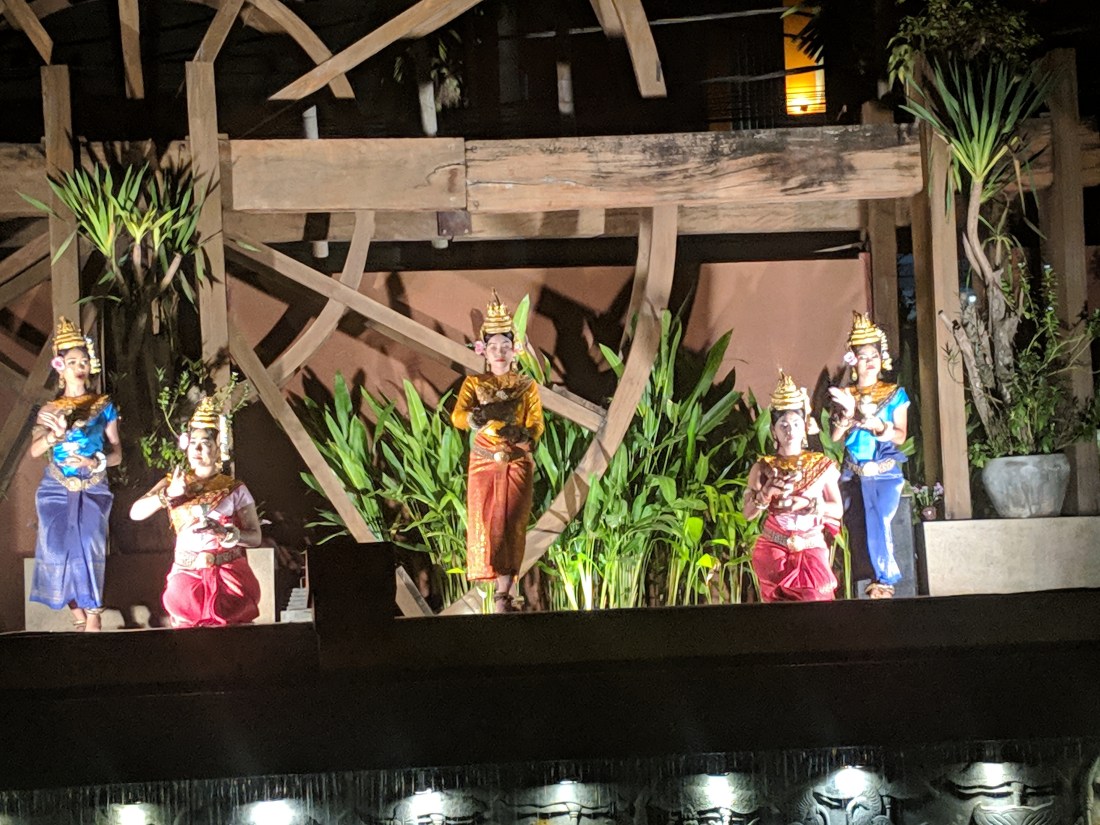
Once again we have managed to book a really lovely hotel convenient to everything. The Golden Temple Residence treated us our very first night to dinner and a Cambodian show of singing and dancing, all poolside.
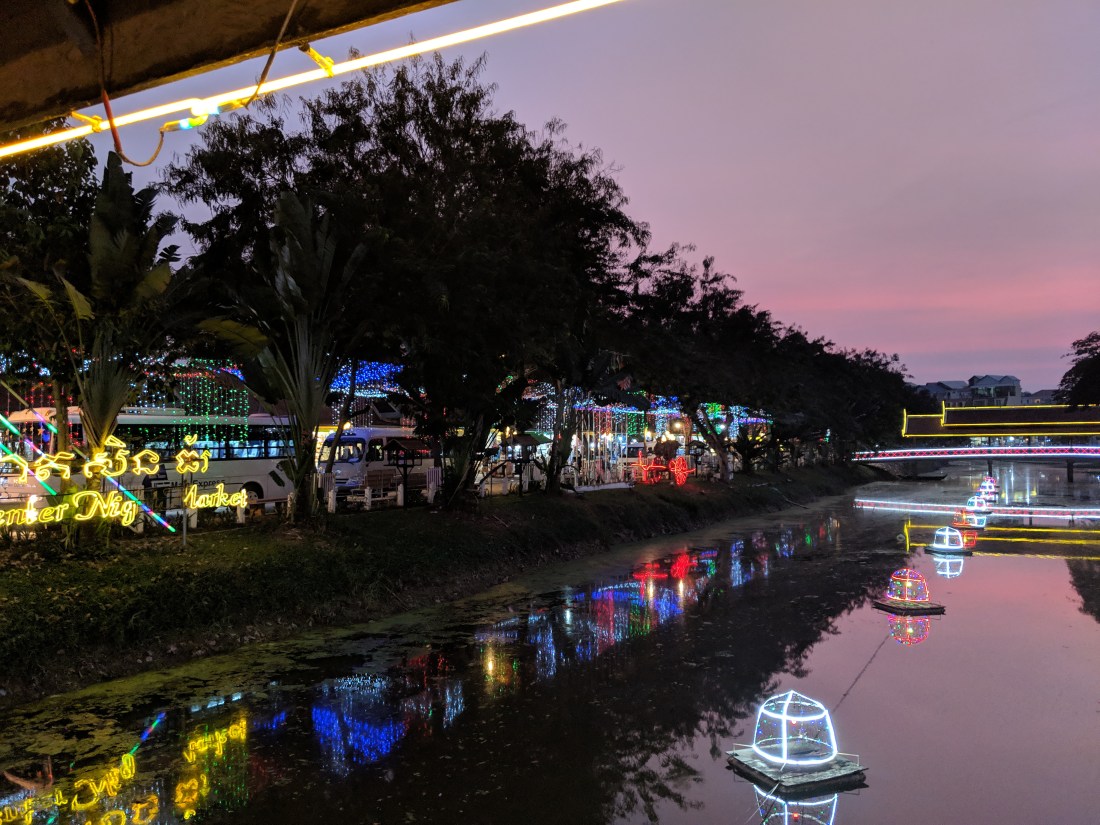
We then strolled through the night market which, compared to the others in SE Asia so far, was very commercial and unimpressive except from the outside.
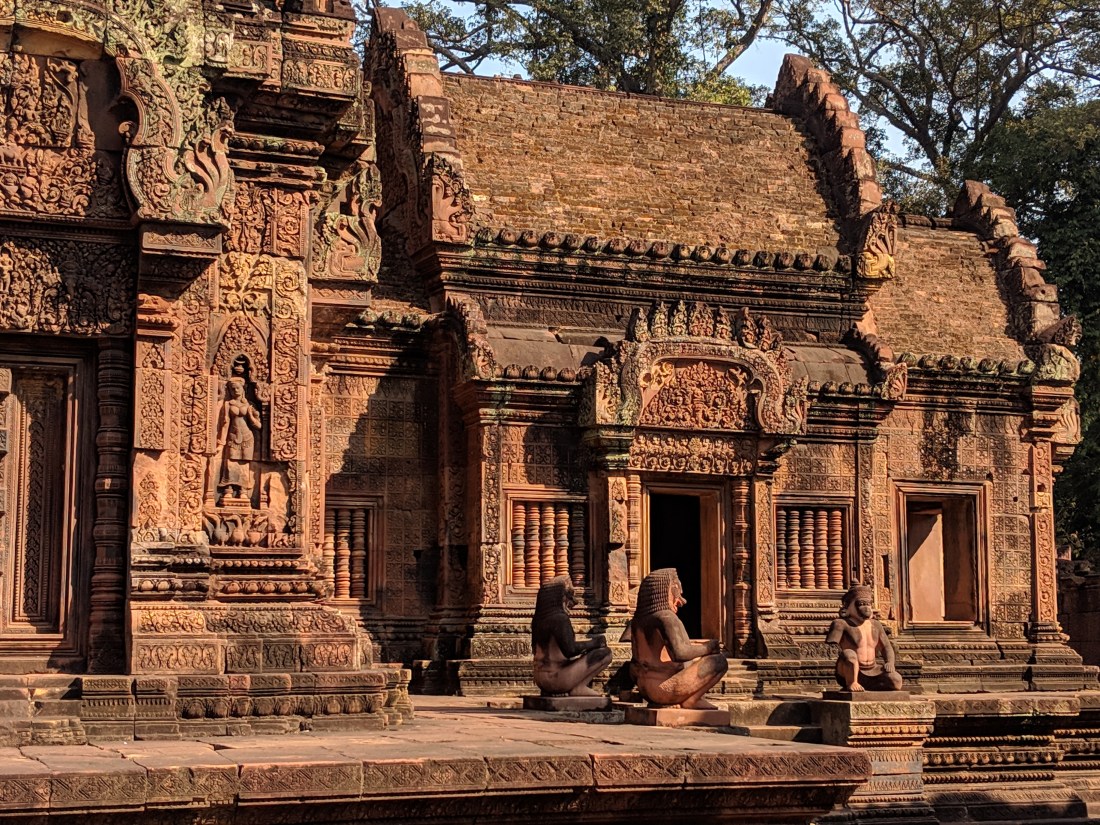
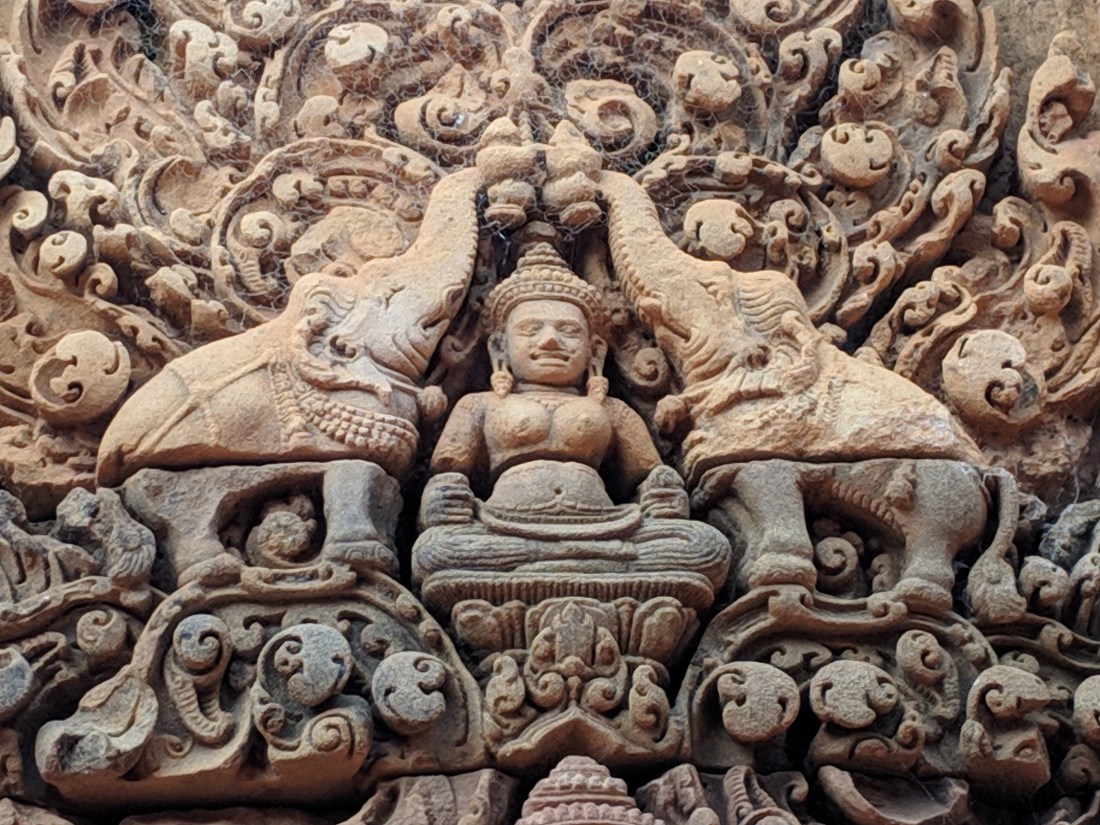
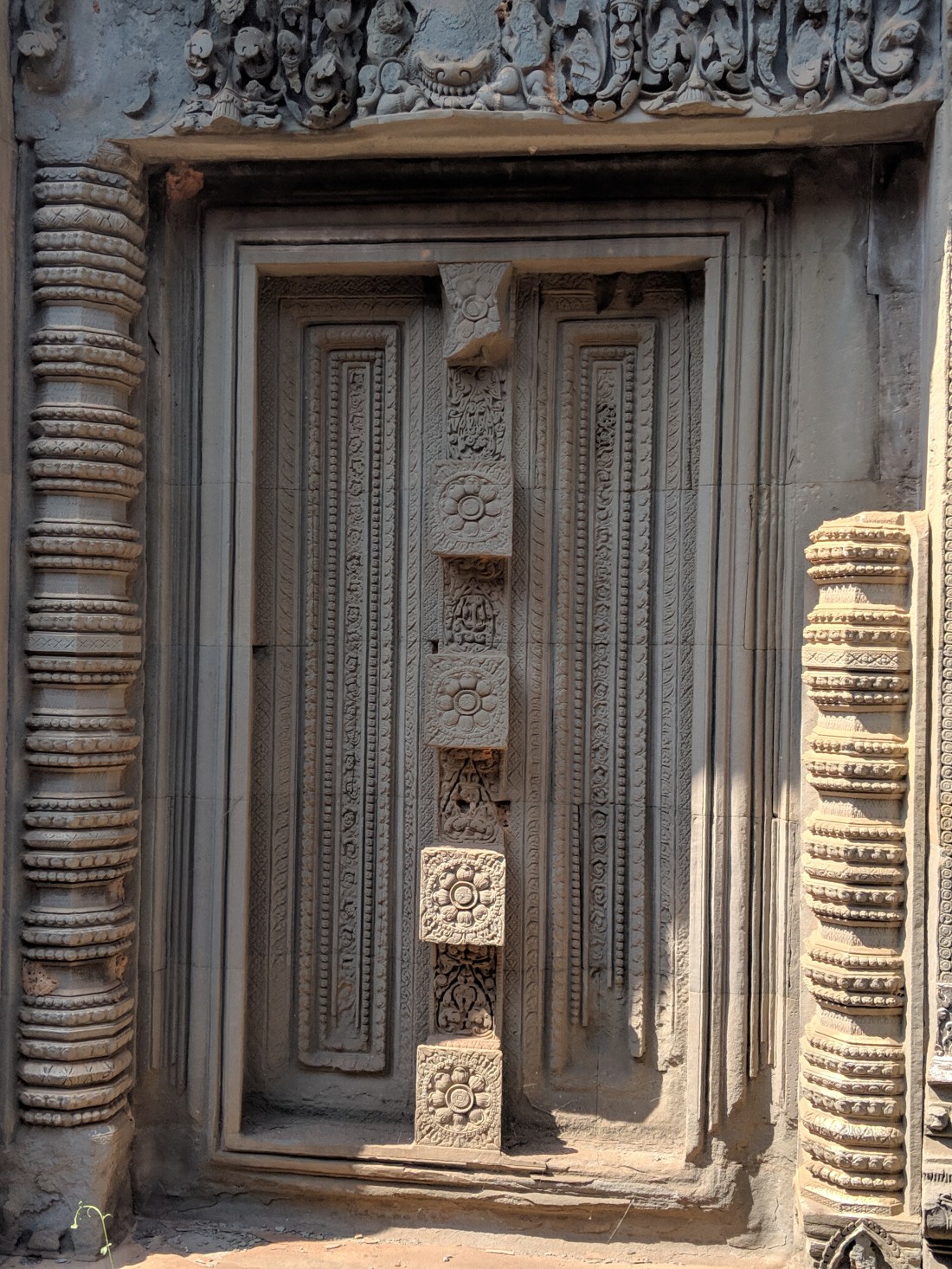
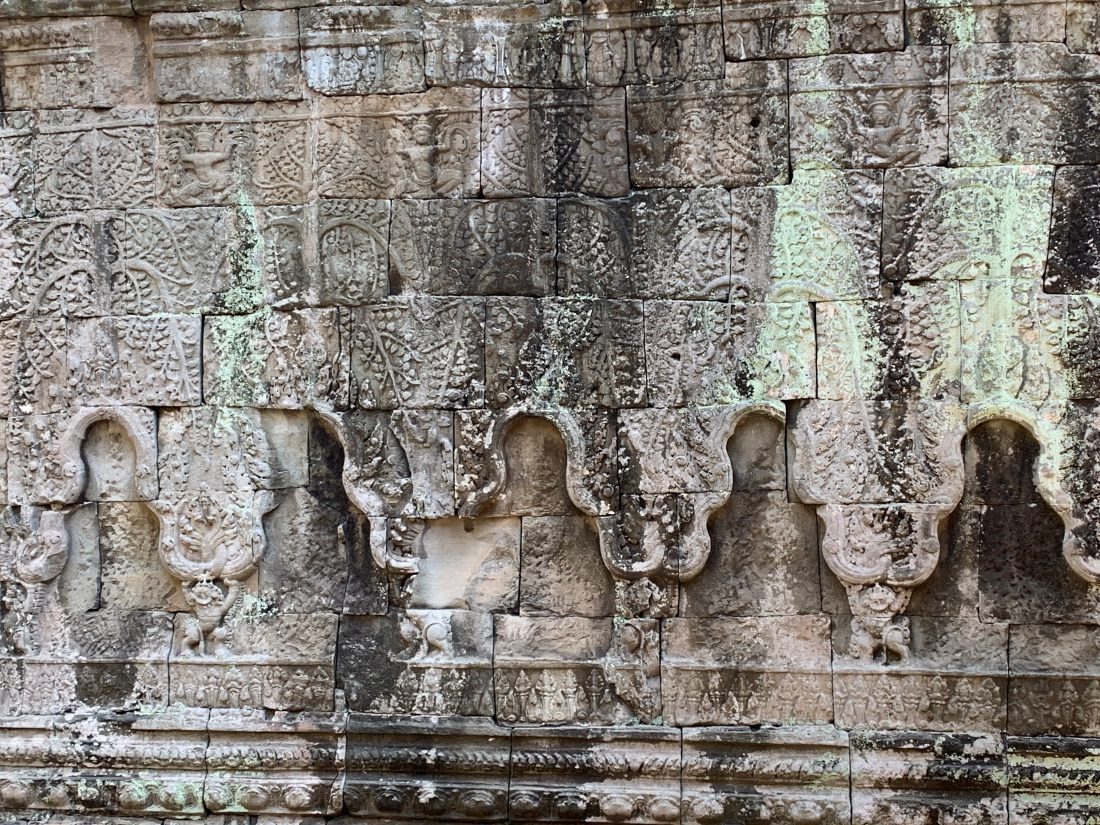
The following morning we started with our temple tours. First on the agenda was Banteay Srei which is actually about 27 km outside of town. The name means “citadel of beautiful women,” but it has nothing to do with women. It was so named by the explorers only because of its exquisitely beautiful carvings. It was built in the early 10th century as a Hindu temple dedicated to Shiva, the god of destruction. It is the only temple in the area built not by a king but by his counsellor, who was the teacher of the artisans, so he elicited the help of all his students for the carving of the temple. It is built in red sandstone, which lends itself to carving. When looking at the photos, note the depth and intricacy of the carvings – and 10th century!
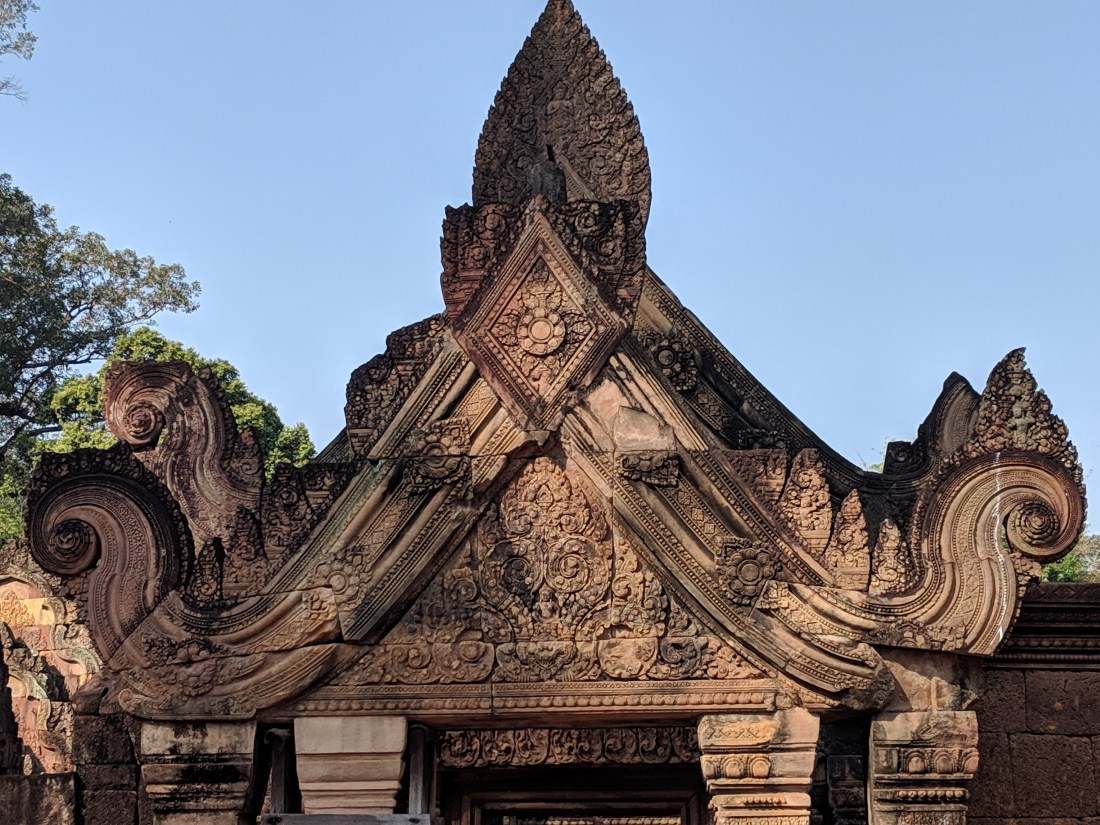


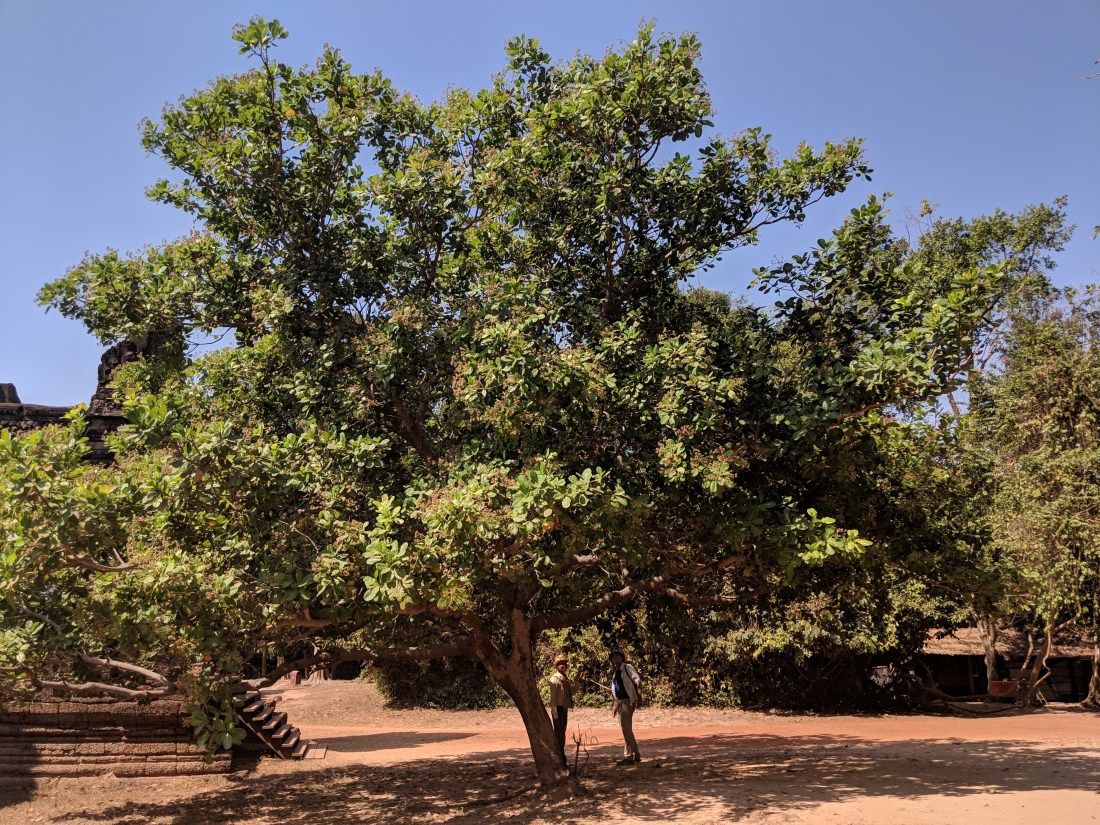
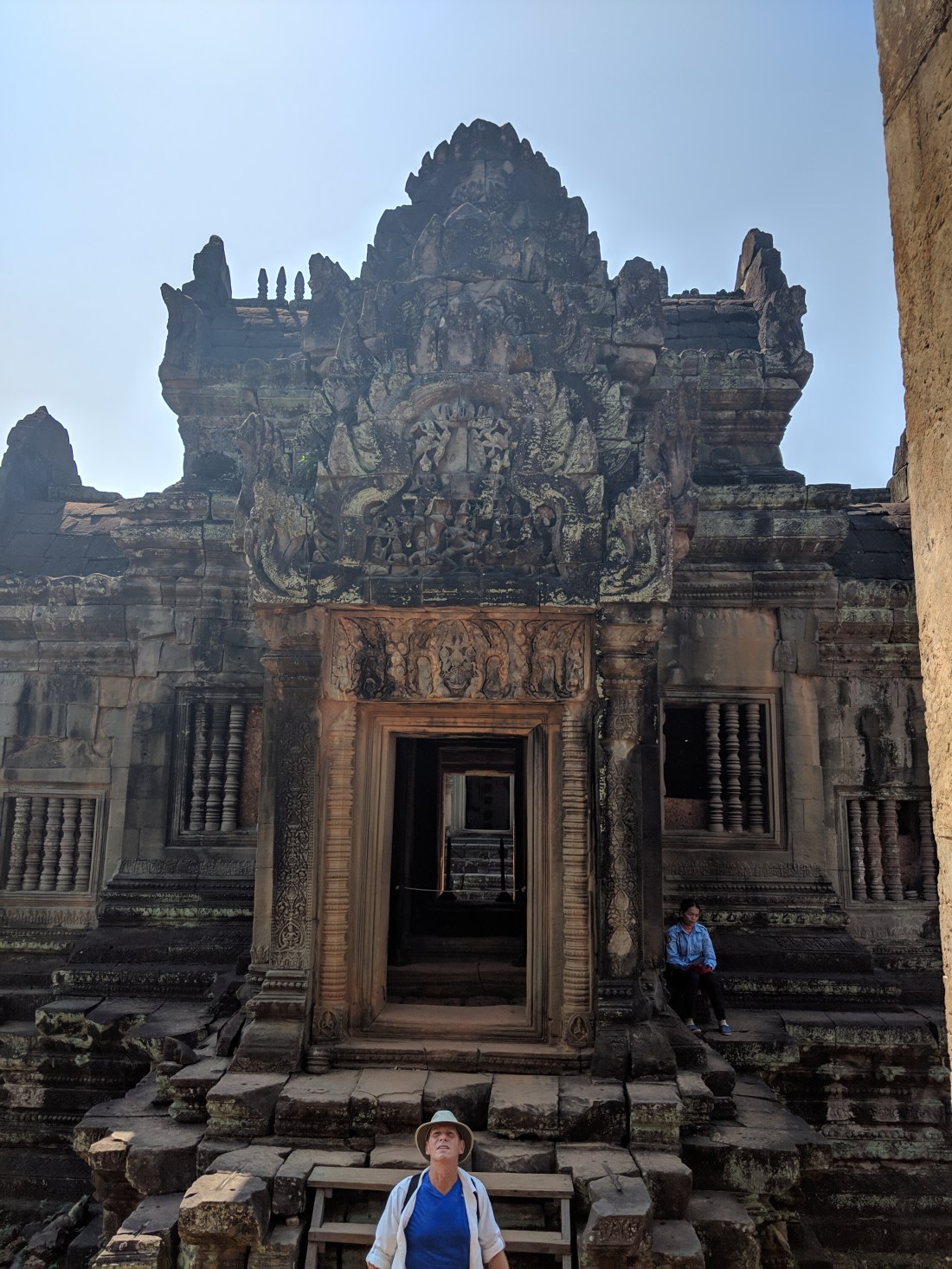
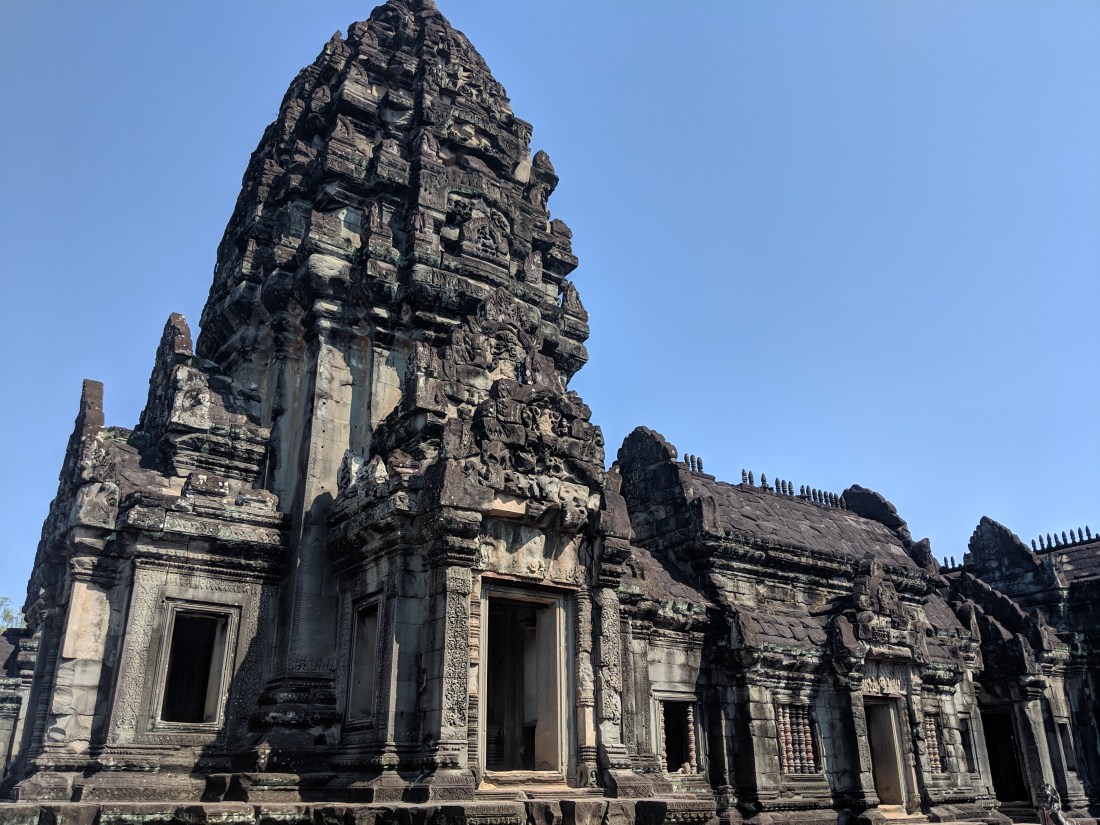
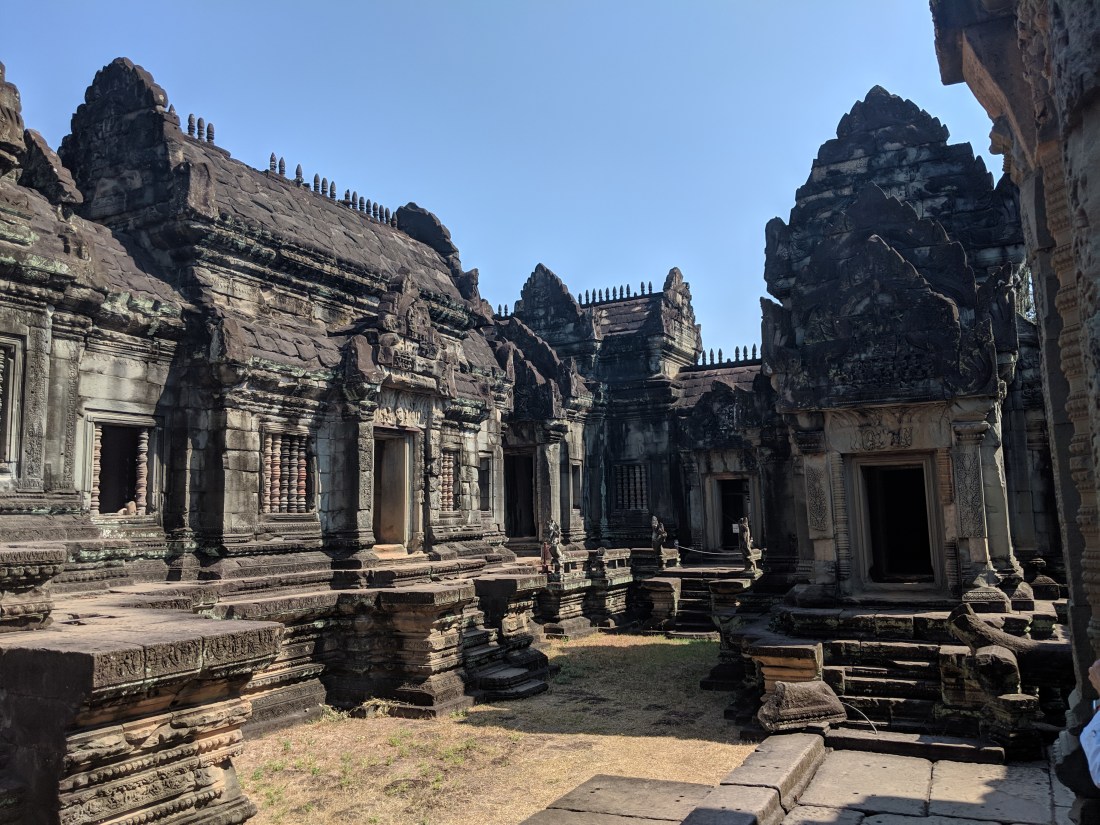
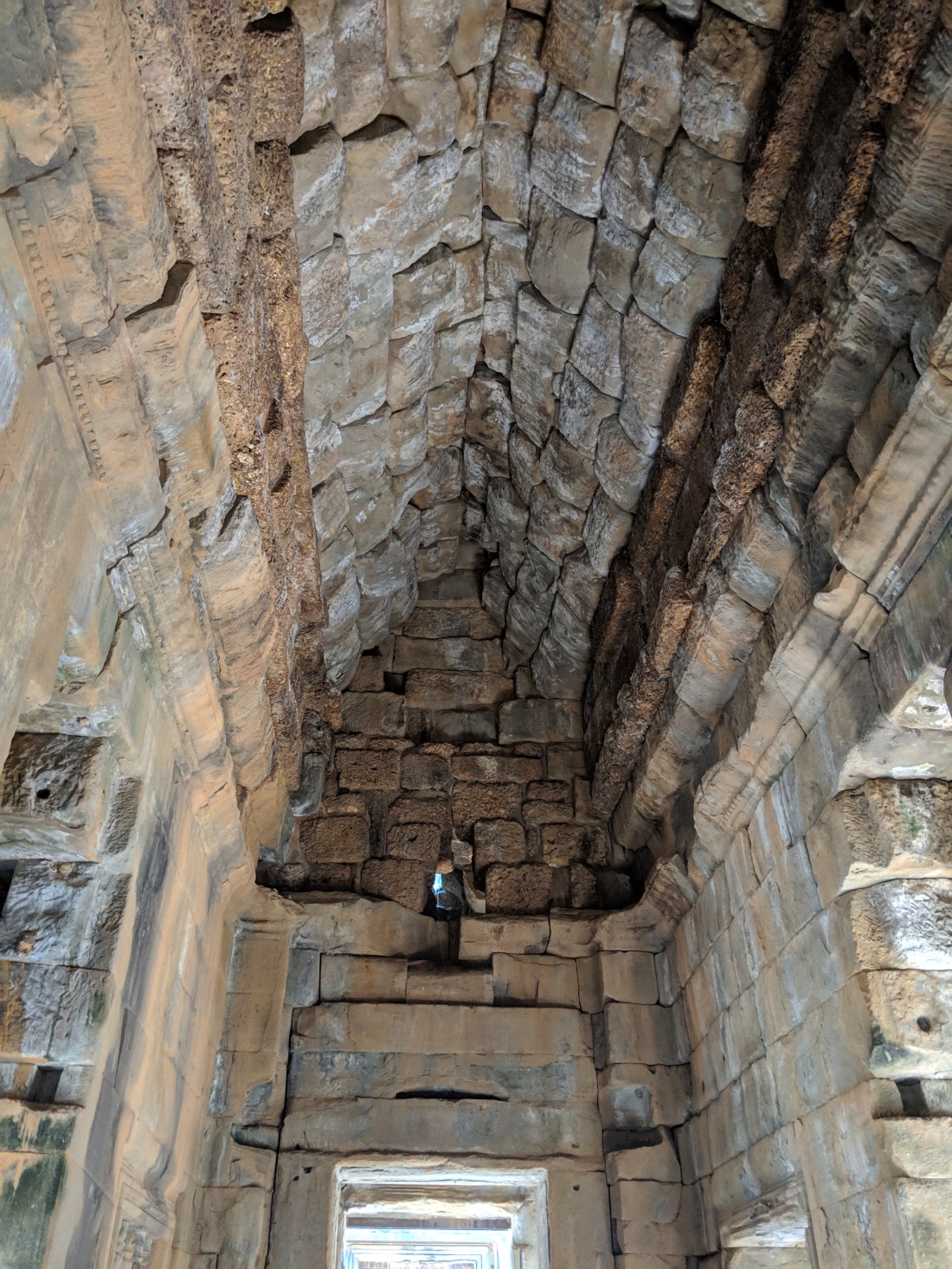
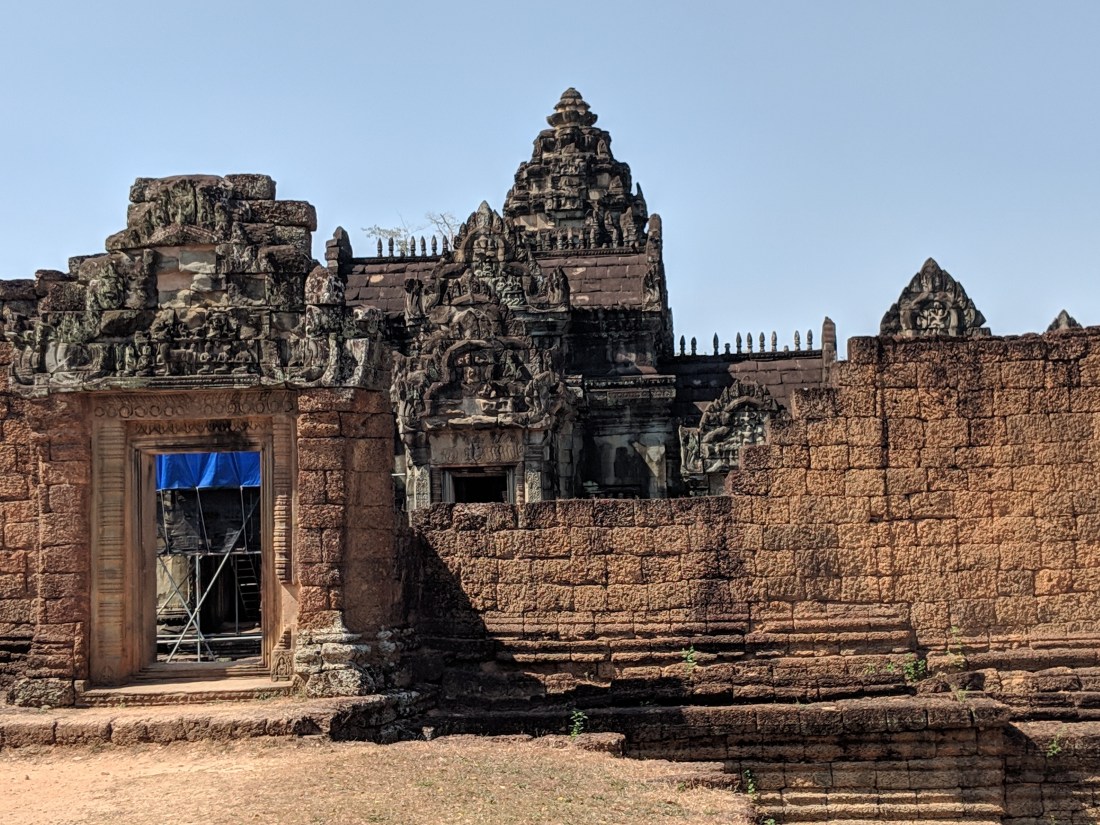
Our next visit was to Banteay Samre, the citadel of the Samre people, ie built for the common folk for prayer, unlike most of the temples that are only for the royal family’s use. It was built in the early 12th century also as a Hindu temple dedicated to Vishnu, the god of preservation of life and truth. The single ogival tower is of the Angkor Wat style.
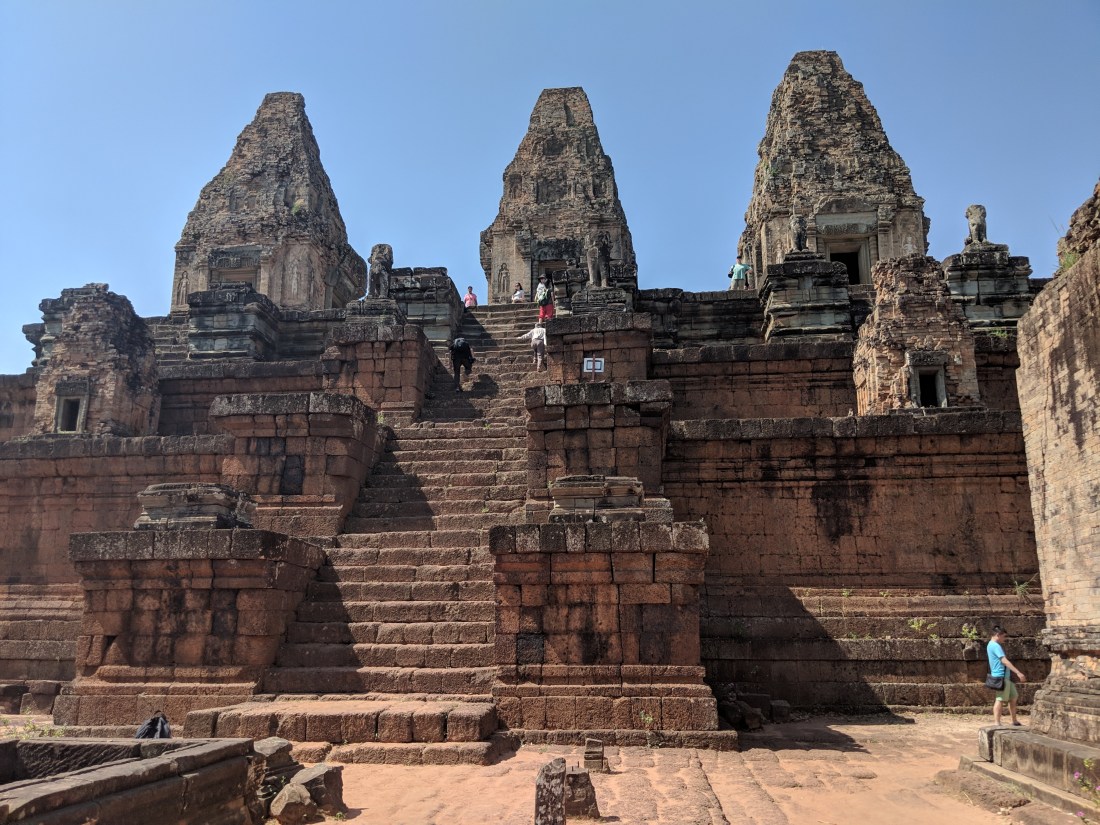
Our next stop of the morning was Pre Rup, built in the mid 10th century, also dedicated to the Hindu god Shiva. It is built mostly of laterite and brick, giving it its reddish hue. It was built by the same king whose counsellor built the first temple.
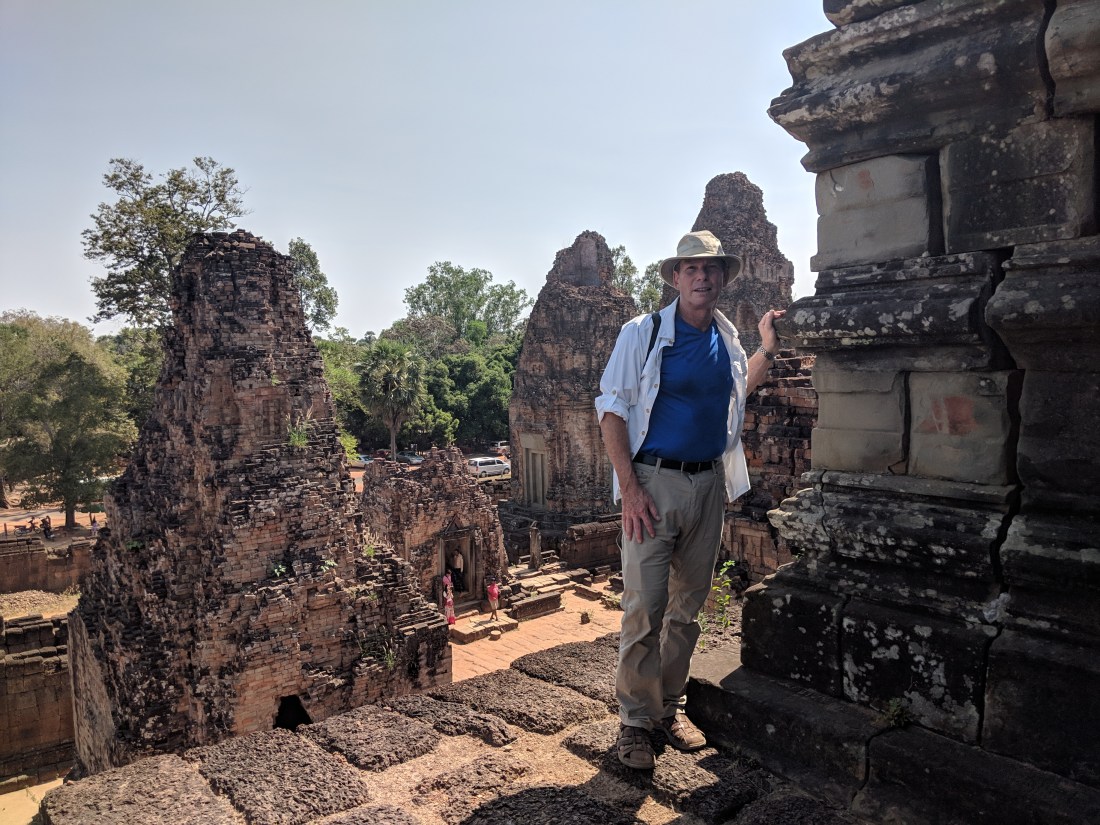
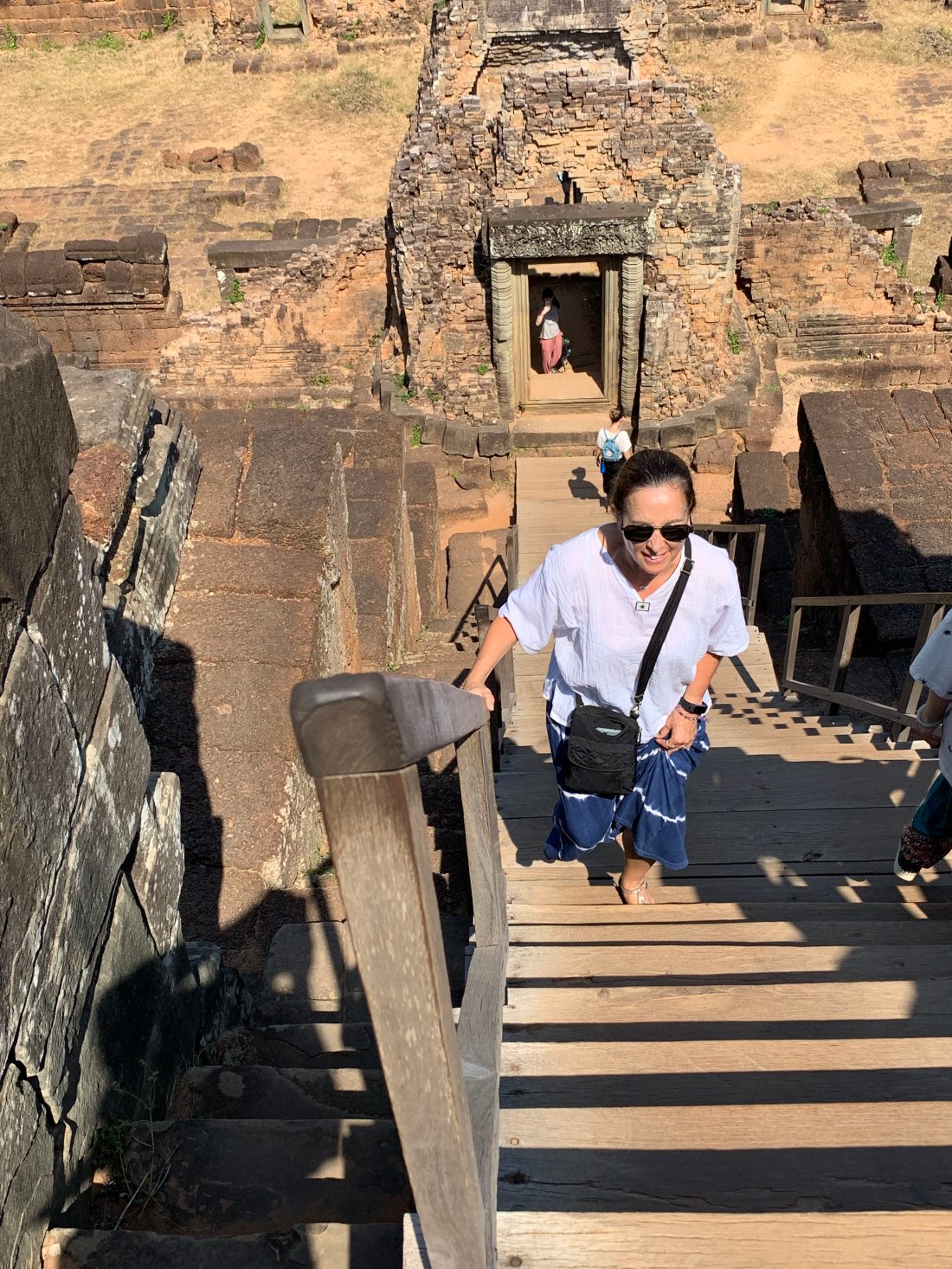
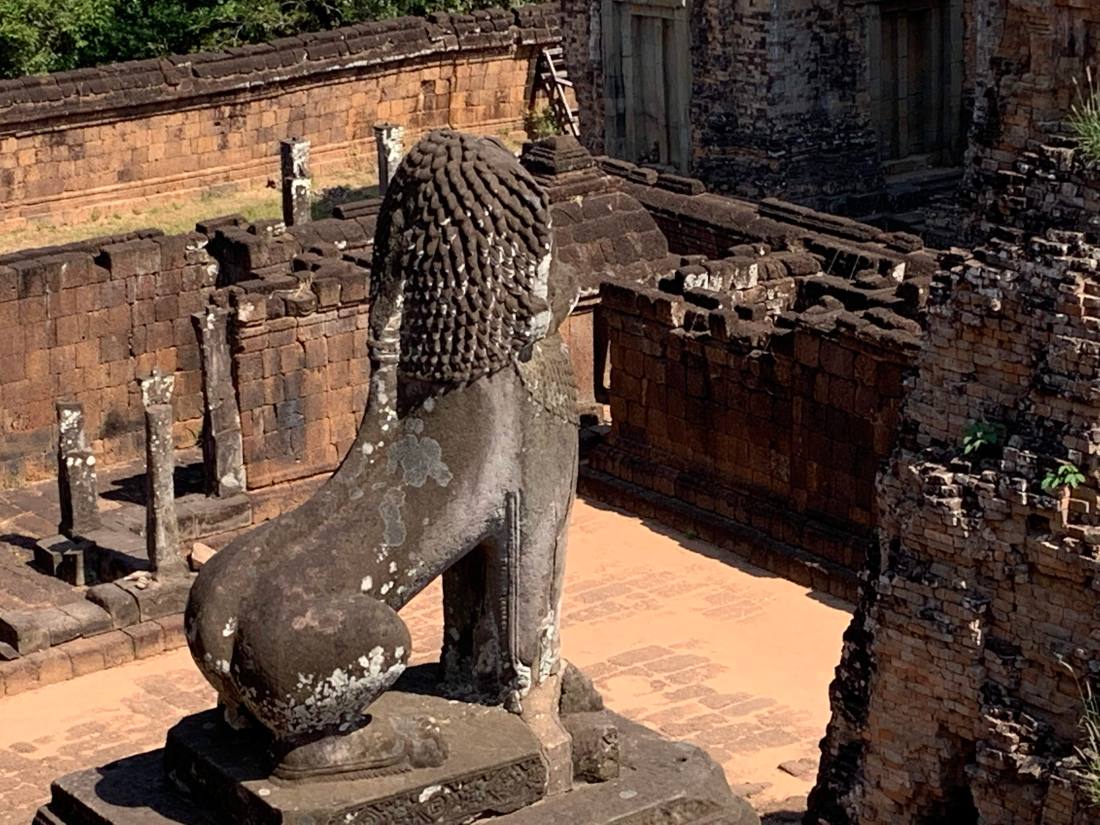
After climbing around in the heat, we enjoyed a relaxing lunch by Srah Srang, an Angkorian royal pond.
 In the afternoon we visited Angkor Thom, The Great City, the ex-prosperous city of the Great King Jayavaraman VII’s era, built in the late 12th century. He has come to be my favorite king in history, but more about him later. Angkor Thom was the last and most enduring city of the Khmer empire. King Jayavaraman VII built his central temple, a Buddhist one, Bayoun, in the center of the city, but he incorporated preexisting Hindu temples: Baphoun and Phimeanakas without destroying or altering them. The city was abandoned by the Khmer when invaded and then looted by the Siamese in the 16th century.
We started at the elephant terrace, which was added on to the Phimeanakas temple by King Jayavaraman VII to view his returning army.
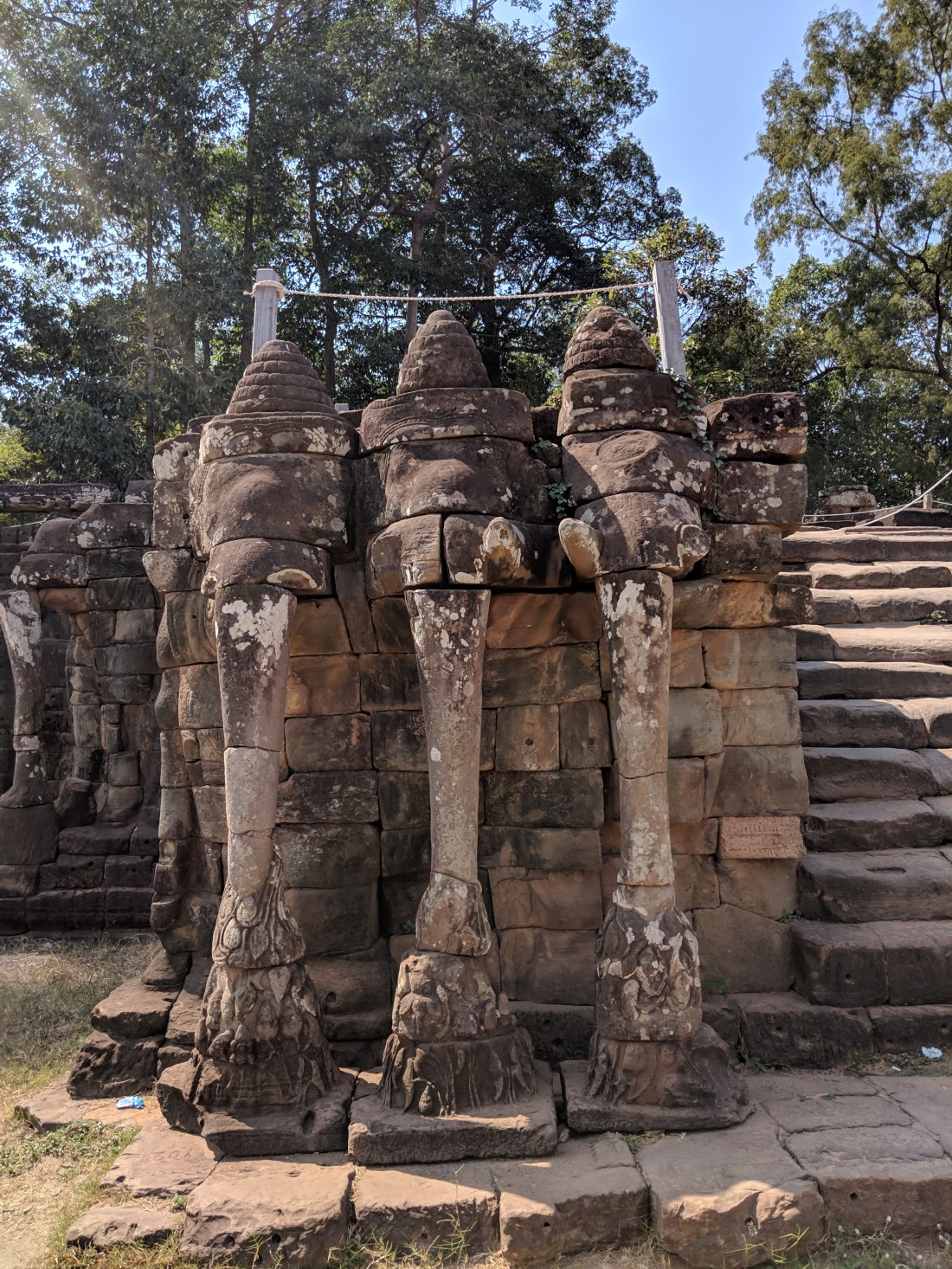
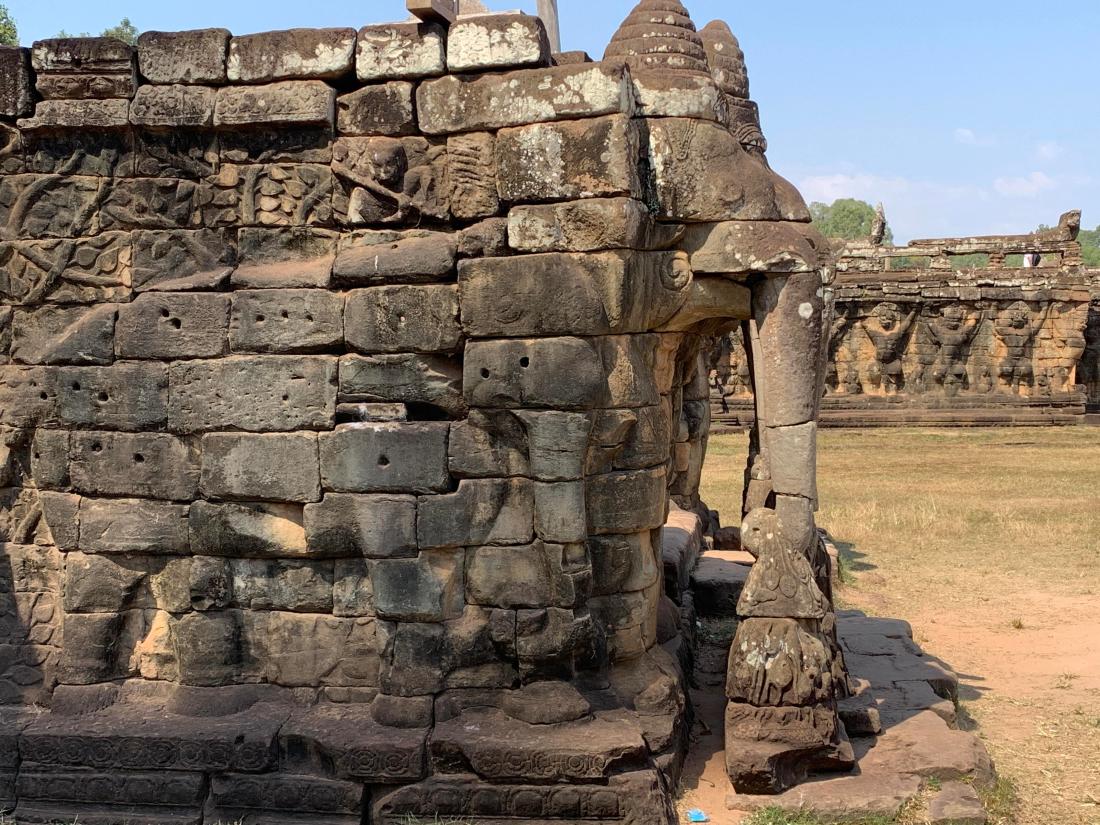
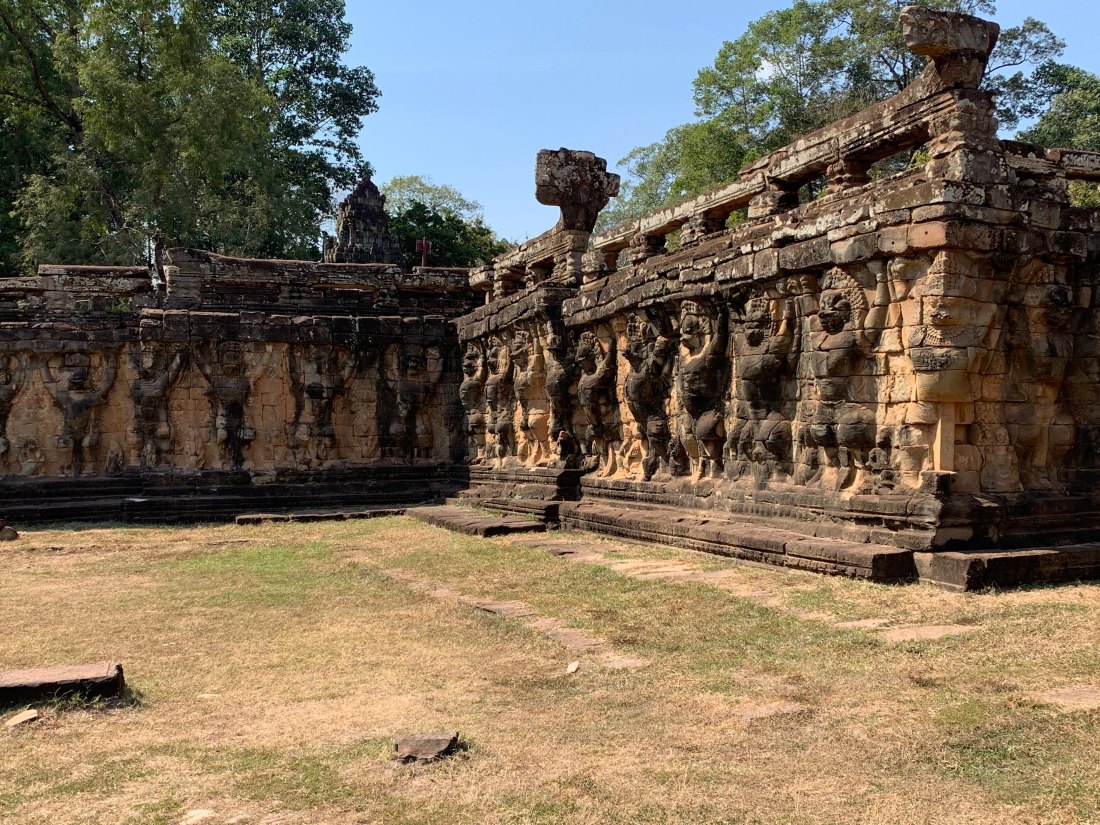
And Phimeanakas, which is a Hindu temple in the Khleang style, built at the end of the 10th century, during the reign of Rajendravarman, in the shape of a three tier pyramid. King Jayavaraman VII adapted it as a buddhist temple and used it personally. He built his royal palace behind it, none of which remains.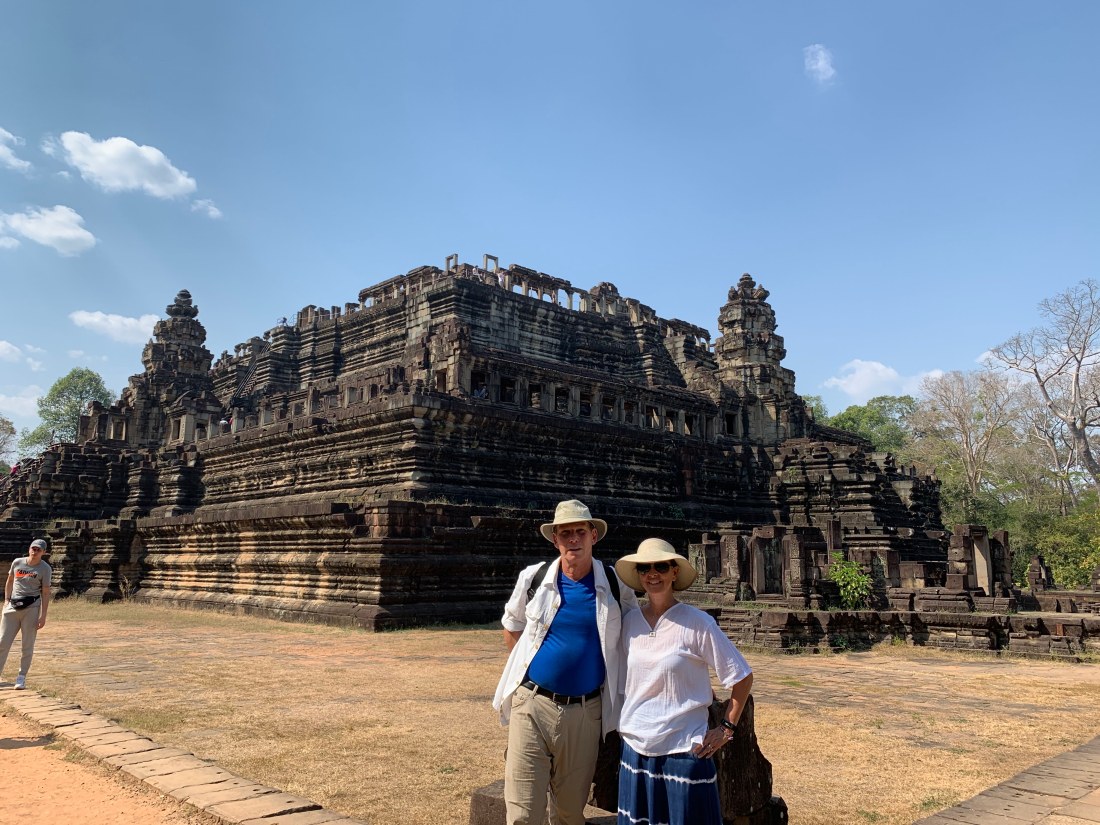
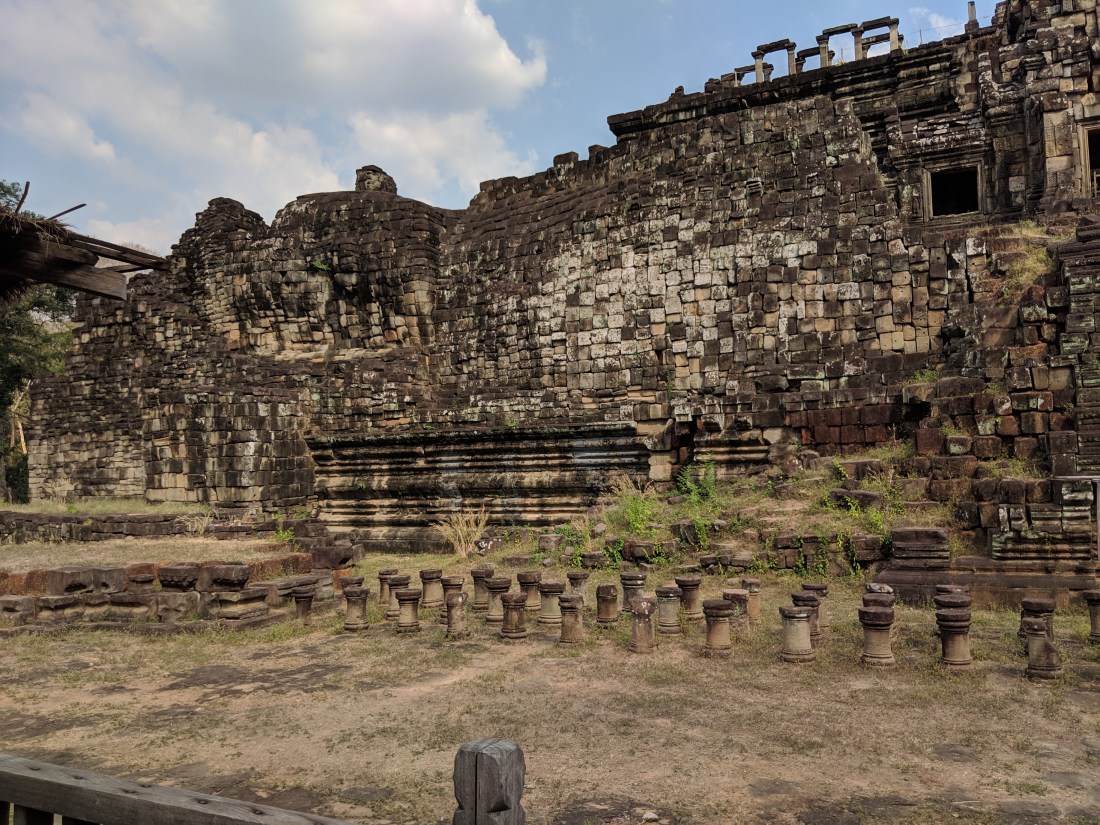
Then on to Baphoun, also a 3 tiered temple built in the 11th century as a Hindu temple dedicated to Shiva. It was built on sand, which was very unstable, and much of it collapsed through the centuries.

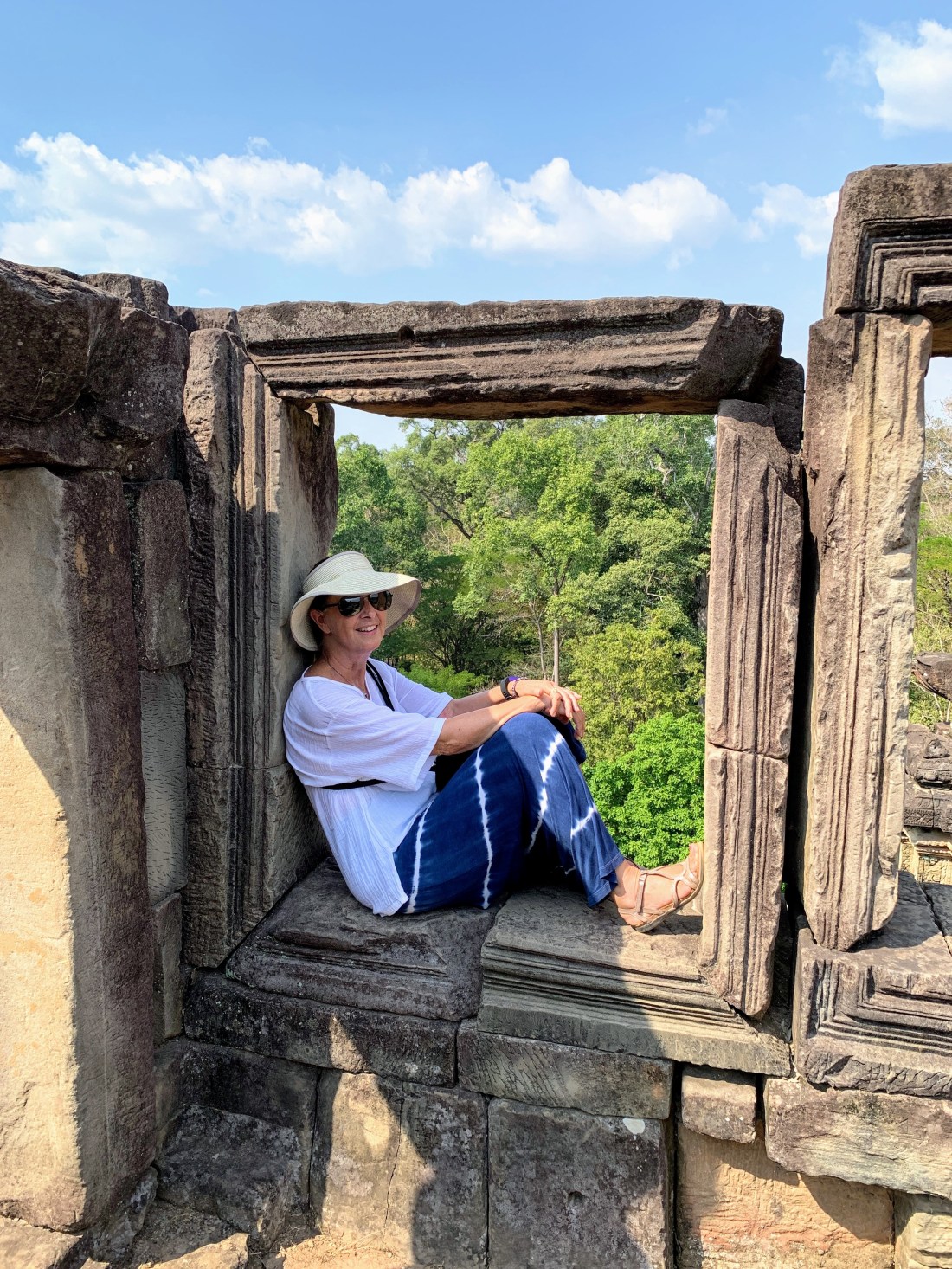
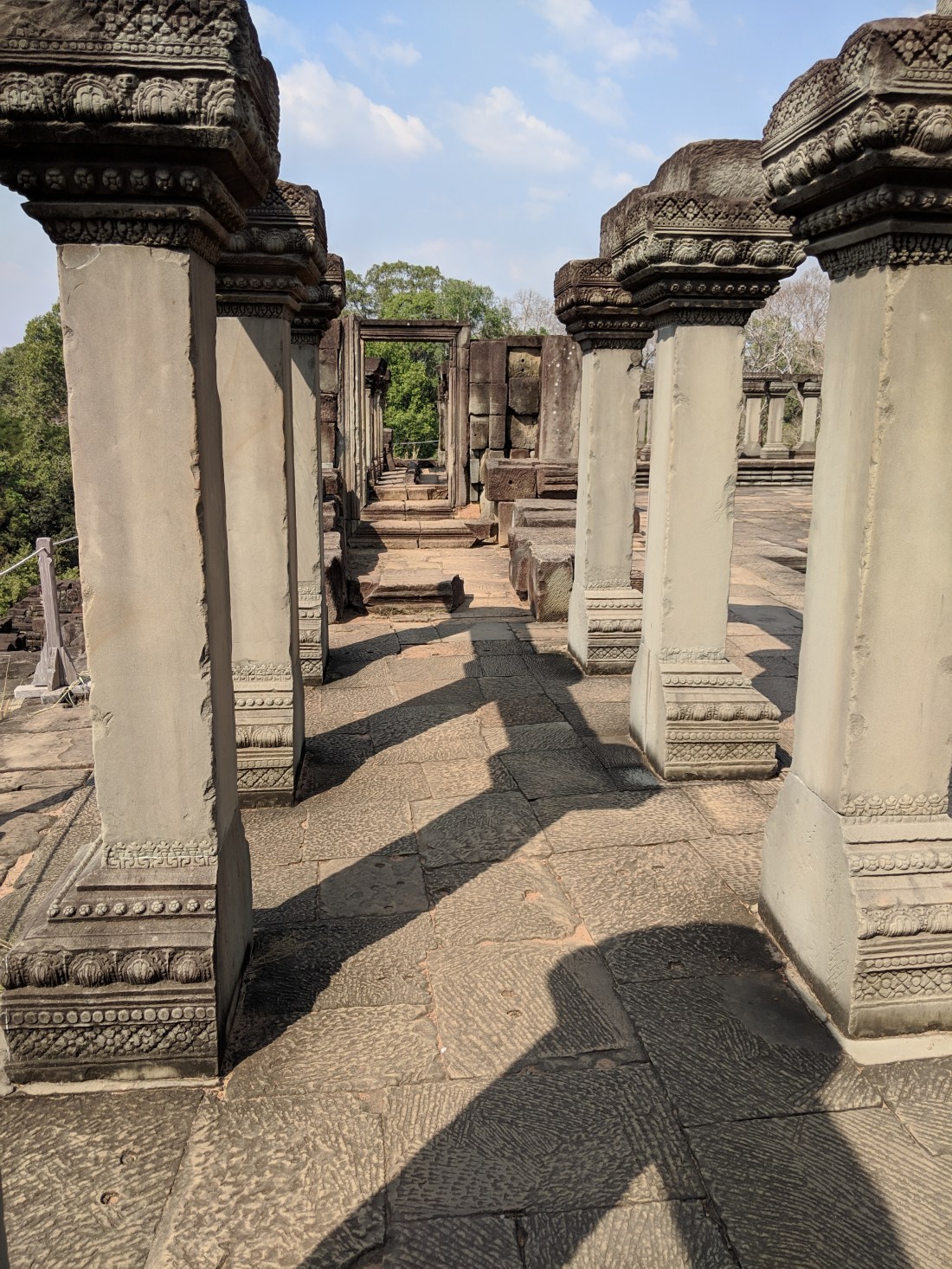
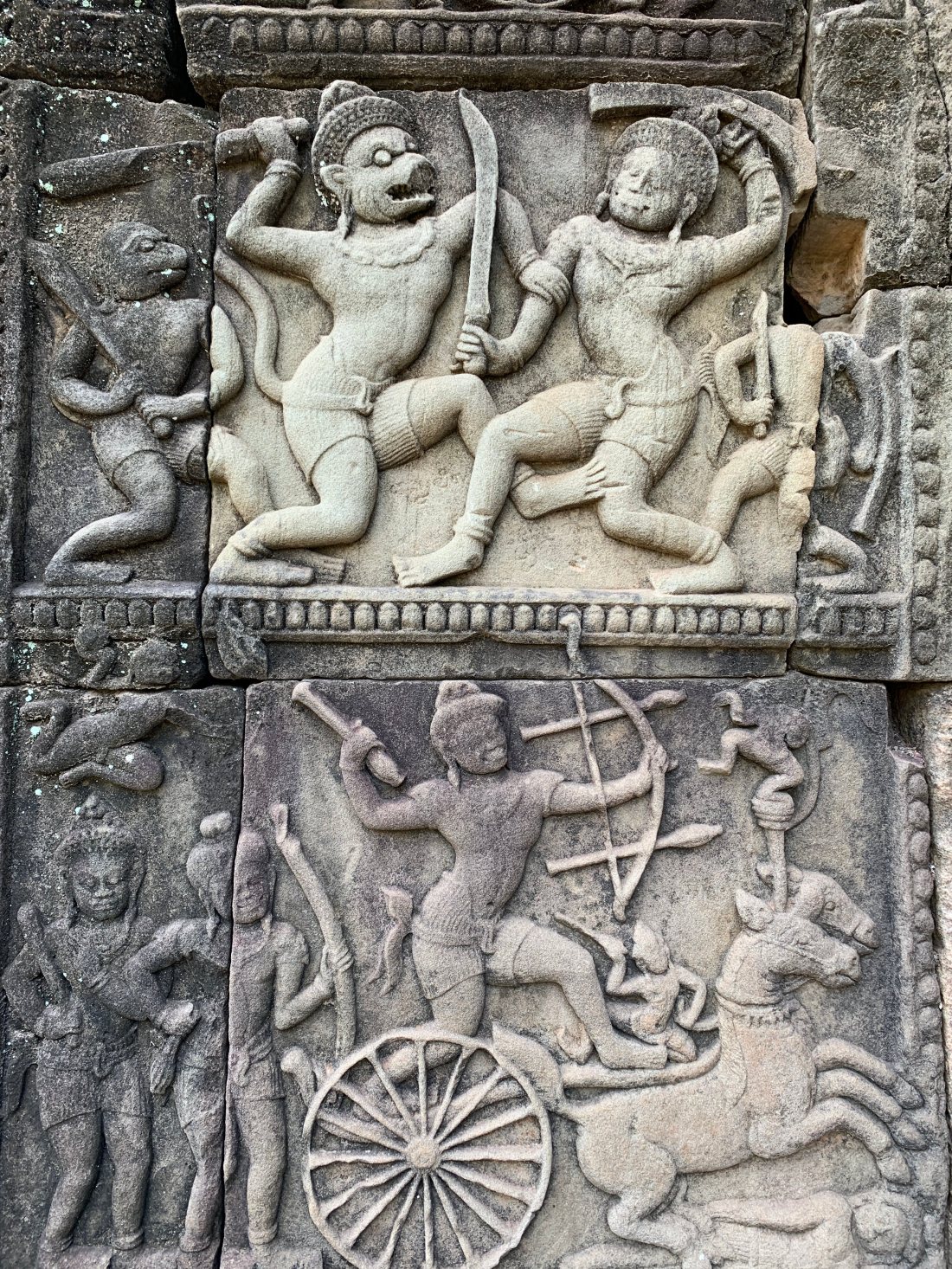
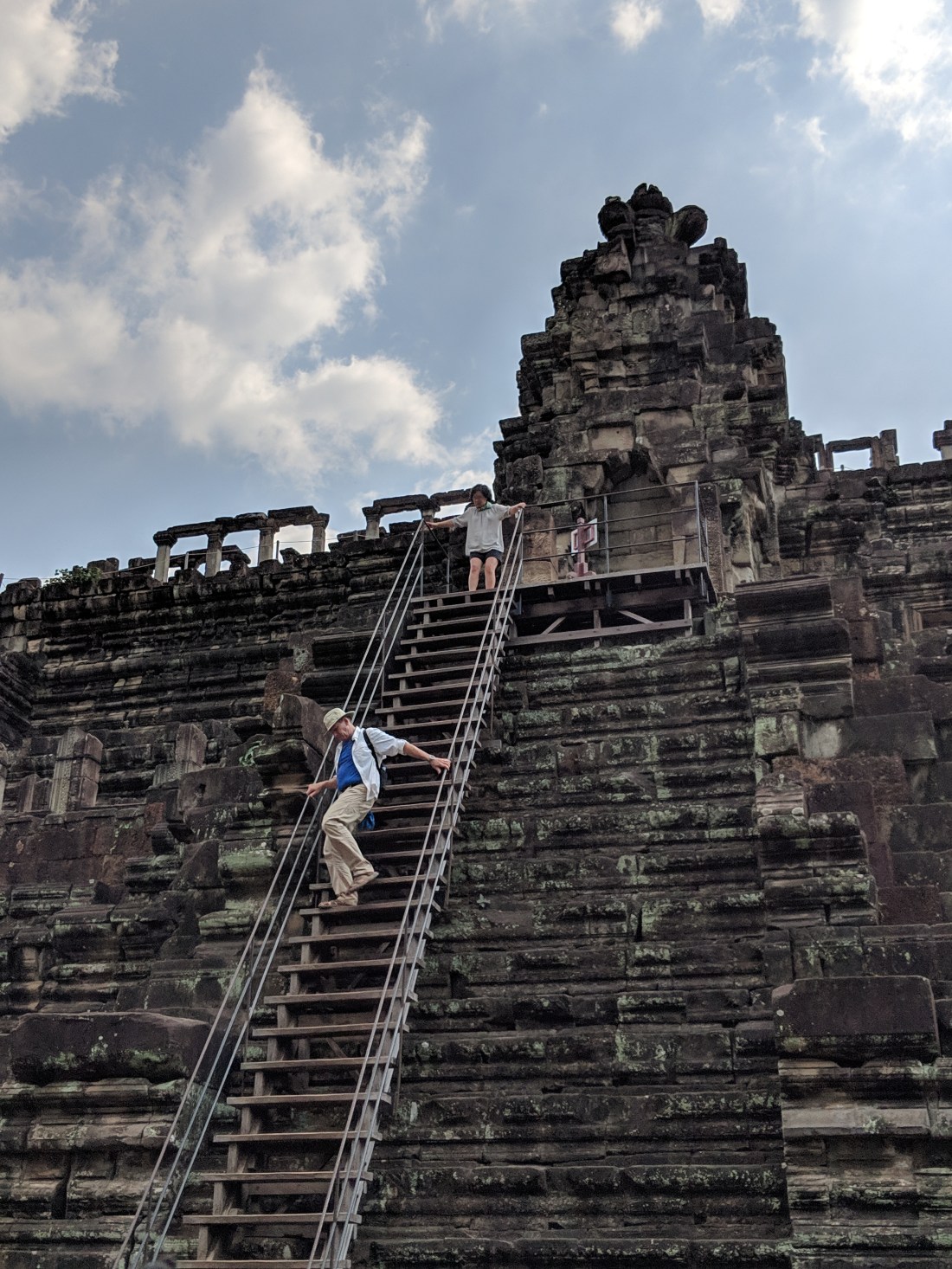
In the late 15th century it was converted to a buddhist temple, and a wall of a reclining buddha was constructed using stones that had collapsed from the central tower.
Then it was on to King Jayavaraman VII’s temple: Bayoun, one of the glories of all Siem Reap.
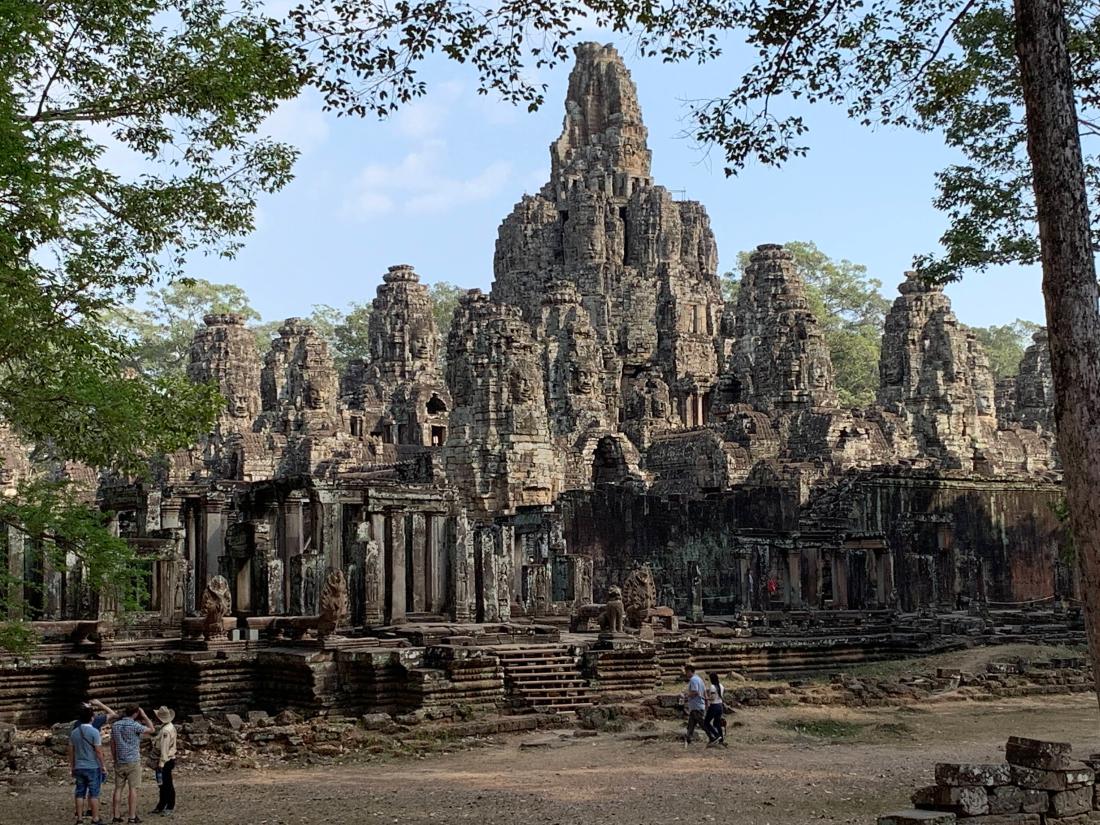
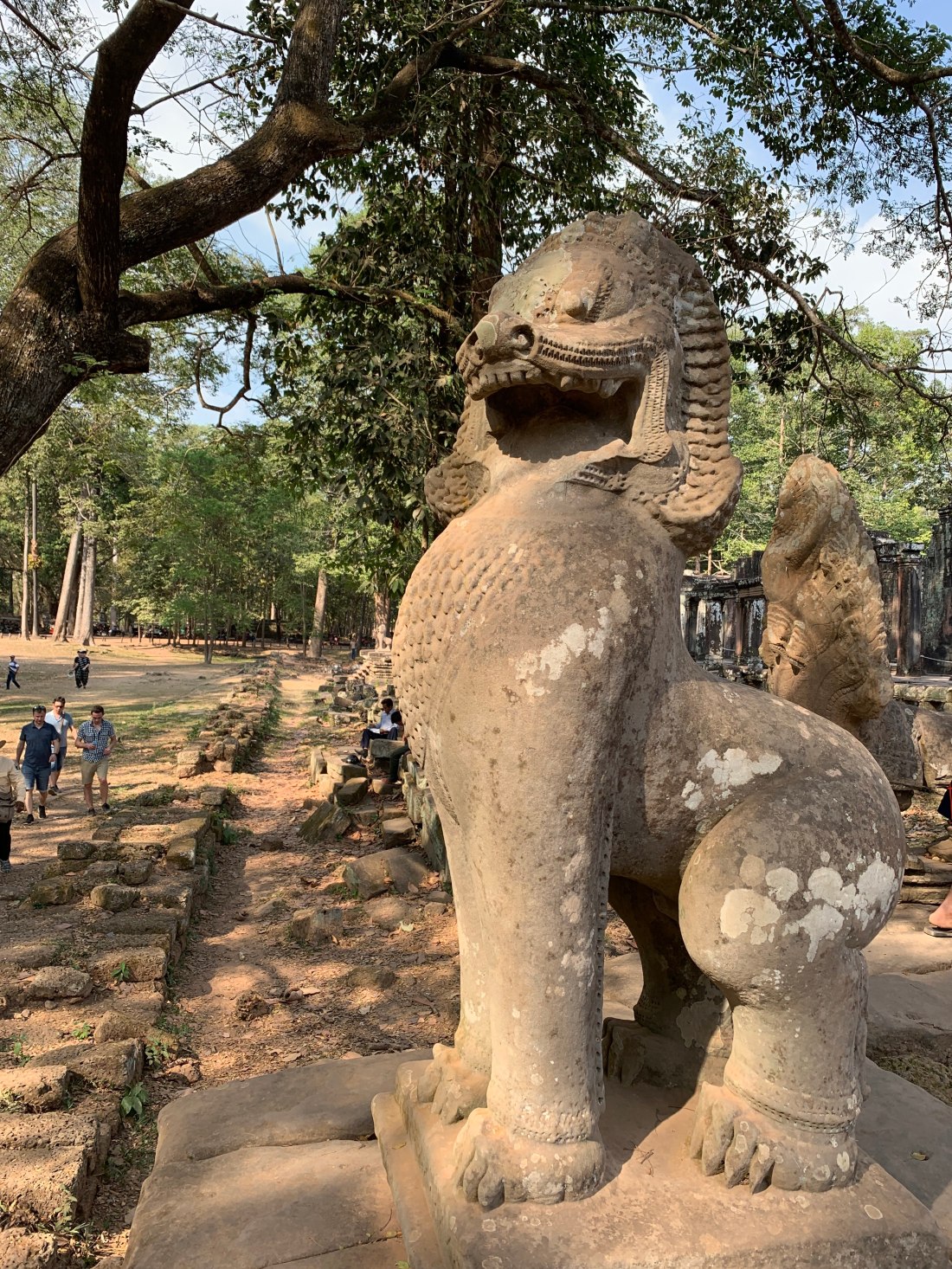

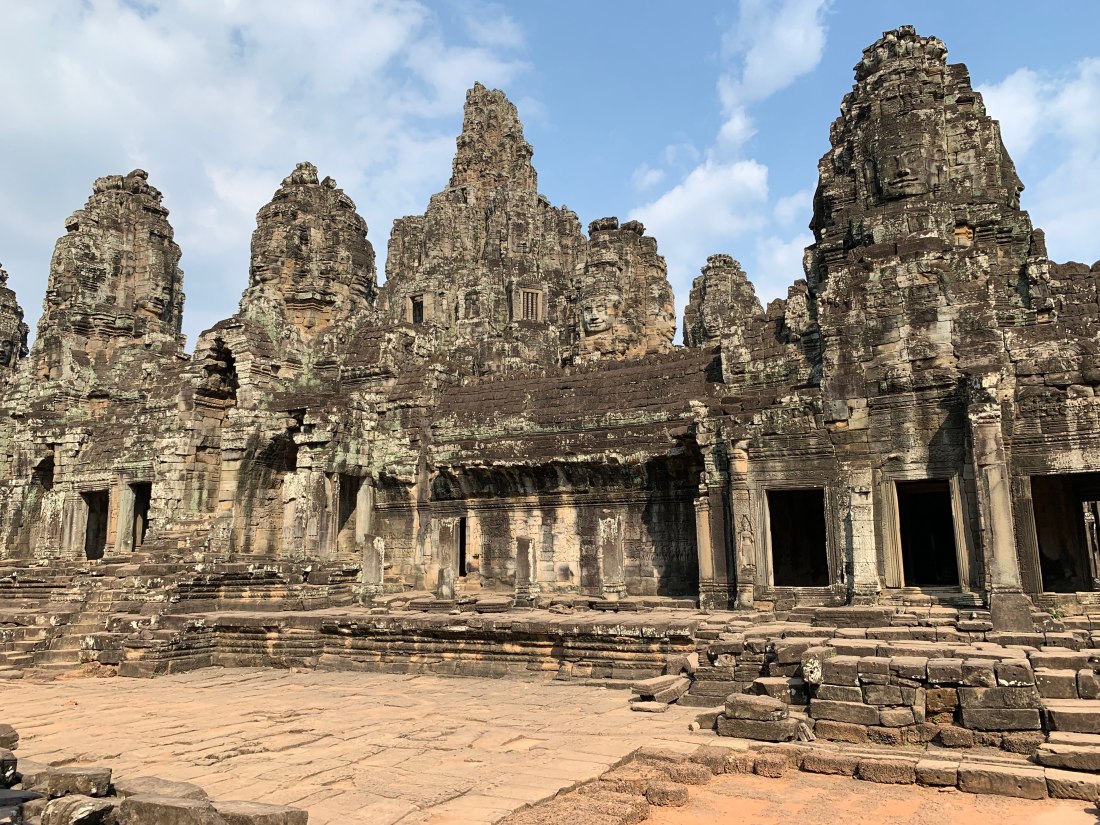
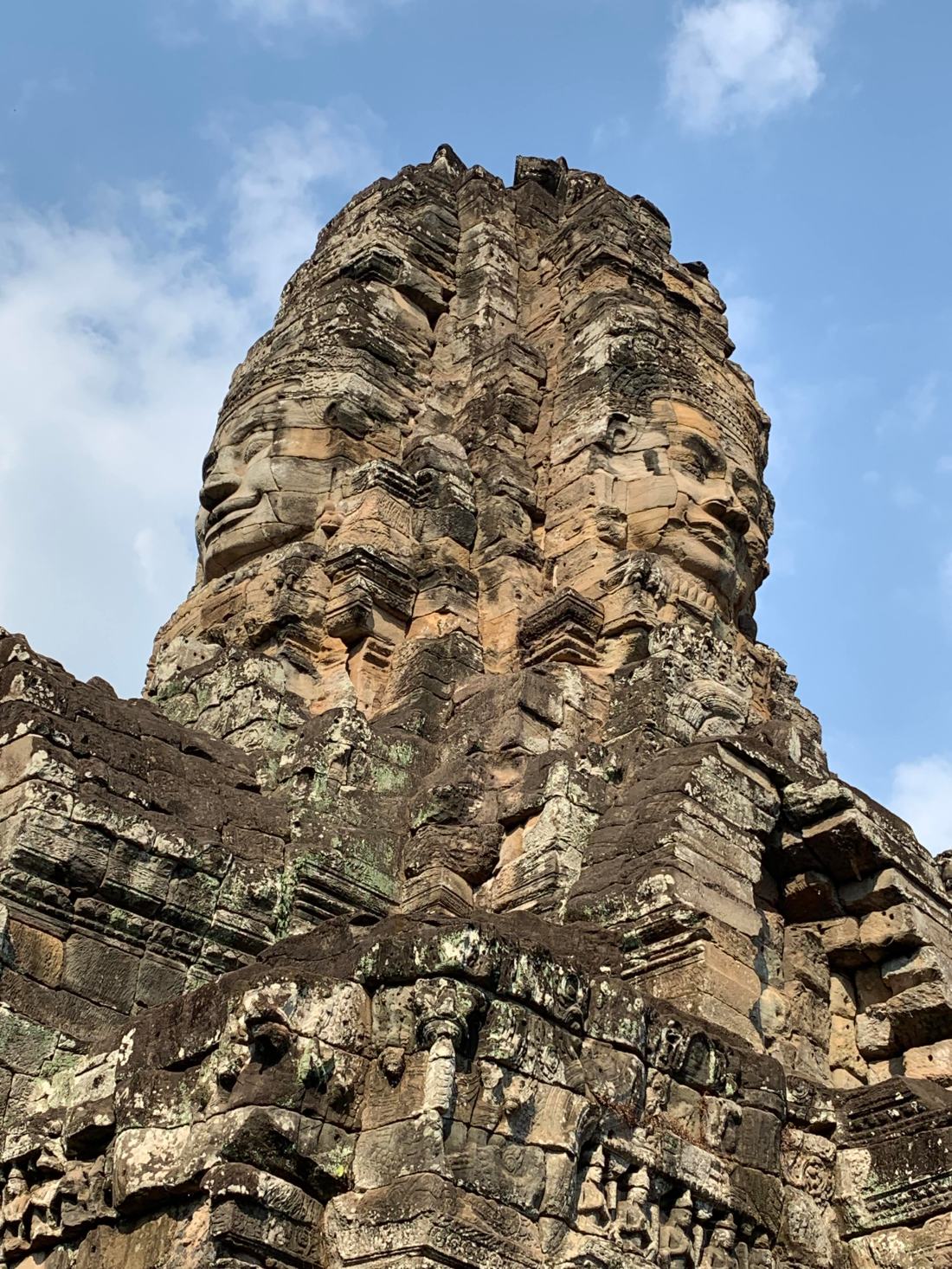
Notice the 4 faces of buddha on each of the 49 towers. They point exactly to each of the 4 magnetic coordinates: N, E, S, &W. In later years when the temple was converted to Hindu, all of the buddha statues were removed. But the Buddha faces on the towers were allowed to remain because they were made in the image of King Jayavaraman VII, so were considered images of him, not the Buddha.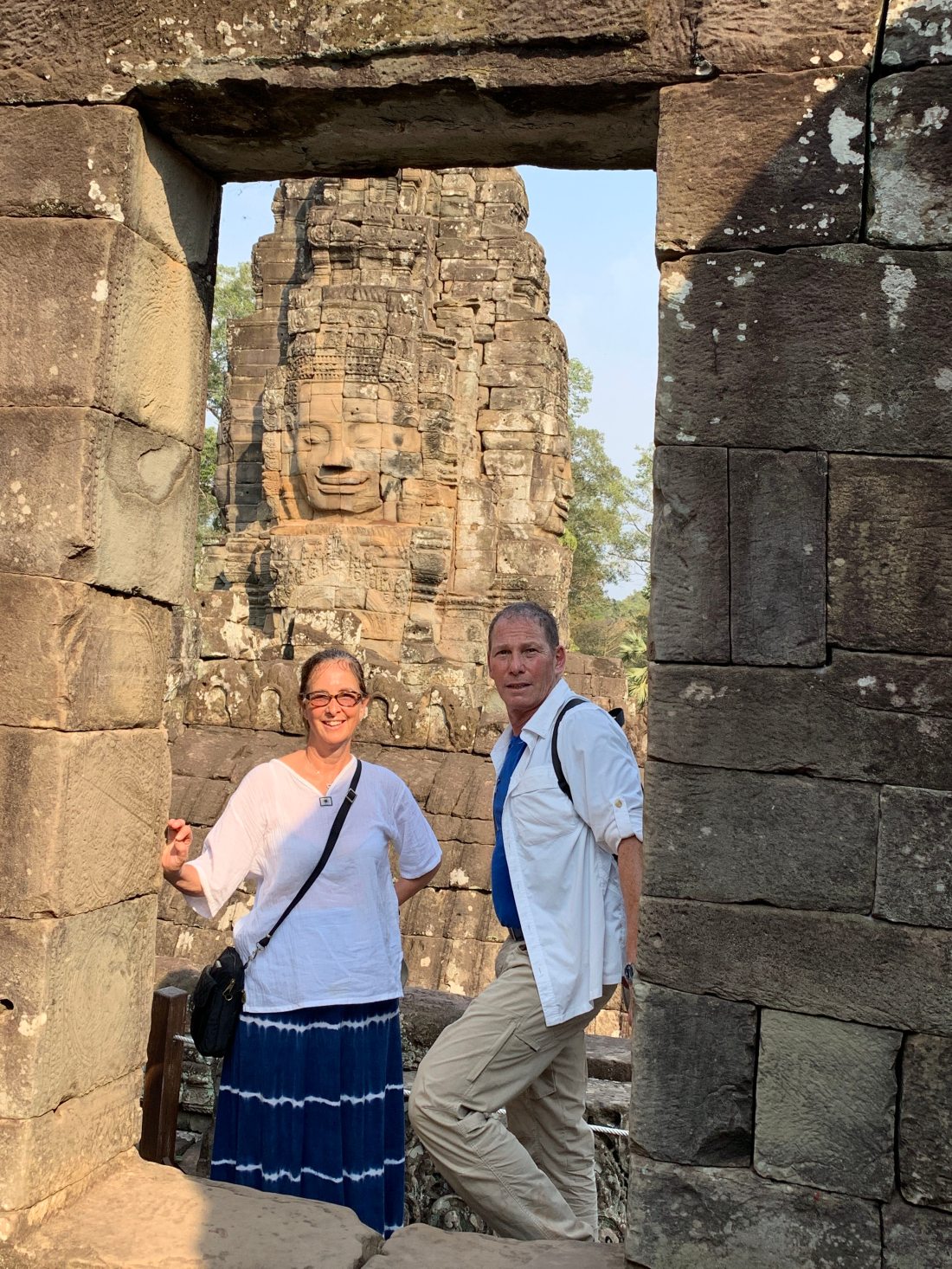
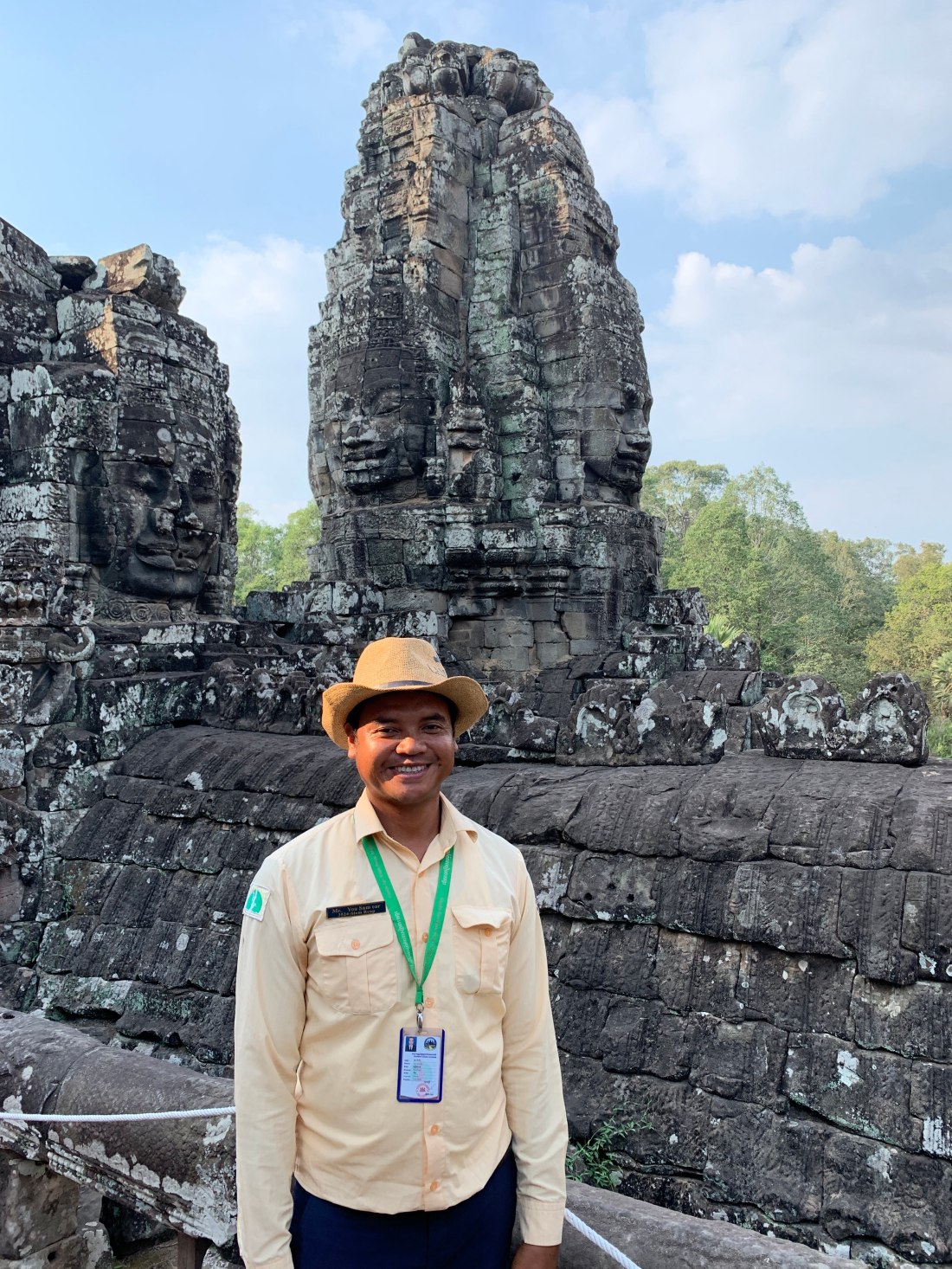
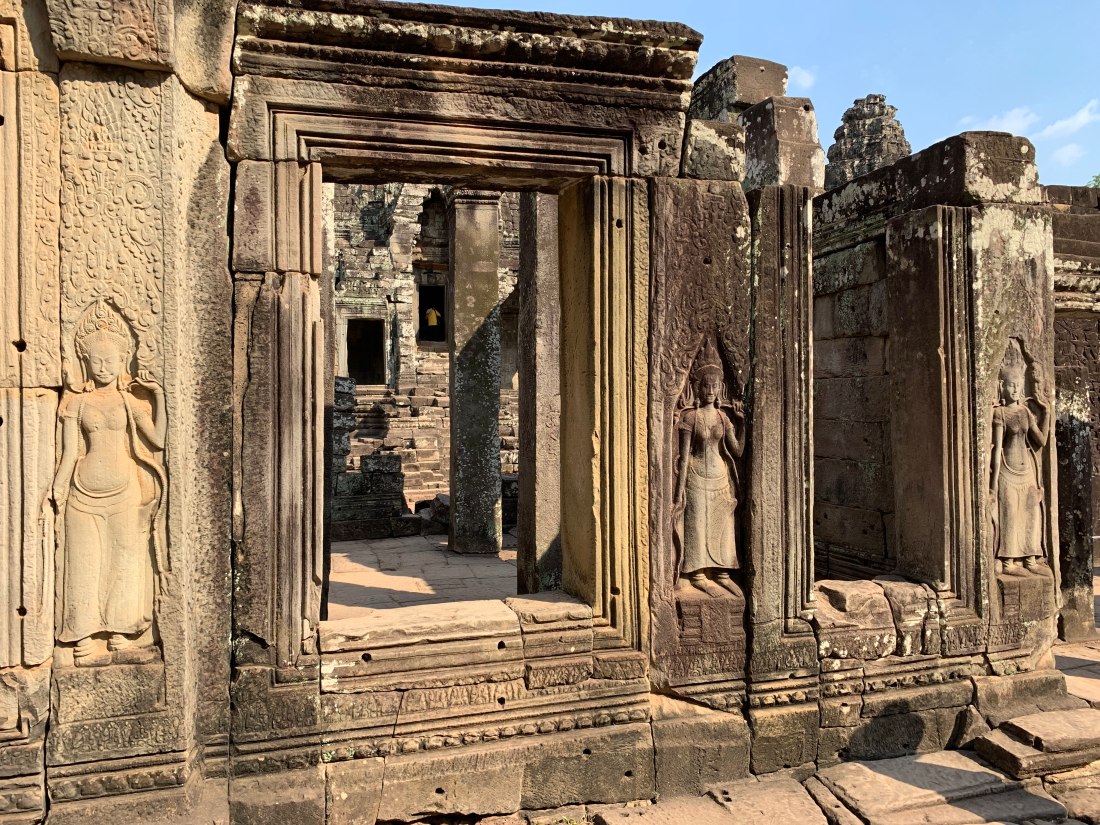
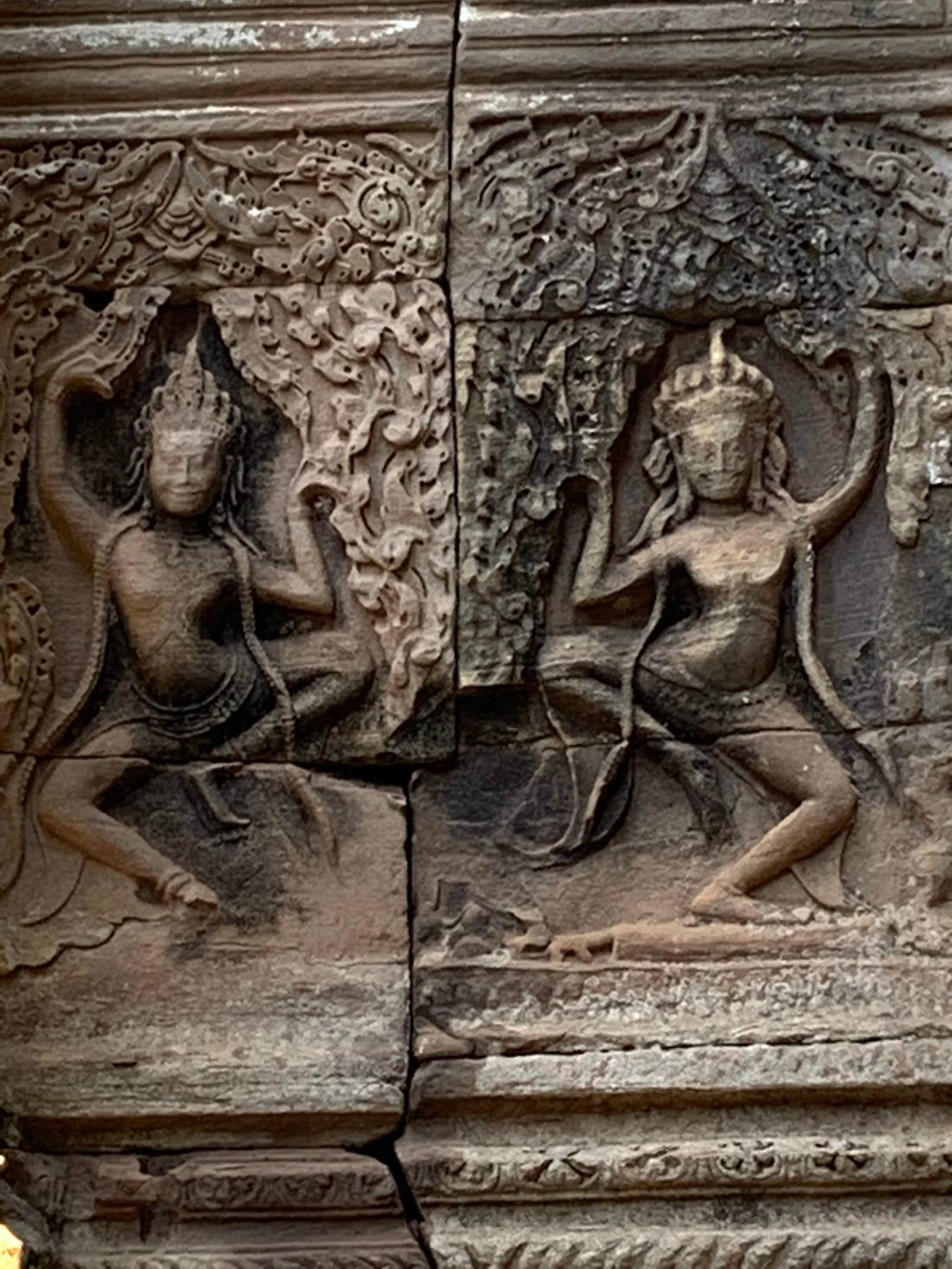
It was also at this temple that I became aware of Apsara. She is the dancing lady at the sides of every entrance in every temple, both Hindu and Buddhist, thus making her symbol ubiquitous and truly Cambodian.
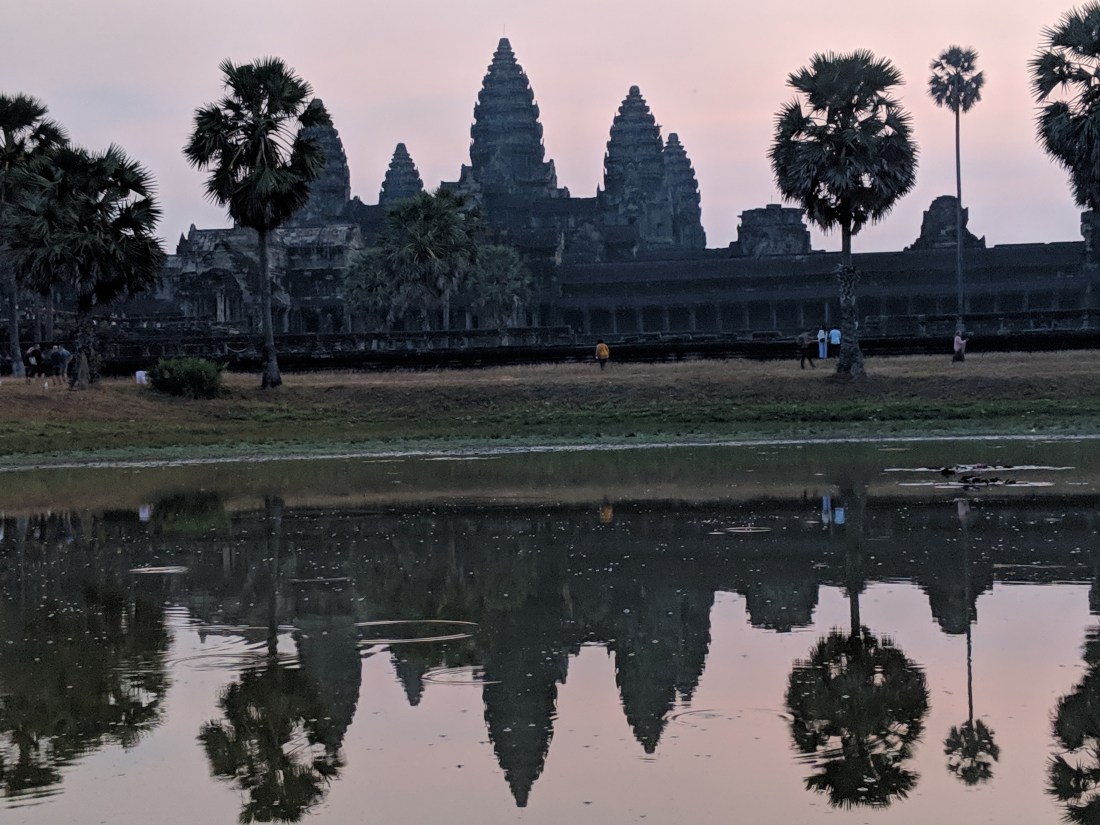
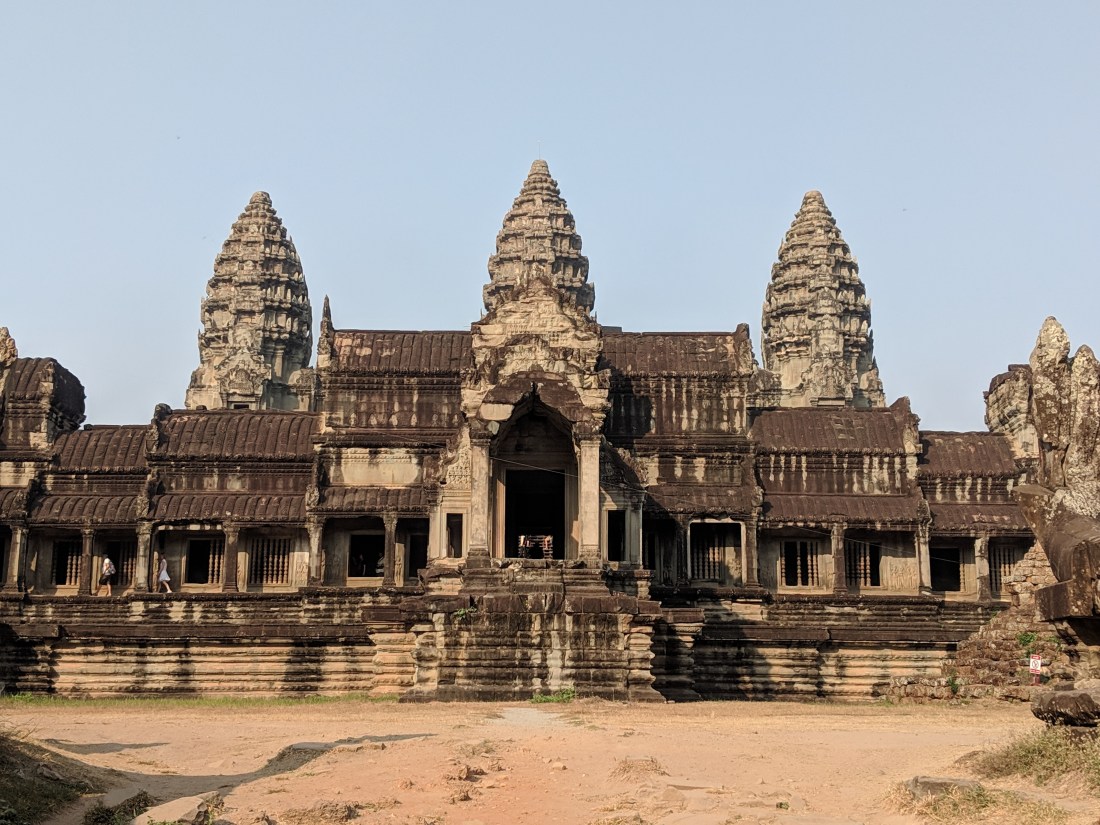
The next morning we were out by 5 am to watch the sun rise over Angkor Wat, Siem Reap’s crowning jewel, one of the largest religious monuments in the world. It was built in the early 12th century by the Khmer King Suryavarman II as a Hindu temple devoted to Vishnu, then converted in the late 12th century to a buddhist temple.
Luckily we had gotten there early for a front row seat. This was the crowd behind us.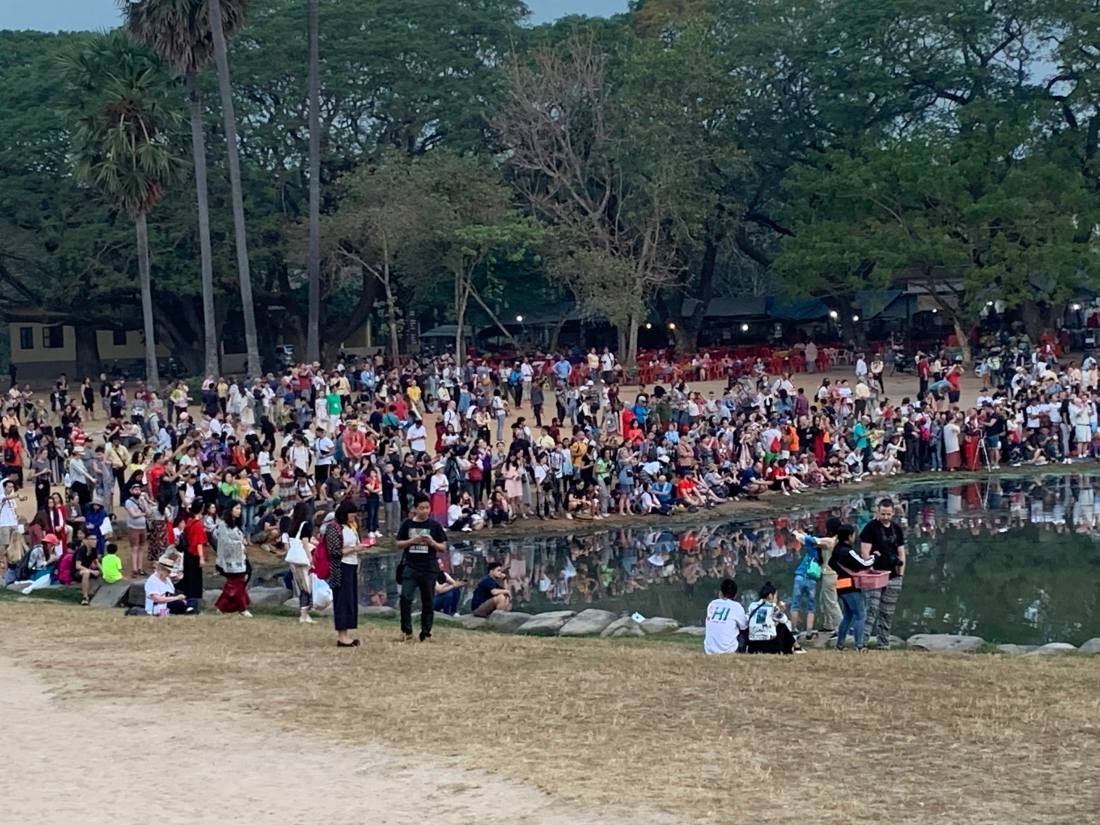
Then we rushed up to the top level to further enjoy the sunrise and beat the crowds to the top.
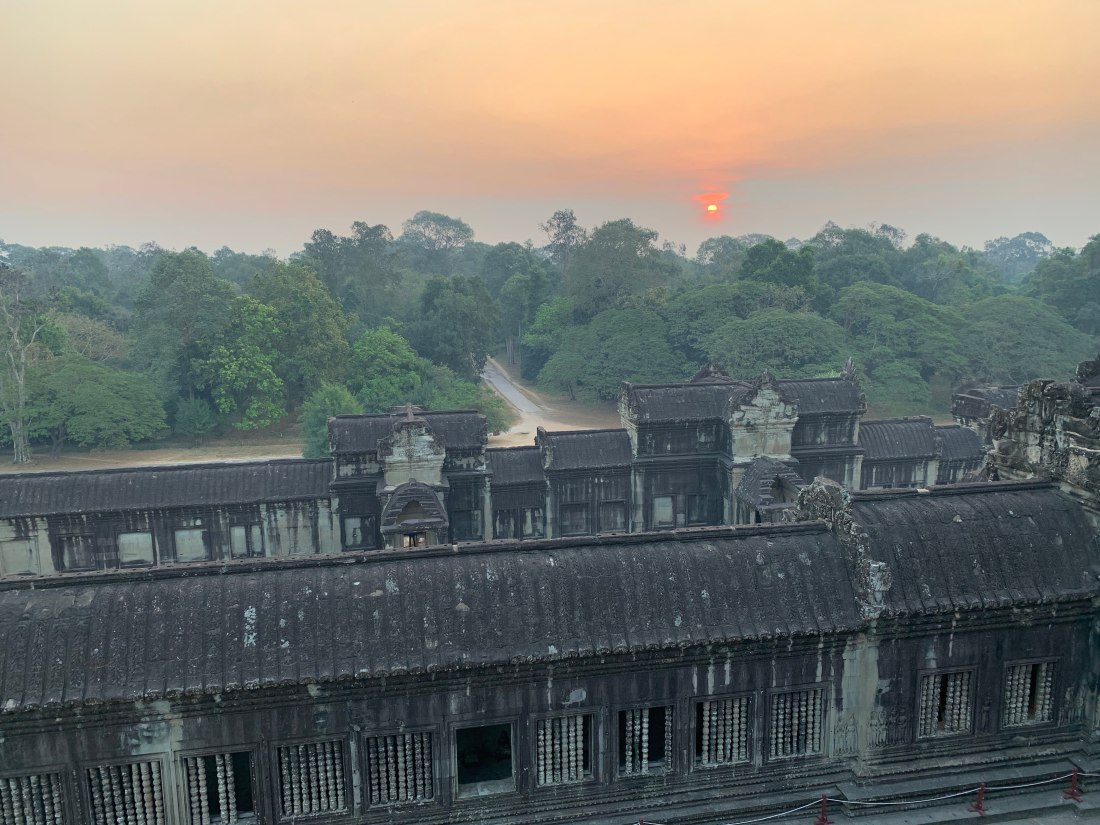
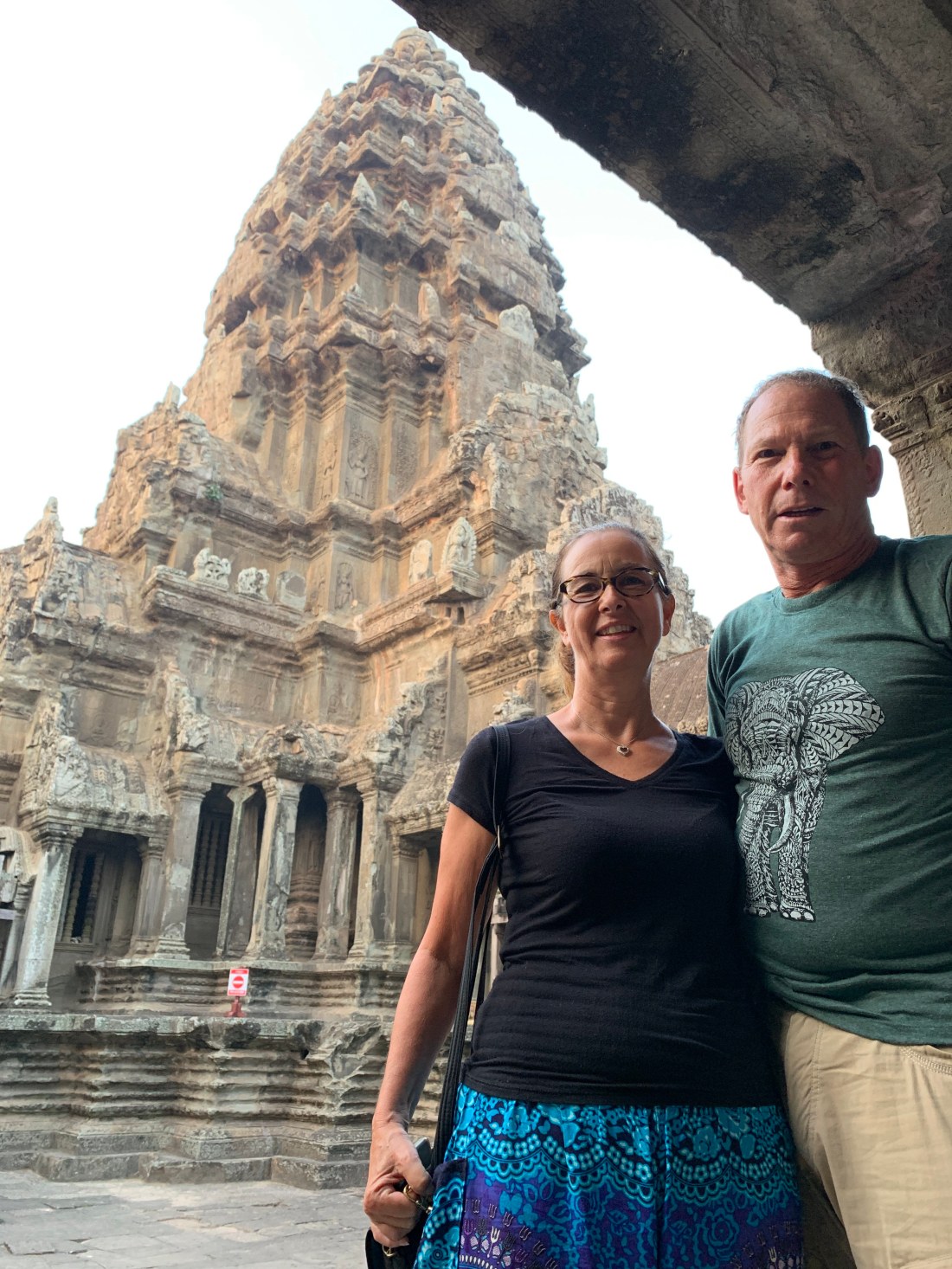
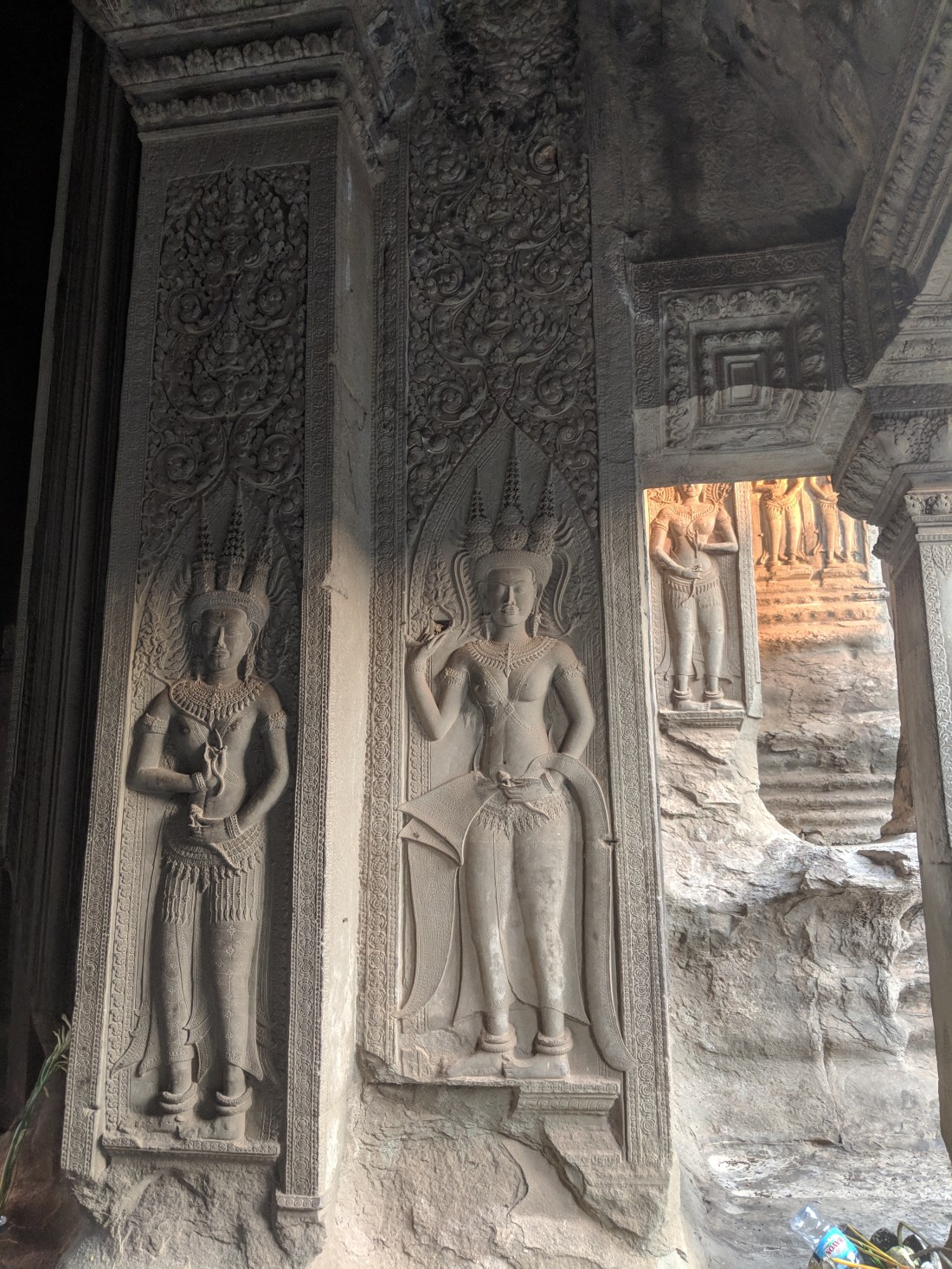
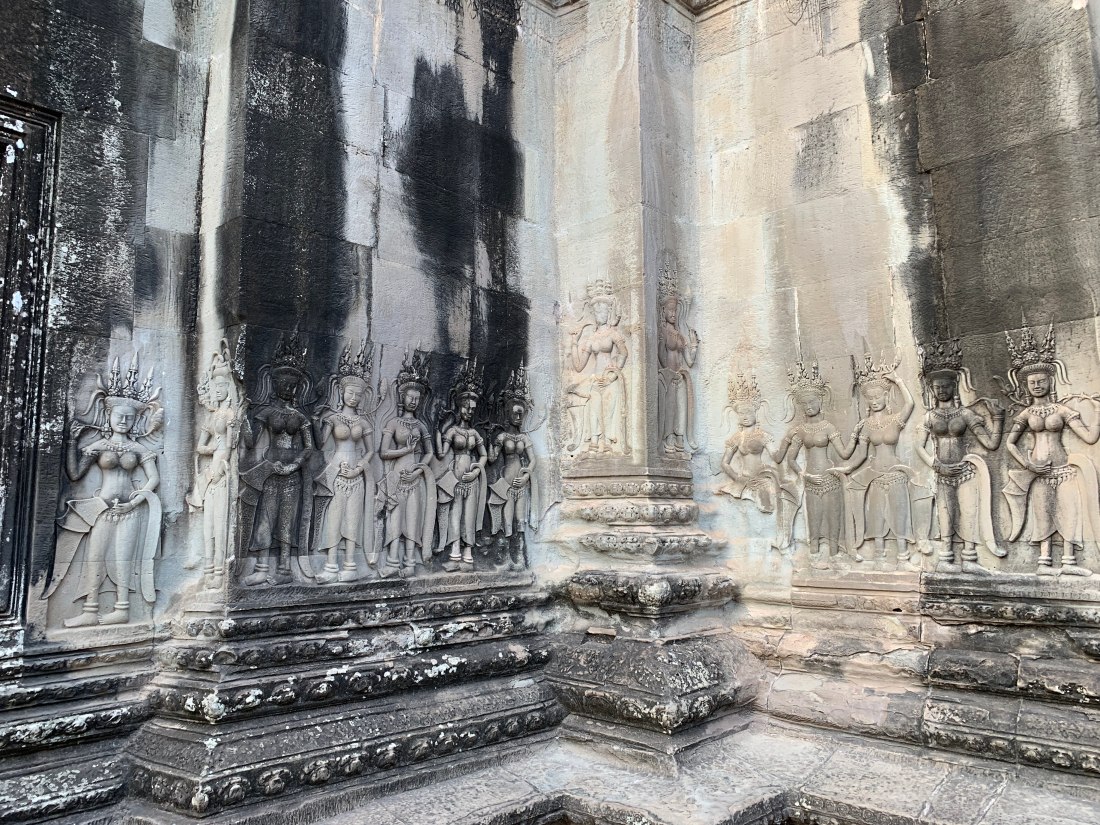
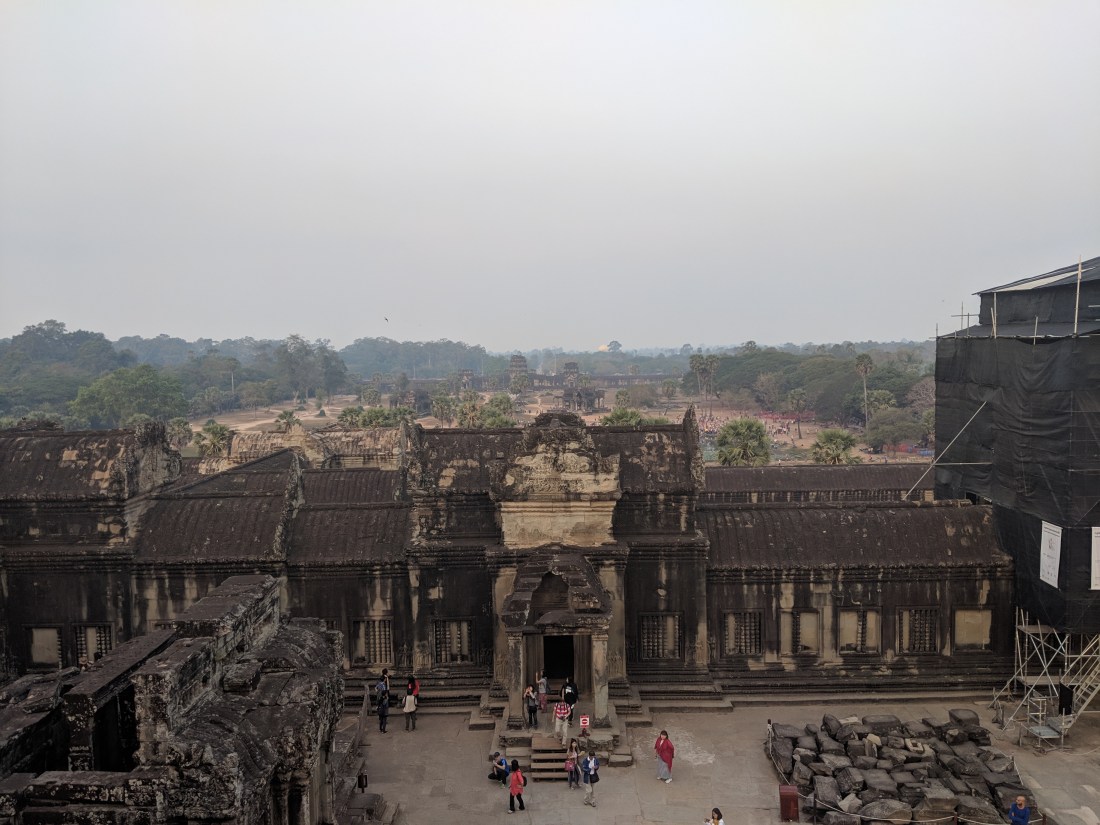
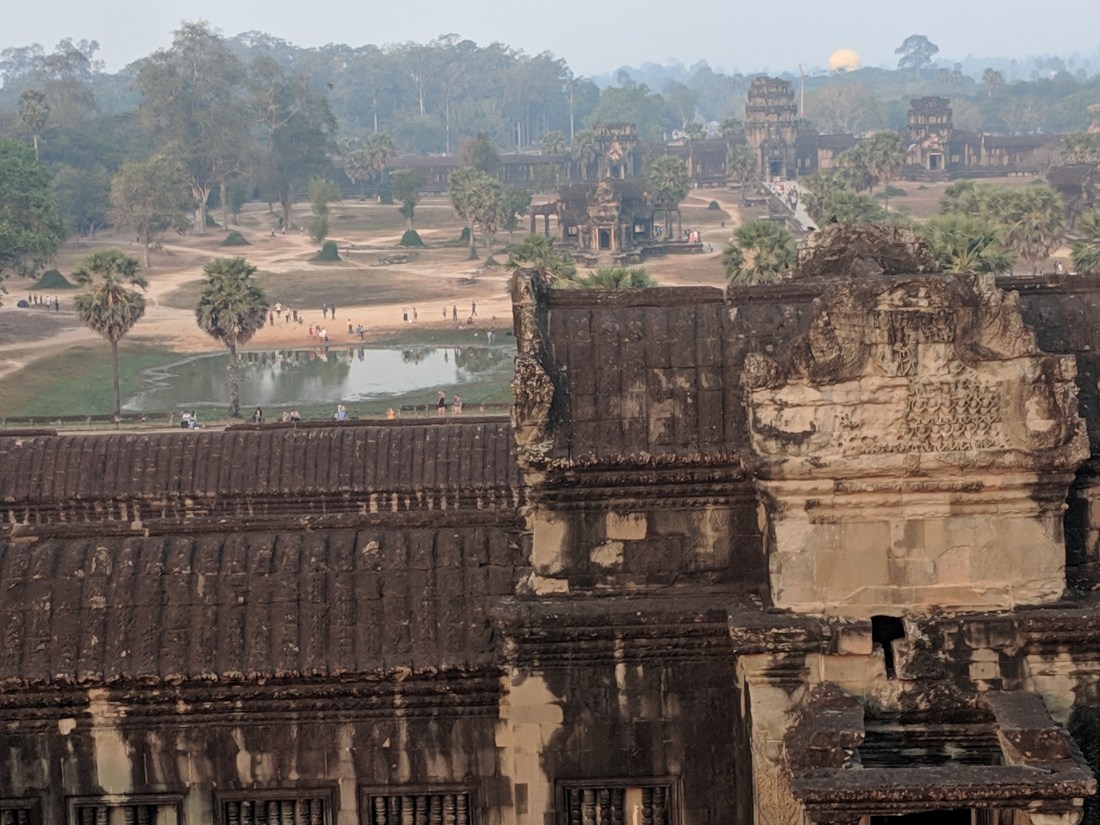
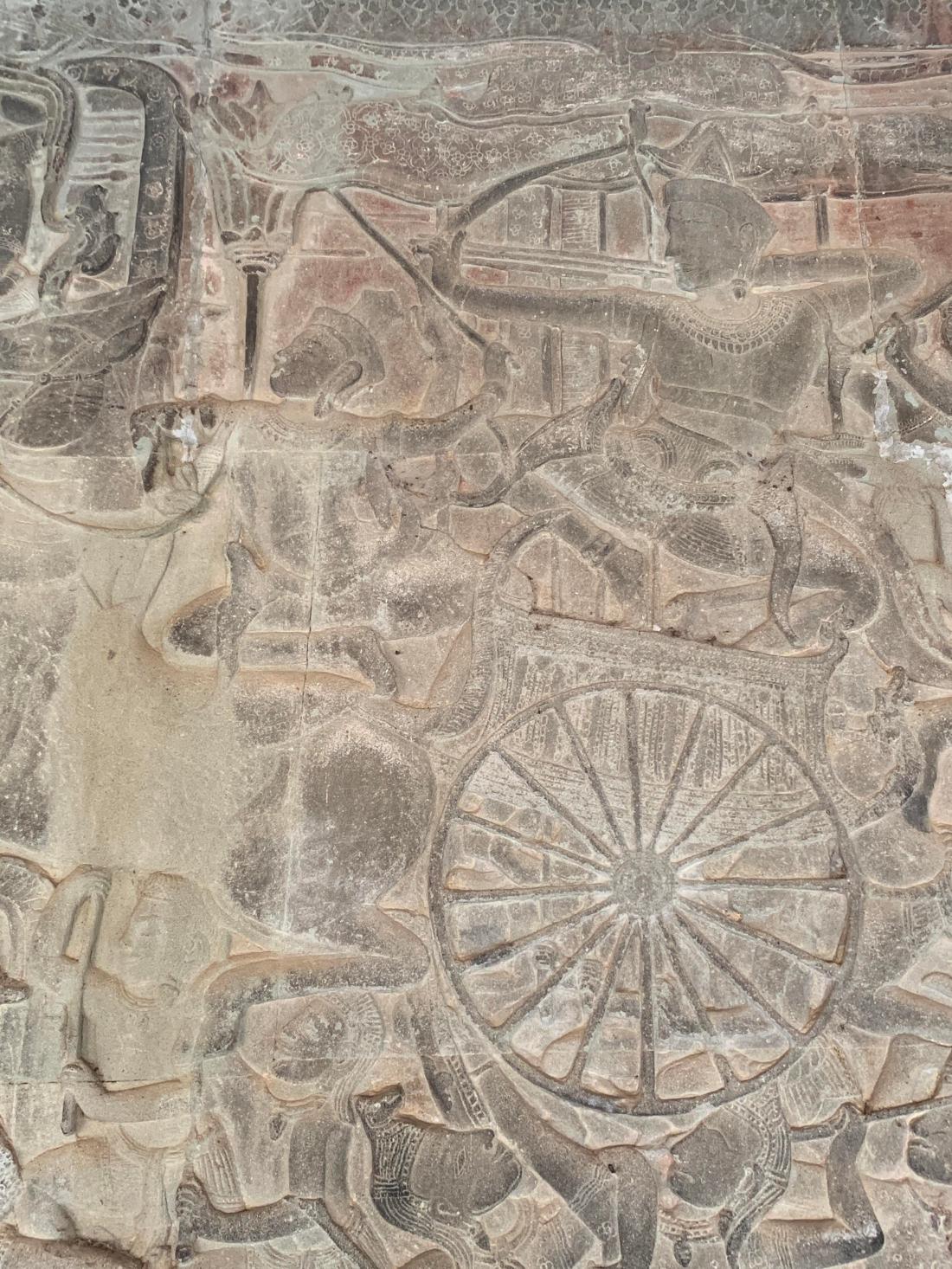


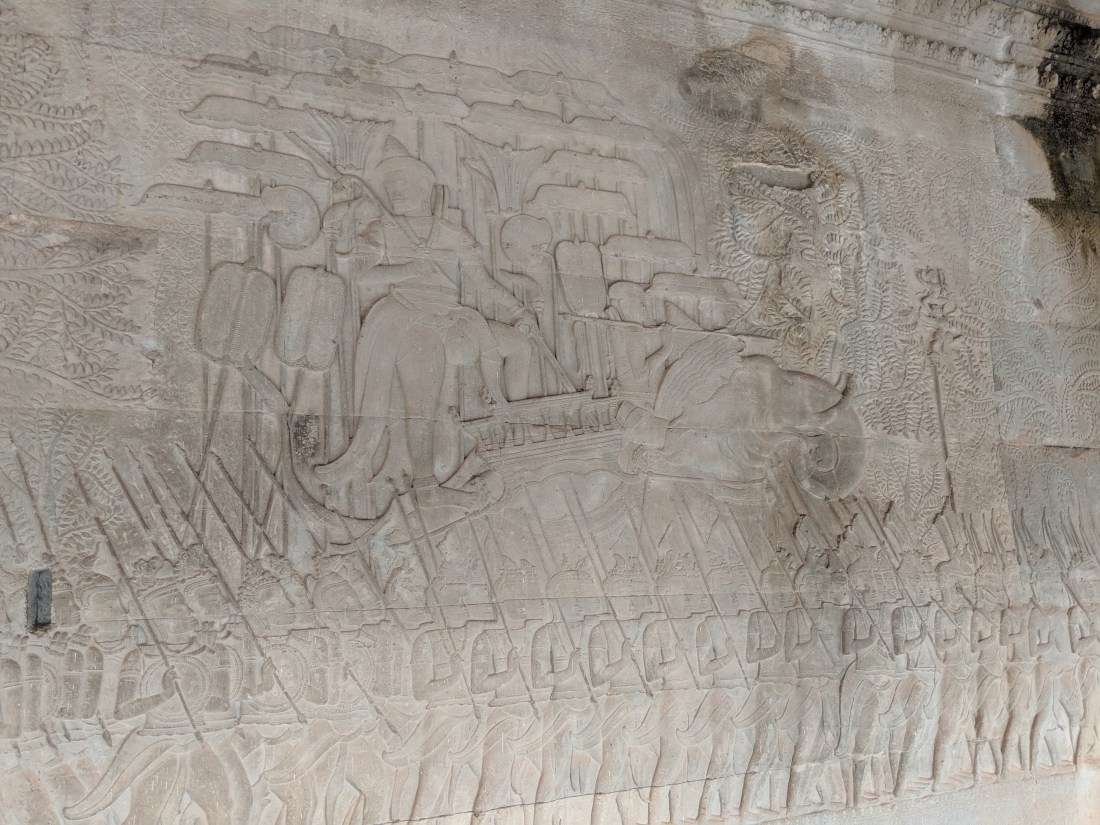
When the king died, the temple was unfinished. But since it was being built as his shrine, it was believed that the gods had decided it was finished, so some of the bas-reliefs were never completed.
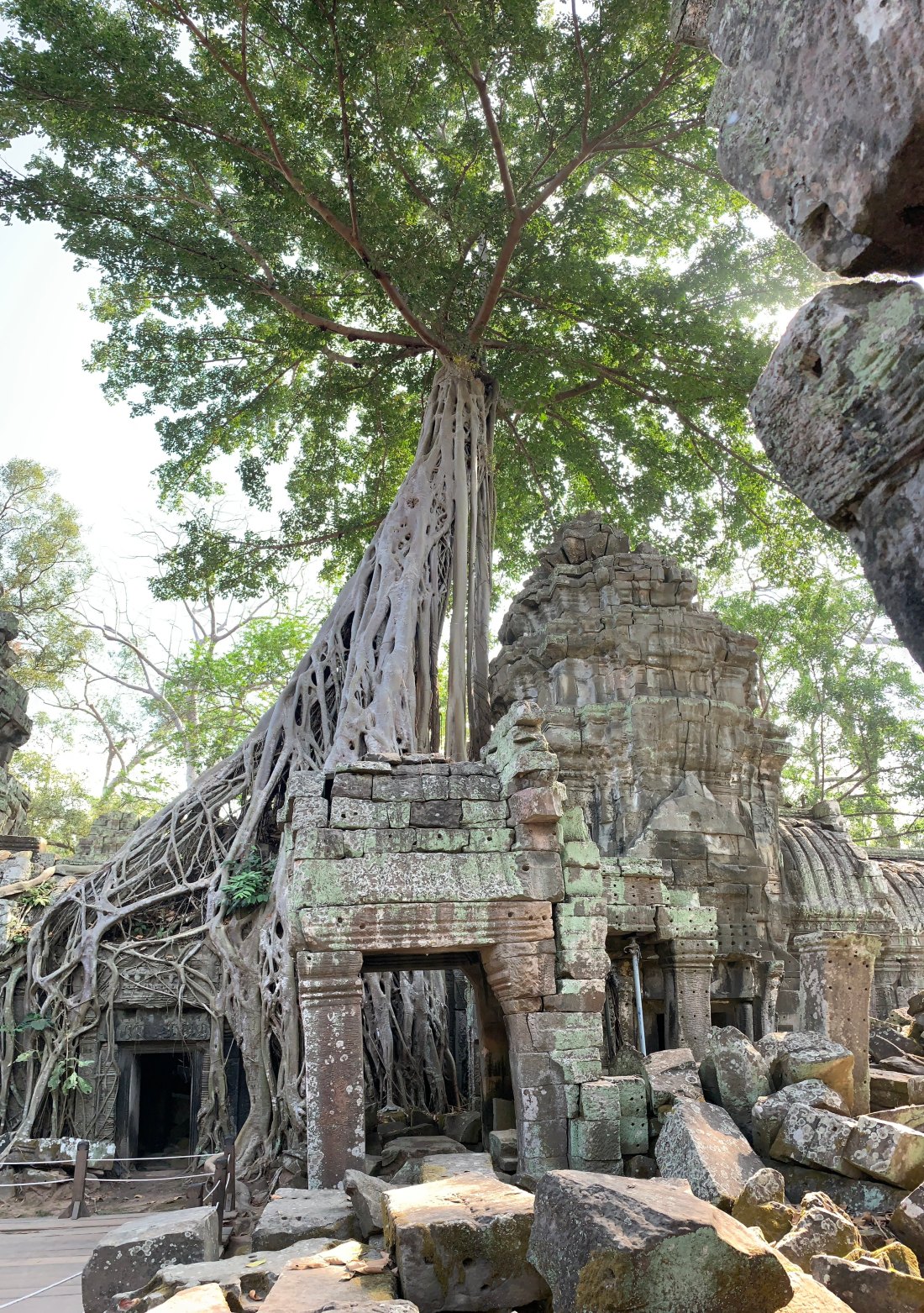
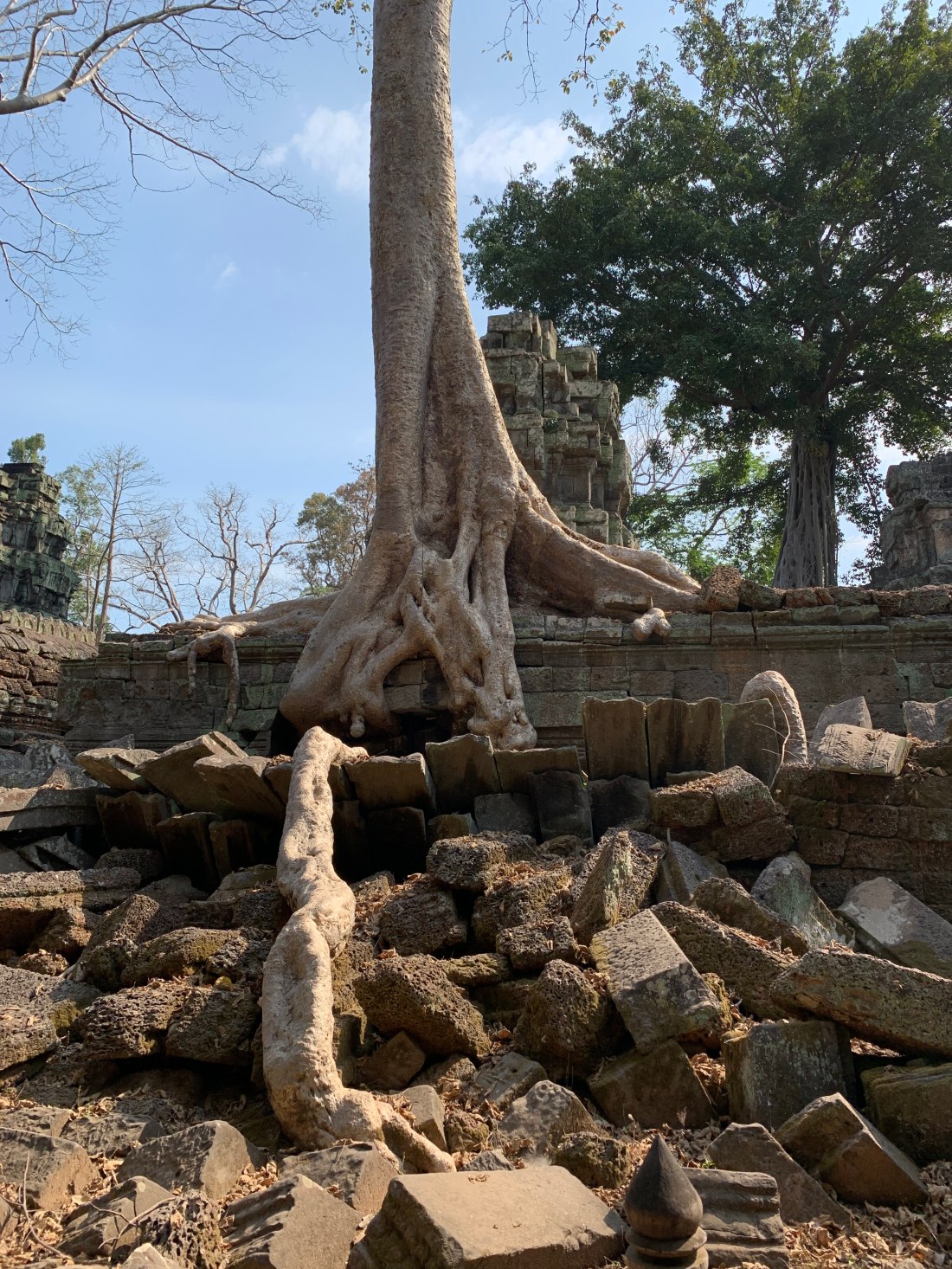
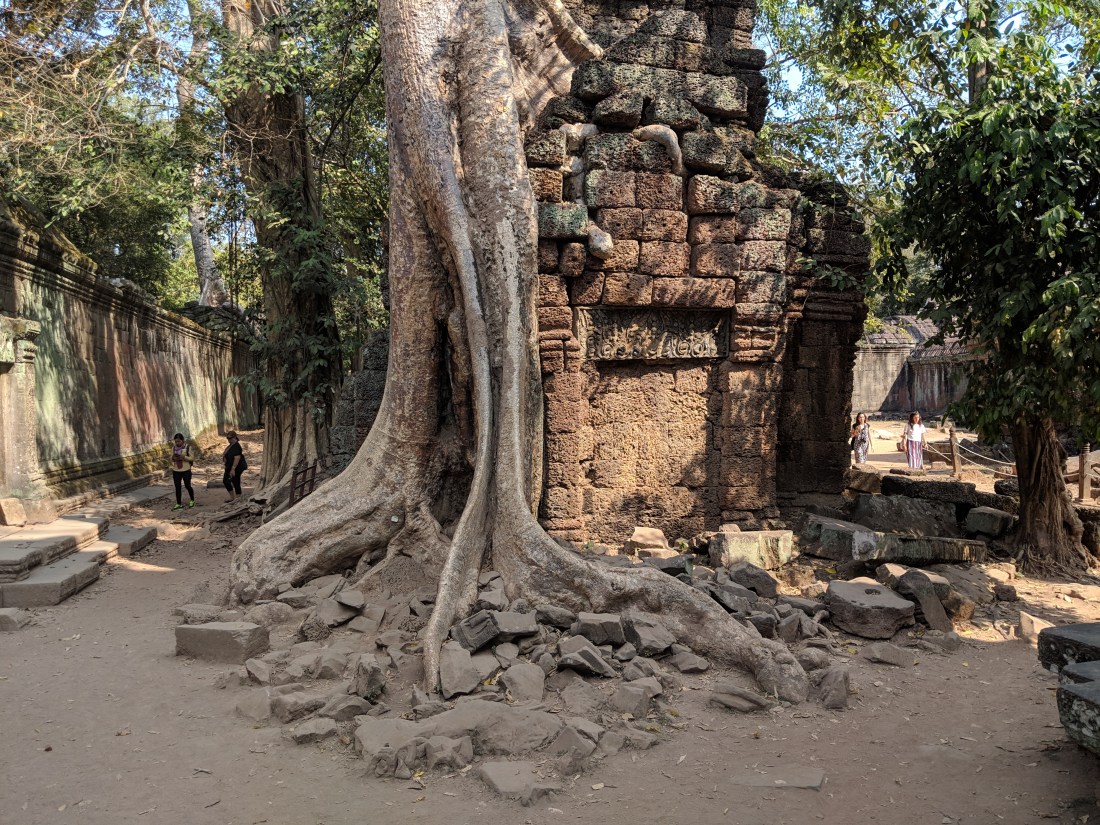
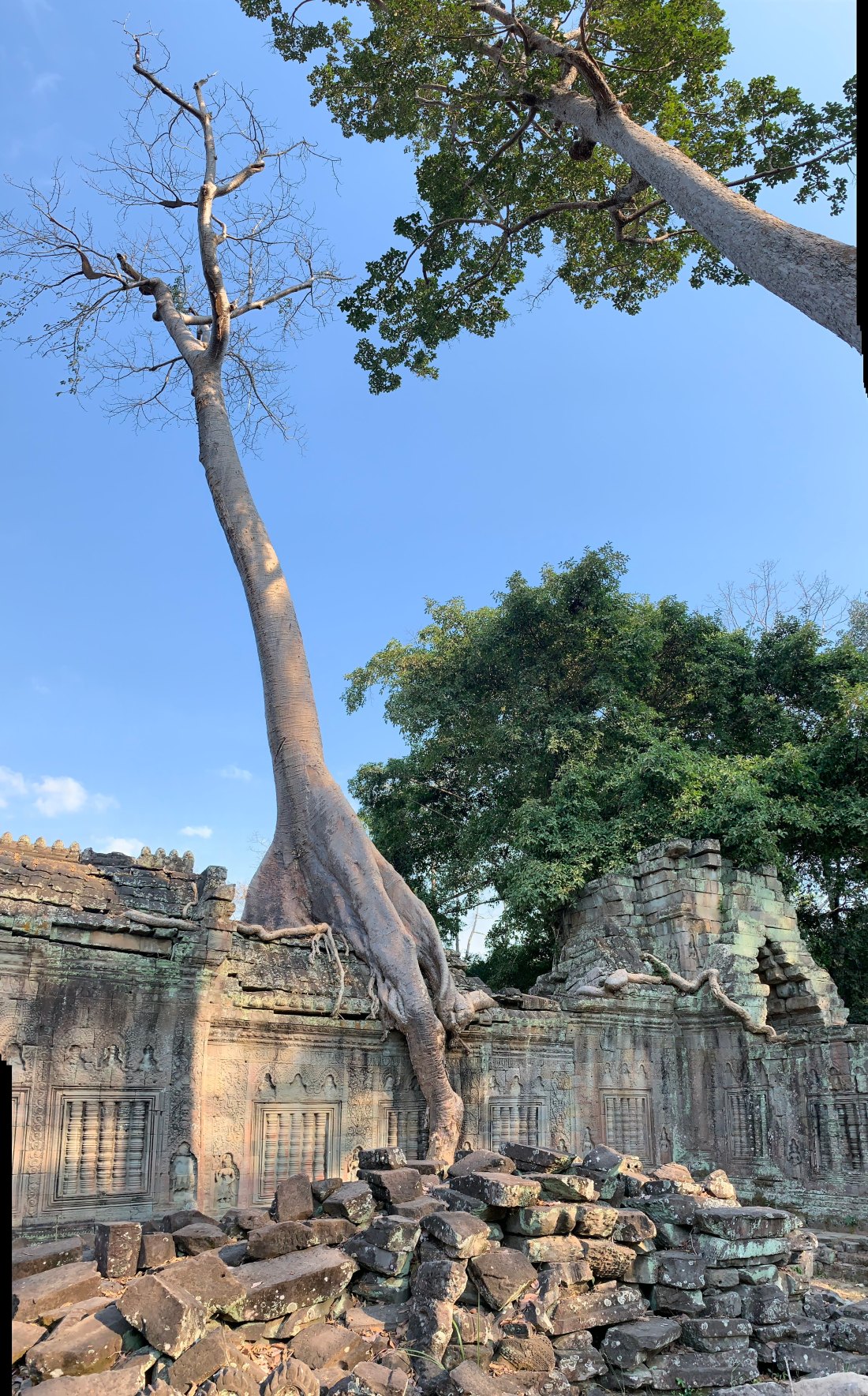
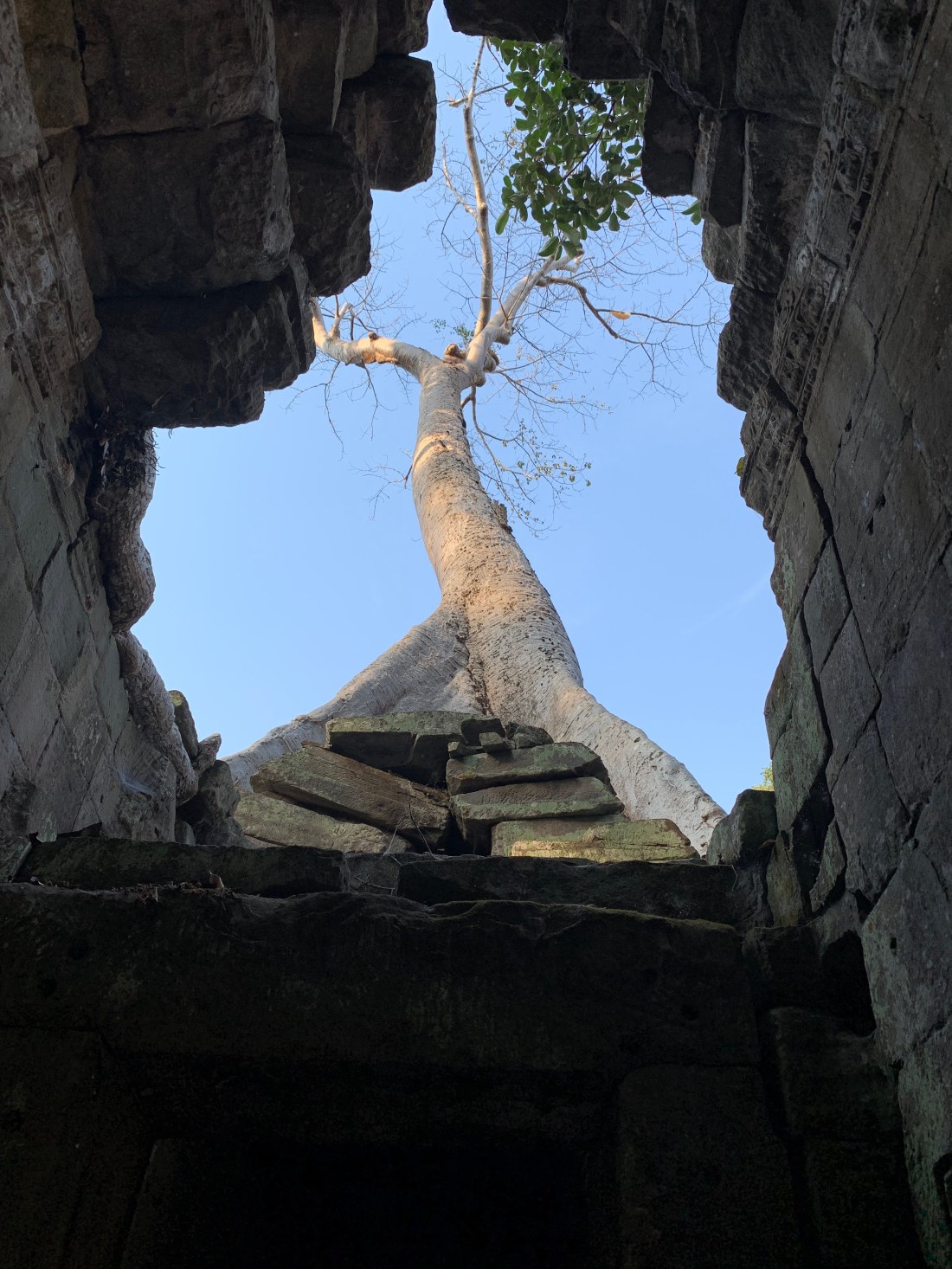
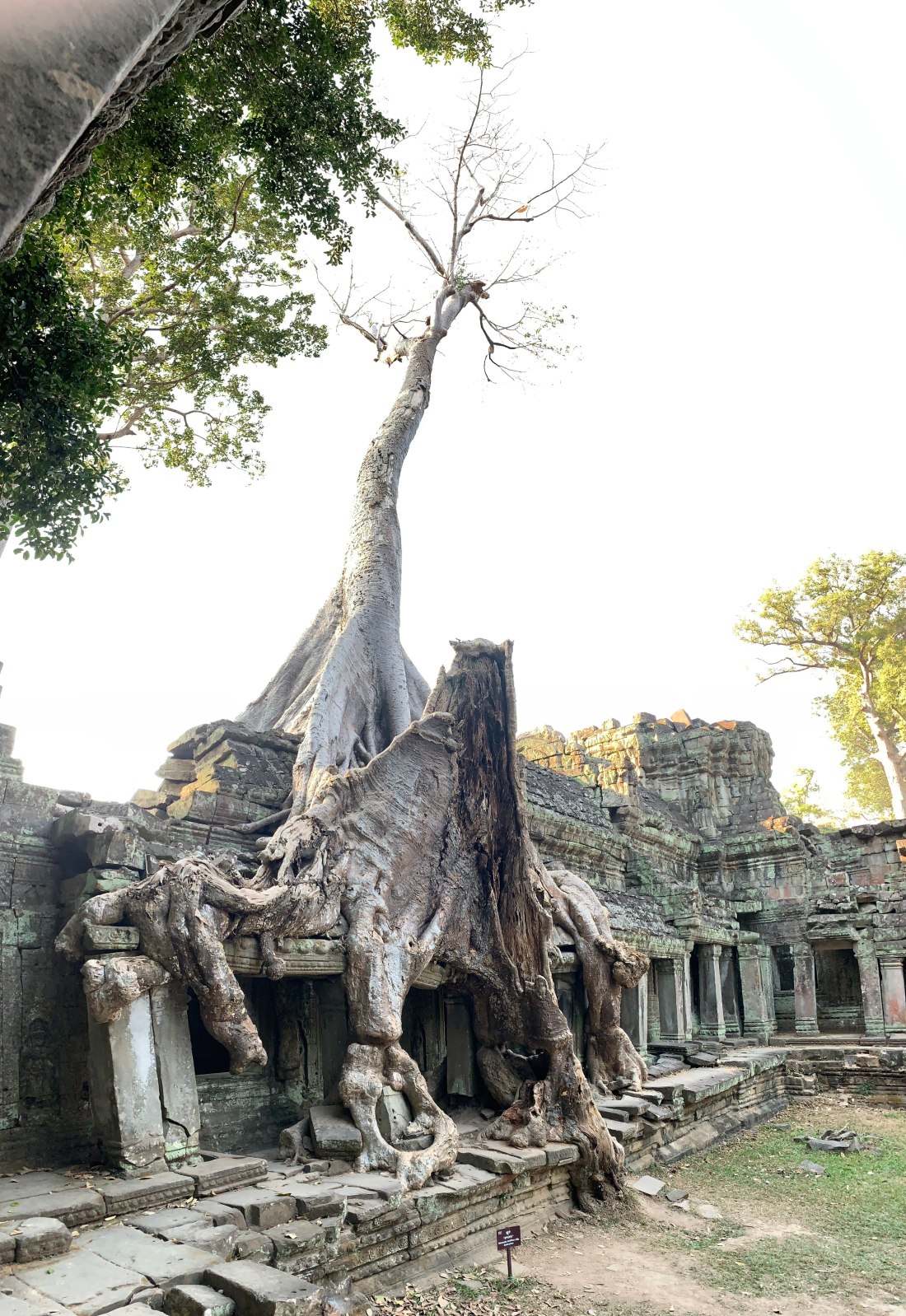
Next temple on our agenda was Ta Prohm, probably the most fun. It was built in the late 12th century by King Jayavaraman VII to honor his mother (first, before he built one for his father) and was used as a monastery and university. It was abandoned in the 14th century with the fall of the Khmer empire, and when found later by explorers, the jungle trees had grown so entwined with the structures that it is felt that to remove them is structurally unsound. It was used as a site for the filming of the movie Tomb Raiders. 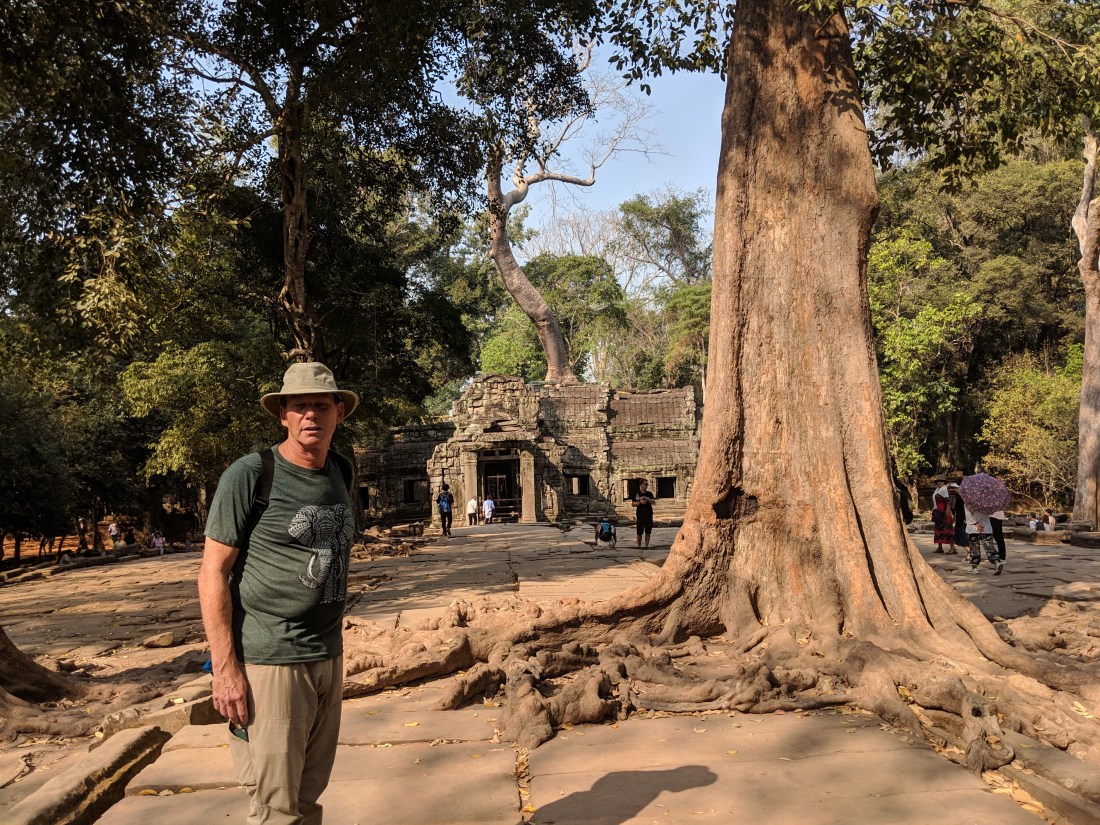
Yes that tree is growing on top of that building
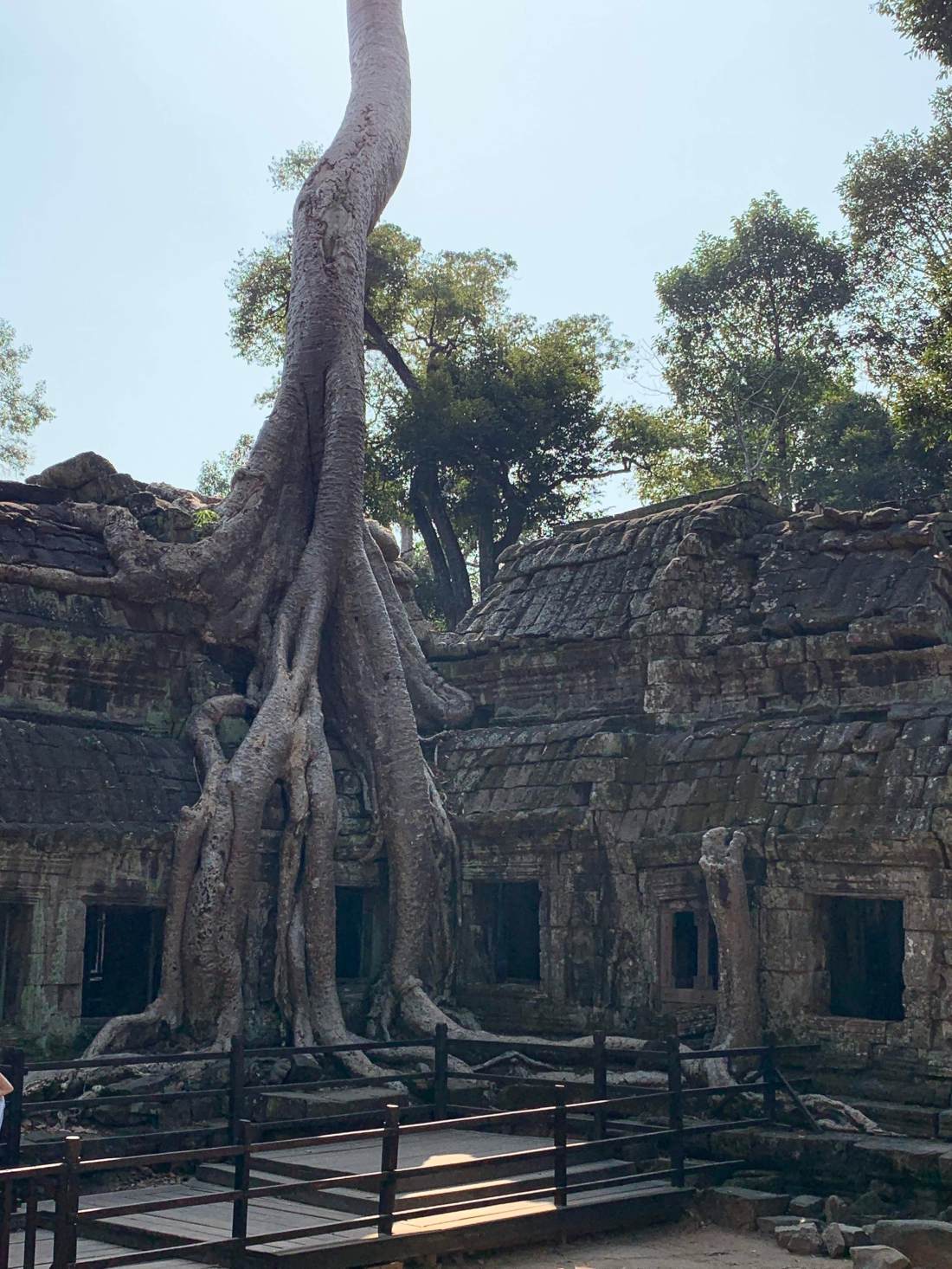
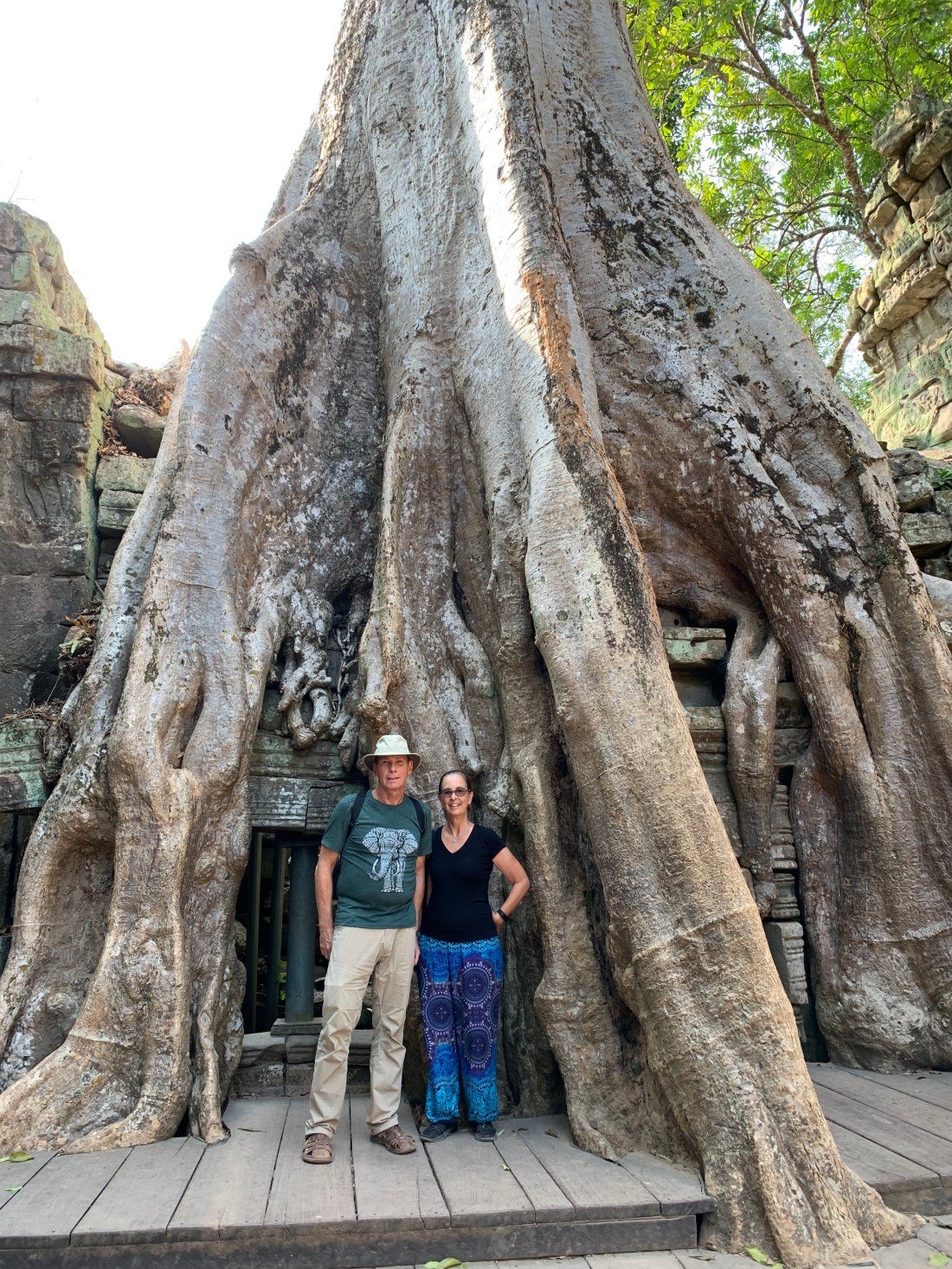
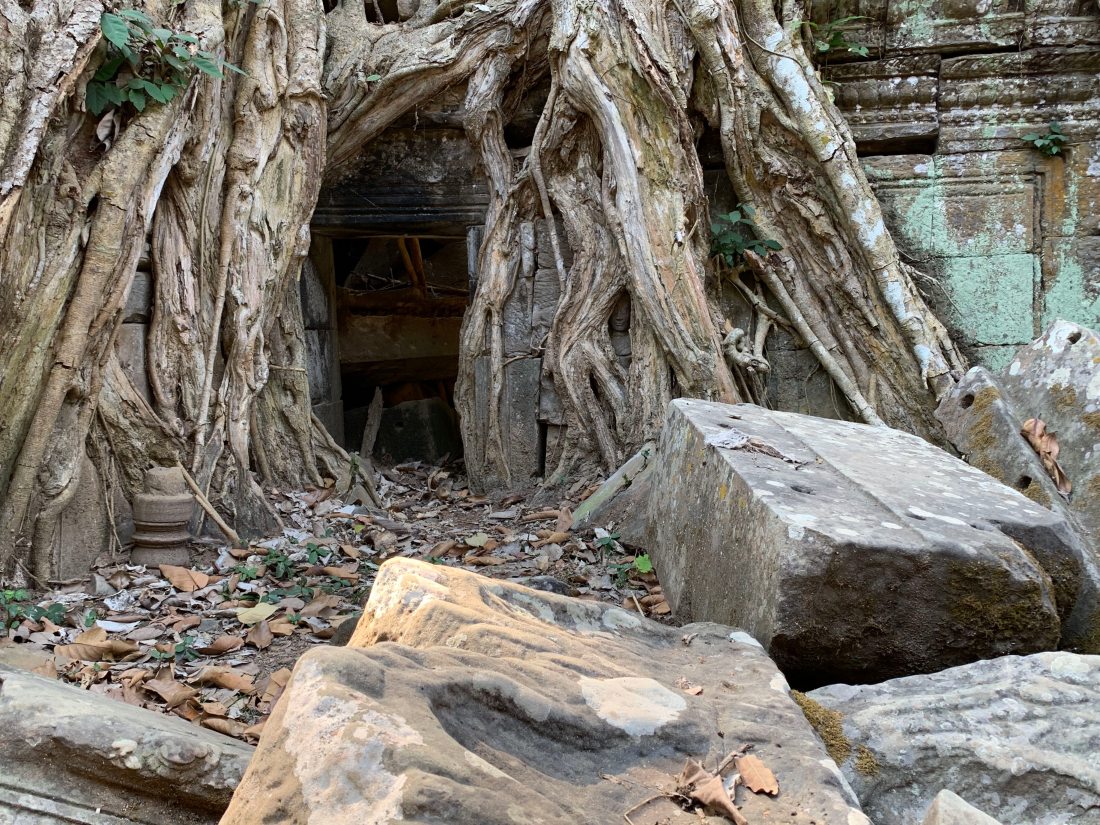



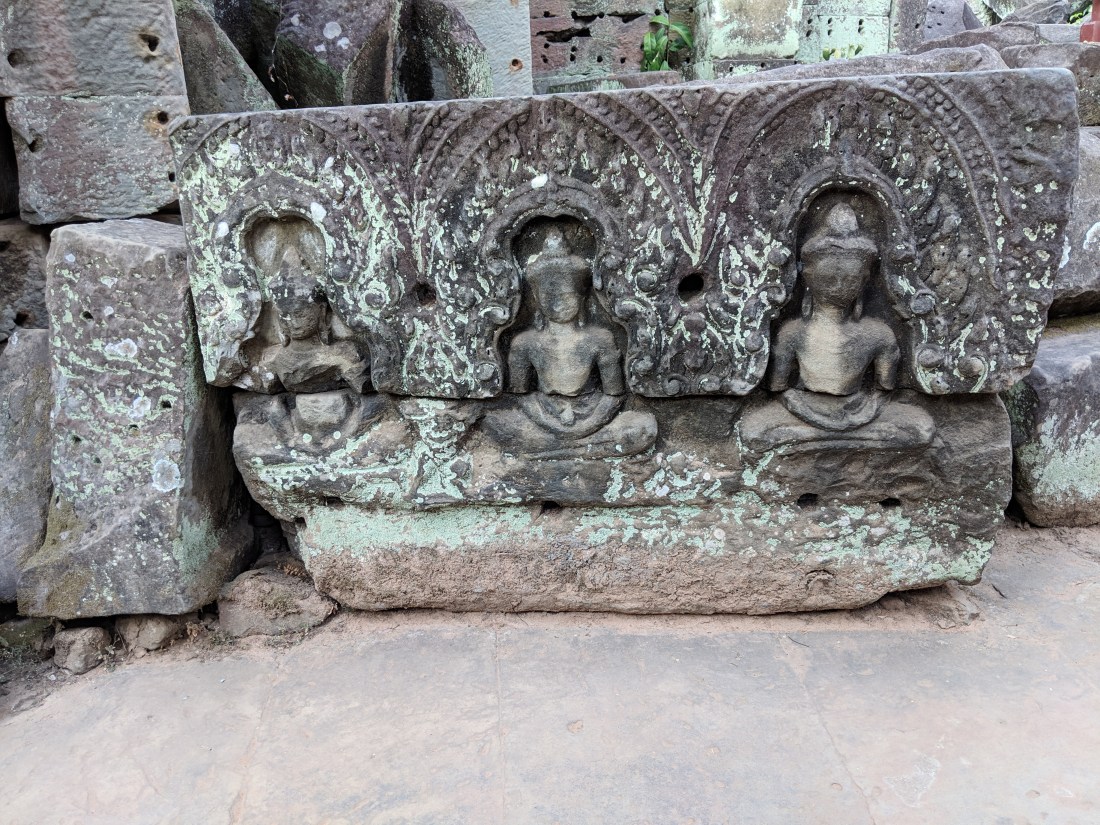
Most of the buddhas and bas-reliefs were later removed by Hindus.


That is again the image of King Jayavaraman VII on the tower at the entrance to this complex. Let me now add more of why I love him so much. He became king at the age of 52 and then reigned for 40 years! During that time he not only built shrines to both his parents (mother first) and many temples throughout Cambodia, Laos and Thailand – all part of the Khmer Empire – he built 102 hospitals with rest stops with water every 15 km along the way for the sick traveling to the hospitals. His second wife was the older sister of his first wife, which was the first wife’s dying request. His second wife was a learned lady who read and wrote books and believed in education for all and helped him expand the empire. Also, although he was a buddhist, only the second in the Khmer empire, and his temples were built for Buddha, he never destroyed anything Hindu. He invented a symbol of peace which incorporates symbols of both religions because he believed Hindus and buddhists should coexist peacefully.

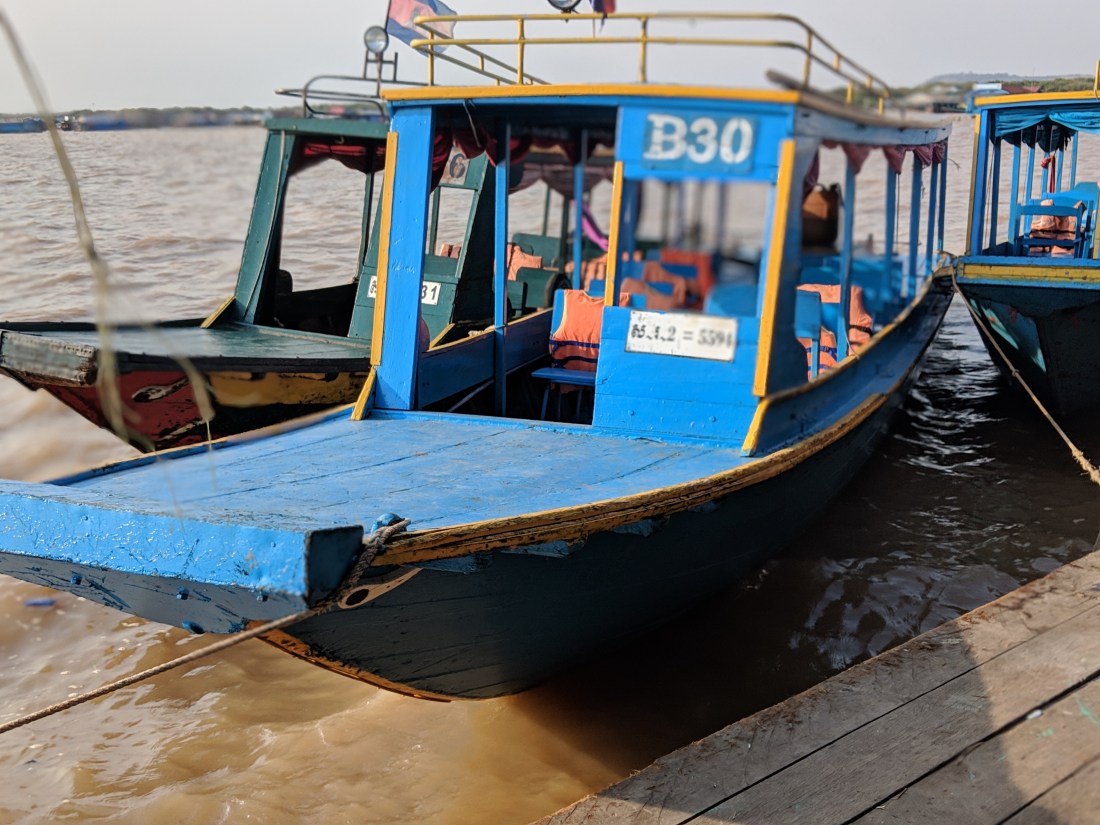
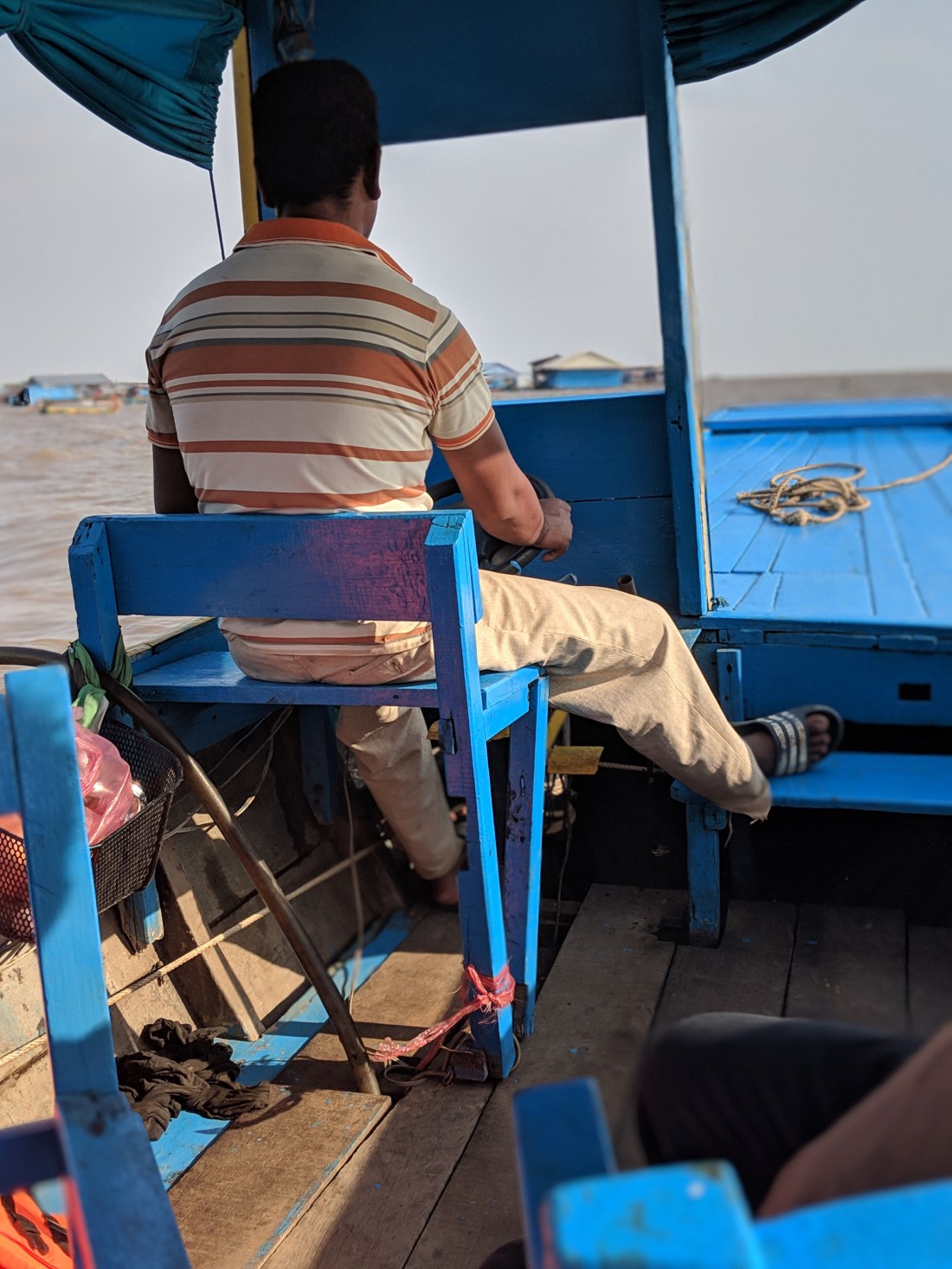
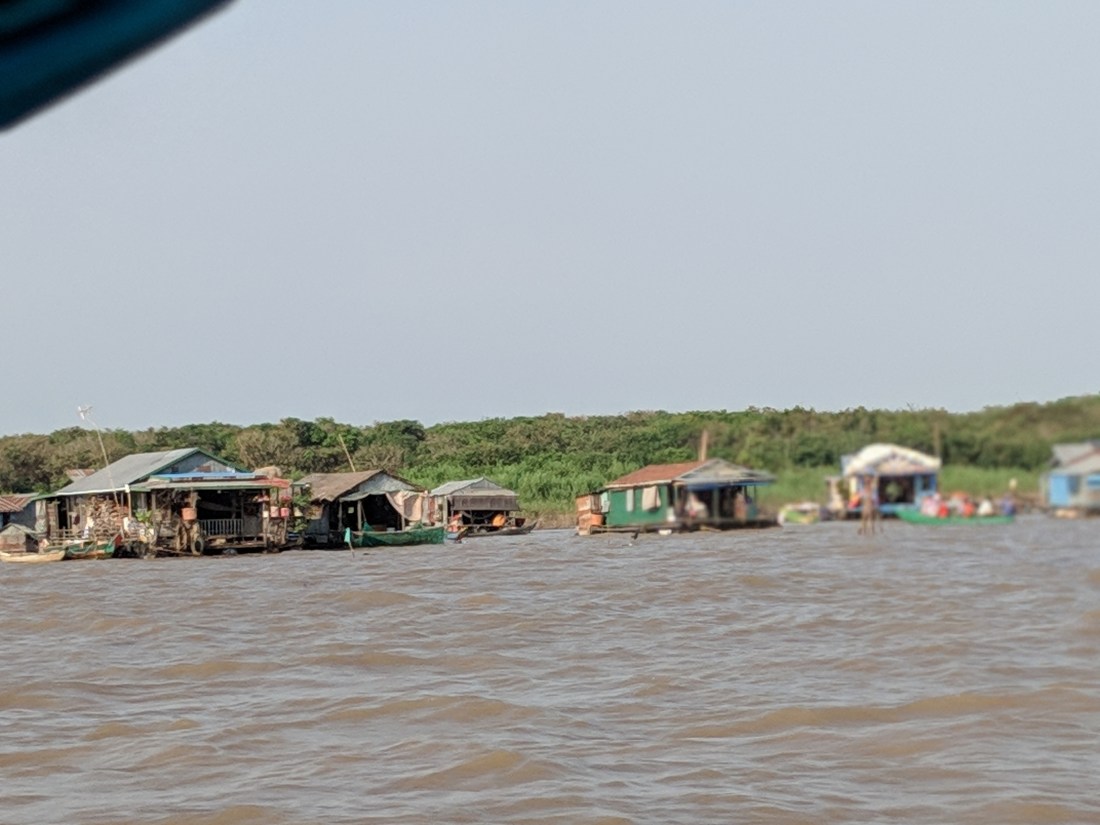
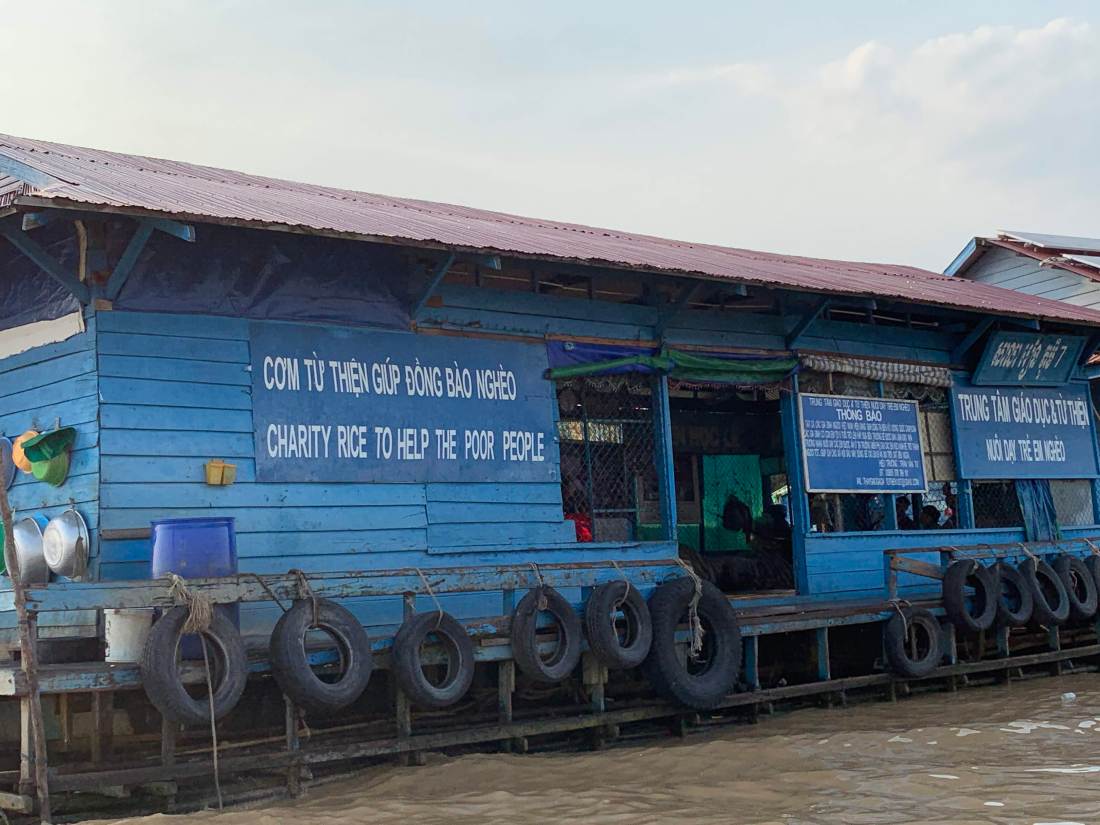
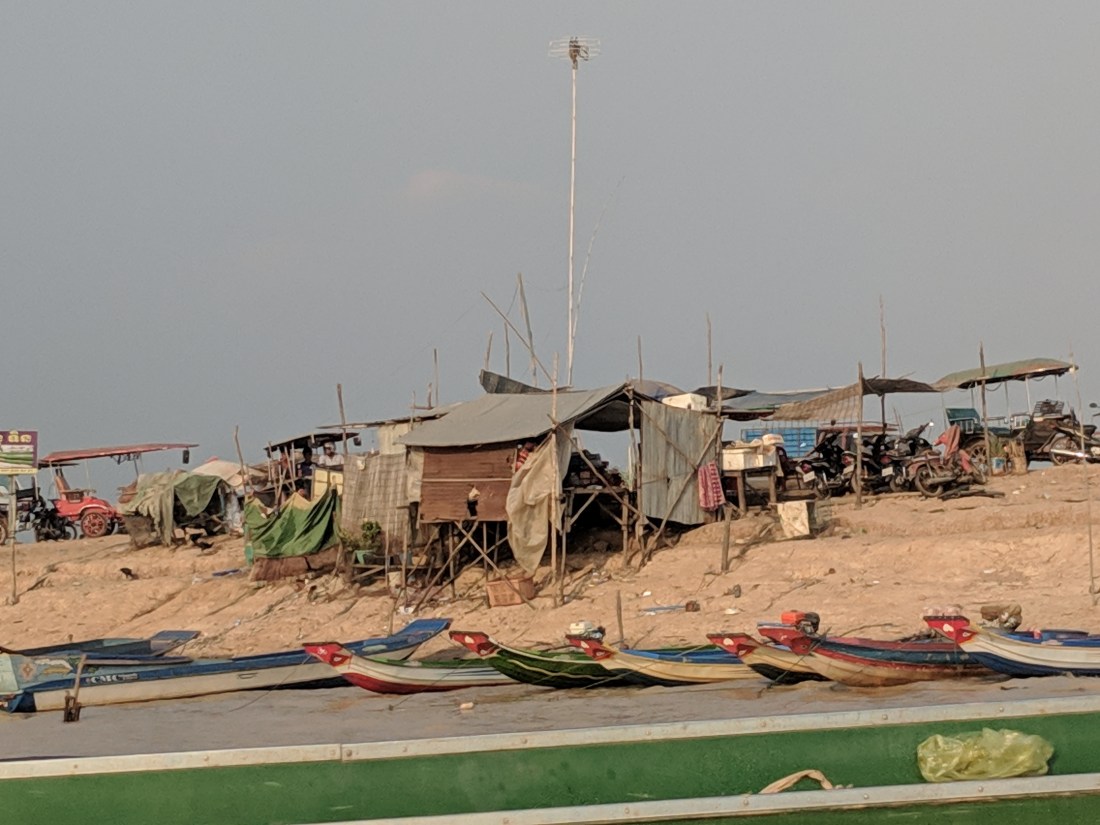
After Ta Prohm we were treated to a boat ride on a huge lake Tonle Sap with whole villages of fisherfolk that live out on the lake on floating homes. What is interesting about this lake as that it has a river that flows from it and joins the Mekong River in Phnom Penh. During the rainy season, the lake is high and the river flows south. During the dry season, the lake is low, the river reverses course and flows from the Mekong into the lake. It is the only river in the world that flows in opposite directions at different times of the year.
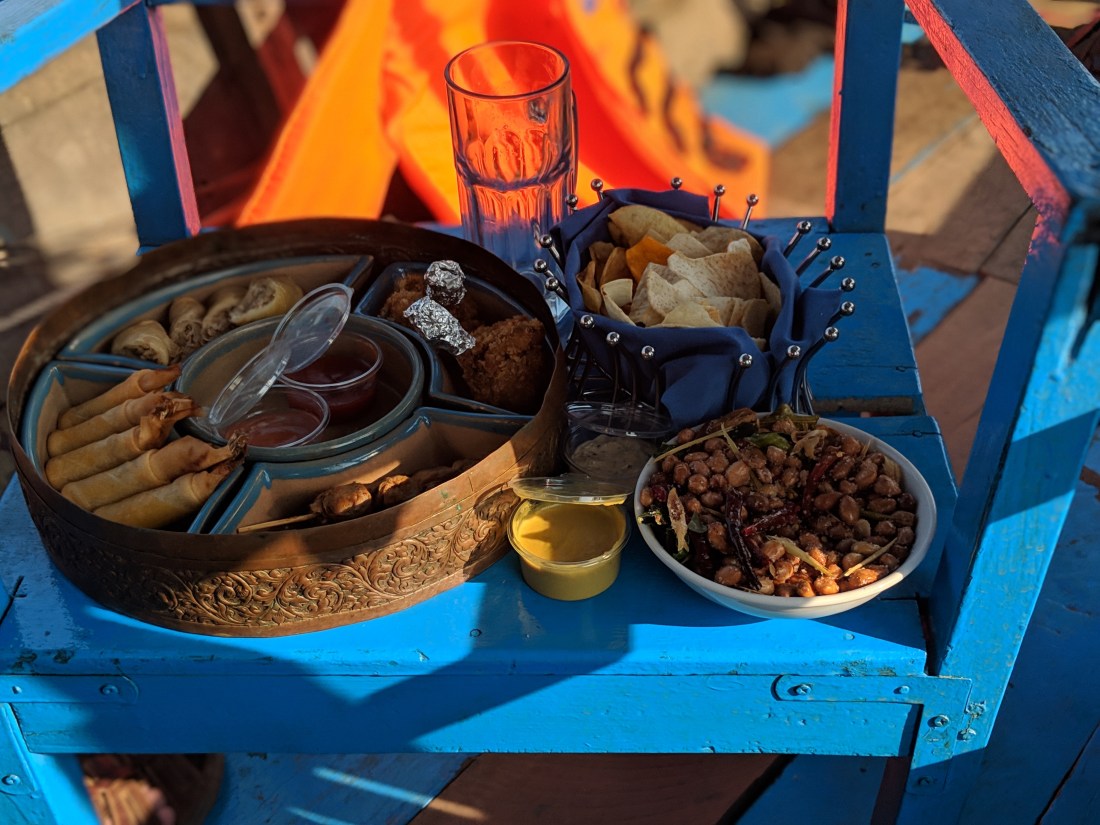


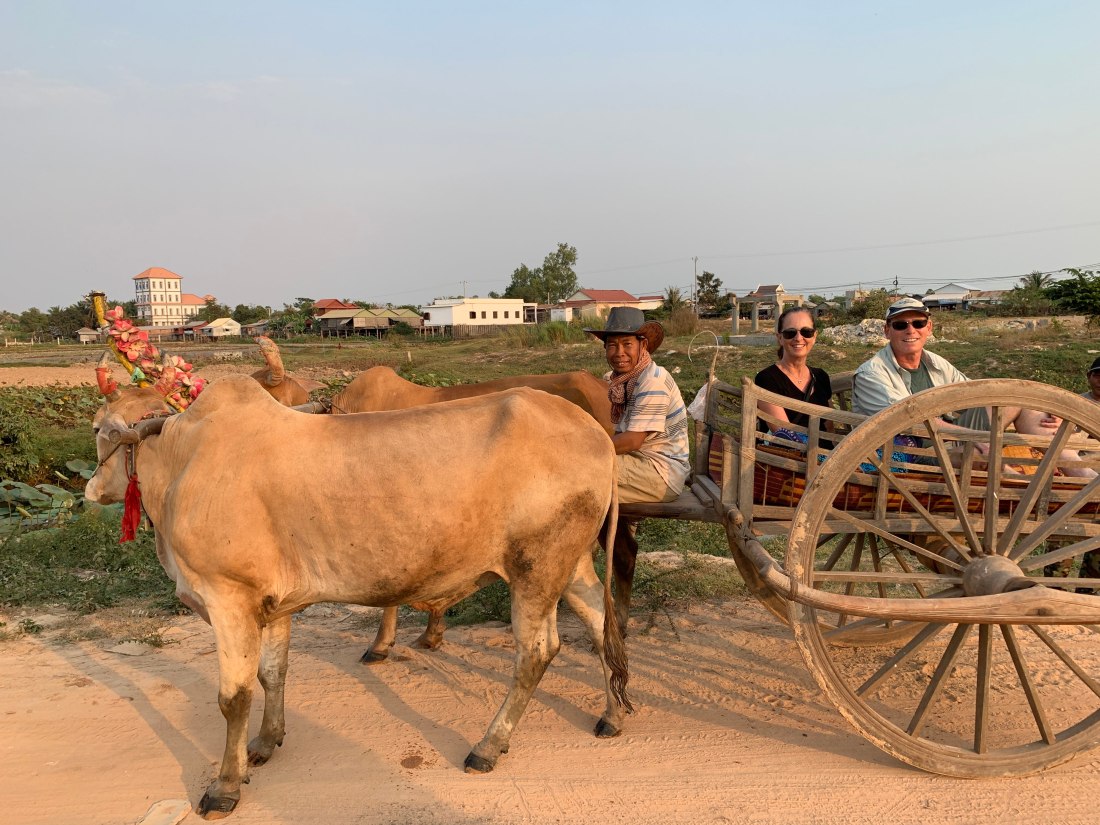
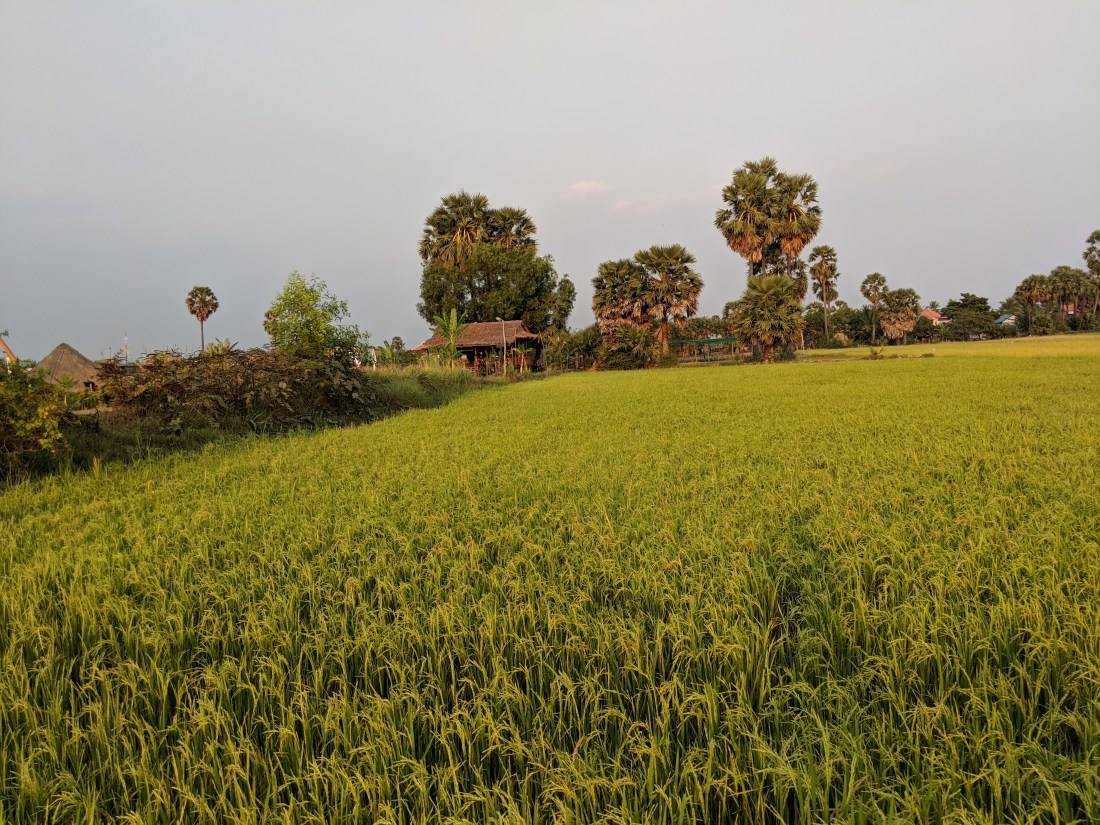
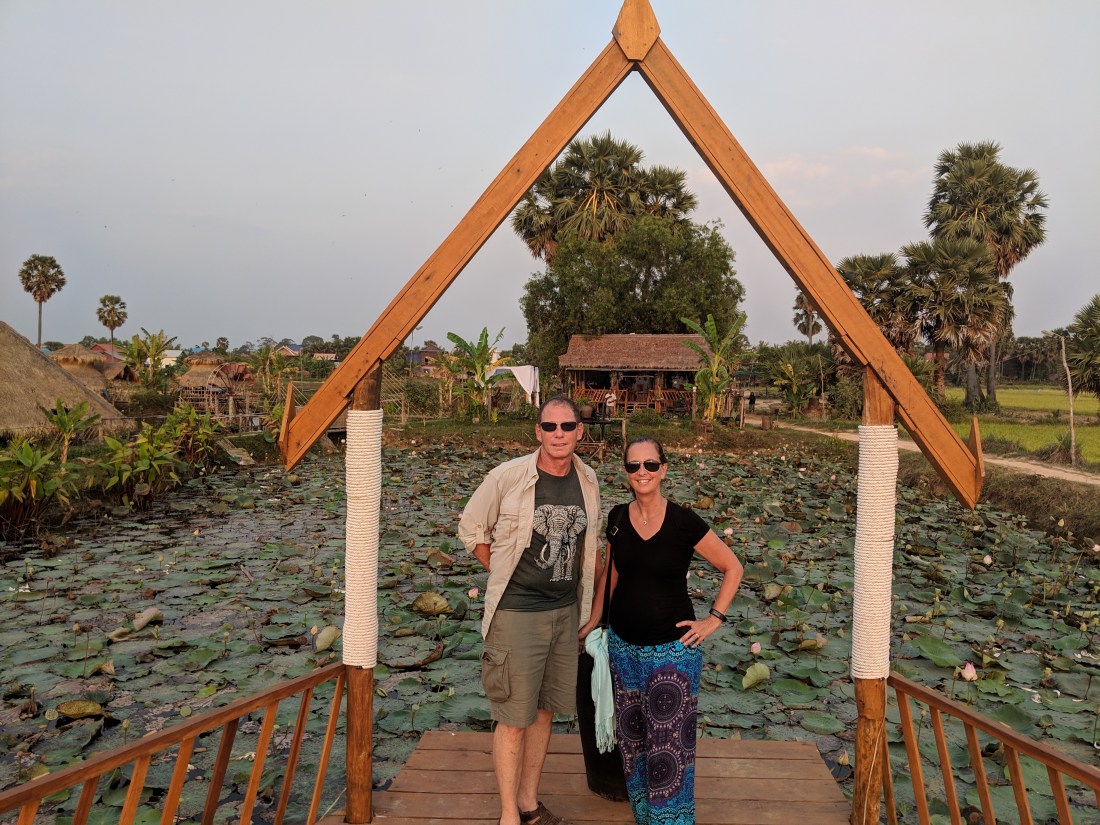
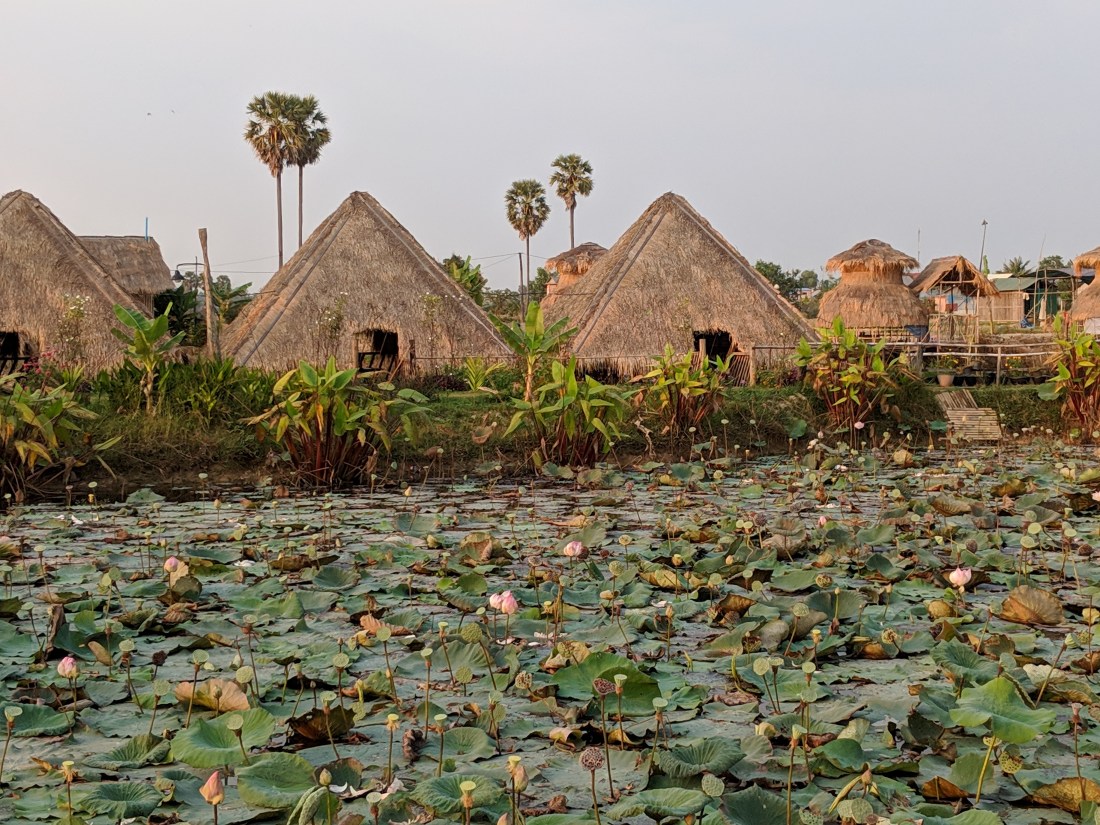
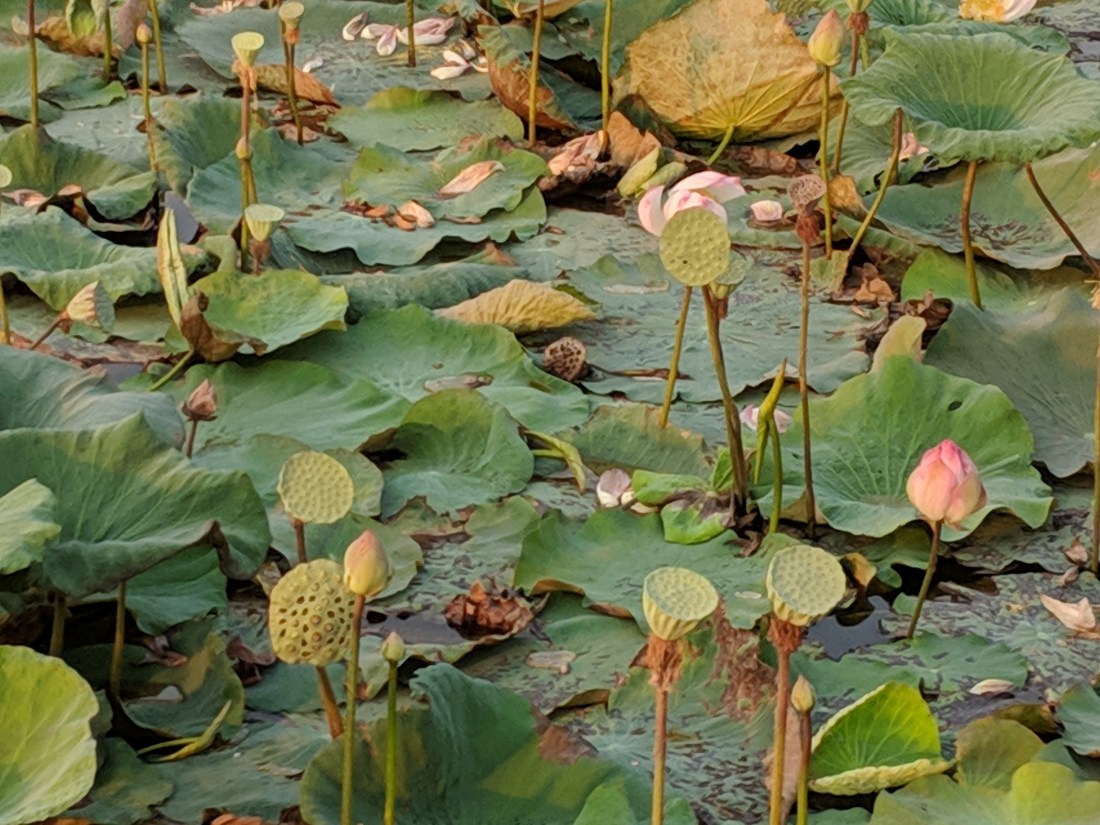
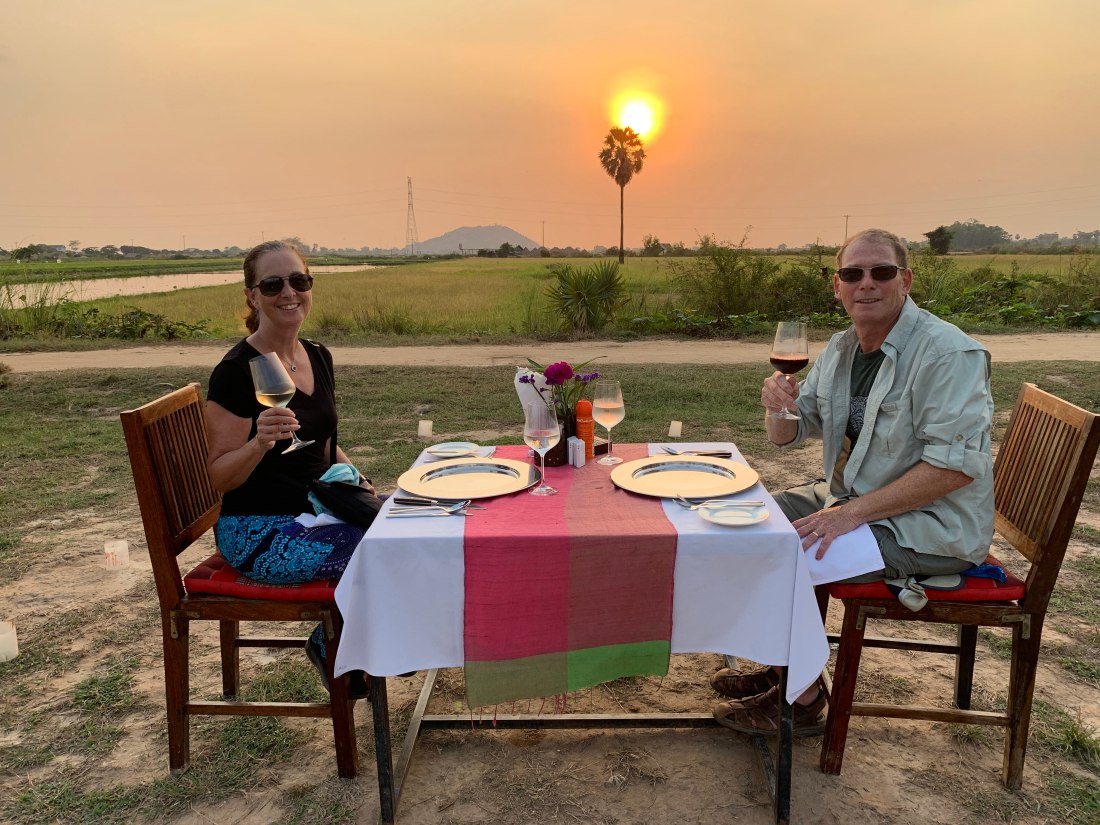
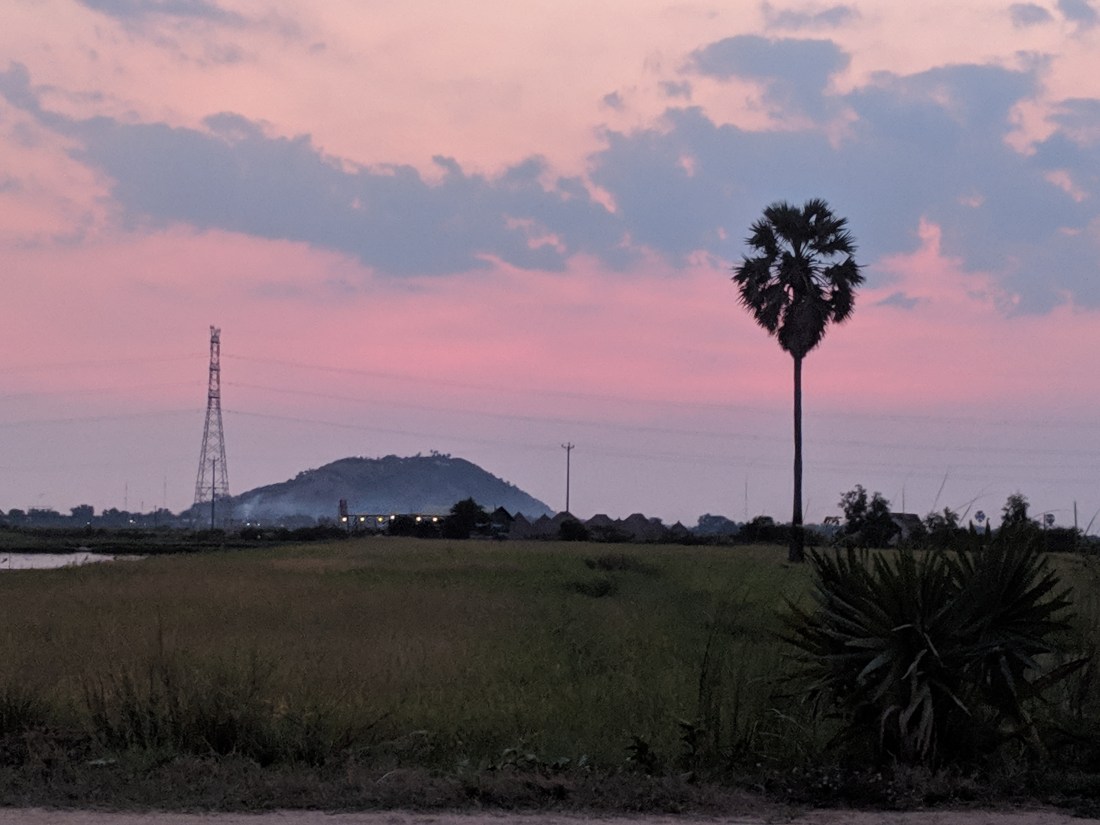
We were then taken by oxcart, the means of transport for the local farmers, to our restaurant for a sunset barbecue on a rice and lotus flower farm.

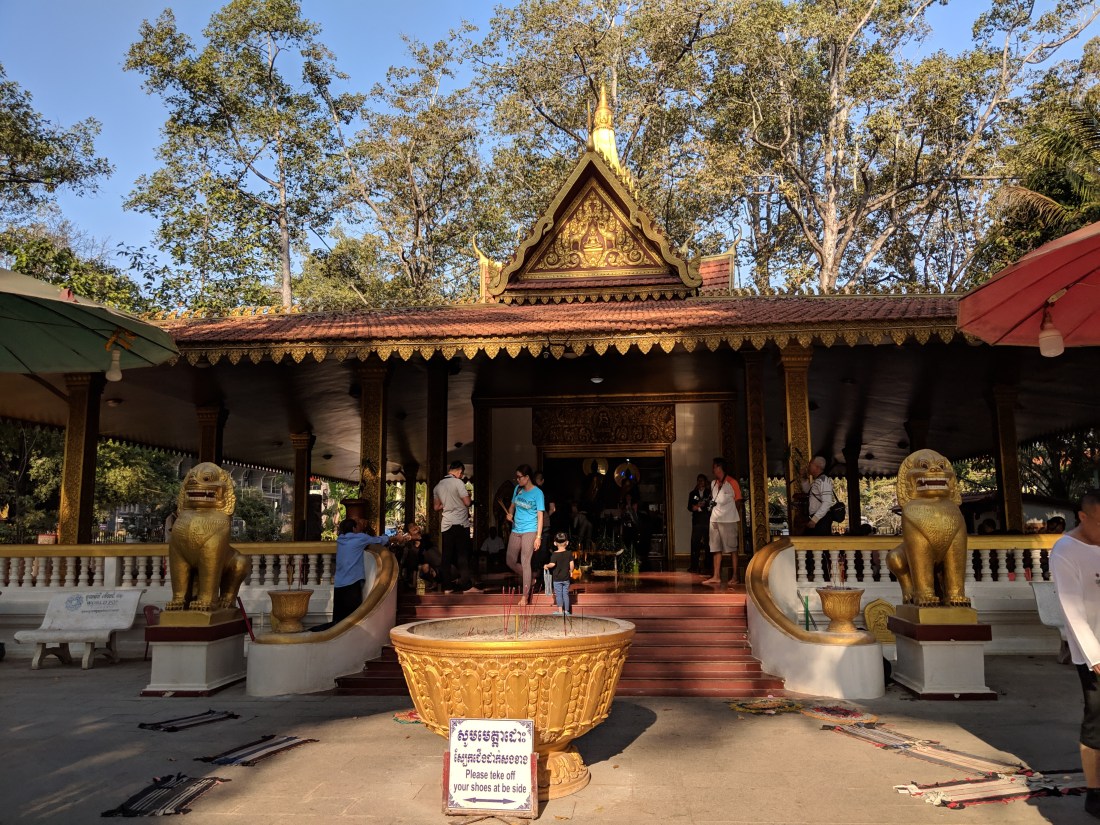
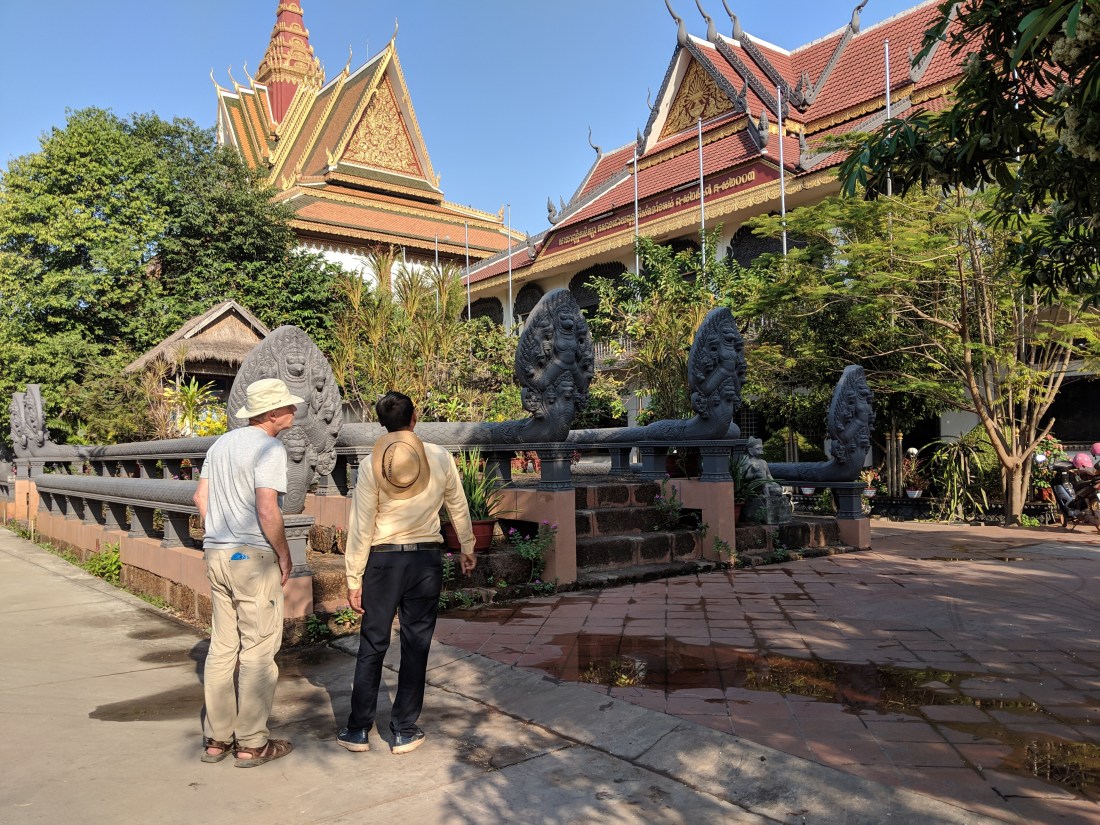
The next morning we went to Preah Prom Rath Pagoda. It is currently a monastery and school. There our guide Sam took us picture by picture inside the temple and told us the entire story of the life of Buddha. It turns out Sam was once a monk. He shared his story with us. He is the 4th of 11 children to a now still working 78 year-old rice farmer. After Sam finished primary school, his father told him he did not have the money to buy Sam any more school uniforms or transportation to school, so it was time for Sam to work in the rice fields. Instead Sam joined a monastery and was schooled further there. He ultimately won scholarships for university. After many years, he left the monastery, and at the age of 30 he married. He, his wife, their 8 year old son and daughter-on-the-way live in the same village where he grew up near his extended family.
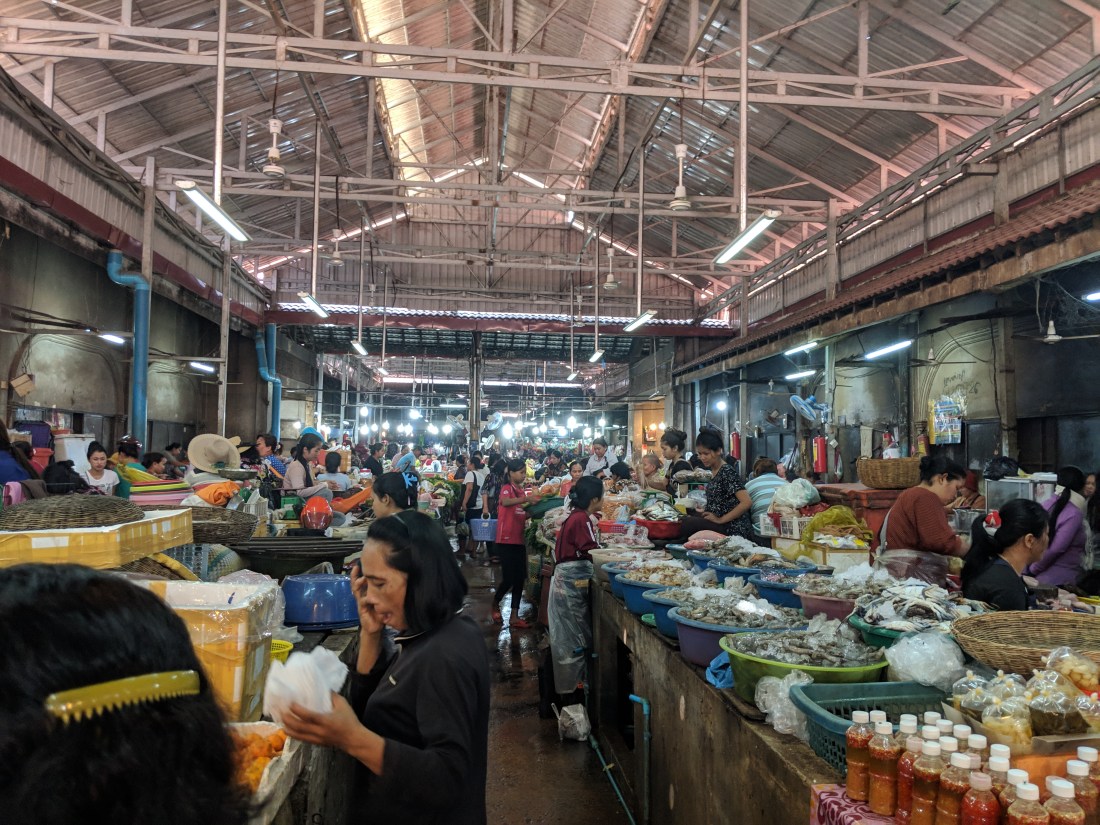
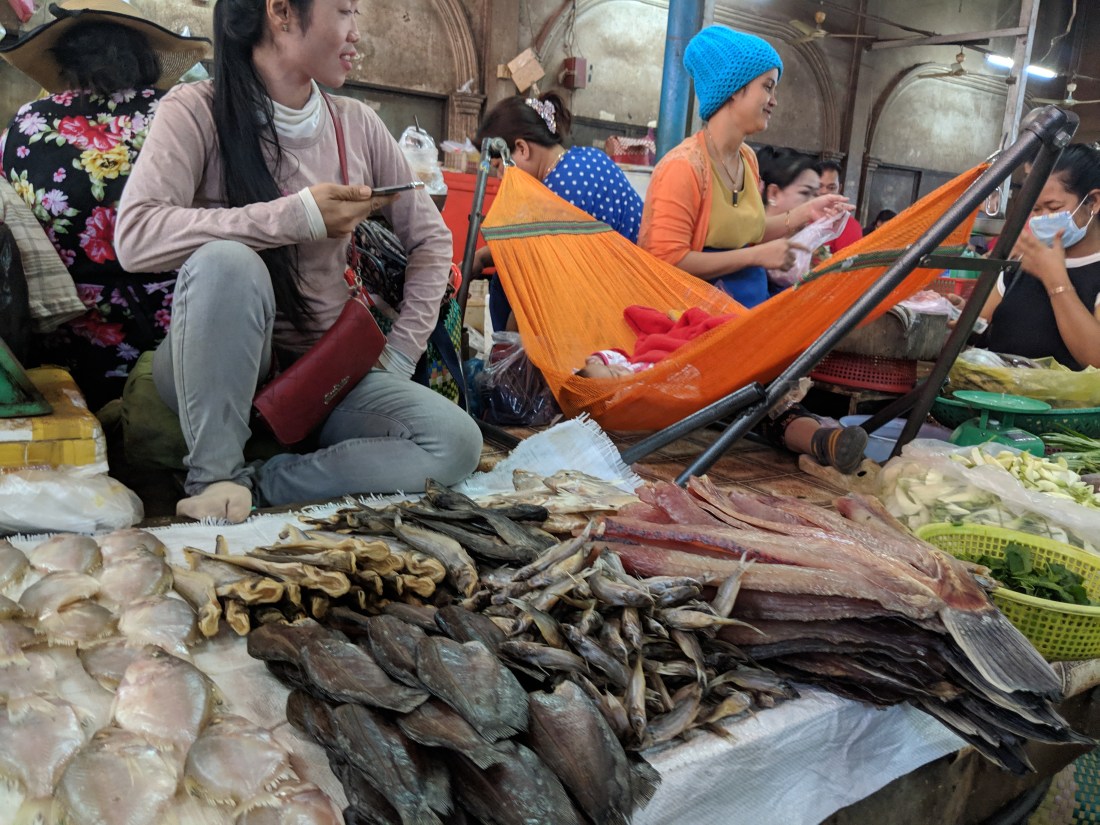
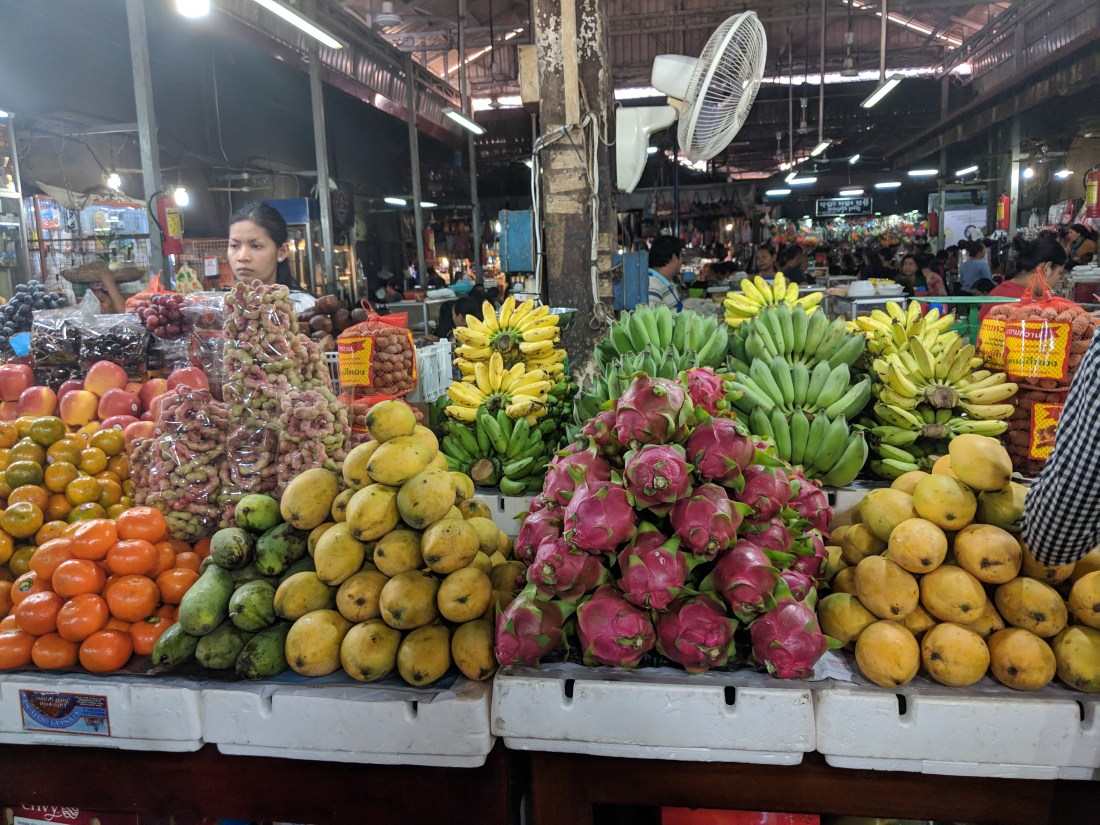
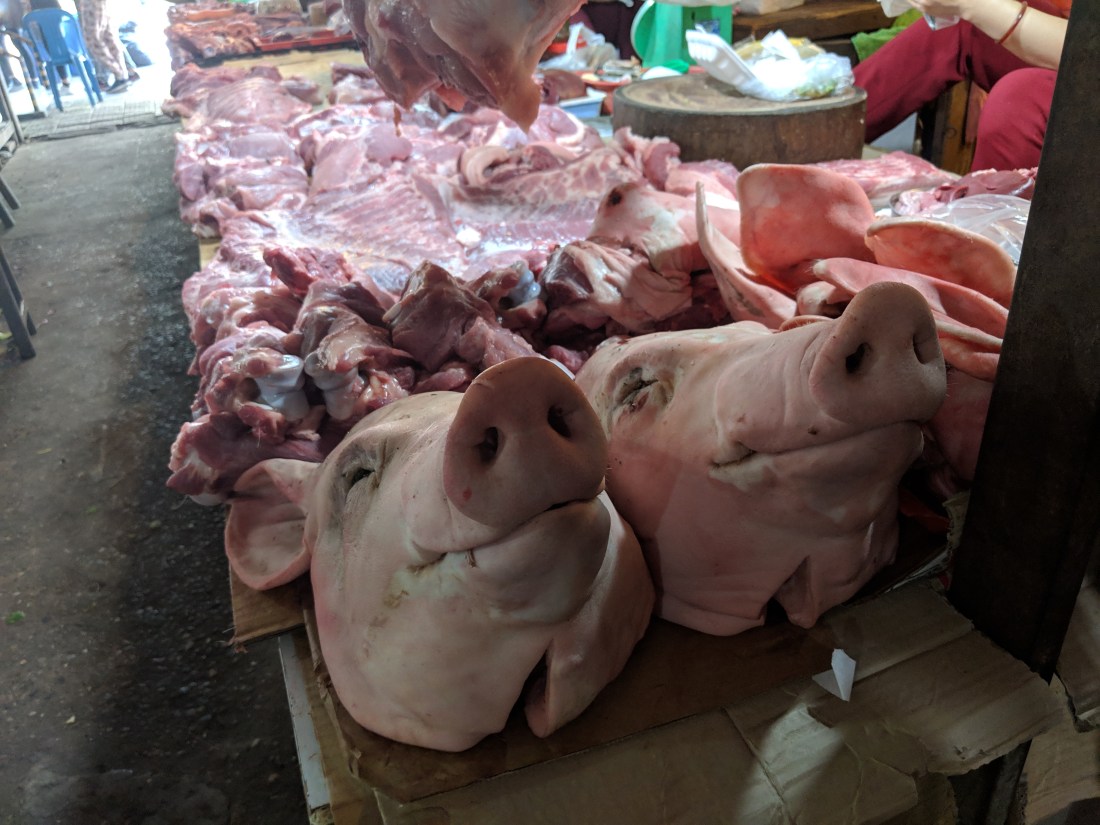
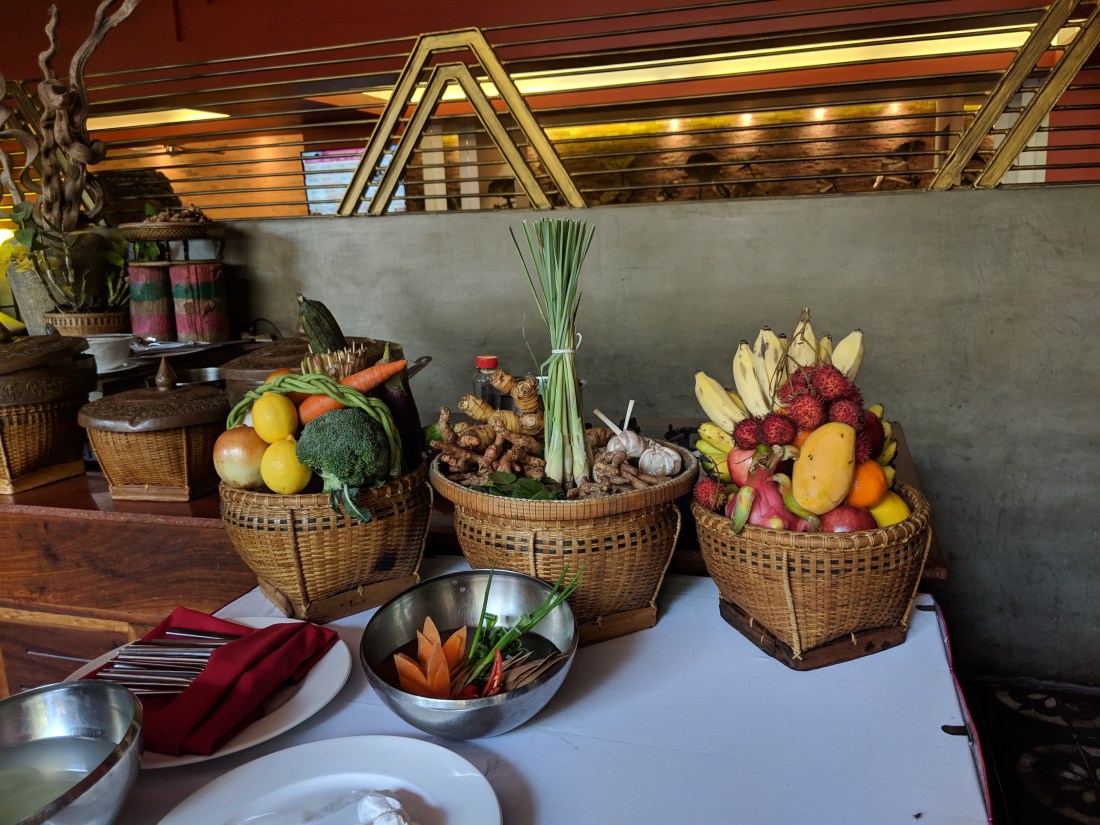
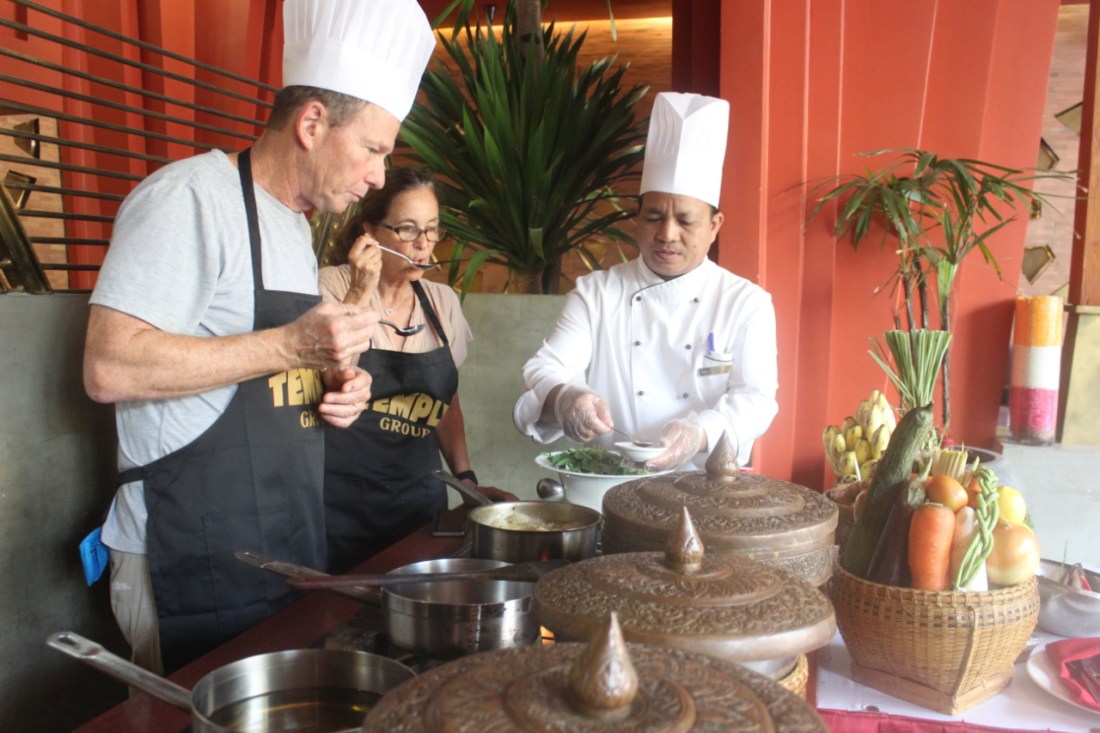
Next we went to the market to purchase ingredients for our Cambodian cuisine class. I am not a huge fan of the foods here which use a lot of fermentation and sour bases.
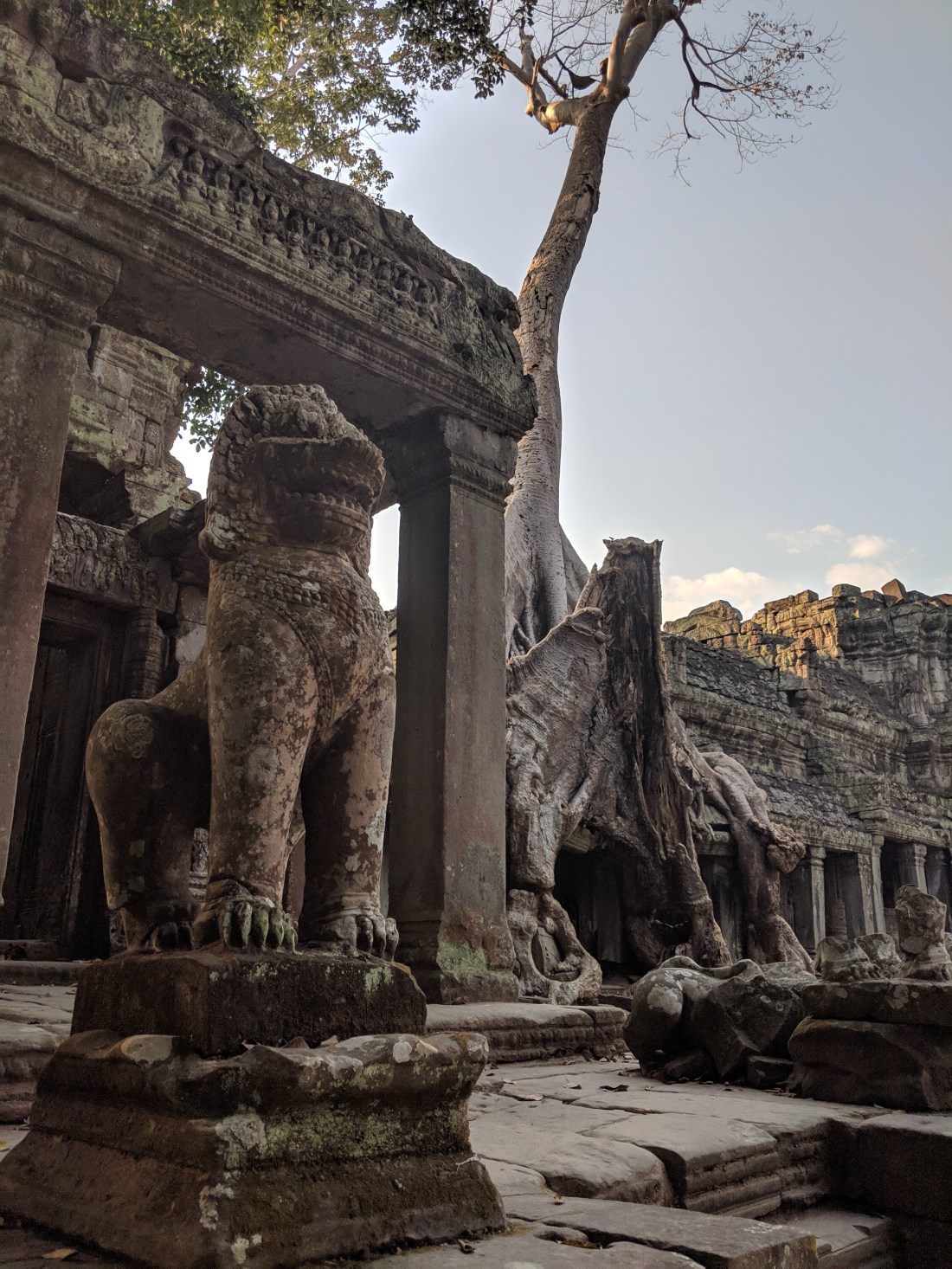
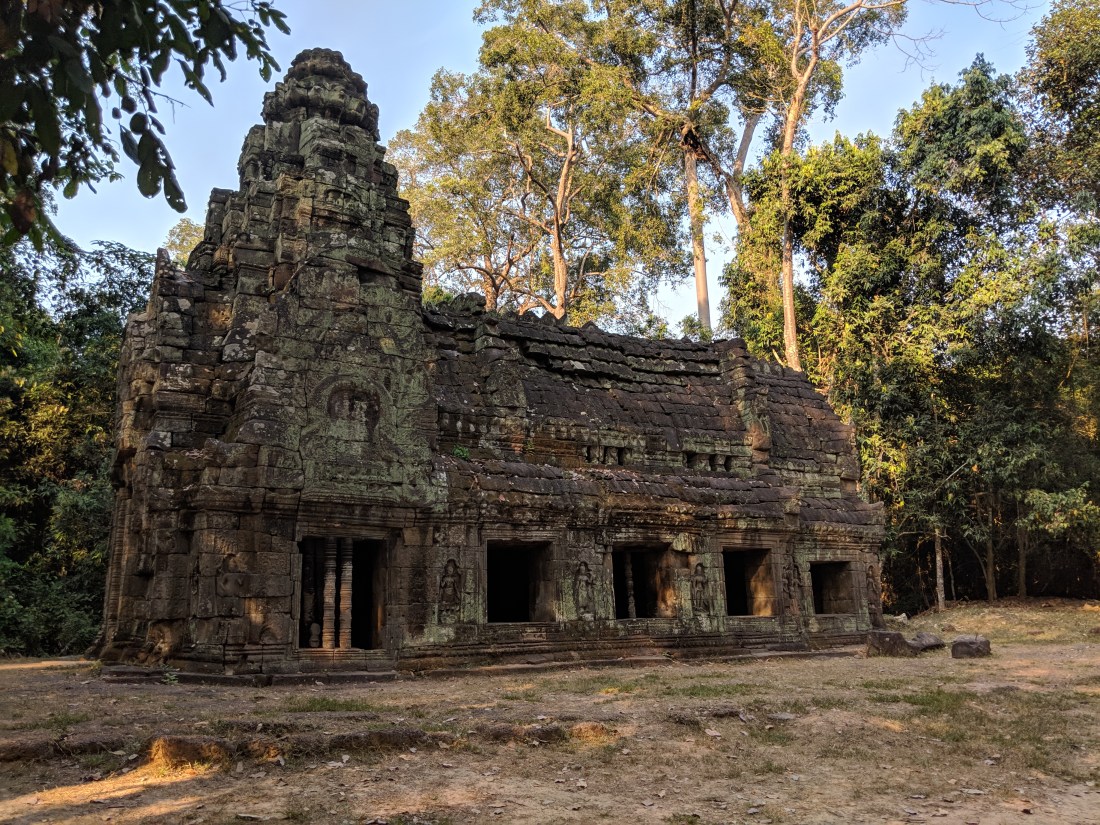
In the afternoon we visited Preah Khan – Royal Sword, King Jayavaraman VII’s temple to honor his father. It was later converted to a Hindu temple and the many buddhas removed.
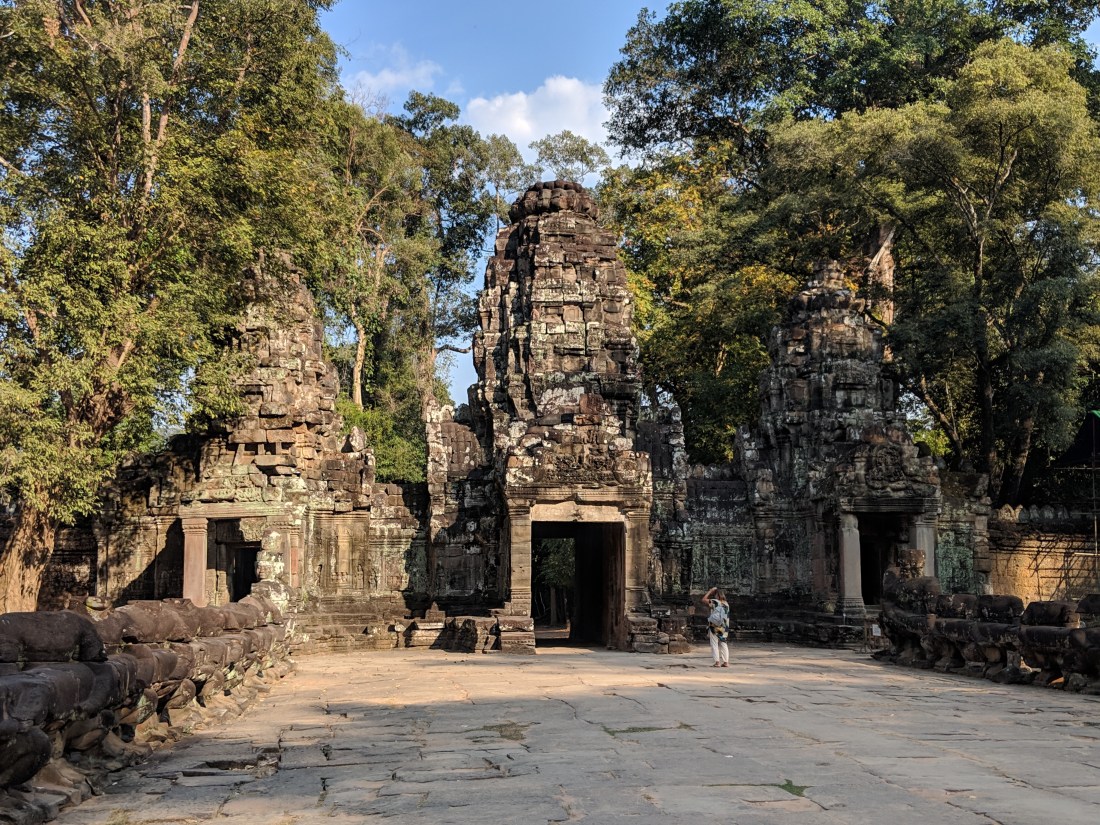
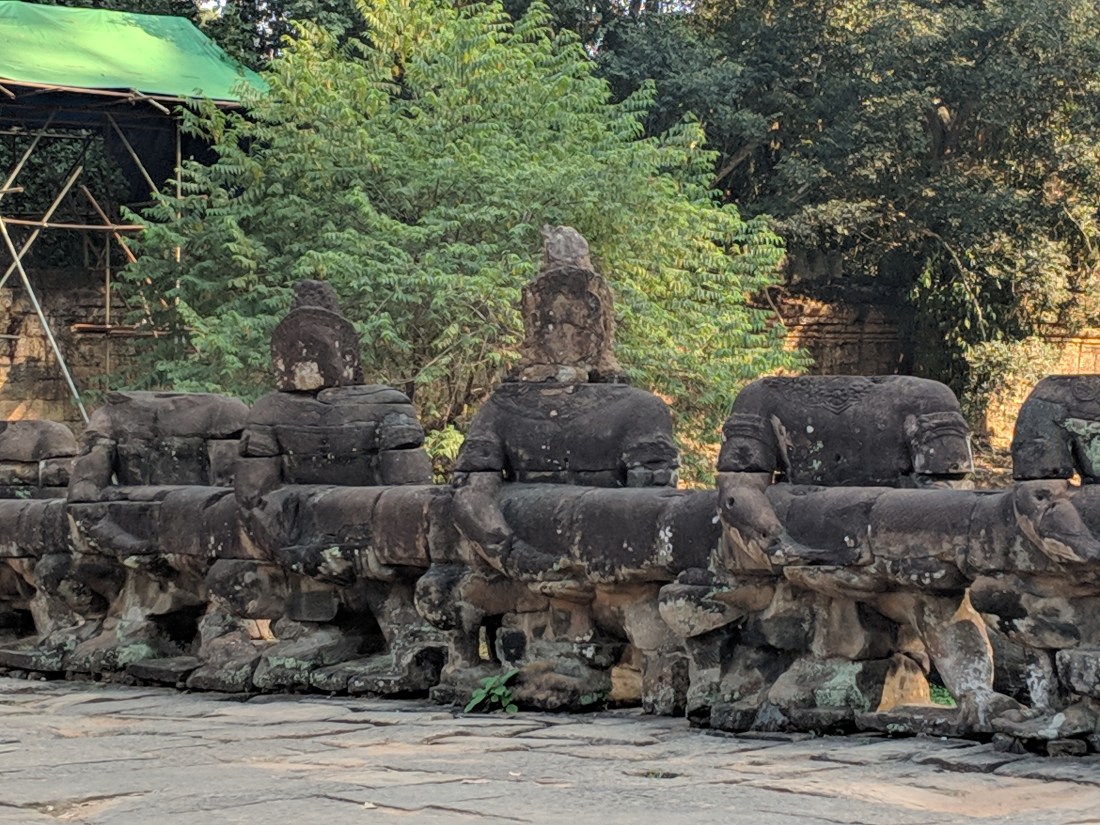
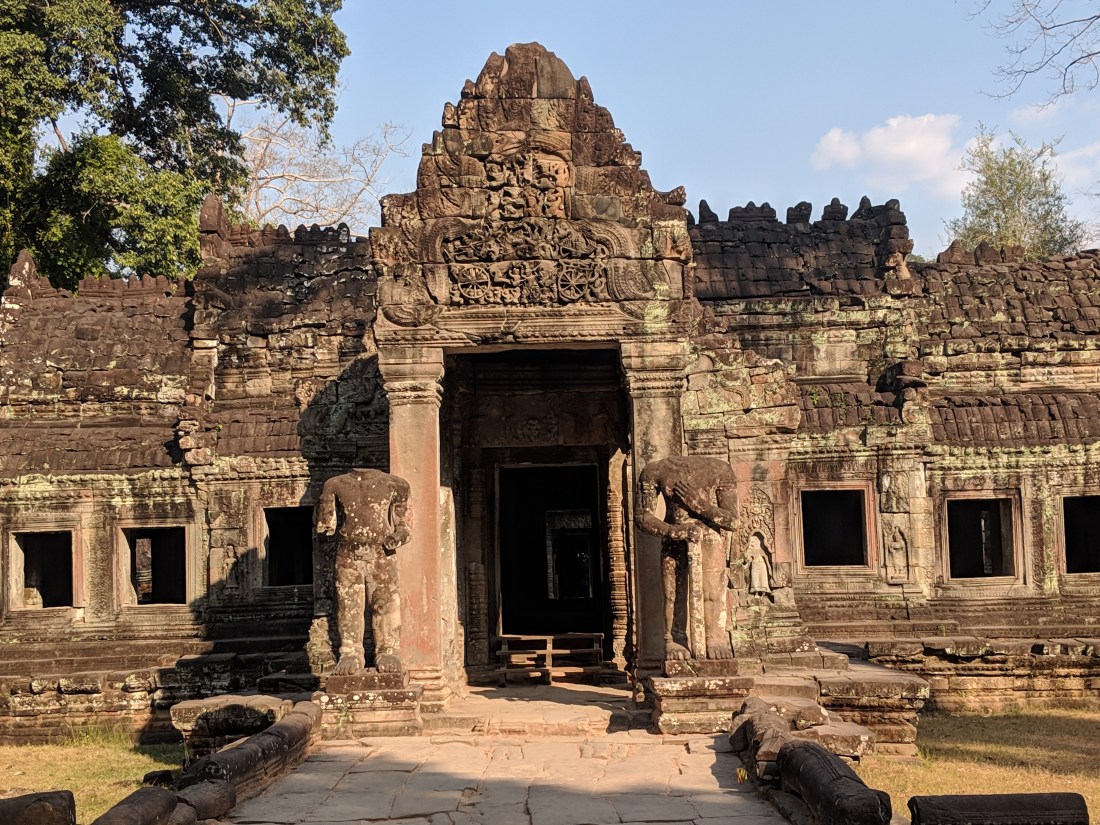


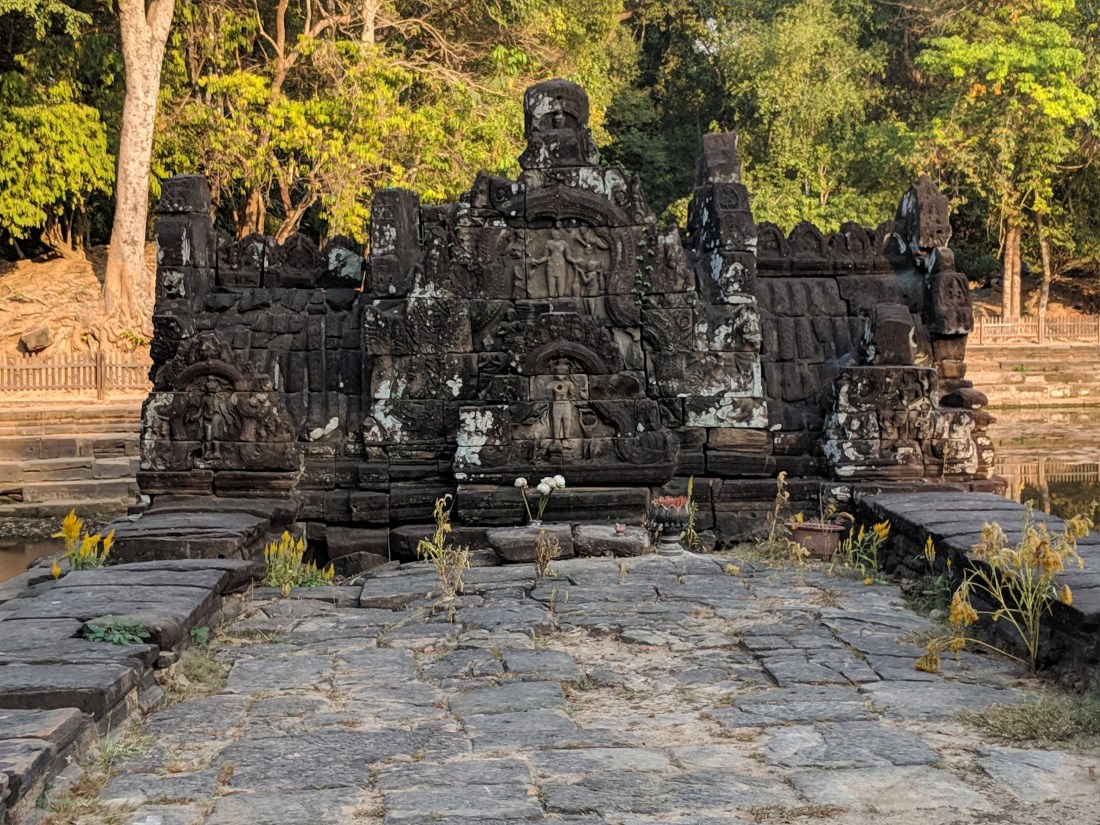
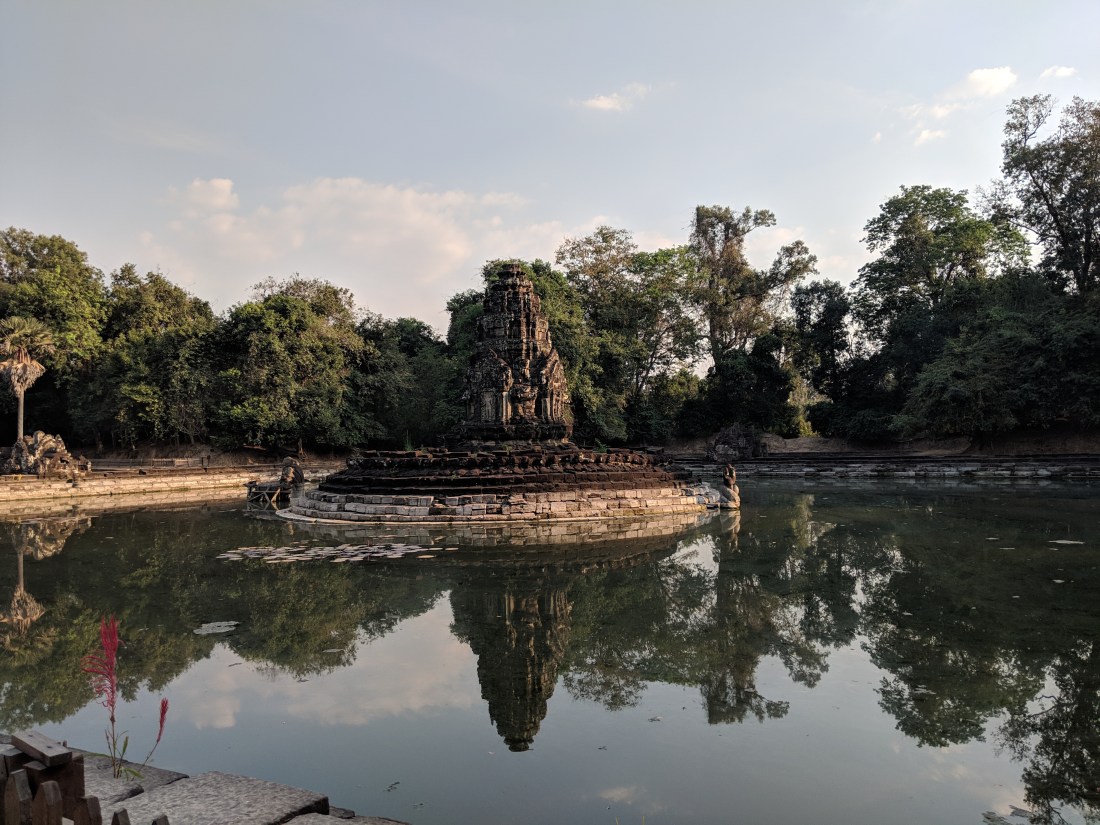
And our final temple was Neak Preah – encircled Naga , also built by King Jayavaraman VII, one of the smallest but most beautiful temples in the Angkor complex, a fountain with four surrounding ponds set on an island in an artificial lake. The lake’s existence was only first discovered about a decade ago due to satellite images revealing its outline. The damn was reconstructed.
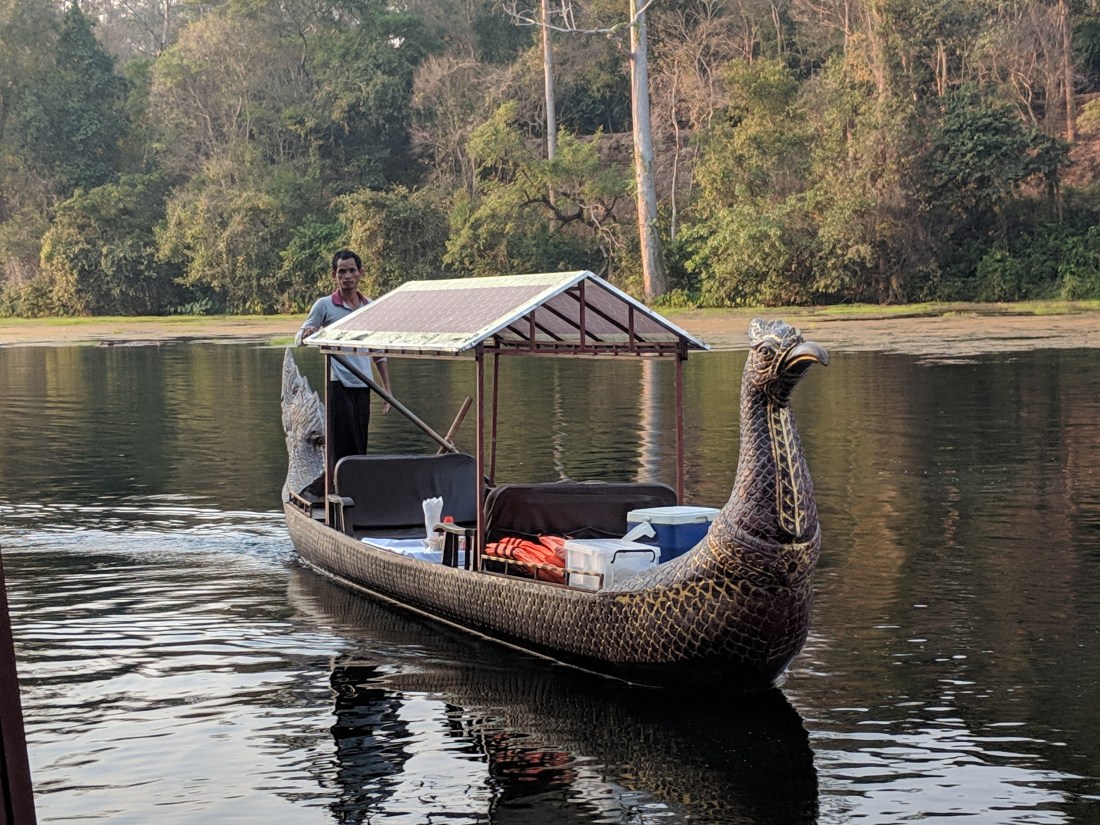
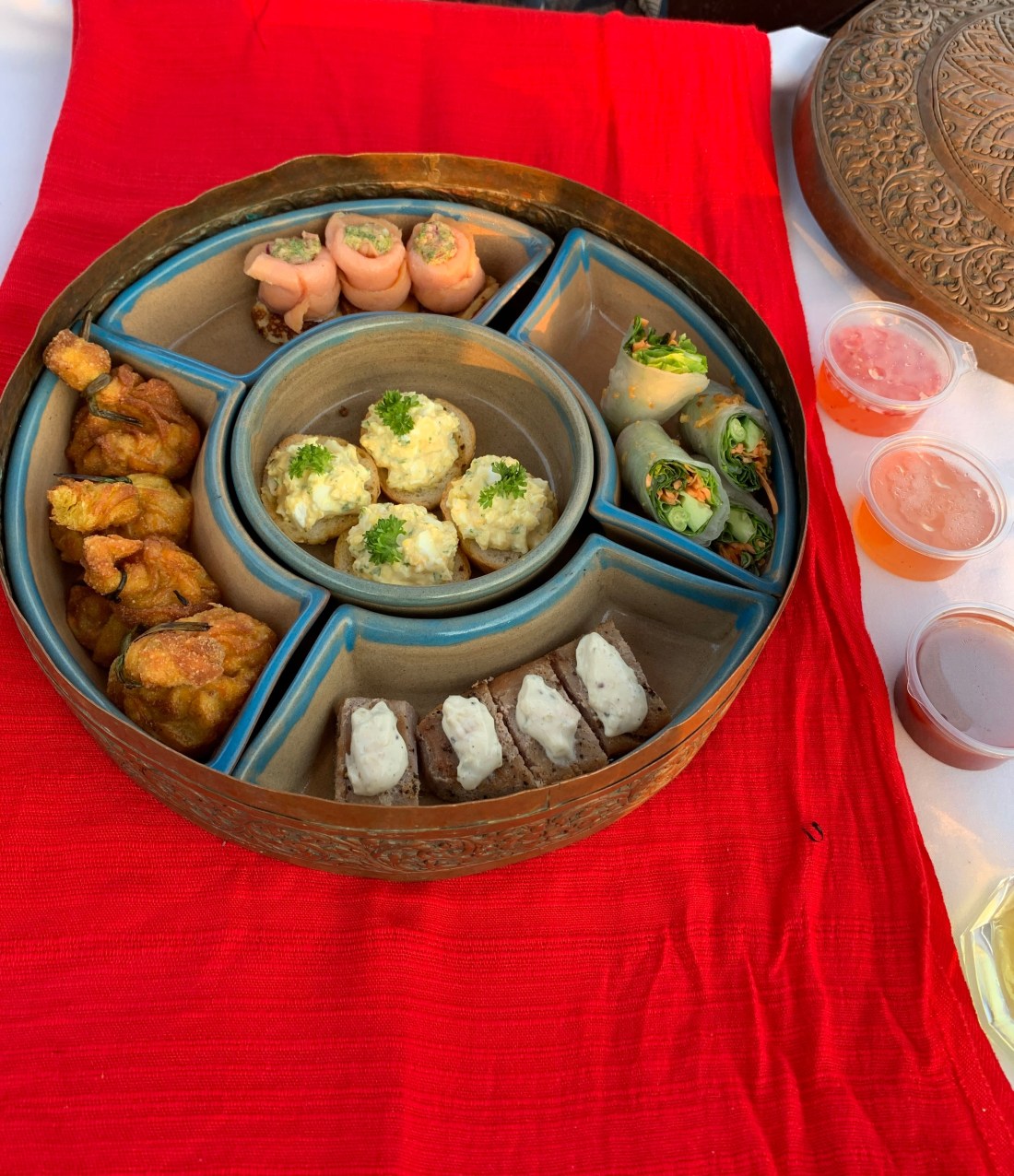
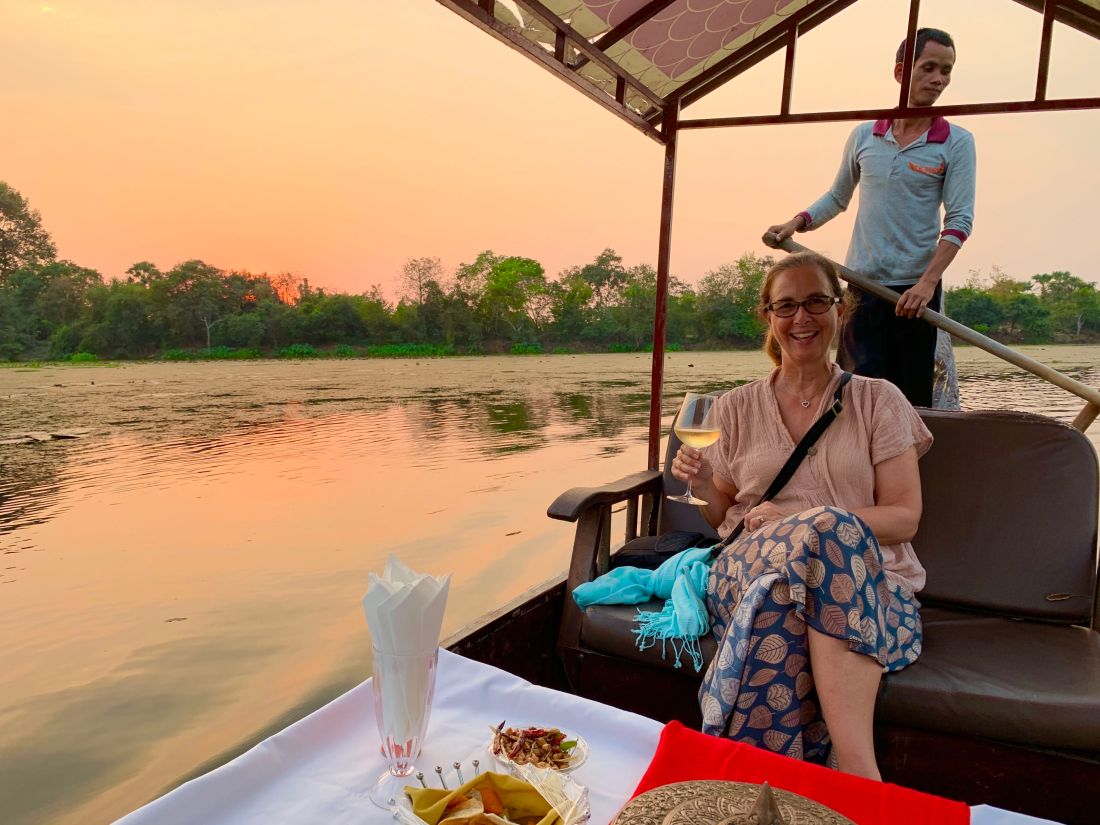
And finally, we had a sunset cruise on a Royal King boat on the man made moat at the southern gate of Angkor Thom.
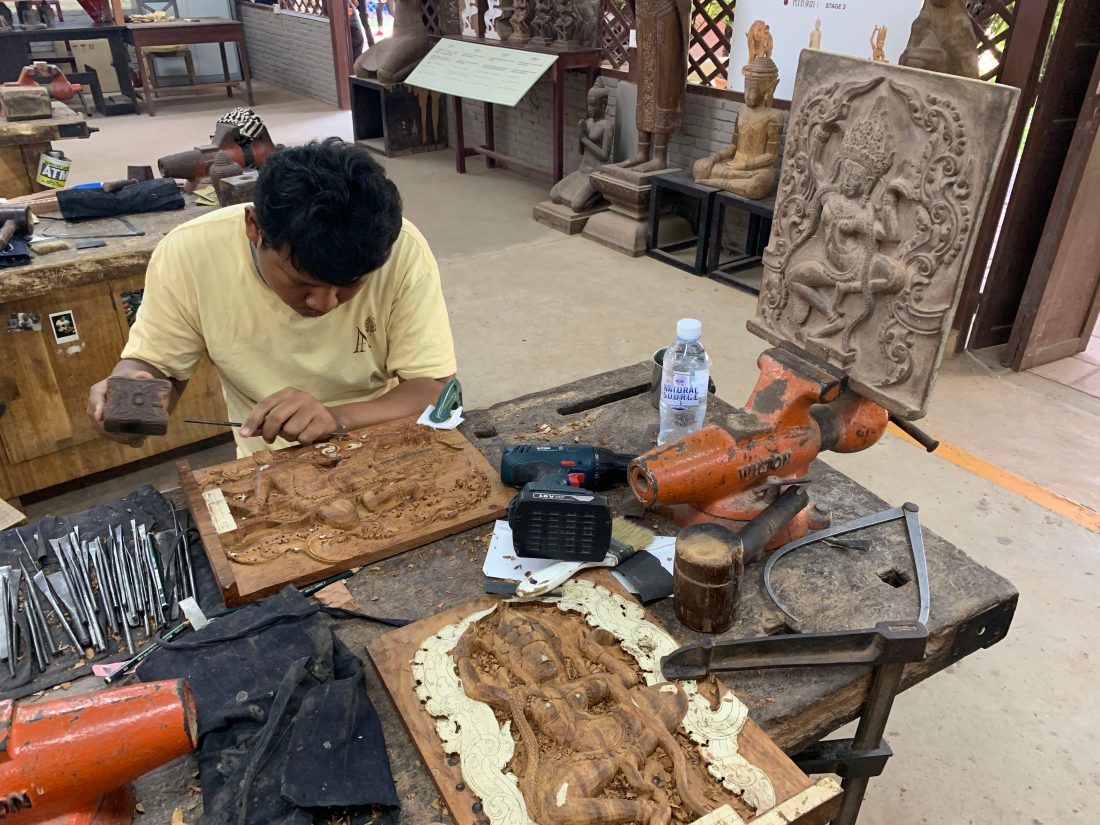
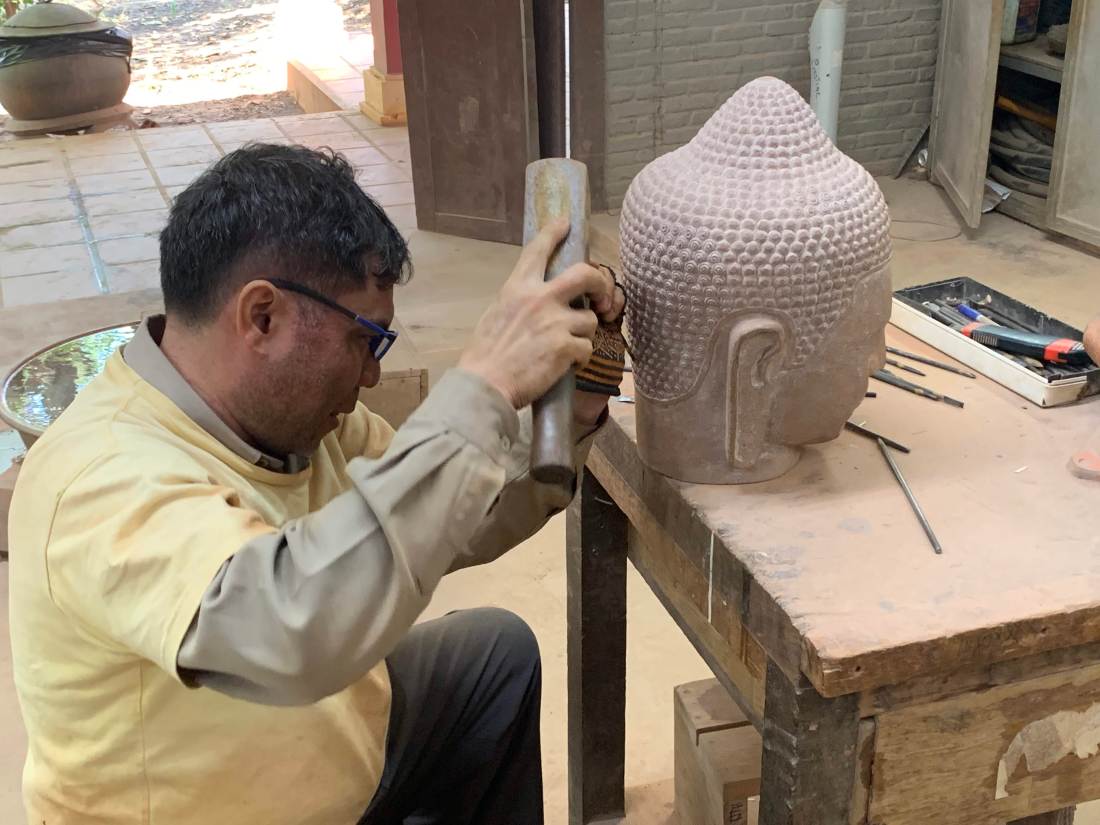
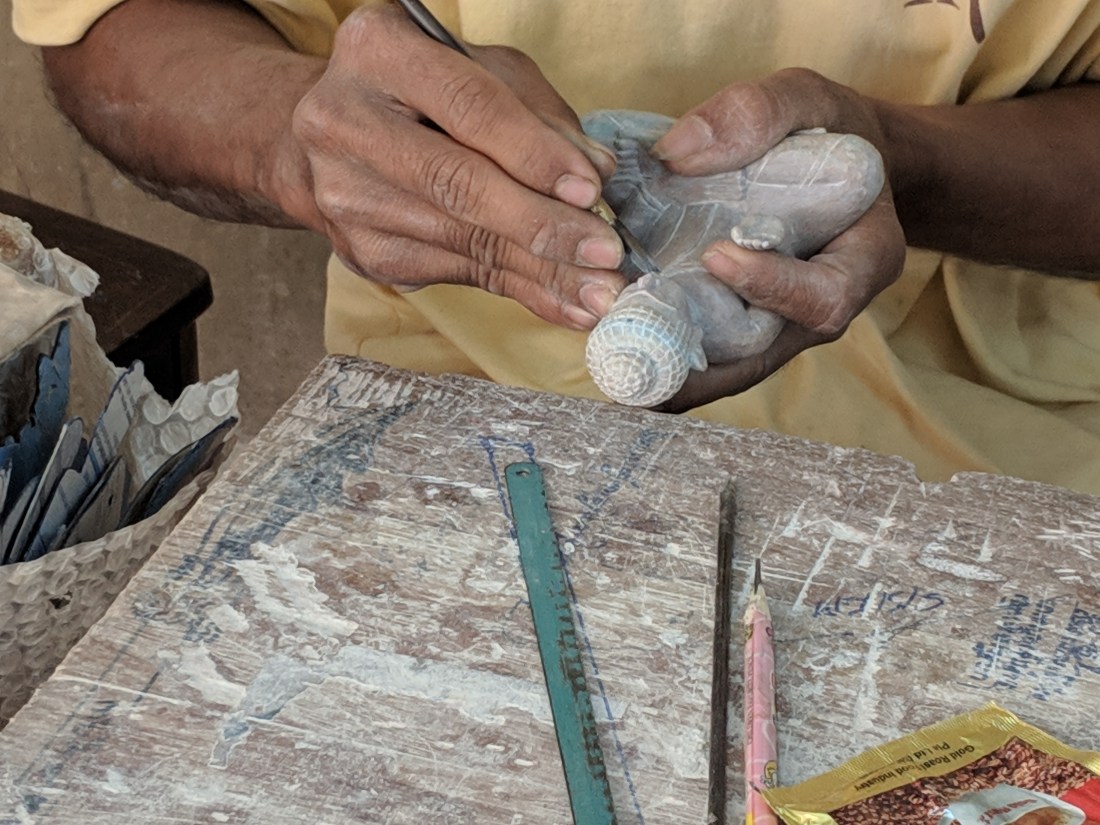
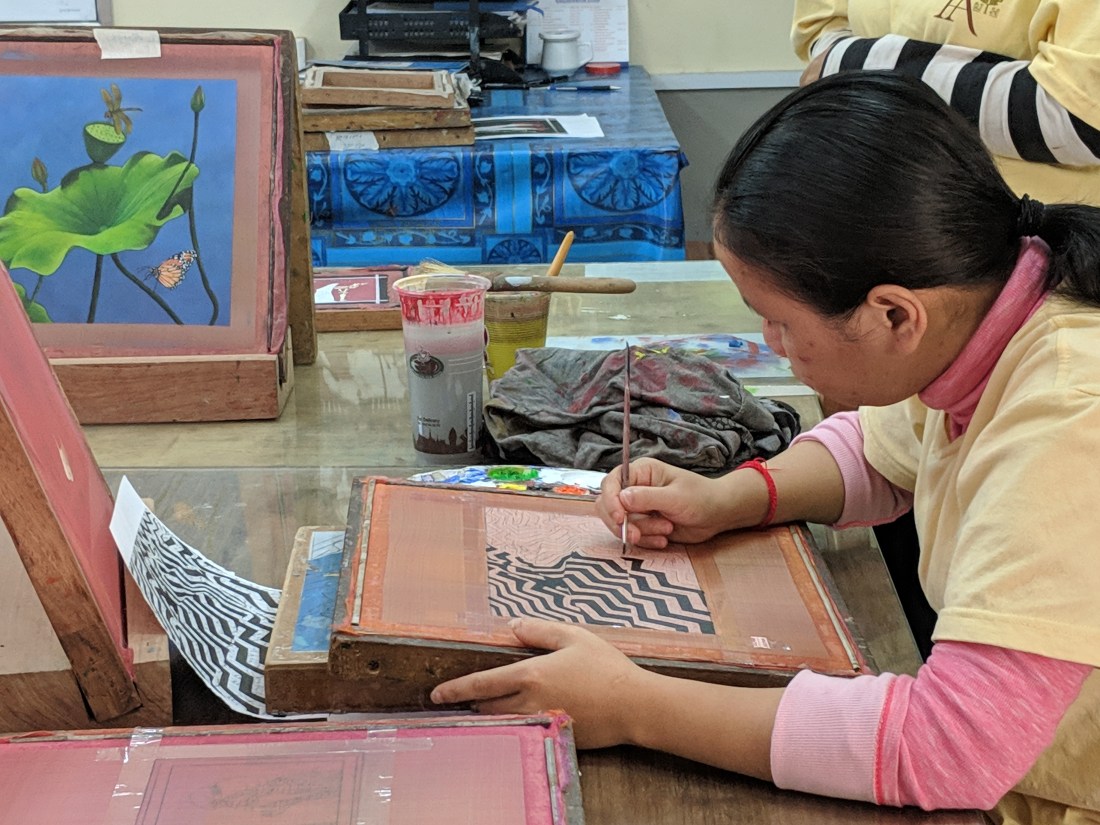
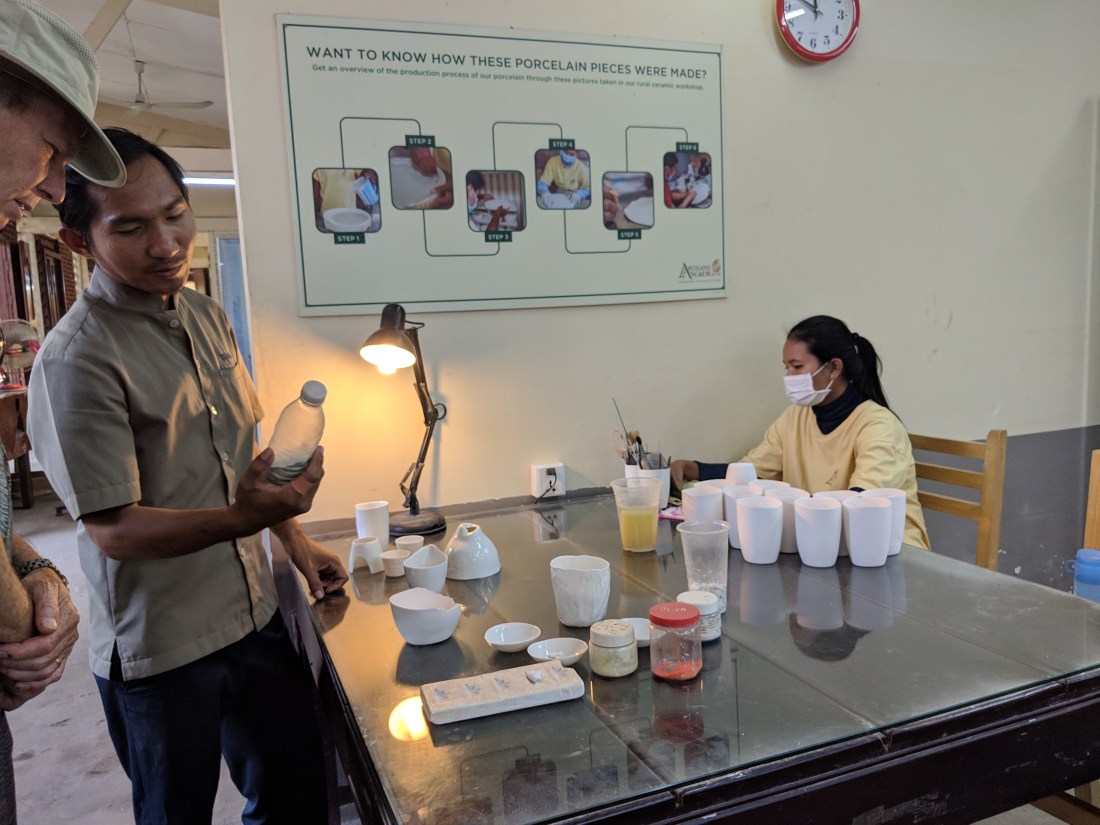
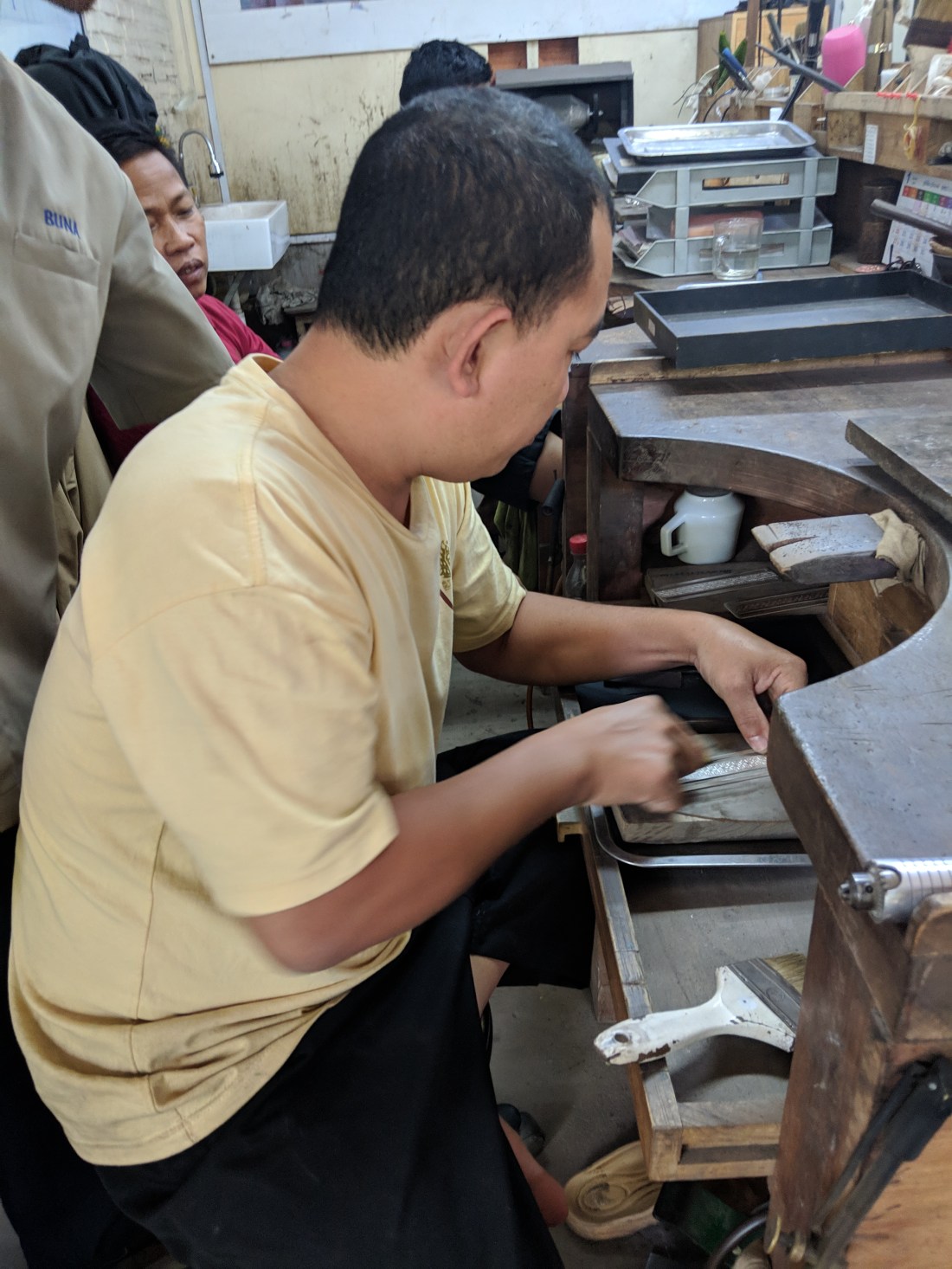
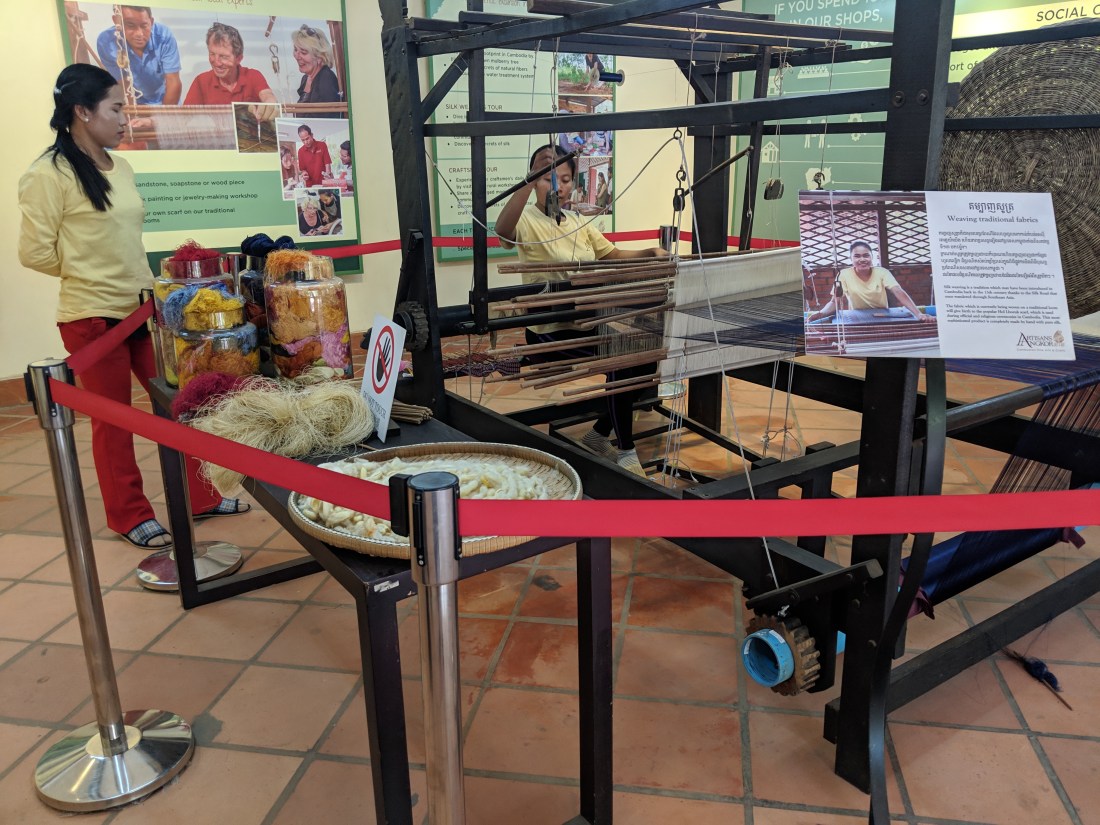
On out last morning in Cambodia we visited the artisan village where future crafts people are trained in all the arts of the Khmer.



Now we are off to Vietnam!
 Jo & Eric's travels