
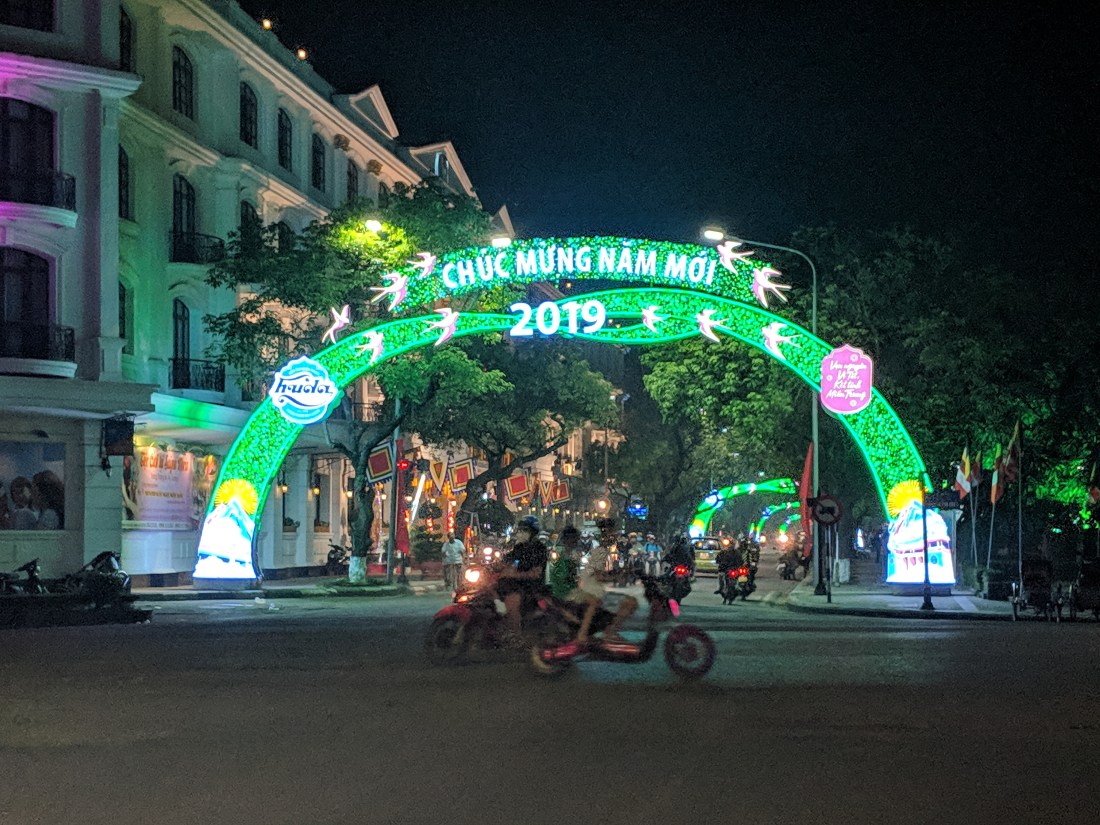
Lucky us, we arrived In Hue in time to watch the excitement build for the coming New Year celebration! Hue was the capital of Vietnam from 1802-1945 during the 13th, and final, dynasty: Nguyen. It was suited to be so situated in the center of the recently reunited country.
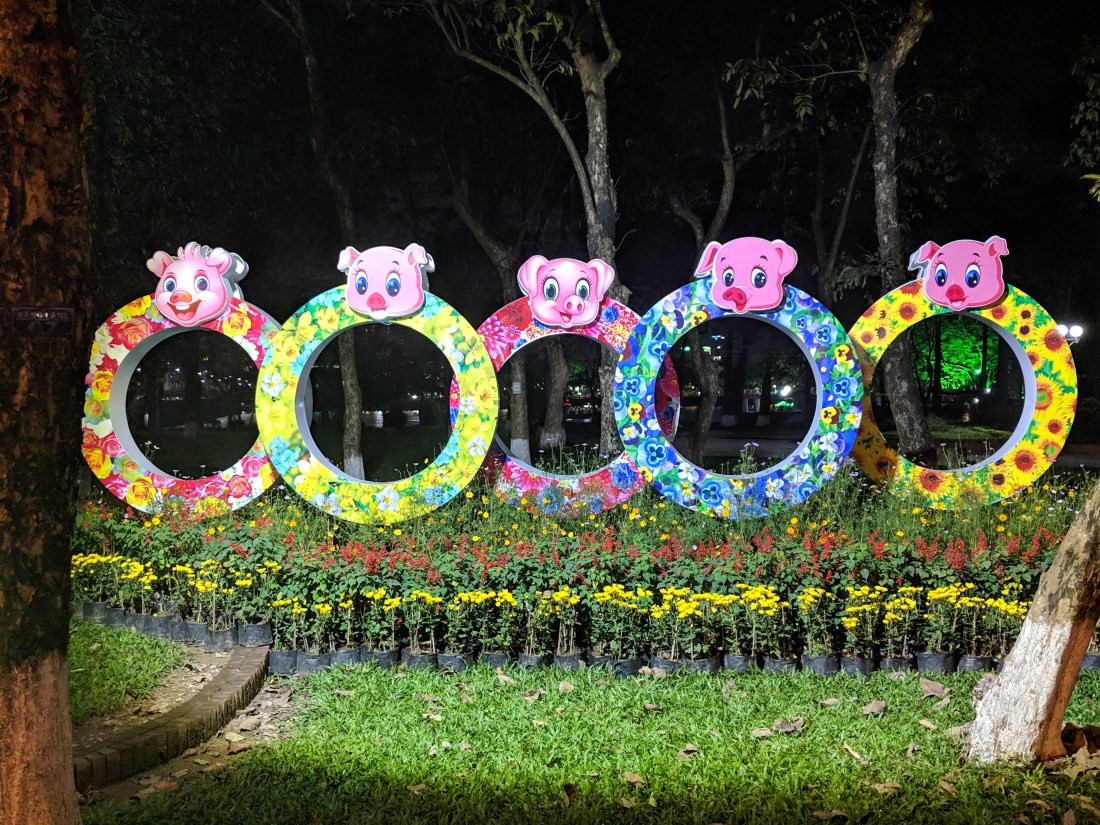
Our first afternoon we wandered around the city to get a feel for it. It is a good sized city: large enough to have plenty of great restaurants but without the congestion and pollution of Ho Chi Minh. We meandered through the February 3 Park with its many sculptures collected through years of sculpture camps held here.


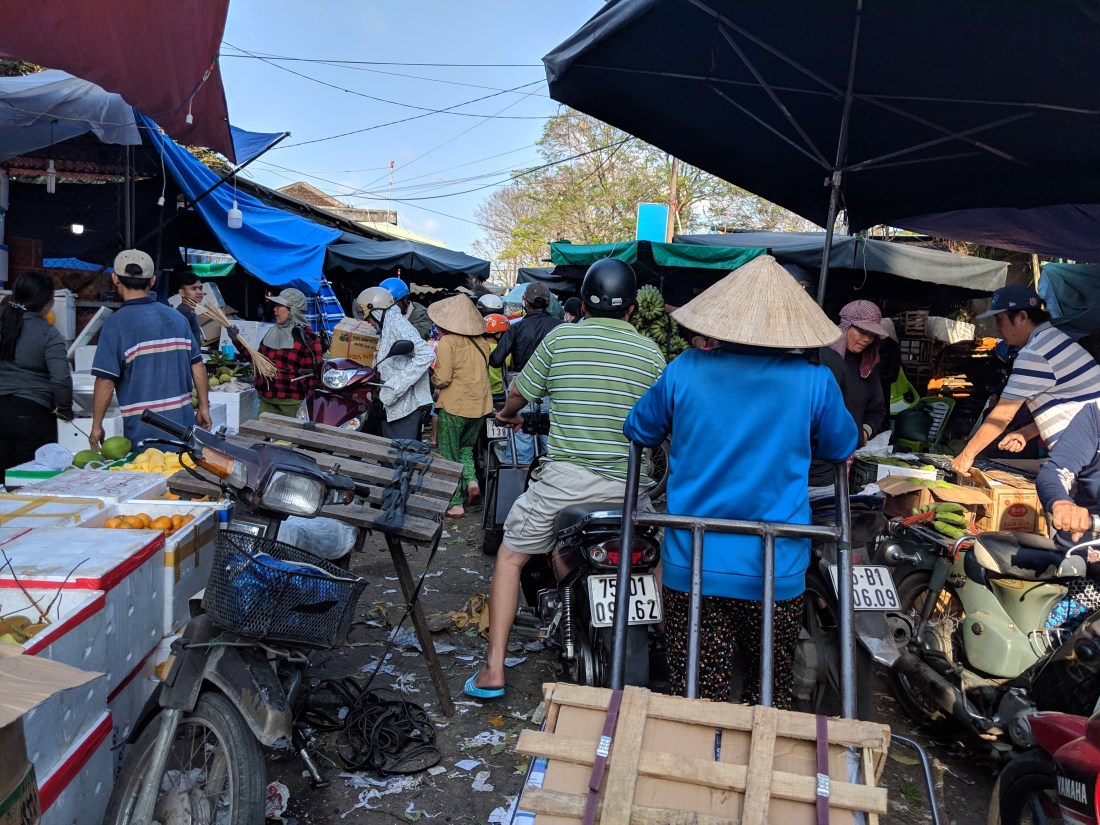
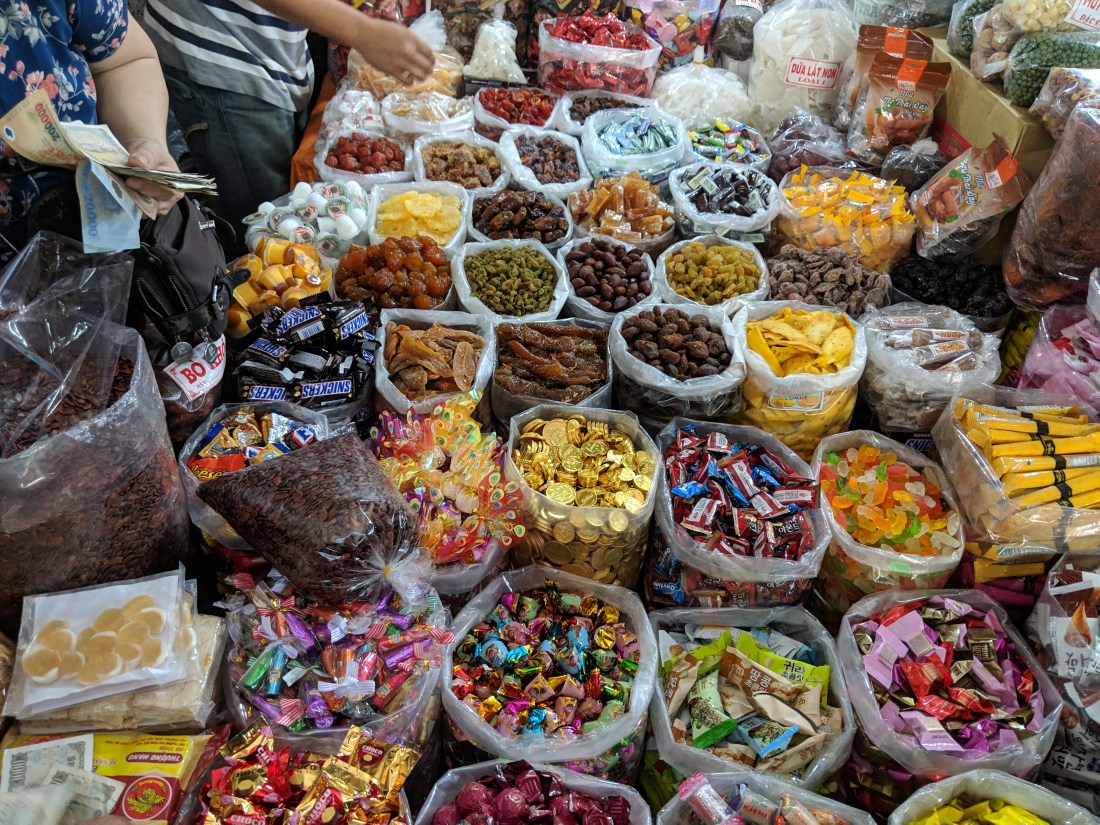
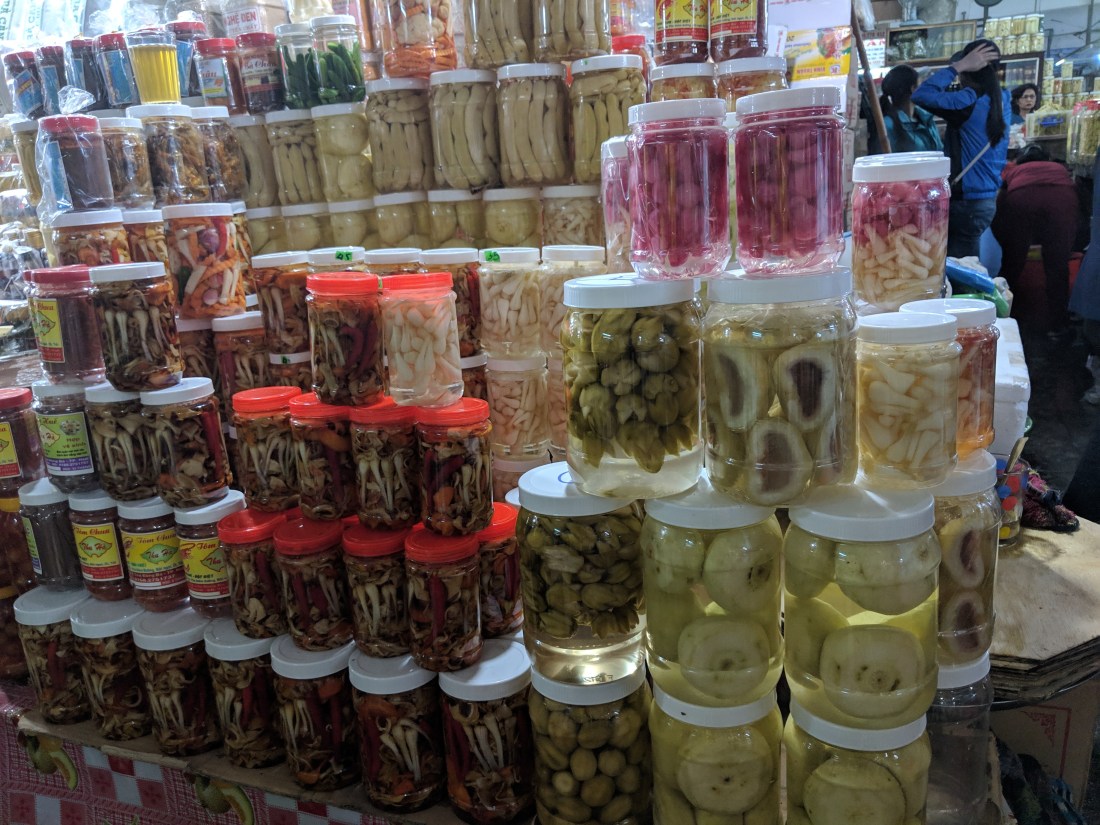
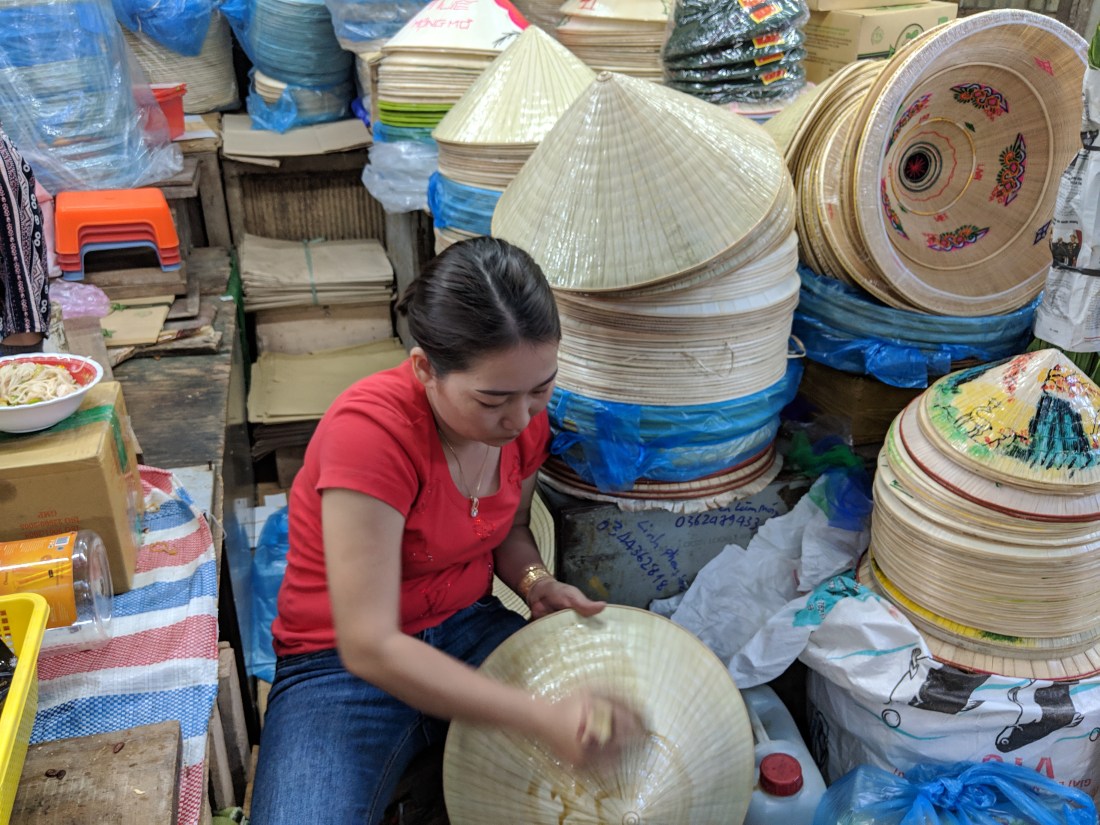
Crossing the river we found the Dong Ba Market full of locals madly shopping for their holiday goodies. Outside was all produce, but on the inside were goods from clothes and shoes to candies and nuts to gold and silver.
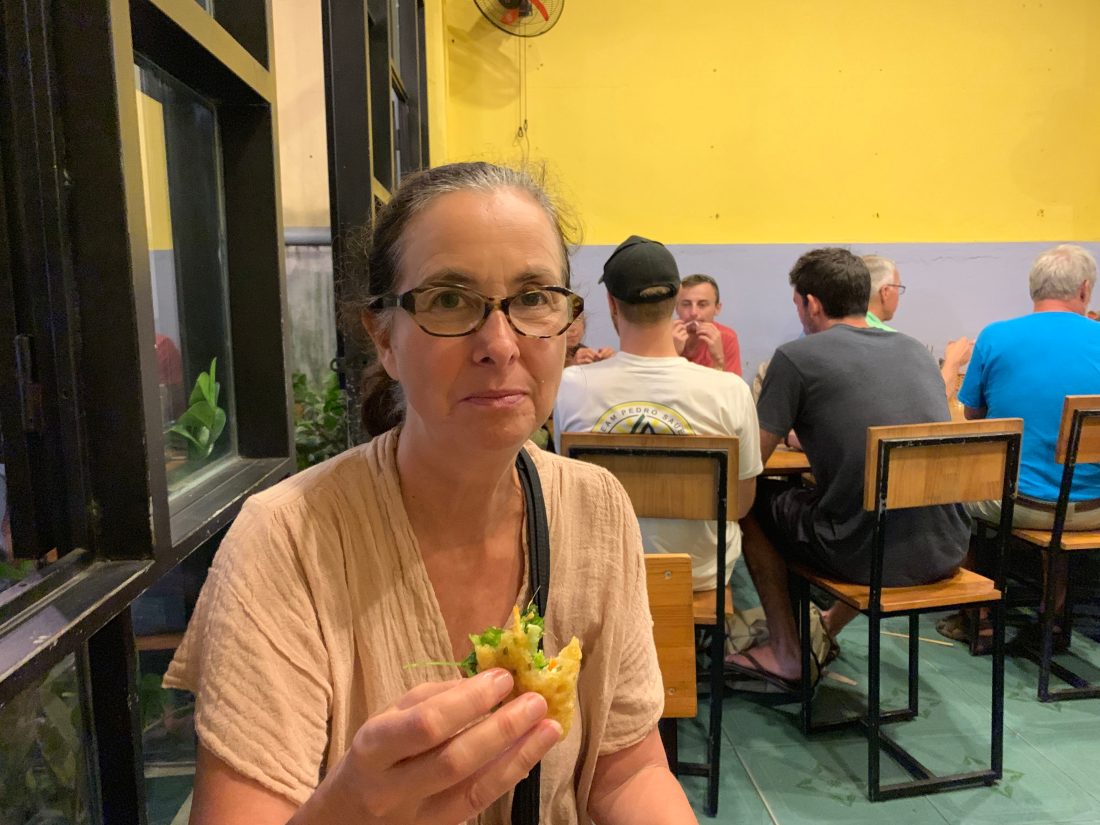
In the evening we were lucky enough to find a tiny restaurant offering Hue specialties. Because Hue was home to the Imperial family (and French dignitaries starting in 1865), this city is known for its own specialized cuisine. We sampled the stuffed crispy pancakes, the minced pork on lemongrass stalks, the specialty spicy beef noodle soup, and others, one of our best meals yet!
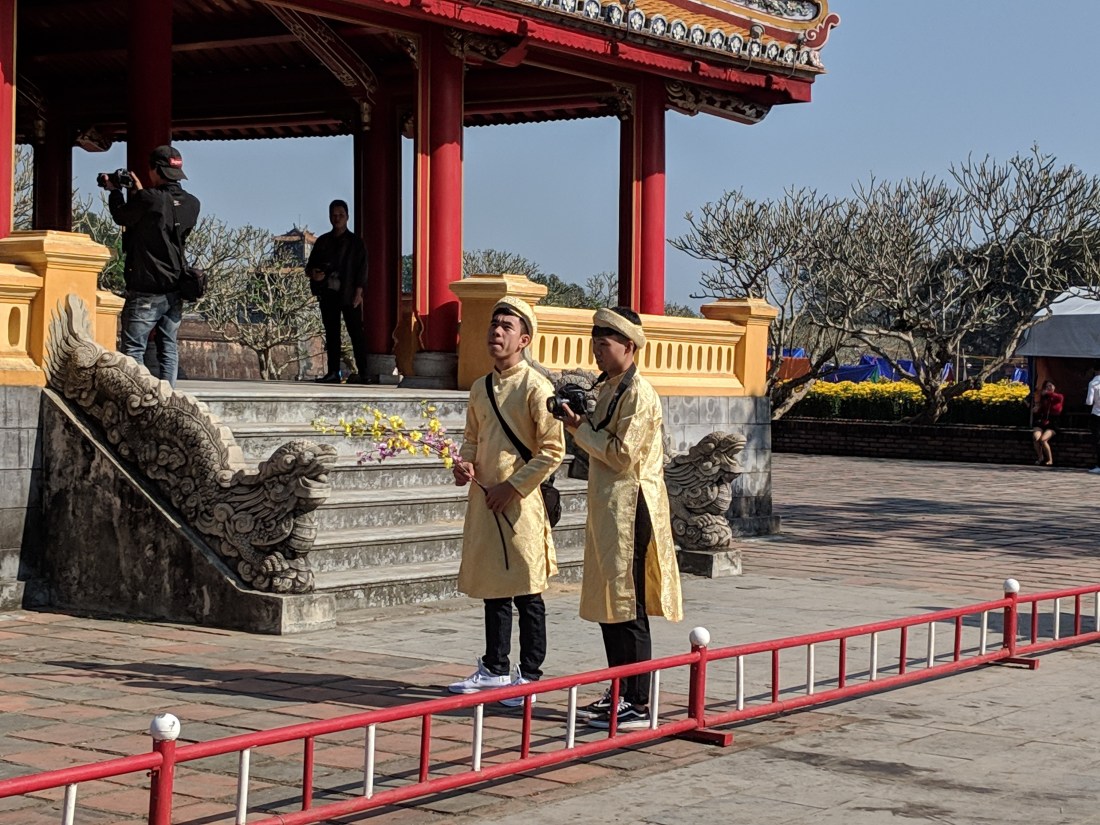
In the morning we were met by a guide to go to the Imperial City, home of the emperors of the Nguyen dynasty. But first we stopped outside the city walls to watch the locals buying flowers to decorate their homes for the holiday. It was so exciting to see everyone dressed up and celebratory.



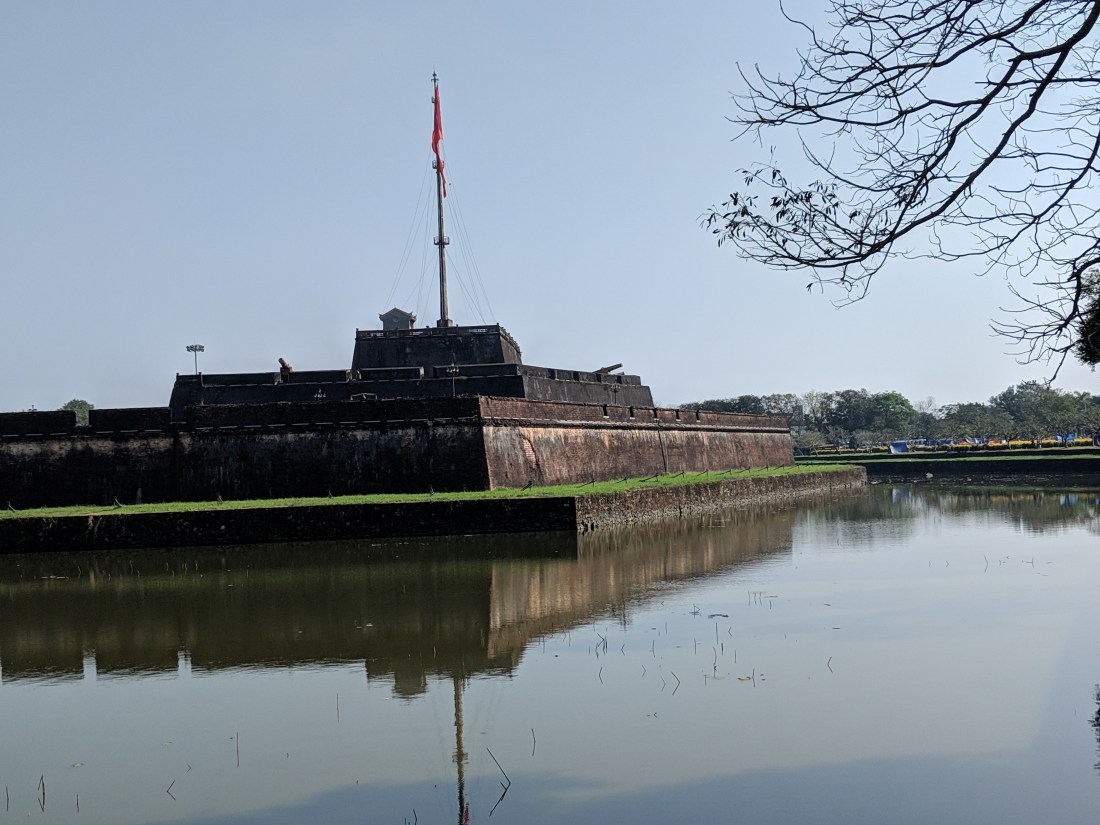
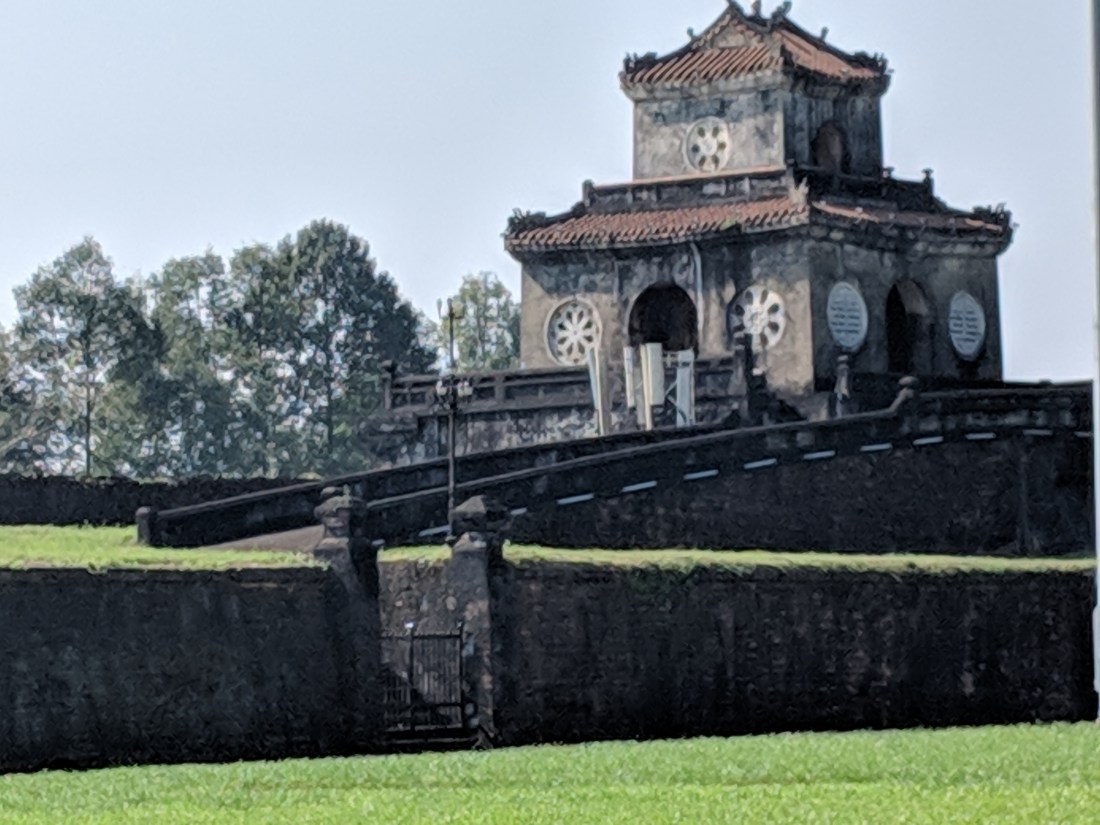
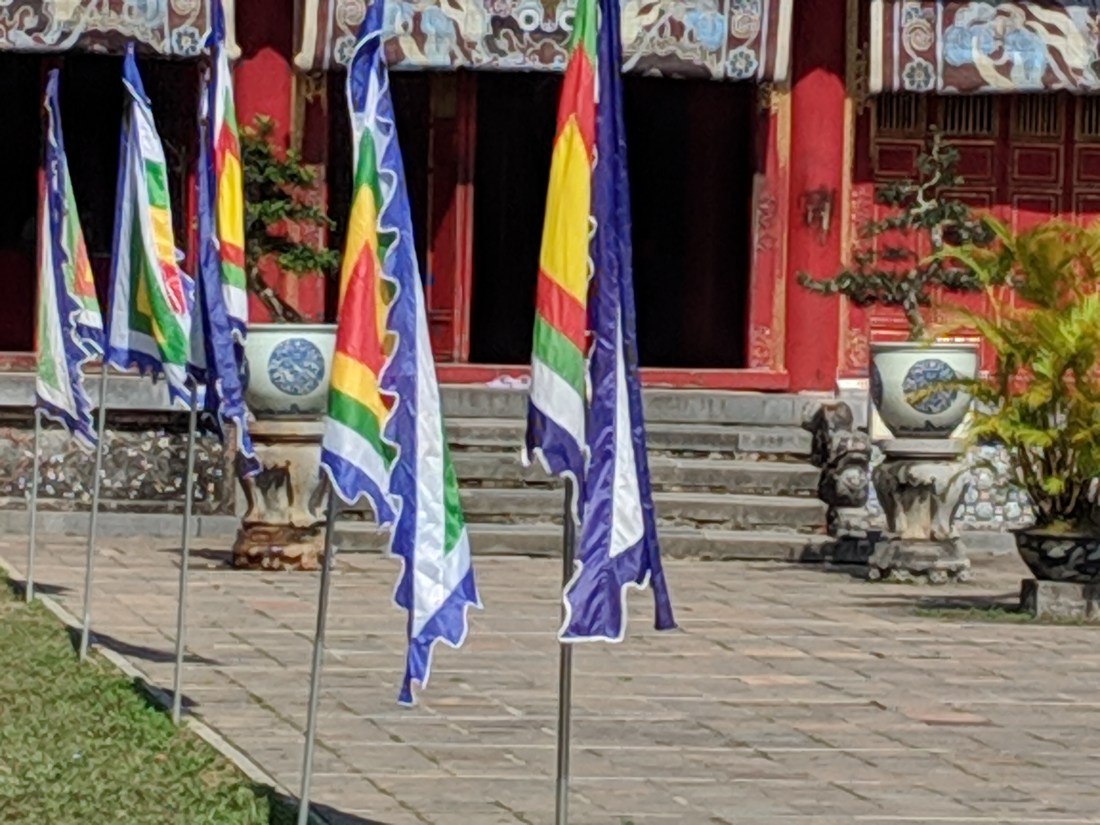
Vietnam had been unified in 1789, but the dynasty changed to the Nguyen family in 1802. Shortly thereafter, the king consulted geomancers as to the propitious location for the new city and construction began in 1804. It was modeled after the forbidden city in Beijing, but was situated to face the Huong (Perfume) River: ie Southeast. The location had to have running water and a protective mountain in front to satisfy the feng shui. The encircling moat and the walled citadel with its watch towers and flag tower was built in 1807 as a lookout for the Imperial City within. The flag has changed many times: in 1945, the end of the imperial regime when Ho Chi Minh took over the country, again in 1947 when the french retook the city, then a communist flag in 1968 after the Tet offensive, and then back to the South Vietnam flag after 30 days, and finally the current Vietnamese flag in 1975.

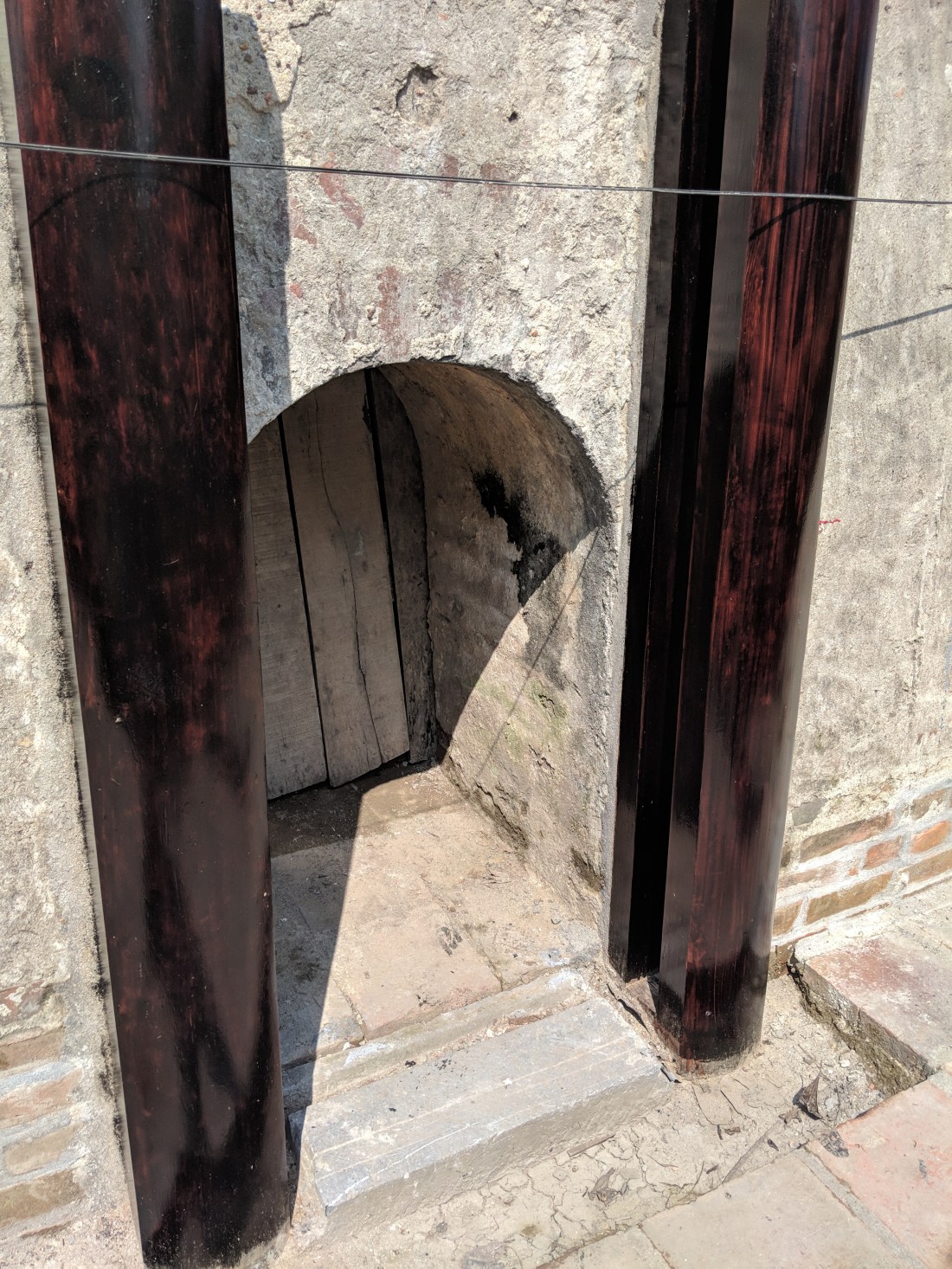
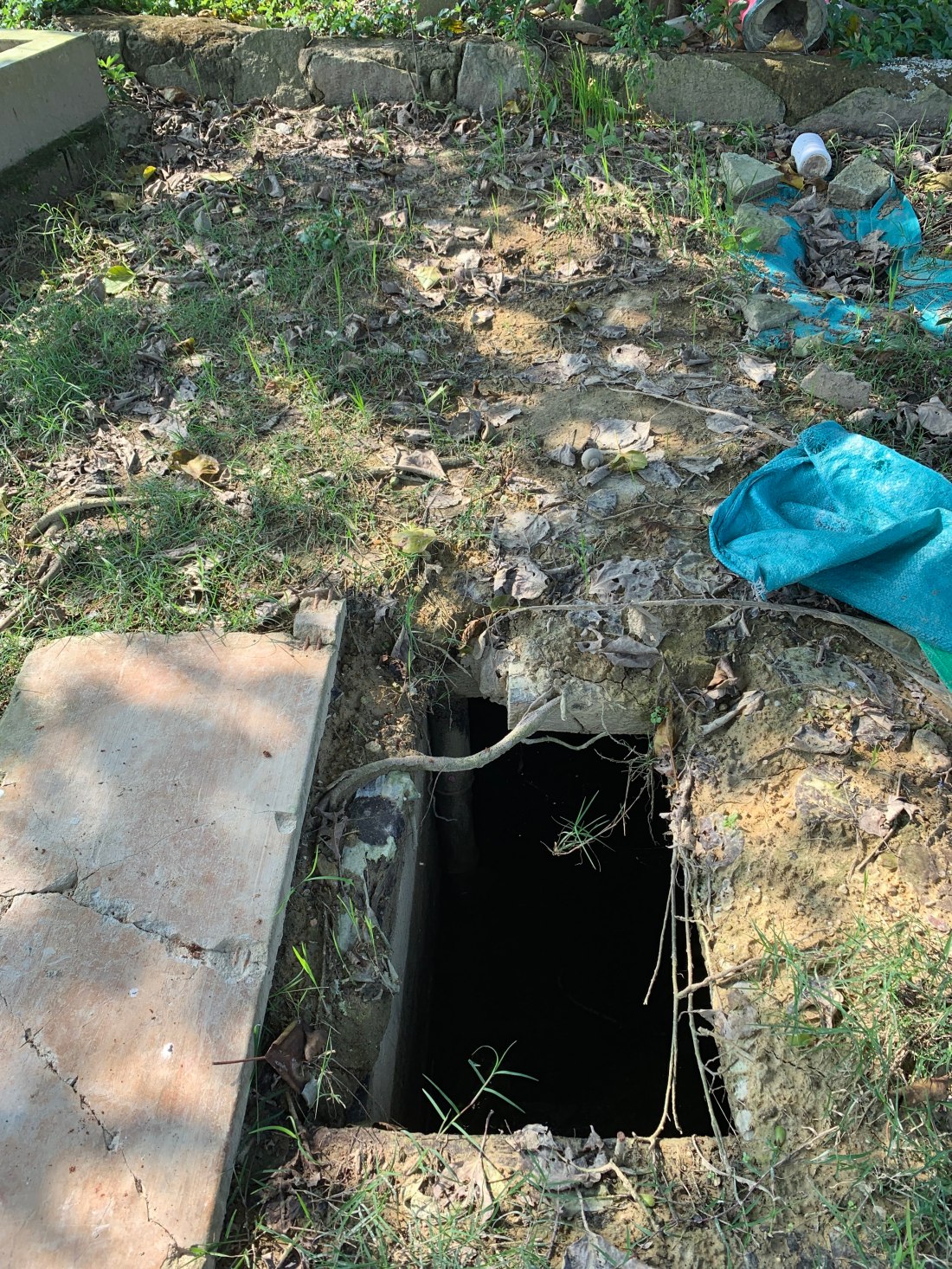
It was at this point that our guide Thanh shared with us his personal story of the Tet offensive. Born in Hue in 1956, he was 12 when it happened. His father was a soldier for the South/Americans and had been given the day off for the New Year. He had heard rumors of the attack to come, so he took his family of 15 underground into tunnels that were the canals of the citadel. There the family lived for the 27 days of bombing and the 3 more days of “cleansing” that occurred before the Americans drove the Viet Cong out, and it was safe to come out. They lived on 2 small bowls of rice each a day. In 1975 his father spent 2 years in a “re-education” camp, his uncle 17 years.
The Imperial City suffered much damage throughout history: with the French seizure of power in the 1880s, again with the French in 1947, and hugely during the Tet offensive in 1968. The entire site is now a Unesco protected site , and restoration is underway. But many structures have been reduced to rubble.
The main entrance to the city is through is the south gate, know as the Meridian gate or the Noon Gate built in 1833.
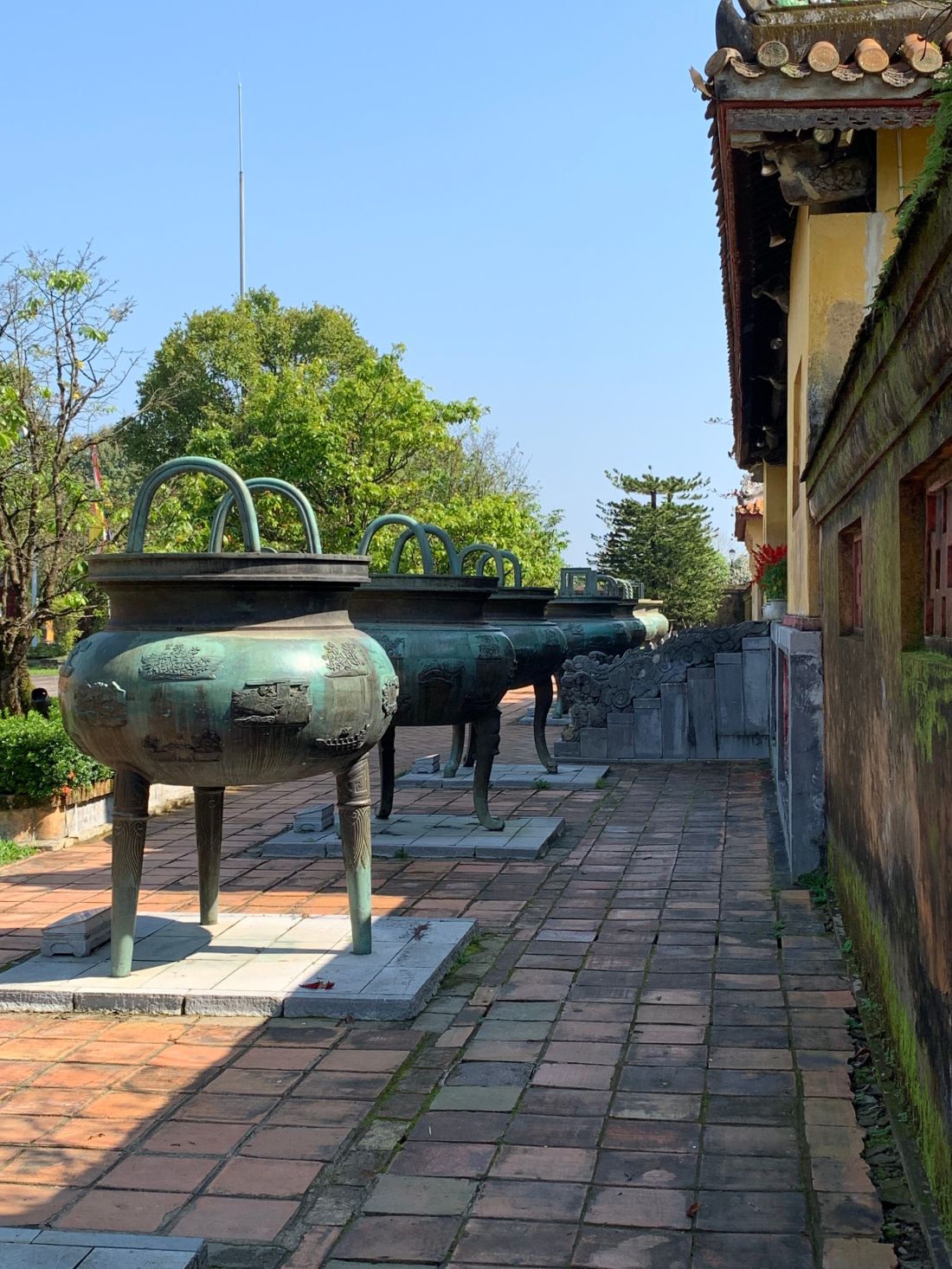
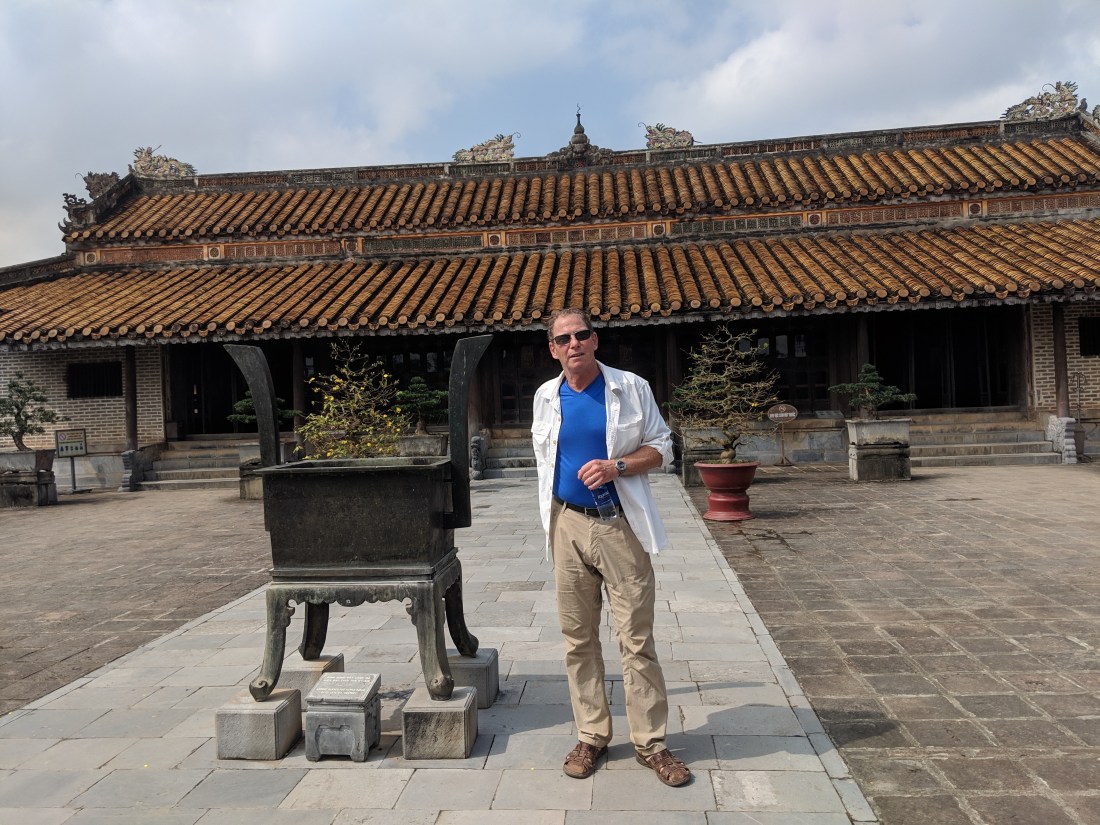
One of the remaining temples: The Mieu was built in 1822 to worship the 9 Nguyen ancestor emperors and was based on the temples of the Forbidden City in China. The 9 dynastic urns lined up opposite the temple correspond to the same 9 emperors to that date and were designed based on Chinese 9 tripod cauldrons. Later the temple was expanded to include the subsequent emperors.

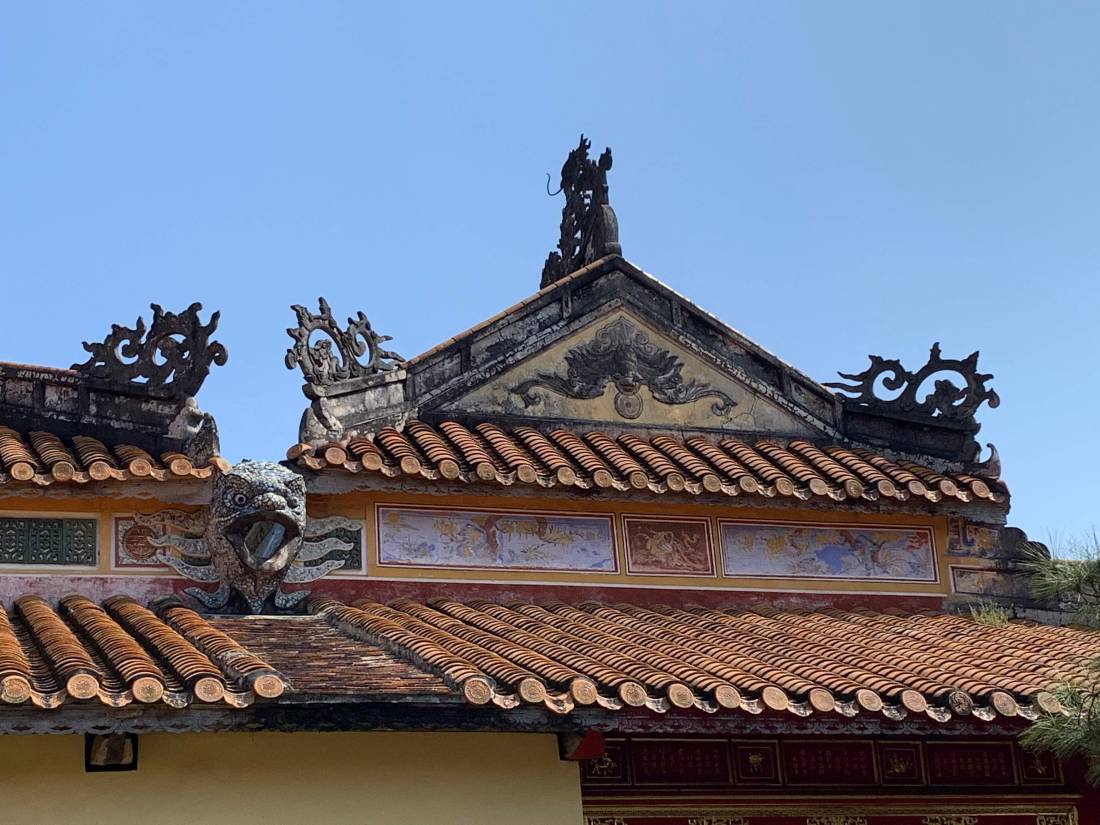
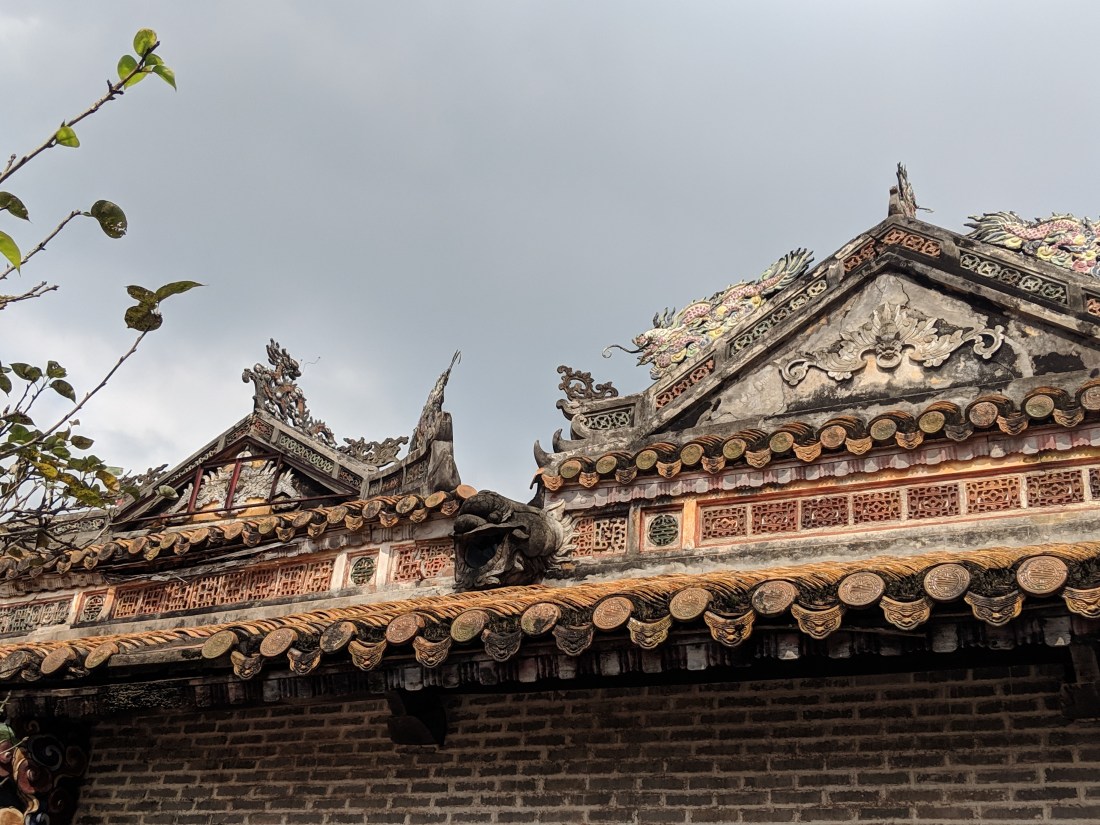
This building exemplifies architecture that was developed in Hue: the 2 level roof makes it lighter and splitting it into 2 halves also makes it lighter, both safety issues in cyclones. Note the gargoyle in the middle to expel water, a forerunner to our gutter system. Also the roof itself allows easy drainage of water, but also the upper/lower pattern of layering the ceramic tiles is the yin/yang, satisfying feng shui.

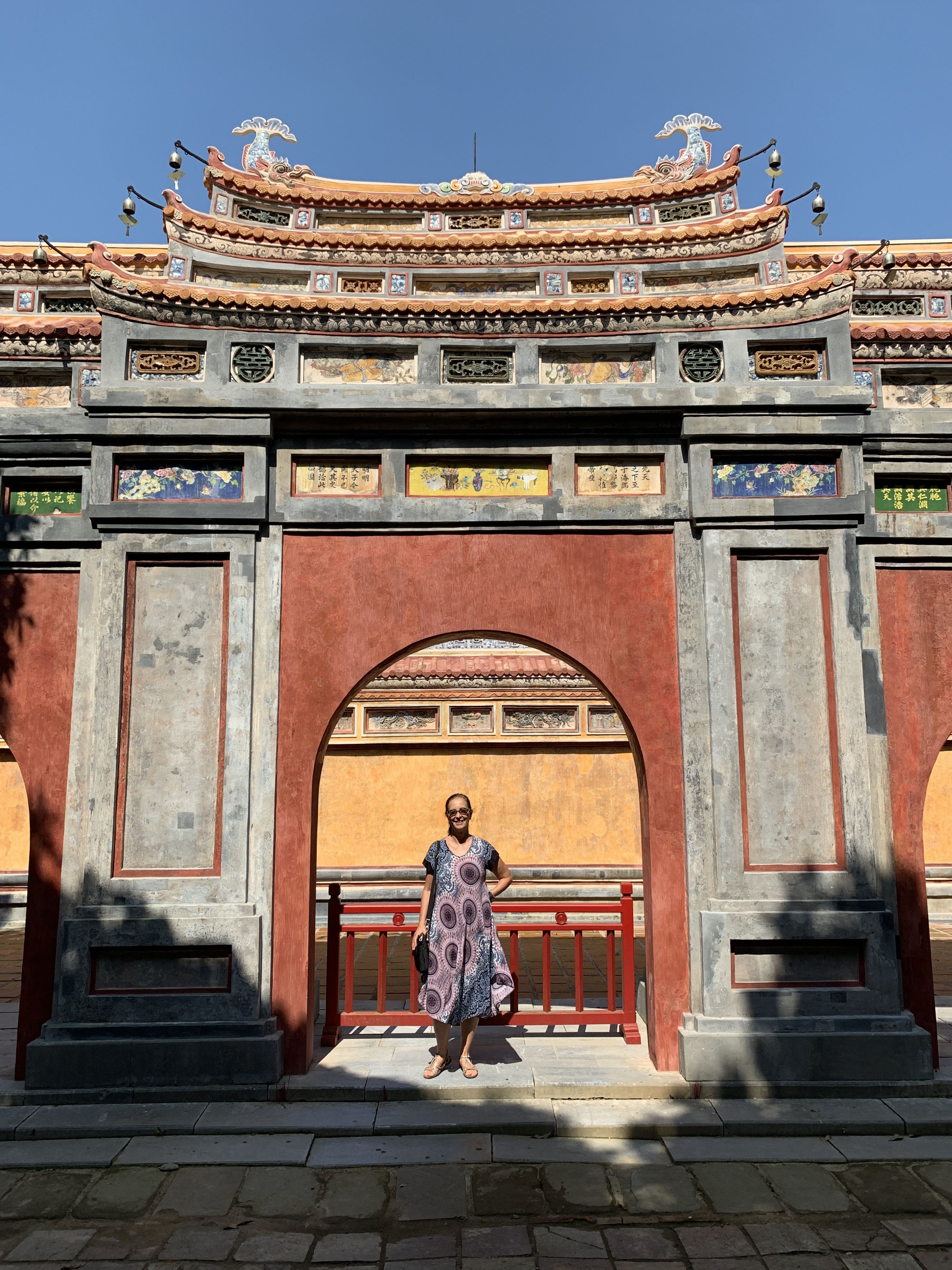
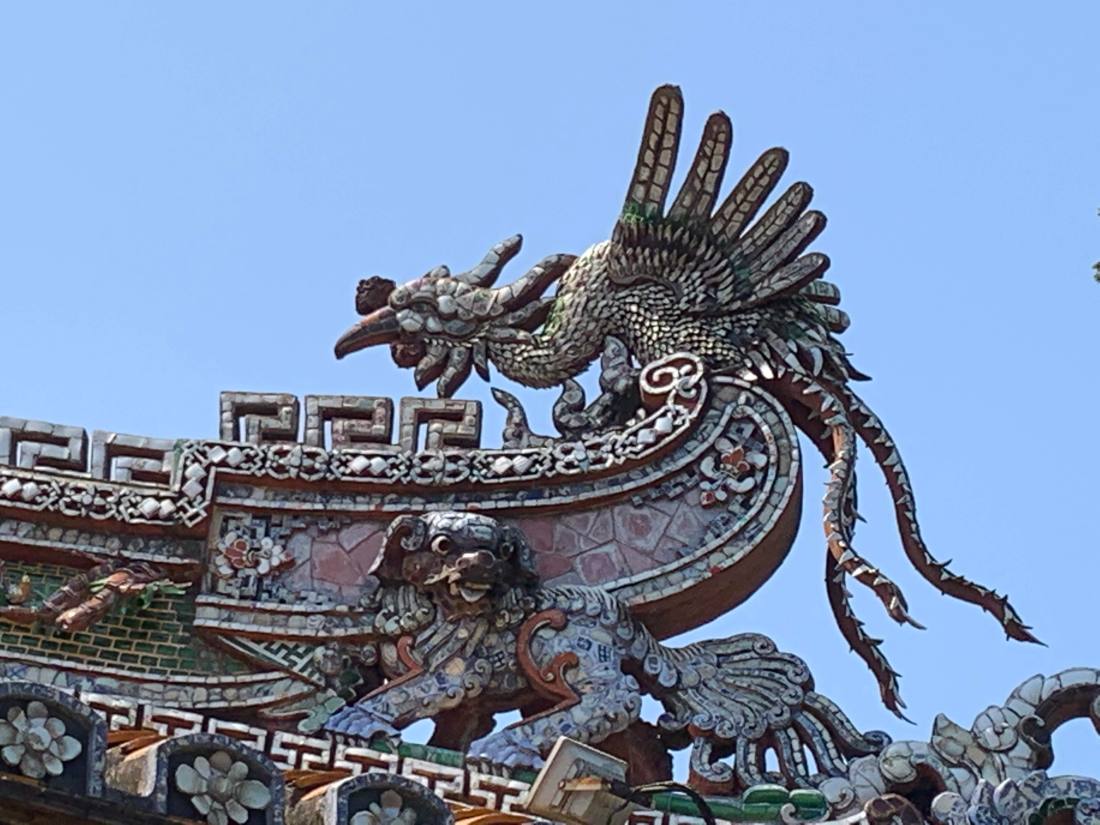
The empress had her own temple, but only the gate survives. You can tell it is hers because the animals on the top are phoenixes (notice the peacock-like tails), which arise from the fire and symbolize rebirth, fertility. Male structures generally have dragons, for power. Other common Vietnamese animal symbols are unicorns for prosperity, and turtles for longevity.
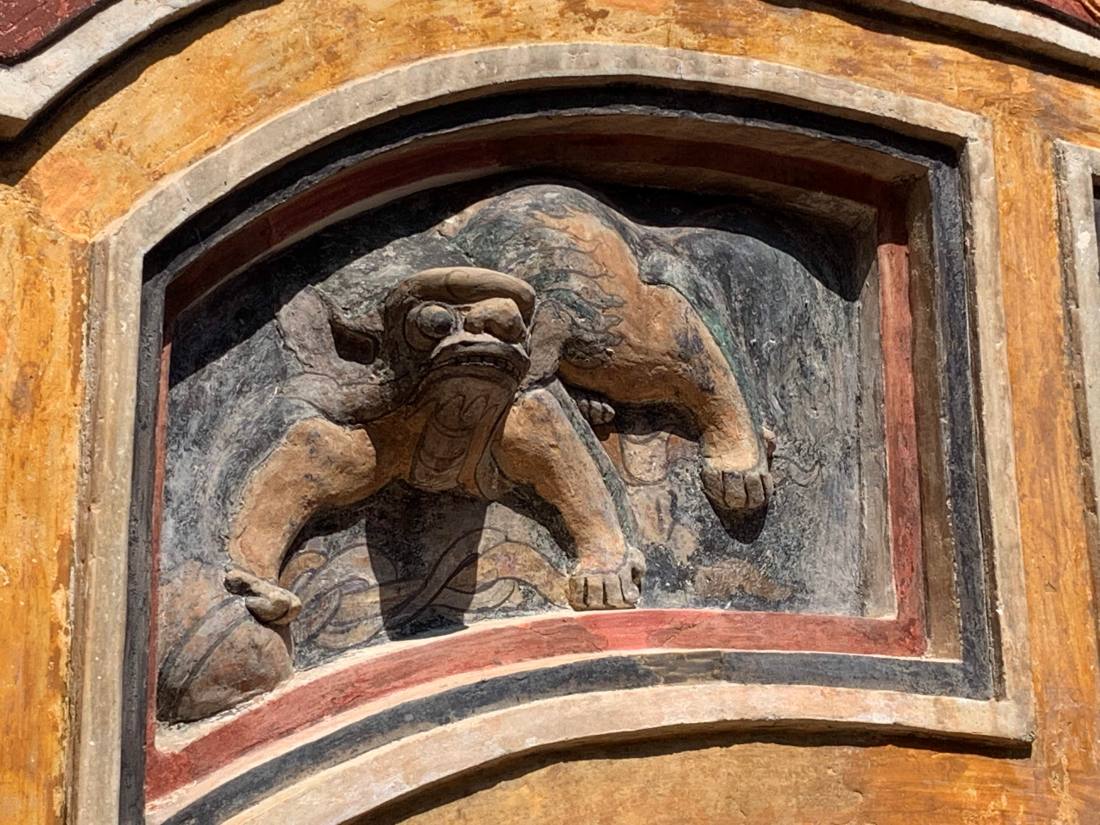
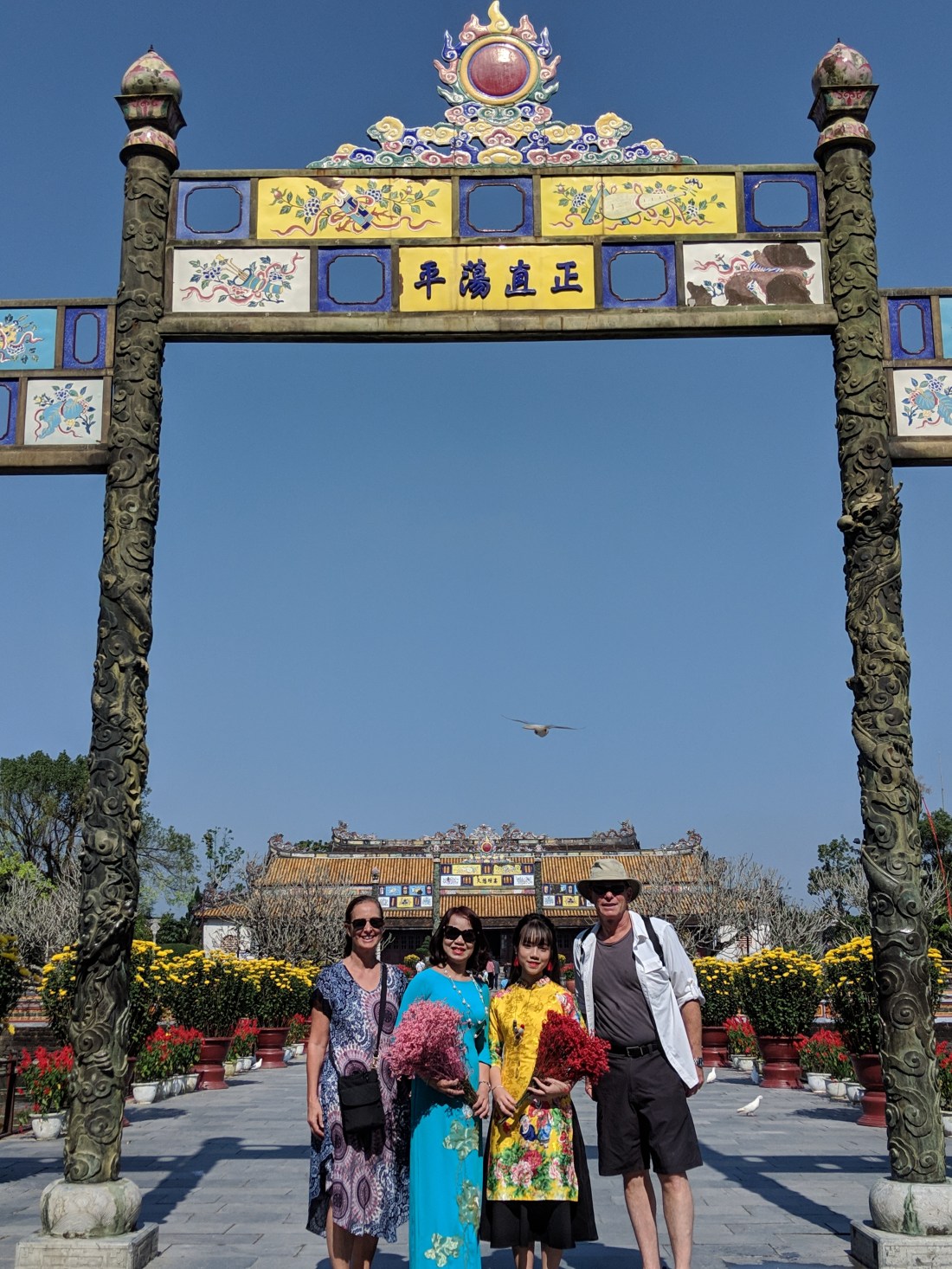
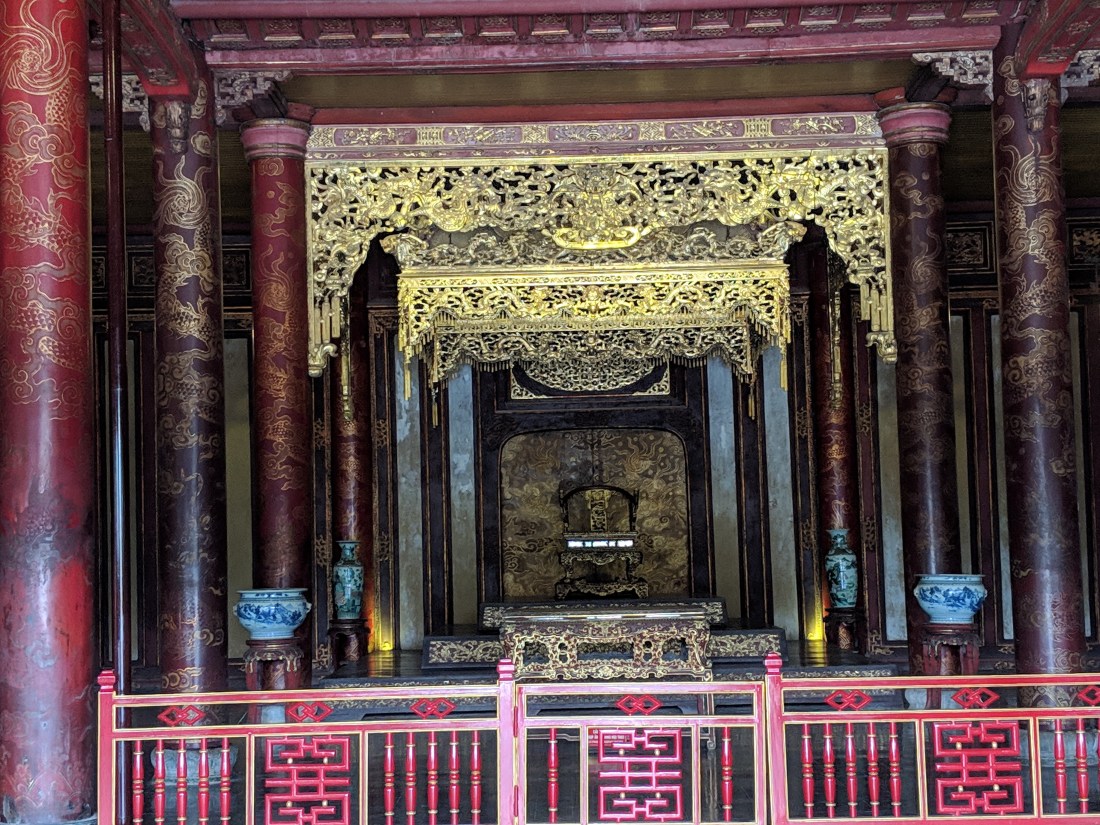
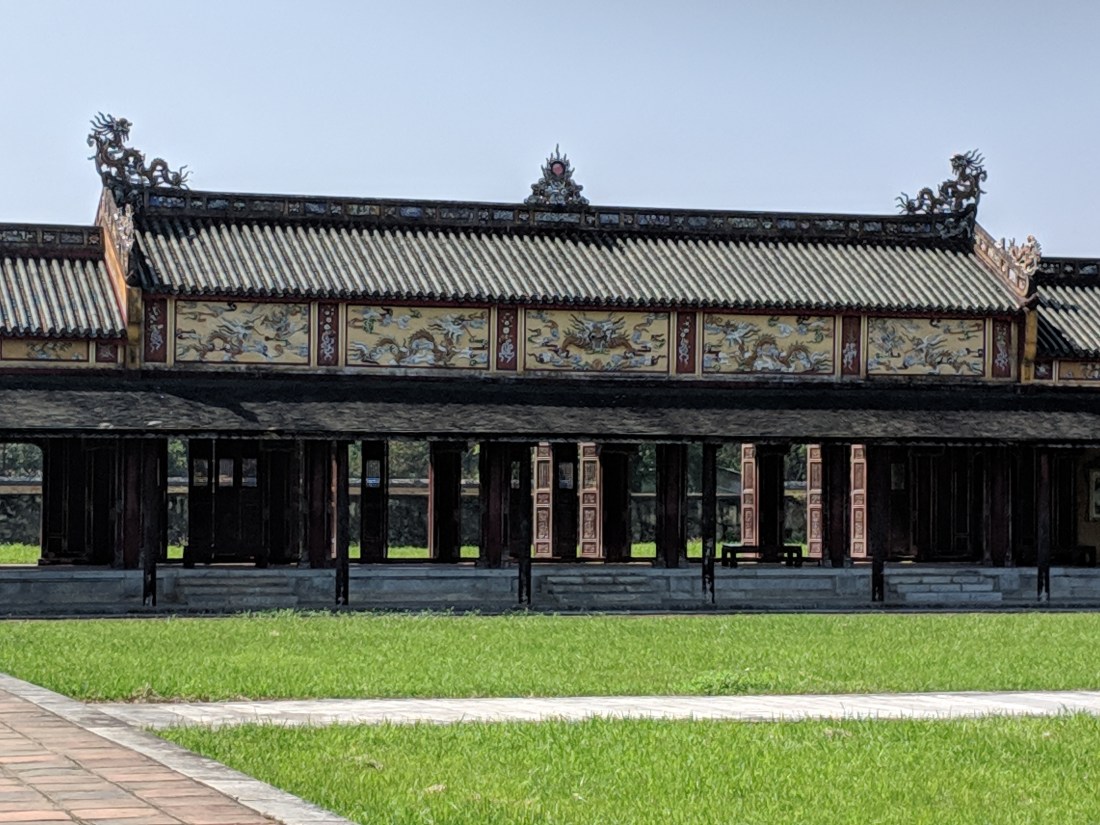
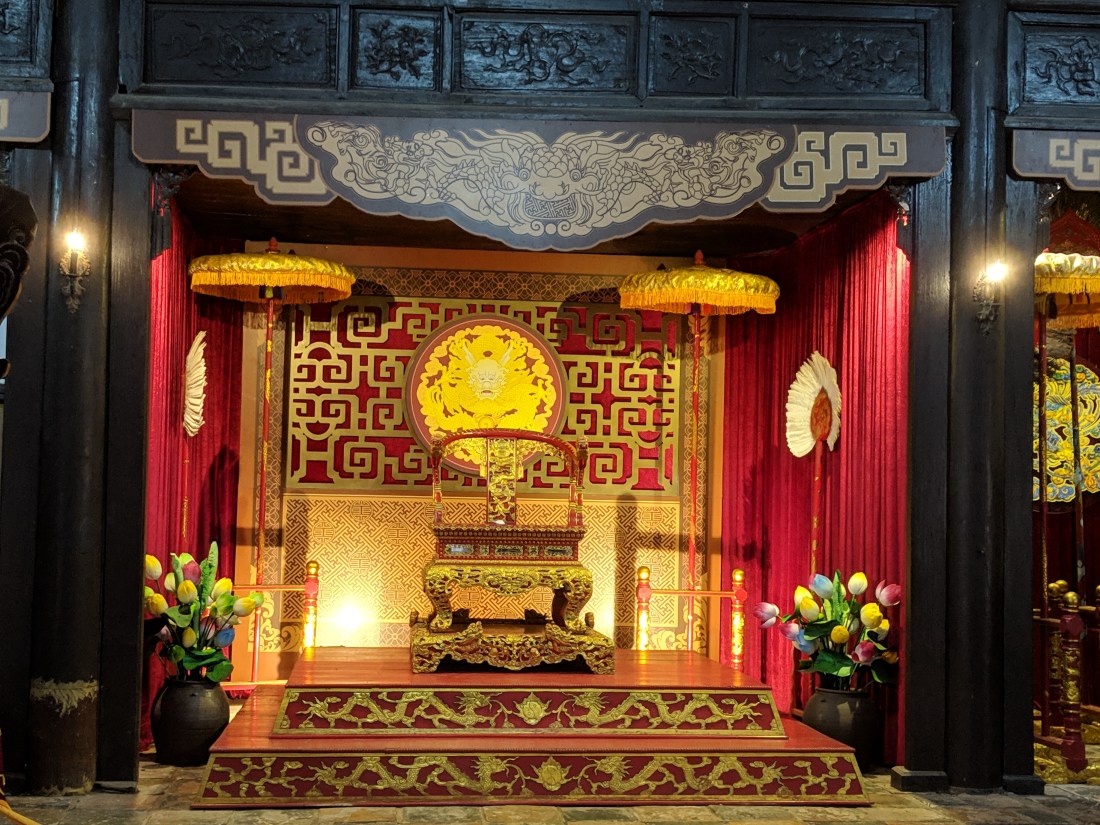
The Thai Hoa Palace is where the King held court on the 1st and 15th days of the lunar month, and also where special occasions such as coronations and wedding took place.
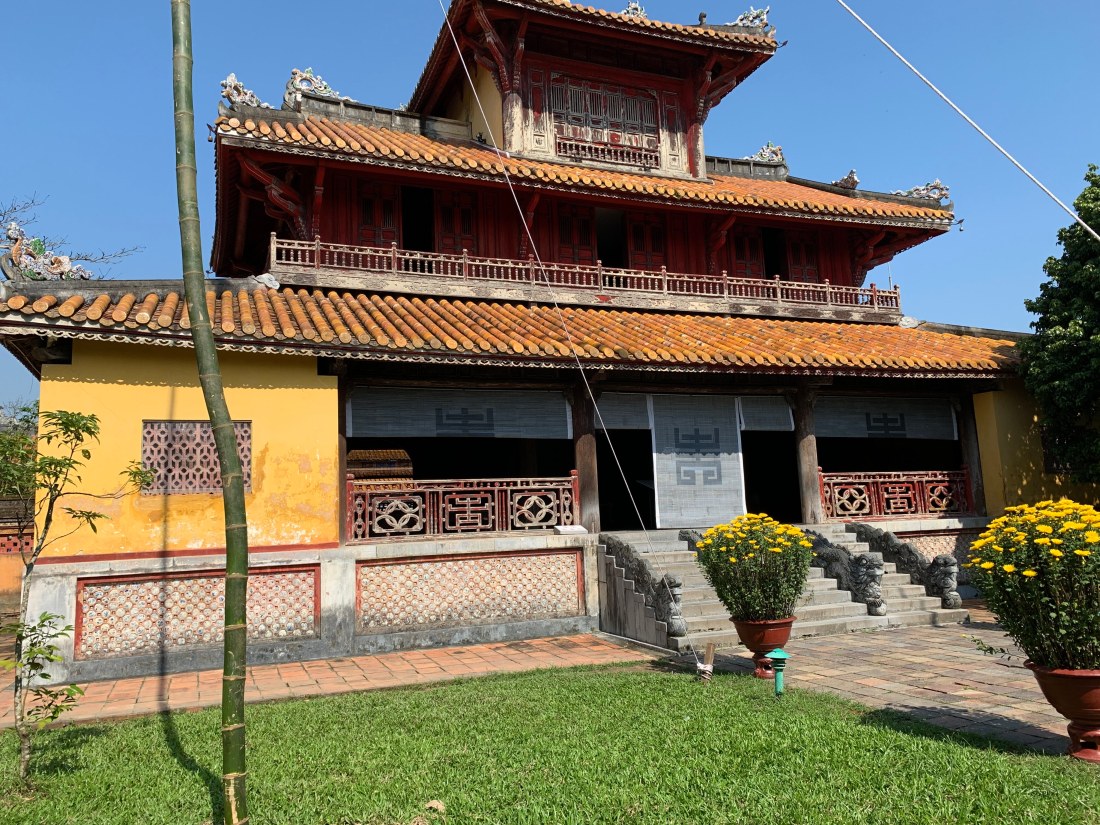
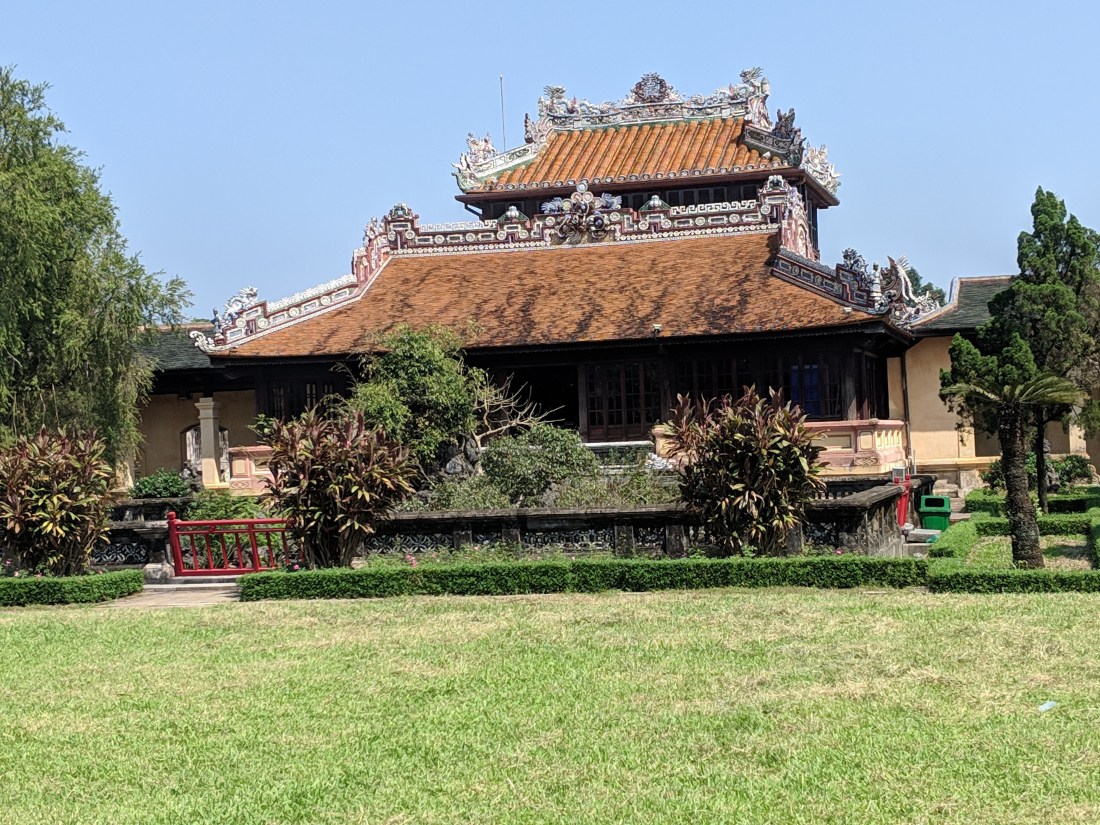
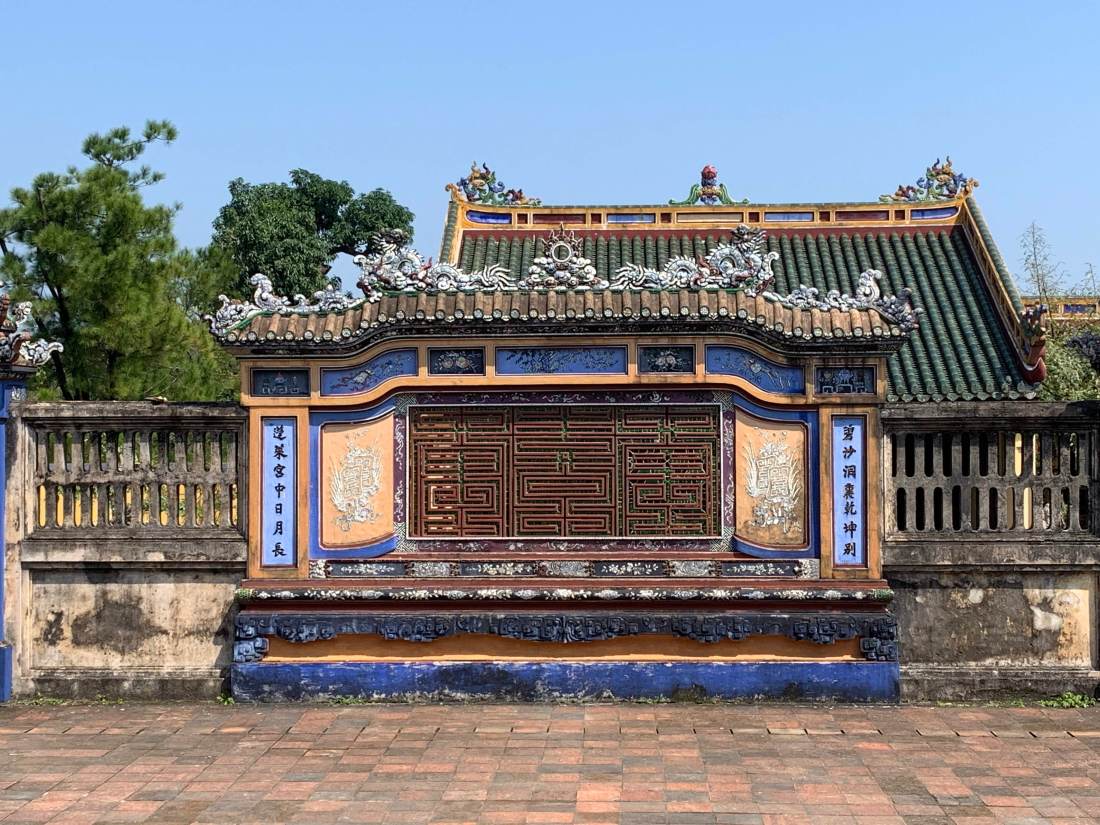
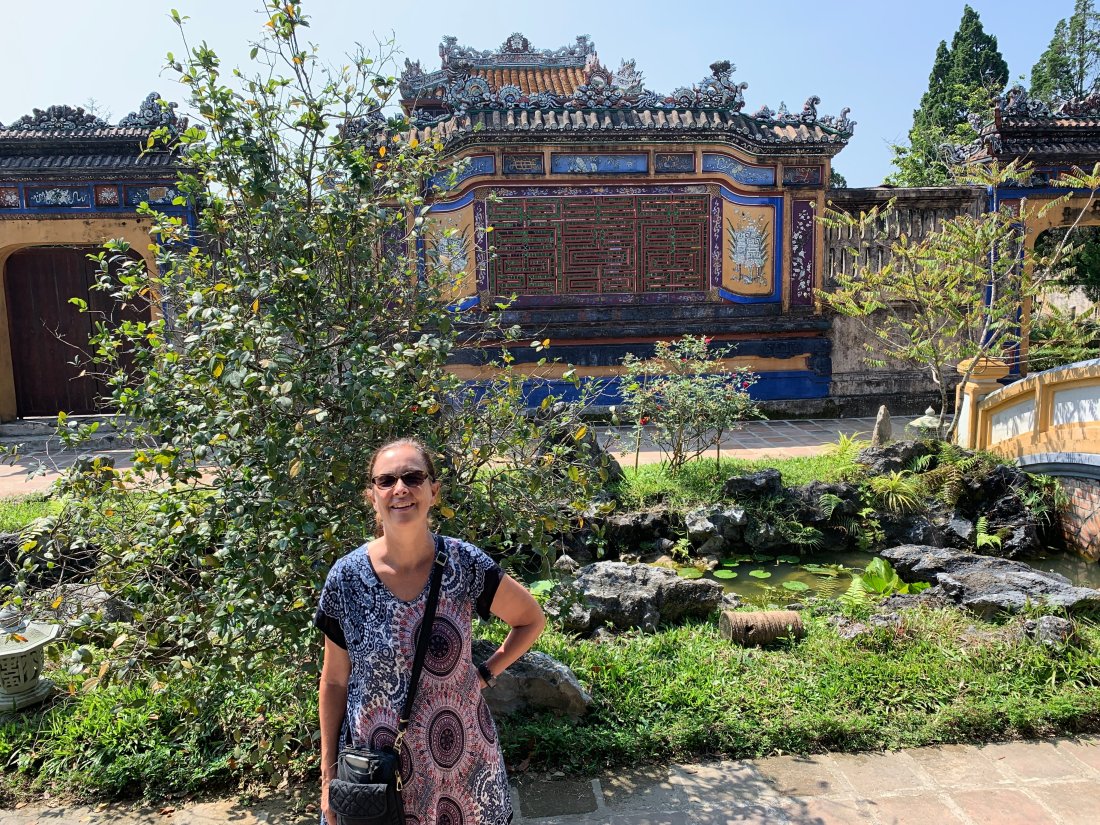
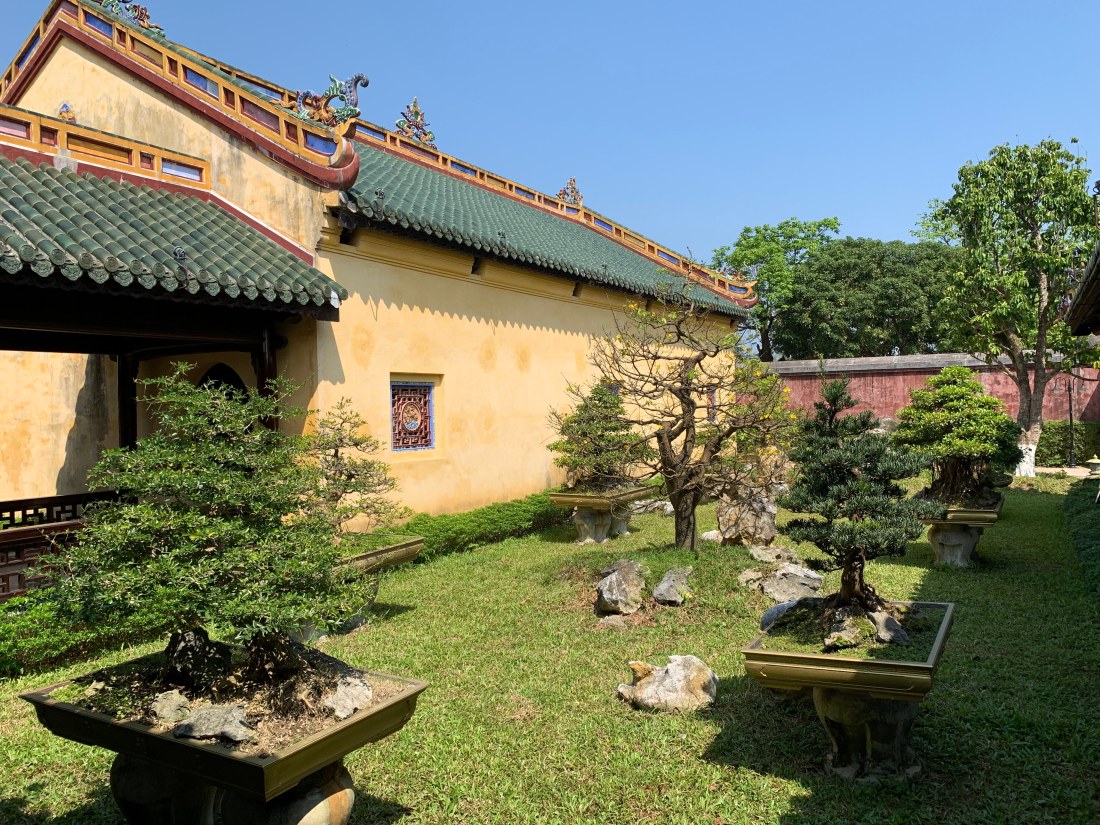
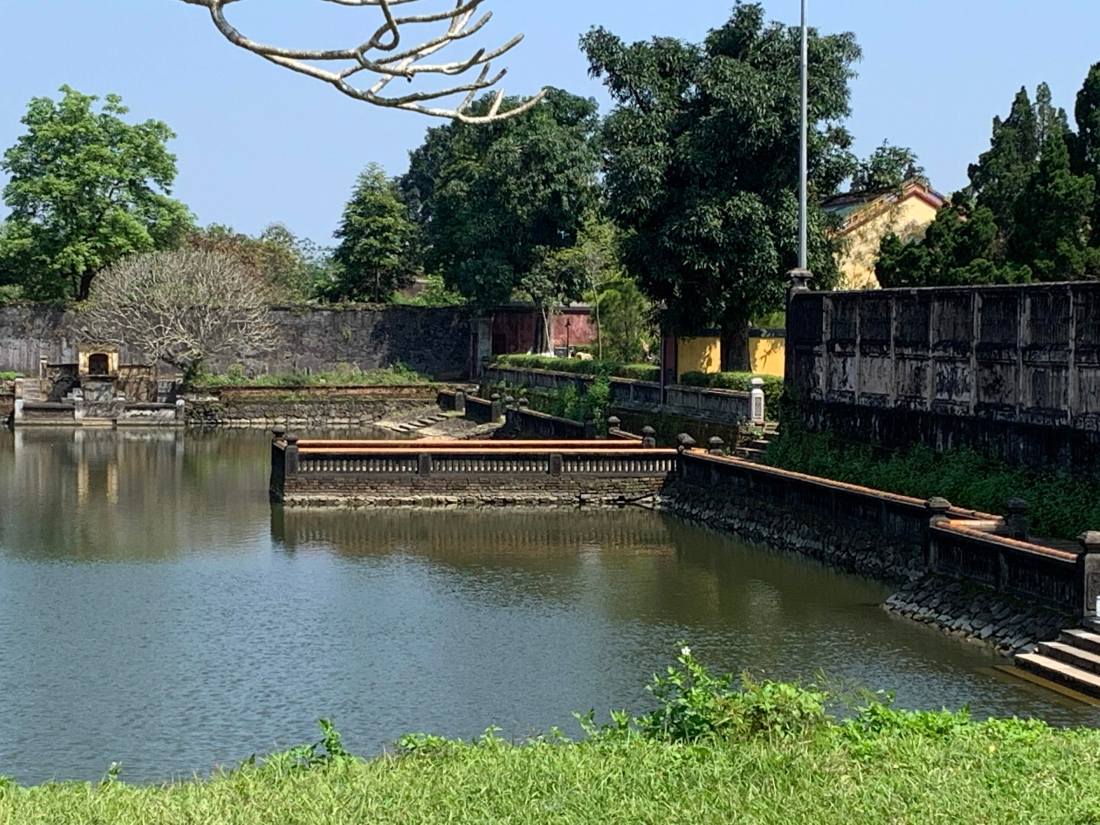
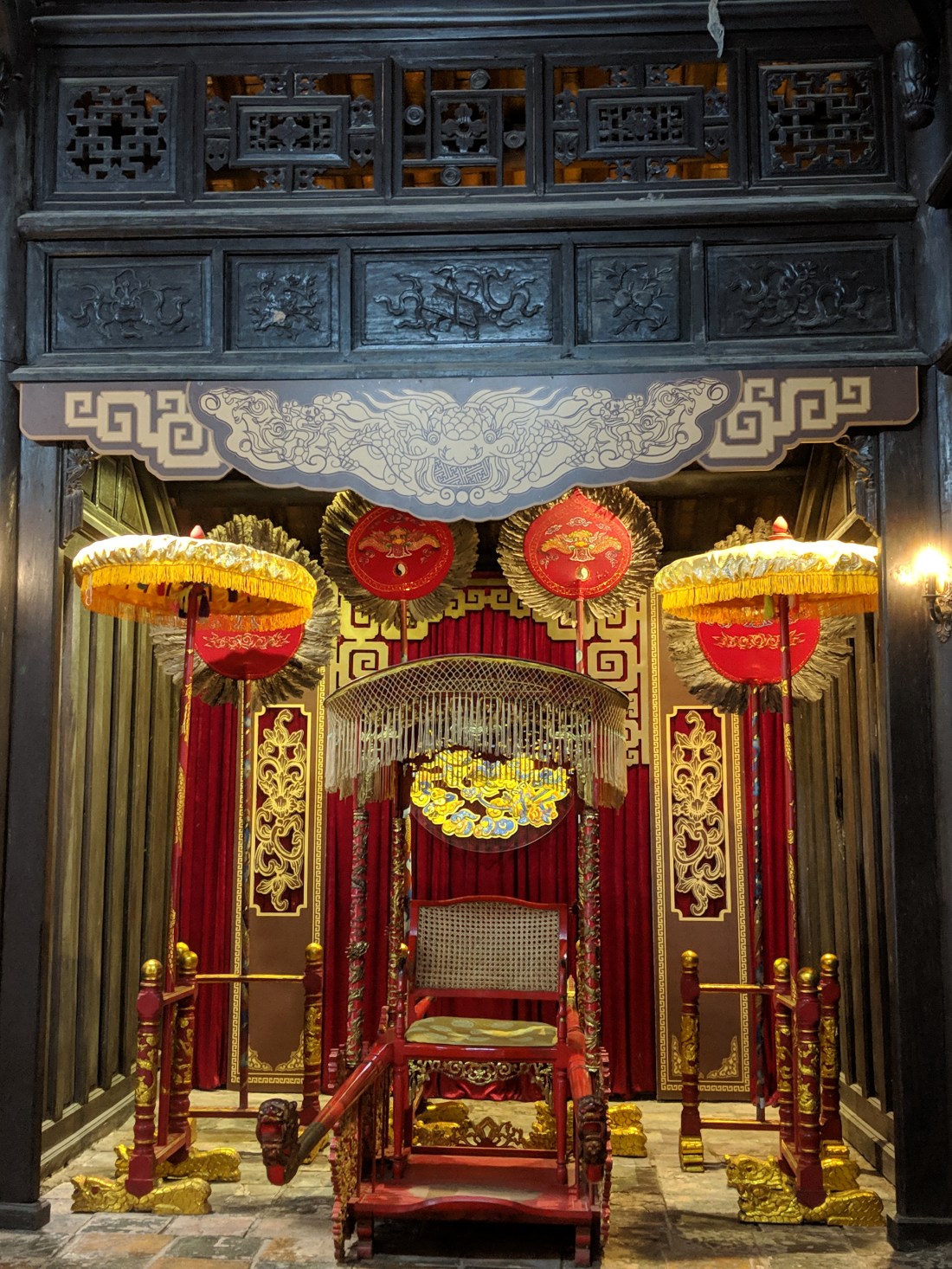
Further within the Imperial City is yet another walled entrance, this for the Forbidden Purple City, which was home to the royal family. Any given king could have dozens to hundreds of concubines, elevated to level of second wives once they bore children, but only 1 empress, the first wife. The Purple City consisted of the emperor’s private home, the empress’s private home (both completely destroyed) and many more homes for the concubines, second wives, children, and eunuchs. There are gardens, swimming pools, and libraries.
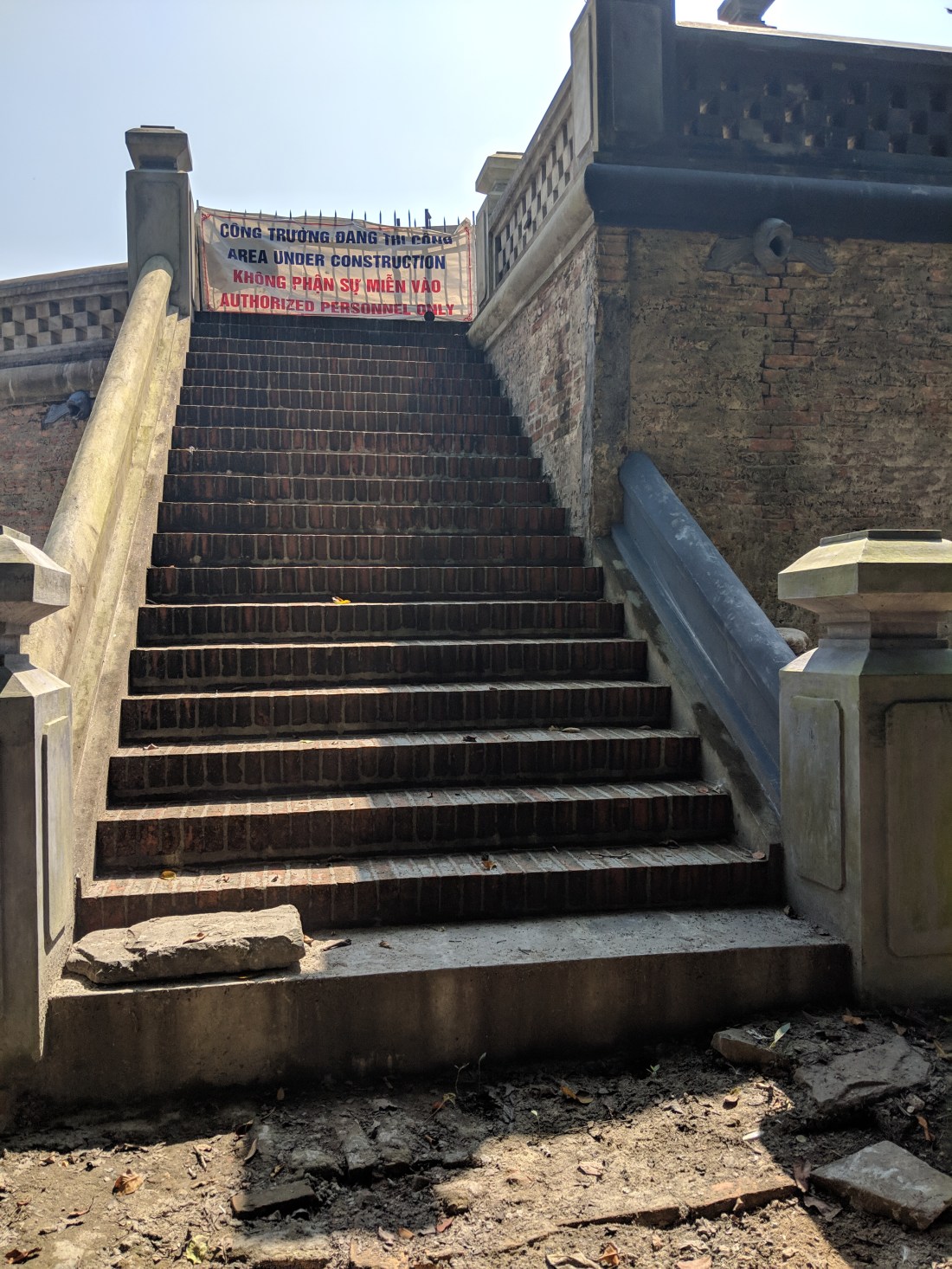
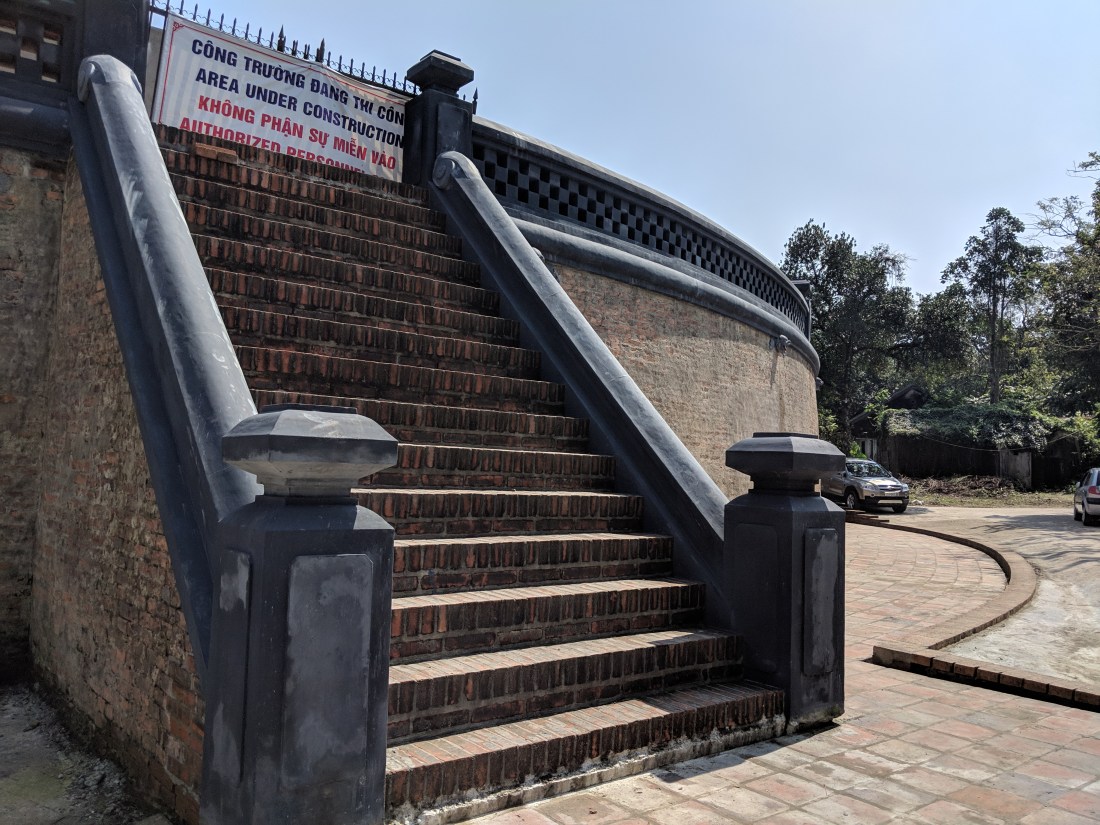
We left the Imperial City and visited the arena where elephants fought tigers for entertainment a couple of times a year. It is still being renovated, so not a lot to see.

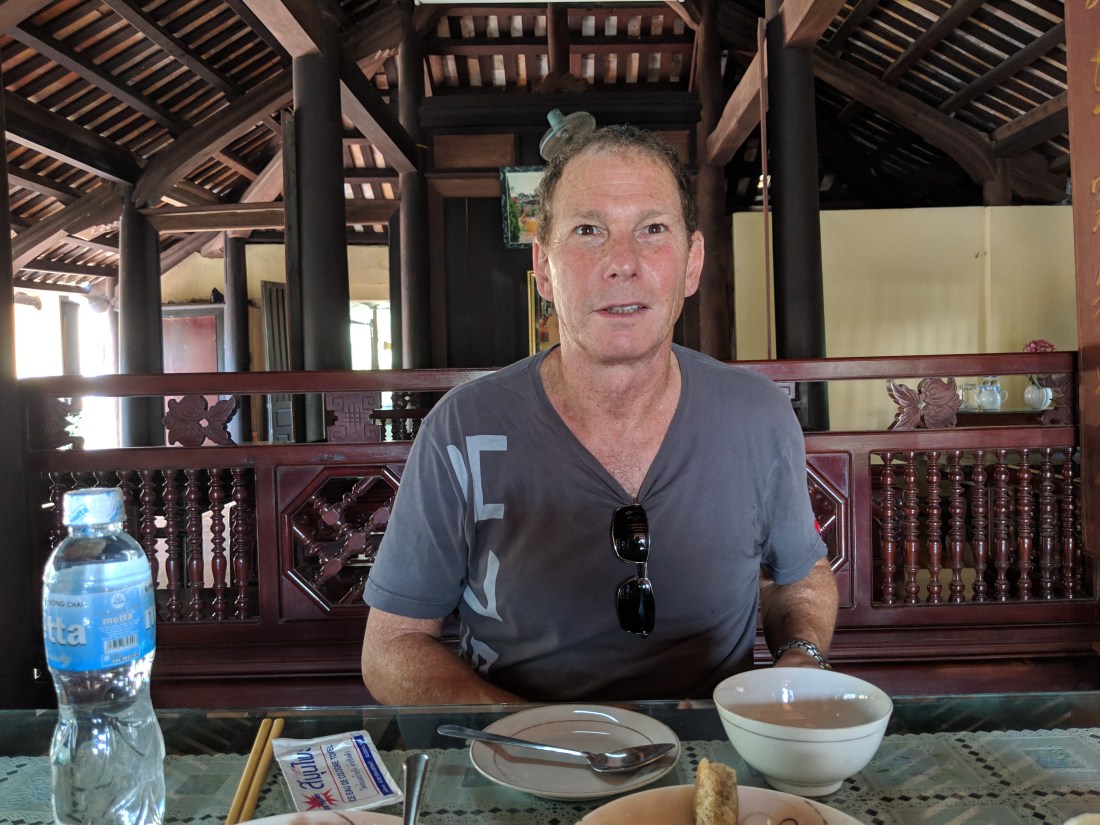
We then had a lovely vegan lunch at a monastery. In Vietnam, all monks are vegan, unlike monks in the rest of SE Asia.

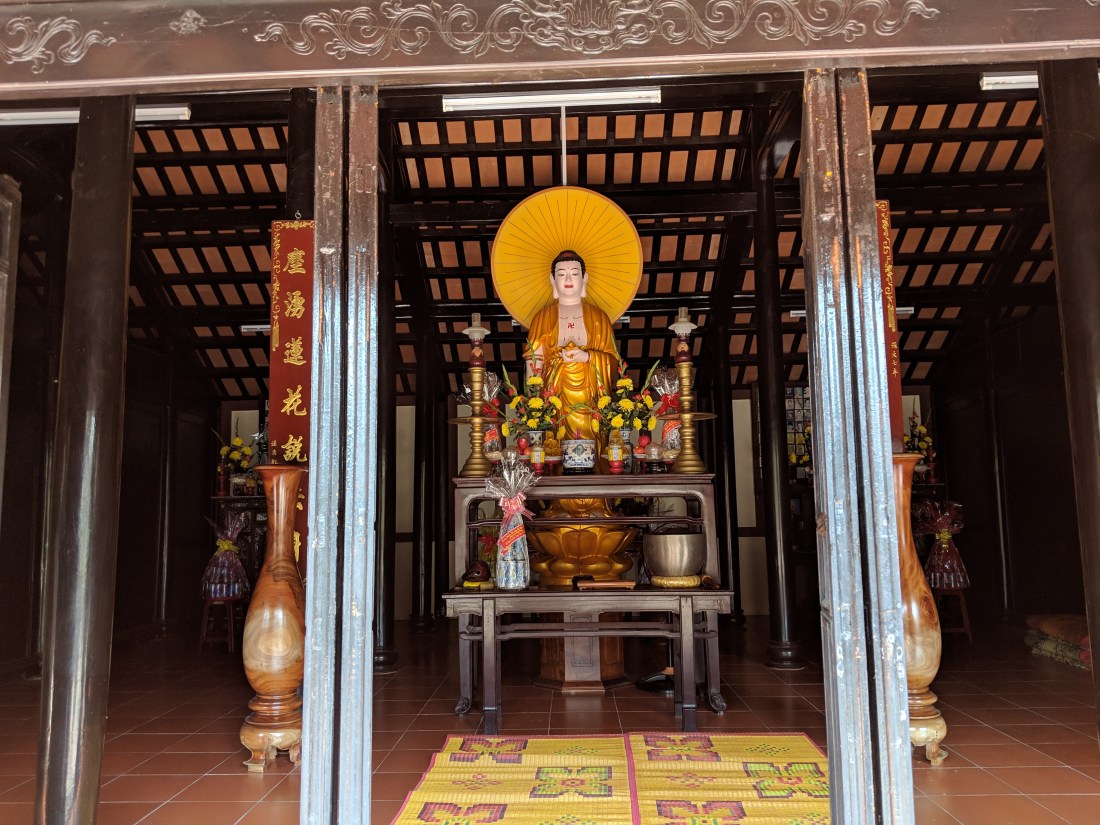
After lunch we visited a local village of rice farmers. 

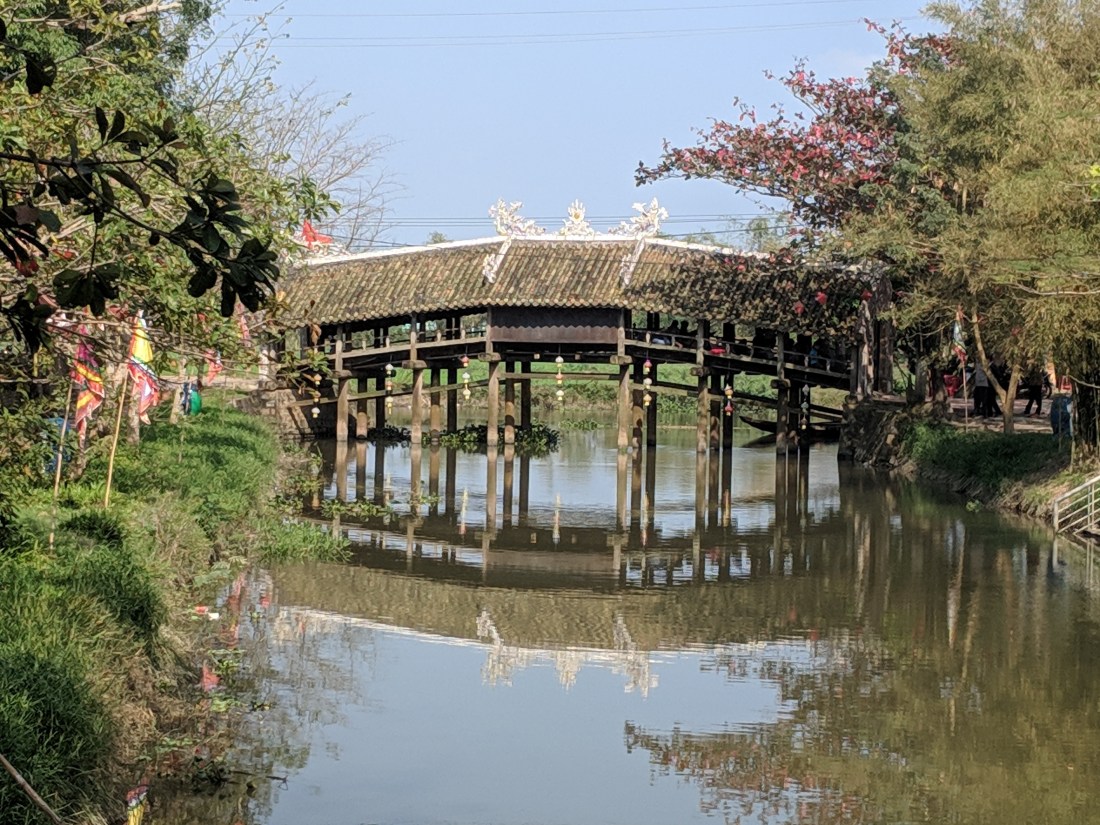
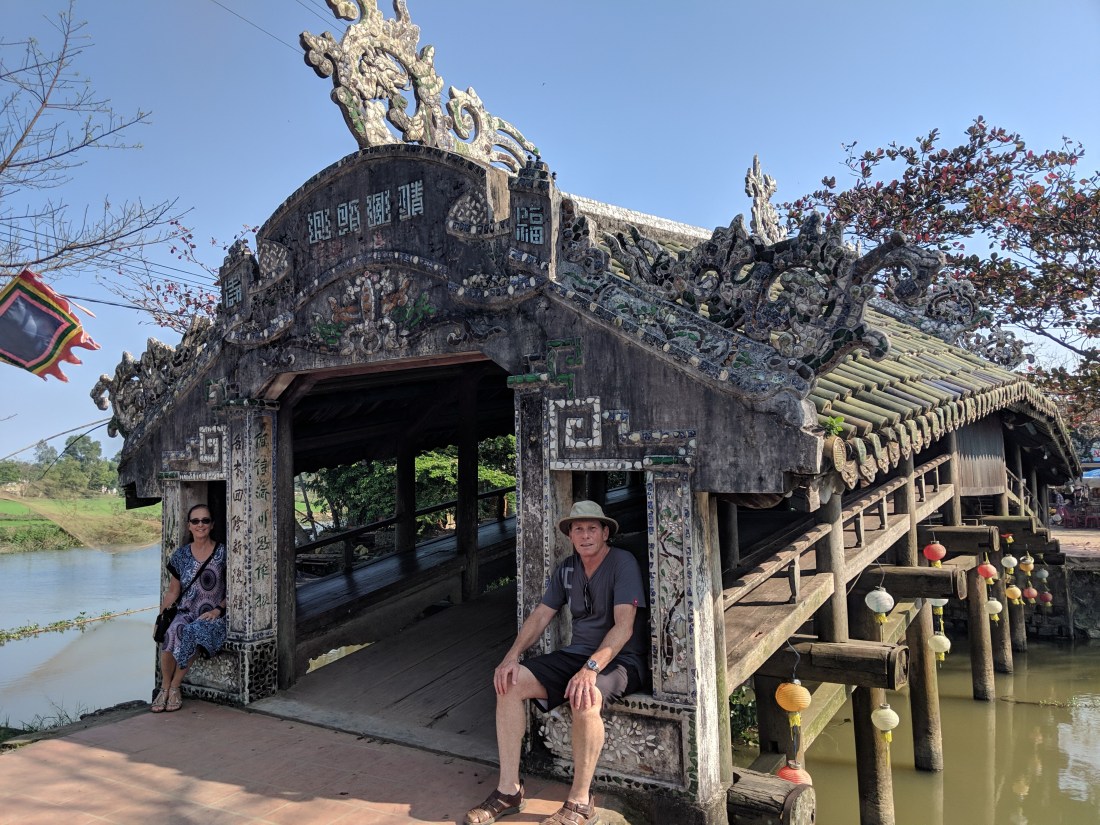
There we saw the beautiful covered Thanh Toan Bridge built in 1776.
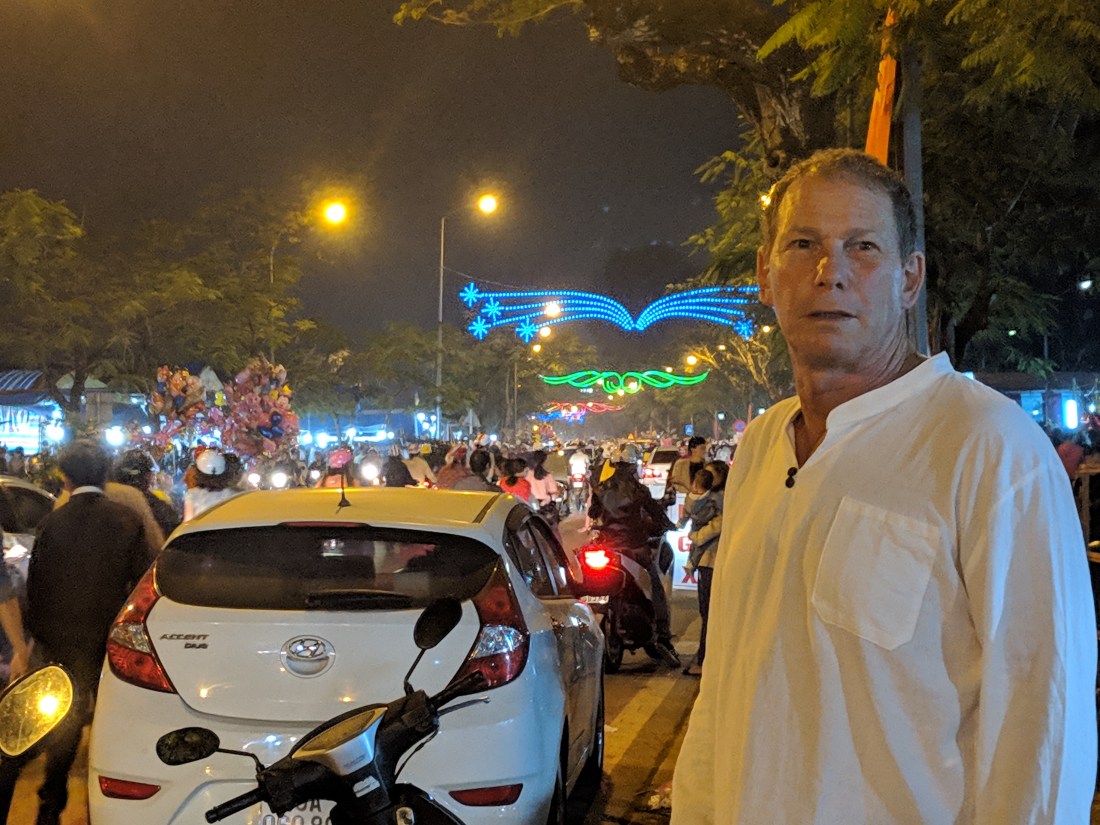
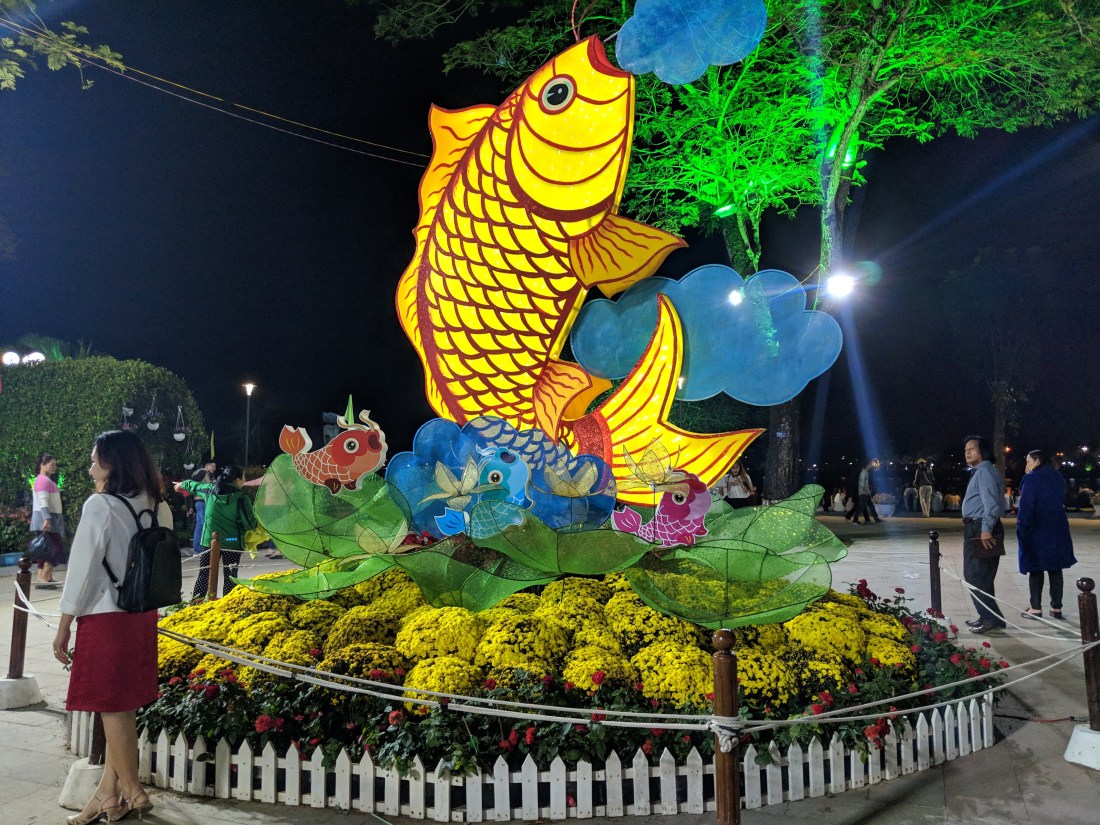
After our busy day we still had energy to hit the town at night. Again, the excitement for the upcoming holiday is palpable.

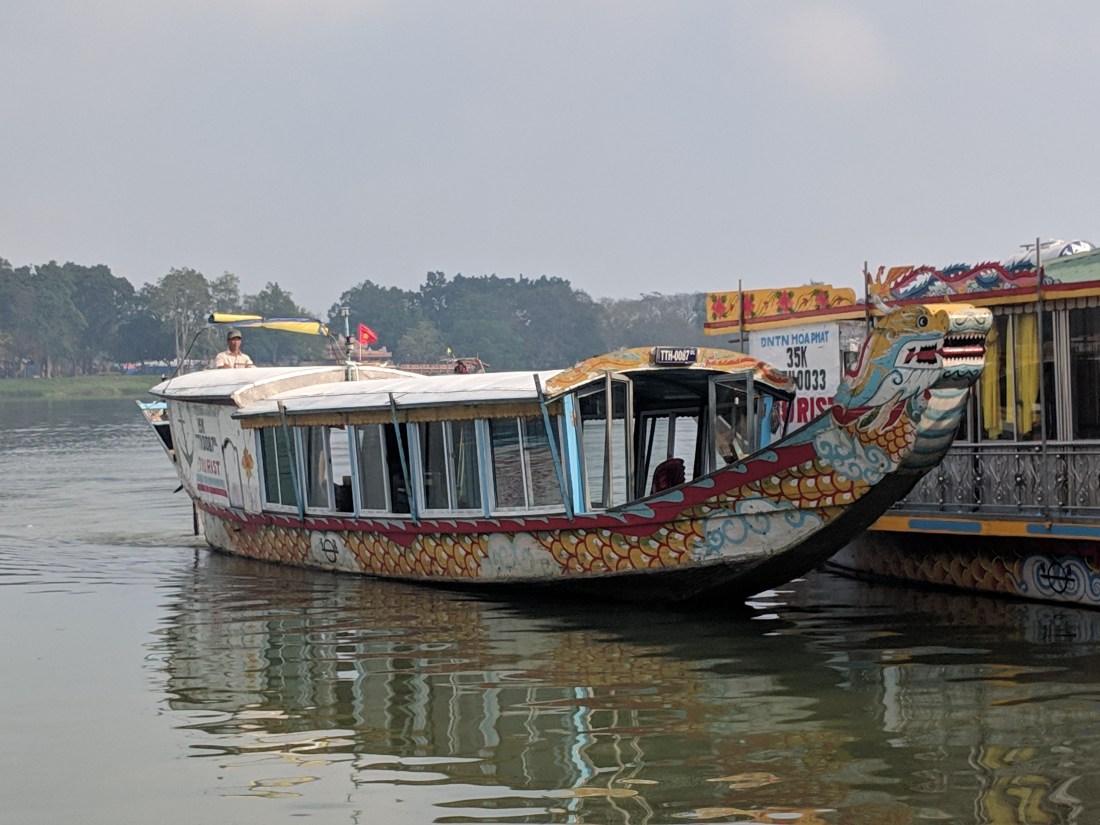
In the morning we took a dragon boat up the Perfume River, so named in 1307 by a visiting princess who was enamored by the fragrance of the numerous frangipani trees lining its banks.
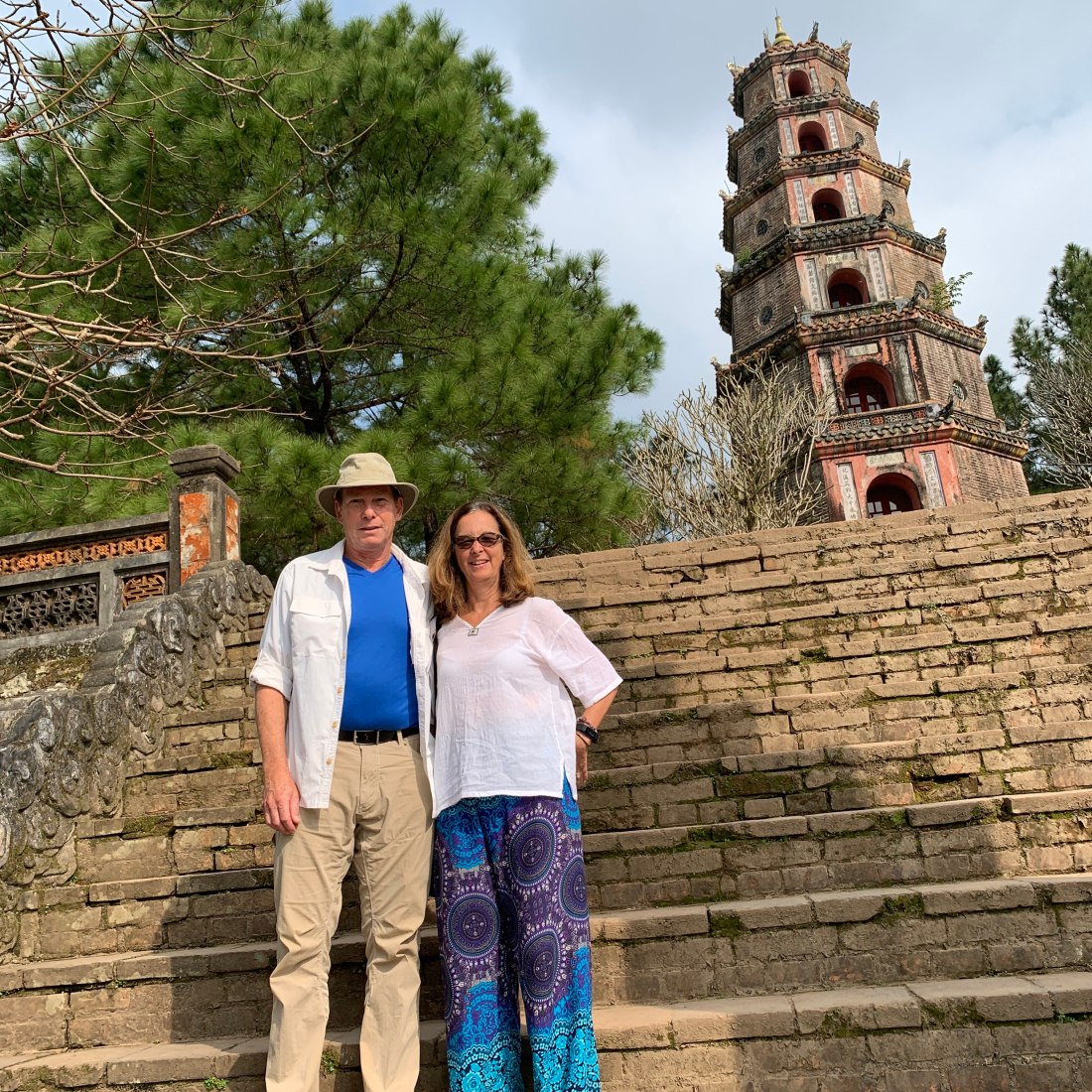
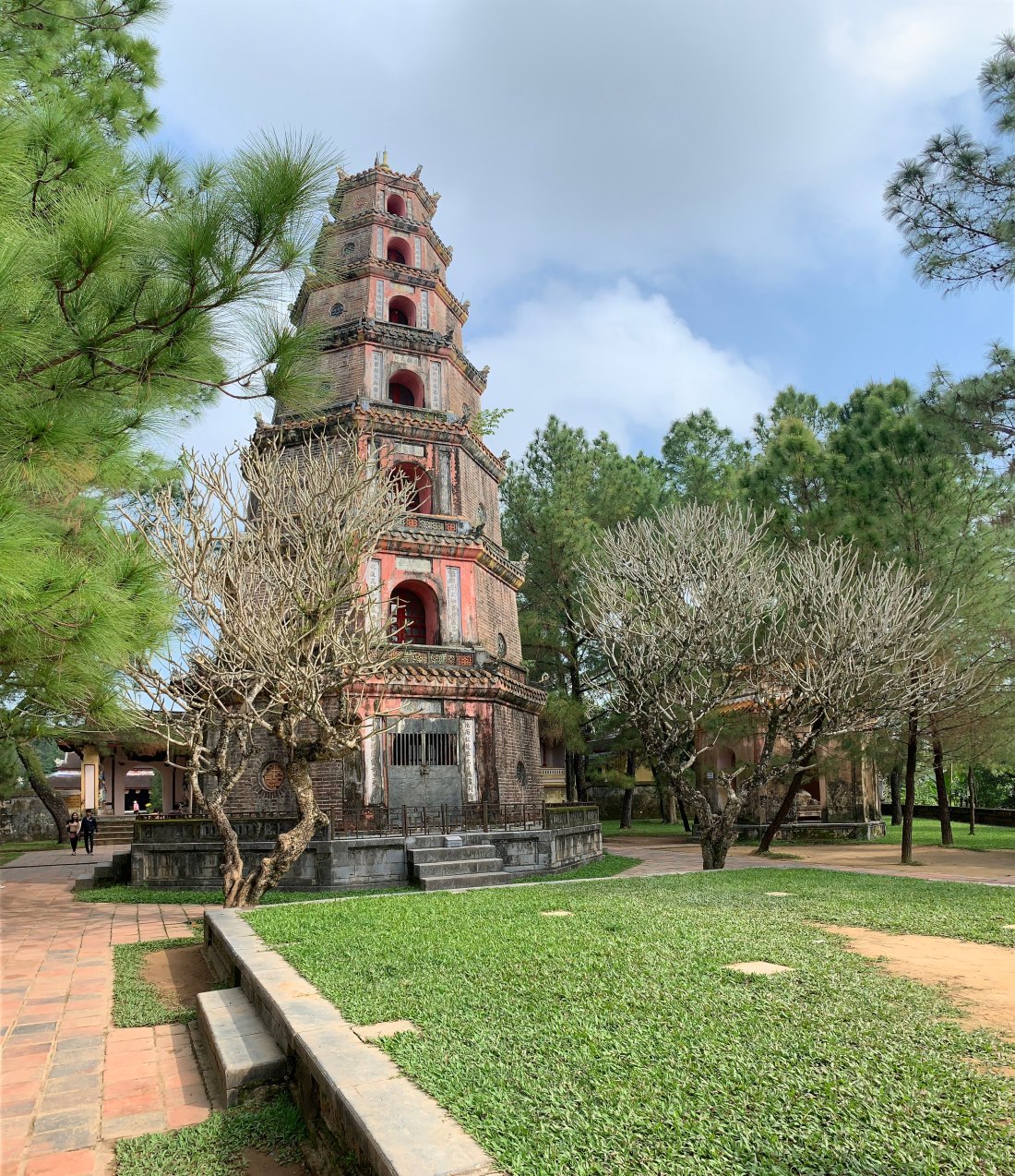
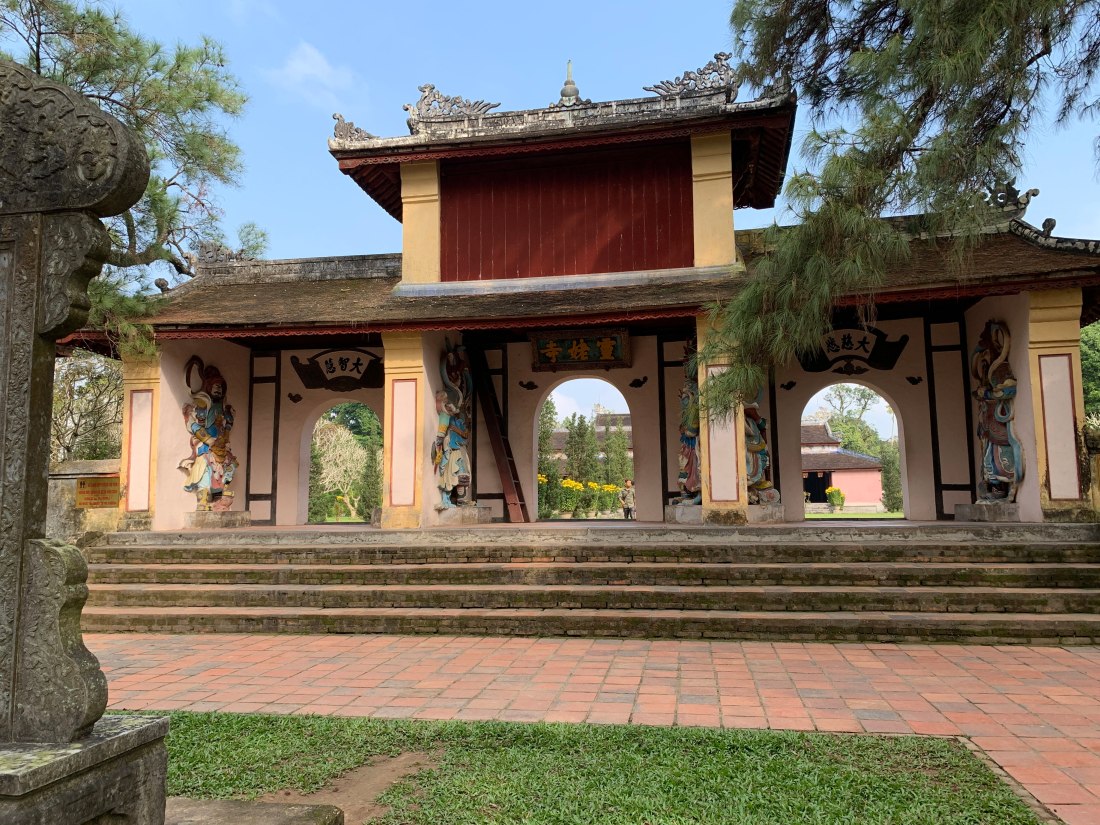
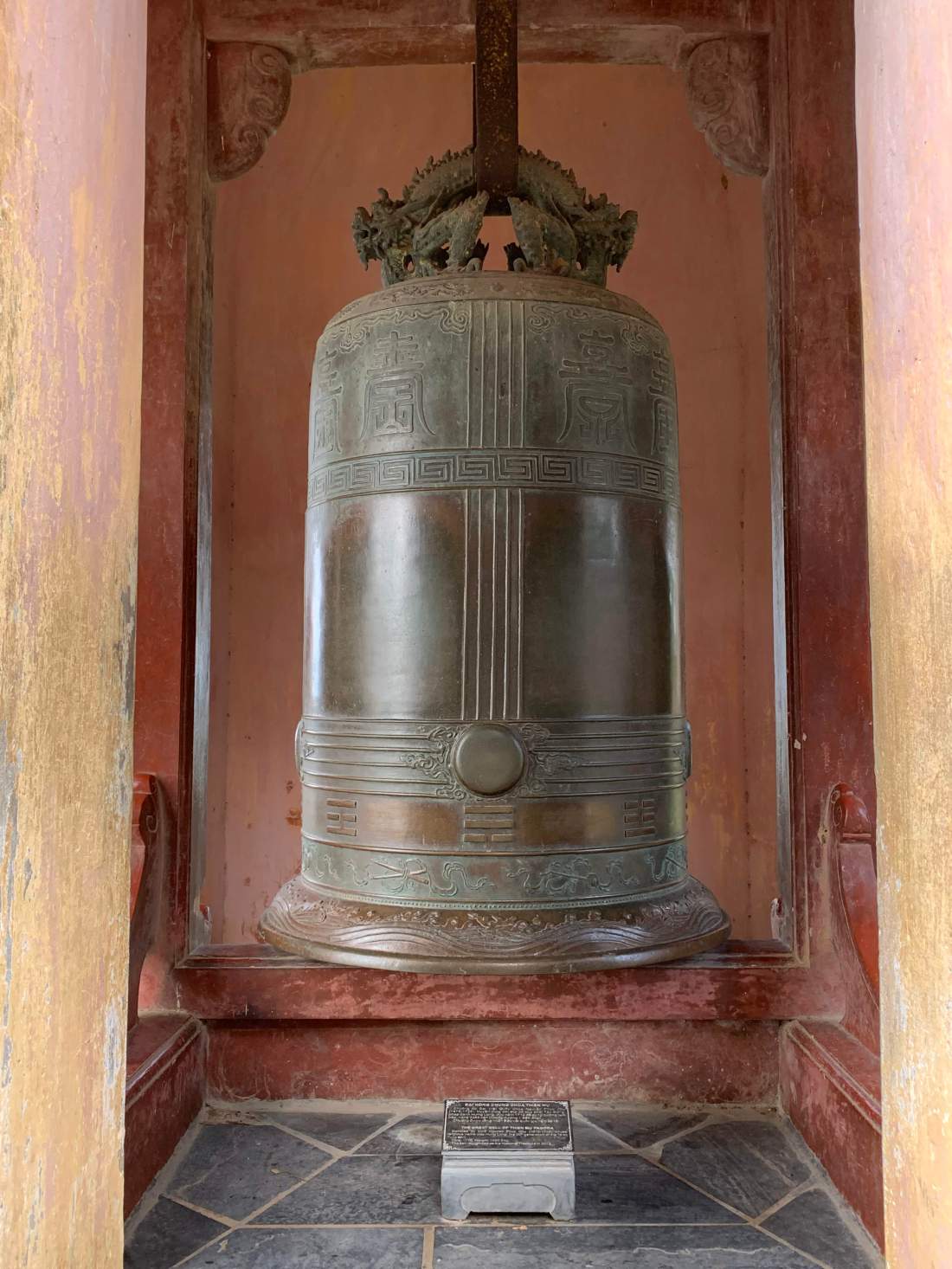
We visited first the Thien Mu (Celestial Lady) Pagoda, first built in 1601. It has had many renovations, expansions, and reconstructions over the centuries. Its 7 story octagonal tower built in 1844, dedicated to Buddha, has become the symbol of Hue.

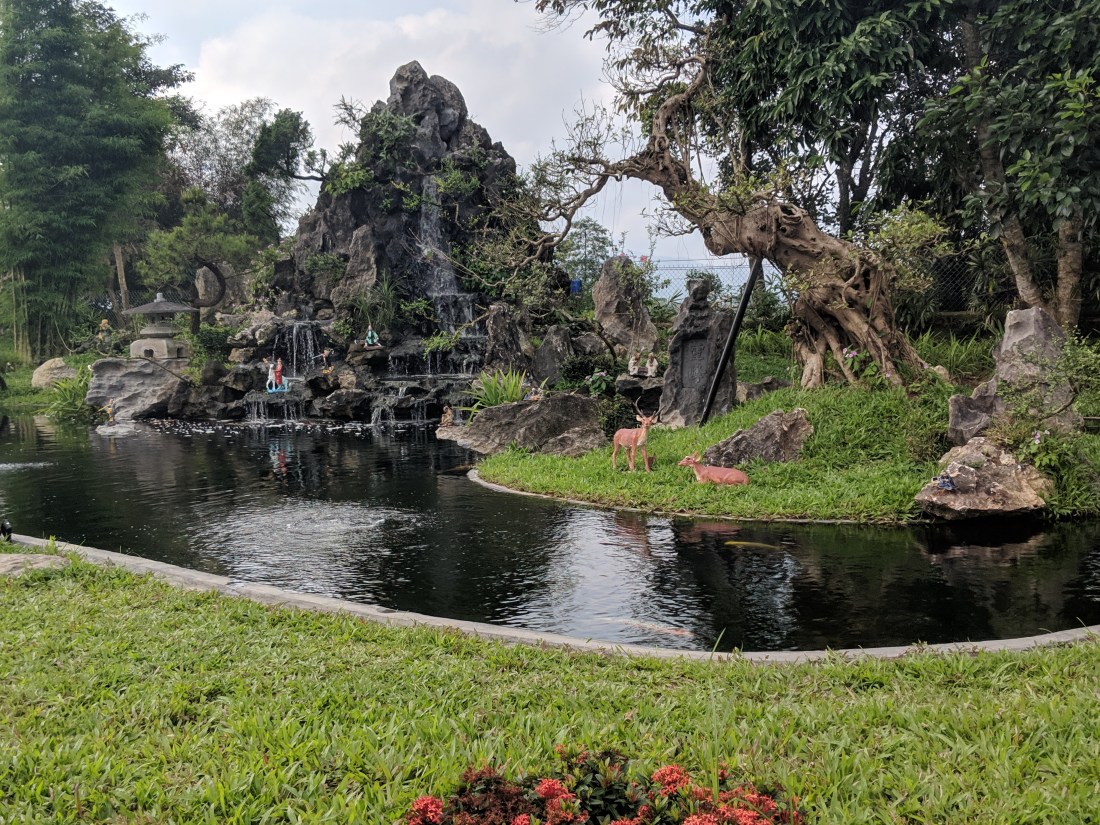
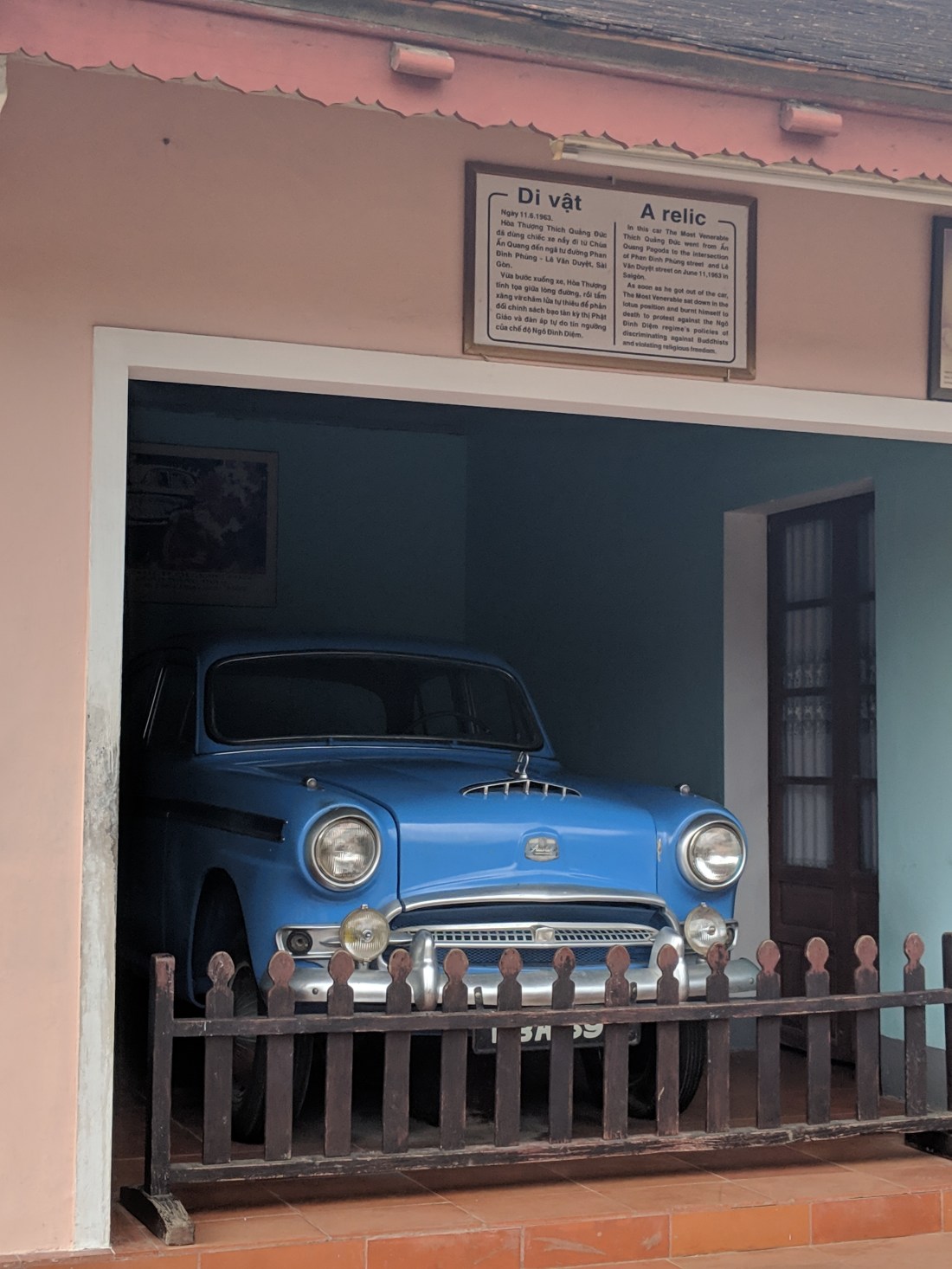
Thích Quảng Đức was a Vietnamese Mahayana Buddhist monk who self-immolated to death at a busy Saigon intersection on June 11, 1963. Quảng Đức was protesting the persecution of Buddhists by the South Vietnamese government led by Ngo Dinh Diem, a puppet catholic president chosen by the U.S. Đức drove this Austin from this pagoda to Saigon, and now it is memorialized here.
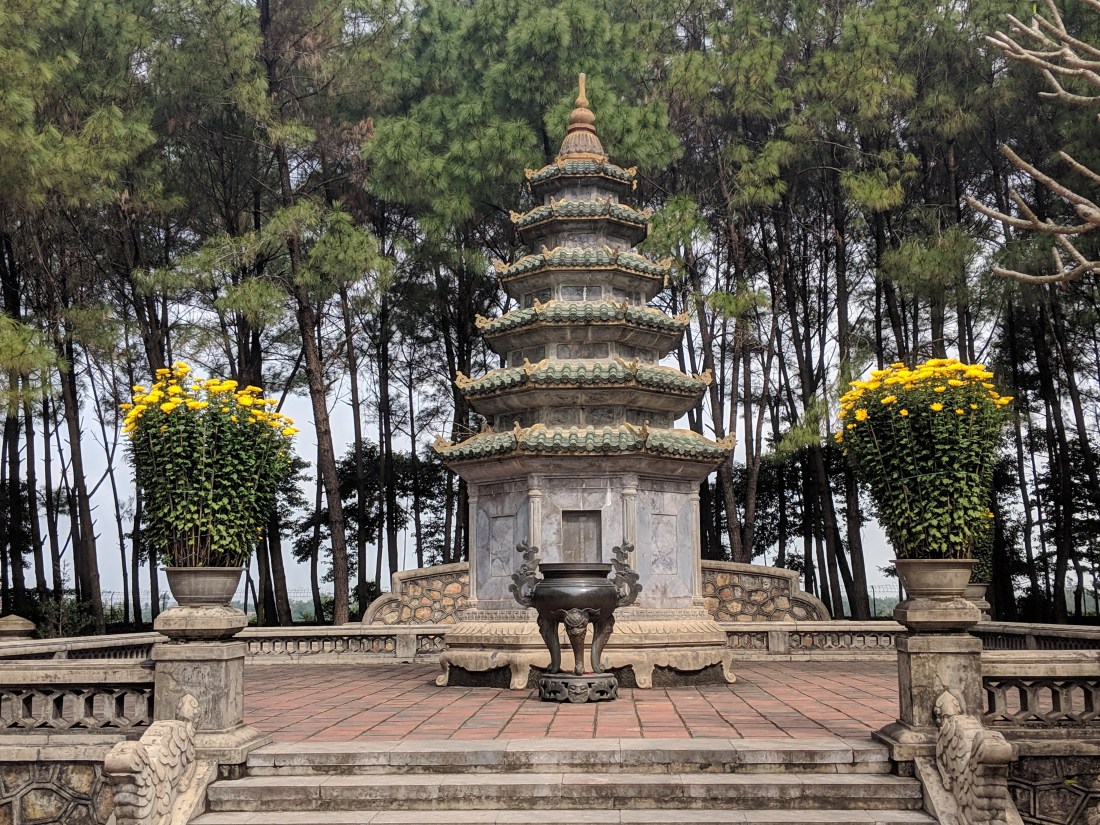
In 1904 a cyclone demolished much of the pagoda. The abbot who oversaw the reconstruction is enshrined in a stuppa at the end of the pagoda.
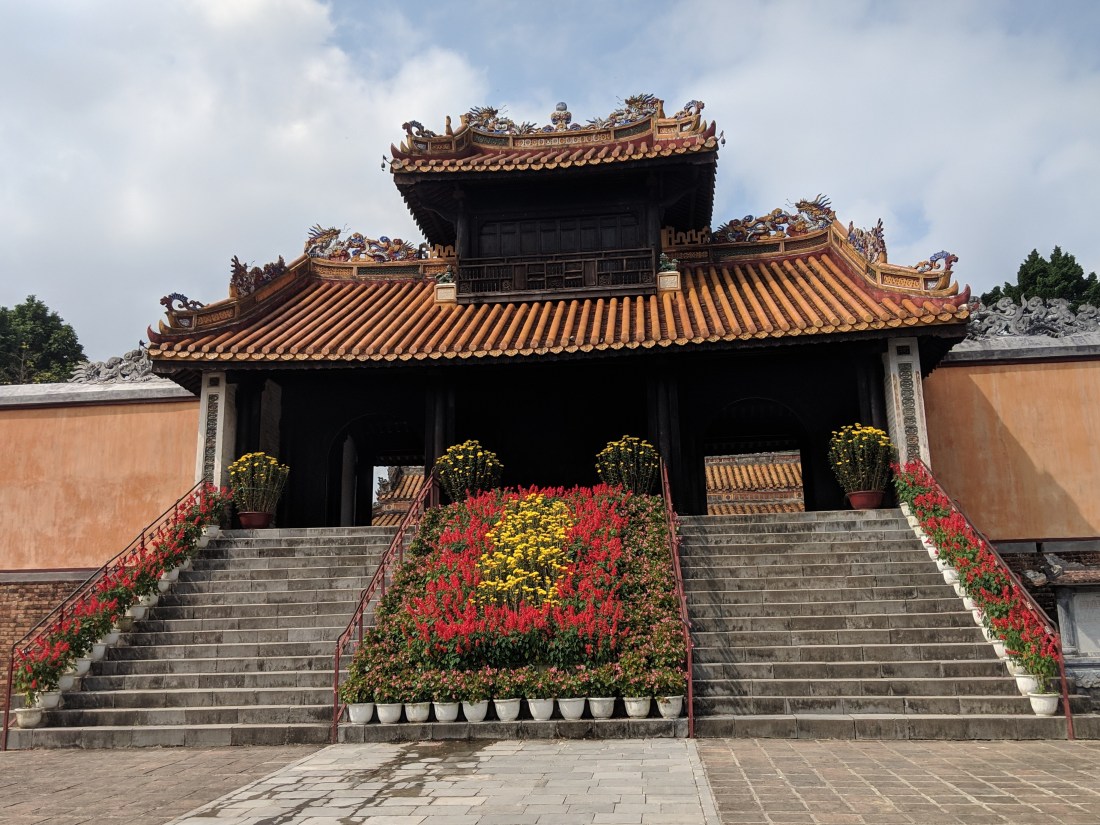
Next we visited the tomb of Tu Duc, the 4th emperor of the dynasty, built 1864-1867. He was a poet king with many concubines but no children of his own. He adopted 3 who then fought over the throne after his death, and killed each other off, weakening the empire and giving the French an entrance. The tomb was built in his life time, and used by him and his family as a summer palace until his death, when it then became a temple and tomb.

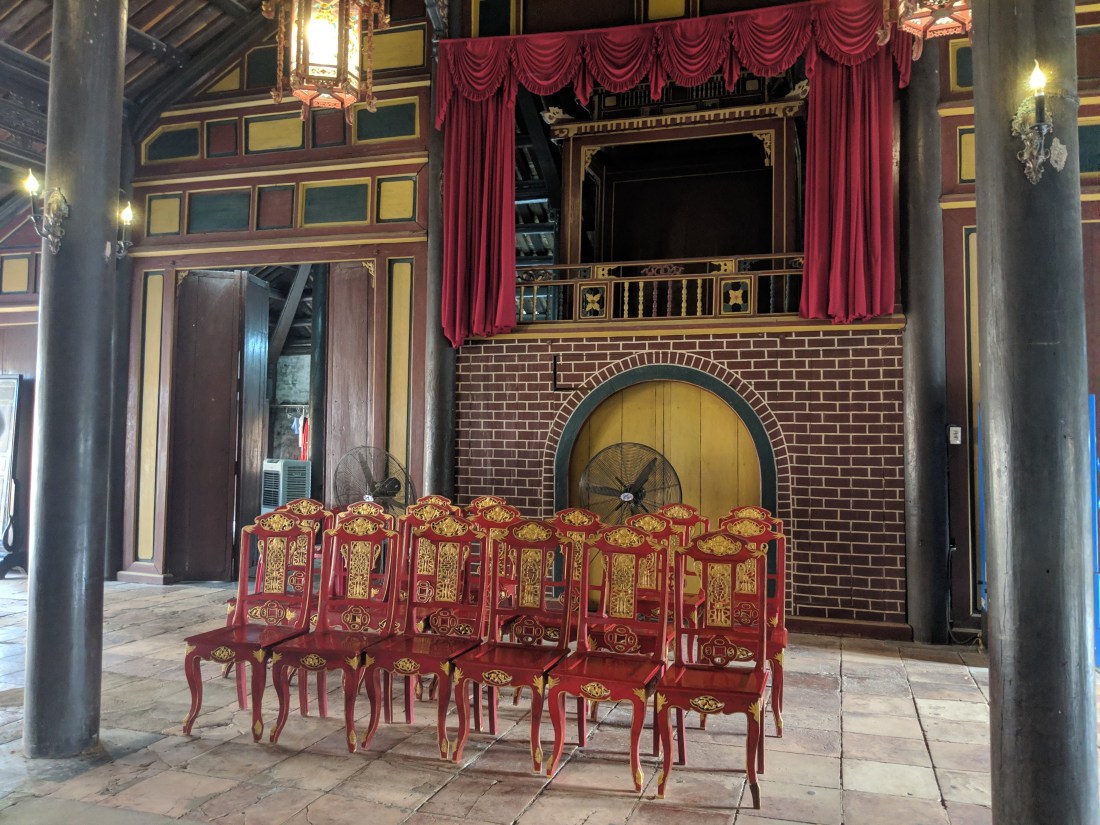
Inside was a theater for the family’s entertainment.


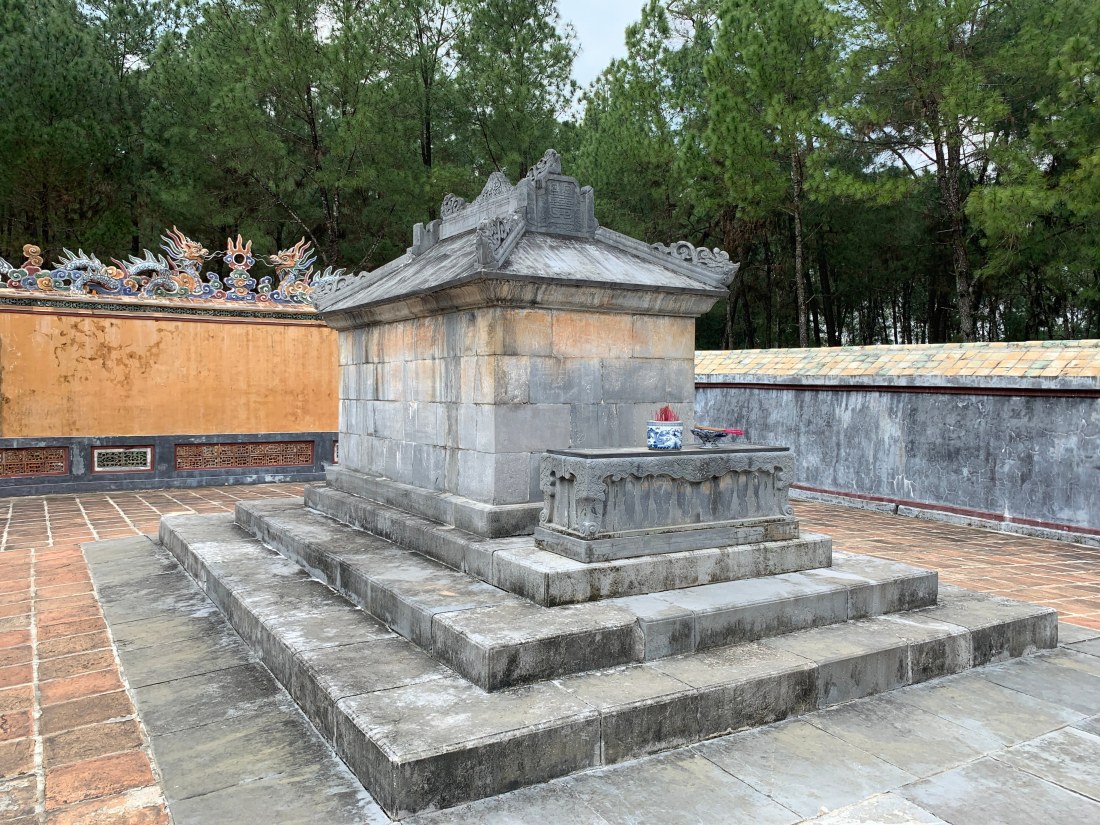
The emperor’s tomb: (there is one for the empress and one for their 3rd adopted son, his favorite, but they look mostly the same but smaller).
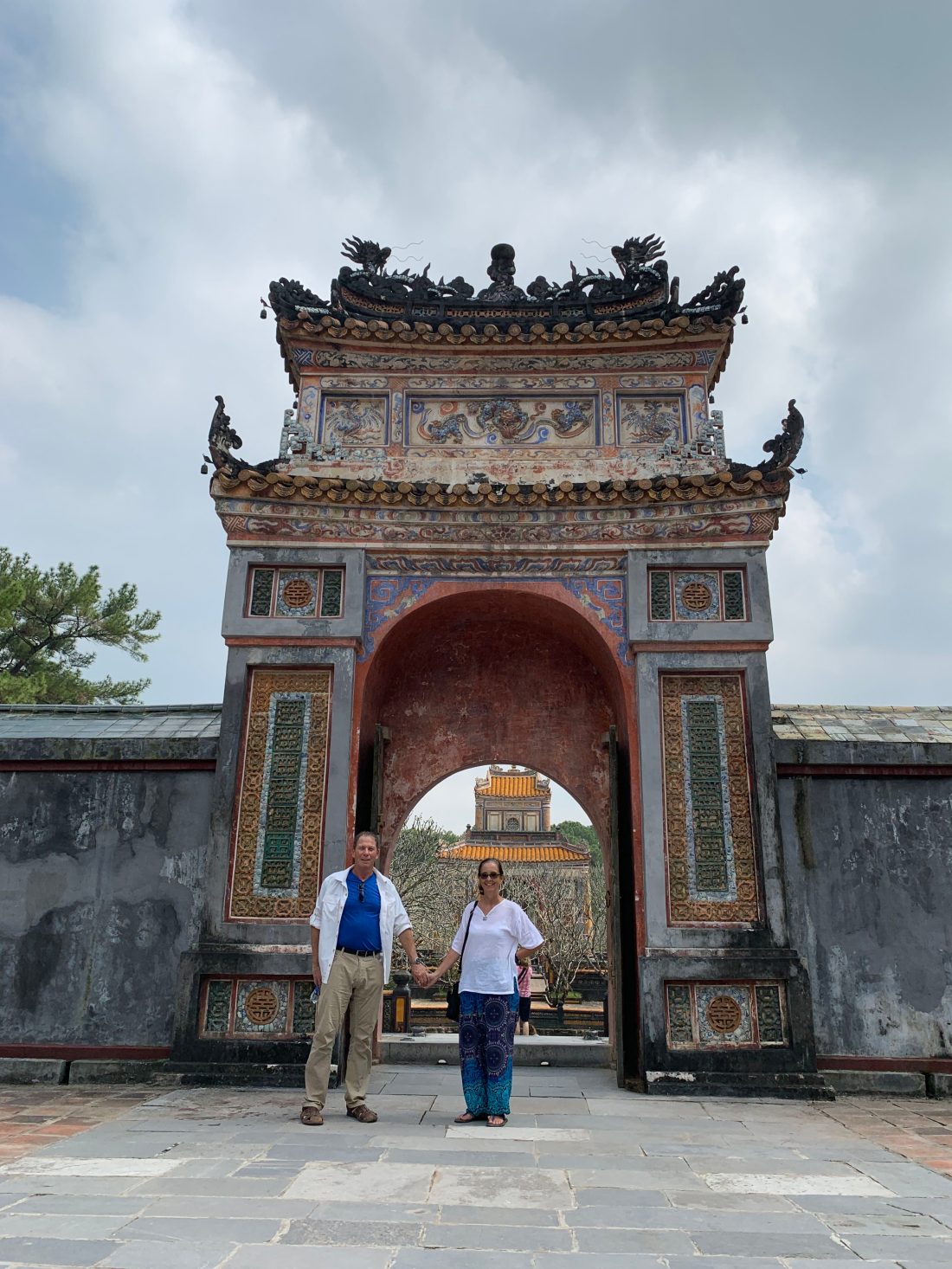

Finally, we visited the Tomb of Khai Dinh, the 12th emperor of the Nguyen dynasty, built from 1920-1931. He was the last emperor to be buried in Vietnam. It is a blend of Eastern and Western styles, he being a puppet king of the French.

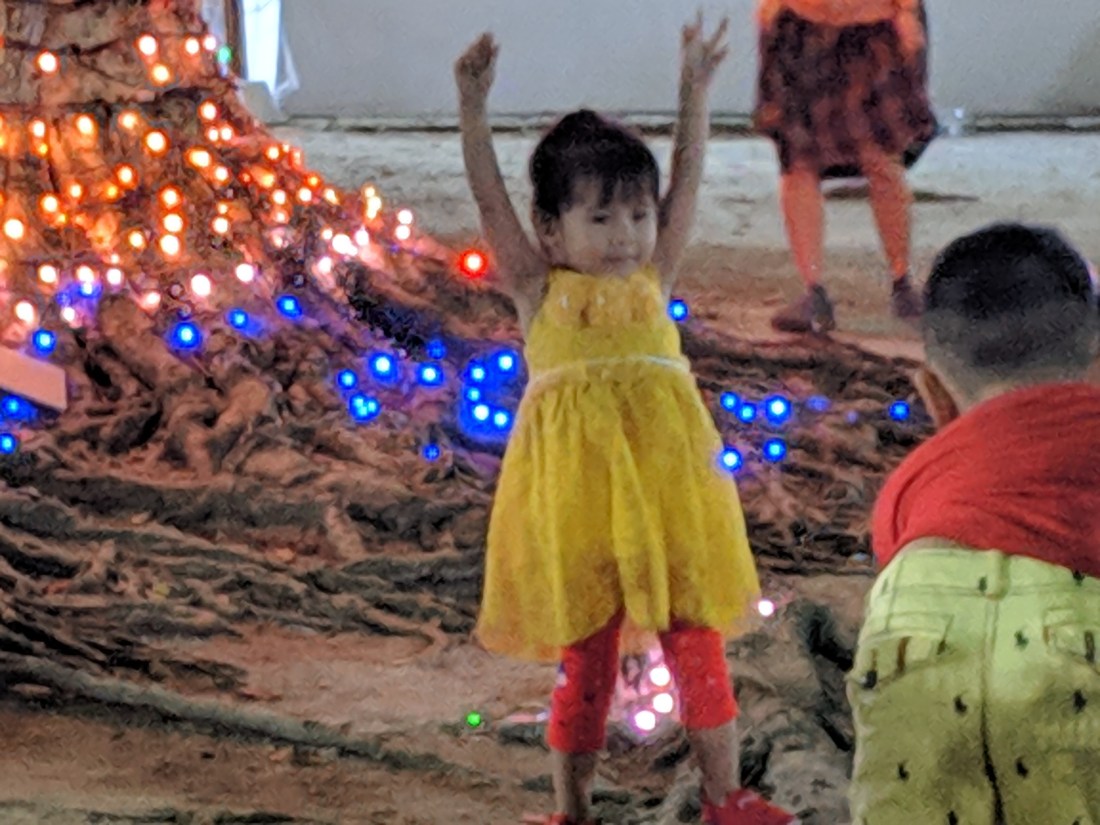
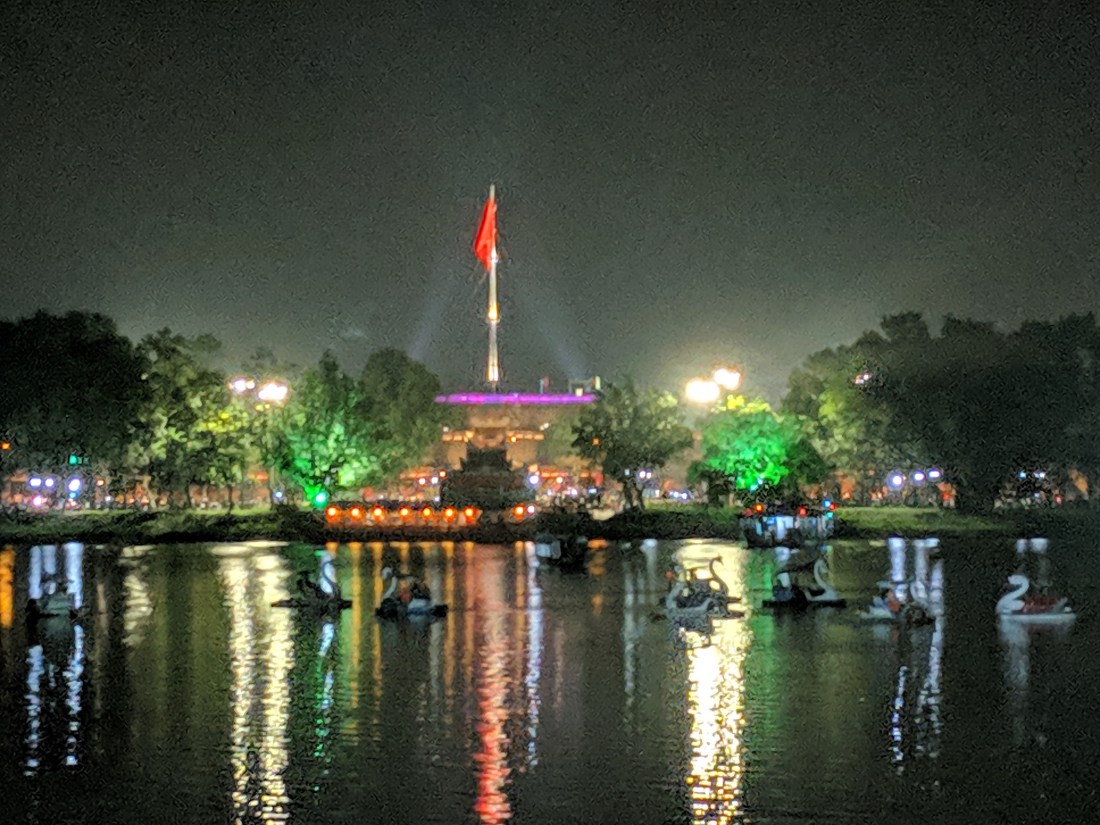
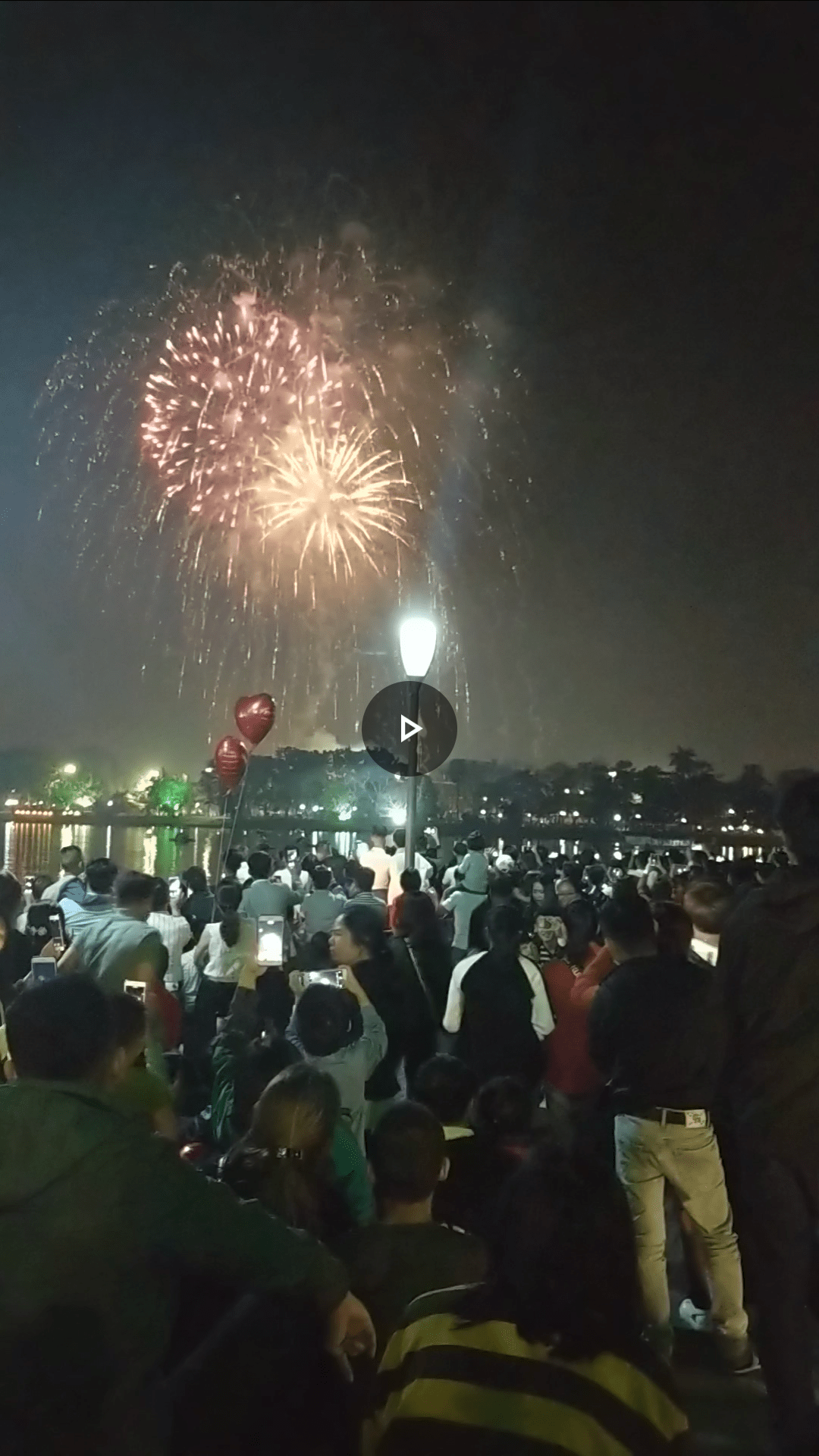
We then went back and rested up for the big events of the night. Later, after another great meal of local cuisine, we headed to the river to joining the rest of Hue in celebrating the arrival of the new year! I particularly loved the children in their finest.

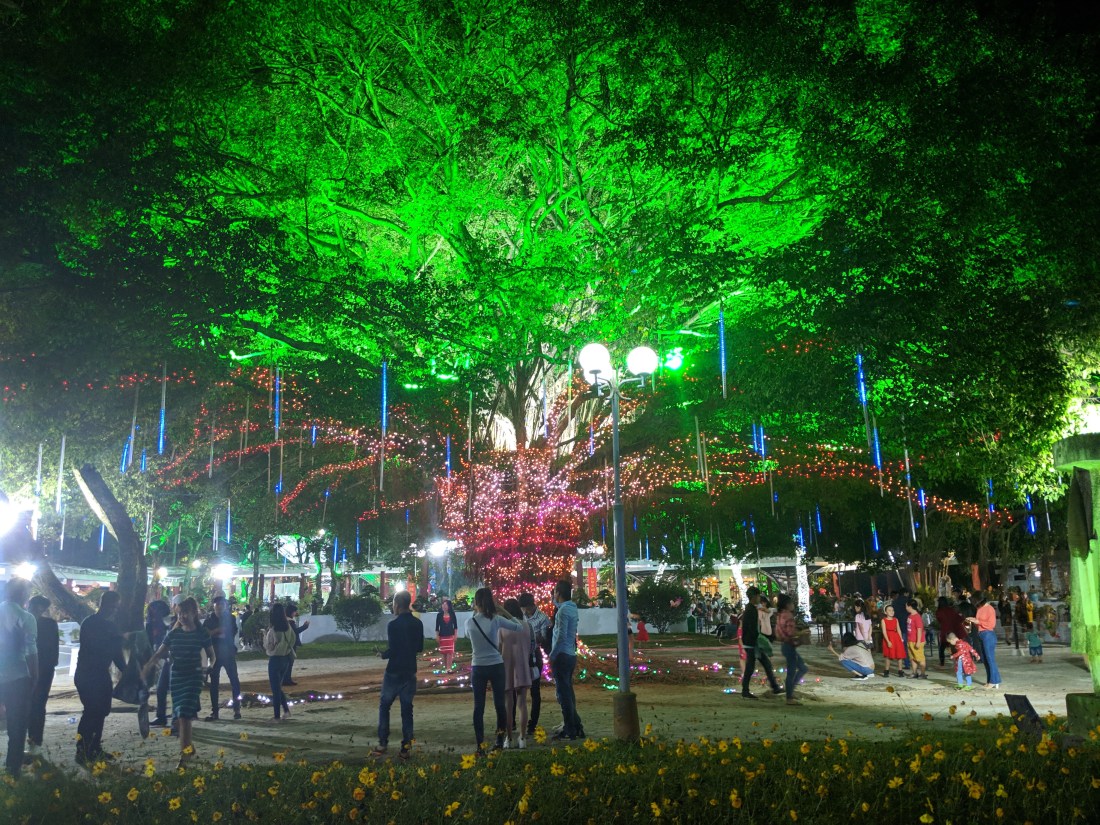

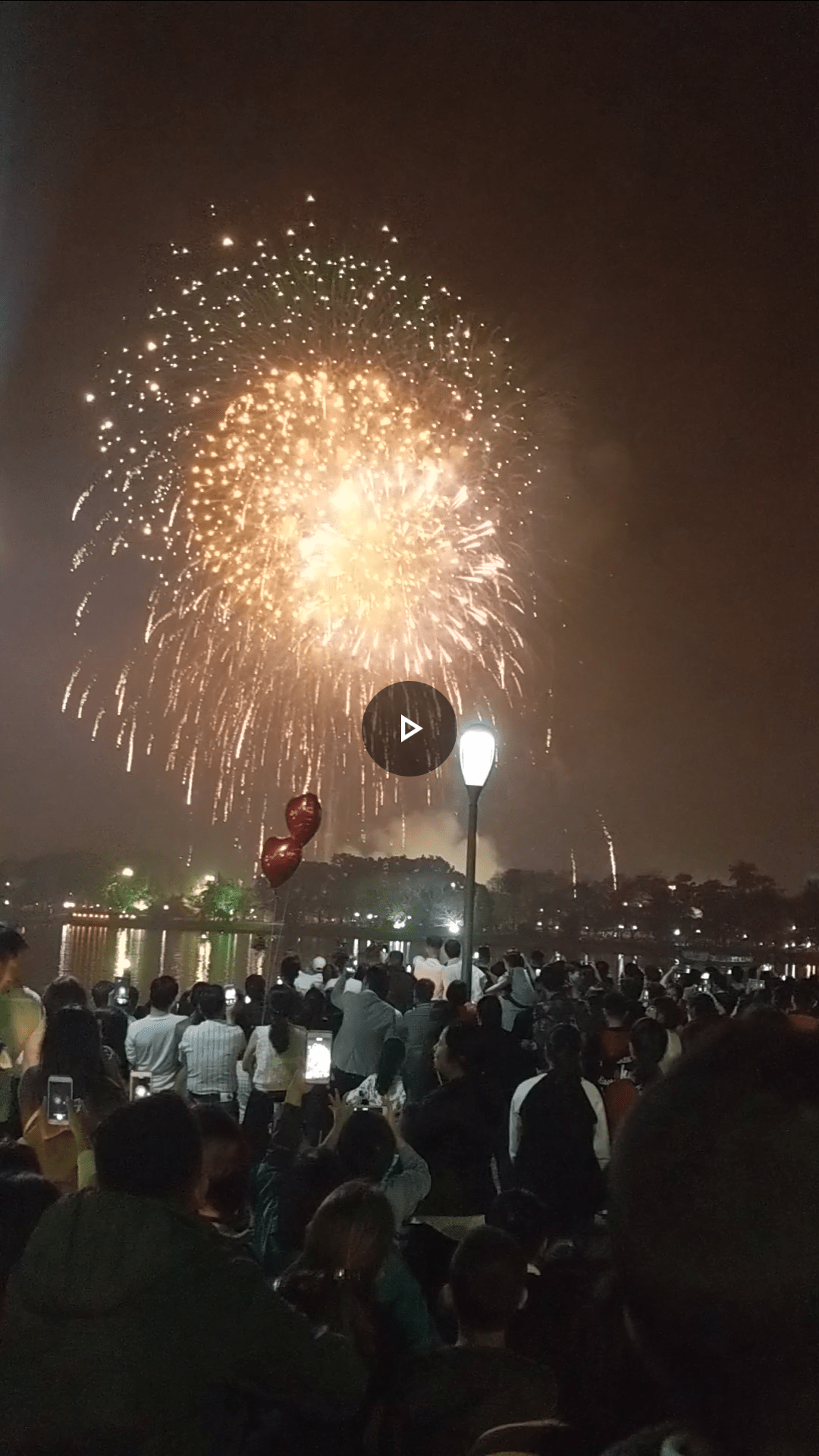
Chúc Mừng Năm Mới – Happy New Year!!!
 Jo & Eric's travels