
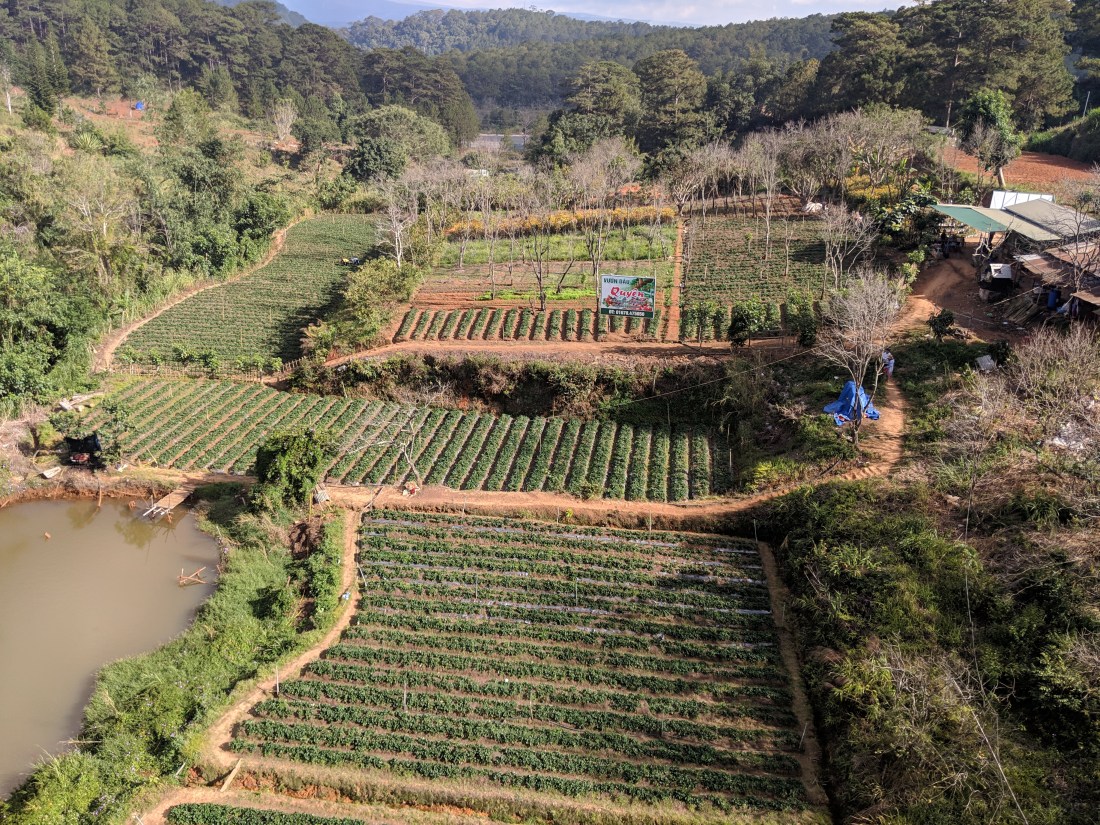
Dalat is located in the southern part of the Central Highlands region of Vietnam at an altitude of nearly 5,000 ft. Its climate is cool compared to most of the rest of the tropical country, making it perfect conditions for the many pines that dominate the landscape as well as numerous flowers and vegetables. It is known as both the food and flower capitol of the country as well as the most popular honeymoon spot. It is a huge tourist destination for Vietnamese, but not a large Western tourist destination due to its relative inaccessibility, which is a shame, because it is absolutely beautiful. It was originally settled and developed by the French at the turn of the twentieth century as a resort area. They built villas on wide boulevards with parks, schools, and even golf courses, which are rare in SE Asia.
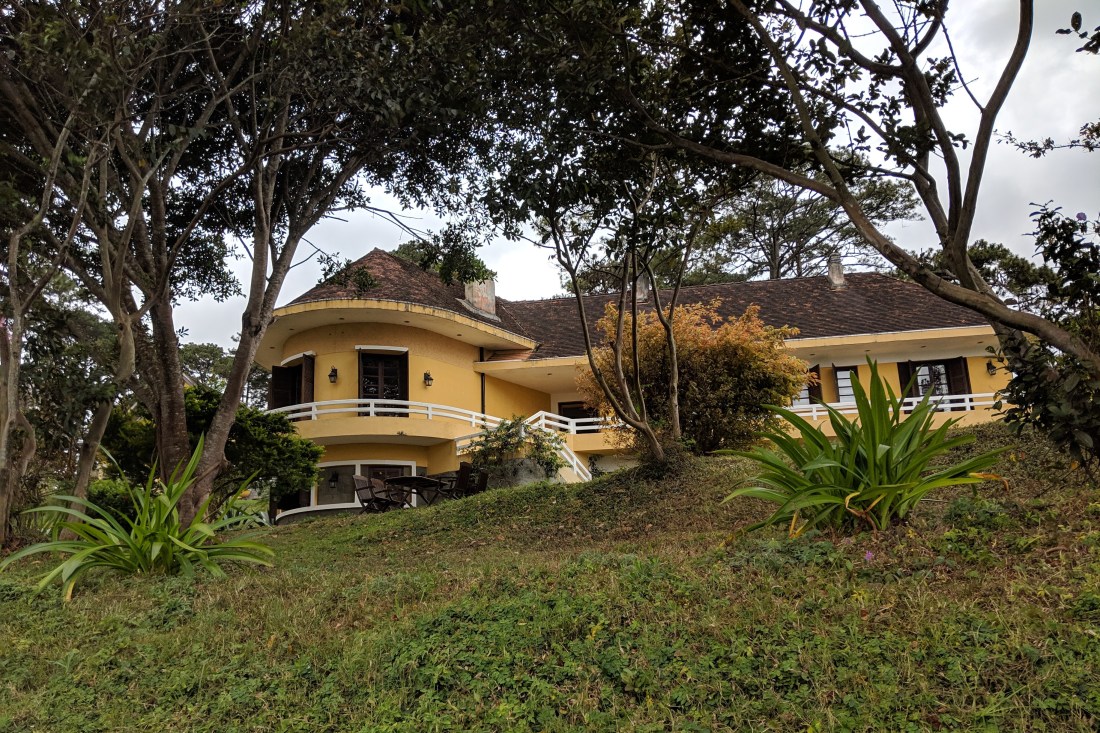
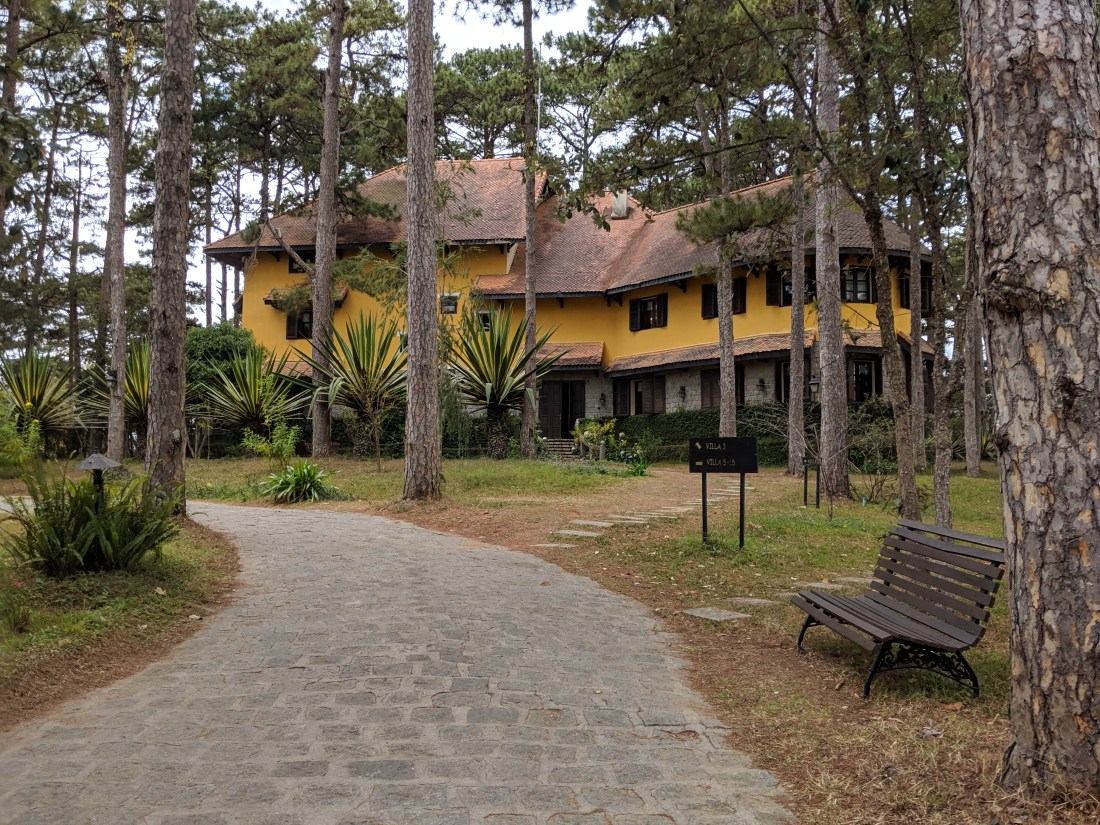
We stayed in a villa at a resort that took 17 existing villas that had once been a small French community, and restored them into absolutely stunning suites preserving their original charm while adding modern amenities.
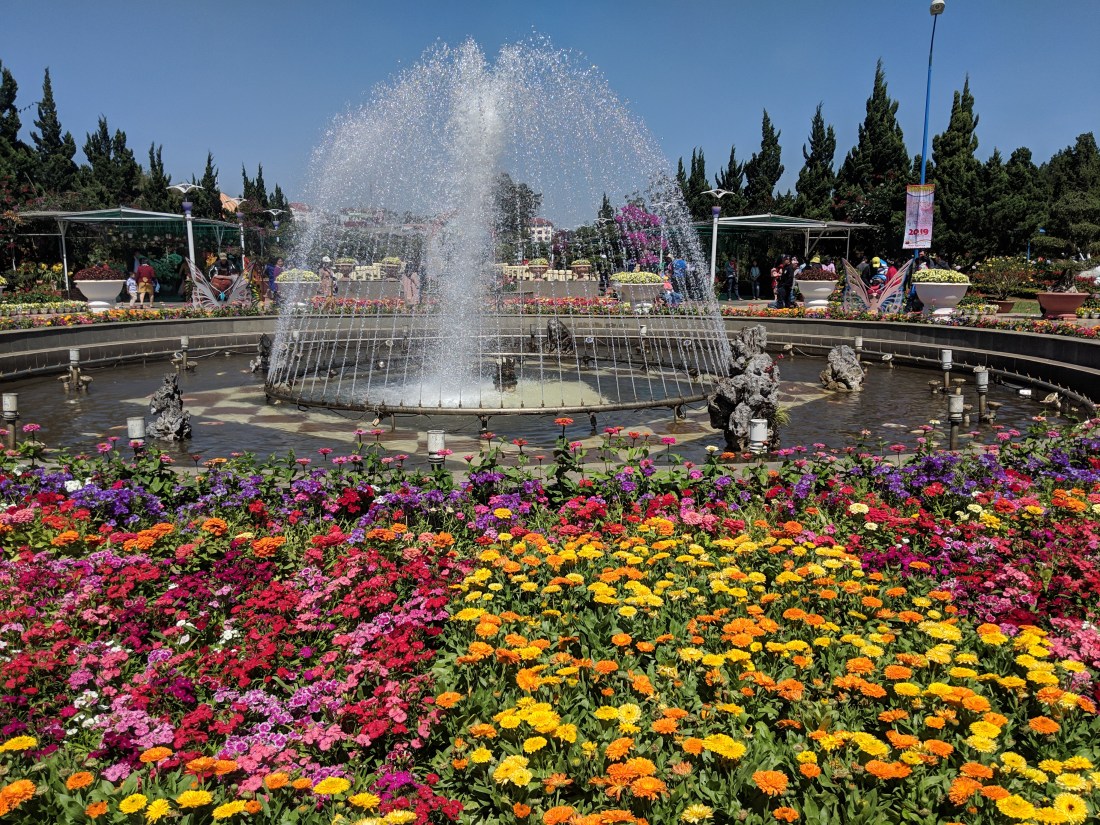
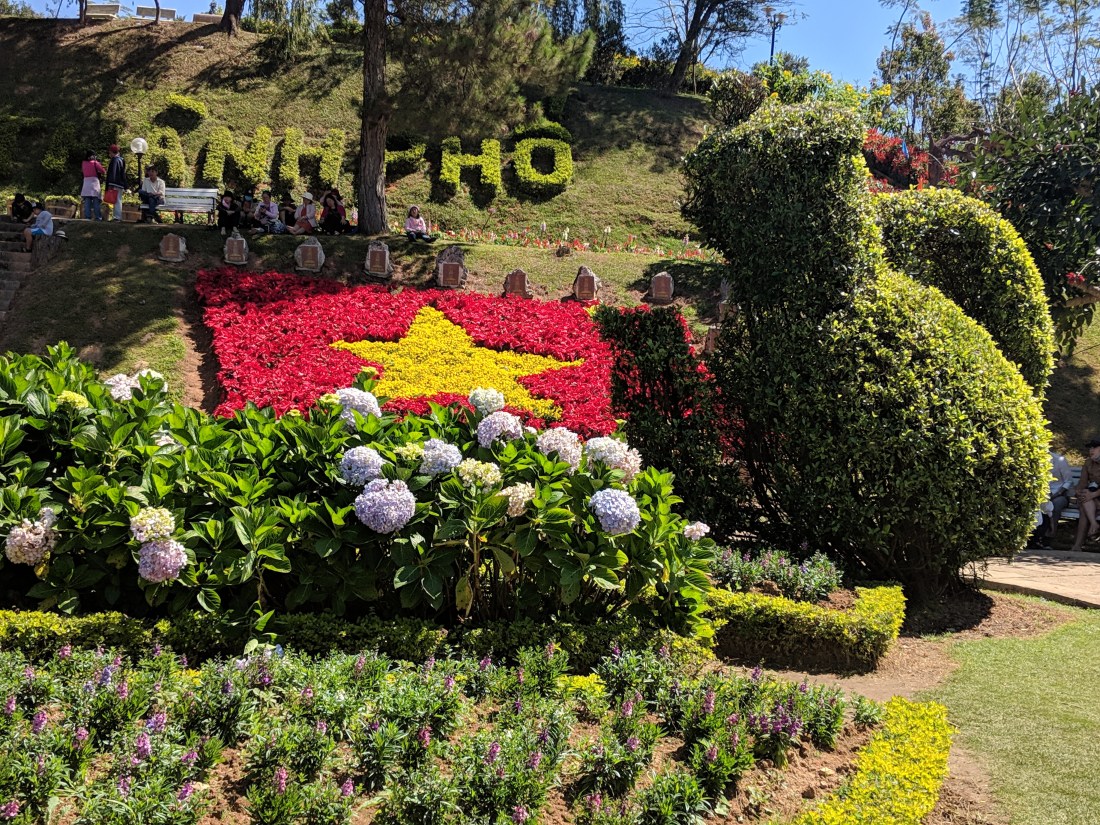
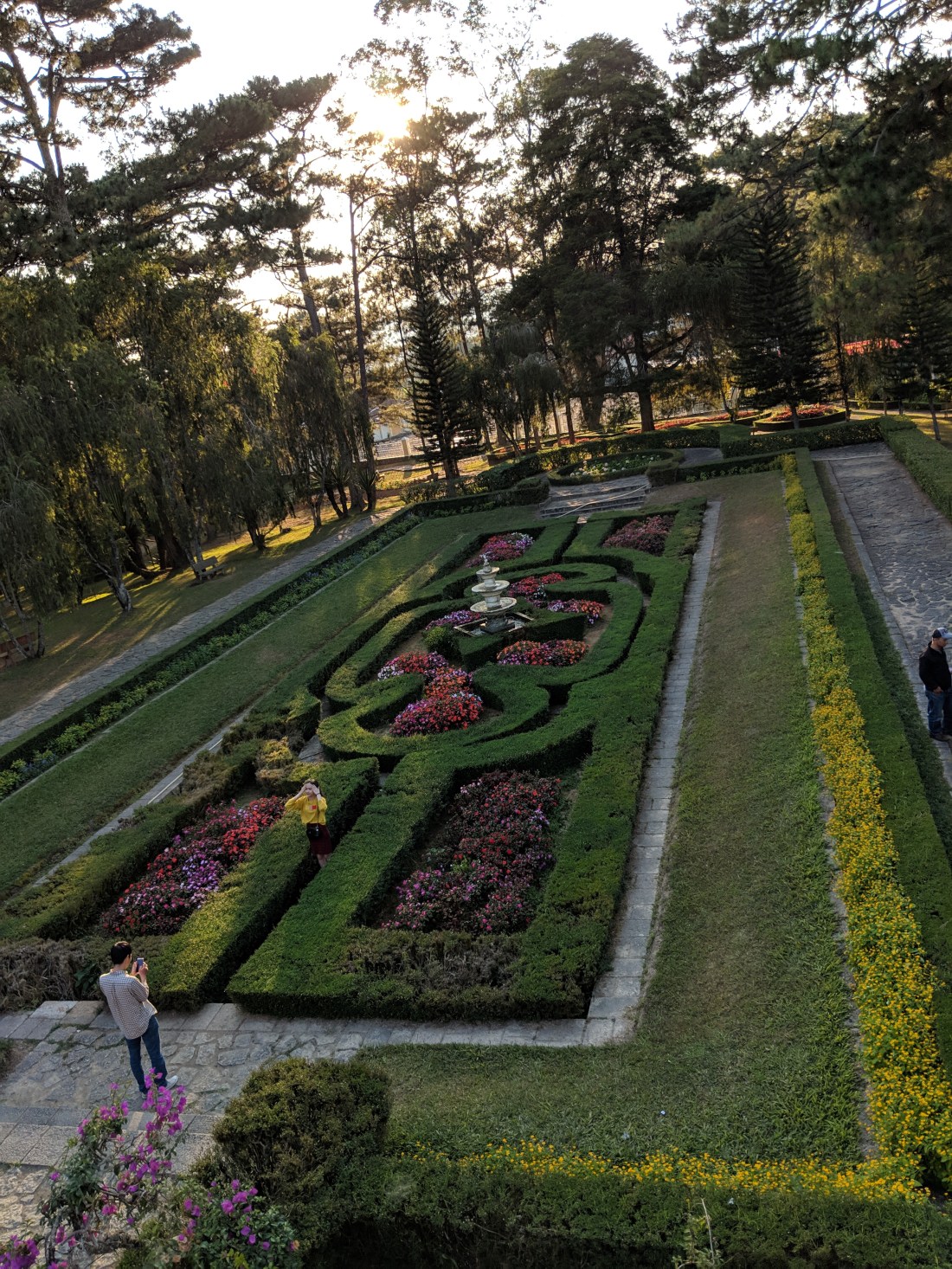
Our first morning we ventured out on foot and visited the market, Xuan Huong Lake, a manmade lake that dominates the center of Dalat, and the Dalat Flower Gardens.


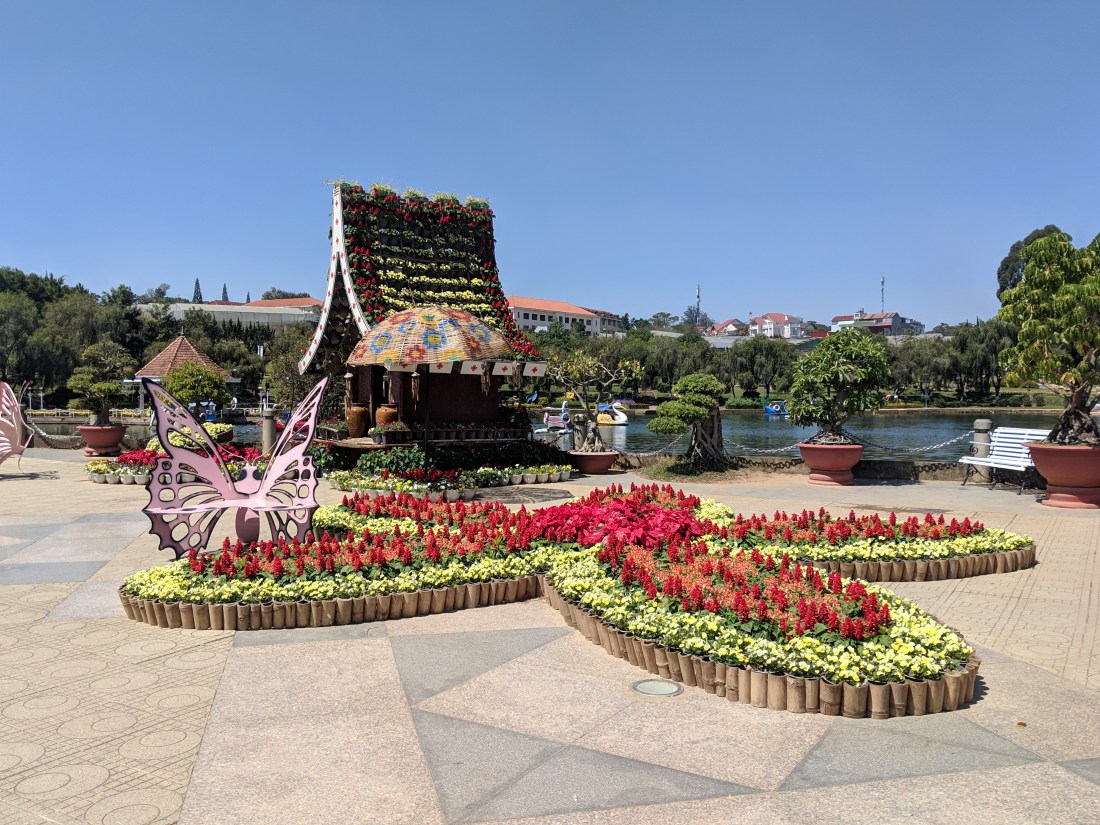

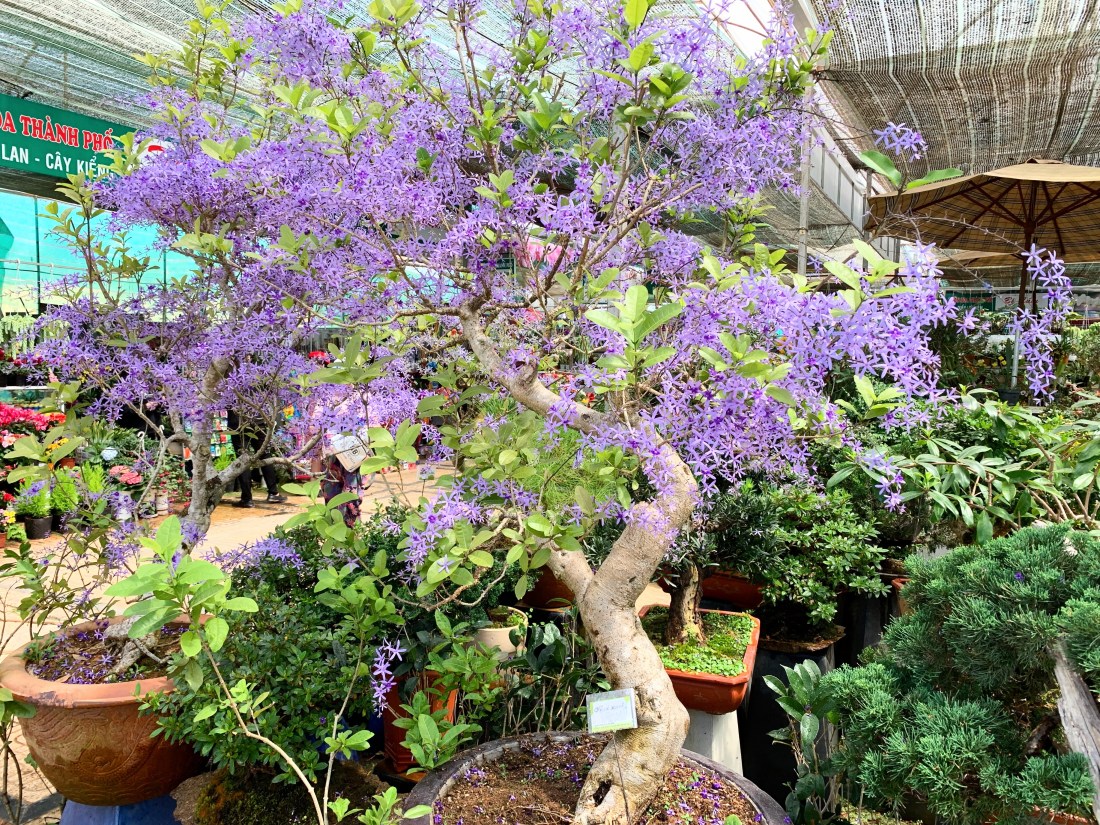
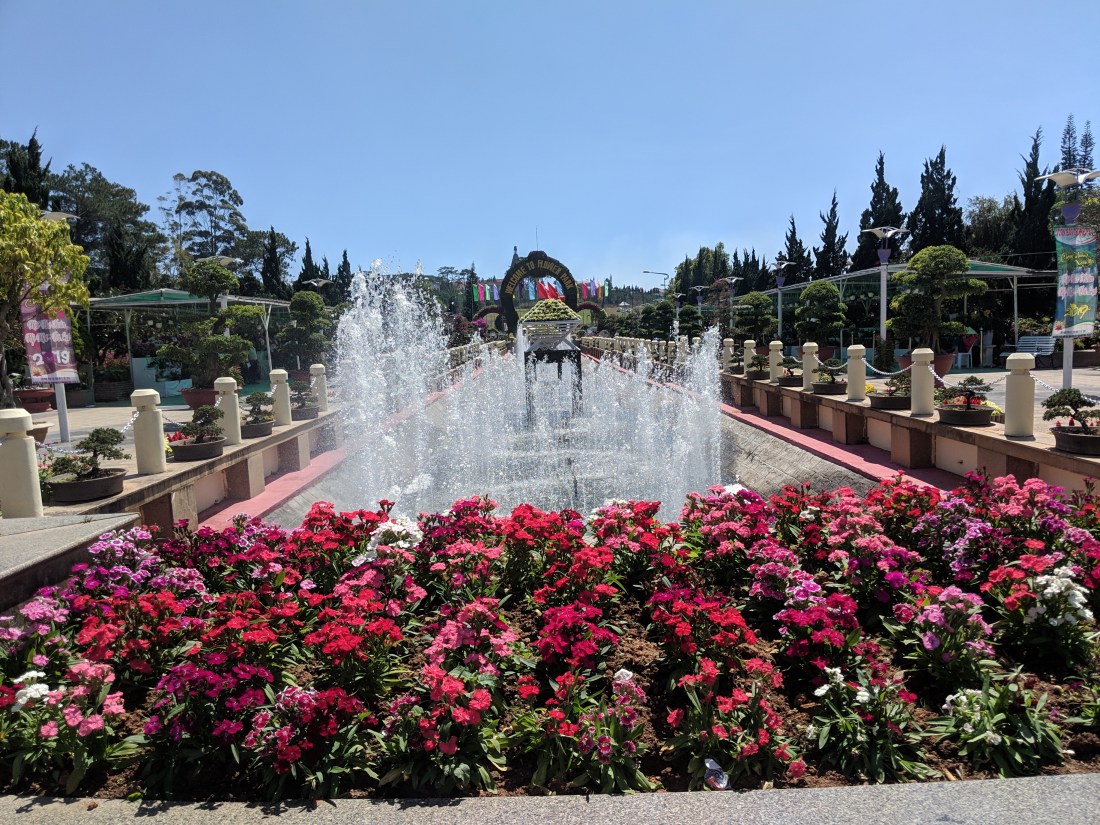
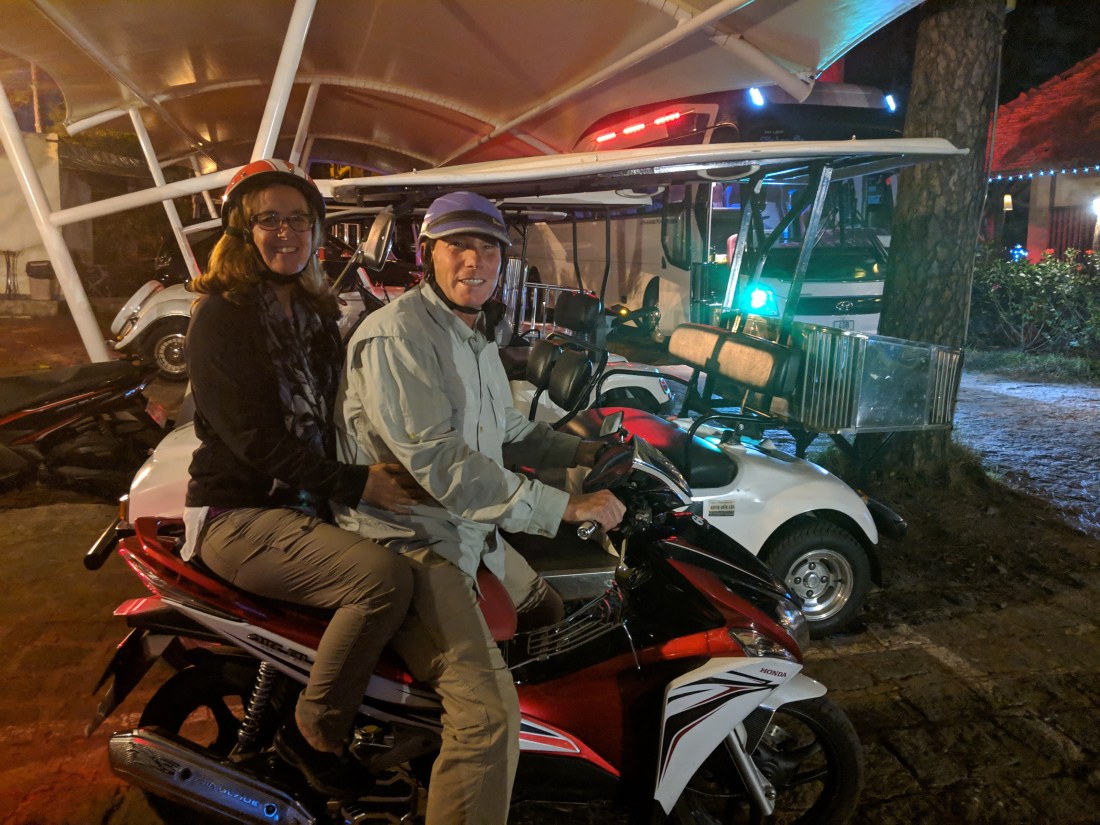
But we quickly realized that this town is way too spread out to cover on foot. So we broke down and rented a motorbike, which Eric had been yearning for since we arrived in SE Asia, I resisting. As Eric adjusted to driving the bike, we first visited sites that were close, so also some of the more touristy.
First stop was the giant Golden Buddha sitting high on the hill with great views of Dalat below. He is part of a monastery that is also quite interesting inside the temple with its multiple stained glass and ceramic mosaics.


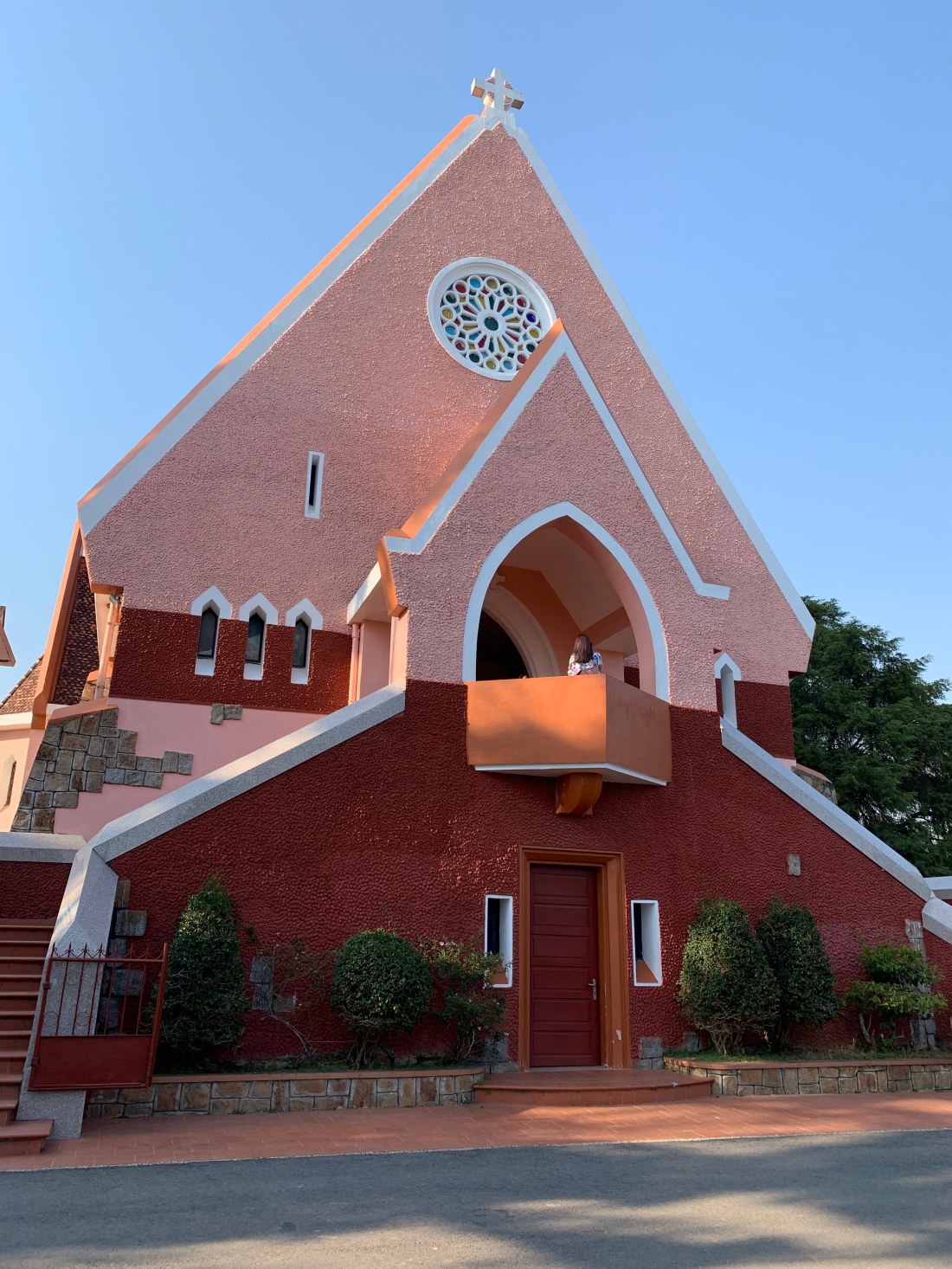
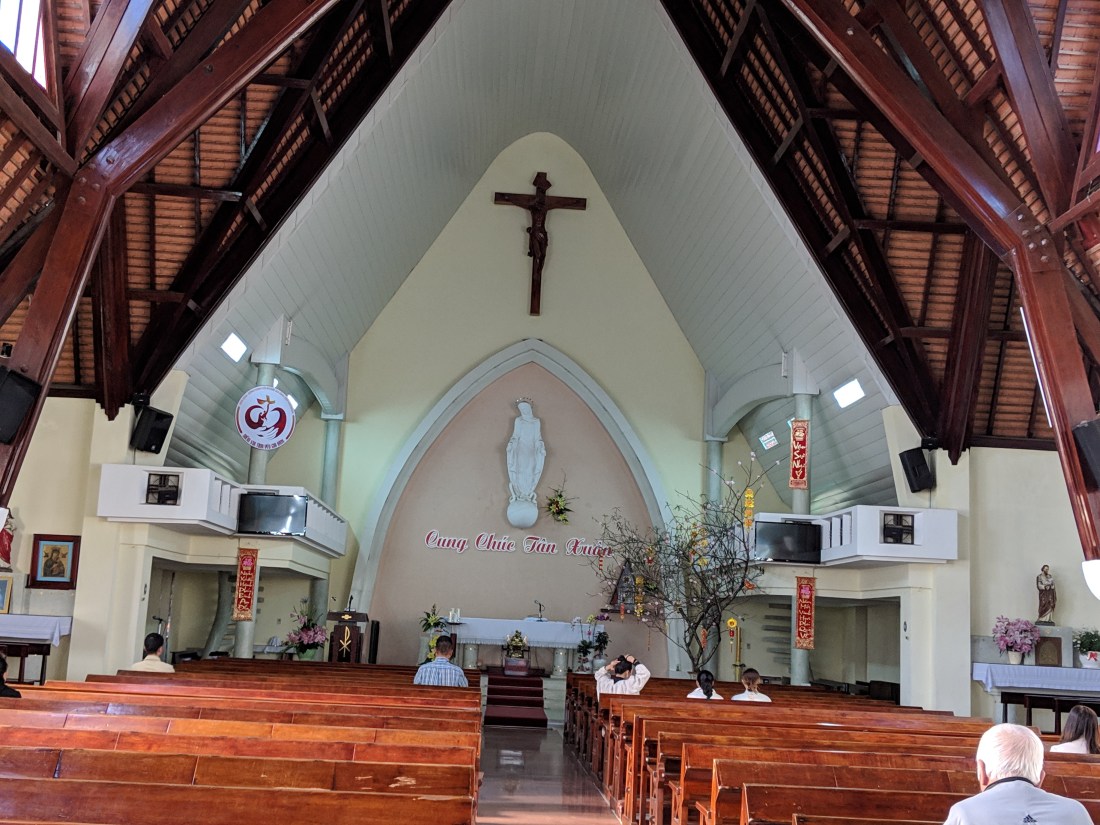
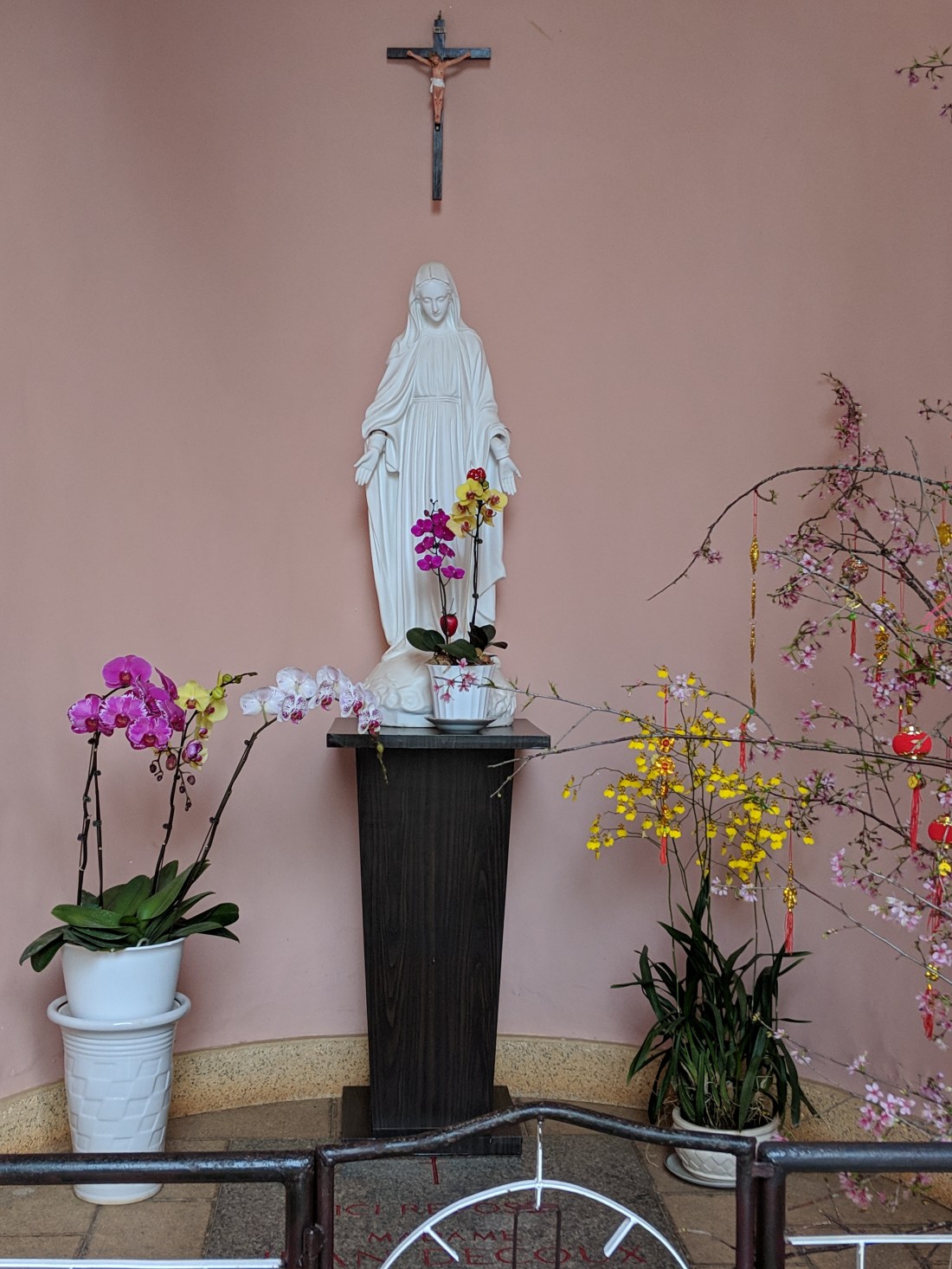
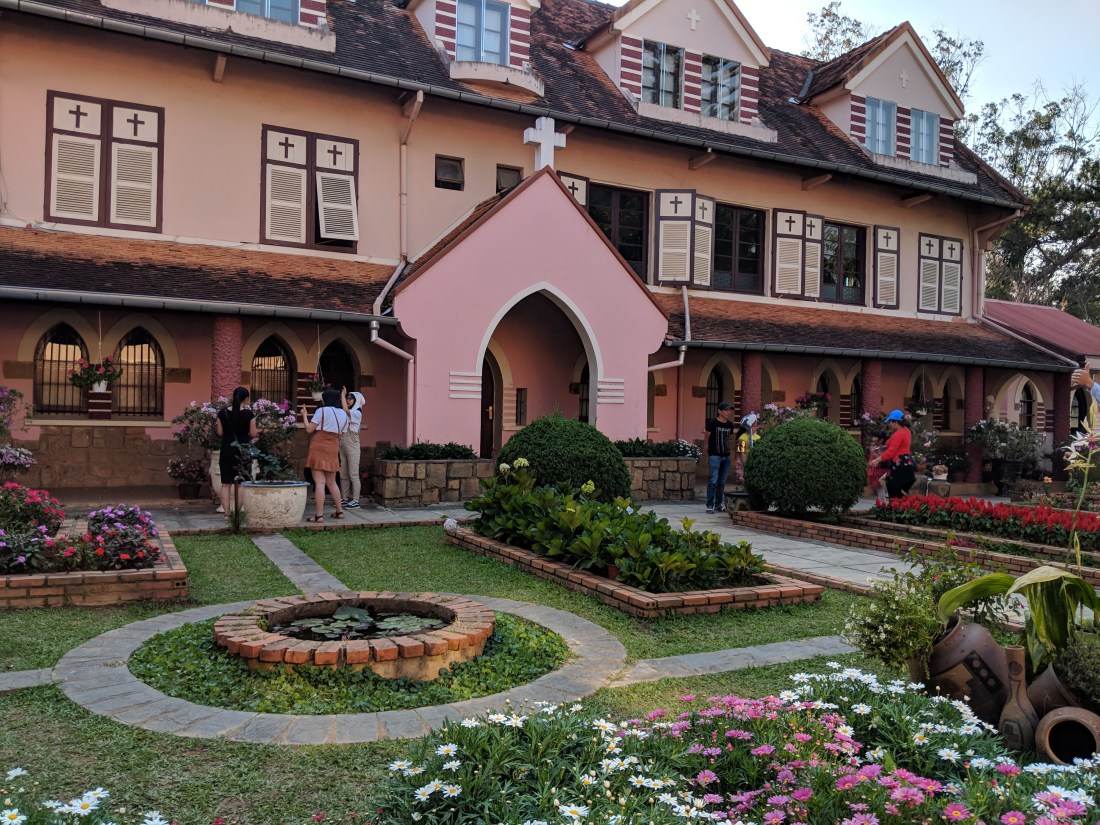
Next stop was the Domaine de Marie, a catholic church built in 1938 and contains both a nunnery and a school for children. Its significance is its color and its pointed roof style that was typical of the Cao Nguyen communal buildings in the Central Highlands.
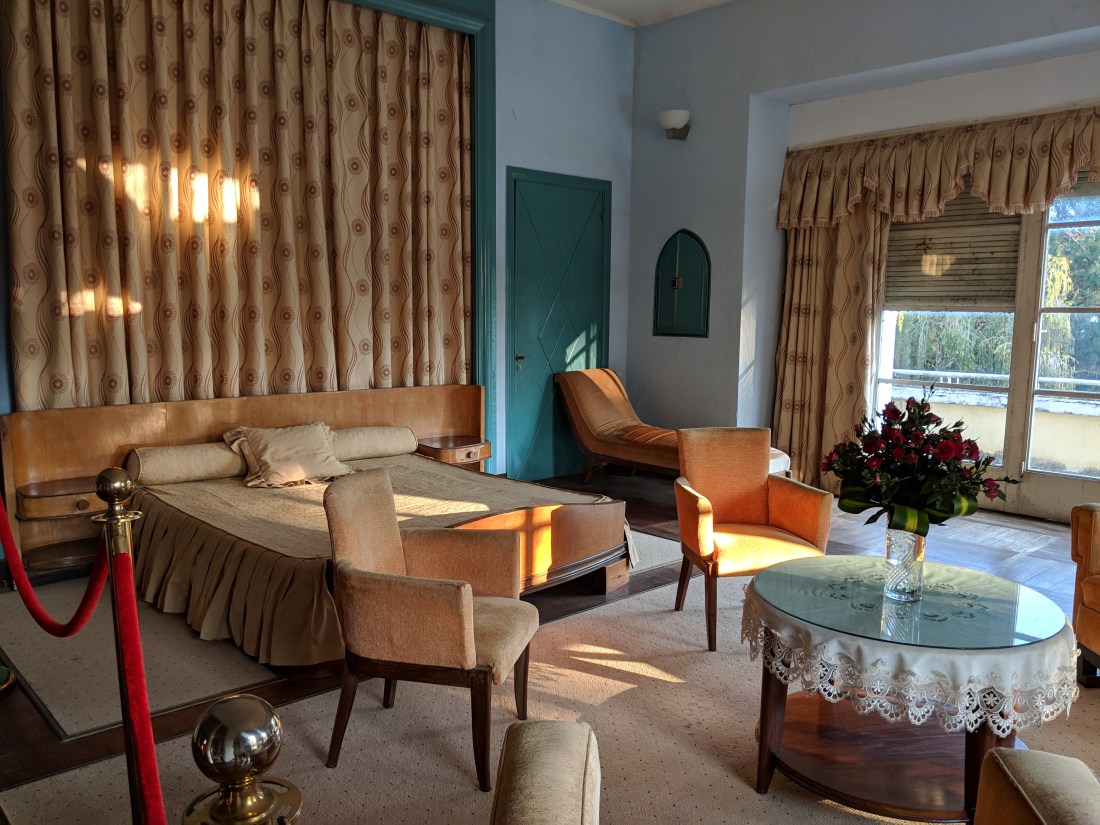
Then it was on to the summer palace of the last emperor Bao Dai and his family built in 1933-38 in the French colonial style with gardens in both the front and the back.

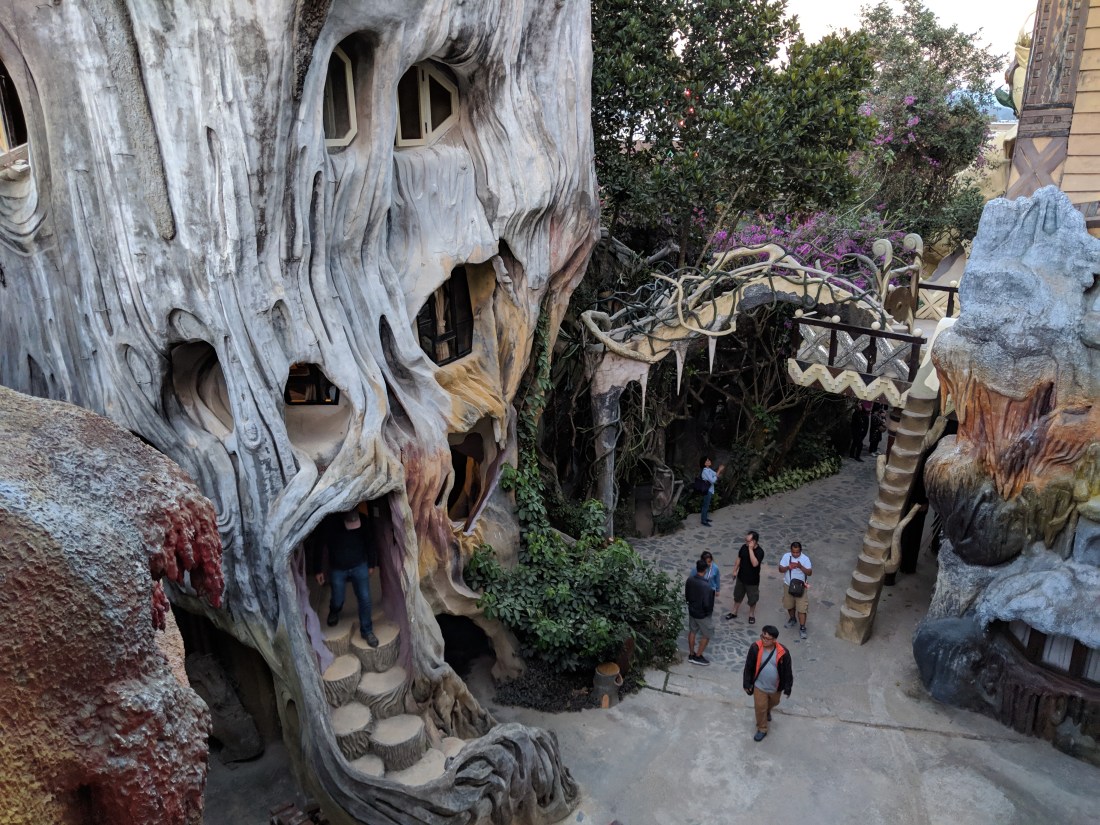
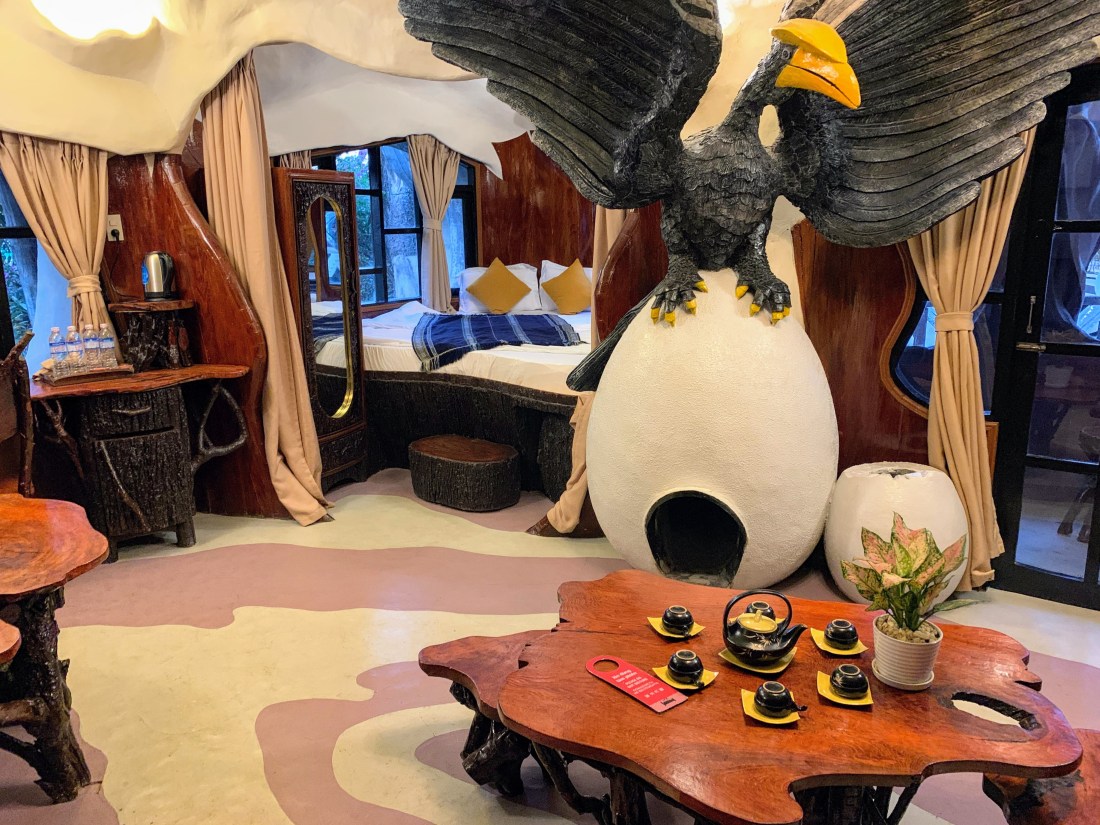
Then we drove to Crazy House, a guest house designed by Vietnamese architect Dang Viet Nga, who claims that his inspiration was Catalan architect Gaudi. Its overall design is to look like a giant banyan tree.


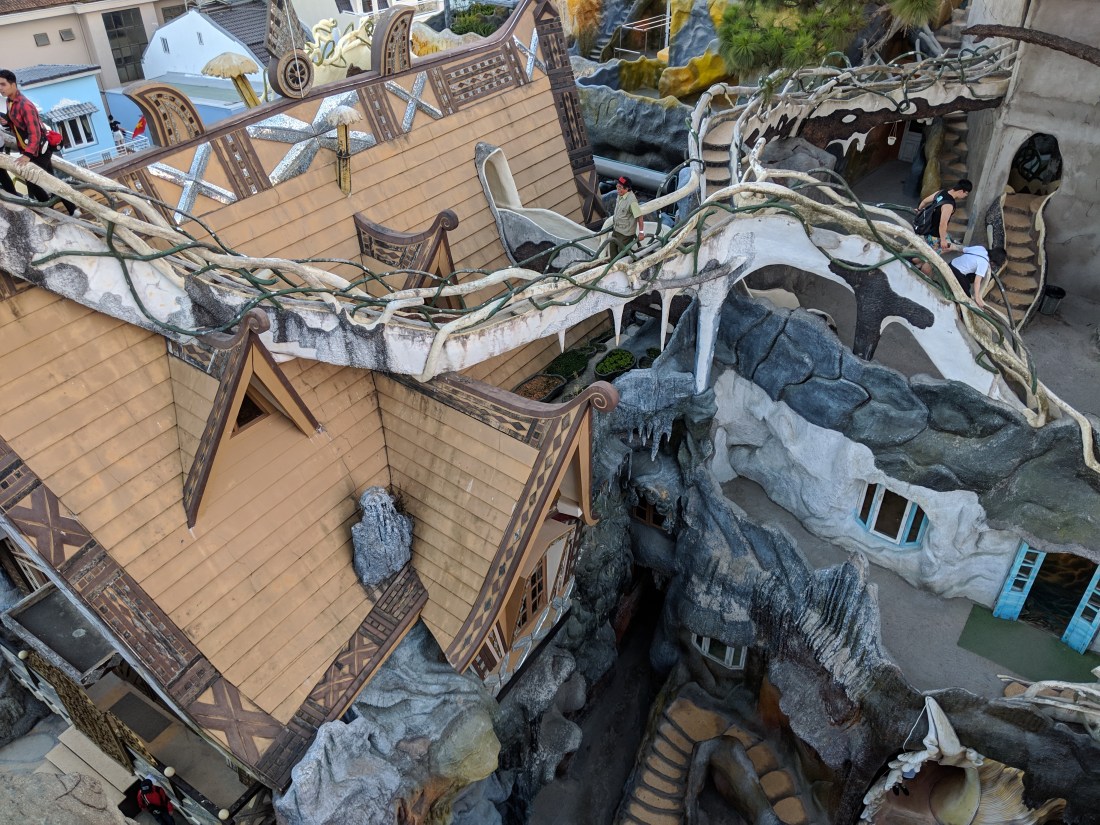
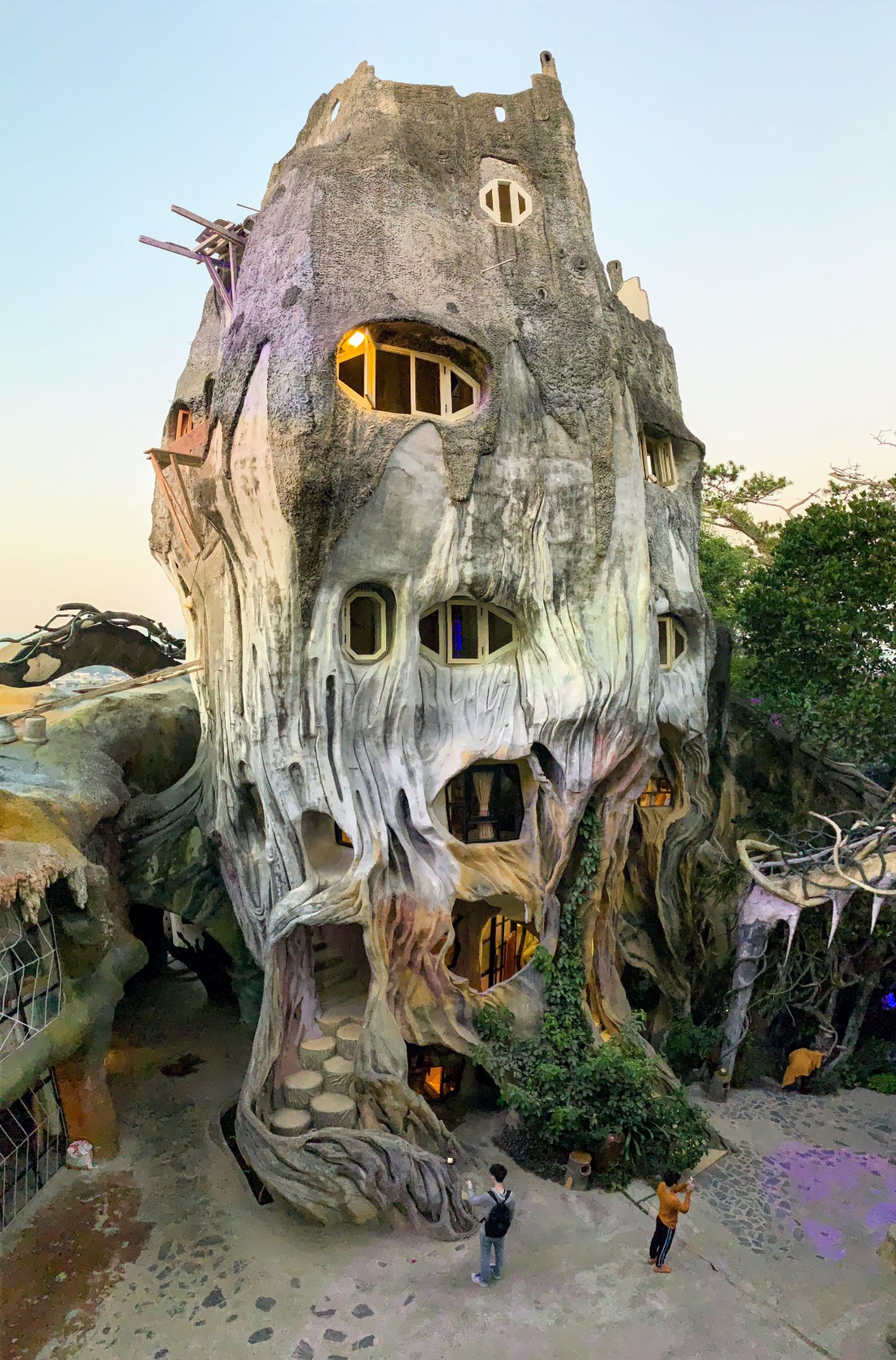
We then had one of our most delicious meals yet. In the morning we were ready to venture a bit further on the bike. We drove over to the Dalat train station. It was built in 1932-38 by the same french architects as the pink church. But in addition to the Cao Nguyen high pointed roof, it incorporates 3 gables and stained glass of the art deco french style of the time.
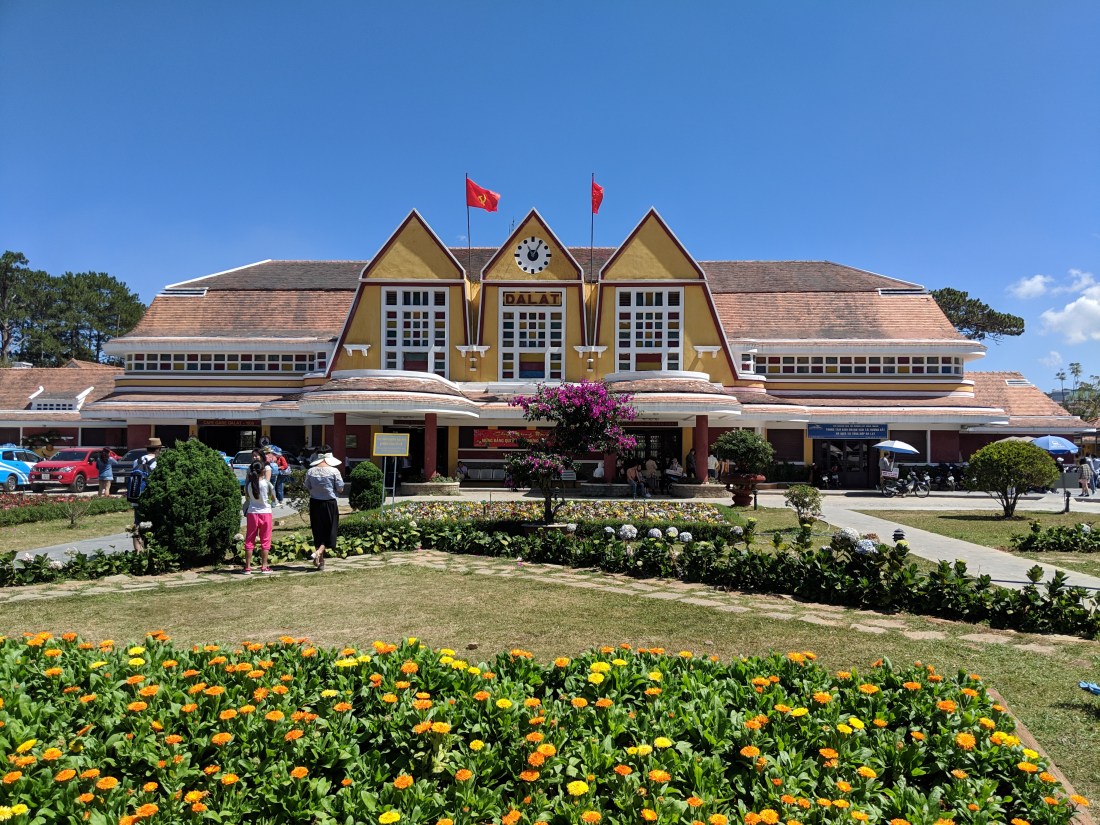

The station is currently used only for a tourist round trip on vintage trains to Trai Mat, passing the incredible gardens of the area on the way.
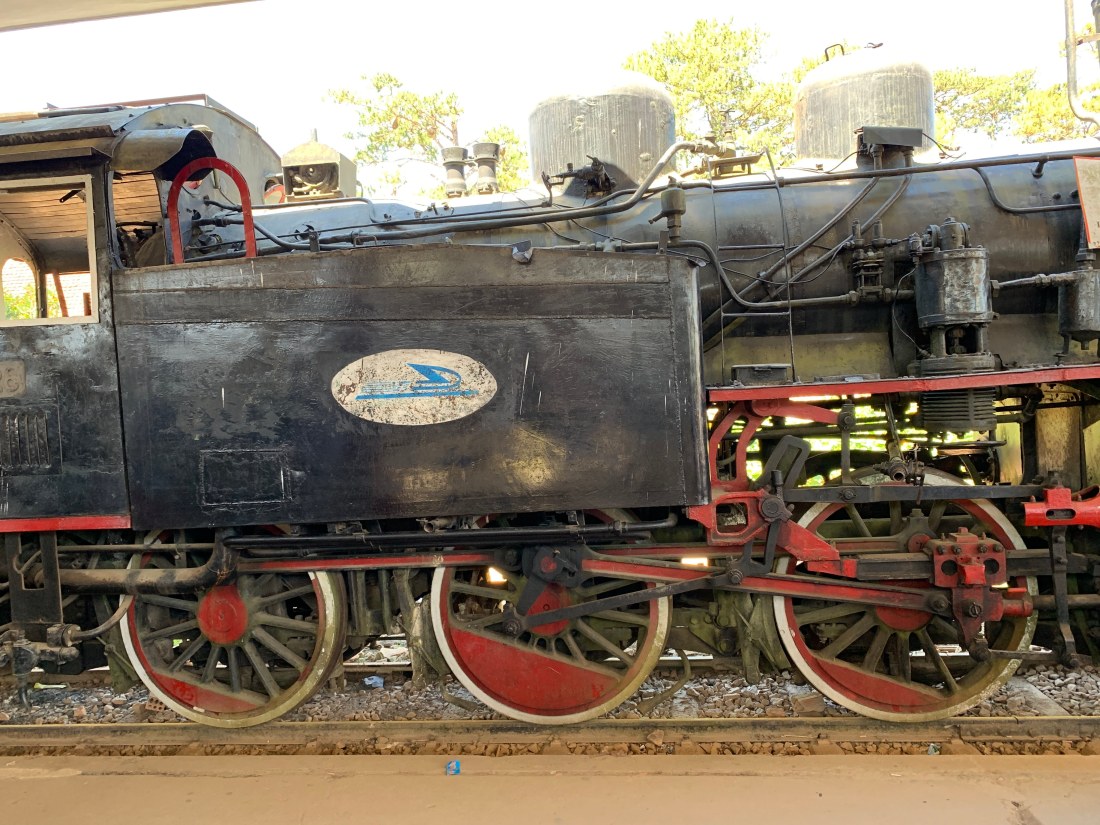
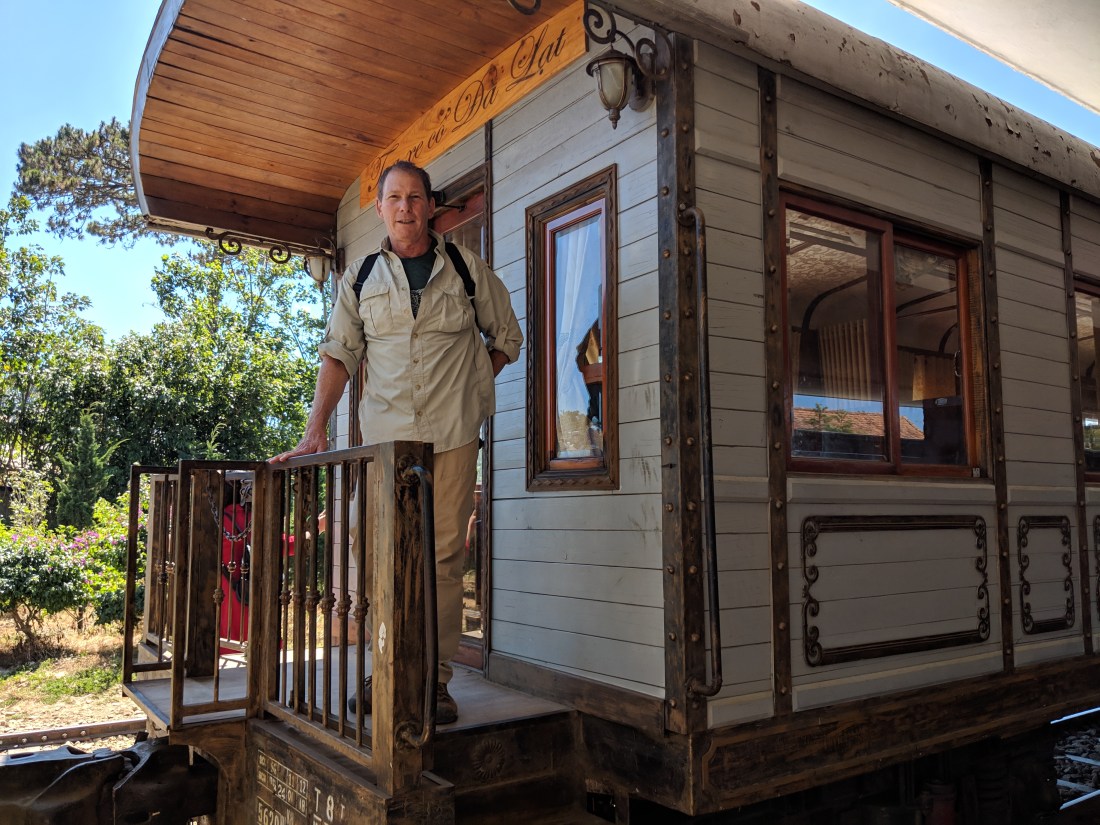
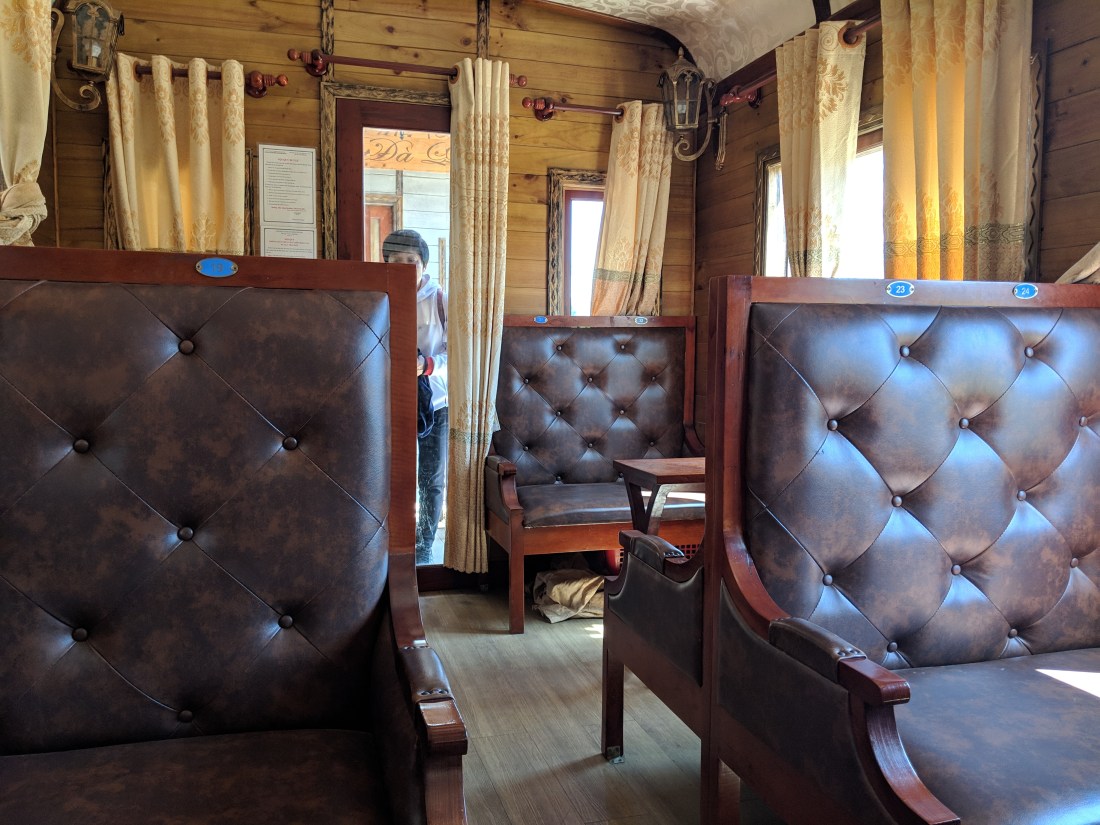


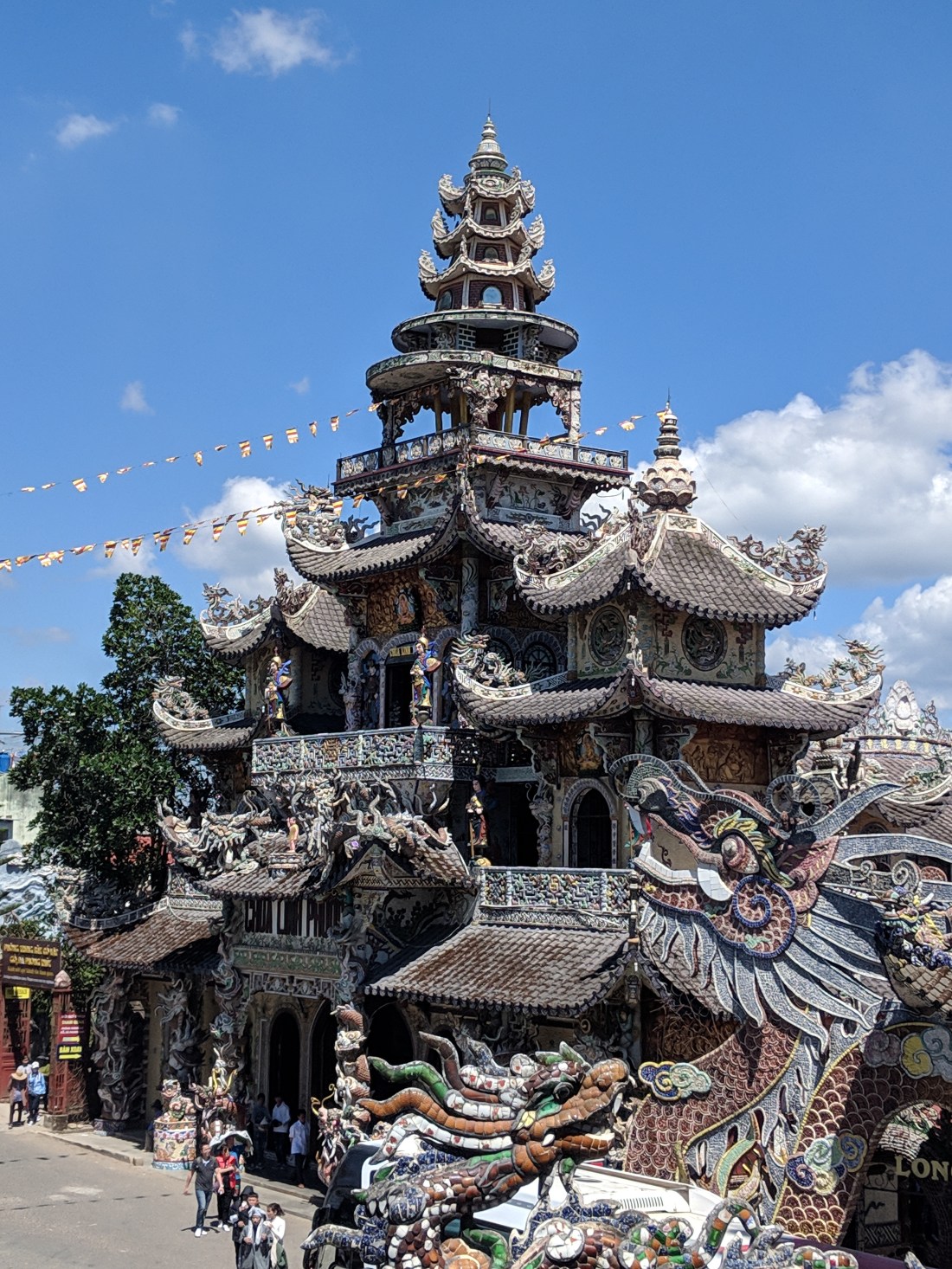
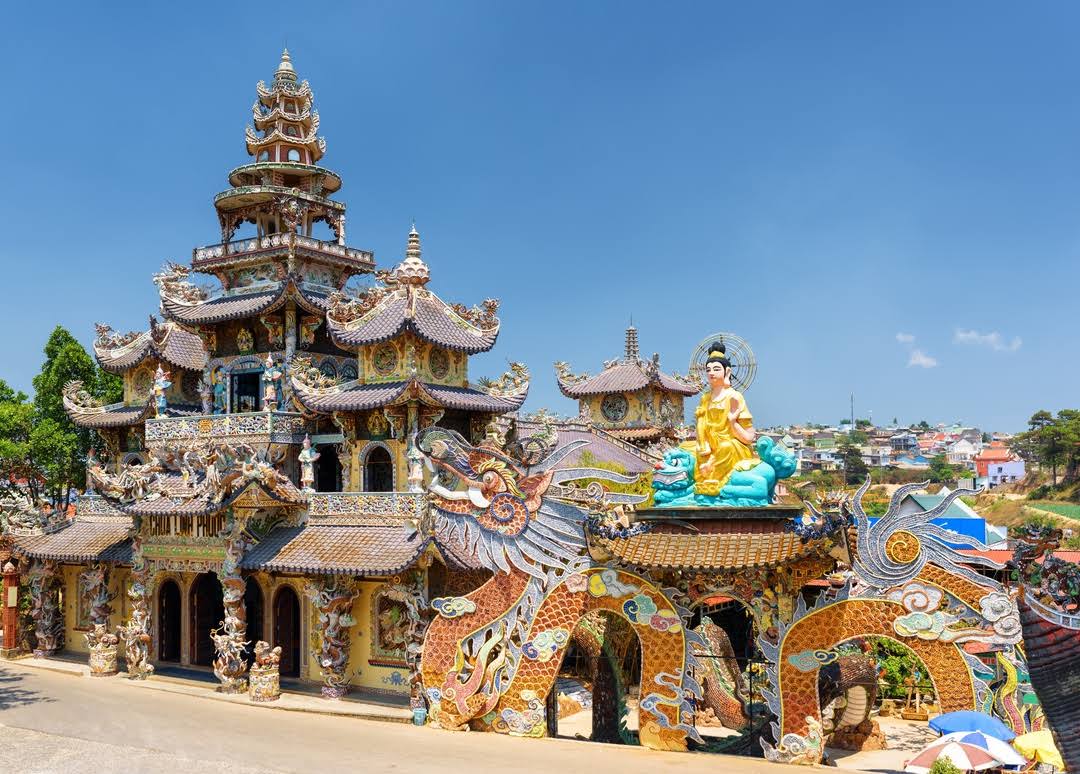
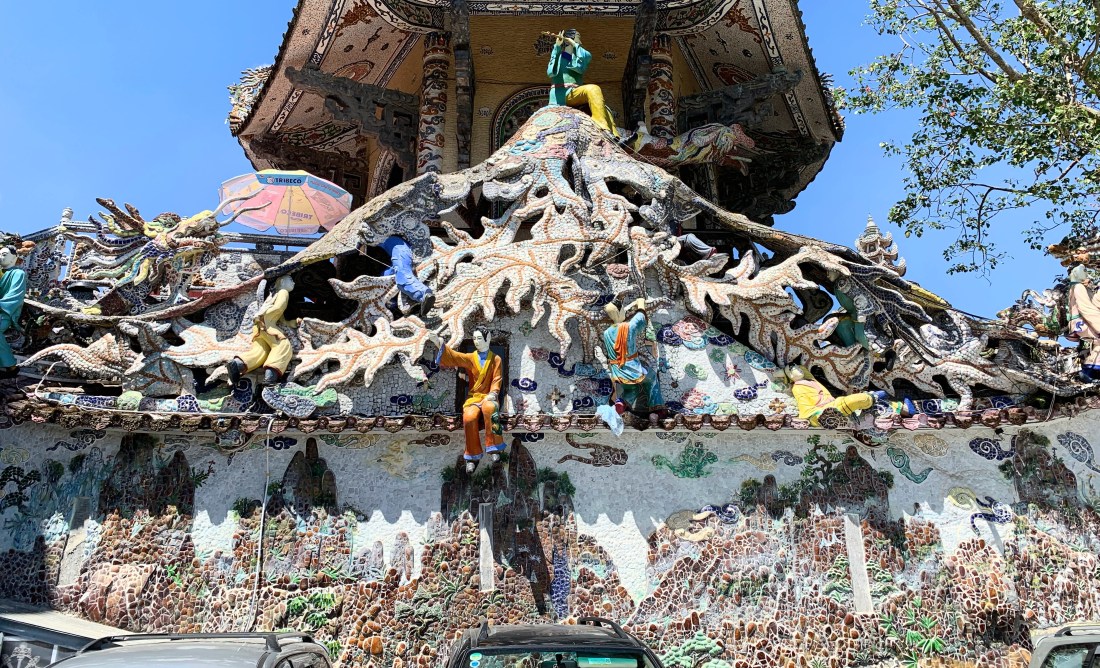
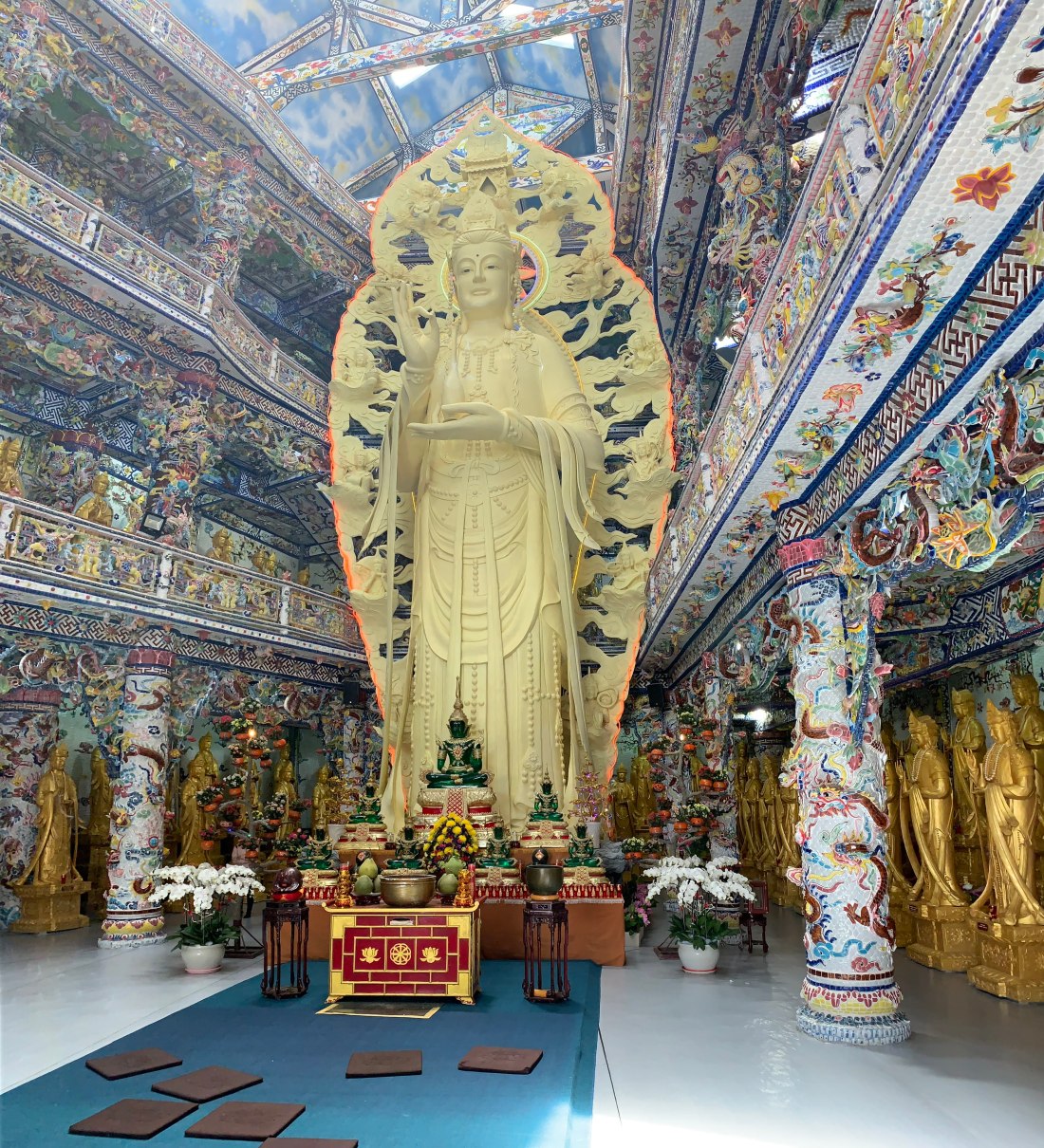
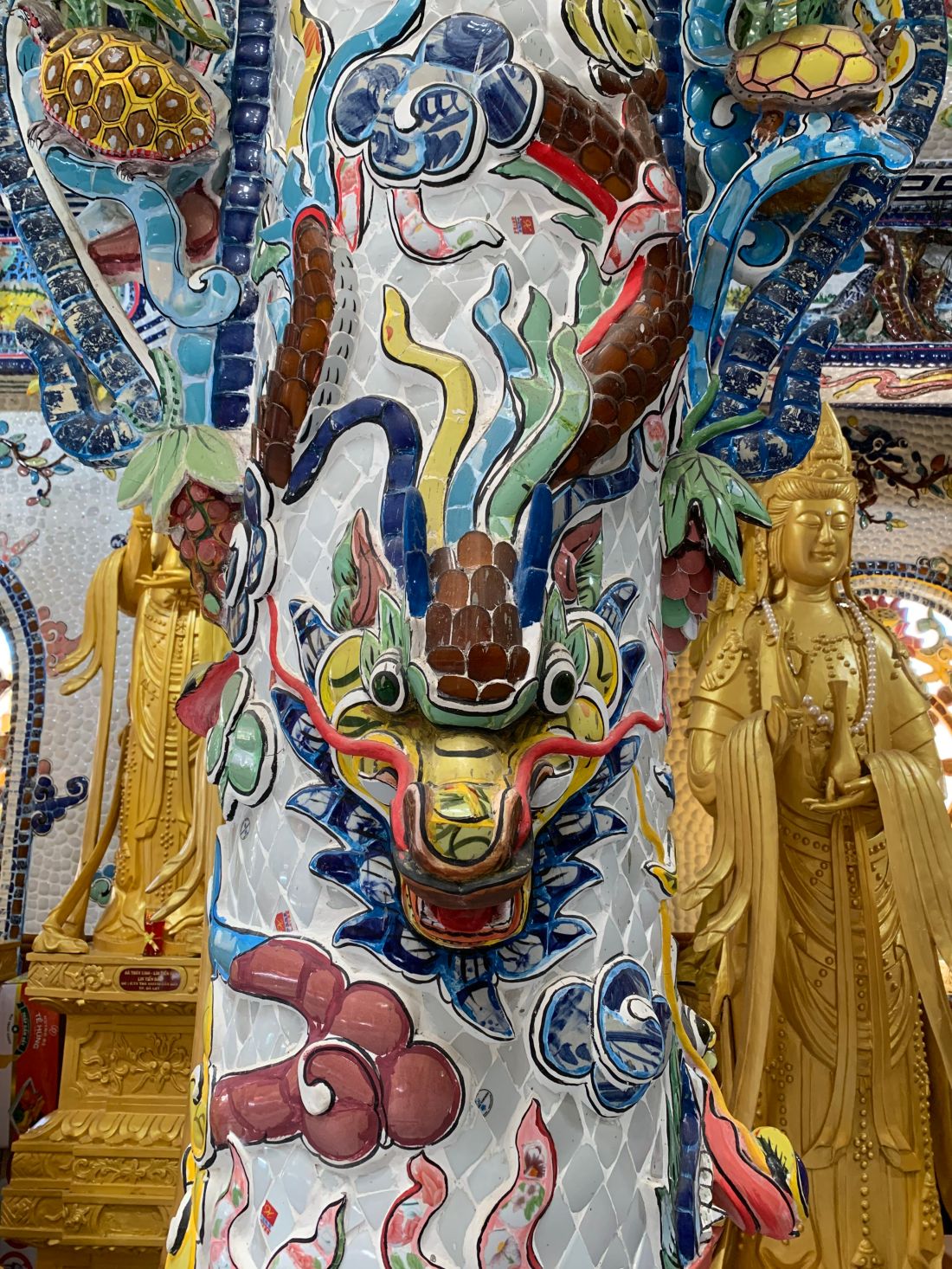
Once the train stopped in the tiny town of Trai Mat, we trekked up the hill to the Linh Phuoc Pagoda. The pagoda was built in 1949-52 and is covered in broken bottles and pieces of pottery to make up its intricate mosaics. The dragon head is 7 m high, and the dragon is 49 m long, using over 12, 000 bottles to make up its scales. The bell tower is 37 m high, making it the tallest bell tower in Vietnam, and the bell weighs in at over 8,500 kg, making it the heaviest bell in Vietnam. Overall, the pagoda brags 11 “mosts” in Vietnam.

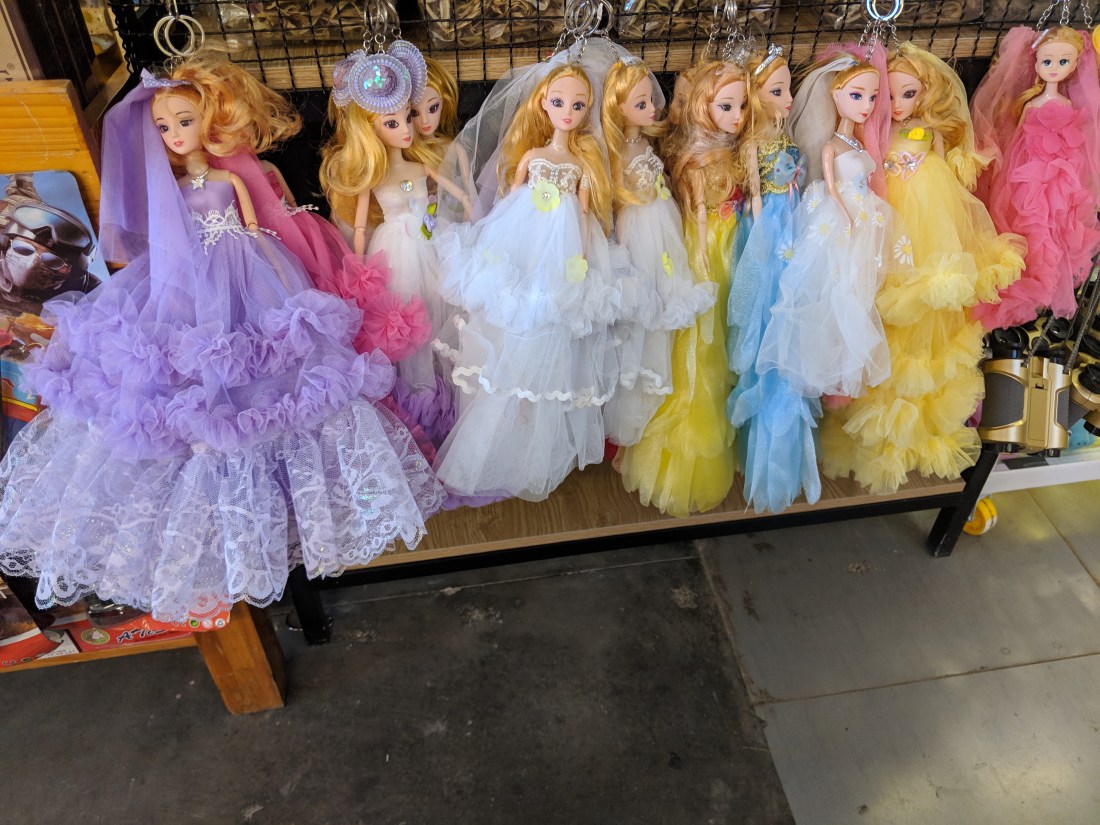
At his point, I just have to share this next picture. At many tourist sites, there are numerous souvenir shops. What I found stunning in Dalat is that although almost all of the tourists are Asian, the dolls being sold are exclusively blonde.
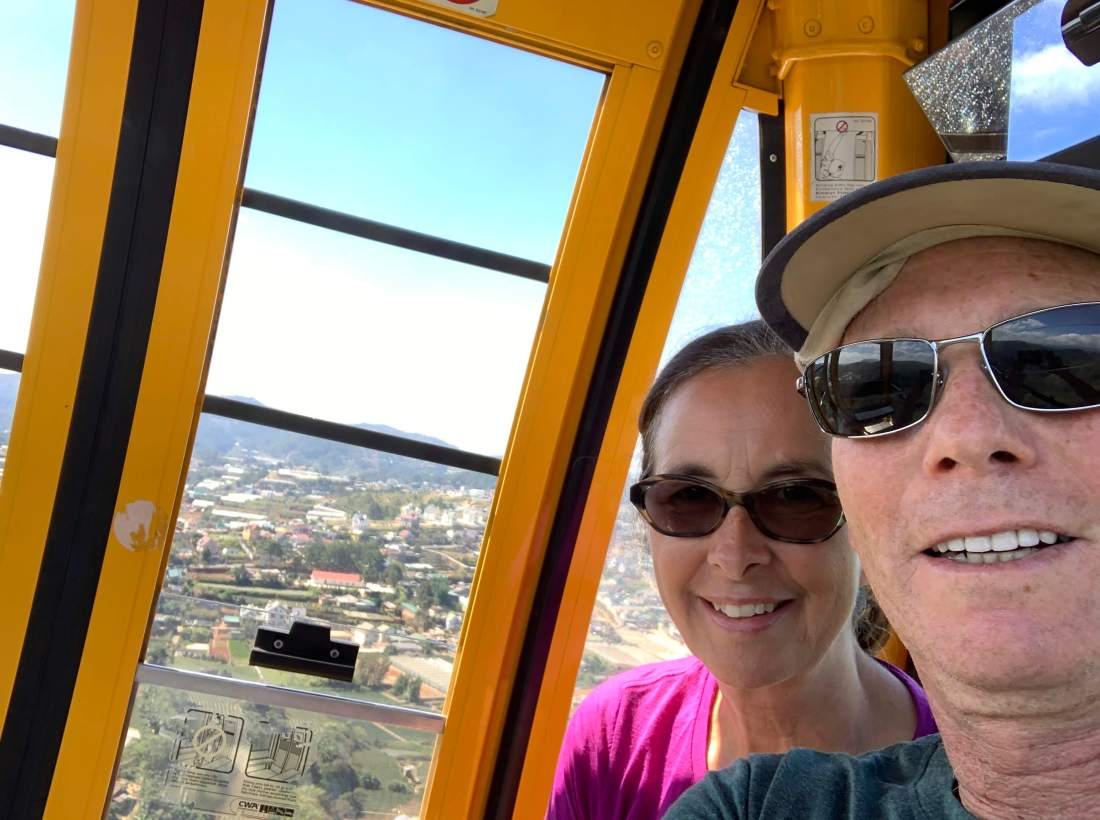
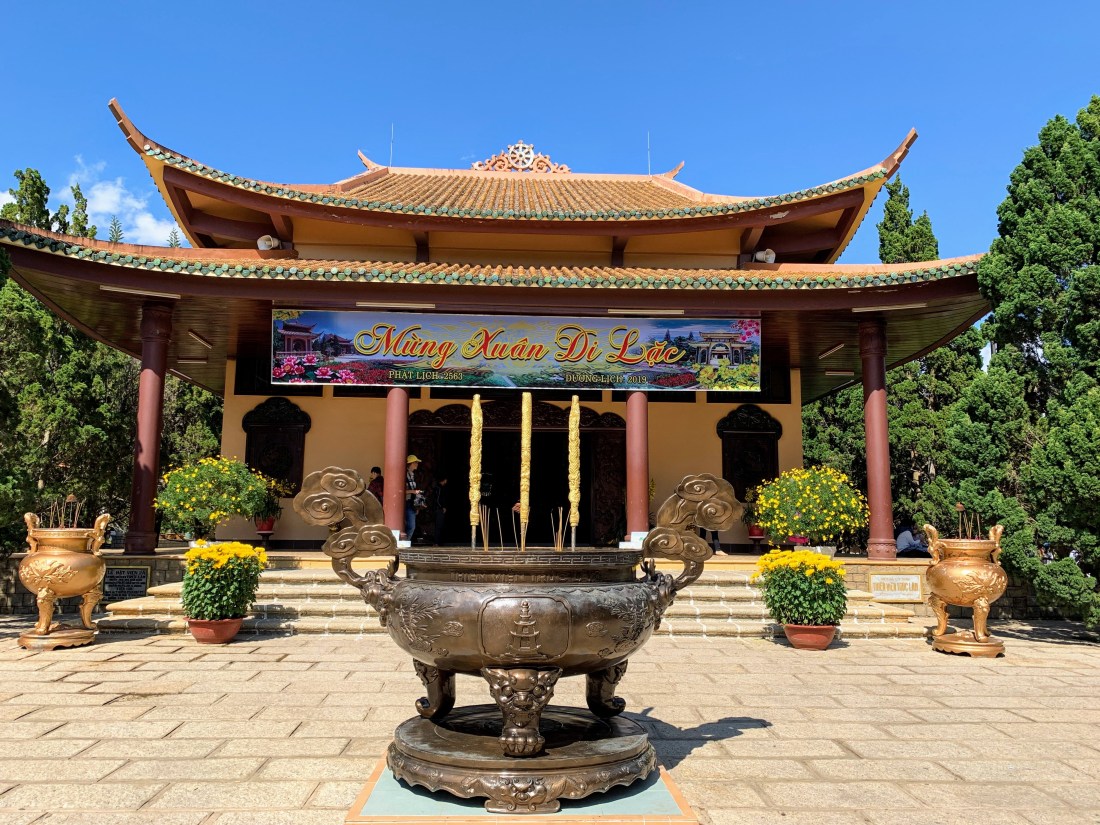
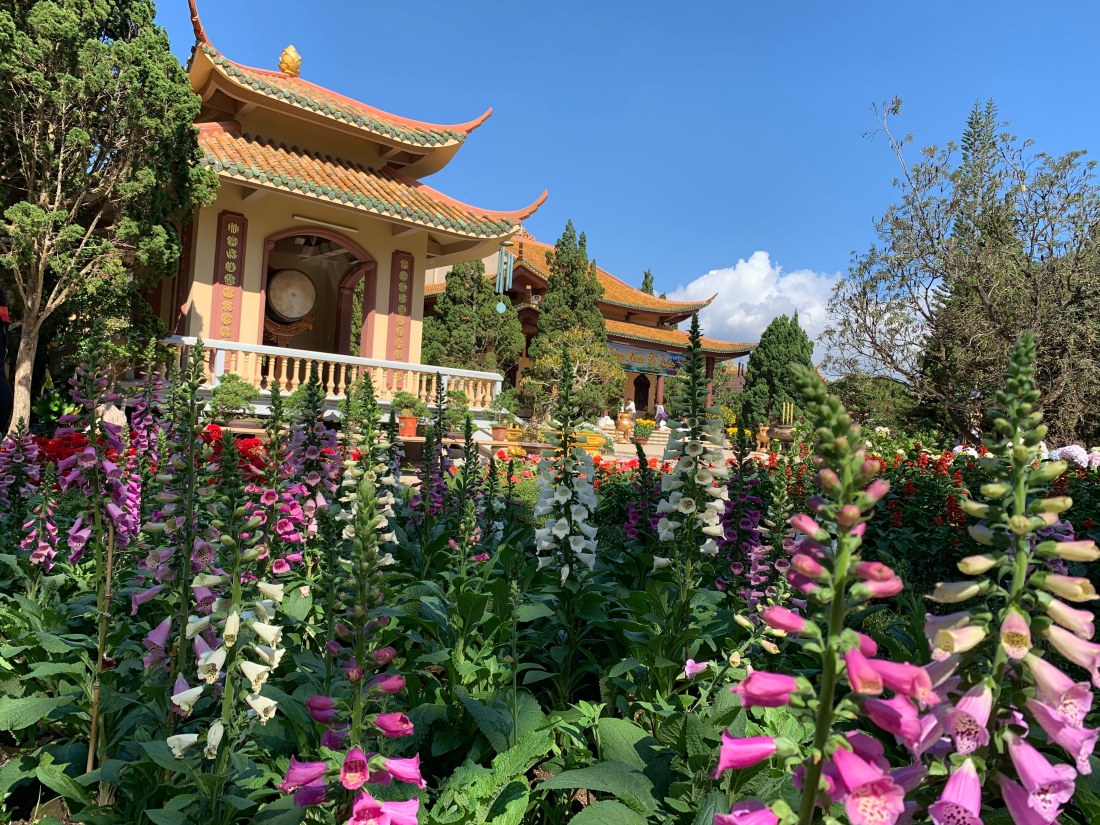
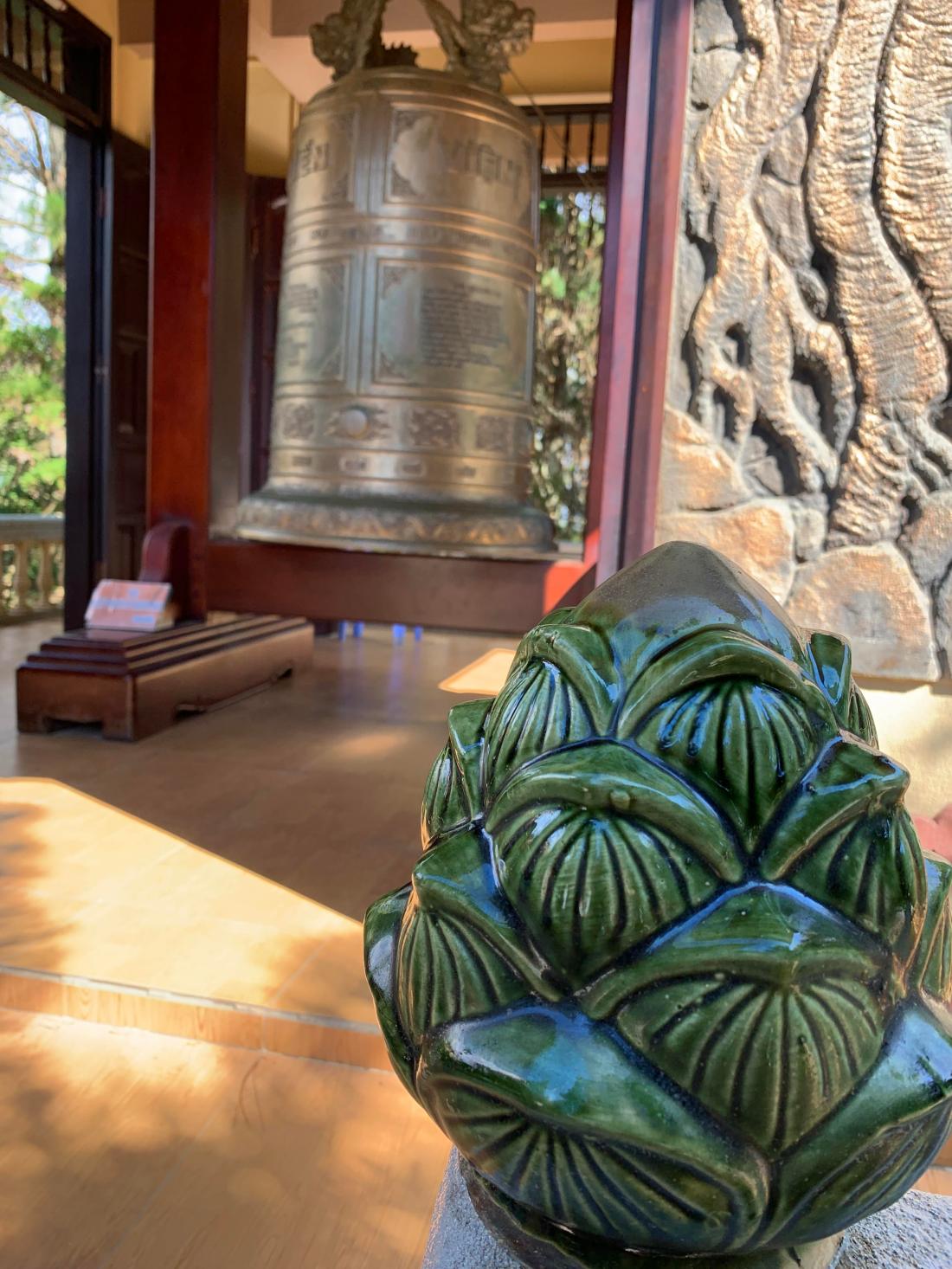
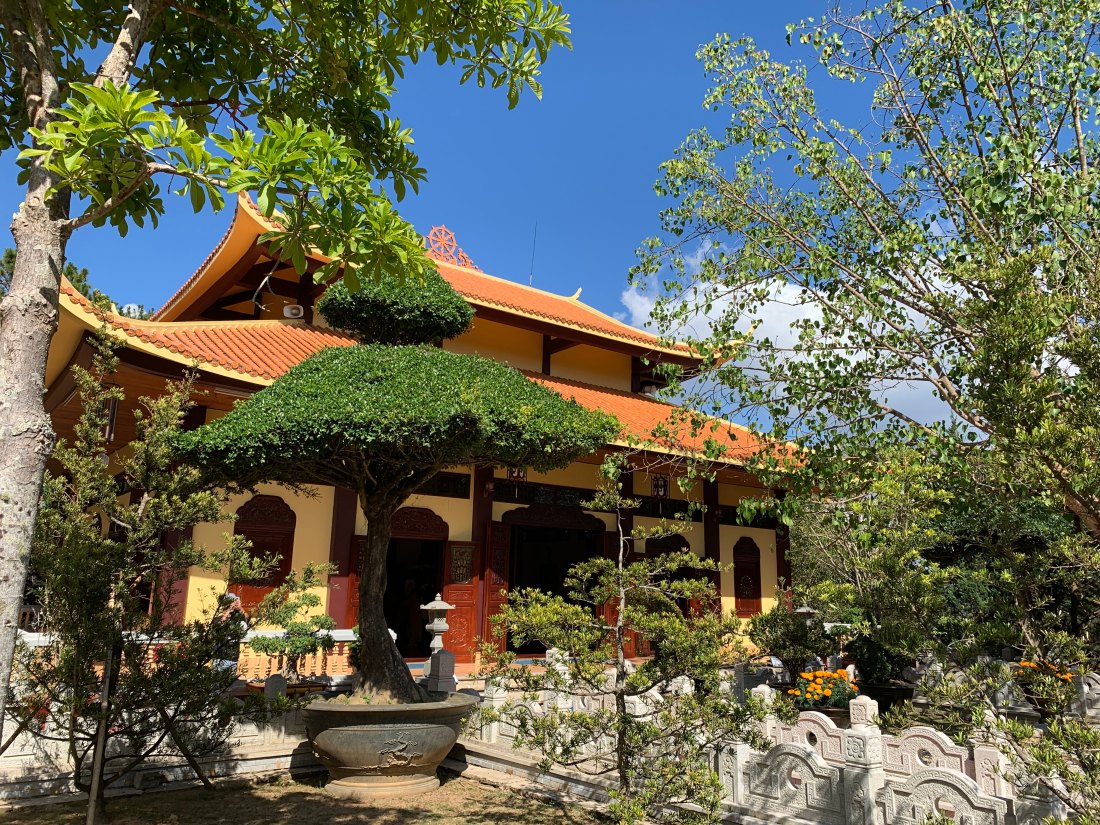
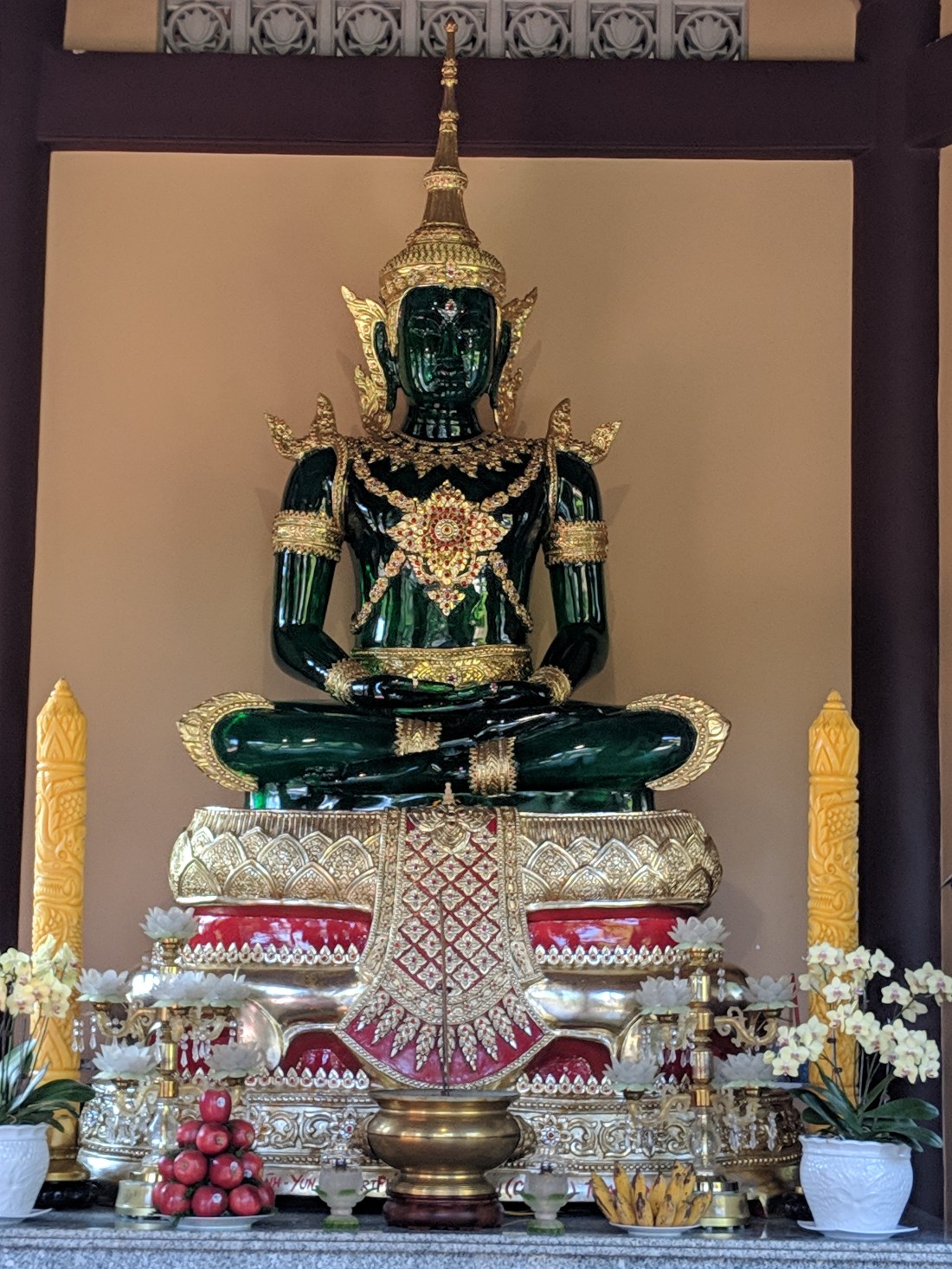
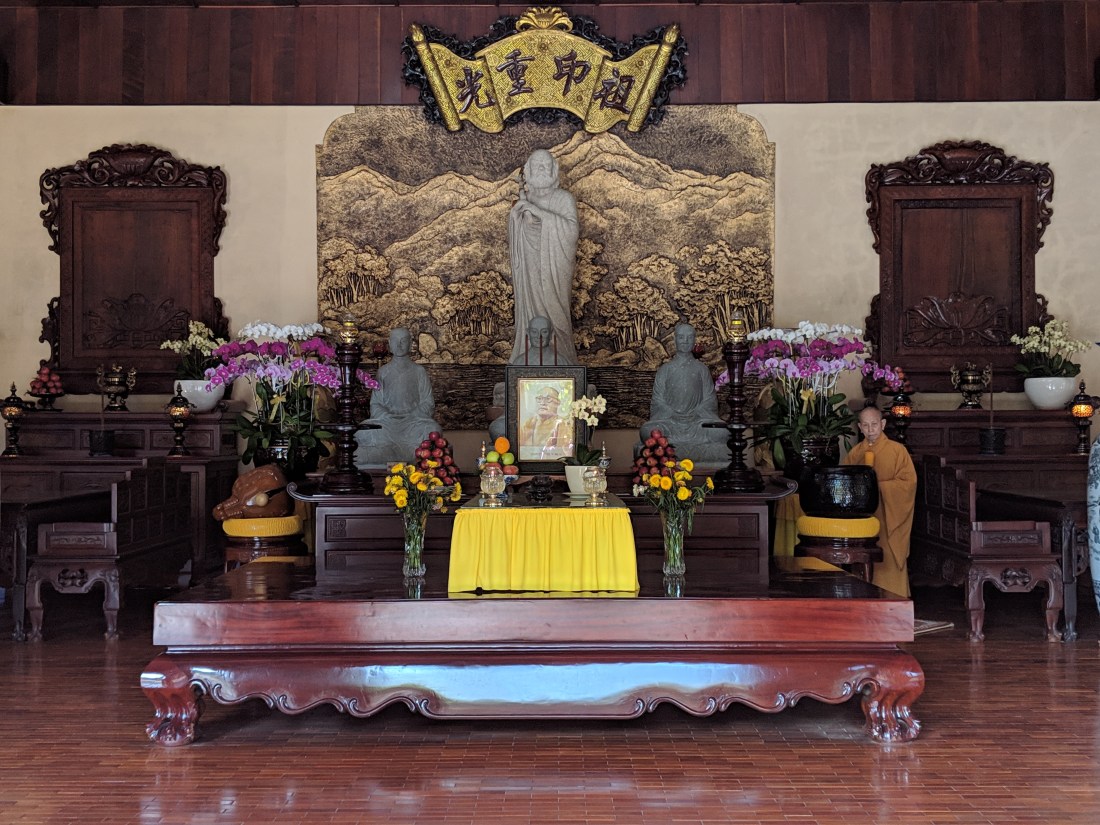
Once back in Dalat, we drove over to the cable car for yet another trip, this time to visit Thien Vien Truc Lam, the most beautiful monastery we have seen yet both with regards to the elegance of its buildings and the serenity of its gardens. It is so peaceful sitting atop a rise at 1300 m elevation, nestled amongst pine trees, and with views of Tuyen Lam Lake. One objective of the temple was to recreate the Zen Buddhism practiced during the Tran Dynasty of the 14th century, which incorporated 3 sects of Zen Buddhism that came from China to Vietnam. The new Vietnamese Zen Buddhism was called Truc Lam. The monastery is large with many private areas closed to the public, used only by the nuns and monks who reside there.


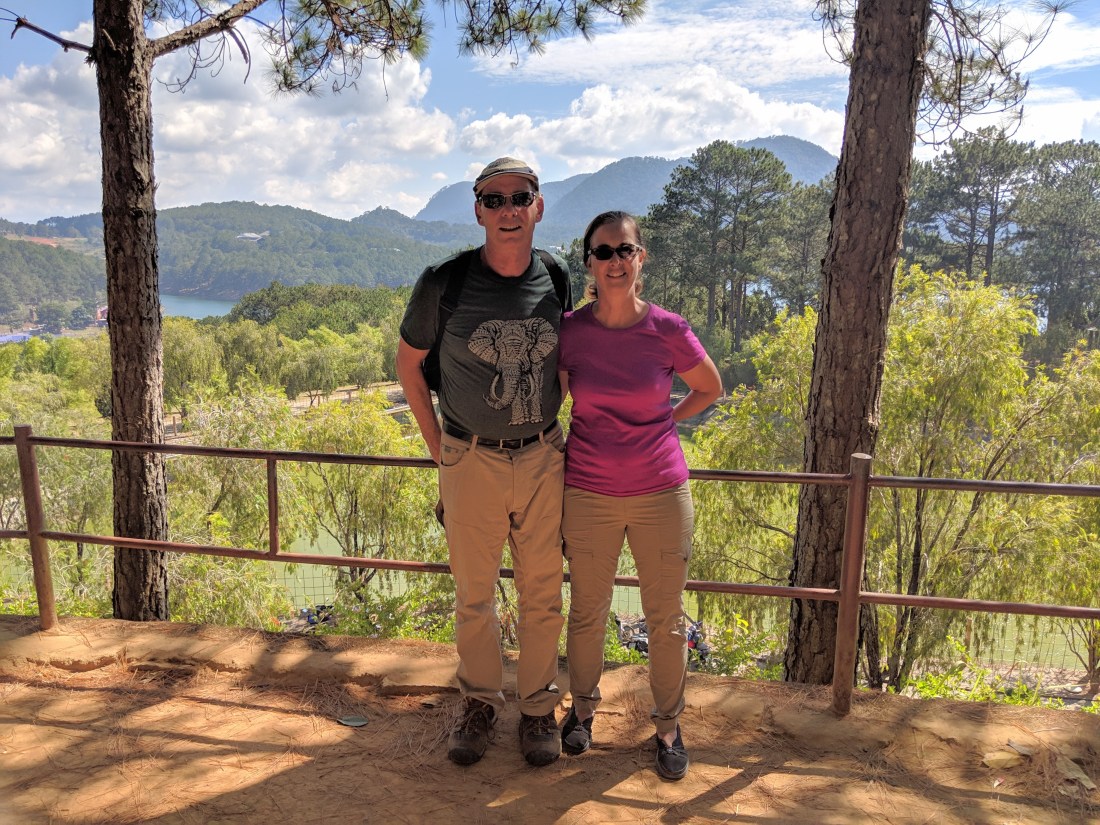

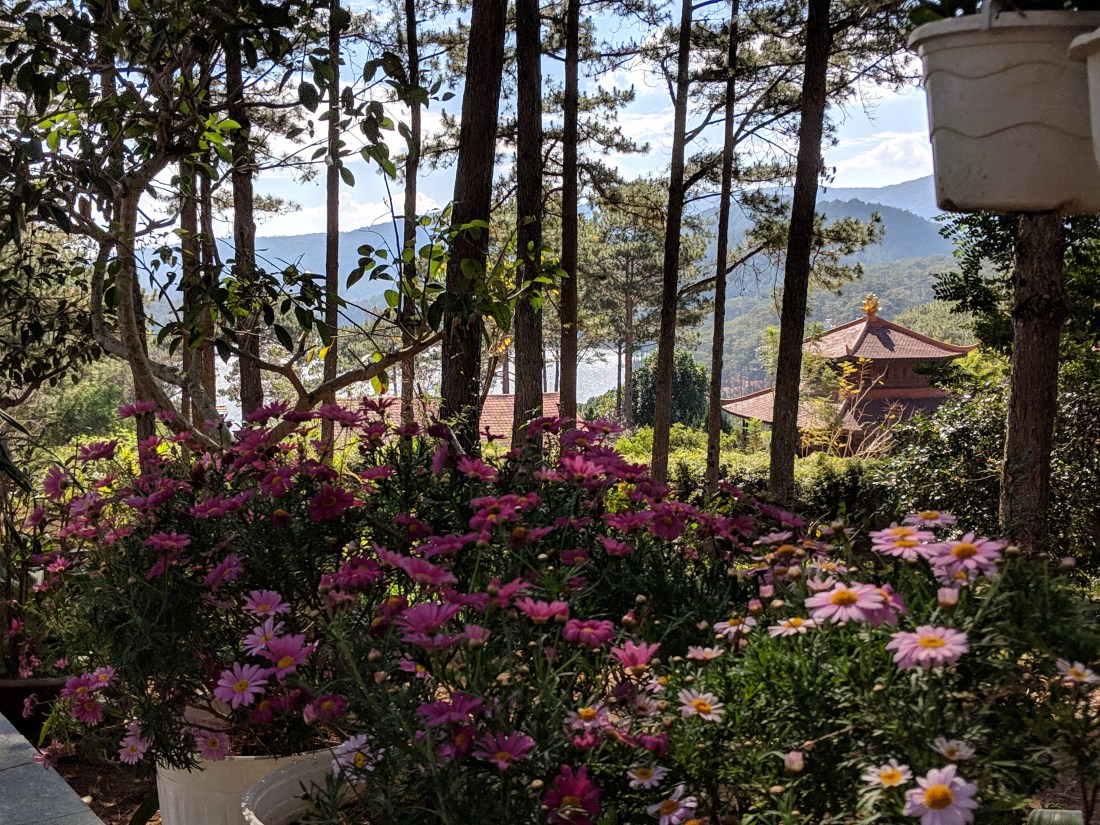
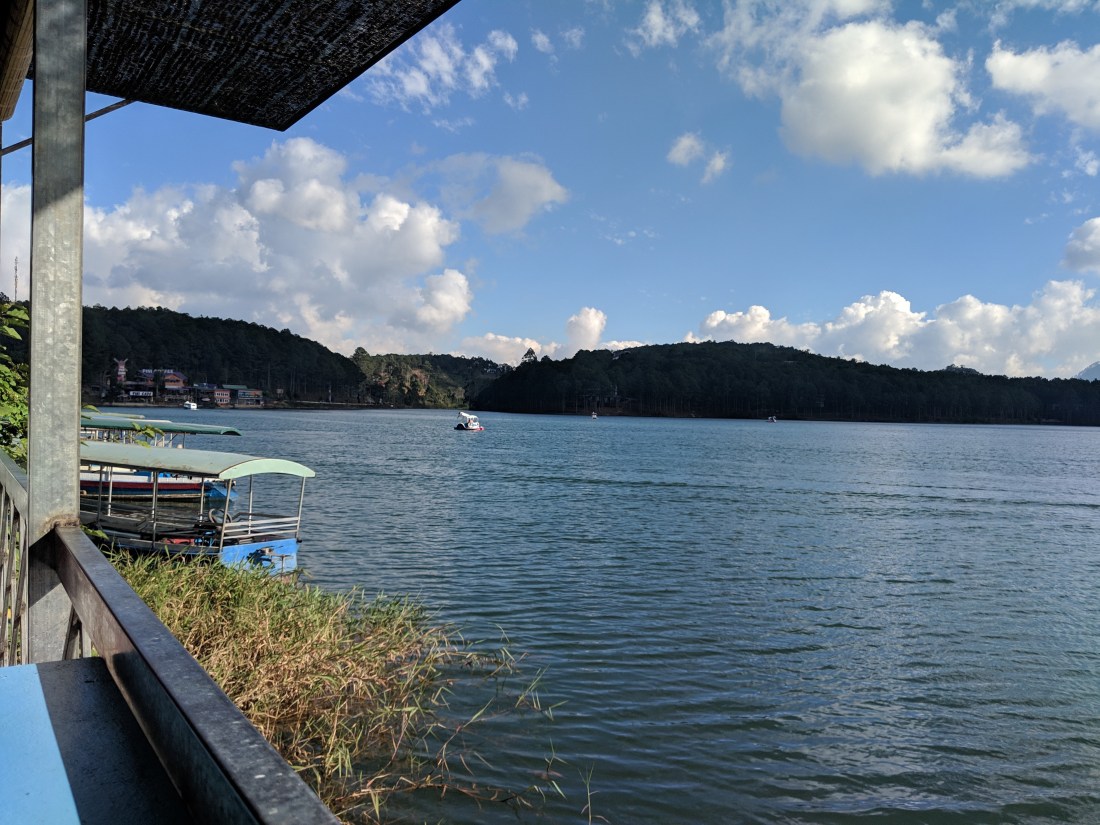
We decided to enjoy a late afternoon beer by the lake before the trip back to town for our last dinner in Dalat.
 Jo & Eric's travels
Magnificent photos. Thanks for sharing
LikeLike