
We left Bilbao in the morning heading for the region of Cantabria. But on our guide Marvin’s advice, we decided to detour and see the Vizcaya Bridge, a UNESCO world heritage site. Here is it’s description from the UNESCO website:
“Vizcaya Bridge straddles the mouth of the Ibaizabal estuary…completed in 1893. The 45-m-high bridge with its span of 160 m, merges 19th-century ironworking traditions with the then new lightweight technology of twisted steel ropes. It was the first bridge in the world to carry people and traffic on a high suspended gondola and was used as a model for many similar bridges in Europe, Africa and the Americas only a few of which survive. With its innovative use of lightweight twisted steel cables, it is regarded as one of the outstanding architectural iron constructions of the Industrial Revolution.”
It is still functional and has been since its construction except for 4 years during the Spanish Civil War.
And here are some pics of it. In the picture below, the white object in the lower right corner is the gondola full of people and cars and is headed to the left (west) side of the estuary.

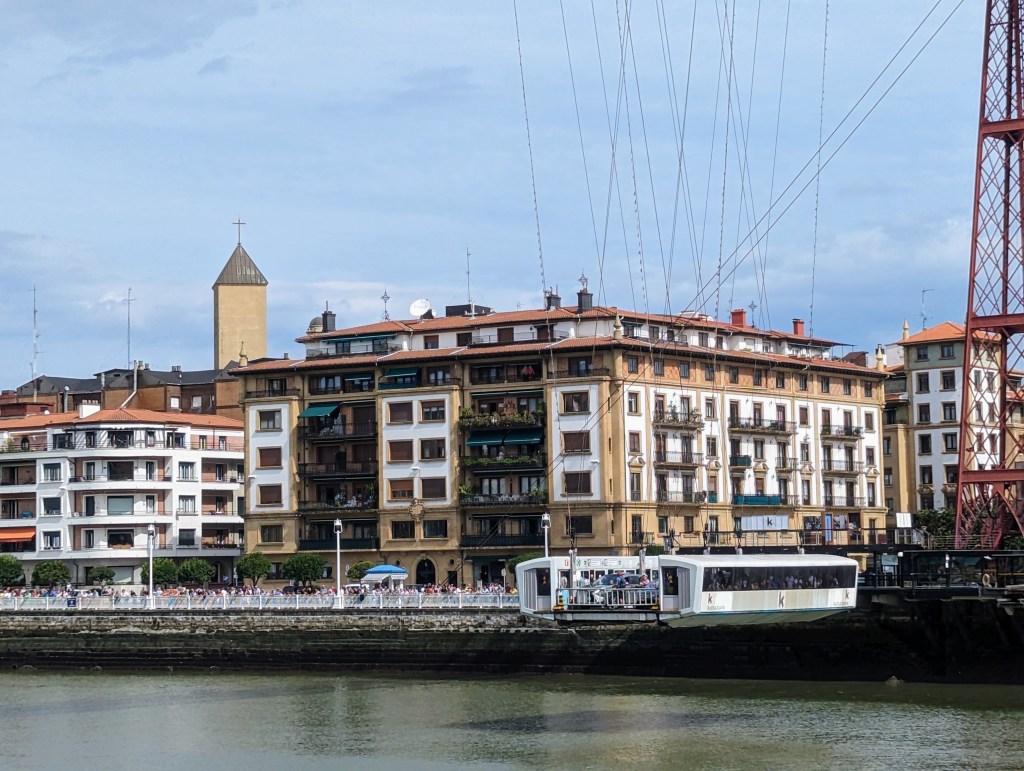
It is truly stunning to see. But what was the fun surprise of our day is, we arrived just as crews were racing on the river!
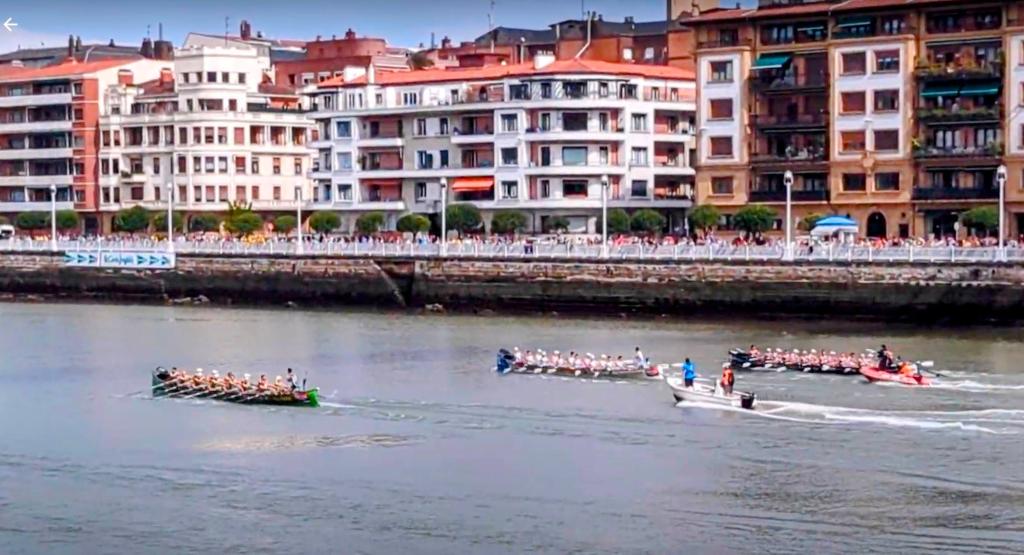
People crowded the streets donned with shirts of their teams’ colors. The mood was festive; food and drink were plentiful.

They even had a drone following the crews and had live feed on a big screen in the middle of the square. What fun!!
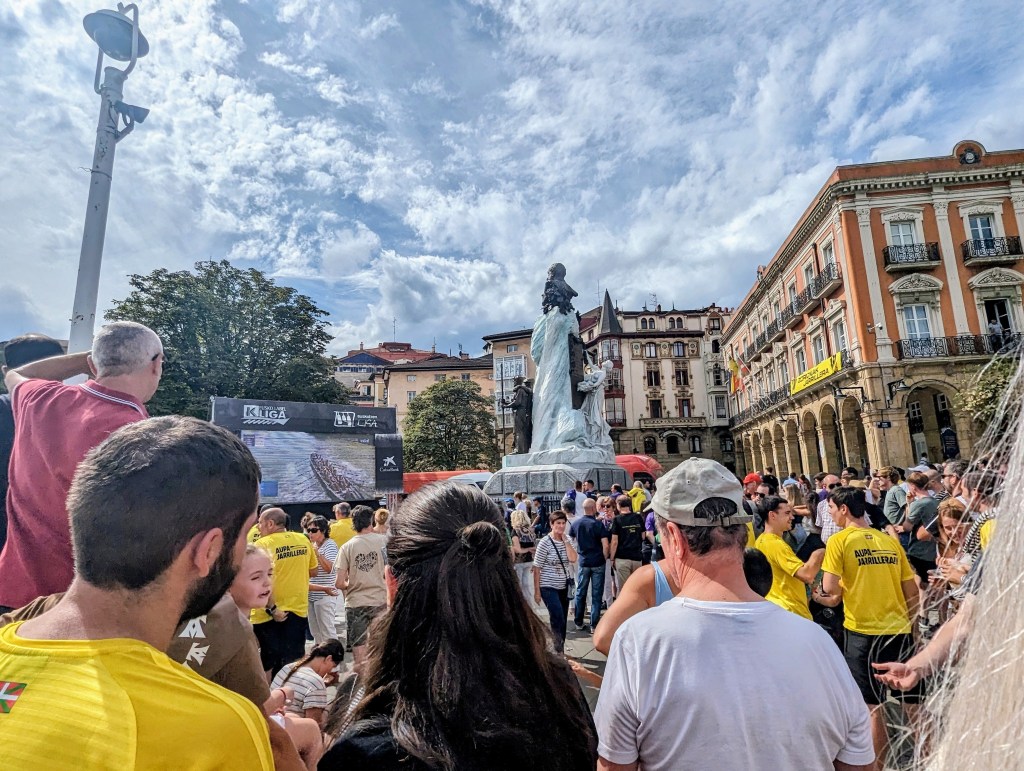
We joined in the festivities: ate and drank our fill. Then we headed to Limpias.
When traveling, we like to say that the room/hotel is of little importance; it is all about the sightseeing. But at this point in the trip, we had decided to treat ourselves, relax a bit and make it all about the resort for a couple of days. We were booked in Parador de Limpias. Paradores are a network of 97 state-run hotels. They are properties consisting of restored castles, monasteries, convents, palaces, etc. Parador de Limpias was built in the late 19th century as a palace of King Alfonso XIII.


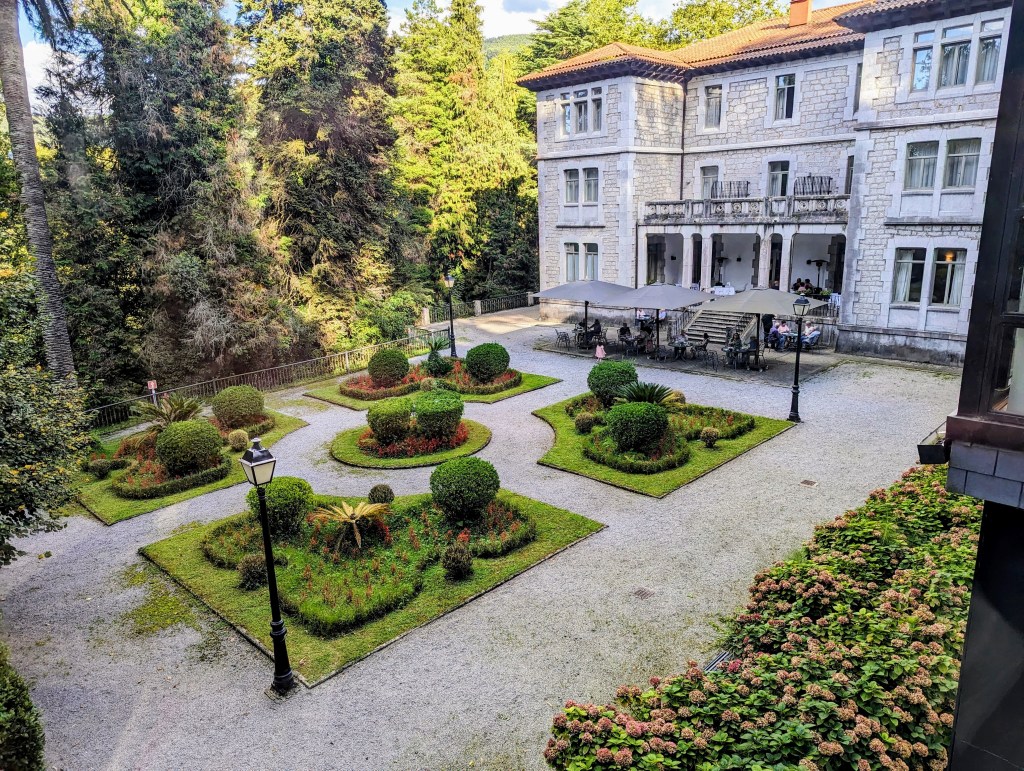
When we managed to drag ourselves from the room the next morning, it was with no specific plans for the day. We drove around the small town of Limpias which has a Roman aqueduct, albeit small compared to that in Segovia.
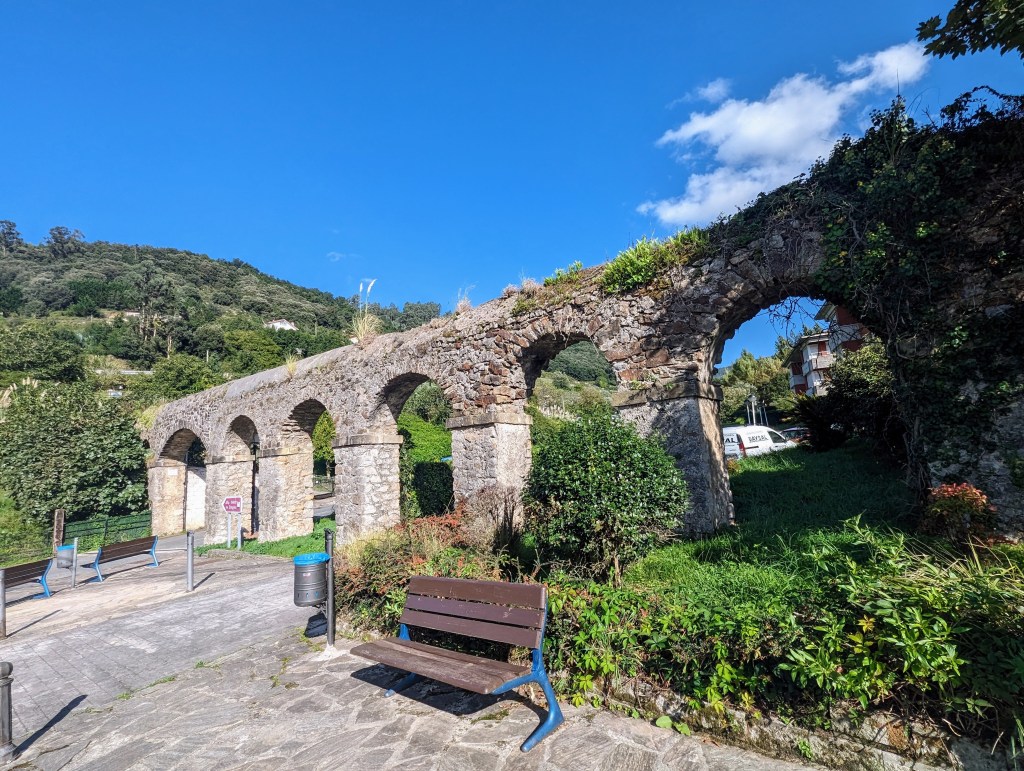
And the town is known for the Church of St. Peter inside of which hangs a 6 foot crucifix called Christ of the Agony. According to legend, it is miraculous in that on Easter Sunday tears of blood have been seen coming from its eyes.

The church, however, was closed, and the weather overcast and threatening, so we decided to get in the car and drive to the city of Santander. It poured while we drove, but we arrived to a beautiful sunny seaside town. Again the weather luck was on our side.
We walked along the promenade along the shore and passed the Botin Art Center, a coveted architectural Pritzker Prize winner in 1998 for the way it is cantilevered out over the sea.
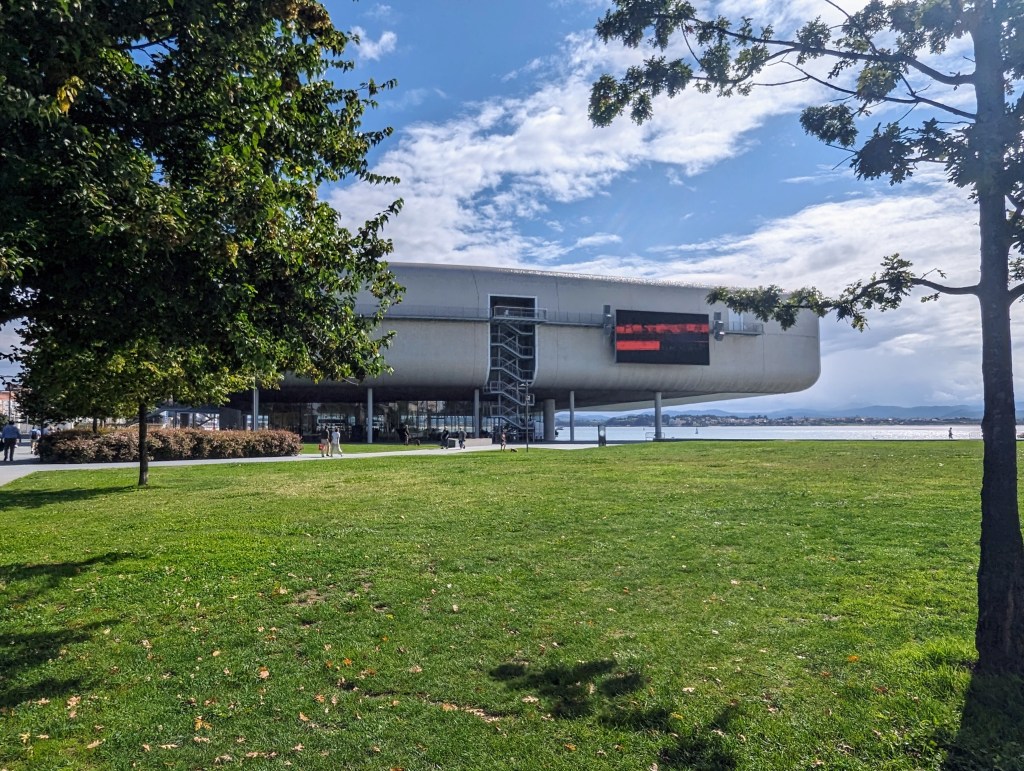
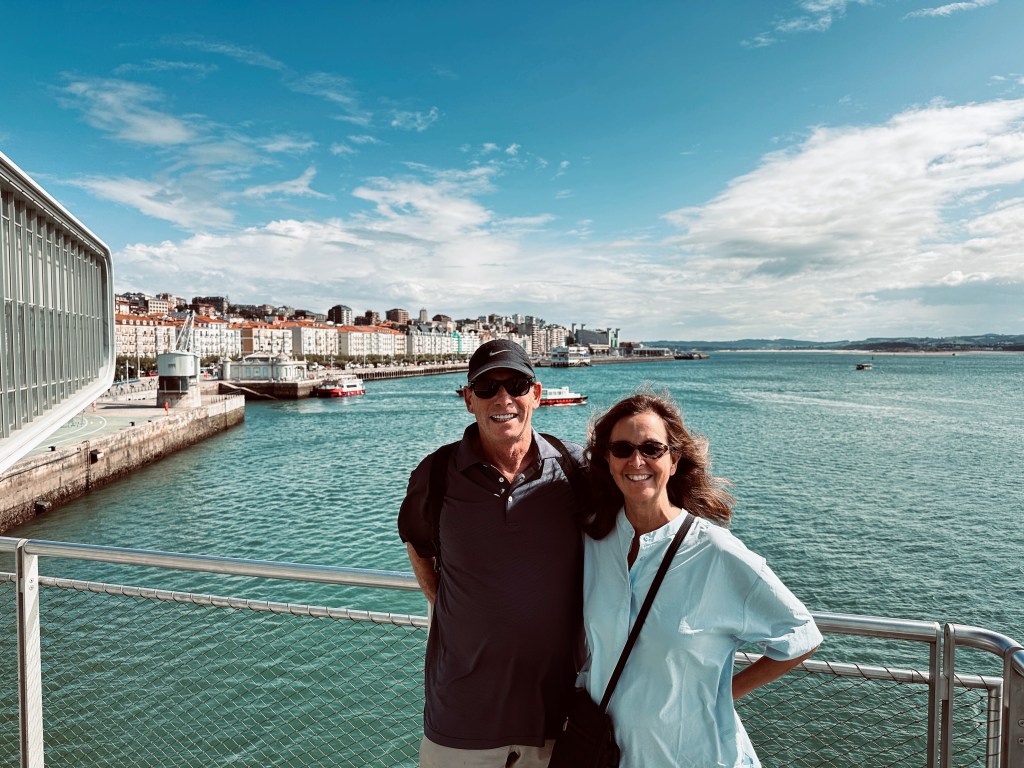
It was also closed. (not a lot open on a Monday in Spain.) But the views from its platforms were spectacular.
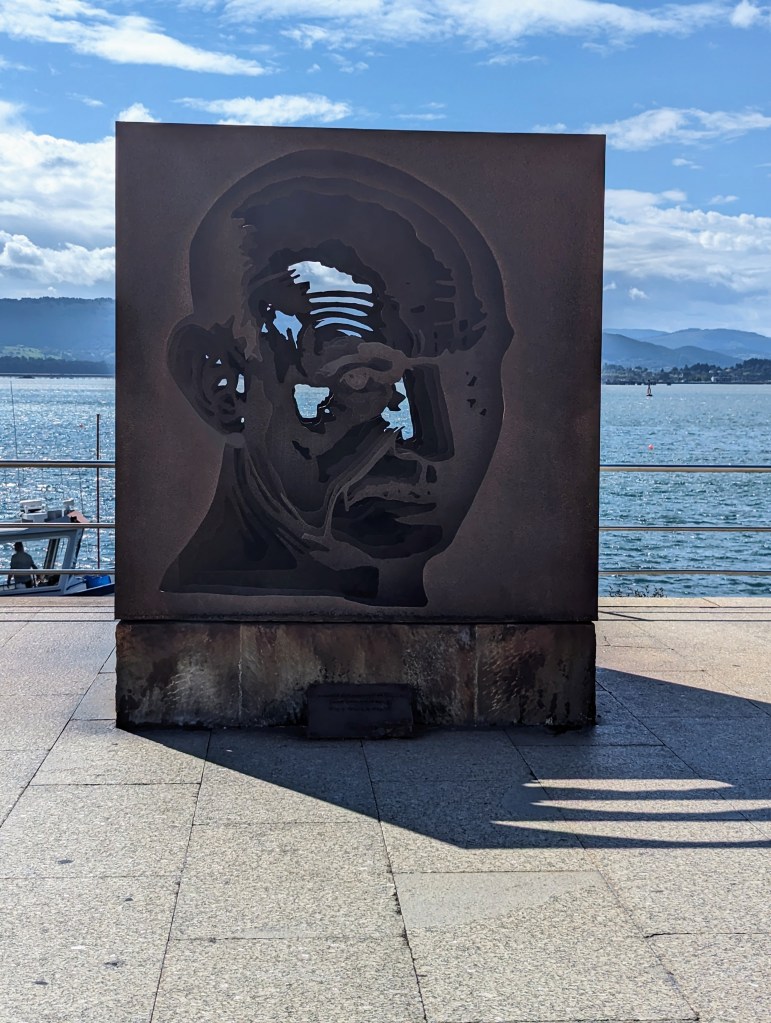
We passed several outdoor sculptures.
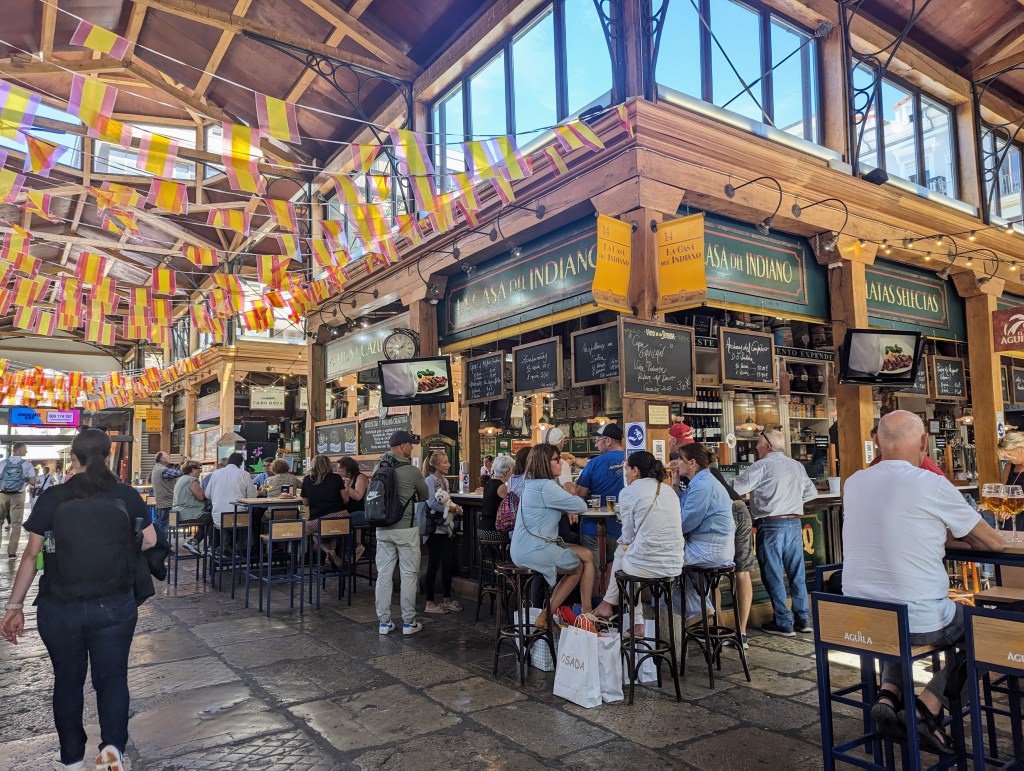
We took a quick stop in a really cute indoor restaurant market.
And we strolled by the cathedral, also closed.

We got back in the car and drove a little further up the coast, wanting to see the palace, which is on the tip of a peninsula. We had to park and walk in about 900m. What we did not realize is, the whole peninsula is a public park.

We passed an area with pens for aquatic animals.
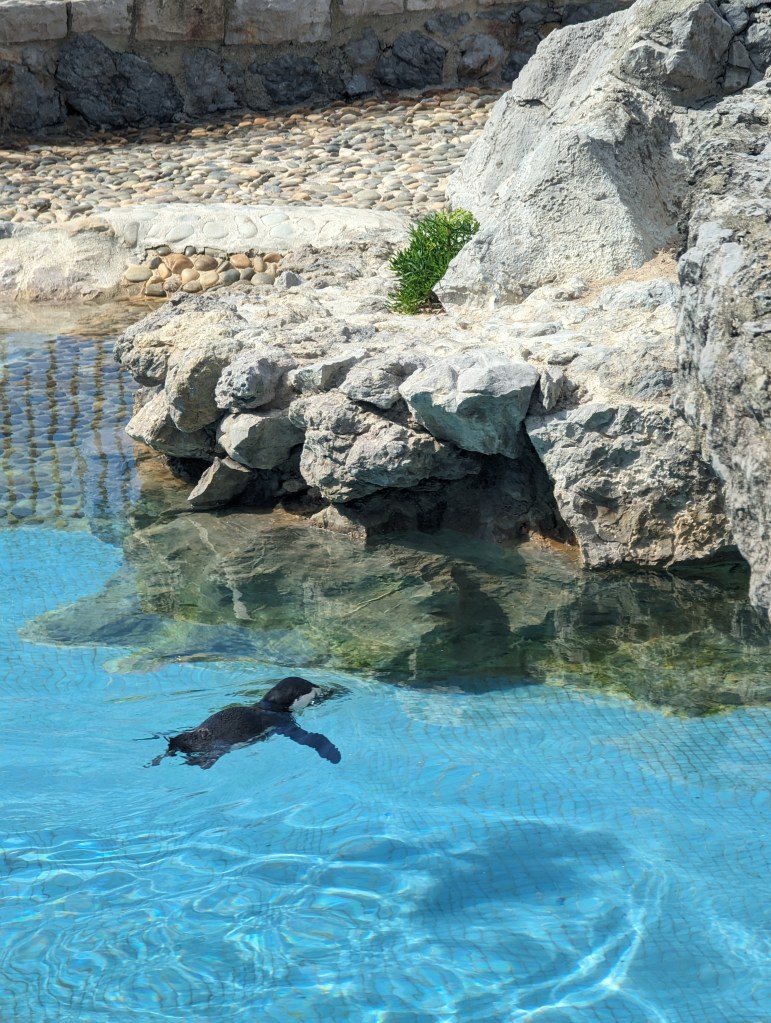
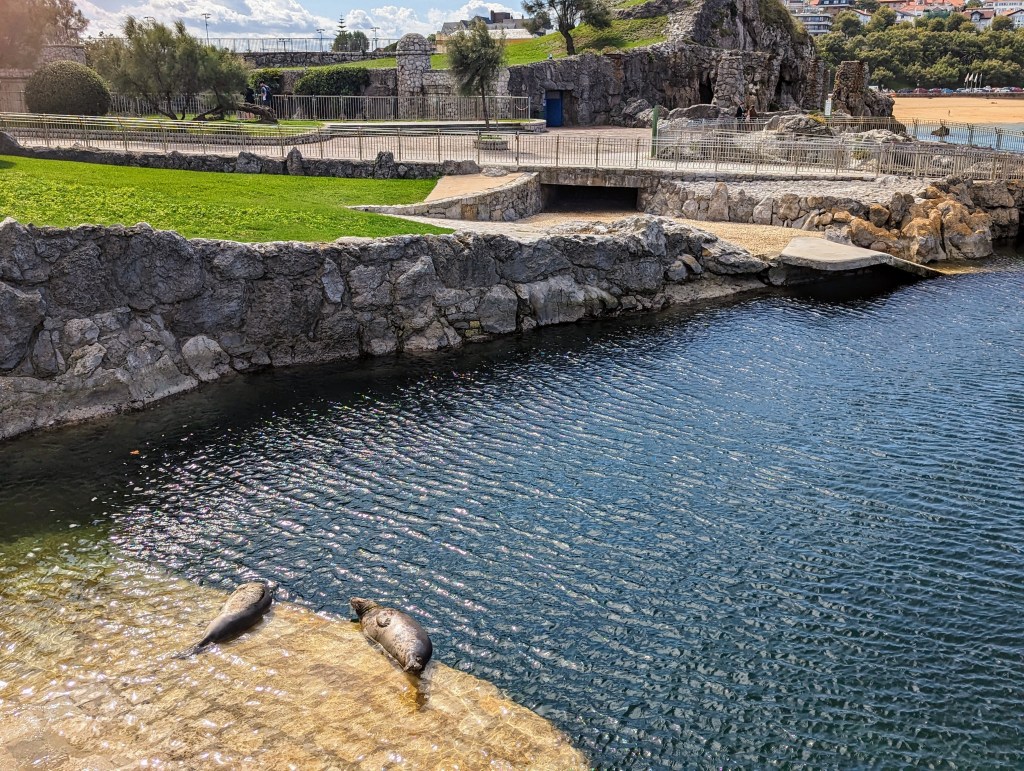
What is hard to tell from the pictures is how well the pens melded into their surroundings. Each one had a pump system to exchange water directly into the ocean.

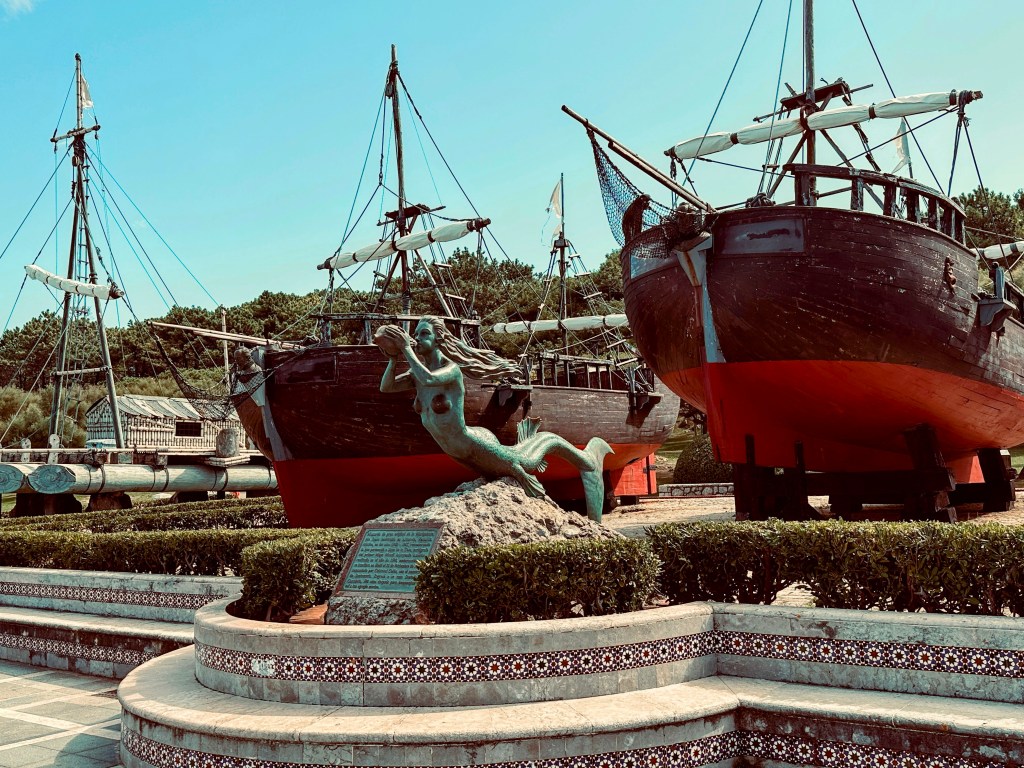
Next we passed a mini outdoor museum dedicated to sea exploration.
Finally we reached the end of the peninsula and the Magdalena Palace, which was built as a summer home for the royal family in 1911. It has been a museum since 1977.
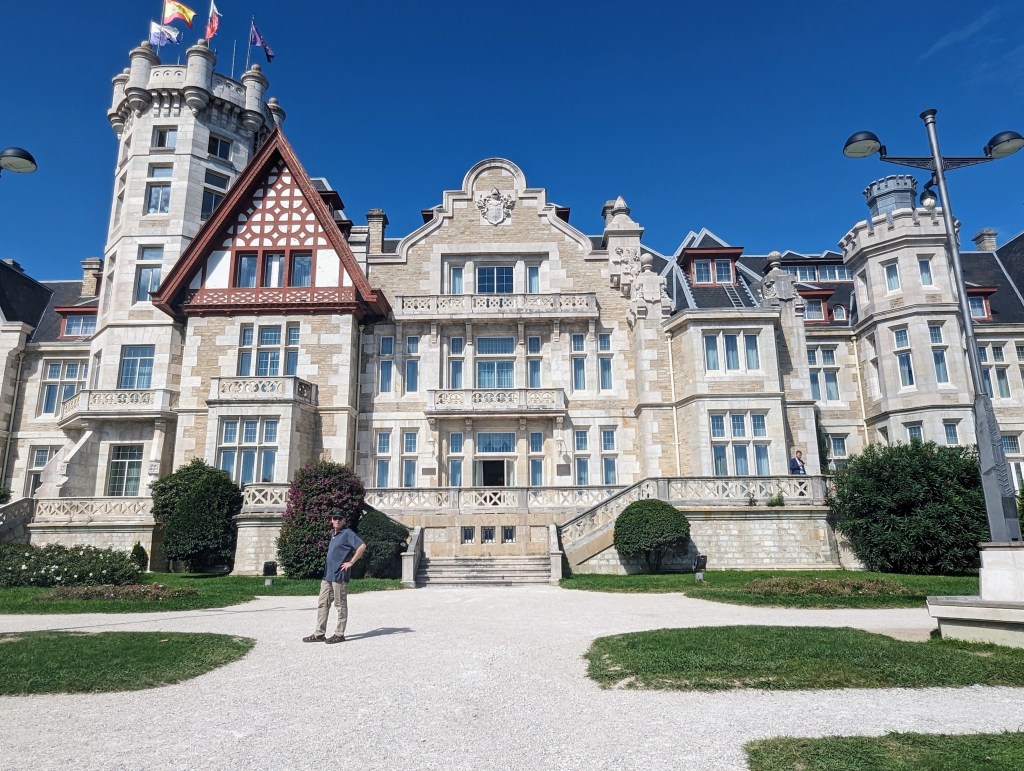
The views from the palace were a beautiful as expected.
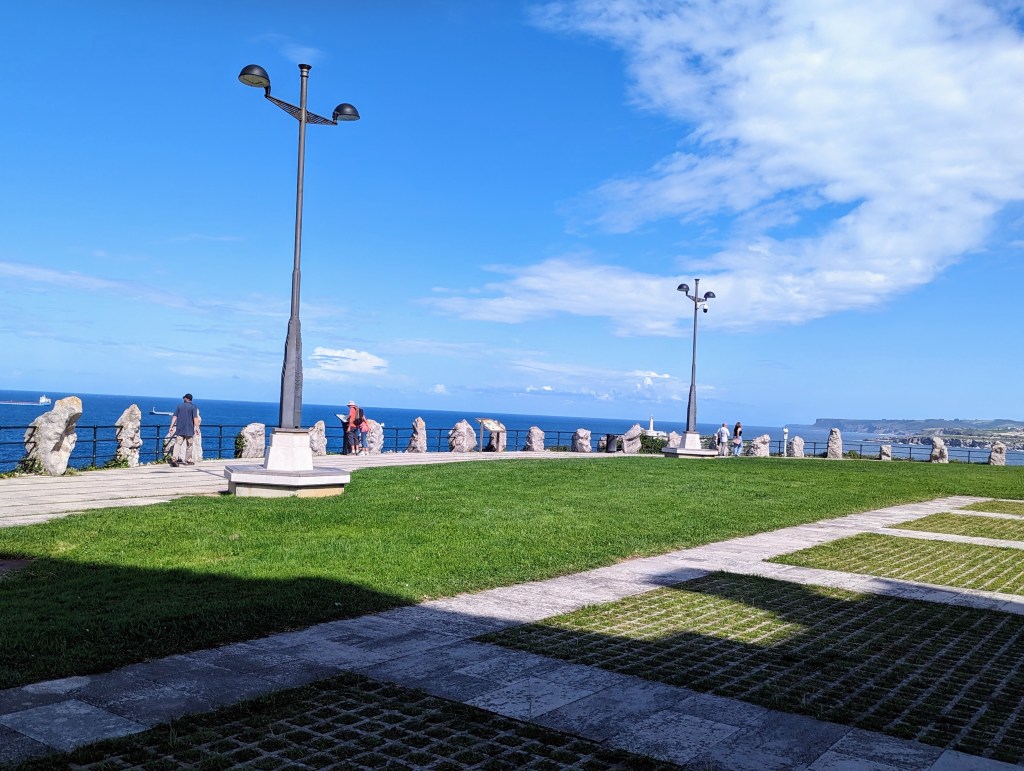
We hiked out of the park through the middle wooded section, and arrived back to our car exhausted. We were happy to return to our paradores for some rest.
 Jo & Eric's travels