
At this point, a quick note about the regions of Spain, which is how I have broken up my posts. In Spain, an autonomous community (region) is the first sub-national level of political and administrative division (not judicial), created in accordance with the post Franco Spanish Constitution of 1978, so kind of like a state. Most have unique cultures and food, and some language, as stated previously.
Pamplona is the capital of the Navarra Region. We felt the need for a visit, mostly inspired by Hemingway. But also because it is a major stop on the French Route of the Camino de Santiago, which we will follow for the next several days. It is a relatively big city. We went straight for the bullring and the Old Quarter, as we have in most cities.

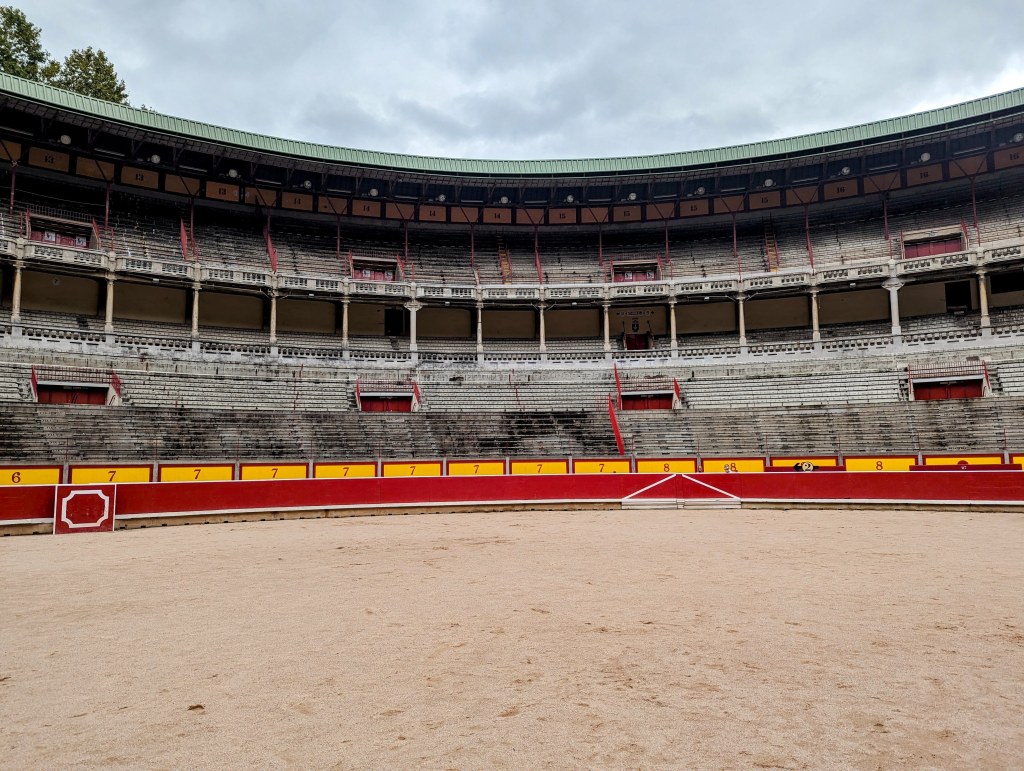
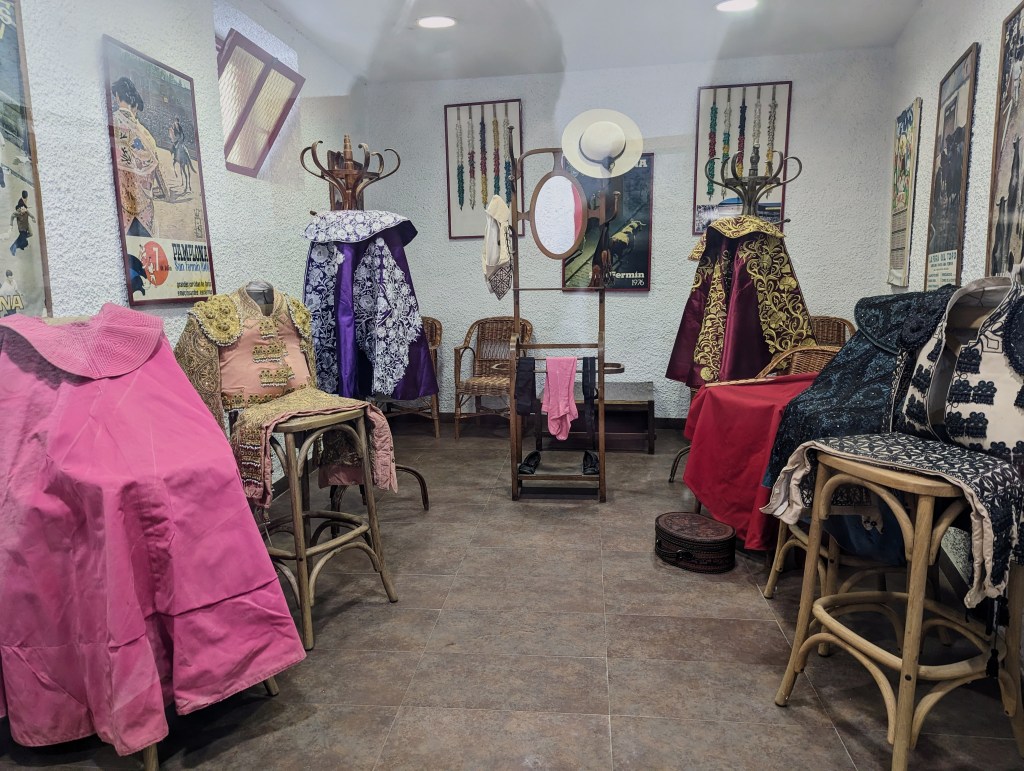
We watched a video of images of the running of the bulls. The provided audio guide taught us everything we never wanted to know about bull-fighting from the life of the bull to the behind the scenes activities of all involved. My favorites included the costumes of the toreros (bull-fighters)
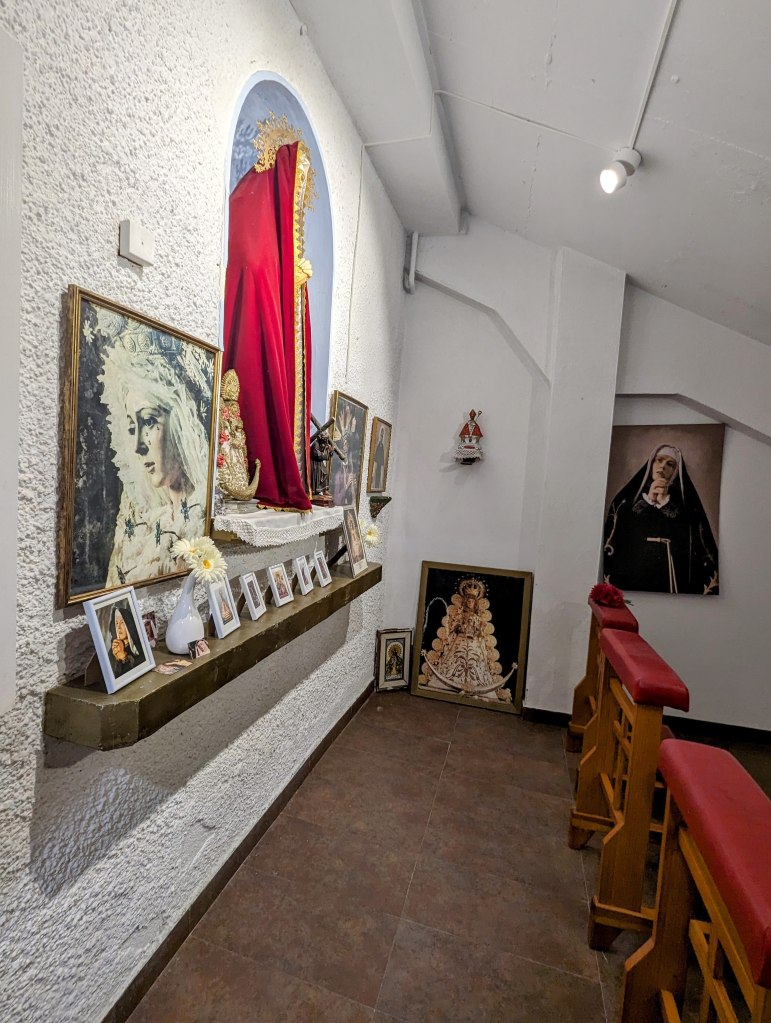
and the chapel where they all stop for a few moments to pray right before entering the ring.
After the bullring we walked down the road through which the bulls are herded during the July festival: San Fermin.

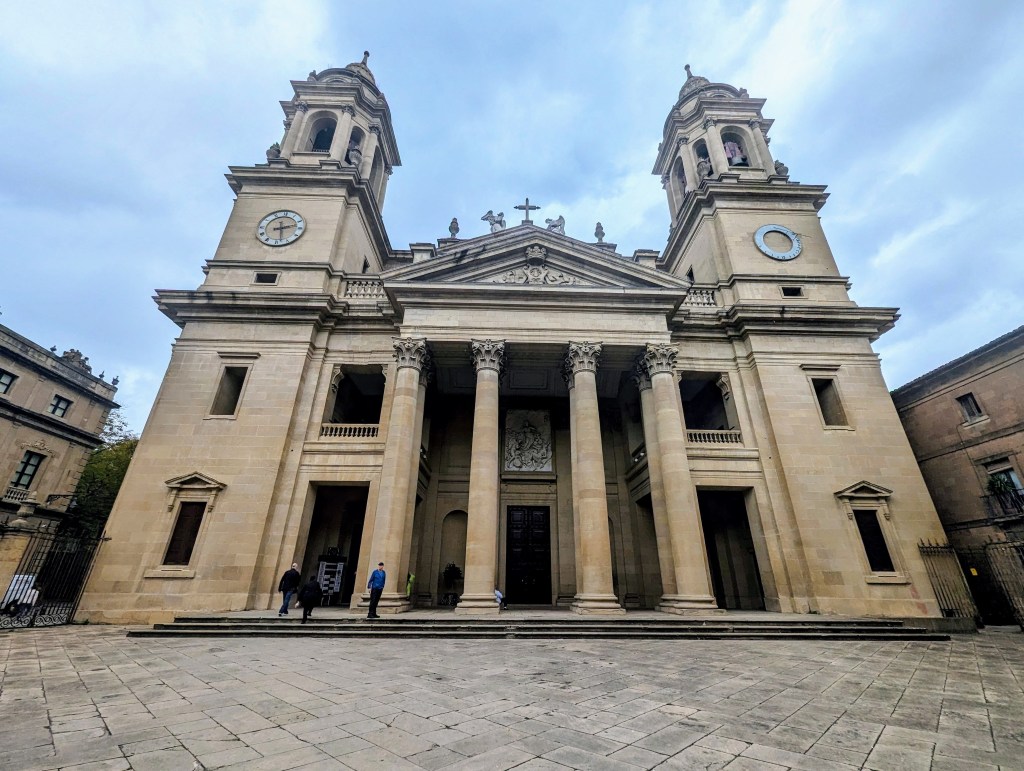
Of course we enjoyed some local beer (cerveza) and pintxos. Then we strolled around town including past the cathedral
Once it started to rain, we got in the car and headed to our next stop. We arrived in Santo Domingo de la Calzada in the late afternoon and were pleasantly surprised by every aspect. First, our Parador de Santo Domingo de la Calzada was, fittingly, a 12th century hospital dedicated to pilgrims of the Camino de Santiago. The exterior is not much to look at, but once through the doors, wow is all I can say!

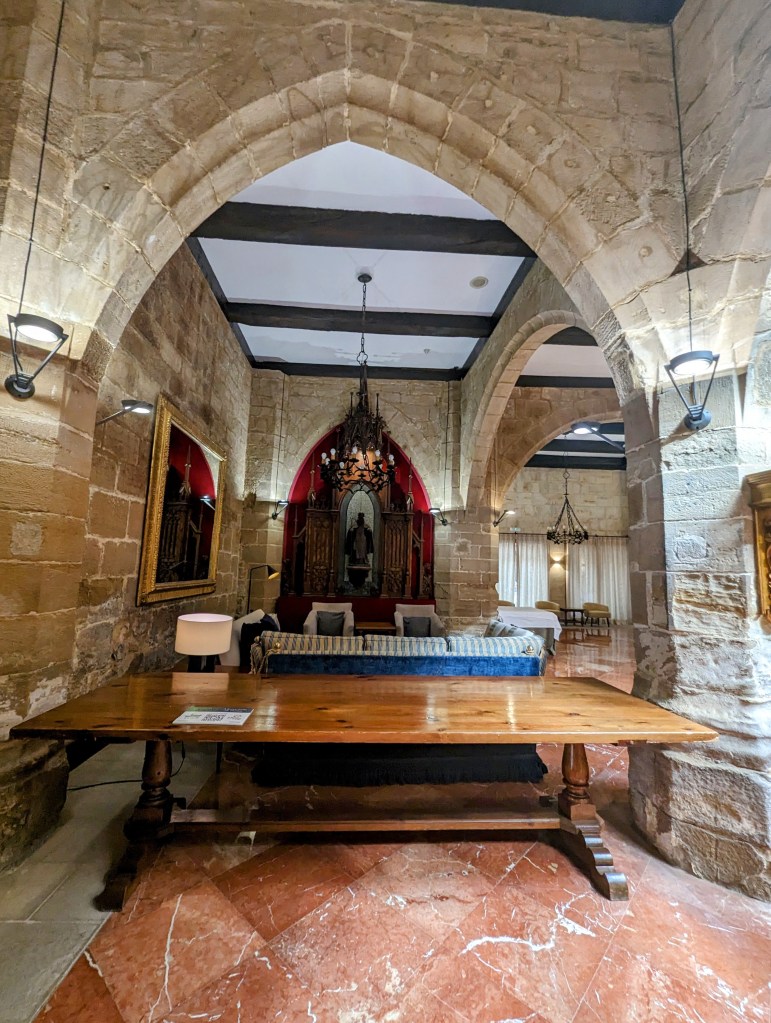
And our room opened out onto the square facing the cathedral.
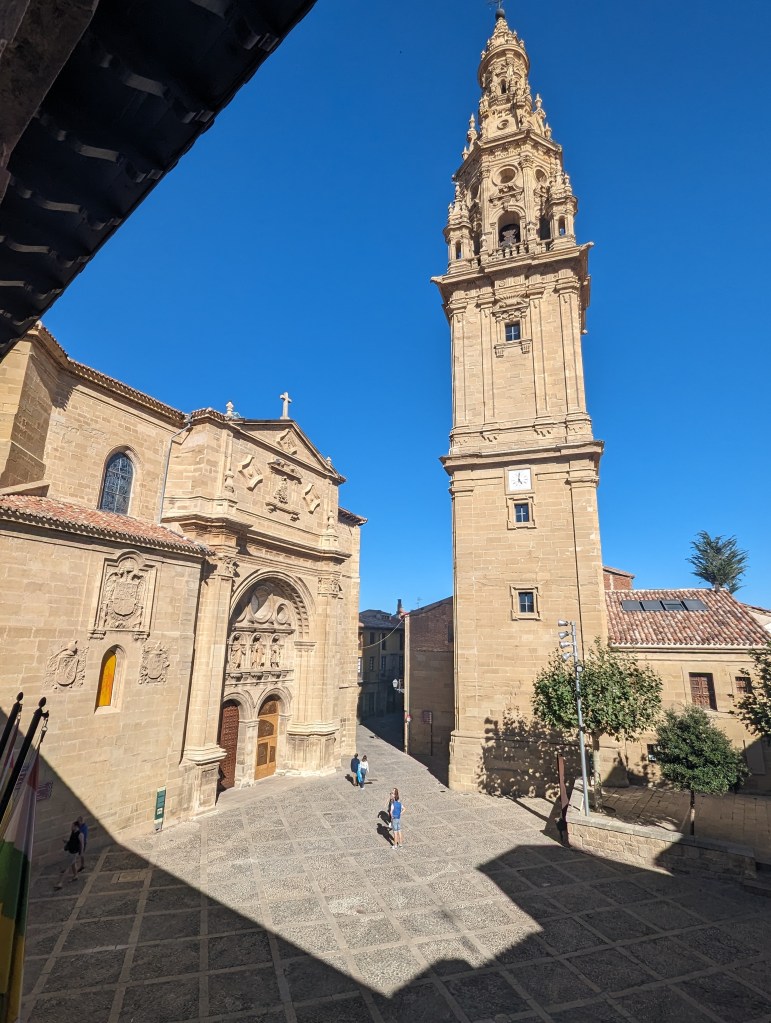
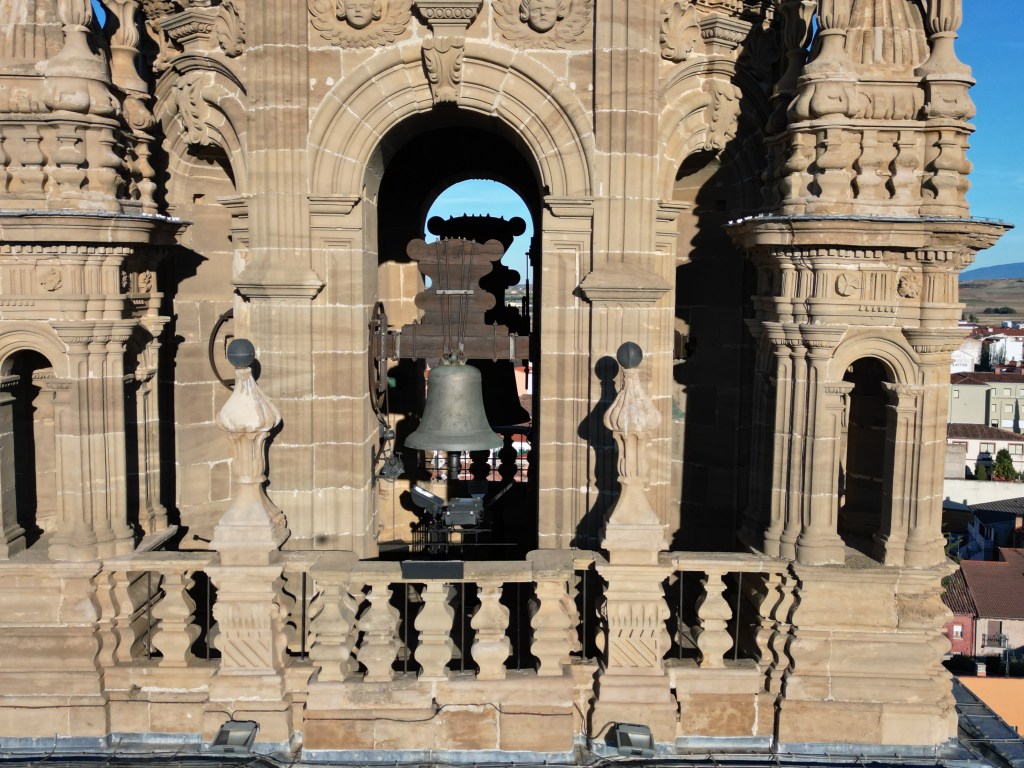
But most fun for us is that after all the very touristy places we had visited in Spain thus far, this finally felt authentic to us. Santo Domingo de la Calzada is a very small town whose main focus is on the many, many pilgrims that pass through daily year round. We were able to watch them start their treks every morning, passing through the square, and gathering in the evening after a long day of walking for a well deserved meal and rest.
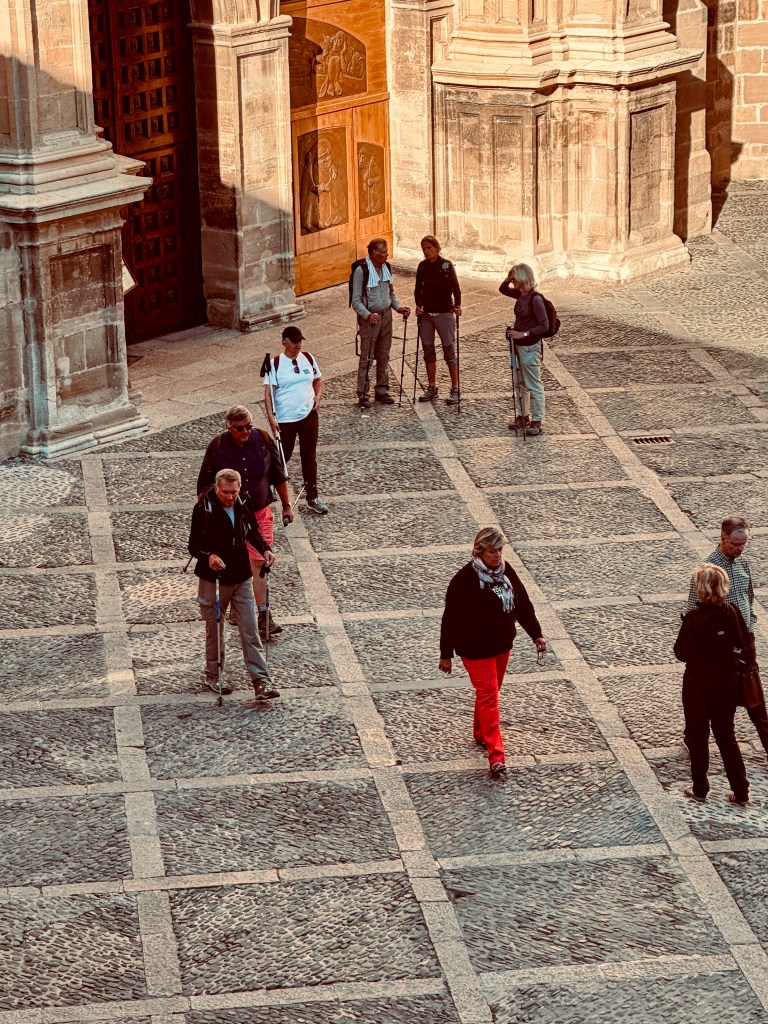
That night we watched Emilio Estevez’s The Way starring his father Martin Sheen. It was fun to see towns just visited and some yet to come. It also gave us and appreciation for the pilgrims’ journeys.
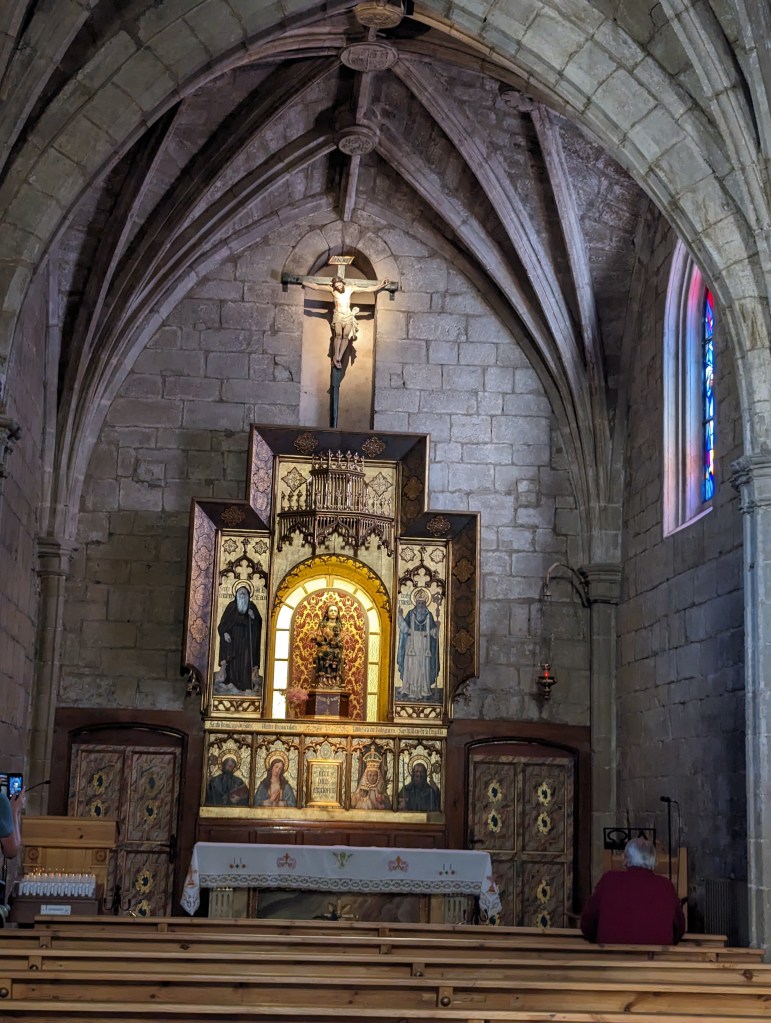
The next morning we popped into the little church across the square from the cathedral.
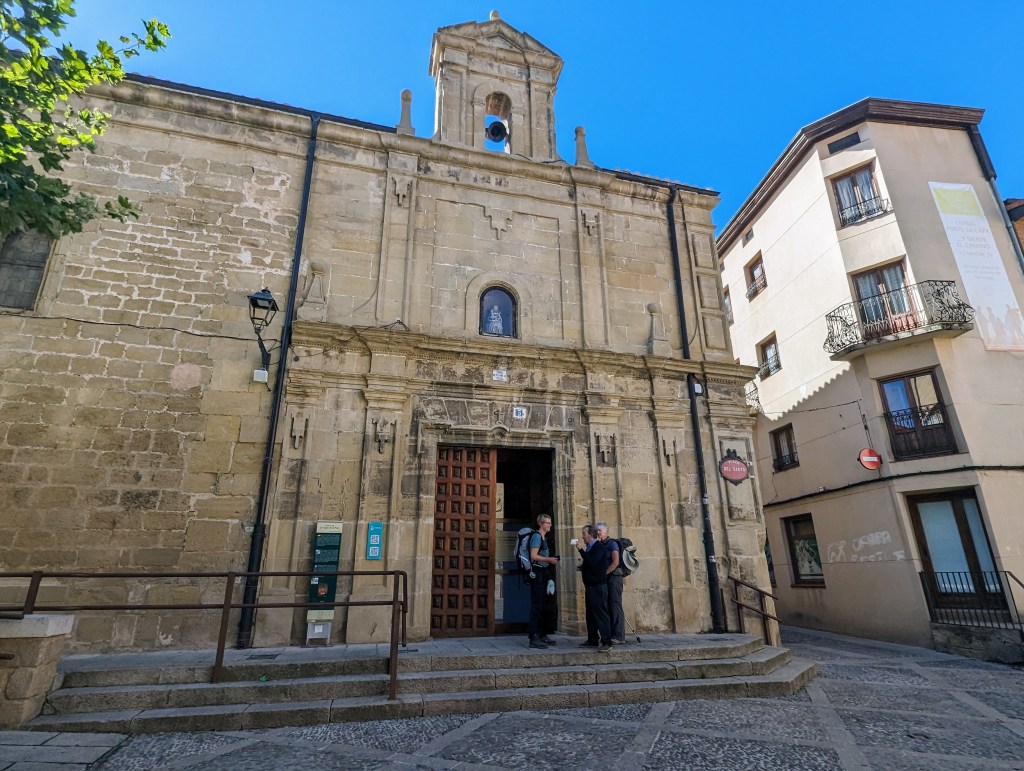
And when we came out there were pilgrims chatting with an old local.
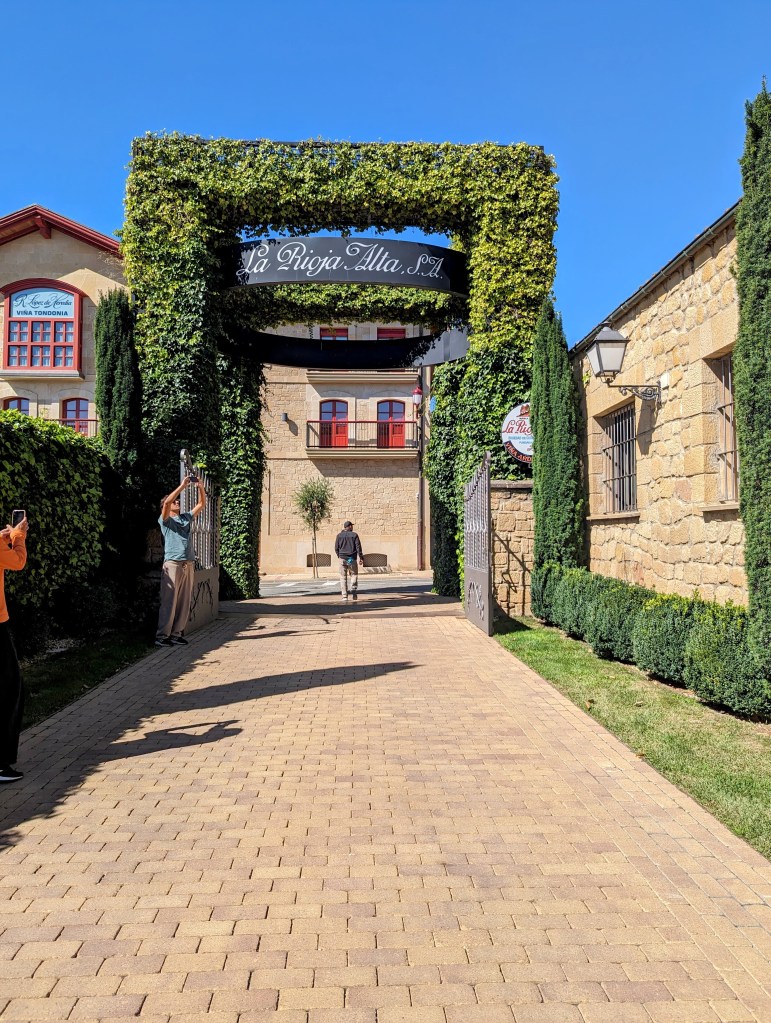
And the new day brought an entirely new experience for our journey. We were just south of wine country! So of course we had to spend the day visiting wineries and having tastings. First stop was Bodegas La Rioja Alta, a very upscale place indeed.
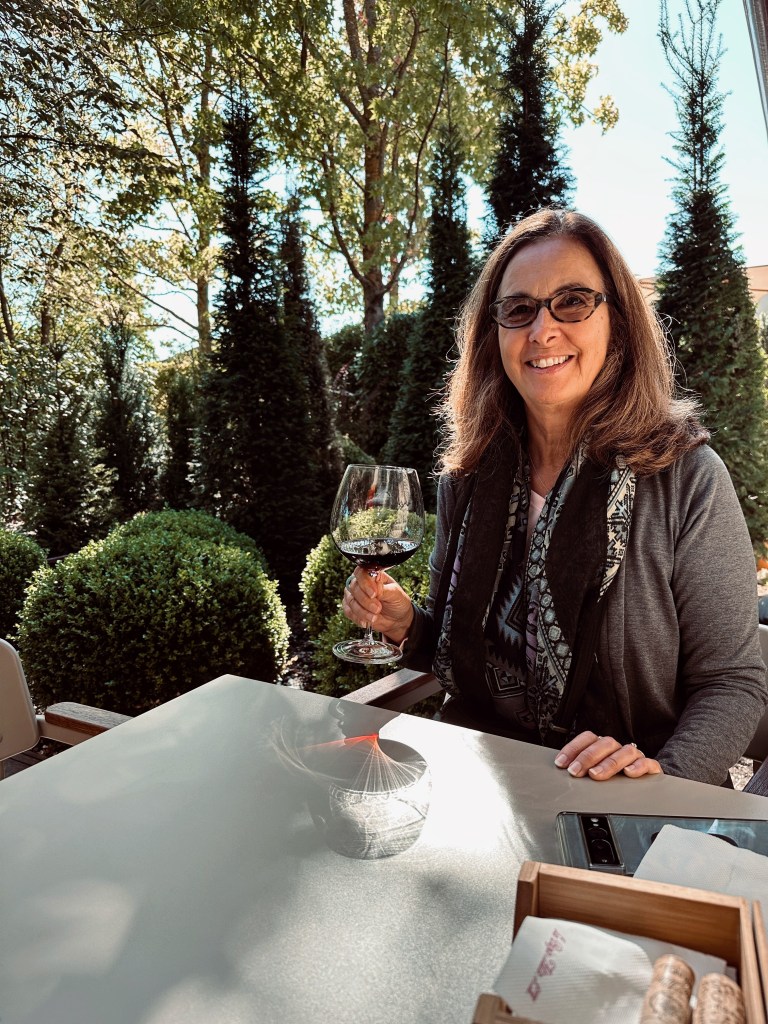
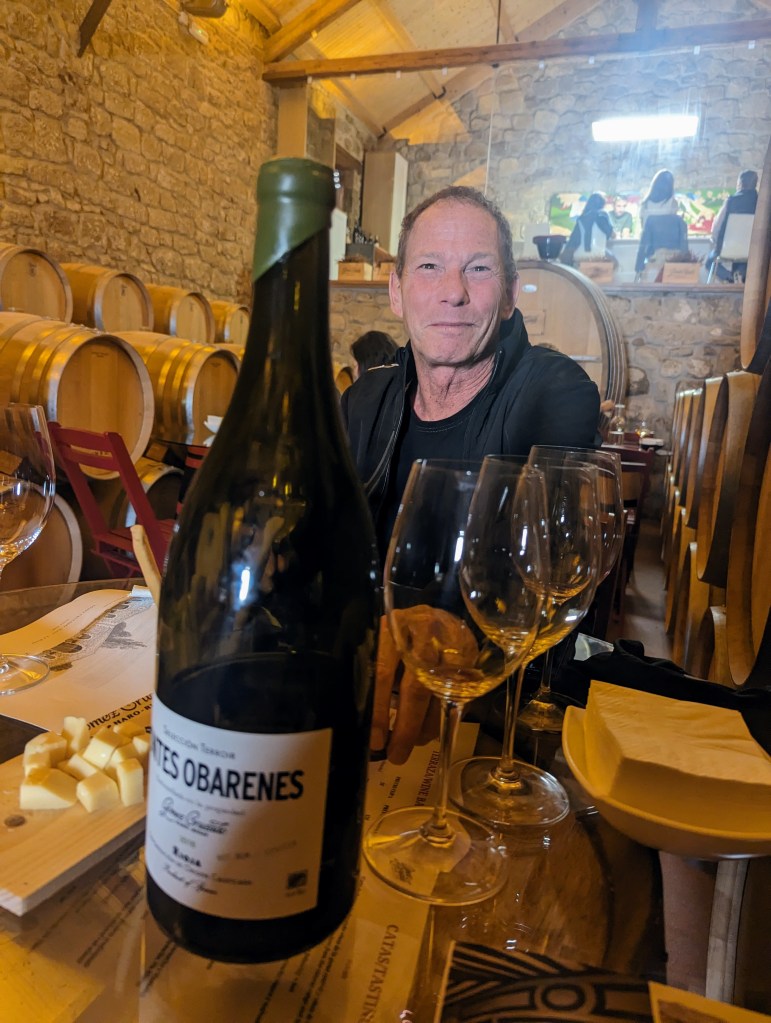
Next we visited Bodegas Gomez Cruzado, which we liked even more, had a wine tasting and stayed so long (they were busy), they brought out a charcuterie board to thank us for our patronage and patience!
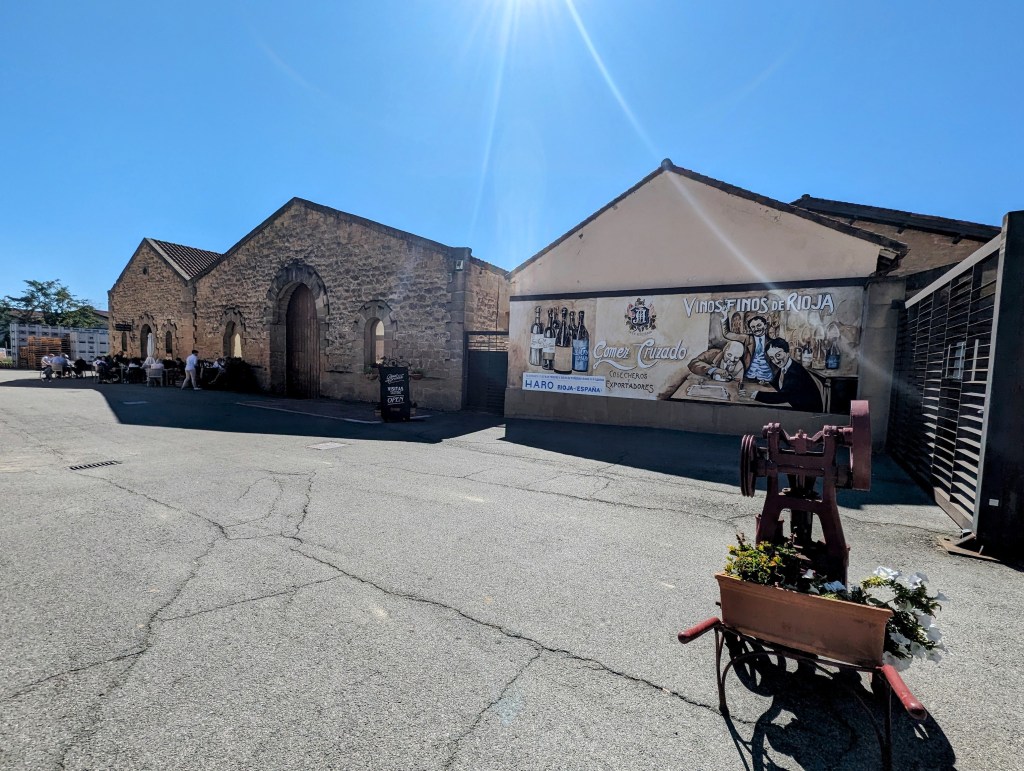
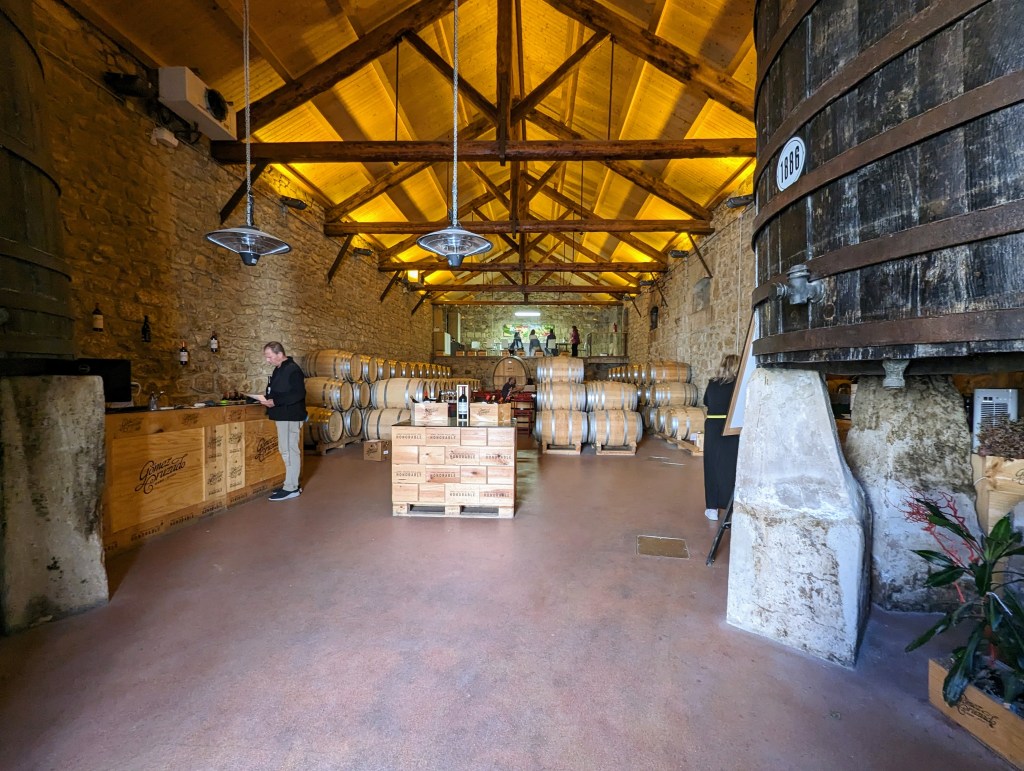
Bodegas Gomez Cruzado interior
Our third winery was Ramon Bilbao. Although we were impressed with the building, both inside and out:
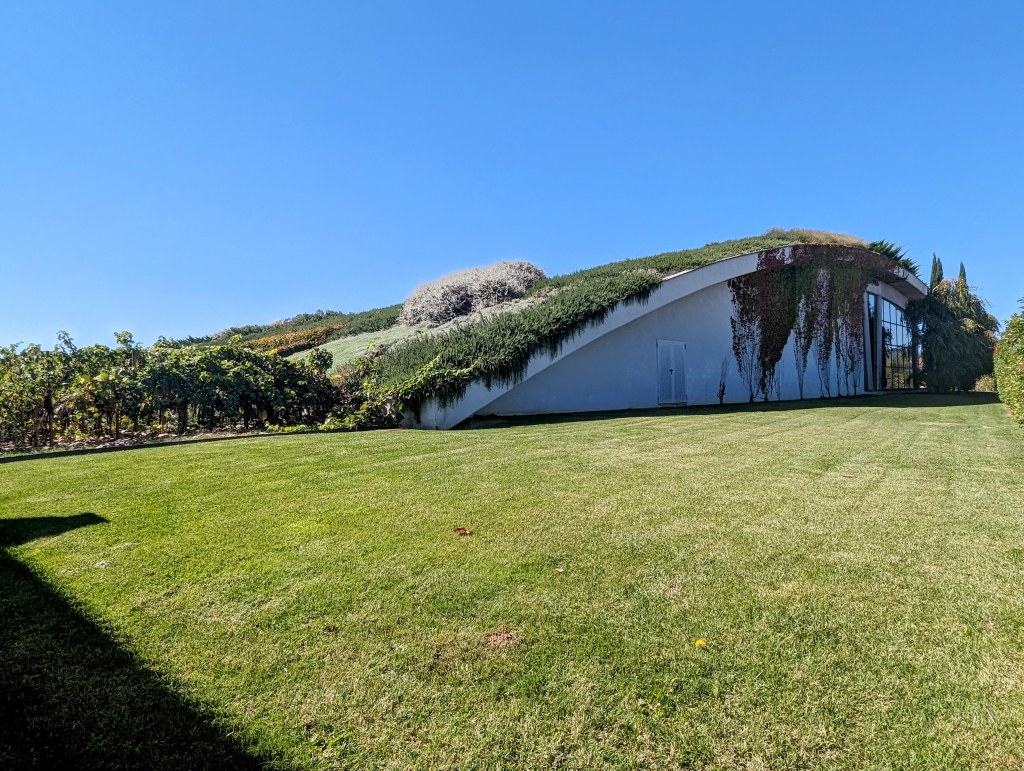
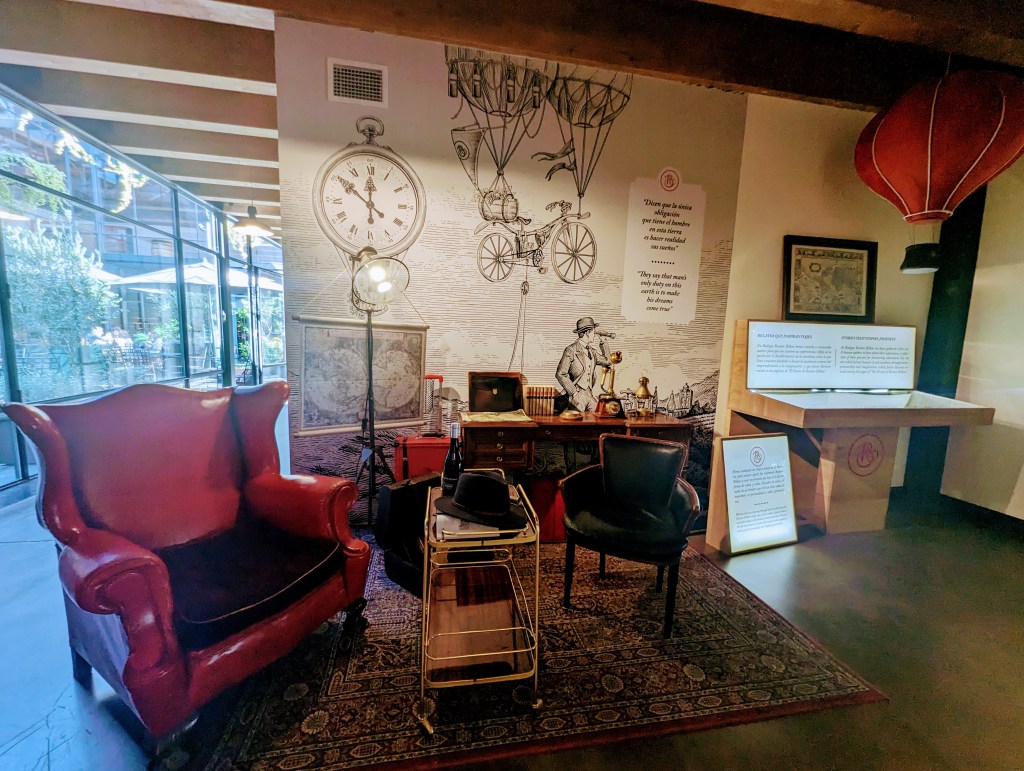
We got the feeling of a very commercial business, the staff were not hospitable, and we had already drunk enough wine, so we left without even tasting. The next day we were to find out that our instincts were correct.
When we got back to town, we needed to walk off some of the wine, so figured it was time to visit the cathedral. The cathedral itself was not so impressive, but it’s story is fascinating. Santo Domingo himself aided the pilgrims on their journey on the Camino de Santiago. When he died in 1109, he was buried in the local church, which has been rebuilt many times through the centuries and raised to cathedral status in the 13th century.
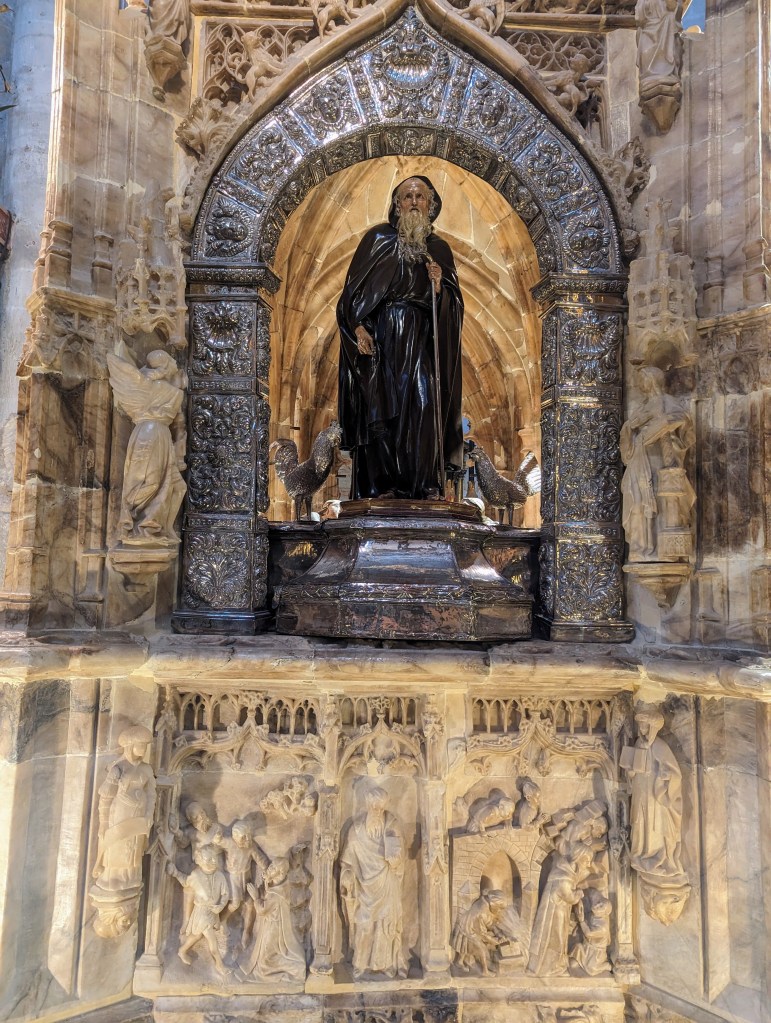
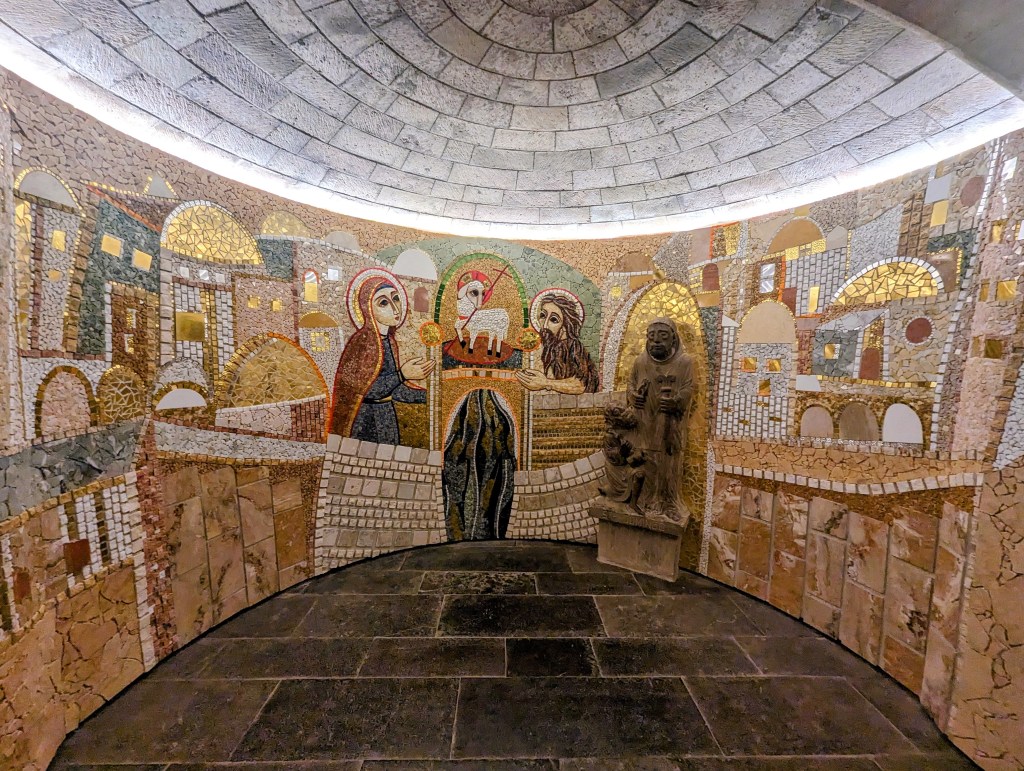
Restorations have continued right through the 20th century, giving the interior an interesting mixture of art. Mosaics in the crypt were commissioned for the millenial of the saint’s death in 2019.
A miracle is attributed to Dominic according to which two beheaded cooked chickens resurrected to testify in favor of a pilgrim wrongly accused of theft, who himself was resurrected after being hanged. A pair of descendants of the chickens are kept at all times in the choir loft of the cathedral. Other descendants are kept in the local pilgrimage refuge. Unfortunately, I failed to get a good picture of the chickens, who are replaced every few days.
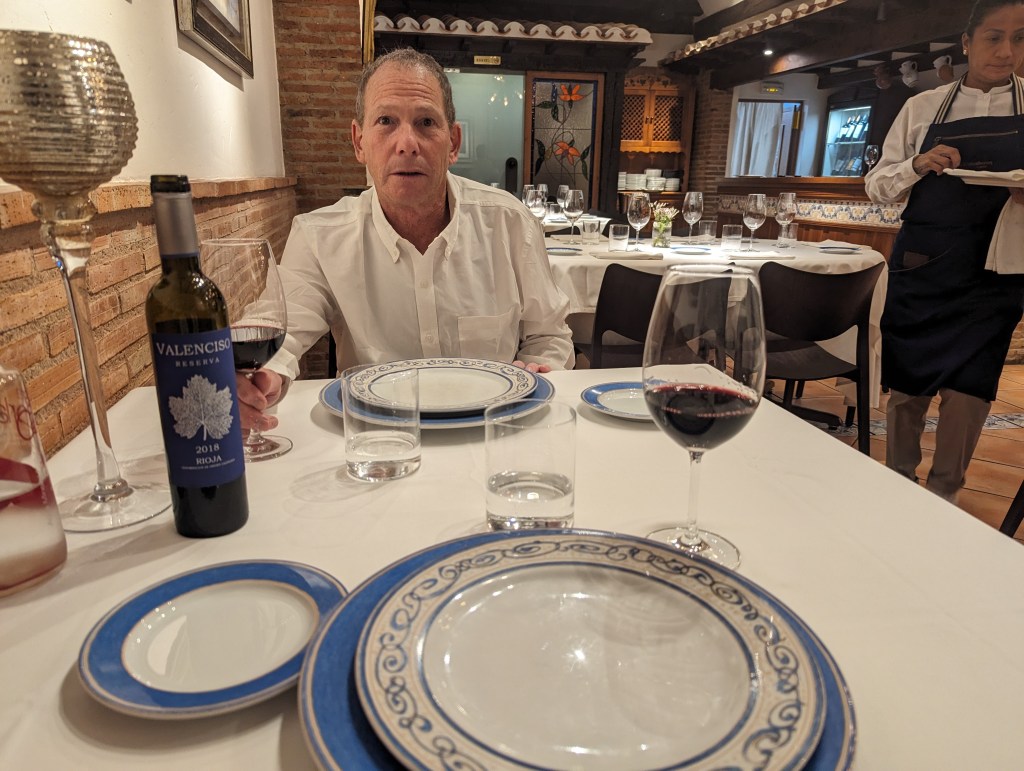
After resting up, we headed out to our first Michelin starred restaurant, which was literally steps away across the square. Stunning that such a small town can boast 2 Michelin star restaurants.
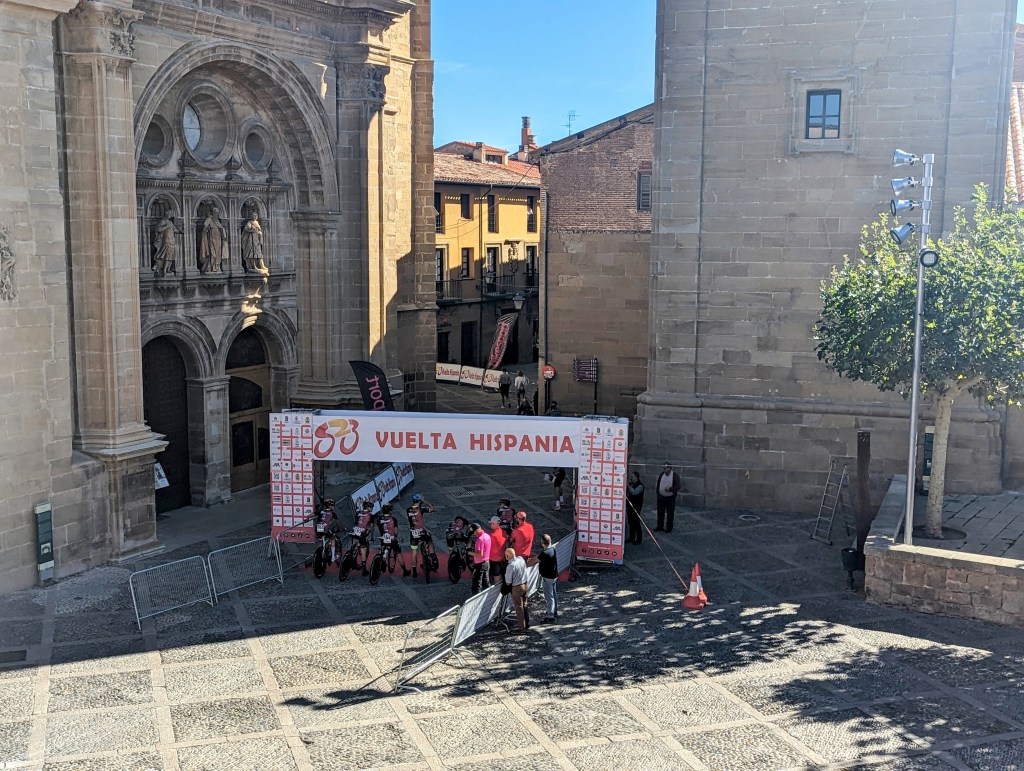
The next morning began with bicycle races starting in the square; I love this town!
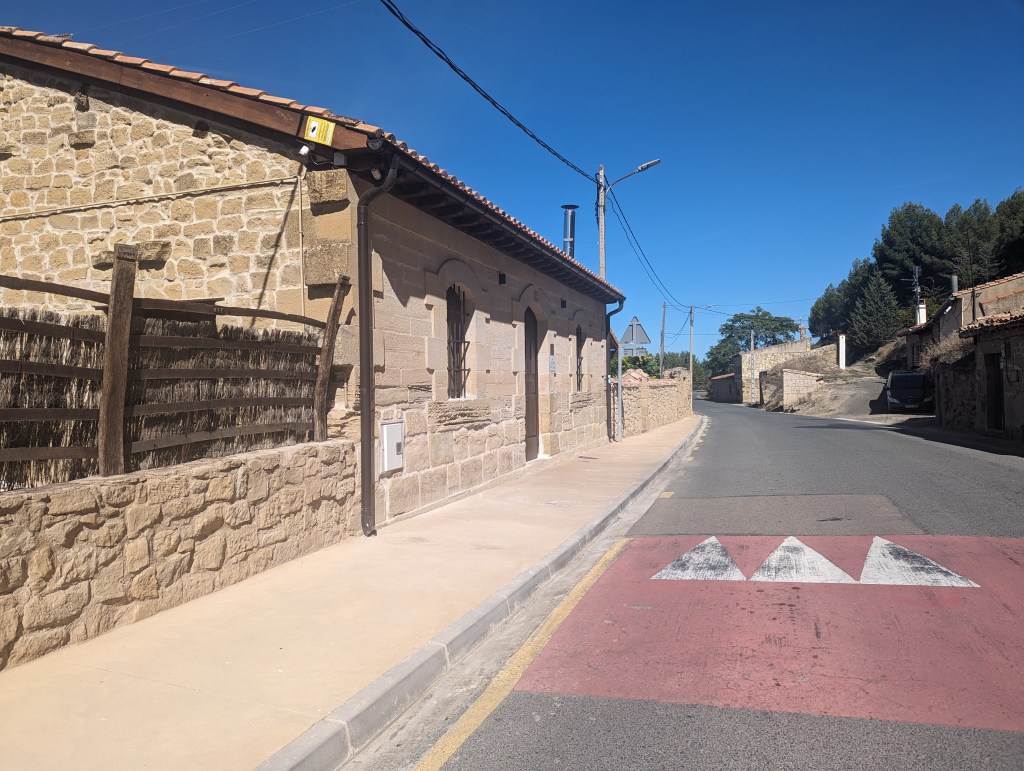
We had booked a private tour of a family owned bodega, so we set out. At first we drove right past it.
But after parking, we found it.
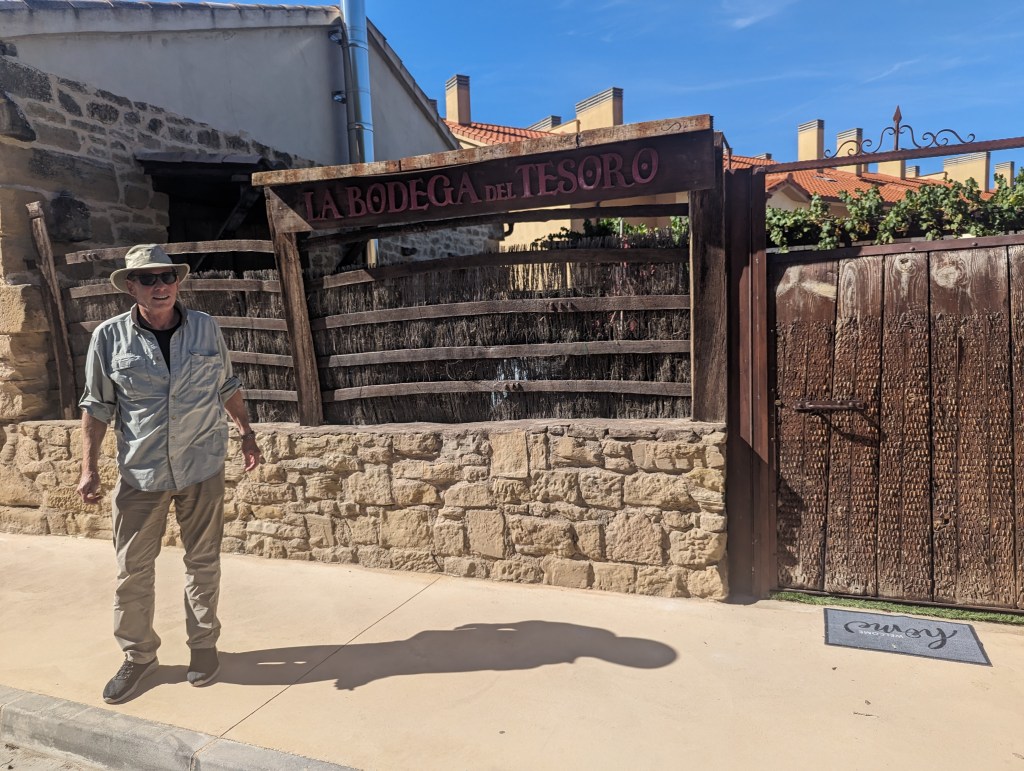
Inside was a hidden gem.
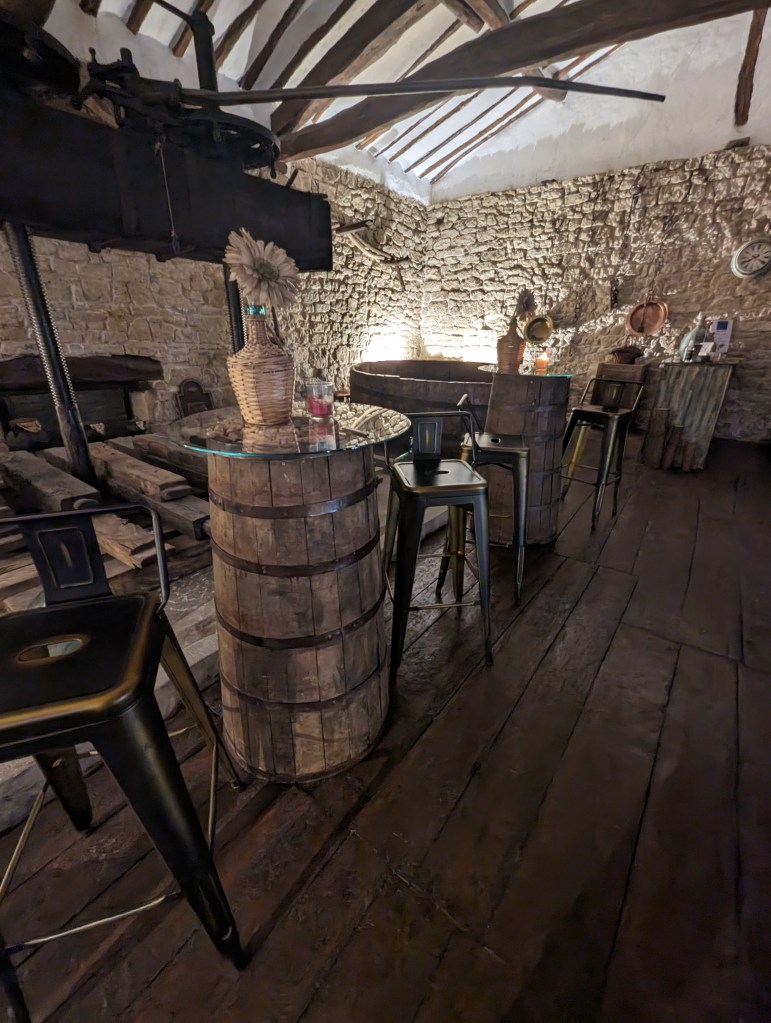
Our host Jose has restored this 1891 winery (Bodega) lovingly and beautifully. First he gave us a video and slide presentations explaining many things about the region and its history. First of all, although we are in La Rioja region of Spain, it is not synonymous with Rioja (no La) wine. The region is divided into 3 sections: Rioja Alta, Alavesa, and Baja. Rioja wine growing extends into the Basque and Navarra regions of Spain as well.
In the Medieval times, almost every family home made their own wine and kept it in caves under their homes along with their food. The caves are like cold storage. In the late 19th century with relative prosperity in the town, some of them opened as bodegas. In the mid 20th century when the American phylloxera devastated the French wine industry, the French turned to Spain for both grapes and wine. The Spanish wine industry grew. As it did, big corporations came in and bought up a lot of the small bodegas. Today over 90% of all Spanish wine is controlled by these big corporations, of which Roman Bilbao is one. Most of the family owned and run bodegas are literally collapsing into the ground.
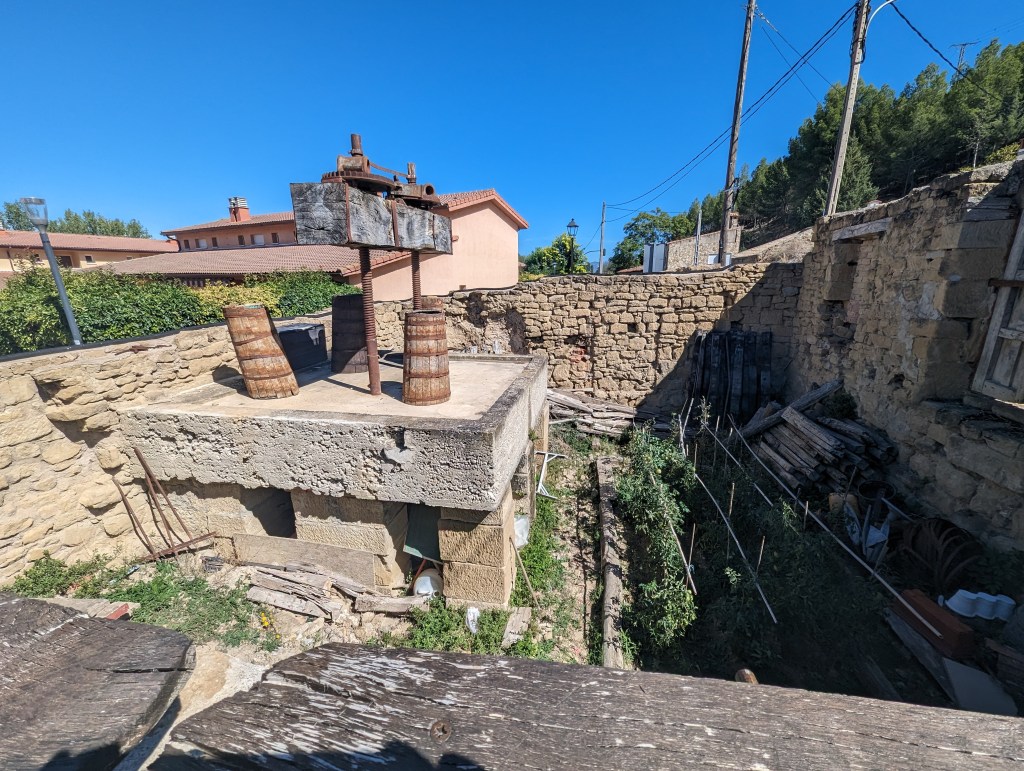
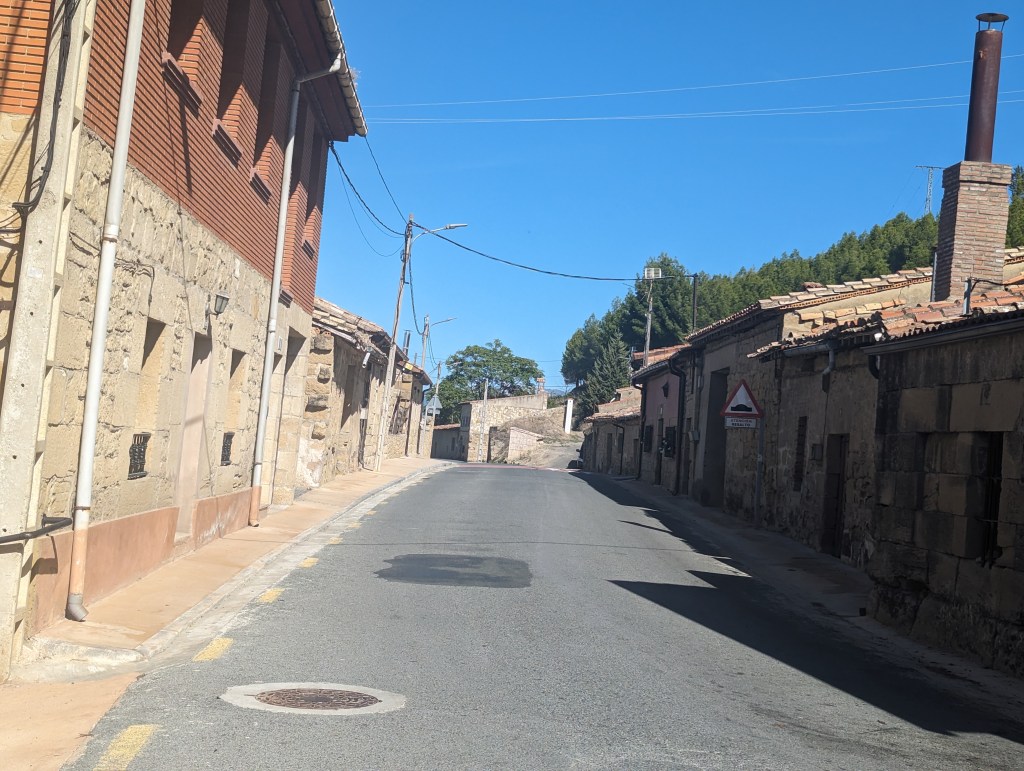
The town is now shrunk to only about 500 residents; their son goes to school in nearby city of Logrono, so sad.
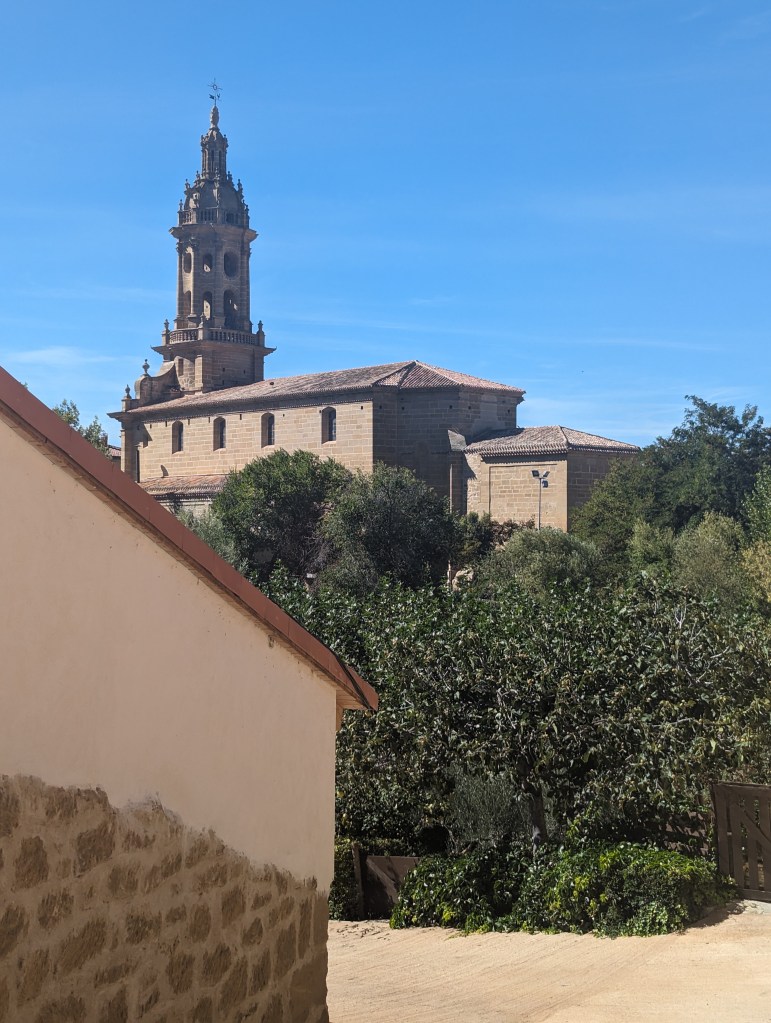
But despite its tiny size, it has the requisite church, built in the town’s better times.
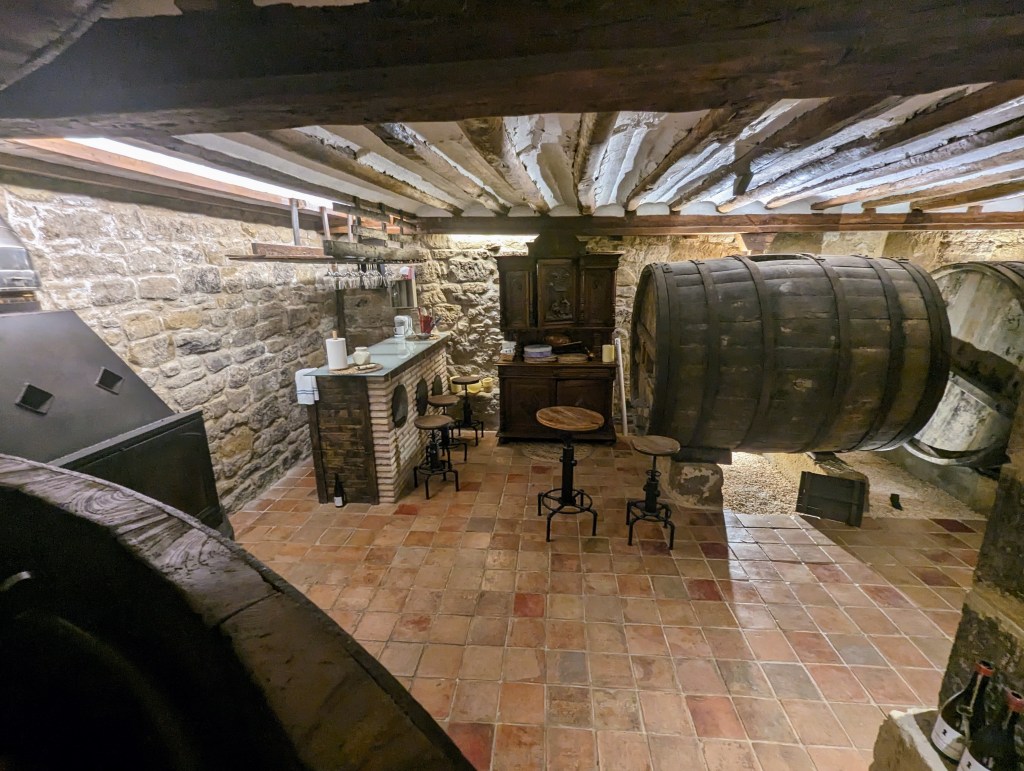
Jose has preserved 3 Bodegas: 2 adjacent and one across the street, trying to preserve the history of the town. He took us across the street to the cave there and served us a sample of his wine straight from the barrel.
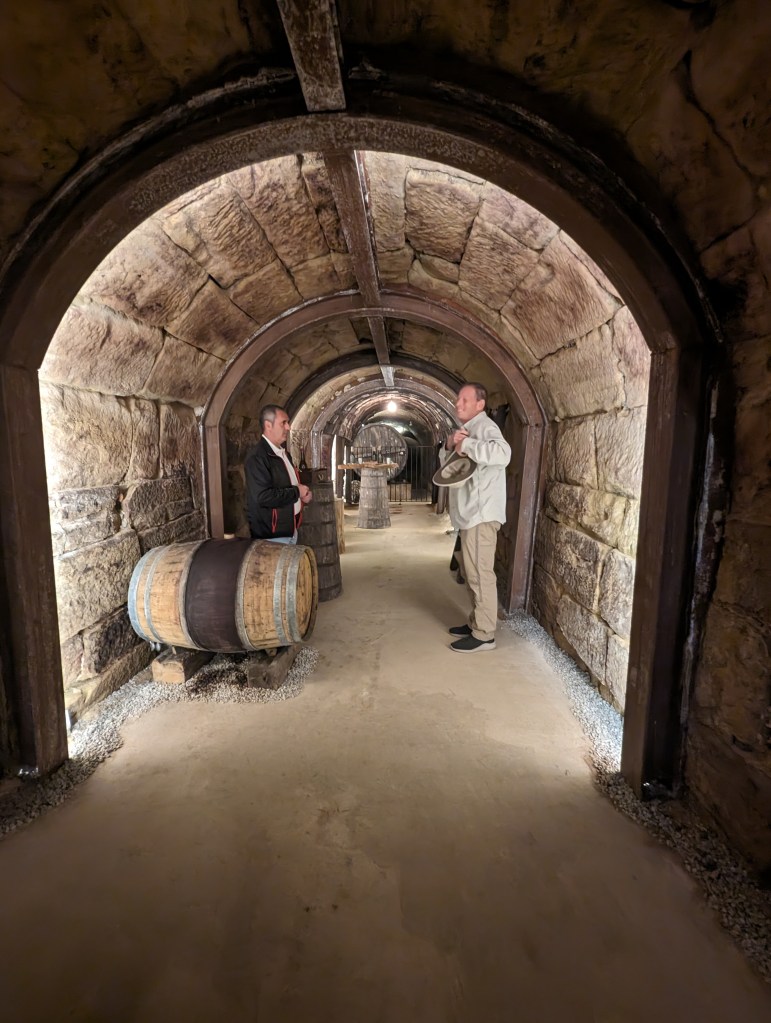
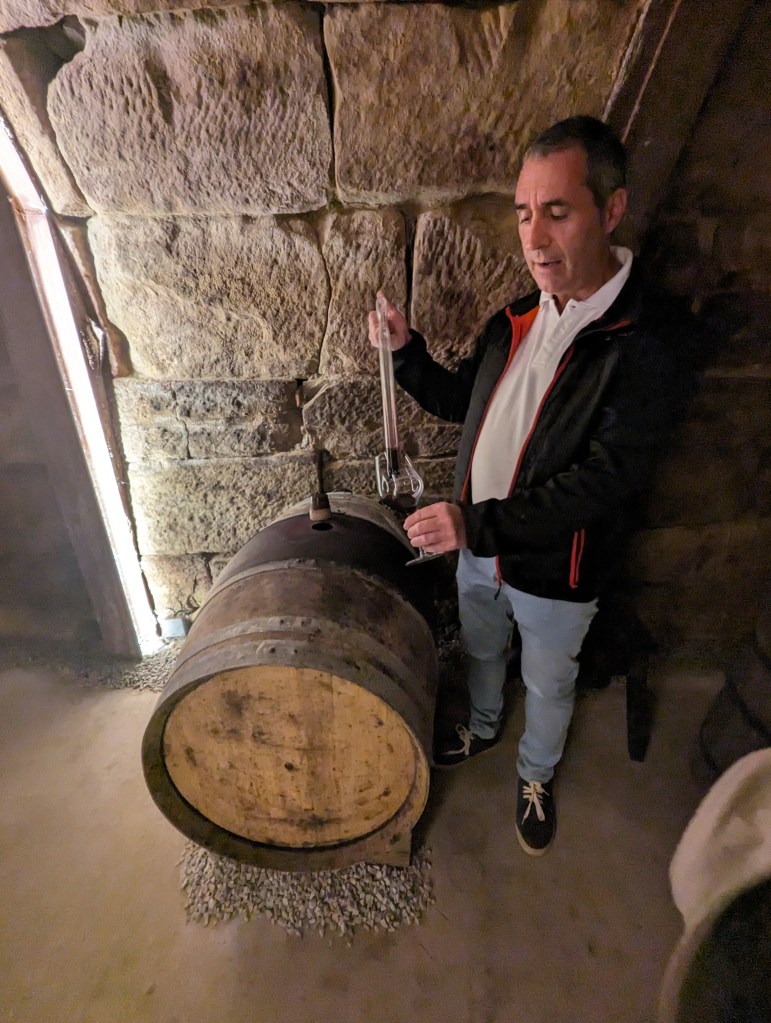

Jose also explained how the classic method of winemaking in Spain differed from that of France in that they used the whole grape including not only the skin, but also the stems, threw it all into a barrel, stomped it with their feet, used a technique called carbonic maceration, then pressed the grapes.
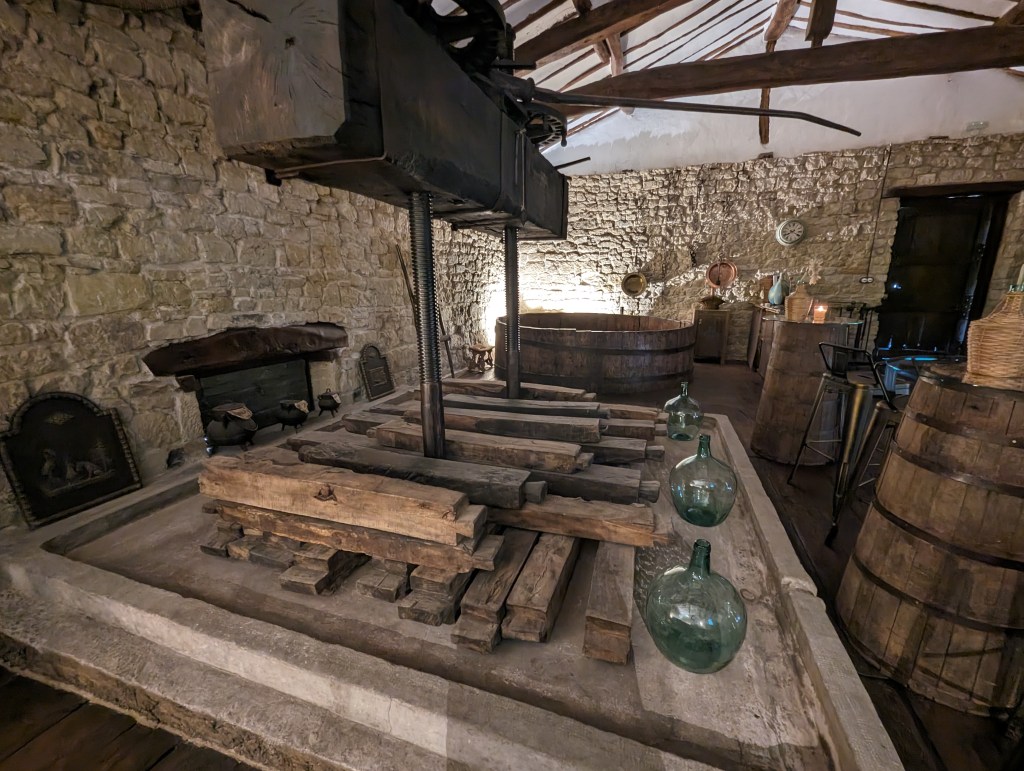
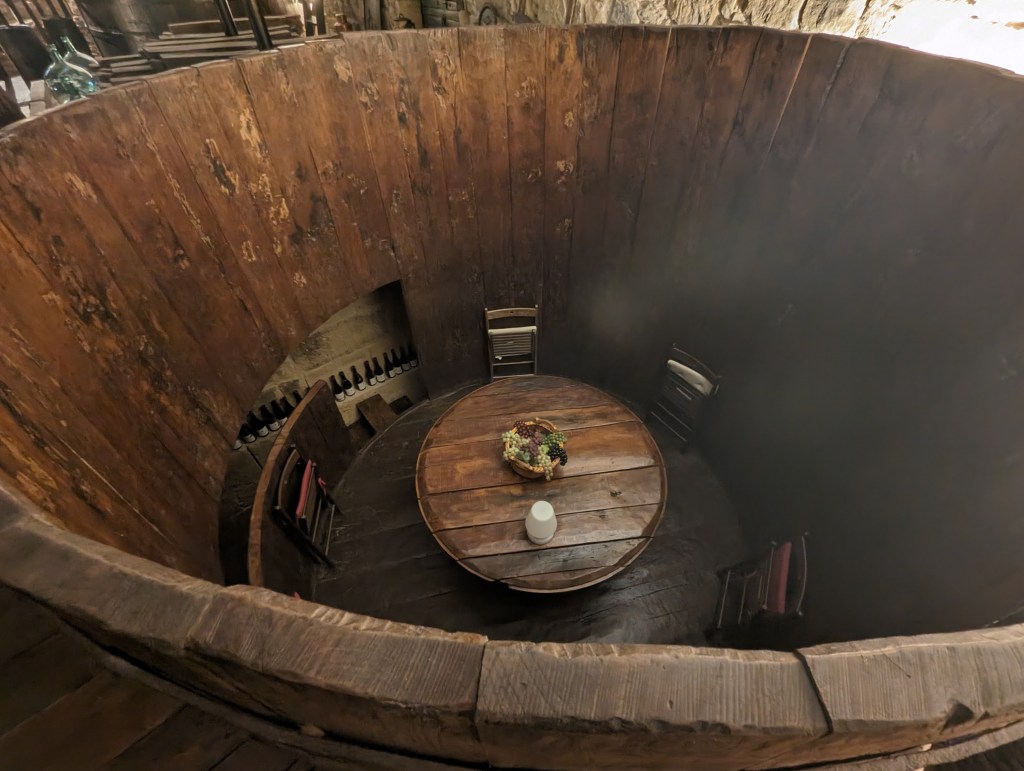
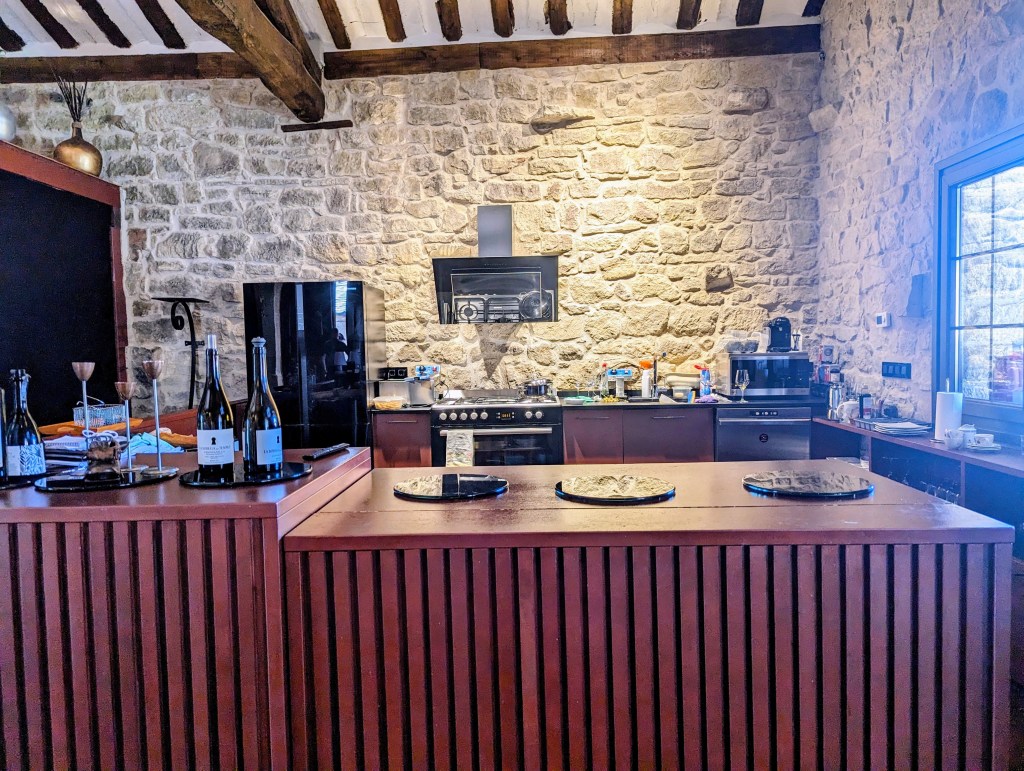
Jose’s wife was meanwhile preparing our lunch in her kitchen.
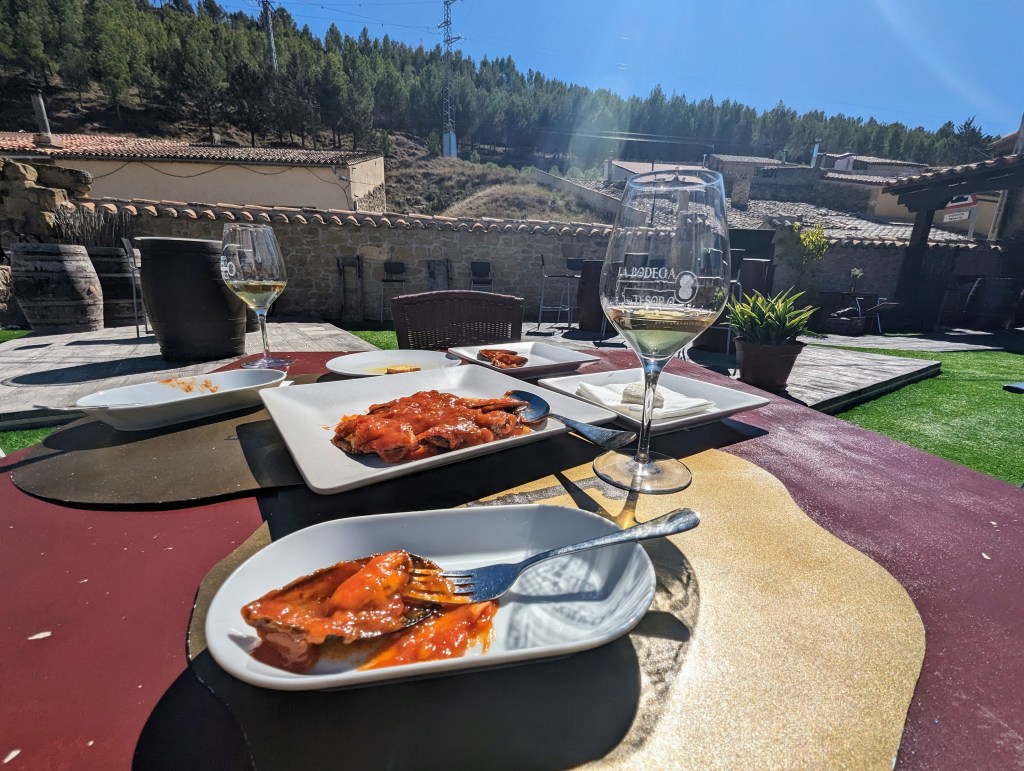
Our first course was served with a white wine out on the patio.
Then we were taken into the restored cave for lunch.
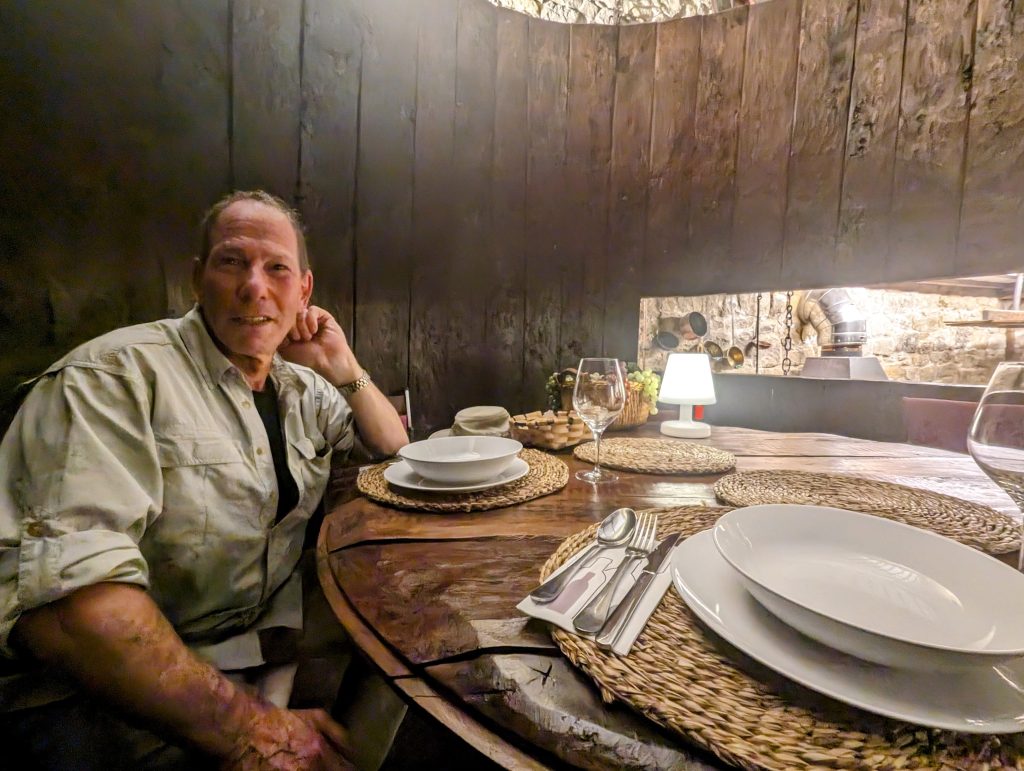

Second course was a delicious potato and sausage stew served with a red wine of 100% timpanelli, which is the most common grape in all the Rioja regions.

Next we were served tomatoes right from the home garden drizzled with balsamic reduction. And finally, baby lamb chops grilled on the fire below the barrel, accompanied, of course, with more red wine.
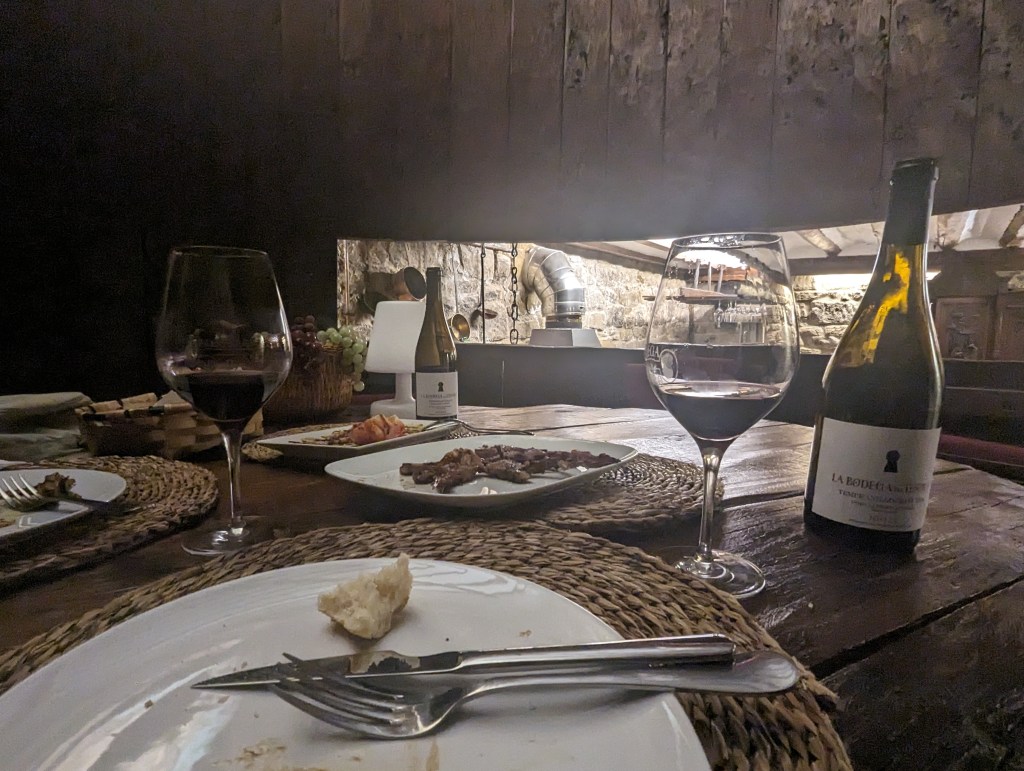
And finally, cheesecake and coffee, which we could not finish. We could barely walk out of there, we were so stuffed. We had a truly wonderful day.
The next morning it was with regret that we left Santo Domingo de la Calzada. As we drove along the Camino de Santiago, we were impressed with the number of pilgrims we passed, some older than we. It did not, however, entice us to make the trek ourselves; we were happy to be driving.
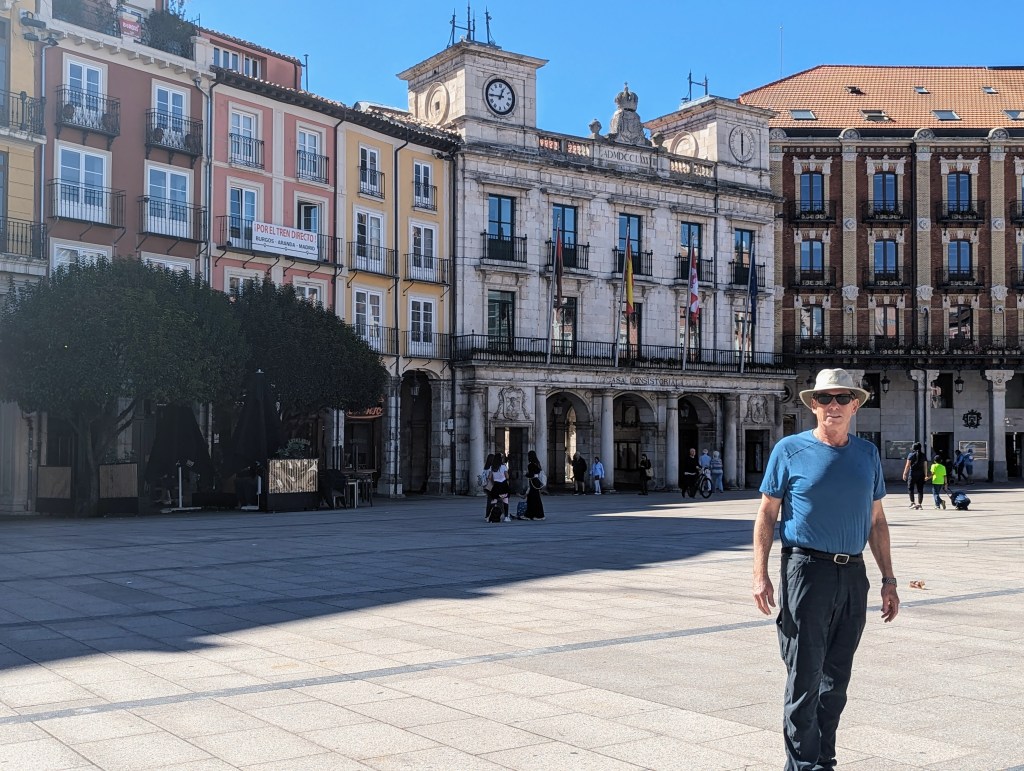
We stopped in the cute town of Burgos.
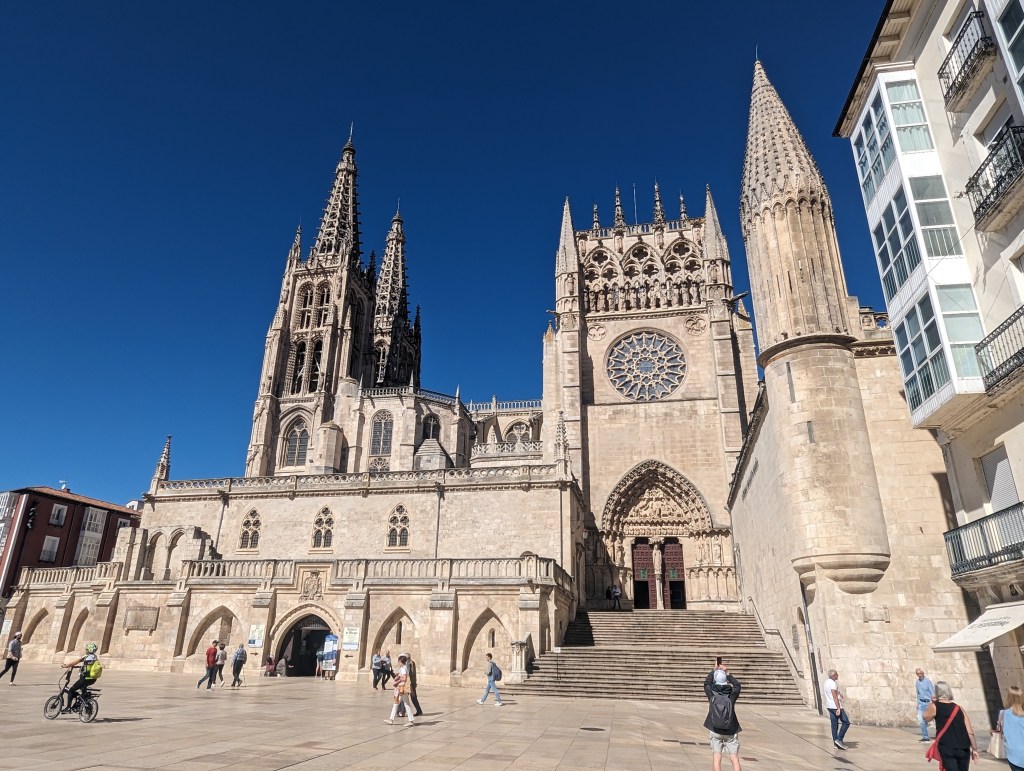
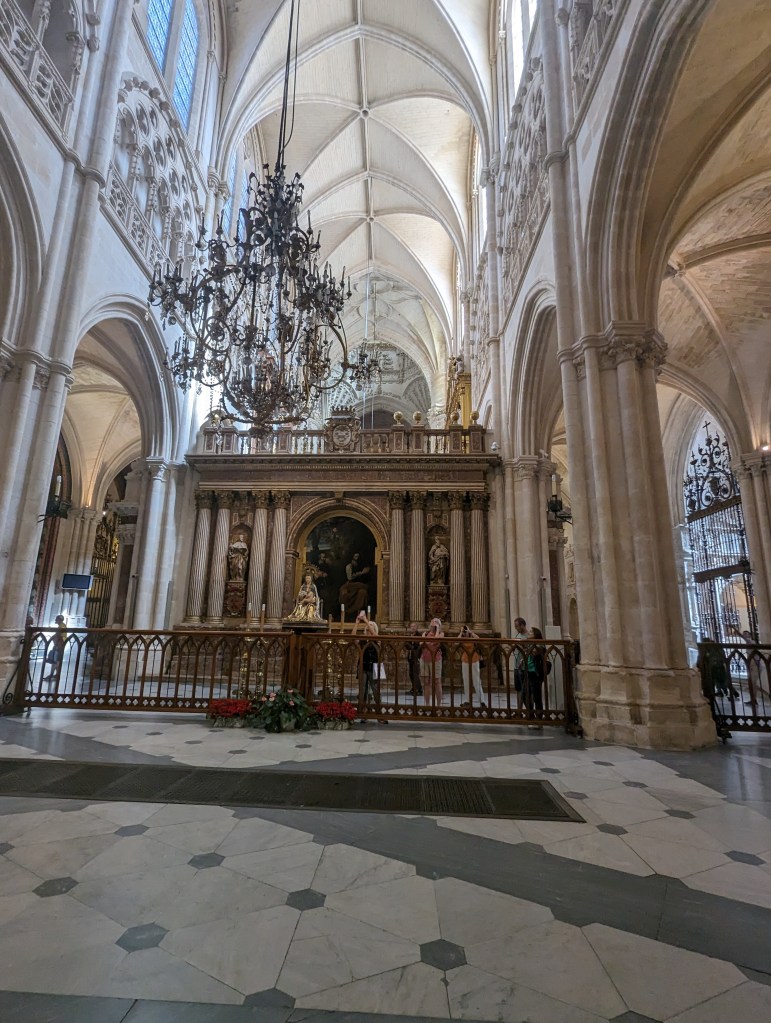
And, of course, the cathedral, of which construction began in the 13th century but was not completed until the 16th. It is a comprehensive example of the evolution of Gothic style.

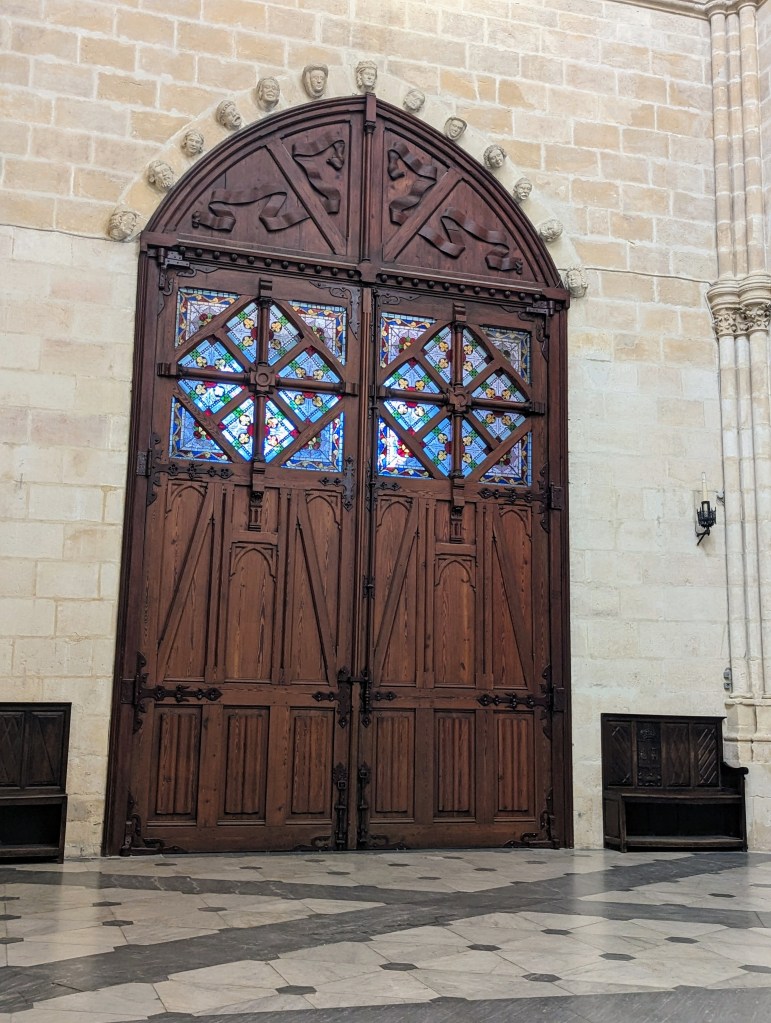
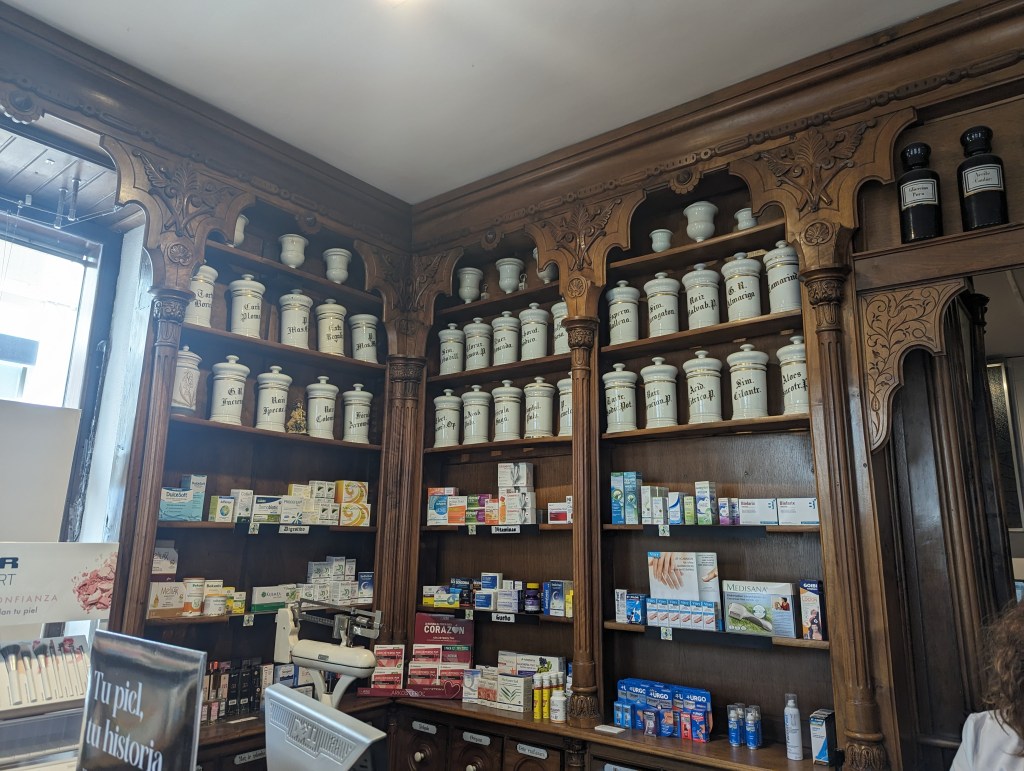
A quick stop at the pharmacy revealed that in Spain, even those are cute.
Our next stop on the Camino de Santiago was León. We had booked an Airbnb (time to do laundry). Yet again we had the most fortunate location.

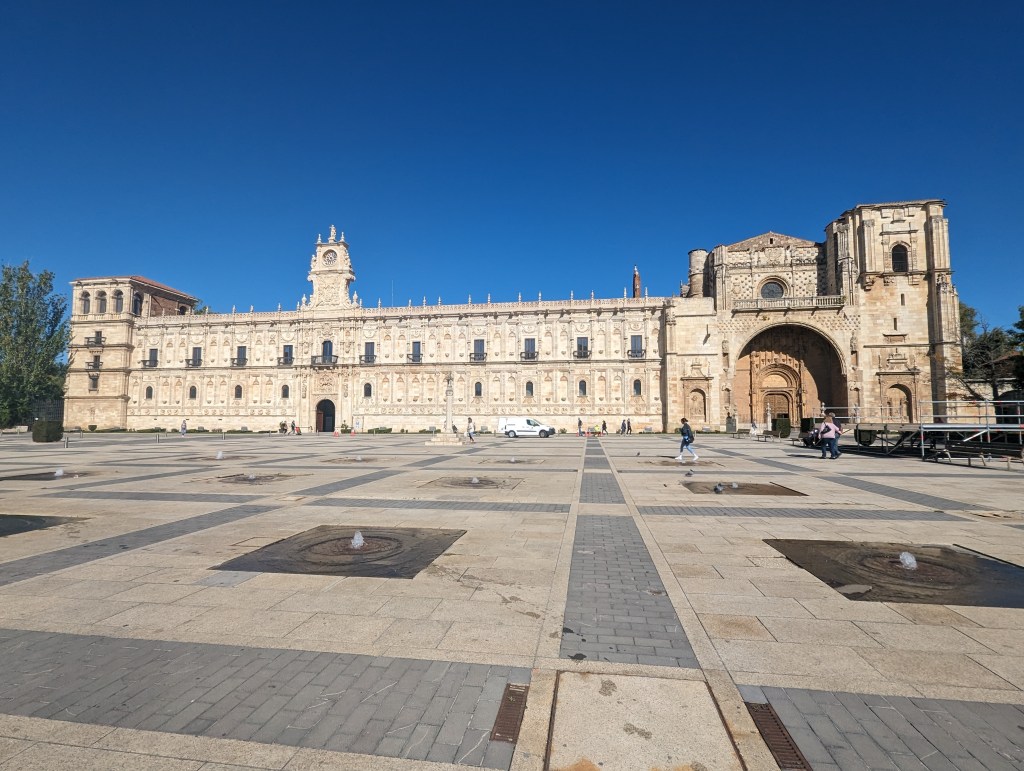
We had an early dinner in the square and called it a day. In the morning we set out to see the Convent of San Marcos, a part of which now is the Parador de León. It also houses the Museum of León, which unfortuanately was closed. It was originally built in the 12th century as a hospital and refuge for pilgrims on the Camino de Santiago. But it needed a complete overhaul in the 16th century when the convent and cloister were added as well as a palace. Construction and renovation continued through the 18th century. Today this parador is one of the most important monuments of the Spanish Renaissance.
We then doubled back to the Old Quarter for lunch followed by a visit to Casa Botines, an early work of Gaudi prior to his masterpieces in Barcelona. It was completely constructed in 10 months. It was first to incorporate his genius innovations such as steel columns holding up beams rather than just using supporting walls, thus allowing an open space. Other innovations include how he used interior open spaces (like tiny vertical courtyards) and windows to increase light and airflow throughout and gutters draining to holding tanks to capture water for the occupants’ use.
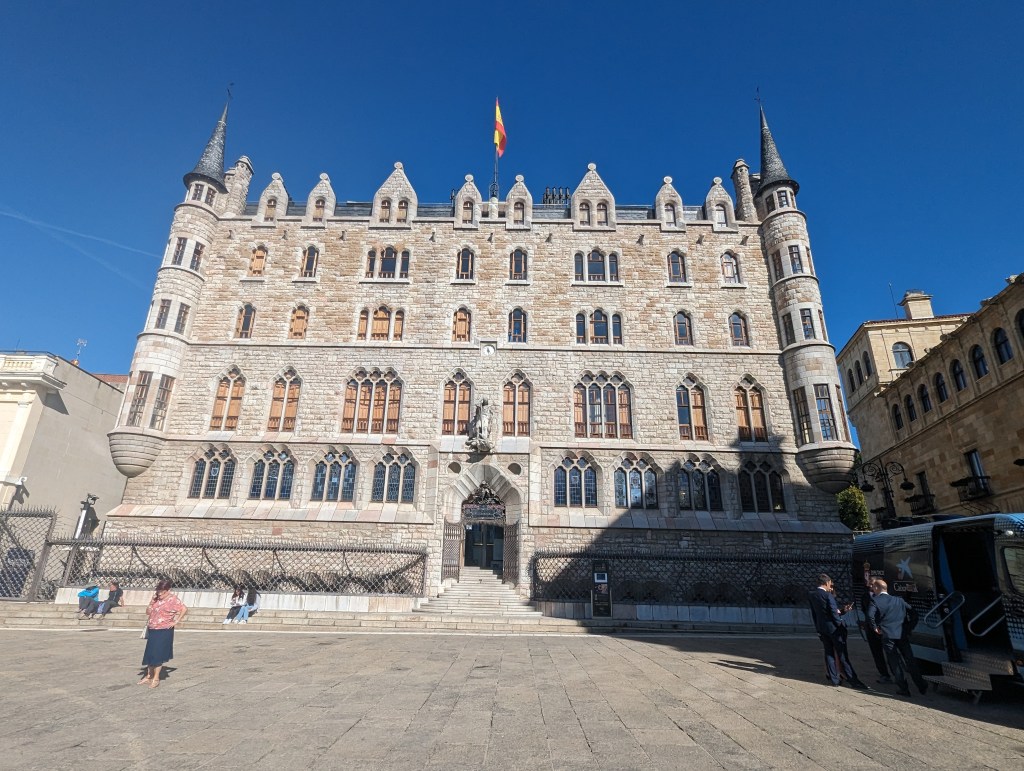
It was built for the main floor to be used to sell expensive imported textiles to the new bourgeoisie in town, the basement its warehouse, homes for his 2 benefactors’ families on the next 2 floors, and 12 more apartments above. It has been restored and a museum since 1996.

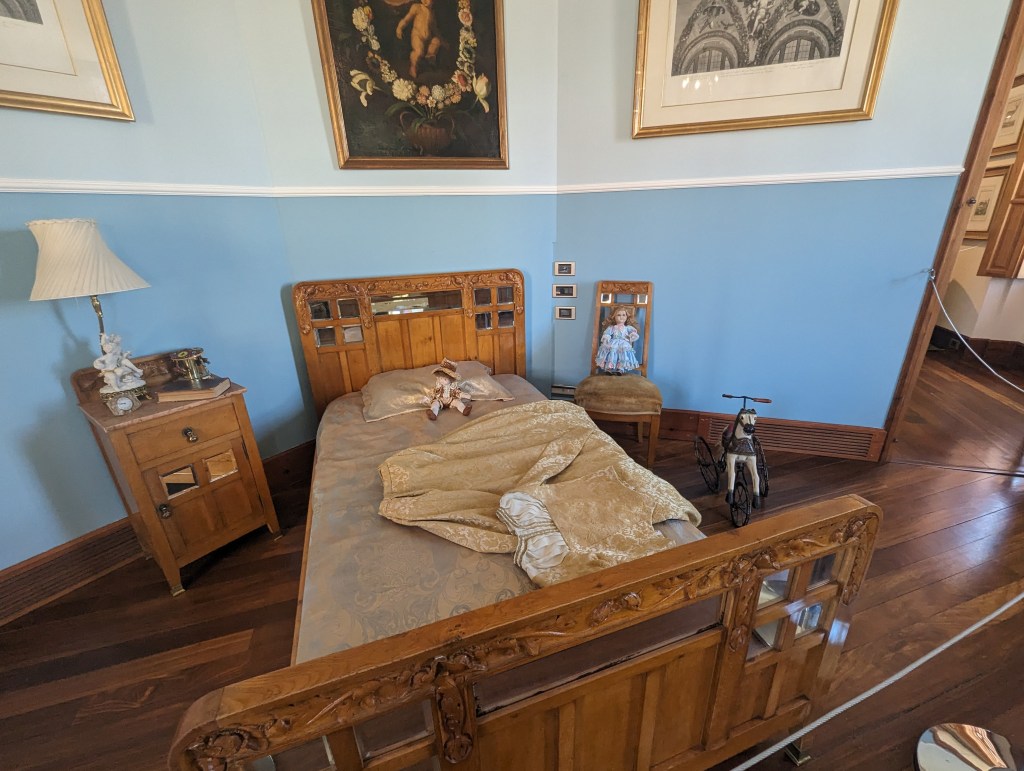
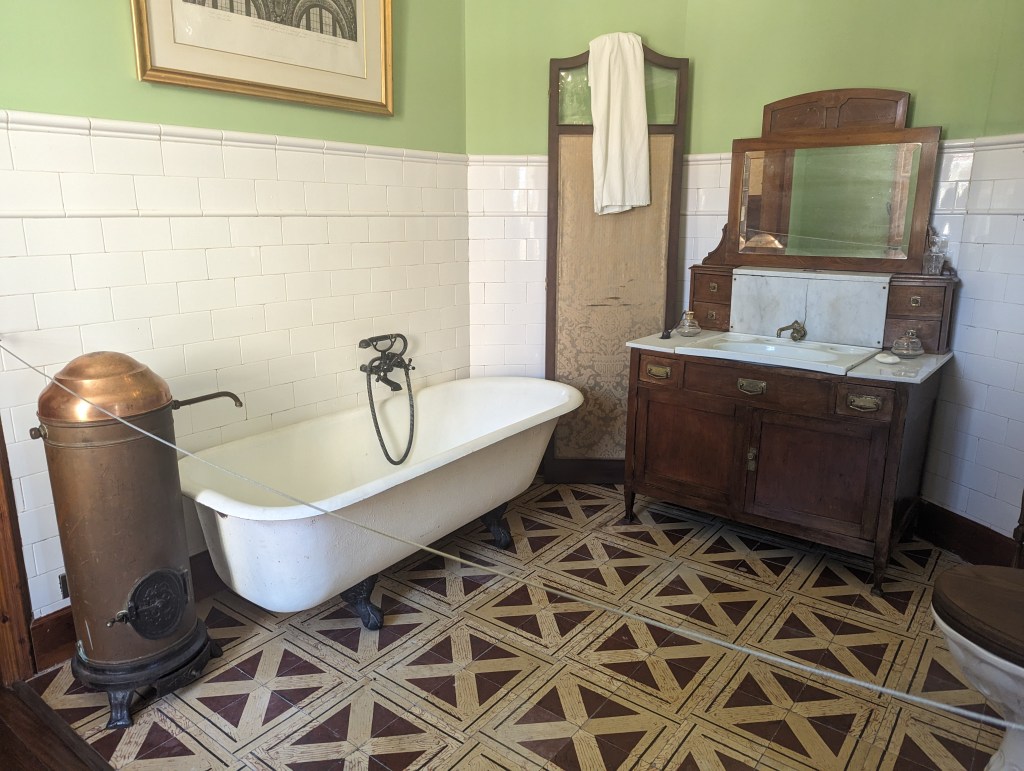
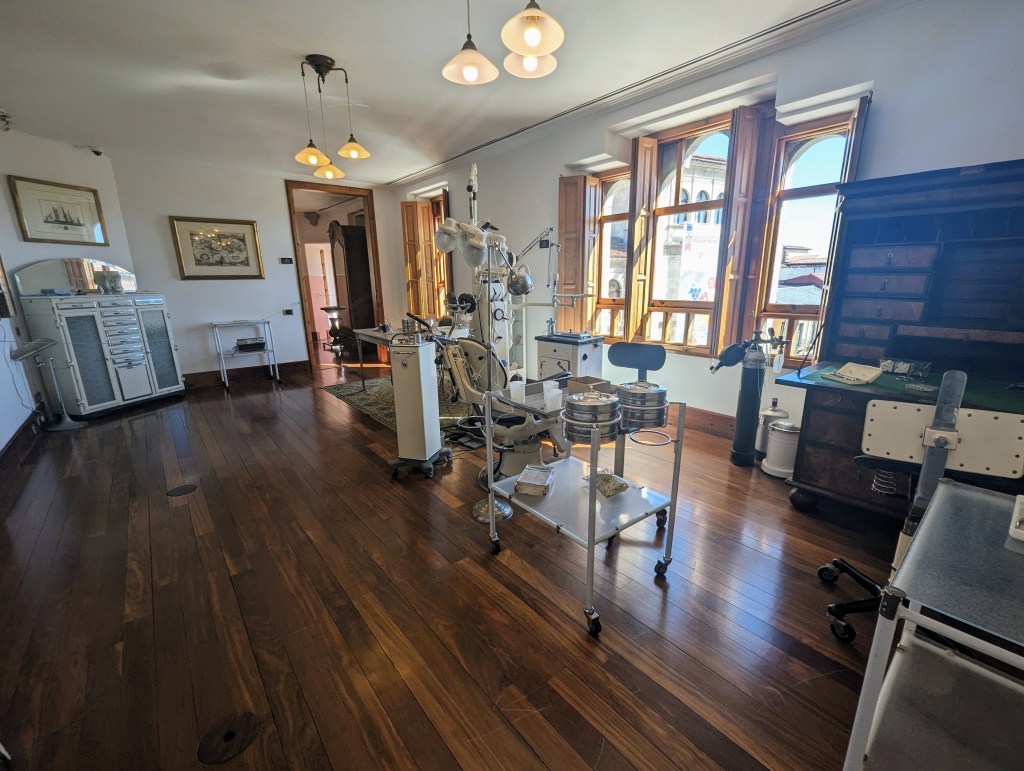
Let me digress just a moment for an aside at this point. Spanish people must be very conscious of their dental care. We have been amused how on the main streets of every city we have visited in Spain so far, no matter how large or small, there are dental offices that include orthodontics and veneers. Some have several. We are no longer concerned with what to do if a dental emergency should arise, lol.
After we left Casa Botines, it was time for the cathedral.
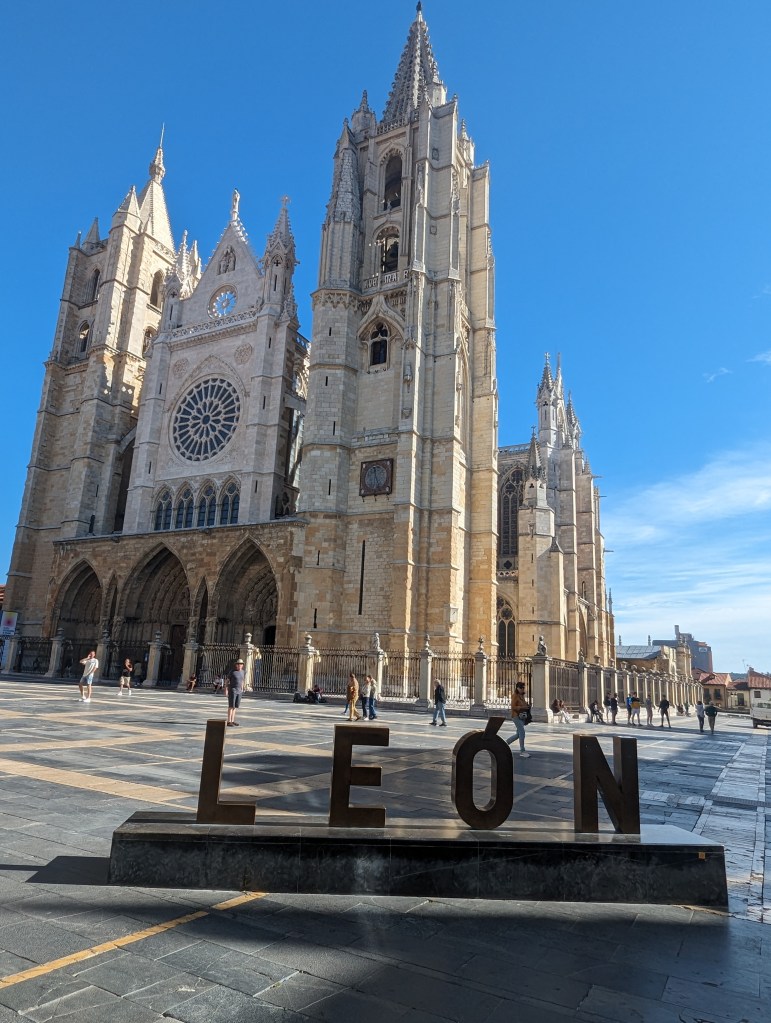
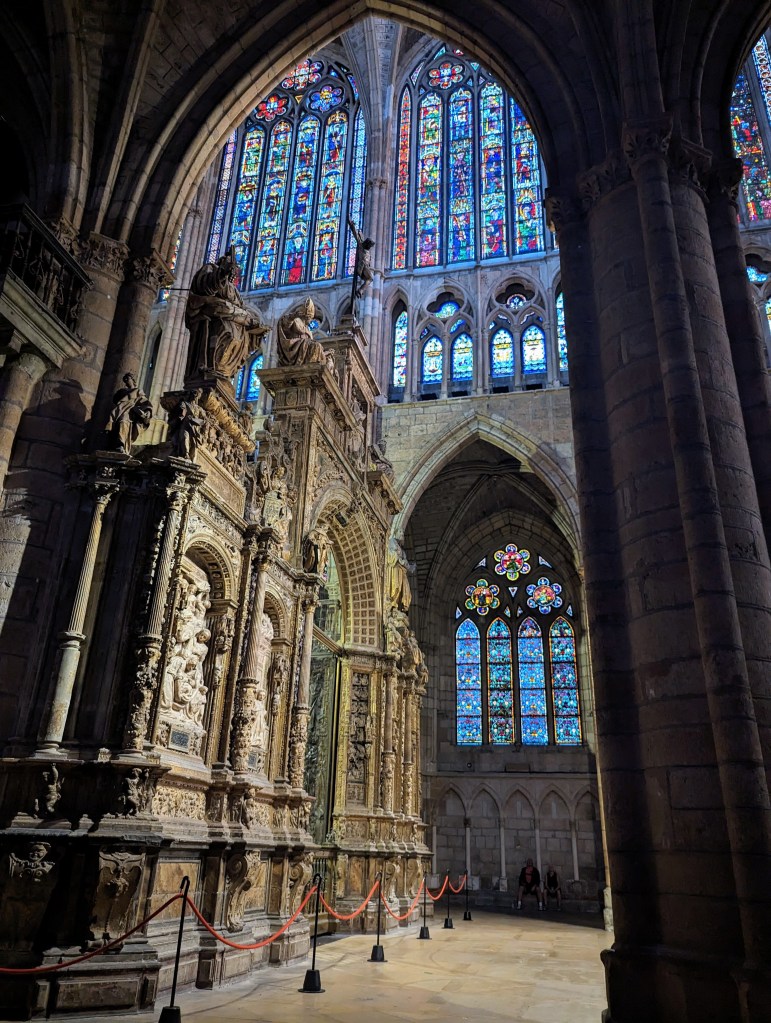
We were beginning to feel “cathedraled out.” But this one was truly special. Initiated in the 13th century, and dedicated to the Virgin Mary, it is one of the greatest works of the Gothic style with French influences. The church has nearly 1,800 square meters of stained glass windows. The great majority of them date from the thirteenth to the fifteenth century: a rarity among medieval gothic churches.
The site was originally Roman baths, then in the 10th century, after driving out the moors, a Romanesque monastery. Construction on the current Gothic style church began in the early 13th century. Like Burgos, it was designed on the French style. Because of the baths below, the foundation has had issues. The cathedral required a huge renovation of its foundation and pillars in the 19th century, but its Gothic simplicity was maintained.
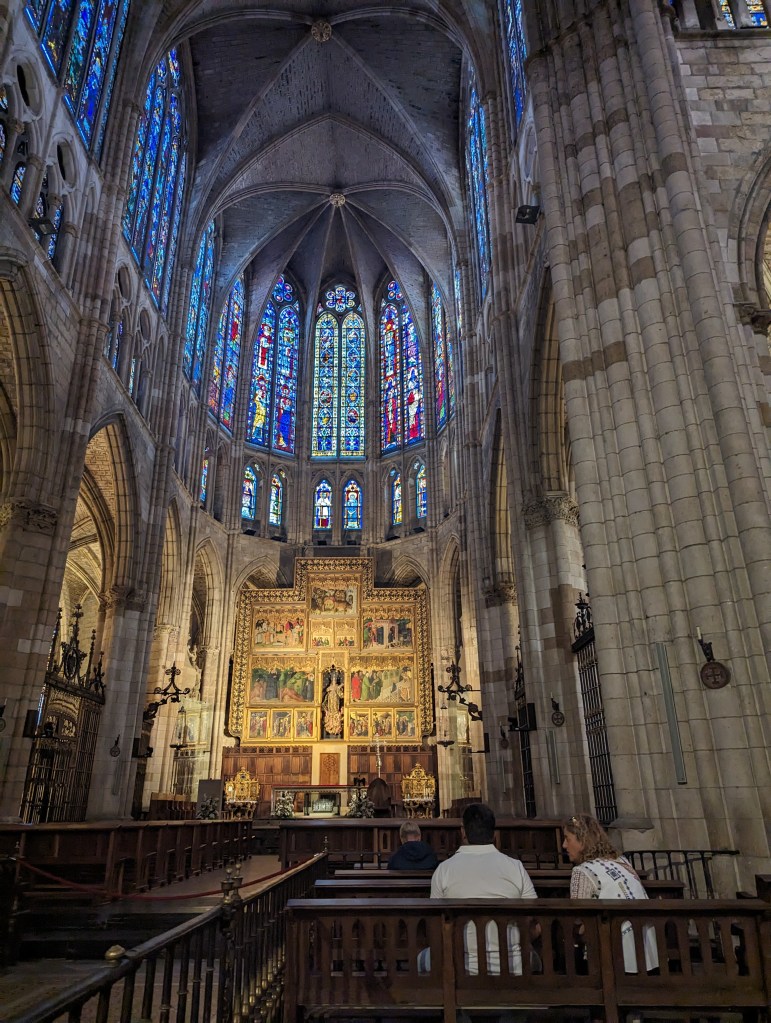

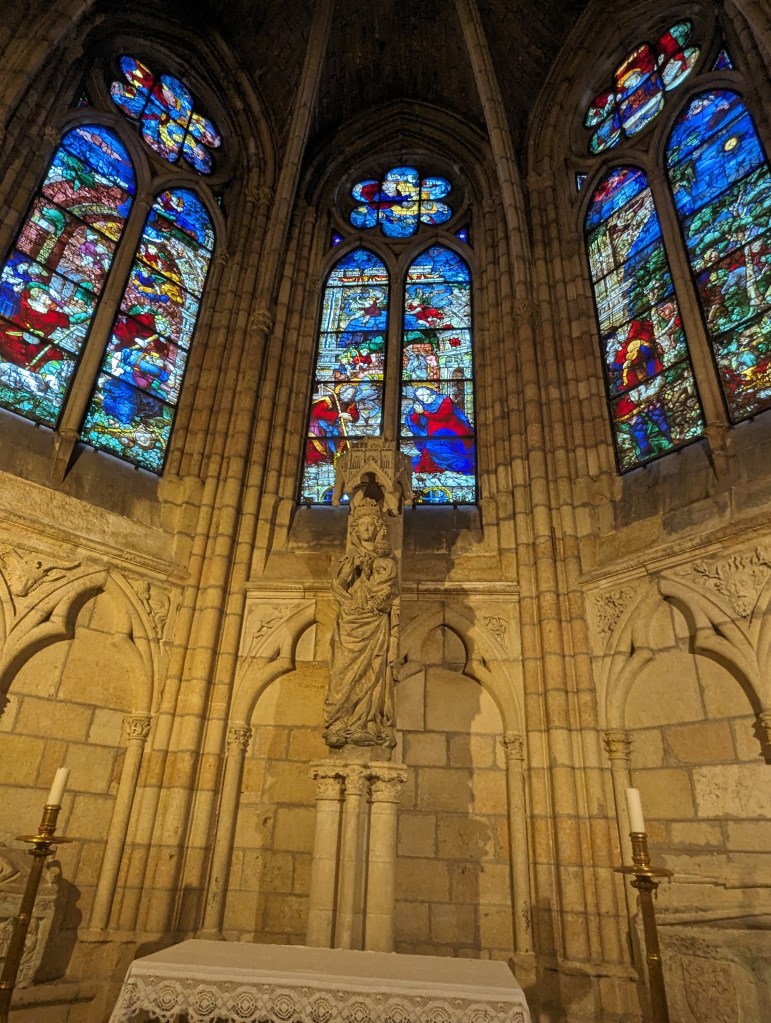
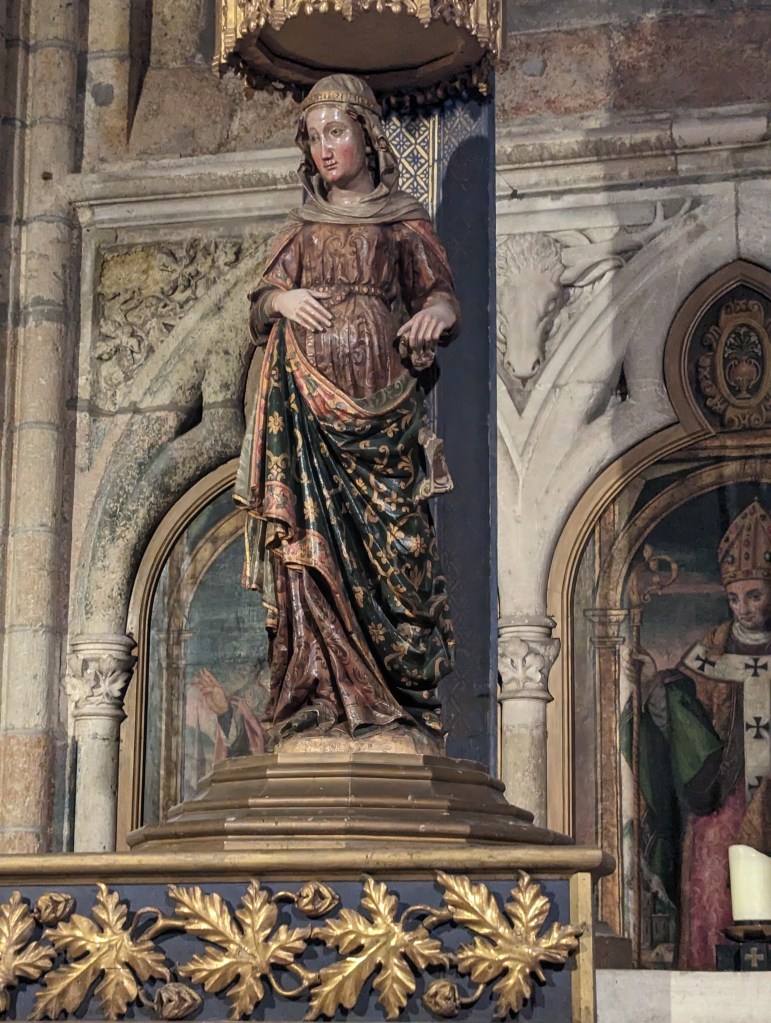
There are over 50 statues of the Virgin in the cathedral’s collection.
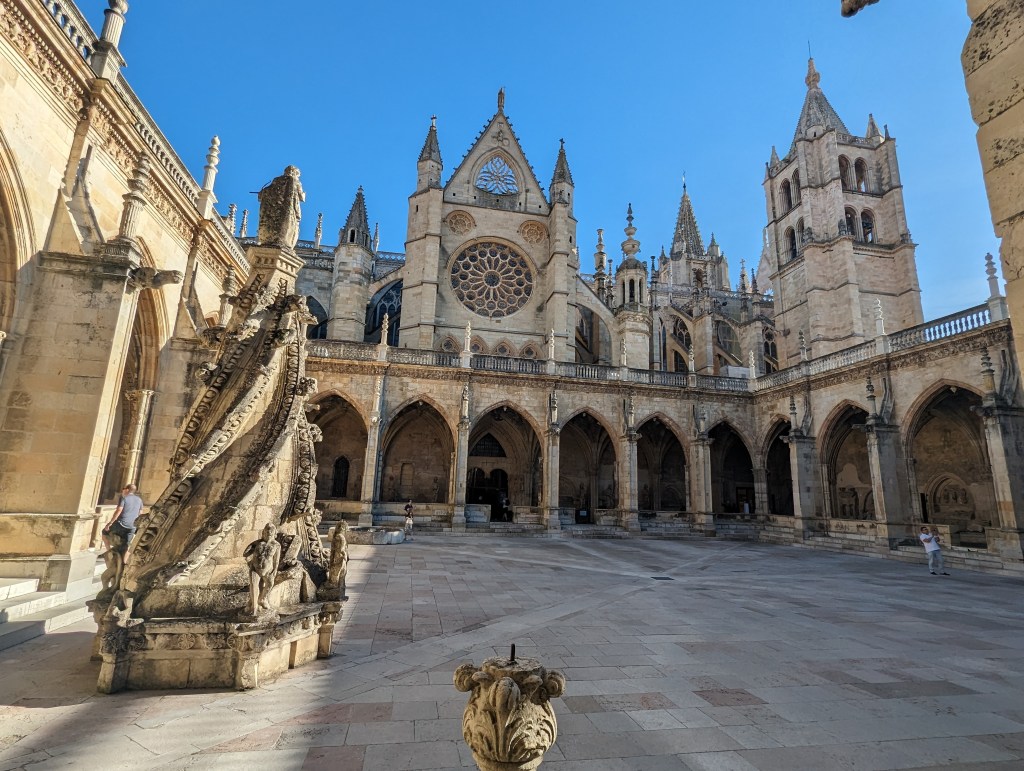
We left León the next morning heading west continuing to follow the Camino de Santiago stopping first in Astorga with its requisite cathedral.
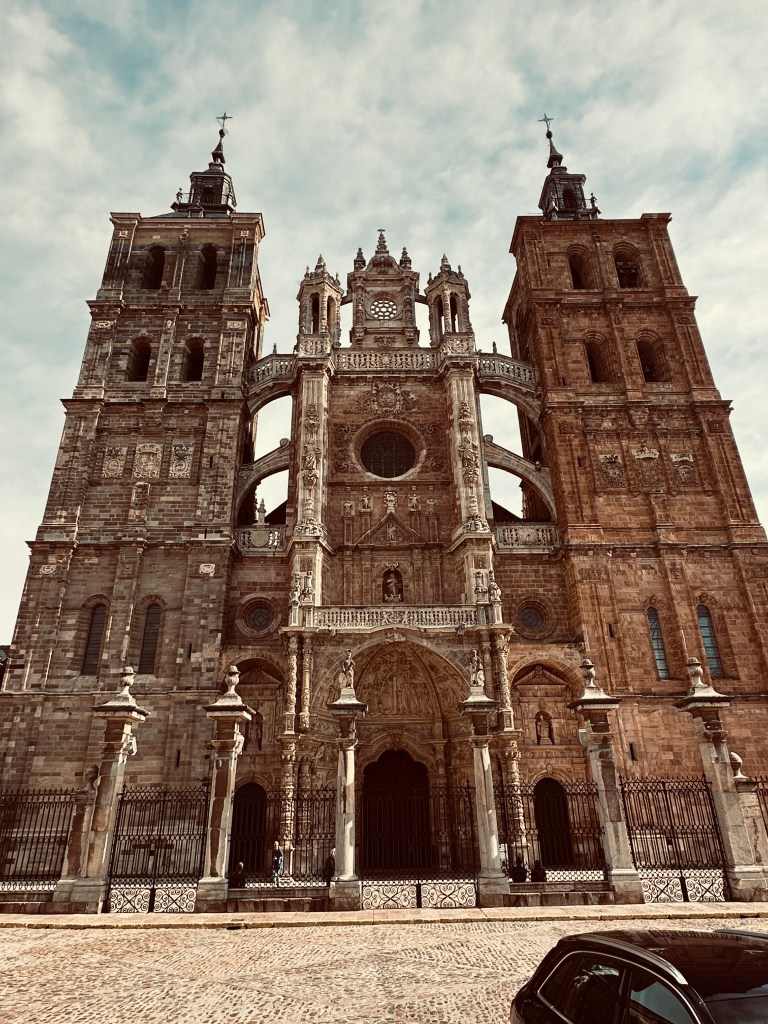
But more fun was the Gaudi Palace built between 1889 and 1913. Along with the Botines in León, it is one of the few he built outside of Catalonia. It was built in the neo-Gothic style. The bishop who had commissioned Gaudi to build it died before it was finished, so Gaudi quit the job, and it was finished by another architect.

Astorga is also know for some edible specialties: mantecadas, which are very much like a very light pound cake, and which of course we had to try, and chocolates, which we bought to take with us on our travels.
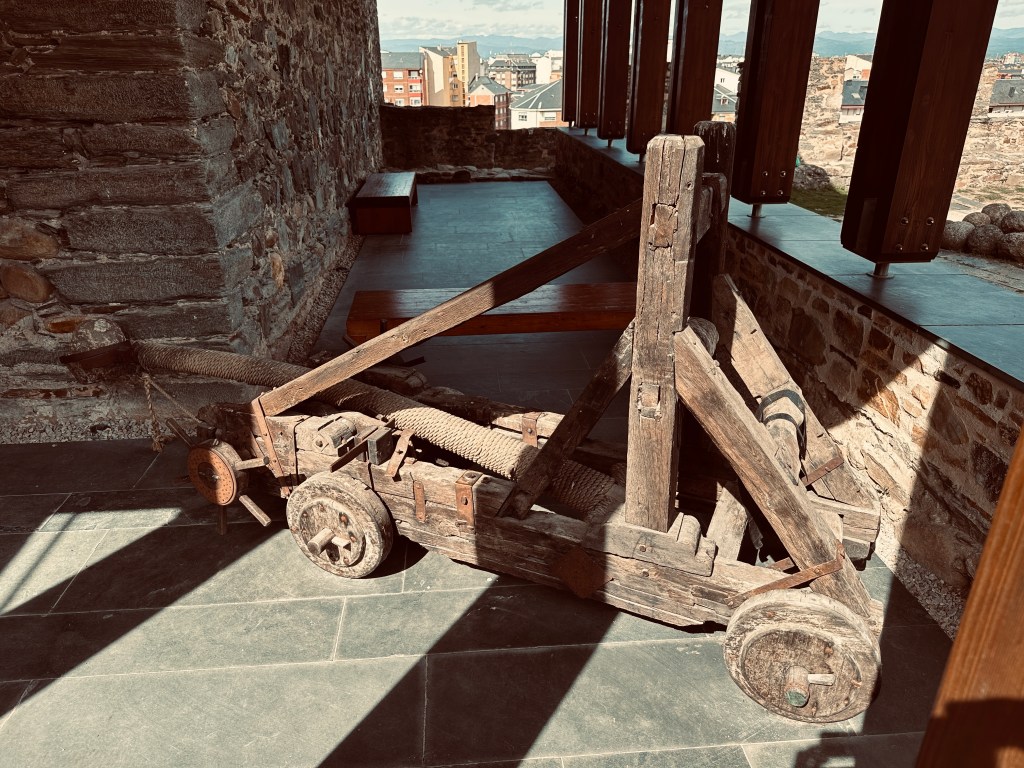
Our next stop was the castle in Ponferrada, built by the Knights of Templar. It is a castle which covers approximately 16,000 square meters built between the 12th and 13th centuries.

We particularly liked the primitive nature of the battle equipment.
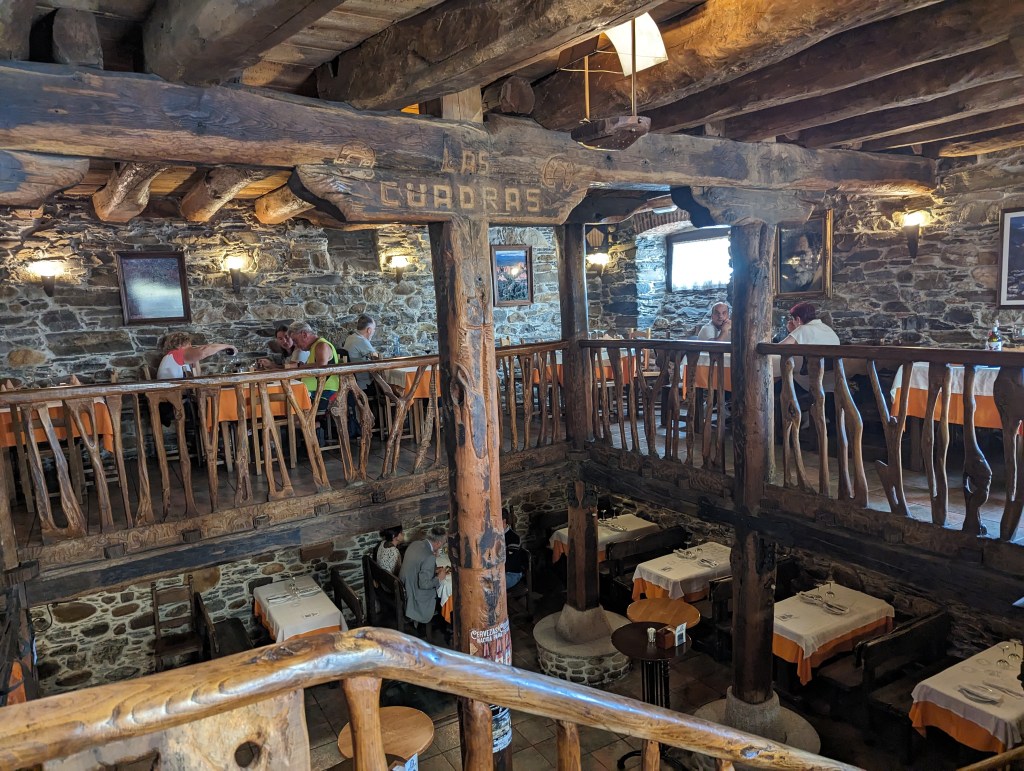
We then had a long leisurely delicious lunch at Restaurante Cuadras.
Ponferrada is the last major city on the French route of the Camino de Santiago. But we were not yet ready to enter Santiago, and we wanted to visited one more parador, so we headed north to Vilalba, which is a medieval city, the last city on the Northern route of the Camino de Santiago. It is in the Region of Galicia, which is the same as Santiago de Compostela.
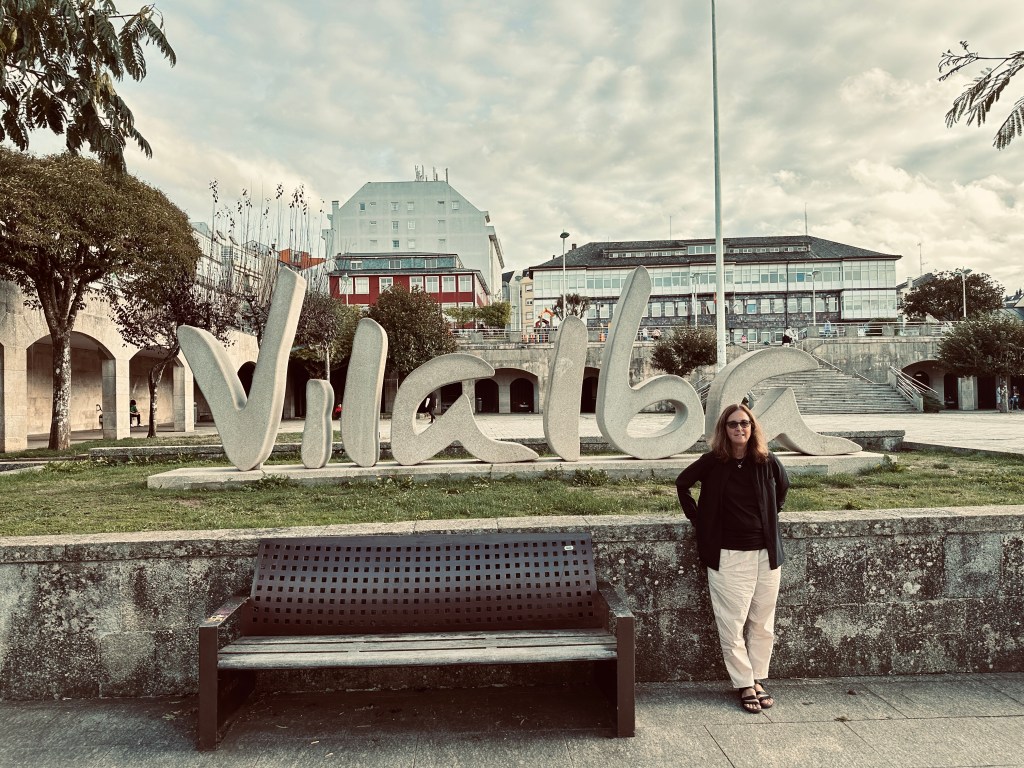
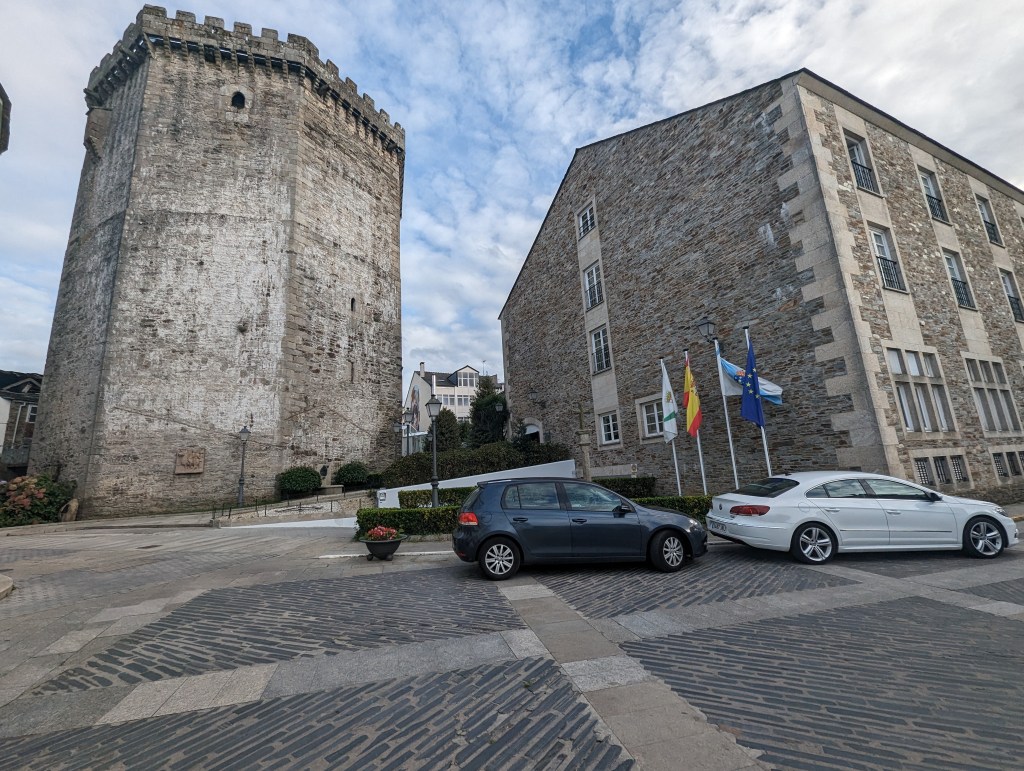
Galicia has its own language, Galician, from which Portuguese is derived. But although it is widely spoken, it does not seem to be the primary language here as Catalan and Basque languages were in their respective regions.
The Parador de Vilalba was a 15th century fortress. It is also know for it 100+ year old tree standing nearby which has been named the Pravia and hosts the annual nativity celebration at Christmas.
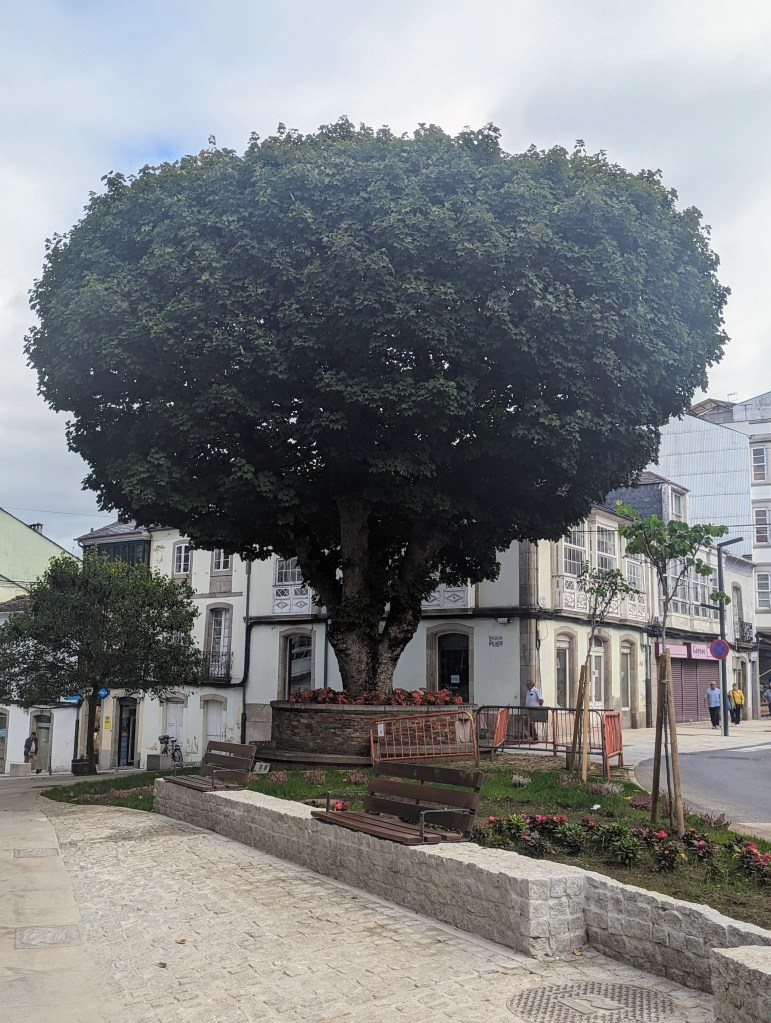
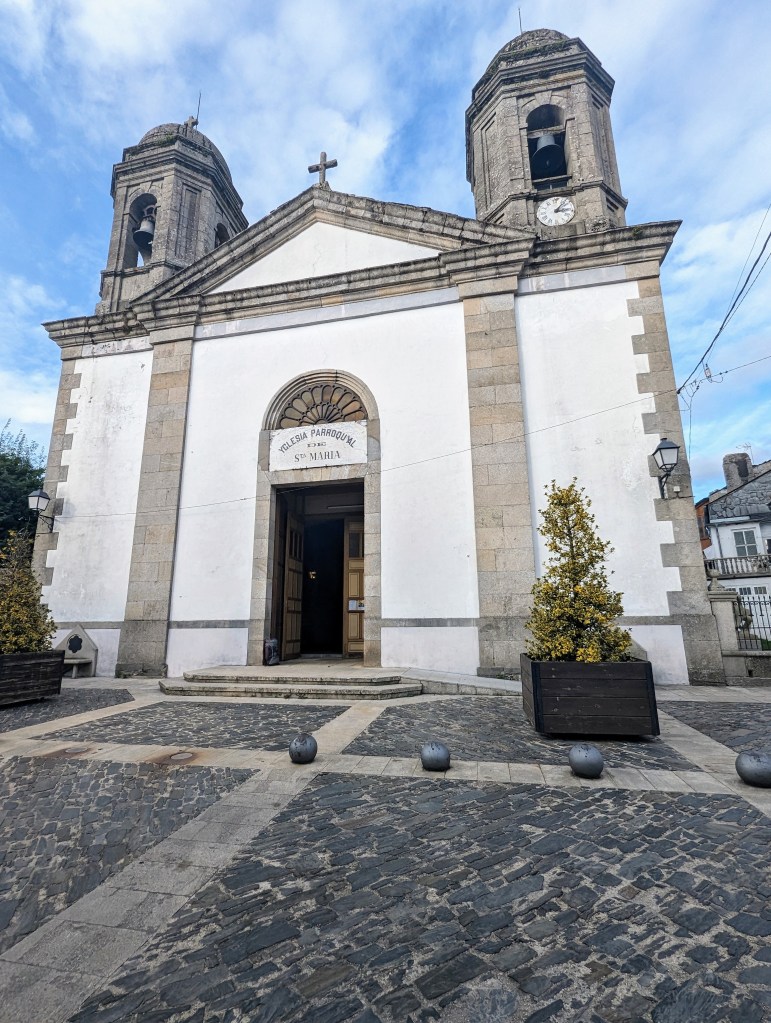
We had a light dinner in a cute little cafe that has been in the family, now second generation, for nearly 80 years.
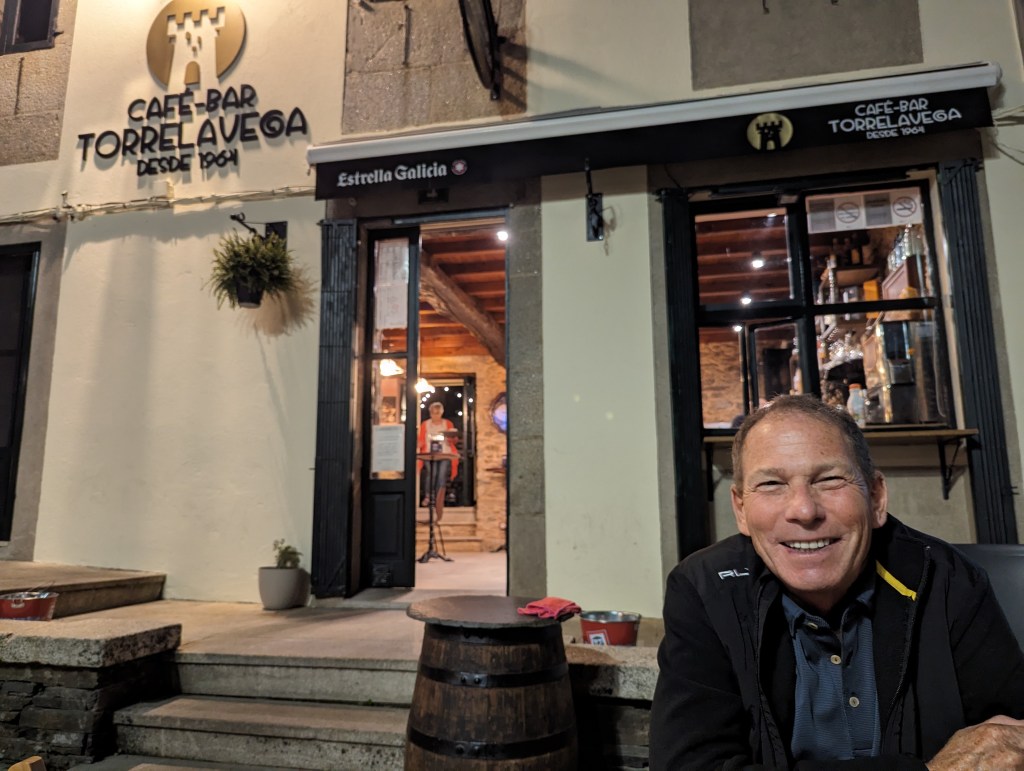

Finally the next morning, it was on to Santiago de Compostela!
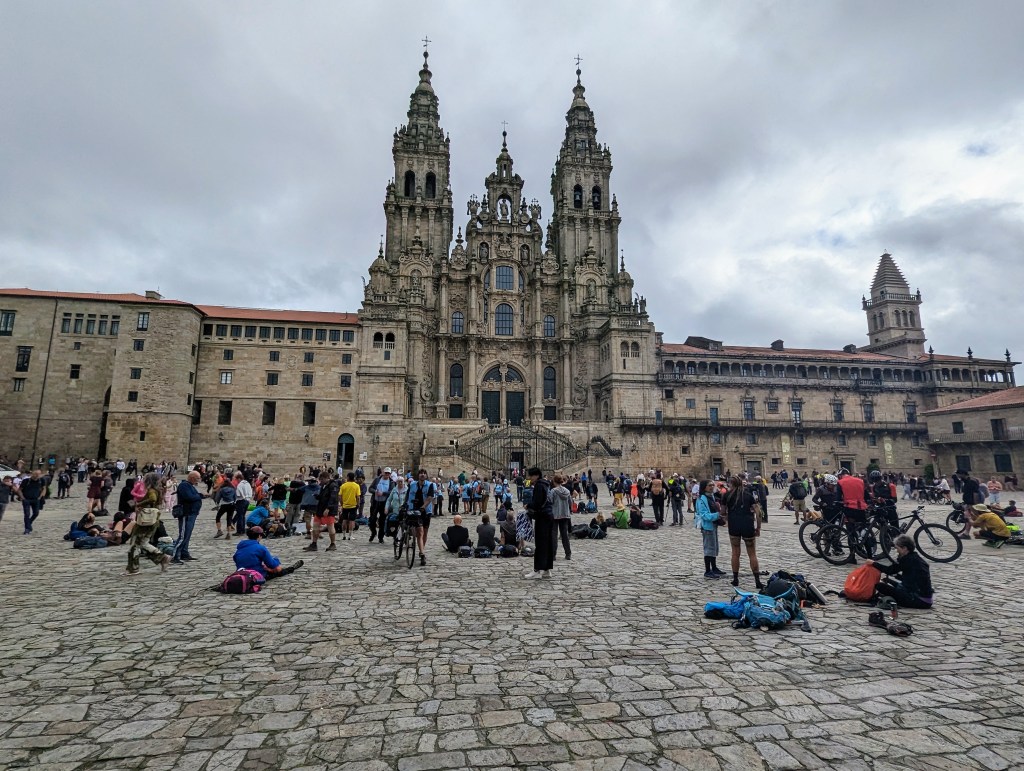
The Plaza del Obradoiro is the main square in front of the Cathedral of Santiago de Compostela, and is the final point of the journey for the pilgrims. Words cannot explain the feelings of euphoria and camaraderie in the square. As pilgrims enter and shout for joy at having “made it,” all who are present send up a cheer. This can happen several times an hour, especially in the late afternoon. It is a contagious ebullience even for those tourists of us who did not make the journey on foot or bicycle.
Because it was raining, we decided it was a good time to visit the museum and learn a bit of the history. First Saint James (Santiago): According to the story, Christ had instructed his apostles to spread his word “to the ends of the earth.” At the time, the atlantic ocean was considered the end of the earth. So Saint James proselytised throughout the Iberian peninsula, now Spain. When he returned to Jerusalem in AD 44, he was beheaded by Herod, becoming the first apostle to be martyred. Legend has it that his disciples carried his body back to Spain and buried it there on the mount, where it lay hidden for centuries.
The legend continues that in the 9th century, Pelayo, a hermit who lived in the region of Galicia, was praying when he saw a bright light shining down from the sky. Intrigued by the light, he followed its path until he arrived at a field. There, Pelayo discovered a hidden tomb, in which he found the remains of a beheaded man, whom he believed to be the apostle St. James. The field of stars gives the town the rest of its name: Compo (field) stella (stars).
Upon hearing of the finding of St. James’ tomb, King Alfonso II made a pilgrimage to the site, making him the first pilgrim, and setting in place both the importance of the site and the act of the pilgrimage.
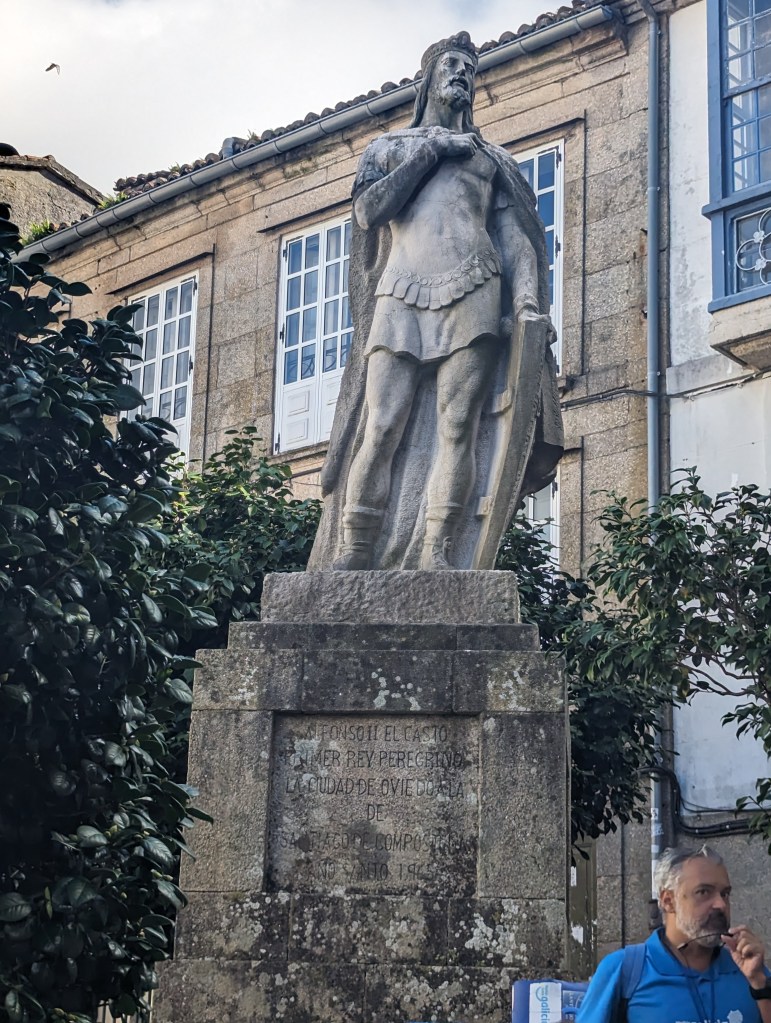
Pilgrimages started almost immediately. But it was not until the late 11th century that the building of the Romanesque cathedral was begun. Building continued for over 130 years until finally Master Mateo, an artist and architect, was brought in to complete the project. He built the famous Portico of Glory over the main entrance of the cathedral. When in the 18th century the current Baroque facade was built, it was placed in front of the original Romanesque one, thus protecting it from the elements and preserving it.
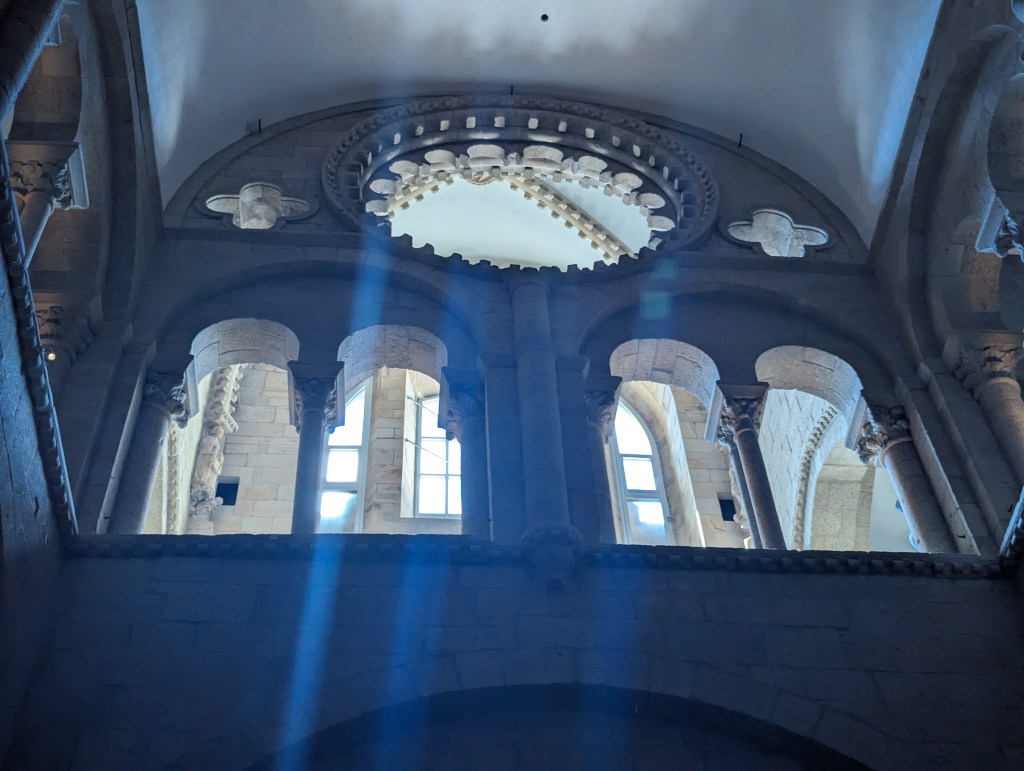
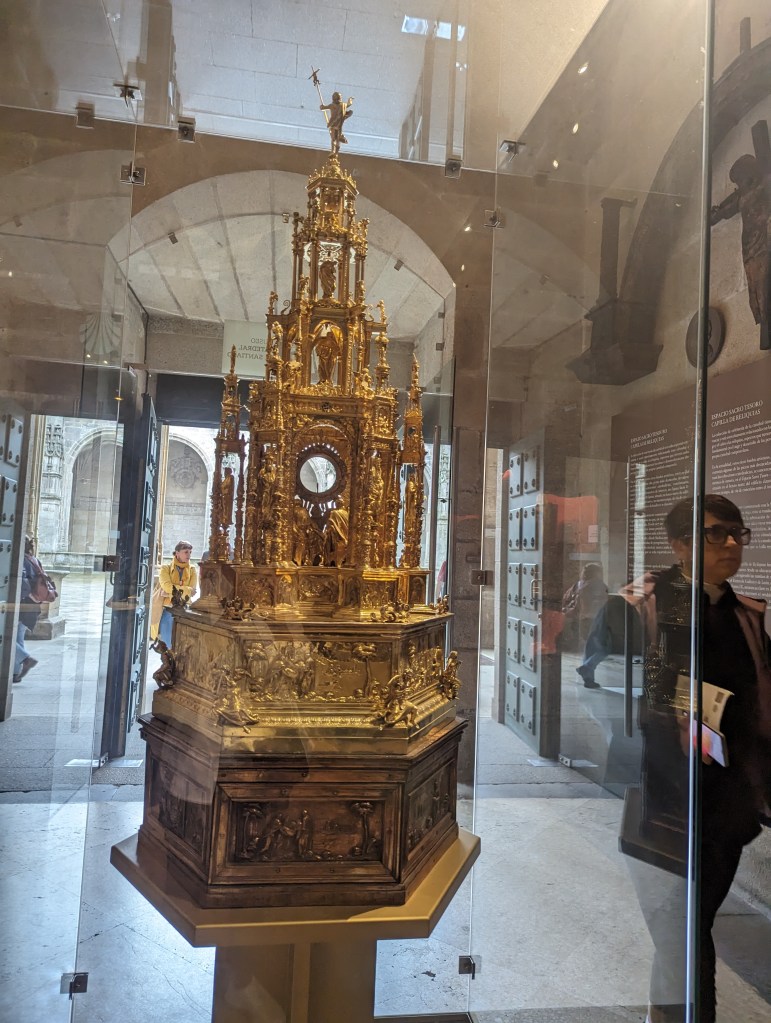
A lot of the original pieces from the rose window, the outer statues, and original inner decorative statues are now displayed in the museum. The museum also houses a library, many liturgical artworks including bishop’s robes, chalices, and this beautiful monstrance.
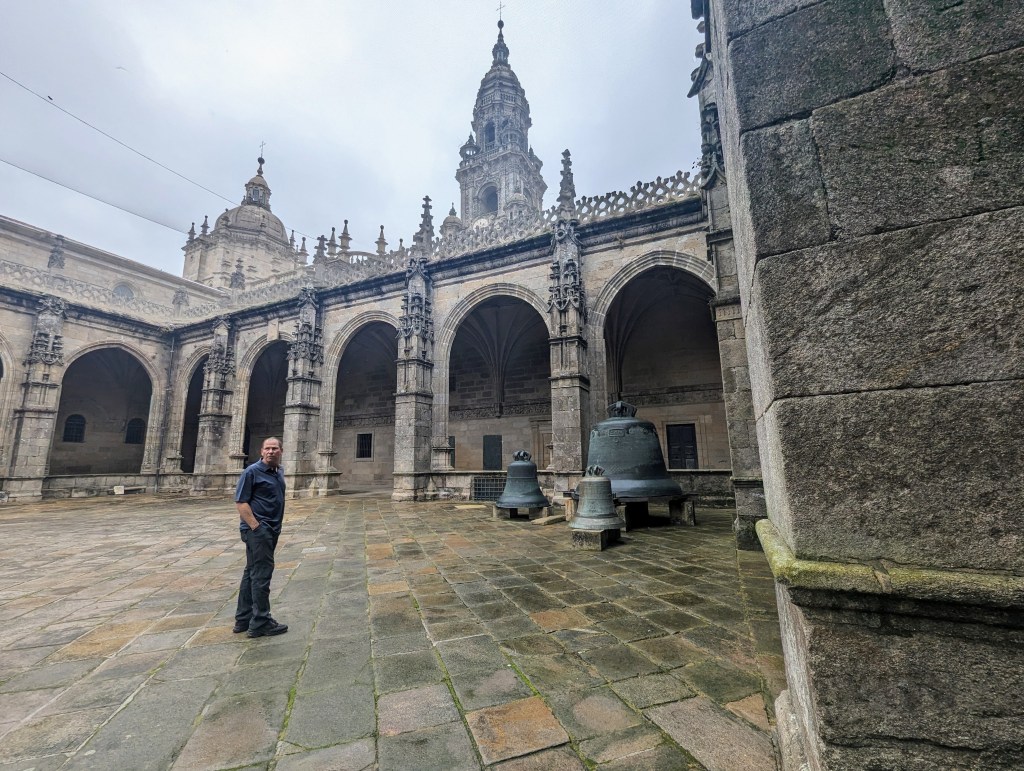
The museum also gave us access to the cloister, which holds some of the original bells.
The museum also had several rooms with tapestries.
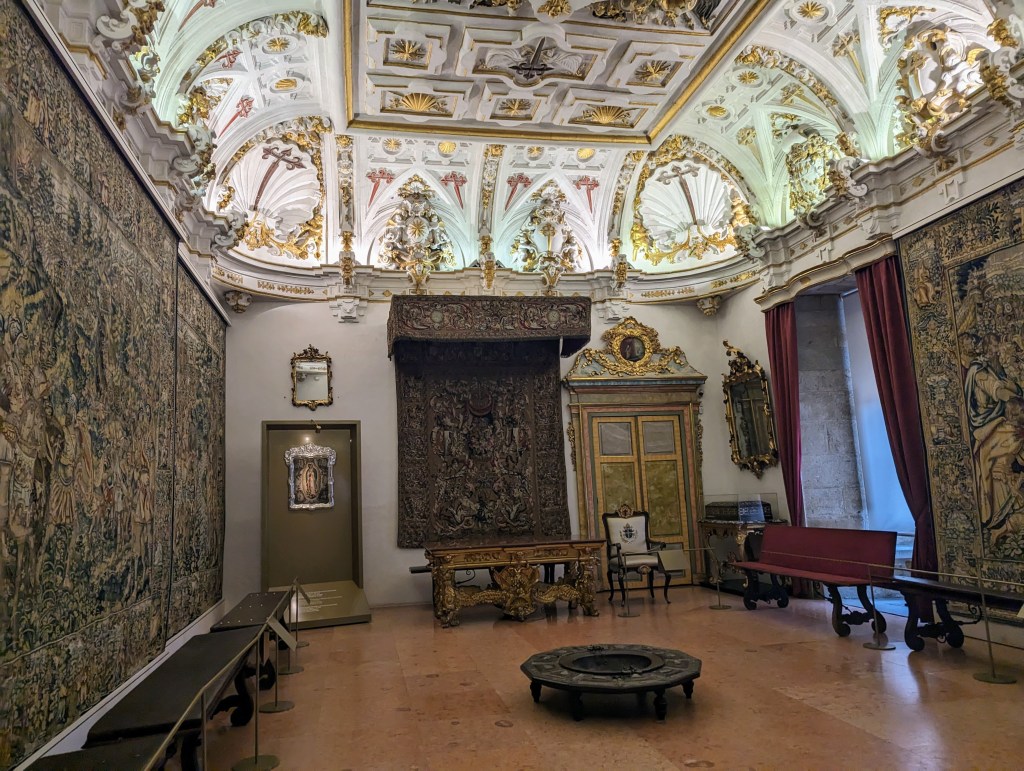
Ane entire room of tapestries were all designed by Goya, which was particularly fun for us because we had seen Goya’s original “cartoons,” from which these tapestries were designed, in the Prado Museum in Madrid. They were innovative in their day because they showed average Spaniards and did not have religious themes.

When we emerged from the museum, it was still raining. But the lines to the cathedral entrance on the “French” side had shortened, so we entered the cathedral to visit Santiago’s crypt.
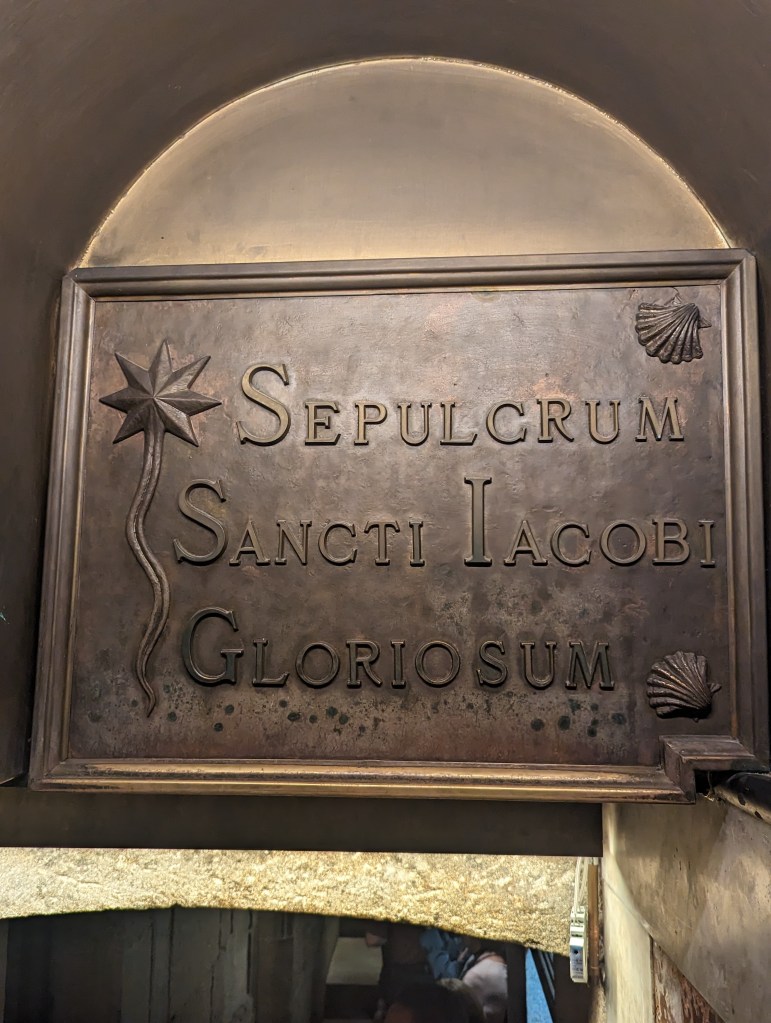
The following morning we took a walking tour of the city. We learned much more of the history of both the city and the cathedral. We learned that the reason the seashell is the symbol of the Camino de Santiago is because the original pilgrims, most of whom had never seen the sea before, in order to prove that they had completed the pilgrimage, would walk the rest of the way to the beach and collect a shell as their certification. Today’s pilgrims obtain a passport which is stamped in each town they pass through and then verified in the cathedral.

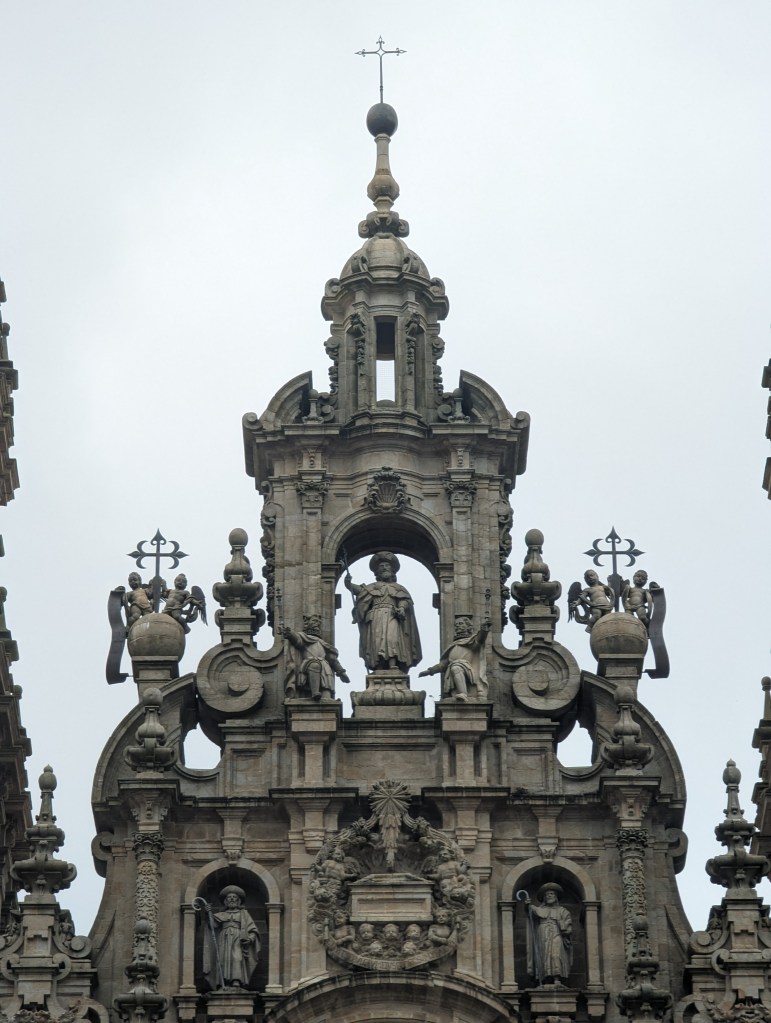
We also learned that the order of Santiago was founded in the 12th century. The knights were to protect the pilgrims along their journey. The oder’s symbol is the red crossed sword, which is shown in a detail of the 18th century facade shown below.
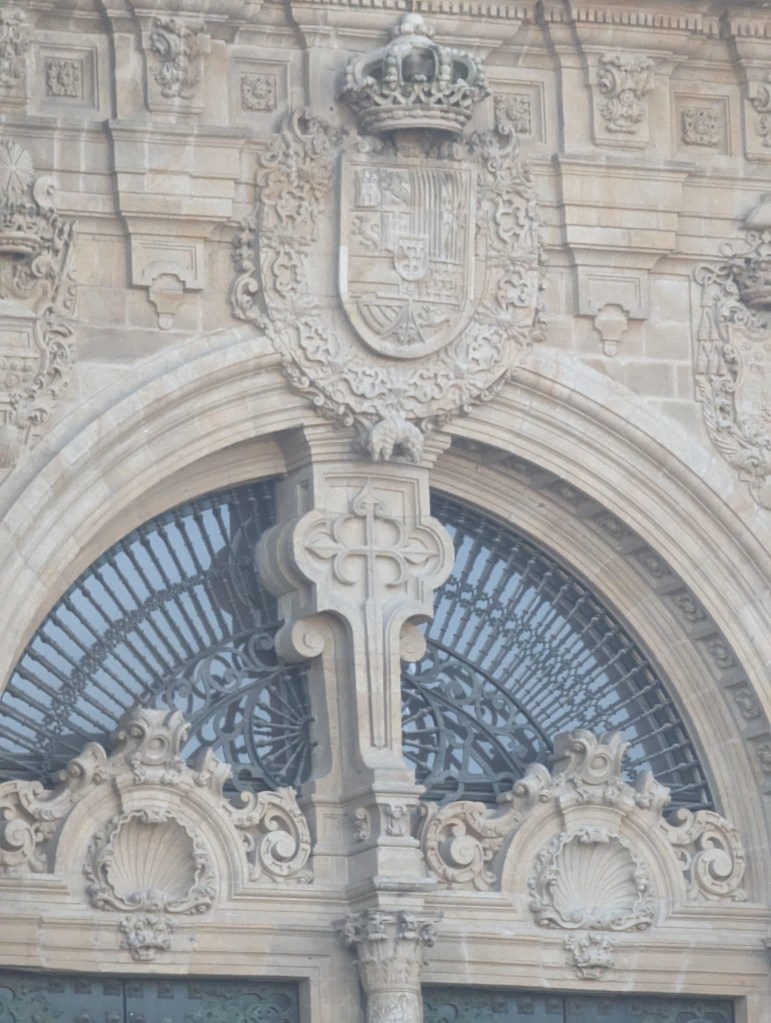
But the sword is also stamped onto a cake made of almond flour, eggs, and sugar (so delicious) and is special to the town.

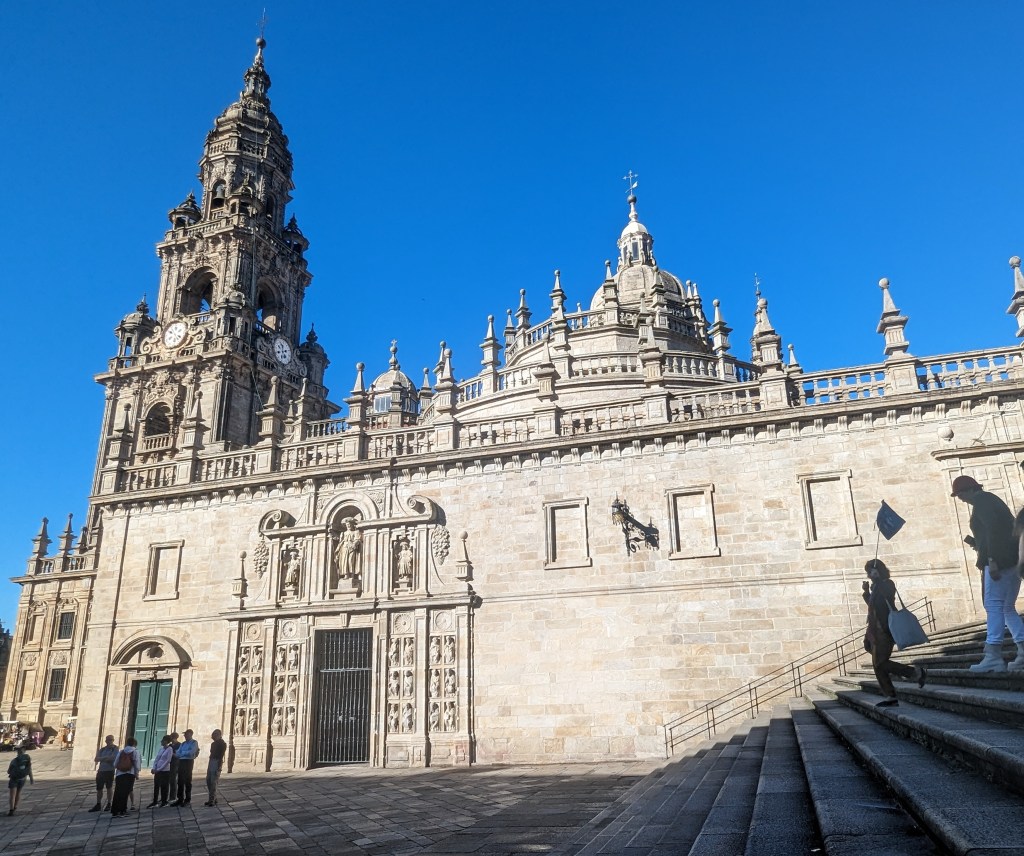
Our guide explained to us about the different entrances to the cathedral. There is one called the holy door, which is only open during a year in which July 25 (feast day of Santiago) falls on a Sunday. If one passes through the holy door when open, and confesses one’s sins, then one is granted plenary indulgence, which is the absolution of all their sins.
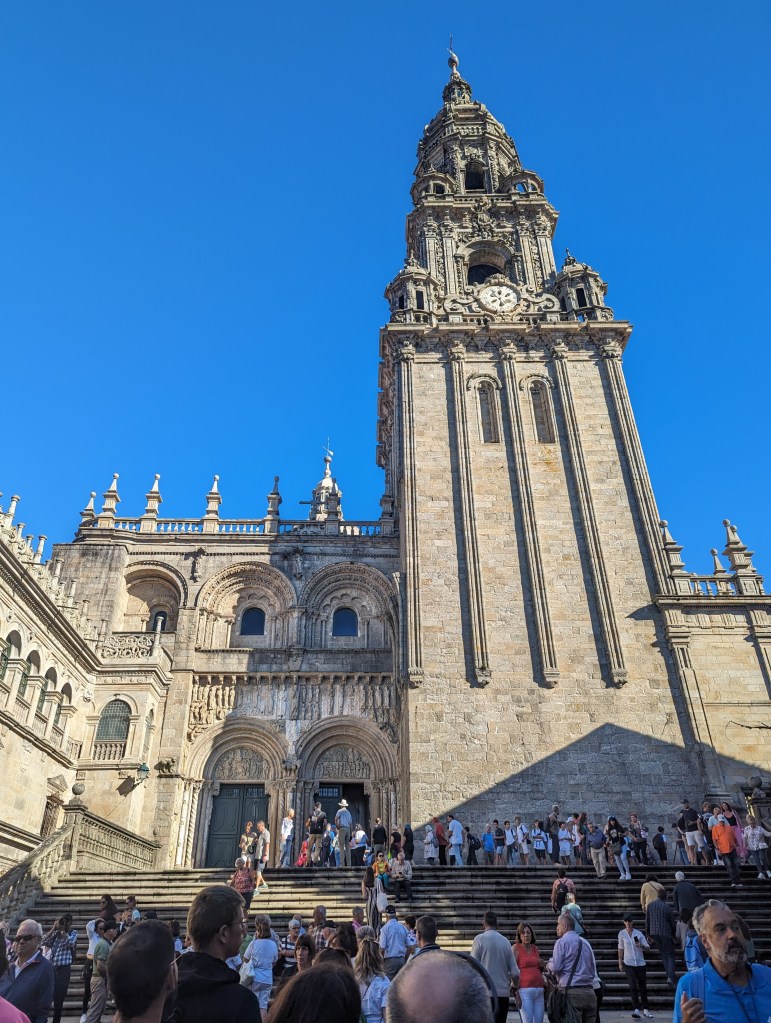
The main door into the cathedral is the Pilgrims’ door (which had too long a line for us the day prior). The line extending to the right in the picture below is about a third of those waiting to get in. But he told us what time to come back to avoid the crowds.
He walked us through the Old Quarter pointing out restaurants and shops. He showed us the church of Santa Maria Salome, Santiago’s mother, and the only church dedicated to her in all of Spain.
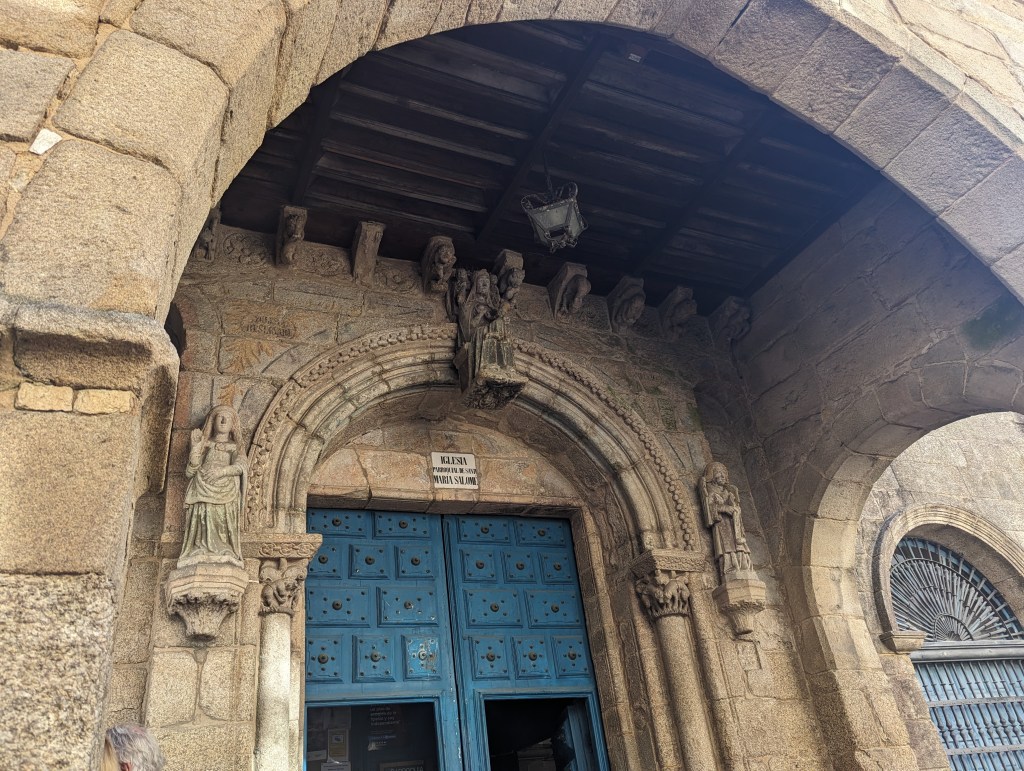
He also told us that in addition to its famous cathedral, the city of Santiago is known for its public university system, which is one of the oldest in the world. There are 3 colleges within the old city limits (including a medical school); the remaining are in the newer city. And finally, he led us into a park outside the Old City so we could get a great view of the cathedral from a distance.

Once the tour was complete and we had refreshed ourselves with lunch, we returned to the Pilgrims’ door at 3 pm, and just as he had promised, no line!

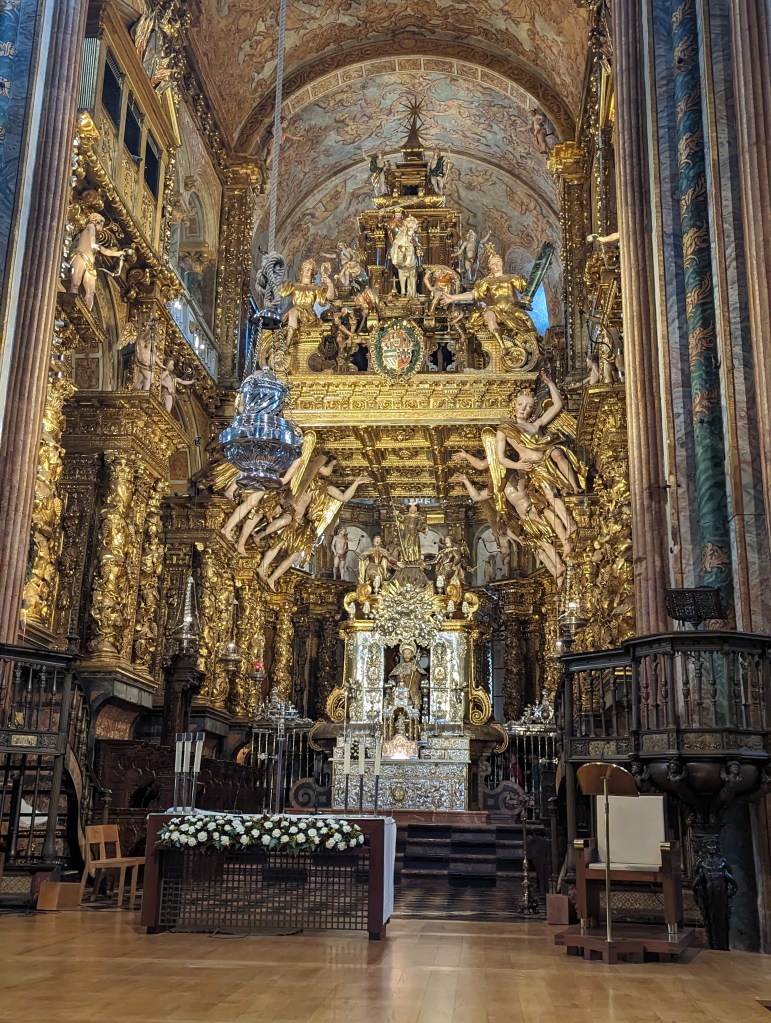
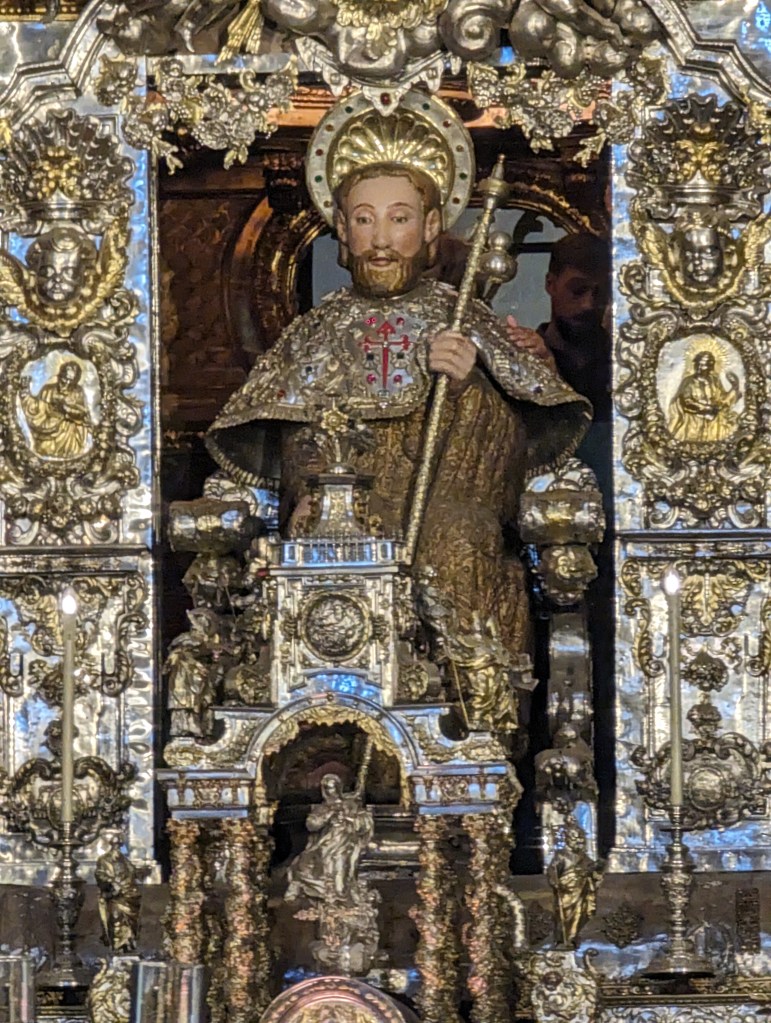
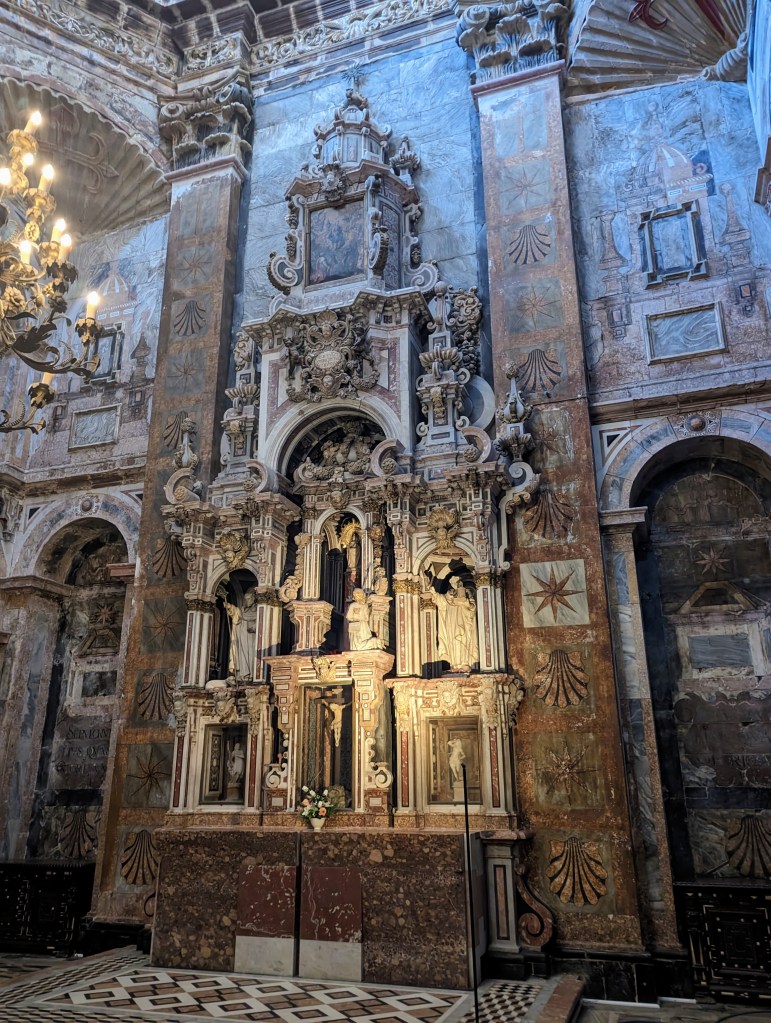
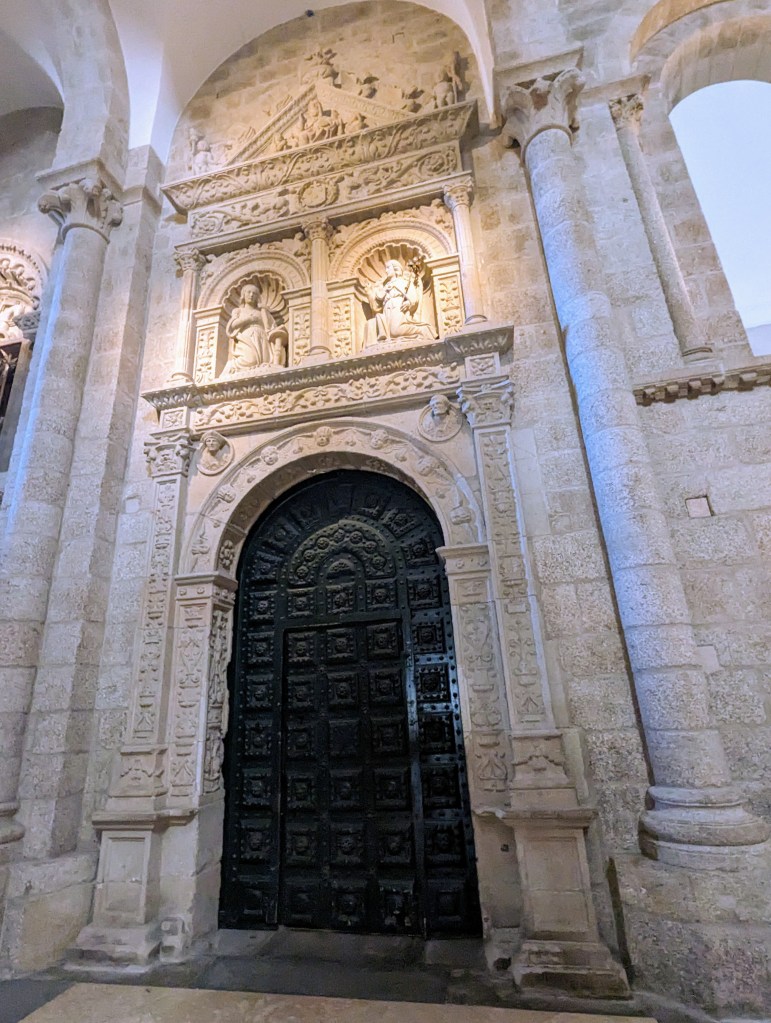
And just like that, we had seen the Cathedral of Santiago and finished our journey across Northern Spain.
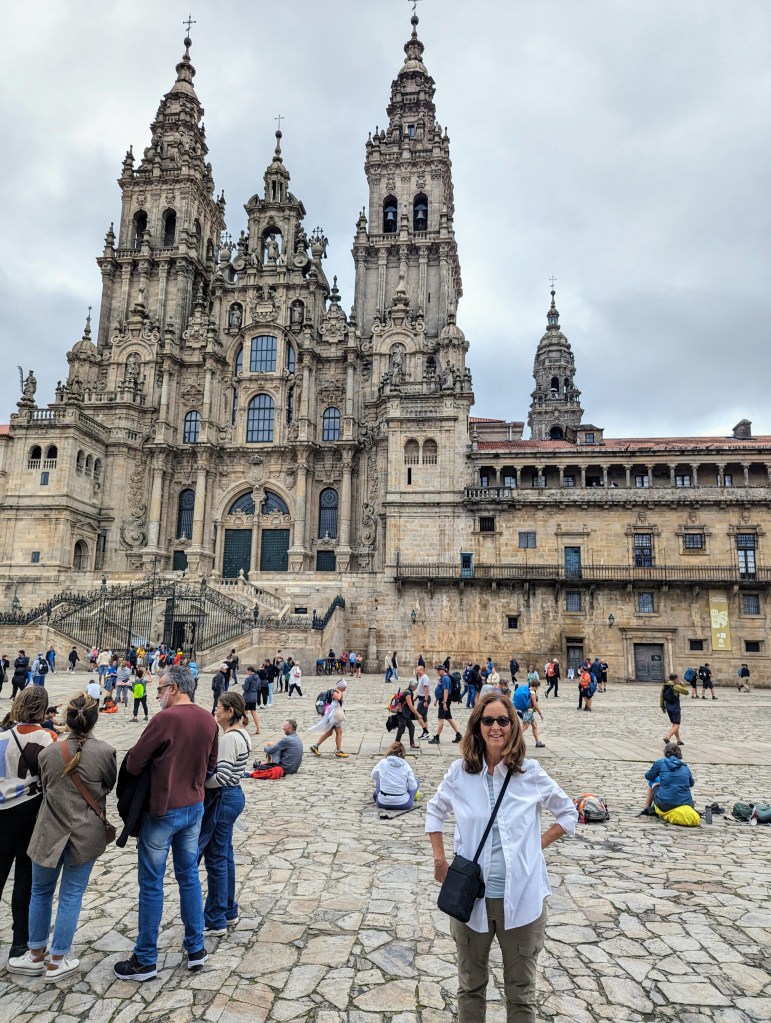
Before leaving, I have been asked to comment on the Spaniards. Almost all we have interacted with have been warm, friendly, generous, and kind. But then most with whom we communicate have hospitality or service jobs, so really hard to judge. I have noticed that except for the very occasional group of (mostly) men in business suits, the dress is casual, even in nicer restaurants. The other day in León I noticed a very smartly dressed couple and realized that even in Madrid, it has been rare to see anyone who seems “fashionable.” We used to quip that Americans should not wear shorts or sneakers while in Europe so as not to stand out as tourists. But European men seem to have adopted shorts. And Nikes, Adidas, and even Sketchers are ubiquitous. We are most often addressed first in Spanish until our blank stares reveal us. One really cannot guess someone’s nationality, regardless of skin color, until words come out. And even then… the other day a very friendly waiter, who spoke little English, asked us, through Google translate (thank you Google translate; you have been essential) where we are from. When we responded New York, he lit up. “Oh,” he said, fellows from the “Americas;” he is Argentinian.
And now, on to Portugal.
 Jo & Eric's travels