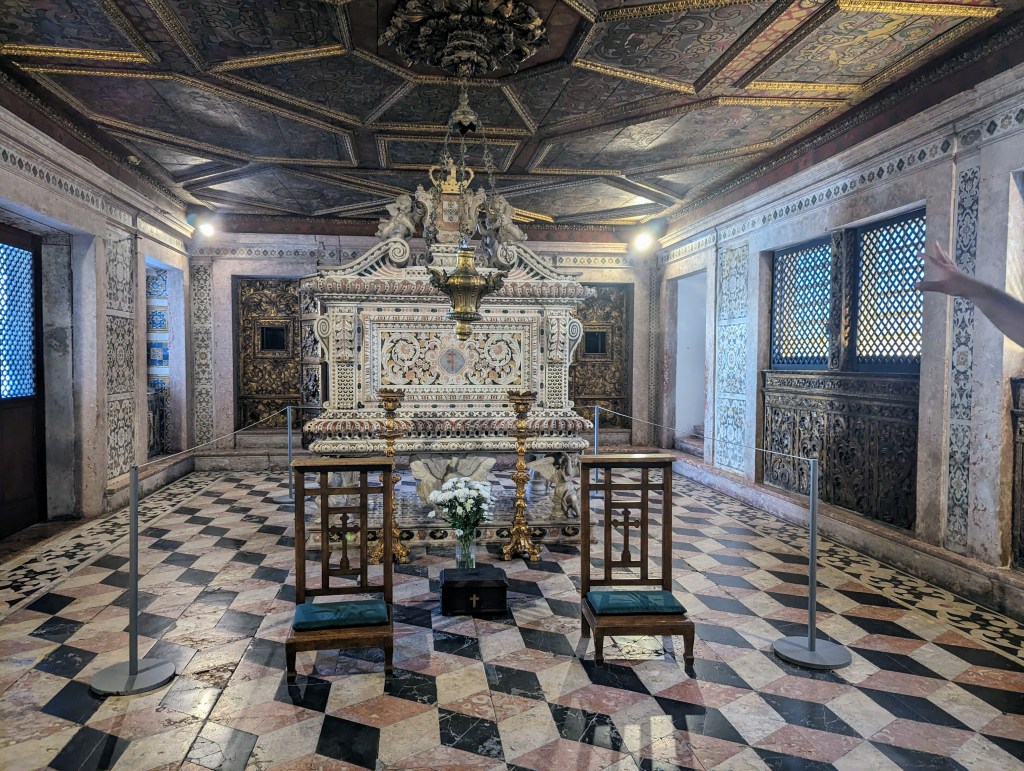
Portugal: Alentejo Region Oct. 18-21; The Algarve Oct. 21-25

After dropping Howard at Lisbon airport, we headed due east into the Alentejo region of Portugal. We were to be staying in Evora, but with the full day ahead of us and bad weather in the forecast, we decided to keep going east to visit Elvas, which is almost to the border of Spain.

We drove up to the Fort Da Graça, which is actually about 1 km north of the town. It was originally built in the 17th century, but was used primarily during the 18th century to protect Portugal from Spanish invasion.
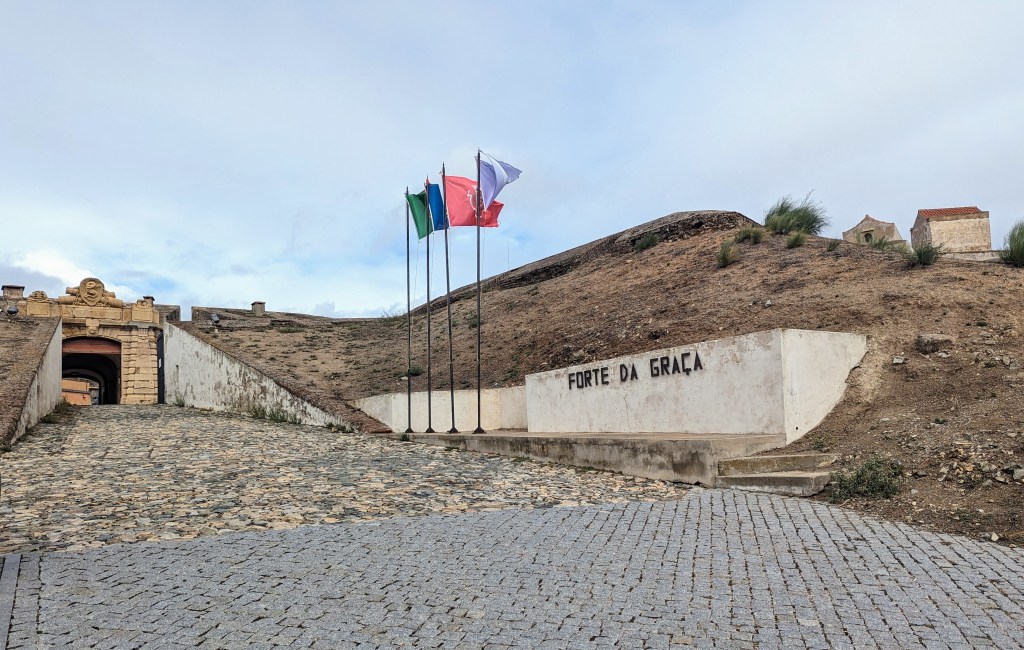
We entered the complex through the first gate,
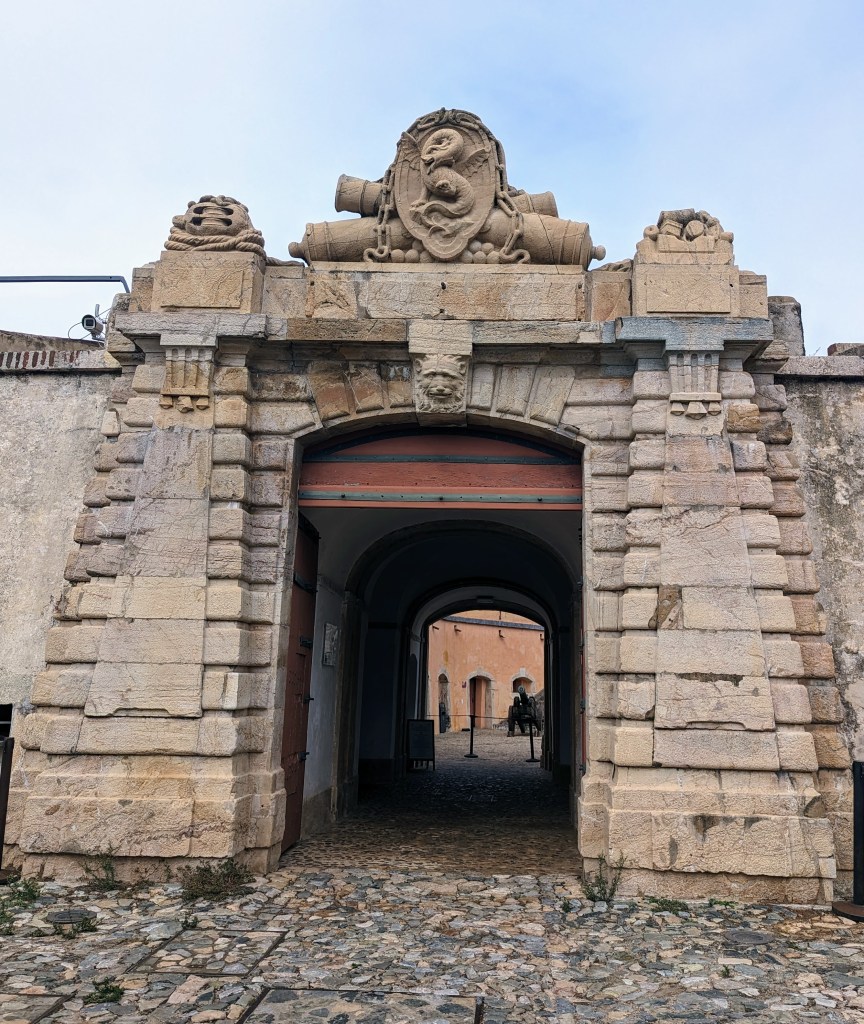
outer courtyard

What is particularly interesting about the fort is both its multiple layers of fortification and its pentagonal shape. Eric got the drone up for some shots just ahead of the rain.
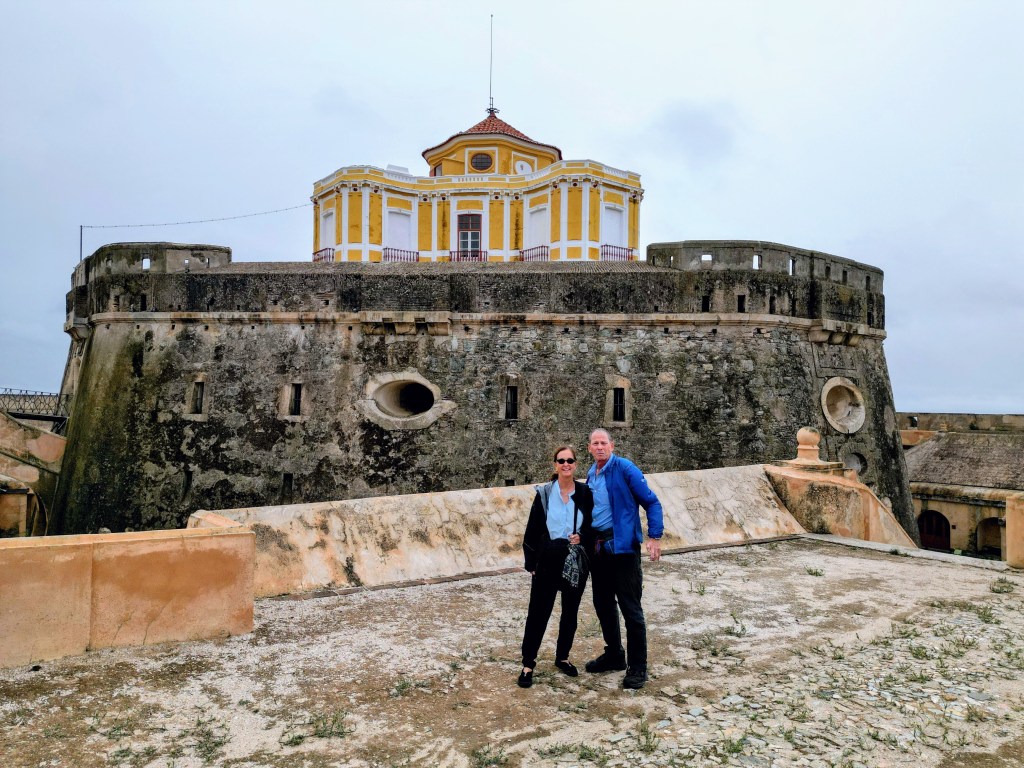
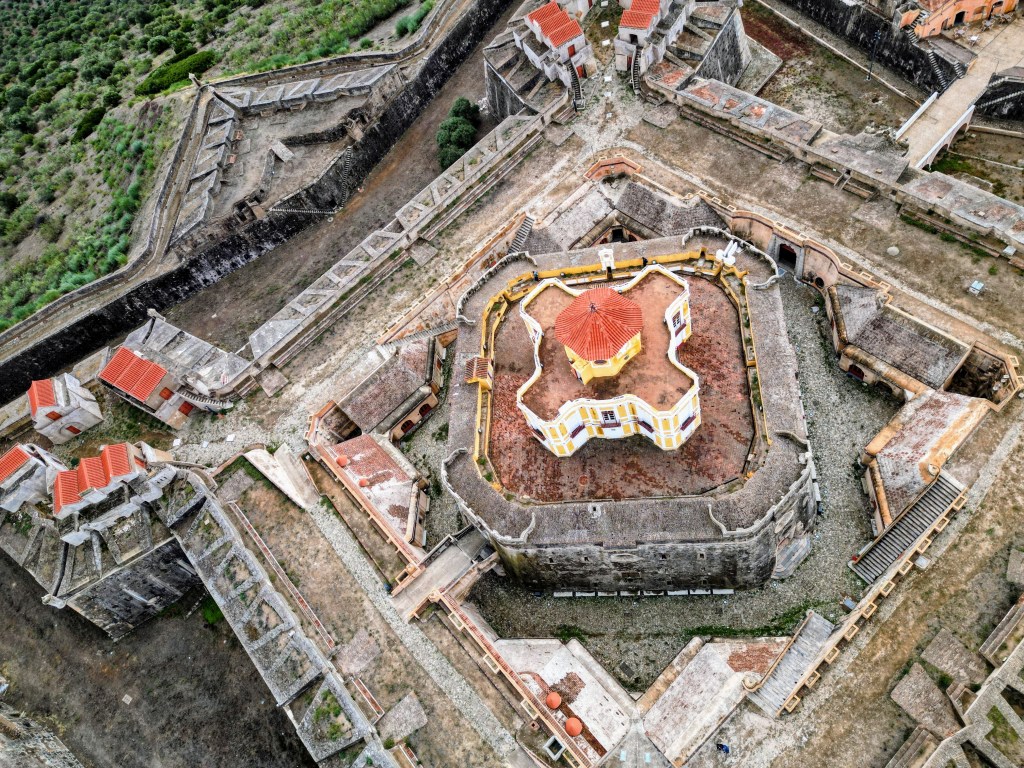
Unfortunately it was too windy to go higher for the full view. Then we entered through the next gate through the drawbridge into the inner area.
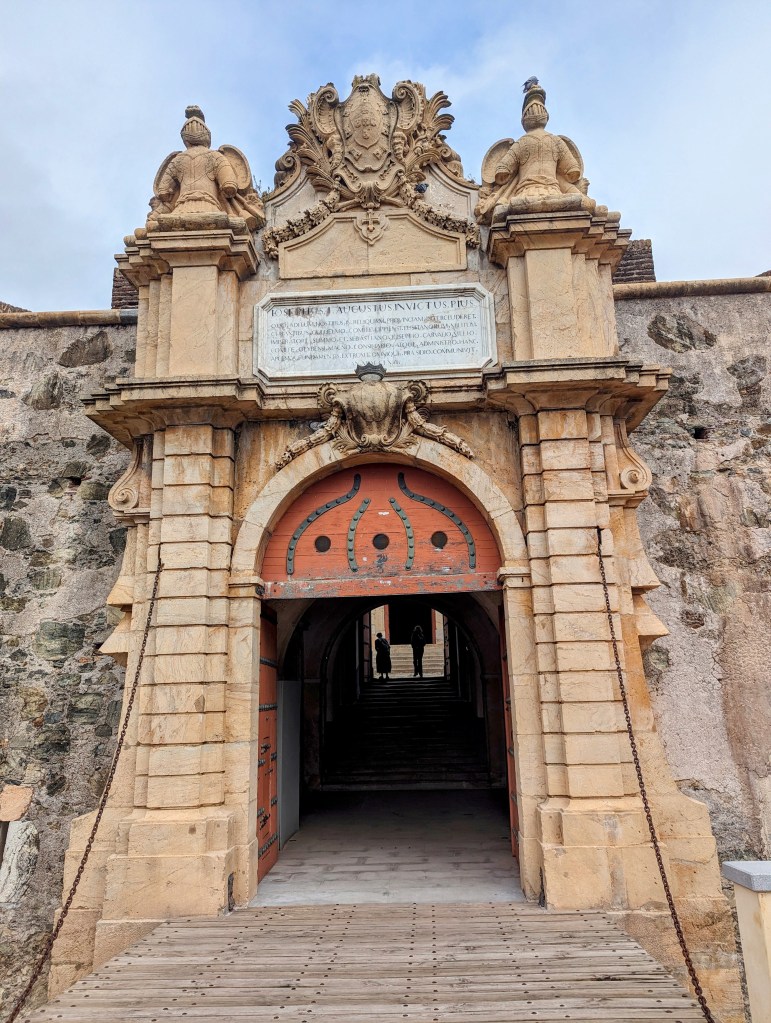
From there we had a view of the town of Elvas in the distance.
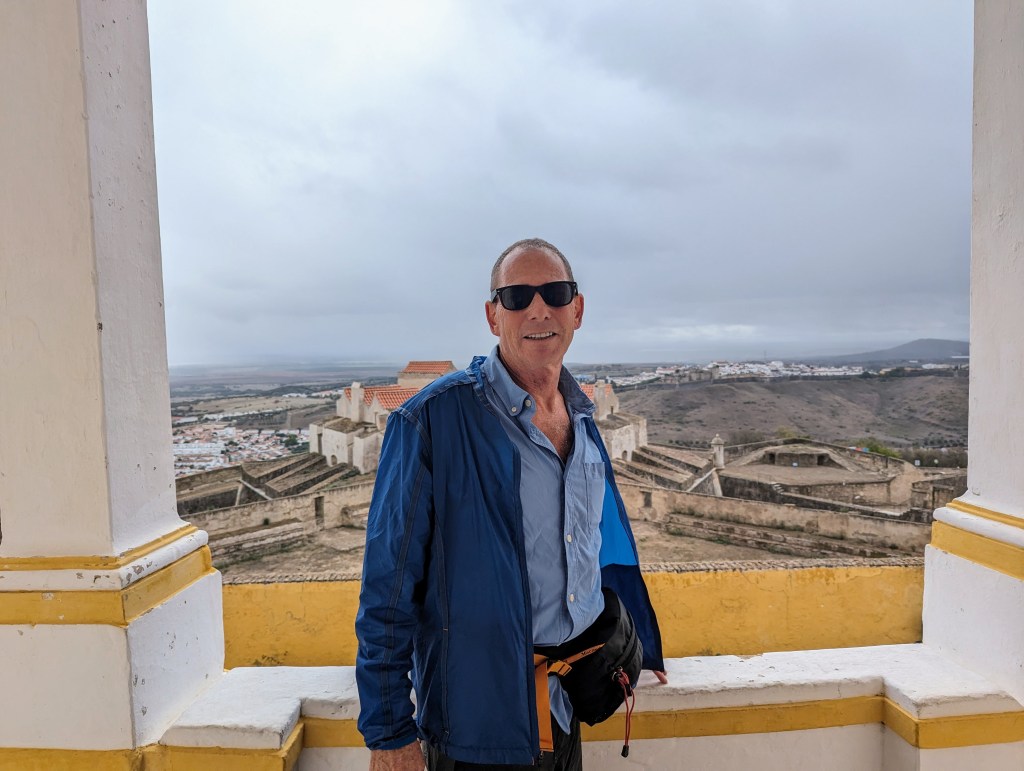
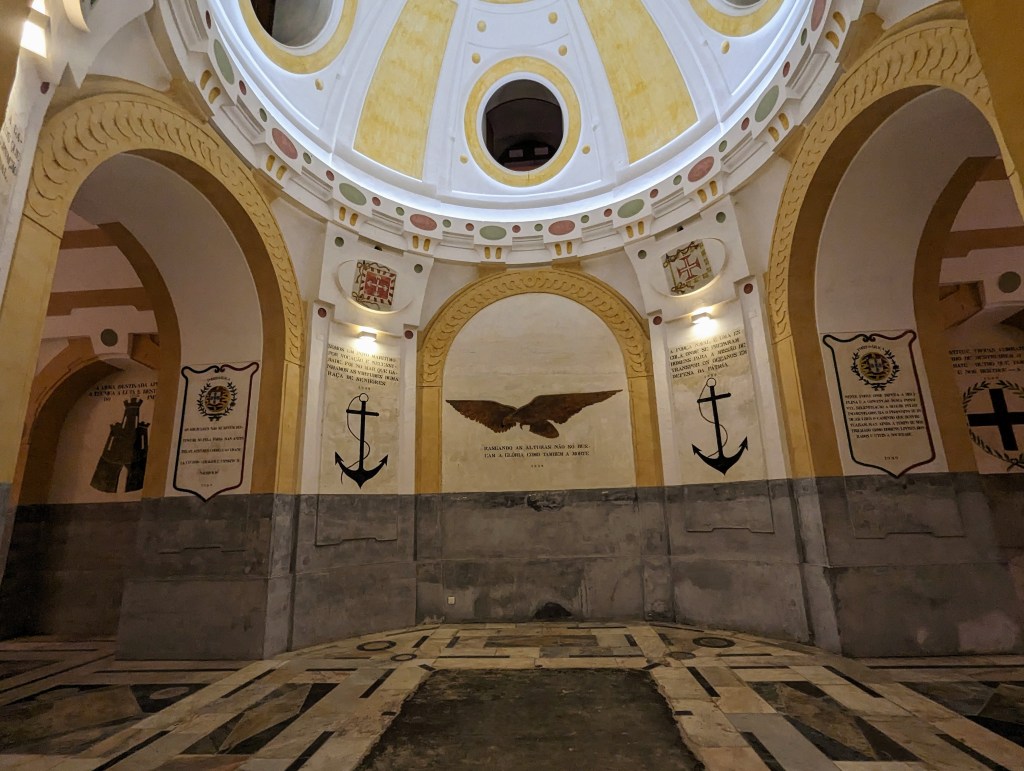
We went into the main building, now a museum dedicated to the military.
Leaving the fort, we headed to the town of Elvas. We stopped to take a photo of the town with its castle sitting high on the hill.

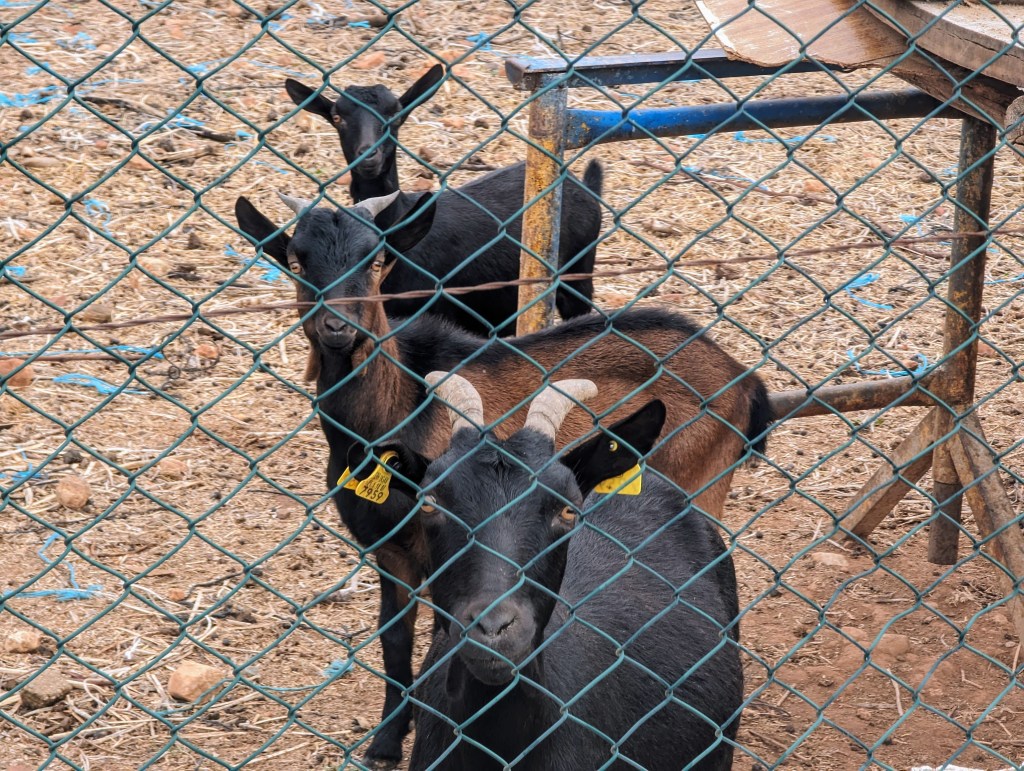
And these girls came over to say hello.
We finally made it up the hill, found parking, and climbed the rest of the way into town.
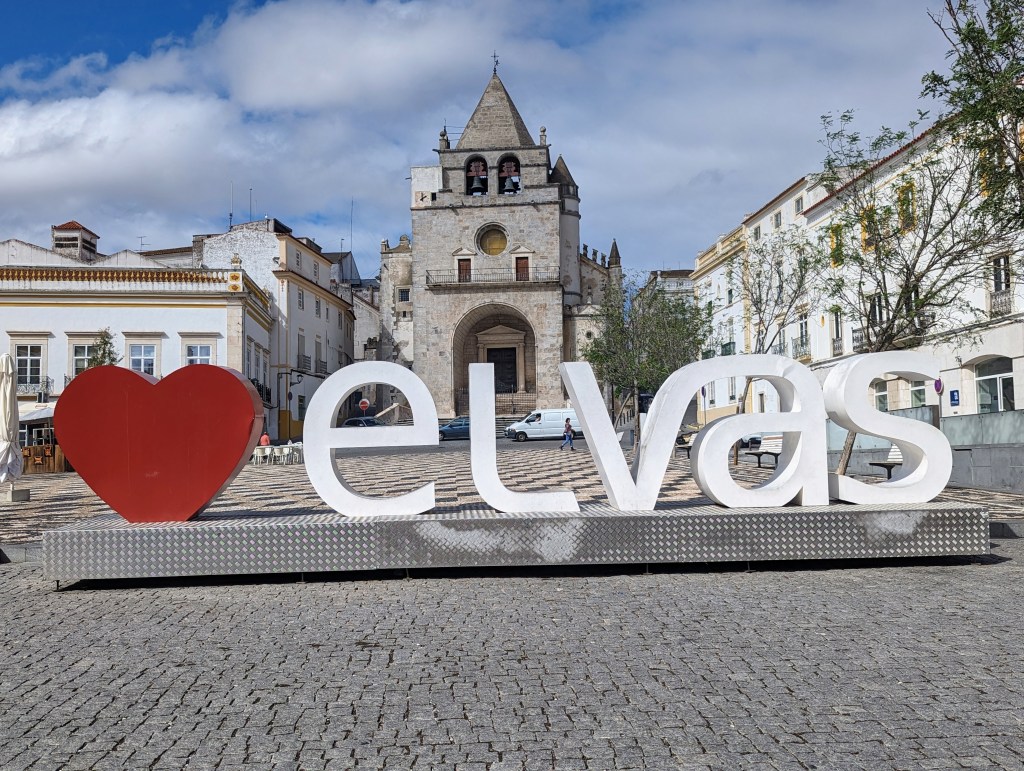
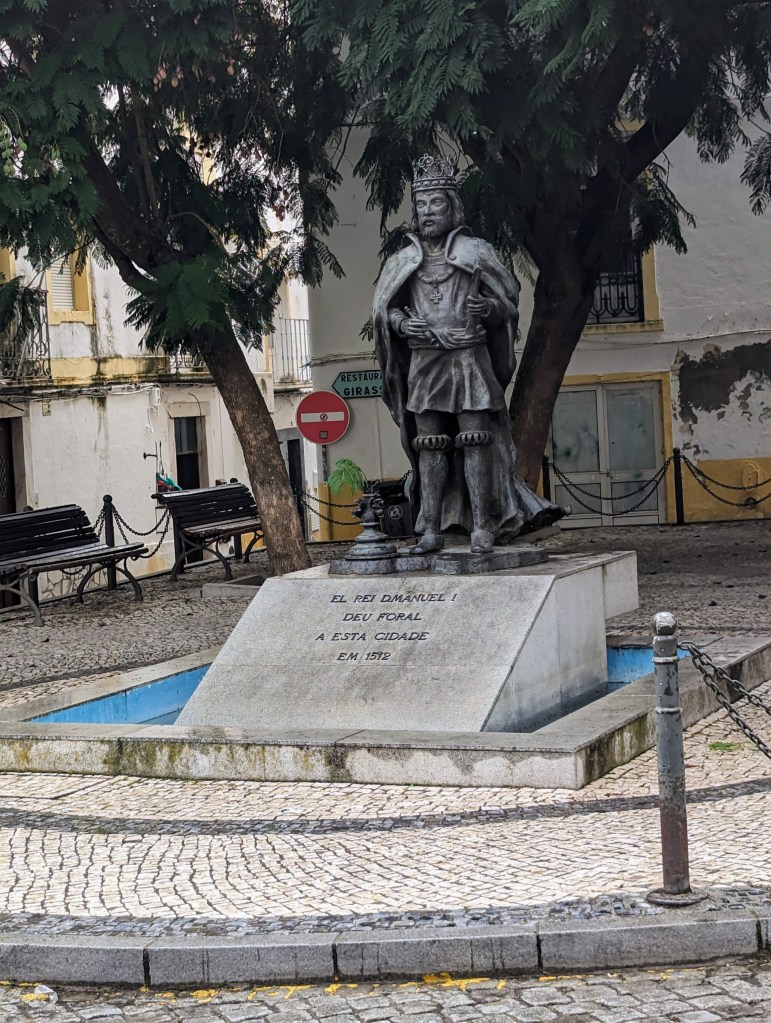
We explored around the town which, based on the number of high end clothing stores and silver place settings stores, seems to cater to the well off.
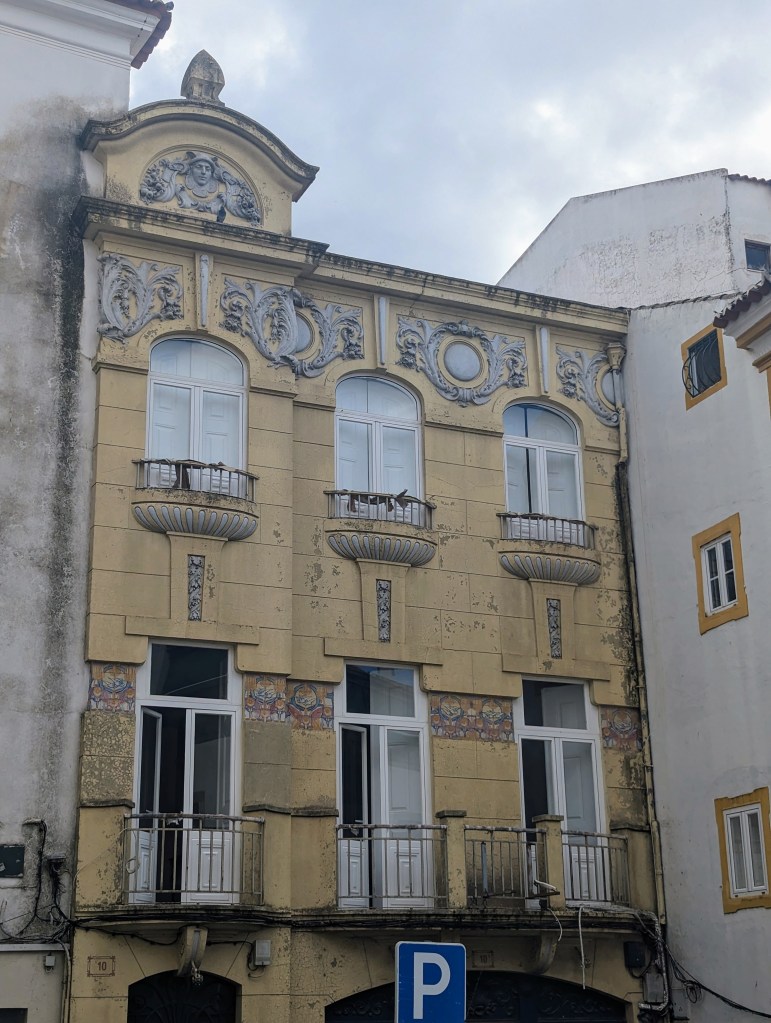
home in Elvas

We had a delicious lunch in an out-of-the-way side street cafe, then headed back down the hill. On the way, we stopped for a drone shot of the aqueduct.
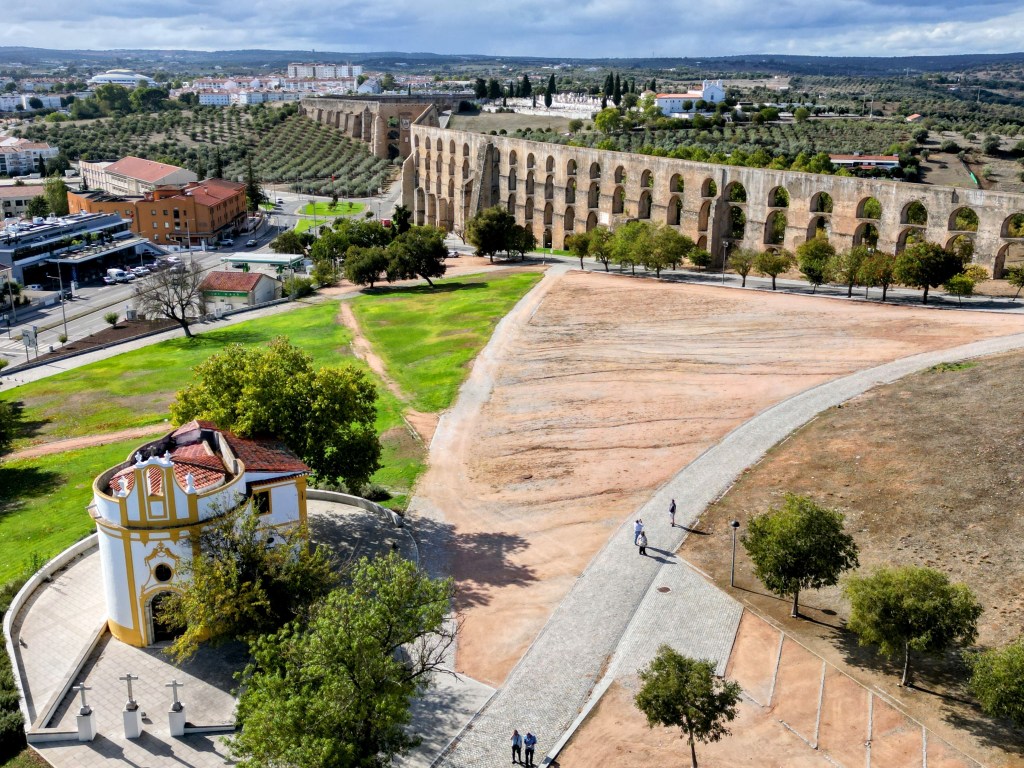
16th century Aqueduct

We then headed toward the town of Vila Vicosa. We opted for the back roads route. We passed not only cow, goat, and sheep farms, and olive and citrus groves, but also several cork plantations. Portugal is the number one cork exporter in the world, providing about 50% of the world’s cork.
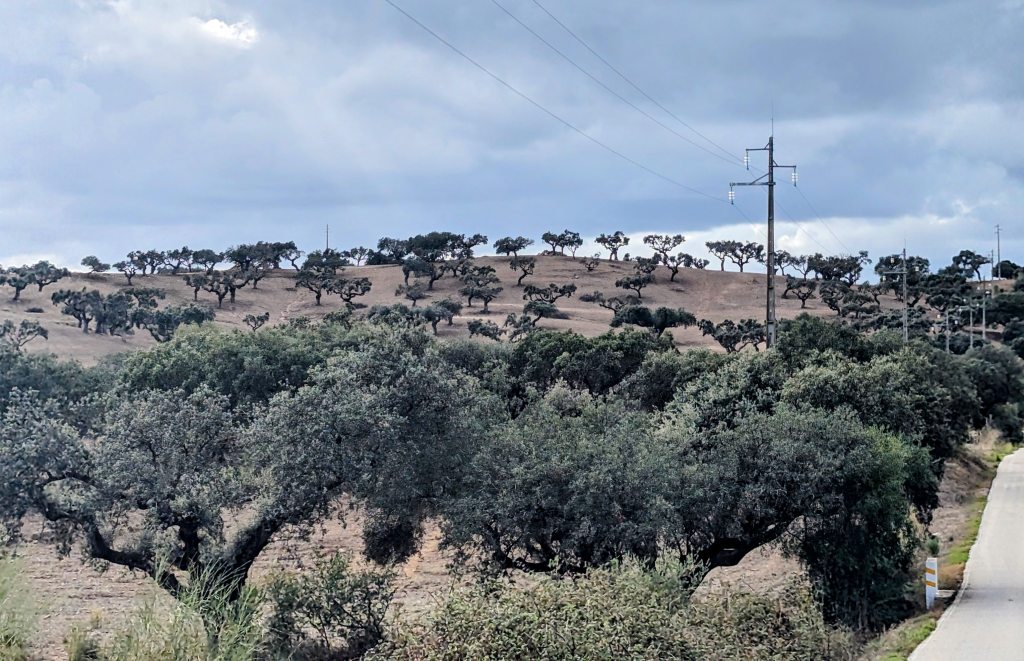
cork plantation

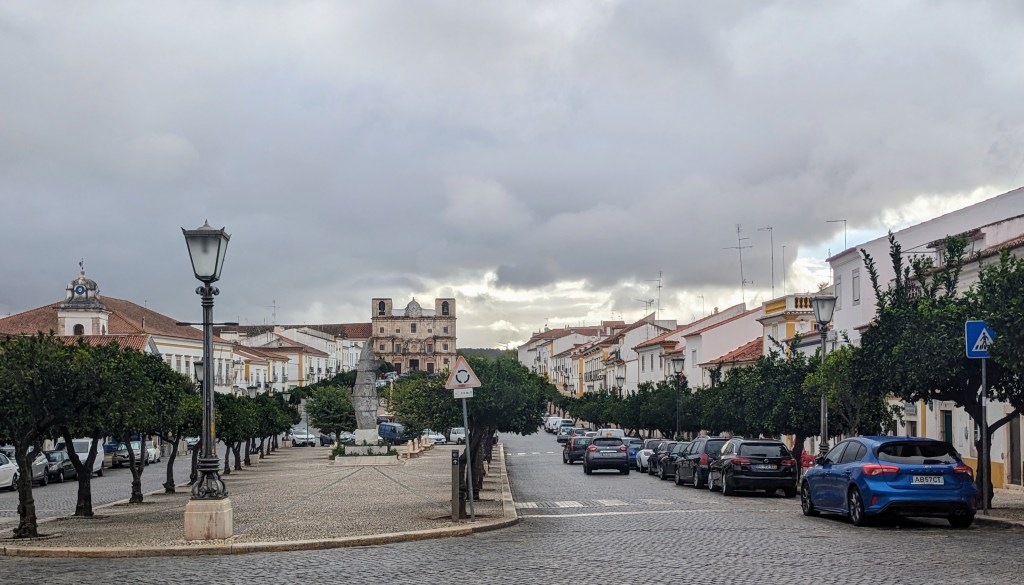
The town of Vila Vicosa is one of the cutest ever with citrus trees lining almost every street.
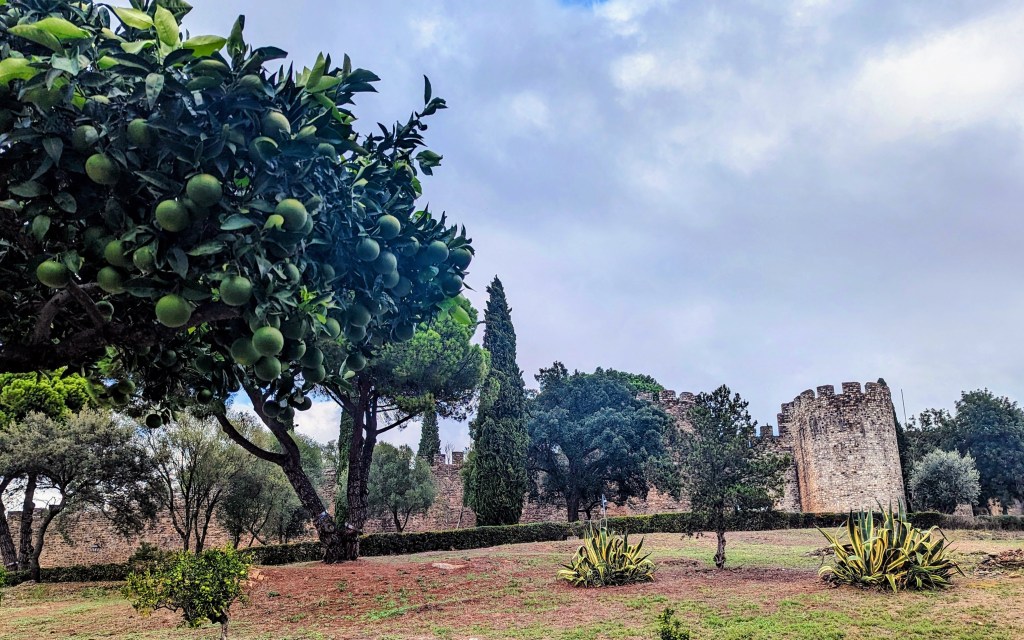
medieval town wall Vila Vicosa
main street Vila Vicosa

Unfortunately when we arrived at the Duke’s Palace, it had closed early due to a power outage and not enough light.
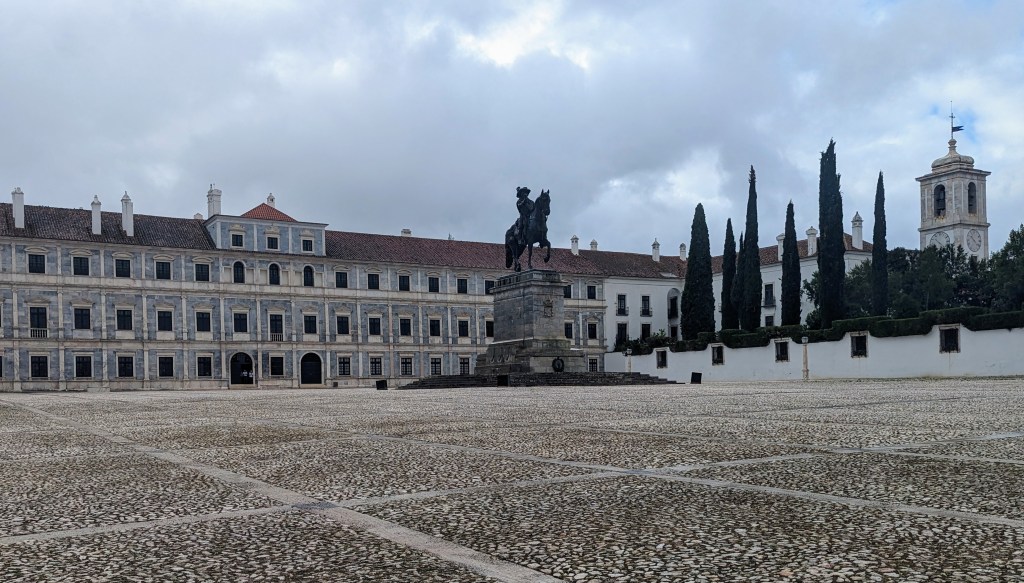
Duke’s Palace Vila Vicosa

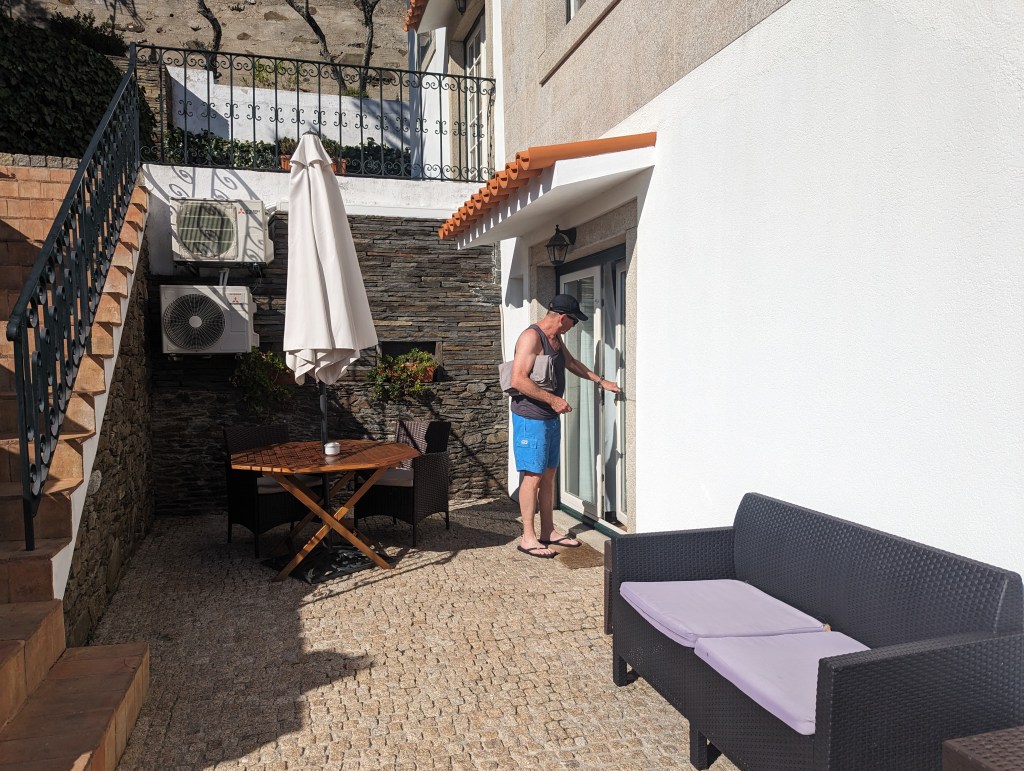
As it was starting to rain, we headed to our hotel, Noble House in Evora. Eric had booked us the Garden Suite. It had a little terrace in a small private garden in front of the room.
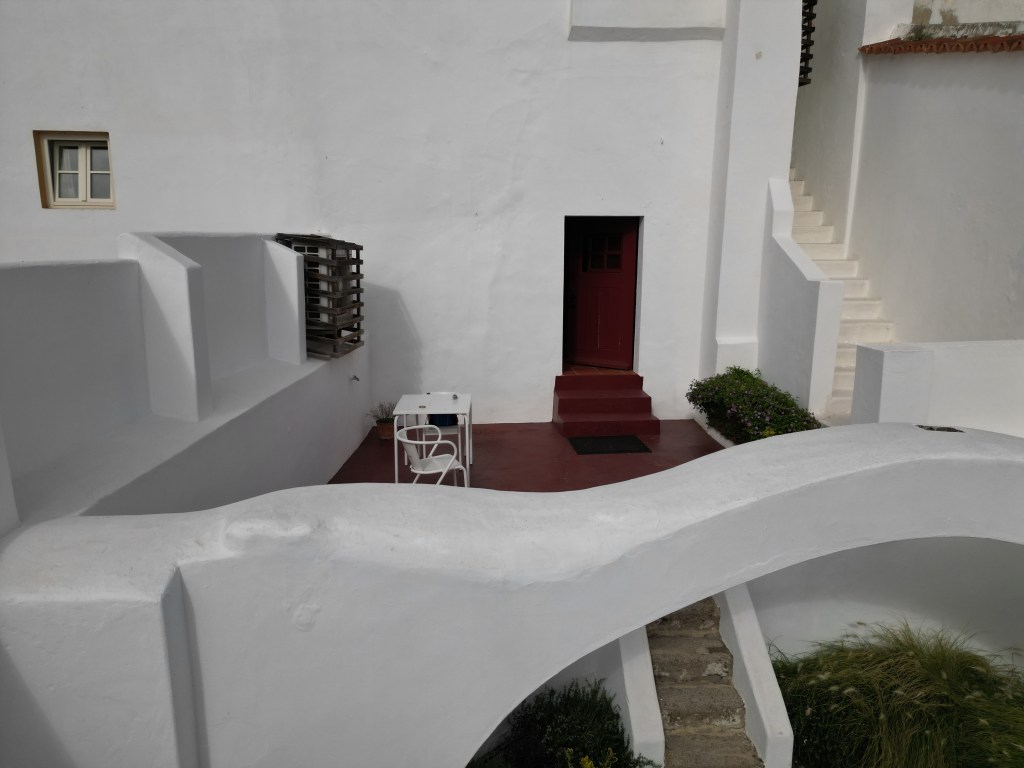
When we entered the room, WOW! We had never stayed in such a unique room before.
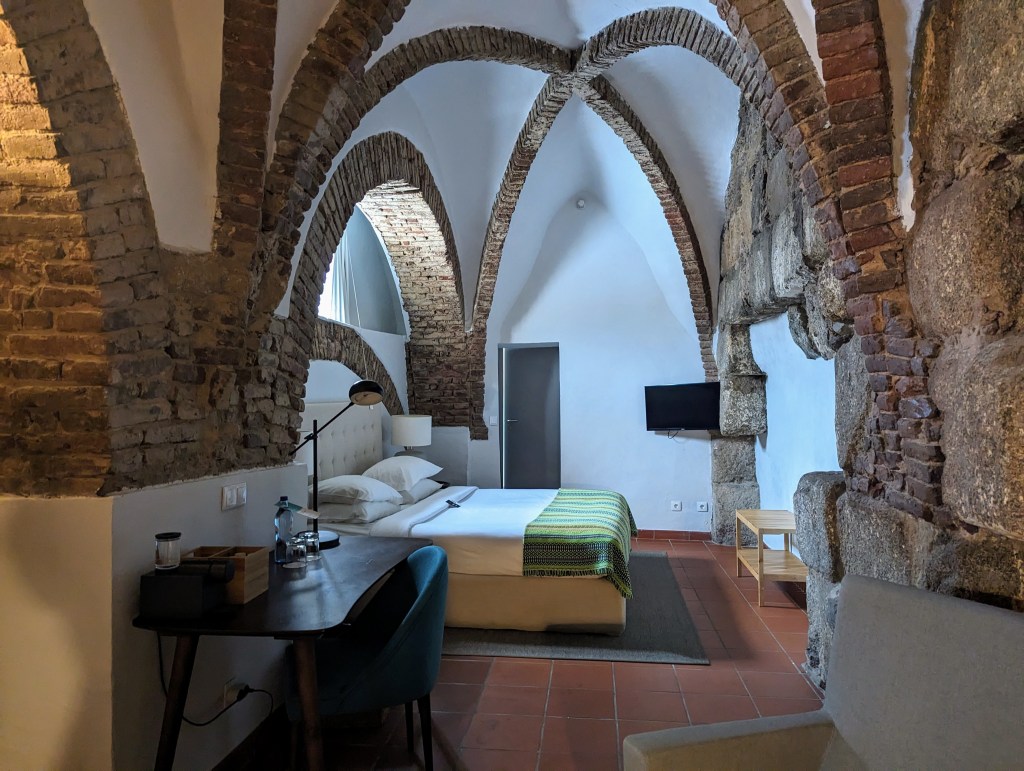
The wall next to our sitting area was part of the original Roman wall surrounding the town!
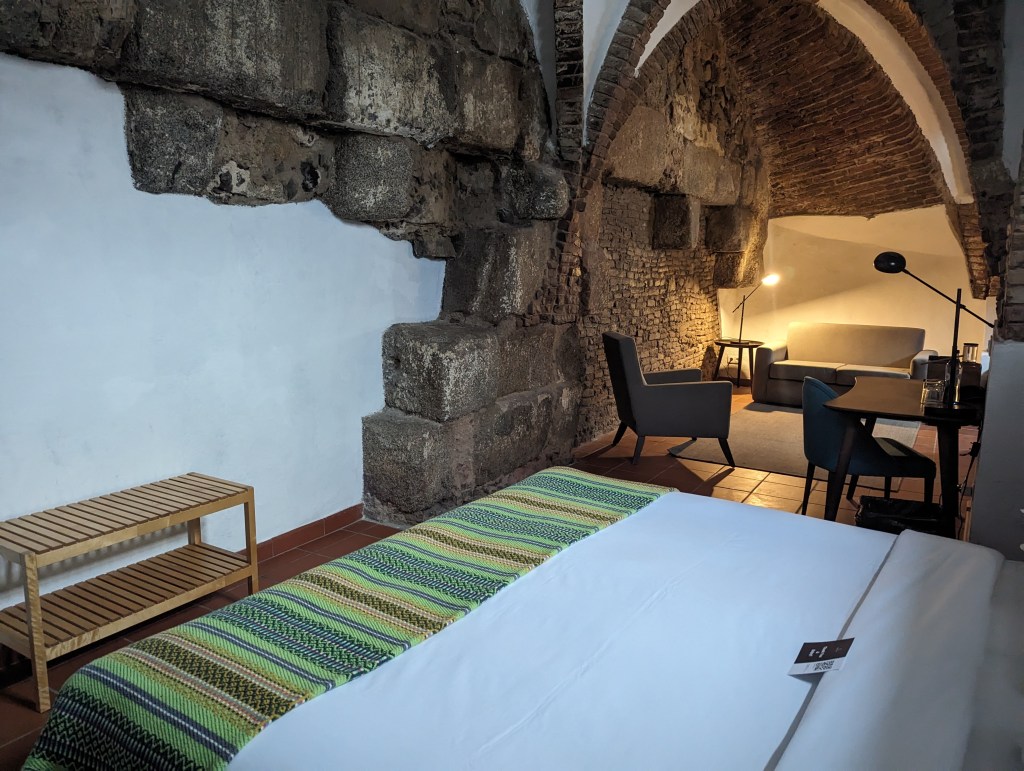
Anyone who knows me well knows how much I love all things ancient. I love to sense the lives that were lived thousands of years ago in this spot: people loving, living, giving birth, dying. So similar to us and yet so very different. And with the next day’s weather, a storm bringing 1-2 inches of rain with winds 30-40 mph, what better place to be holed up!

When there was a small break in the weather the next day, we went where any reasonable person would go on a stormy day: the Chapel of Bones. The chapel is part of the Church of St. Francis, built by monks in the 16th century. So first a stop in the church.

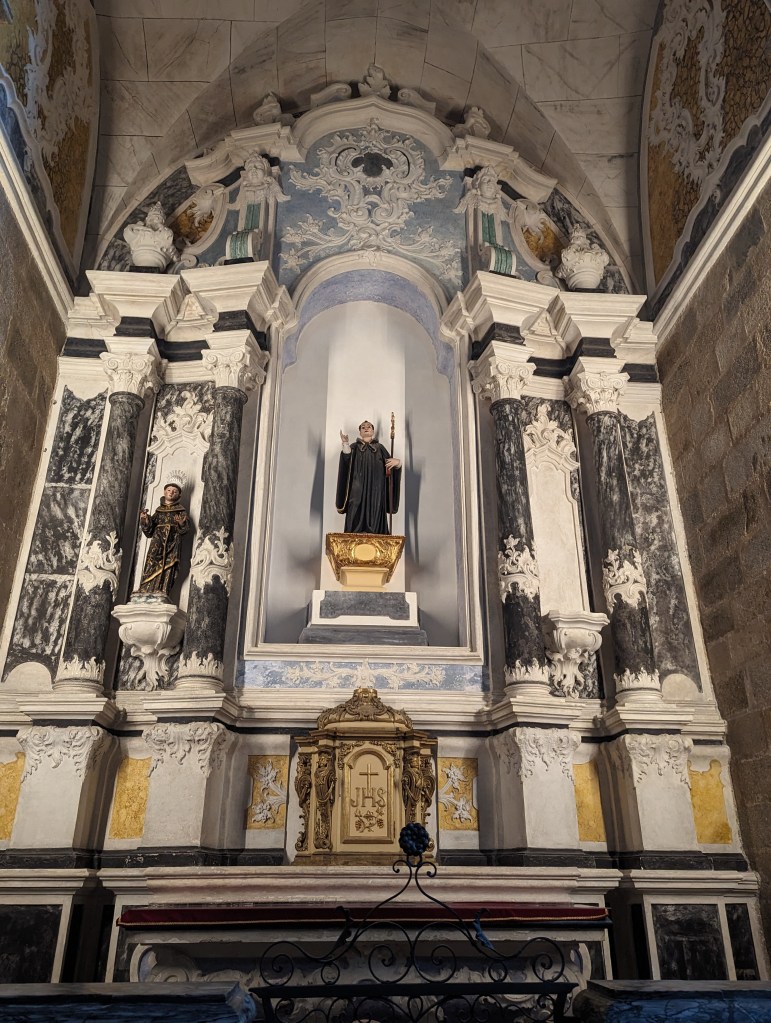
St. Francis Church Evora

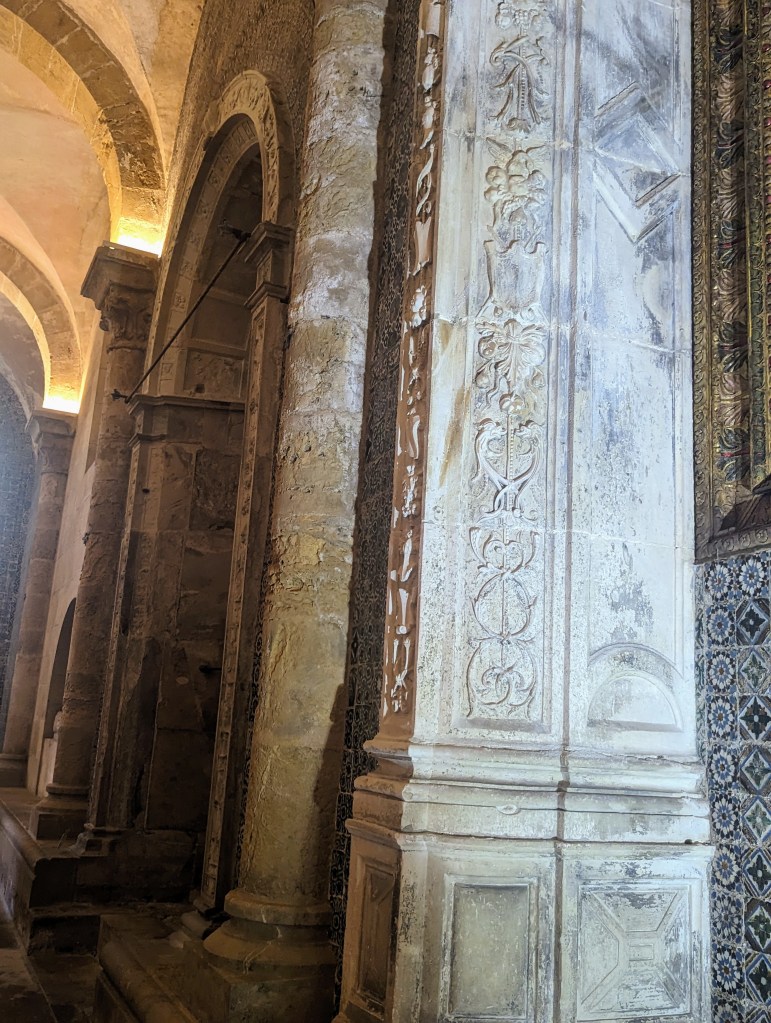
What makes the interior of this church most beautiful are the exquisite mables. I did not realize how much Portugal is known for marble quarries and exports. In this church some of the naves have as many as 4 different colored marbles.
But it was time to move on to what we came for: the bones. The Chapel of the bones was built by the Franciscan monks because by the 16th century, there were as many as 43 cemeteries in and around Évora that were taking up valuable land. Not wanting to condemn the souls of the people buried there, the monks decided to build the Chapel and relocate the bones.
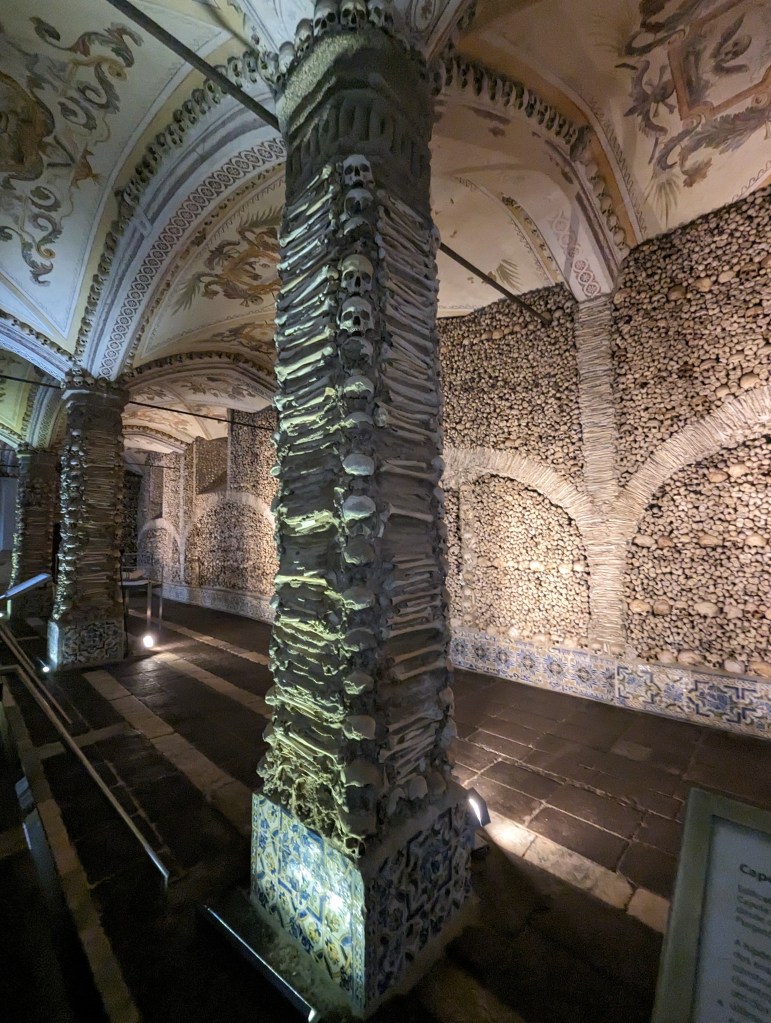
It is not necessarily easy to see in the picture above, but all the little bumps on the walls that are not skulls are the ends of long bones: femur, tibia, etc., seen better in this picture:
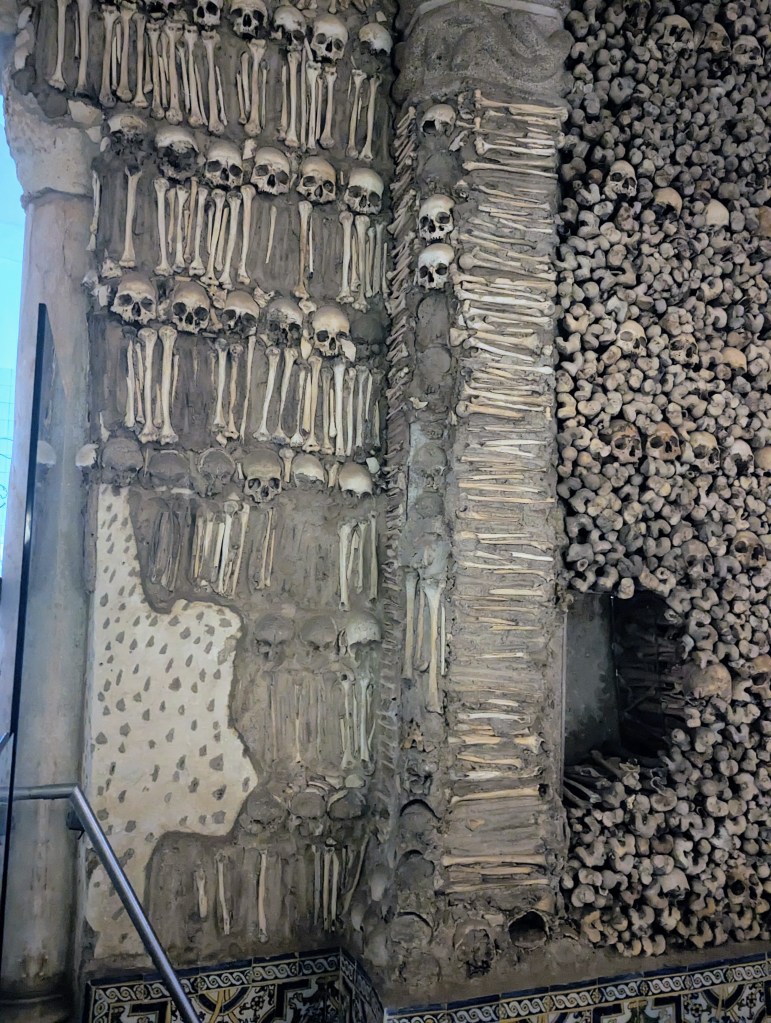
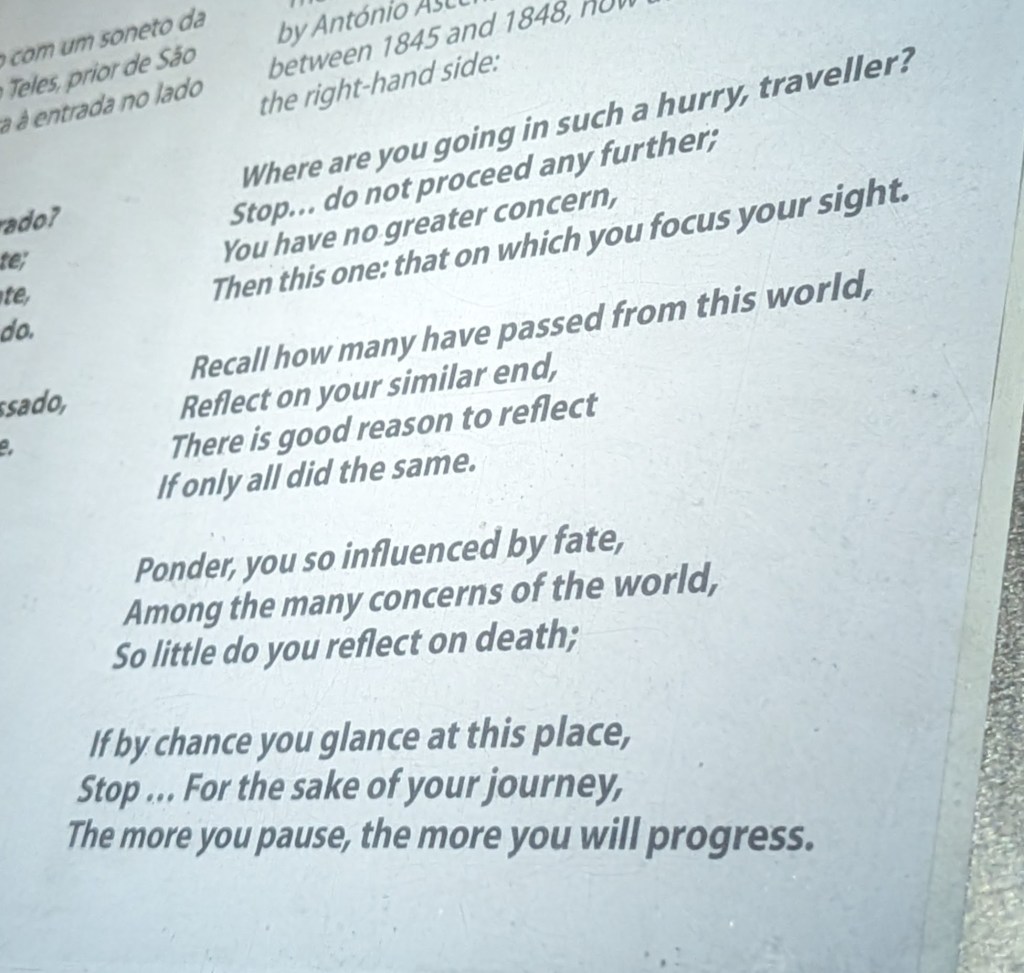
The Chapel was part creepy but mostly fascinating. This is the poem inscribed on one of the columns:
On the way out we realized we had missed the inscription over the entrance door:
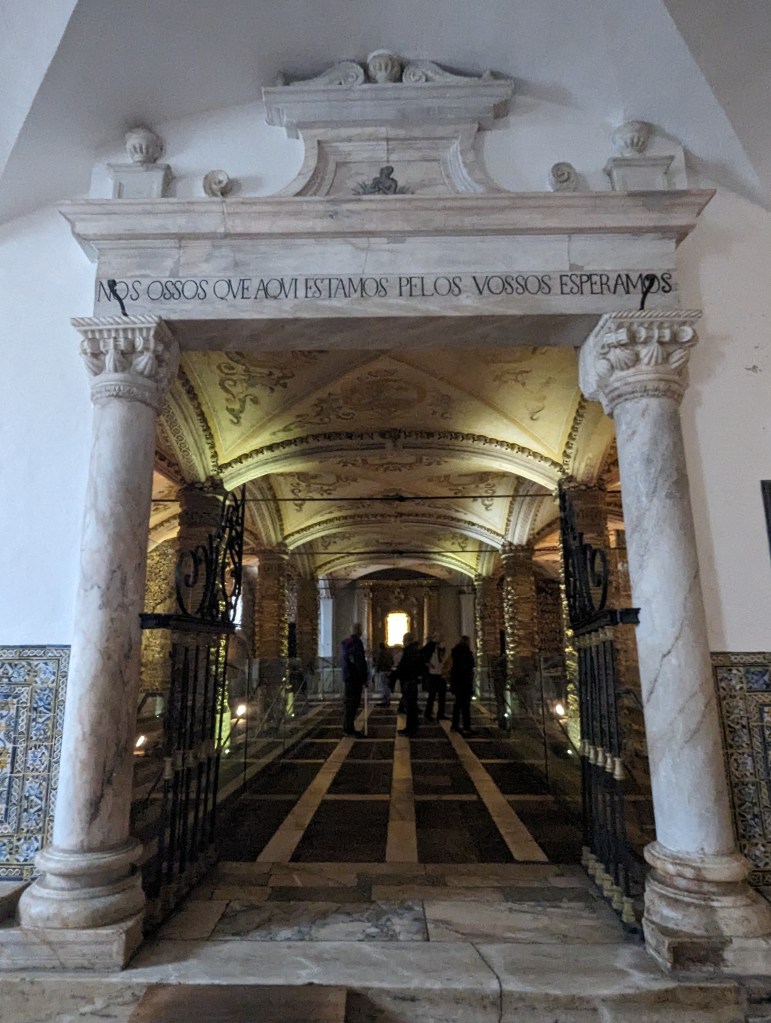
Our bones are here for yours we wait

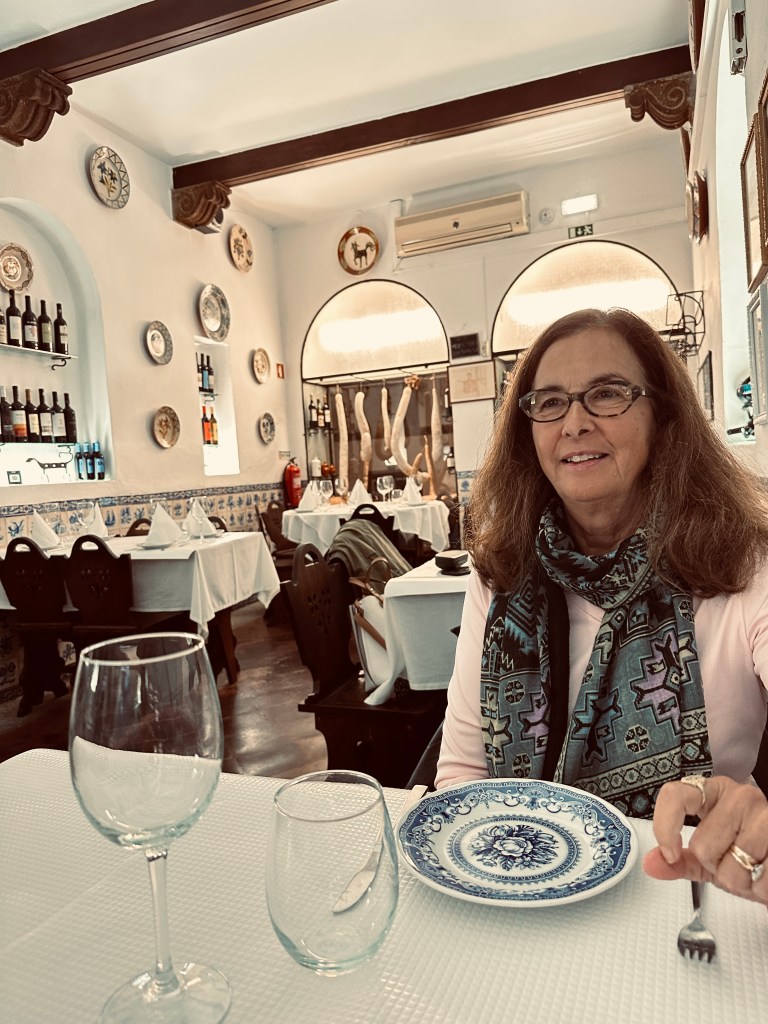
Another break in the rain gave us a chance to get out for dinner, which we enjoyed at Restaurante Tipico Guiao.
The next morning found the weather markedly improved (though a bit cool, the first hint of autumn) in time for our walking tour. We started on the outskirts of town to see a section of the remaining Roman aqueduct.
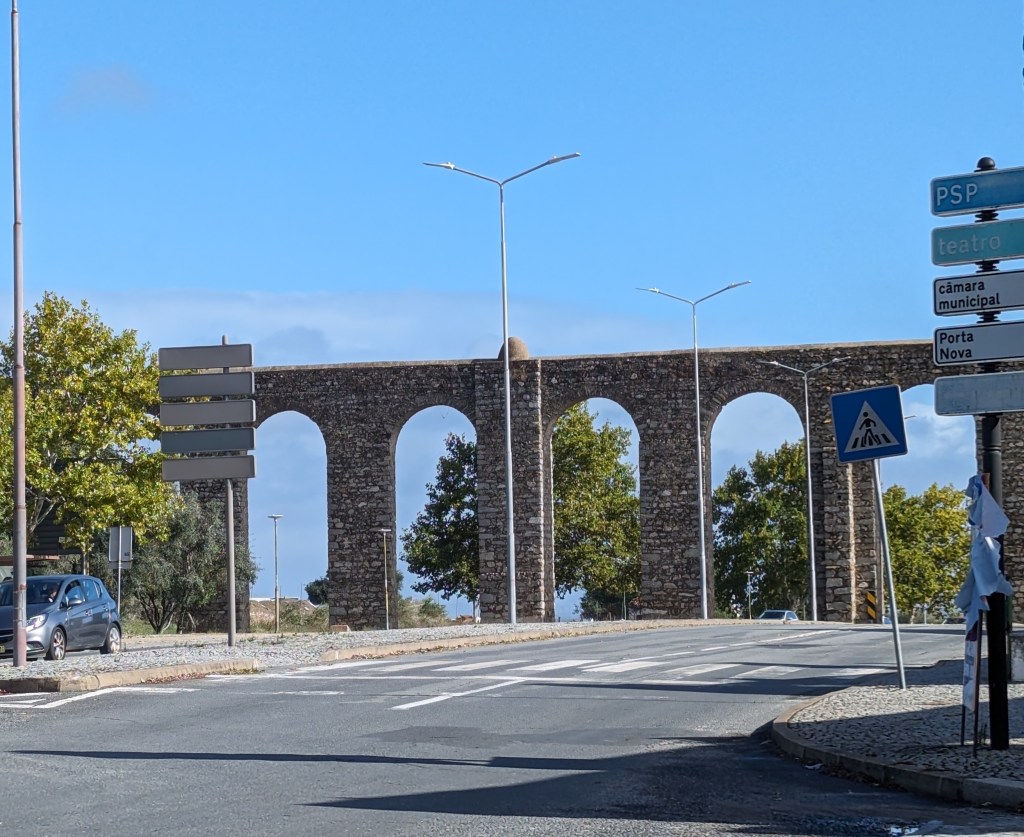
During the Moors’ occupation of the city (like all of Portugal, roughly 8th-12th centuries) they built homes right in amongst the aqueduct.
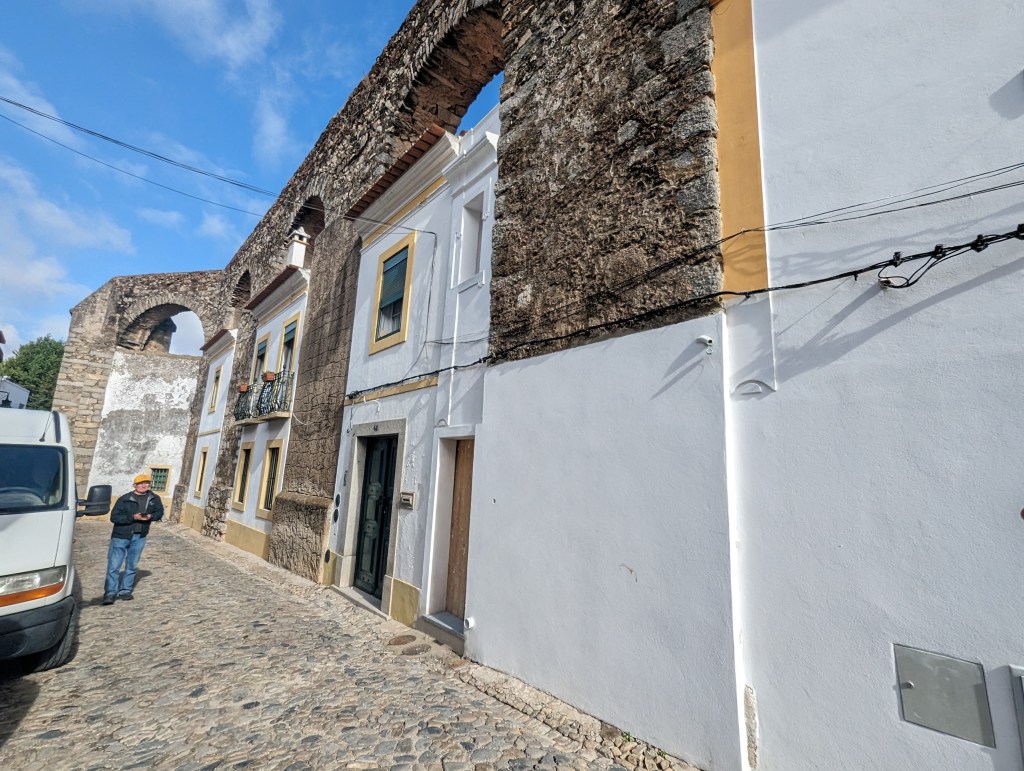
There are few Roman walls left;of the four entryways through the walls, only one remains.

At the top of the city’s main square sits the 16th century Renaissance Church of Saint Anthony.
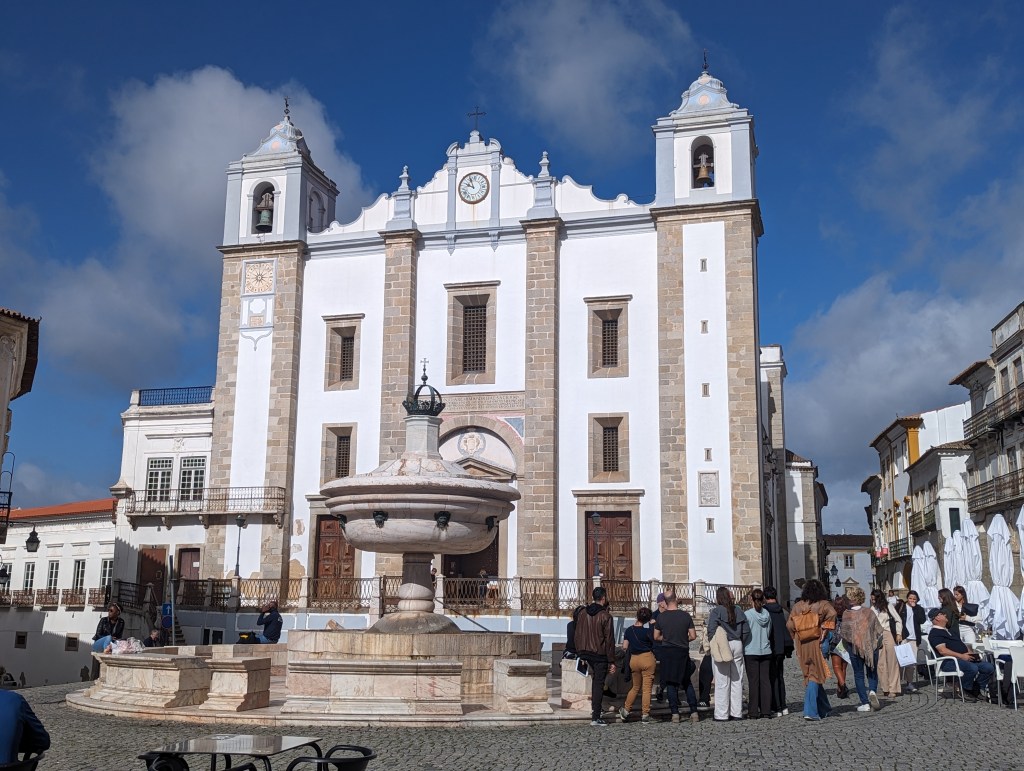
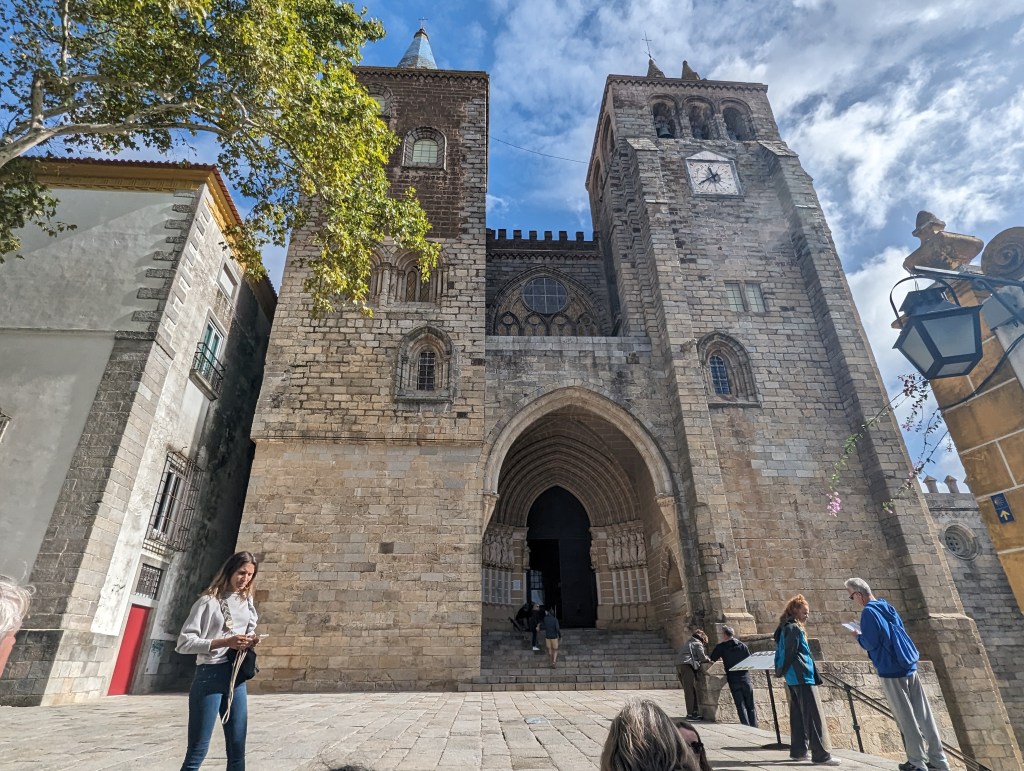
The square is called Giraldo Square, paying tribute to Fearless Geraldo Geraldes, the man who conquered Evora from the Moors in 1167. We walked by the cathedral.
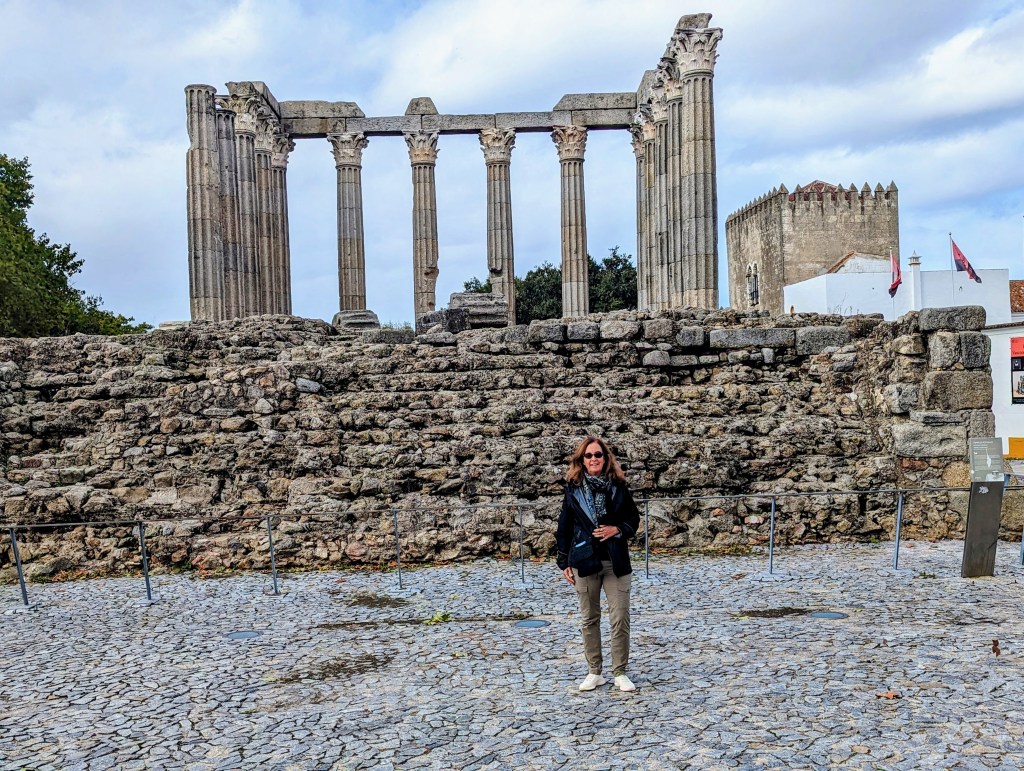
And then the famous Roman ruin, most probably a temple to Diana, goddess of hunting.
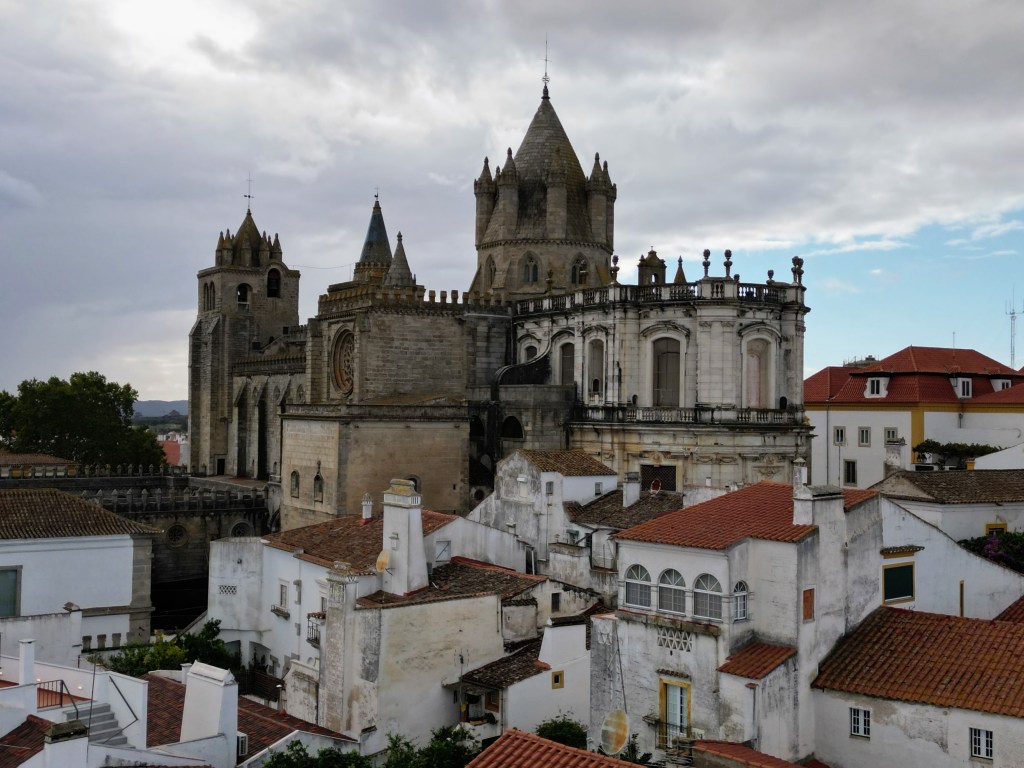
As we climbed to higher ground, we were able to get a good view of the cathedral.
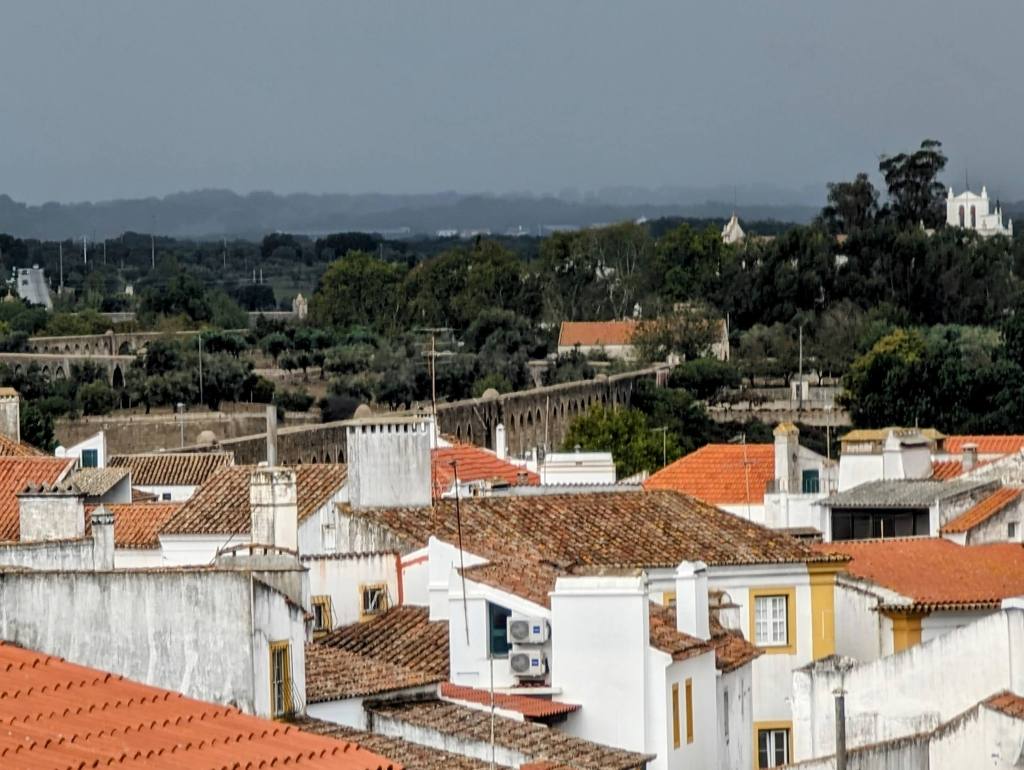
And a view of a larger portion of the aqueduct.
And also a look at the university.
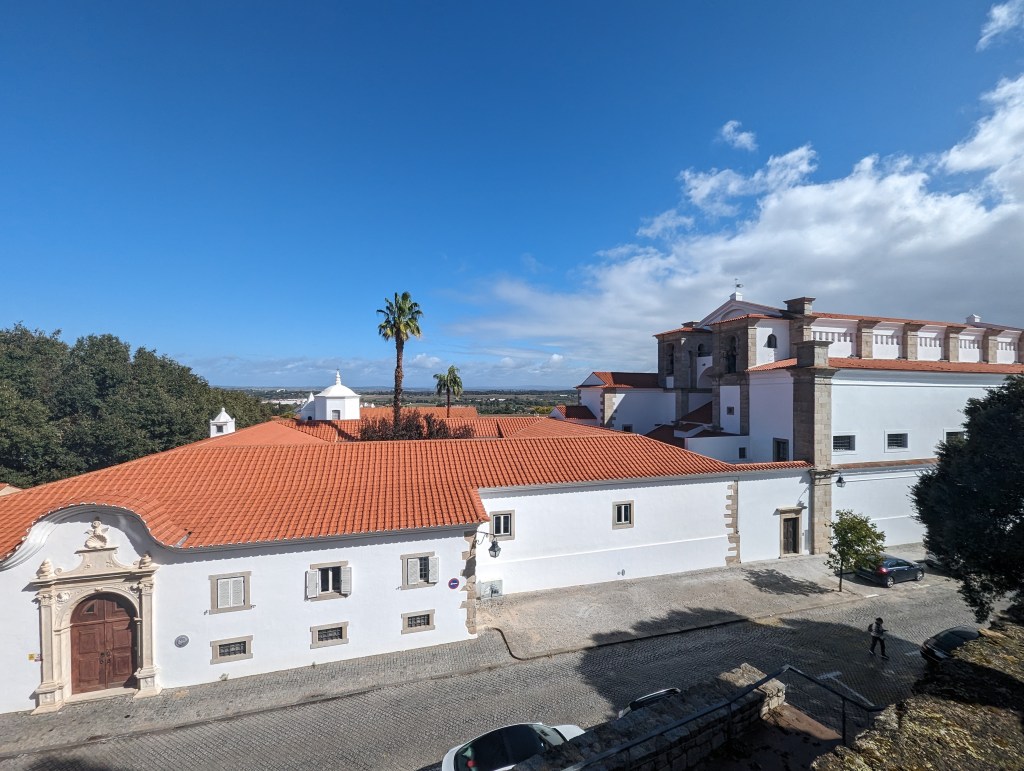
Evora is the capital of the Alentejo region of Portugal and has the main university as well as the main hospital and many of the municipal buildings.

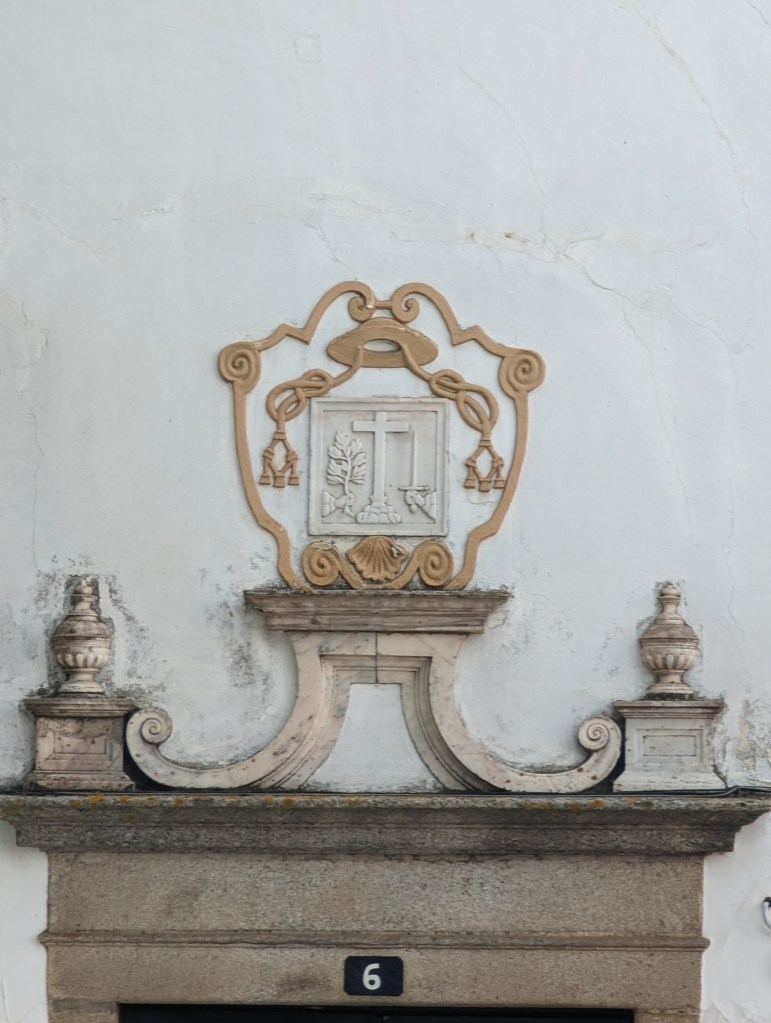
Our guide pointed out the symbol of the Inquisition.
And finally this curious 16th century Renaissance church topped by four large mythological figures supporting globes, meant to symbolize the four corners of the earth and the universal power of King João III.
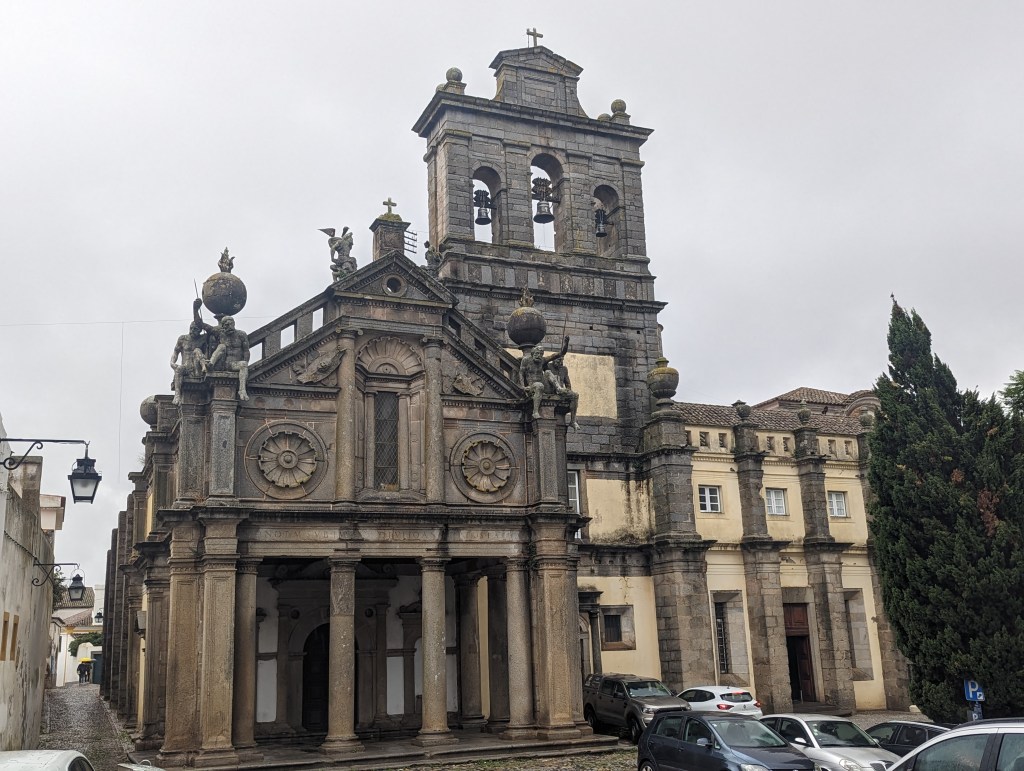
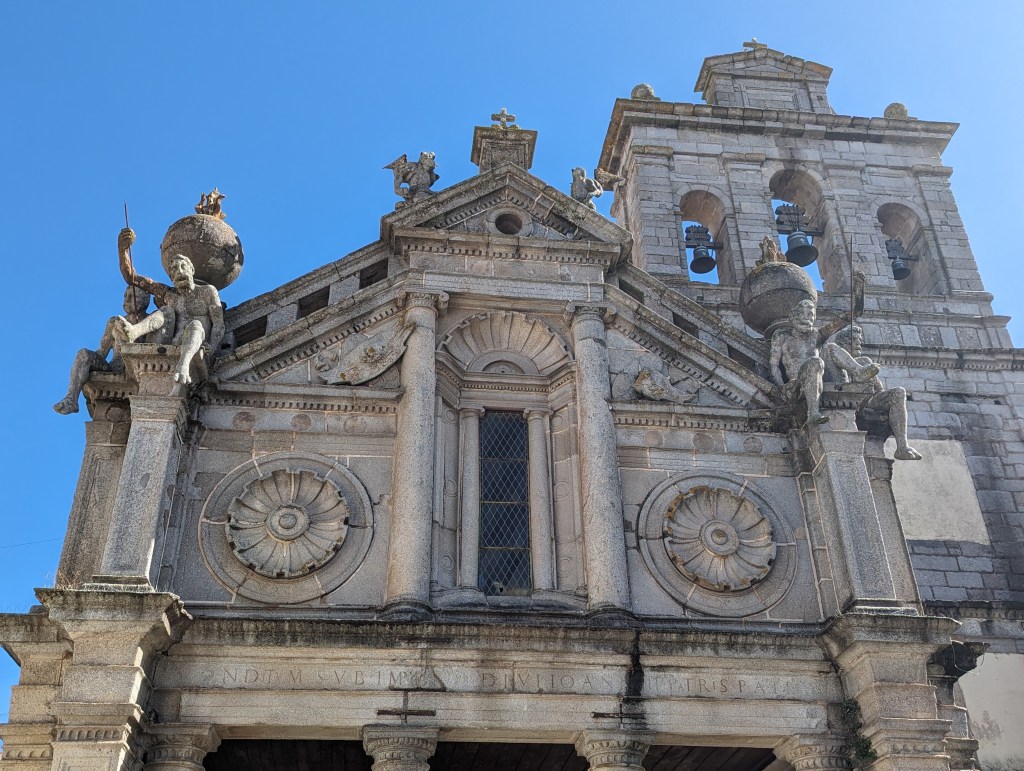
Upon completion of the walking tour, we decided to go back and see the cathedral in more detail. For the beginning of the visit we were directed to go up and view the church through the choir above.
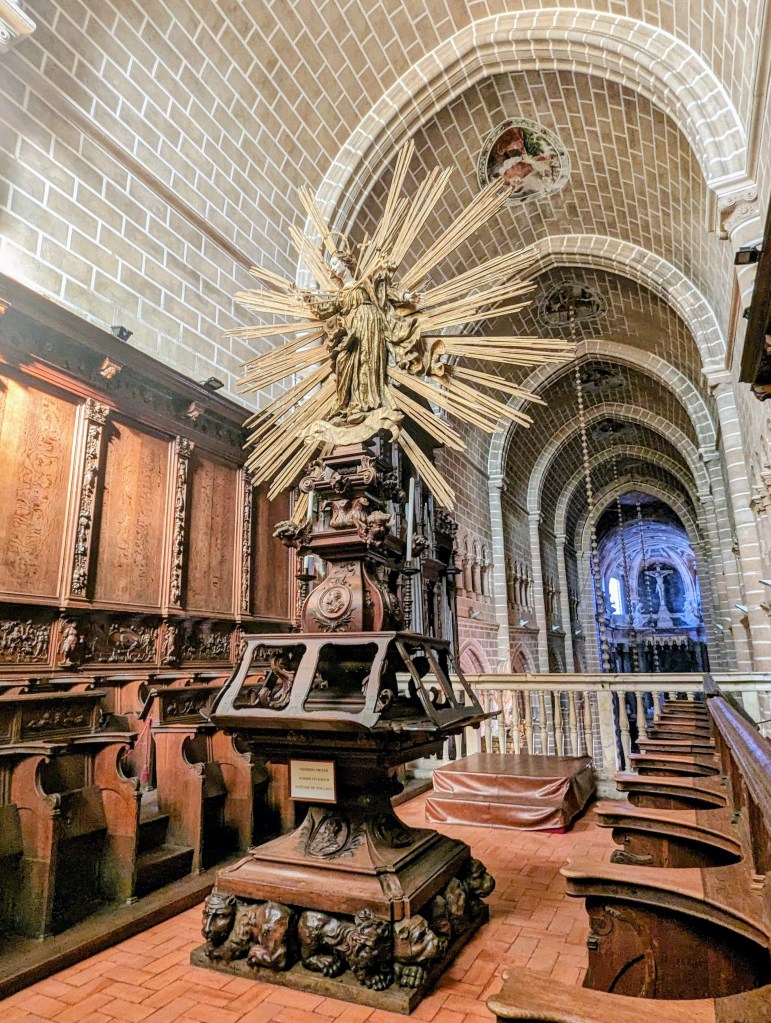
choir

Then the visit guided us up to the terrace.
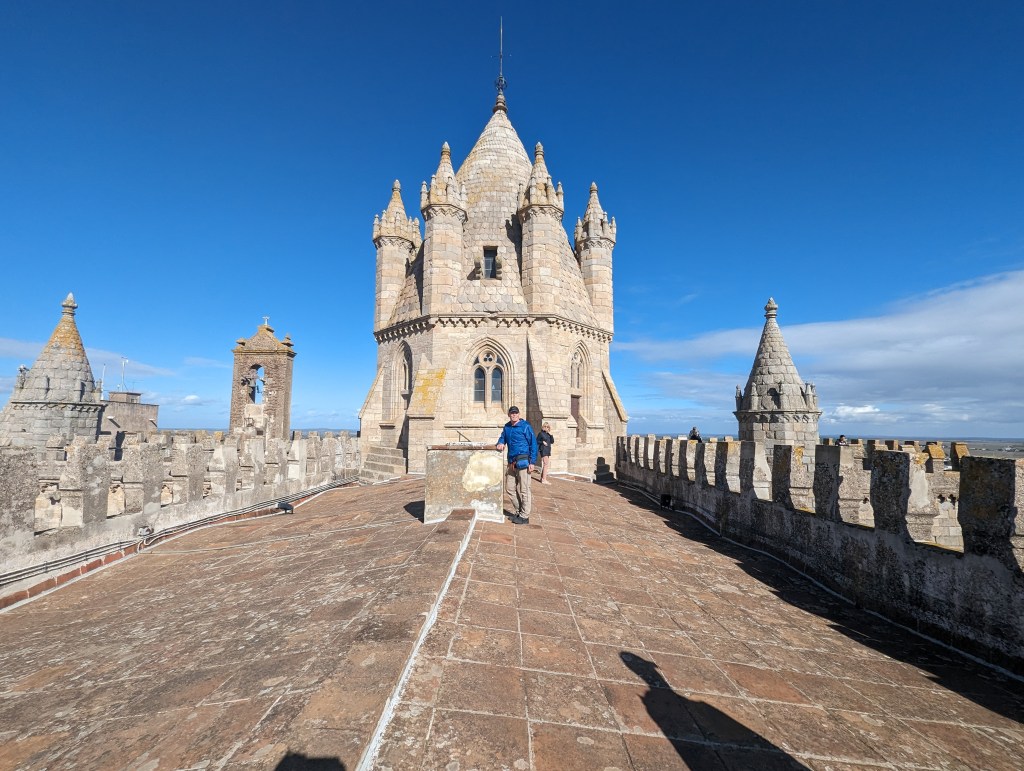
cathedral terrace

Eric was brave enough to take in the views,

cathedral terrace

while I took pictures while plastered against the back wall.
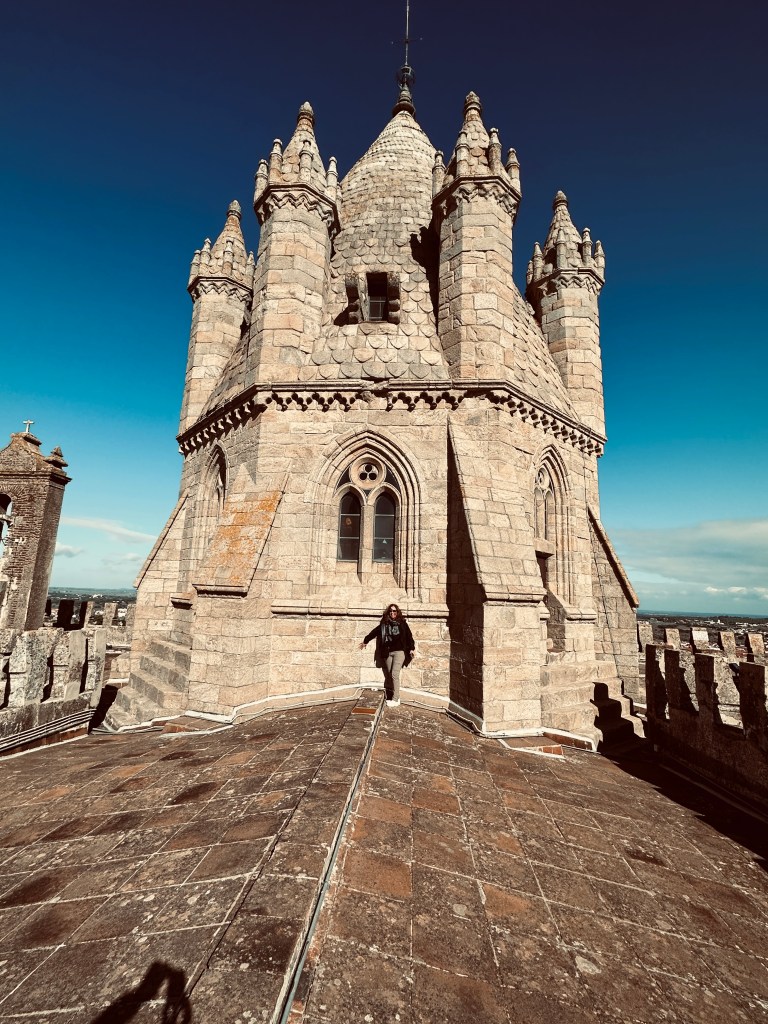
Then we went down to the chapel.
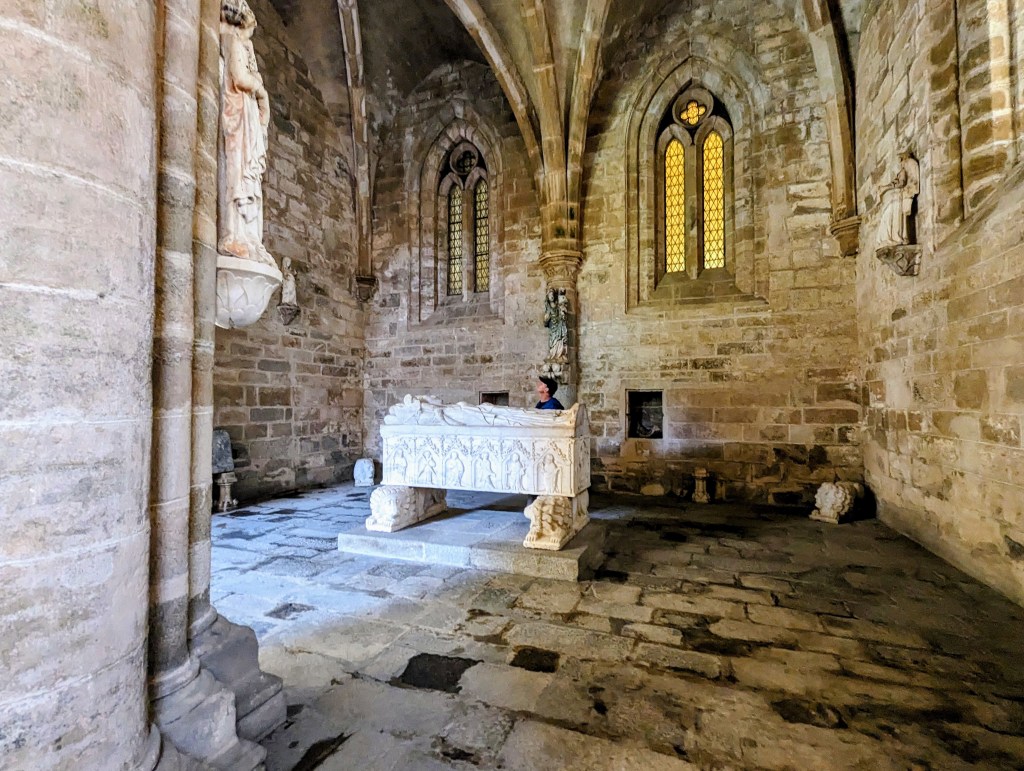
cathedral chapel

And the main church.

cathedral high alter

Like St. Francis Church, the marble in the church of the cathedral was spectacular.

After a rest it was back out for dinner at Abruxa D’Evora.

There we had the most delicious gazpacho ever, served with a grilled sardine on toast.

Walking back to our romantic Roman room, the night sky had cleared, and we passed the Roman ruins lit up.

We could not believe our visit to the Alentejo region was over. The next day as we drove nearly 3 hours through so much farm land, vineyards, more cork plantations, groves, etc., we had our first itinerary regret of our journey to date: we wished we had allotted more time in the Alentejo region. It turned out to be our favorite, and we had only 3 short days, interrupted by rain. If we were to plan this trip over, not only would we have spent more time, but we would have then stayed in Vila Vicosa, which had a very cute looking Pousada right next to the Duke’s Palace. Vila Vicosa is more closely located to all the towns which we did not get a chance to visit partly due to weather, but partly due to their distances from Evora.

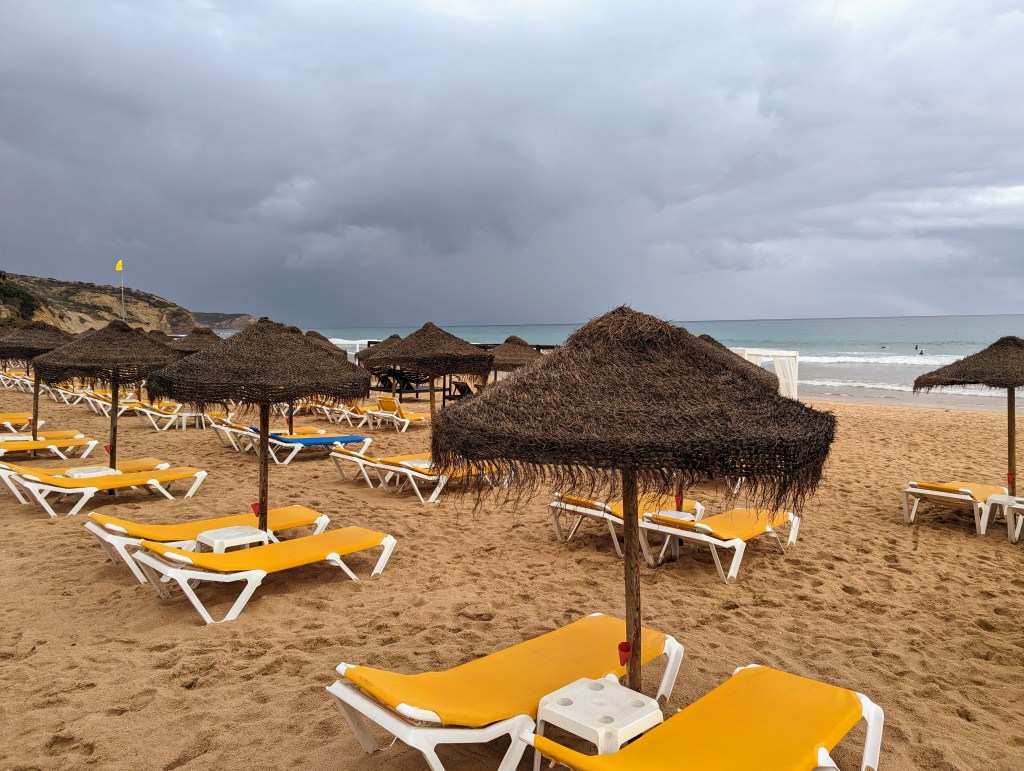
When we arrived in Salema our room was not yet ready, so we headed right to the beach.
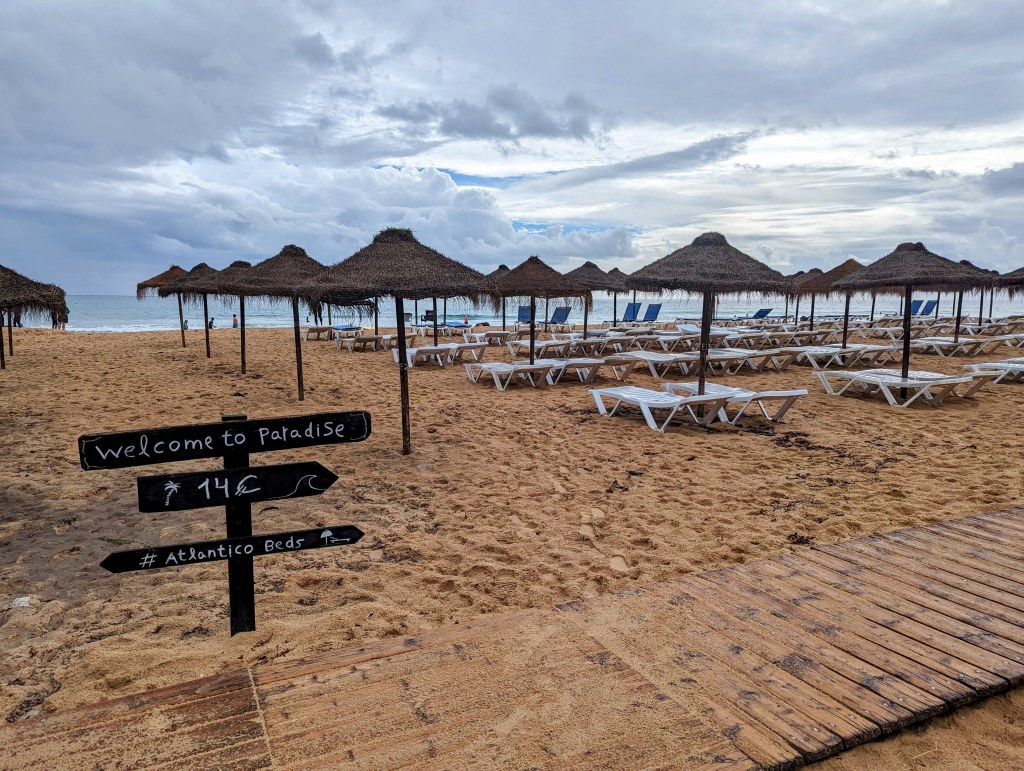
We had a lovely lunch of fish soup right off the beach with views of the water at Agua Na Boca. Then our room at the Nau Salema Beach Village was ready. Once again we were pleasantly surprised with our gorgeous views.

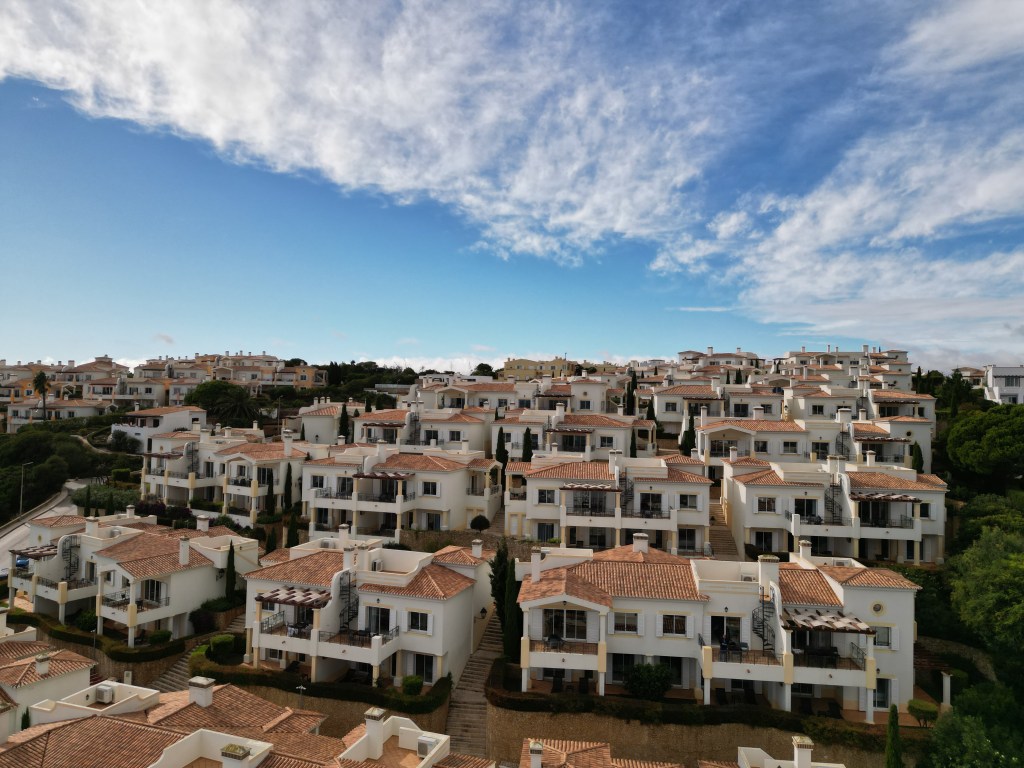
view from our terrace
drone view of NAU Salema Beach Village

The next day we had yet another storm of 1-2 inches of rain and over 40 mph winds (our third in a week). Luckily we had scheduled some extra time in the Algarve to take a bit of a vacation from our vacation. So having brought in plenty of groceries to our fully equipped kitchen, we rode out the storm in comfort.

The next day we had a walking tour scheduled in Lagos, so out we went. The day started off cool, crisp, and cloudy.
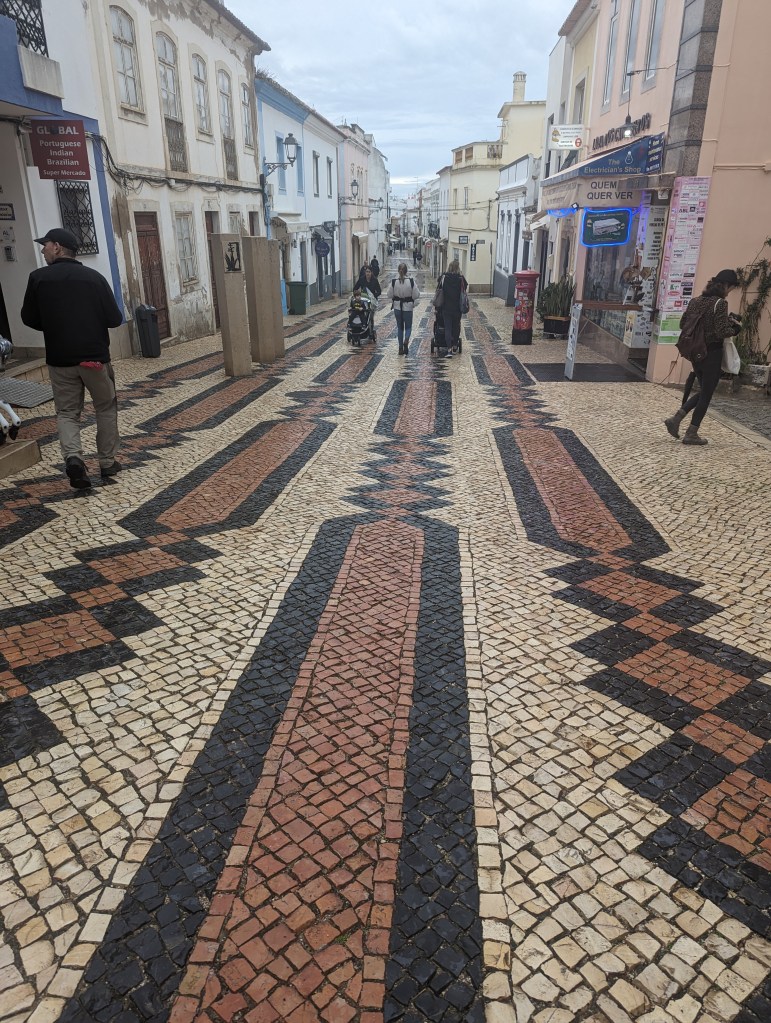
We met in Praça Gil Eanes by the sculpture of the androgynous King Sebastião who elevated Lagos to a city in 1573. He was an explorer and adventurer. The statue was designed by João Cutileiro in 1972 as a tribute to both the king and the then ongoing space exploration.

King Sebastião

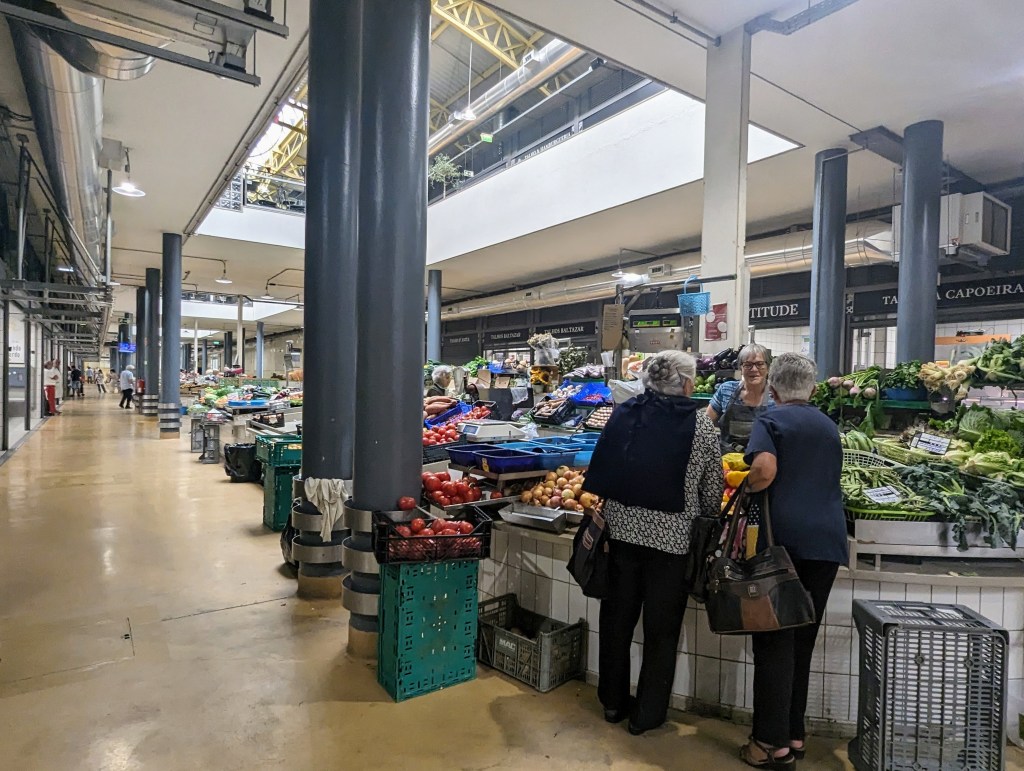
We headed first into the market, which was pretty quiet on a Monday.
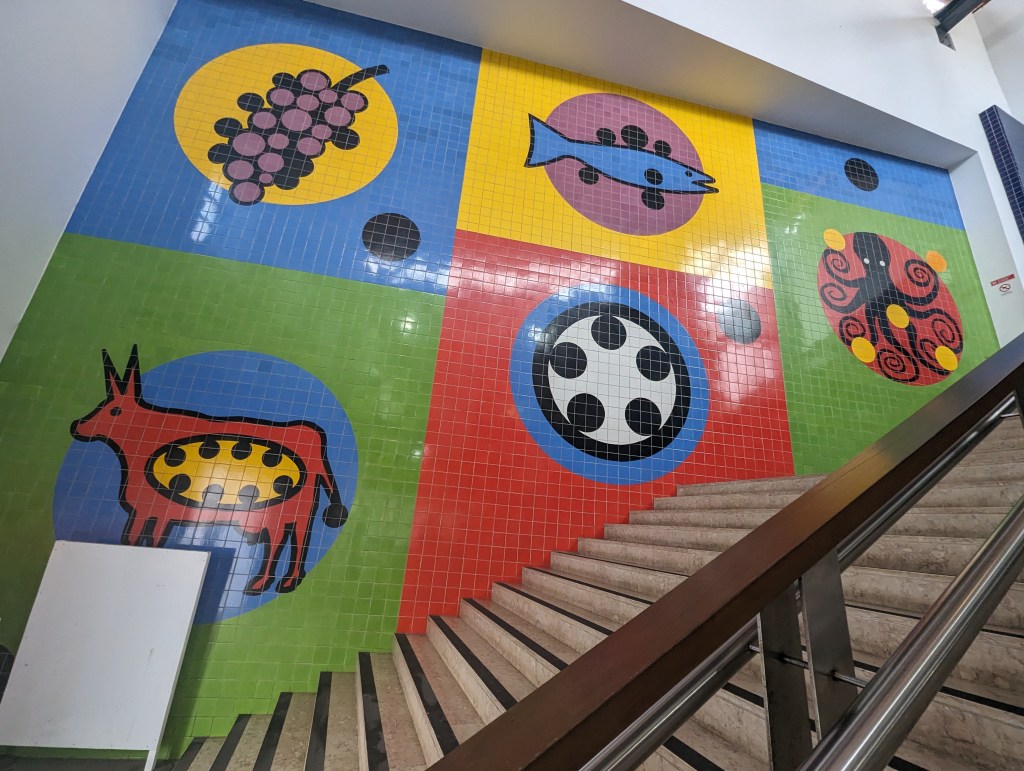
The Algarve is known for its many varieties of figs and fig products.

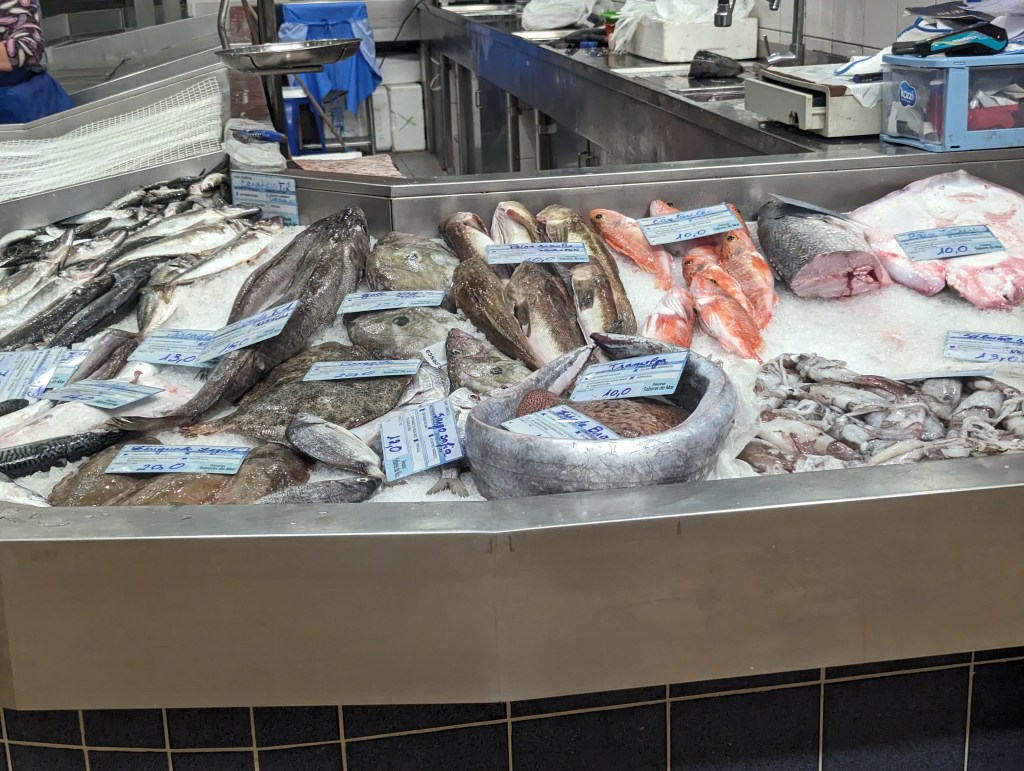
Although one of the main industries in Lagos has always been sardine canning, octopus is also a main export as well as menu item here and throughout Portugal.

sidewalk tribute to octopi

Fishing and now tourism are both big businesses in Lagos ports.

In the 15th century age of exploration, for a time King Henry lived in Lagos and sent many ships to explore and “conquer” the New World from there.
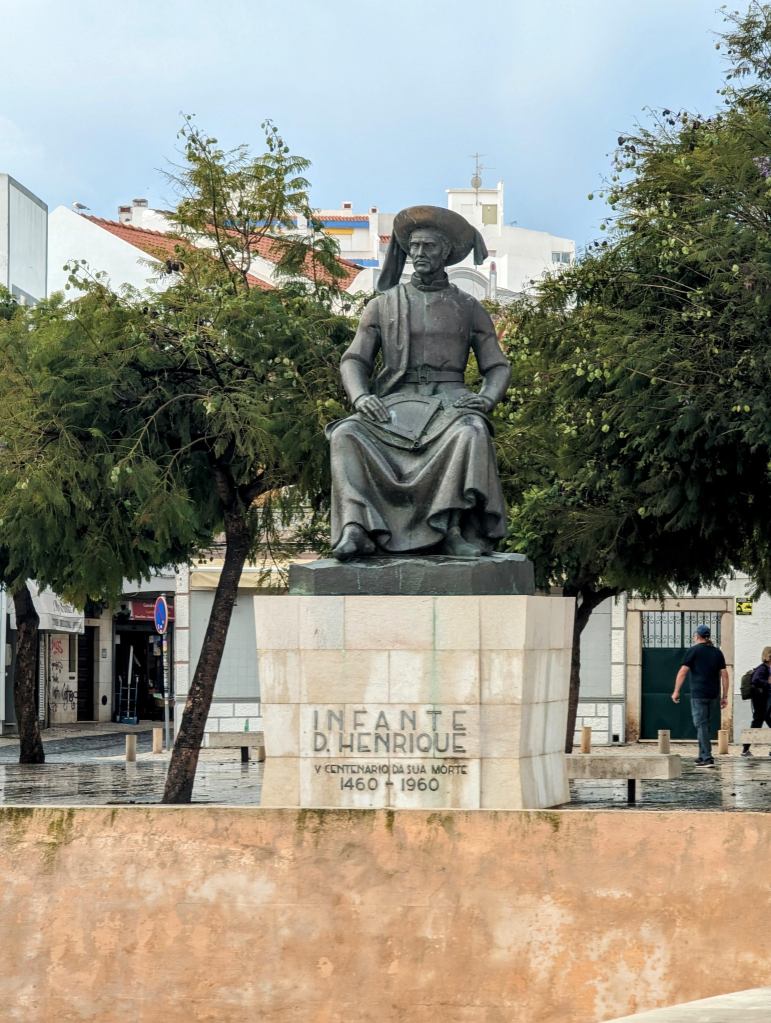
tribute to Prince Henry on the 500th year since his death. He launched many explorations from Lagos

In Prince Henry’s square stands Igreja da Santa Maria, originally a 15th century church built on the old Roman walls. But the church was completely destroyed in the earthquake of 1755 and has been rebuilt and restored several times since.
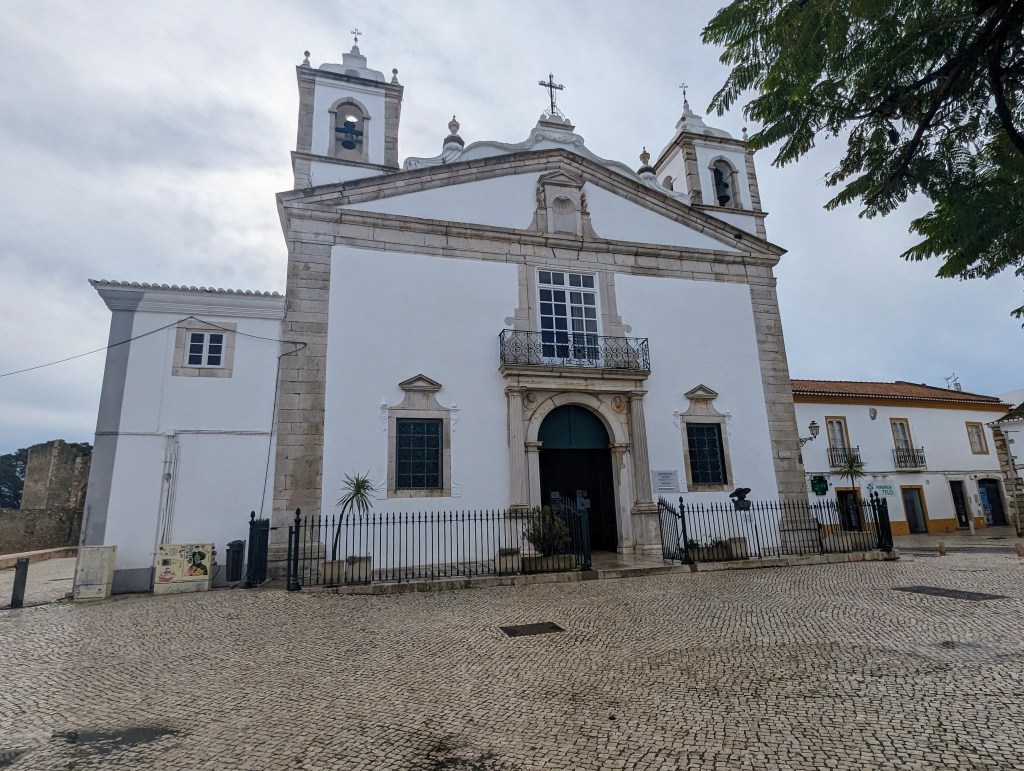
Igreja da Santa Maria

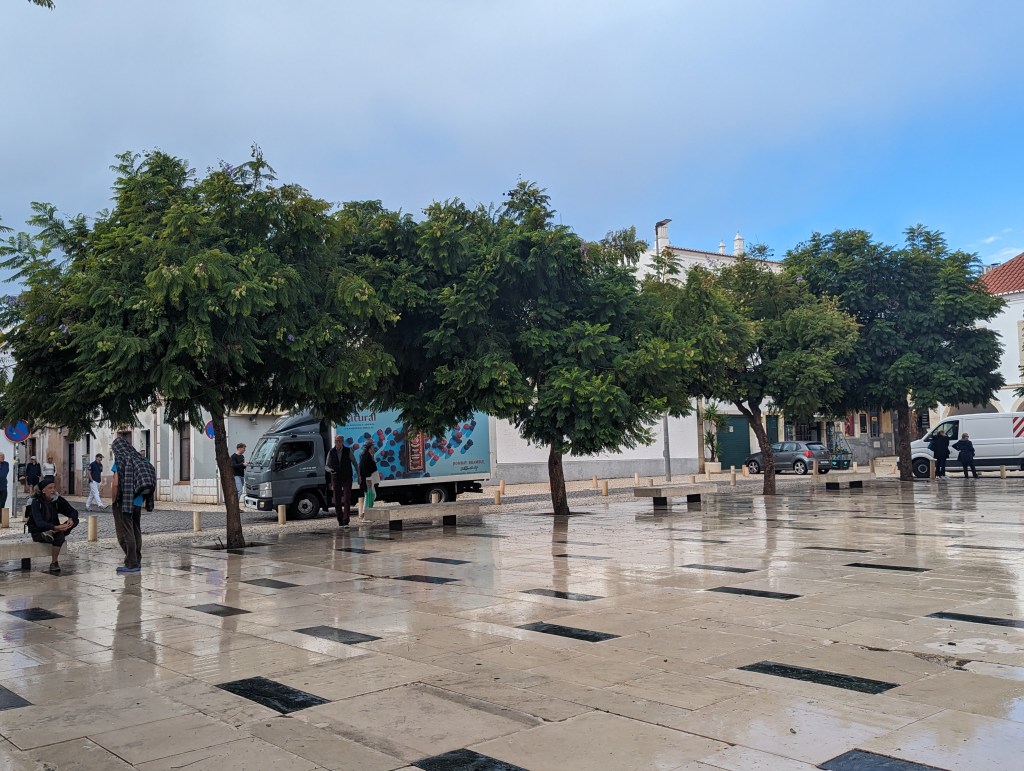
Also in the square are numerous jacaranda trees. After the storms, the hardened seeds falling are very hard and painful.
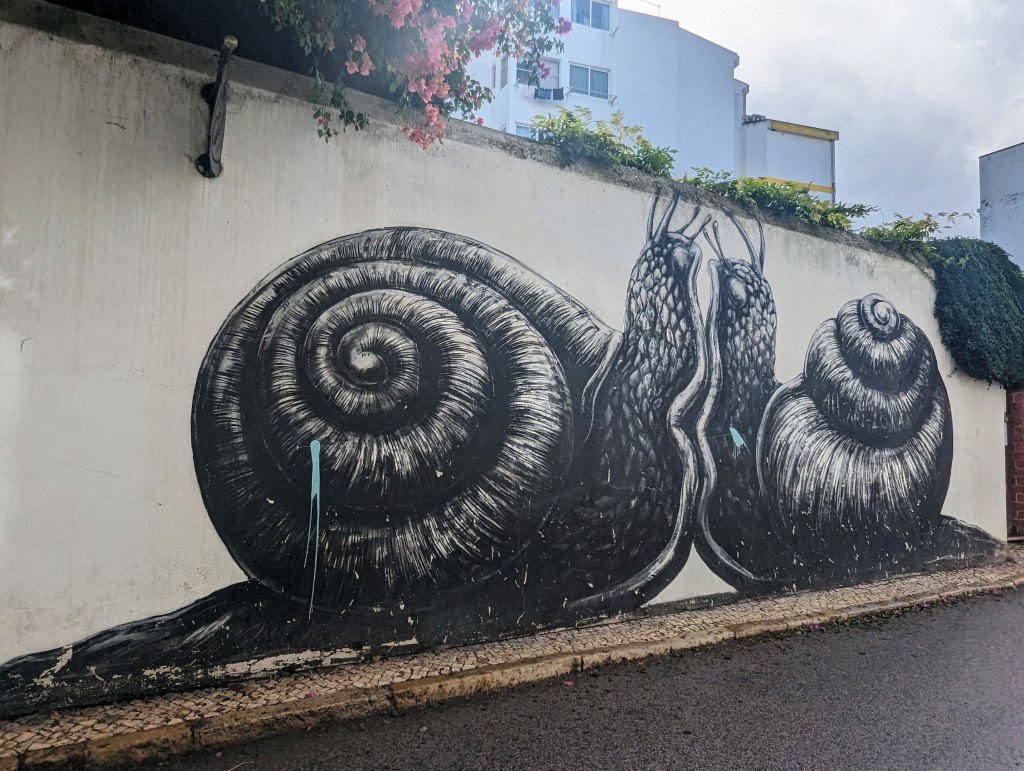
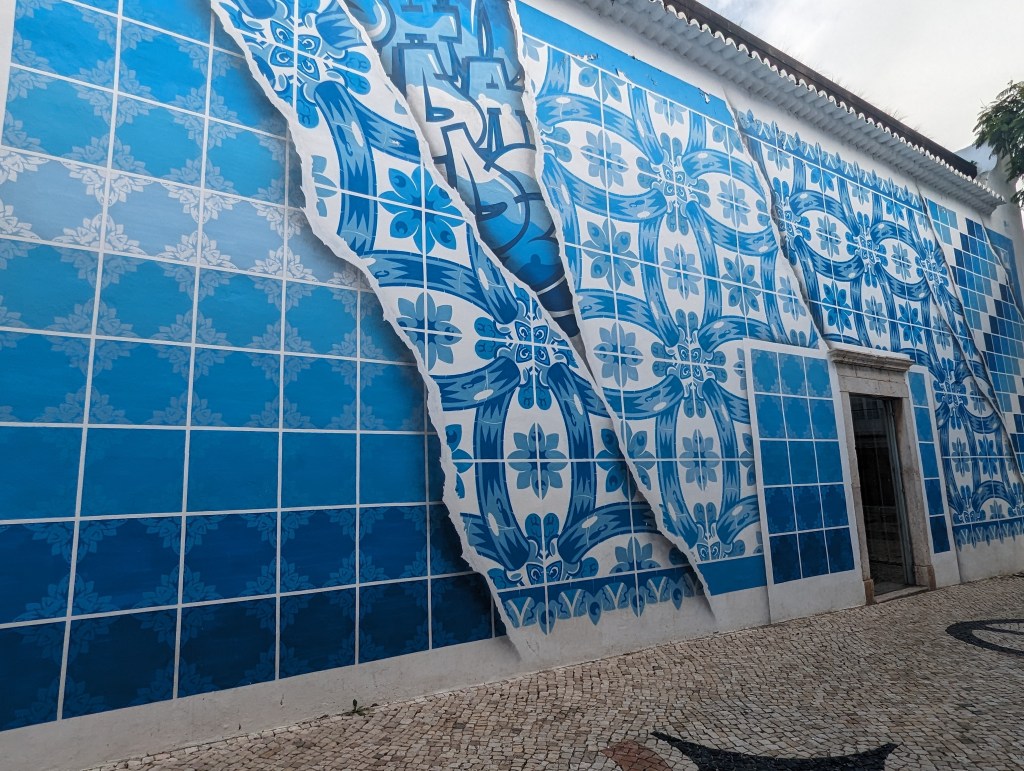
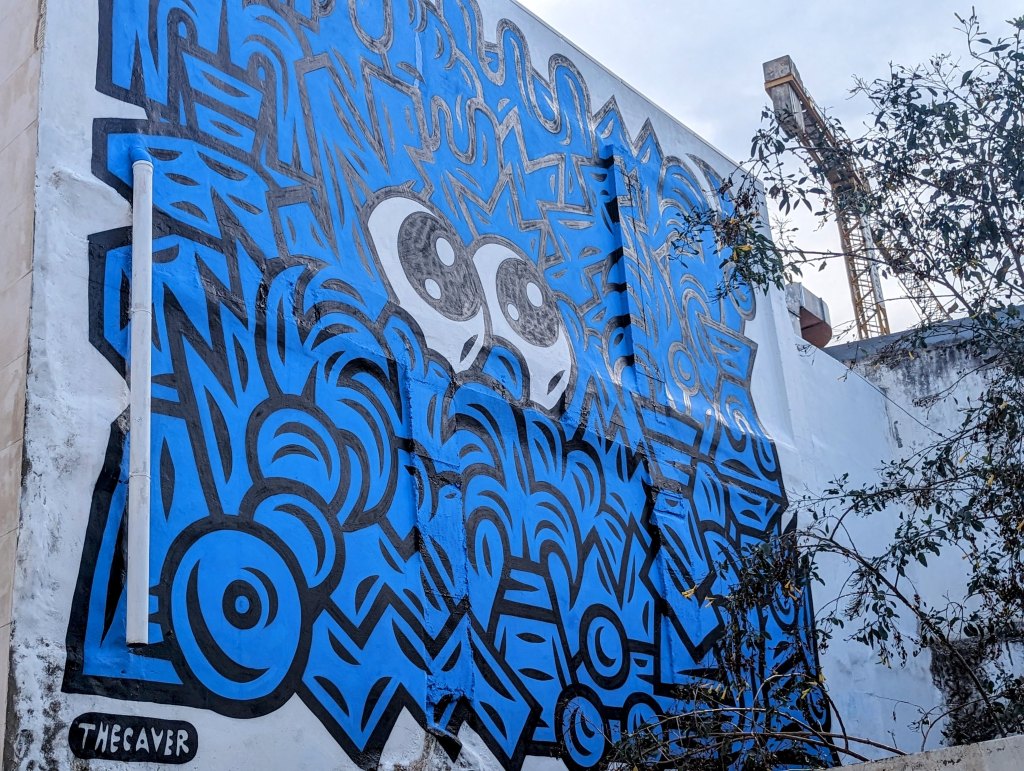
Lagos is known for its plentitude of street art.
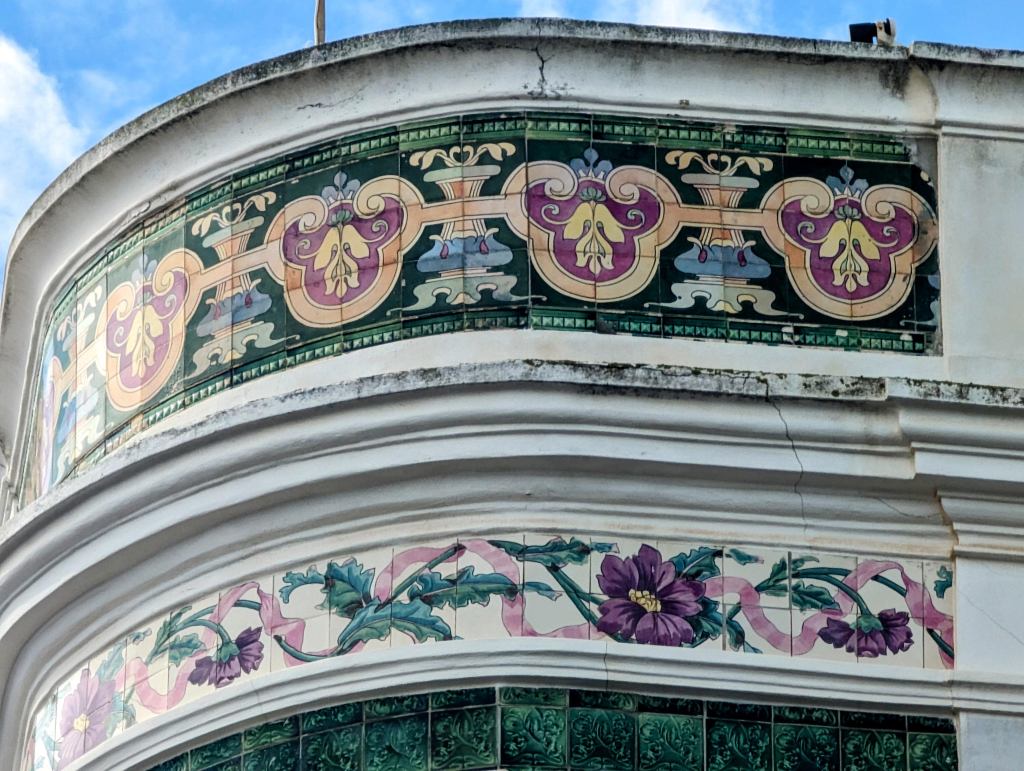
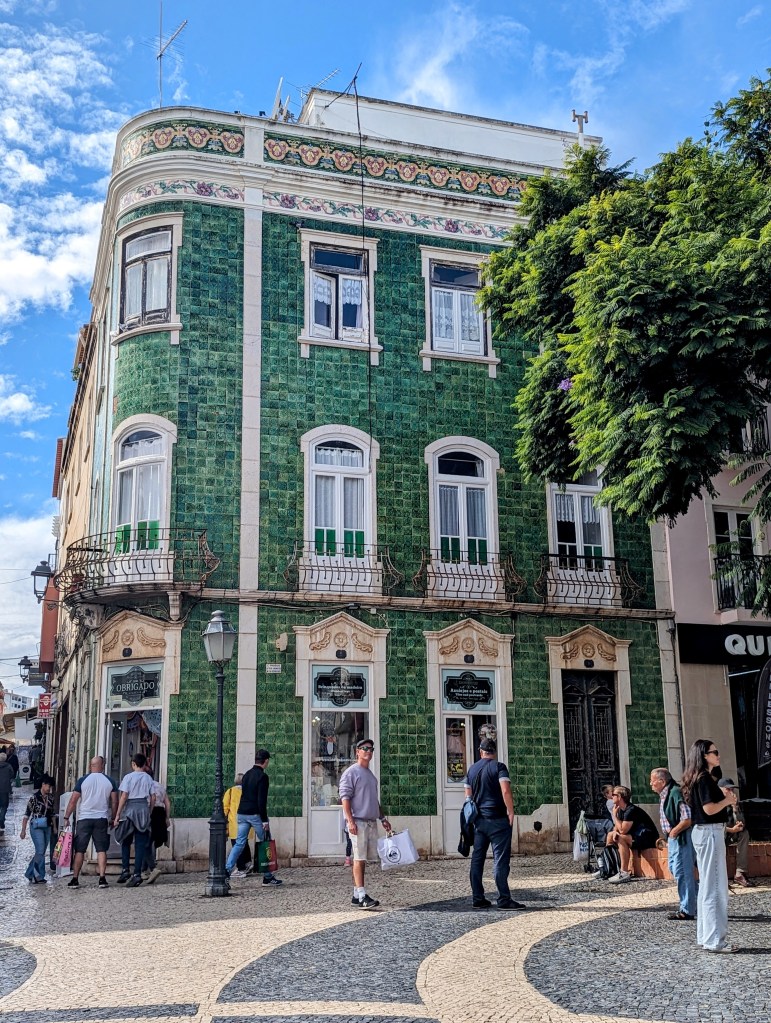
And also some beautiful art nouveau buildings.
The last stop on our tour was in front of one of the first schools in Lagos.

We then headed to lunch at Don Sebastião Restaurante.

And we tried an Algarve specialty: cataplana, which takes its roots from Moroccan tangine.
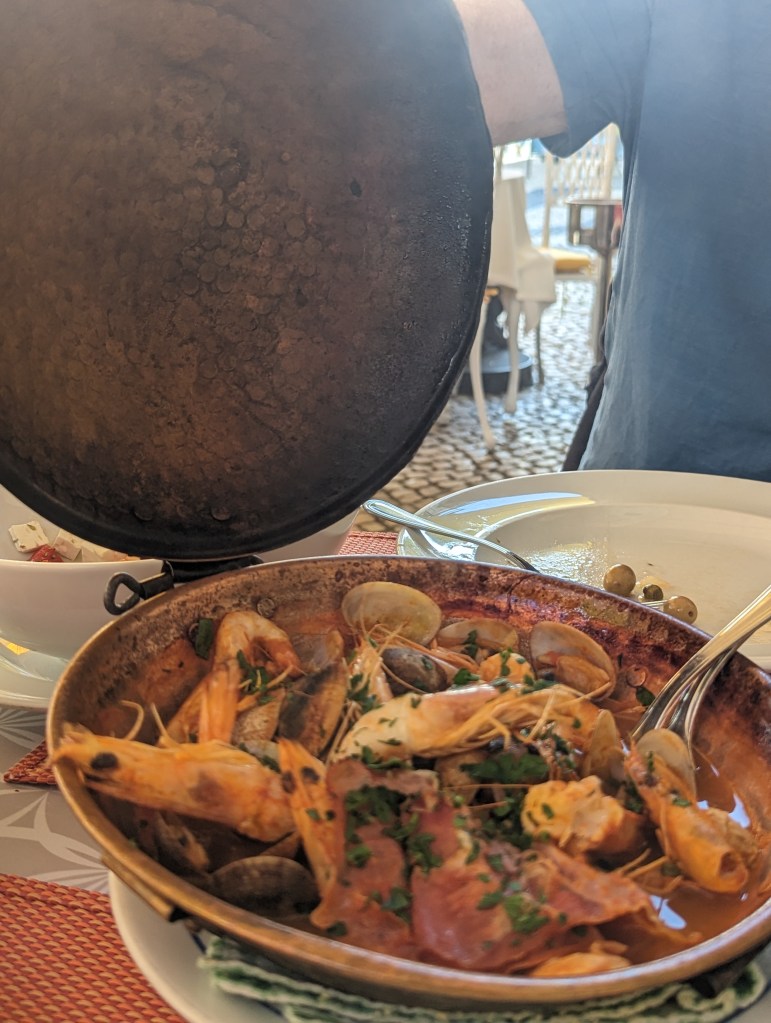
We spent the afternoon strolling on the Salema beach and had Indian take-away from The Spice Cottage for dinner.

The next morning we headed out to Sagres Fort: the end (or beginning) of Europe.
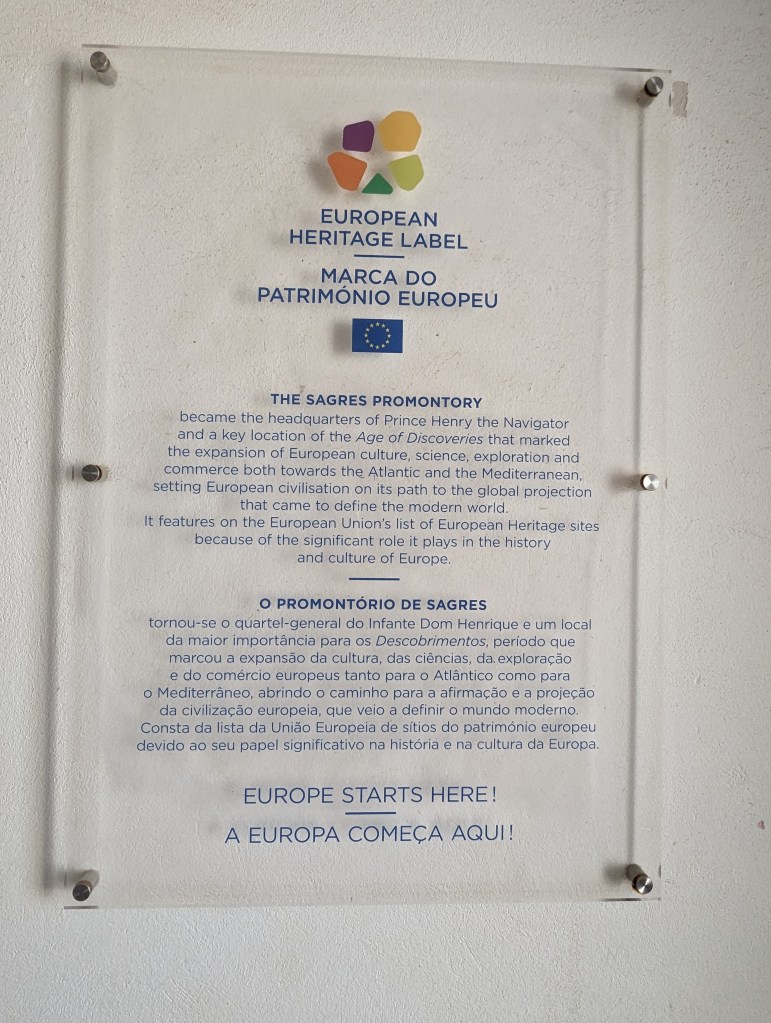
Phoenicians, Greeks, Carthaginians, and Romans believed this was the ideal gathering place for their gods, due to the absence of humans. The Romans called Sagres the promontorium sacrum, or the end of the world, because in ancient times it was the last explored point before heading out to sea.  The fortress on Sagres Point was built in the 15th century under the command of Infante Henry the Navigator with the purpose to protect the area from attacks coming from Northern Africa.
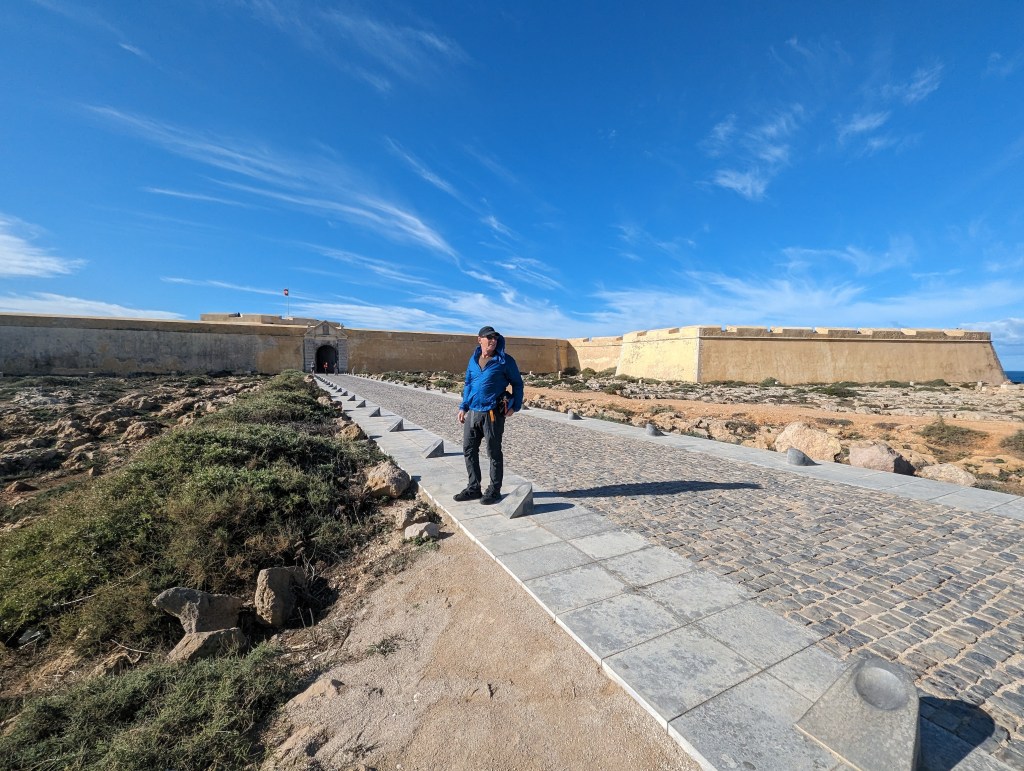
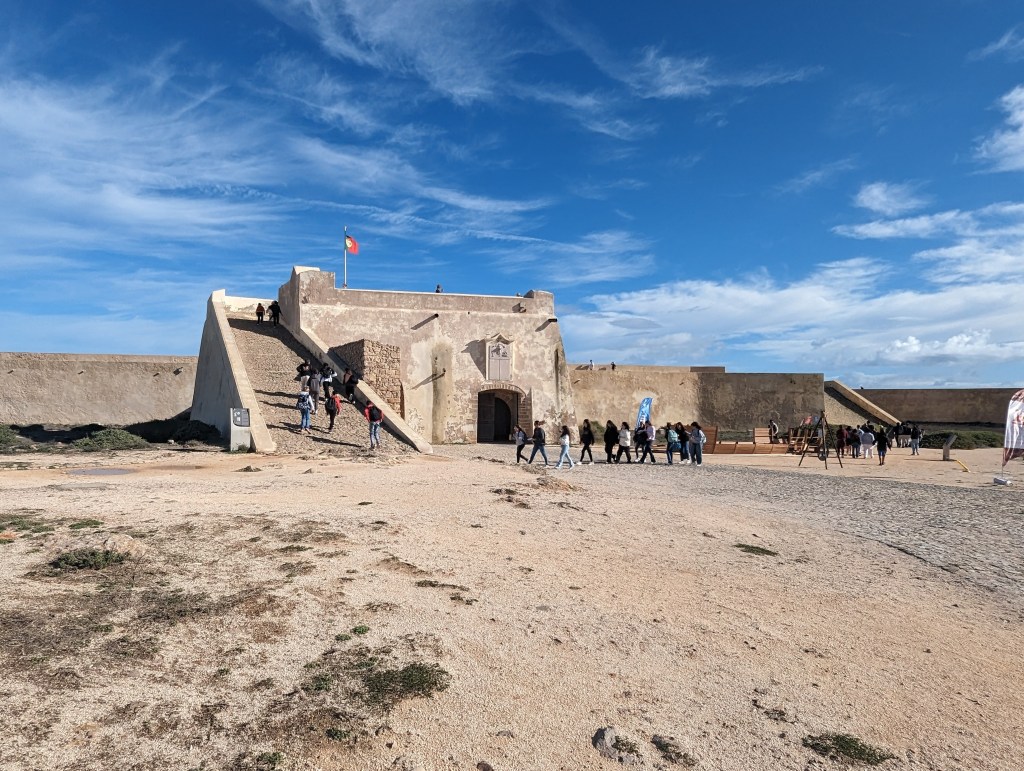
Sagres Fort Entrance
Sagres Fort inside
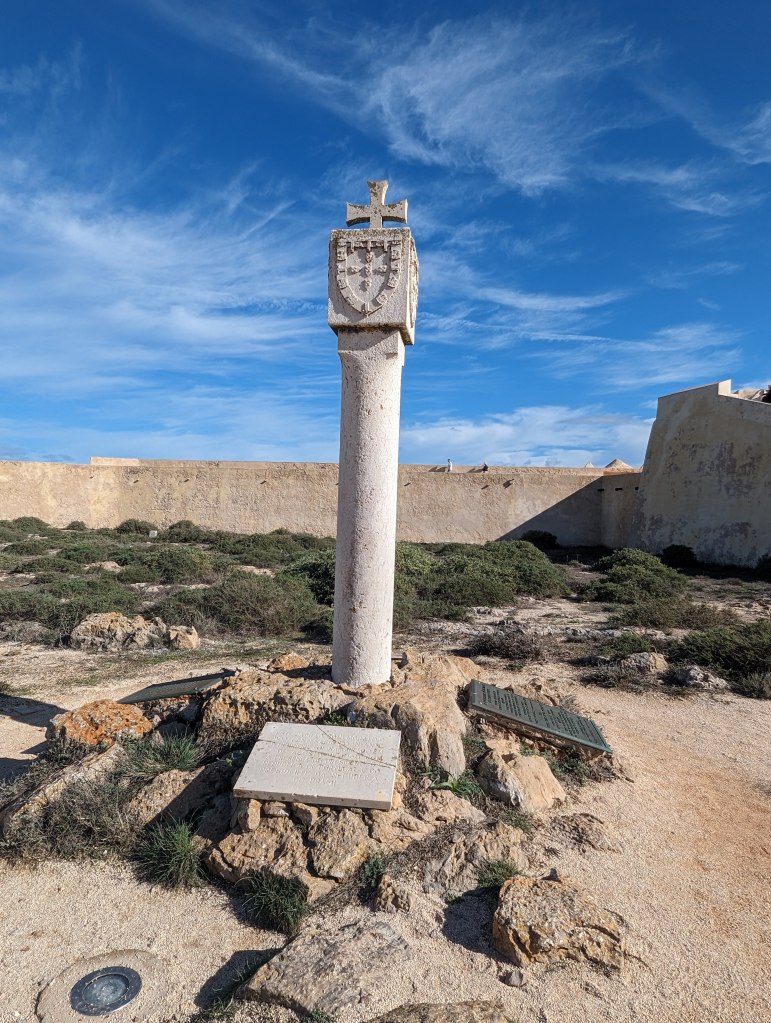
Marker placed throughout the “New World” by Prince Henry the Navigator
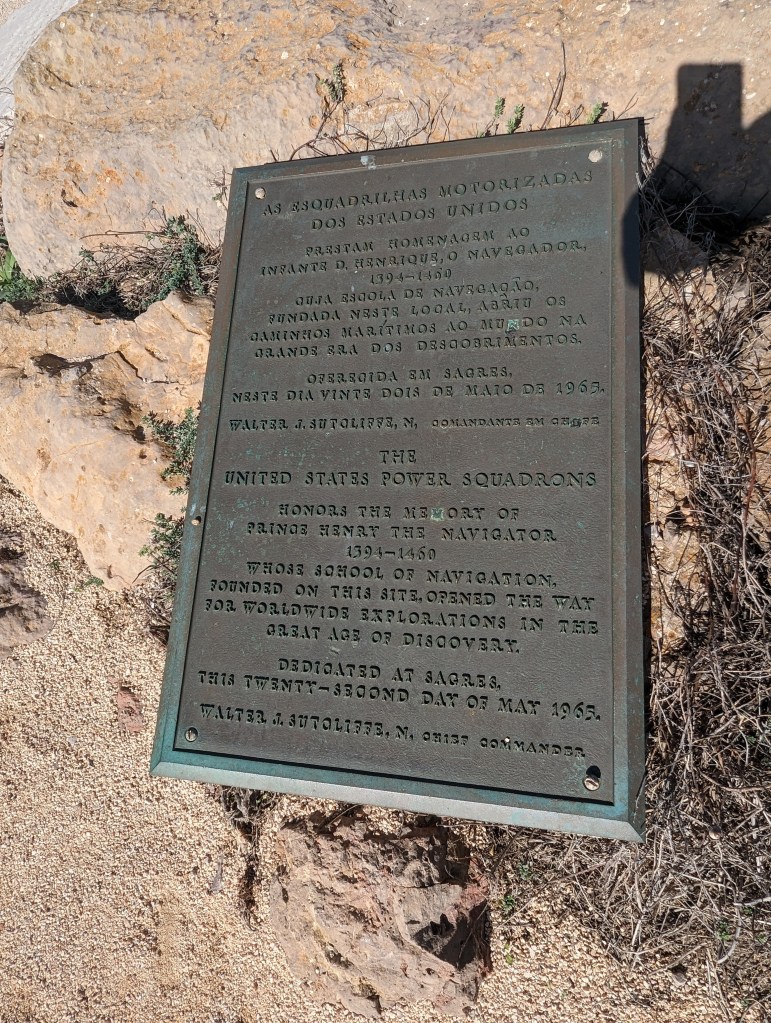
1965 plaque from US commemorating Henry the Navigator
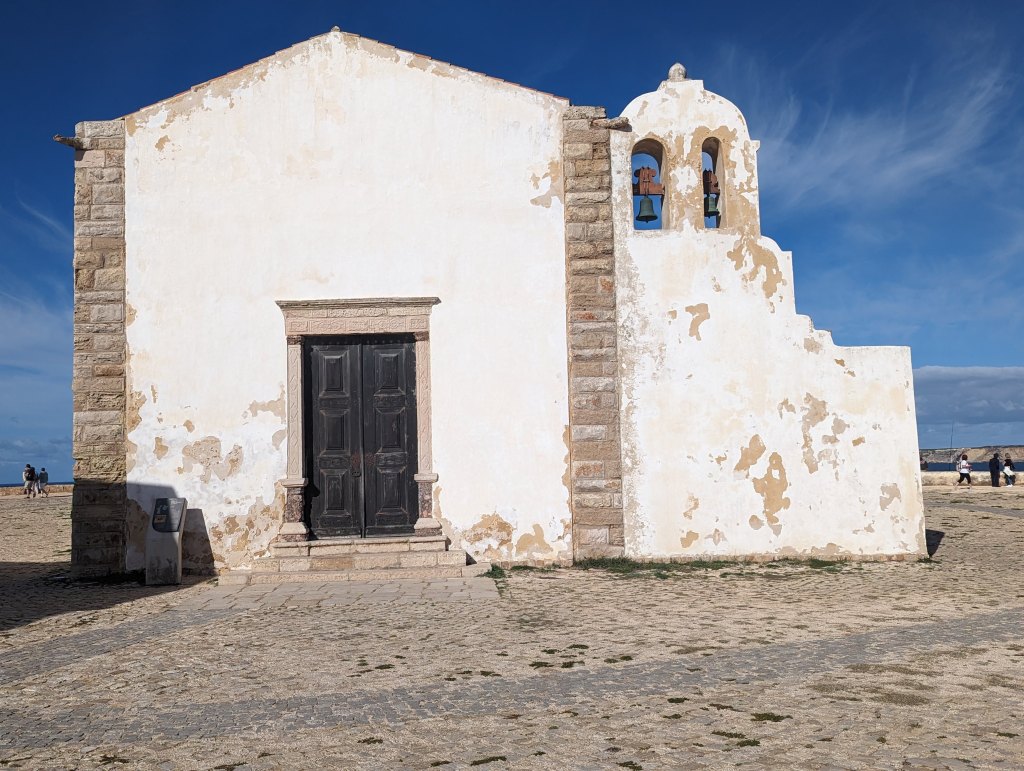
Our Lady of Grace Church, built 1570

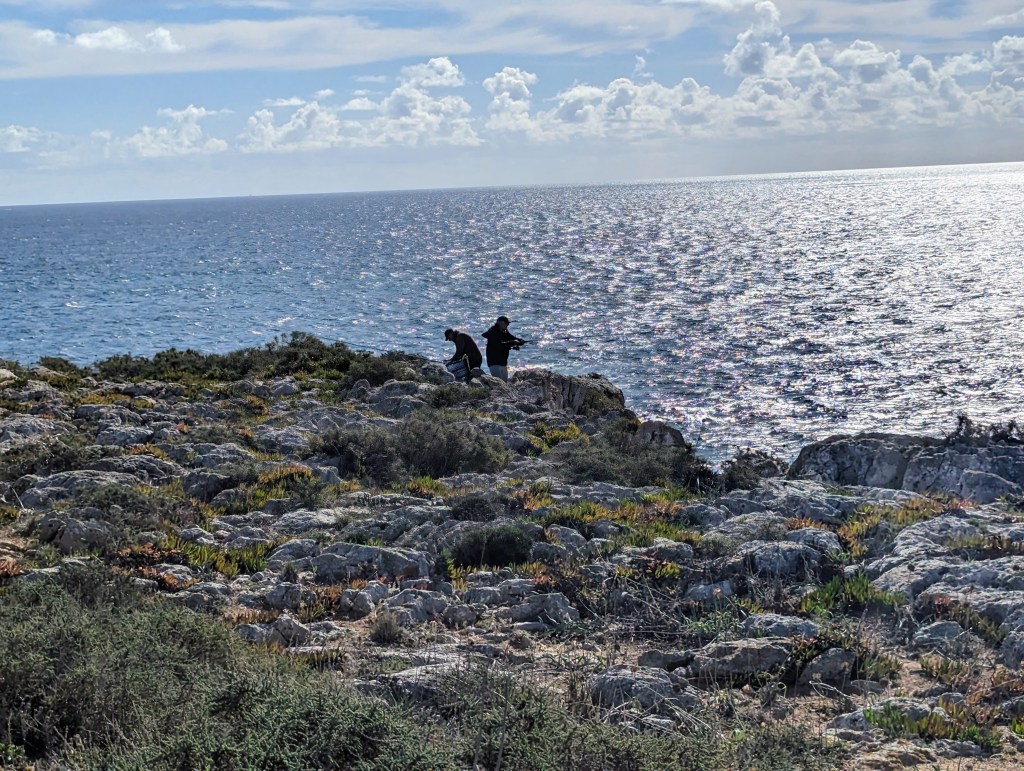
We hiked out onto the promontory, which is quite rugged.
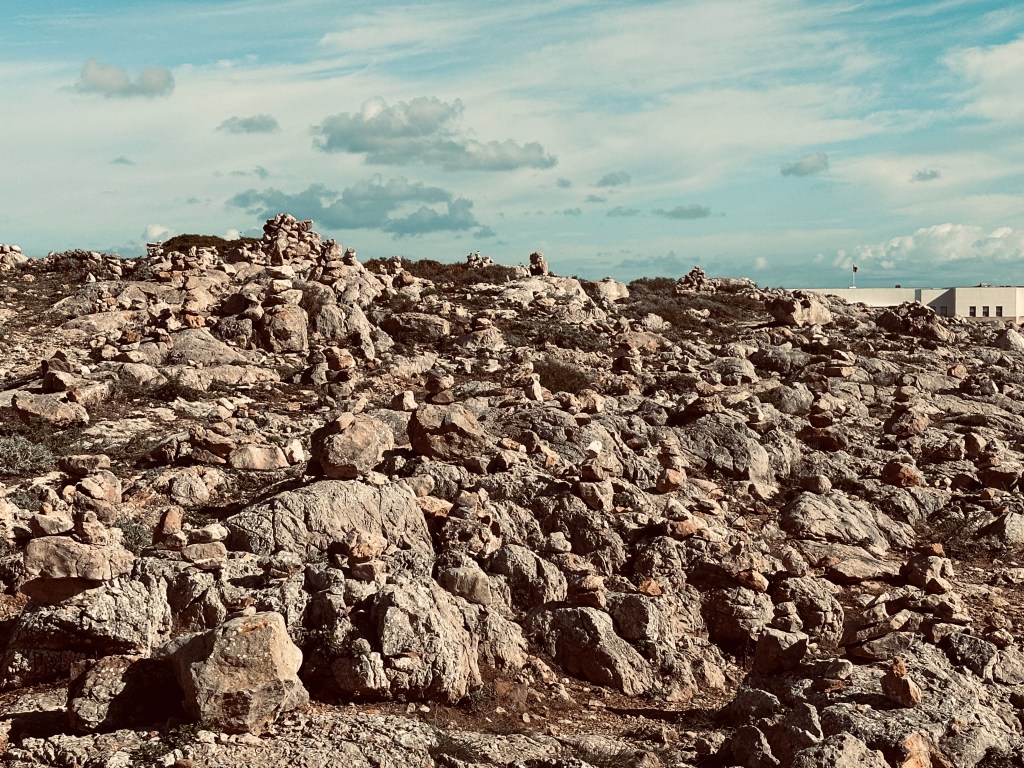
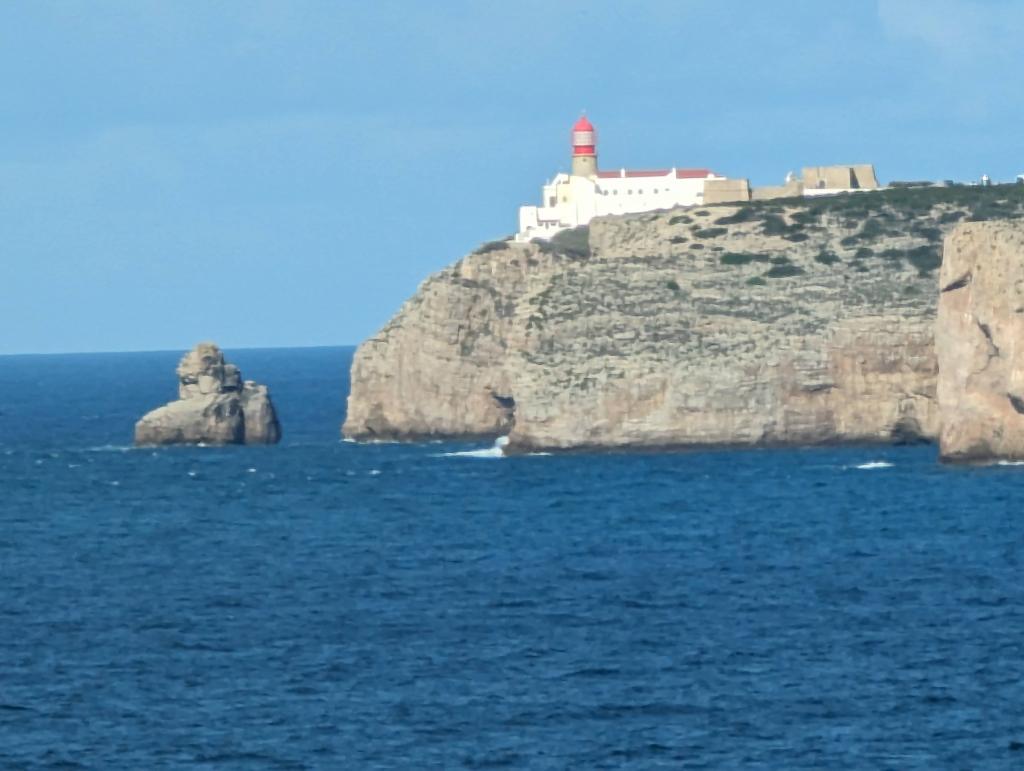
looking toward Farol do Cabo de São Vicente
men fishing on Sagres Point Promentory
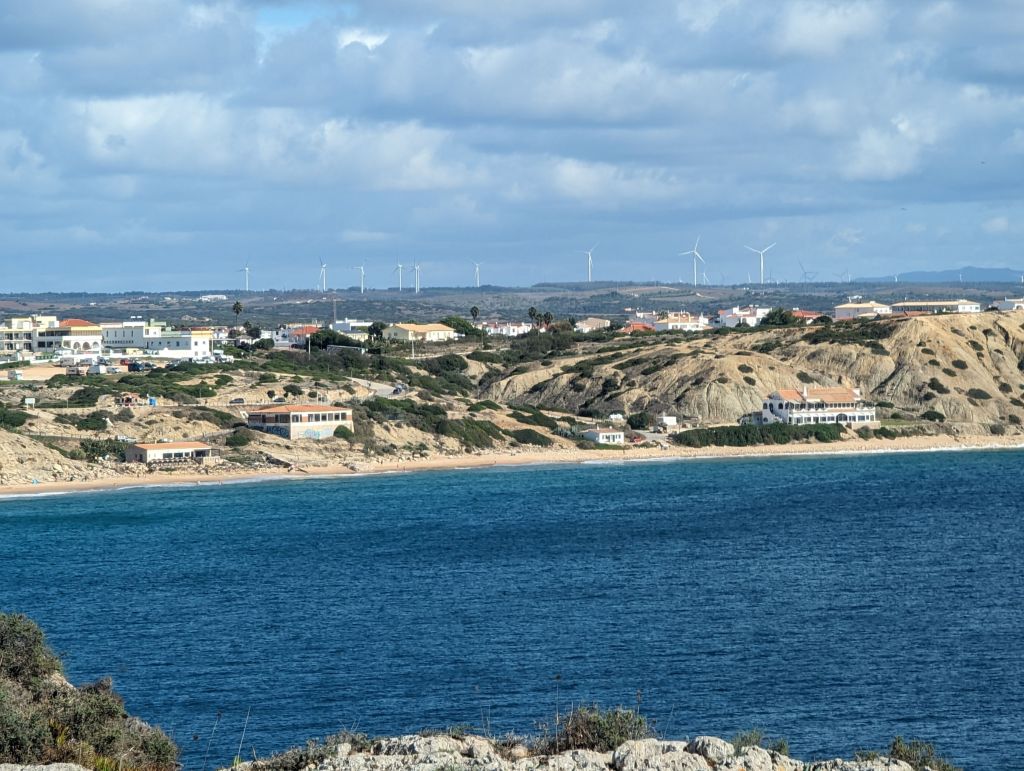
View of Sagres Beach from the promontory

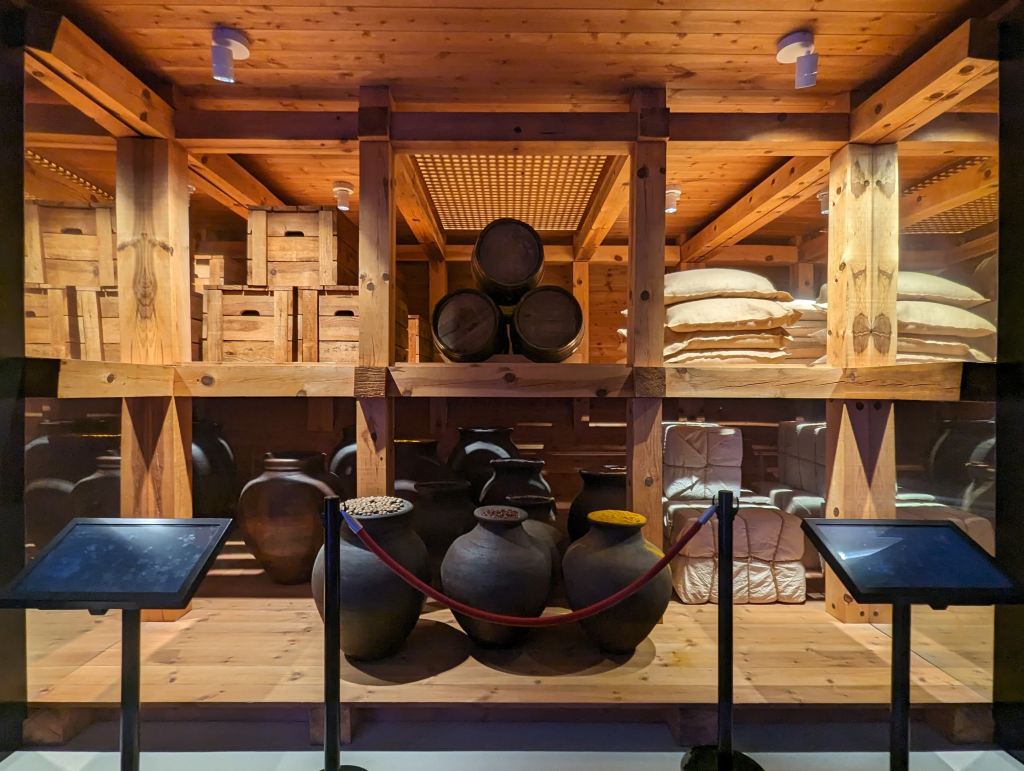
Back at the fort, there were tons of school children. Inside the fort was a museum for the children explaining the age of exploration and showing how the explorers lived aboard ship.
We climbed to the top of the fort.

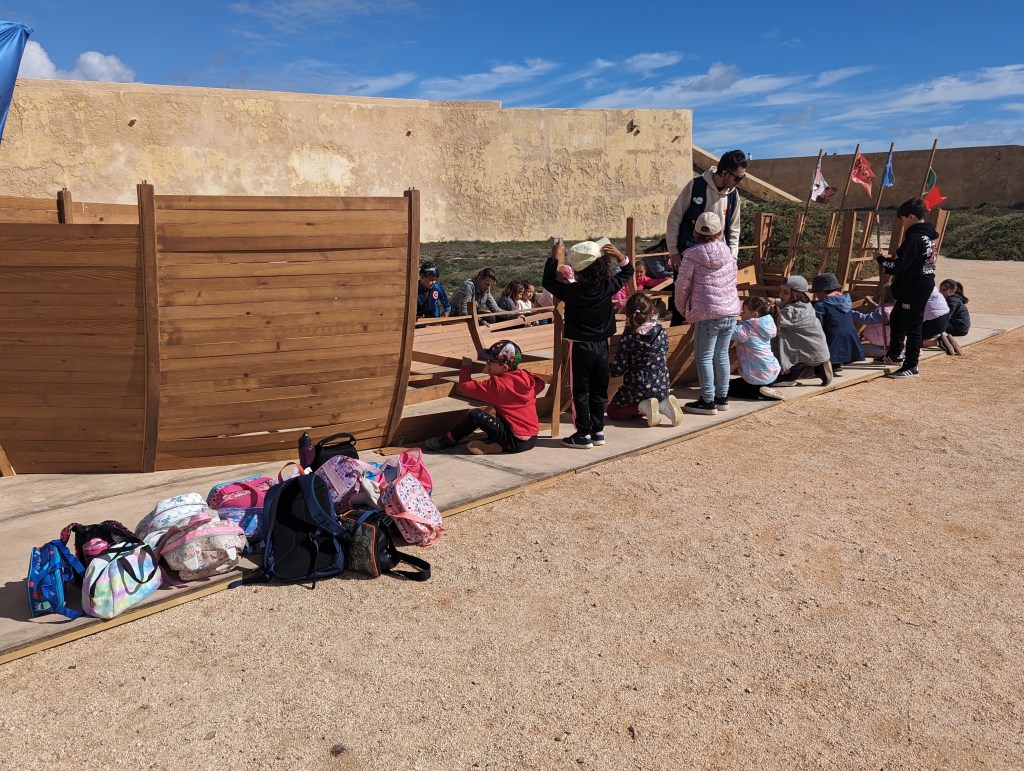
Below the children were building a ship reproduction of one the explorers used.
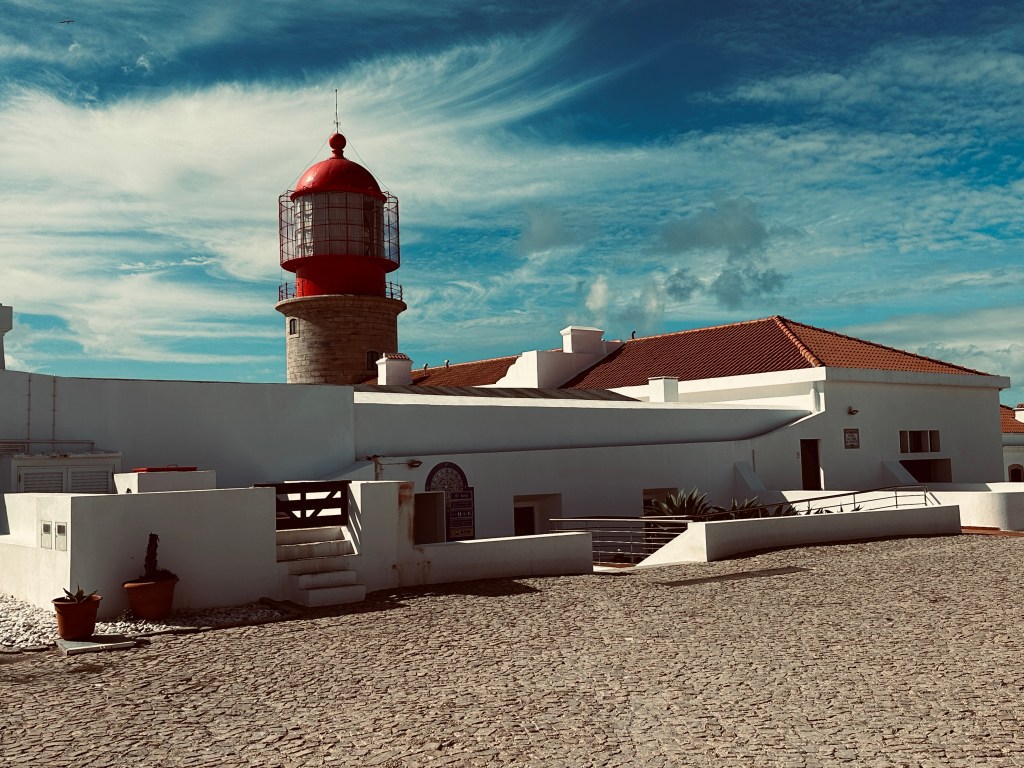
Despite the lighthouse being closed, we felt the need to drive around to the point.
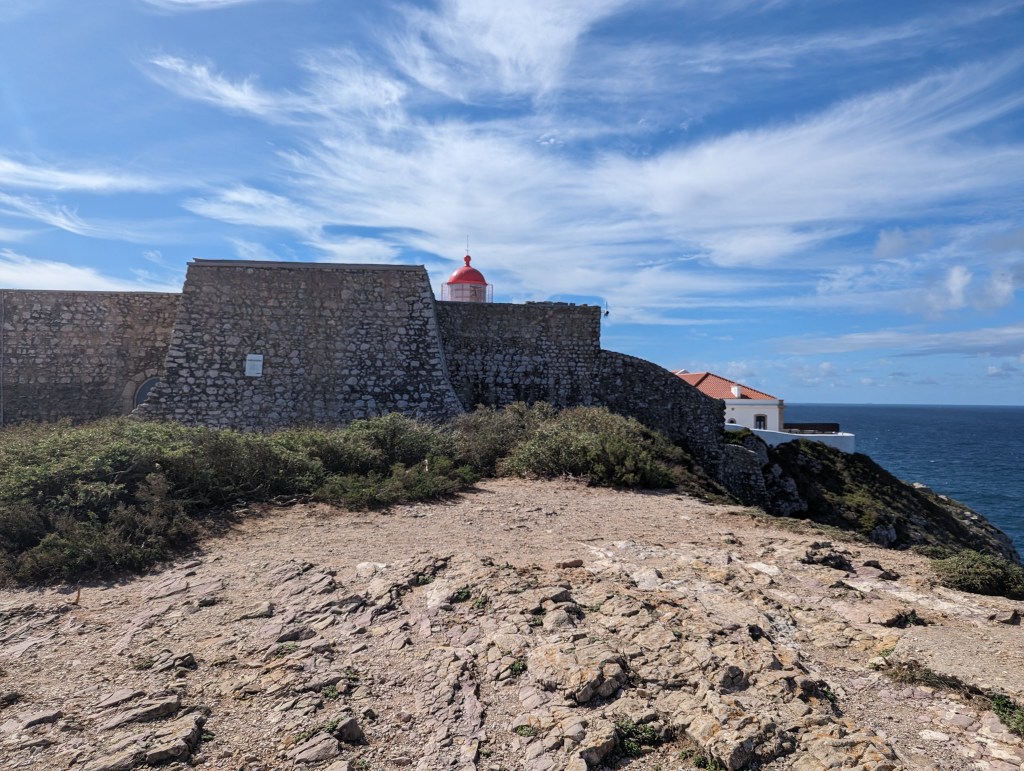
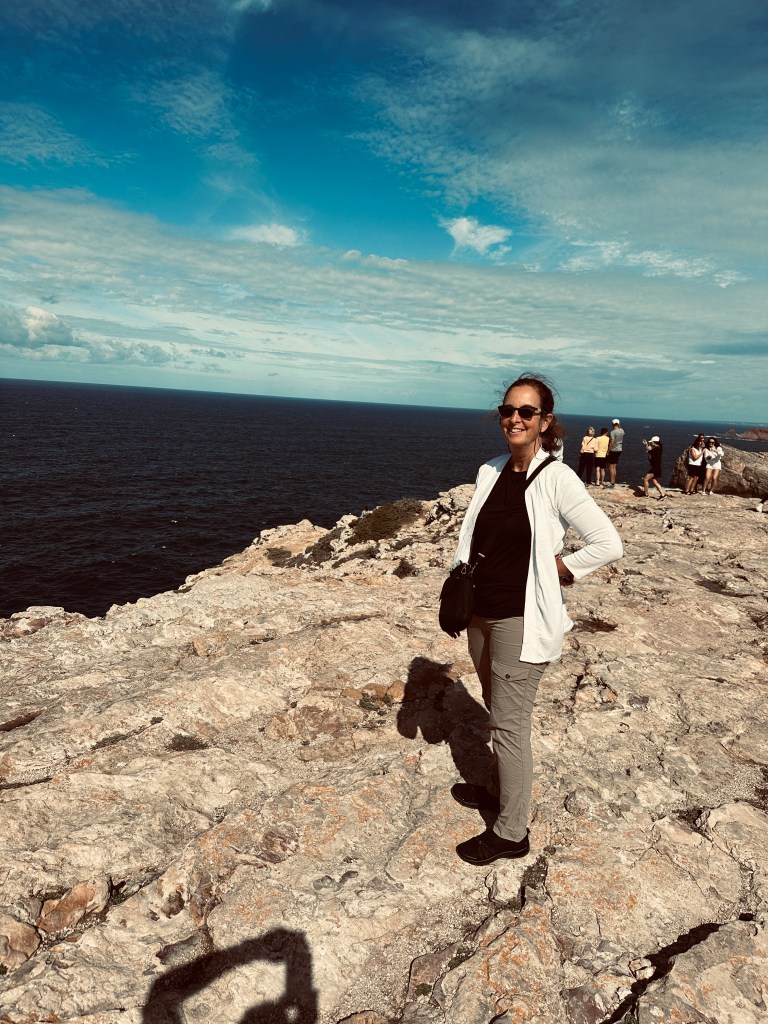
Farol do Cabo de São Vicente

We got back in the car and drove to what promised to be a monolith dating to between the 4th and 3rd millennium BC. This is what we found.
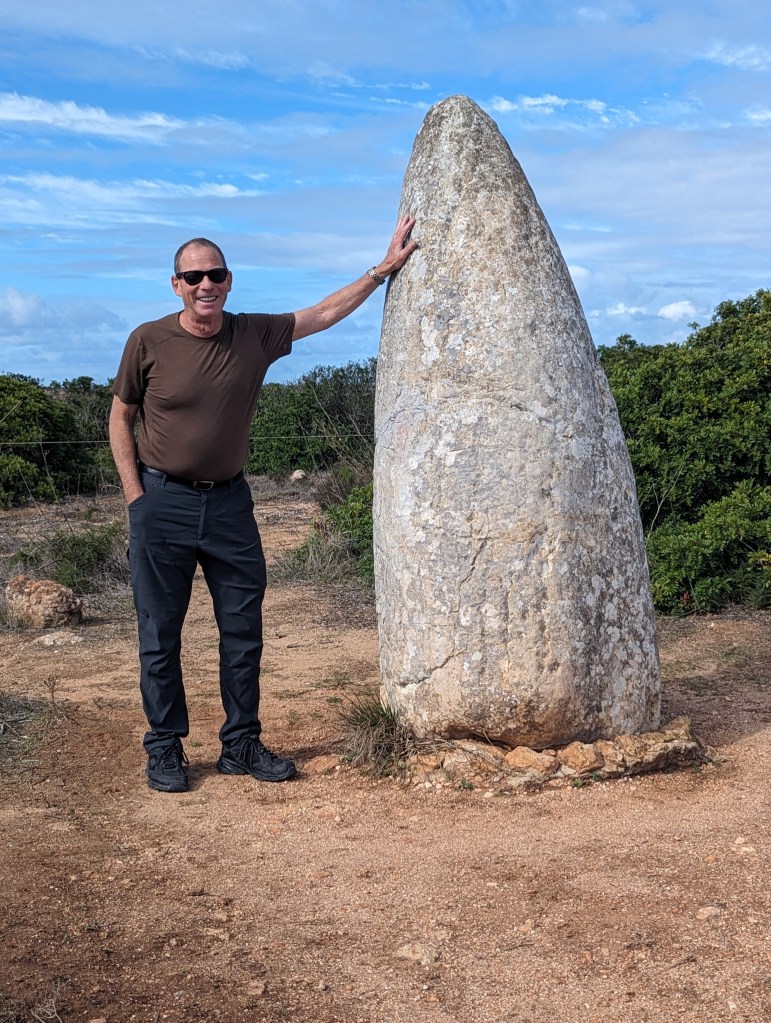
Then it was back to our own Salema beach to enjoy the sand and beach and a big late lunch at Olhos N’Água.
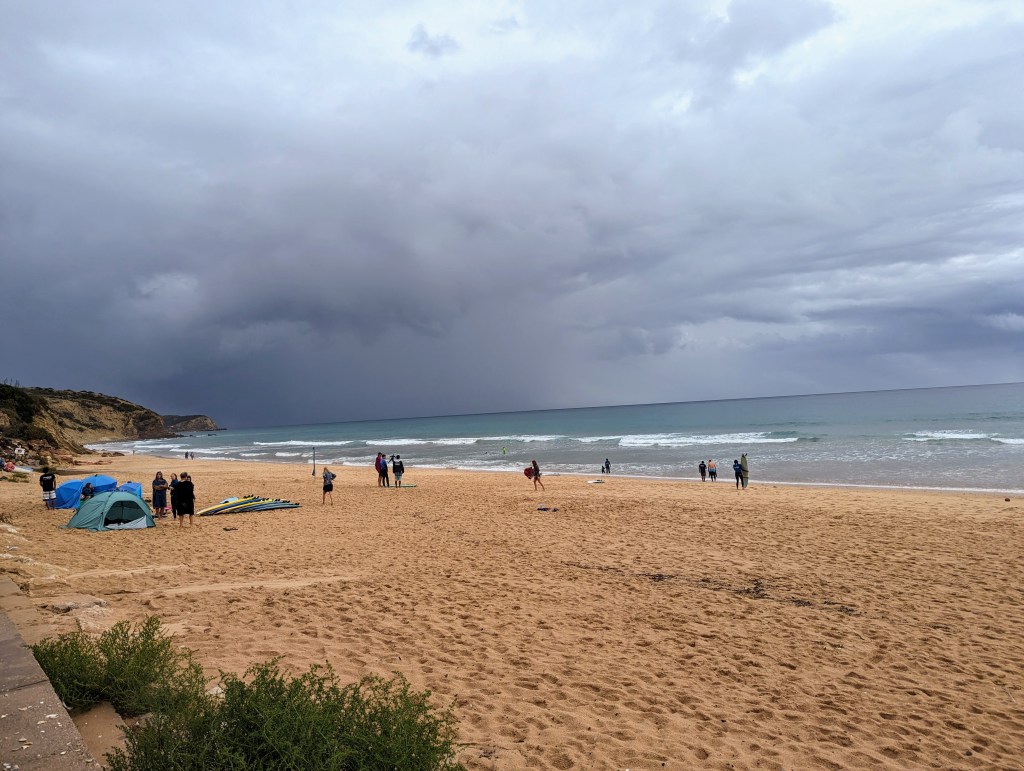
The next day we were to leave Portugal and head back into southern Spain.

Portugal: Lisbon Oct. 13-18

We left Nazaré early in time to pick up Eric’s brother Howard from the Lisbon airport. Our AirBnb host was accommodating enough to let us bring our luggage and leave it. Once again we had managed to book an incredibly well located and comfortable apartment. Once the car was safely tucked into the garage for the next few days, we headed out to explore the neighborhood, which was in the Baixa area, on the border of the Chiado neighborhood.

Howard & Eric in front of statue of 16th-century epic poet Luis de Camões

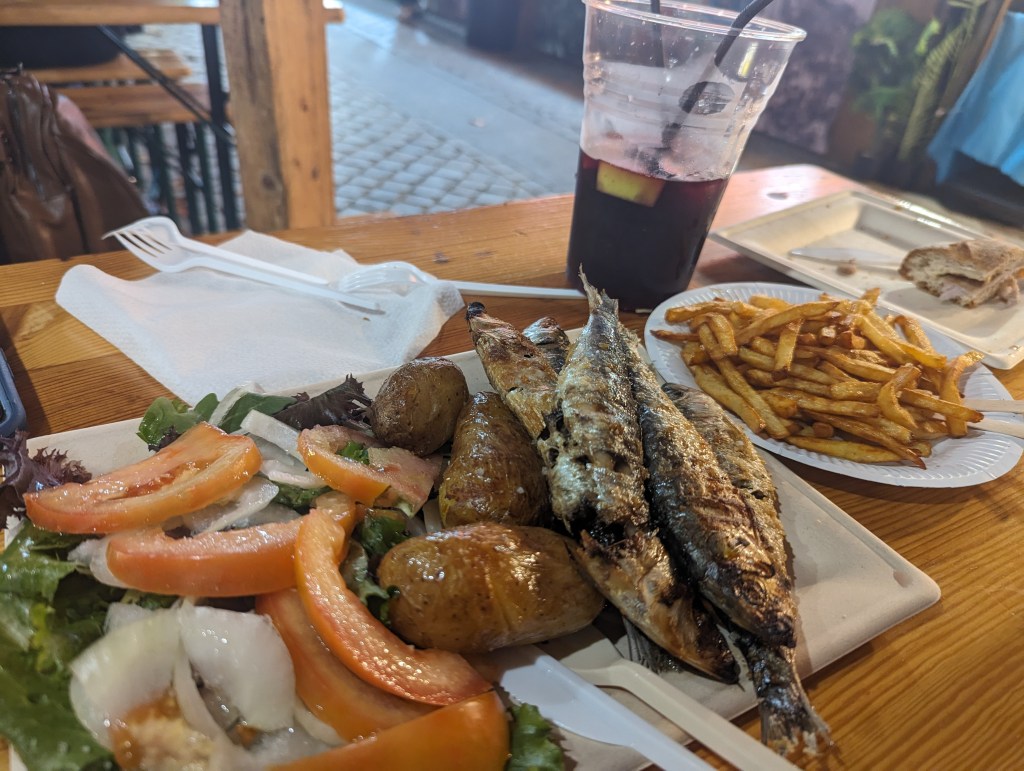
We had a long leisurely lunch of Portugeses specialties at Restaurante O Castiço. While Howard rested, Eric and I went food shopping. Then it was out into the night toward the Tagus River. There we sampled Portuguese street food while “Girls Just Wanna Have Fun” blasted from the loudspeakers.

largest grilled sardines any of us had ever seen

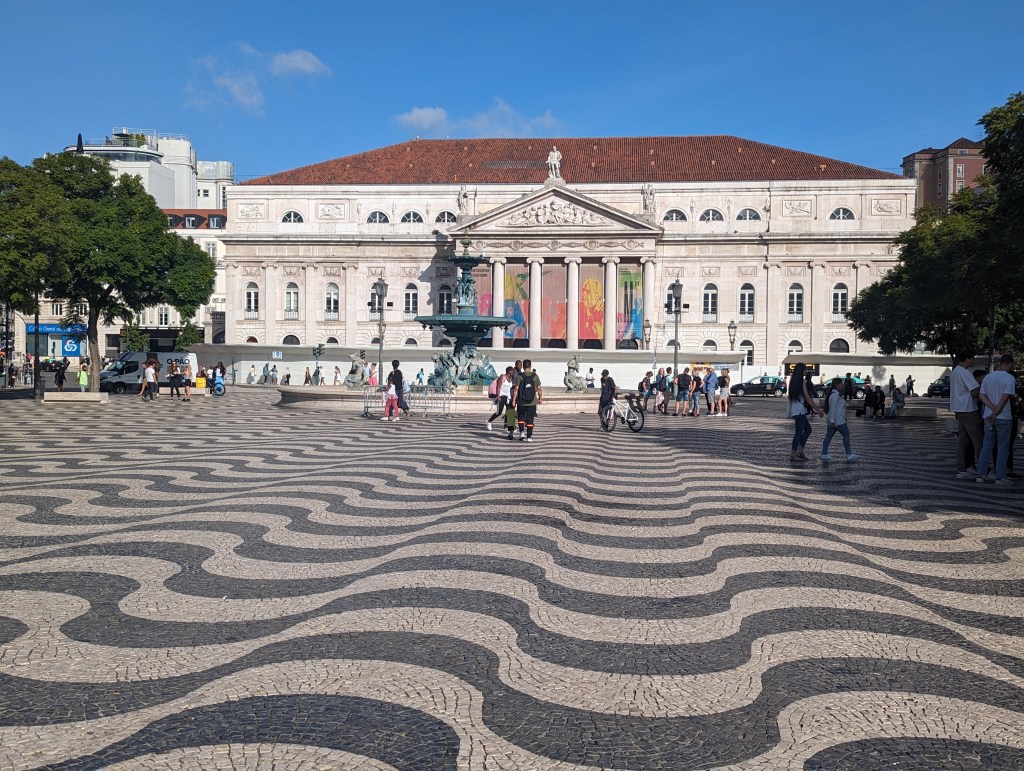
The next morning our walking tour commenced at King Pedro IV square, known by the locals as Rossio Square, its name before the statue arrived.

statue King Pedro IV

Our guide told us all kinds of important facts about Lisbon’s history, the most important of which is that there was a huge earthquake on Nov. 1, 1755 which set off fires and a tsunami basically leveling the city and killing about 75,000 people. So despite Lisbon being the second oldest city in Europe (Athens the oldest), most of what we were to see in Lisbon had been built since 1755.

Theater Politeama built 1913 at end of square

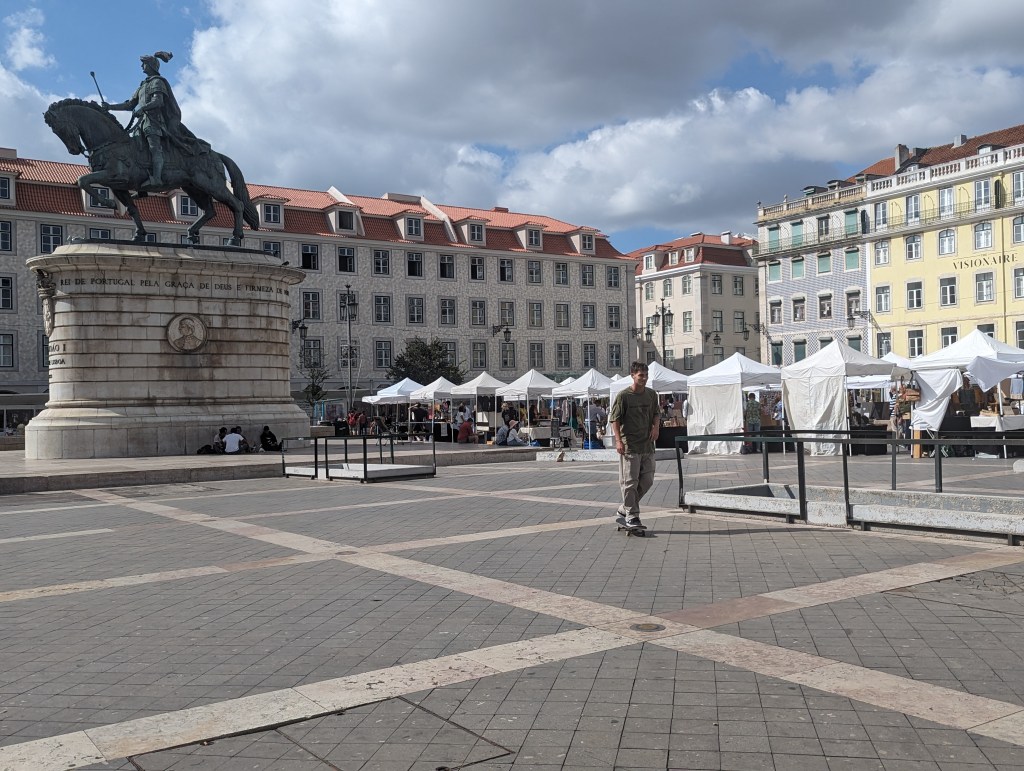
The next square we visited held the open air market first started in 1775 after the hospital that had been there was destroyed in the earthquake. It contains a statue of King Jão I, who had been an illegitimate son of King Pedro I. When in the mid 14th century his father and half brother both died, the country fell into turmoil, and Jão I defended the country from Spain. He later married an English princess, strengthening the bonds of the two countries. Their 8 children and their subsequent offspring became the explorers who helped build the Portuguese Empire around the globe.

Figueira Square with statue D. Jão I

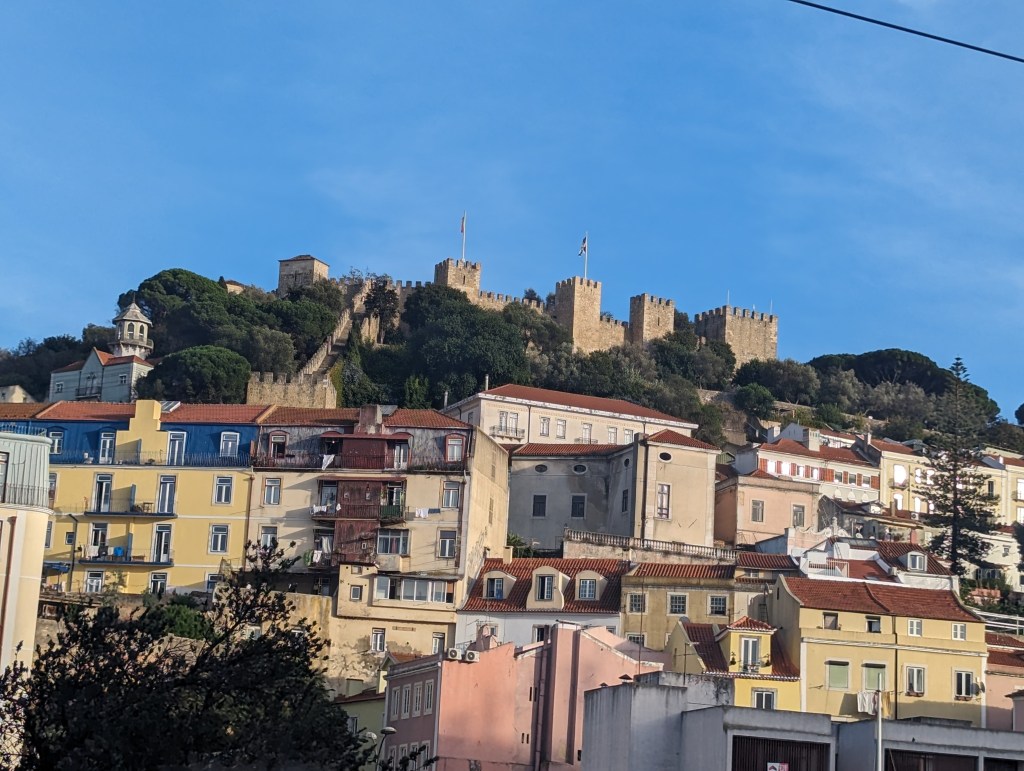
In the background of the square can be seen the castle of Lisbon. Human occupation of the site dates back to the 8th century BC. The current castle building was begun during Moorish occupation in the 10th century. The castle, like everything in Lisbon, was seriously damaged in the 1755 earthquake and fell into disrepair. The current castle was renovated during Salazar’s rule in the 20th century to be a national monument.

São Jorge Castle

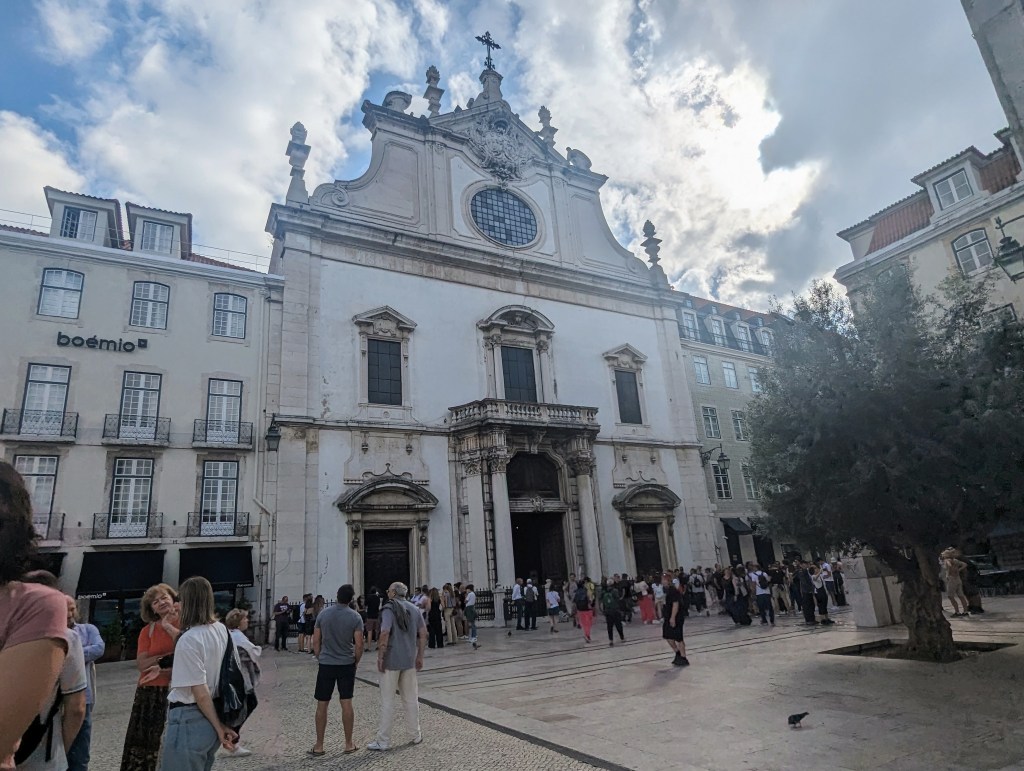
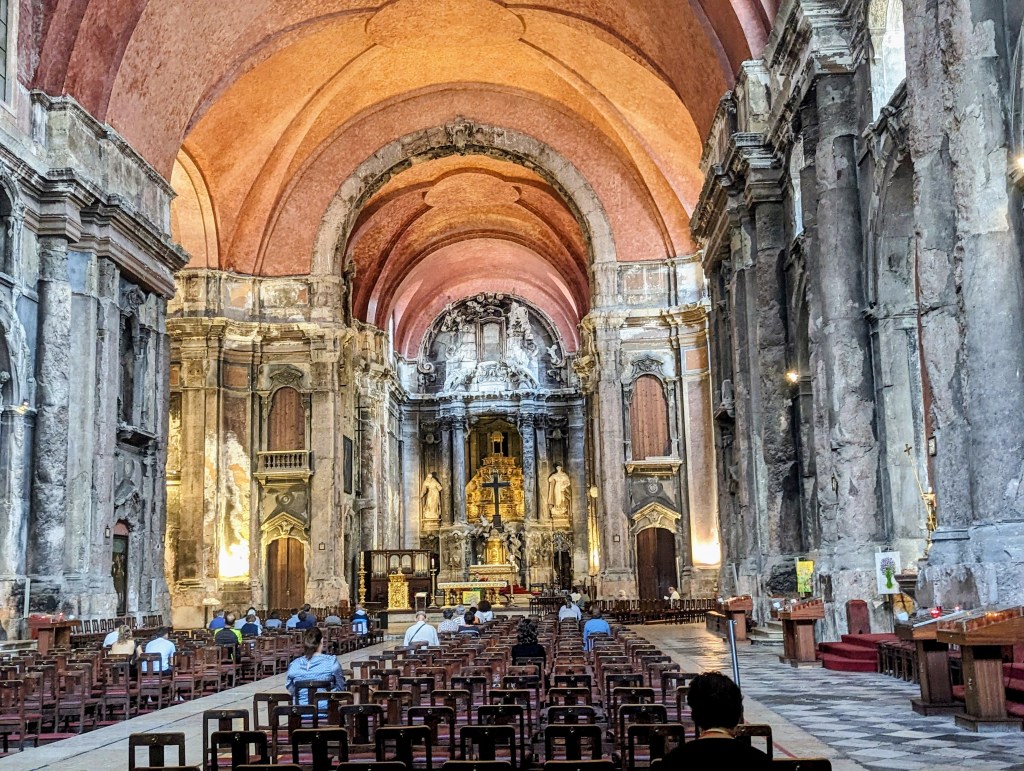
We then walked to another square in which stands the Church of Saint Dominic. When it was first built in 1241 it was the largest in Lisbon and the site of royal weddings. It was not only damaged in the 1755 earthquake, but having been rebuilt, it was gutted by a fire in 1959. Since then the roof has been restored, but the walls have been left as a memorial to those who lost their lives fighting the fire.

Saint Dominic church
interior St. Dominic church with it’s fire burned walls

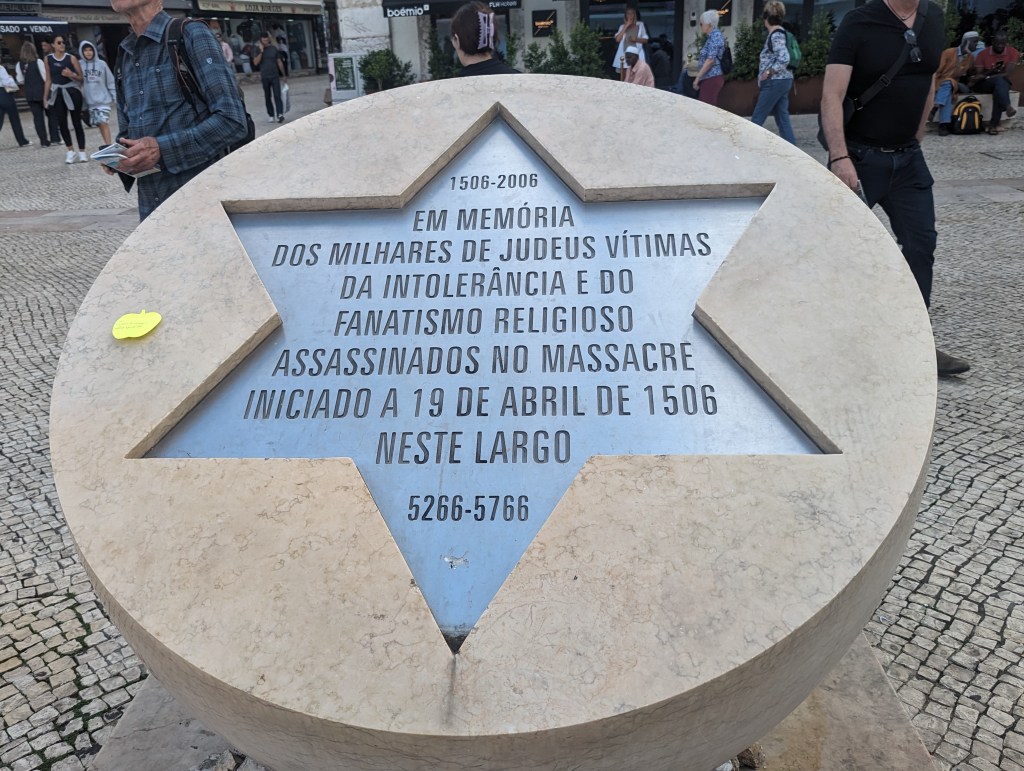
But what the site is most infamously known for is the massacre of several thousand Jews who had become “New Christians” during the Inquisition. During a mass In St. Dominic’s Church on April 19, 1506 while praying for the end of the plague, an angry mob erupted blaming the New Christians for the plague. On April 19, 2006 a monument was placed in this square. It reads “In memory of the thousands of Jews who were victimized by intolerance and religious fanaticism, killed on the massacre that started on 19 April 1506, in this square.” We visited this site only days after the horrific attack by Hamas in Israel.

We then commenced to climb into the Mouraria, the Moorish Quarter, which is a multicultural neighborhood in which are Asian, African, and Arabic shops and restaurants. Large parts of Spain and Portugal, including Lisbon, were occupied by Islamic rulers from 711 until 1294. This accounts for the Moorish influence of art, architecture, language, foods, etc. seen throughout Portugal.

Mouraria neighborhood

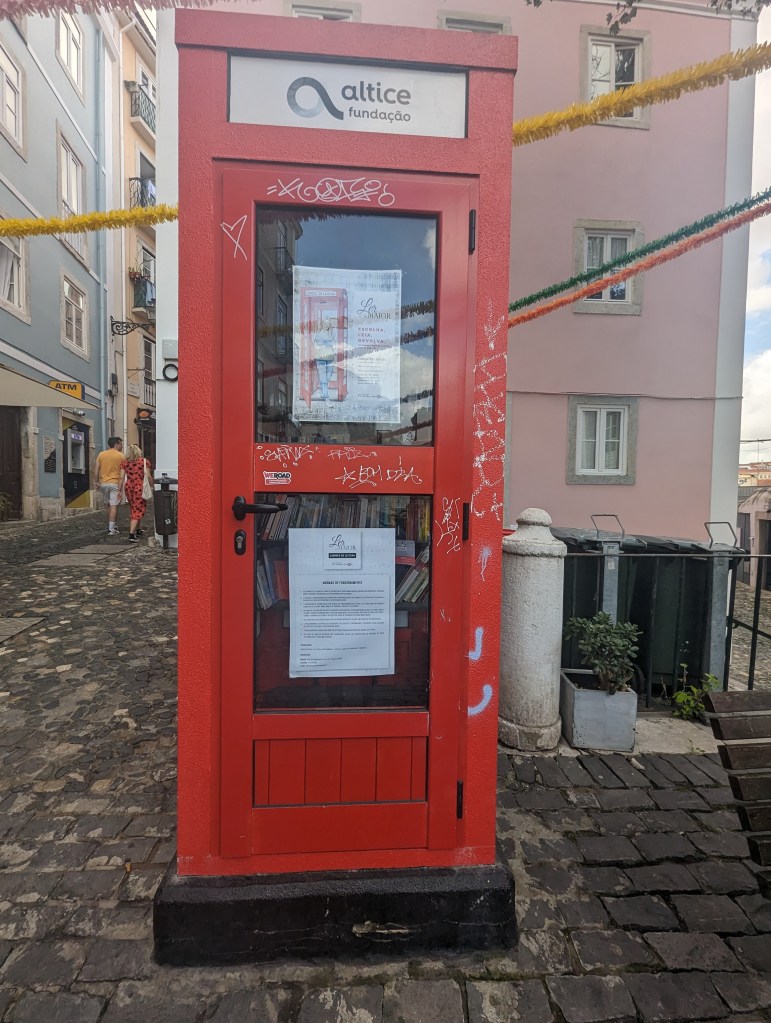
I particularly liked the telephone booth (seen in the background above) converted into a free public lending library.

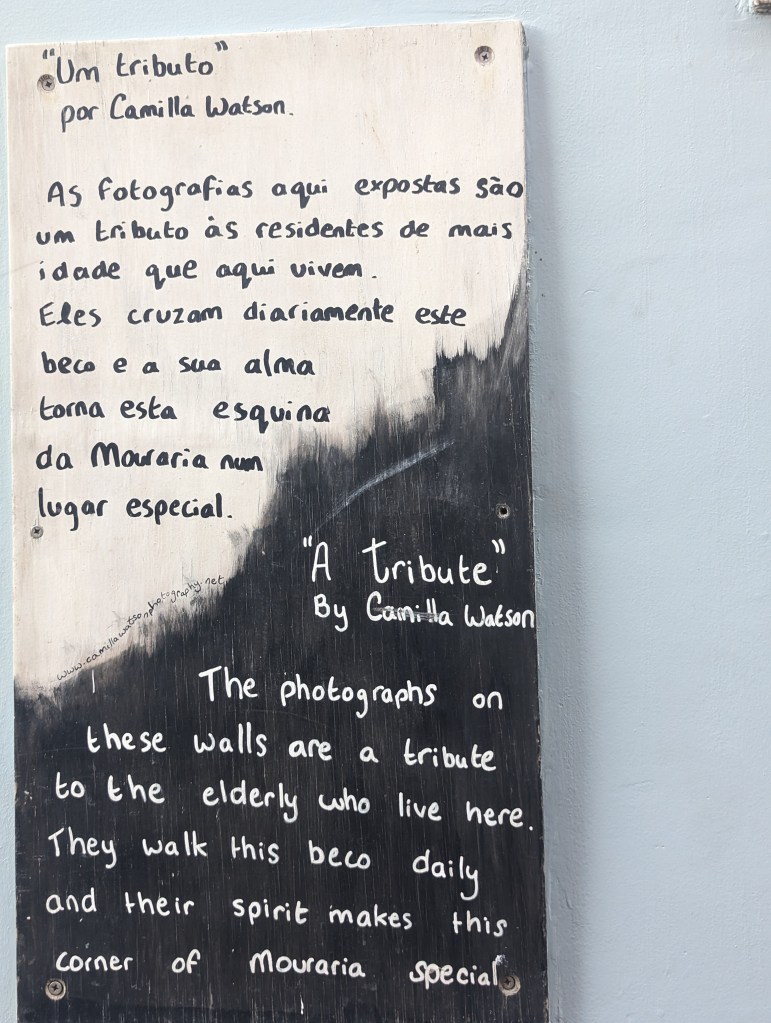
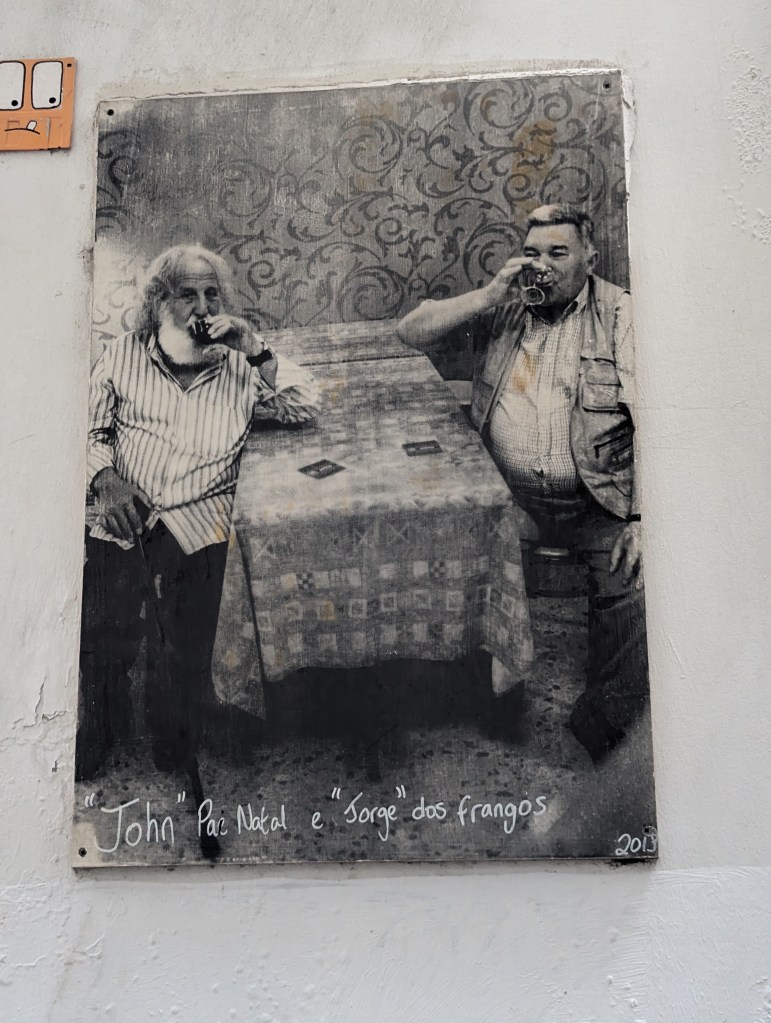
As the neighborhood is quickly gentrifying, a local artist decided to post pictures of the elderly native inhabitants still residing there.

We strolled past this guy; his is a unique way to sharpen a knife.

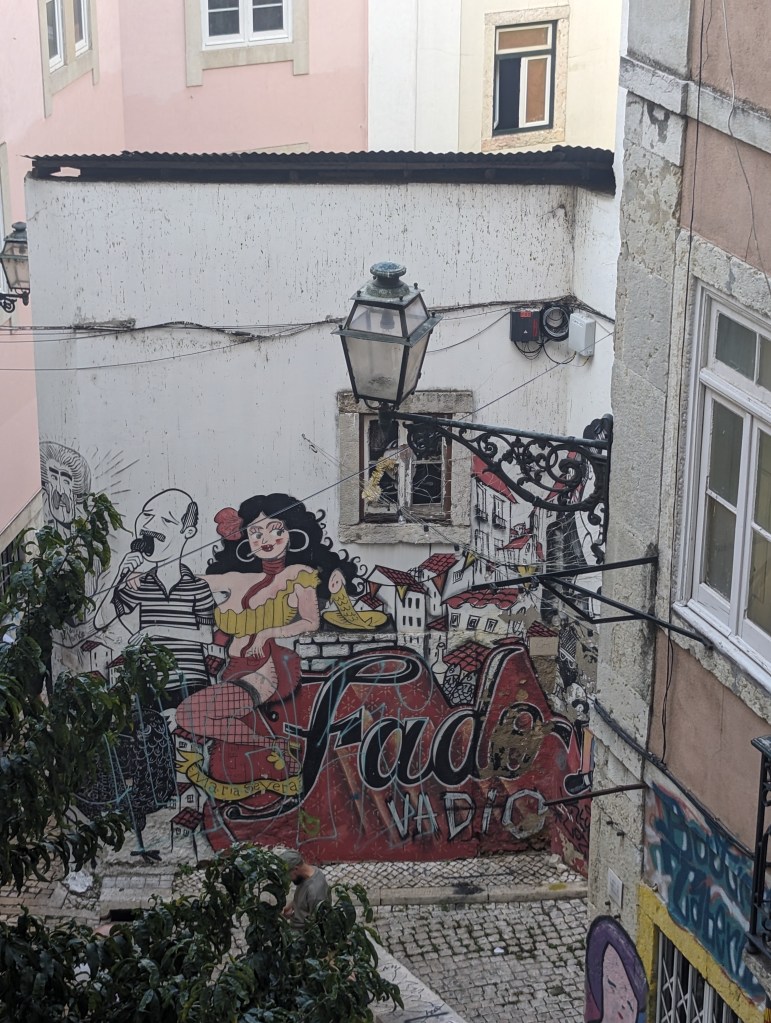
And past this tribute to Maria Severa, a prostitute Fado singer from the Mouraria neighborhood whose popularity grew even after her death at only 26 in 1846. She is credited for the origin of the popularity of Fado as a musical genre.

One of the many influences of the Moors in Portugal, seen especially in the Mouraria area, is the use of tiles on buildings. The entire city of Lisbon is like an open air tile museum.

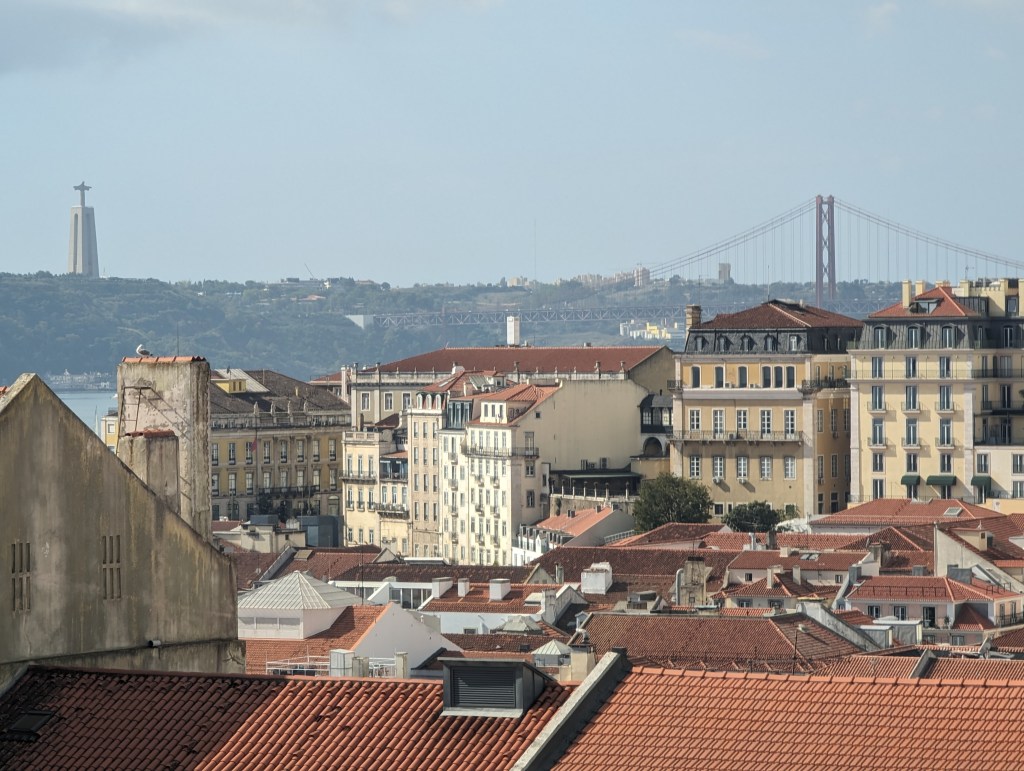
As we climbed to and reached the top of Mouraria, we were rewarded with views of the city.

Across the river below can be seen the statue of Christ the Redeemer built in the mid twentieth century modeled after the one in Rio de Janeiro, Brazil.

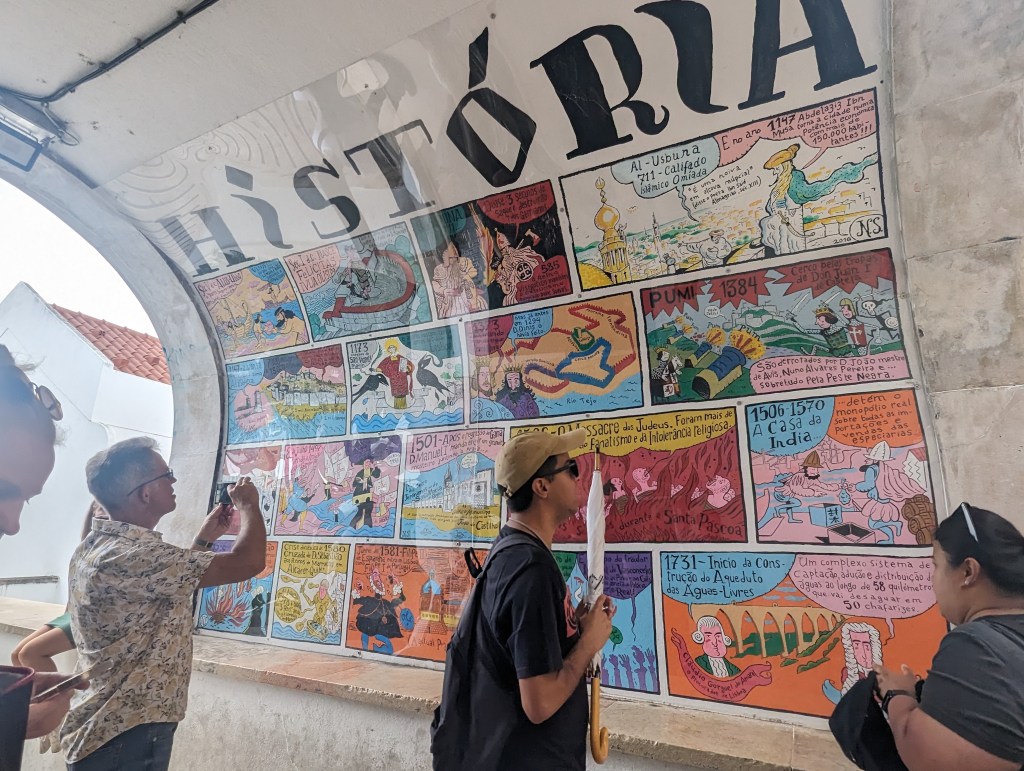
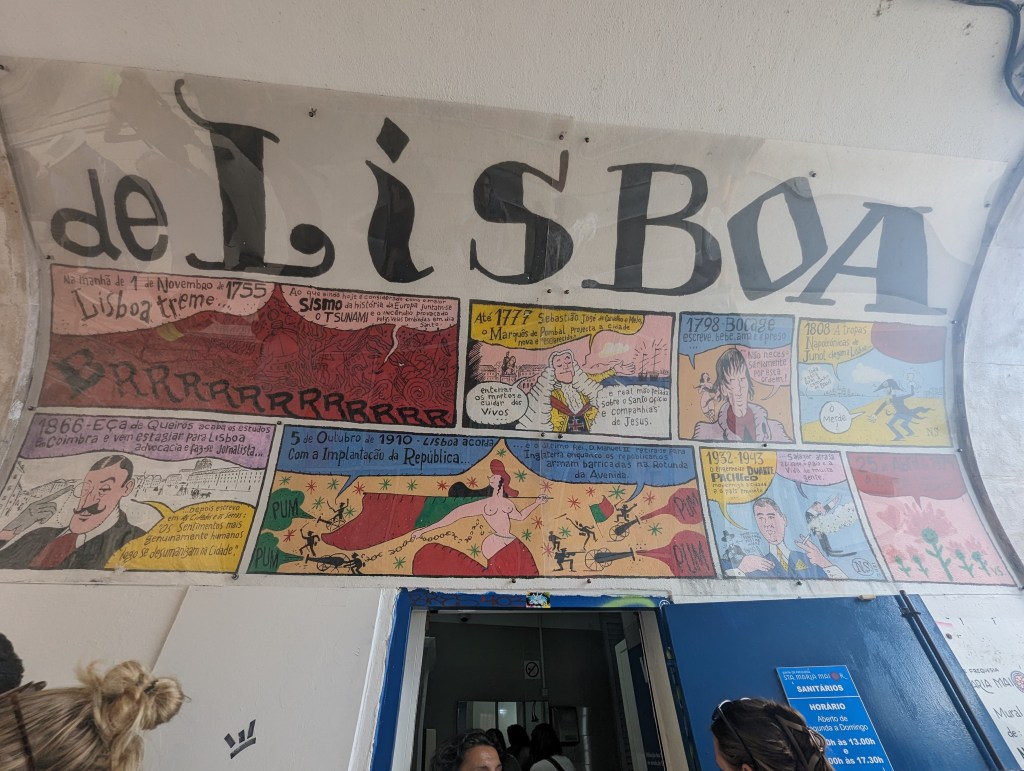
As we then passed into the Alfama neighborhood of the city, we passed under an arch in which an artist had painted the history of Lisbon in comics.

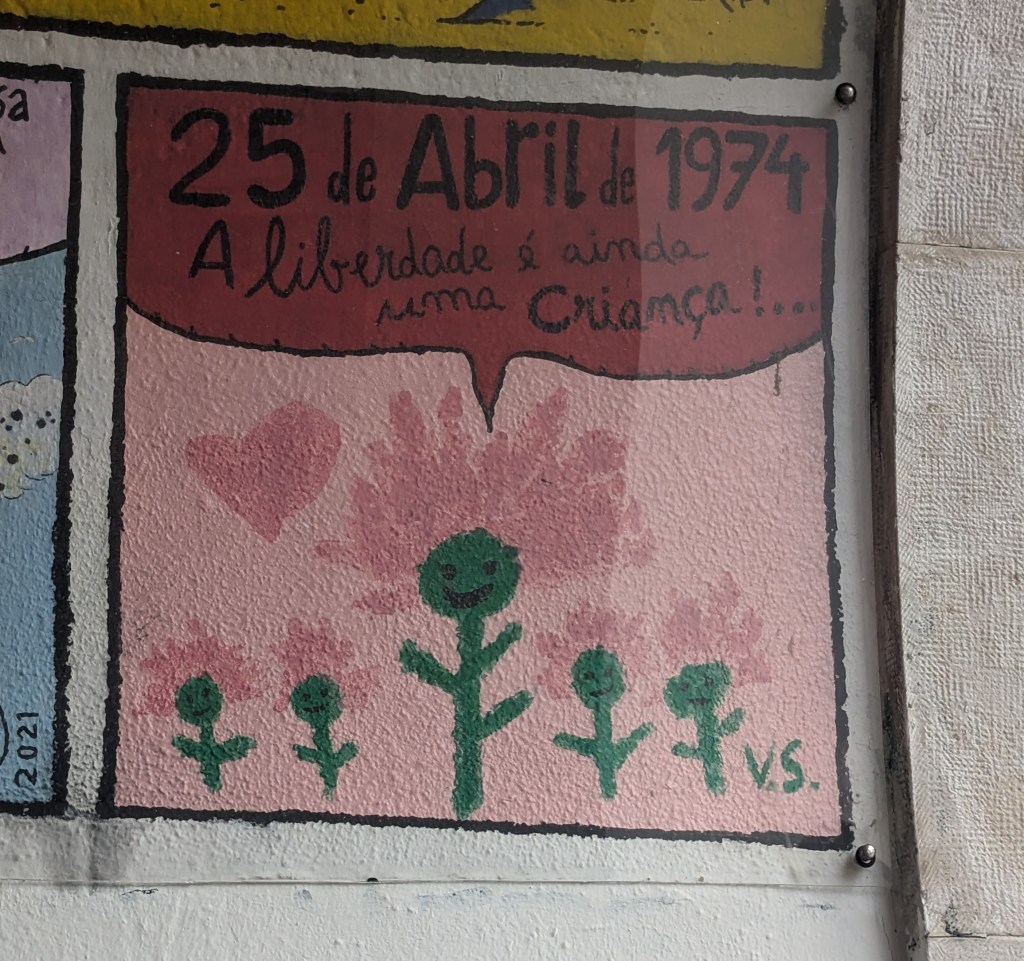
My favorite is the last, which represents the “Carnation Revolution,” which was the mostly bloodless coup that took place on April 25, 1974, ending a fascist dictatorship. In the early hours of the 25th of April “Grandola, Vila Morena” by Jose Afonso played on Radio Renascenca. This song was the sign to the Portuguese people that the revolution was starting. Red carnations were given to soldiers who placed these flowers inside their guns and on their uniforms. Carnations then became a symbol of democracy and the revolution.

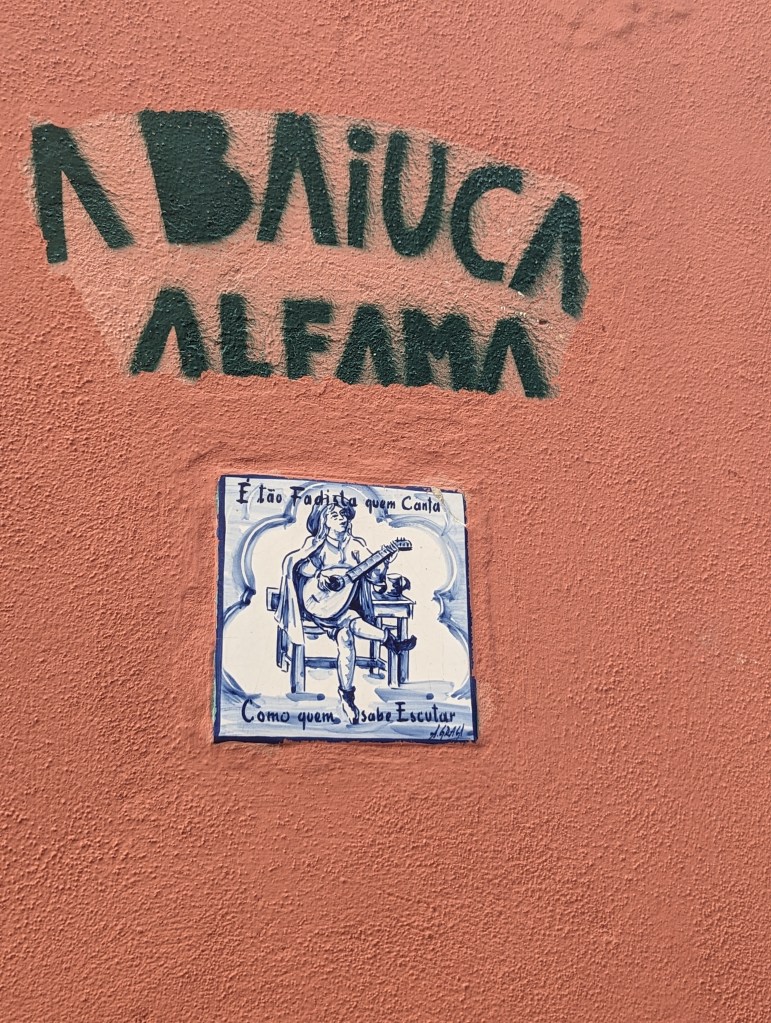
We then meandered through the Alfama neighborhood, which is home to the oldest Fado cafe in Lisbon.

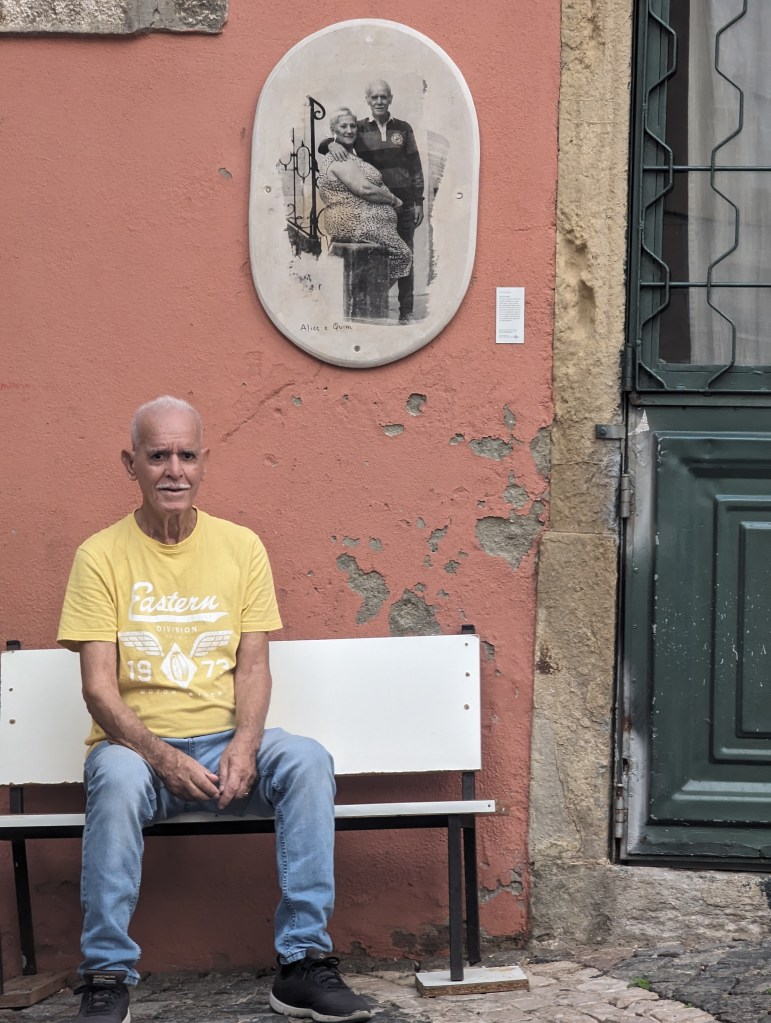
Sitting in the square next to the cafe, and next to a picture of himself and his wife, sat this elderly gent.

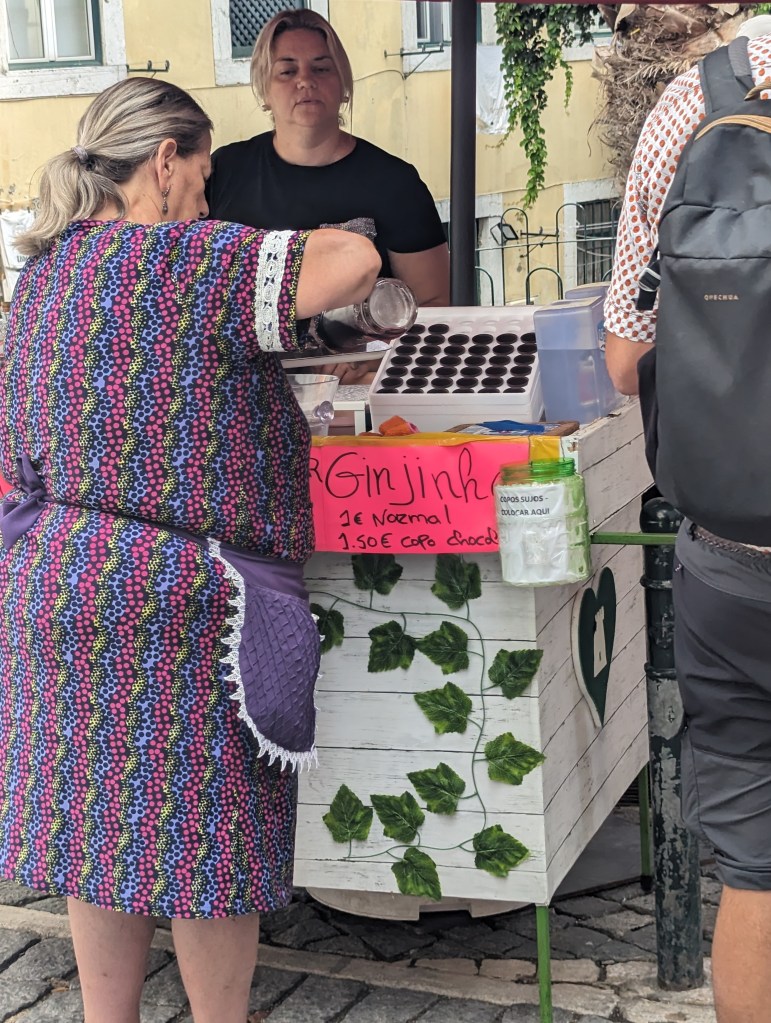
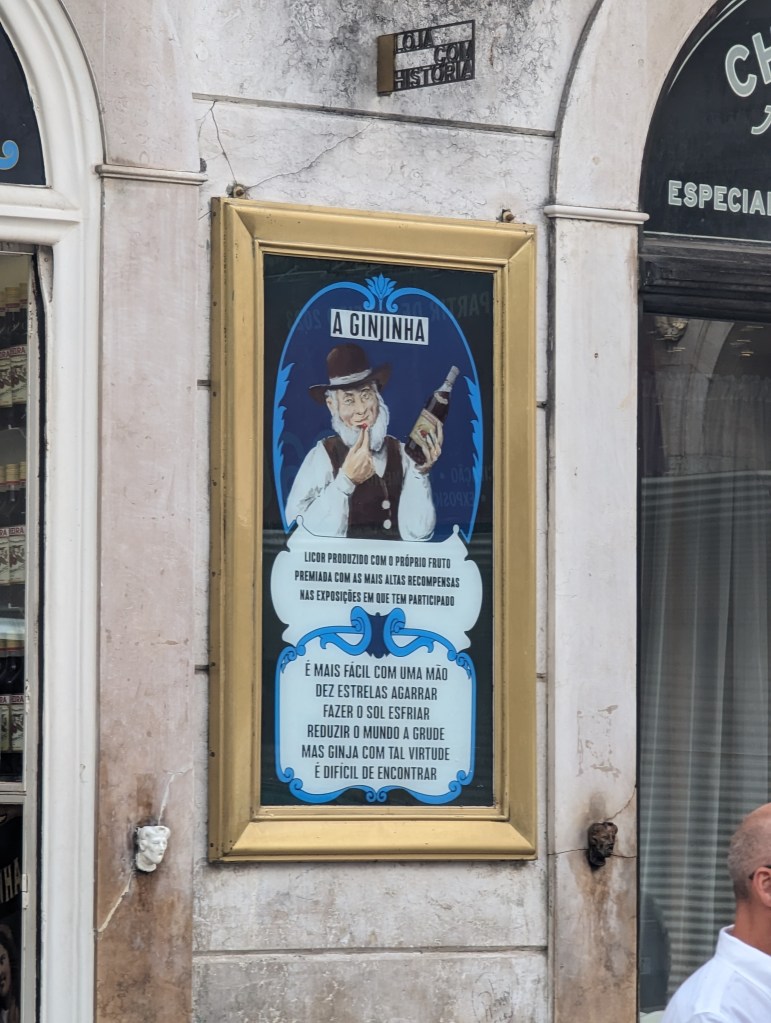
Meanwhile his wife sold us homemade ginjinha, a cherry liquor served in a chocolate cup, yummy.

Ginjinha is a specialty of Lisbon and can be found everywhere, often served in restaurants following dinner.

Alfama is also known for its gorgeous tile buildings.

We ended the tour at the Lisbon Cathedral, one of the city’s oldest monuments dating back to 1147, and having survived battles and the devastating earthquake of 1755. Every year on June 13th, St. Anthony’s day, the patron saint of Lisbon and the cathedral, 11 preselected couples get married there. All of their wedding and honeymoon expenses are paid by the city and sponsors.

After 3 hours of walking, it was time for a well deserved lunch, which we partook at Taberna de Baiaxa. We had the most delicious lunch of local delicacies, discovering pica pau.

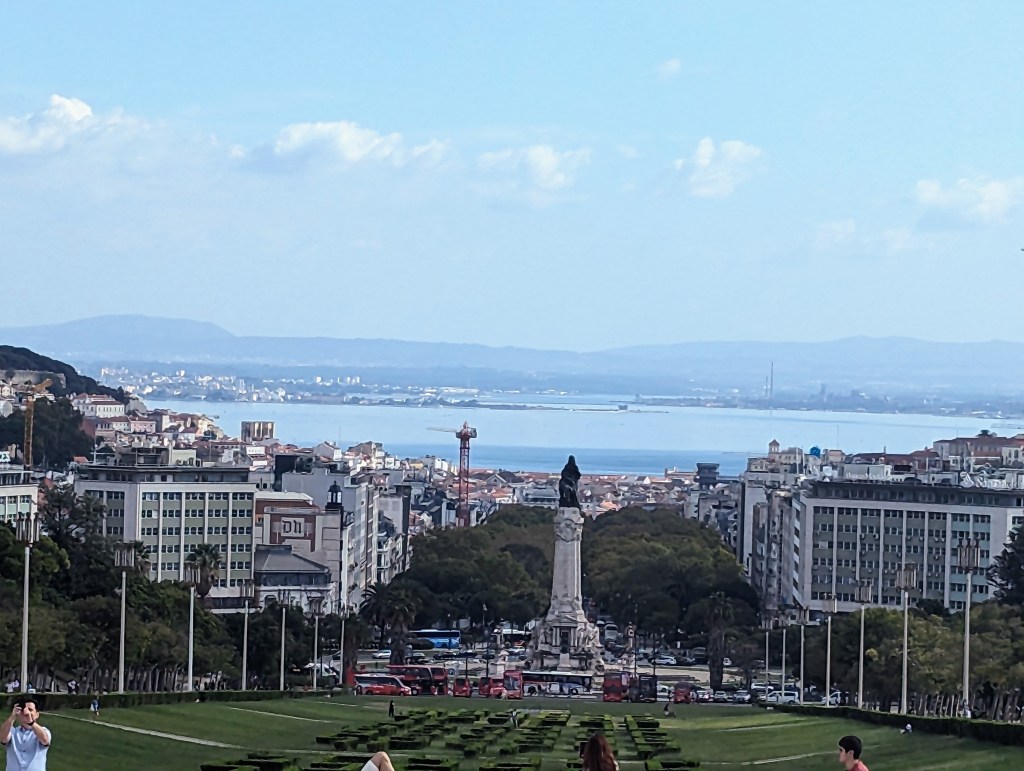
Despite our long morning and Howard still being a bit jet lagged, due to bad weather predictions for the later half of our Lisbon visit, we soldiered on. The afternoon touring took place on the top of a hop/hop off Yellow Bus. We passed the Edward VII Park with its magnificent views of the Tagus River.

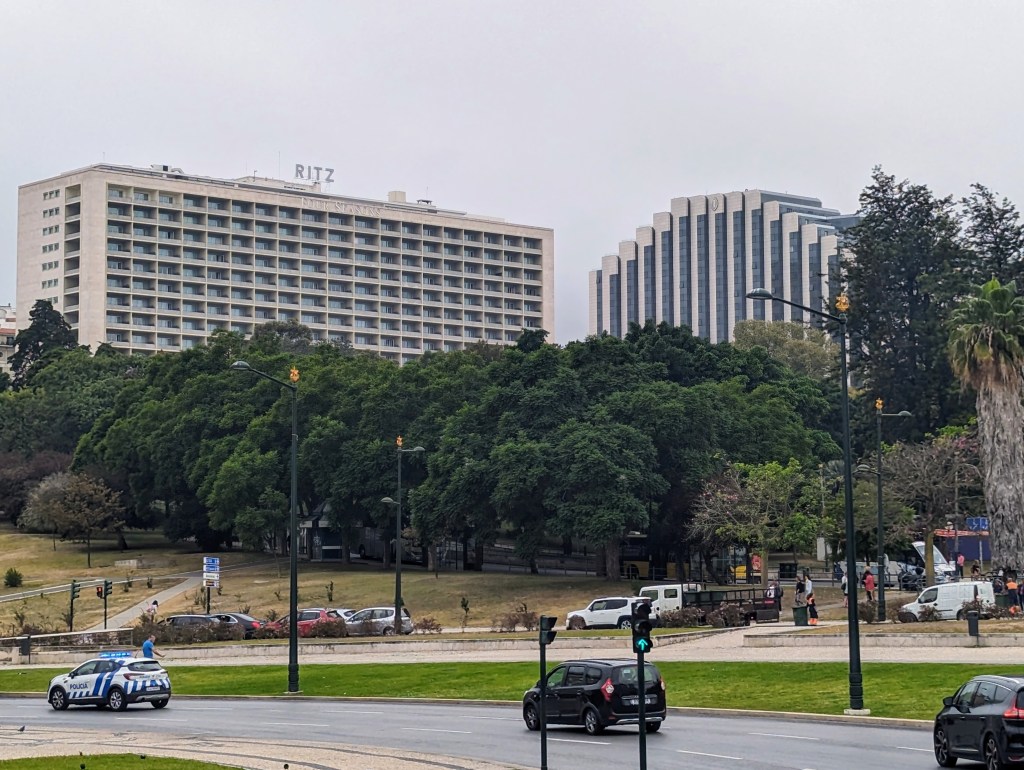
And the Ritz Four Seasons and the Intercontinental Hotels.

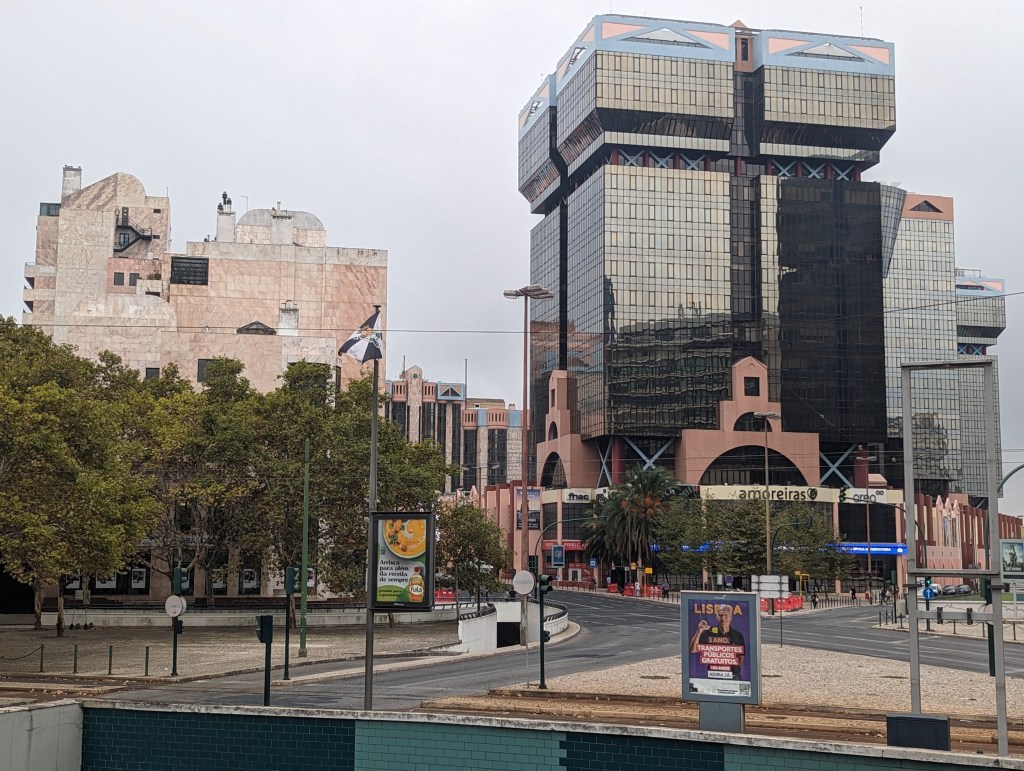
And the Amoreiras shopping center built in the 1950s.

statue marquis de Pombal

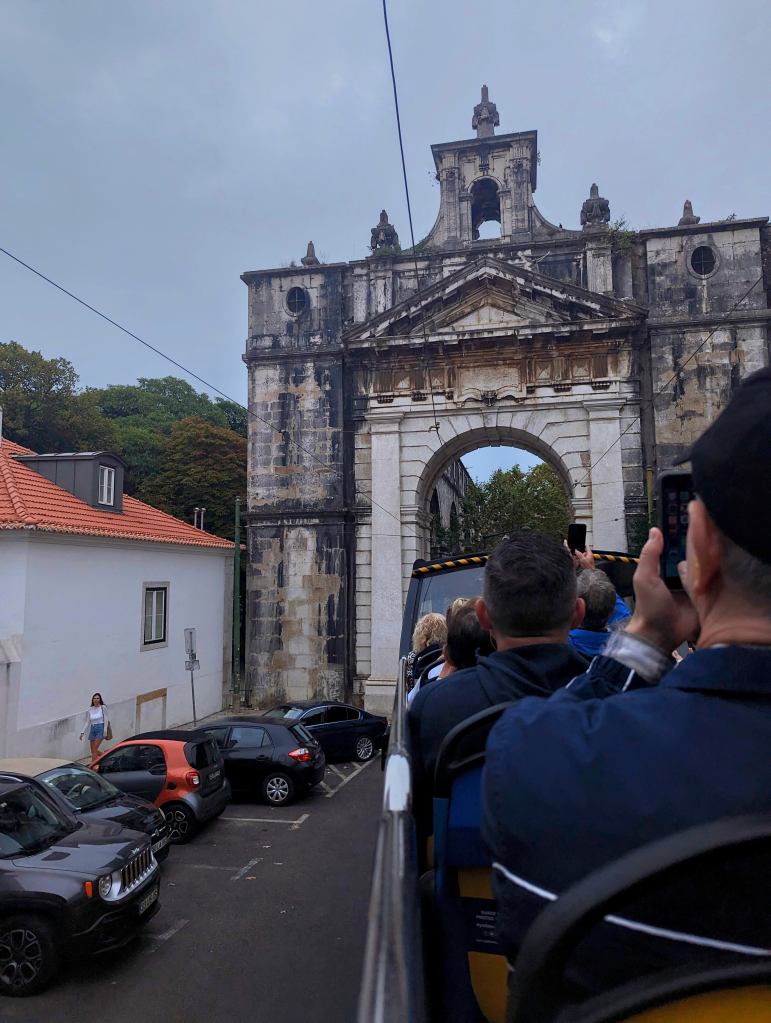
We rode through Lisbon’s first water treatment plant.

And past the aqueduct that supplied it.

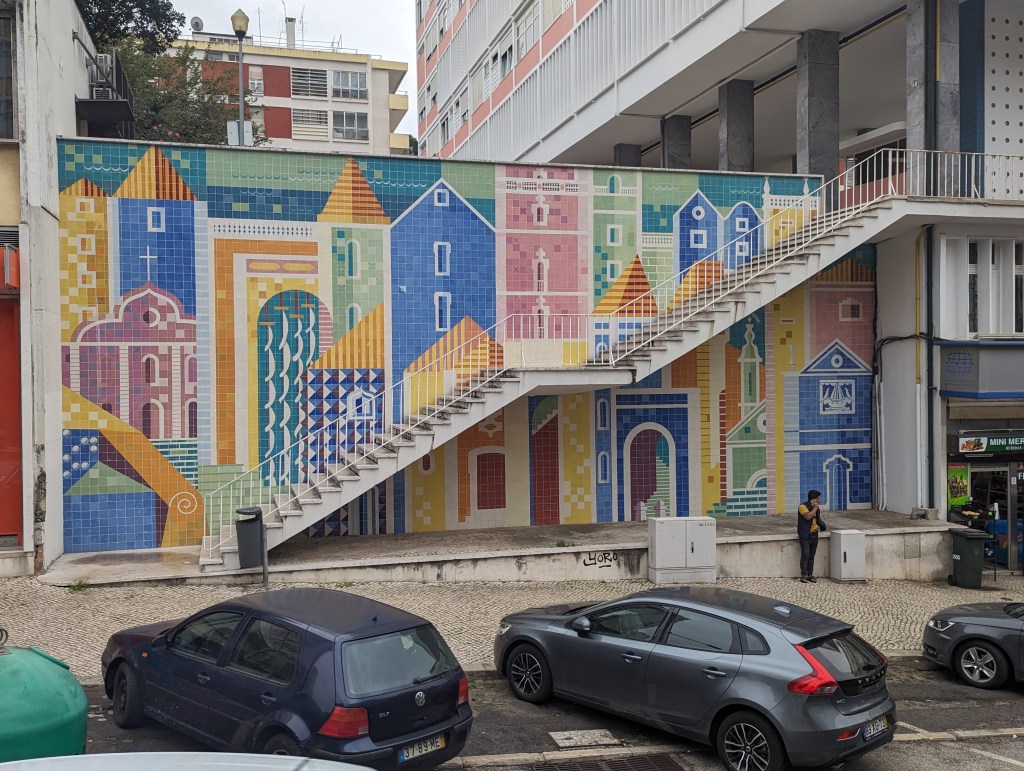
But most fun, we passed through a neighborhood with mosaic tile street art on every block.

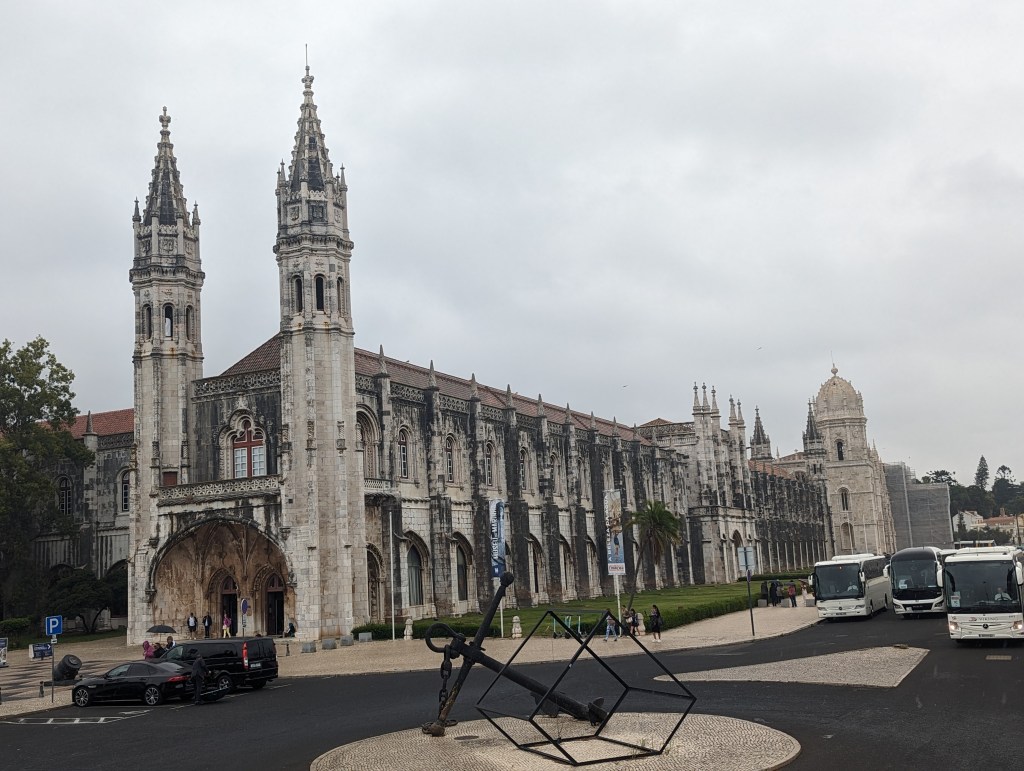
Due to the lateness of the day, we did not get out at the Monastery of Belem; we planned to return the following day.

We did, however, get out to stretch our legs and see the Tower of Belem while the sun was still shining.

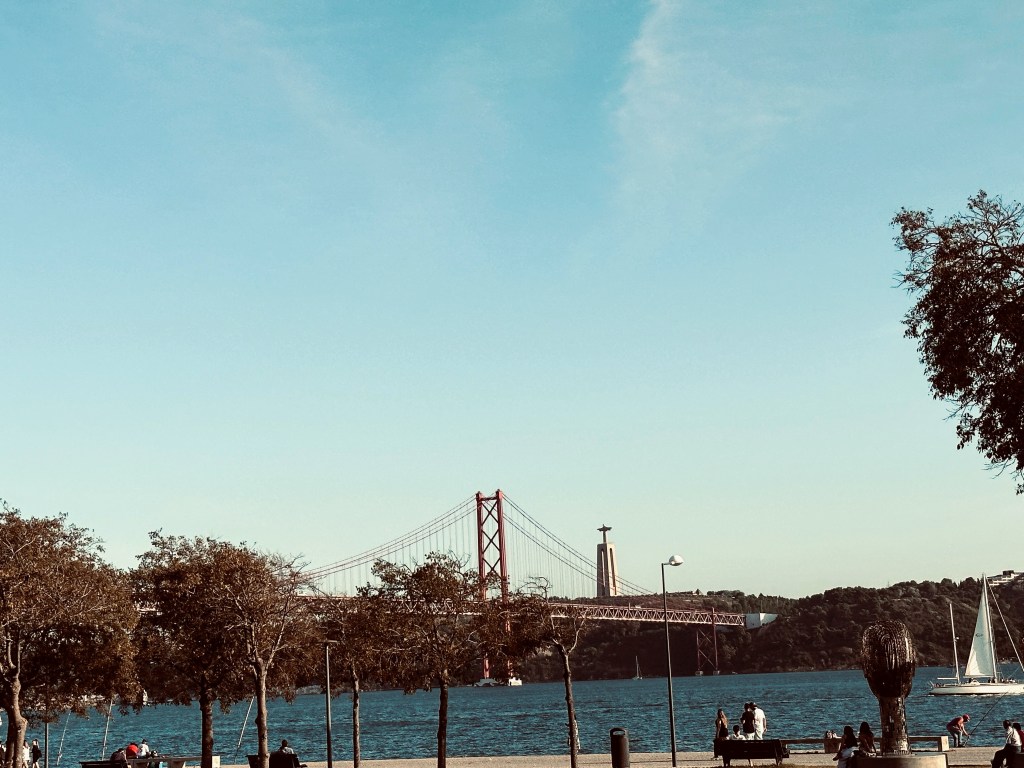
We completed the Yellow Bus circuit passing the 25th of April Bridge, built by Salazar, but renamed after his demise.

Christ the Redeemer

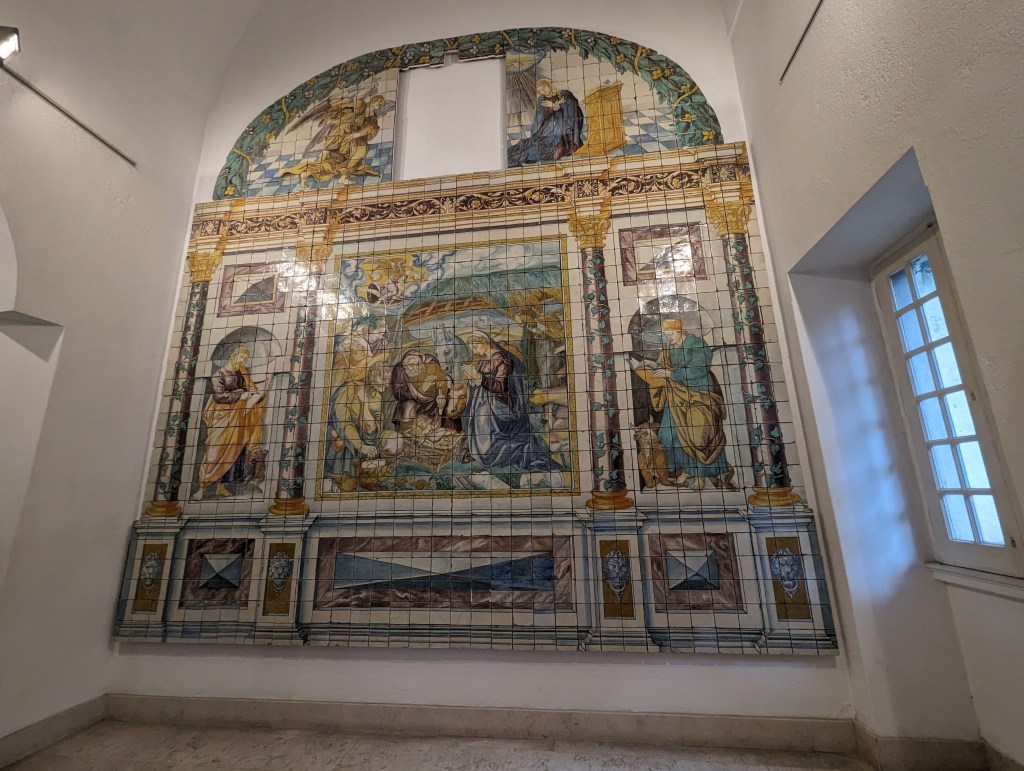
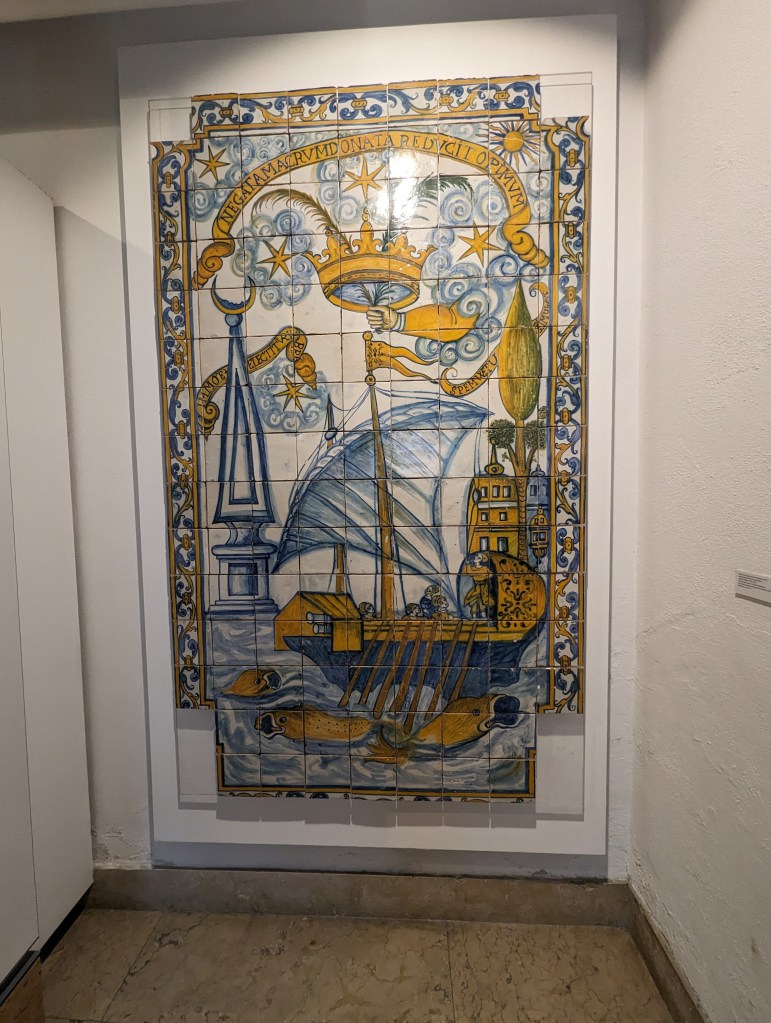
After an exhausting day we dined in the neighborhood at Bono Restaurante and had a most delicious dinner. The next morning the predicted rain arrived. We thought if we got out to the Belem Monastery early we would beat the lines. But alas, even the ticket holder line was over an hour wait, in the rain, so we decided to forgo the monastery and headed to the tile museum, which is where just about every other tourist in Lisbon, it seemed, had decided to spend the rainy day. But once inside we were not disappointed. The National Museum of Azulejo was first built in 1509 as a convent, founded by Queen Leonor. The museum collection features decorative ceramic tiles, ie azulejos, from the second half of the 15th century to the present day. The exhibitions explain the Moorish influences and the evolution of the art both religiously and secularly.

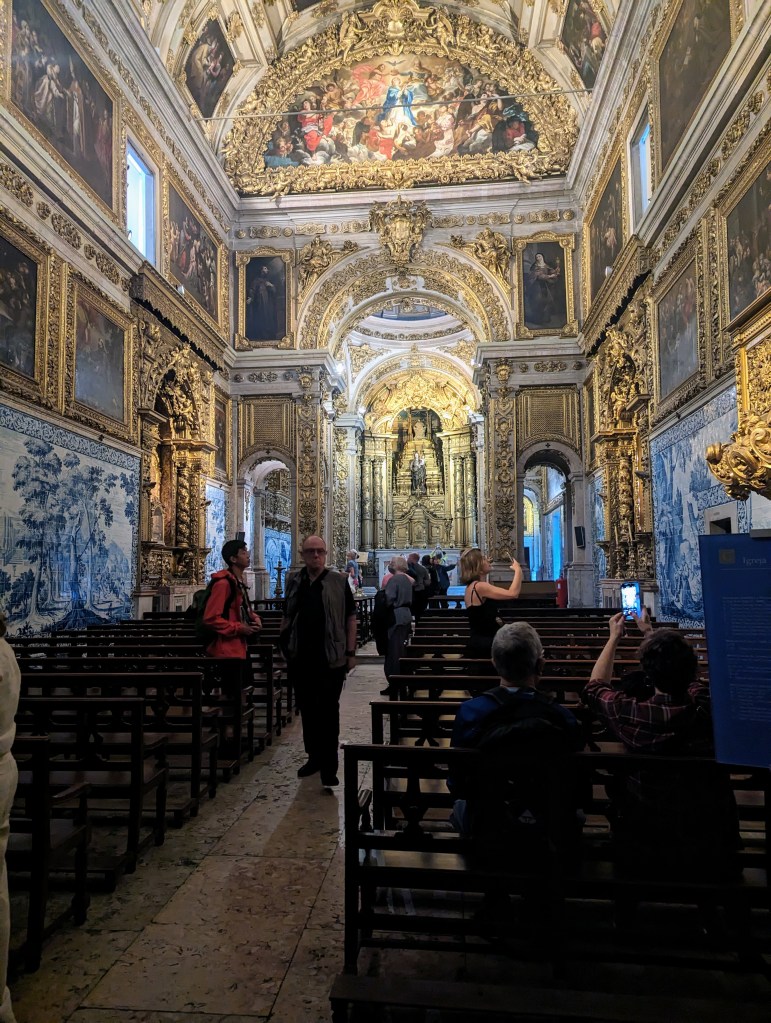
Because it was a convent, it has an elaborately decorated chapel.

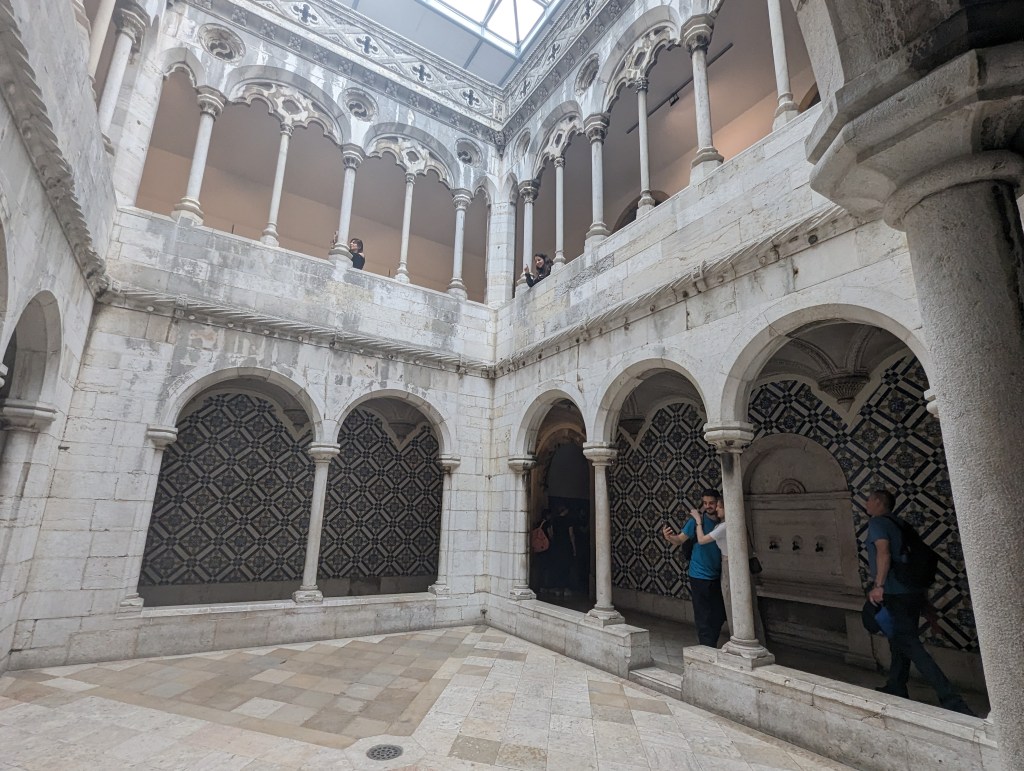
and cloister.

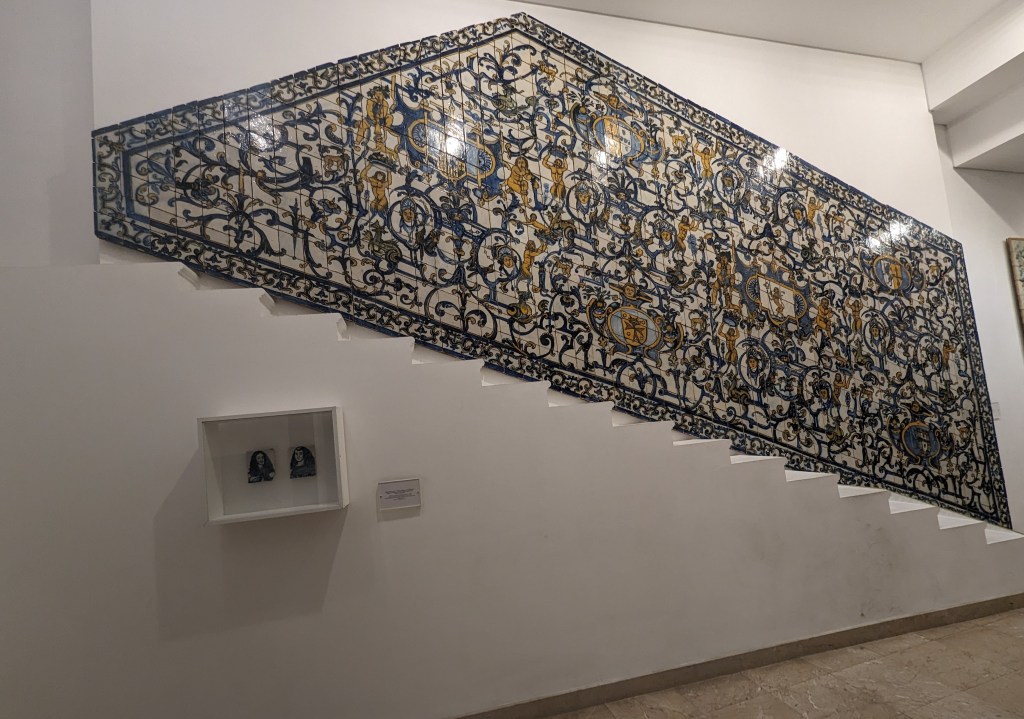
Even the stairways are decorated. Note the use of angled tiles to match the slope of the stair.

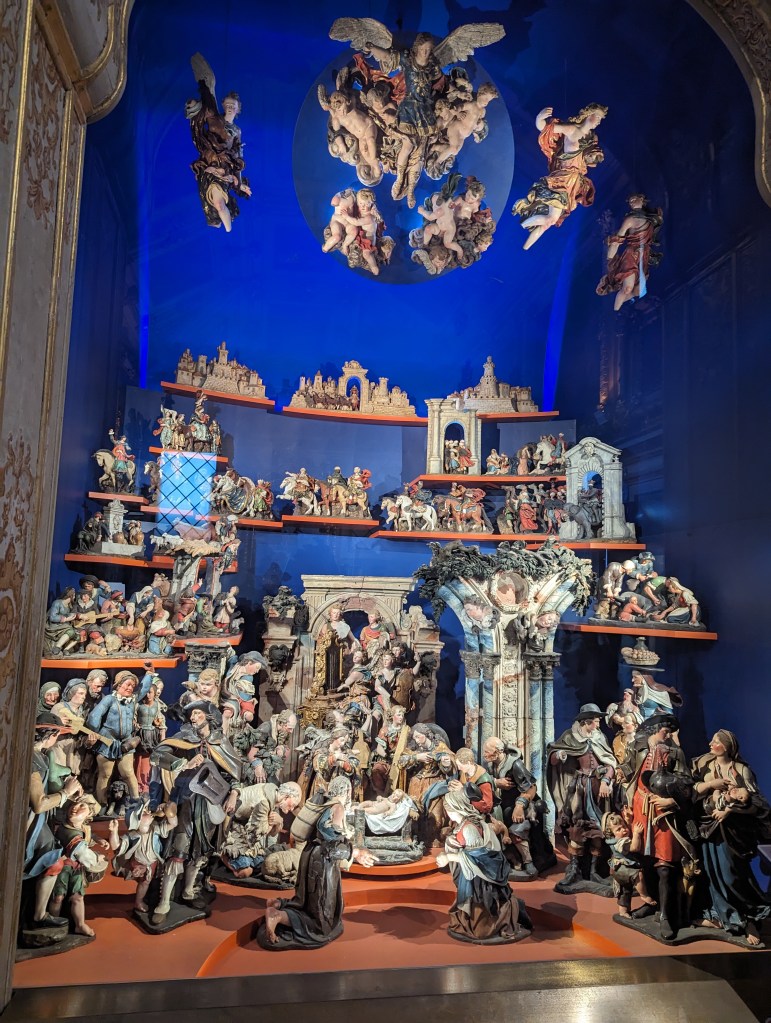
In addition to the numerous tiles in the museum, there are many porcelain figurines throughout, like in this magnificent nativity scene.

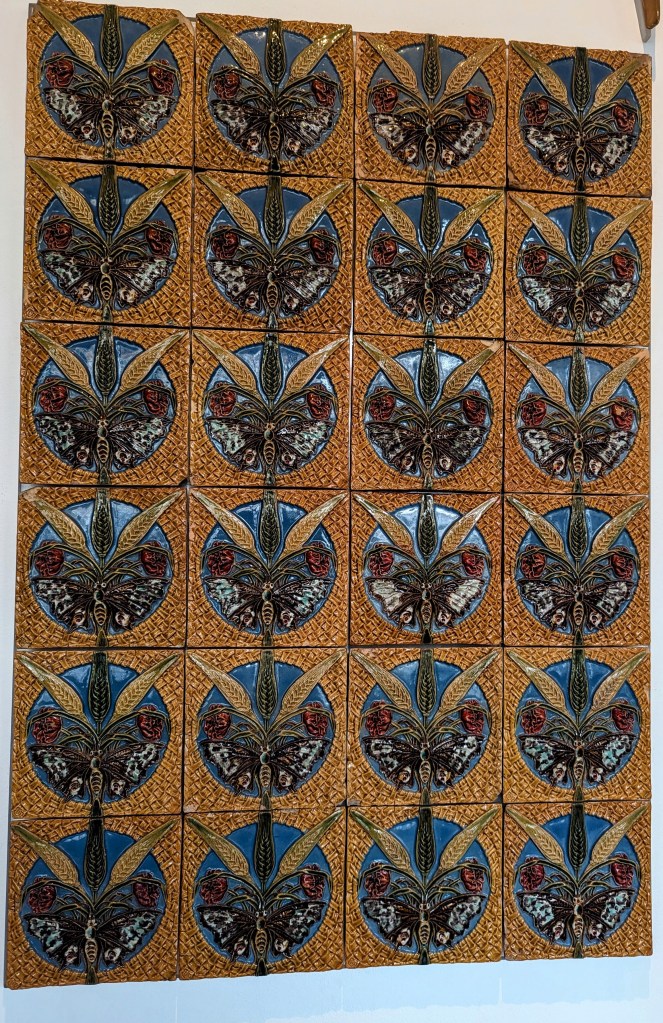
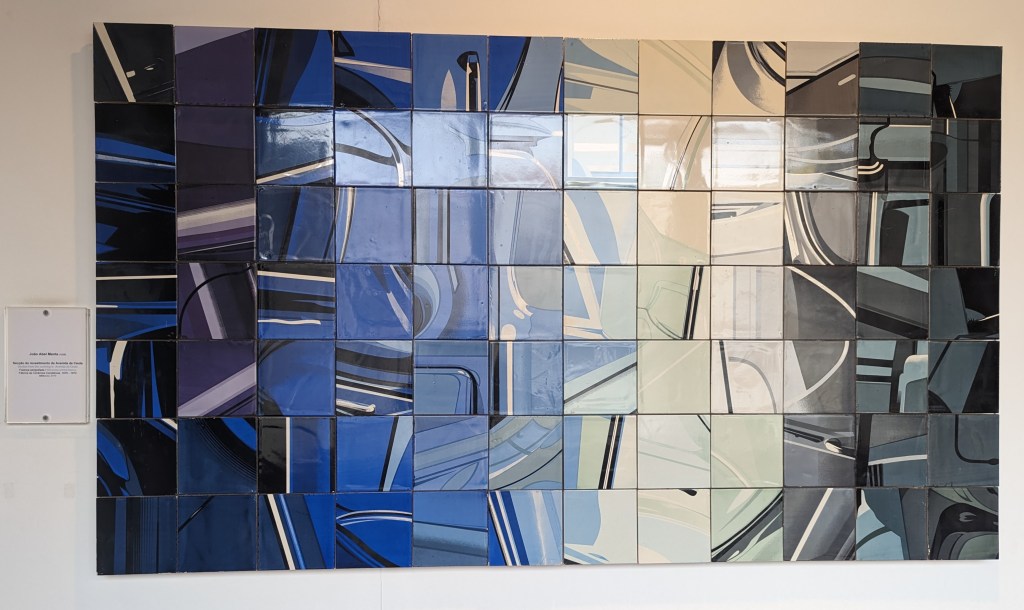
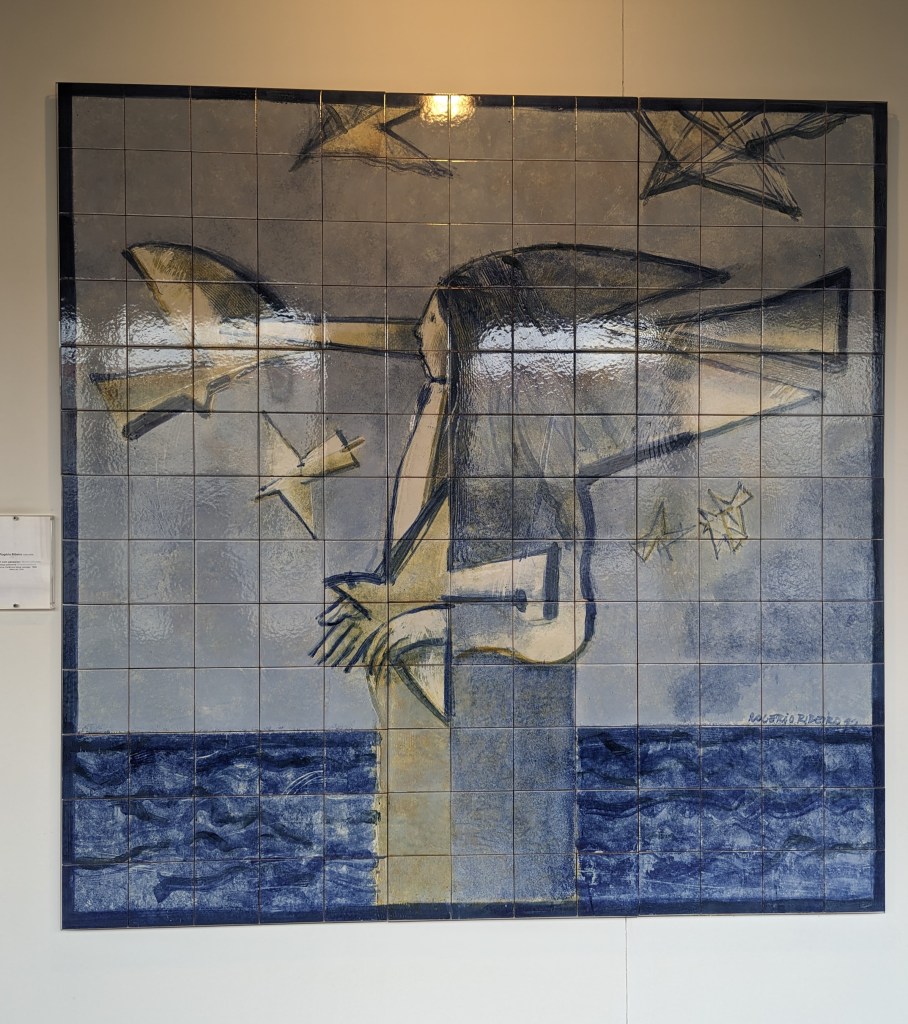
The third floor of the museum is dedicated to tile art of the 20th century, which were some of my favorites.

Rafael Bordalo Pinheiro 1846-1905
João Abel Manta (1928)
Rogério Ribeiro (1930-2008)
Bela Silva (1966)

The rain broke long enough that evening for us to slip out for the most amazing burgers at a little place right around the corner.

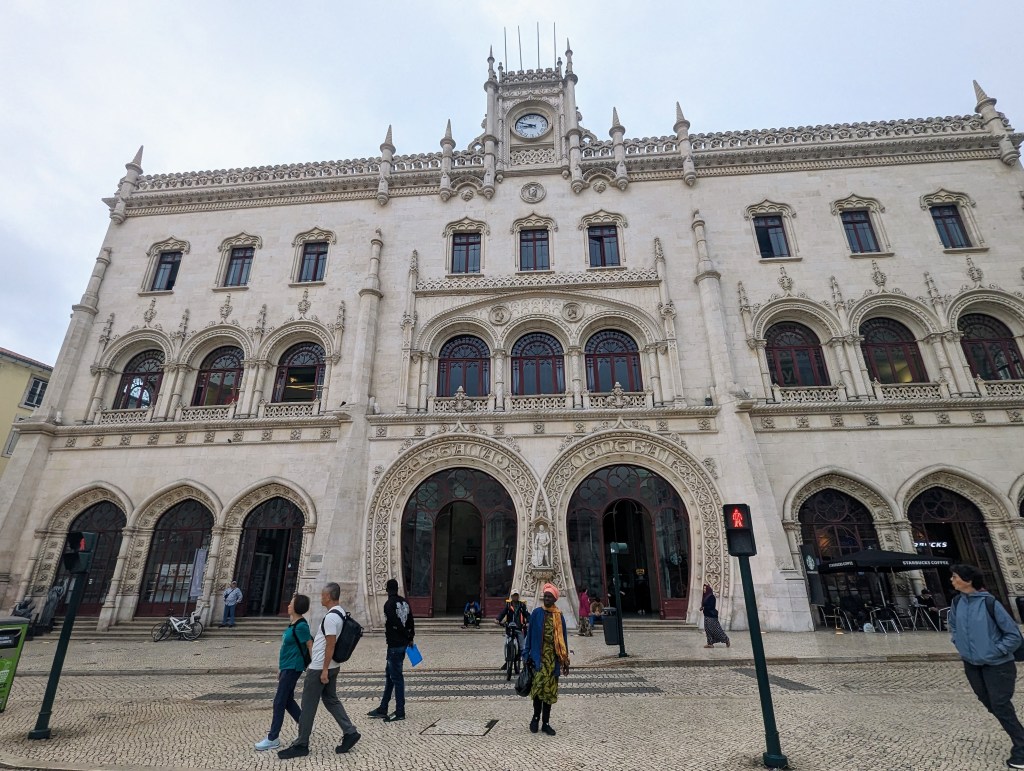
The next morning, as predicted, it was raining. But the weather for the following day, Howard’s last, was expecting high winds and 1-2 inches of heavy rain, so we forged out to Sintra. We left from the Rossio train station.

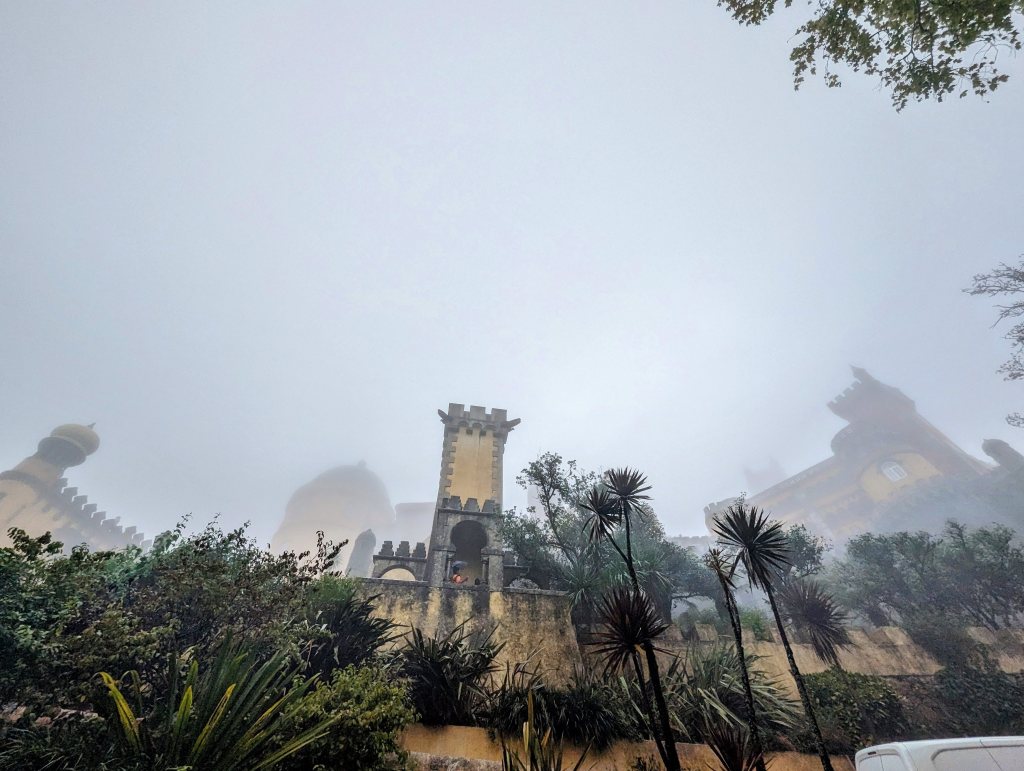
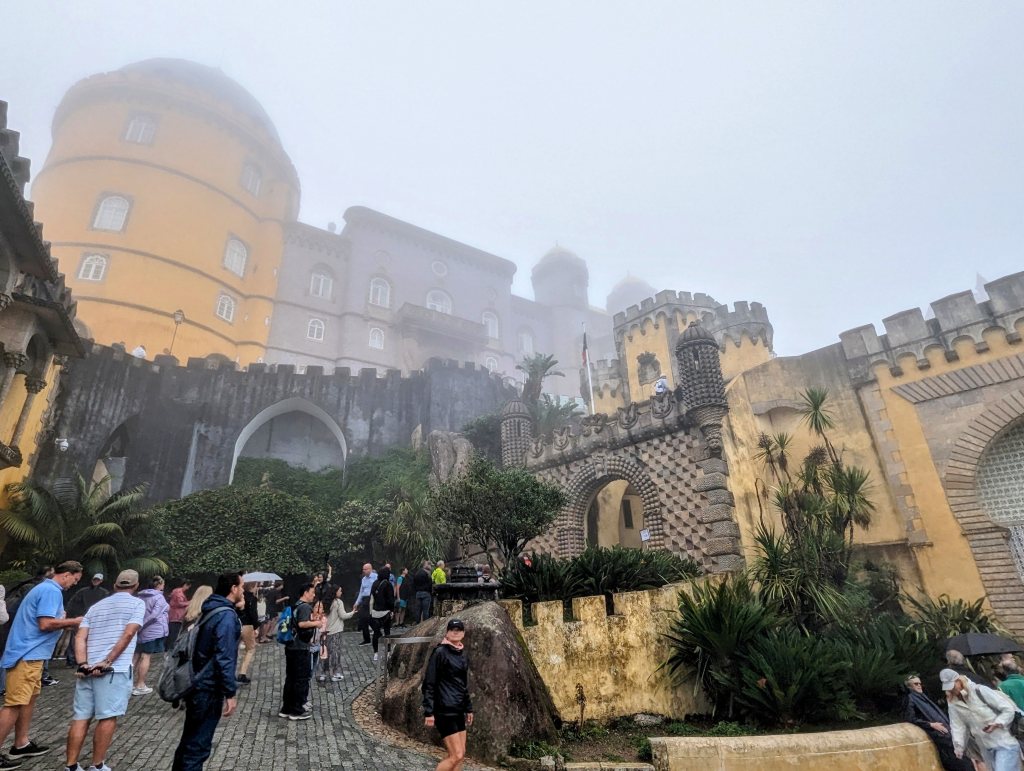
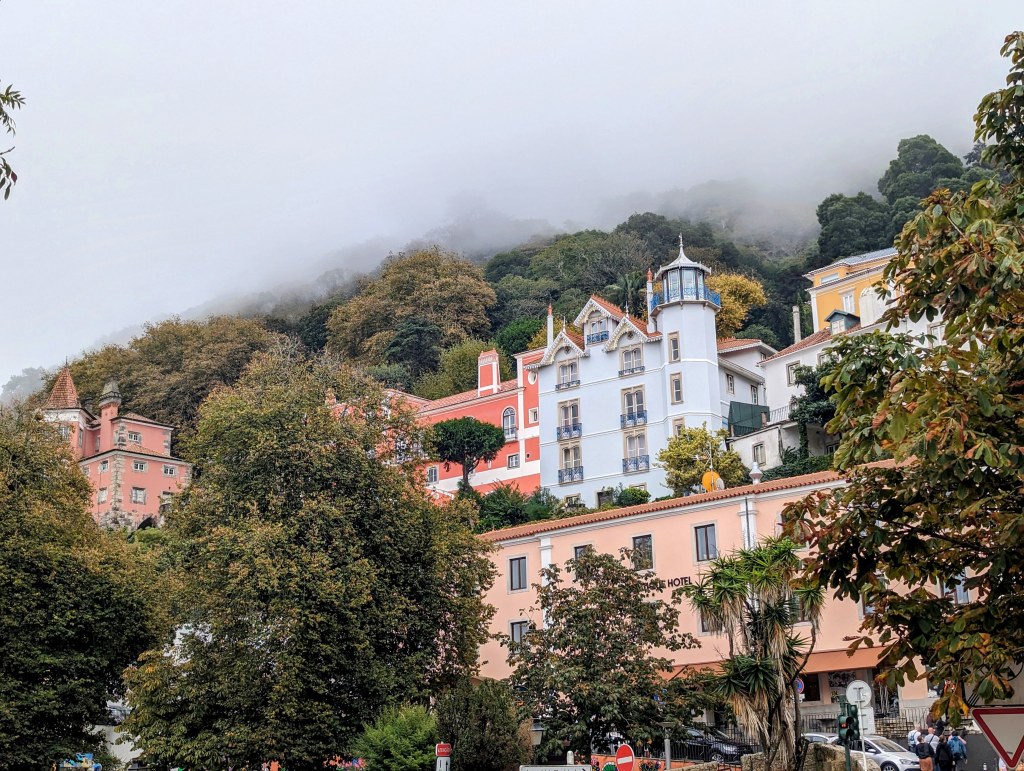
We arrived in Sintra in the pouring rain and had some extra time before our entrance into the Pena Castle, so stopped for coffee before catching the bus up to the castle. From the bus, it is a 30 minute hike uphill to the palace. Luckily the rain was down to a drizzle. This is what awaited us.

this is a stock image from the internet of what it is supposed to look like on a sunny day.

Pena Palace is one of the first examples of 19th century Romanticism. It was originally constructed as a 16th century convent but underwent several disasters including the 1755 earthquake, which left it in near ruins. It was acquired by King Ferdinand II in 1838 for himself and his family. All that is red is the restored convent. That in yellow is the “new” construction.

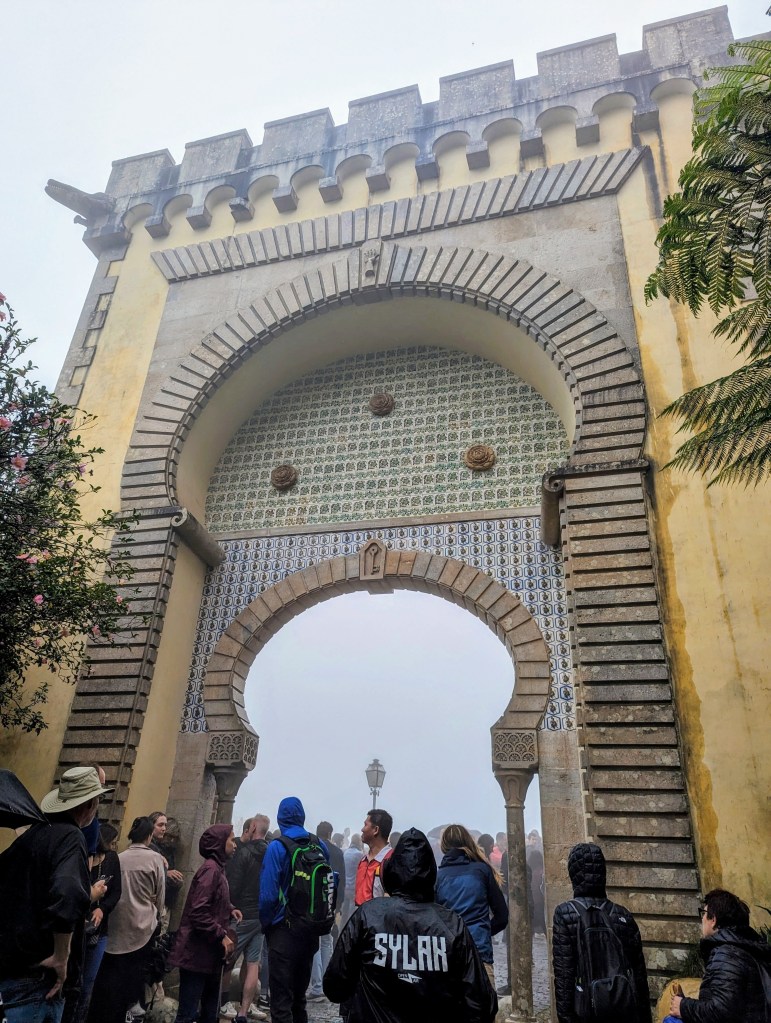
Despite our timed entry ticket, we waited in line 45 minutes to get to the gate of the palace.

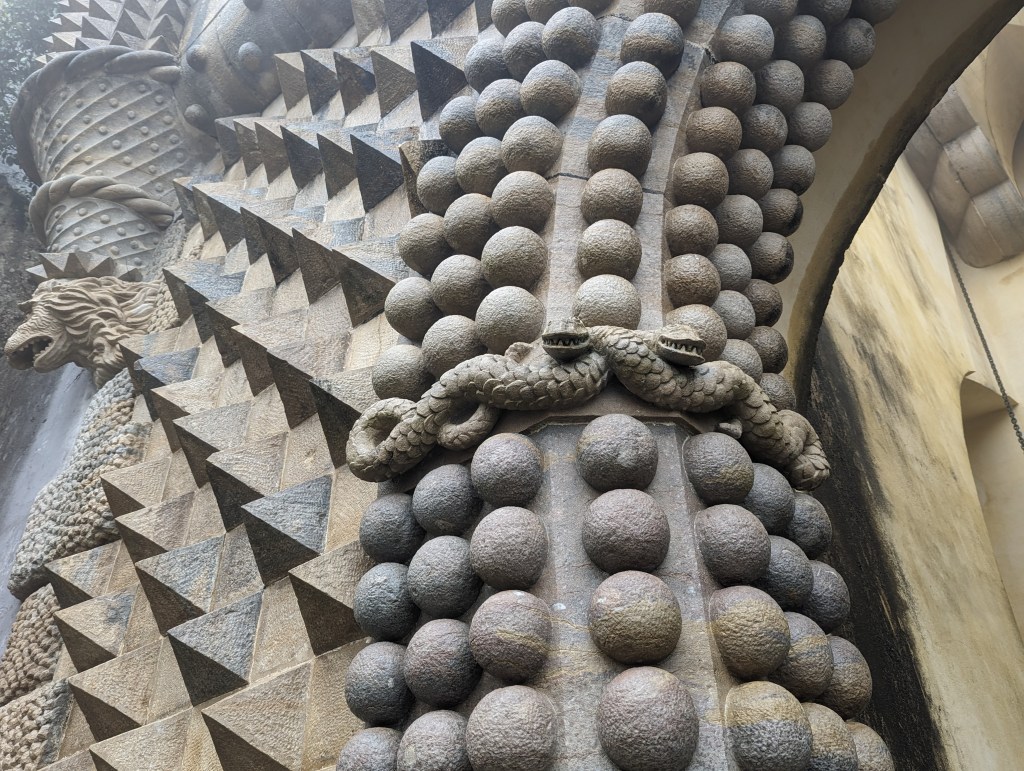
iron gate Pena Palace
details iron gate

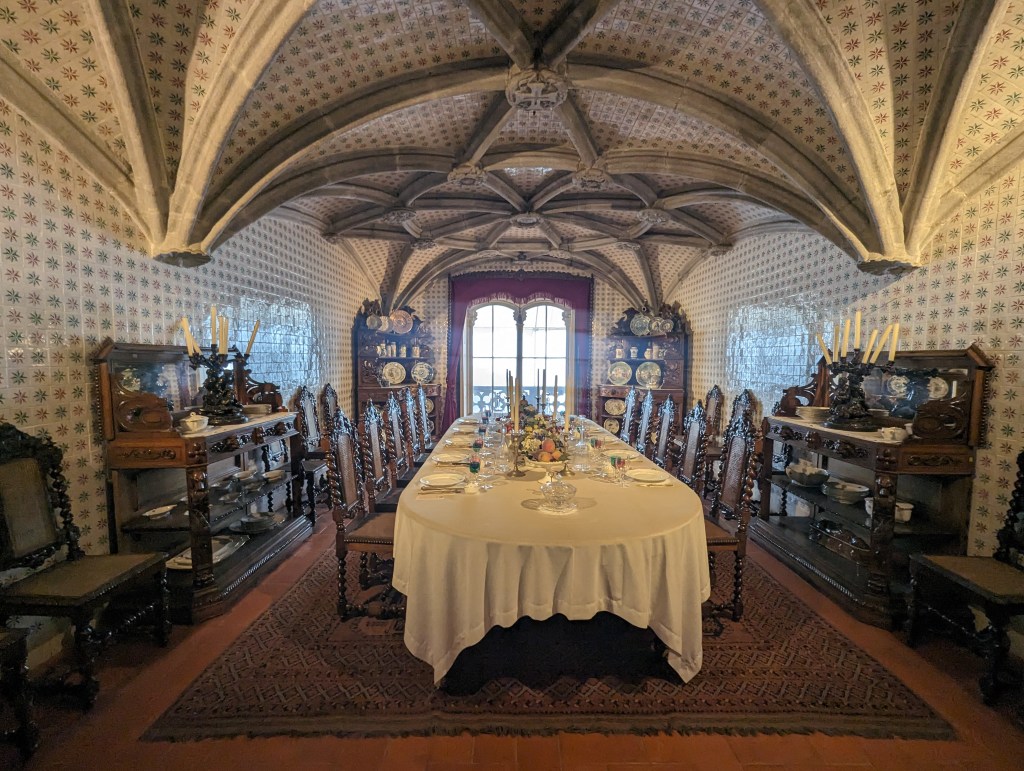
And then another 20 minutes to actually get inside the palace. But once there, it was worth the wait.

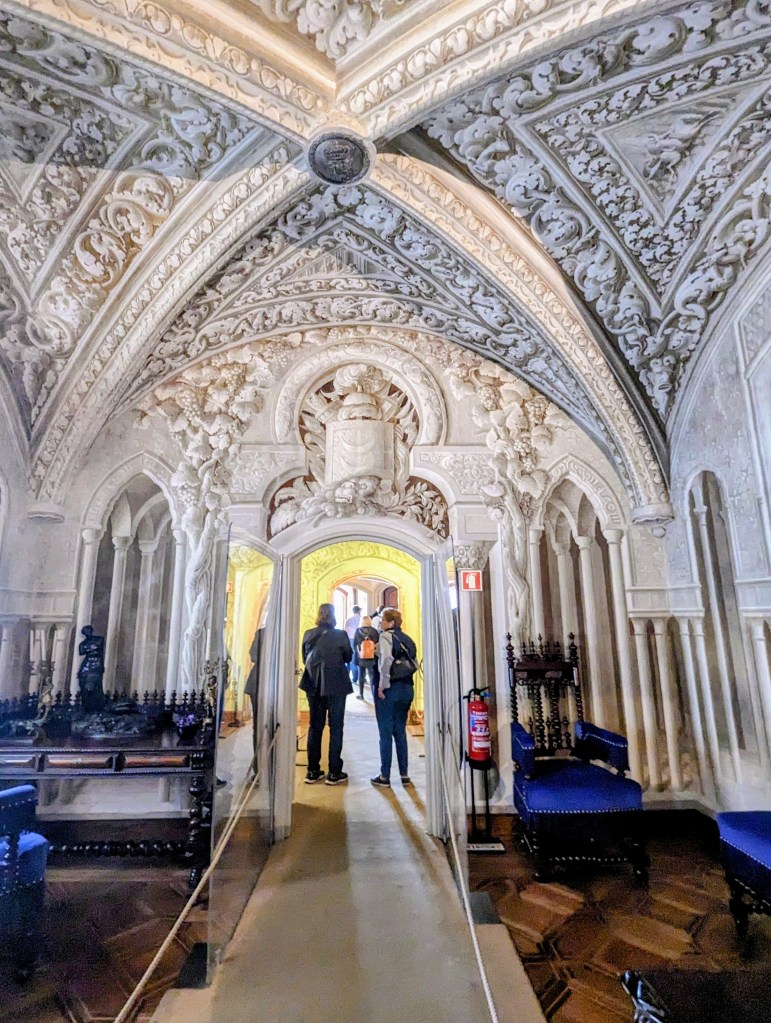
dining room Pena Palace
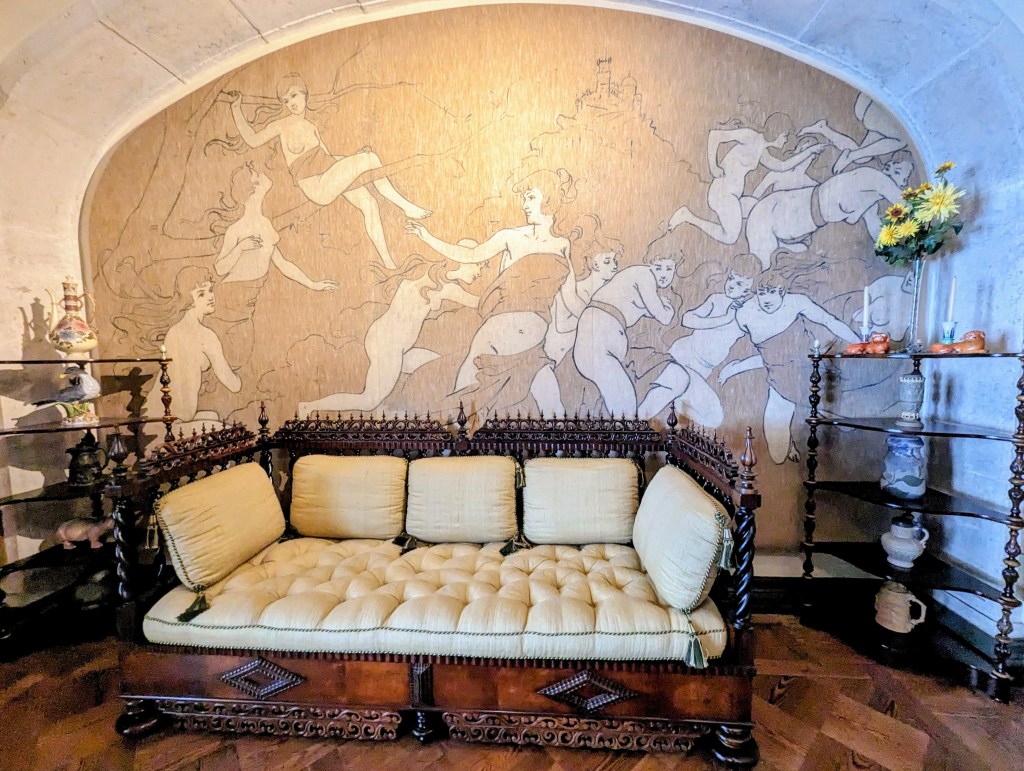
art on the wall is by King Ferdinand II himself
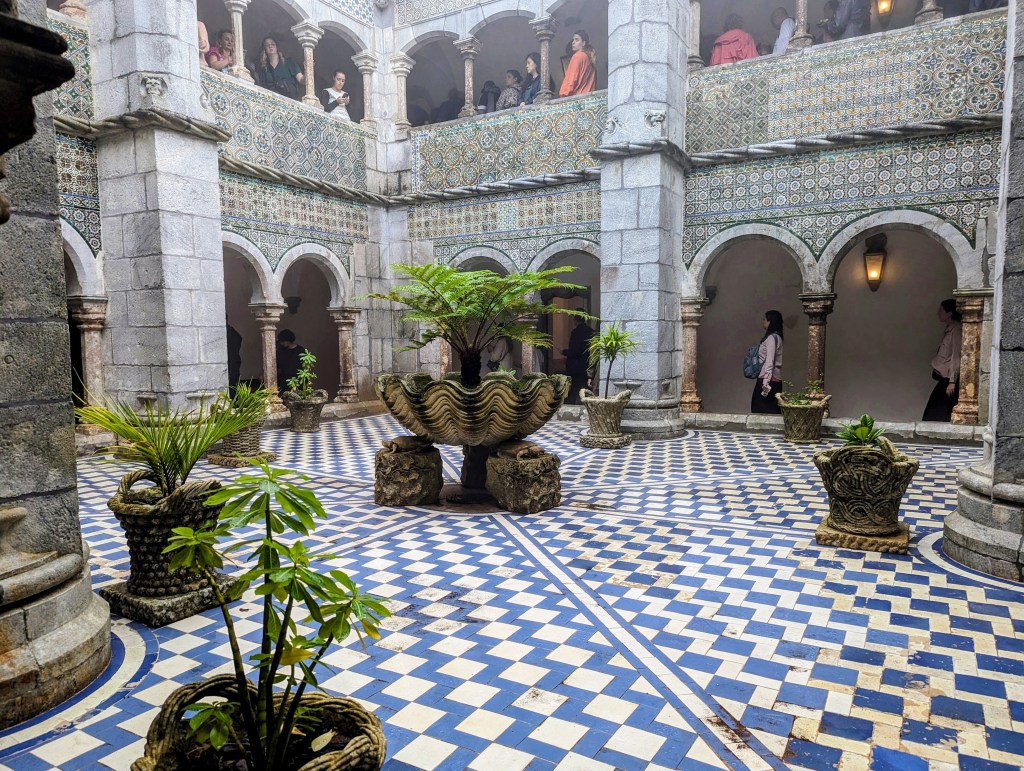
cloister
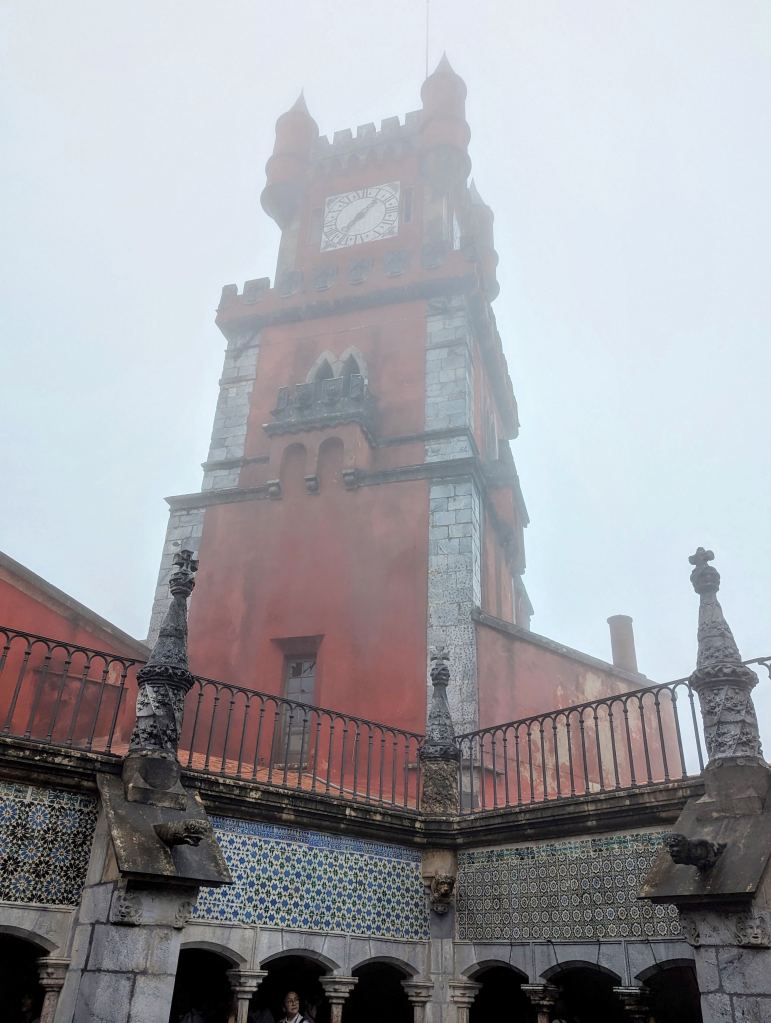
clock tower
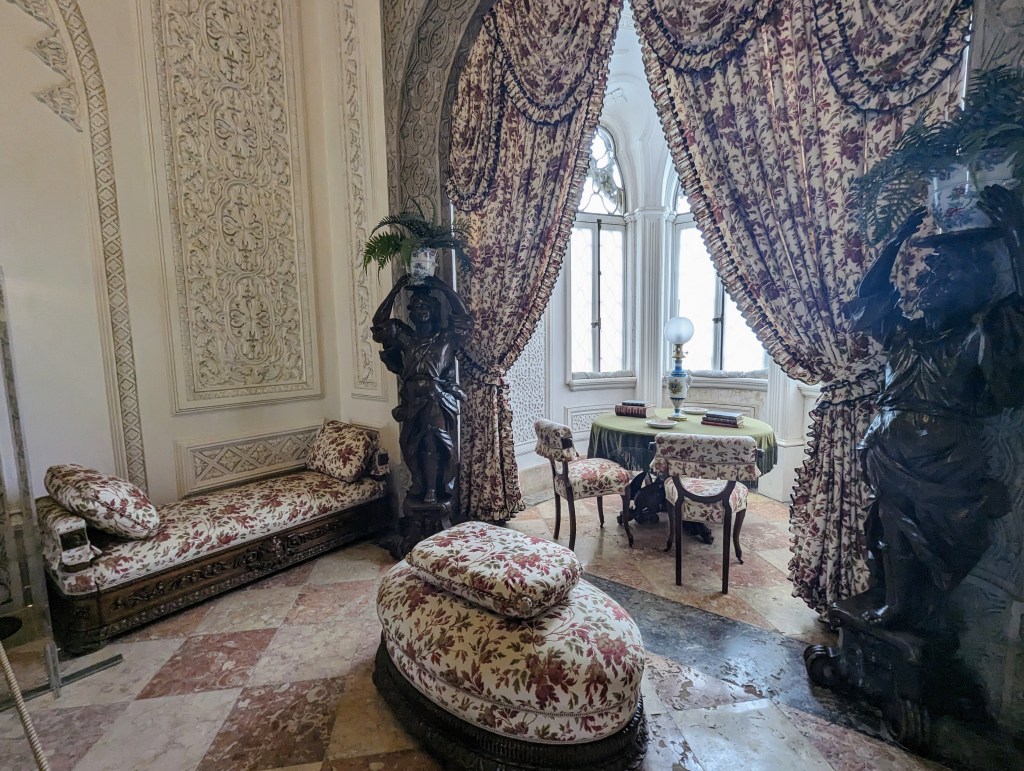
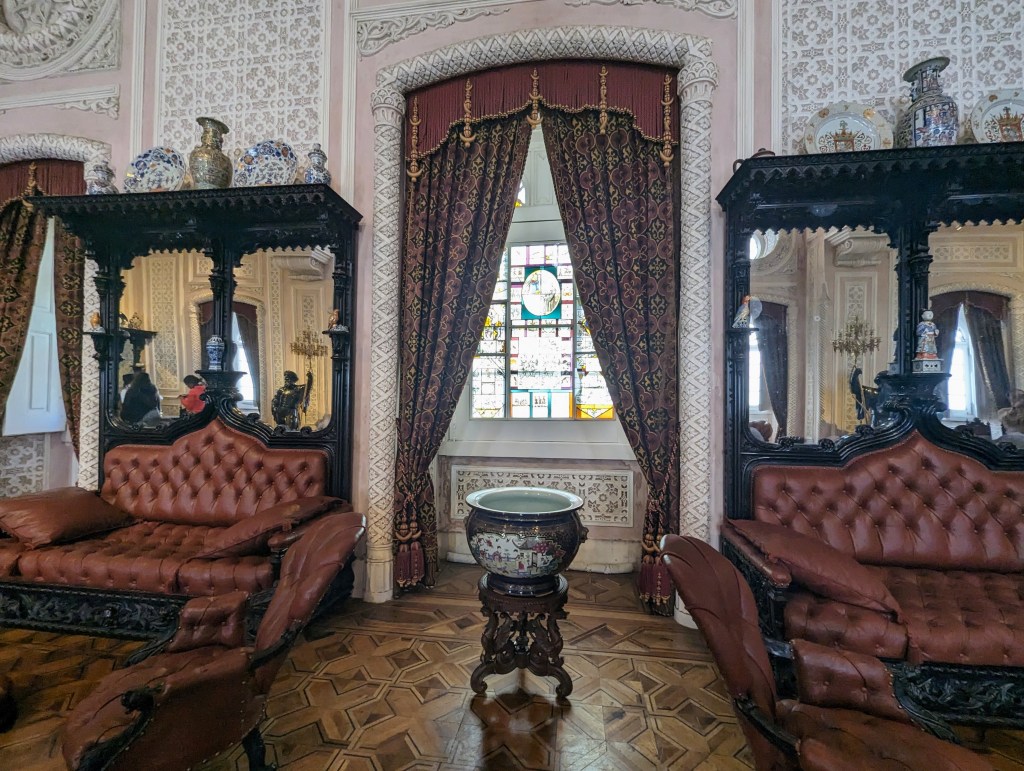
sitting room
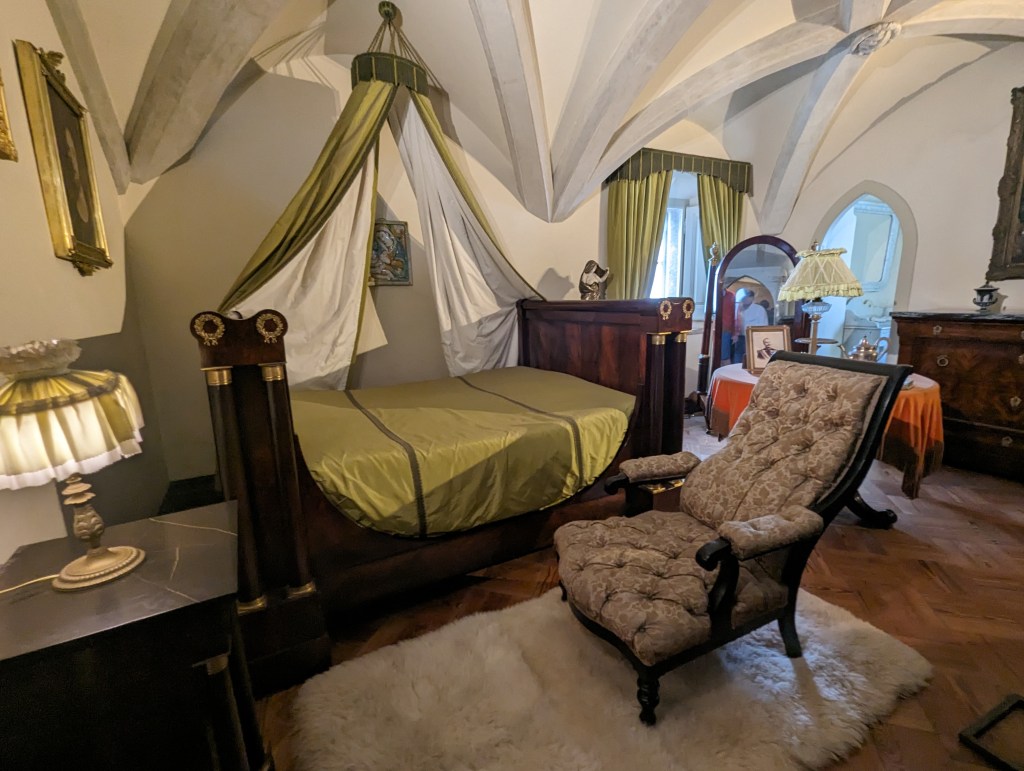
smoking room, which was considered a luxury

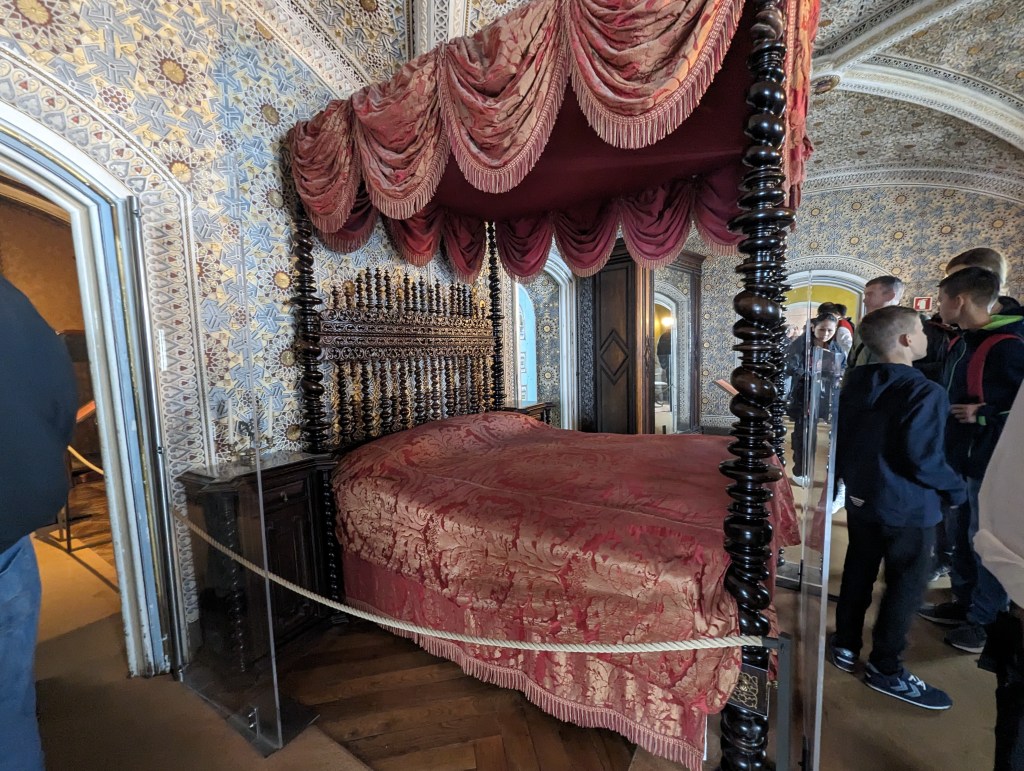
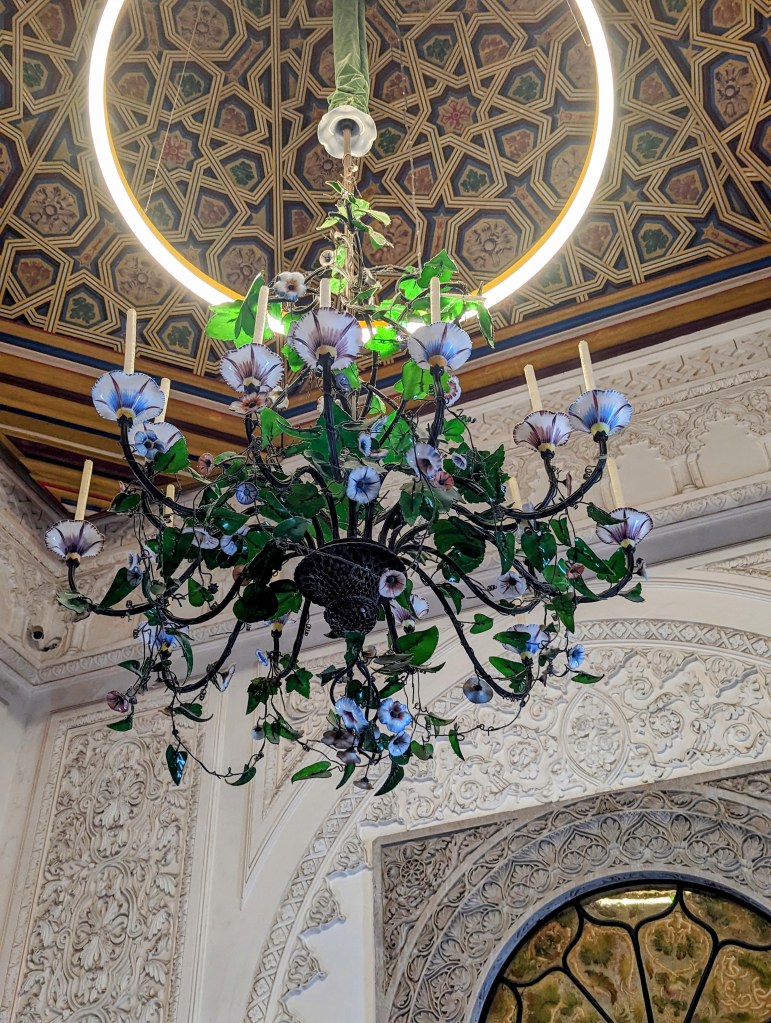
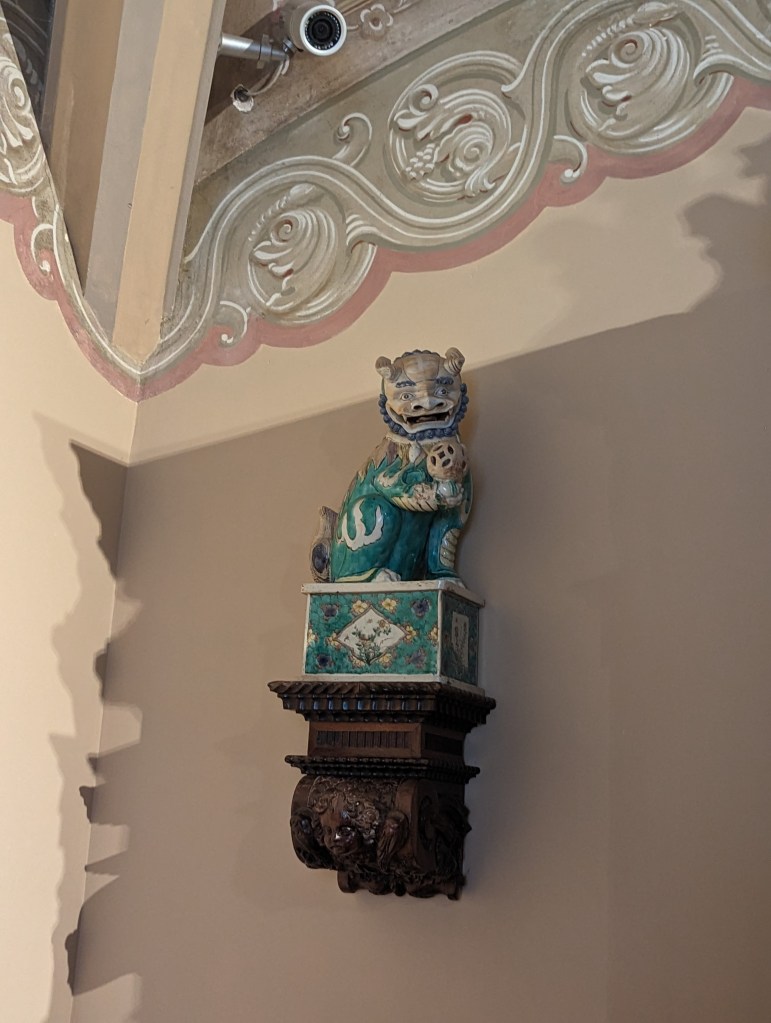
King Ferdinand II was a lover of art and had an eclectic taste, as can be seen in the decor of the rooms.

art deco chandelier
porcelain figurine from Orient
reception room with eclectic decor
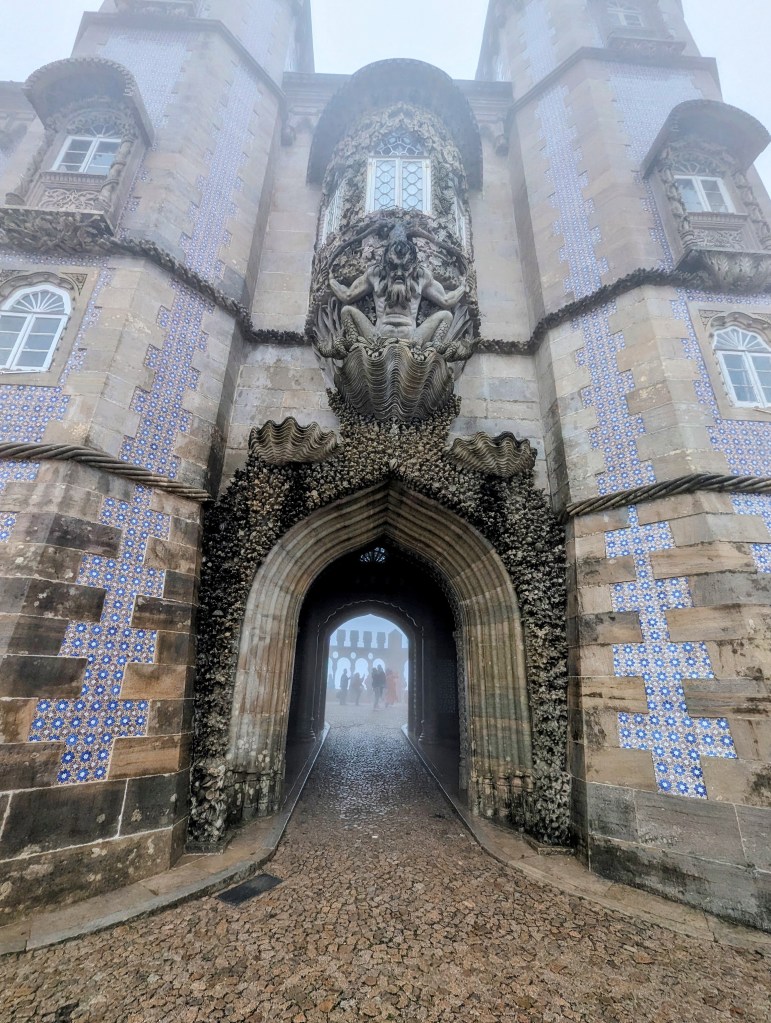
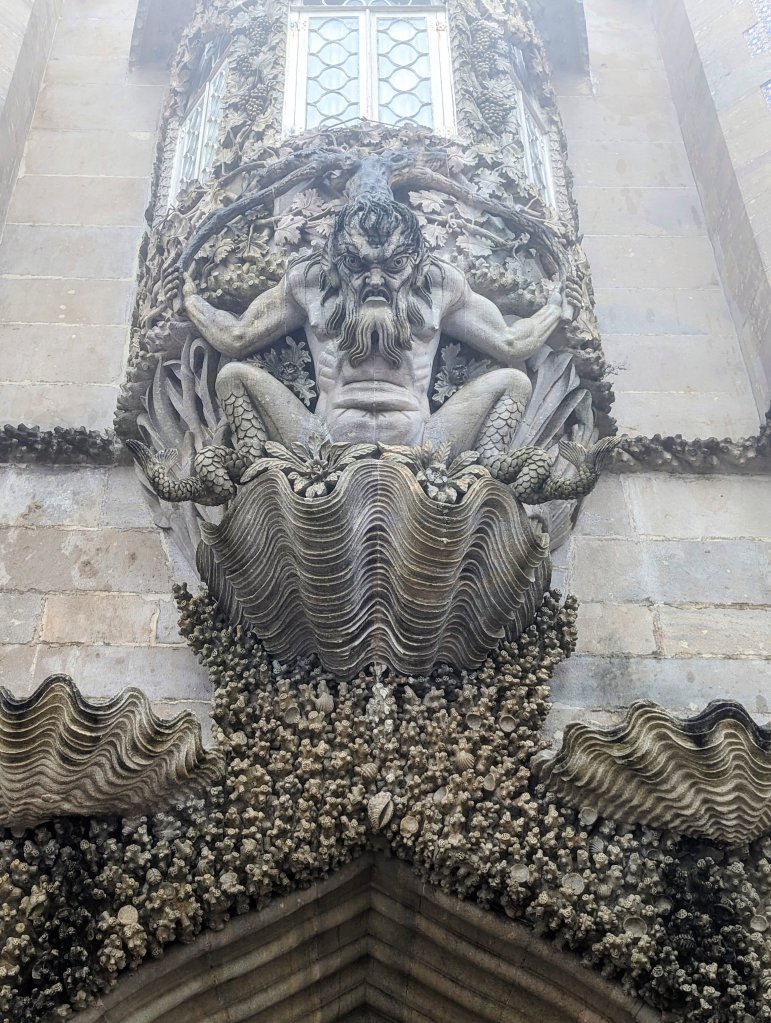
Triton’s Arch

After the hike back down the hill to the bus, Howard was too tired to try to go to the Moors Castle, so we caught the bus back into town.

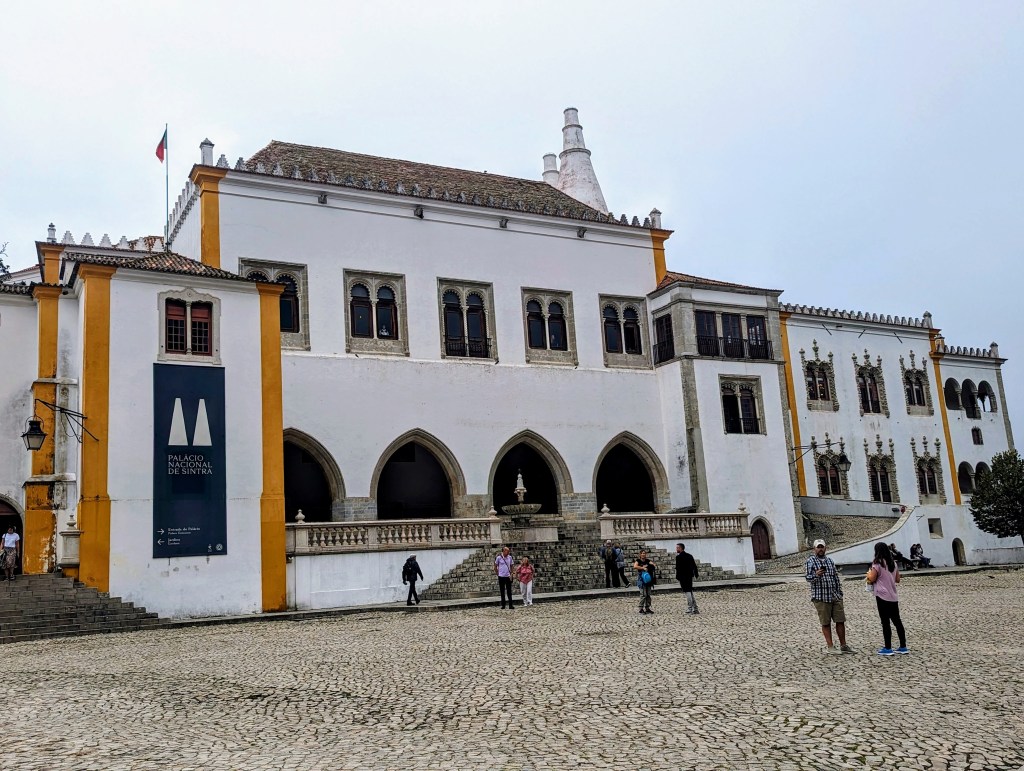
National Palace Sintra

Sintra historic center

We had a huge late lunch at Tacho Real in town before catching the train back to Lisbon, too exhausted and wet for any more touring of Sintra.

That night, as predicted, a huge storm blew in. The next day, when there was a little break in the storm, we ventured out to do some souvenir shopping, and this is what we saw only 2 blocks from our apartment.

scaffolding ripped from top of building by high winds

We stayed in most of the day, sneaking out just for dinner in a local restaurant.

Portugal Central Region Aveiro Oct. 7, Belmonte Oct. 8, Coimbra Oct 9, Nazare Oct 10-13

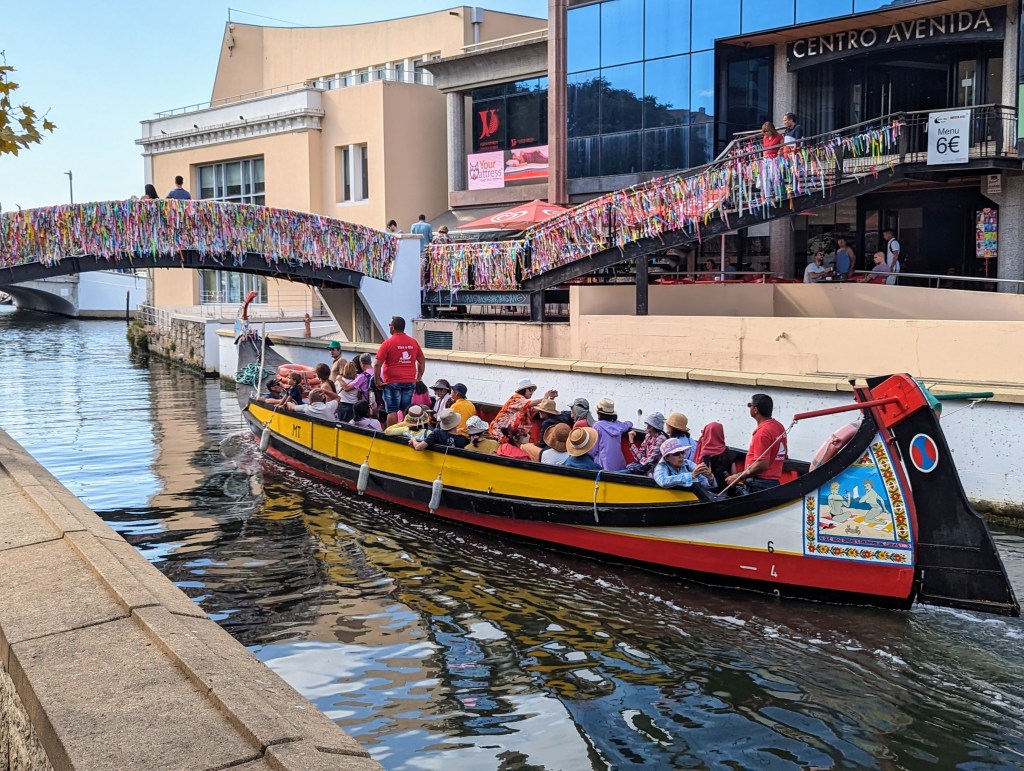
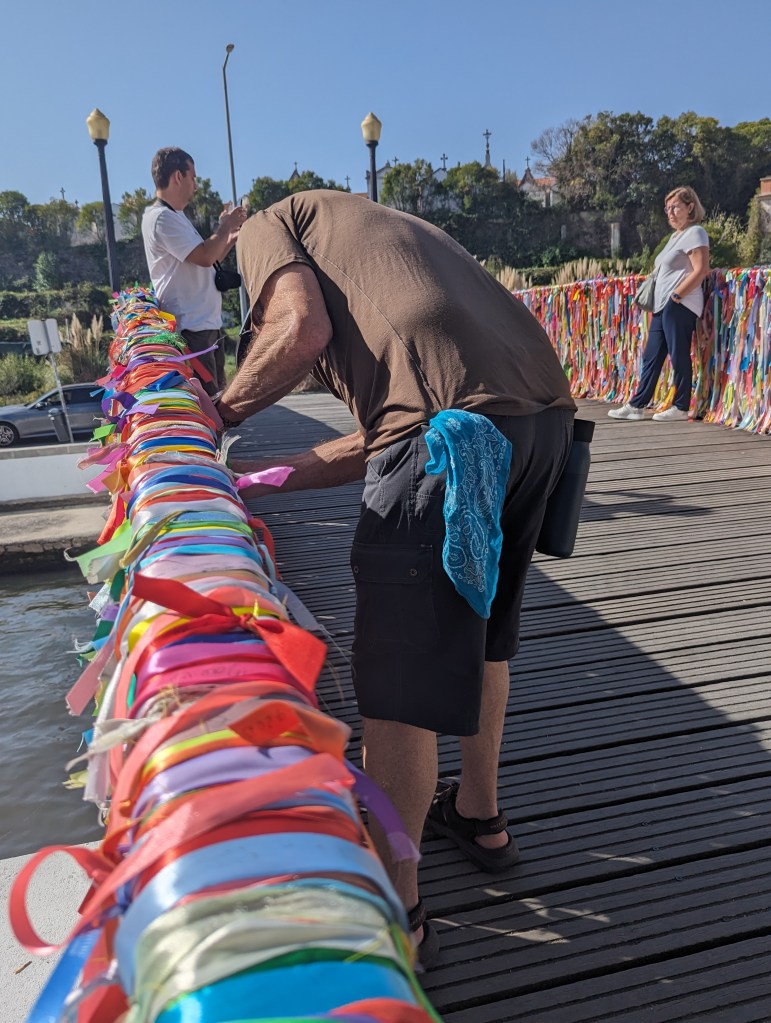
Our first stop in the Central Region of Portugal was the cute and romantic town of Aveiro. Like most of Portugal, this town has seen a huge uptick in tourism in the last decade. The fist thing one notices is the bridges covered in ribbons and the boats in the canals.

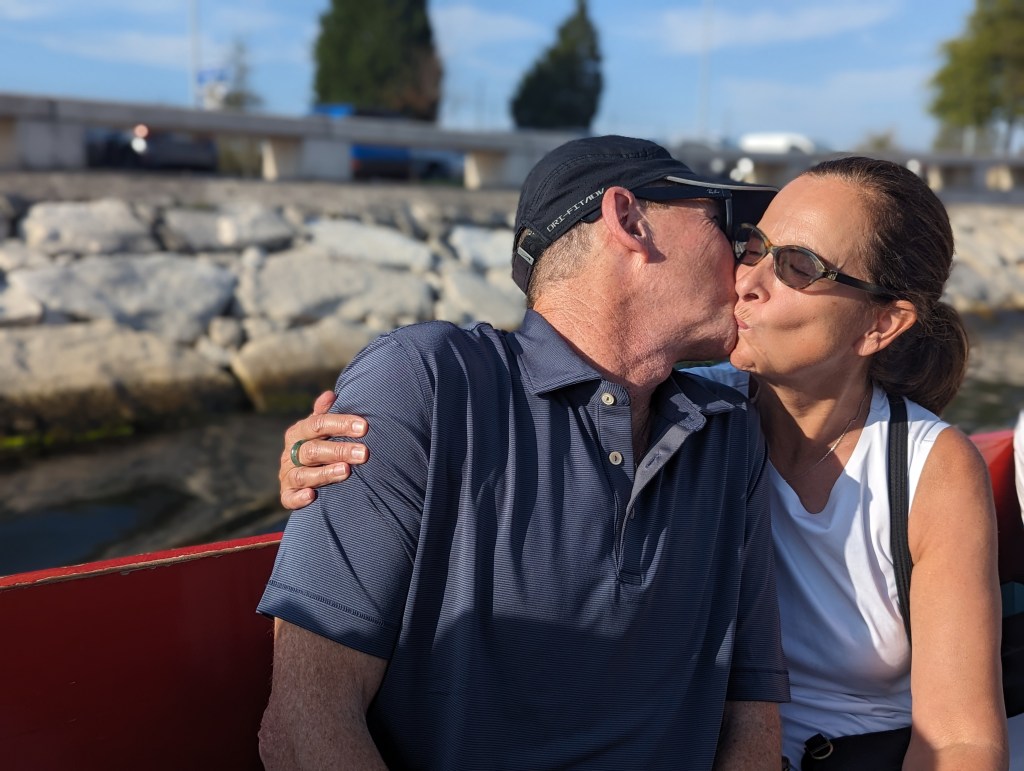
The ribbons are, similar to the locks in Paris, tied onto the bridges by lovers to represent their eternal love. The locals like to say that they are much more beautiful than locks, and more ecologically friendly. They certainly are colorful. We quickly checked into our very well positioned Hotel Aveiro Palace. We actually had one of the corner rooms overlooking the canals.

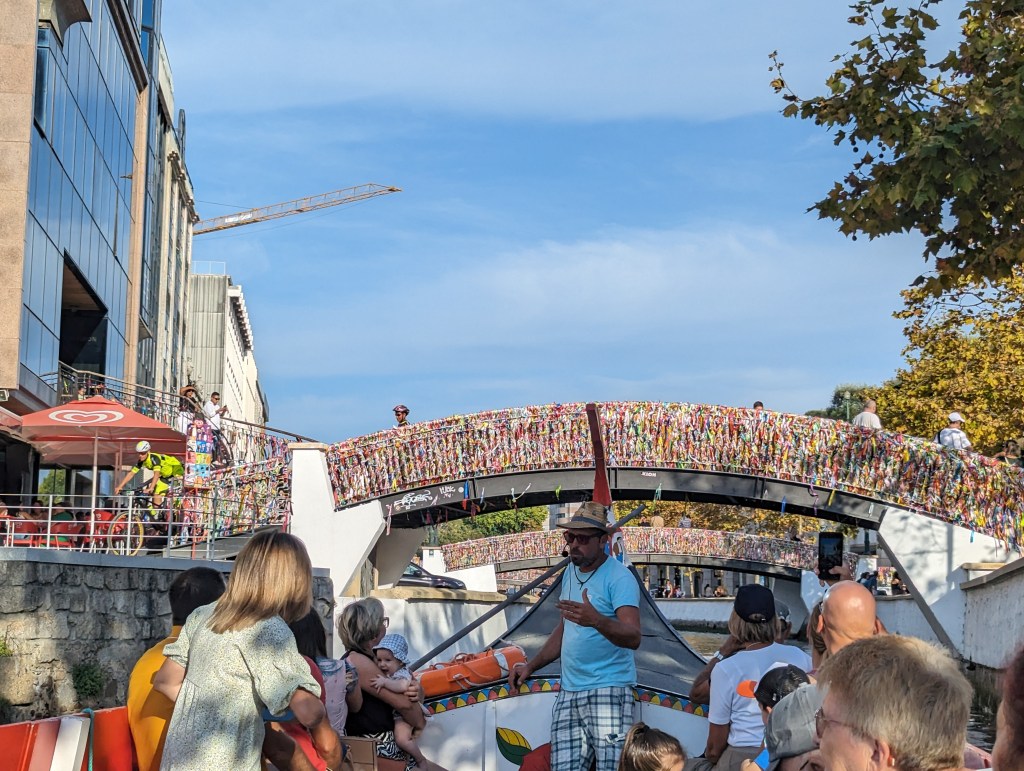
Then we immediately went for a boat ride. The boat: a moliceiro is a traditional boat of the Ria de Aveiro, very similar to a Venetian gondola. The boat got its name because it was used to transport and collect moliço, a type of seaweed abundant in the region that was used as fertiliser. Today they are only for tourists.

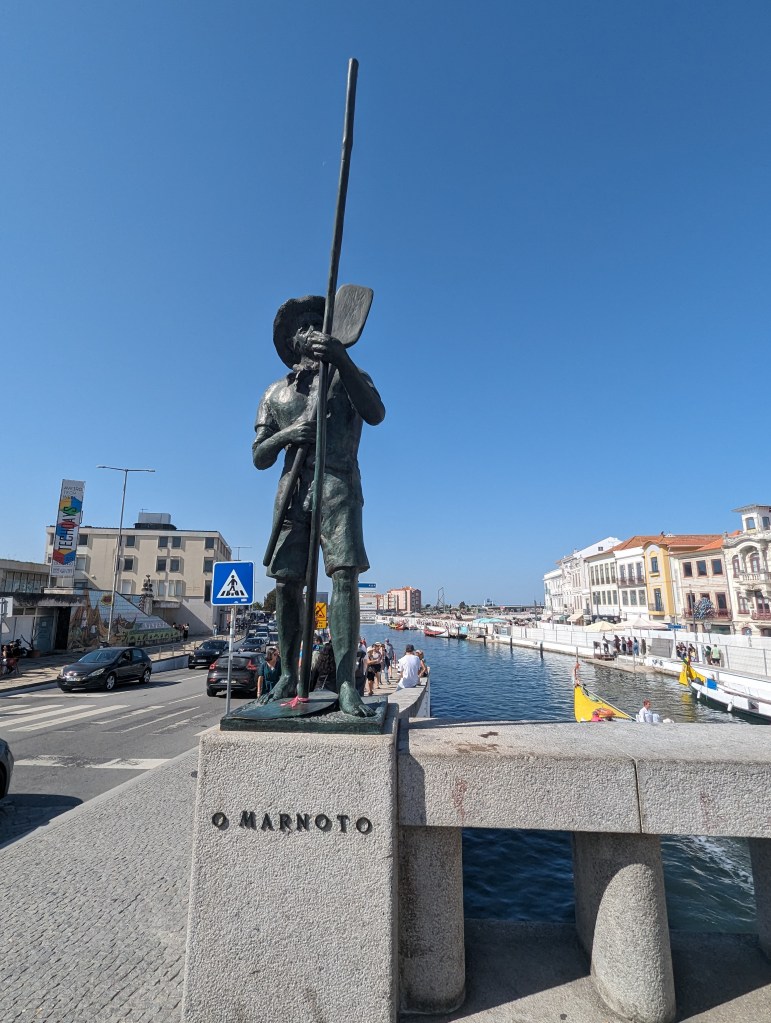
Our guide explained that historically, Aveiro’s major export for centuries, starting in the 10th, was salt. The men who harvested the salt were called the marnotos.

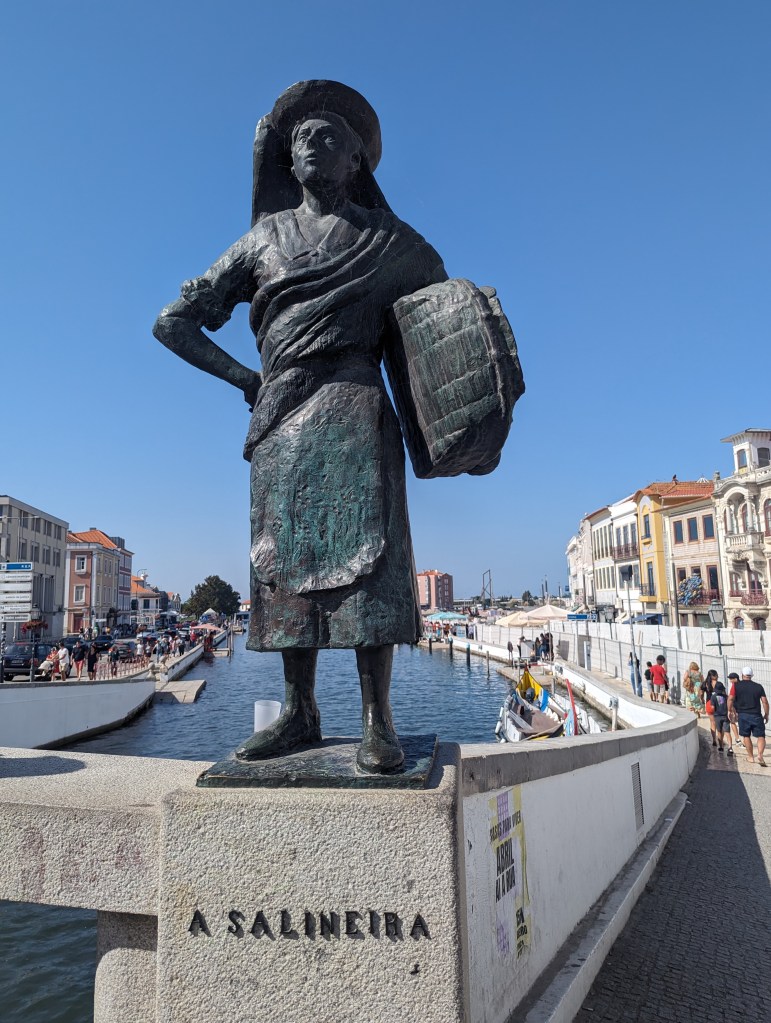
The women, the salineiras, then carried the salt on their heads to the large boats for shipping.

He also told us that regularly, about once a week or so, the canals need to be totally drained because otherwise they start to smell bad. It takes about 8 hours to drain them then refill, so it is usually done overnight.

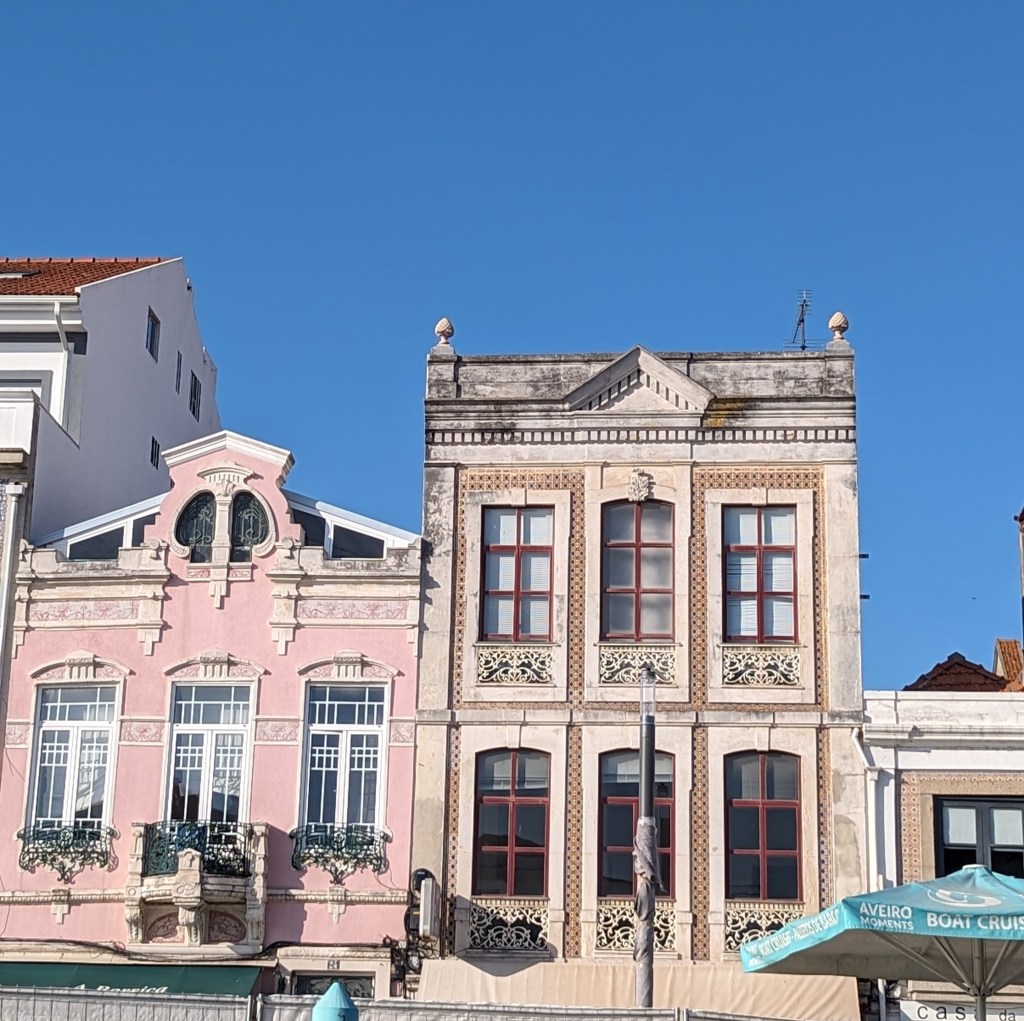
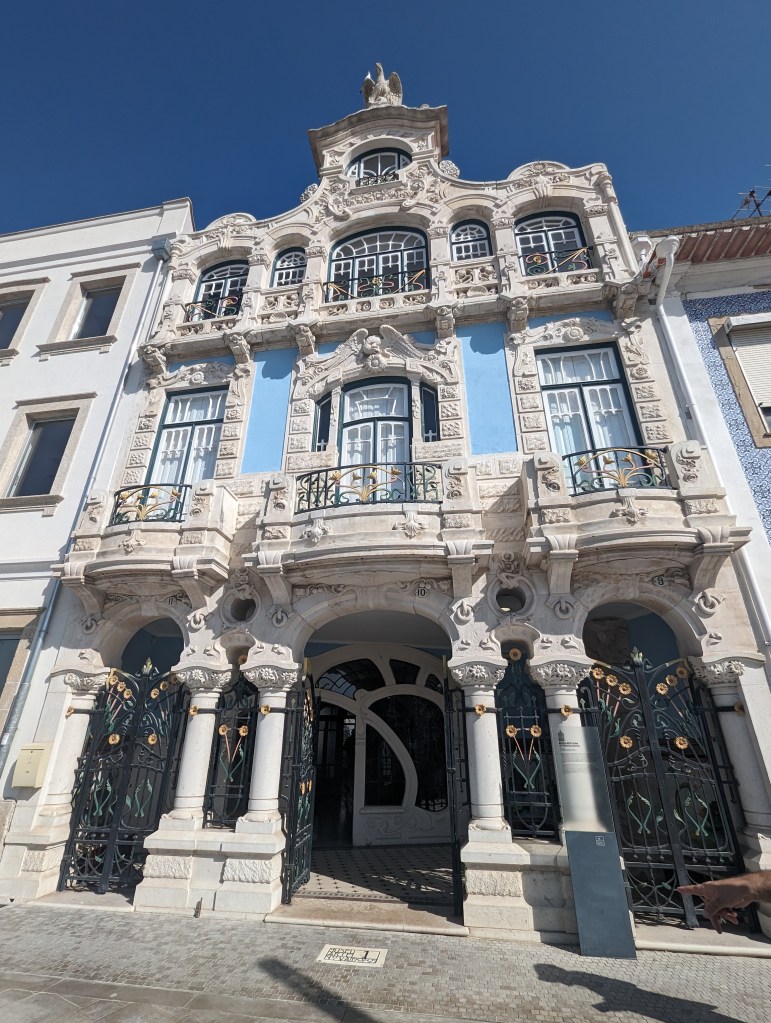
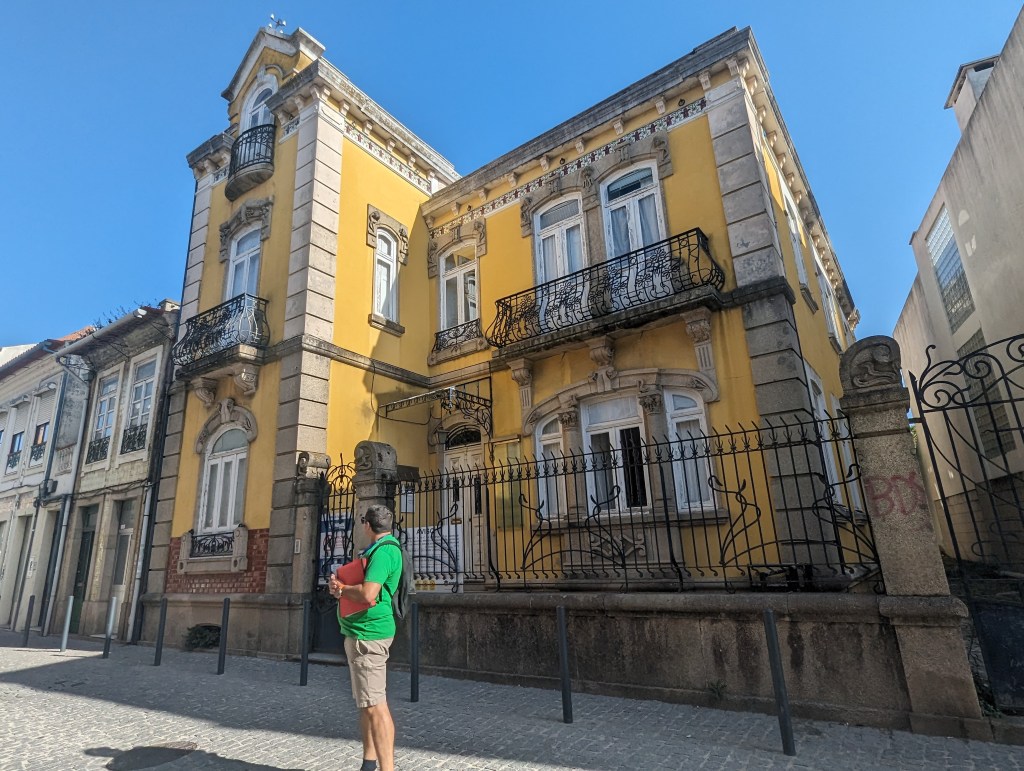
Aveiro is also known for its many stunning Art Nouveau buildings from the early 20th century, many of which are along the canal.

Art Nouveau Museum

After our boat ride we strolled through town. We passed a square where we saw a large crowd. As we drew near, we saw fire fighters setting up a ladder. They were rescuing a bird that had become stuck in a storm drain.
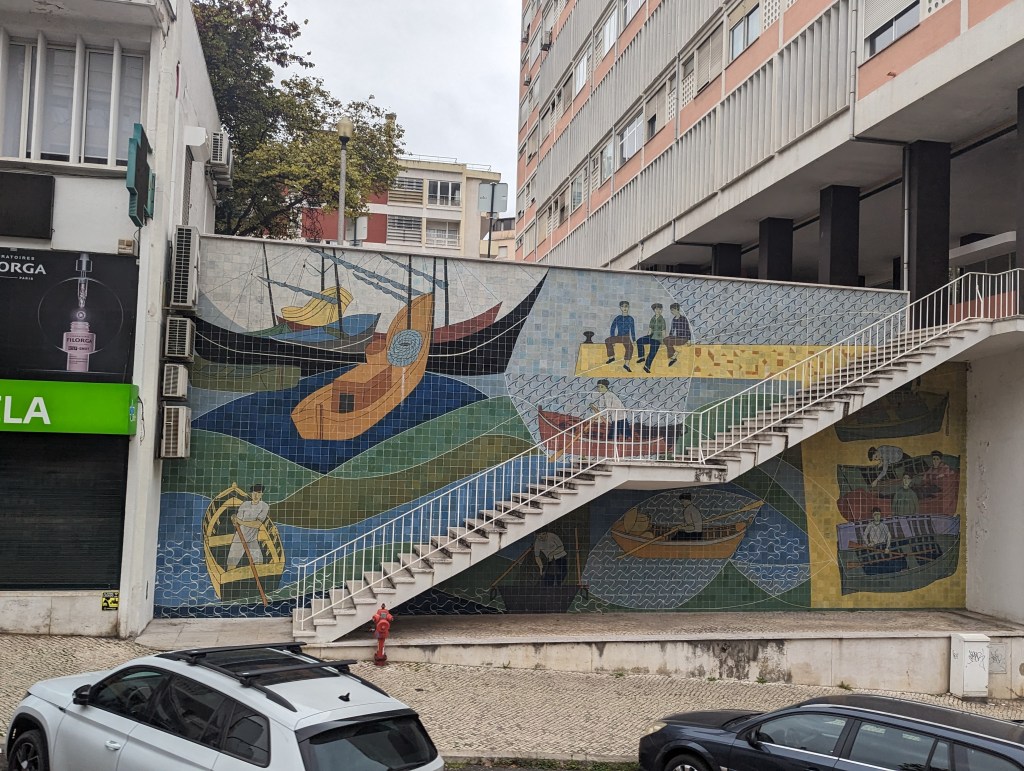
the bird’s wings can just be seen in the top left of center, just under the cylindrical drain.
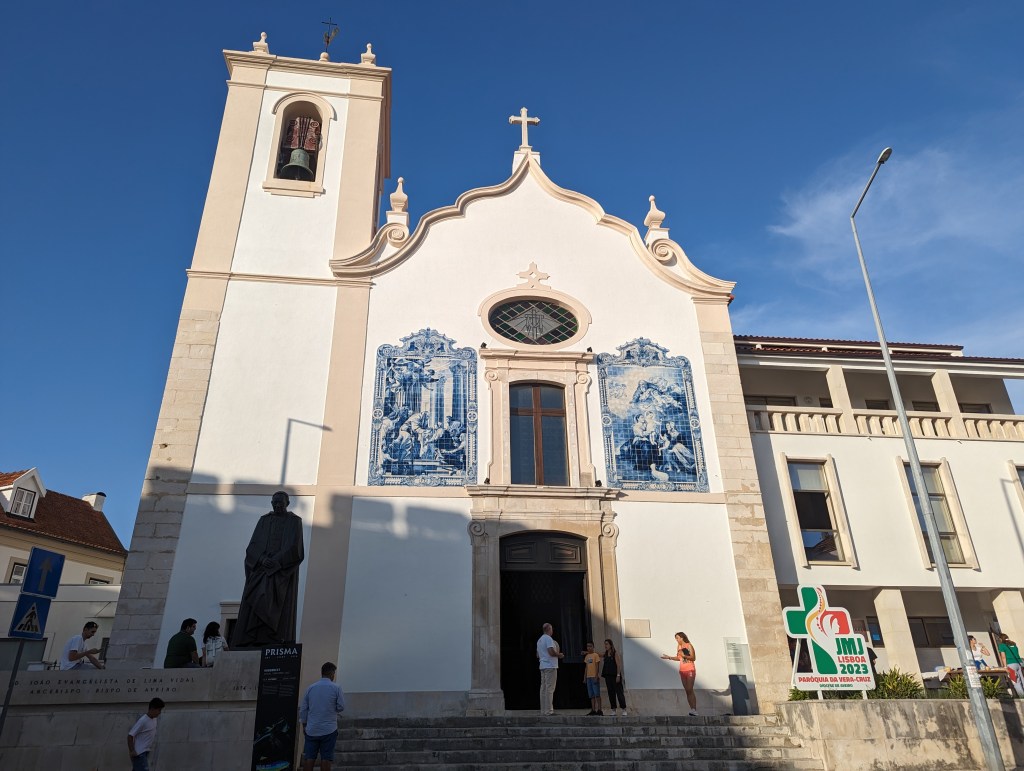
We visited the local 17th century church.

Then we went for dinner in a Michelin starred restaurant right on the canal.

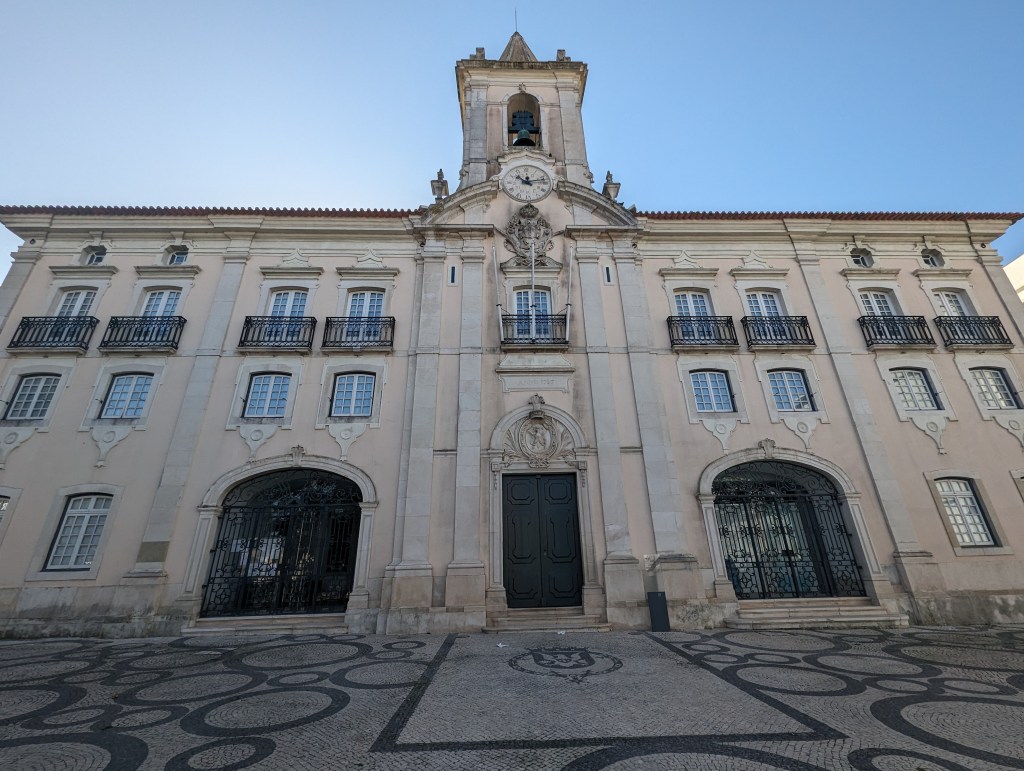
The next morning we took a walking tour with Sergio, who was born to Portuguese parents in NYC, but he has lived in Aveiro since a very young age. He was so happy to have fellow New Yorkers on his tour. We started at City Hall, which was built in the 18th century in the Tuscan style, which is quite rare in Portugal.

City Hall Aveiro

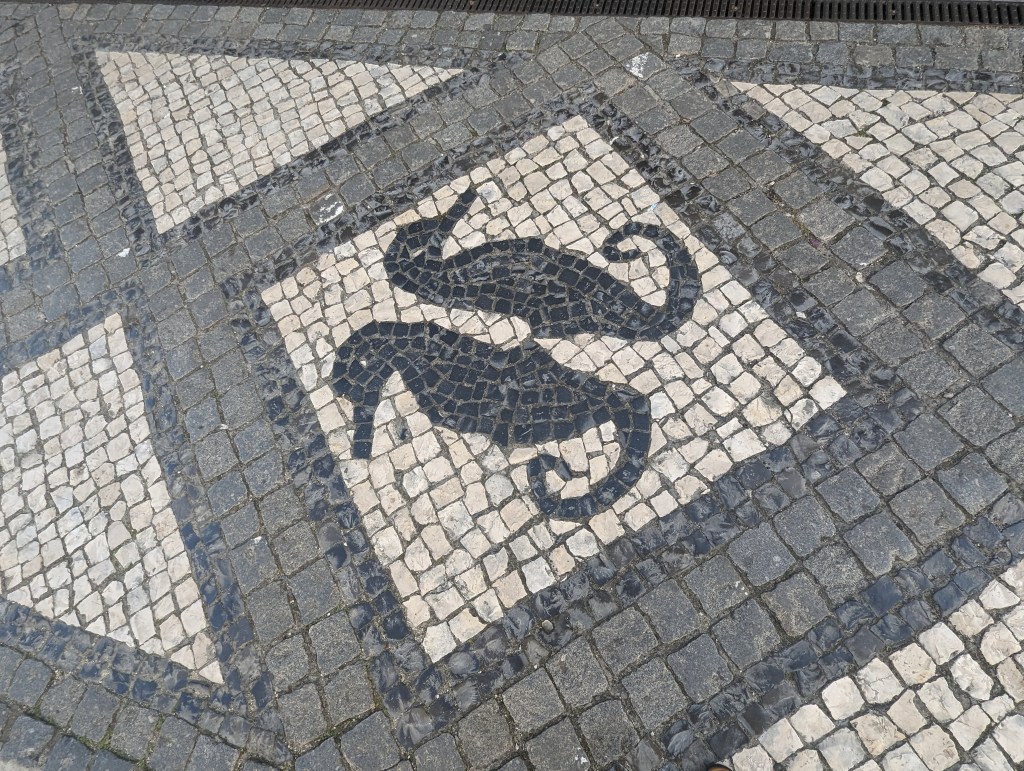
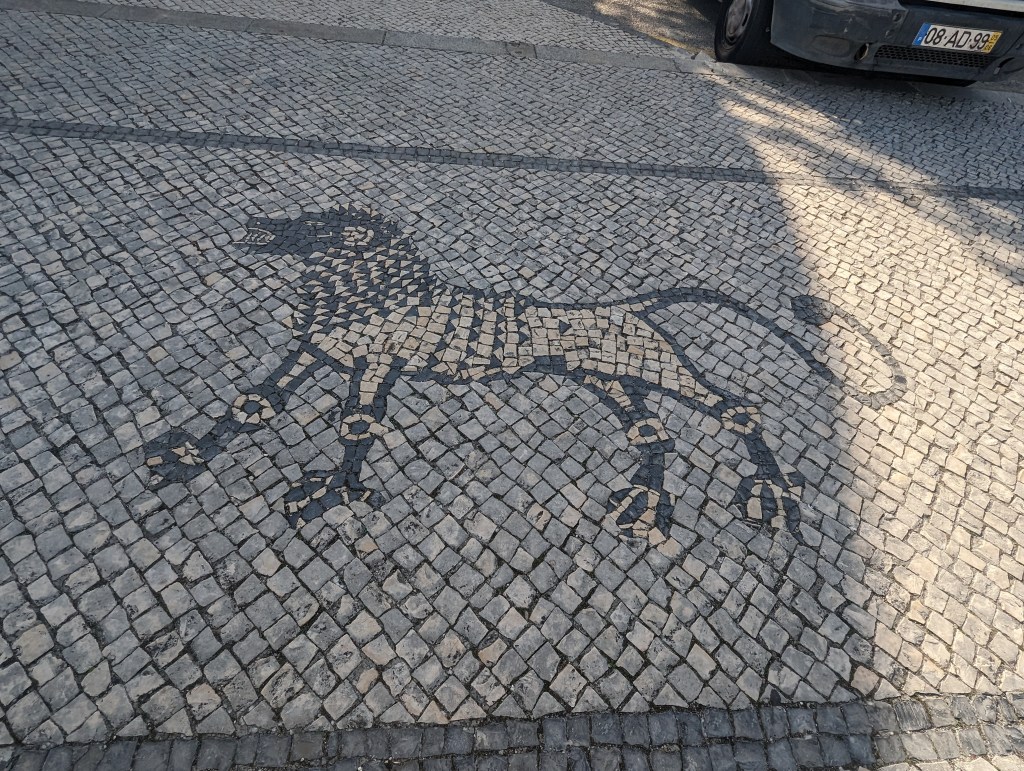
Sergio also told us about the dying art of Portuguese pavement, known in Portugese as calçada portuguesa or simply calçada is a traditional-style pavement used for many pedestrian areas. It is dying because they are very expensive to replace and few workers have the skills to do so.

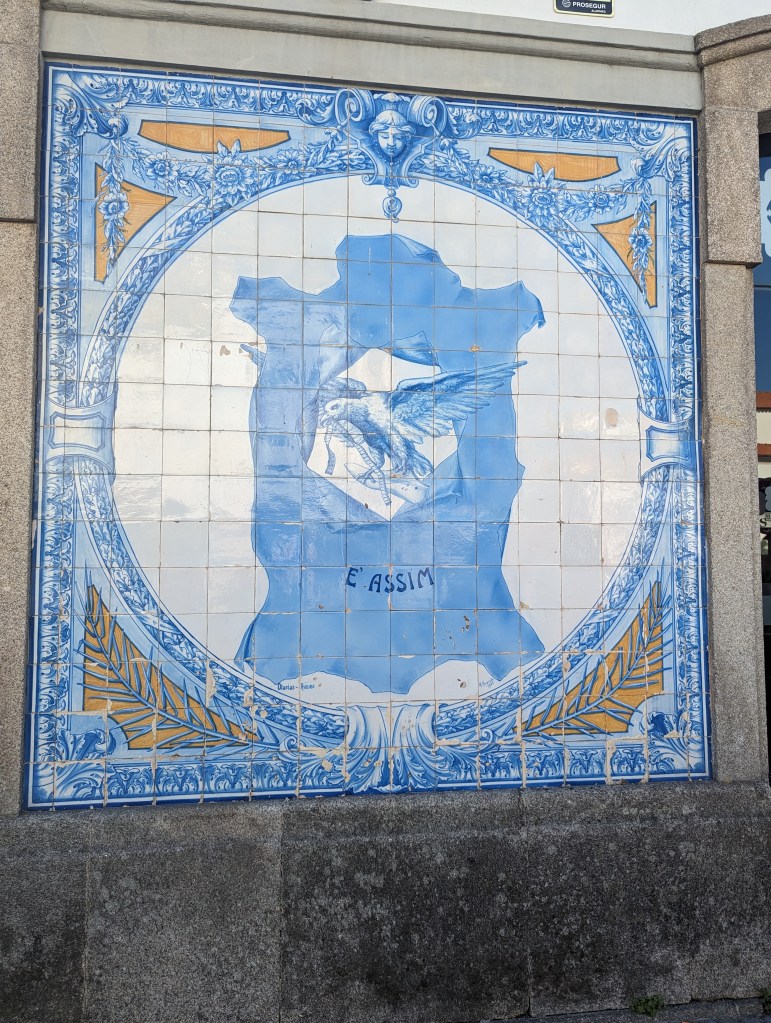
Sergio also told us about the azulejo tiles which we had learned about in Porto. But he said in Aveiro they were not just used by the wealthy. Often they were incorporated by shop owners as a form of advertisement explaining the type of shop.

sign for a shoe shop promising precision

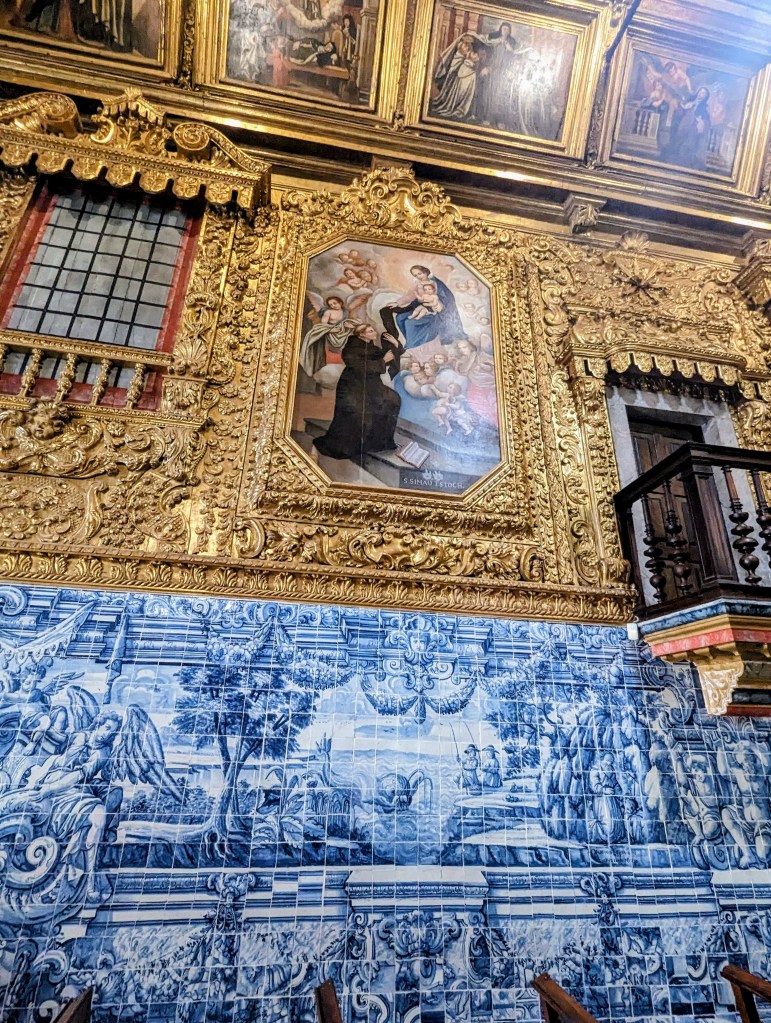
Sergio then took us into a beautiful little church to admire its inner decorations. He explained that in the winter of 1575 a terrible storm brought silt into the mouth of the canals, virtually closing them and thus stifling shipping of salt or any other products out of Aveiro. The city was very poor for the next couple of centuries. But in the 18th century, when walls were no longer considered essential to guard a city as they had been in medieval times, they took down the outer walls, as large stones were scarce in the region, and used them to reform the canals and reopen access to the ocean. Rebuilding began in earnest. This little church is an example of the work done during this time of relative wealth for the city. Note the lower walls are the azulejo tiles. The upper are all in gold: gold over blue. In Aveiro when something has two good outcomes at once, he gave the example “I went to the party and had fun, AND I met my future partner there,” that would be called a “gold over blue” situation.
gold over blue

Sergio took us to the Aveiro Museum, founded in 1458, this former female Dominican convent where Saint Joana Princesa lived reflects the experience of the community of nuns over approximately four centuries, with different architectural styles. Saint Joana’s tomb is within.
Saint Joana’s Tomb

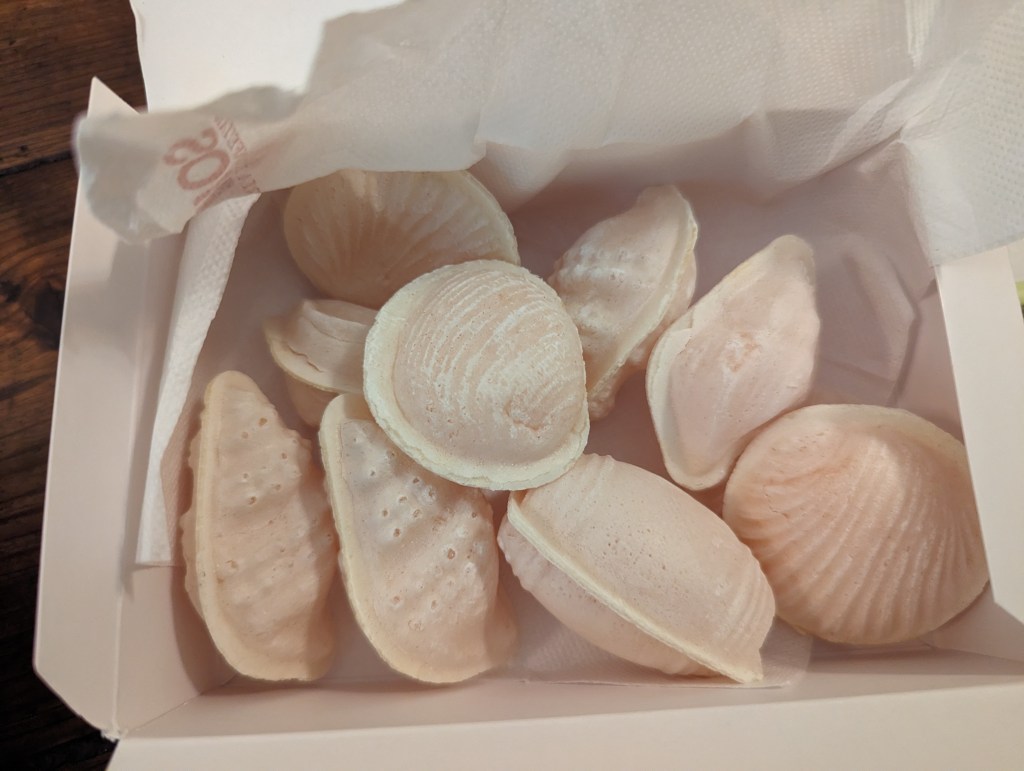
Sergio then went on to explain the local treat: Ovos Moles. Their creation story is very similar to that of the natas in Porto: gifts of eggs to the monastery from local farmers, use of egg whites on priests’ robes, adding sugar to the remaining egg yolks for the treats to eat and sell. But the end result is quite different: sweetened egg yolks wrapped in a very delicate rice paper shaped like one of the many sea shells.

box of ovos moles

Sergio also showed us some Art Nouveau buildings not on the canals.

And finally, Sergio encouraged us all to “tie the knot” for our eternal loves.

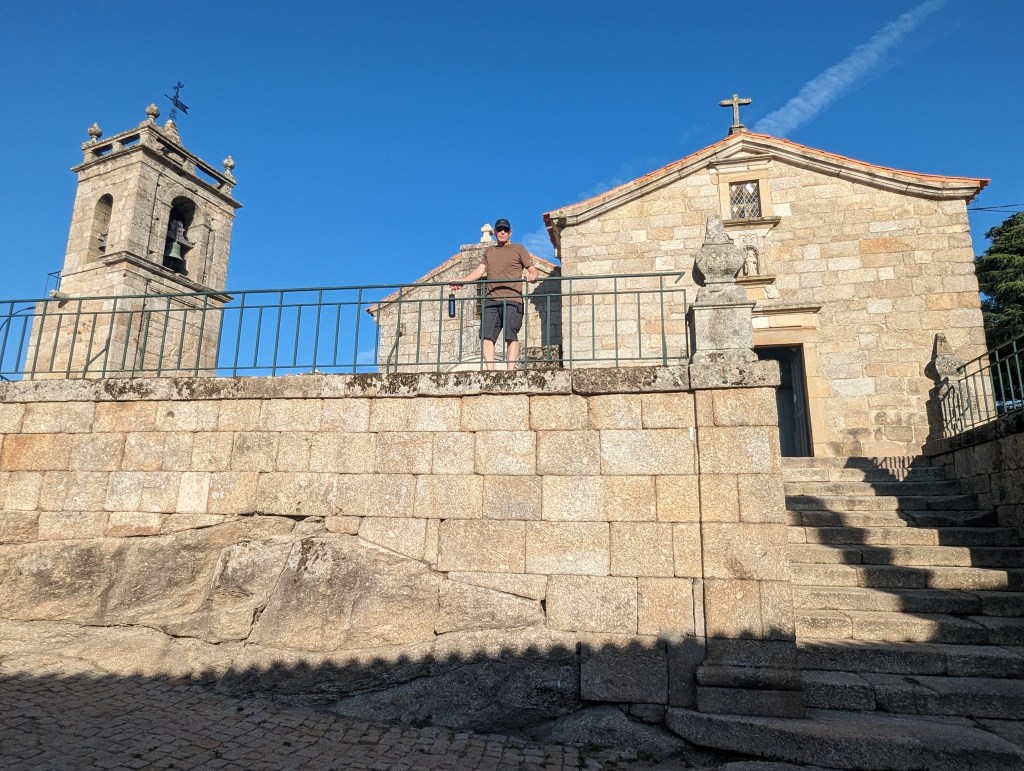
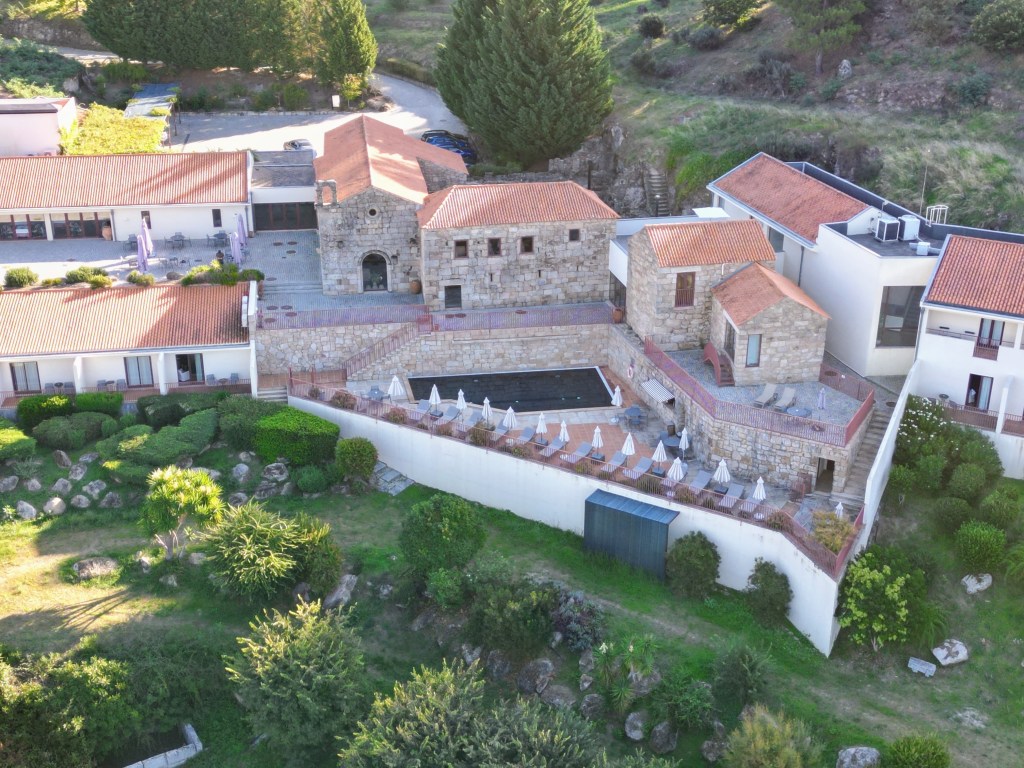
Unfortunately it was already time to leave Aveiro for our next stop: Belmonte. We drove almost 2 hours east through mountainous terrain to arrive late Sunday afternoon in Belmonte. We were booked at the Pousada Belmonte. A Pousada is the Portuguese equivalent to the Spanish Parador. This Pousada, located high on the hill, had been a monastery. It was also gorgeous and so romantic. But as we tried to settle in and rest, we realized that the castle we had come to see would close in just a couple of hours and was closed on Monday, a fact we had failed to check when setting our itinerary. So we rushed out to take a look.

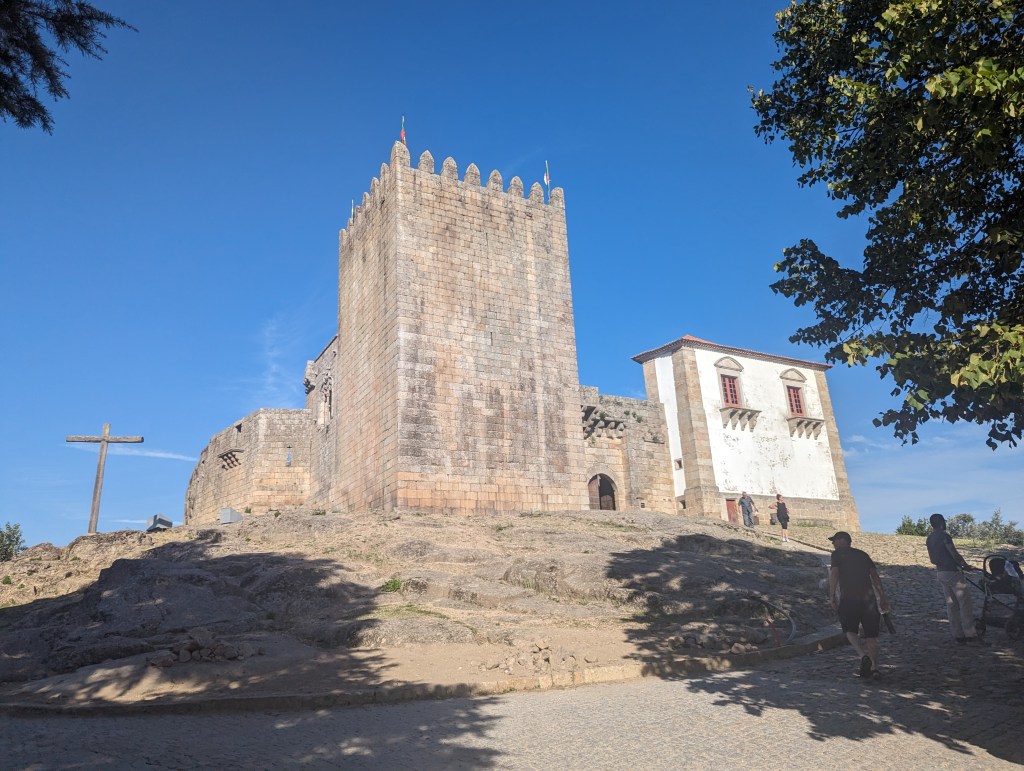
Belmonte Castle

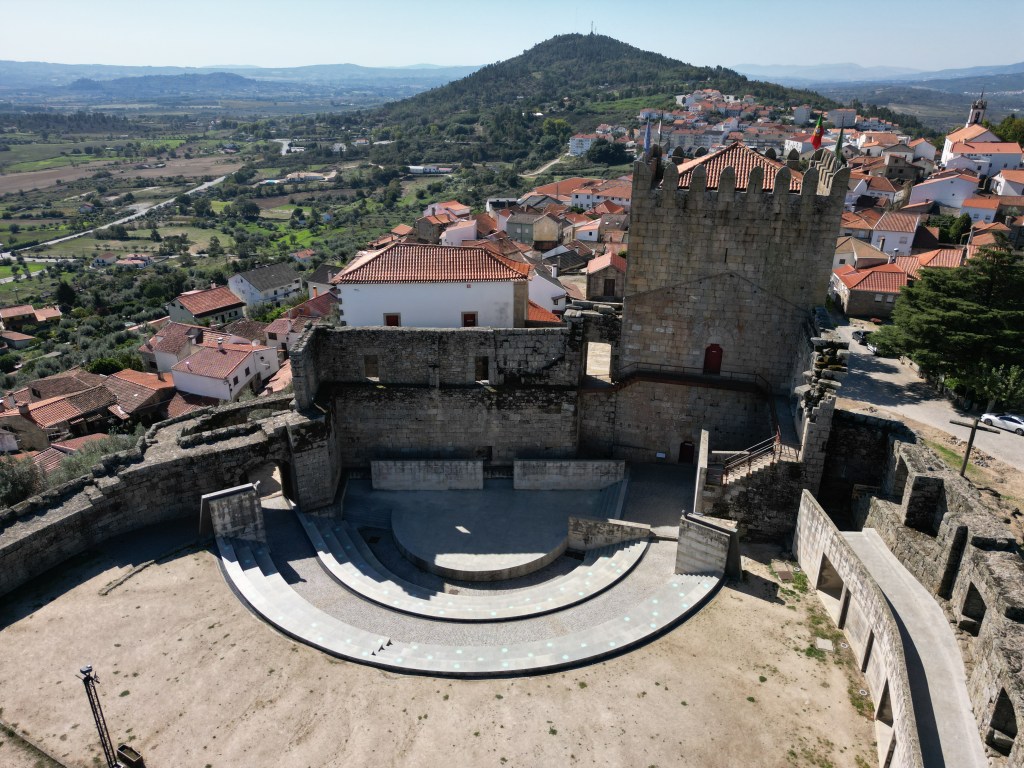
The castle was fist built in the 12th century. At one point it was used as a castle by the family of the man who “discovered” Brazil. It has an unusual oval shape. It is currently used for music events.

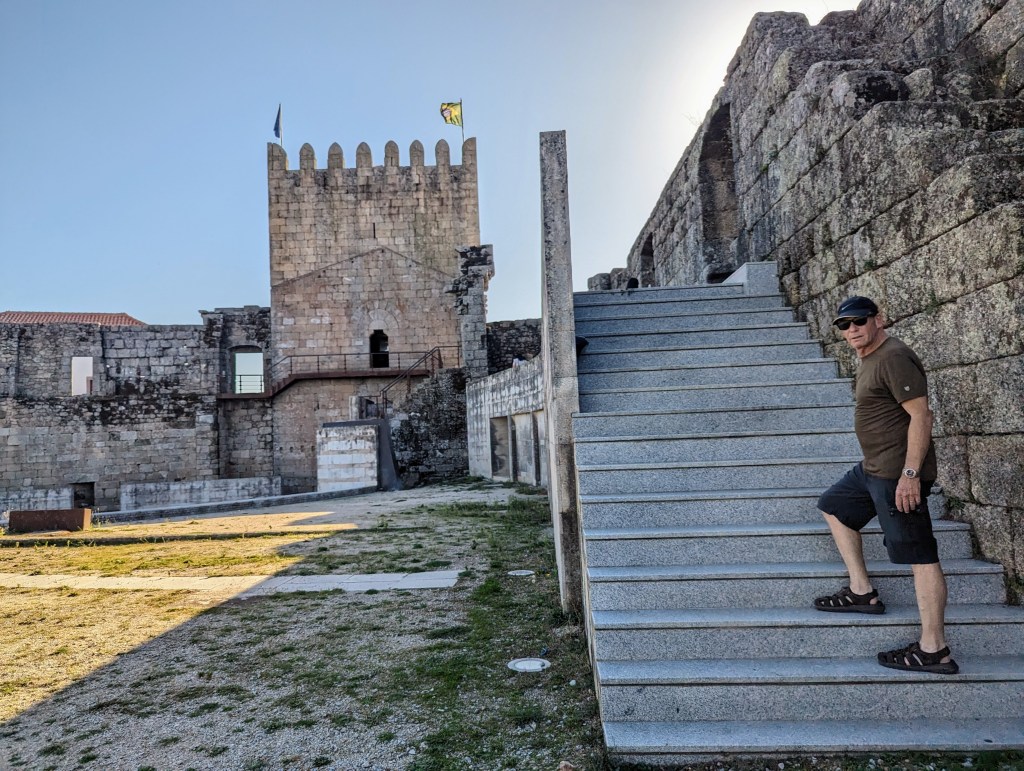
Interior Belmonte Castle
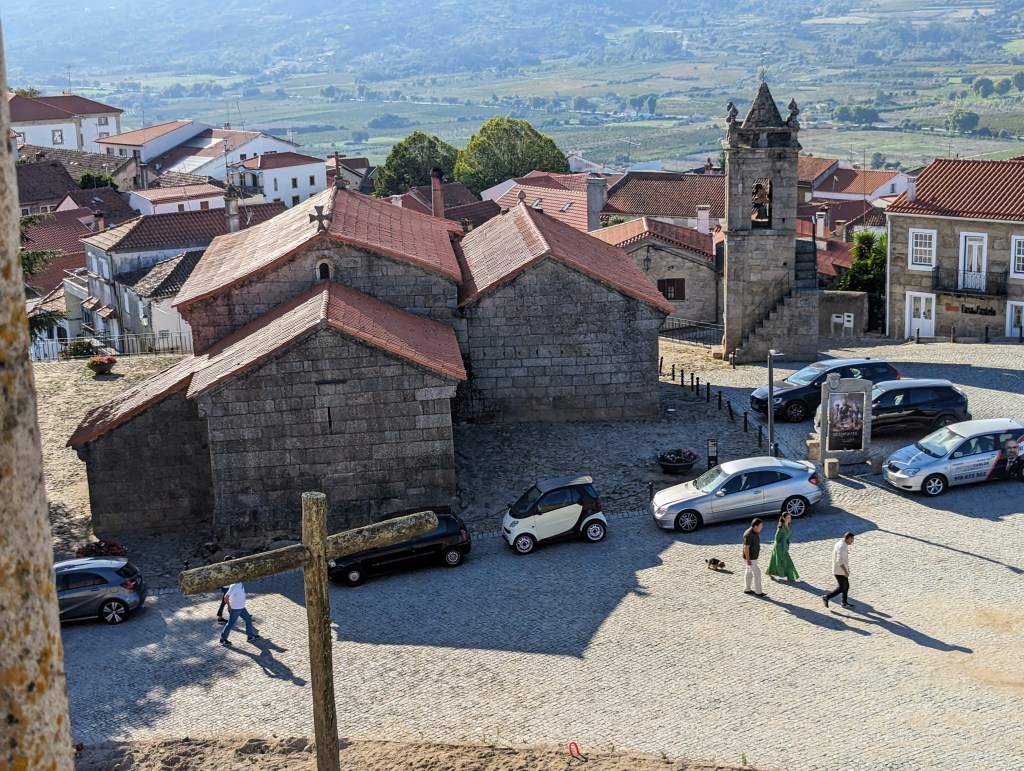
view of Church of San Tiago, built in 13th century

Church of San Tiago

What we learned about Belmonte once we had arrived, is that it is known for hiding Jews that fled Spain and from around Portugal during the Inquisitions of the 15th and 16th centuries. The local Jews would go to mass on Sunday but practice their own religious rituals in secrecy in their homes. During the regime of Salazar, the Jews continued to practice their faith in secrecy. It was not until 1989 that Jews in Belmonte began openly practicing their faith, almost 500 years. The local synagogue was rebuilt and now also holds a Jewish history museum. Unfortunately we arrived too late in the day, and it too was closed on Monday. But we felt the need to go by and pay homage. It was the day after a vicious terrorist attack by Hamas on Israel.

Synagogue Belmonte

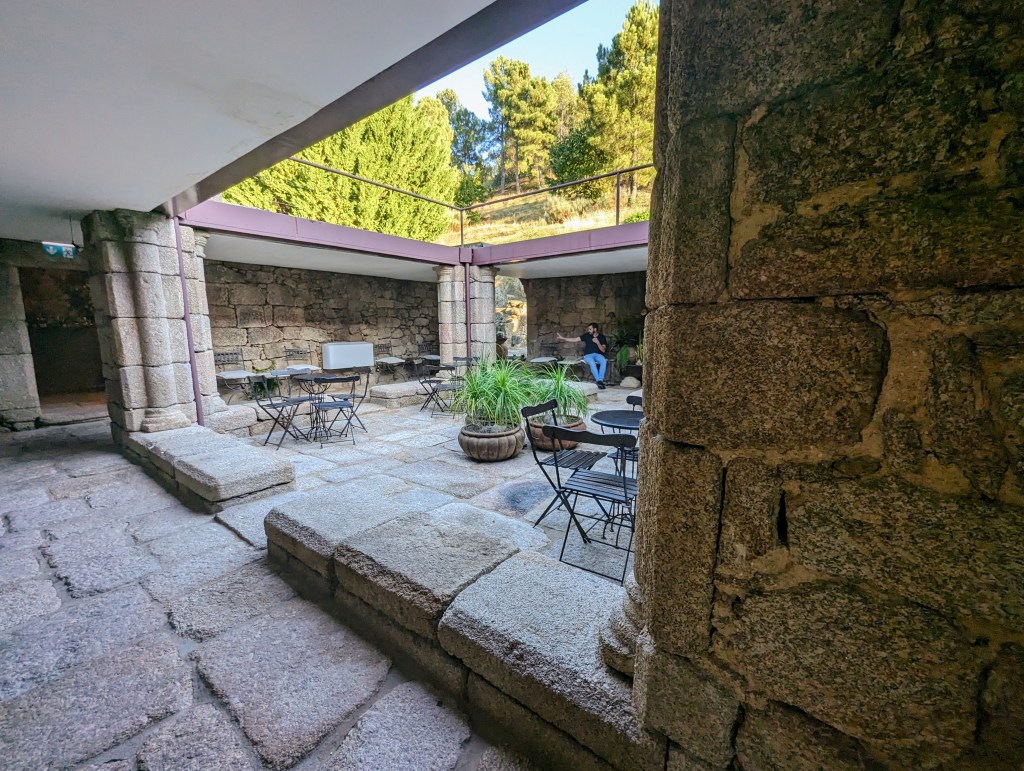
We were finally able to go back and enjoy our Pousada.

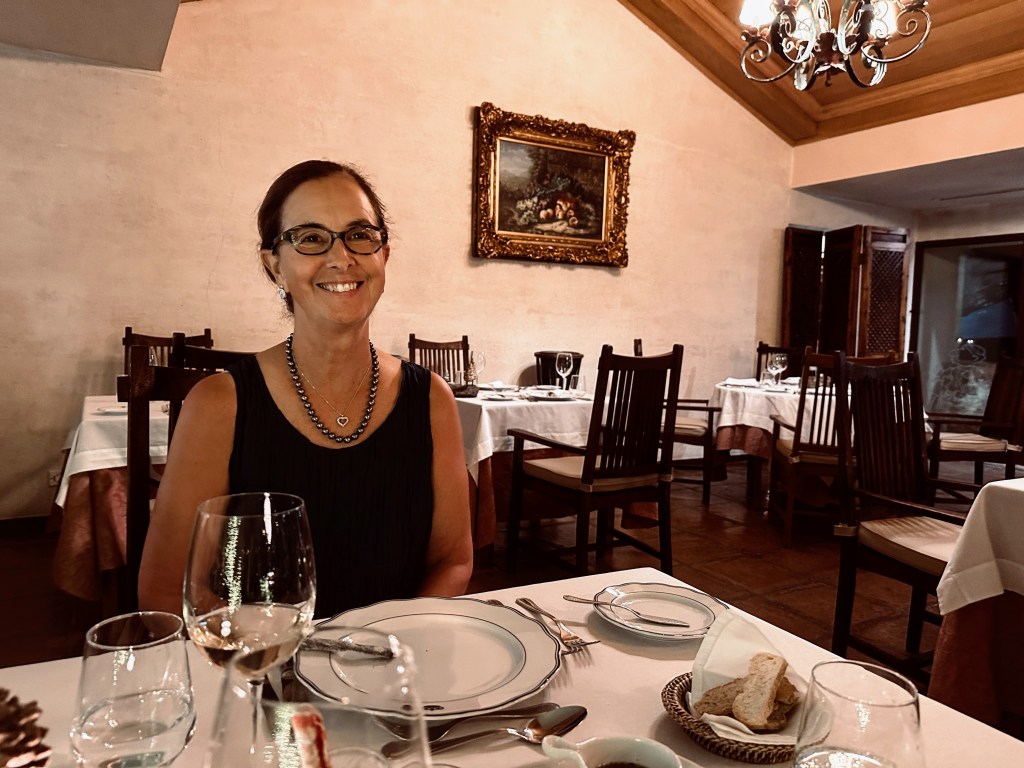
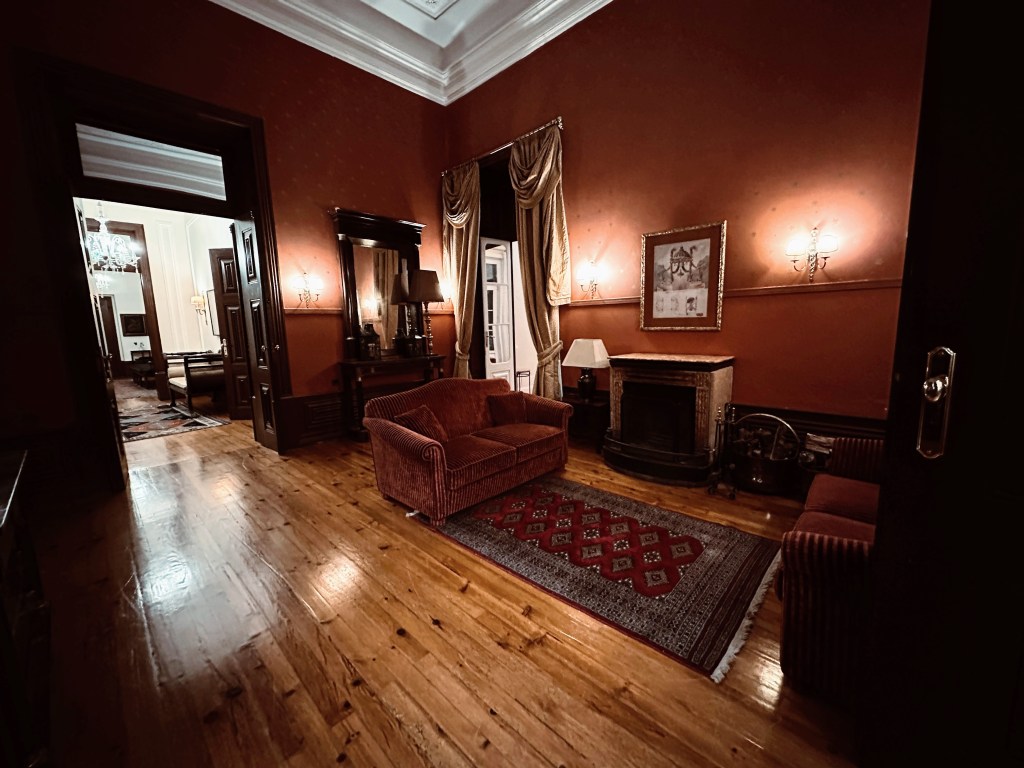
interior Pousada Belmonte
Pousada Belmonte cloister
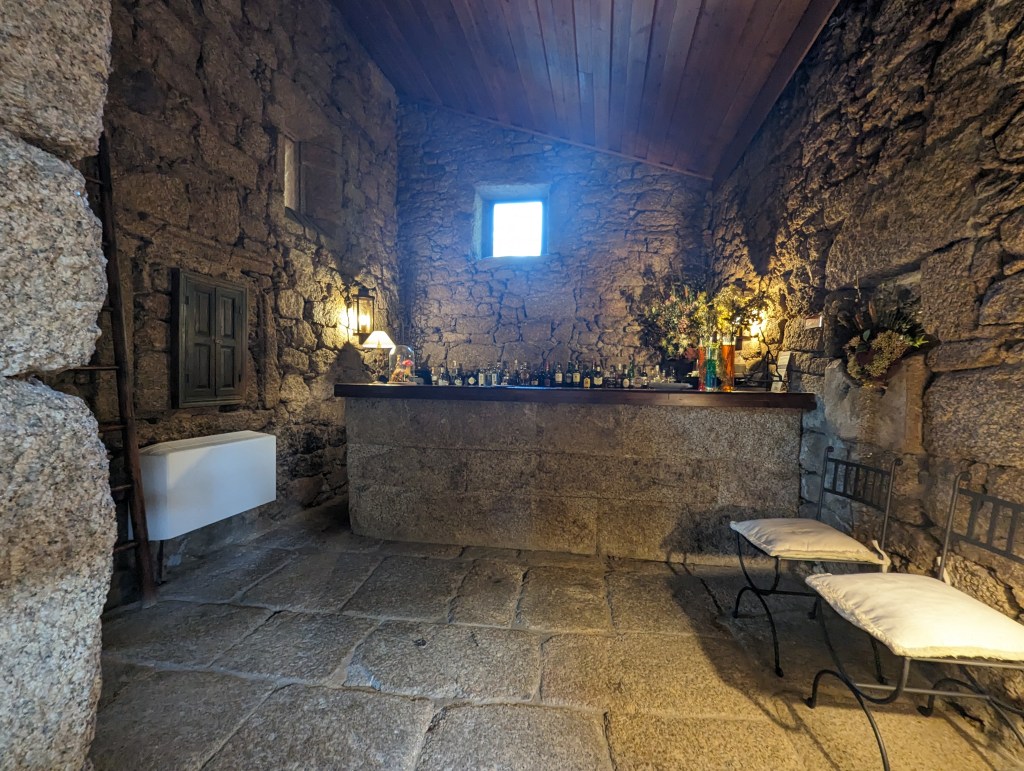
bar in a chapel of Pousada Belmonte
ruin of portion of old monastery
corridor in Pousada Belmonte

The rooms rather than having numbers had Friars’ names. Ours was Friar Malaquias, the barber,

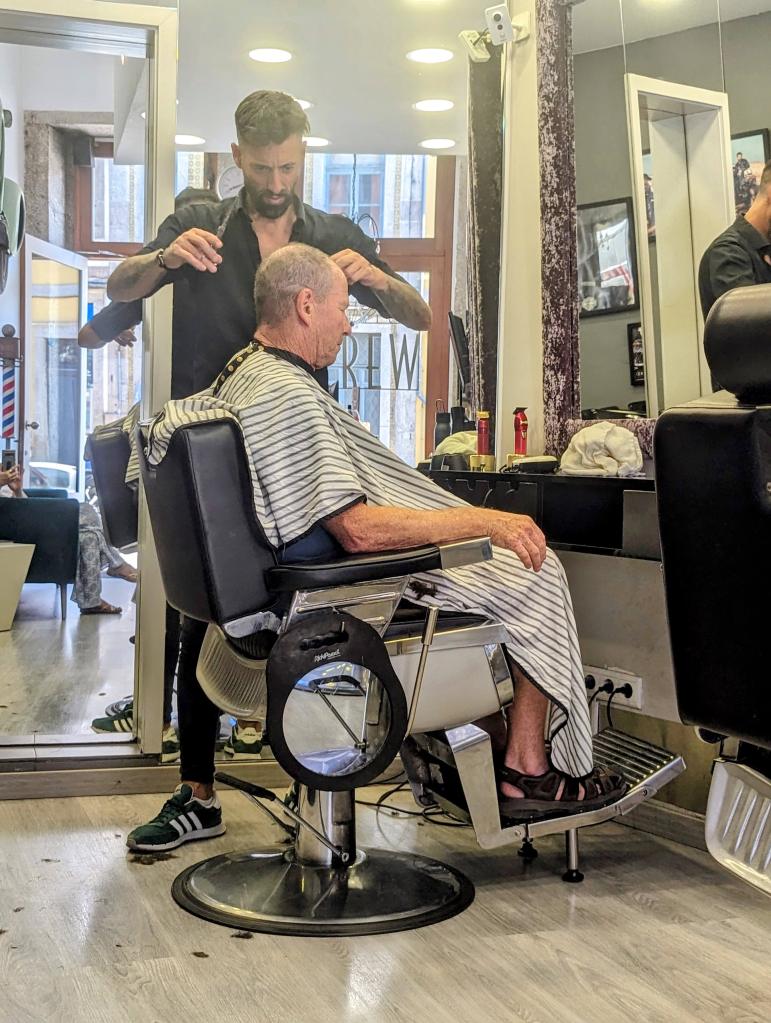
which was fitting because Eric had just gone to the barber in Porto.

The dining room in the Pousada was exquisite and delicious.

The next morning everything was closed. Eric took the opportunity to get some drone shots.

Pousada Belmonte from the back
drone picture of the castle from the back showing the interior where concert events are held
Church of San Tiago and Belmonte Castle

Then it was a couple hours drive back to the west coast town of Coimbra. There we checked in to the most romantic boutique hotel: Quinta Das Lágrimas (Villa of Tears).

salon Quinta Das Lágrimas

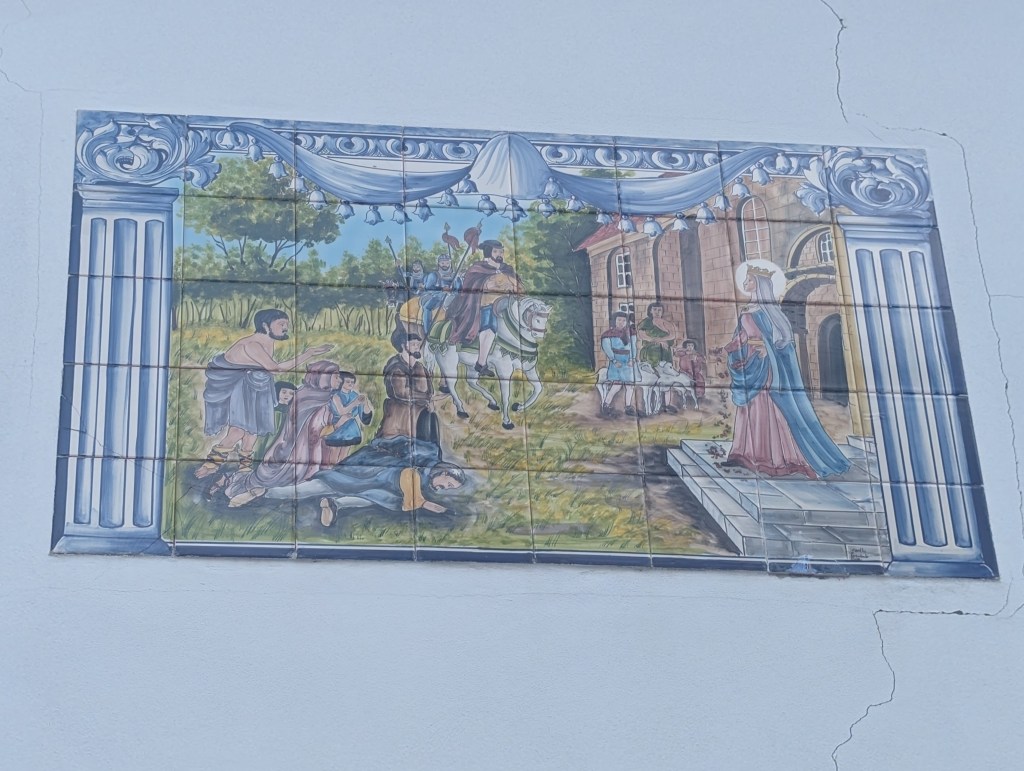
Upon check-in we were provided with a booklet explaining the hotel’s history. It is a very long involved Romeo & Juliet type love story that took place over 650 years ago involving heir to the throne Pedro and his cousin Inês, who was ultimately murdered by the king’s knights. Pedro and Inês were said to have had their secret rendezvous in the woods surrounding Quinta Das Lágrimas. Inês was killed there, and her dying tears were said to have created the Fountain of Lágrimas which is in the gardens behind the hotel. We had a gorgeous room overlooking the gardens, which were lit up at night for romantic strolls.

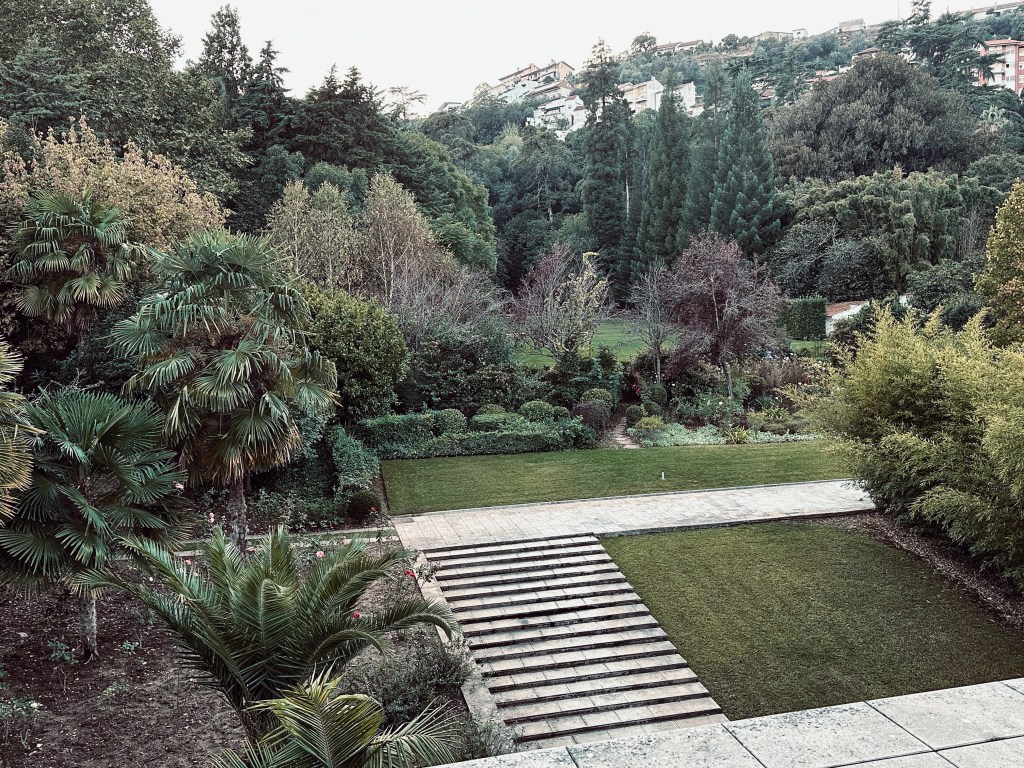
view from our room Quinta Das Lágrimas

The walls of the hotel are covered in artistic renditions of Inês and Pedro from every one of the last 7 centuries.

Pedro and Inês

The next morning we headed out to learn about the scholarly town of Coimbra.

Our guide Ricardo is from Genoa, Italy. He had been a graduate student at the Coimbra University 10 years ago, fell in love with the city, and never left.

First he took us through the downtown, touristy area of Coimbra.

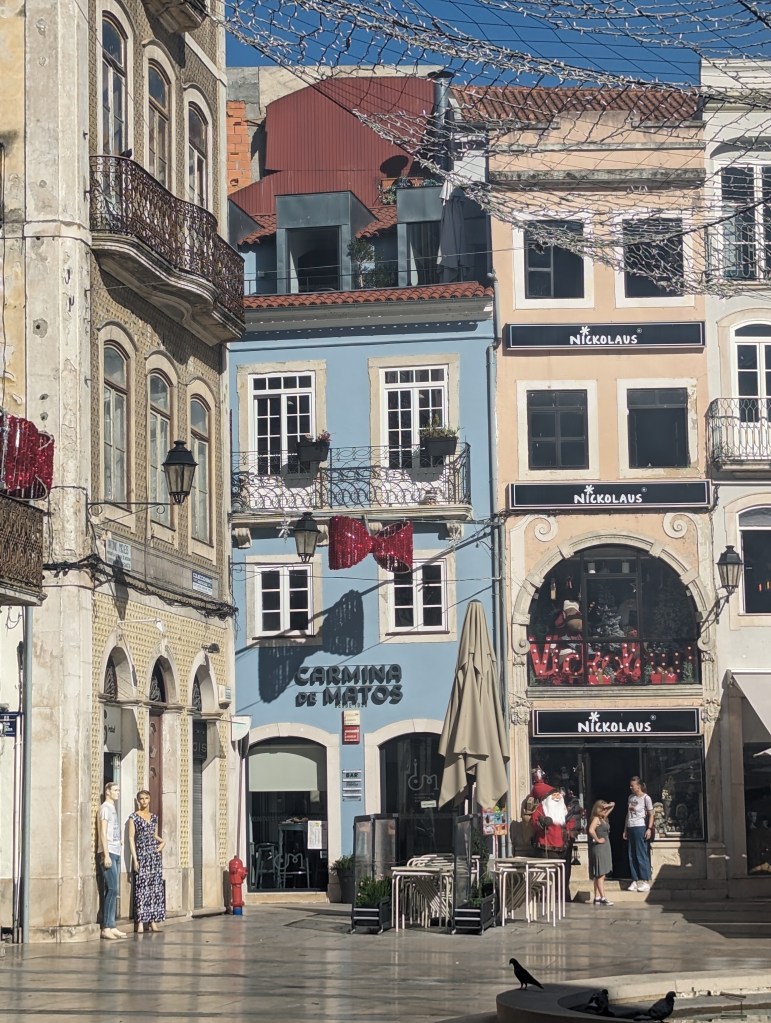
main plaza in Coimbra

And we think we start decorating early for Christmas in the US! This was October 10.

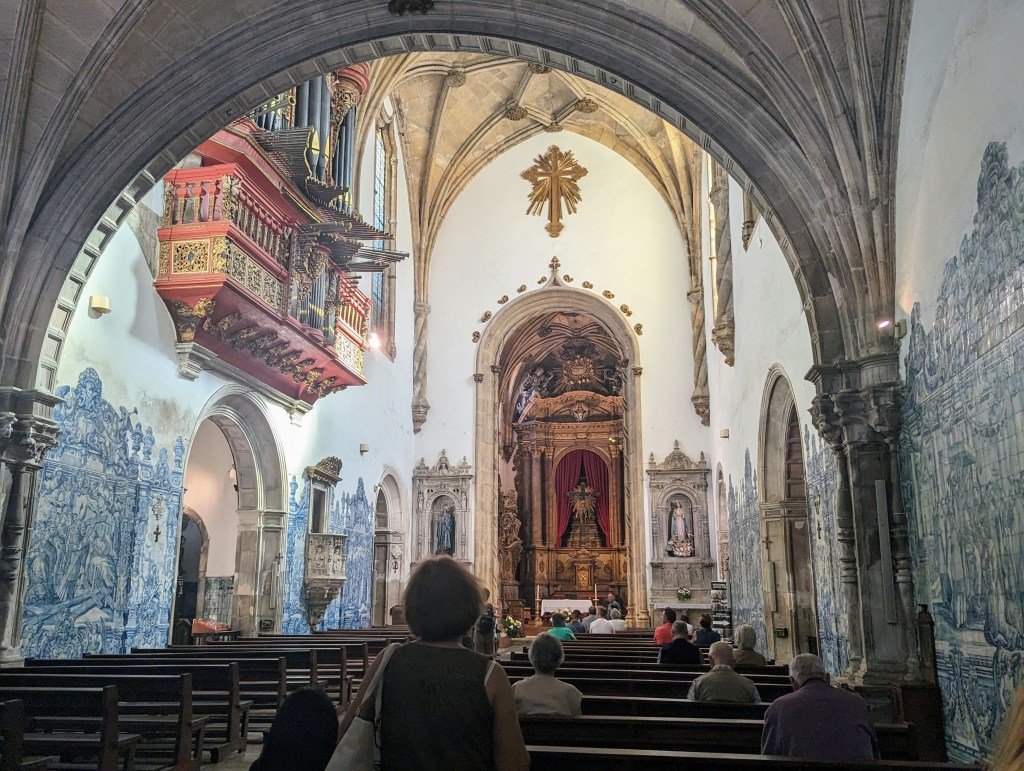
Igreja de Santa Cruz, built in 12th century, restored in 16th century
Igreja de Santa Cruz interior

He then took us up the hill toward the university via the market, which was slow due to it being a Tuesday.

Coimbra market

He explained to us that Coimbra U. is the oldest university in Portugal, and one of the oldest in the world, dating back to 1290. It is now a UNESCO World Heritage site due to both its architecture and traditions.

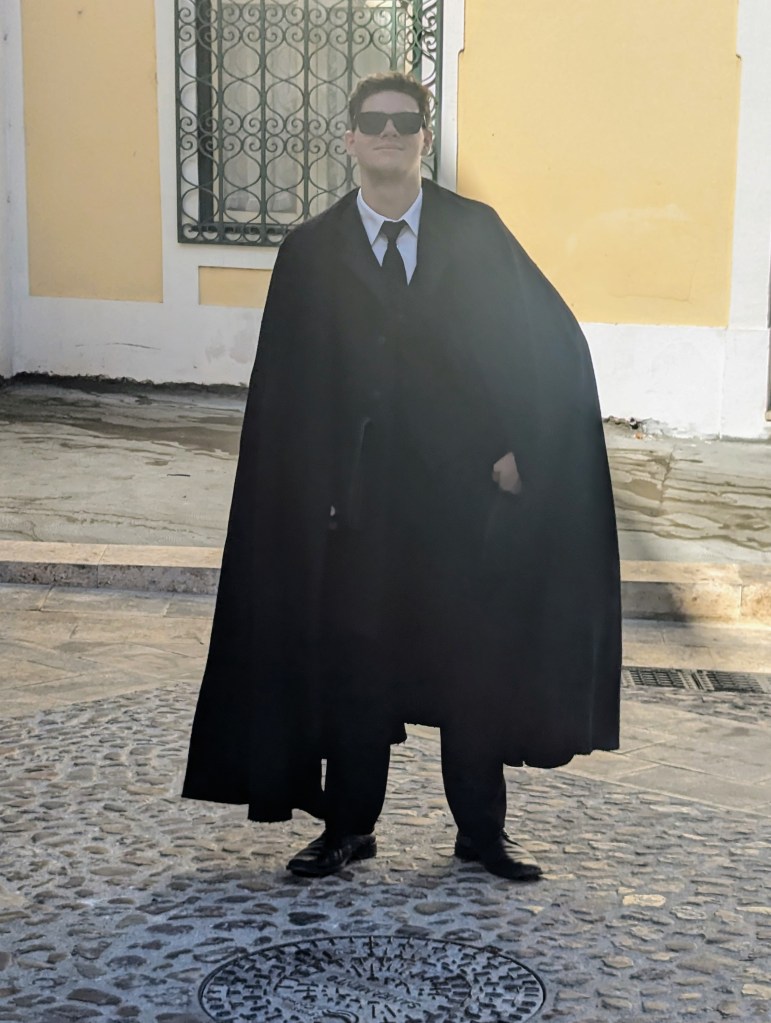
One of the many long held traditions of the school involve the optional students’ dress, which is:

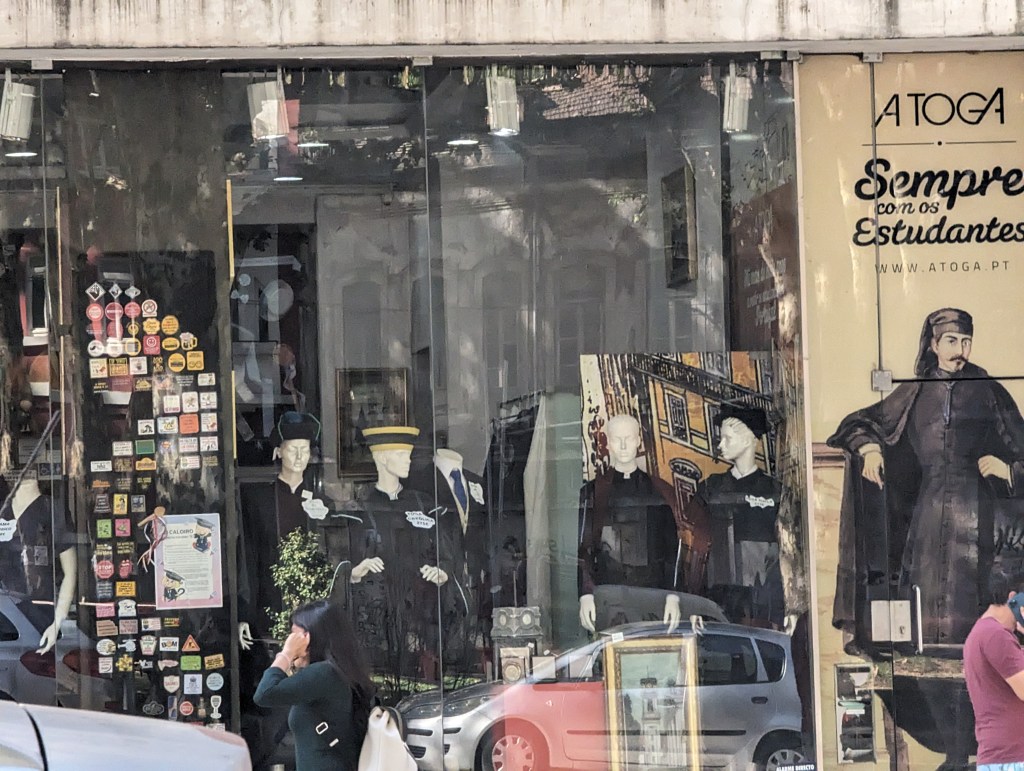
And he showed us the store where the students buy their clothes.

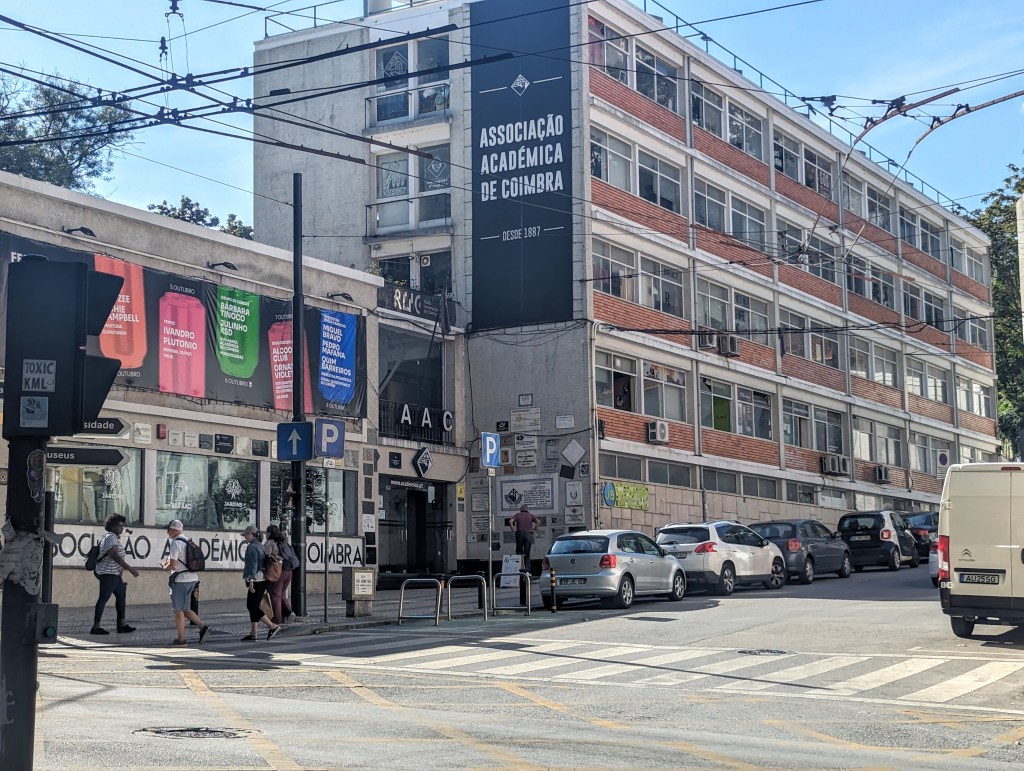
And there are many rules surrounding the wearing of the clothes which include: not allowed to use a backpack or any bag, just a black folder in which to carry books and computer, not allowed to use an umbrella – in rain cover your head with the cape, must wash the cape by hand in the river, and lots more. He showed us the student activities building:

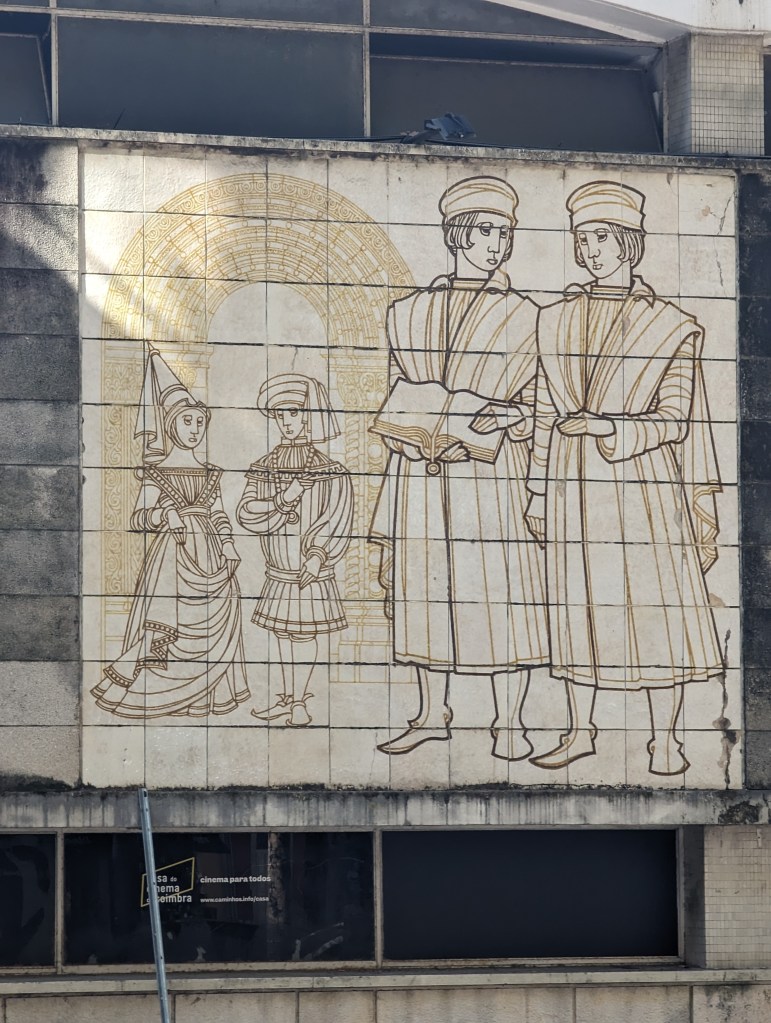
On the side of which there are several panels showing the history of the capes.

At this point in the tour he told us the belief in Coimbra that it was the inspiration for the Harry Potter stories. J.K. Rowling had lived in Portugal, married to a Portuguese man at the time. In addition to the students’ dress, Salazar is believed to be the inspiration for Slytherin. The university has houses to which students join, and many more “connections.”
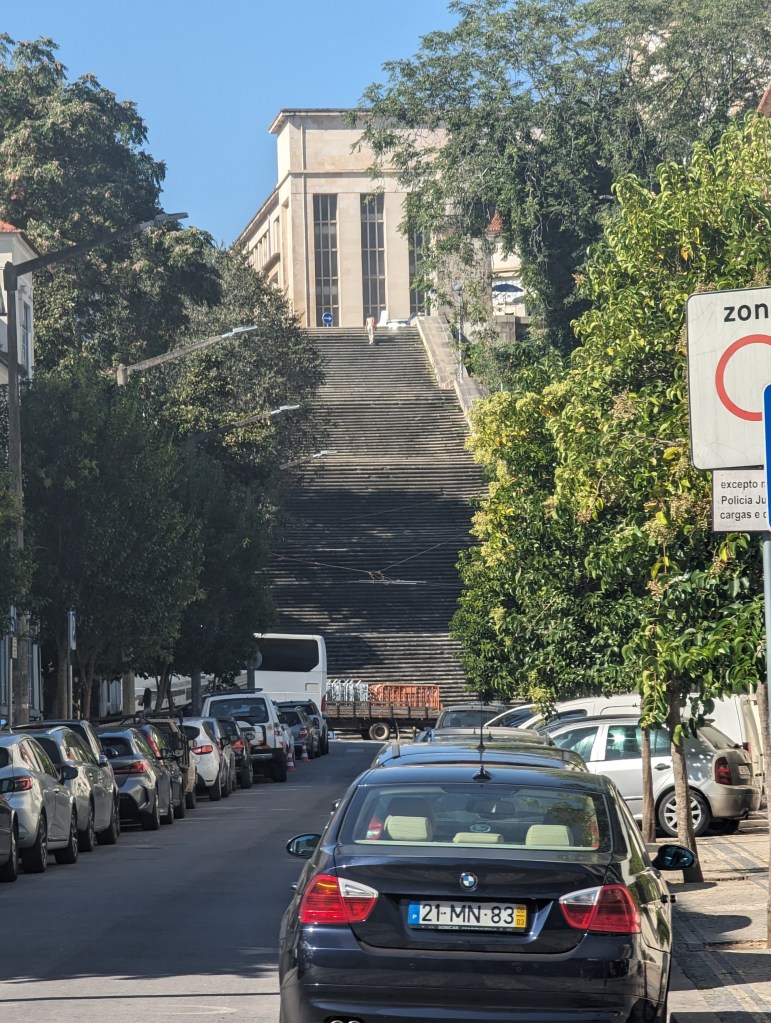
He showed us the student steps up to the university. (We walked around and up the hill).
imagine doing that a couple of times a day!

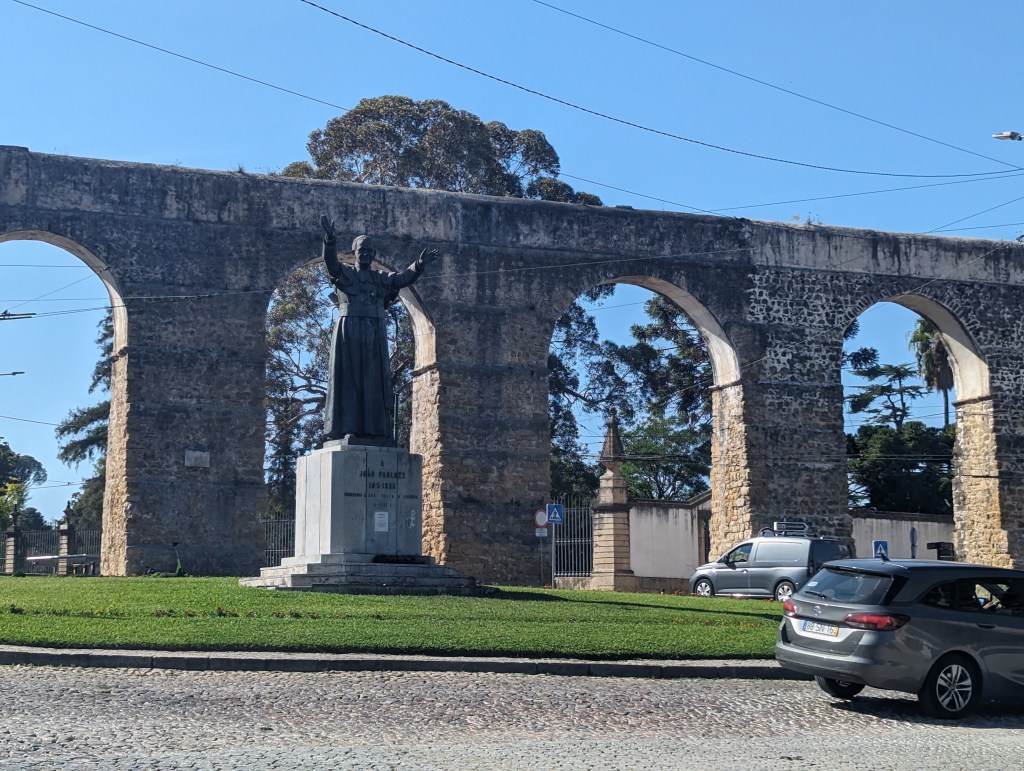
He walked us past the 16th century reproduction aqueduct built on the site of a Roman one, which now is at the entrance to the botanical gardens. In front of the aqueduct is a statue of Pope John Paul II who visited in 1982 when he went to Fatima to pay homage to Our Lady of Fatima, whom he credits for having saved his life when there was an assassination attempt on his life the year prior.

Pope John Pall II statue built 1989

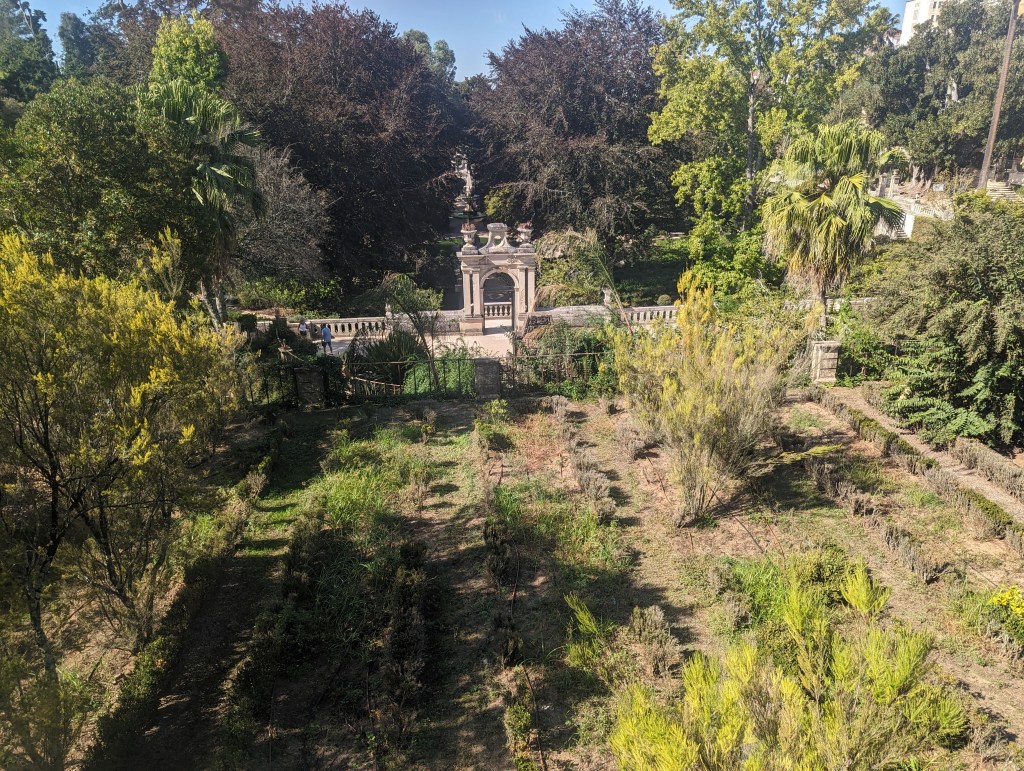
The botanical gardens are free to the public and run by the universtity and used by the school of botanical sciences as a laboratory.

Botanical Gardens Coimbra

And finally we arrived at the school. Here we find two more Harry Potter links:

Minerva and the owl; both symbols of wisdom

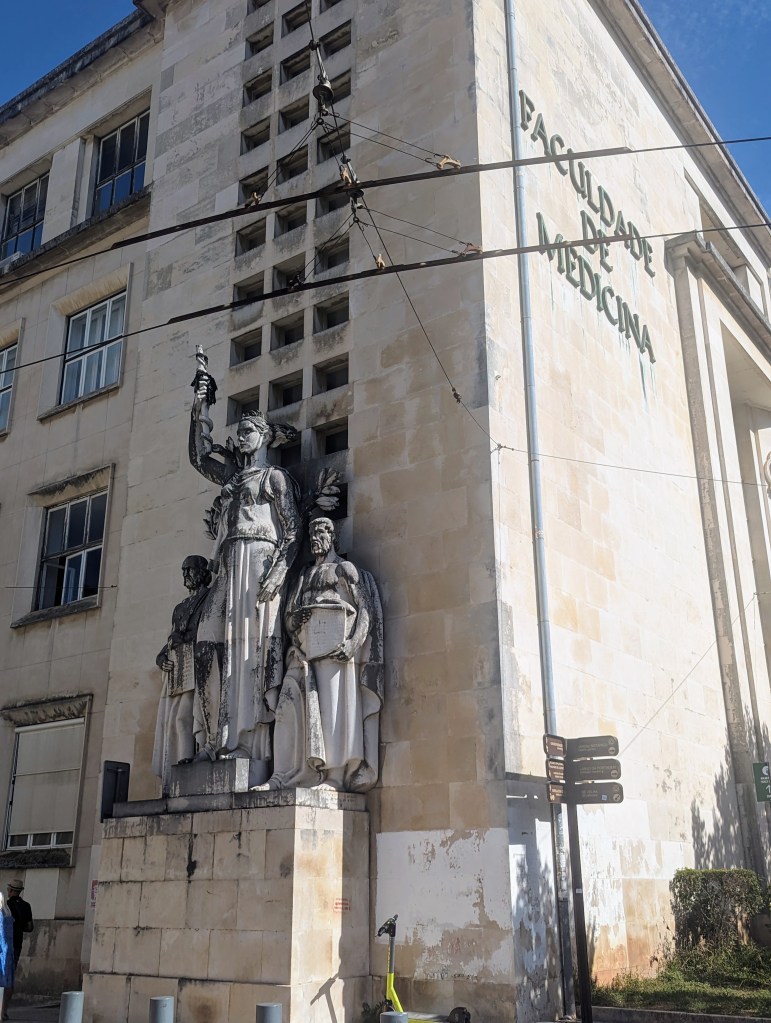
We passed one of the oldest schools here, the medical school.

But what all the tourists come to see (and there were literally bus loads) is the law school.

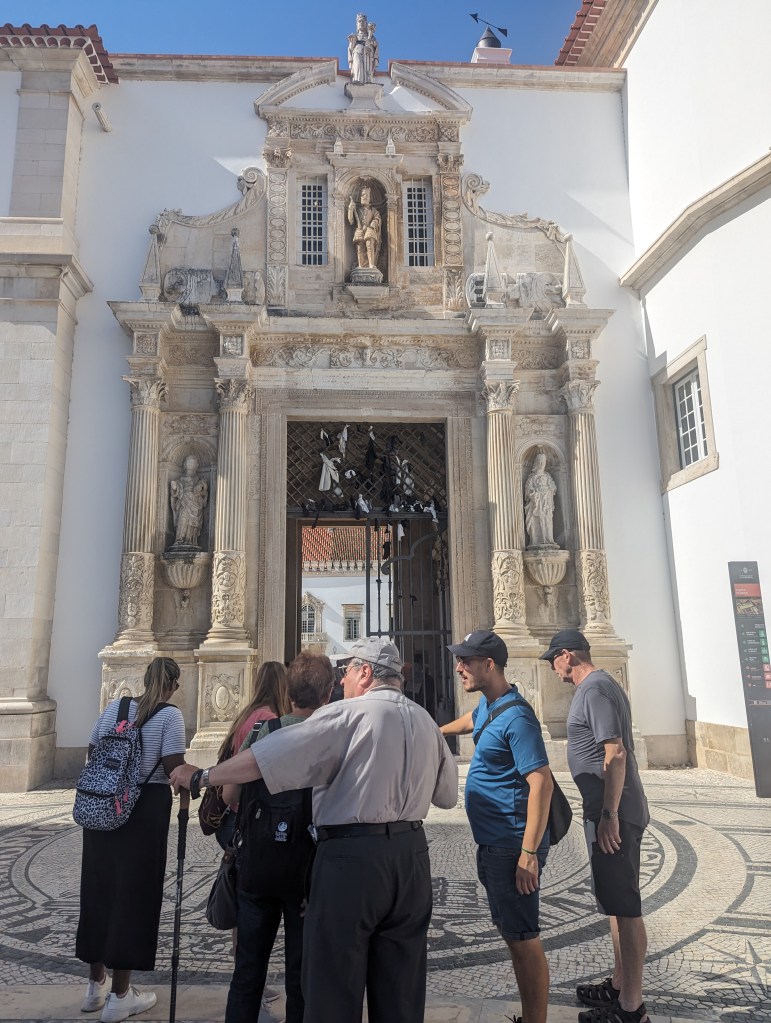
port to the law school
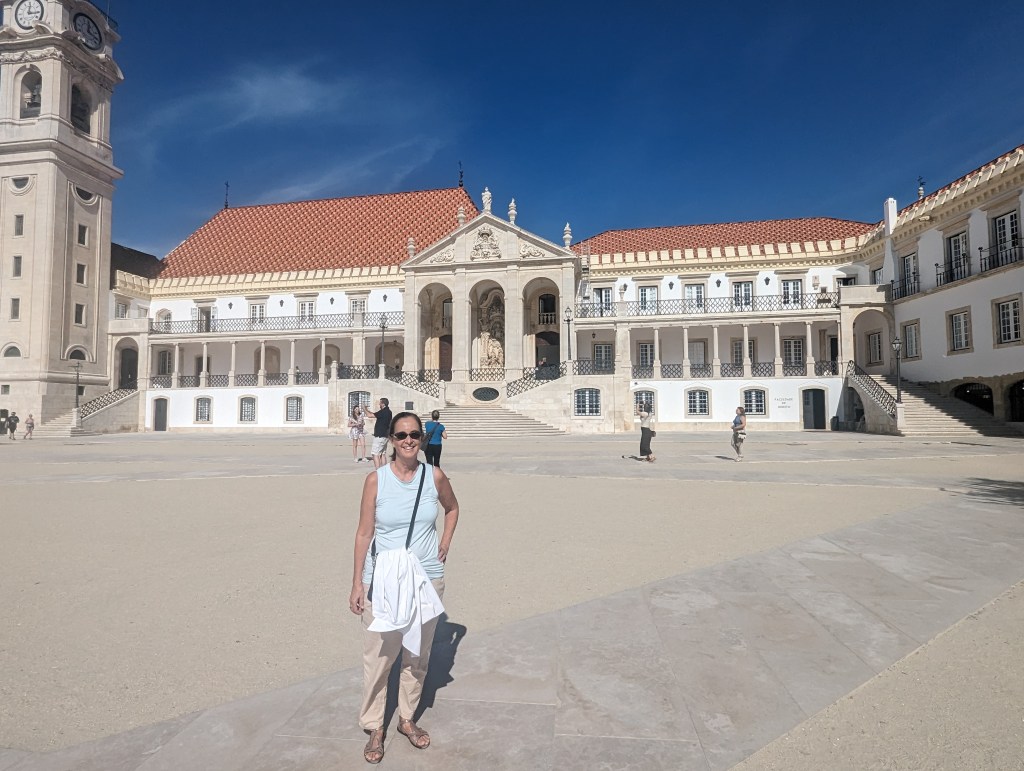
law school court yard

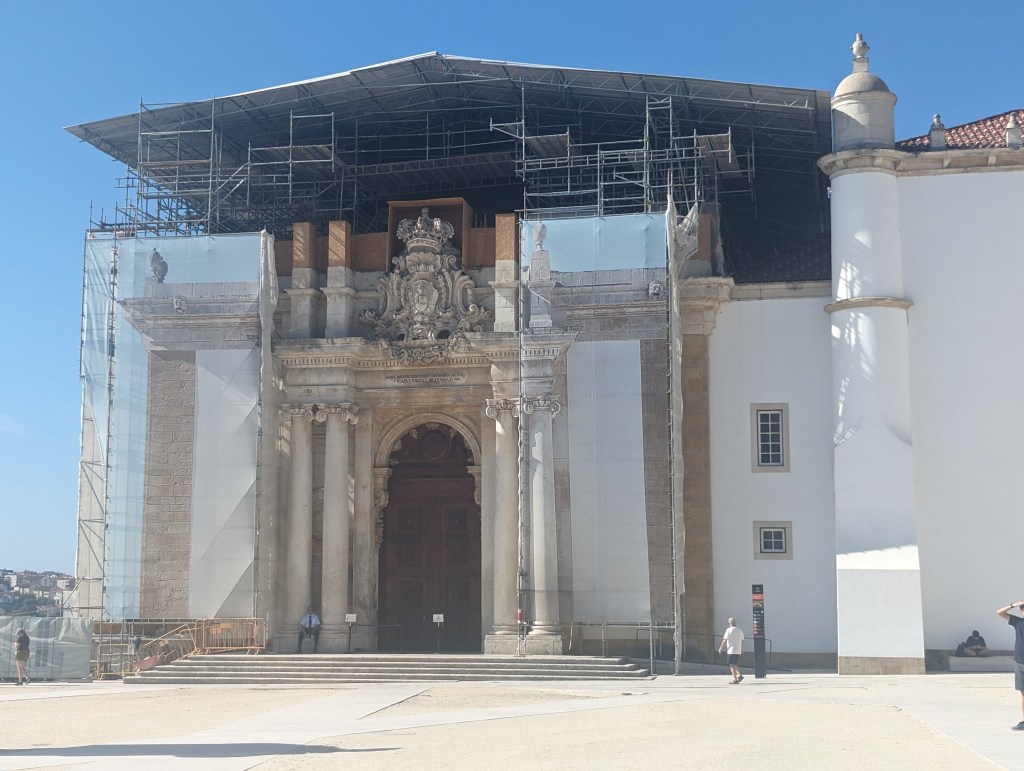
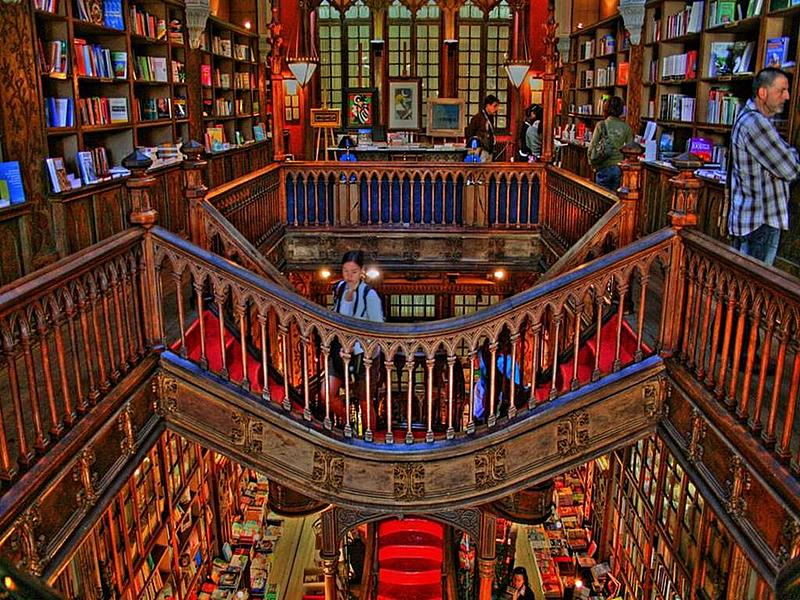
The library is currently under renovation, but it is believed to have inspired the moving staircases at Hogwarts and was used for the “Be Our Guest” scene with Emma Watson in “Beauty and the Beast”

Law library exterior
copy image of law library interior from internet

The clock tower is believed by the students to be the wise old owl watching them from every angle all the time.

the clock faces are the eyes, the curled facade the beak

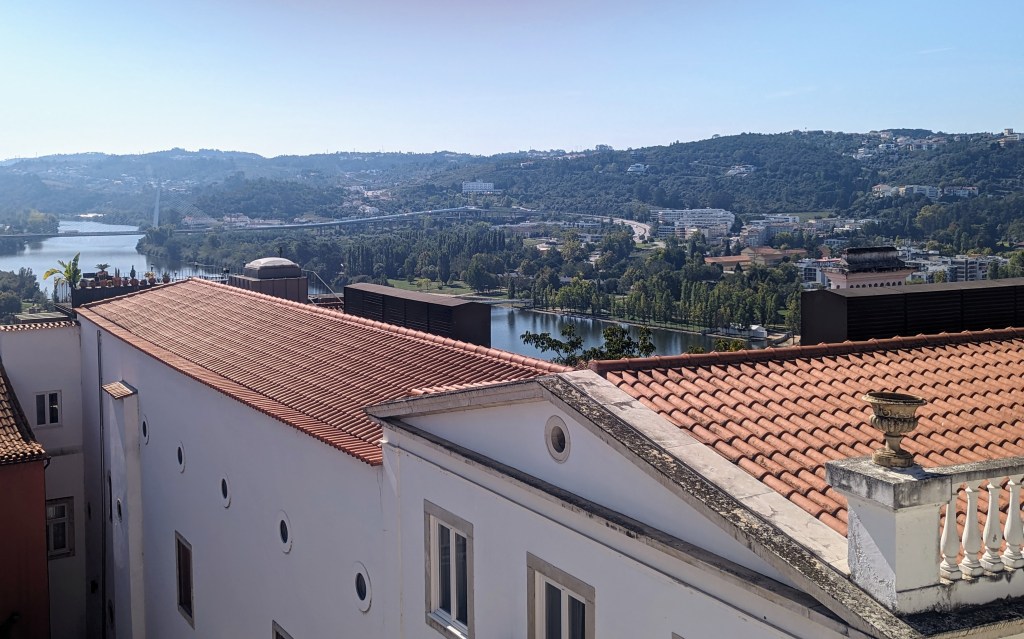
The view of the town of Coimbra and the Monego River from the law courtyard is magnificent. The Monego River is the longest river that runs solely on Portuguese lands.

As we walked down from the university, we passed the home of Jose Alfonso with his picture commemorating him on it. He is the author of “Grandola Vila Morena,” which was used by the armed forces to confirm that the 25th of April Revolution, the bloodless coup that ended Salazar’s dictatorship, was underway.

We ended our tour at the Old Cathedral of Coimbra. It is a Romanesque building began in the 12th century, shortly after Portugal was reclaimed from the moors. Many of its builders and craftsman had been moors converted to Christianity, but they did not include any human representations in the decor.

Old Cathedral Coimbra

The tiles and columns are decorated in moorish mosaics and plant and animal motifs.

We next headed to the beach town of Nazaré, known for as surf city for it’s huge waves in the winter. We checked into our Airbnb and thanked our former selves for our bookings prowess; each place has been more gorgeous than the previous!

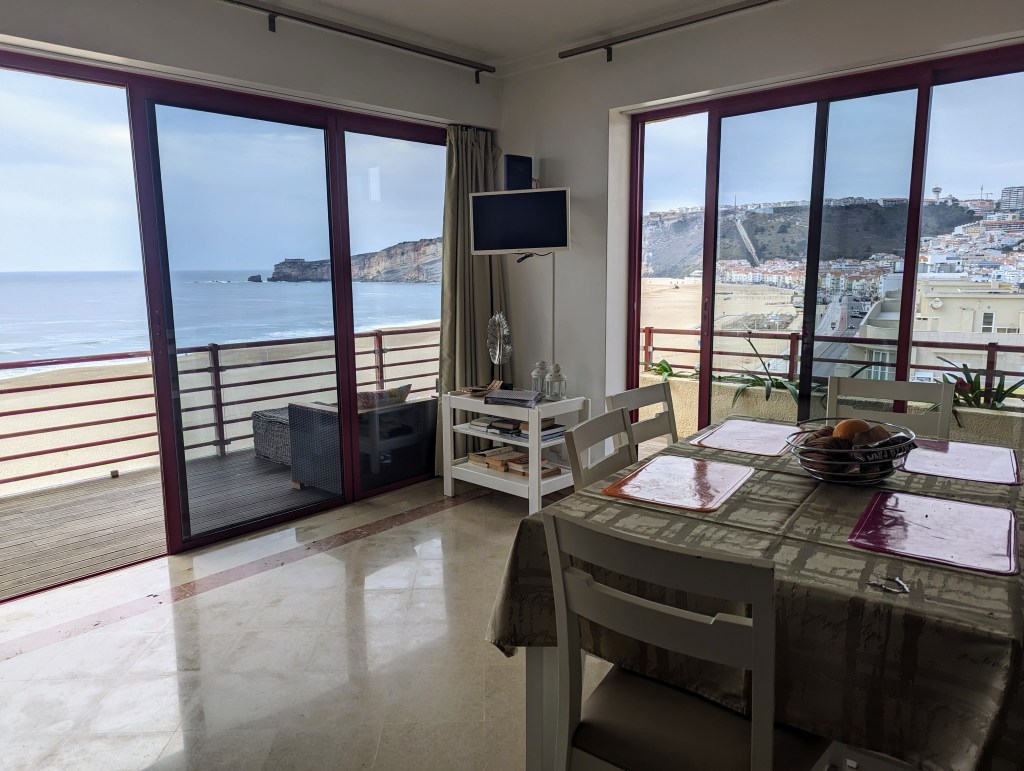
our Airbnb Nazaré

We enjoyed a glass of wine and watched the sun set over the Atlantic, a rare treat for us.

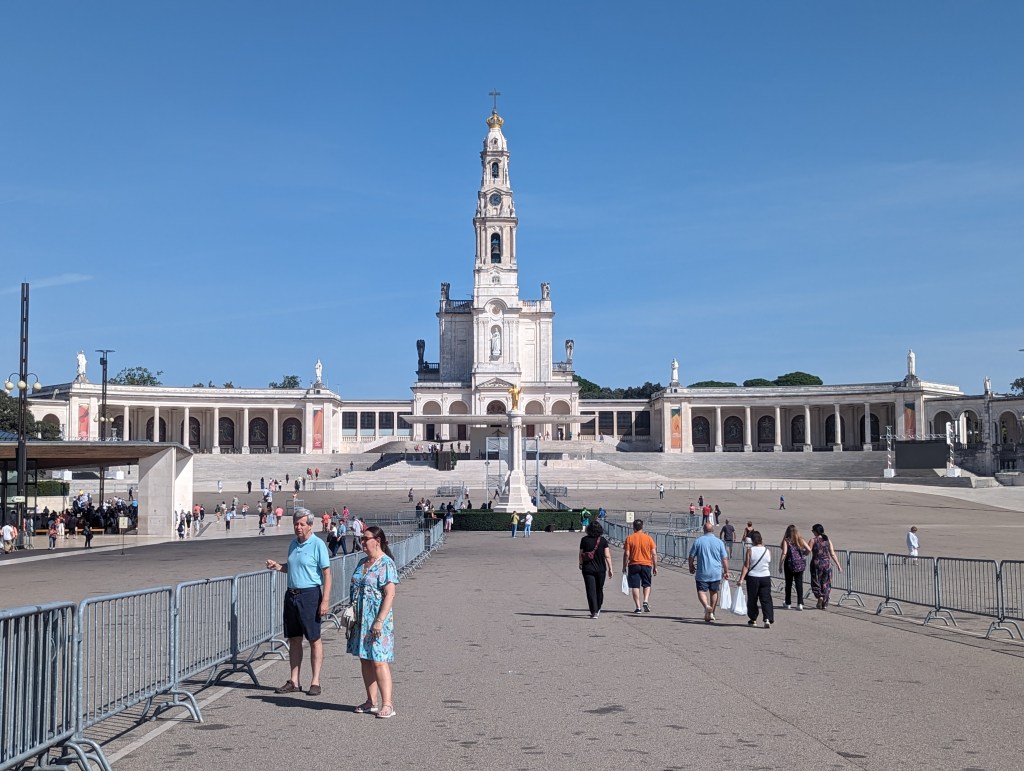
The next morning we dragged ourselves away determined to see what all the fuss is about Fatima, having been told several times along the way not to miss it. After a bit of a drive, we parked and approached from the back, and it looked like any other cathedral to us. But a quick stop in the restroom made us realize this was something bigger; the bathroom size rivaled any airport facilities. We rounded the corner and found this.

Fatima Cathedral

It is one of the largest international destinations for religious tourism, receiving around six million visitors per year. Catholic history reports that an apparition “the Angel of Peace” appeared to three shepherd children in 1917. The children reported the apparition’s appearance on the 13th of every month May 13, 1917 through October 13, 1917. The sixth and final apparition is said to have been witnessed by 70,000 pilgrims who had gathered. Pilgrims immediately began visiting the site, and construction for the church began in 1920.

Many of the pilgrims approach on their knees.

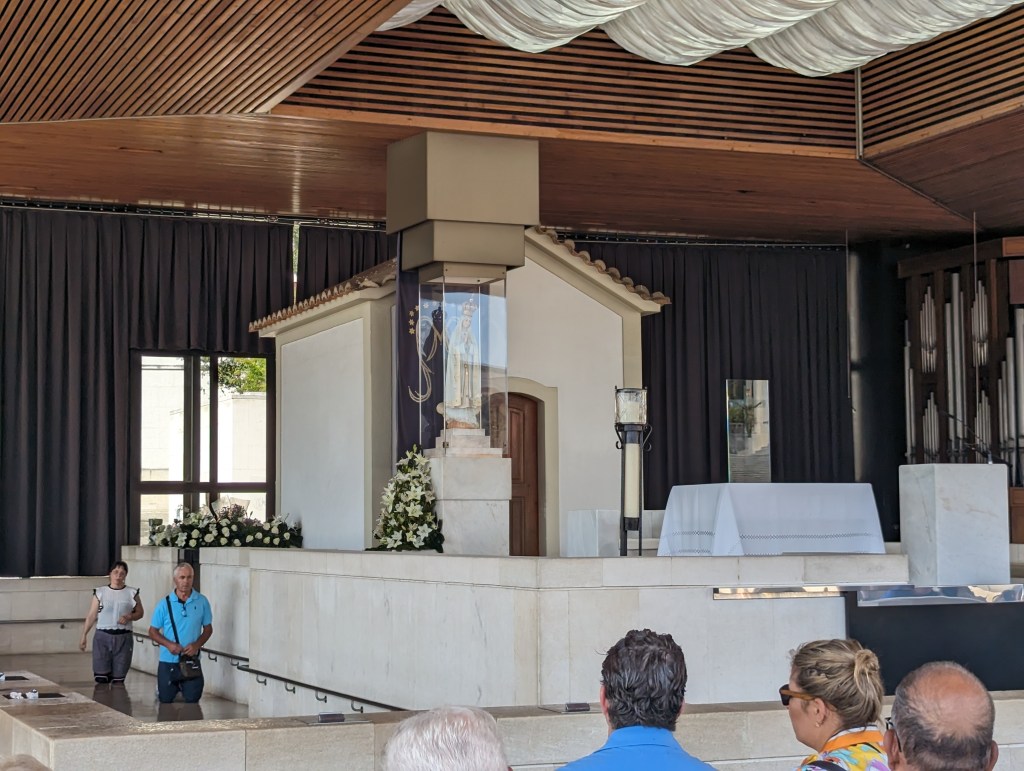
Chapel of the Apparition. Our Lady of Fatima is in the glass enclosed case
Interior of The Cathedral

The naves along the walls of the cathedral have reliefs of the stages of the life of Christ.

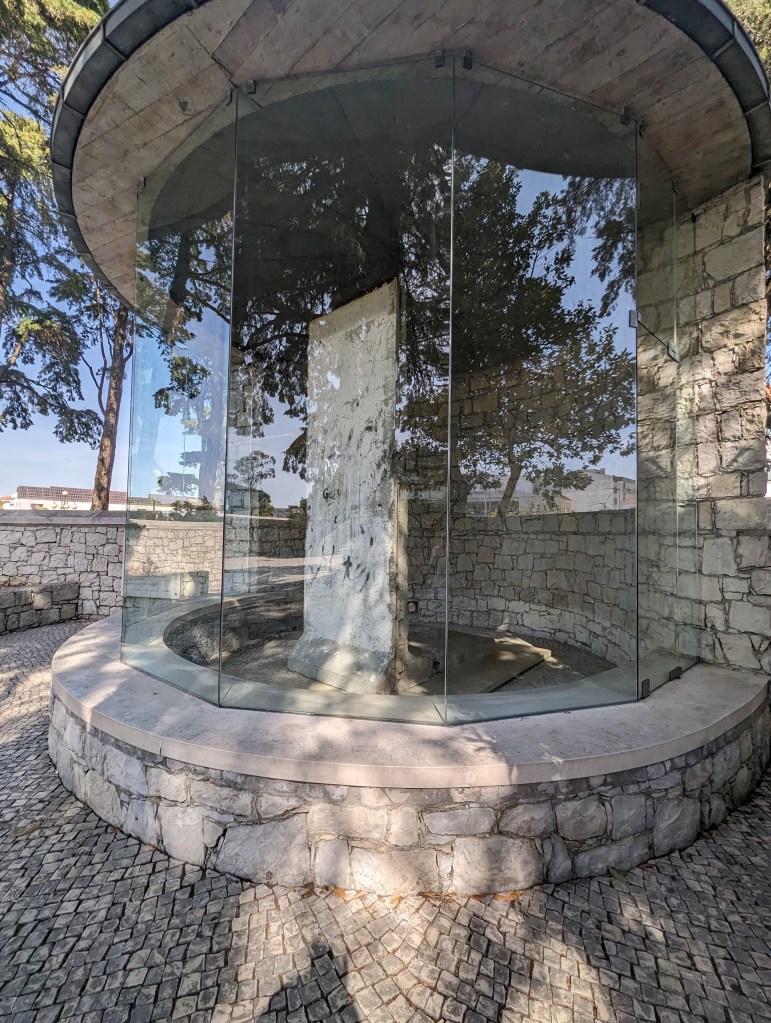
On the edge of the grounds is a piece of the Berlin wall given by a Portuguese emigrant to Germany to symbolize unity.

portion of Berlin Wall

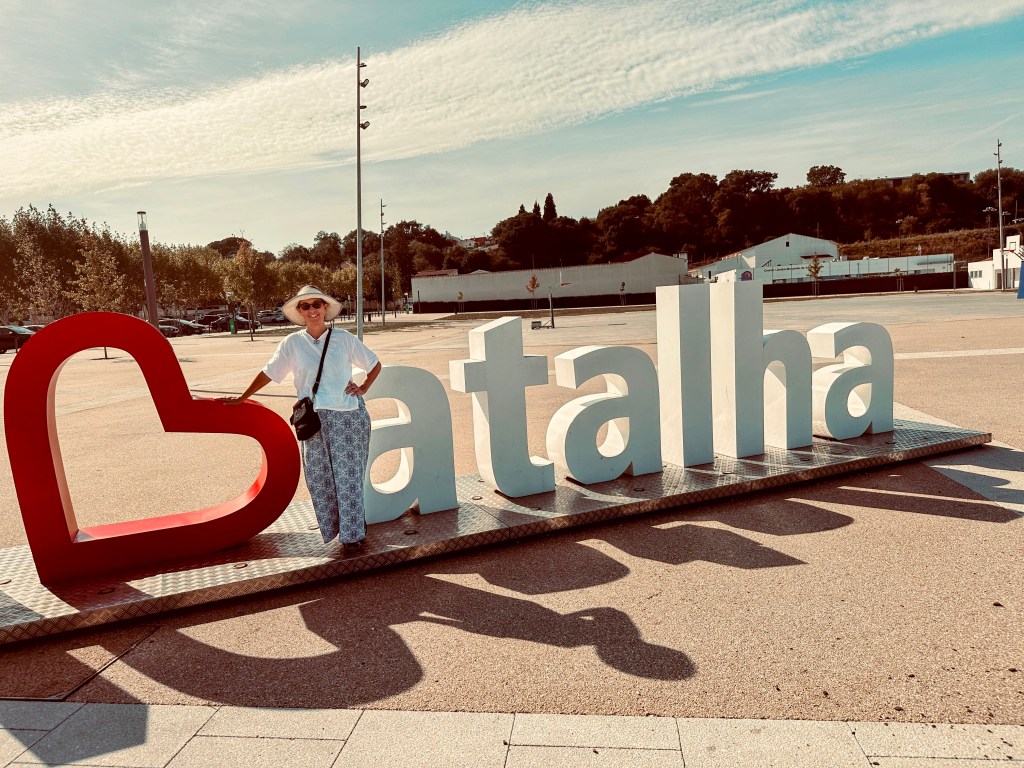
On the way back from Fatima, we stopped in Batalha to see the monastery.

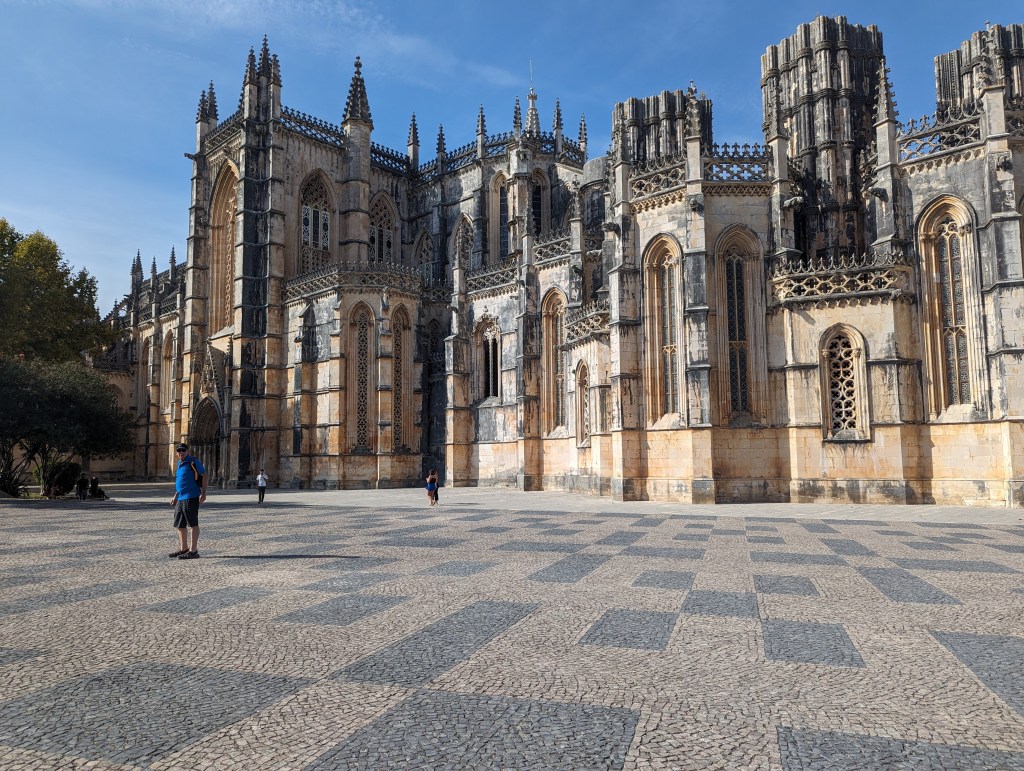
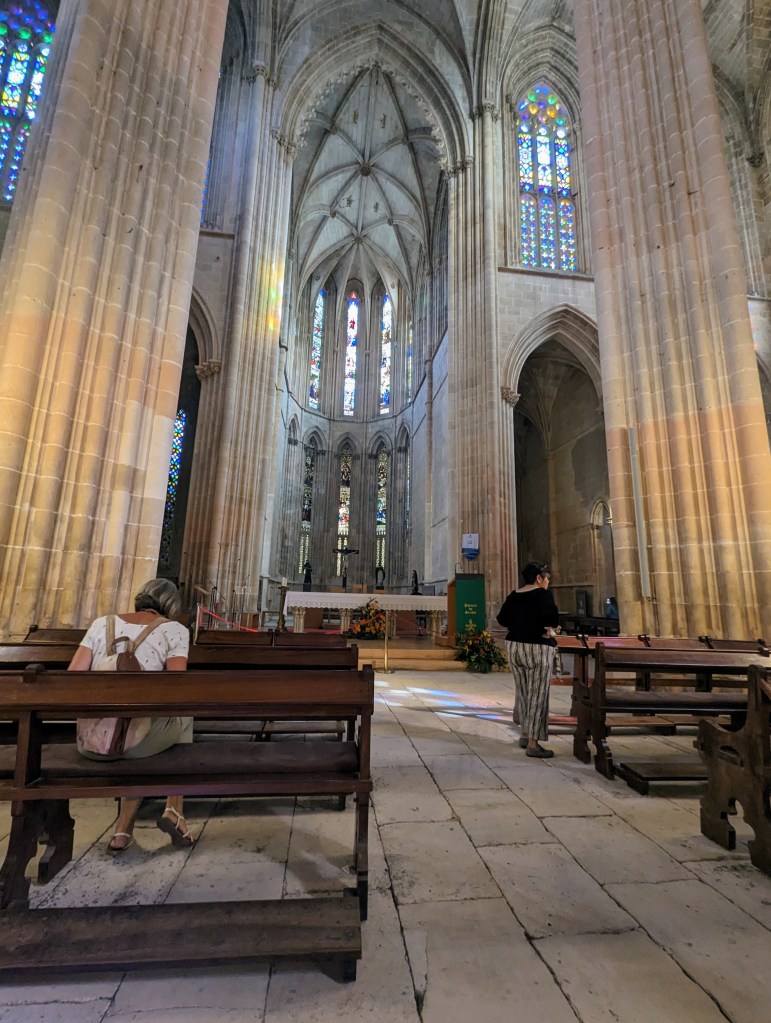
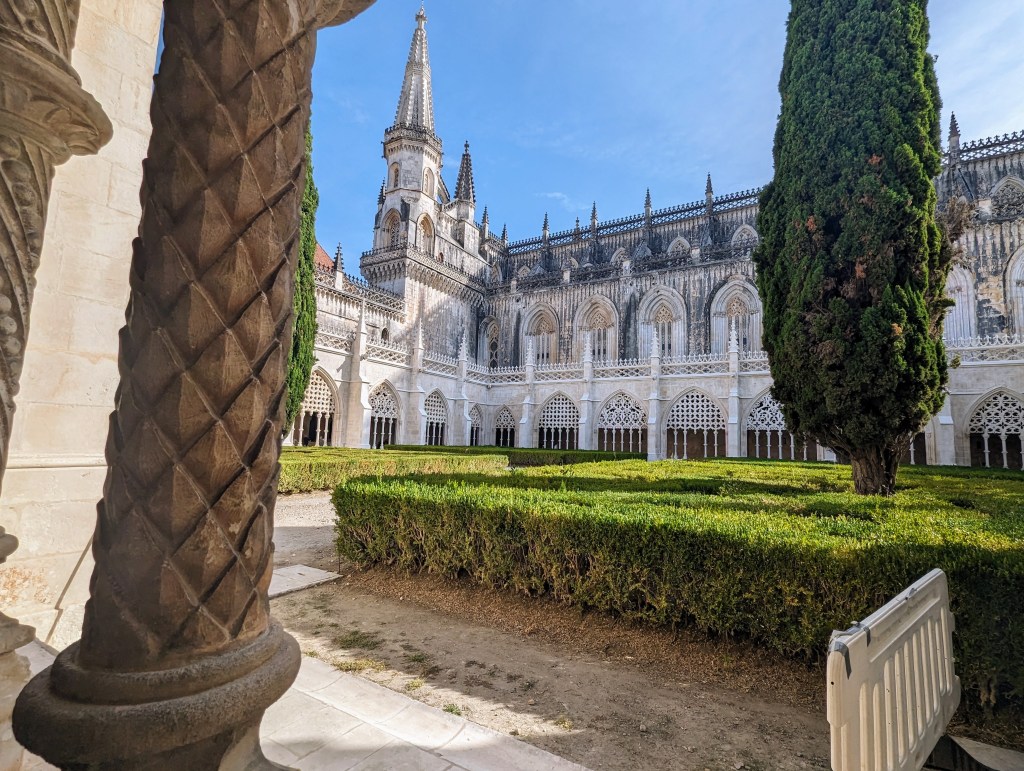
The Monastery of the Dominicans of Batalha was built by King João to thank the Virgin Mary for the victory of the Portuguese over the Castilians at the battle of Aljubarrota in 1385. It was to be the Portuguese monarchy’s main building project for the next two centuries. Here a highly original, national Gothic style evolved, profoundly influenced by Manueline art, as demonstrated by its masterpiece, the Royal Cloister. It was added onto over the next two centuries by several kings and their architects. But in the mid fifteenth century with the untimely death of King Duarte, who was adding on an octagonal chapel behind the apse of the church, followed by his architect the following year, construction was abruptly halted. This is now known as the unfinished chapel. The monastery is now a UNESCO World Heritage site and one of Portugal’s Seven Wonders.

Monastery of the Dominicans of Batalha
church interior
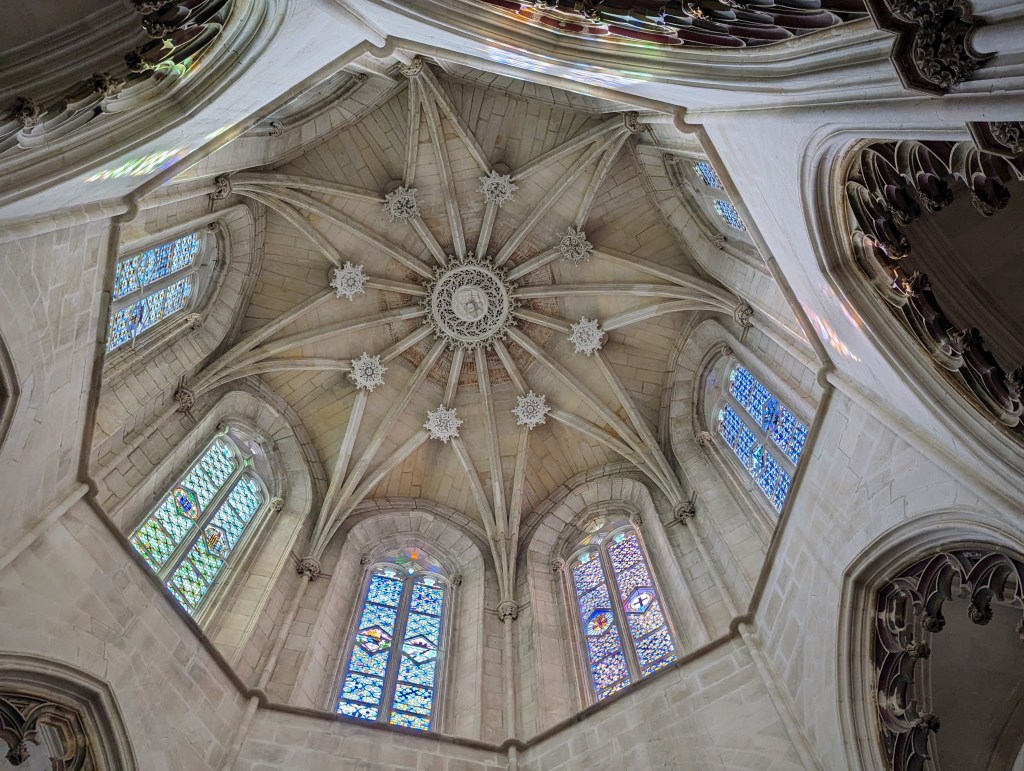
funeral chapel in which lie many kings and their families
funeral chapel dome
cloister

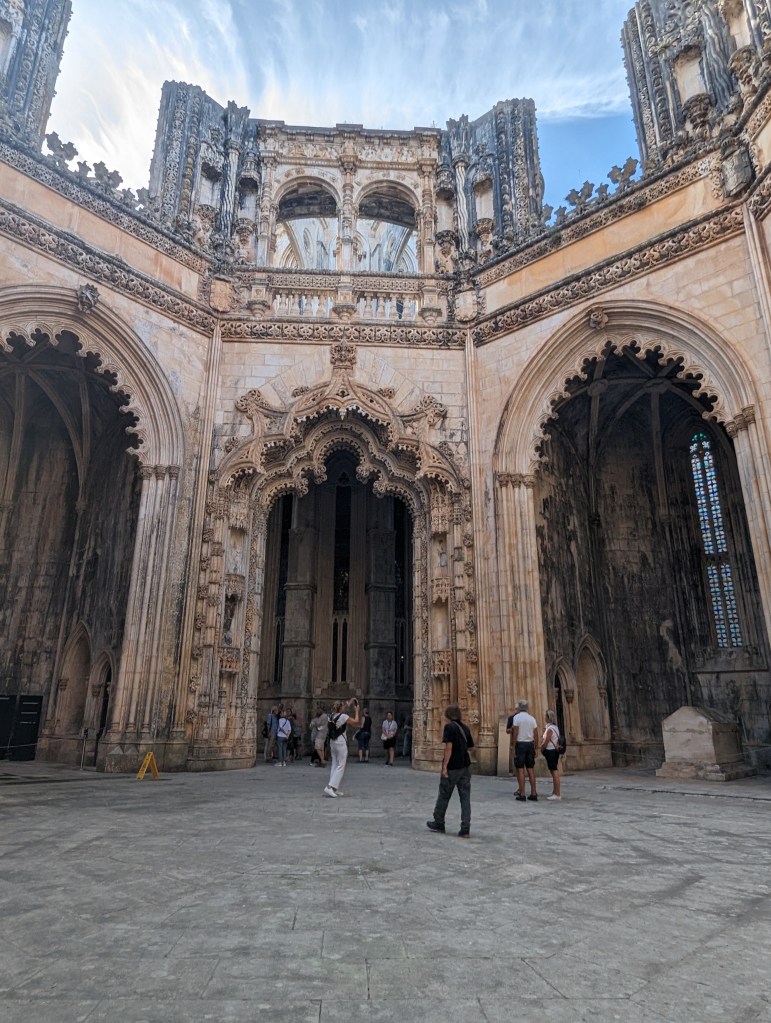
We did not know what to expect at the unfinished chapel, but no ceilings?

unfinished chapel

The detail work is spectacular. If finished, the chapel would have been stupendous.

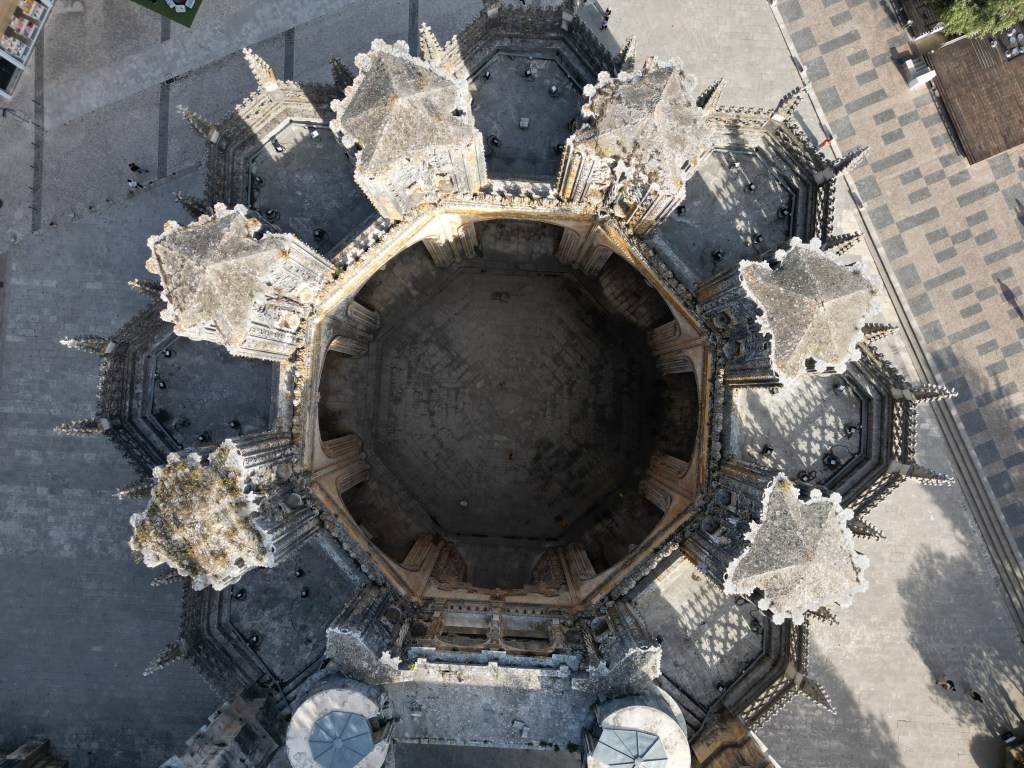
Before leaving town, Eric sent the drone up to take a look at the unfinished chapel from above.

The next morning we headed out to the town of Alcobaça. The 12th century church and monastery of Alcobaça were the first Gothic buildings in Portugal, and it was one of the most important mediaeval monasteries in Portugal.

Monastery of Alcobaça

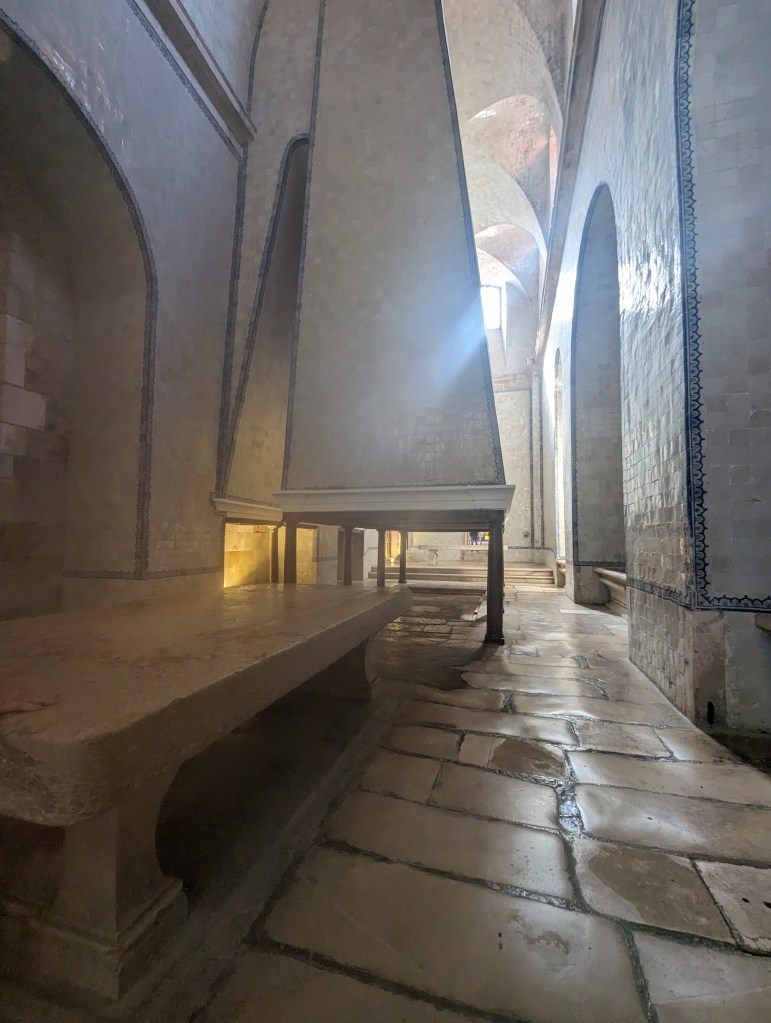
More than any monastery we had previously visited, this one really gave us a feel for how the monks lived.

monks’ meeting room
kitchen showing large vents over fire pit for cooking
kitchen sinks
church interior

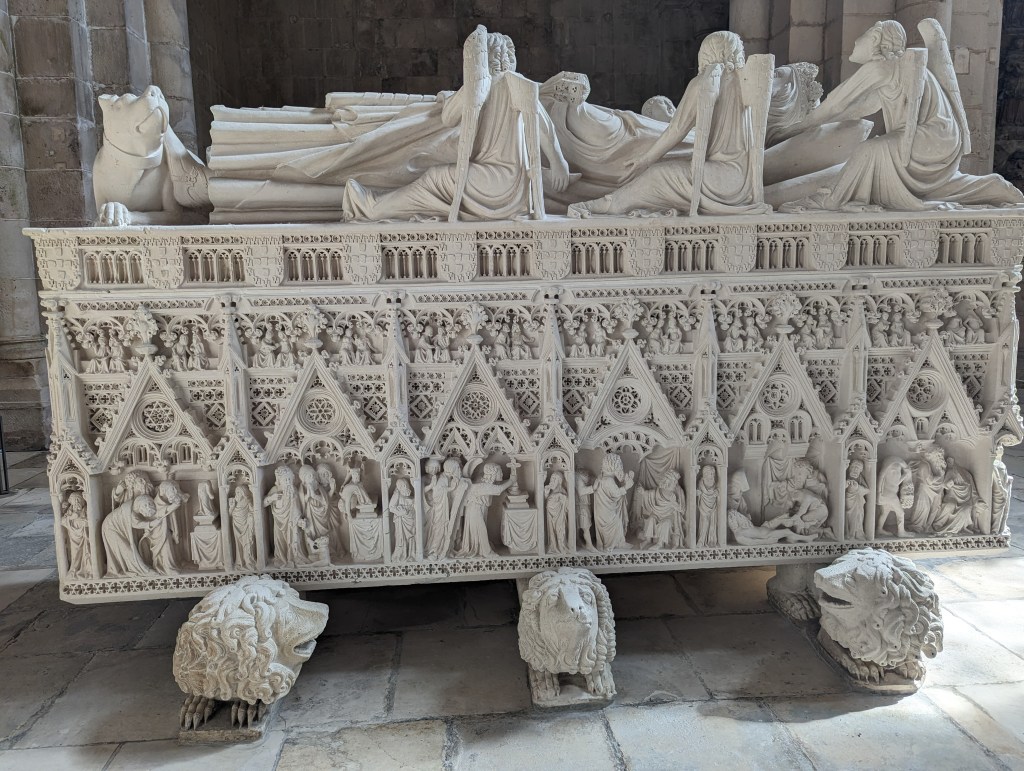
But what was most fun for Eric and me follows. Remember the story of Inês and King Pedro from Coimbra? They are both buried here.

tomb of Inês
tomb of King Pedro

Then it was time to head back and spend some time in Nazaré and enjoy the beach.

night view of Nazaré from our balcony

Portugal Northern Region: Viana de Castello Sept. 29 – Oct. 2 Porto Oct. 2 – 5 & Duoro Valley Oct. 5-7

We crossed from Spain into Portugal on another beautiful day. We arrived early to our Airbnb in Viana do Castelo, but our generous host Sofia greeted us warmly into her unbelievably beautiful home.

pictures do not do justice to this place
view from our terrace

We wandered around a bit, taking in the Atlantic Ocean and the cute little town that is Viana do Castelo.

there was a bike racing event in town
shopping street in town
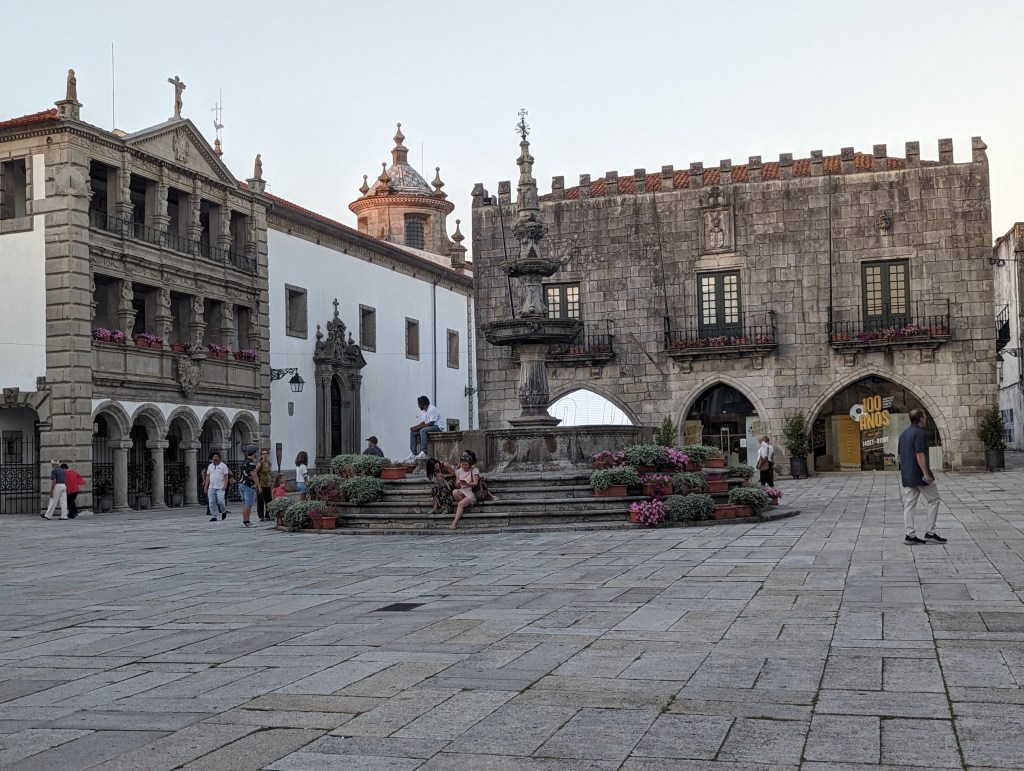
one of the main plazas in town, now for shopping

We had dinner in town both nights we were there, but otherwise we were happy to rest up from our travels and enjoy the view.

drone picture of us hanging out on the terrace
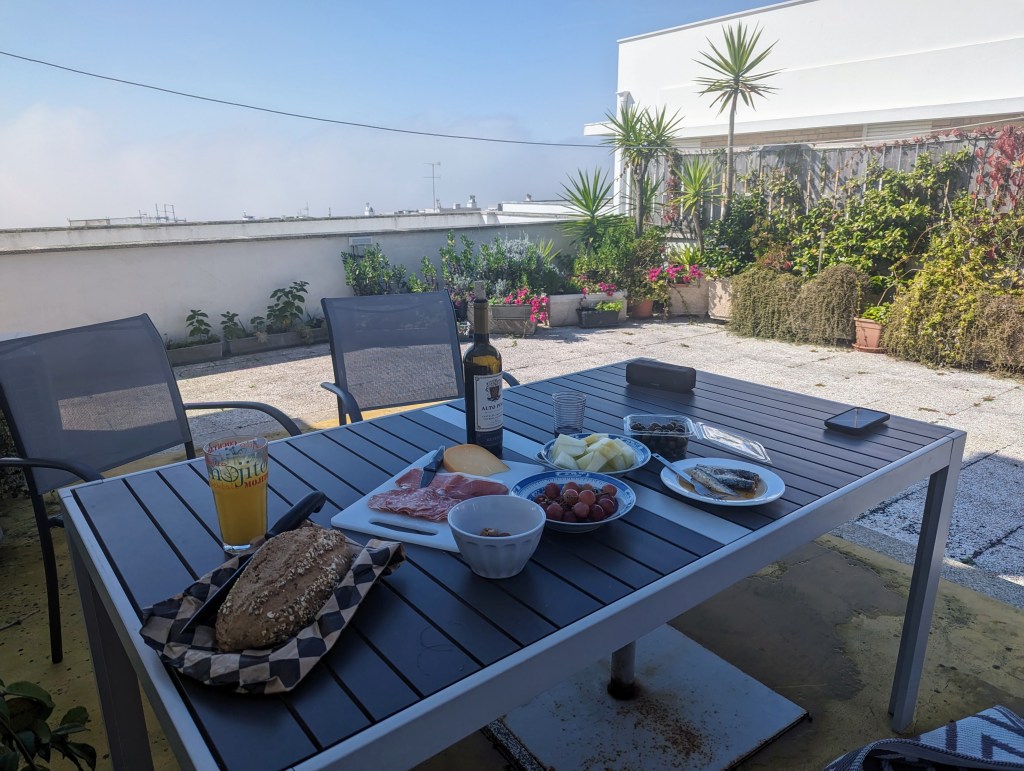
lunch on the terrace

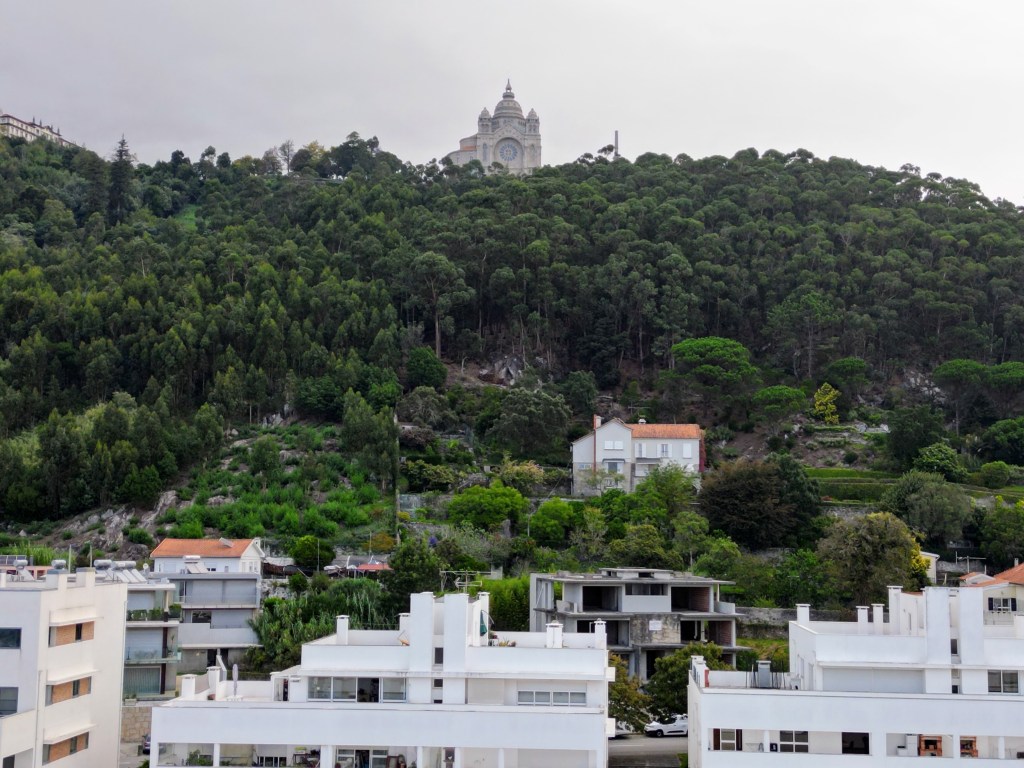
The main attraction in town is the Diocesan Sanctuary of the Sacred Heart of Jesus high at the top of Monte de Santa Luzia, which was closed to us on Sunday. So Monday morning on our way out of town, we gave it a visit.

Diocesan Sanctuary of the Sacred Heart of Jesus: as seen from town

Building on it began in 1904, but it was not completed until 1959.

Diocesan Sanctuary of the Sacred Heart of Jesus: up close
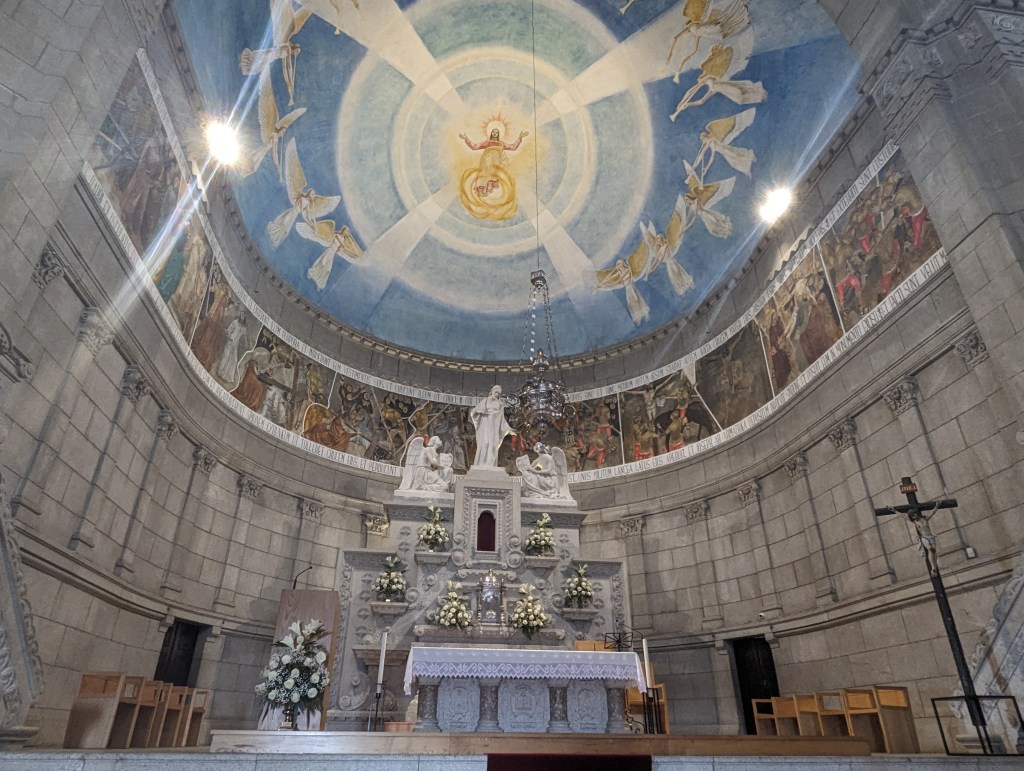
Diocesan Sanctuary of the Sacred Heart of Jesus: interior

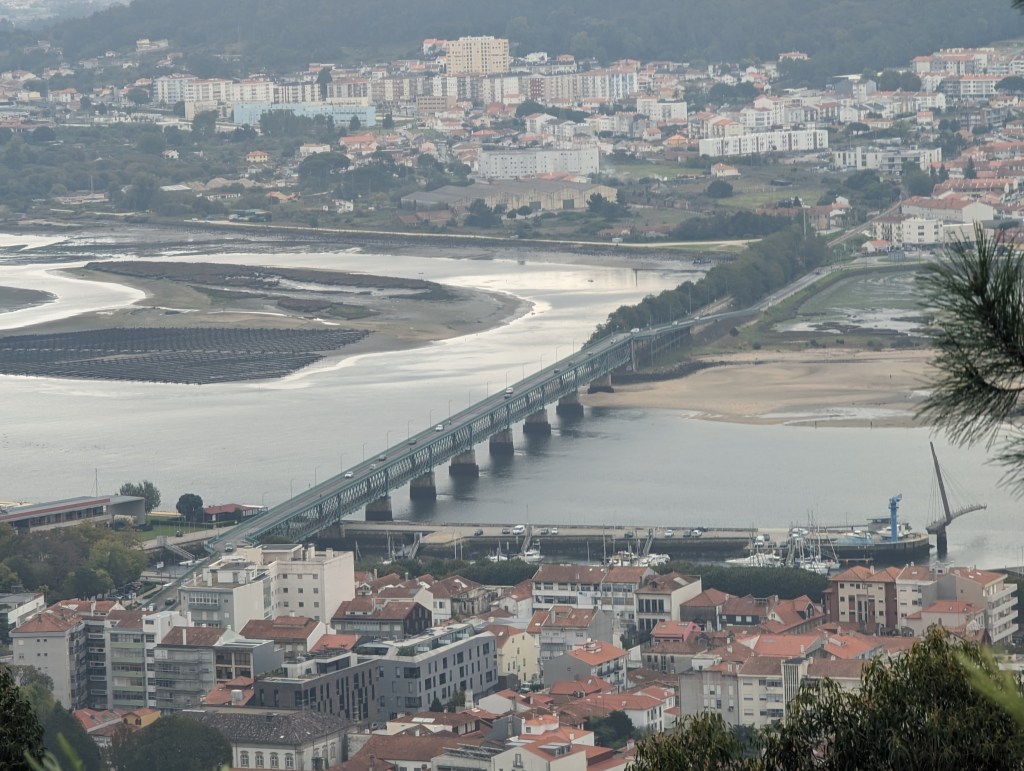
But it was really not all about the church; it was about the views of Viana do Castelo and the Lima River. Until the mid 19th century, the river was the main source of transporting goods. But when roads and railroads were built connecting Viana do Castelo to Porto, the need for the bridge arose. The bridge was designed by Gustave Eiffel (known for the tower with is name in Paris) and was opened in 1878.

Eiffel Bridge over Lima River, Viana do Castelo

And then it was on to Porto. Porto is also a river town and the original capital of Portugal. The river divides Porto on one side and Gaia on the other. Porto+Gaia=Portugal. Although Porto is known as the home of port wine, actually all of the wineries are on the Gaia side. The grapes are grown in the Douro Valley, but the wine is made in Gaia, not Porto, because in the 13th century the Bishop and Catholic church’s land taxes in Porto were so expensive. King Alfonso III gave the poor town of Gaia on the other side of the Douro River from Porto a Fomal Letter, allowing tax free wine production. The invention of port wine is because when the Portuguese would ship their wine, it often turned to vinegar. They learned to preserve it by adding grappa to it, making it the super sugary, high alcohol content wine that is port. Recently Porto has become a common tourist destination, and it is showing signs of it’s growing pains with construction everywhere.

We arrived in late afternoon and after hassling to find a place to park the car for several days, we checked into our tiny but well located Airbnb. Then we went for a stroll around the city.

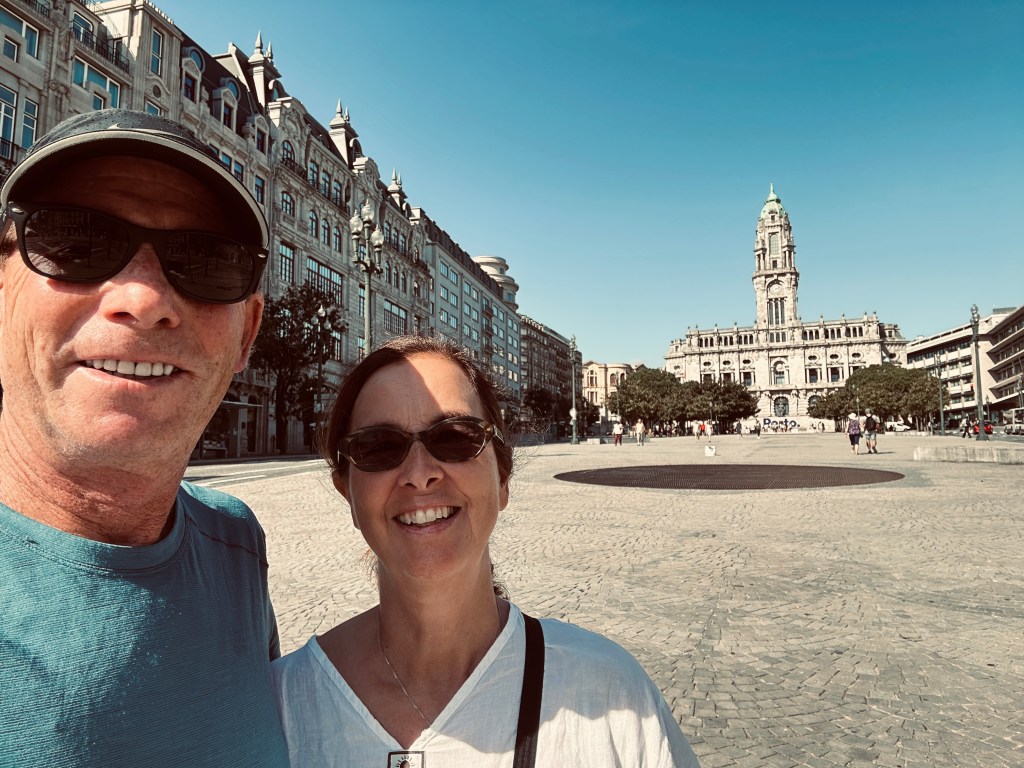
City Hall Porto built in 1920s
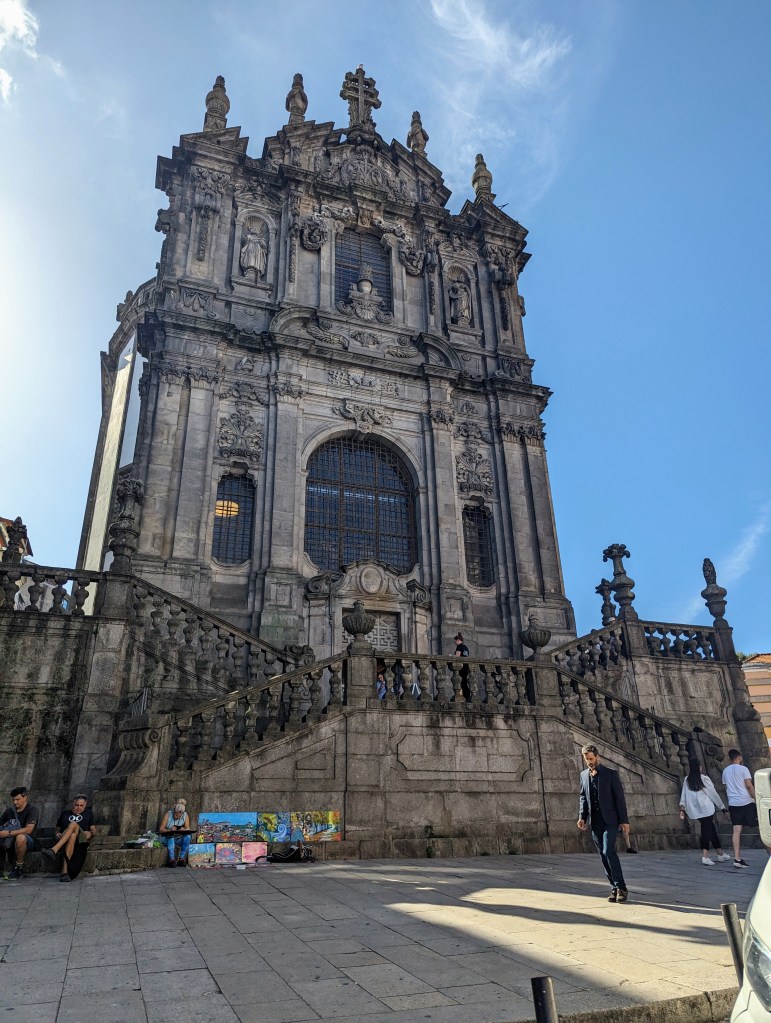
Clérigos Church Baroque church built in mid 18th century

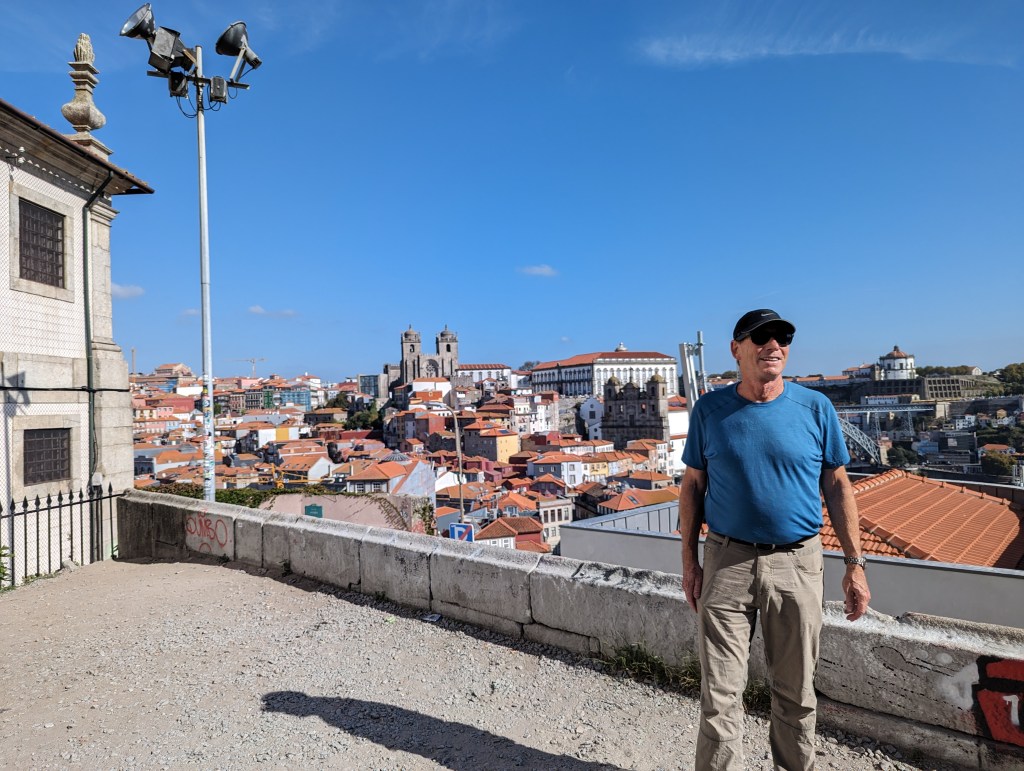
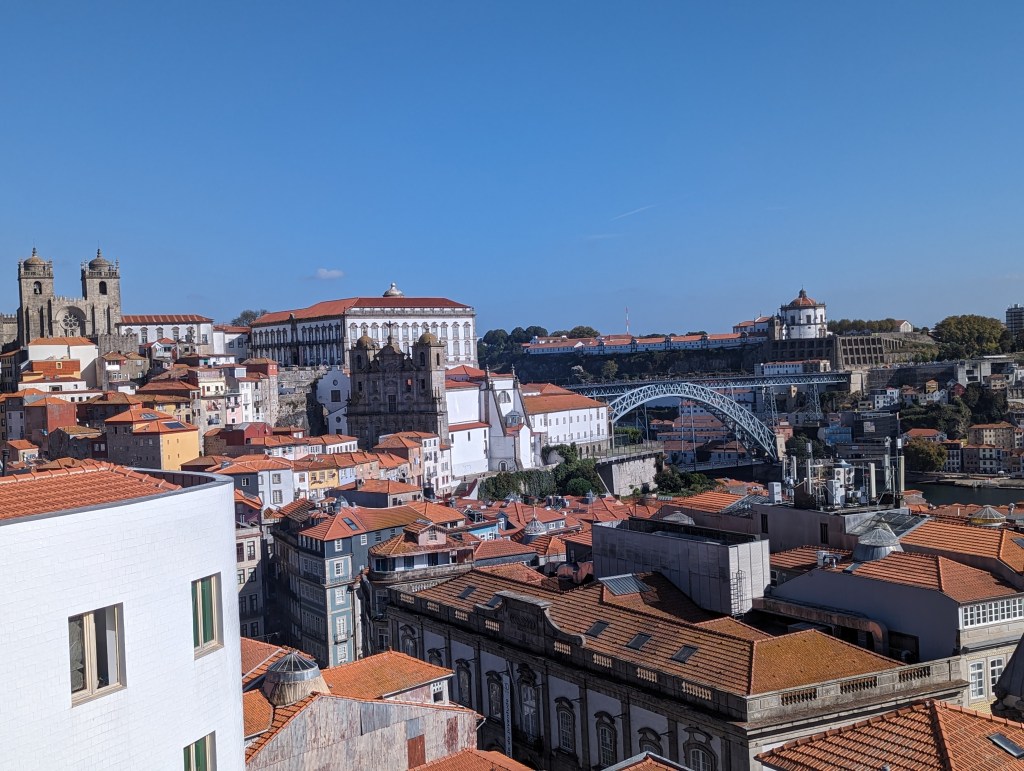
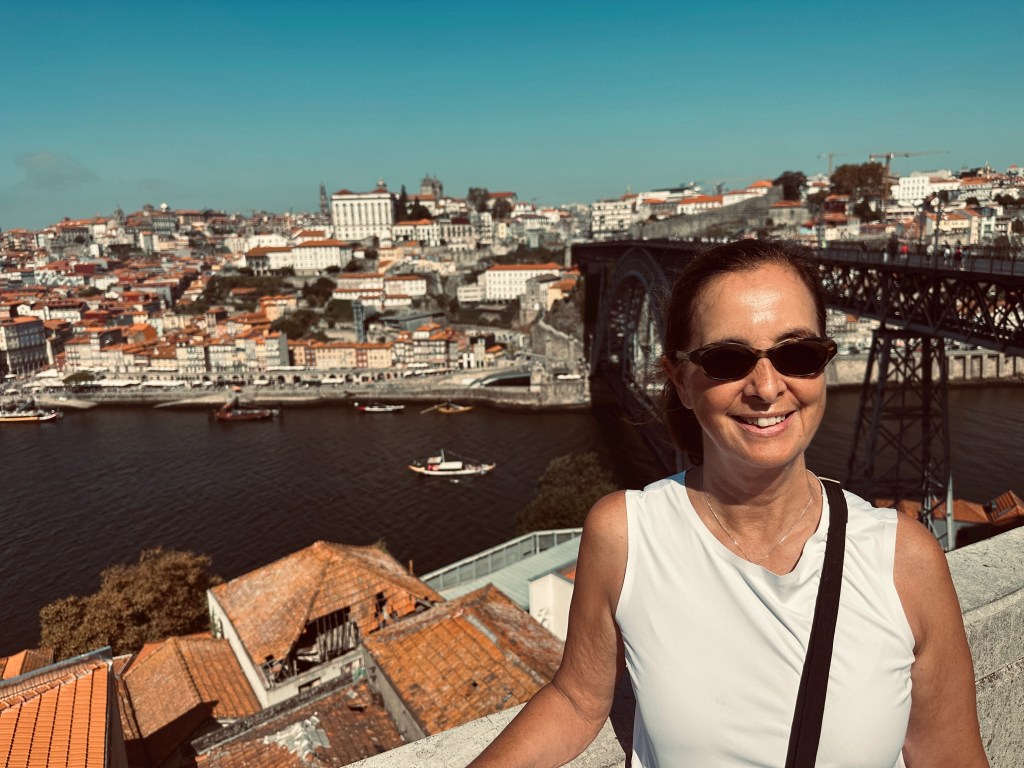
We found a fantastic viewpoint from which to look out onto the city of Porto and the Douro River.

2 towers of Porto Cathedral can be seen in background
view of bridge over Douro River
typical historic fishing boats, now used for tourists

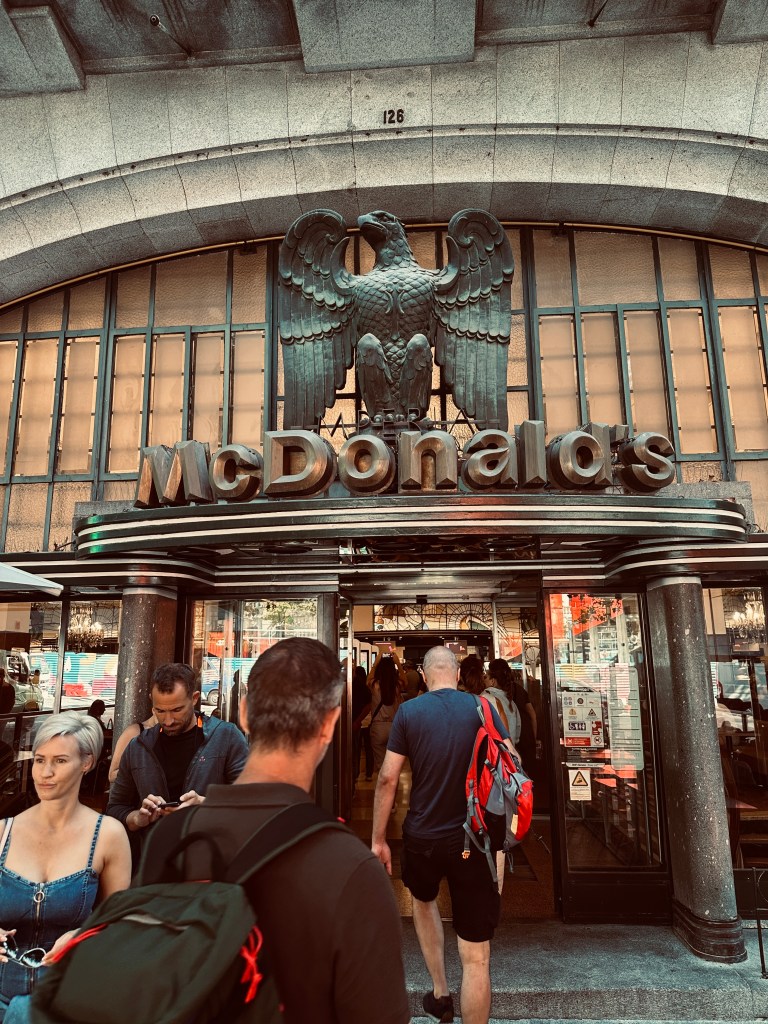
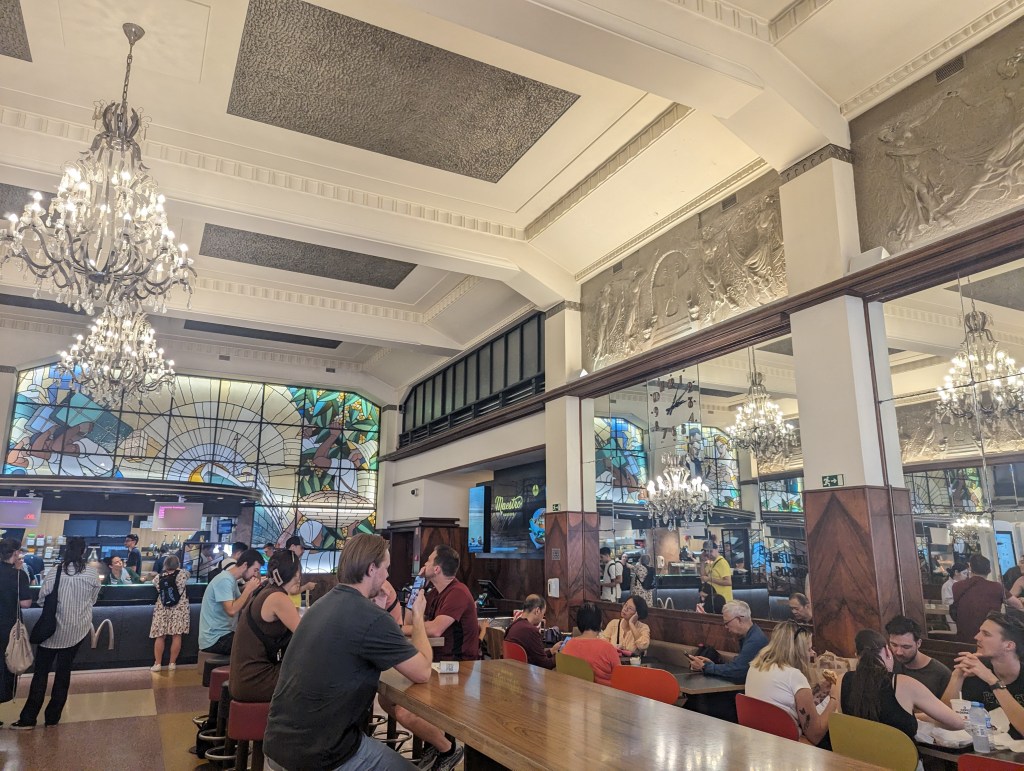
The next morning we had a walking tour with Ana. She showed us the “most beautiful McDonald’s in Europe,” which had been a cafe and was in an historically protected neighborhood of Porto. As tourism started to climb a decade ago, McDonald’s snatched up the spot.

Interior McDonald’s Porto, with stained glass and metal reliefs

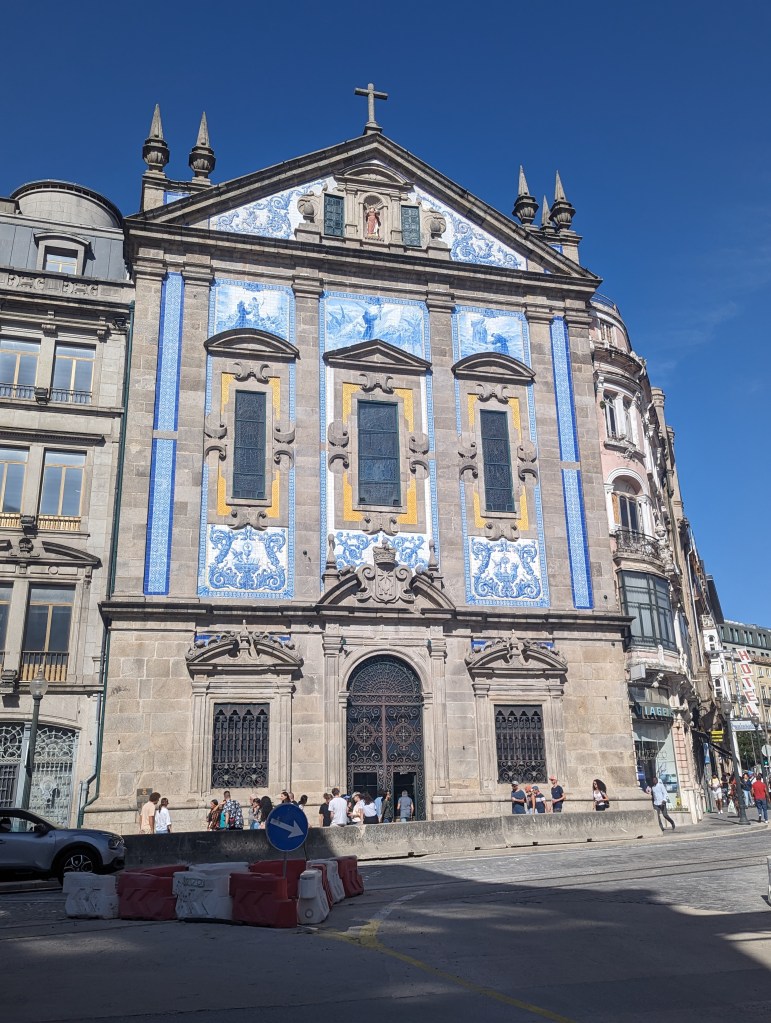
She showed us the Church of Santo Antonio Dos Congregados, built in 1703 and explained the use of tiles: Azulejos.

Church of Santo Antonio Dos Congregados

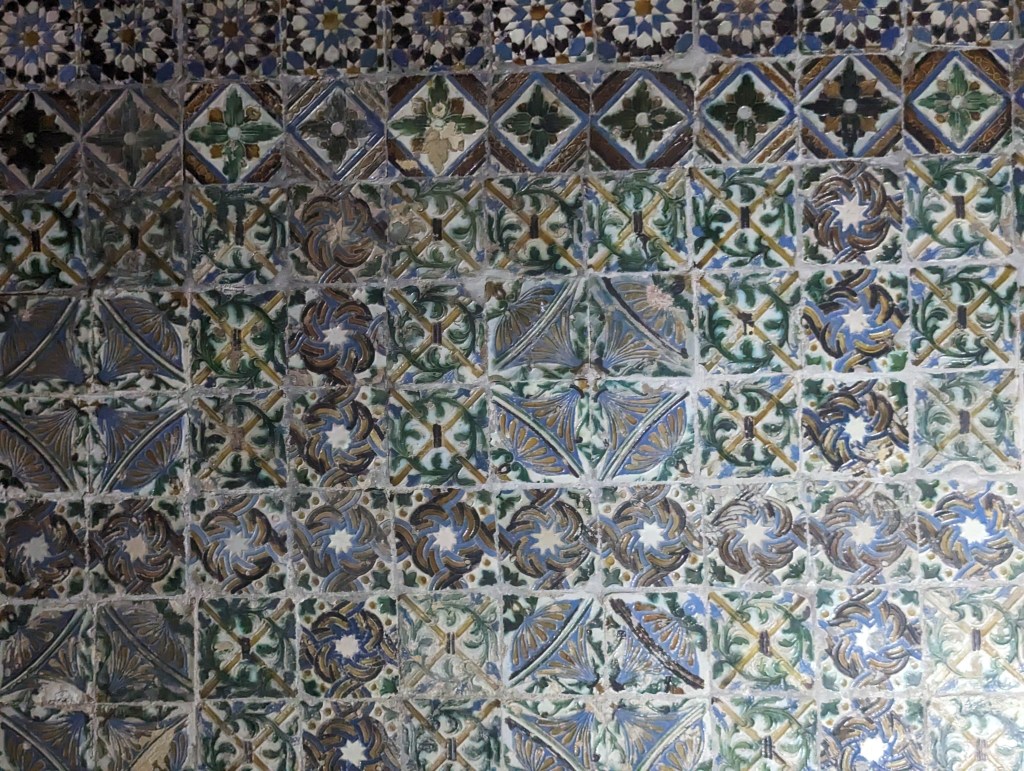
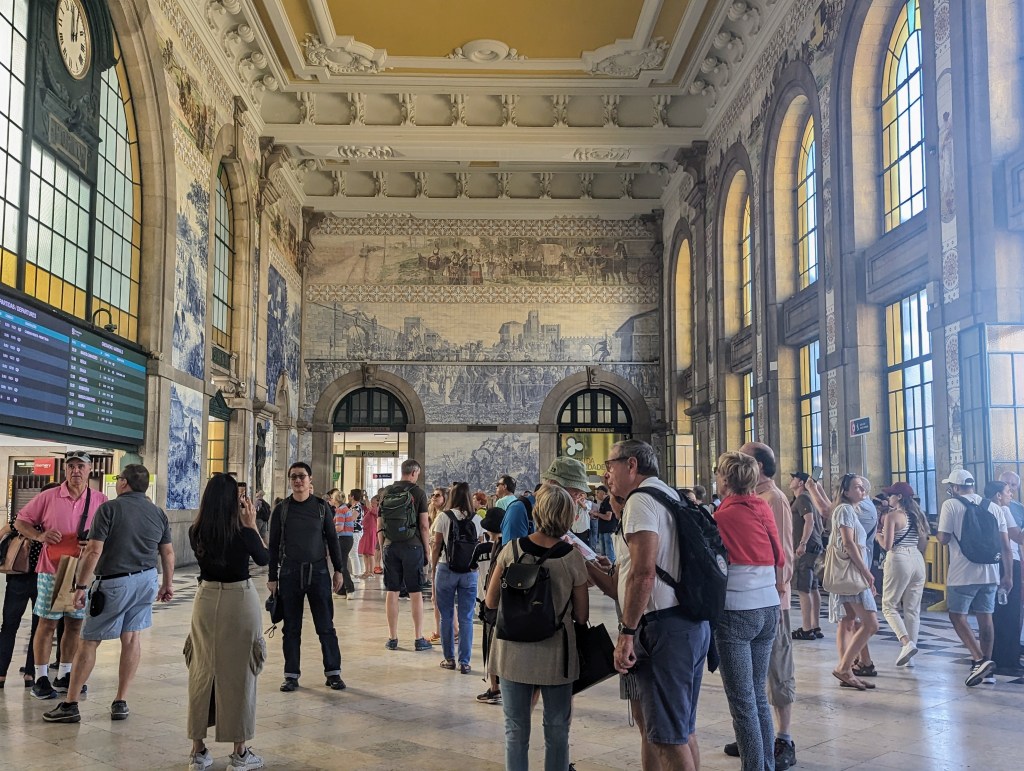
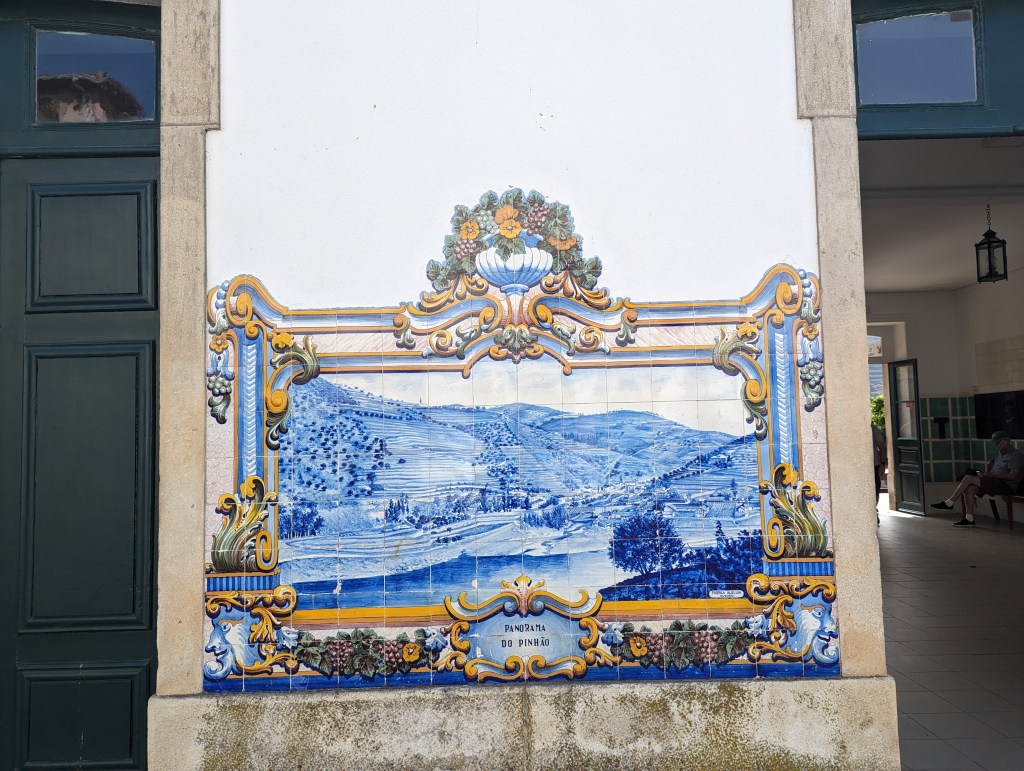
Azulejos are a unique type of tile deeply intertwined with Portuguese culture. Azulejos were originally for the outside of stone buildings, to better transmit heat, keeping the interior warmer in the winter. They were first introduced in the 15th century by King Manuel after he saw them in Seville and found them beautiful. The blue was influenced by both those from Delft, Netherlands, and those of the Ming Dynasties. Initially the blue tiles were very expensive, therefore used mainly by the church and the wealthy, but now are used extensively for interior decoration as well. As evident in the train station.

Porto Train Station

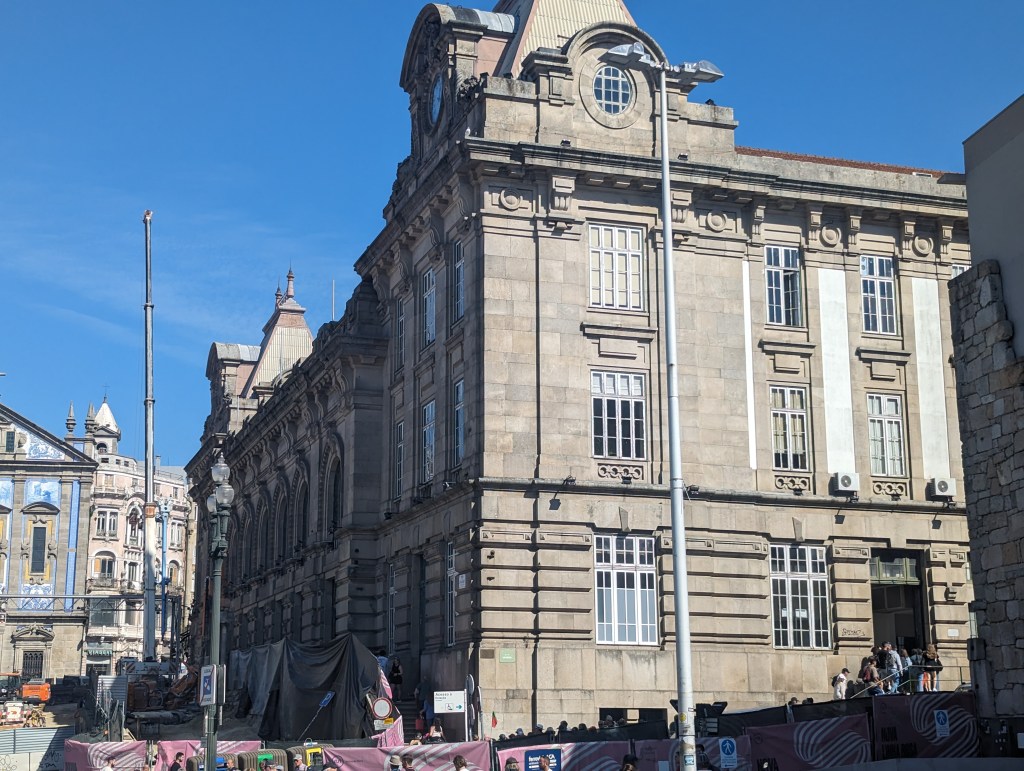
The station was built in the early 20th century on the site of a previous benedictine convent. Currently, a new metro is being constructed below it, and the construction mess and noise are boisterous at best.

outside the train station

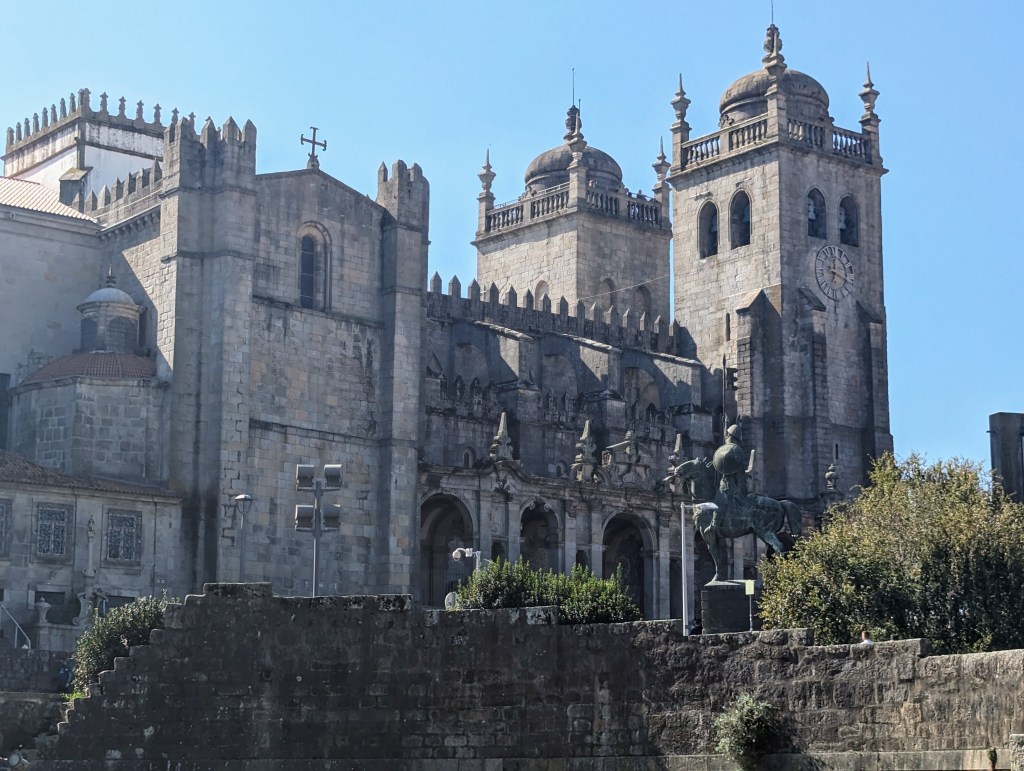
We walked past the cathedral of Porto.

Cathedral Porto

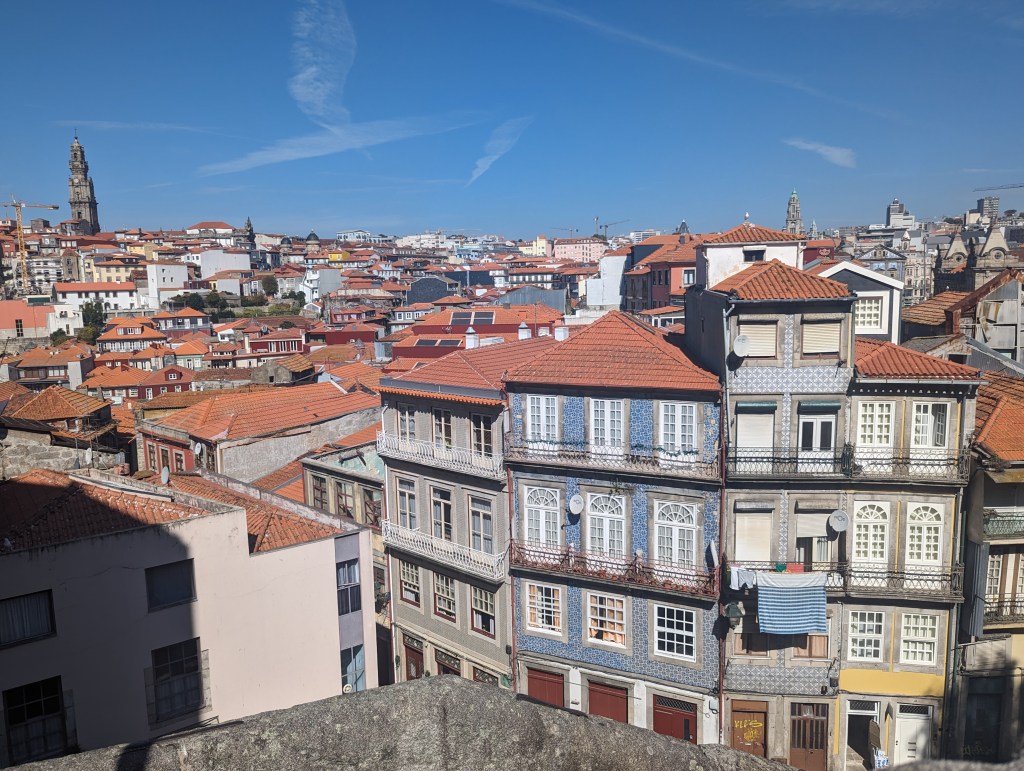
and she showed us a typical neighborhood in the old city of Porto.

She introduced us to nato, which is a Portuguese delicacy first made in Porto by the nuns. The monasteries would often be paid by farmers in eggs. The nuns used the egg whites to clean and starch the robes for the priests. They used the extra egg yolks mixed with sugar, then cooked in pastry to make these sumptuous delicacies.

natas, best eaten warm

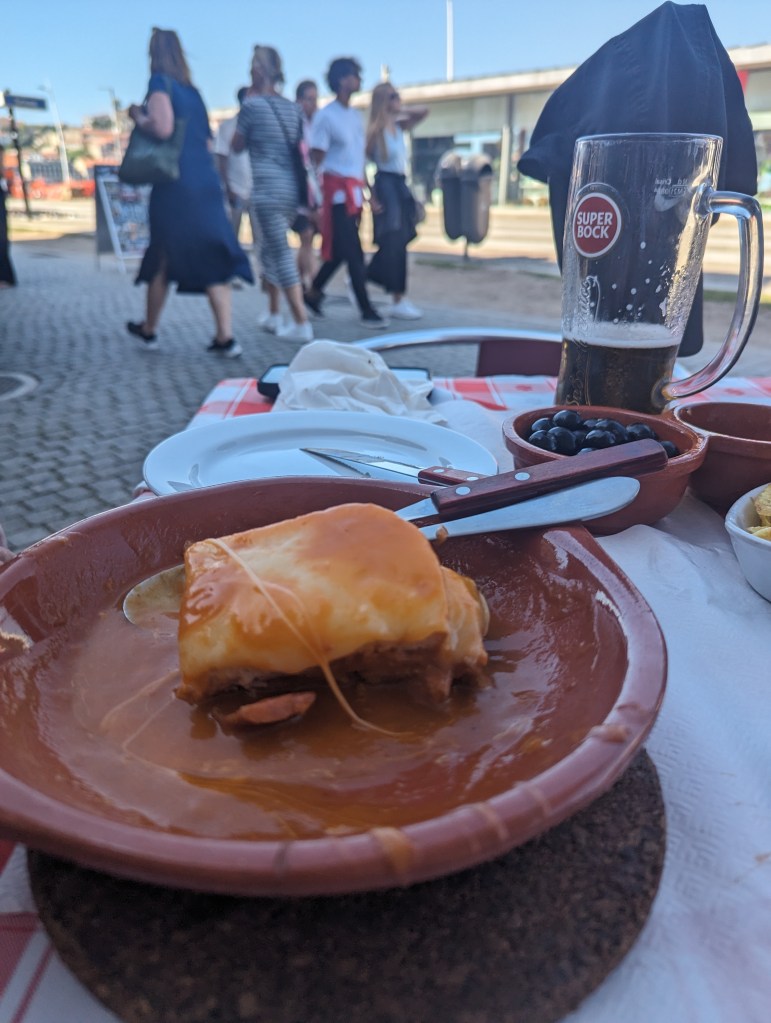
She encouraged us to try the local meal Francesinha, a sandwich made up of several layers, usually meats, but can be vegetarian, then covered in a spicy tomato sauce, often topped with an egg. Legend has it that it was invented in the 1950s by a Frenchman living in Porto who was disturbed by how “covered up” Portugese women were compared to the French and wanted a dish spicy enough to “blow their skirts off.” By today’s standards, not so spicy.

And finally, she introduced us to Fado, which is Portuguese poems sung to music with “much emotion,” usually sad enough that the best compliment to the singer is if the audience is crying at the end of the song.

After the tour, we headed to the market for a late lunch.

Porto Market

The next morning we visited the cathedral and the Bishops’ Palace, but were unimpressed with both. Then it was time to cross over to the Gaia side.

View Gaia from the bridge
looking back at Porto from Gaia

We decided to try the Francesinha for lunch.

Some of the port wineries and stores were beautiful.

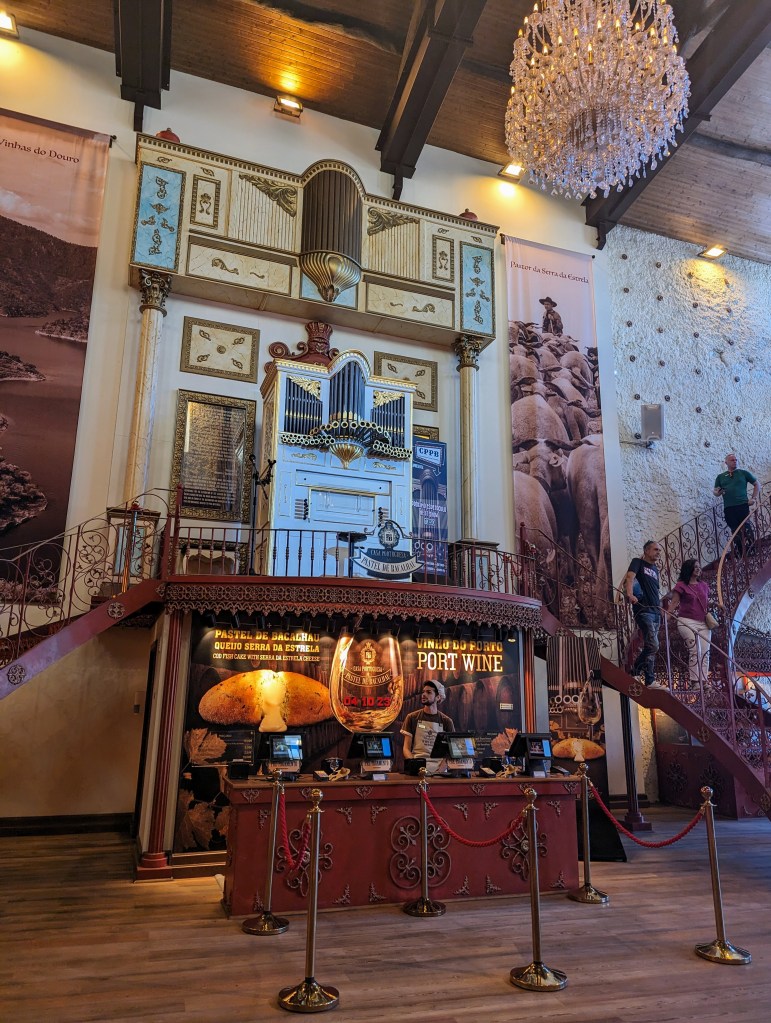
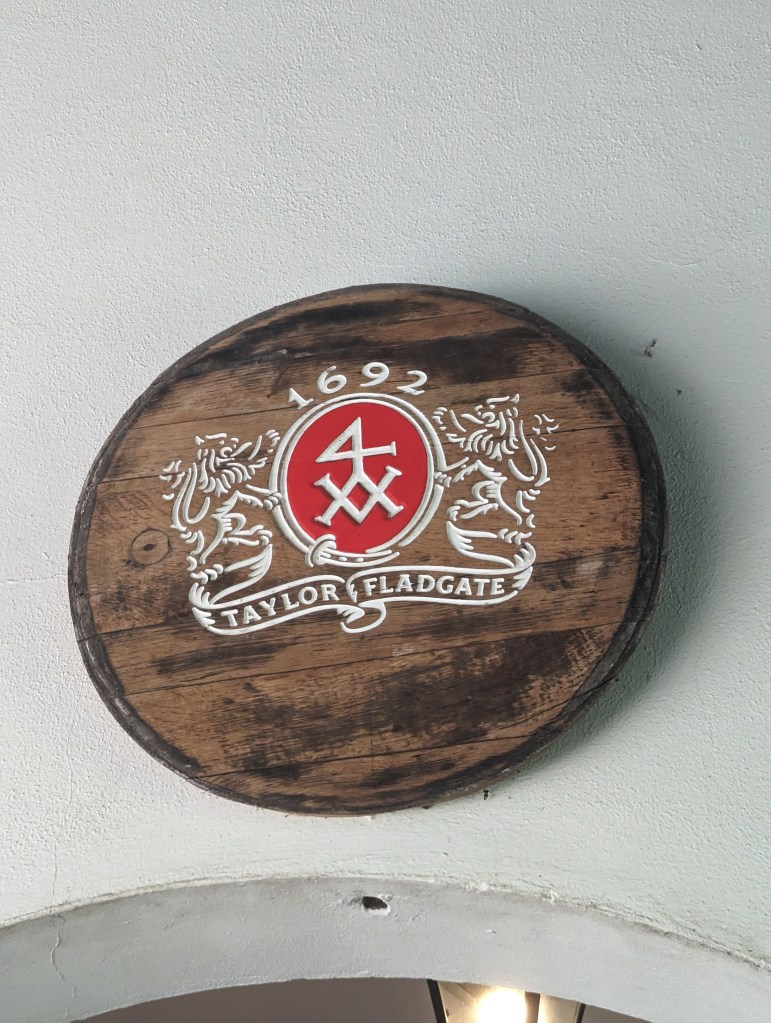
We climbed the very steep hill to try a tasting at the Taylor winery, which turned out to be a beautiful setting, and not bad wines.

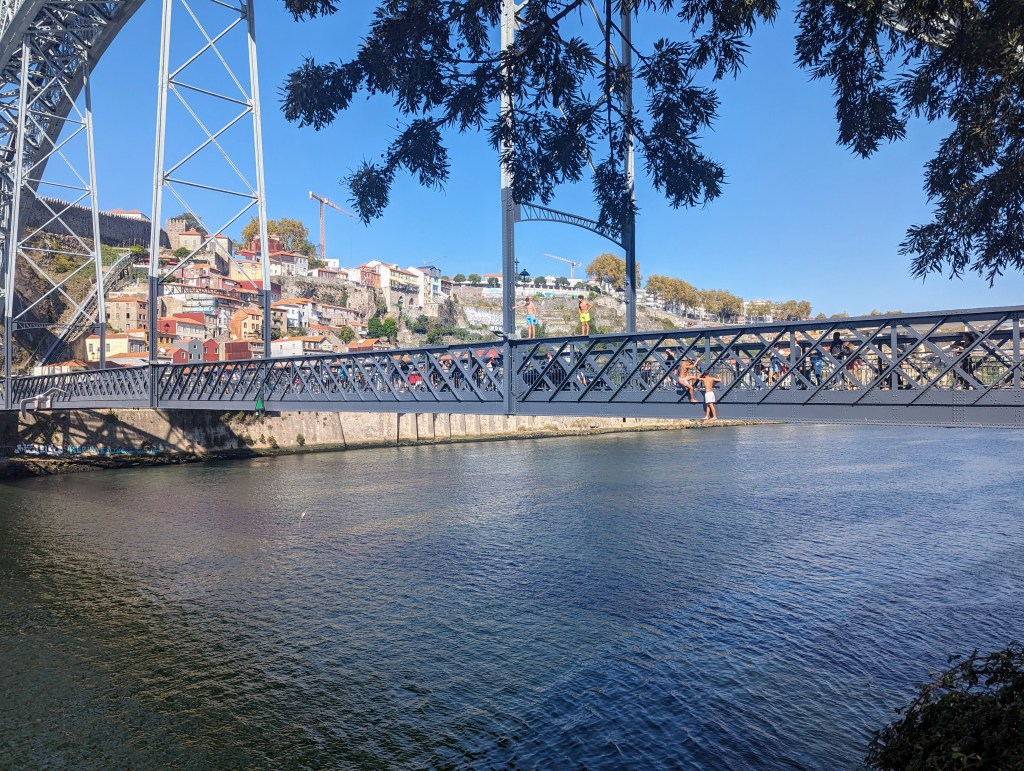
We arrived back to the base of the bridge just as come local youths were jumping into the river as a local street band played the Beatles’ Yellow Submarine.

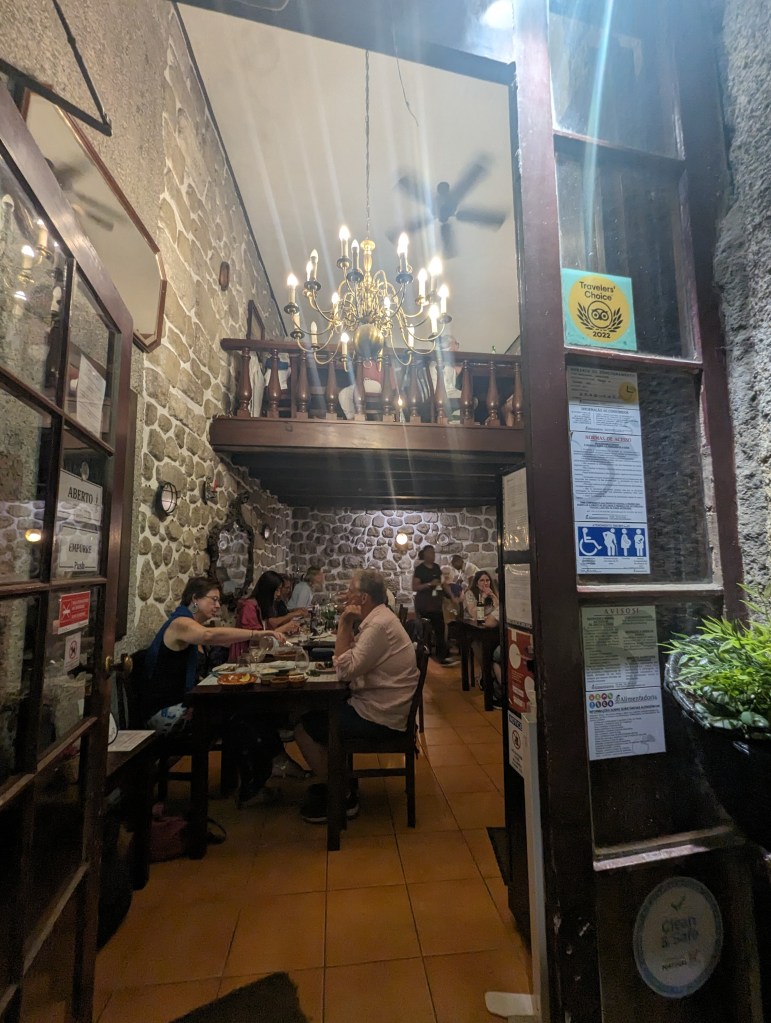
That night we had the most delicious dinner at restaurant serving local cuisine called Terreirinho, so excellent.

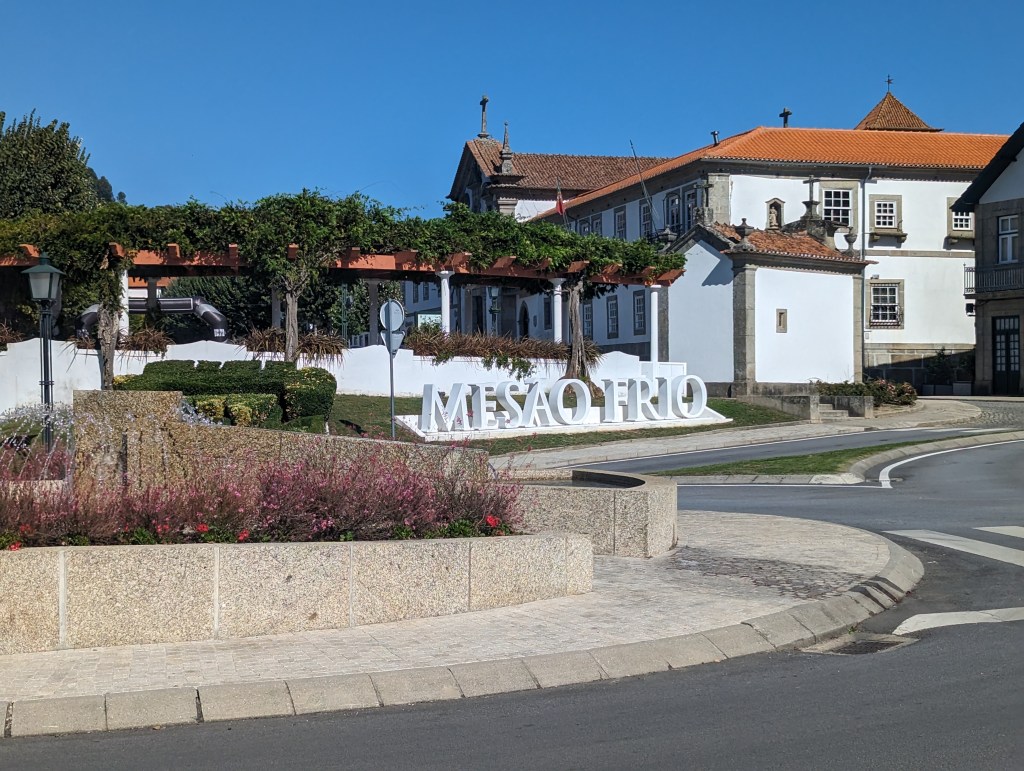
And then it was on to the Douro Valley. We had booked at Casa de Canilhas and arrived early, so first had lunch in the local town of Mesao Frio.

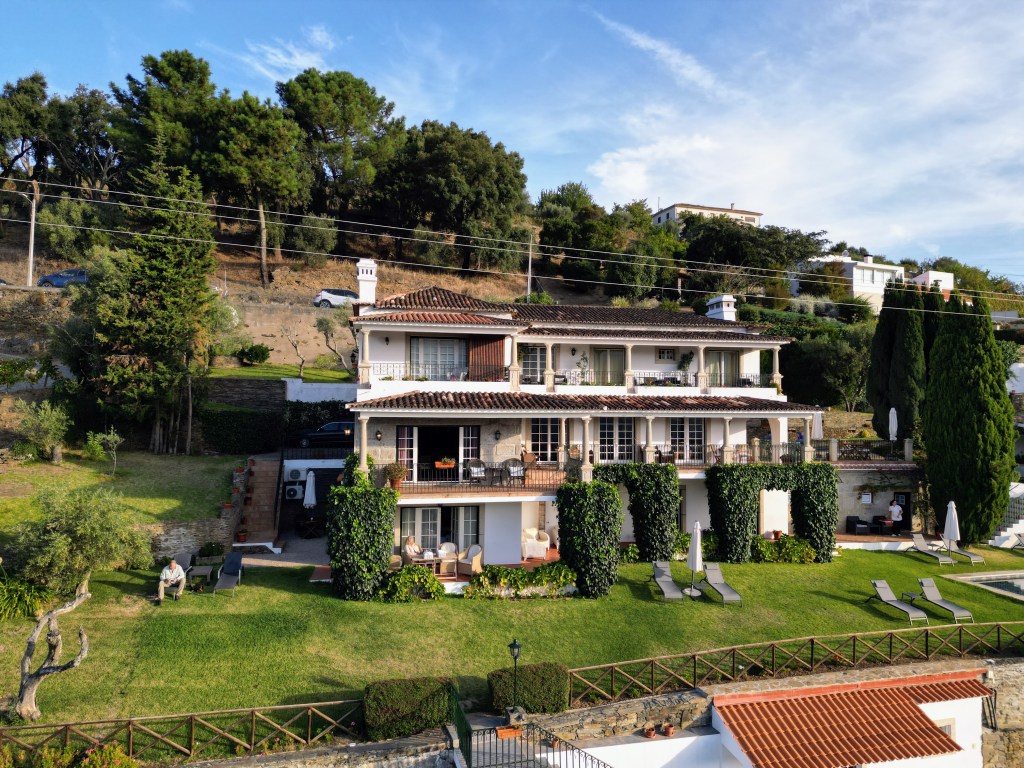
We then headed over to our hotel. We had expected it to be beautiful, but it actually took our breath away. Pictures cannot capture all of the beauty, but we tried.

view from our pation
view from our infinity pool.
our patio, on which breakfast was served every morning
drone shot of our hotel
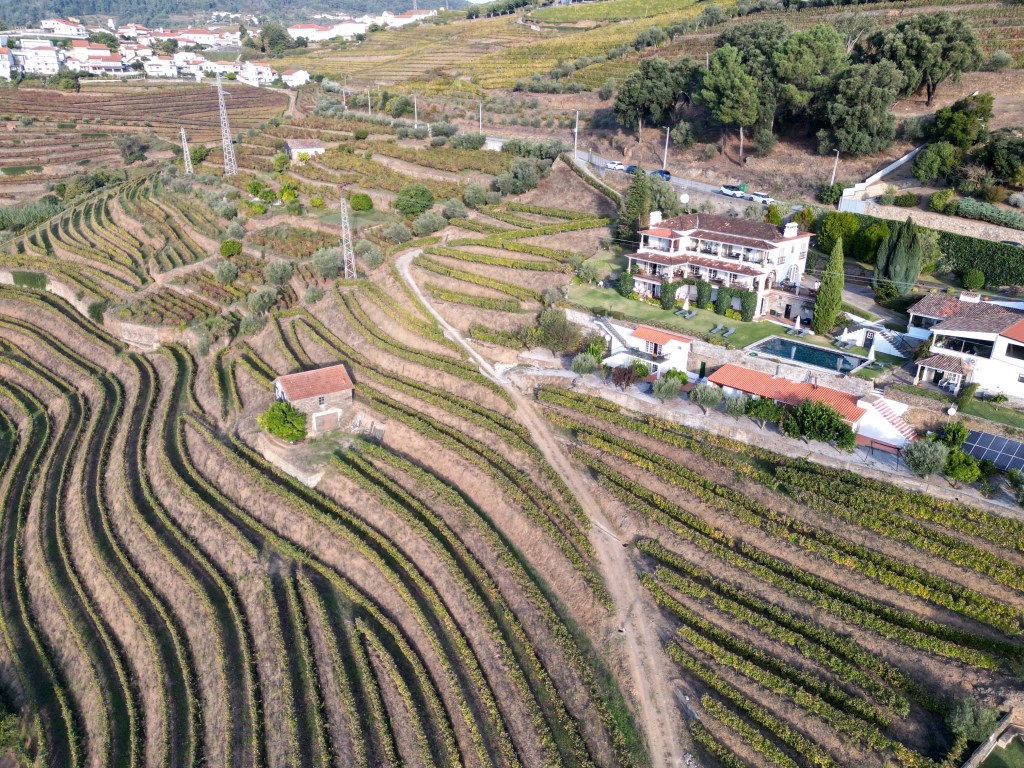
higher drone view of the hotel showing the area around the hotel
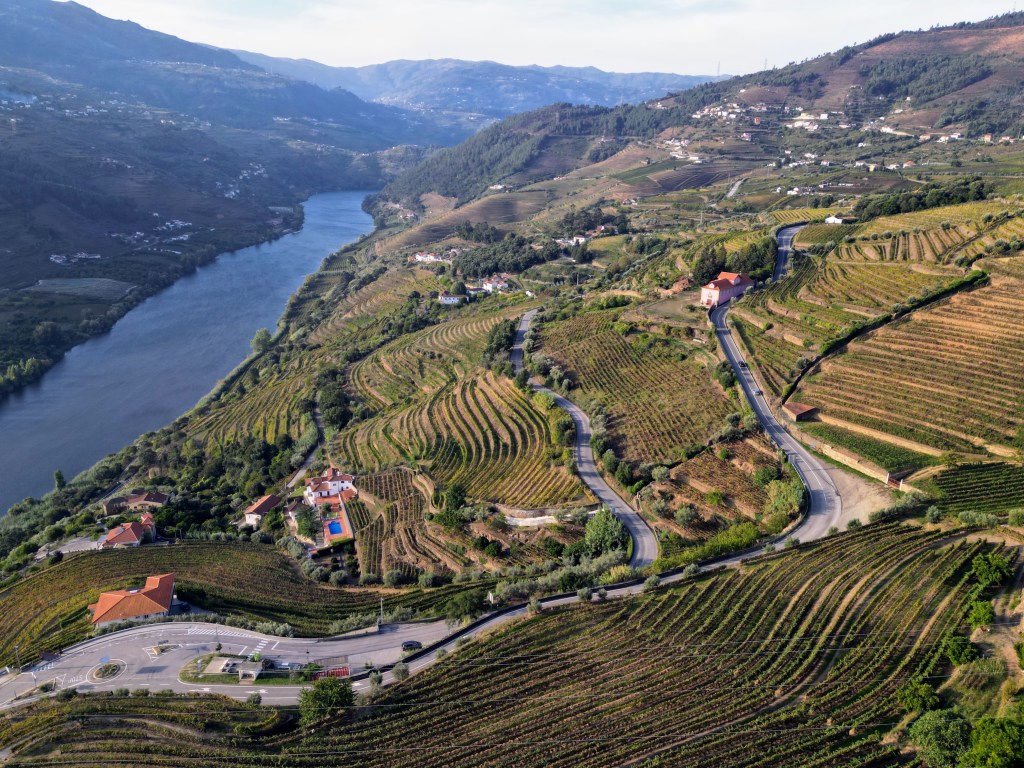
drone shot of the valley below the hotel

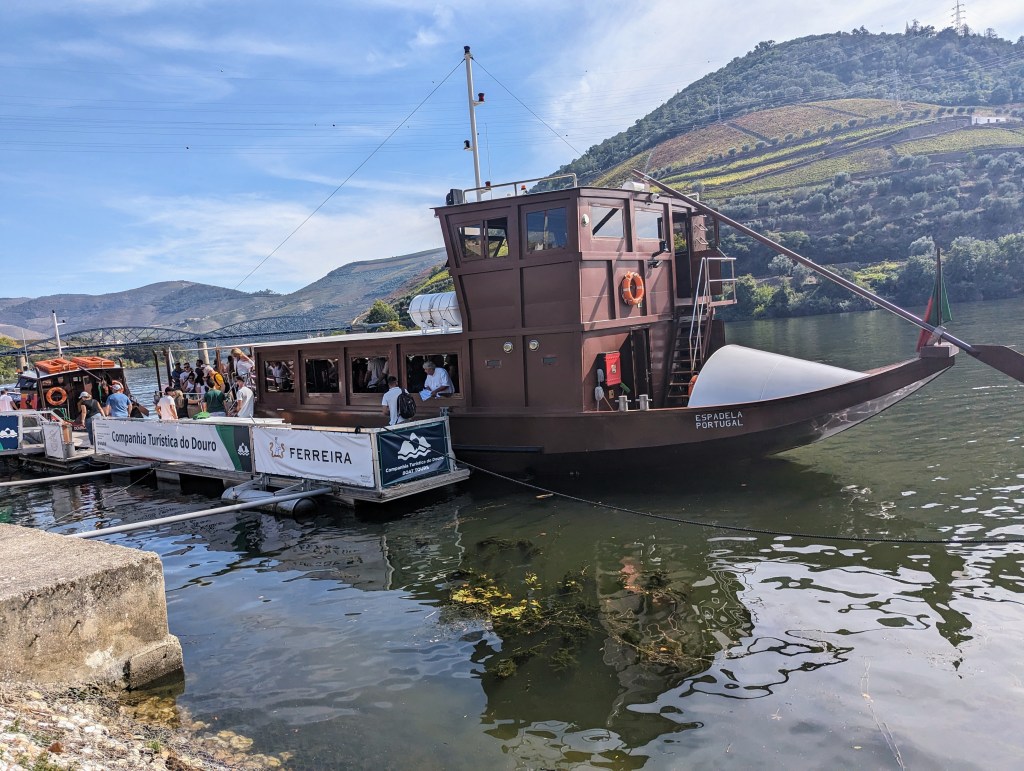
It was with reluctance that we tore ourselves away the next morning to drive along the Douro River on its southern side all the way to the town of Pinhão. There we took a river cruise aboard a historically typical fishing boat.

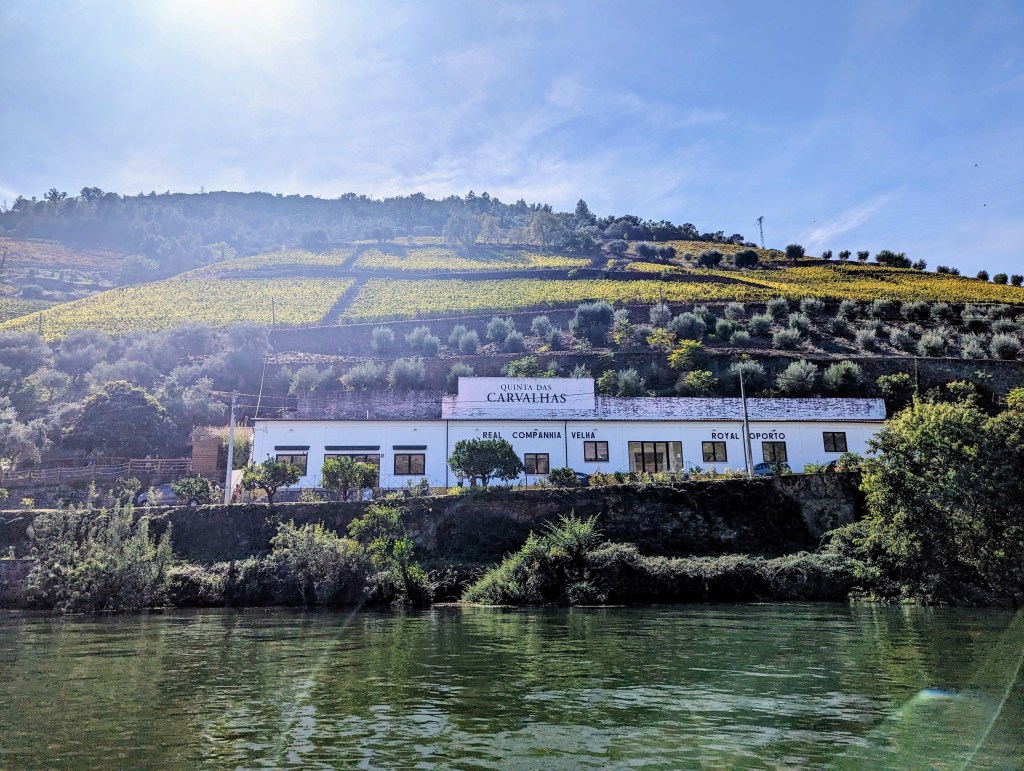
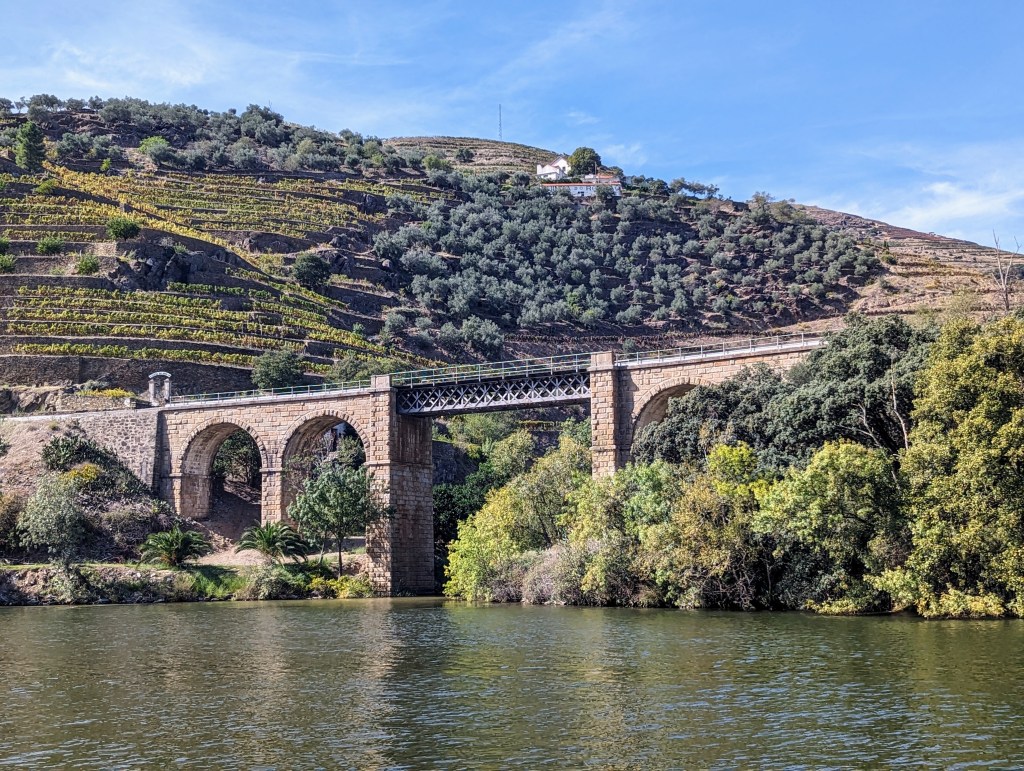
There were wineries and vineyards all along the way.

Quinta Carvalhas

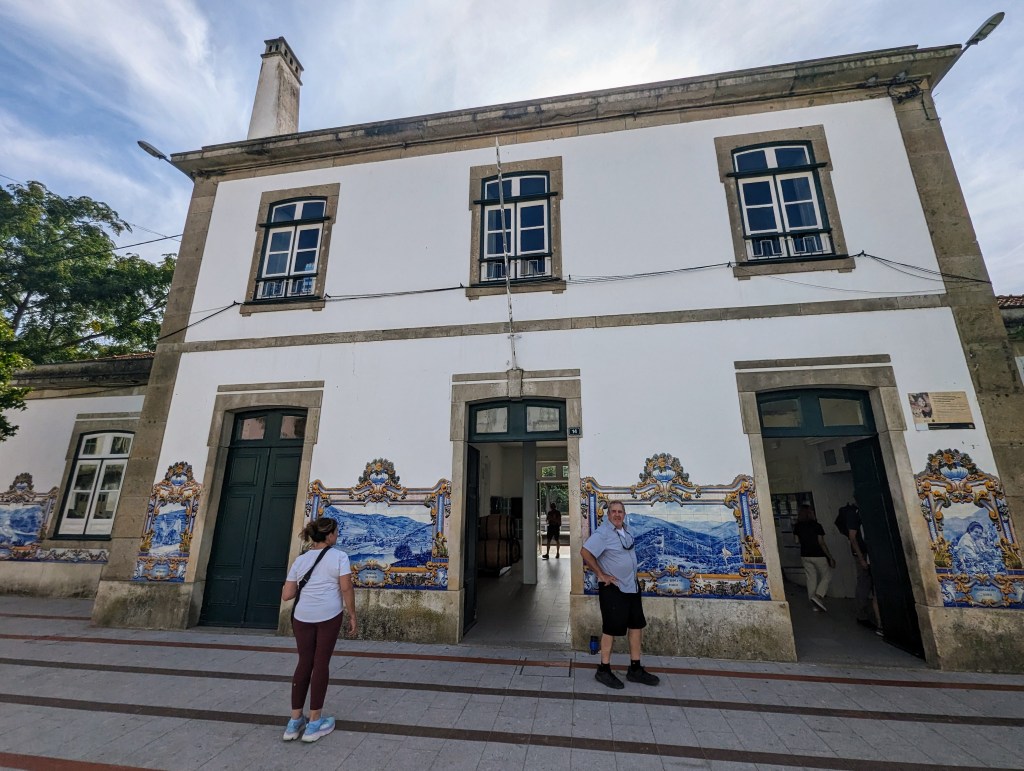
Before heading to the winery, we stopped by the train station in Pinhão to see it’s famous tile pictorial scenes.

Pinhão Train Station

We then went for a wine tasting at Quinta Carvalhas, which is considered to be one of the best in the region.

wine tasting at Quinta Carvalhas

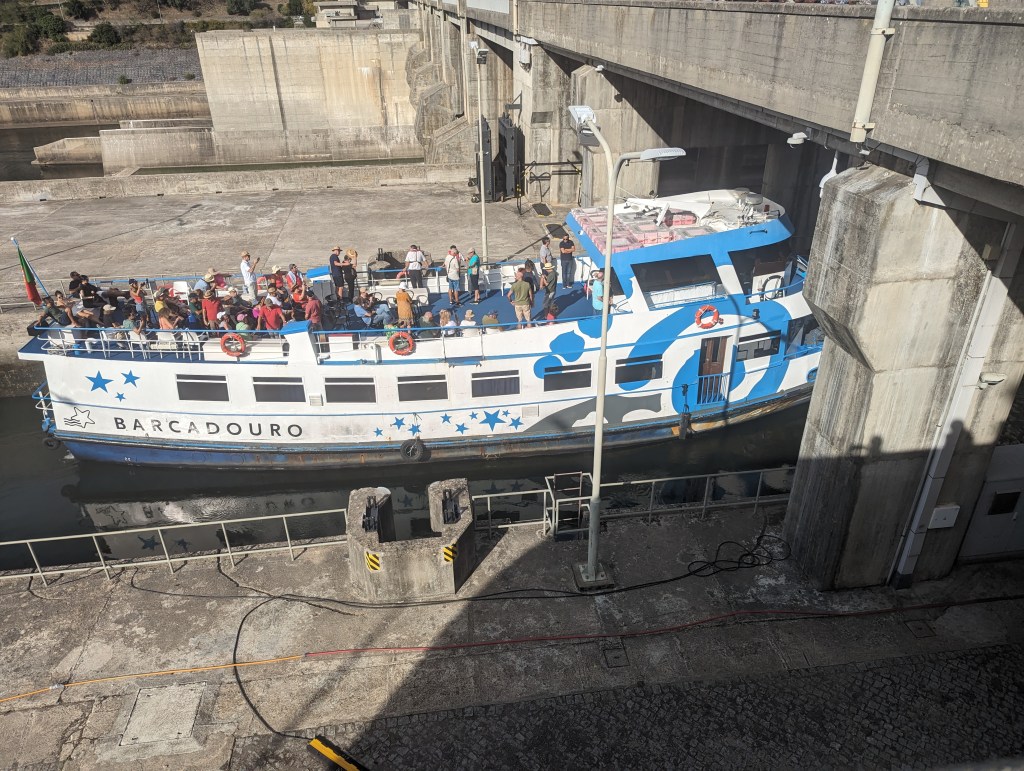
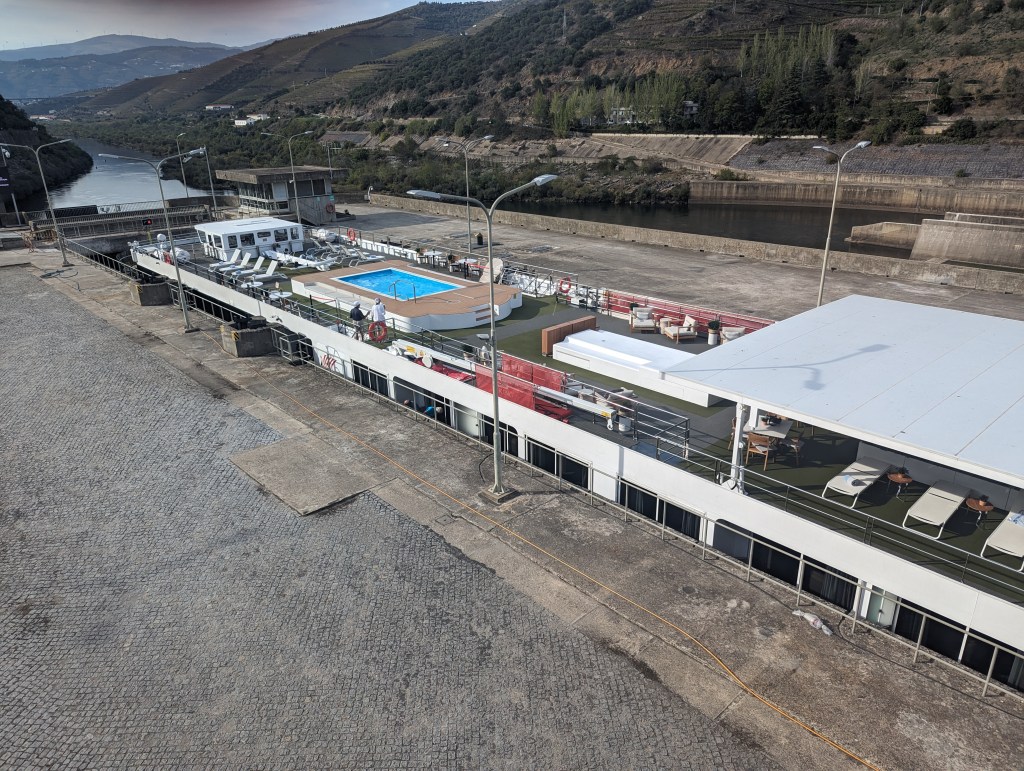
But we were unimpressed with the wines, so decided to forgo any further tastings and just enjoy the drive and the views. On the way back down the Douro River, we happened to pass the locks just as a day tour boat was coming upstream, and a Viking Cruise ship was headed down. Eric was fascinated with watching the locks functions.

tour boat headed up river
Viking ship lowering to lower river

We stopped in the town of Lomego and visited its cathedral.

Lomego Cathedral

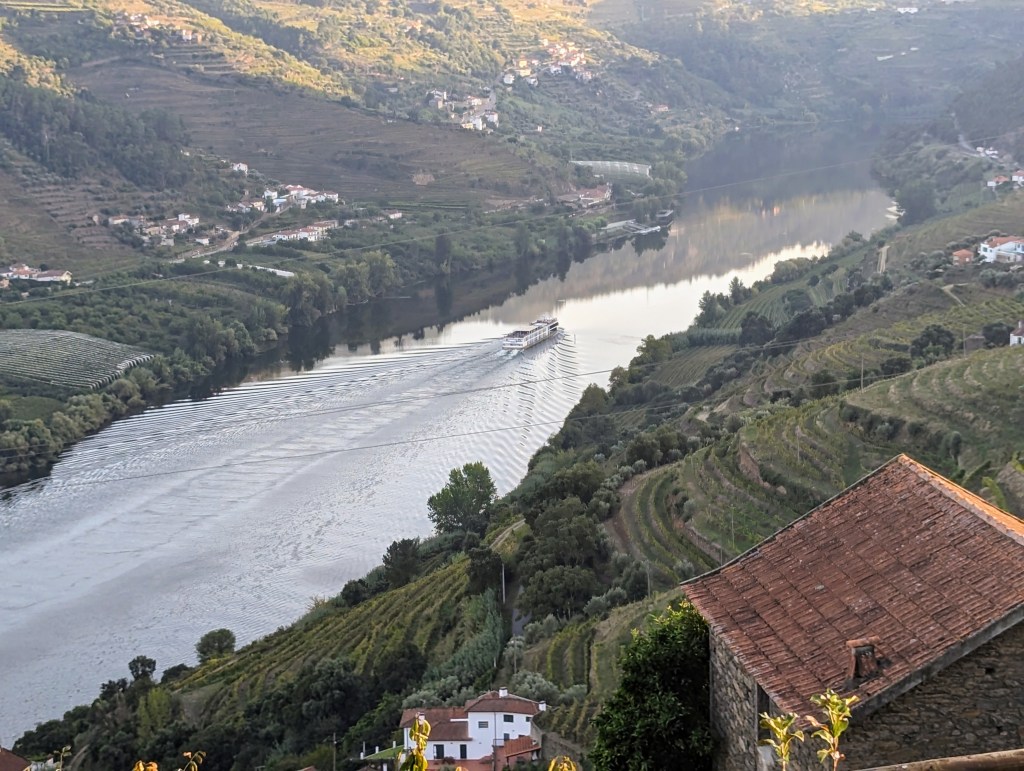
When we got back to our hotel about an hour later, it was in time to see the same Viking cruise ship passing along downriver.

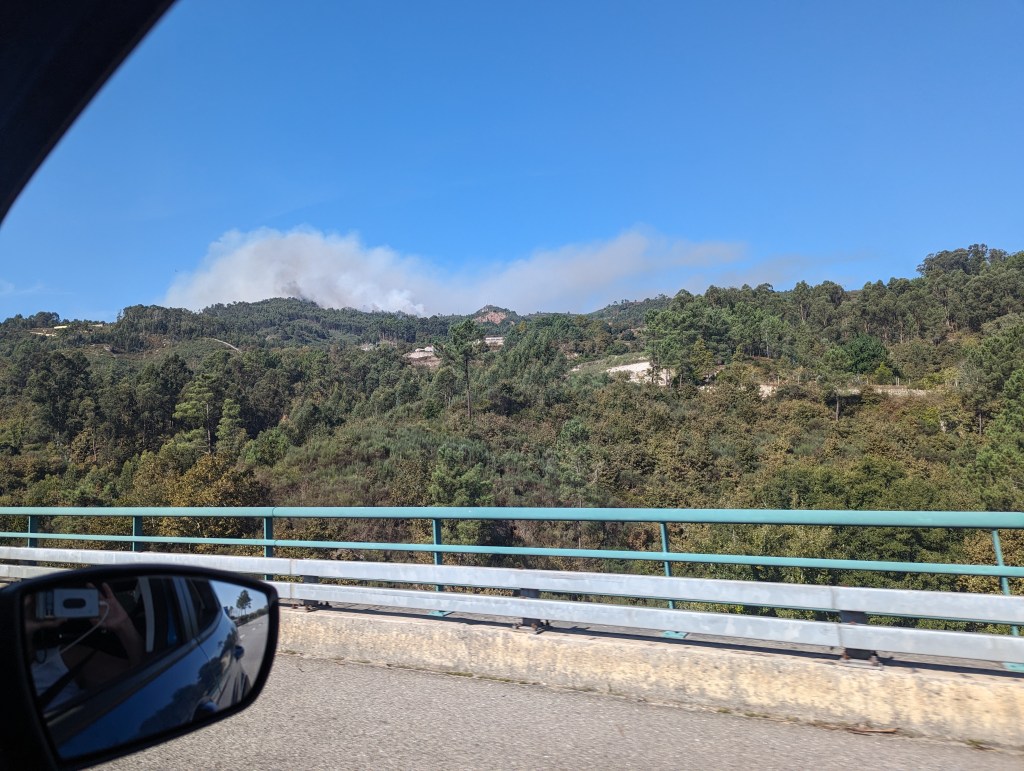
The next morning as we left the Douro Valley, we passed two fires up in the mountains. We had commented to each other on the way in how much like tinder the woods looked. The recent run or 90 degree days did not help.

fire up on the mountain and seen from our car

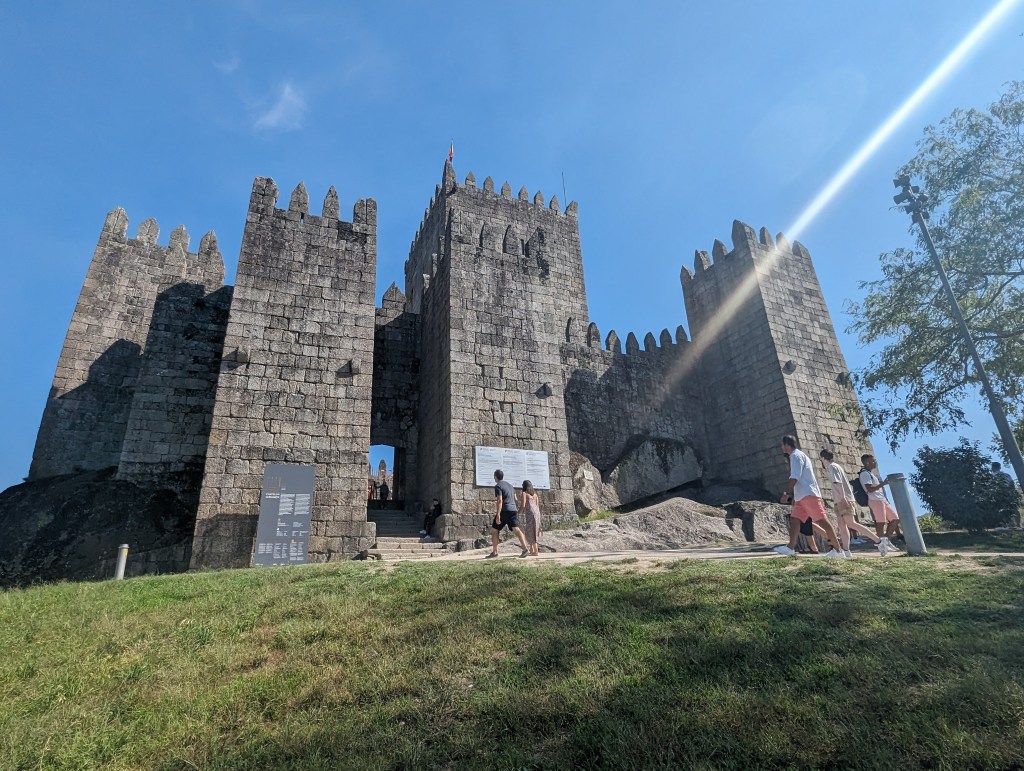
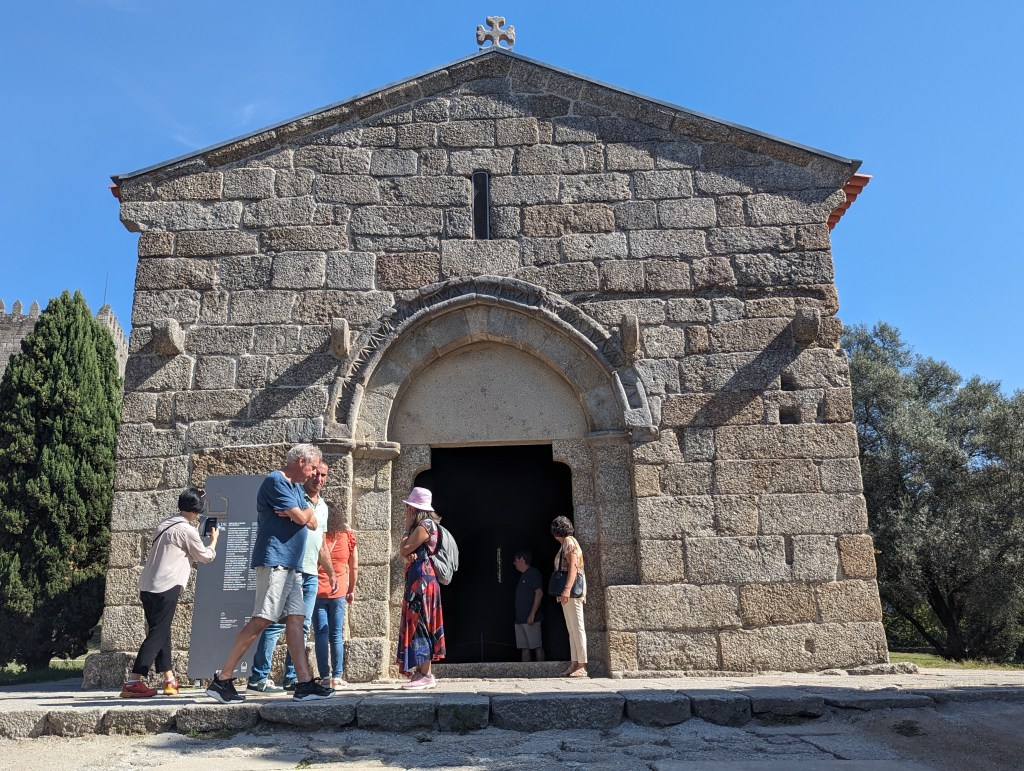
Our last stop in the Northern Region was in the small well preserved midieval town of Guimarães, where we visited the 10th century castle, church, and Duke’s Palace.

Guimarães Castle
Guimarães Church
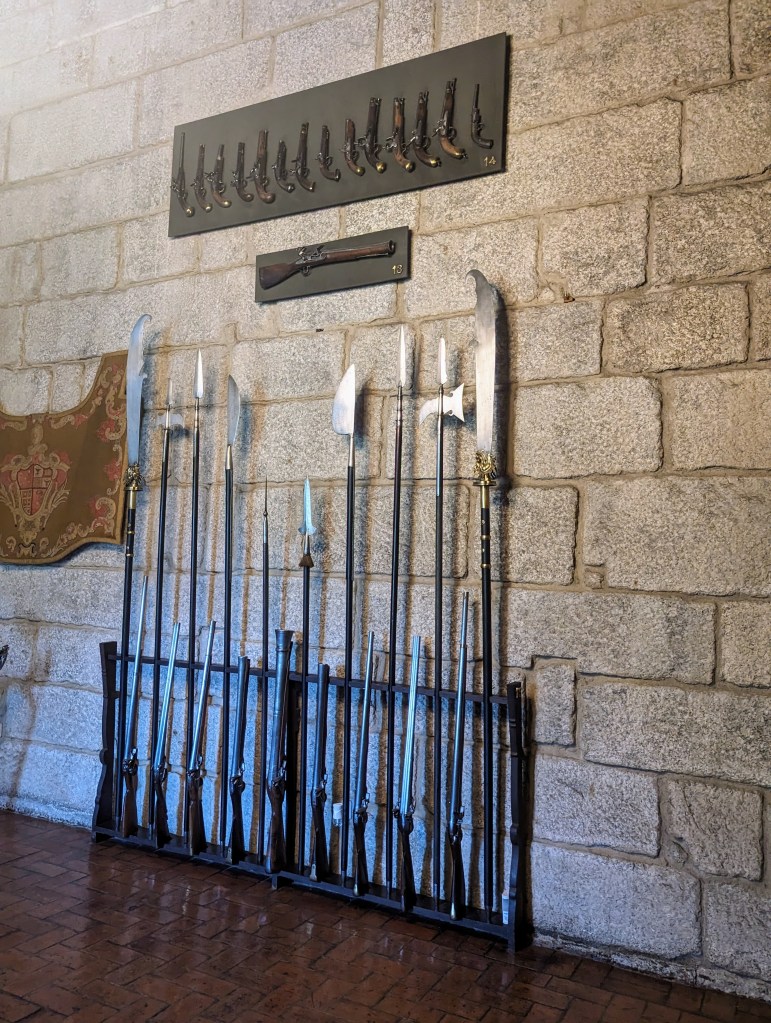
Guimarães Duke’s Palace arms room
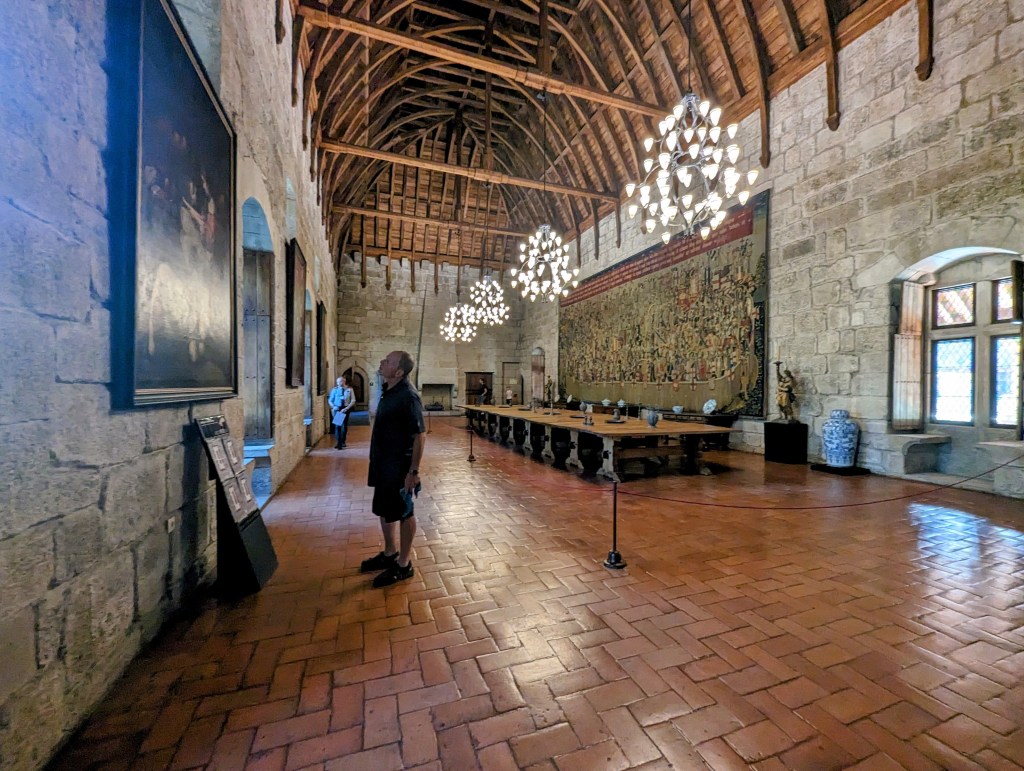
Guimarães Duke’s Palace dining hall
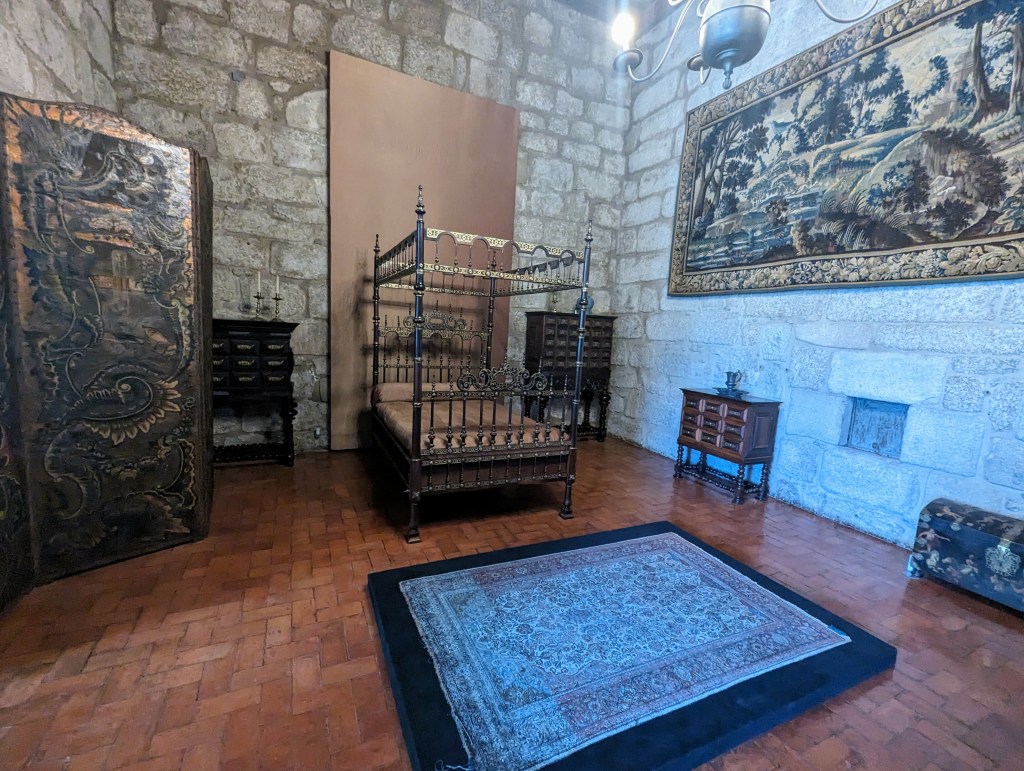
Duke’s bedroom
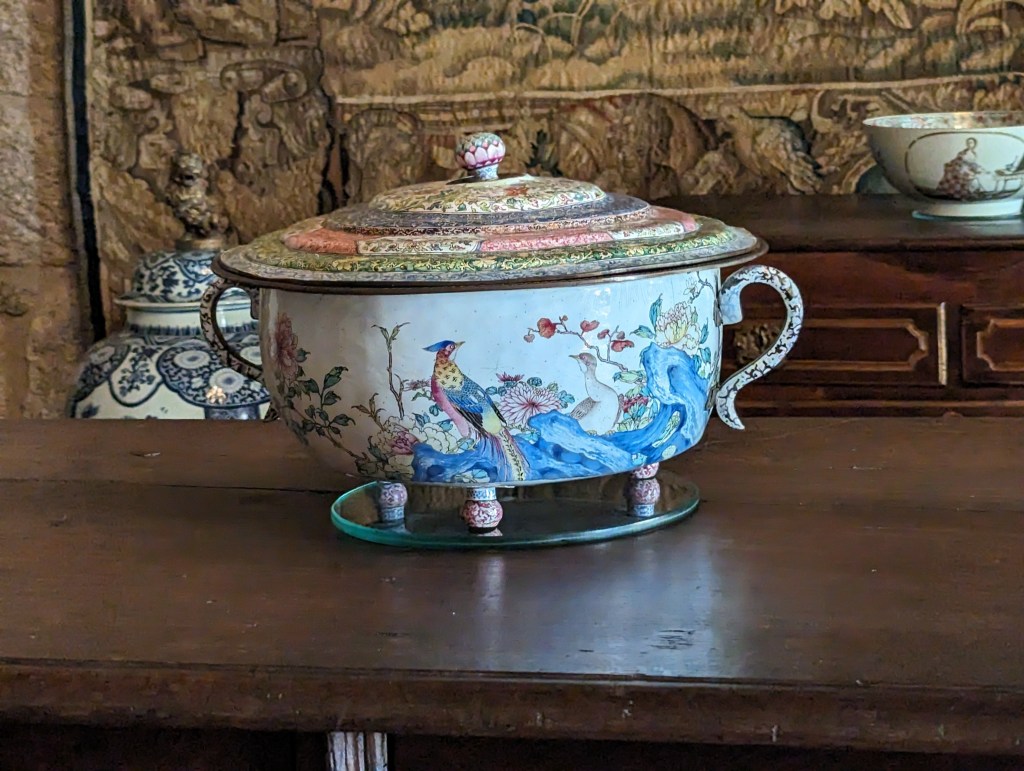
I would like this to be my new dutch oven

Then we left the Northern Region and headed to the Central Region of Portugal.