
Our first stop in the Central Region of Portugal was the cute and romantic town of Aveiro. Like most of Portugal, this town has seen a huge uptick in tourism in the last decade. The fist thing one notices is the bridges covered in ribbons and the boats in the canals.
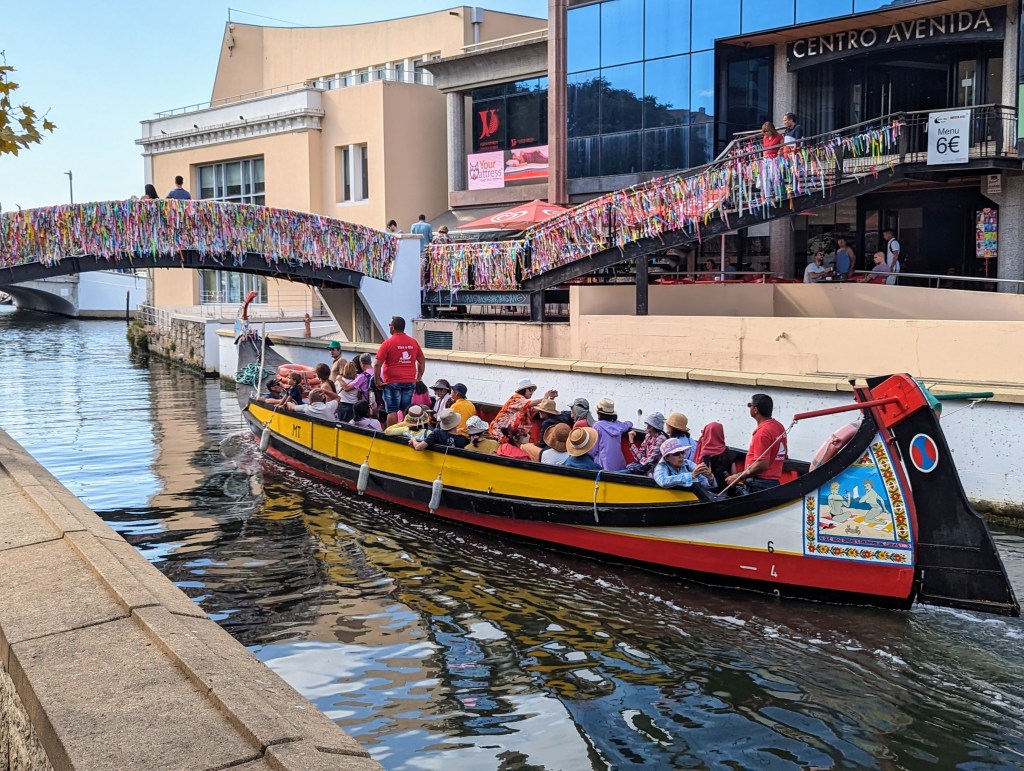
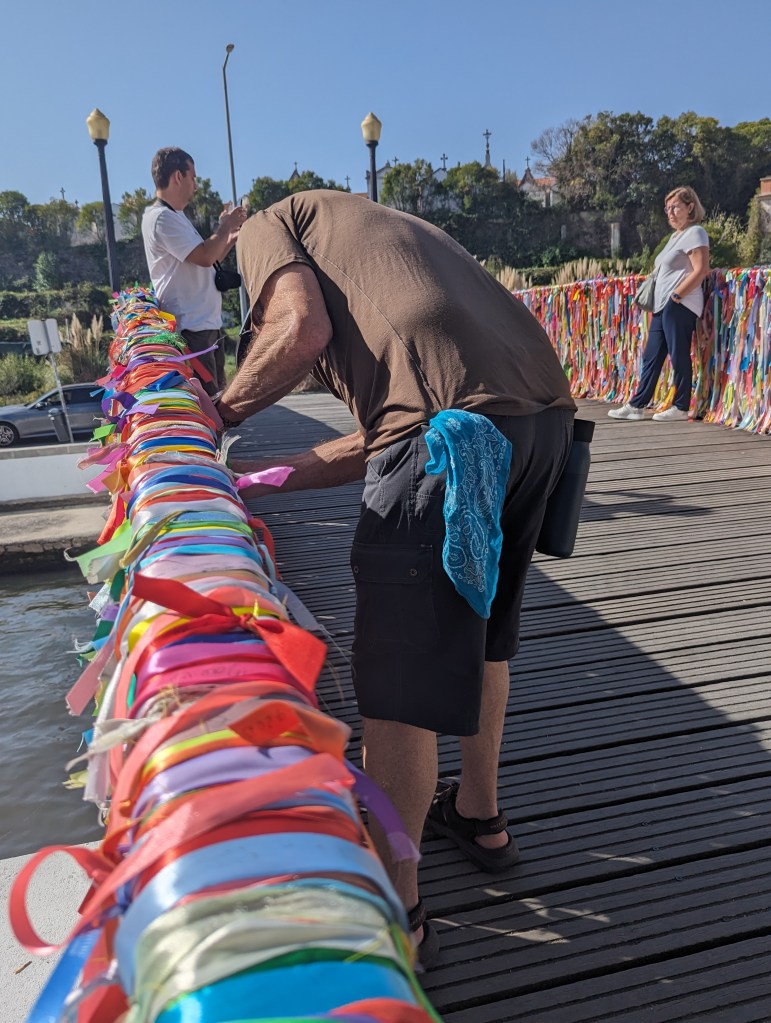
The ribbons are, similar to the locks in Paris, tied onto the bridges by lovers to represent their eternal love. The locals like to say that they are much more beautiful than locks, and more ecologically friendly. They certainly are colorful. We quickly checked into our very well positioned Hotel Aveiro Palace. We actually had one of the corner rooms overlooking the canals.

Then we immediately went for a boat ride. The boat: a moliceiro is a traditional boat of the Ria de Aveiro, very similar to a Venetian gondola. The boat got its name because it was used to transport and collect moliço, a type of seaweed abundant in the region that was used as fertiliser. Today they are only for tourists.
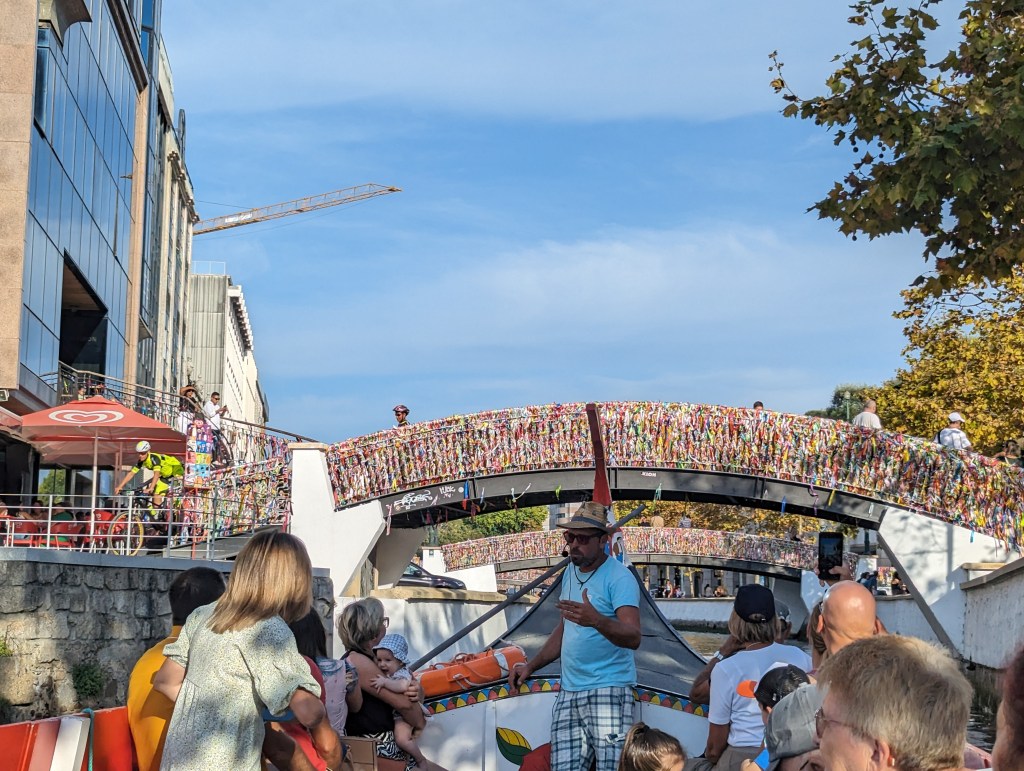

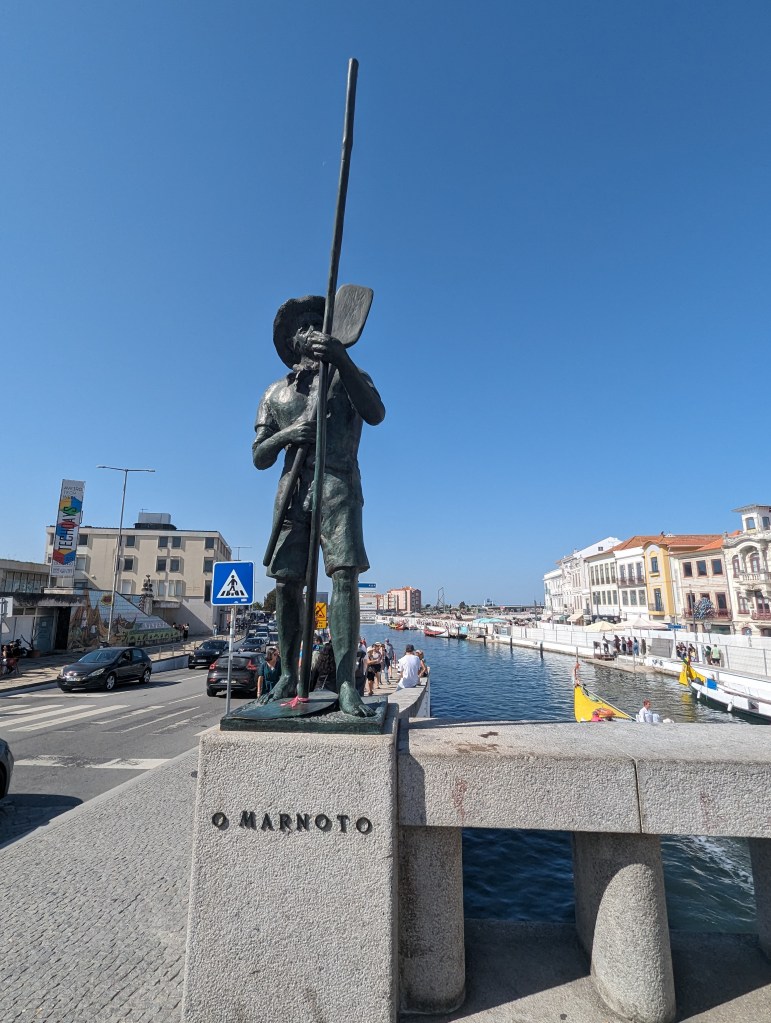
Our guide explained that historically, Aveiro’s major export for centuries, starting in the 10th, was salt. The men who harvested the salt were called the marnotos.
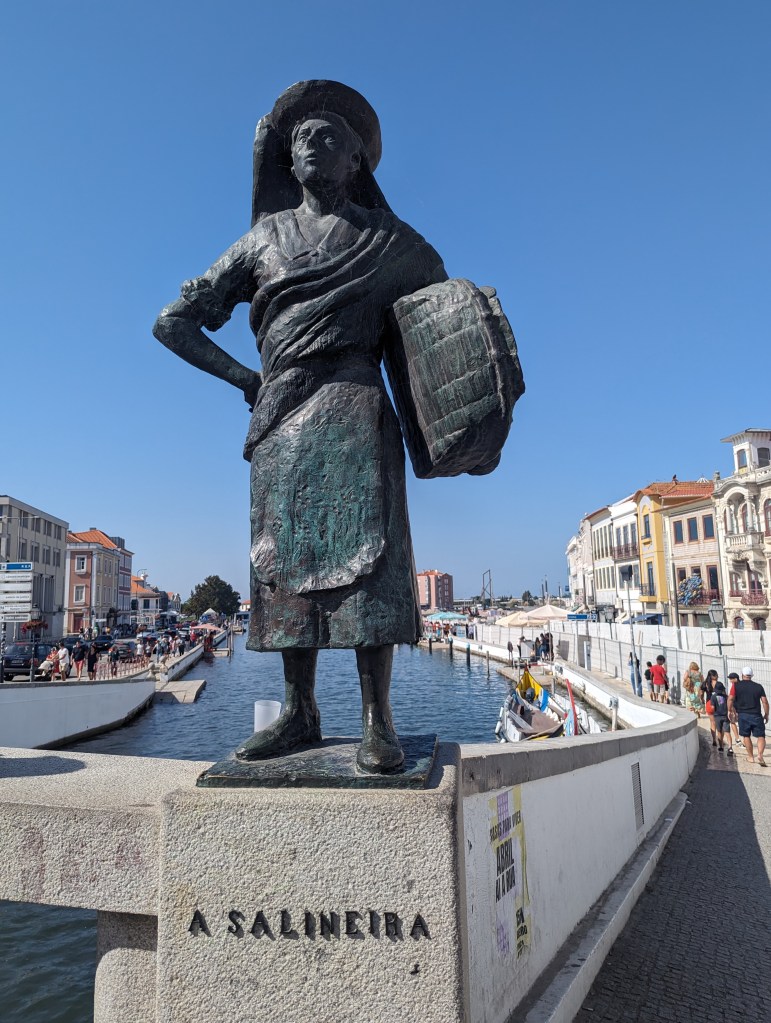
The women, the salineiras, then carried the salt on their heads to the large boats for shipping.

He also told us that regularly, about once a week or so, the canals need to be totally drained because otherwise they start to smell bad. It takes about 8 hours to drain them then refill, so it is usually done overnight.
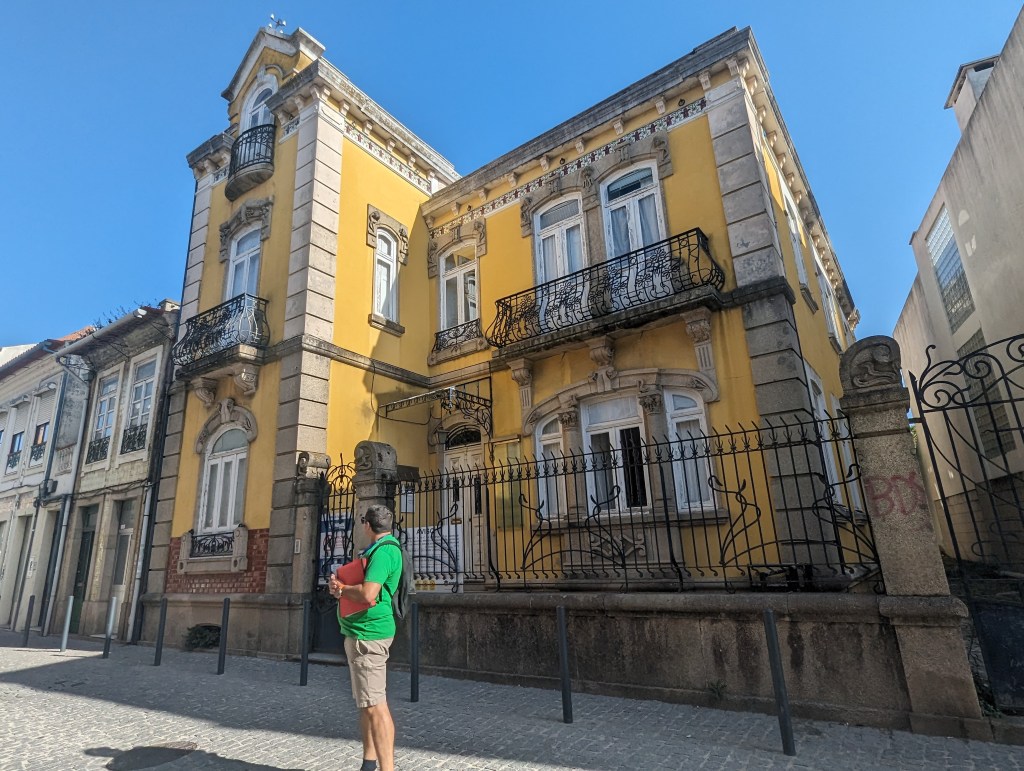
Aveiro is also known for its many stunning Art Nouveau buildings from the early 20th century, many of which are along the canal.
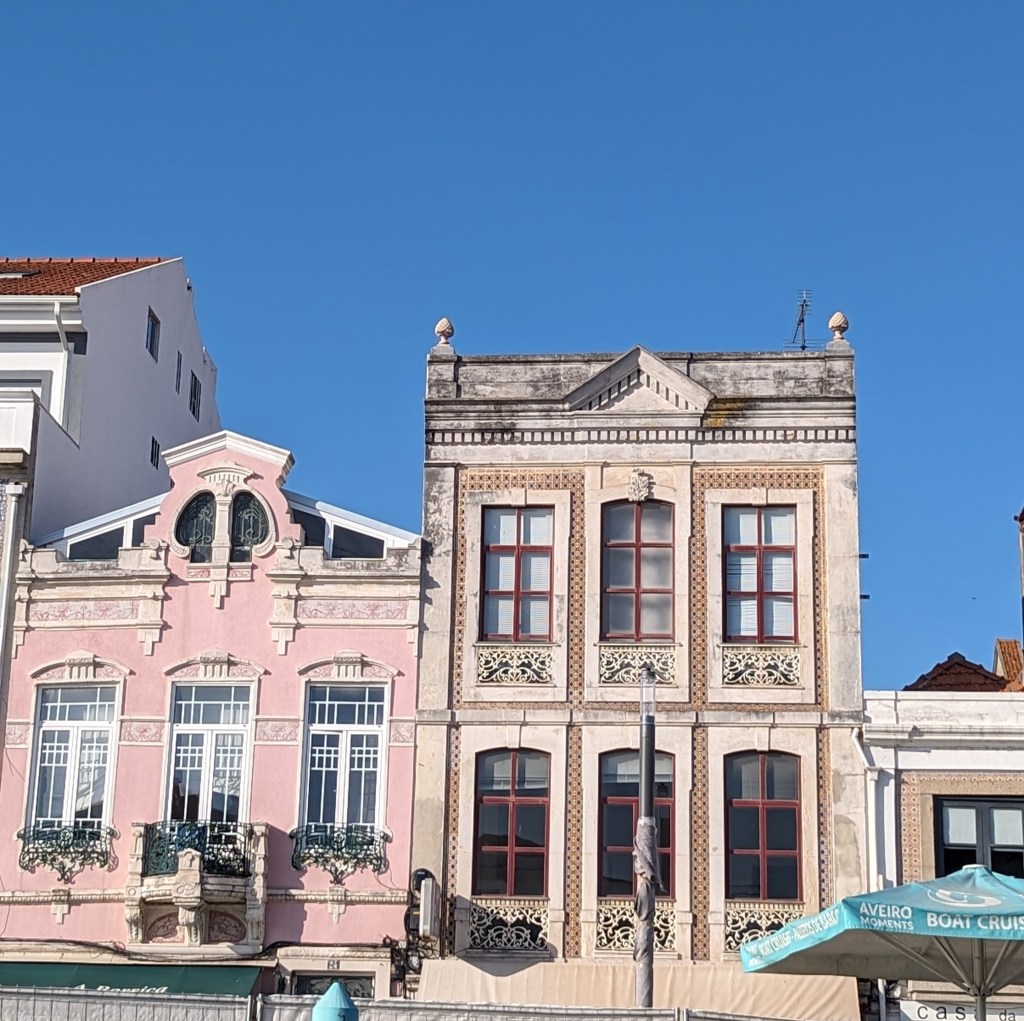
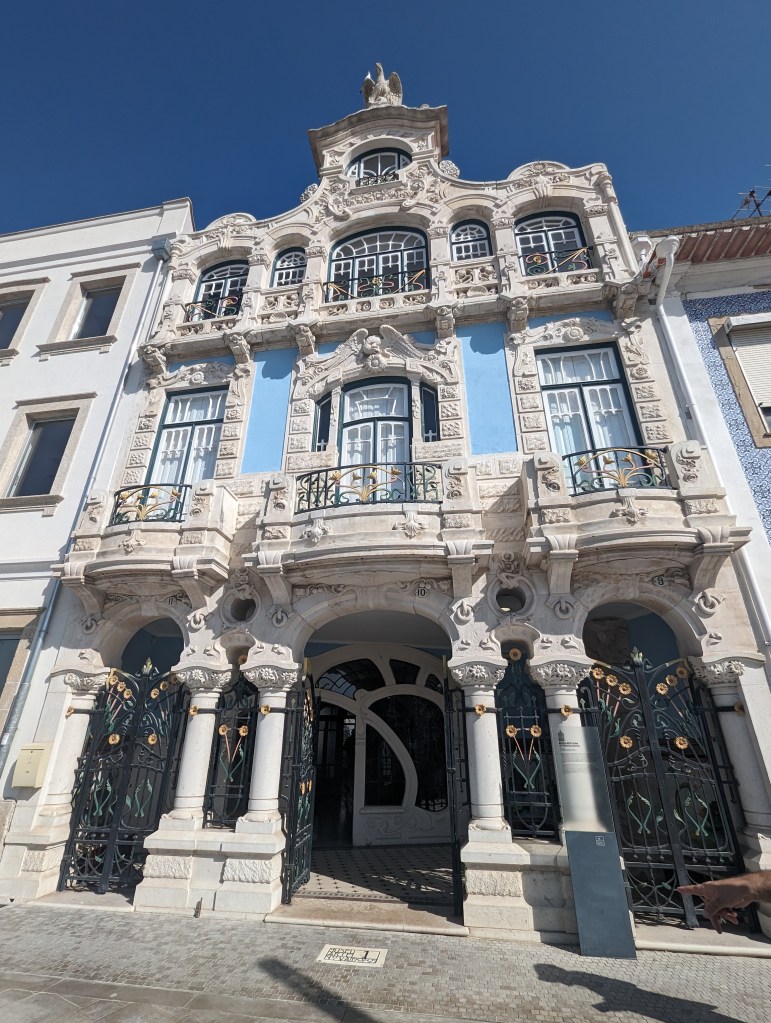
After our boat ride we strolled through town. We passed a square where we saw a large crowd. As we drew near, we saw fire fighters setting up a ladder. They were rescuing a bird that had become stuck in a storm drain.

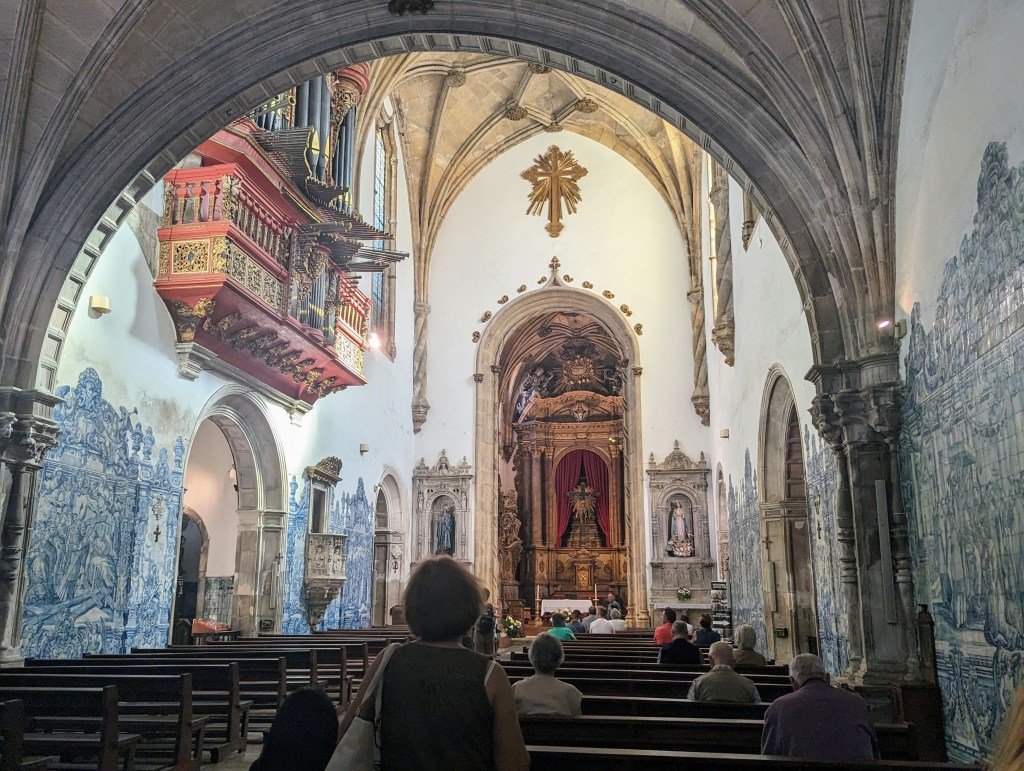
We visited the local 17th century church.
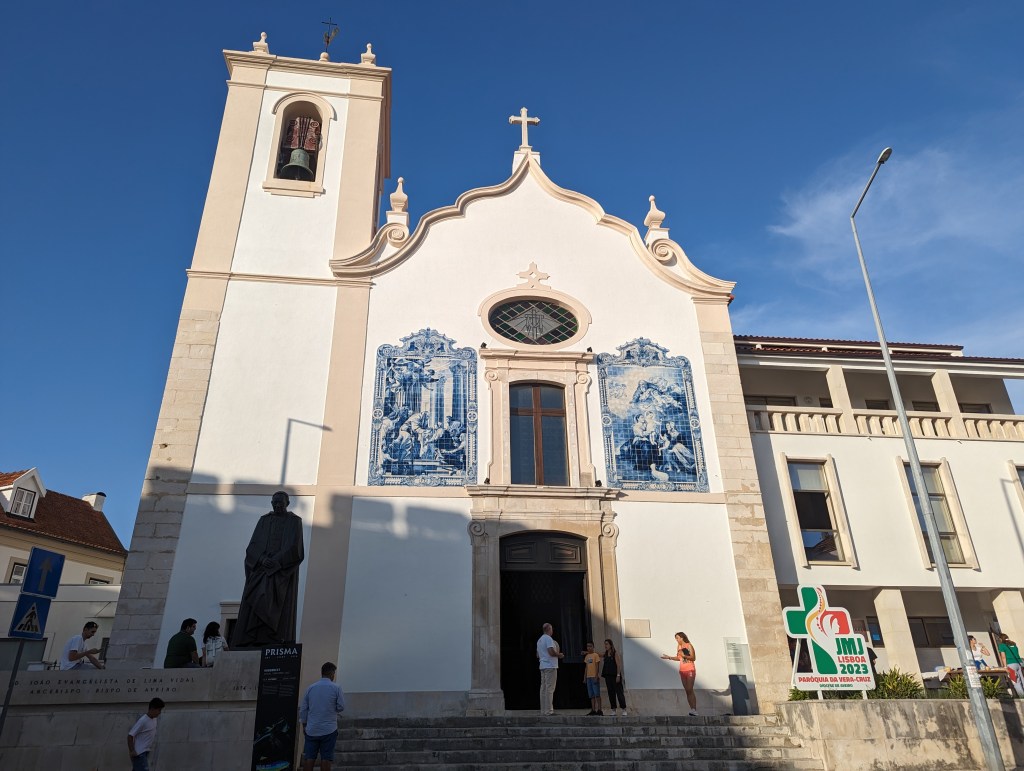
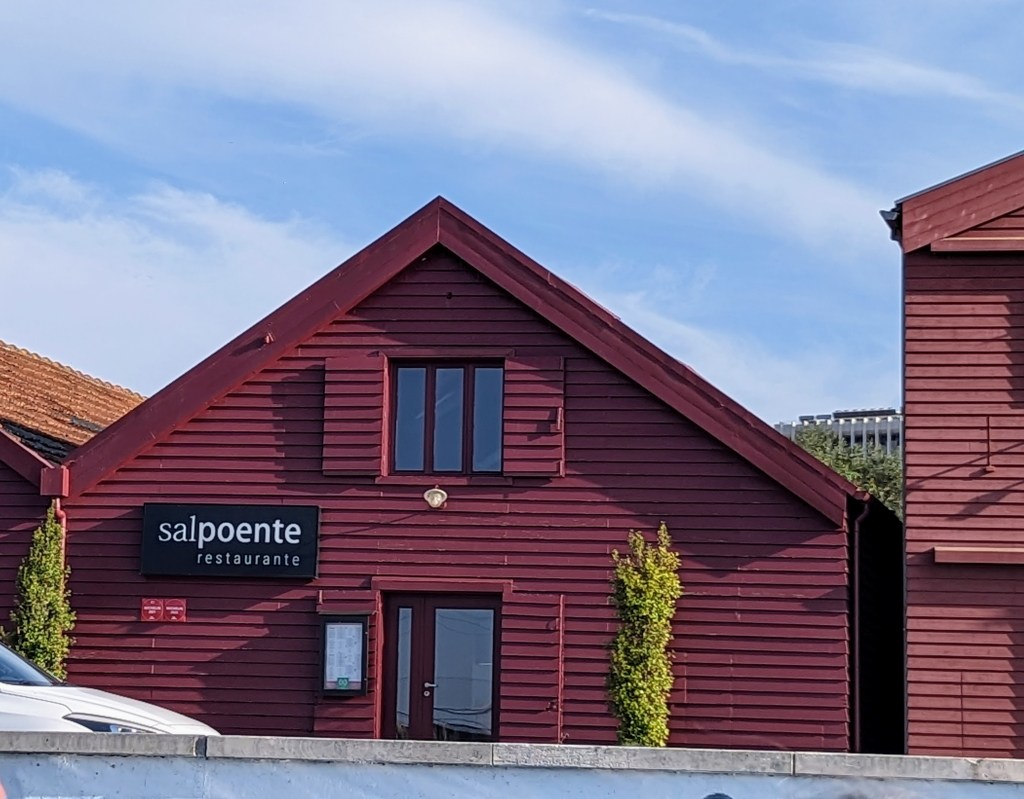
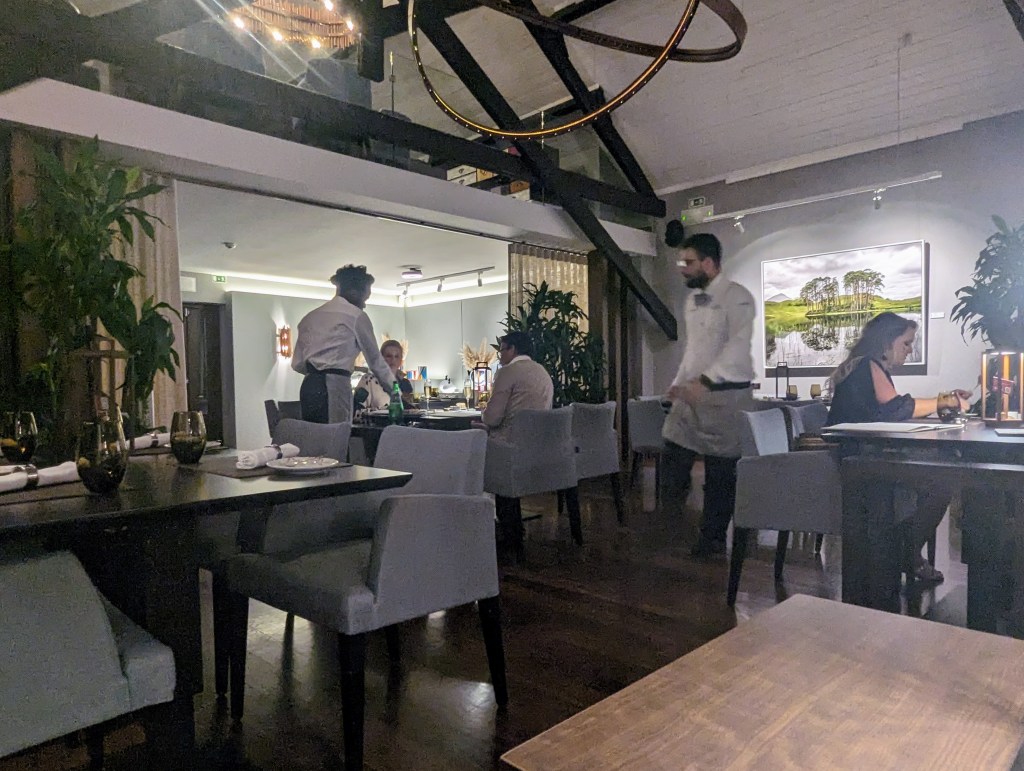
Then we went for dinner in a Michelin starred restaurant right on the canal.
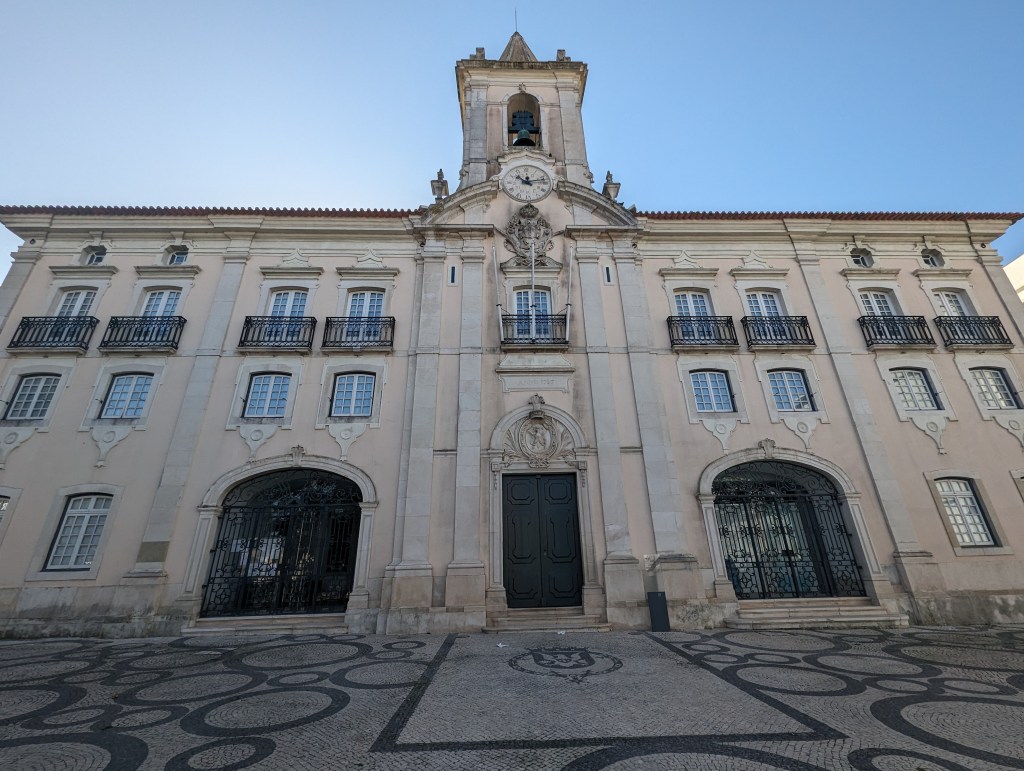
The next morning we took a walking tour with Sergio, who was born to Portuguese parents in NYC, but he has lived in Aveiro since a very young age. He was so happy to have fellow New Yorkers on his tour. We started at City Hall, which was built in the 18th century in the Tuscan style, which is quite rare in Portugal.
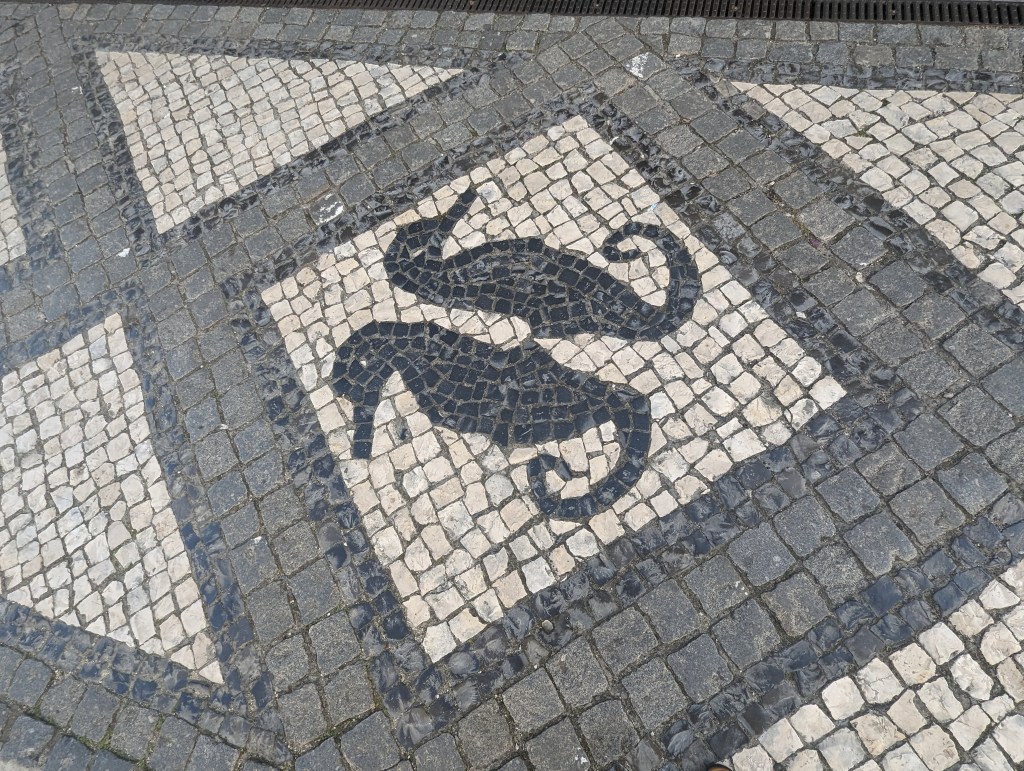
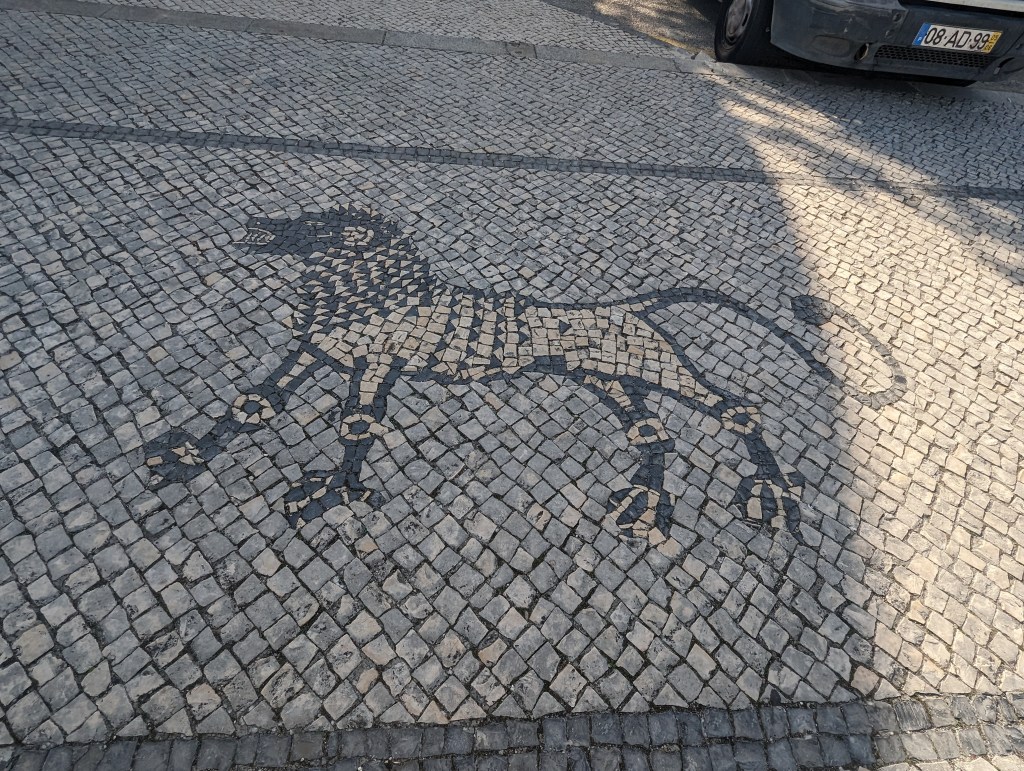
Sergio also told us about the dying art of Portuguese pavement, known in Portugese as calçada portuguesa or simply calçada is a traditional-style pavement used for many pedestrian areas. It is dying because they are very expensive to replace and few workers have the skills to do so.
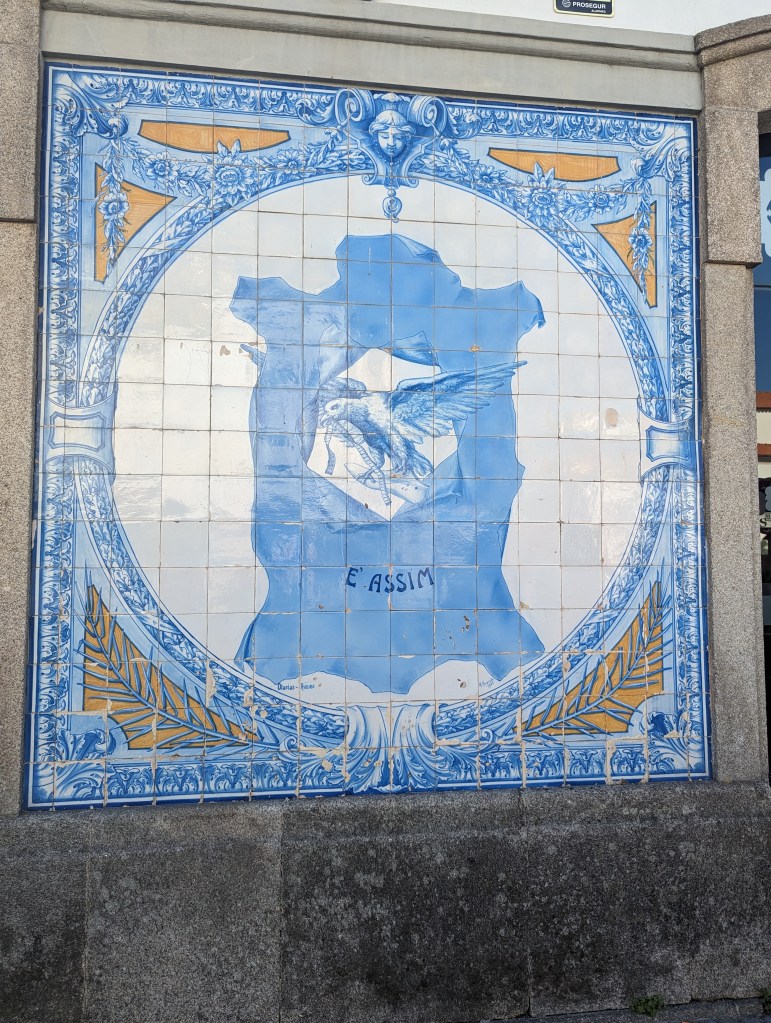
Sergio also told us about the azulejo tiles which we had learned about in Porto. But he said in Aveiro they were not just used by the wealthy. Often they were incorporated by shop owners as a form of advertisement explaining the type of shop.
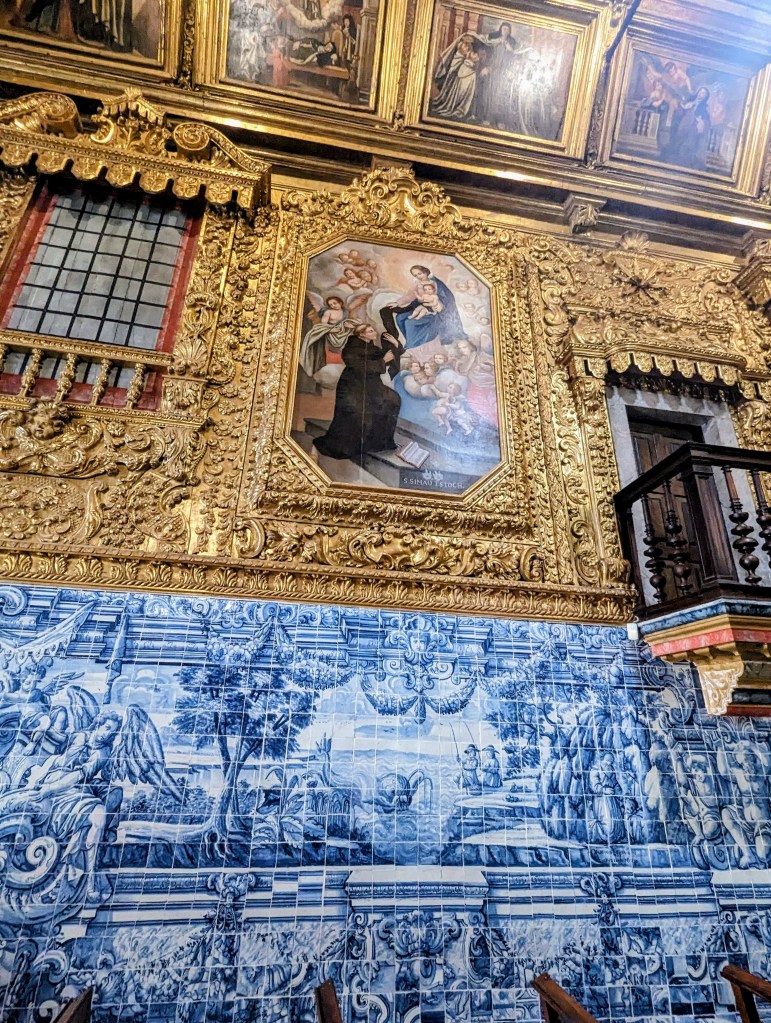
Sergio then took us into a beautiful little church to admire its inner decorations. He explained that in the winter of 1575 a terrible storm brought silt into the mouth of the canals, virtually closing them and thus stifling shipping of salt or any other products out of Aveiro. The city was very poor for the next couple of centuries. But in the 18th century, when walls were no longer considered essential to guard a city as they had been in medieval times, they took down the outer walls, as large stones were scarce in the region, and used them to reform the canals and reopen access to the ocean. Rebuilding began in earnest. This little church is an example of the work done during this time of relative wealth for the city. Note the lower walls are the azulejo tiles. The upper are all in gold: gold over blue. In Aveiro when something has two good outcomes at once, he gave the example “I went to the party and had fun, AND I met my future partner there,” that would be called a “gold over blue” situation.
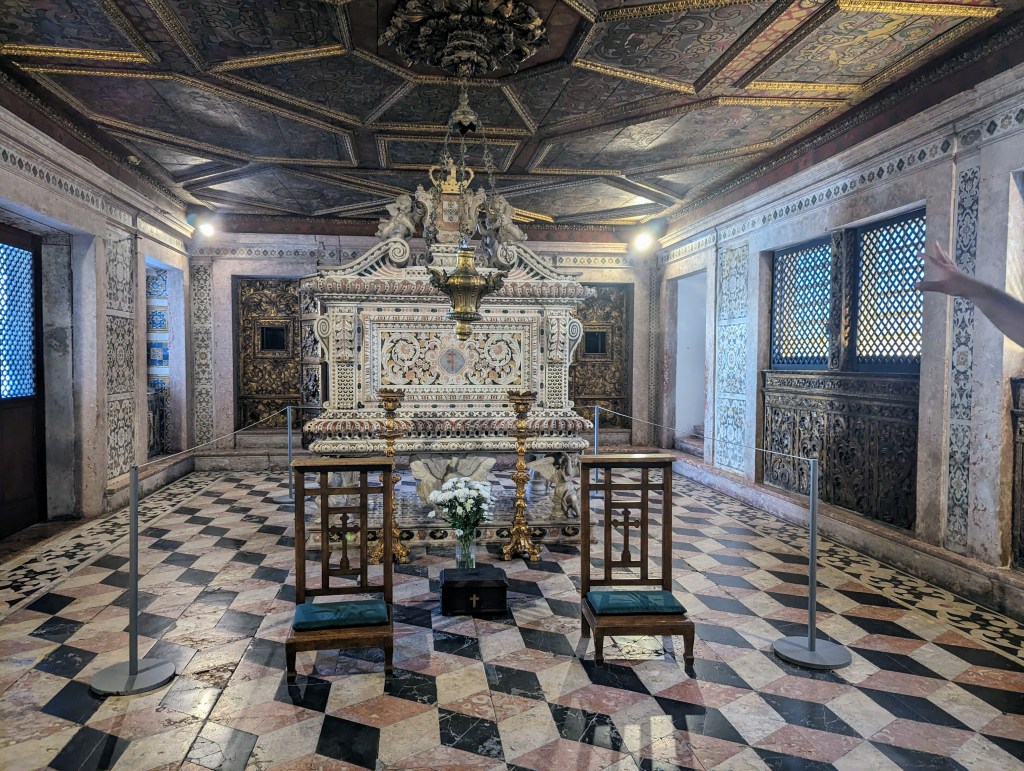
Sergio took us to the Aveiro Museum, founded in 1458, this former female Dominican convent where Saint Joana Princesa lived reflects the experience of the community of nuns over approximately four centuries, with different architectural styles. Saint Joana’s tomb is within.

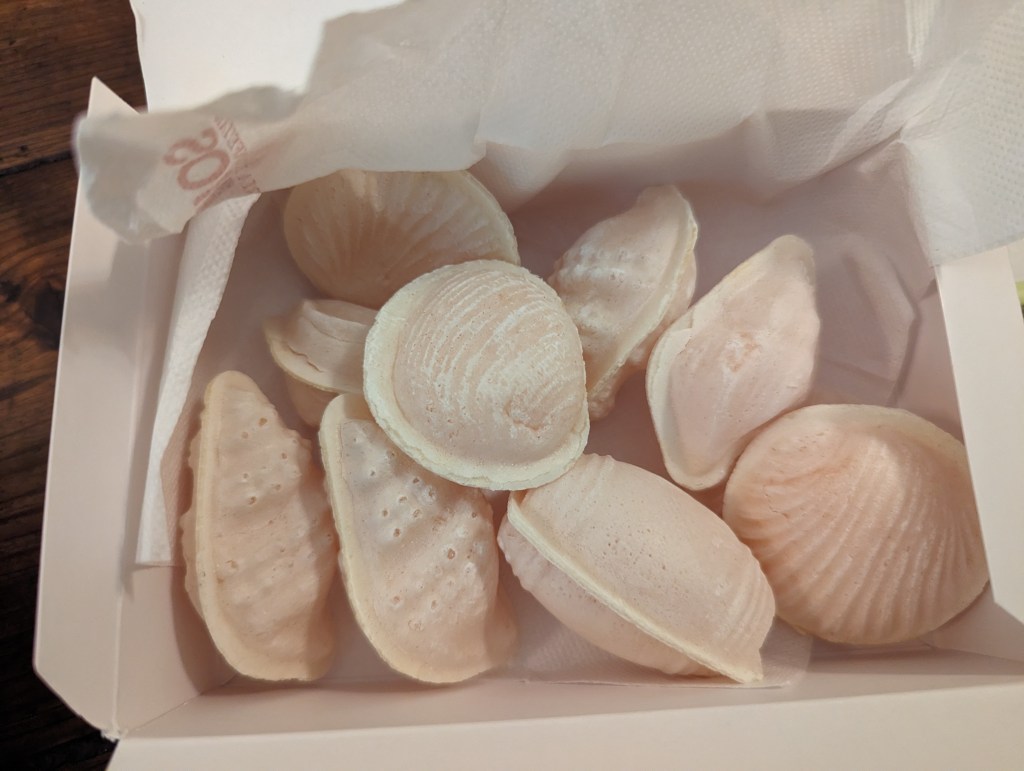
Sergio then went on to explain the local treat: Ovos Moles. Their creation story is very similar to that of the natas in Porto: gifts of eggs to the monastery from local farmers, use of egg whites on priests’ robes, adding sugar to the remaining egg yolks for the treats to eat and sell. But the end result is quite different: sweetened egg yolks wrapped in a very delicate rice paper shaped like one of the many sea shells.
Sergio also showed us some Art Nouveau buildings not on the canals.
And finally, Sergio encouraged us all to “tie the knot” for our eternal loves.
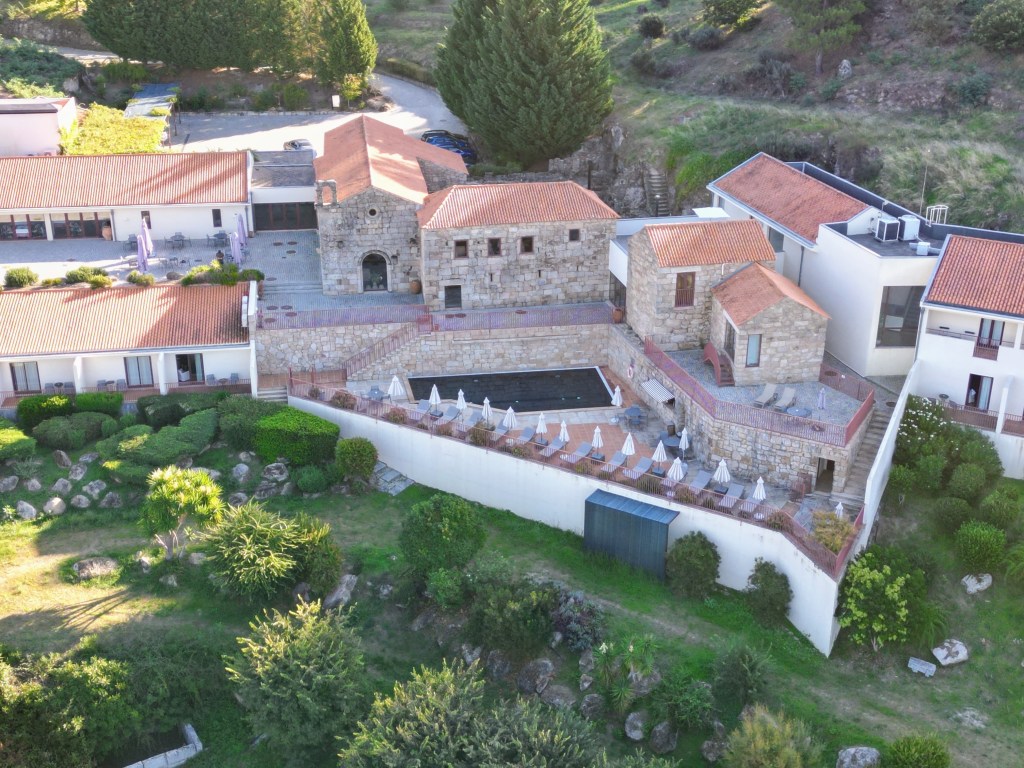
Unfortunately it was already time to leave Aveiro for our next stop: Belmonte. We drove almost 2 hours east through mountainous terrain to arrive late Sunday afternoon in Belmonte. We were booked at the Pousada Belmonte. A Pousada is the Portuguese equivalent to the Spanish Parador. This Pousada, located high on the hill, had been a monastery. It was also gorgeous and so romantic. But as we tried to settle in and rest, we realized that the castle we had come to see would close in just a couple of hours and was closed on Monday, a fact we had failed to check when setting our itinerary. So we rushed out to take a look.
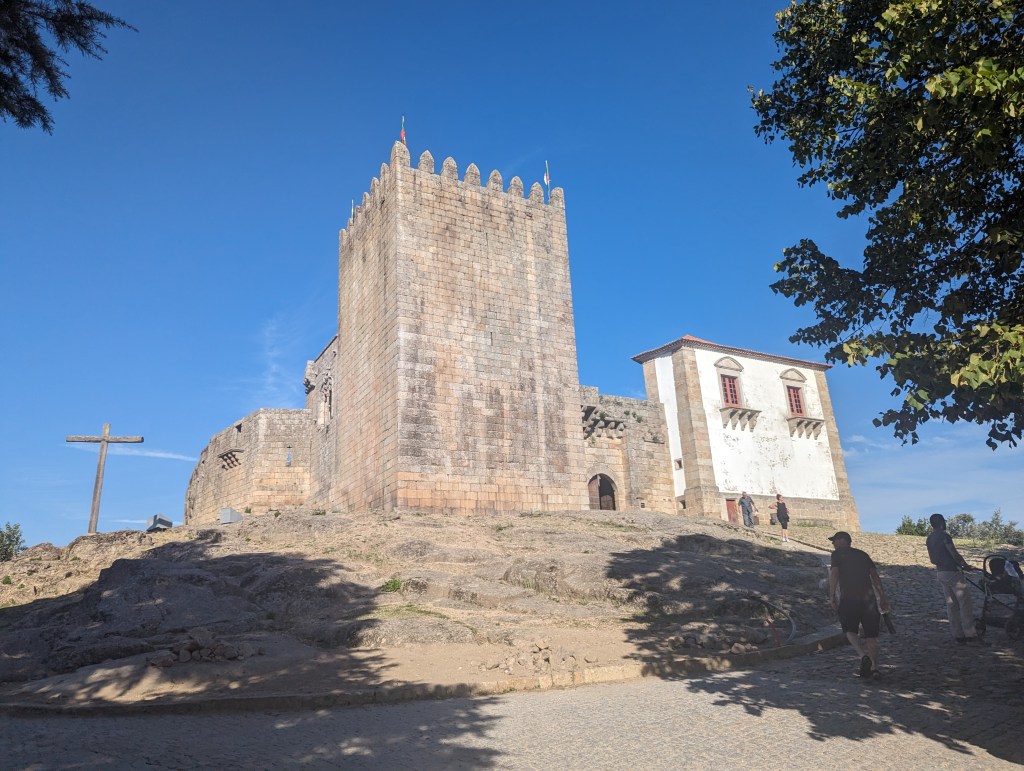
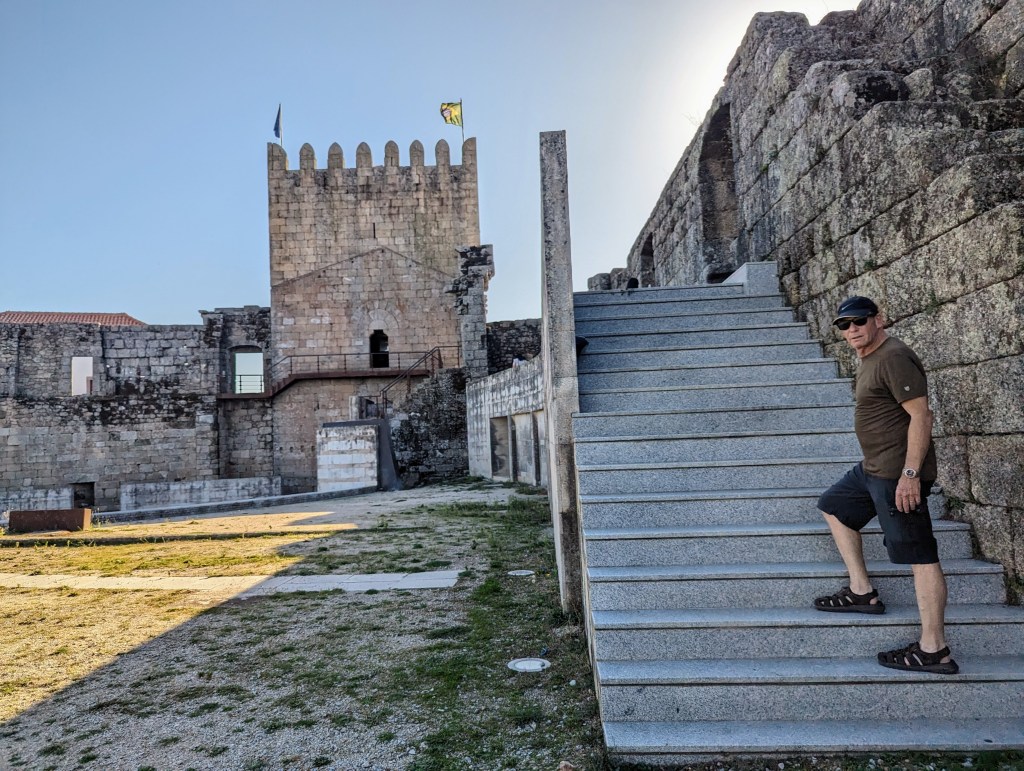
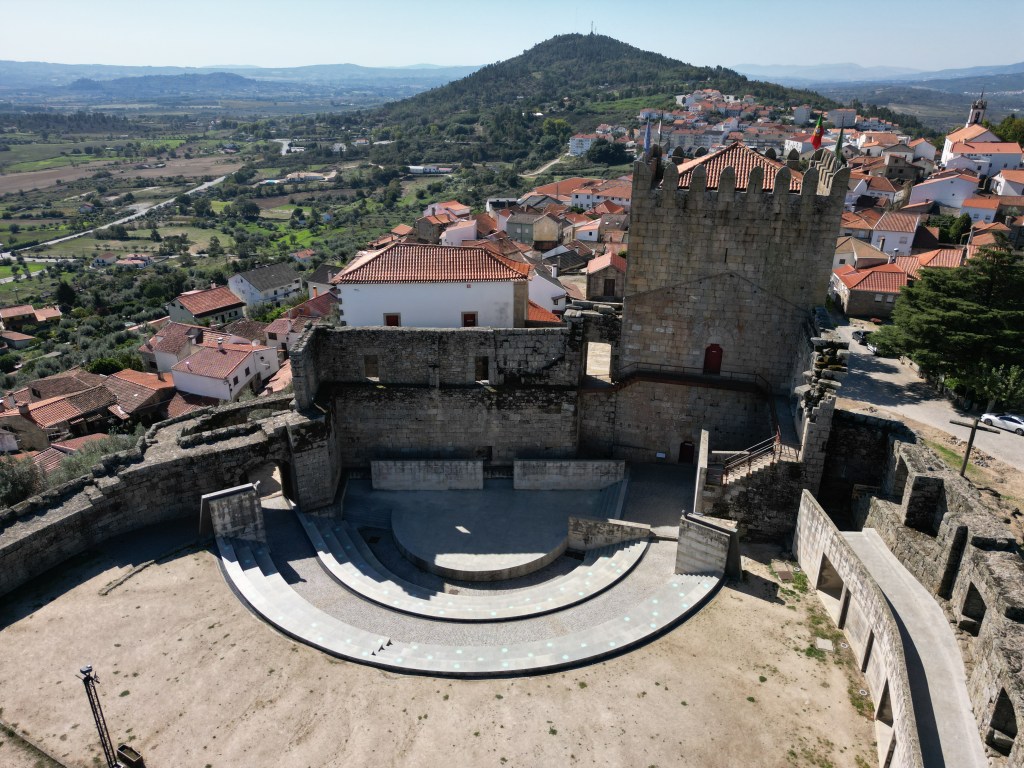
The castle was fist built in the 12th century. At one point it was used as a castle by the family of the man who “discovered” Brazil. It has an unusual oval shape. It is currently used for music events.
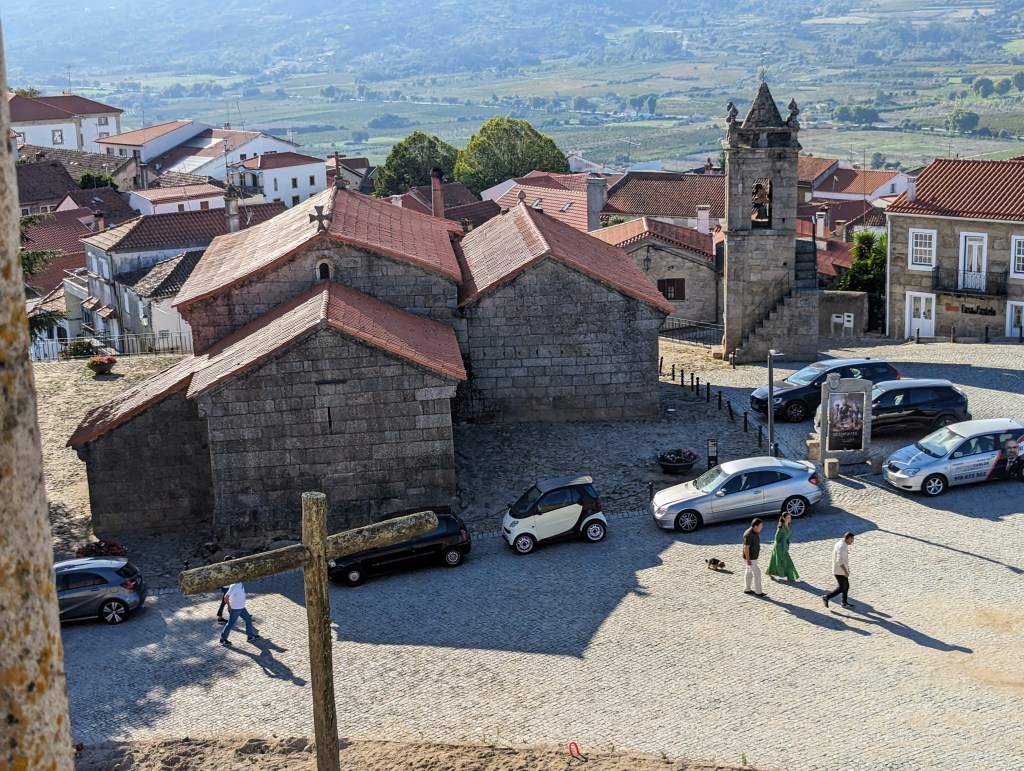
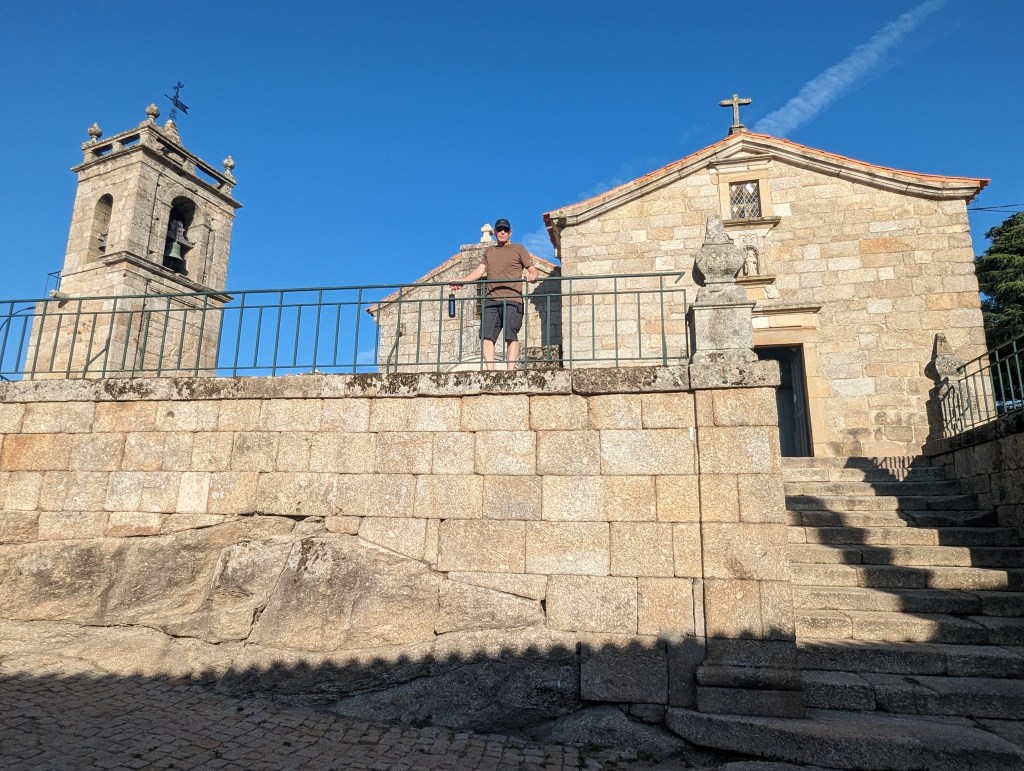
Church of San Tiago
What we learned about Belmonte once we had arrived, is that it is known for hiding Jews that fled Spain and from around Portugal during the Inquisitions of the 15th and 16th centuries. The local Jews would go to mass on Sunday but practice their own religious rituals in secrecy in their homes. During the regime of Salazar, the Jews continued to practice their faith in secrecy. It was not until 1989 that Jews in Belmonte began openly practicing their faith, almost 500 years. The local synagogue was rebuilt and now also holds a Jewish history museum. Unfortunately we arrived too late in the day, and it too was closed on Monday. But we felt the need to go by and pay homage. It was the day after a vicious terrorist attack by Hamas on Israel.

We were finally able to go back and enjoy our Pousada.

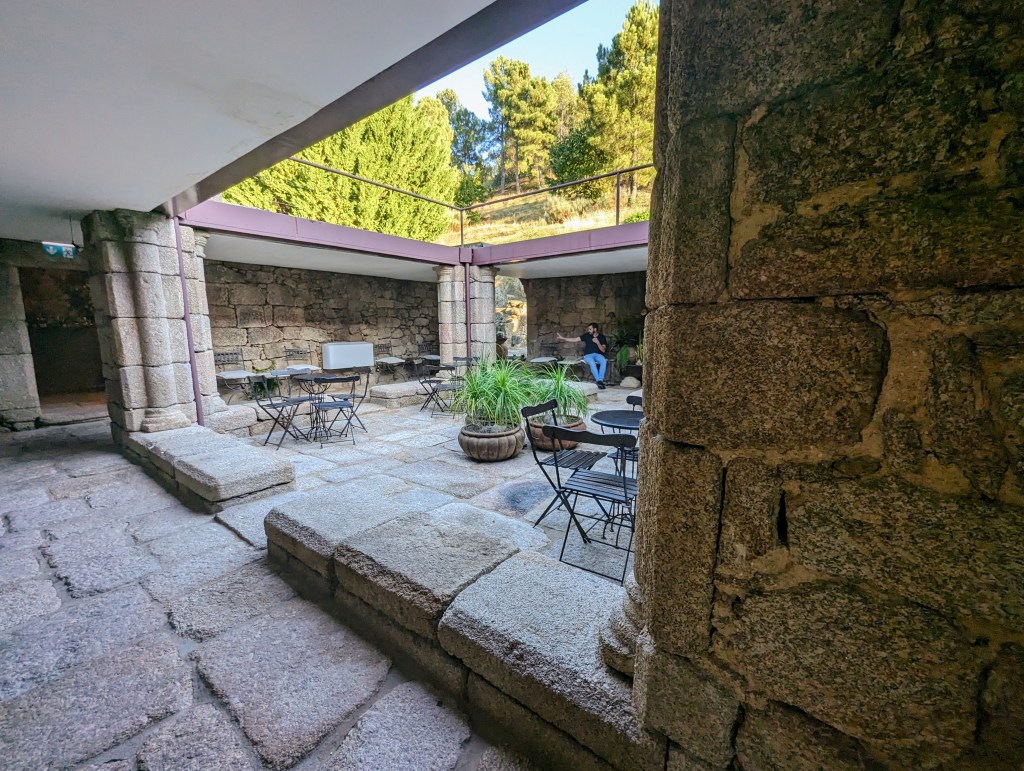
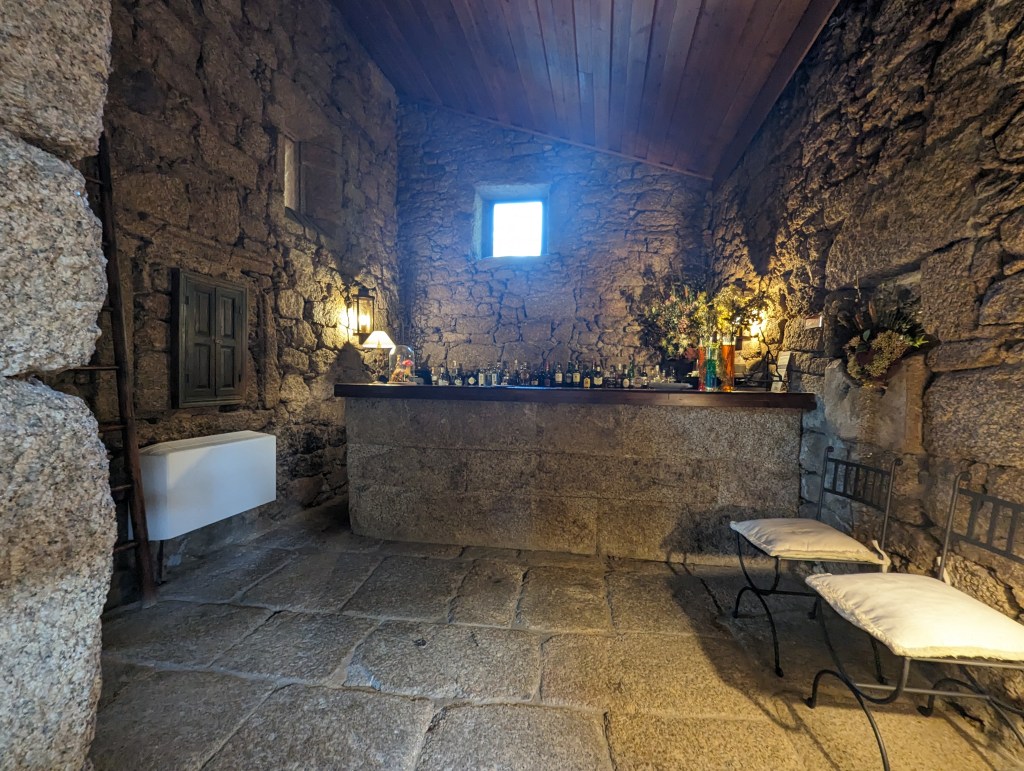


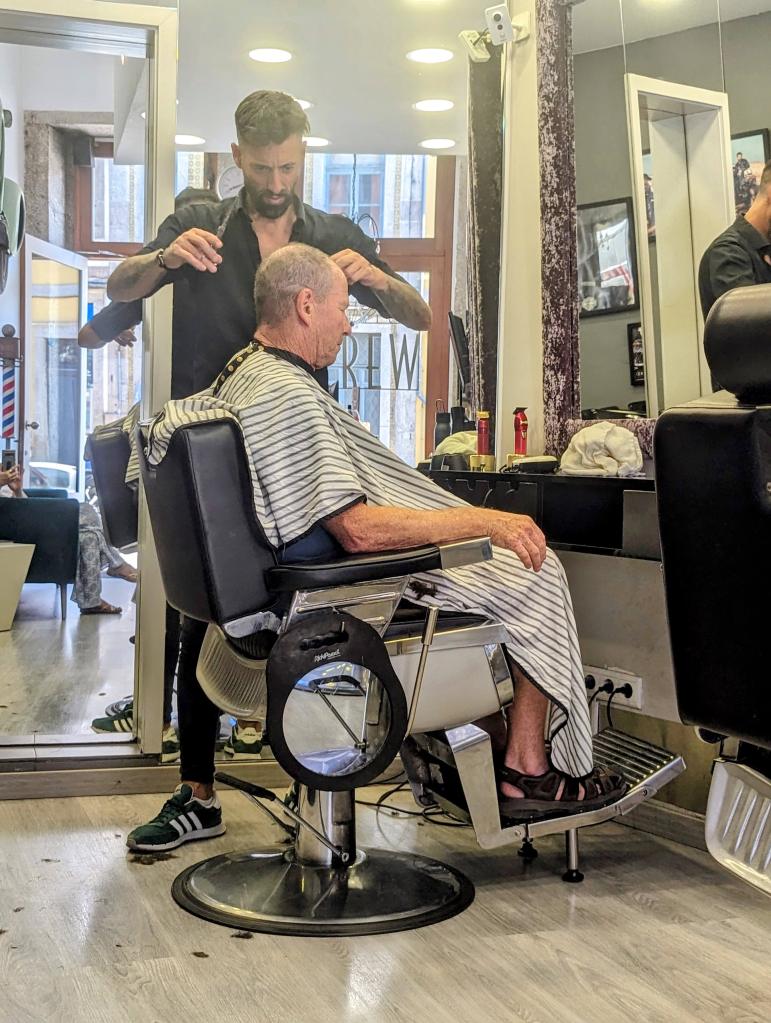
The rooms rather than having numbers had Friars’ names. Ours was Friar Malaquias, the barber,

which was fitting because Eric had just gone to the barber in Porto.
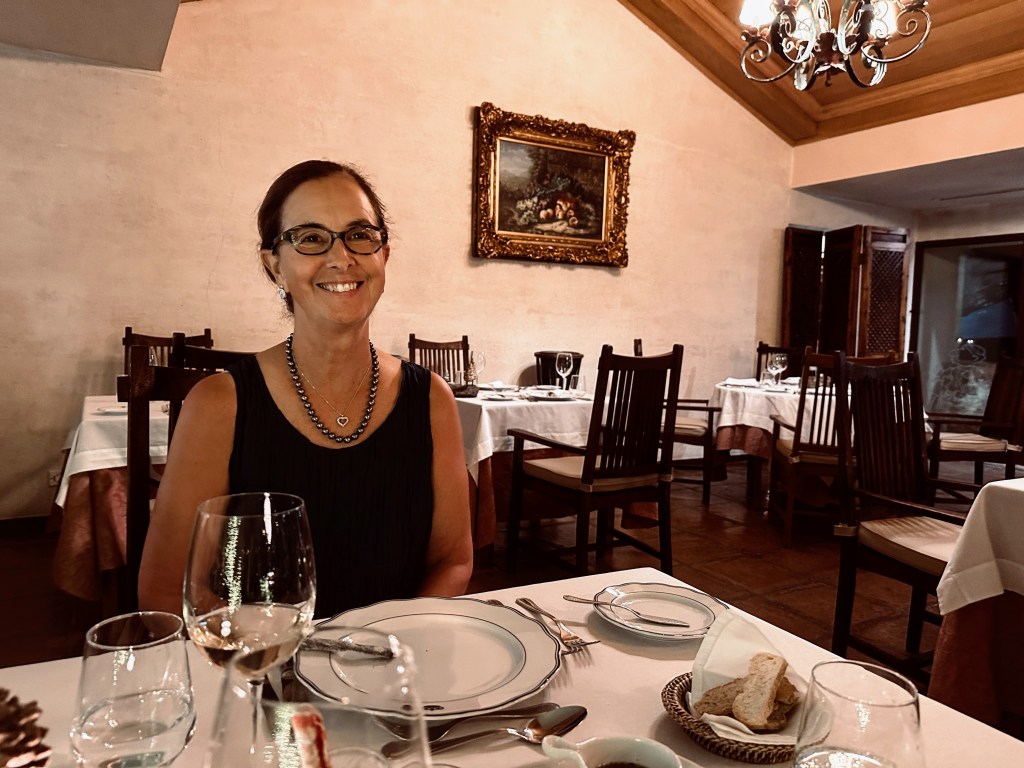
The dining room in the Pousada was exquisite and delicious.
The next morning everything was closed. Eric took the opportunity to get some drone shots.

Then it was a couple hours drive back to the west coast town of Coimbra. There we checked in to the most romantic boutique hotel: Quinta Das Lágrimas (Villa of Tears).
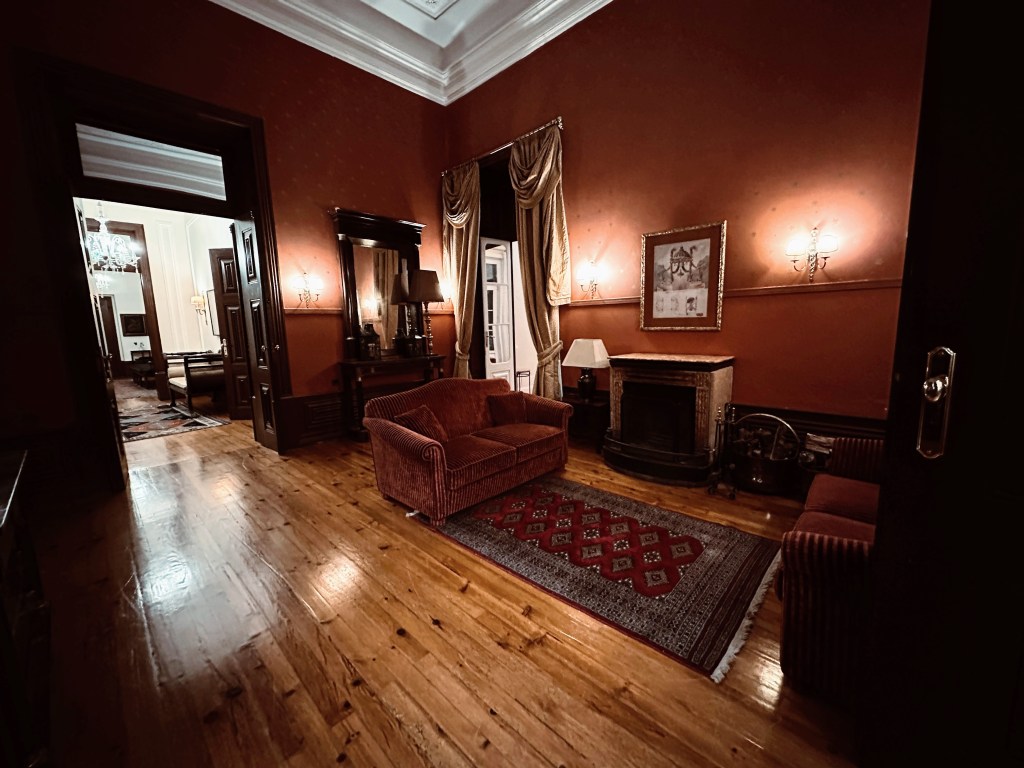
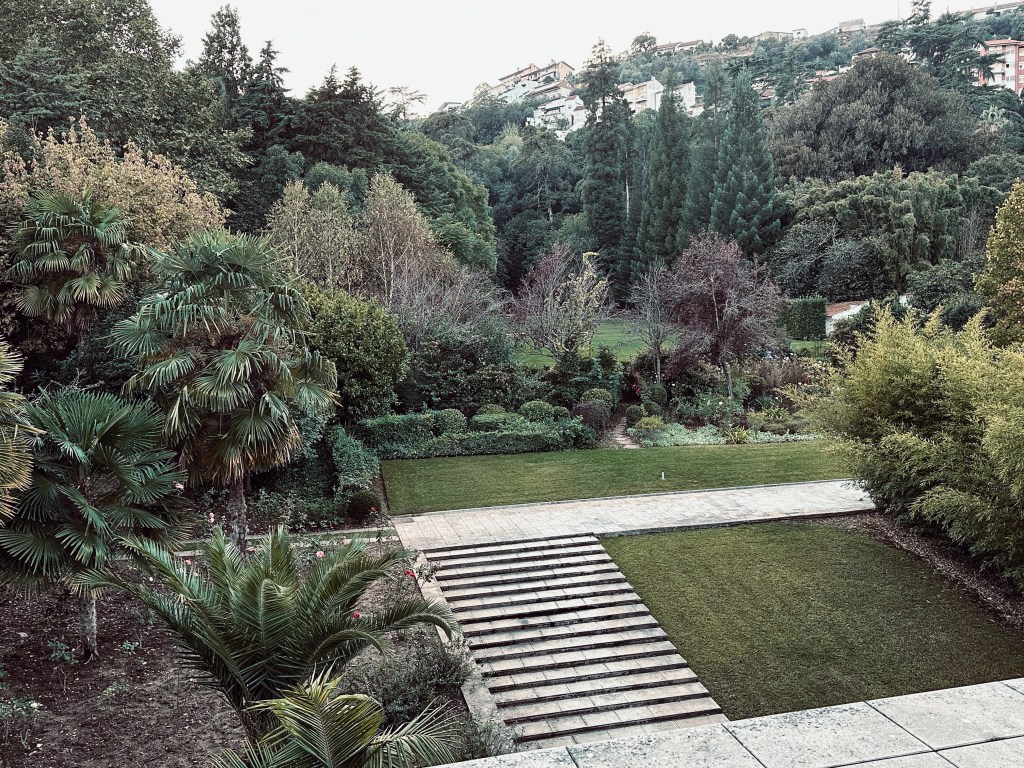
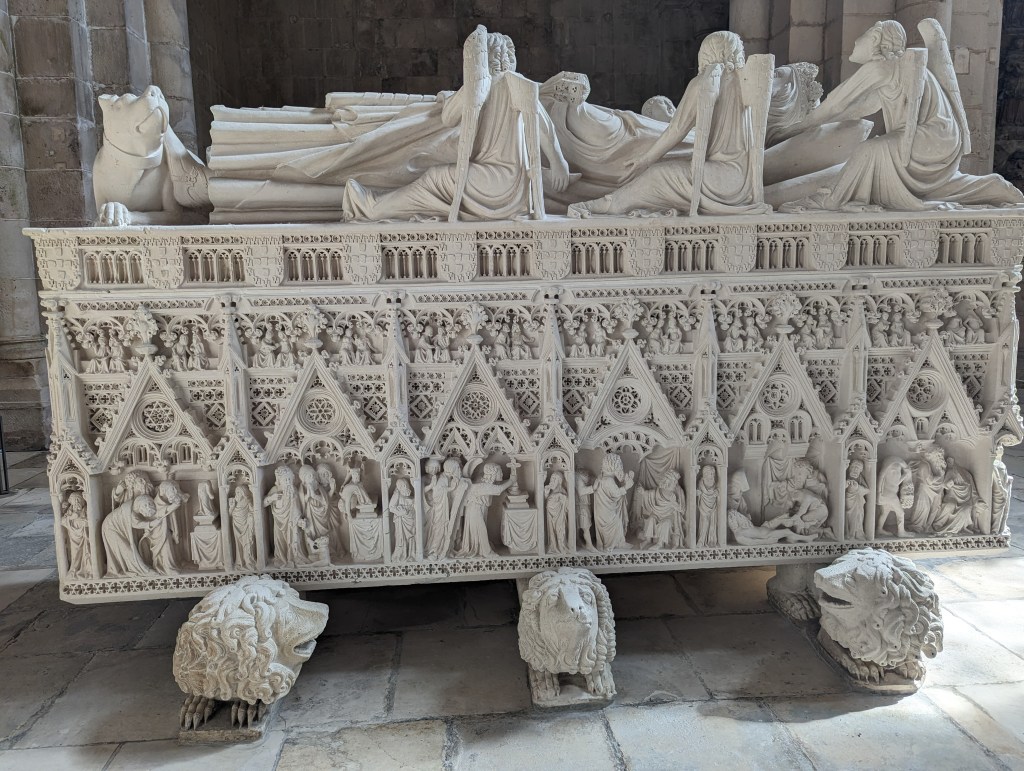
Upon check-in we were provided with a booklet explaining the hotel’s history. It is a very long involved Romeo & Juliet type love story that took place over 650 years ago involving heir to the throne Pedro and his cousin Inês, who was ultimately murdered by the king’s knights. Pedro and Inês were said to have had their secret rendezvous in the woods surrounding Quinta Das Lágrimas. Inês was killed there, and her dying tears were said to have created the Fountain of Lágrimas which is in the gardens behind the hotel. We had a gorgeous room overlooking the gardens, which were lit up at night for romantic strolls.
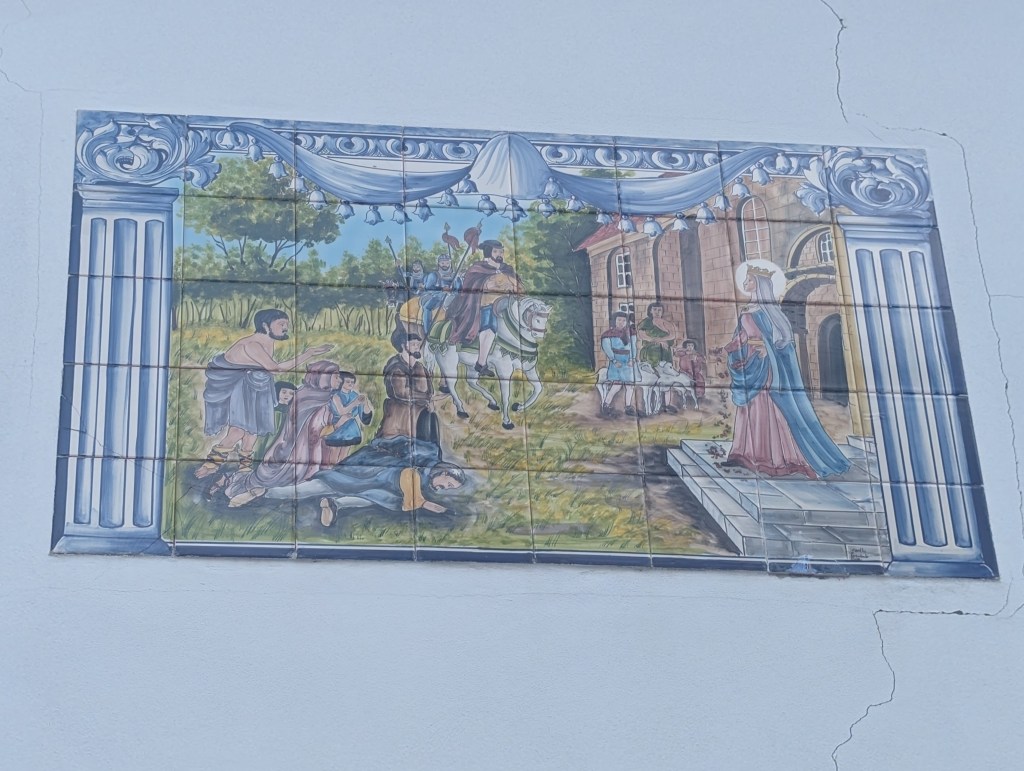
The walls of the hotel are covered in artistic renditions of Inês and Pedro from every one of the last 7 centuries.
The next morning we headed out to learn about the scholarly town of Coimbra.

Our guide Ricardo is from Genoa, Italy. He had been a graduate student at the Coimbra University 10 years ago, fell in love with the city, and never left.
First he took us through the downtown, touristy area of Coimbra.
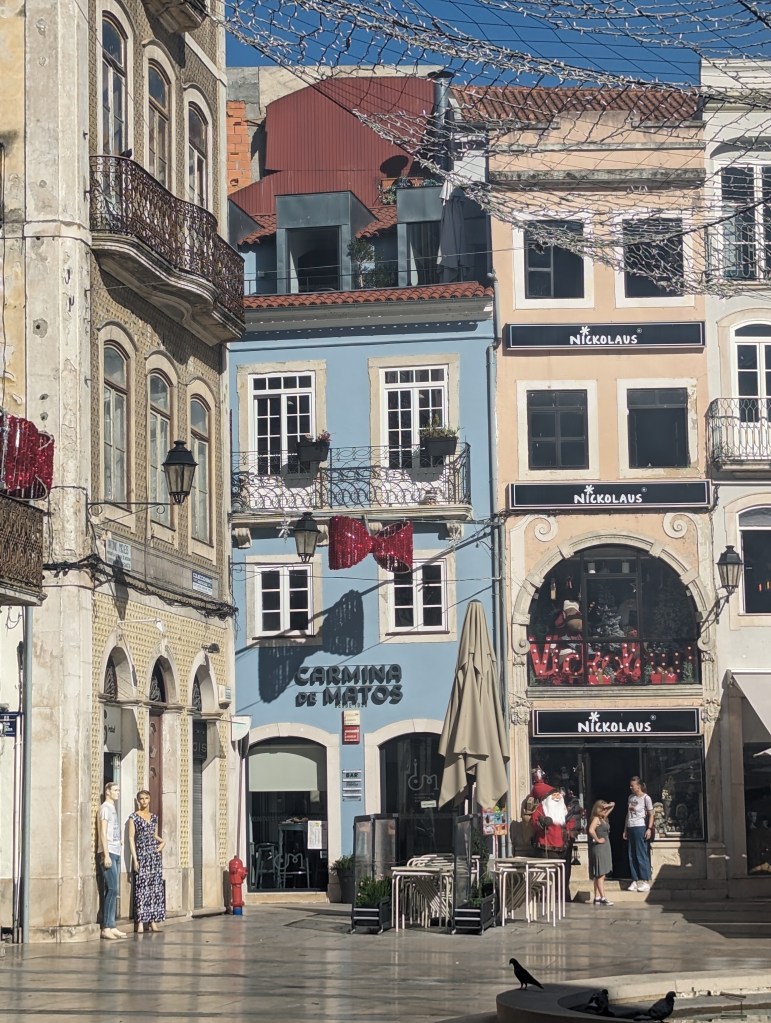
And we think we start decorating early for Christmas in the US! This was October 10.

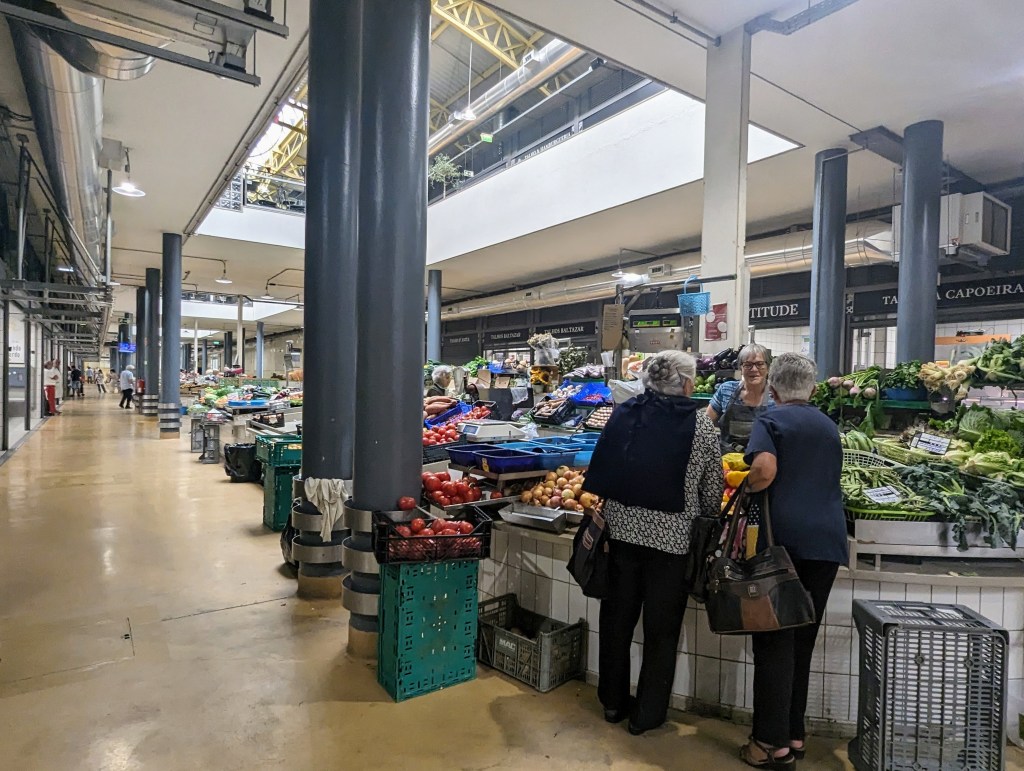
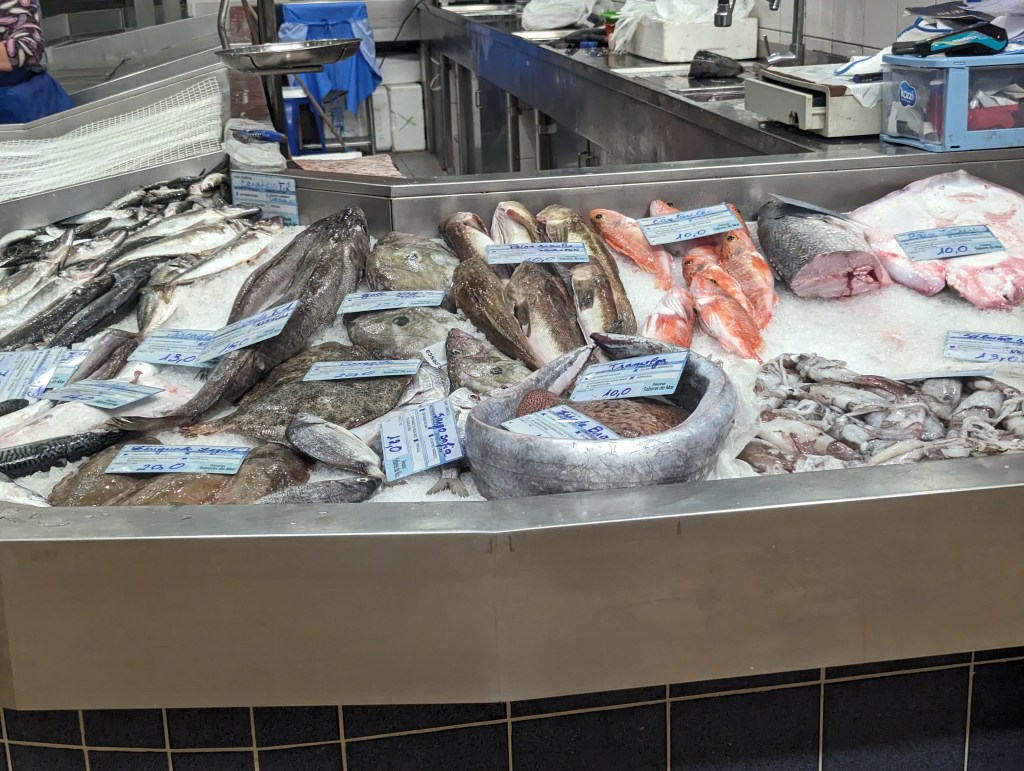
He then took us up the hill toward the university via the market, which was slow due to it being a Tuesday.
He explained to us that Coimbra U. is the oldest university in Portugal, and one of the oldest in the world, dating back to 1290. It is now a UNESCO World Heritage site due to both its architecture and traditions.
One of the many long held traditions of the school involve the optional students’ dress, which is:

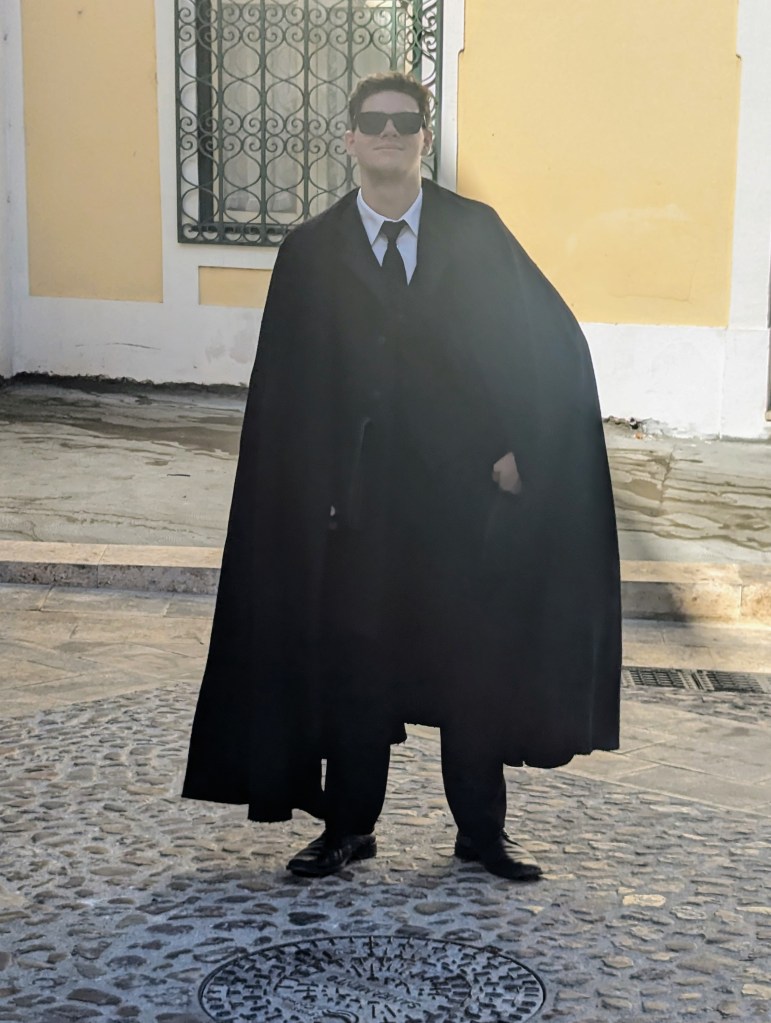
And he showed us the store where the students buy their clothes.
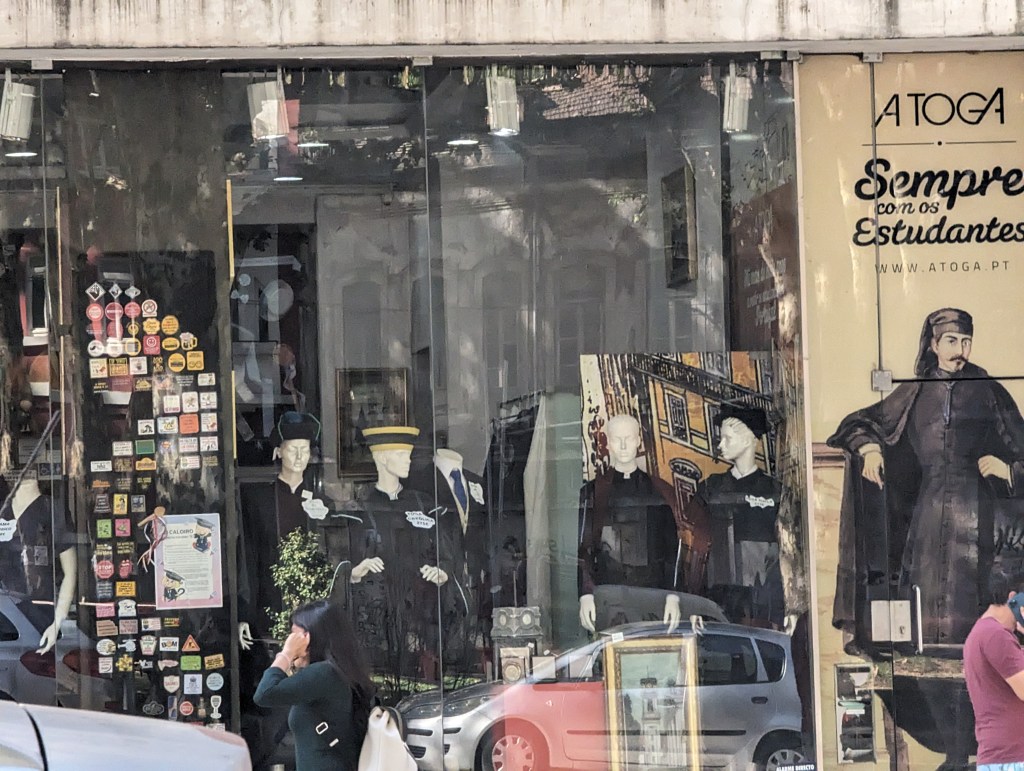
And there are many rules surrounding the wearing of the clothes which include: not allowed to use a backpack or any bag, just a black folder in which to carry books and computer, not allowed to use an umbrella – in rain cover your head with the cape, must wash the cape by hand in the river, and lots more. He showed us the student activities building:
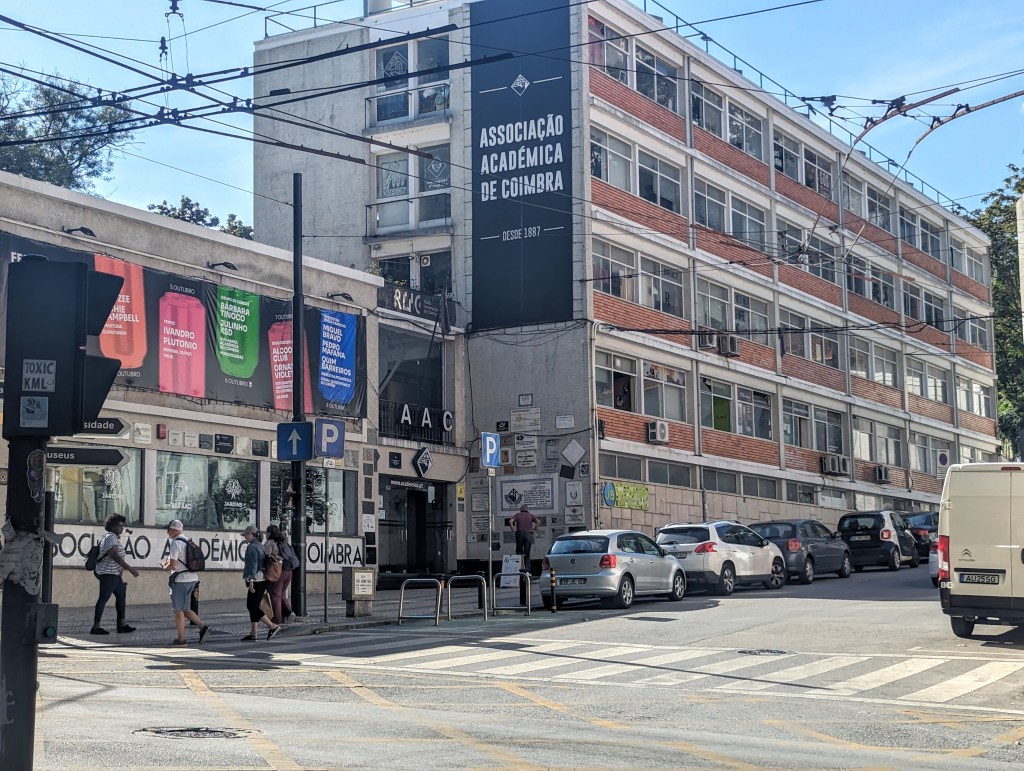
On the side of which there are several panels showing the history of the capes.
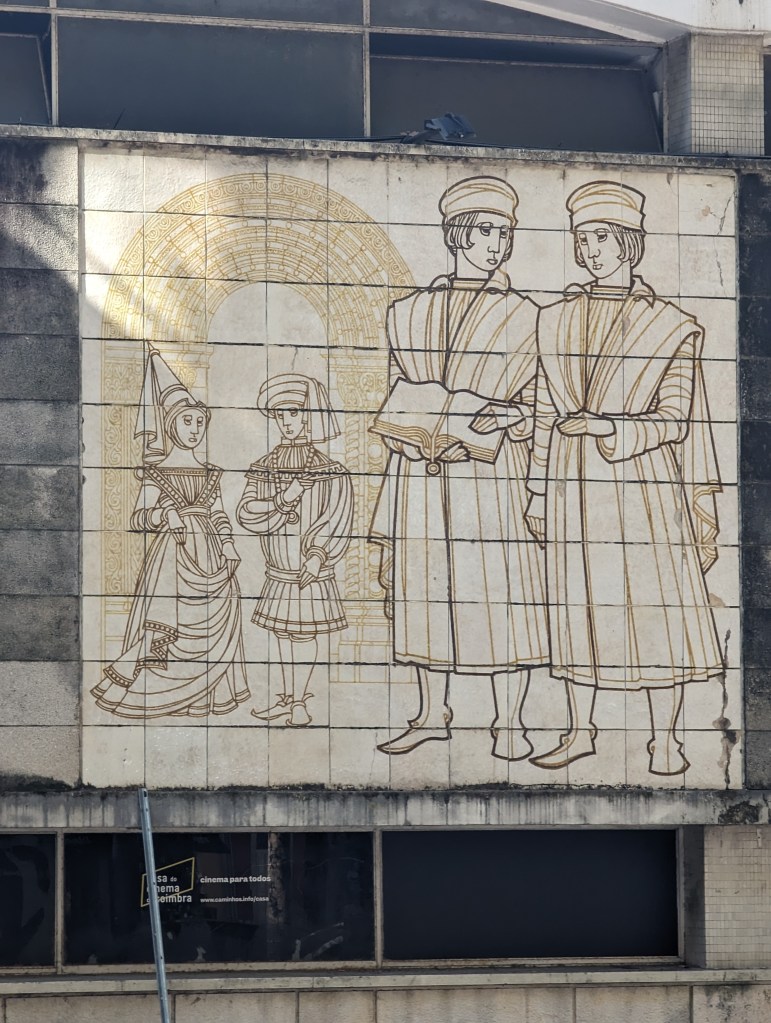
At this point in the tour he told us the belief in Coimbra that it was the inspiration for the Harry Potter stories. J.K. Rowling had lived in Portugal, married to a Portuguese man at the time. In addition to the students’ dress, Salazar is believed to be the inspiration for Slytherin. The university has houses to which students join, and many more “connections.”
He showed us the student steps up to the university. (We walked around and up the hill).
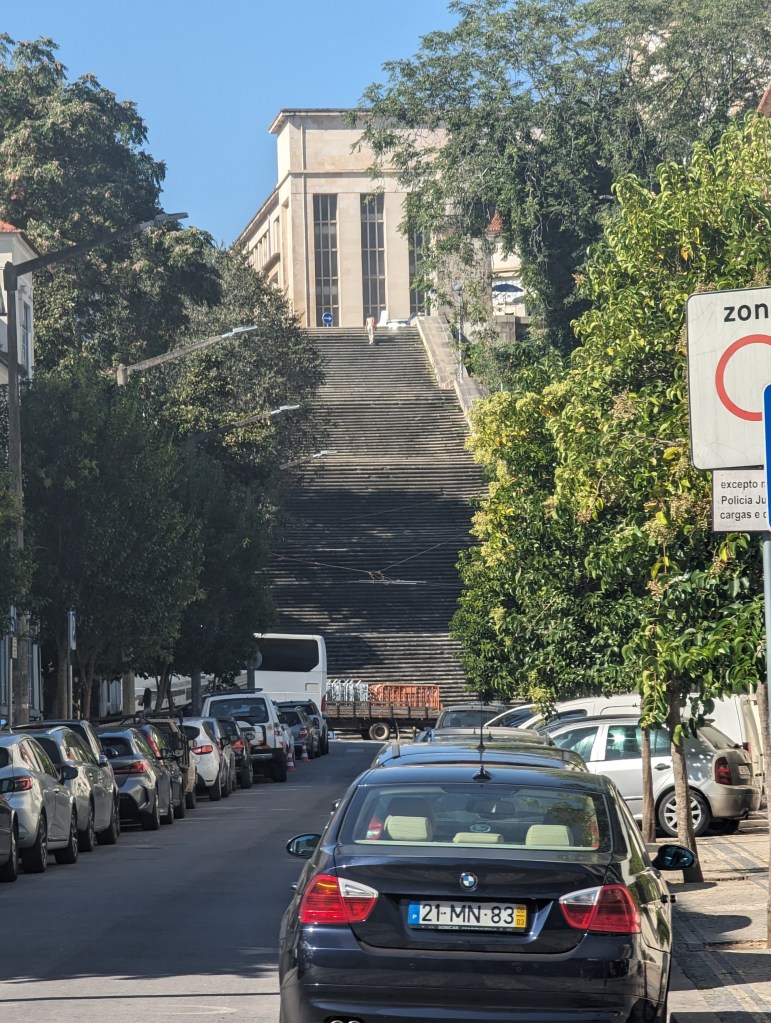
He walked us past the 16th century reproduction aqueduct built on the site of a Roman one, which now is at the entrance to the botanical gardens. In front of the aqueduct is a statue of Pope John Paul II who visited in 1982 when he went to Fatima to pay homage to Our Lady of Fatima, whom he credits for having saved his life when there was an assassination attempt on his life the year prior.
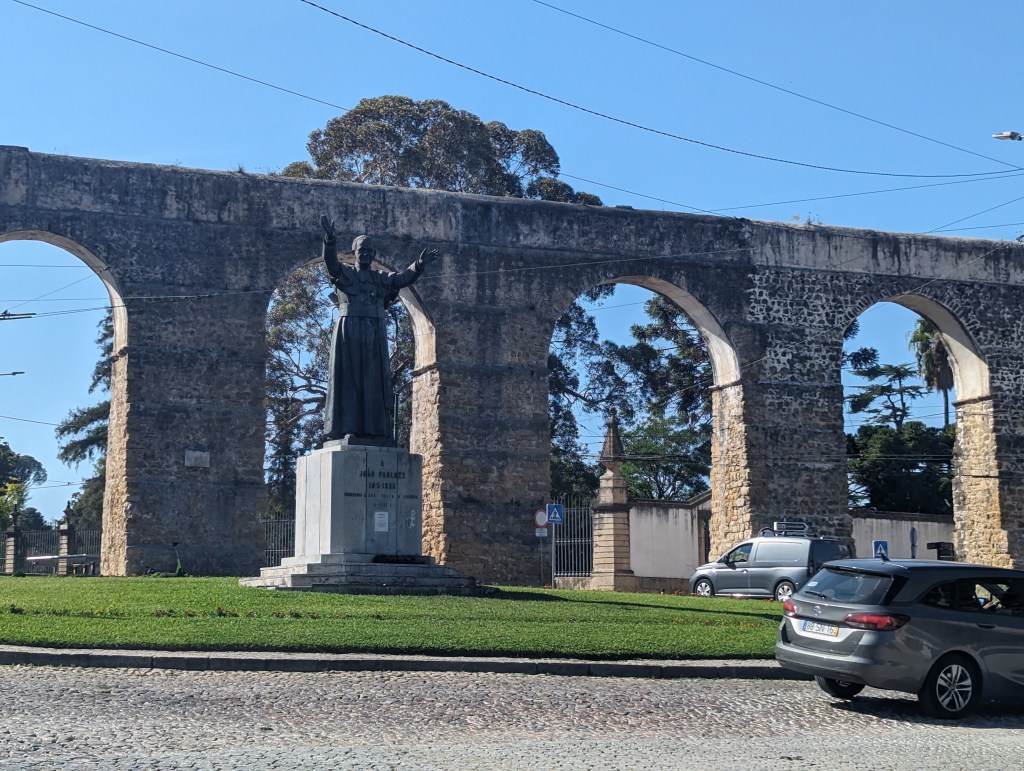
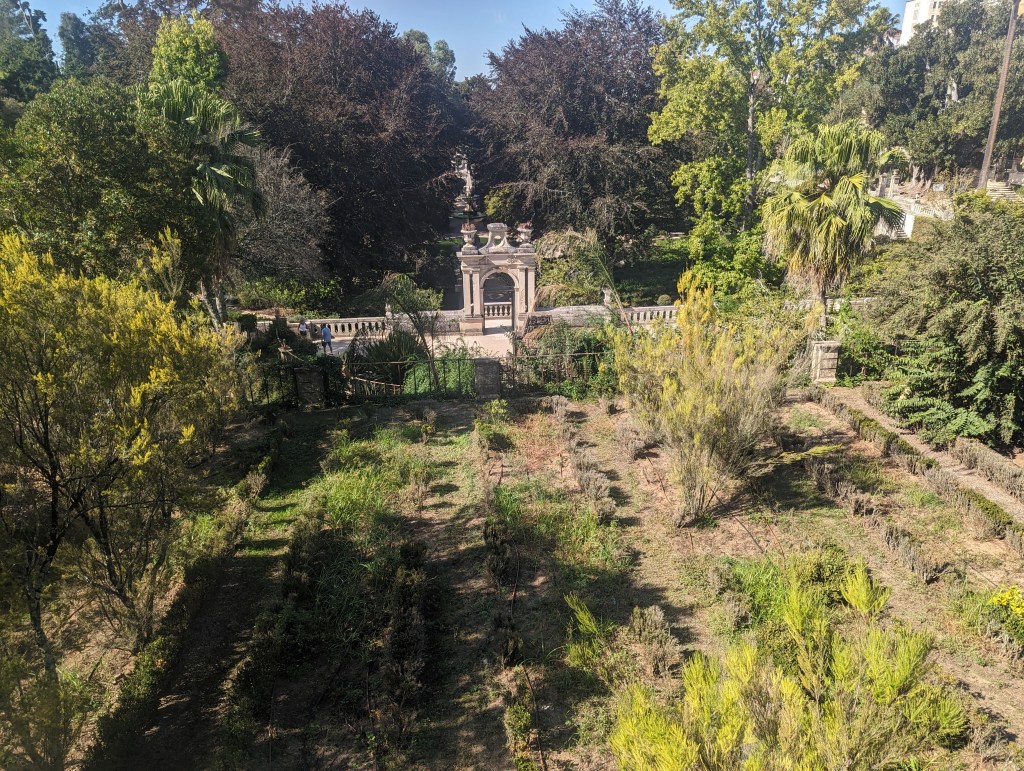
The botanical gardens are free to the public and run by the universtity and used by the school of botanical sciences as a laboratory.
And finally we arrived at the school. Here we find two more Harry Potter links:

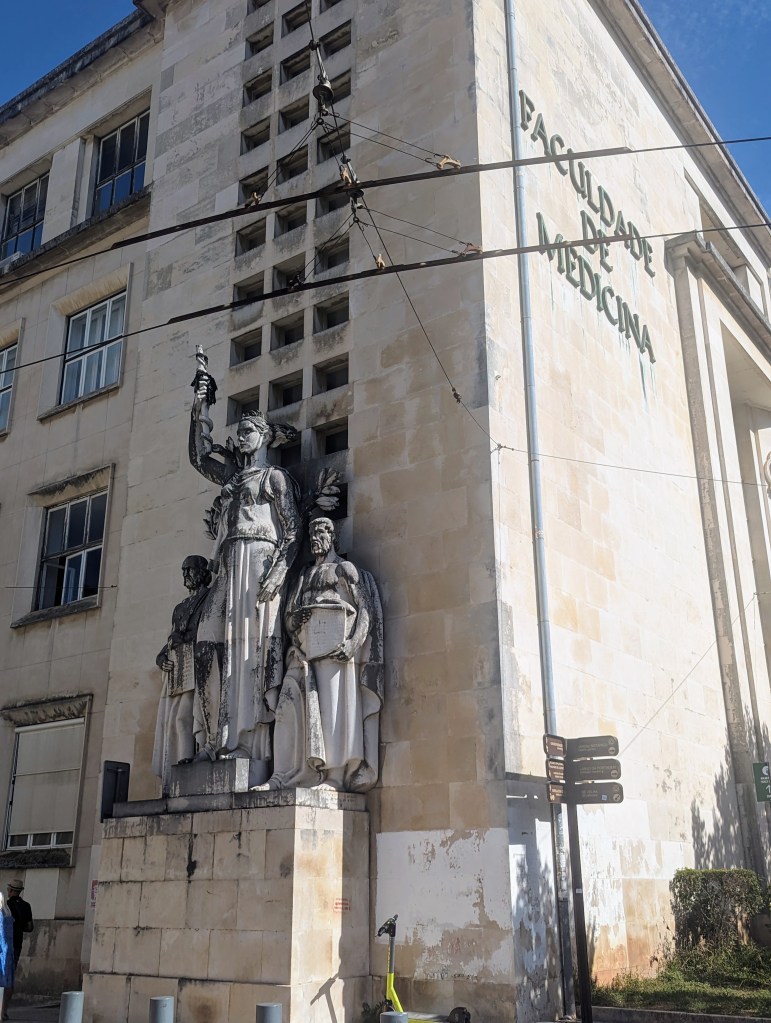
We passed one of the oldest schools here, the medical school.
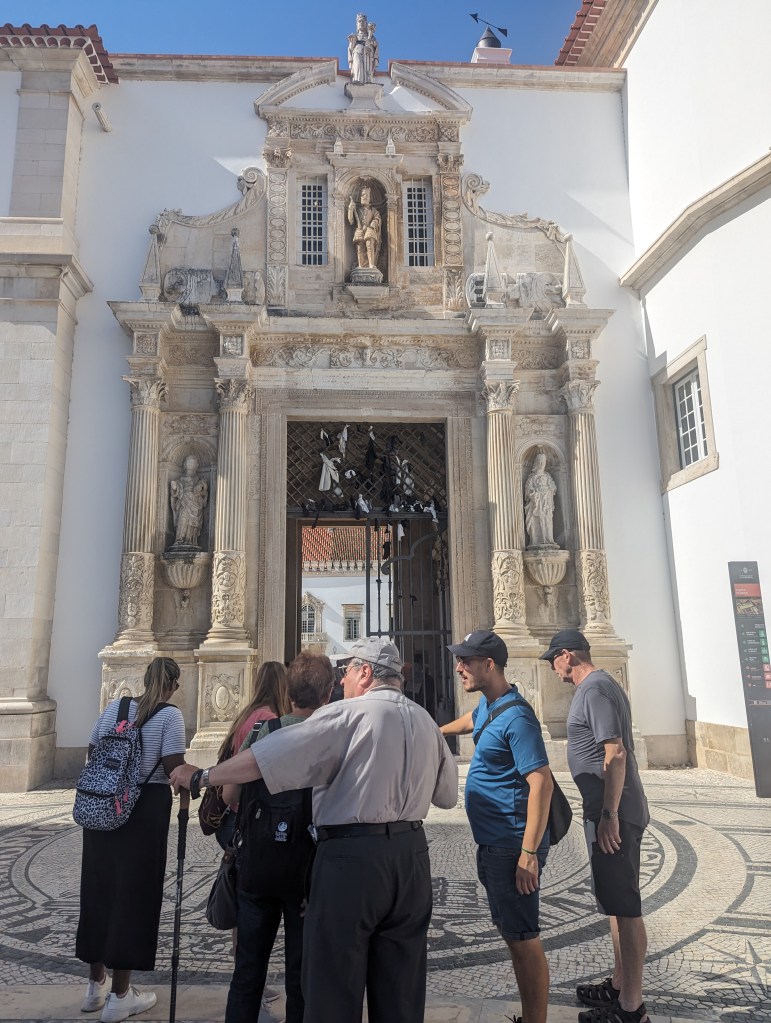
But what all the tourists come to see (and there were literally bus loads) is the law school.
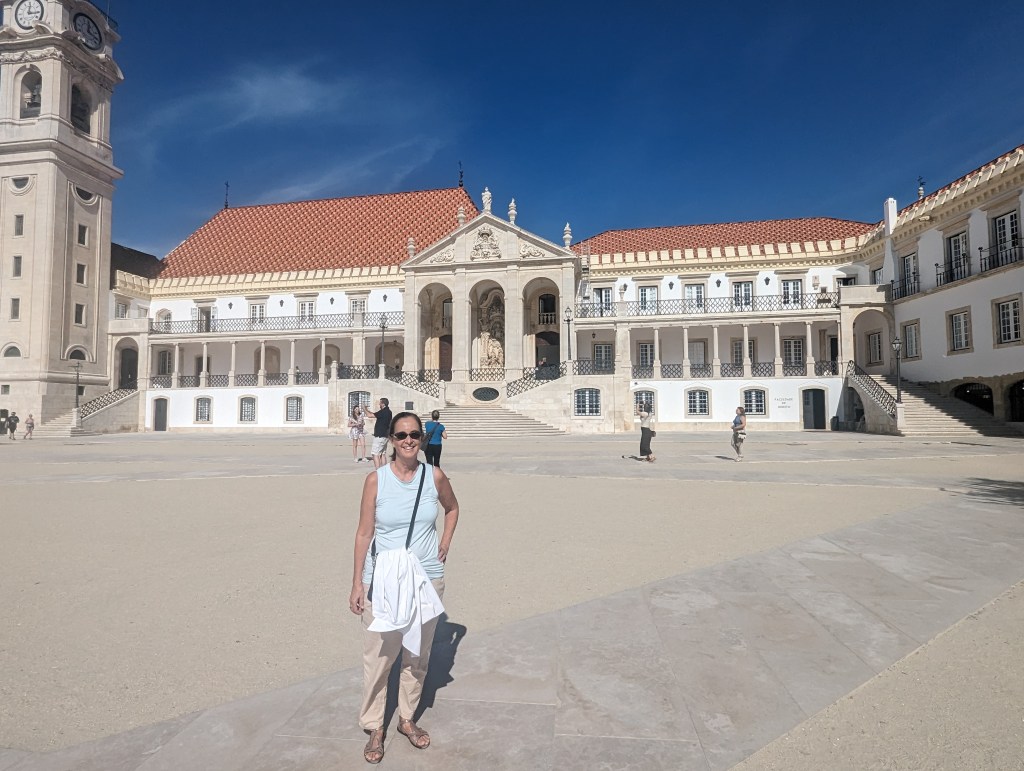
The library is currently under renovation, but it is believed to have inspired the moving staircases at Hogwarts and was used for the “Be Our Guest” scene with Emma Watson in “Beauty and the Beast”
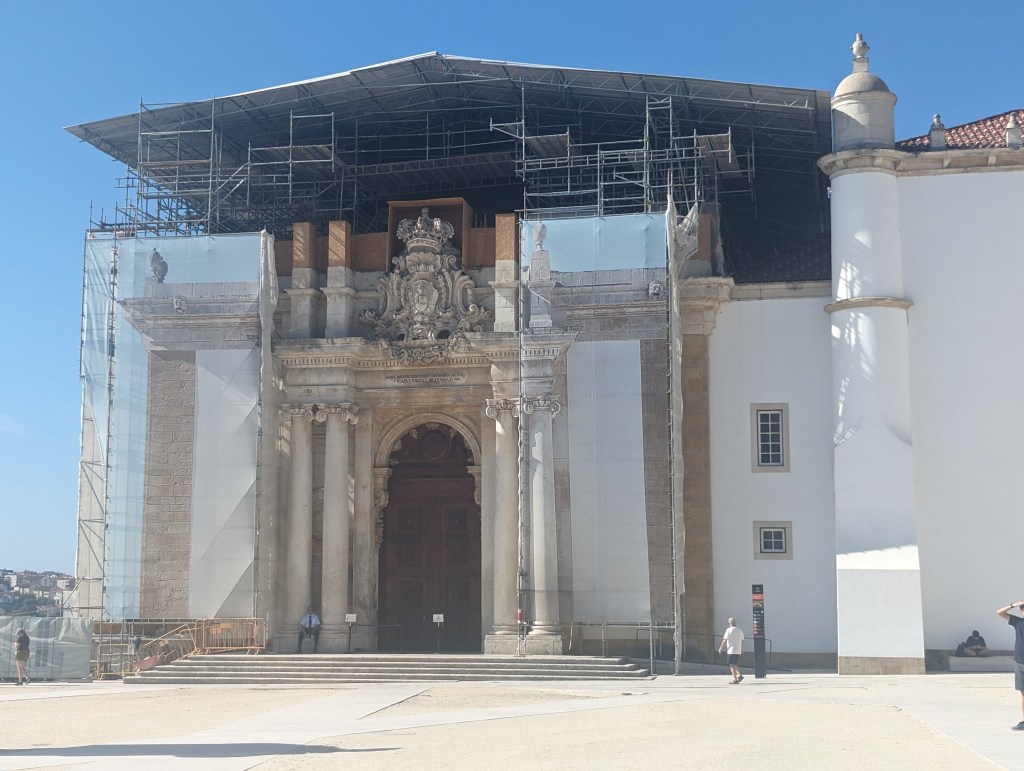
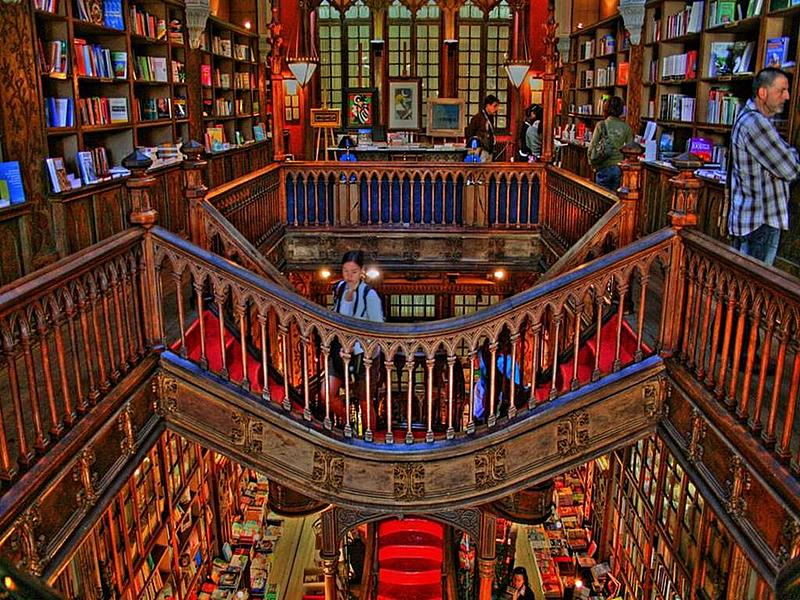
The clock tower is believed by the students to be the wise old owl watching them from every angle all the time.

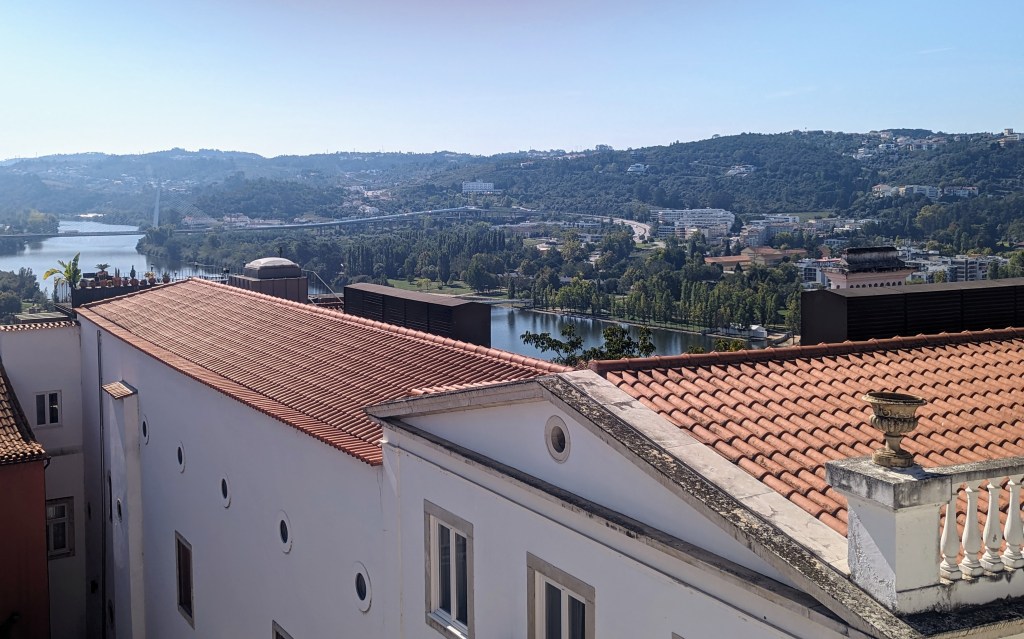
The view of the town of Coimbra and the Monego River from the law courtyard is magnificent. The Monego River is the longest river that runs solely on Portuguese lands.
As we walked down from the university, we passed the home of Jose Alfonso with his picture commemorating him on it. He is the author of “Grandola Vila Morena,” which was used by the armed forces to confirm that the 25th of April Revolution, the bloodless coup that ended Salazar’s dictatorship, was underway.

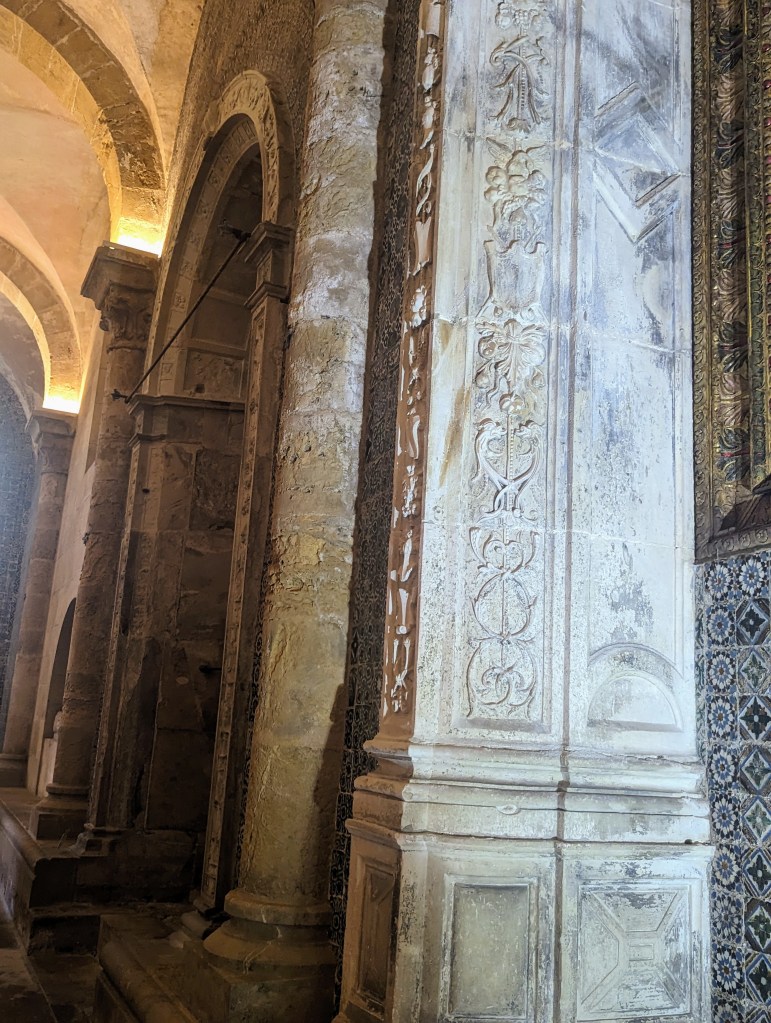
We ended our tour at the Old Cathedral of Coimbra. It is a Romanesque building began in the 12th century, shortly after Portugal was reclaimed from the moors. Many of its builders and craftsman had been moors converted to Christianity, but they did not include any human representations in the decor.

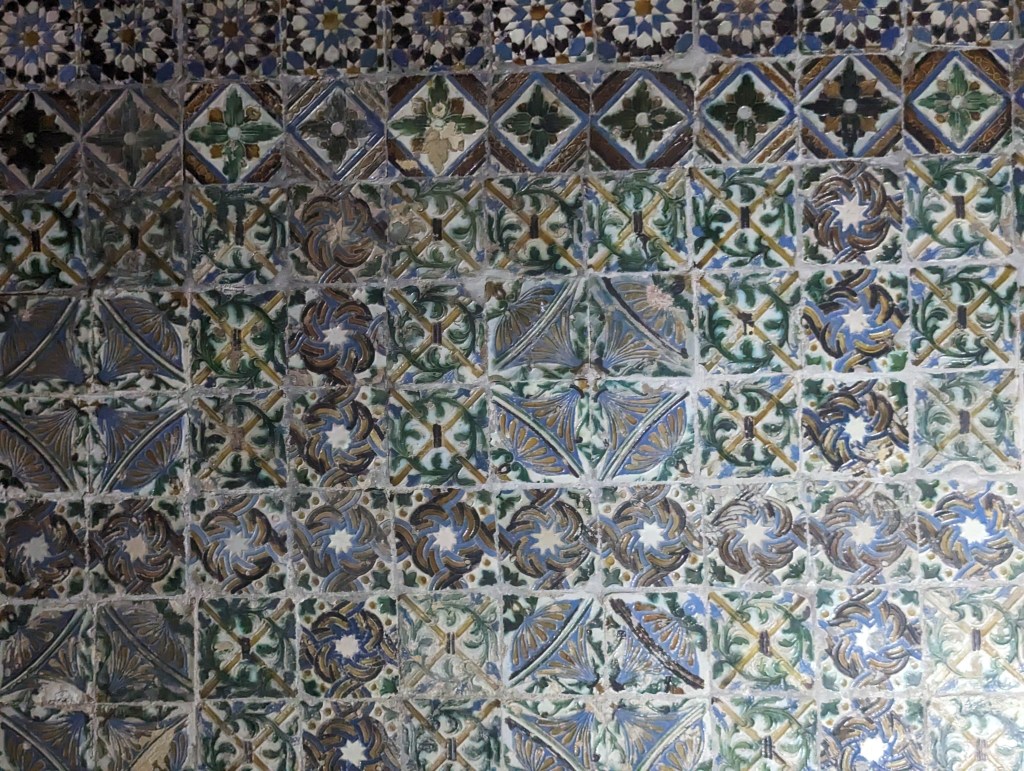
The tiles and columns are decorated in moorish mosaics and plant and animal motifs.
We next headed to the beach town of Nazaré, known for as surf city for it’s huge waves in the winter. We checked into our Airbnb and thanked our former selves for our bookings prowess; each place has been more gorgeous than the previous!
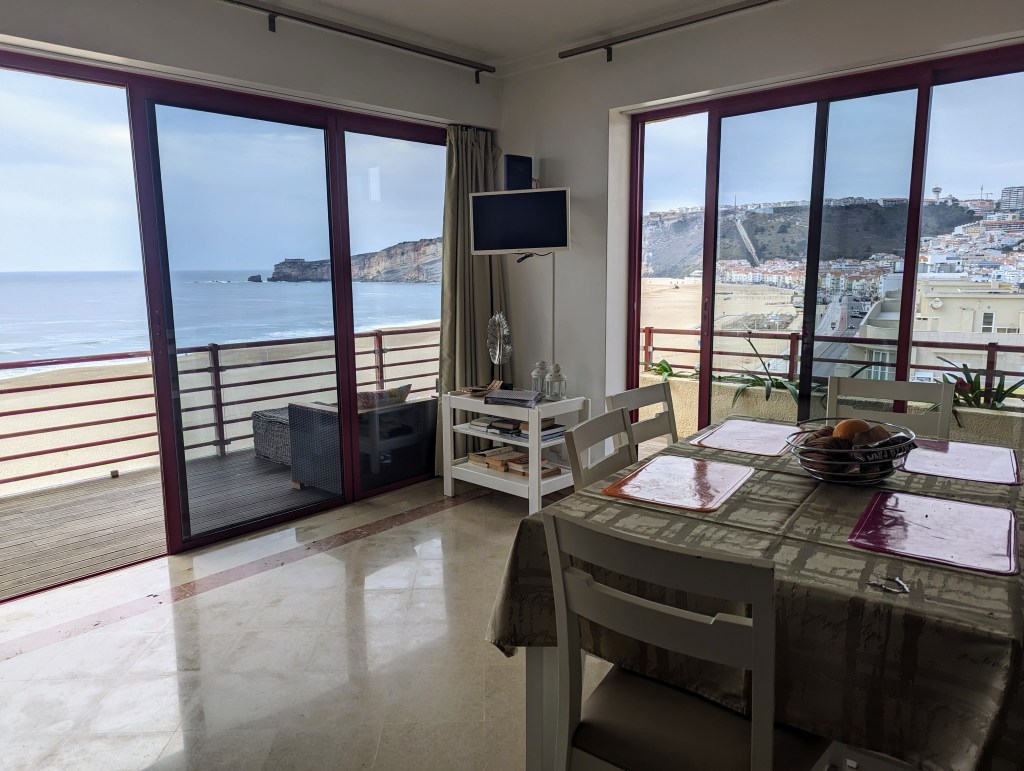
We enjoyed a glass of wine and watched the sun set over the Atlantic, a rare treat for us.
The next morning we dragged ourselves away determined to see what all the fuss is about Fatima, having been told several times along the way not to miss it. After a bit of a drive, we parked and approached from the back, and it looked like any other cathedral to us. But a quick stop in the restroom made us realize this was something bigger; the bathroom size rivaled any airport facilities. We rounded the corner and found this.
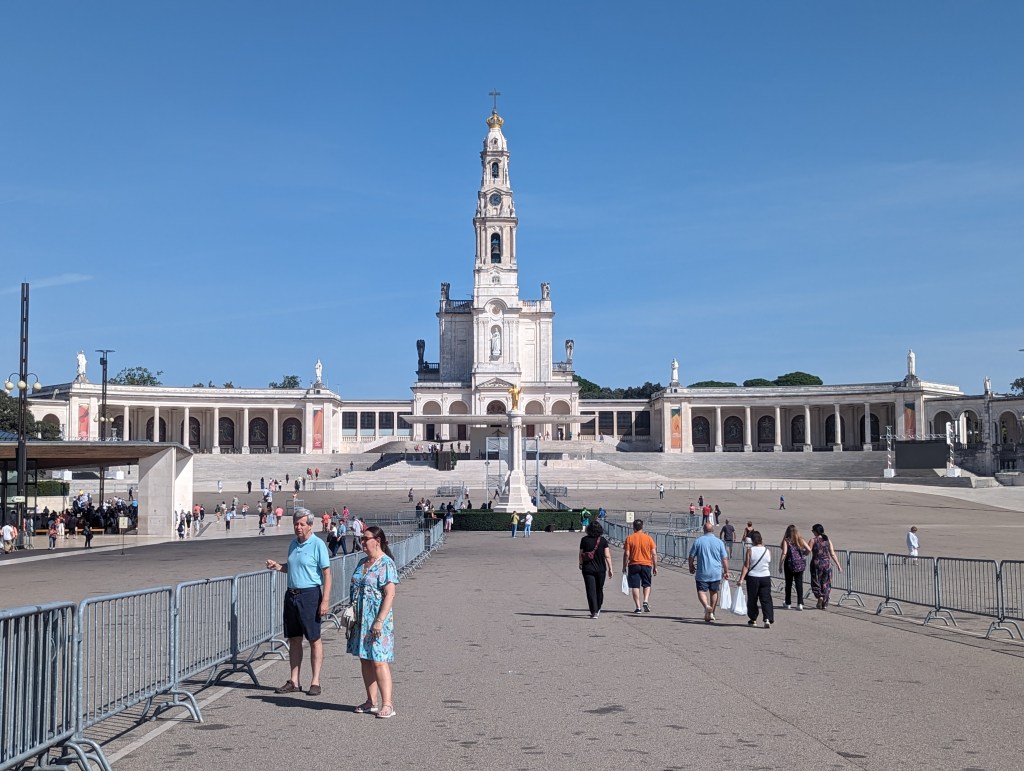
It is one of the largest international destinations for religious tourism, receiving around six million visitors per year. Catholic history reports that an apparition “the Angel of Peace” appeared to three shepherd children in 1917. The children reported the apparition’s appearance on the 13th of every month May 13, 1917 through October 13, 1917. The sixth and final apparition is said to have been witnessed by 70,000 pilgrims who had gathered. Pilgrims immediately began visiting the site, and construction for the church began in 1920.
Many of the pilgrims approach on their knees.

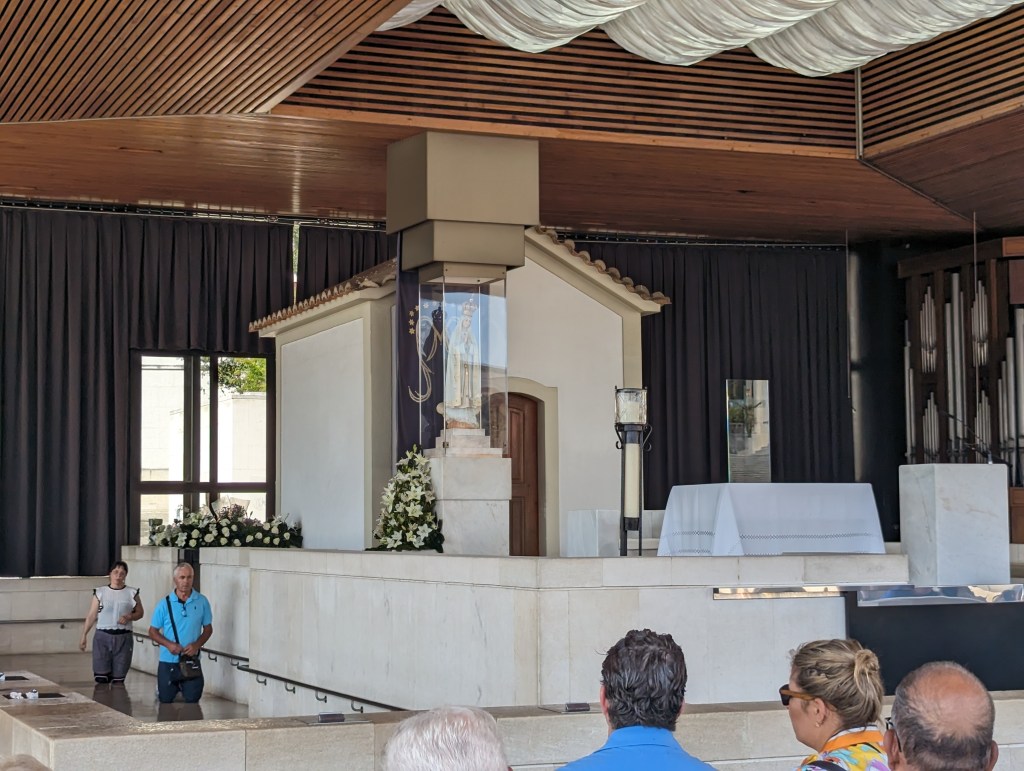

The naves along the walls of the cathedral have reliefs of the stages of the life of Christ.

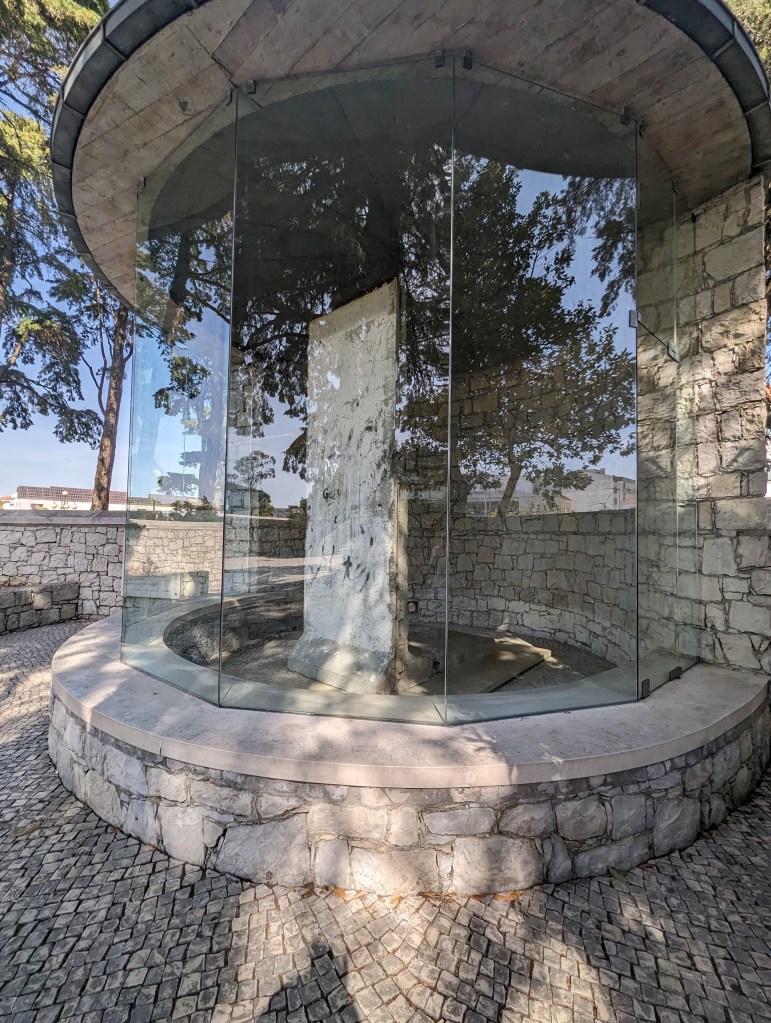
On the edge of the grounds is a piece of the Berlin wall given by a Portuguese emigrant to Germany to symbolize unity.
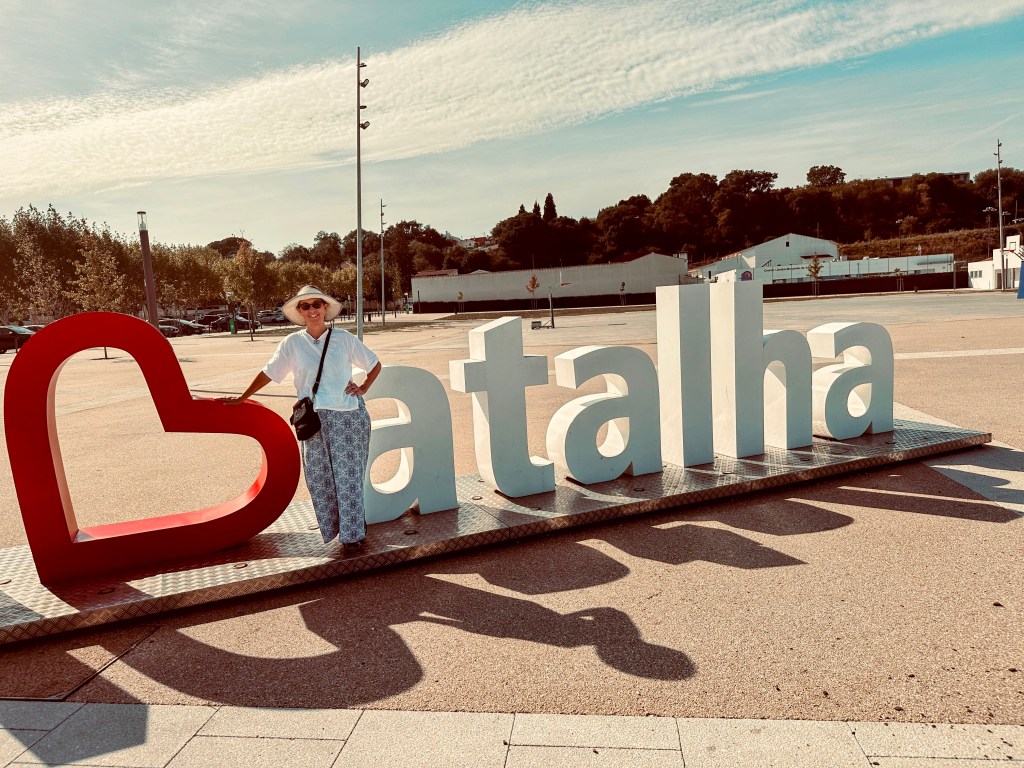
On the way back from Fatima, we stopped in Batalha to see the monastery.
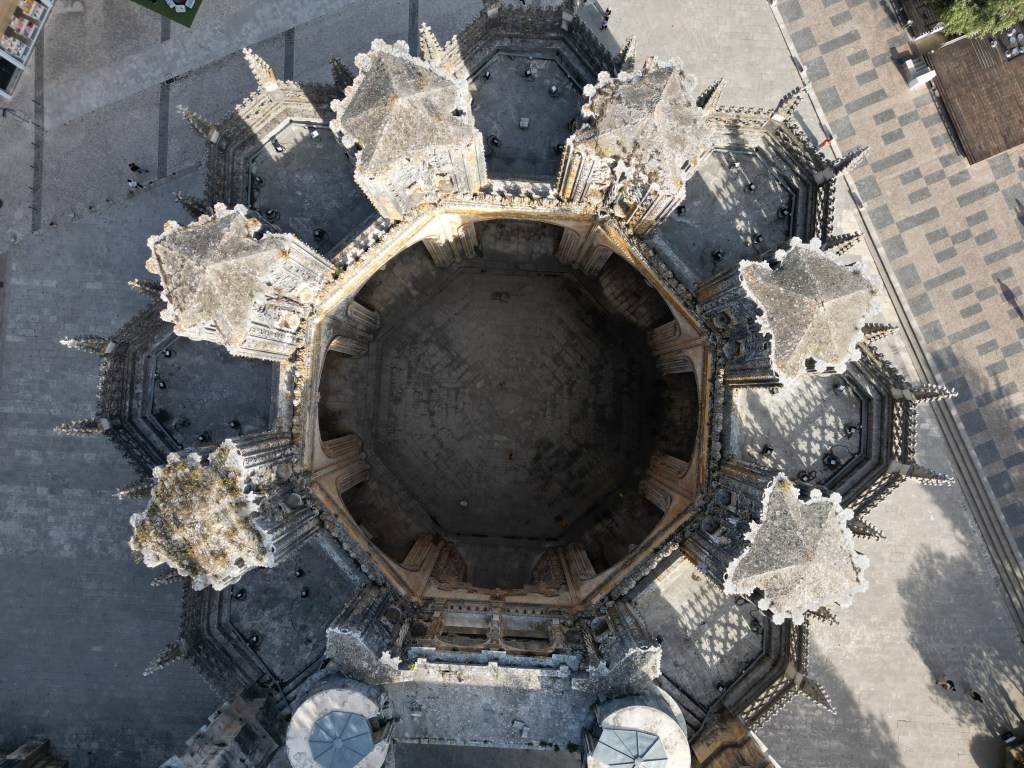
The Monastery of the Dominicans of Batalha was built by King João to thank the Virgin Mary for the victory of the Portuguese over the Castilians at the battle of Aljubarrota in 1385. It was to be the Portuguese monarchy’s main building project for the next two centuries. Here a highly original, national Gothic style evolved, profoundly influenced by Manueline art, as demonstrated by its masterpiece, the Royal Cloister. It was added onto over the next two centuries by several kings and their architects. But in the mid fifteenth century with the untimely death of King Duarte, who was adding on an octagonal chapel behind the apse of the church, followed by his architect the following year, construction was abruptly halted. This is now known as the unfinished chapel. The monastery is now a UNESCO World Heritage site and one of Portugal’s Seven Wonders.
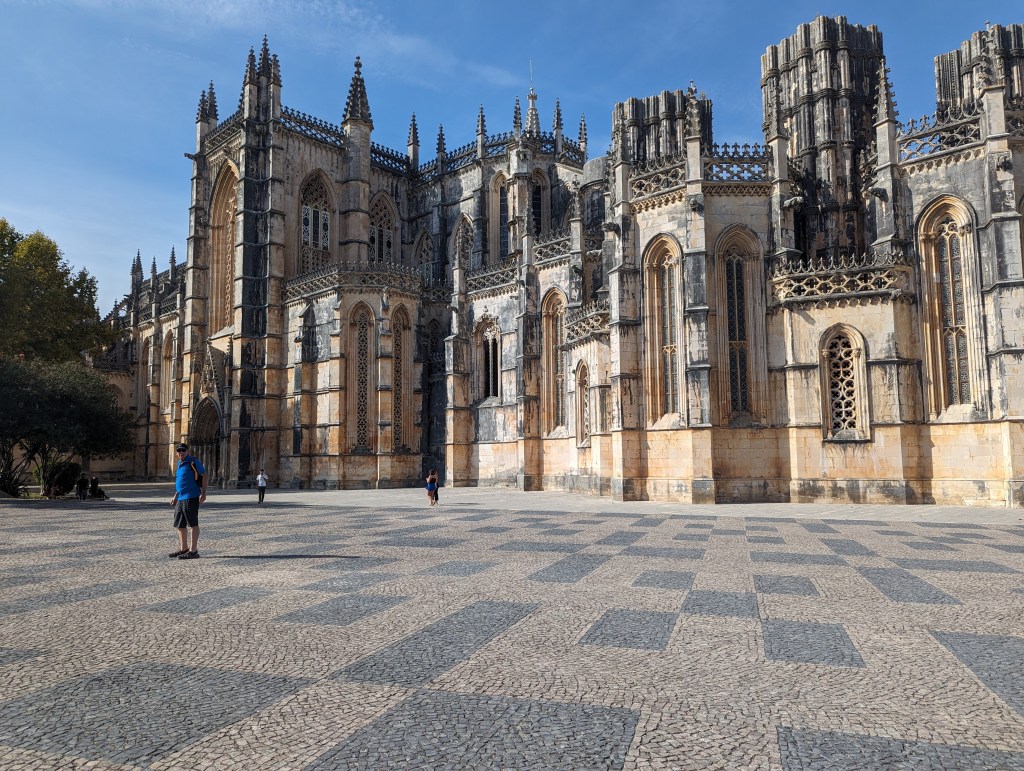
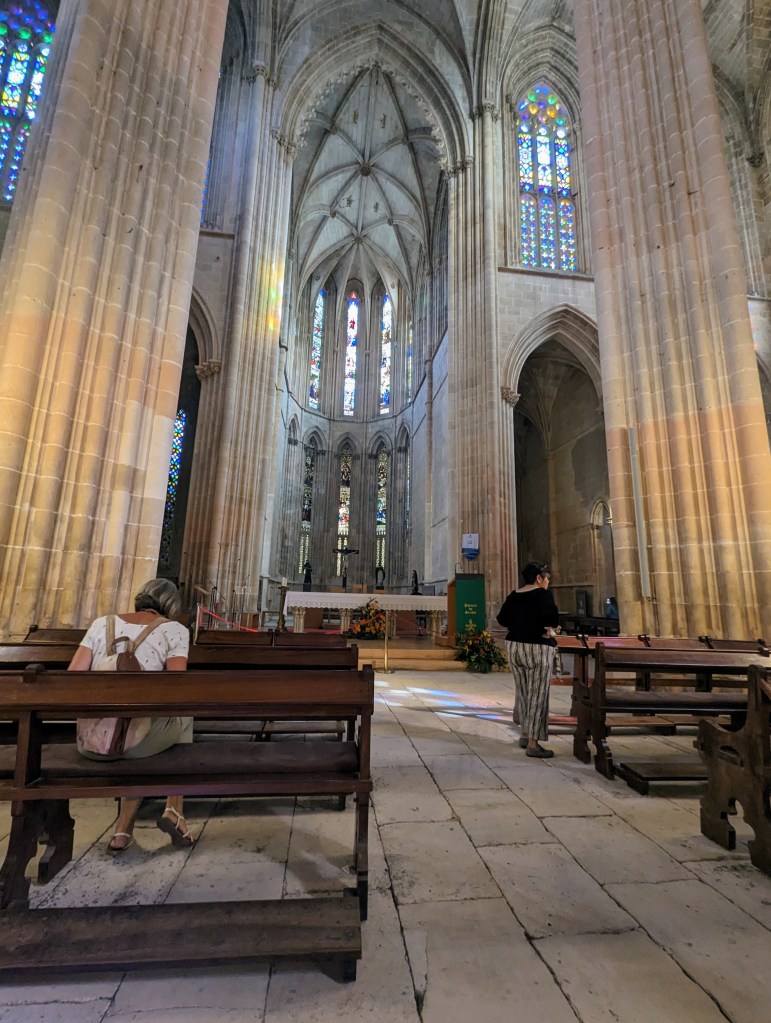

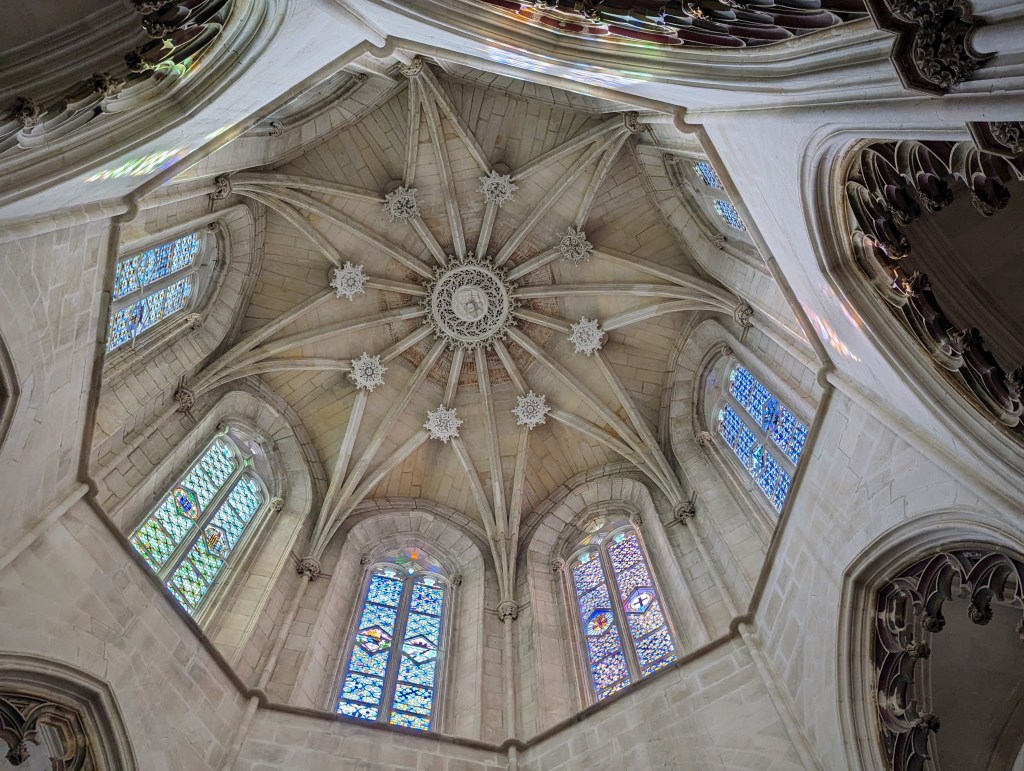
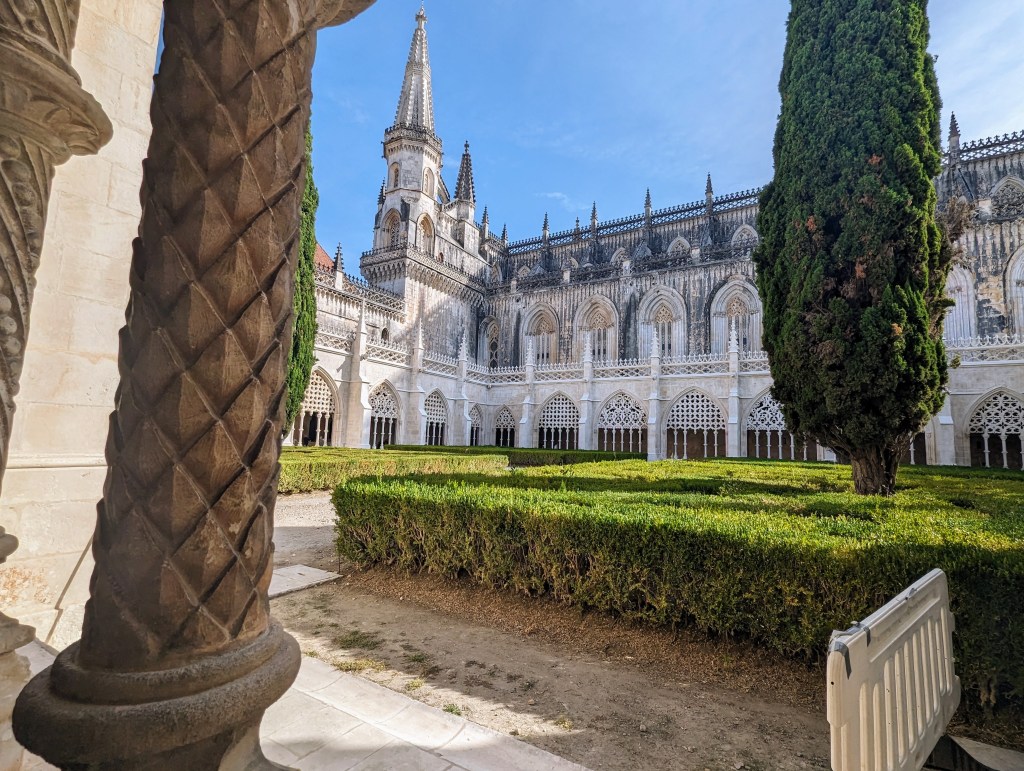
We did not know what to expect at the unfinished chapel, but no ceilings?
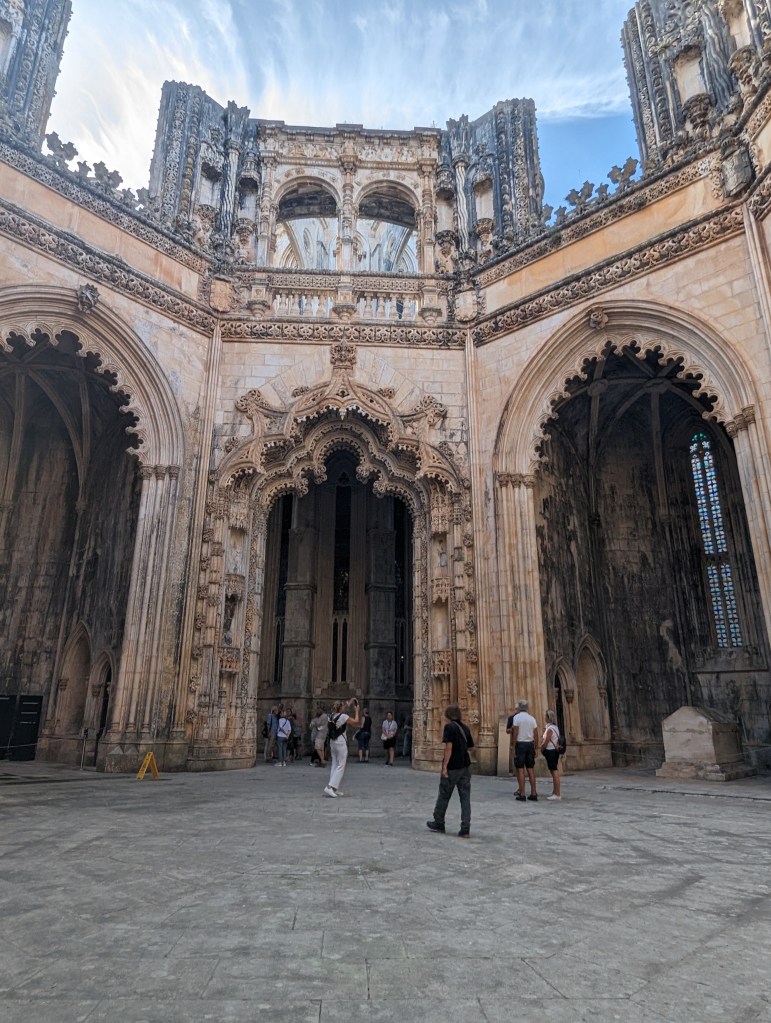
The detail work is spectacular. If finished, the chapel would have been stupendous.

Before leaving town, Eric sent the drone up to take a look at the unfinished chapel from above.
The next morning we headed out to the town of Alcobaça. The 12th century church and monastery of Alcobaça were the first Gothic buildings in Portugal, and it was one of the most important mediaeval monasteries in Portugal.

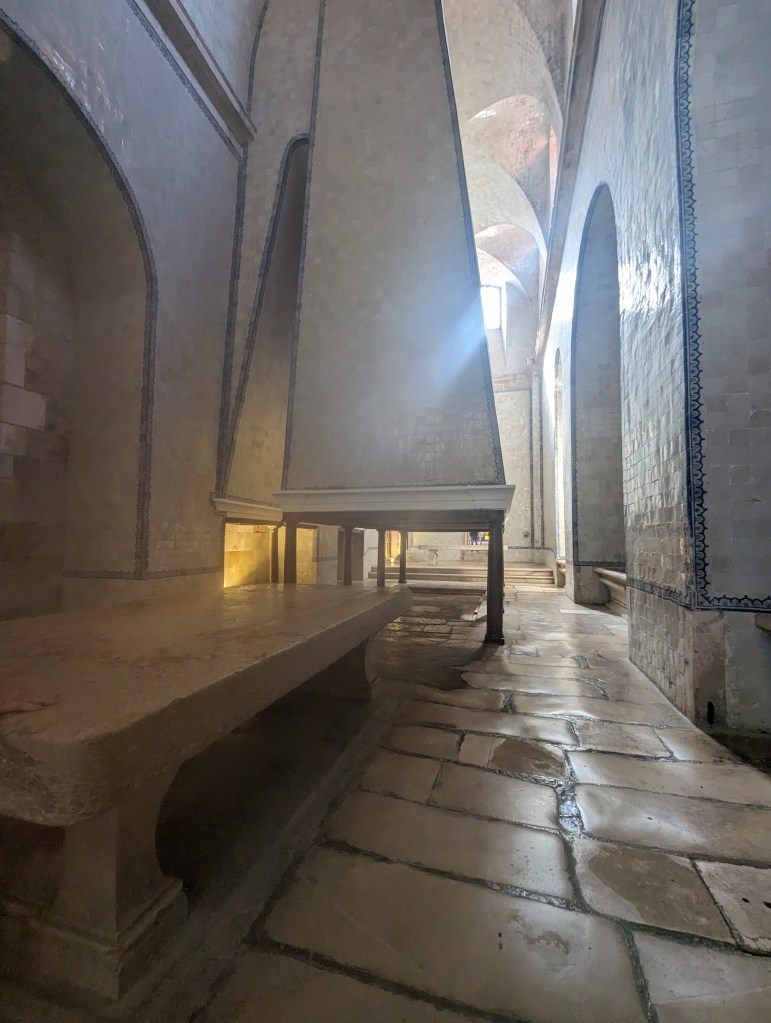
More than any monastery we had previously visited, this one really gave us a feel for how the monks lived.



But what was most fun for Eric and me follows. Remember the story of Inês and King Pedro from Coimbra? They are both buried here.

Then it was time to head back and spend some time in Nazaré and enjoy the beach.

 Jo & Eric's travels