
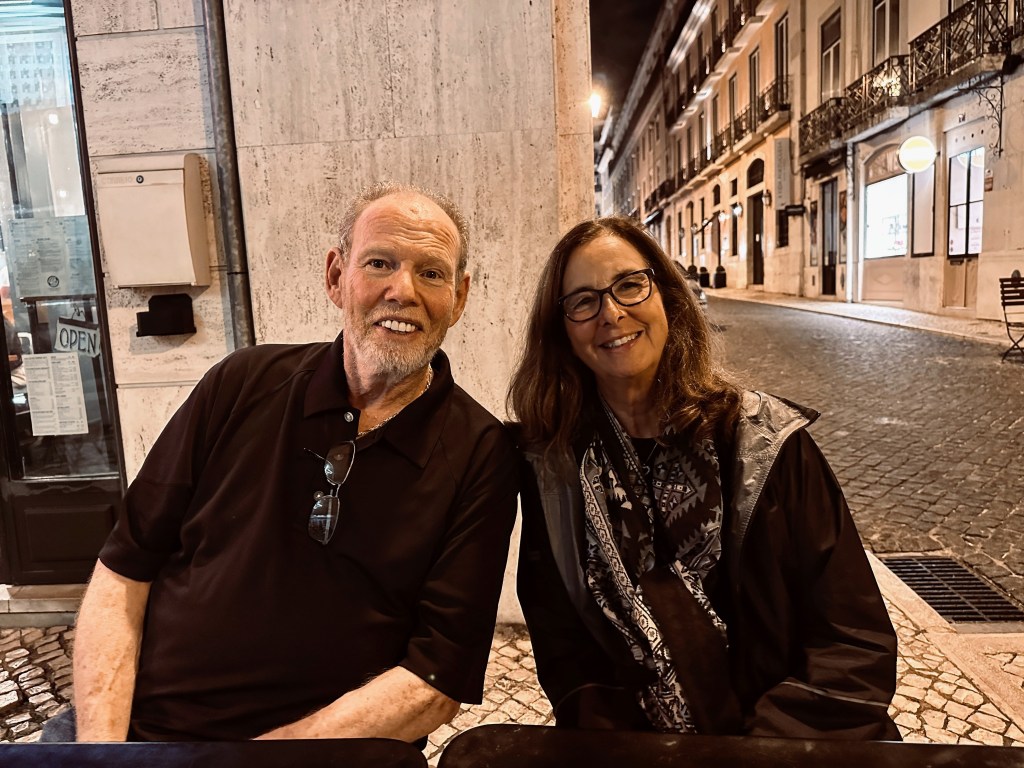
We left Nazaré early in time to pick up Eric’s brother Howard from the Lisbon airport. Our AirBnb host was accommodating enough to let us bring our luggage and leave it. Once again we had managed to book an incredibly well located and comfortable apartment. Once the car was safely tucked into the garage for the next few days, we headed out to explore the neighborhood, which was in the Baixa area, on the border of the Chiado neighborhood.

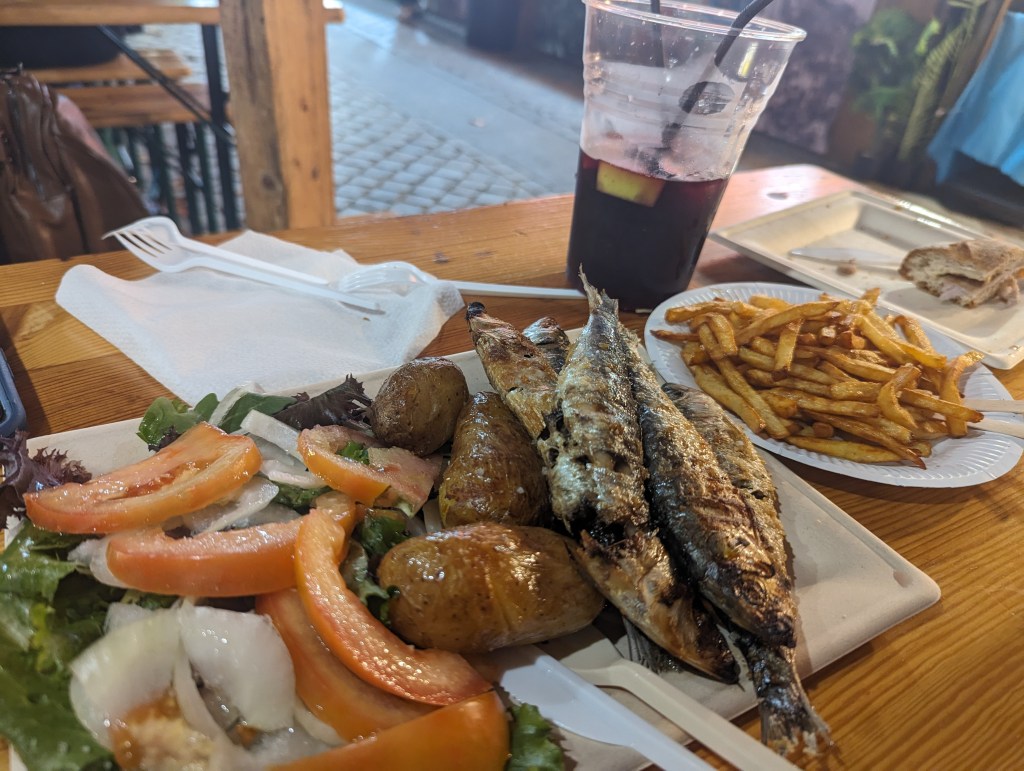
We had a long leisurely lunch of Portugeses specialties at Restaurante O Castiço. While Howard rested, Eric and I went food shopping. Then it was out into the night toward the Tagus River. There we sampled Portuguese street food while “Girls Just Wanna Have Fun” blasted from the loudspeakers.

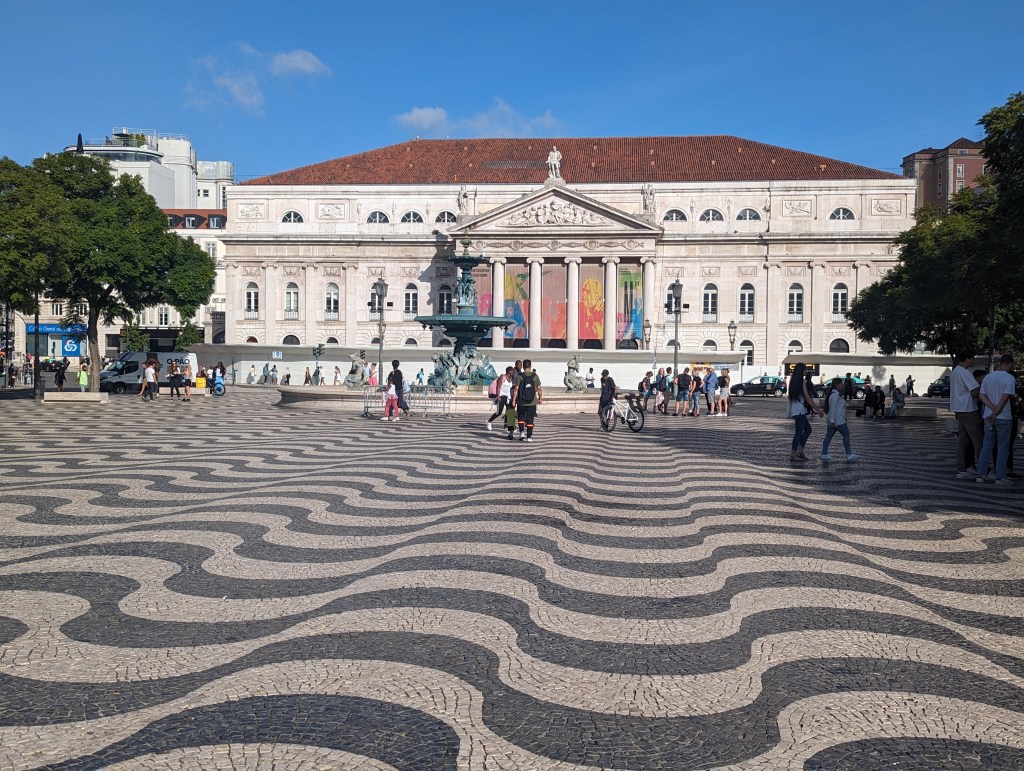
The next morning our walking tour commenced at King Pedro IV square, known by the locals as Rossio Square, its name before the statue arrived.

Our guide told us all kinds of important facts about Lisbon’s history, the most important of which is that there was a huge earthquake on Nov. 1, 1755 which set off fires and a tsunami basically leveling the city and killing about 75,000 people. So despite Lisbon being the second oldest city in Europe (Athens the oldest), most of what we were to see in Lisbon had been built since 1755.
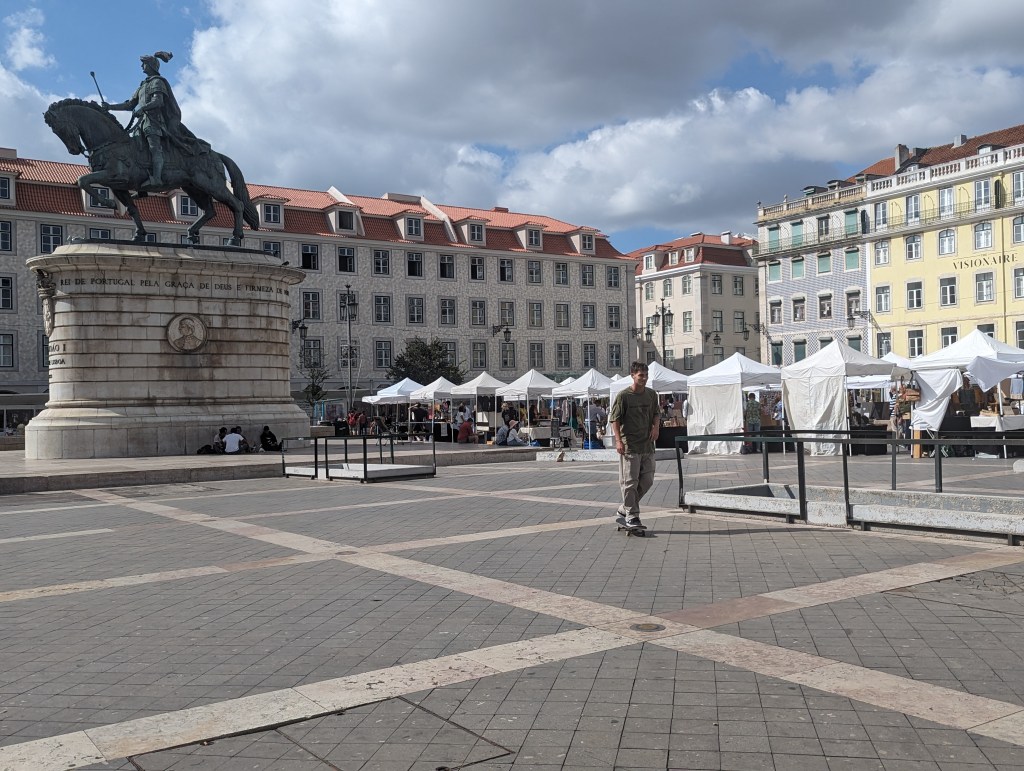
The next square we visited held the open air market first started in 1775 after the hospital that had been there was destroyed in the earthquake. It contains a statue of King Jão I, who had been an illegitimate son of King Pedro I. When in the mid 14th century his father and half brother both died, the country fell into turmoil, and Jão I defended the country from Spain. He later married an English princess, strengthening the bonds of the two countries. Their 8 children and their subsequent offspring became the explorers who helped build the Portuguese Empire around the globe.
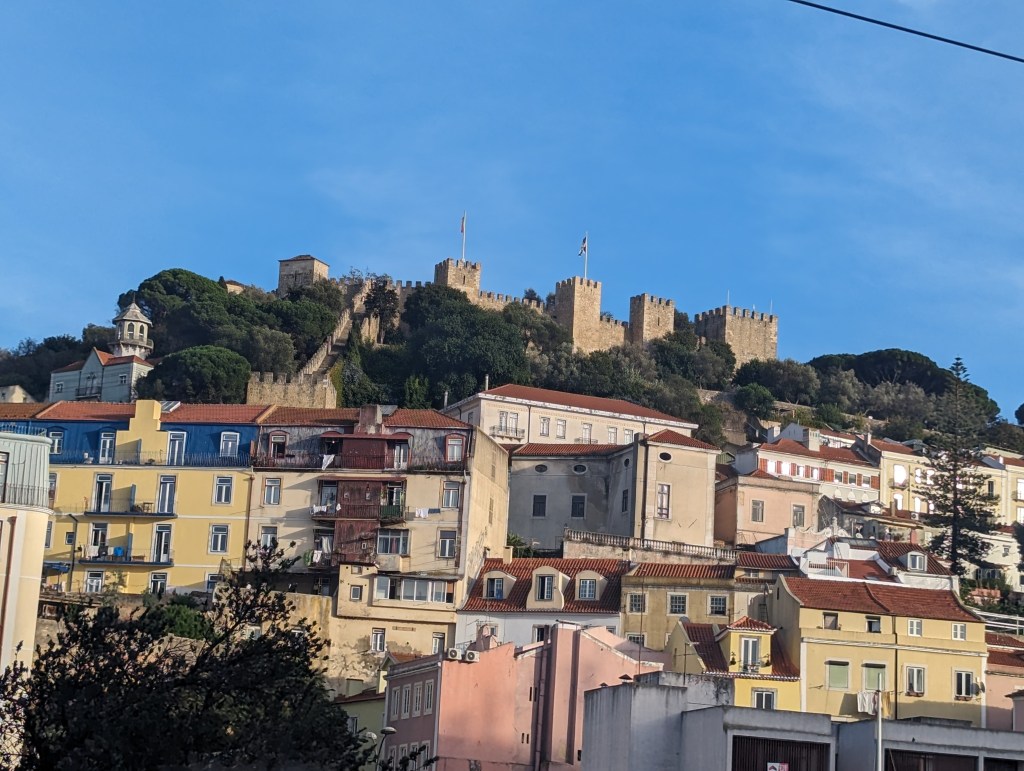
In the background of the square can be seen the castle of Lisbon. Human occupation of the site dates back to the 8th century BC. The current castle building was begun during Moorish occupation in the 10th century. The castle, like everything in Lisbon, was seriously damaged in the 1755 earthquake and fell into disrepair. The current castle was renovated during Salazar’s rule in the 20th century to be a national monument.
We then walked to another square in which stands the Church of Saint Dominic. When it was first built in 1241 it was the largest in Lisbon and the site of royal weddings. It was not only damaged in the 1755 earthquake, but having been rebuilt, it was gutted by a fire in 1959. Since then the roof has been restored, but the walls have been left as a memorial to those who lost their lives fighting the fire.
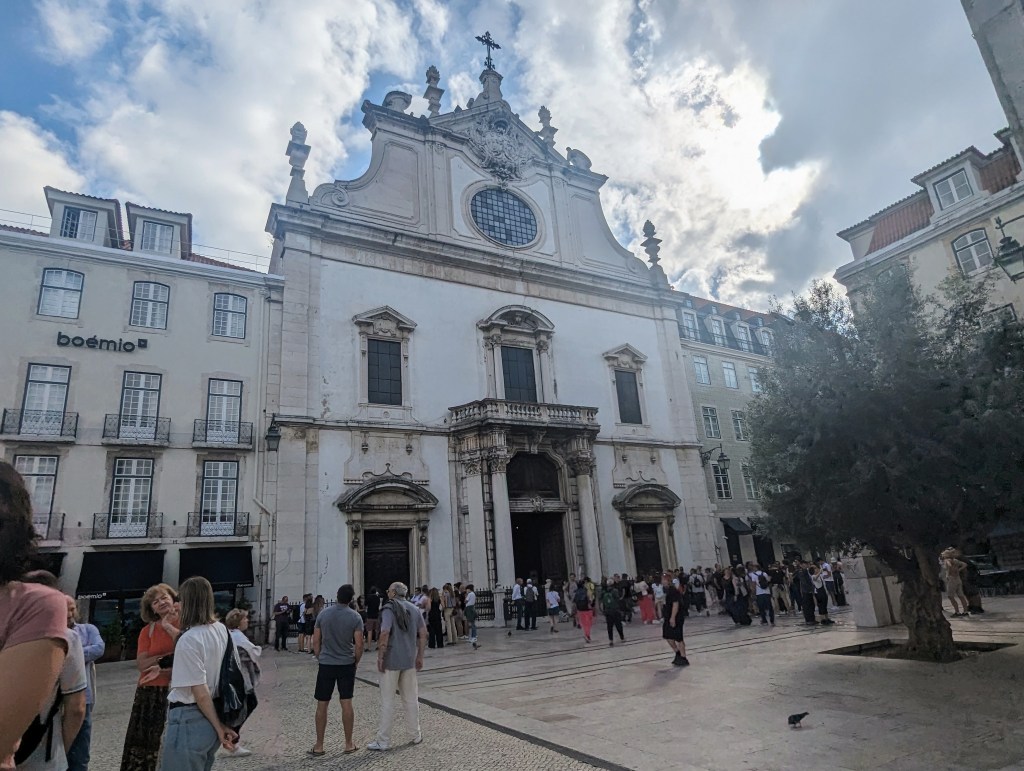
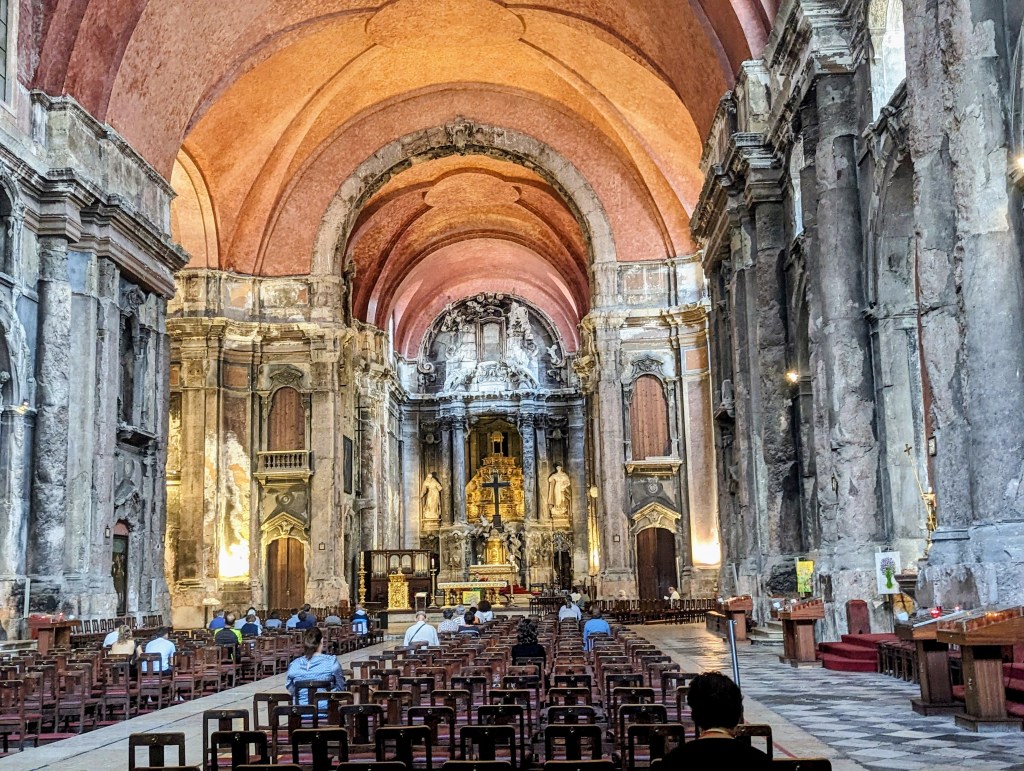
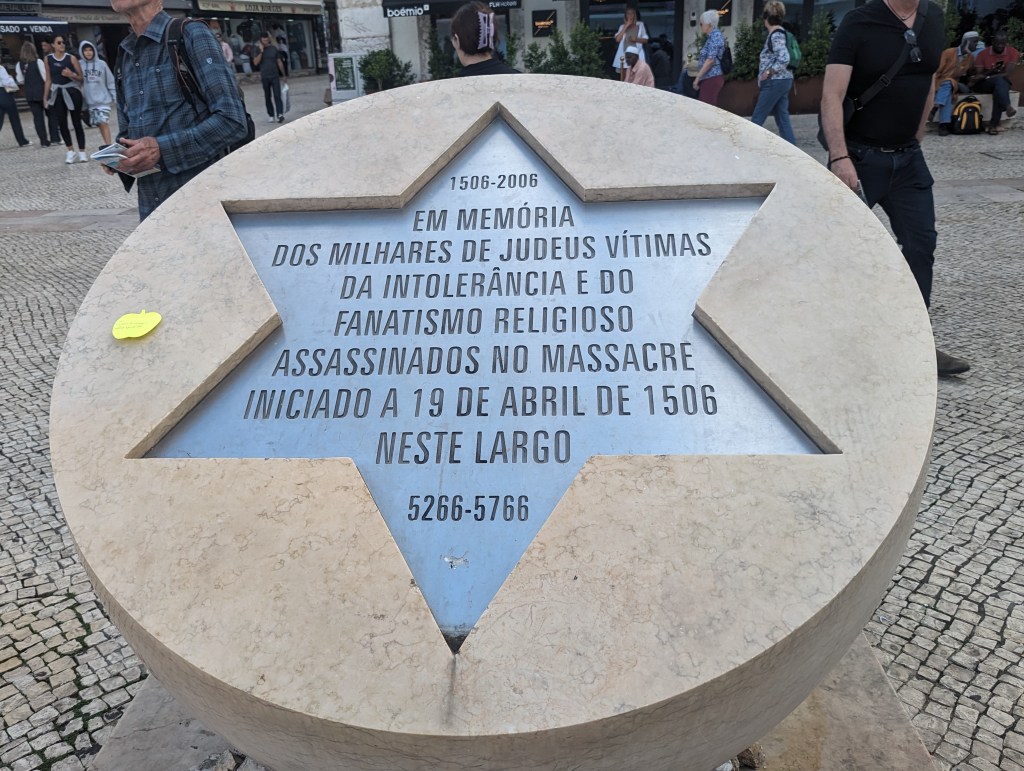
But what the site is most infamously known for is the massacre of several thousand Jews who had become “New Christians” during the Inquisition. During a mass In St. Dominic’s Church on April 19, 1506 while praying for the end of the plague, an angry mob erupted blaming the New Christians for the plague. On April 19, 2006 a monument was placed in this square. It reads “In memory of the thousands of Jews who were victimized by intolerance and religious fanaticism, killed on the massacre that started on 19 April 1506, in this square.” We visited this site only days after the horrific attack by Hamas in Israel.
We then commenced to climb into the Mouraria, the Moorish Quarter, which is a multicultural neighborhood in which are Asian, African, and Arabic shops and restaurants. Large parts of Spain and Portugal, including Lisbon, were occupied by Islamic rulers from 711 until 1294. This accounts for the Moorish influence of art, architecture, language, foods, etc. seen throughout Portugal.

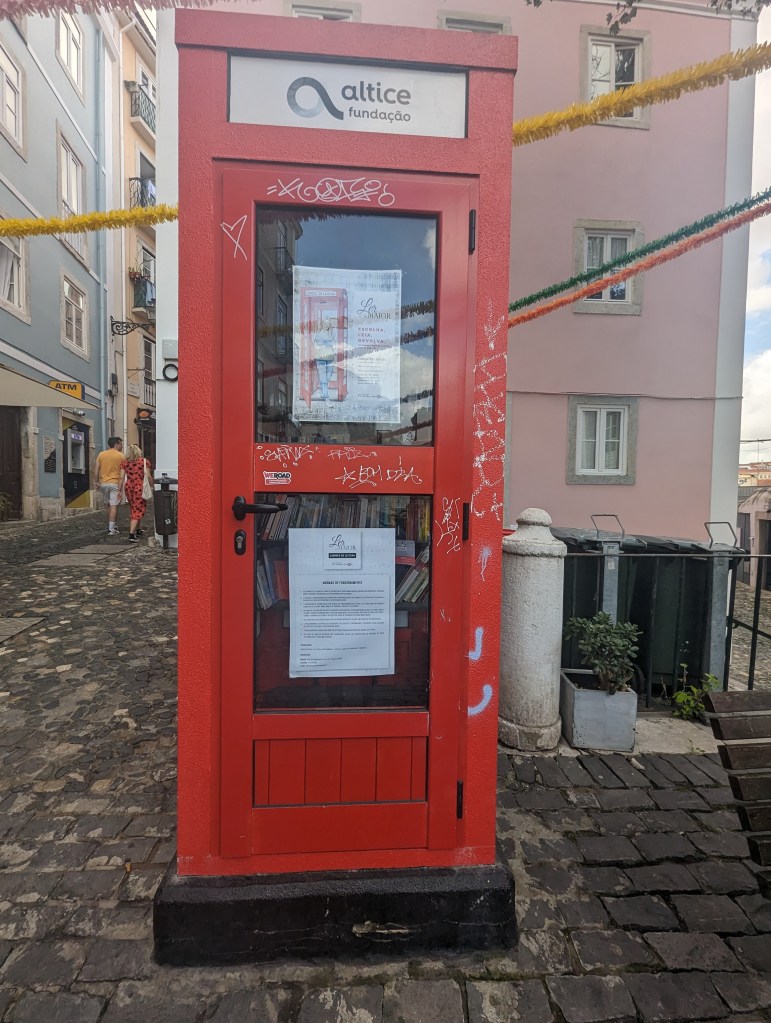
I particularly liked the telephone booth (seen in the background above) converted into a free public lending library.
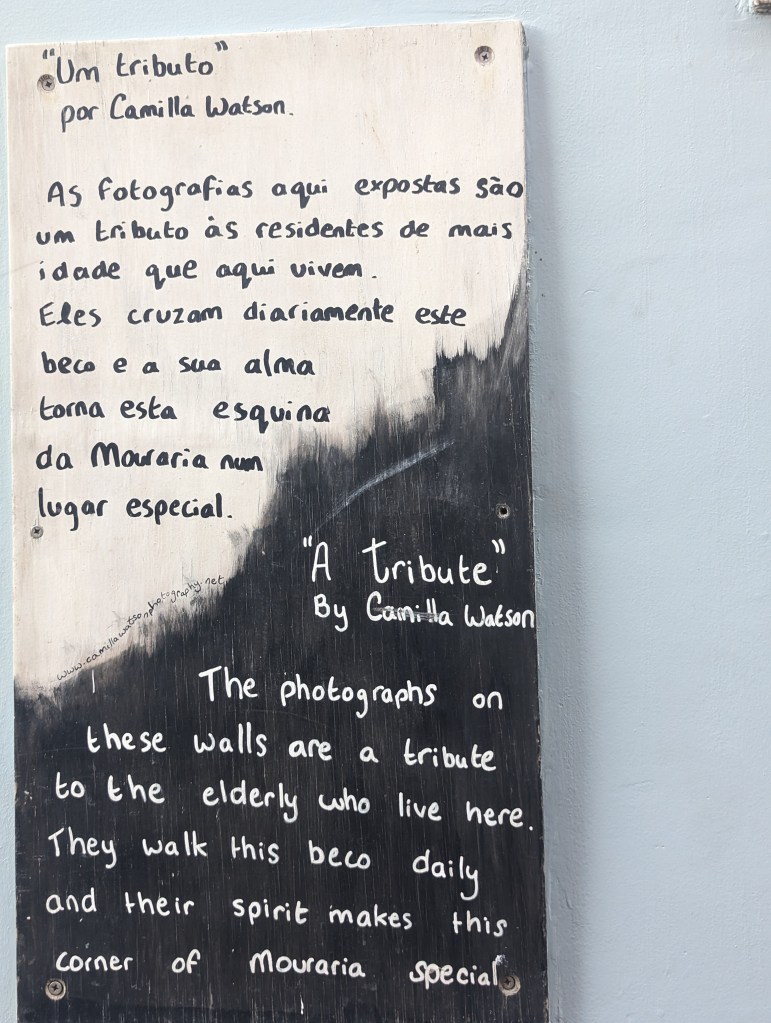
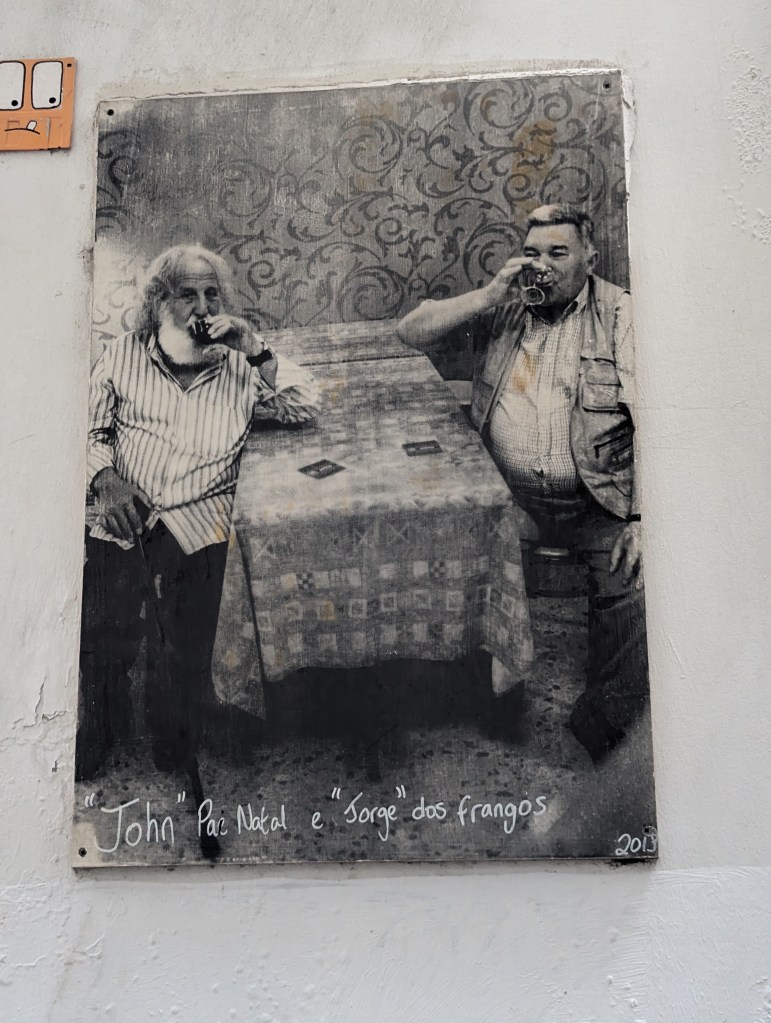
As the neighborhood is quickly gentrifying, a local artist decided to post pictures of the elderly native inhabitants still residing there.

We strolled past this guy; his is a unique way to sharpen a knife.

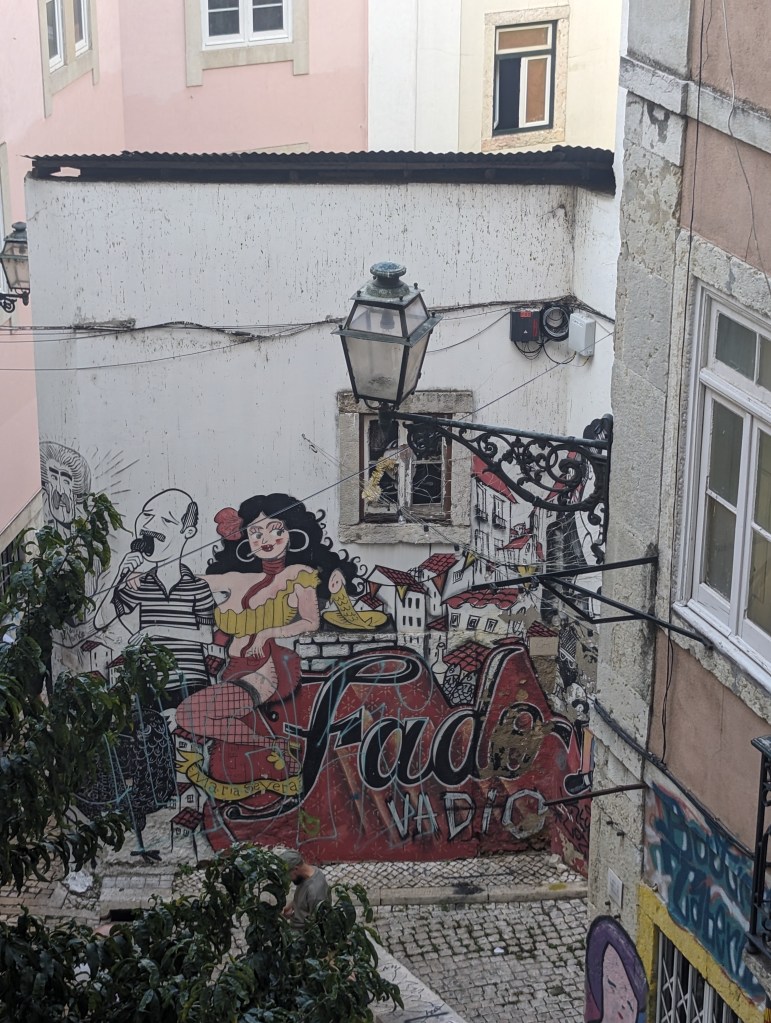
And past this tribute to Maria Severa, a prostitute Fado singer from the Mouraria neighborhood whose popularity grew even after her death at only 26 in 1846. She is credited for the origin of the popularity of Fado as a musical genre.
One of the many influences of the Moors in Portugal, seen especially in the Mouraria area, is the use of tiles on buildings. The entire city of Lisbon is like an open air tile museum.

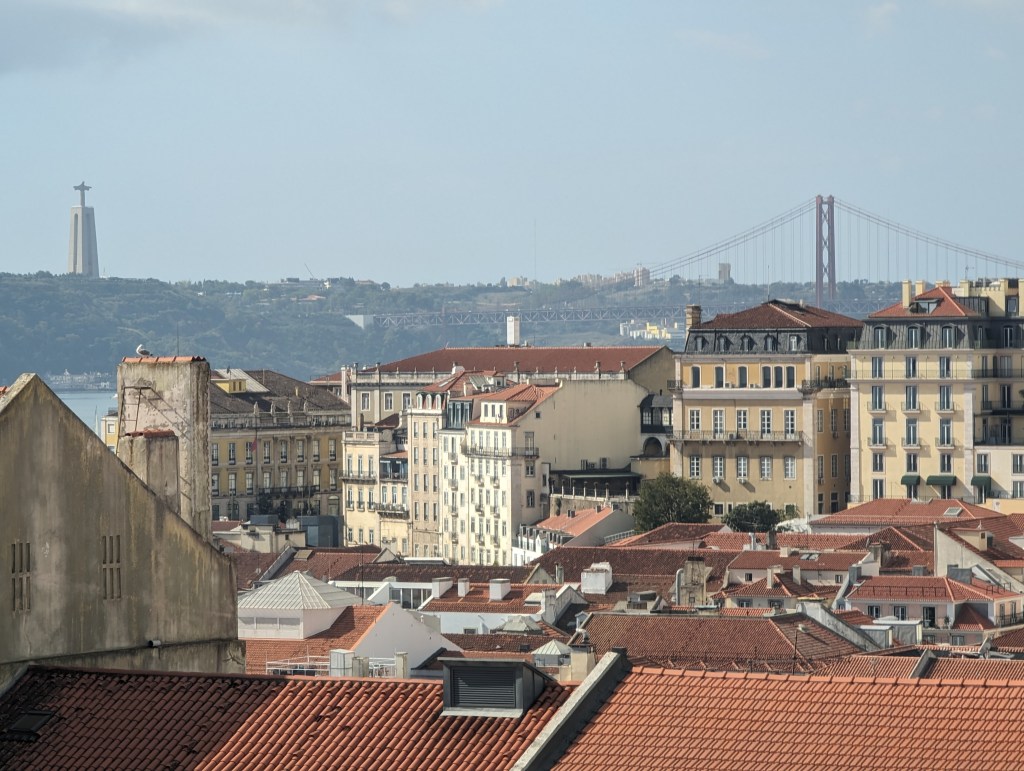
As we climbed to and reached the top of Mouraria, we were rewarded with views of the city.

Across the river below can be seen the statue of Christ the Redeemer built in the mid twentieth century modeled after the one in Rio de Janeiro, Brazil.
As we then passed into the Alfama neighborhood of the city, we passed under an arch in which an artist had painted the history of Lisbon in comics.
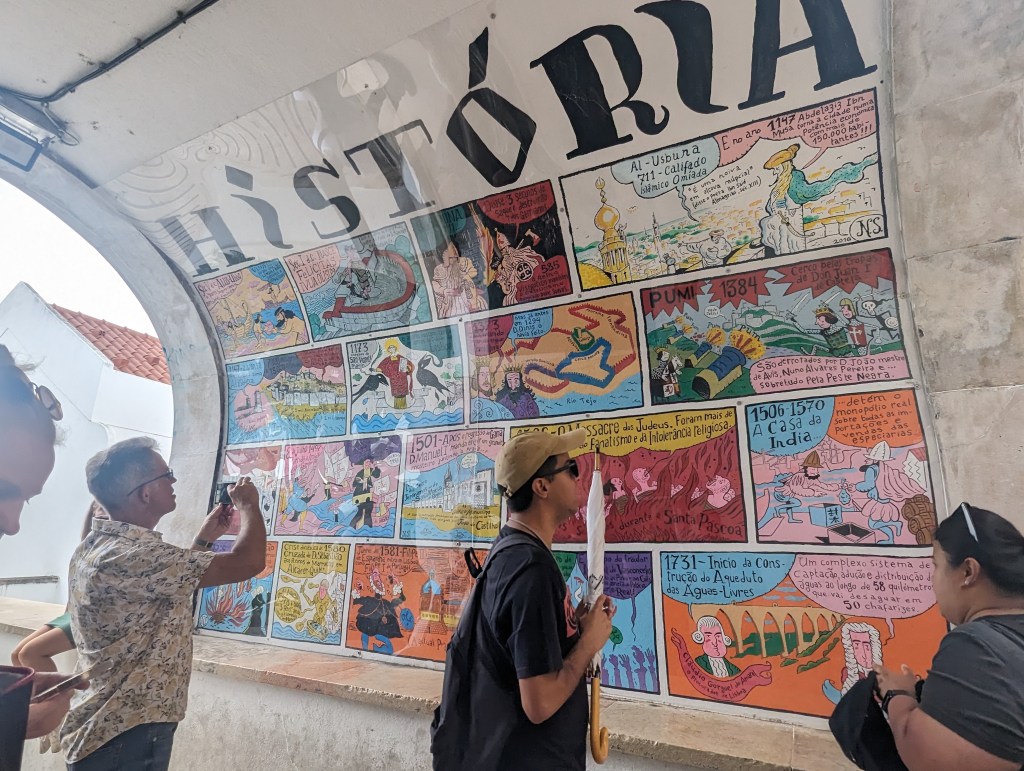
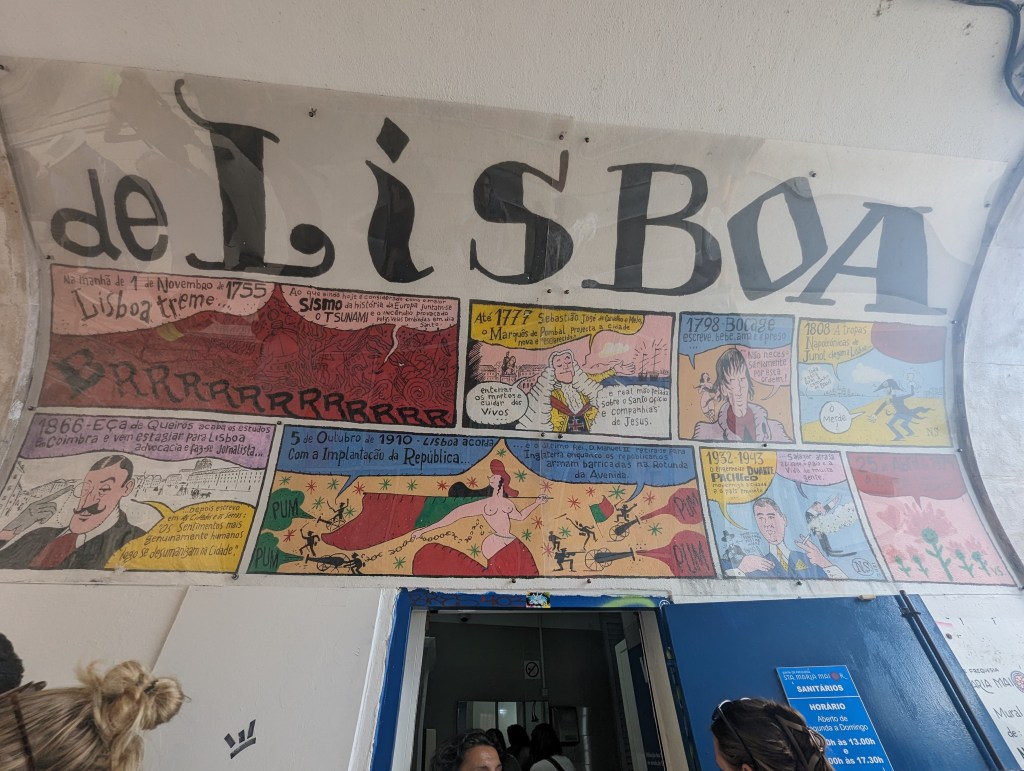
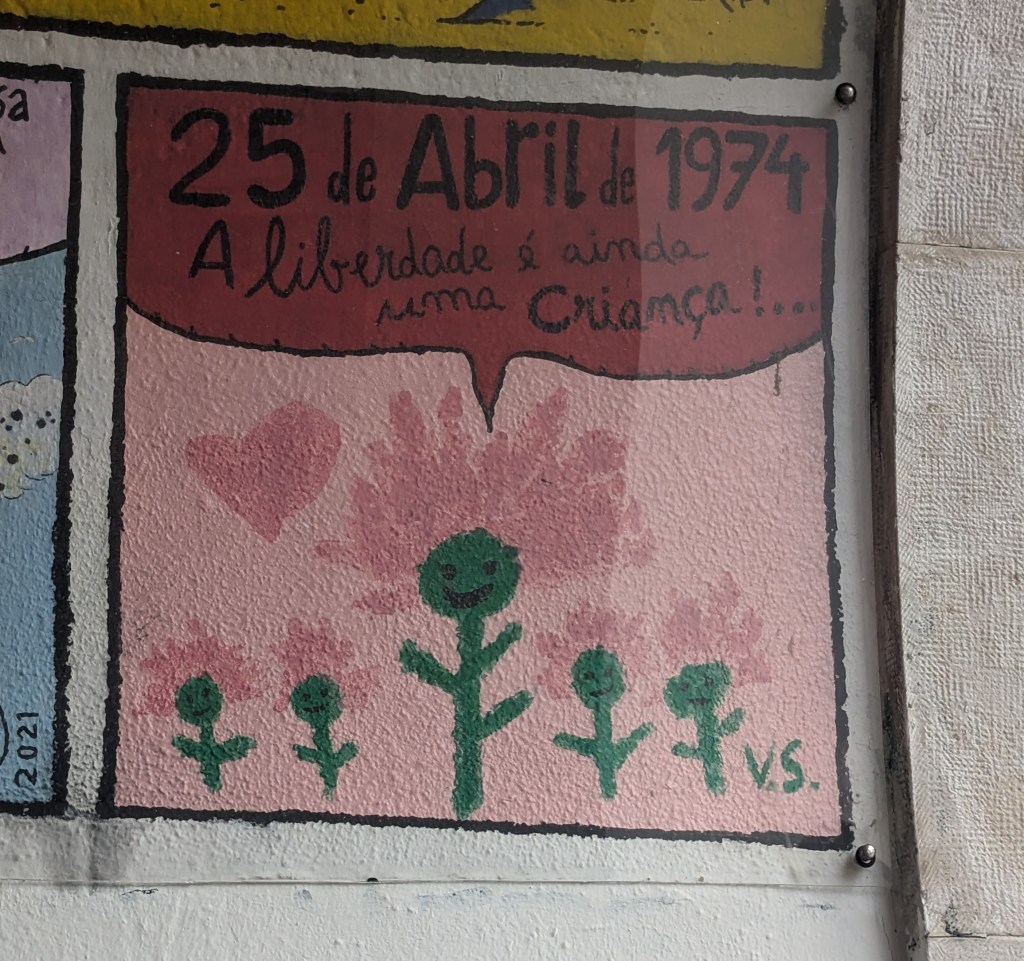
My favorite is the last, which represents the “Carnation Revolution,” which was the mostly bloodless coup that took place on April 25, 1974, ending a fascist dictatorship. In the early hours of the 25th of April “Grandola, Vila Morena” by Jose Afonso played on Radio Renascenca. This song was the sign to the Portuguese people that the revolution was starting. Red carnations were given to soldiers who placed these flowers inside their guns and on their uniforms. Carnations then became a symbol of democracy and the revolution.
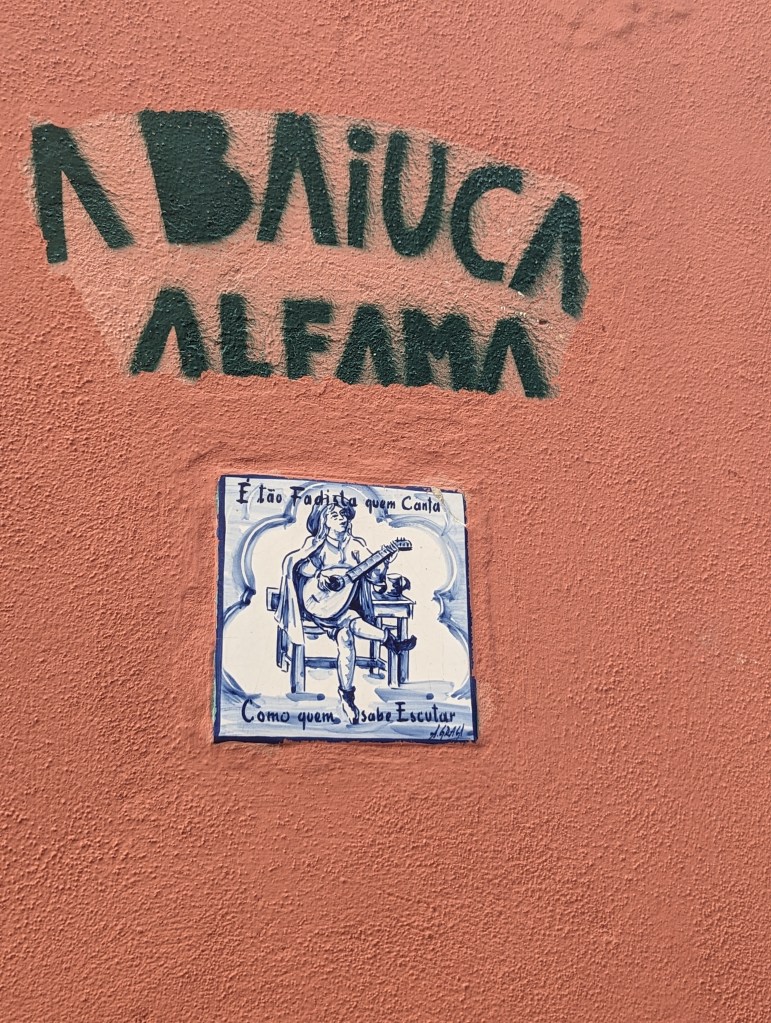
We then meandered through the Alfama neighborhood, which is home to the oldest Fado cafe in Lisbon.
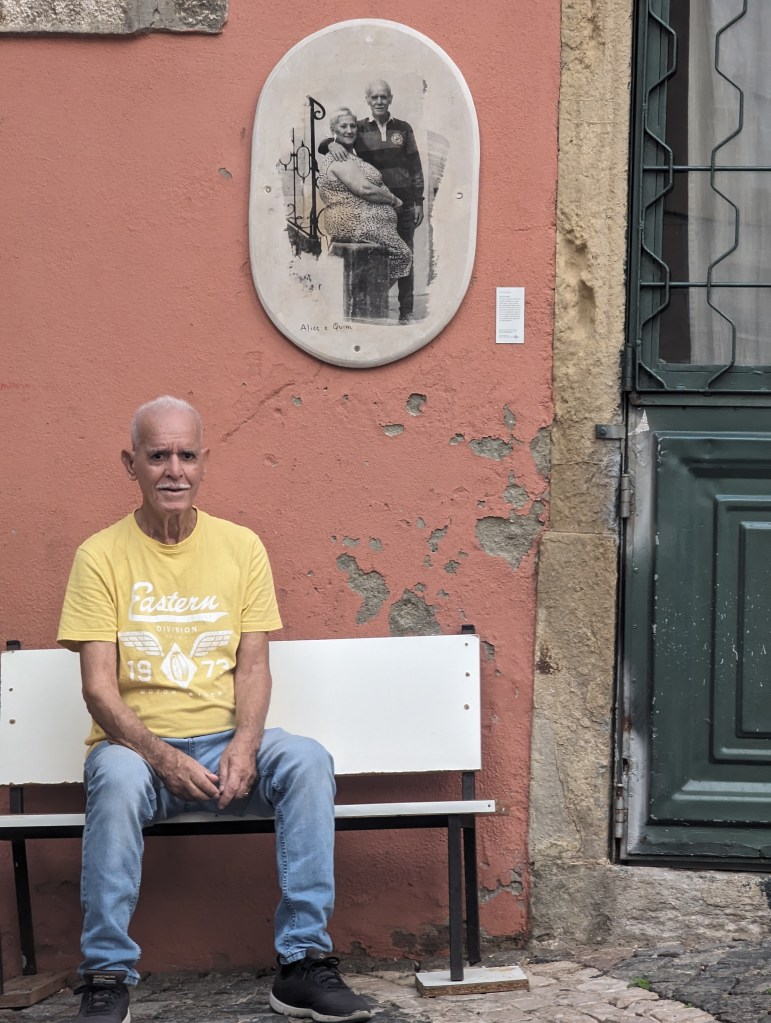
Sitting in the square next to the cafe, and next to a picture of himself and his wife, sat this elderly gent.
Meanwhile his wife sold us homemade ginjinha, a cherry liquor served in a chocolate cup, yummy.
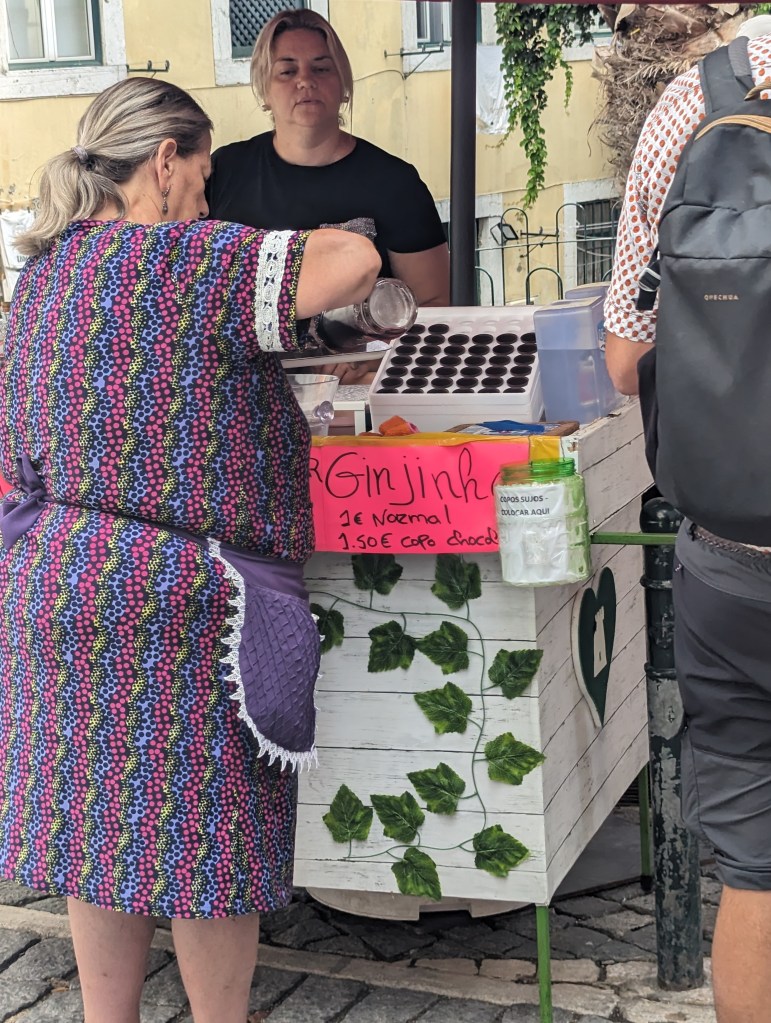
Ginjinha is a specialty of Lisbon and can be found everywhere, often served in restaurants following dinner.
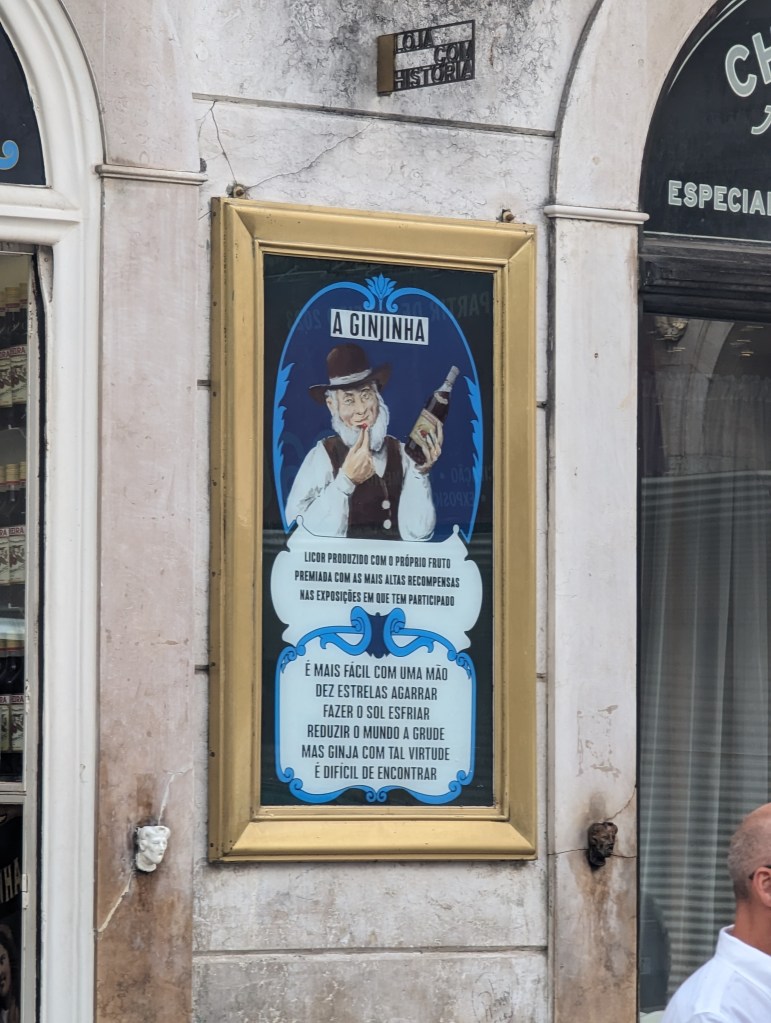
Alfama is also known for its gorgeous tile buildings.

We ended the tour at the Lisbon Cathedral, one of the city’s oldest monuments dating back to 1147, and having survived battles and the devastating earthquake of 1755. Every year on June 13th, St. Anthony’s day, the patron saint of Lisbon and the cathedral, 11 preselected couples get married there. All of their wedding and honeymoon expenses are paid by the city and sponsors.

After 3 hours of walking, it was time for a well deserved lunch, which we partook at Taberna de Baiaxa. We had the most delicious lunch of local delicacies, discovering pica pau.
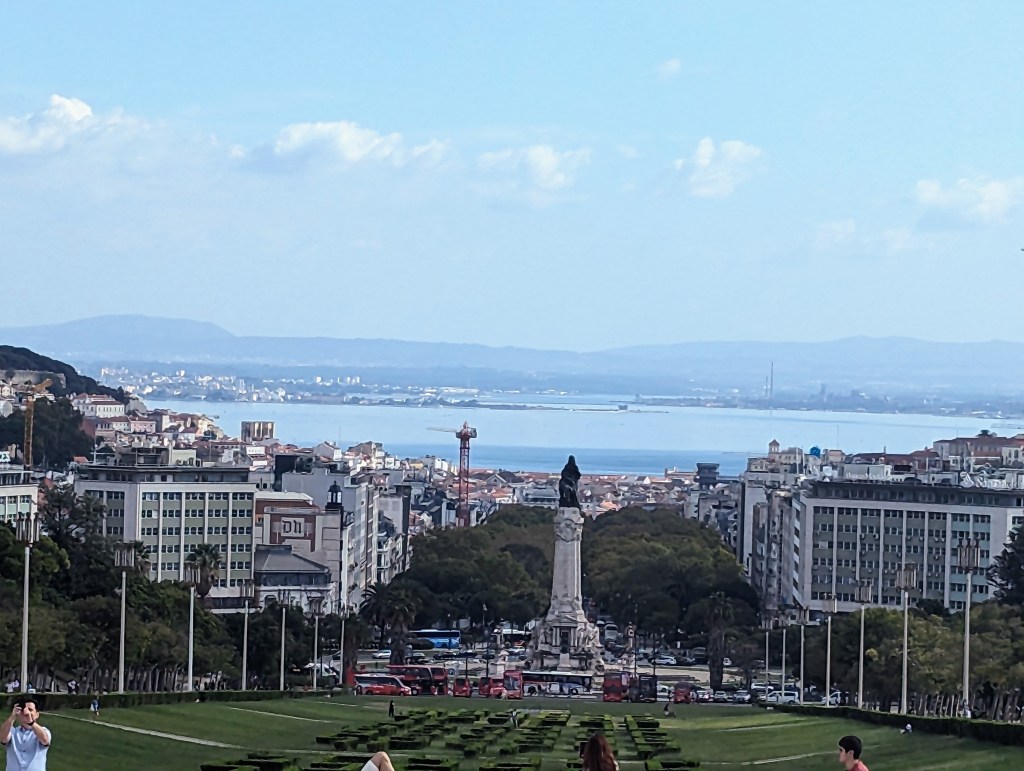
Despite our long morning and Howard still being a bit jet lagged, due to bad weather predictions for the later half of our Lisbon visit, we soldiered on. The afternoon touring took place on the top of a hop/hop off Yellow Bus. We passed the Edward VII Park with its magnificent views of the Tagus River.
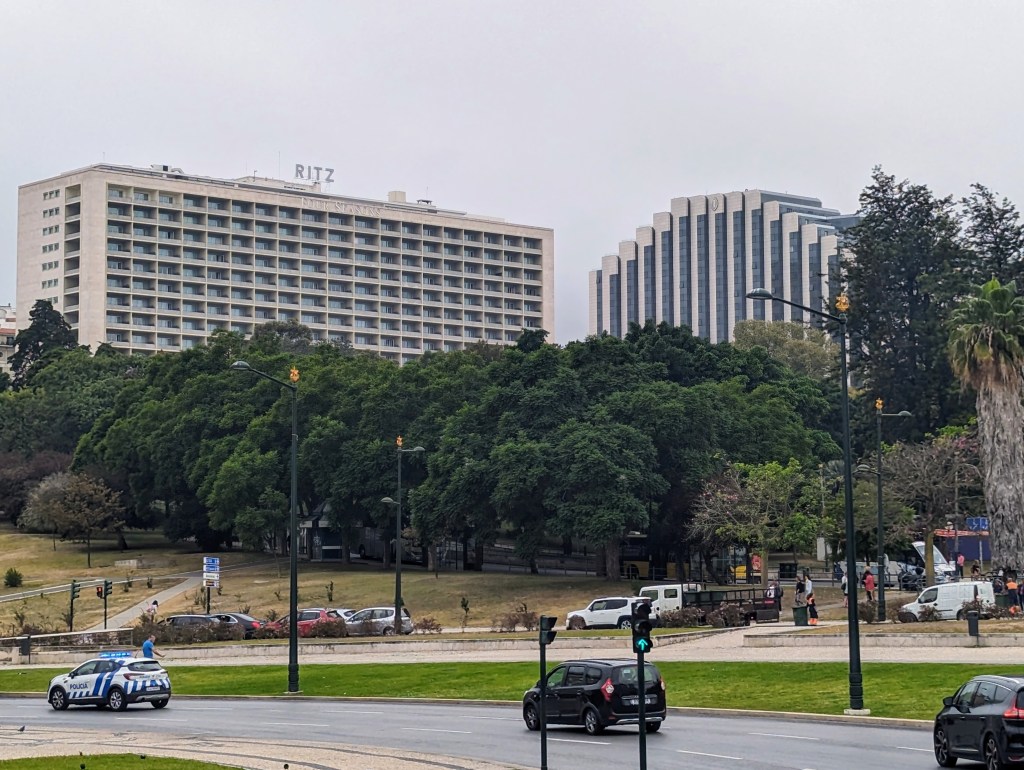
And the Ritz Four Seasons and the Intercontinental Hotels.
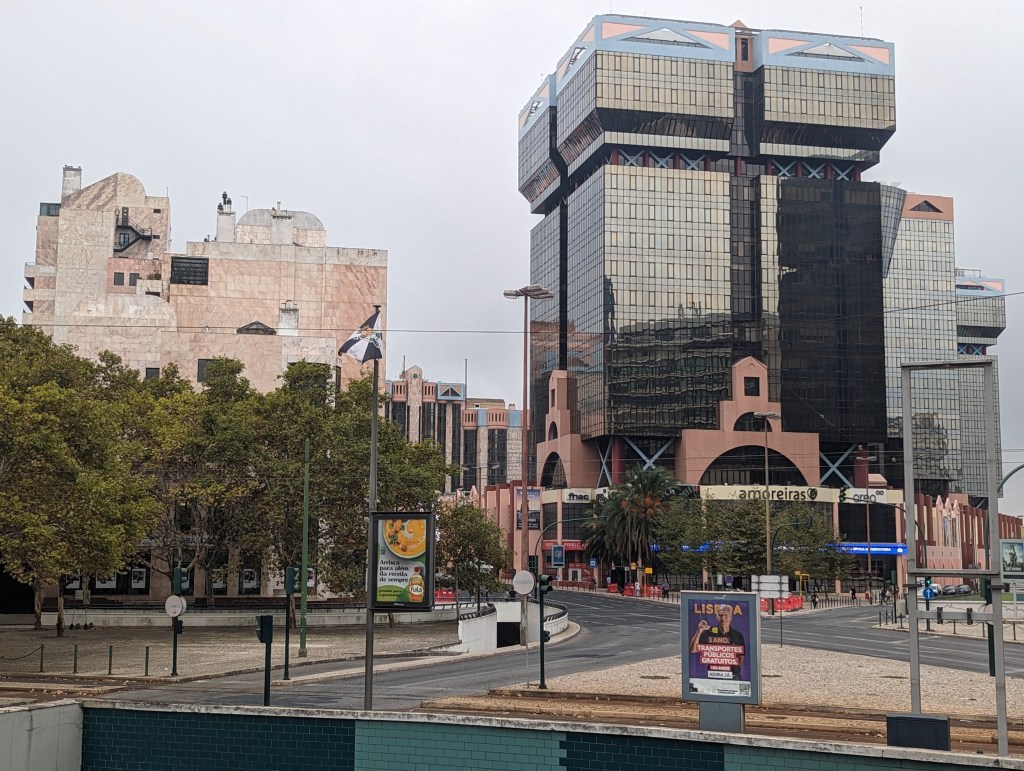
And the Amoreiras shopping center built in the 1950s.

We rode through Lisbon’s first water treatment plant.
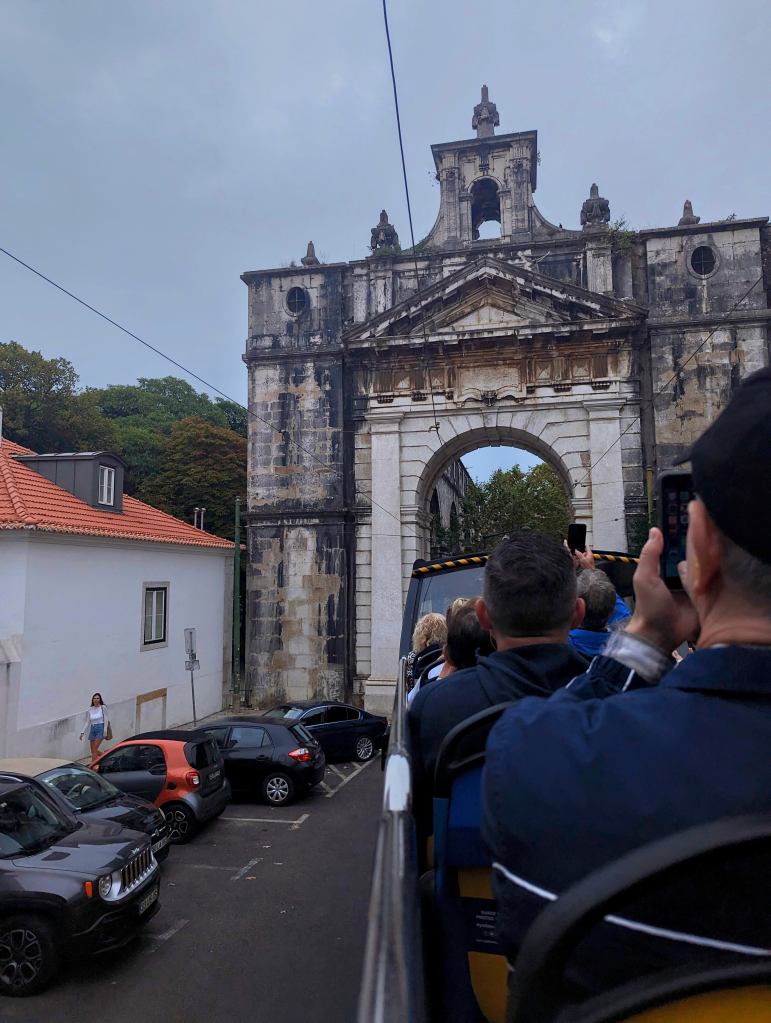
And past the aqueduct that supplied it.

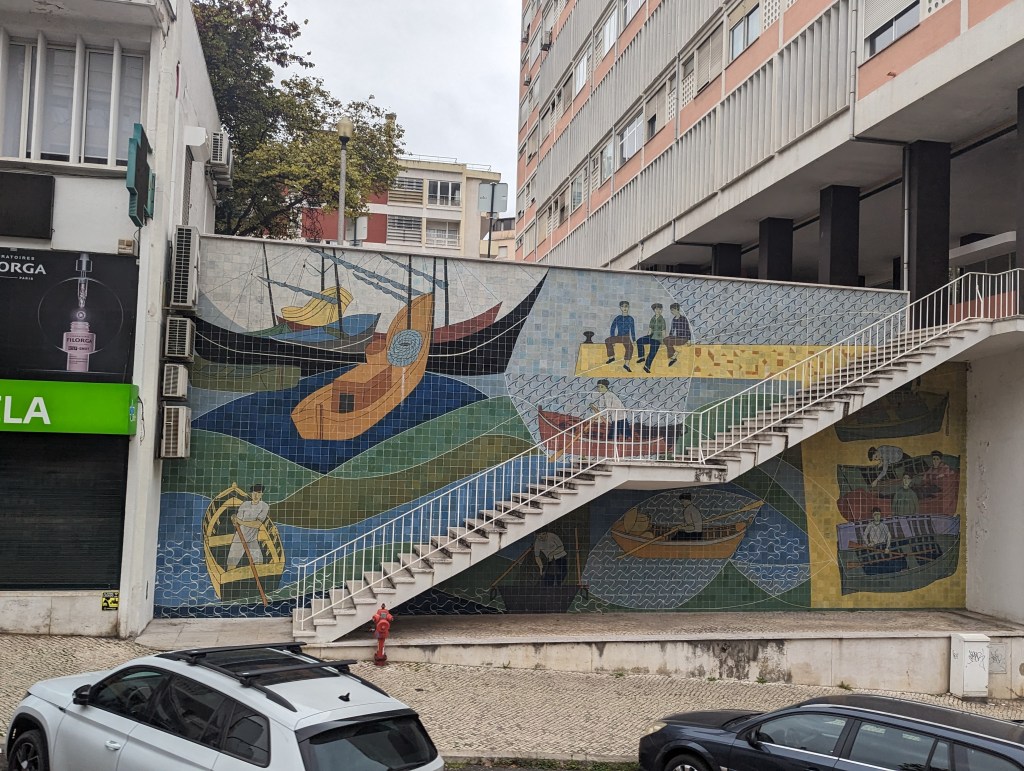
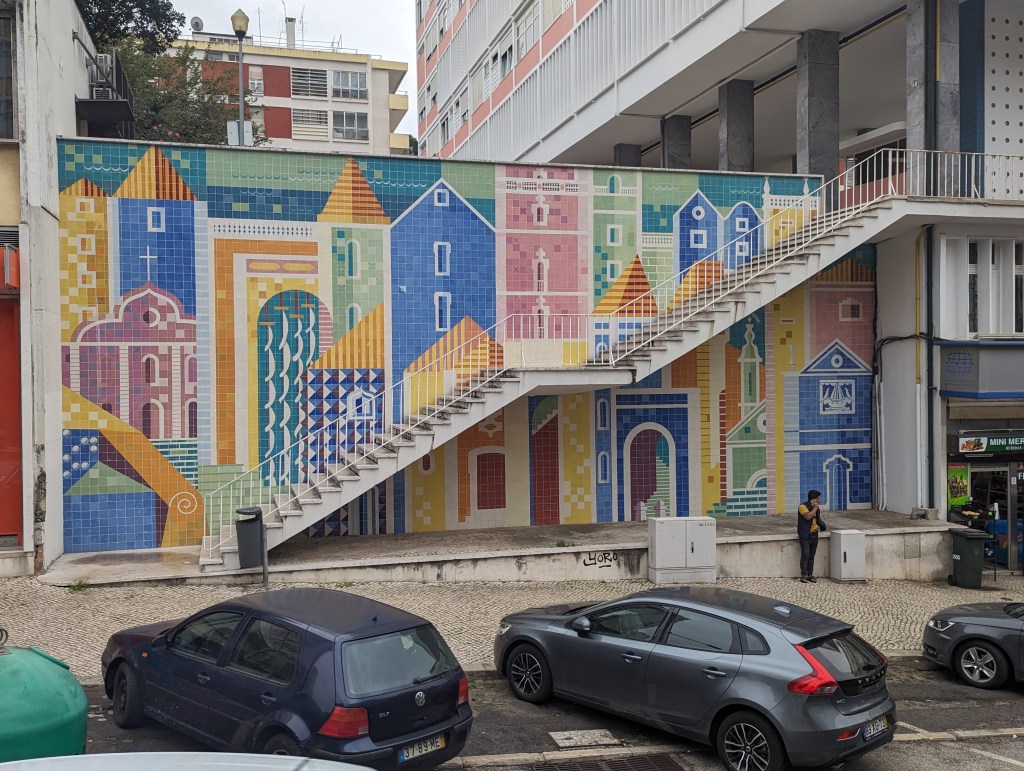
But most fun, we passed through a neighborhood with mosaic tile street art on every block.
Due to the lateness of the day, we did not get out at the Monastery of Belem; we planned to return the following day.
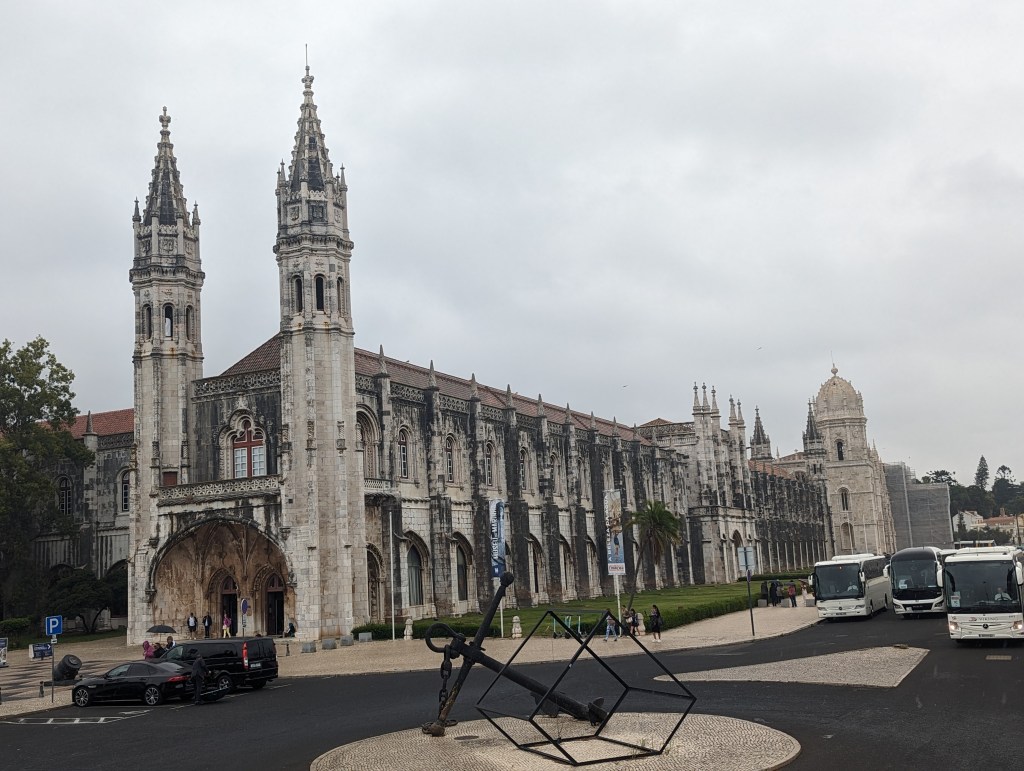
We did, however, get out to stretch our legs and see the Tower of Belem while the sun was still shining.

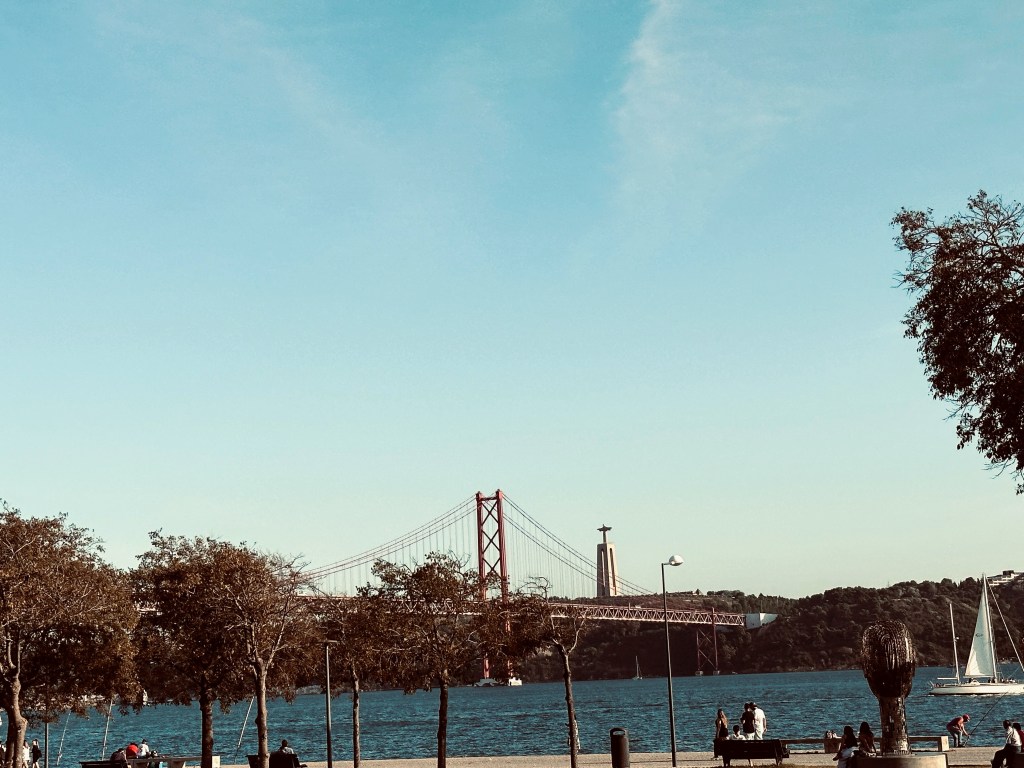
We completed the Yellow Bus circuit passing the 25th of April Bridge, built by Salazar, but renamed after his demise.

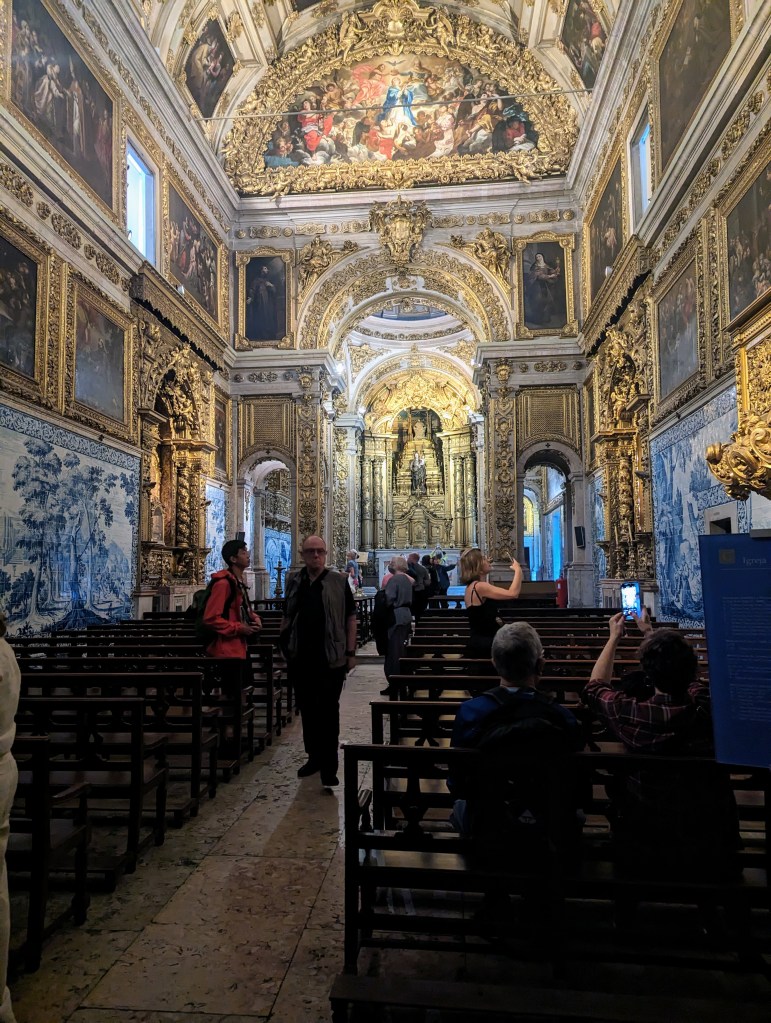
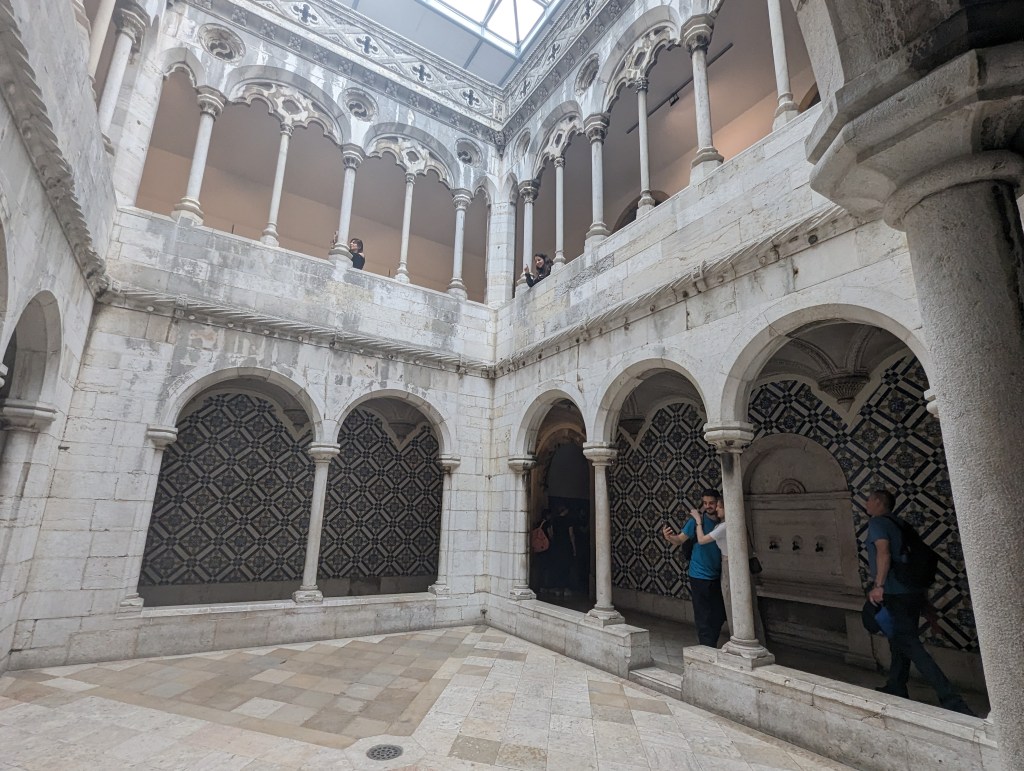
After an exhausting day we dined in the neighborhood at Bono Restaurante and had a most delicious dinner. The next morning the predicted rain arrived. We thought if we got out to the Belem Monastery early we would beat the lines. But alas, even the ticket holder line was over an hour wait, in the rain, so we decided to forgo the monastery and headed to the tile museum, which is where just about every other tourist in Lisbon, it seemed, had decided to spend the rainy day. But once inside we were not disappointed. The National Museum of Azulejo was first built in 1509 as a convent, founded by Queen Leonor. The museum collection features decorative ceramic tiles, ie azulejos, from the second half of the 15th century to the present day. The exhibitions explain the Moorish influences and the evolution of the art both religiously and secularly.
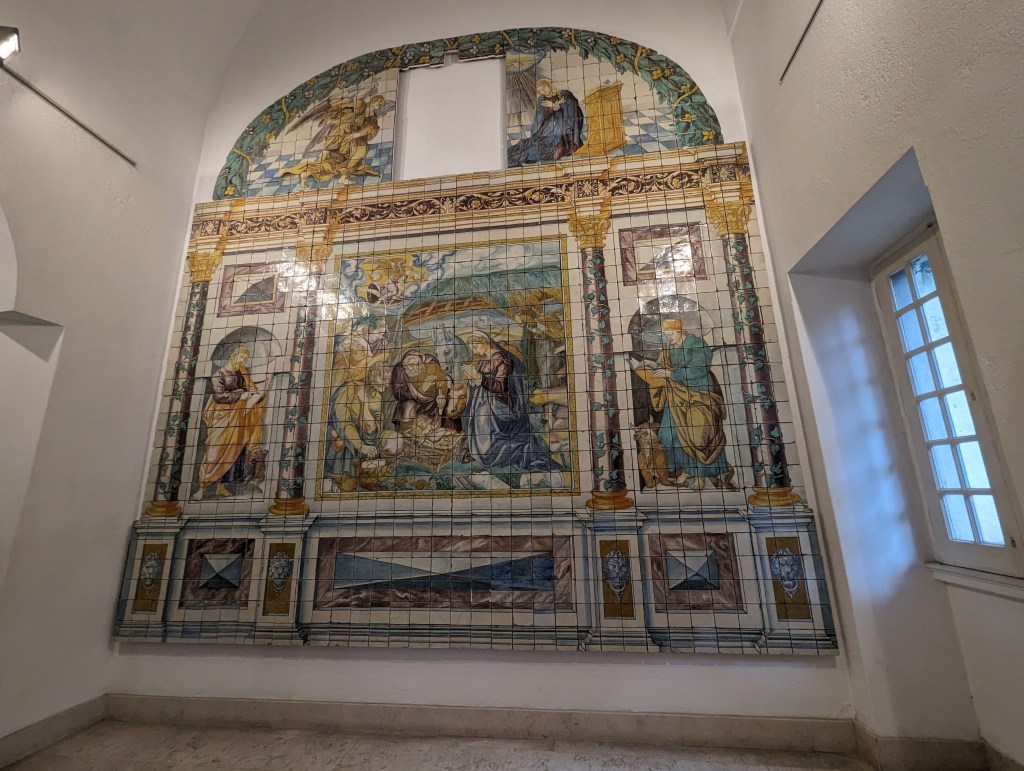
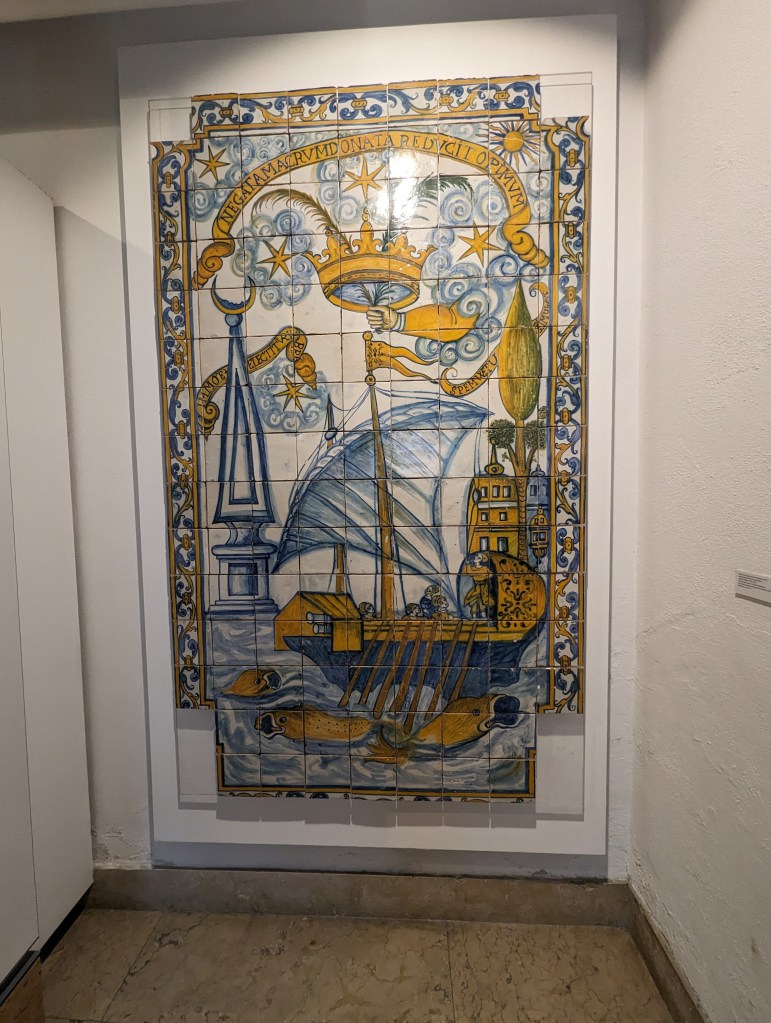
Because it was a convent, it has an elaborately decorated chapel.
and cloister.
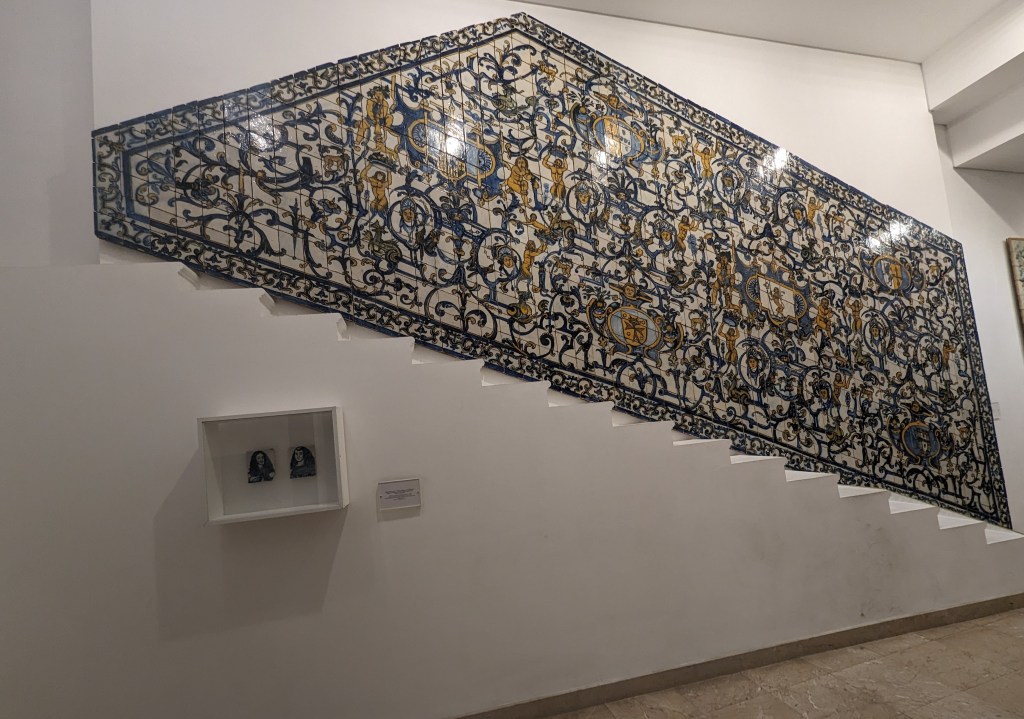
Even the stairways are decorated. Note the use of angled tiles to match the slope of the stair.
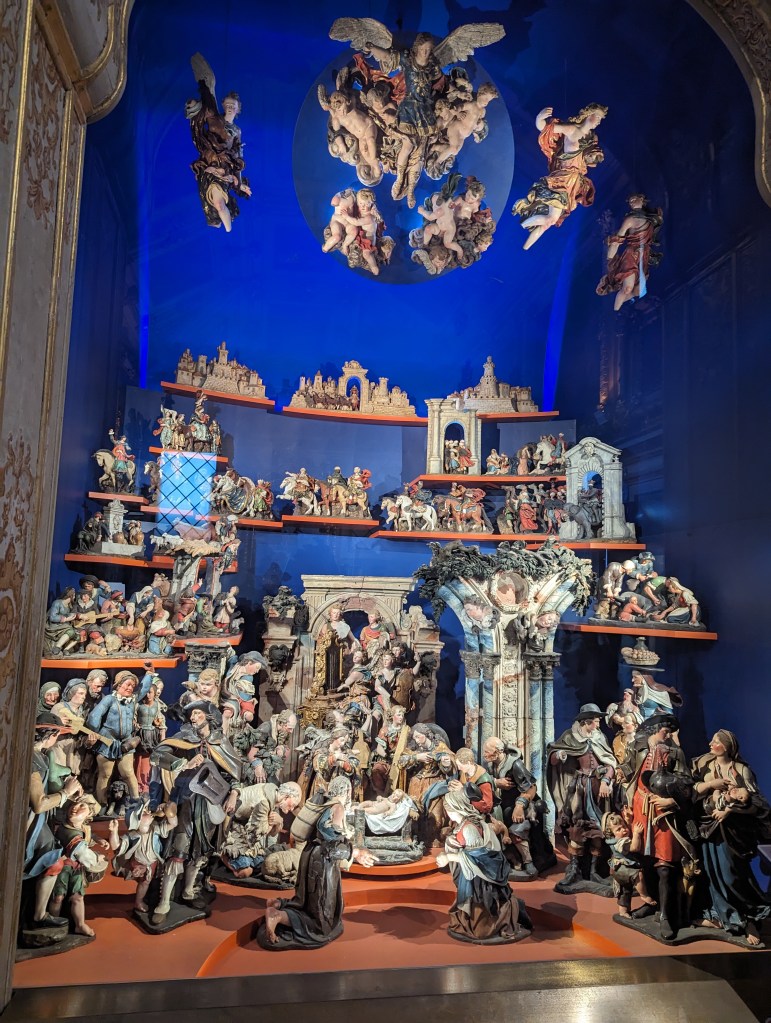
In addition to the numerous tiles in the museum, there are many porcelain figurines throughout, like in this magnificent nativity scene.
The third floor of the museum is dedicated to tile art of the 20th century, which were some of my favorites.
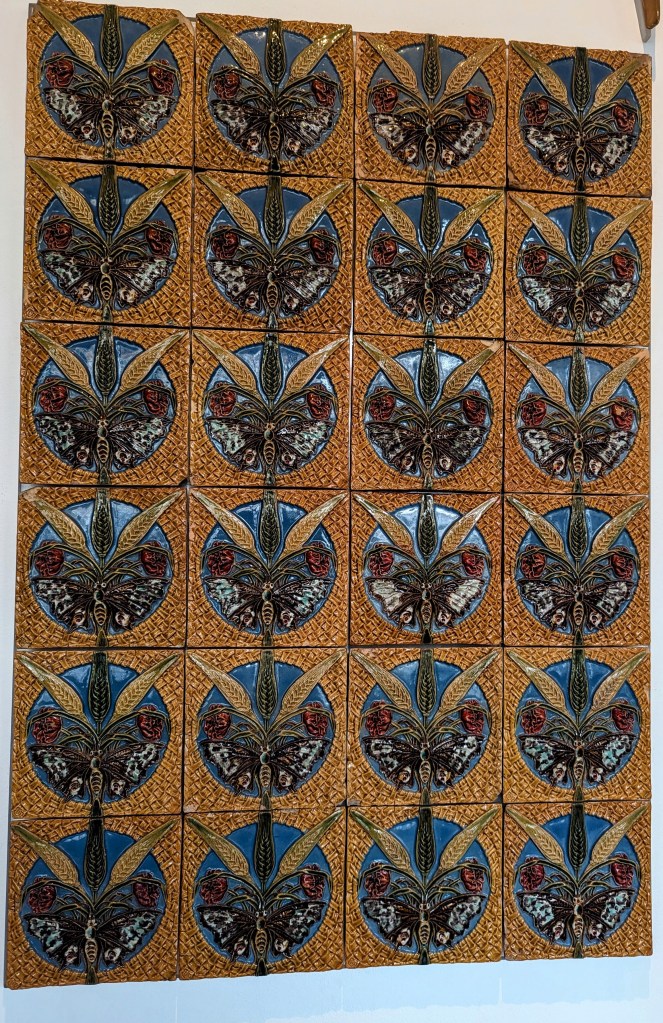
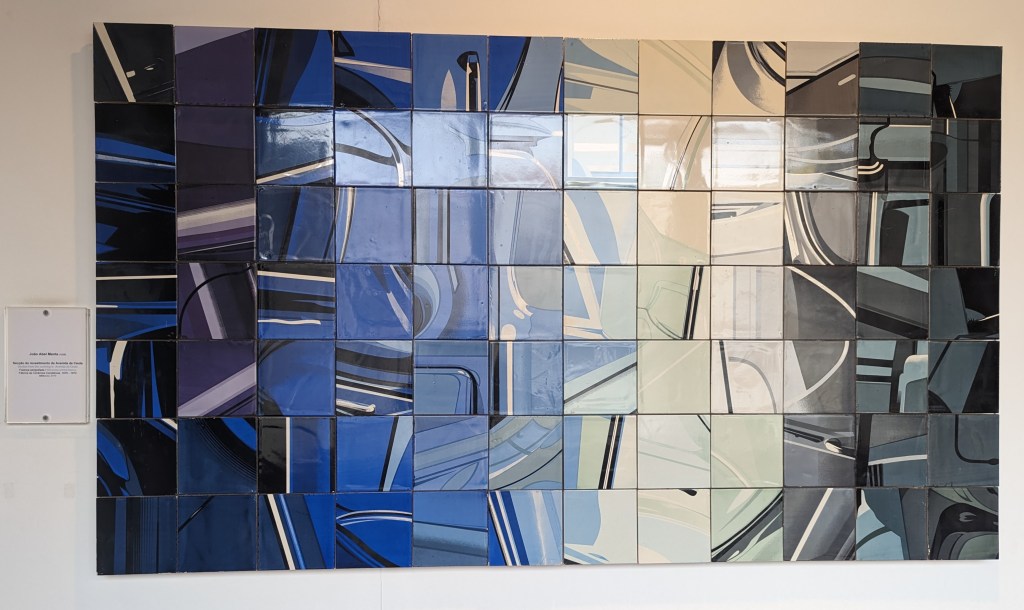
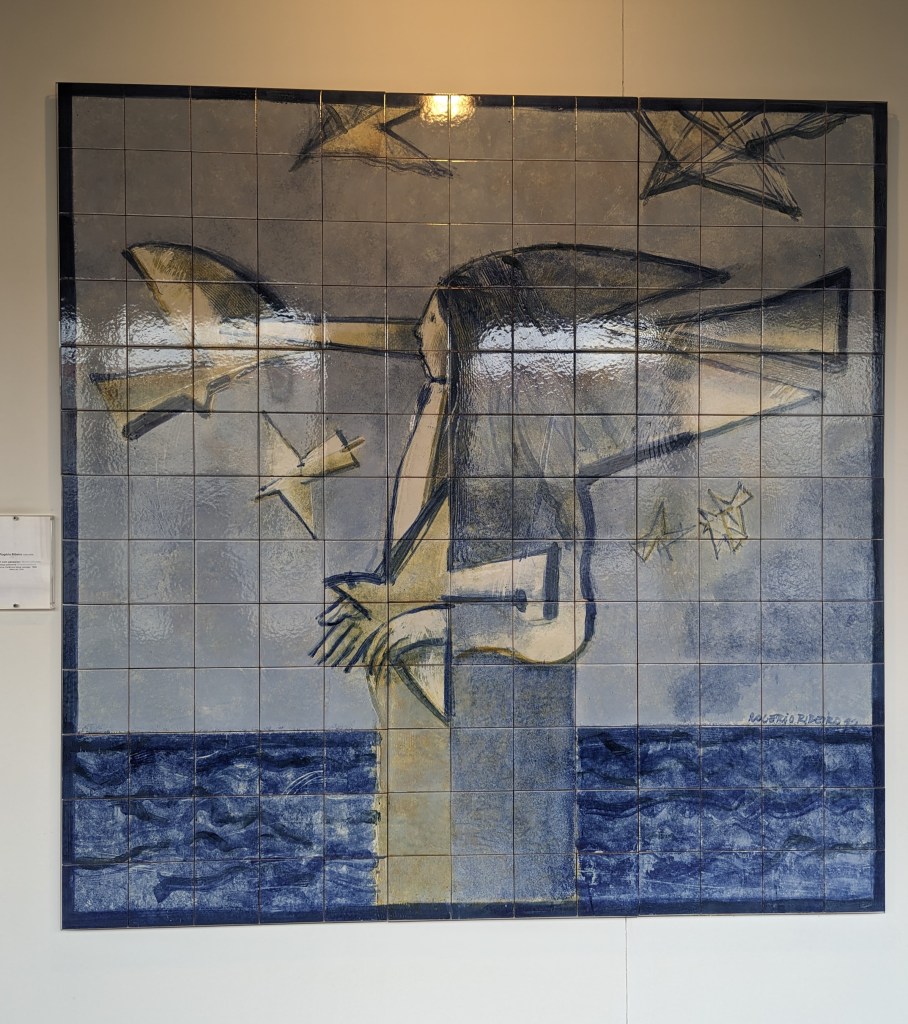

The rain broke long enough that evening for us to slip out for the most amazing burgers at a little place right around the corner.
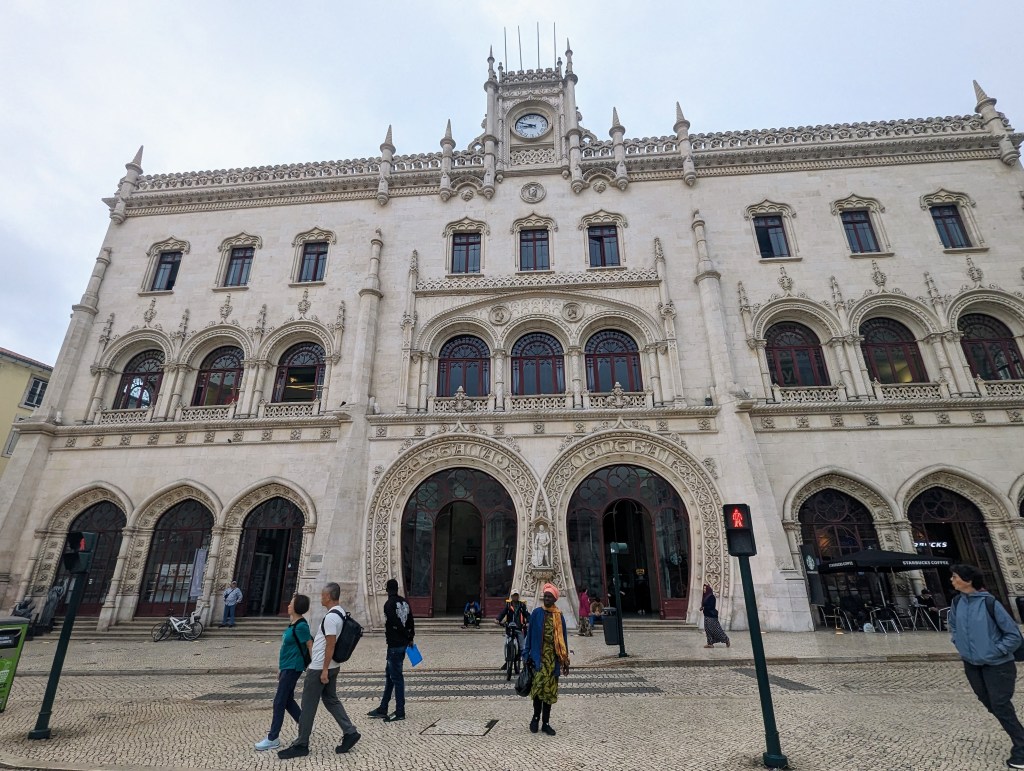
The next morning, as predicted, it was raining. But the weather for the following day, Howard’s last, was expecting high winds and 1-2 inches of heavy rain, so we forged out to Sintra. We left from the Rossio train station.
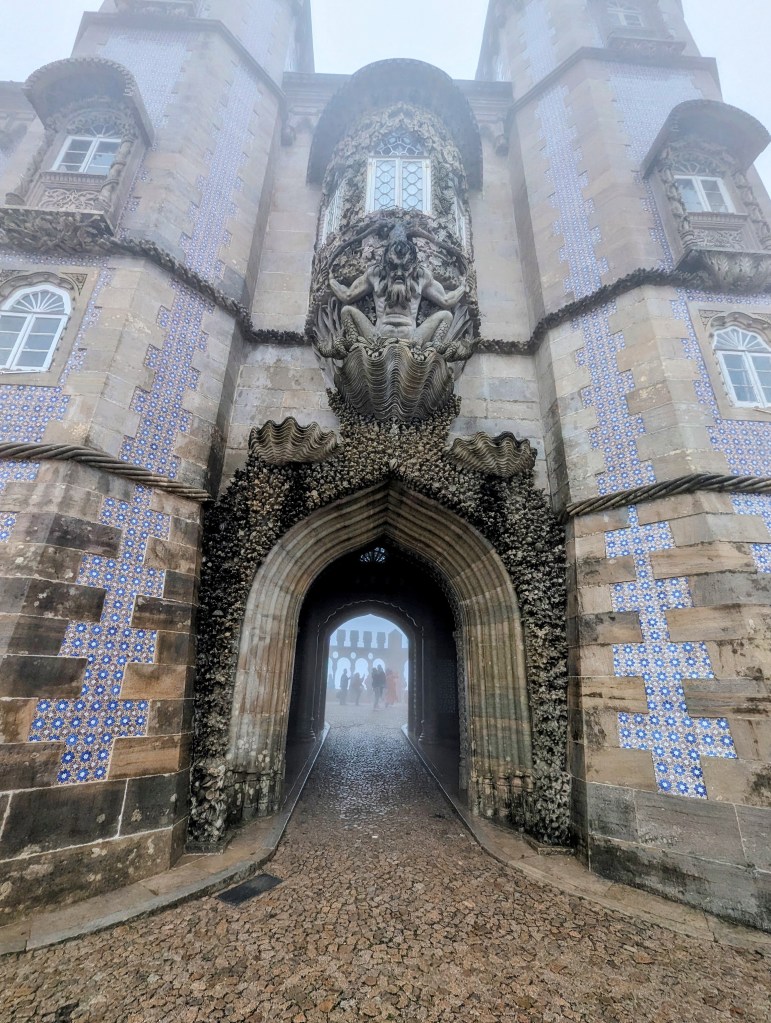
We arrived in Sintra in the pouring rain and had some extra time before our entrance into the Pena Castle, so stopped for coffee before catching the bus up to the castle. From the bus, it is a 30 minute hike uphill to the palace. Luckily the rain was down to a drizzle. This is what awaited us.
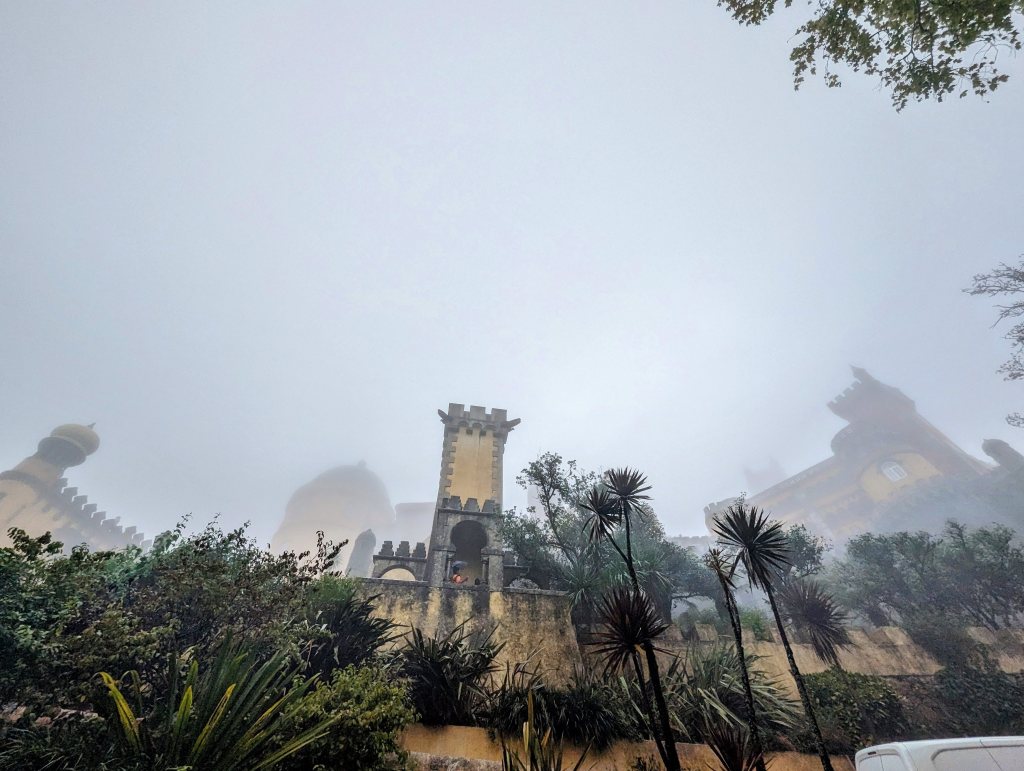
this is a stock image from the internet of what it is supposed to look like on a sunny day.

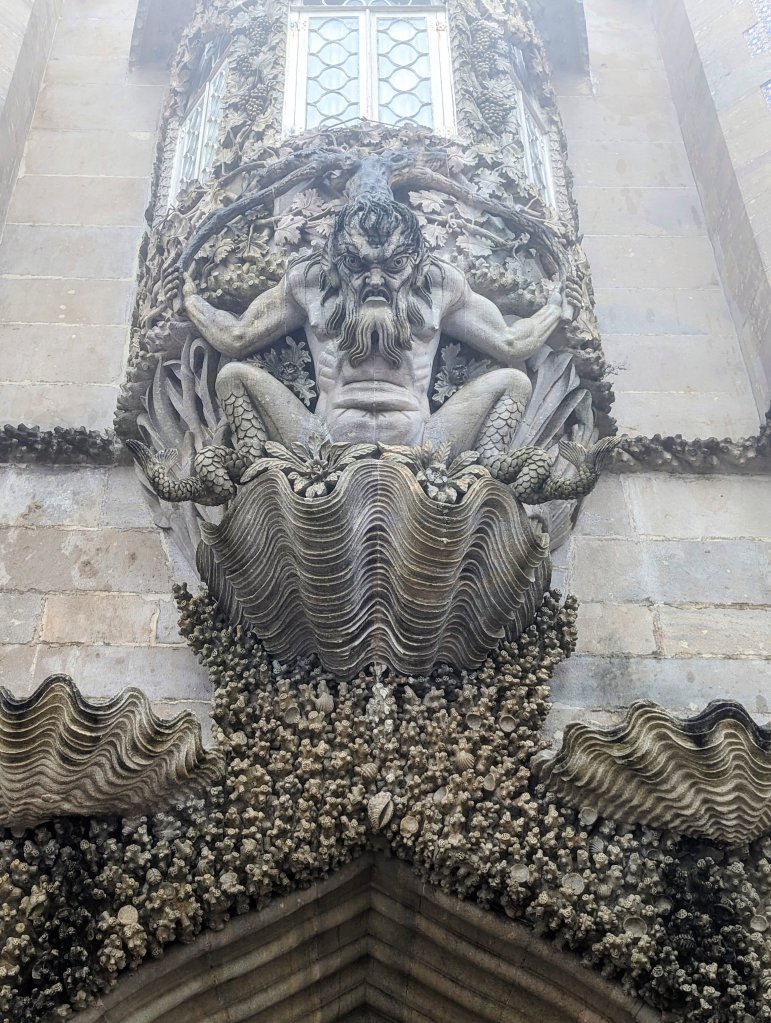
Pena Palace is one of the first examples of 19th century Romanticism. It was originally constructed as a 16th century convent but underwent several disasters including the 1755 earthquake, which left it in near ruins. It was acquired by King Ferdinand II in 1838 for himself and his family. All that is red is the restored convent. That in yellow is the “new” construction.
Despite our timed entry ticket, we waited in line 45 minutes to get to the gate of the palace.
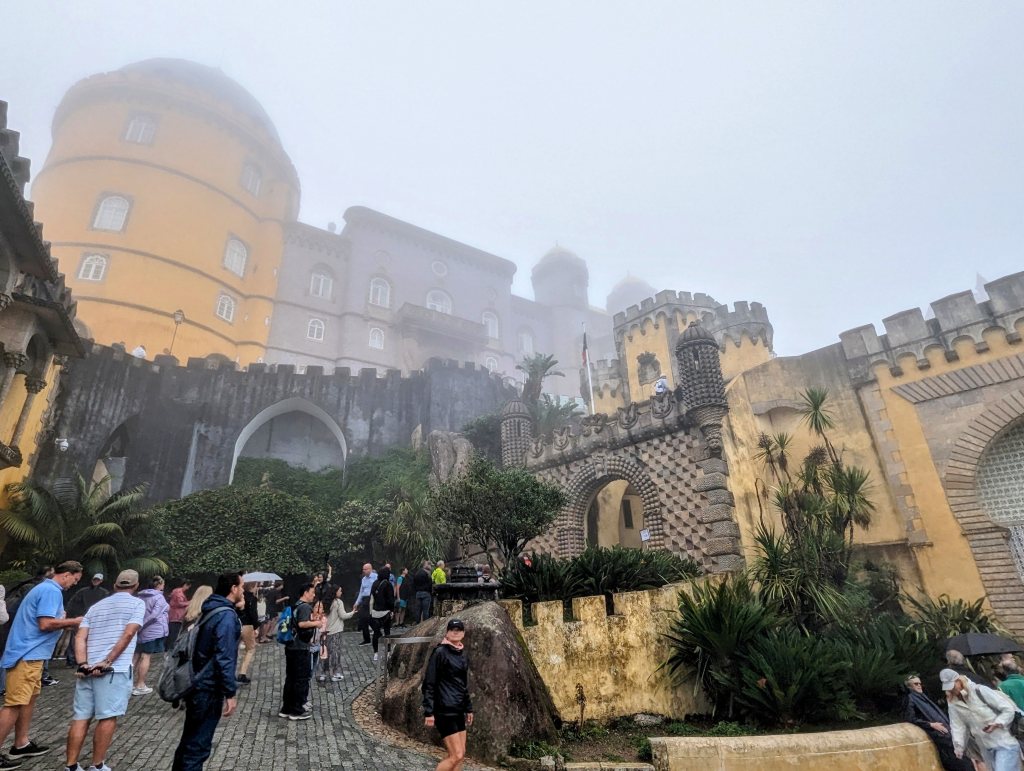
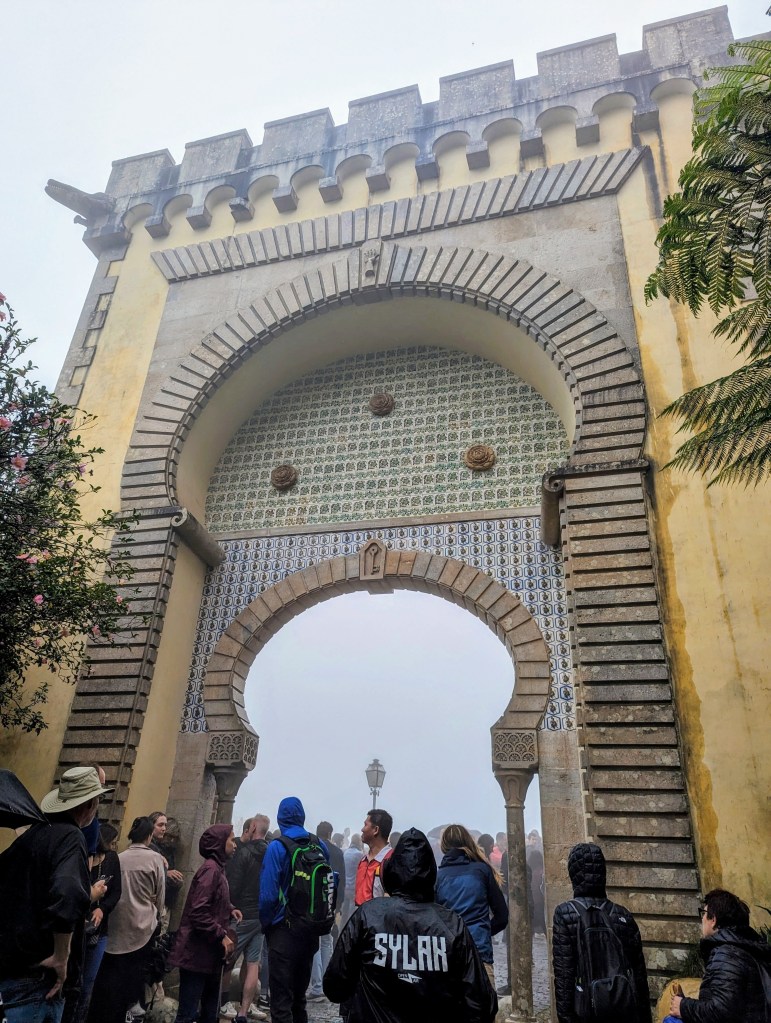
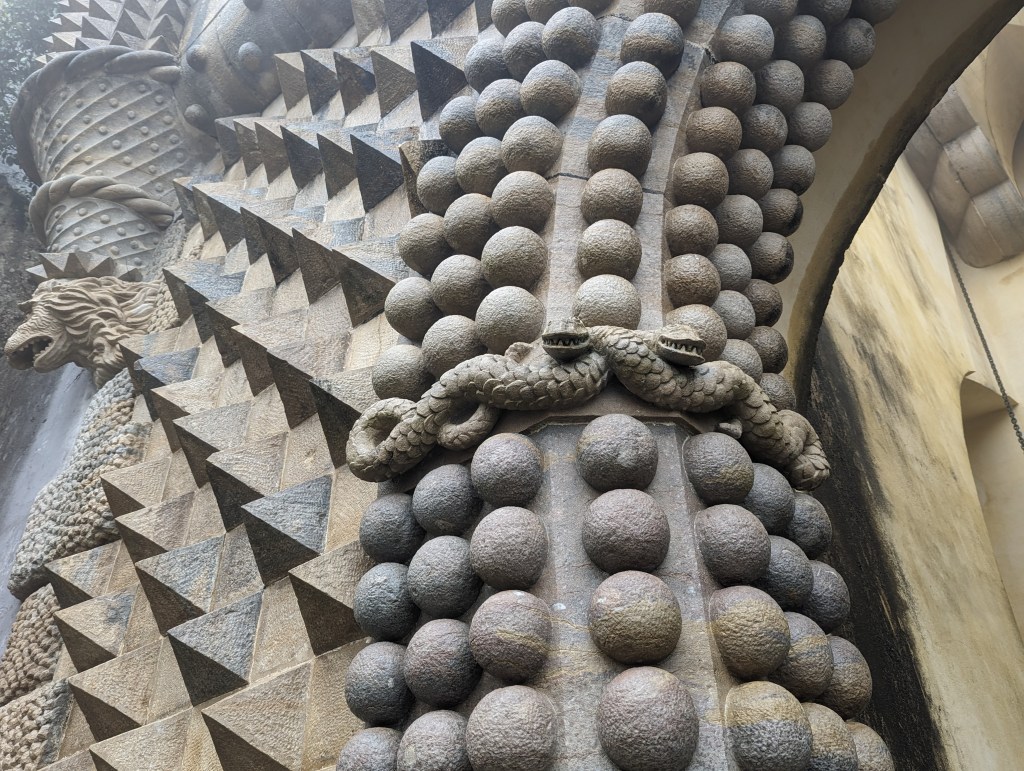
And then another 20 minutes to actually get inside the palace. But once there, it was worth the wait.
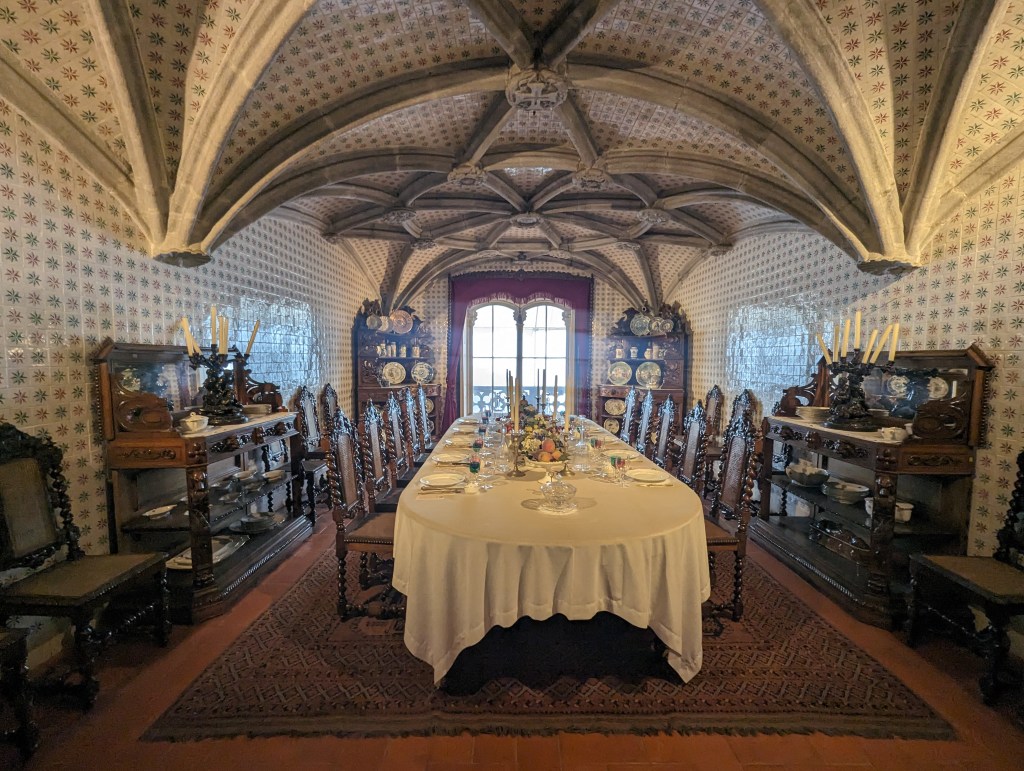
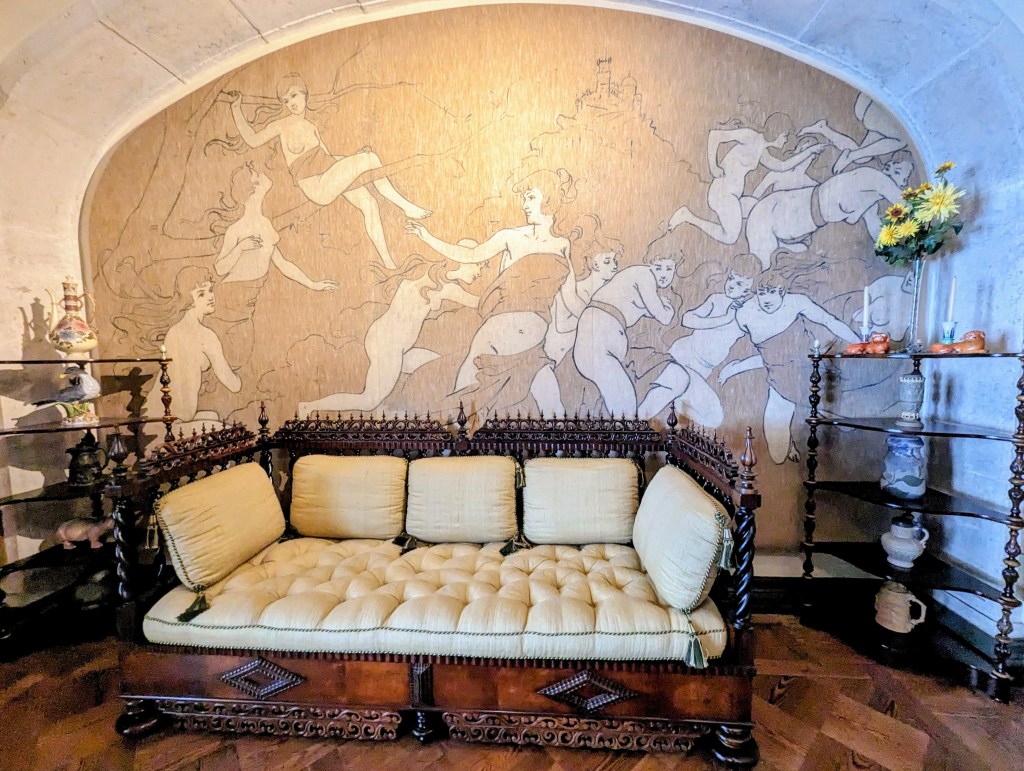
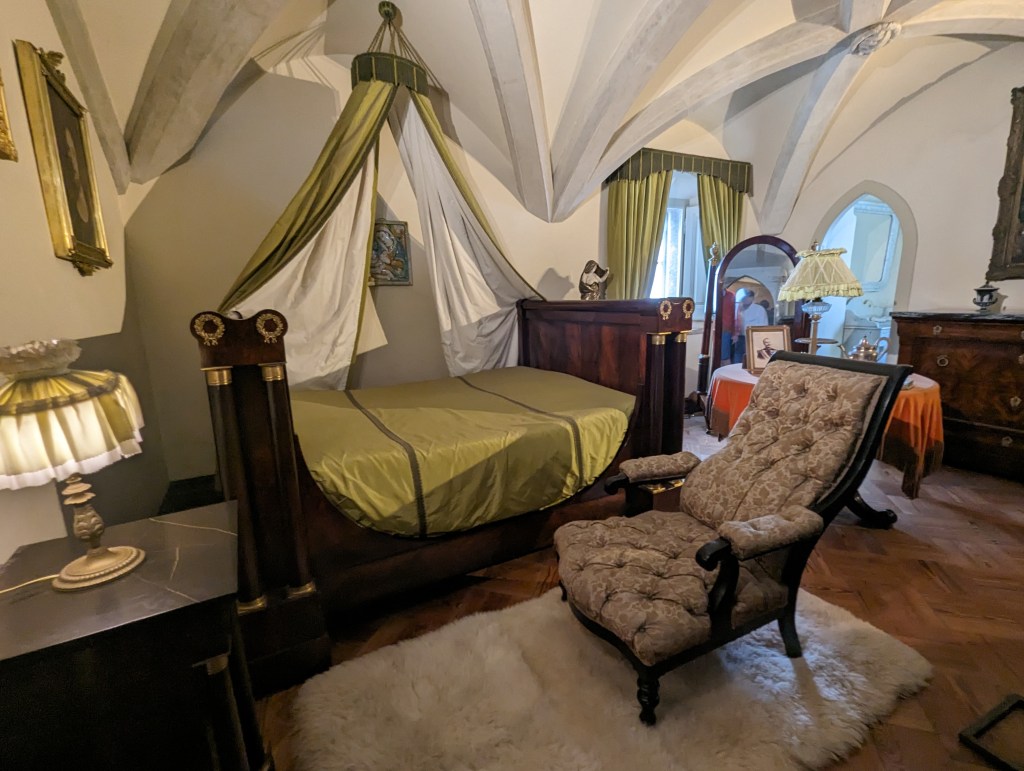
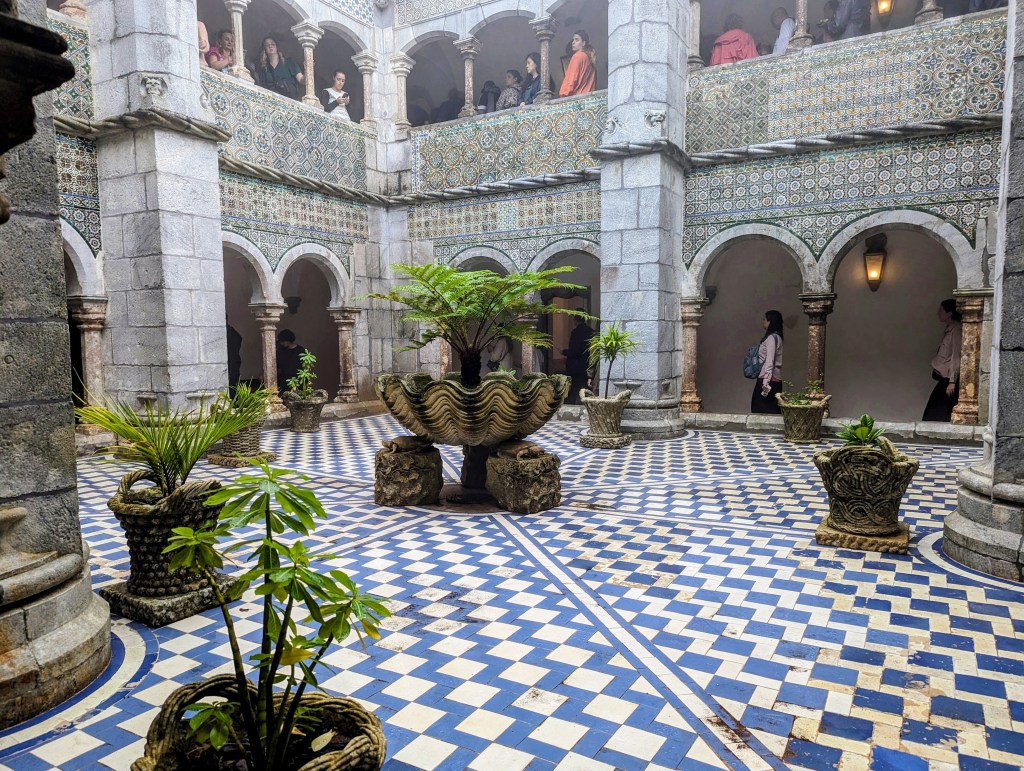
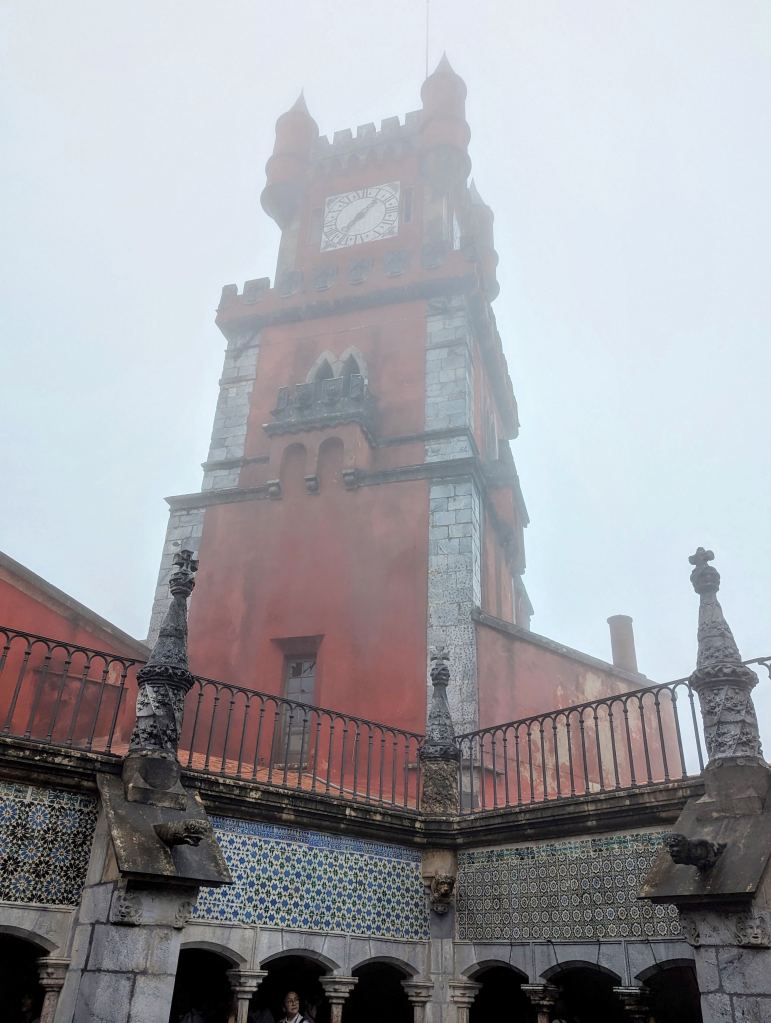
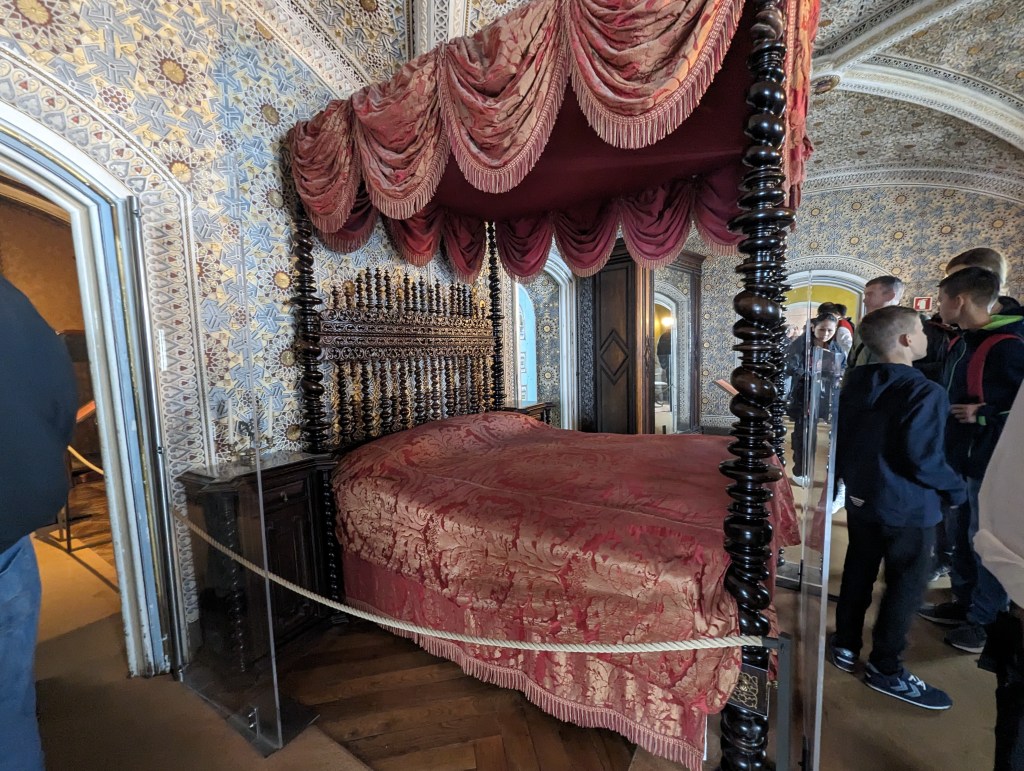
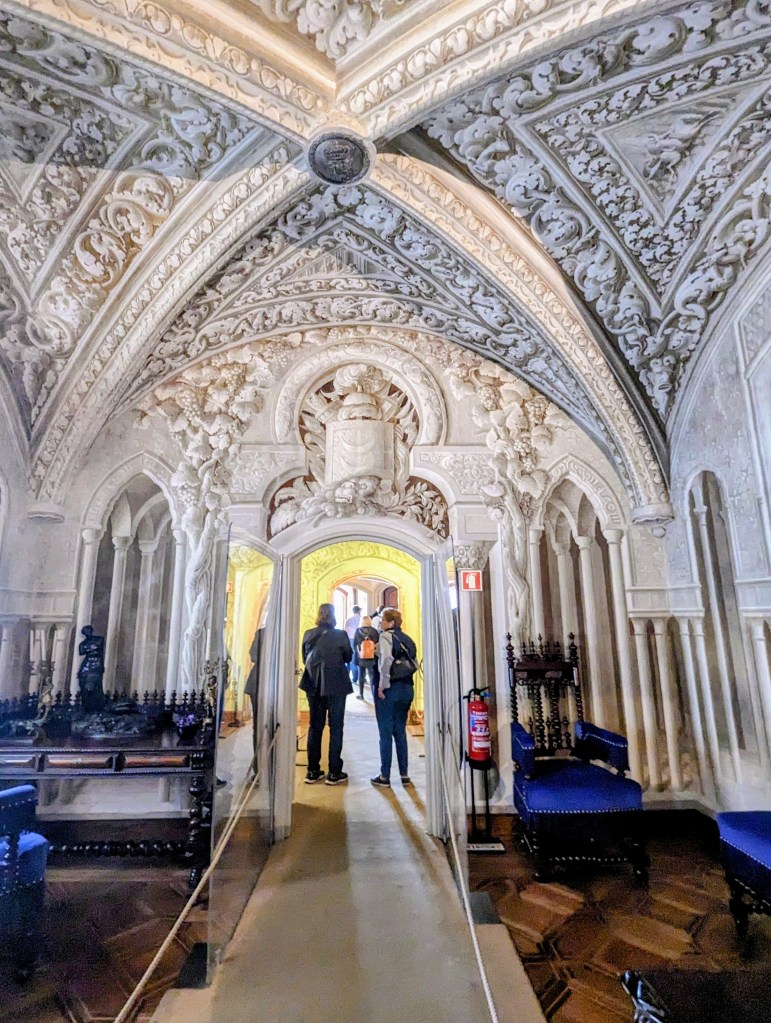
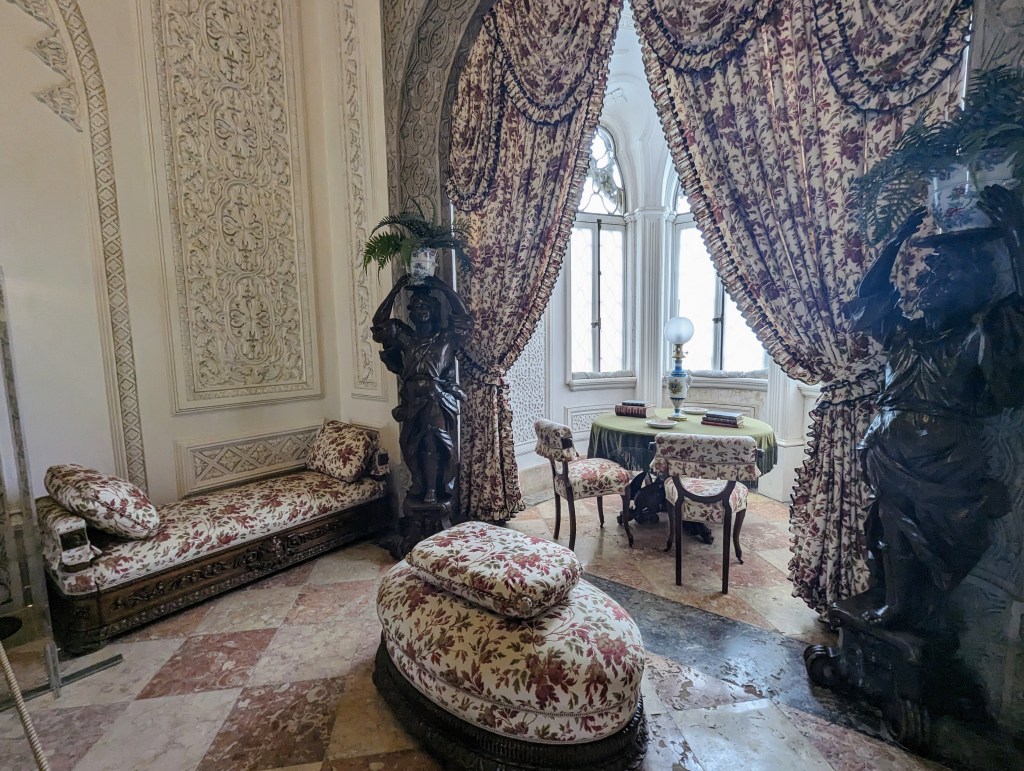
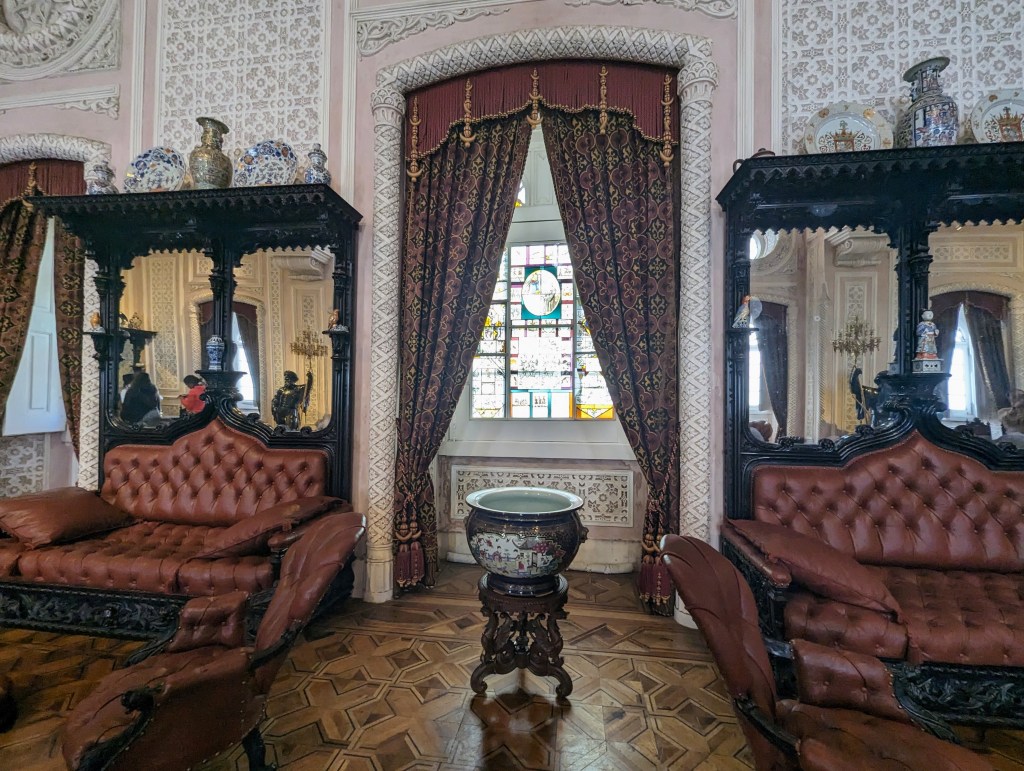
King Ferdinand II was a lover of art and had an eclectic taste, as can be seen in the decor of the rooms.
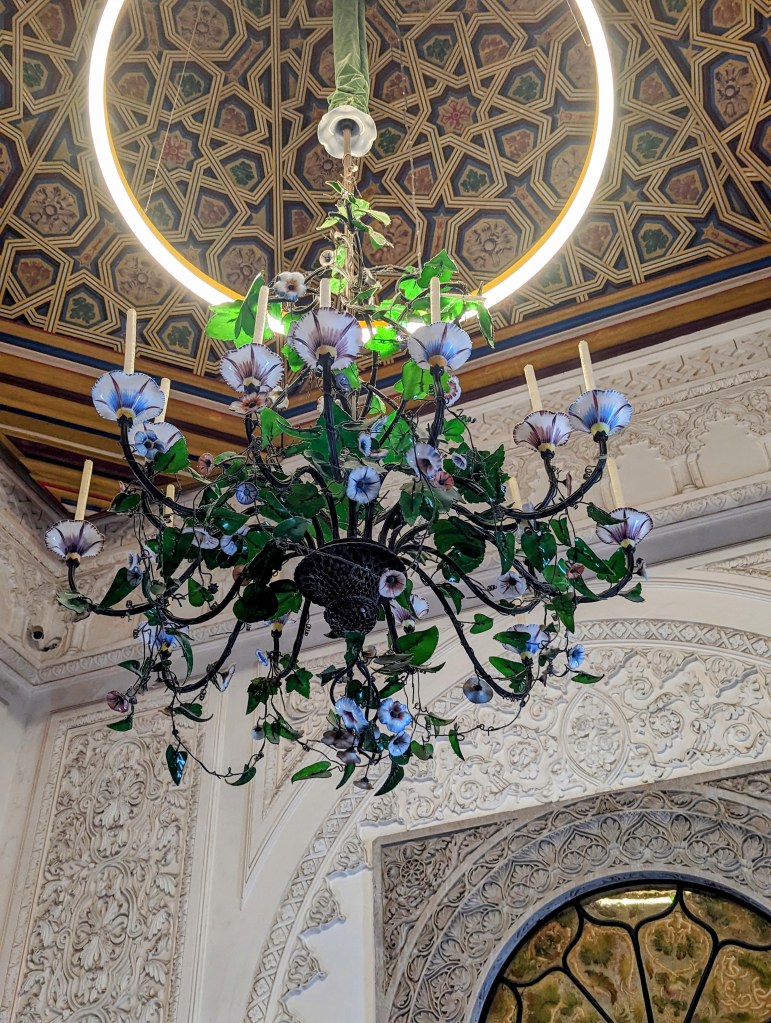
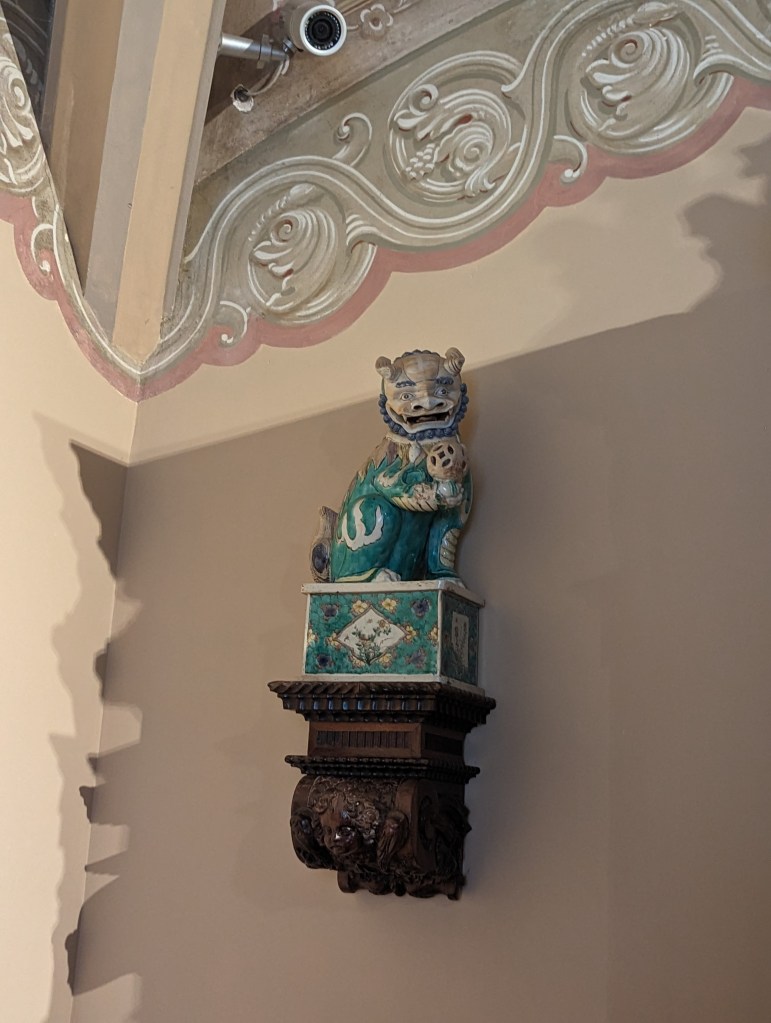

After the hike back down the hill to the bus, Howard was too tired to try to go to the Moors Castle, so we caught the bus back into town.
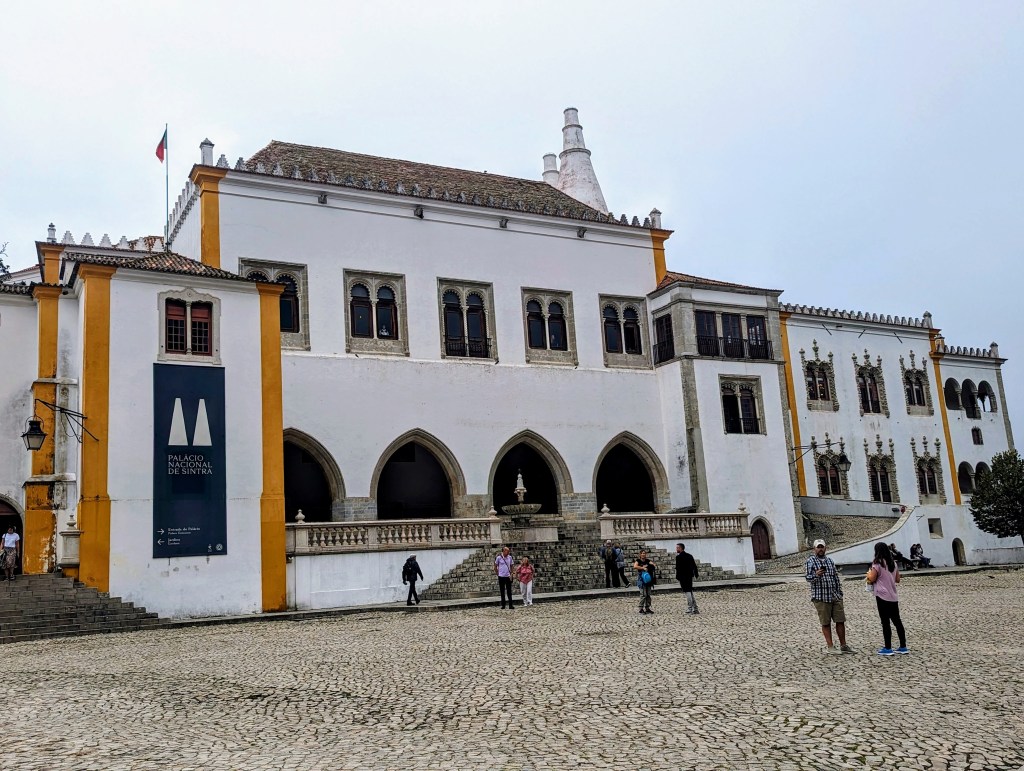

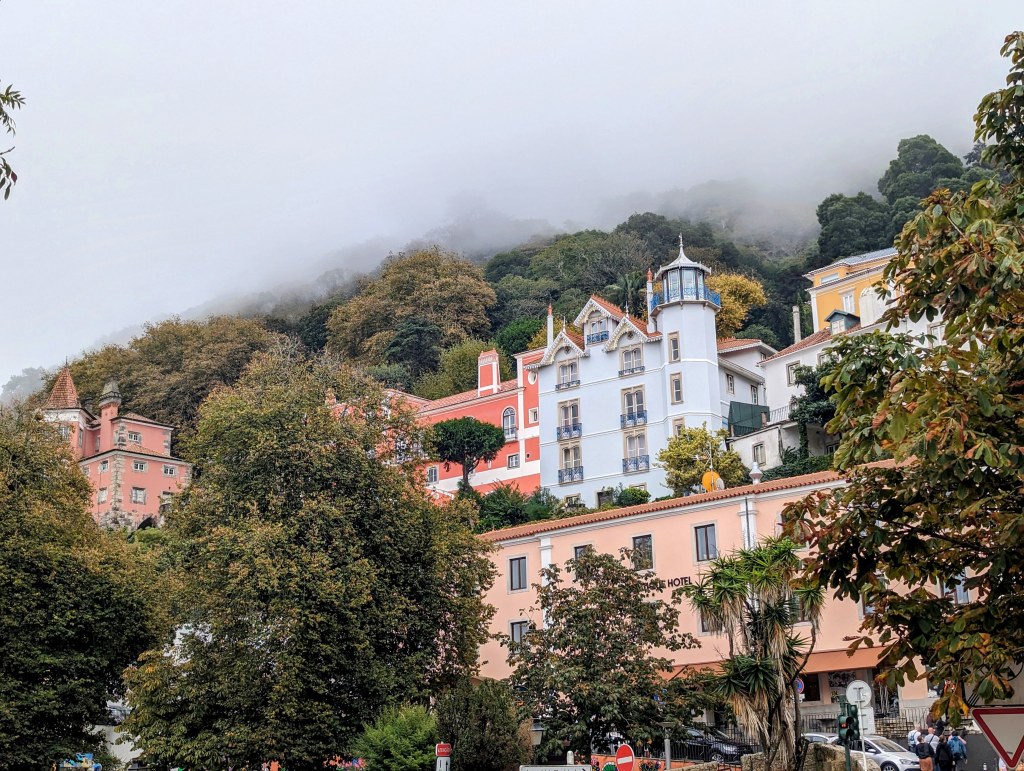
Sintra historic center
We had a huge late lunch at Tacho Real in town before catching the train back to Lisbon, too exhausted and wet for any more touring of Sintra.
That night, as predicted, a huge storm blew in. The next day, when there was a little break in the storm, we ventured out to do some souvenir shopping, and this is what we saw only 2 blocks from our apartment.

We stayed in most of the day, sneaking out just for dinner in a local restaurant.
 Jo & Eric's travels