
After dropping Howard at Lisbon airport, we headed due east into the Alentejo region of Portugal. We were to be staying in Evora, but with the full day ahead of us and bad weather in the forecast, we decided to keep going east to visit Elvas, which is almost to the border of Spain.
We drove up to the Fort Da Graça, which is actually about 1 km north of the town. It was originally built in the 17th century, but was used primarily during the 18th century to protect Portugal from Spanish invasion.
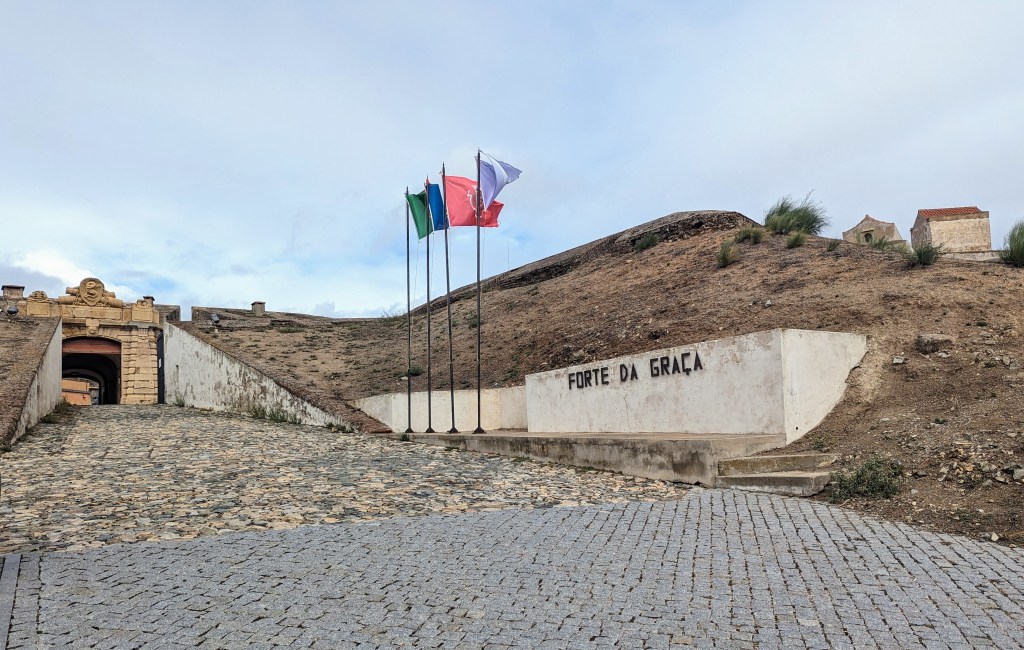
We entered the complex through the first gate,
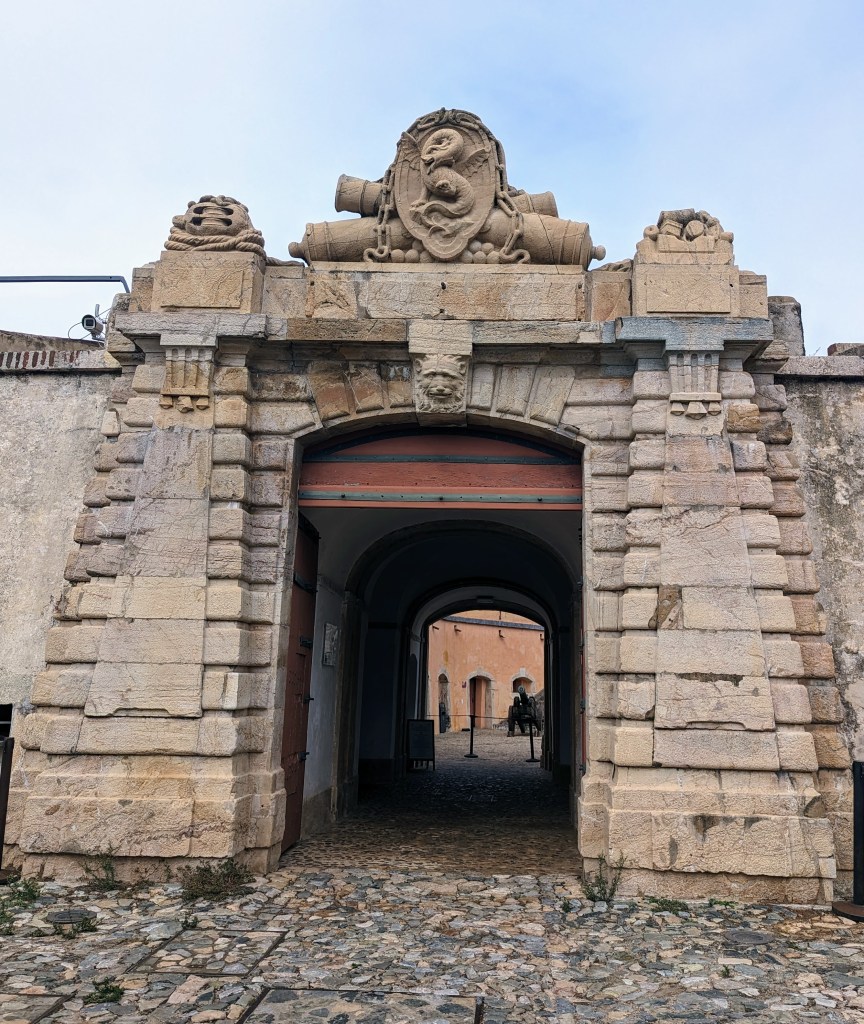

What is particularly interesting about the fort is both its multiple layers of fortification and its pentagonal shape. Eric got the drone up for some shots just ahead of the rain.
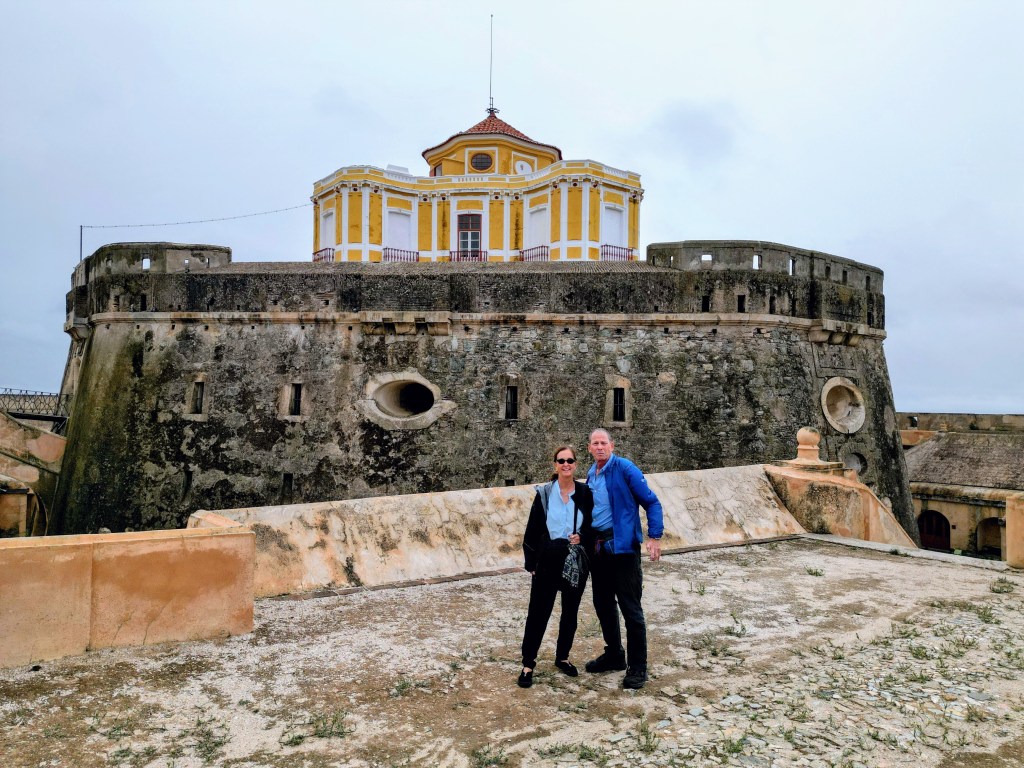
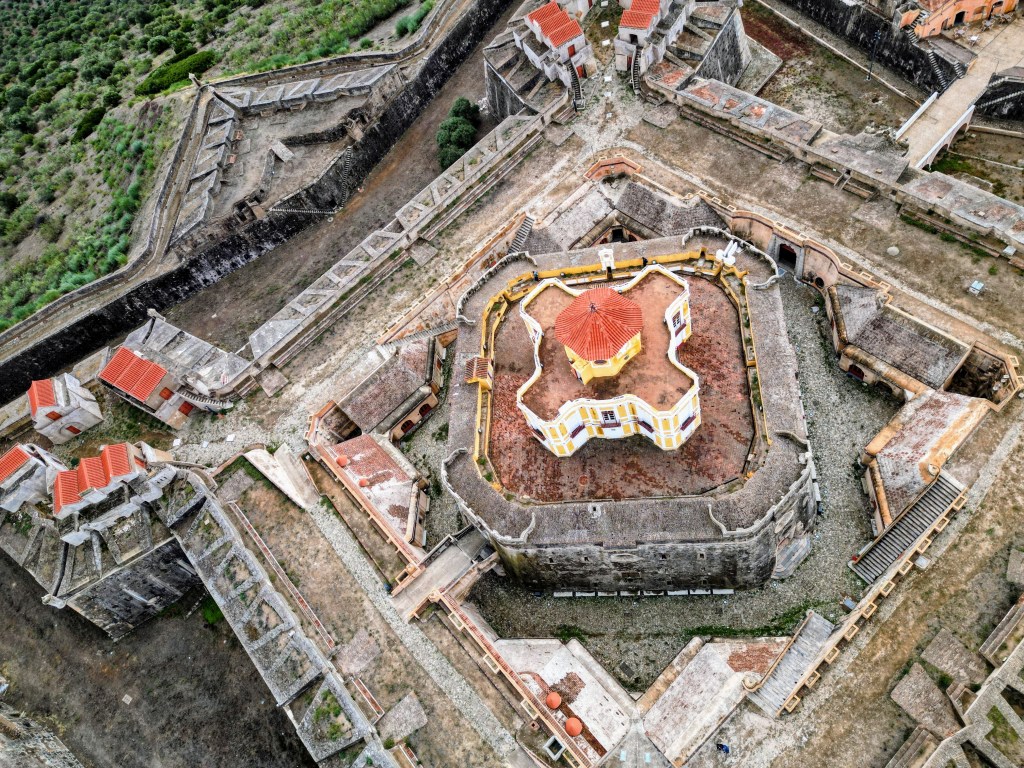
Unfortunately it was too windy to go higher for the full view. Then we entered through the next gate through the drawbridge into the inner area.
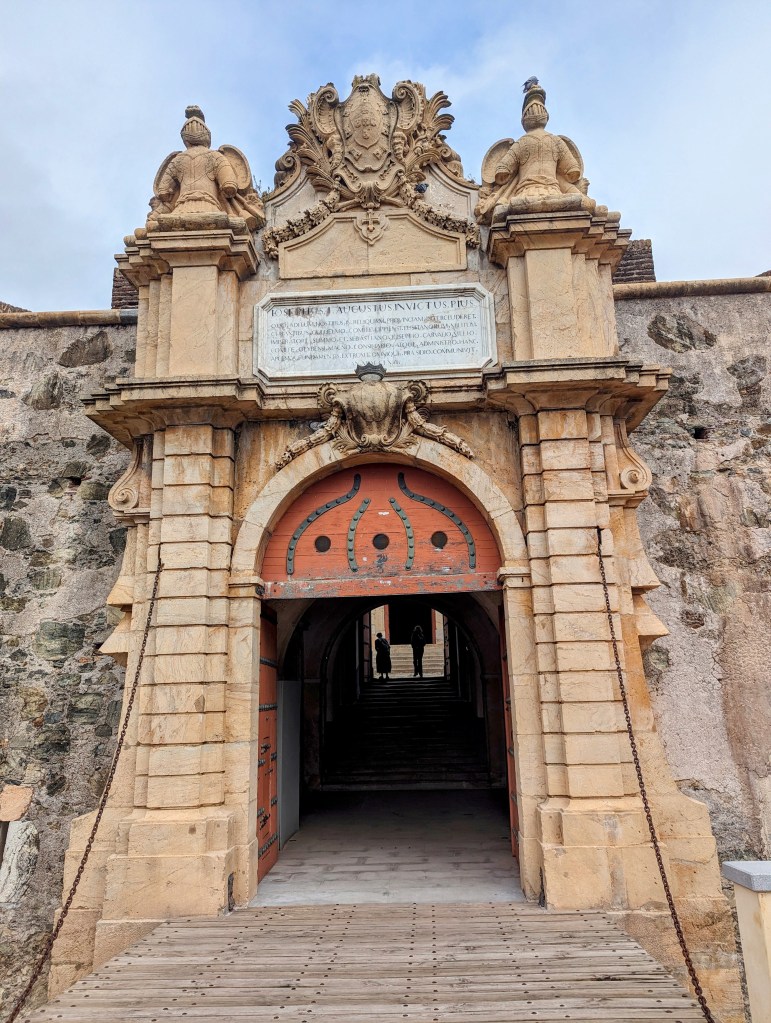
From there we had a view of the town of Elvas in the distance.
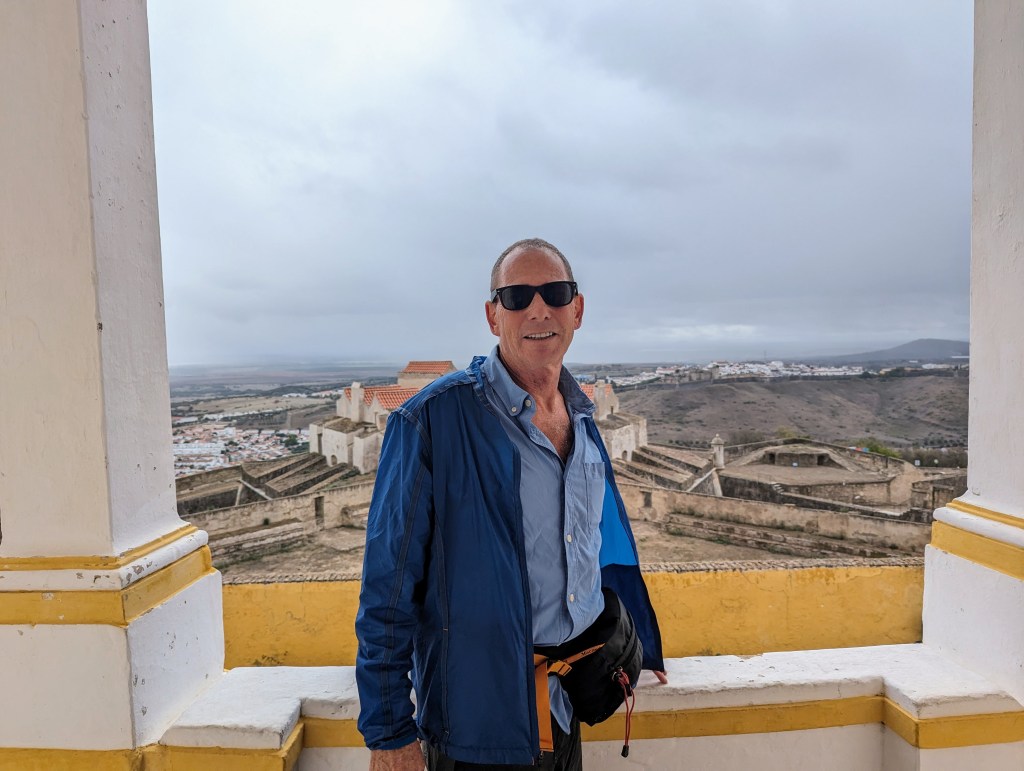
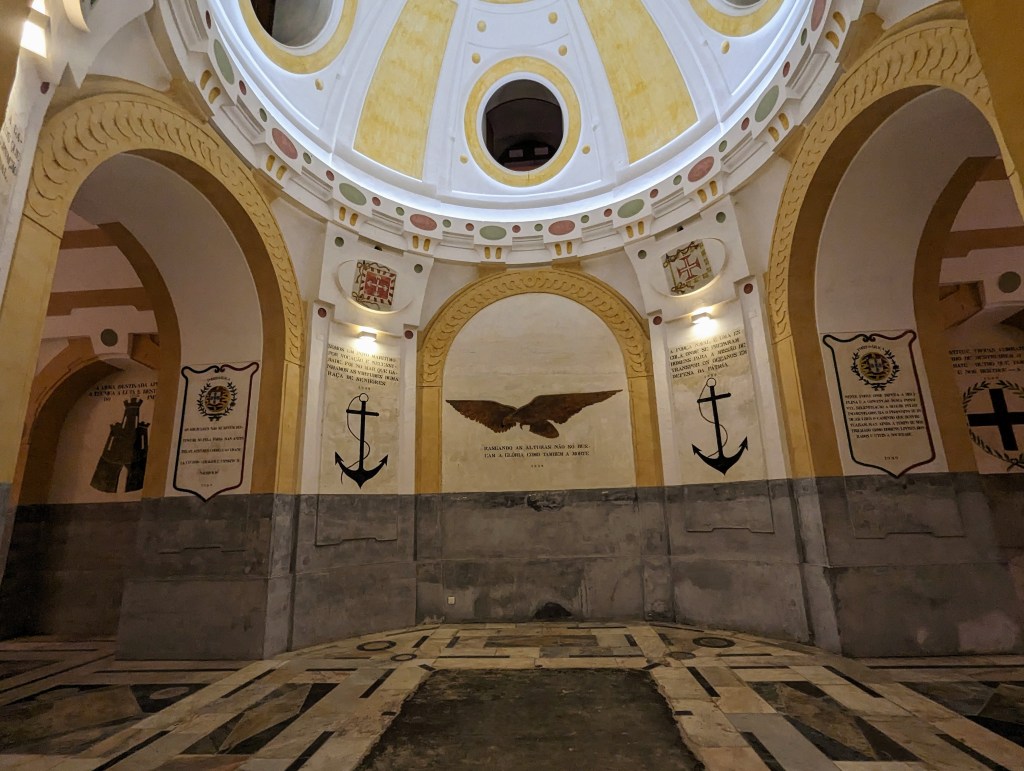
We went into the main building, now a museum dedicated to the military.
Leaving the fort, we headed to the town of Elvas. We stopped to take a photo of the town with its castle sitting high on the hill.

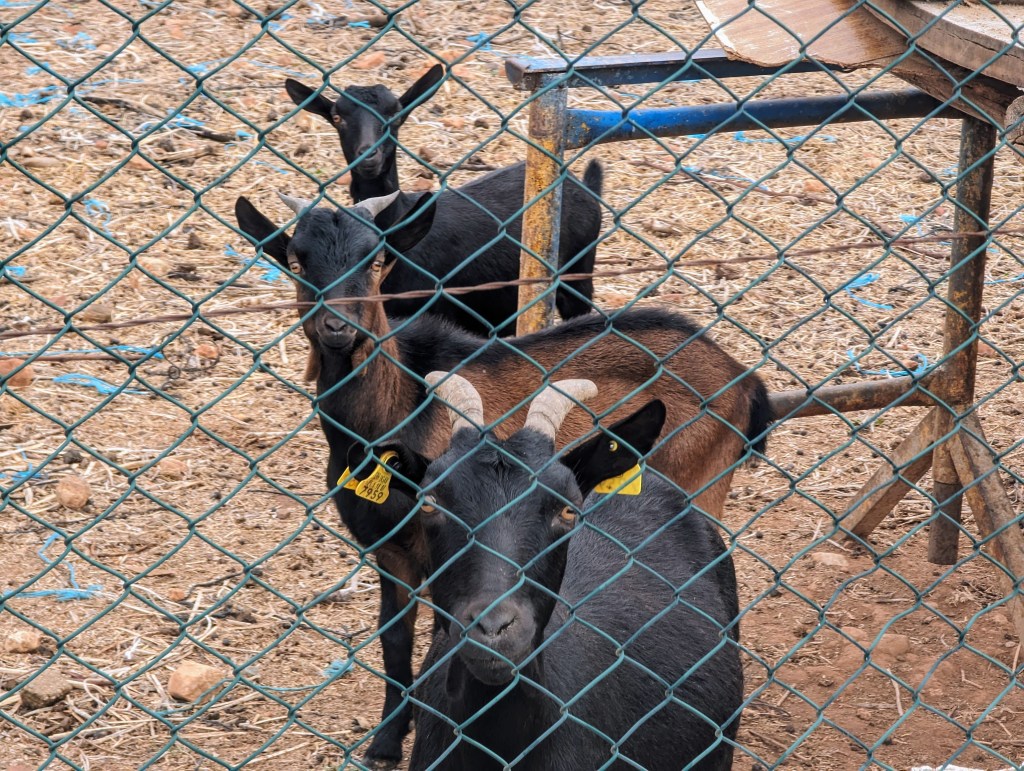
And these girls came over to say hello.
We finally made it up the hill, found parking, and climbed the rest of the way into town.
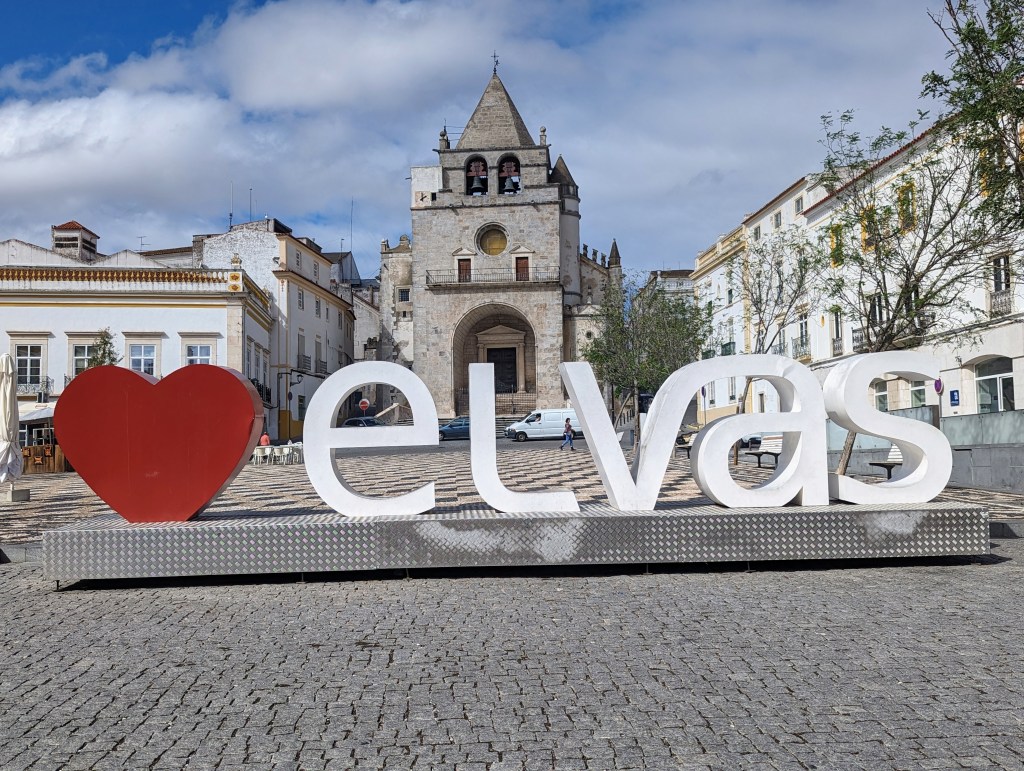
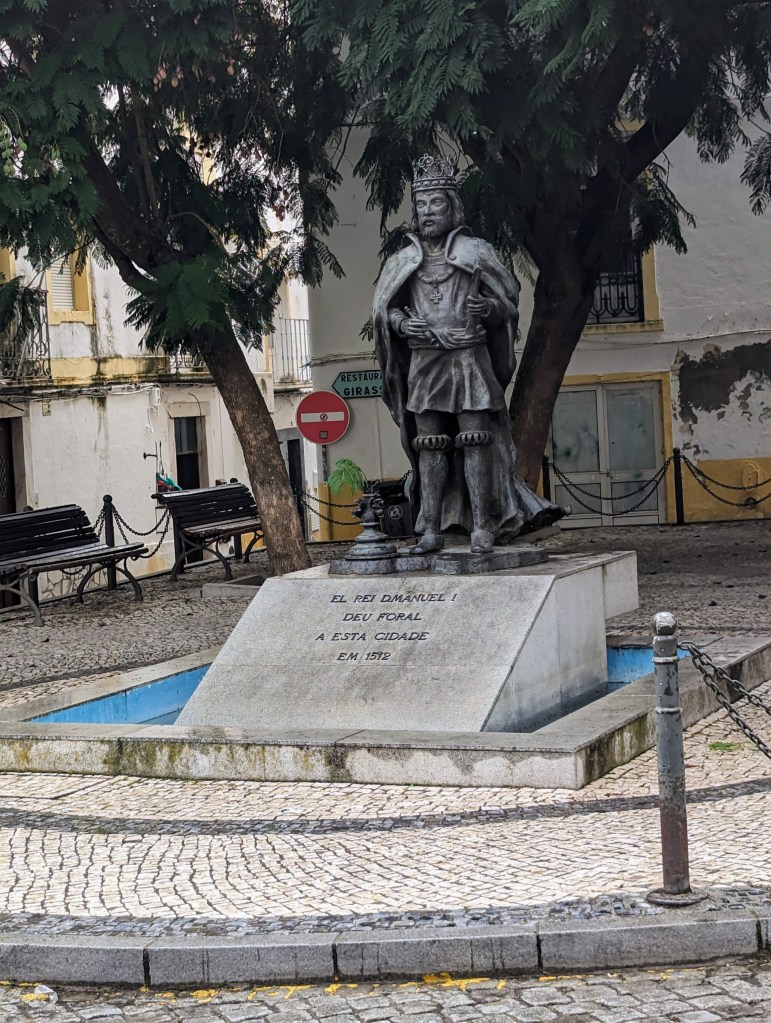
We explored around the town which, based on the number of high end clothing stores and silver place settings stores, seems to cater to the well off.
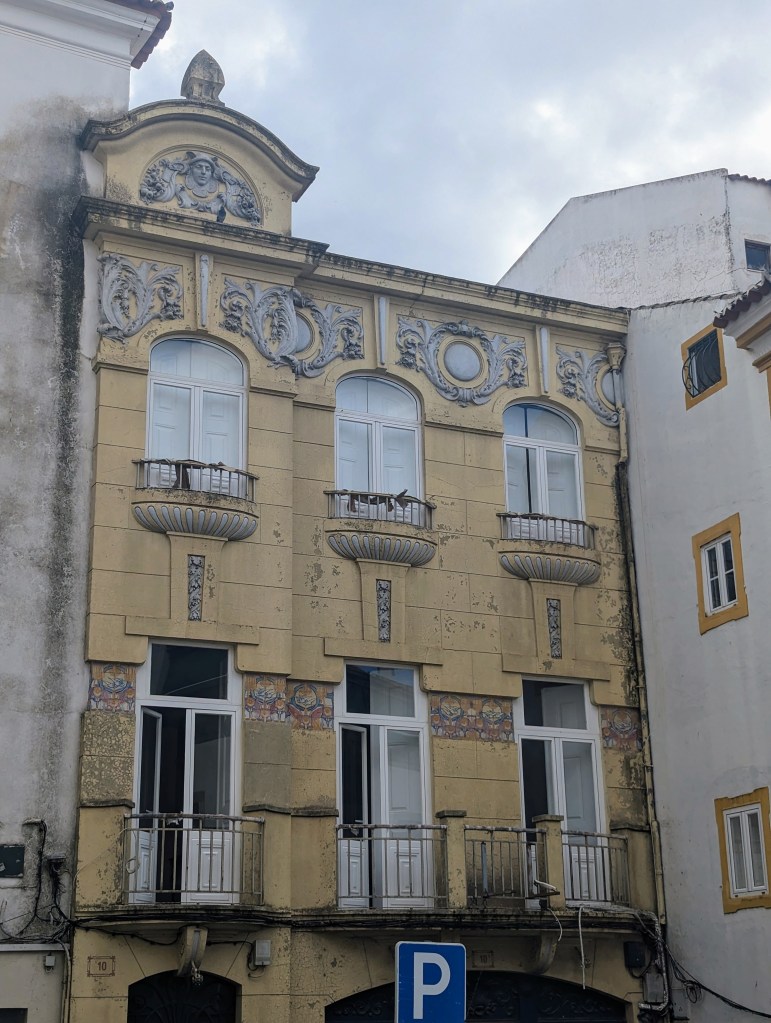
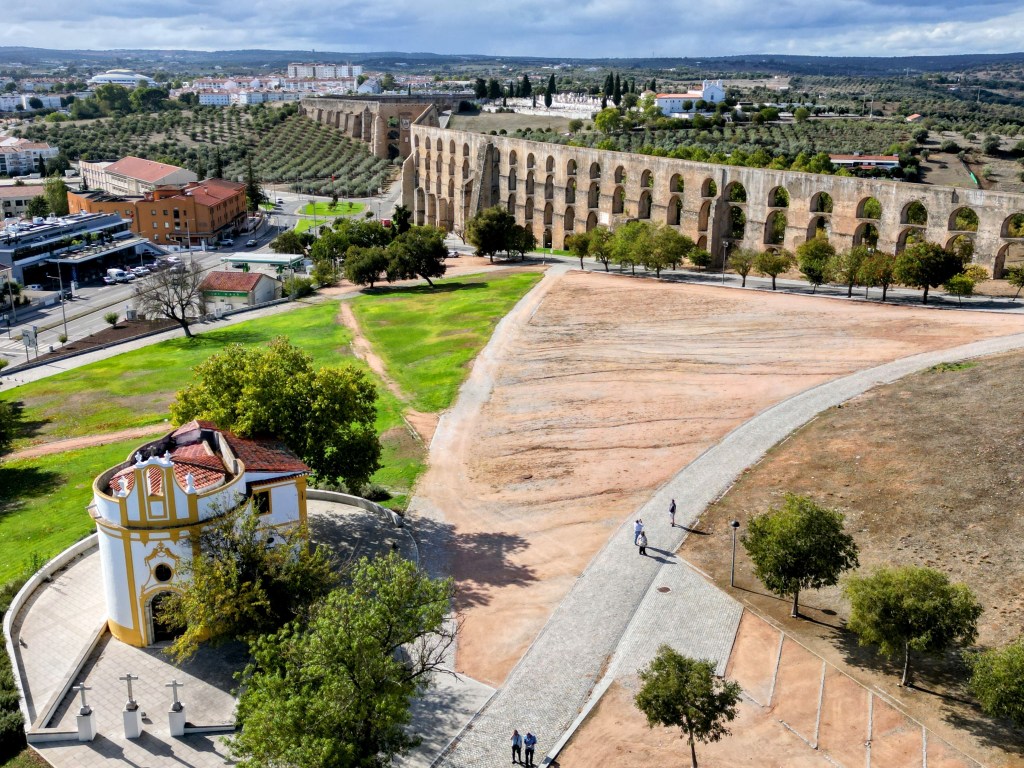
We had a delicious lunch in an out-of-the-way side street cafe, then headed back down the hill. On the way, we stopped for a drone shot of the aqueduct.
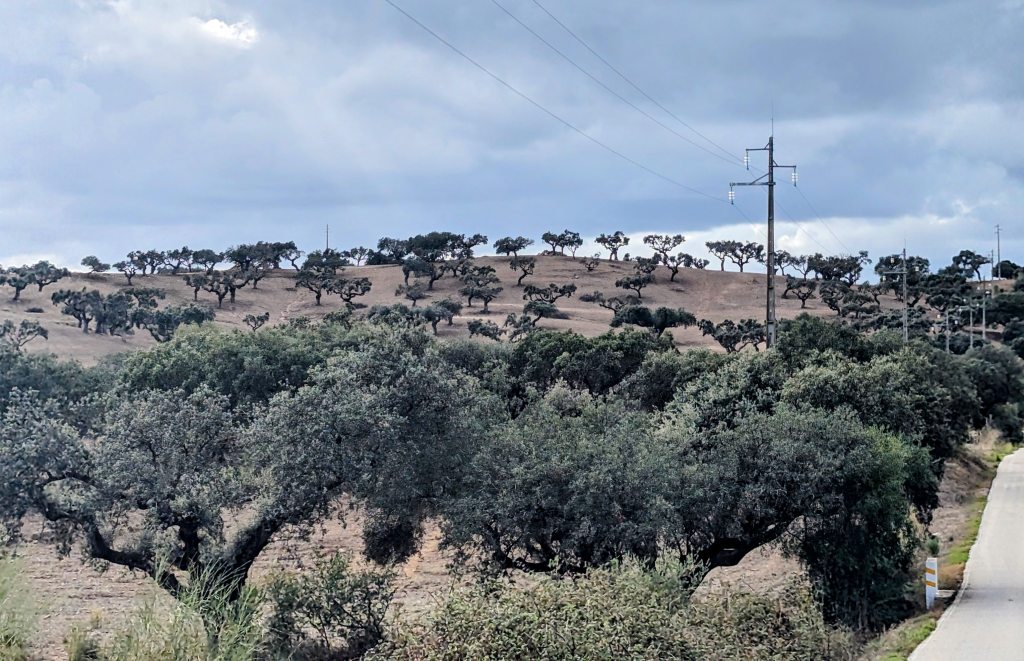
We then headed toward the town of Vila Vicosa. We opted for the back roads route. We passed not only cow, goat, and sheep farms, and olive and citrus groves, but also several cork plantations. Portugal is the number one cork exporter in the world, providing about 50% of the world’s cork.
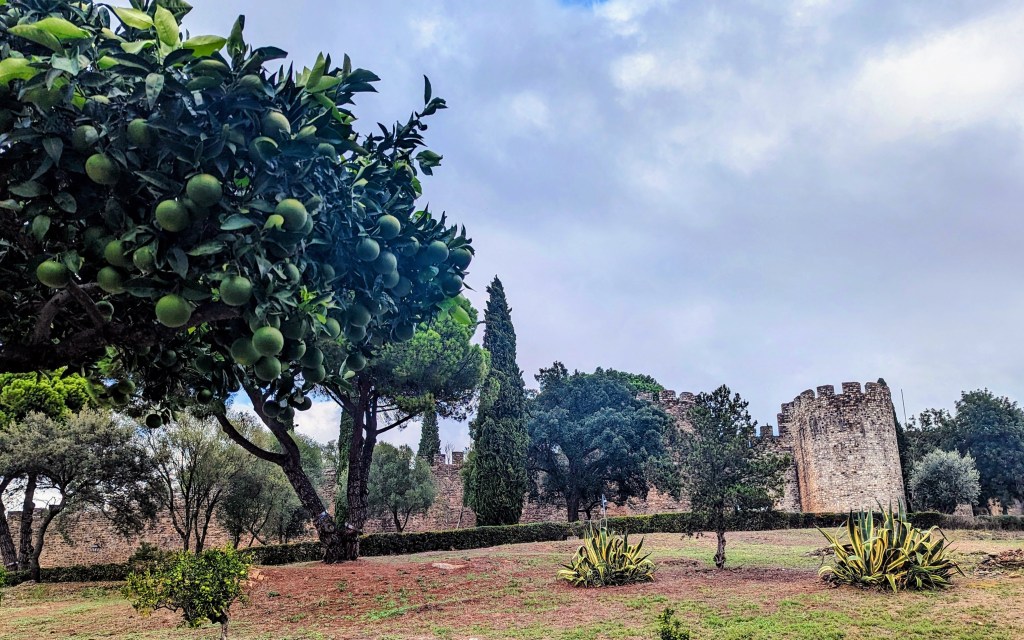
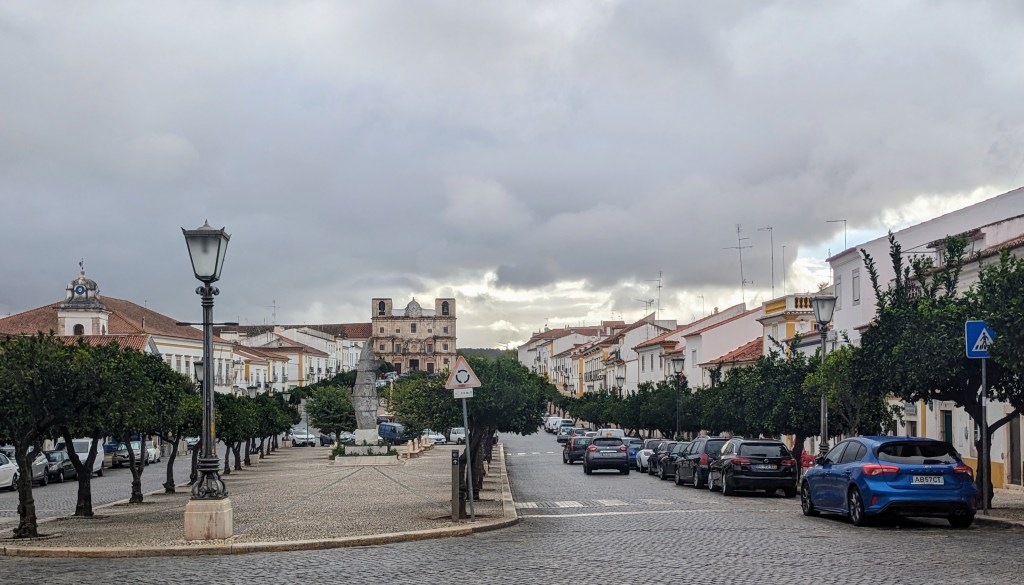
The town of Vila Vicosa is one of the cutest ever with citrus trees lining almost every street.
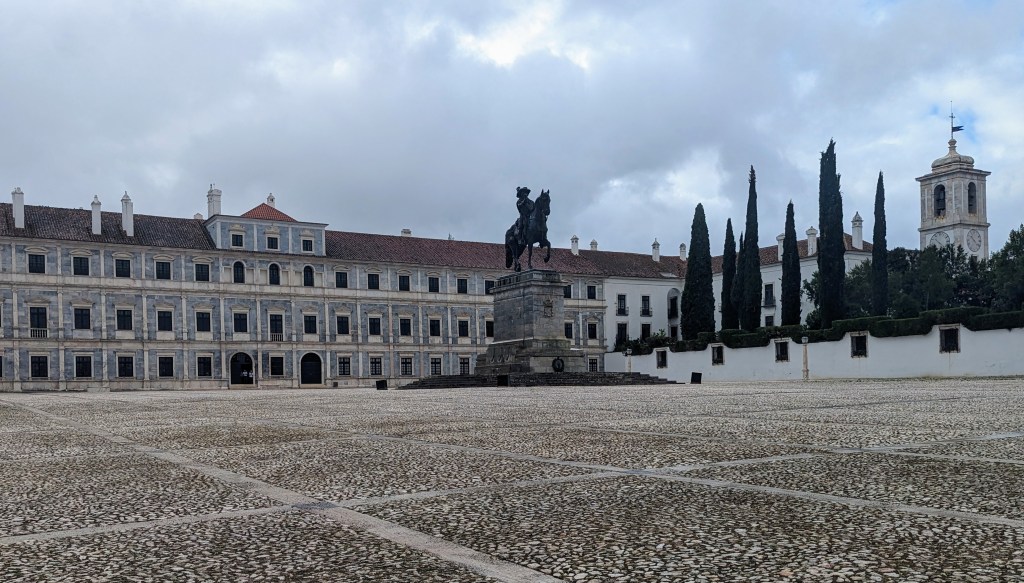
Unfortunately when we arrived at the Duke’s Palace, it had closed early due to a power outage and not enough light.
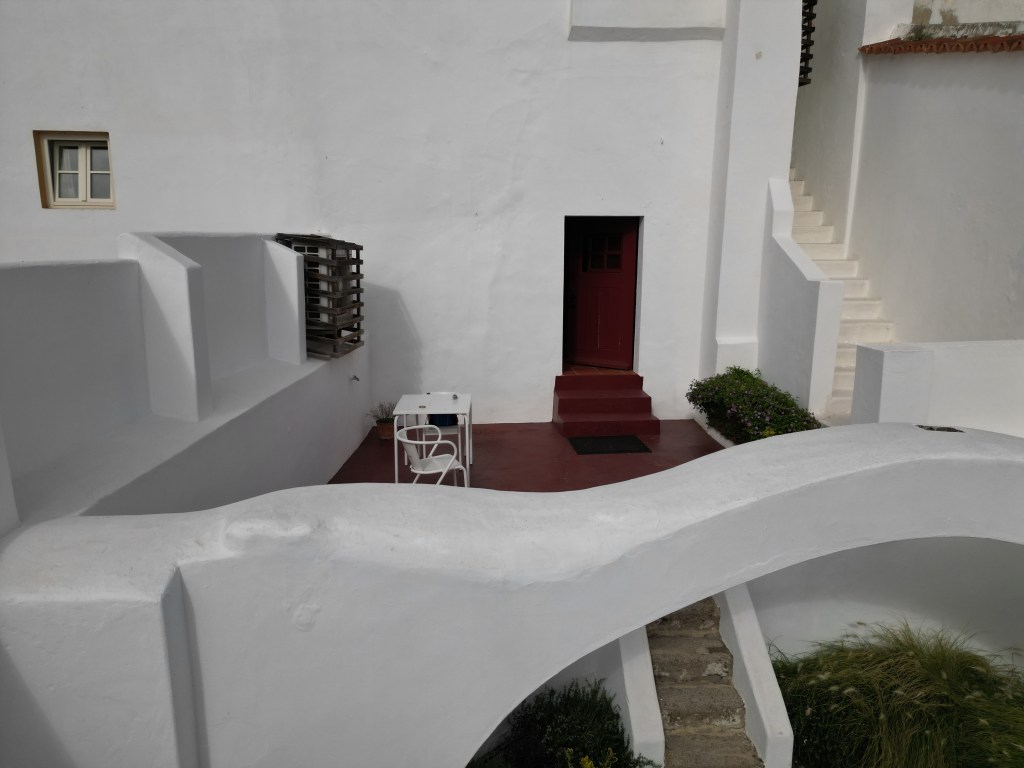
As it was starting to rain, we headed to our hotel, Noble House in Evora. Eric had booked us the Garden Suite. It had a little terrace in a small private garden in front of the room.
When we entered the room, WOW! We had never stayed in such a unique room before.
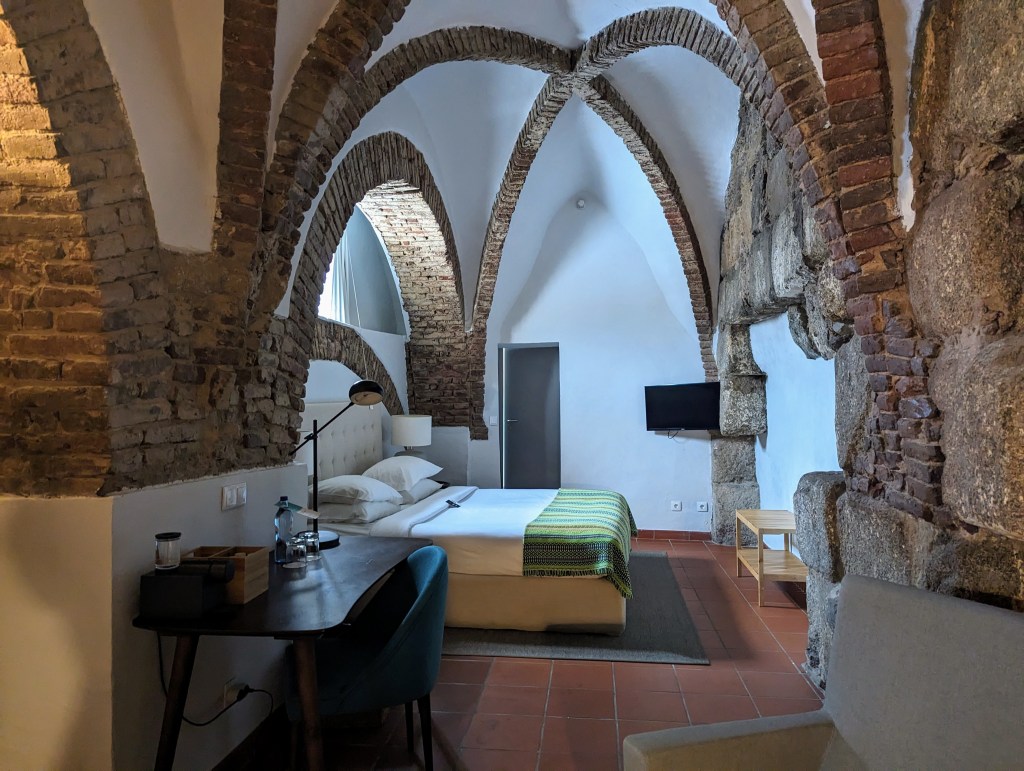
The wall next to our sitting area was part of the original Roman wall surrounding the town!
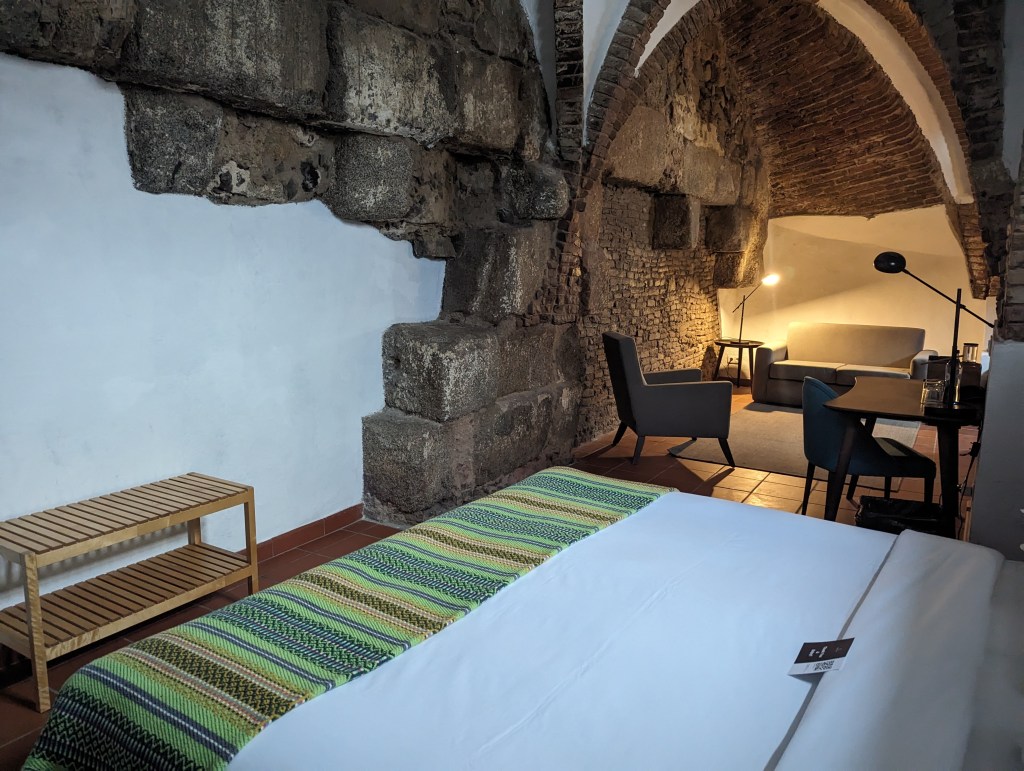
Anyone who knows me well knows how much I love all things ancient. I love to sense the lives that were lived thousands of years ago in this spot: people loving, living, giving birth, dying. So similar to us and yet so very different. And with the next day’s weather, a storm bringing 1-2 inches of rain with winds 30-40 mph, what better place to be holed up!
When there was a small break in the weather the next day, we went where any reasonable person would go on a stormy day: the Chapel of Bones. The chapel is part of the Church of St. Francis, built by monks in the 16th century. So first a stop in the church.

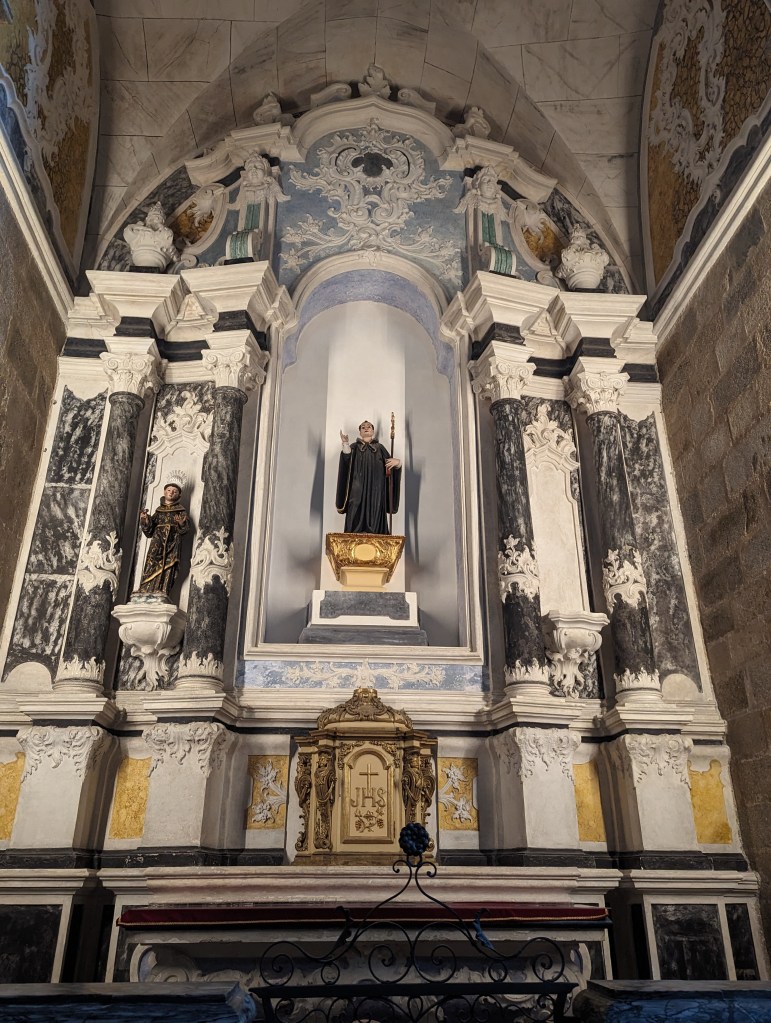
What makes the interior of this church most beautiful are the exquisite mables. I did not realize how much Portugal is known for marble quarries and exports. In this church some of the naves have as many as 4 different colored marbles.
But it was time to move on to what we came for: the bones. The Chapel of the bones was built by the Franciscan monks because by the 16th century, there were as many as 43 cemeteries in and around Évora that were taking up valuable land. Not wanting to condemn the souls of the people buried there, the monks decided to build the Chapel and relocate the bones.
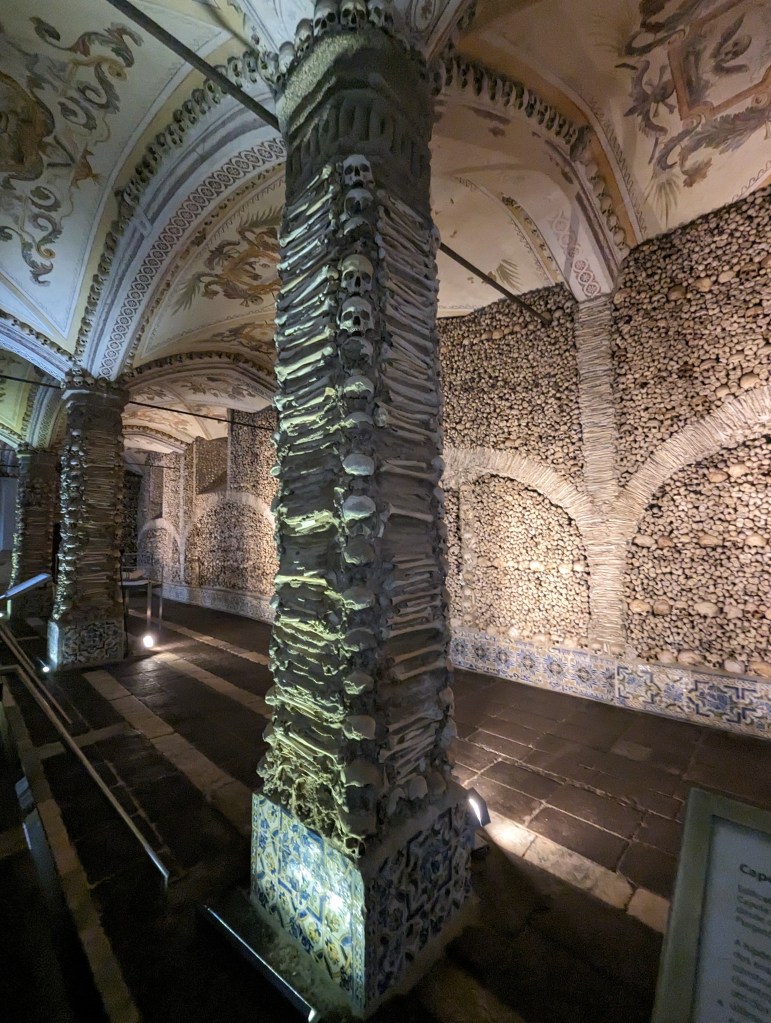
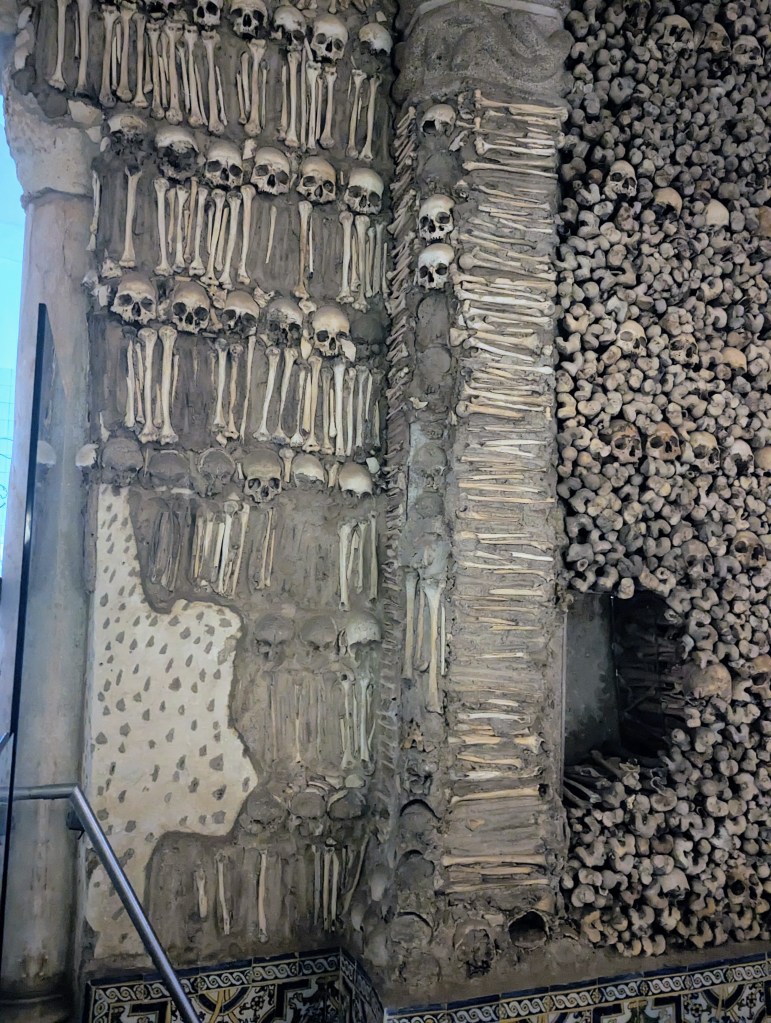
It is not necessarily easy to see in the picture above, but all the little bumps on the walls that are not skulls are the ends of long bones: femur, tibia, etc., seen better in this picture:
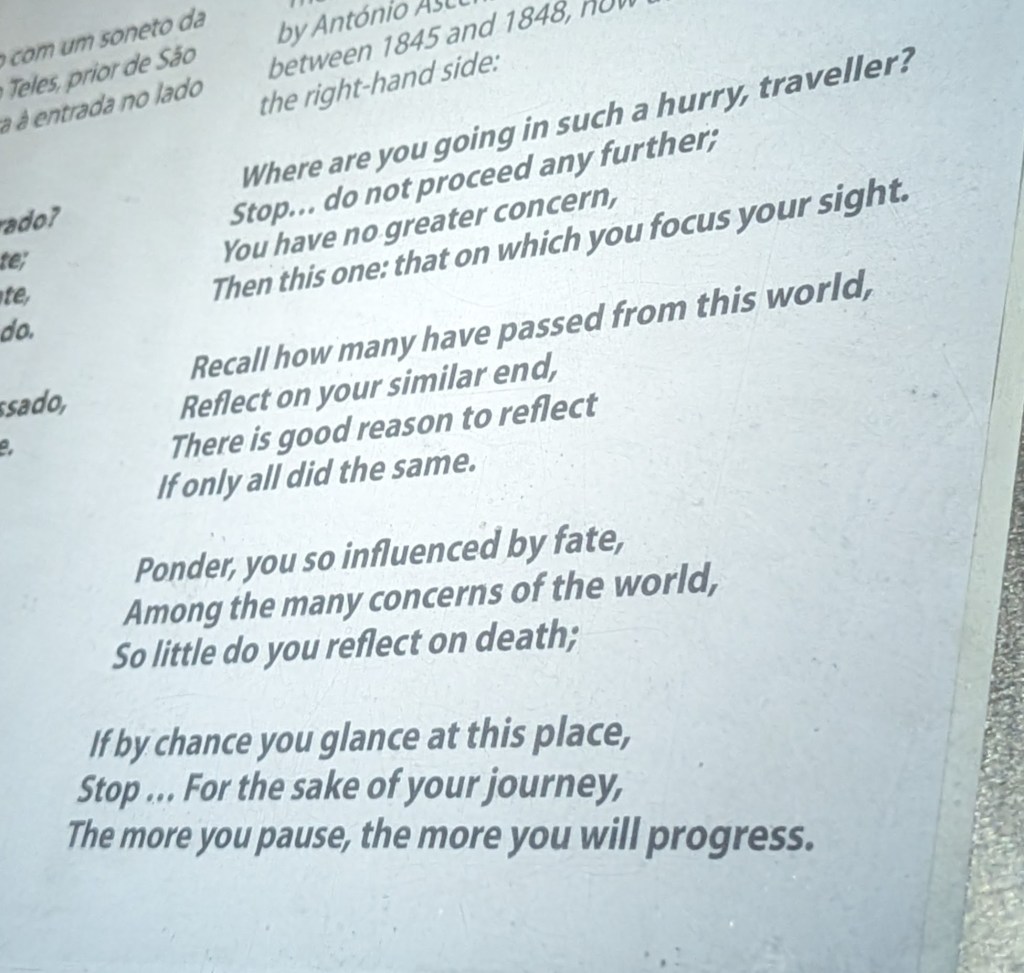
The Chapel was part creepy but mostly fascinating. This is the poem inscribed on one of the columns:


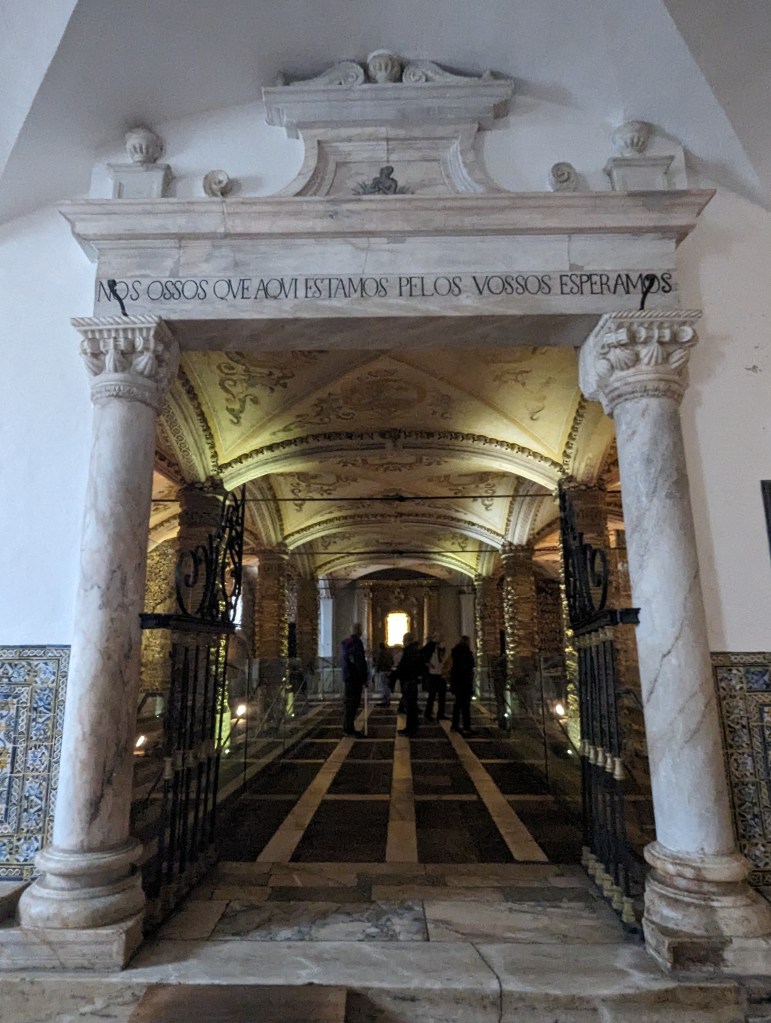
On the way out we realized we had missed the inscription over the entrance door:
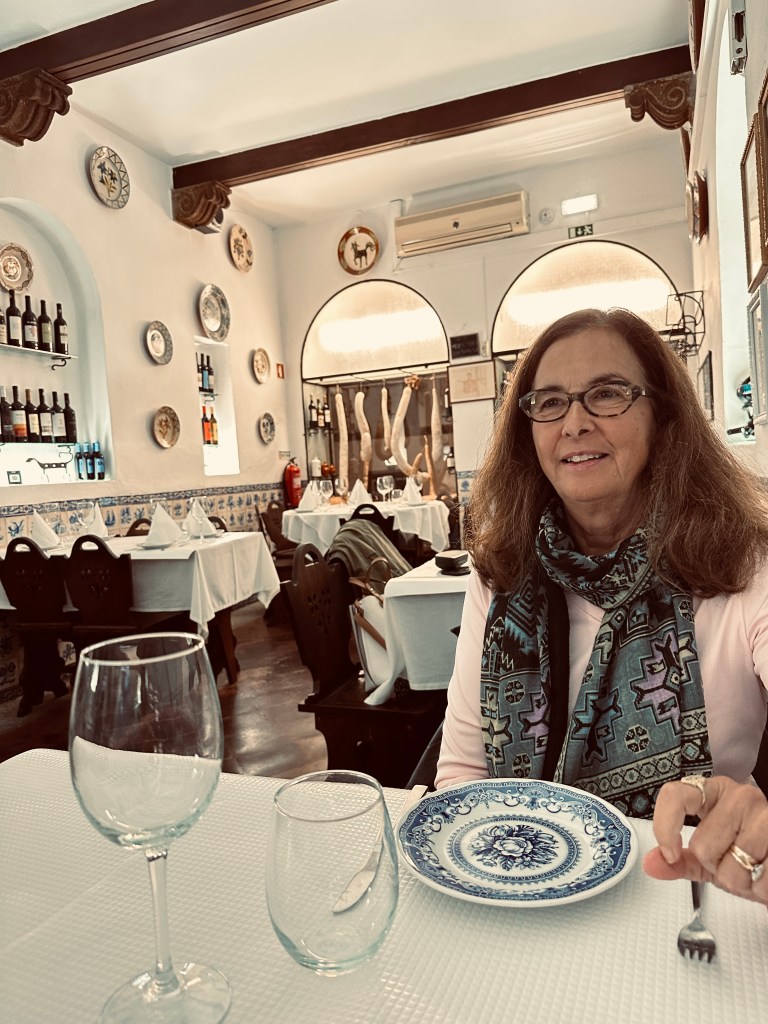
Another break in the rain gave us a chance to get out for dinner, which we enjoyed at Restaurante Tipico Guiao.
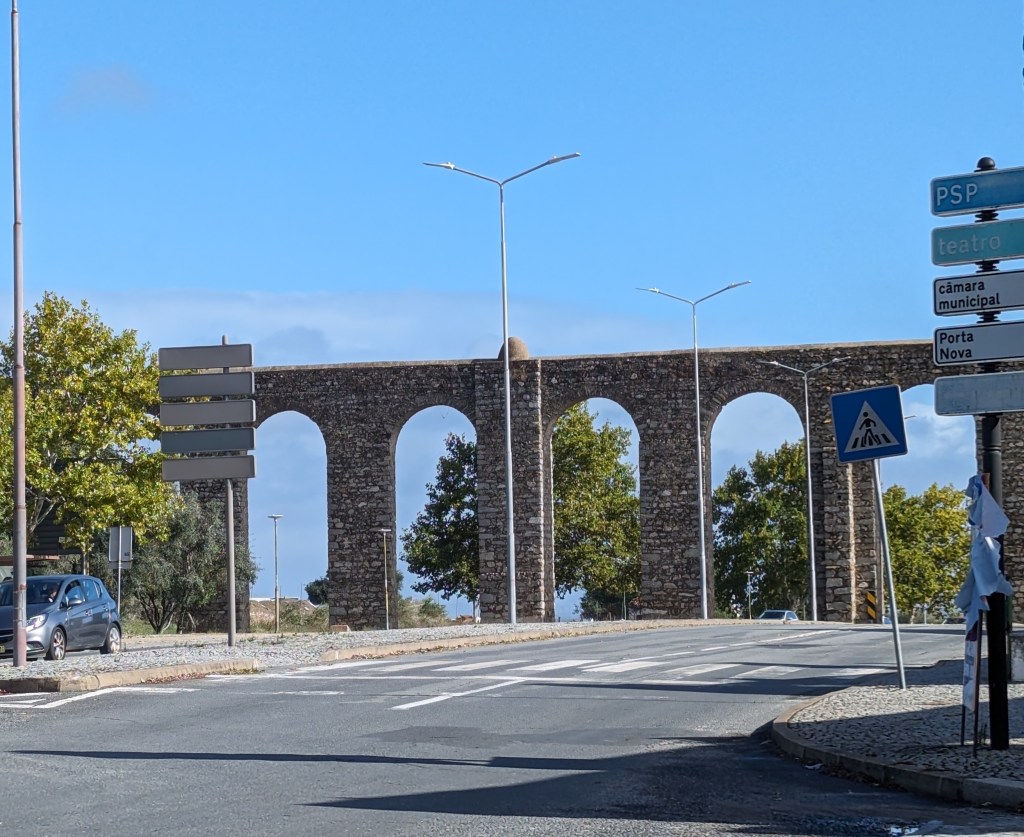
The next morning found the weather markedly improved (though a bit cool, the first hint of autumn) in time for our walking tour. We started on the outskirts of town to see a section of the remaining Roman aqueduct.
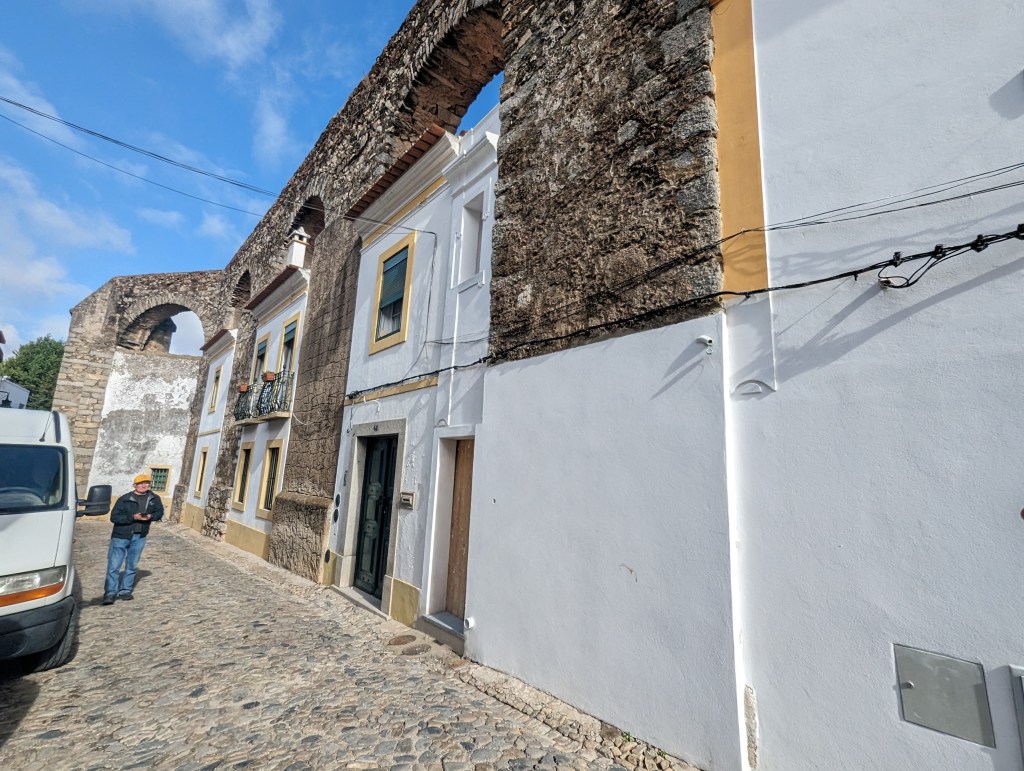
During the Moors’ occupation of the city (like all of Portugal, roughly 8th-12th centuries) they built homes right in amongst the aqueduct.
There are few Roman walls left;of the four entryways through the walls, only one remains.

At the top of the city’s main square sits the 16th century Renaissance Church of Saint Anthony.
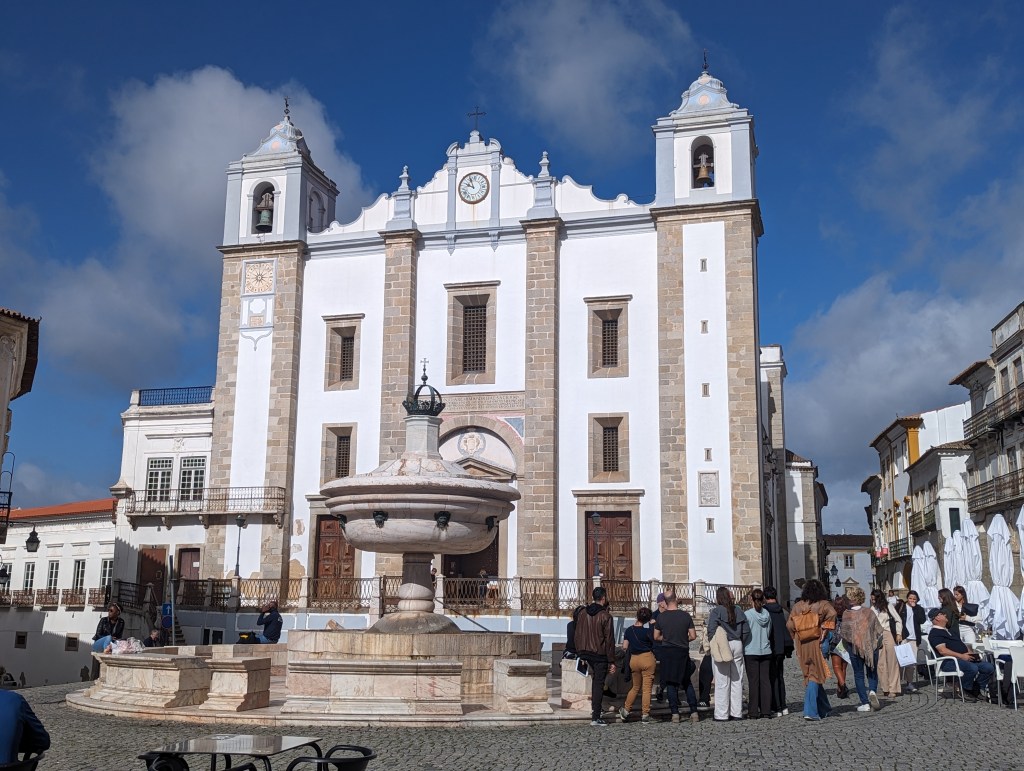
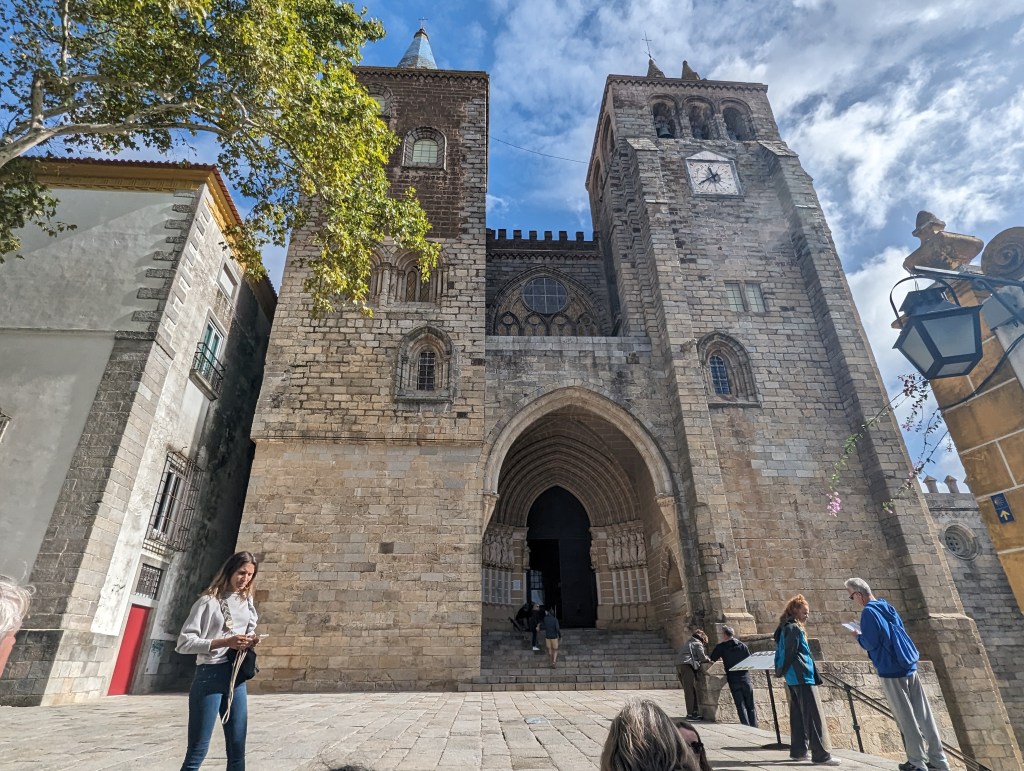
The square is called Giraldo Square, paying tribute to Fearless Geraldo Geraldes, the man who conquered Evora from the Moors in 1167. We walked by the cathedral.
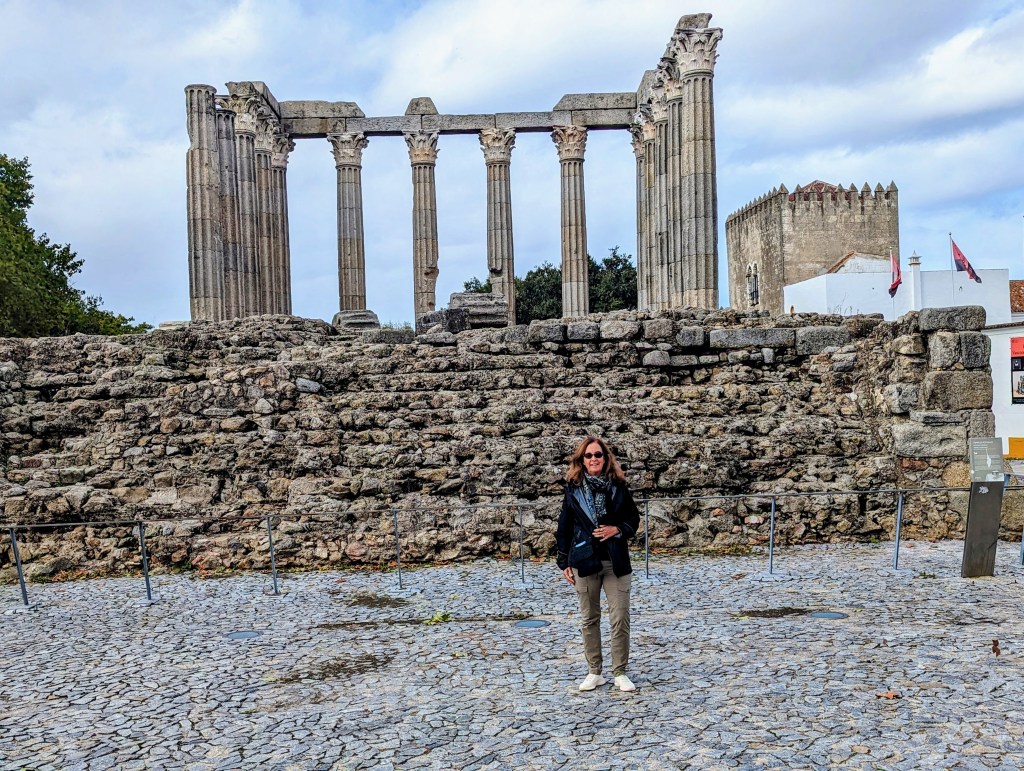
And then the famous Roman ruin, most probably a temple to Diana, goddess of hunting.
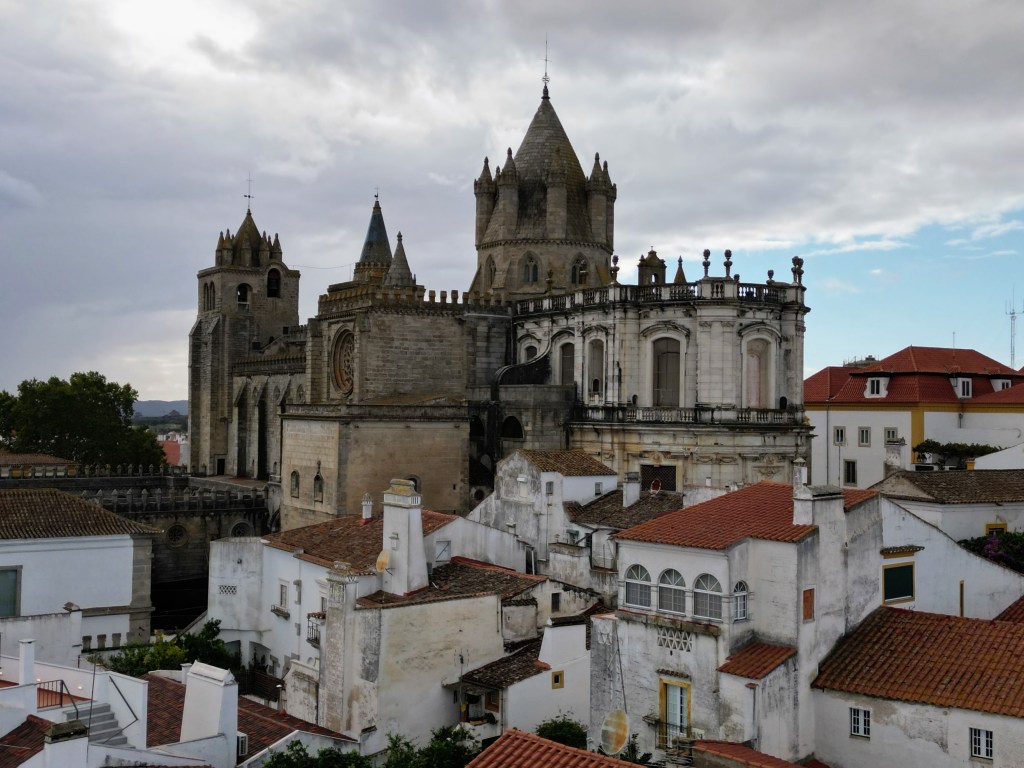
As we climbed to higher ground, we were able to get a good view of the cathedral.
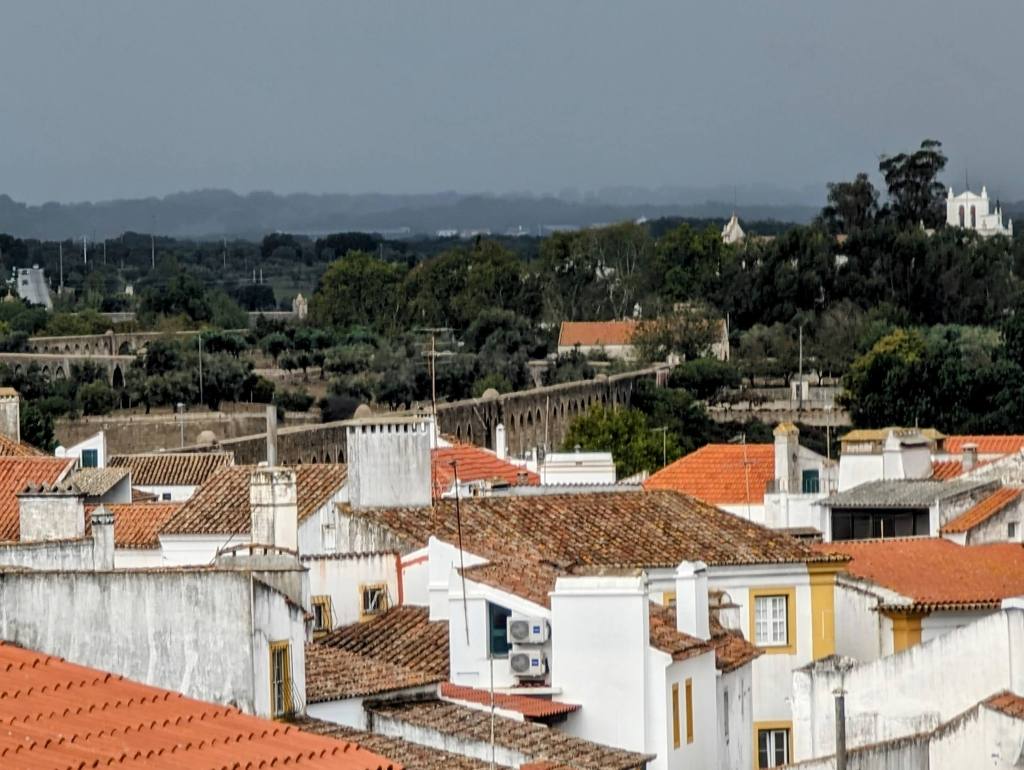
And a view of a larger portion of the aqueduct.
And also a look at the university.
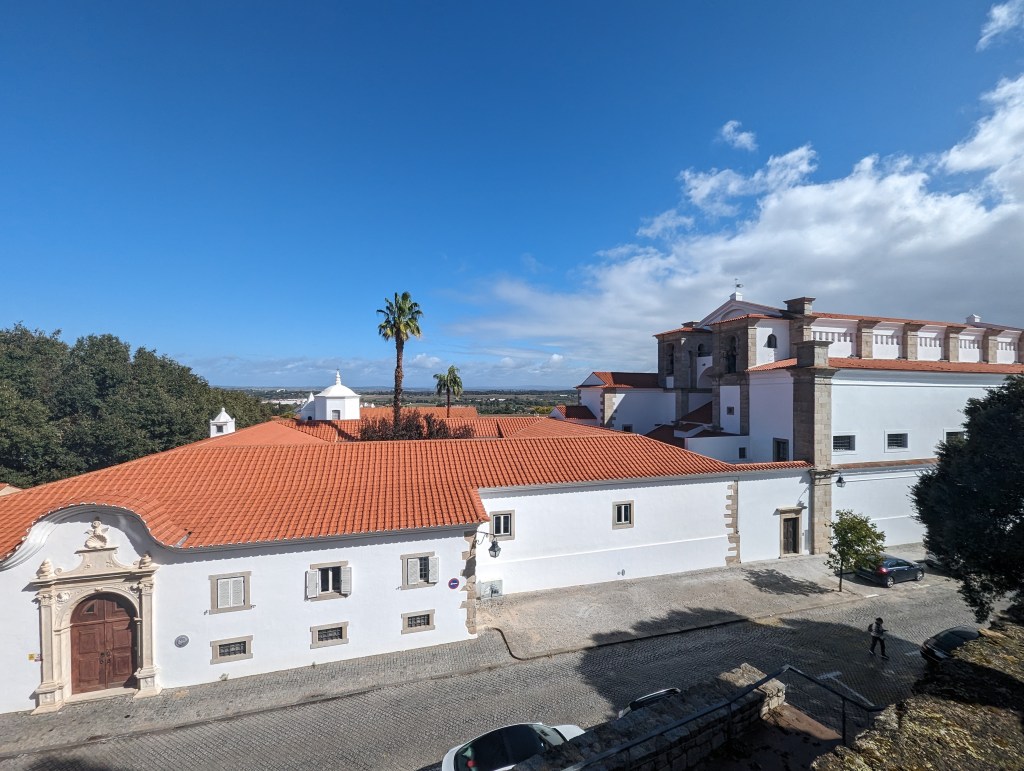
Evora is the capital of the Alentejo region of Portugal and has the main university as well as the main hospital and many of the municipal buildings.
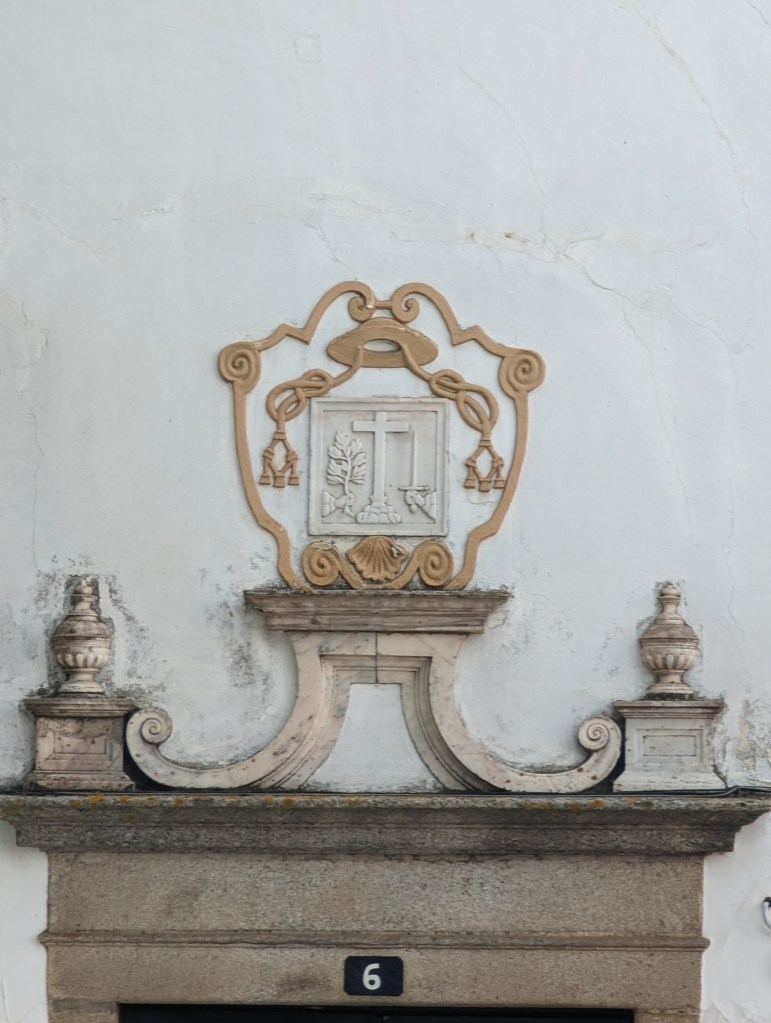
Our guide pointed out the symbol of the Inquisition.
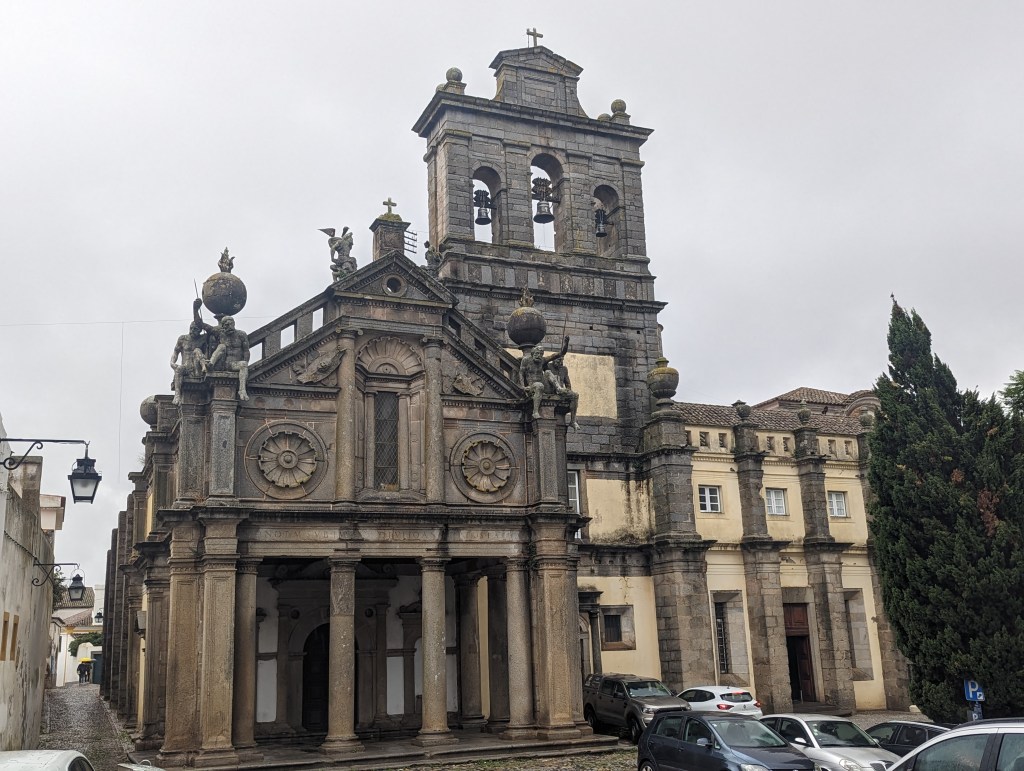
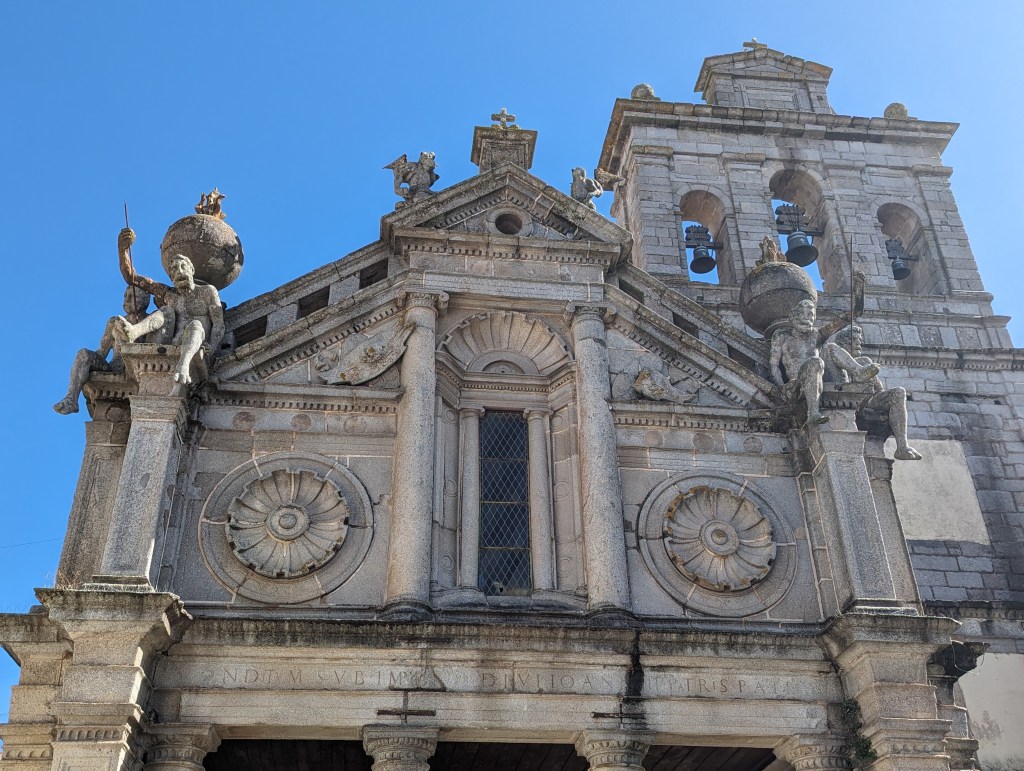
And finally this curious 16th century Renaissance church topped by four large mythological figures supporting globes, meant to symbolize the four corners of the earth and the universal power of King João III.
Upon completion of the walking tour, we decided to go back and see the cathedral in more detail. For the beginning of the visit we were directed to go up and view the church through the choir above.
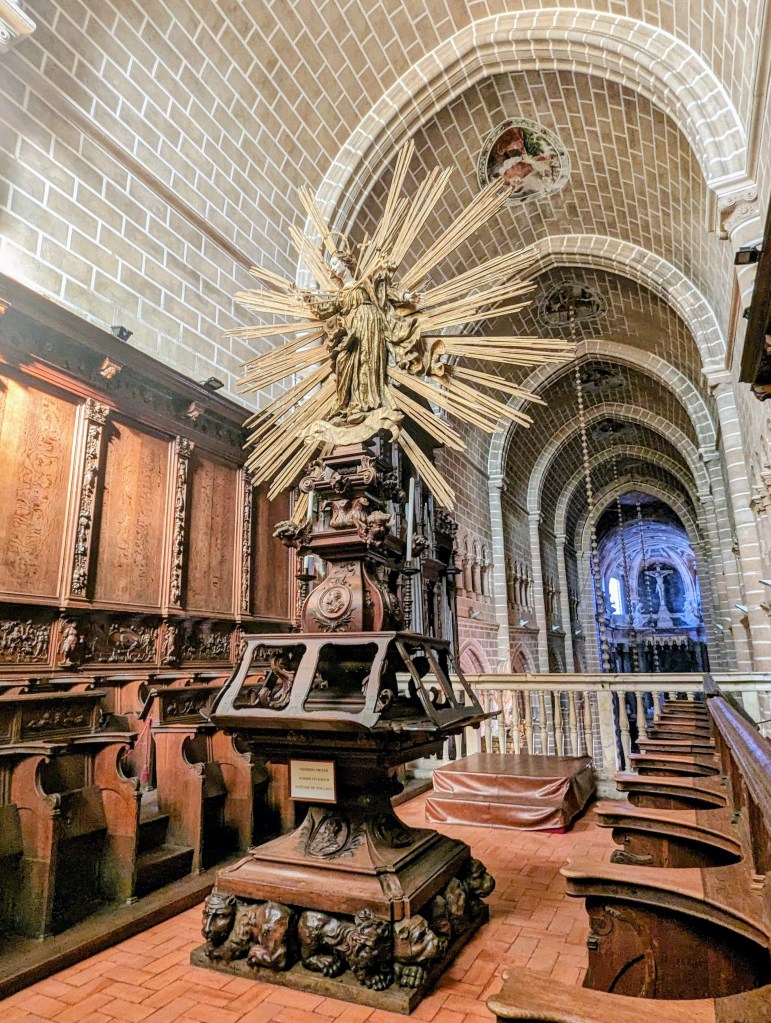
Then the visit guided us up to the terrace.
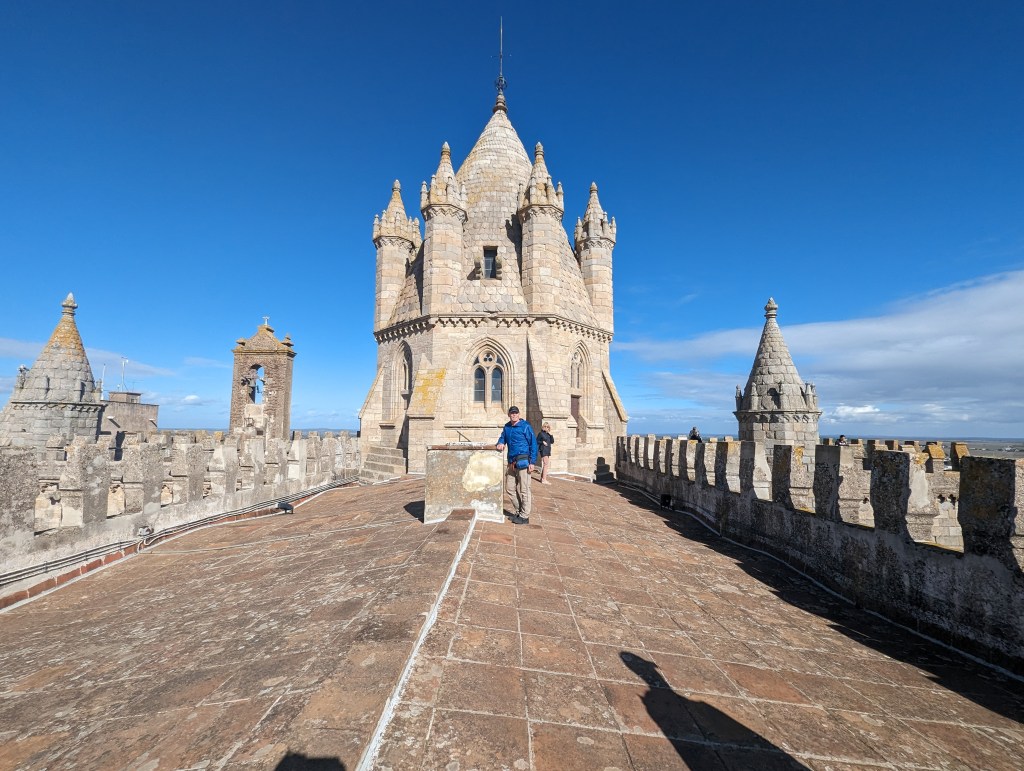
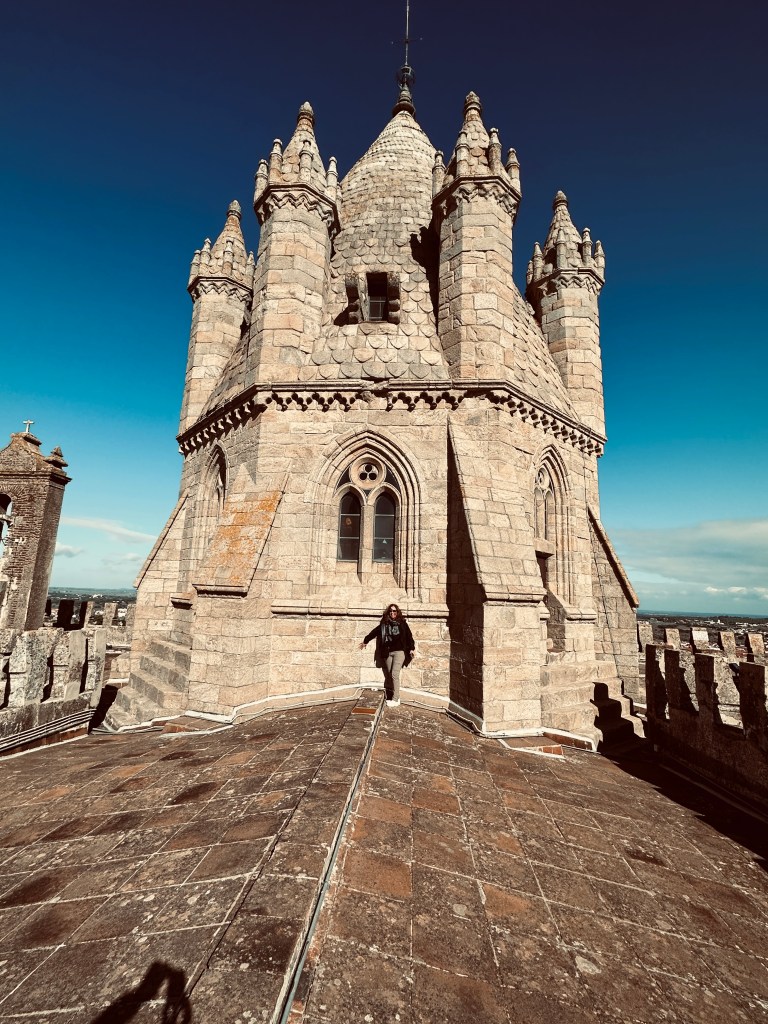
Eric was brave enough to take in the views,

while I took pictures while plastered against the back wall.
Then we went down to the chapel.
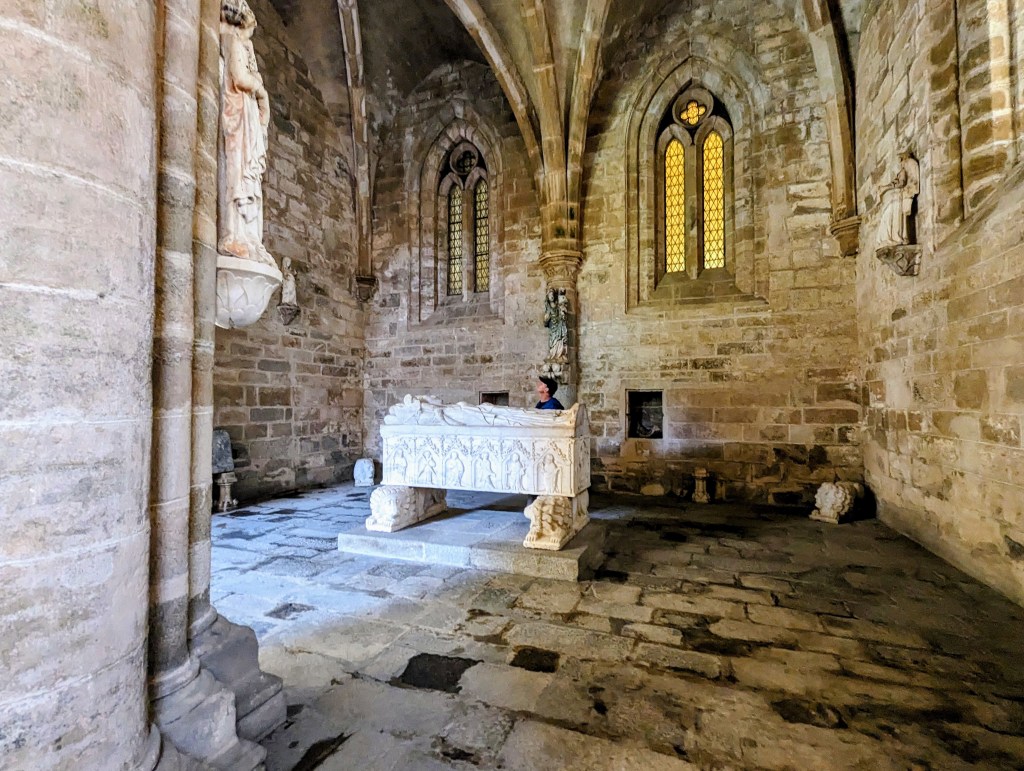
And the main church.

Like St. Francis Church, the marble in the church of the cathedral was spectacular.

After a rest it was back out for dinner at Abruxa D’Evora.

There we had the most delicious gazpacho ever, served with a grilled sardine on toast.

Walking back to our romantic Roman room, the night sky had cleared, and we passed the Roman ruins lit up.

We could not believe our visit to the Alentejo region was over. The next day as we drove nearly 3 hours through so much farm land, vineyards, more cork plantations, groves, etc., we had our first itinerary regret of our journey to date: we wished we had allotted more time in the Alentejo region. It turned out to be our favorite, and we had only 3 short days, interrupted by rain. If we were to plan this trip over, not only would we have spent more time, but we would have then stayed in Vila Vicosa, which had a very cute looking Pousada right next to the Duke’s Palace. Vila Vicosa is more closely located to all the towns which we did not get a chance to visit partly due to weather, but partly due to their distances from Evora.
When we arrived in Salema our room was not yet ready, so we headed right to the beach.
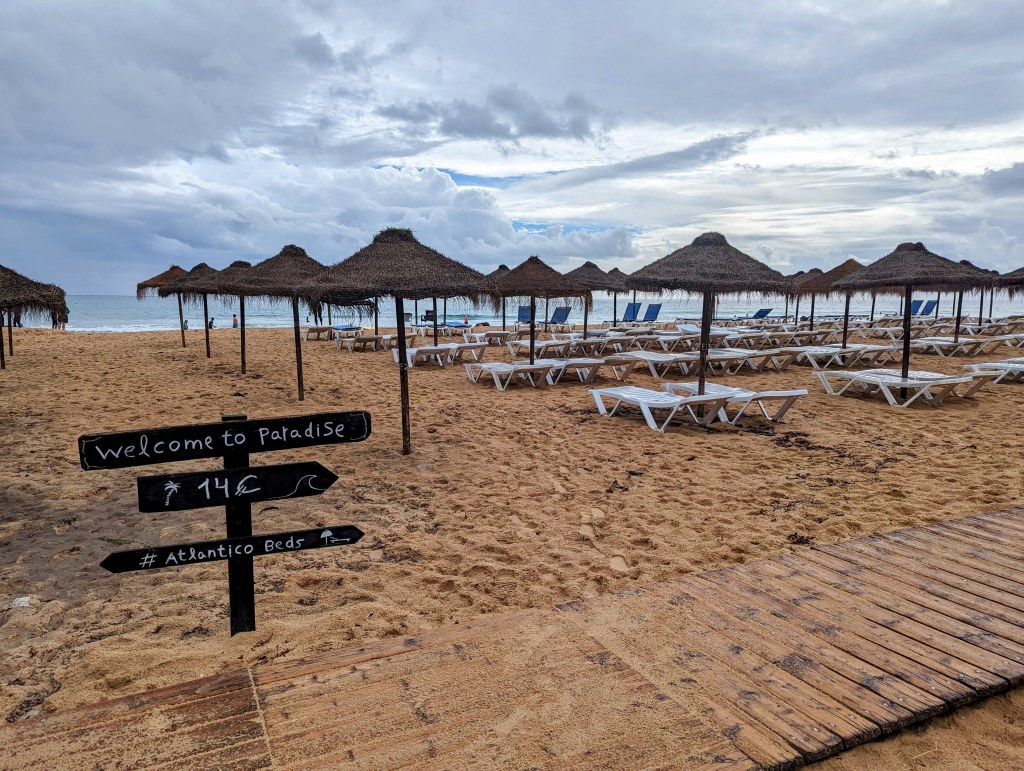
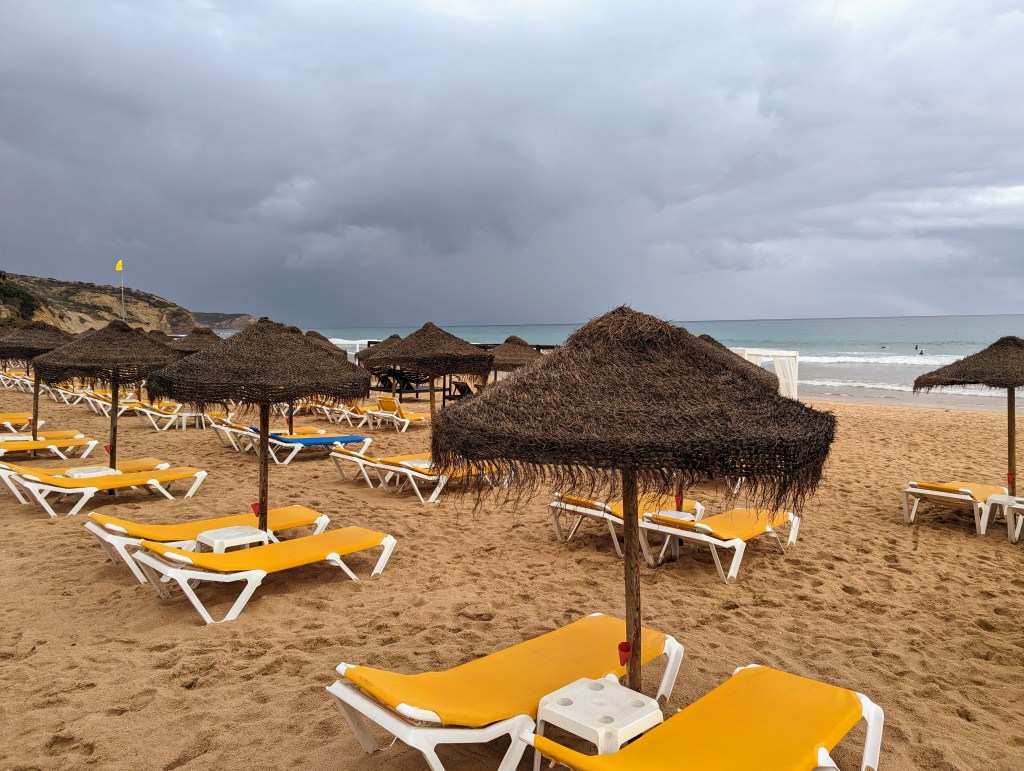
We had a lovely lunch of fish soup right off the beach with views of the water at Agua Na Boca. Then our room at the Nau Salema Beach Village was ready. Once again we were pleasantly surprised with our gorgeous views.

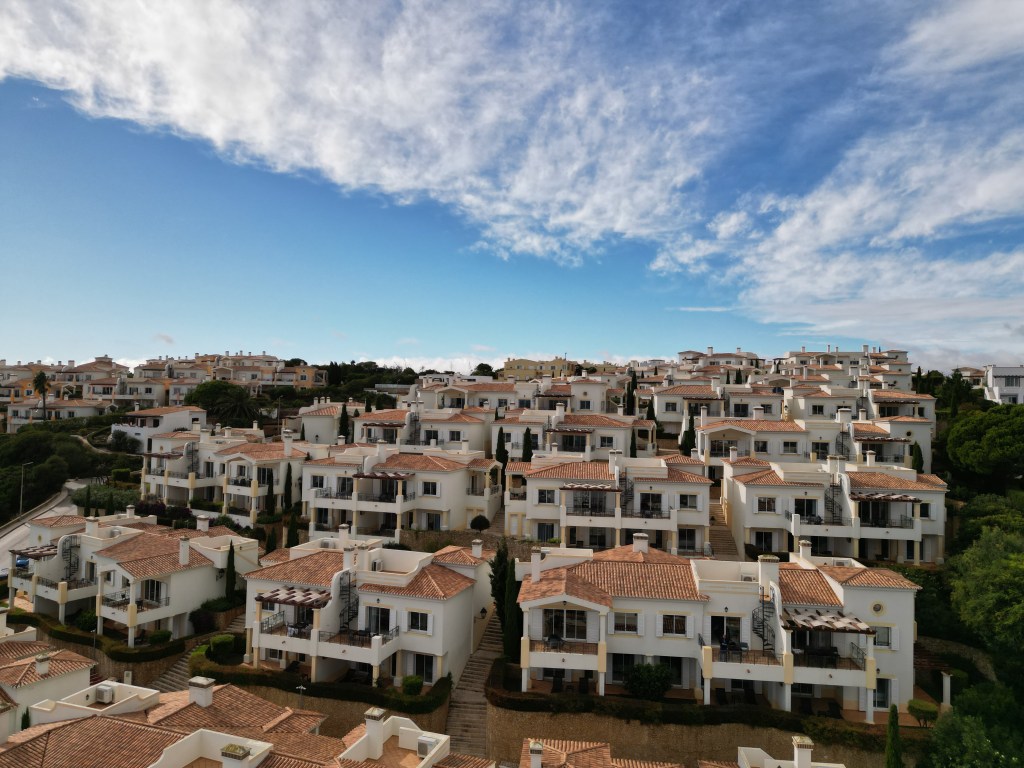
The next day we had yet another storm of 1-2 inches of rain and over 40 mph winds (our third in a week). Luckily we had scheduled some extra time in the Algarve to take a bit of a vacation from our vacation. So having brought in plenty of groceries to our fully equipped kitchen, we rode out the storm in comfort.
The next day we had a walking tour scheduled in Lagos, so out we went. The day started off cool, crisp, and cloudy.
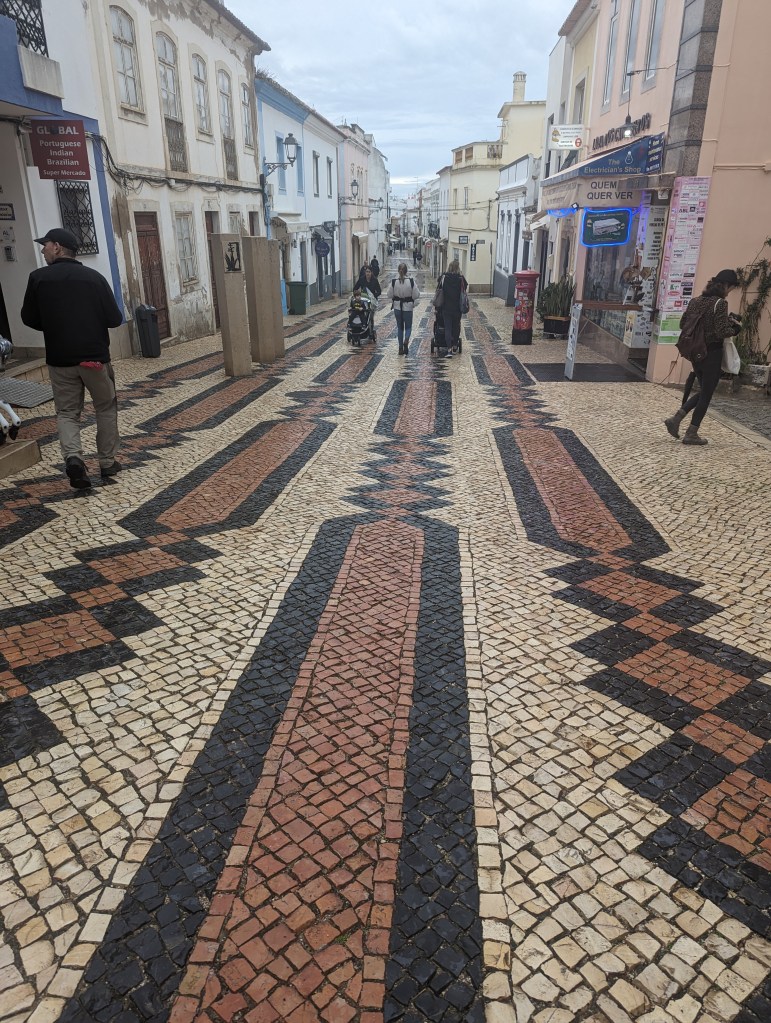
We met in Praça Gil Eanes by the sculpture of the androgynous King Sebastião who elevated Lagos to a city in 1573. He was an explorer and adventurer. The statue was designed by João Cutileiro in 1972 as a tribute to both the king and the then ongoing space exploration.

We headed first into the market, which was pretty quiet on a Monday.
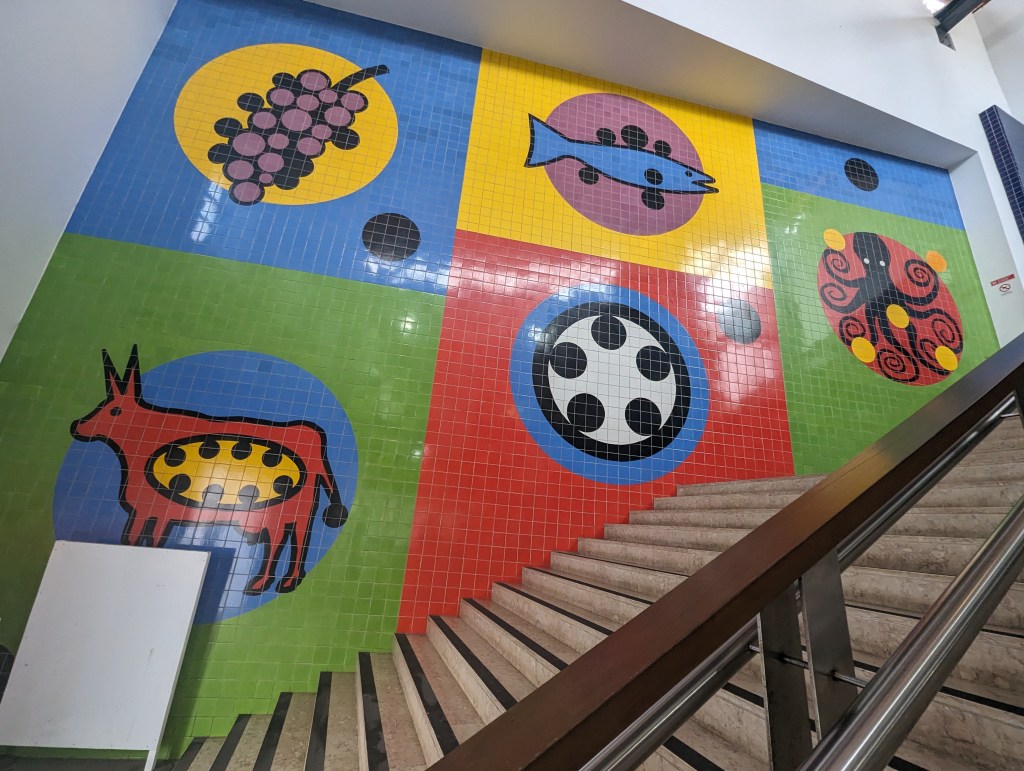

The Algarve is known for its many varieties of figs and fig products.

Although one of the main industries in Lagos has always been sardine canning, octopus is also a main export as well as menu item here and throughout Portugal.

Fishing and now tourism are both big businesses in Lagos ports.

In the 15th century age of exploration, for a time King Henry lived in Lagos and sent many ships to explore and “conquer” the New World from there.
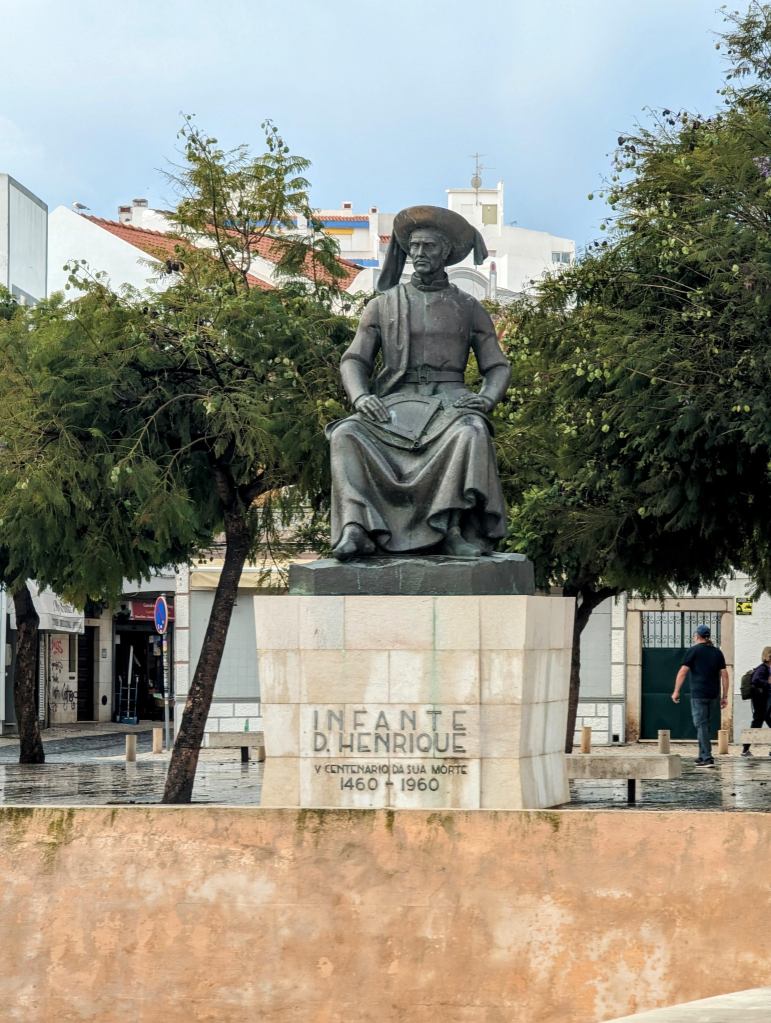
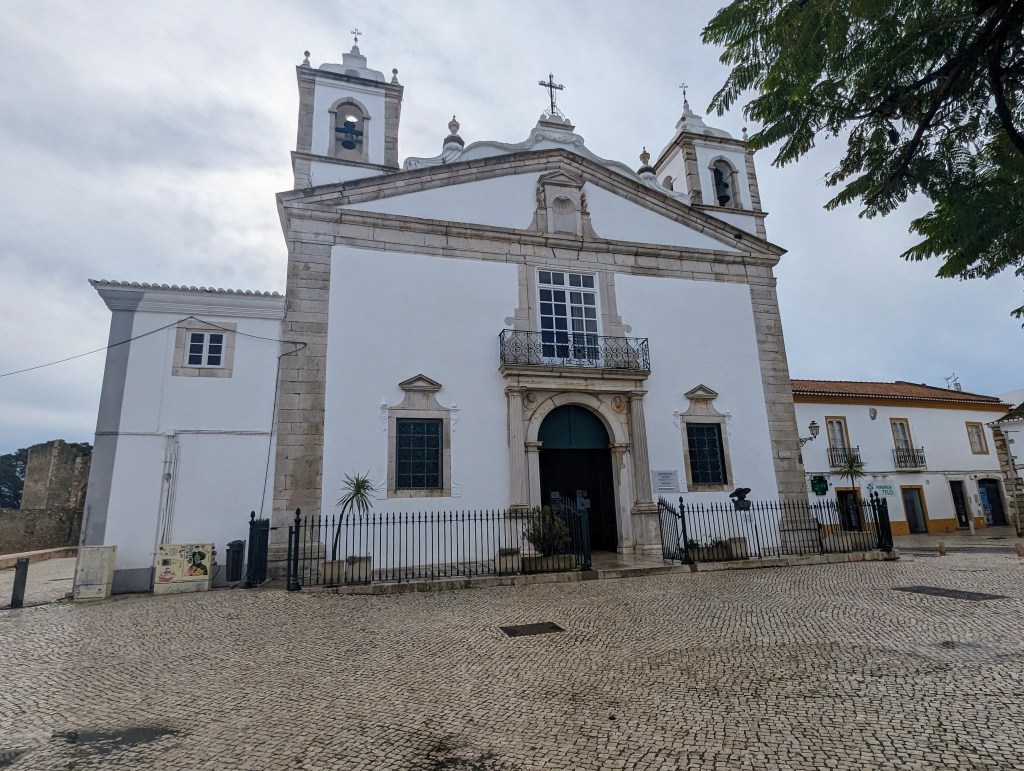
In Prince Henry’s square stands Igreja da Santa Maria, originally a 15th century church built on the old Roman walls. But the church was completely destroyed in the earthquake of 1755 and has been rebuilt and restored several times since.
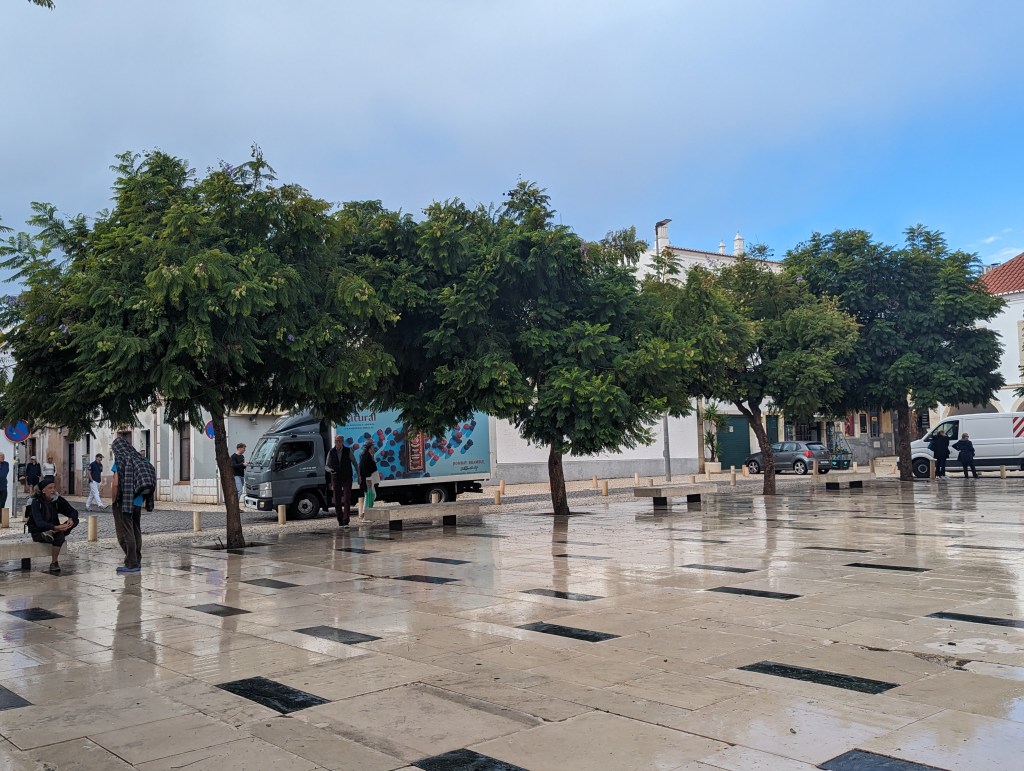
Also in the square are numerous jacaranda trees. After the storms, the hardened seeds falling are very hard and painful.
Lagos is known for its plentitude of street art.
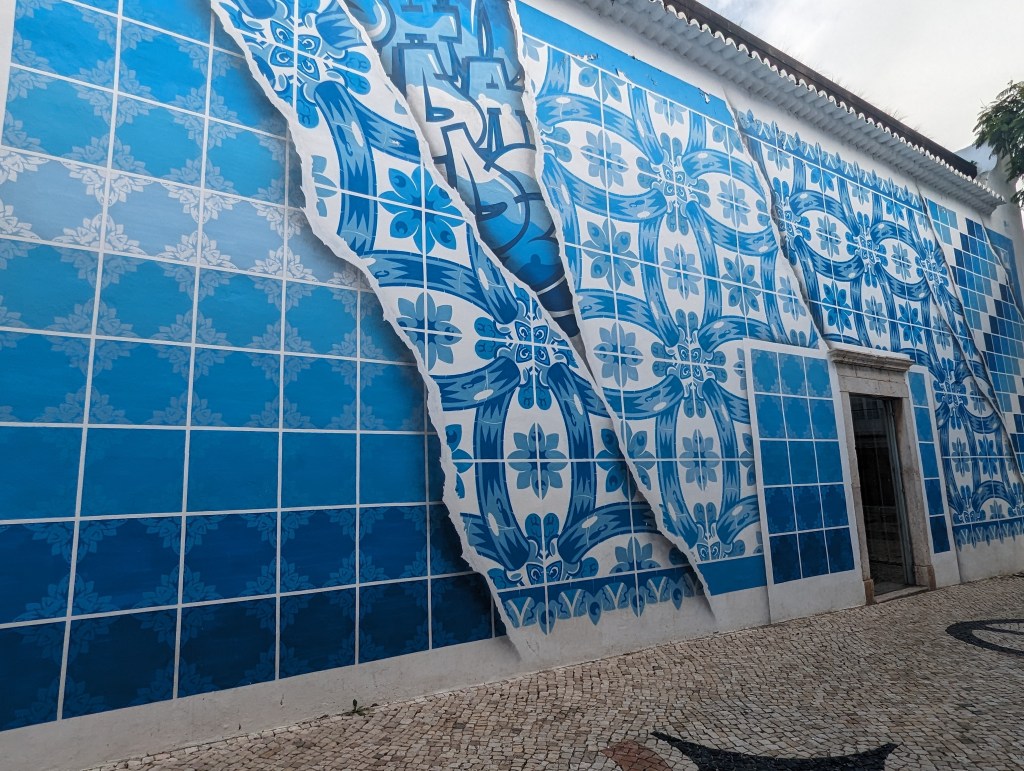
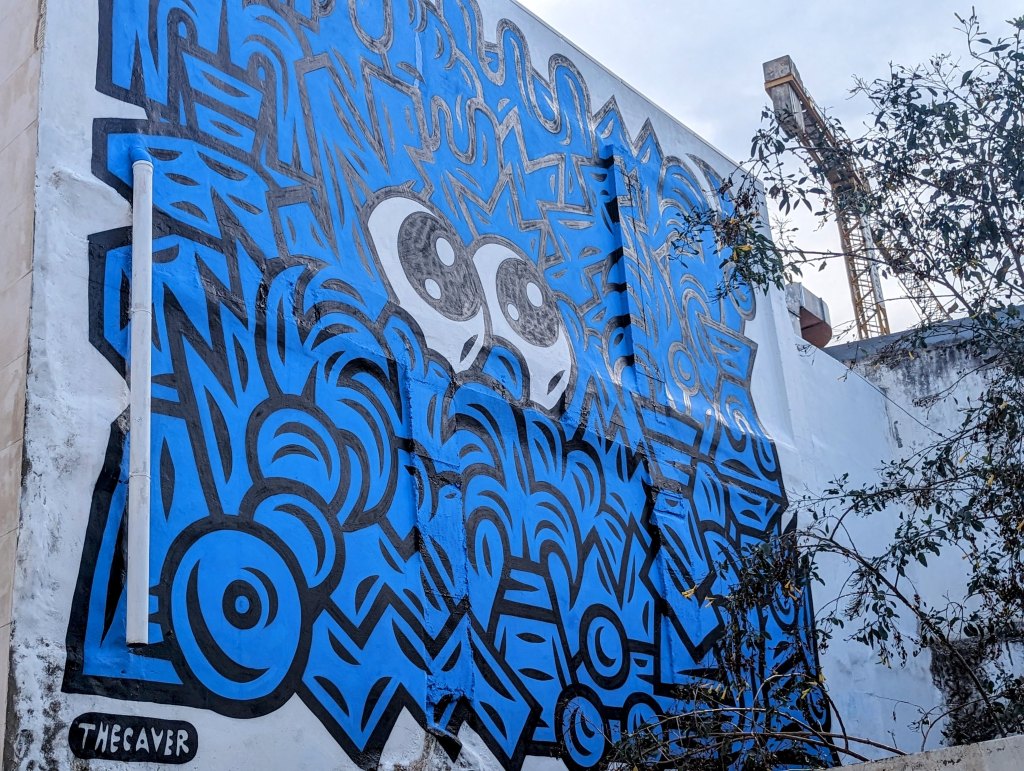
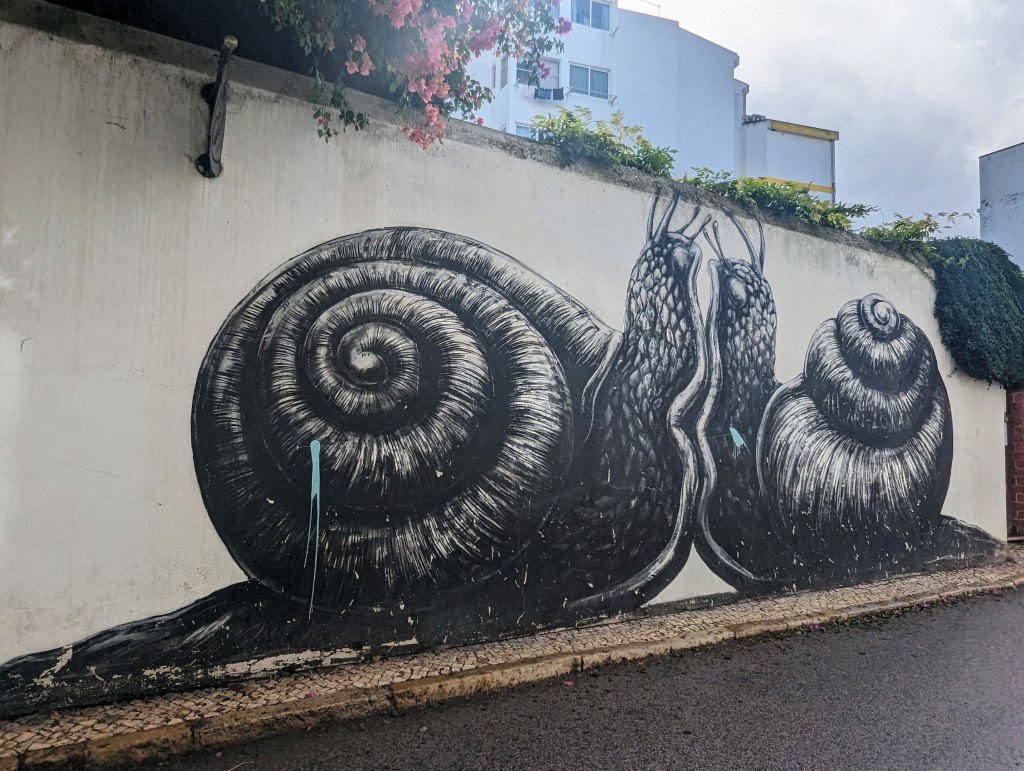
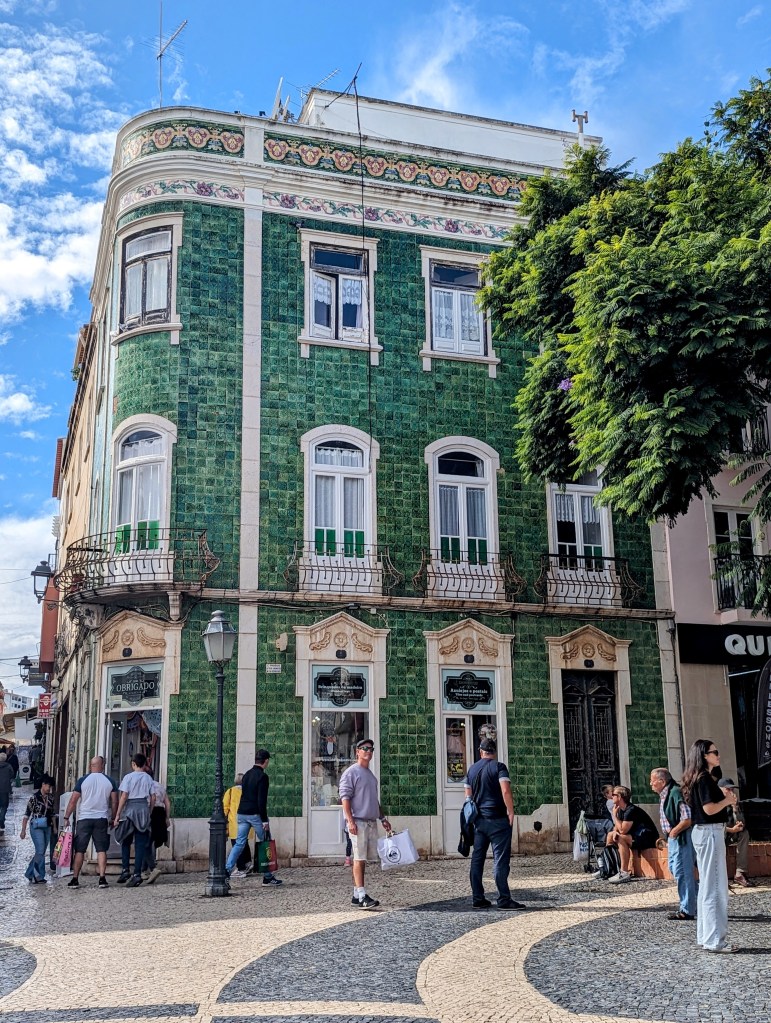
And also some beautiful art nouveau buildings.
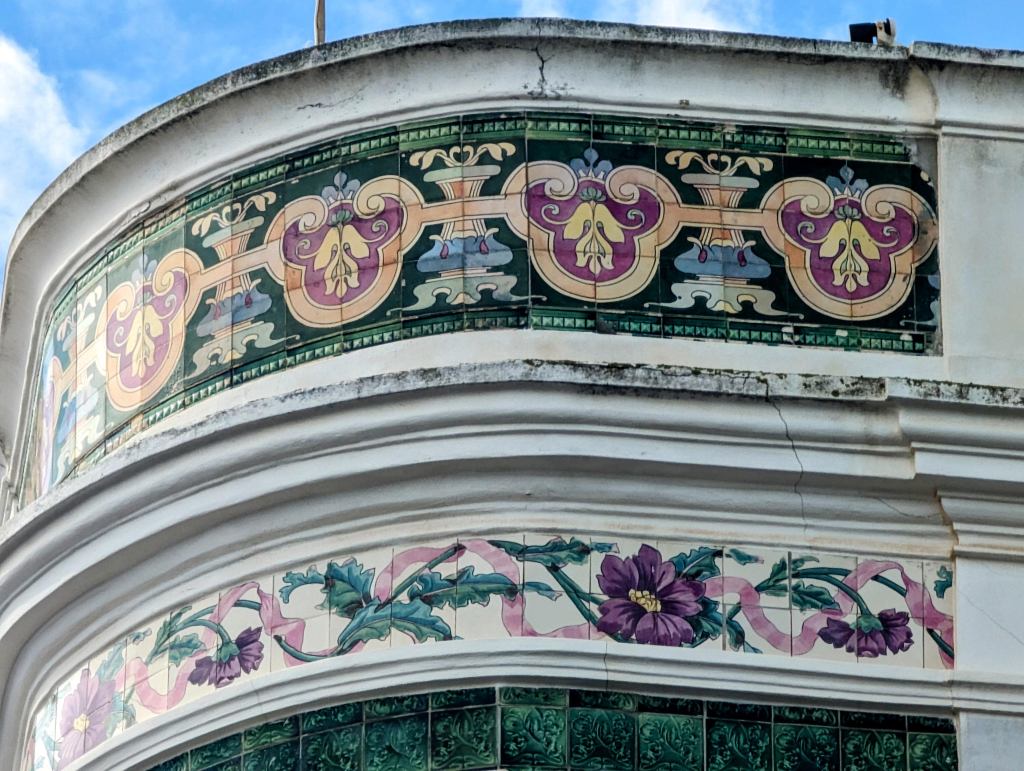
The last stop on our tour was in front of one of the first schools in Lagos.

We then headed to lunch at Don Sebastião Restaurante.

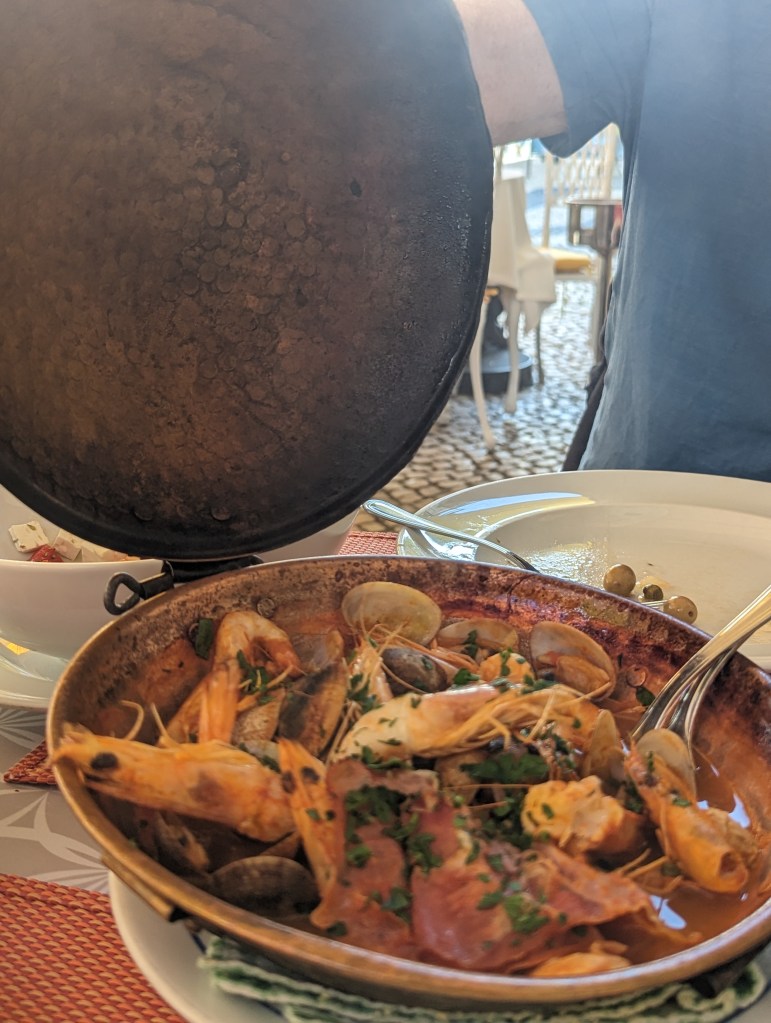
And we tried an Algarve specialty: cataplana, which takes its roots from Moroccan tangine.
We spent the afternoon strolling on the Salema beach and had Indian take-away from The Spice Cottage for dinner.
The next morning we headed out to Sagres Fort: the end (or beginning) of Europe.
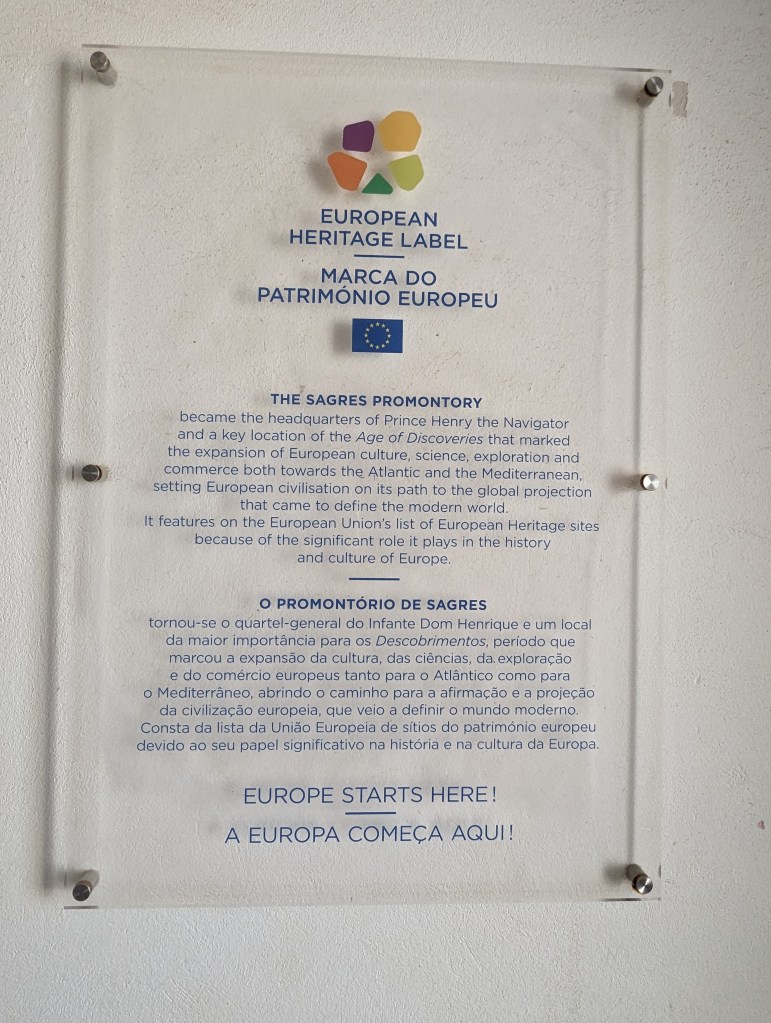
Phoenicians, Greeks, Carthaginians, and Romans believed this was the ideal gathering place for their gods, due to the absence of humans. The Romans called Sagres the promontorium sacrum, or the end of the world, because in ancient times it was the last explored point before heading out to sea. The fortress on Sagres Point was built in the 15th century under the command of Infante Henry the Navigator with the purpose to protect the area from attacks coming from Northern Africa.
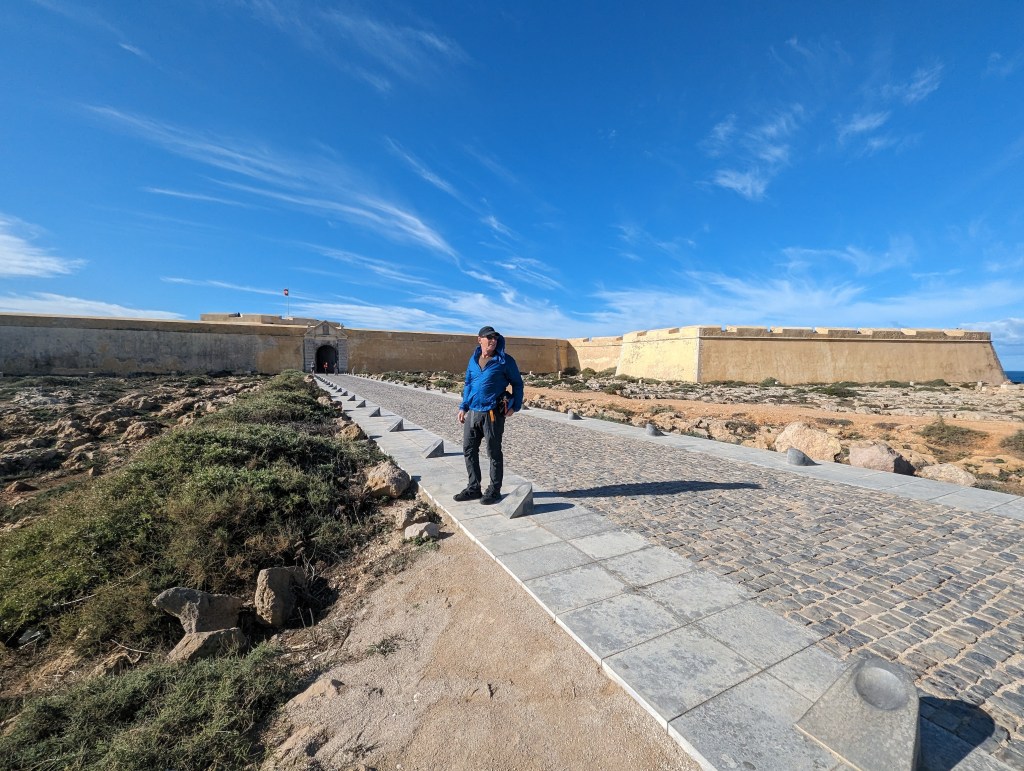
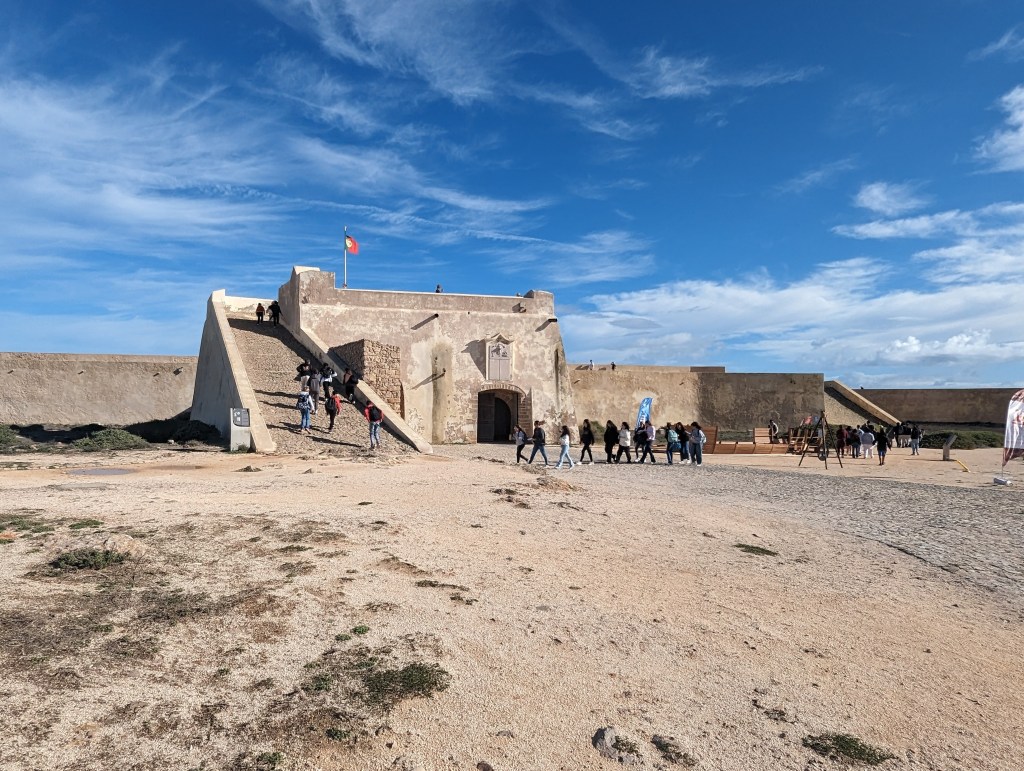
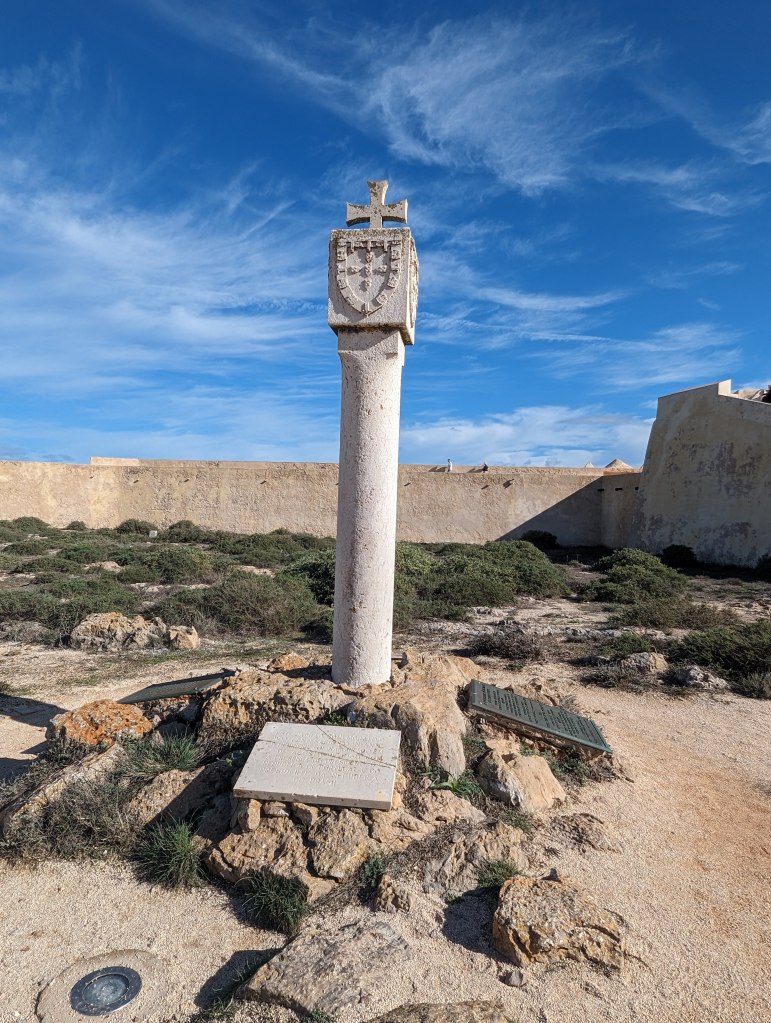
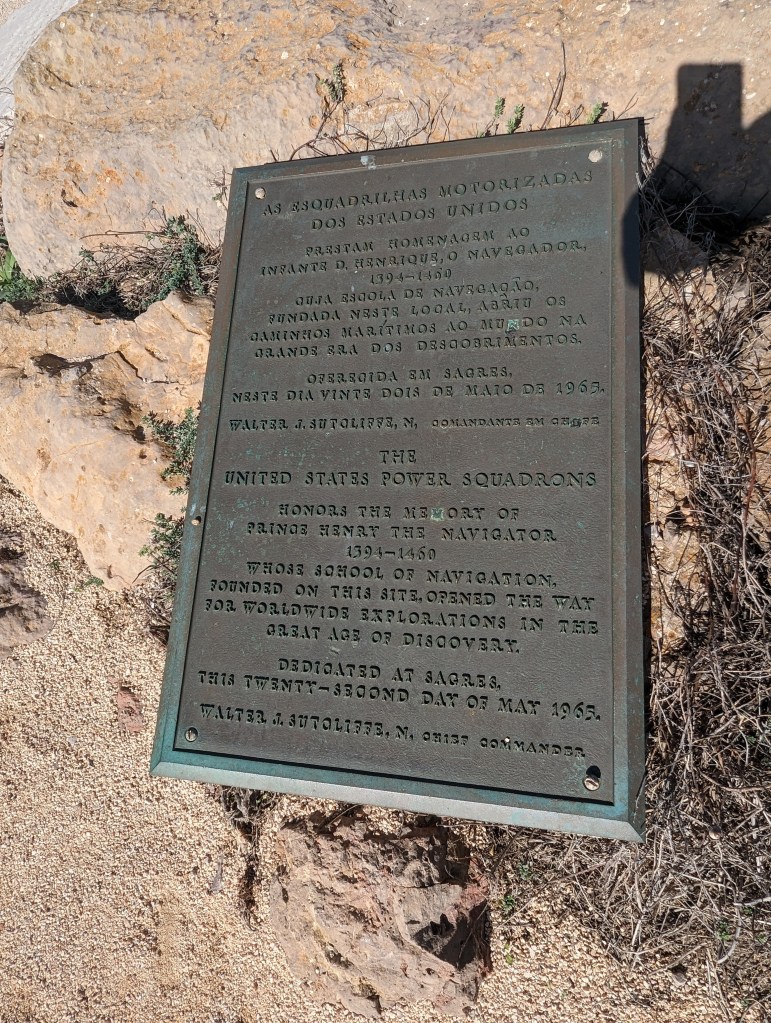
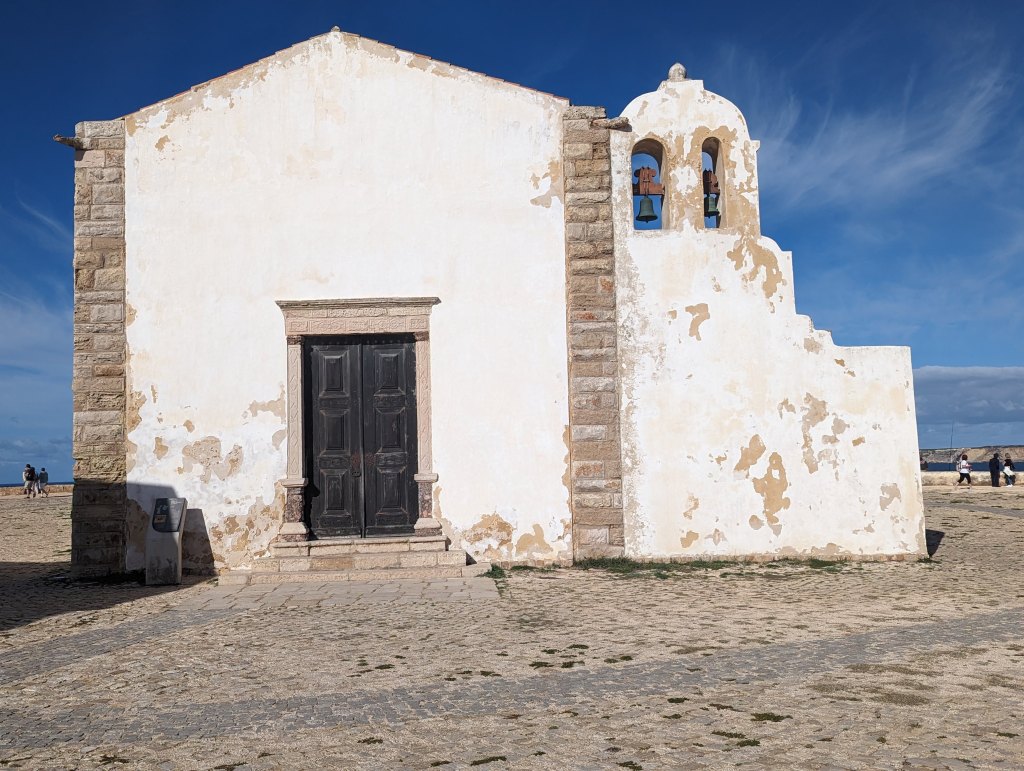
We hiked out onto the promontory, which is quite rugged.
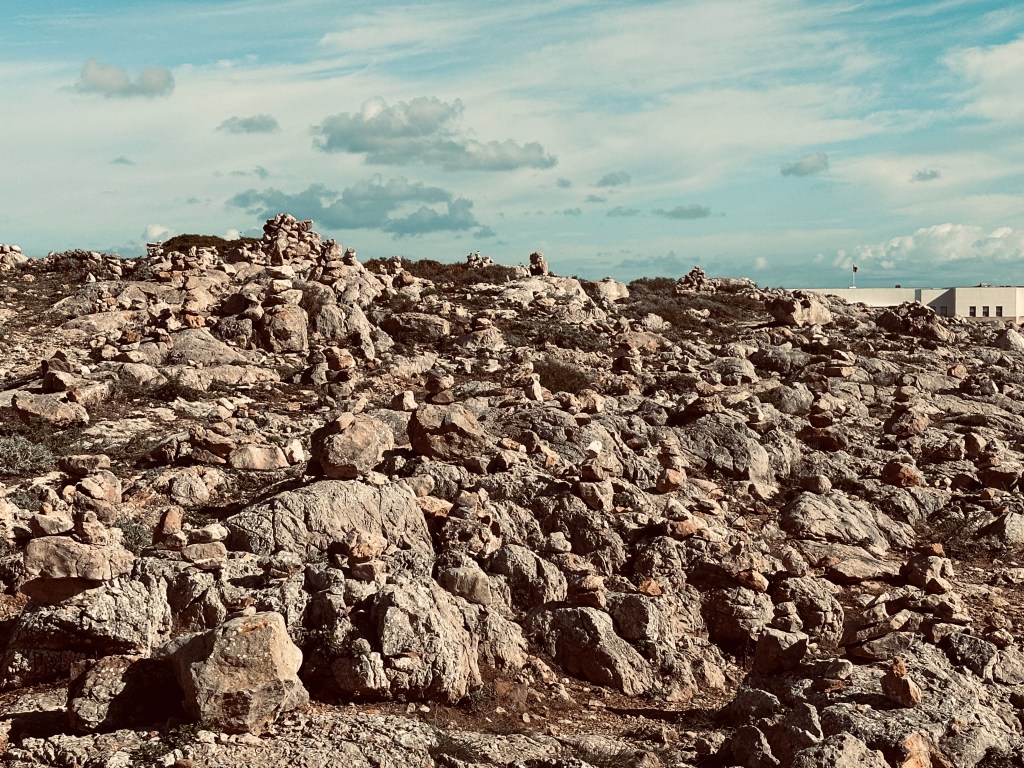
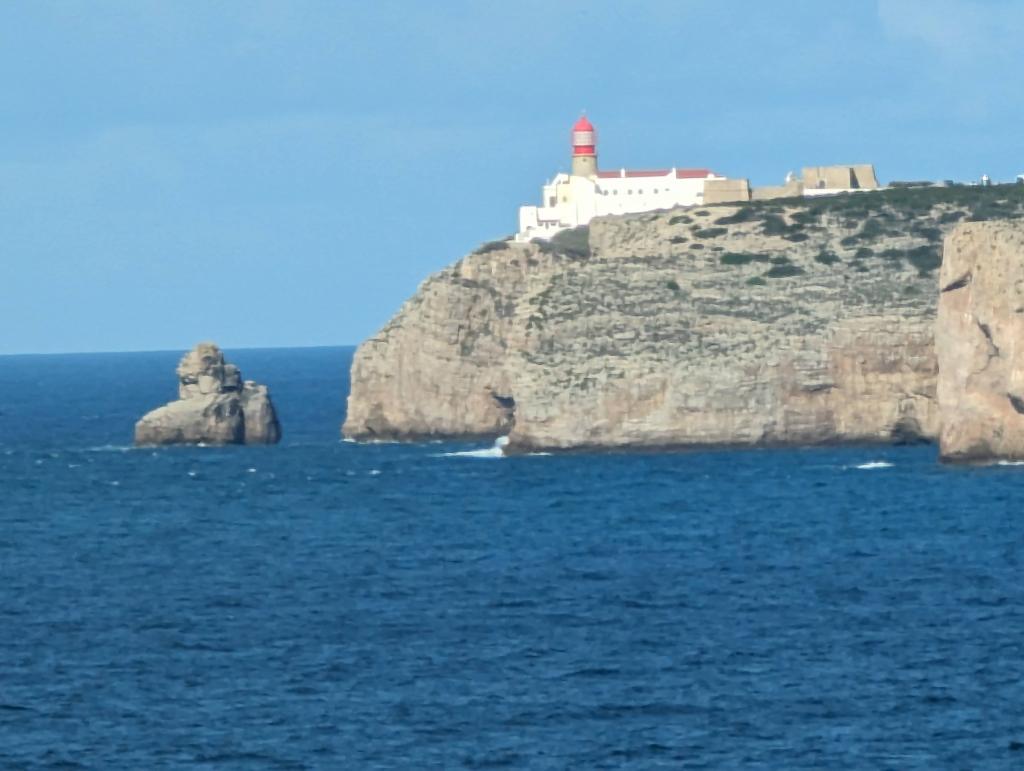
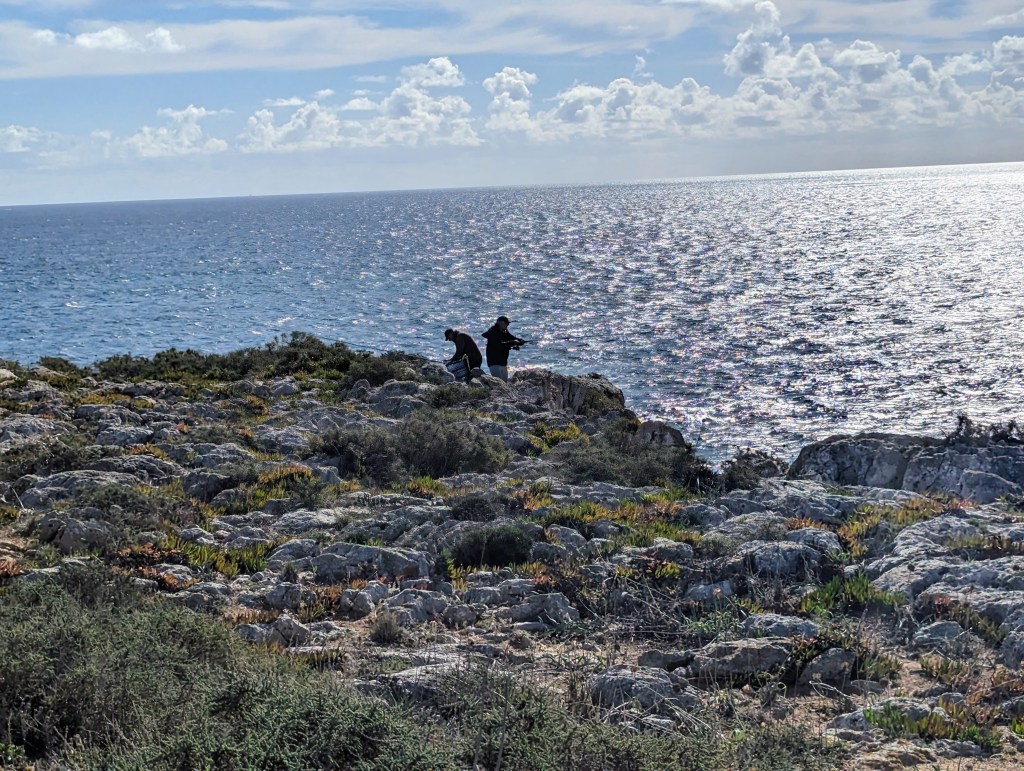
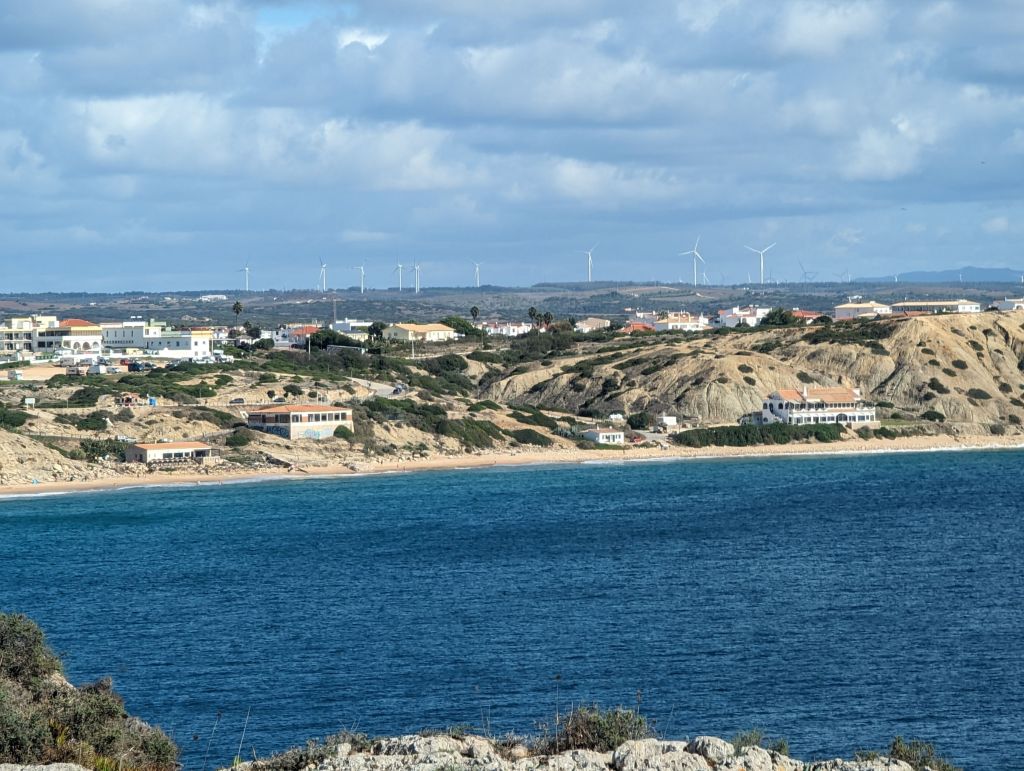
Back at the fort, there were tons of school children. Inside the fort was a museum for the children explaining the age of exploration and showing how the explorers lived aboard ship.
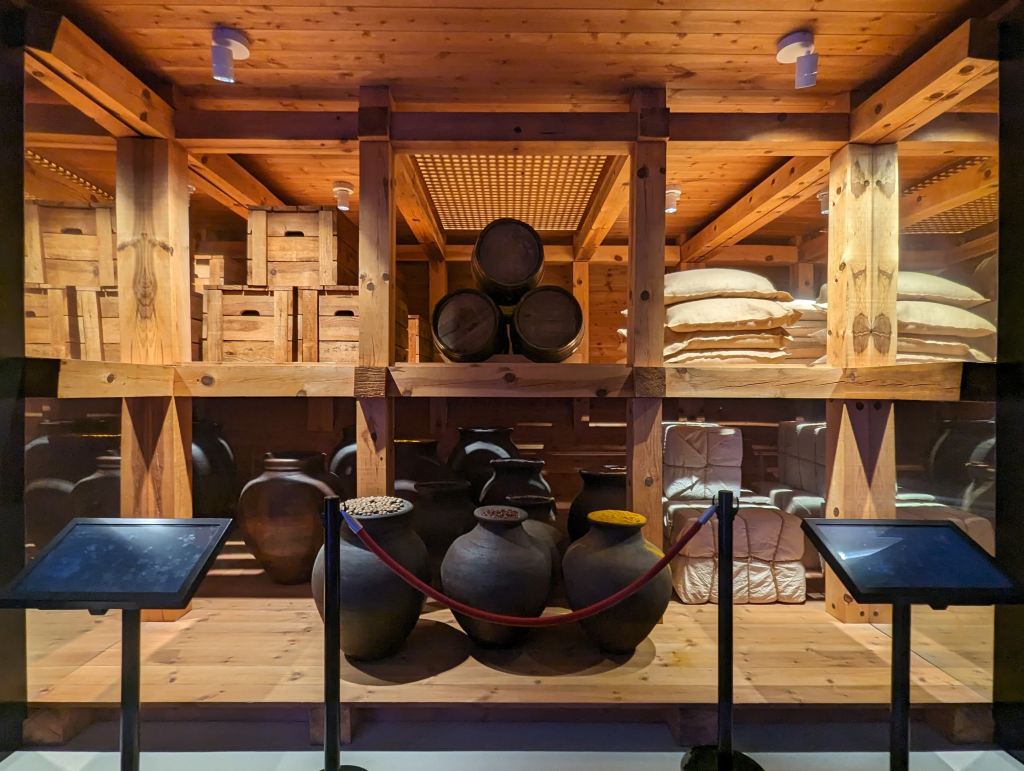
We climbed to the top of the fort.

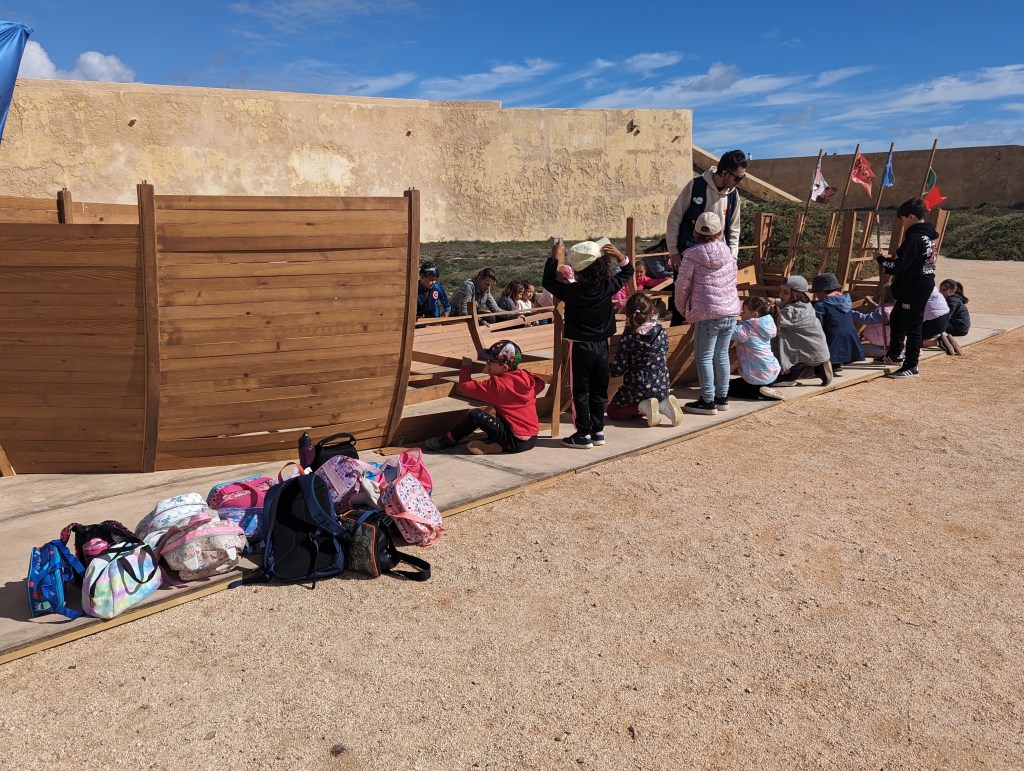
Below the children were building a ship reproduction of one the explorers used.
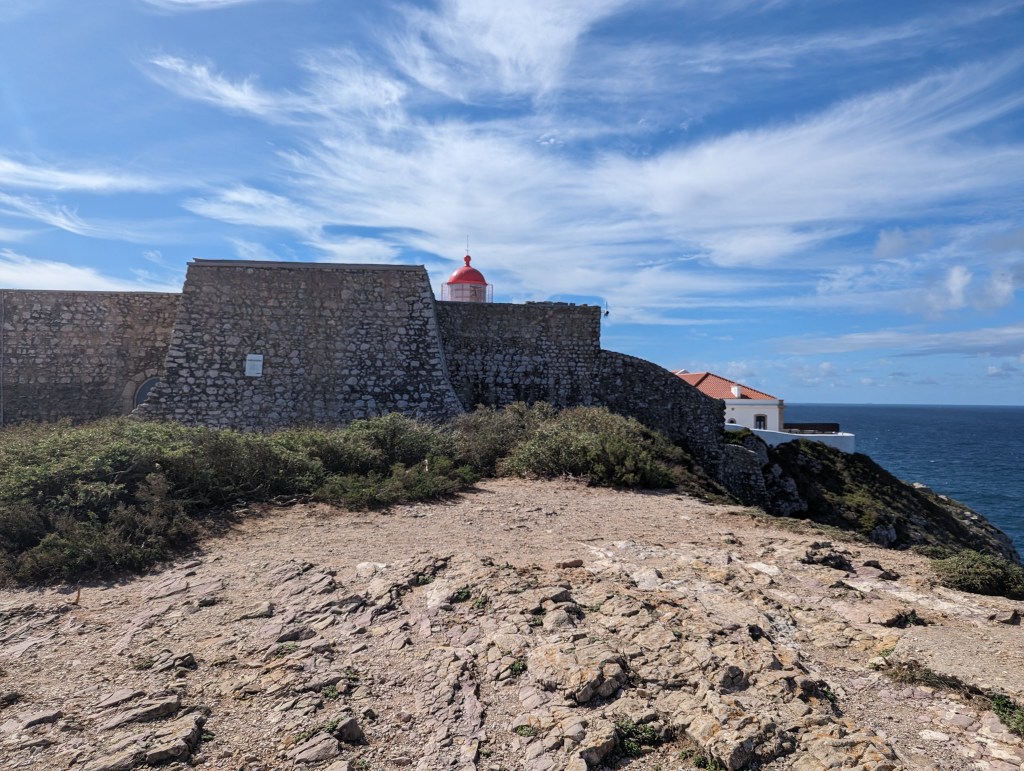
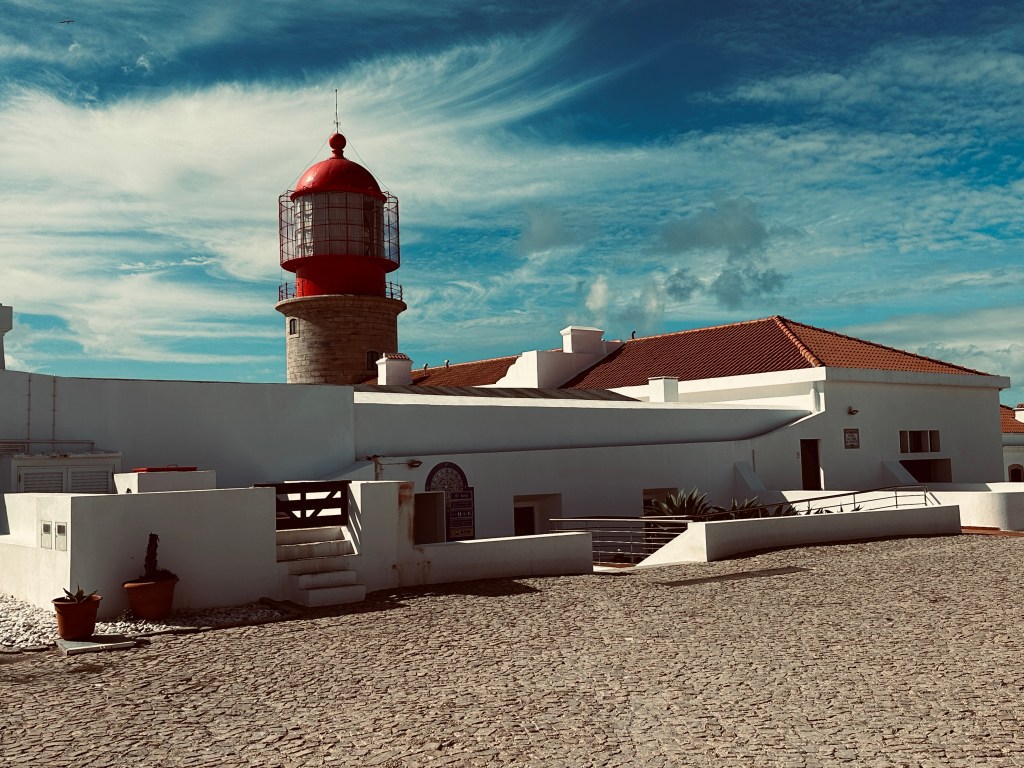
Despite the lighthouse being closed, we felt the need to drive around to the point.
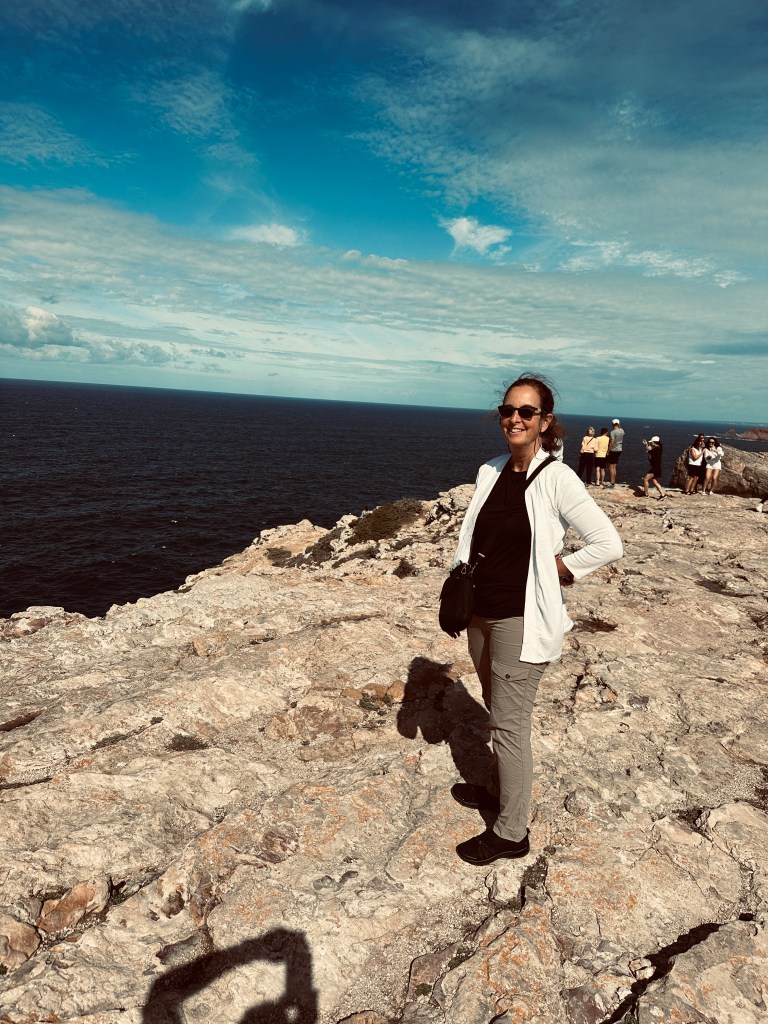
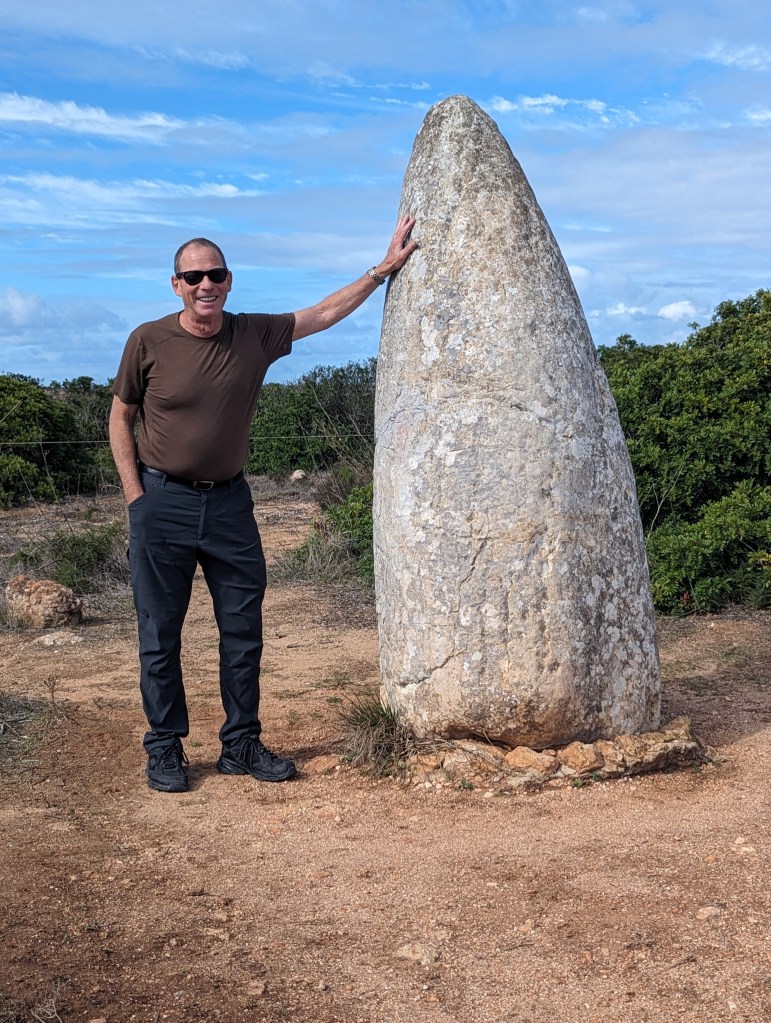
We got back in the car and drove to what promised to be a monolith dating to between the 4th and 3rd millennium BC. This is what we found.
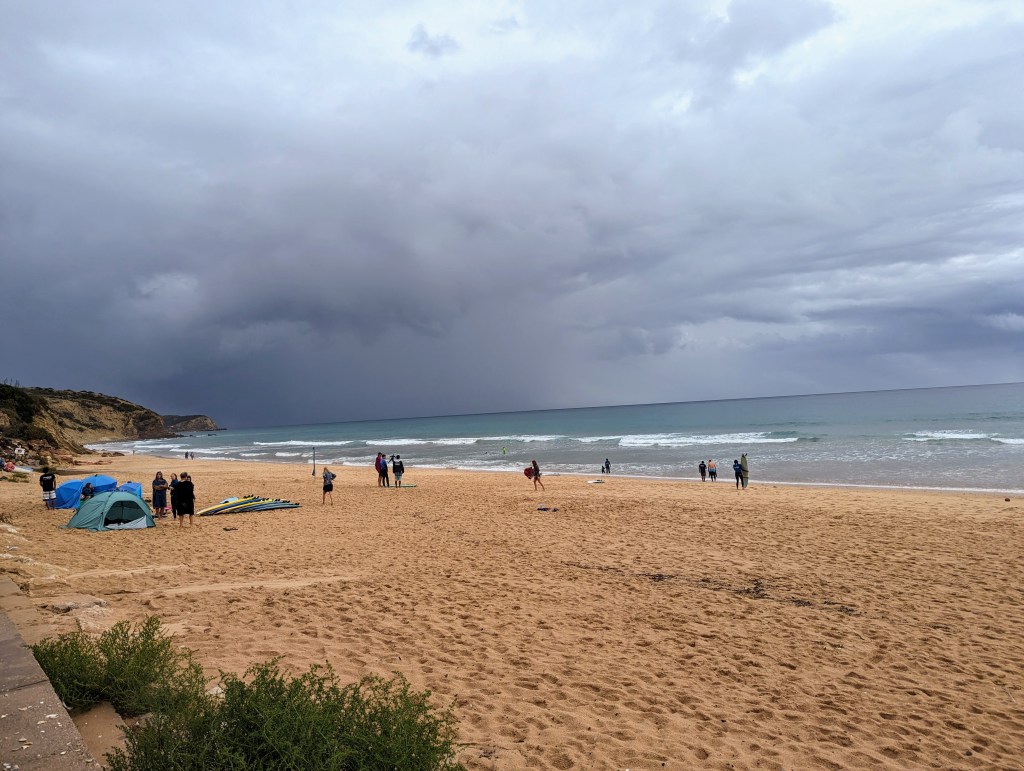
Then it was back to our own Salema beach to enjoy the sand and beach and a big late lunch at Olhos N’Água.
The next day we were to leave Portugal and head back into southern Spain.
 Jo & Eric's travels
I love to close my eyes and think of all the lives that came before…. The Algarve was one of the places we went on honeymoon. What I remember most were the sardines – prepared in 20 different ways.
LikeLike