
We headed back into Spain. It was our longest driving day yet: over 4.5 hours. We passed through Seville and on to Ronda. The reasoning behind this is we were planning this part of the trip around getting back to Seville in time for a poker tournament there. We arrived in Ronda in the late afternoon and immediately decided that this was another “stand out” spot on our trip so far. First our hotel: The Catalonia
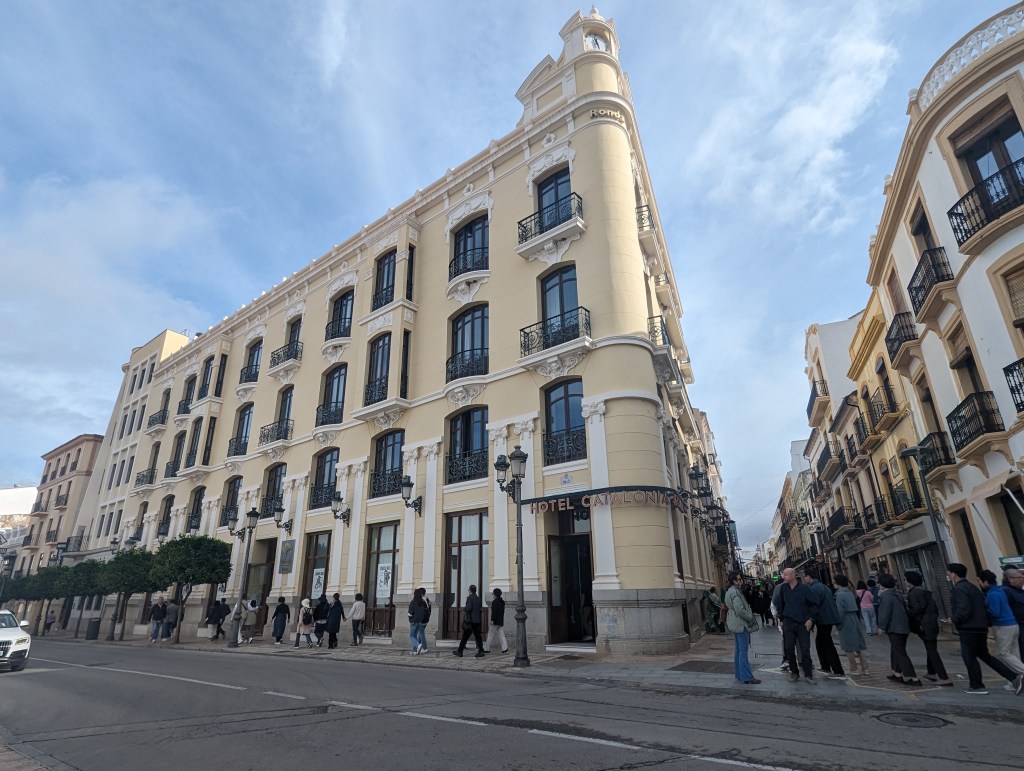
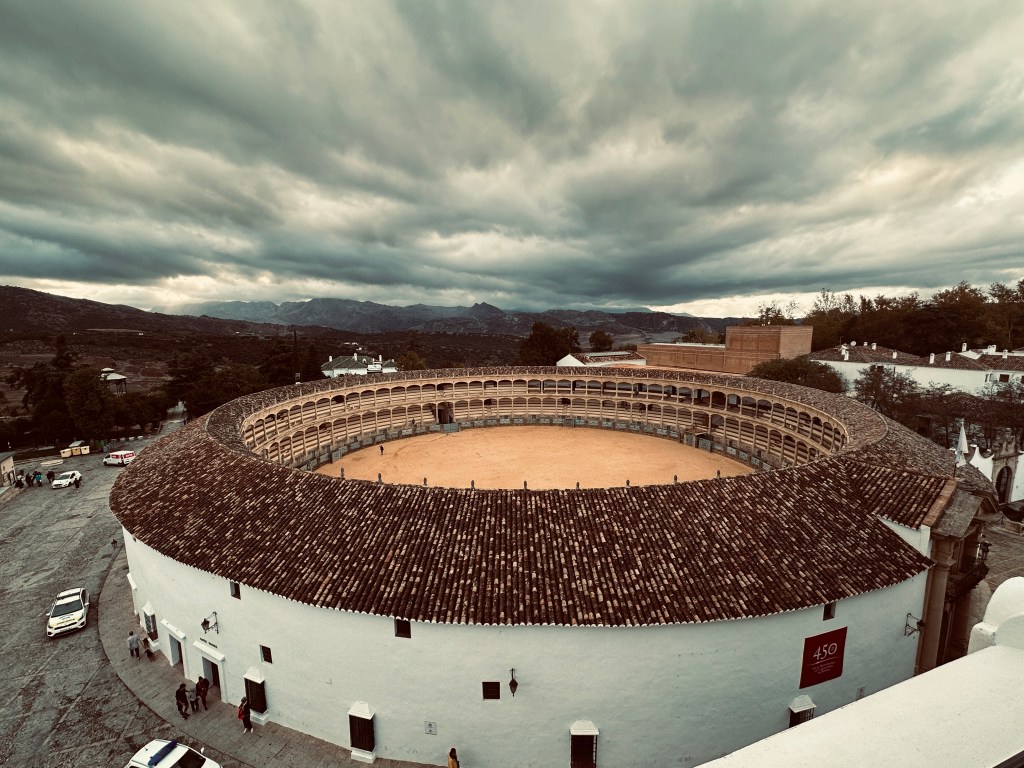
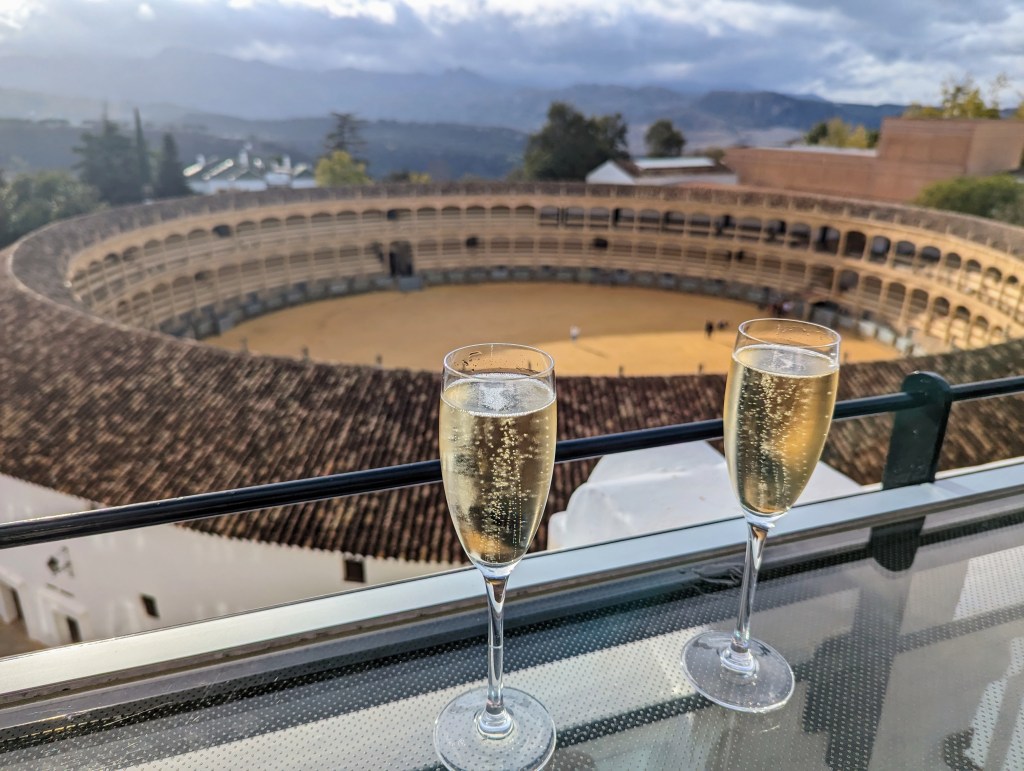
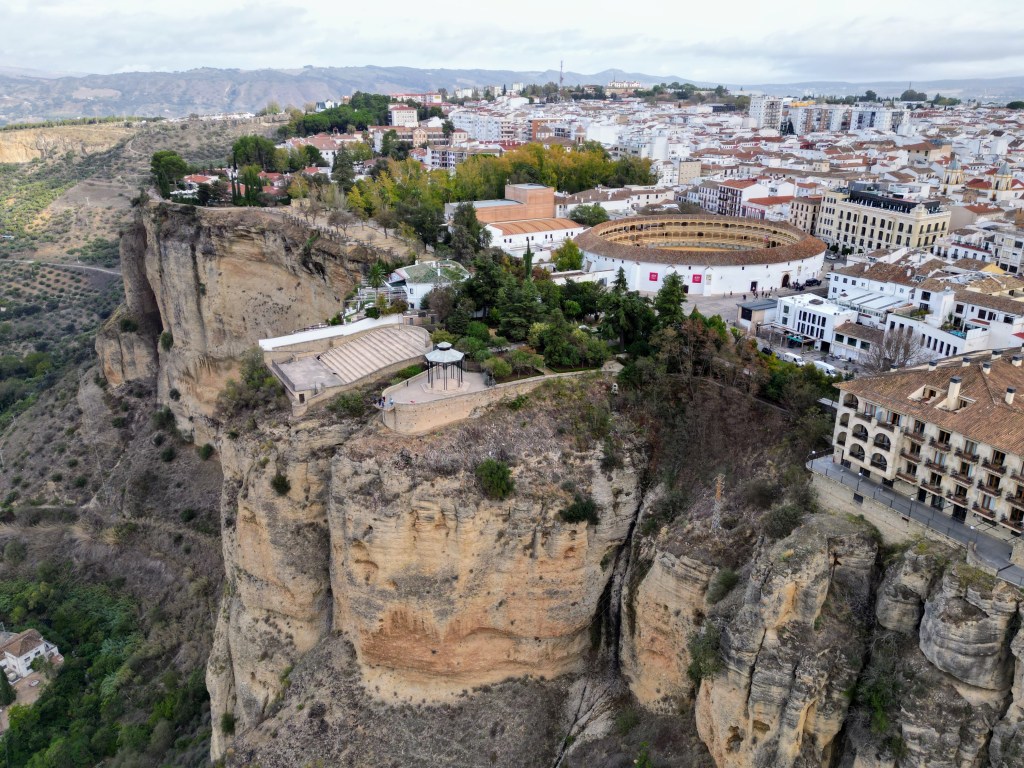
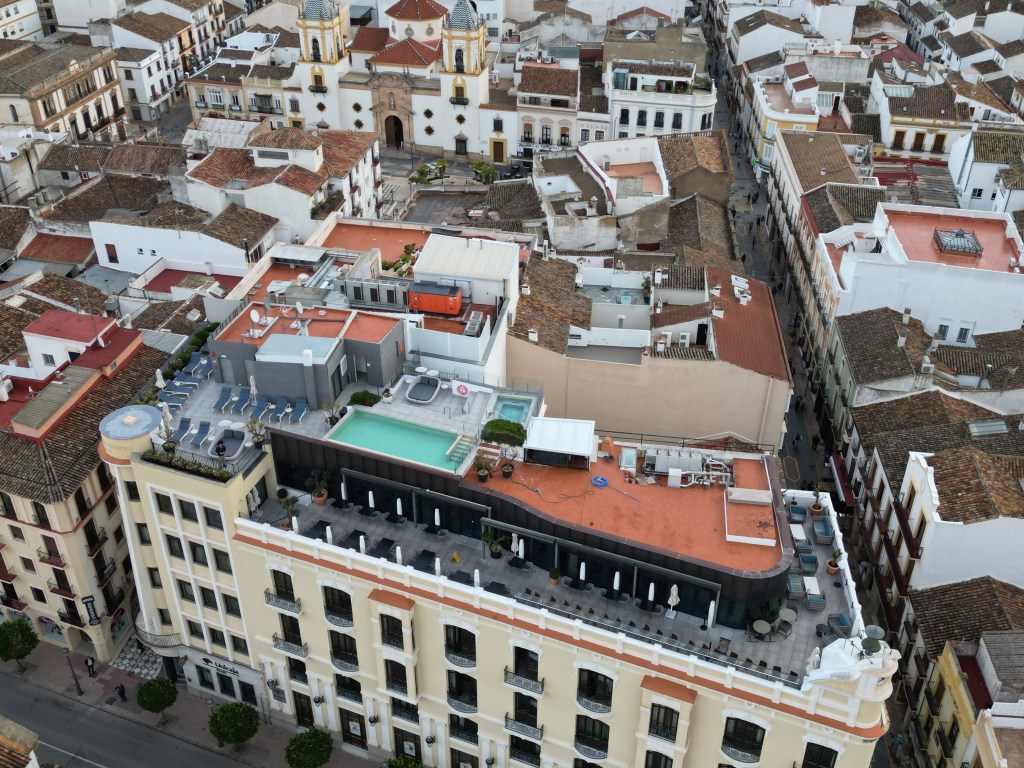
As the bell hop showed us to our room he confided “You have the best room in the hotel.” And we did! We had a corner suite with views of the bullring out one side.
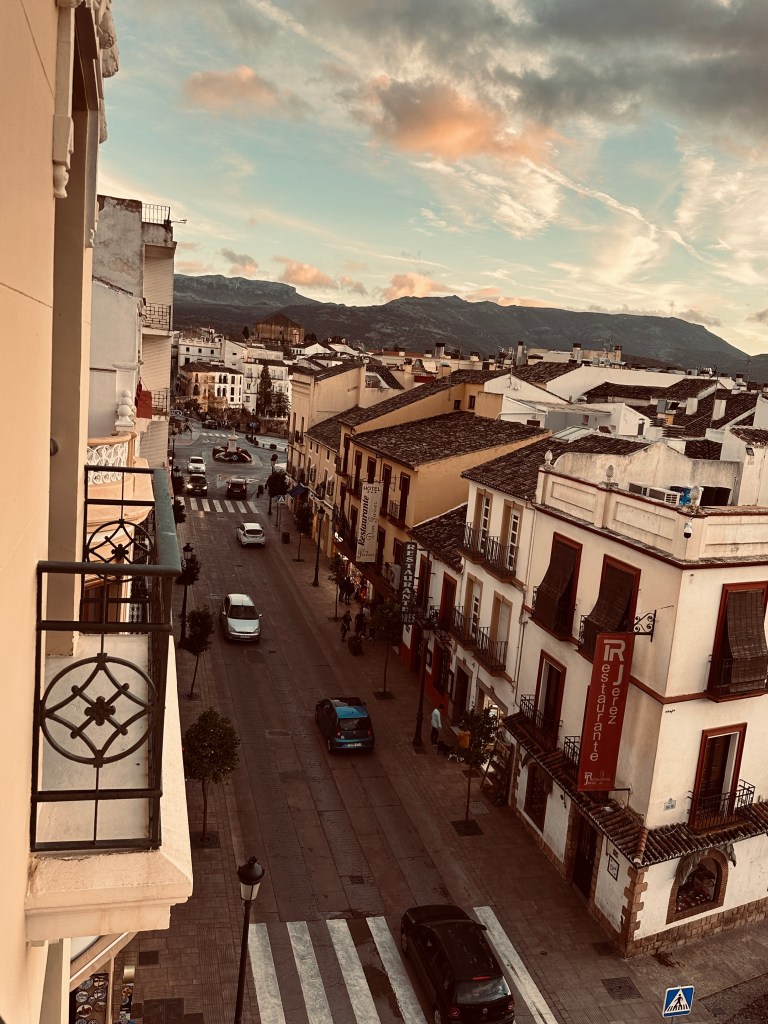
And views of the city below out the middle and other side.

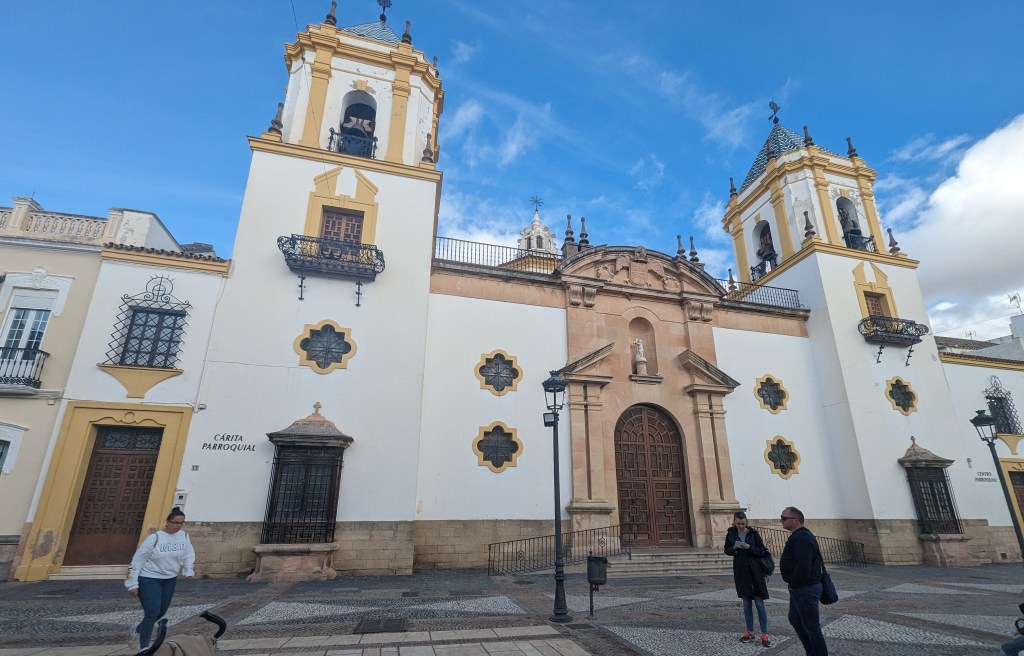
Driving here we honestly could not remember why we had chosen Ronda as a stop; it had been so long since we made our bookings. So we set out to explore the town. We discovered the usual cute squares, pedestrian only shopping streets, and churches.
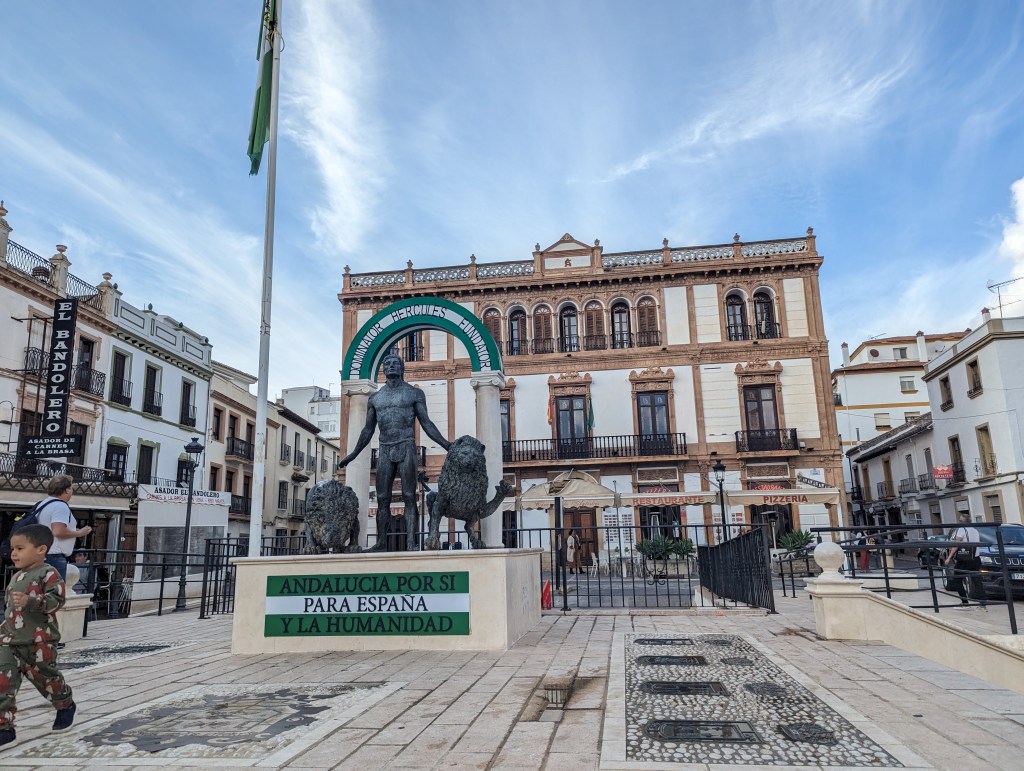
But then we ventured a different direction, and POW, we found the gorge.
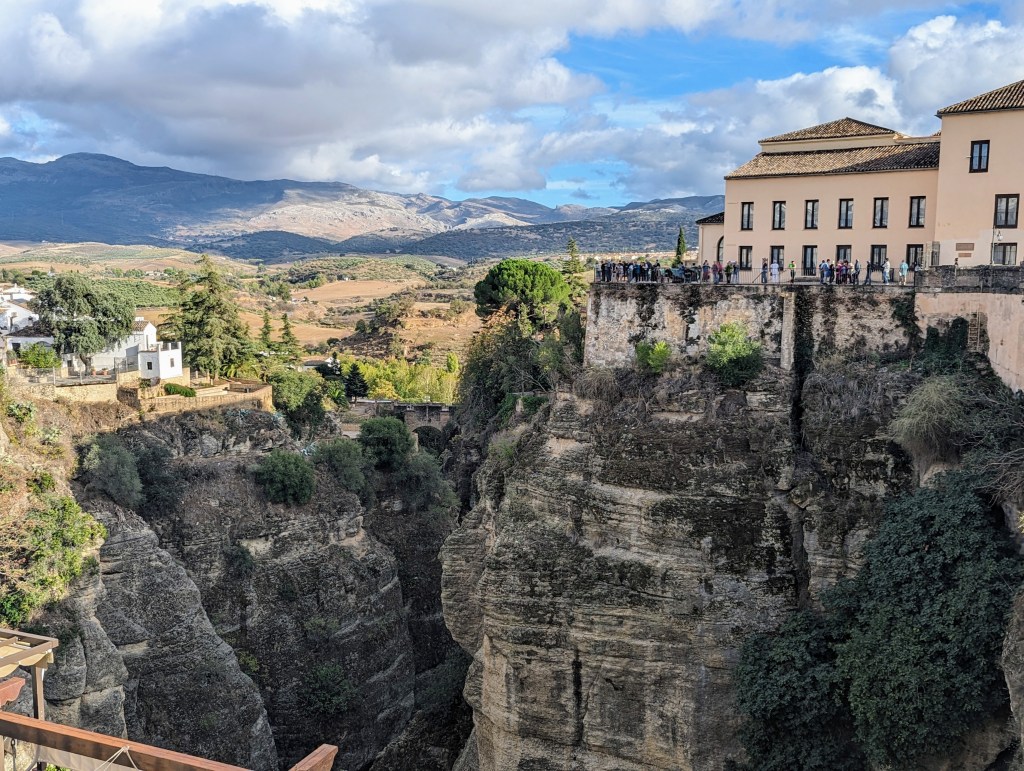
This is why tourists flock to Ronda. At this point it was late in the day and getting drizzly, so we put off exploring the gorge further until the next day, and went back into our hotel to enjoy our welcome drink of cava on the roof terrace bar.
We freshened up and had a delicious meal of Andalusian specialties in our hotel restaurant. Dinner included sea bream, a fish neither of us had tasted before, but is now a favorite.
The next morning we had the absolute best breakfast buffet we have ever had included in the price of the hotel room. Not only did it have every food and pastry (yes, croissants and pan chocolate) and a machine that made all kinds of lattes and cappuccinos, it also included fresh squeezed orange juice and fixings for mimosas and Bloody Marys.

By the way, these orange juicers are found in almost every grocery store in Spain, even little mini markets, for help yourself bottles.
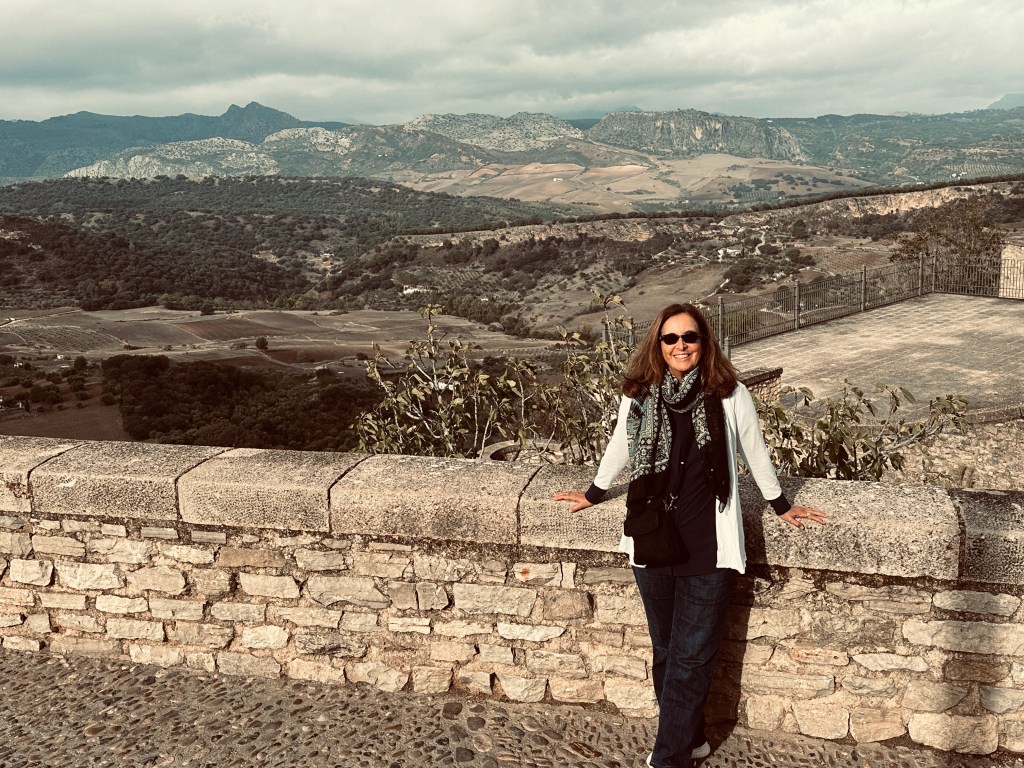
With very full bellies, we set out to visit the gorge. Pictures just cannot capture the beauty of the surroundings, but we tried.


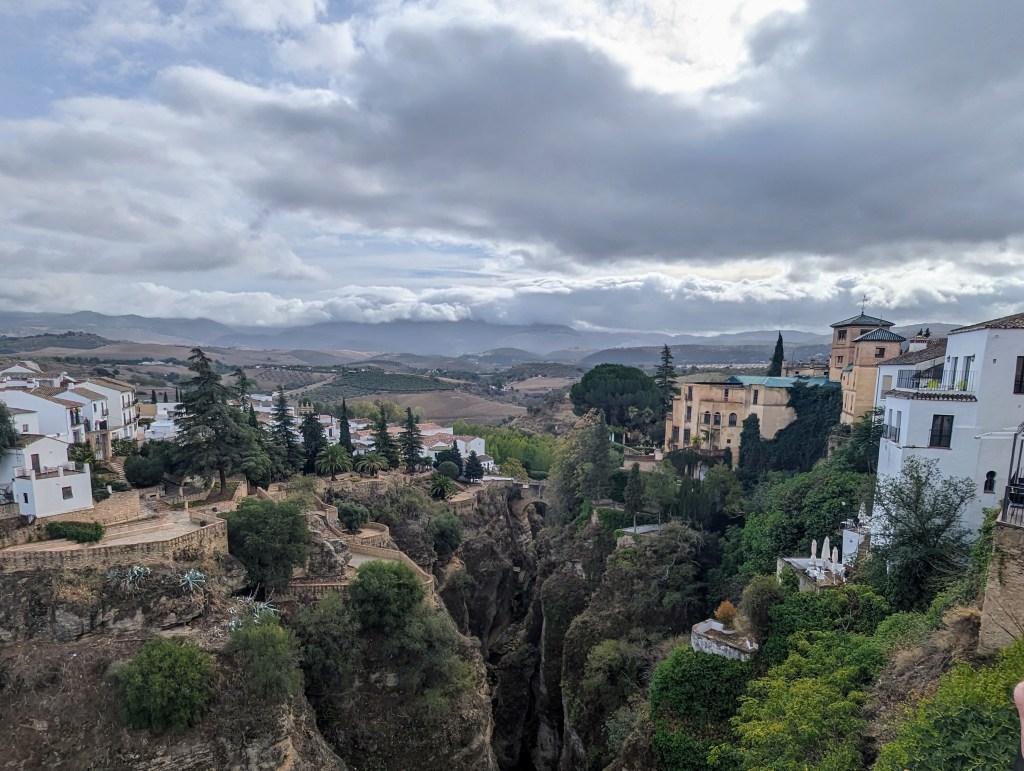
There are 3 bridge crossings over the gorge: the original Moor Bridge, the Old Bridge, and the New Bridge. The new bridge was first built in 1735 but the bridge collapsed several years later and sadly killed 50 people. The Puente Nuevo was started in 1759 and was completed in 1793, with a height of 98 metres. We hiked down to the 2 older bridges on one side of the gorge, then back up the other side.
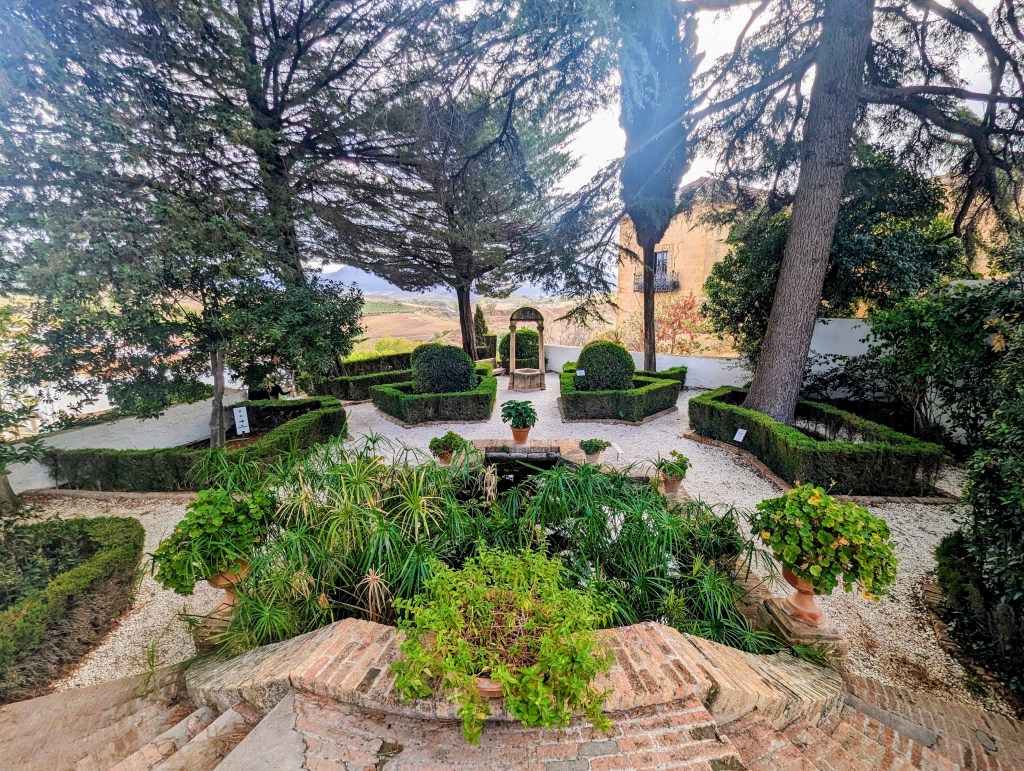
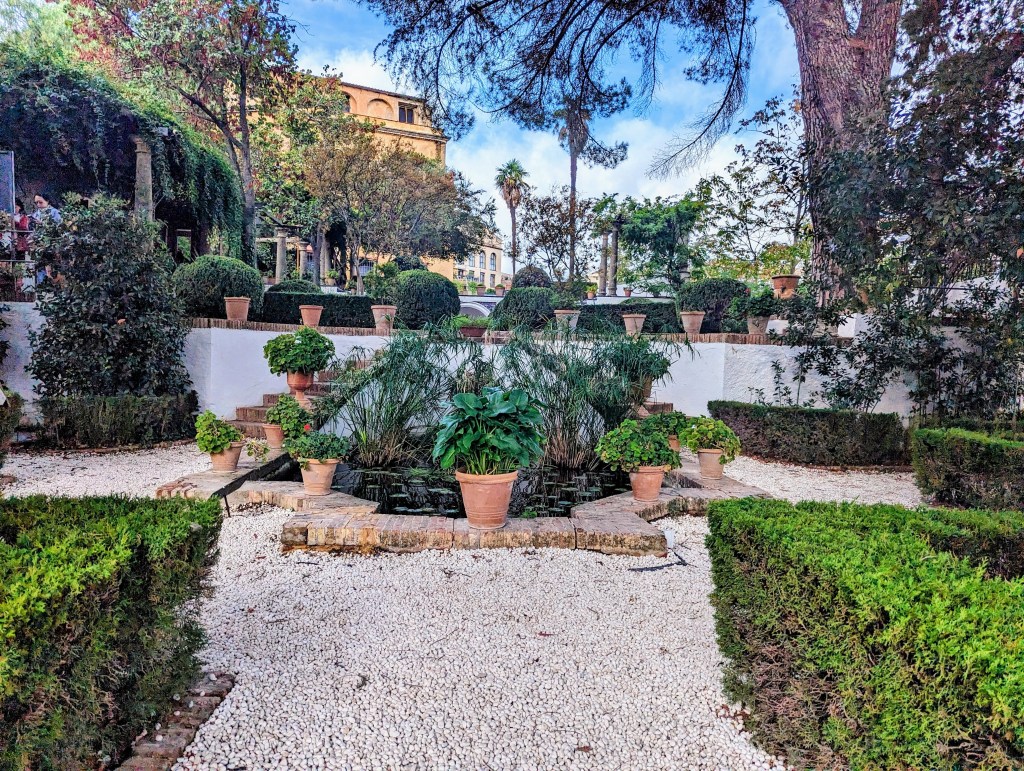
On the way down we stopped to explore the Casa del Moro Rey, (House of the Moorish King). It is a monumental complex with a long history that begins in the 14th century and extends to the 20th century. It is made up of three parts: a water mine from the Muslim era, a neo-Mudejar style house and a garden designed by Jean Claude Nicolas Forestier in the 1920s. The house was under renovation. The mine was a water wheel driven by Christian slaves to bring water up from the river into the Moorish city in the 14th century. But it was 20 stories down into a dark hole, so we chose to skip it. The garden was lovely.

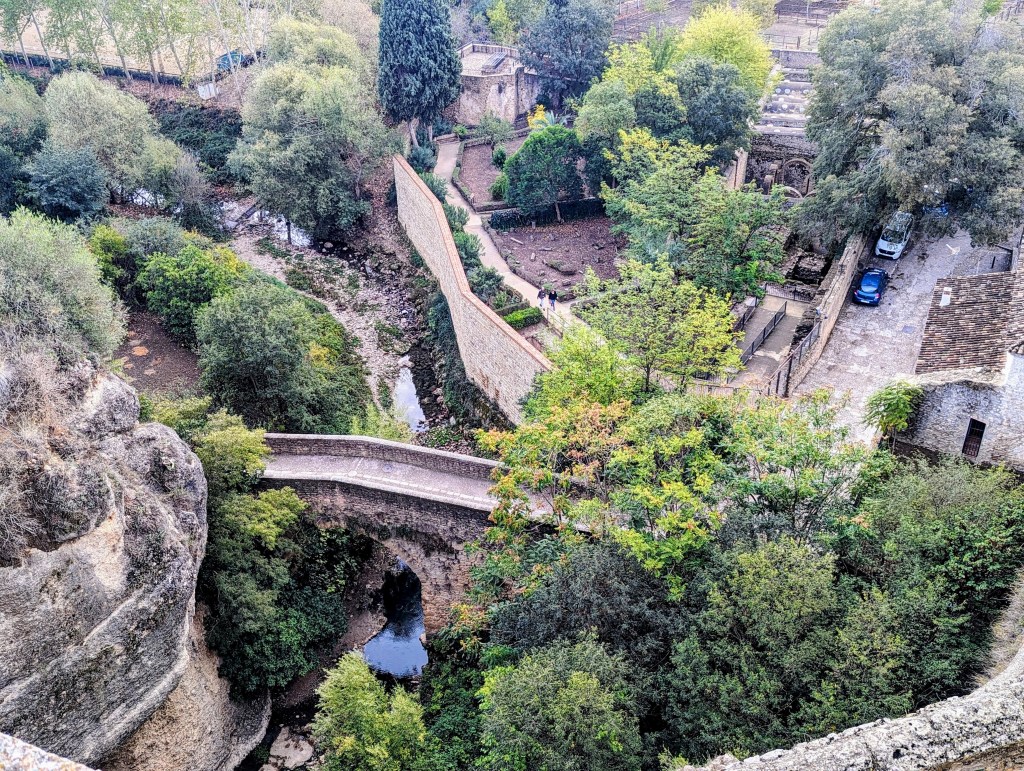
At the bottom of the gorge are the other 2 bridge crossings.

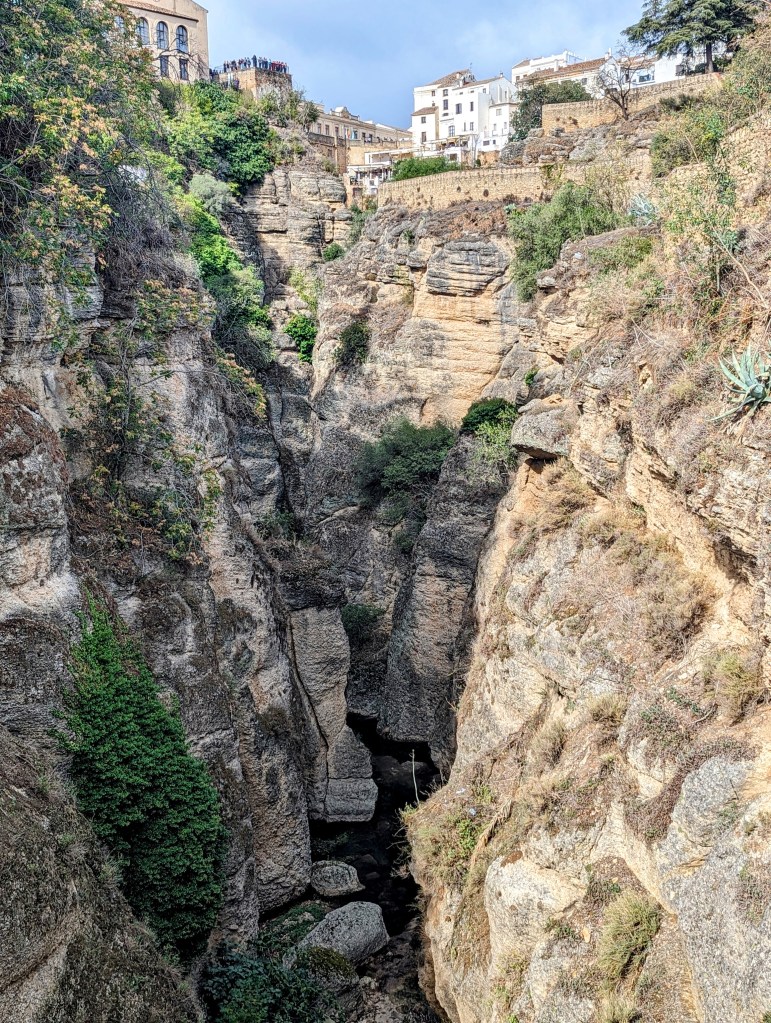
After hiking back up, we rested a bit. Eric took some drone shots of the bullring, our hotel, and the gorge.

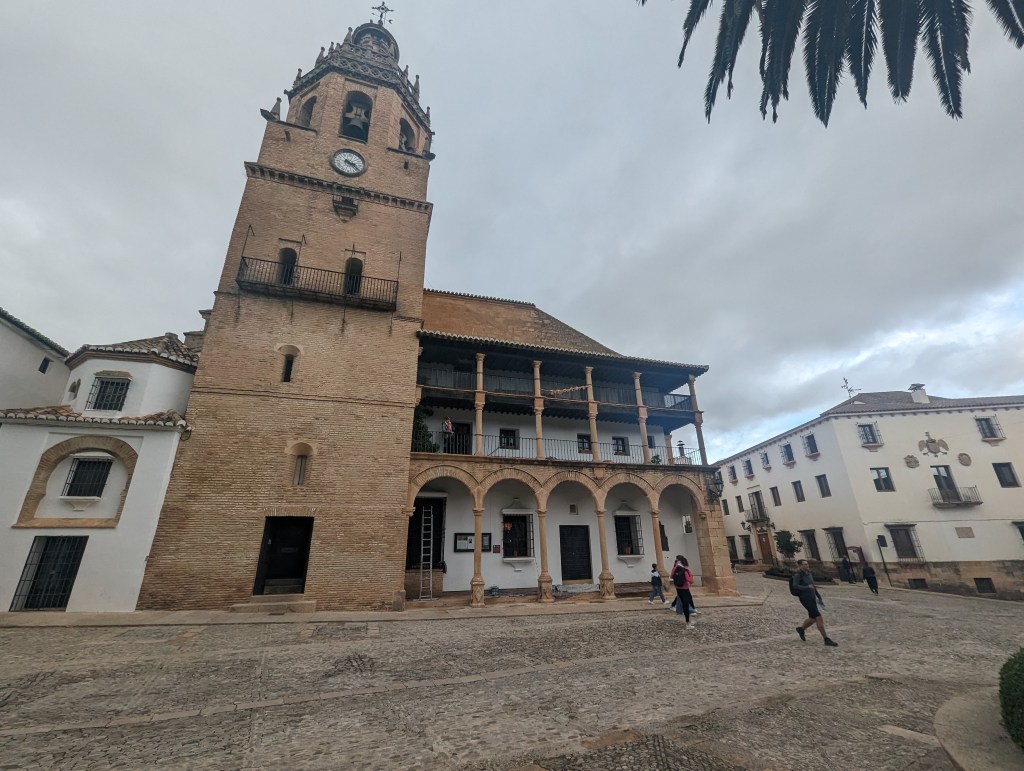
Then we headed back out to explore the Old Town. First we stopped at the Saint Mary Major Church built in the 16th century, renovated in the 18th, like so many churches in this part of Spain, on the site of a mosque, which had been built on the site of Roman ruins.
The we strolled out to the Almocábar gate, which was built in the 13th century and guarded the entrance to the city in the Moorish time. It is the site where the Castilian troops gathered on May, 1485 before invading and ending Moorish control of the city in 1492.

We then headed all the way down below the Moors Bridge to visit the Arab baths. During Moorish occupation, the baths were an important gathering point for ritual cleansing. It is situated right next to the river. When the Christians took over the city, they outlawed the use of baths deeming bathing part of the Muslim religious rituals. The baths were changed into laundry facilities, for which they were used through the 1930s.
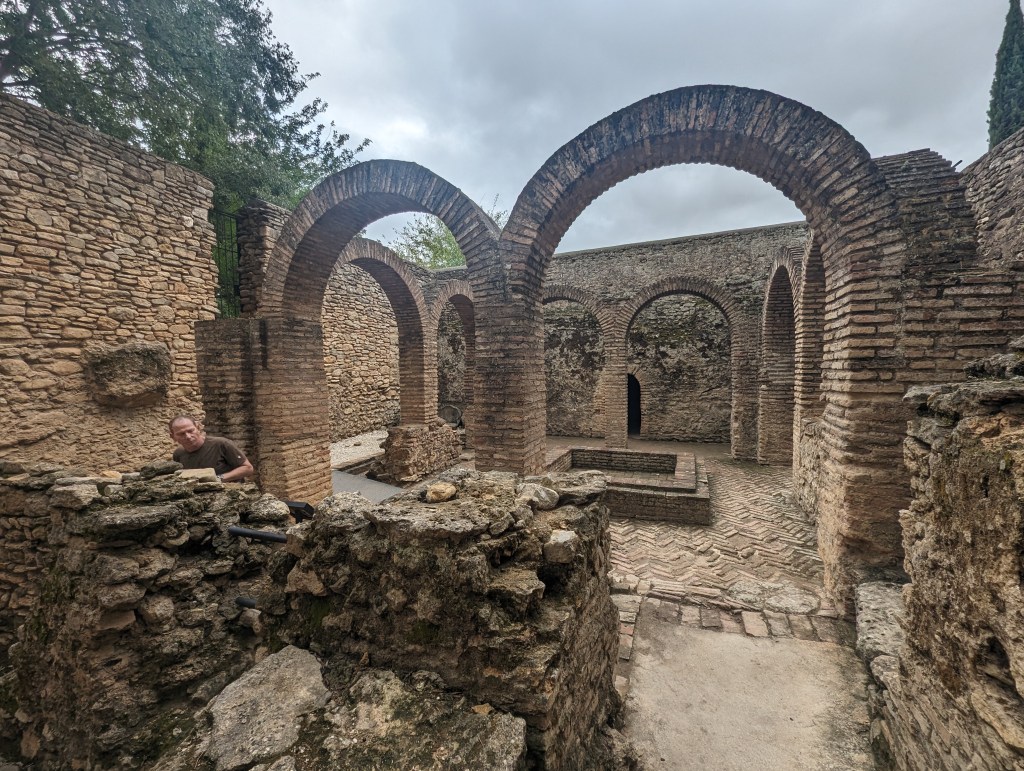
Water was brought from the river using a water wheel very similar to that in the mine of the Casa del Mor Rey, but was above ground due to it’s proximity to the river, and was turned by a donkey, not Christian slaves.

The water then flowed into the baths through an aqueduct. The baths were heated by a fire in the room adjacent using a wood burning fire. The water flowed through this area, was warmed, then flowed through ducts below the warm room.
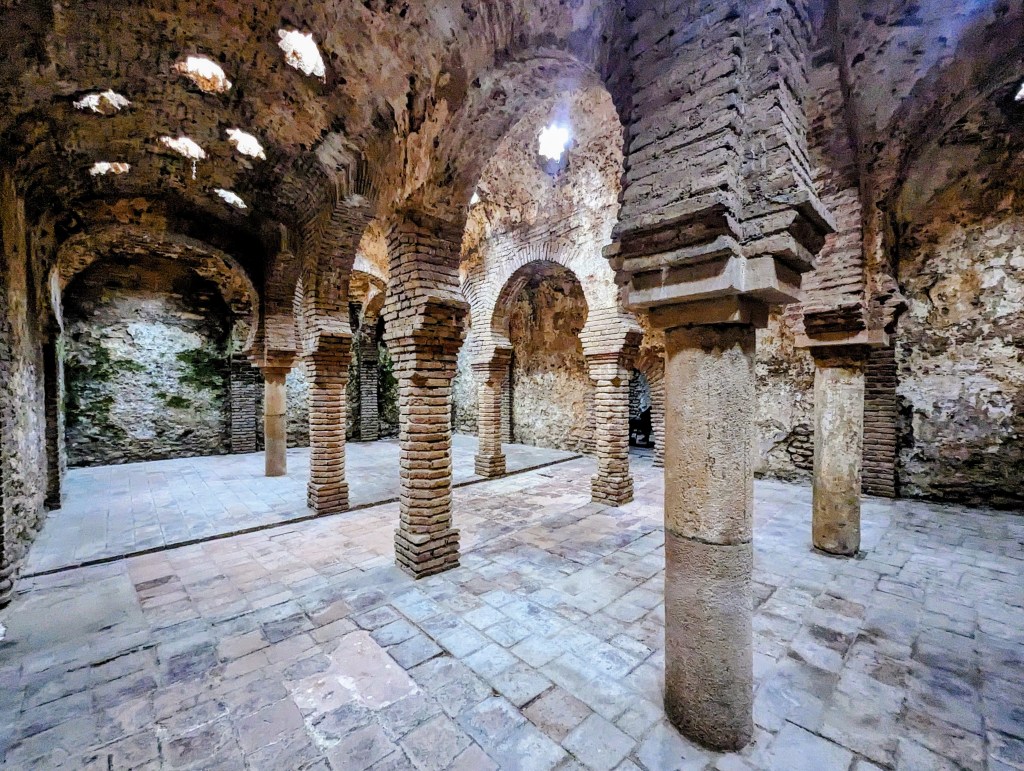
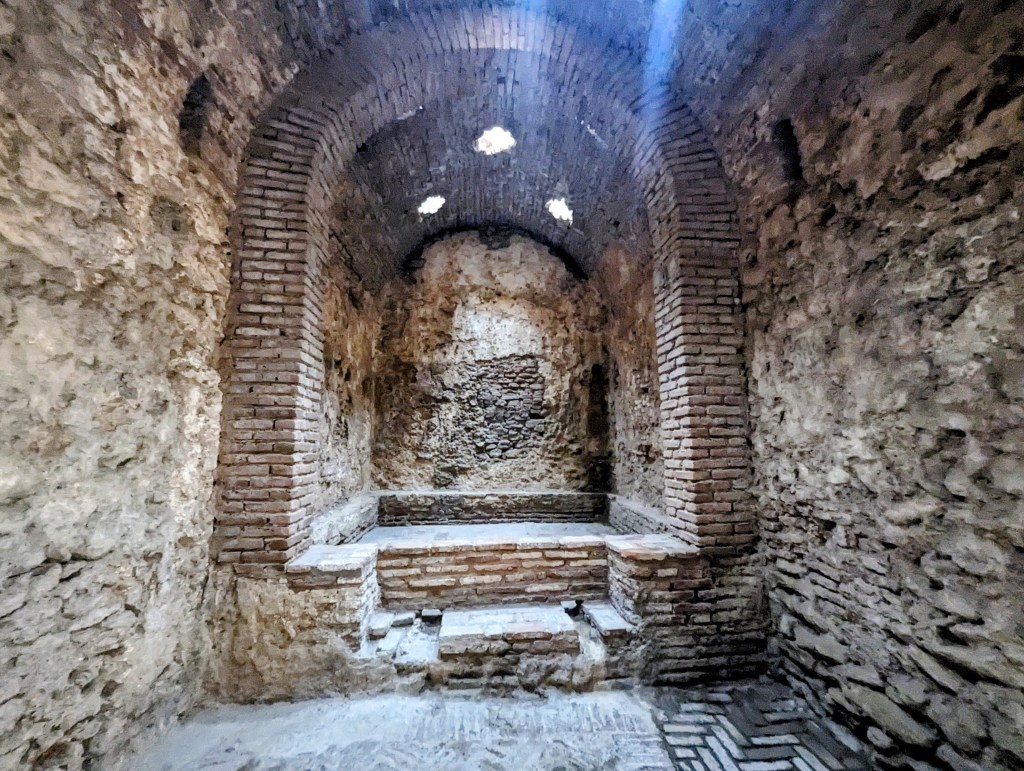
We now found ourselves even lower below town than we had been on our morning hike. Rather than climbing the steep incline along the gorge, we meandered the long way around through town. We then thoroughly enjoyed a well earned meal at Sensur Gastrobar.
The next morning it was time to leave Ronda, which again was a real highlight for us so far.
We arrived in Granada and checked into the Hotel Palacio de Santa Inés, made up of two Mudejar buildings with a Plateresque façade. It is located in the historic center of Granada, in the noble area of the Nasrid neighborhood of Albayzín, declared a World Heritage Site by UNESCO.
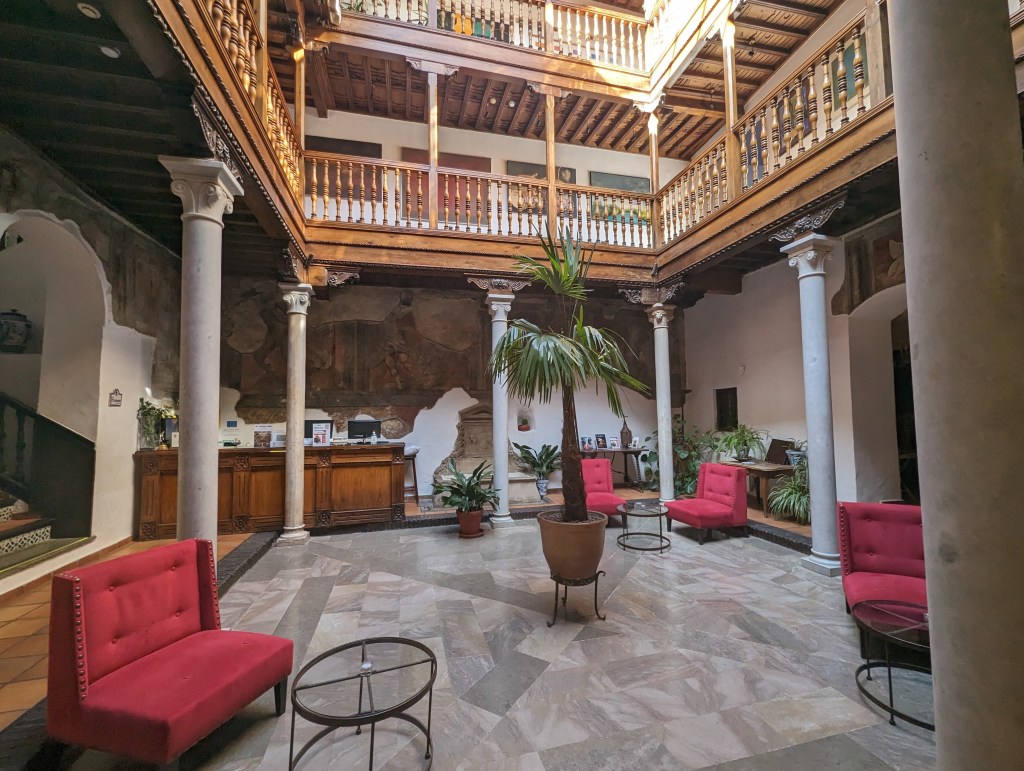

And then we discovered our first really big fail of our trip: we had not booked tickets to go see Alhambra, which was a palace built by the Moors then turned into a fortress by the Christians. It never occurred to us that we would need advance tickets for a weekday late in October, but it was sold out for weeks. So we had to just enjoy the view of it from afar.
We had booked a late afternoon walking tour of Albaicin and Sacromonte neighborhoods. We met first in Albaicin at the Plaza Nueva (New Plaza), built by the Christians in the early 16th century.
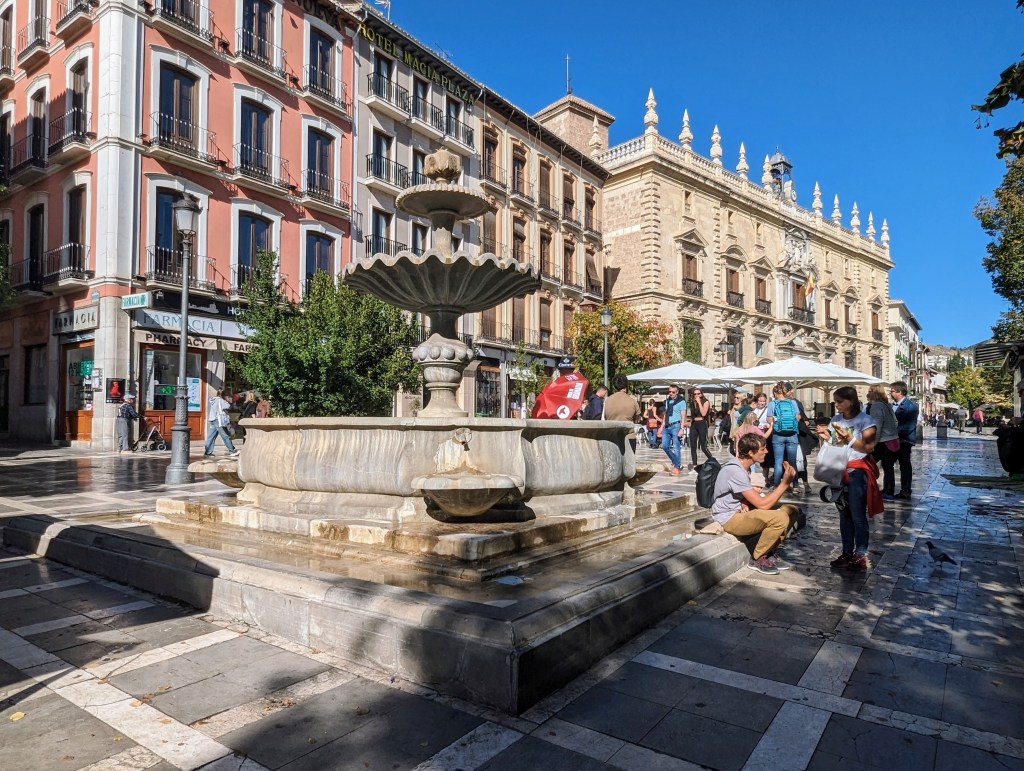
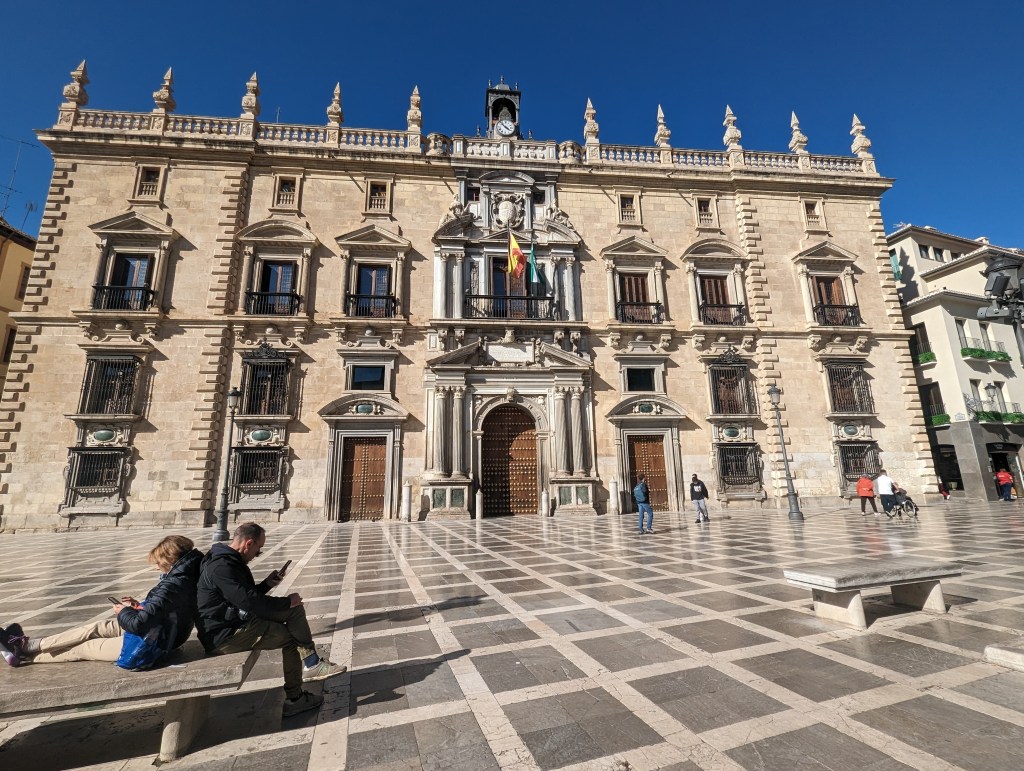
Our tour guide Nacho explained that Granada was the last city in Spain to conquer the Moors, which happened in 1492. Because the Moors had been pushed down from the north in the early part of the 13th century, they had congregated in Granada which is why the Alhambra was built, to be a safe city in which the Moors could live. When the final conquest of the Moors happened in the late 15th century, it was very fast, and they were forced to leave, quickly. So unlike the other regions of Spain, where some Moors were converted, here they evacuated. What that meant to the city was their homes and monuments were basically left intact and taken over by the Christians with little modification. The “new” plaza was the Christians’ beginning of expansion. There was much lawlessness in the Andalusian region, so a large justice building was built by orders of Carlos I between 1531 and 1587. It was the first building of its kind to be built in Spain to hold a court of law. Despite this attempt, the next couple of hundred years were lawless ones.
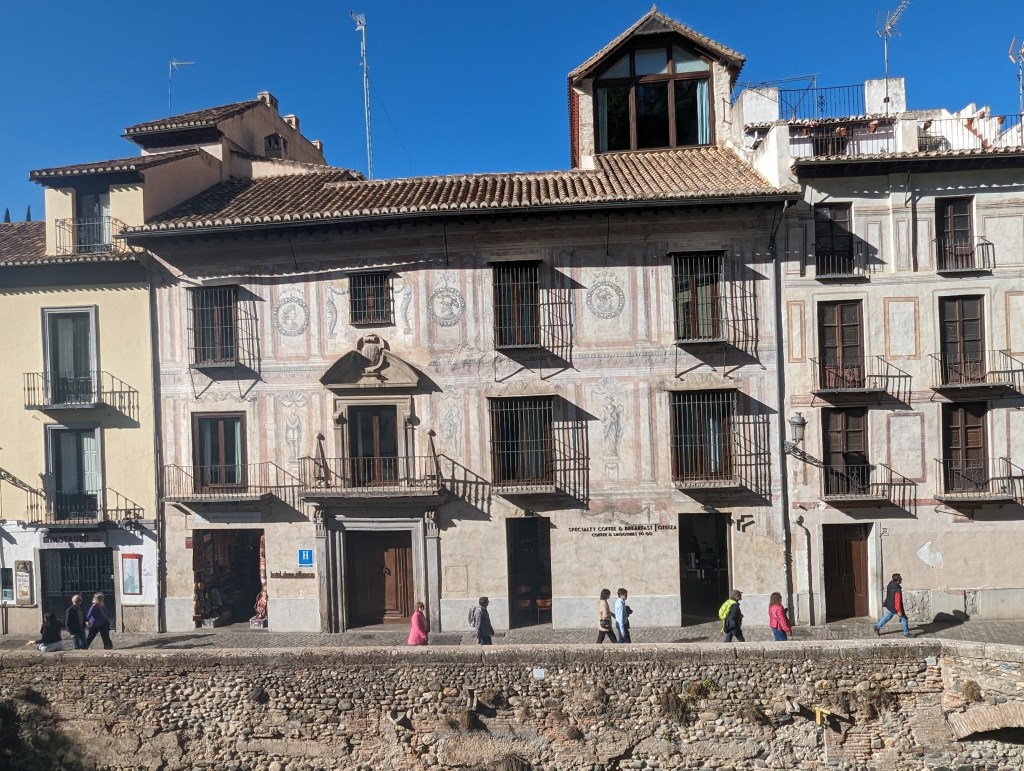
We walked across the Darro River to look back at the Albaicin neighborhood. Nacho explained how for centuries Granada was a relatively poor city. The Christians who had taken over wanted to maintain the appearance of luxury, which is evident in the fake façade seen on the house below with its neoclassical decor painted on rather than sculpted.
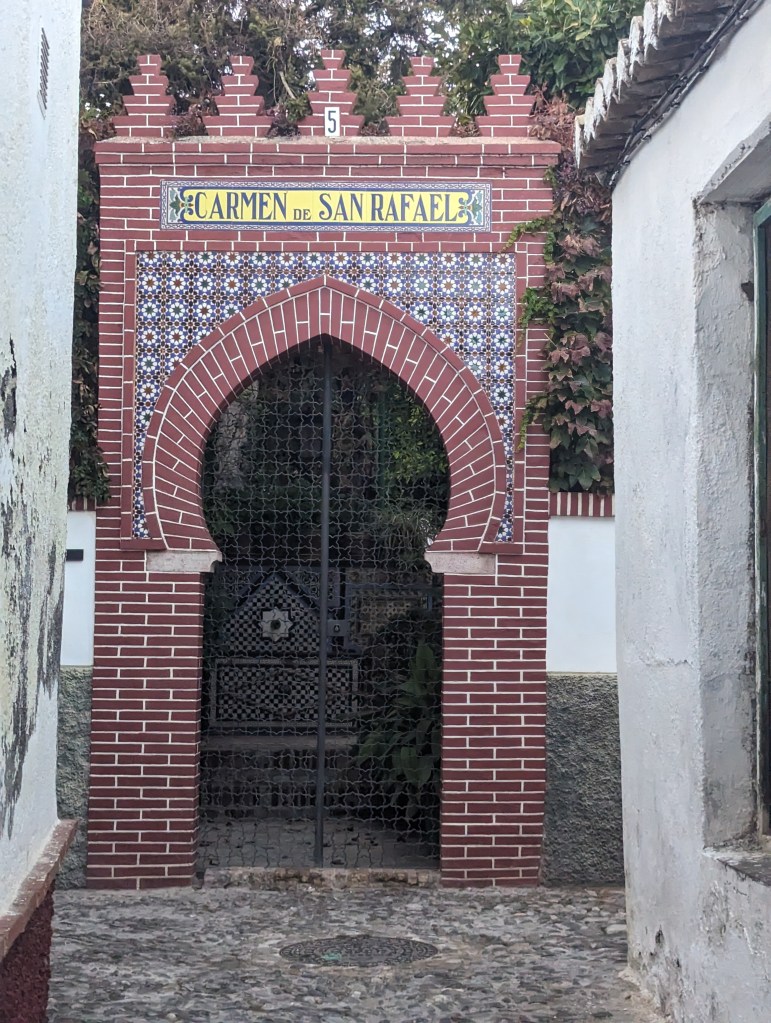
The Christians also took over the private homes of the Moors, most of of which had very plain, humble exteriors but opened into lush interiors with interior gardens and always a water element in a central atrium, if wealthy. These latter ones are now called Carmens, with a Christian name attached, which can be seen throughout the city and sell for millions of euros today.
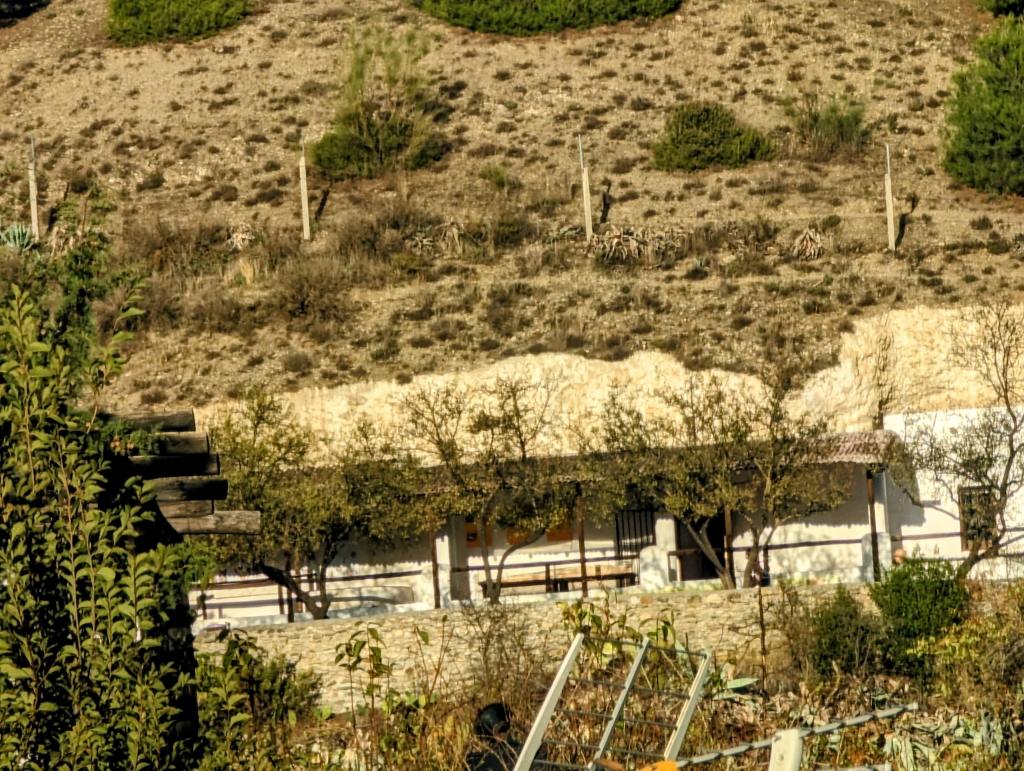
Granada always had a large gypsy population. Once the Nasrid period was over, the Christians encouraged the gypsys to stay because of their particular skills with breeding animals and veterinary care. But the city was walled and the gypsies were forced to live outside the walls. The gypsies dug caves into the hills and lived outside the city walls, now called the Sacromonte neighborhood.
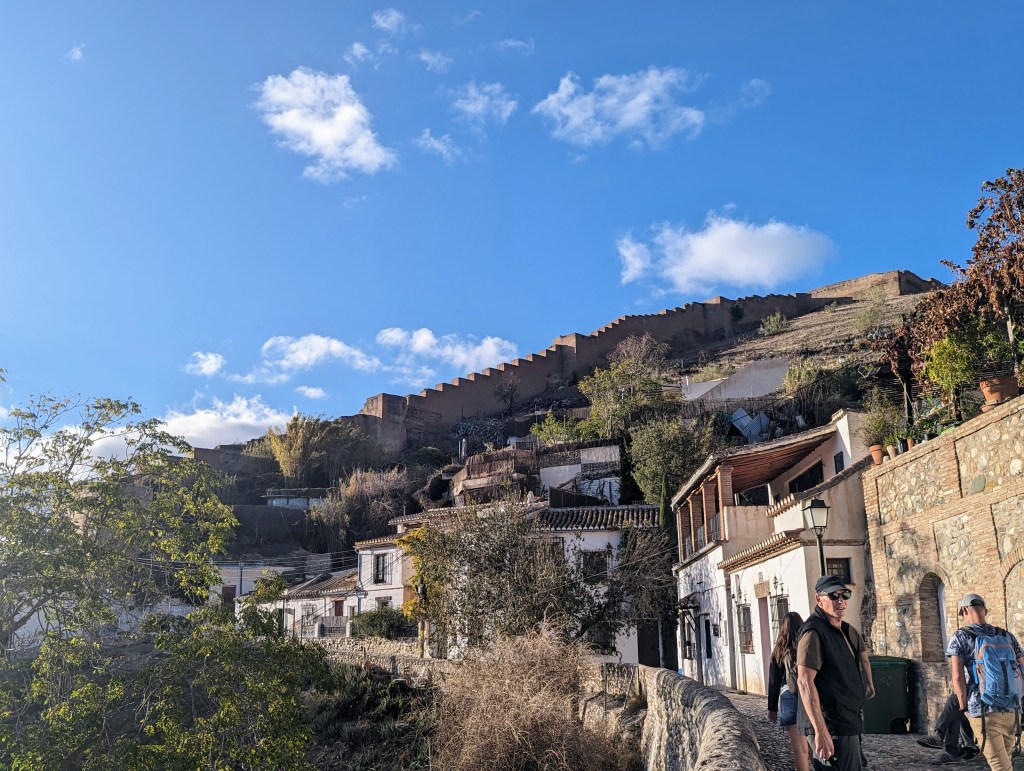
The caves were covered in lime for protection, then cacti planted on top to draw moisture and stabilize the soil. The cacti have since been decimated by a blight.
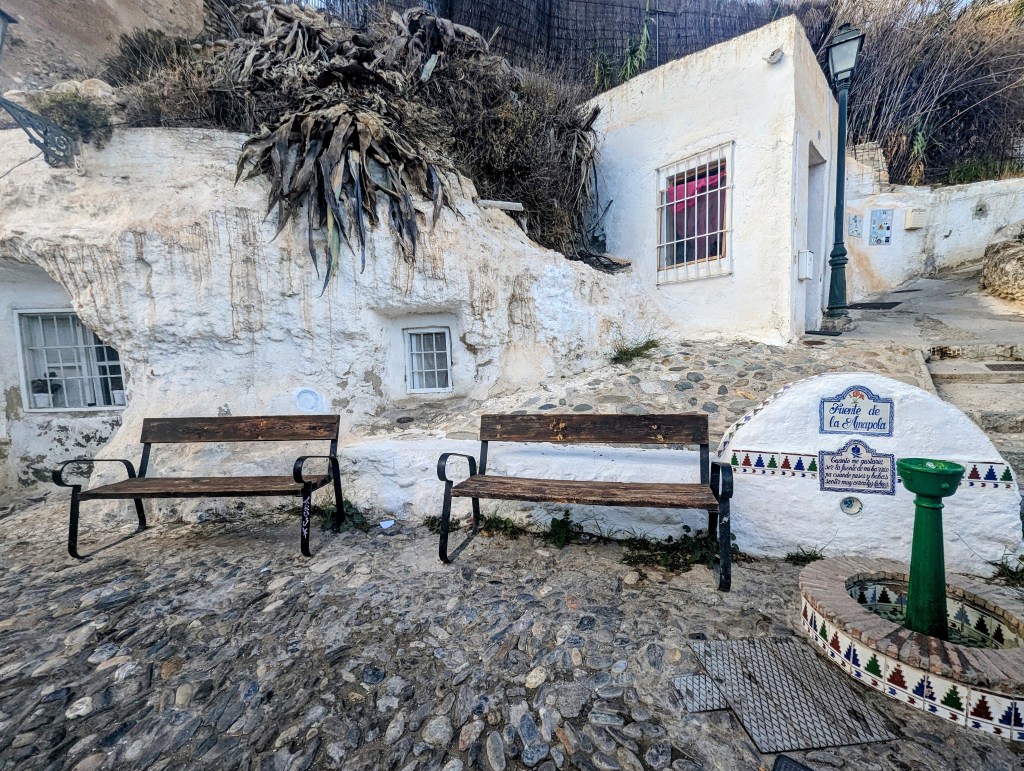
In the 1960s there was a flood causing some of the caves to collapse. Then dictator Franco, who felt the impoverished neighborhood an emabarrasment, ordered all of the gypsies to evacuate. He put them in shelters with little better facilities. Many continue to live in poverty. The caves were taken over as communes in the 70s. But then as most gentrification occurs, people started moving back in, building second stories for views of Alhambra, and some caves now sell for huge sums.
In the late 18th century a painter made an image of a local gypsy, Chorrojumo. His image became wildly popular throughout Europe. Tourists began to come to the area. The gypsies would play guitar and dance to entertain the tourists. This is when/where this type of Flamenco was born. Today, there are numerous Flamenco venues hosted in the caves of Sacromonte. (Different types of Flamenco arose pretty much simultaneously throughout Andalusia from different gypsy tribes.)

The neighborhood of Sacromonte had always been, not only outside the walls of the city, but off the grid of water and also ultimately the electric grid. They had cisterns from which to get buckets of water. They were in use only until the last 50 years or so.

As we re-entered the Albaicin neighborhood in the upper section we immediately saw again the Moorish influence of the architecture. When the Christians rebuilt this part of the city in the 16th century, it contained a large market and butcher shops and other public buildings independent of the ones in the part of town down below. Today it is mostly bars and restaurants.

At the end of the plaza is a Moorish port leading into the next square. It was originally part of a wall surrounding the Cadima Alcazaba, an 11th century Muslim fortress. The Christians renamed it the Door of Weights because when a butcher was caught using defective weights to cheat his customers, his weights were hung there to humiliate him.
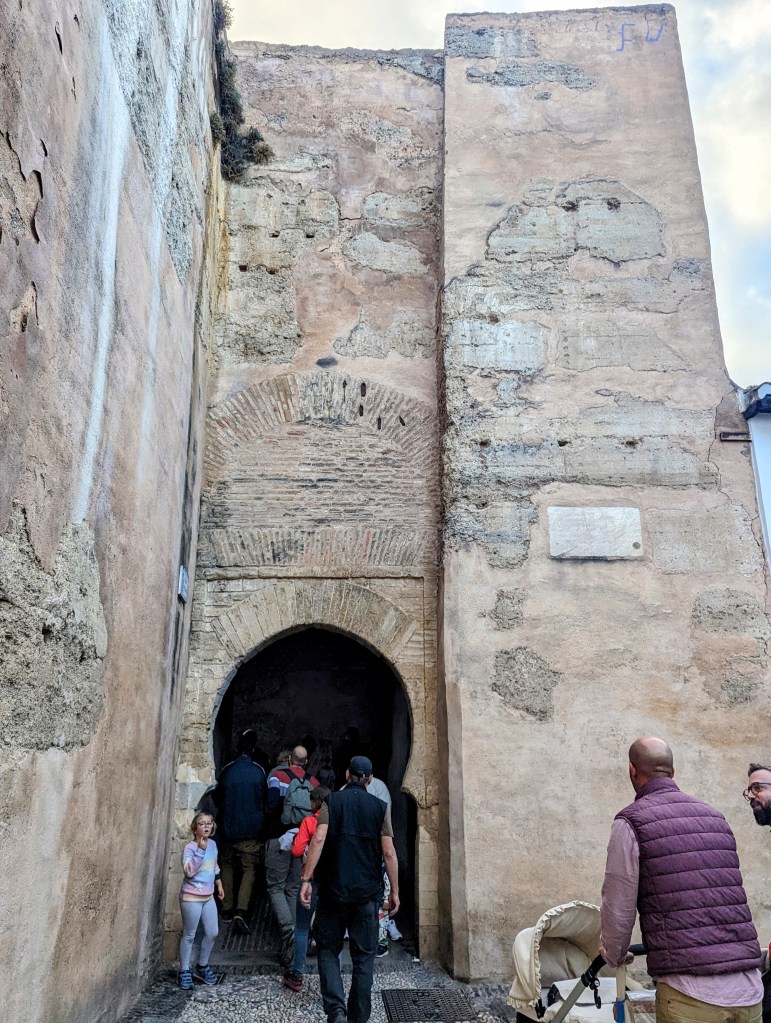
Passing through the Door of Weights, we entered into St. Michael’s Square.
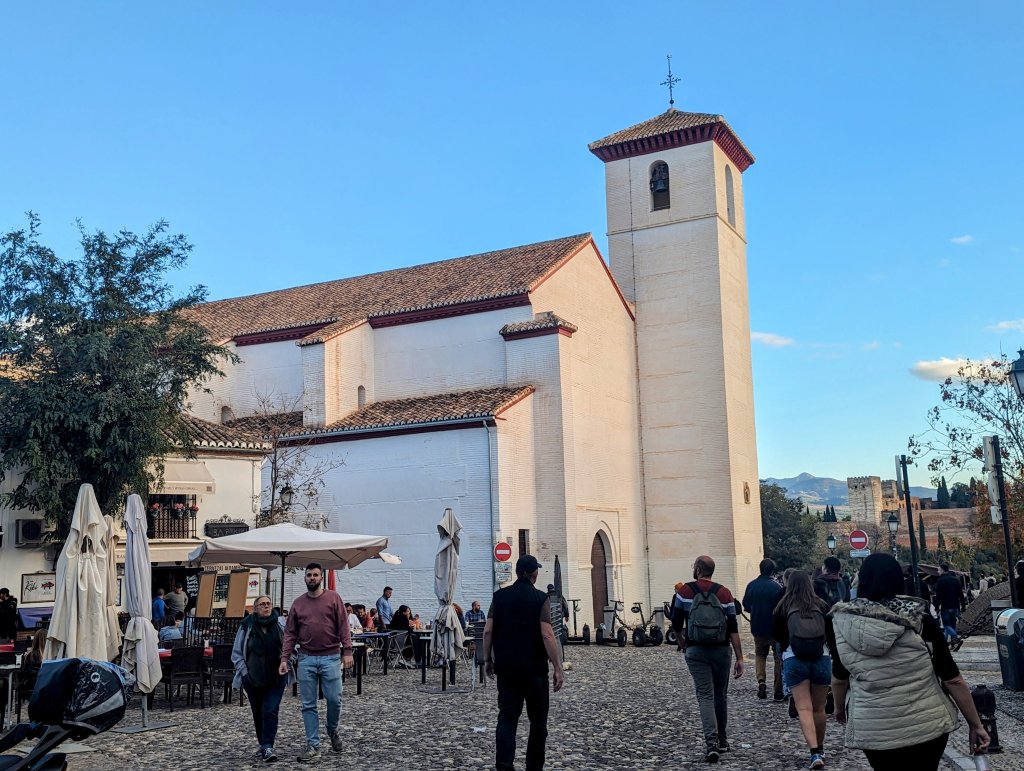
Nacho told us that when he was a child the area around this square was a parking lot. The square was made famous by the Clintons. Bill brought Hillary there during a visit to Spain during the Lewinsky scandal only months before his impeachment. He claimed he wanted her to see the most beautiful sunset in the world. Since then tourists have flocked there to enjoy the same view. The view is of the setting sun casting light on the Alhambra.

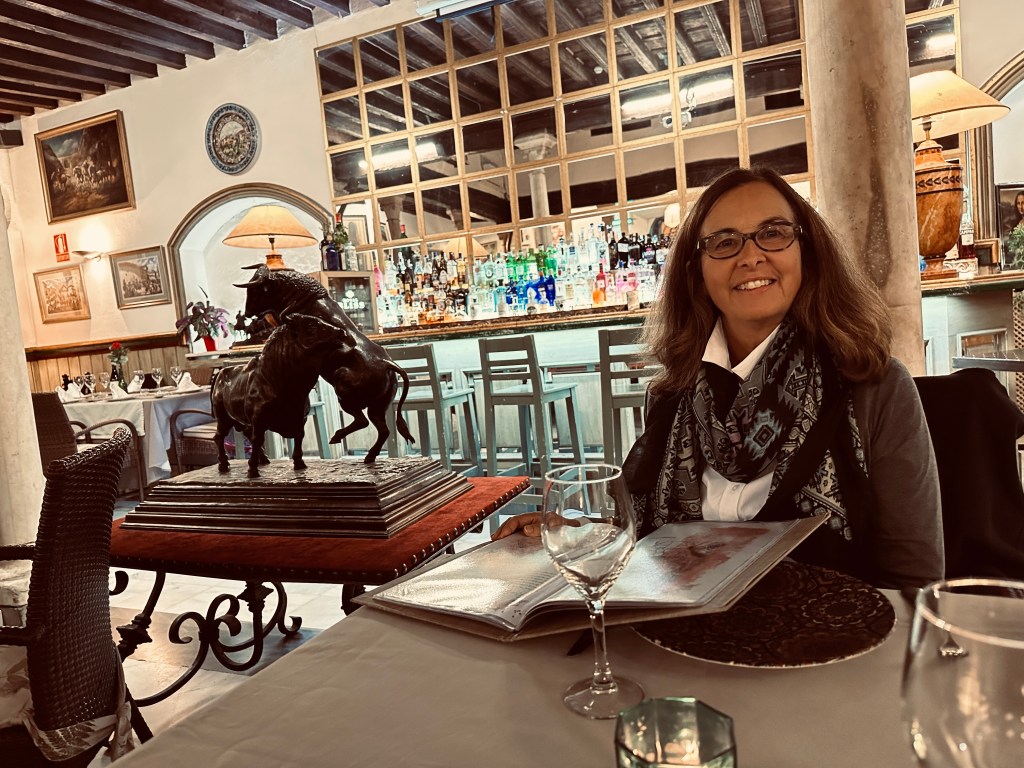
That night we had a delicious dinner at Pilar del Toro.
The next morning we set out to visit the Cathedral of Granada. At this point we had visited so many cathedrals in Spain, we entered a bit unenthusiastic, but were pleasantly surprised. It turned out to be one of our favorites due to its brightness, the clean simple lines, light airy feeling, and beautiful artwork. Construction was begun in the 16th century, late for a Spanish cathedral. It was originally started in the Gothic style, but was finished in the Renaissance style. It was built on top of a Muslim Medina.
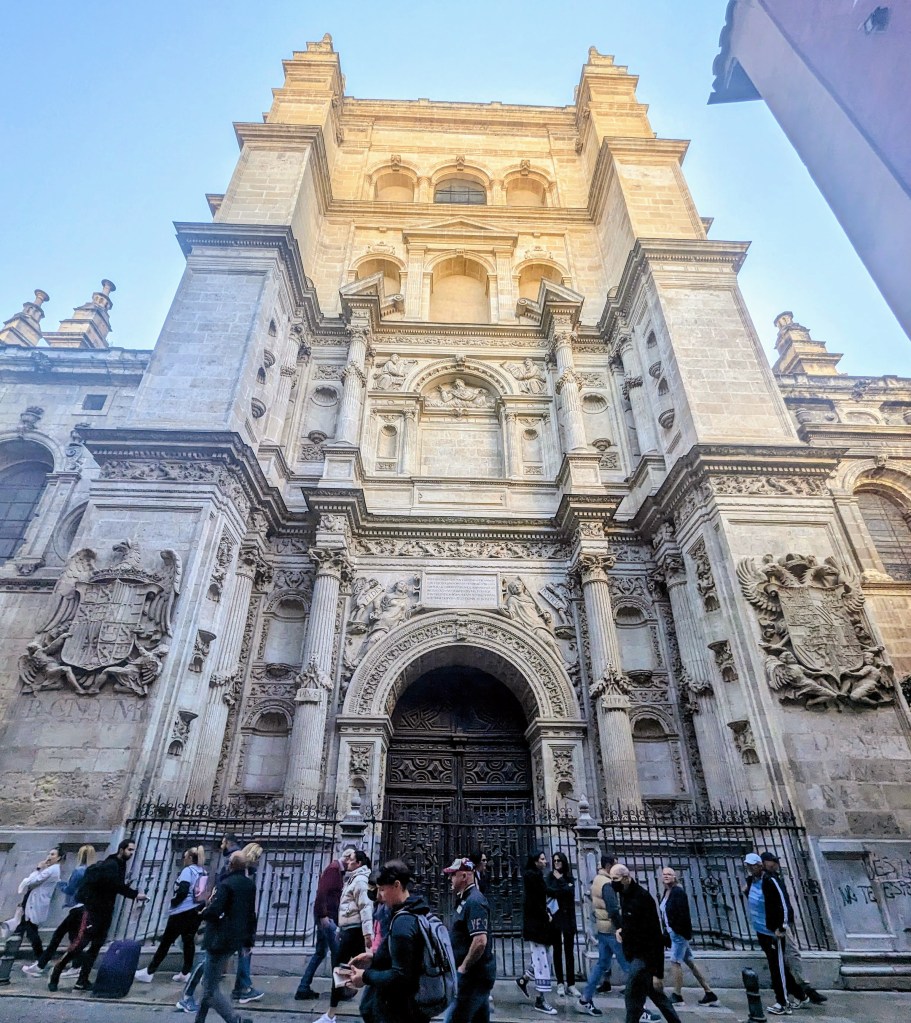
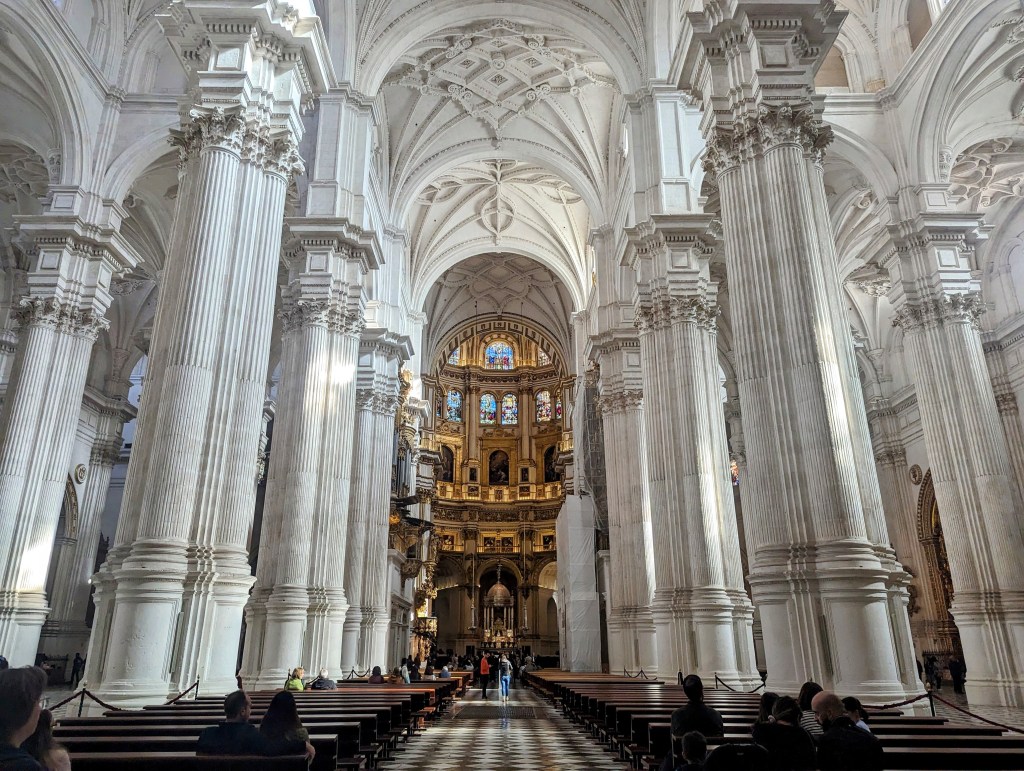
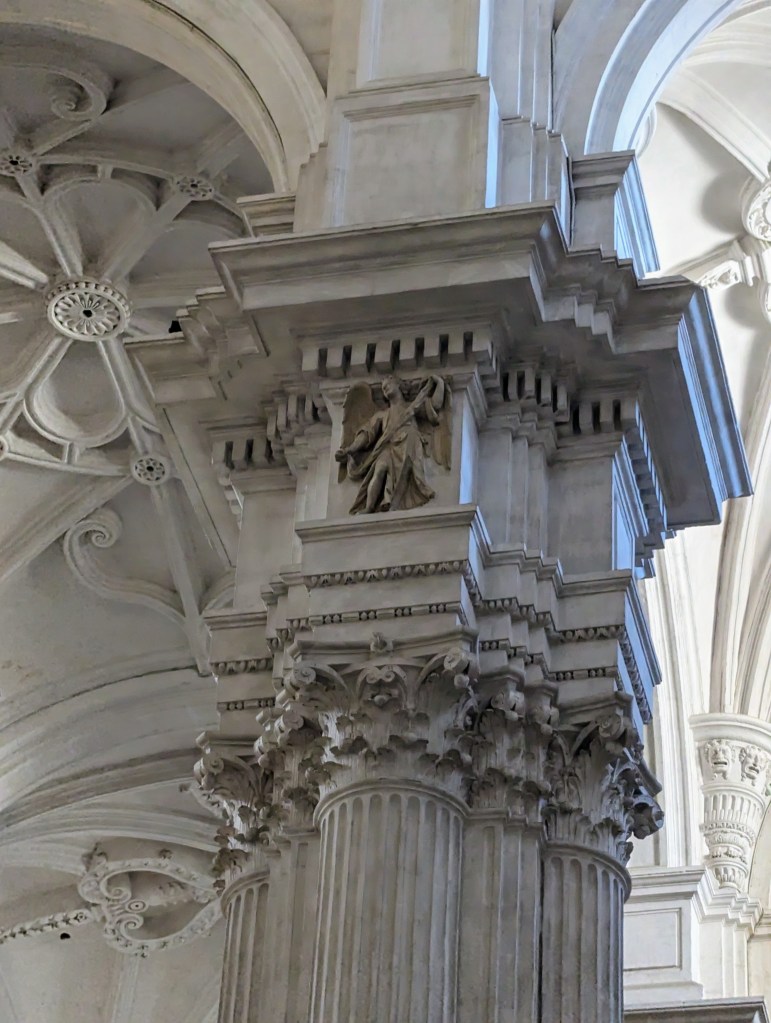
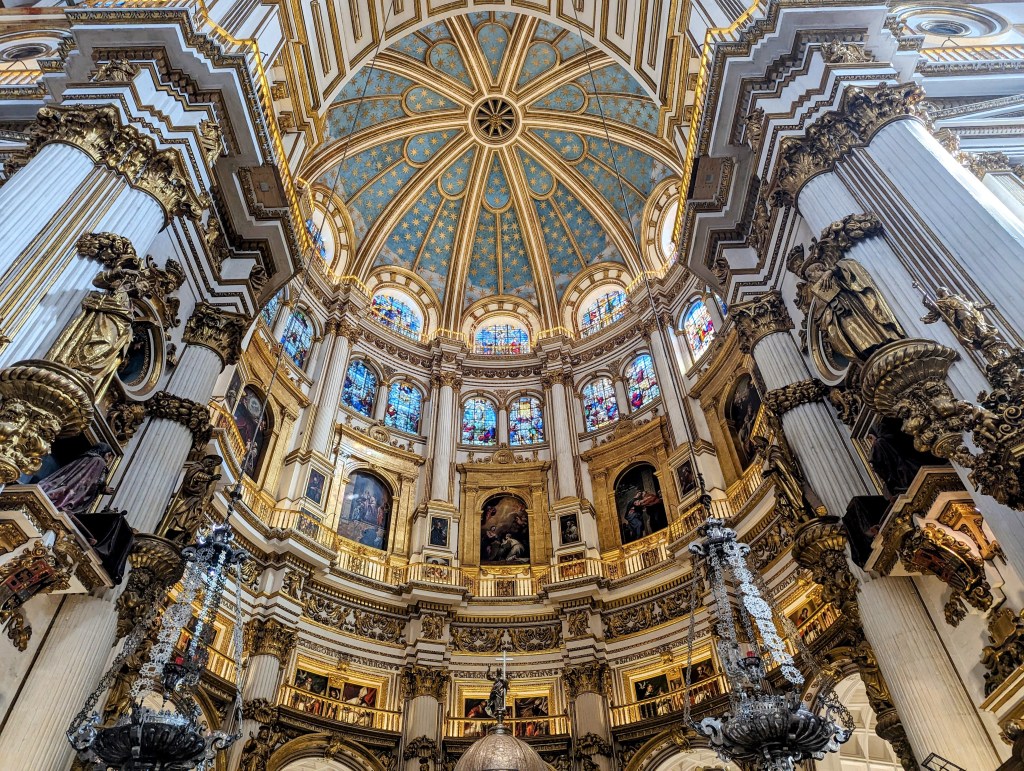
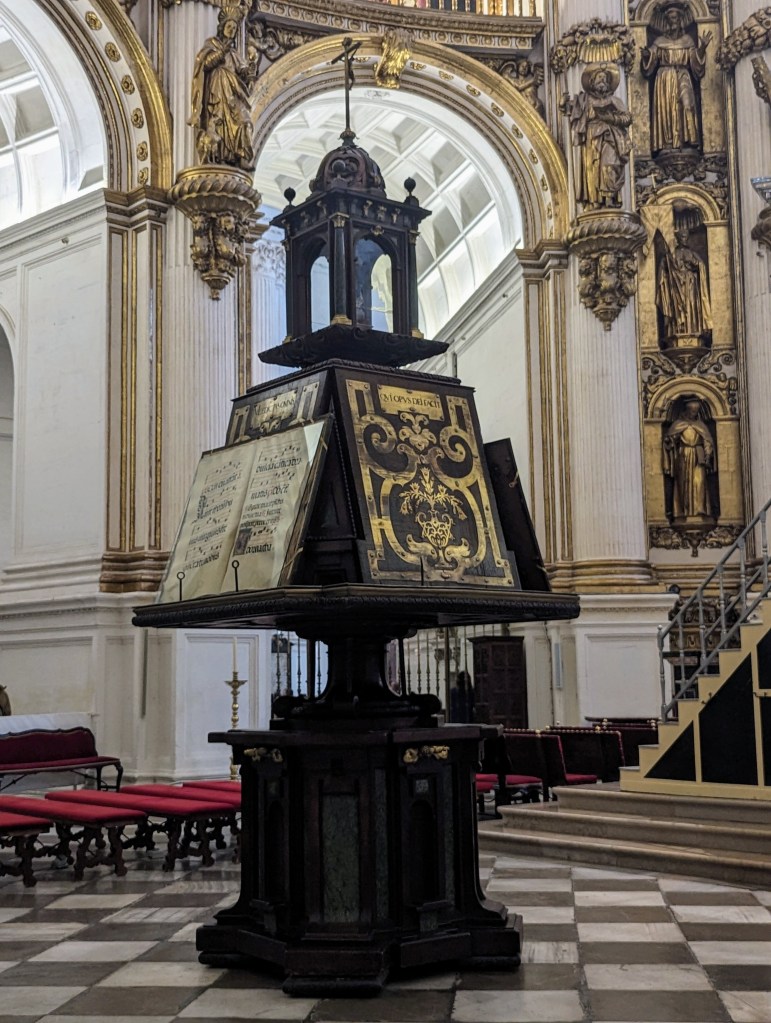
Unlike most cathedrals in Spain, the choir sits in the main chapel. At the back of the chapel sits a large stand to hold the large choir books. It is shaped so that the books can be placed on all sides to be seen from every angle by the choir.

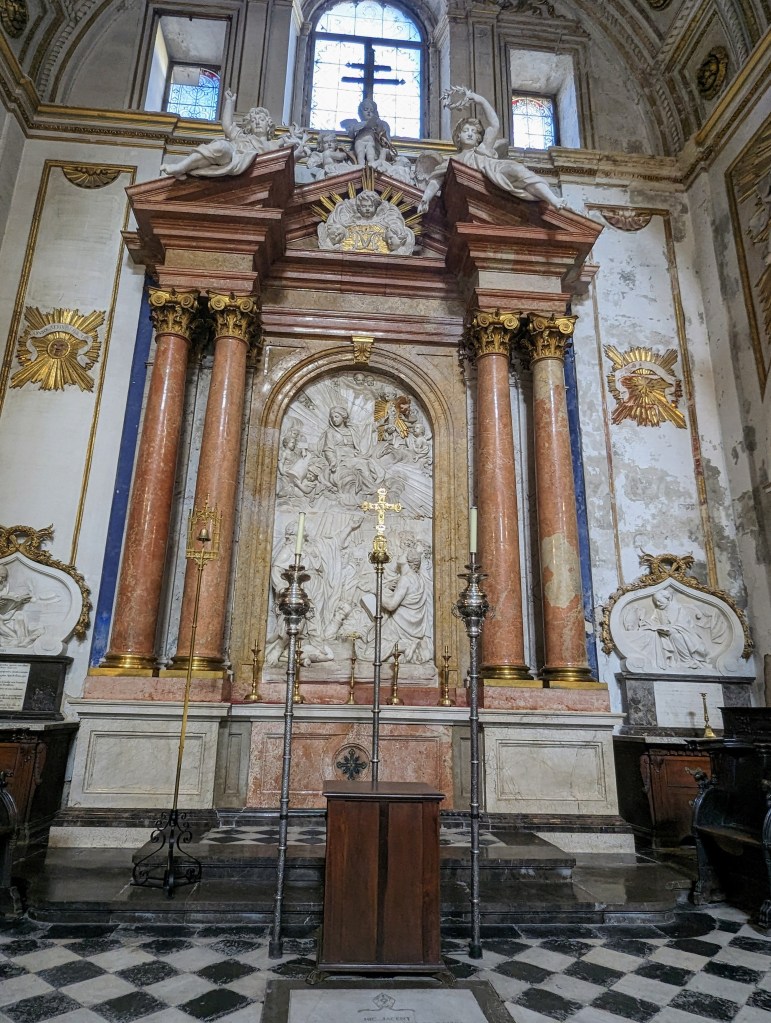
Each side chapel is more spectacular than the next. Several have gorgeous marbles. Very few have been redone in the Baroque style that was popular in Spain.

Even the doors in the cathedral are exquisite.
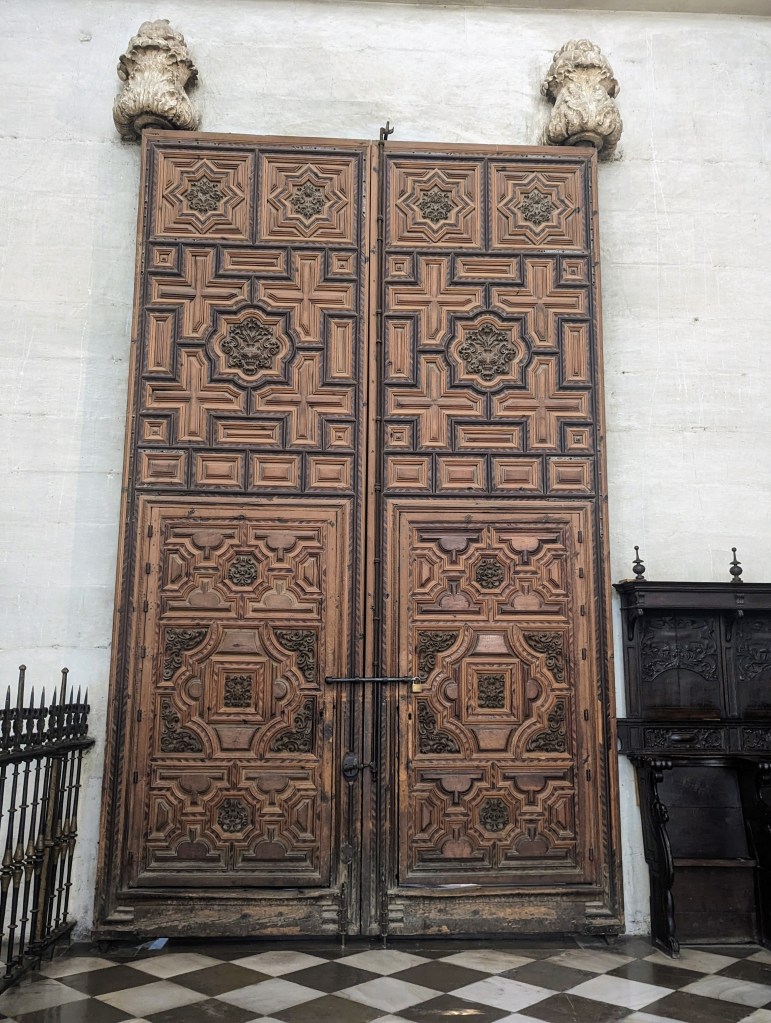

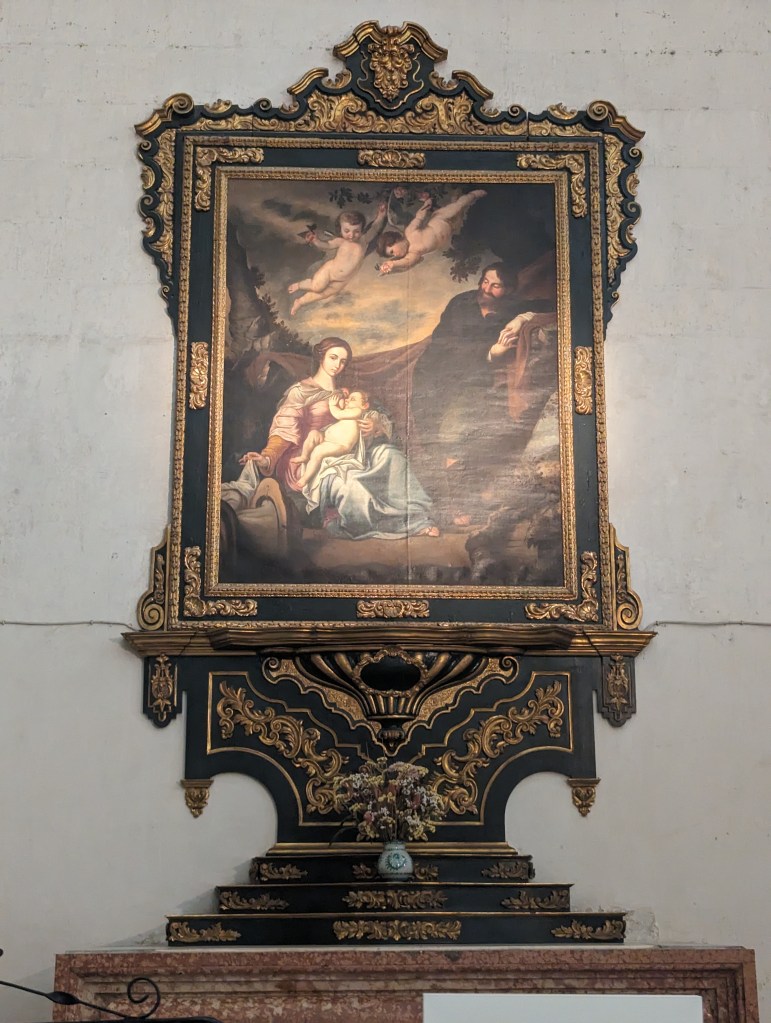
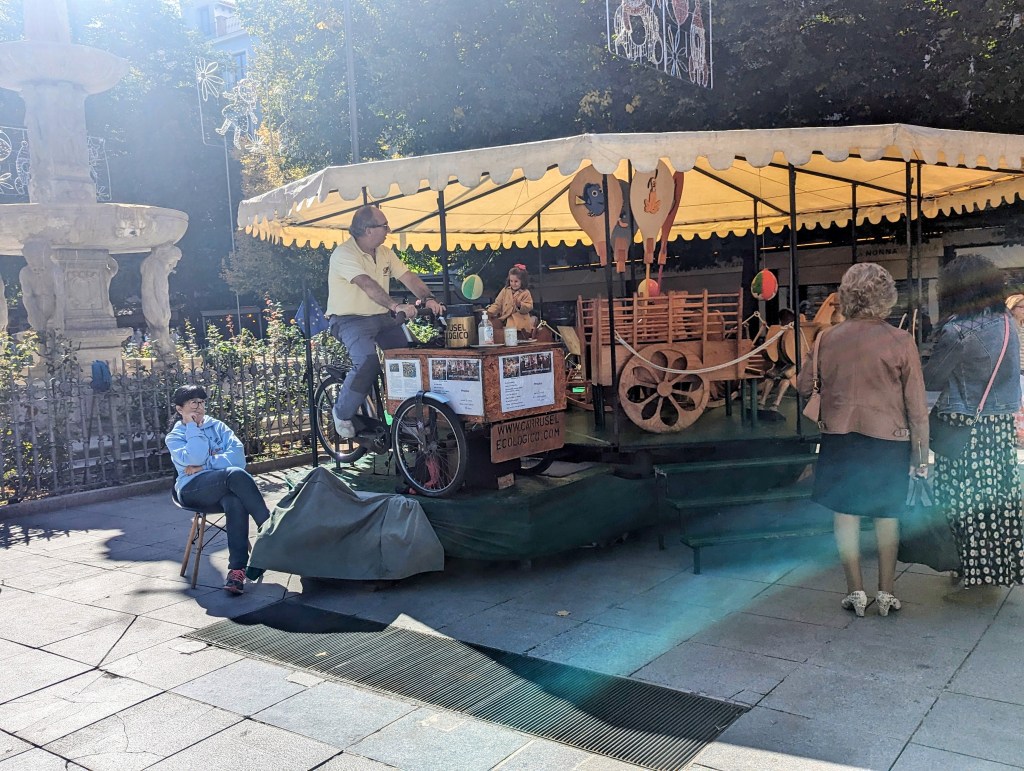
When we exited the church we meandered through the Arabic market: La Alcaicería, which has very narrow alleys and is packed with merchandise and reminded us of the markets in Jerusalem. When we emerged from the markets, we were amused to see this man powering a carousel with a cycle. The sign on the box in front of him reads: http://www.carruselecologico.com
We emerged from the market to find ourselves in a more modern section of town with high end shops. There we found a statue built in 1892 commemorating the 400th anniversary of Queen Isabella of Spain’s meeting with Columbus.

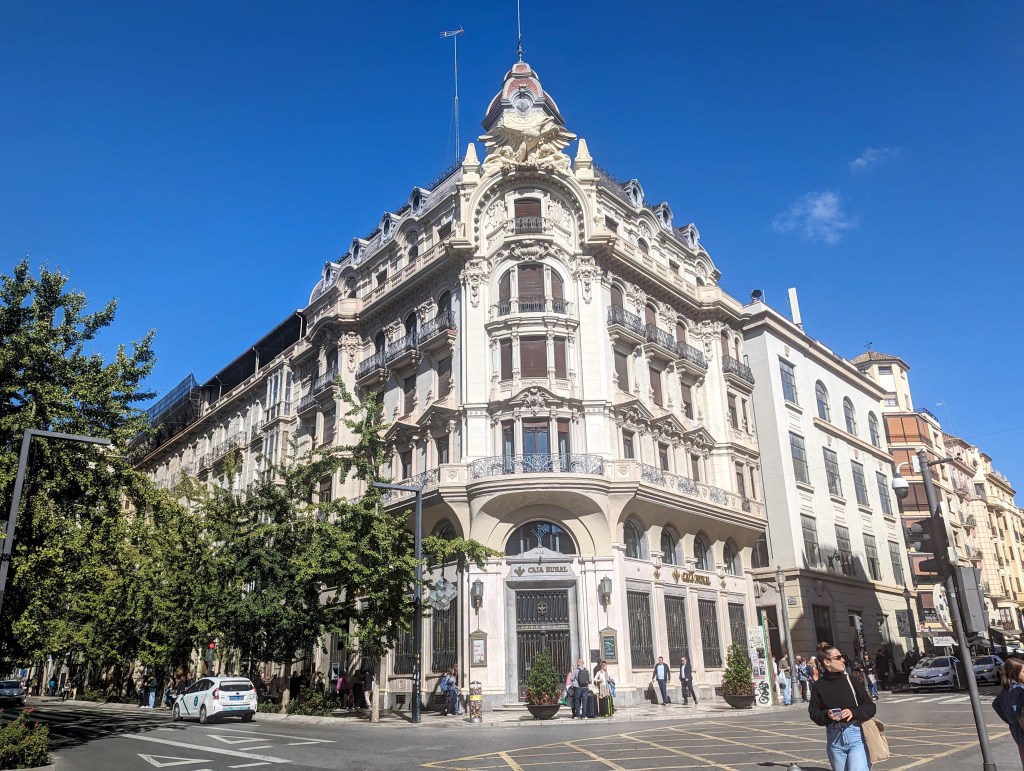
And also in the square are buildings with gorgeous architecture.
We could not go inside Alhambra, but we decided to hike up to it so we could try to get a drone shot above it. At the entrance to the Alhambra Forest and the long hike up the hill is this gate dedicated to Charles I in 1526. It is nicknamed the Pomegranate Gate due to the 3 large split pomegranates seen spilling their seeds sitting atop the gate. The pomegranate is the symbol of Granada.
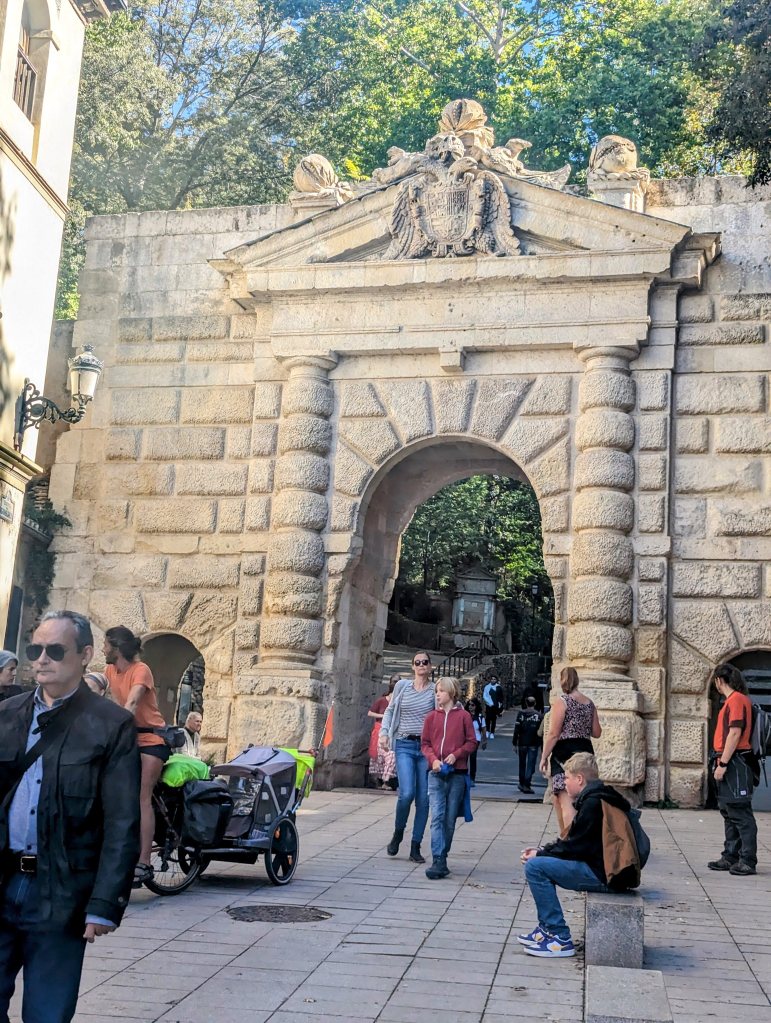
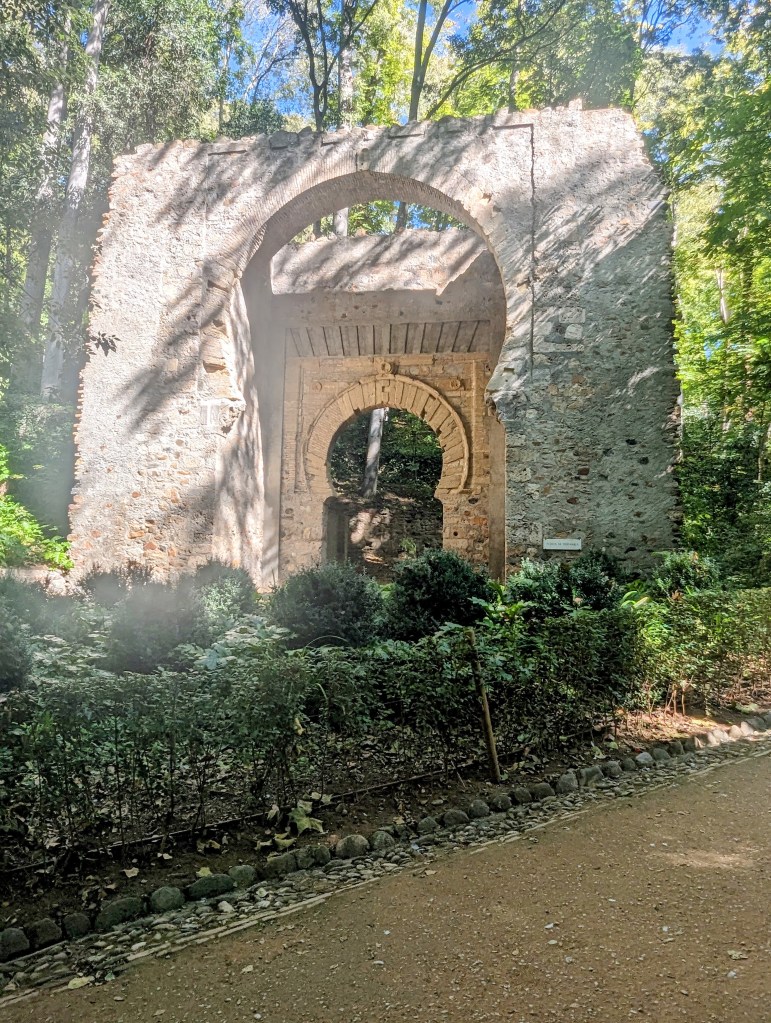
On the way we passed this Arco de las Orejas (Gate of Ears), which was originally in Plaza de Bib-Rambla . In the 19th century it was taken down during a renovation project. But there was such an outcry from historical conservationists, that it was rebuilt on this walkway up to Alhambra. Its name is because when thieves or crooks were punished by the removal of body parts, often ears, they were hung on this gate to warn the public of the consequences of such actions.
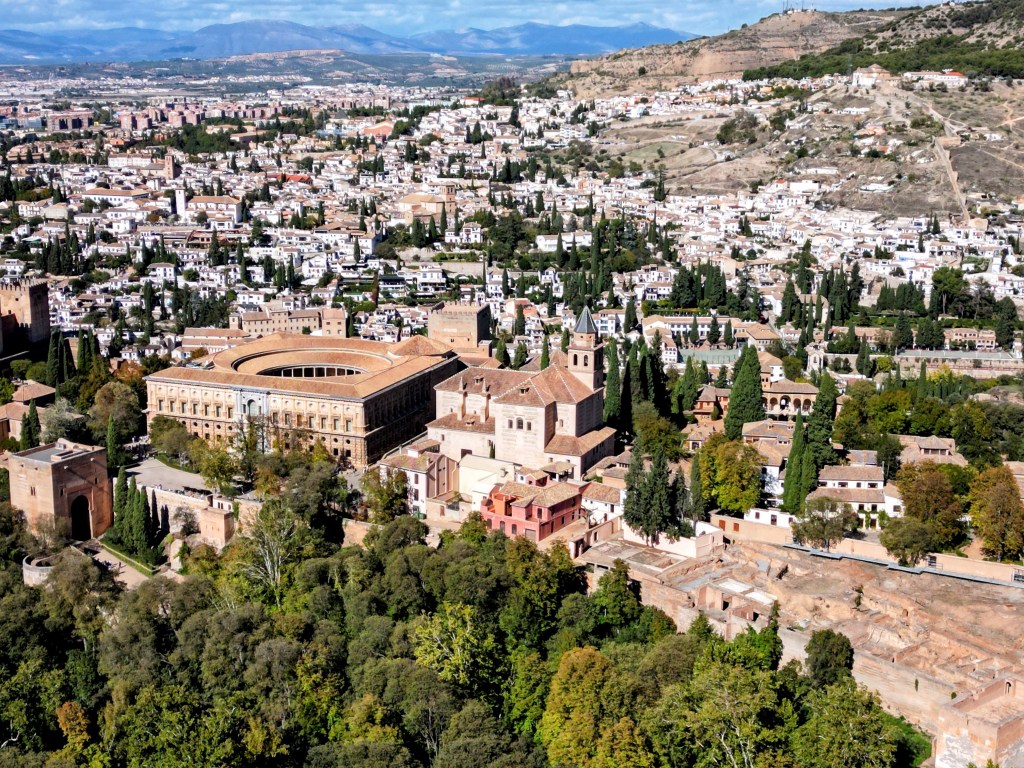
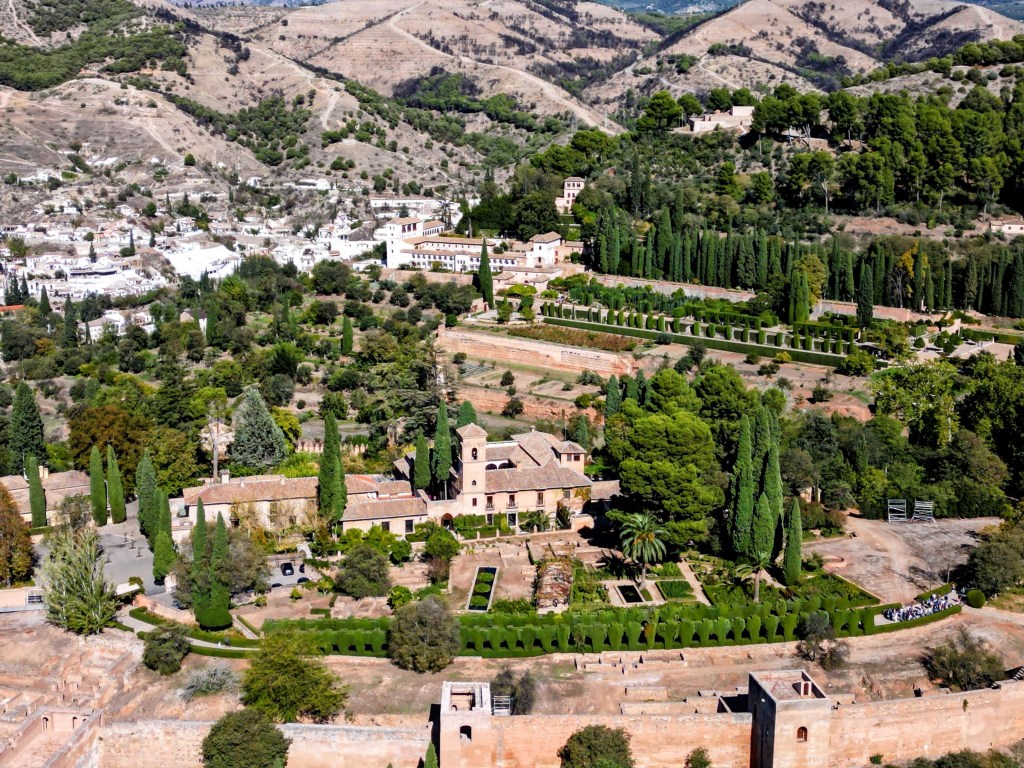
Up on top Eric did manage some drone shots of Alhambra.
That night we had paella at Mesa Pio.

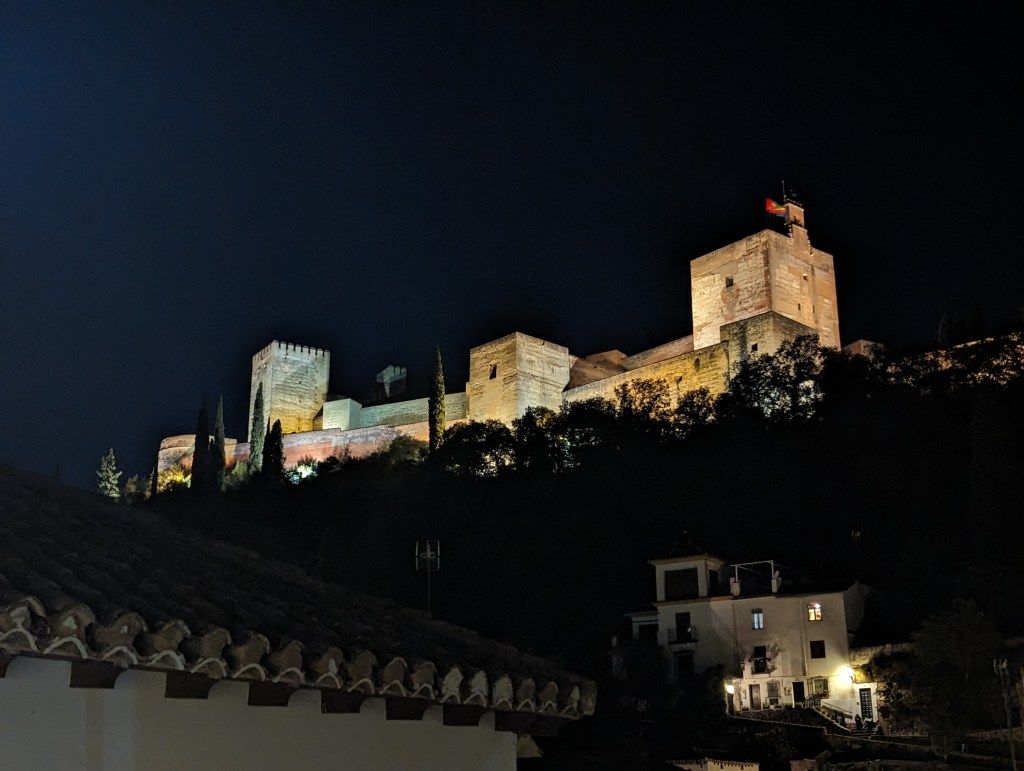
Then we returned to our room for a final view before bed.
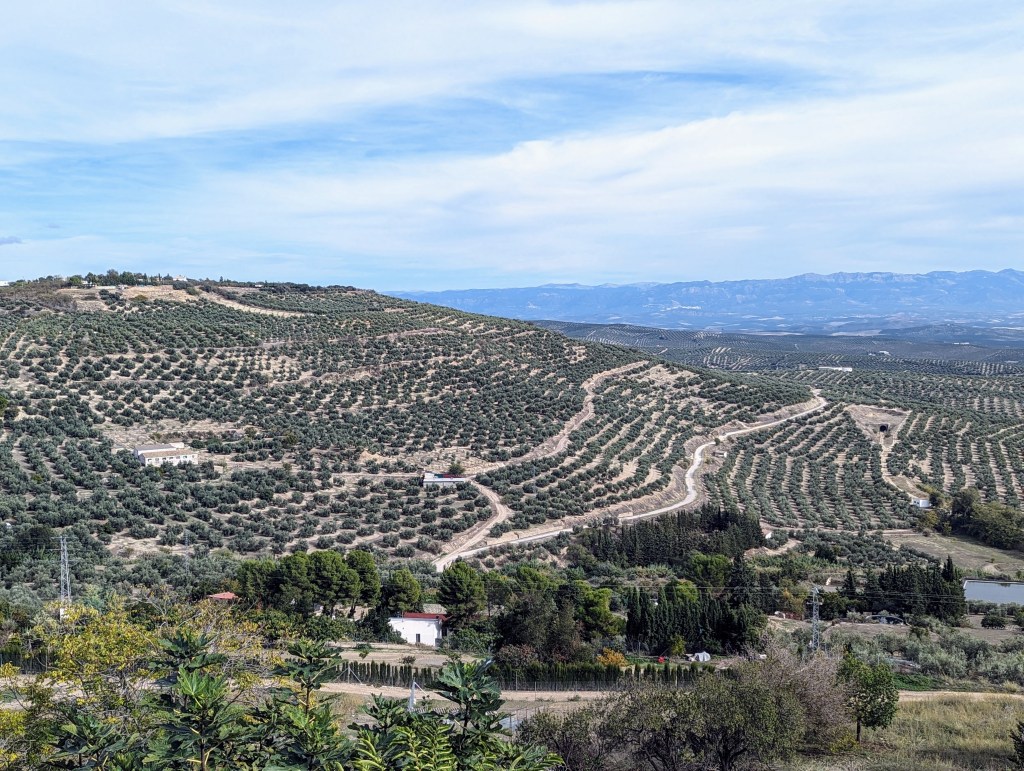
And again we were on the move, this time to Úbeda. When booking we had tried to find charming hotels that gave us a feel for local culture. In Úbeda we certainly achieved this goal. Hotel Ordoñez Sandoval was built in a historic family house in a neoclassical style.

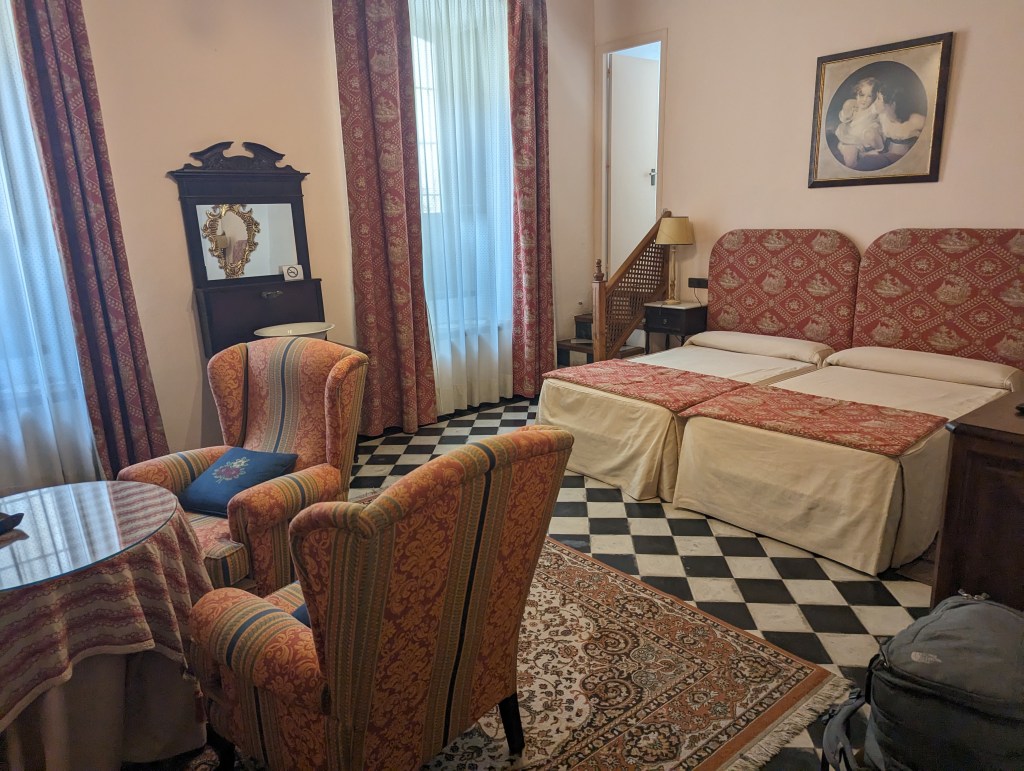
Driving into town we were struck by the number of olive groves and how well maintained they appeared. We learned that the province has 70 million olive trees. From town, you can see them best from Mirador del Salvador viewpoint.
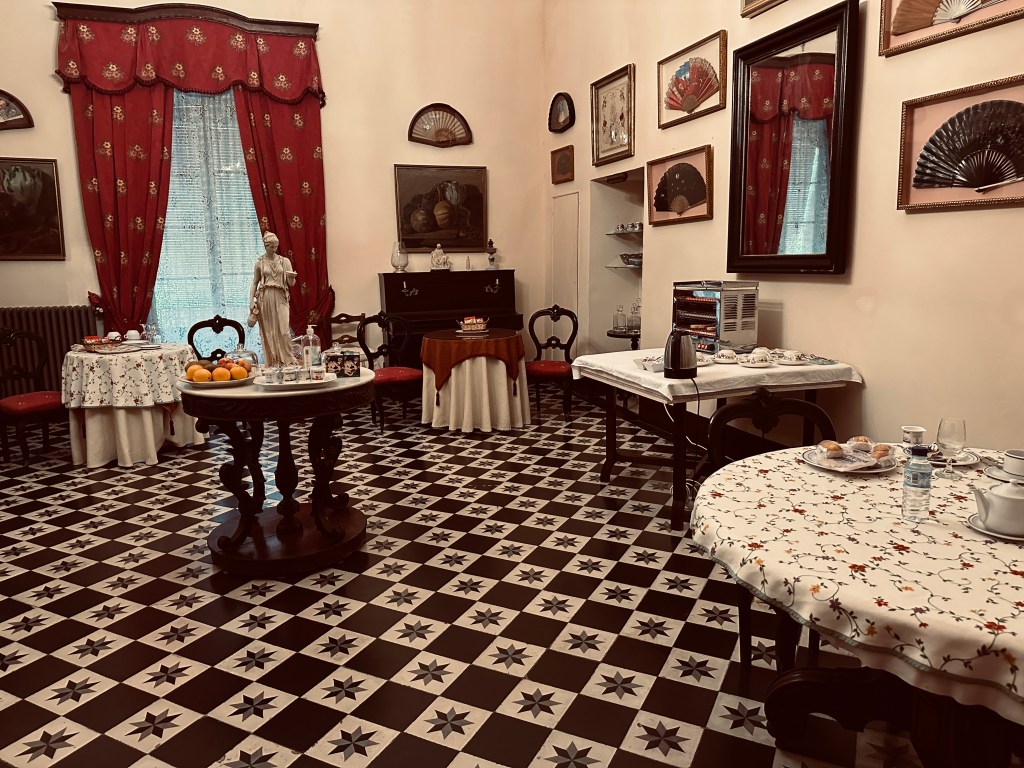
We walked around town all afternoon and took a lot of pictures, but I will add them with the history we learned about the town and its historic monuments on our walking tour the next morning. The next day started with an included breakfast in the cutest room in our hotel.
We met Josue for the tour and were the only ones. He admitted that few English speakers make it to Úbeda, which has only recently become a tourist destination due to UNESCO designating the town a world cultural heritage site in 2003 due to the town’s highest number of monuments/m2 in all of Europe, second only to Florence, and to the well preserved renaissance buildings.
In the year 1233, the Muslims in Úbeda were definitively conquered by Ferdinand II of Castile, a full 2.5 centuries before Granada, making this the southernmost city in Spain for that period of time and therefore very influential to the region. After both the fall of Granada and the “discovery” of the Americas in 1492, wealth poured into the area. Especially notable for the architecture of the city of today is the role of Francisco de los Cobos, secretary of Emperor Charles V. Francisco de los Cobos was not born with a title but benefited from his uncle’s relationship working as secretary to Queen Isabel I. Francisco de los Cobos ultimately accumulated a lot of wealth, but did not manage to get a title until in his 40s when he married 14 year-old María de Mendoza. Having accumulated wealth and power, he strove to build a palace, a university, and a mausoleum for himself. In order to do this, he first needed permission from the Crown and the Pope. So first he built a hospital as his donation. The building is used today as a cultural center.
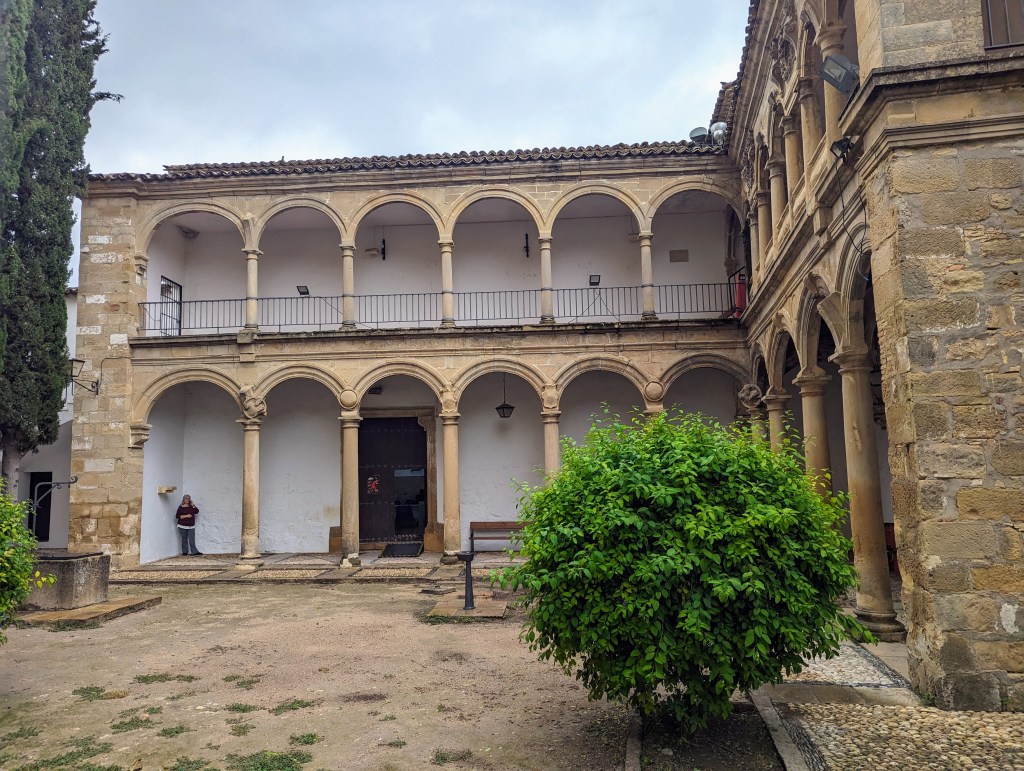
Next he started work on his palace and his mausoleum. He engaged the architect Andrés de Vandelvira, whose work became instrumental in introducing the Renaissance ideas to Spain.

Francisco de los Cobos did not survive to see his mausoleum finished, but his wife and architect completed it and later buried him there.

Francisco de los Cobos was very involved in the design of this chapel, now the largest mausoleum for a private patron in Europe. The name is of course reference to Jesus. As was popular in the Renaissance, he used neoclassical elements and mythological references. On the façade are depictions of stories of Hercules, son of god (Zeus), attaining immortality through his 12 labors.

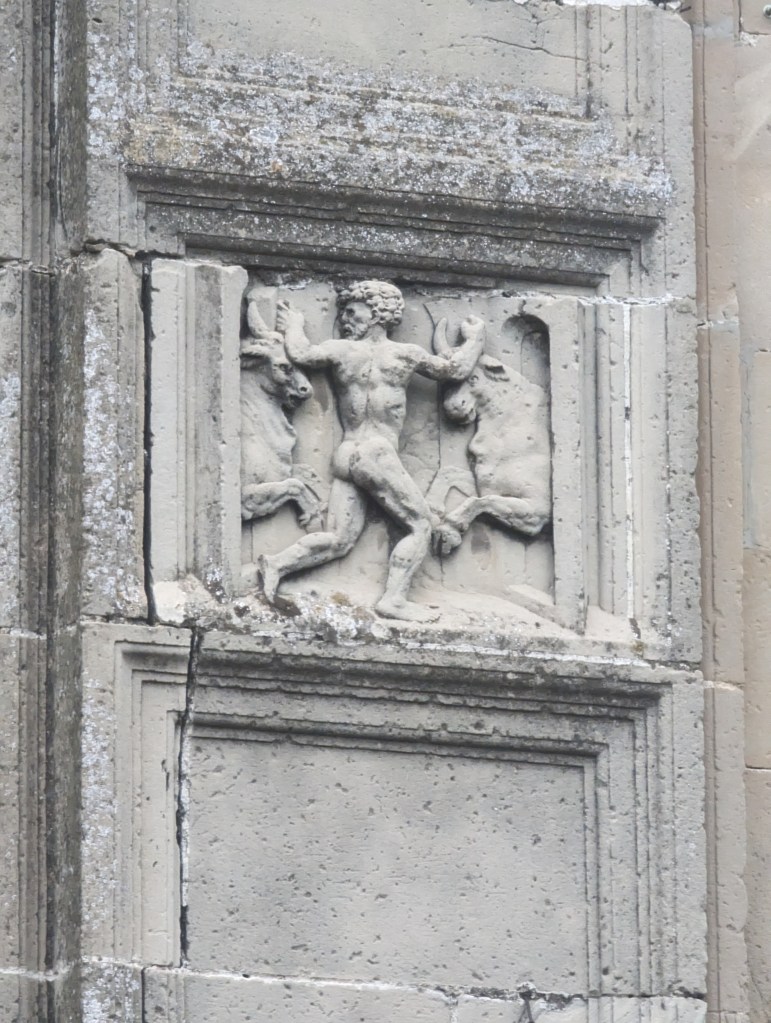
We would go into the chapel after the tour, but first more on Andrés de Vandelvira. After the death of Francisco de los Cobos, the architect continued to work for his wife and several nephews building palaces. The palace of Francisco de los Cobos, behind the chapel, is currently under reconstruction.
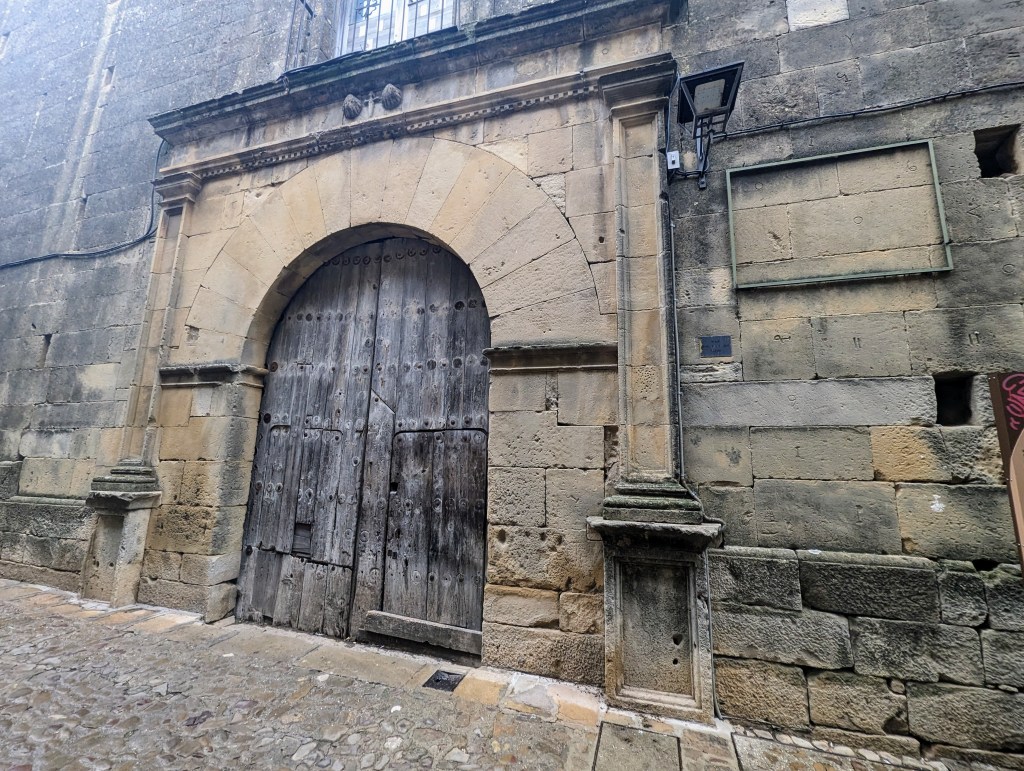
The palace of the Marquis of Donadío, built for the first chaplain of the Sacred Chapel of the Savior of the World, is in the same square as the chapel, today called the Plaza Vázquez de Molina. The palace today is a Parador Hotel.
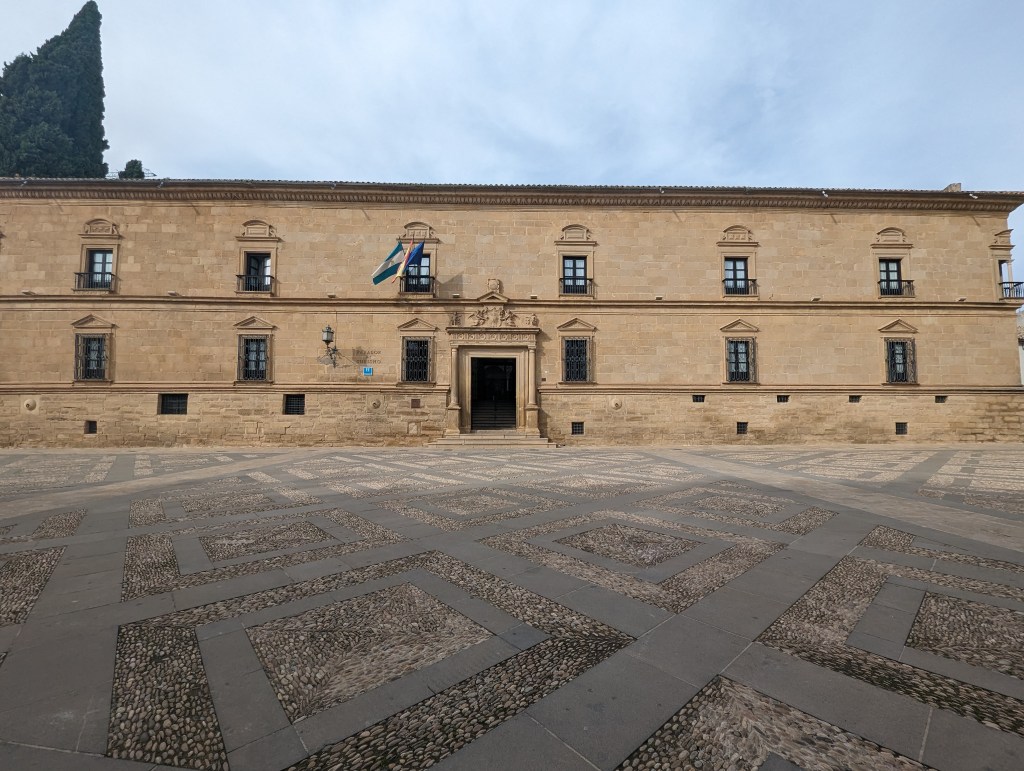
A signature element of Andrés de Vandelvira is the white marble column that can be seen on the corners of the Parador, above top right.

The inner courtyard of the palace/Parador is typical of the Spanish Renaissance style portraying wealth: columns surrounding an open space with a water element in the center, in this case a fountain.

And in the corners can be seen a second signature element of Andrés de Vandelvira: a “handkerchief” ceiling.
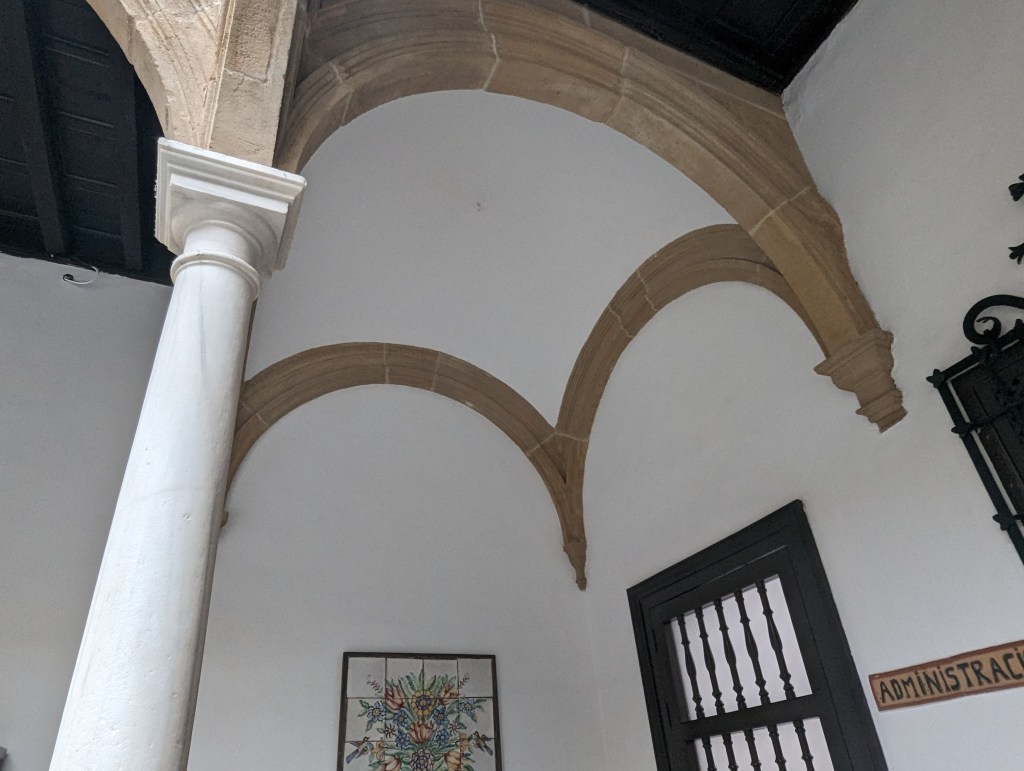
Also in the Plaza Vázquez de Molina is another building of one of Francisco de los Cobos nephews: Mancera Palace. But it was never lived in as a palace and became a monastery.
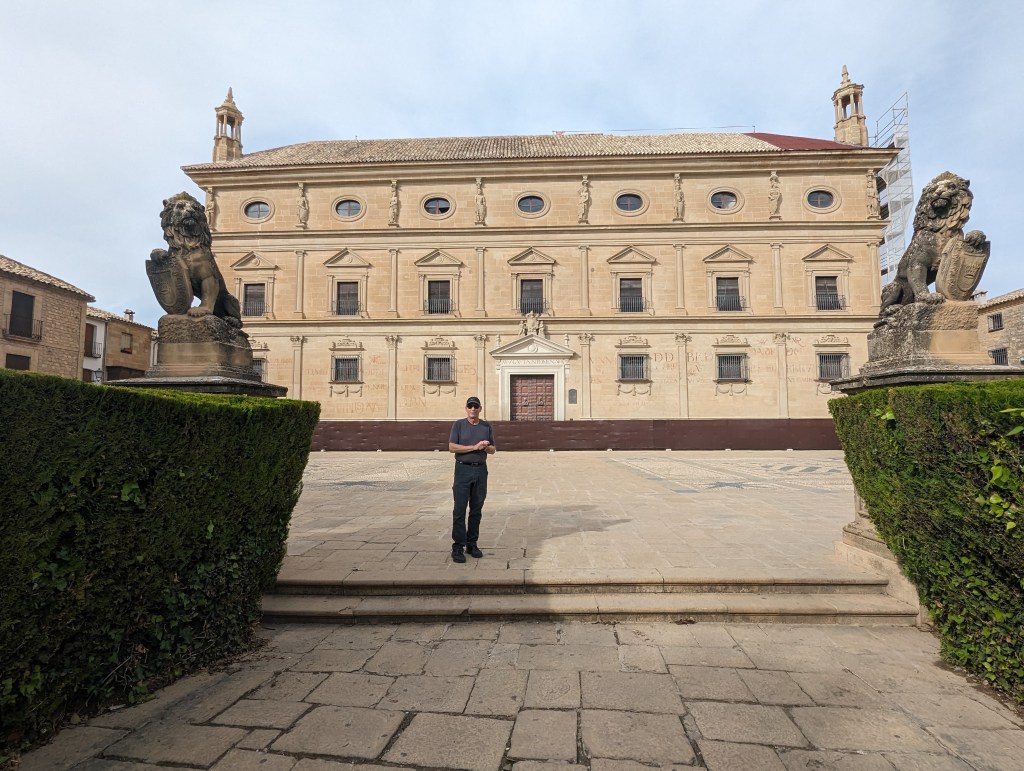
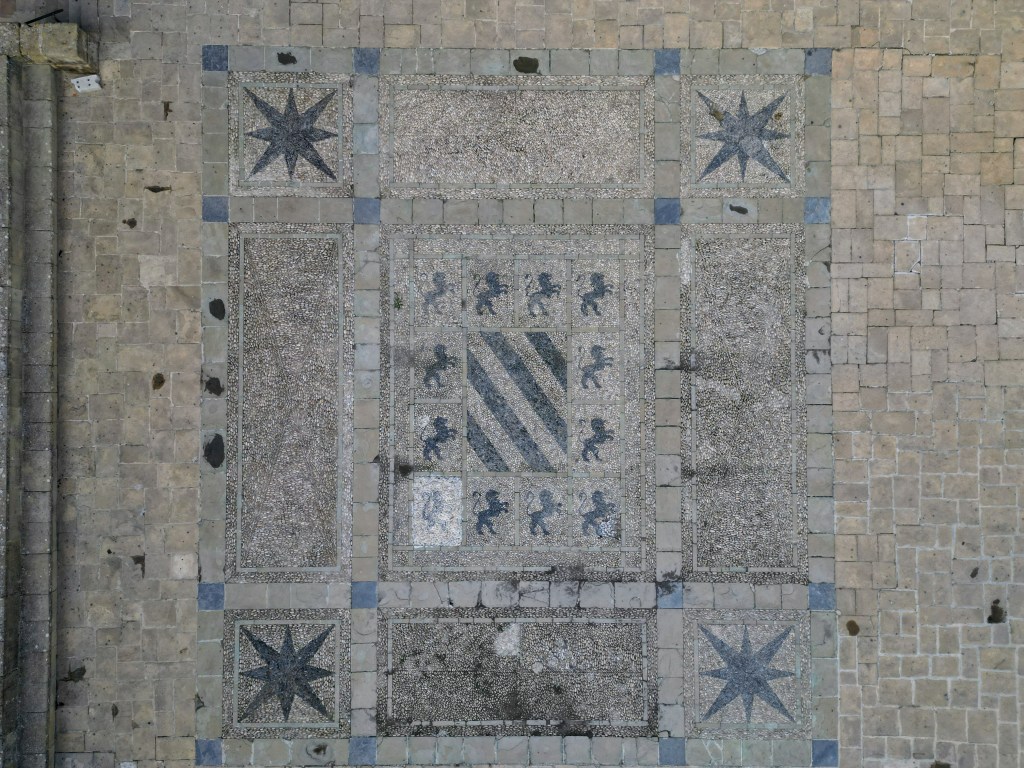
In front of the Mancera Palace are representations of the 12 men who defeated the 12 muslims in the fight for the kingdom in 1233, represented as lions.
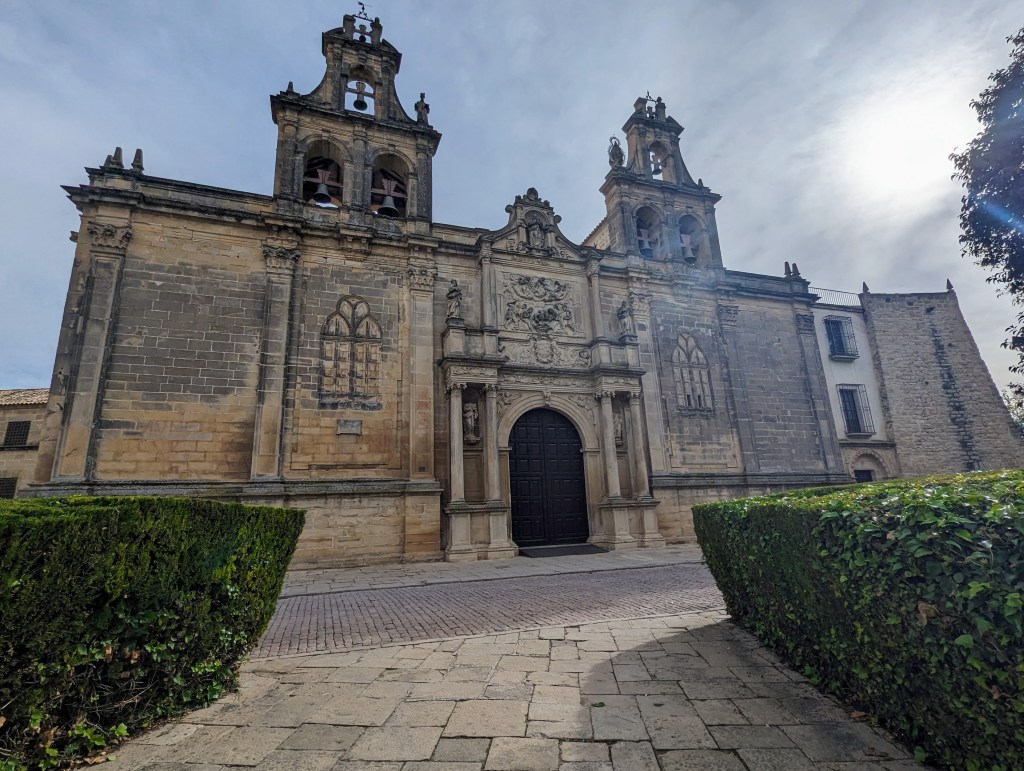
Also in the same square is the Church of Santa María de los Reales Alcázares on a site formerly a mosque. Like I said above, a lot of monuments in one place.
Just off the square are two other important buildings: city hall and the police station. City Hall was built as a palace.
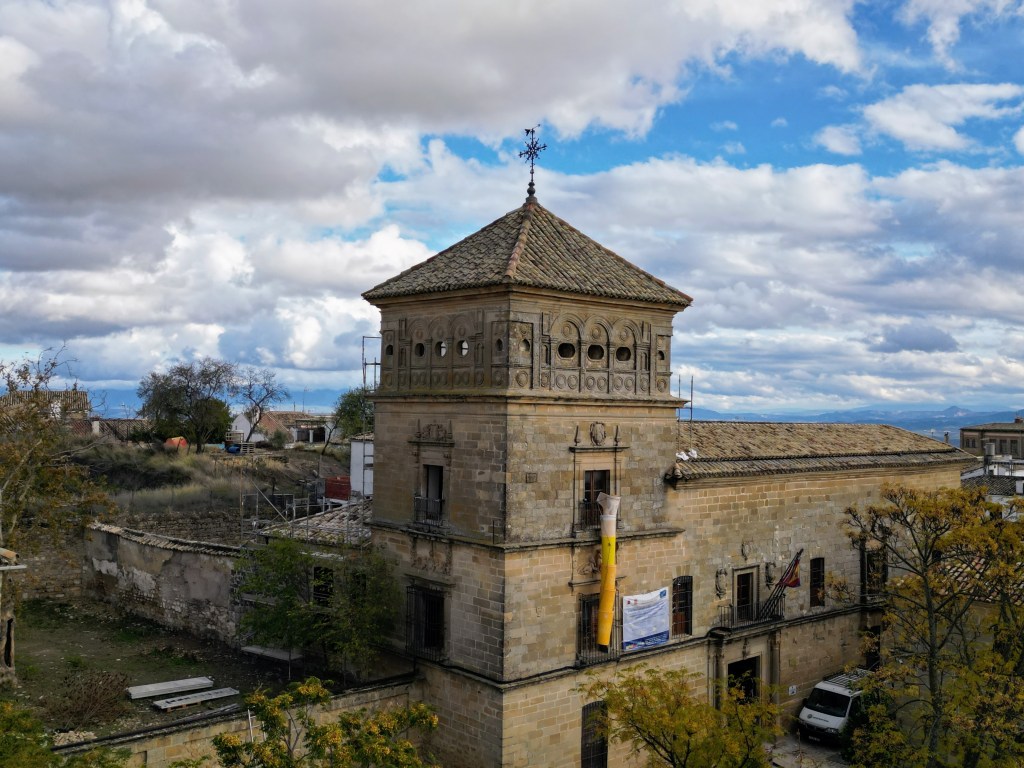
What is now the police station was built to be a home for women who never married but did not become nuns and whose families could not afford to keep them. They were housed and given honest work to keep them off the streets.

Walking around town, we entered the Jewish Quarter. Because the fall of the muslims in 1233 was relatively benign, a battle of 12 vs 12, the Jews, Muslims, and Christians coexisted in relative harmony until the Inquisition started. The pillars in the Jewish Quarter have representations of the 12 tribes and the Star of David.

We walked past the 16th century Church devoted to St. John of the Cross, a devotee of the Barefoot Carmelites. He died at the monastery here, but due to a postmortem fight with the monastery in Segovia, only parts of his body are buried here, and parts in Segovia.
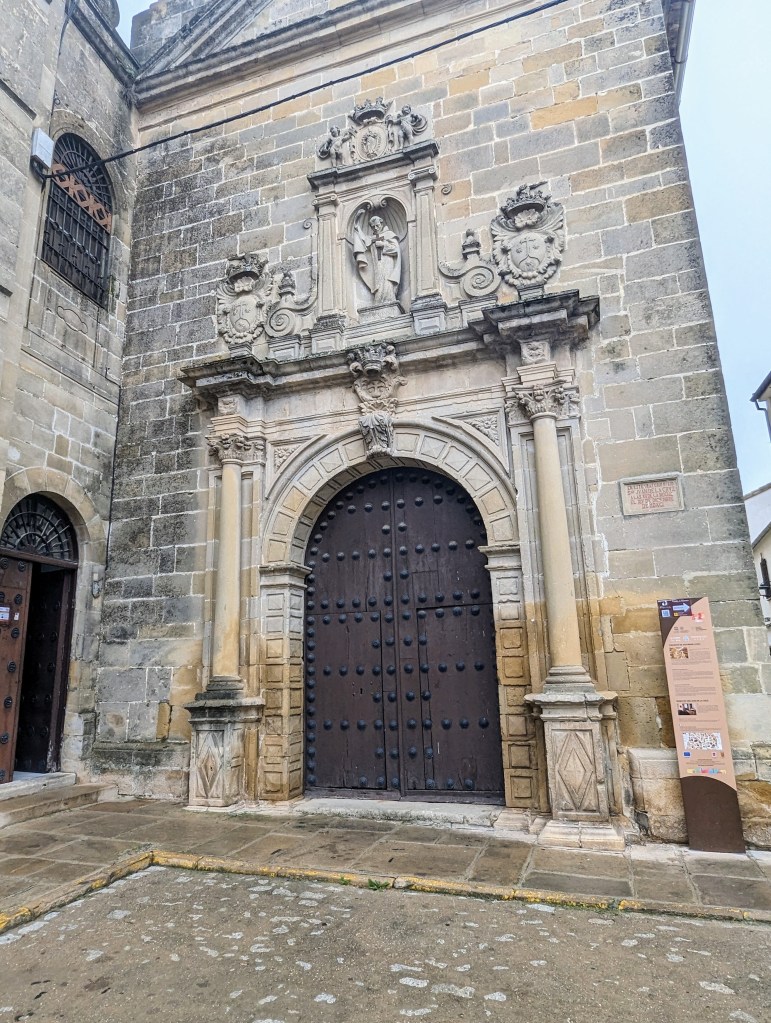
We also walked into Plaza de 1 de Mayo. The market was located here in the Islamic era. Bullfights also took place in this square, like other public events. Executions, including those of the inquisition, were also carried out here.

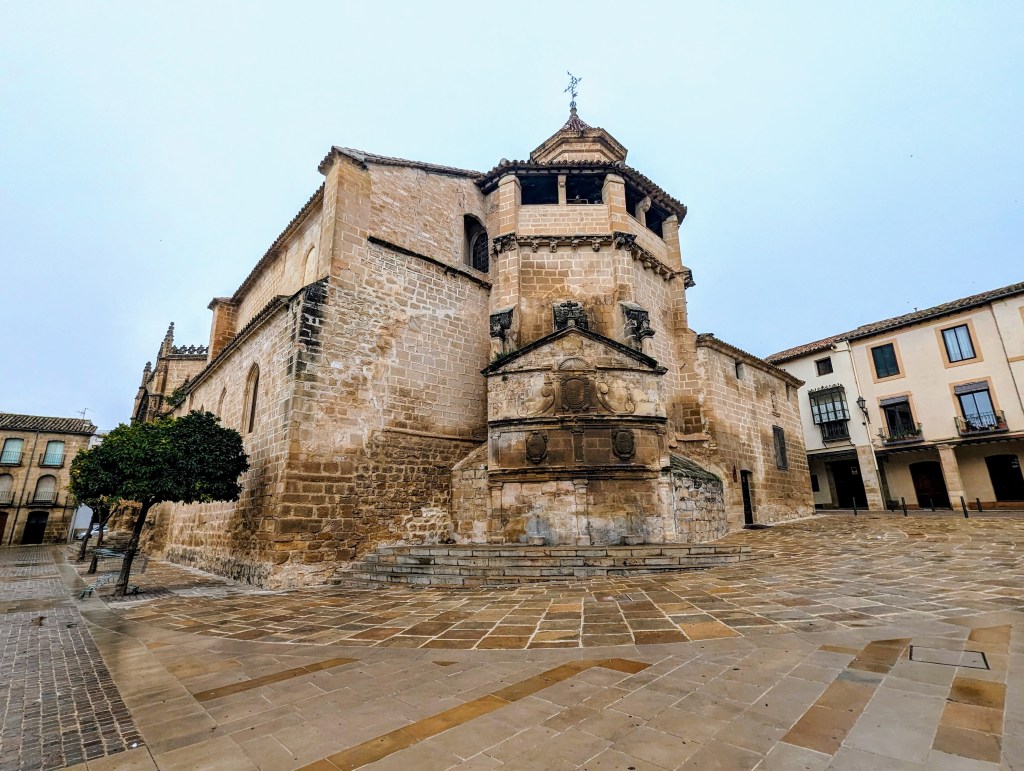
At the end of the square is the Church of San Pablo, which is the oldest in Úbeda. It was originally built by the Visigoths. The back of the church has some of the original wall.
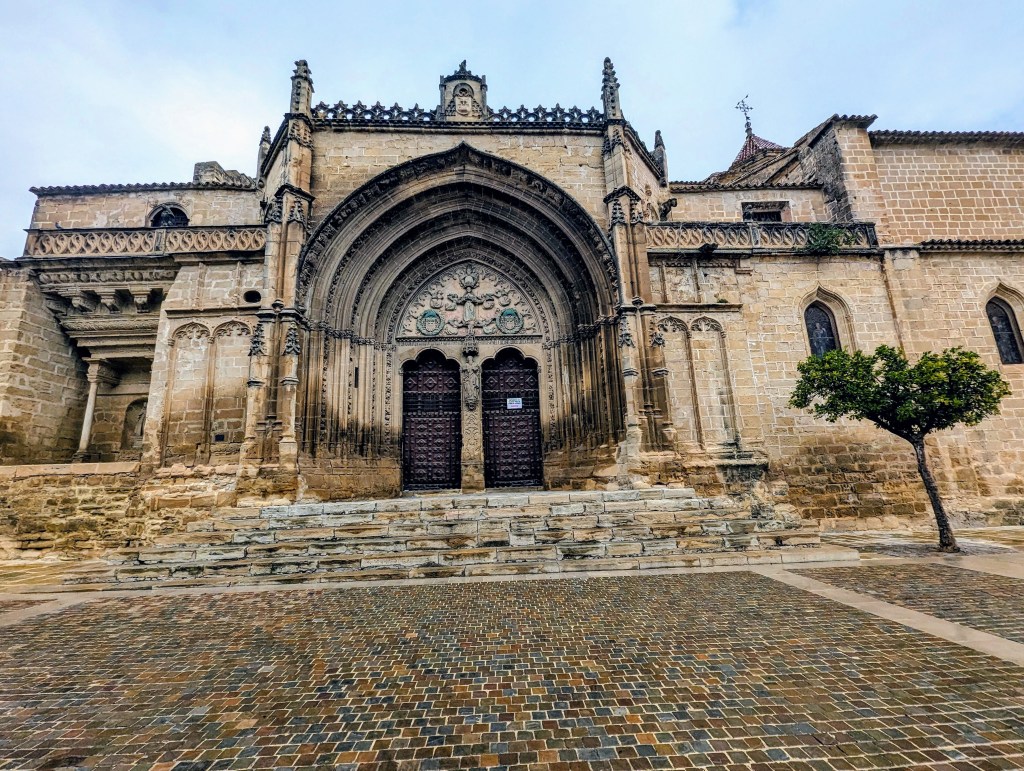
The front façade is Romanesque. Note the balconies on either side of the front. In the 15th century the church was used as the town hall, and announcements were made from the balconies.
On the corner of the Plaza de 1 de Mayo is this building built in the 16th century to be the new town hall. It is currently a music conservatory.
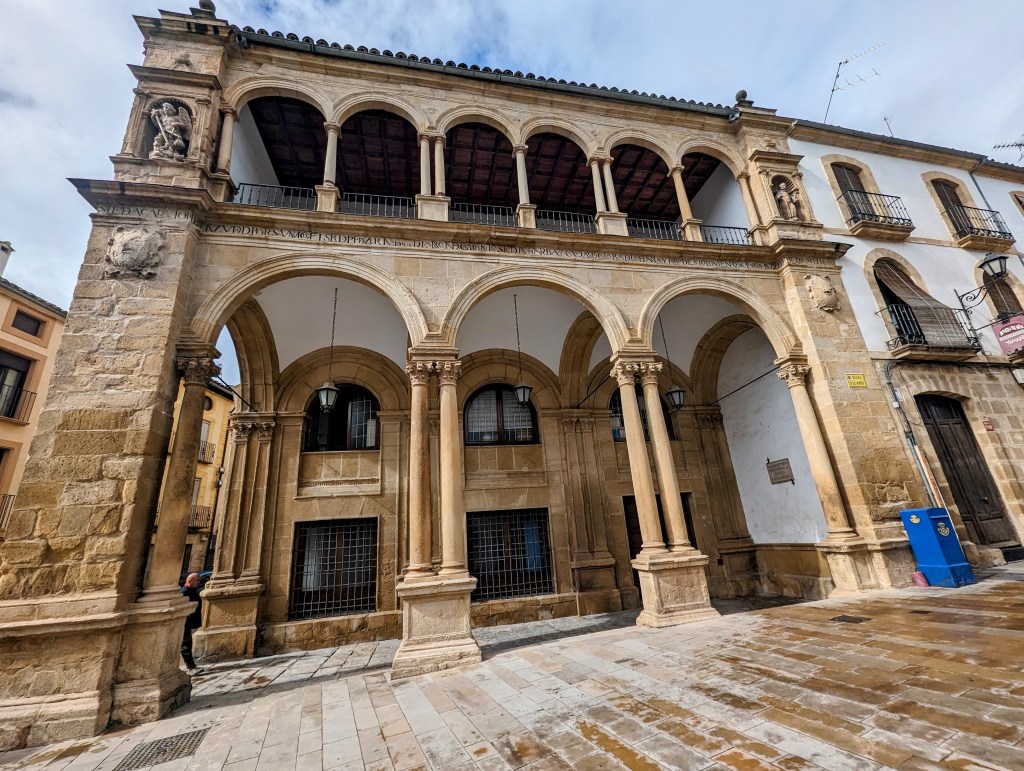
Another interesting note is the number of palaces in Úbeda. At the height of its wealth in the 16th and 17th centuries, there were as many as 250 palaces. Today there are 19 that remain, many of which are hotels or museums. One is still privately owned, but because it contains many original furnishings, treasures and art works, it opens to the public on occasion.

Note the white marble column on the side, identifying the the architect as Andrés de Vandelvira.

Once the walking tour was finished, we felt compelled to enter the Sacred Chapel of the Savior of the World.
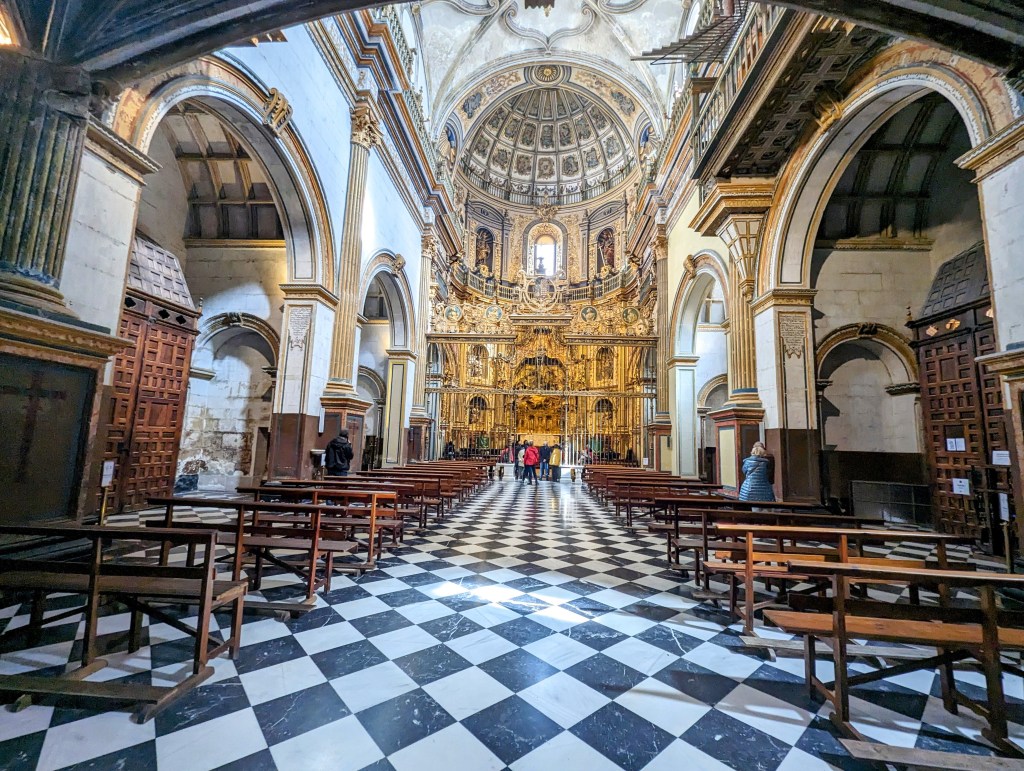
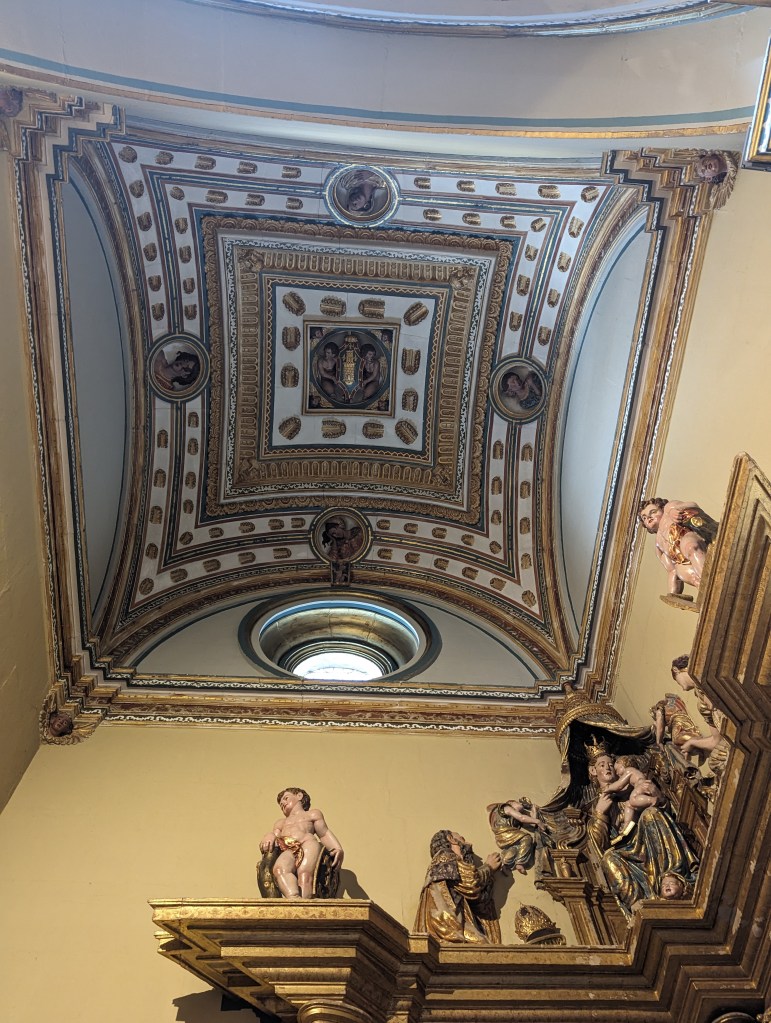
In the ante chamber before the sacristy is a signature handkerchief ceiling.
After an amazing lunch at Restaurante Antique, we decided to visit the synagogue. The Water Synagogue was discovered in 2010 when a private person was undergoing a demolition for a new home having bought a group of adjacent properties because they shared walls.
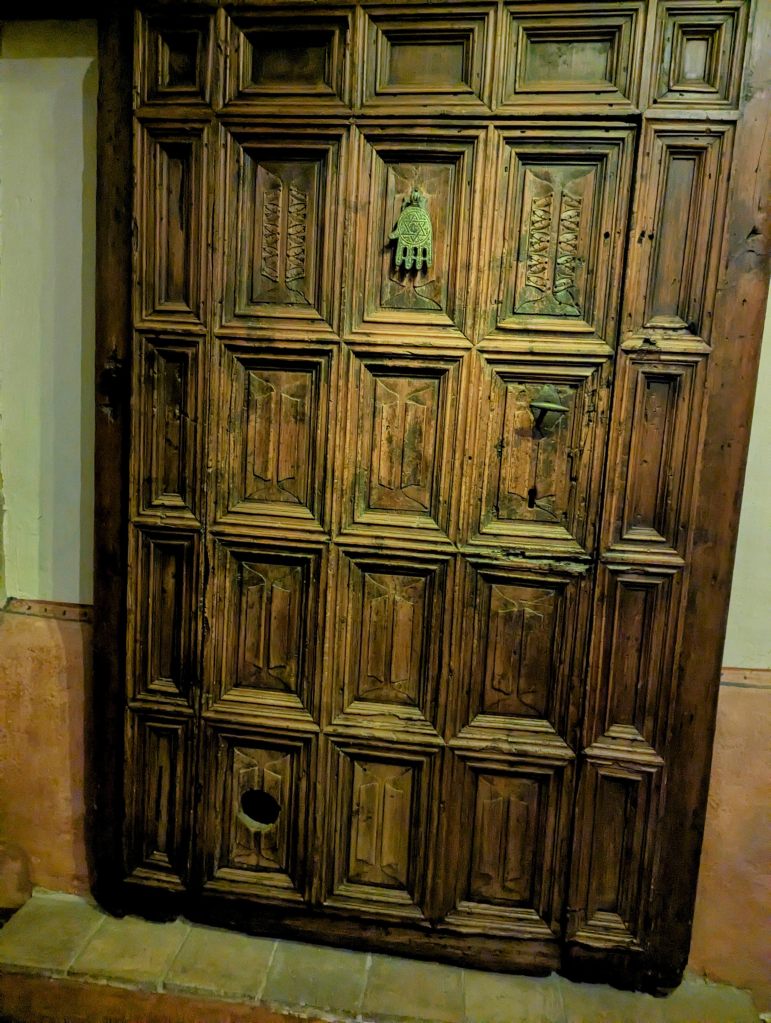
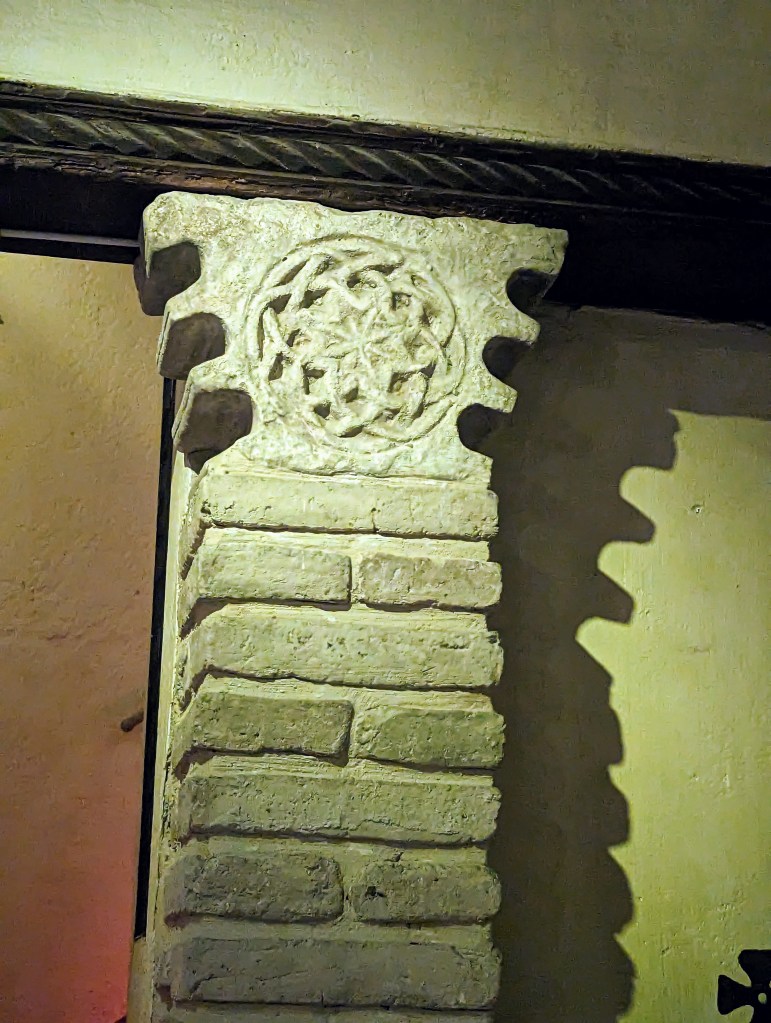
It was the above column that made the archeologists suspect that this had belonged to Jews, but it was the finding of the women’s gallery above that made them believe it was a synagogue.
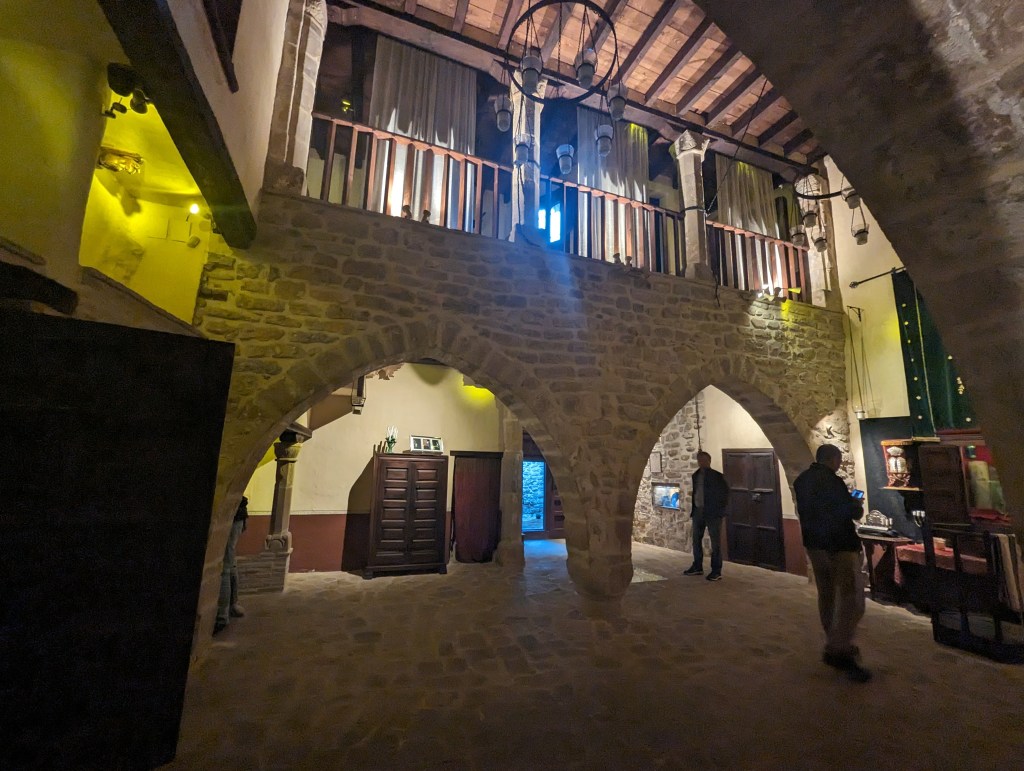
The synagogue gets its name from the natural springs that run underneath and feed the mikvah. Today the water is still crystal clear.

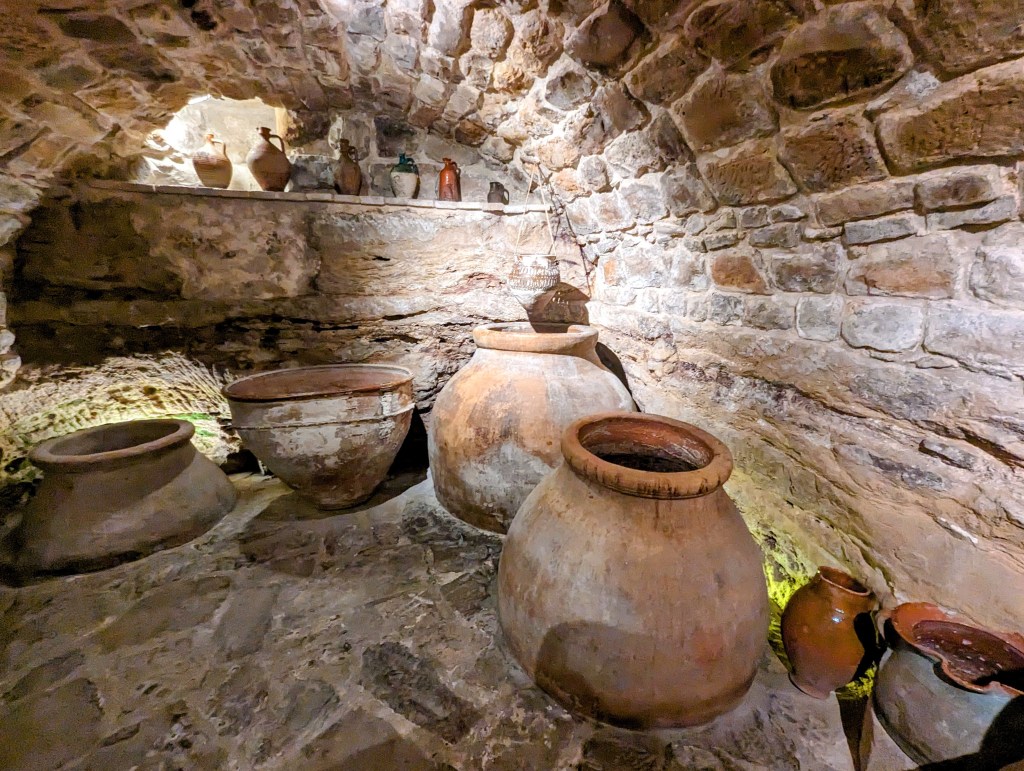
The complex also includes a kitchen with still intact and half buried storage bowls.

Before leaving town, we got some drone views of the major monuments.

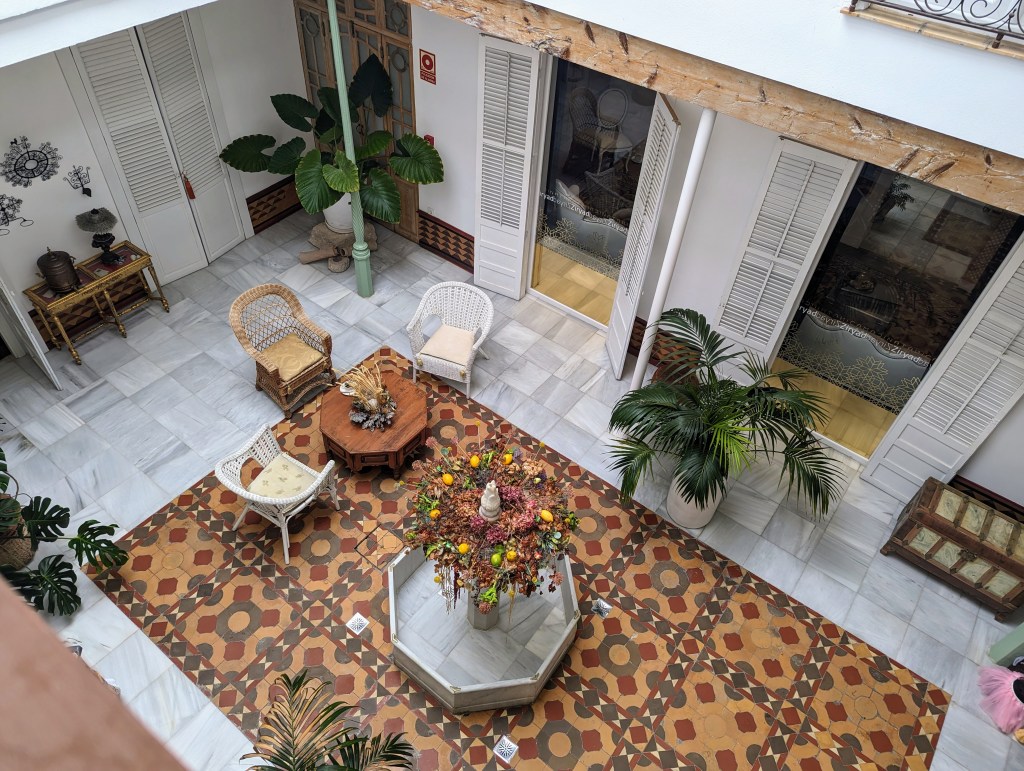
In the morning we were off to Córdoba. Once again we had booked a hotel incredibly well located. Hotel Madinat is in the heart of the old medina of Córdoba, in the historic center. From their website: This traditional Andalucía nowadays, the Madinat Hotel, maintains the appearance of an old-style Casa-Patio run by the bourgeoisie of the late nineteenth and early twentieth centuries. Its previous owners include an ex-mayor of the city who was an intimate friend of Julio Romero de Torres and commissioned numerous paintings, including the first poster for the town fair in 1912. The first radio broadcasts in the city were also carried out here in 1929. Its present beauty evokes that period of eclectic modernism through carefully restored features such as rich mouldings, original tiles, paintings and furniture.
Once settled in, we headed out to visit the Mosque-Cathedral of Córdoba. The building embodies the history of the area. It was originally built in the mid 6th century as the Visigothic Basilica of Saint Vincent. In the mid 8th century a mosque was built upon the remains. Two years later a minaret was added. As the city grew and prospered, the first extension was added in the mid 9th century, and a new minaret added in the mid 10th century. A second extension was added in the latter half of the 10th century followed by a third extension by the end of the 10th century. At this point it had the capacity for 40,000 worshipers. Following the conquest of the Muslims in the early 12th century, the Christian cathedral was dedicated in 1146. The Royal Chapel was completed in the mid 14th century. In the 15th century a Gothic basilica-shaped nave was erected within, removing 50 original columns. The bell tower was added in the 16th century, the dome of the transept and the vault of the choir in the 17th as well as the main altarpiece. The choir stalls were added in the 18th and restorations were made in the 19th century. In 1984 it was declared a World Heritage site by UNESCO. Restorations have been ongoing.
One enters the Mosque-Cathedral through the Patio de los Narangos (The Oranges Courtyard) full or orange trees, palms, and cypresses.

Then through the main gate.
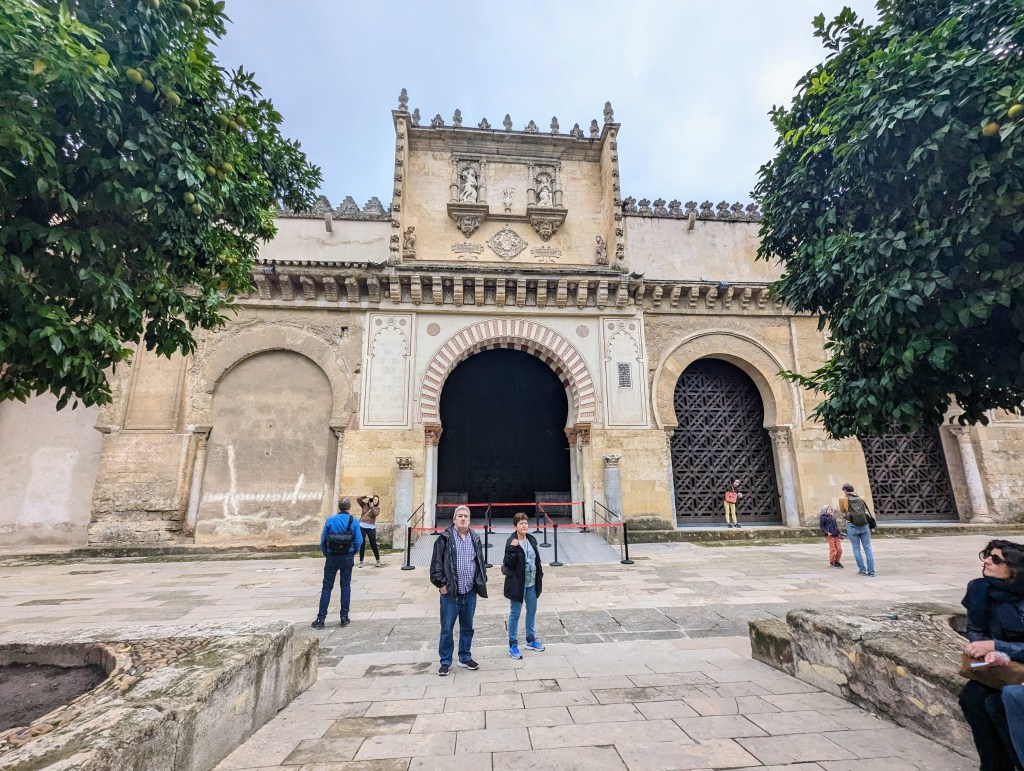
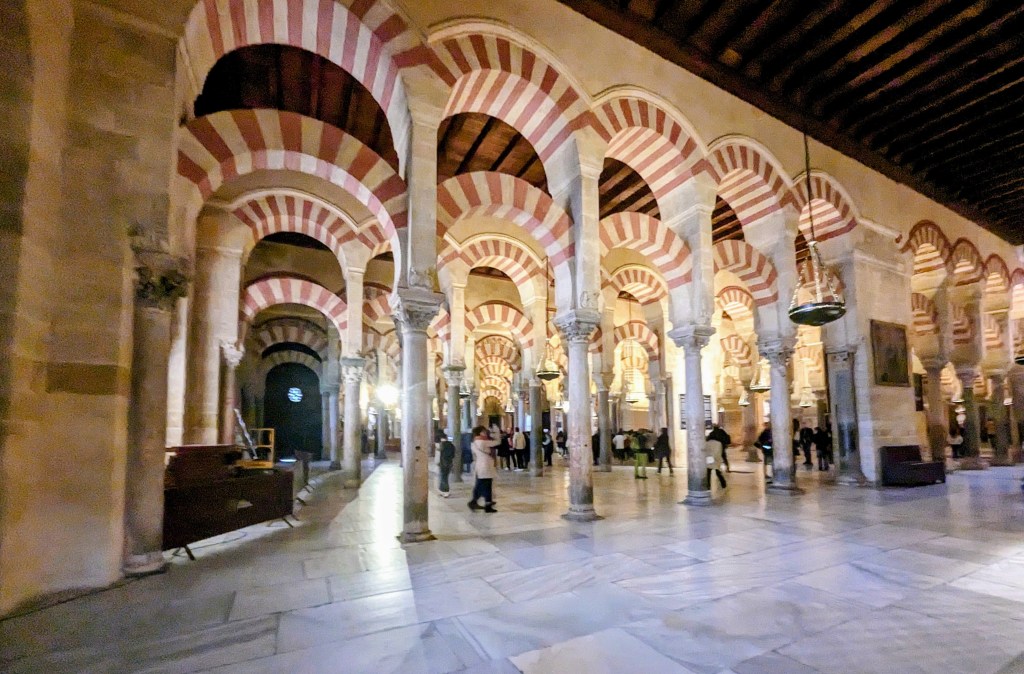
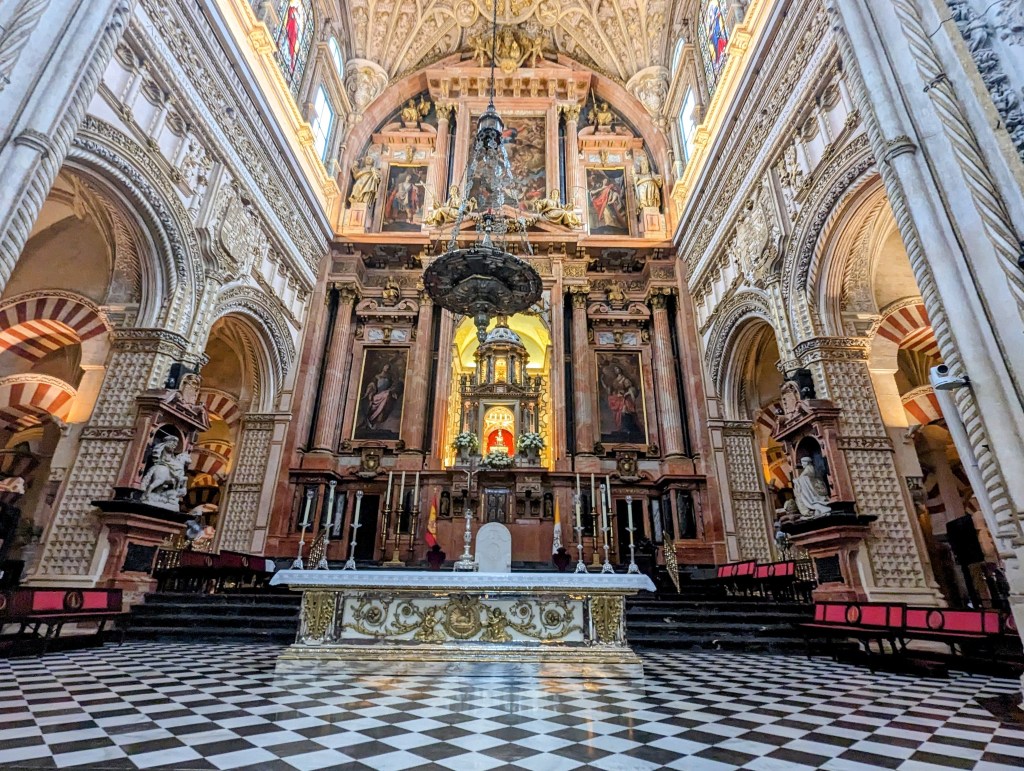
Upon entrance we were immediately awed at the enormity of the space as well as intrigued by how different it was from every other cathedral we had seen. The columns are all double tiered.
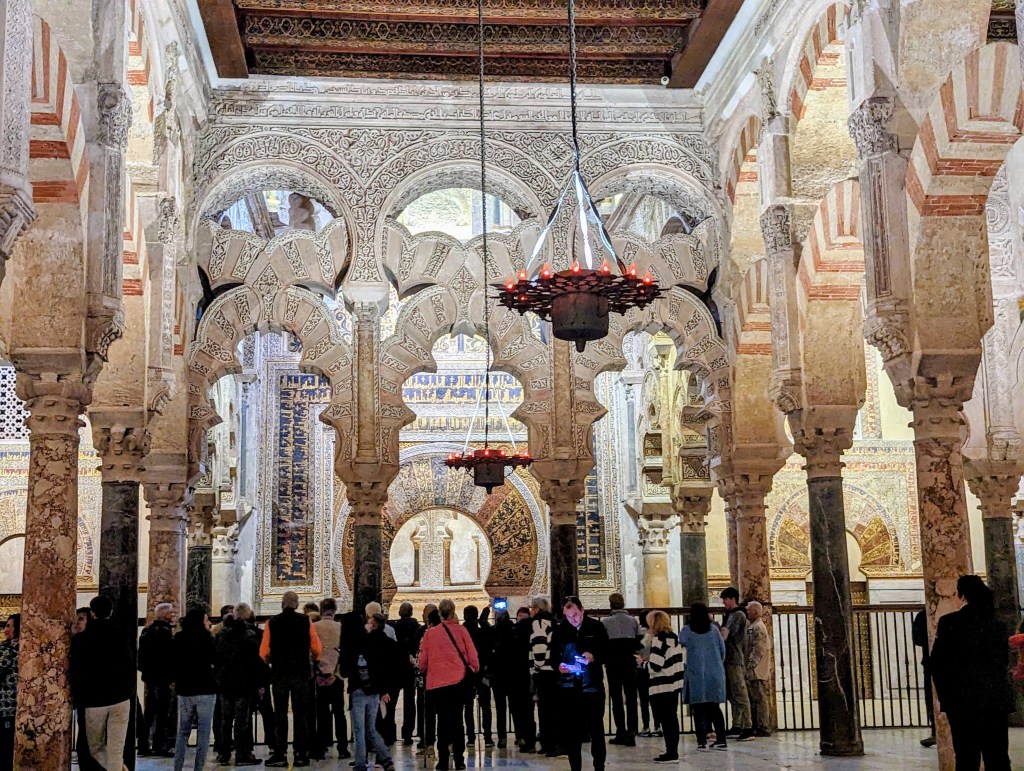
A mihrab is a niche in the wall of a mosque that indicates the qibla, the direction of the Kaaba in Mecca towards which Muslims should face when praying. The columns in front of the entrance to the mihrab are different to demonstrate its importance and position.
The entrance to the mihrab is inscripted in gold with passages from the Quran.
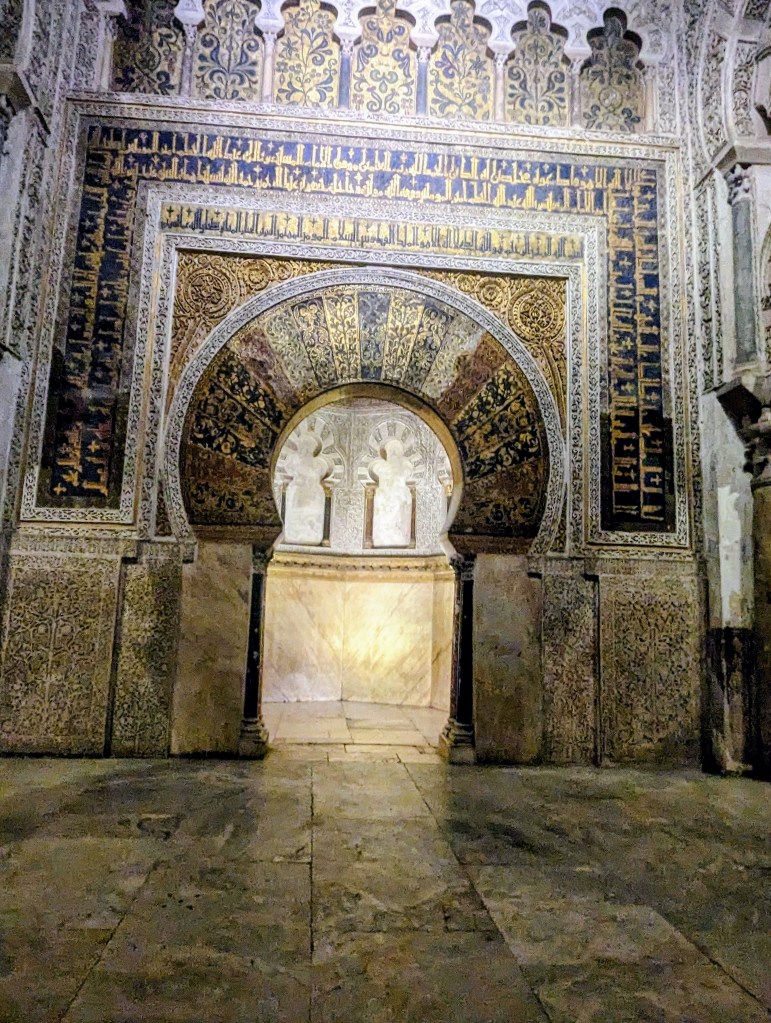
This mihrab is the earliest known to be a room and not just a niche, cannot be entered by tourists. It is elaborately carved white marble.
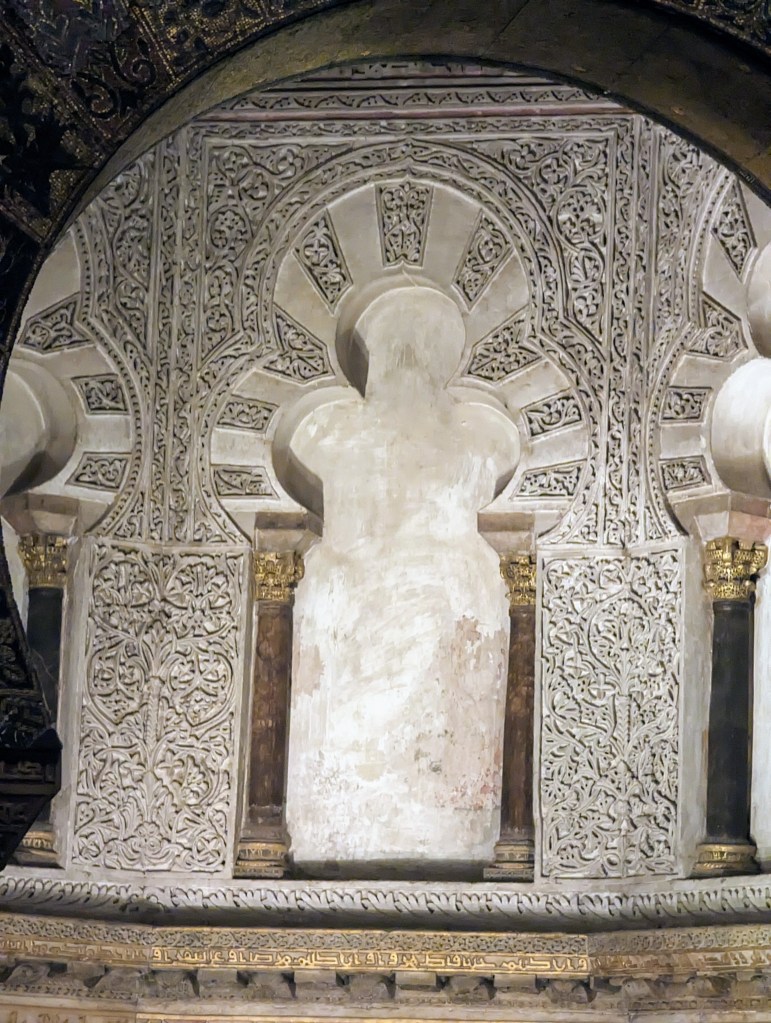
Right next to the mihrab is what was converted into the sacristy of the cathedral. The cathedral is dedicated to Our Lady of the Assumption. The sacristy has a beautiful marble sculpture dedicated to her.
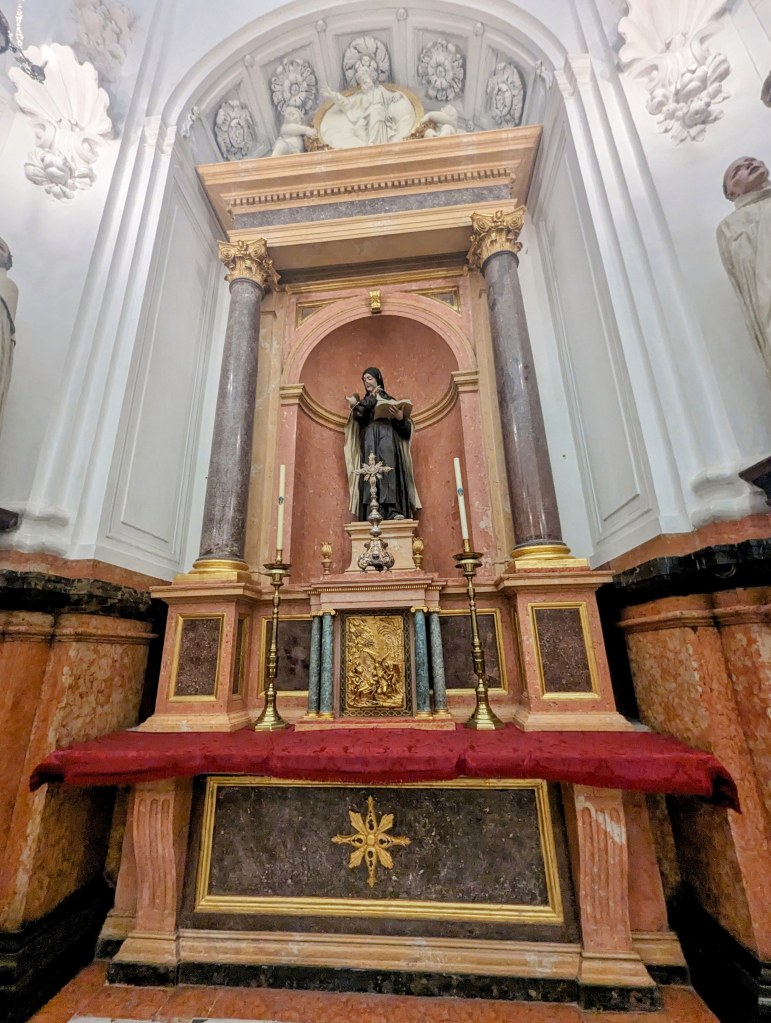
As in most cathedrals, there are many chapels around the periphery. At the front is the one dedicated to Our Lady of the Assumption.
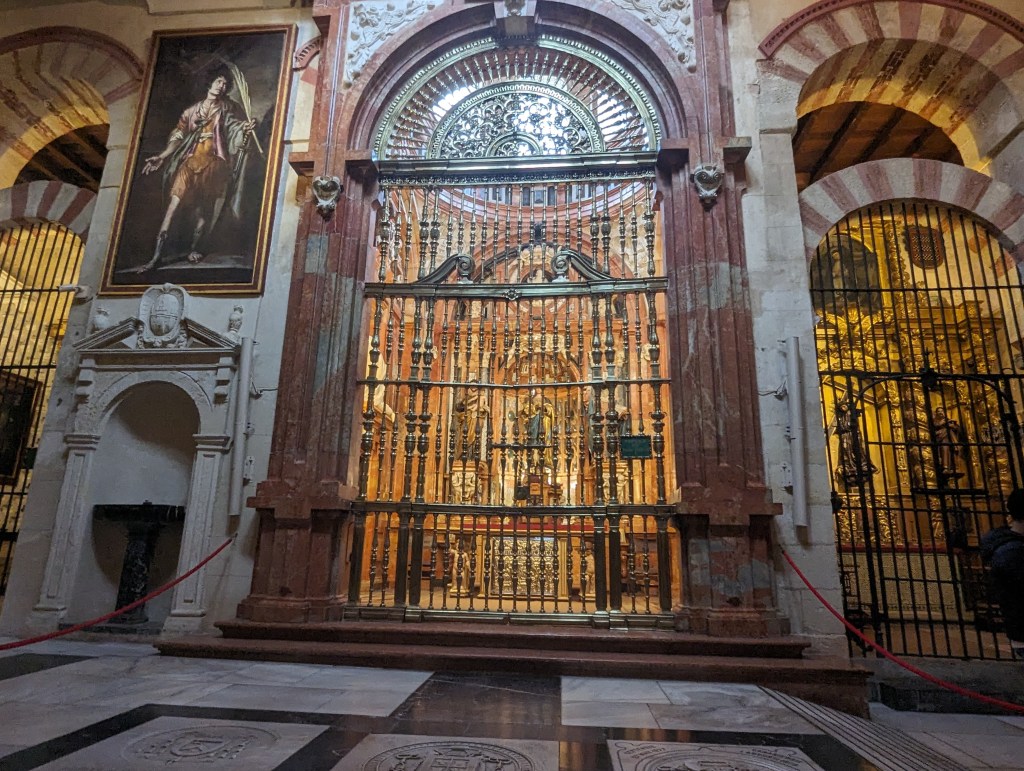
In the center of the building is the main chapel.
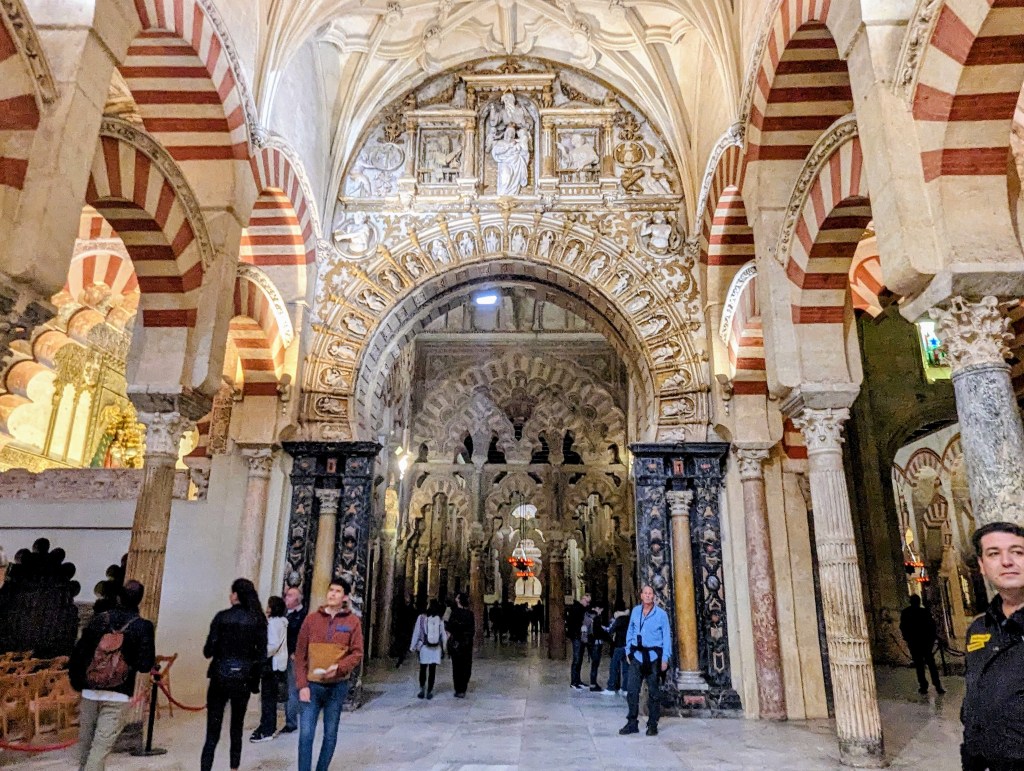
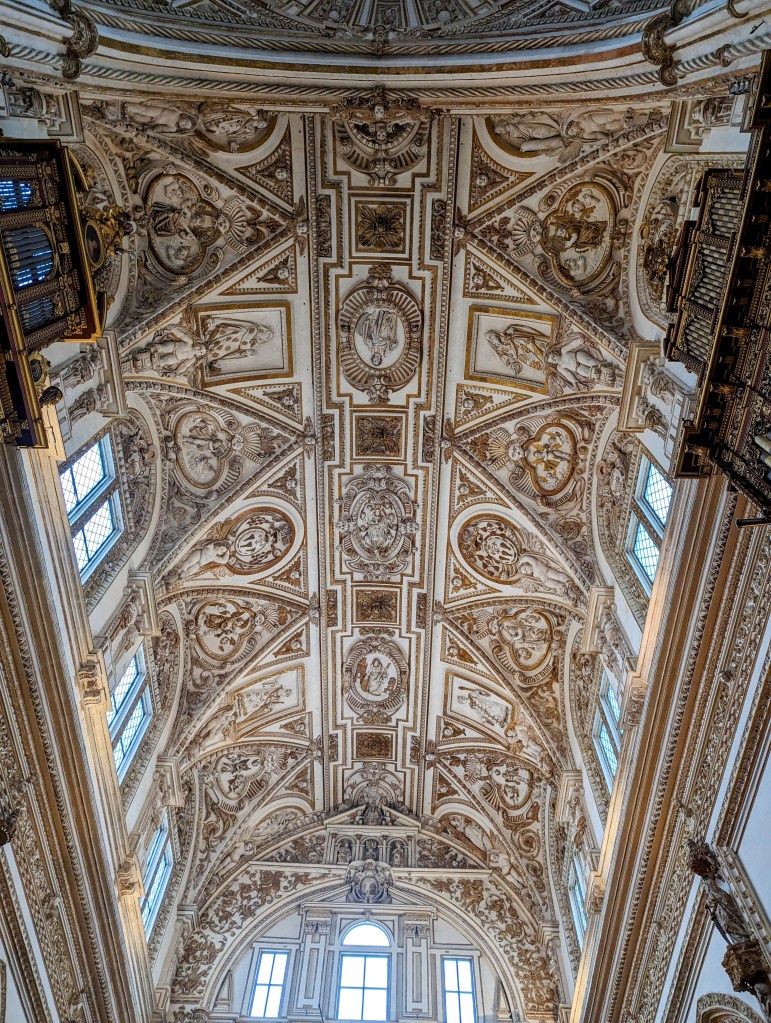
The ceilings, both Muslim and Christian, are all stunning throughout. But the one over the choir is particularly breathtaking, said to be inspired by the Sistine Chapel in Rome.
Having spent several hours in the Mosque-Cathedral, we retired to our room. But first a visit to the rooftop terrace for views of the city.

In the morning we met our walking tour guide Lou at the Plaza of Tendillas located where the historic center of Córdoba meets the modern. We were her only clients.
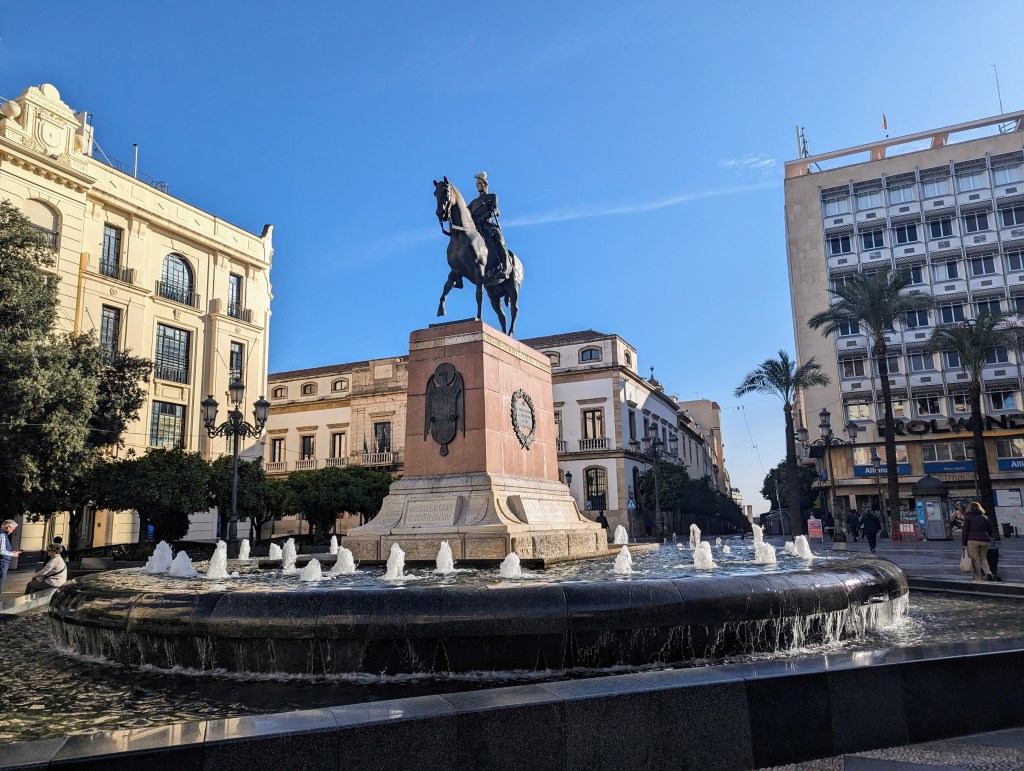
It is surrounded by examples of typical 19th century Spanish architecture.
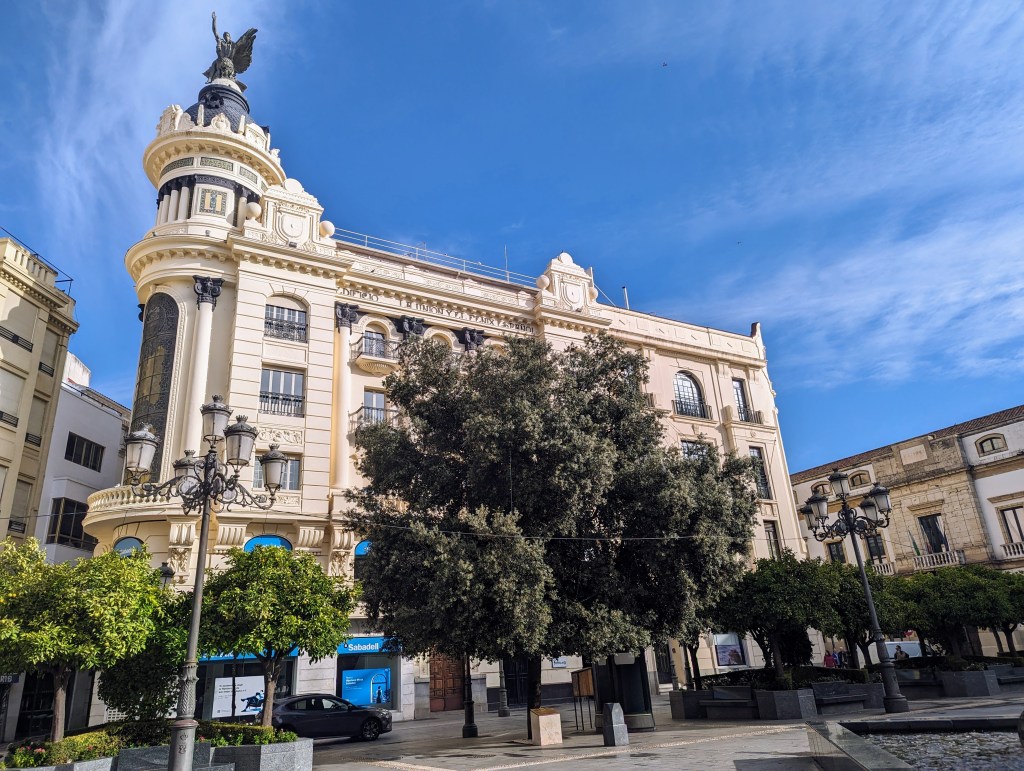
Lou then took us for a view of the tower of the Mosque-Cathedral seen through the Calle de los Flores, Road of the Flowers.
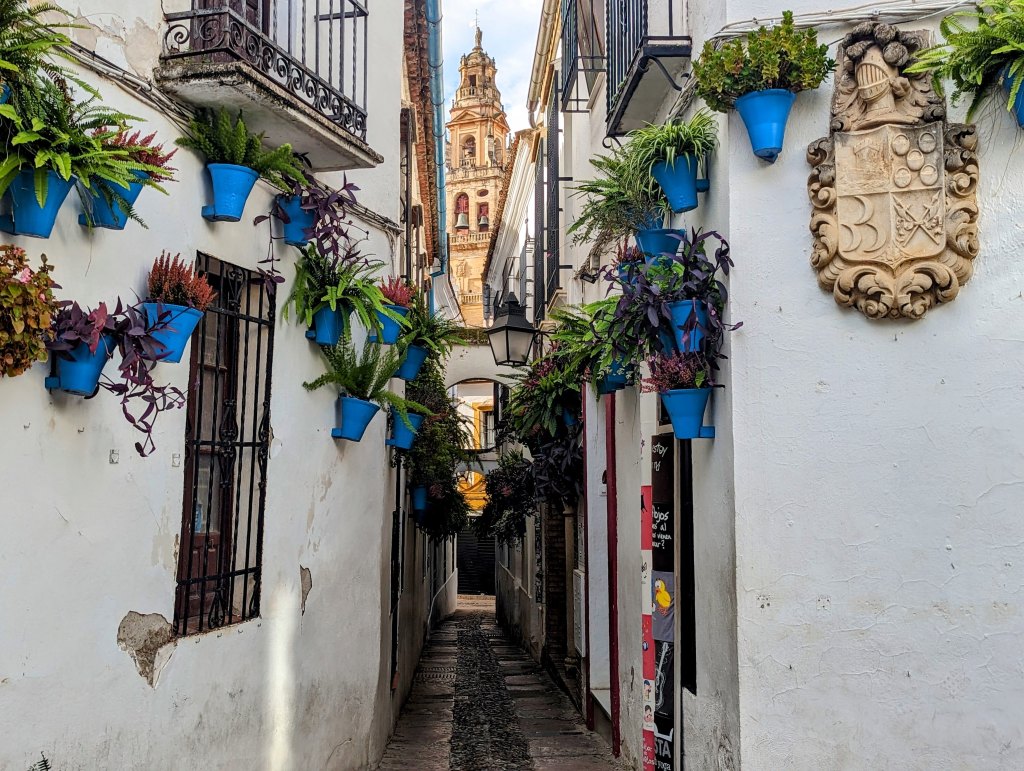
We then entered the Jewish Quarter with it’s narrow winding streets. The apartments open onto central courtyards.
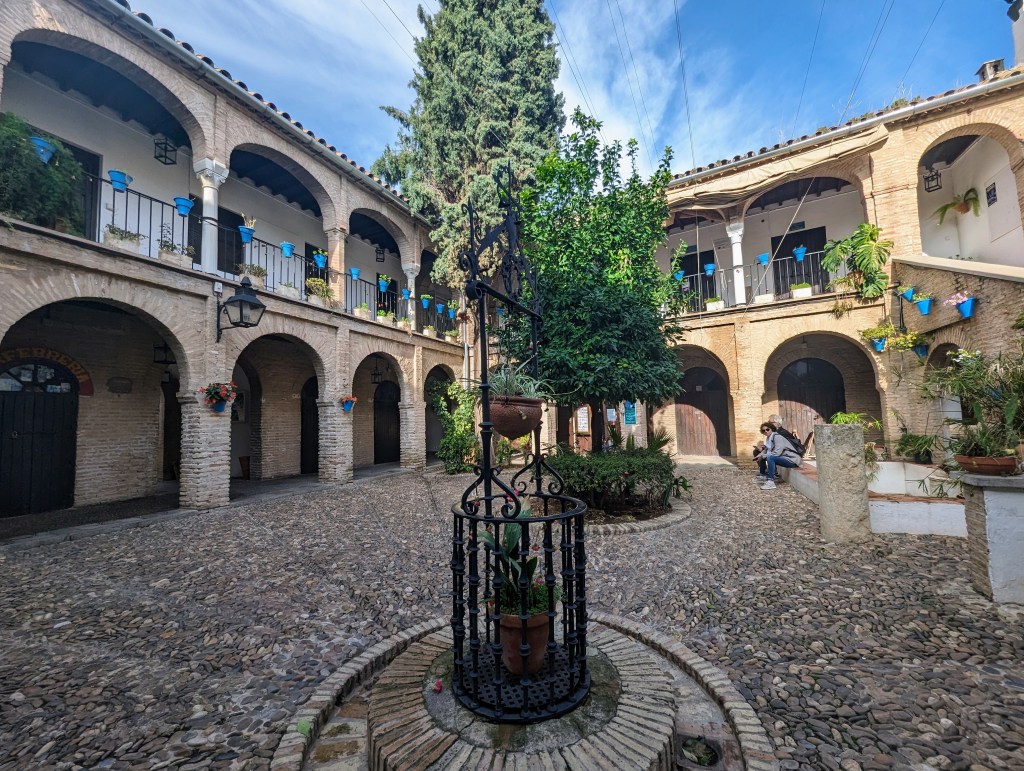
We entered the synagogue.

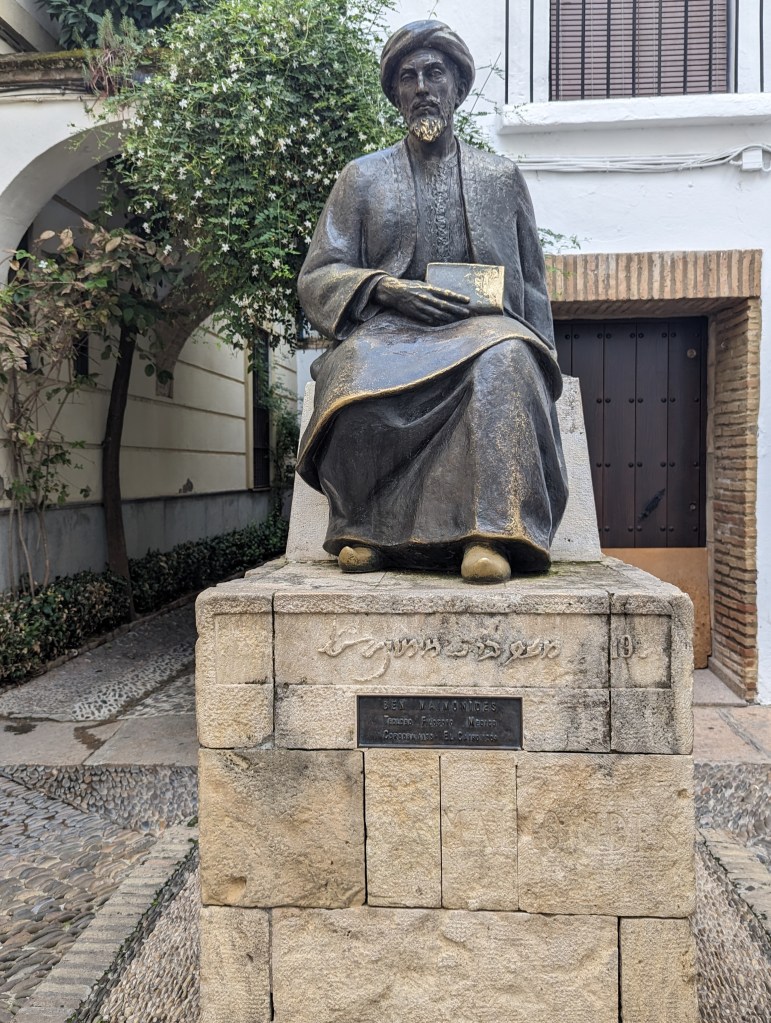
Outside was a statue of Maimonides.
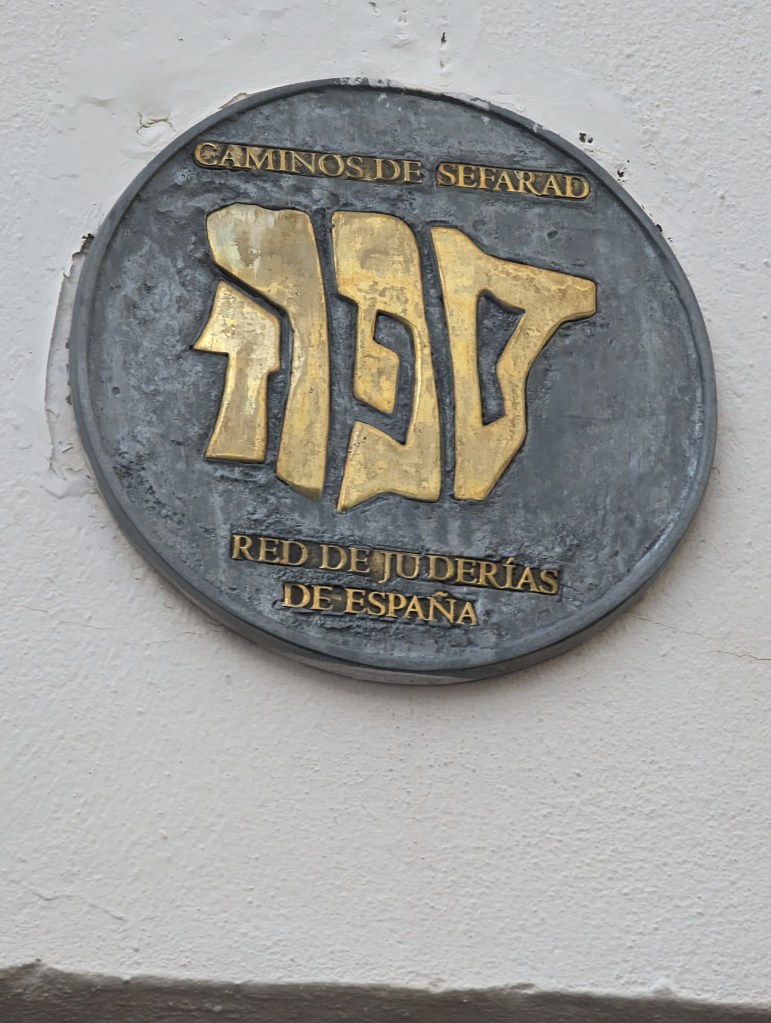
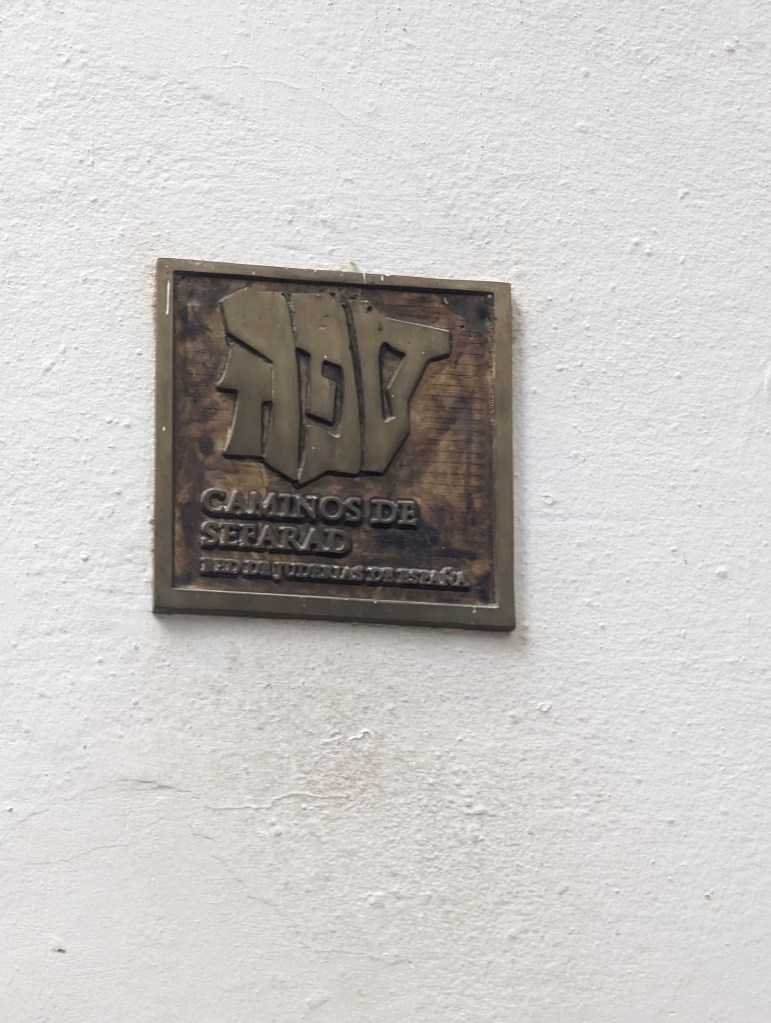
Lou also pointed out the symbols that can be seen on the roads throughout Spain that are of the Camino de Jerusalem: the Sephardic Jewish path to Jerusalem.
We strolled past the Alcázar, fortress of the kings, which we would visit later.
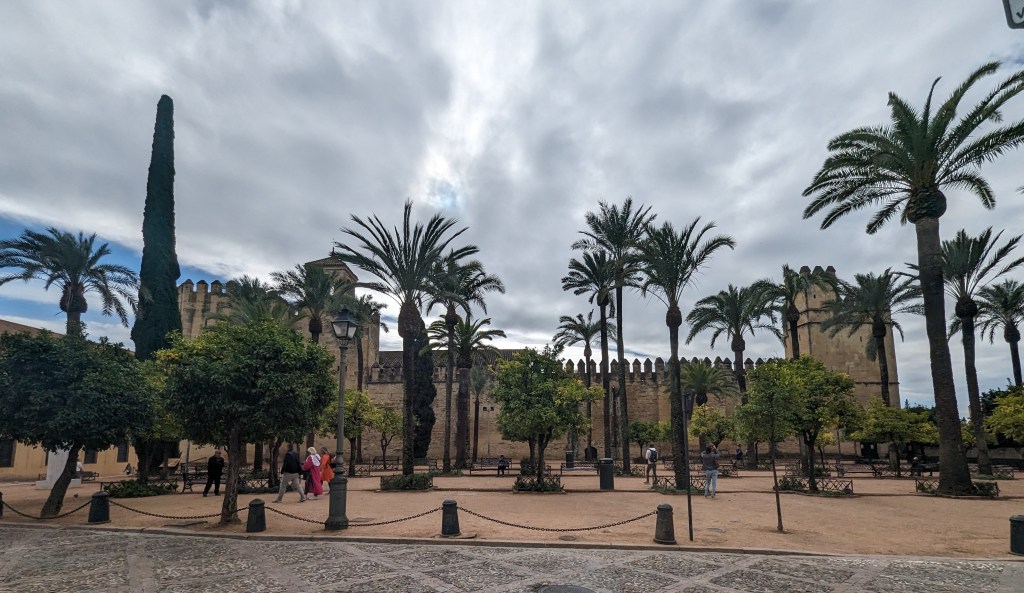
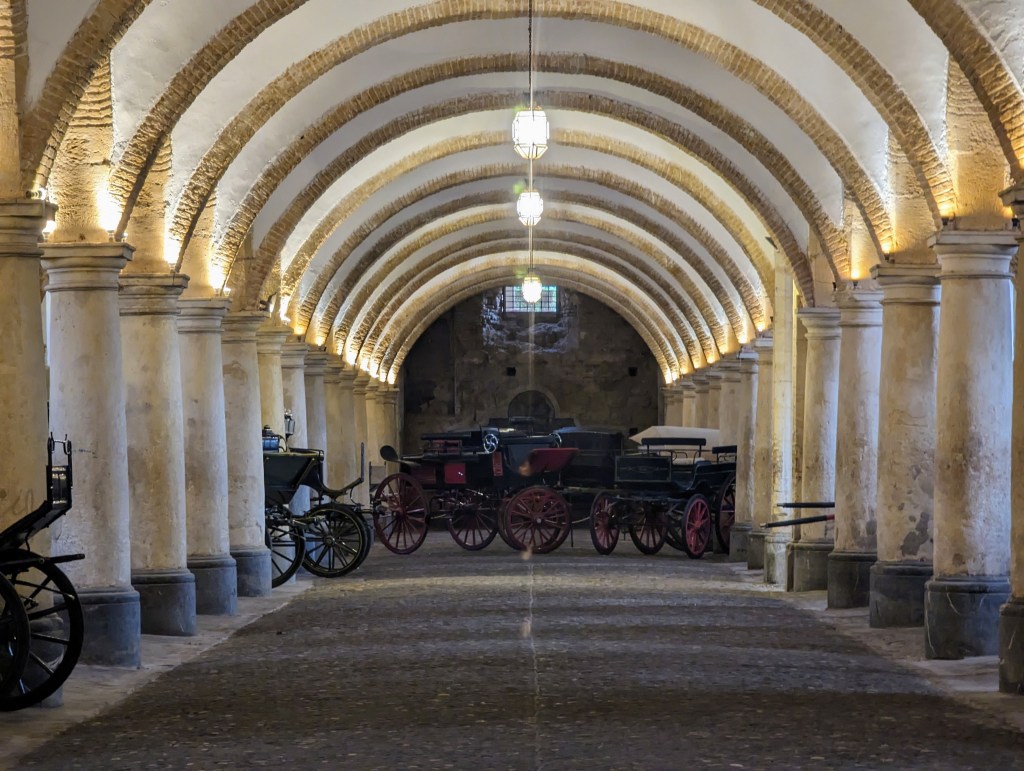
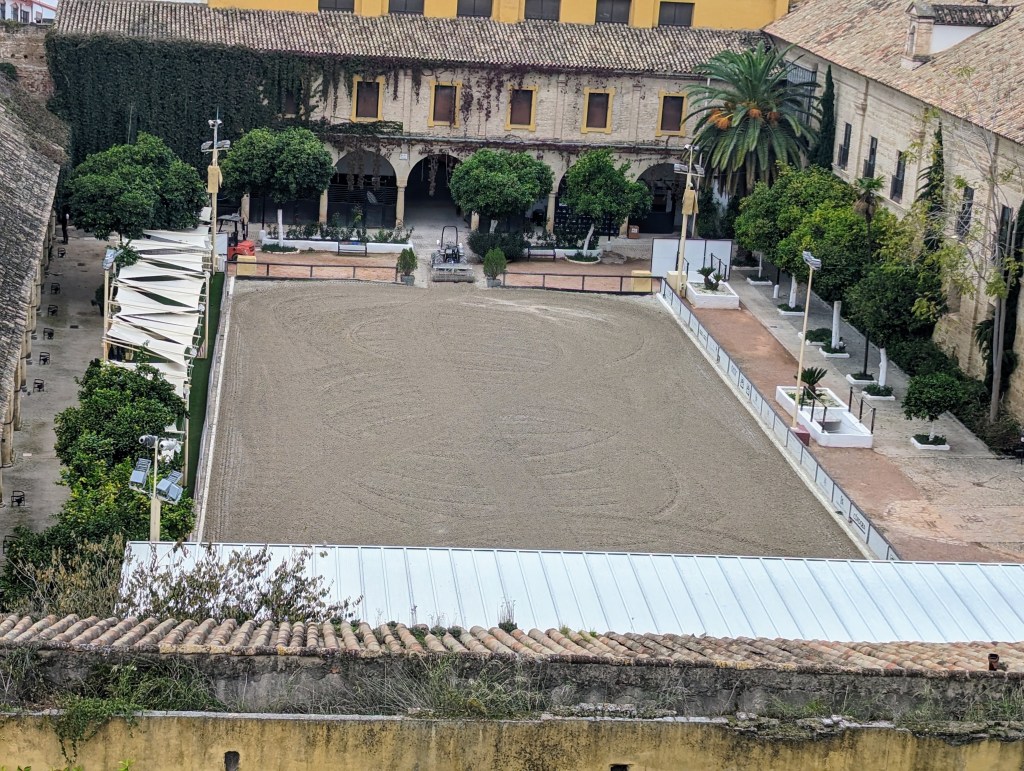
We stopped by the Royal Stables, which was built by order of Philip II in 1570 on part of the site of the city’s Alcázar fortress. With these facilities the King intended to further his project to create purebred Spanish horses. This was the place where the Spanish –or Andalusian– horse was first bred from Arab stock. We were also to come back that night, more on that later.
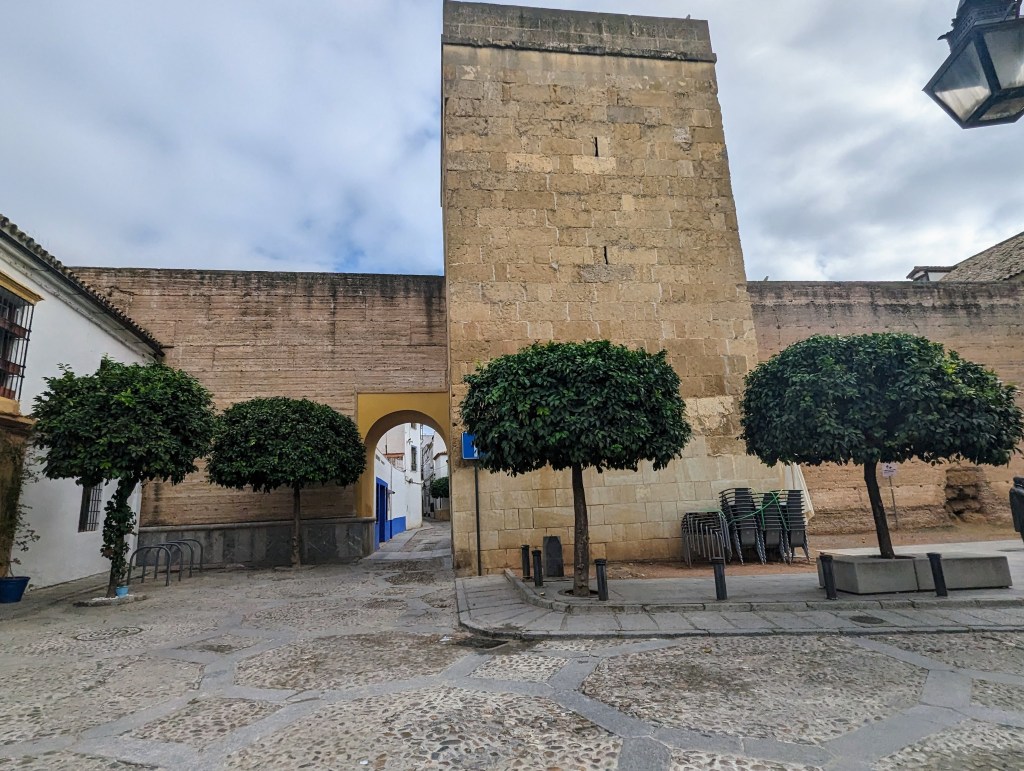
Beyond the Alcázar is the Jewish wall of the Jewish quarter.
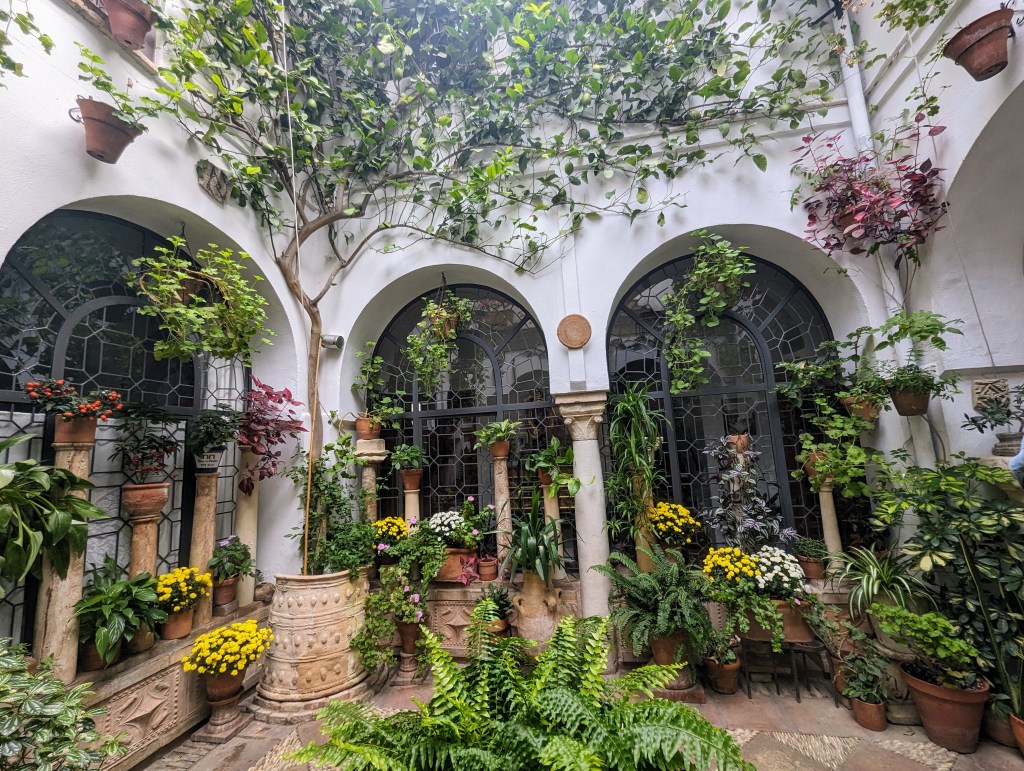
Beyond the Jewish Quarter is the area of Córdoba known for its patios, which are inner courtyards. Every year since 1921 (except during the Spanish Civil War) during the first 2 weeks in May private homes compete for prizes in several categories based on the beauty of their patios. The top prize is 25,000 euros. In order to qualify for the competition the family (or families) must live in the space and maintain the patio on their own. Lou took us to a few that are open to the public.



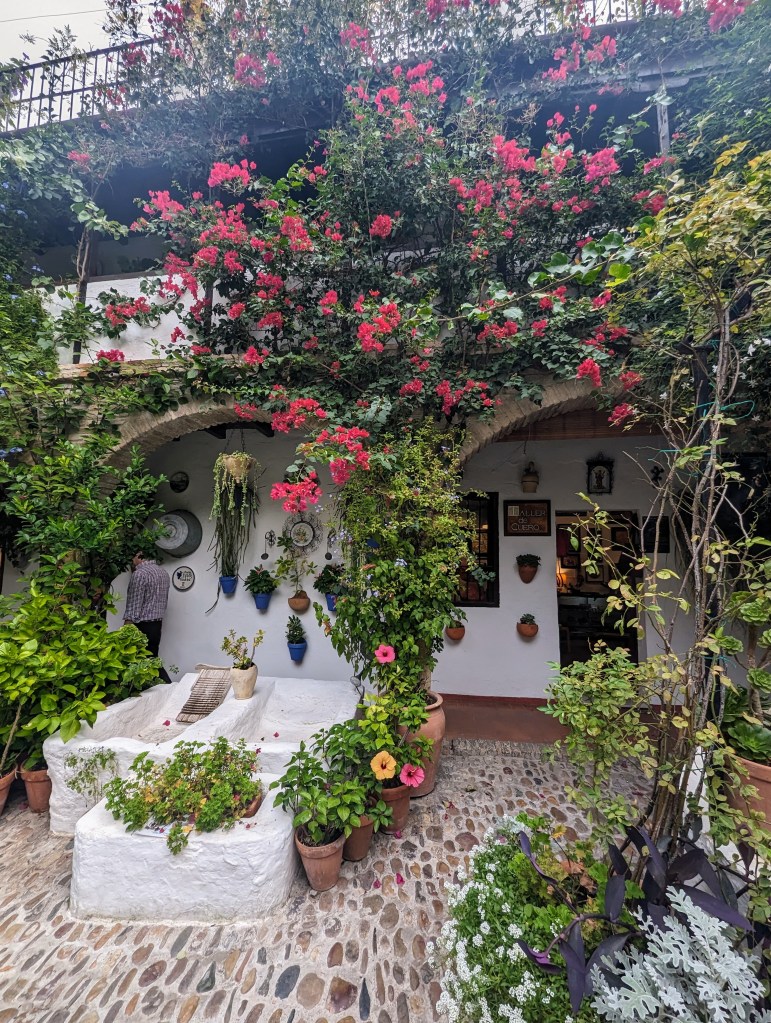
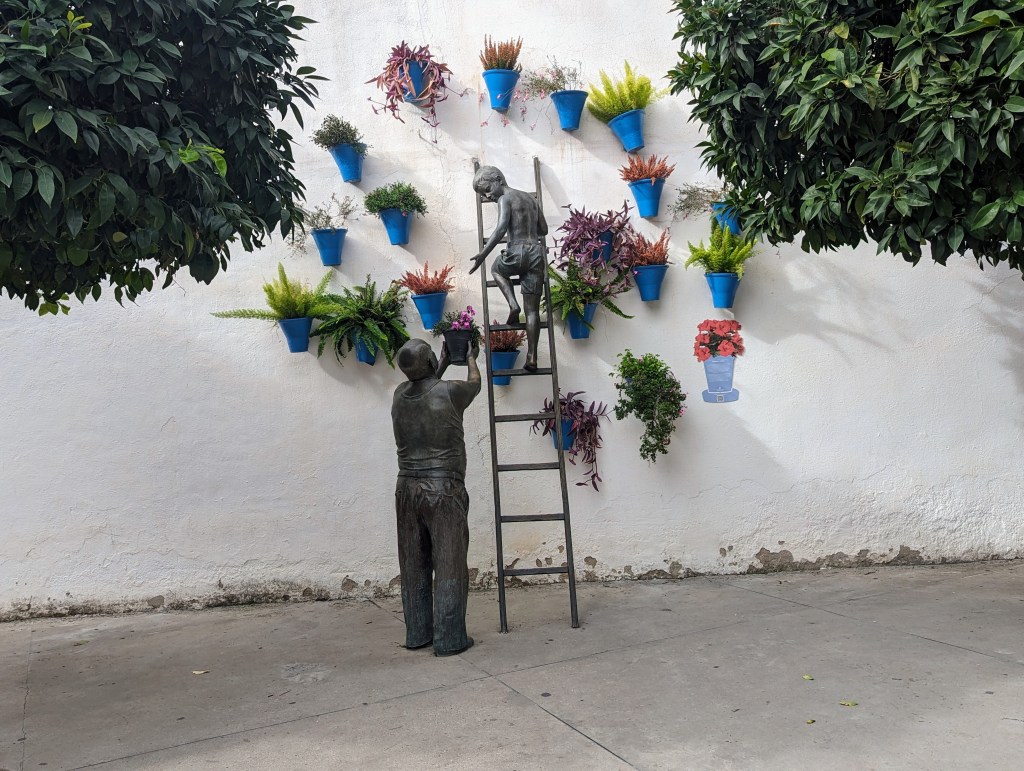
She also showed us a sculpture dedicated to those who maintain the patios. It emphasizes not only the importance of the patios to the culture of Córdoba, but also the importance of family, passing the tradition from one generation to the next.
Once the tour was over, we headed back to the Alcázar.
The first room is the room of the mosaics.
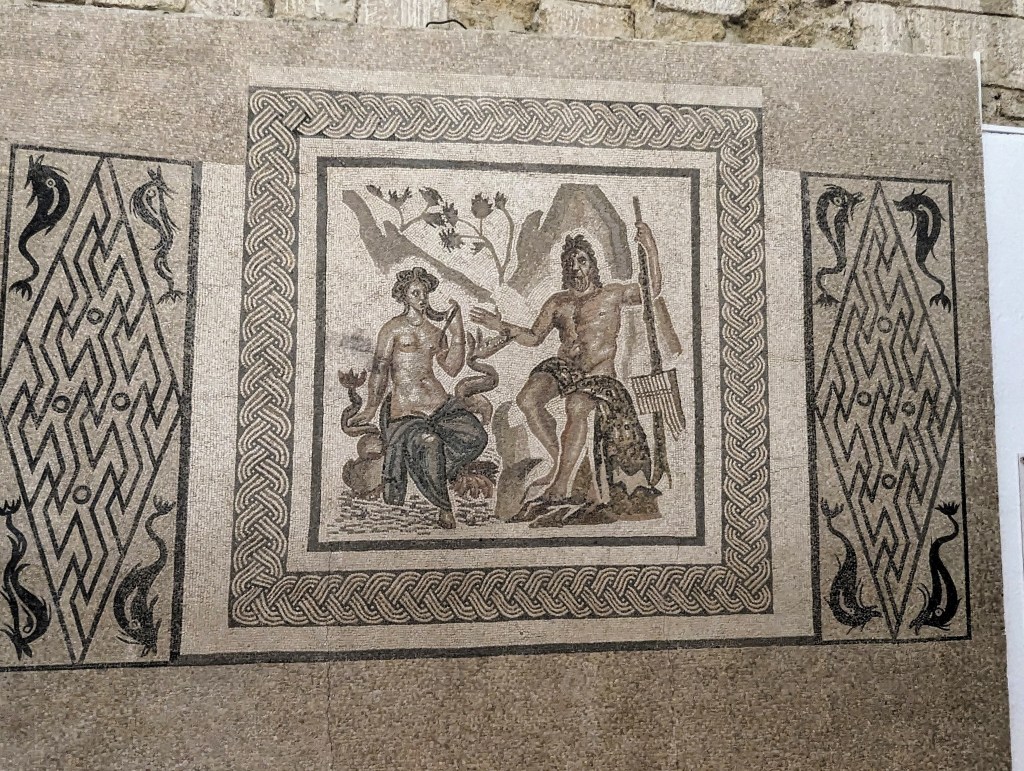
Honestly, the inside was pretty humdrum; it was all about the views from the tower and the gardens.
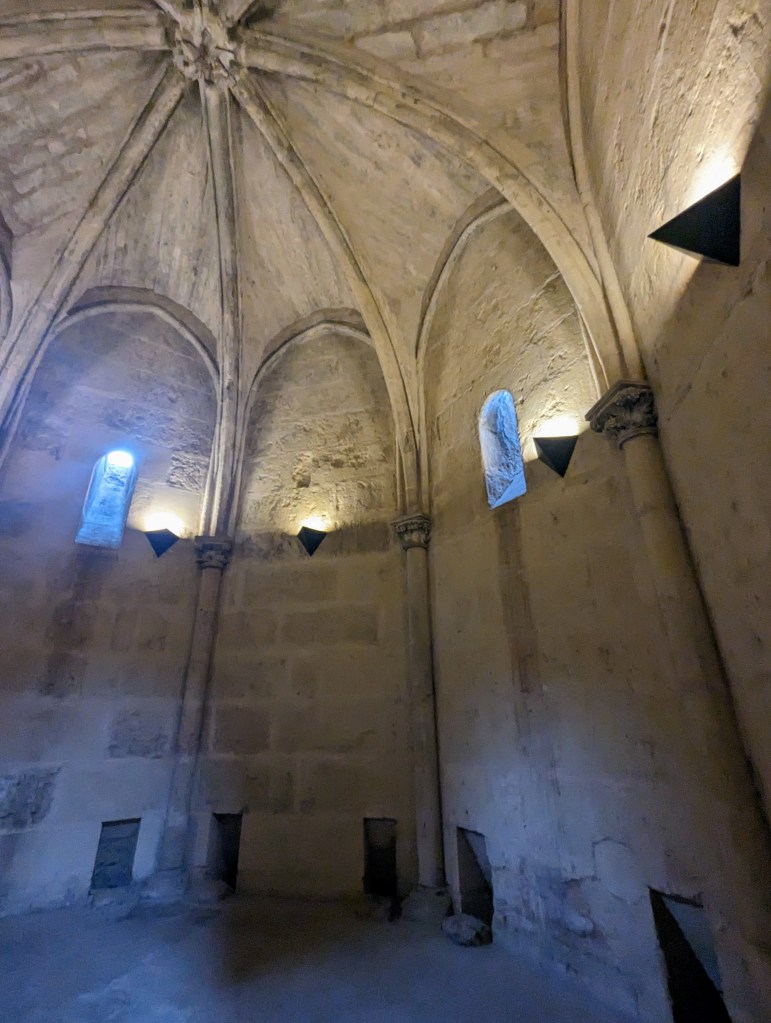
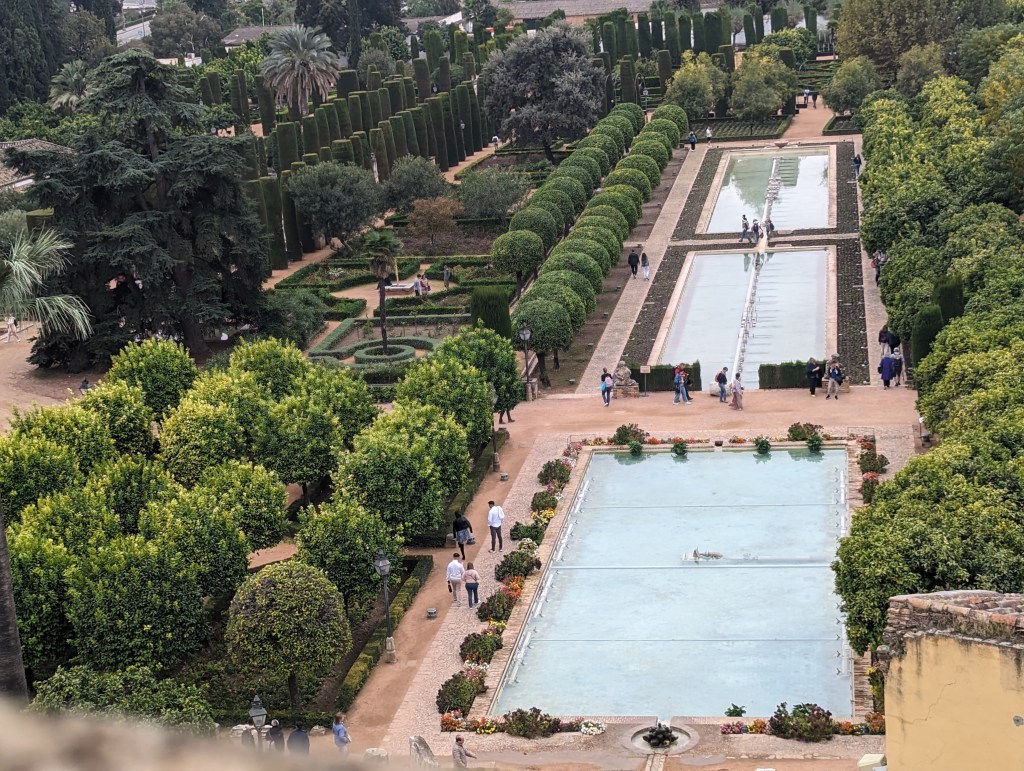

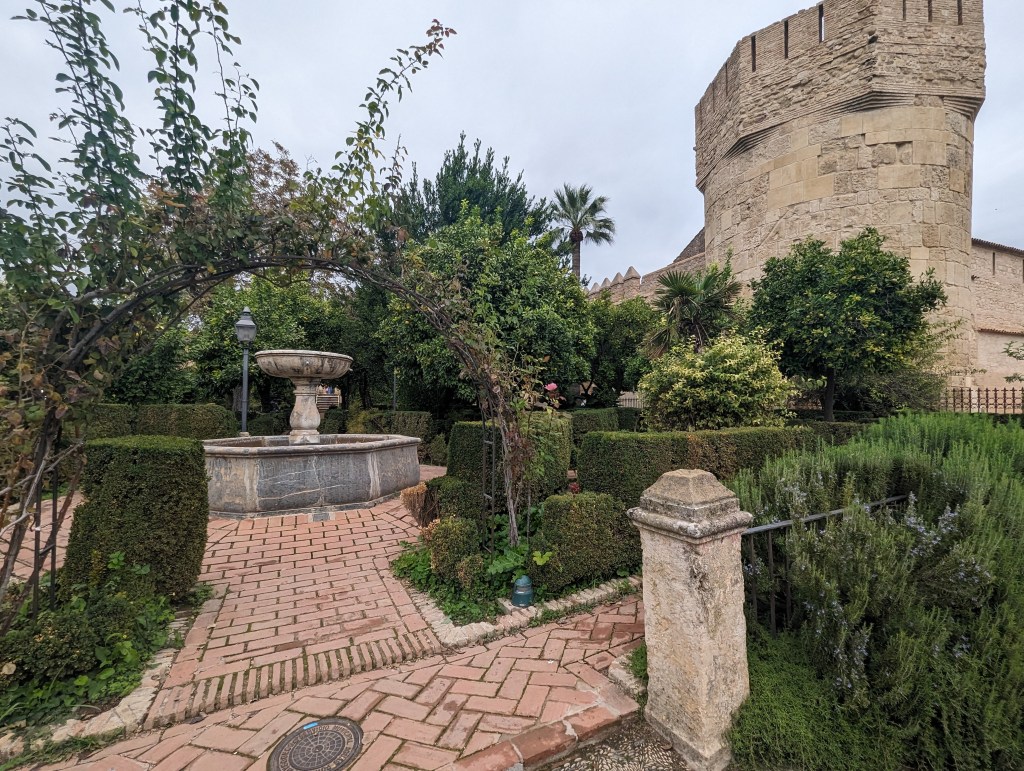
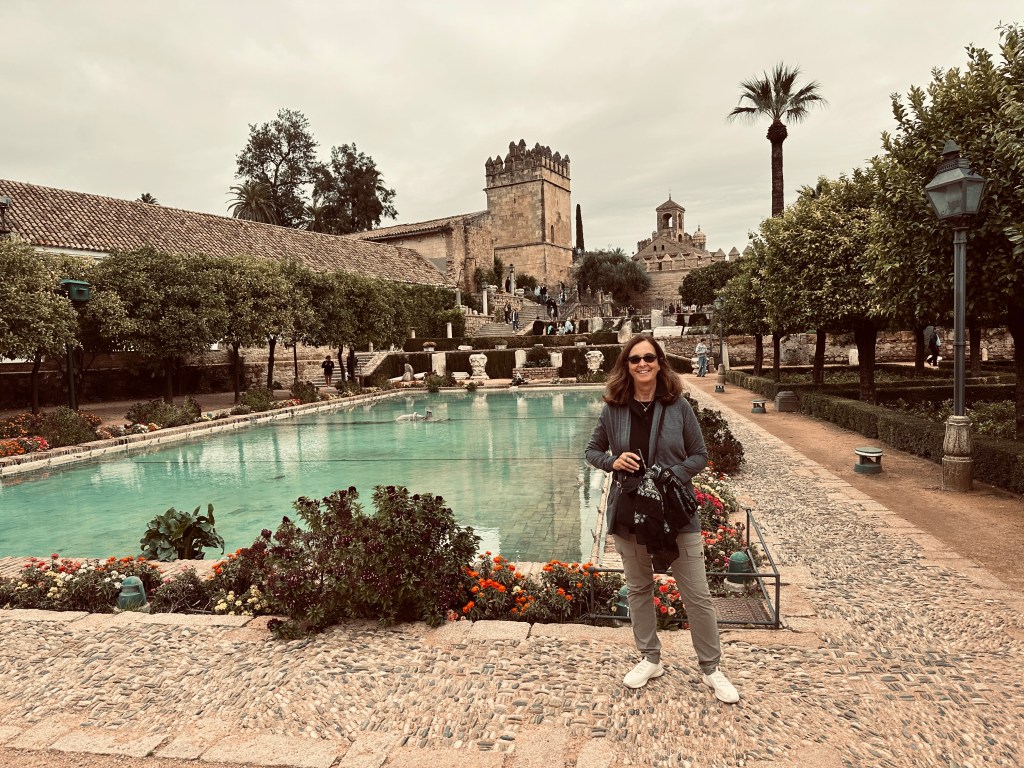
Then we went down into the gardens which were immense and impressive despite the end of the season.
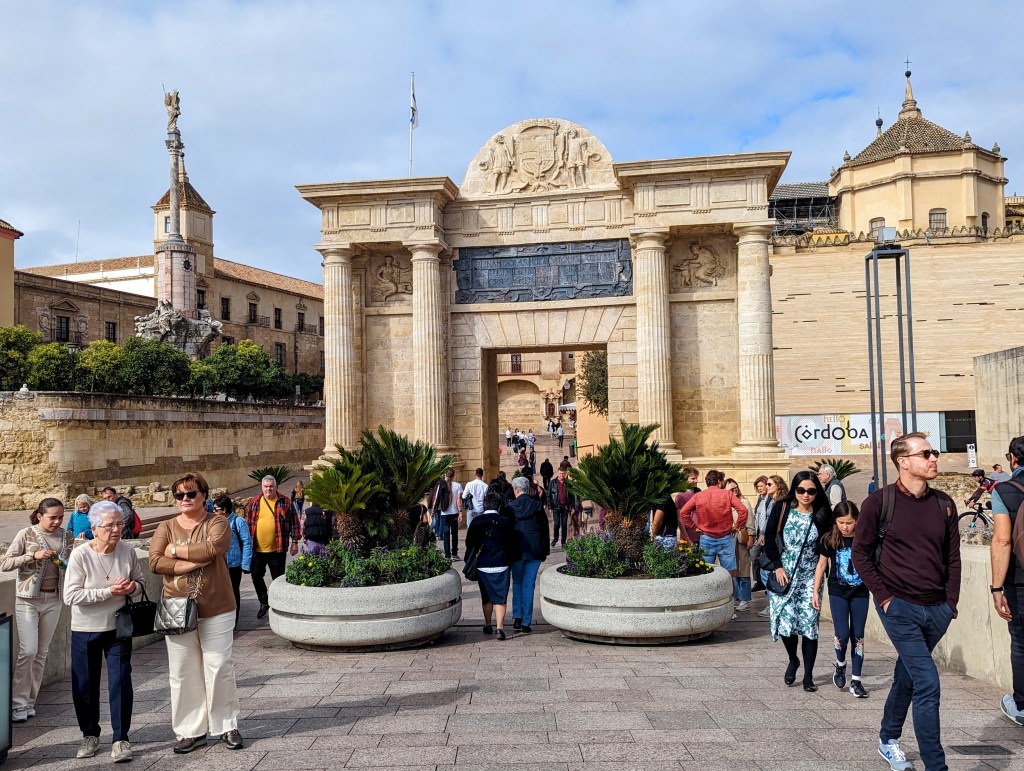
On the way back to the hotel we passed the Puerta del Puente, a 16th century gate, built on the site of a previous Roman gate, to welcome King Philip II to the city.

It is at the entrance to the Roman Bridge, which we walked across for a view back at the city.
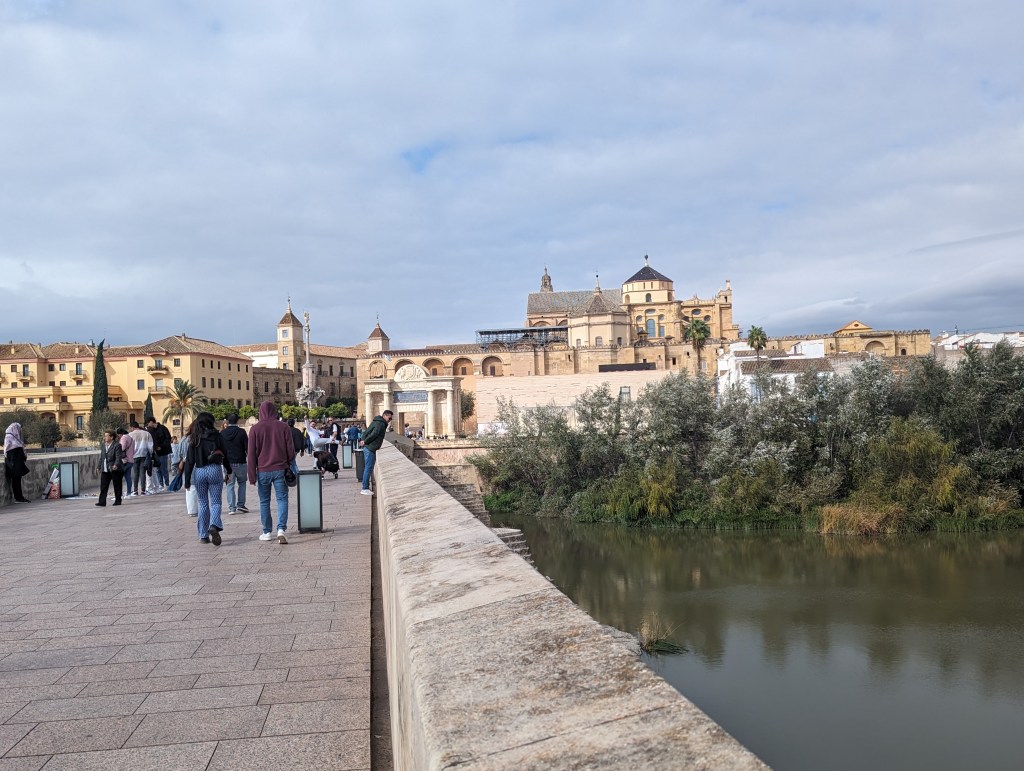
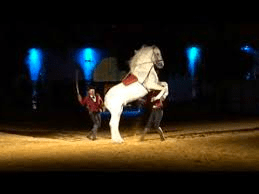
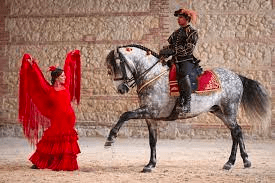
We went back to rest up for our big night out. We had tickets to the Equestrian Show! The Andalusian horses have been trained in dresage and put on a nightly show in the equestrian arena seen from the tower. There are not more than a few hundred people in attendance around the arena; it is an intimate feeling (very dissimilar to when I saw the Lipizzaners in Madison Square Garden). Alas, pictures were not allowed. But the show was AMAZING! The show started with a single flamenco dancer on a platform, which was then removed for the horses. There were routines with multiple horses dancing in precision interactions (picture an aerial show or the Rockettes). Others had single riders showing intricate dance moves by the horse. In one routine the horses were led by rope and hand motions to dance by themselves. One involved a single rider with a long pole which the horse dance around. There were a couple where the horse and rider danced with a flamenco dancer. I have copied a couple of pictures from the internet to show.
Just spectacular! After the show we went for dinner at El Cabello Andaluz (The Andalusian Horse, fitting).
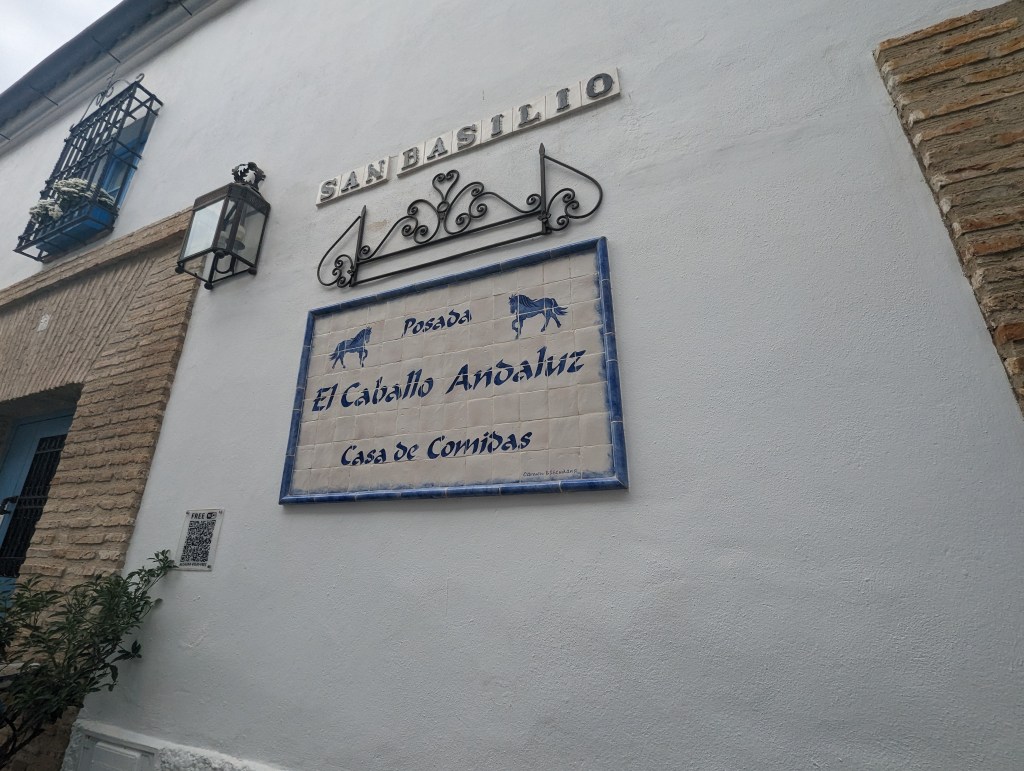
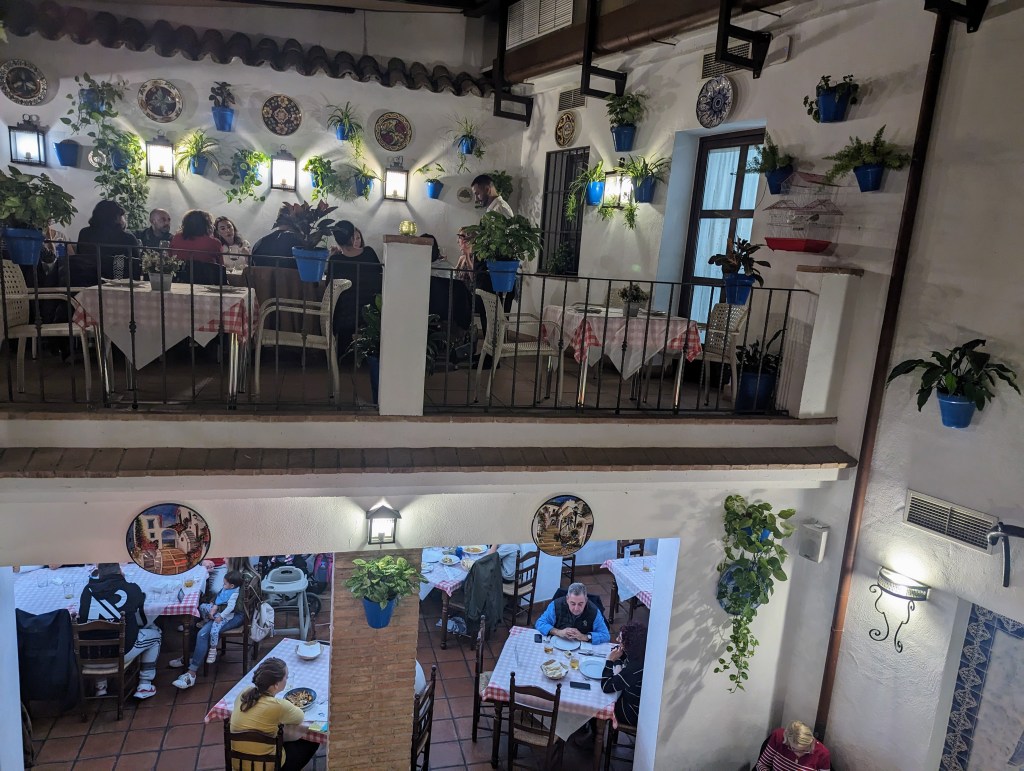
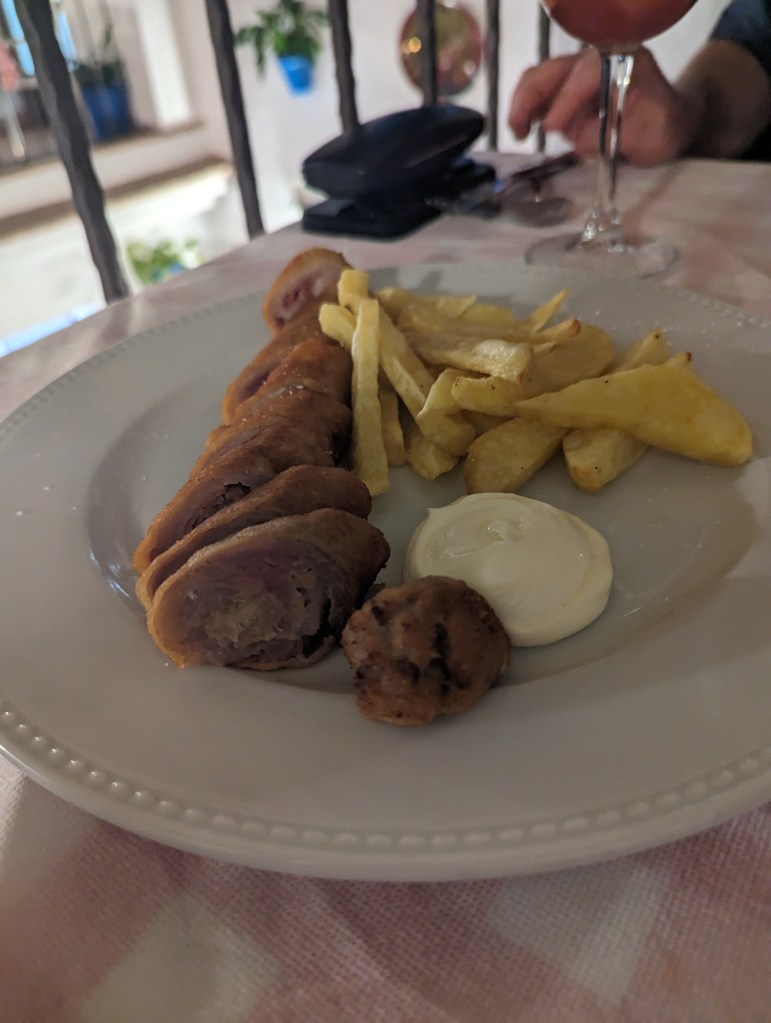
We felt the need to break down and finally try the Andalusian specialty flamenquin, which is basically rolled layers of meat, cheese, and ham breaded and deep fried. We were not any more impressed than we had expected.
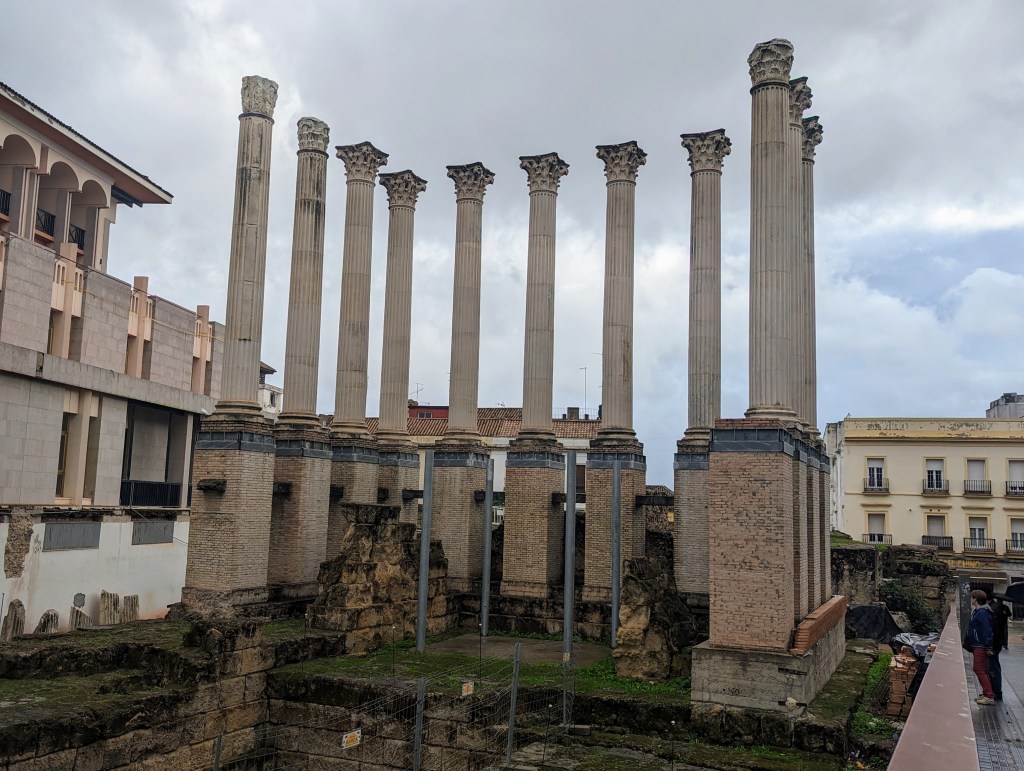
What a full day. In the morning, before leaving town, I wanted to see the Roman Temple built in the first century and discovered in the 1950s during the expansion of City Hall.
Then we were off to Seville. There we had rented an AirBnb for a few days, our last of the trip (laundry time again). Once again we were in the heart of the old city with views, this time of the cathedral.
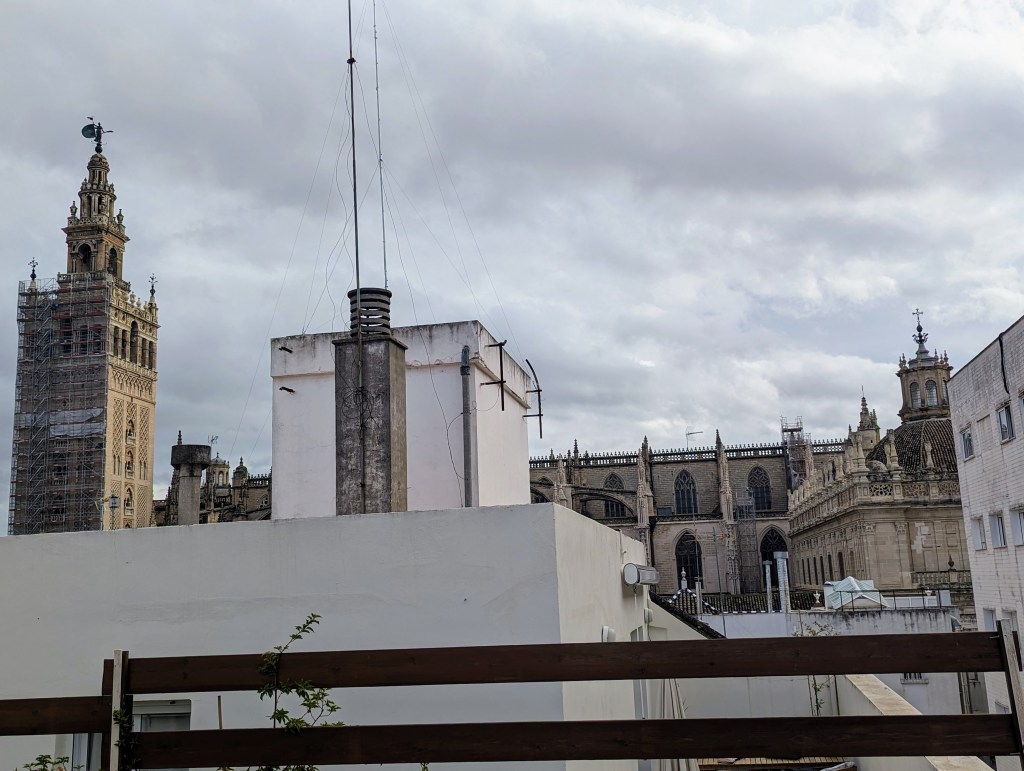
We walked all around the neighborhood to familiarize ourselves. As in Córdoba, there are plenty of examples of typical 19th century Spanish architecture.

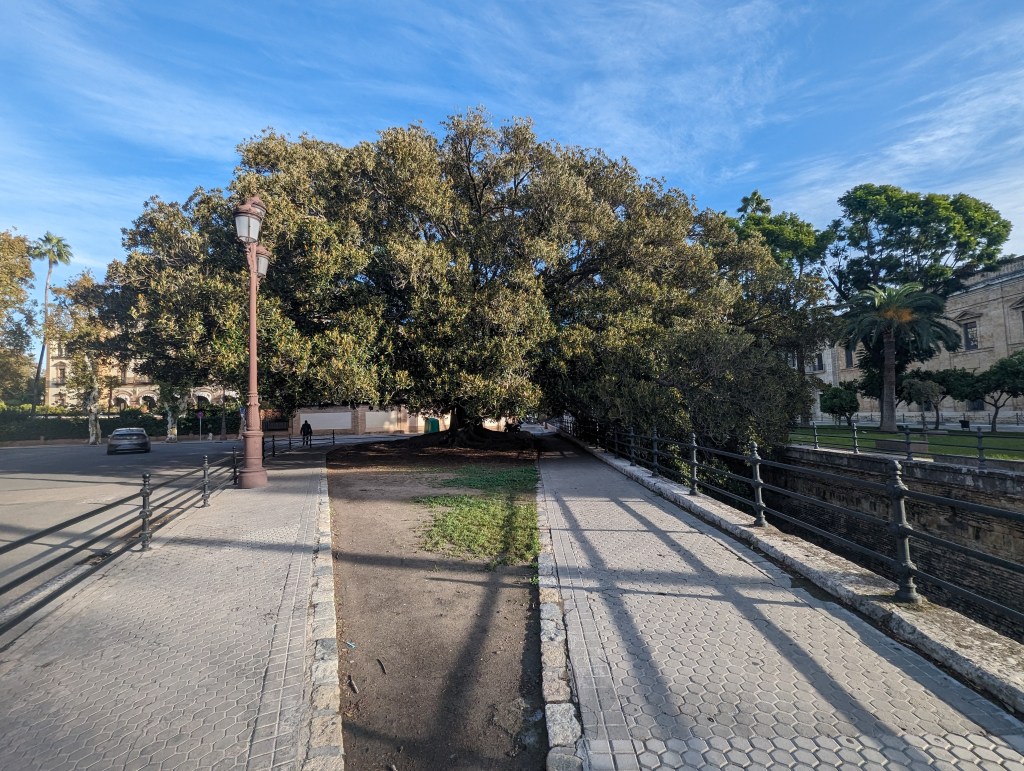
Spain has some of the most gorgeous and huge varieties of ficus trees.
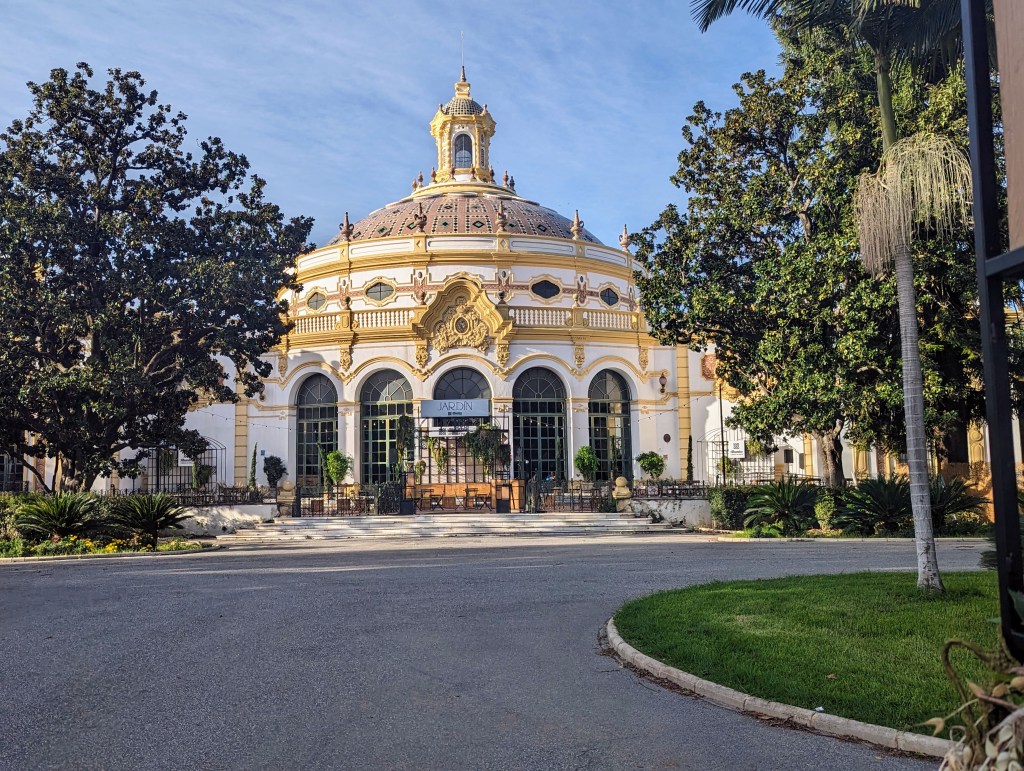
In the morning our walking tour started at the Spanish Plaza which was built for the 1928 Ibero-American Exposition. We met by the North Tower where horse drawn carriages line up for the tourists.


Unfortunately the entire plaza was closed due to a huge storm that had come through in the prior days knocking down trees and making it unsafe. The only building visible was the Seville Pavilion, which is now a cultural center.
We passed the University of Seville.
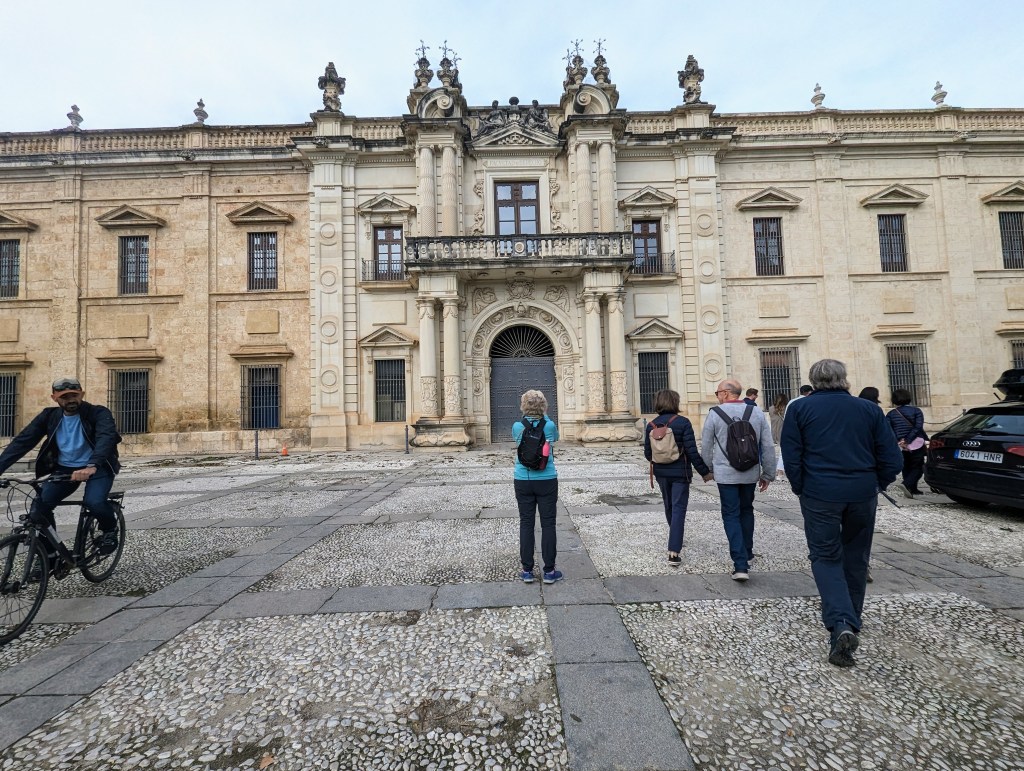
And stopped in front of the 18th century Royal Tobacco Factory. We were told tales of the cigarillos, the women who were the laborers that rolled the cigarettes. They were generally gypsies, the most famous of which is Carmen, for whom the opera is named. Whenever the factory tried to lower their wages or increase their hours, the entire gypsy community would turn out in protest: one of the earliest examples of collective bargaining.
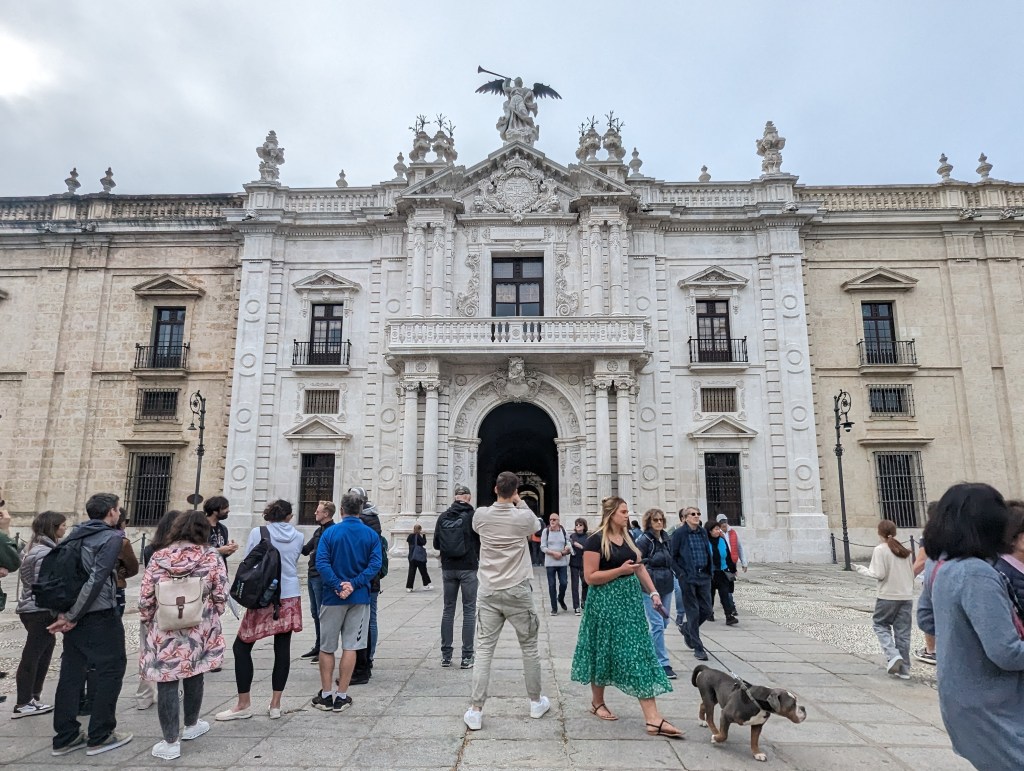
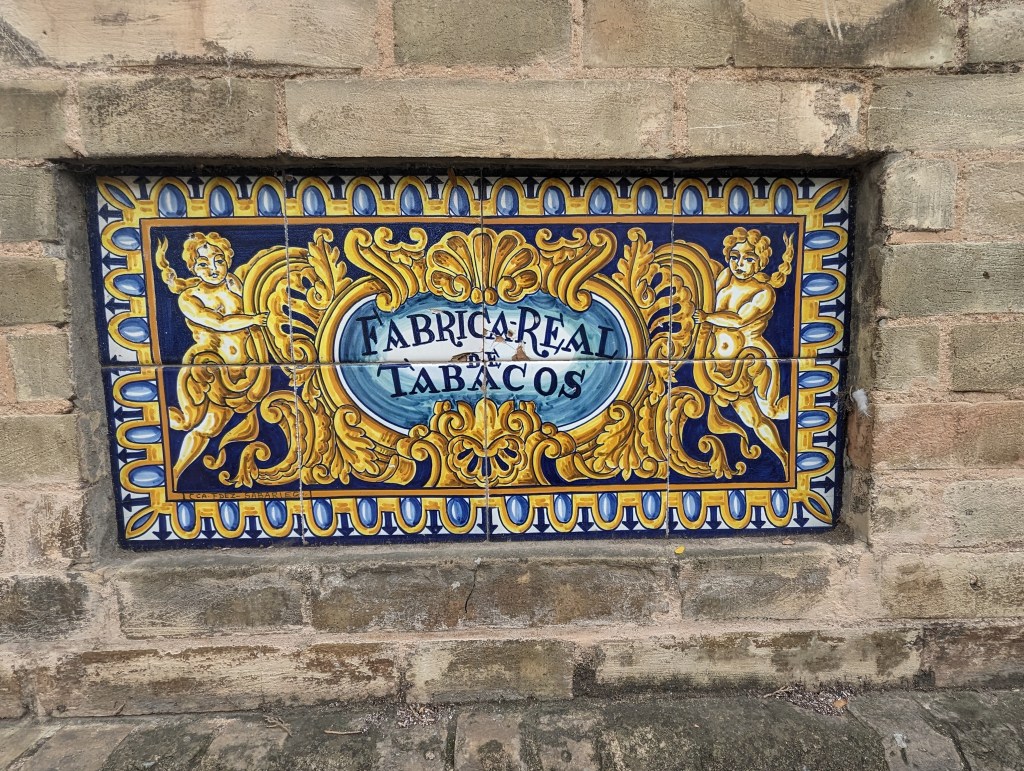
We walked by the Alfonso XIII Hotel, commissioned by the King of Spain to play host to international dignitaries during the 1929 Exhibition. Its Moorish detailing is typical of Andalusian architecture.

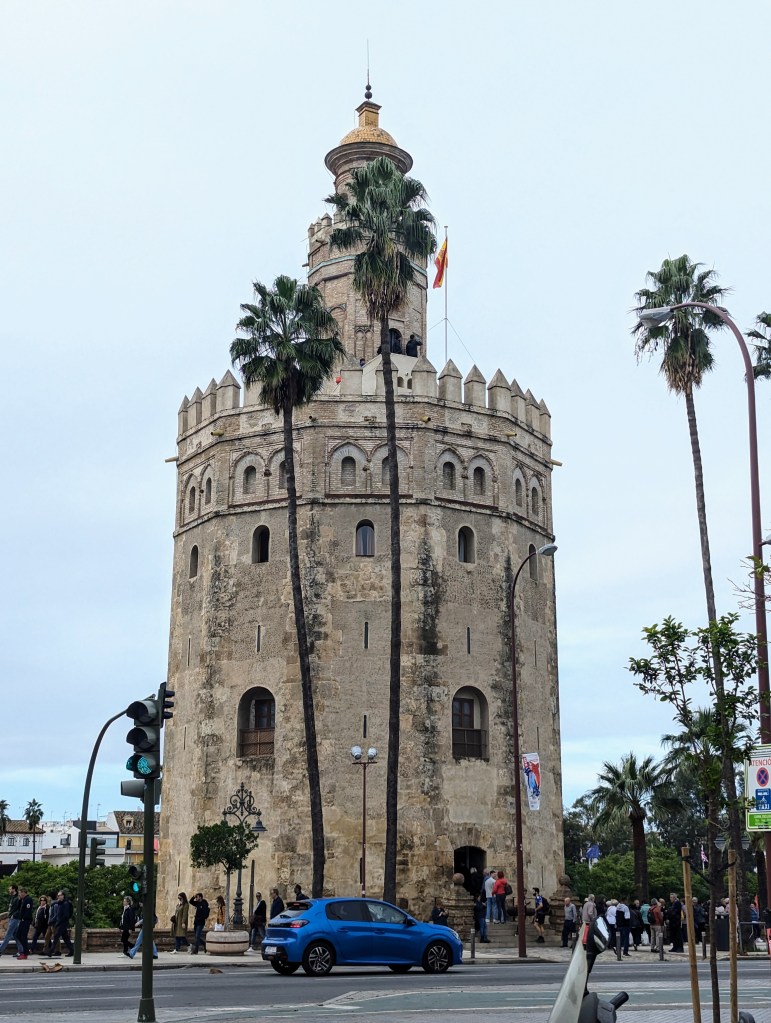
We walked by the Golden Tower which was built by the Moors in 1220 as a watchtower to protect the city on the bank of the Guadalquivir River. In the Middle Ages it was used as a prison. It was damaged in the 1775 Lisbon earthquake, but has been restored and now is a museum of military history.
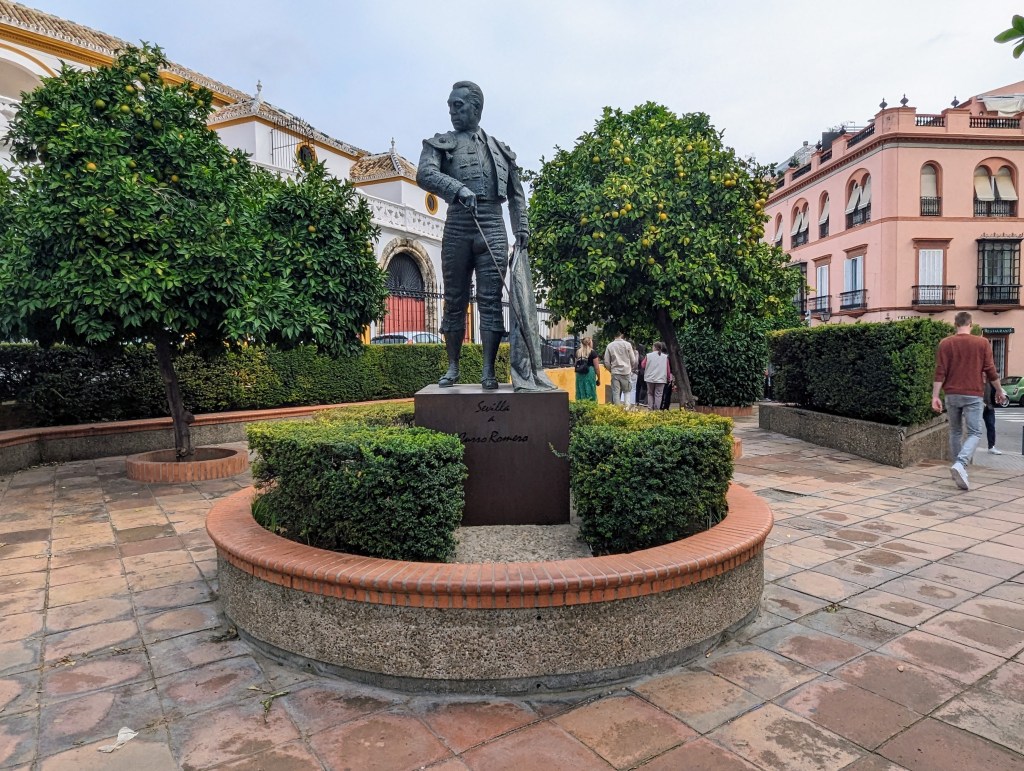
Miguel de Cervantes, author of Don Quixote lived a large portion of his life in Seville and wrote his famous novel here. There are many statues of him scattered throughout the city.
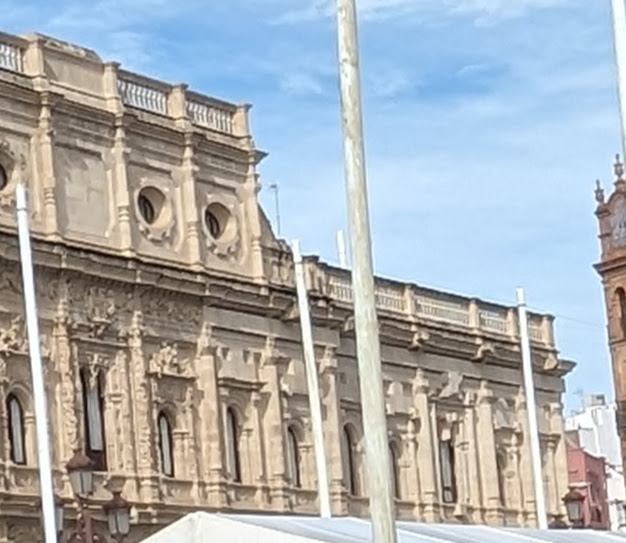
We then went into the Plaza Nueva (New Plaza) in which stands City Hall. It is a Plateresque-style building, which means the reliefs are in the style of a silversmith. It was a style popular in Spain in the late 15th century. This week there is a book fair going on in the plaza.
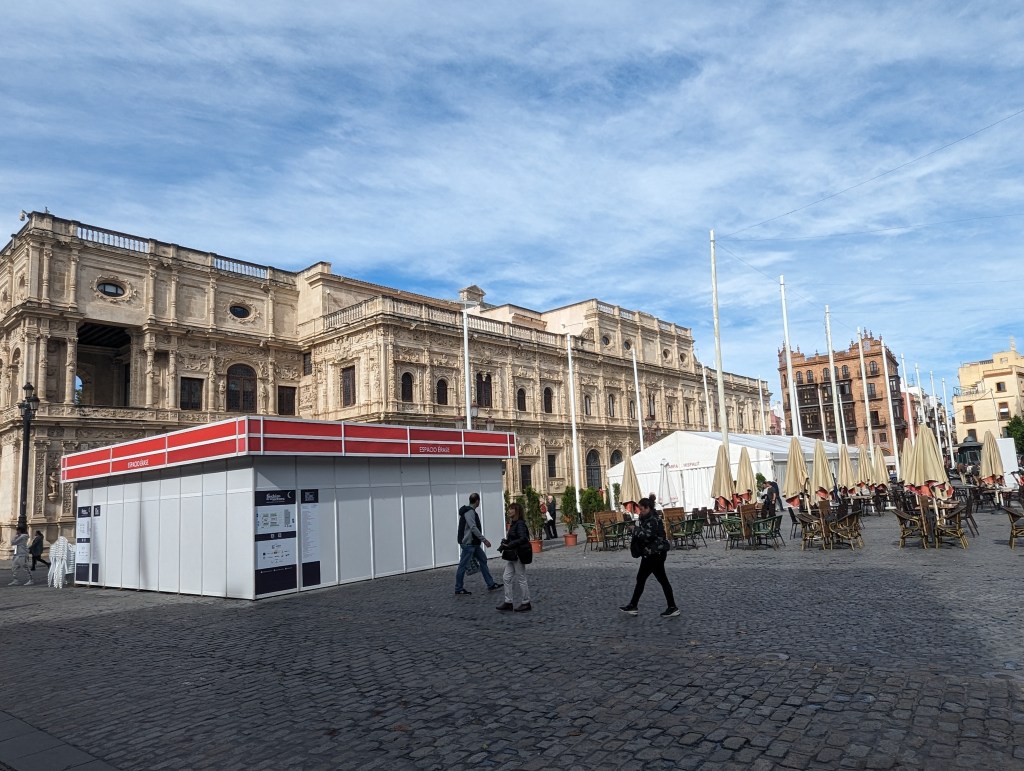
With a closer look at the façade, one can see that the right side was never decorated. There was an extension made in the 19th century, funding ran out, and now there are restrictions to changing historical buildings.
We finished our walking tour outside the Cathedral of Seville with its famous tower. It was originally built as a mosque in the 12th century. The cathedral, finished in the 16th century, is one of the largest in the world, the largest in Spain, and is the largest Gothic church in the world.
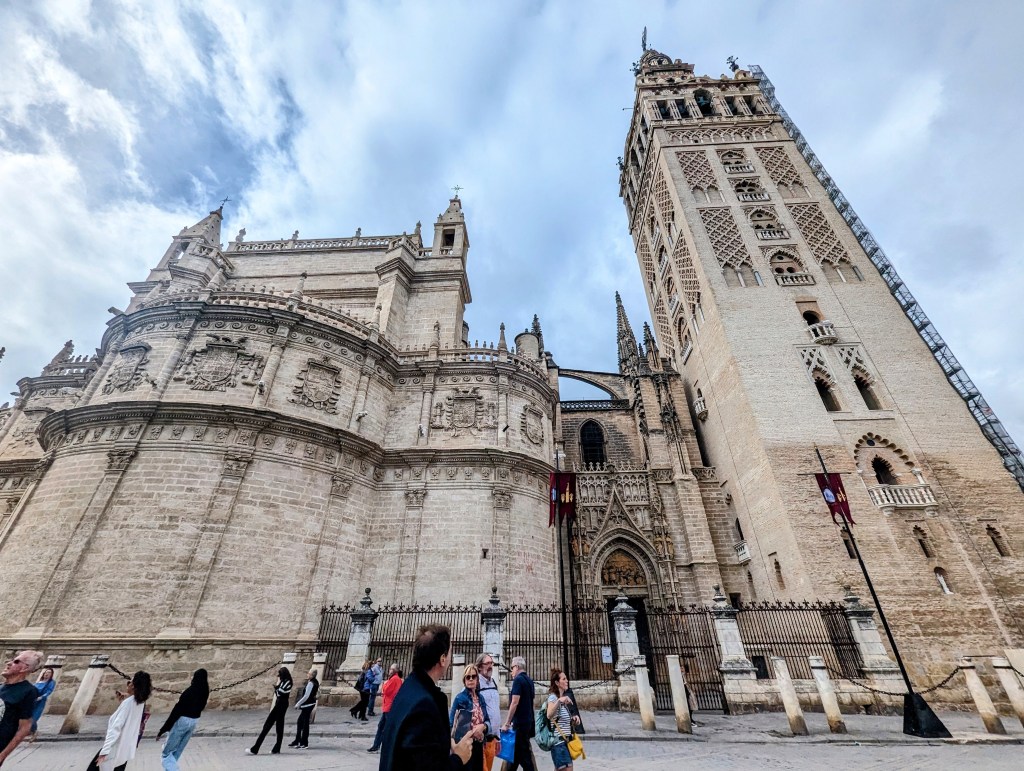
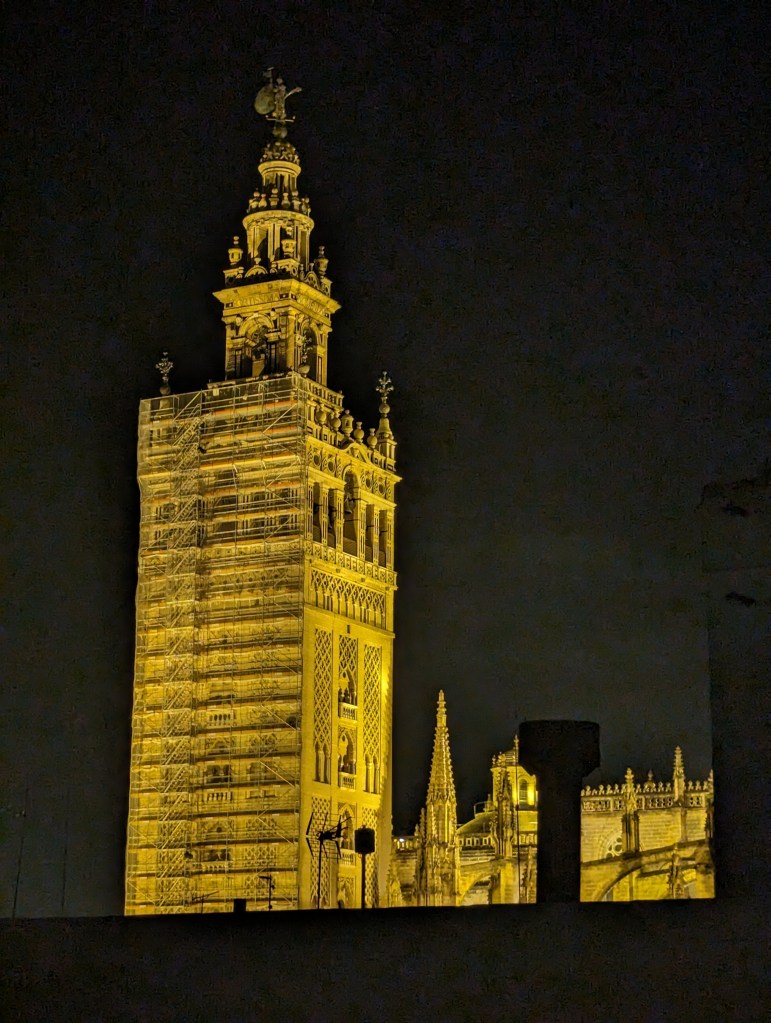
The Giralda bell tower was originally the minaret of the mosque. The belfry was added in the 15th century. The statue on its top, called “El Giraldillo”, was installed in 1568 to represent the triumph of the Christian faith.
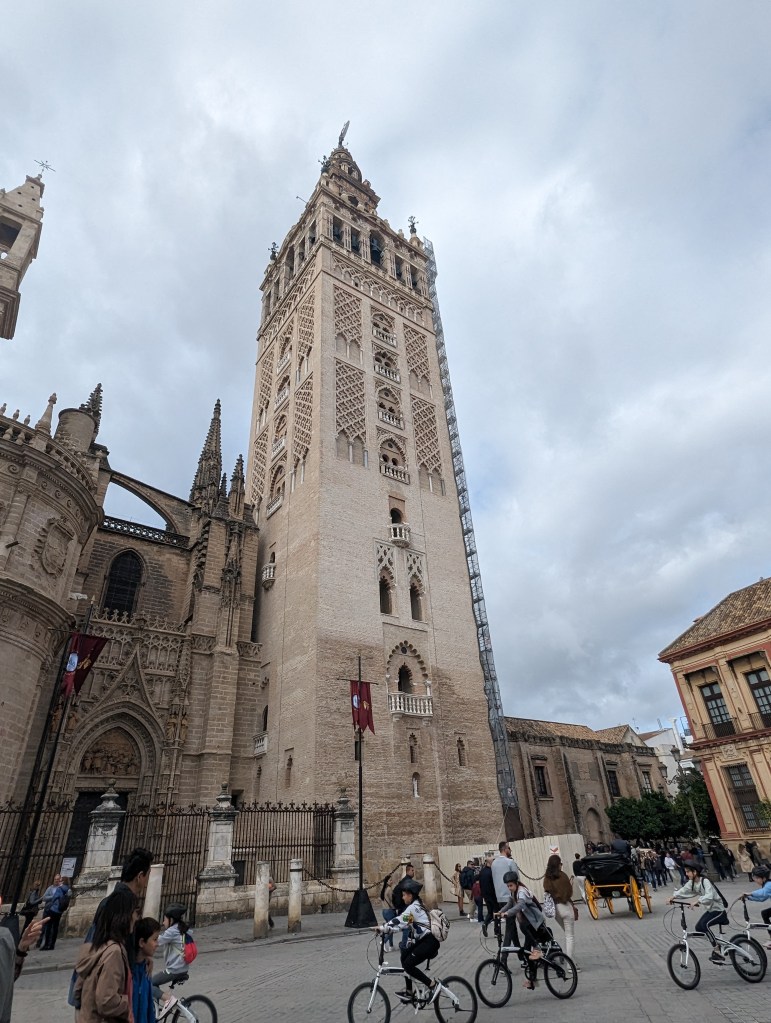
A copy of El Giradillo now is on street level.

Here we also found lots more horse drawn carriages.

After the tour we took a walk and found an Asian-Spanish fusion tapas place where we had the most delicious late lunch.

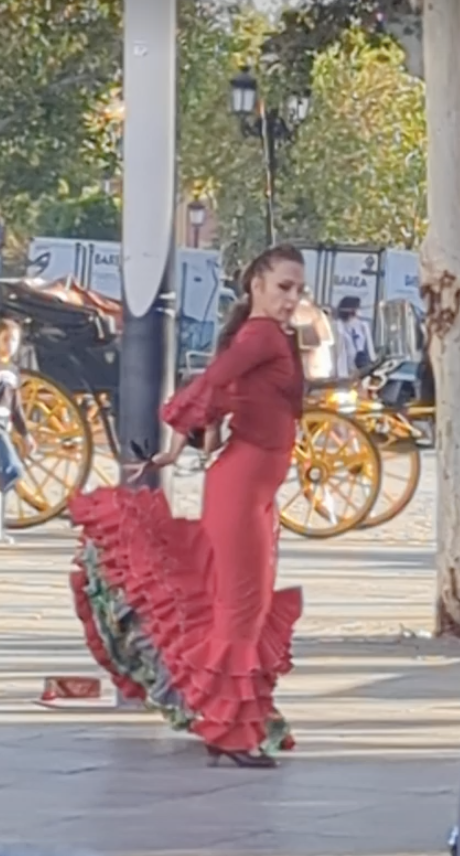
Eric then left for his poker tournament, and I headed out for a walking tour of the Jewish quarter: Santa Cruz. While waiting for the tour to begin, we were entertained by a Flamenco street dancer.
As typical, the streets were narrow and winding. But then we came out onto Plaza de Alfaro with this famous balcony:
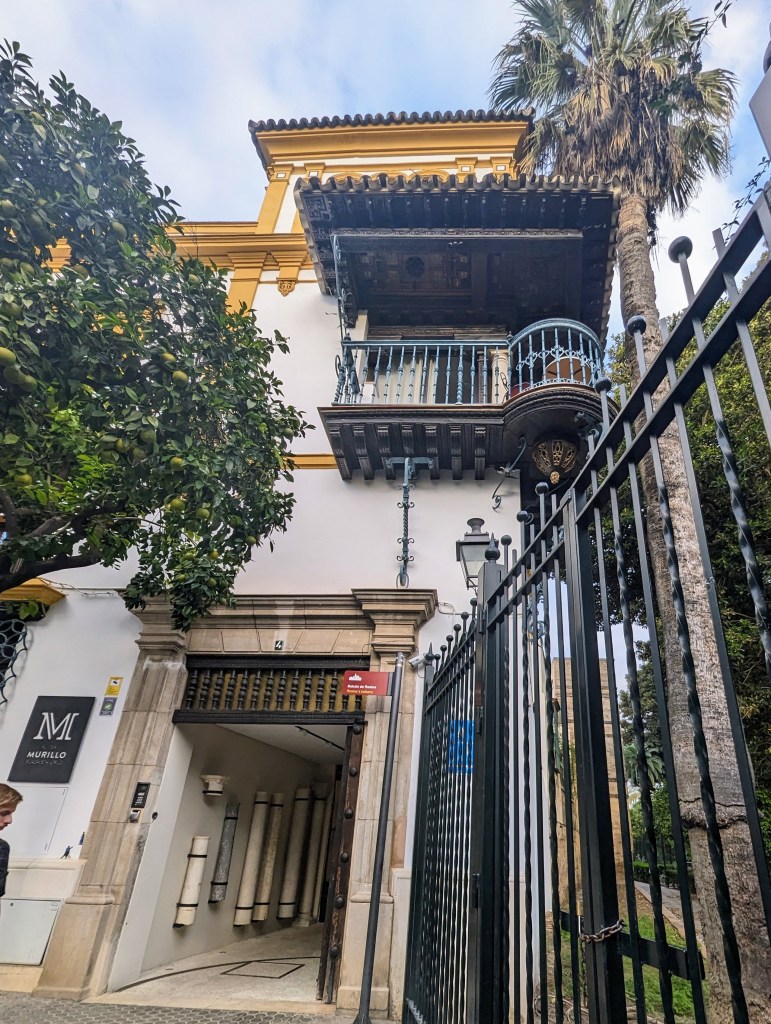
The legend is that the love story that unfolded at this balcony was the inspiration for the Barber of Seville. Seville likes to boast inspiration for many operas in addition to the 2 mentioned: The Marriage of Figaro, Don Giovanni, and several more.
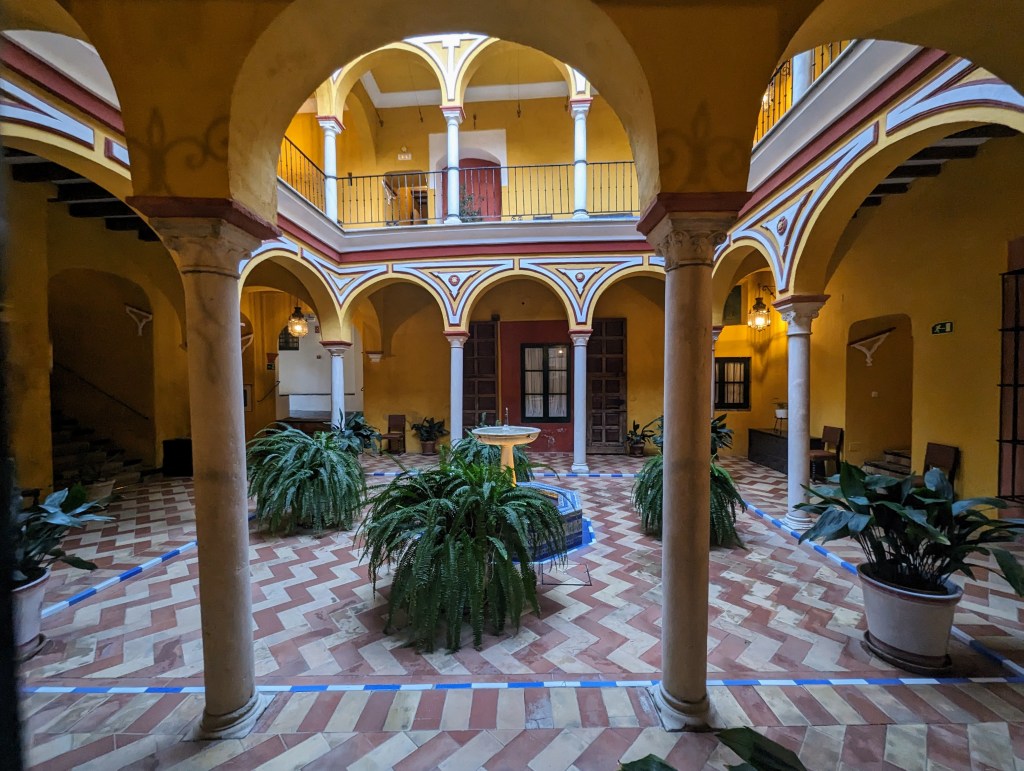
Santa Cruz also has examples of what were Jewish apartment housing complexes with central courtyards now transformed into lush high end hotels.
Church of Santa María la Blanca was built as a mosque in the 12th century but after the conquest of the Moors in Seville in 1248, it was given to the Jews by Ferdinand II as a synagogue. In 1391 after the anti-Jewish revolt in Seville, it was transformed into a church.
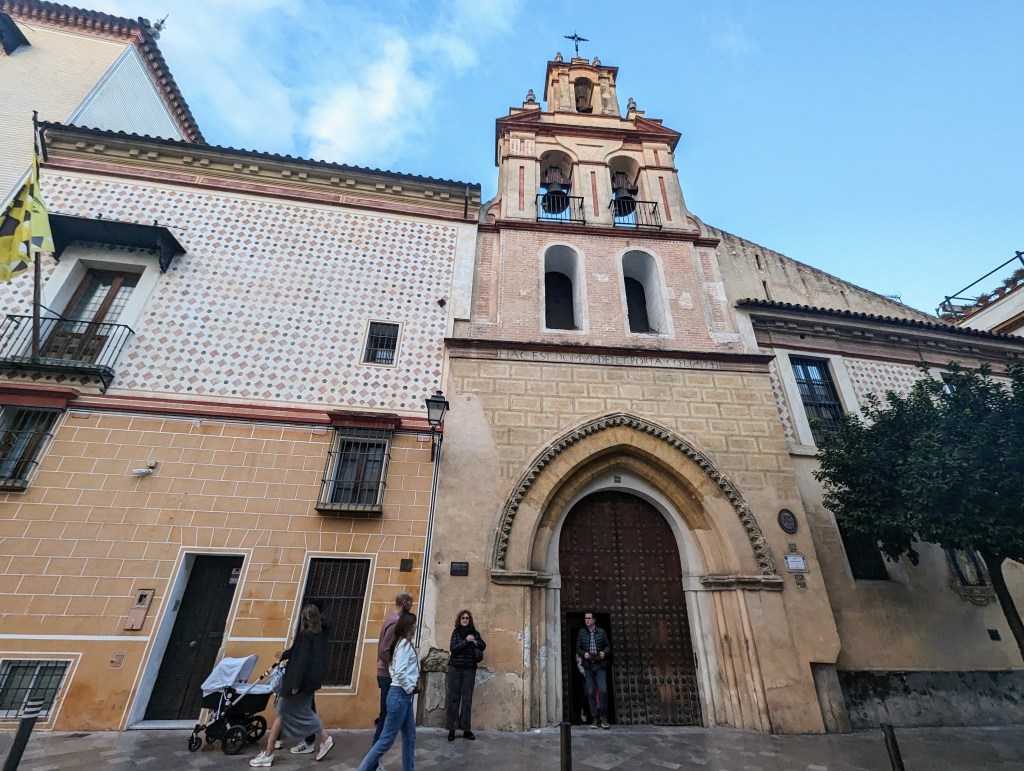
Around the side is the original synagogue entrance.
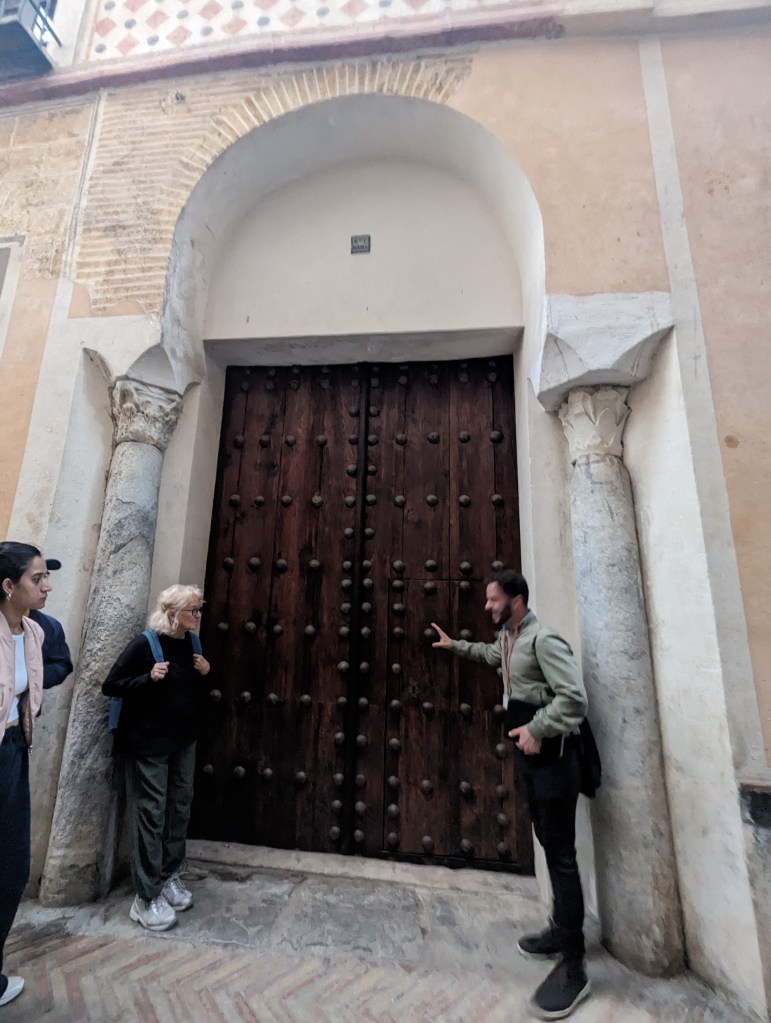
On the street in front of it can be found the Jewish Camino symbol.
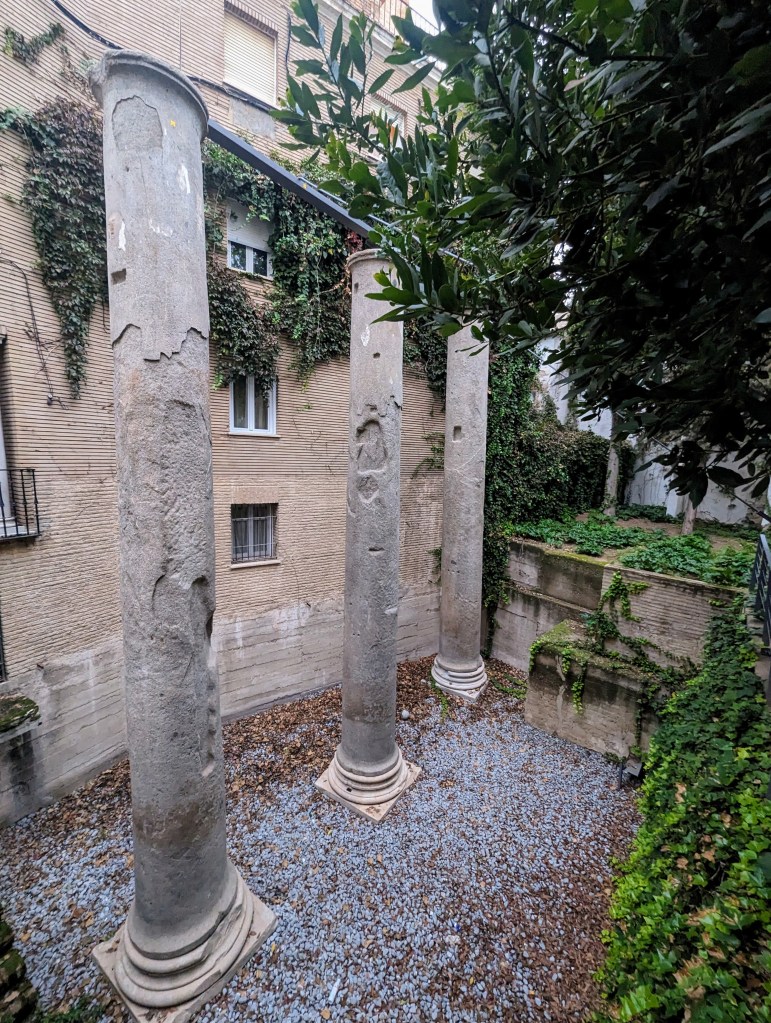
We finished our tour on Mármoles street where there are 3 Egyptian granite columns almost 9 m high, set on local marble bases. They were made in the time of the Emperor Hadrian and possibly formed part of some Roman temple.
When I got home I was treated to this sight through the window.
Eric was knocked out of his tournament making him available for more sightseeing the next day. After morning errands and some shopping, we headed to the cathedral to see the inside. First we climbed Giralda Tower for the views.

The we went into the church. The height is overwhelming, the size awe inspiring. We spent several hours with audio guides exploring, so much to see.
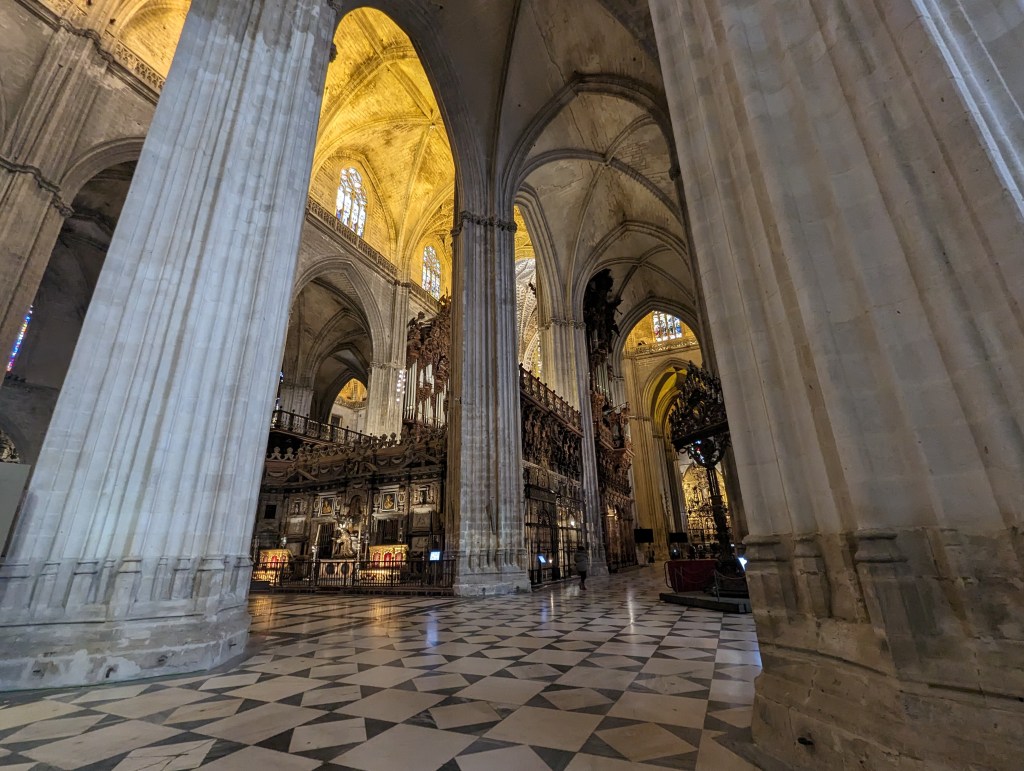
Among the many notables buried in the church are Christopher Columbus and his son. Below is the monument over his tomb.

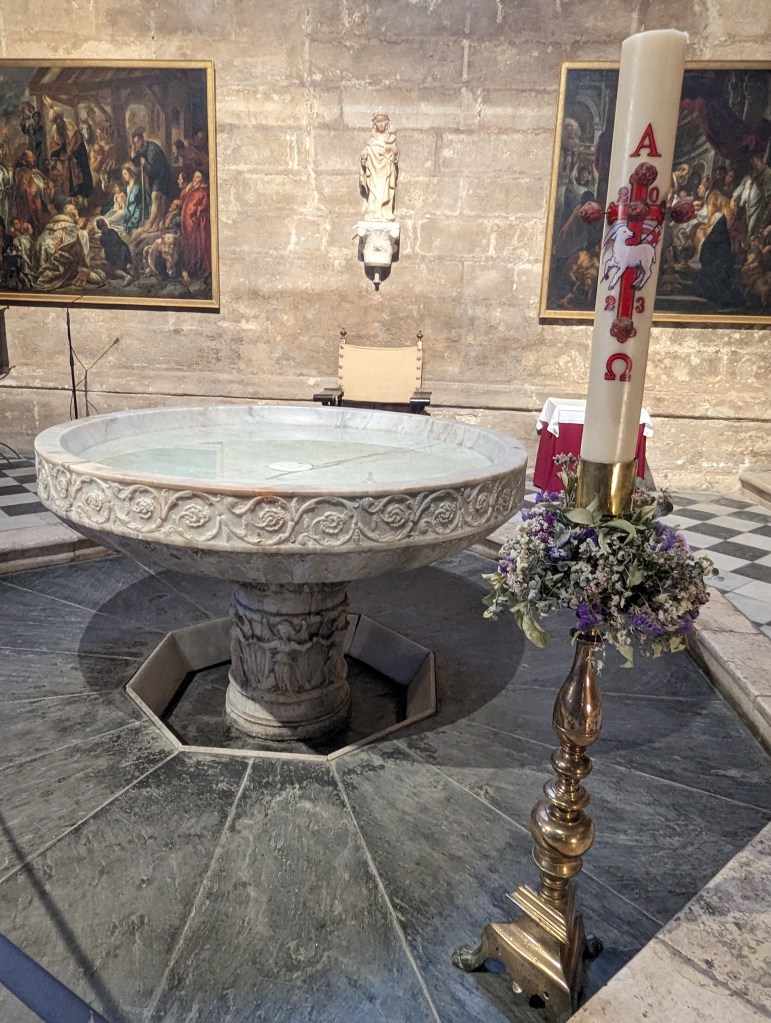
In one of the side chapels is the baptismal font.
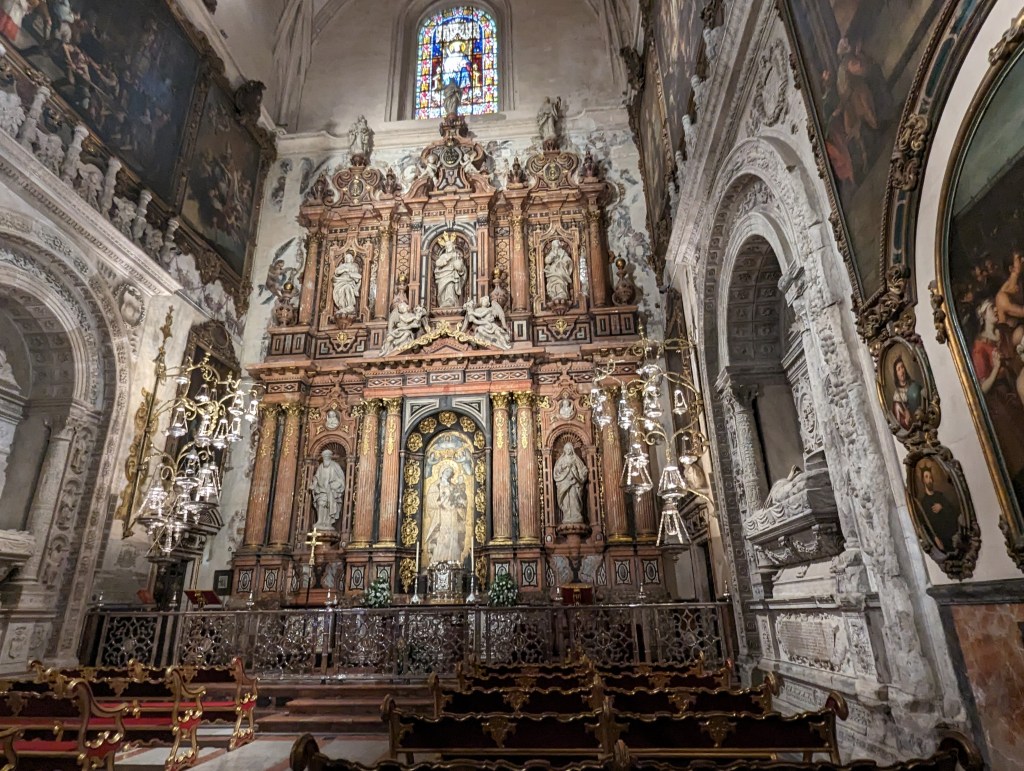
There are so many splendid side chapels it is hard to pick one to show, but below is the largest and tallest and is one of my favorites due to the elaborately carved marble statues.
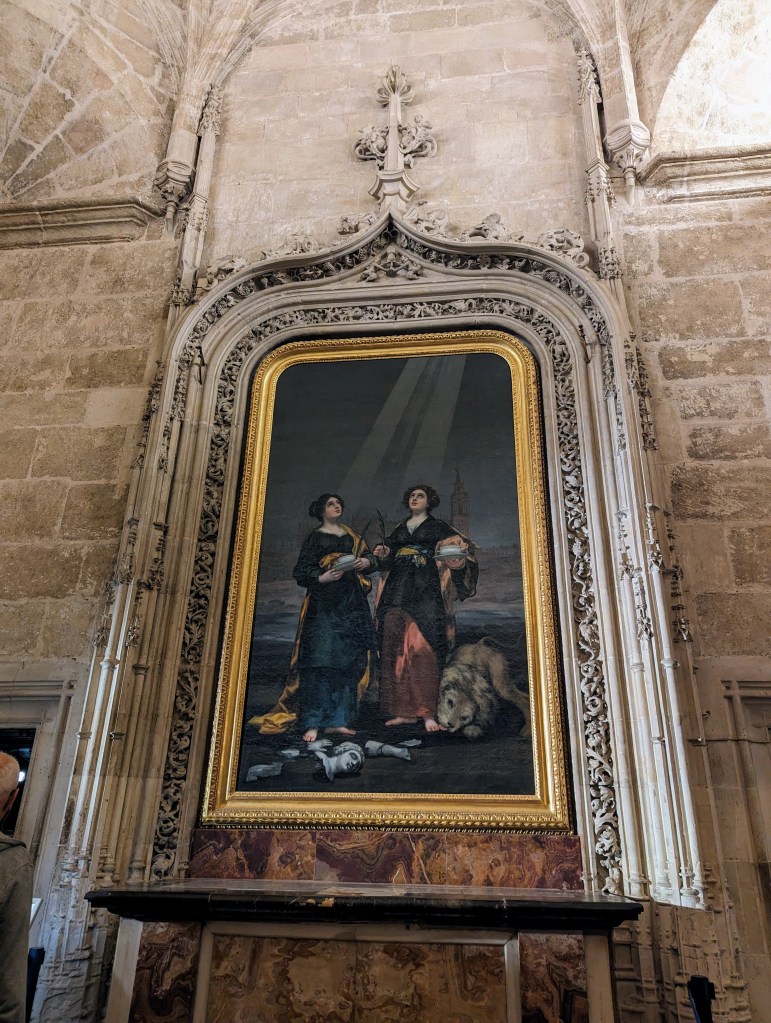
There are many beautiful works of art throughout the cathedral. One of the most famous is that by Francisco de Goya painted in 1818 of the sisters Saints Justa and Rufina, natives of Seville, at the moment Saint Rufina was thrown to the lions and her sister ran to her side. The lion is lciking Saint Rufina’s feet, depicting her taming of it. The Giralda Tower can be seen in the background.
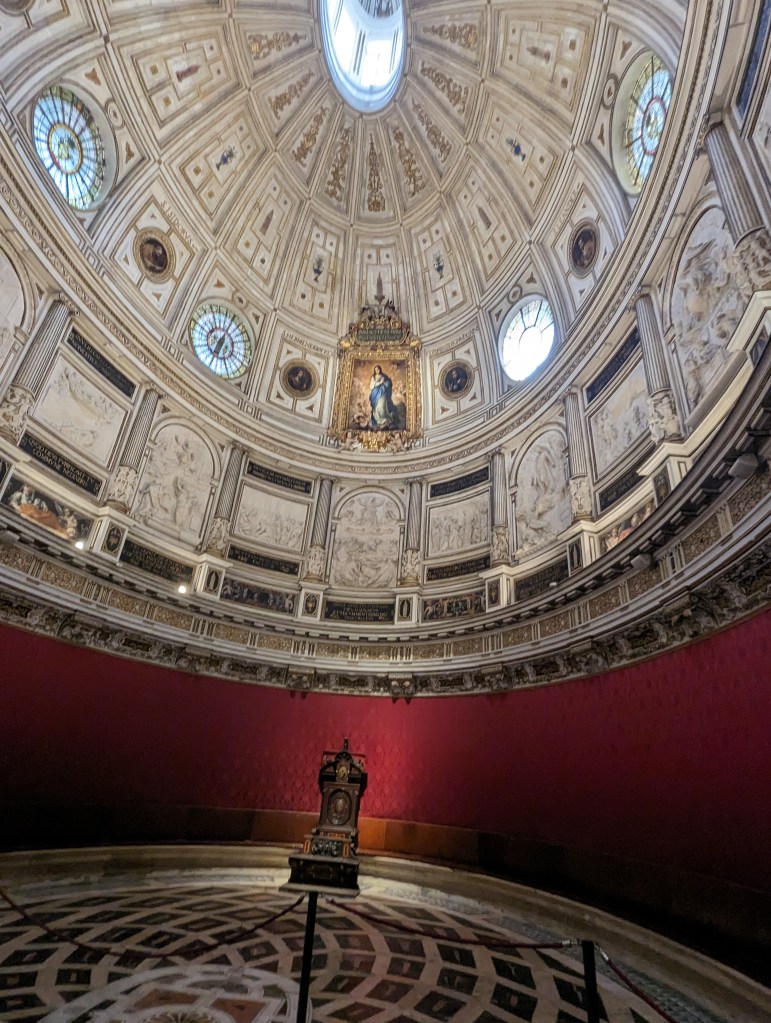
The Chapter Room is for meetings. Leather covered benches can be seen against the walls, which are purposely left empty making the space even more impressive. The painting of The Saviour fits perfectly into the oval shaped ceiling; obviously it was painted for this space.
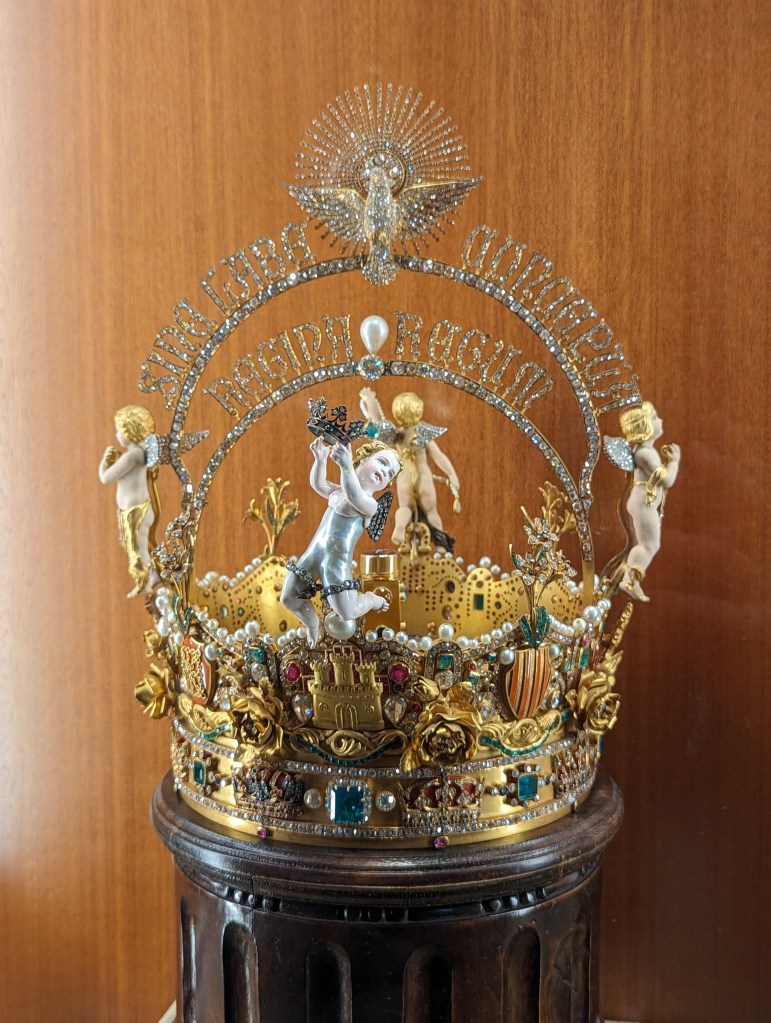
In the sacristy are many beautiful treasures one of which, Spain’s most valuable crown, the Virgen de los Reyes. It has over 11,000 stones and the world’s largest pearl (pictured below, used as the angel’s torso).
The choir is typical of many we have seen in the Gothic cathedrals of Spain: intricately carved mahogany stalls with a large central music stand.

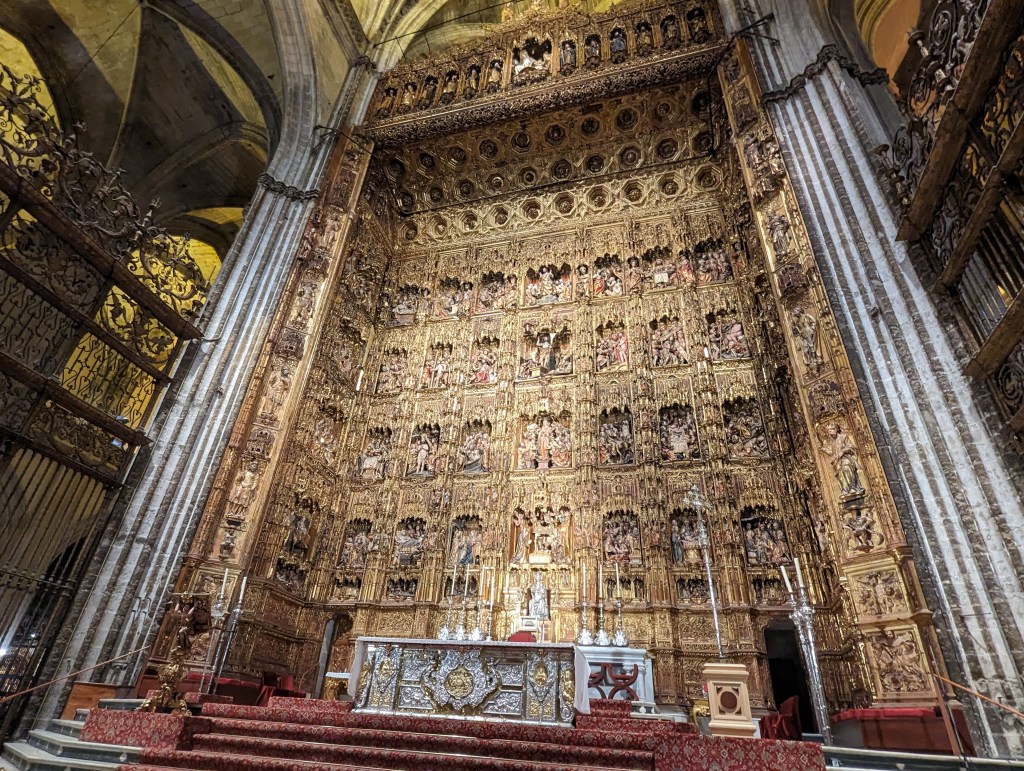
The crowning glory is the world’s largest altarpiece. Craftsman Pierre Dancart spent 44 years carving Retablo Mayor from wood. The gilded high altar of Capilla Mayor (Grand Chapel) features scenes from the Old Testament, the life of Christ plus images of saints. At the bottom center is Santa Maria la Sede, the cathedral’s patron saint
We exited the cathedral through the Courtyard of Oranges with a final look back at the Giralda Tower.

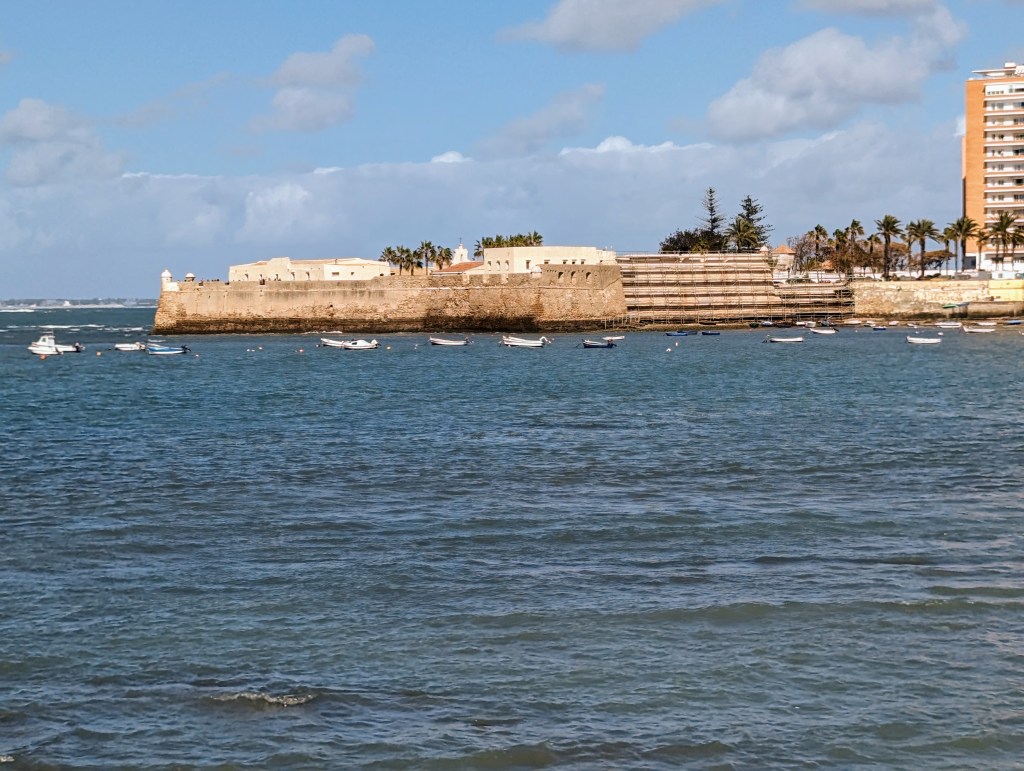
And with that our visit to Seville was complete. On to Cádiz for a beach trip. We had booked in our first modern Parador. The room was not yet ready, so we took a long walk along the beach and out to the 18th century Castle of San Sebastián which is currently closed.

But from there we had a great view of the beach and the 17th century fortress Castle of Santa Catalina.
After a late lunch right off the beach, our room was ready.
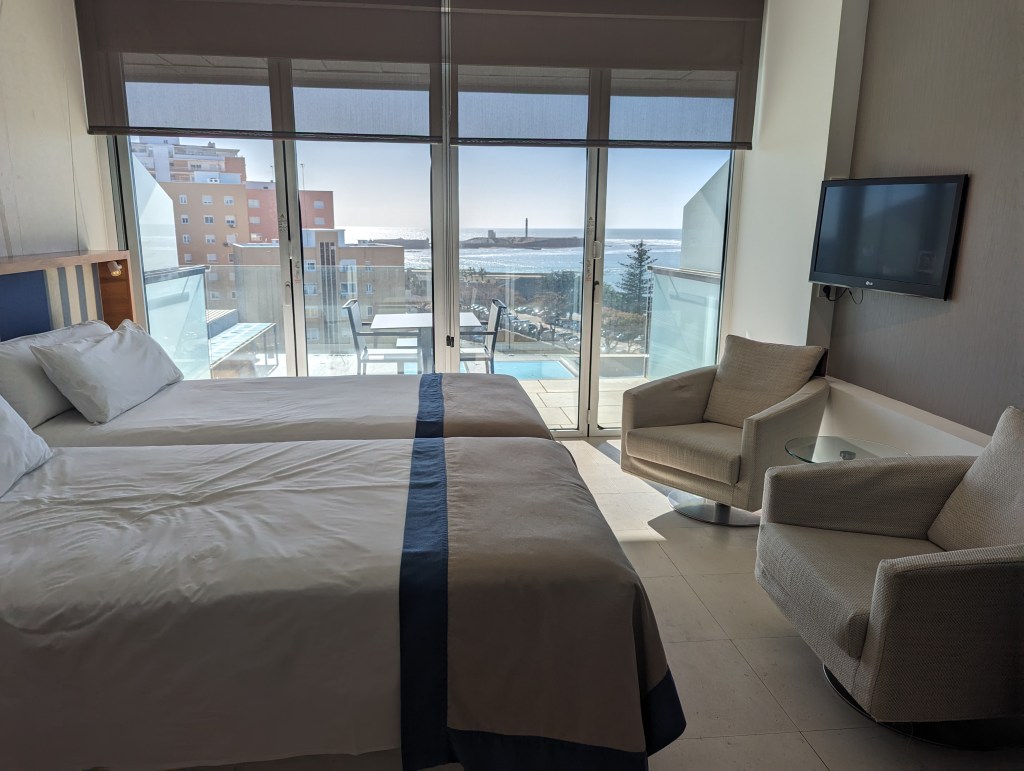
The doors completely opened onto a terrace with this view.
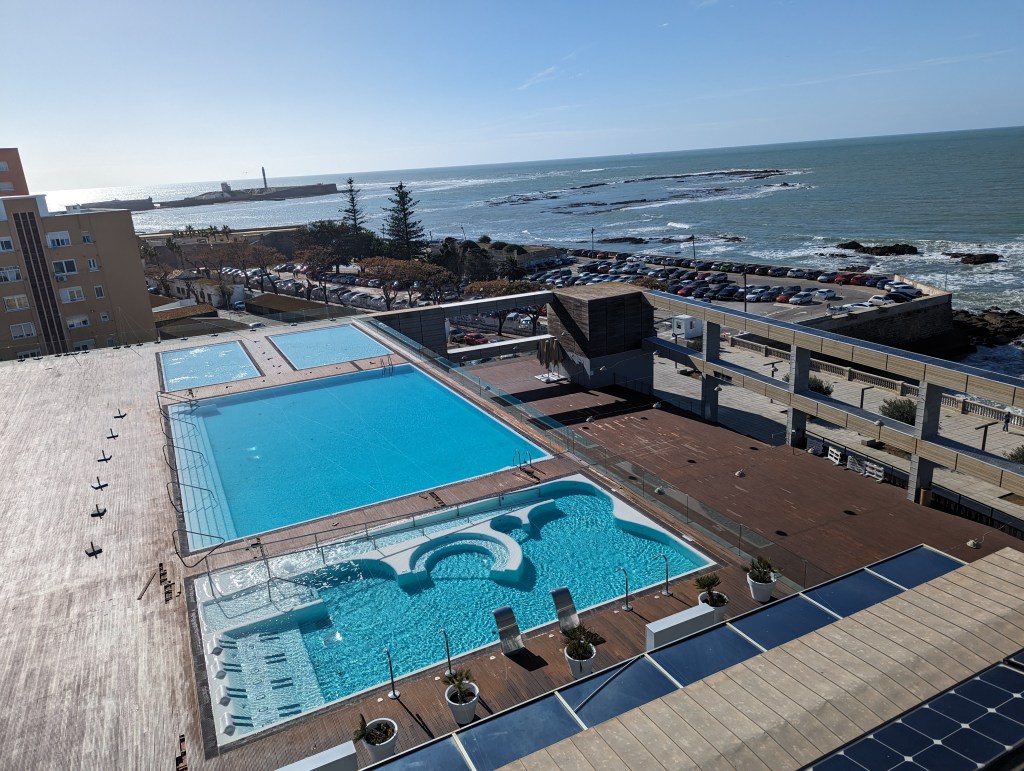
Ah what beauty and relaxation. We took another beach walk at sunset.

In the morning we took a quick walking tour. There’s not a lot of historical significance in Cádiz, but we did learn some fun facts. For one, Cádiz at 3,500 years, is the oldest continuously inhabited city in the Western world. Our tour started in Plaza San Juan de Dios in front of Town Hall flying the flags below from left to right: the Andalusian flag, the Spanish flag, and the Cádiz flag.
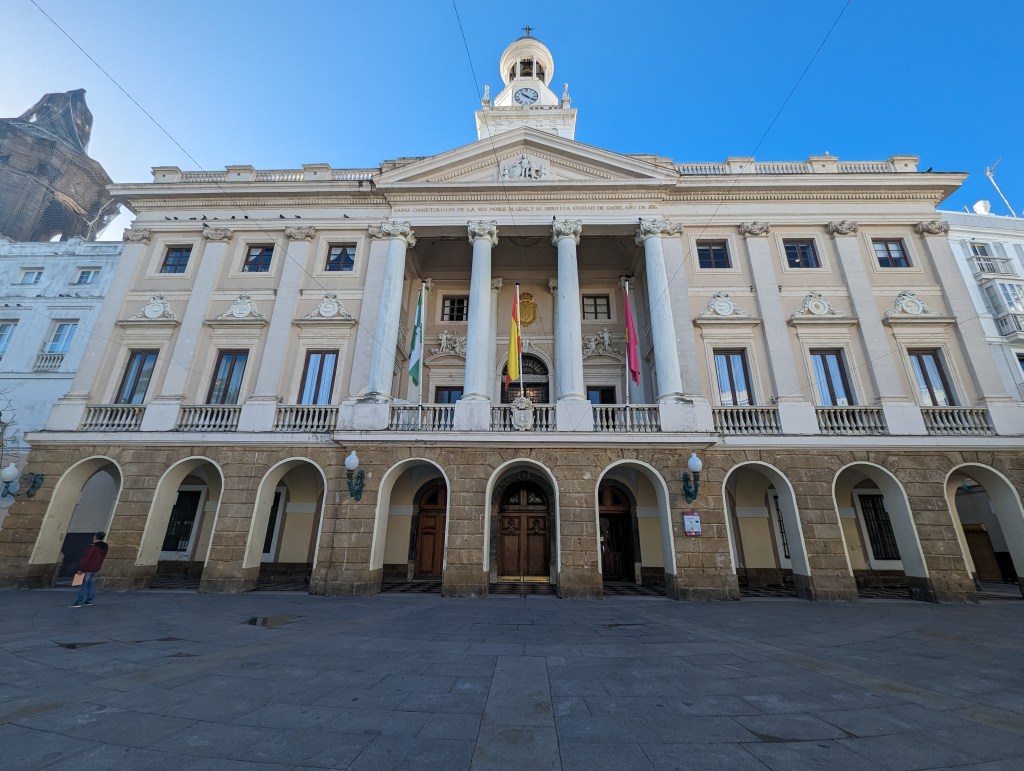
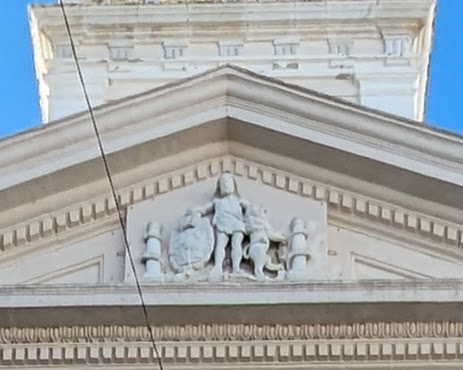
The pediment base relief shows Hercules, the legendary founder of the city. He is also depicted on the city flag. The legend is that one of Hercules’ 12 labors to achieve immortality was to separate the continent of Europe and Africa. He was said to have lived in Cádiz at the time.
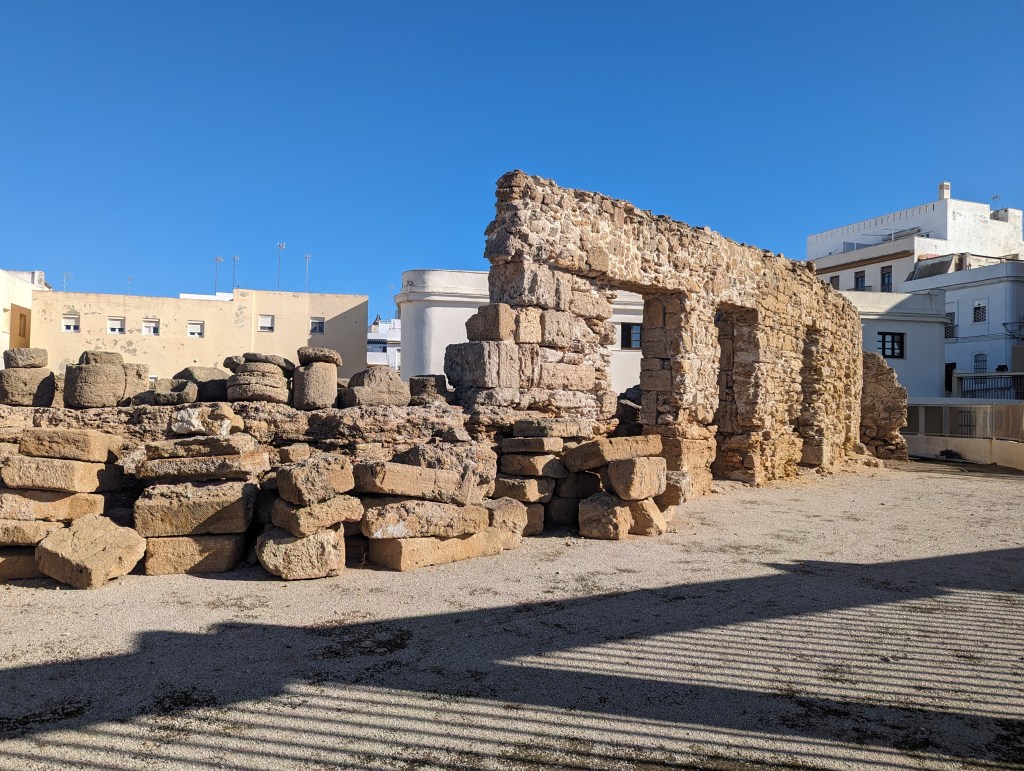
We walked past some Roman ruins.
And toward the water to look back at the Old Town of Cádiz, which is called “Little Havana” based on it’s colorful houses. They are meant to be a cheerful sight for the sailors returning from a voyage.
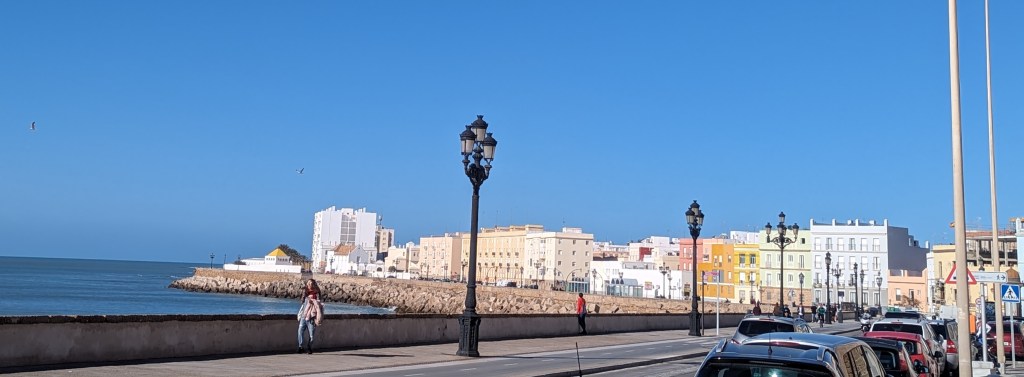
Another fun fact: in the early days of ships sailing to the Americas, they often left with much more cargo than they had on the return. In order to have enough ballast to weight the boat upright, they often carried back river stones which were then used to pave the streets of the old city.

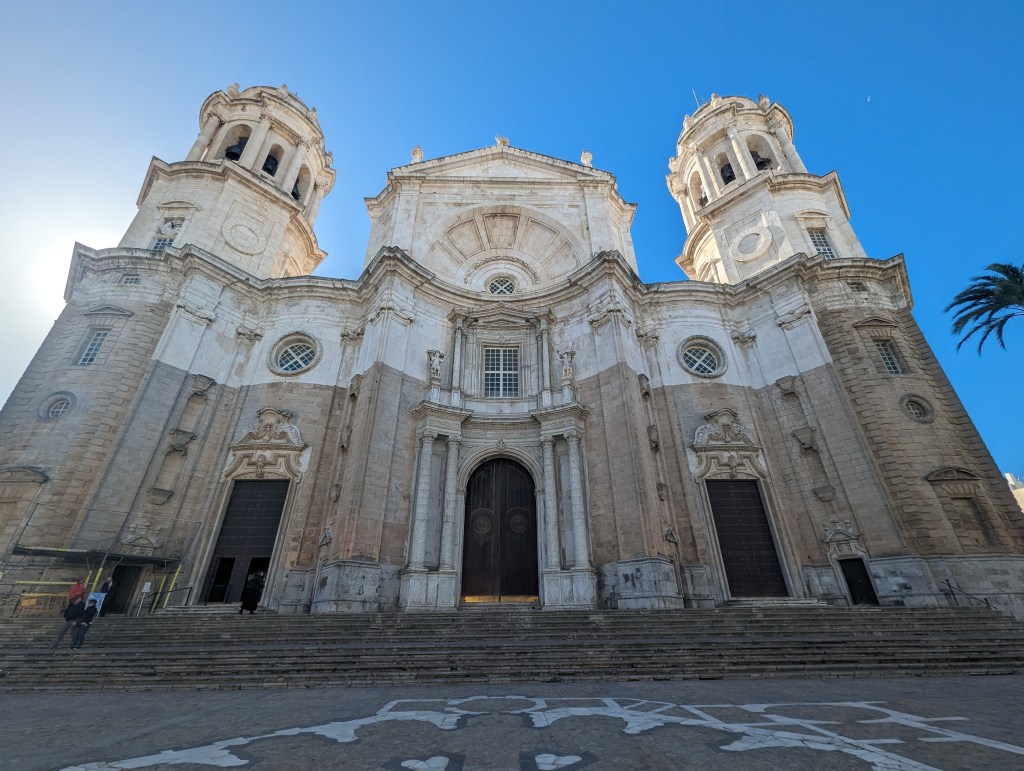
We passed the 18th century Cádiz Cathedral. Notice the street here in the newer section of town is not that of river stones.
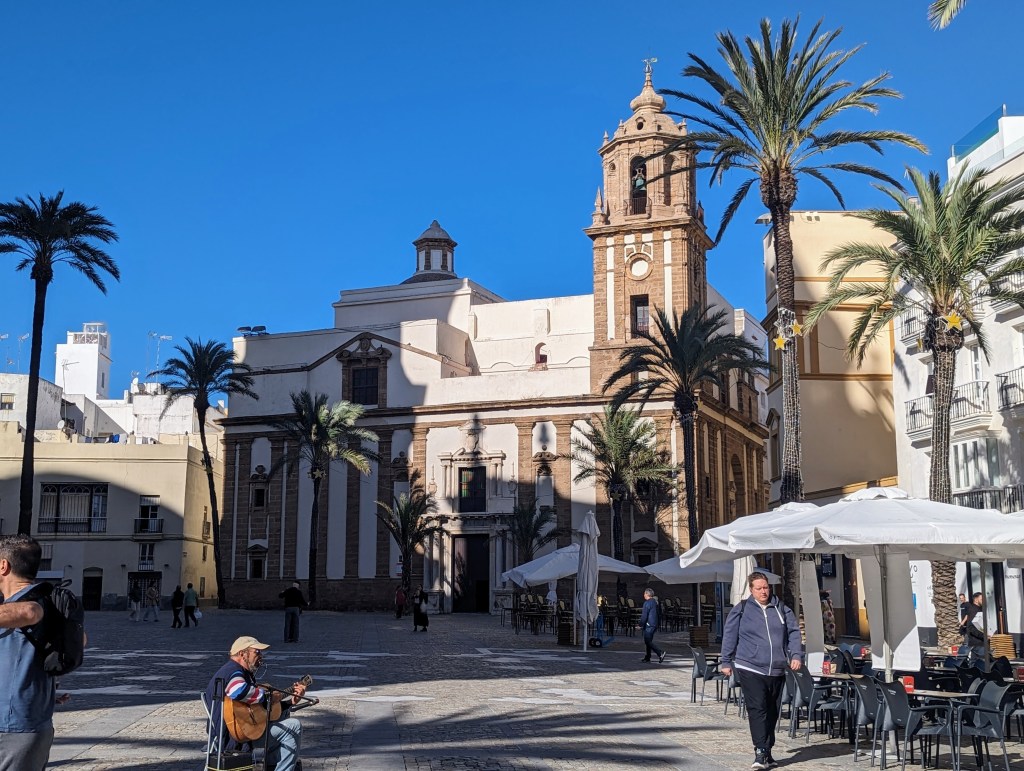
In the same square is a cute church.
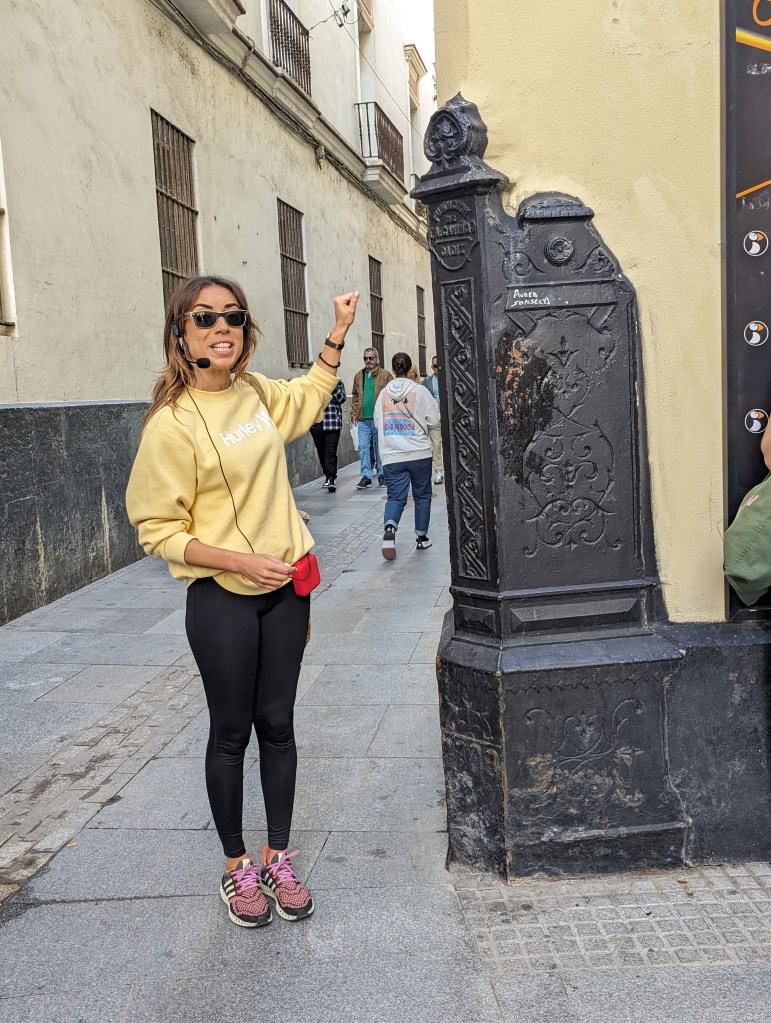
Now fun fact #3: When Napoleon was defeated in the early 19th century, his army left behind over 300 canons. Many were melted down for various uses, the most common of which was to protect the corners of buildings on the narrow streets from damage cause by carriages passing too closely.
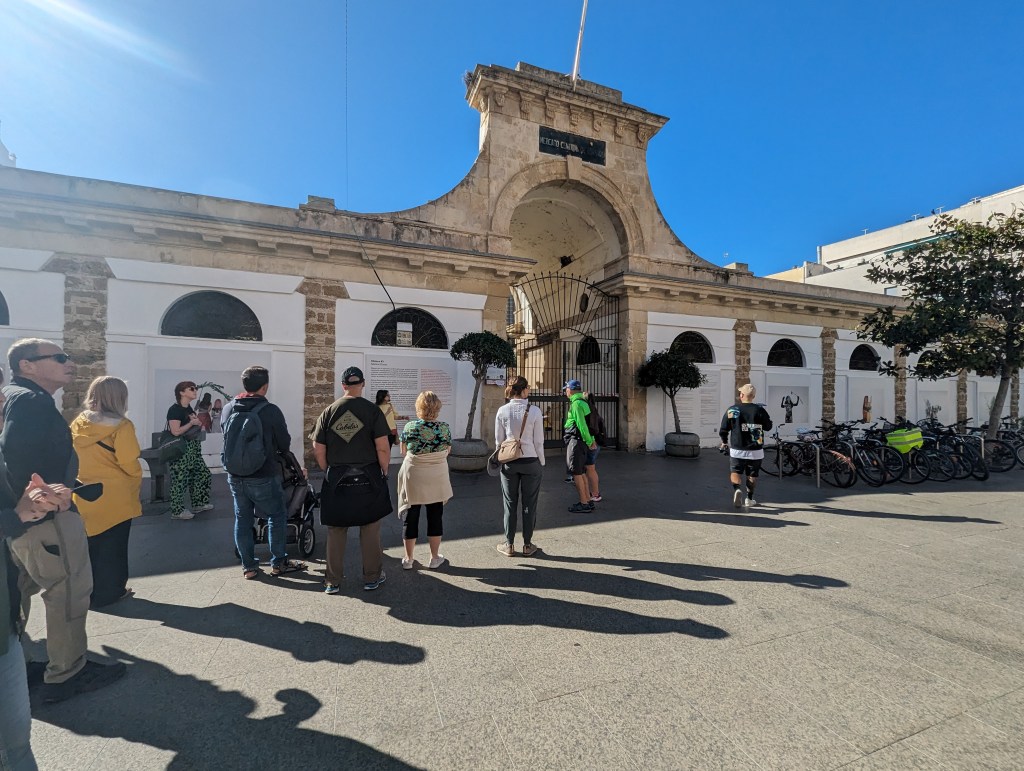
As in many Spanish towns, the post office is impressive.

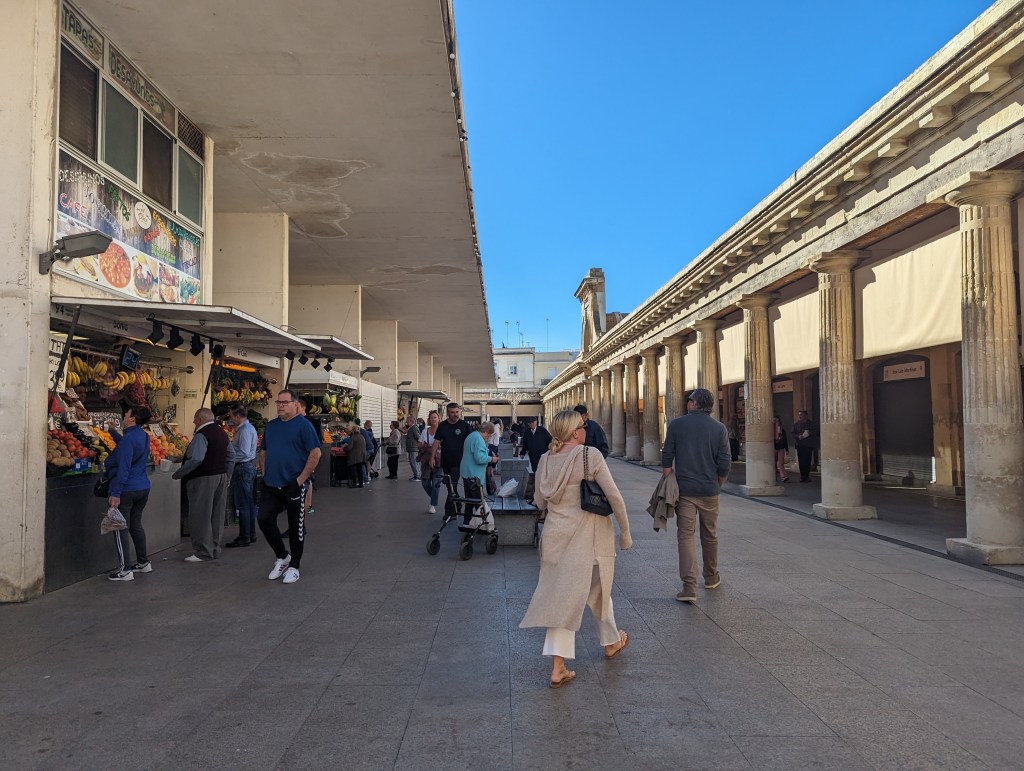
As is the market.
Being a Monday, the market was very quiet; no fish sellers. But worth a peek inside to see the preserved columns.
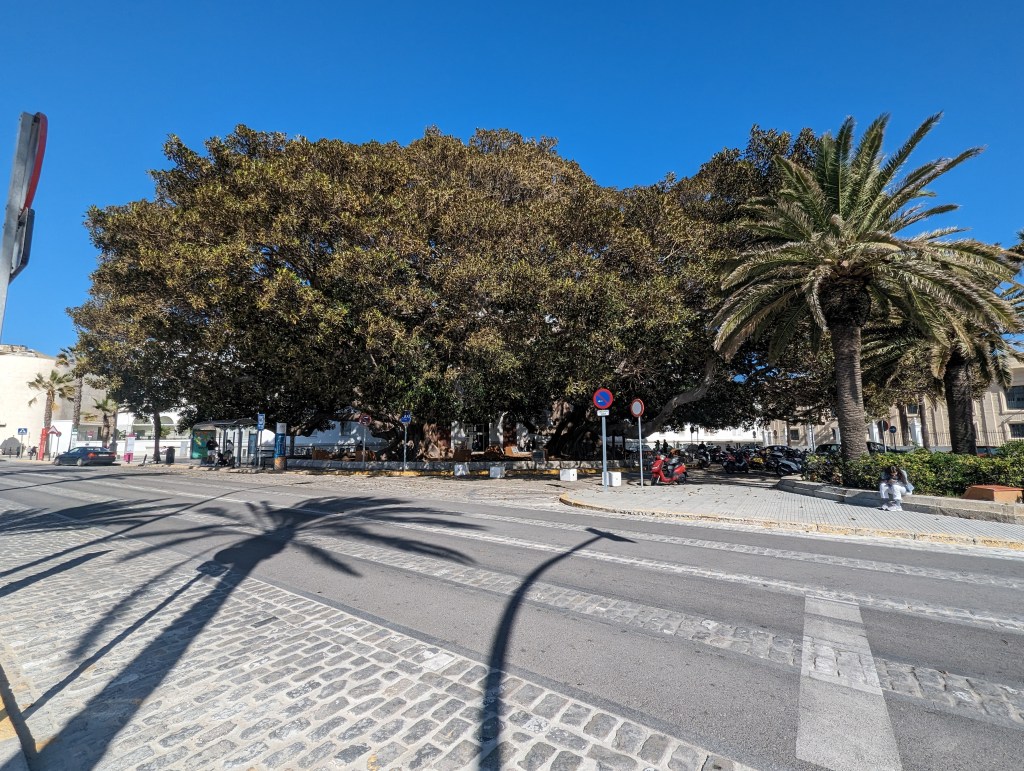
After the tour, we headed back to the beach. Along the way we passed yet another amazing ficus tree.
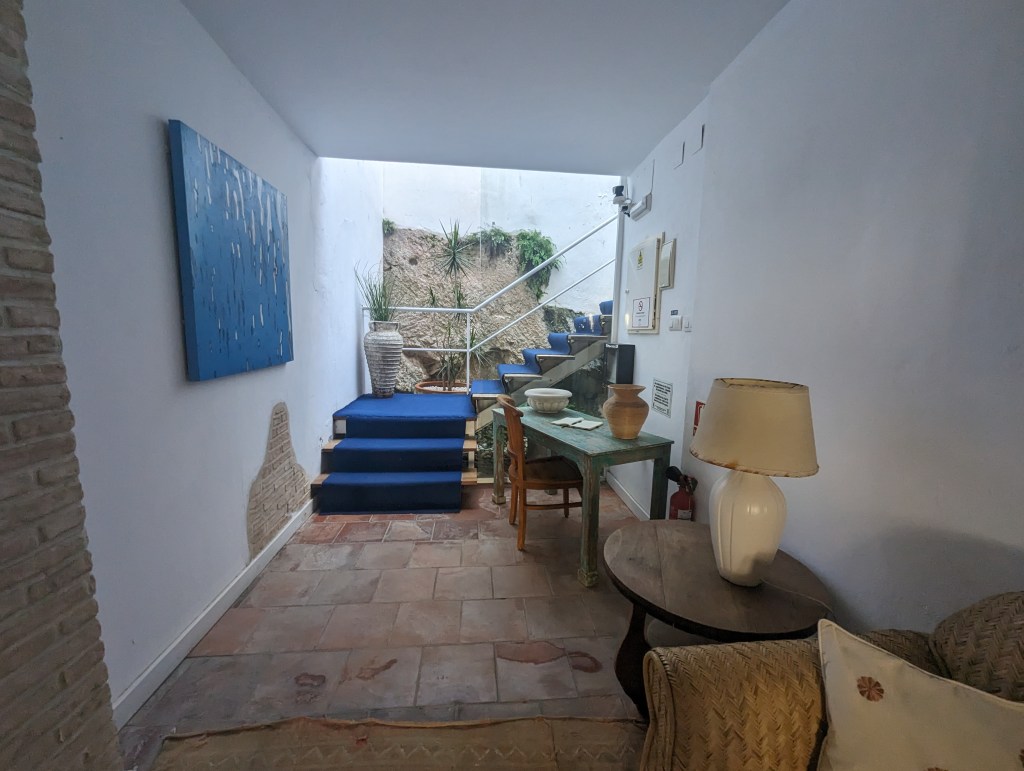
In the morning we drove to the city of Algeciras to return our rental car after 51 days of driving. We then caught a taxi to nearby Tarifa where we checked into a tiny guest house tucked into the Old City right against the Old City wall, with a part of the wall exposed in the guest house lobby.
After checking in, we strolled over to the port passing the monument of Sancho IV El Bravo, 13th century King of Castile, in front of the Guzman Castle.
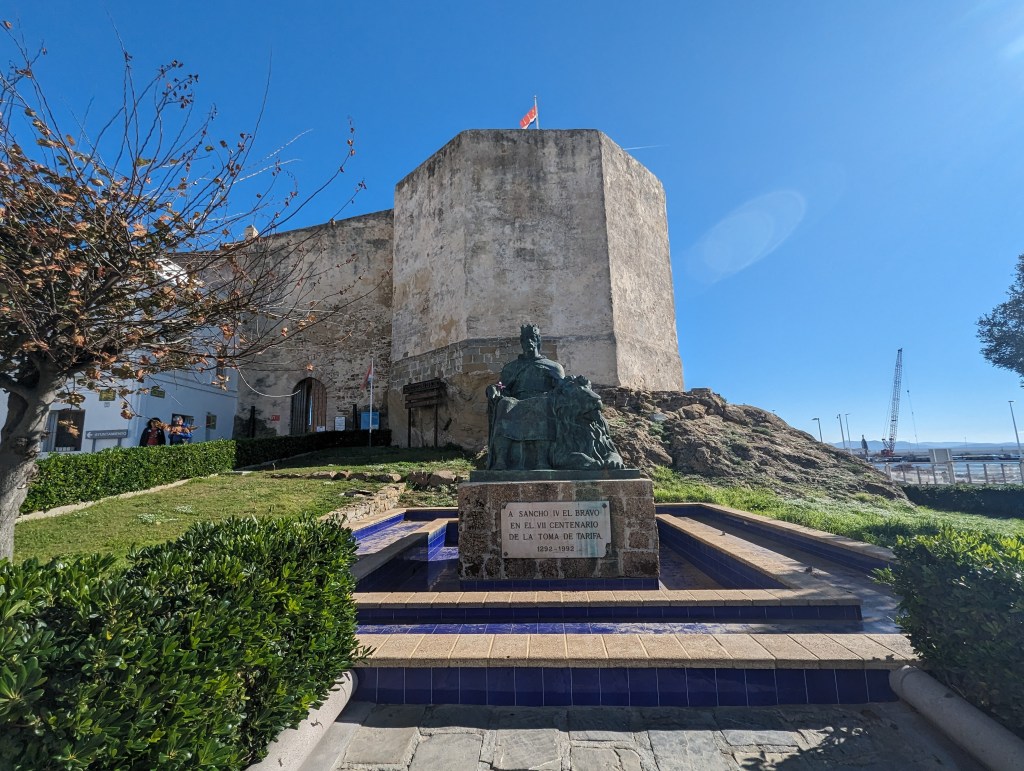
The castle was built in the 10th century by the Moors to protect the harbor.

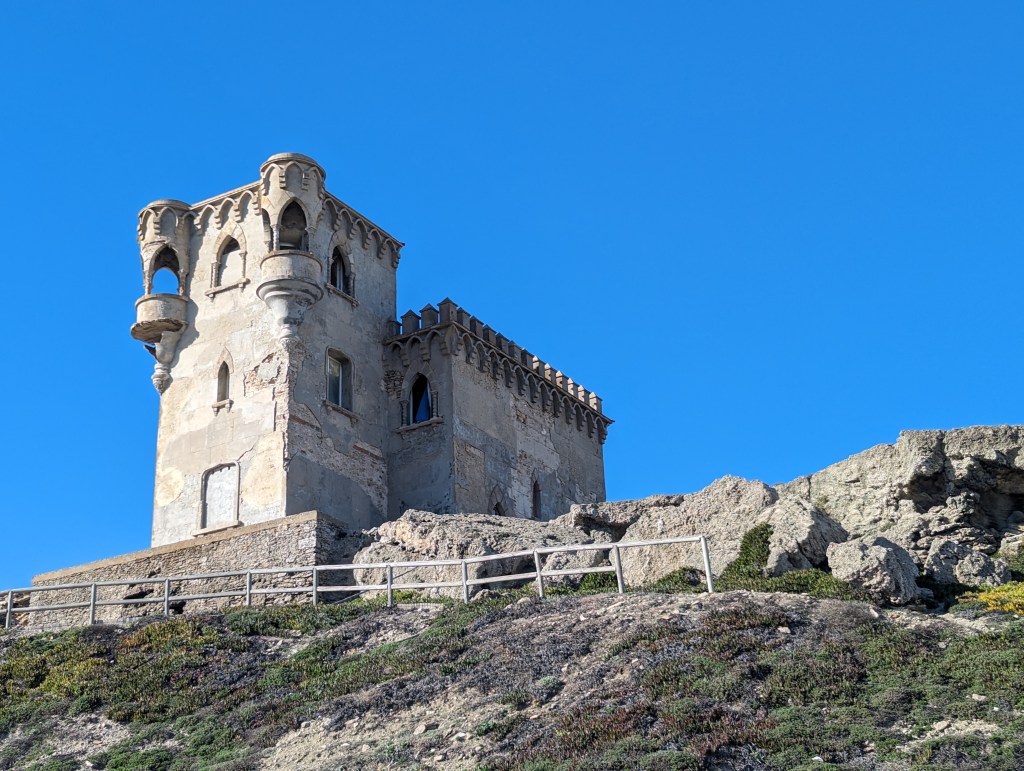
We strolled out past the Santa Catalina Castle, built in 1933 as a military base on the site of a previous fortress, but is now abandoned.
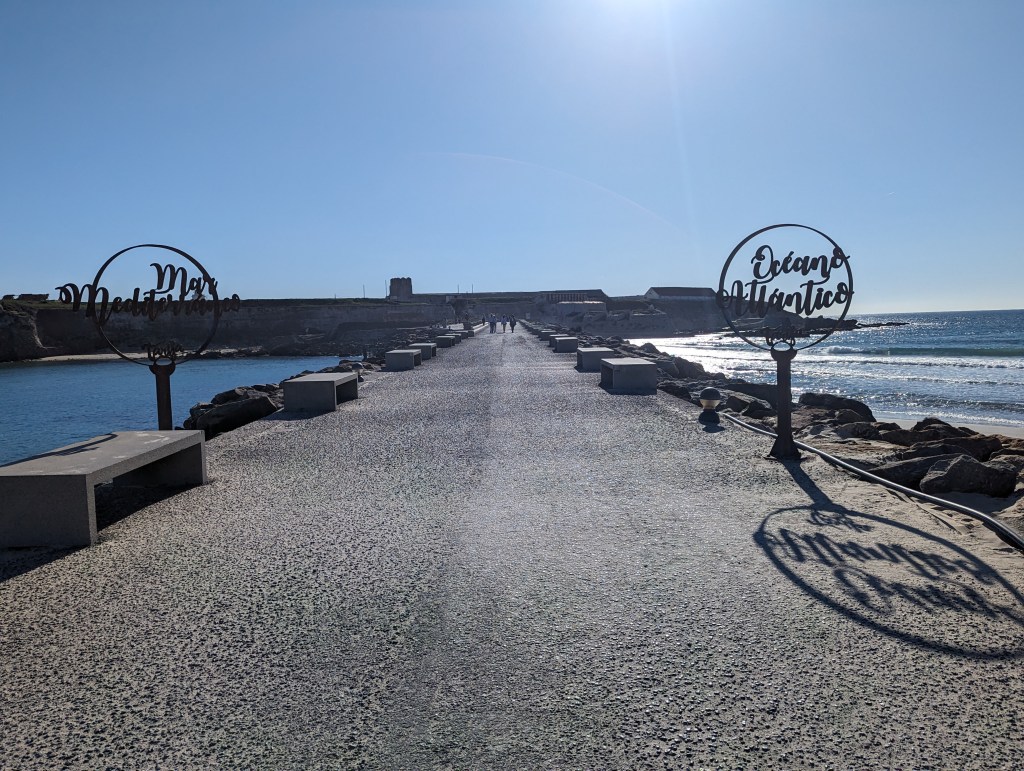
There is a long peninsula jutting off the beach of Tarifa and separates the Atlantic Ocean from the Mediterranean Sea.
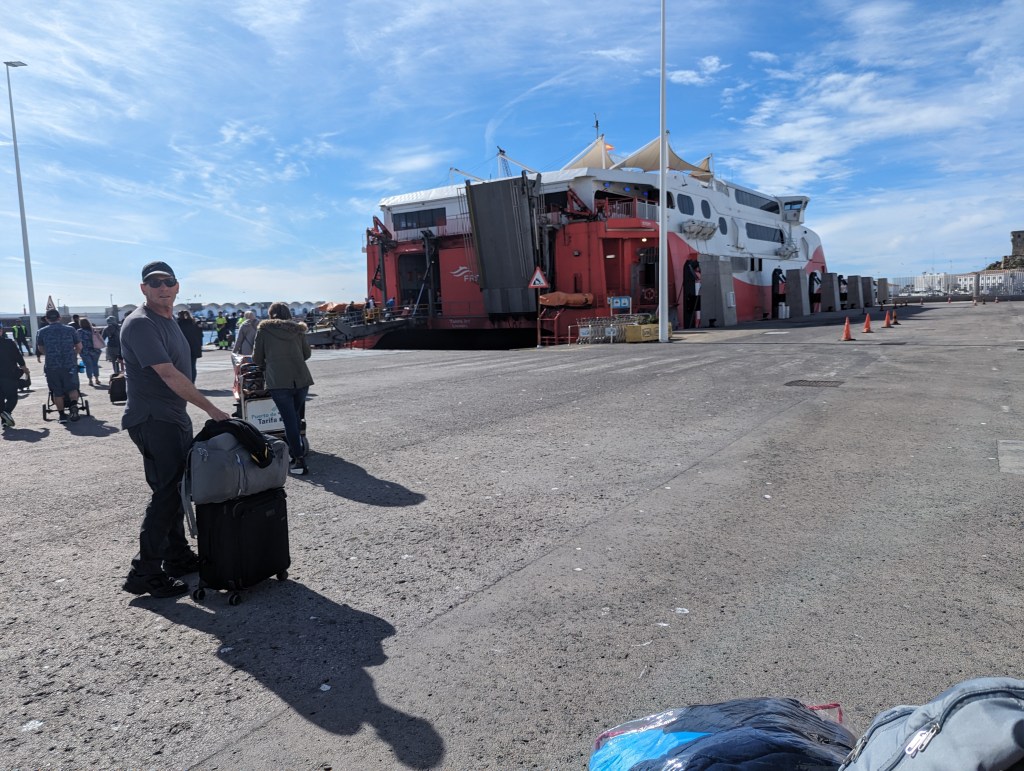
The next morning we boarded our ferry to Tangier, Morocco.
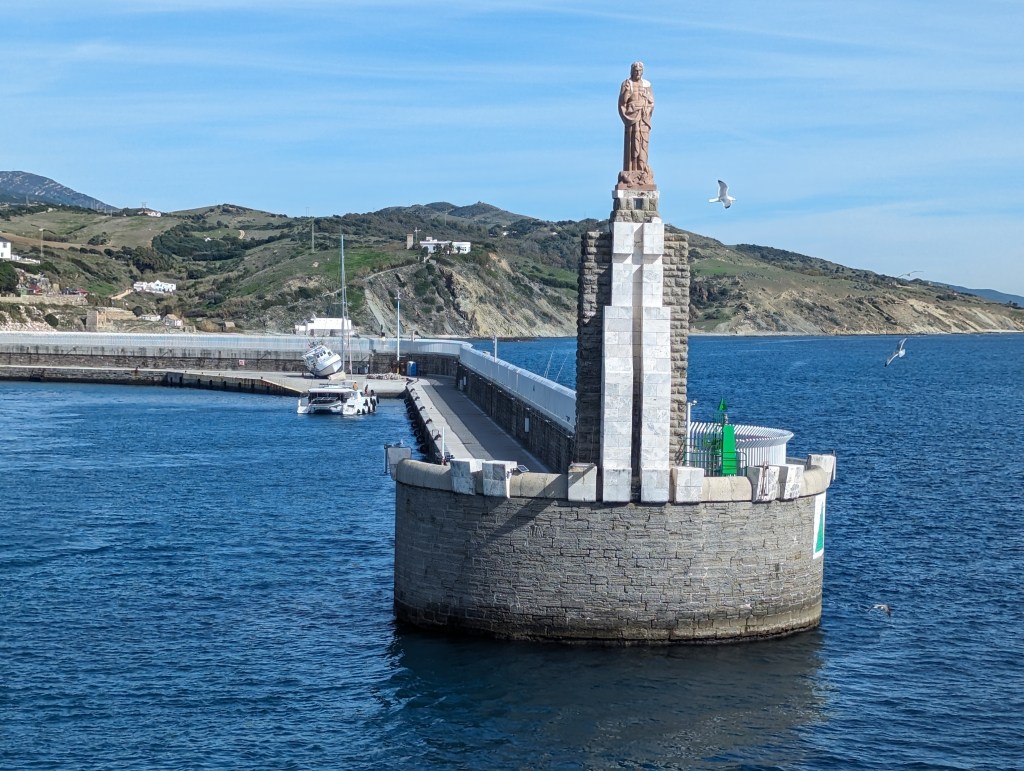
On the way out of the harbor we passed the staue of Jesus Christ, a fitting goodbye to Spain.
 Jo & Eric's travels
These blogs are amazing! Have you ever thought of doing this as a job?
Lori Porges
<
div dir=”ltr”>
<
blockquote type=”cite”>
LikeLike
way too much work, lol
LikeLike