
We arrived in Tangier on a beautiful sunny day and were immediately impressed with what appeared to be a large, bustling modern city. The passport office was on the ship. All we had to do on exiting the ship was show our stamped passport, go through security, and easy as that, we were in the country.
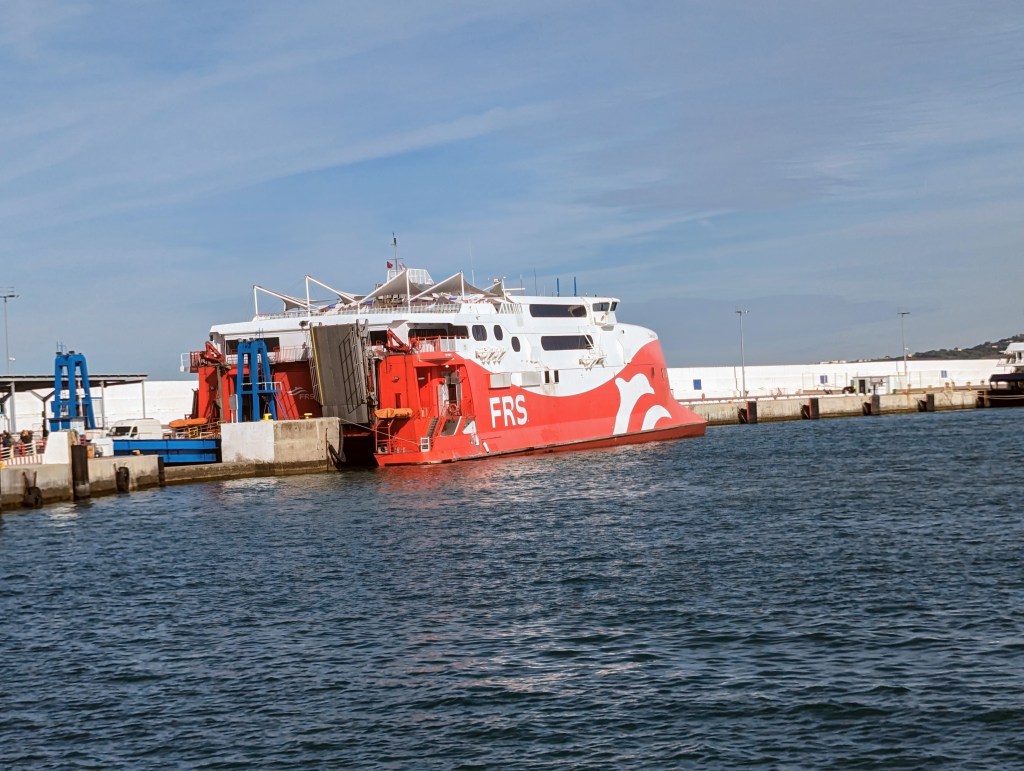
We were met by a driver sent by our riad. A riad is a traditional Moroccan home built around a central courtyard usually with a water element. Many riads in the old cities (medinas) have been converted into small boutique hotels, or guest houses, with typically 6-8 rooms. Our riad was located in the kasbah, which was the original fortress located in the center of the medina. We passed the entrance to the medina.
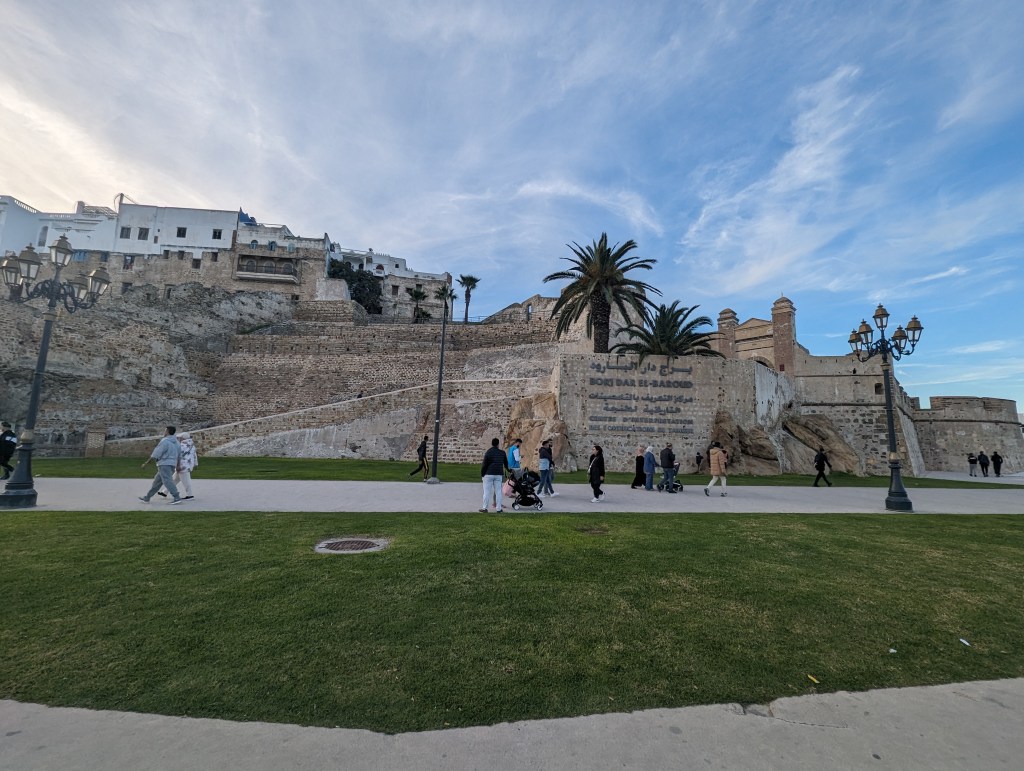
We were dropped at the entrance to the kasbah, as no cars are allowed in. A young porter came to meet us and transport our luggage. And we entered our riad.
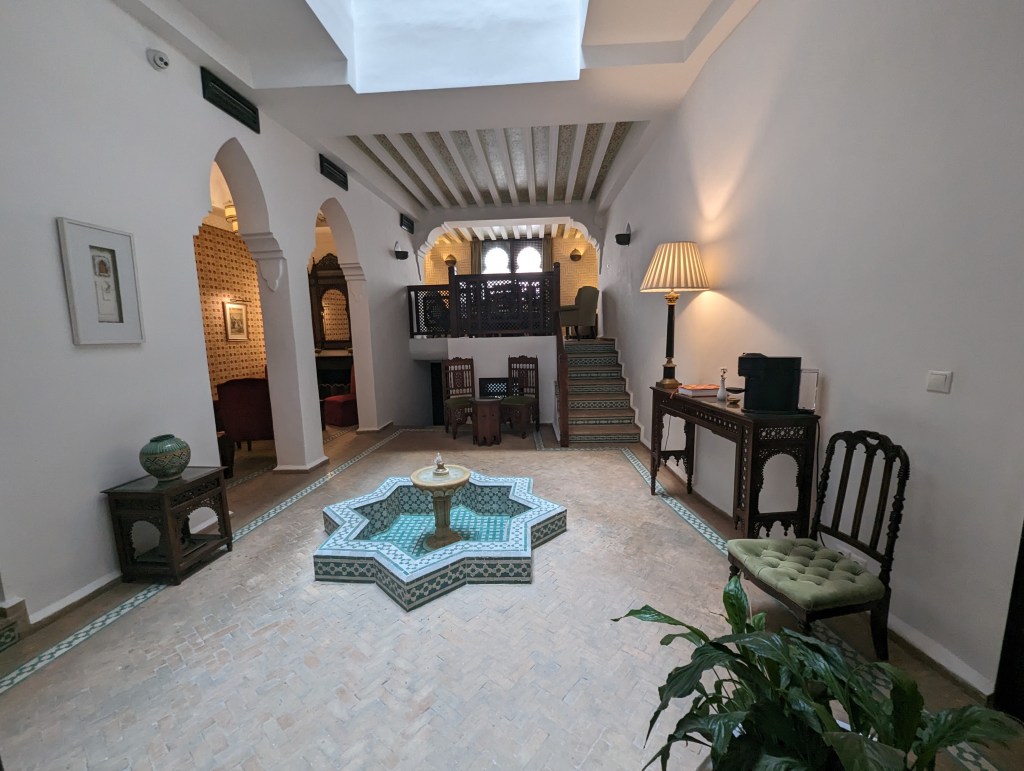
We were greeted by Aziz the owner who gave us a tour of the riad which has been in his family for many generations. We were booked in the Henri Matisse room. Matisse spent a lot of time in Tangier and painted several of his famous works here.
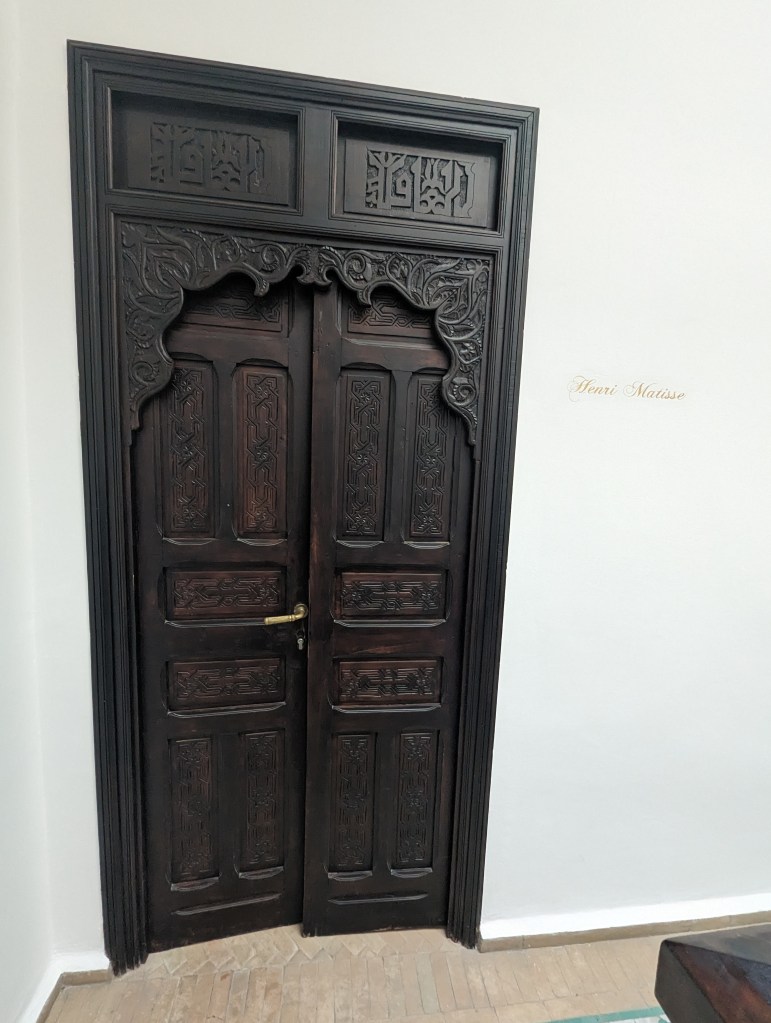
The doors are carved by hand as is all of the original woodwork in the riad. The windows have carved woodwork with laced patterns to allow for air but also privacy. Aziz took us to the rooftop to show off the views.
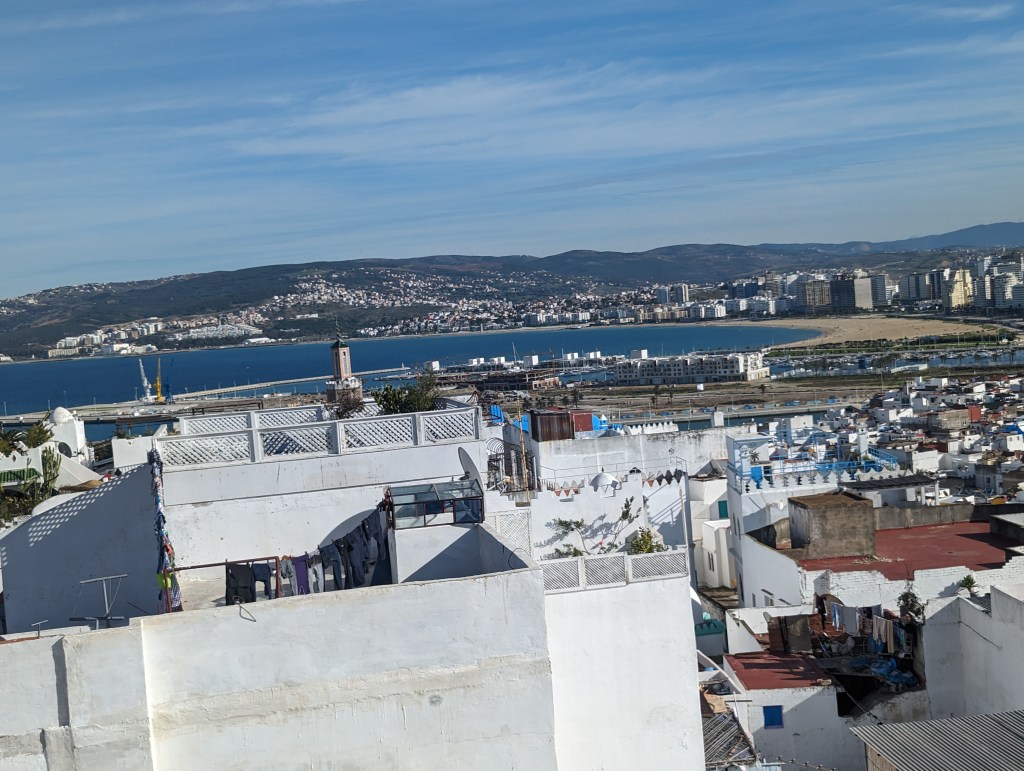
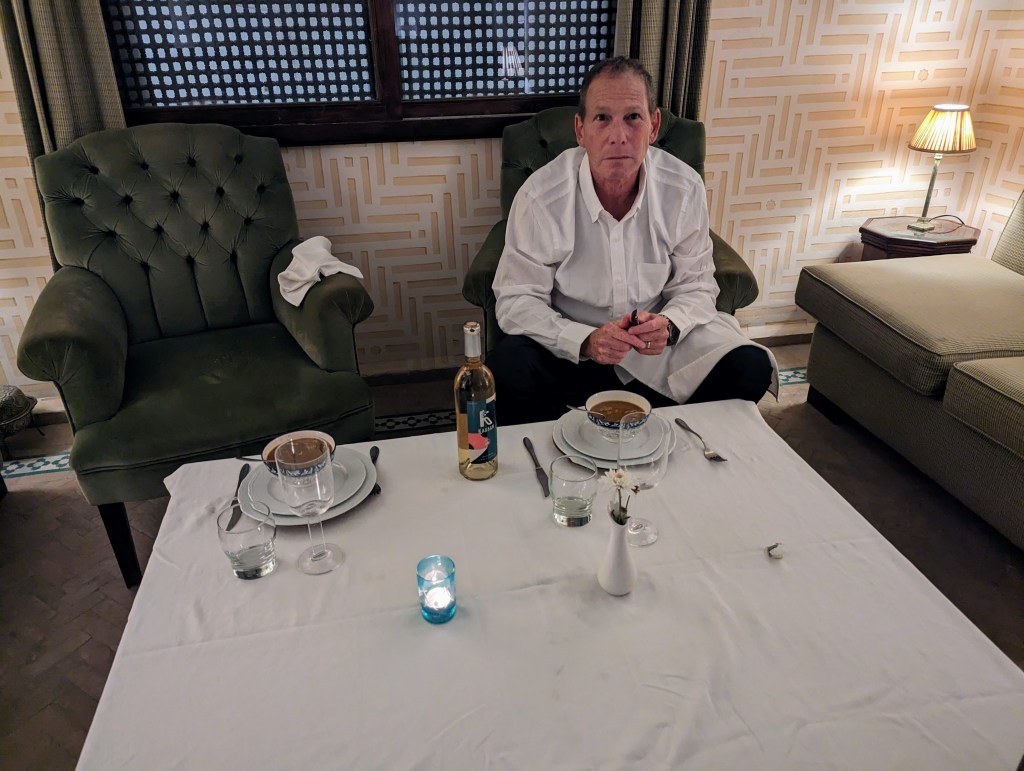
He told us to make ourselves at home, which we did. Dinner that night was served in the salon of the riad. We were introduced to harira soup, which is a very tasty vegetable based soup eaten any time of day including breakfast throughout Morocco. We are both fans.
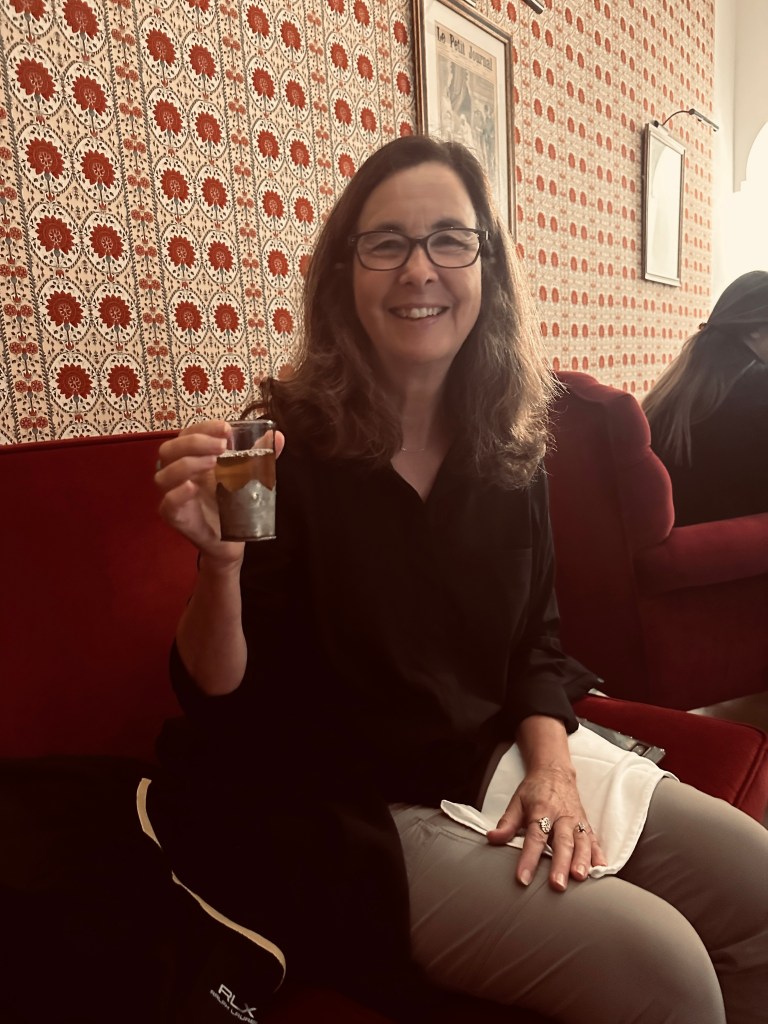
Breakfast was served up on the roof and consisted of fresh oranges, pomegranates, and Moroccan mint green tea with jasmine flower, my new favorite hot beverage,
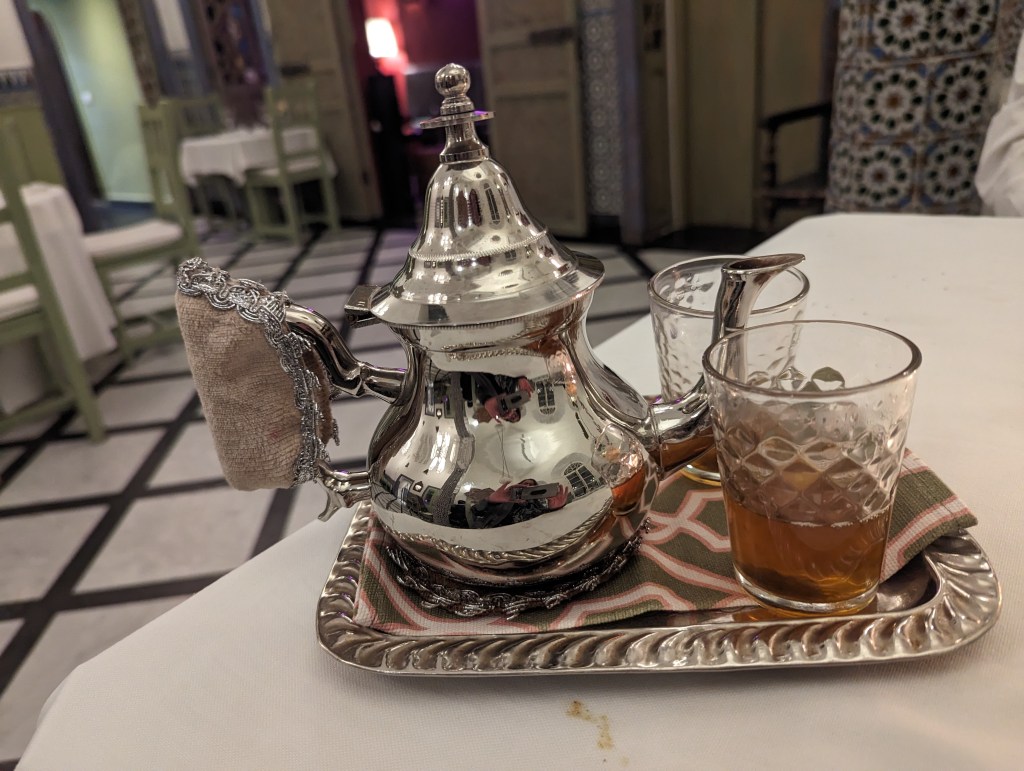
Breakfast featured msemmen, a several times folded pan fried flat bread. It is served with butter, jam and/or honey. Also on offer were beghrir, basically a pancake cooked on one side with its many holes giving an airy, crumpet-like consistency, also served with butter and jam. As I write this I realize despite breakfast there 5 mornings, I have not a single picture of the spread, so sorry. But I do have a picture of the adorable tea service used.
After breakfast we met Latif for a walking tour. He told us that in order to understand the culture of Tangier, it is important first to have some history of Morocco in general and Tangier in specific. Many civilisations and cultures have influenced Tangier, starting from before the 10th century BC with the Phoenicians. Over the next centuries it was home to Carthaginians, Romans, and Berbers. (Berbers are actually tribes of many peoples. The Romans called “Berbers” anyone who did not speak Latin.) Byzantine control probably yielded to pressure from Visigoth Spain around 618. In the 8th century the Muslims moved in and converted many of the Berbers. As the Spanish started to conquer and expel the Jews and Moors from Andalusia in the 13th through the 15th century, many of them moved into northern Africa and converted many of the Berbers to both religions. It remained under Muslim control for most of the next several hundred years until the Portuguese started to move ever southward into Africa in the 15th century. In the 17th century it passed into Spanish control along with the rest of Portugal’s domains. Iberian rule lasted until 1661 when it was given to England as part of a princess’s dowry. But the English rule only lasted about 40 years when the kingdom was taken back by the Muslims. In the late 19th century France bombarded Tangier. In the early 20th century Spain controlled most of southern Morocco and the very north while France controlled most of the middle. While under colonial rule, the King of Morocco was considered a sultan. In 1920s, Tangier, an international zone managed by colonial powers, became a destination for many European and American diplomats, spies, bohemians, writers and businessmen. That status came to an end with Moroccan independence, in phases between 1956 and 1960. In 2011 with the Arab Spring raging throughout Africa, the King Of Morocco, supposedly a direct descendant of the prophet Muhammed, allowed his country to write a new constitution electing a Prime Minister and cabinets. In 2011 the Berber language was for the first time recognized as the second official language of Morocco, Arabic the first, and French the third. Arabic and French are taught in every school in Morocco today. Most of the Moroccans that we have met in service industries also speak English, Spanish, Italian, and some of them German, impressive. Then we were off for the tour.
Being already at the top in the kasbah, we started there. The streets of the Kasbah are the typical narrow winding ones.

Latif pointed out a flower pot that has the design of the Moroccan flag and explained that the red color is for the blood of the martyrs, green is the color of Islam, and the 5 pointed star on the Moroccan flag symbolizes the 5 pillars of Islam: Shahada, a belief in the one God, Allah; Salah, daily prayers; Zakat, alms to the poor (Muslims are expected to give 2.5-10% of their income to charity NOT including the mosque); Sawm, fasting at Ramadan; and Hajj, making a pilgrimage to Mecca at least once in a lifetime, health and wealth allowing.

The kasbah (citadel) of Tangier was built right after the city was evacuated by the English in 1684 and reclaimed by Morocco. The sultan of Morocco supported the city’s resettlement and commissioned its reconstruction, overseen by its new governor. It is therefore surrounded by a wall with gates.
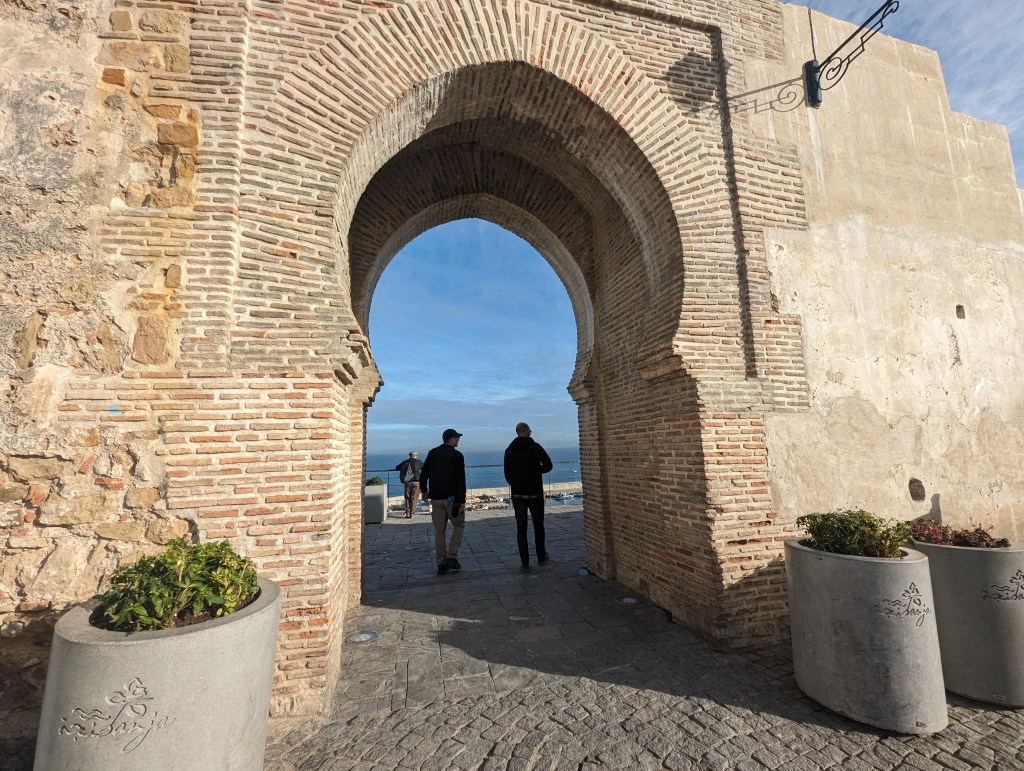
This one opens out to a view of the port of Tangier.
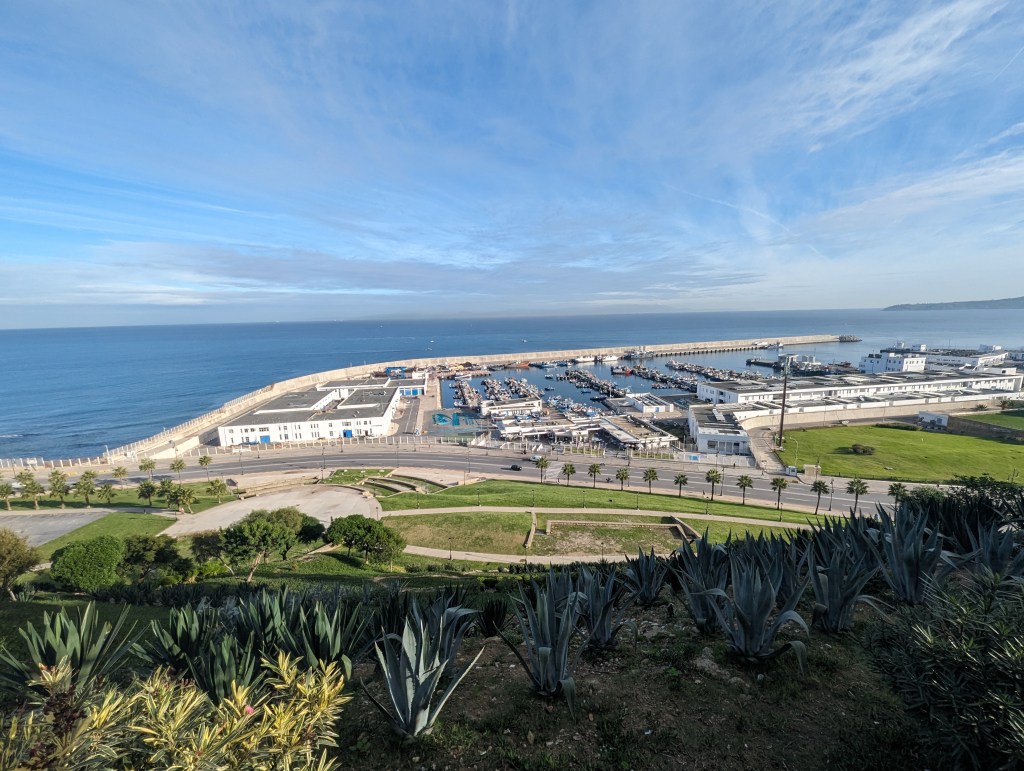
Zooming in, the new mosque at the port can be seen.

The main square of the kasbah is flanked on one side by what used to be a prison, but is now a museum of modern Moroccan art.
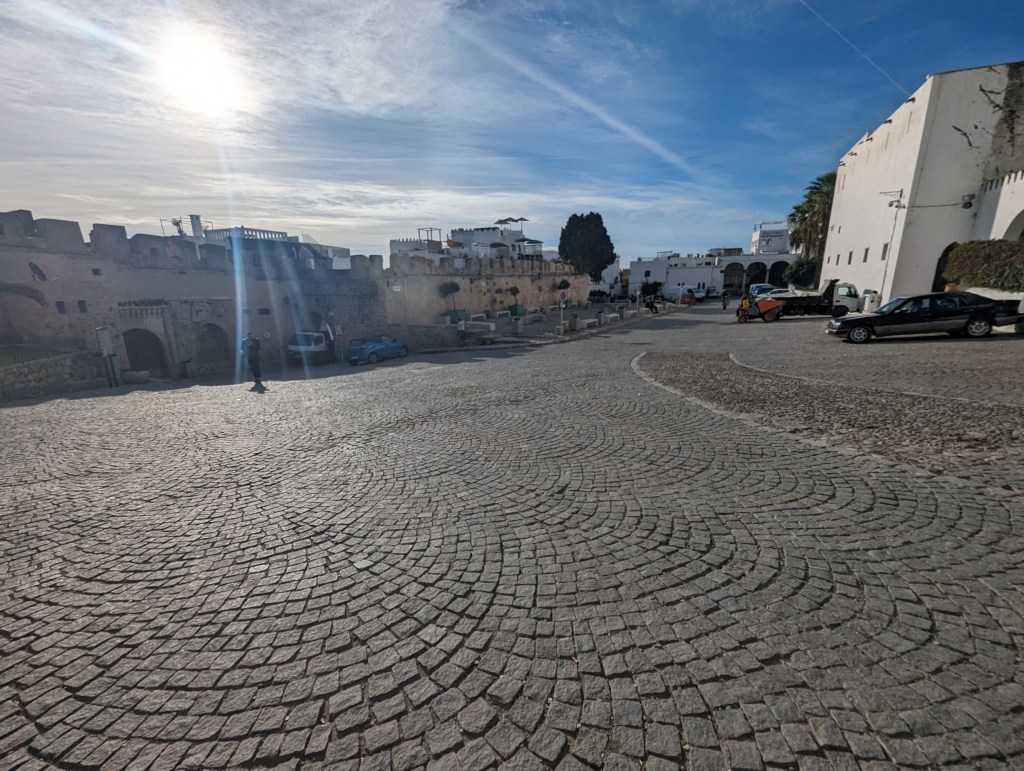
We went in for a look at the art.

Further down the square is a part of the original sultan’s palace which is now a cultural center.

Inside is the entire history of Morocco. One of the first displays shows the original door to the building.

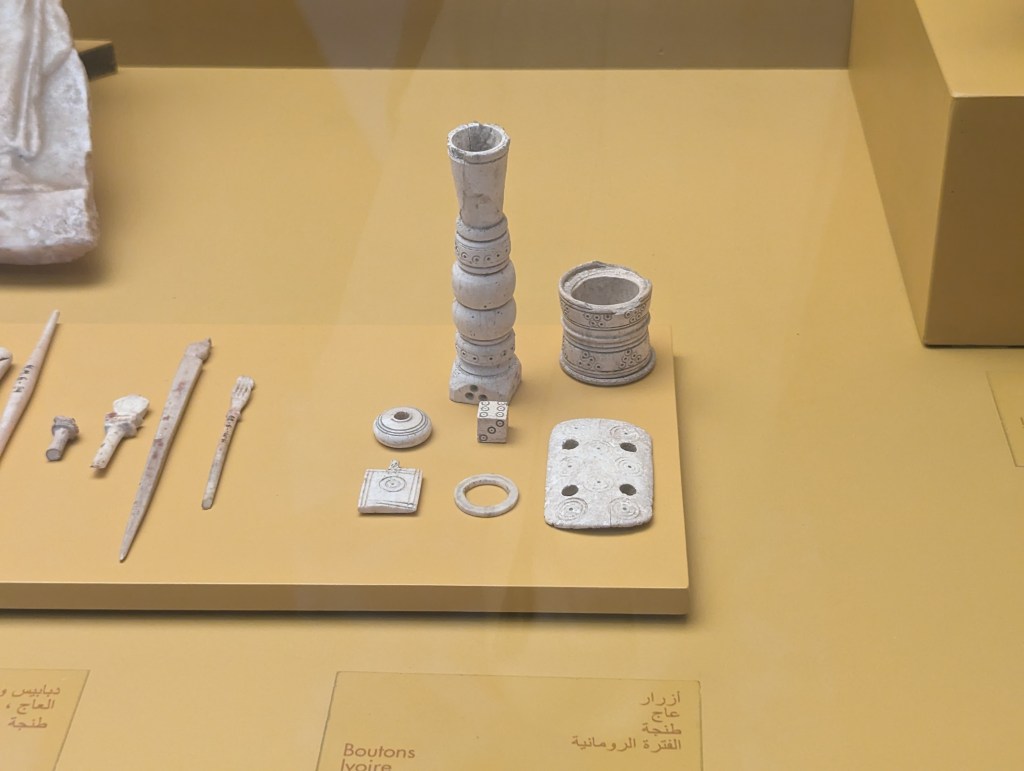
The rooms are organized by period from the paleolithic, neolithic, through Roman times all the way to the present. One of our favorite ancient tidbits was this die from the Roman times.
And a more modern favorite was this ammaria which is used to carry the bride from her home to that of the groom.

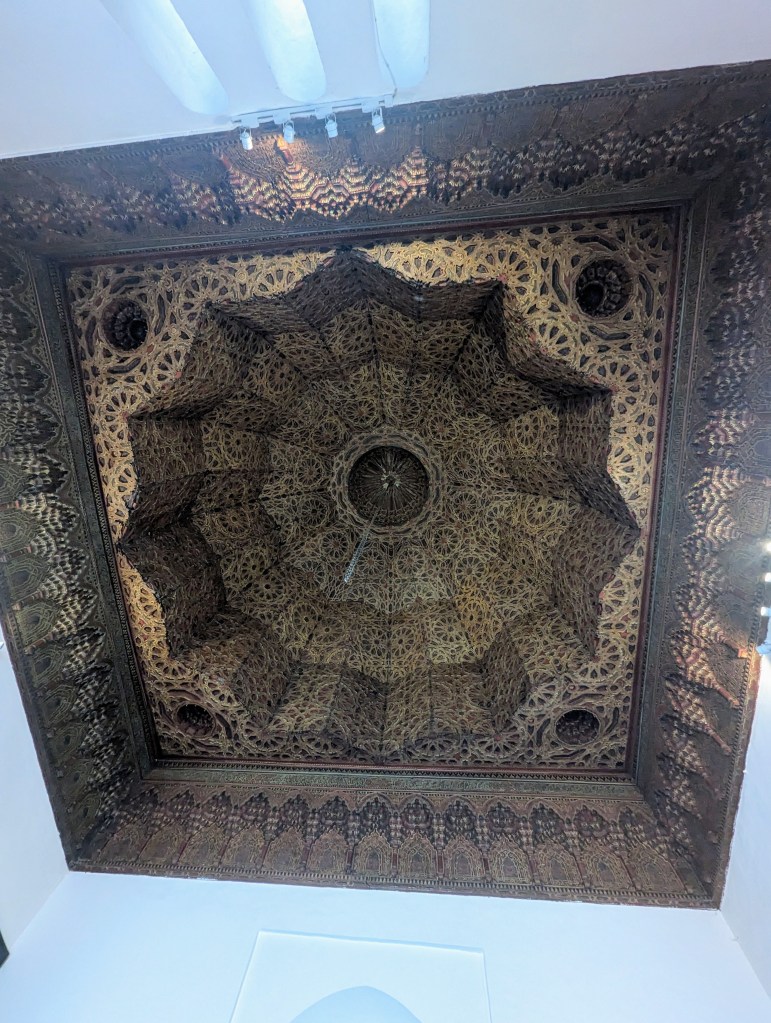
Each room of the museum has an incredibly detailed hand carved wood ceiling.
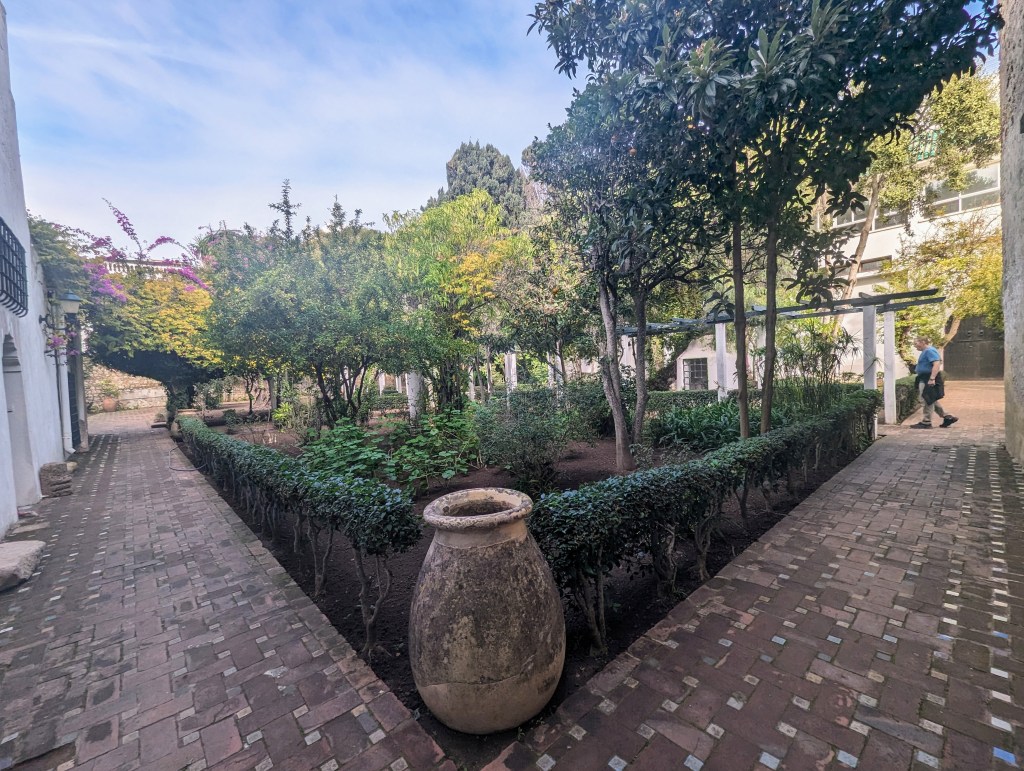
And of course having been a palace, the building has a central courtyard with an extensive garden.
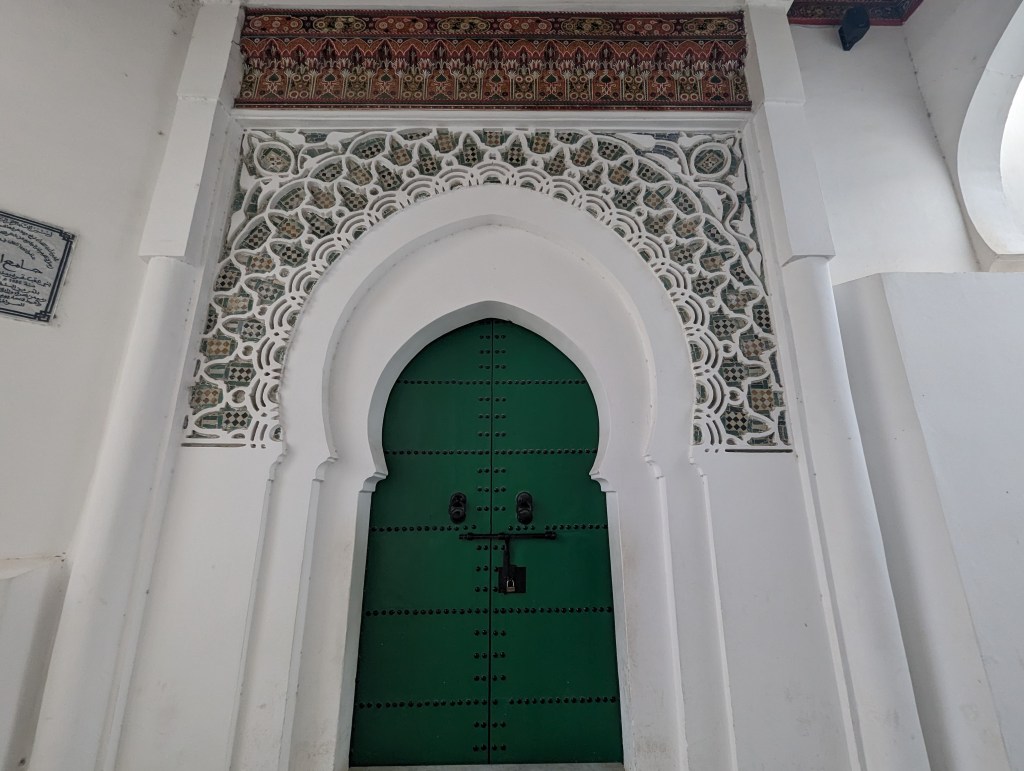
Around the corner from the palace is the mosque. A green door is typical on a mosque entrance.
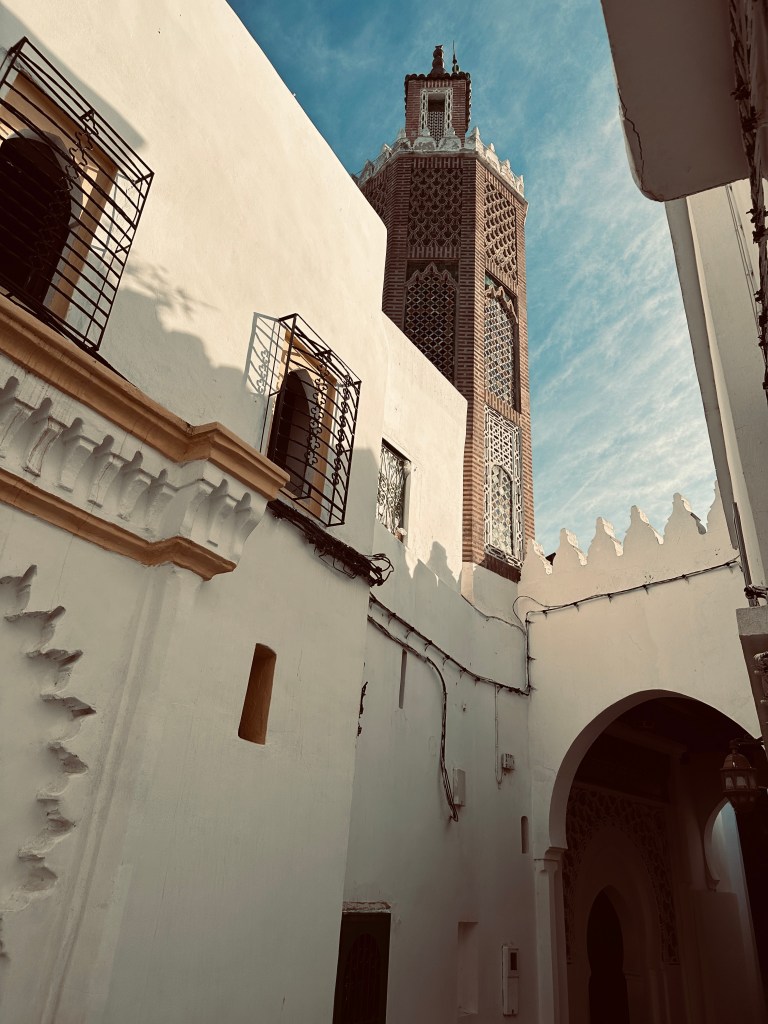
And the minaret.
At the end of the square is the gate that exits the kasbah into the medina.

And the gate into the medina, the old city. The area between the two gates is where punishment of men who were found guilty of a crime took place, ie whipping.
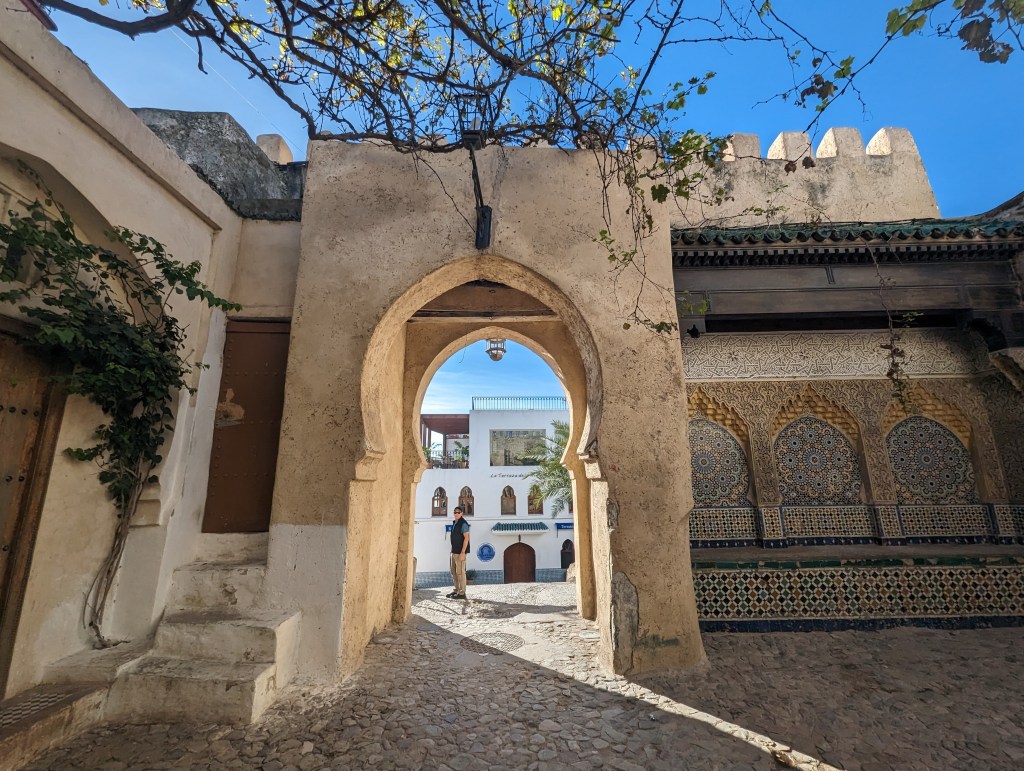
At the top of the medina are several famous cafes. Morocco boasts many famous inhabitants in its day. These cafes were frequented by writers, artists, musicians, and many more through the years.


A souk is a market. Where in the past they were areas of the medina, today most of the medina is a giant souk.

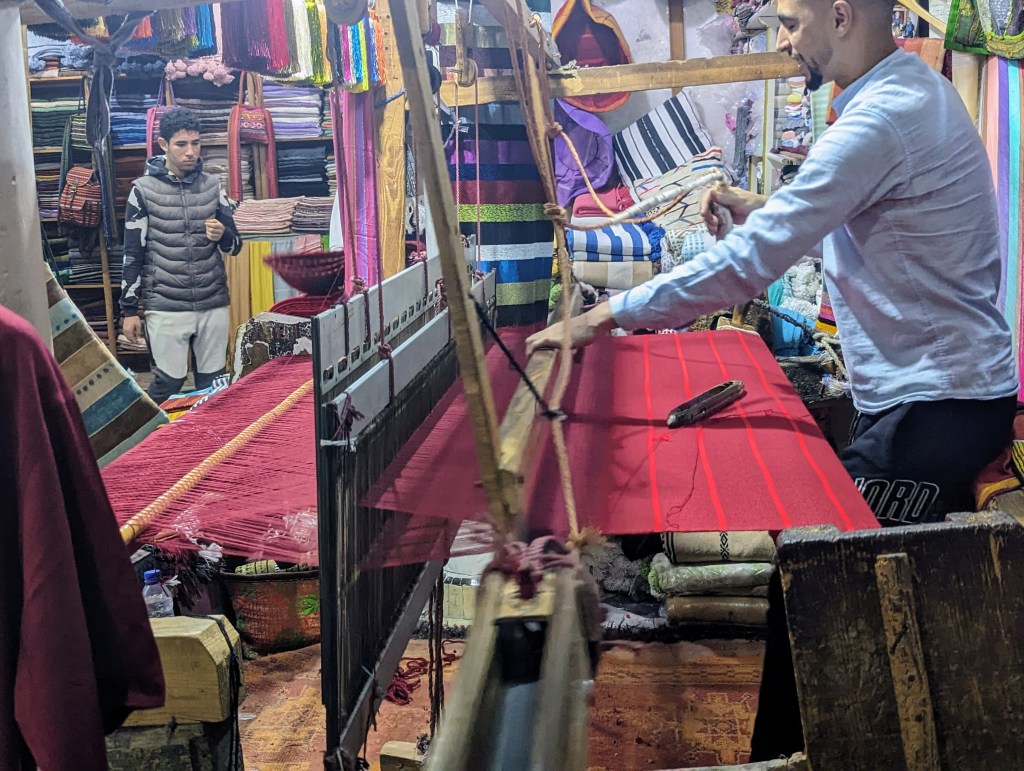
The souks are mostly organized by product. Our favorite was that of the tailors where many make there own textiles. In this shop a man is using his feet to power the loom to weave the fabrics: wool, silk, and combinations of the 2.
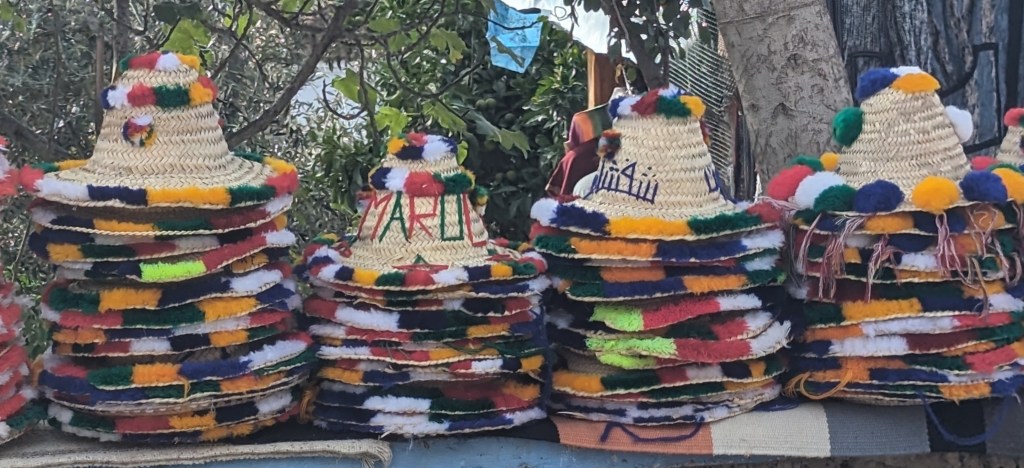
Today was market day which means those living in the mountains, mostly Berbers, come into town and sell fruits and vegetables as well as hand crafted items. They also do their own shopping. I was warned that they do not like to be photographed, so was respectful. But they can be distinguished by their hats, which they weave from straw to protect their heads and necks from sun but allow air for cooling. They are decorated with wool balls, the colors denoting their tribes. The ones from the North tend to use charcoal colored balls, those from the South and East prefer colored ones.
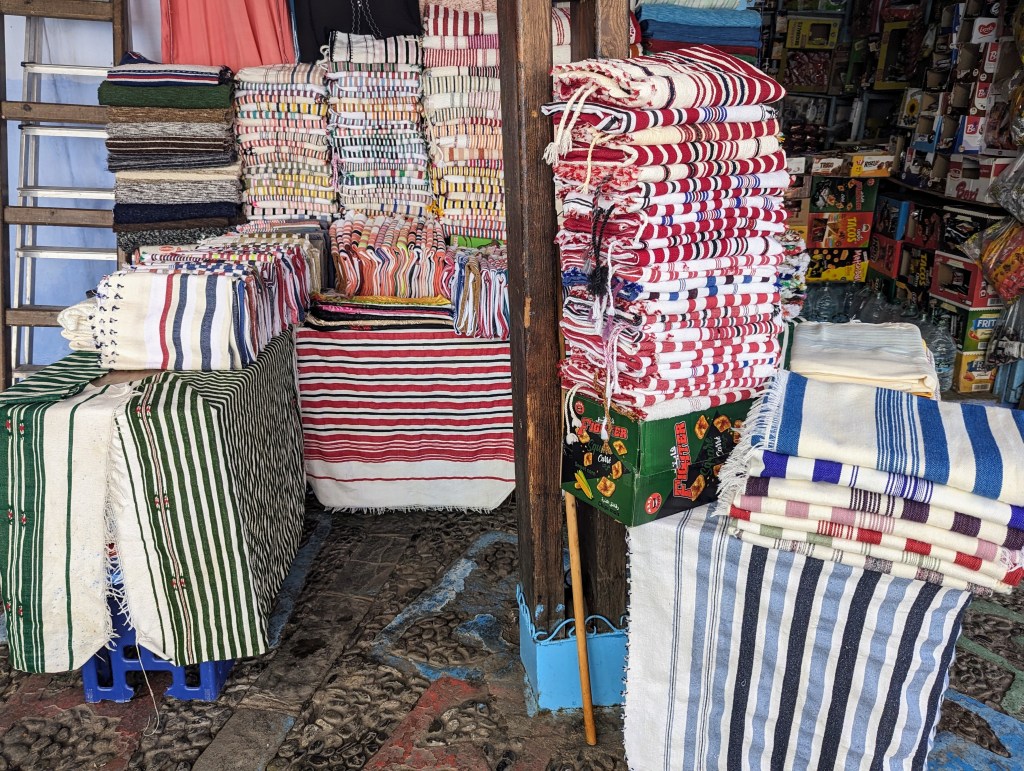
The women wear aprons that are hand woven and typically red and white striped. The way she ties it, to the side or in front, denotes if she is married or still eligible. The ones worn by the tribal women are simple red and white striped.

But those sold for the tourists, which can also be tablecloths, couch covers, whatever, are more colorful.
We also went into the food and spice markets.
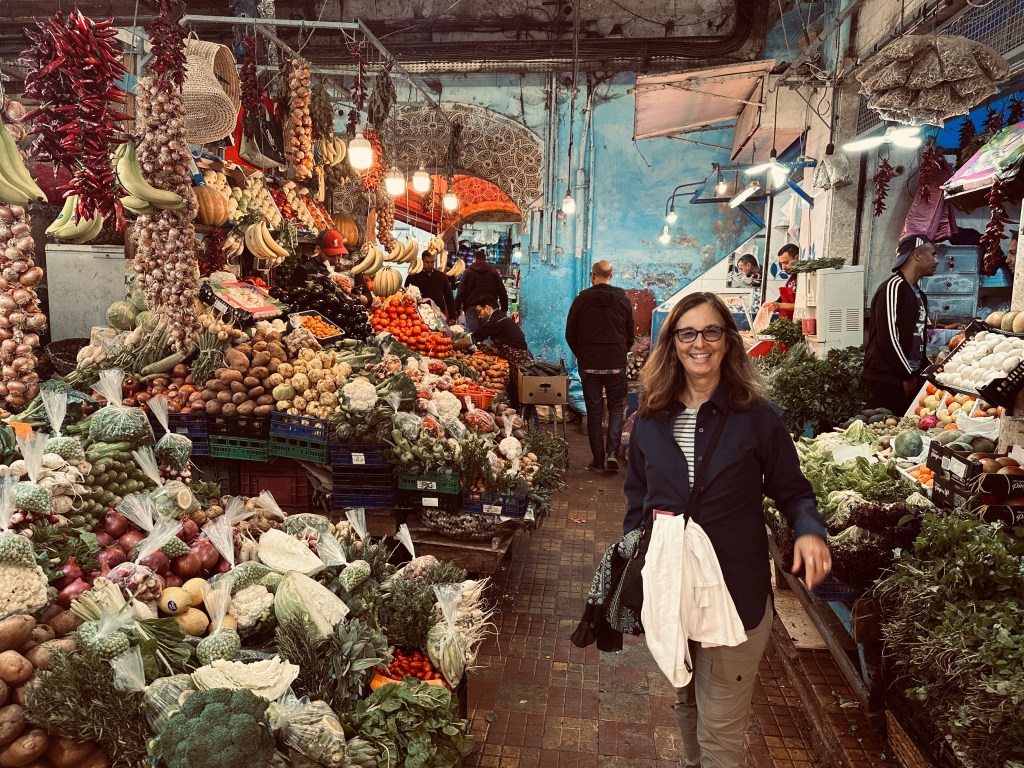
The fish market was the largest we have seen anywhere.
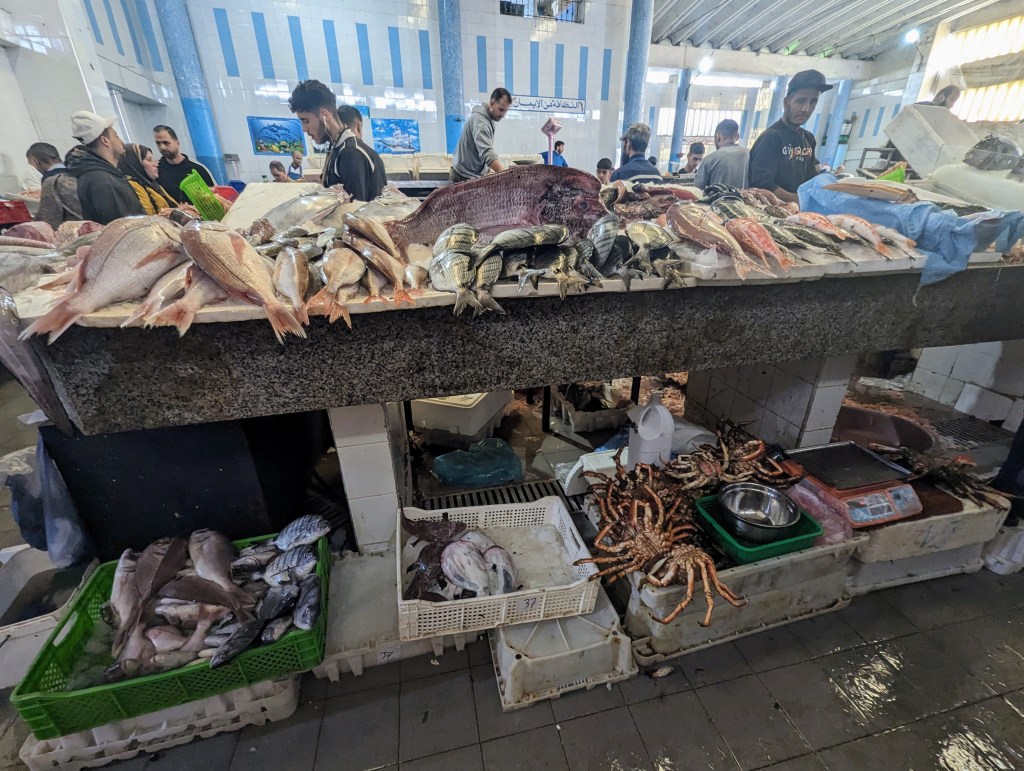
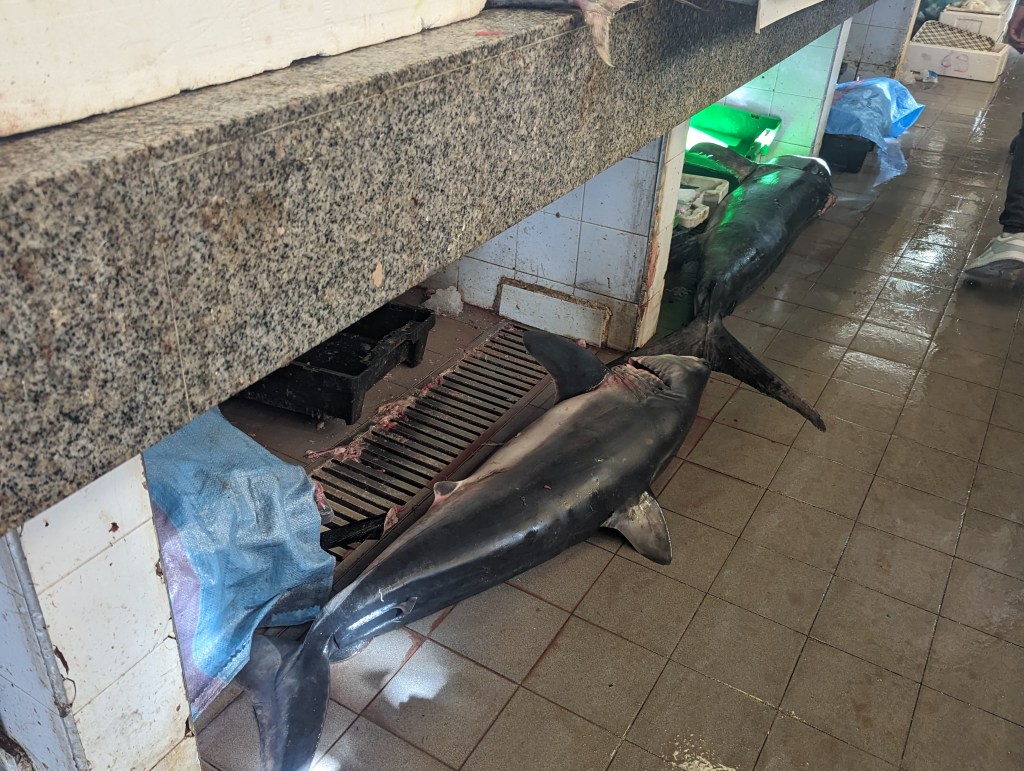
Even sharks!
We walked by the Jewish cemetery.
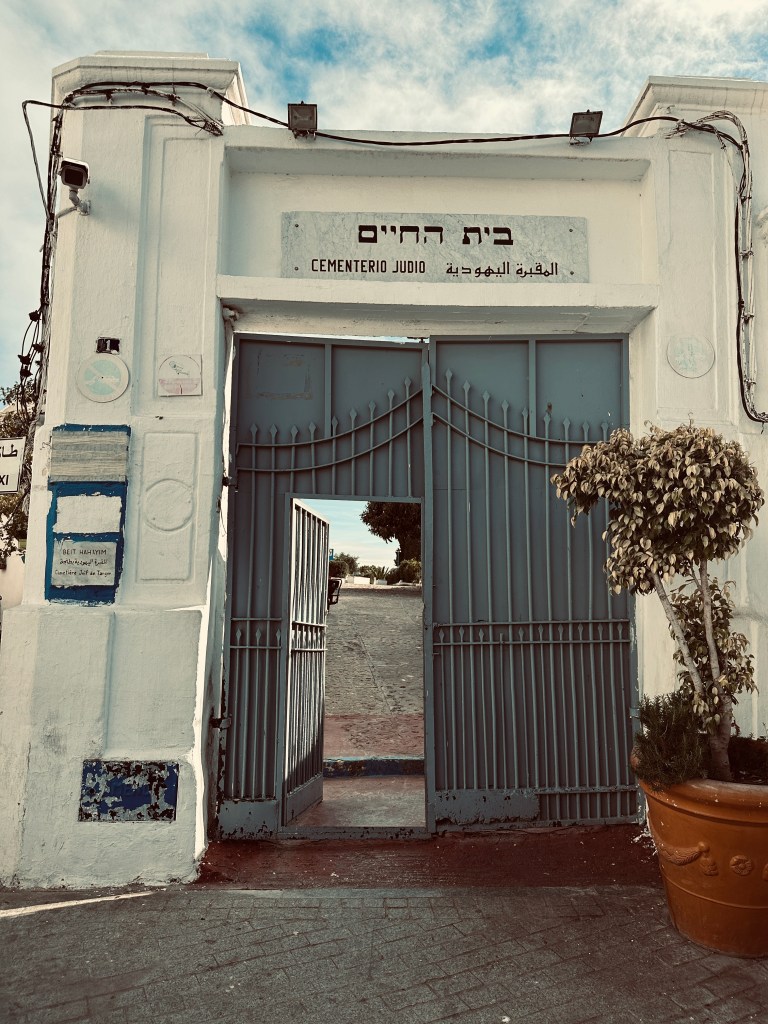
It has a truly great view.

The first Jews migrated to Tangier after the destruction of the First Temple in Jerusalem in the 6th century BC and settled among the Berbers. Jews of Tangier were later met by a second wave of migration from the Jews living in the Iberian Peninsula during the 1492 Alhambra Decree and the Inquisitions. At one point the Jews made up as much as 25% of the population. For the most part Jews and Muslims lived peaceably together. But in 1956 most Jews joined the Zionist movement to Israel.
We then visited the original US Legation.
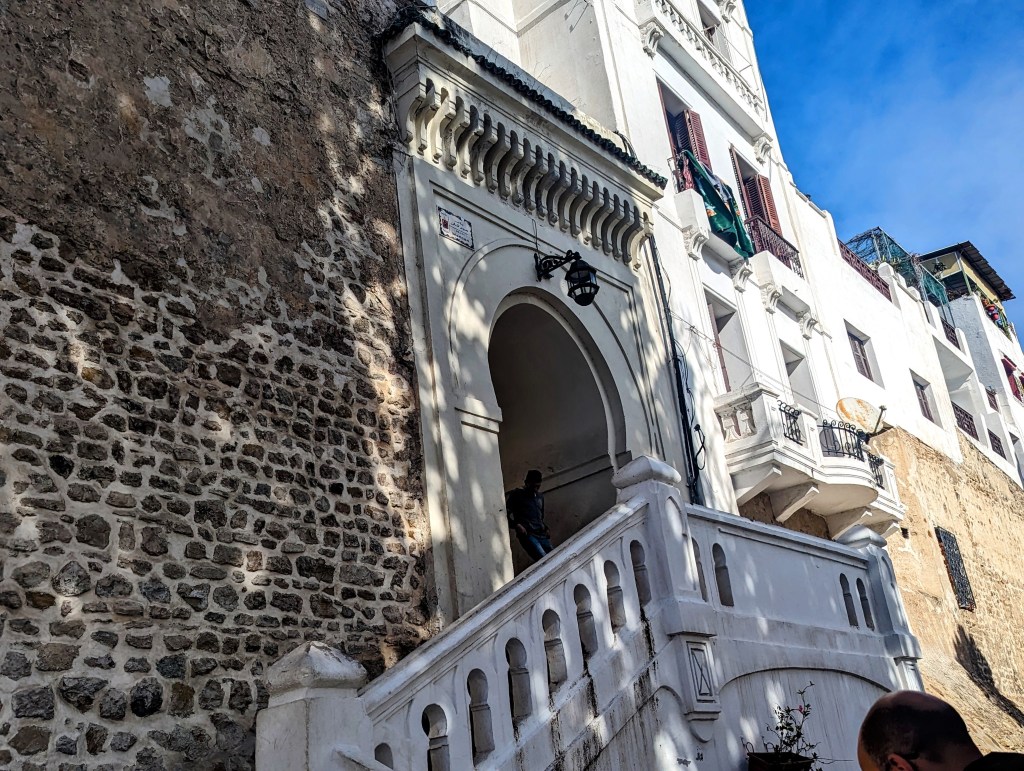
Which is now a museum.

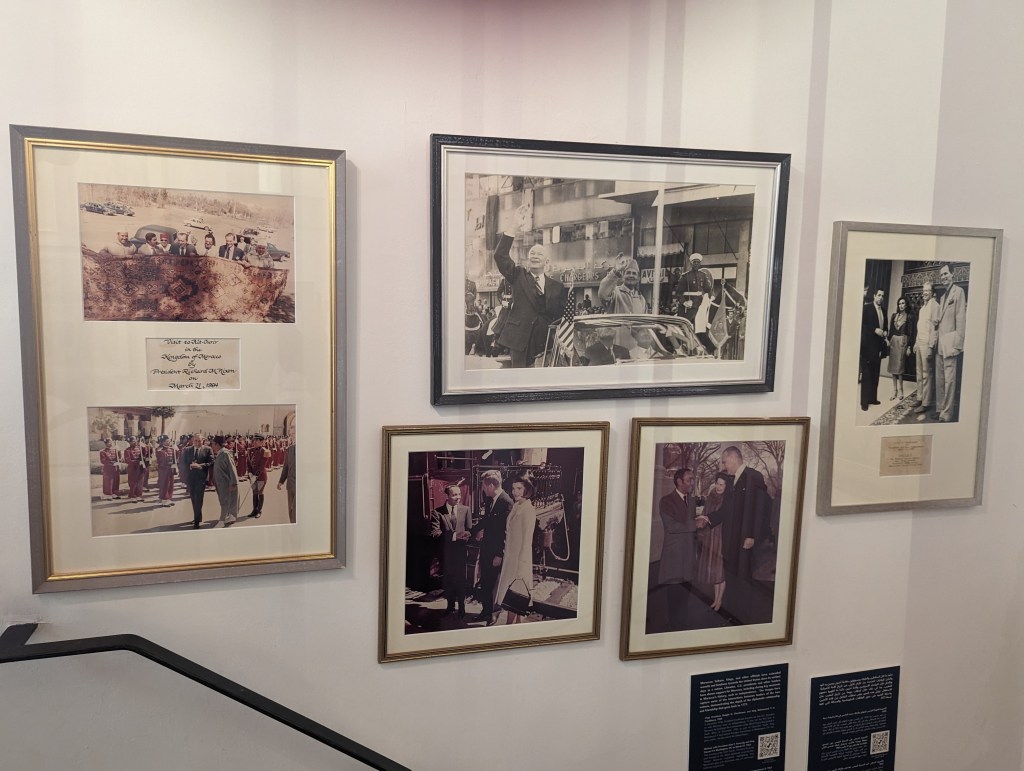
Morocco was the first country in the world to officially recognize the US independence, which it did in 1777. It was, therefore, the home of the first legation of the US in a foreign country, (a legation is a lower rank than an embassy because it is headed by a minister not an ambassador) established in 1821. Morocco has had great relationship with the US throughout our history and has been visited by most presidents.
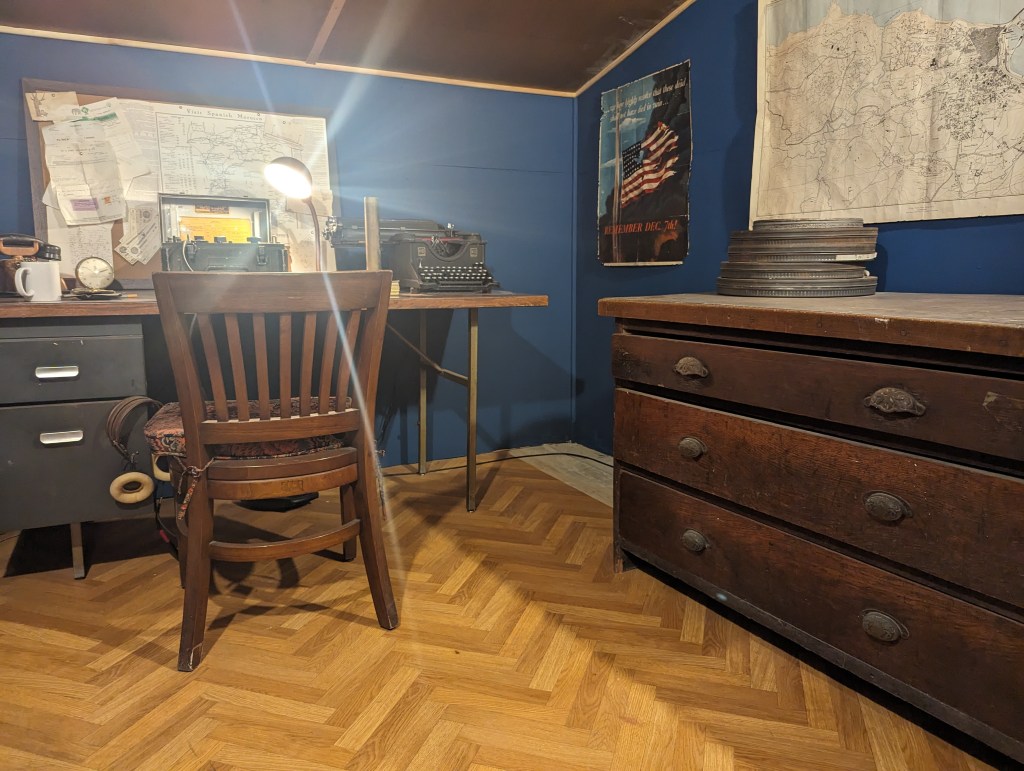
At the time that World War II broke out, Morocco was controlled by France. When France fell to Germany, Morocco was then occupied by Germans. The allies helped plan and operate Operation Torch. On November 8, 1942, American and British forces invaded beaches and ports across French North Africa. It opened a long-awaited second front against the Axis. Operation Torch constituted the biggest and most complex amphibious landing to that point in world history. Part of that planning happened right here in this telegraph office hidden in the top of the US Legation.
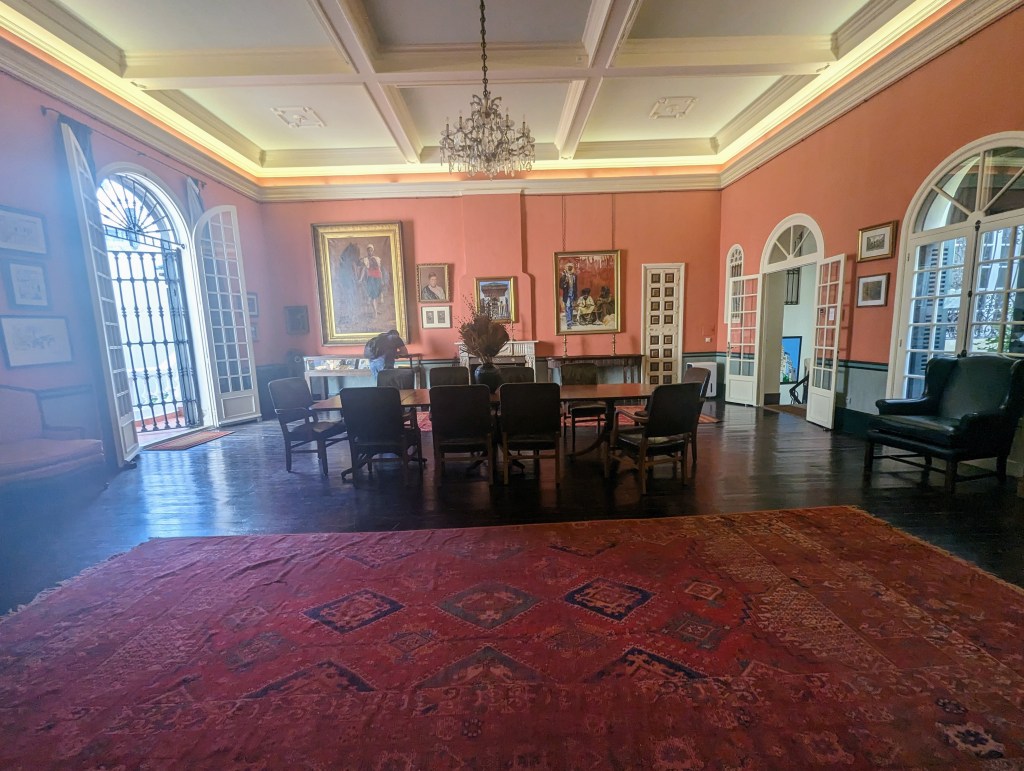
The embassy was also used for living and entertaining.
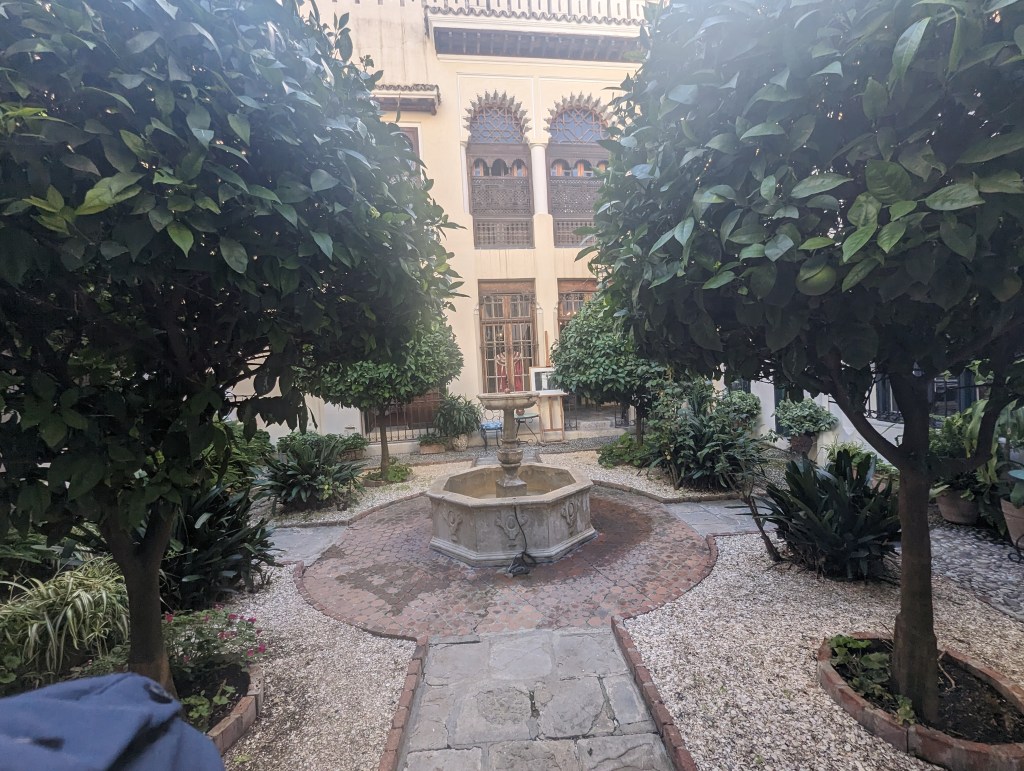
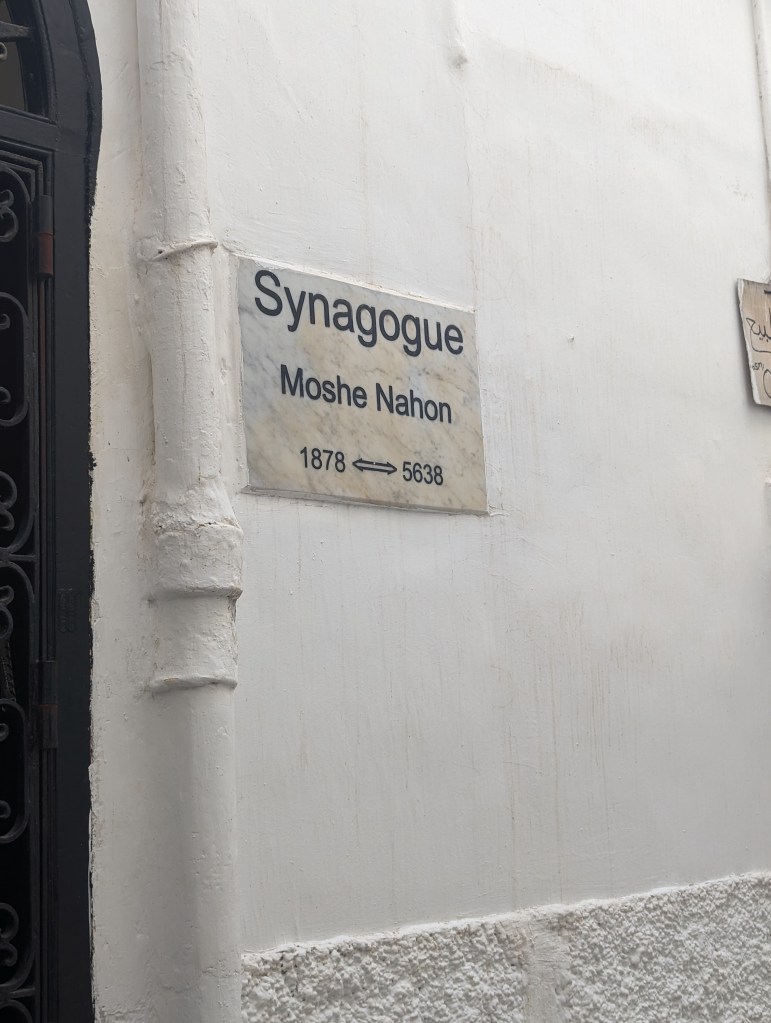
We then went into the Jewish quarter to visit the synagogue. Latif explained that a Jewish Quarter in Morocco is not like a ghetto but an area for Jews to be together, making it easier for them to practice their religion and maintain dietary specialties.

He took us to a Jewish shop that carries everything from mezuzahs and menorahs to lamps and tea services.

We had lunch of chicken tagine and lamb kabobs in a small family run restaurant in the medina.
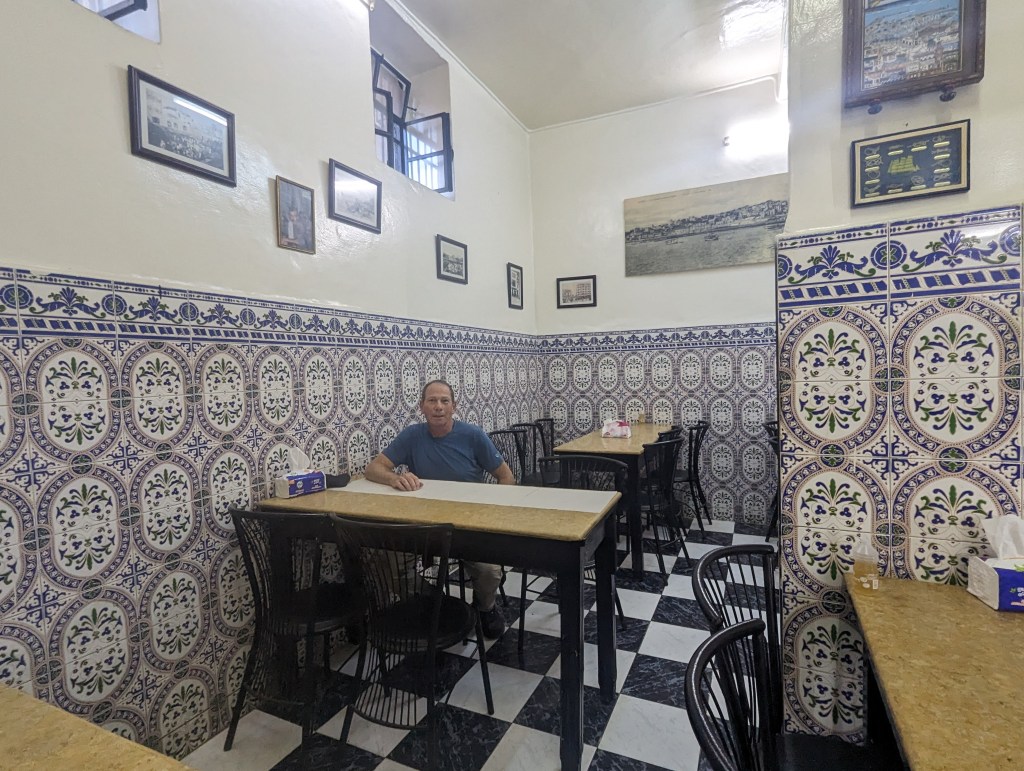
Then we visited more shops like this one with the most exquisite hand made carpets. It can take three people working together a year to make one carpet.

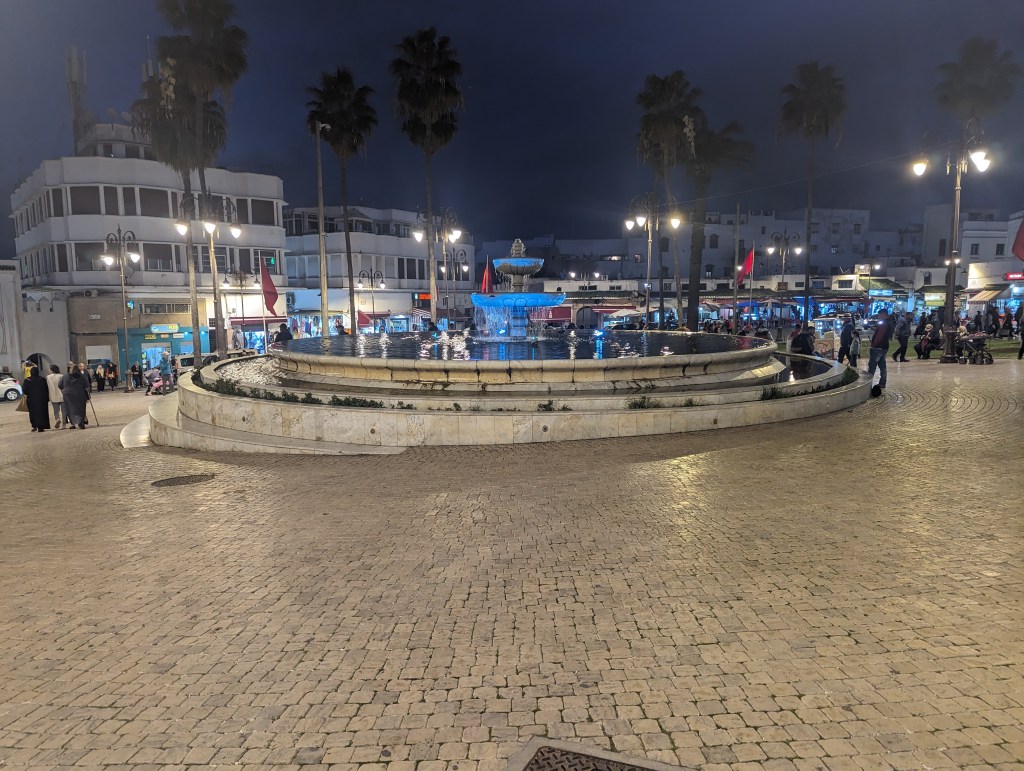
In the evening we walked around outside the medina on our own and visited the main square called the Grand Socco. It was packed with people and street performers.
In the morning we met Kamal who was to be our driver for the next 34 days, which will be a personal record for him. His previous longest clients were with him for 21 days. Kamal is a Muslim Berber from a village in the south that is made up of all Berbers. He says his ancestry is 3-4,000 years old.

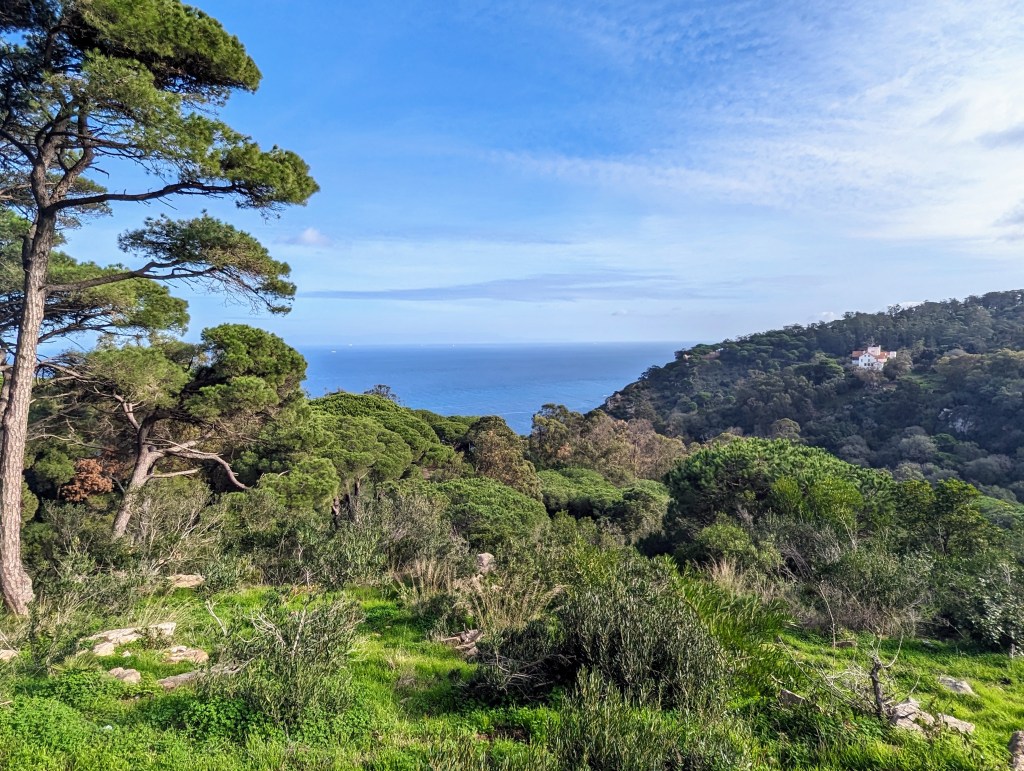
Our first stop was a lookout over the former mansion of Greek-American tycoon Perdicaris who built a 70 hectares park of trees imported from around the world. It is now a public park.
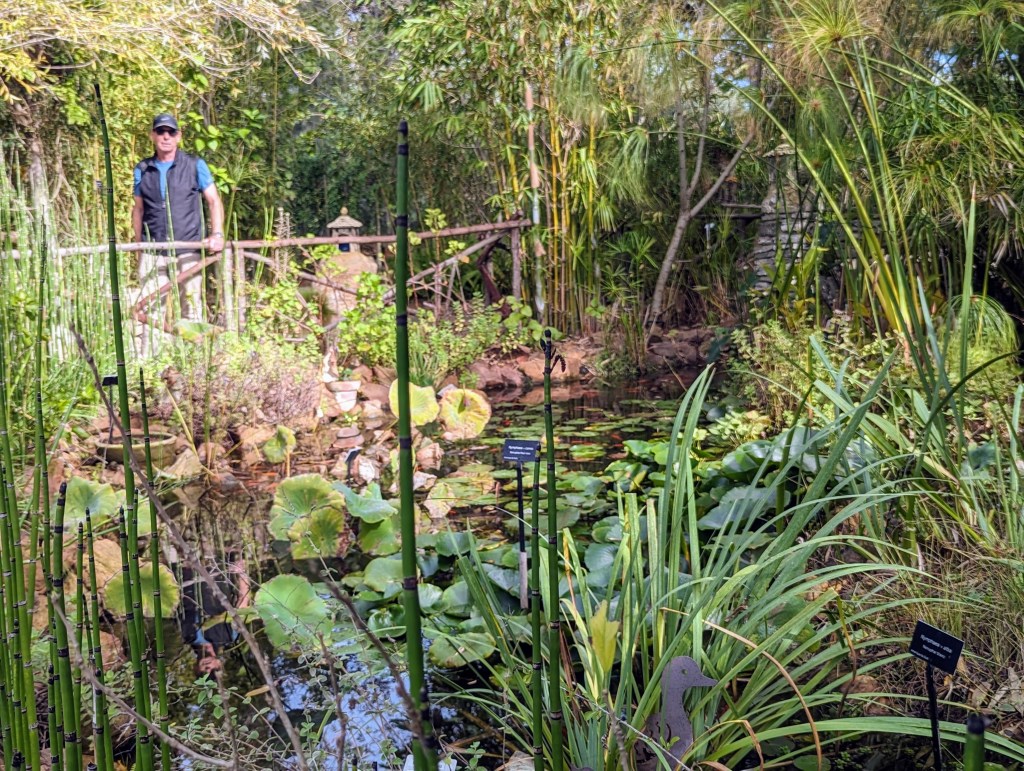
We then stopped in Donabo Gardens. Despite it not being the right time of year for gardens, they were lovely.

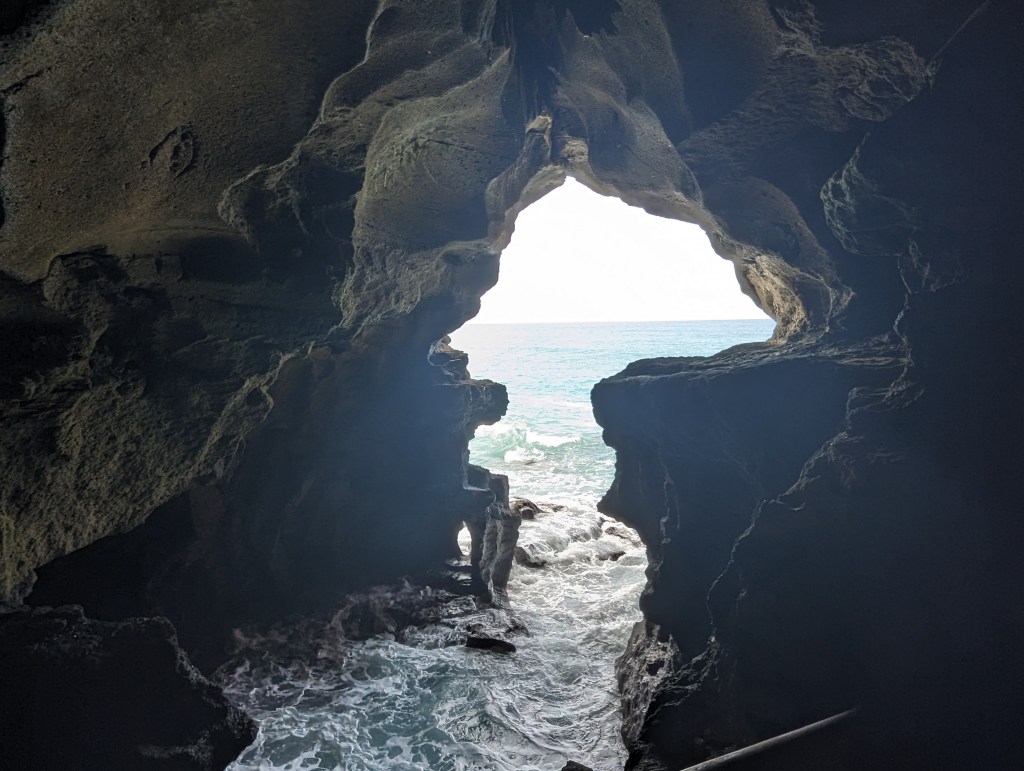
We then went on to Hercules’ Cave, so named because legend has it that he carved it out and lived there while he was planning to separate the two continents, one of his 12 labors for immortality.

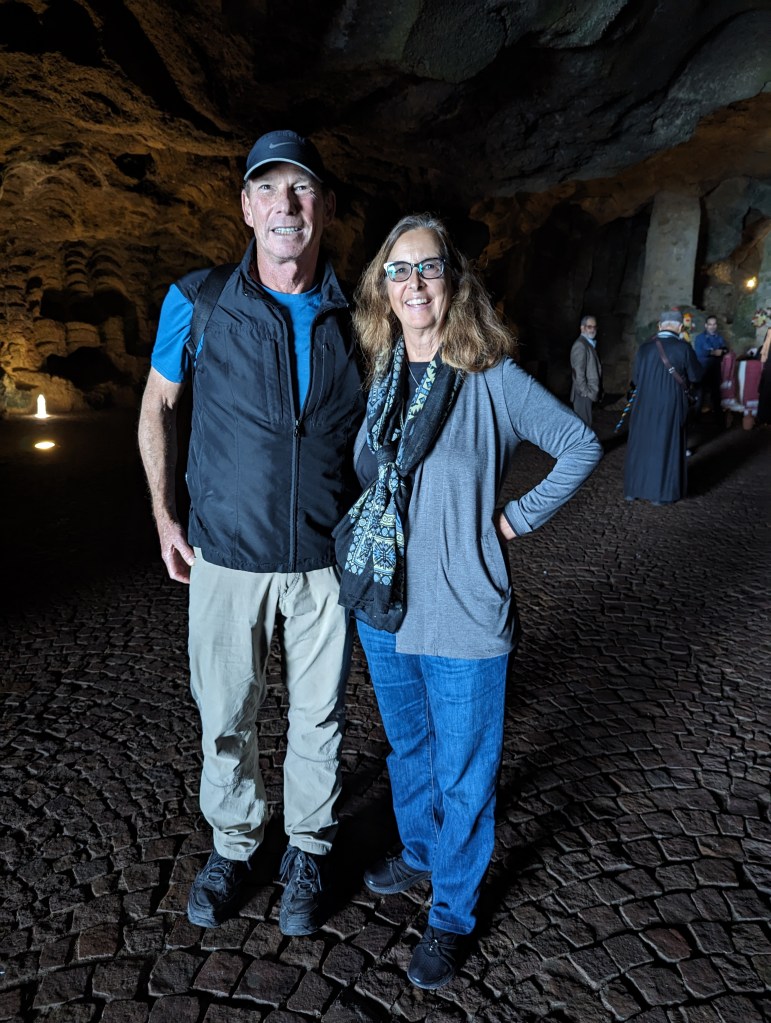
The mouth of the cave is said to look like the shape of Africa.
Then we drove to Cape Spartel, a promontory in Morocco about 1,000 feet above sea level at the entrance to the Strait of Gibraltar. It is the northwesternmost point of the African continent.
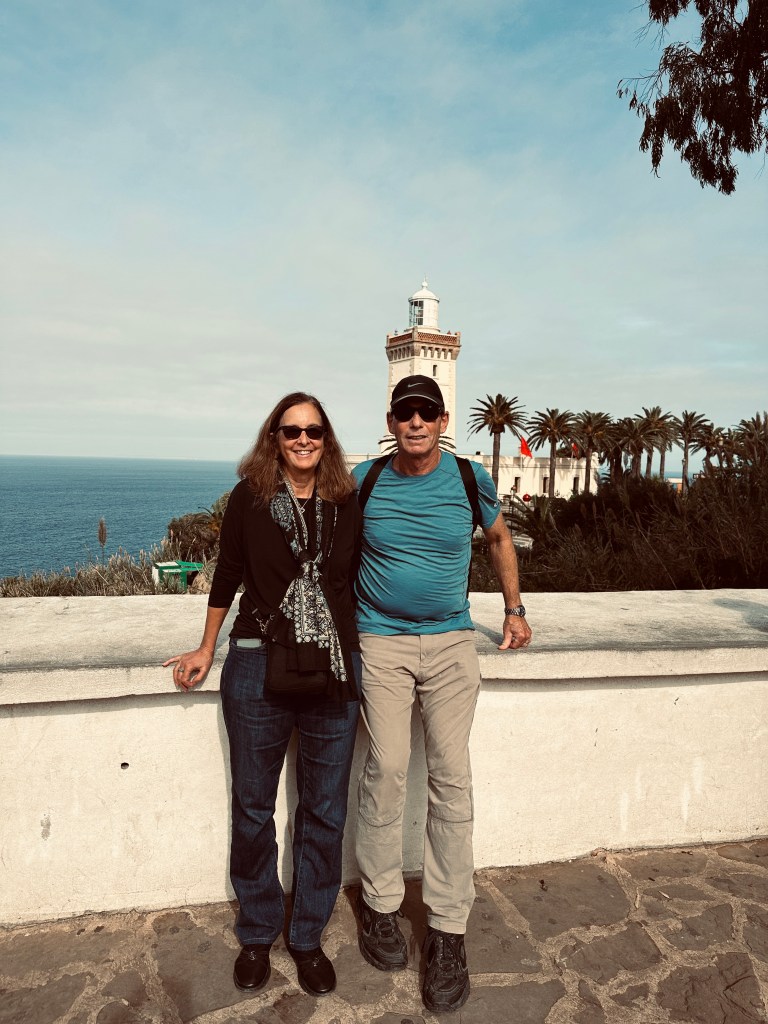
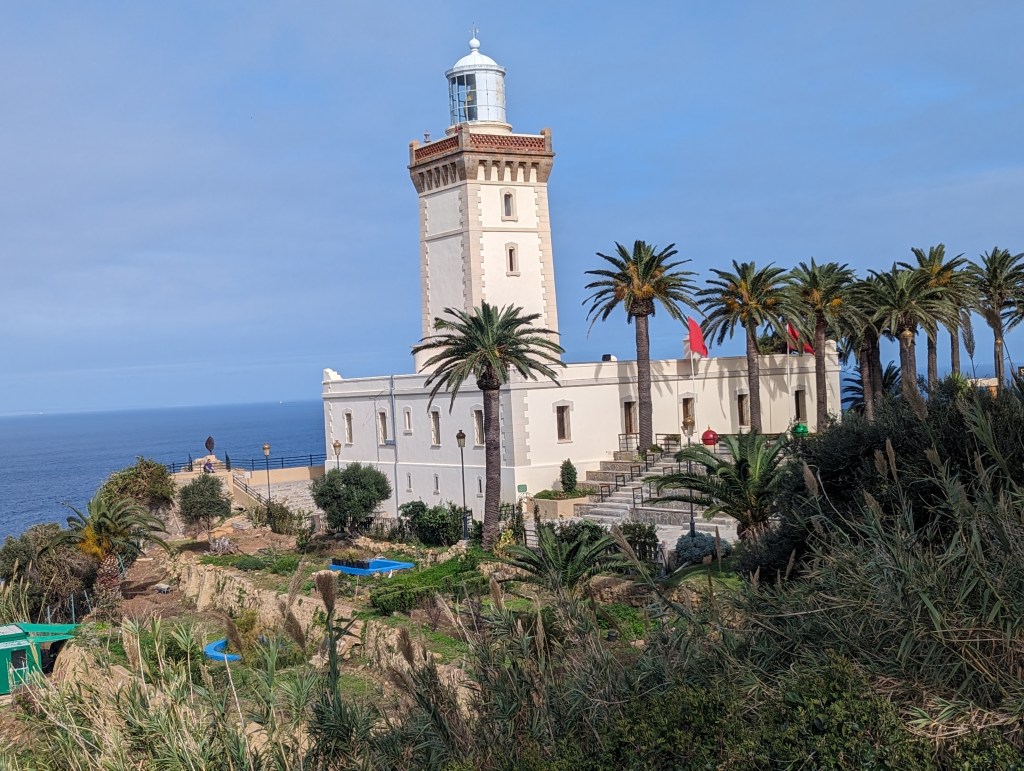
We had a relaxing late couscous tagine lunch, the Friday special in Morocco, on the terrace before heading back to Tangier.
The next morning we headed down the Atlantic coast to the archaeological site of Lixus near the town of Larache. Lixus was originally founded by the Phoenicians in the 8-7th century BC. It has been continuously inhabited since. Amongst the ruins were artifacts from all of the different eras. Among those now displayed in the museum include many Roman coins.

Lixus was one of the largest Roman industrial sites. It was built by the Loukkos River. The main industries were salting and exporting tuna. Another was the making of a purple dye from a local flower.

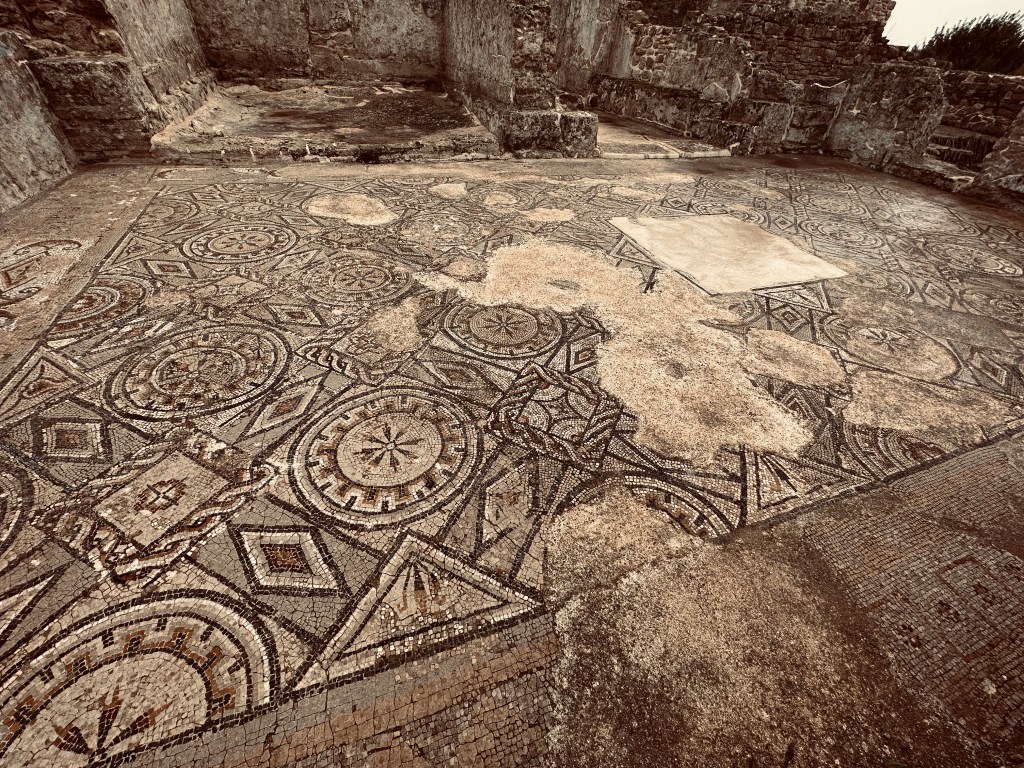
We hiked up a steep hill to the Roman baths.
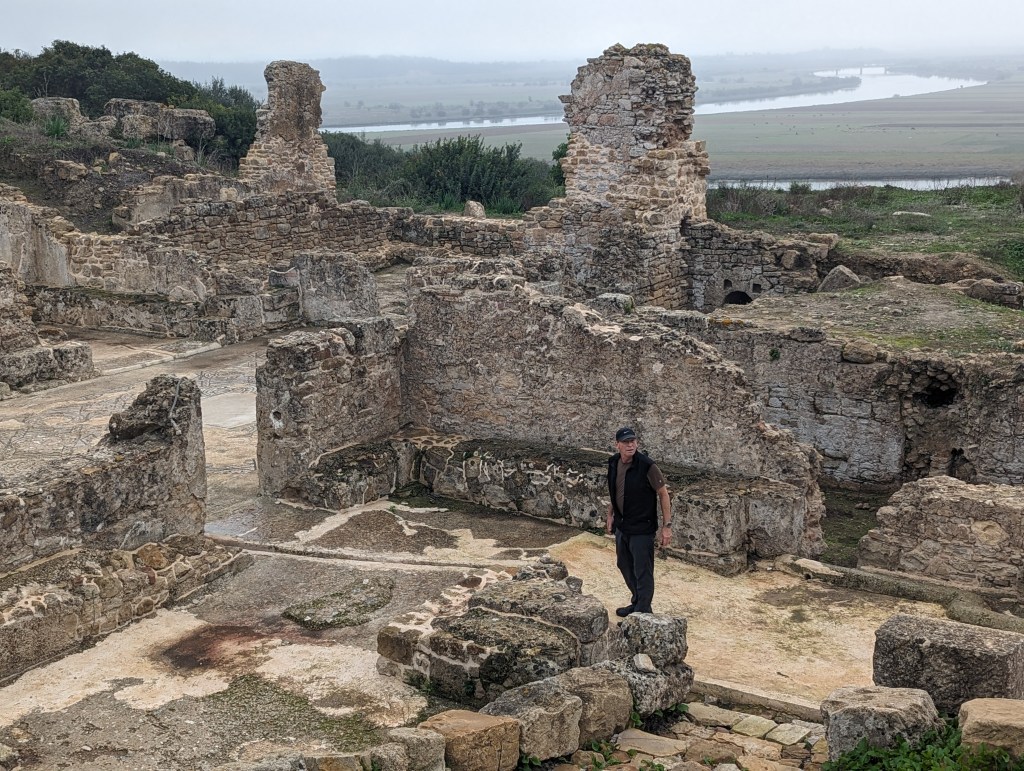
which still had some preserved mosaic floors.
And still further up the hill to the Basilica. Notice the three languages on the sign: Arabic, Berber, French.

And to the top of the hill to the homes of the very wealthiest Romans with their private baths and rooms and great views.
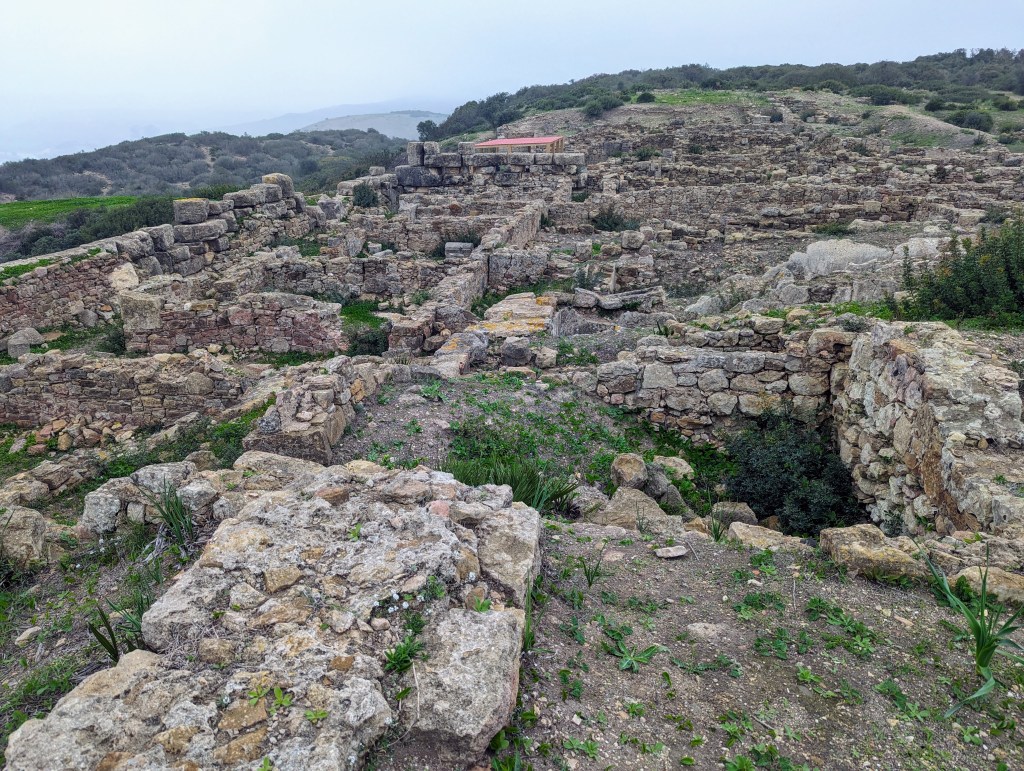
And then we wound our way around to the city complex that was Lixus, its temples and forums and apartments. Several camera shots could not get it all in; the ruins are massive.

Having satisfied my ancient craving for the day, we drove a bit back up the coast to Asilah, a town on Morocco’s Atlantic coast. Its medina, is enclosed by well-preserved 15th-century ramparts and gates, built by colonial Portuguese. The medina is an art hub, known for its murals and an annual festival in June. But first we went for lunch at Restaurante Dar Al Maghrebia.


There we discovered two new food treats: breguats, a phyllo dough-like deep fried pastry filled with choice of ___, we had fish; and pastellas, a slightly thicker dough also stuffed and deep fried, but topped with powdered sugar and cinnamon; we chose chicken. We also had our fav harira soup. We are LOVING Moroccan food!

With full bellies we entered through the medina gate into Asilah.
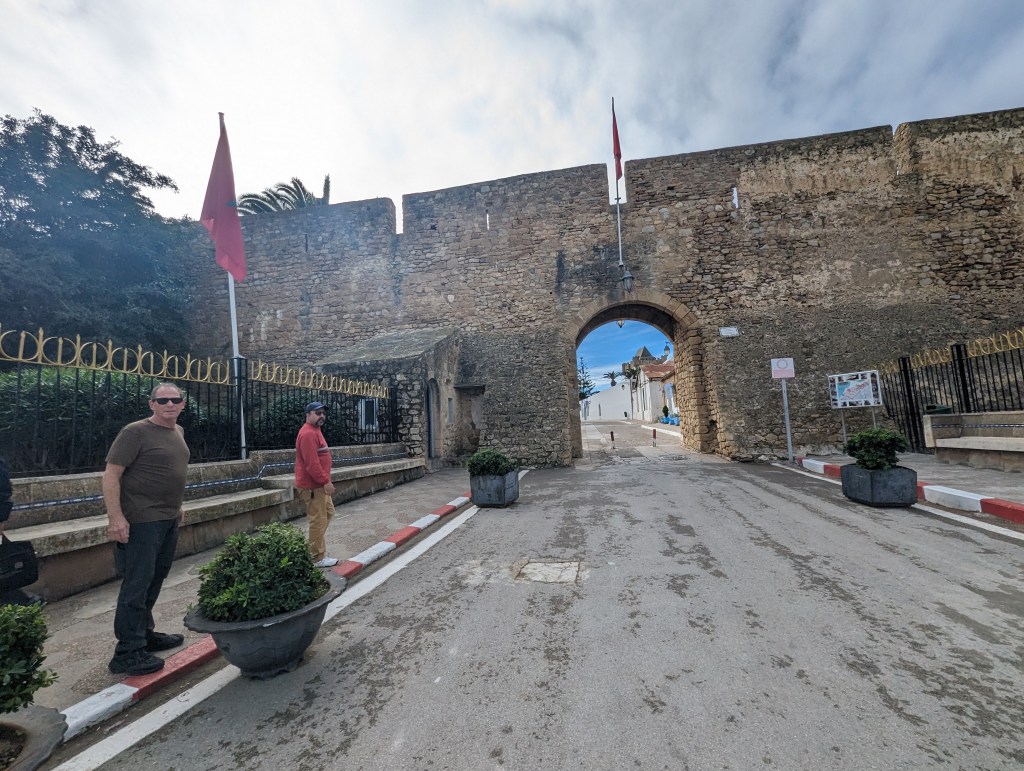
The town is repainted in its iconic blue and white colors every two years.
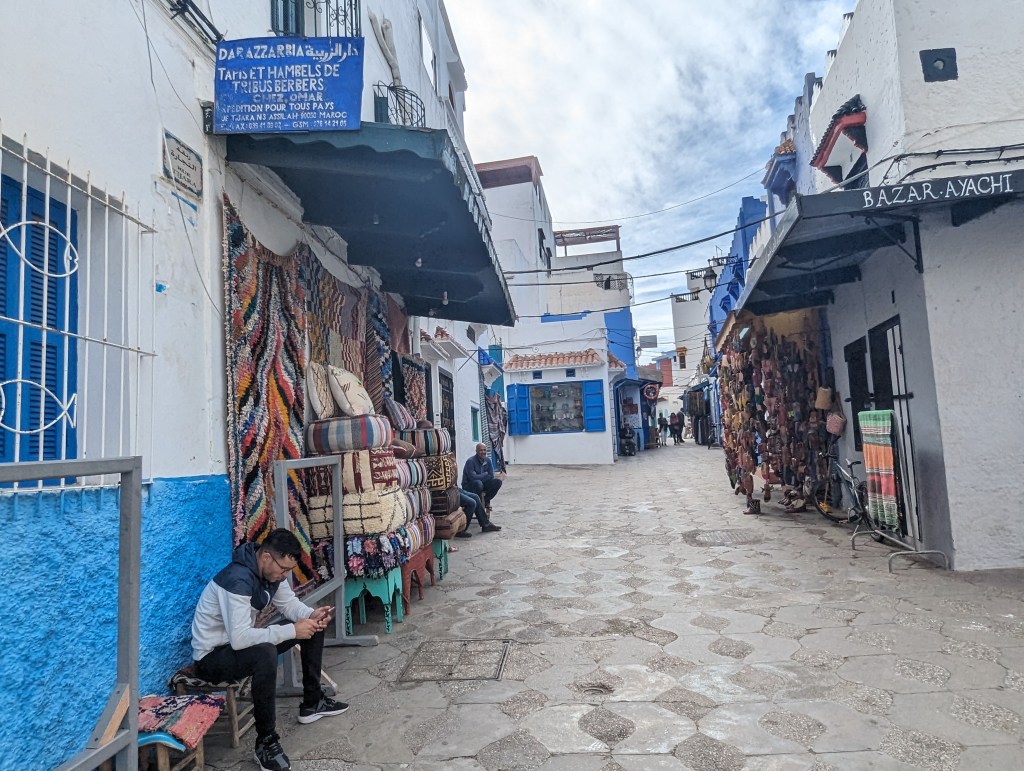
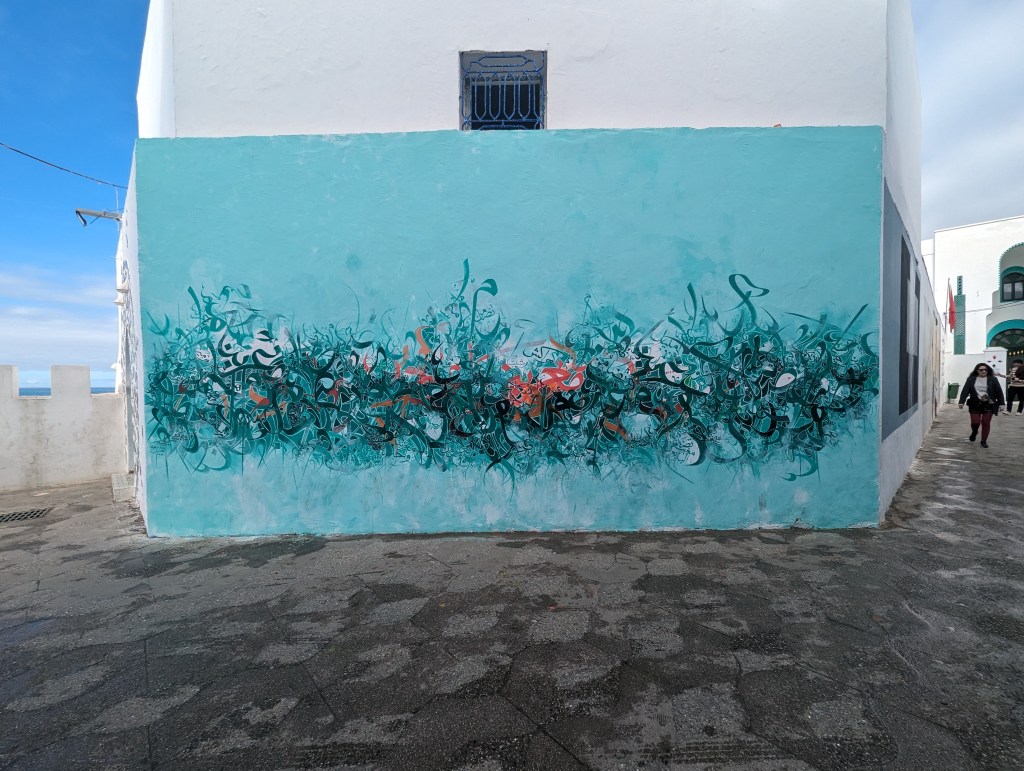
Once repainted, then murals are added by local artists. They can be found scattered throughout the medina.



We walked along the Atlantic side with the beach beyond the wall.

As in Tangier, the windows often have carved lattice for privacy but breeze; the difference being that here they are painted blue.

Many of the doors are gorgeous.
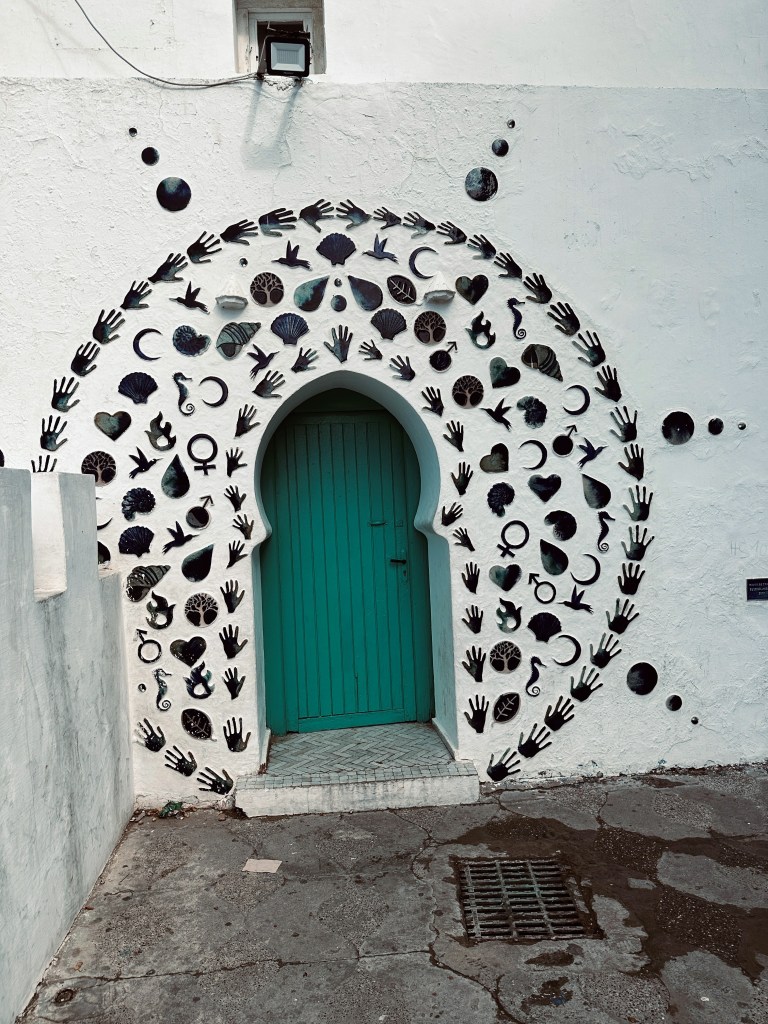
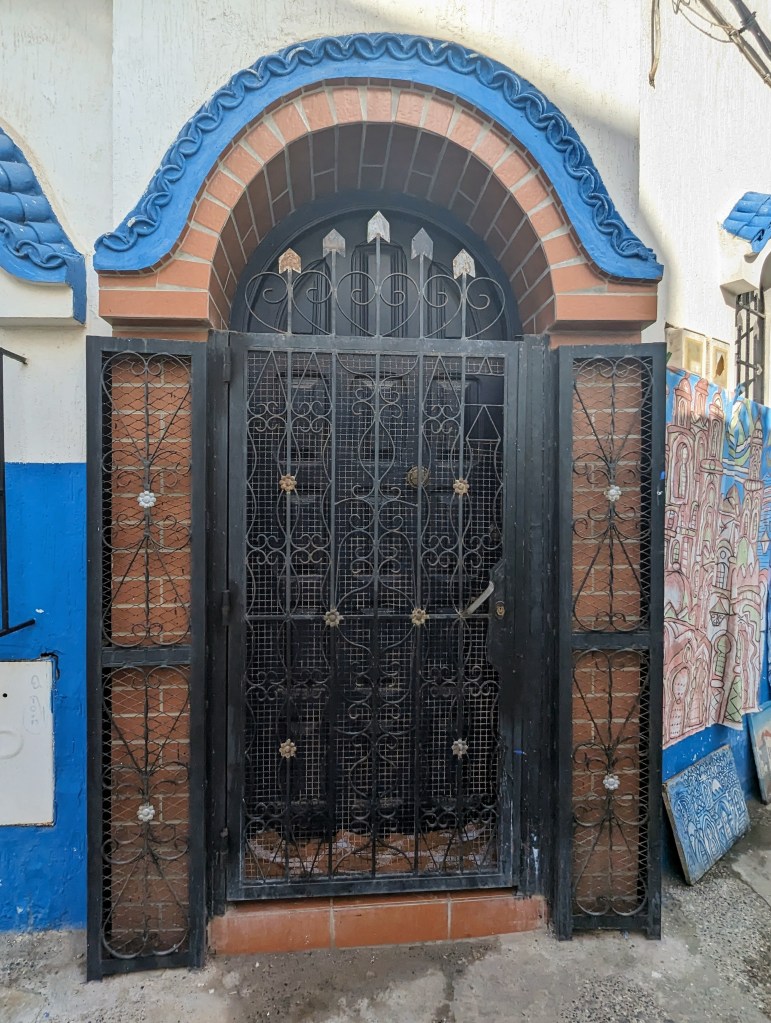
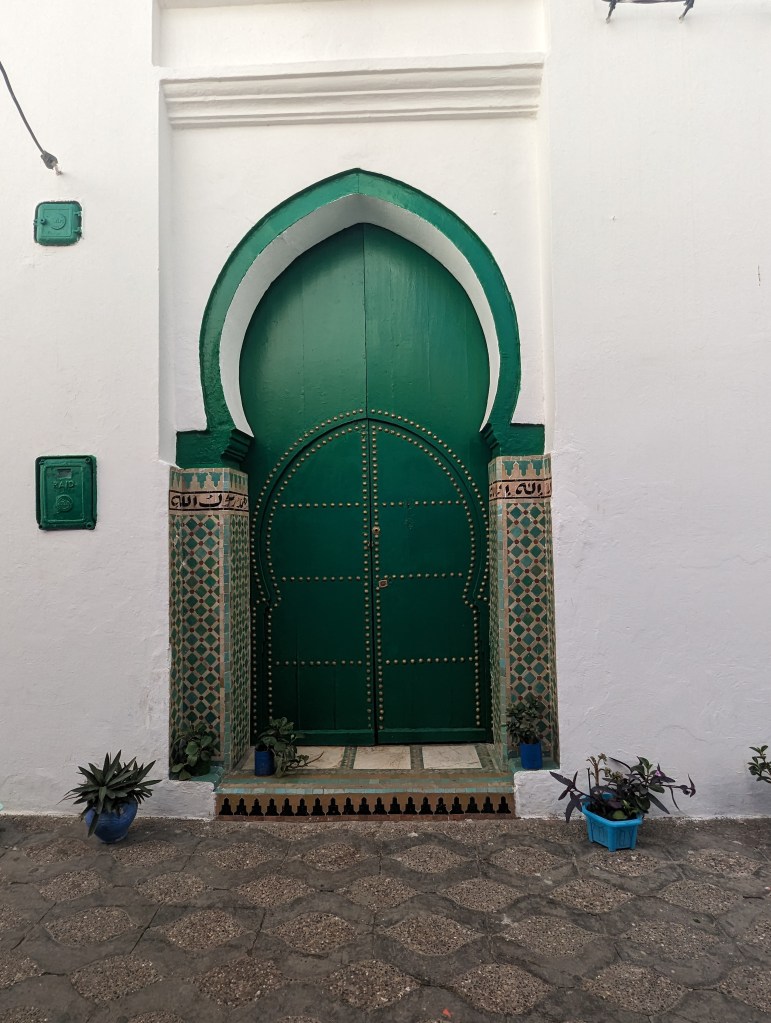
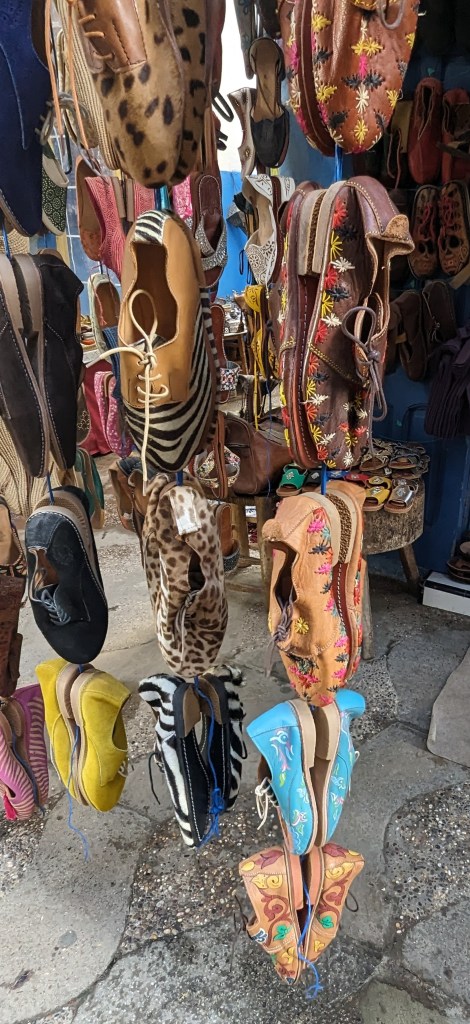
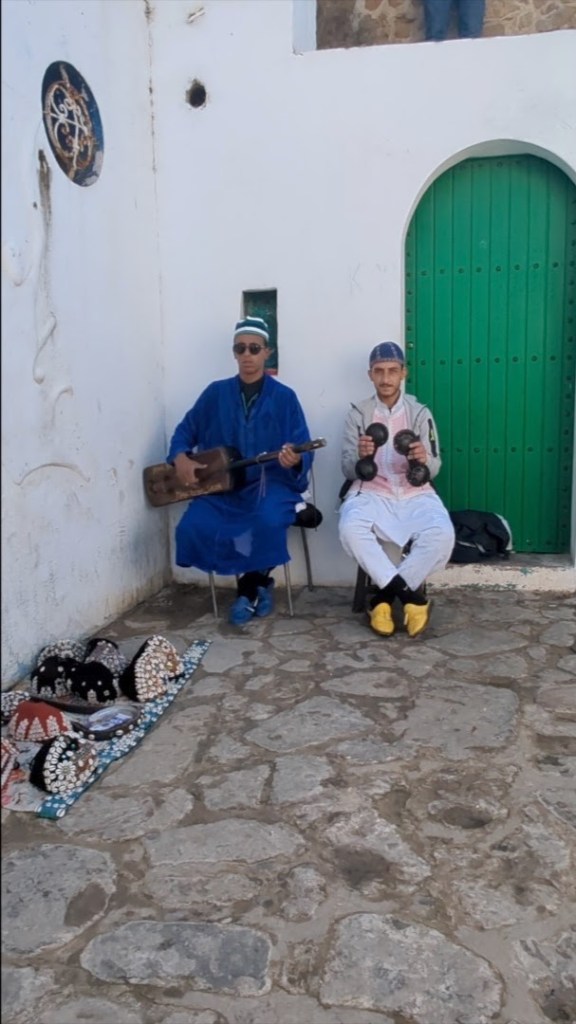
In Asilah everything becomes art.
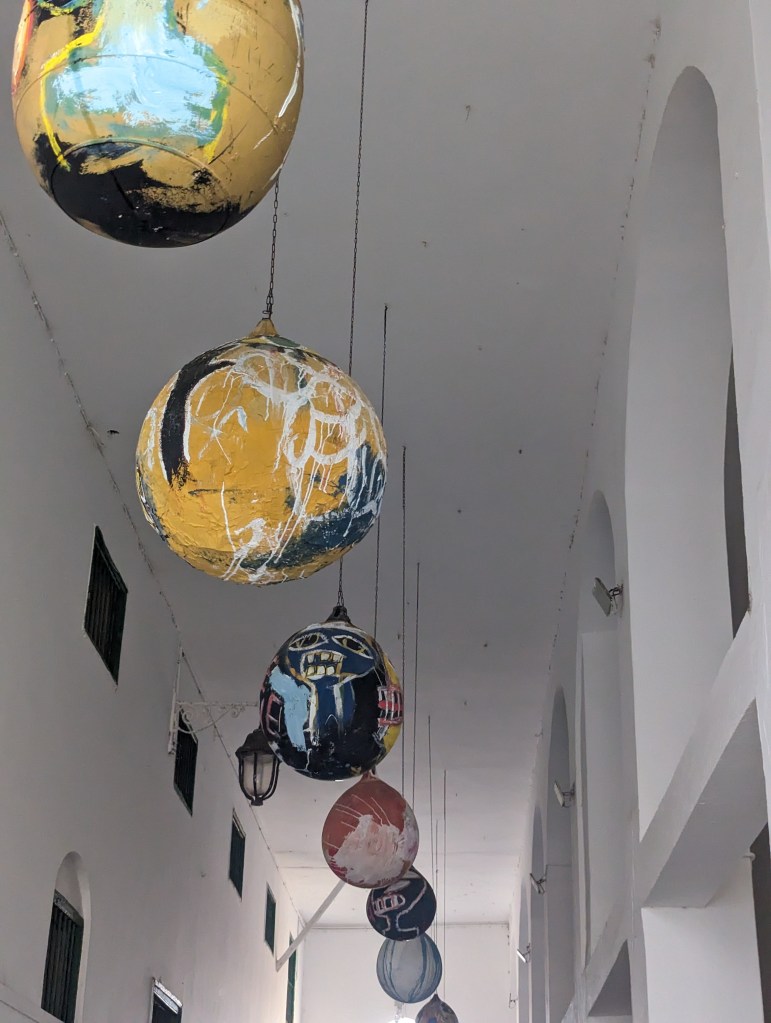
And there is every kind of art.
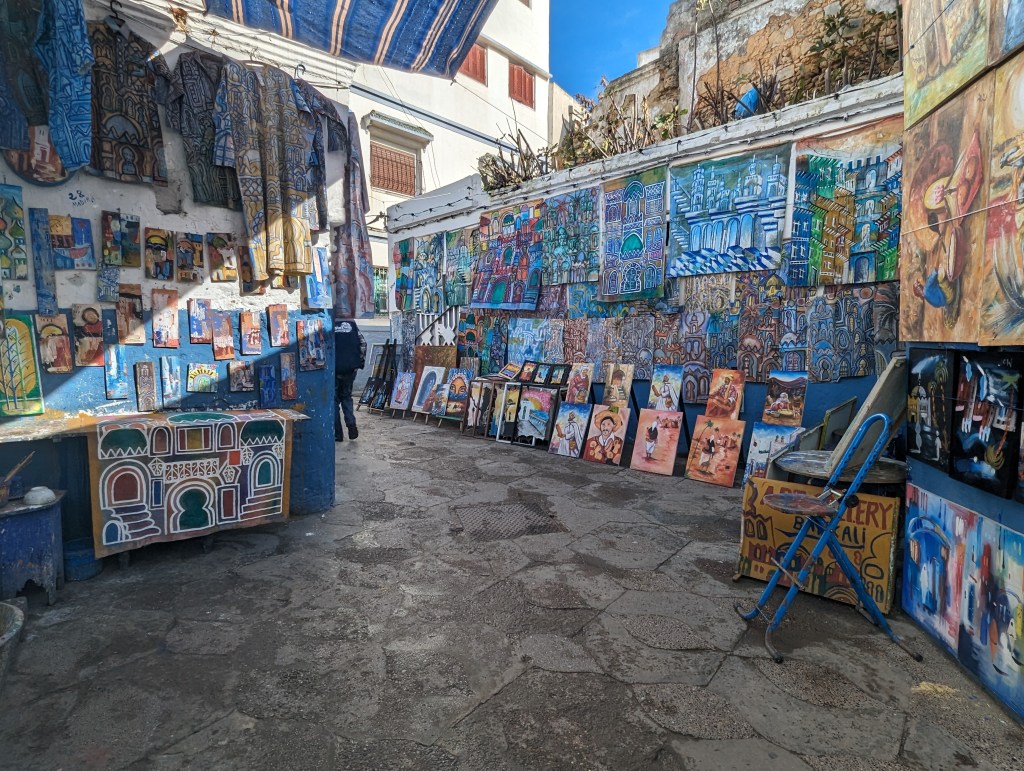
And there are art galleries on every corner, literally.
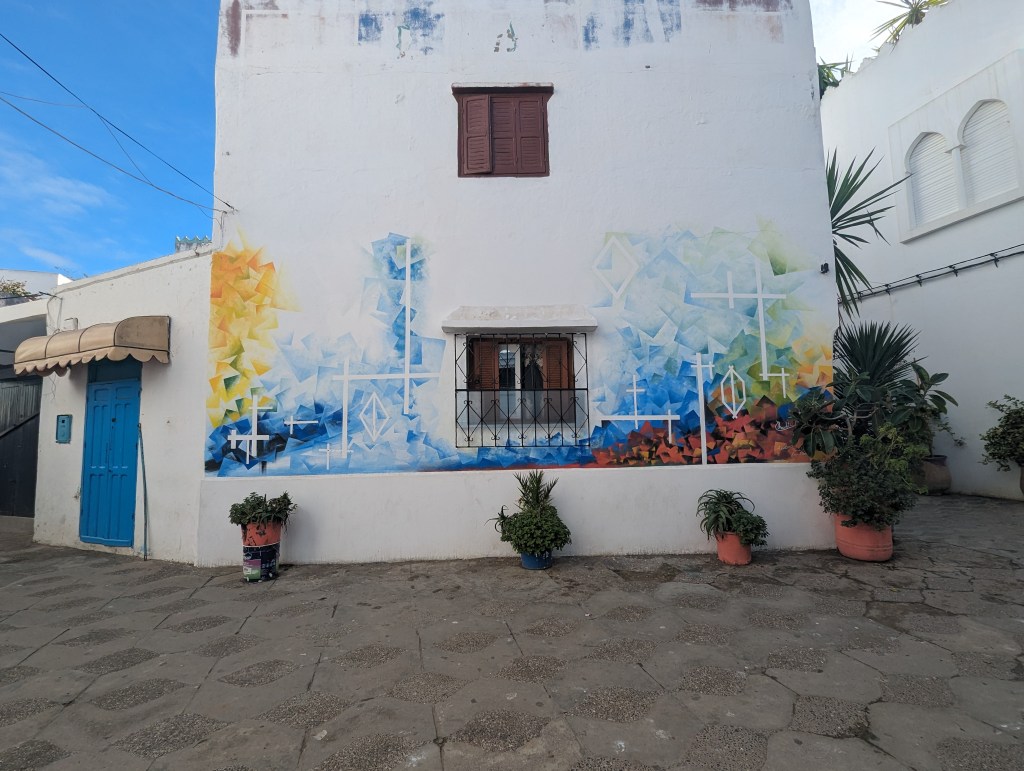
In this instance, the whole house is a work of art.
That night we had a delicious French-Moroccan fusion dinner at the M Restaurant in the kasbah. The following day we spent mostly with Lucas and Amina Peters, the founders/managers of Journey Beyond Travel, who arranged our entire trip. They had invited us into their home and garden for lunch, tea, and visit with them and their children. We ate bocadillos, which are spanish-inspired sandwiches on long baguette-like bread filled with just about anything and everything, including the french fries. In the late afternoon we shopped a bit in the medina and said a sad farewell to Tangier.
Kamal picked us up in the morning after breakfast, and we headed to Chefchaouen. Along the way we stopped for tea at a scenic roadside cafe. We entered into the Rif Mountain Range, one of 4 in Morocco (the others are: the Atlas Mountains, the High Atlas Mountains, and the Anti-Atlas Mountains).

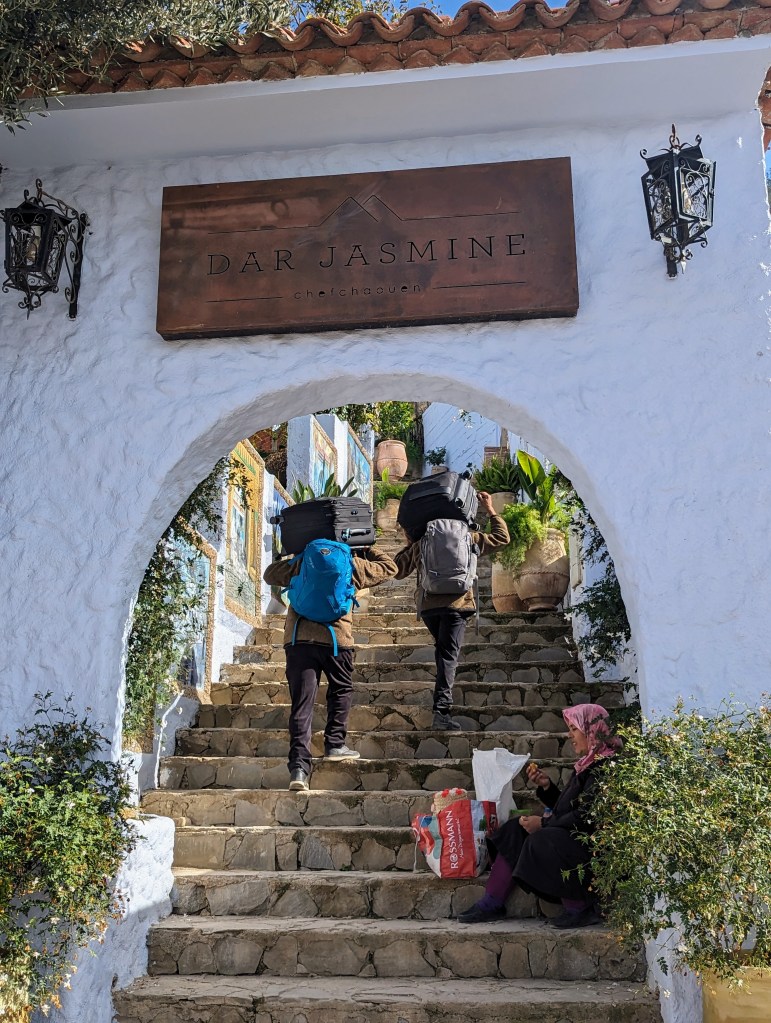
We arrived at our hotel Dar Jasmine in the afternoon and climbed the 160 stairs to the lobby! The porters had come down to meet us and, thankfully, carried our bags up the long flight of stairs for us.
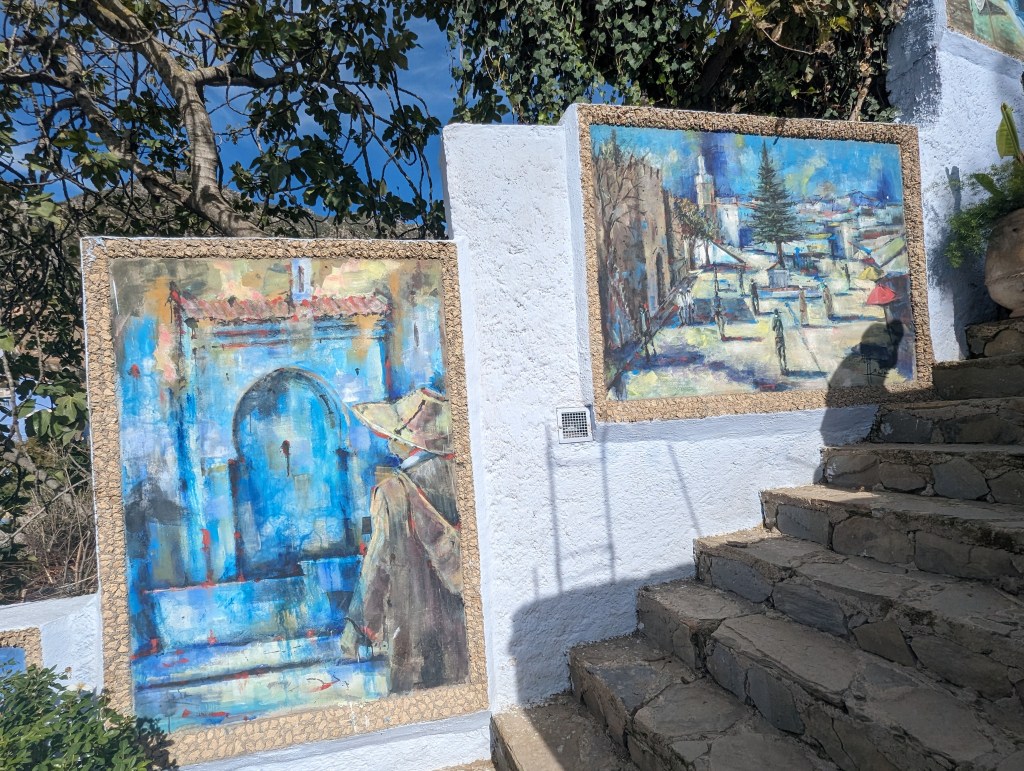
The walls along the stairs are lined with murals.
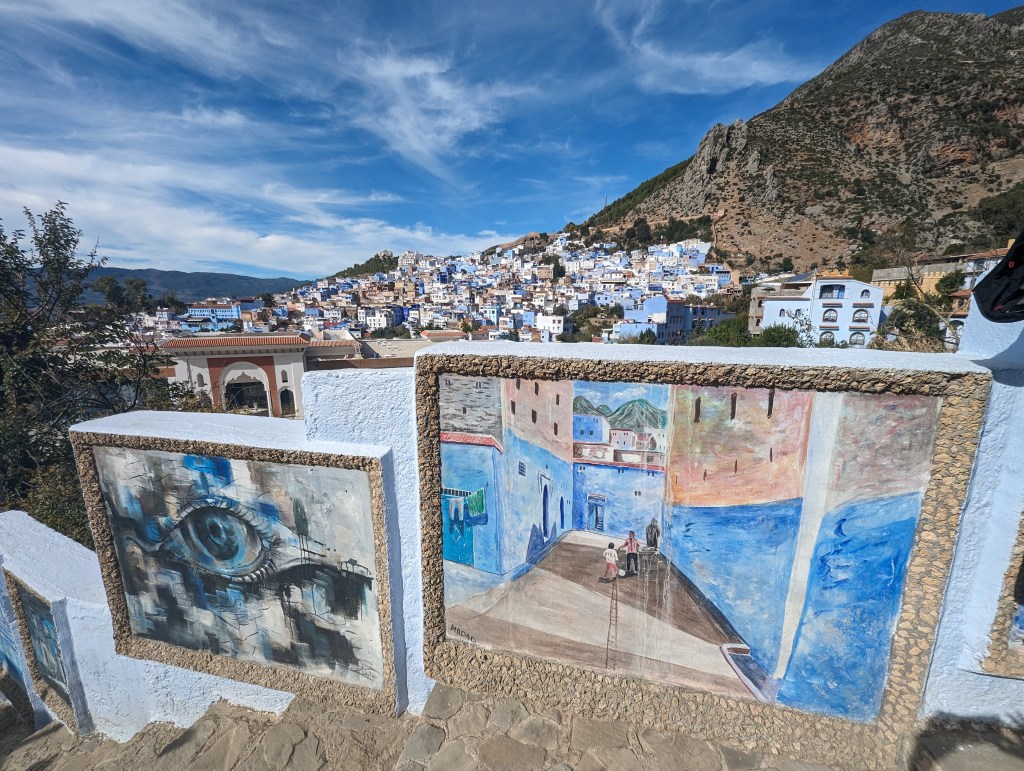
As we climbed we got our first glimpse of the medina of Chefchaouen.
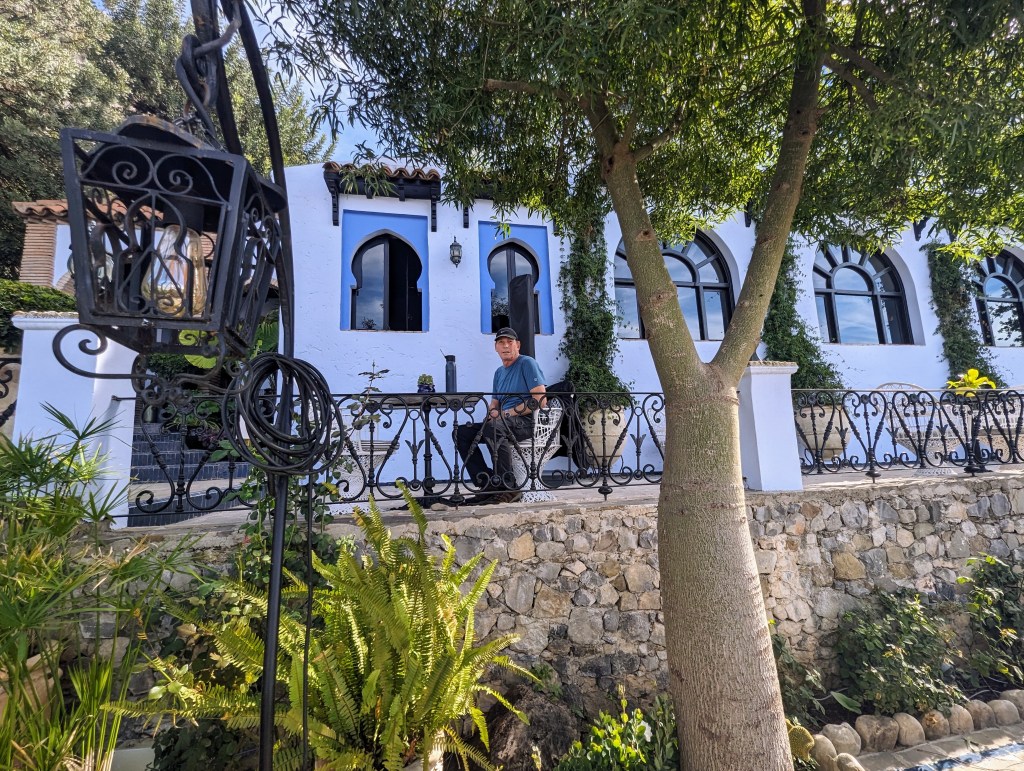
We had lunch on the terrace.
then settled into our room which was really a suite with a sitting area
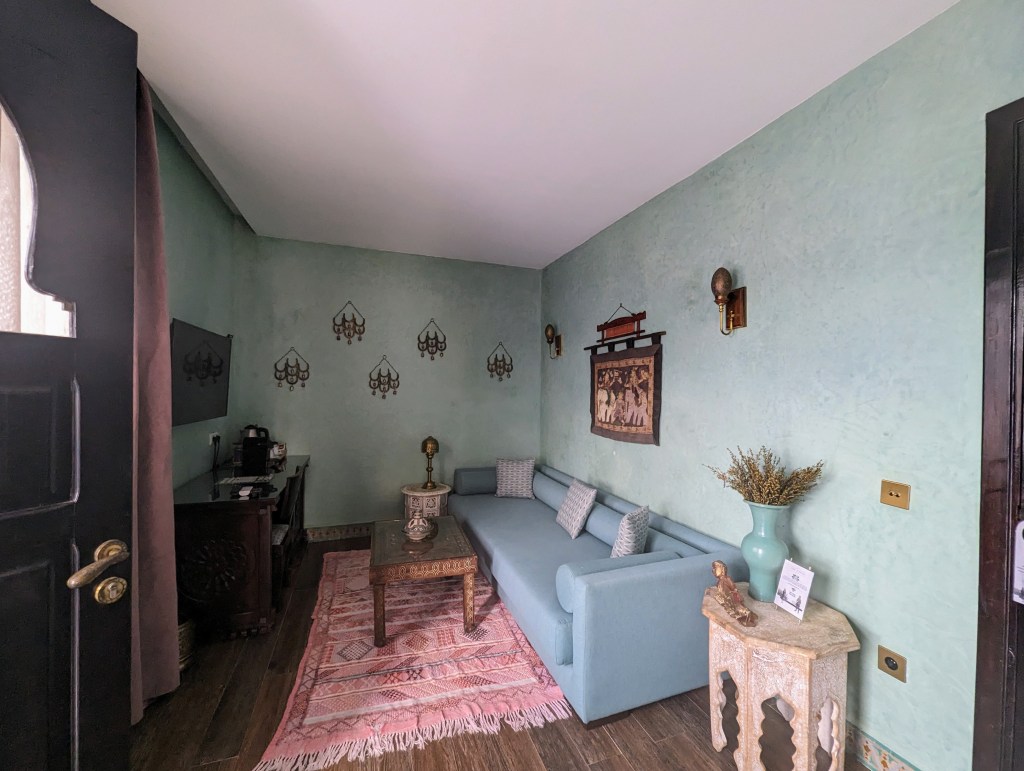
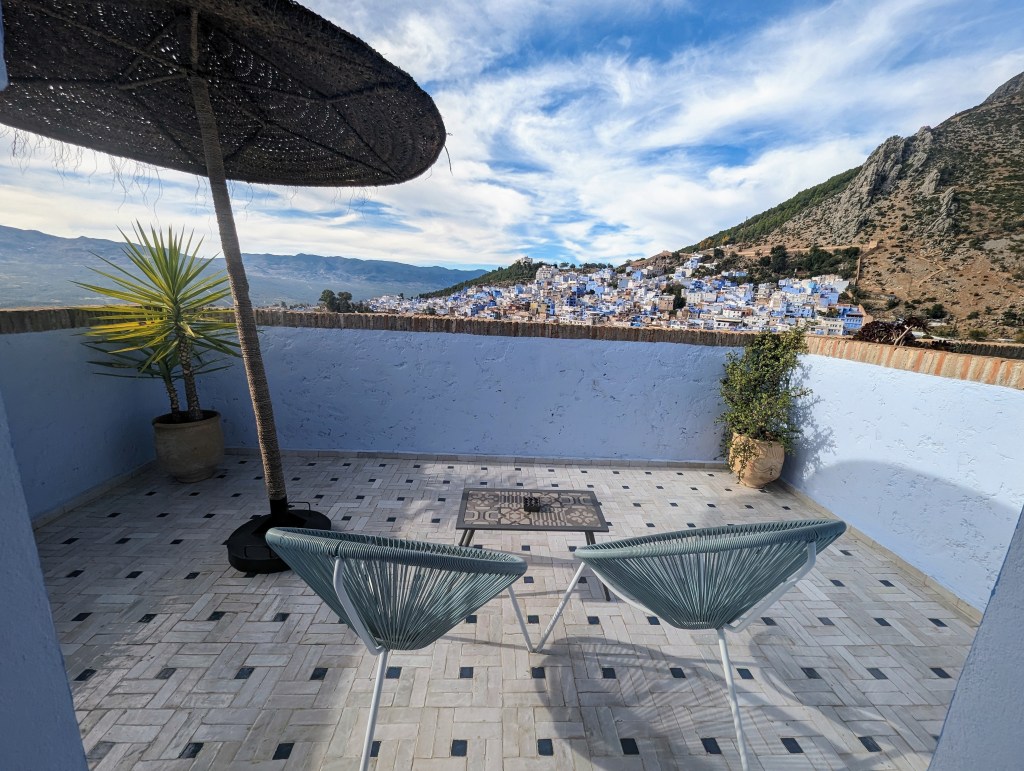
off of which was a terrace with a gorgeous view of the medina.
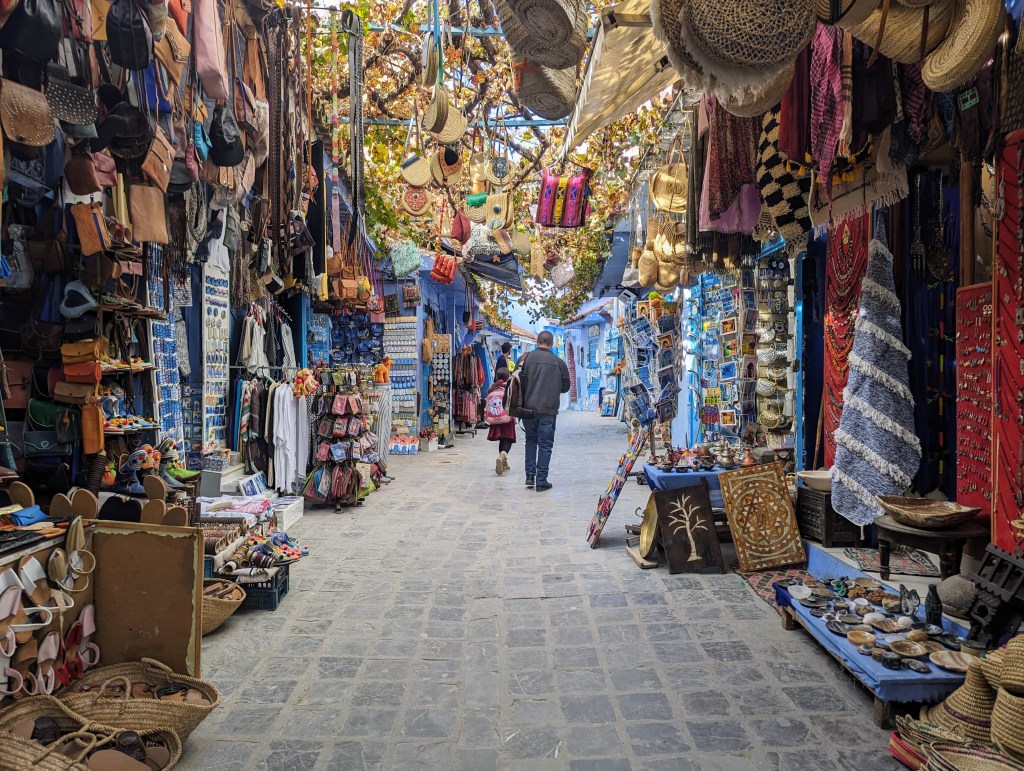
Then it was time to hike into the medina. So down all the steps we went and up into the medina. As typical, it was full of shops for tourists.
From the top of the medina, we had a great view back at our hotel, impressed with ourselves at how far we had walked.

As in Asilah, we were impressed with the painted walls.
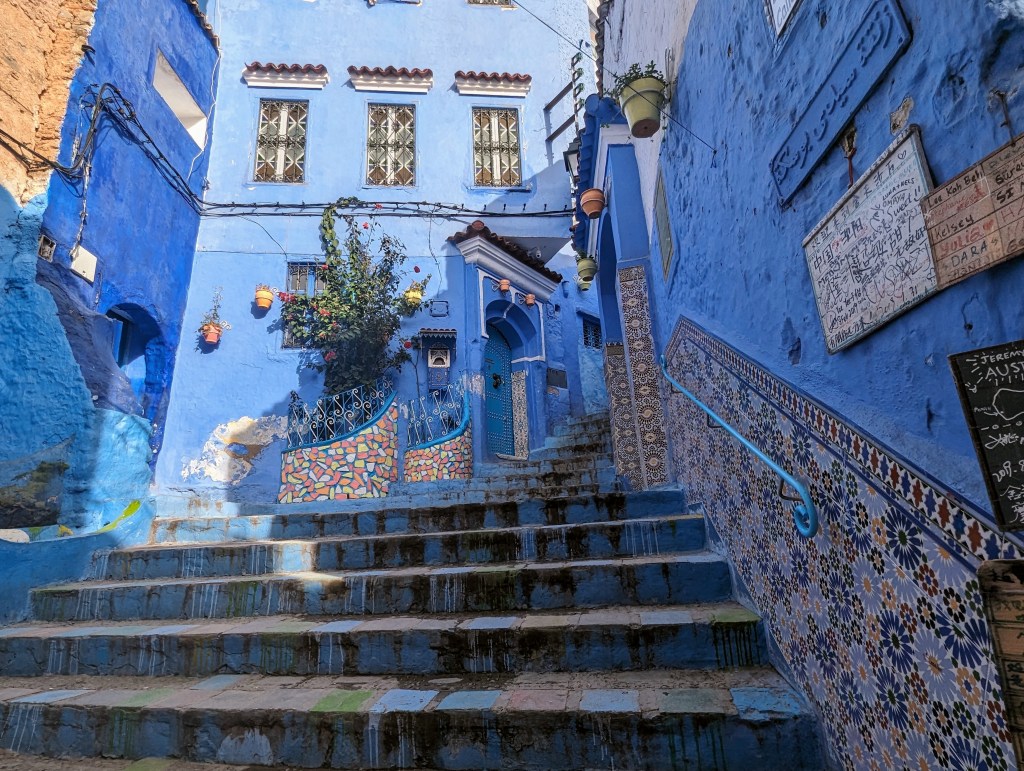

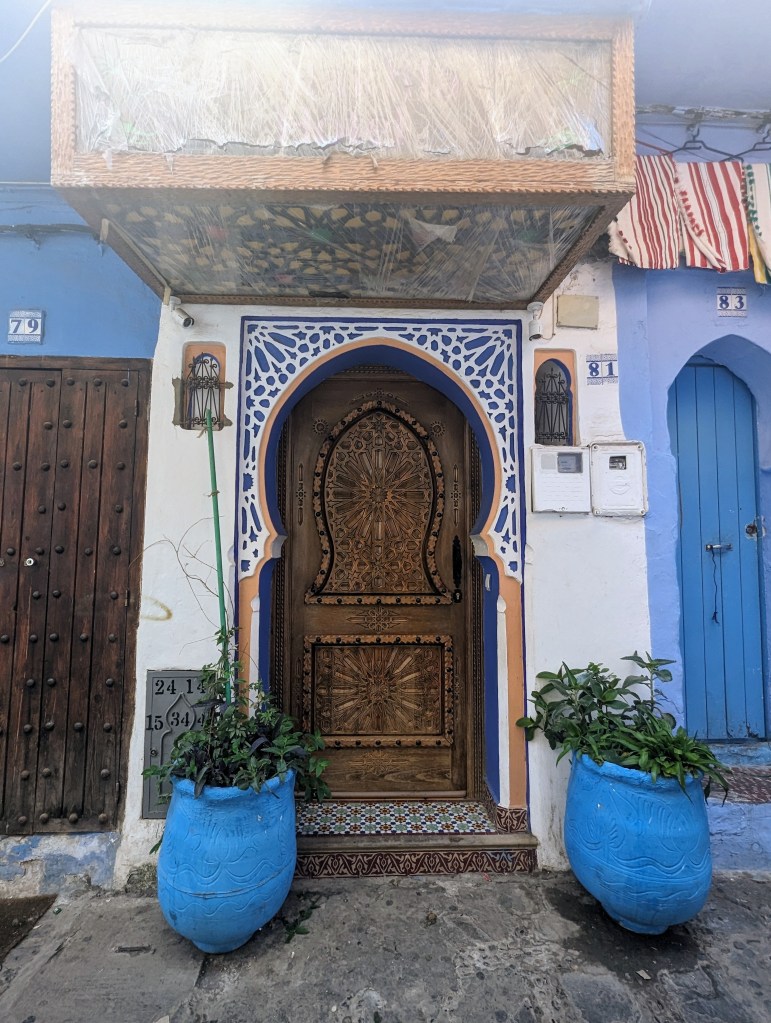
And the doors.

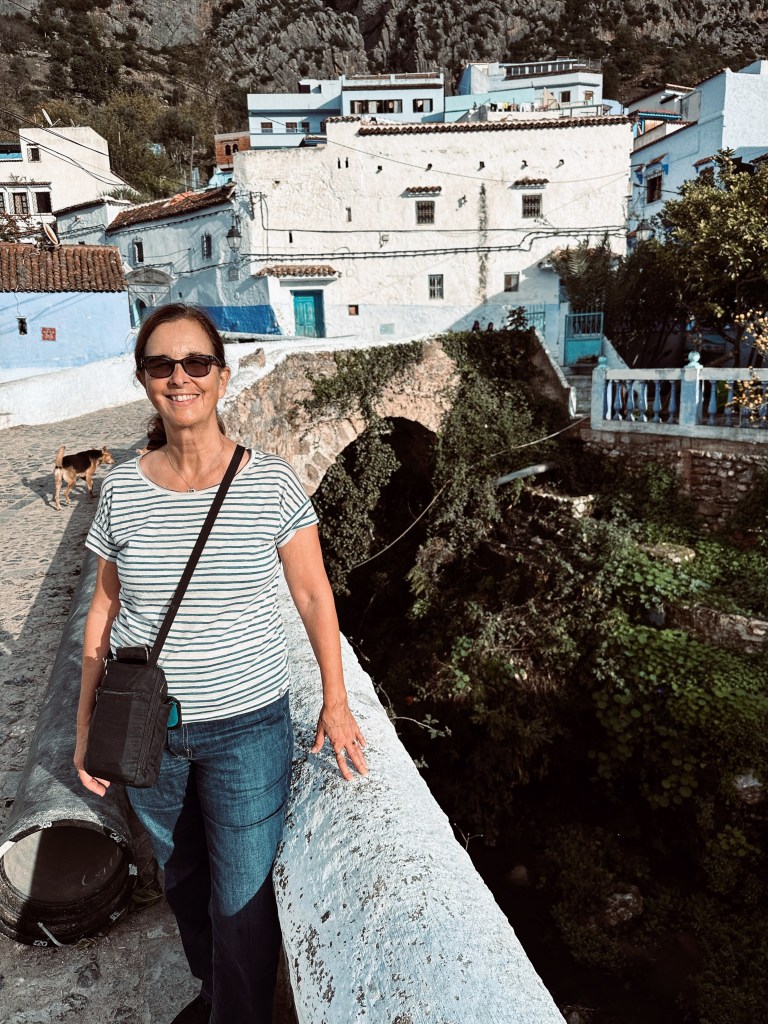
Headed back to our hotel we crossed over the Portuguese Bridge.
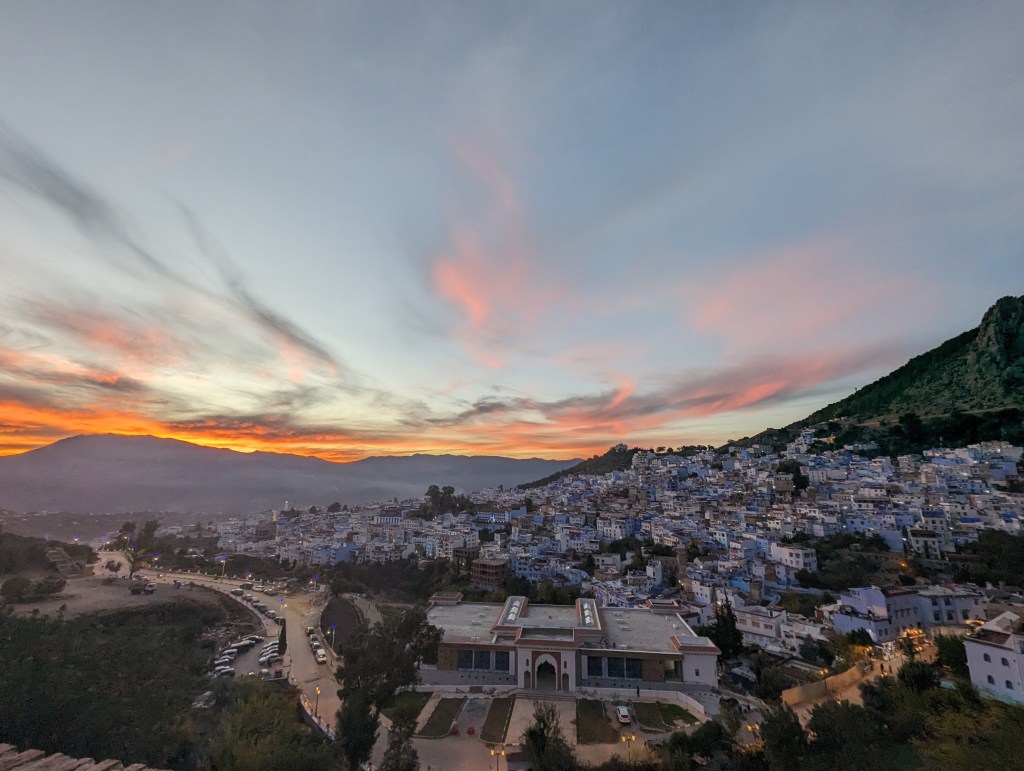
Then we trudged up the 50-60 steps up out of the bottom of the medina to street level, then the over 200 steps up to our room on the second floor (ground floor is zero, so up 2 more flights, no elevators) and enjoyed the sunset over the medina. We needed the rest.
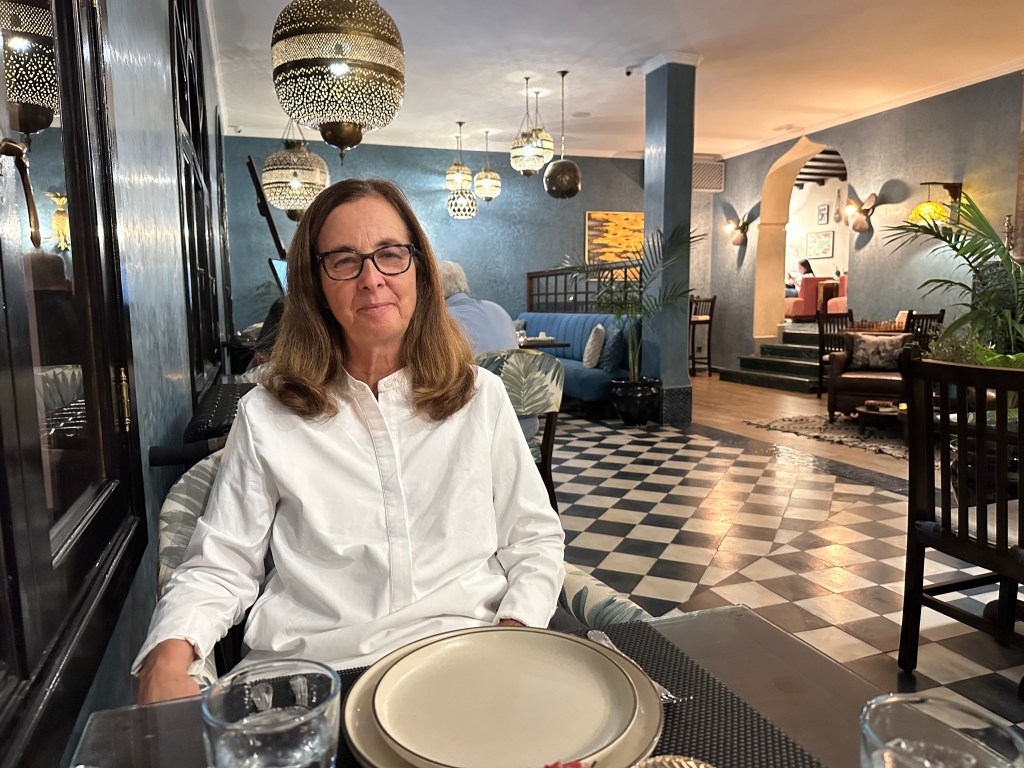
until dinner in the hotel.
In the morning we enjoyed our included breakfast
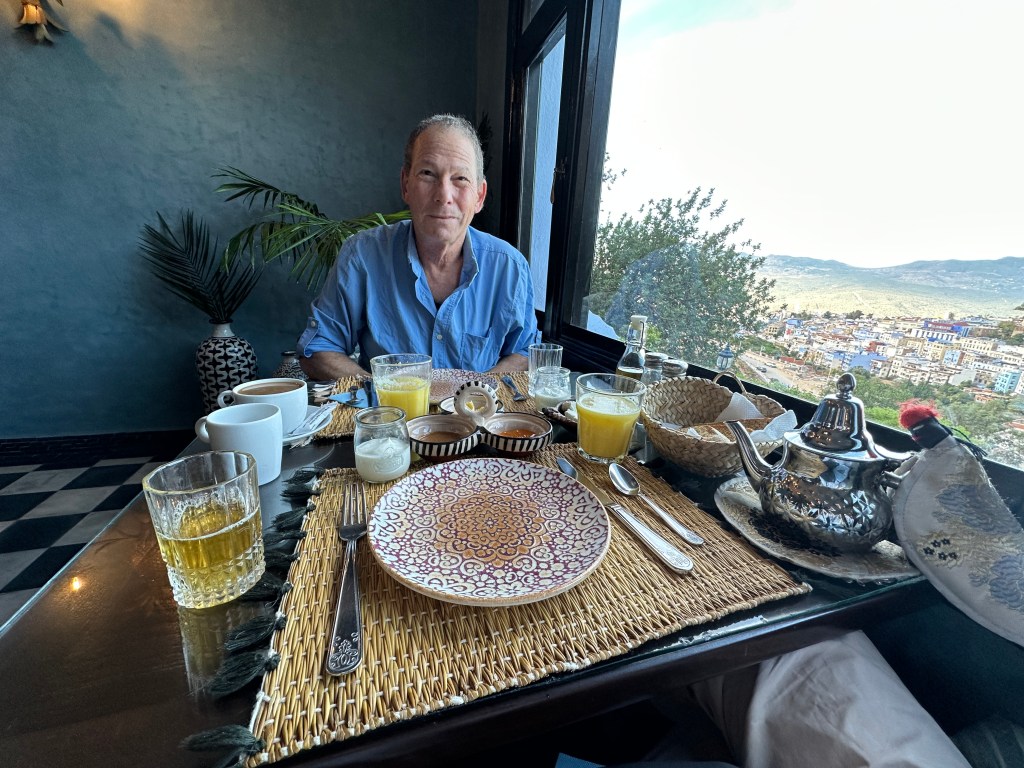
which had starters very similar to breakfast in Tangier, but then eggs, avocado toast, and omelettes were added.

We then met our guide Fatima who was the first female guide in the area and is one of the few female guides in the country. She is currently studying for a masters degree in the history of the Jews in the area. She is a Berber and grew up in Chefchaouen. She first gave us a brief history of the town. It was originally just a lot of tribes living in the region. But with the expulsion from Andalusia, Muslims and Jews streamed into the area mostly in the 15th century. First the Kasbah was built as the protective fortress. It can be seen from our hotel sitting in the middle of the medina.
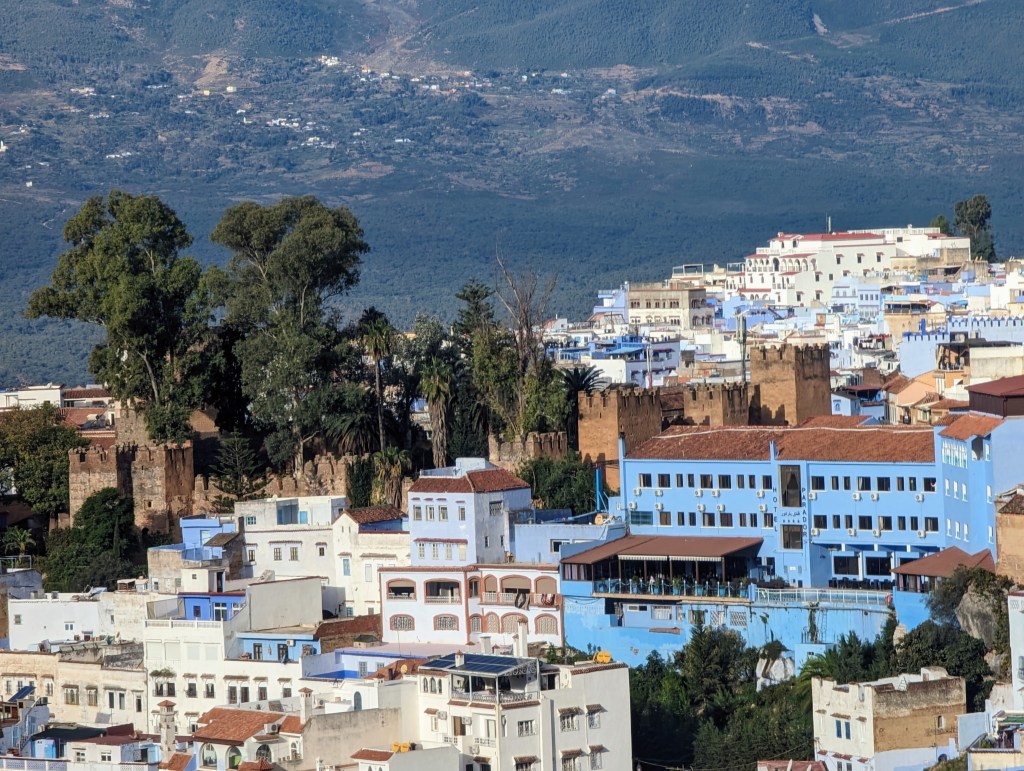
The kasbah during its history has been used as a residence for governors, as a military arsenal and as a prison. Then as the town grew outward, walls were built around for protection. Both the kasbah and the medina walls have been restored several times through the years.

Fatima says it is unclear why some of the houses were originally painted blue. One speculation is that it was started by the Jews. Another is that it was for spirituality reasons: feeling close to “heaven.” But with the advent of the internet, as the town started to get tourists to come see the “blue city”, more and more homes were painted blue until it was officially adopted by the town council and now that the city is a UNESCO World Heritage Site, it is strictly regulated. Tourism is basically the only source of income for the city.
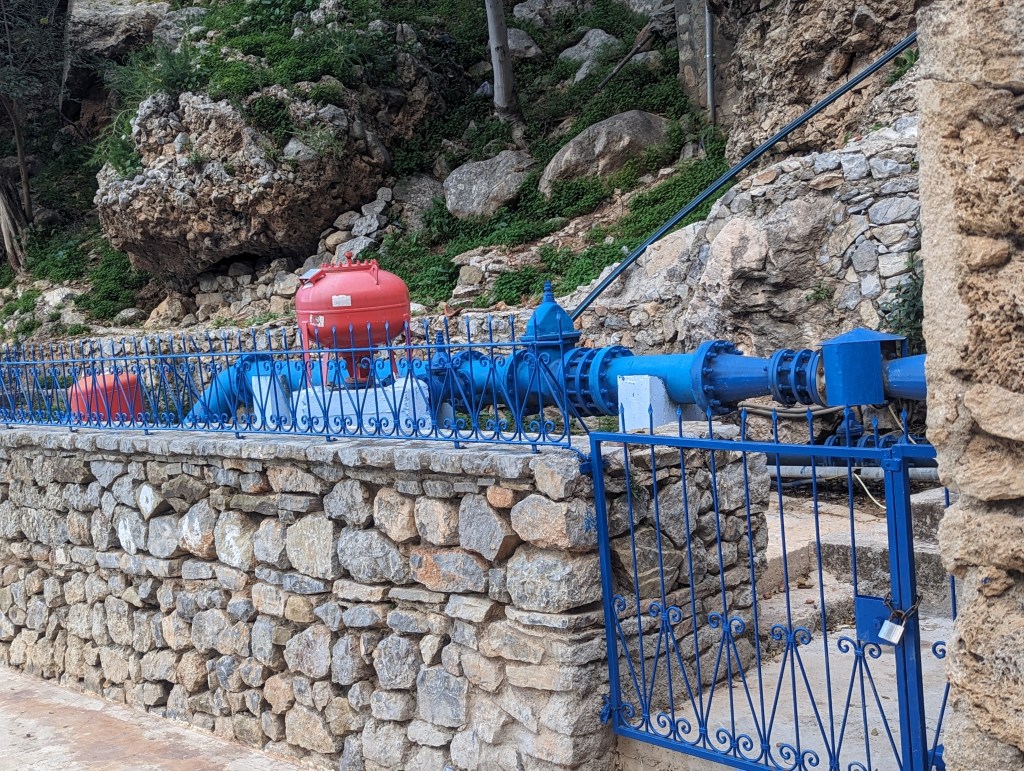
The original location of the city was based on its great access to water both by the river and natural springs from the mountains. She walked us to the top of the hill just outside the medina and showed us the springs source, which is covered by walls both for beauty and protection of the springs.

The water treatment facility with pipes leading from it to all of the sections of town is located right next to the springs.
It is a good thing the springs still run from the mountains, because with global warming and a recent drought, this is the current state of the river.

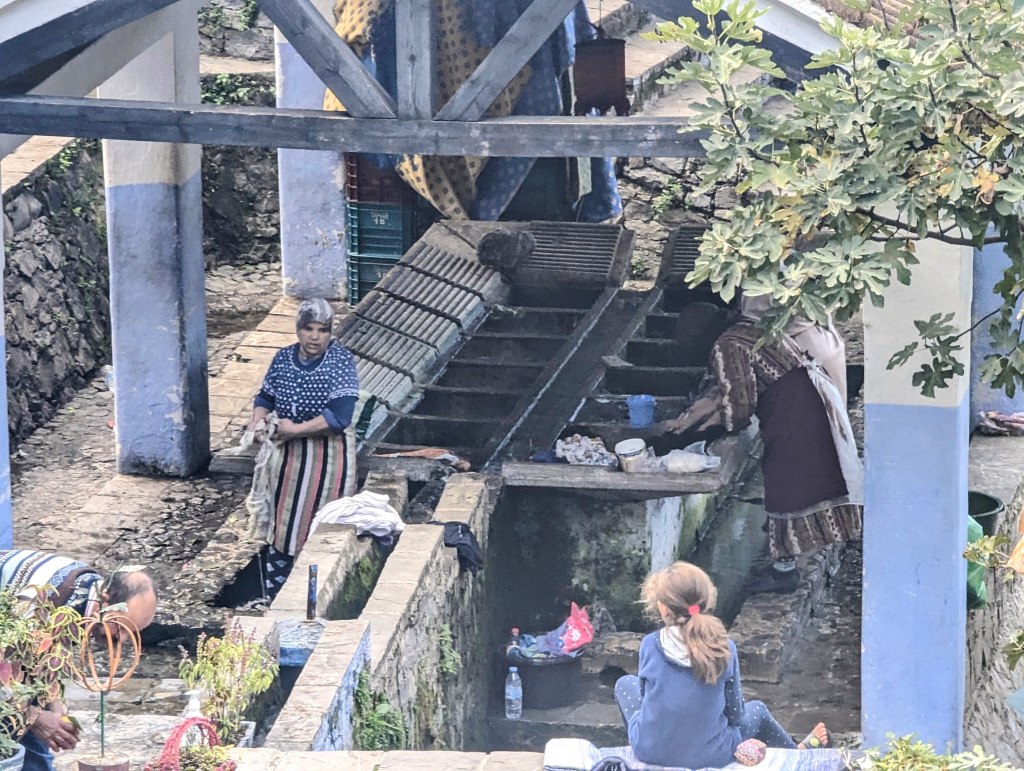
Just below the springs is where the local women come to do their laundry on washboards.
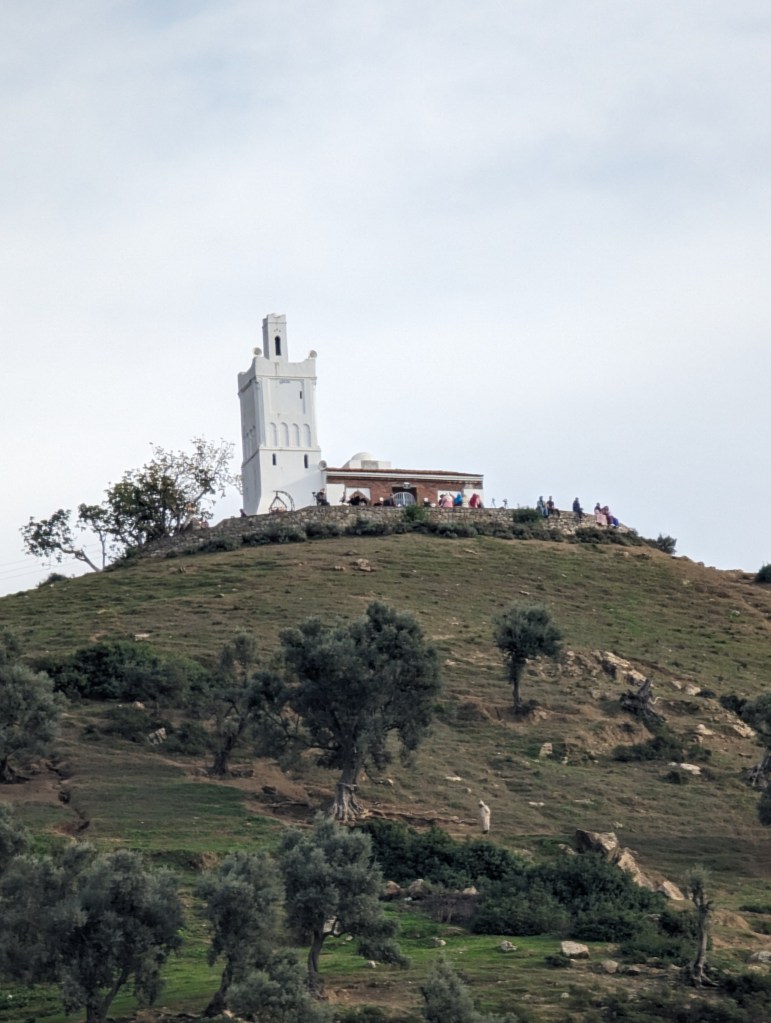
From up high we can look across to what is called the Spanish Mosque. Fatima explained that it has never been used for prayer. After expelling the Moors and Jews from Spain in the 15th century, the Spaniards then came down into Morocco and conquered it. They then built this mosque high up on the mountain as a means of spying on the muslims both because of it’s vantage point and because Muslims in those days used their local mosques not just for prayer, but also to discuss politics and news. But the Muslims were smart enough to realize that the Spaniards had refused to allow them to practice their religion in Spain, so why would they build them a mosque? And they refused to use it.
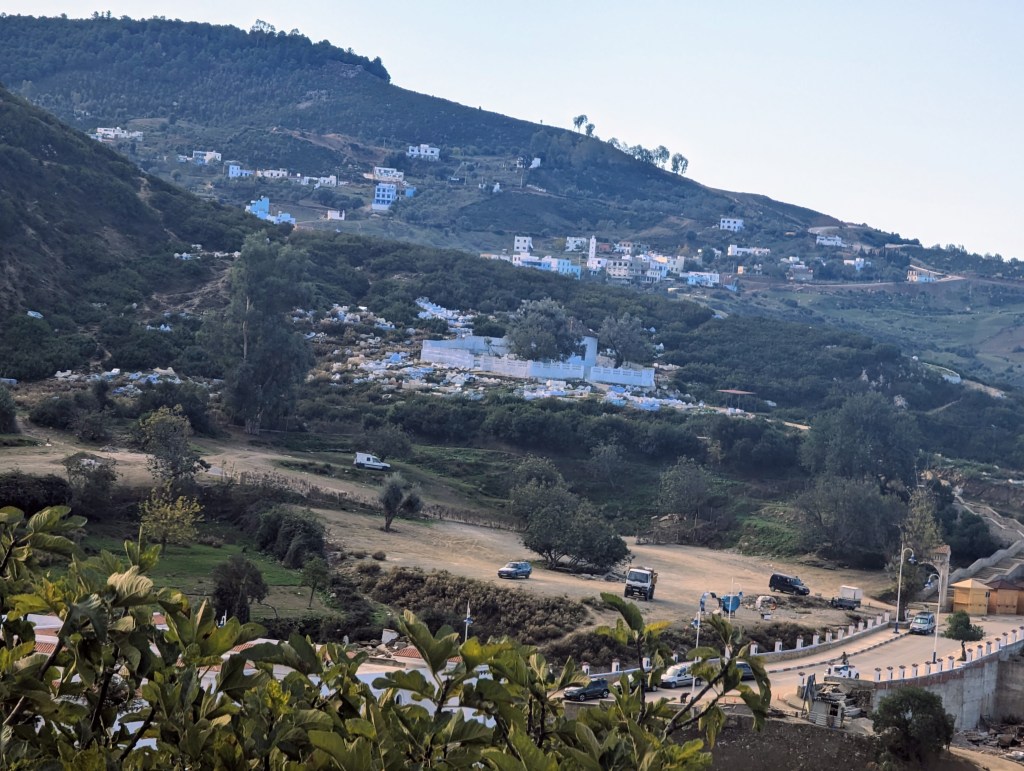
Just below the mosque on the hill is a large cemetery with Muslims in the front and Jews in the back.
Then we walked through the upper gate into the medina.

Fatima explained to us that there are several sections to the medina. Each section has all of the following 5 elements:
A mosque
Water for the people and their animals. There is always a faucet for easy access to water. The low wall is a trough for animals to drink from.

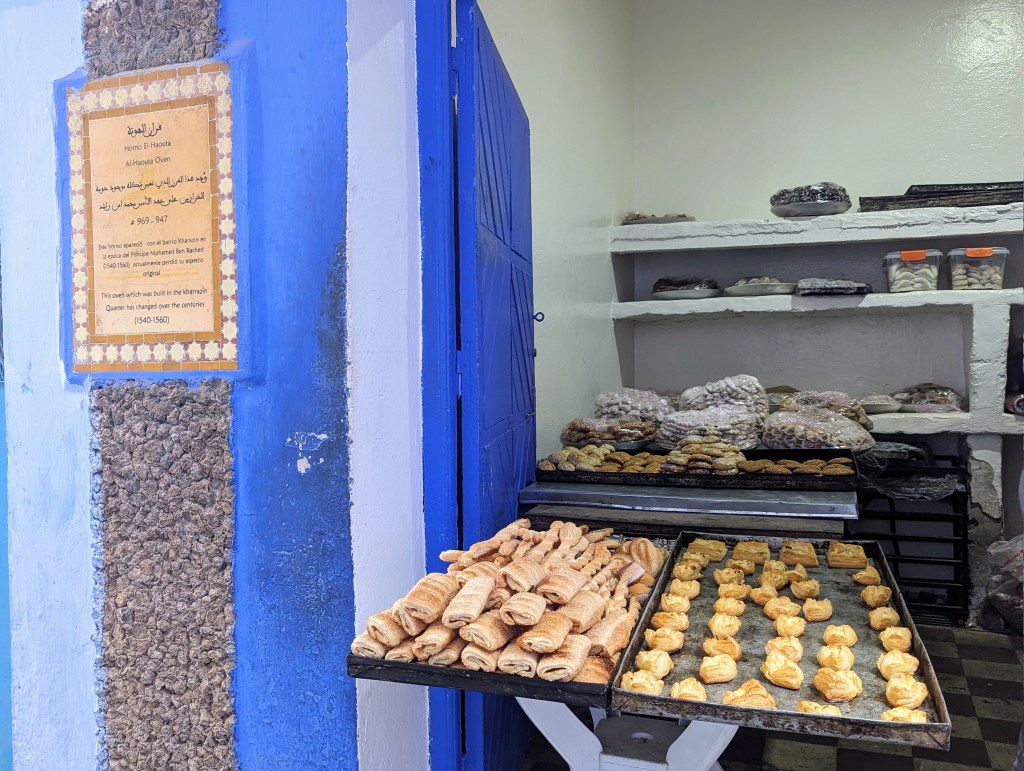
A bakery with an oven. The bakery makes and sells breads and sweets. But it also maintains a community oven. Families make their own dough at home and then for a few durham can bring their dough to get baked.
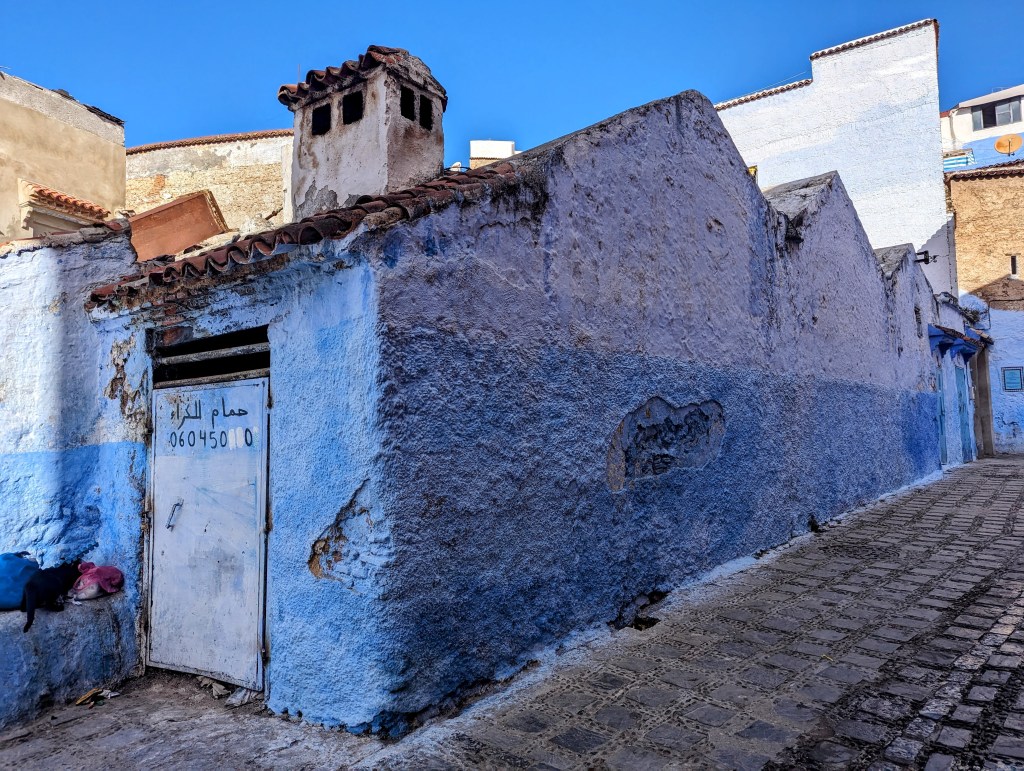
A Hamam, which is a public bathing facility. Some communities separate men and women by areas, others by times. Most of them no longer function. The one below is in the process of renovation.
And a Qaran school. The one below was a regular public school when Fatima was a child, now it is a public space for offices
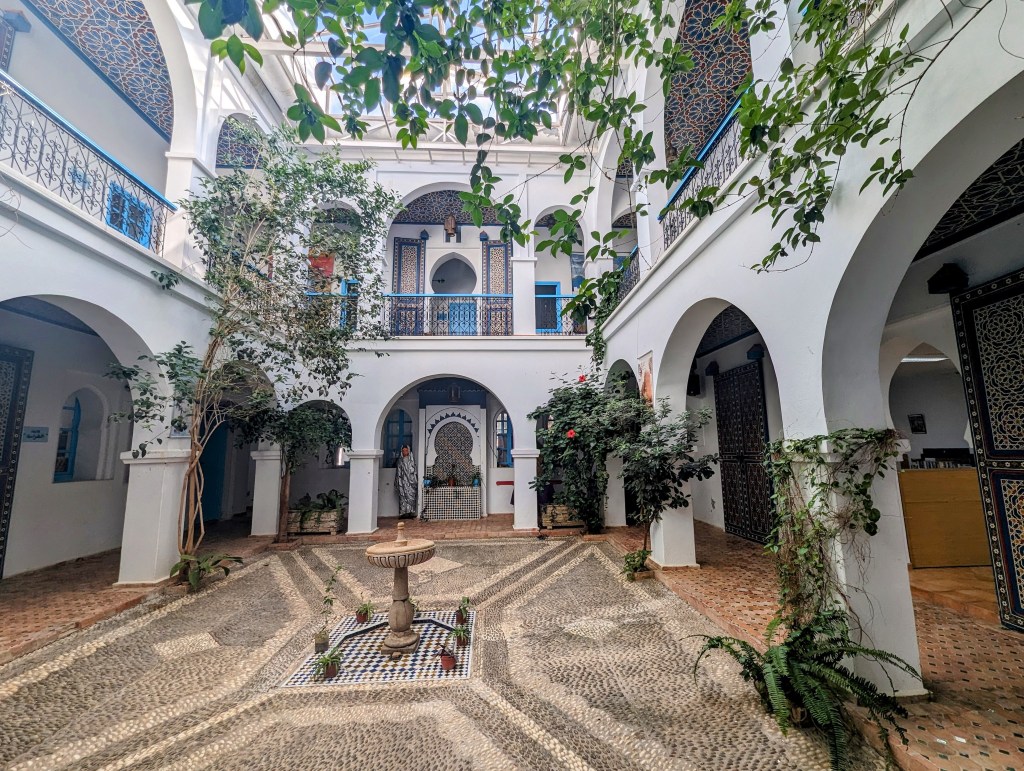
and a library.

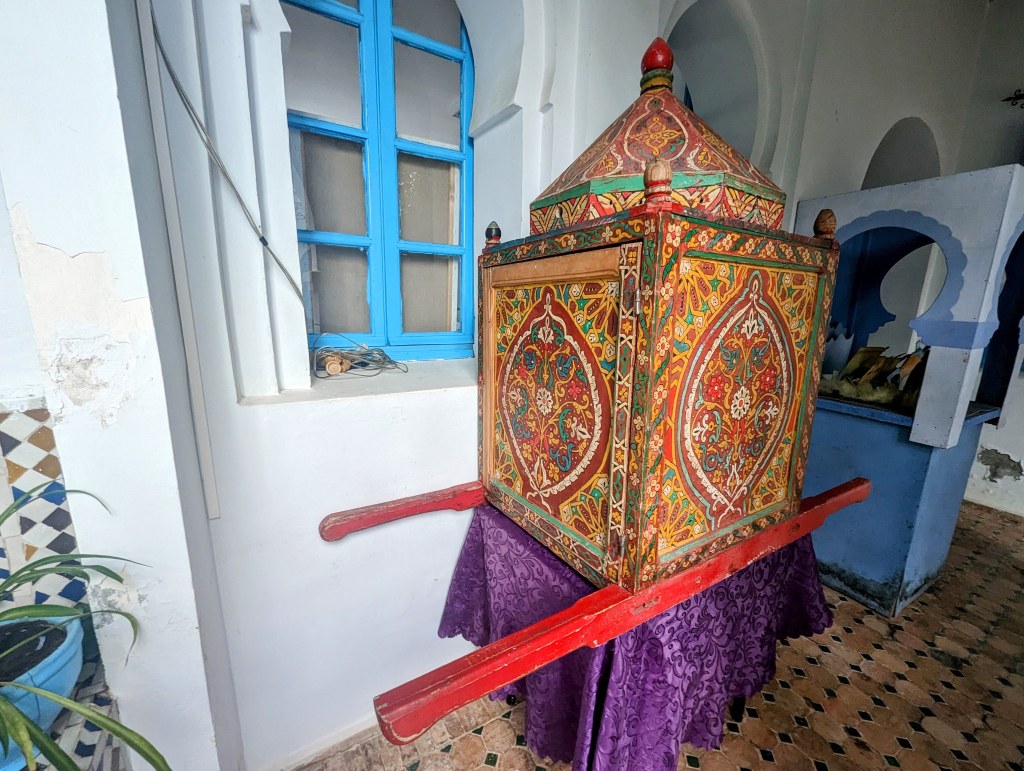
In the school is an ammaria for carrying the bride to her new home.

Fatima shared that after the bride crawls in (the dome is hollow for her head to fit), she is handed a loaf or bread by her mother so that she will prosper and never go hungry in her new home.
After the door is shut, the family throws water to symbolize “do not return,” which means they hope she is happy in her new home with no reason to miss her old home.
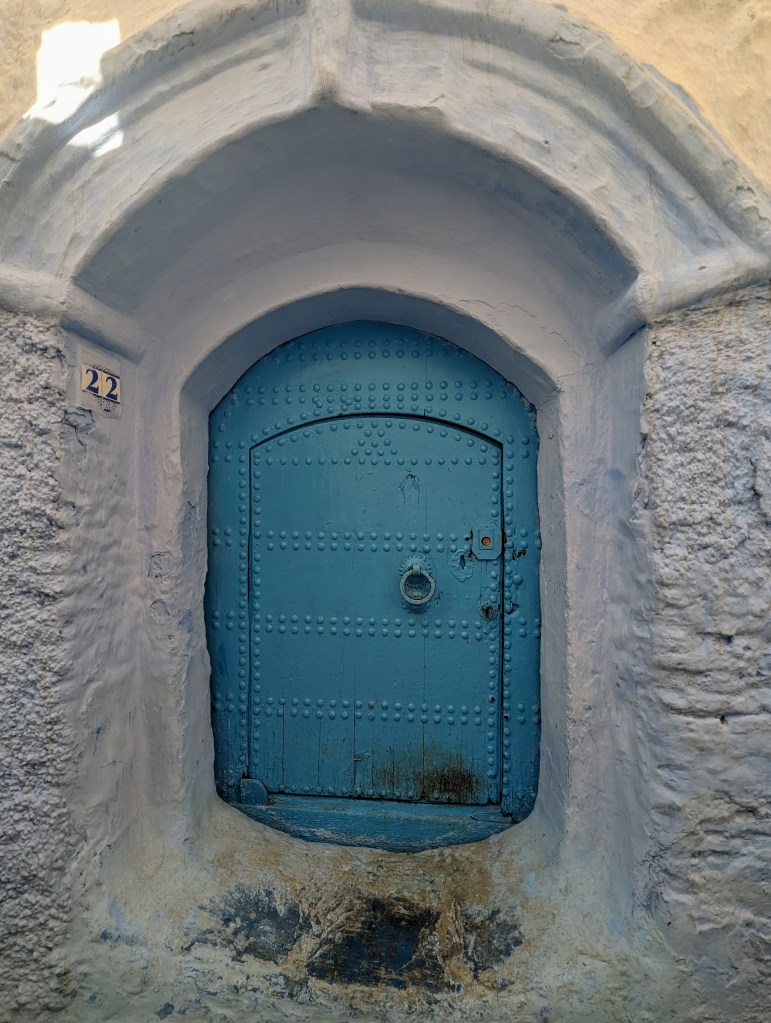
Traditional homes in medinas have an elevation to step over as entering the home and a very low door so one must stoop or bow upon entering. This is to give one pause and to be humbled.
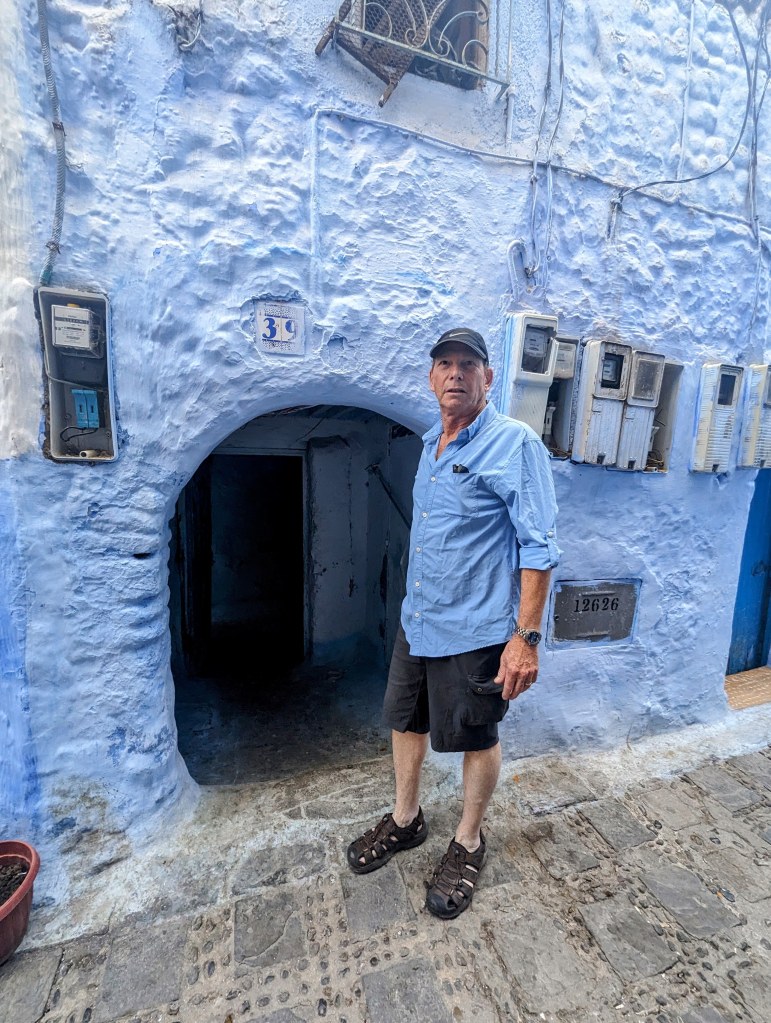
People still live in the medina, but mostly there are shops with arts and hand crafted items for sale.

She showed us a shop where the paint pigments are sold.

She also took us to a coop that sells argan products. Coops are becoming very popular in Morocco and are supported by the government.
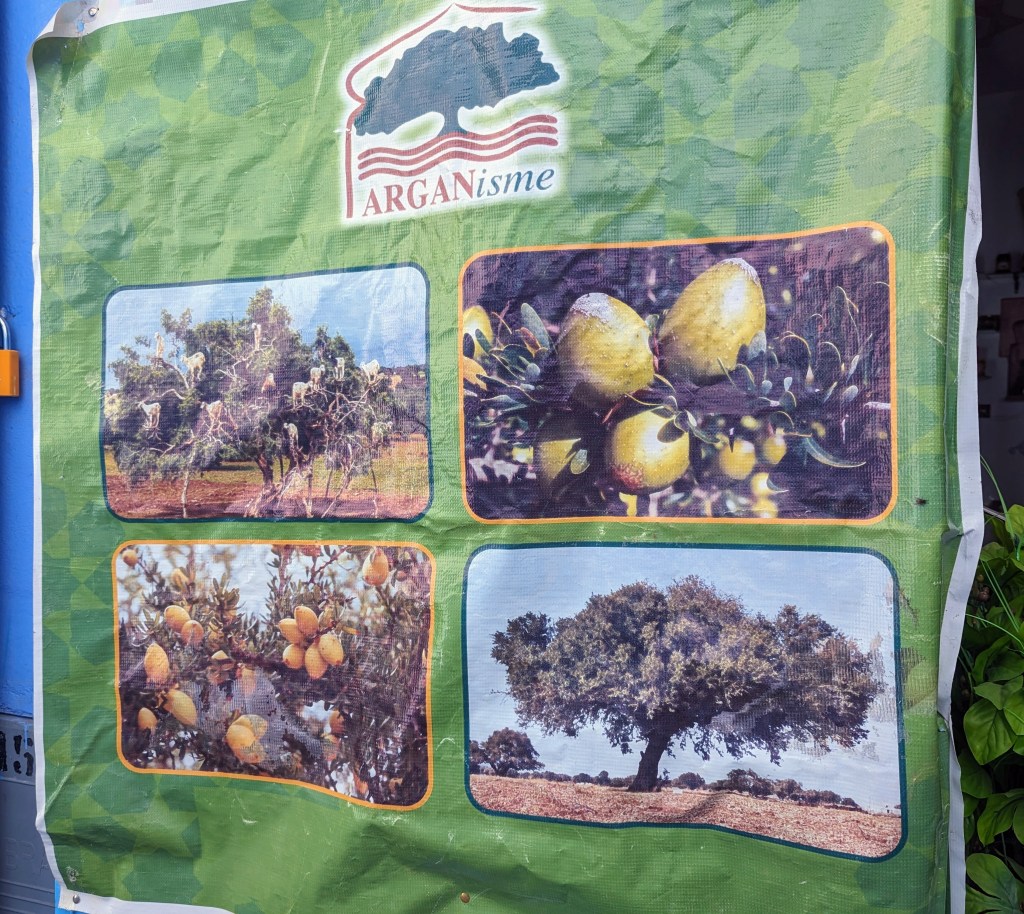
Argan nuts are ubiquitous in Morocco in foods, hair and skin products, even for medicinal use. The women in the coop showed us the process the nuts go through for either roasting for food products or grinding for oil extraction.

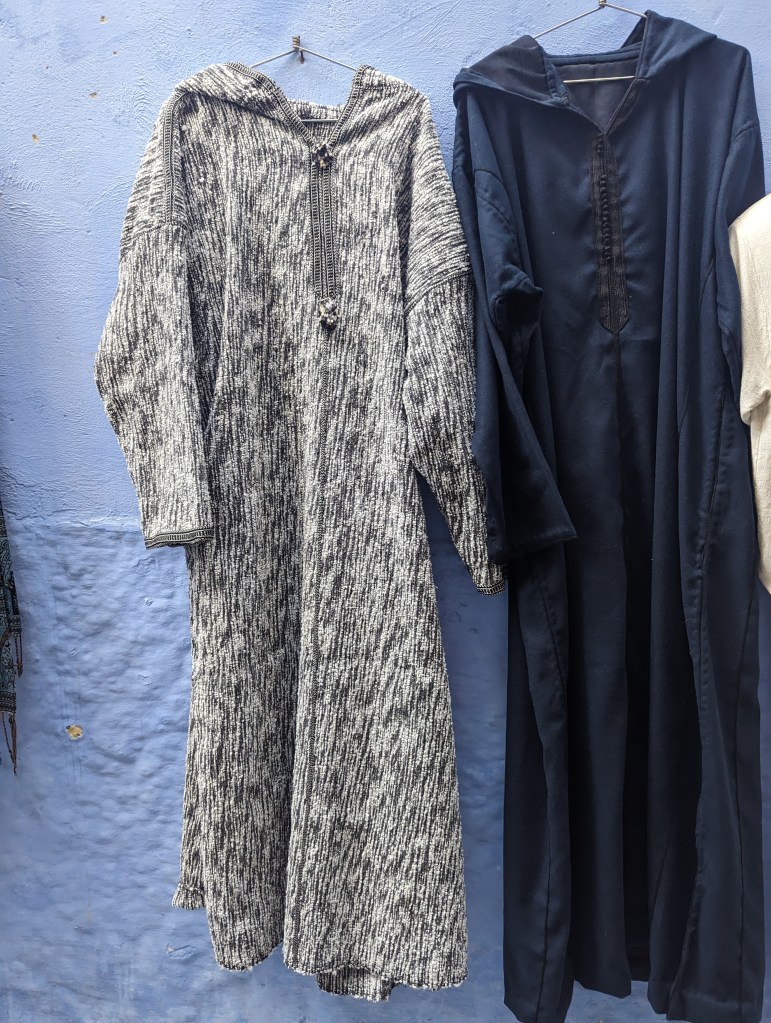
Fatima explained the traditional clothing. The djellaba is a long and loose type of robe with a hood and is often worn over the top of other clothes. Woolen djellabas are the most traditional, but cotton djellabas are becoming increasingly popular too. Naturally, woolen garments are favoured in the cooler winter months, while lightweight cotton djellabas are preferable on hot, sunny days.
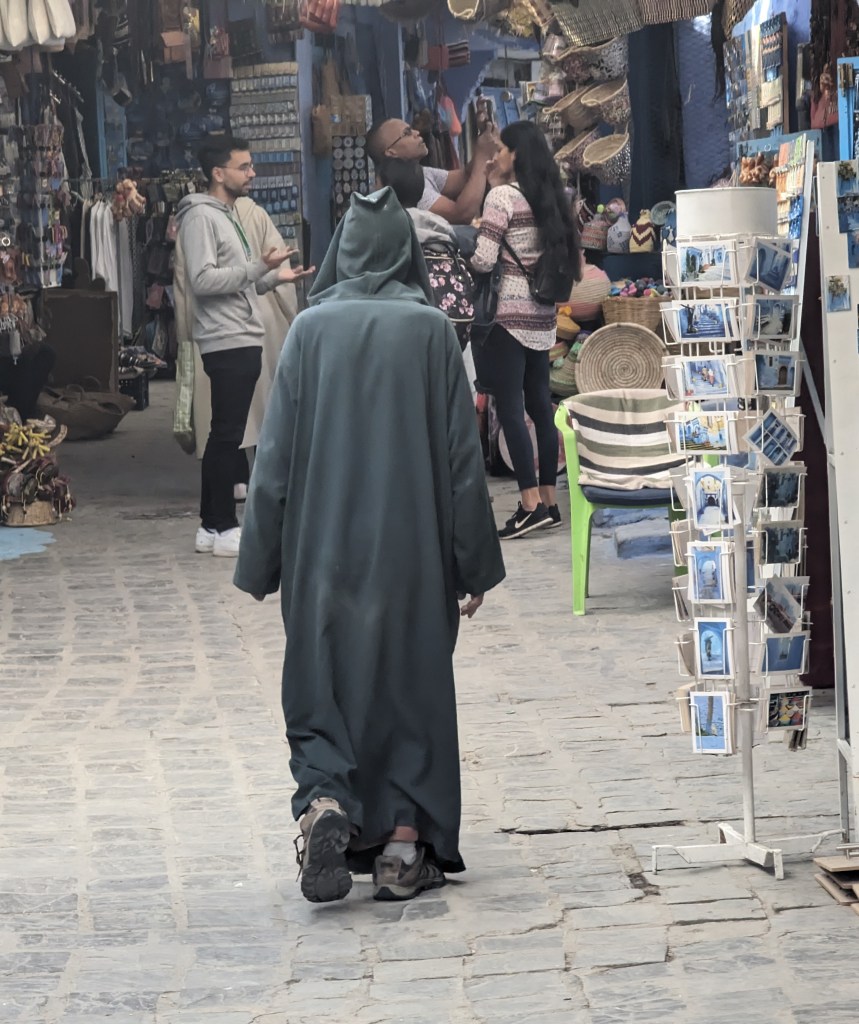
The gandora is similar to a djellaba, with the major differences being that it has shorter sleeves and does not have a hood. It can be worn by either sex, but is more common to women.
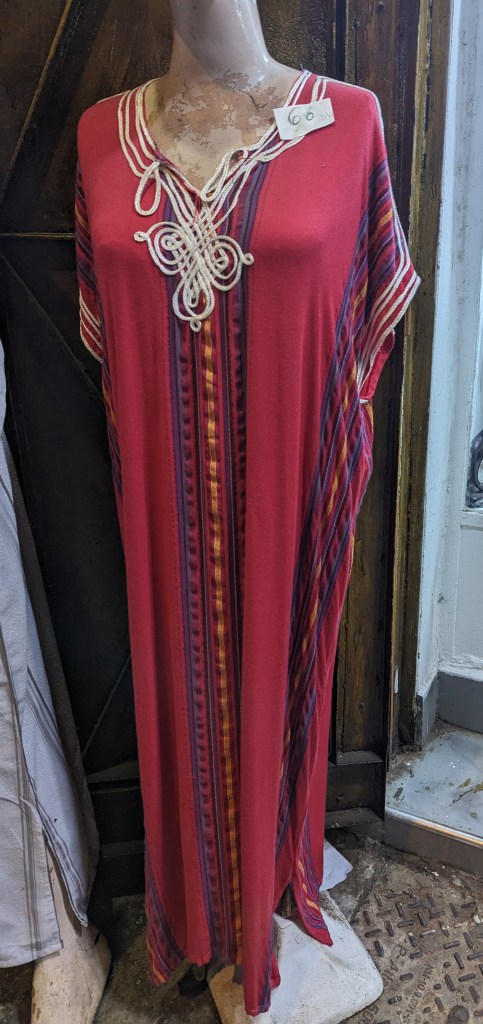
The kaftan is another long and flowing robe-like dress worn a lot in Morocco. Unlike the djellaba, though, the kaftan is only worn by women, usually for dressing up for special occasions.
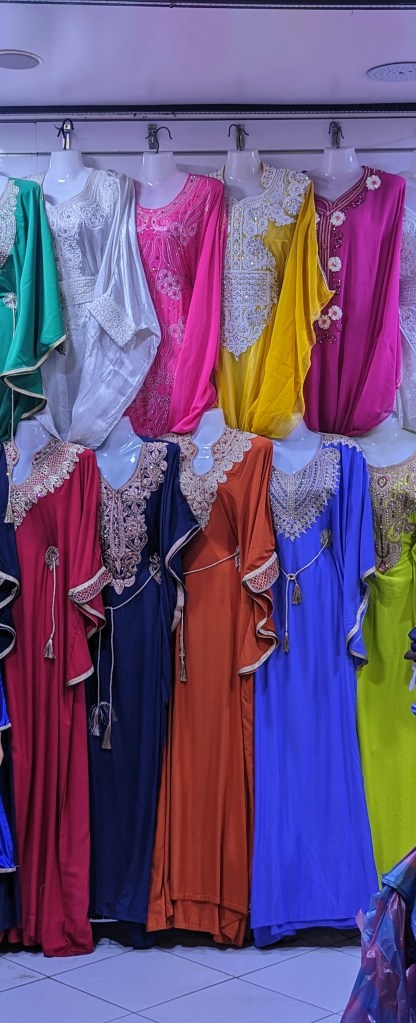
The store below is a bridal shop. It not only sells bridal kaftans, but also the shoes, nightwear, slippers, and linens that would go with the bride to her new home.
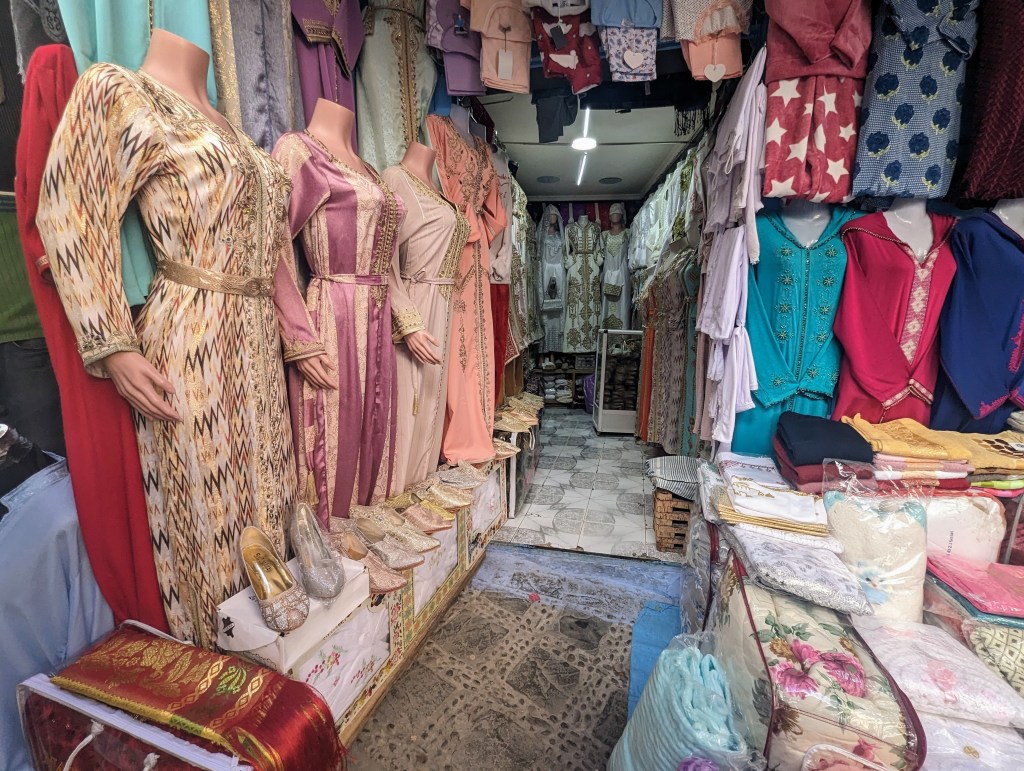
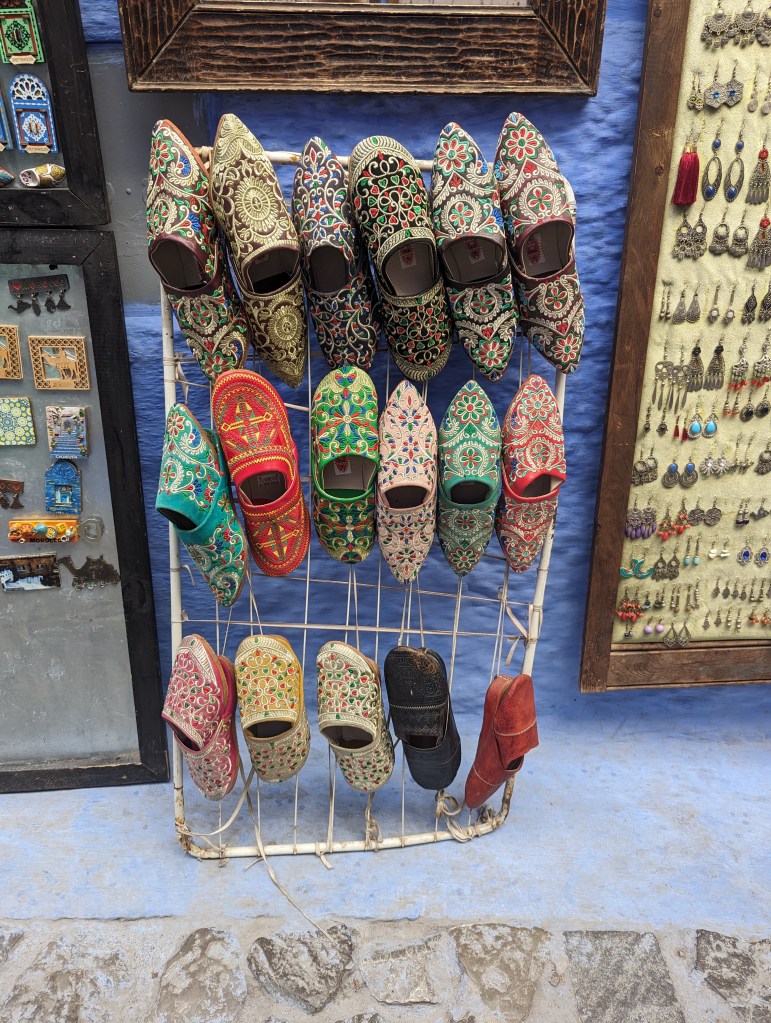
Inside the home, slippers are worn. The ones seen in the shop below are similar to what Eric and I donned in the home of Lucas and Amina Peters in Tangier.
We passed the kasbah but did not go in.

Then we entered the Jewish Quarter. Similar to what Latif had said in Tangier, Fatima said the Jews had their own quarter for their safety and comfort. It was by no means a ghetto.
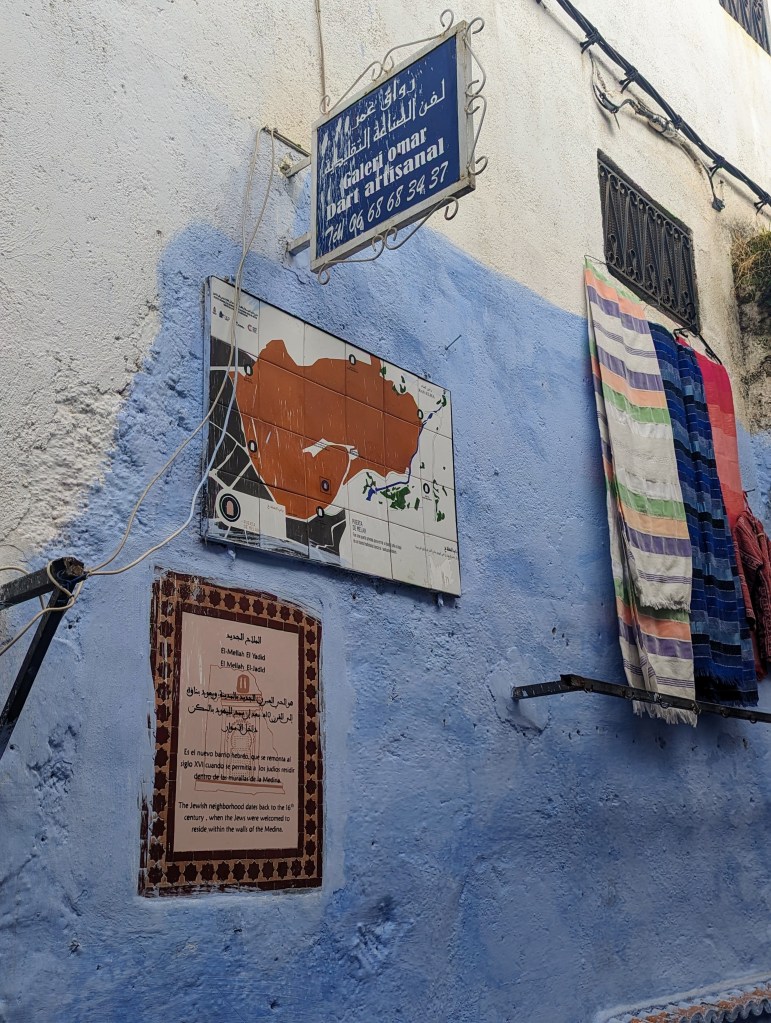
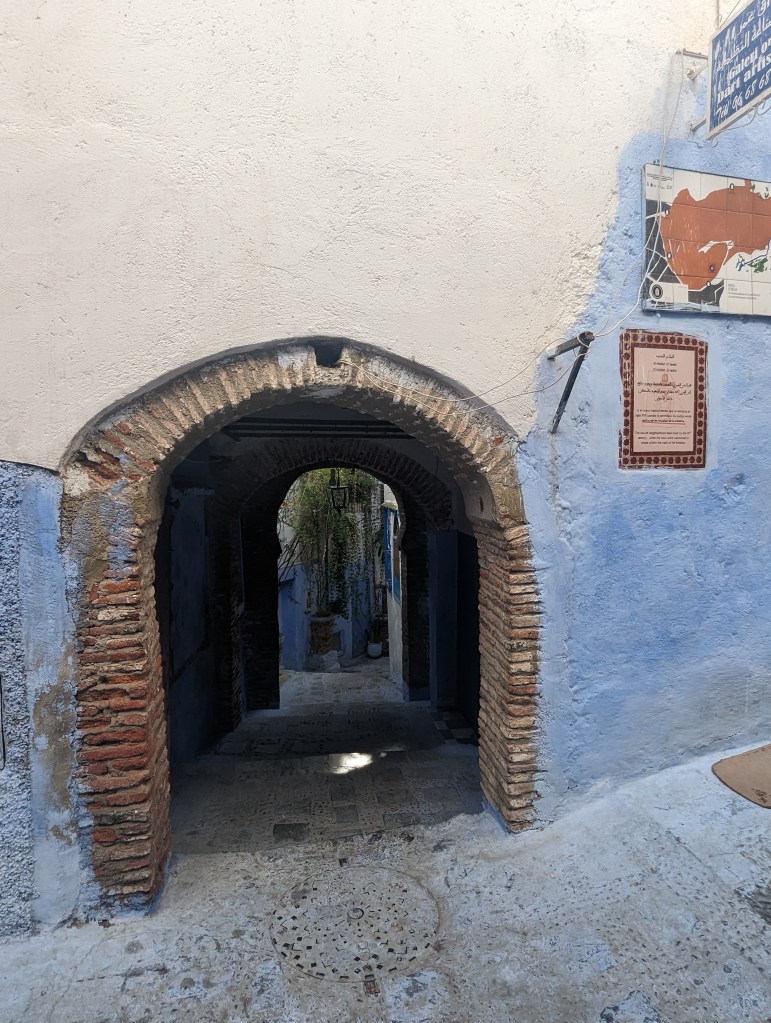

At the bottom of the Jewish Quarter is the lower entry into the medina. The gate here was called the trading gate because that was where outsiders would come to make trades with the medina merchants.
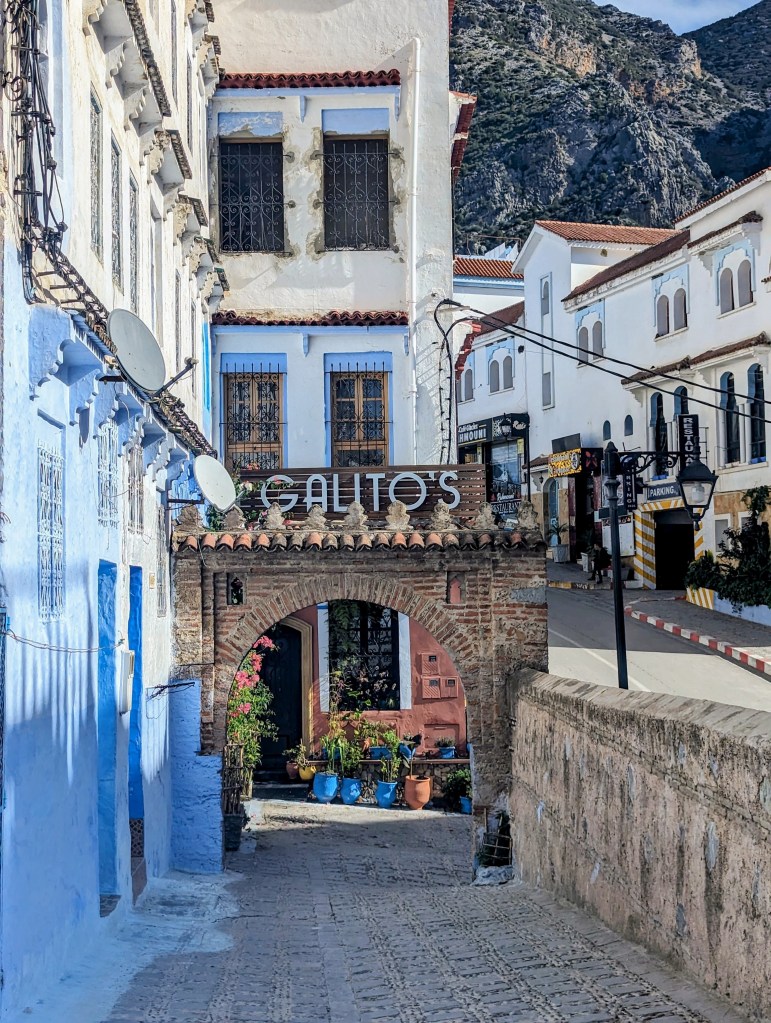
Once again we crossed the Portuguese Bridge. This time we were told that it was so named because after an attempted Portuguese invasion, Portuguese soldiers were captured and turned into slaves who then were forced to build the bridge.
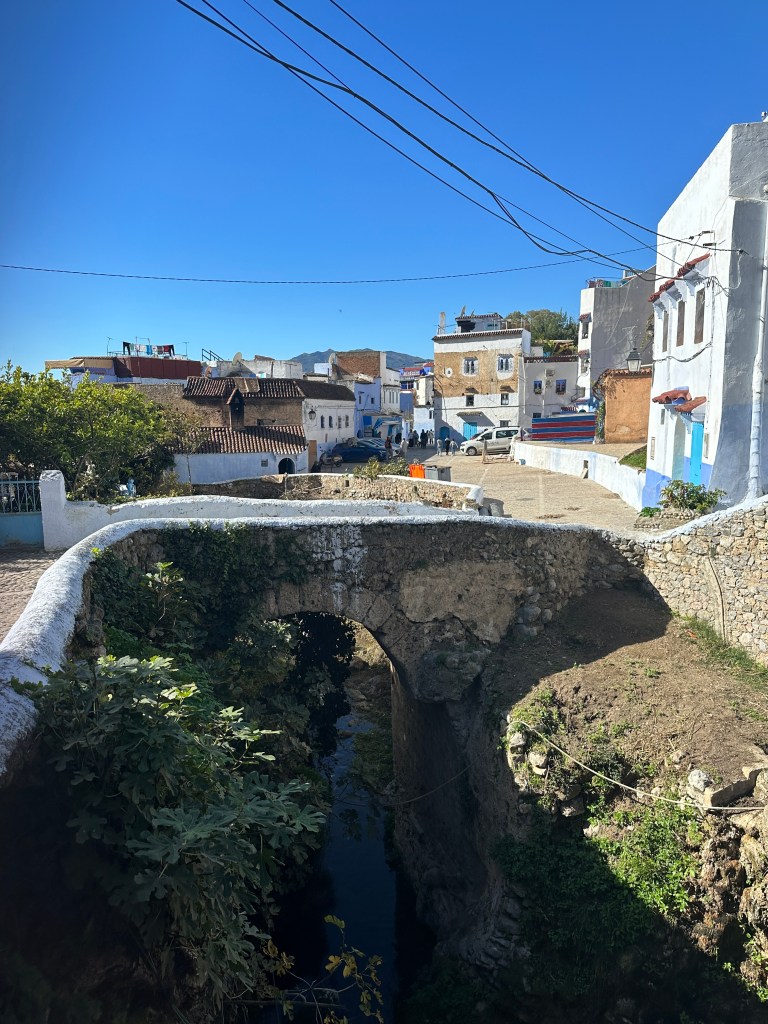
And again we made the very long trek up to our hotel suite for an afternoon rest. Eric took a panoramic shot of the town from our terrace. We honestly could not stop enjoying the view of the Blue City.
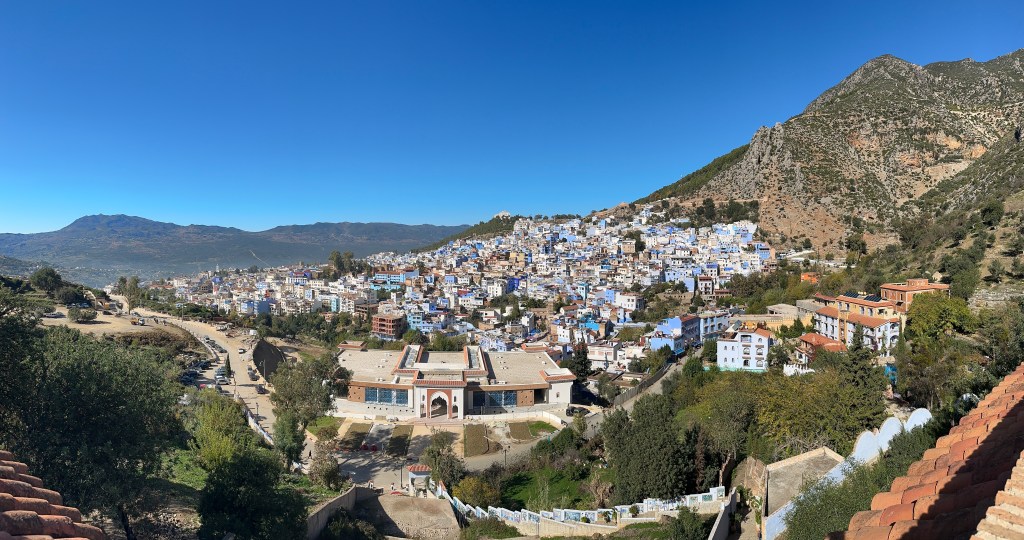
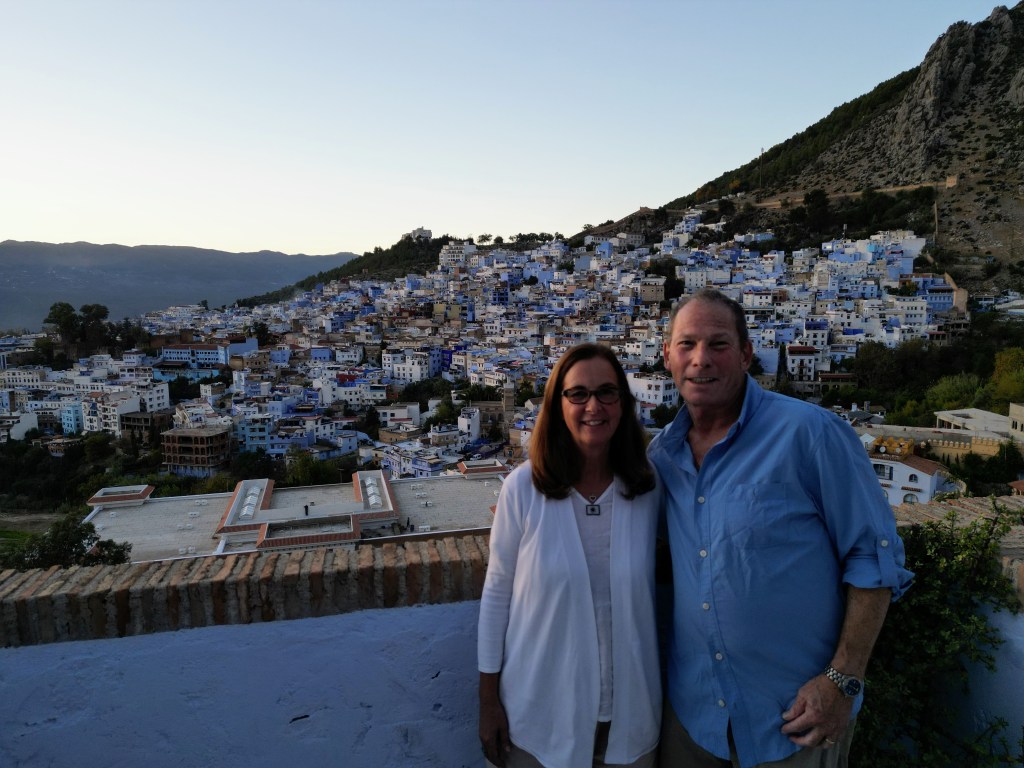
And we used the drone to take a selfie. It would be our last use of the drone. We were told that if caught with a drone in Morocco, it would be confiscated. Although interestingly, there are no laws on the books against drones, nor is there anywhere that says it other than in drone user chat rooms.
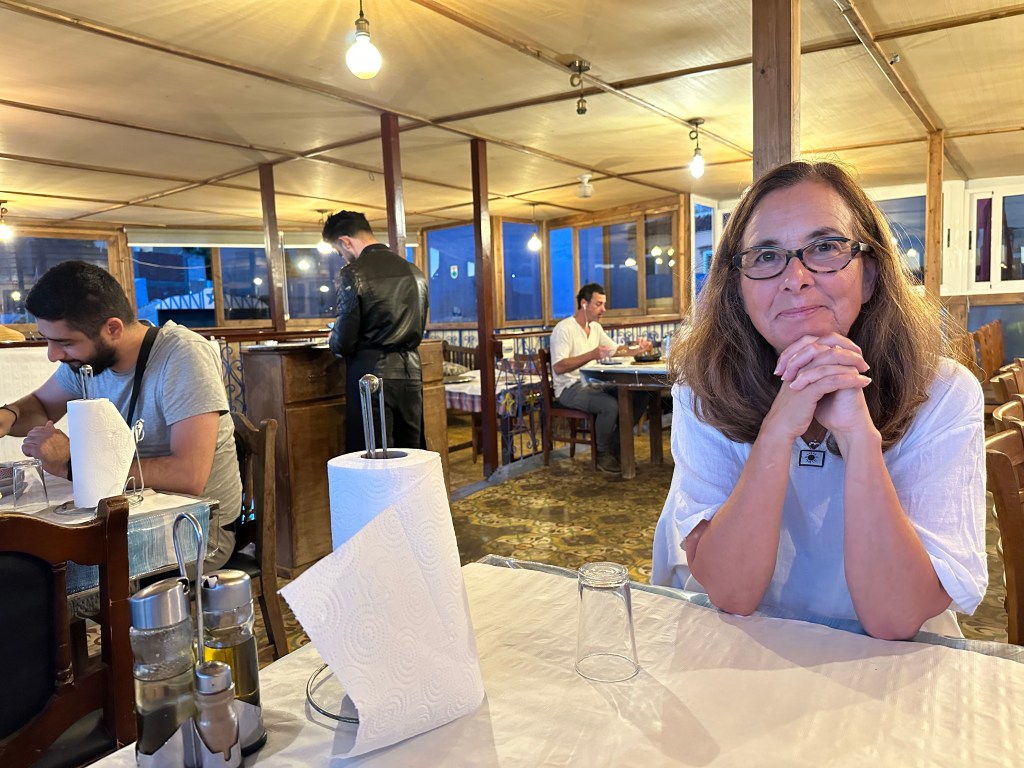
After a rest, we again trudged down into the medina for dinner at Bab Ssour.

We climbed three flights of decorated stairs.

And had dinner on the top terrace. We had a delicious traditional Moroccan dinner of tagines, pastellas, and chicken briouats all for under $20 including a generous tip.
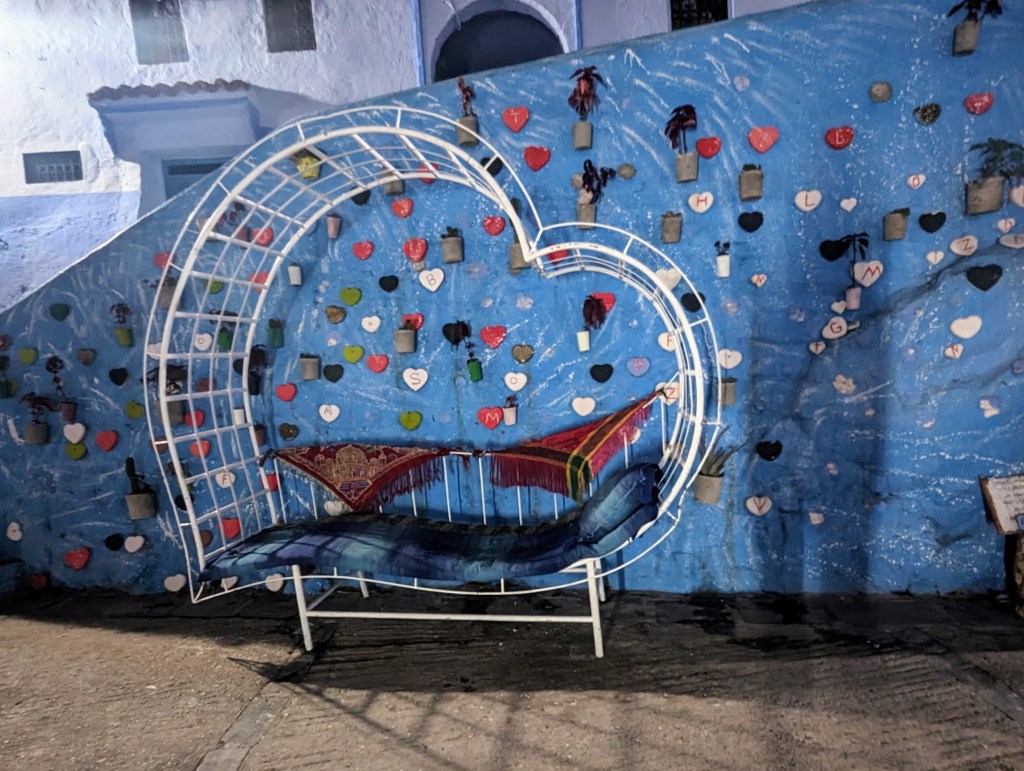
Then another hike back to our suite. We laughed that at least we were walking off all the calories just consumed. On the way, I had to take a picture of this love seat for our love of Chefchaouen.
And this concluded our visit in Northern Morocco.
 Jo & Eric's travels