
After a long day of travel, we arrived in Taroudant (aka Little Marrakesh), after dark, precluding any pictures of the outside. We were introduced to Marouane, who would be our guide the next day, then whisked to our suite.
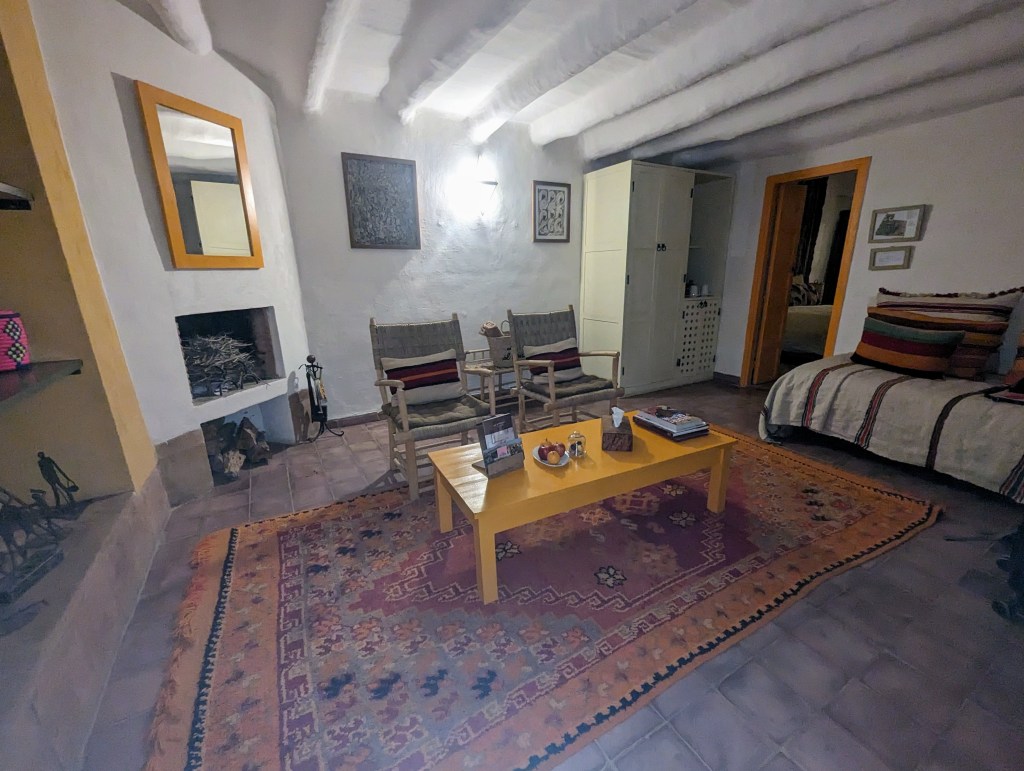

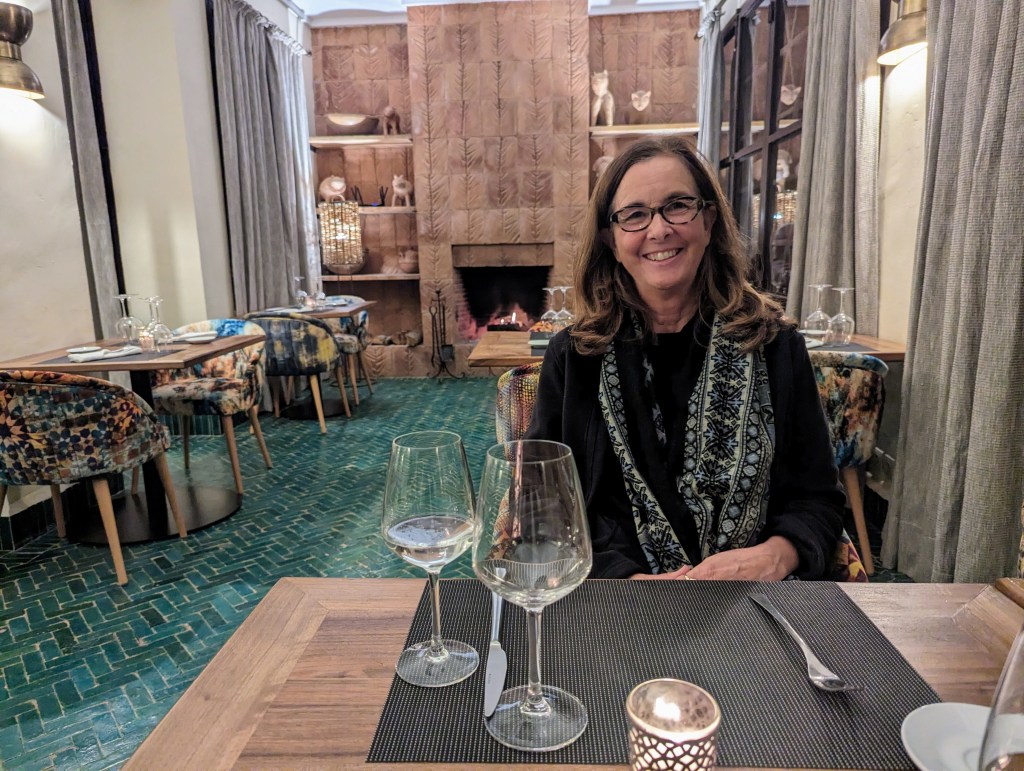
We enjoyed a lovely dinner and a bottle of wine, our first in a while as no alcohol was available in the desert. Alcohol is against the muslim religion and is sold in Morocco only in large grocery stores in the large cities. It is often served in the French style hotels, of which this was one.
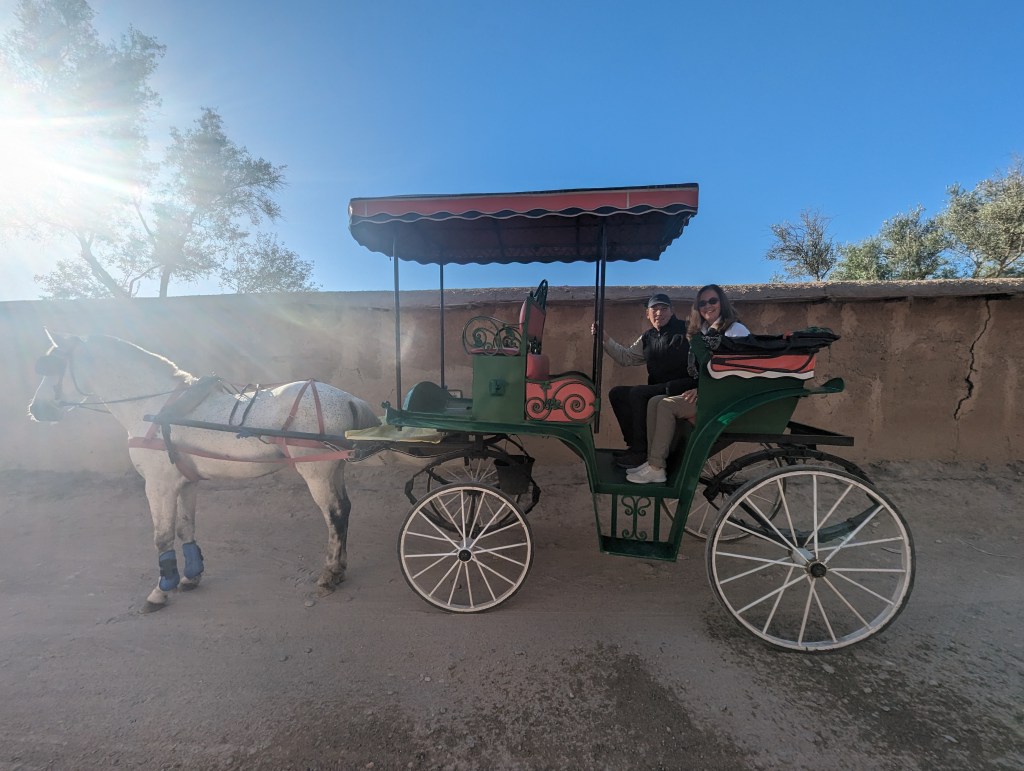
After a good night’s sleep, we set off for town in our horse drawn carriage.
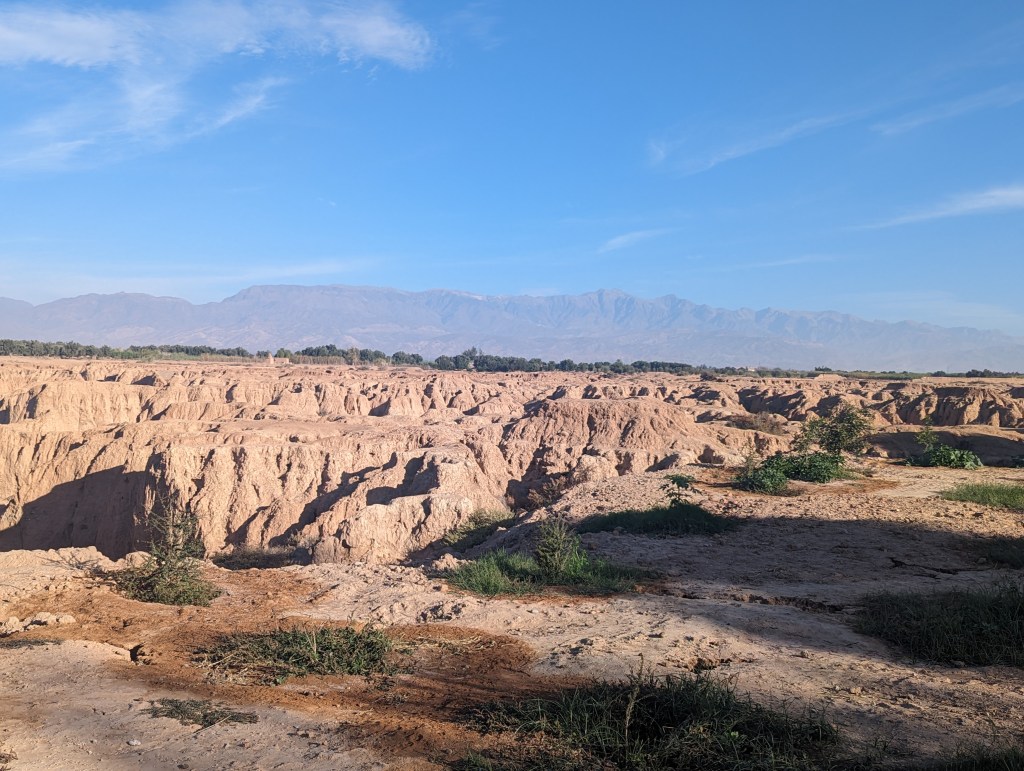
We were told that the wife of the former Shah of Iran owns the adjoining property on one side and the king of Morocco himself the property on the other. The king’s property does not have one of his 25 palaces, just a vacation home for his family. We passed the “Grand Canyon” of Morocco, home to a dried up river bed.
We approached the original town of Taradount, which is entirely within the walls. There is building now across the riverbed for a new town. At 7 km, it is one of the longest walls in the world. The town dates back at least 1000 years and was on the caravan road to Marrakesh. In the 16th century it was briefly, about 20 years, the capital of Morocco under the Saadian dynasty. Originally there were 5 gates, babs, but currently there are 10.
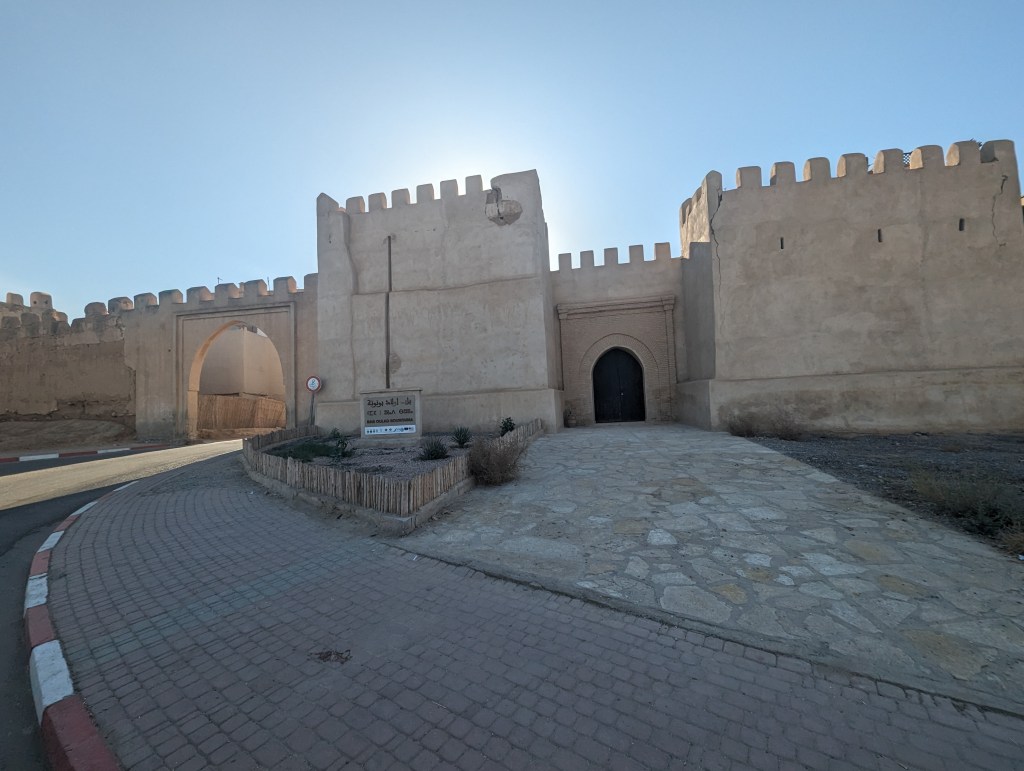
Unfortunately, the wall suferred great damage during the earthquake on Sept. 8
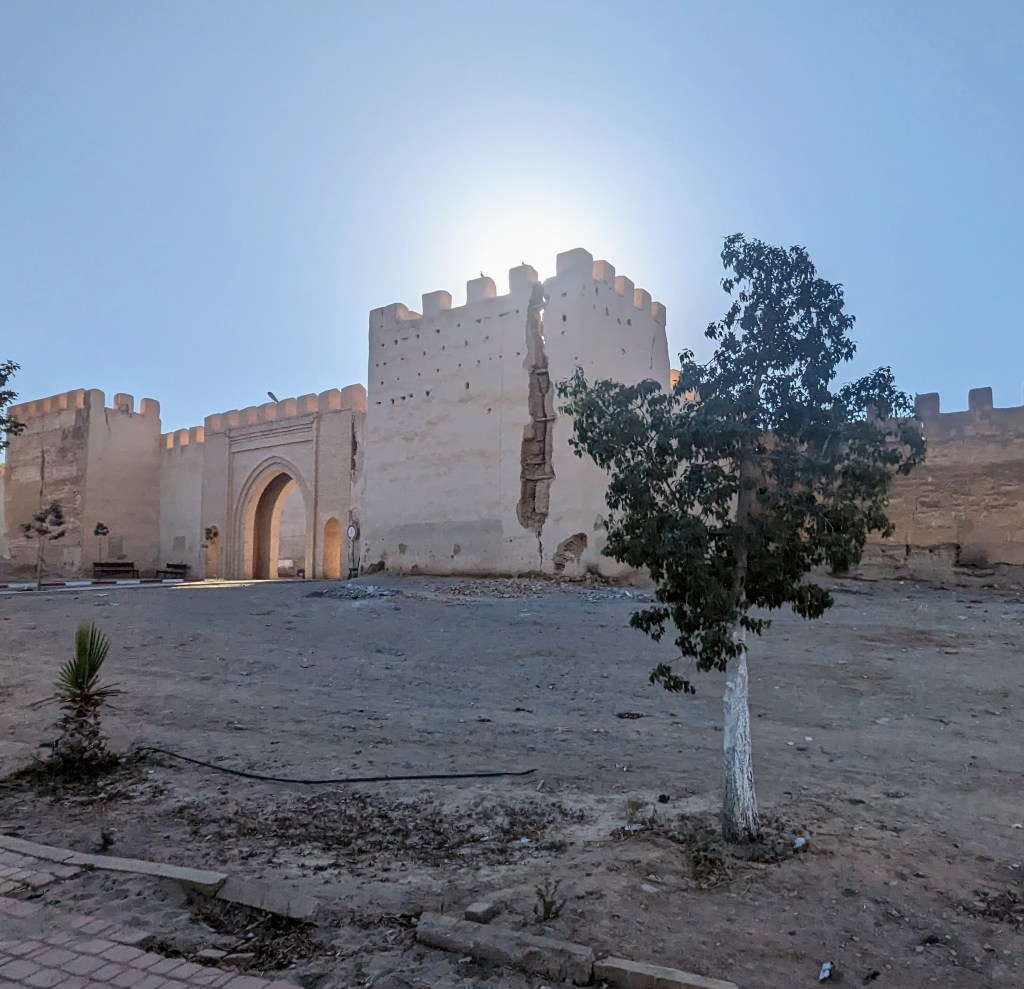
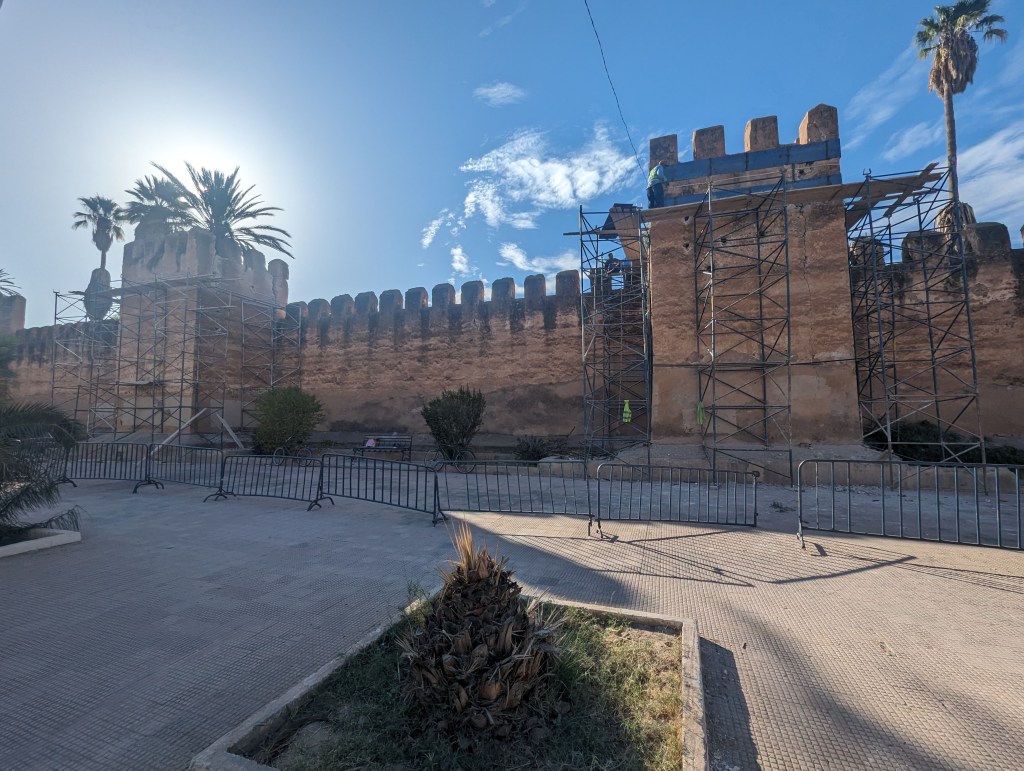
In several sections there are workers making repairs.
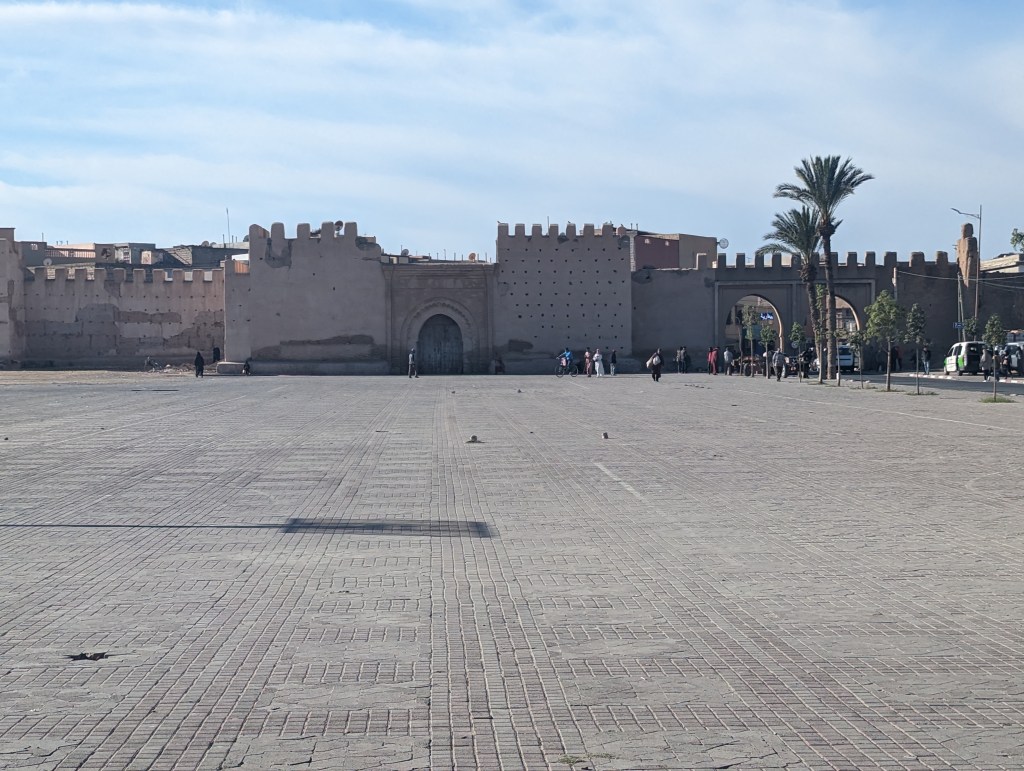
We passed the Thursday Bab, so called because just inside is held the weekly Thursday market.
We passed what was one of the originals hotels, now falling into disrepair because of missing inheritors.
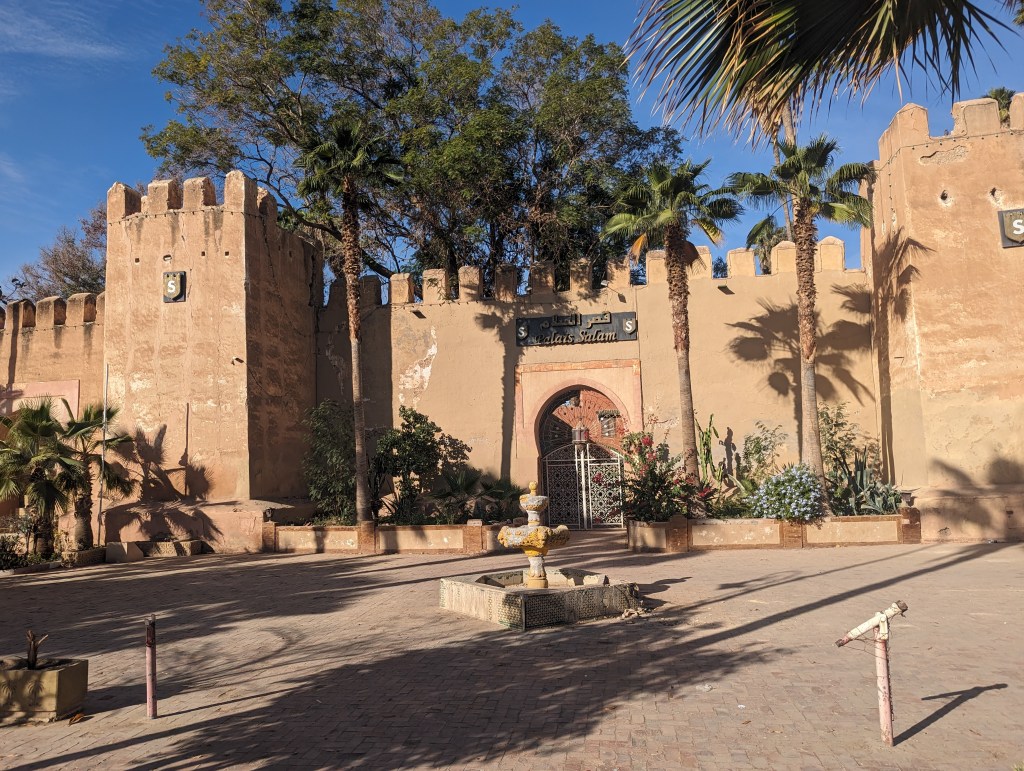
We passed into the medina and got out to walk around inside the kasbah within.
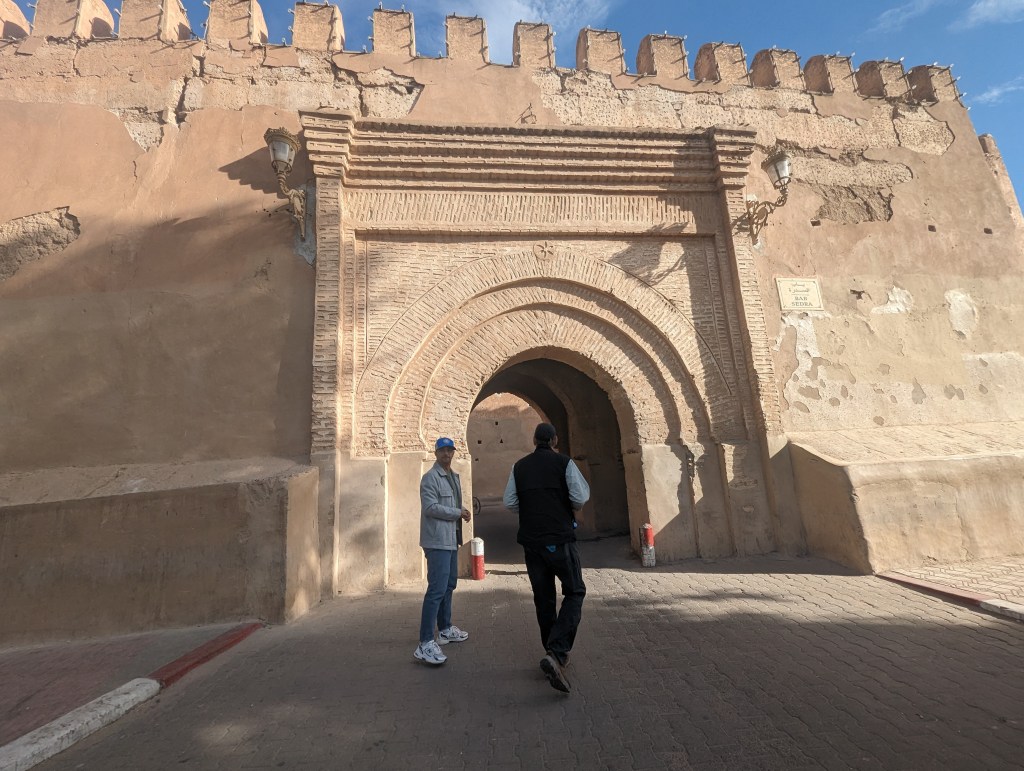
There is a triple entrance to the kasbah for security.
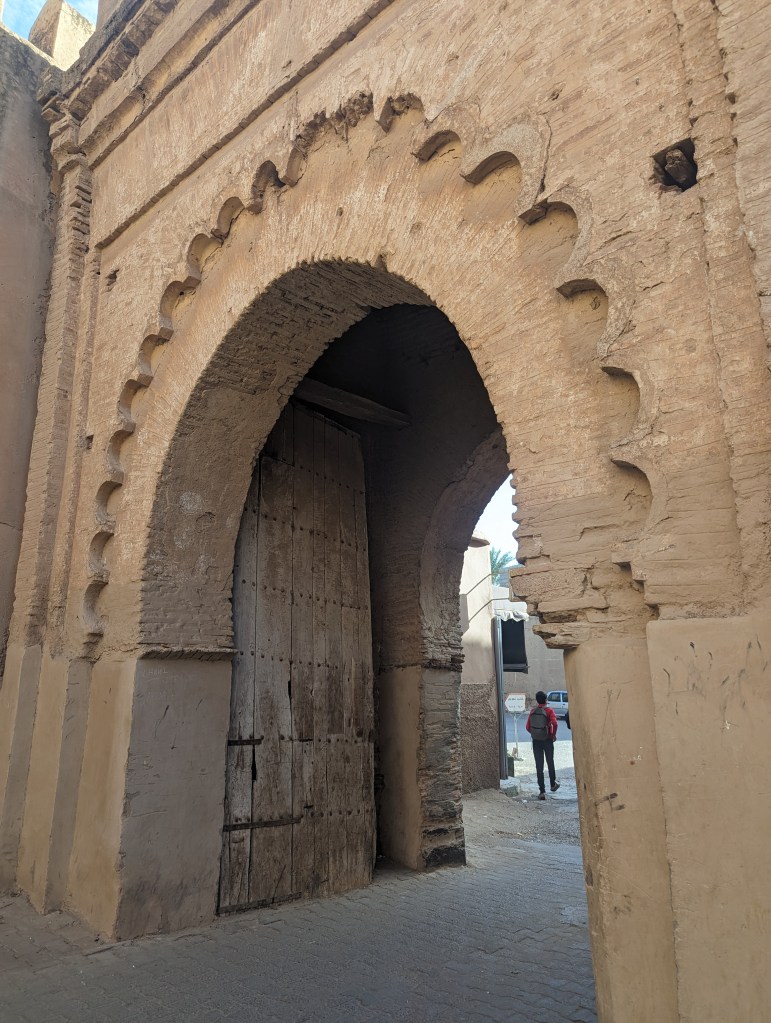
It bears the name of the founder Saabi dynasty.
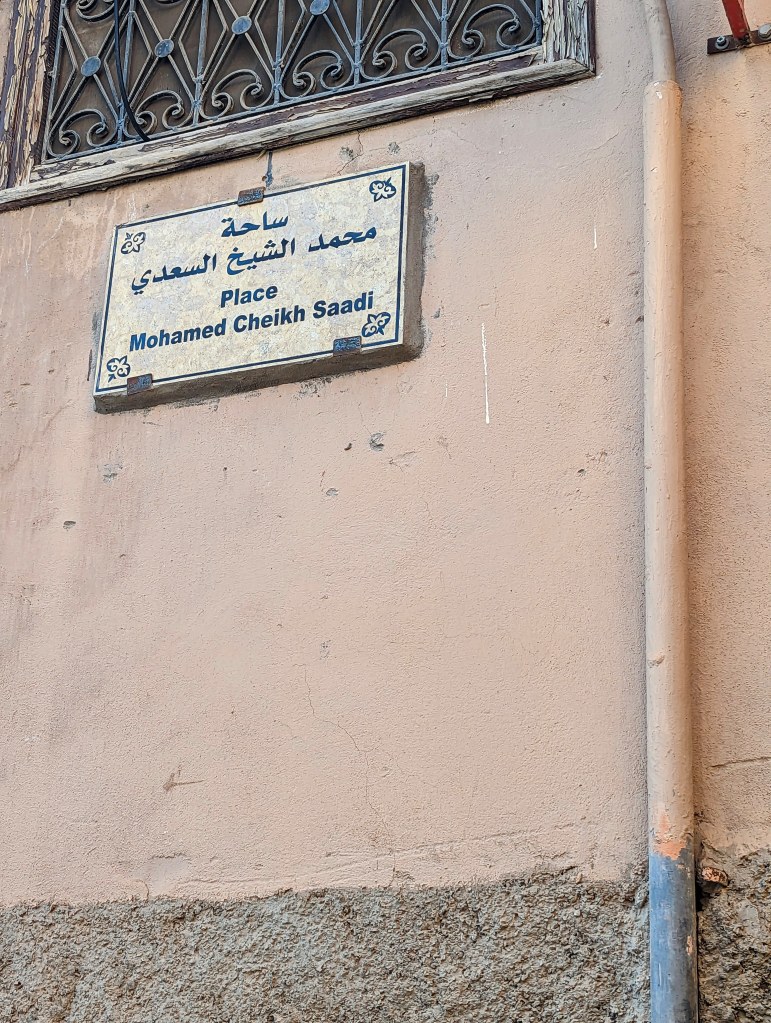
Marouane showed us the tax collector building. The name: Lachour means 10 in Arabic because one of the pillars of Islam is that one should give away 10% of income every year.
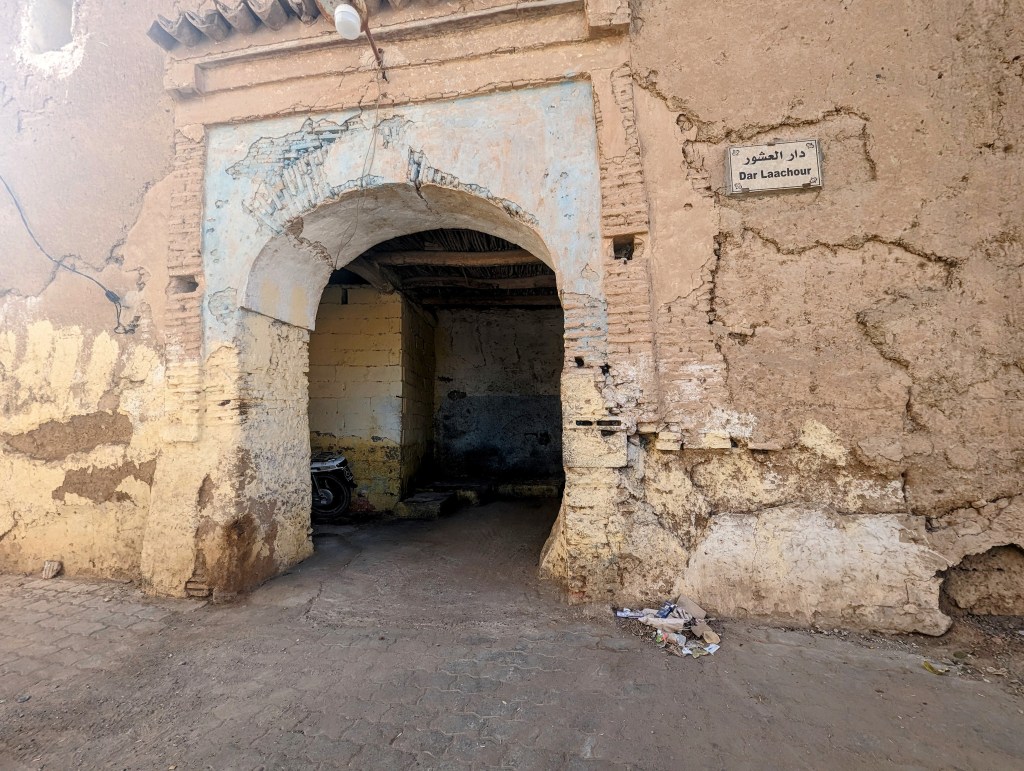
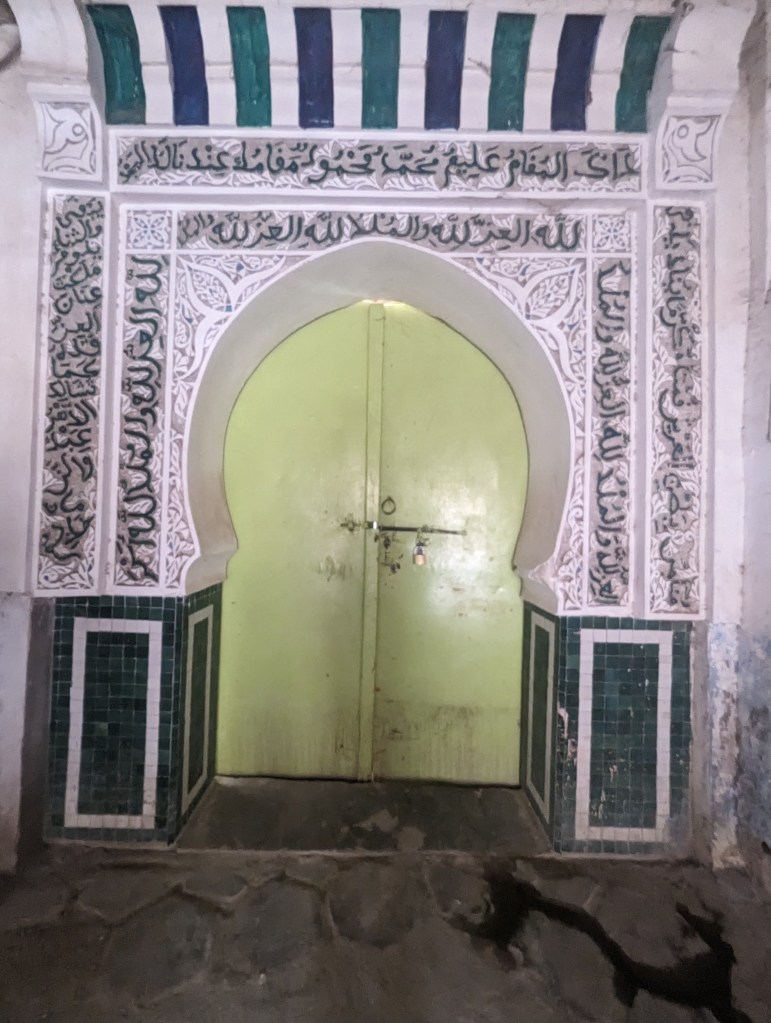
He showed what was once the madrassa, quran school, but is now a town meeting room.
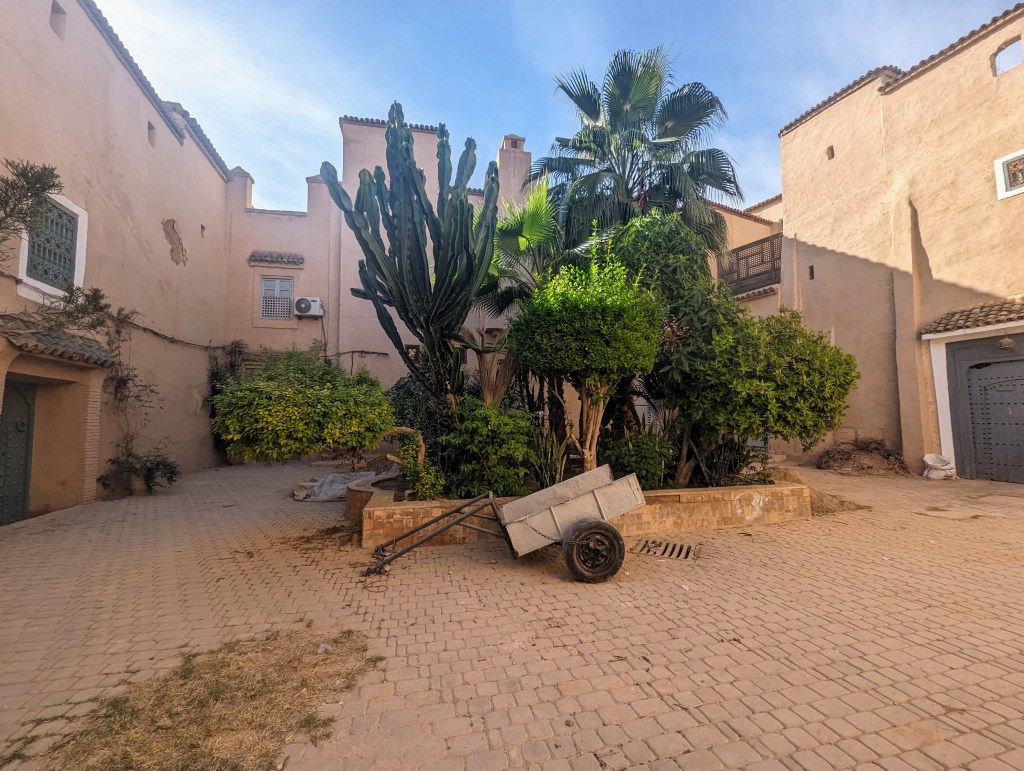
What once was the courtyard of the kasbah is now a private home with electricity, running water and sewage.
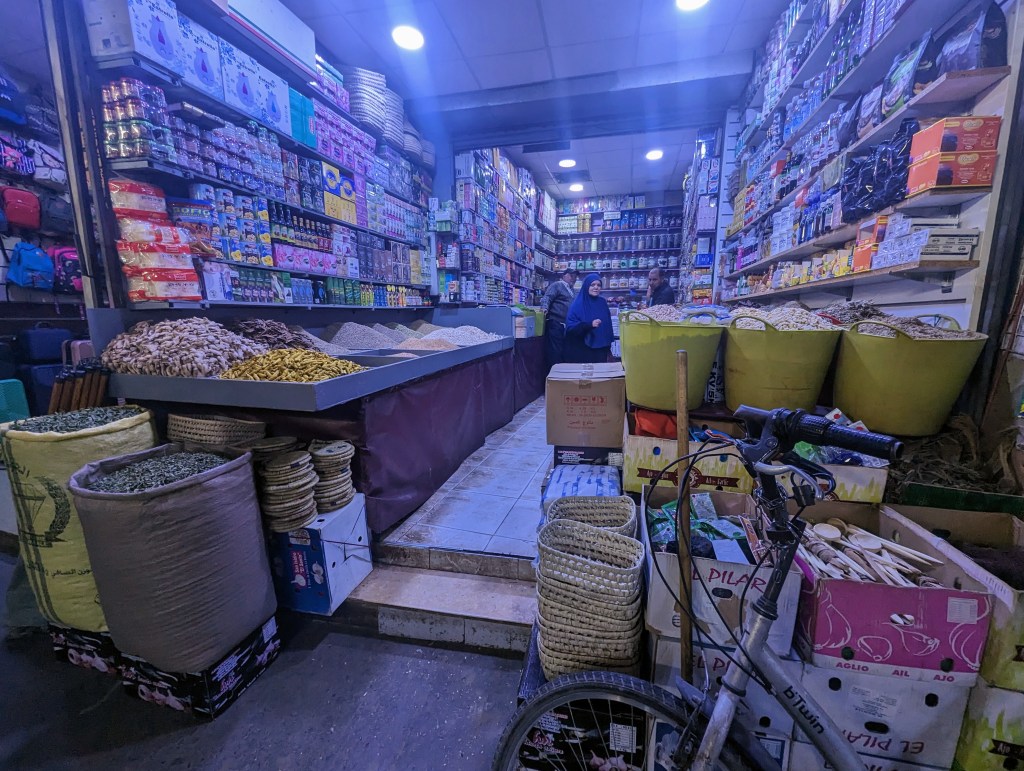
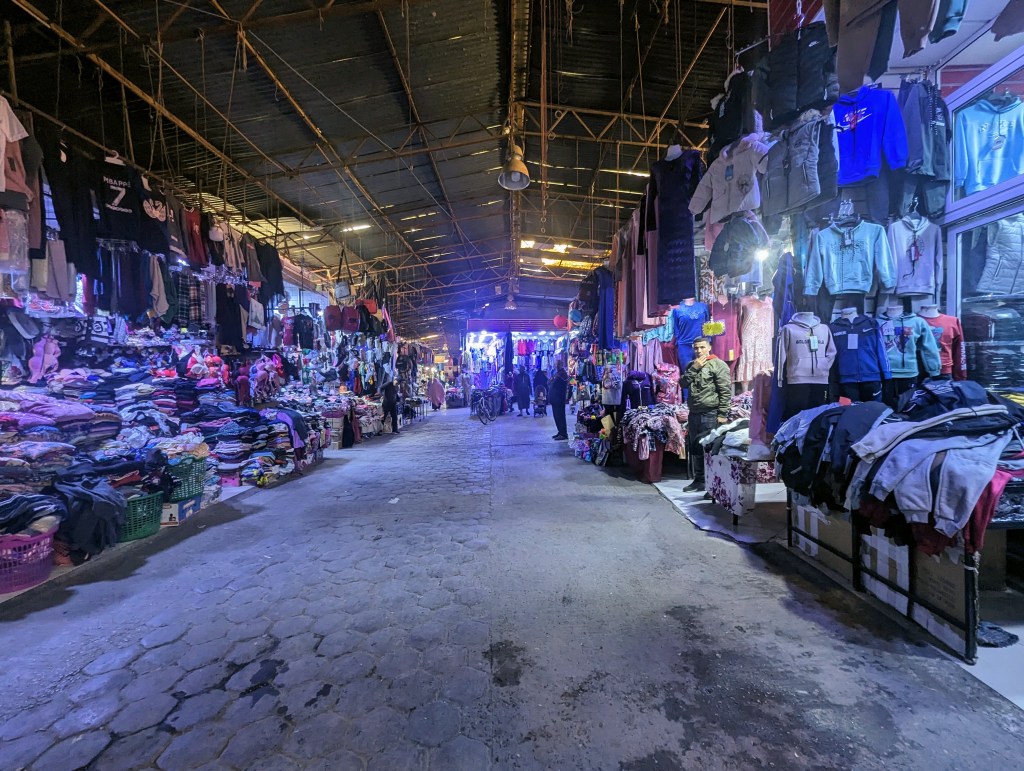
There are 2 souks within the medina. The Berber souk sells mostly goods needed to run the home. What I liked about this souk compared to those we have seen is this is really for the locals not tourists.
There are clothing and shoe stores.
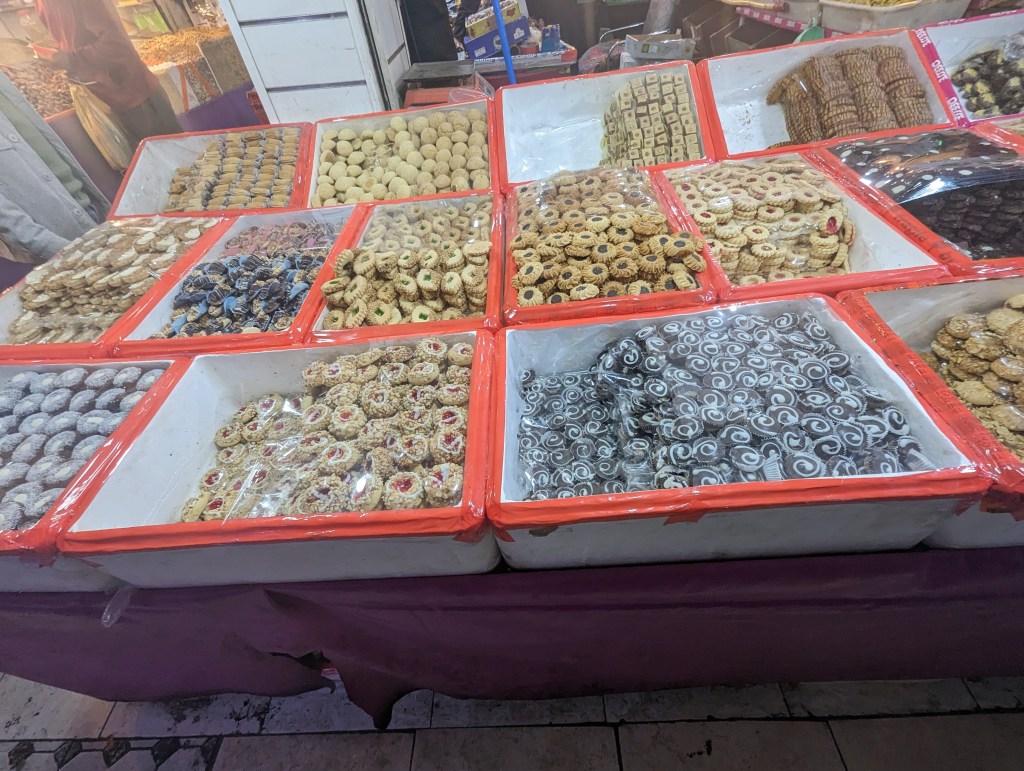
a bakery
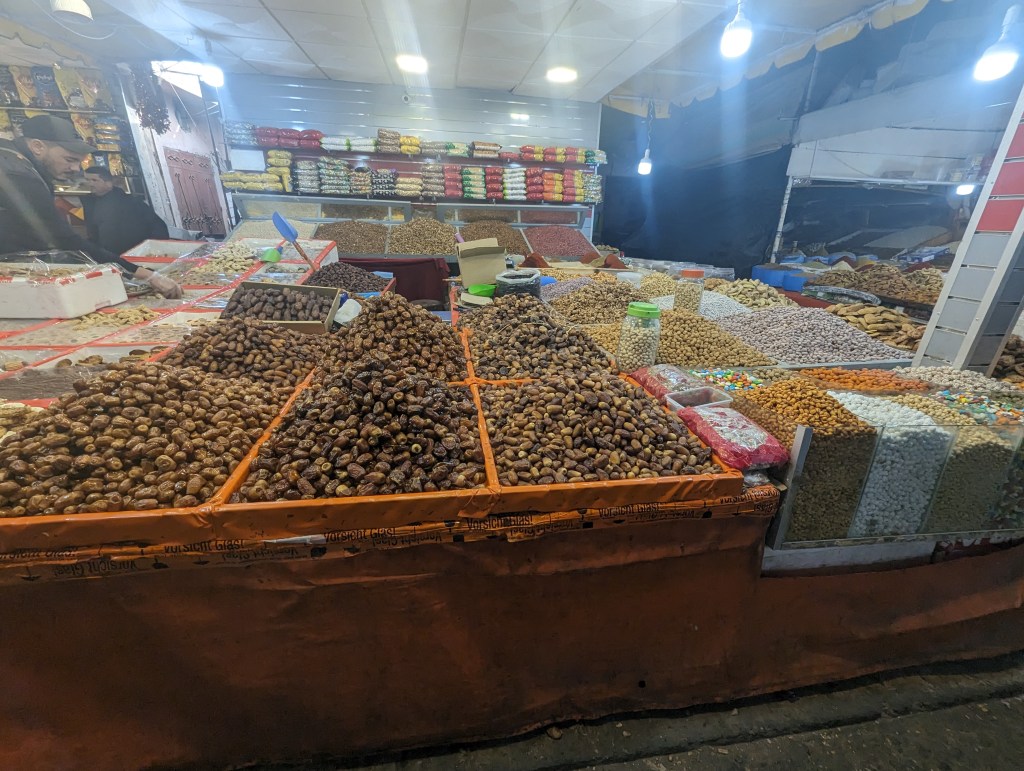
dates and nuts
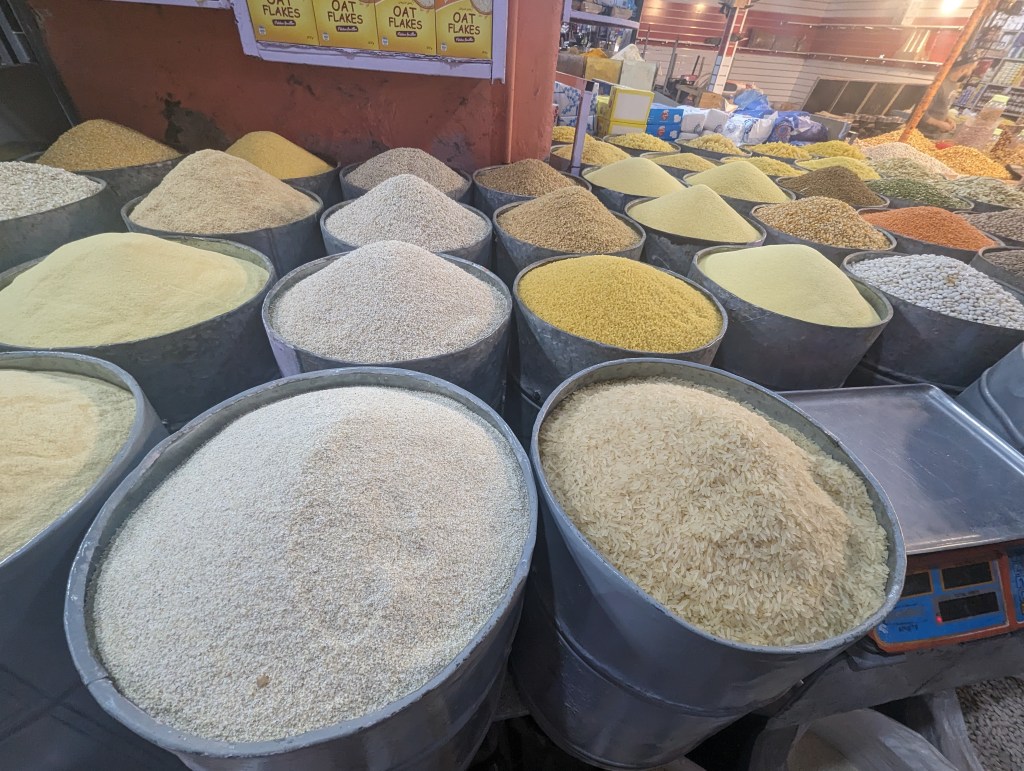
all different grains
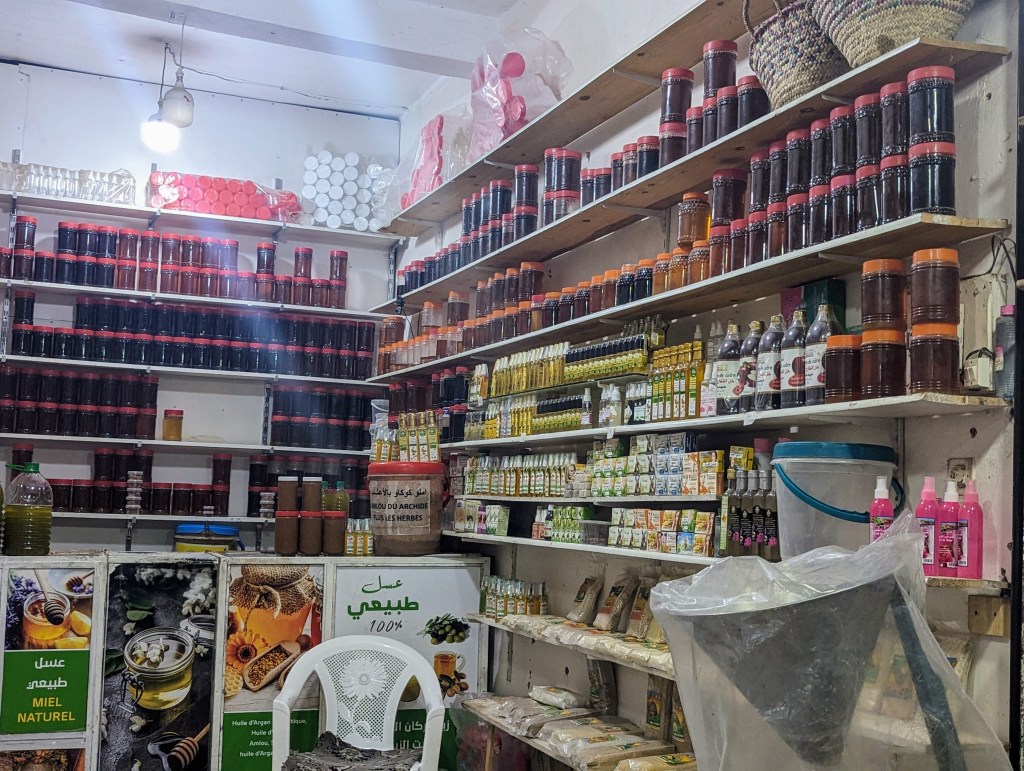
More different honeys than I knew existed.
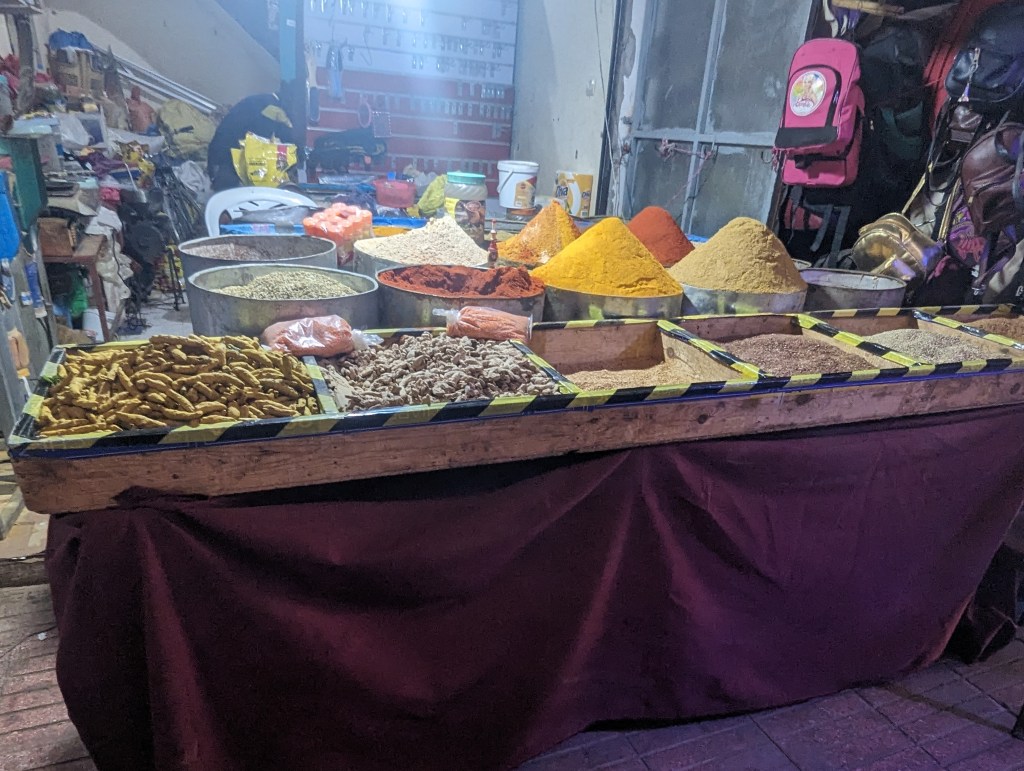
and of course spices
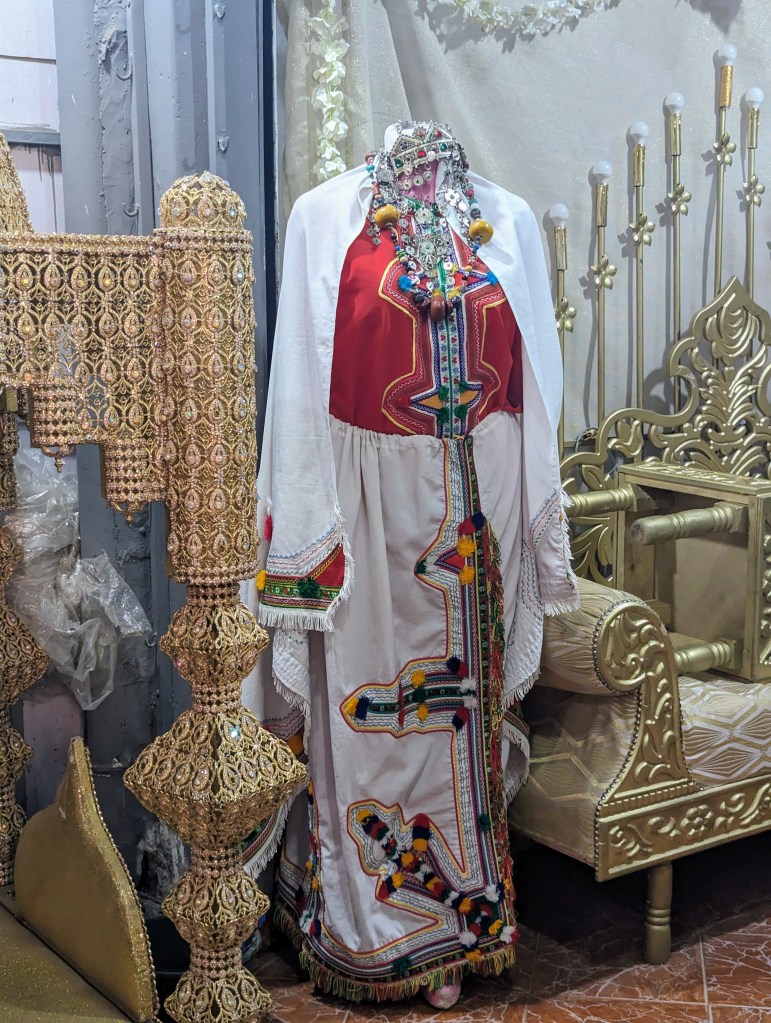
We passed a wedding planner who is displaying the typical local wedding garb
and a modern day ammaria for carrying the bride to her new home

Then we crossed over to the Arab souk, which is more artisans, particularly jewelry. Marouane took us to a jeweler who is unique in that he combines both wood and silver. He layers cedar, ebony, and silver.
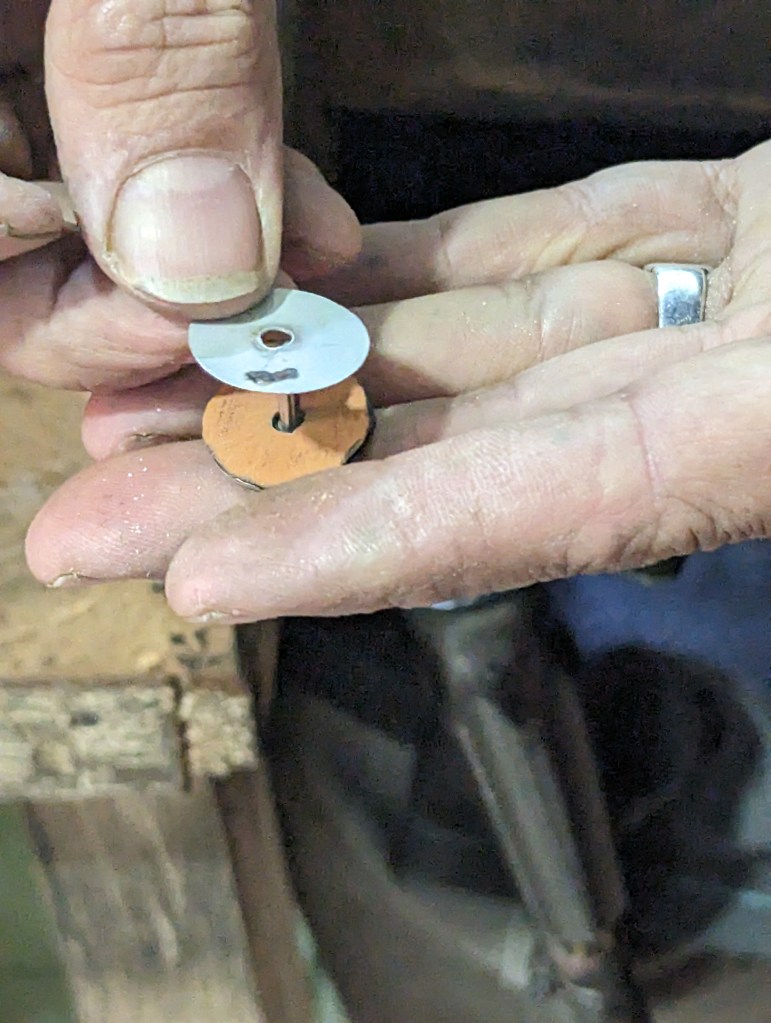
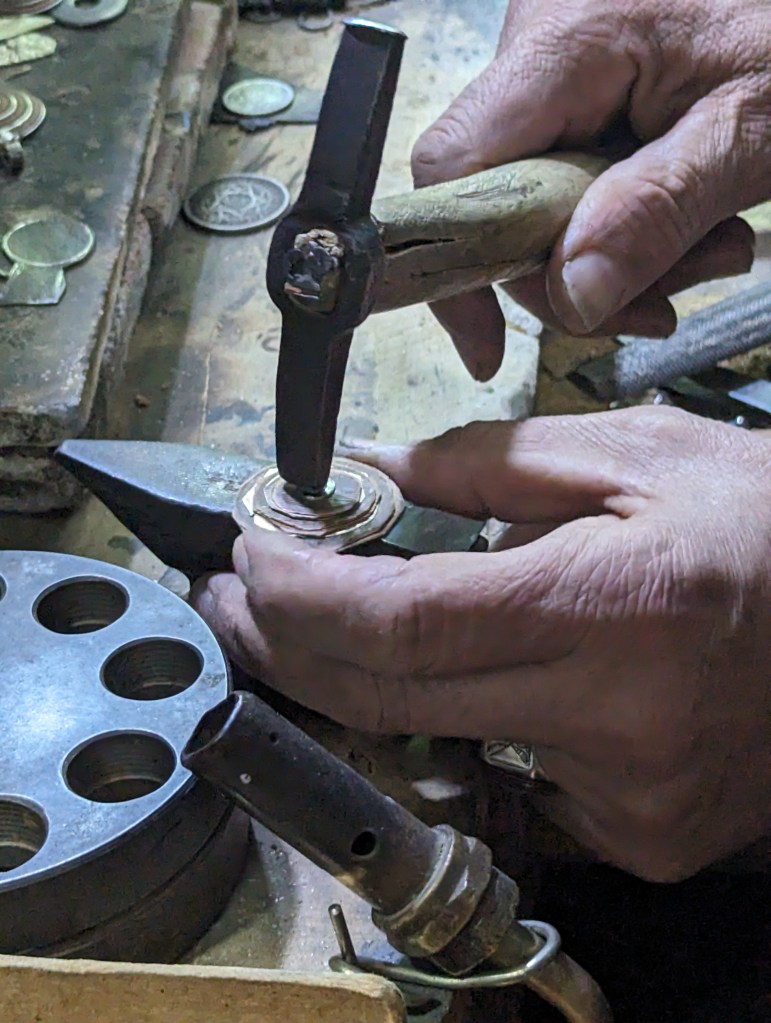
Then he files them smooth.
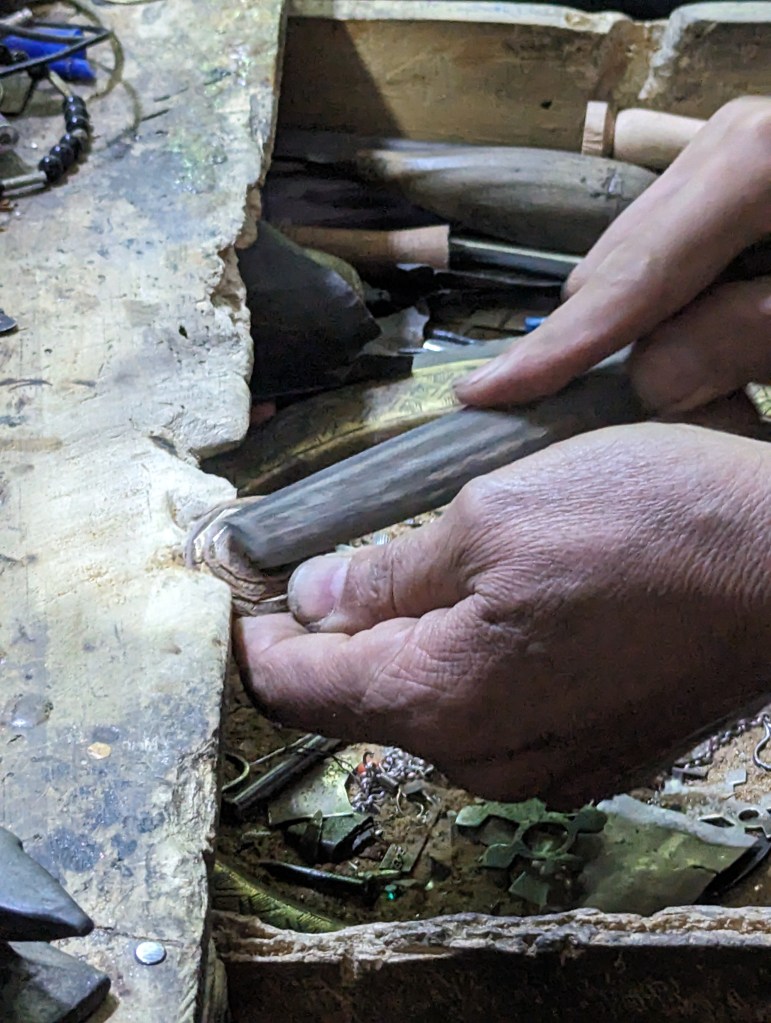
The finished products are beautiful.

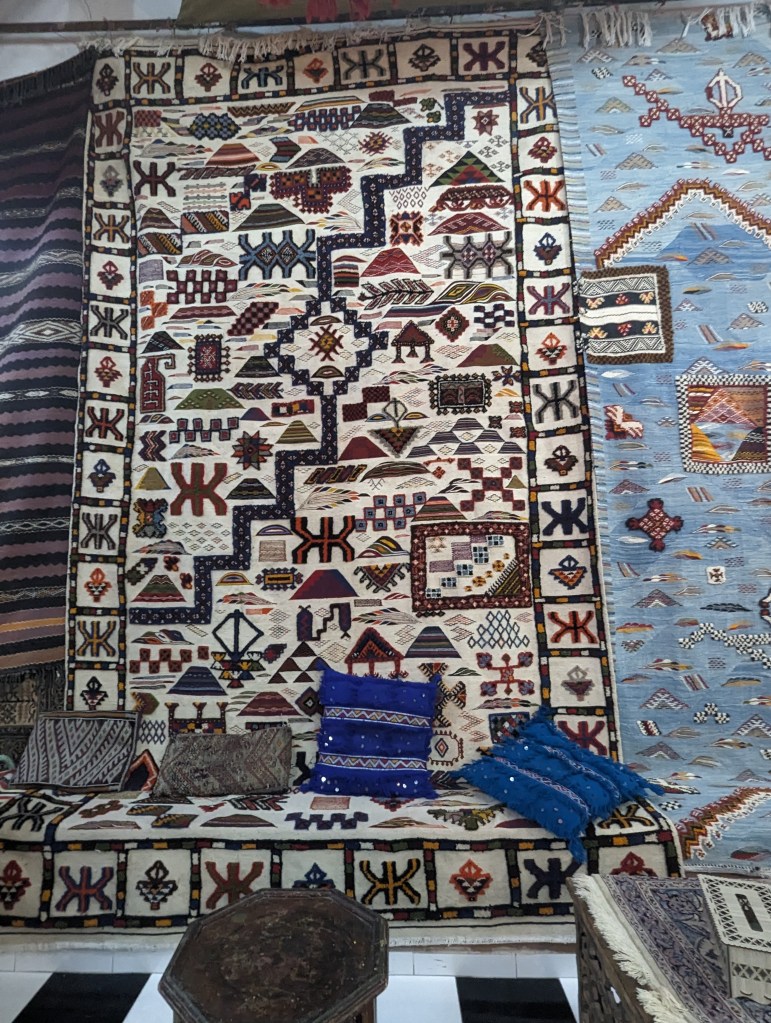
Another merchant Marouane introduced us to was one selling rugs, who taught me all about rug weaving. We had been to so many shops before, but never had anyone taken the time to explain all the differences. For starters, rugs woven by men are usually on a horizontal loom and tend to be thinner, more flexible than those woven on vertical looms by women. Remember the vertical loom in the home of the nomads v the horizontal loom in the shop in Tangier. In addition to regular weaving, there are techniques involving embroidering directly into the weaving. This can be done on only one side or on both, making the rug reversible. And the fourth technique is that of tying knots into the weave on one side. These rugs are fluffy on one side and like other woven rugs on the other. The fluffy sides are placed up in the winter for warmth, then turned over in the summer. While turned over in the summer, the weave loosens making them easier to clean. Historically the different techniques have been used by different tribes. The rug below shows all 4 of the techniques on one rug.
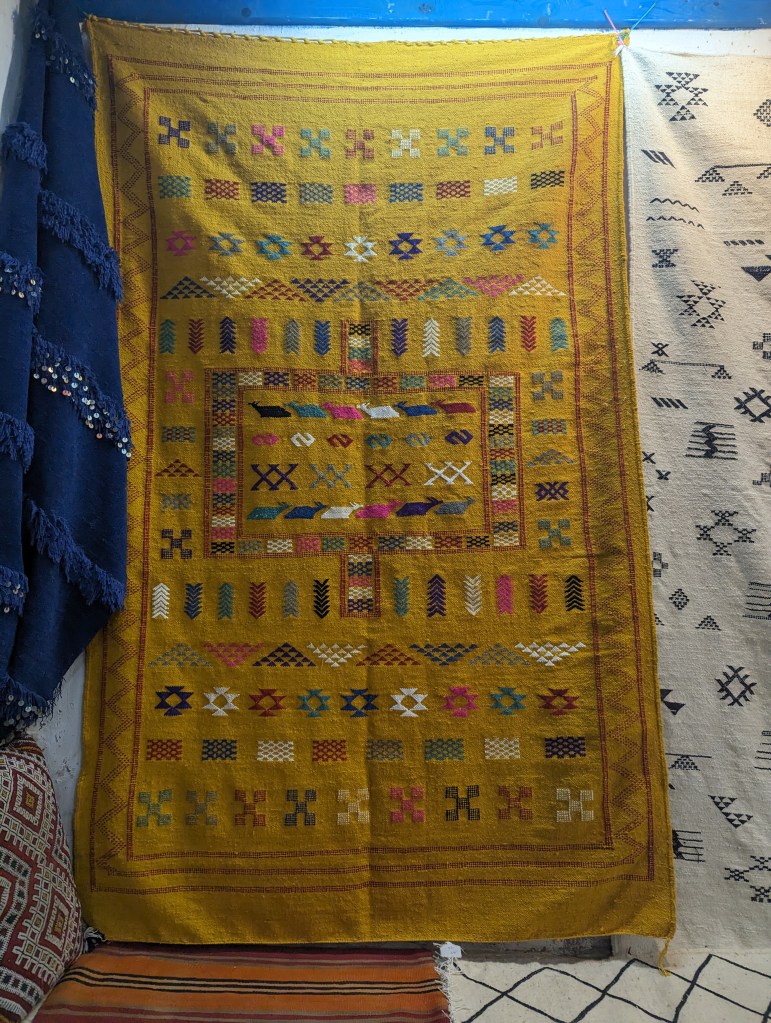
He also showed me a wedding rug which is made by the bride-to-be for her husband to show her personality (presumably they have never met) and what she expects in the marriage. The kasbah in the center represents their future home with entrances on both sides representing the 2 families from which they come. The kasbah contains goats representing their future prosperity.
We had a nice long lunch with Marouane who taught us a lot about the culture in the south of Morocco and how it differs from the north. In the south, a woman is not allowed to spend the night away from her home, not even at the home of a girl friend. A woman cannot check into a hotel by herself. A couple can be dragged into the police station for standing too close or touching in public. Once in the police station, if the girl’s father insists for the sake of her honor, they can be forced to marry on the spot. Marouane, who is Berber, says this is because of the strictness of Islam but is not the custom of the Berbers. He told us a story of a couple from his Berber village that were dragged into the police station. Many of the village Berbers went to the police station and made a racket protesting until the couple was released.
After lunch, we rode the horse drawn carriage back to the hotel, where I was able to get a picture in the daylight.
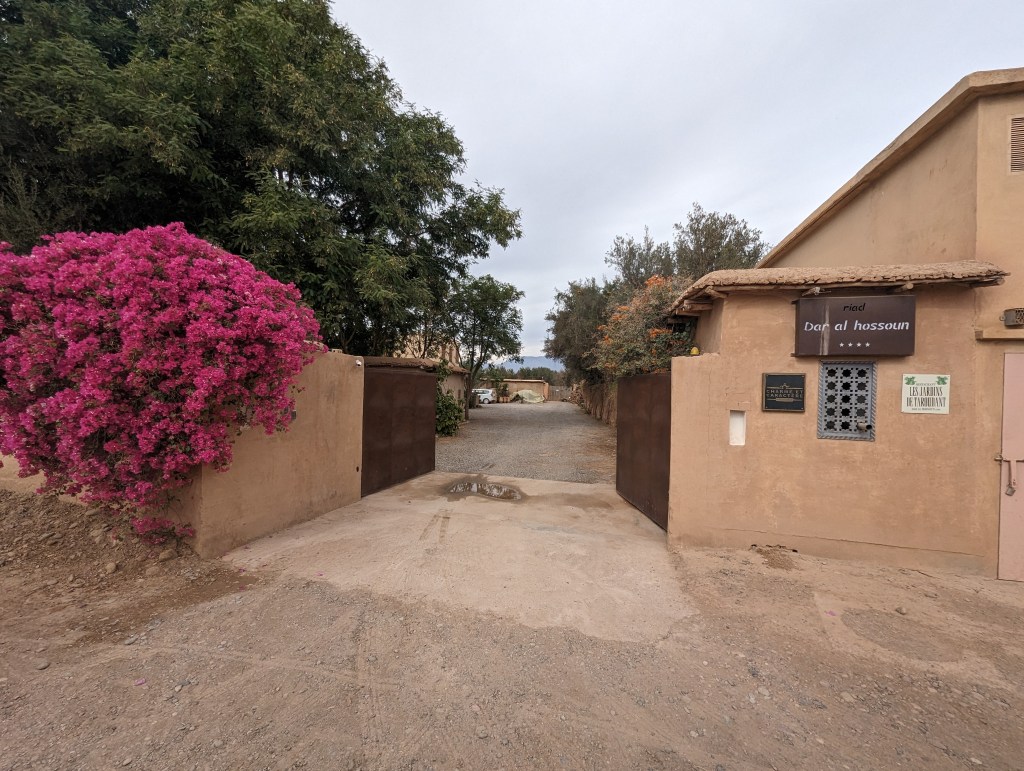
There was a peacock in the garden.

The place was really lovely.
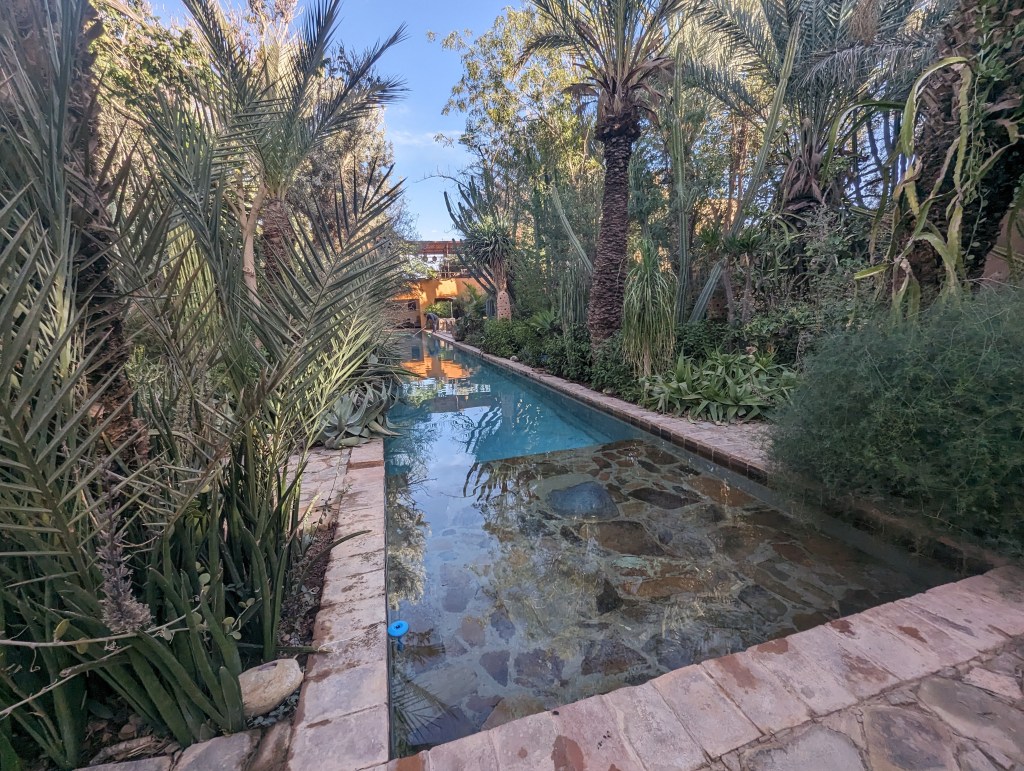
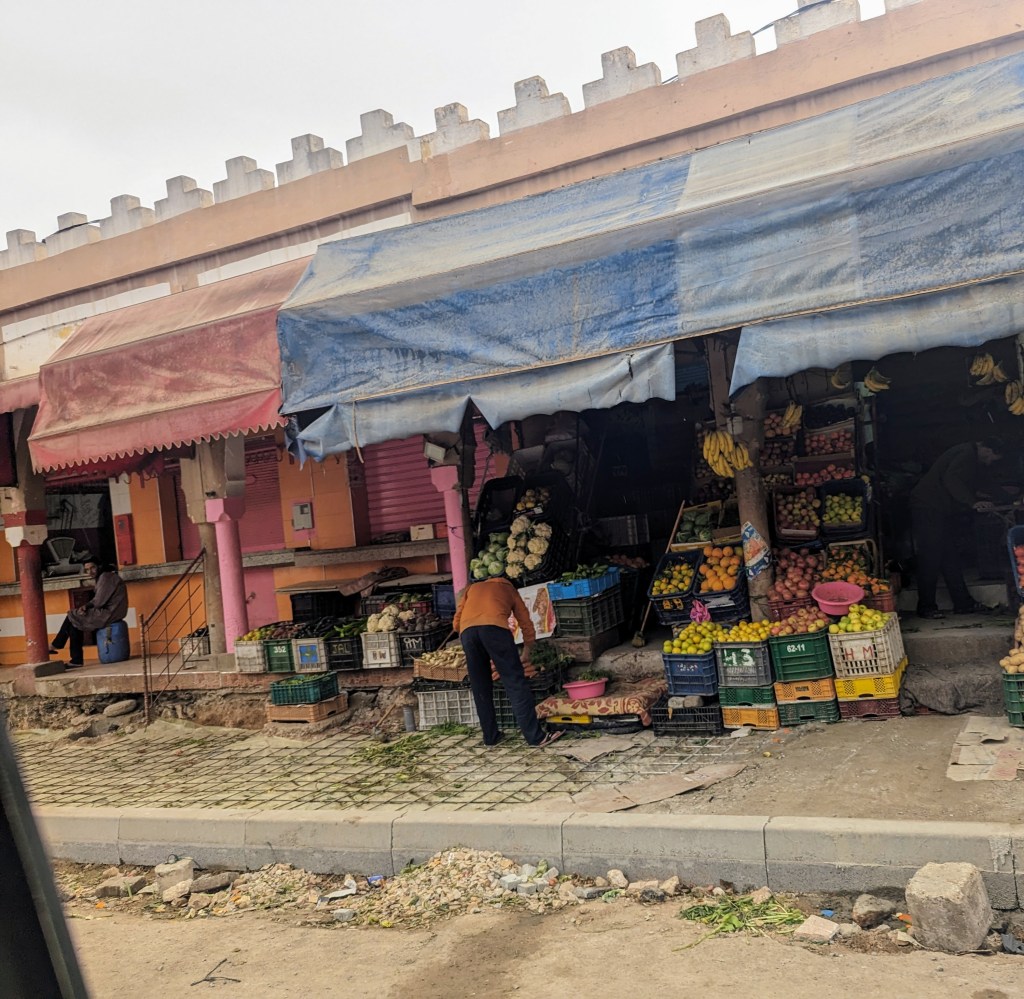
In the morning it was time to move on again. Kamal was particularly enjoying this part of the trip. Despite having worked for JBT for over 12 years, he had never been to Taroudant before, which he had enjoyed exploring while we were guided by Marouane the prior day. The drive now through Tiznit and to Mirleft were all also new to him. We stopped in the town of Tiznit which was in the process of undergoing an entirely new sidewalk construction, so the place was a bit torn up.
We made our way to the Blue Springs which was the source of a khattara system previously.
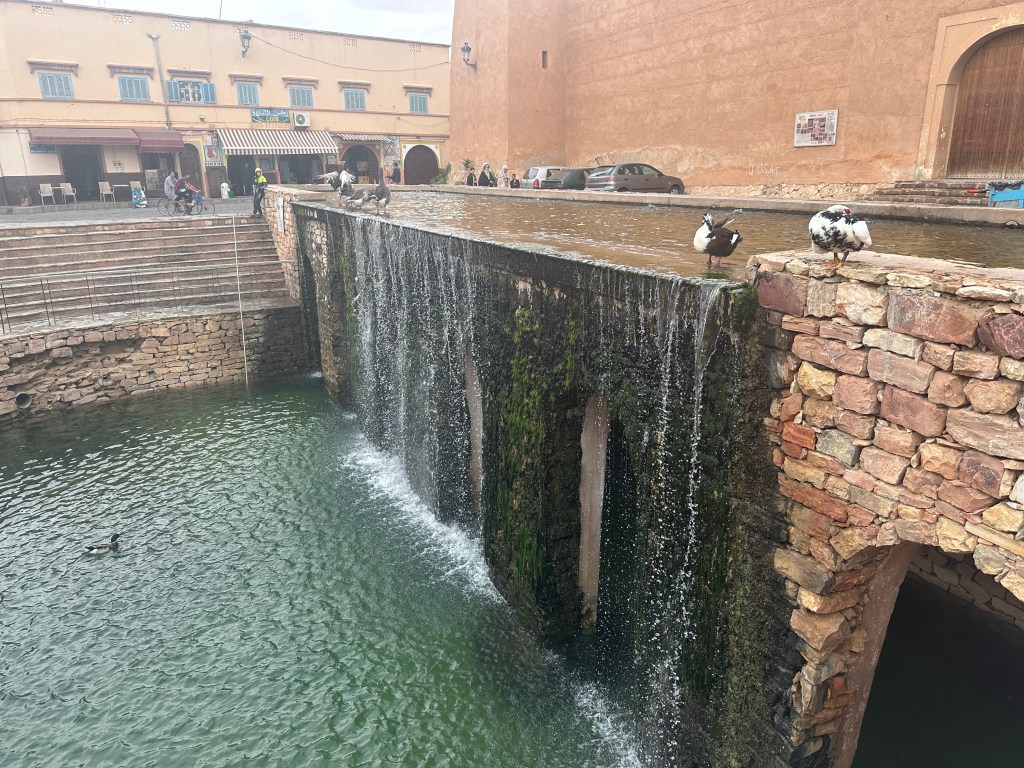
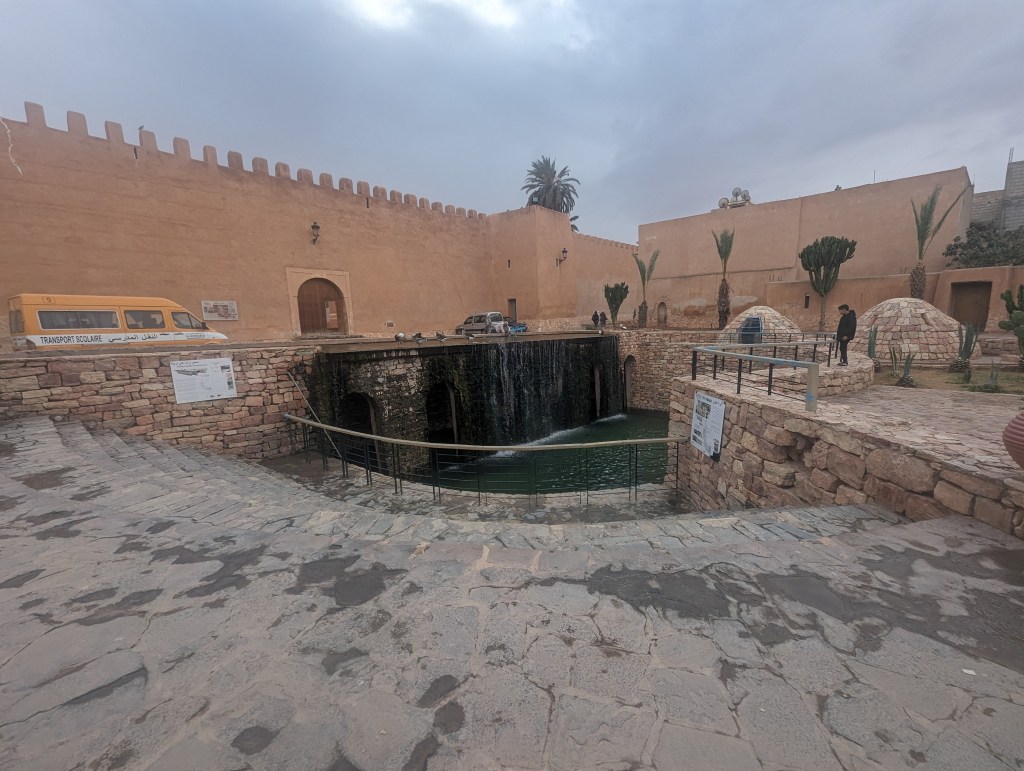
Beside the springs sits the Kasbah Aghenaj, built in 1810 strategically next to the water source. The kasbah is currently a cultural heritage museum, closed because it was Friday afternoon.
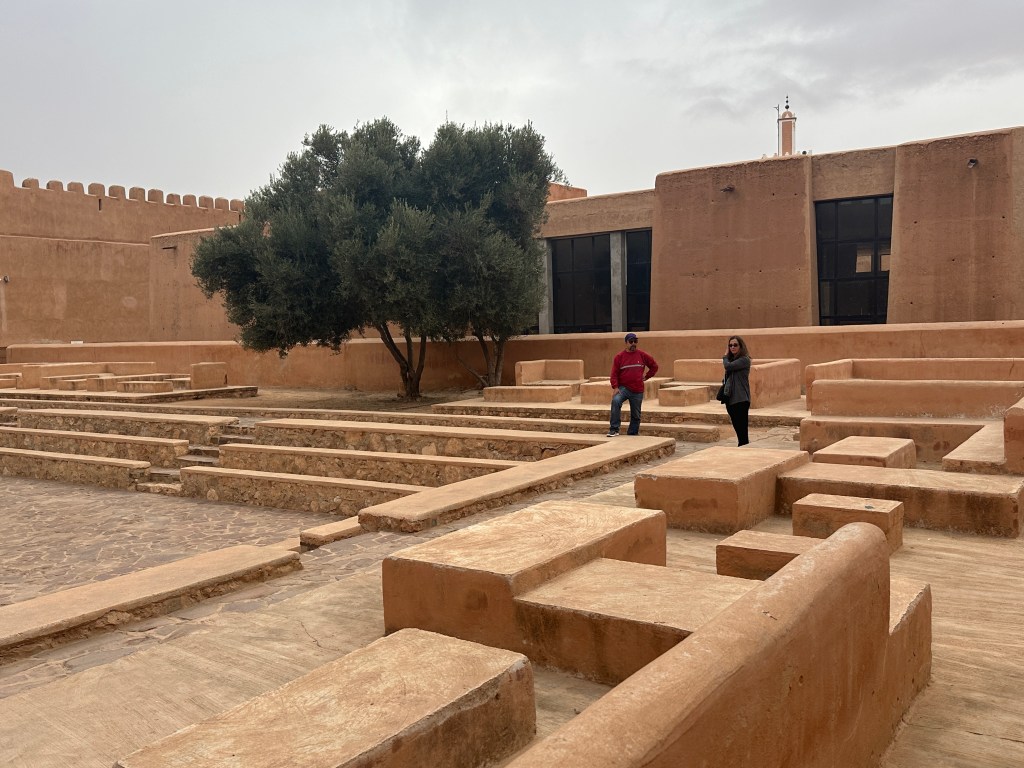
It had some beautifully carved doors.

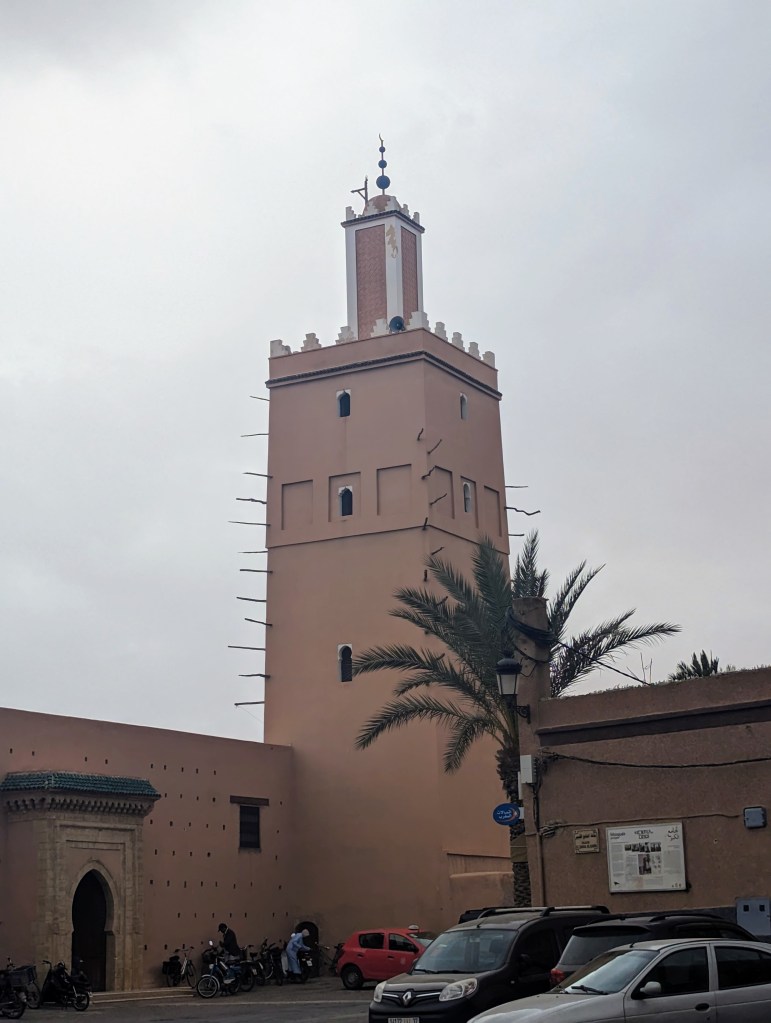
Outside the kasbah was the mosque, which was filling for Friday afternoon prayers. The minaret had branches sticking out from it on all sides which Kamal said he had never seen before and could not even venture a guess as to their purpose.
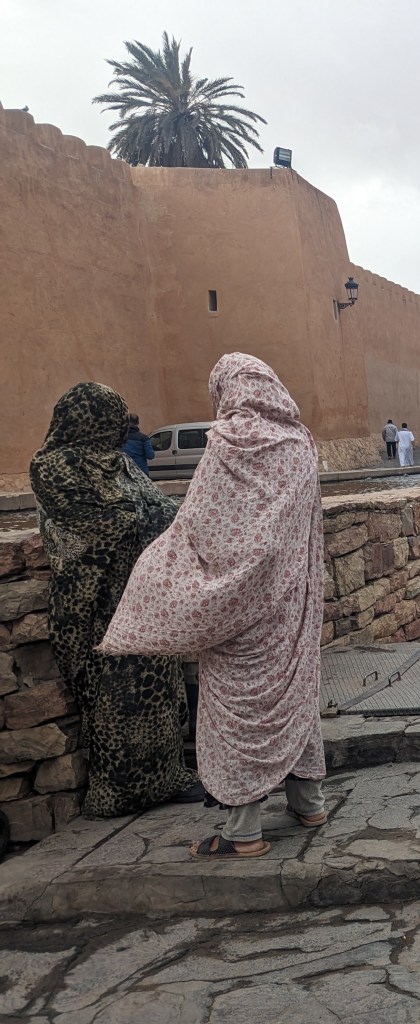
One thing Kamal did point out was how colorful the melhfas worn by the women are. In the north, the women tend to wear djellabas and, if they want to cover their face, a scarf or hijab. Very few women in Morocco wear the burkas common in other muslim countries. The djellabas of the north are usually subdued colors. Here in the south the melhfas are a long piece of cloth wrapped around the body and include the head. Most are brightly colored and/or patterned.
As mentioned previously, Morocco has been suffering a serious drought. In fact, it had not rained a drop in the over 3 weeks since we had arrived. When we got in the car that morning, Kamal told us that the king had declared that the entire country should devote their Friday prayers for rain. We looked at the forecast, and indeed rain was in the forecast for the afternoon. As we headed to lunch in Tiznit, while the mosques were full, the skies opened up, and it poured. We enjoyed a slightly soggy lunch in a cafe called A l’Ombre du Figuier, which translates from French as “The shade of the Fig.” We were mostly underneath. After lunch we continued our journey to Mirleft. We arrived in the late afternoon to a muddy entrance at our next hotel: Kasbah Tabelkoukt.
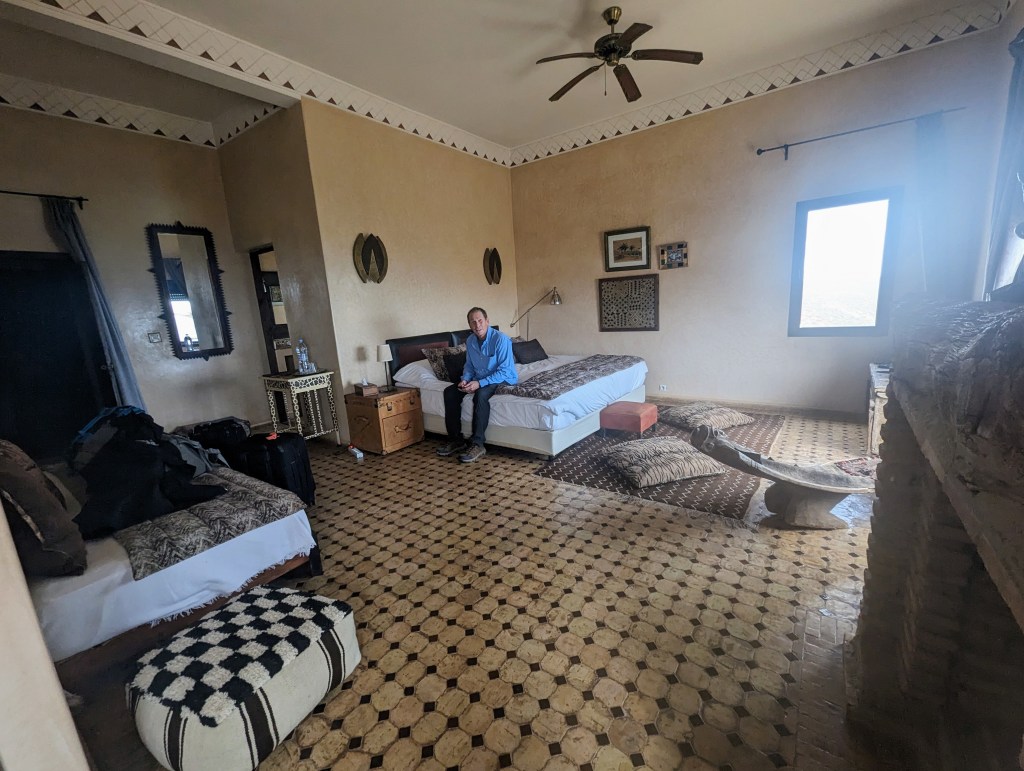
The hotel is run by a French woman who has created a beautiful garden setting overlooking a spectacular beach view, but alas, it was still raining.
The next day Kamal picked us up and we drove south along the coast. We stopped at Legzira Beach, which required a significant hike down.

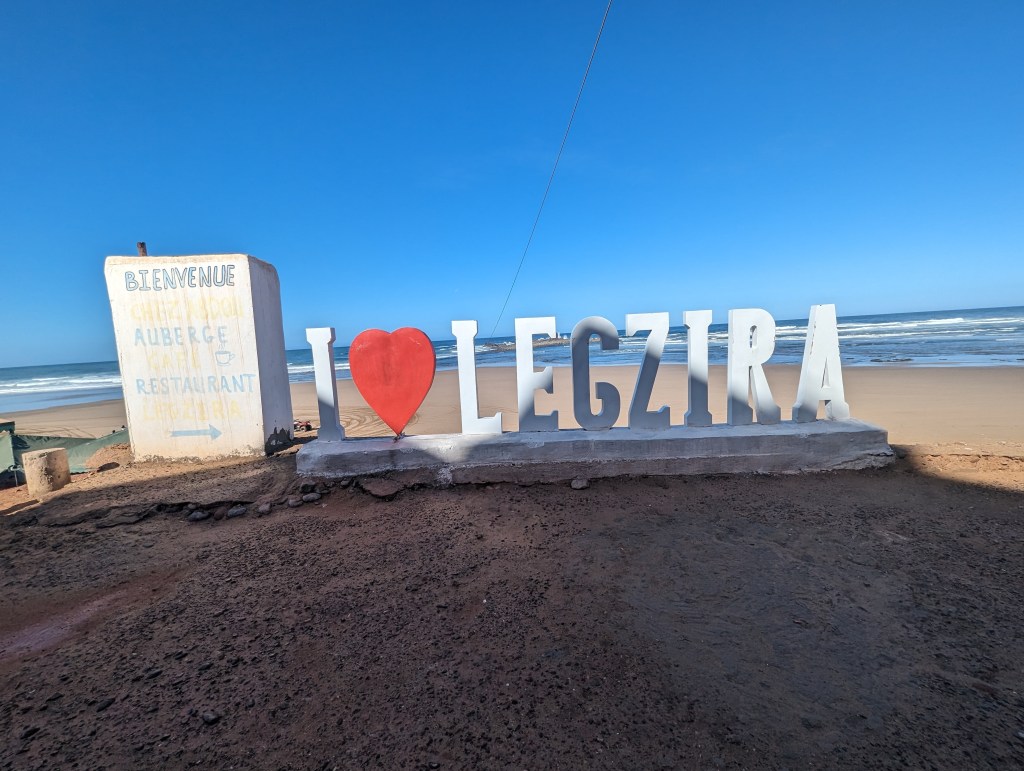
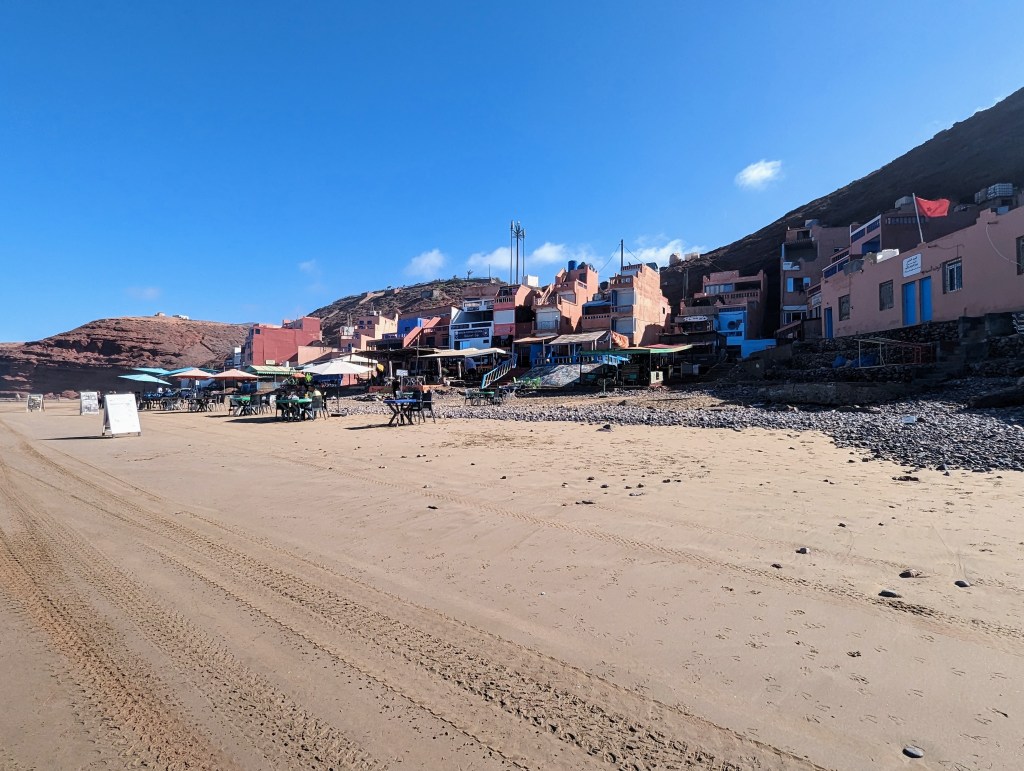
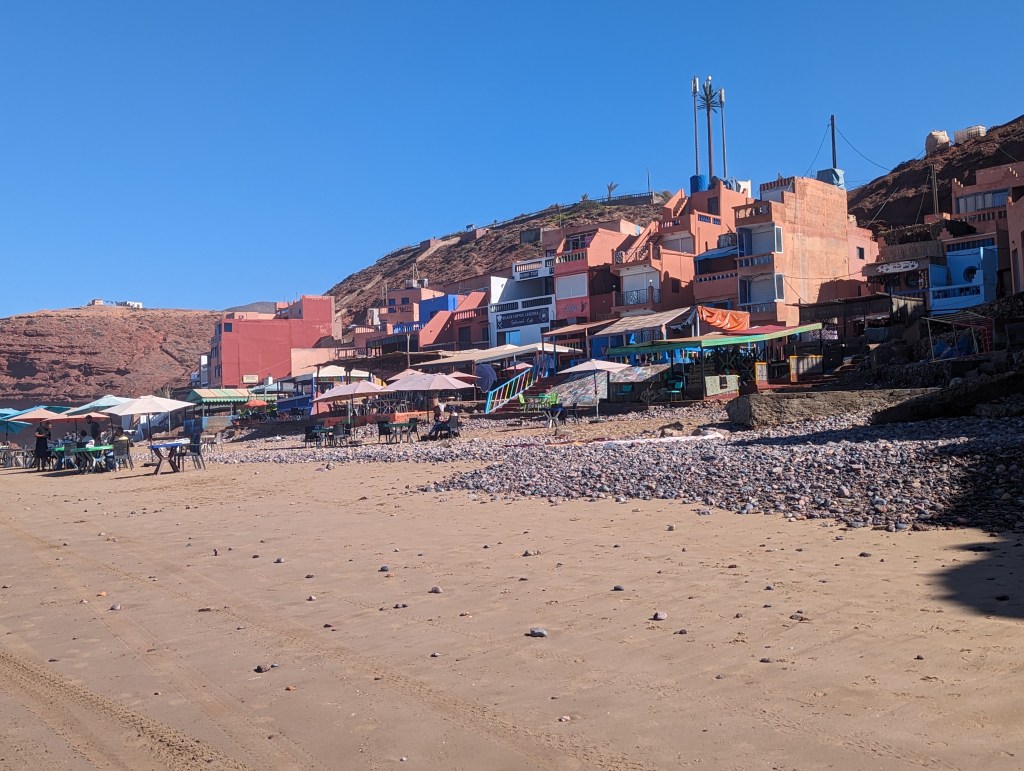
As we walked along the beach, Kamal pointed out the huge water tanks on top of the buildings, which he said indicated that the beach community does not have water and sewer systems.

It was a cute beach town.
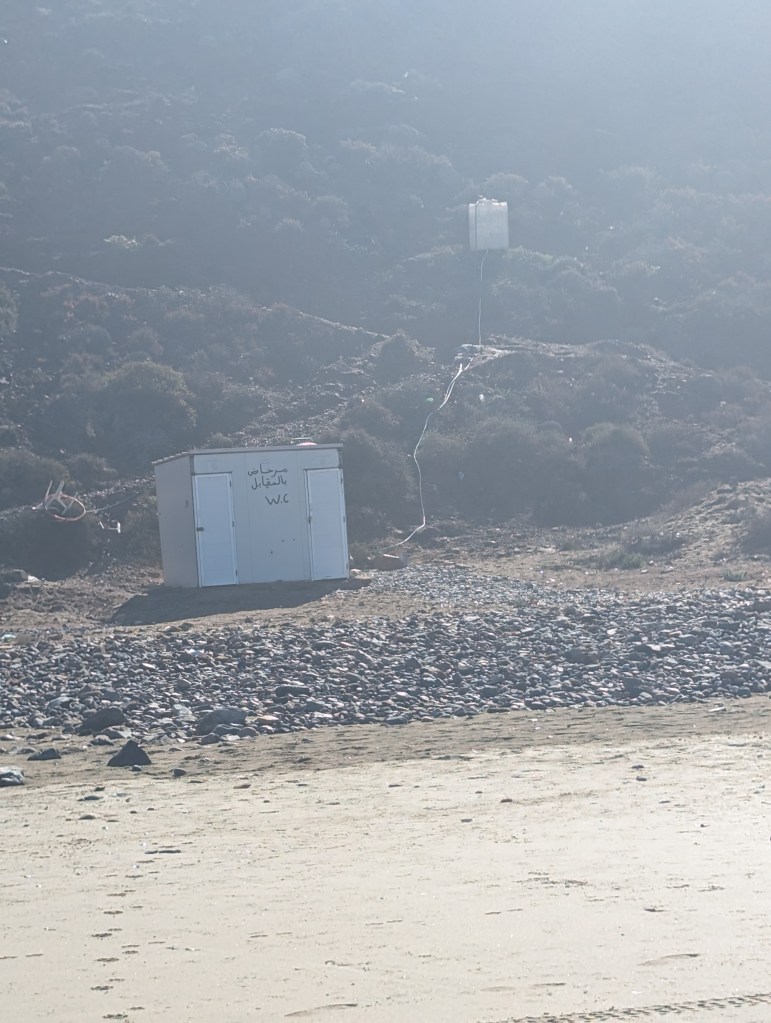
But the facilities were clearly separate and primitive.
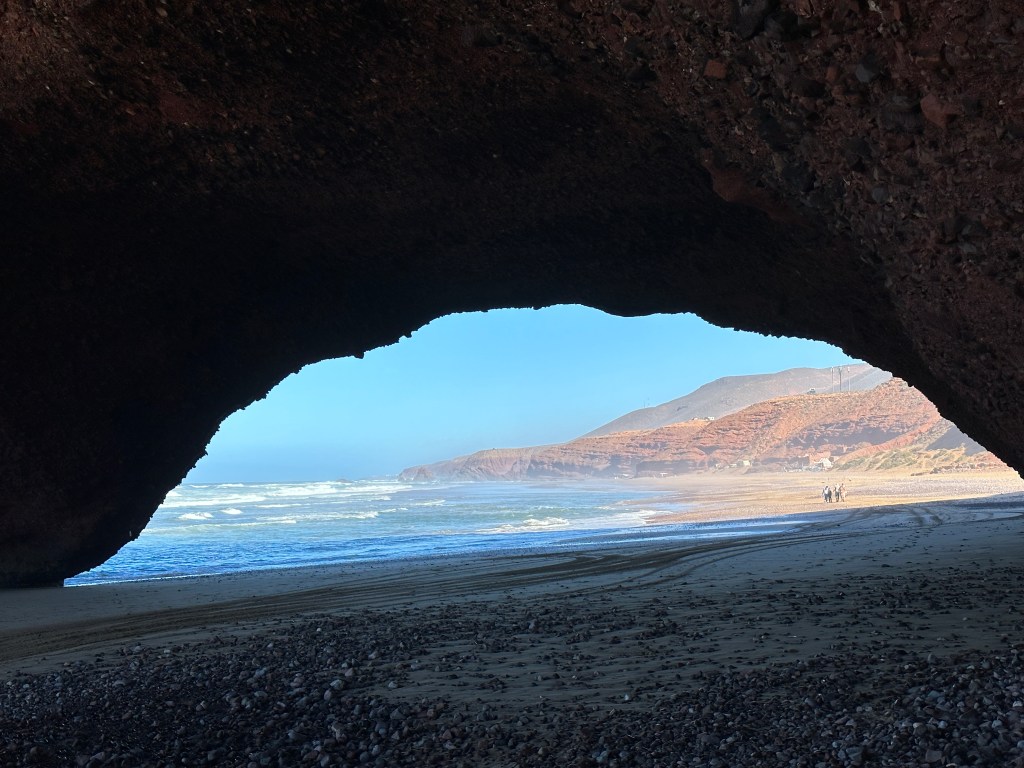
The beach is known for its natural arches. Apparently there used to be more, but some have collapsed over time. Kamal was very excited to see them having only ever seen them on postcards prior.
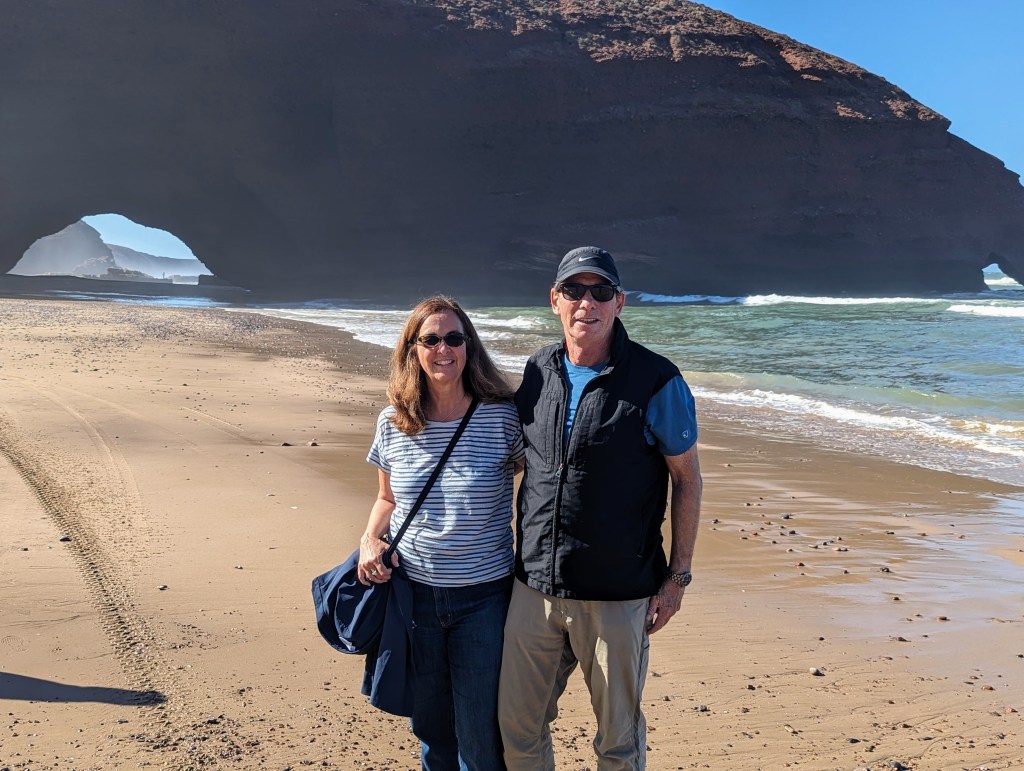
We walked through, took lots of pictures, then walked back.
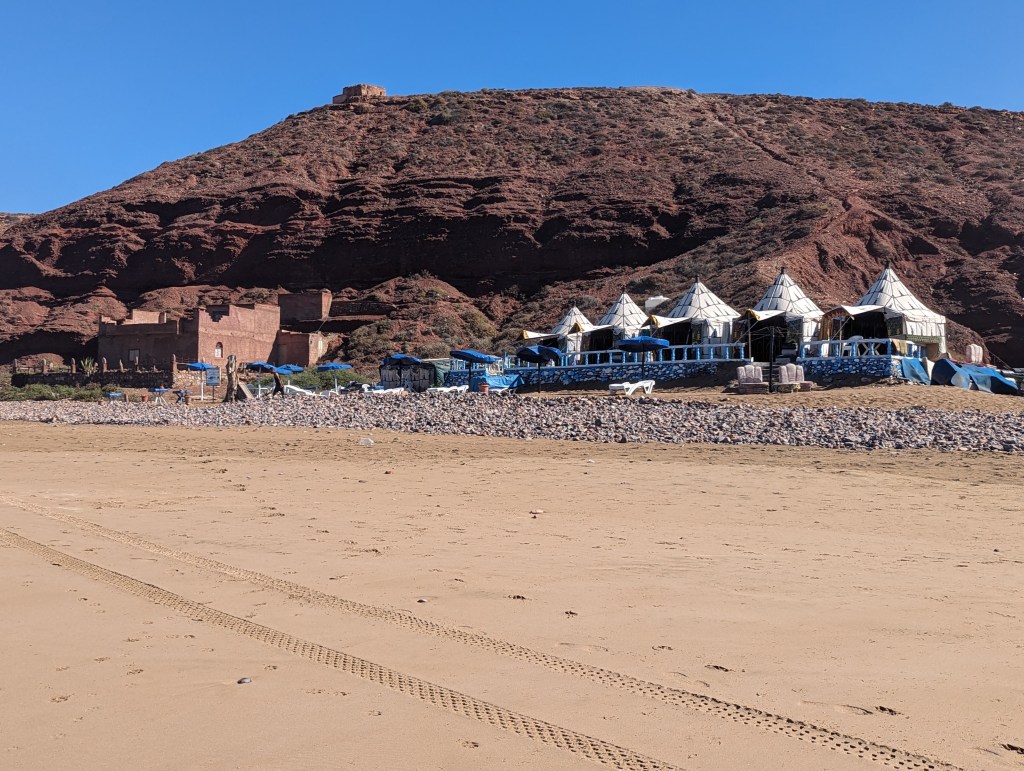
There are lots of different types of accomodations for the adventurous tourist.
Of note, there may not be running water, but there are cell towers and plenty of satellite dishes.
And then we made the long hike back to the car.
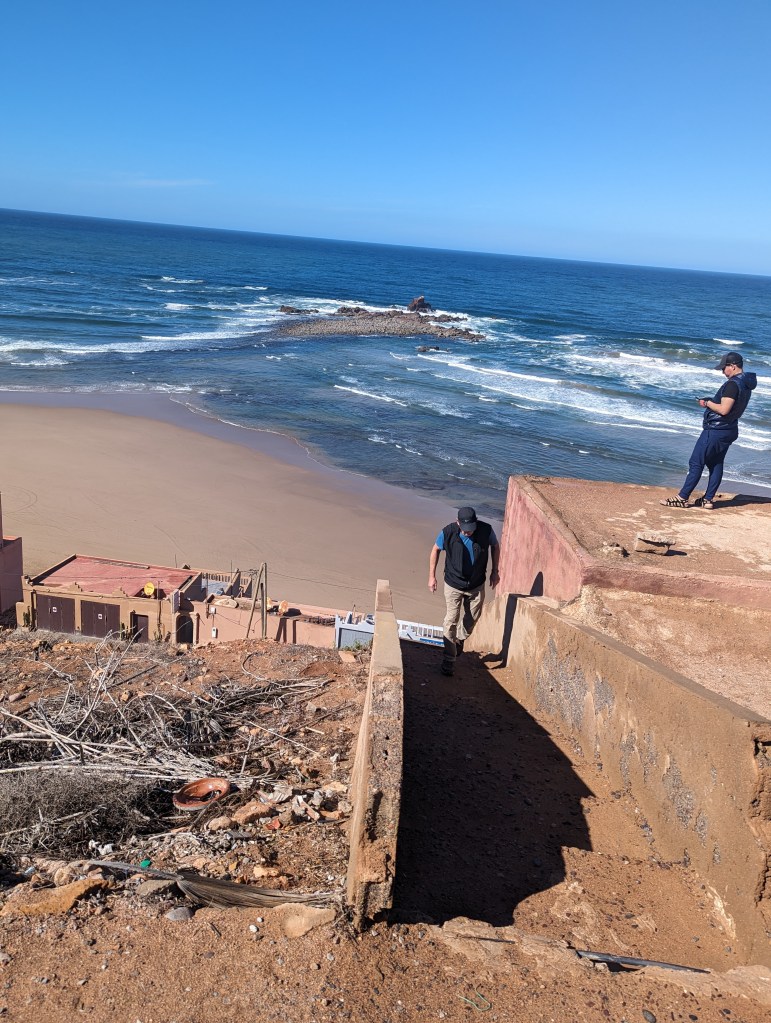
We got back in the car and drove further south to the town of Sidi Ifni, also new to Kamal. We explored together. It was market day. One side of the market is for all the types of home goods one could imagine. I was drawn to the stalls selling the colorful melhfas.
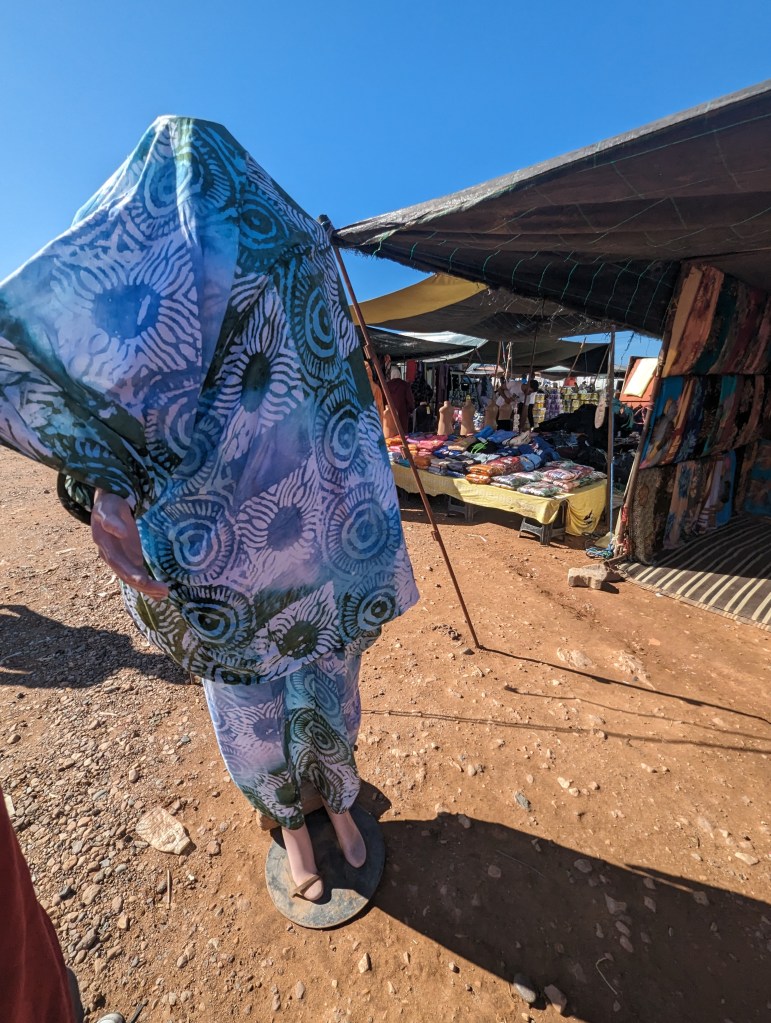

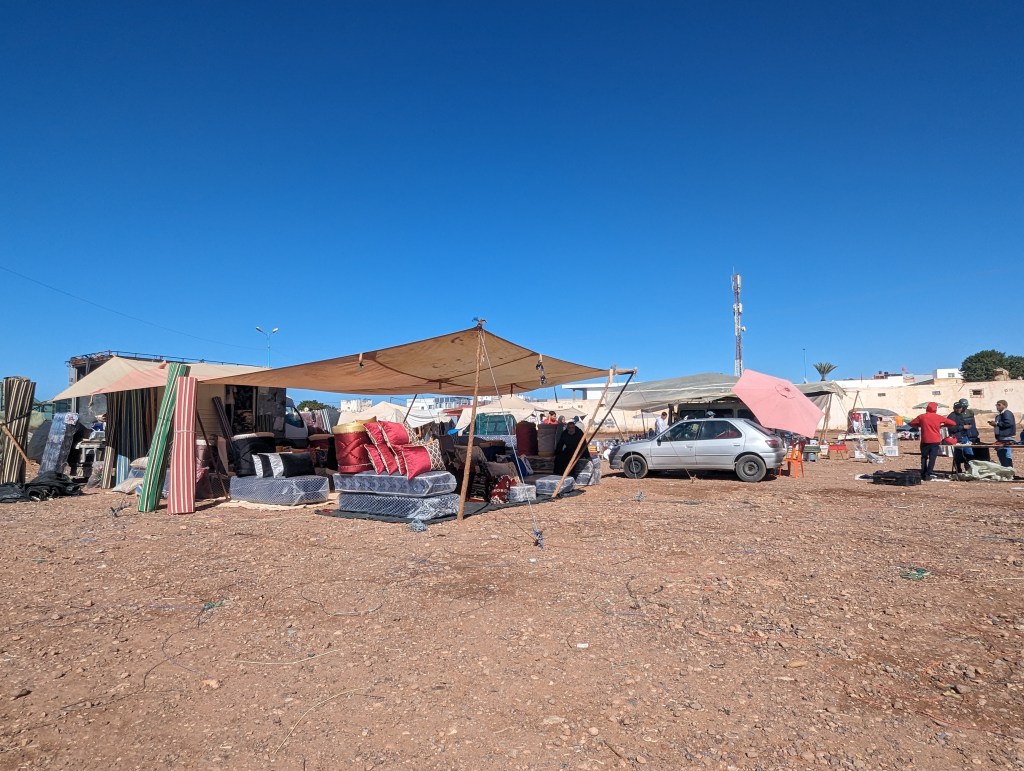
But the booths ranged from electronics to bedding
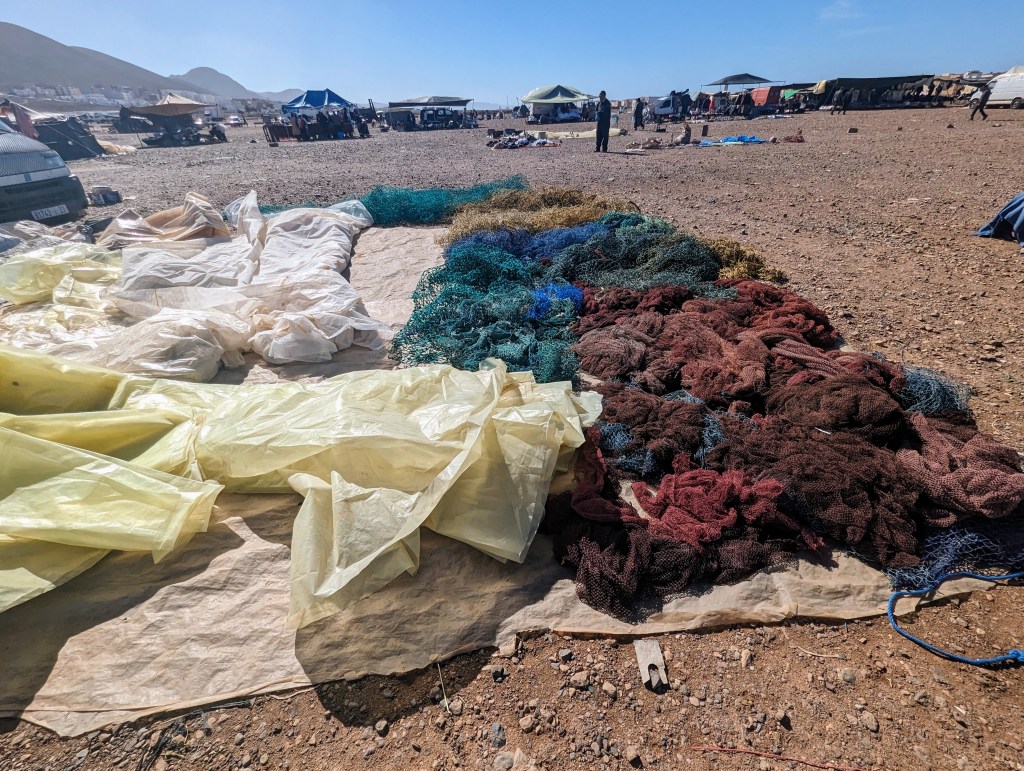
to fishing gear
On the other side of the market were all the fruits and veggies. I had never seen such quantities of bananas, and this was just one of many venders!
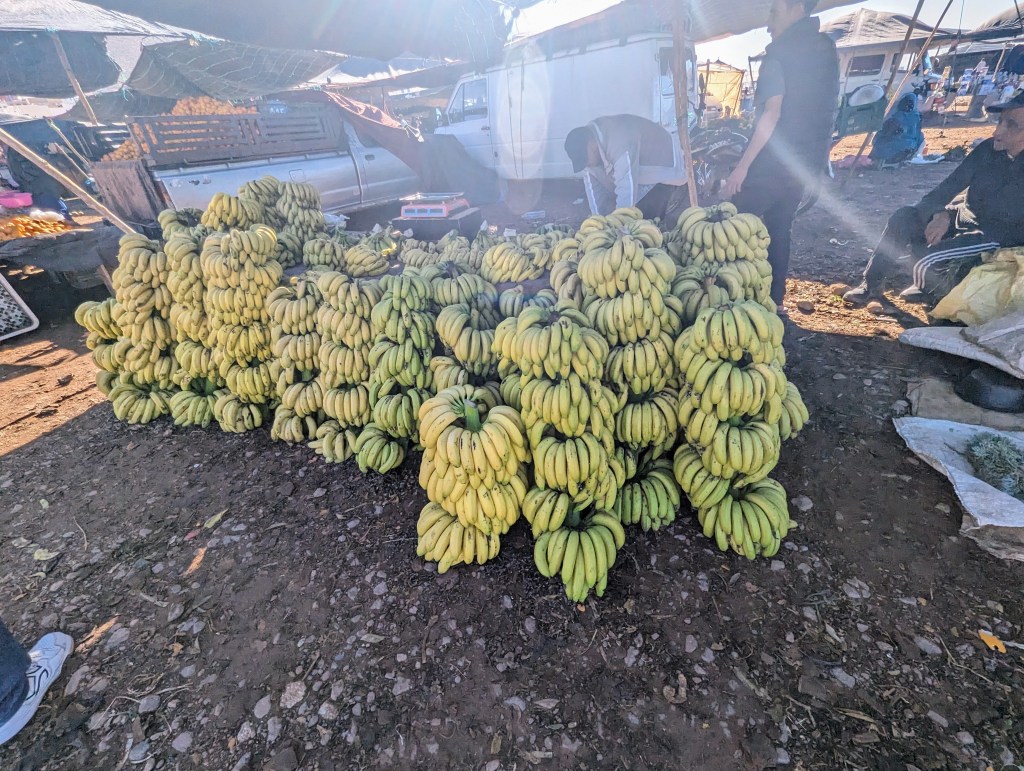
These stalls made our farmers’ markets at home look like children’s toy stores. Again, this one of many, many stands.

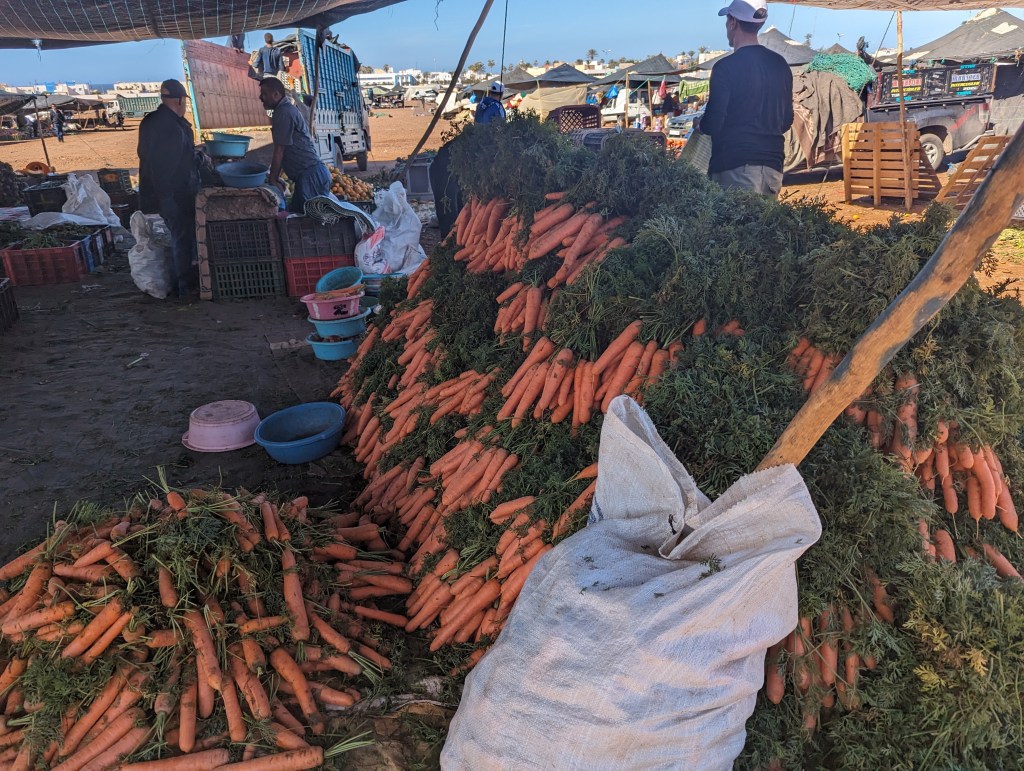
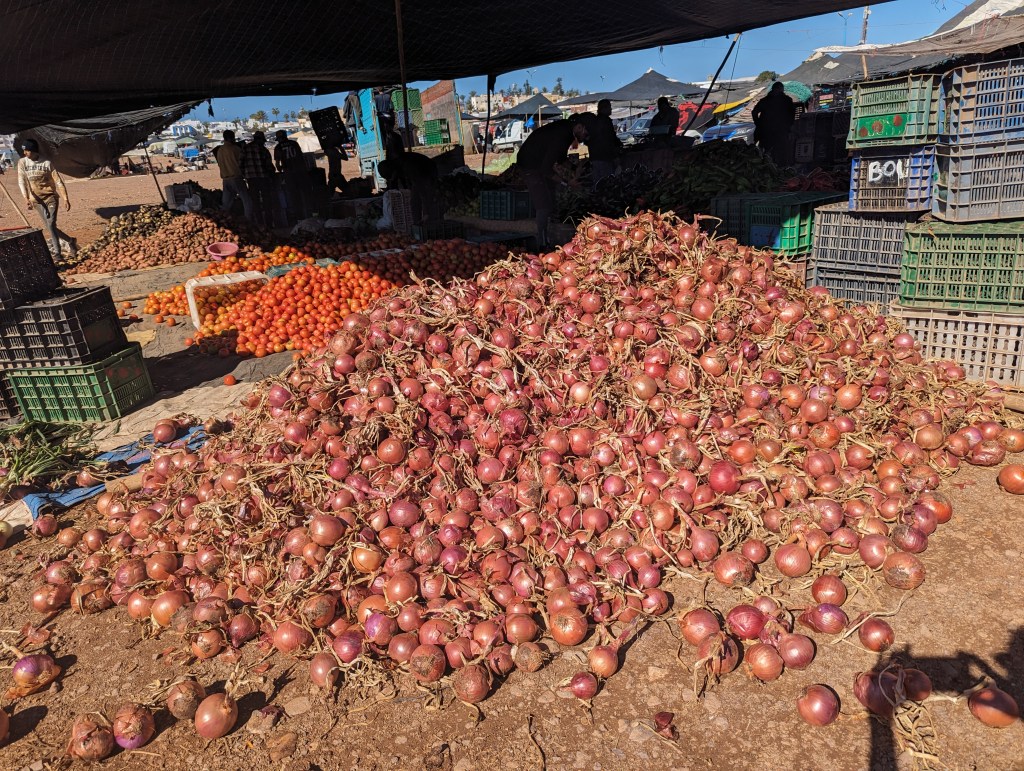
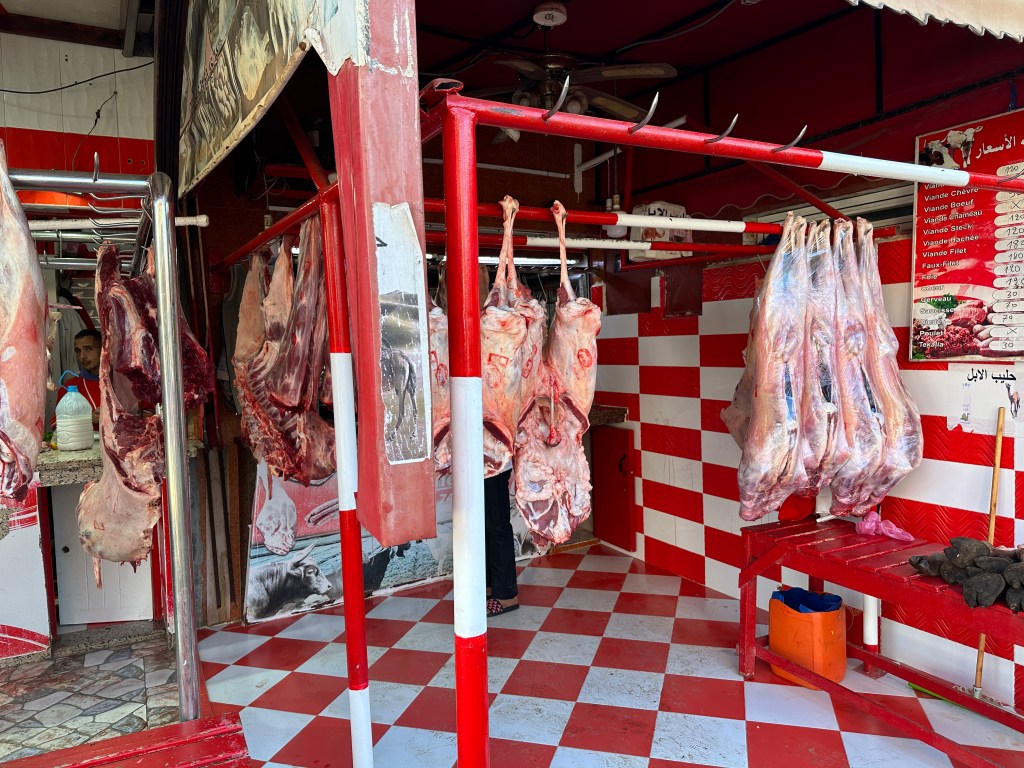
We bought some oranges, bananas, and pomegranates. With Kamal’s help, we decided to buy some nuts. He asked the man for 5 dh worth, 50 cents. The vendor used a weight to measure the amount and it was a real bargain.

Then it was back to the hotel for a gorgeous sunset from the terrace,

dinner, and sleep. The next day was pure R&R. We slept late, read, worked on this blog, and hiked down to our own beach for a long walk along it.
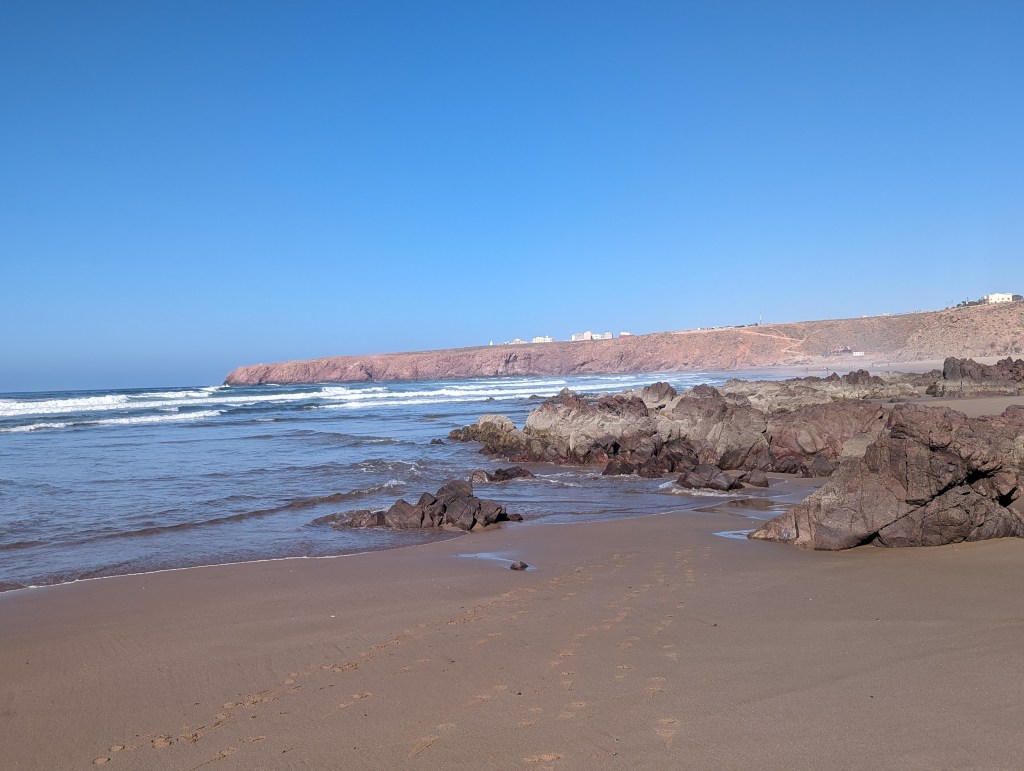
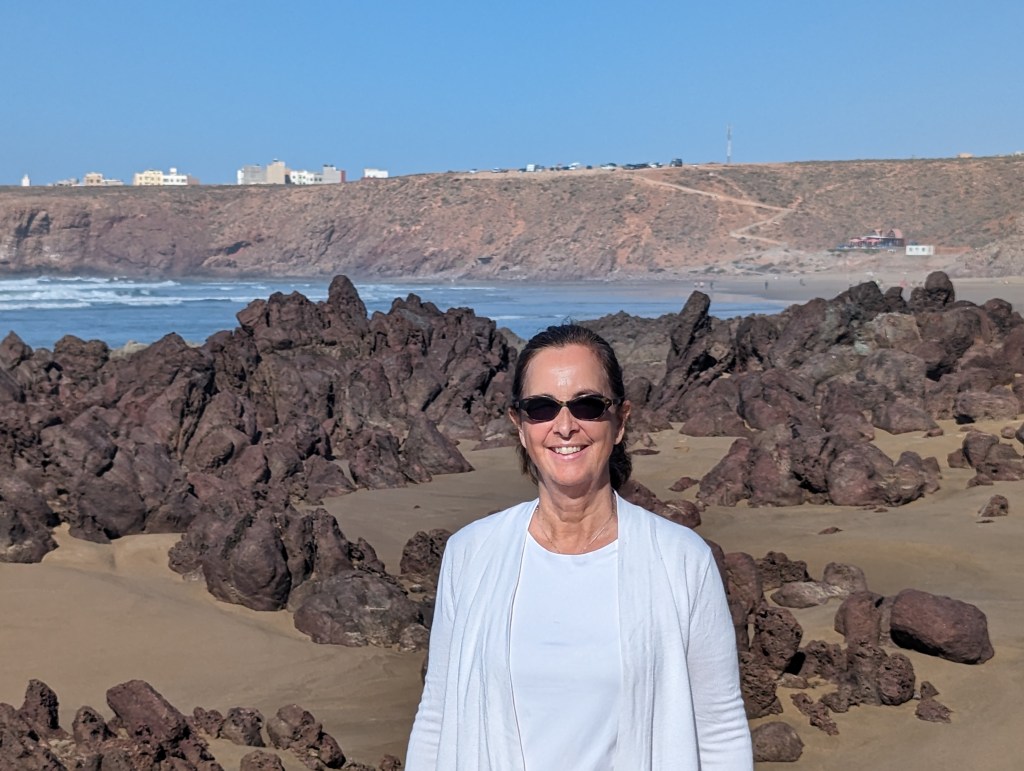
There were a bunch of guys playing soccer on the beach.

From down the beach, we were able to see our hotel on the cliff.
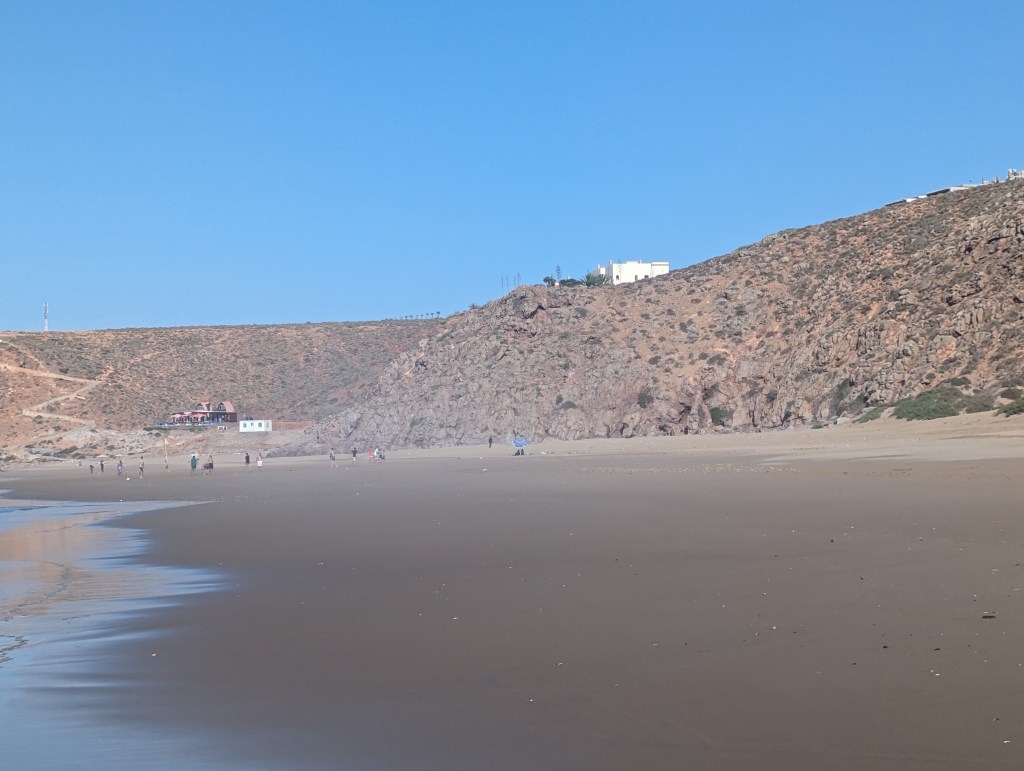
After climbing back up, this is the view of our hotel from the beach path.
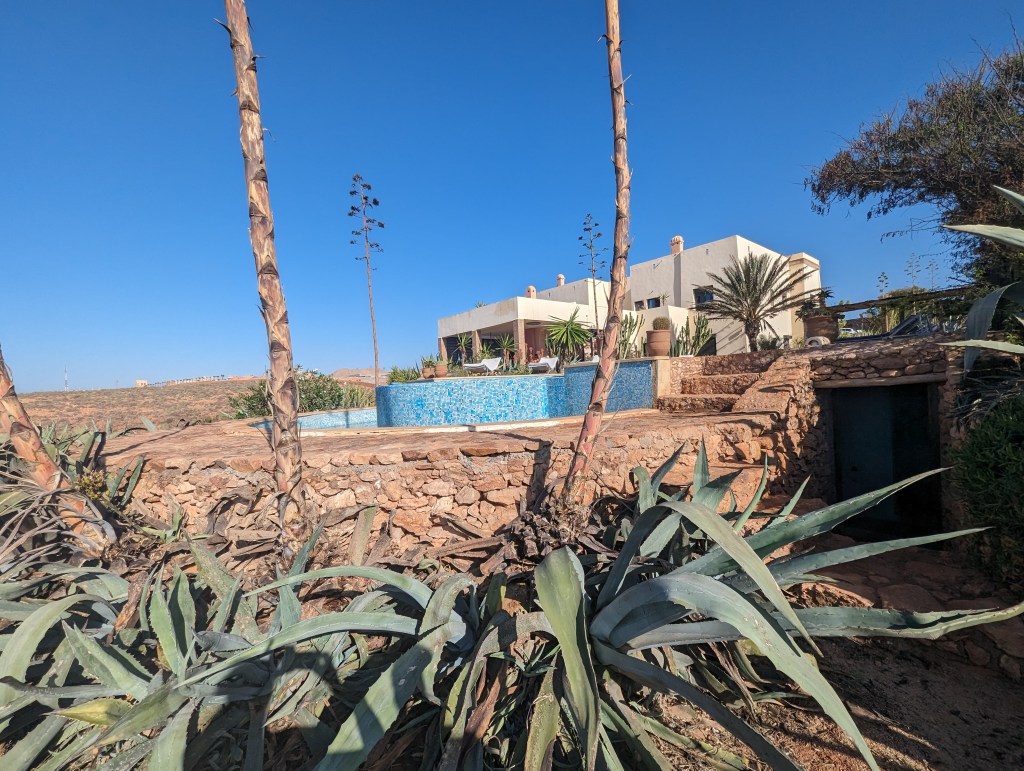
Then we hung out by the pool for a bit.
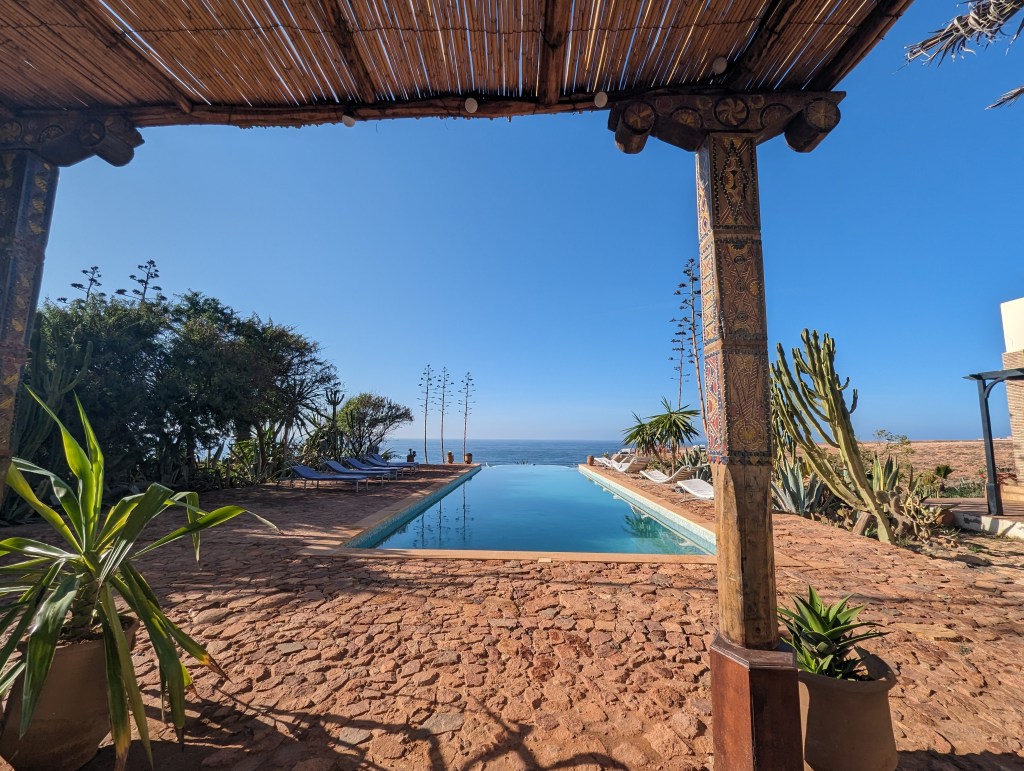
While I worked on the blog, Eric sent up the drone for some aerial views of us
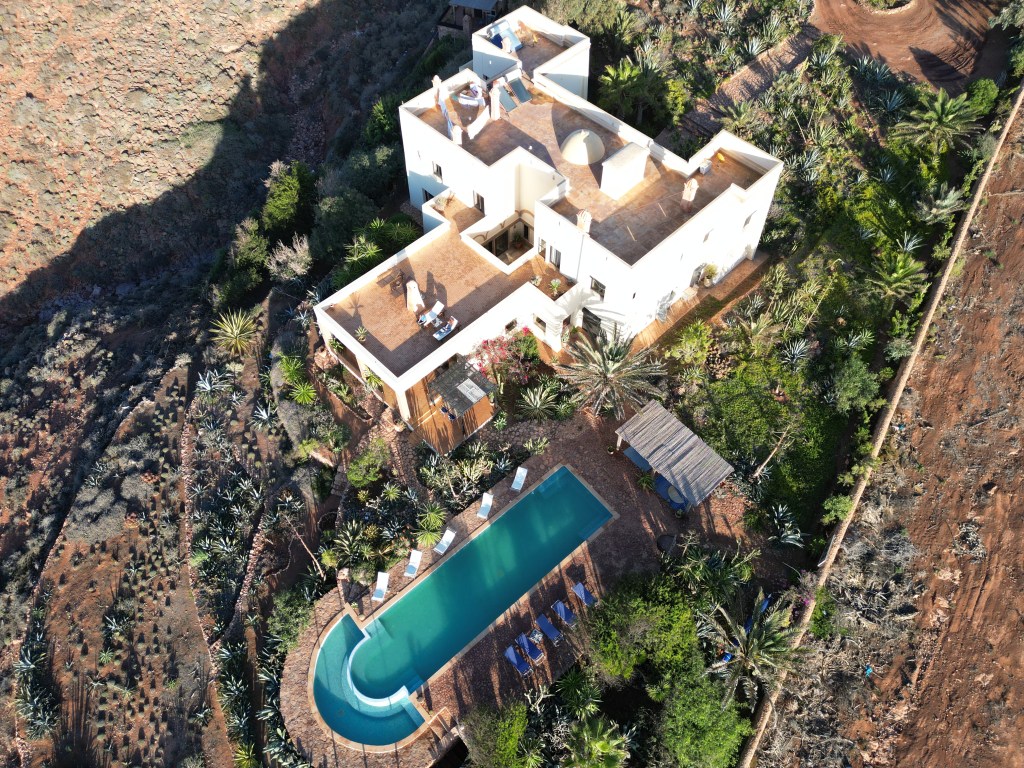
the gardens
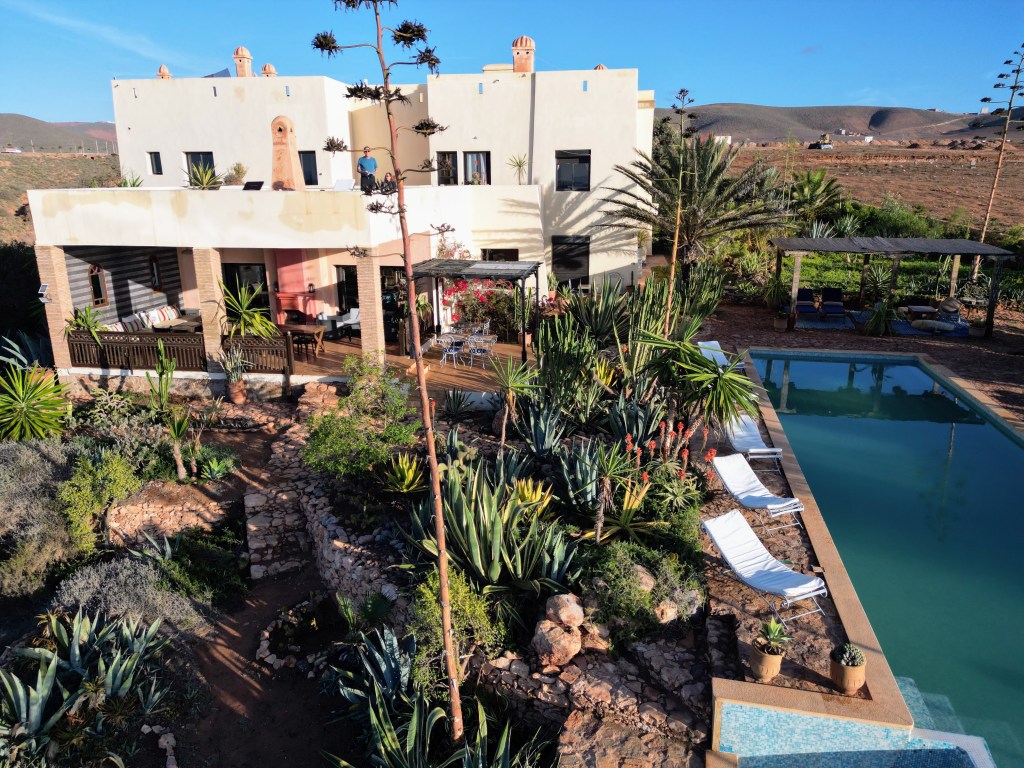
and a view of the front of the hotel

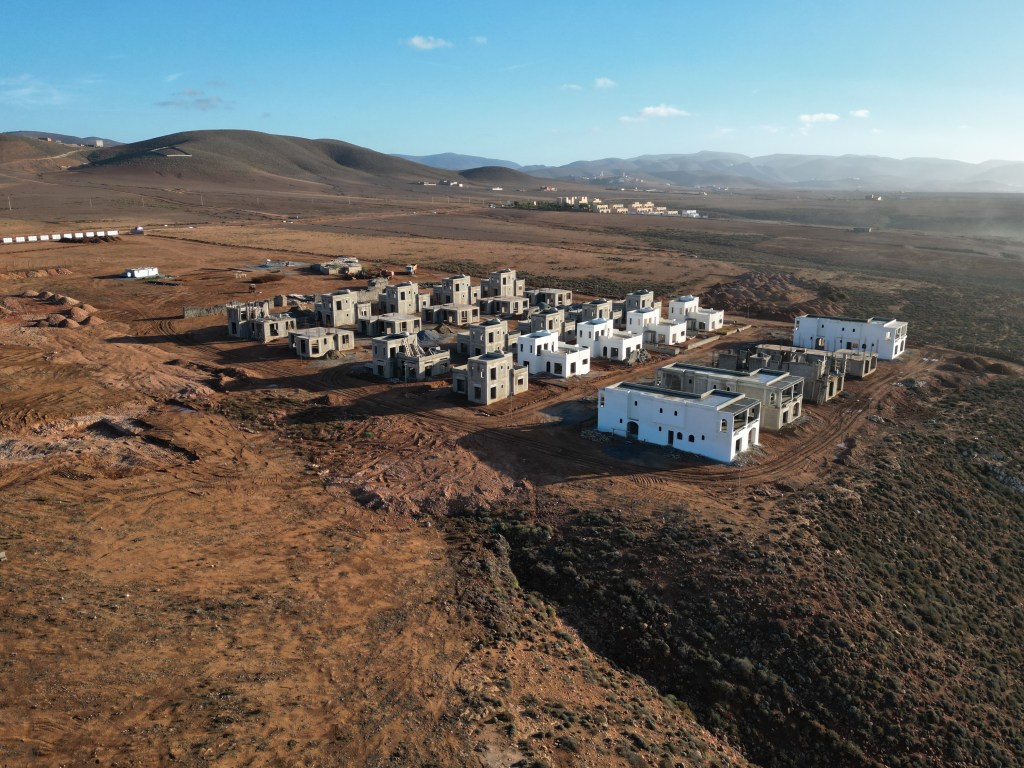
Next door is a large building project. There is so much construction going on all around Mirleft. As the Moroccan economy has prospered, and the planet has warmed, many are looking for second homes near the beach to get out of the ridiculously high summer temperatures.
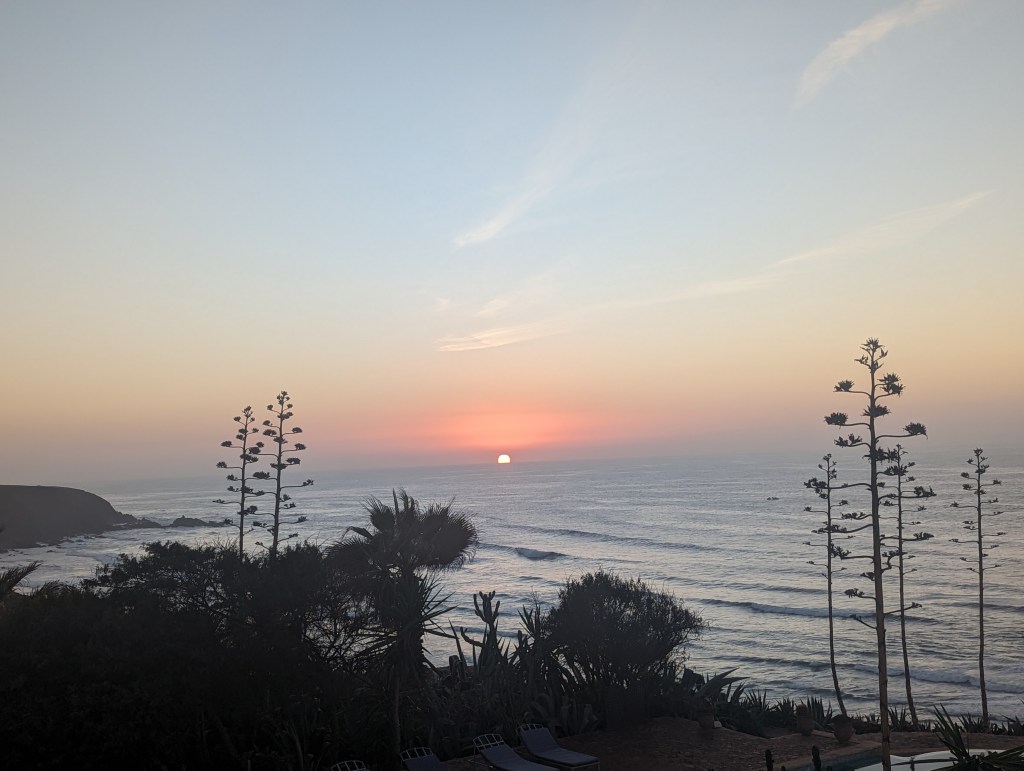
We enjoyed another sunset from our terrace.
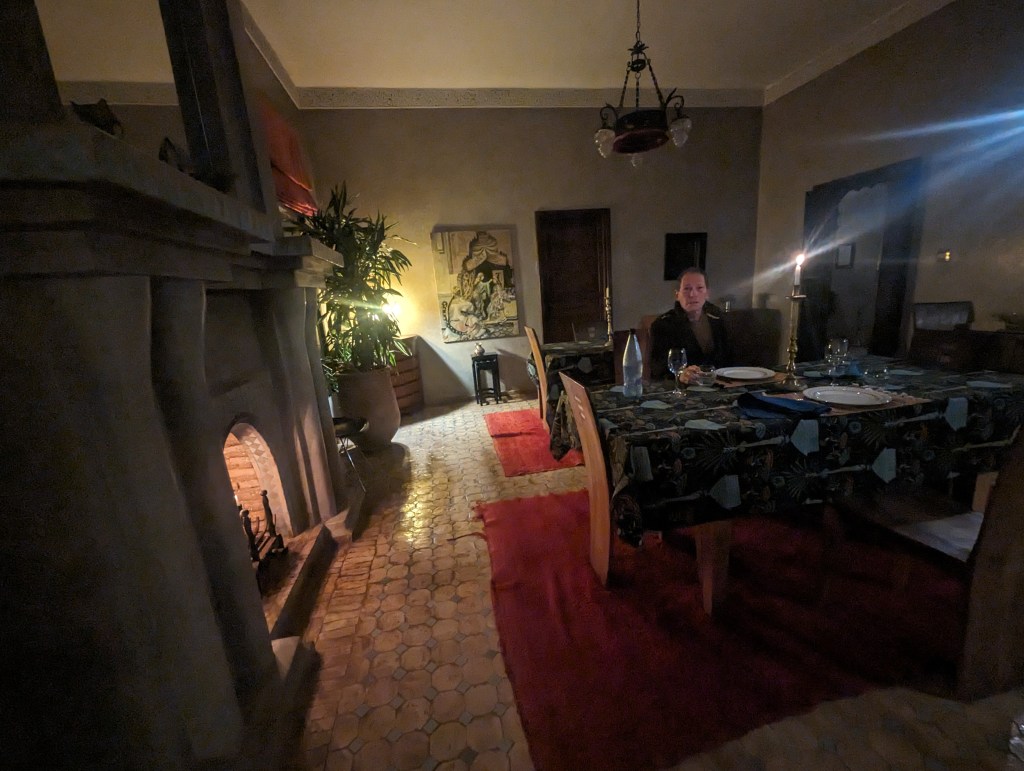
And a final delicious dinner prepared by the French chef.
Overall, we had a very relaxing day. The next morning we headed up the coast, still all new terrain for Kamal. We drove through the bustling beach town Agadir which looked a bit like Miami. We passed a McDonald’s. There are also KFCs and Pizza Huts scattered throughout Morocco. Kamal told us he once had a Pakistani-American muslim client who liked to stop at McDonald’s in Morocco because the meat here is halal which it is not in the US. This piqued our curiosity to compare McDonald’s here to home. So we stopped for lunch.
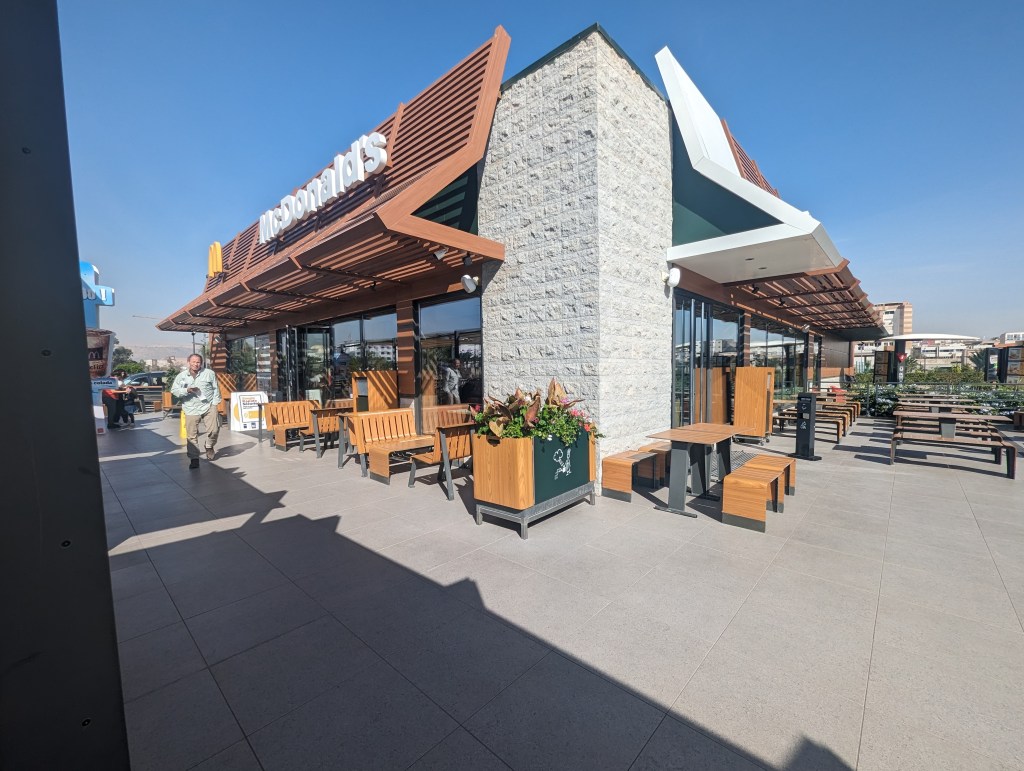
Both the exterior and interior look very similar.

The big difference is here once ordered using the touch screen, there is table service delivery. We each ordered something different. There were no pickles on any of the burgers and the cheese was white not yellow. The sauce was also a bit different. But overall, very much the same as at home. Kamal had only ever eaten in a McDonald’s once many years ago. He was particularly fond of the fries. At nearby tables was a group of boy scouts, very cute.

Back on the road we passed what I had been waiting for: goats in the argan trees!

We made it to Essaouira late in the day and checked into Riad Chbanate.

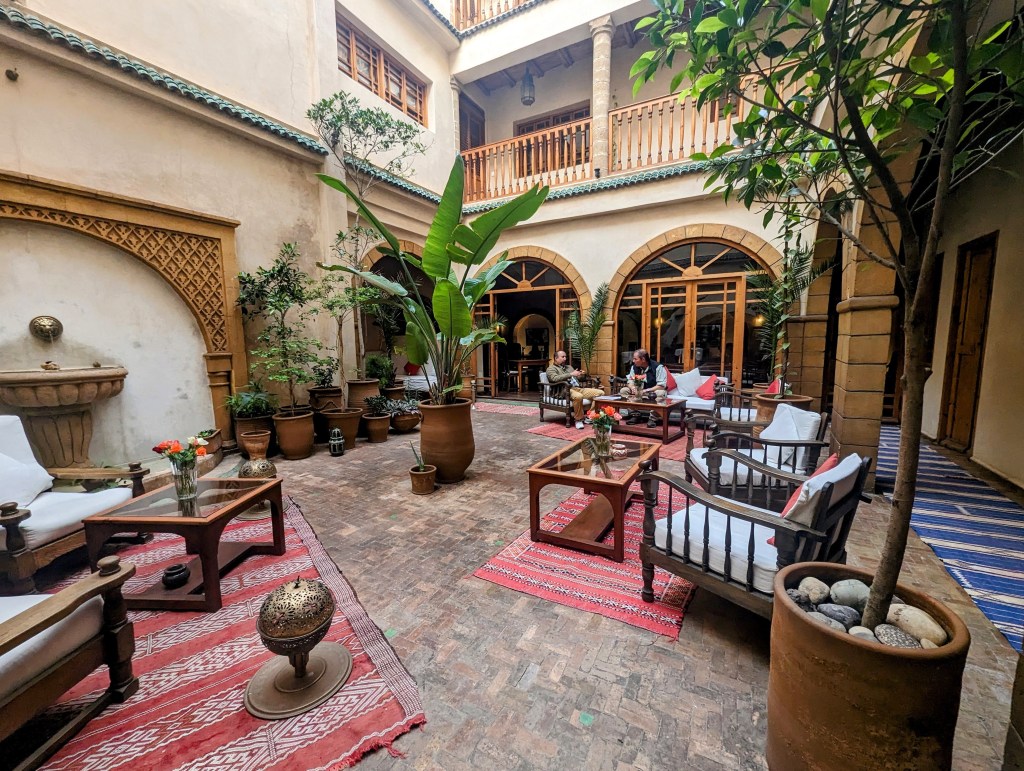
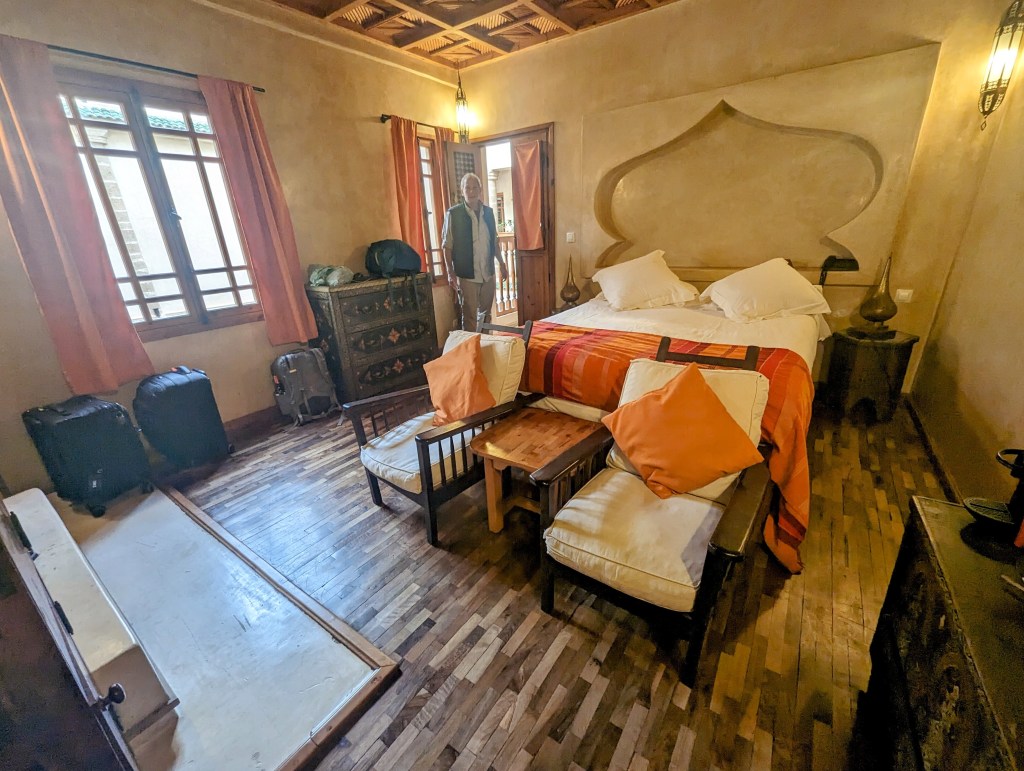
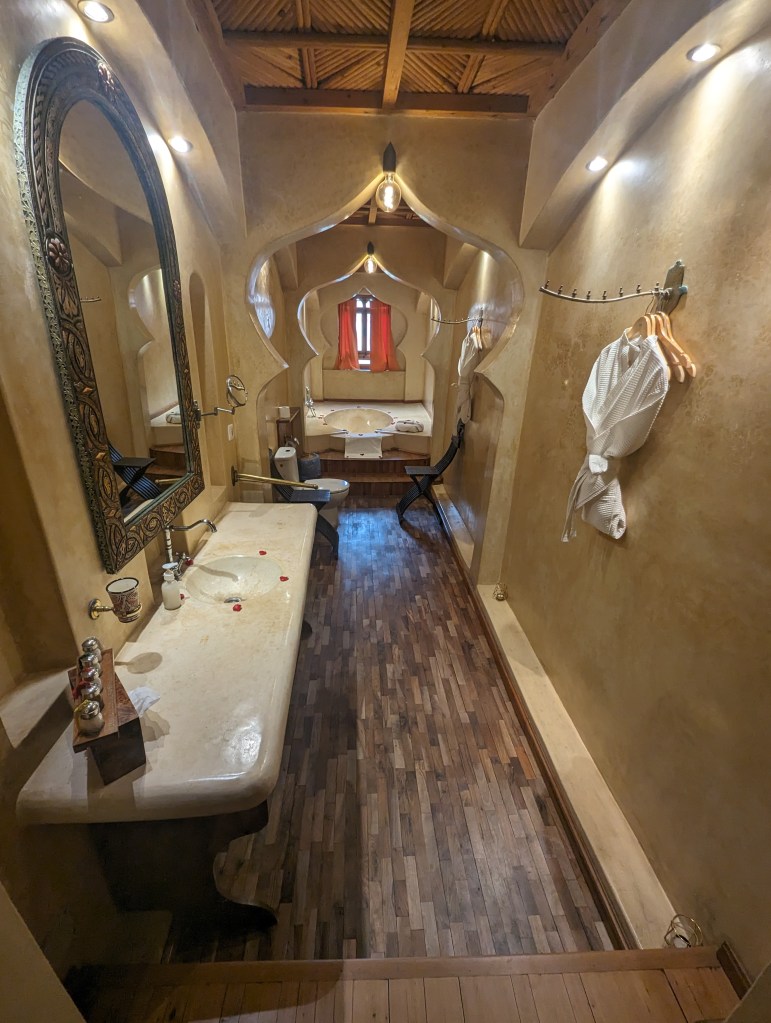
with the most gorgeous bathroom.
And had yet another delicious dinner cozy by the fire.
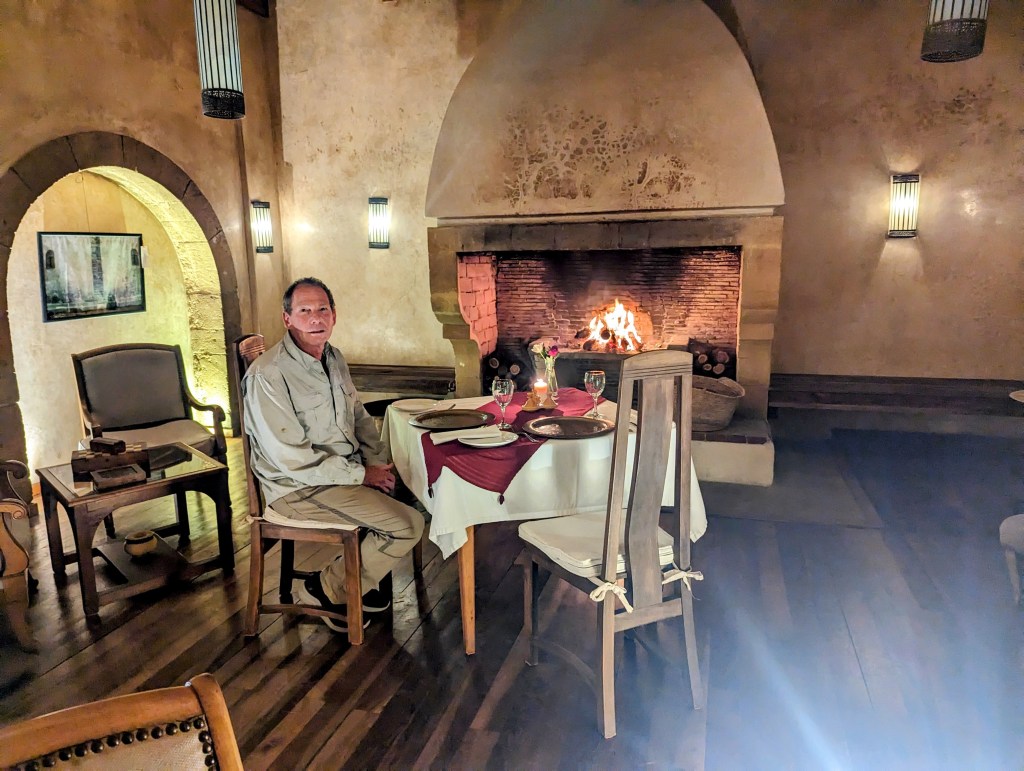
One thing I have not mentioned yet; on the table in addition to salt and pepper (sometimes instead of pepper) is cumin and always to be pinched between the fingers, not shakers.

In the morning we met Hassan, our Essaouira guide. As we started walking through the just waking up medina, he gave us some history. Essaouira was originally settled by Portuguese in the 15th century. They named the city Mogador derived from the Phoenician word Migdol which means small fortress. At that time it was the end of the caravan trading route that extended all the way to Timbuktu, Mali. It was an important port for goods coming in from Europe and also a source of salt. In 1740 then sultan Mohammed ben Abdallah hired a French architect to plan and build a walled city. Essaouira is Arabic for planned city, which was a first in Morocco. The medina has wider and straighter streets than any medina we have yet seen. Within the walls is a large cross of streets, a nod to the Christians by the French architect.
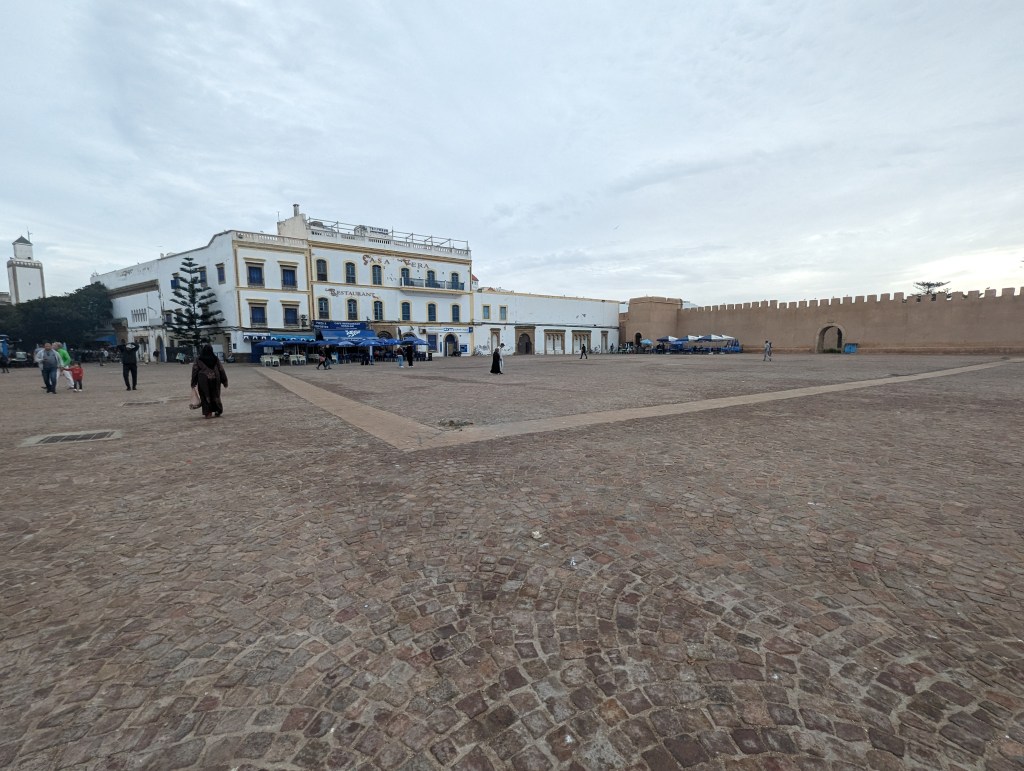
Hassan showed us the large squares which is where the traders would bring the goods for trading: silver, artisanal products, and produce. (Of note, slaves were taken from Africa and traded to the West, but slavery is against the muslim religion, so the slaves were taken to ports further south, not through Morocco.)
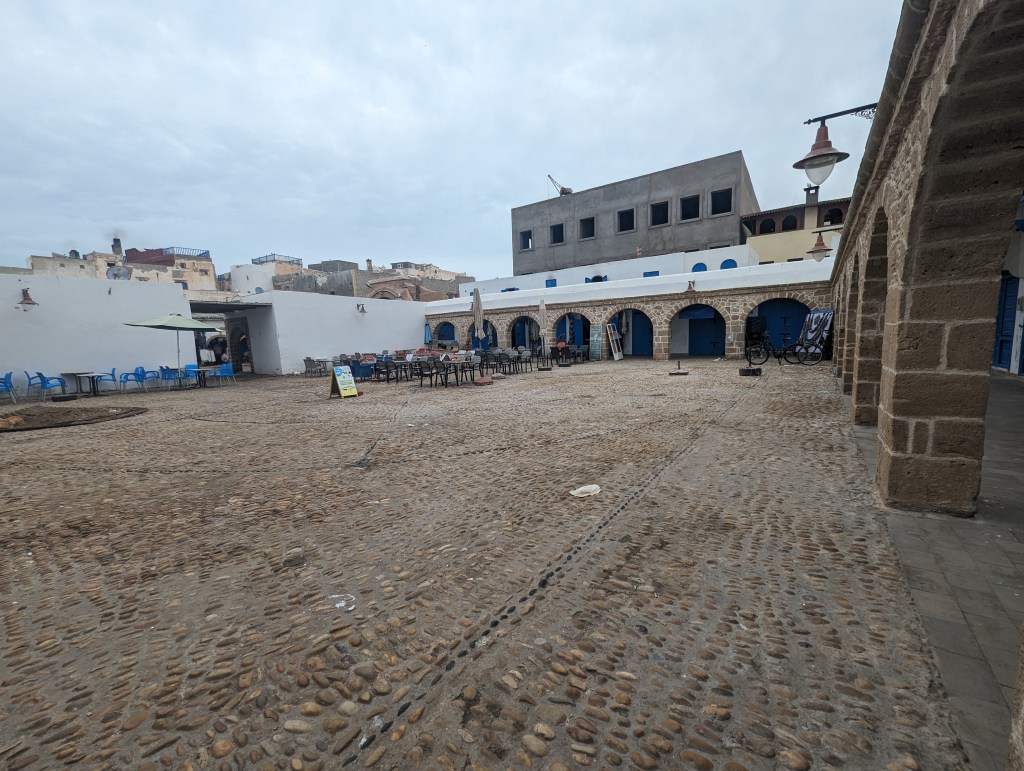
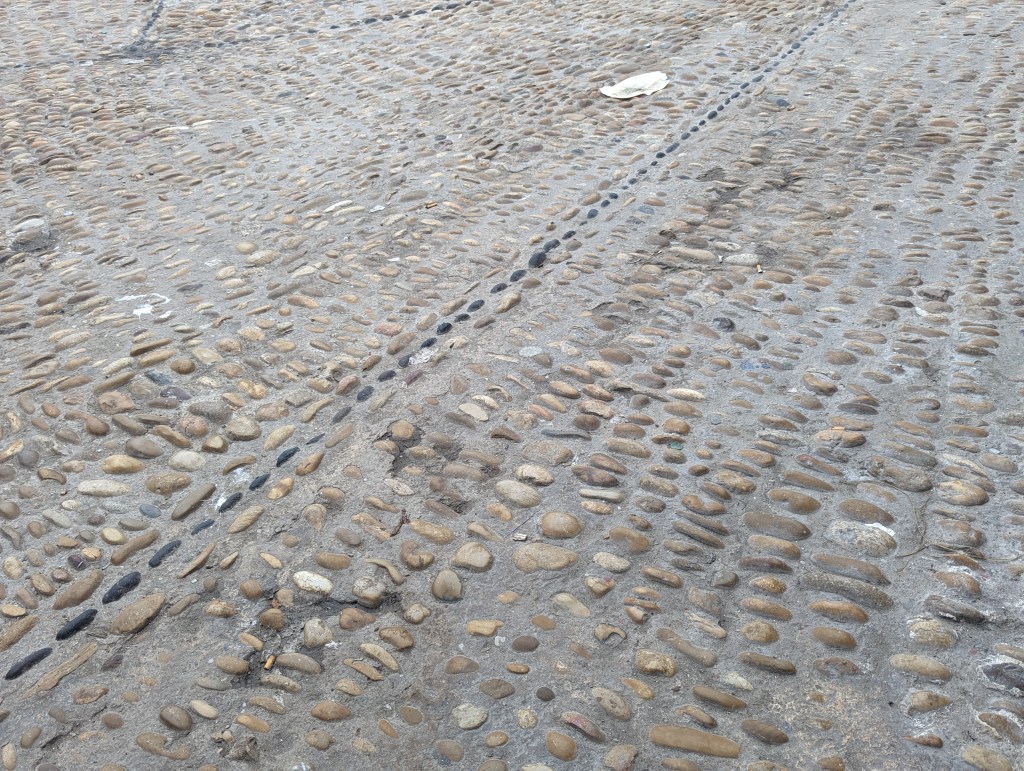
The camels were held in a central pen. Seller stalls were set up. The rooms seen on the periphery were for the traders to sleep. Hassan noted that the reason for the stone cobbled streets is that grains were considered too precious to be wasted by crushing. The grains would fall into the spaces between the stones. Overnight the birds would eat the grains, cleaning the streets.
The doors to the shops in the medina are blue. The fisherman believed that by painting the boats blue they would be camouflaged from the fish thus increasing their catch. The leftover paint was used to brighten the doors.
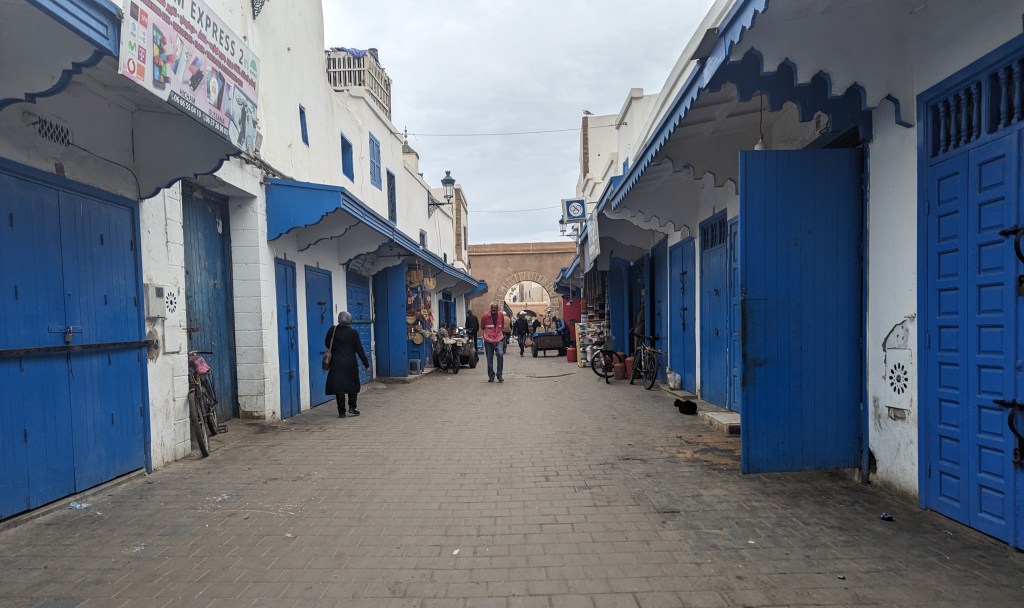
In this city, even the taxis are blue.

In the 18th century, at the city’s height, the population was nearly 50% Jewish. The Arabic word for Jew is mellah, which is also the Arabic word for salt. Before gold, silver, and ultimately coins, salt was the currency of the world. To call someone meleah in Arabic is a huge compliment, not only beautiful and charming but also a good person. The Jews were referred to as mellah because they were the original traders. The Jewish quarter in every medina is the mellah.
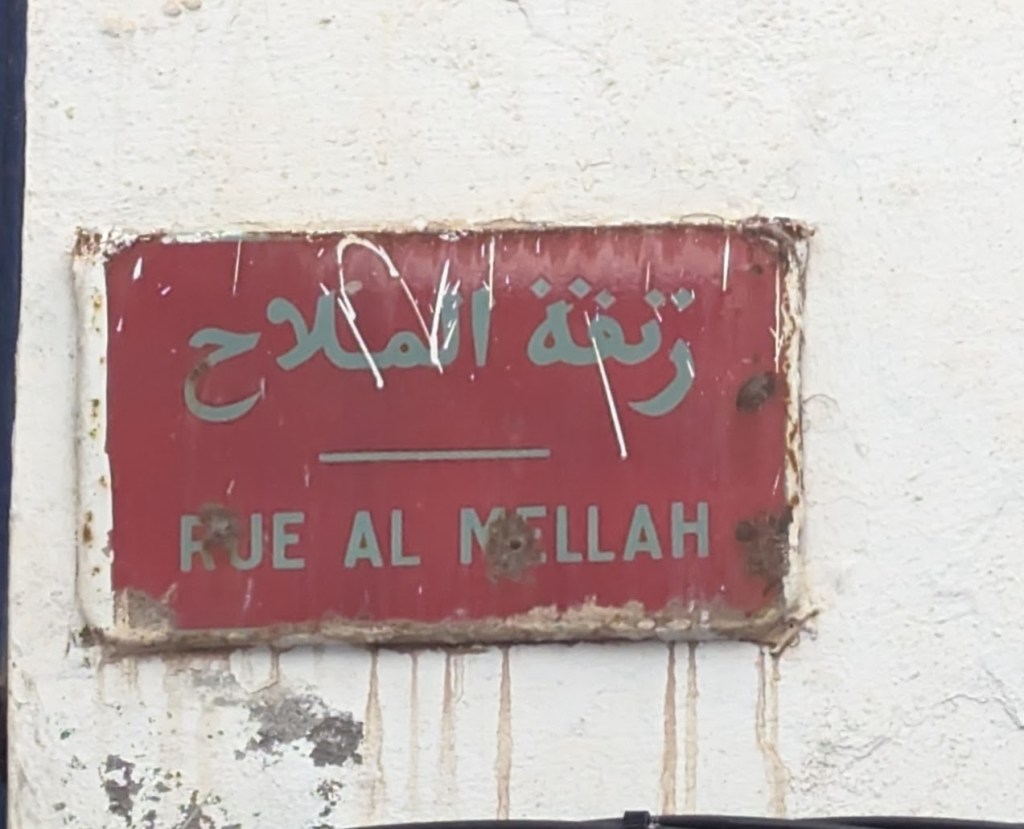
The Jews started leaving Essaouira in 1920 when under the French Protectorate, and partly due to the large size of the 20th century ships, the major trading port was moved from Essaouira to Casablanca. The port was not deep enough for the newer bigger ships. The exodus of Jews from Essaouira was furthered in 1958 when most returned to Israel. There are only 3 jewish families currently living in Essaouira.

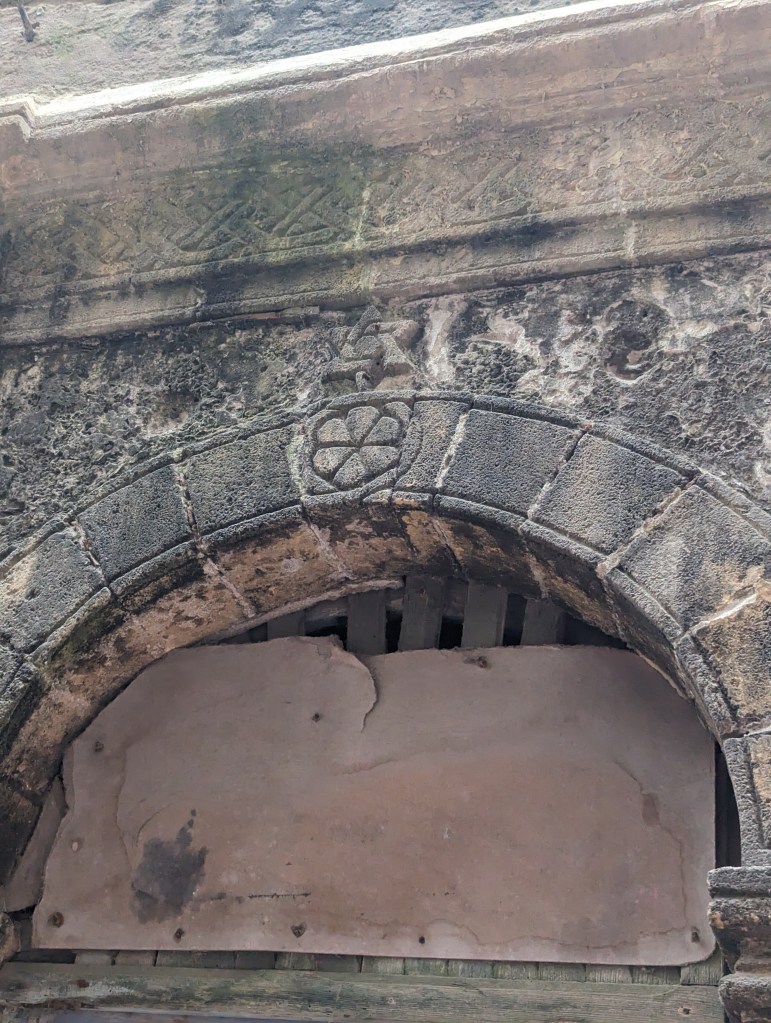
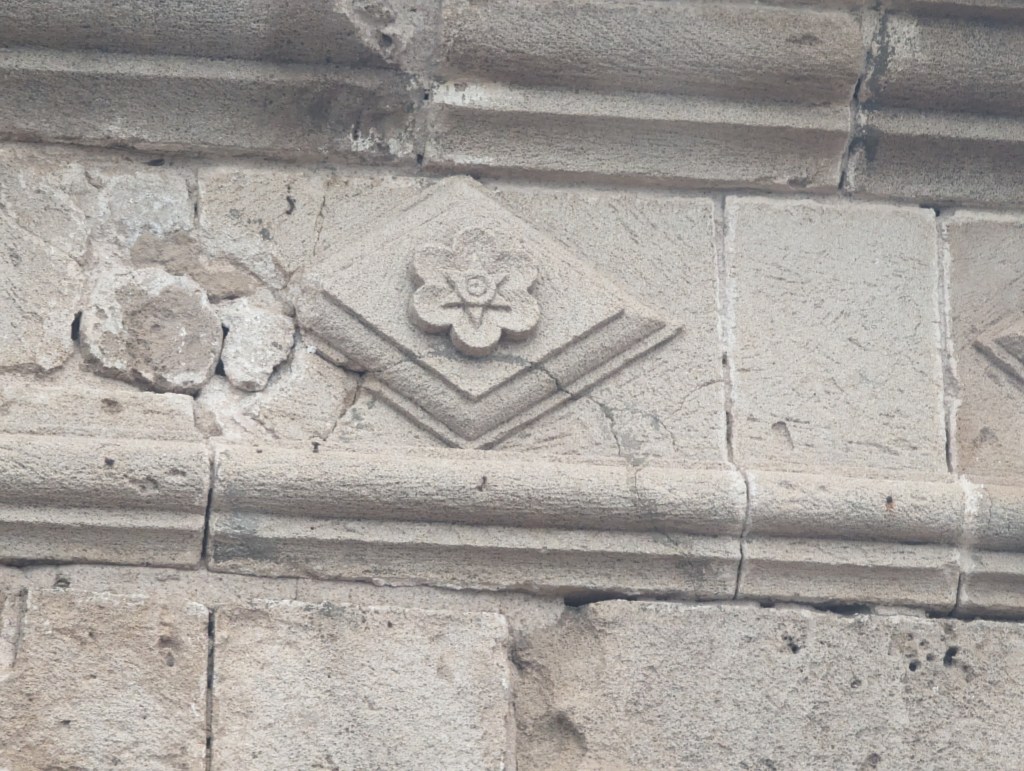
Jewish doors often have the 6 pointed star of David. They often also contain the Essaouira Jewish star, aka the Mogador rose with its 6 petals.
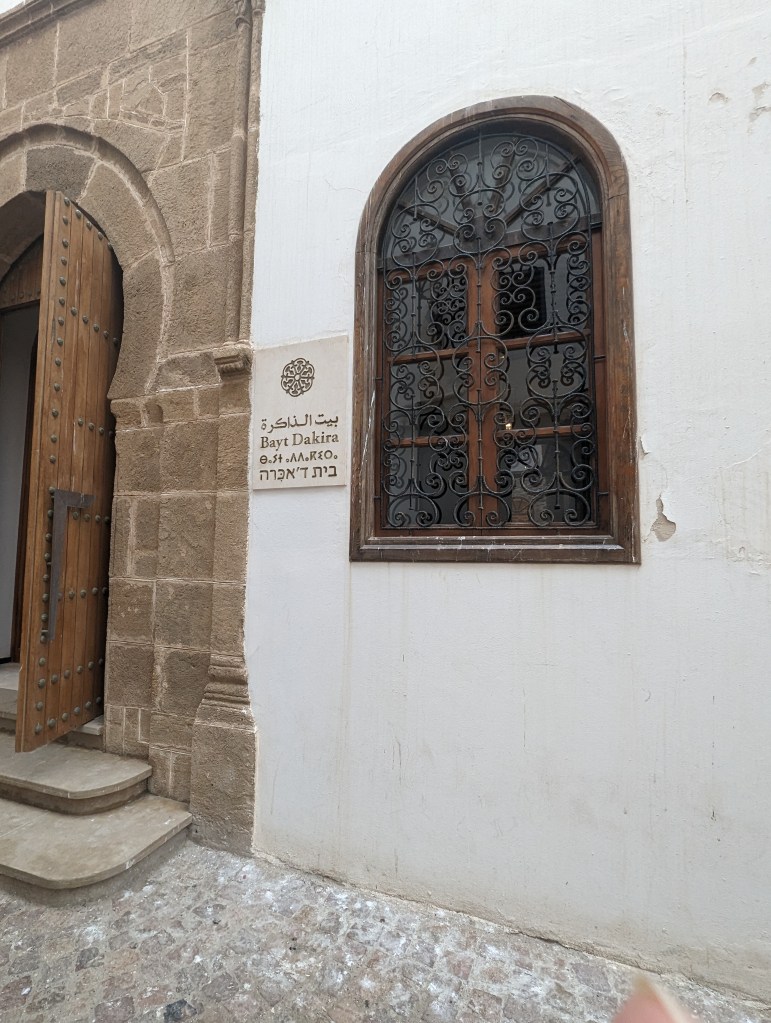
In 2020 the site of the synagogue was opened as a museum called Bayt Dakira, which means house of memories.
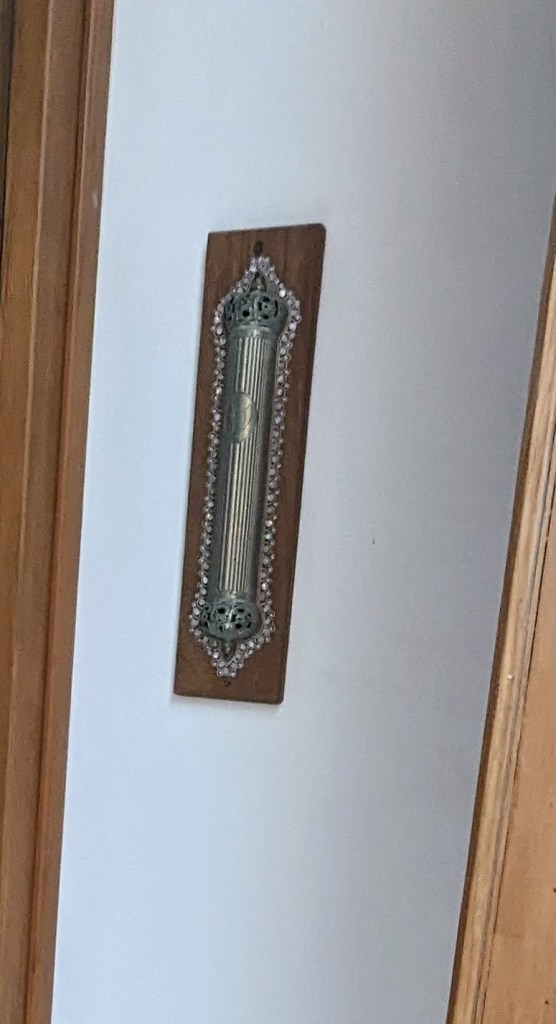
It has a silver filigree mezuzah, a craft for which the Jews of Essaouira were known.
King Mohammad V was present for the opening in January 2020, his first visit to Essaouira.
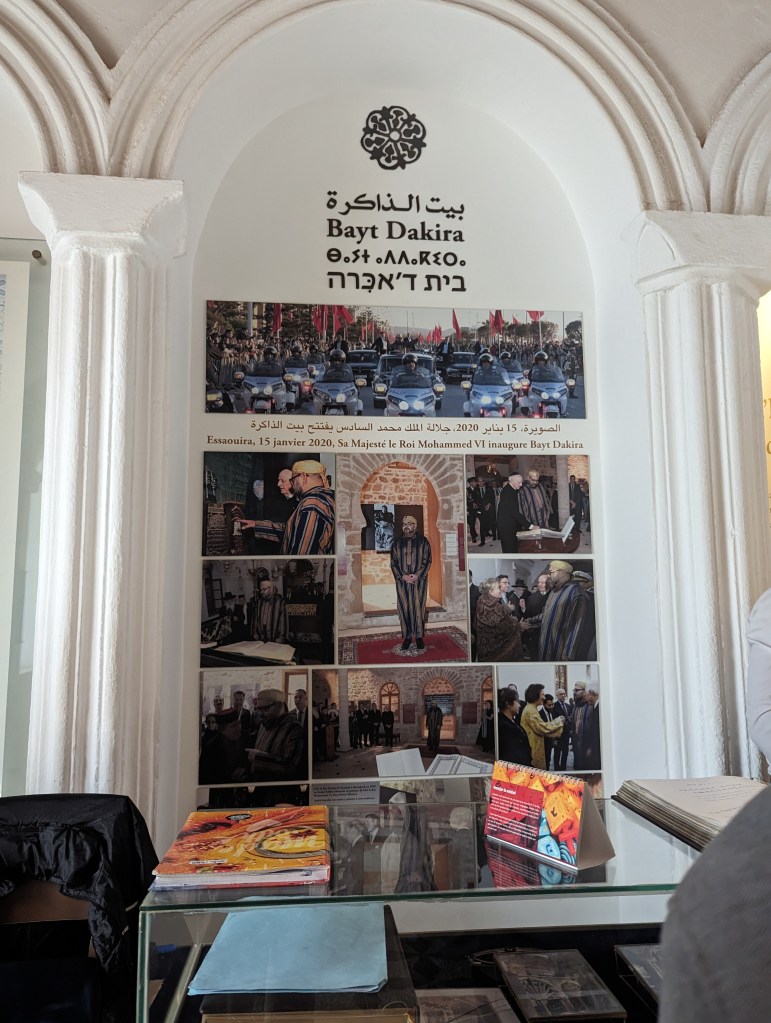
He is proud of the historically harmonious cohabitation of the Jews and Muslims in Essaouira.
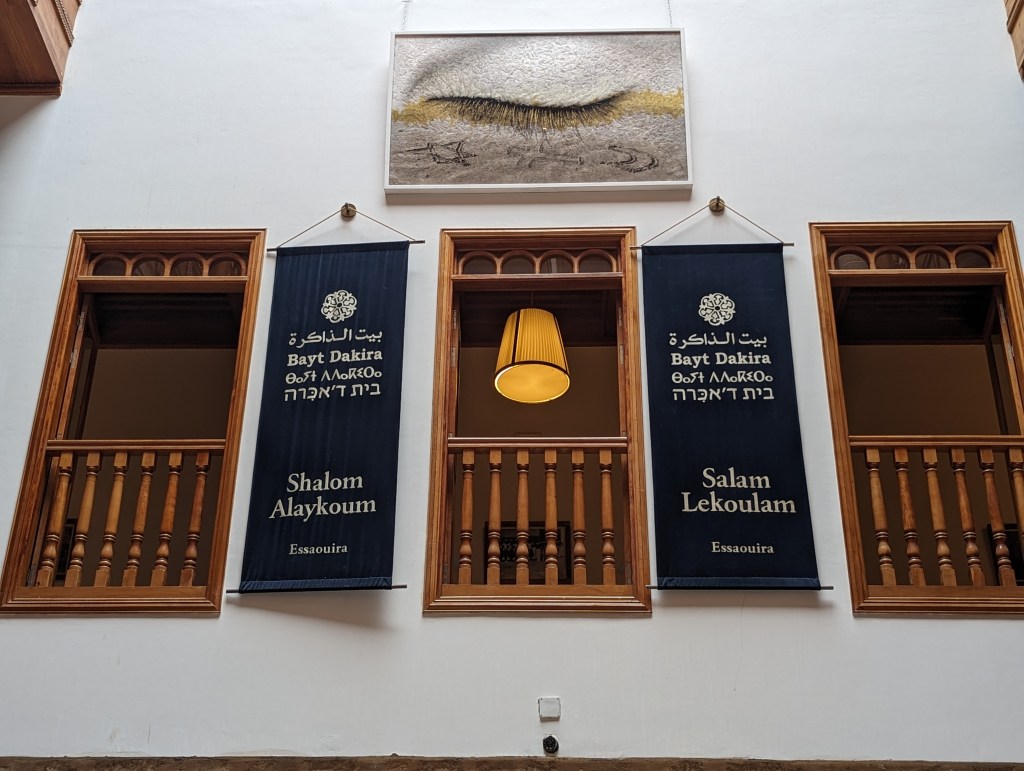

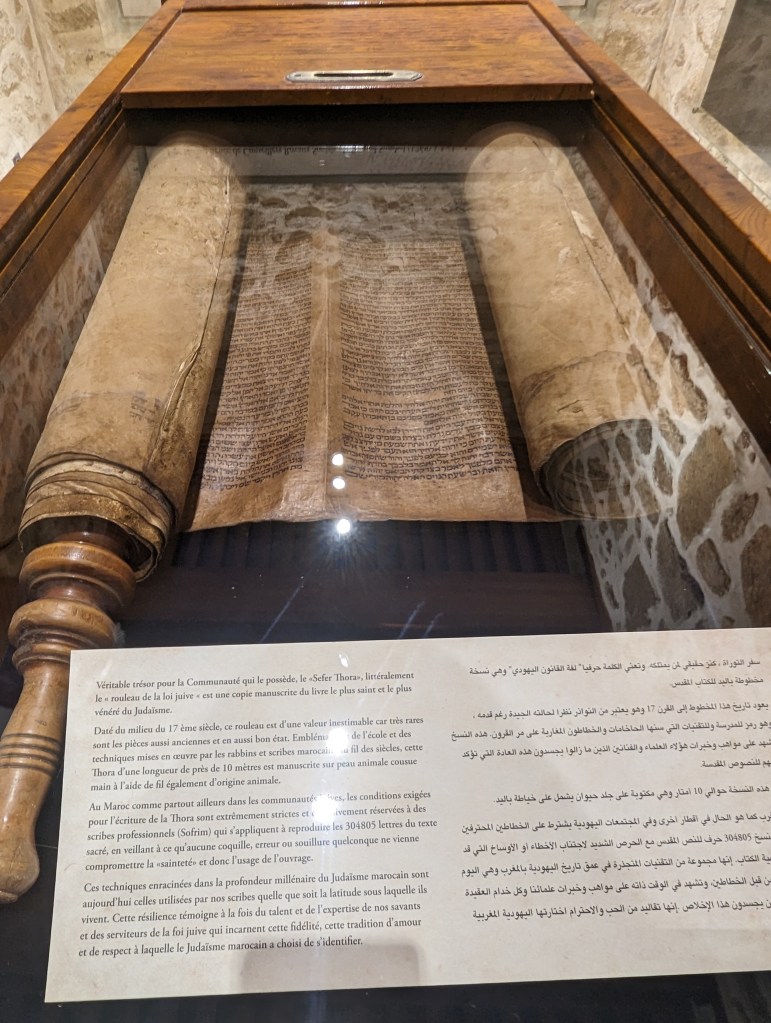
Inside the museum are several 300 year old torahs.
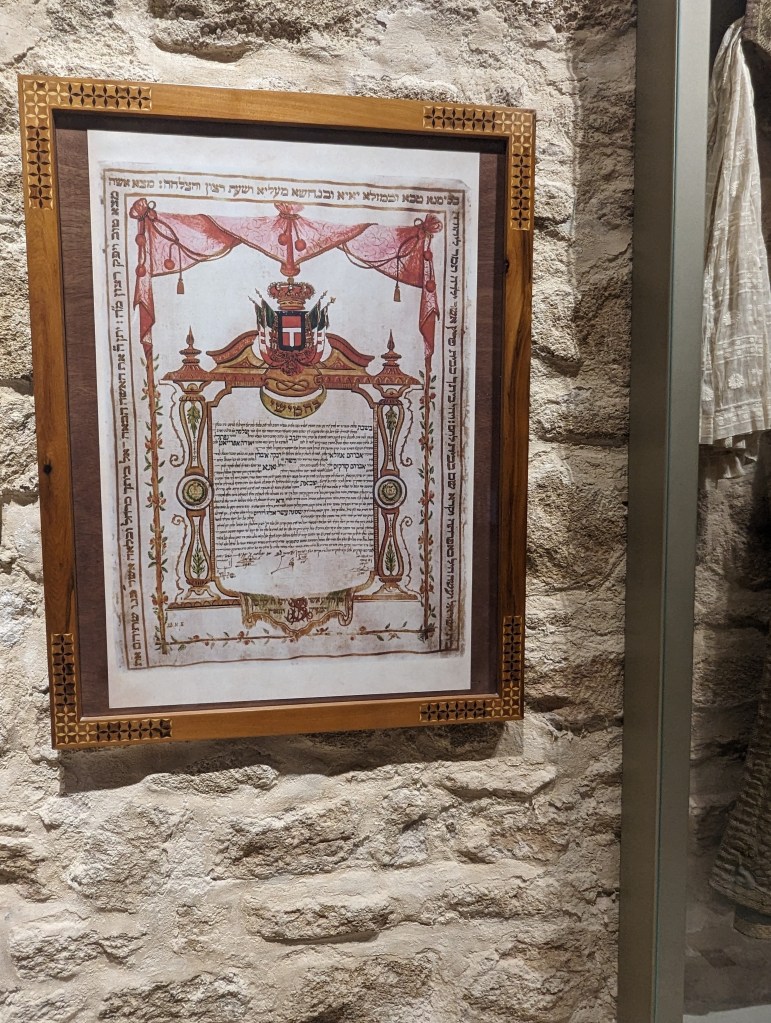
The ketubahs, Jewish marriage licenses, at the time were often decorated with gold.
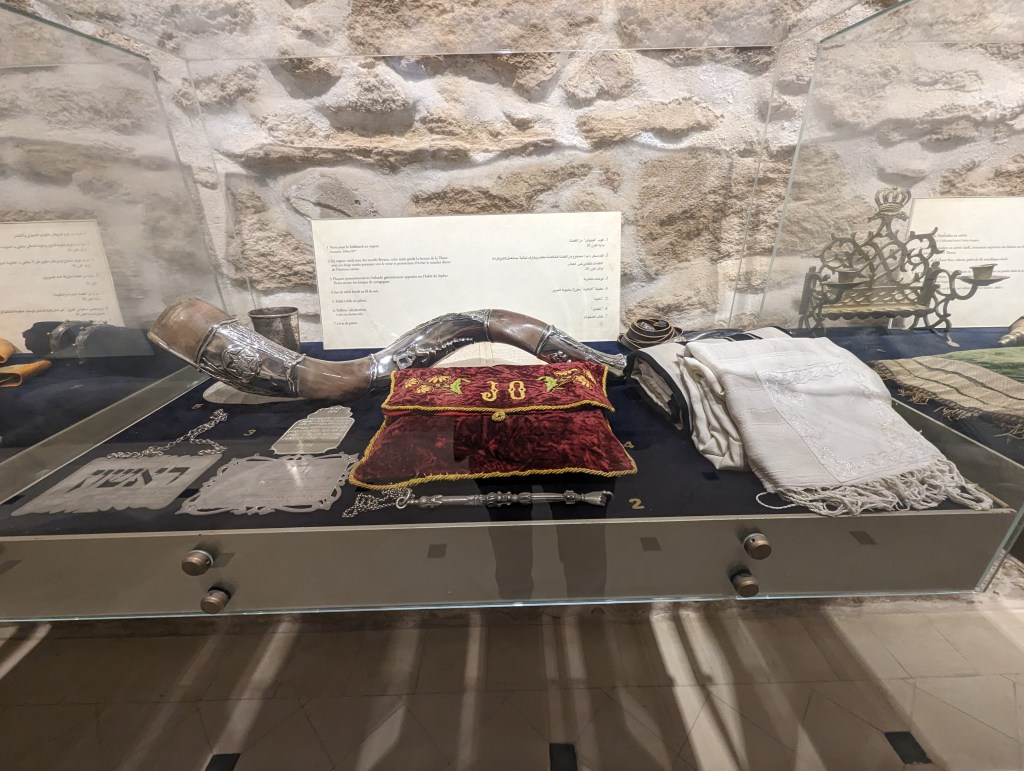
The museum display also includes a shofar, blown in services on Rosh Hashanah and at the end of Yom Kippur, Teffilin, Tallit and a Yad, hand to follow the torah reading without touching the torah.
Hassan pointed out that the wedding garb is in purple, the color of royalty for the Romans. Essaouira was the furthest south the Romans came for trade, and it was the purple dye found here that drew them.
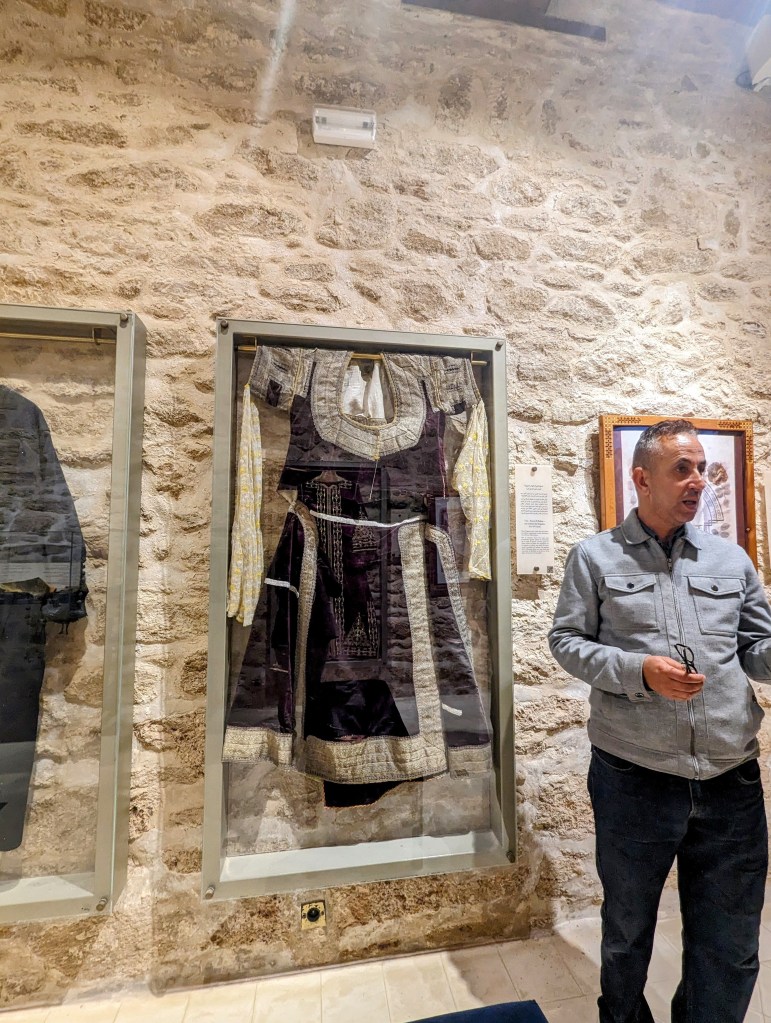
The purple is from the snail of the murex which is removed from the shell, dried, then crushed. The murex shells are found on the little islands directly off the coast of Essaouira, which are referred to as the Purple Islands of Mogador.
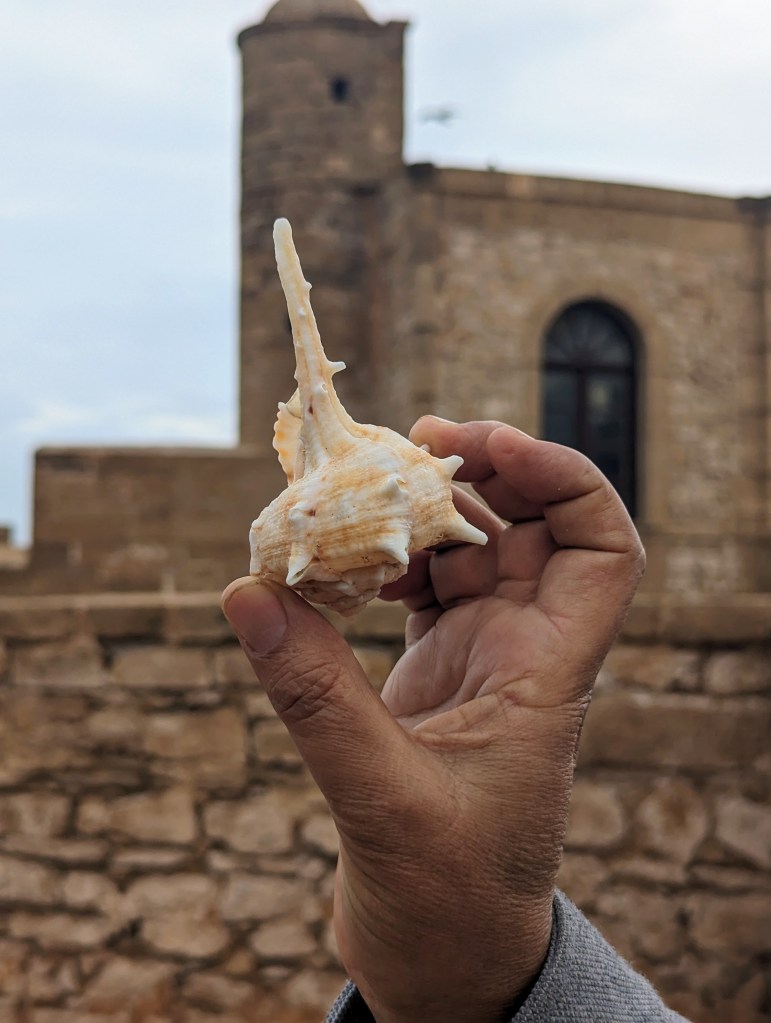
The Jews are credited for bringing the first tea into Morocco from India via Manchester, England into Essaouira. In addition to creating silver filigree, the Jews also created wooden inlay boxes from thuya trees, the most precious trees in North Africa. We would visit these shops later.
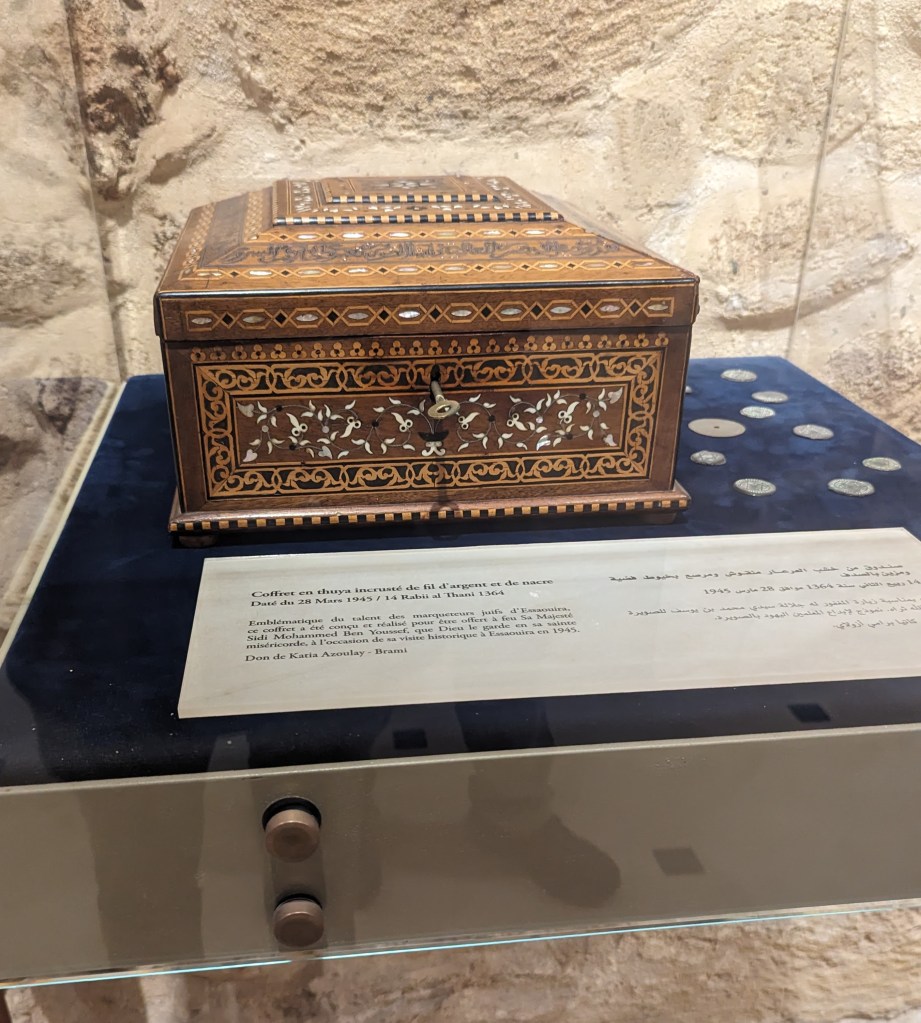
The current synagogue is attached to the museum, although they rarely have a minyan, the minimum 10 men needed for services.

After leaving the mellah, we headed to the lascala, which is a fortification on the water.

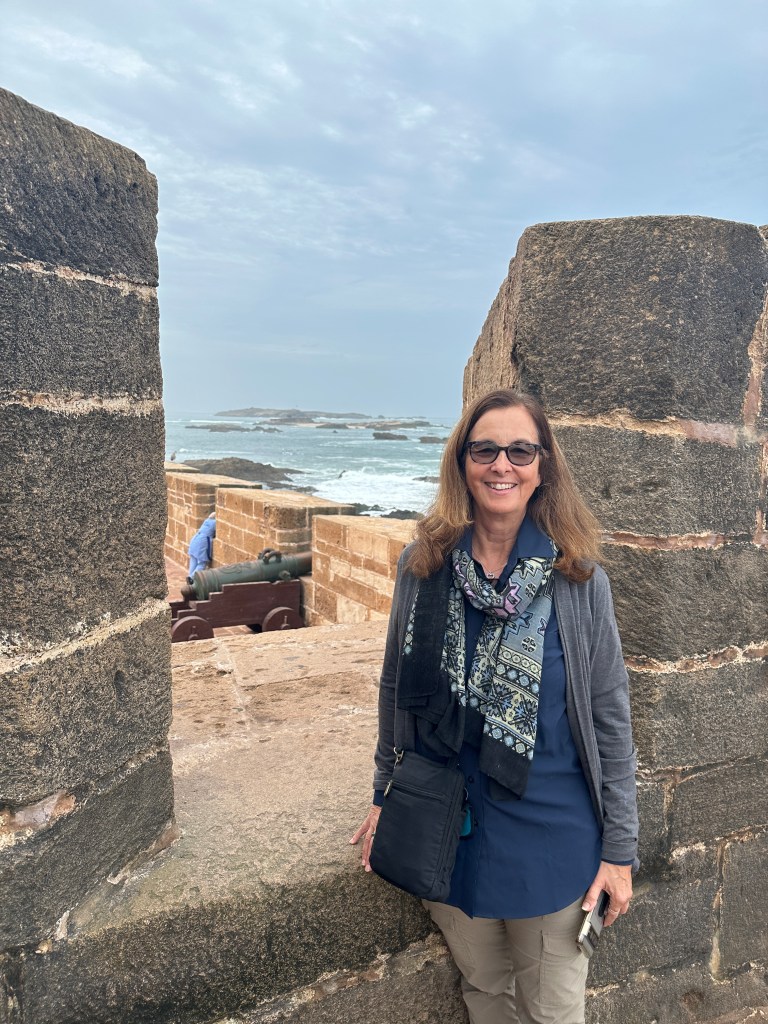
When building the fort, the Moroccans traded gold and ostrich feathers for cannons from all over Europe; they are all a bit different.
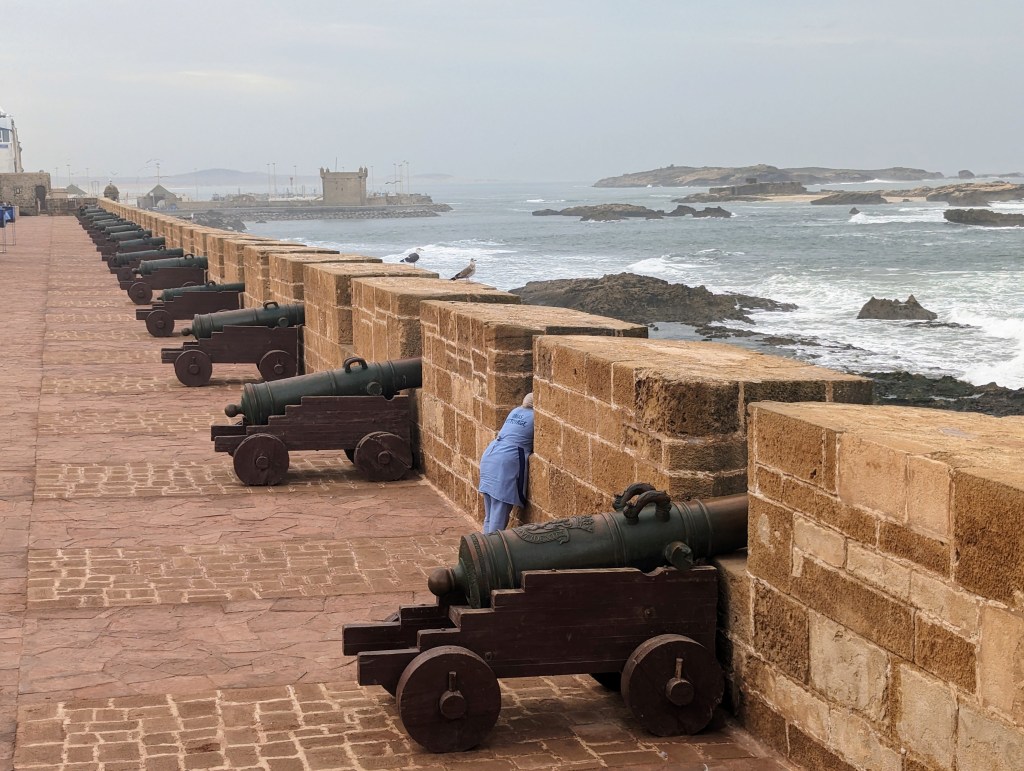
This one from the Netherlands has 2-headed handles. The dolphins, faced up, representing water, life, and peace are on the inner, Essaouira side. The dragons, faced down, symbolizing fire, death, and war are on the outer, enemy side.

From the fortress we have a view back at the town.
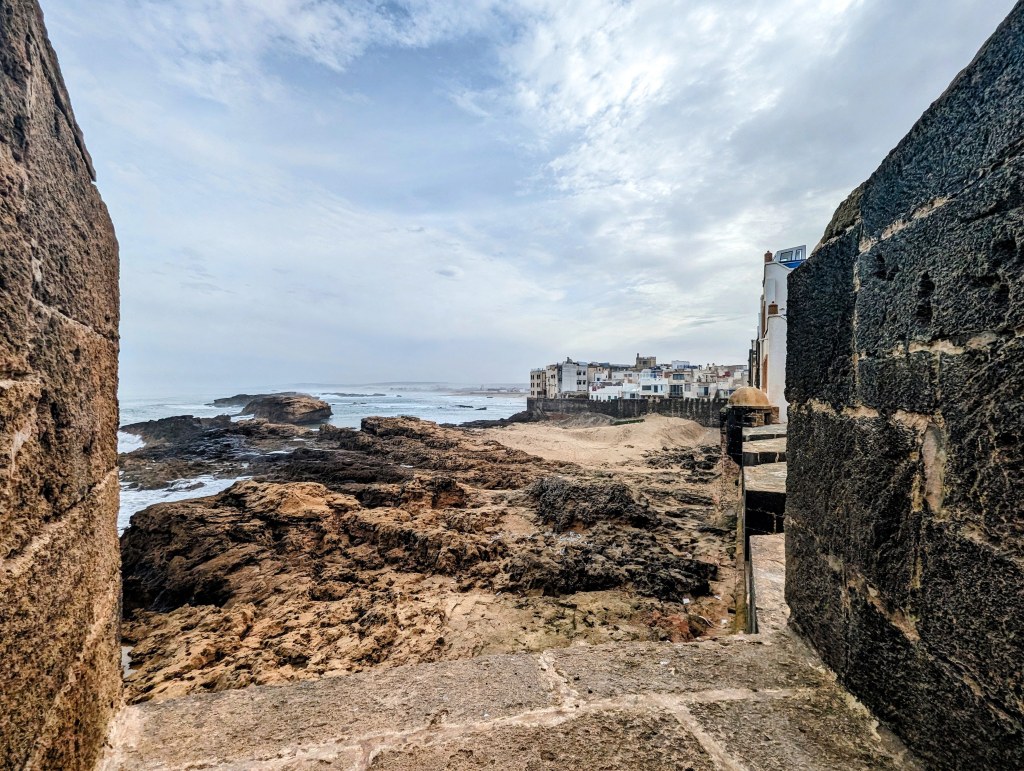
There is also a view out to the Purple Islands of Mogador. During migration, the very rare Eleanora’s Falcons from Madagascar can be found on these islands.
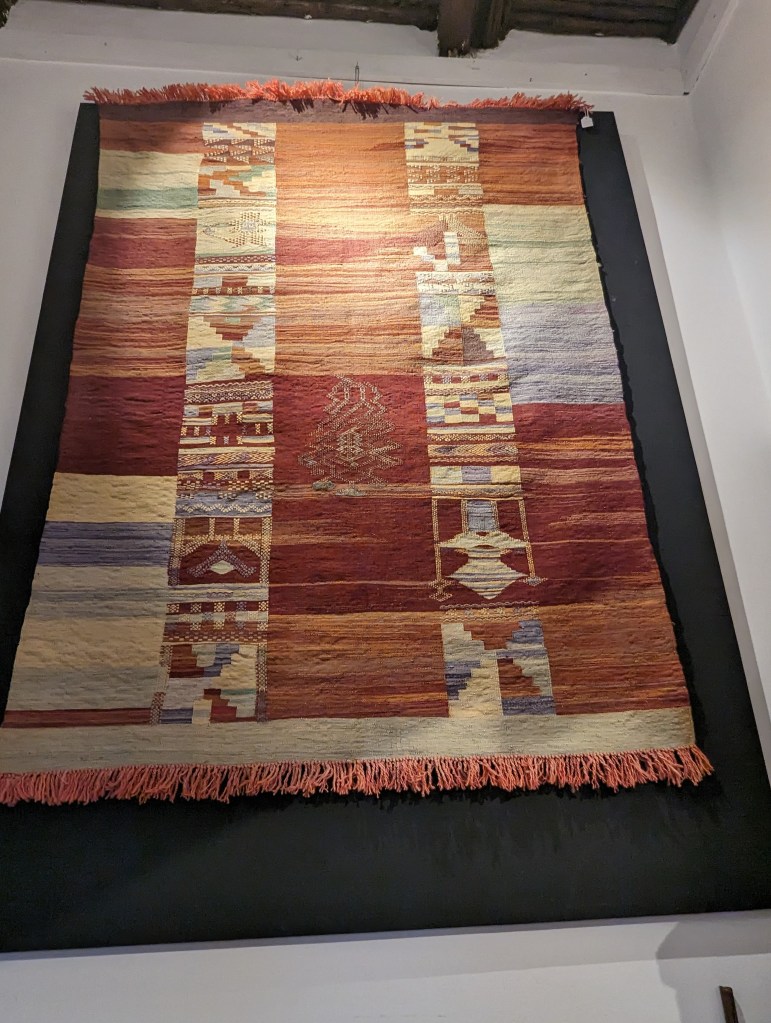
We next visited an antique shop that had many interesting items including this dowry rug made of silk by a mother from a wealthy mountain home for her daughter.
Furthering our rug making education, this map shows the different dyes used by different tribes by region in Morocco.

We walked beyond the fortress and through Hassan Square, named for the prior king. Hassan told us that for several days every June the Gnaoua Musical Festival is held here drawing over 200,000 musicians and visitors. The city has around 80,000 inhabitants. The music is said to have originated from the sounds of the “beat” of the camels’ hooves on the sand, now the drums, and the clanking of the slaves’ shackles, recreated by the castanets. The music is said to have therapeutic effects.
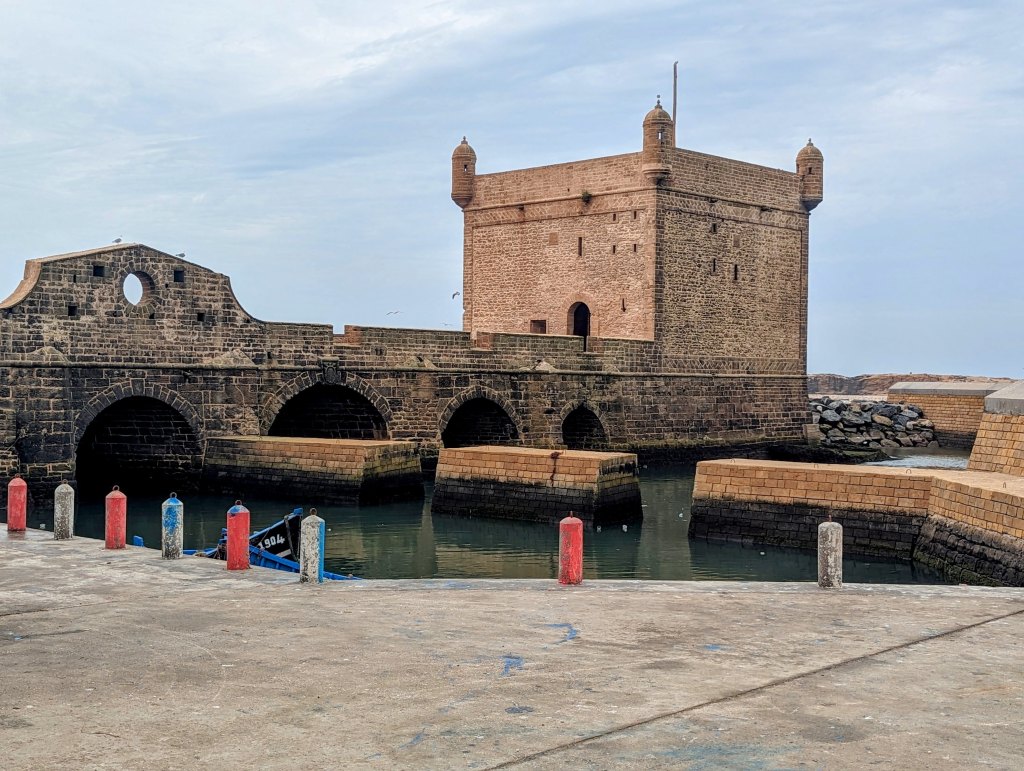
Then we headed out to the fishing pier. The tower seen below with its four corners was built by the Portuguese in the 15th century designed to resemble the Belem Tower in Lisbon. The tower was used in a scene from Game of Thrones. Several areas in town were used in GOT. Also, several other movies have been shot in Essaouira. Orson Welles shot so much of Othello in Essaouira that at the Cannes Film Festival he listed the movie as a Moroccan one. When Othello won the Palm D’Or, Morocco won its only movie gold.
Fishing is still the number one source of income to the town followed by artisanal works then tourism. The boats are made from the strong oak trees of the Atlas Mountains, and the flexible eucalyptus trees. The boats never go out with less than 3 men in them so if there is an accident with one, there is a witness and no accusations of foul play. The smaller boats have very long fishing lines with multiple hooks for the larger fish. The larger boats use fishing nets for the smaller fish. In the market the sellers never clean the fish. That is the job of another, of which the sellers would never deprive him.
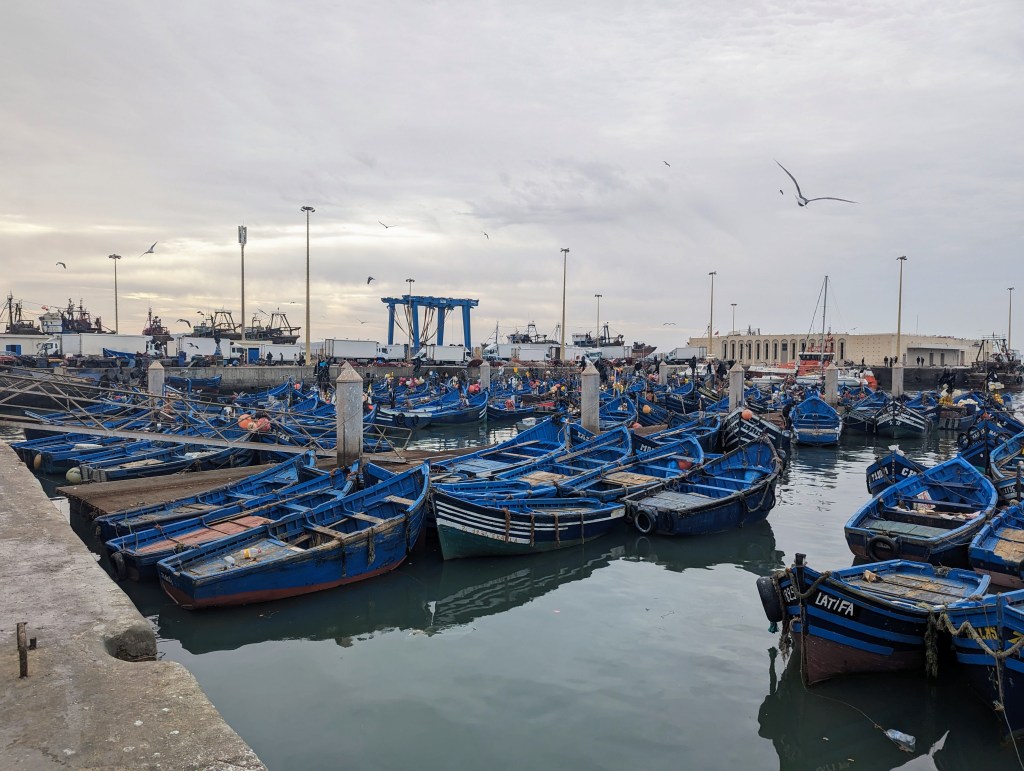
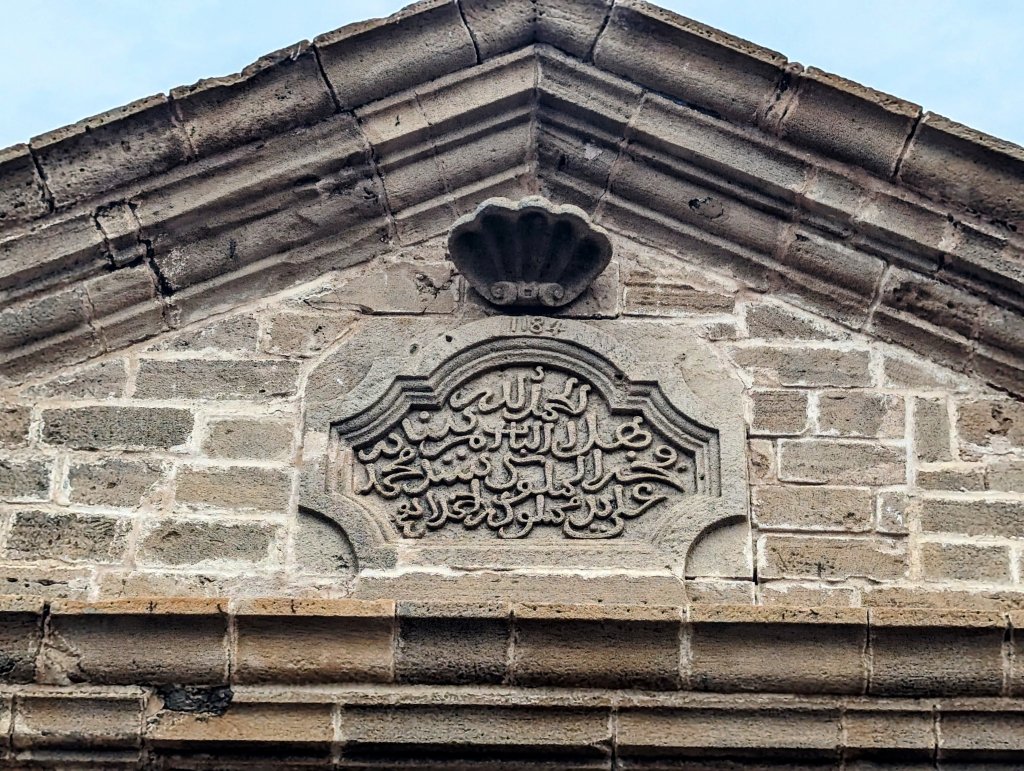
The gate that welcomes those arriving by sea is called the Gate of Tolerance. It was built in 1740 but the date says 1184, from the Muslim calendar.

The Gate of Tolerance has symbols of all three Western Religions. Sea shells, the symbol of the Christian Pilgrimage to Santiago
The Jewish star of David within the Jewish Magoda rose
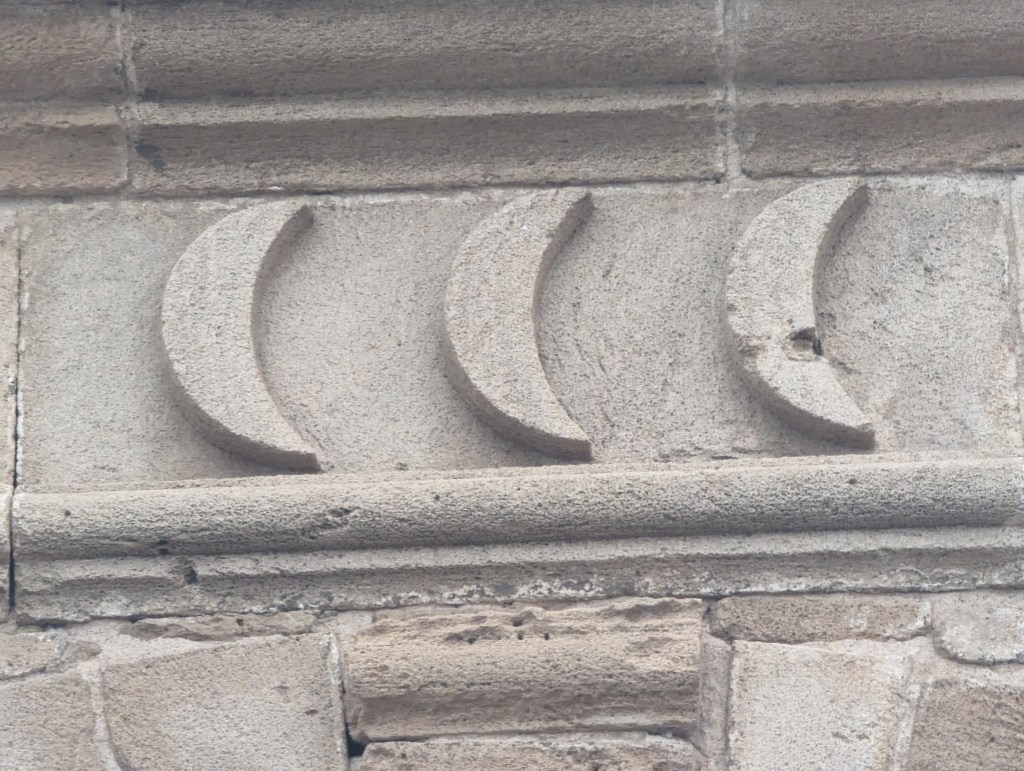
And the Muslim moons representing their lunar calendar
Hassan then took us to an art gallery representing over 70 artists’ works.

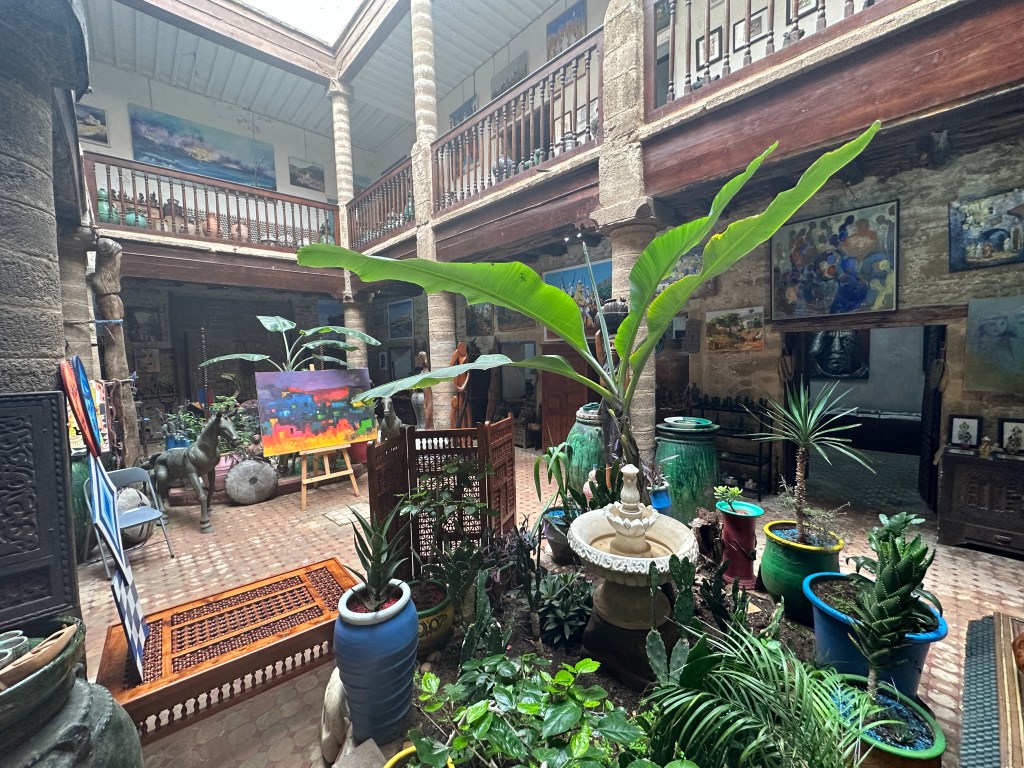

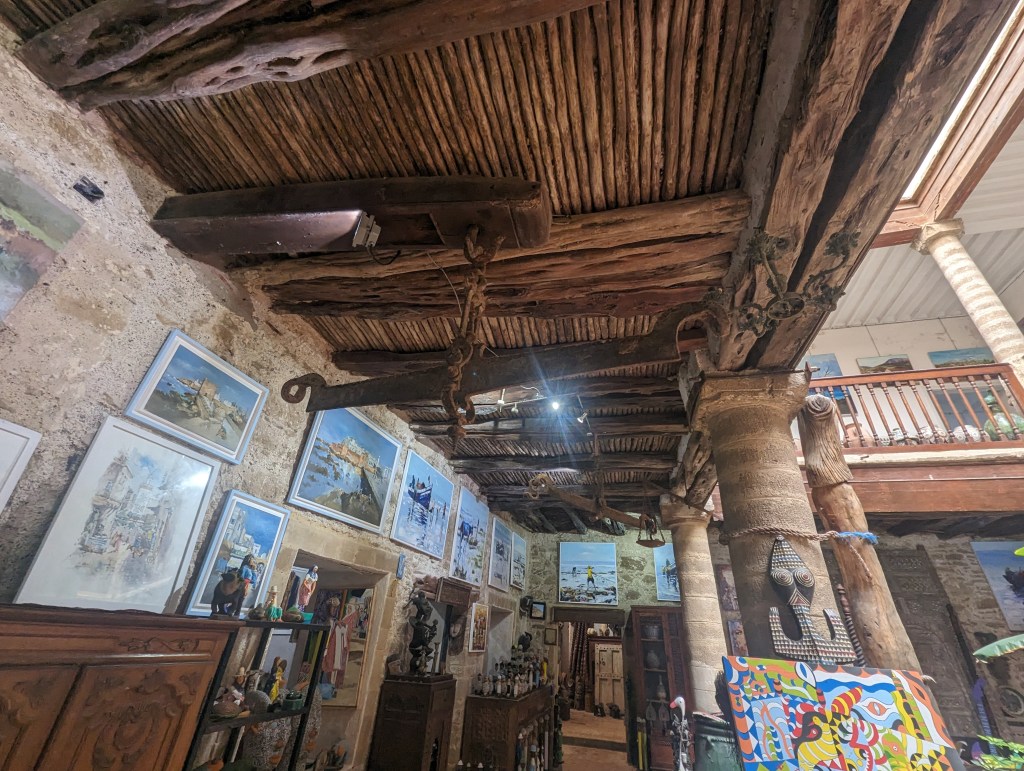
The building is in a 300 year old home with few renovations. It still has the original weight scales hanging from the beams.
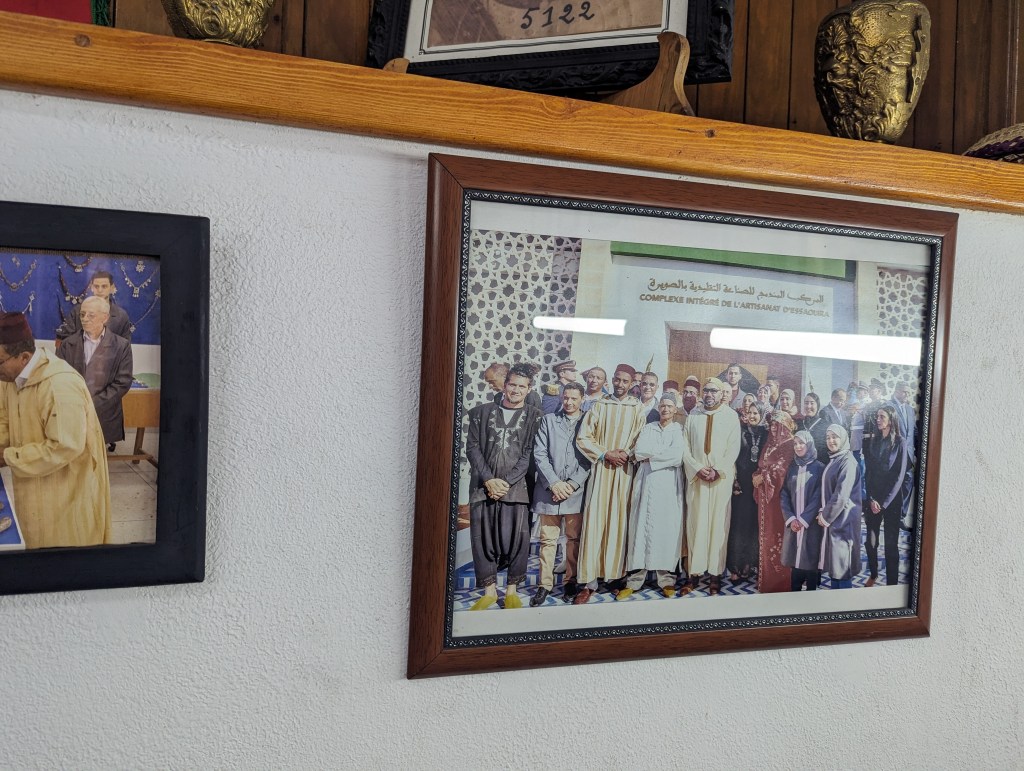
He then took us to the silver artisans, originally made up of both Jews and Muslims.

This shop is known to have the first women apprentices, a fact that made the king so proud, he visited the shop when in Essaouira in 2020.
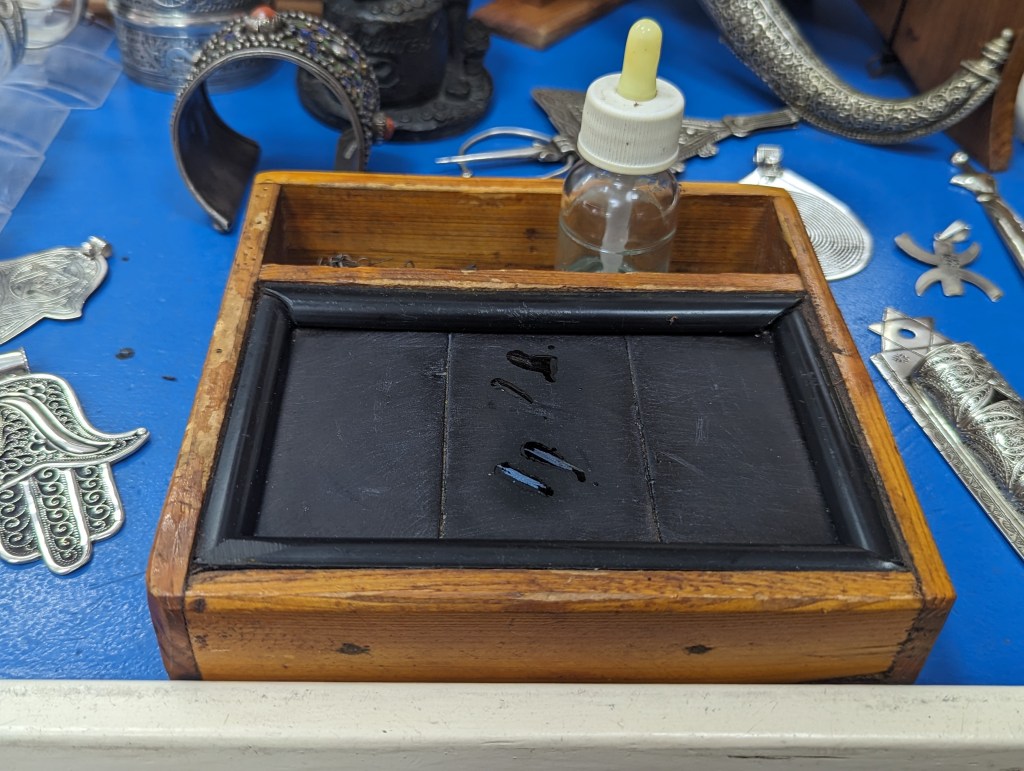
One of the artisans showed us how to tell that the silver is real and not an alloy. He use a black lava rock and scrapes it with the metal.
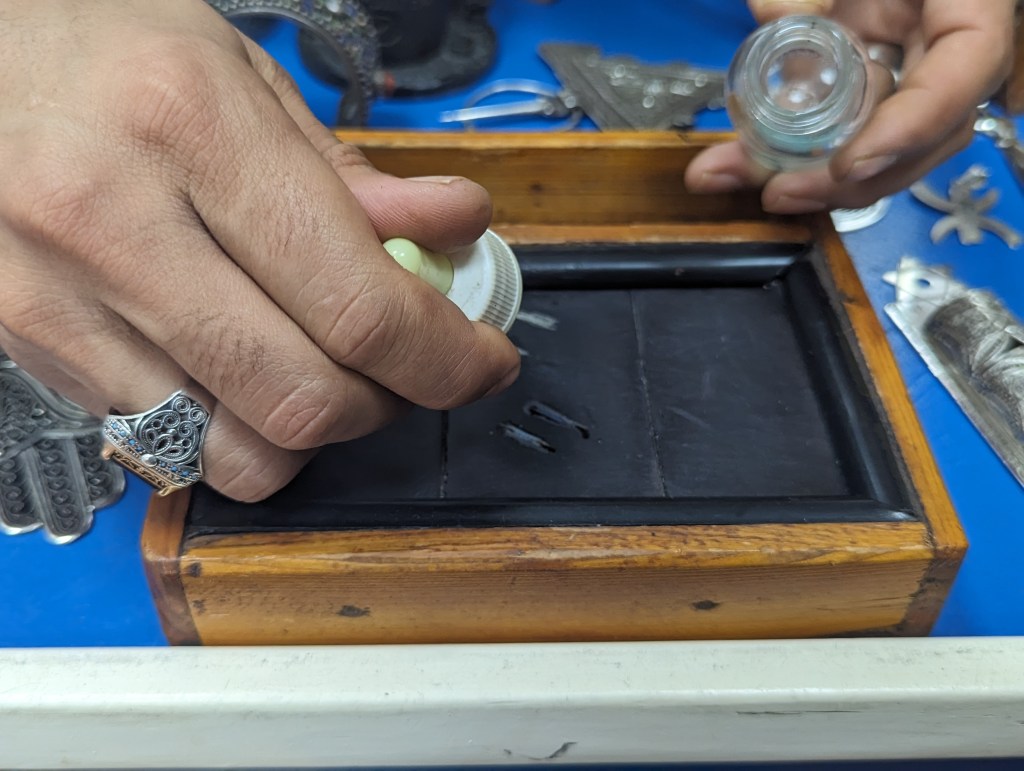
Then he applies the acid. The silver scraped area remains white; the non-silver area turns back to black.
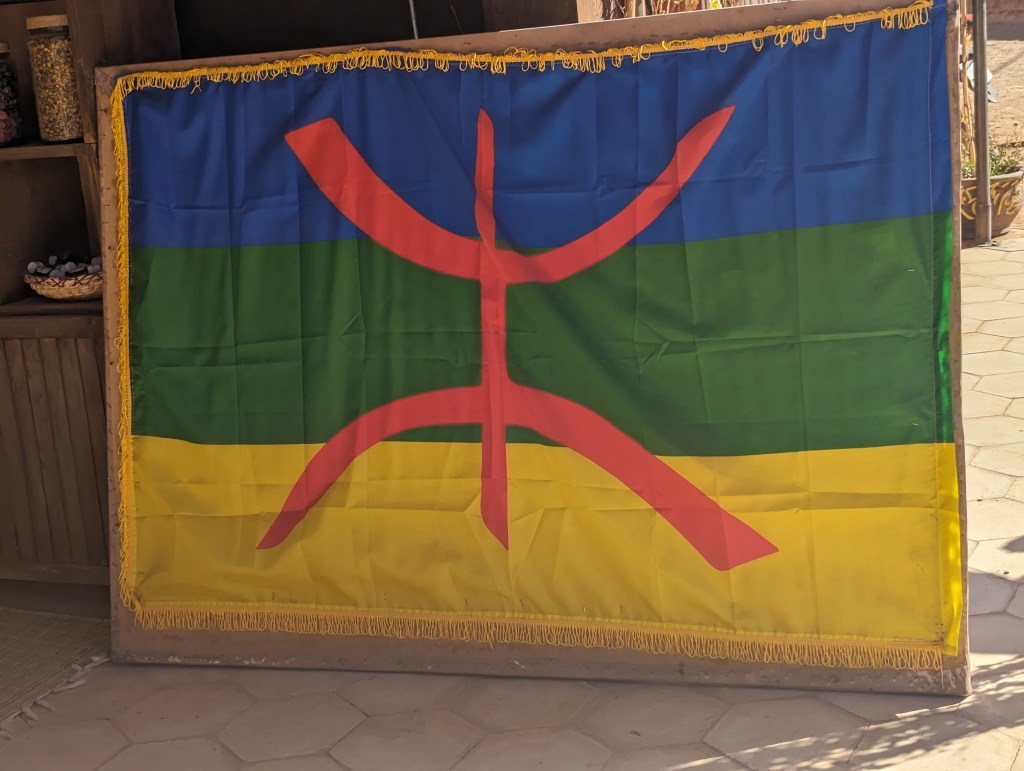
He also explained that the colors used in the enamal filling between the silver filagree are the same colors as the Berber flag, which represents all of the Berber tribes: blue for those by the ocean, green for those in the mountains, and yellow for the desert dwellers. The symbol of the free man is in red to represent the blood of those spilled to achieve/maintain freedom.

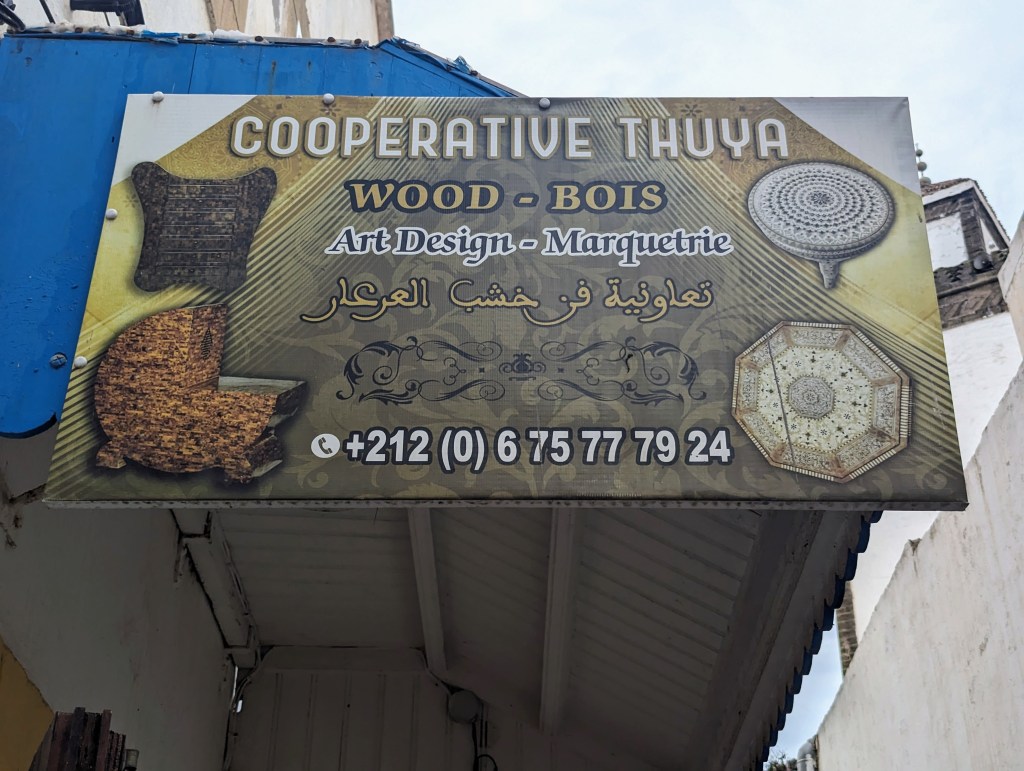
Finally Hassan took us to the wood artisans.
As said above, they use the wood of thuya tree. A chisel is used to create spaces for the inlays. Lemon wood is used for yellow, acacia for black, and abalone shell for the mother of pearl.
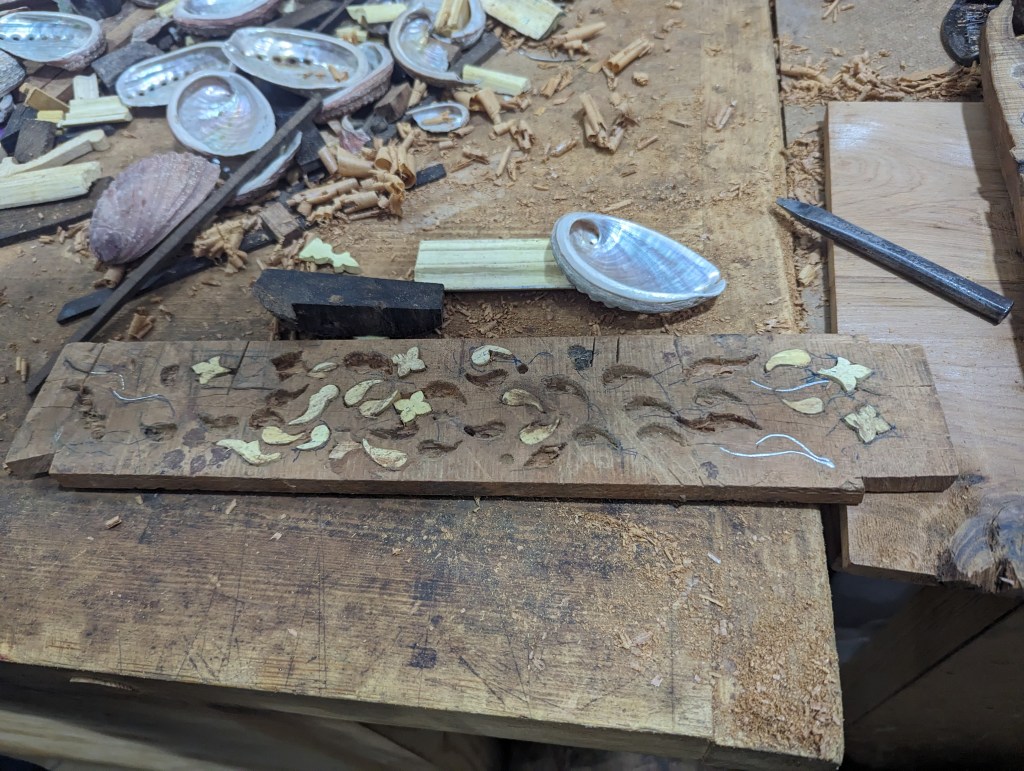
Saw dust from shaving the wood is used as filler.
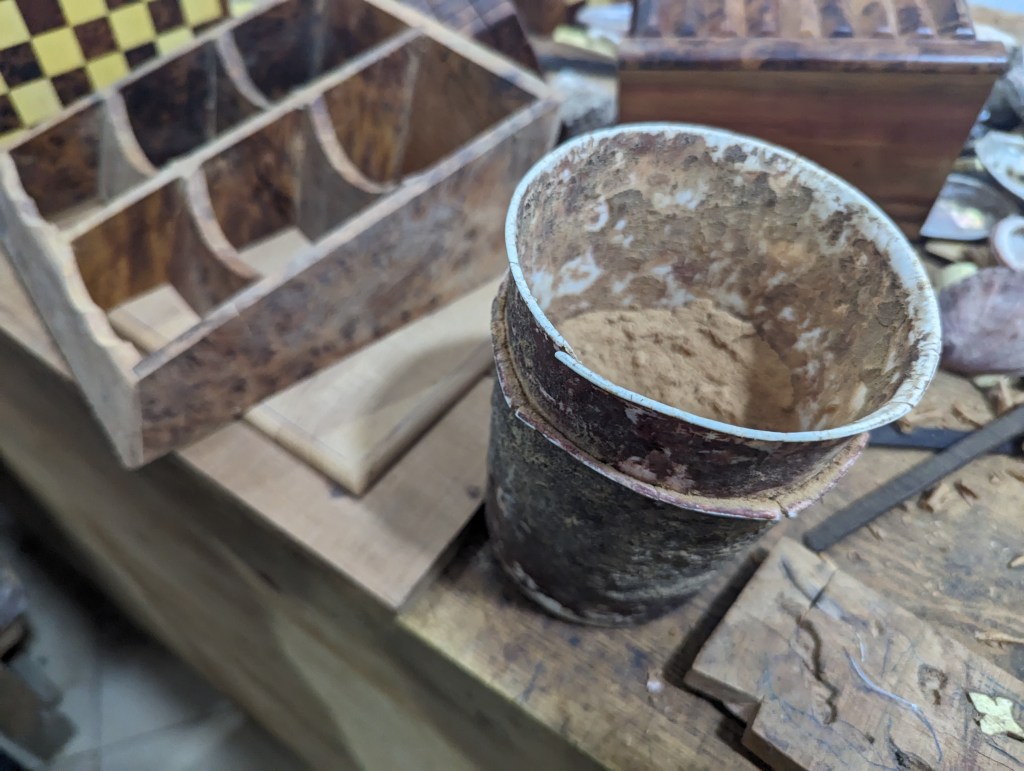
Here is a piece near completion.
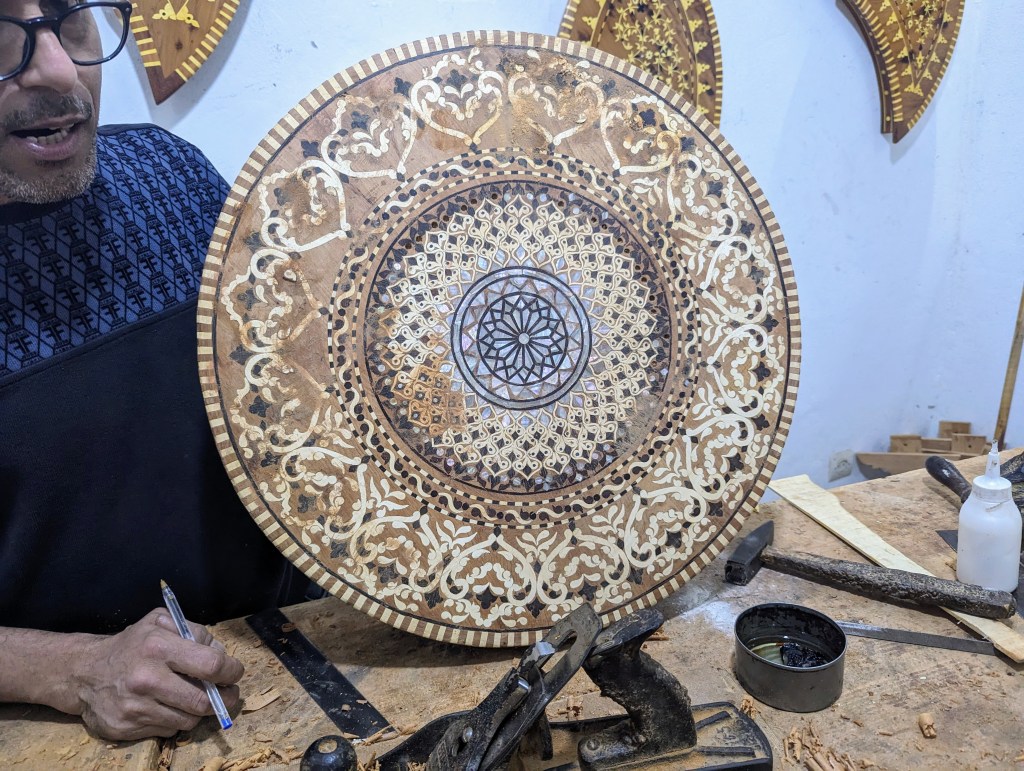
The shellac is created from the resin of mimosa trees made from the secretions of insects feeding on the barks of the trees.

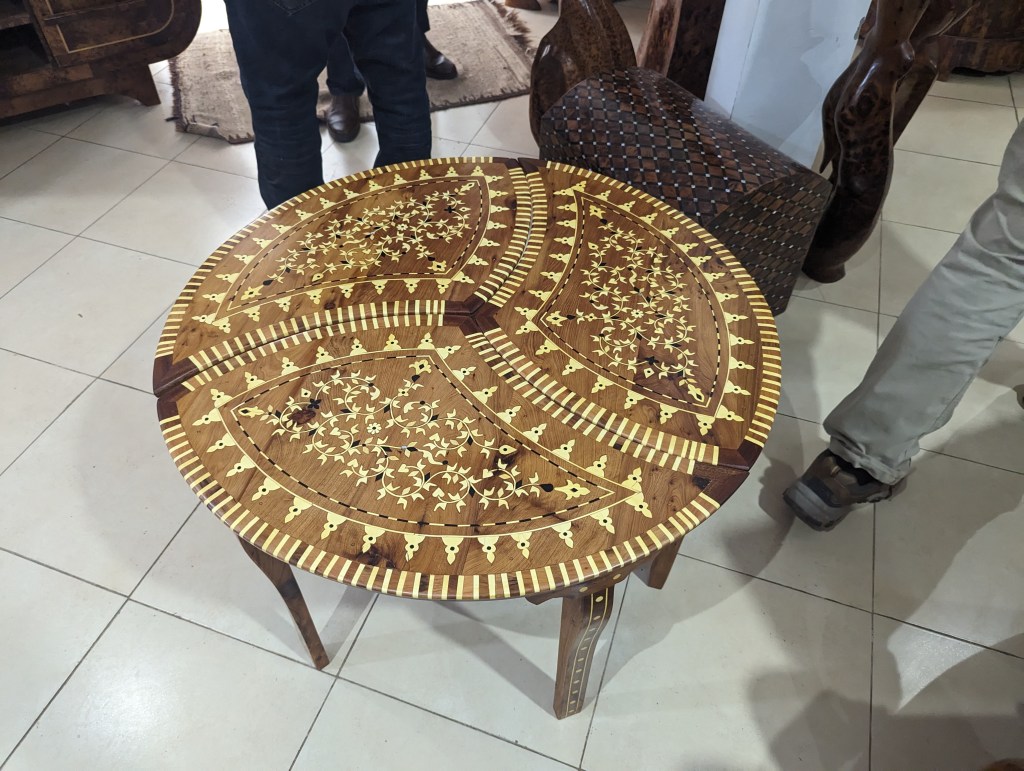
The finished products are stunningly beautiful.

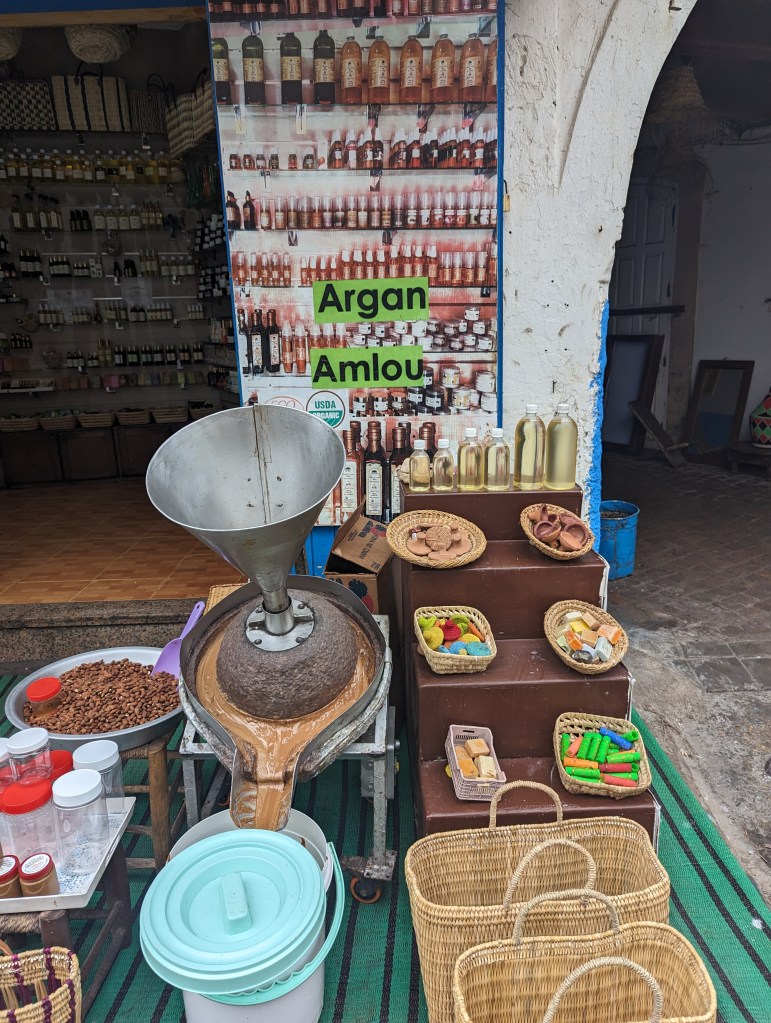
On our way back to our hotel we passed women making amlou, a mixture of crushed almonds, honey, and argan oil. Had to try some: delicious.
After a bit of a rest, we headed back out for a late lunch, early dinner at La Clé De Voûte, a French/Moroccan restaurant with interestingly different food, oh so good.

After dinner we took a stroll to the beach. Essaouira is known for its temperate climate. It is also know for the waves and surf and is a destination for water sports enthusiasts.
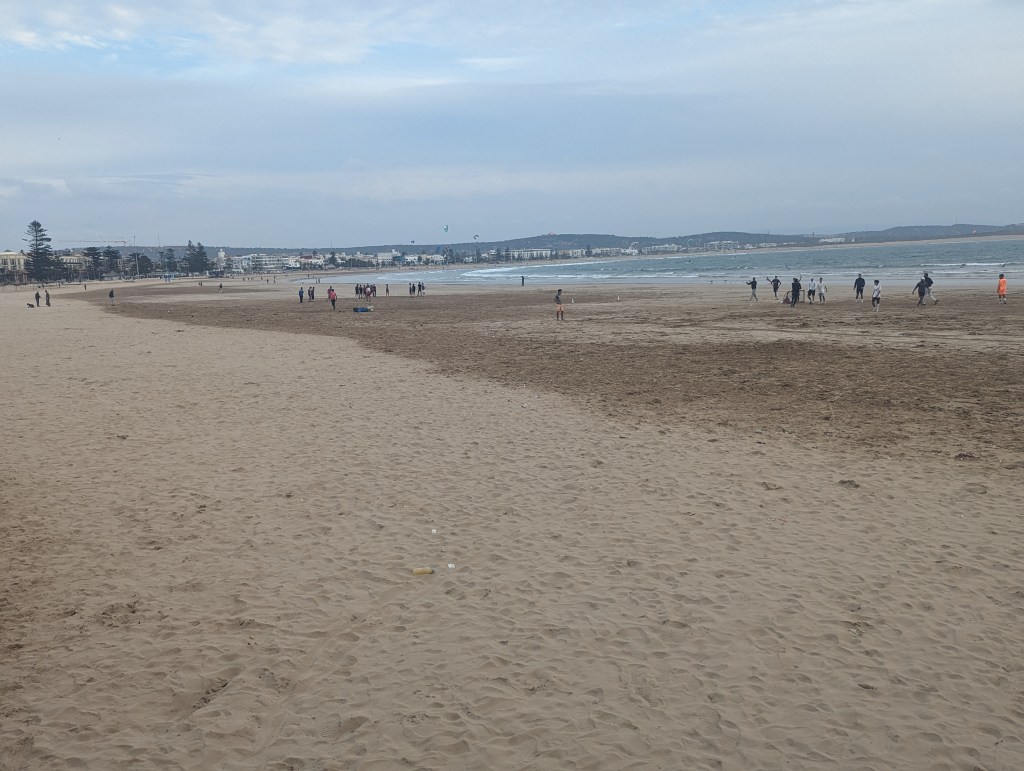
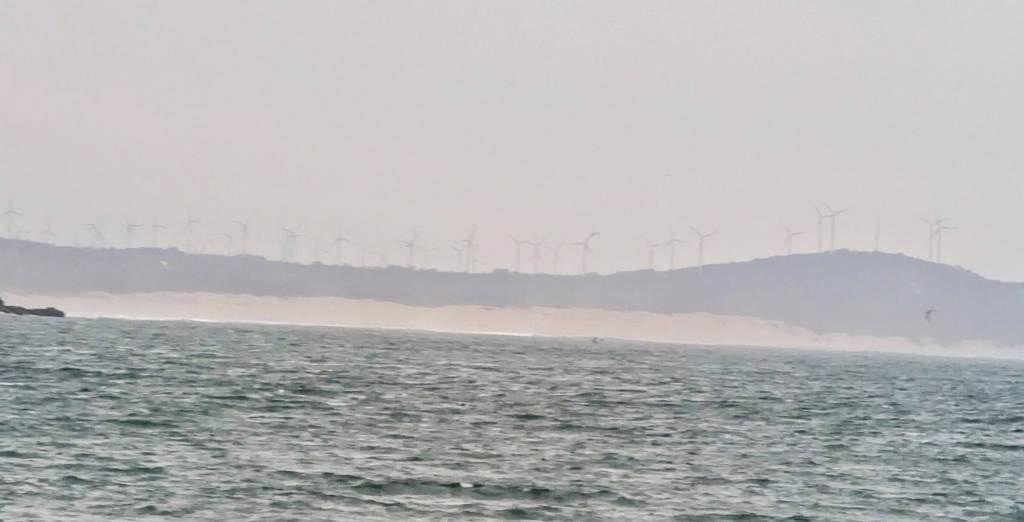
Essaouira is also know as the windy city. It is home to many wind turbines. The day was a bit cloudy, but with careful looking, they can be discerned in the distance.
As the day drew to a close, so did our time on the coast of Morocco. On to the mountains.
 Jo & Eric's travels
Love seeing your travels! Just back from Casablanca surgical trip and in love with Morocco! Thanks for all the details – it’s great to travel ‘with’ you!! Hugs from AZ
LikeLike