
We left Como in the still pouring rain. We checked into the Grand Hotel Savoia in Genoa, which was a relic of yesteryear. According to its website …”established in 1897, in a palace whose atmospheres still evoke the joyful splendour of the Belle Époque. The refined charm of our rooms and the spacious halls in the hotel was perfectly to the taste of the Italian and European royal families who chose the Grand Hotel Savoia during their travels. Their precious Guest Book not only preserves the signatures of Italian royals, but also the most illustrious artists, actors and musicians of the last century. A meticulous salvaging and restoration has reinstated the former splendour, the majestic opulence of a late-19th century palace, the ancient charm of the building, the symbols and signs of its history.” We waited out the rain, and in the late afternoon we were able to get out and explore the city a bit. We found that actually we were on the outskirts of the Old City and had to walk a bit to get to the sites. First we visited Basilica of the Santissima Annunziata del Vastato. Vastato means “built outside the city walls,” which this basilica originally was when construction began in 1520.
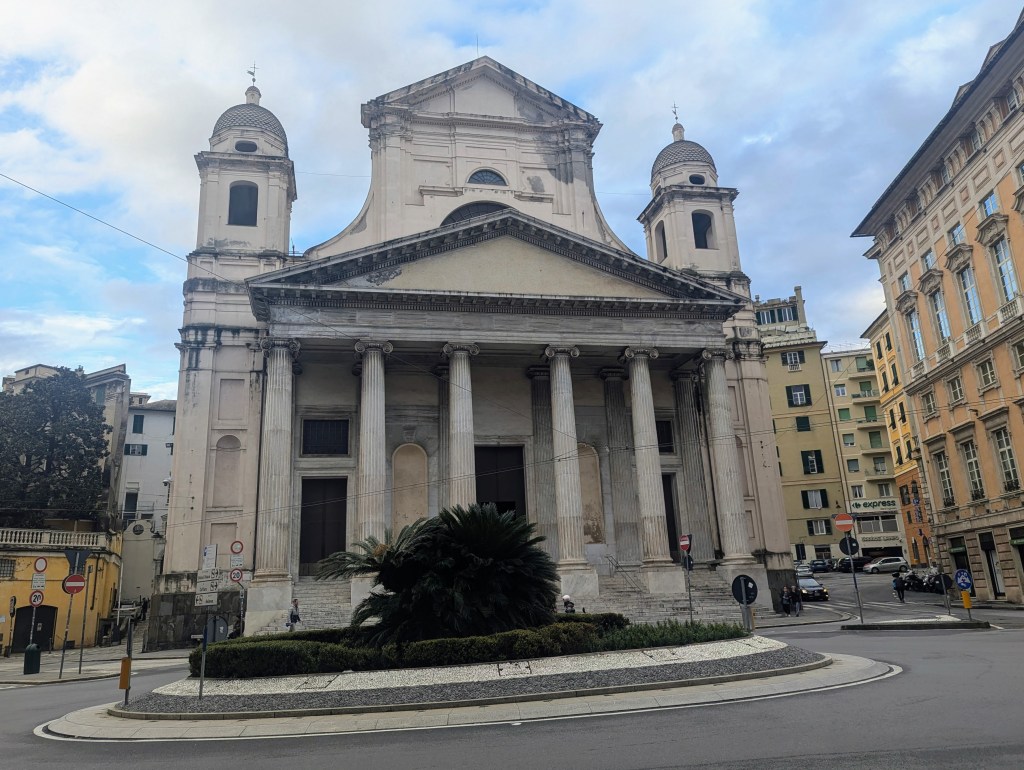
The interior is like a 17th-century gallery of art. It is lavishly decorated with inlaid marble, gilded stucco, and frescoes by 23 local artists and 13 sculptors. There was so much to see, we barely knew where to look first.
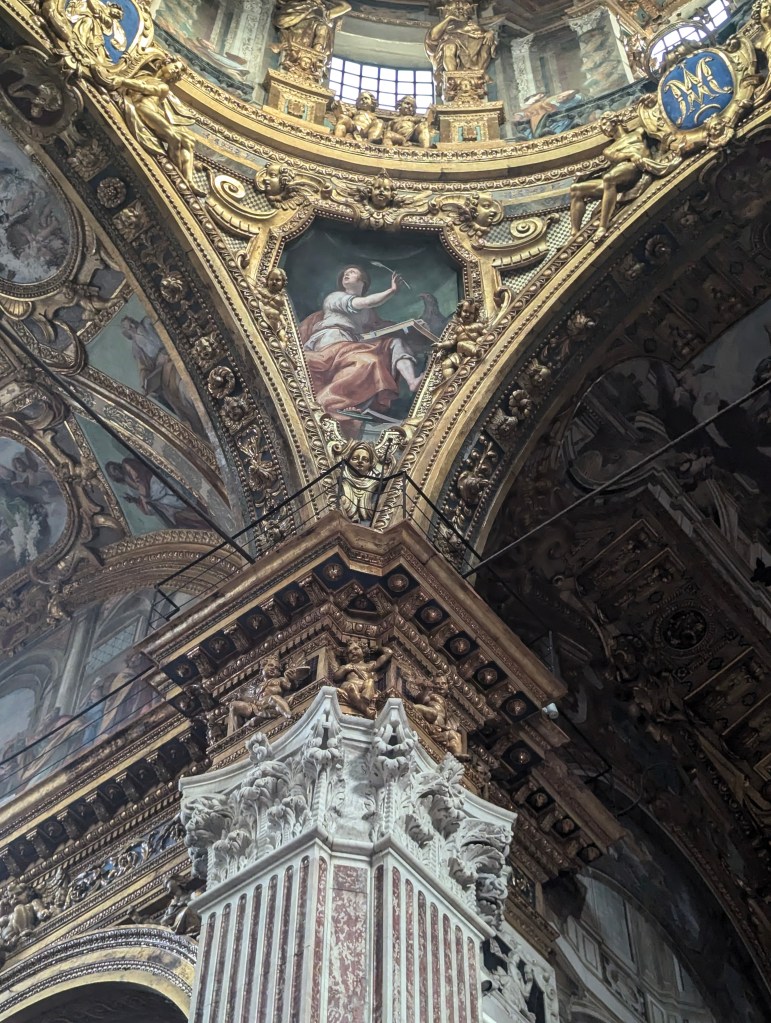
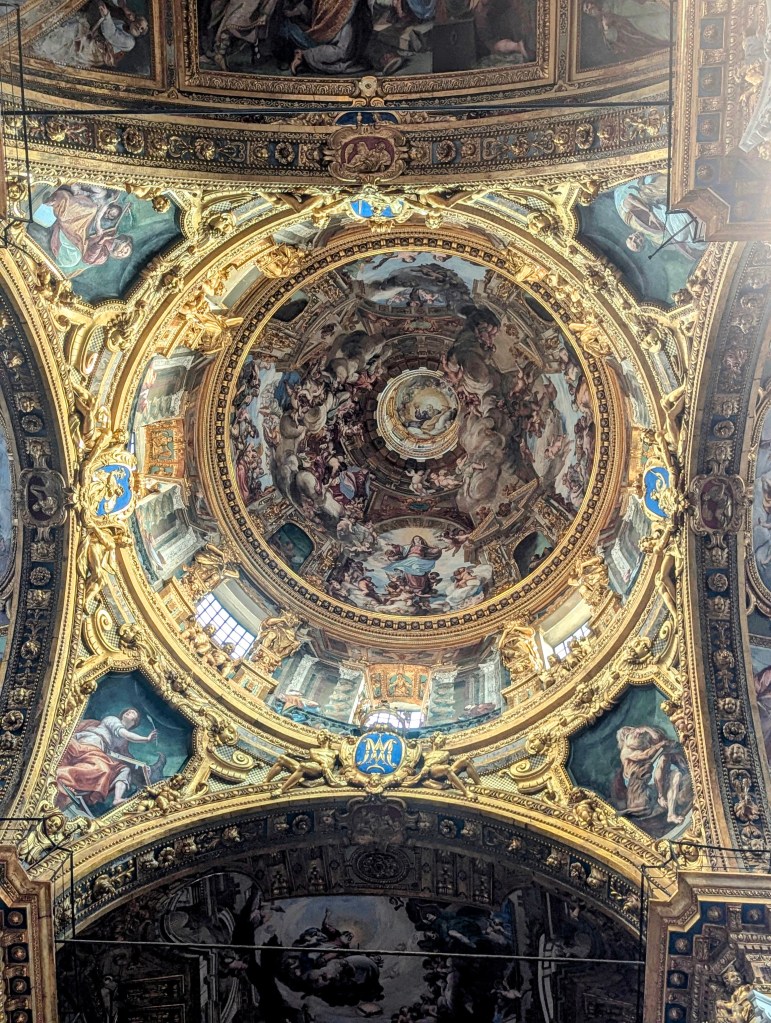
We were able to download an audio guide which explained a lot of the artwork like this fresco of Mary looking up at a ceiling full of frescos, ie frescos within the fresco.
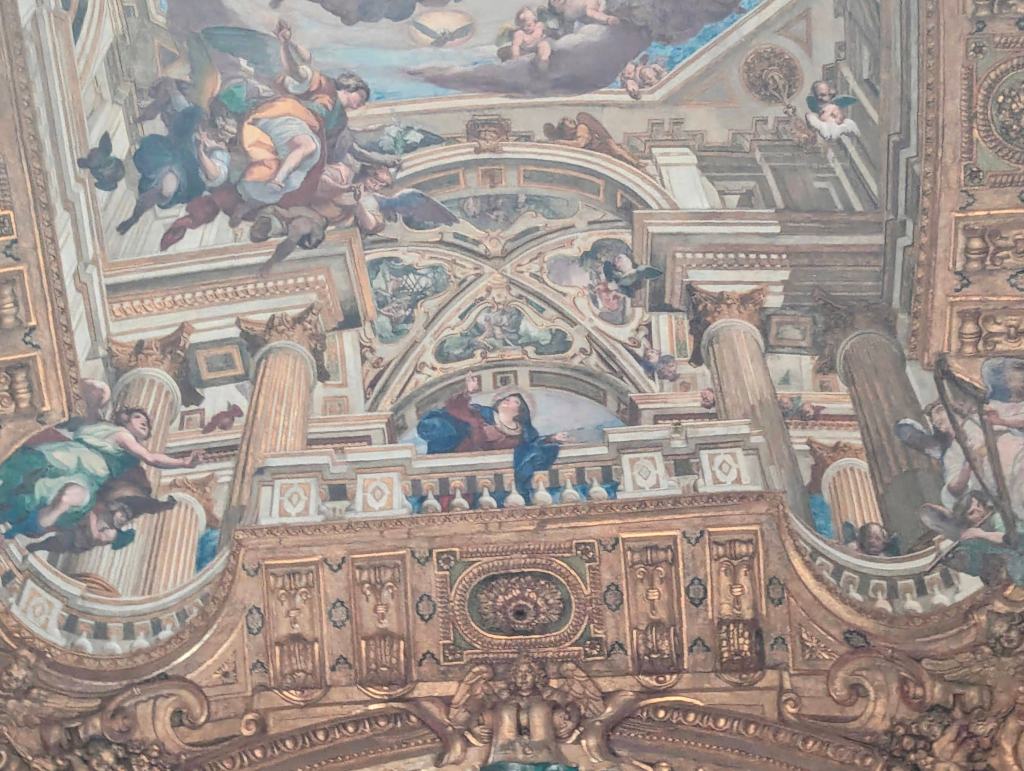
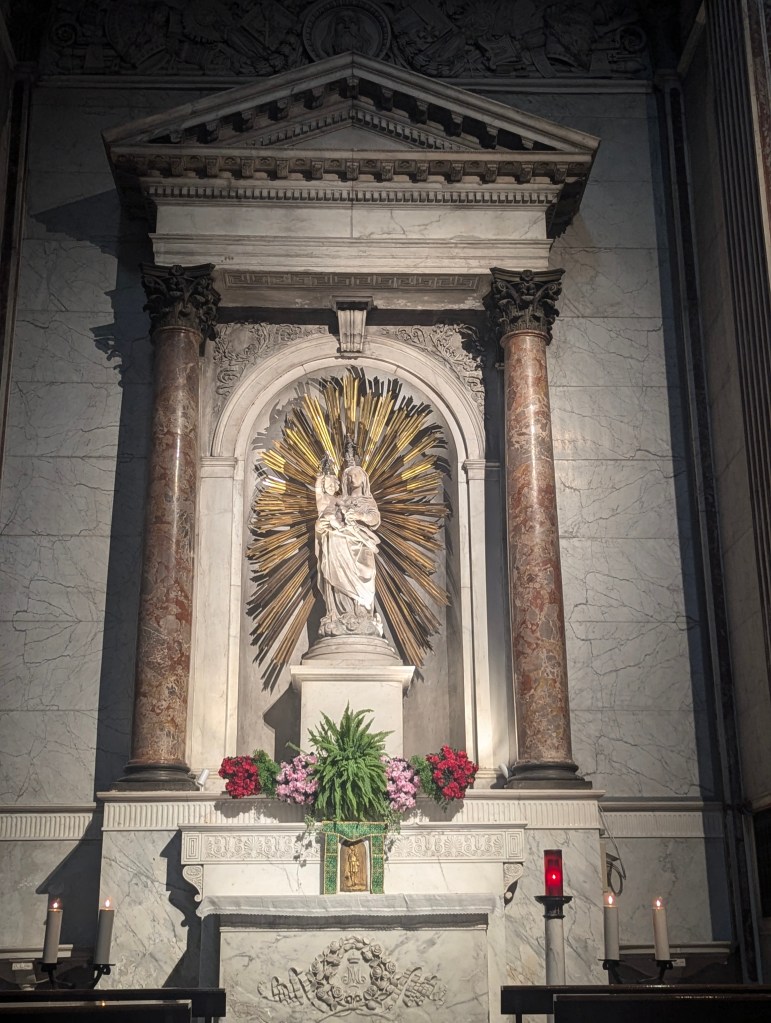
There was a chapel dedicated to Mary.
Several of the chapels had sculptures that were built like dioramas.
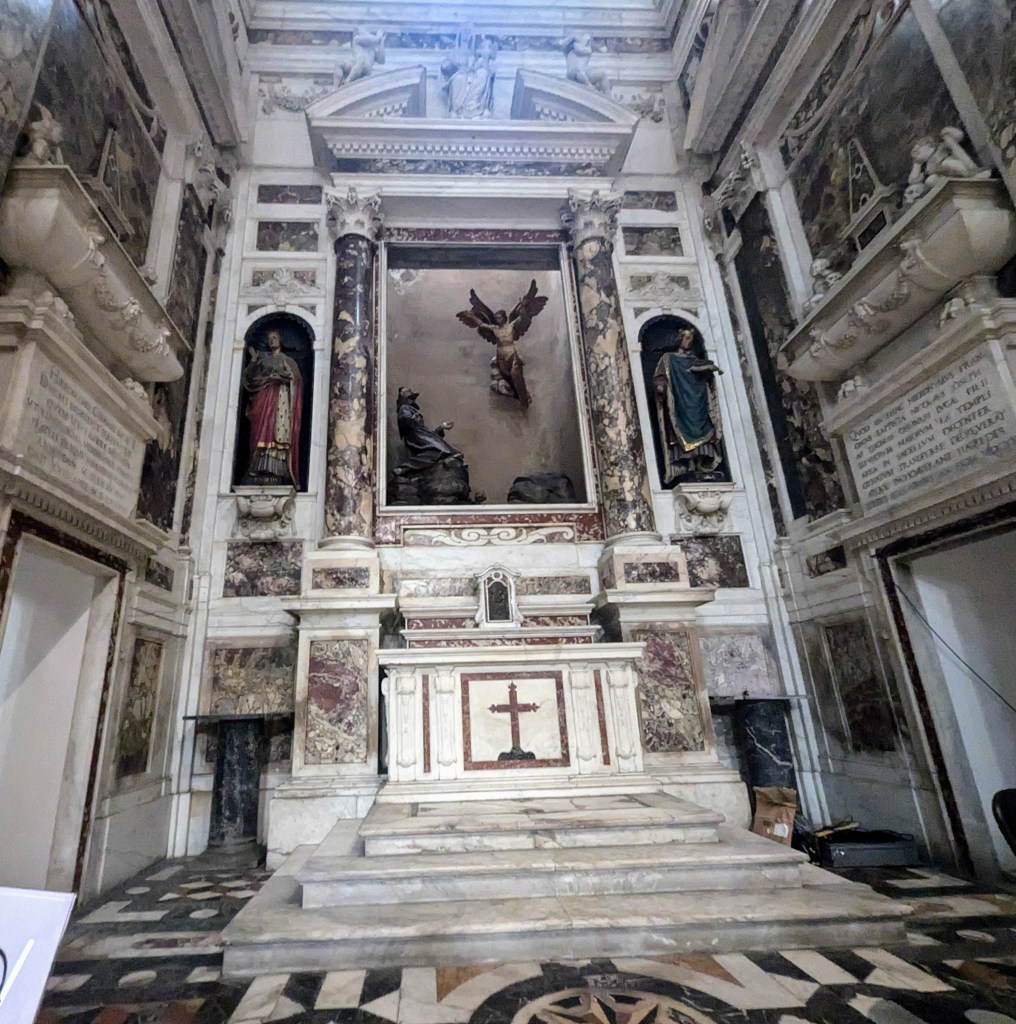
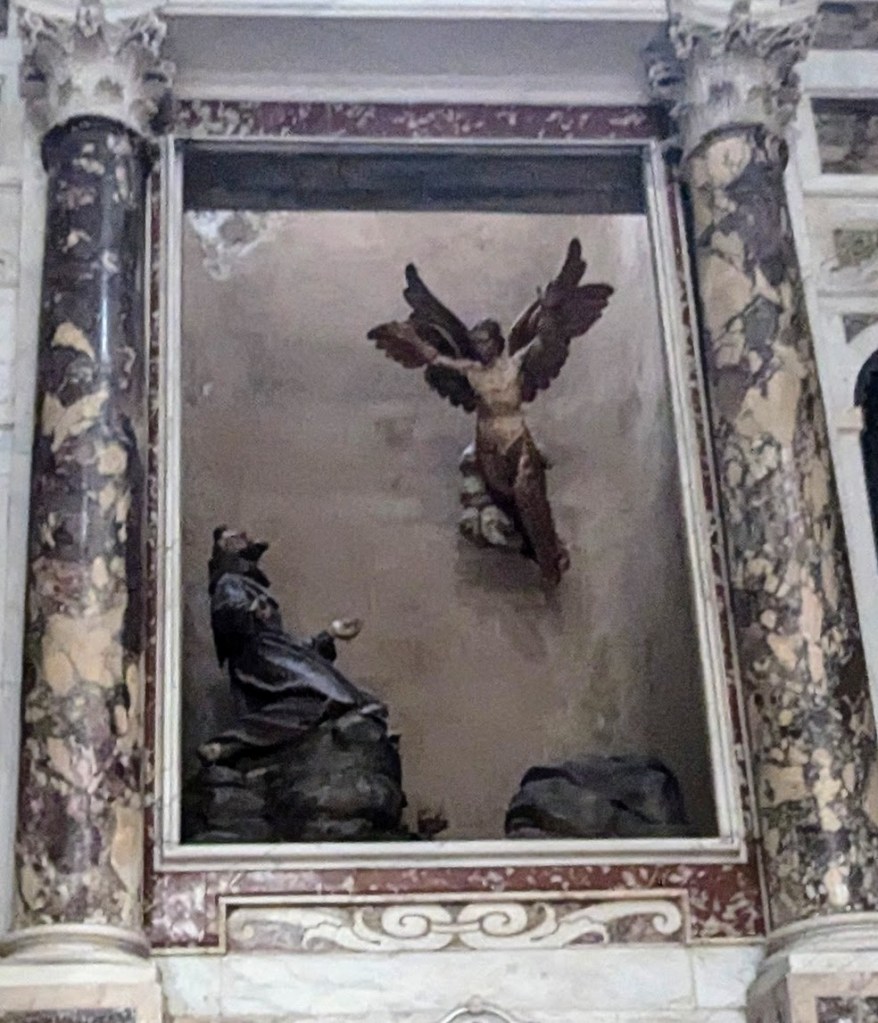
which may be hard to discern from the above, but a closer look may help.
The pulpit was particularly beautiful.

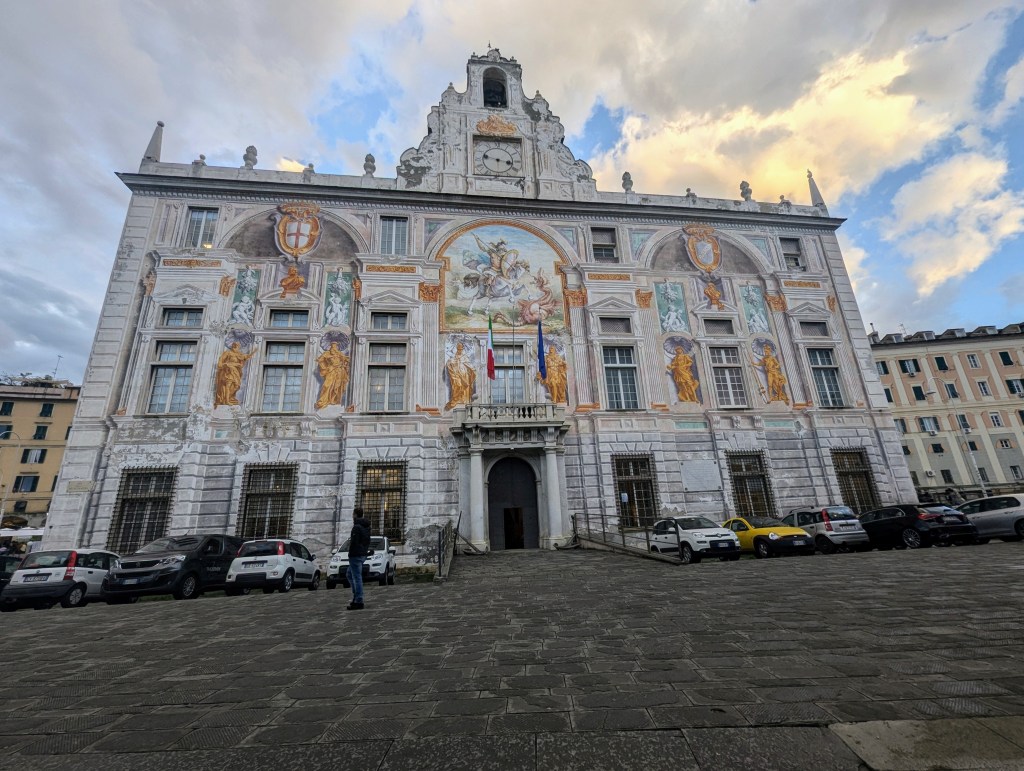
We had spent a fair amount of time in the basilica, and by the time we emerged, the weather had cleared further. We felt comfortable at this point heading toward the port. Also on the way we passed Palazzo San Giorgio (Palace of St. George). The Byzantine Emperor Michael VIII felt indebted to Genoa. Genoa had been his ally in a war against the Latin Empire. To show his appreciation, Emperor Michael donated material stripped from the Venetian embassy in Constantinople to Guglielmo Boccanegra. In 1260 Boccanegra used the material to build his waterfront dream palace. The palace has had many uses through the centuries. In the early 1300s it was a prison, one of its most famous inmates was Marco Polo. Then it was used as headquarters for port authorities. In 1400 the building became the home of the Bank of San Giorgio, one of Italy’s first banks.
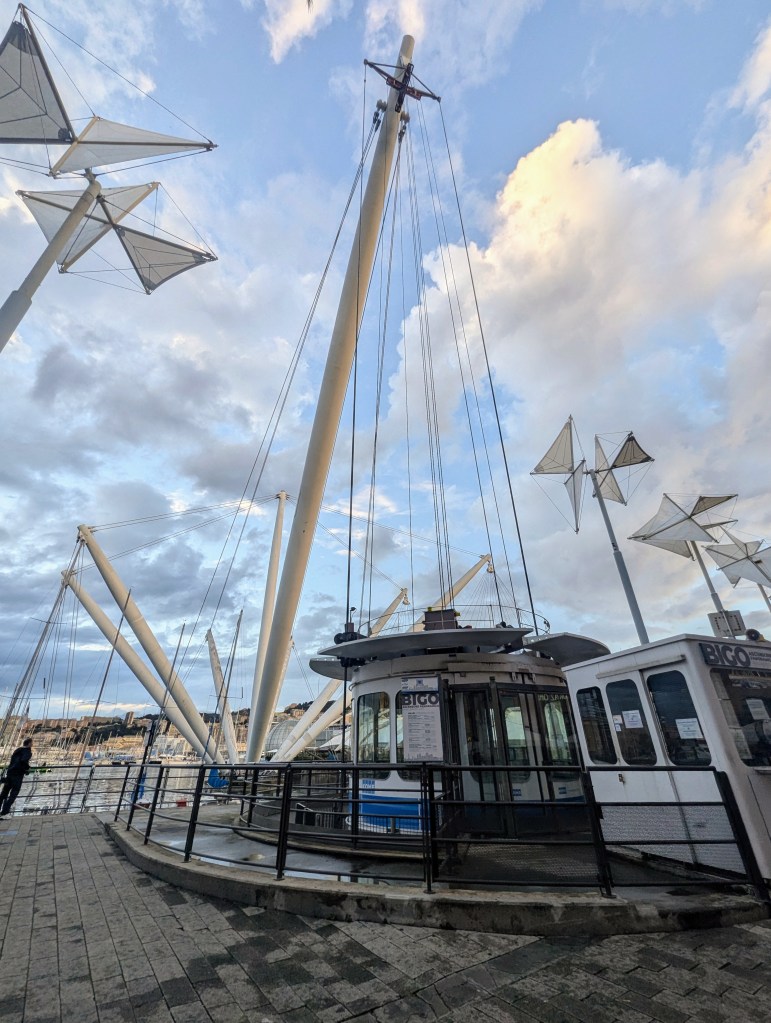
Directly across from Palazzo San Giorgio is the Porto Antico di Genova (Genoa Old Port). Genoa Old Port brings back Genoa’s golden age as a principal sea-faring city and maritime power. It was inaugurated in 1992 as part of Genoa’s 500 year celebration of the voyages of Christopher Columbus, a Genoa native.

Something we had not seen before was a round “room” that these cranes lift for a panoramic view of the port and the city. (The little square building to its right is a ticket booth).
We were also intrigued by this statue of a traveller, more on him later.

Lest one looking at these pictures and seeing blue skies and doubts my claims of awful rainy weather, I include a youtube link below, which was taken nearby on the same day. We just happened to get to the port in the 15 minutes that the sun shown through the whole day.
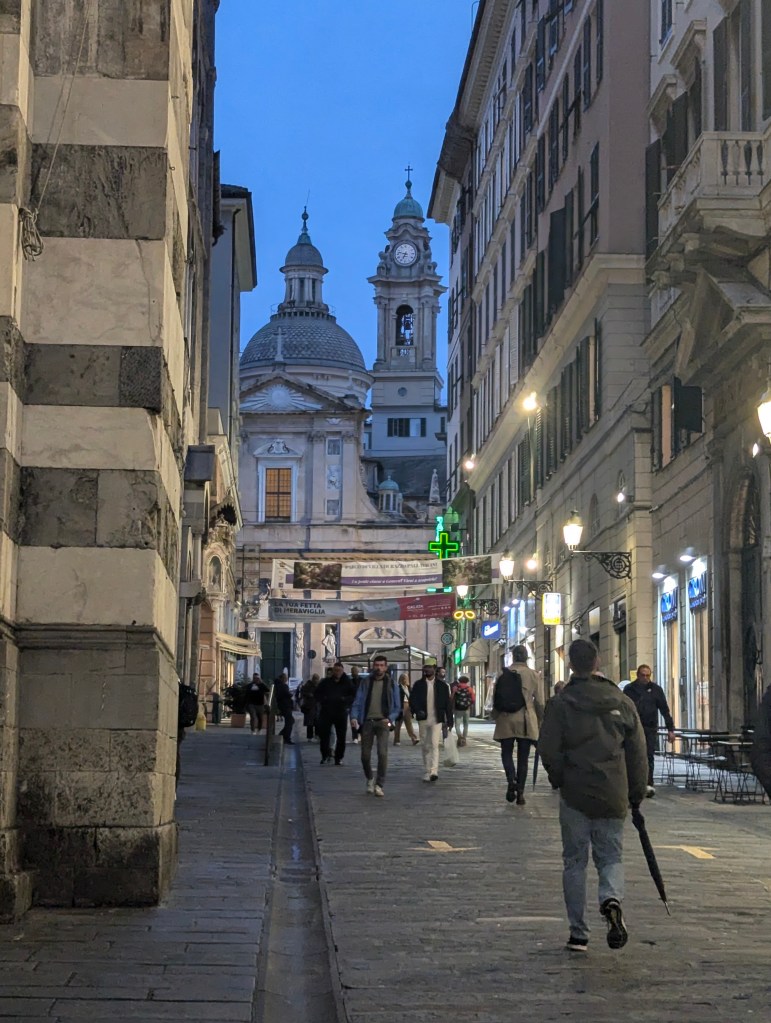
As dusk started to fall, we made our way through the winding, narrow streets
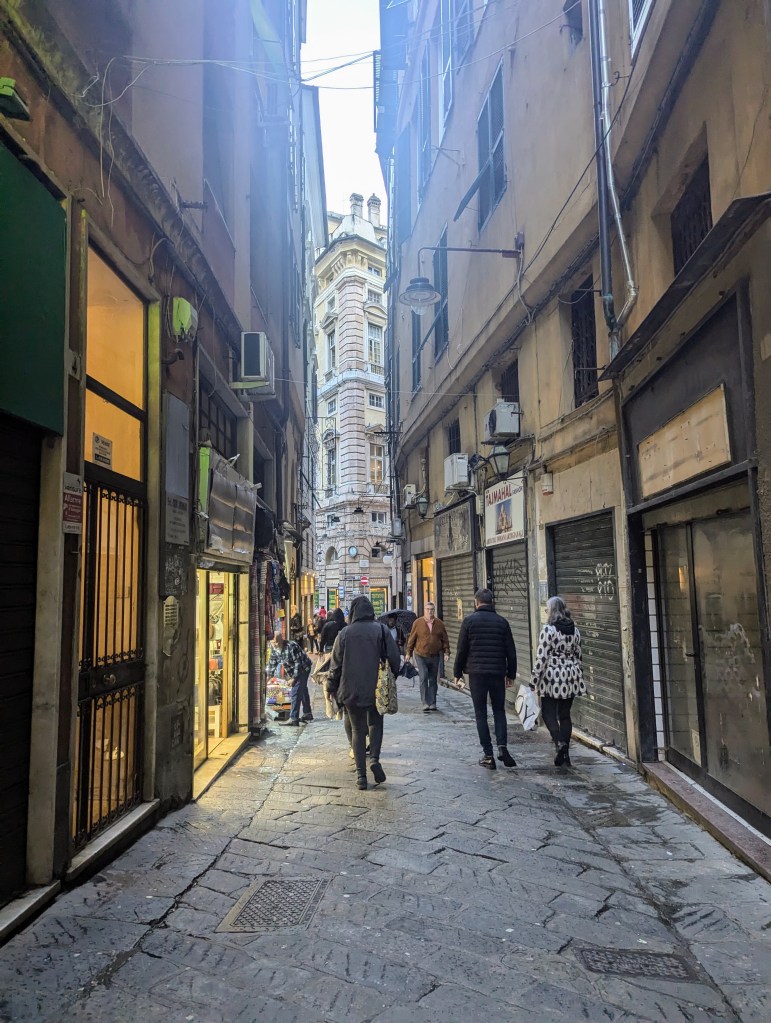
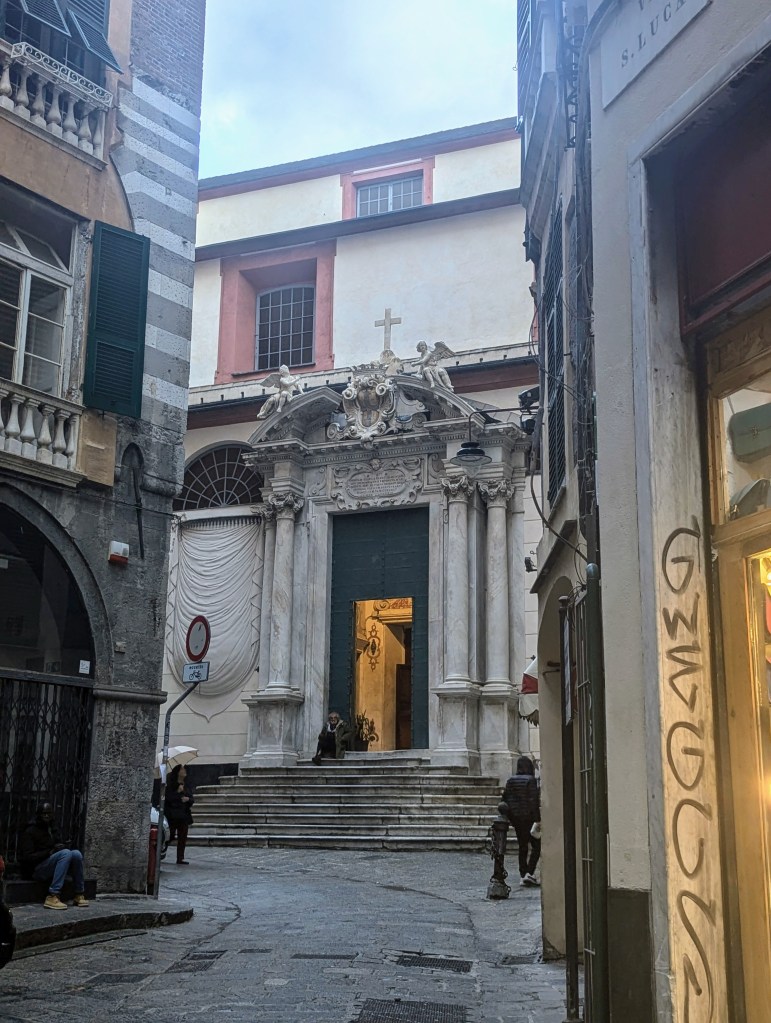
with a church around every corner
to the Cattedrale di San Lorenzo ( Cathedral of St. Lawrence) which, built around 1098, is the most dominant church in Genoa. During medieval times, the church was the center stage of social and political life for the residents of Genoa. After a disastrous fire in 1296, the church was rebuilt. The facade was completed in 1312.
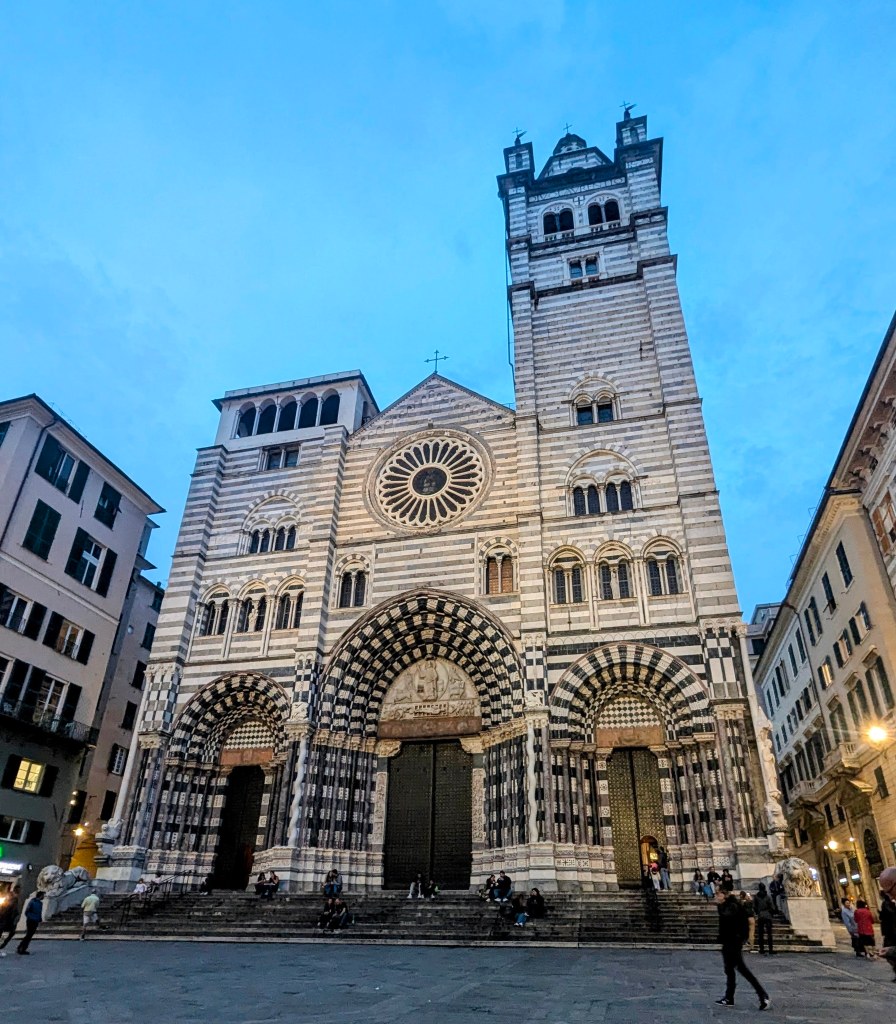
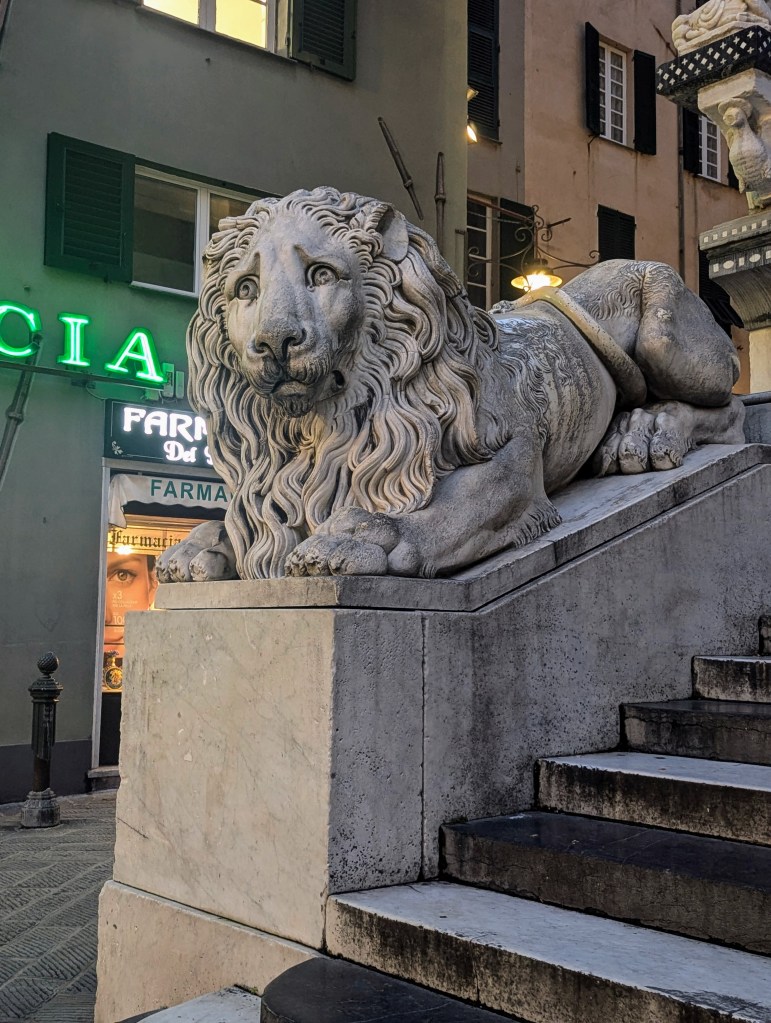
I was drawn to the sorrowful looking lions that flank the entrance.
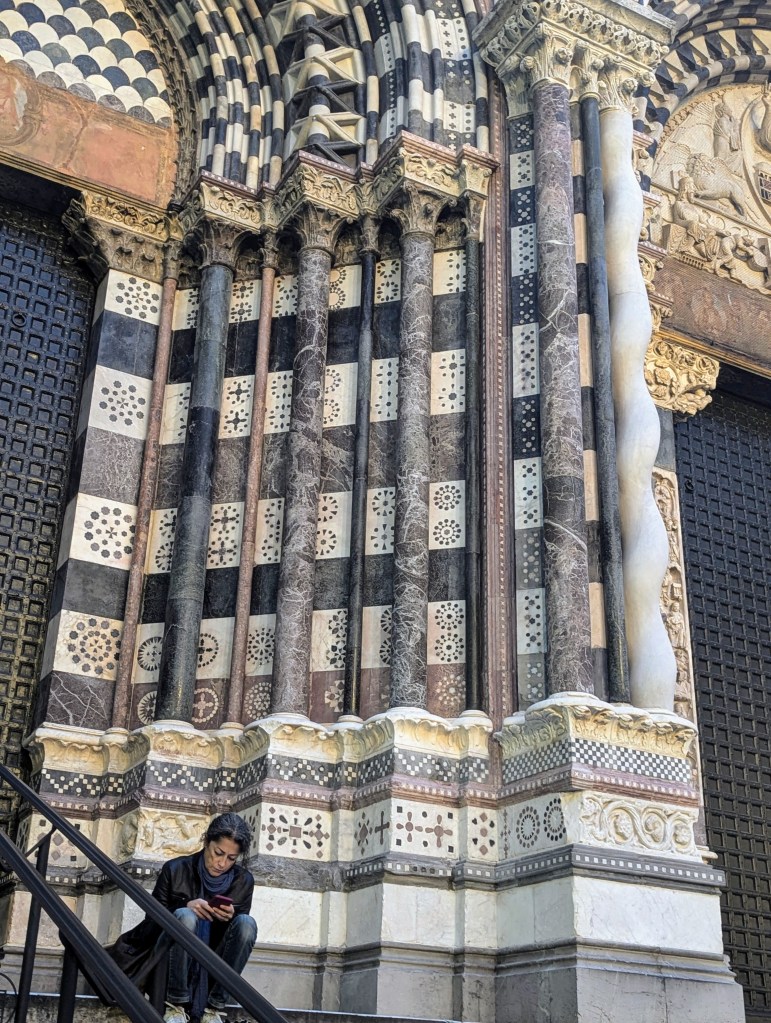
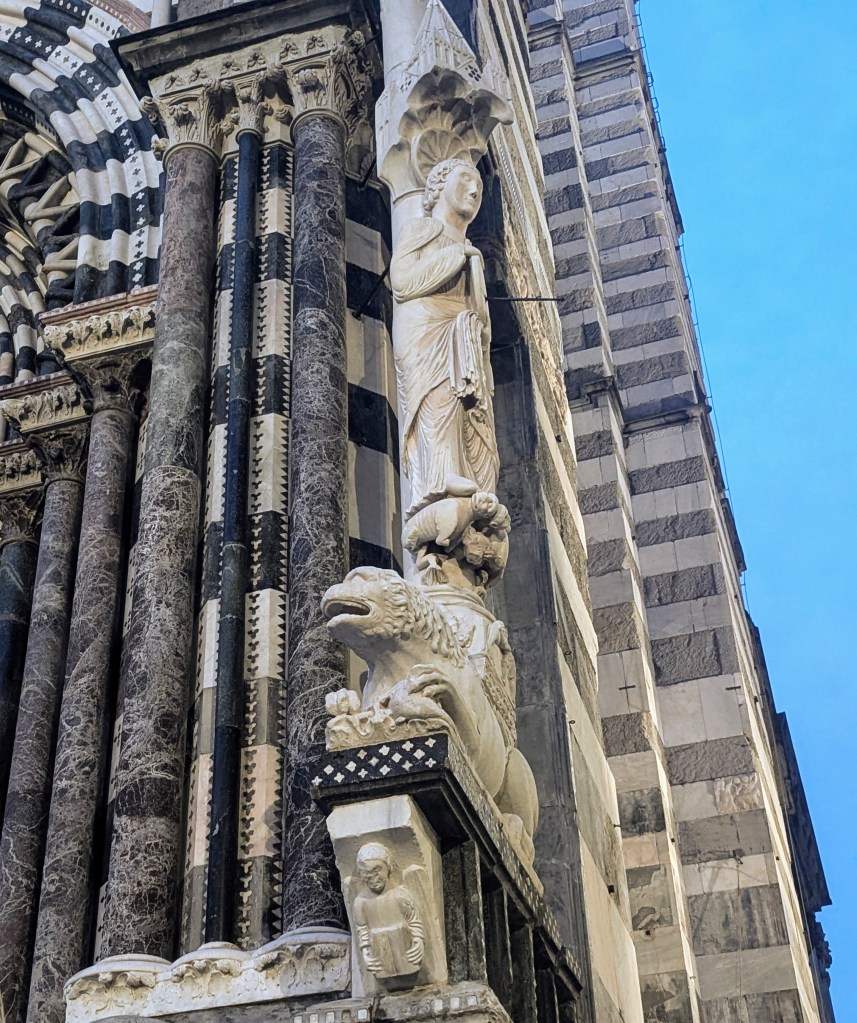
Another intriguing feature is the diversity of materials and styles of the columns.
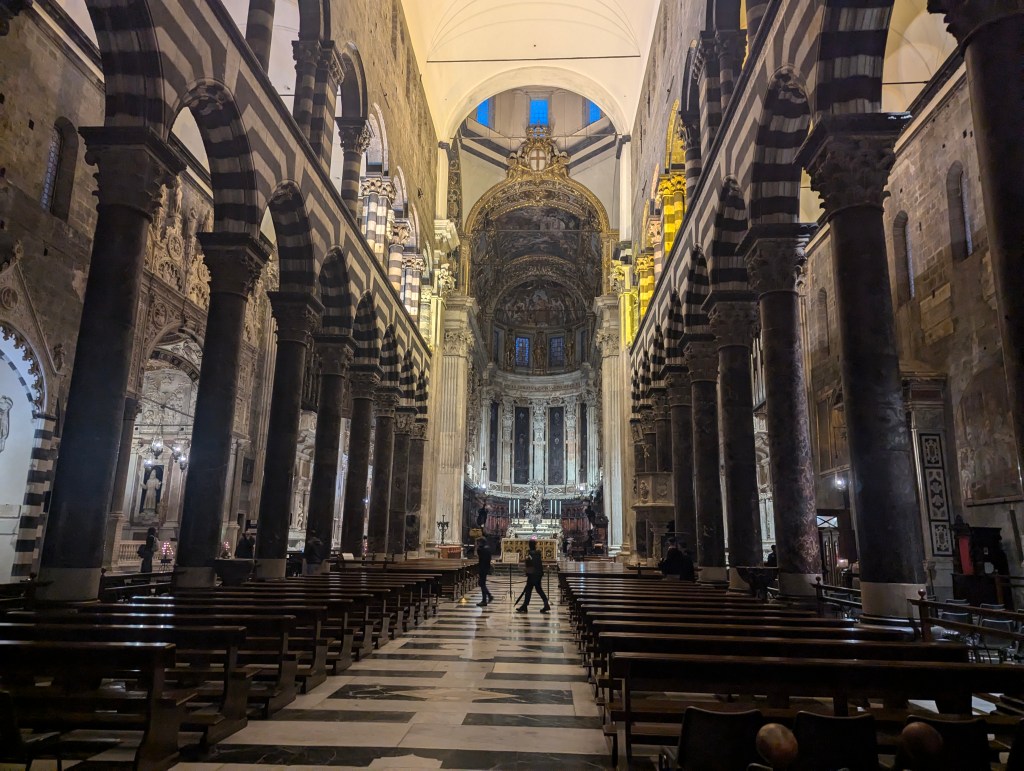
The interior has a basilica plan with a transept and choir. Three naves are divided by marble columns topped by arches with light and dark bands. Above these are smaller Romanesque arches of grey stone.
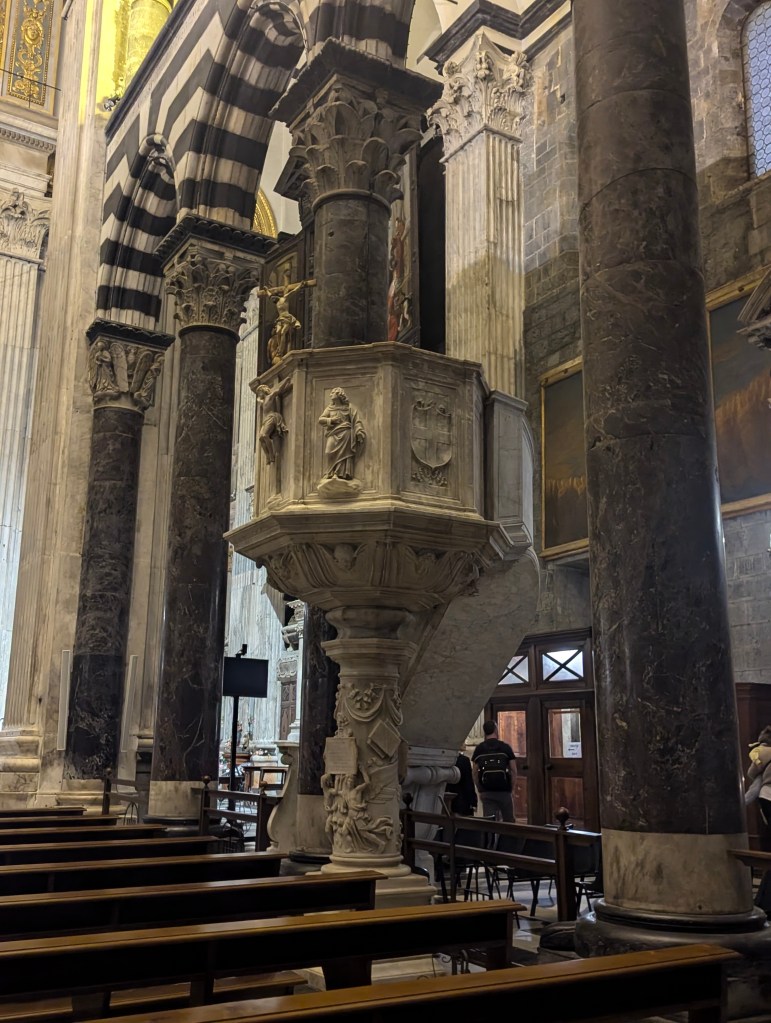
It also has a beautifully decorated pulpit.
Outside, in the vein of a church around every corner, one can be seen right behind the cathedral.
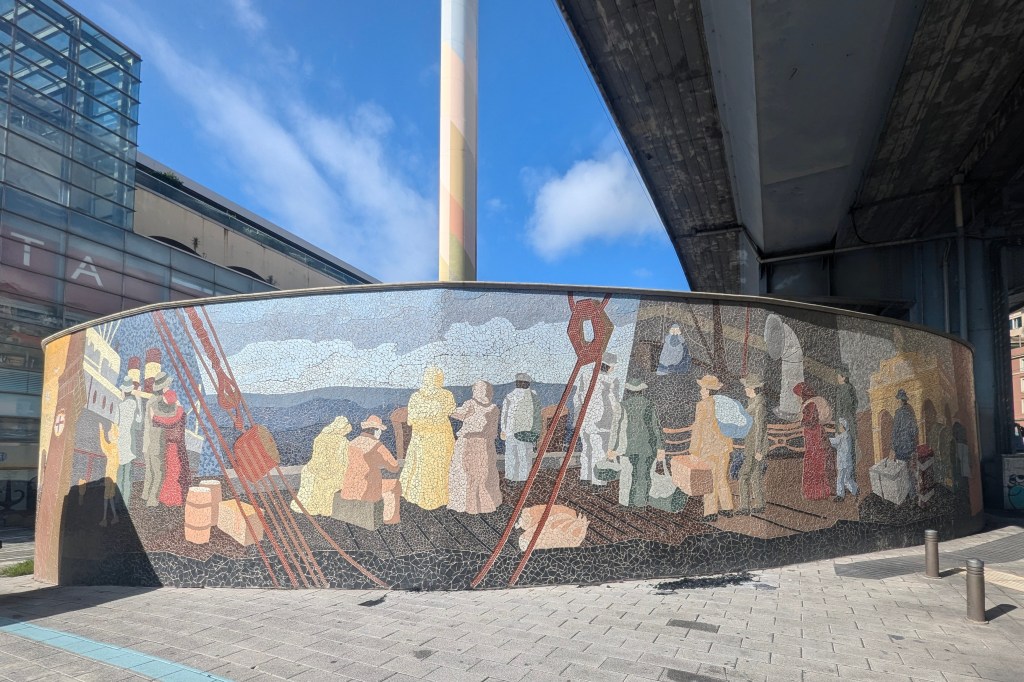
Refreshed in the morning, and with a sunny day, we set out again for the port. At the entrance we found this mosaic featuring travelers of yesteryear.
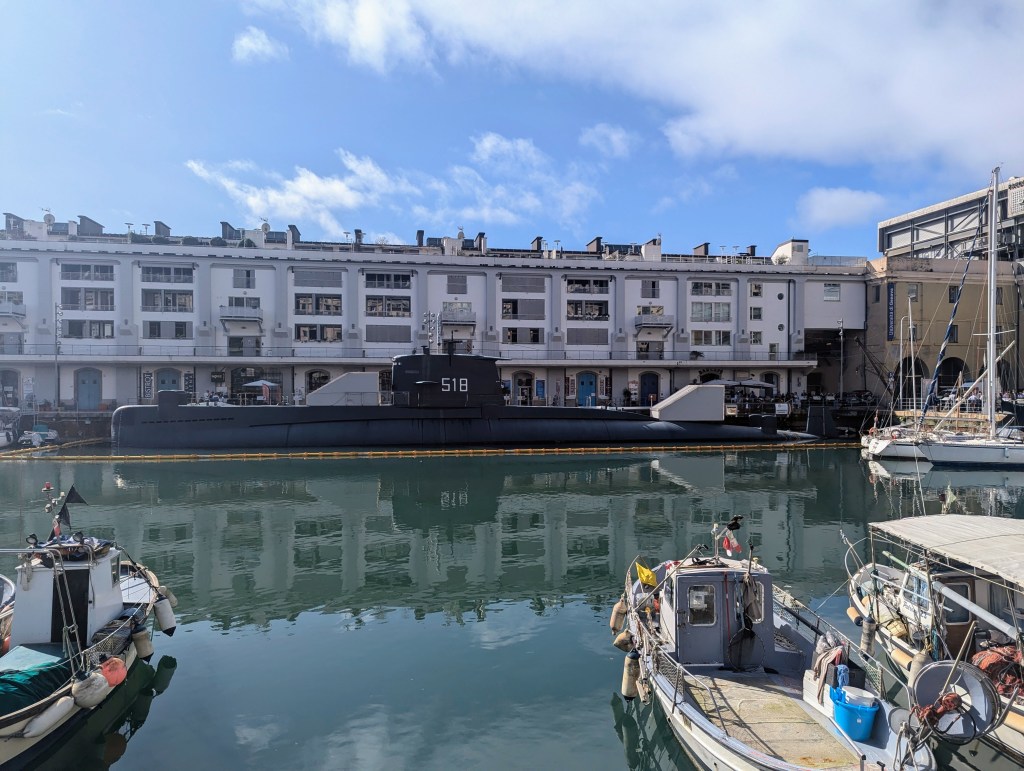
From the 11th century until the late 18th century, the city became a leading economic and military power in Europe through its maritime trade and commerce. Today one of the best reasons to visit Genoa is for the history of maritime, which to be honest, neither of us really is all that interested. We visited the Galata Outdoor Maritime Museum, but did not go into the Galata Museum itself which boasts everything from a full-scale model of a 17th-century galley to all things sailing and shipyards including the big transatlantic ocean-liners. Galata refers to the historic Genoese community of Istanbul, Turkey. It was one of the most vital Genoese colonies in the Mediterranean. In the 15th century, their presence in that community ended. In the 19th century, the Genoa municipality built a system of commercial docks, the oldest of which was named for the lost colony.
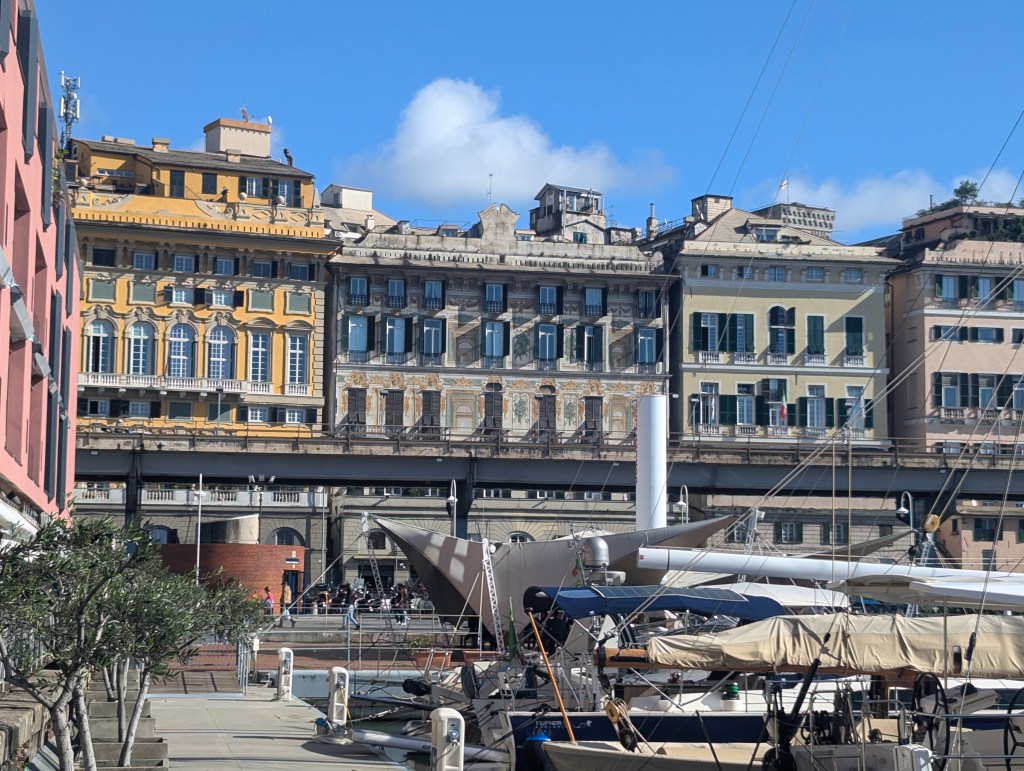
As we walked along the seaside we passed lots of buildings both residential and industrial. What is always striking when visiting Italy is how many random-seeming buildings have statues

and sometimes frescos
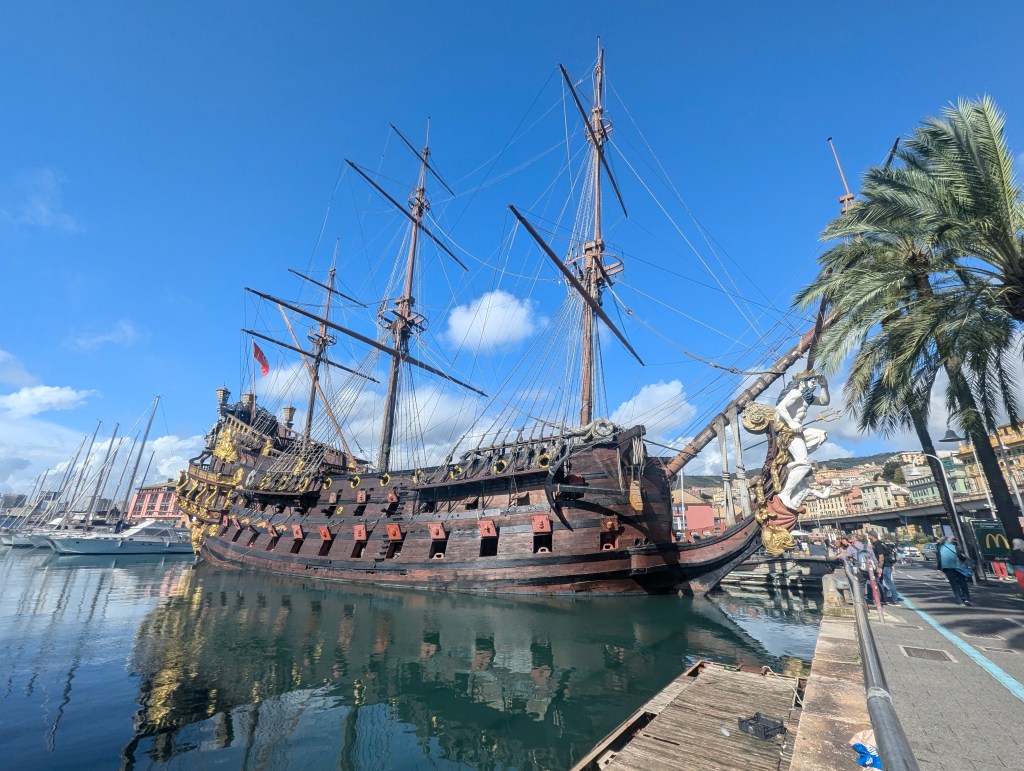
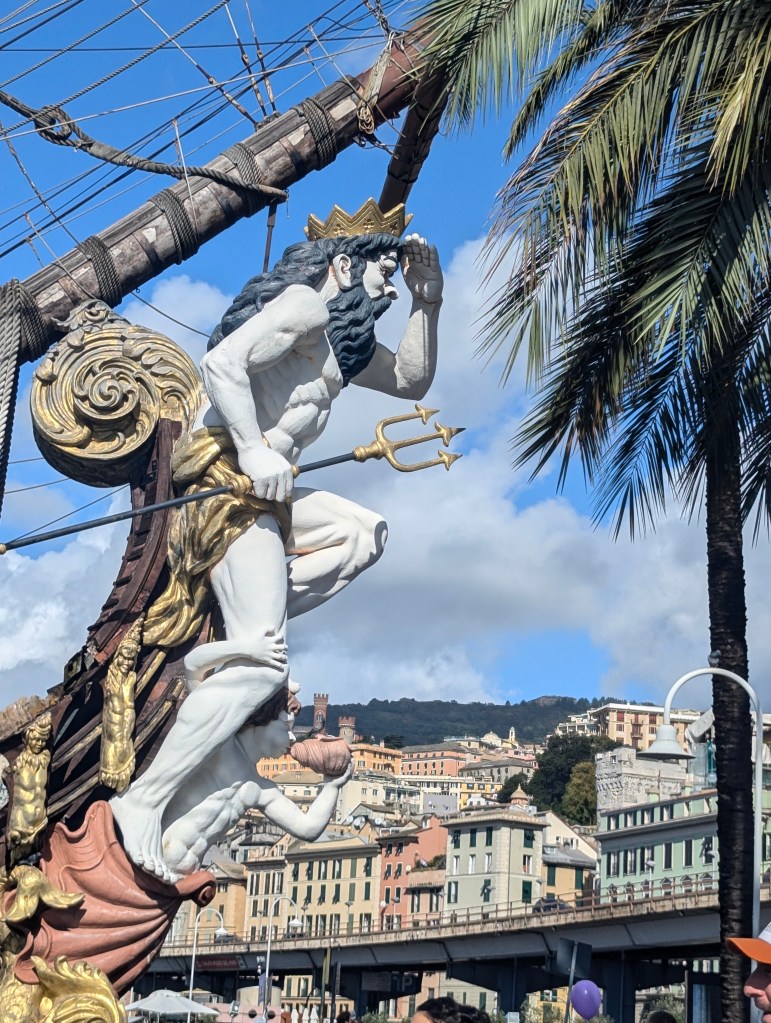
We came to the Porto Antico from a different direction than when we had visited last night and realized we had missed this big reproduction of a 15th century ship similar to those on which Christopher Columbus sailed.
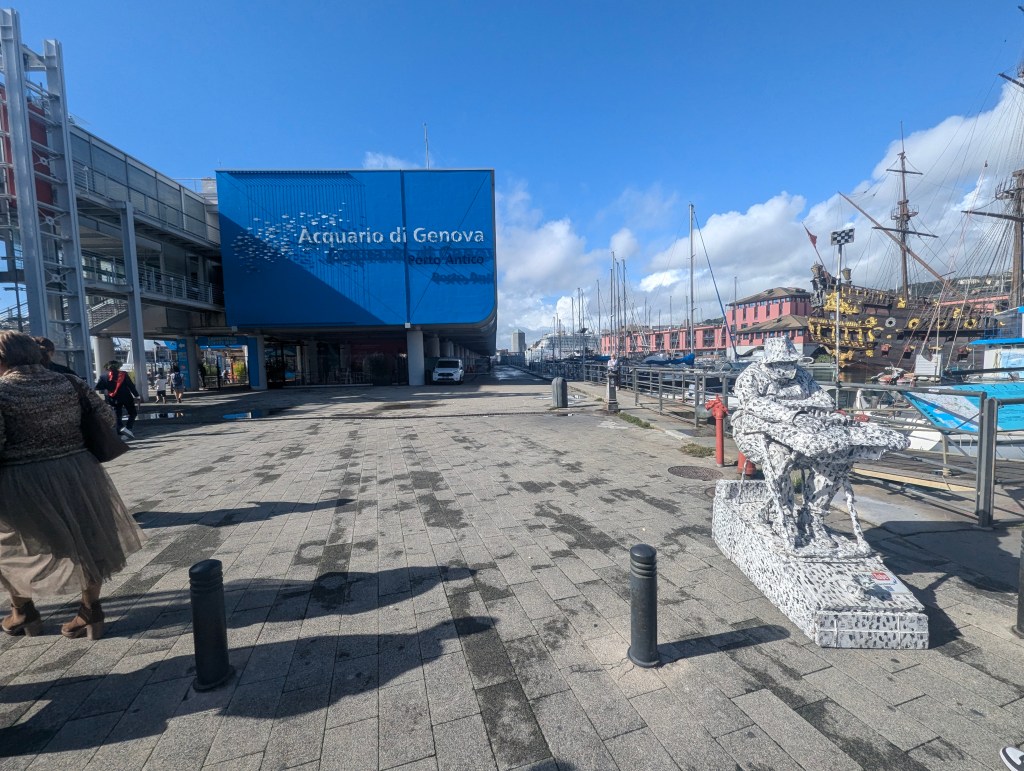
Also to be found at the Porto Antico is an aquarium, which we chose to skip today. But I really liked the human statue outside. People jumped every time he moved, which was rarely.
We continued our meandering of Genoa’s Old City’s narrow streets
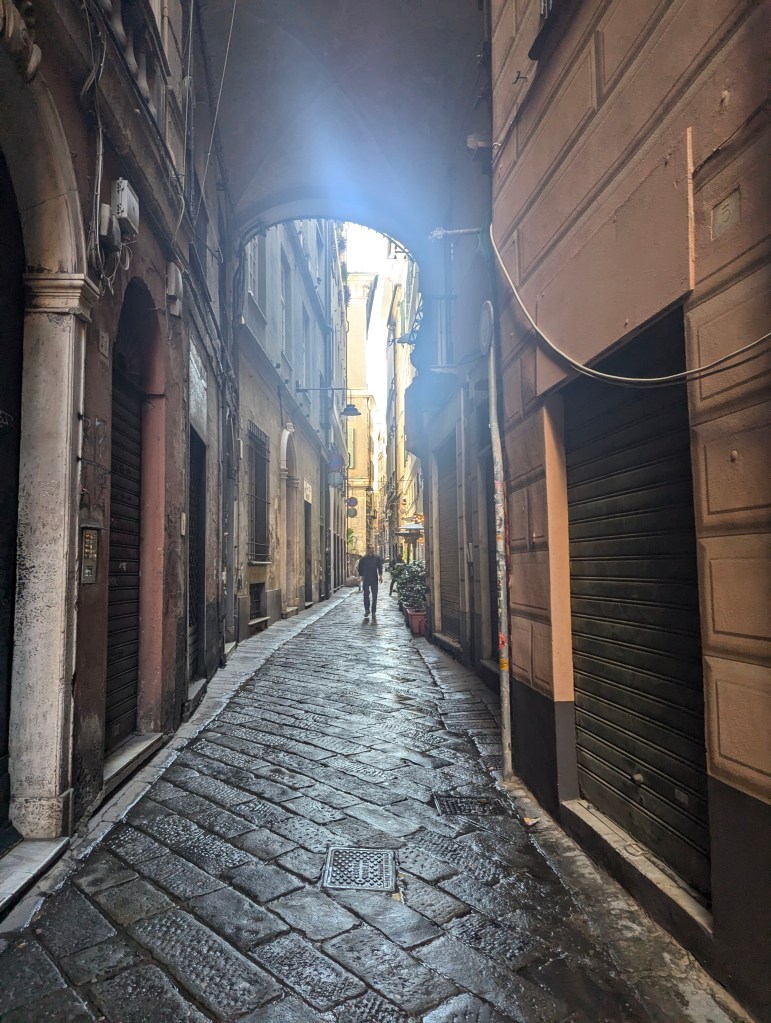
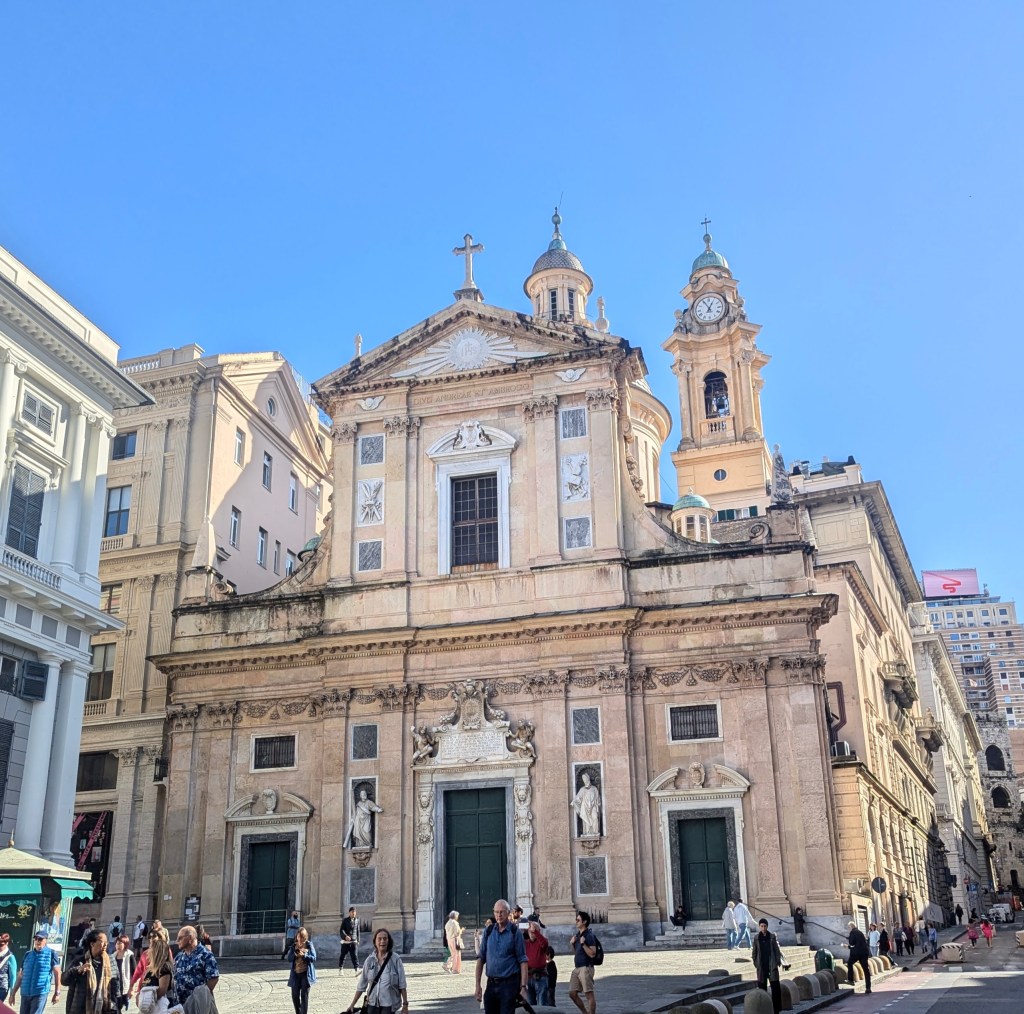
and came upon the Church of Jesus and Saints Ambrose and Andrew. In the 6th century, Bishop Onorato of Milan was on the run. He was escaping from Longobard persecutions to Genoa. There he founded his Church of Saint Ambrose. Ambrose is Milan’s patron Saint. Abandoned in the 7th century by the Milanese community, the church was taken over in the 16th century by the Jesuits.
Next we went by the Palazzo Ducale (Doge’s Palace), once the home of the Doges (heads of state or captain of the people) of Genoa. It was constructed in the 13th century when Genoa was coming into its own as a maritime power. The Doge’s Palace was reconstructed in the 18th century after a devastating fire. Today the palace is used for exhibitions, meetings, special events, and as a library and museum. It is the result of the largest restoration in Europe, covering a building of 300,000 square meters.

By now we were a bit hungry for some lunch, and who could resist the call of Elvis?
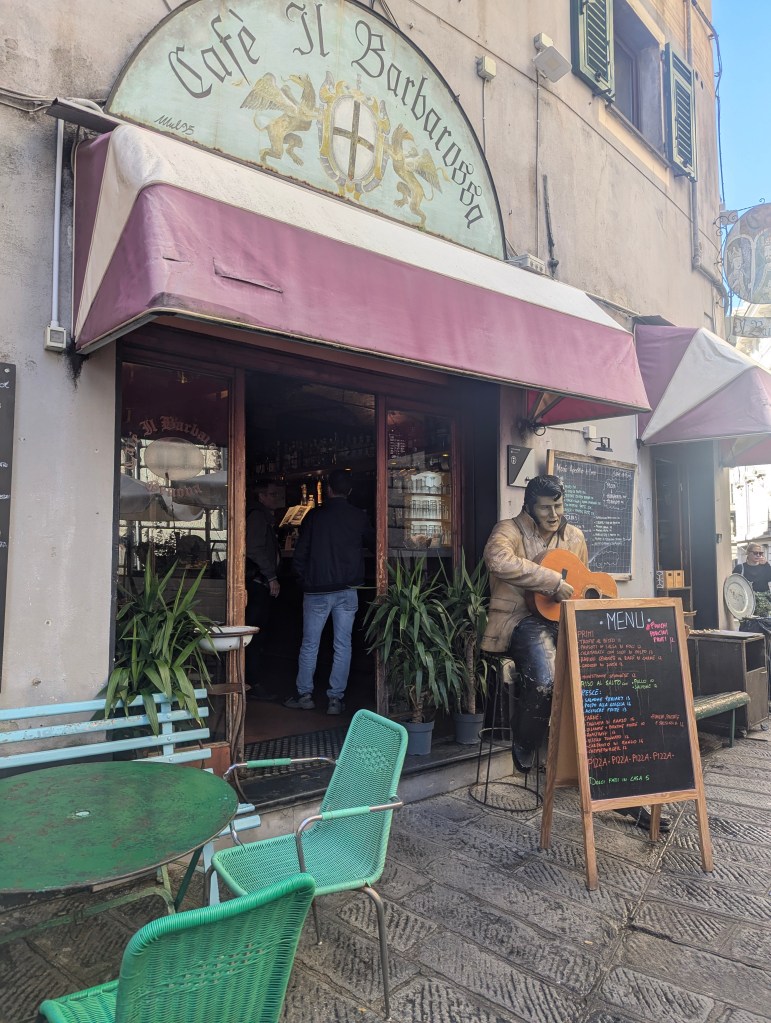
Honestly though, we chose this cafe for the view of these towers. The Mura (Wall ) in Genoa was started in the 9th century. This portion, known as the Barbarossa Towers, was built in the 12th century. Genoa has more and longer walls than any other city in Italy.

Just beyond these towers is a house that Christopher Columbus lived in as a child.

Our destination after lunch was the Piazza De Ferrari (Ferrari Square). Raffaele Luigi De Ferrari (1803-1876), Prince of Lucedio, Duke of Galliera, and senator of the Kingdom of Sardina, in 1837, acquired all possessions that Napoleon had granted in 1812. The square was christened Ferrari Square in 1877, one year after his passing. At the centre of the square, in 1936, a bronze fountain was built and it soon became one of the main symbols of the city.
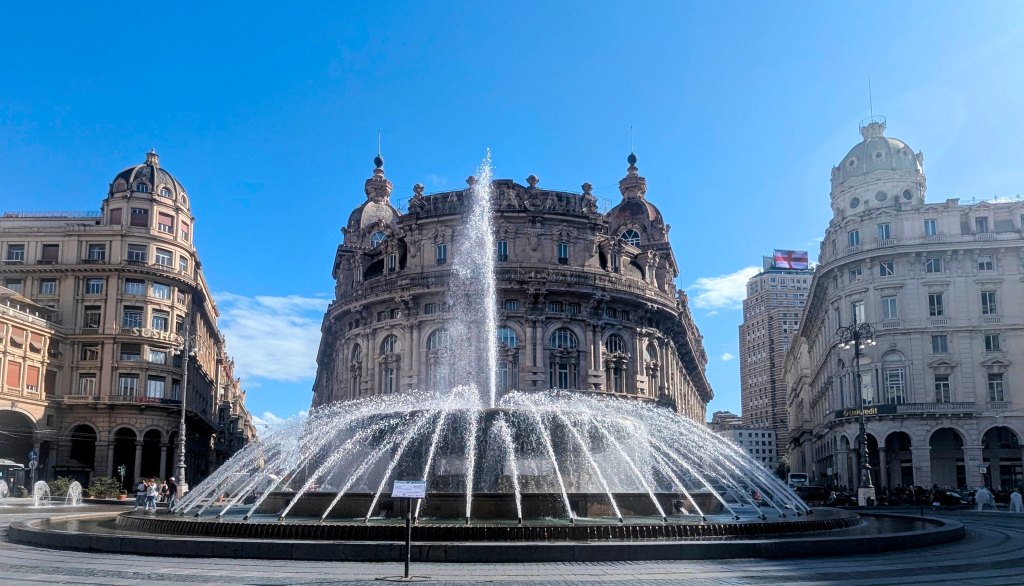
In the square we came upon our second traveller statue.

The prose on the signage explains it best.
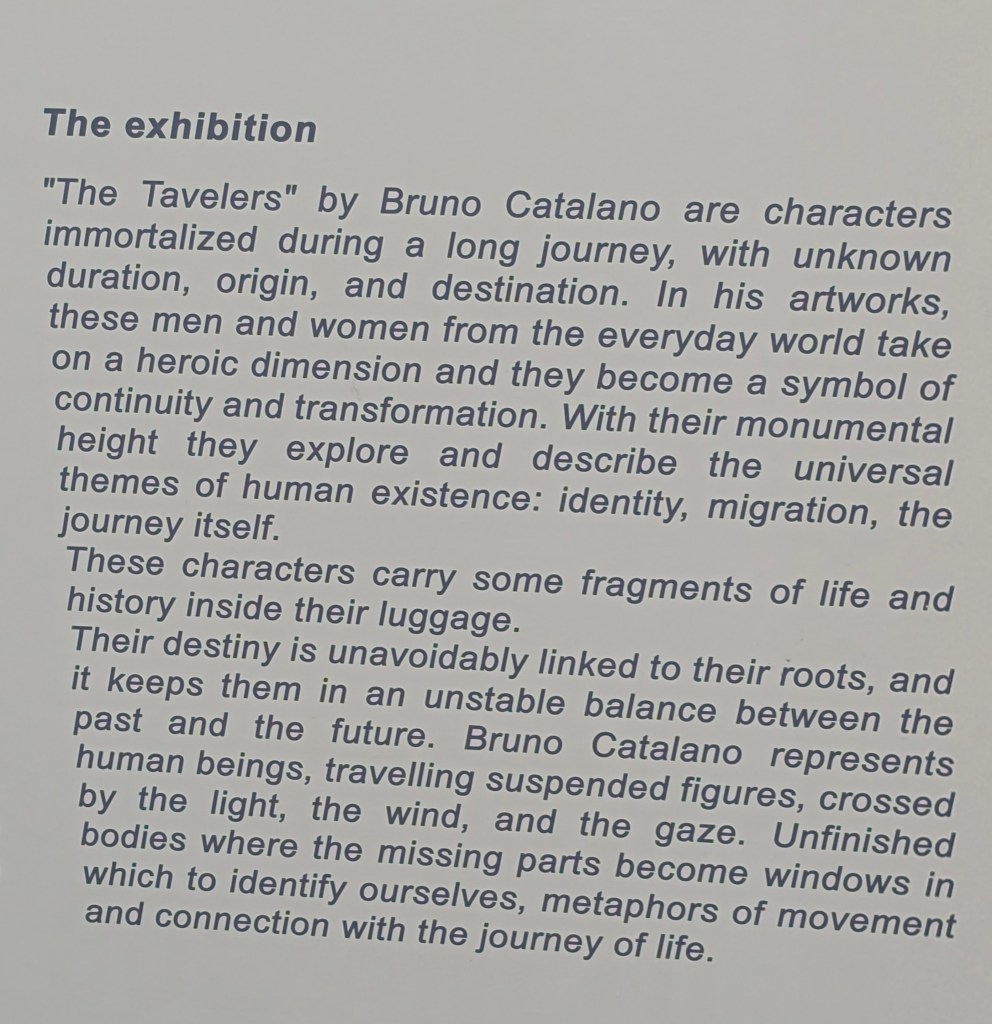
On the side of Piazza De Ferrari is the The Teatro Carlo Felice, the principal opera house of Genoa used for performances of opera, ballet, and recitals. The hall is named for King Carlo Felice, King of Sardinia and ruler of the Savoyard States from 1821 until his death in 1831. He was the last male-line member of the House of Savoy. In front of the Teatro Giuseppe Garibaldi (1807-1882), a hero of the Italian revolution, appeared astride his bronze horse.
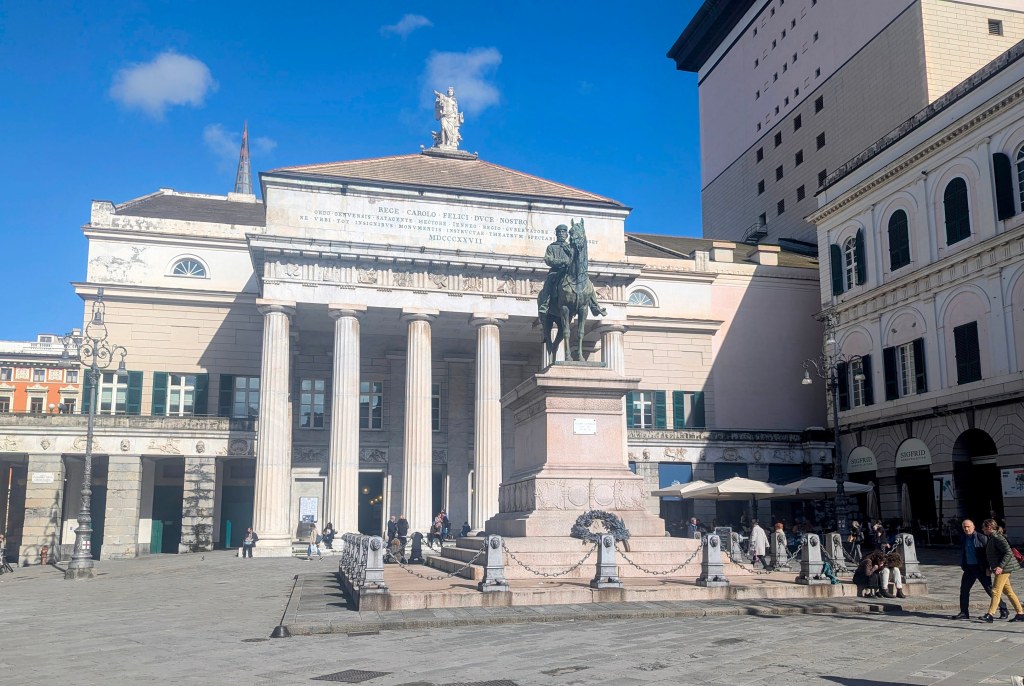
Branching off from Piazza De Ferrari is Via XX Settembre (20th September Street), named for the 20th of September 1870, the day revolutionaries stormed the Pia Gate (Porta Pia) of the Vatican. It marked the end of the temporal power of the Church, the “Risorgimento,” which ushered in the unification of Italy. It was redesigned and modernized from 1892 to 1912.
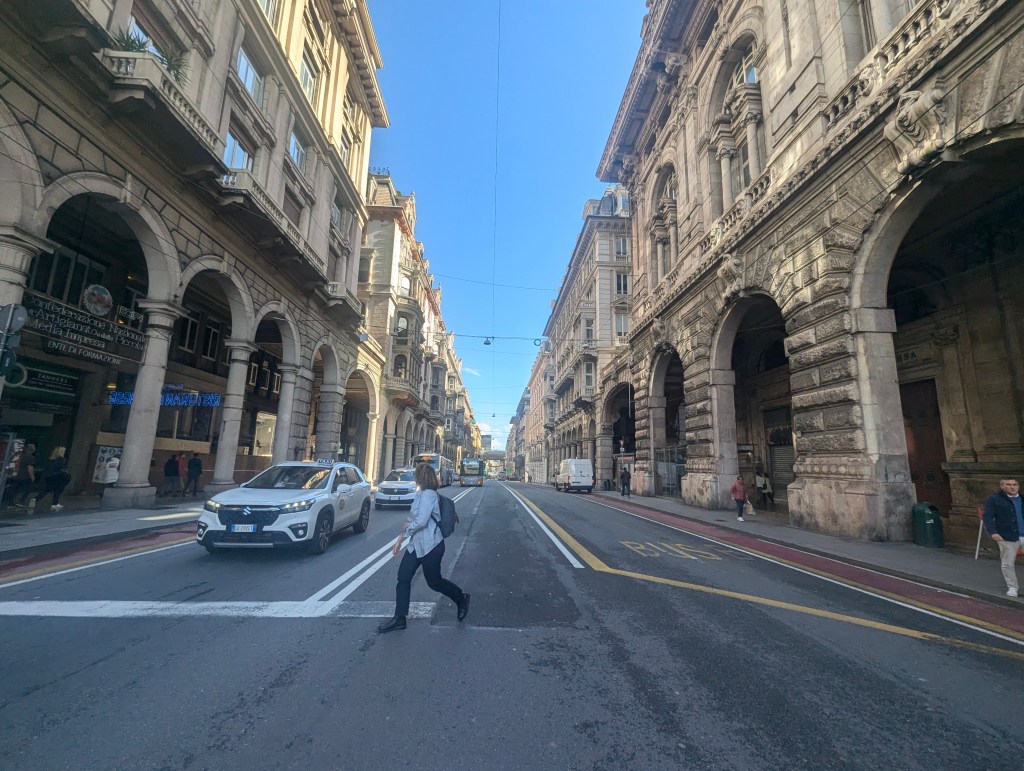
The street has a lot of Art Nouveau decorations, decorated pavements,
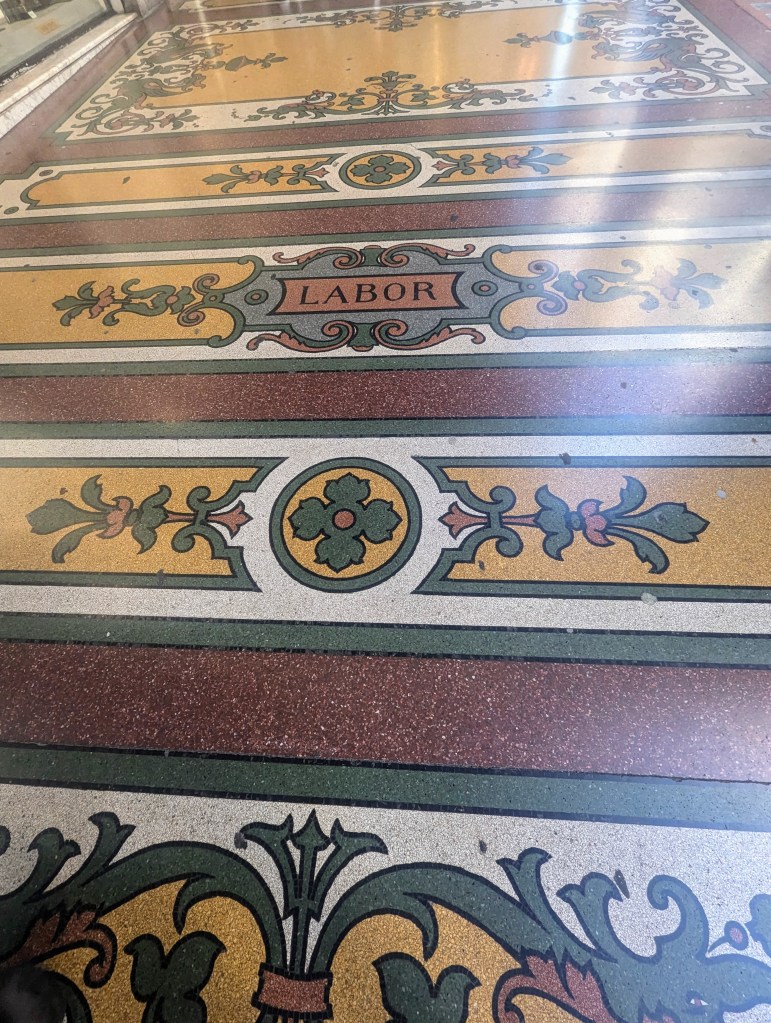

and ceilings

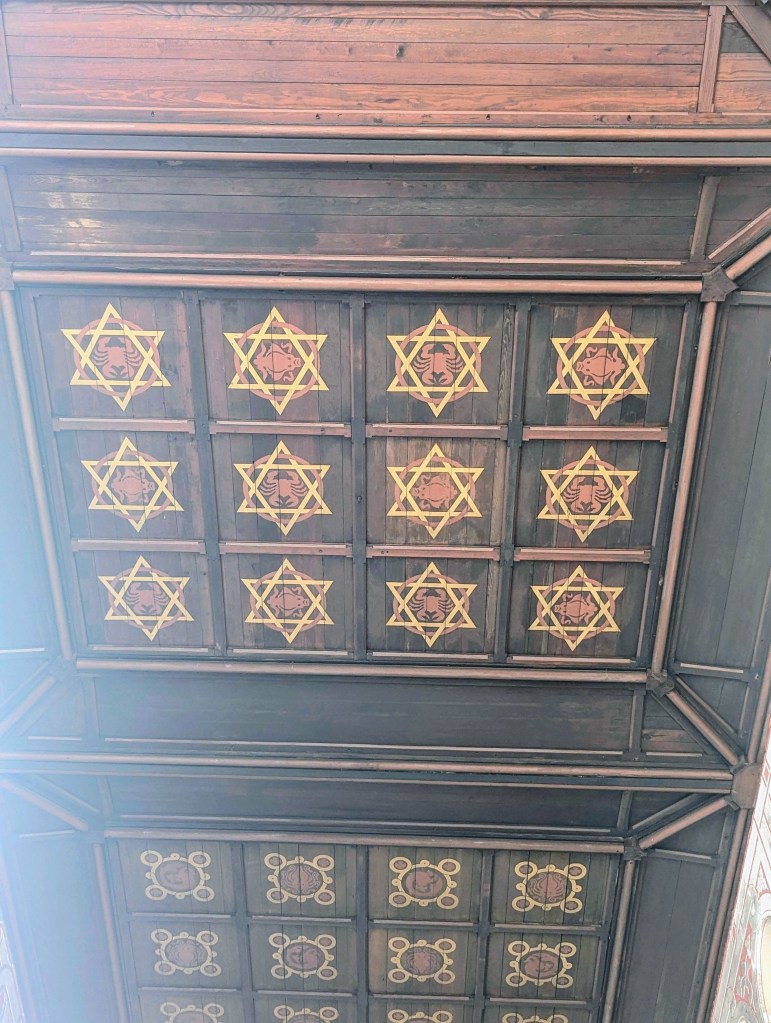
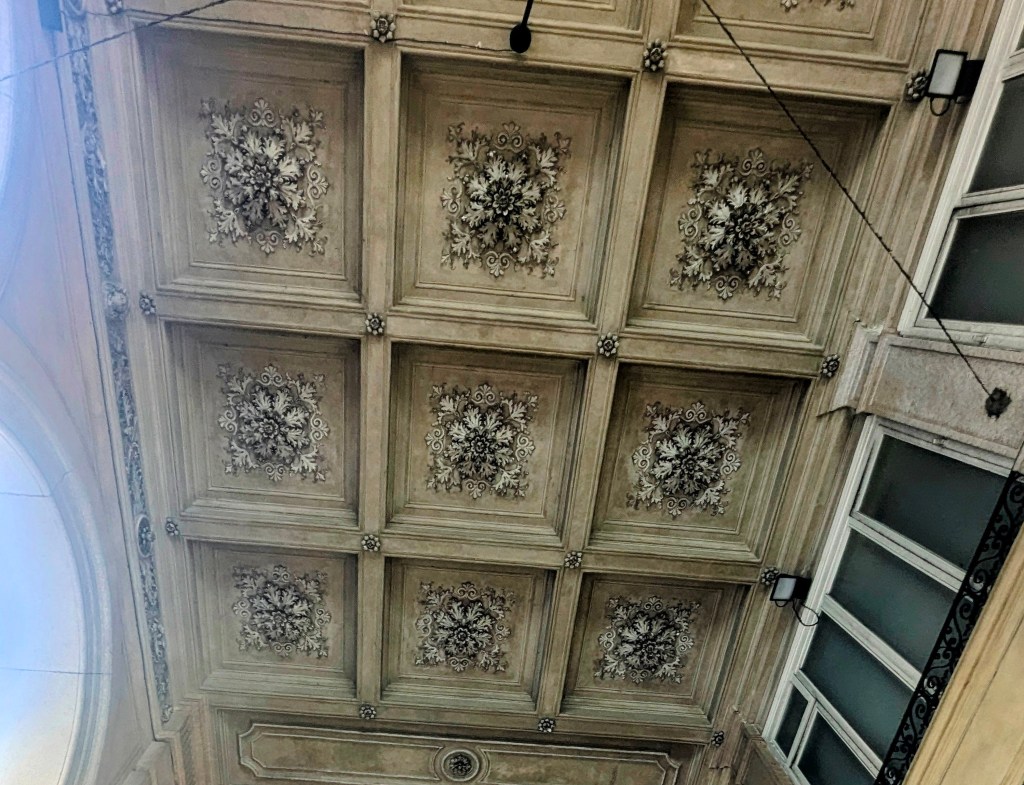
beneath fabulous architecture and colonnades offering protection from the weather.

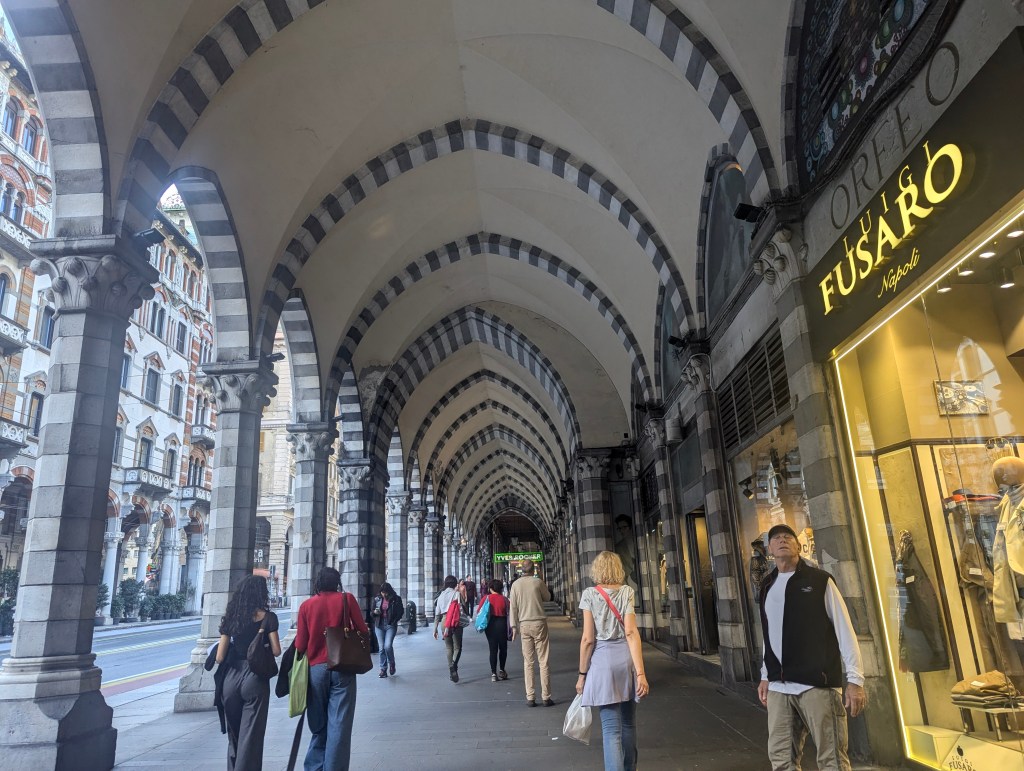
There are about three miles of shops, usually high-end chain stores.
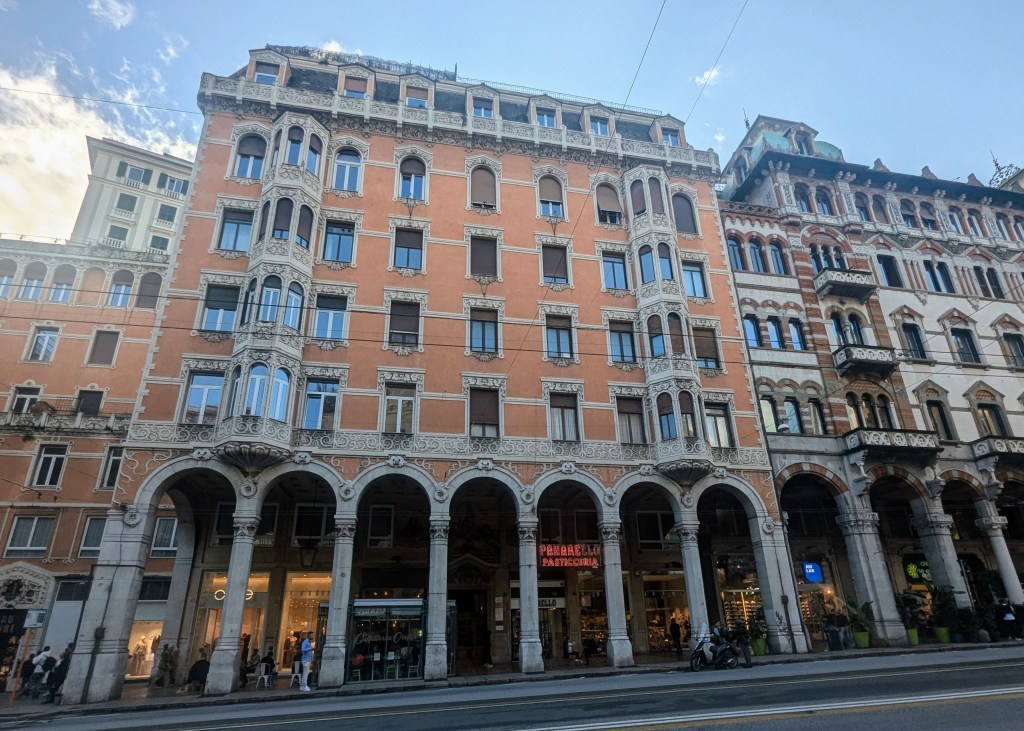
and some not so high end.

After exploring Via XX Settembre we turned our attention to the palaces. In the late 16th century, the Genoese aristocracy implemented a plan to transform the medieval city. A “New Streets” system was created to provide space for their sumptuous private palaces and mansions. In 1576 the Genoese Senate established a list of forty-two palaces that could be used as hospitality residences for notable guests from abroad, such as kings, princes, diplomats, or religious authorities. The list was updated over the years. These lists were called “rolli,” literally, “rolls.” All told, 162 palaces made the lists at least once. These palaces became a World Heritage Site in 2006. Today, the Rolli Palaces are a collective term referring to 42 of the most prominent palaces in the historic center of Genoa, situated predominantly along Via Garibaldi (formerly, Strada Nuova).
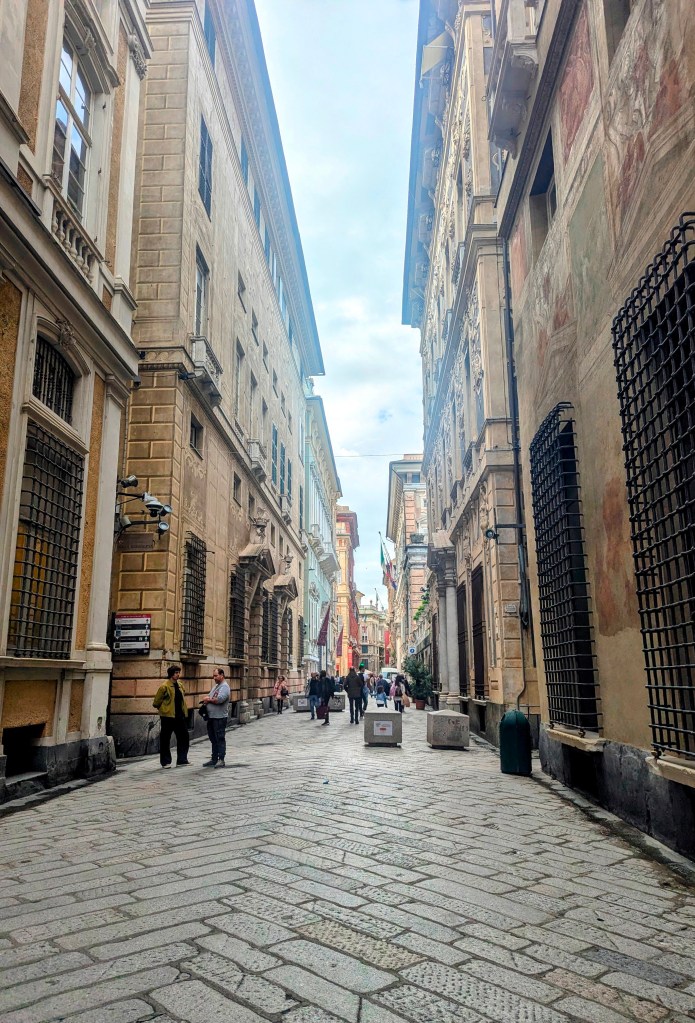
Our first stop was the Spinola Palace (Palazzo Giacomo Spinola “dei Marmi”). It was built for Giacomo Spinola between 1445 and 1450. Currently it is home to the Bank of Sardegna.

Next was Palazzo Ayrolo Negrone (Ayrolo Negrone Palace), one of the foremost Rolli Palaces of Genoa. The palace includes a building erected between 1560 and 1562 for Francesco De Ugarte, Spanish ambassador to the Republic of Genoa.
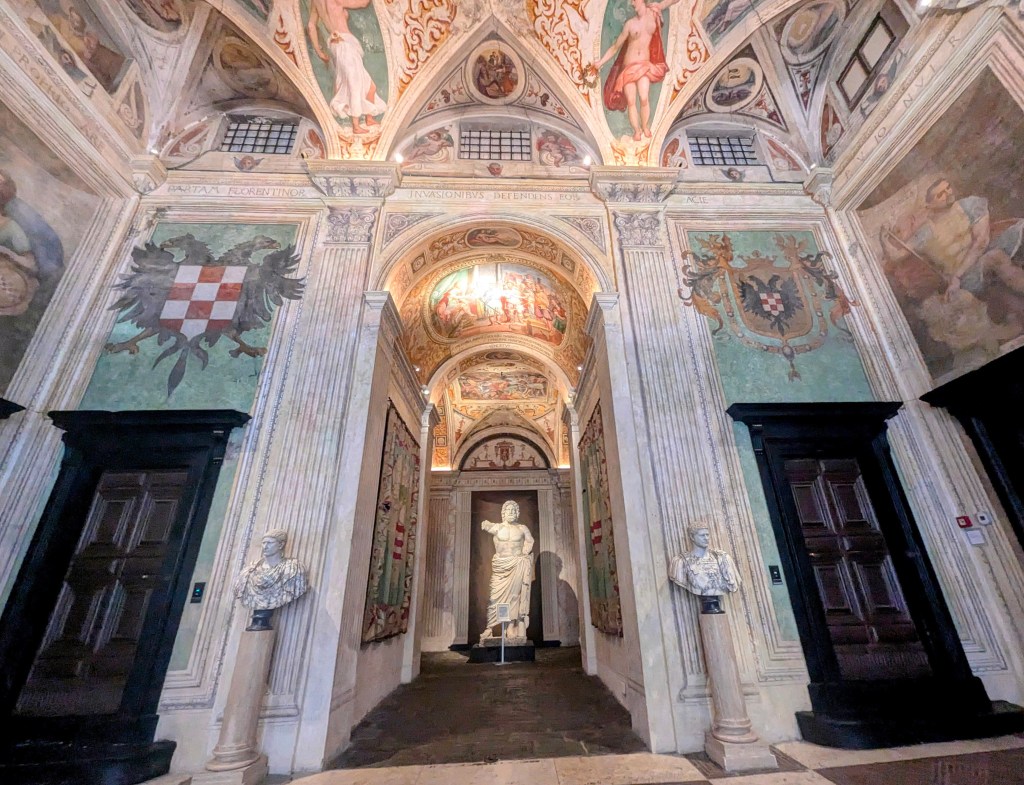
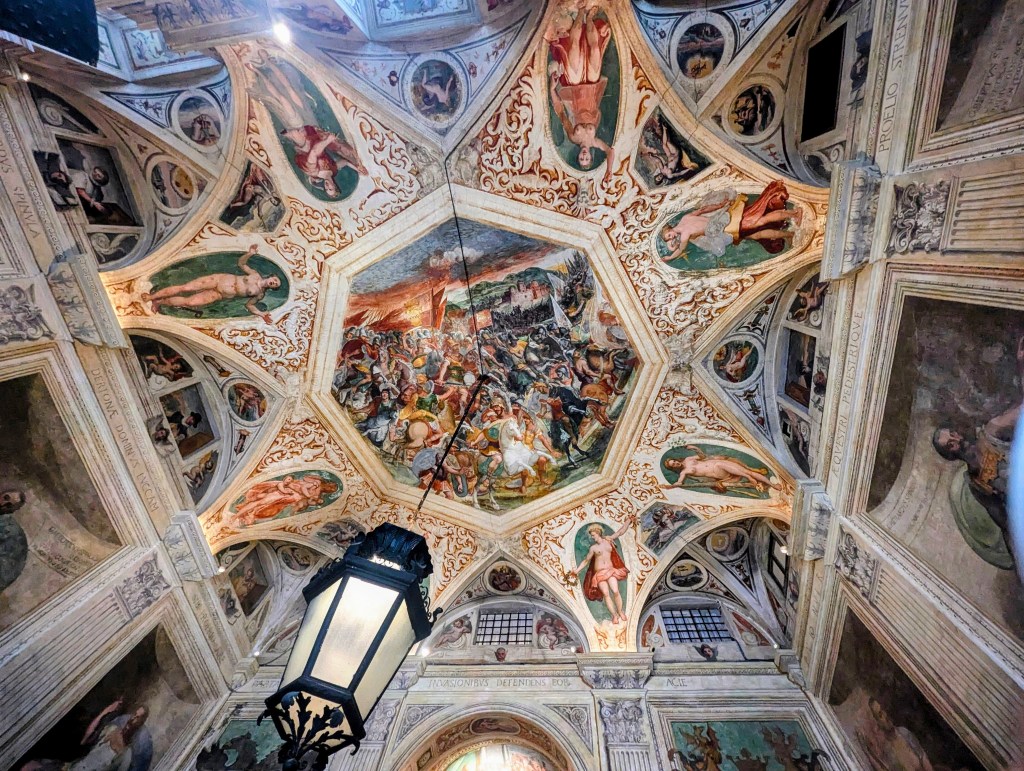
The most striking feature of the palace is a 17th-century gallery with vaults decorated with the images of Aeneas, a Trojan hero, by Giovanni Battista Carlone, commissioned by Aghostino Ayrolo. The brilliantly colored frescoes are lighted by large windows, and the balustrades bring out the effects of perspective. The story of the Trojan War is depicted here in three scenes.
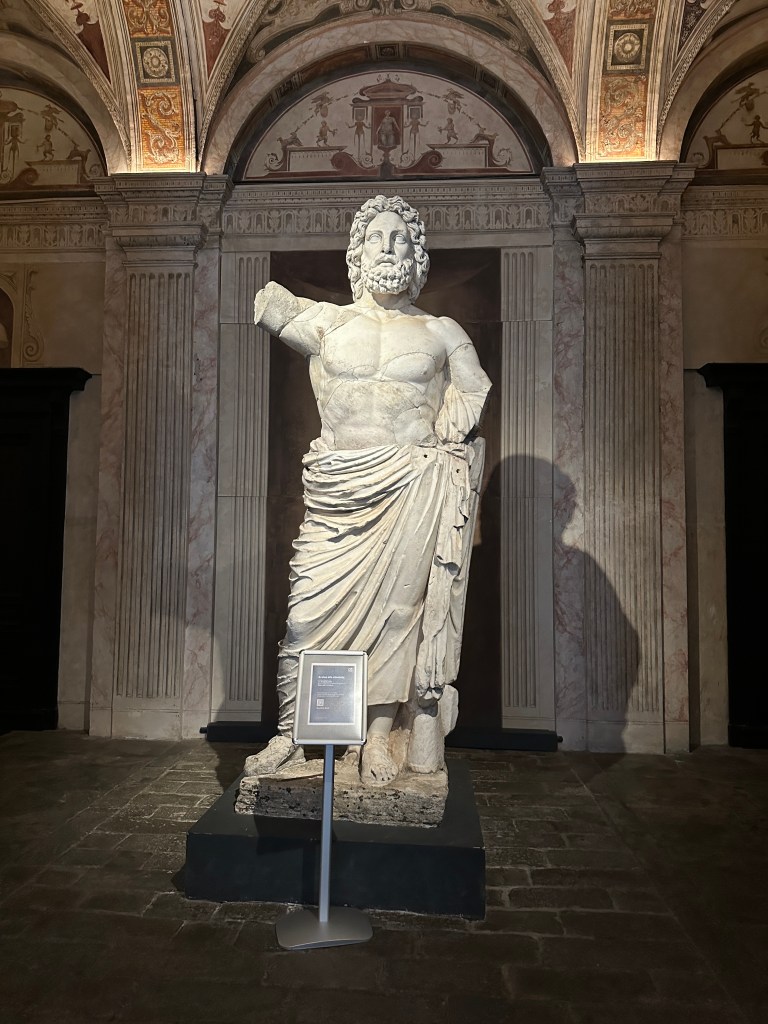
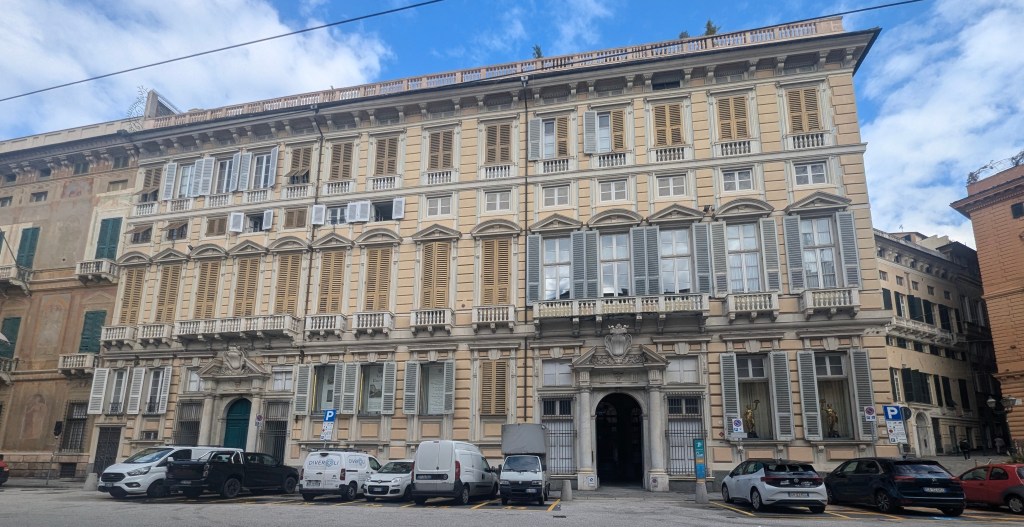
Palazzo Angelo Giovanni Spinola (Angelo Giovanni Spinola Palace) was one of the original 163 Palazzi dei Rolli of Genoa established in 1576. Today it belongs to Deutsche Bank, with limited access to the public
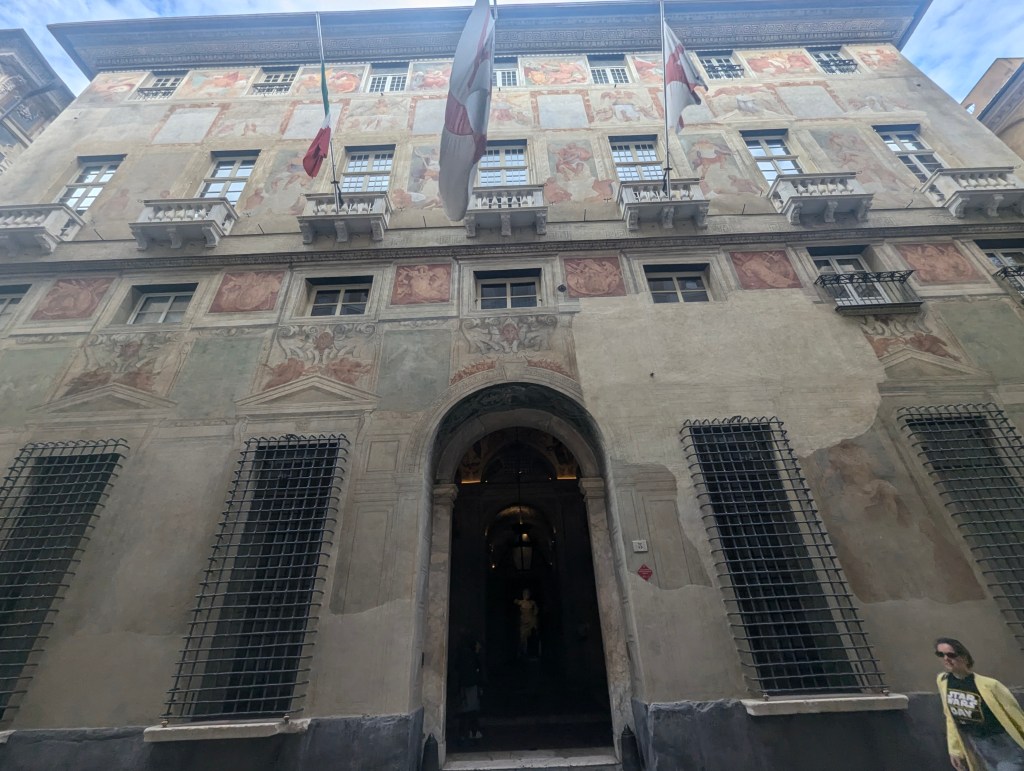
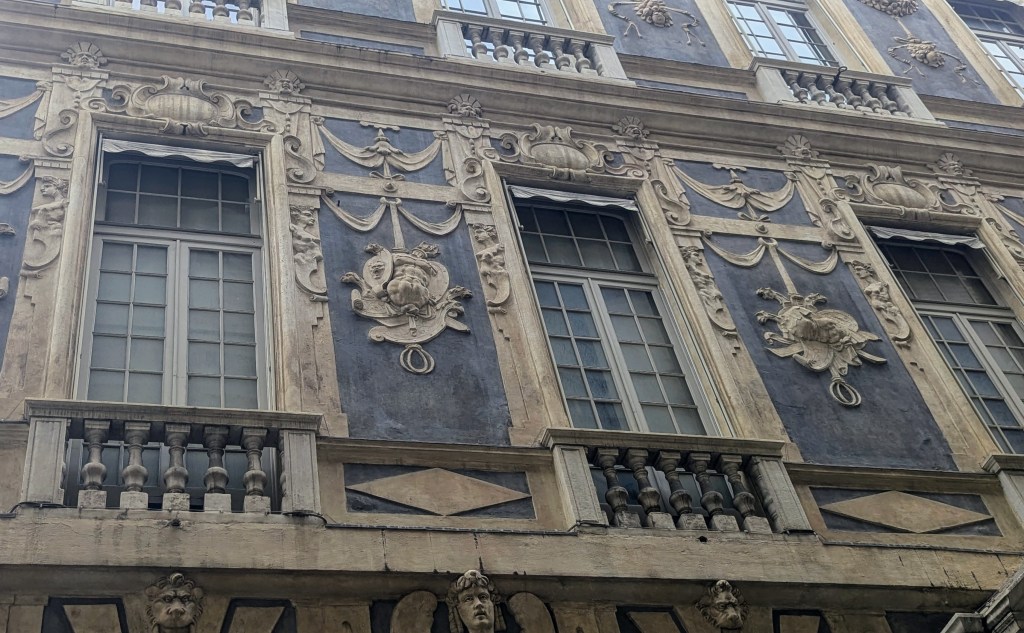
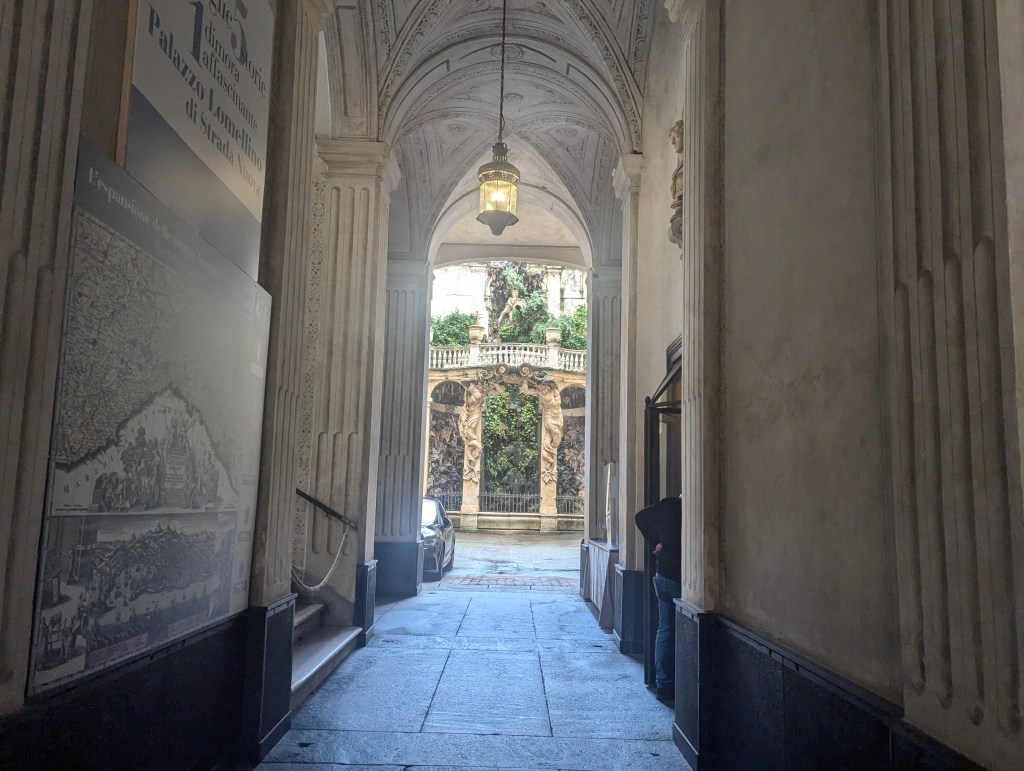
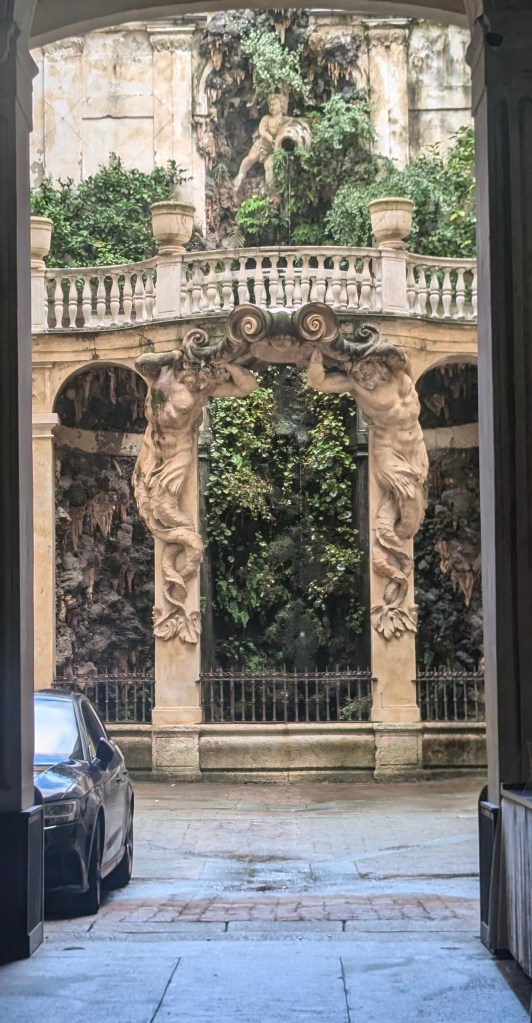
Palazzo Lomellino (Lomellino Palace) was built between 1559 and 1565,
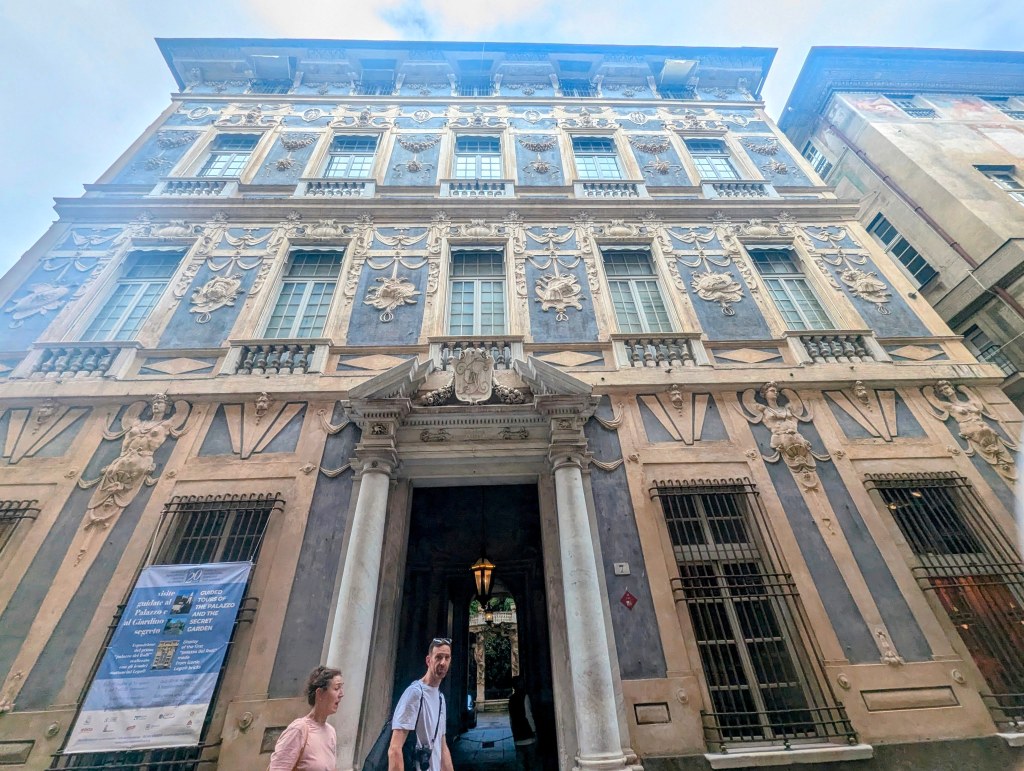
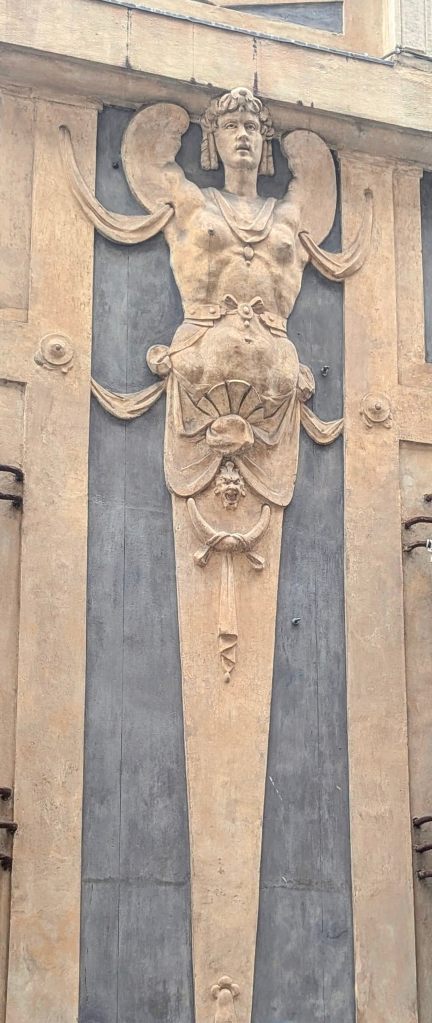
The façade, designed by il Bergamasco, is enlivened by a rich stucco decoration, with winged female herms supporting the string course on the ground floor;
and ribbons and drapes holding trophies of arms on the second floor.
Over the door and on the ceiling of the entryway are medallions with classical figures.
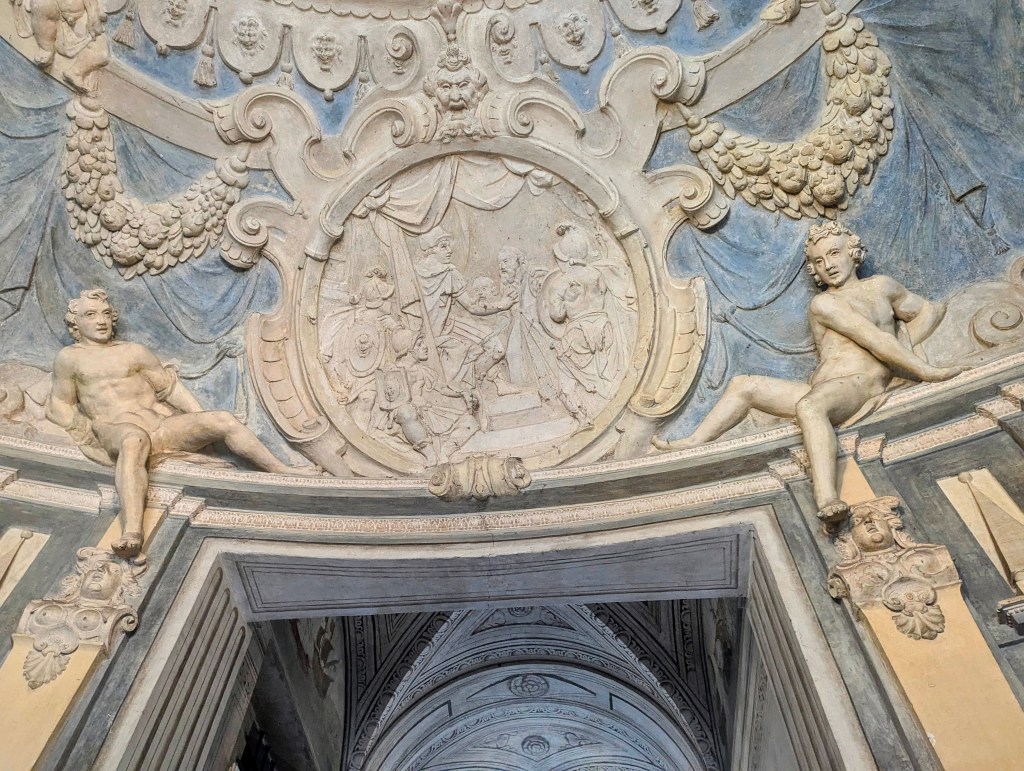
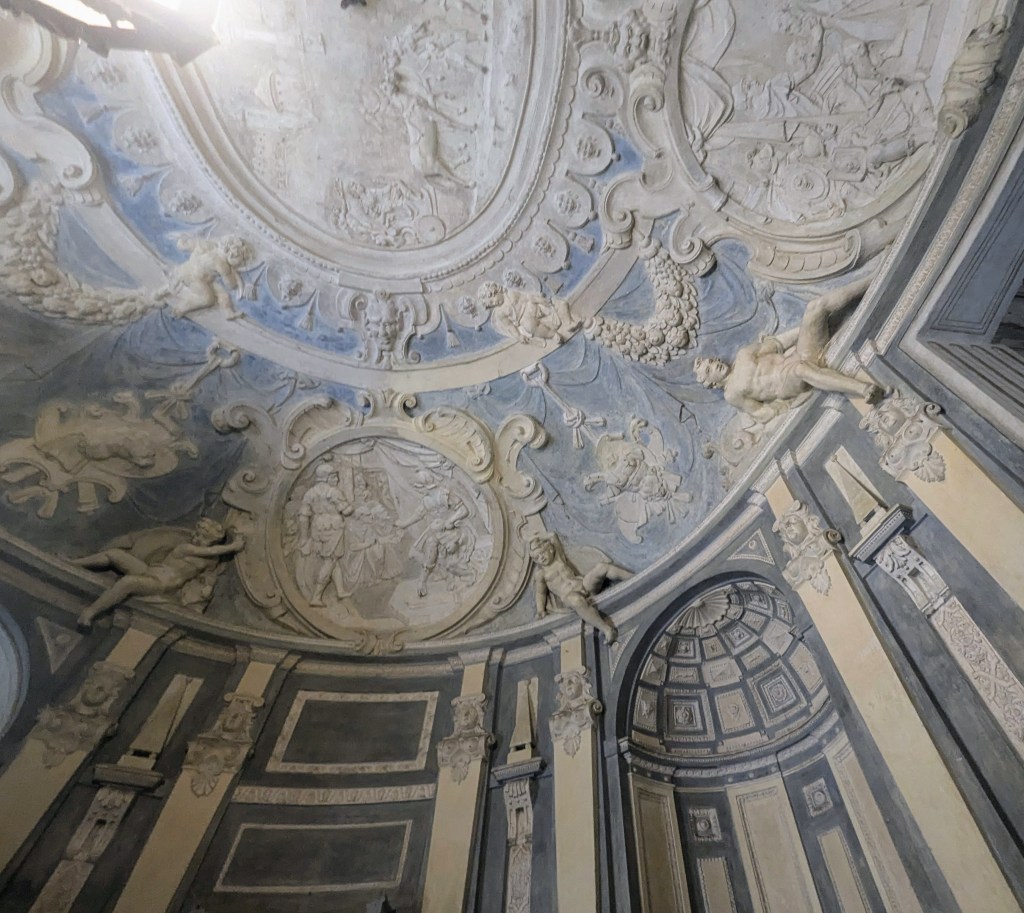
The oldest pictorial work in the building is the cycle of frescoes created in 1623-1624
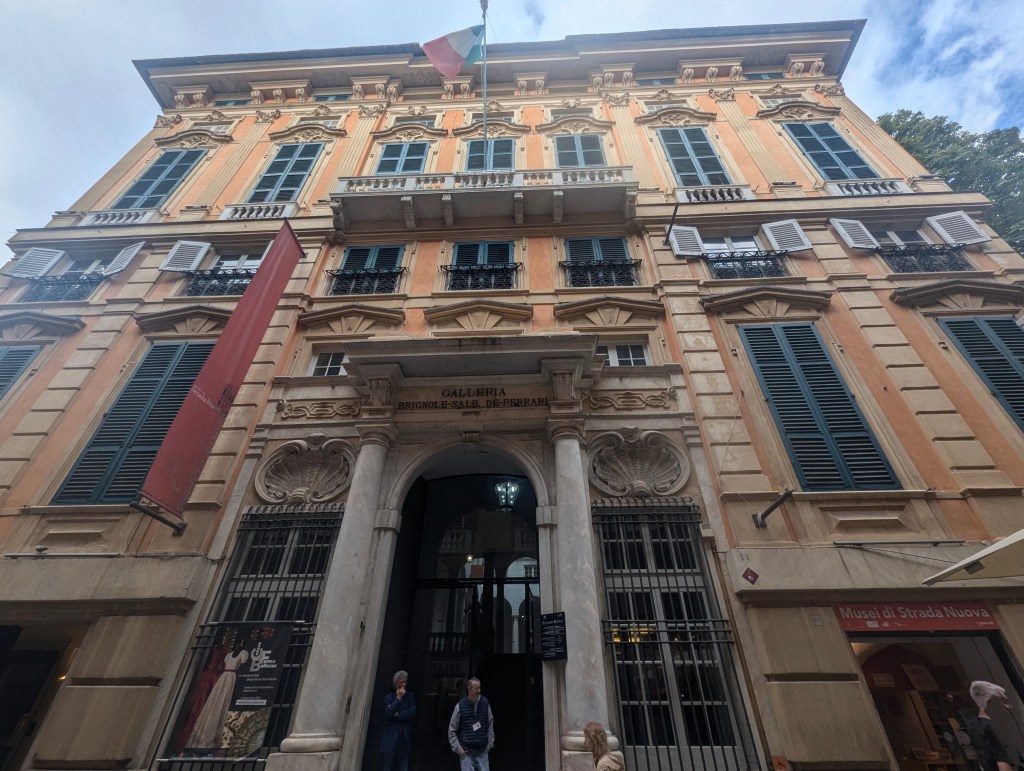
Palazzo Bianco (White Palace) got its name for the plain color of its facade. It was built between 1530 and 1540 for diplomat Luca Grimaldi, who was from a prominent Genoese family.
And finally, the Palazzo Doria-Tursi is by far the most impressive and important building on Via Garibaldi. Since 1848 it has been the seat of the Genoa City Hall. The palace was built starting in 1565 by Domenico and Giovanni Ponsello for Niccolò Grimaldi (1524-1593).
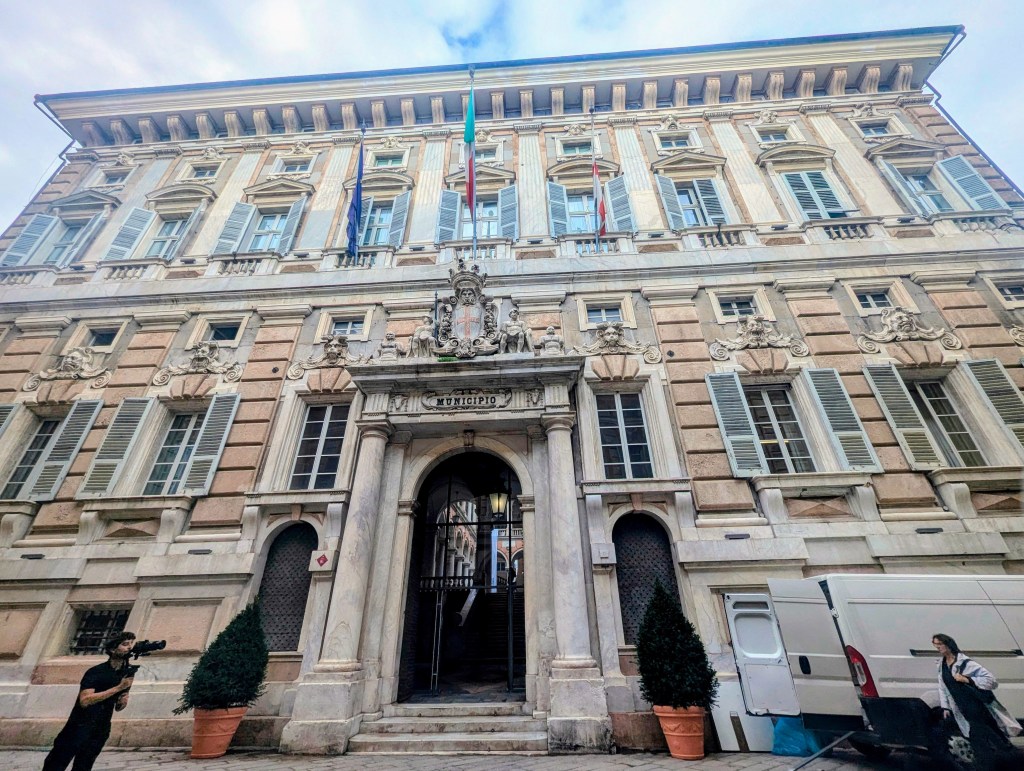
As a culmination of the residential splendor of the Genoese aristocracy, the palace boasts an unprecedented and ingenious architectural solution – the succession of interior spaces: atrium, staircase, rectangular courtyard raised above the portico and double ramp staircase, creating a wonderful play of lights and perspectives.

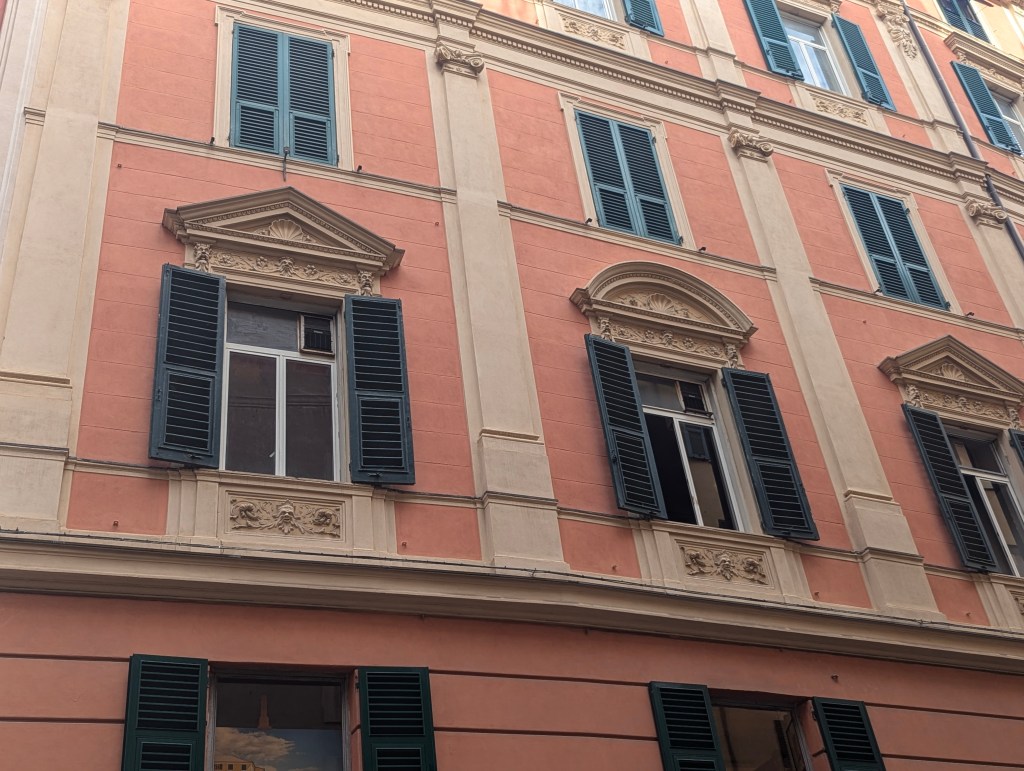
There were more castles to see, but we had grown weary and decided to head back for a break. Along the way we made several observations. In areas of high tourism and/or UNESCO protection, some of the architectural features are painted on to give visual uniformity to the street.
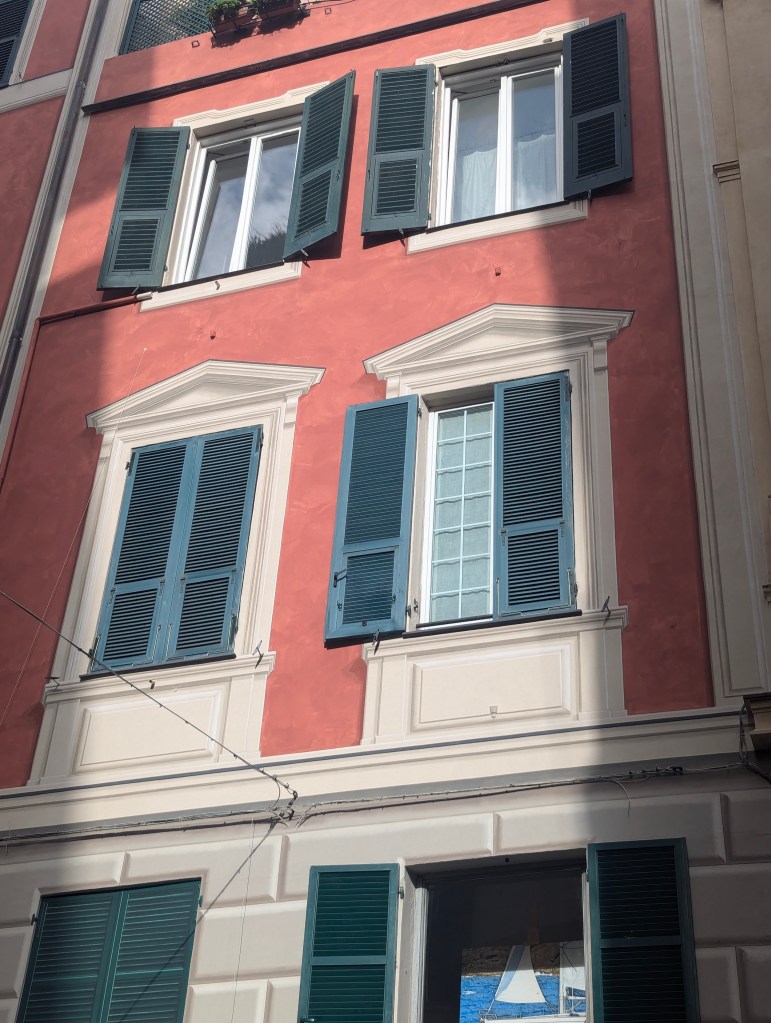
while the neighboring window may have actual wood frames.
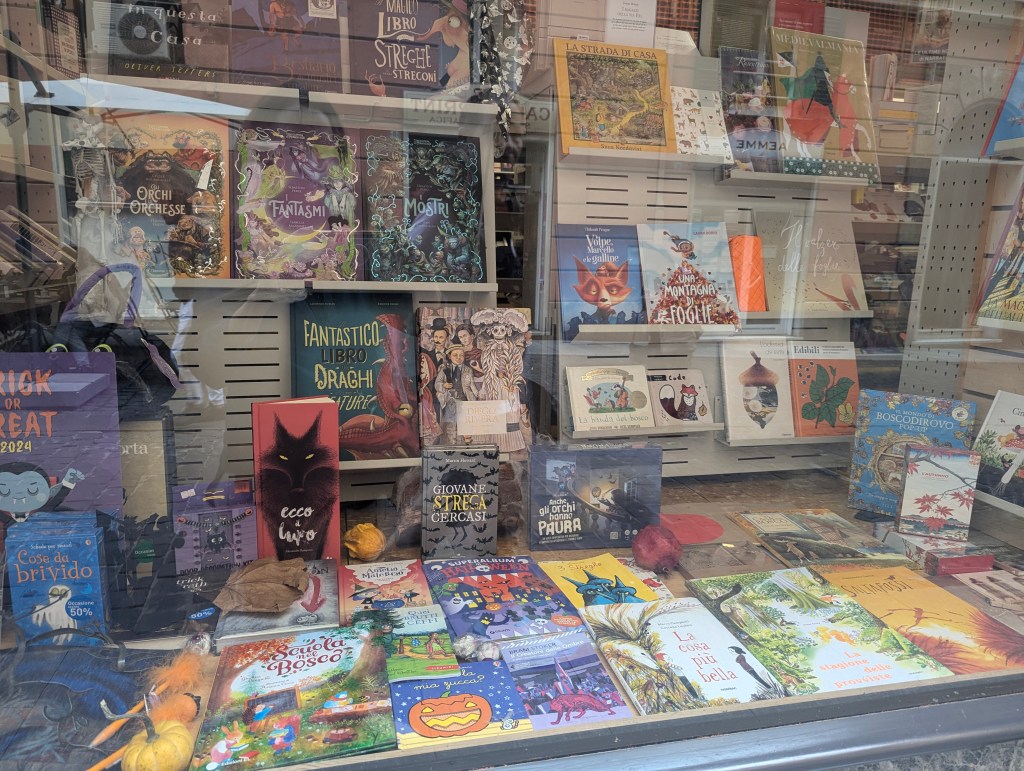
Also, we had wondered if this very catholic country celebrated Halloween at all; the indication of this bookstore is a resounding Yes.
On the way back we passed a bakery and bought two Ligurian treats to try at a later time: baci (kiss) cookies, so called because the chocolate ganache sandwiched between the two layers of hazelnut cookies look like lips.

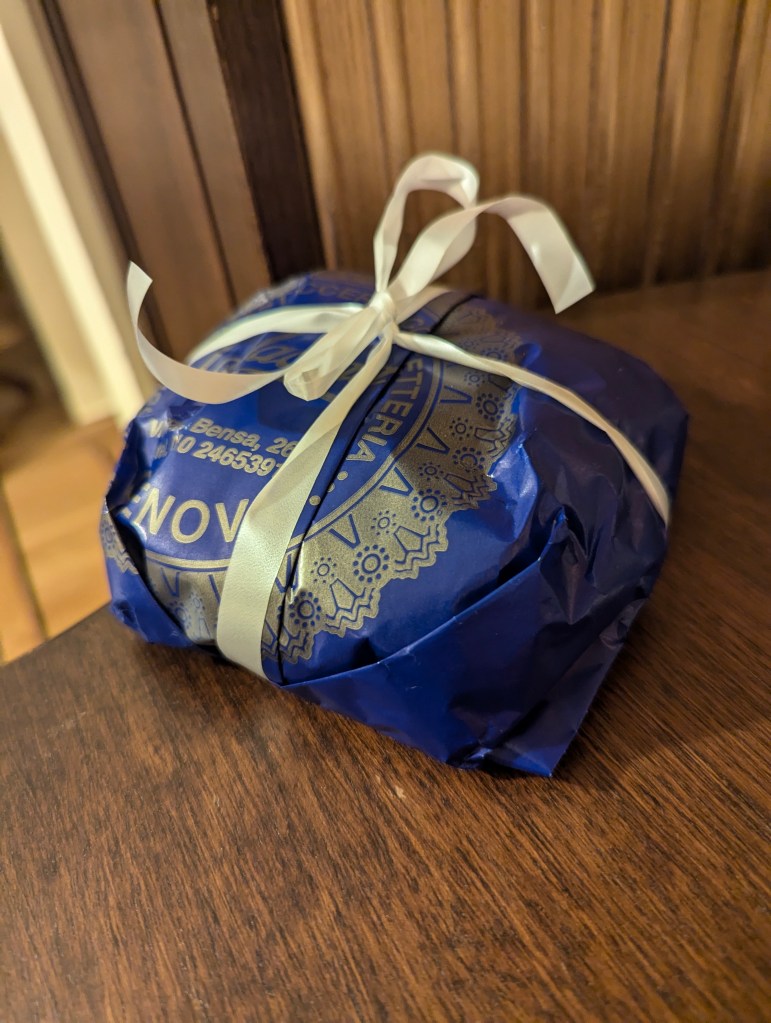
and pandolce, a sweet Italian Christmas bread from Genoa consisting of flour, sugar, butter, milk, raisins, candied orange rind, eggs, lemon juice, and pine nuts. It is sold wrapped as a gift. It tasted mostly like Irish soda bread but a little sweeter.
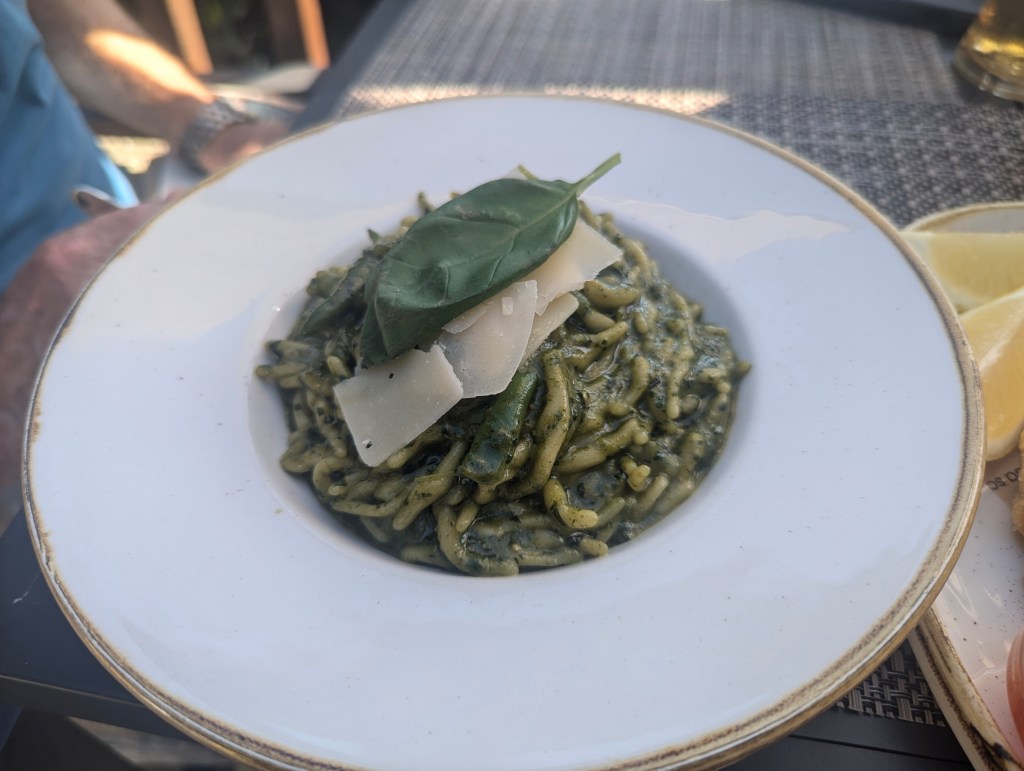
As one may be able to discern from this reading, Genoa was not our favorite city. We are not maritime buffs, and overall except for the areas with the shopping and the palaces, it is a bit of a dirty, run-down city. But the main reason to visit Genoa is for the food. Ligurian culture has produced many food favorites, the most well known is probably foccacia, but also pesto. So when in Genoa… that night for dinner we ordered two of the most famous Ligurian dishes: trofie pesto and minestrone soup.
An iconic dish of the Ligurian tradition is trofie pasta with Genoese pesto sauce. It is thought that this specific type of pasta (short and twisted) comes from Sori in the province of Genoa. The Pesto is made with P.D.O. Genoveses basil (from here, and the least minty of all the basils), local Extra Virgin Olive Oil (preferably using local Taggiasca olives), pine nuts, garlic, pecorino and parmesan cheese. The typical version of the dish includes green beans and potatoes.
Minestrone was born as a home dish, a dish for daily dinners sitting with family at the kitchen table. And in fact there is no precise recipe , because in minestrone they put seasonal vegetables, those that were available, and because each family had its own habits and tastes. In general, in spring minestrone was more varied and was enriched with basil pesto. In winter, when basil was not available, the few seasonal vegetables were seasoned, at the end of cooking, with a soffritto of onion and parsley. Overall, it is very different than what we call minestrone in the states.

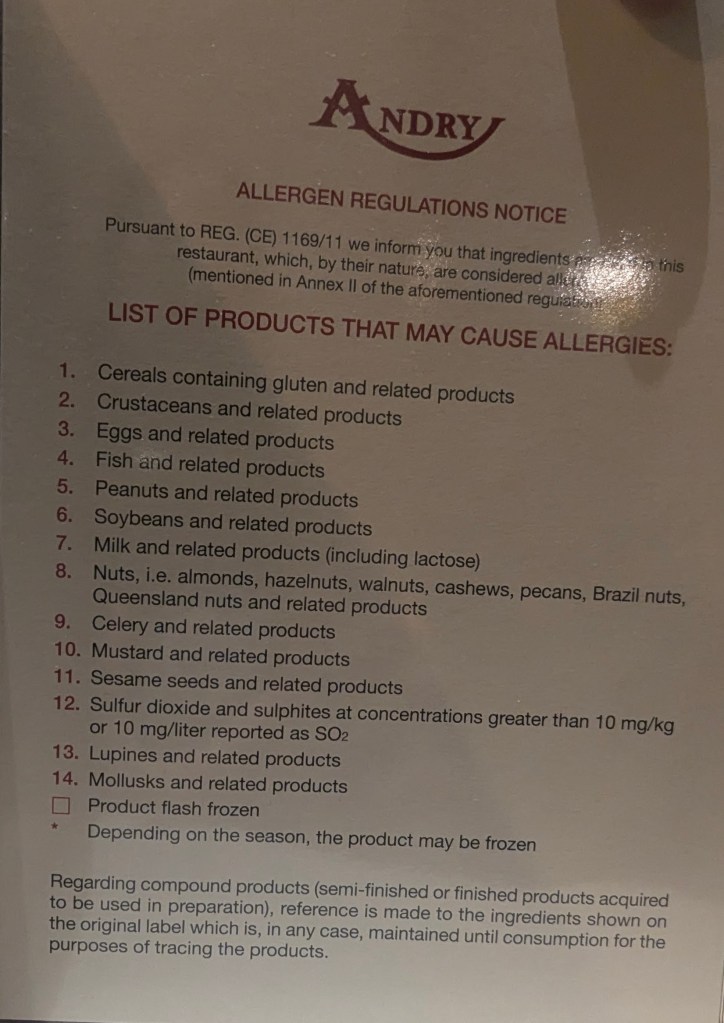
I will add here that my favorite component of every Italian menu is at the back where there is a code for every ingredient for people with food allergies or aversions. Each item on the menu has any corresponding numbers added. Some restaurants also include whether any of the ingredients had been previously frozen.
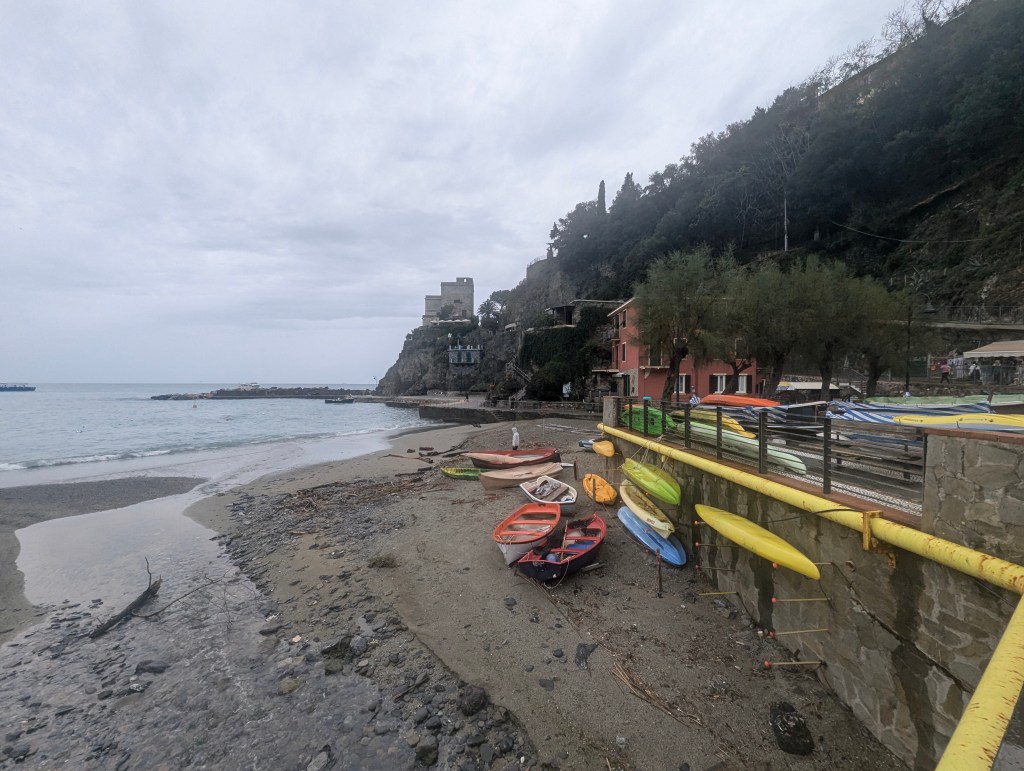
We were then on to Cinque Terre, also in the Ligurian region, so more opportunity to try new intriguing dishes. Again our travel day was one of rain. We arrived in Monterosso al Mare too early for our AirBnB check in, so we had lunch then a stroll to the beach on a very gray day.
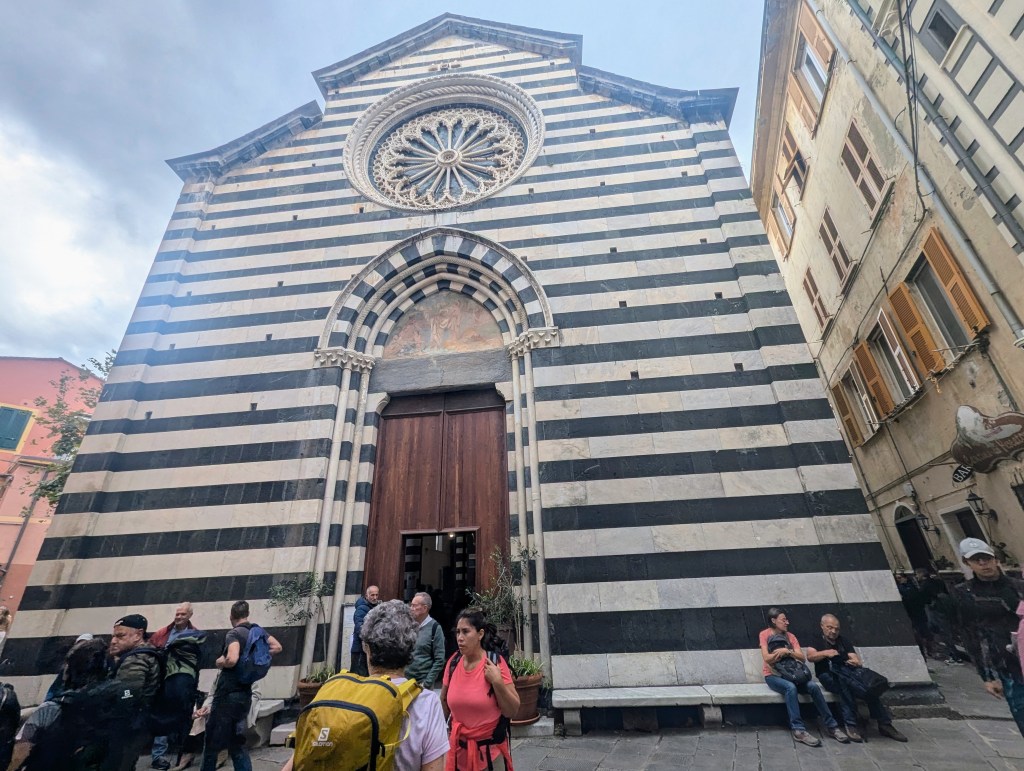
We explored the town a bit which is separated into 2 parts via a tunnel. We were to stay in the “old town,” at the center of which is a church, of course. San Giovanni Batista dates from the 13th century. The façade is of both white marble and serpentine which is typical of churches built in the Ligurian Gothic style. The rose window is composed of 18 small columns as its radii.
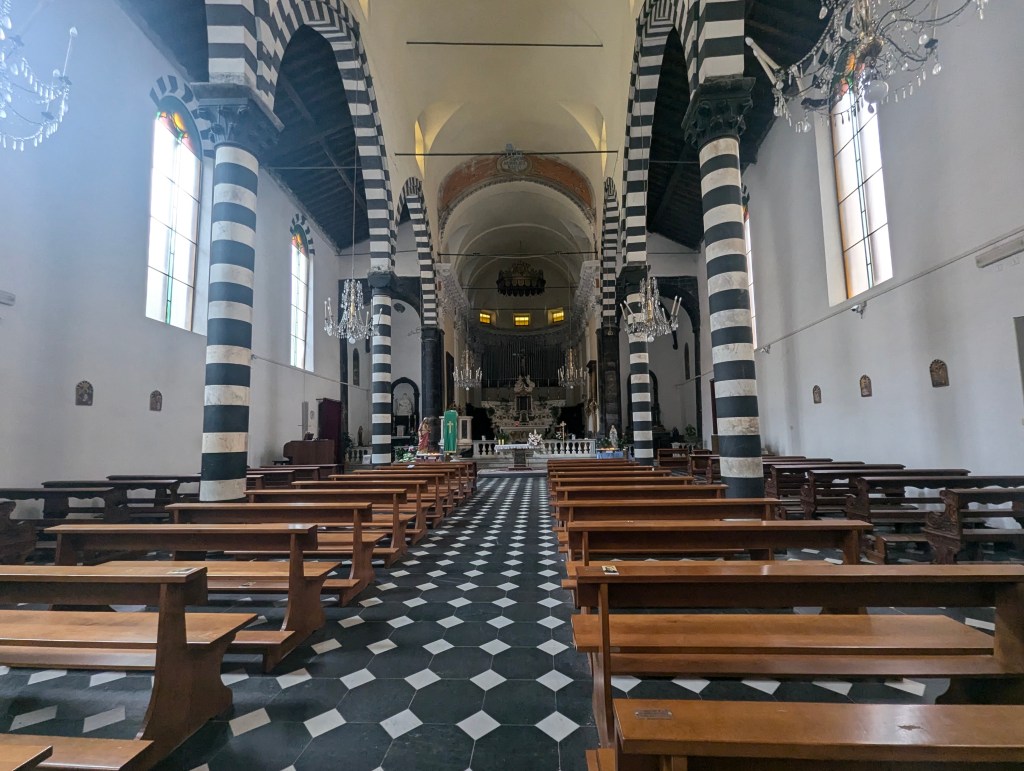
The church required significant renovations after the 2011 flood.
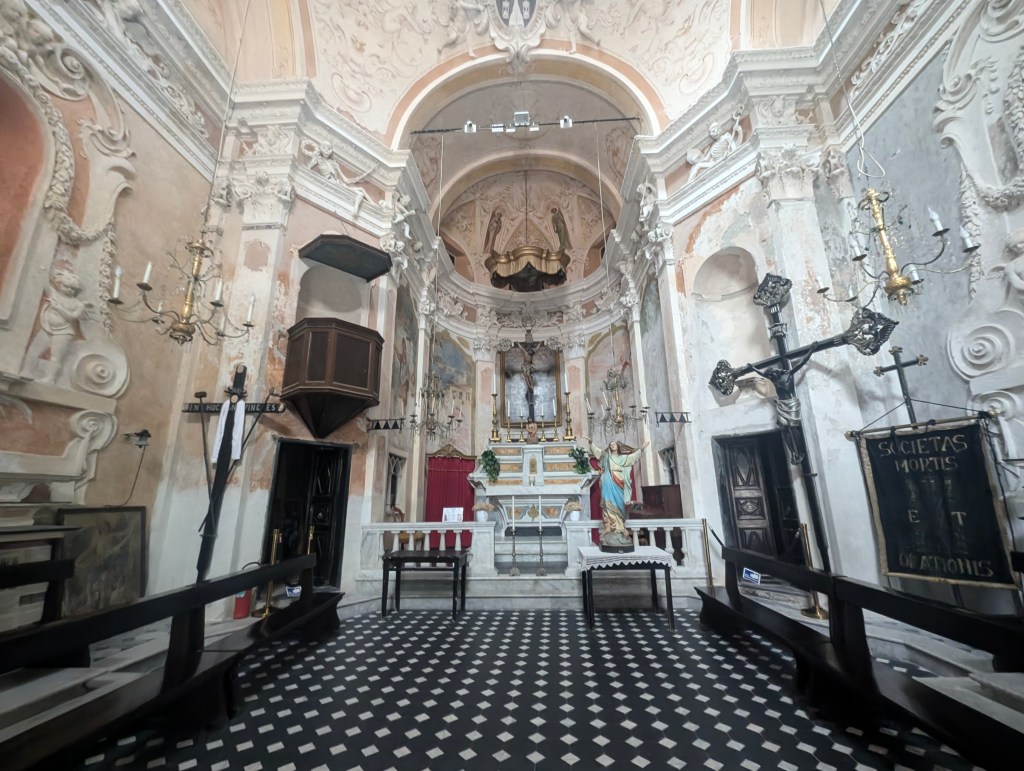
In the same square is a second religious edifice: the oratory of the Neri Brotherhood built in the 17th century.
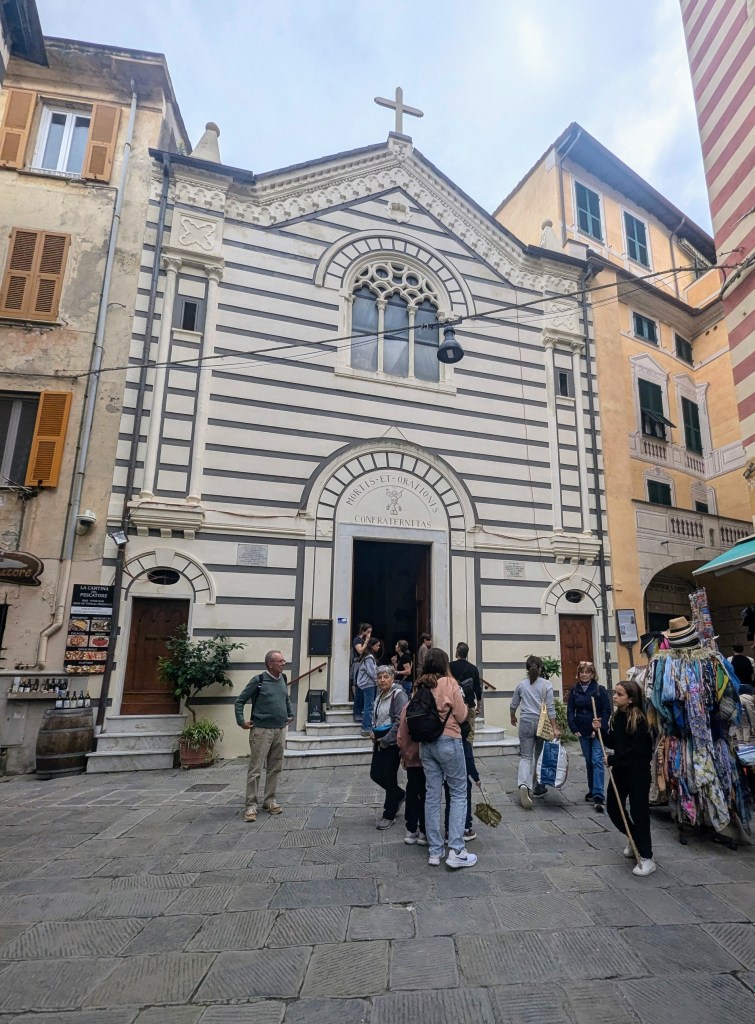
On the façade is the Latin inscription: mortis et orationis which means death and prayer. The brotherhood was devoted to prayer and to helping the needy that could not afford a burial.
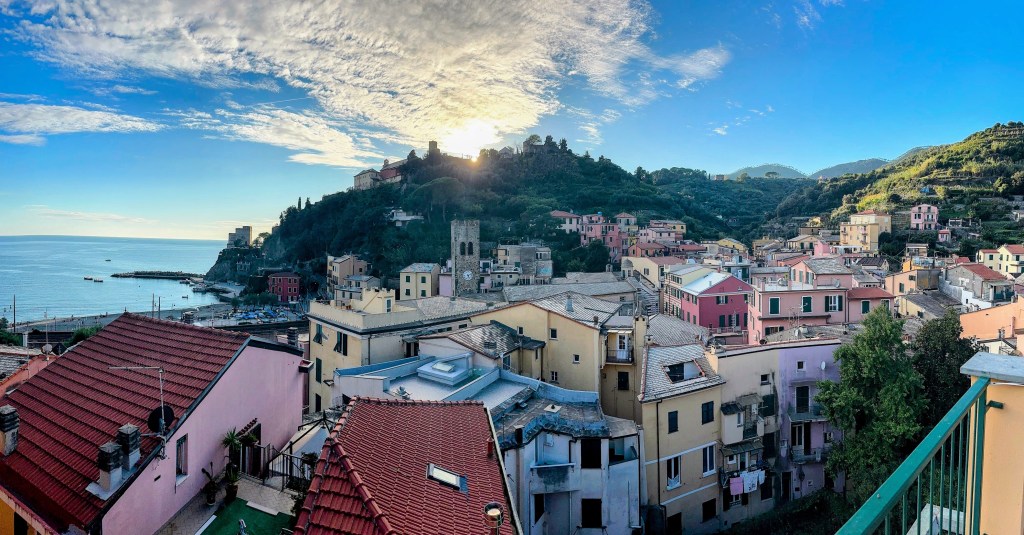
We were met by our host who showed us up the many, many flights of stairs to our apartment. But the climb was worth it. We not only had a really lovely apartment, but we had a rooftop terrace with an amazing view!

After a grocery shop we settled in for the night hoping the morning would bring sunshine, which to our relief it did. Based on the advise of our host, we bought the 5 towns unlimited train pass to explore all of Cinque Terre over the next few days. First we ventured past the tunnel and wandered into Monterosso al Mare’s “new town.”
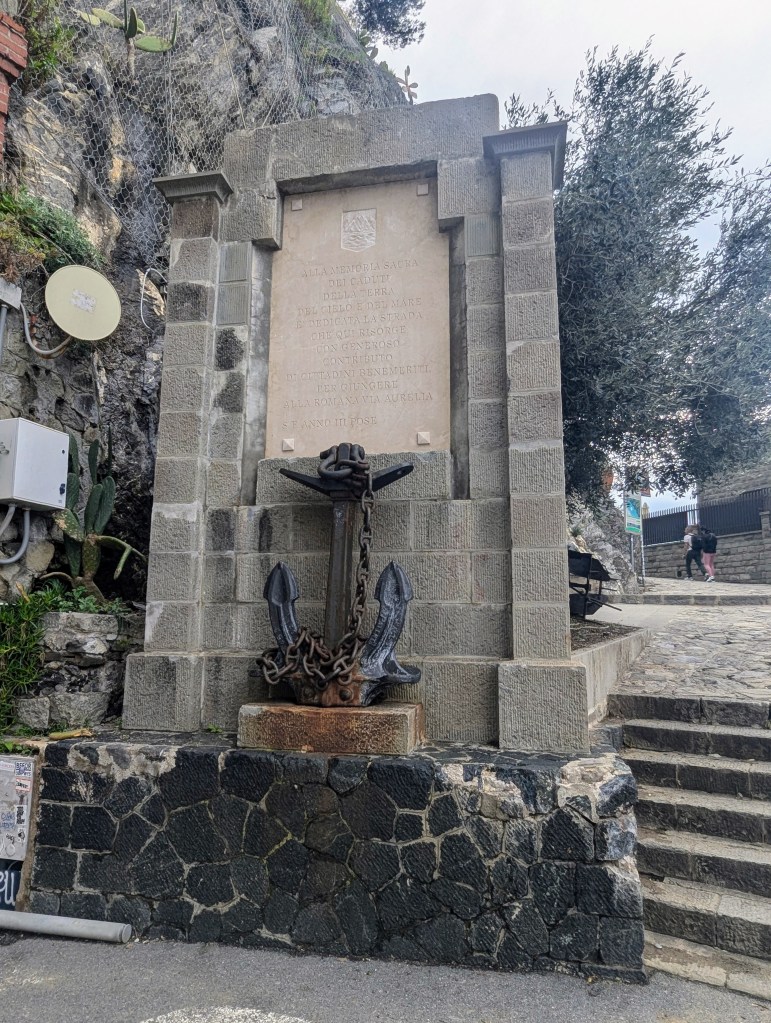
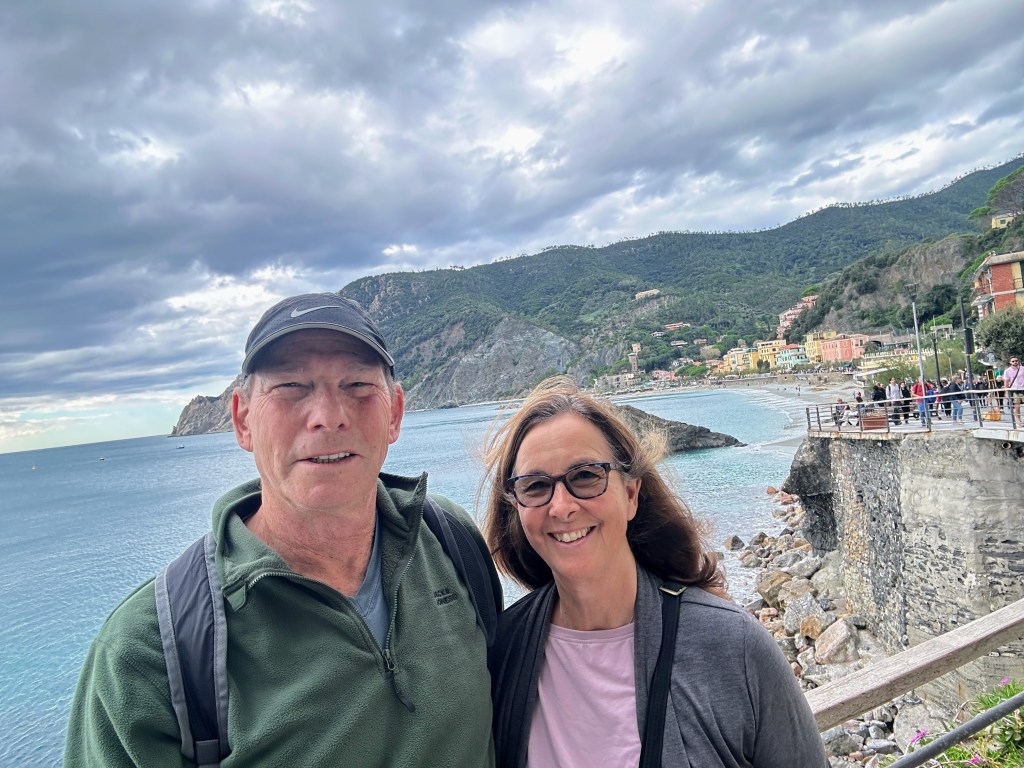
First we climbed the hill and were treated to views.


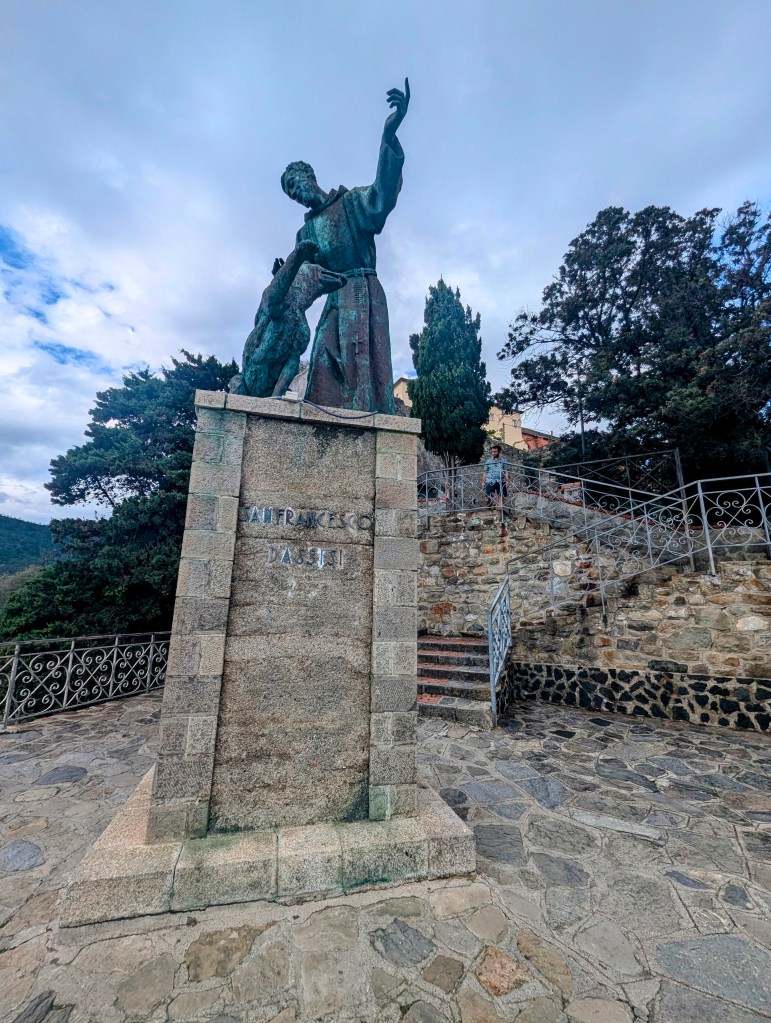
and a statue of St. Frances.
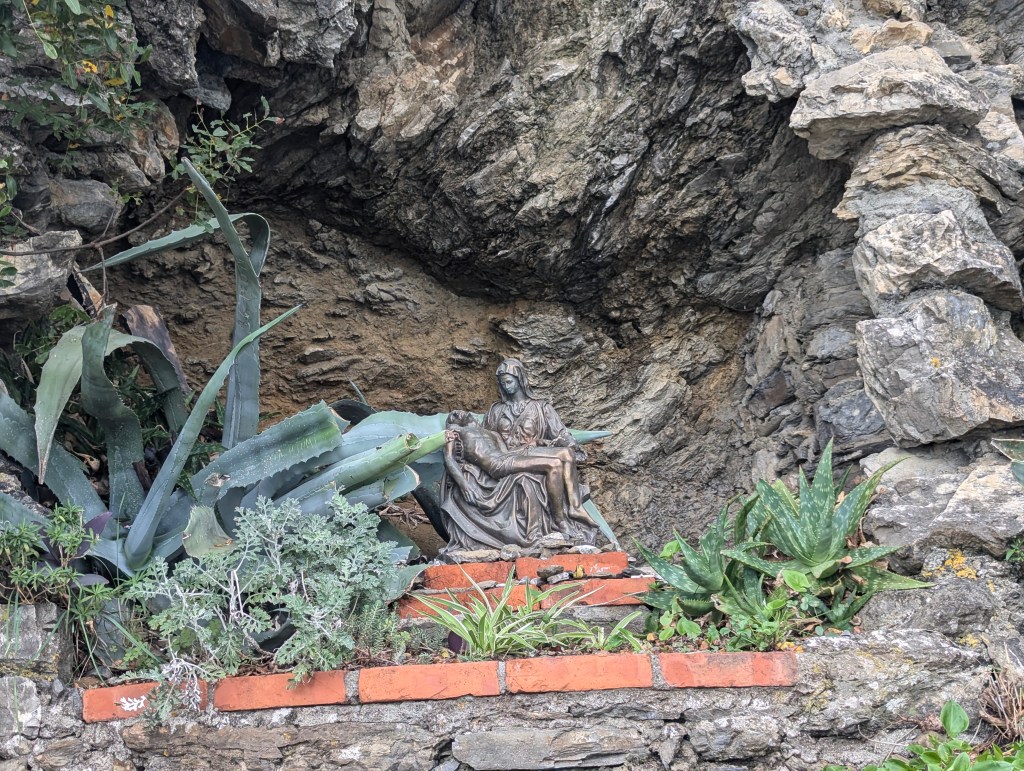
and this little pieta tucked into an alcove.
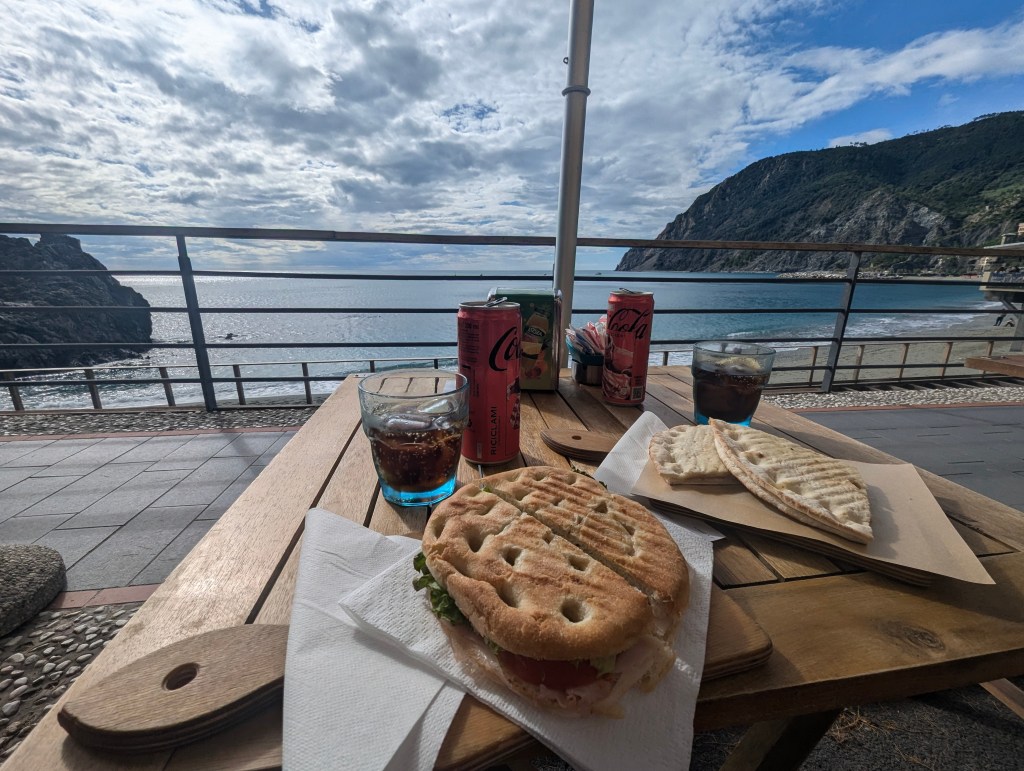
We then headed down toward the beach and stopped for a typical Ligurian lunch: a focaccia sandwhich.
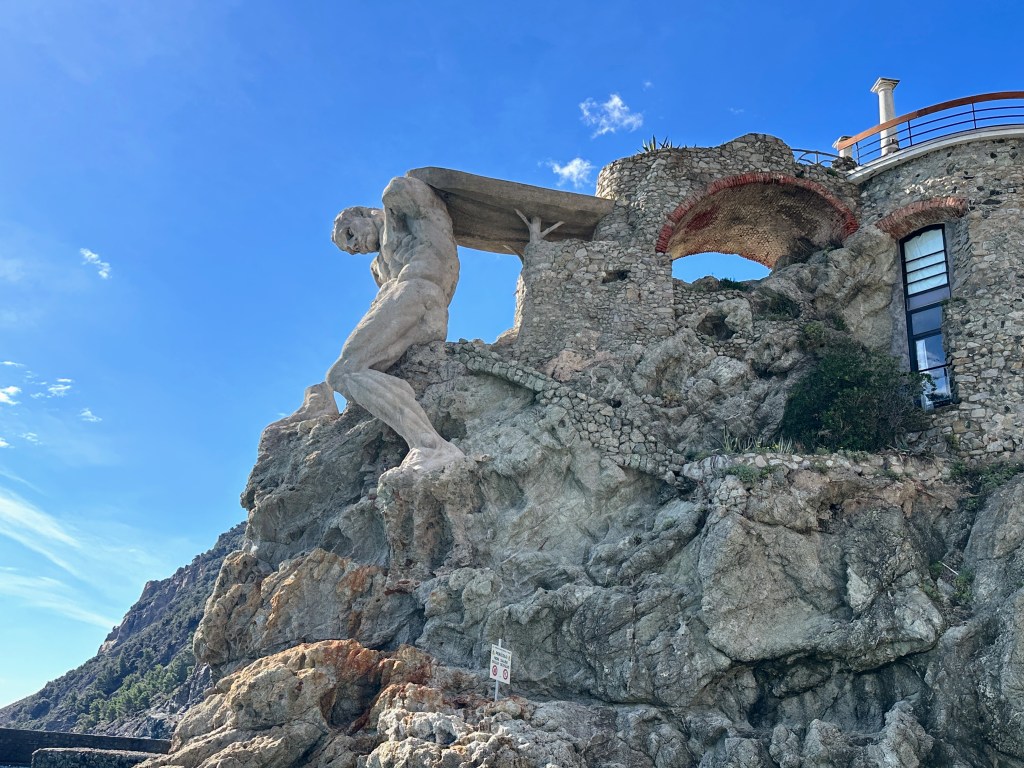
Then we strolled the promenade to the Gigante (the Giant), a 46 foot high statue of Neptune. The giant was sculpted of both rock and reinforced concrete in 1910.
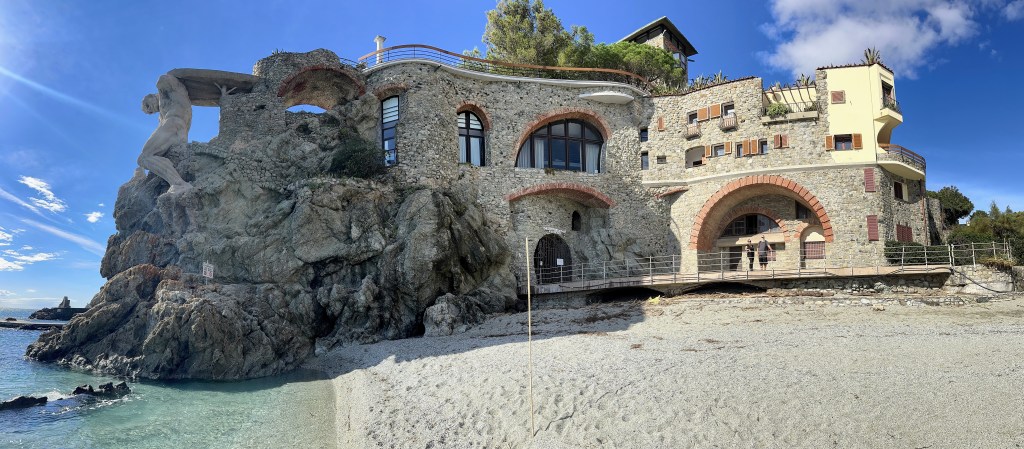
It originally held upon its head a humongous seashell that was the terrace for the luxurious Villa Pastine, but it was destroyed by allied bombs during WWII.
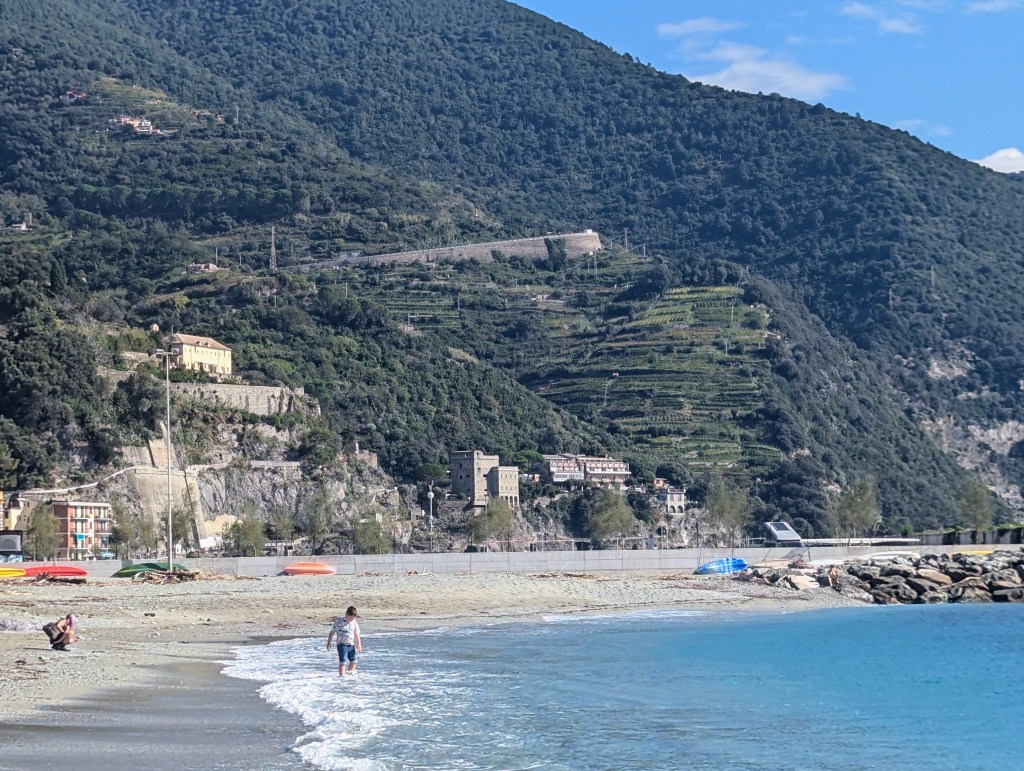
Looking back at Monterosso al Mare, we noticed the terraces for which it is famous. The terracing system has been in place since around 1000 AD to stabilize the land for farming. . The stones are local sandstone. Over the years over 4,000 miles of mureti (walls) have been built. The most common current crops are grapes for the local wines and lemons for the local limoncini, and, of course, olives.
Next we hopped on a train and decided to get off in the very next town: Vernazza. With Monterossa, Vernazza is the oldest of the Cinque Terre towns, first mentioned in 1080.
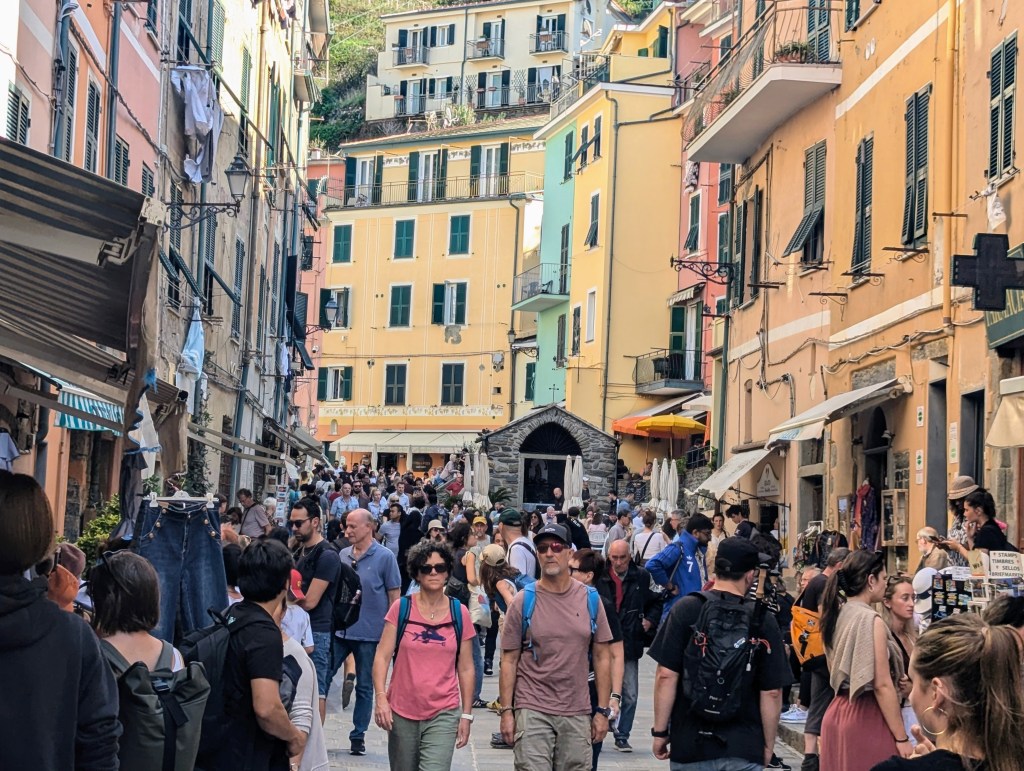
The town was packed with tourists and had restaurants literally everywhere.

We headed over to the marina

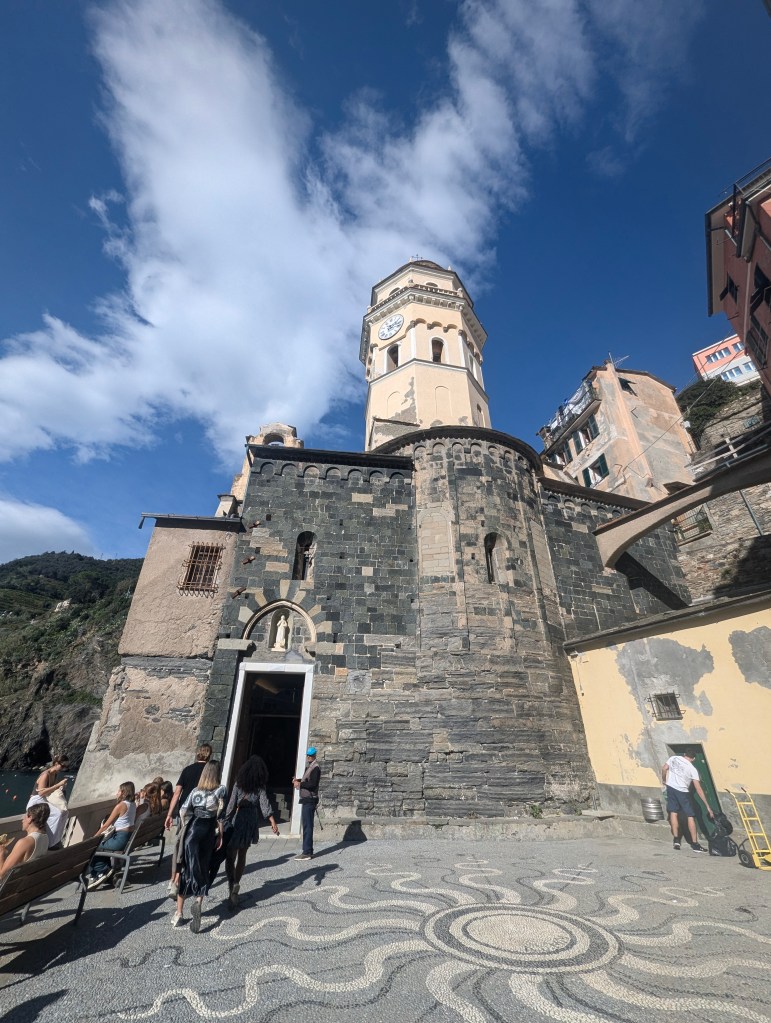
On the way back through town we stopped by the local church: the church of Santa Margherita d’Antiochia. It was built in the 13th century in the Gothic-Ligurian style on a pre-existing Romanesque building using serpentinite, a local green stone. Mentioned for the first time in 1318, it stands on a rock overlooking the sea.
The interior is a bit dark.

The walls are decorated with wooden plaques denoting the stages of the cross.
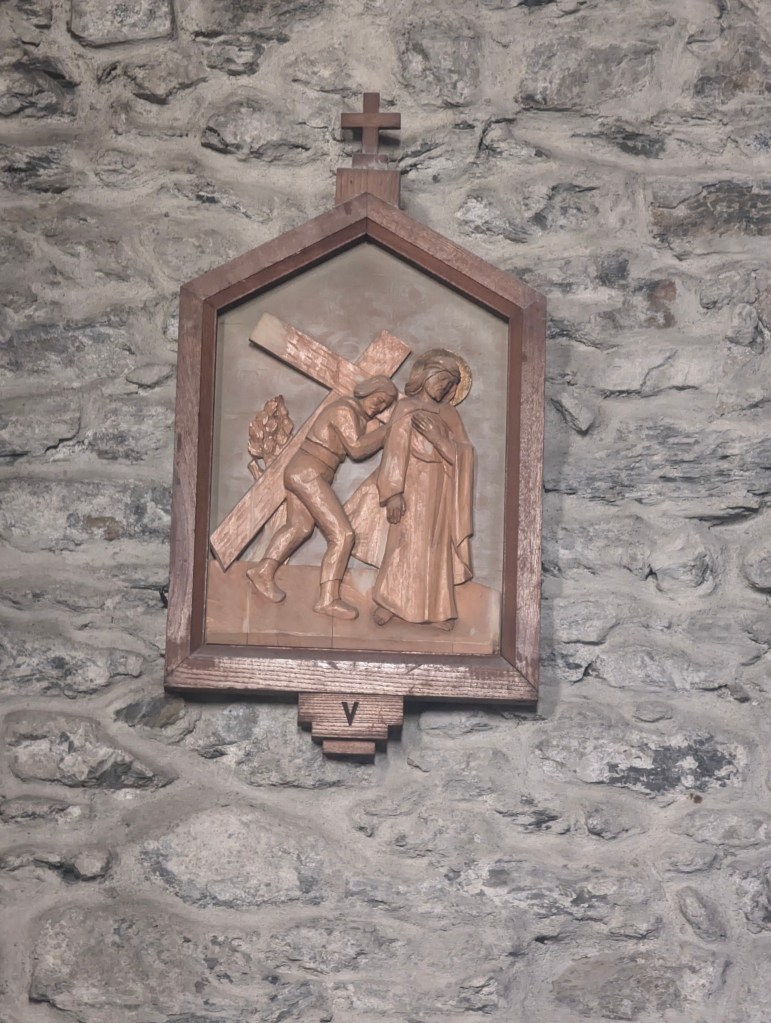
And the view out the window is magnificent.

Next we hopped back on the train and we headed to Manarola. The ancient townspeople of Manarola descended the hills from the hamlet of Volastra, which they abandoned for the seaside during the 14th century plague. Upon arriving to Manarola by train, we were greeted by a plaque of the Cinque Terre National Park.

and a little statue.
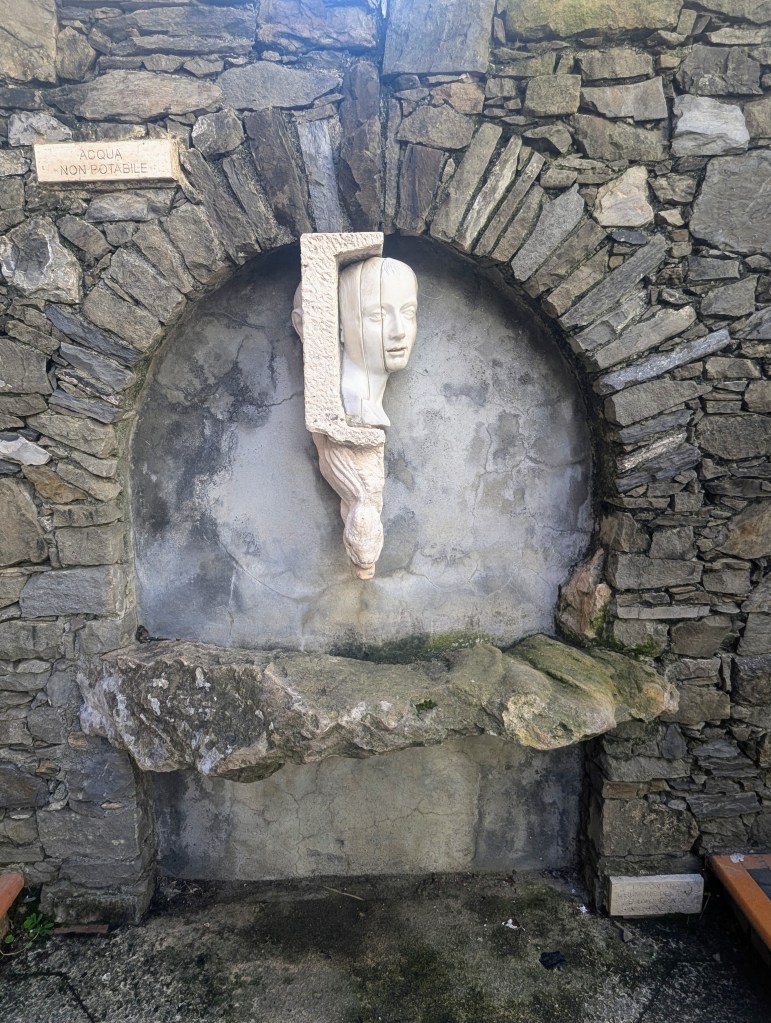
Here we also saw our first hint of Christmas decor.

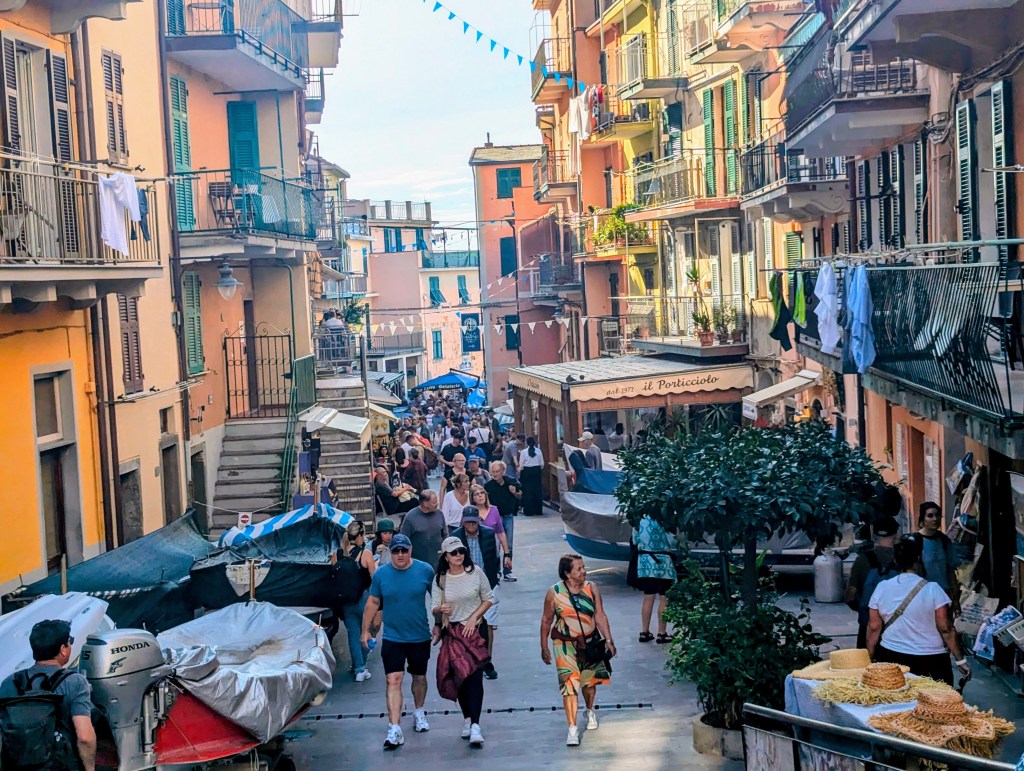
Again the streets were packed with tourists.
There was not much of a beach, but that did not stop some brave bathers.
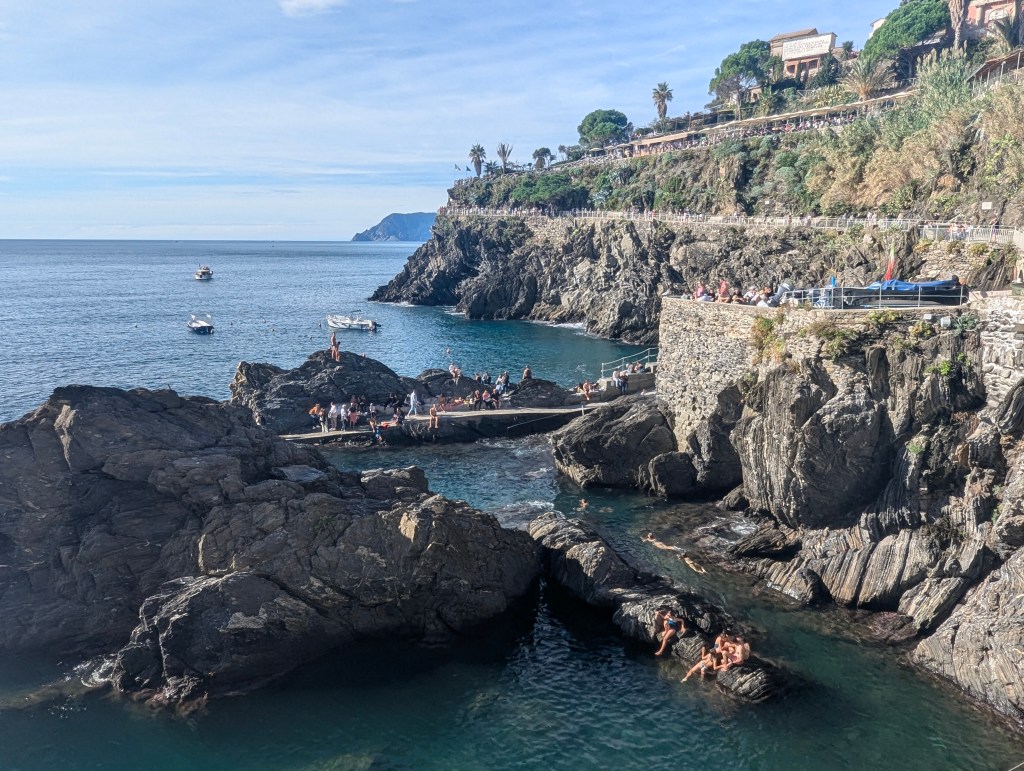
We hiked out along the coastal promenade for a view back towards Manarola.
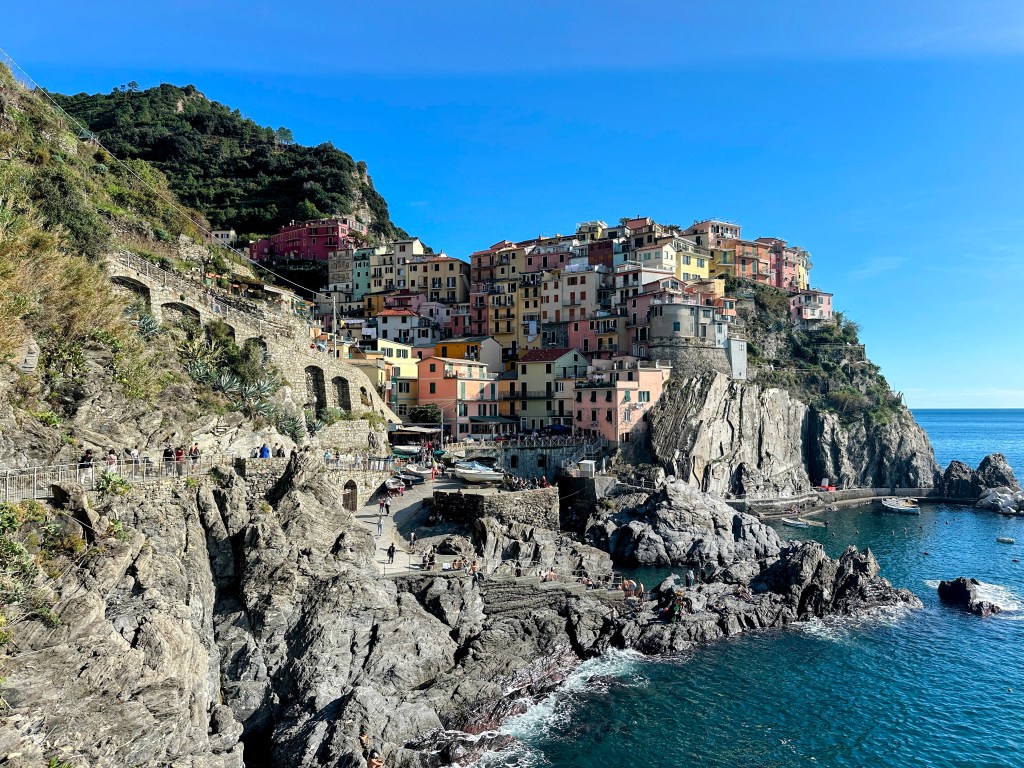
Also from that vantage point we could see the town of Corniglia up on the top of the hill.

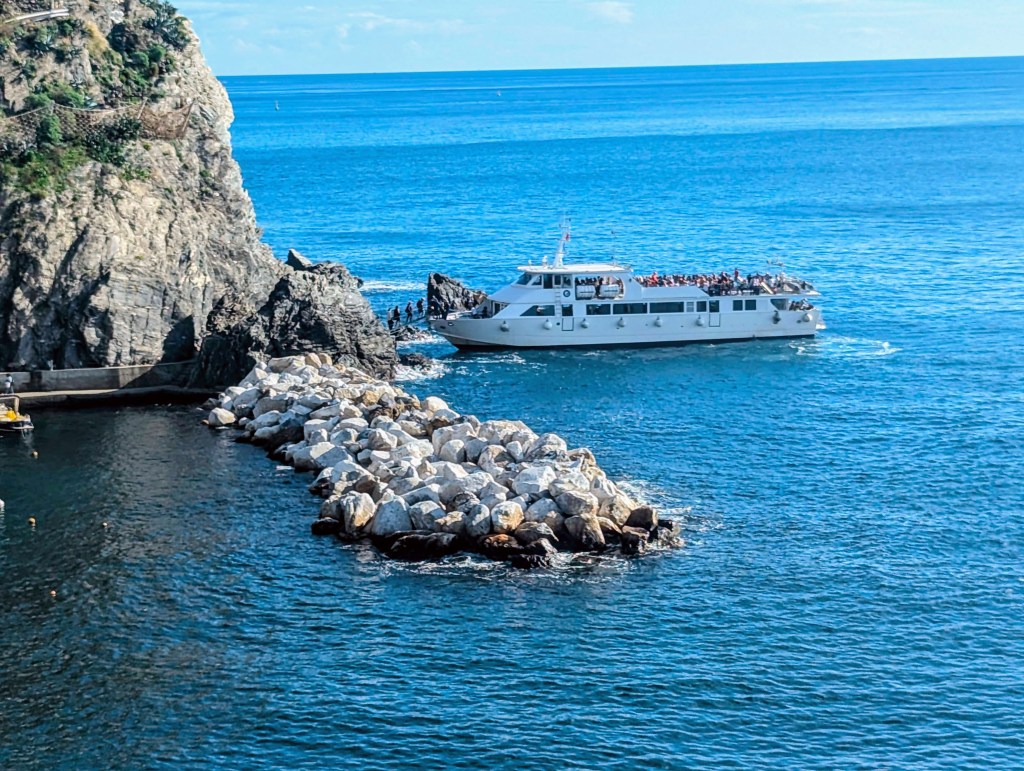
Also from this vantage point we could see the ferry that carries passengers from one Cinque Terre town to another.
There was a market set up in one of the main squares.

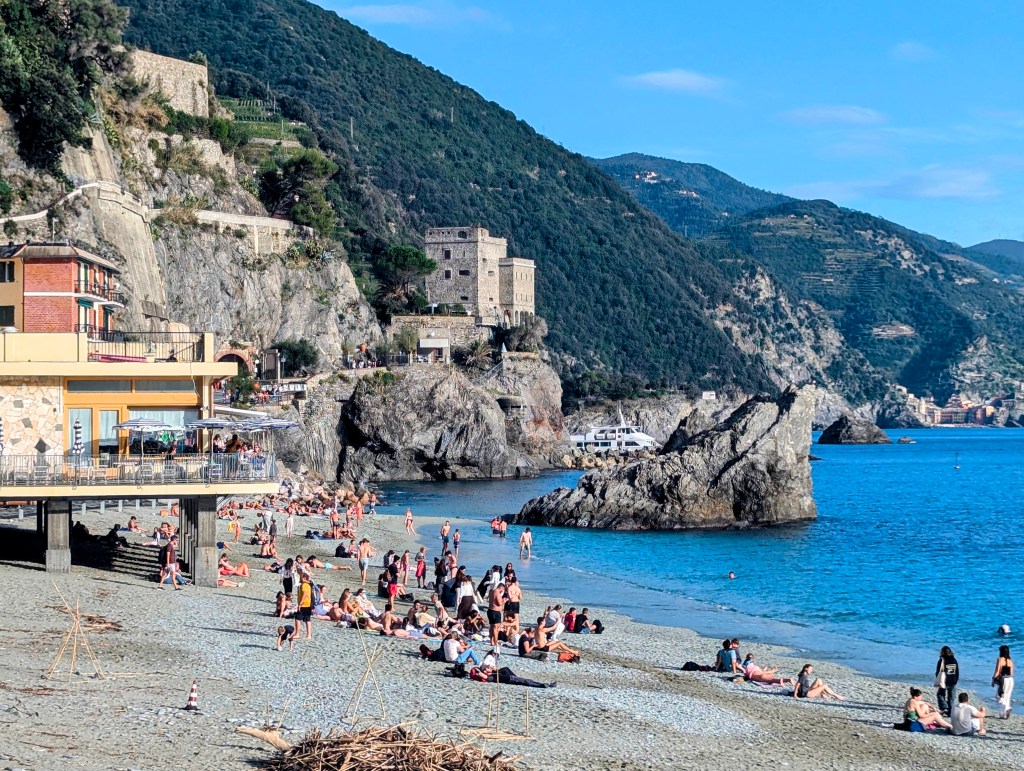
We rode the train back to Monterrosa for a stroll on the beach.
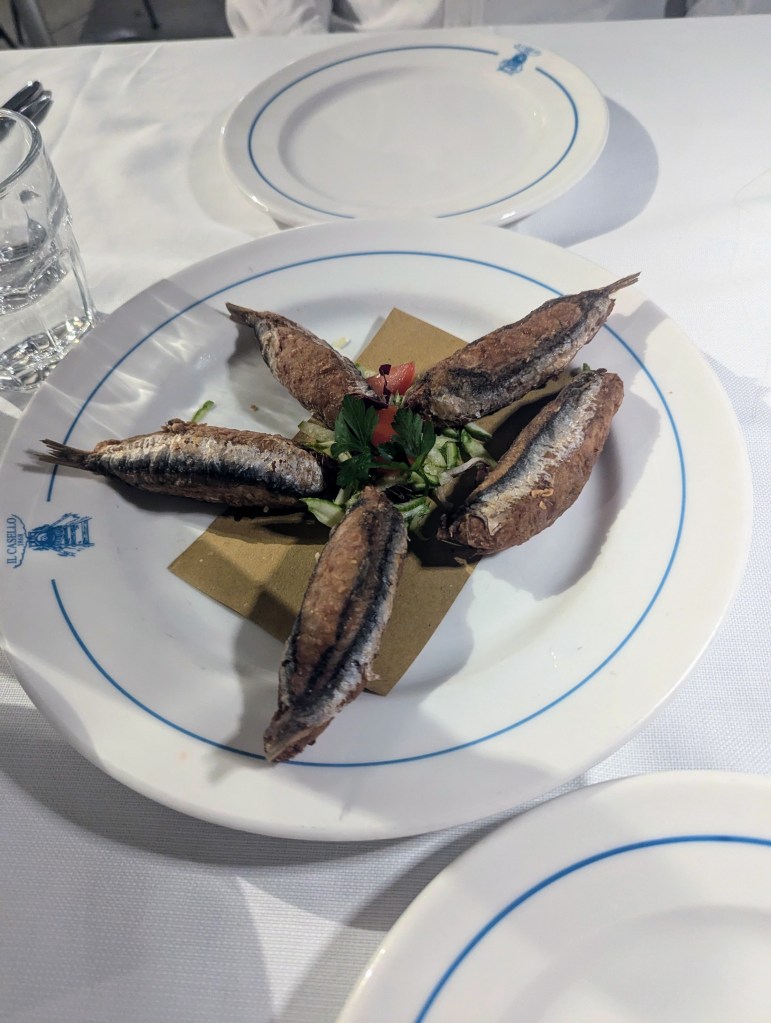
We enjoyed one of our many delicious seafood dinners that evening which included a new one for us: deep fried stuffed sardines.
Next morning we ventured back through the tunnel to the train station, this time first to Corniglia, which is the only of the five Cinque Terre towns that is not by the sea.
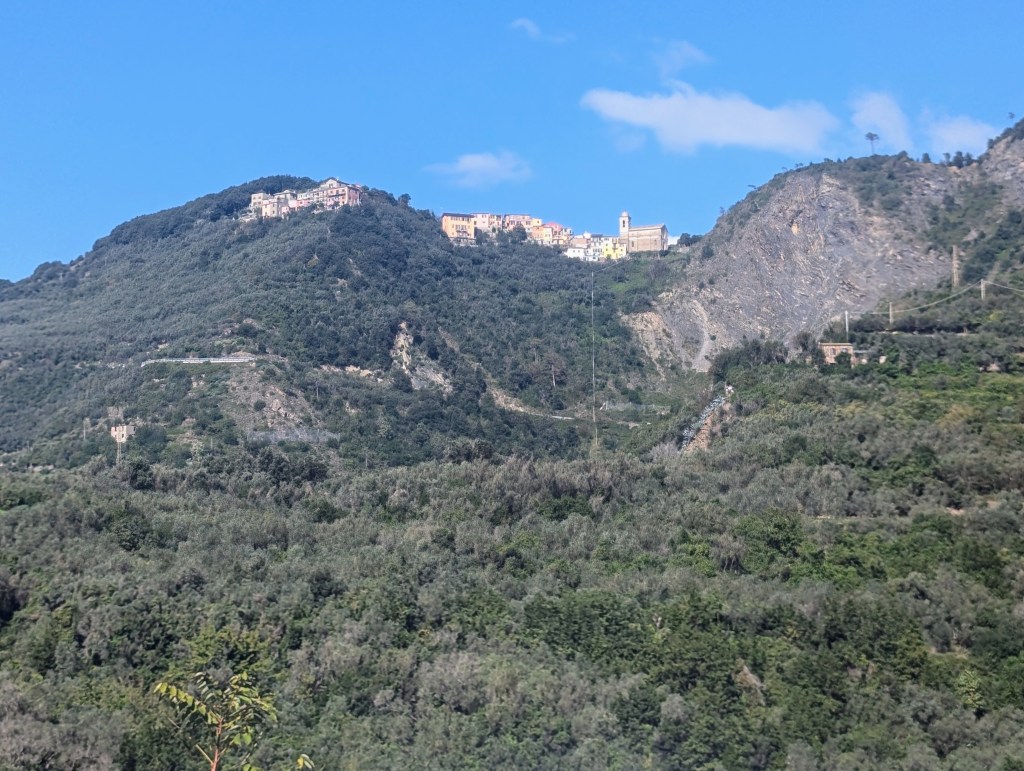
After arriving by train, we waited for the bus to transport us up the long and winding roads. Despite it being October, the wait was a bit long and hot in the sun, and the town a bit underwhelming, basically one cramped street.
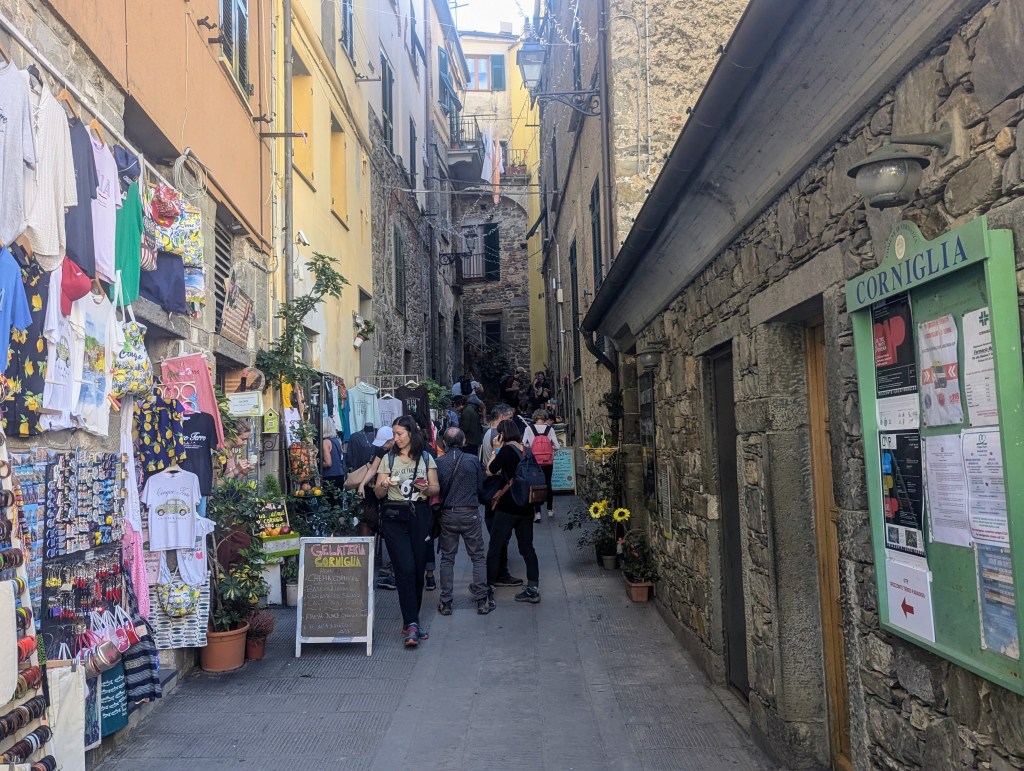
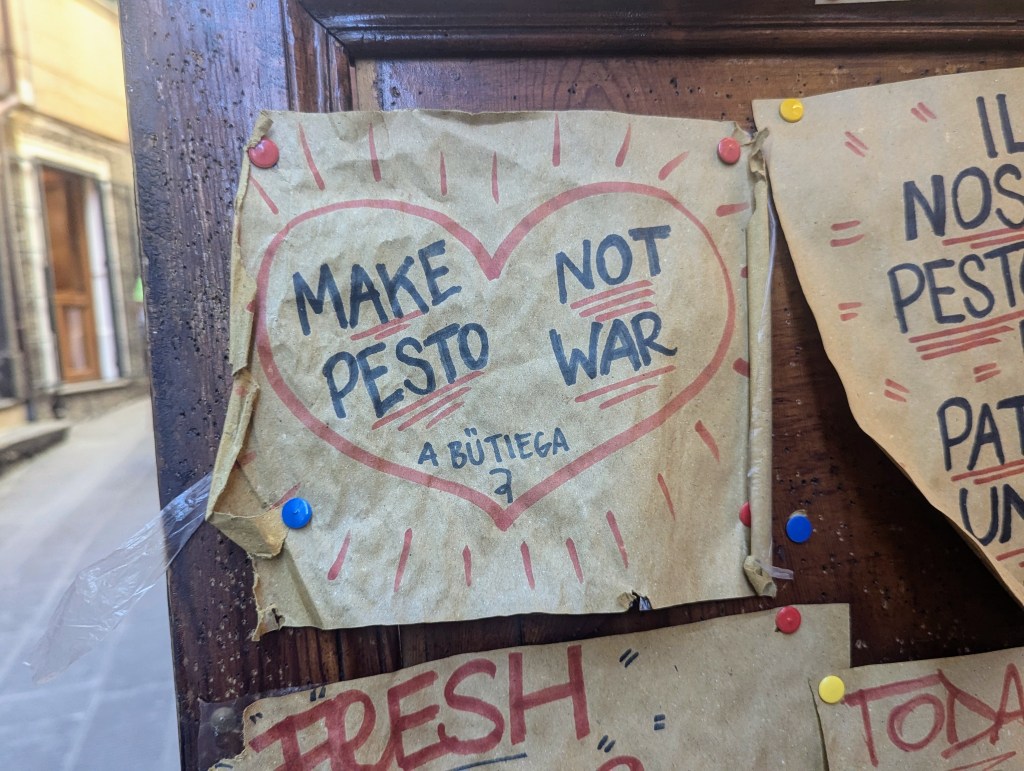
Although I do love this little Ligurian motto:
The church at the top was tiny.

From above the church is a view of Manorola.
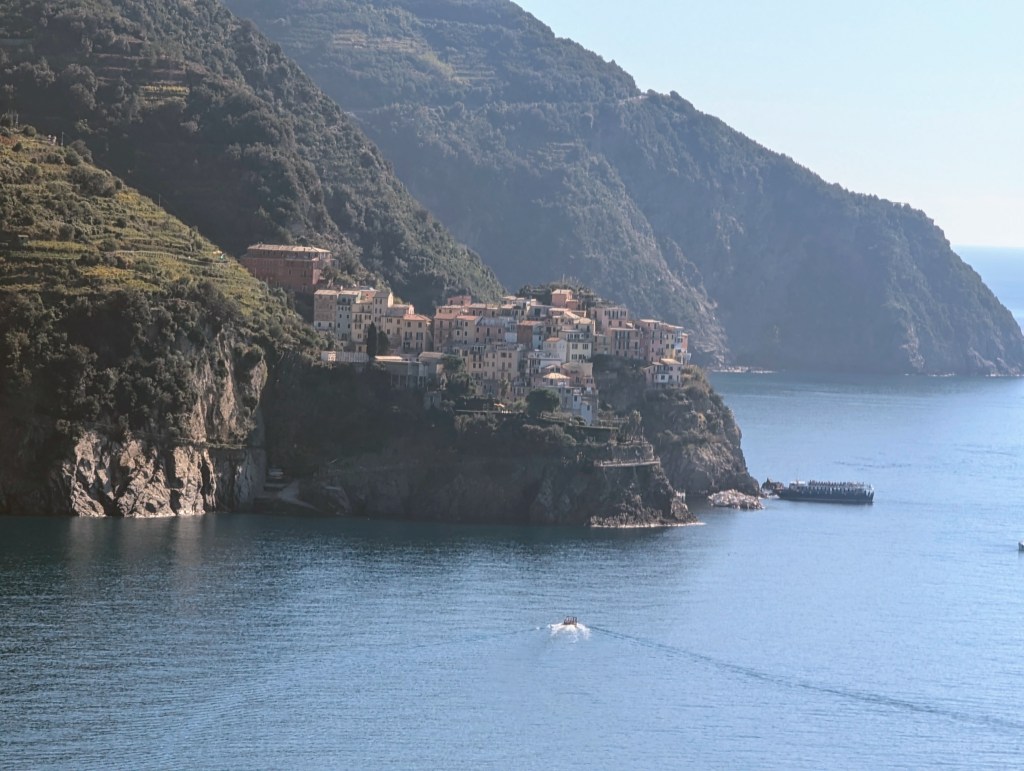
We chose a restaurant with a view for our lunch

and enjoyed fried calamari and zucchini, another typical Ligurian dish.

Rather than wait in the hot sun for the bus back down the hill, we braved the steps, of which there were a lot.

Next we rode the train to Riomaggiore, named for the “big river” that flows beneath the town. Upon arrival by train, one must pass through a tunnel which has been decorated with mosaics by artist Sylvio Benedetto.


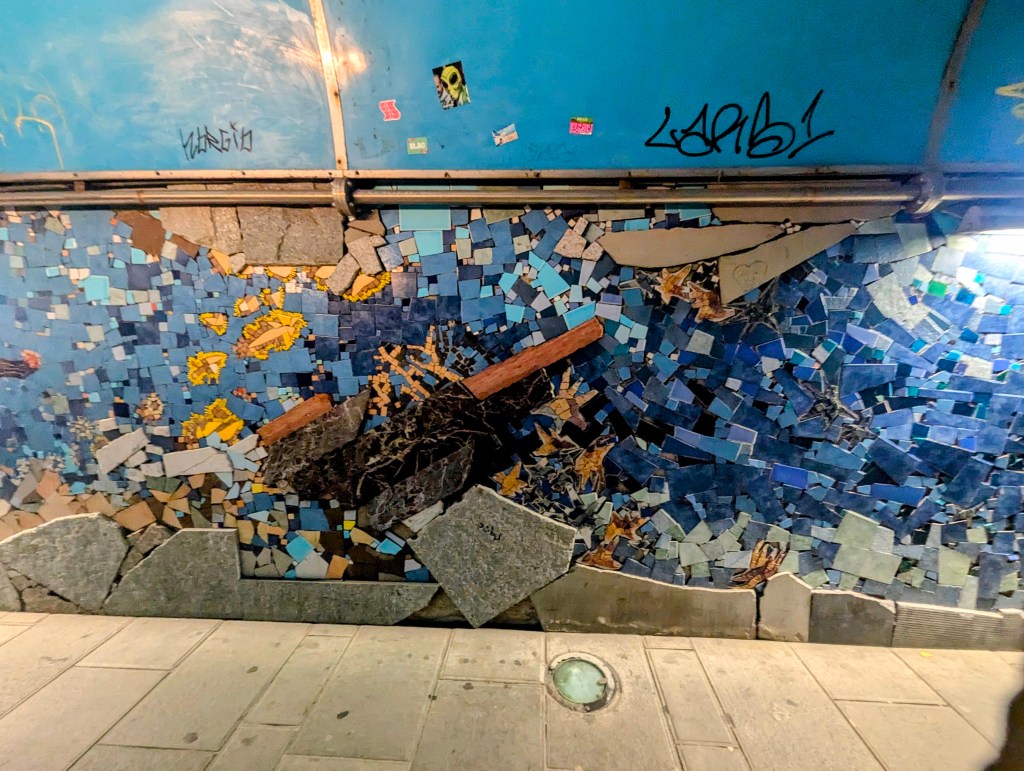

From there we entered the town of Riomaggiore.
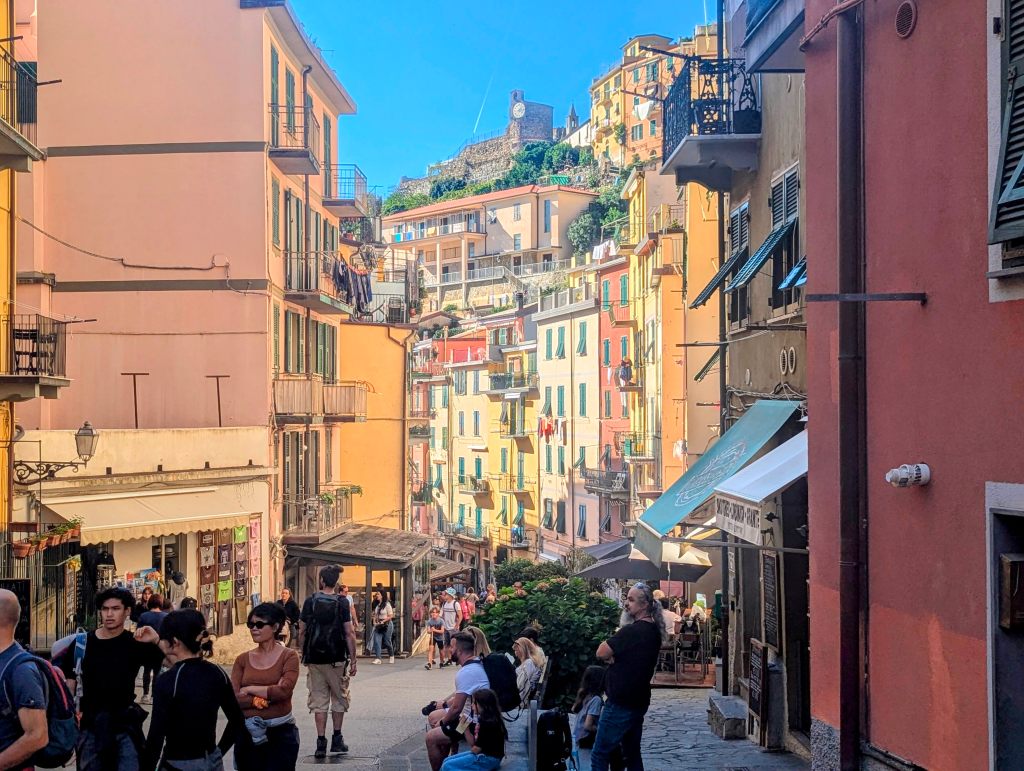
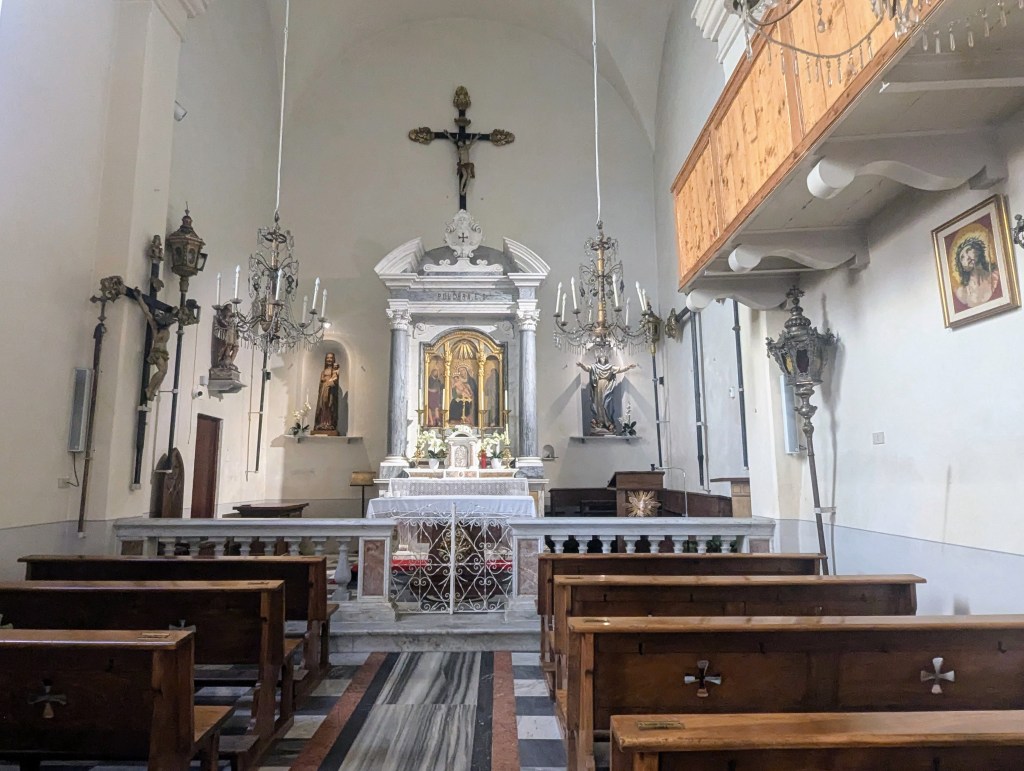
We climbed up the hill on the side of town to the church above: Oratorio di Santa Maria Assunta, a place now used for the town’s elderly to gather.


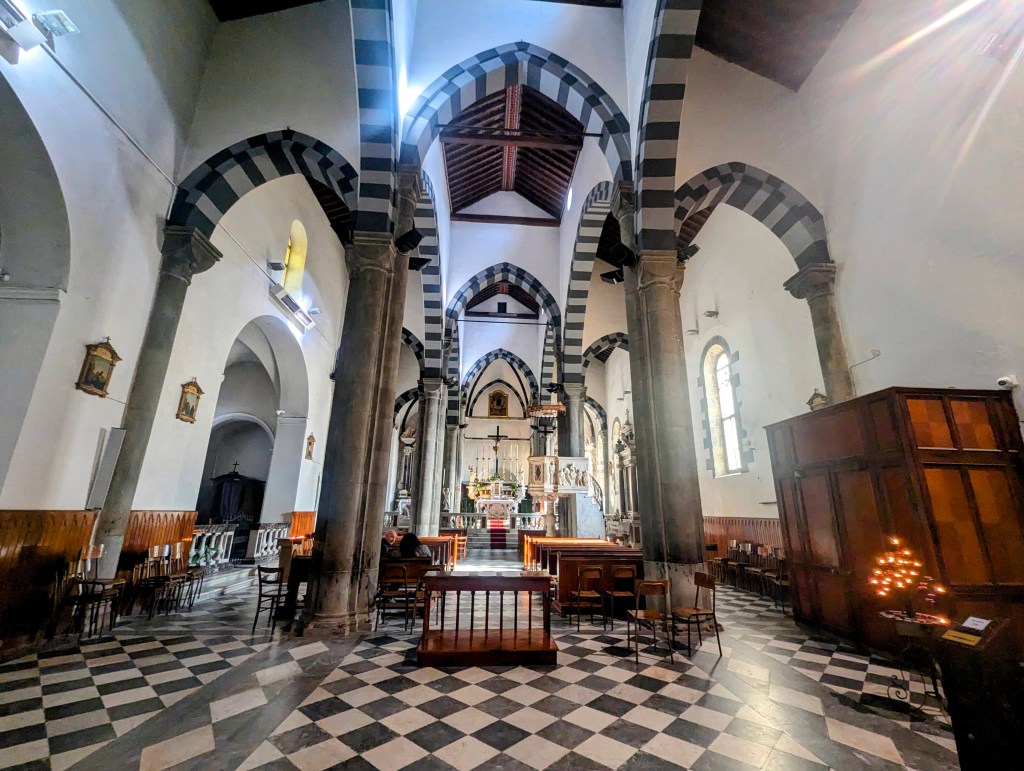
Further up the hill was the Church of San Giovanni Battista of Riomaggiore built in 1340, but the façade was restored in the 19th century.

Inside are many chapels like this one devoted to Madonna.

And still further up the hill overlooking the town is a castle built for its defense in 1260. Today the castle is part of the parks department and is used for meetings and ceremonies.

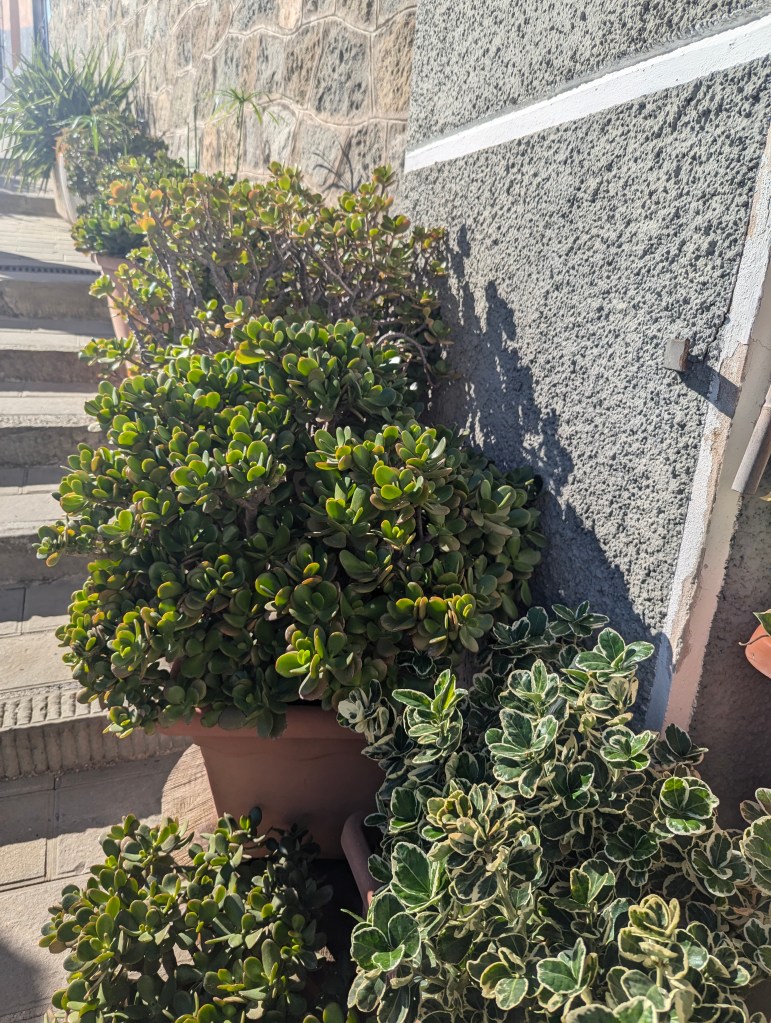
All along the path up to the castle were large plantings of succulents.
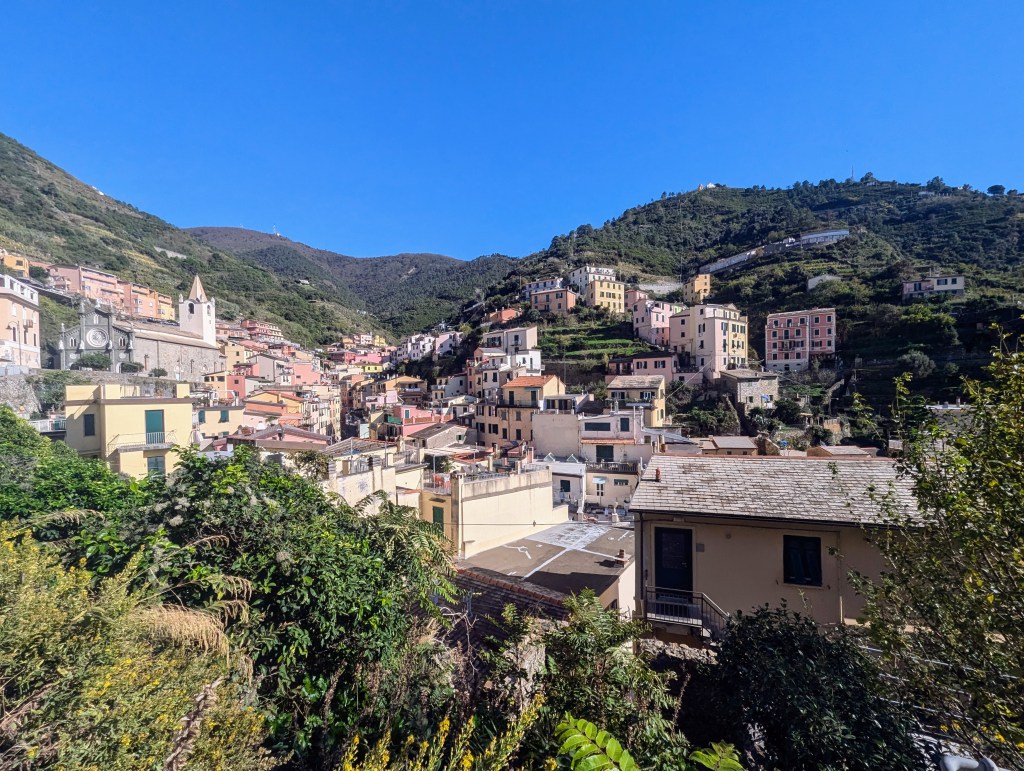
From the top we had a view looking down on the town of Riomaggiore, a little less colorful than some of the other Cinque Terre towns..
From here there was also a view of the train which runs through many tunnels connecting the towns of Cinque Terre.

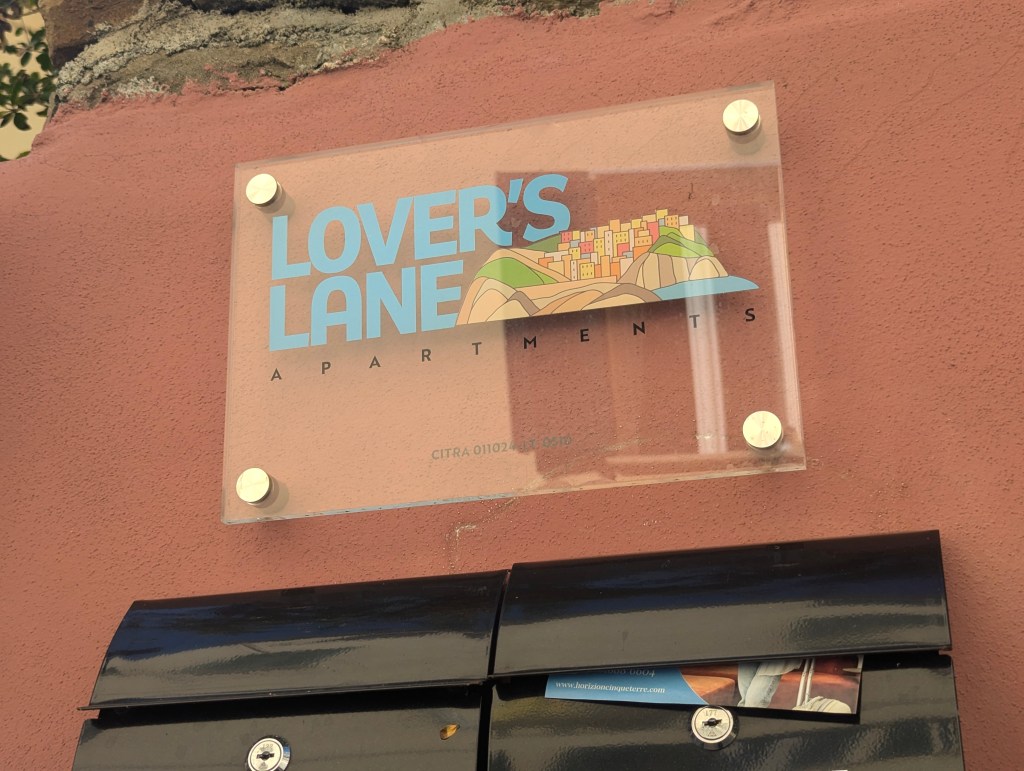
We took a different route back down and found ourselves on Lover’s Lane, which is a path that connects Riomagiorre and Manarola. Its name was coined by journalist Paolo Monelli inspired by the fact that the path was used by lovers from the two towns to meet during WWII before the rail line was built.
And finally we made our way down and out to the marina.

Then it was back to Monterosso al Mare and another walk along the promenade.
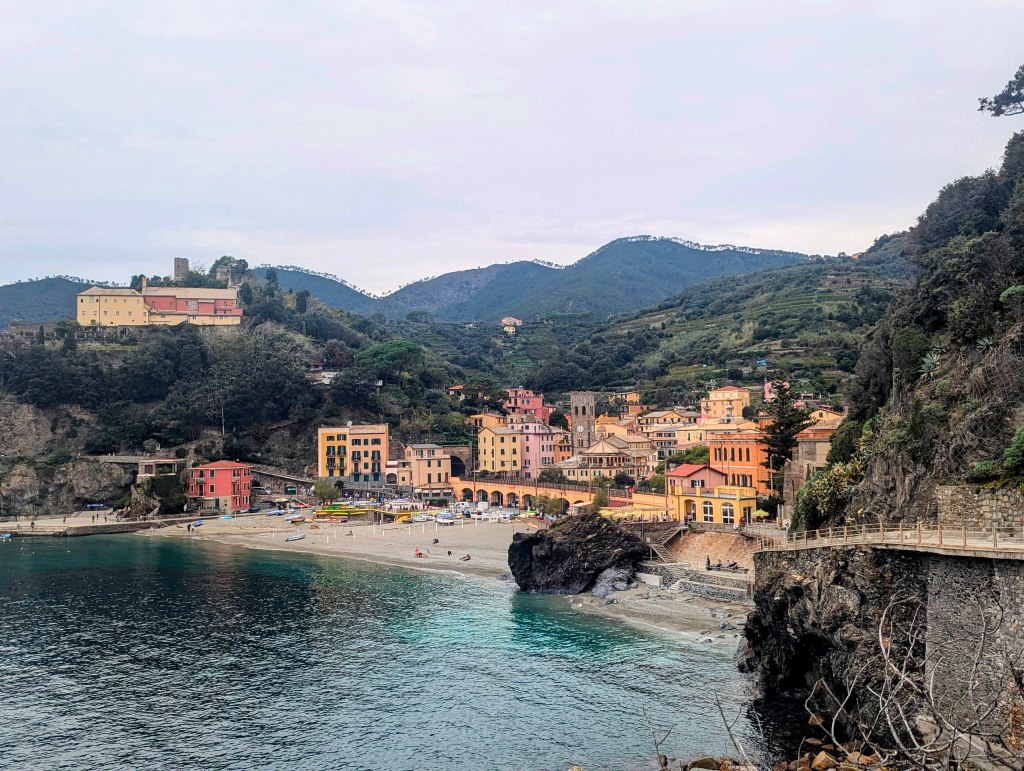
and another gorgeous sunset from our rooftop terrace.
 Jo & Eric's travels
When are you going to be in NYC again?
Mitch and Razelle
LikeLike
I knew you were strong but never imagined you holding up the lT of Pisa!!!
LikeLike