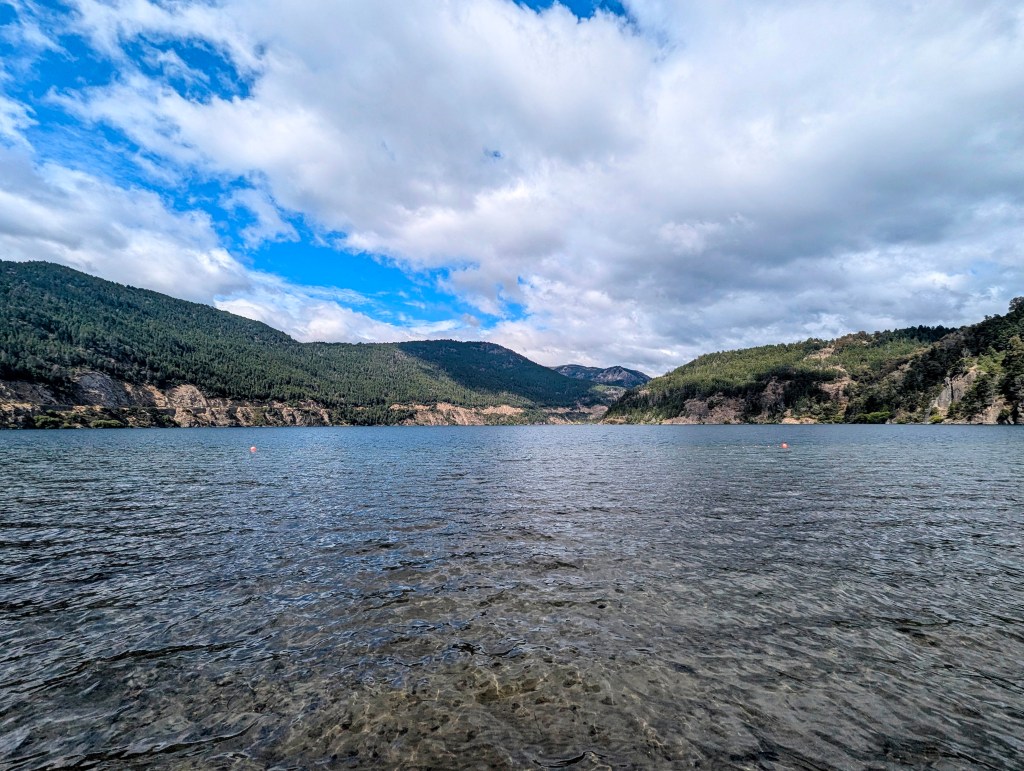
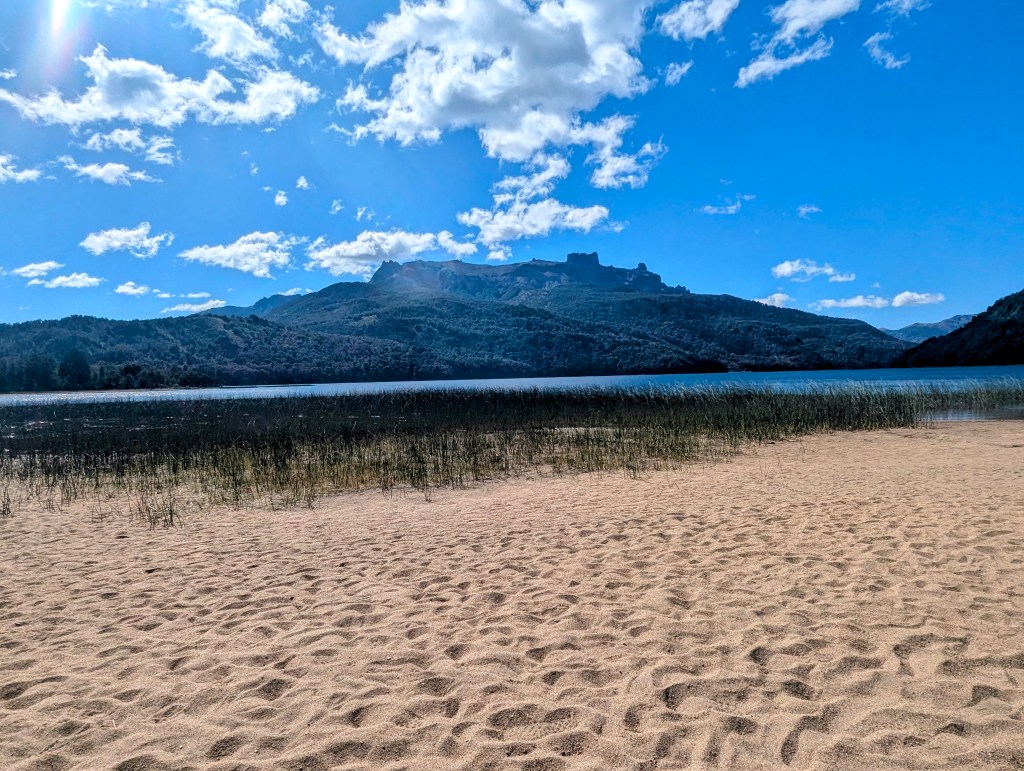
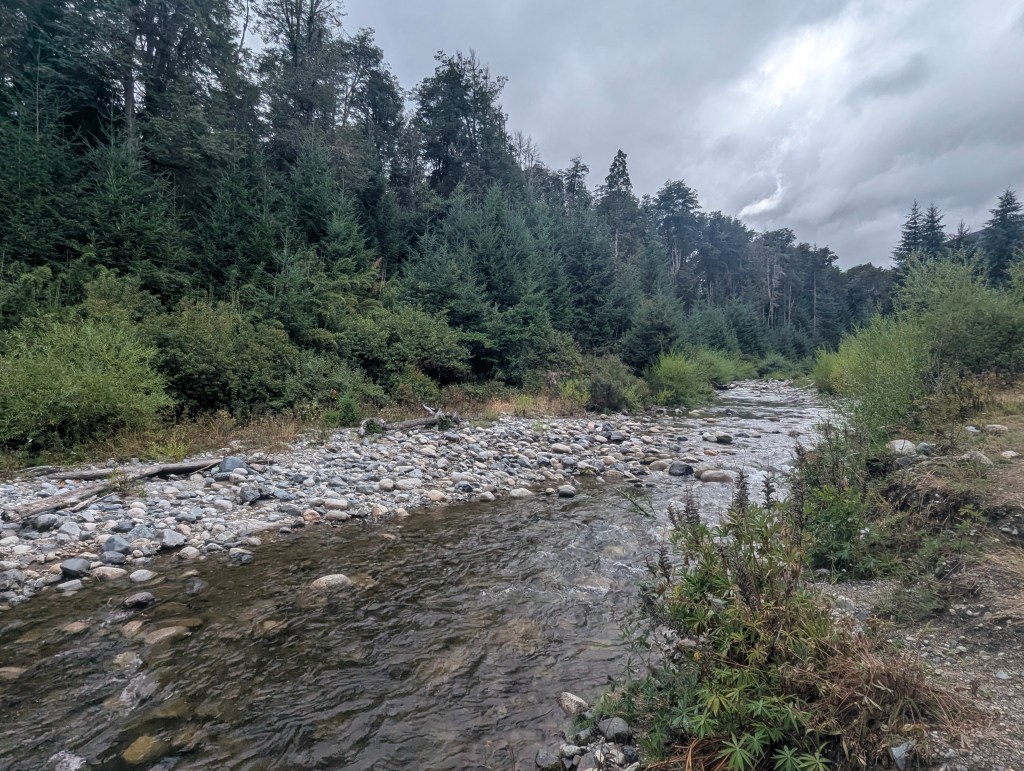
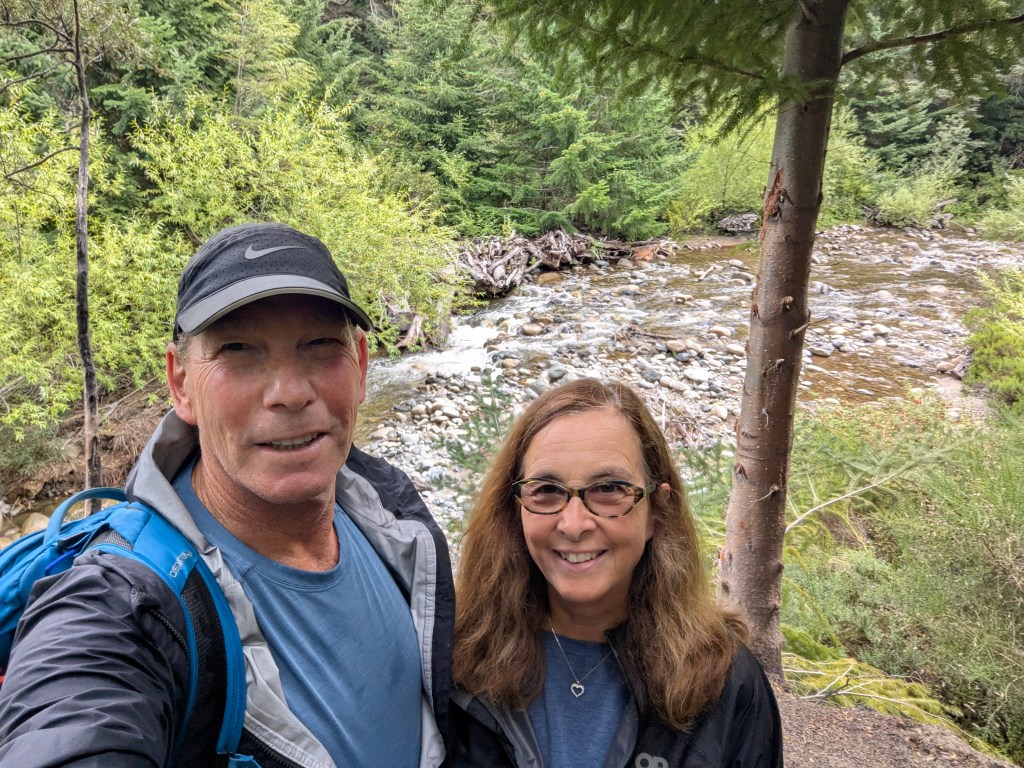
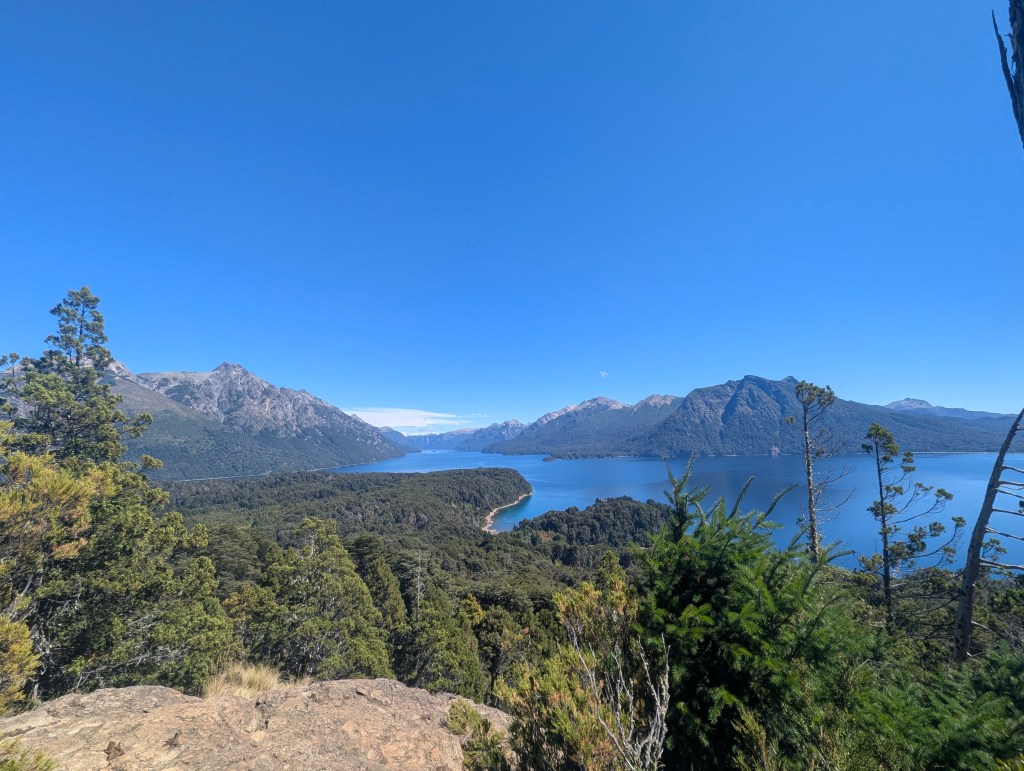
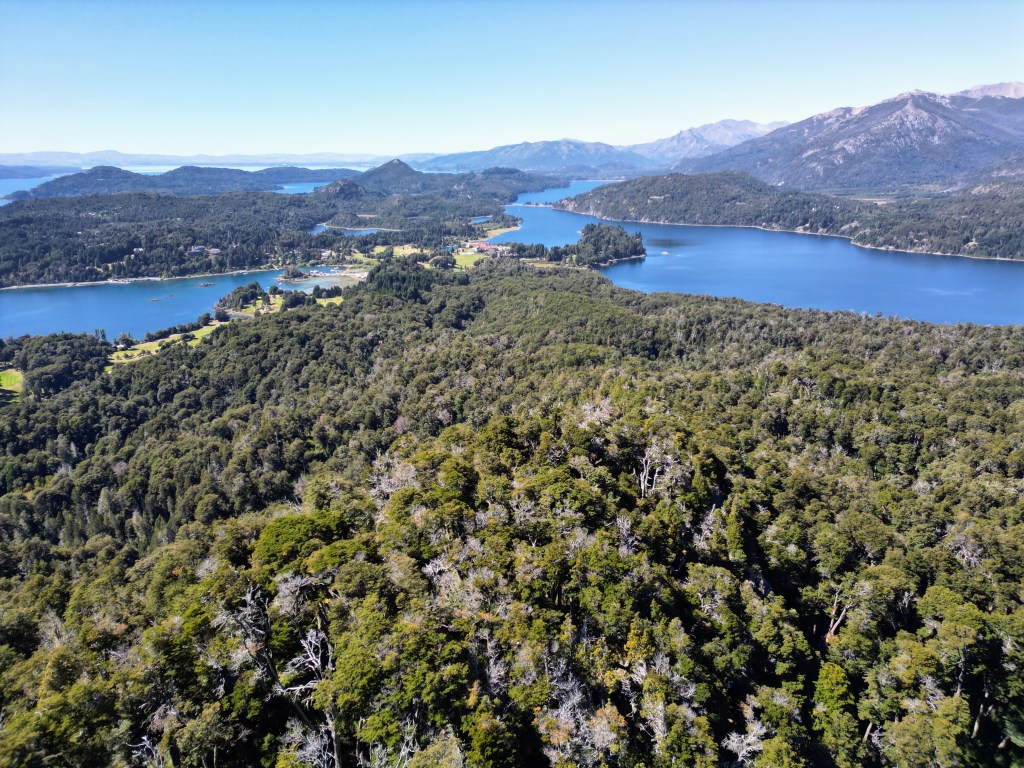
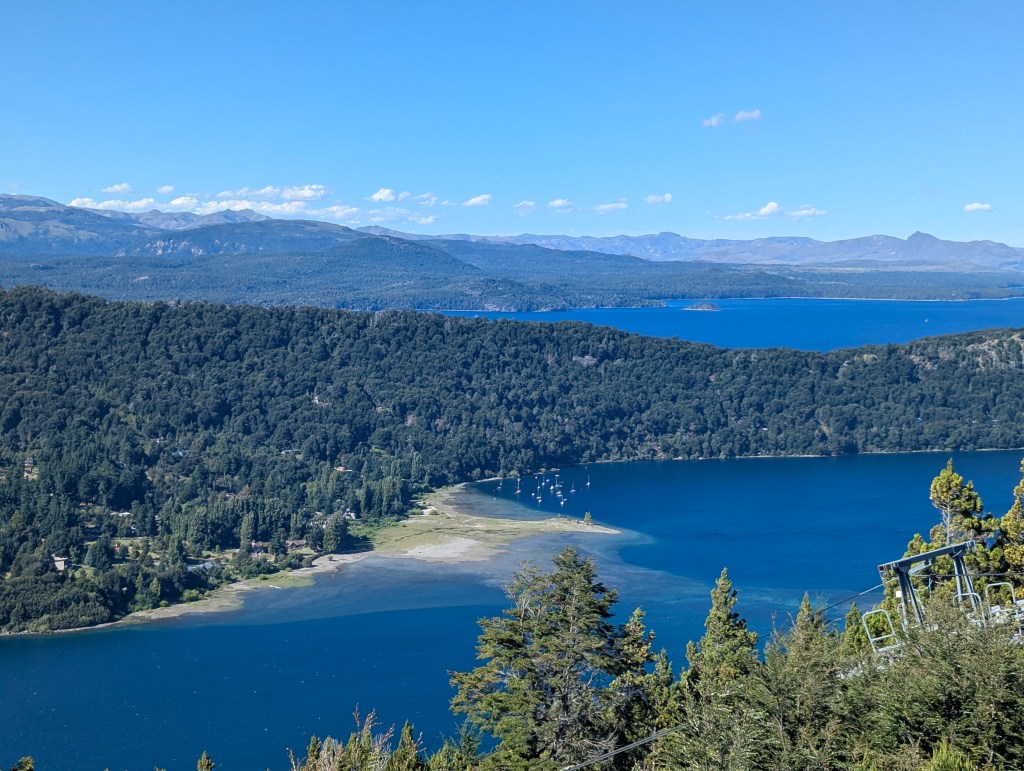
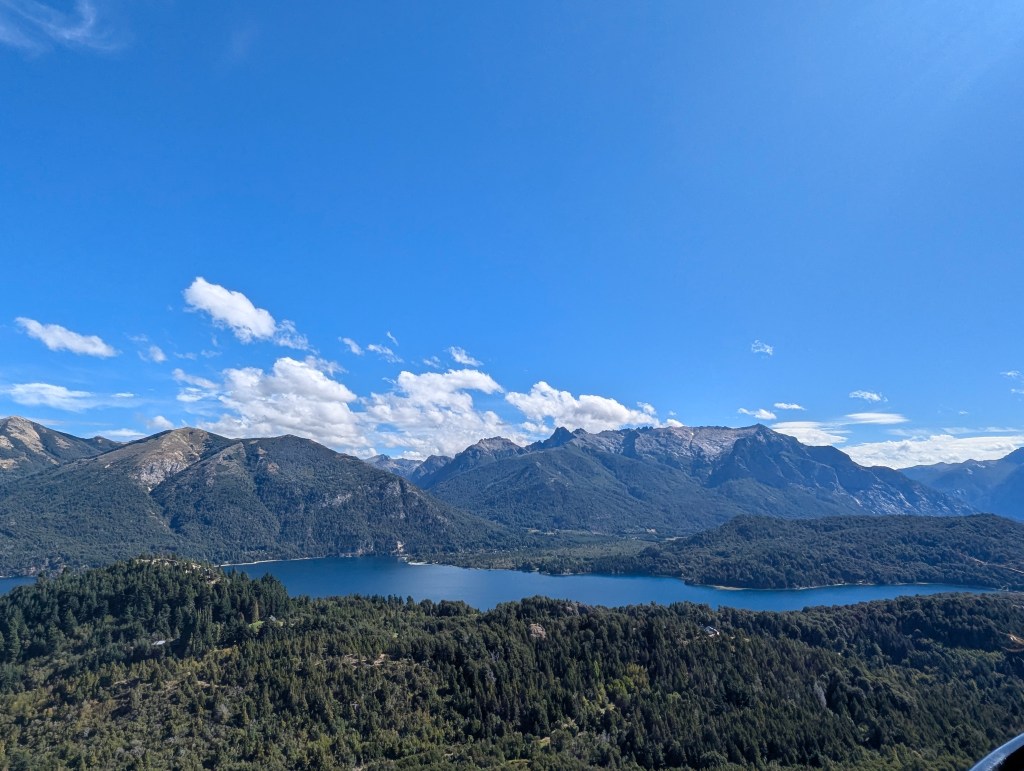
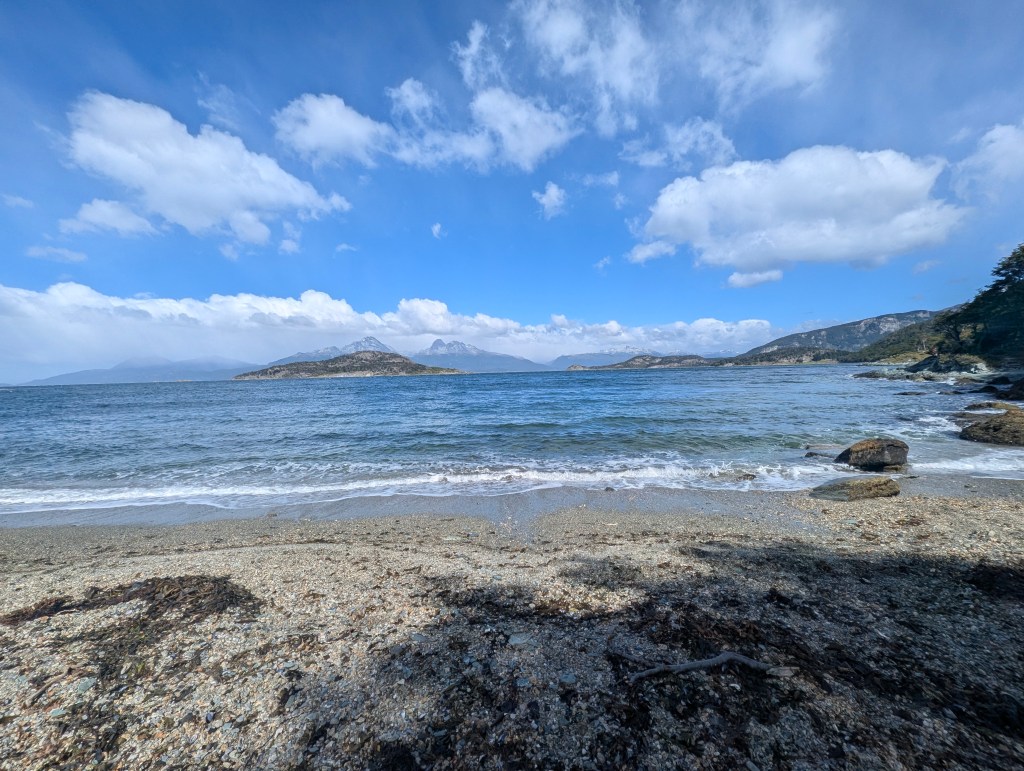
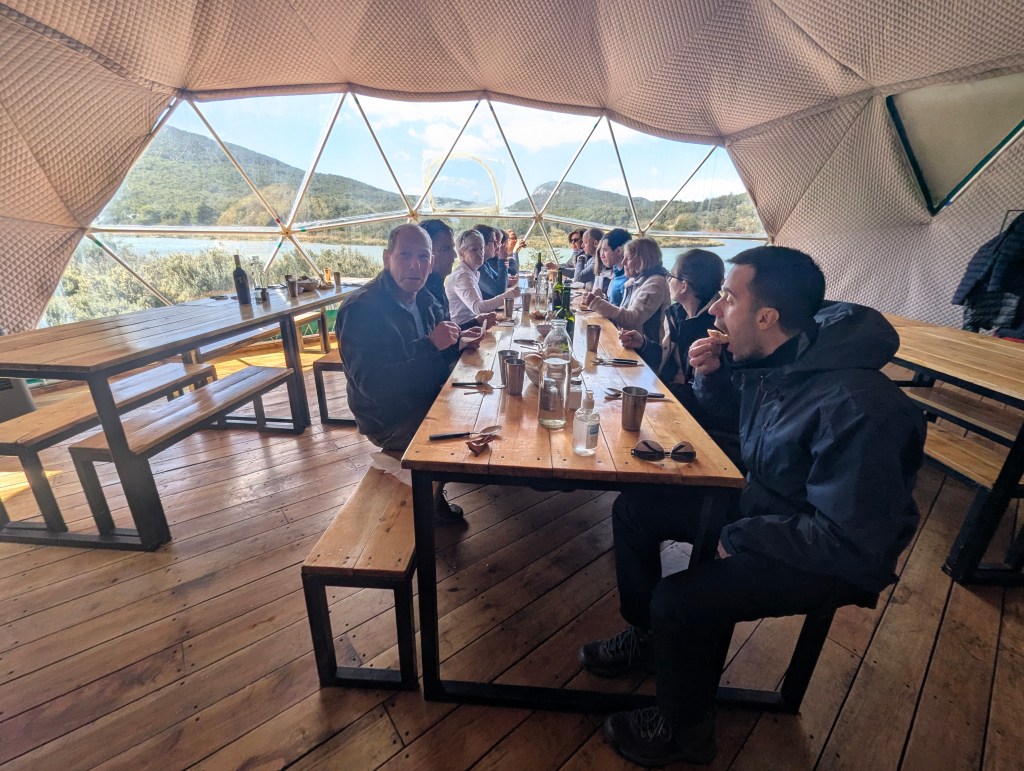
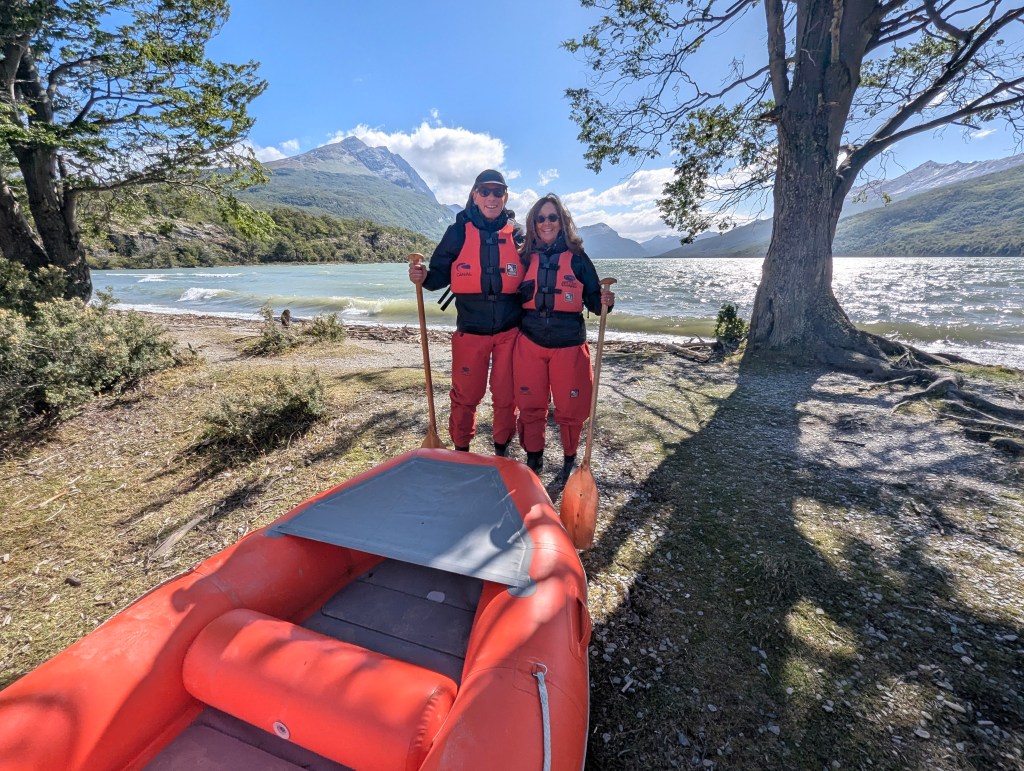
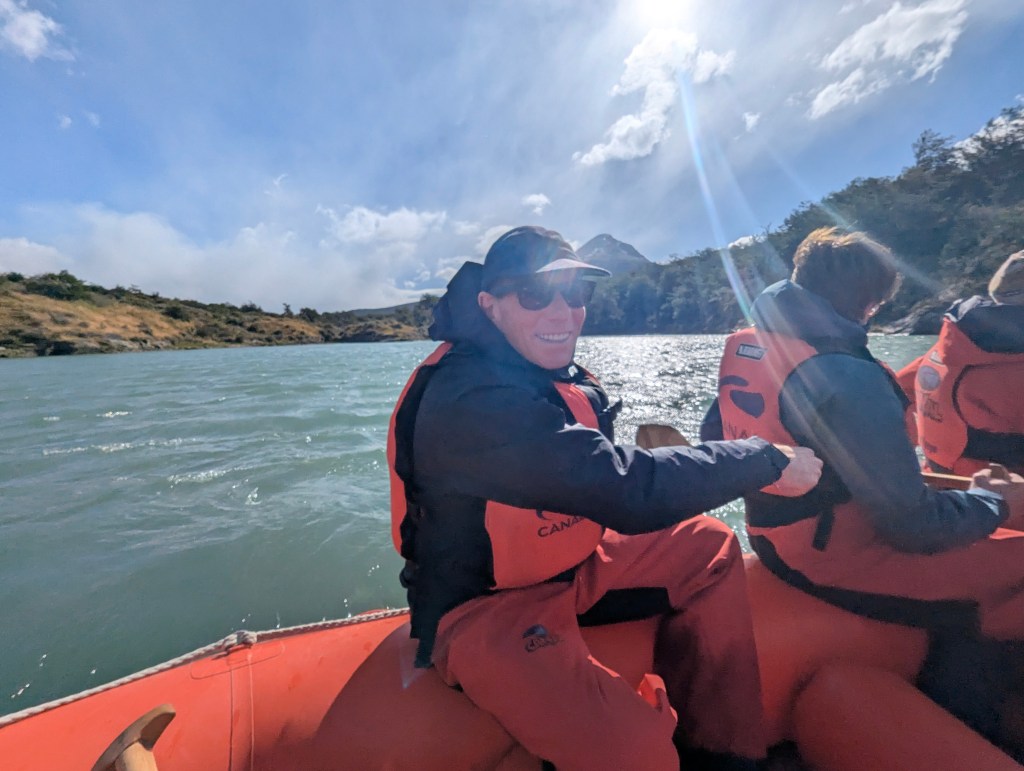
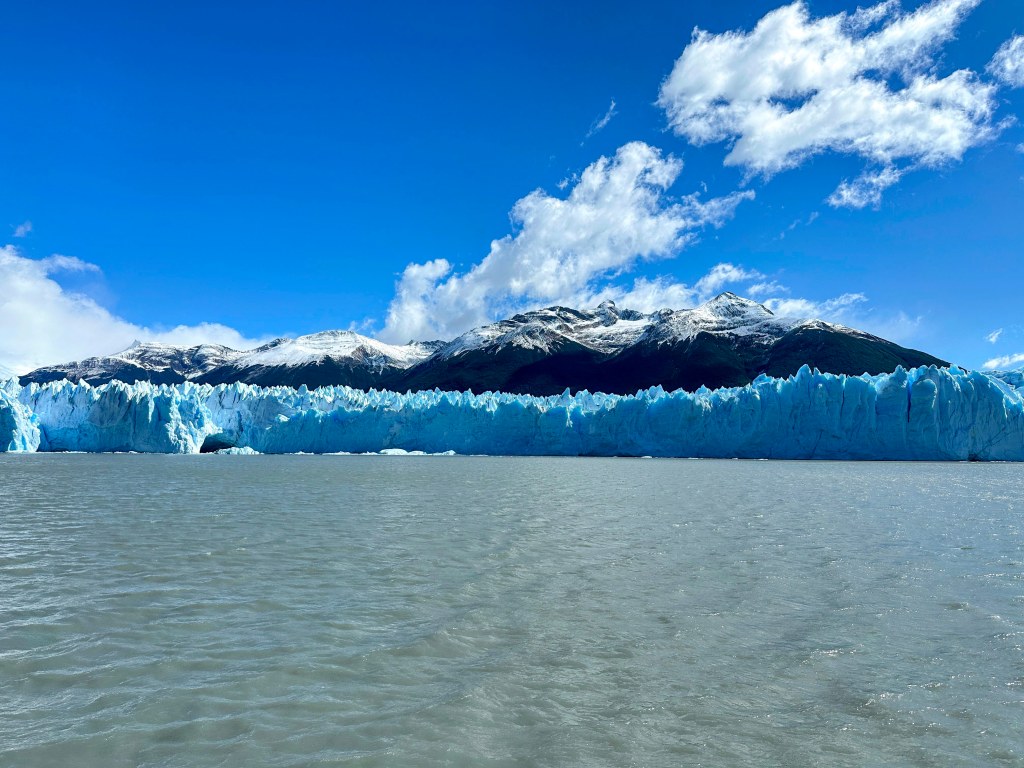
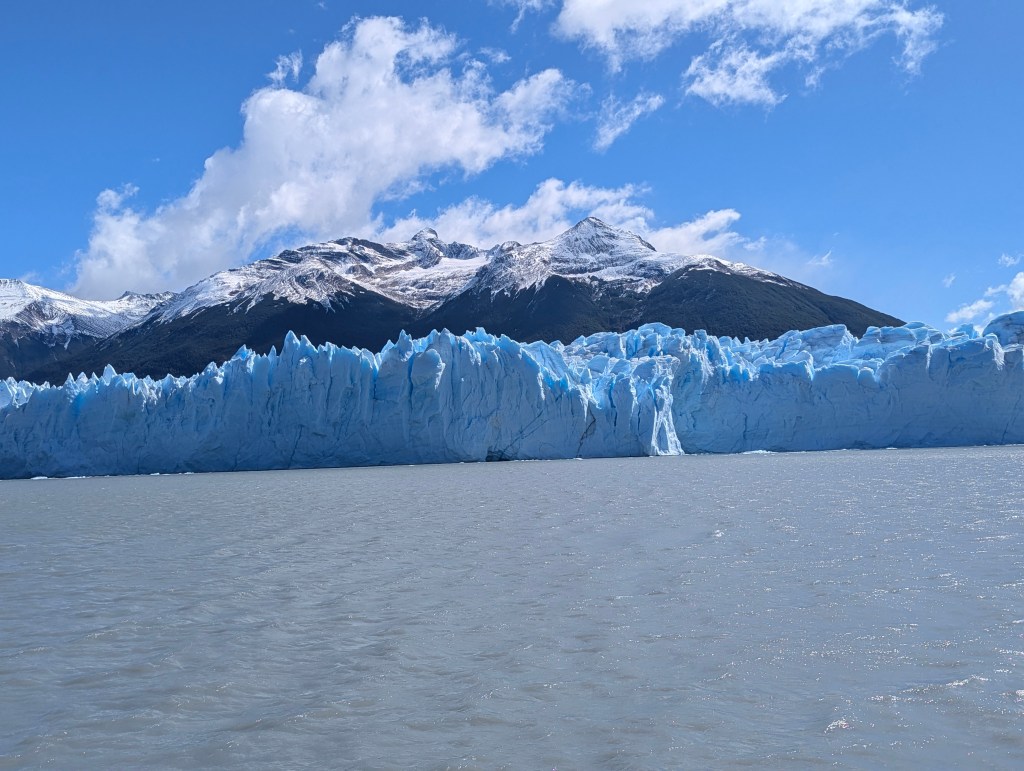
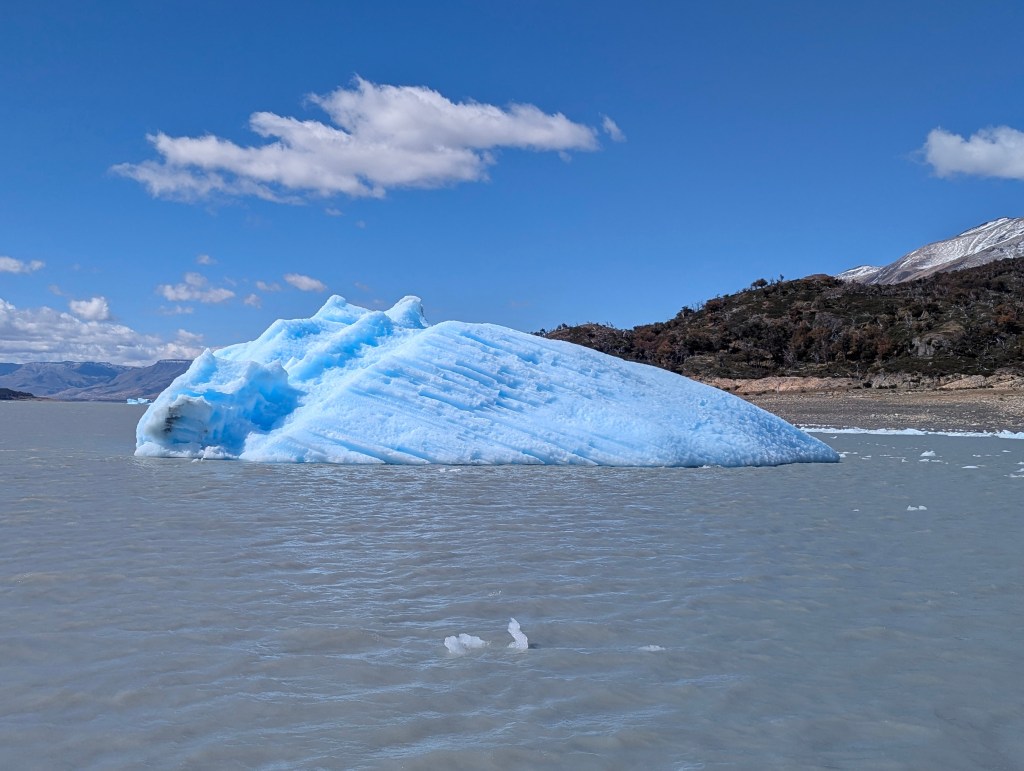
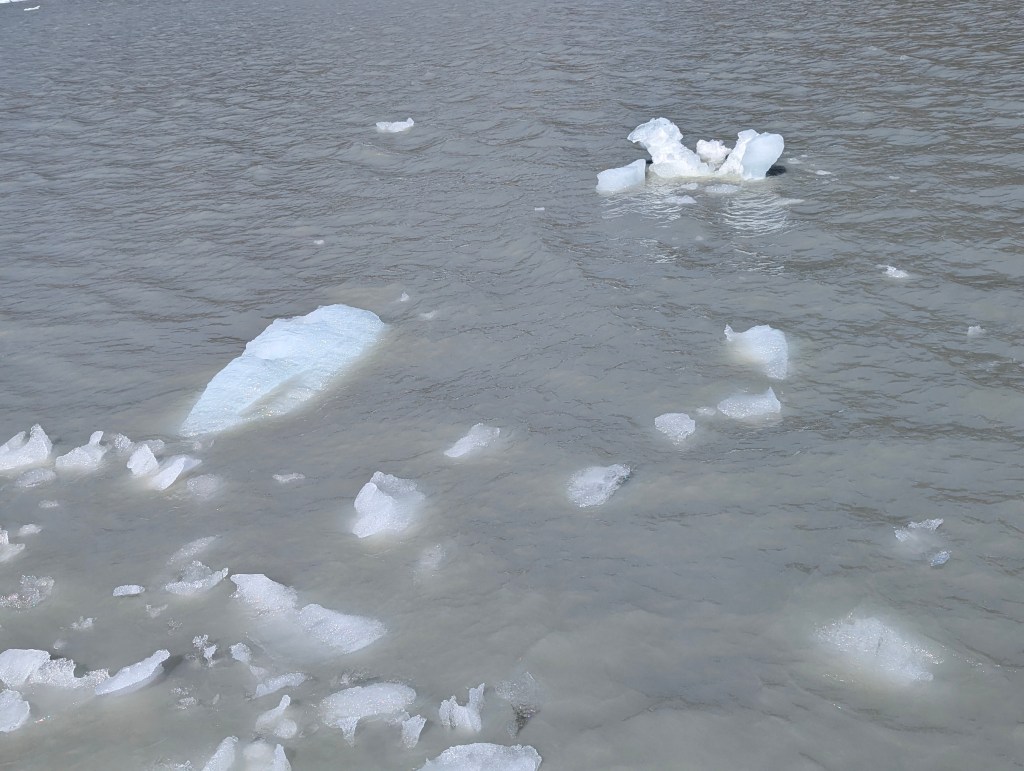
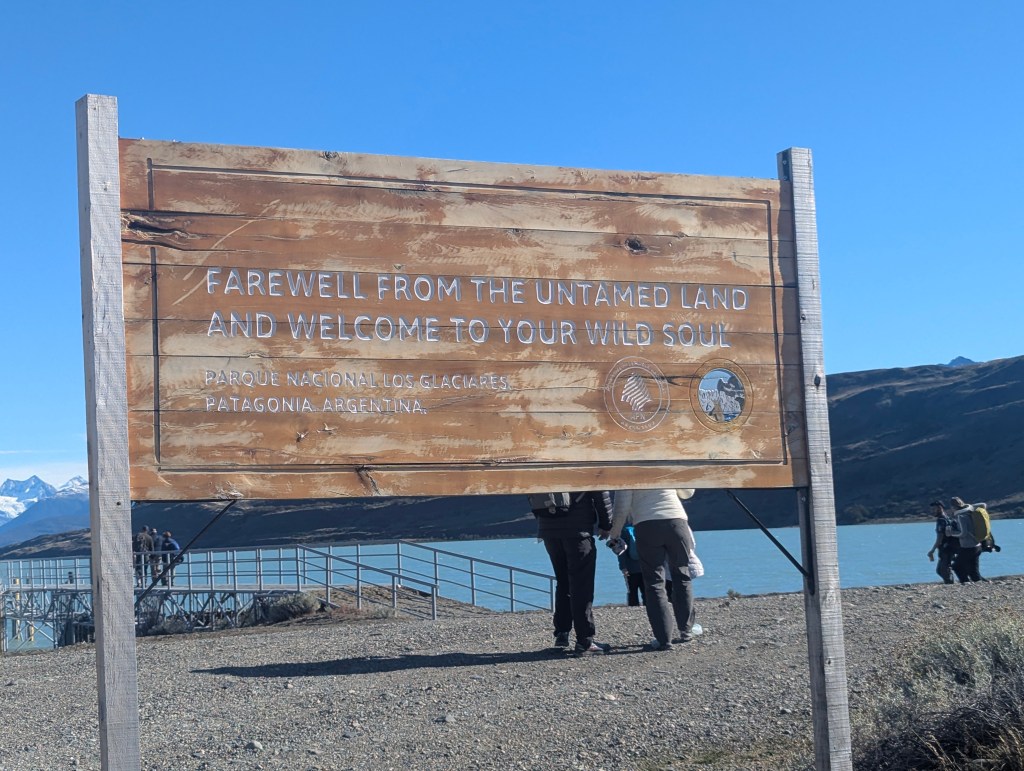
Argentina: Patagonia: Nequén Province: San Martín de los Andes Feb. 27-March 1; Villa La Angostura March 2-3; Rio Negro Province: Bariloche March 4-6, 2025

We landed in Bariloche, the hub of the “Lakes Region,” picked up our rental car, and started along the route to San Martin de los Andes recommended by our travel agent, which meant heading east prior to turning north. The landscape was dry and desert-like

until we were joined by Río Limay along the road. We pulled over at Mirador Anfiteatro (Amphitheater Lookout) so named because the land makes the shape of an amphitheater.
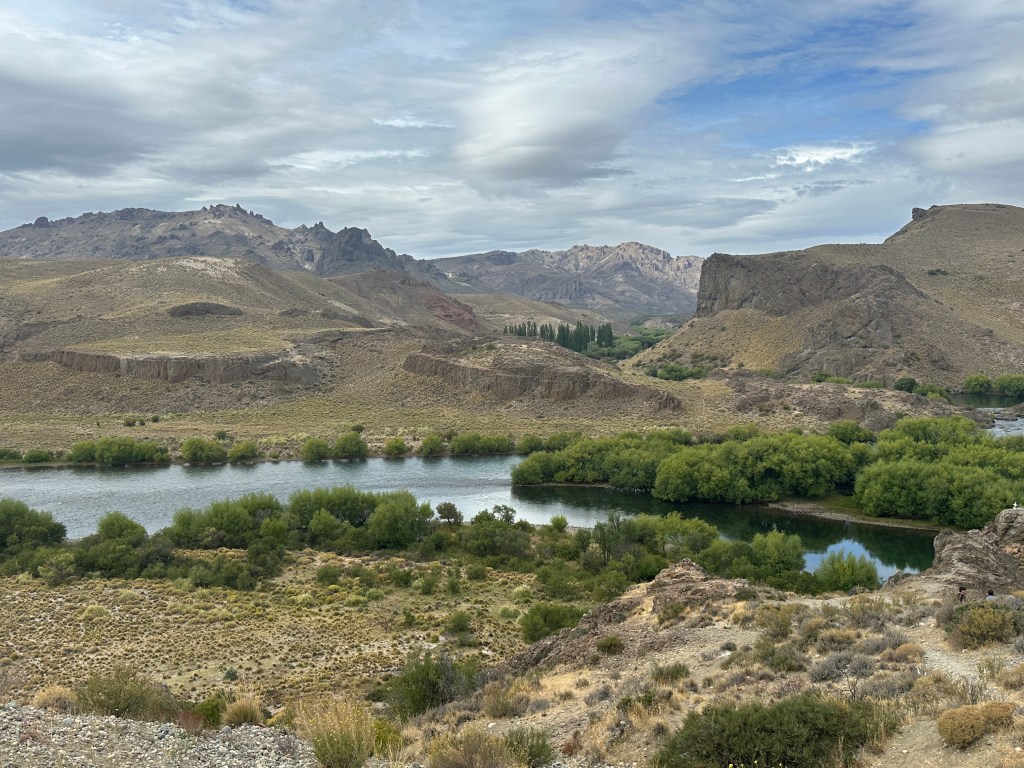
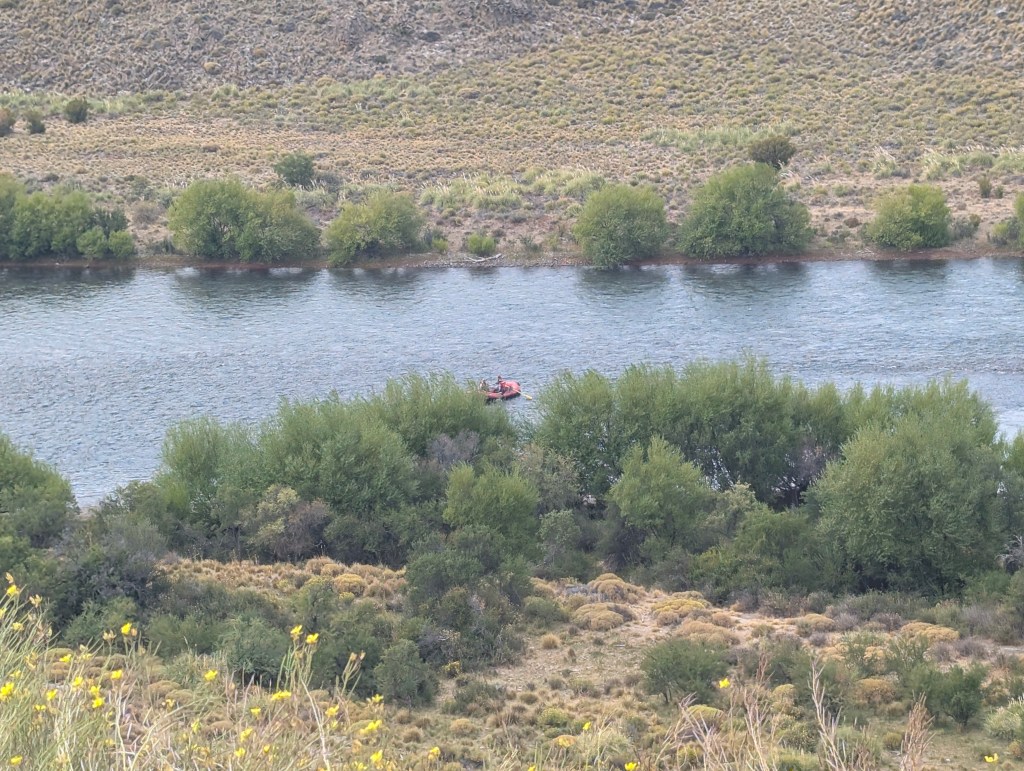
There were folks rafting.
Along the side of the road we passed several herds of guanacos, native to the Patagonian steppes and a relative to the alpacas of Northern Argentina. They are herbivore mammals that form herds of 4-20 individuals led by a dominant male known, as the “relincho,” who keeps watch while the rest graze. When faced with danger they make a loud vocal threat, hence their name. They flee at a gallop.
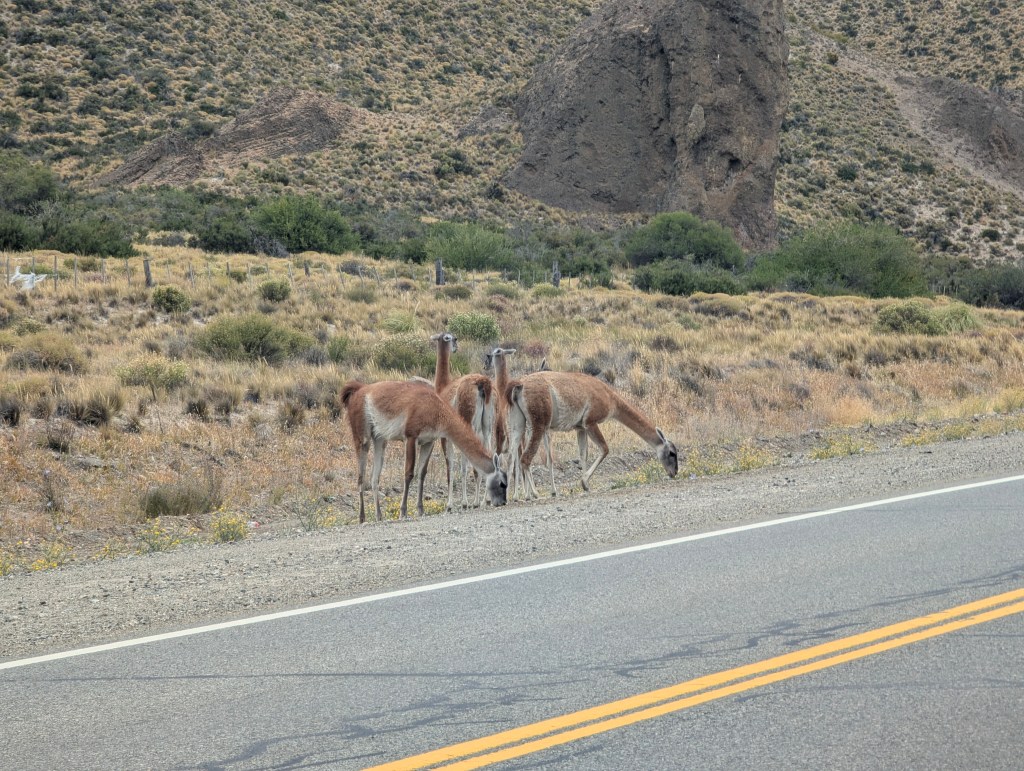
guanacos

After about an hour we reached the unpaved road noted on our agent’s instructions; we were to travel 70 km in 2 hours. But due to our inferior vehicle, small tires and lousy shocks, and the poor road condition, rocks and ruts, we did not feel comfortable driving faster than 15 km/hr. We calculated that we were close to 5 hours away from our destination on this path. With rain starting we turned around and went back about 40 minutes to the main road Google maps had suggested. We reached the small town of Villa La Angostura, to which we would return in a few days, and stopped for an early dinner before driving the last 2 hours to our destination. We stopped in a very cute very local cafe and had the most delicious burgers we have ever tasted. Our route from here looked straight, no turns, so off we headed. After about 40 minutes we were passing a guard station. Turns out in the rain and dark, we had missed a right turn and we were crossing into Chile! Apparently folks do this all the time; the guard was unfazed and calmly told us to turn around and make a left in 14 km. We could only laugh at ourselves and the misadventures of the day. It was late in the evening when we finally pulled into the parking lot of Hosteria Las Lengas in San Martín de los Andes.

Hosteria Las Lengas

With the waning light of the summer skies, and the rain abating, we strolled around town a bit to stretch our legs before turning in for the night. We were struck by the many chocolate stores with some completely empty
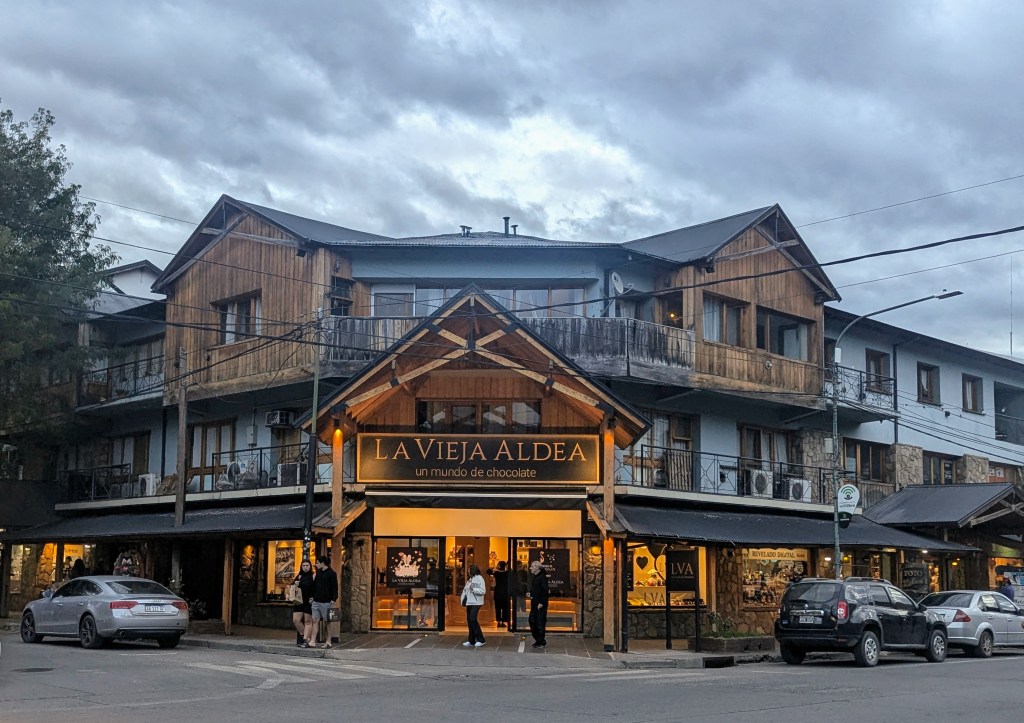
while others had long lines.
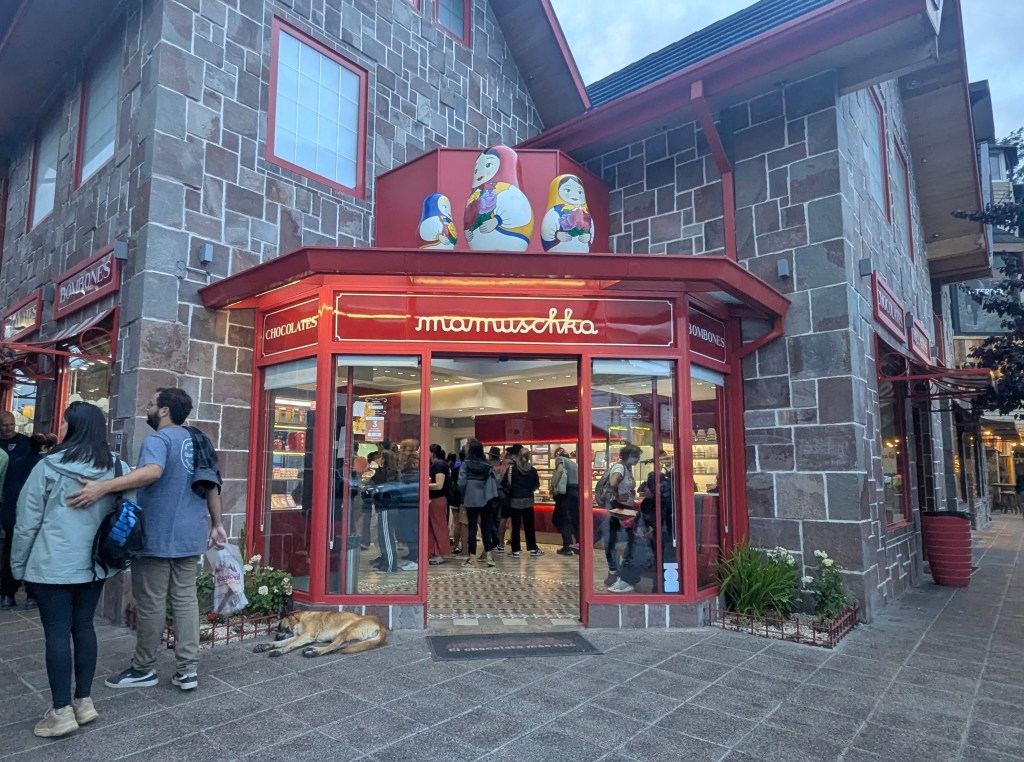
And many had both chocolates and ice cream.
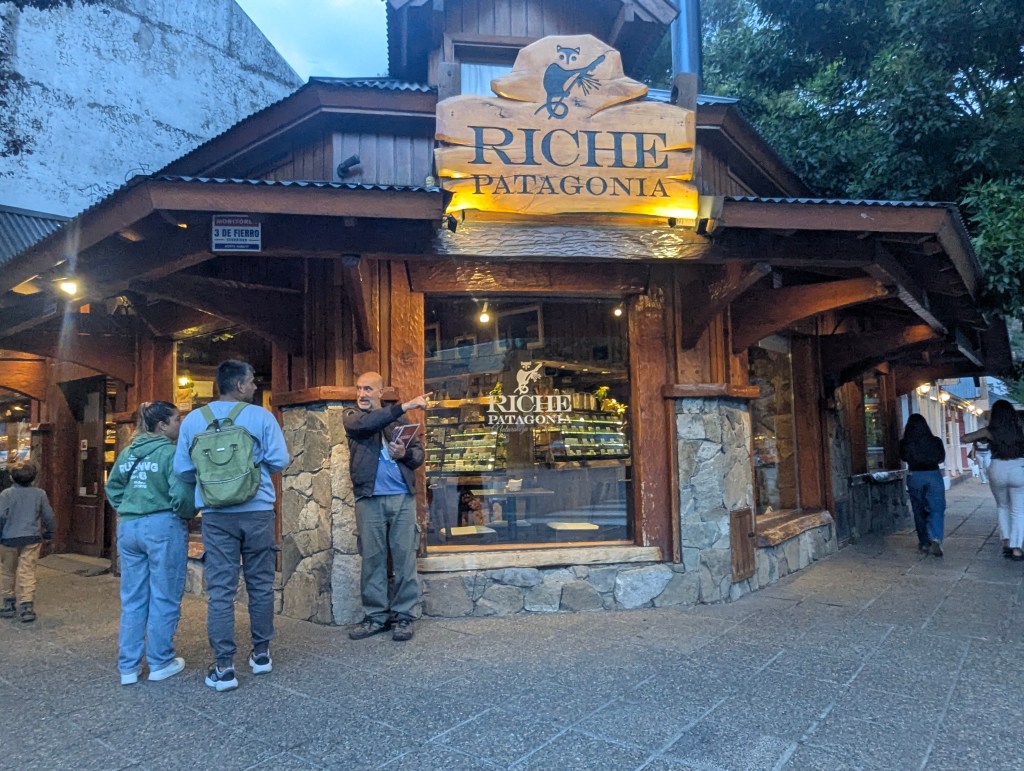
We passed the main square
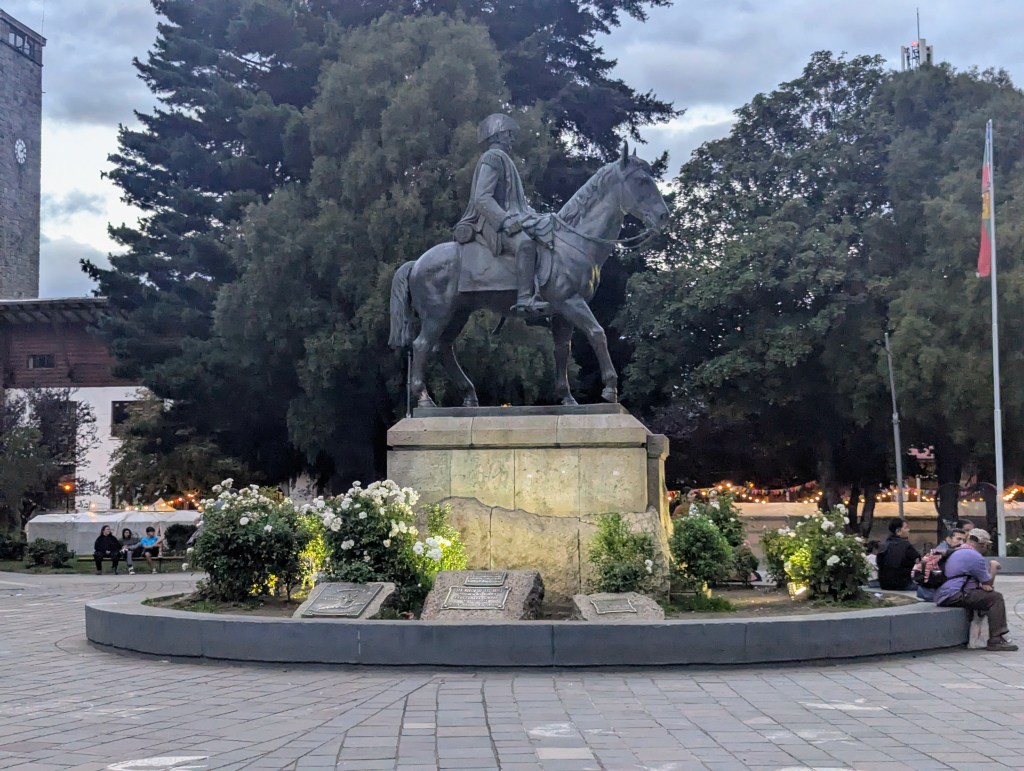
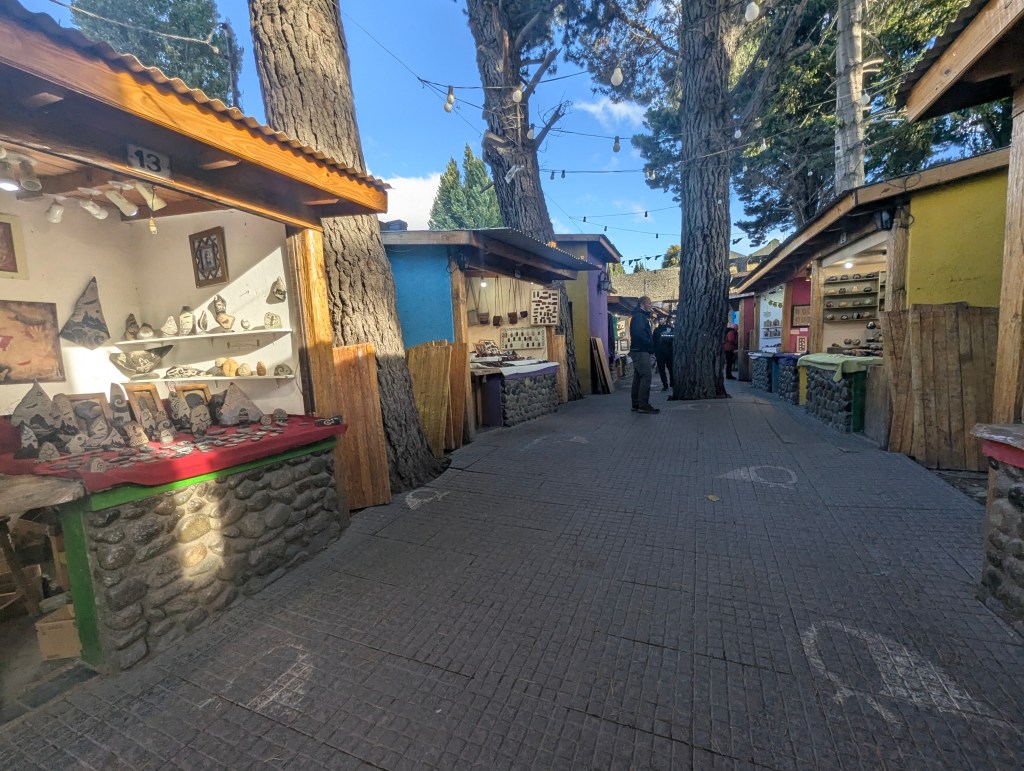
which was surrounded by stalls carrying all kinds of hand crafted local souvenirs.
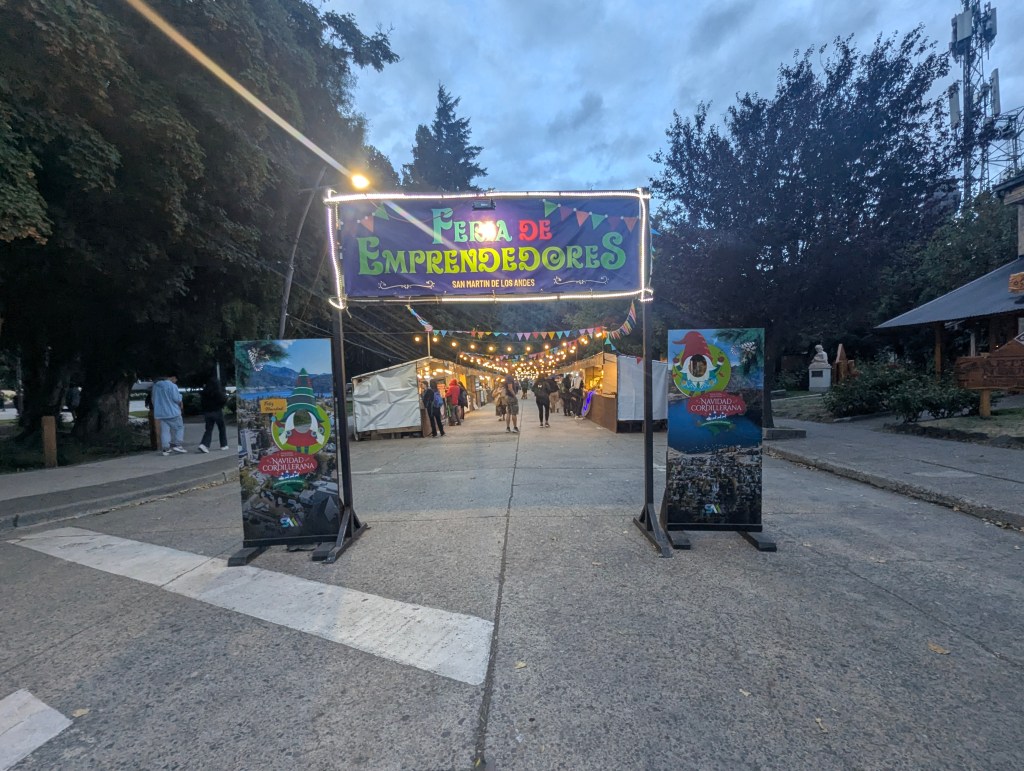
This resort town is chock full of hotels, hosterias (small hotels), pubs, cafes, restaurants, and souvenir shops. There are also many outdoor gear stores for all of the activities enjoyed in the area from camping, hiking, biking, fishing, and kayaking, to skiing and horseback riding. From the local eateries, which included sushi, Italian pasta, Irish pubs,
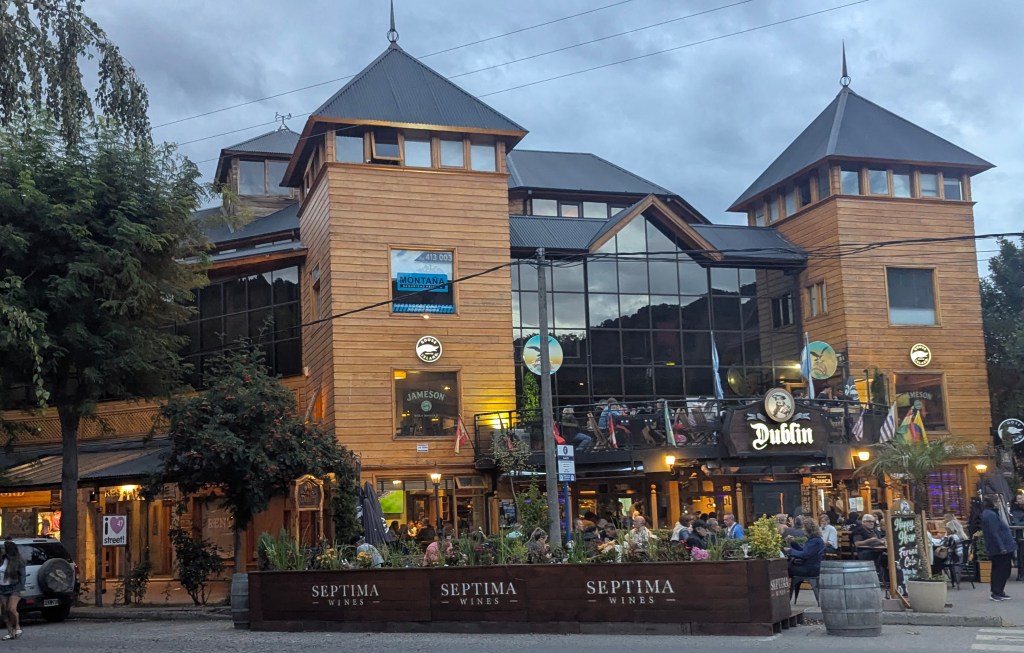
and an Austrian locale,
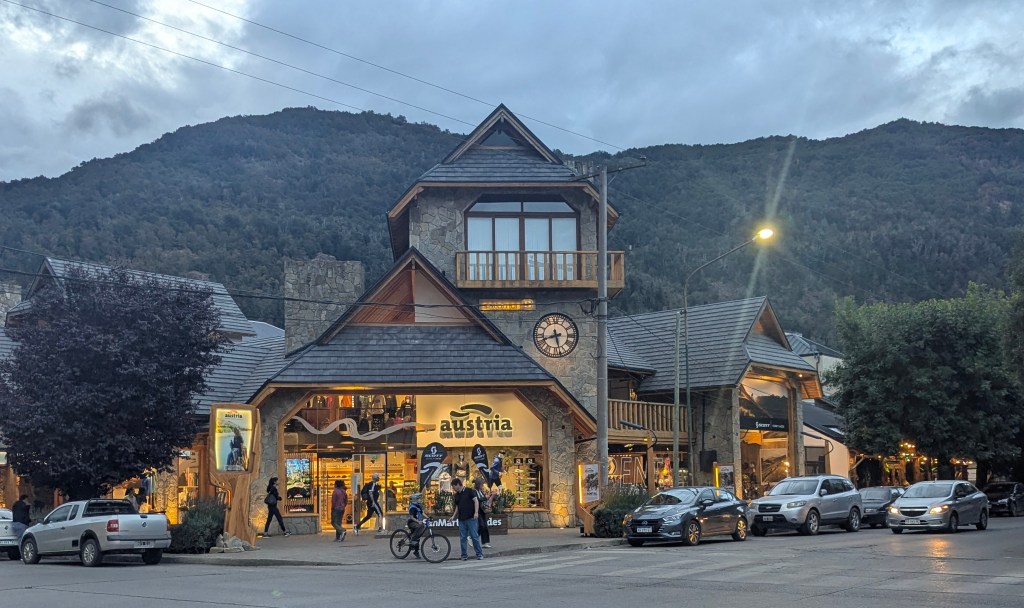
we assumed the town was very international. In fact we were to learn in the next days that almost all of the tourists here are Argentinians. Few in the town speak English, including the receptionists at hotels and wait staff in restaurants. The menus are in Spanish, not translated as they had been in the rest of Patagonia that we visited. It seems that this lakes region is where Argentinians go for their summer vacation.

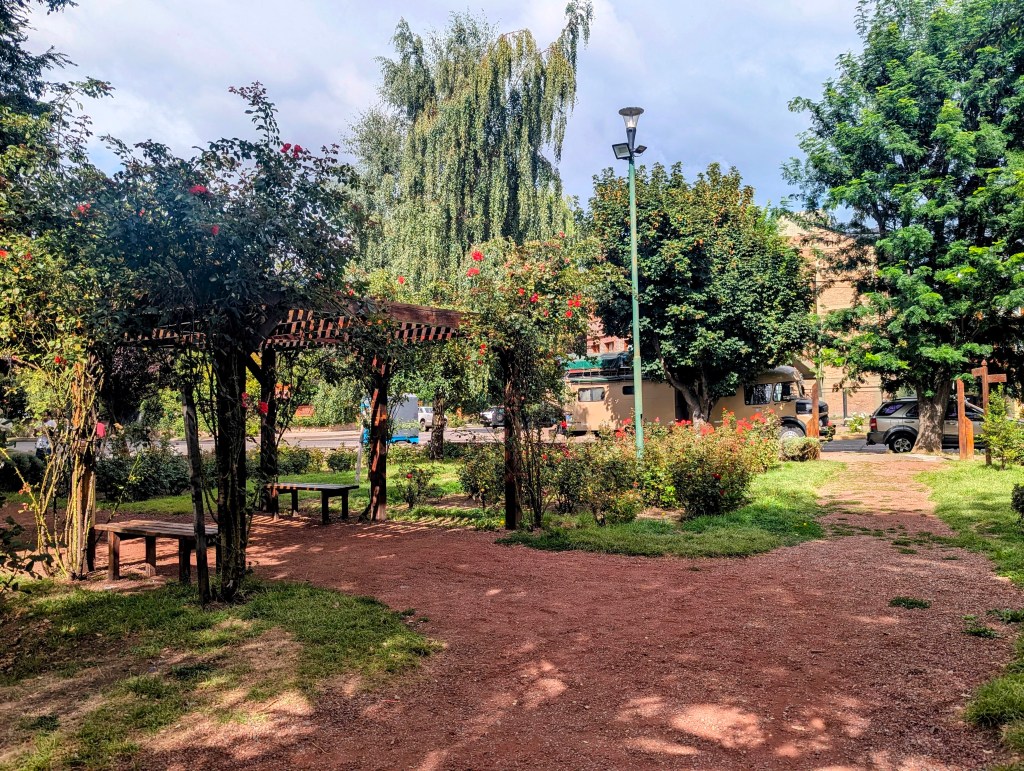
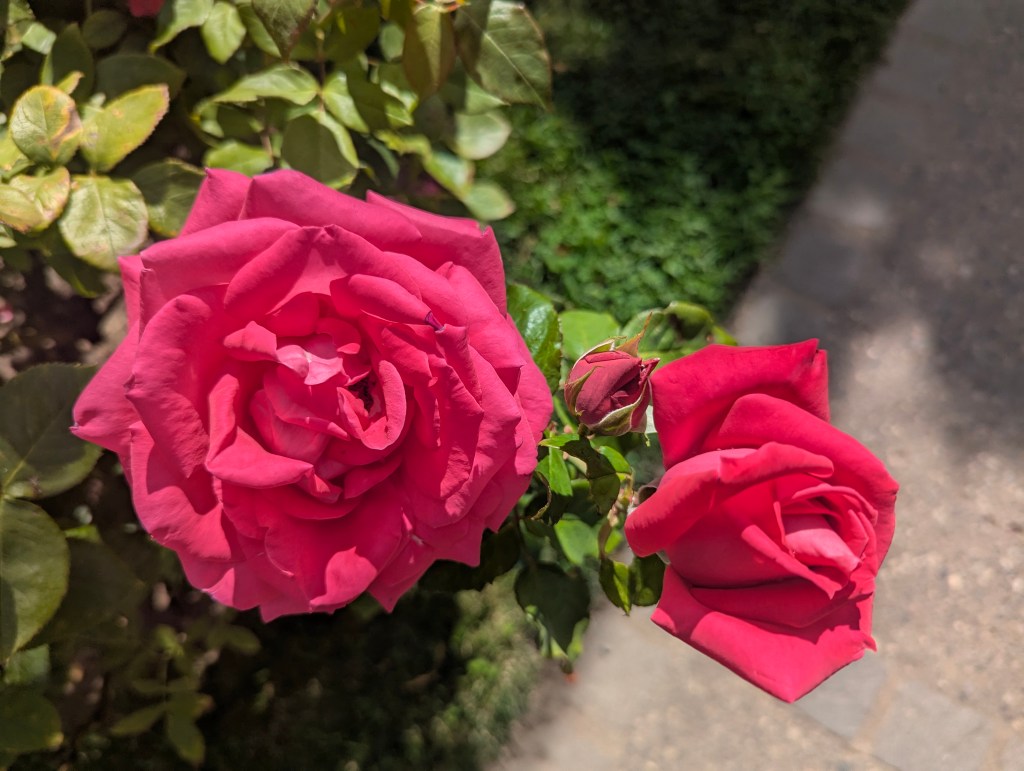
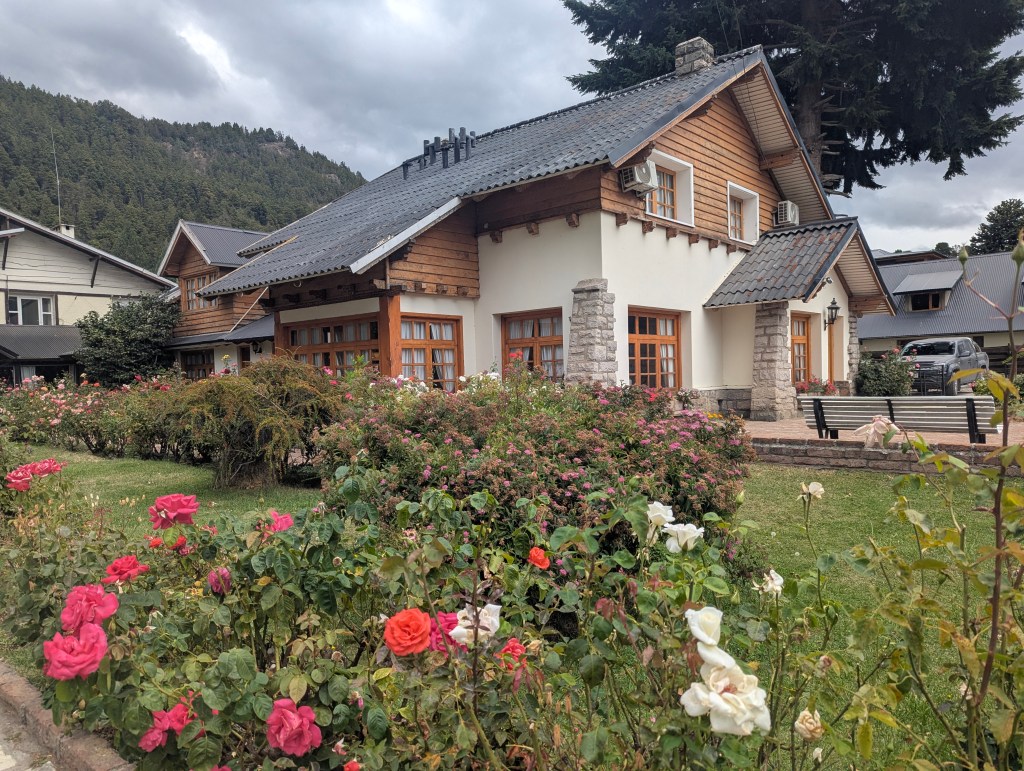
The morning was still a bit rainy and overcast, so we stuck in town for the day. There was still so much more to explore in this beautiful little town full of roses everywhere

in front of homes and hotels
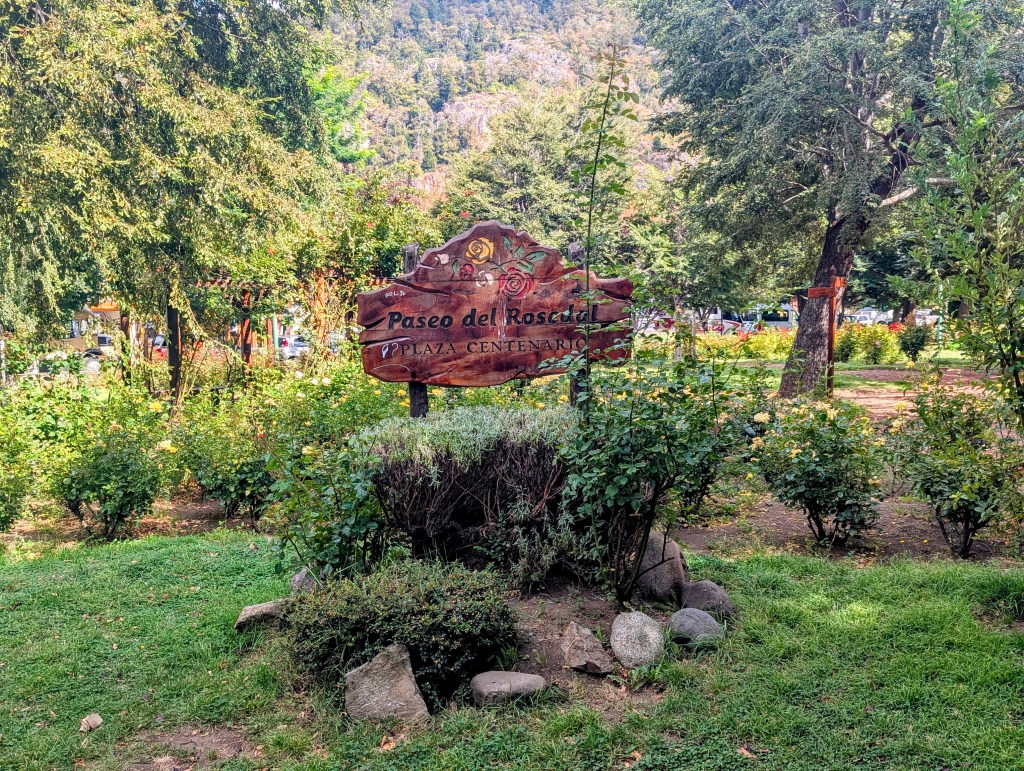
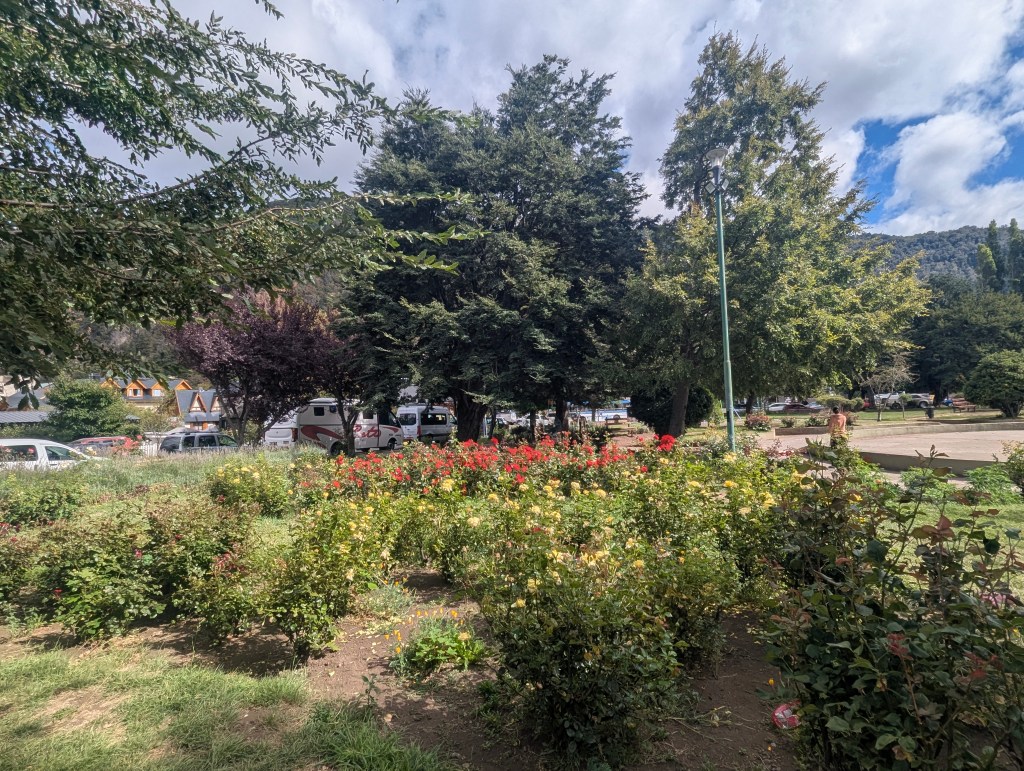
even an entire park devoted to them.
Another park was full of a tree species we had been observing as new to us. This huge tree araucaria araucana, commonly called the Monkey Puzzle, is a native to southern Chile and western Argentina.
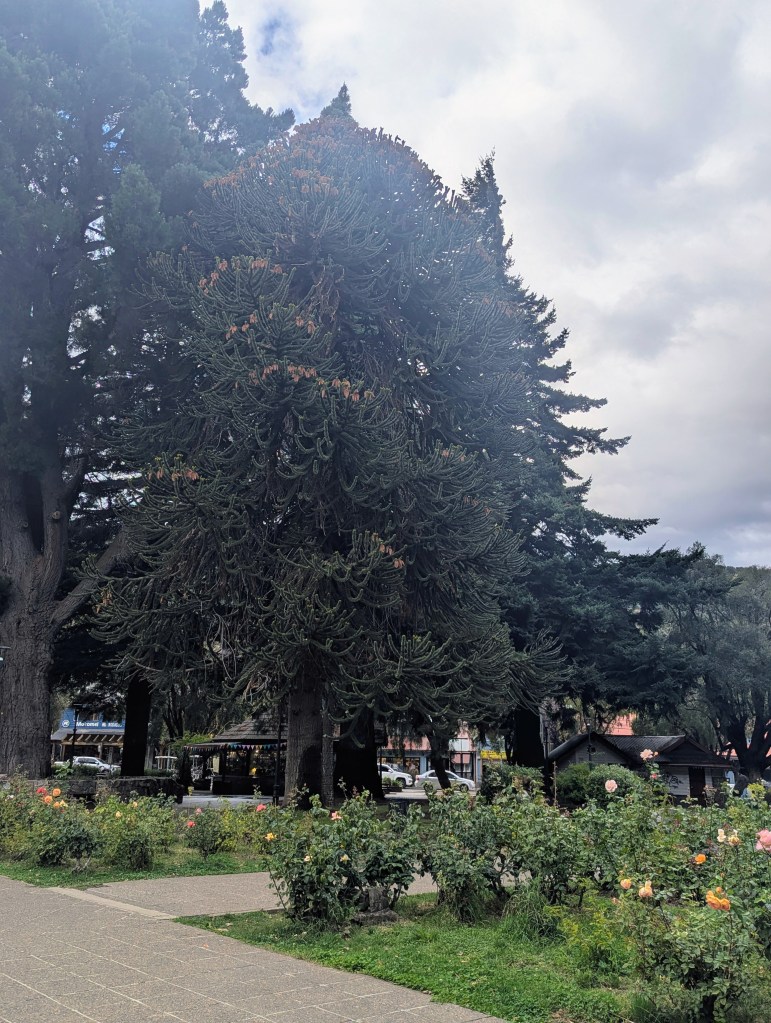
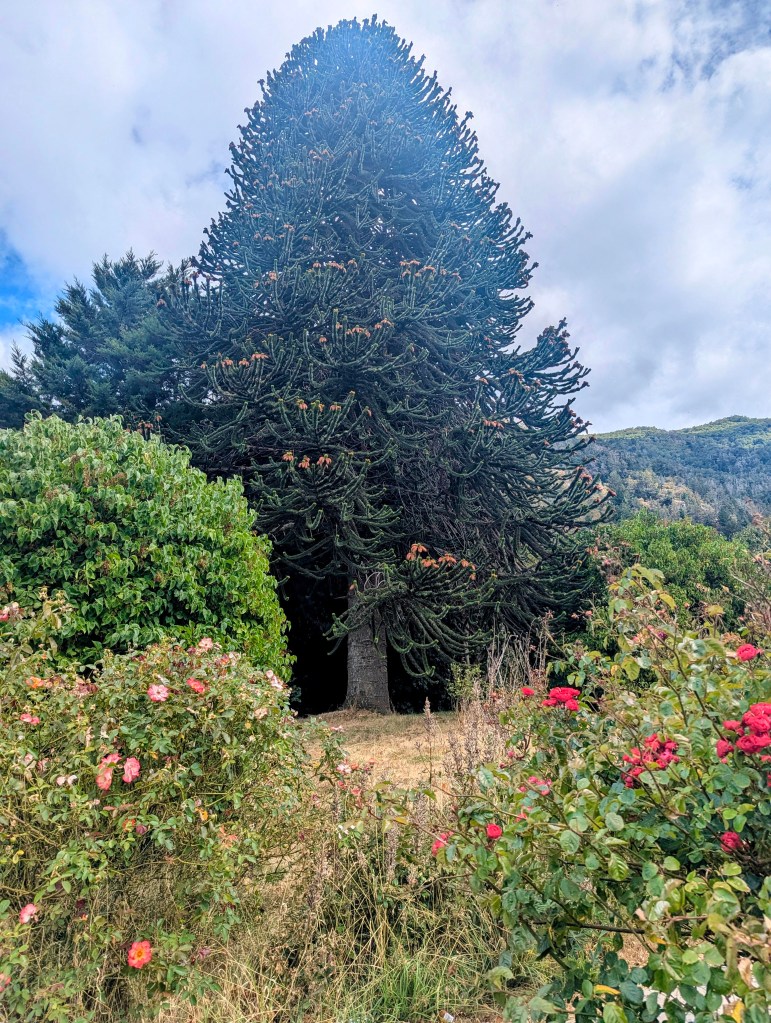
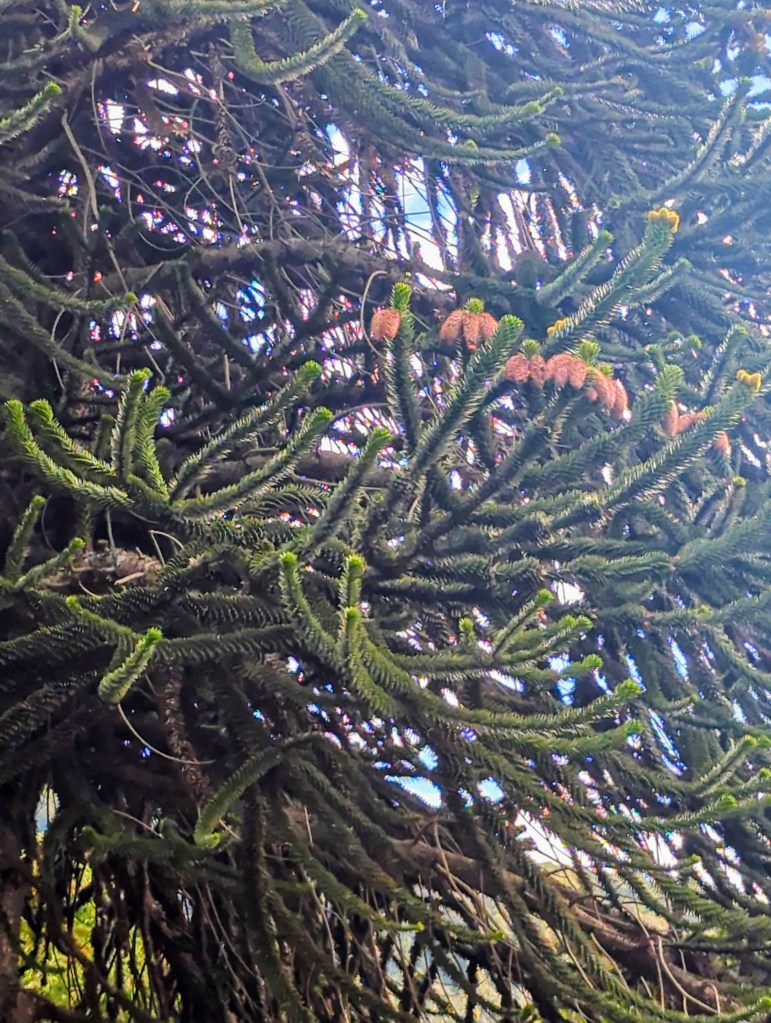
Its branches and needles are unique.
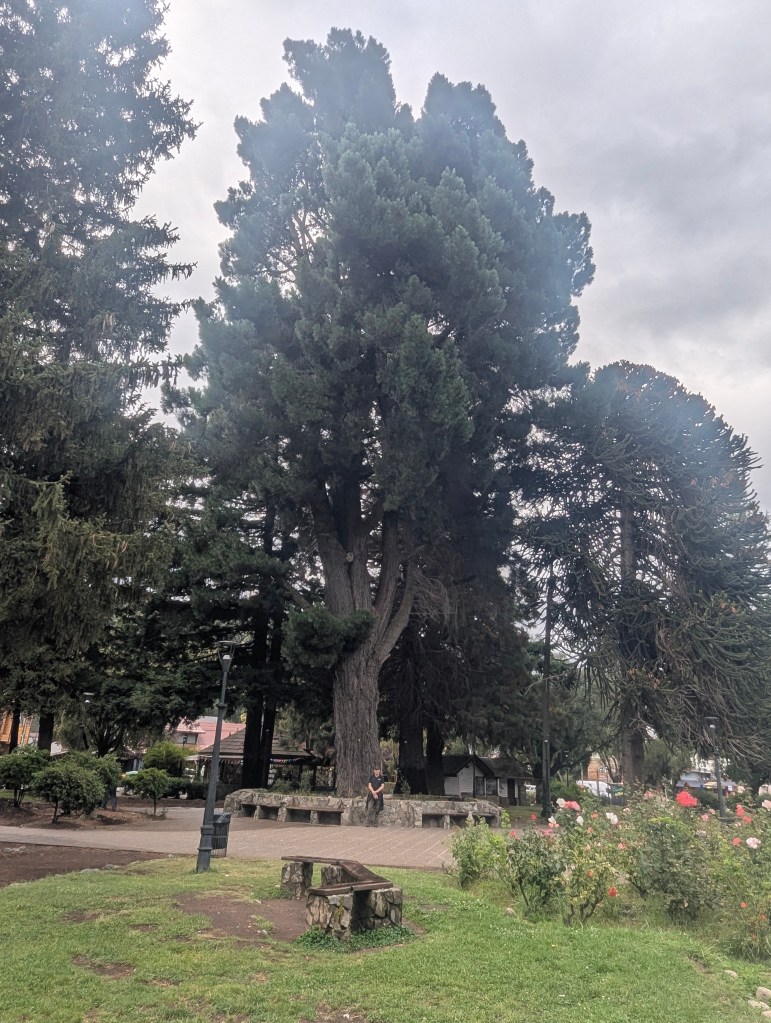
Others in this park are the pino murrayana, in front of which I asked Eric to stand for perspective. A native of the Pacific northwest of the US, the pino murrayana is used for reforestation in mountainous areas and adapts well to the humid and cold climates of the Nequén province.
Another transplant from the pacific northwest is this huge tuya gigante, a type of cypress.
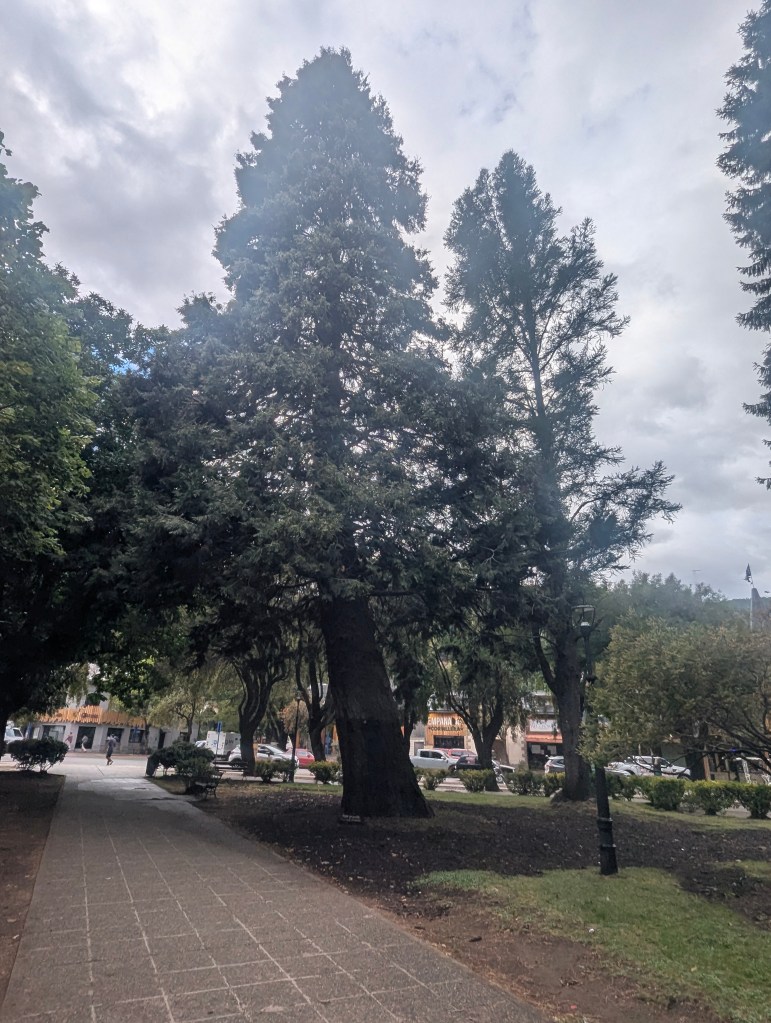
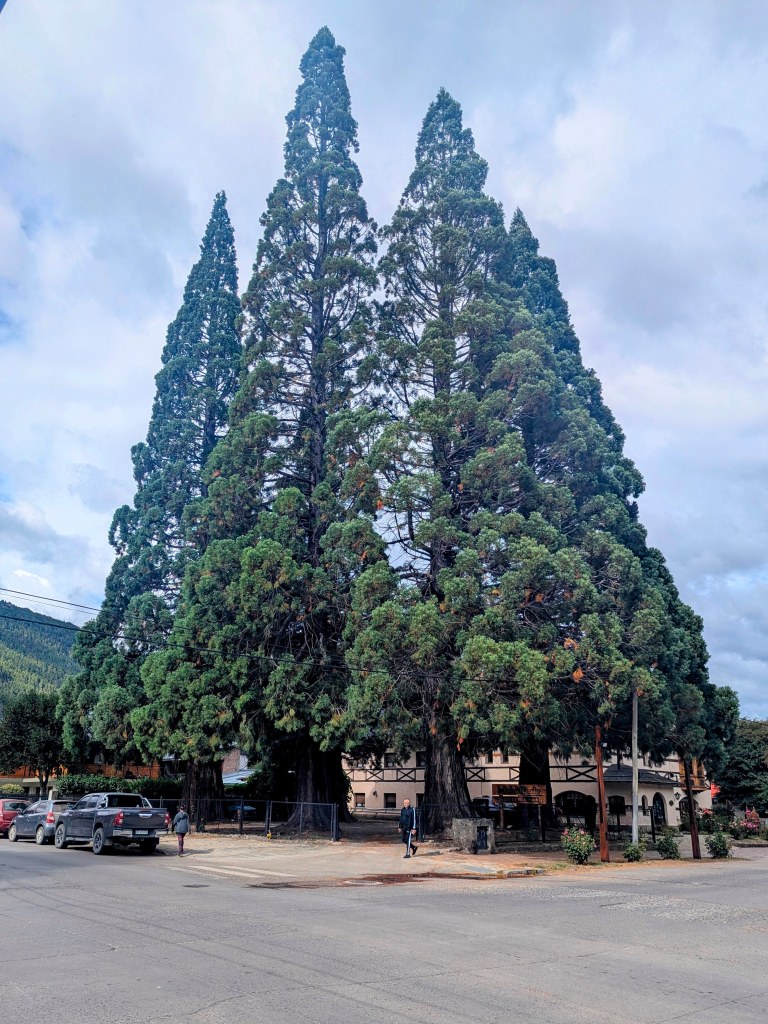
This is truly the land of gigantic tress as evidenced by this group dwarfing the cars parked below.
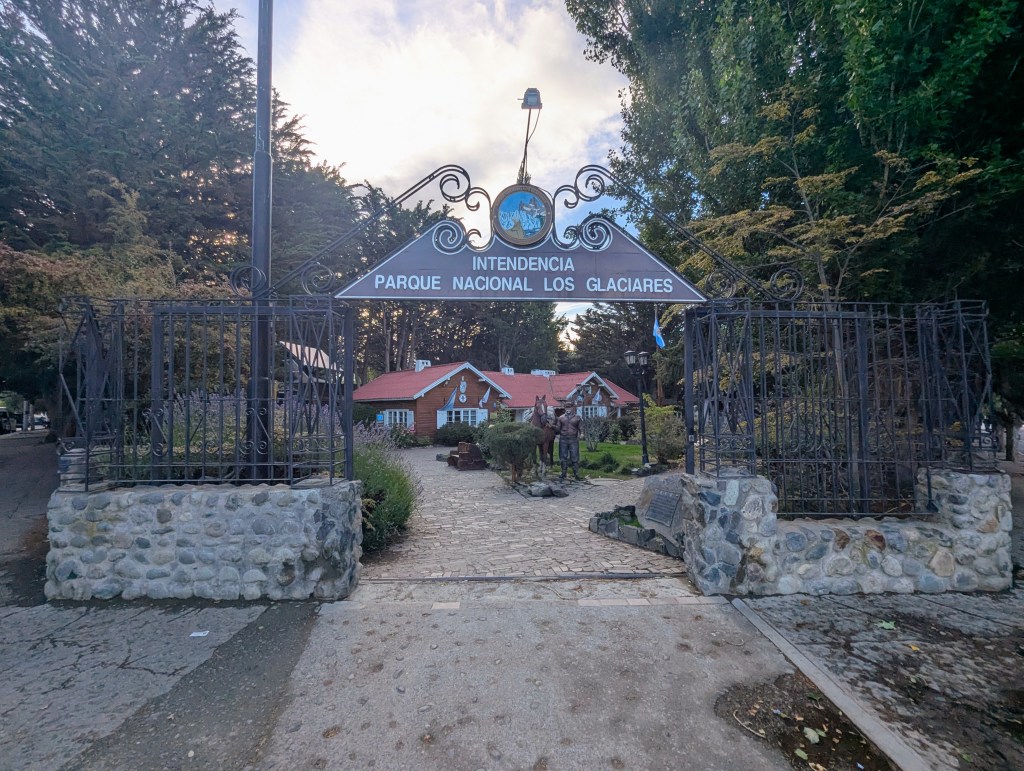
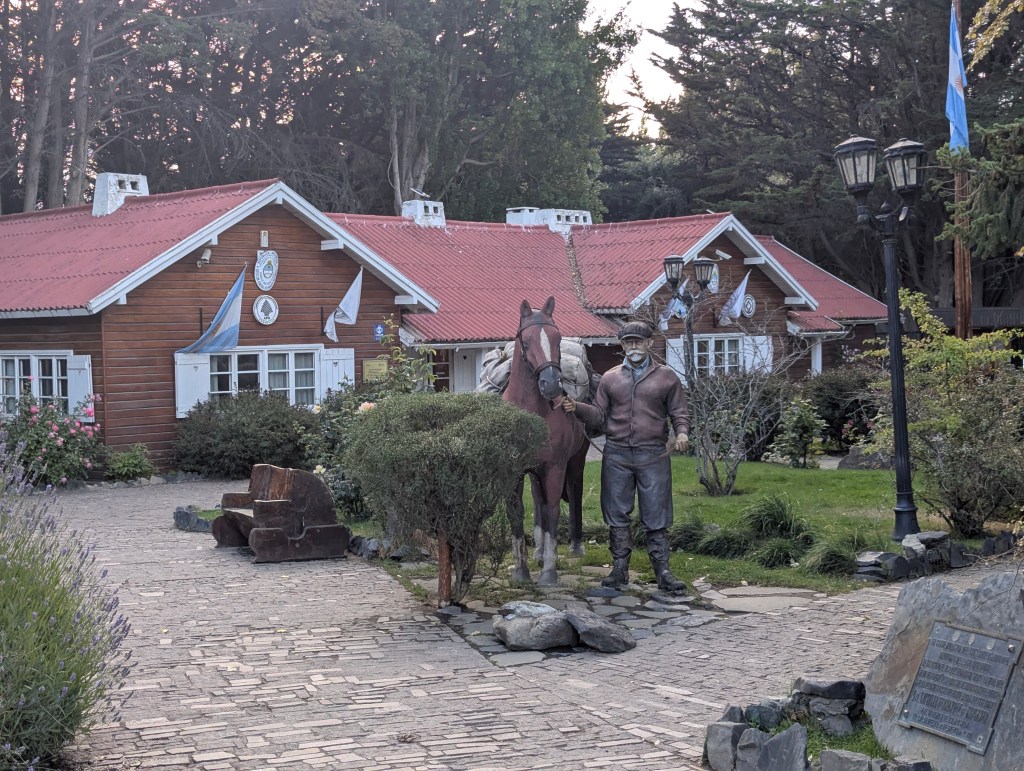
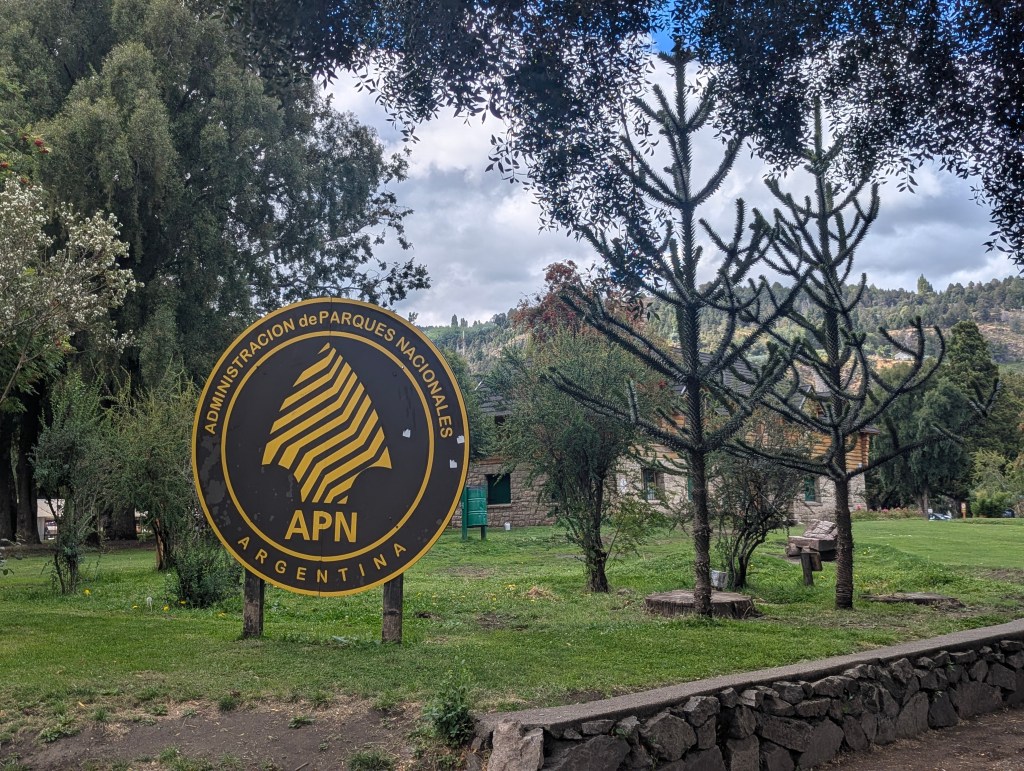
Sapling monkey puzzle trees could be seen in front of the parks’ department building.
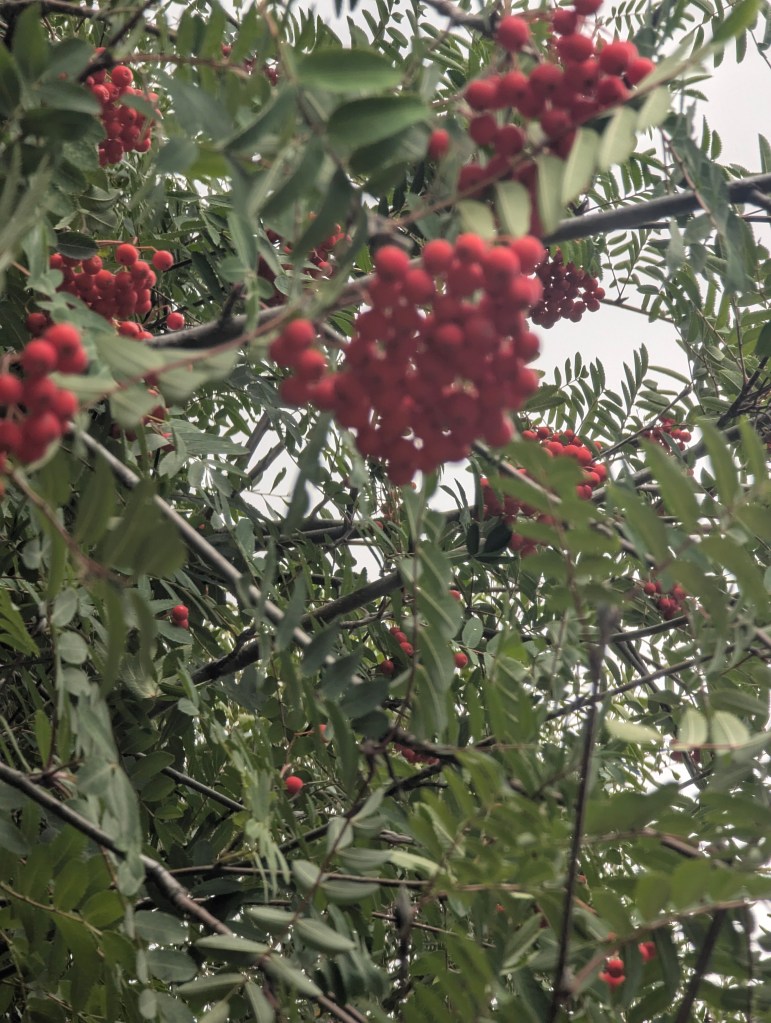
Another variety of tree new to us is this mountain ash. Upon looking it up I learned that it is not indigenous to Argentina but was brought here from Eurasia. Now, however, they are ubiquitous in this area; we were to see them everywhere in the next week.
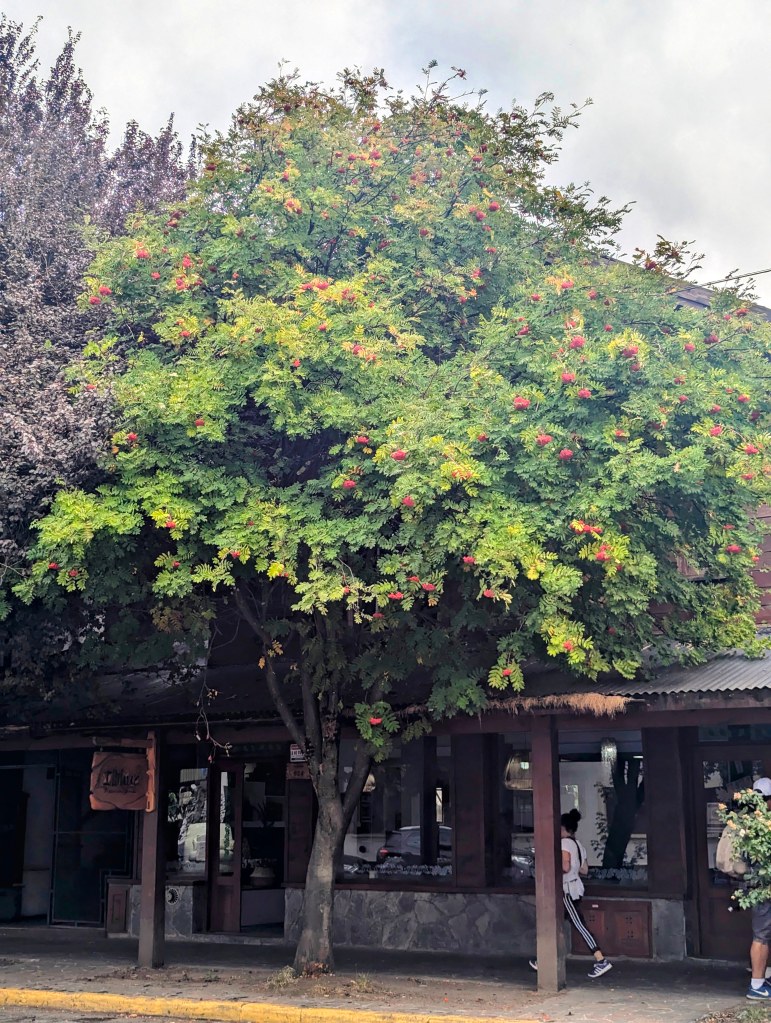
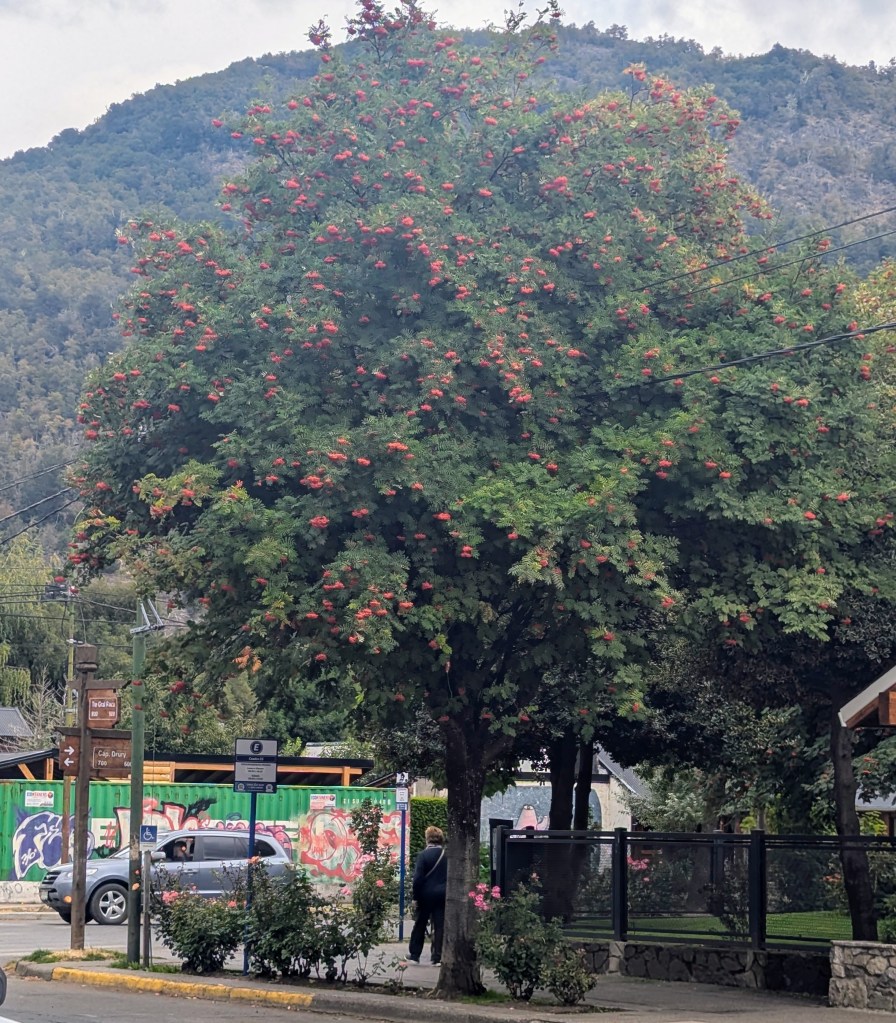
They have beautiful clusters of inedible berries.
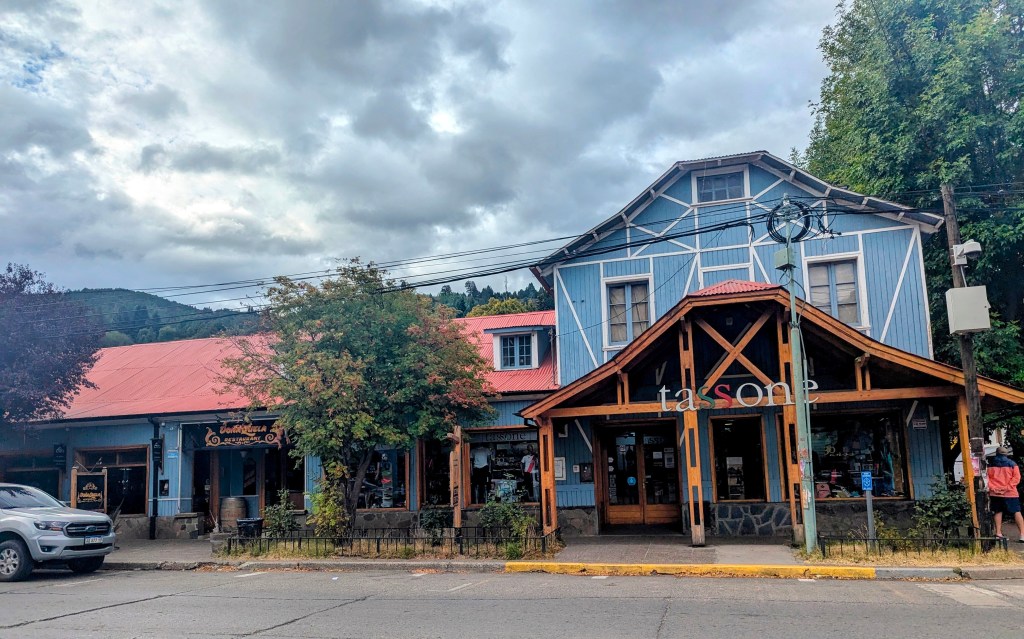
Around town there are historical markers like this one, which explains the building across the street was originally the Lácar hotel.
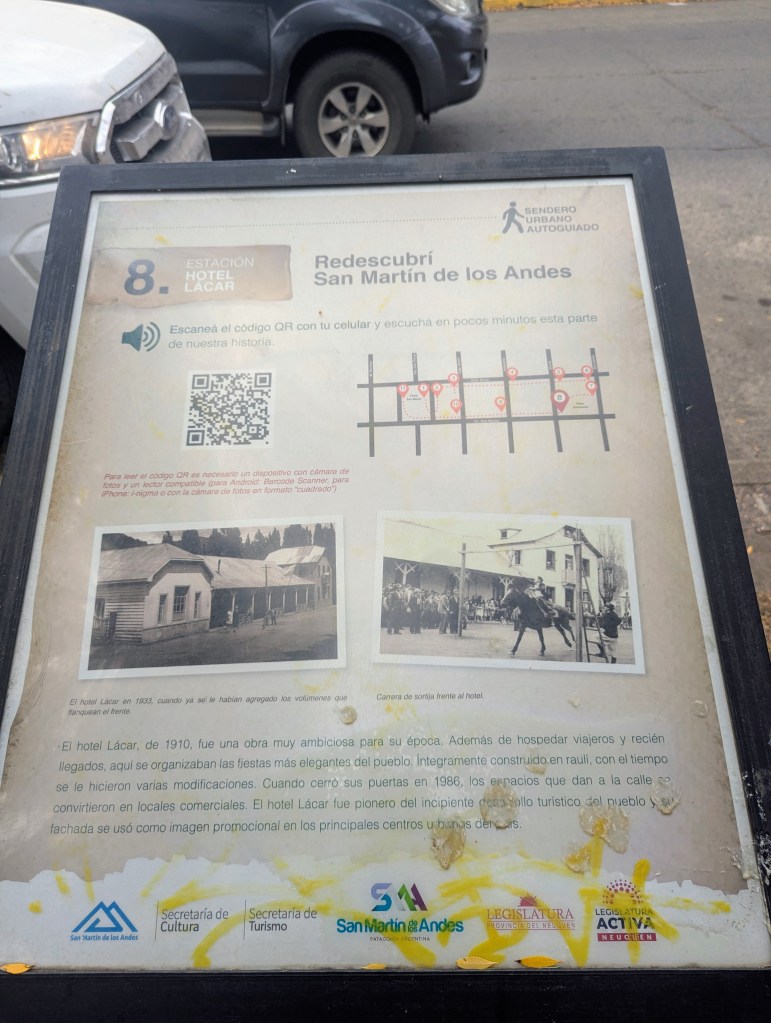
Built in 1910, it was “a very ambitious project for its time. As well as hosting travelers and new arrivals, the town’s most elegant parties were organized here…it underwent several modifications over time. When it closed its doors in 1986, the spaces facing the street were converted into commercial premises. The Lácar hotel was a pioneer of the town’s emerging tourist scene and its façade was used as a promotional image in the main city centers.”
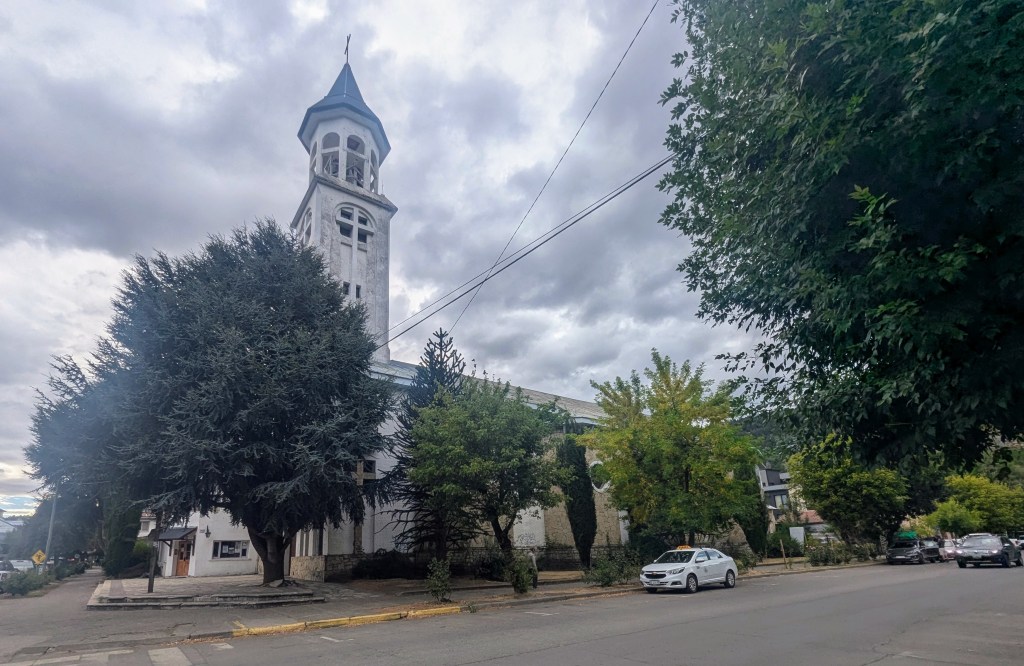
We noted the relative modesty of the churches compared to the cathedrals we had been visiting in Europe this past fall.
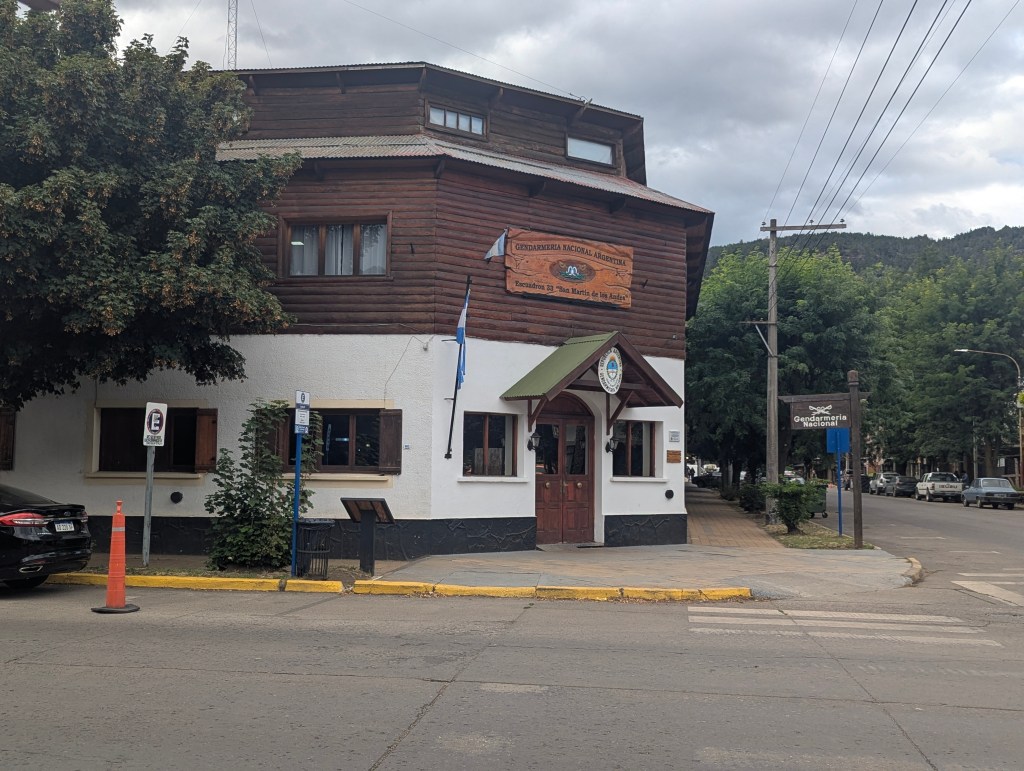
We passed the home of the local national guard, which here actually is for border control. I guess it was one of these guys who helpfully turned us around the night prior, haha.
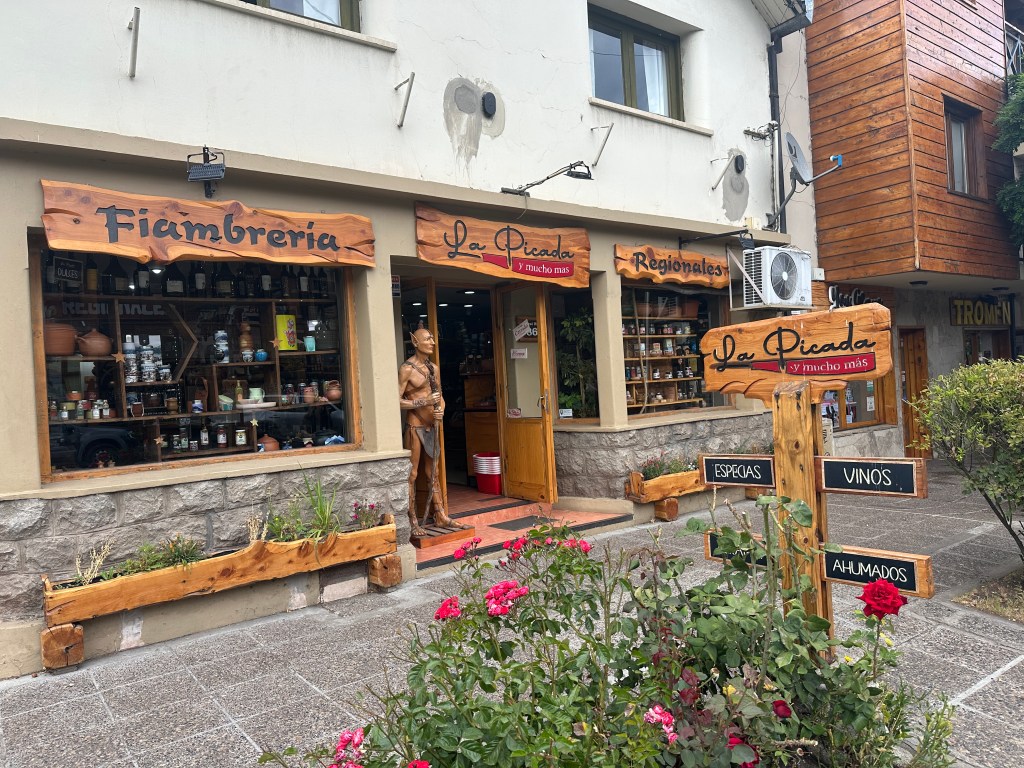
We window shopped the abundance of souvenir shops
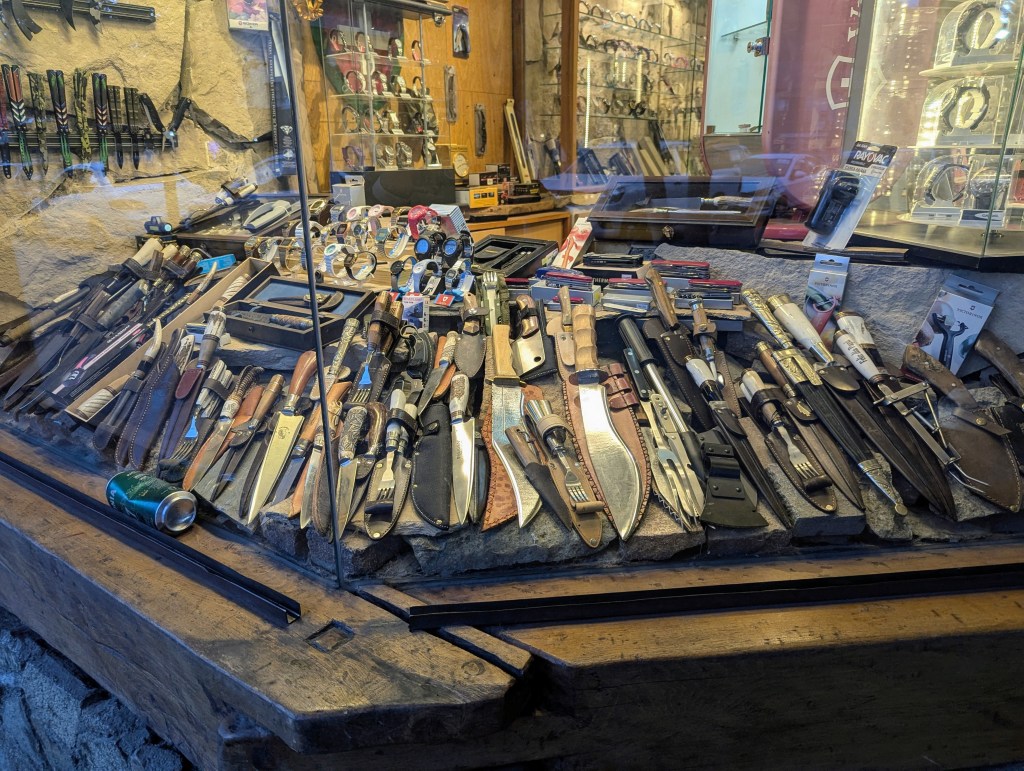
many of which carry knives, which seem very popular locally,
and, of course vessels for the ever popular yerba mate
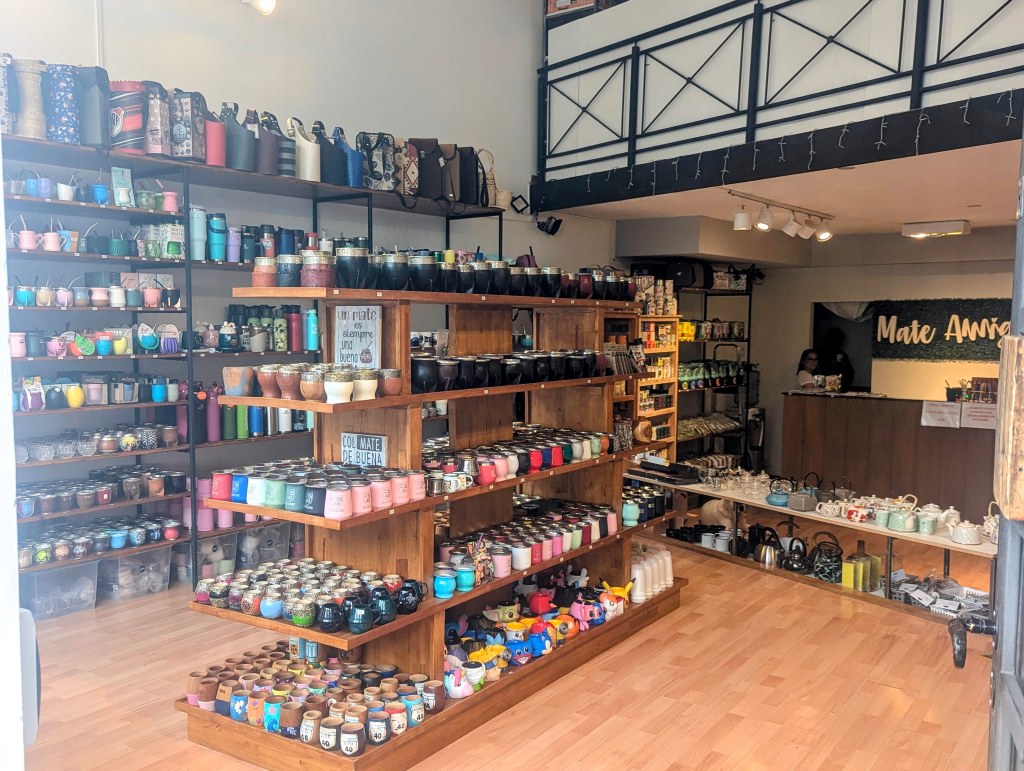
and the many variations on the metal straws through which to drink it.
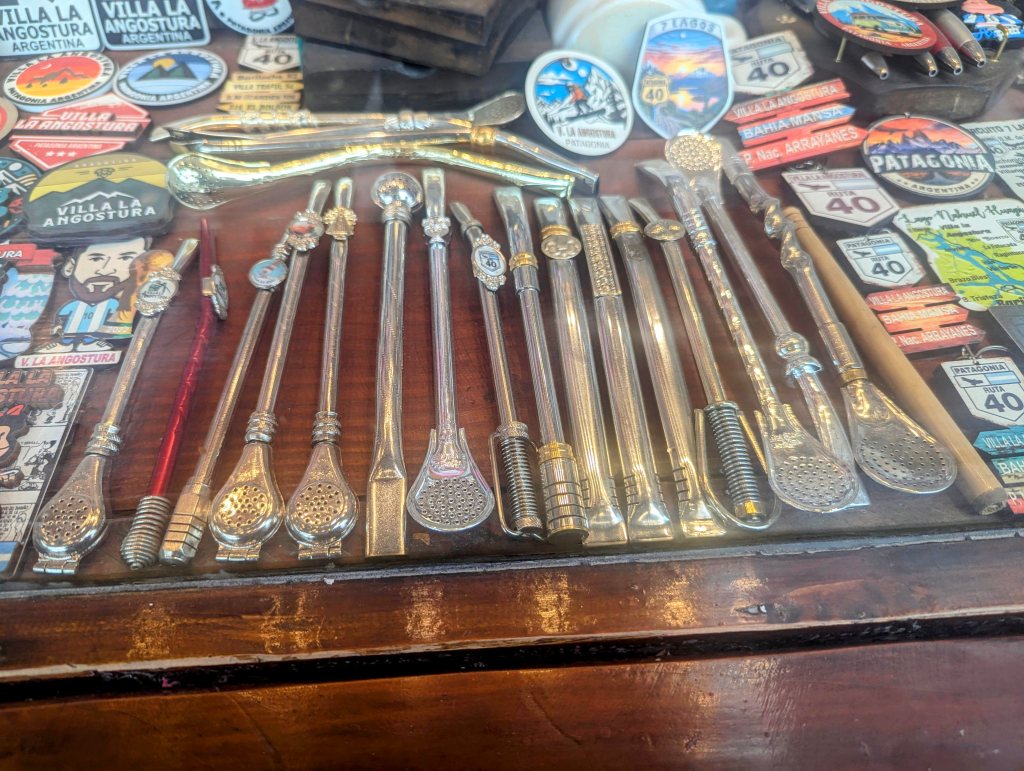
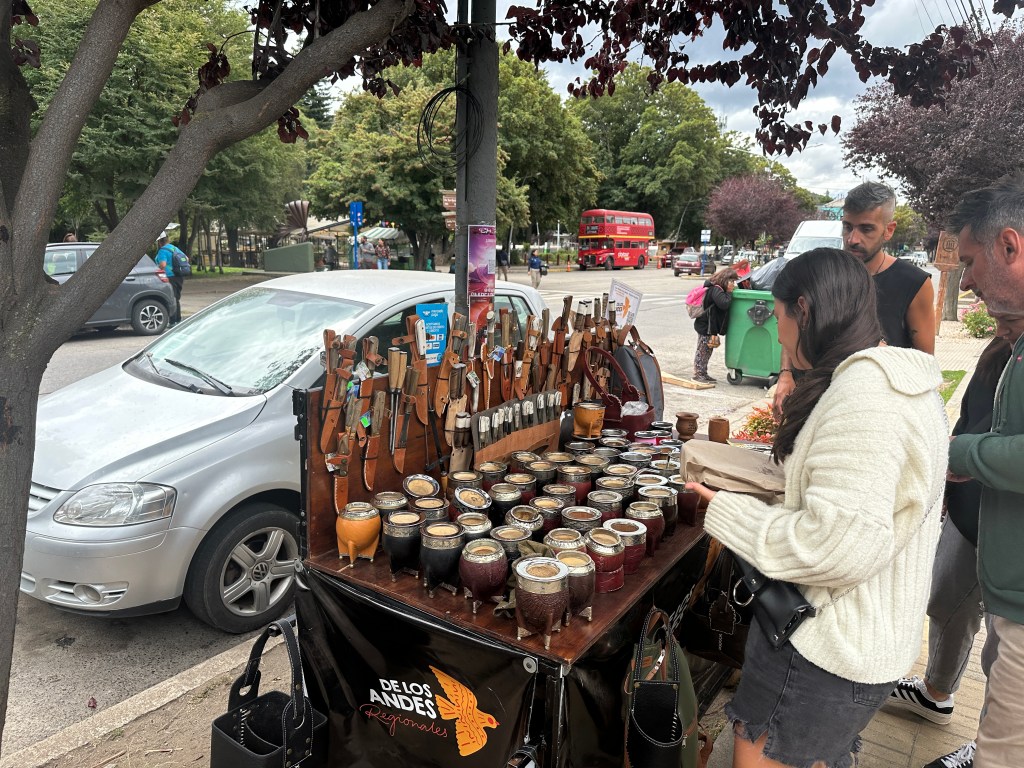
and of course craft merchants with knives and cups.
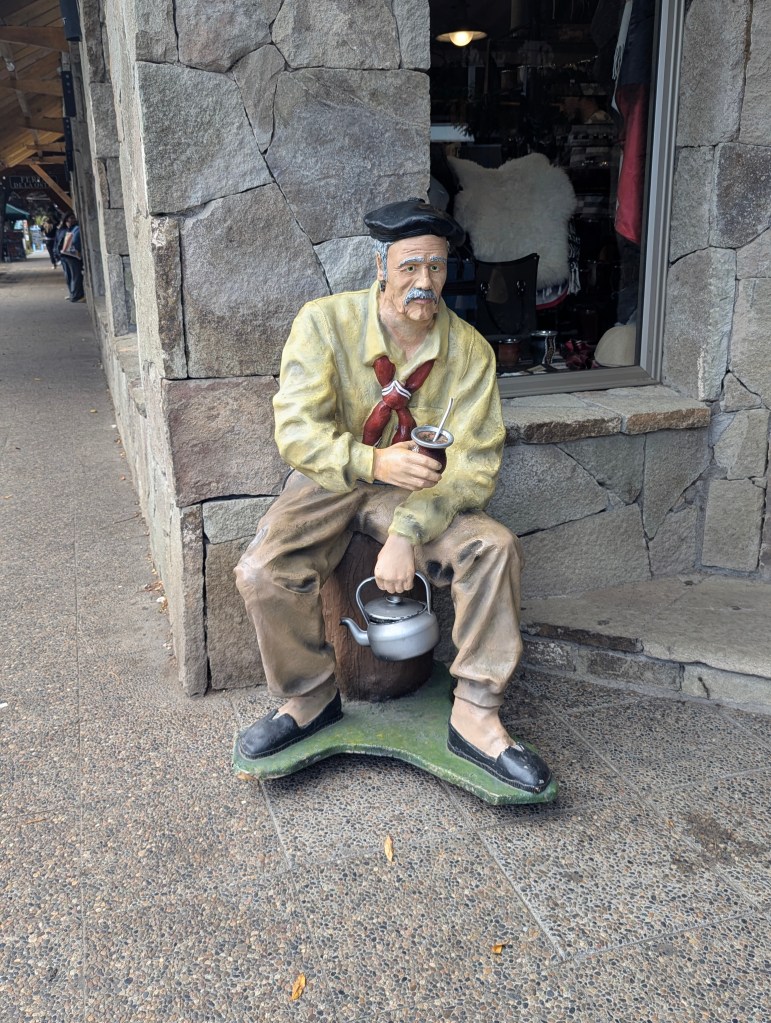
This statue outside one local shop portrays the typical Argentinian enjoying his yerba mate with his thermos of hot water to constantly replenish his drink.
The beer pubs are also plentiful.

WITH BEER THERE IS NO SADNESS

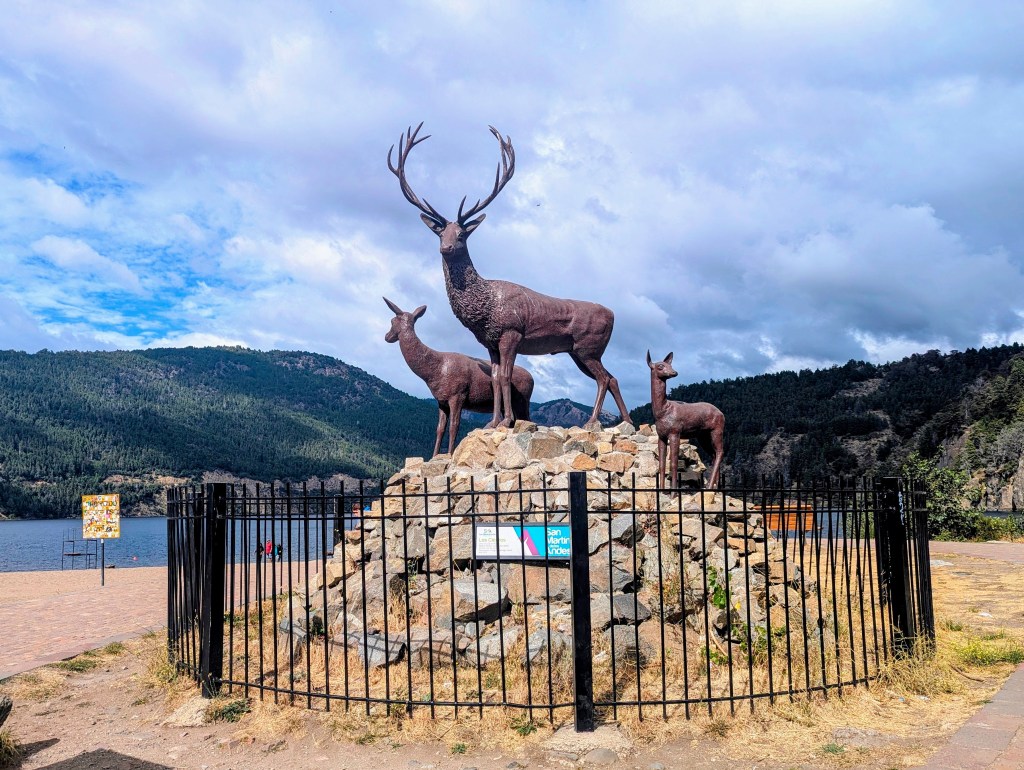
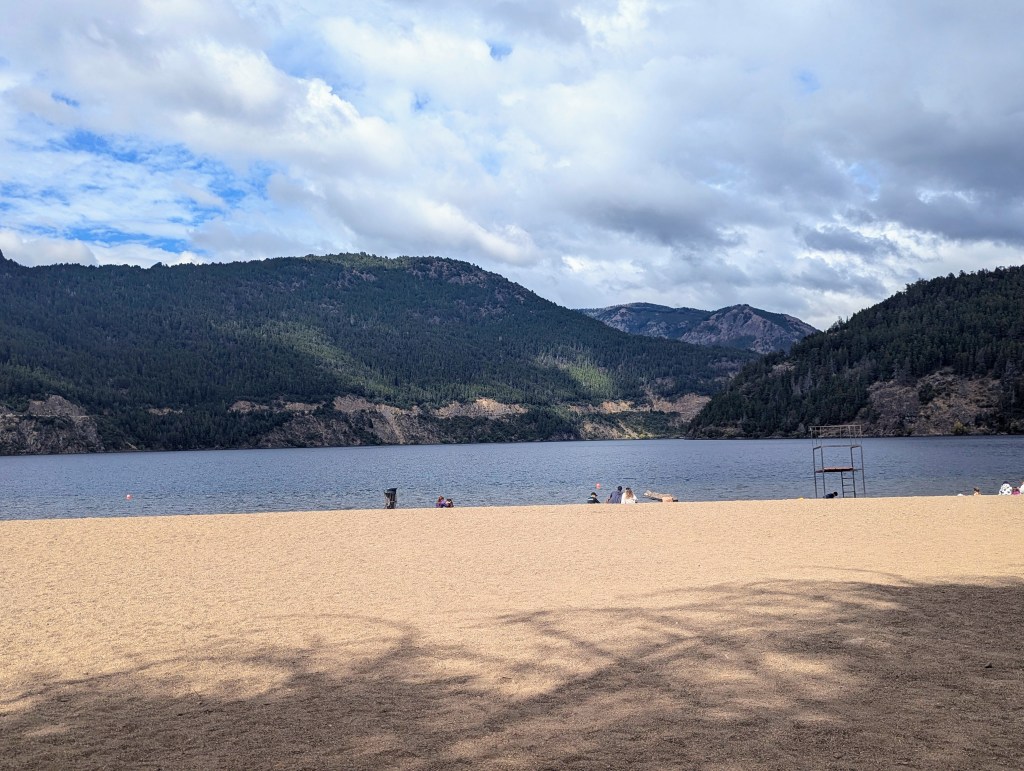
San Martín de los Andes, a resort town of about 35,000 inhabitants, is situated in northwest Patagonia and sits at an altitude of about 2,000 feet. It is known as a gateway to the forested Lanín National Park, home to the Lanín Volcano and diverse wildlife including guanacos and pumas. The town lies on the banks of Lake Lácar, one of the park’s many glacial lakes, and has a boat pier and a sandy beach. It was time to make our way to the beach.
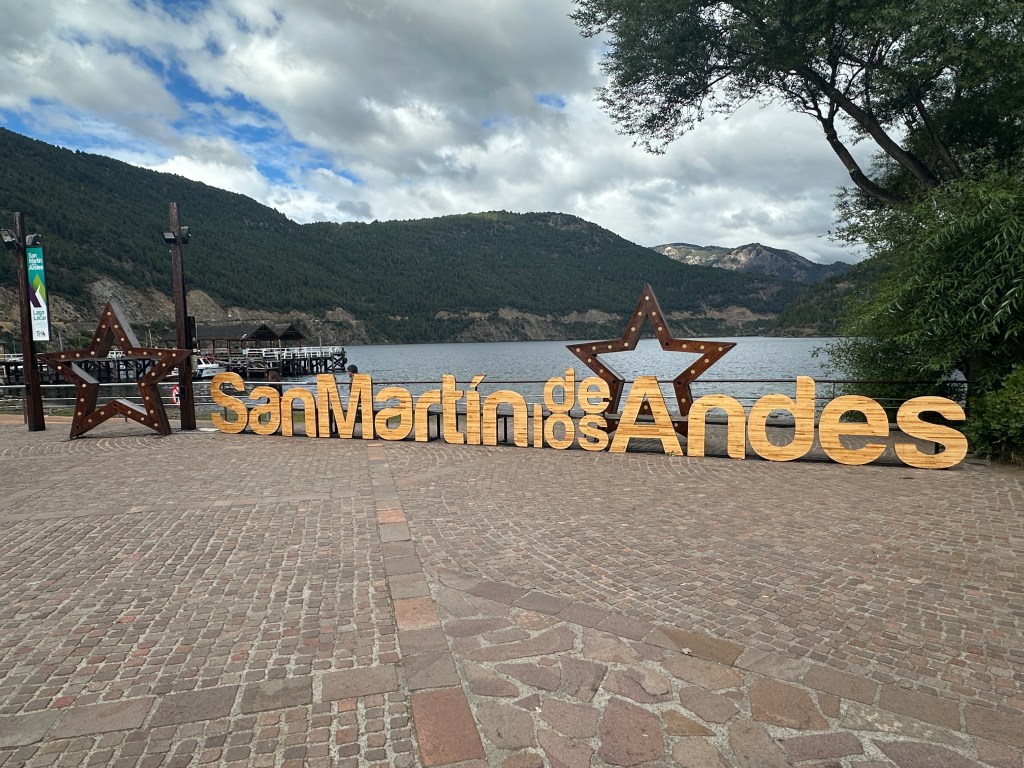
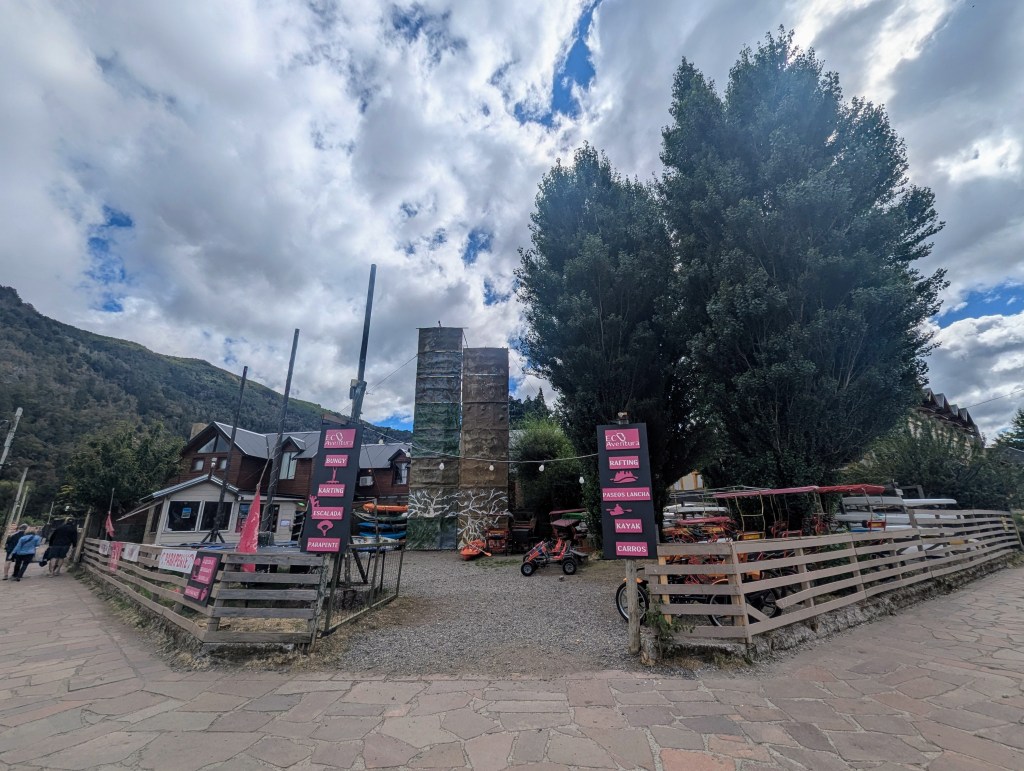
Along the beach are shops for kayak rentals.
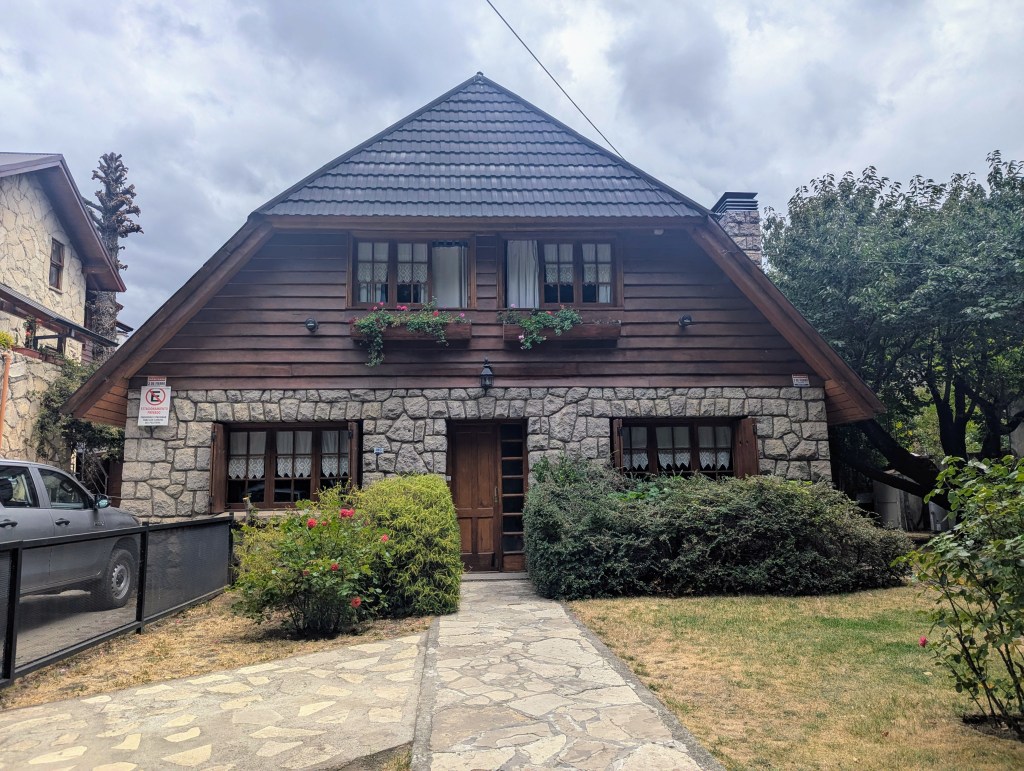
We had lunched on local favorites of beer and empanadas, but for dinner we chose sushi, the fish so fresh. Our hosteria was on the outskirts of town. On our way back for the night we passed some cute homes like this one.
And daily along the way we were greeted by this pair of Andean Ibis.

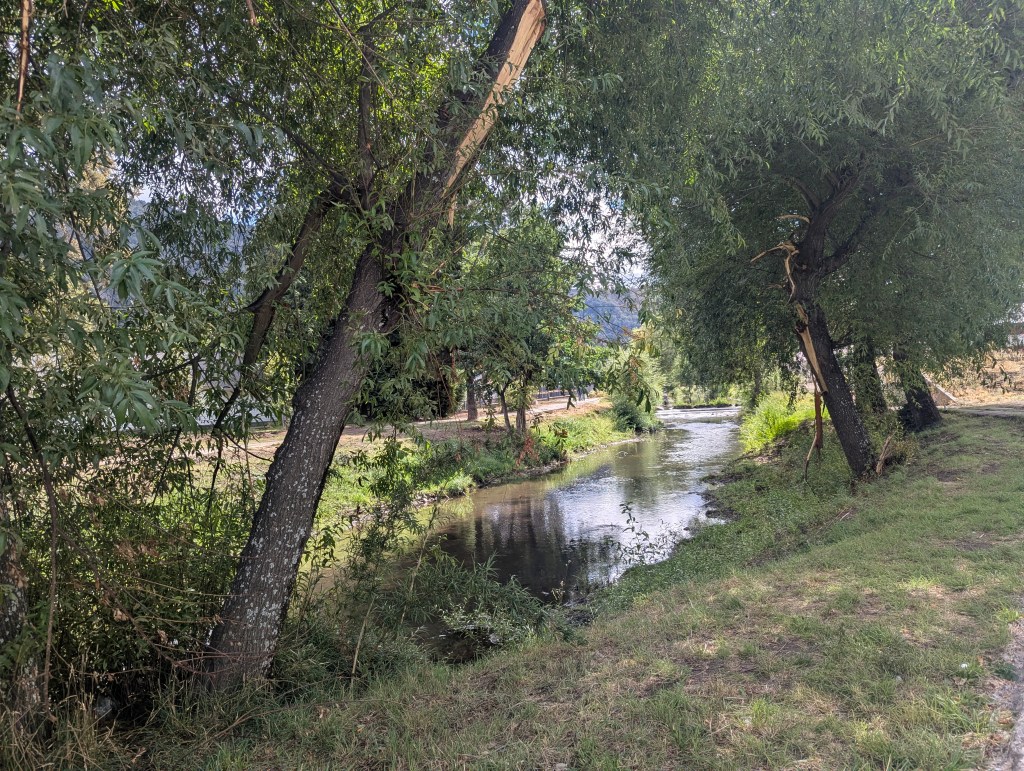
In the morning the sun was finally shining brightly upon us, so we headed out for one of the more popular hikes of the area: Mirador Bandurrias. But first we passed a little stream feeding the lake.
From the beginning part of the trail we could see the town’s water treatment plant. It is perfectly safe to drink the tap water here.
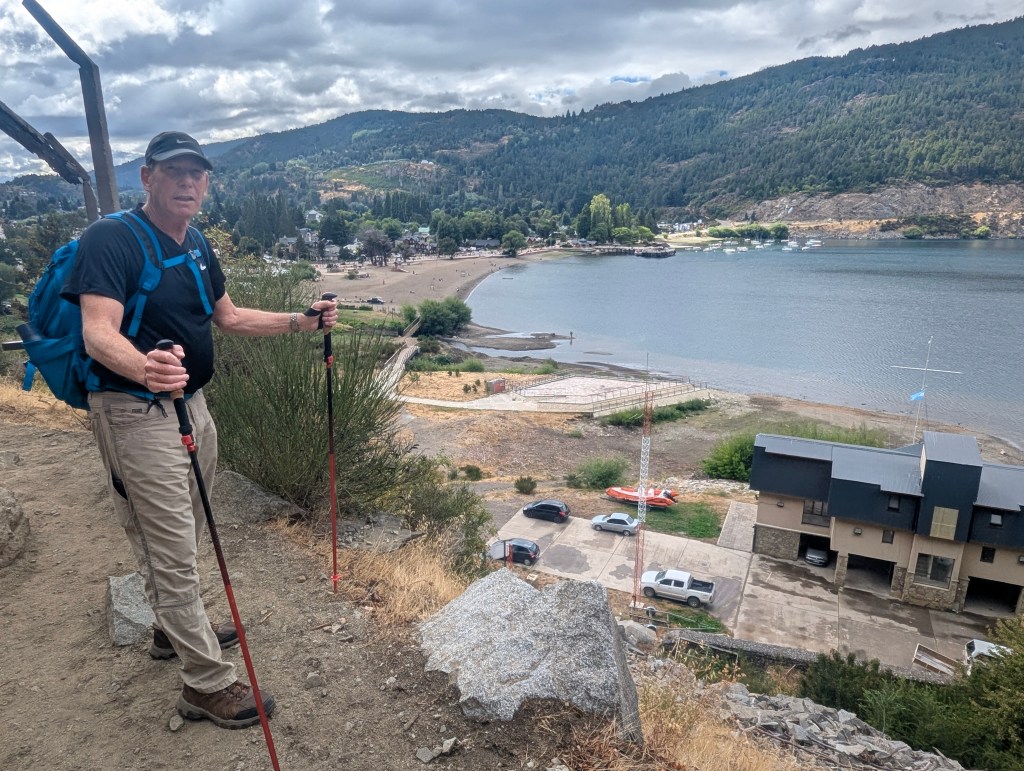
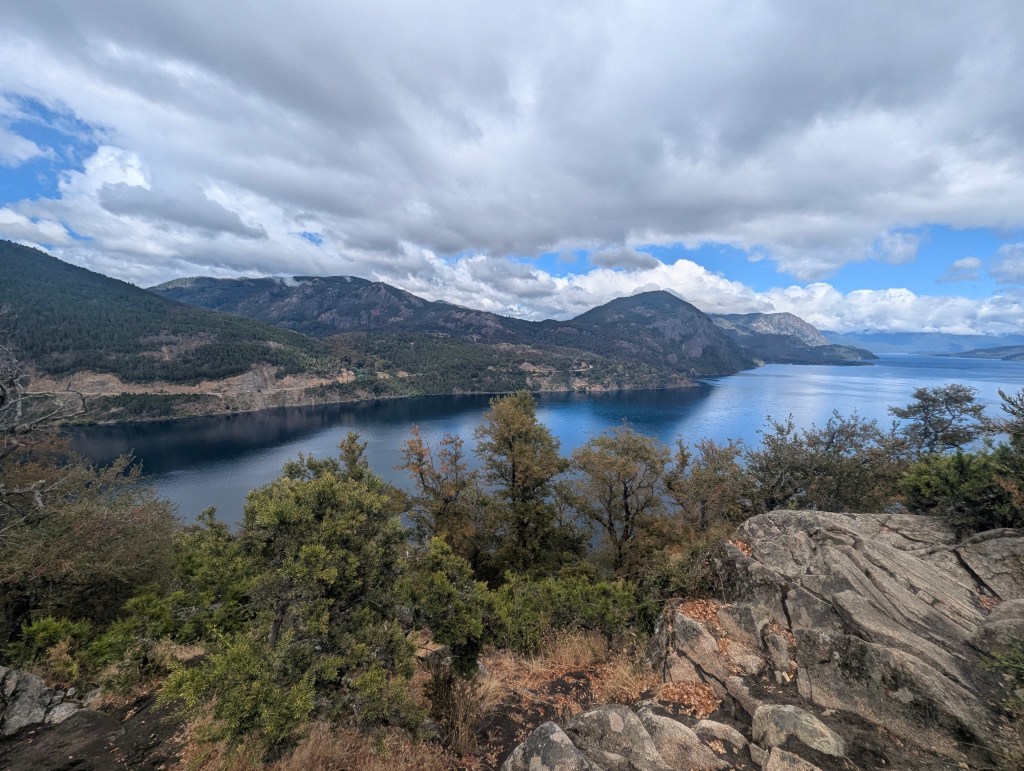
Along the way we had gorgeous views of the lake.
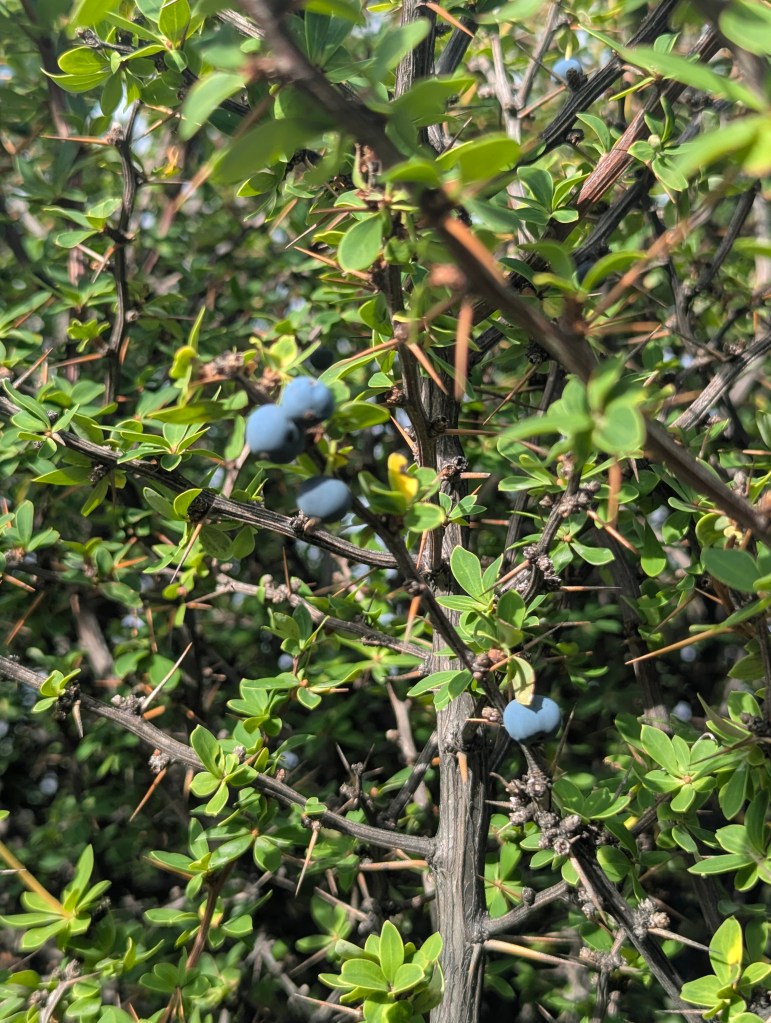
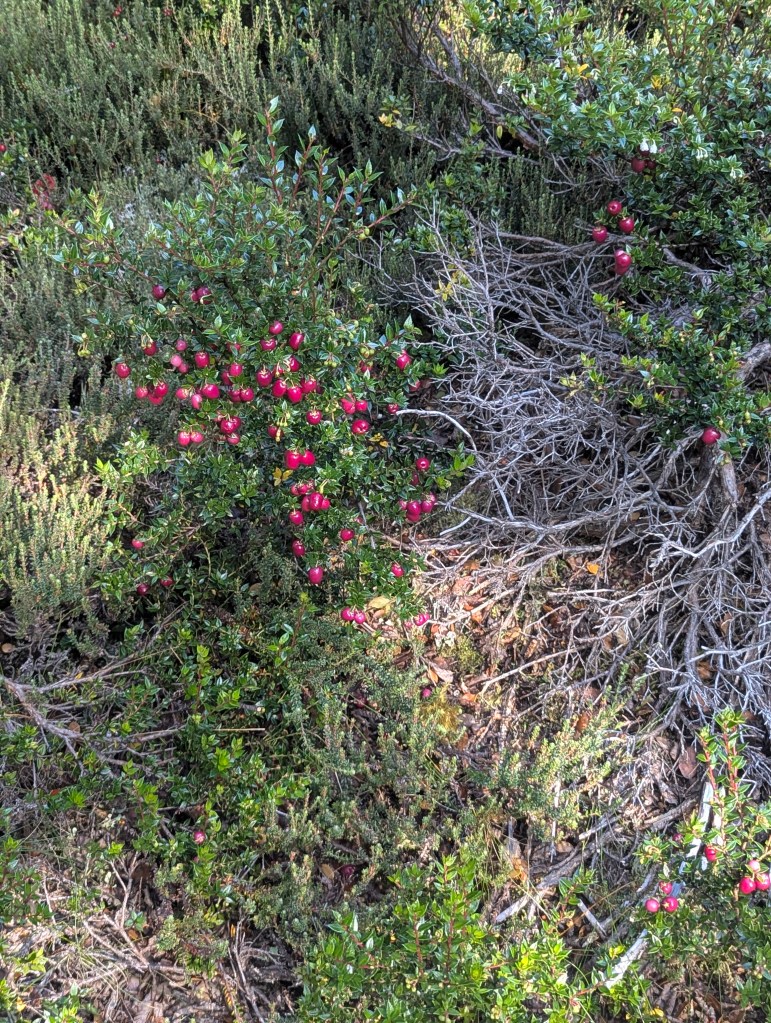
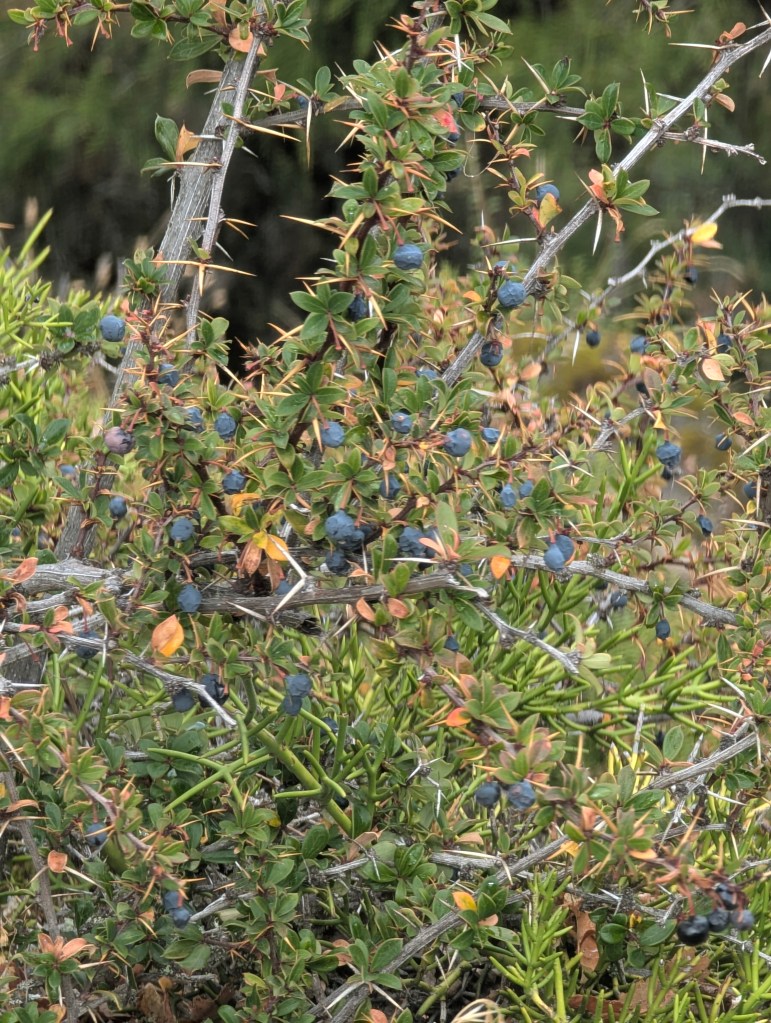
We found a calafate plant still with its blue berries. There are so many thorns, it is hard to imagine how the berries are harvested.
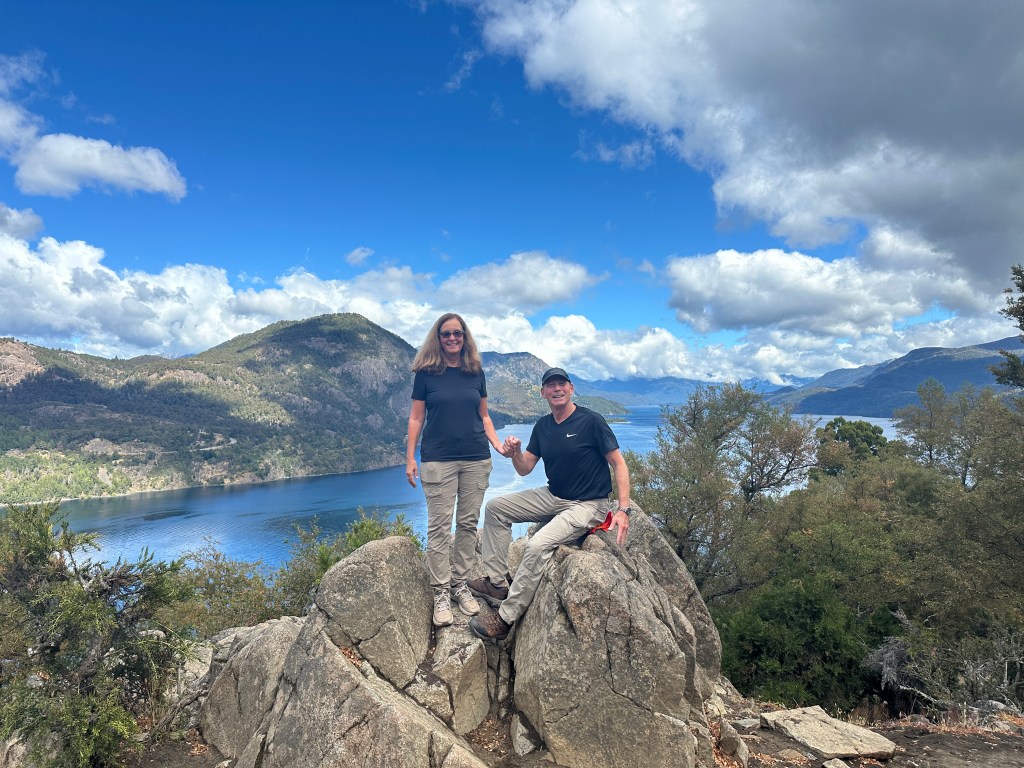
The path was mostly uphill, but only 2 miles each way, so not grueling as our previous hikes in Patagonia had been. Once at the top we were rewarded with stunning views.
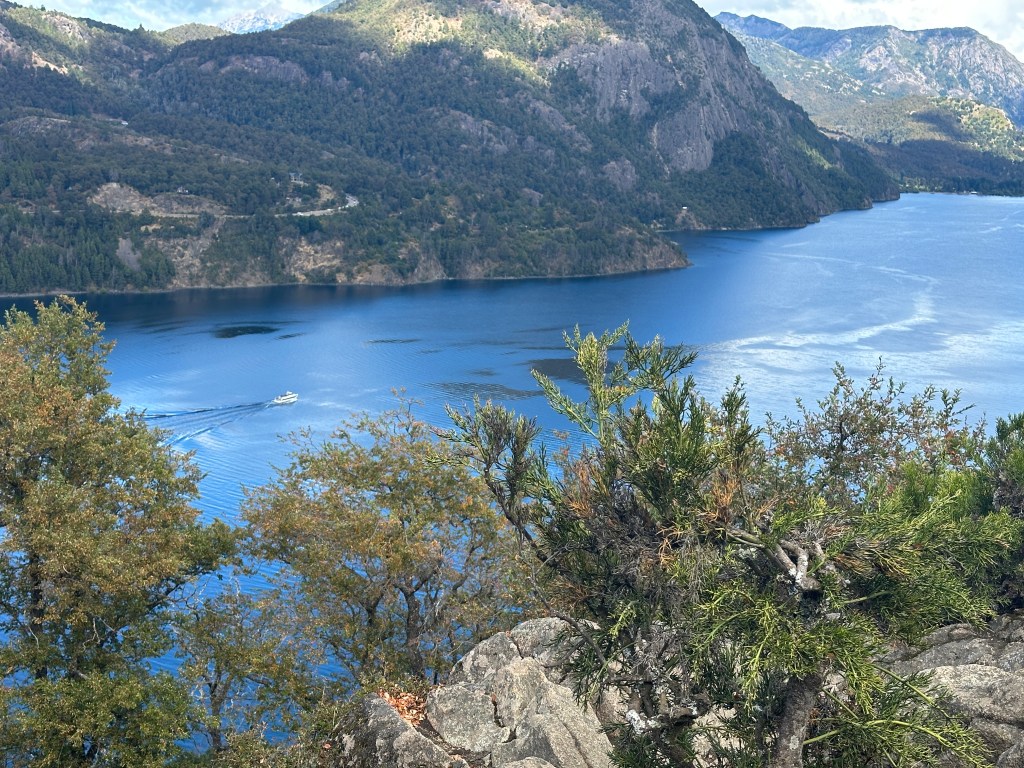
We could see the noon tourist boat traversing the lake.
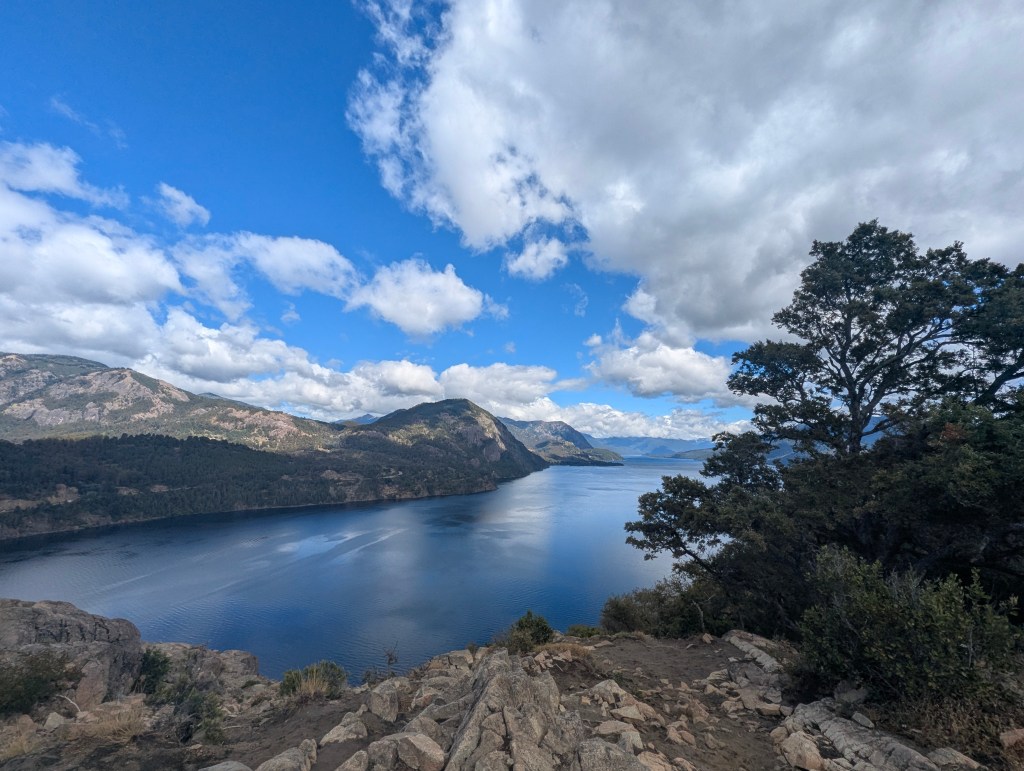
Eric sent up his drone to take some pictures of the lake,
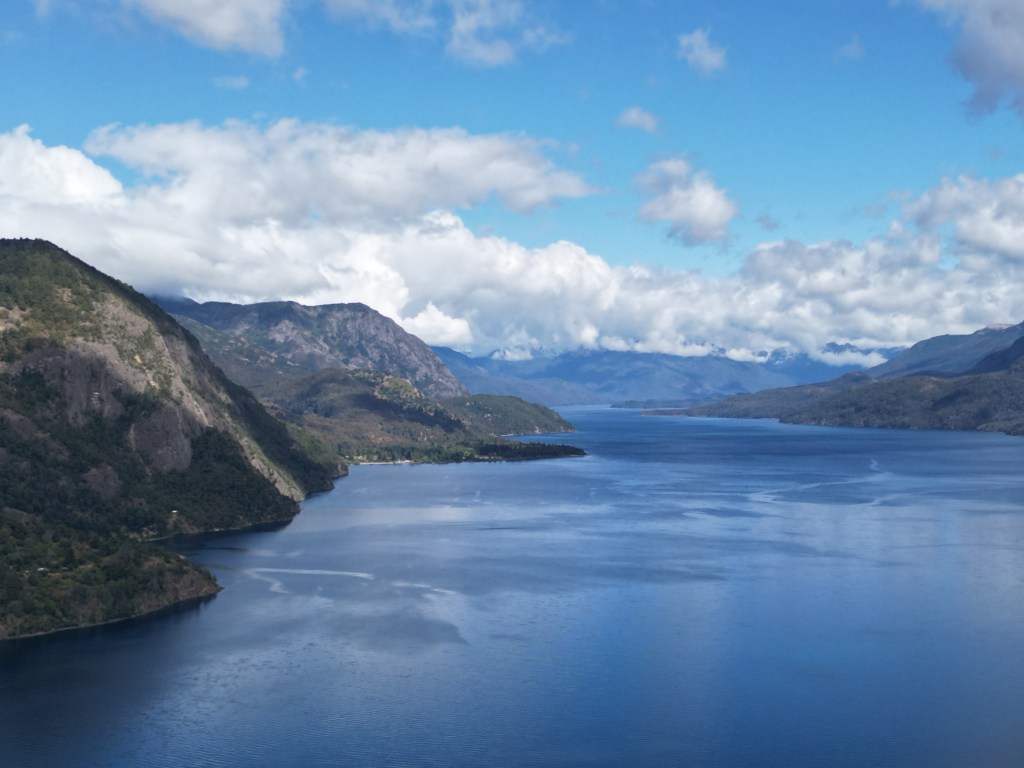
the town,

the beach.
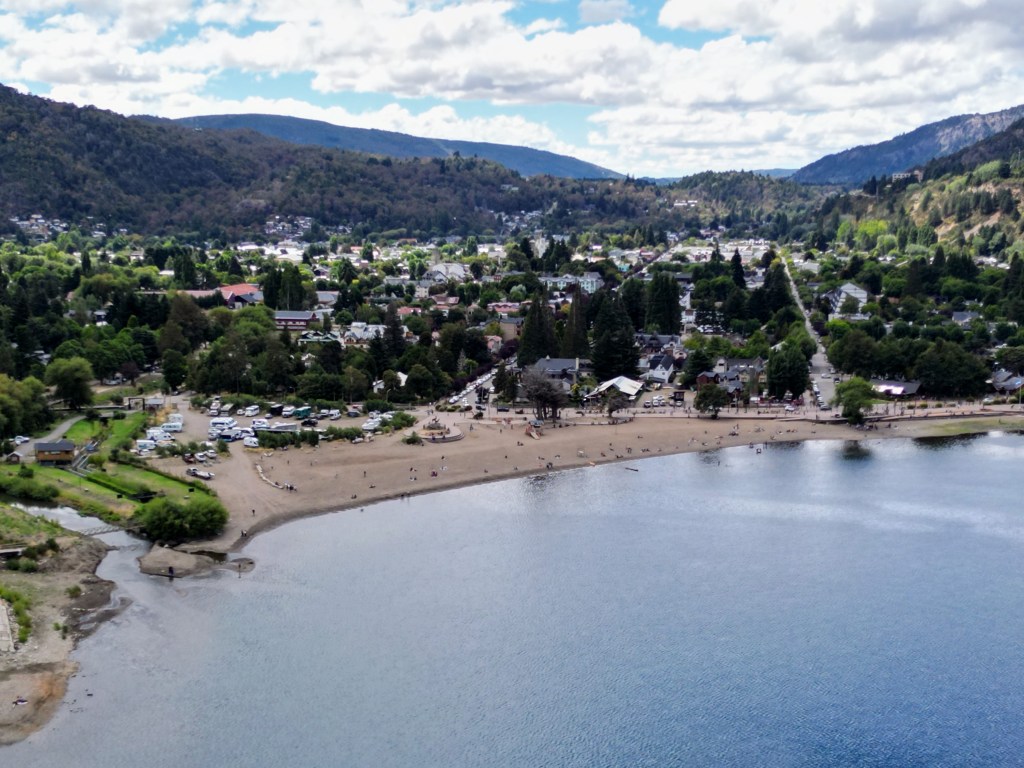
and even one of our hosteria.
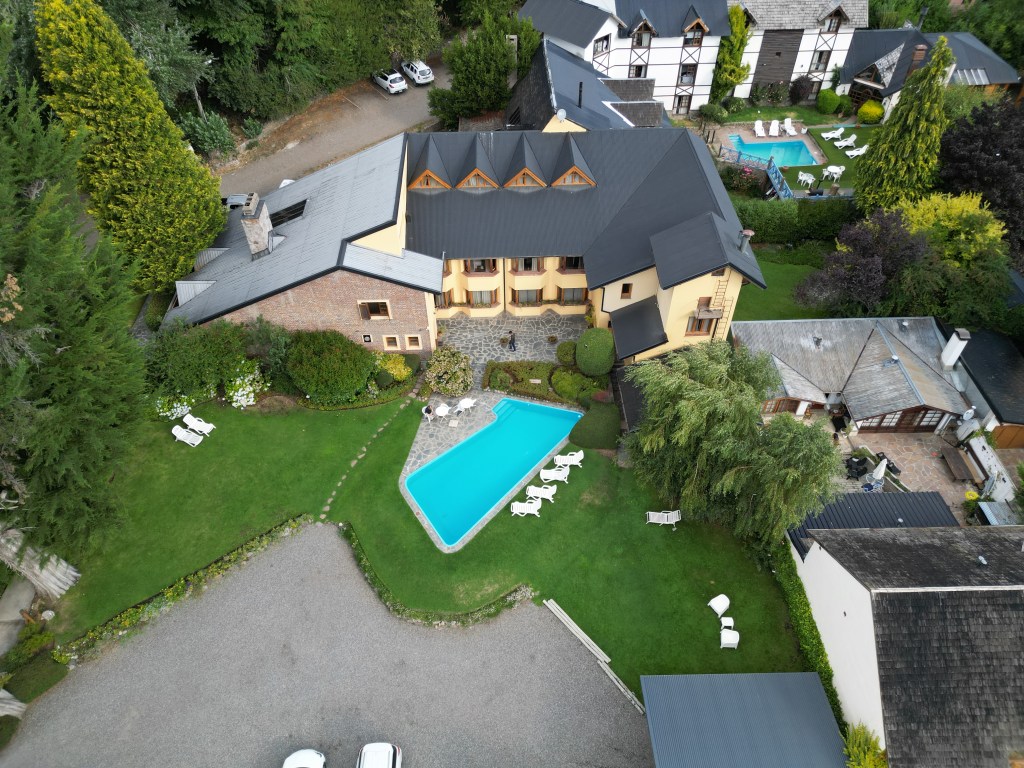
As we descended we took in the view of the town from the path.
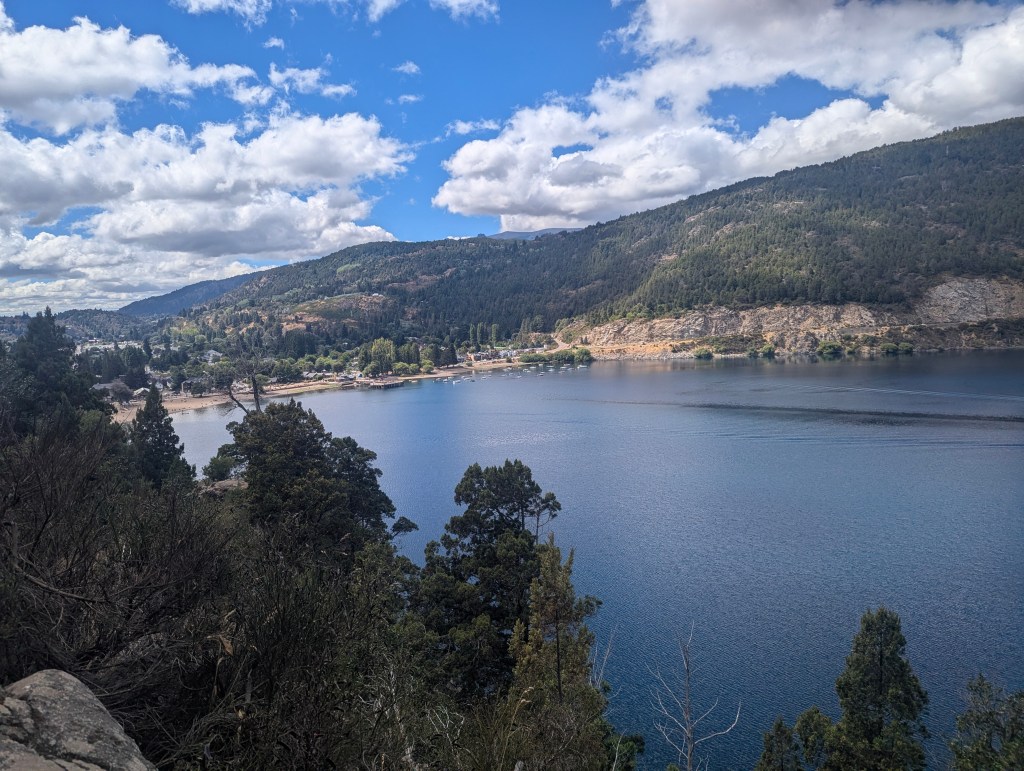
After our hike we treated ourselves to a late lunch/early dinner at a cute Spanish tapas restaurant. The next morning we returned to Villa la Angostura. On our return trip we were blessed with sunshine, at least in the morning. This drive is known as Camino del los 7 Lagos (Road of the 7 Lakes). Along the way are miradors (lookouts) from which to view each lake. As we started our journey, our first observation were all the dead trees in the mountains, a result of infections due to draught situations causing stress on the trees.
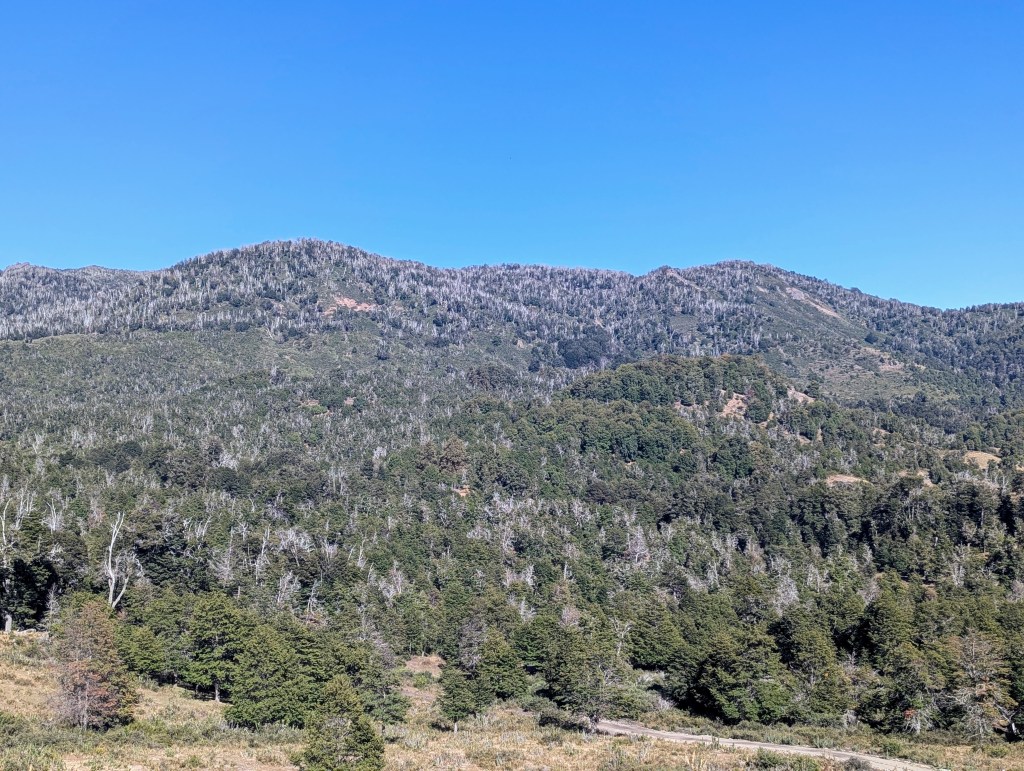
The first stop along the way was called Valle del Arroyo Pil Pil. Lake Lácar can be seen below, but the valley is named for the pil pil plant, which is a climbing vine that grows in this humid region on both sides of the Andes and has historically been used for weaving baskets.
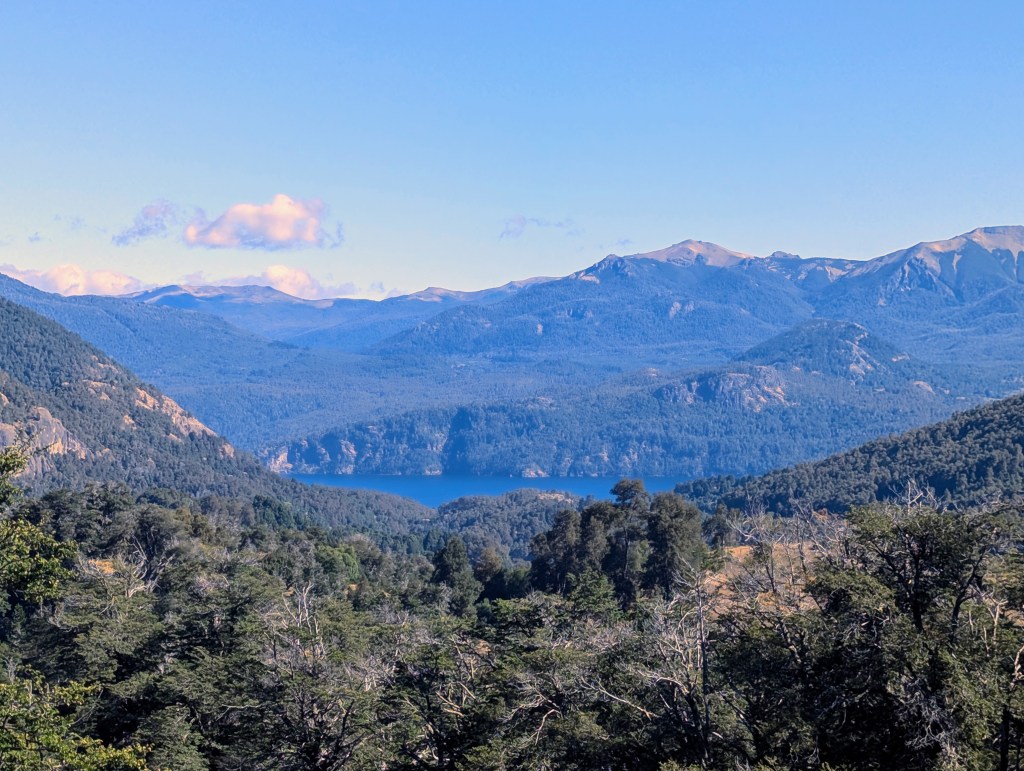
Valle del Arroyo Pil Pil

Our second stop was Lago Mechónico, which means in the Mapuche language “water with pancoras.” Pancoras are a fresh water crab common in the area.

Lago Mechónico

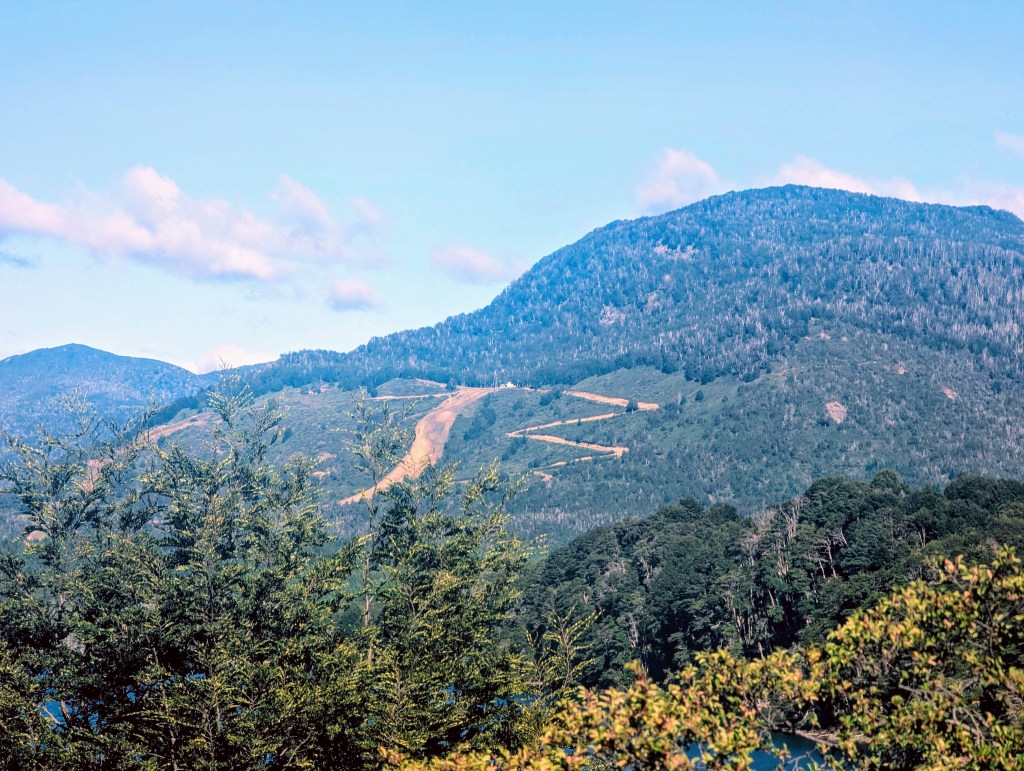
From there we could also see a small local ski resort. Winter sports are as popular in the lakes region as are the summer ones.
Our next stop was Cascada Vuliñenco, (Waterfall Vuliñenco). Vuliñenco is the Mapuche word for a white-throated hawk that lives in the region.
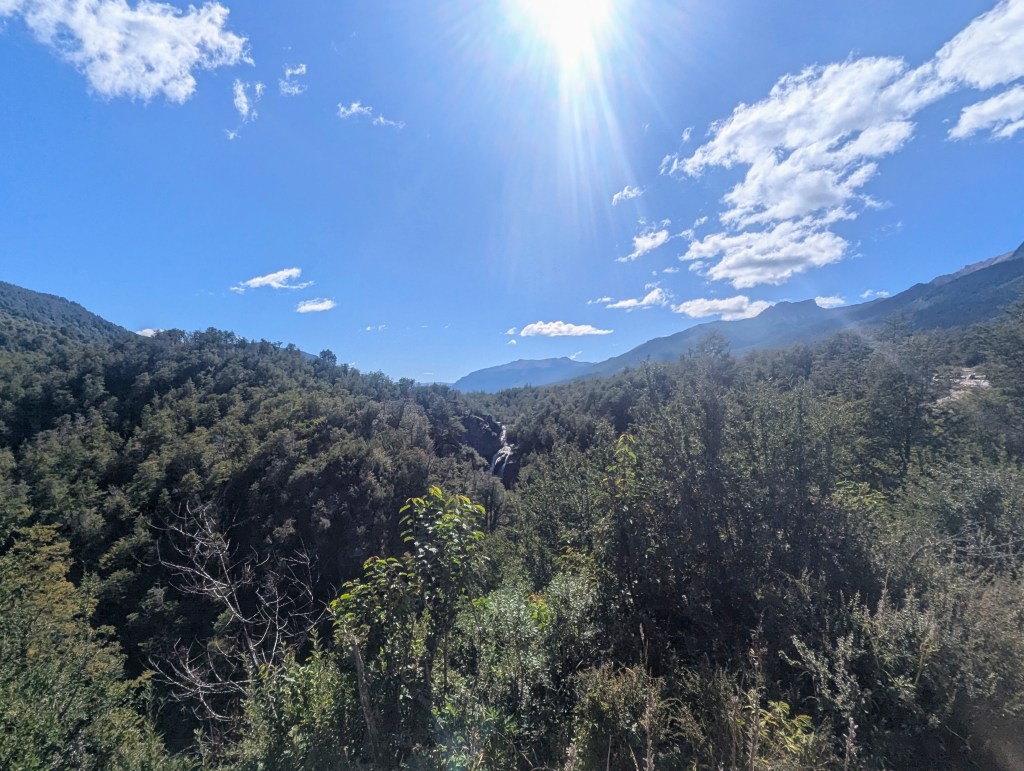
Cascada Vuliñenco

The Mapuche believe that the vuliñenco is an omen: if it lands with its back to us, it is a bad omen; if it lands facing us, all will be well.
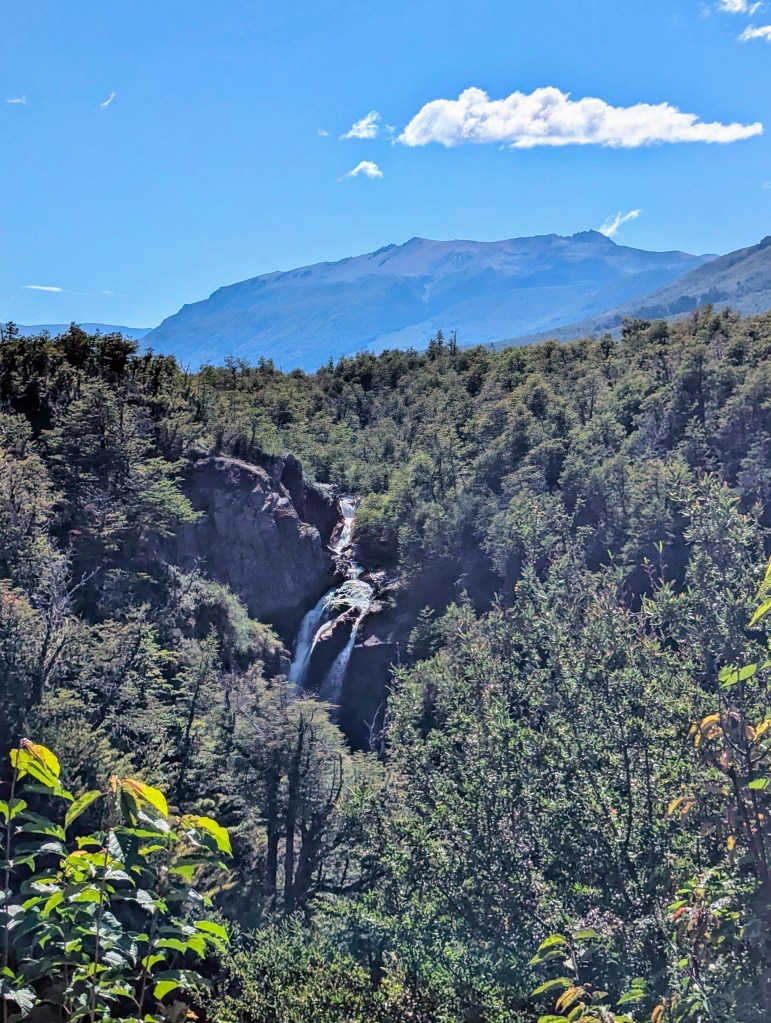
Cascada Vuliñenco

Next we pulled over and joined the folks enjoying Lago Falkner.
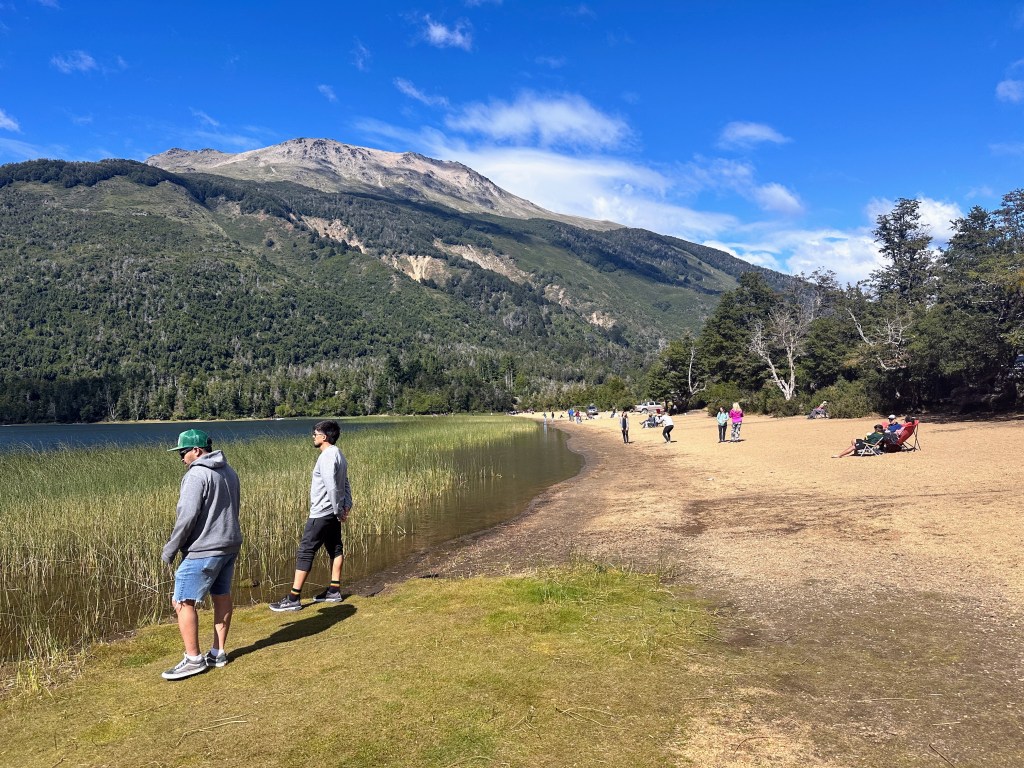
Lago Falkner

This lake was “discovered” by Francisco Moreno in 1886, and he named it in memory of Thomas Falkner (1702-1784) who was a missionary, explorer, and scientist.
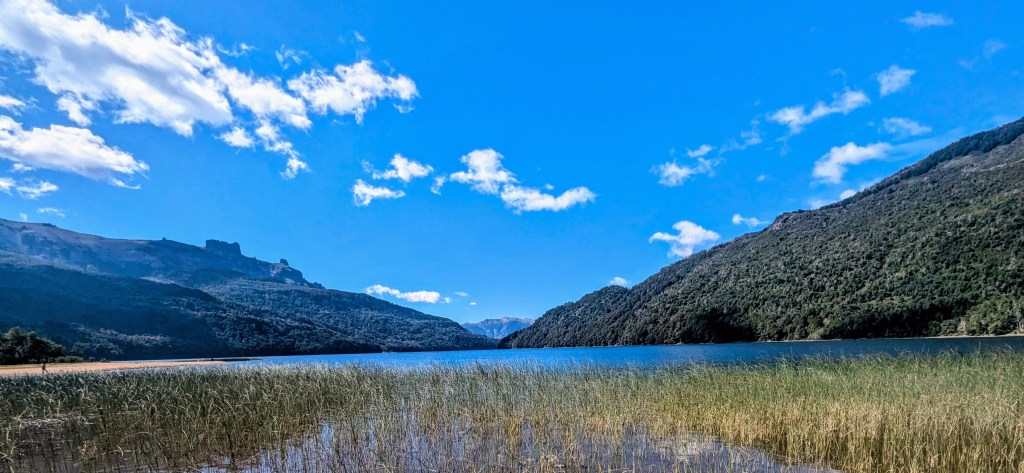
Lago Falkner

We walked along its beach.

Lago Falkner

This is a common nesting area for the great glebe, common in the area, but none were seen today.
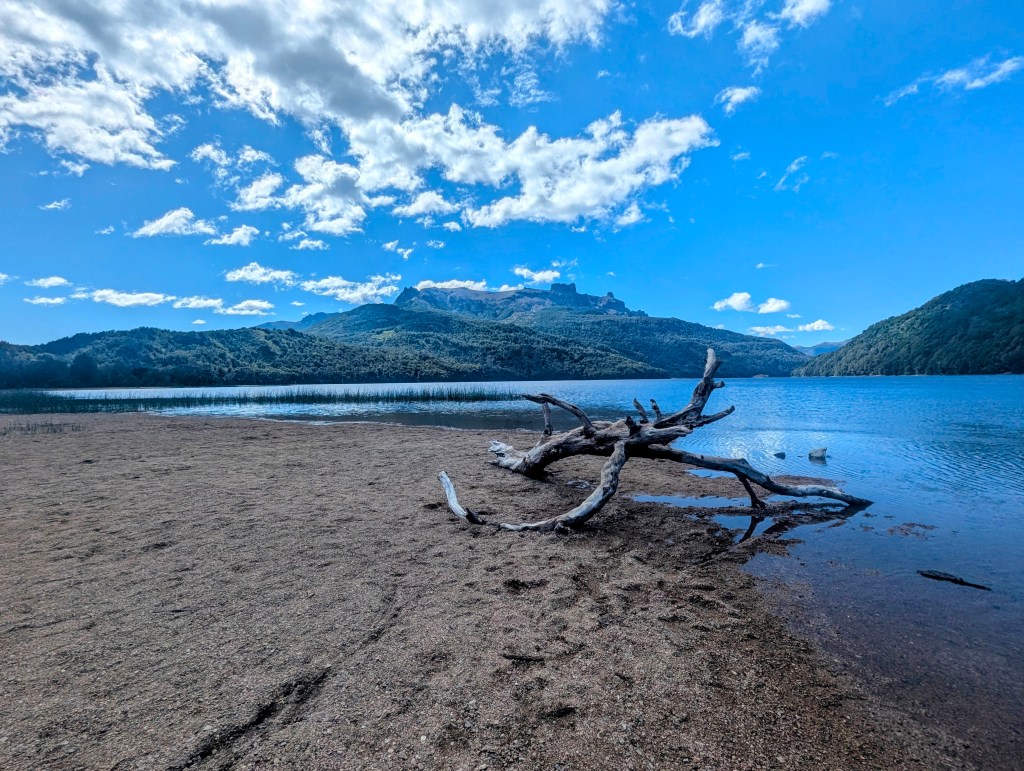
Lago Falkner

Next came Lago Villarino which was also “discovered” and named by Moreno. Basilio Villarino (1741-1795) created maps and left diaries that were helpful in the subsequent colonization of Patagonia.
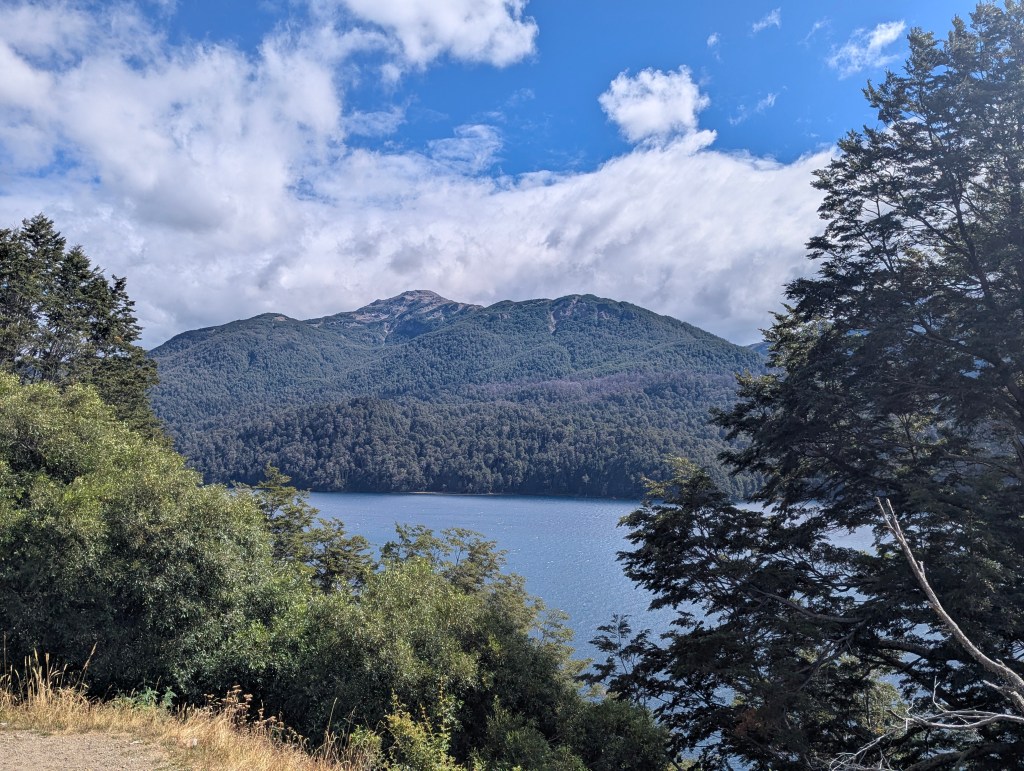
Lago Villarino

Our fifth lake is called Lago Escondido, which means “Hidden Lake.” The picture speaks for itself.
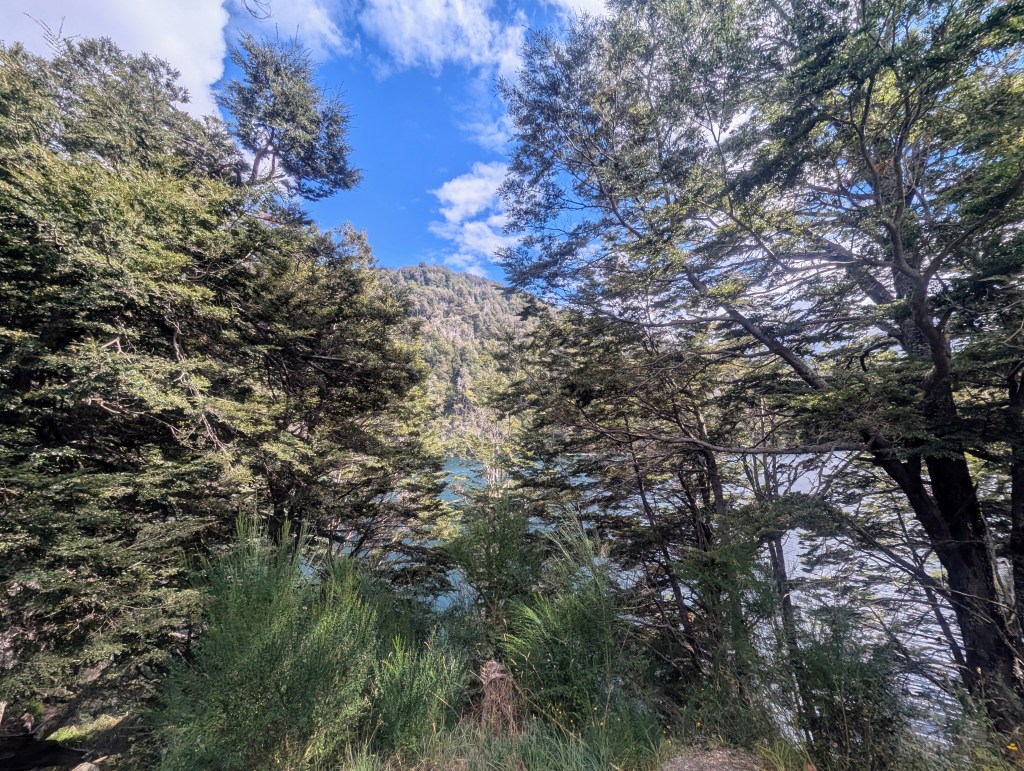
Lago Escondido

We drove about 18 miles before we came to the next lake: Lago Correntoso. In the spring this lake is home to the nesting ashy-haired geese.
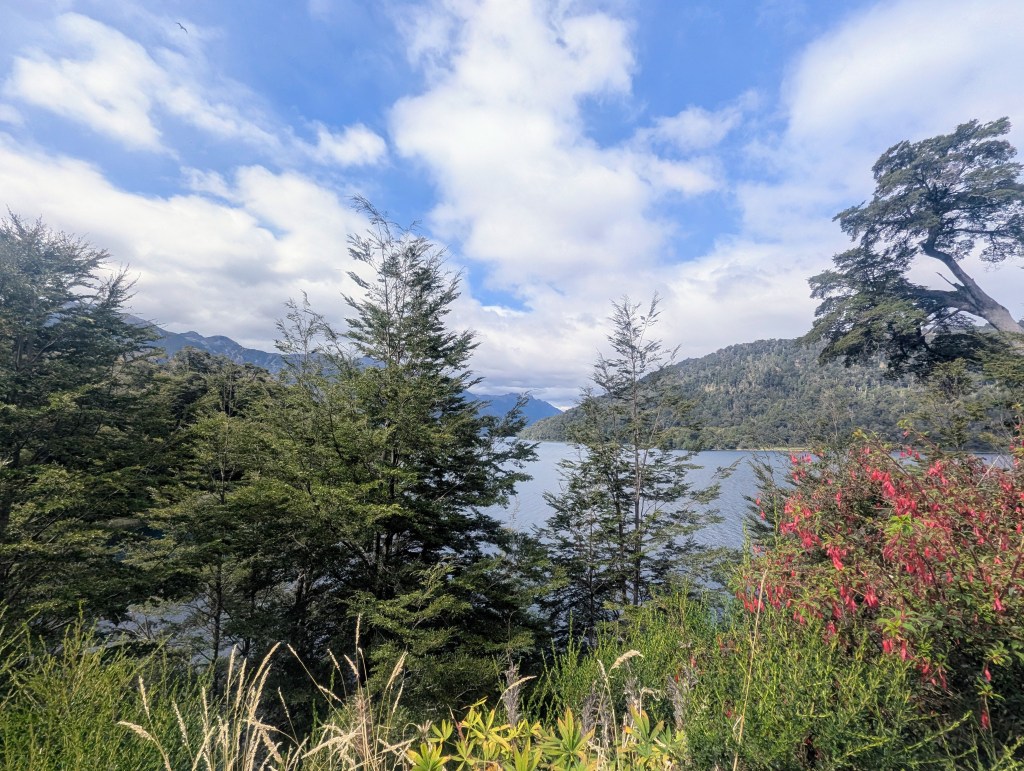
Lago Correntoso

These Patagonian lakes are fed by the snow melt from the Andes and are linked to each other through streams and rivers until they reach the Atlantic ocean to the east.
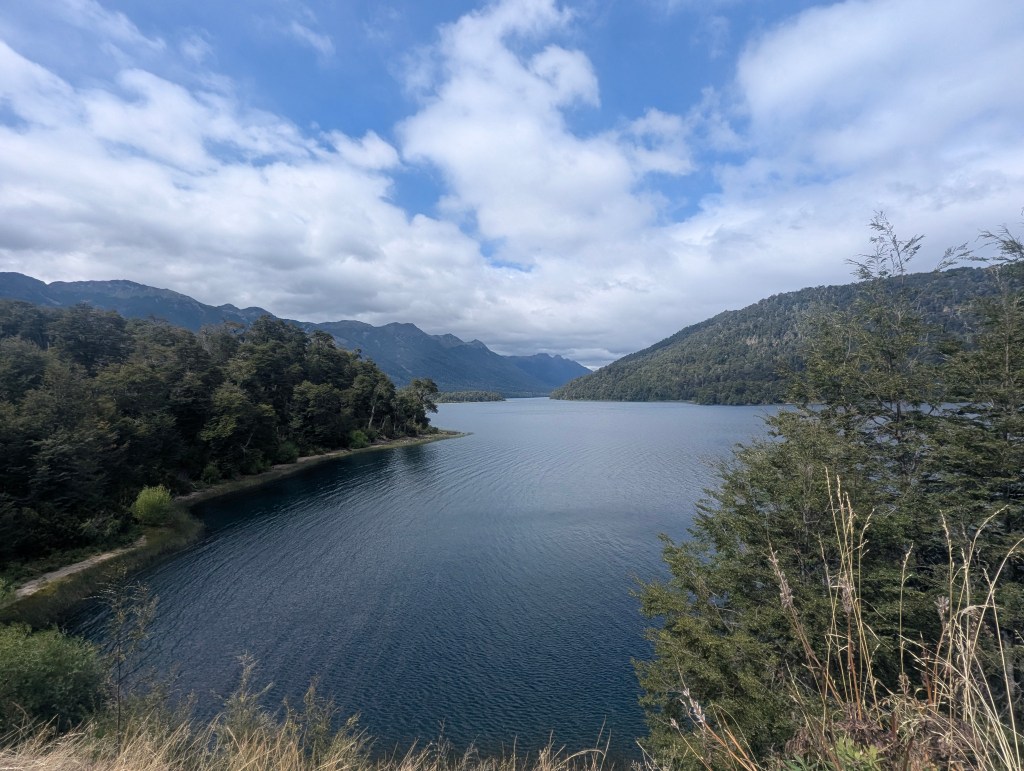
Lago Correntoso

Our seventh, and final lake of the Camino del los 7 Lagos, is called Lago Epejo, which means Mirror Lake. It was named by Enrique Wolff, an explorer, topographer, and engineer who explored this area between 1895 and 1896 and described this lake as the lake “that resembles a mirror.”
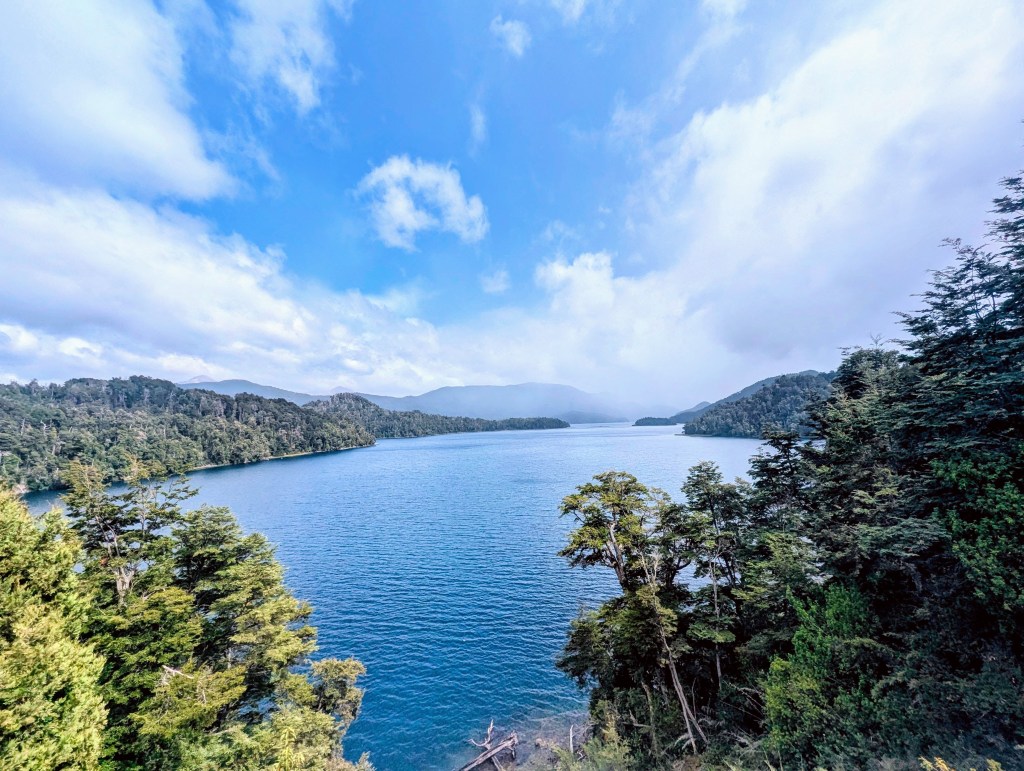
Lago Epejo

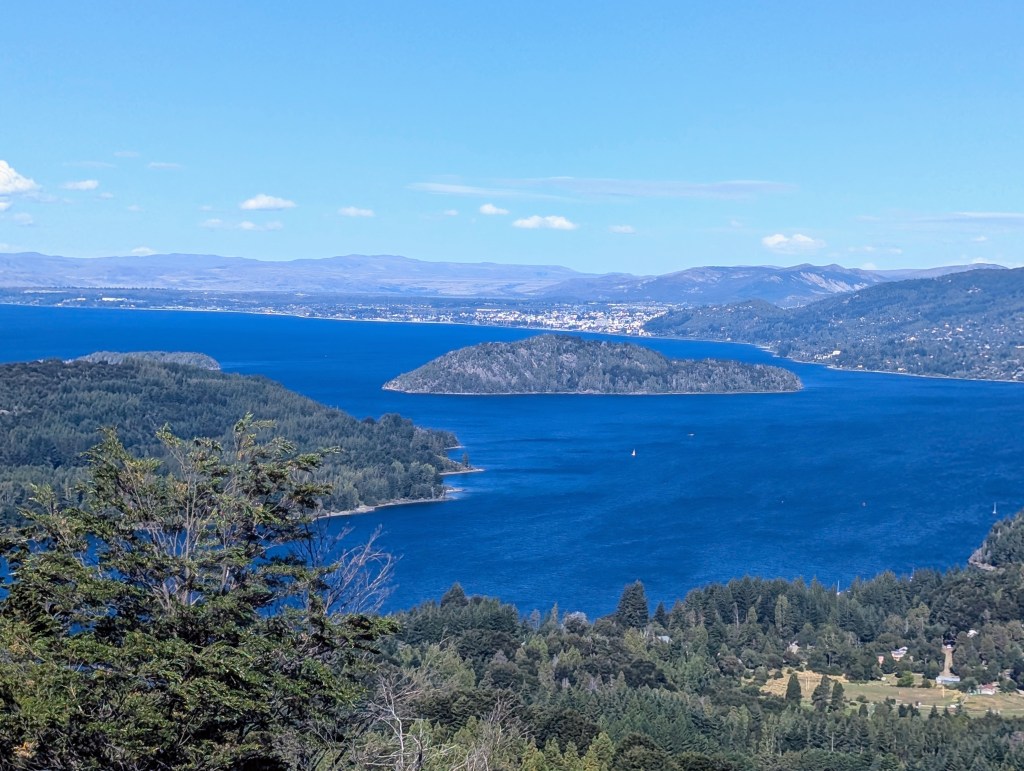
Our final lake of the day, not counted in the 7, is Lago Nahuel Huapi, which gives its name to the national park in which it lies. It was “discovered” in 1610 by Jesuits from Chile. At over 215 square miles, it is about the size of Buenos Aires. Lago Nahuel Huapi is shared by two provinces: 80% lies in the Nequén Province, where we have been these last few days, and 20% in the Rio Negro Province, where we head next.
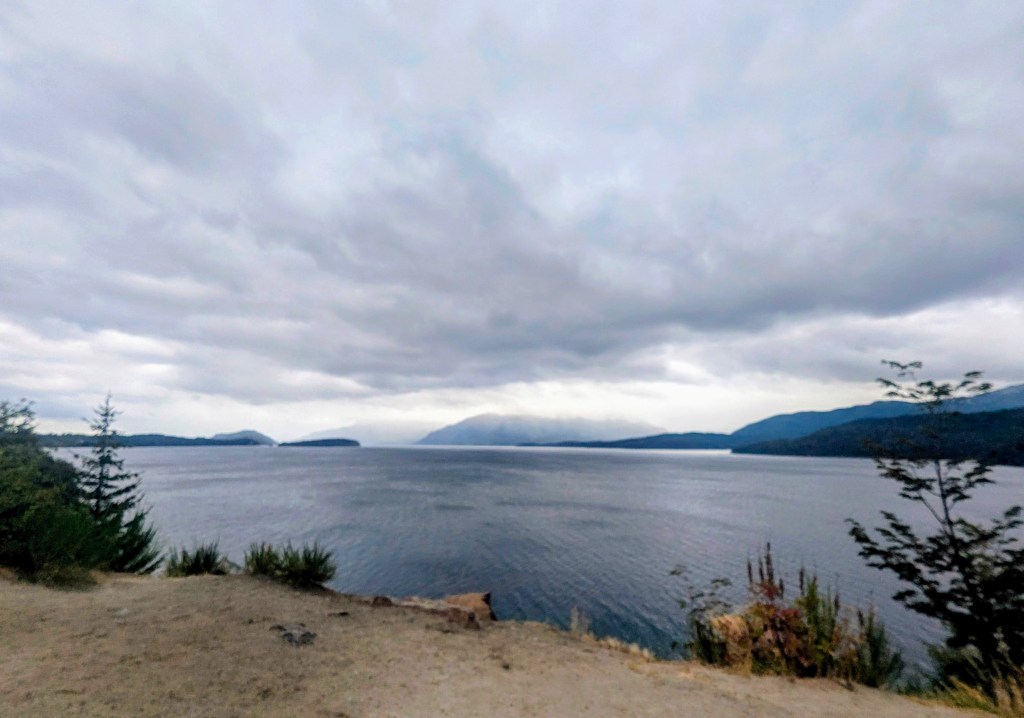
Lago Nahuel Huapi

As the weather was turning, and we had reached our destination of Villa La Angostura, it was time to check in to our next hosteria: Amigos del Bosque (Friends of the Forest).
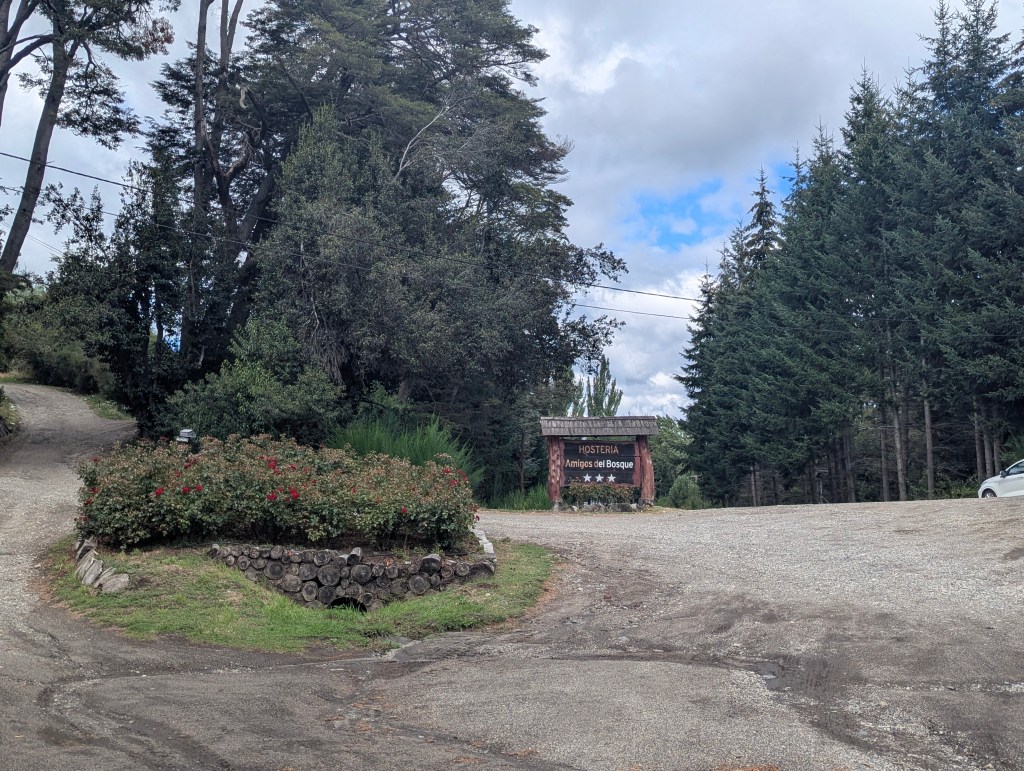
We had quite the drive up
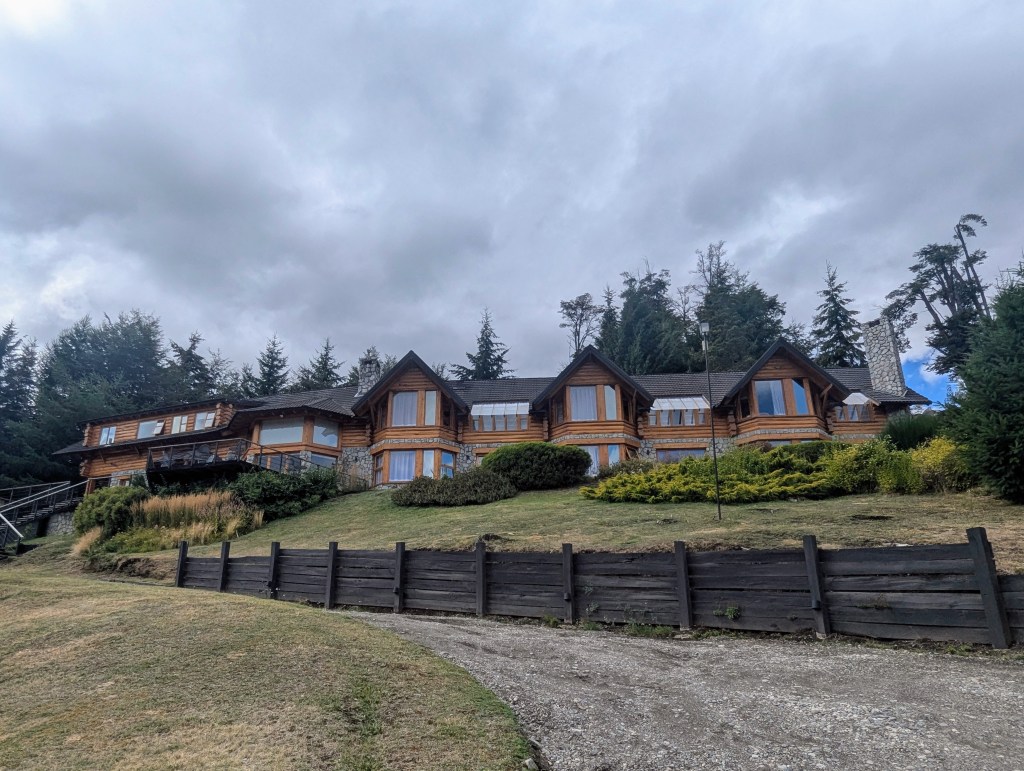
Hosteria Amigos del Bosque

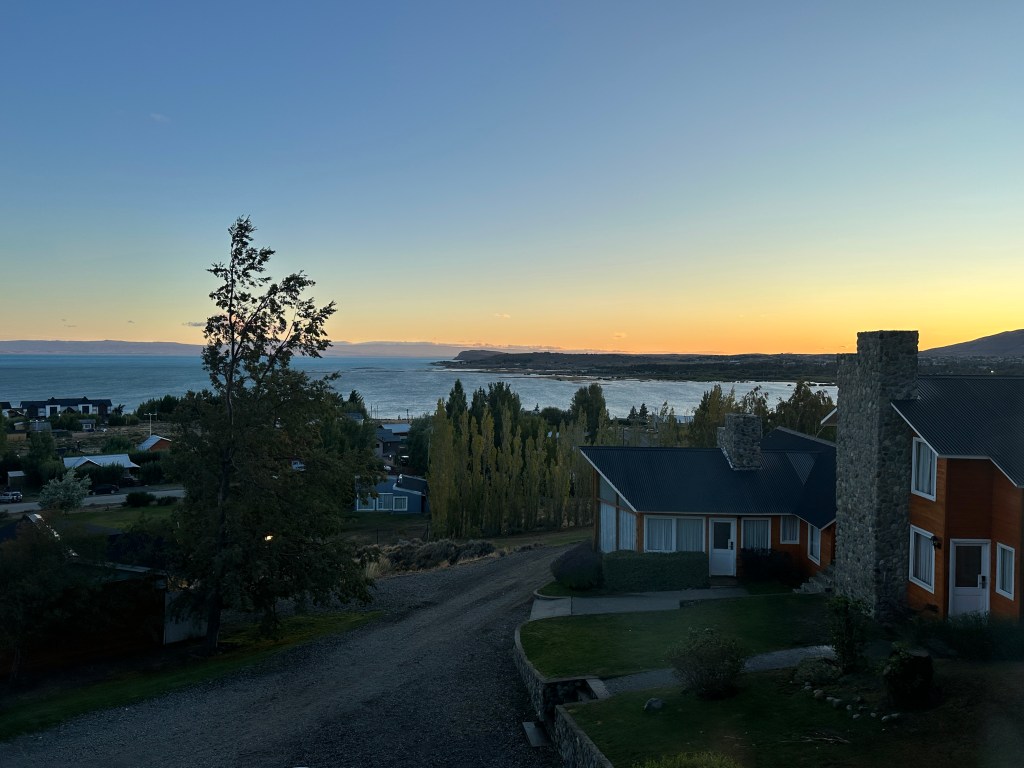
But the view was worth it once we had arrived.
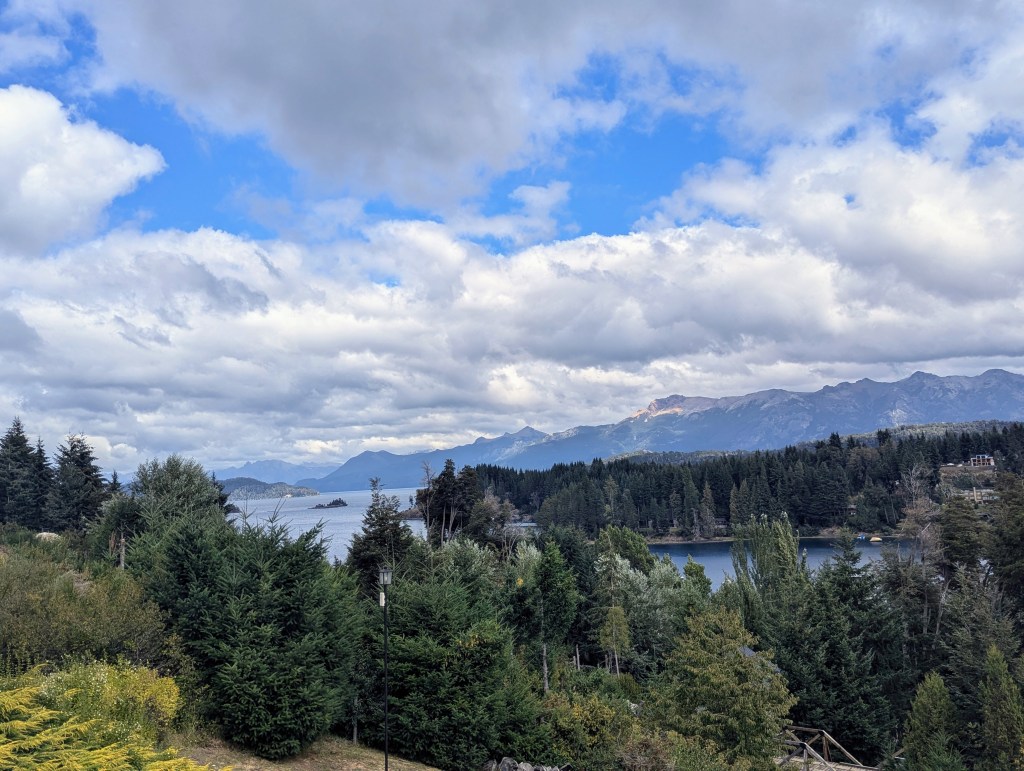
view of Nahuel Huapi Lake from Hosteria Amigos del Bosque

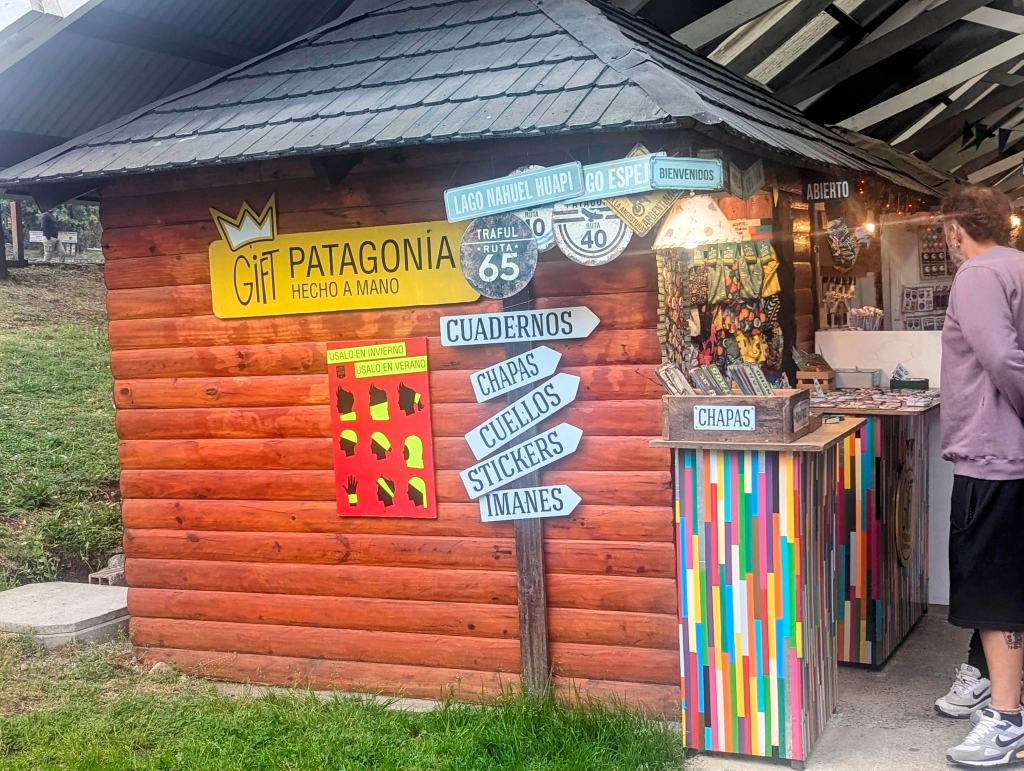
Once we’d settled in, we headed into town for dinner. Villa La Angostura (Town of the Narrowing) is at an altitude of about 2.500 feet and has a population of 11,000. It too is a popular tourist destination for both winter and summer activities. The town itself is much smaller than San Martín de los Andes with only one main street, the rest unpaved.
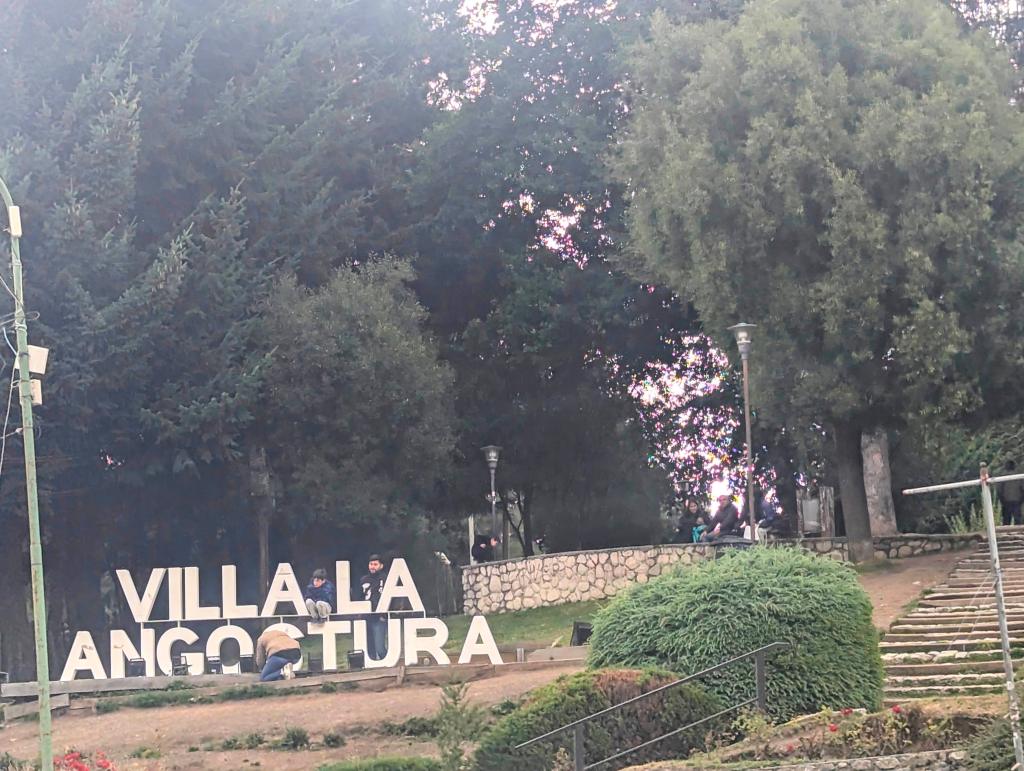
But it does have its share of shops, bars, and hand crafted souvenirs.
We found a tiny local restaurant. When the waiter realized we did not speak Spanish, he sent over his friend who spoke Portuguese thinking we were from Brazil. They were both so surprised to find out we were from the US; not many find this tiny spot.
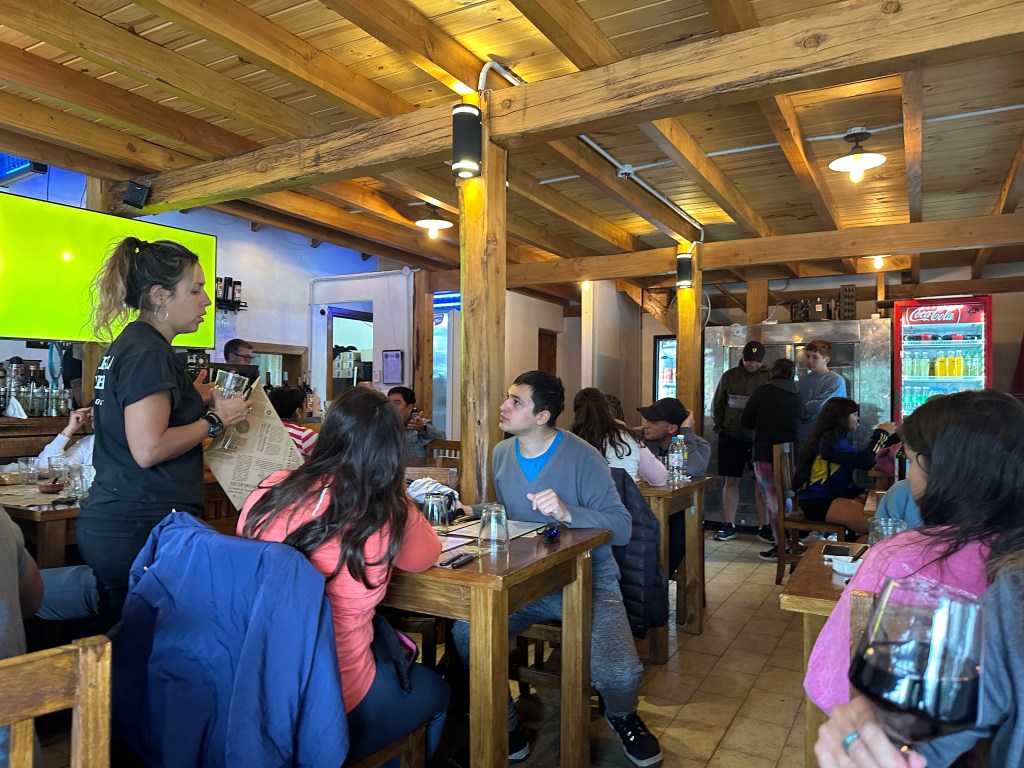
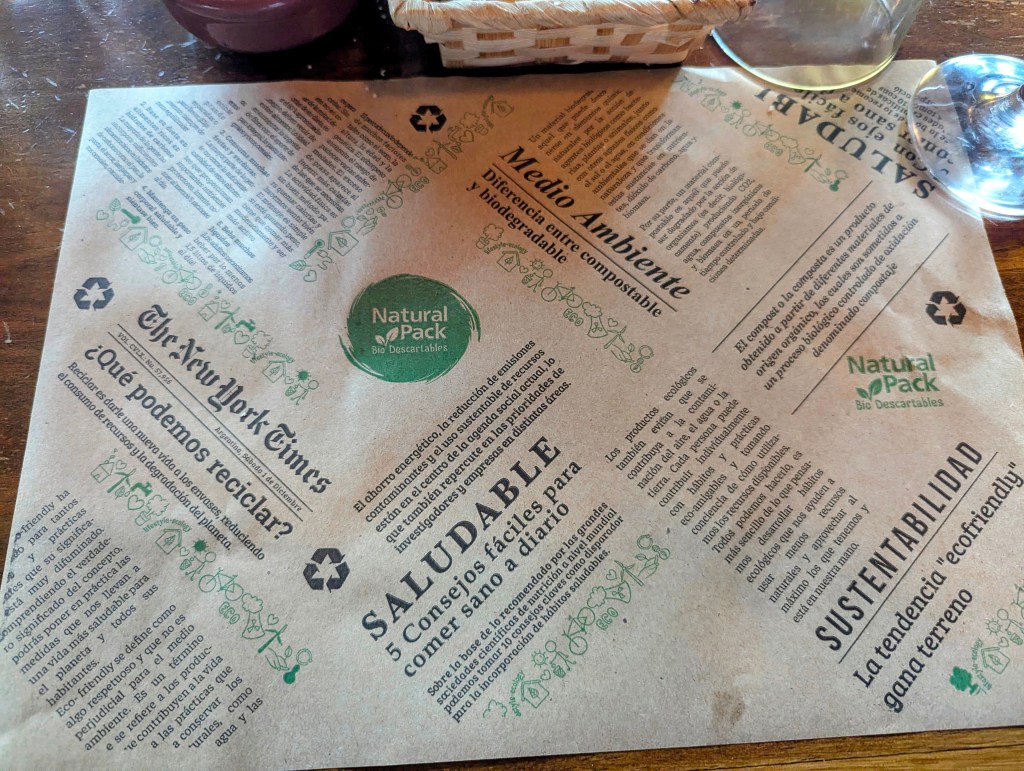
They were so warm and welcoming. And the placemat had a hint from home.
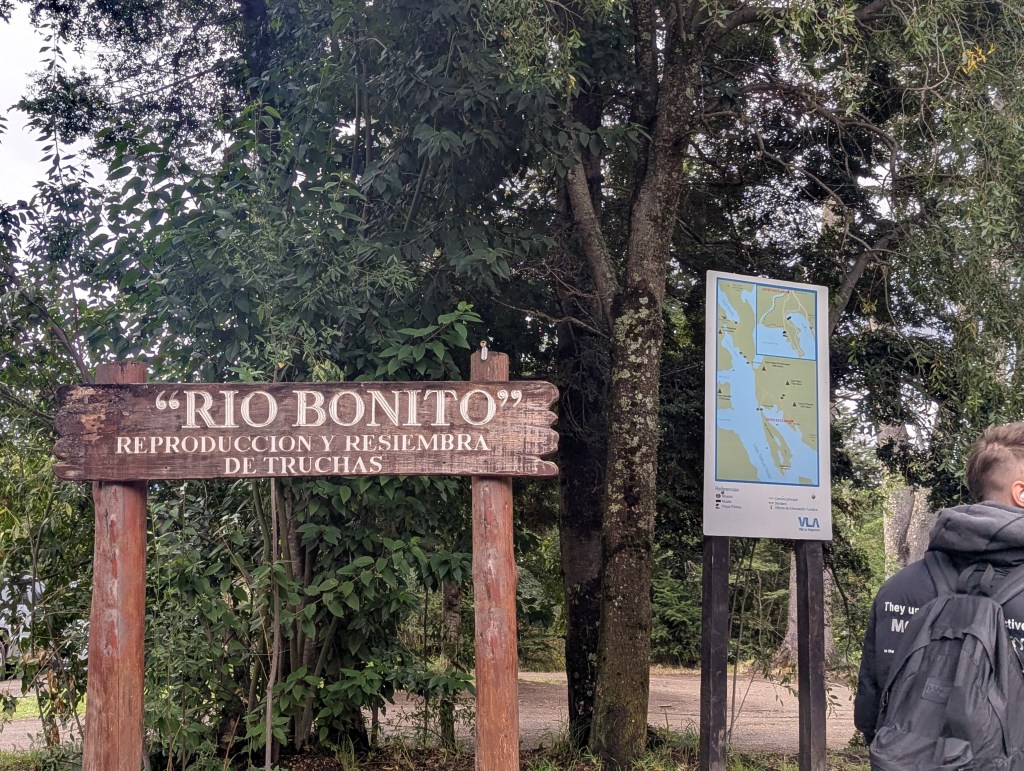
In the morning the sun was once again shining. The big attraction in the area is Parque Nacional los Arrayanes, an ancient forest of myrtle trees. But reading reviews online which described the trail as very long (over 7 miles round trip), boring, and mostly dead trees, we opted for a smaller hike instead. We headed to the Rio Bonito (Beautiful River) trail. The trailhead marker informed us that this is a place for Reproduction and Research of trout.
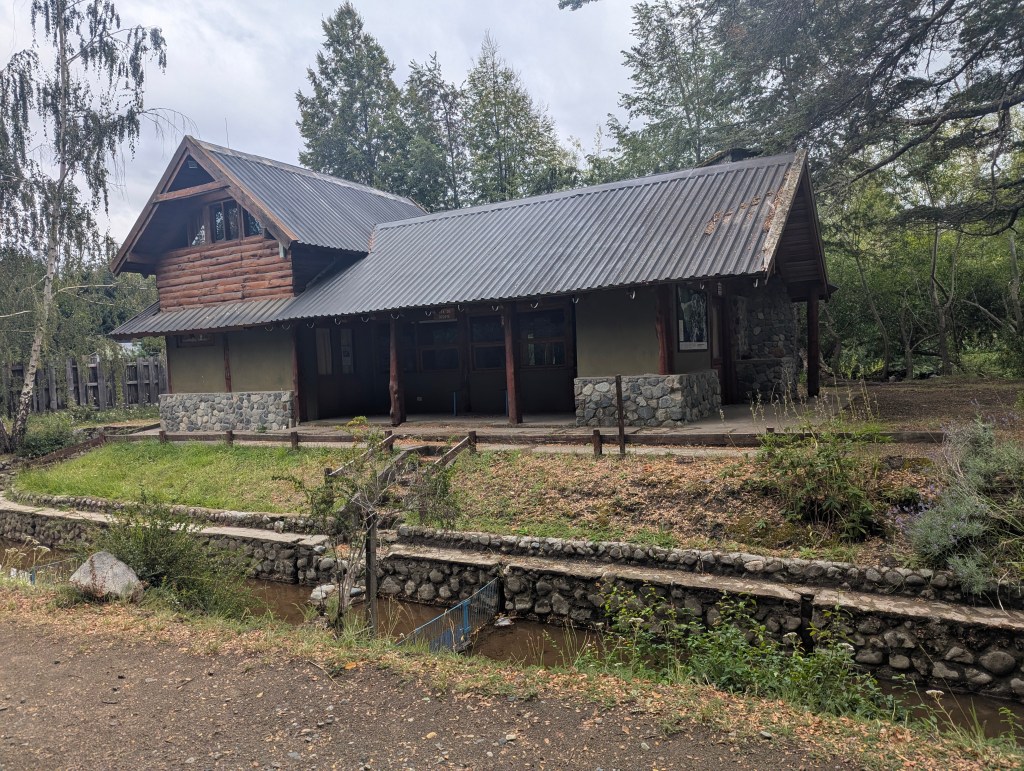
The conservancy building was right at the beginning of the trail.
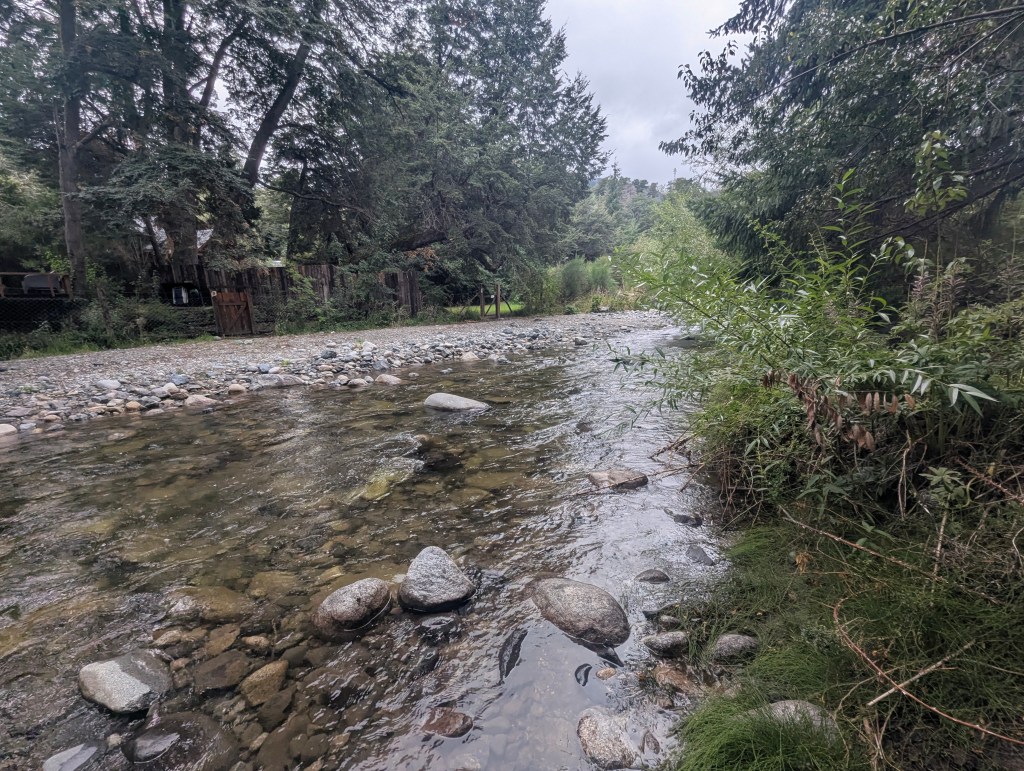
The river (really more of a stream) lived up to its name.

The whole vibe of the place is very much like upstate NY/Adirondack’s rivers and streams meets Colorado’s Rockies.
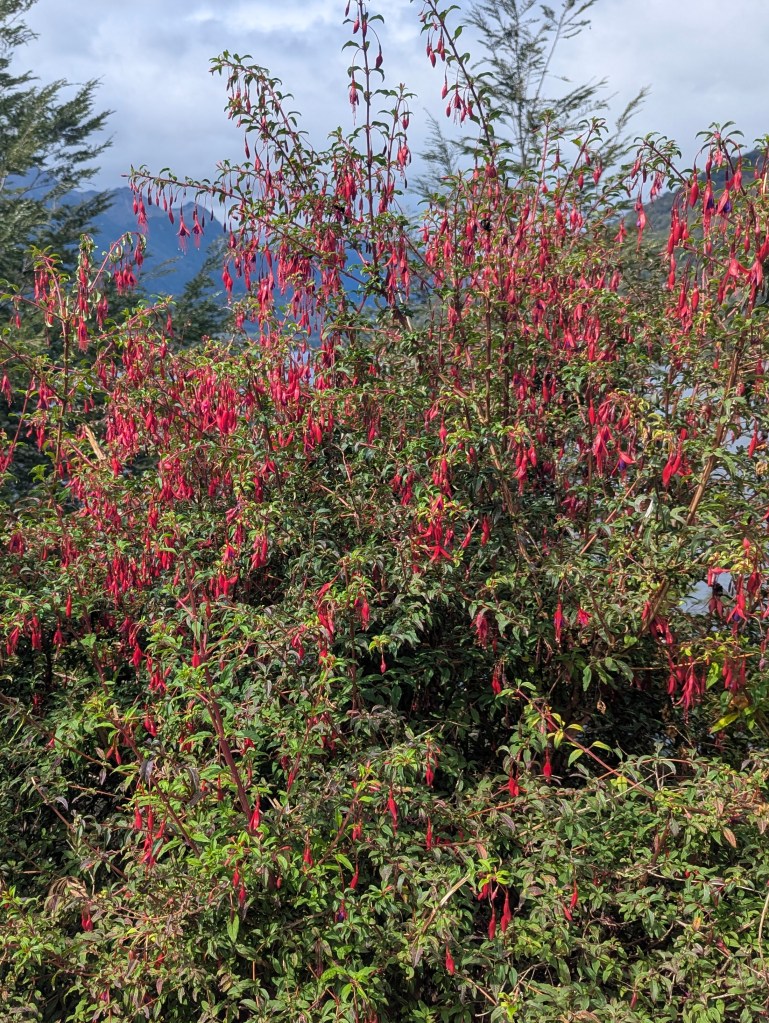
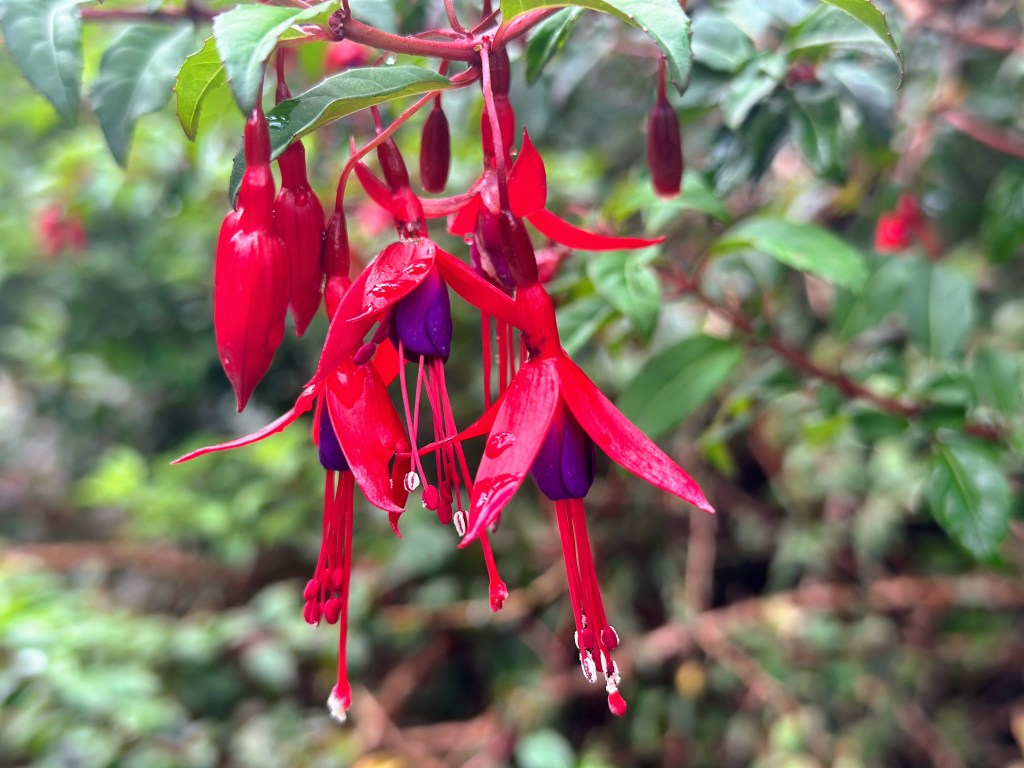
Along the way we were treated to lots of plants in bloom including fuscias (chilco is Spanish)
wild asters
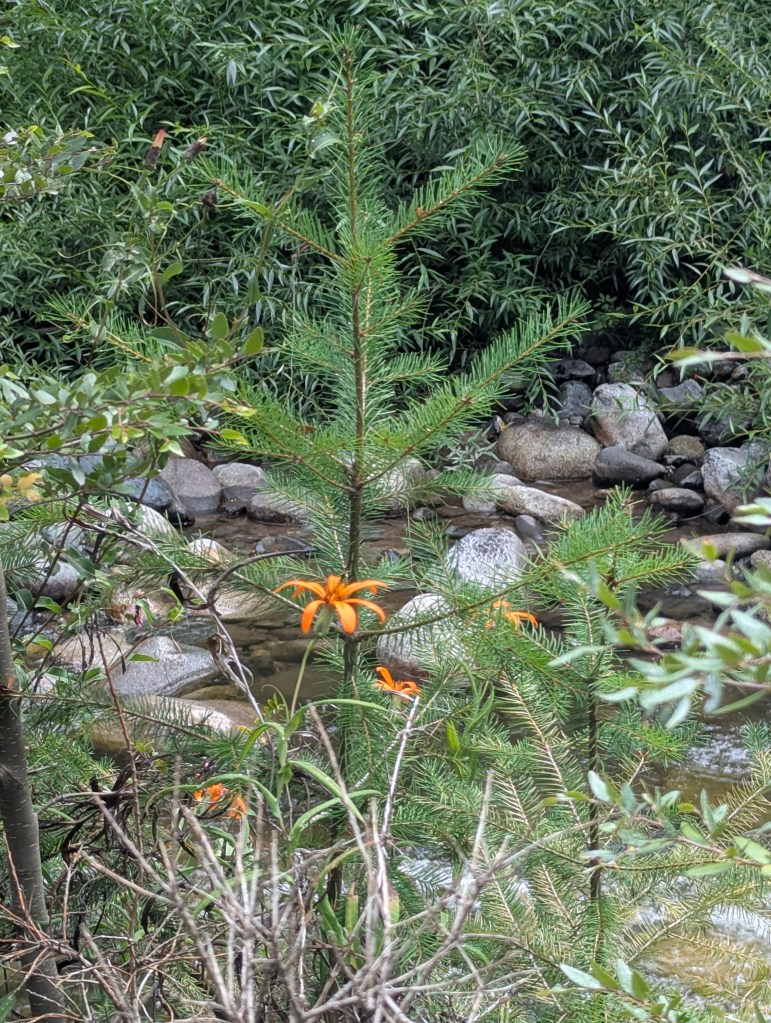
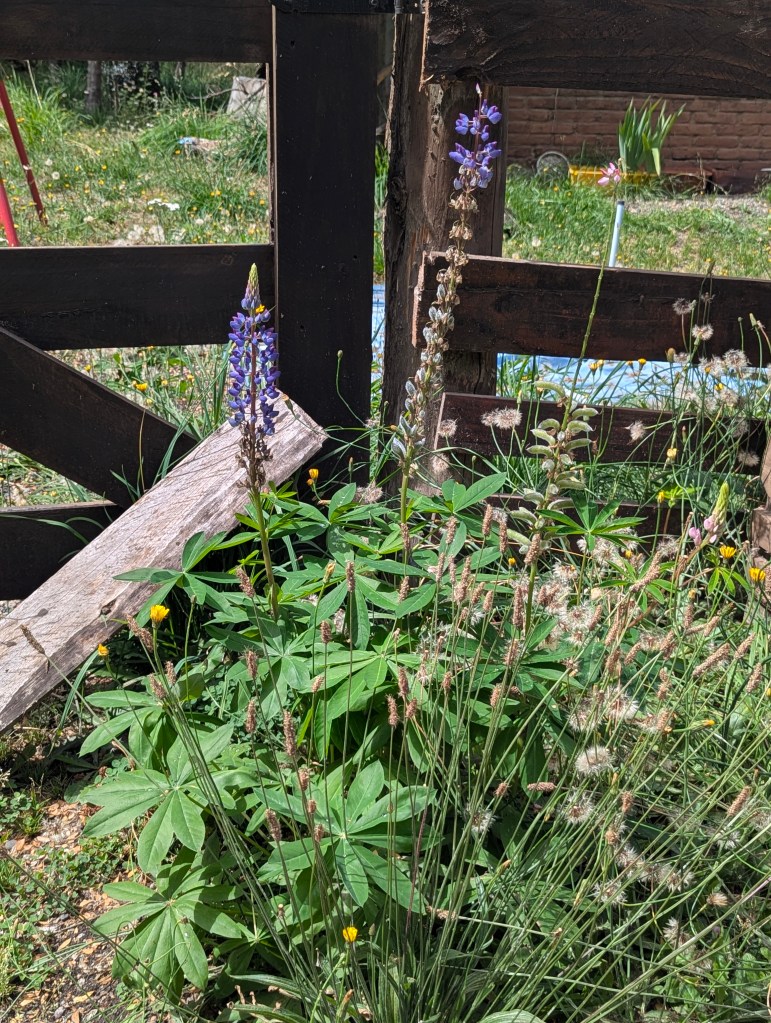
and lupines.
The path emerged from the forest onto a beach.
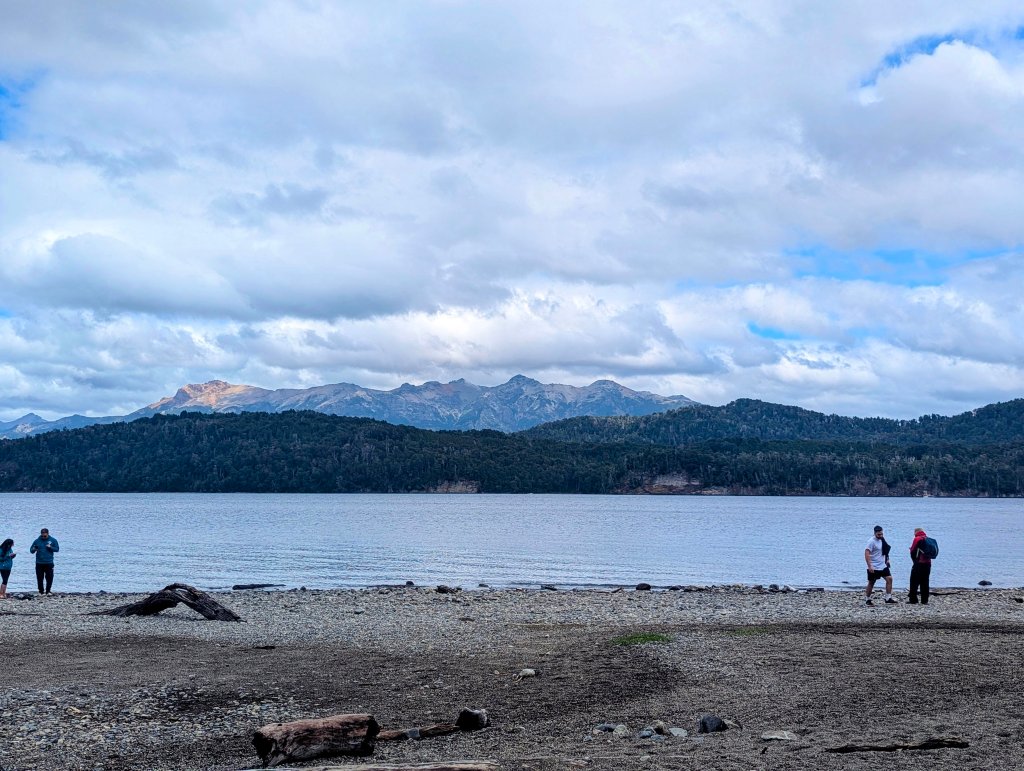
Of course the Argentinians enjoying the beach were also enjoying their yerba mates.
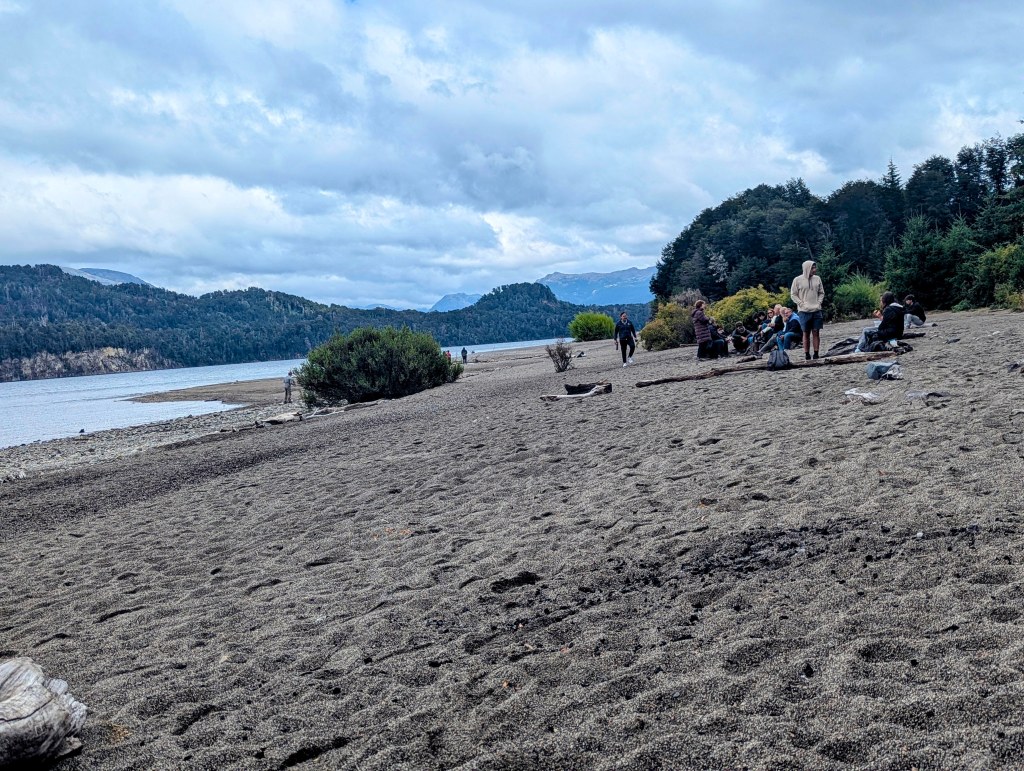
We strolled around taking in the beauty of the day.
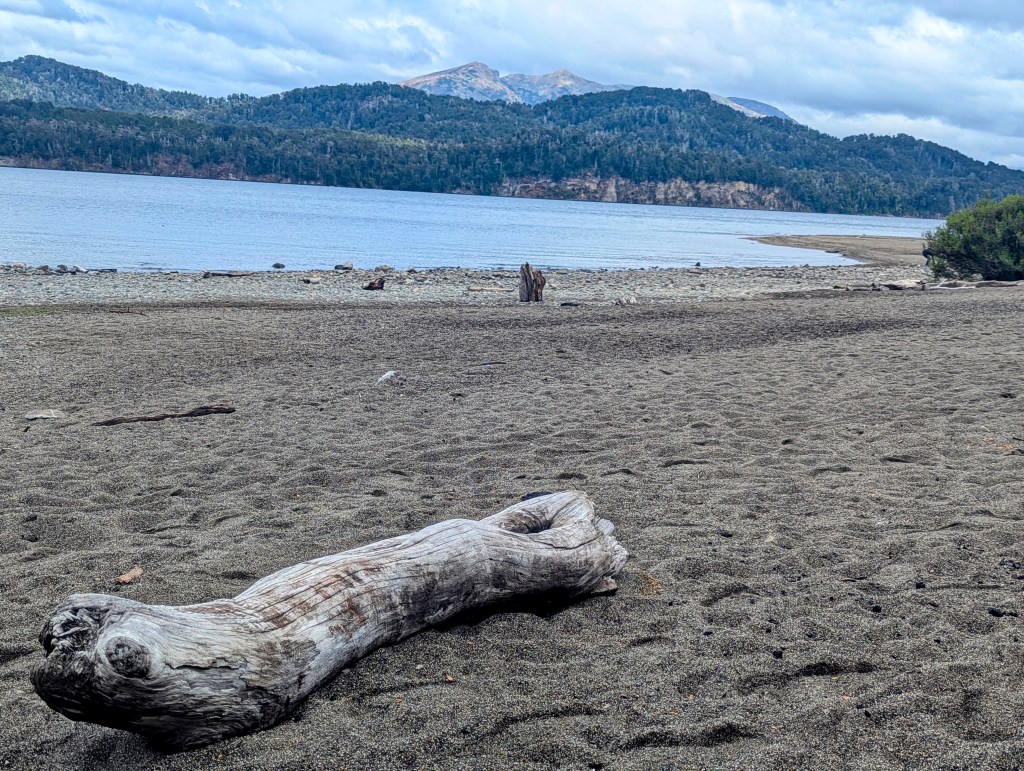
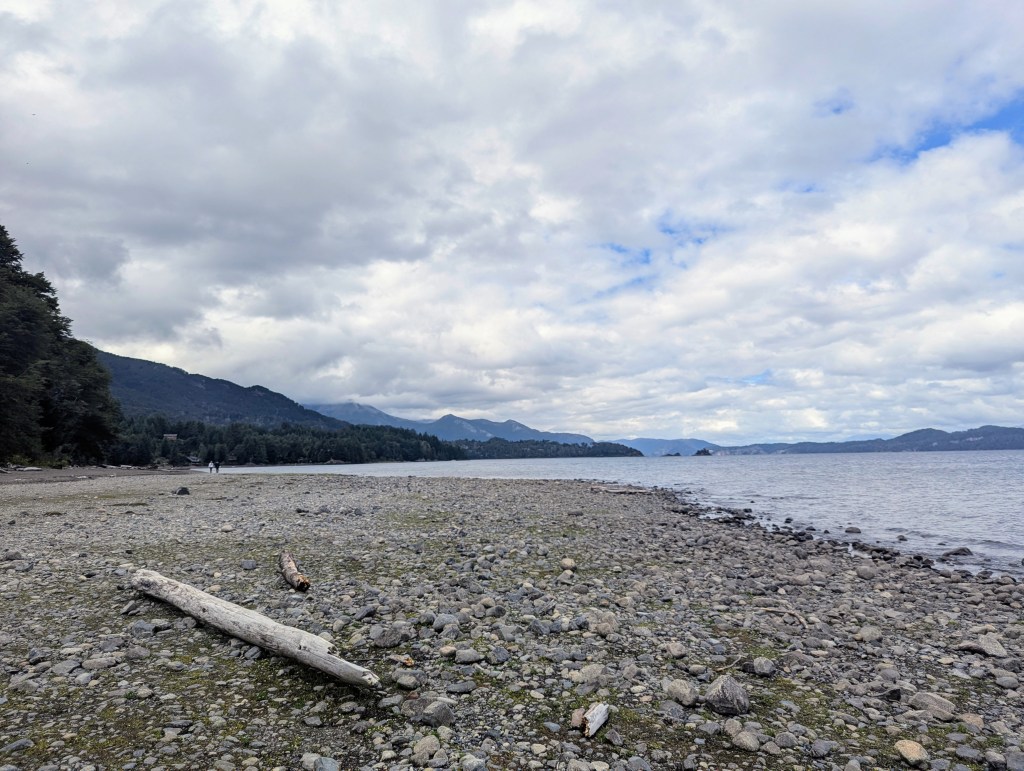
Eric sent up his drone to take some more pics of the lake and the campsites that dot its shores.
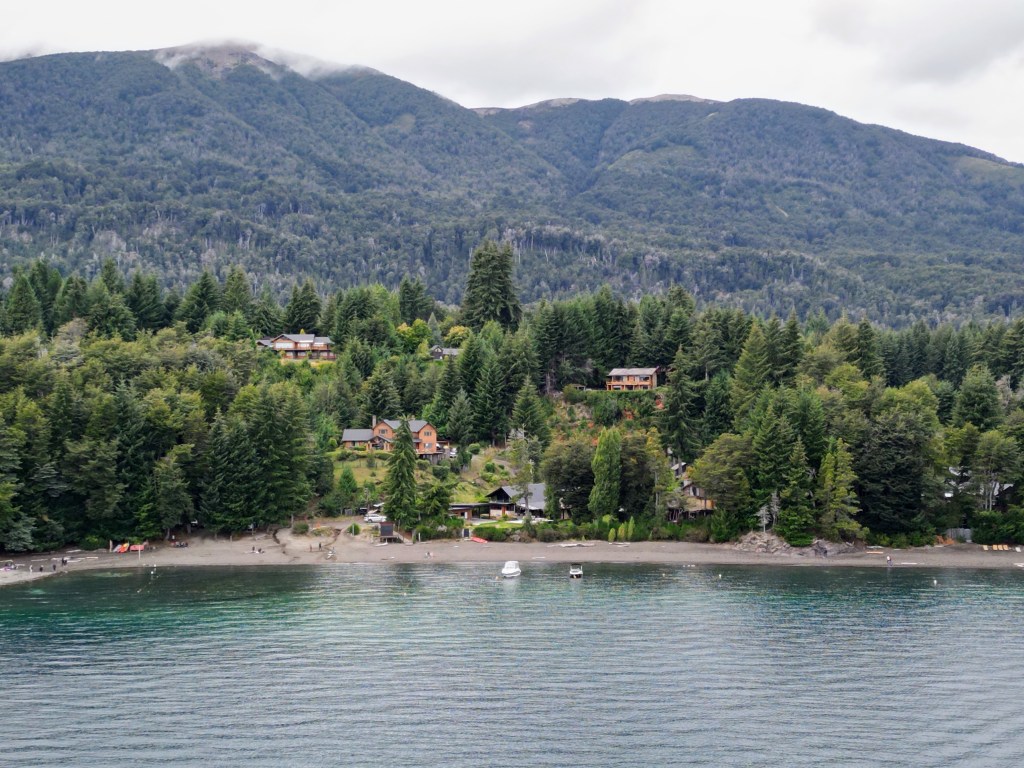
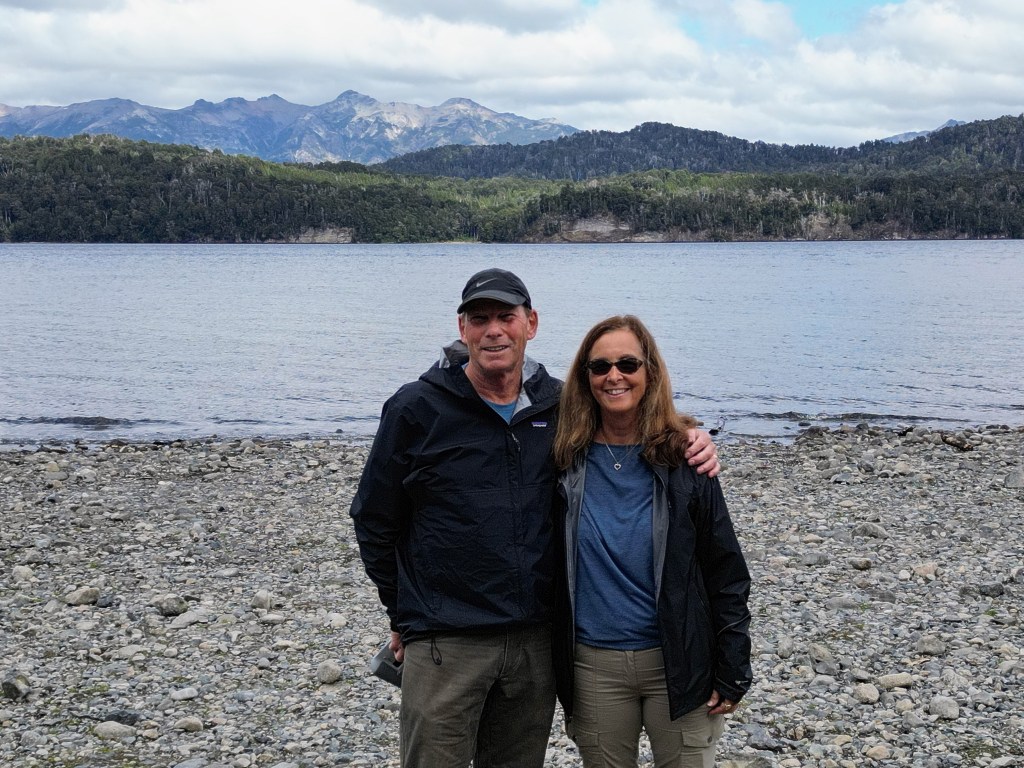
and a drone selfie
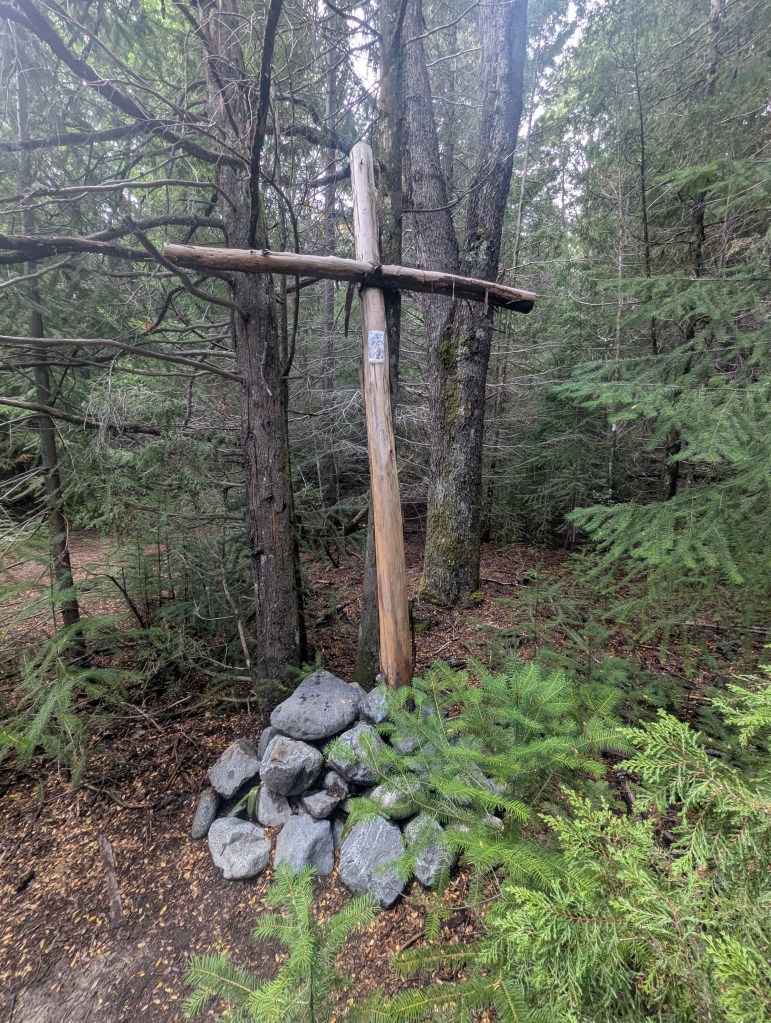
On our return trip through the woods we noted a cross, not a site often seen on a hike.
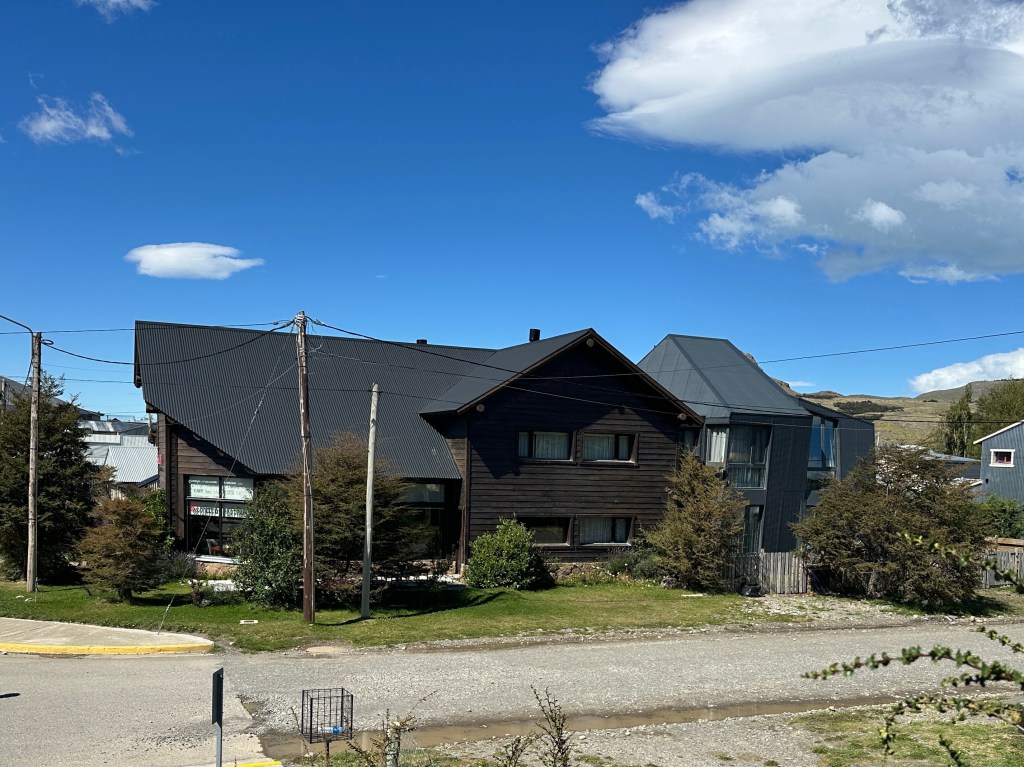
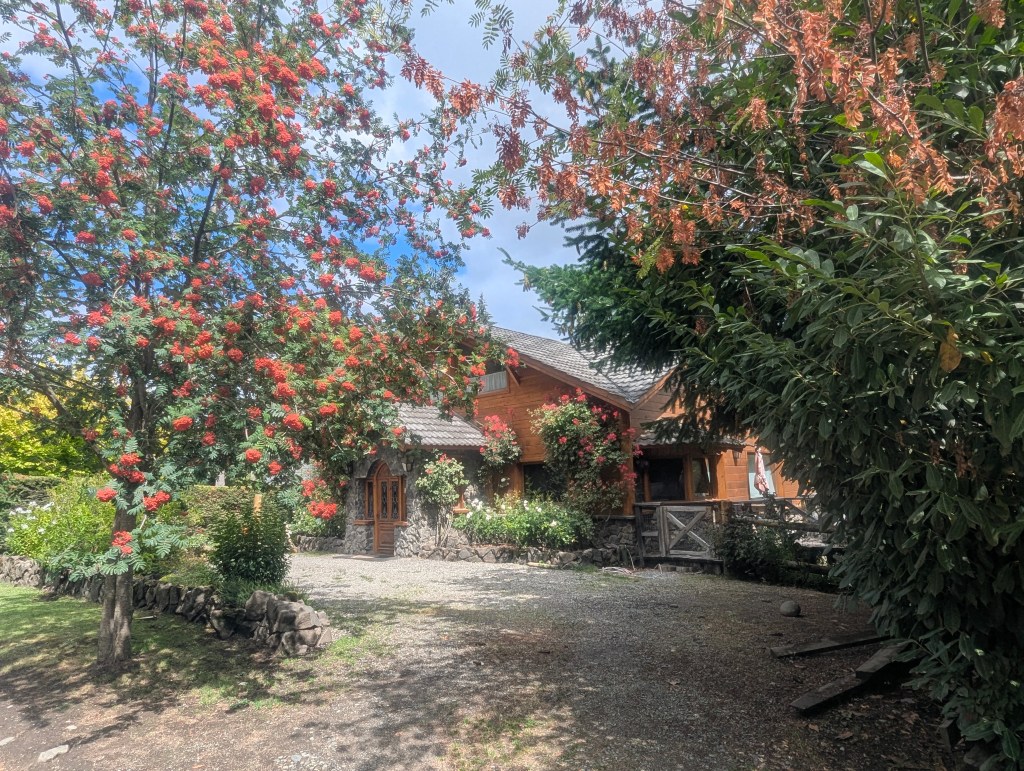
We took the back roads return to our hosteria on foot and observed how cute some of the local homes are with their Alpine wood style,
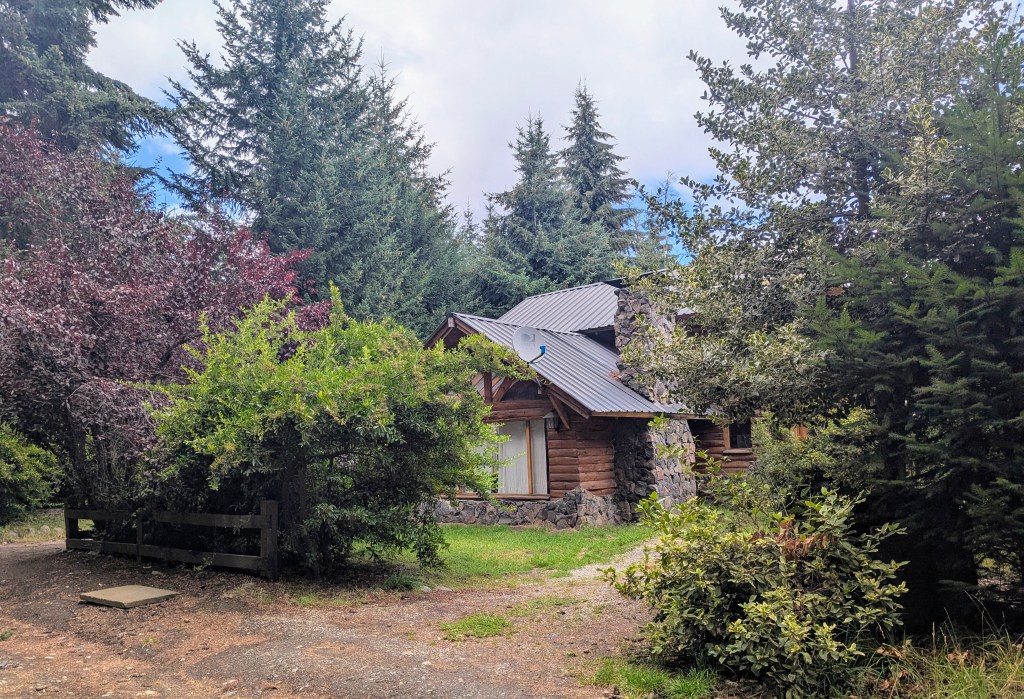
noting the use of the ubiquitous mountain ash in landscaping.
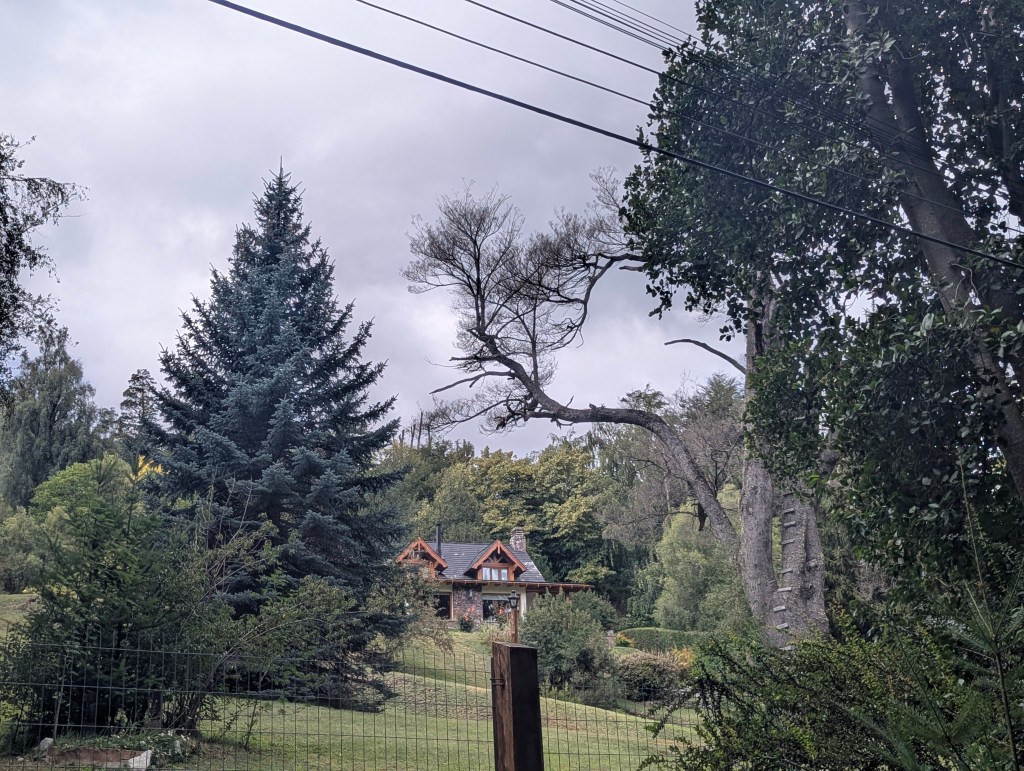
Some homes are more palatial than others.
Once back at the hosteria, Eric again sent up the drone to record the challenging driveway that we had just climbed on foot.
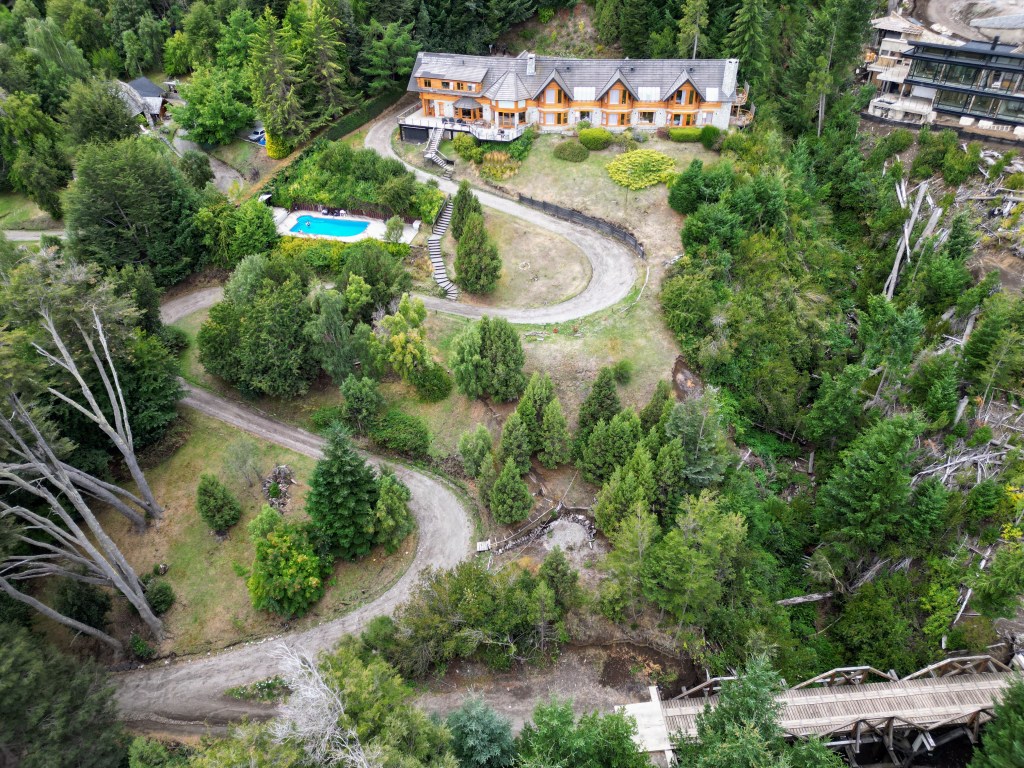
Hosteria Amigos del Bosque

and to take a look at nearby Puerto Manzano.
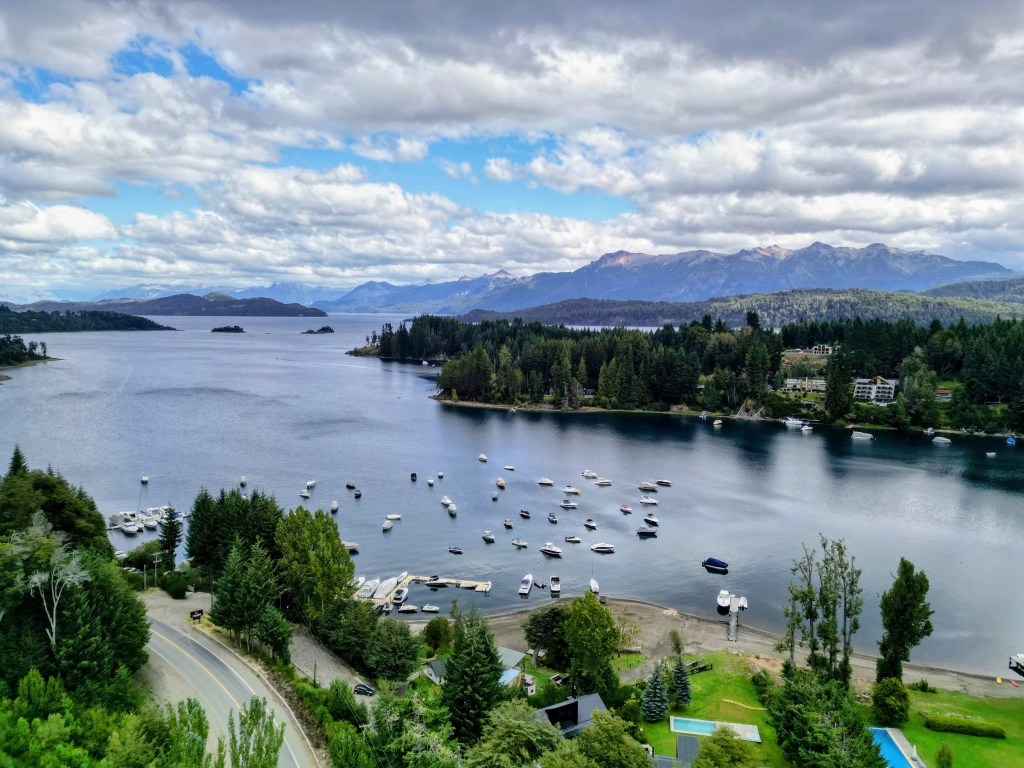
Puerto Manzano

In keeping with our attempt to blend with the locals, we headed to a nearby small bar for dinner.

The following morning we set out for Bariloche. Once again there was a light drizzle of rain. But this time it blessed us with a rainbow over Lago Nahuel Huapi.
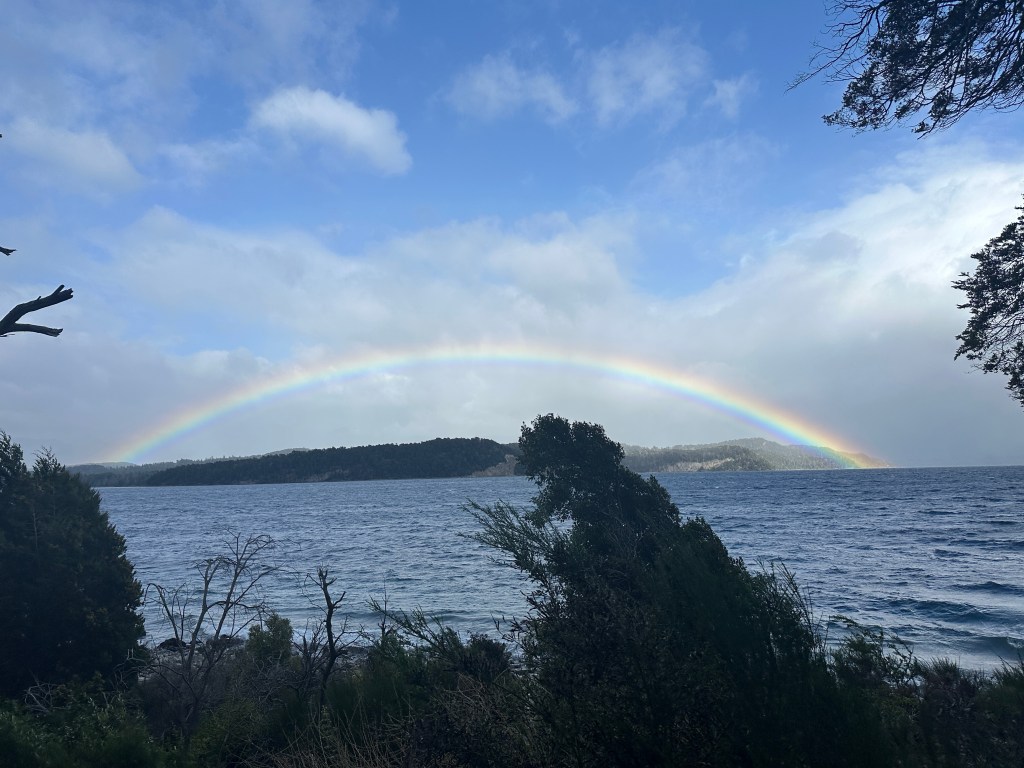
We followed the lake all the way back to the Rio Negro province town of Bariloche. We had to take a detour back to Hertz at the airport because our car was taking on water from all the rain, actual puddles on the driver’s side floor. The customer service rep who had responded to our WhatsApp query, understood our concern and agreed that we had “rented a car, not a boat,” lol. With our upgraded car, we headed into the town of Bariloche, formally San Carlos de Bariloche. With a population of over 135,000, it is not only the largest city in the Rio Negro province, but also the largest in the Patagonian Andes. The name Bariloche comes from the Mapudungun word Vuriloche meaning “people from behind the mountain.”  The town was settled in the 1930s by Germans arriving from neighboring southern Chile, and today maintains a culture of craft beers. But mostly Bariloche has been known as a hub for outdoor adventures, both summer and winter, since the formation of the national parks in the 1940s. Nearby Cerro Cathedral is the largest ski resort in South America. Arriving from the east, we passed through the main city itself, which we found dirty, run-down, not pleasant. We were interested in their traffic light “count-down” system we had not seen elsewhere.

We passed through the city to the shore. By this time it was very windy, drizzling, and chilly, but we walked a bit along the Lago Nahuel Huapi shore, which, with the white caps and waves, resembled more of an ocean bay than a lake shore.
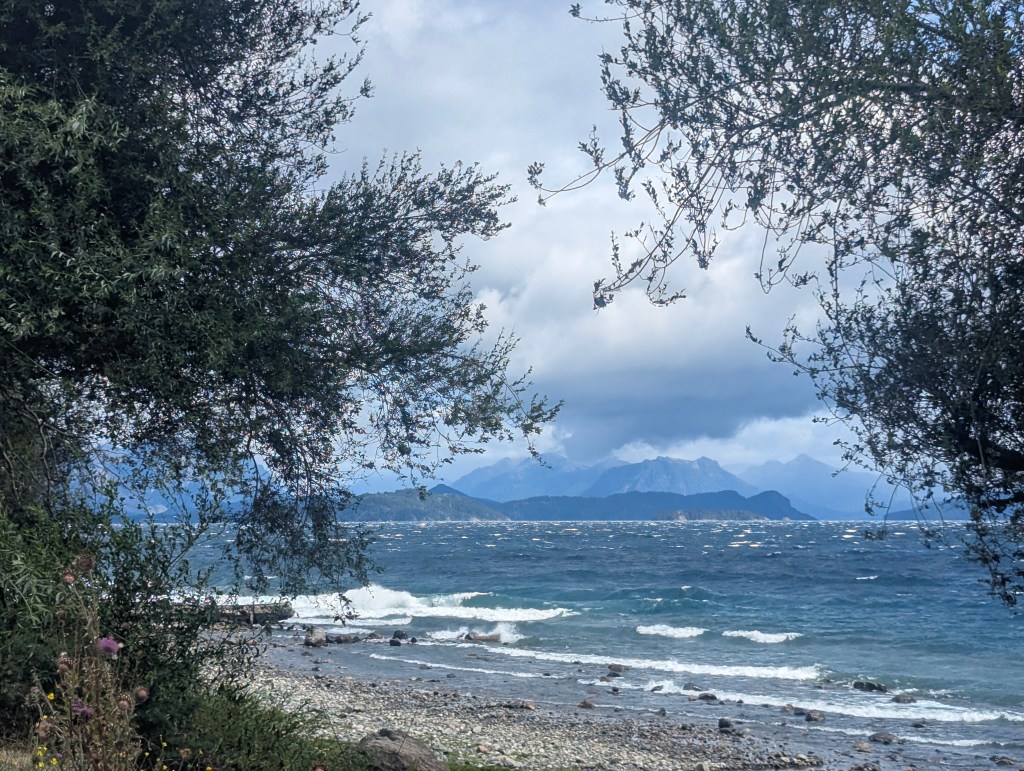
Lago Nahuel Huapi

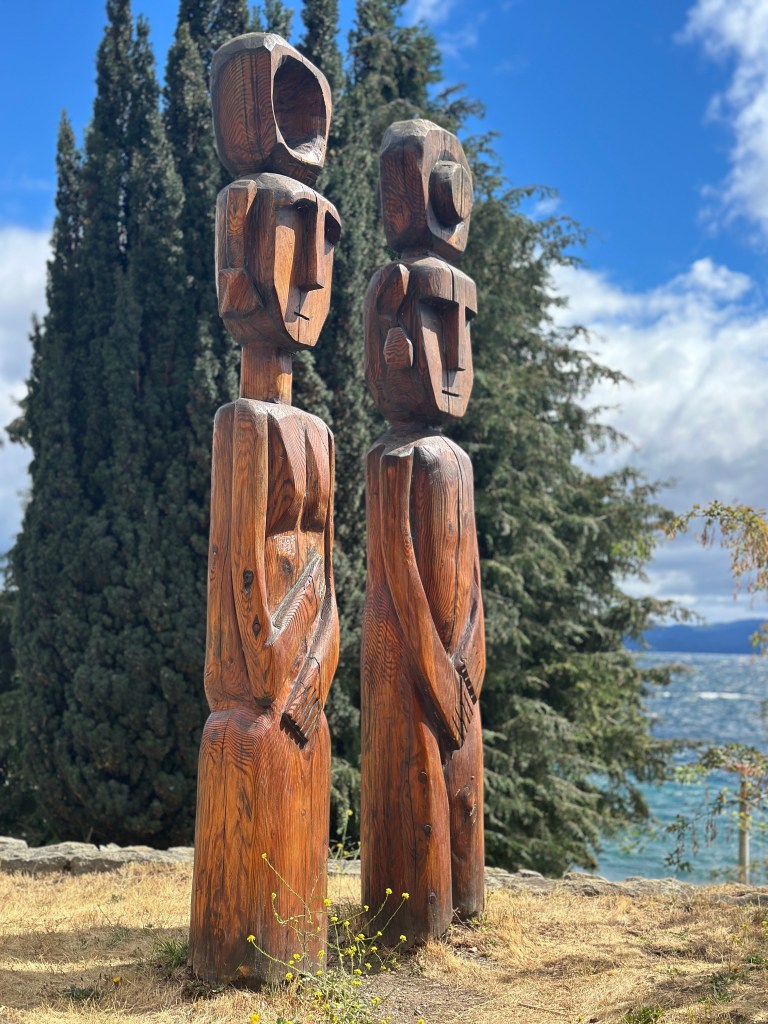
We moseyed our way toward the Puerto de San Carlos. Along the way we saw several 6 foot high carved pine couples. They represent the mythical ancestors of the Mapuche people who always appear as a couple. 

They were made by the Chilean artist Bernardo Oyarzun in 2012. They symbolize the Mapuche man and woman, looking towards the East, where life comes from, according to said culture.
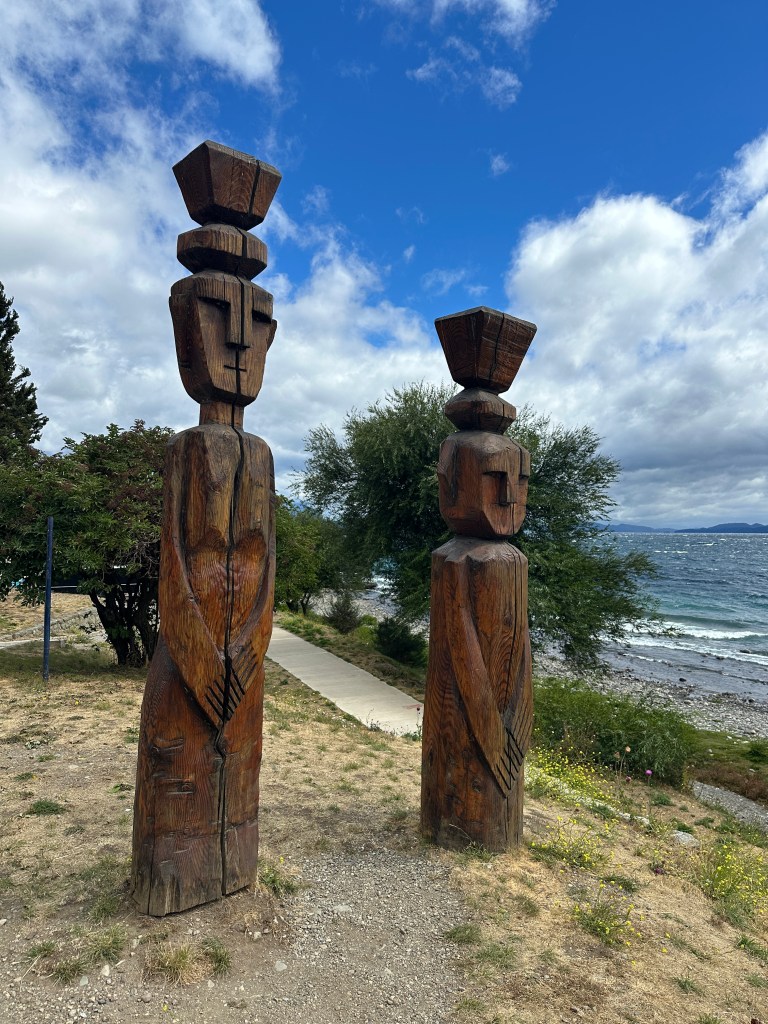
It is common to find this type of totems in neighboring Chile, in the regions with the greatest presence of this culture, that is, from the Maule region to the south. 
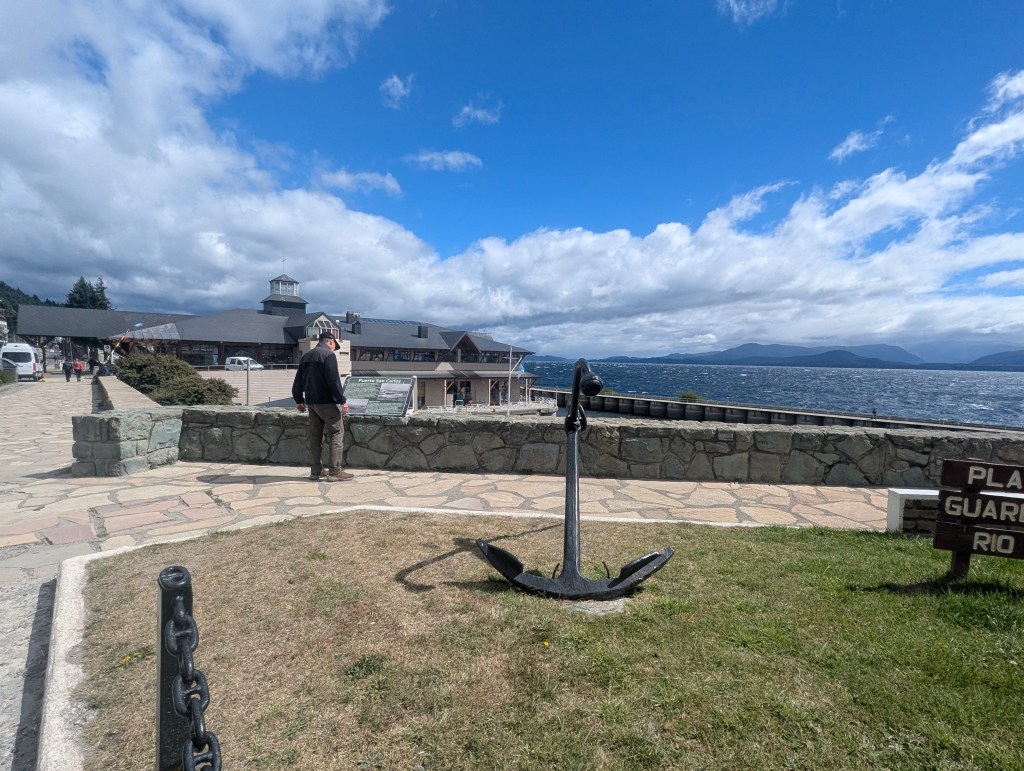
We made our way to Puerto San Carlos, established in 1895 as a trading port with Chile. Today it serves only for tourism.
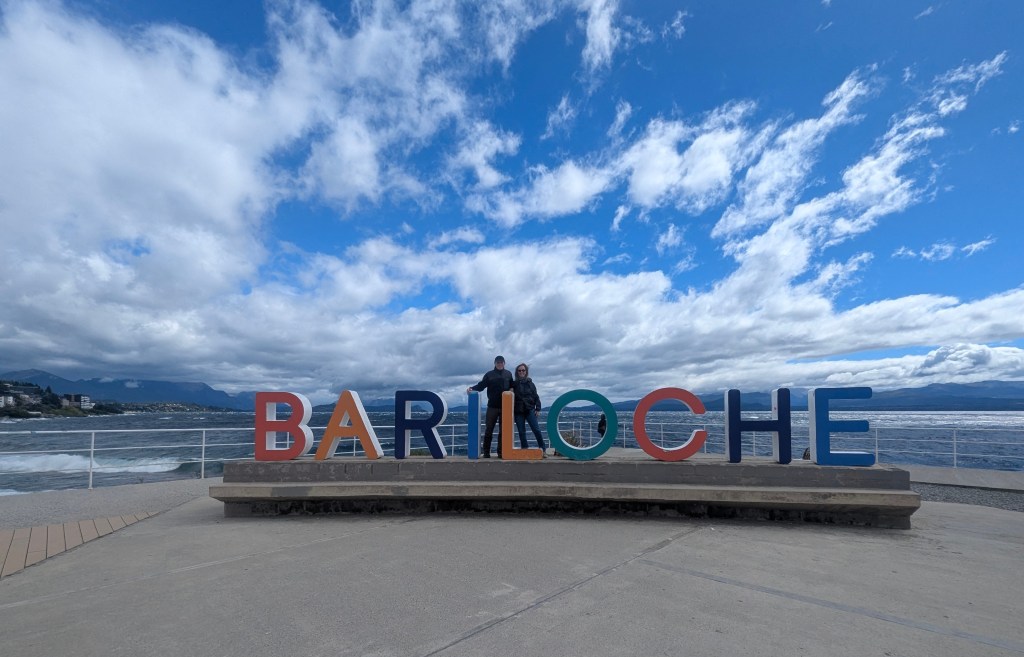
On a nicer day the beach would be more crowded.

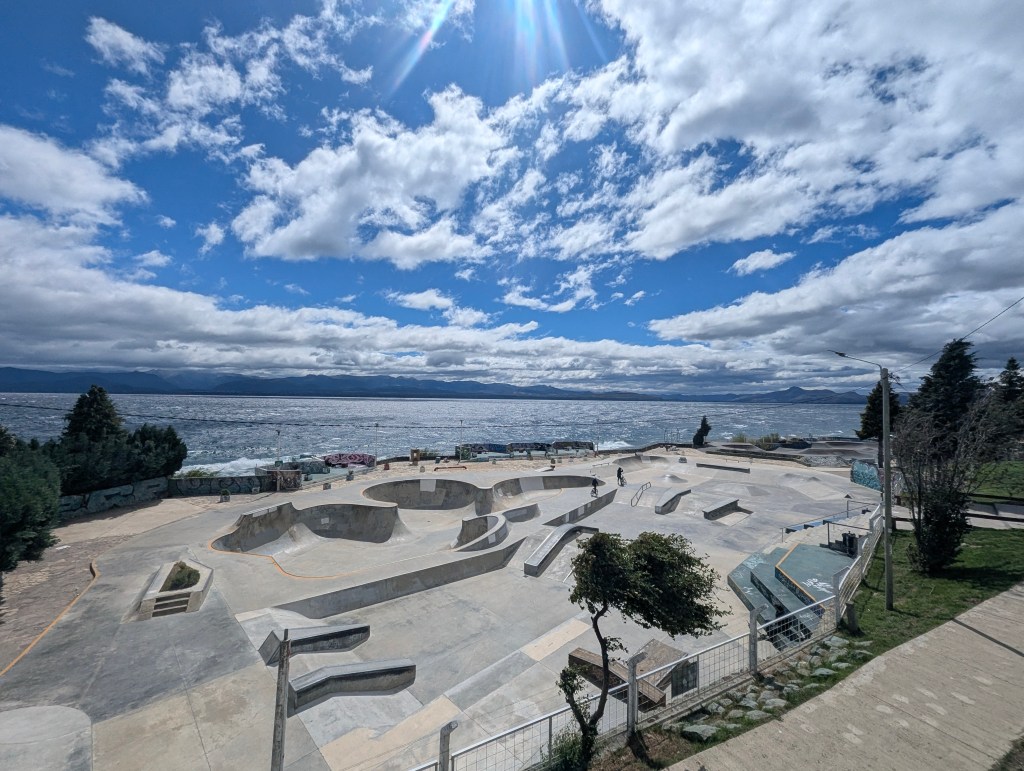
The port is also home to the most impressive and beautifully set skateboard park we have seen.
We arrived back to our car beside a local church.

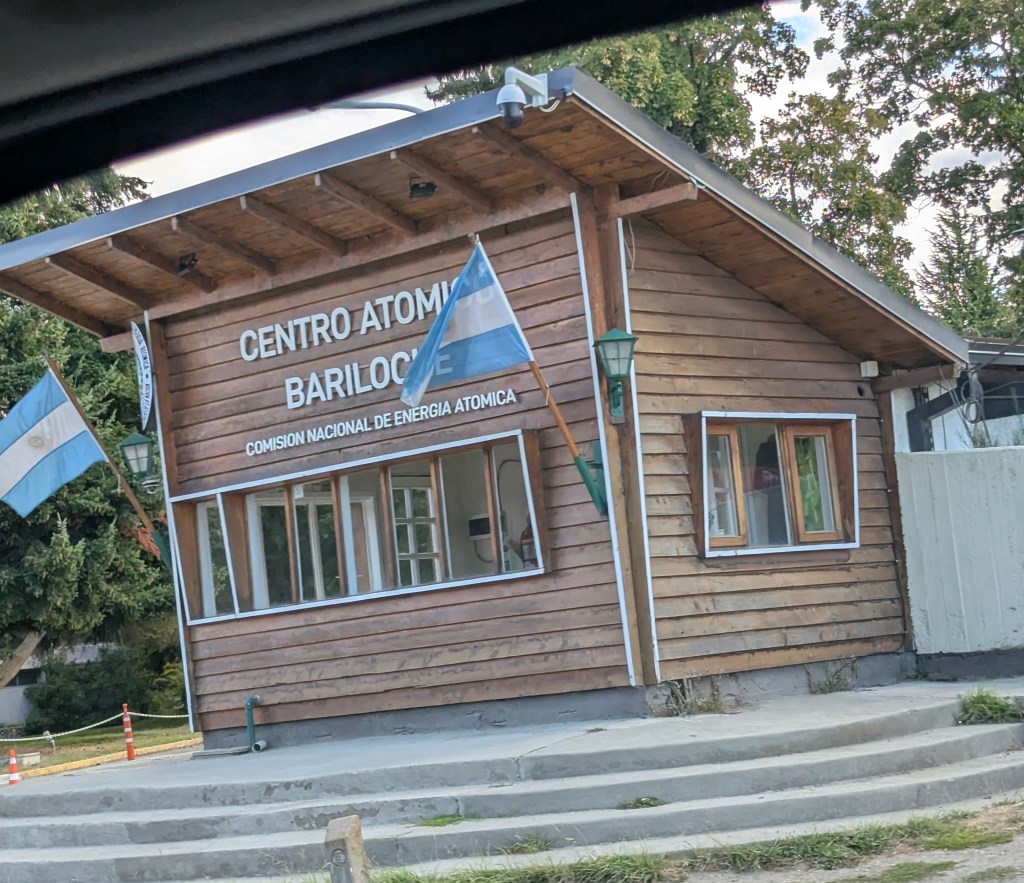
and headed to our hotel which was about 40 minutes out of town. Along the way we passed Centro Atómico Bariloche. Besides tourism and related services, Bariloche is home of advanced scientific and technological activities. The Centro Atómico Bariloche is a research center of the  National Atomic Energy Commission, where basic and applied research in many areas of the physical sciences is carried out. A weird juxtaposition, there is a children’s playground beside it.
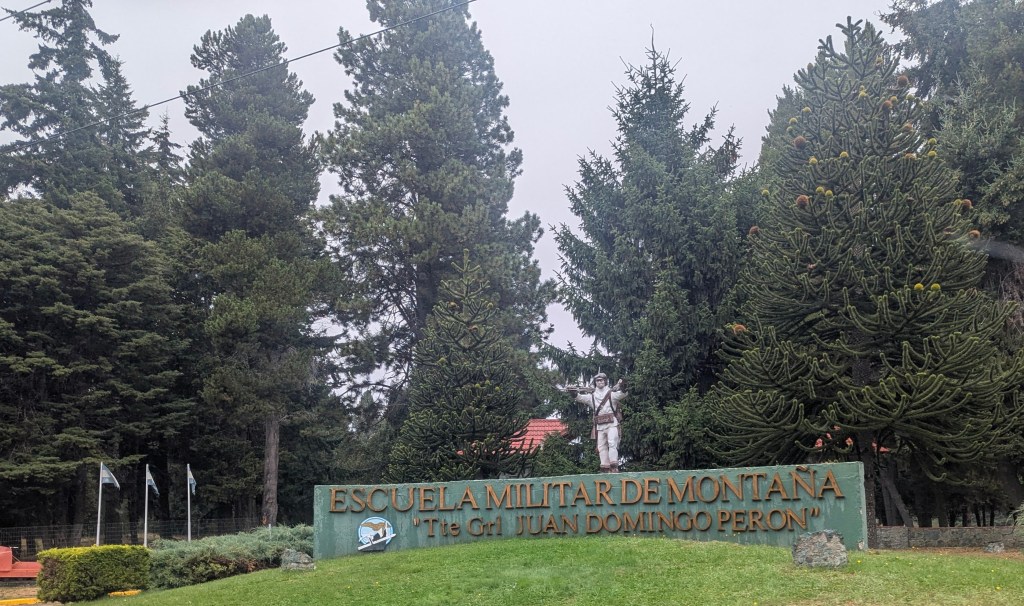
Bariloche is home to the army’s “12° Regimiento de Infantería de Montaña” (12th Mountain Infantry Regiment), where military personnel are instructed in mountainous conditions, including combat, survival, and skiing.
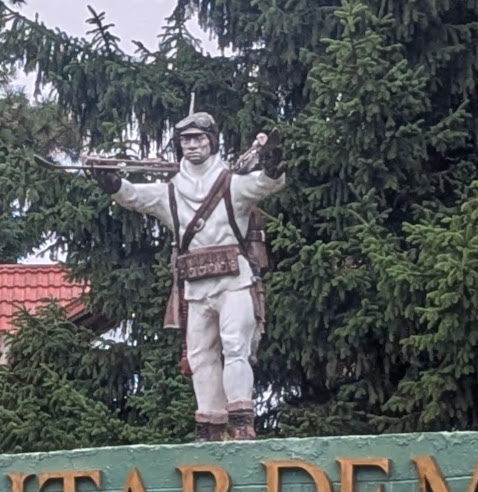
It may not be obvious from my picture taken from a moving vehicle, but the statue is carrying skis.
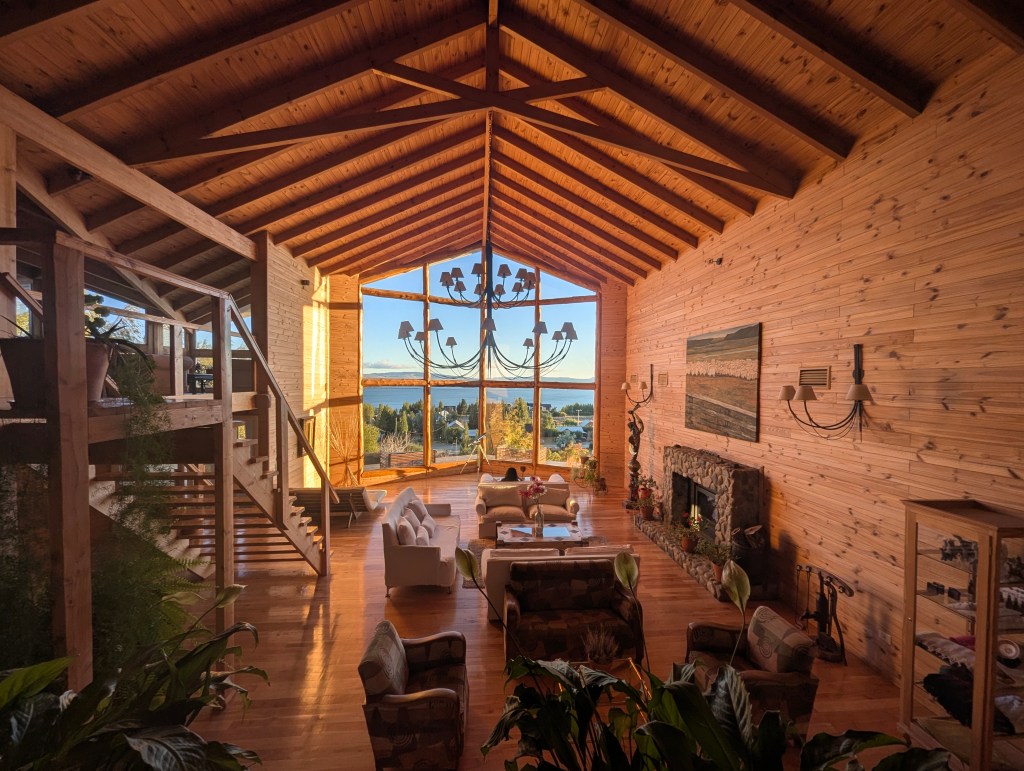
Our hotel is located on a small peninsula, aptly named the Petit Peninsula Hotel.
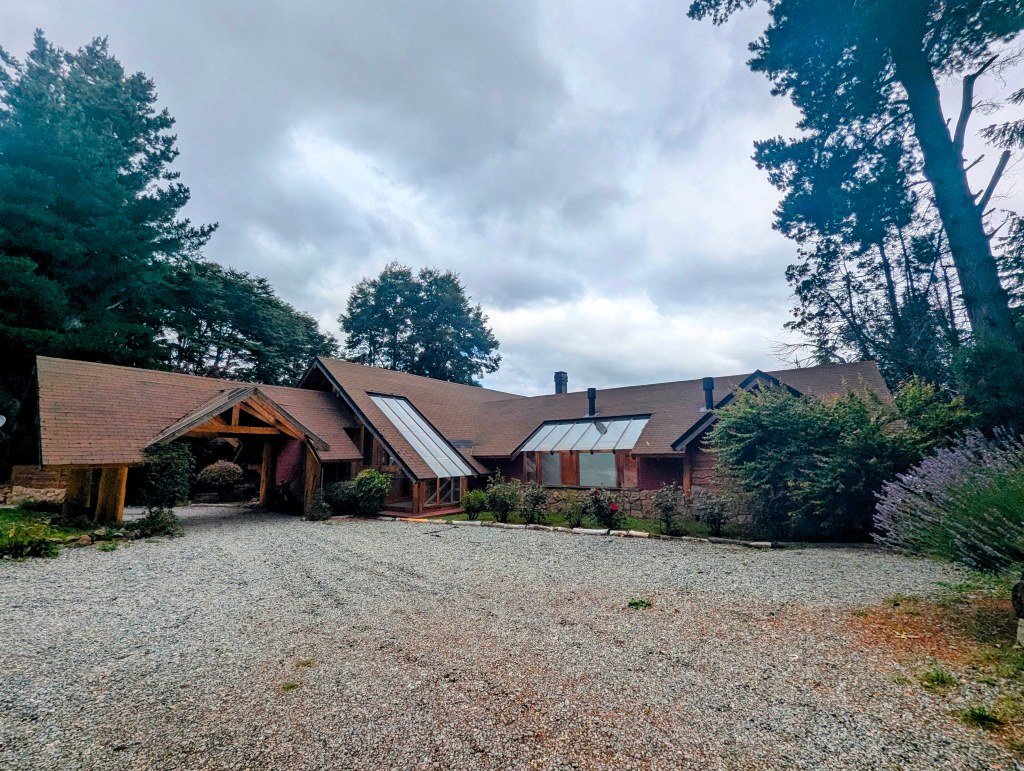
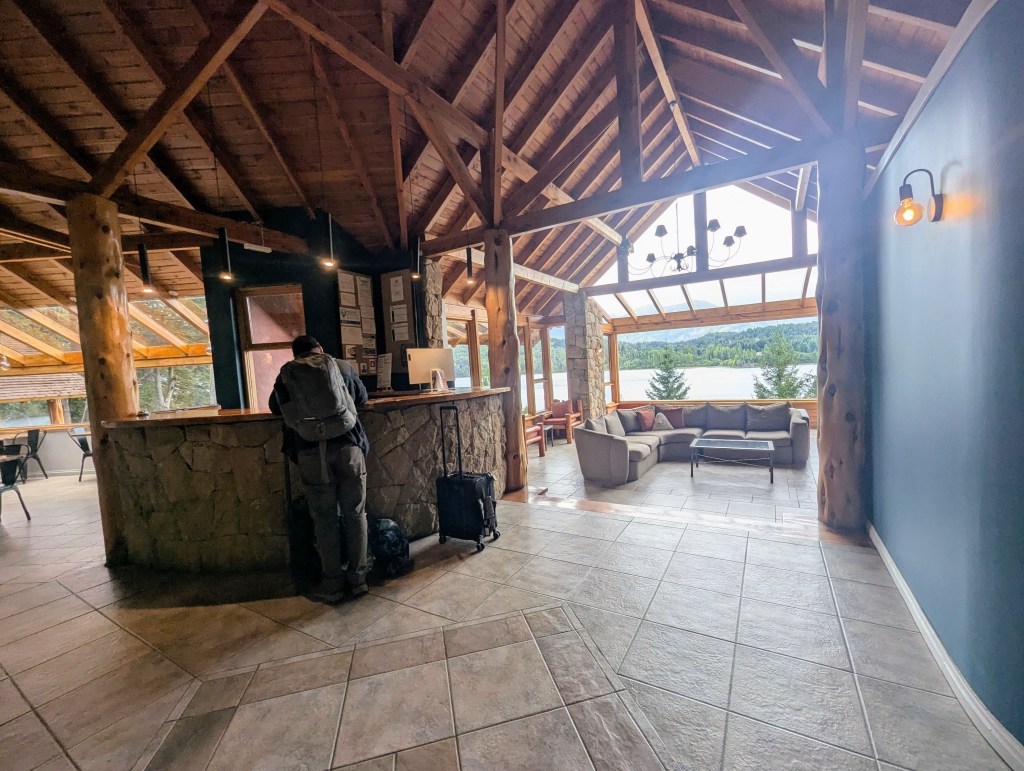
Petit Peninsula Hotel
lobby Petit Peninsula Hotel

with another gorgeous view from our room.
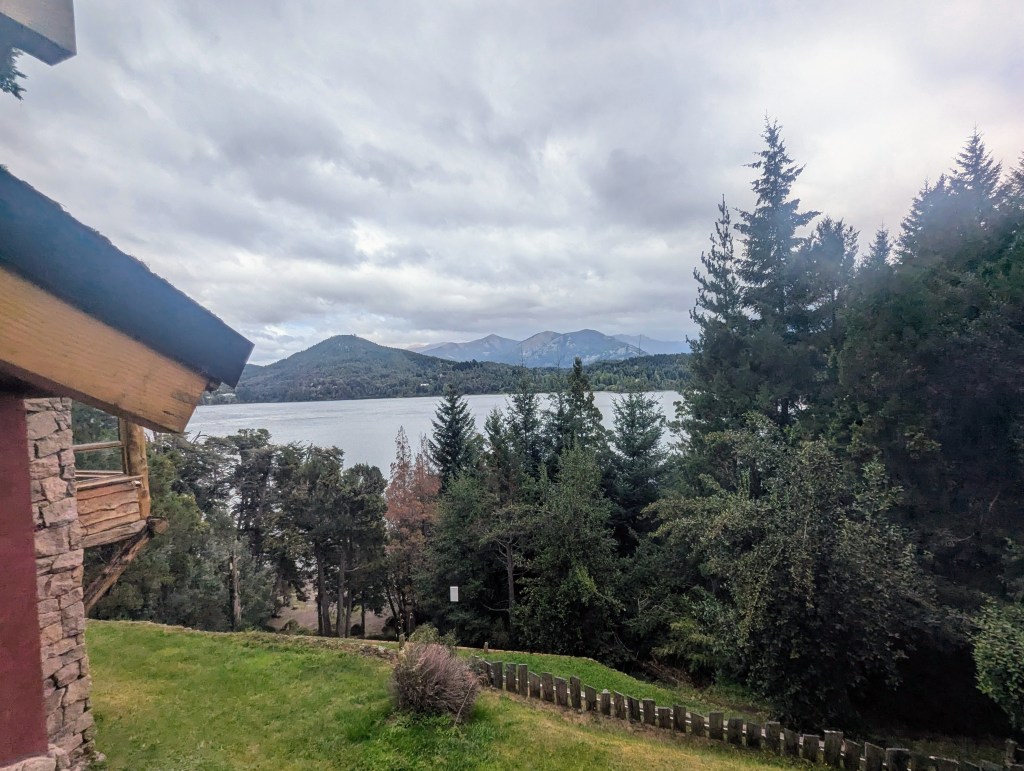
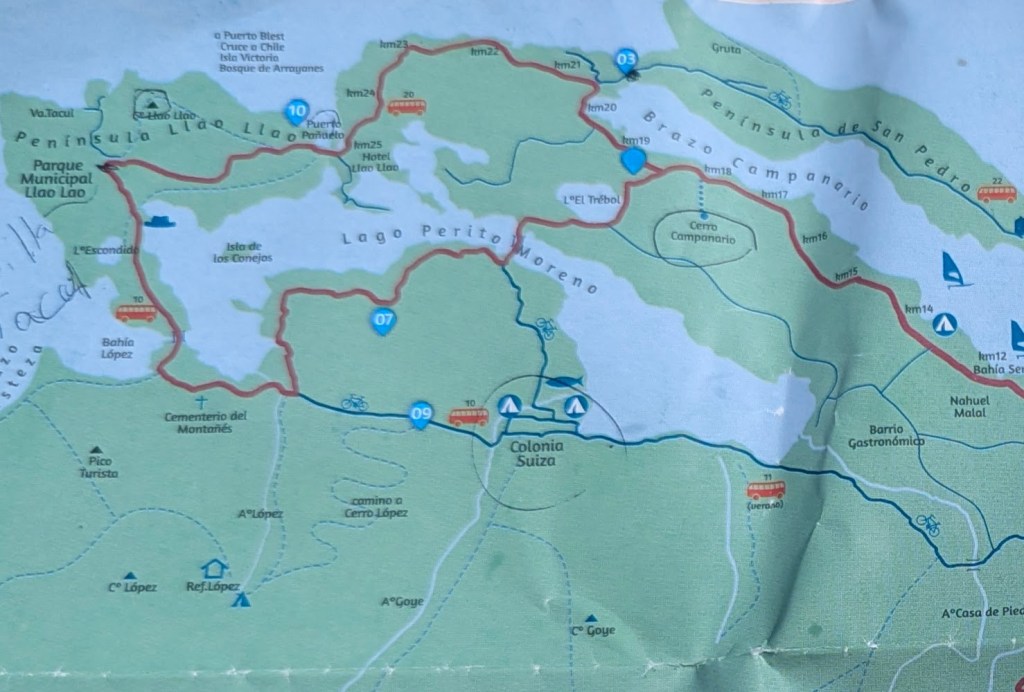
The most popular tourist activity in Bariloche is to drive the Circuito Chico (Small Circuit). Despite the inclement weather, the reception suggested we take the drive and determine where we would like to return the following day. She provided us with a map of the area

and showed us on the map, we are the dot by the blue “03” at the top on the peninsula, the small circuit is the red circle to our west.
We headed west on the northern half of the circuit and traveled 3/4 of the way around before we were even tempted to stop. We got out at the Punto Panaramica Marked on the Google map below.

I include a picture taken then only as comparison for what a difference a day and the sun make to our enjoyment of the drive.
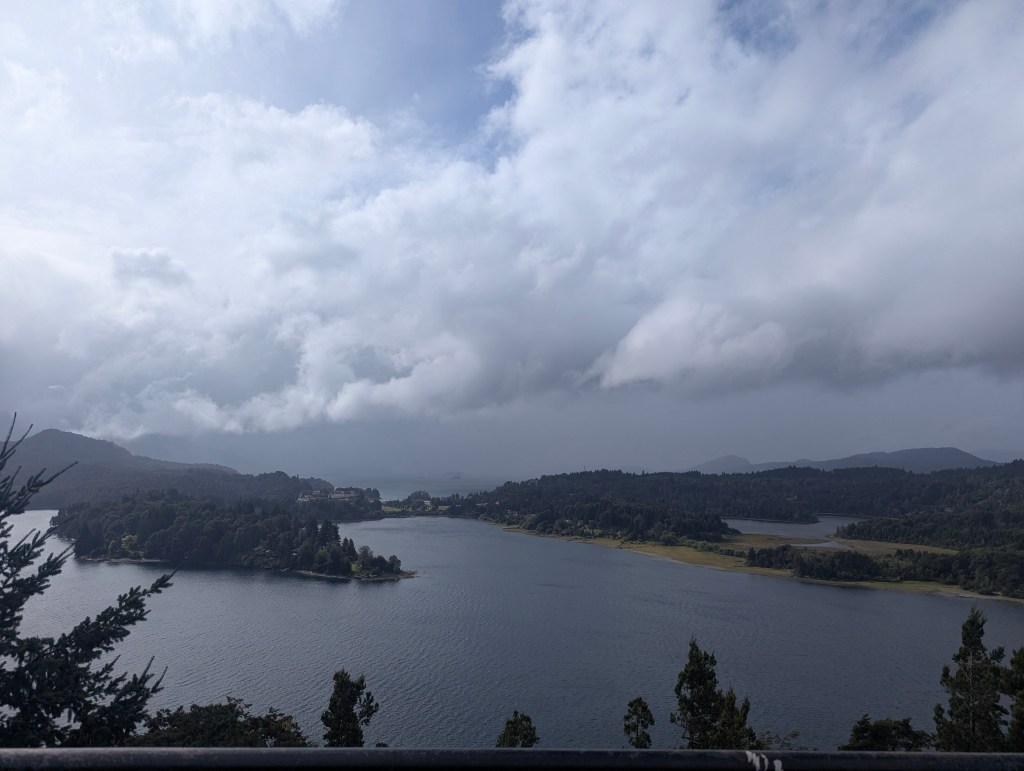
Punto Panoramico Circuito Chico

On the way in, we had passed an interesting looking restaurant called El Mallín, so we headed there for an early dinner before turning in for the day. In the morning we were greeted with copious sunshine, so we had a hearty breakfast to fortify us for our big day ahead. The Petit Peninsula Hotel had the best breakfast options offered so far in Argentina, and the bar was pretty high. We also liked their motto on the wall of the breakfast room:
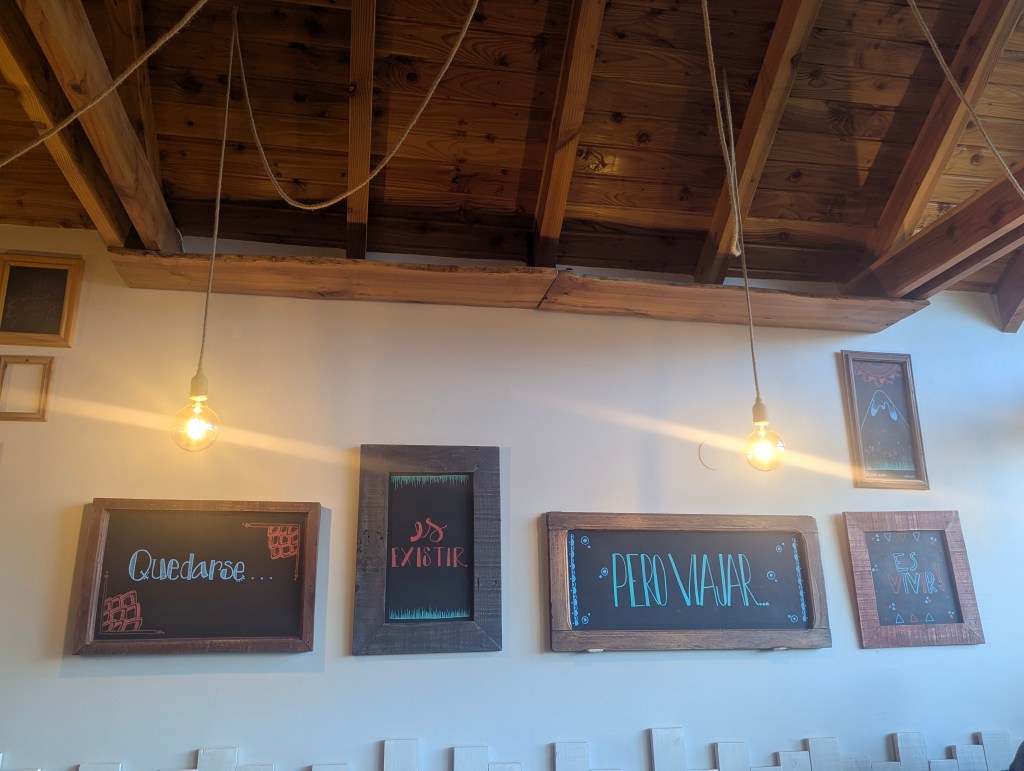
TO STAY IS TO EXIST TO TRAVEL IS TO LIVE

We headed back along the route followed the previous evening. Our first stop was the Cerro Lao Lao trail just west of the #10 on the second map above. The trail was to be about about 3.6 miles round trip with views at the top; we were off.
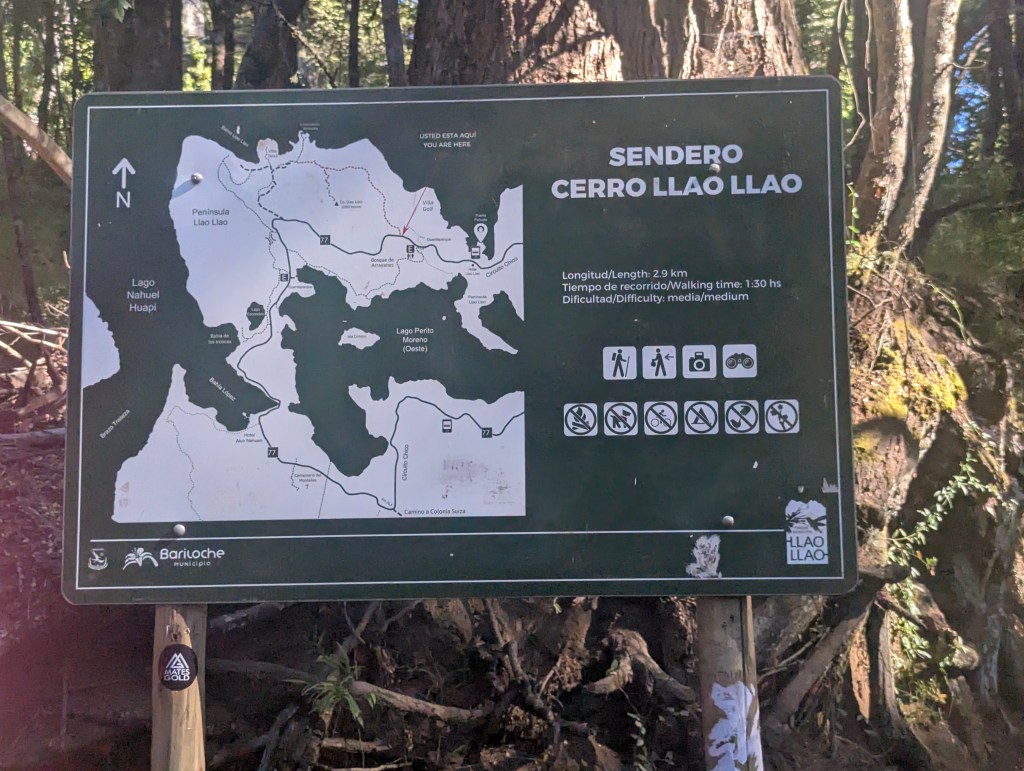
The trail was a bit steeper and more rugged than it first seemed, but there were many viewpoints along the way.
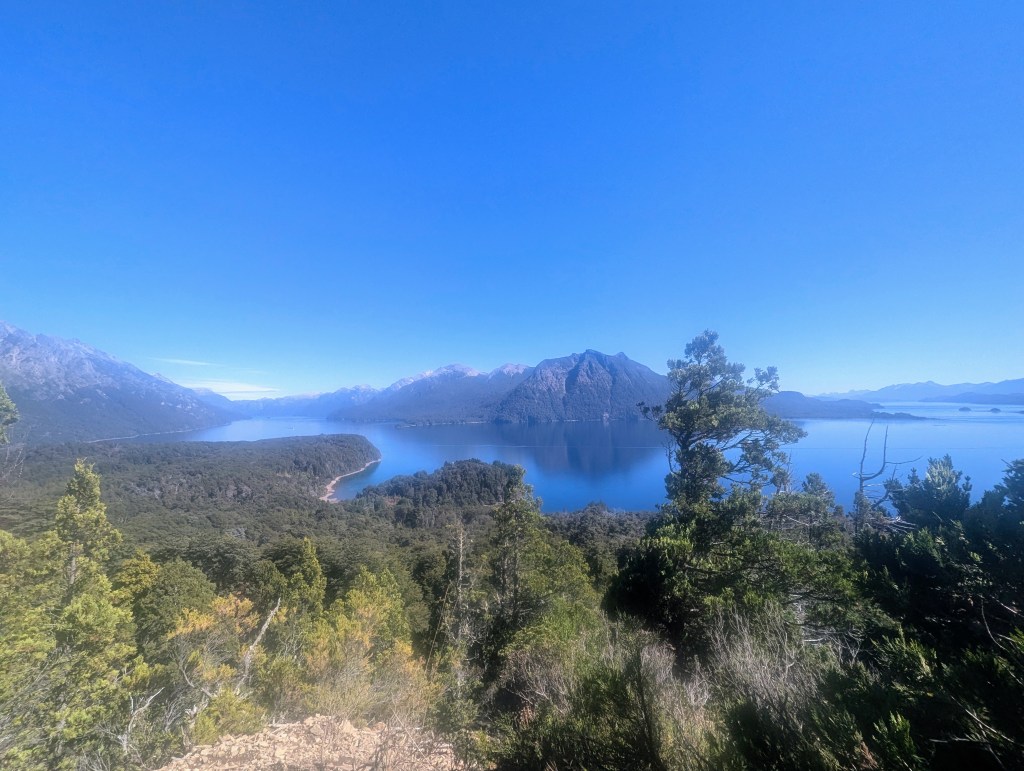
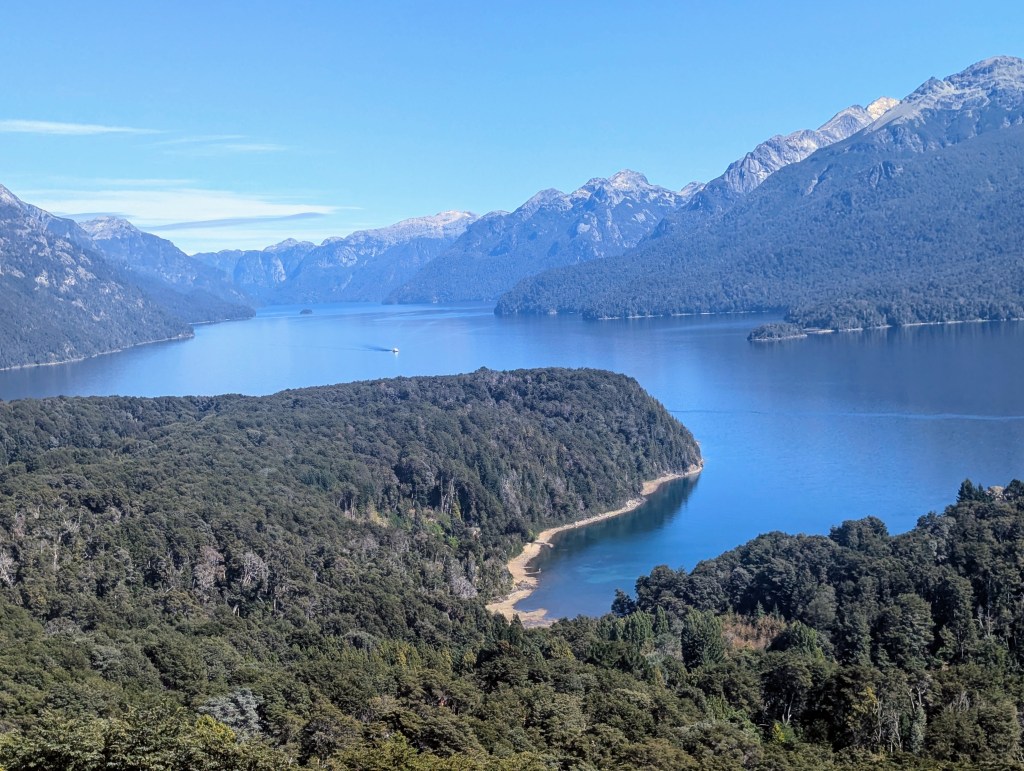
honestly just an excuse to take a break and catch our breath
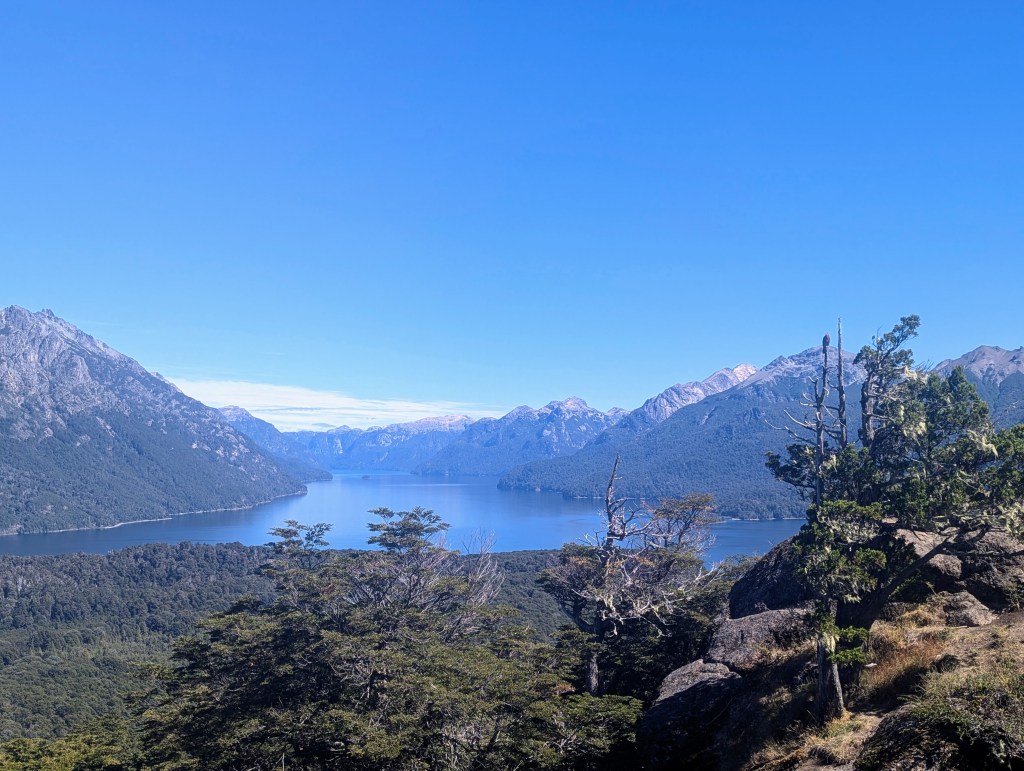
At the top we were rewarded for our effort with gorgeous views.
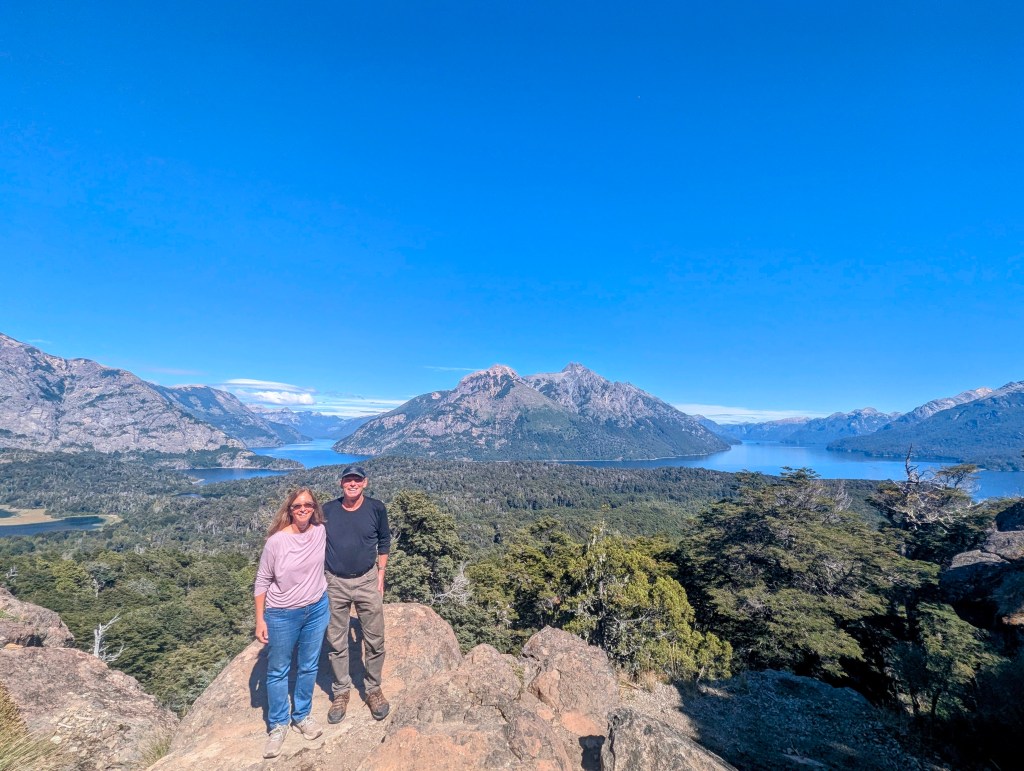
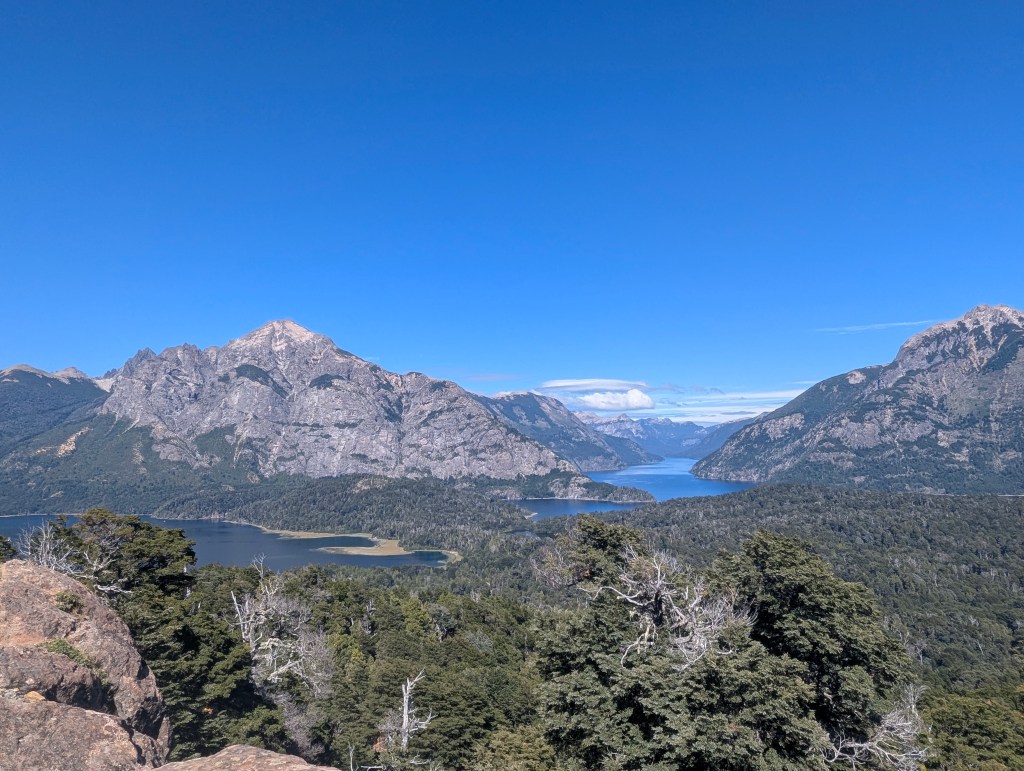
We made our way back down, in some ways more challenging than the uphill climb, and continued our way along the Small Circuit. Our next stop was Lago Escondido, a different Lago Escondido than in the Nequén province, but also hidden from the road. Luckily after the vigorous morning hike, it was a short walk into the woods.
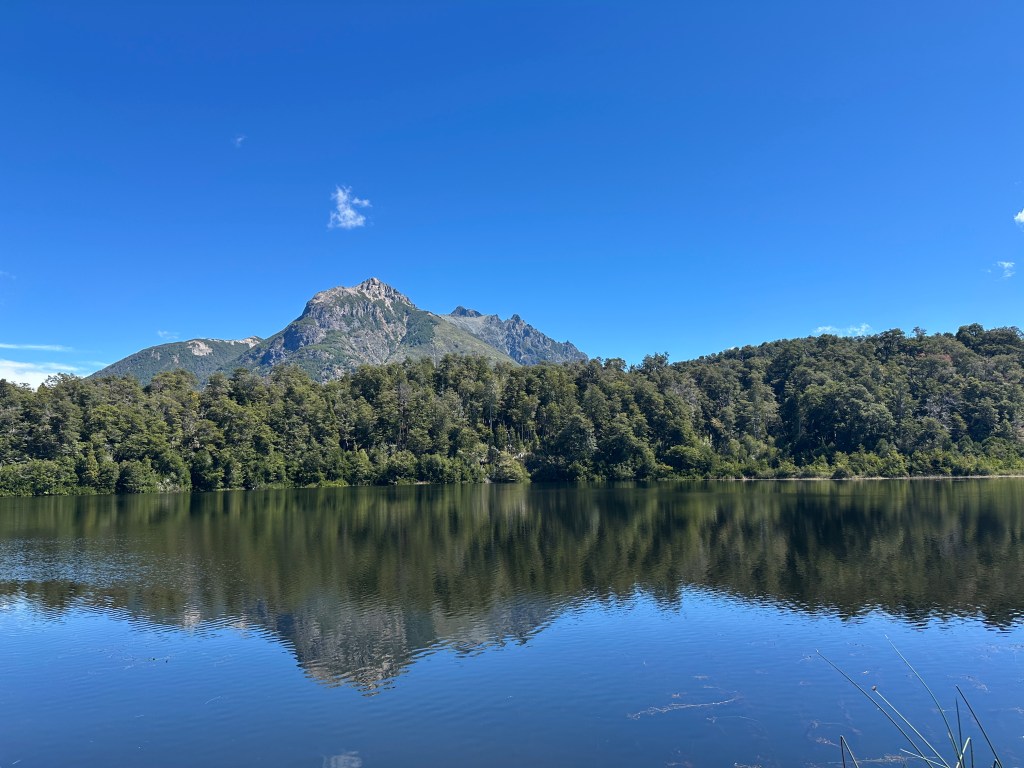
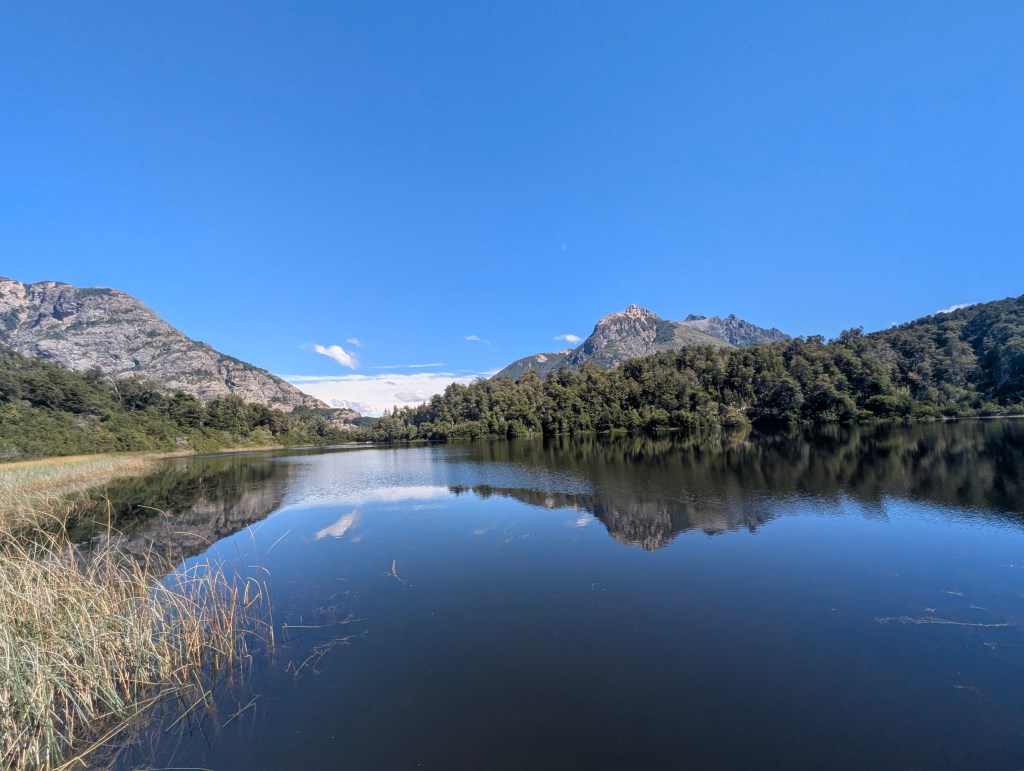
Lago Escondido
Lago Escondido

We drove further along the circuit until we reached the entrance for Bahia de los Troncos (Bay of Trees). Again it was a short walk to the bay.

There we found a large group of kayakers having loads of raucous fun.

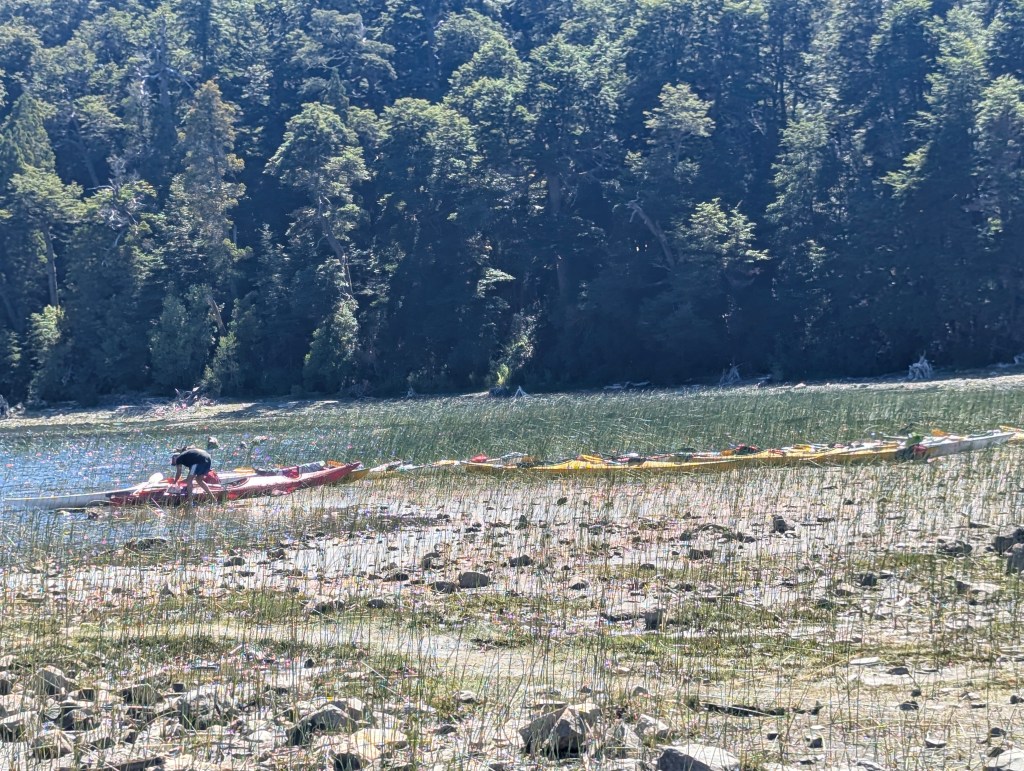
Bahia de los Troncos

On the short walk back to the car we took a moment to notice these trees new to us. They are los arrayanes, the myrtles, we had not seen in Villa La Angostura.
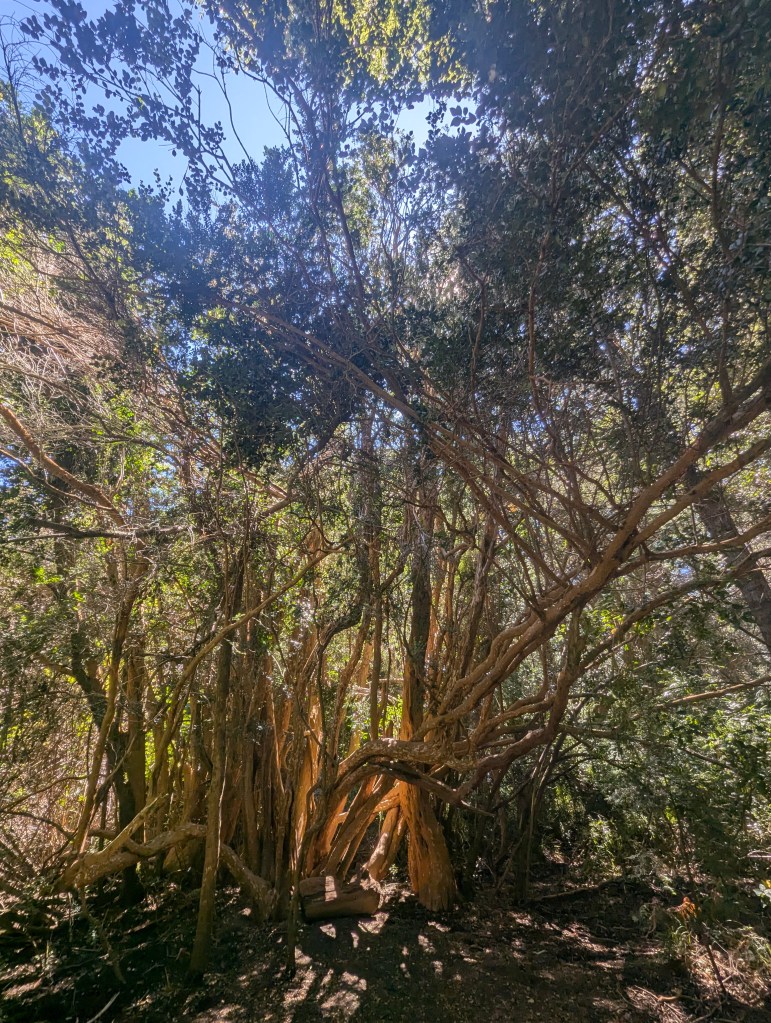
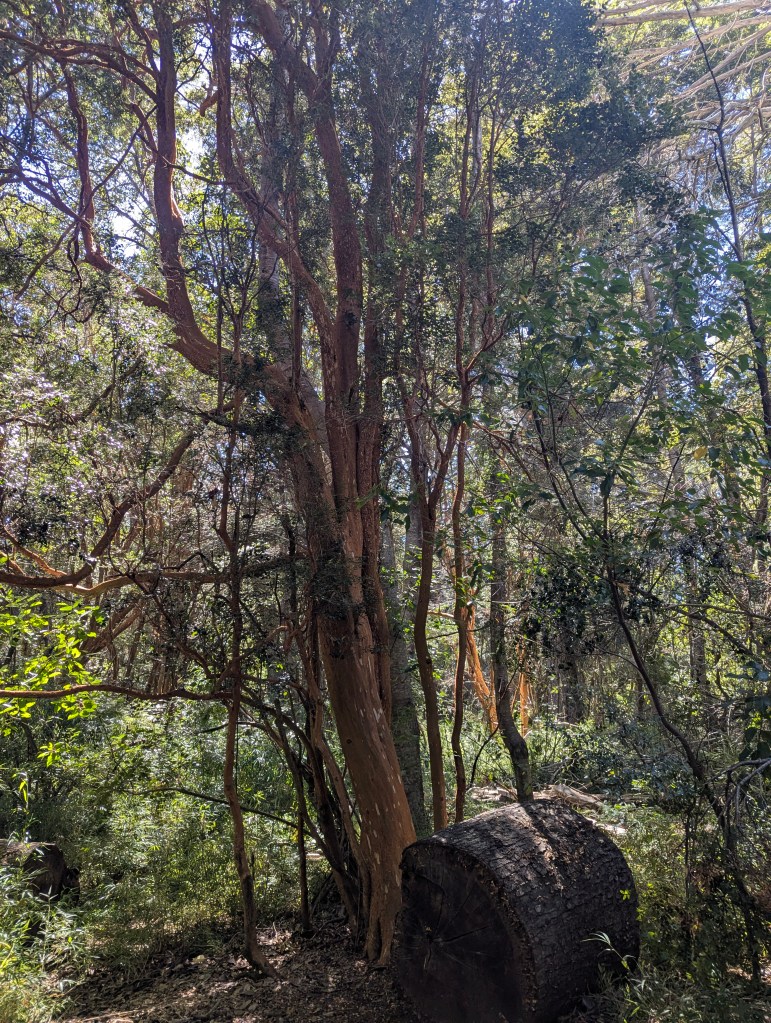
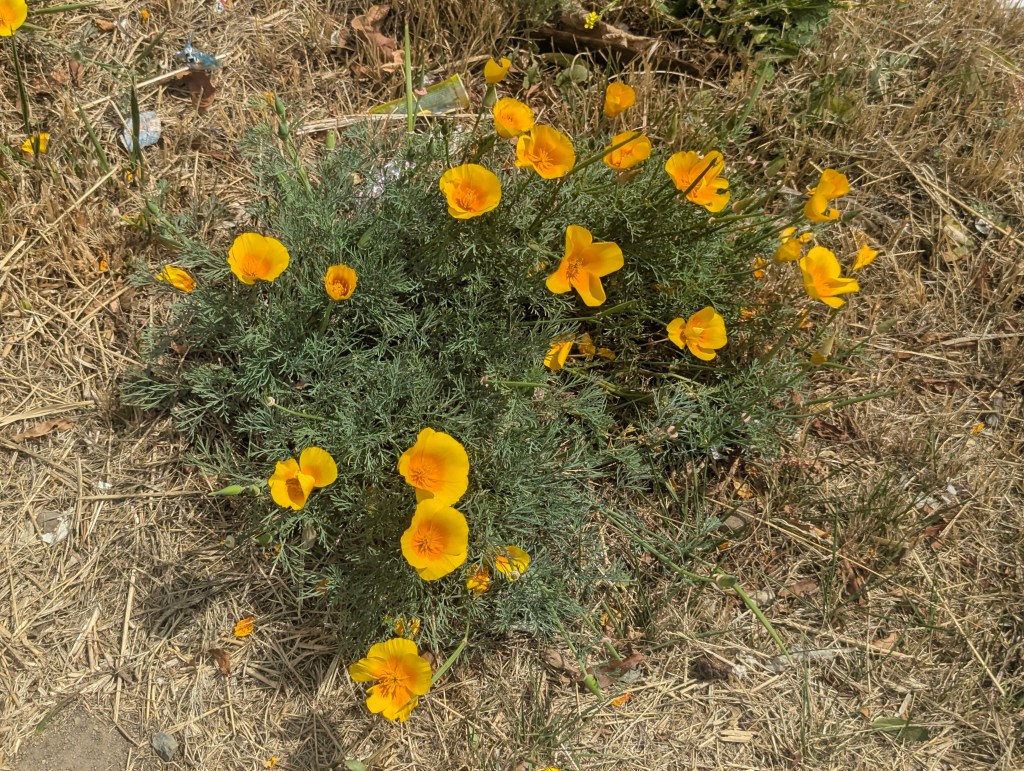
Bariloche is in the transition area between the Patagonian steppe and the Valdivian forest, therefore it is rich in a variety of native species as well as home to many introduced species. Flora noted along the Small Circuit included California poppies, an introduced species that has become naturalized in the area, 
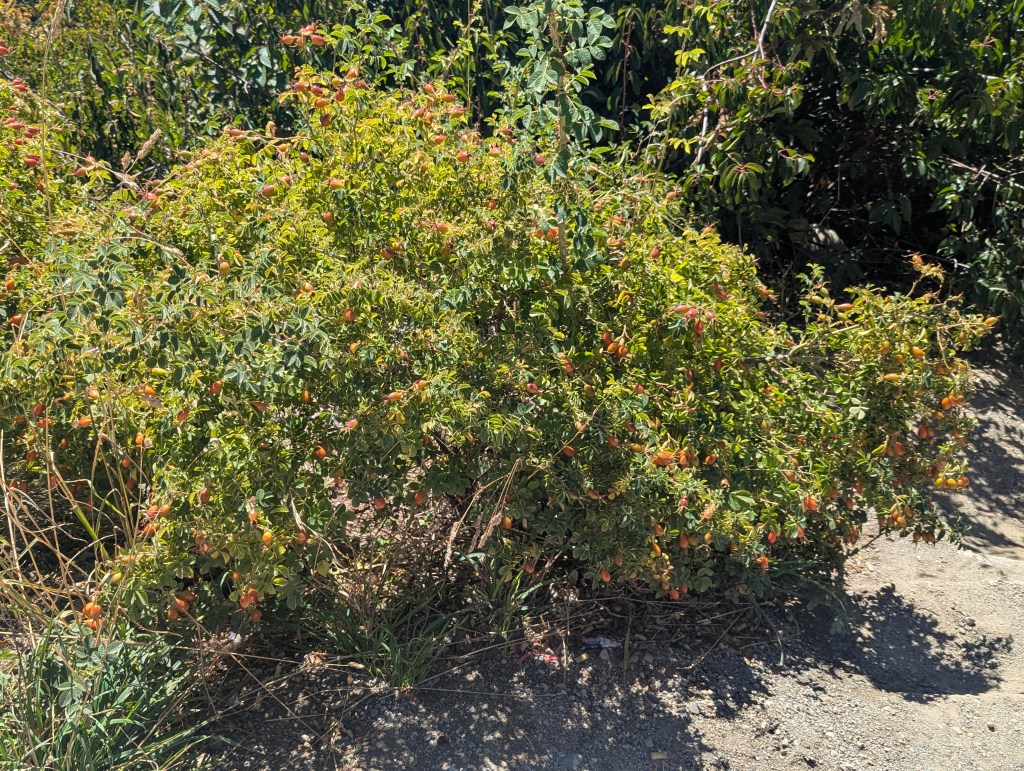
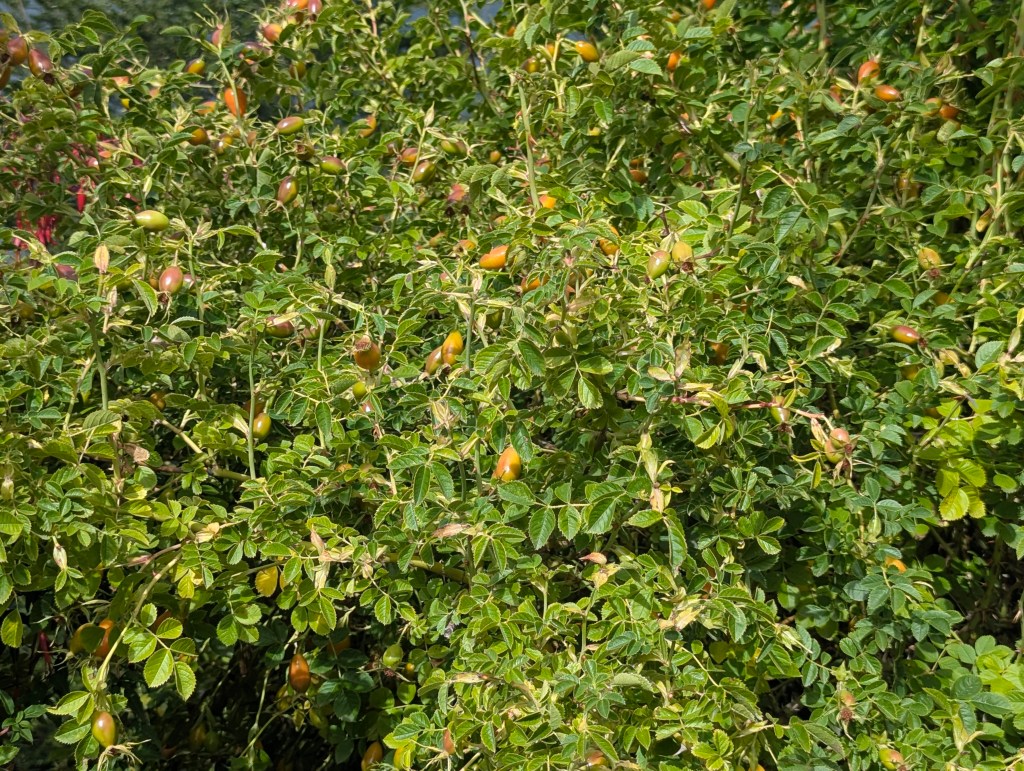
and rosehip, of which we had seen a plethora throughout the lakes region. Introduced from Europe, in the Patagonian region of Argentina, this species has become an extremely invasive plant due to its ability to spread through cattle feces, its rapid growth, and its resilience. Its thorns precluding local natural predators. Its long roots drain water and compete with the myrtles.
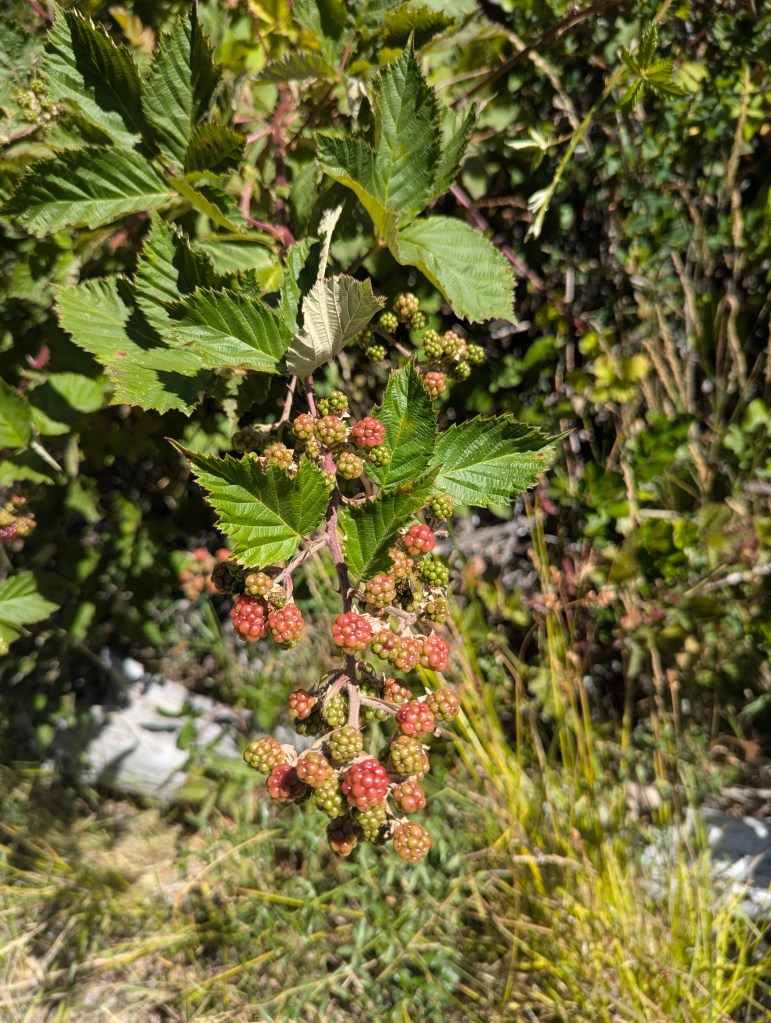
We also found native wild raspberries
and an example of the false mistletoe that had been pointed out by Nadia at the Perito Moreno Glacier, here in bloom.

Our next stop along the Small Circuit was Mirador Cerro Capilla.
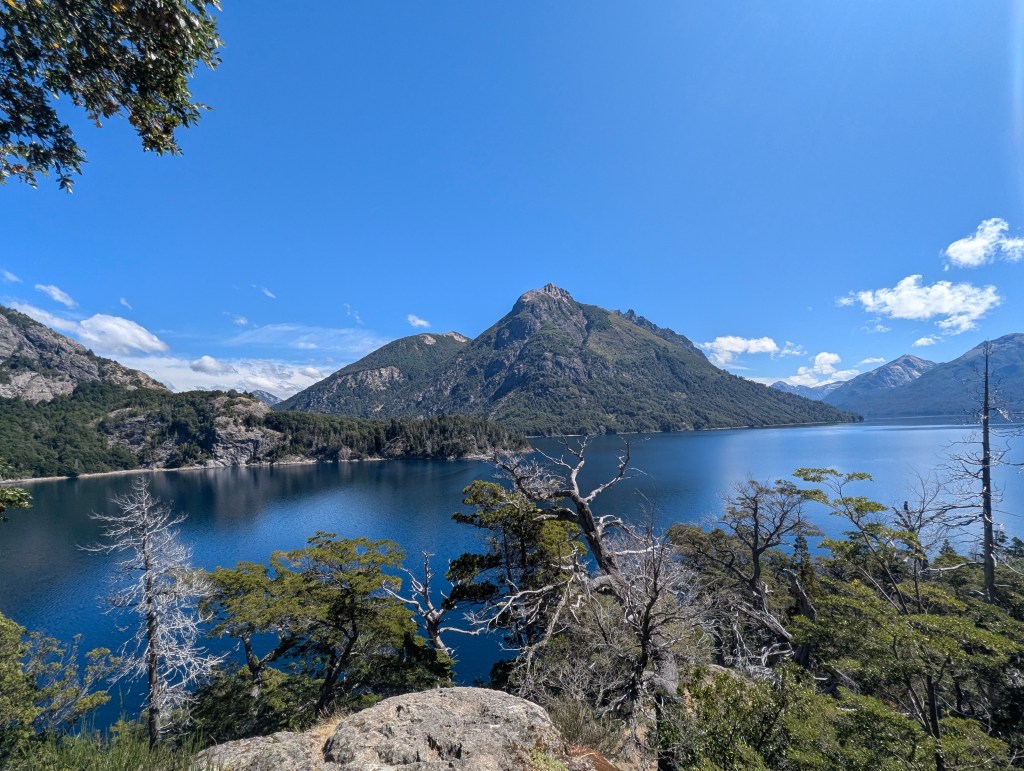
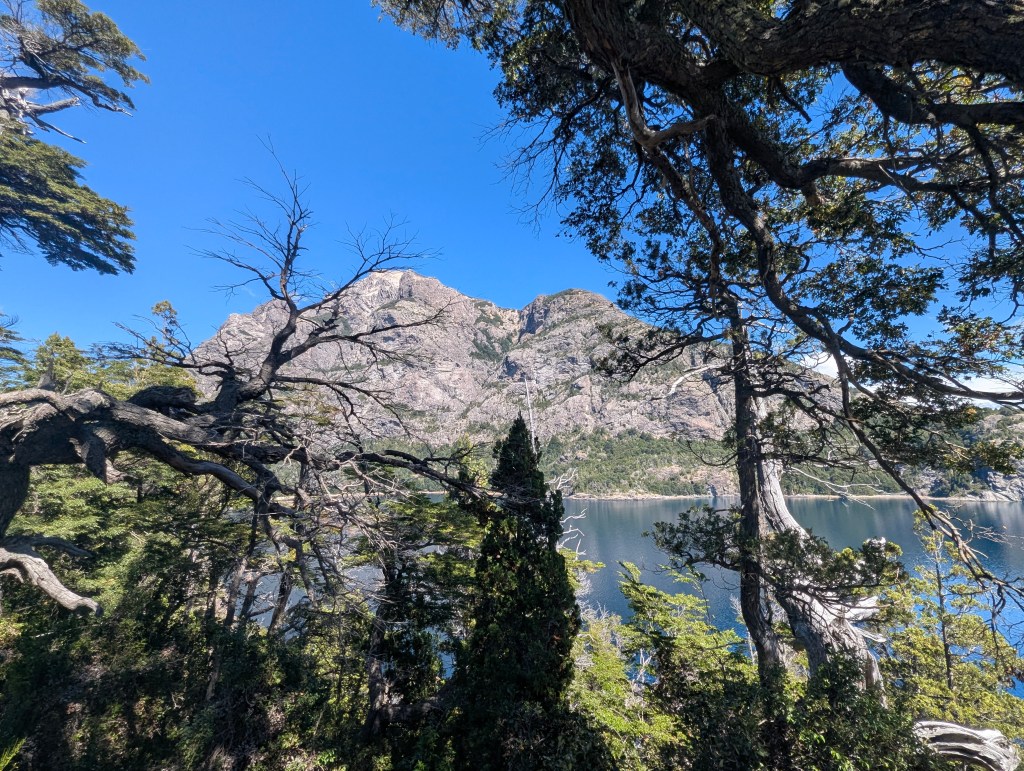
Mirador Cerro Capilla

And finally we drove to the Punto Panoramico, where we had stopped the previous day.
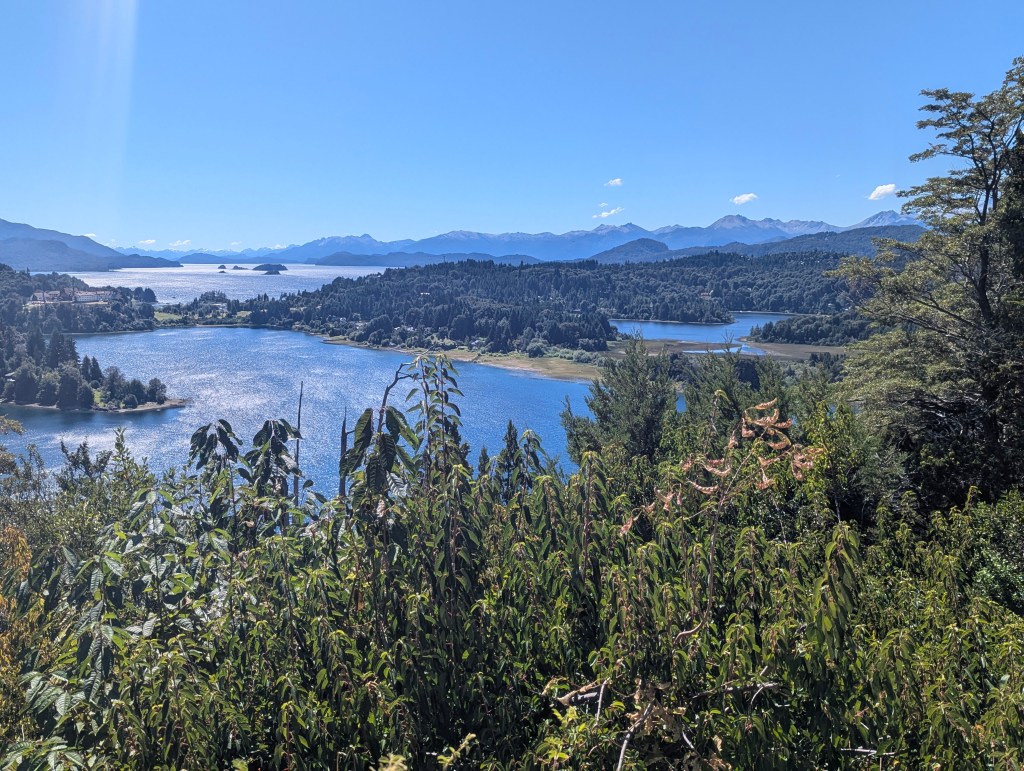
Punto Panoramico

Wow what a difference with the sun shining!
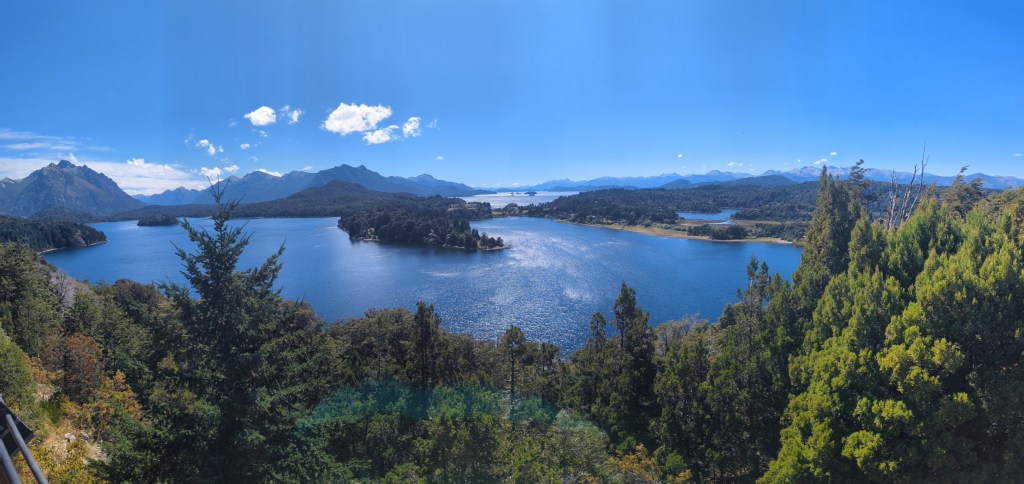
Punto Panoramico
Punto Panoramico drone shot

Upon completeing the Small Circuit, we headed to the top of Cerro Campanario, which had been recommended by our hotel receptionist. Cerro Campanario is reached via a chairlift.
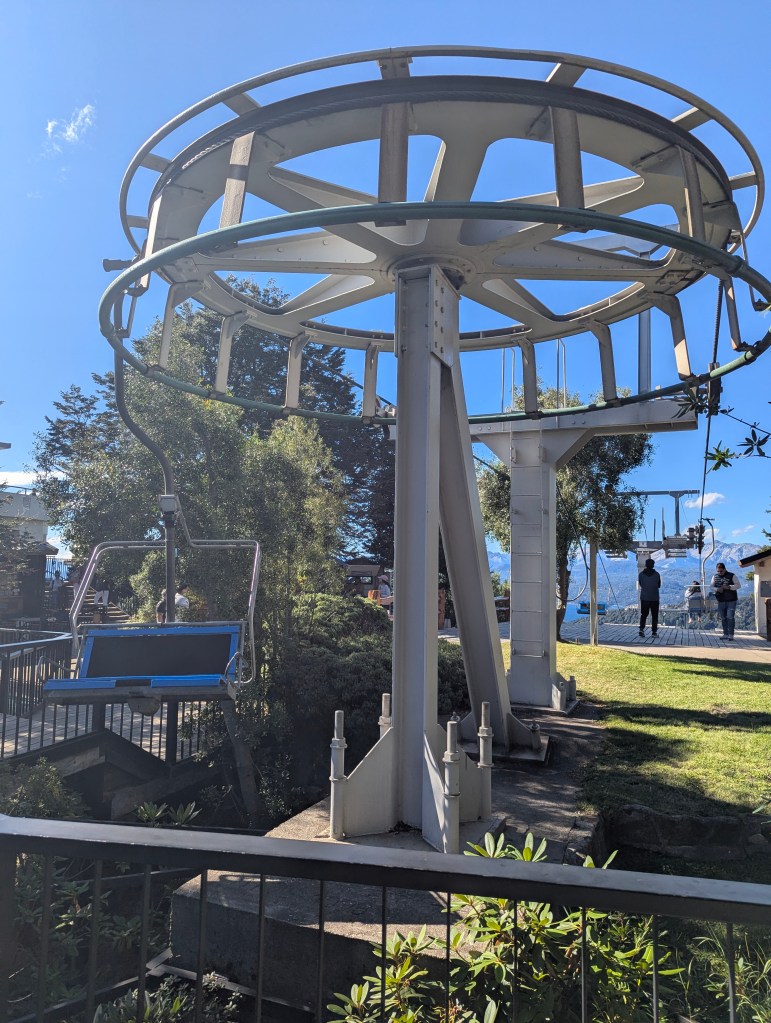
Once at the top the views are nearly 360 degrees.
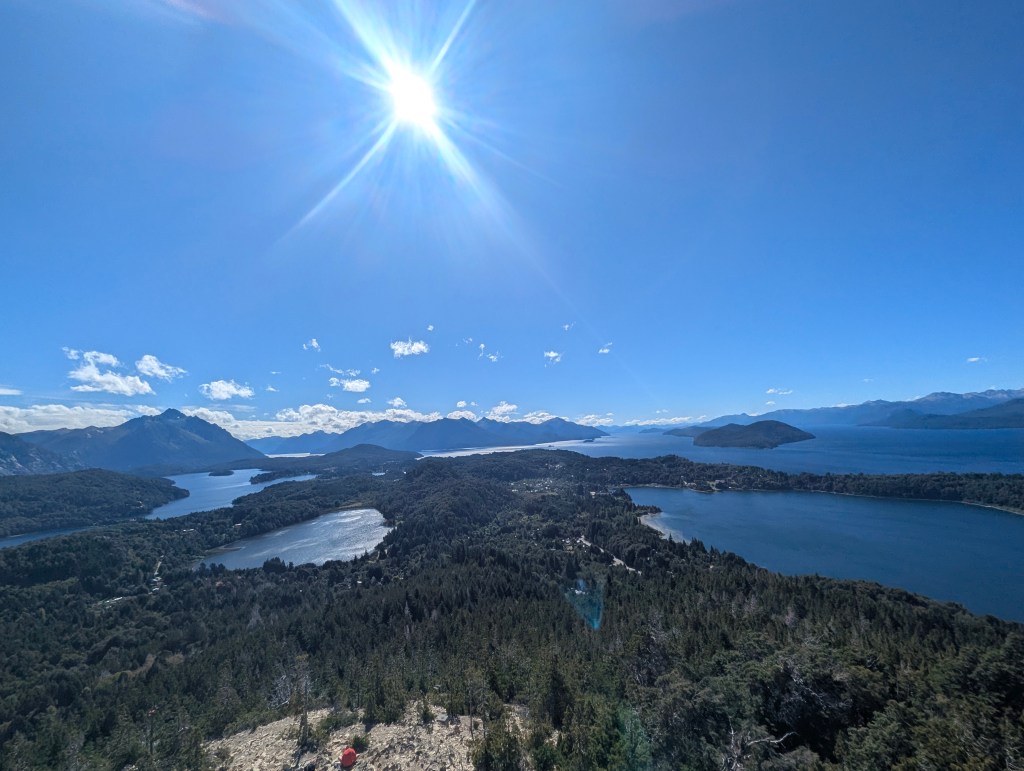
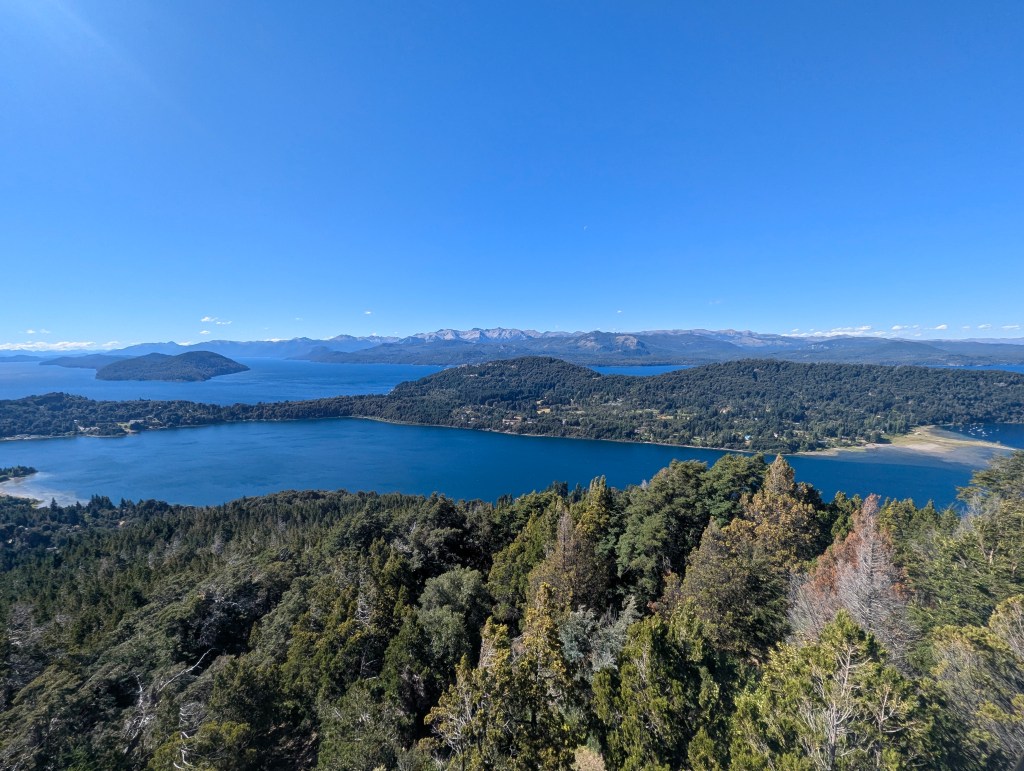
Cerro Campanario
Cerro Campanario
Cerro Campanario
Cerro Campanario
view from back side of Cerro Campanario

It was late in the day, and the line to descend on the chairlift was long, so we decided to chill, have a beer break, and just enjoy the view for a while.
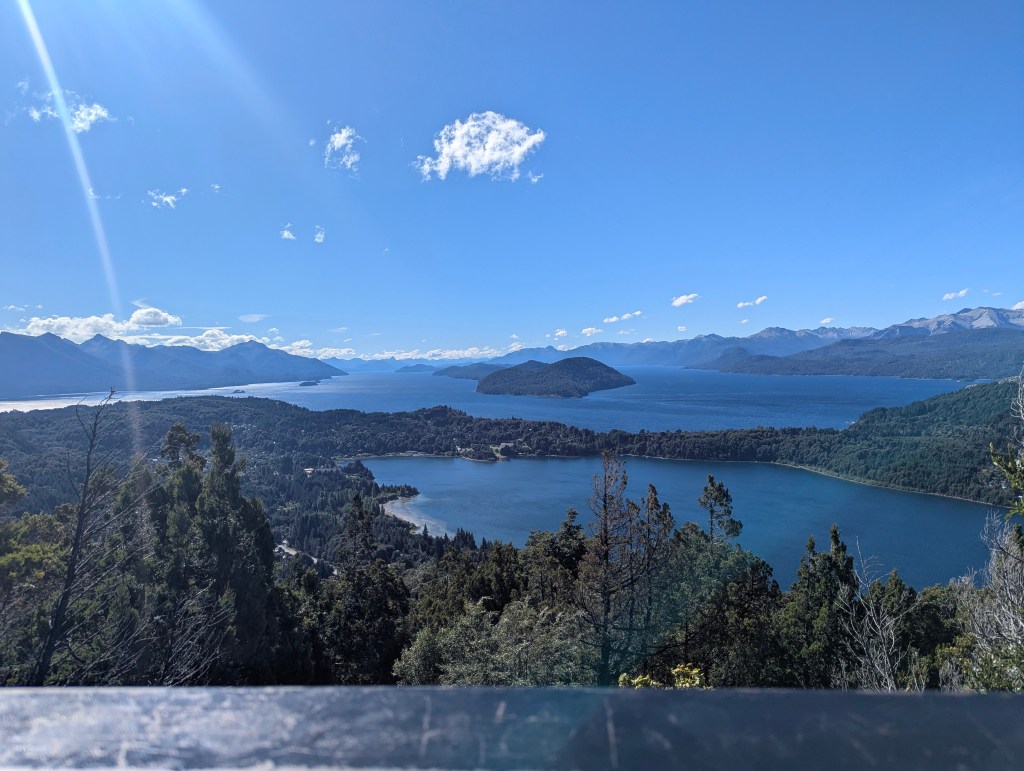
beer break Cerro Campanario

Finally the line had emptied and we descended. At this point it is time to comment on Argentinian eating culture. Argentinians start their day with coffee and a small sweet, not a big breakfast. They have a large lunch between noon and 2, then enjoy a siesta for an hour or three. Between 4 and 6 is mate tea time; dinner is usually another large meal starting around 9 pm. We cannot eat that way; we cannot go to bed with a large meal in our stomachs, and we cannot eat two large meals late in the day. So we tended to eat an early hearty breakfast, another large meal in the late afternoon or early evening, and maybe some fruit or a light snack in the late evening. So we had to find restaurants open in the early evening, which was not always easy, but once found, they were never crowded. After our long day of hiking and sightseeing, we headed to El Patacon, a cute if touristy restaurant.
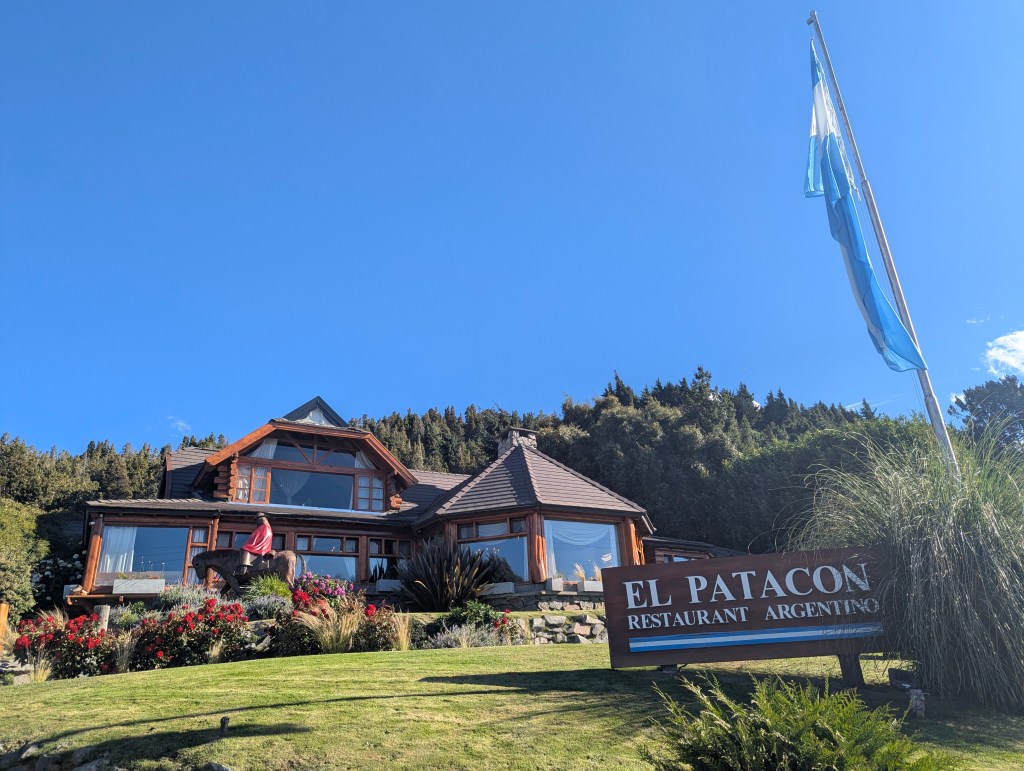
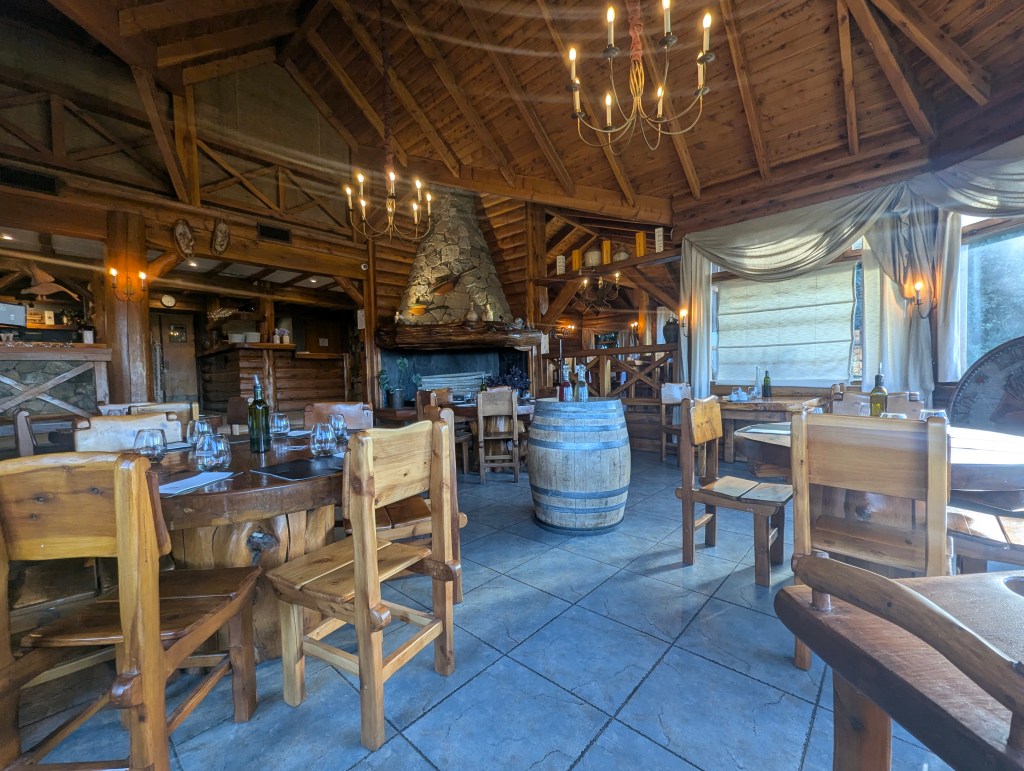
El Patacon
El Patacon

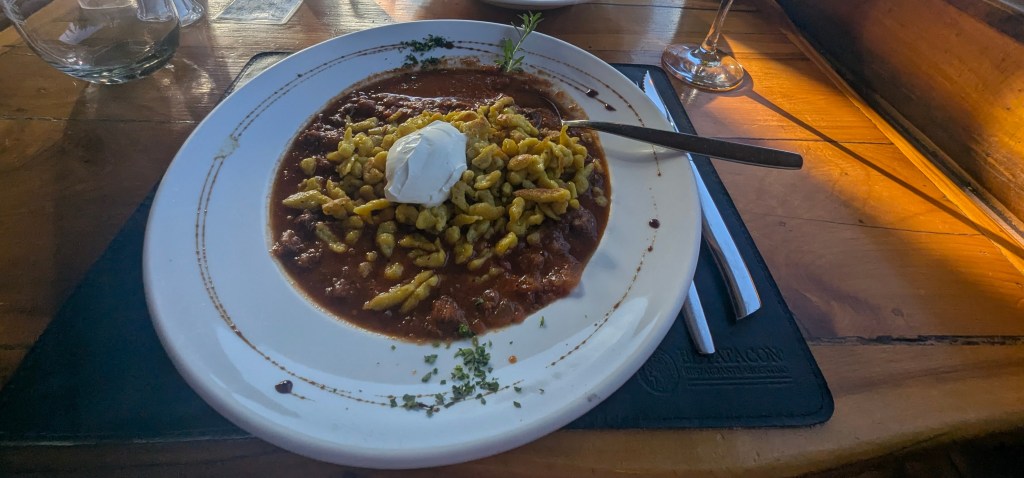
We had seen German influenced goulash with spaetzle on almost every restaurant in the lakes region; it was time to give it a try. The verdict: yummy and satisfying. Of course Eric, not a fan of goulash, had his go to dinner, cordera (lamb).
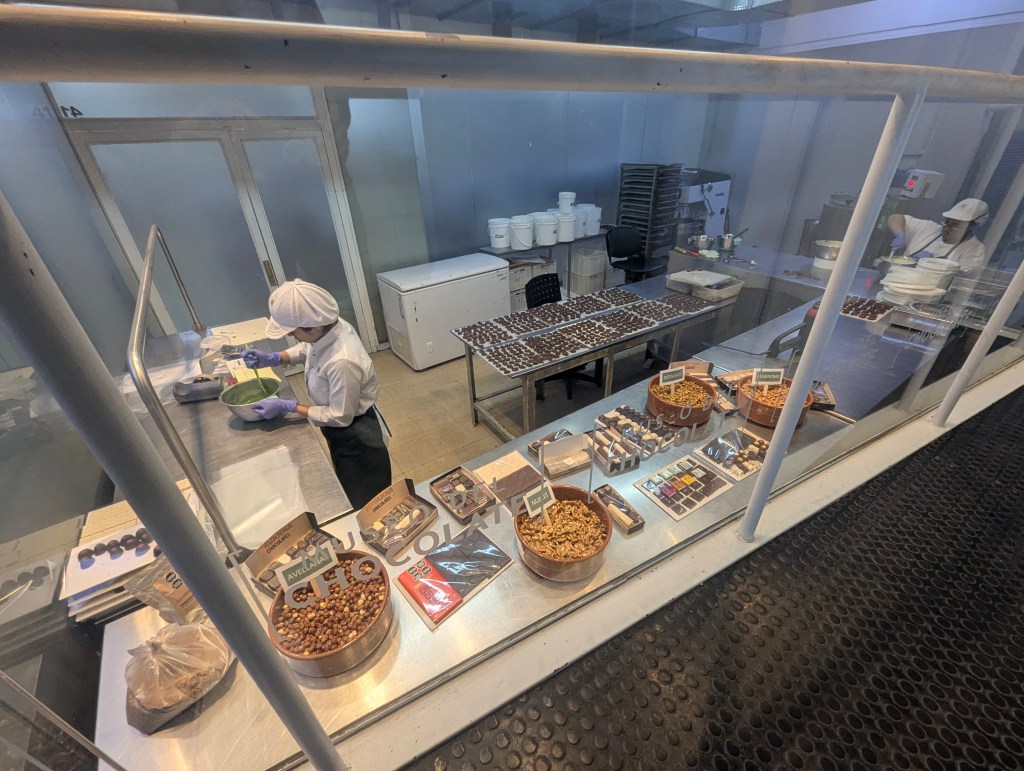
Our last day in the lakes region was rainy from start to finish. So what does one do with a rainout in Bariloche but head to the Havanna Chocolate Museum. Upon entering, we had a peak into the factory.
There were no tours in English, and the signage was not translated, so Google translate had to do the job for us. It was a bit of a struggle, but we did learn a bit about the history of the cocoa bean.
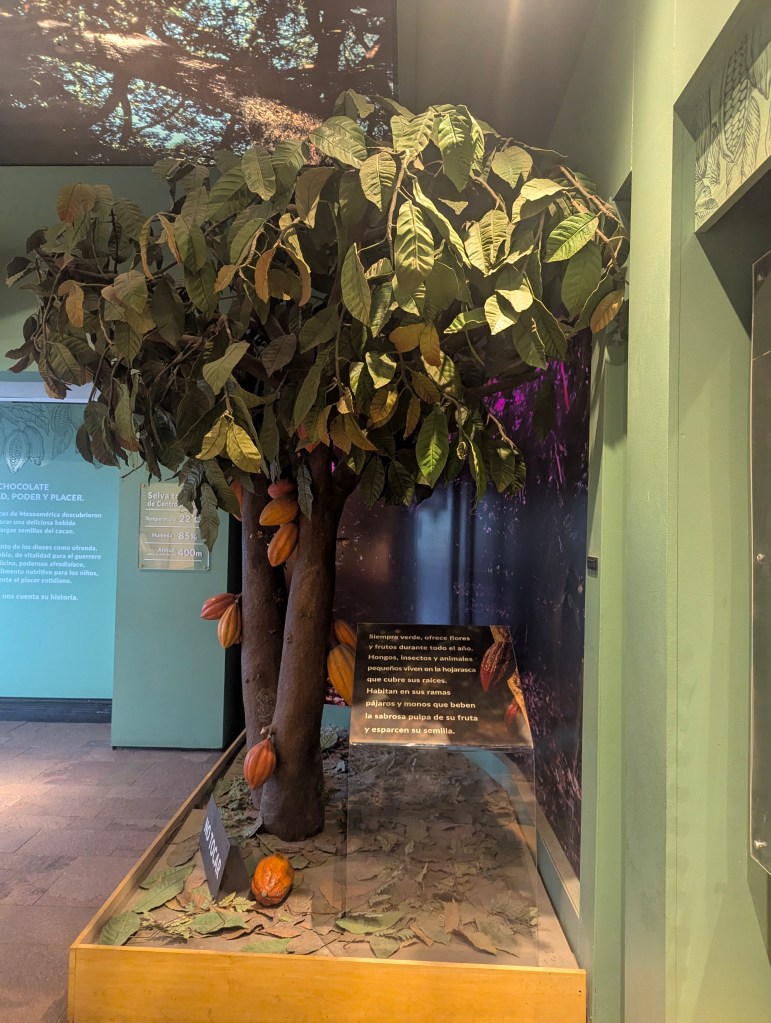
The ancient Olmecs of Mesoamerica discovered how to make a delicious drink from the bitter seeds of the cacao plant. Throughout its history, chocolate has been considered at varying times: food of the gods as an offering, currency of exchange, vitality for the warrior, precious medicine, a powerful aphrodisiac, a drink of the elite, nutritious food for children, or simply an every day pleasure. Displays included vessels for cooking
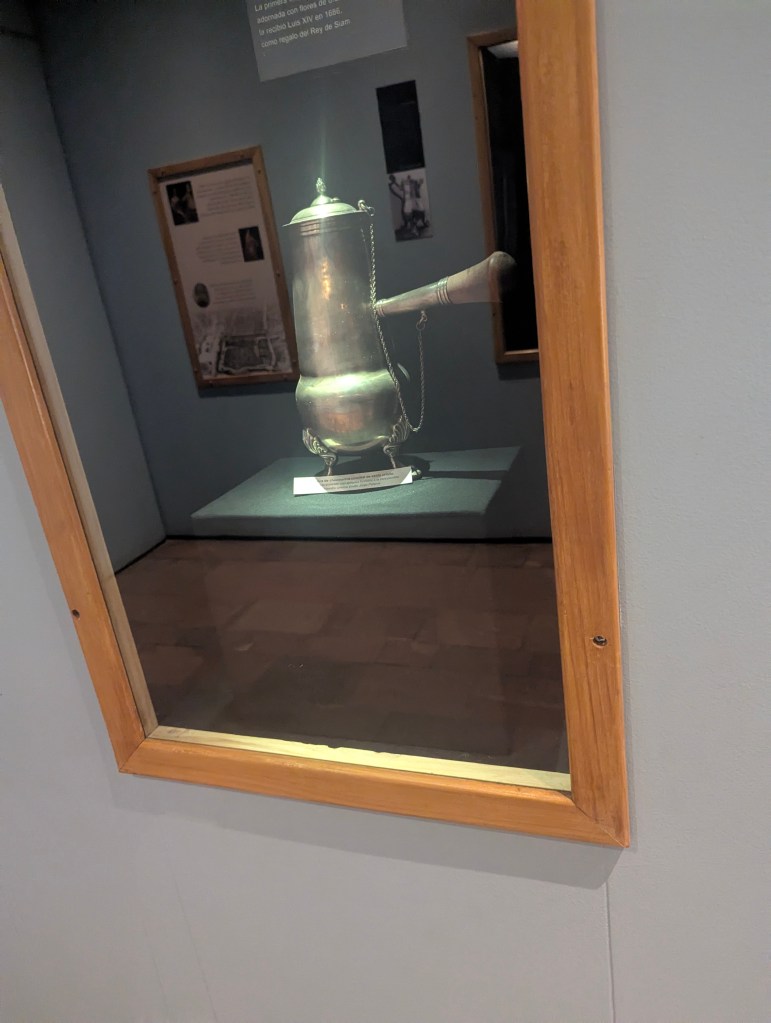
and those for serving.
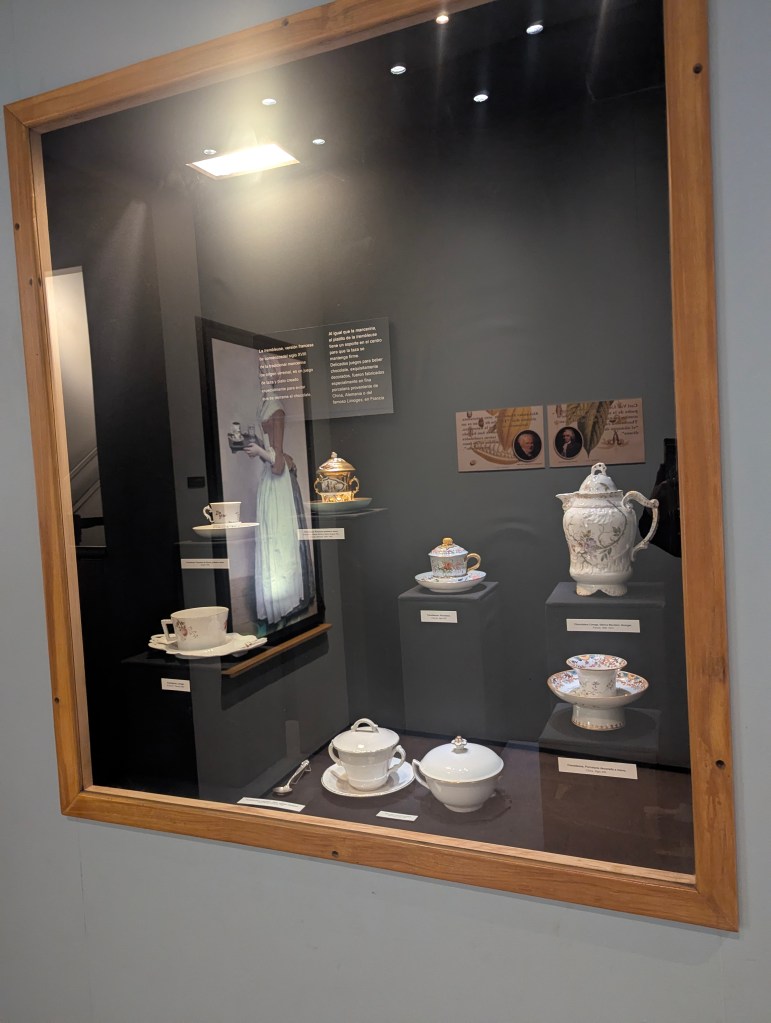
Solid chocolate, as we know it, was invented in 1847 by J.S. Fry and Sons, who discovered a method of mixing cocoa butter with cocoa powder and sugar to create a moldable, solid chocolate. The museum also has an entire room devoted to the fauna of Argentina. I have included just a few here.
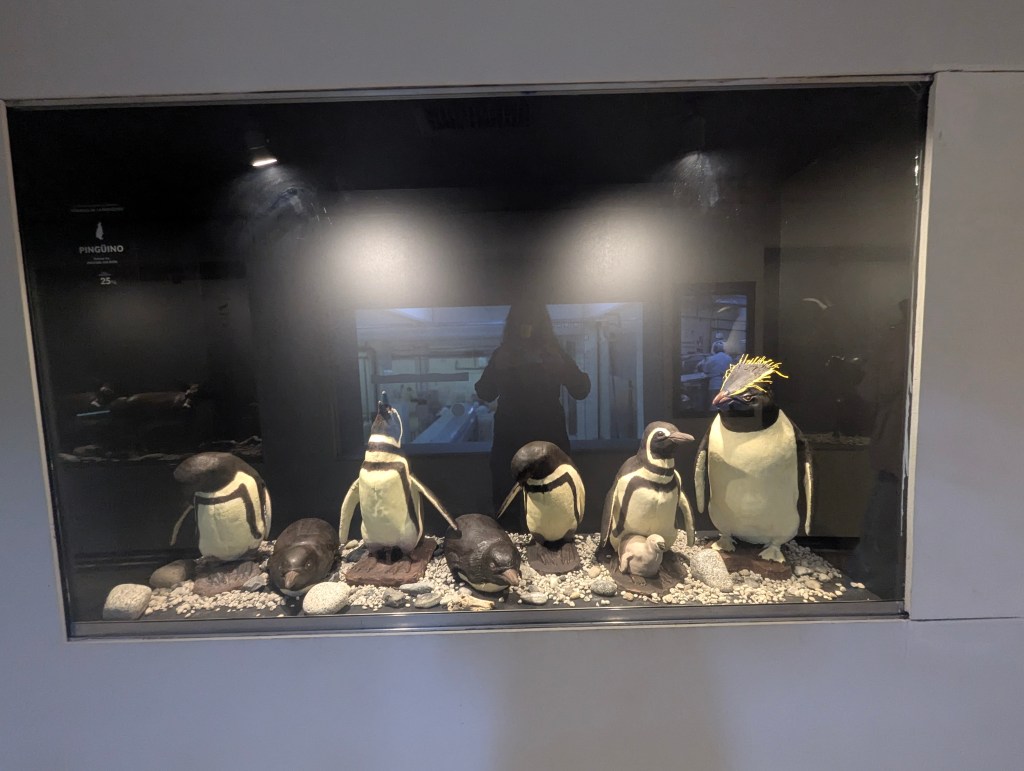
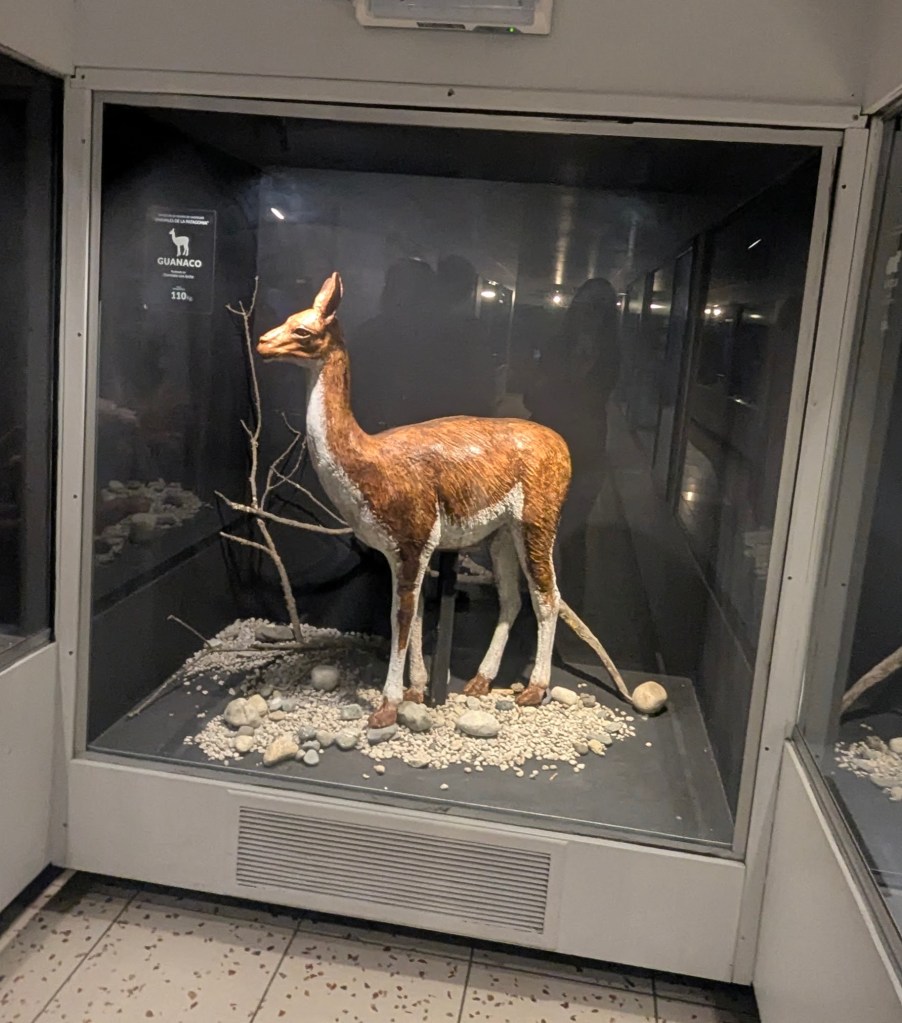
And with that our visit to the lakes region had come to an end.
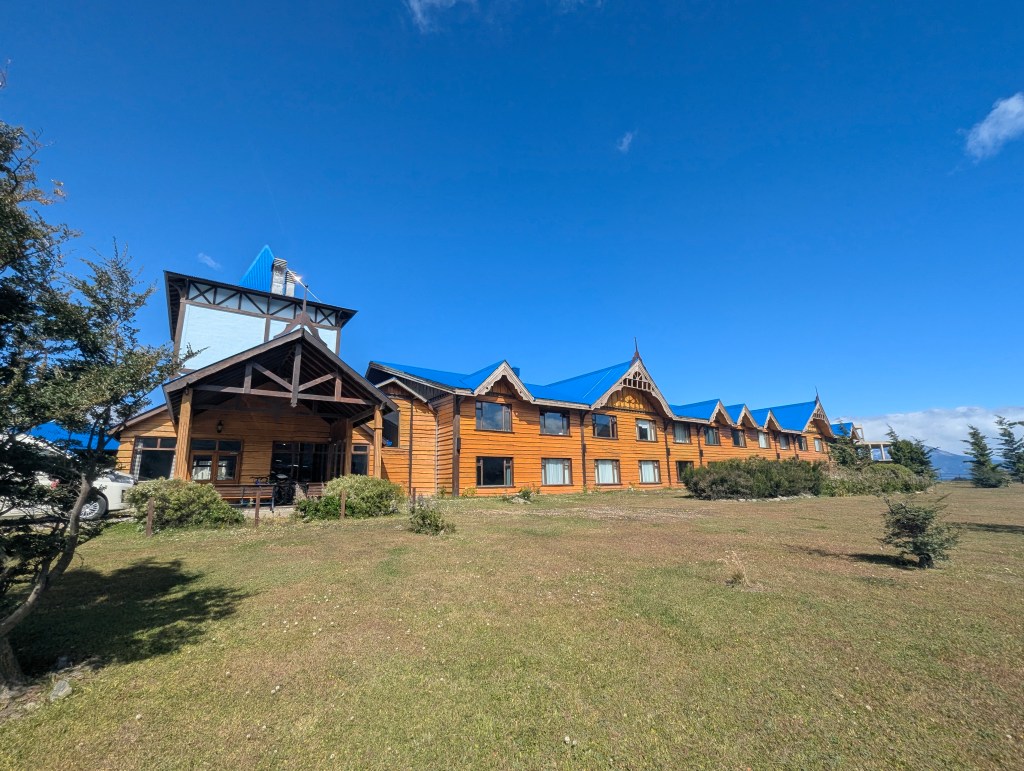
Argentina: Patagonia: Province Tierra del Fuego: Ushuaia Feb. 18-20, 2025; Province: Santa Cruz: El Chaltén Feb. 21-23; El Calafate Feb. 24-26

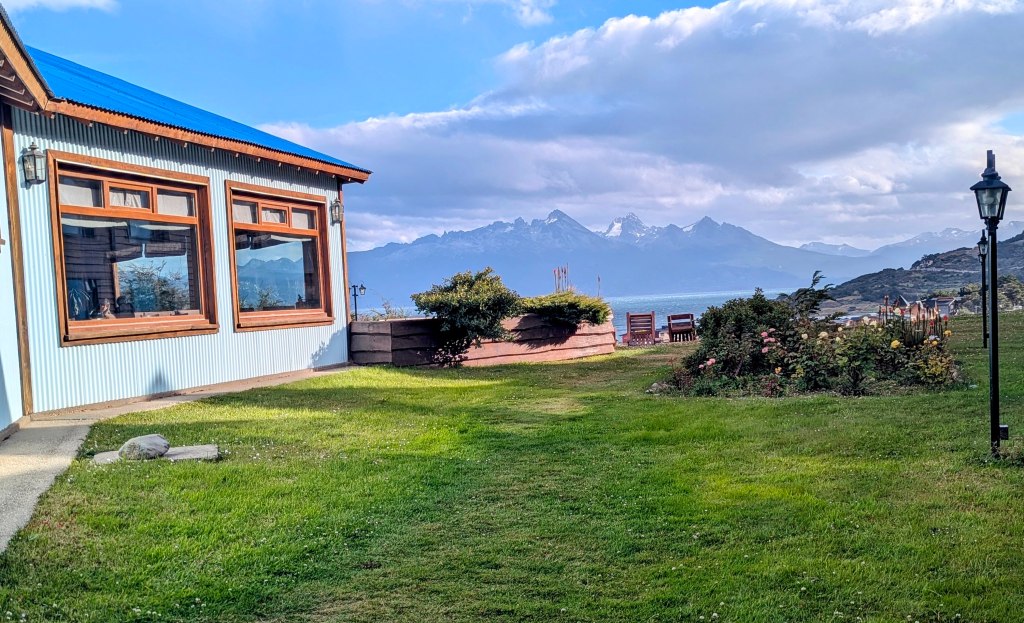
After a 9 hour overnight flight from Miami, a mini tour of Buenos Aires as we transferred between airports, a 5 hour total layover in Buenos Aires, and another 4 hour flight, we finally arrived in beautiful if chilly Ushuaia. We checked into Hotel Los Ñires

with a gorgeous view of the Beagle Channel (named for the HMS Beagle from which Darwin collected data for his “On The Origin of Species.”)

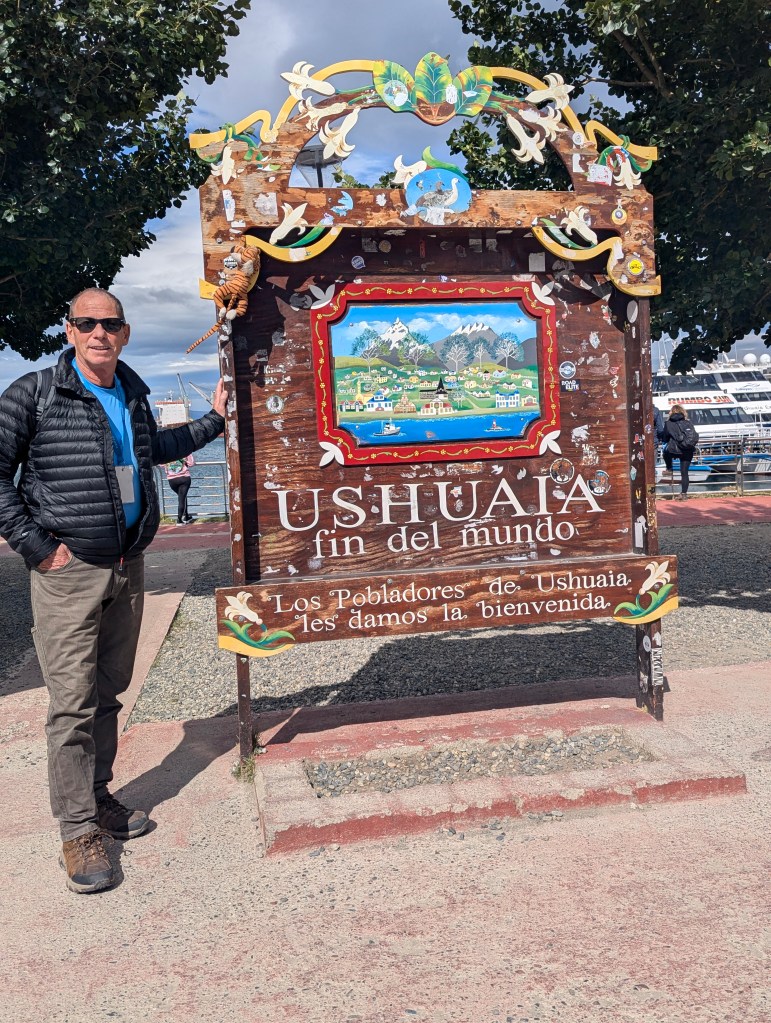
After a shower and a bit of a rest, we headed into town. Ushuaia is a city of about 85,000 residents and loves to tout itself as the “fin del mundo”, “end of the world”; it is the southernmost city in the world. There is a Chilean town, Port Williams, on a small island across the Beagle Channel to the south with only 3,000 residents, which calls itself “beyond the end of the world.” But Ushuaians discount it as a village, not a city.

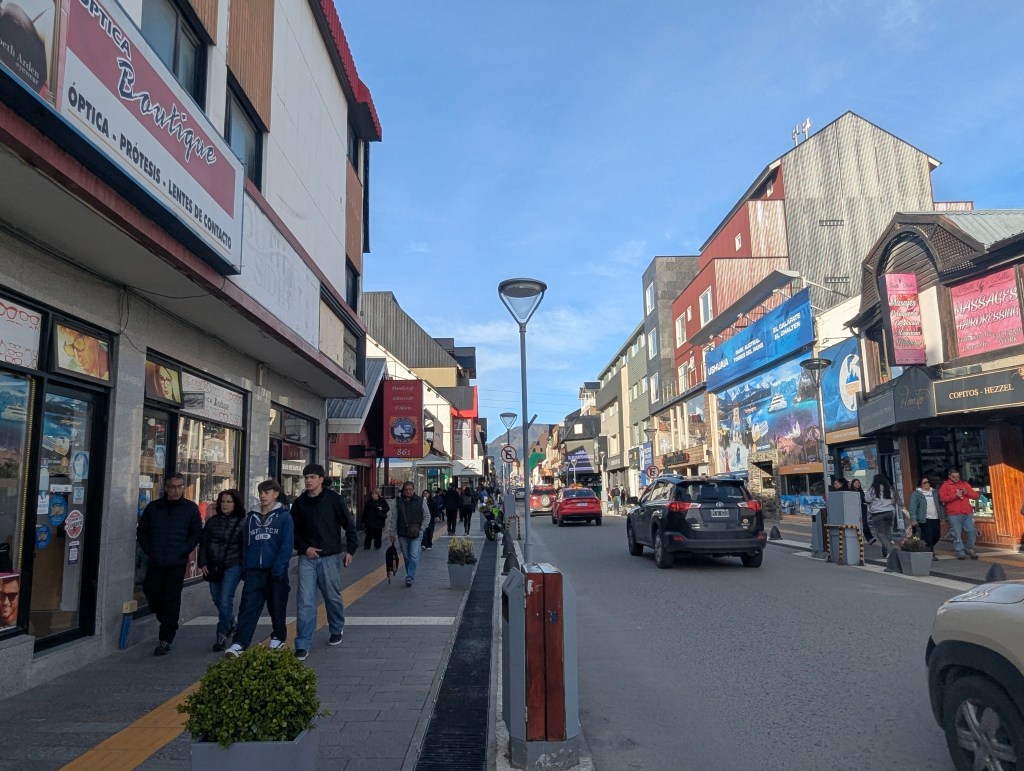
We strolled along San Martin Street, the main tourist thoroughfare for shopping and dining.

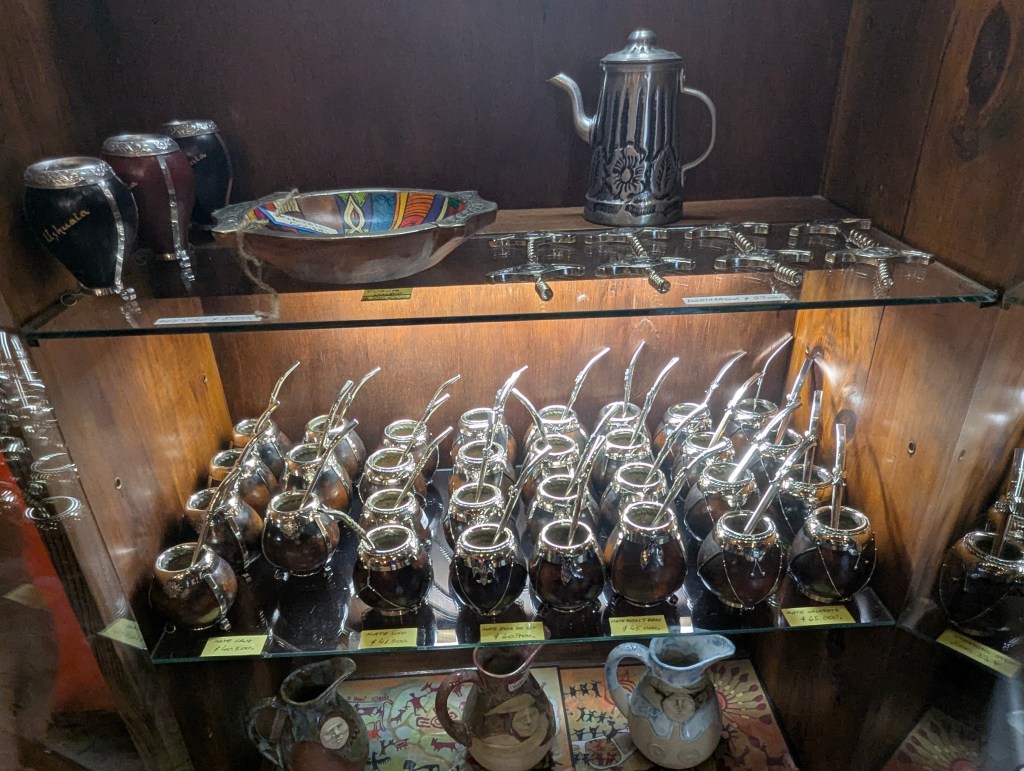
The were two products that jumped out at us as new and different. One were these vessels which are for drinking mate tea, very popular in Argentina. Hot water is poured directly over the ground, cooked leaves of the yerba mate plant, traditionally in a hollowed out gourd. The tea is drunk using a metal straw with a filter at the bottom.

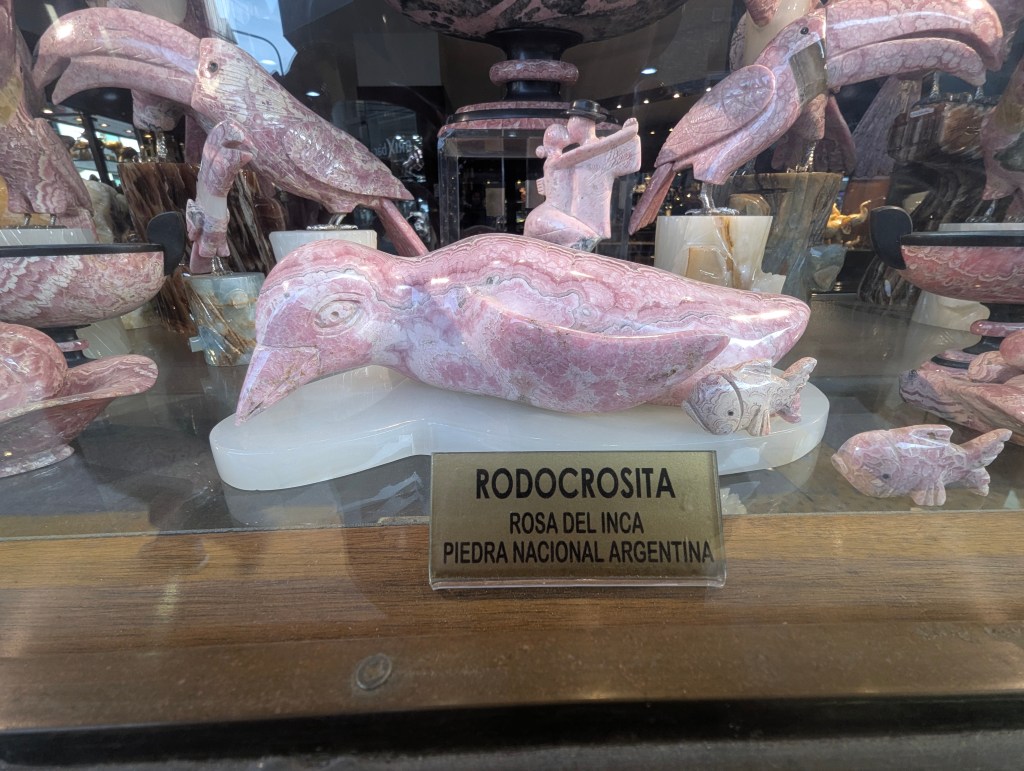
The other souveniers notable were statuettes in a pink stone. The legend of the Rosa del Inca, or Inca rose, is about two lovers who were turned to stone after death. The Inca rose is a type of rhodochrosite, a pink manganese carbonate mineral. It is the national stone of Argentina.

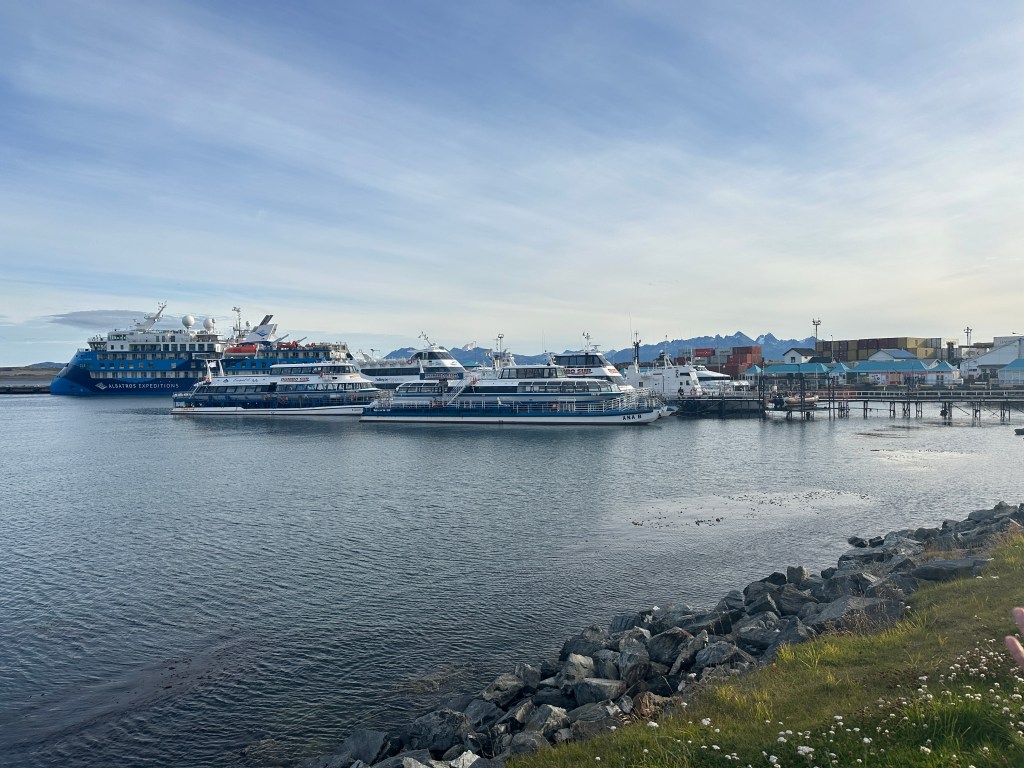
We took in the sites along the port. Ushuaia is the gateway for nearly 300 cruises to Antartica a year as well as tours to nearby Isla Yécapasela, known as “Penguin Island” for its penguin colonies and for tours of Beagle Channel; more on both of these later.

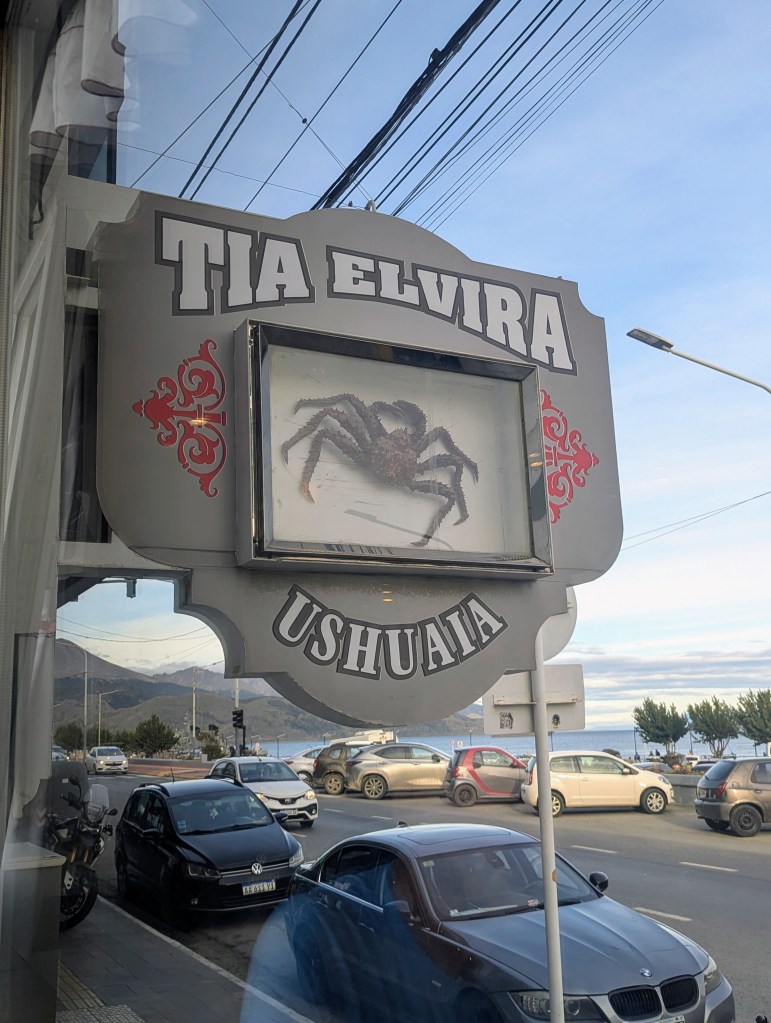
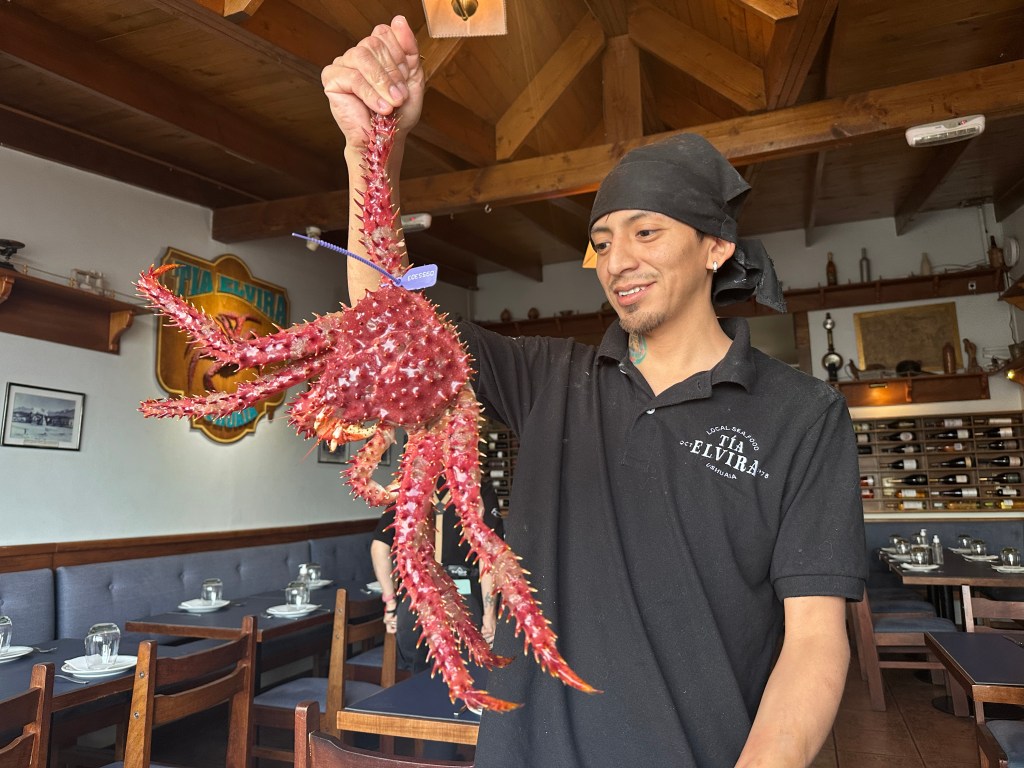
Our driver between the airport and hotel told us Beagle Channel King Crab is a must-try delicacy in Ushuaia, so we headed to Tia Elvira by the port to give it a try.

We ordered the “medium,” which was the smallest centolla (king crab) on the menu. It was removed live from the tank and brought to the table for our approval prior to cooking. And oh so delicious and fresh!

After a much needed night’s sleep and a quick breakfast in the gorgeous Los Ñires restaurant

we were picked up for our Tierra del Fuego National Park tour. We joined a bus full of tourists from Belgium, Milan, Brazil, Atlanta, and Toronto led by our guide and naturalist for the day: Valentine. While driving to the park Valentine told us that the name Ushuaia comes from the Yámanan language; aia means bay, ush means looking to sunset. The Yámanan were nomadic Amerindian peoples who lived on the southernmost coastal and channel islands of Chile and Argentina. He also told us about Port Williams and the above mentioned title “disputes” of “southernmost” city vs village. He told us that part of the reason Ushuaia is so well populated is that the government subsidizes the cost of fuel thus keeping the cost of living much lower that it would otherwise be. Valentine also went on to explain that although the summers are quite cool, with average highs in the mid 50s and lows in the 40s, the winters are not much colder with highs in the 40s and lows in the 30s. He explained the reason for these moderate temperatures compared to cities of comparable latitude in North America, eg Saskatchewan in Canada, is because of the “ocean” conditions in the South vs “continental” conditions in the North. The ocean waters maintain temperatures more constant than the land masses.

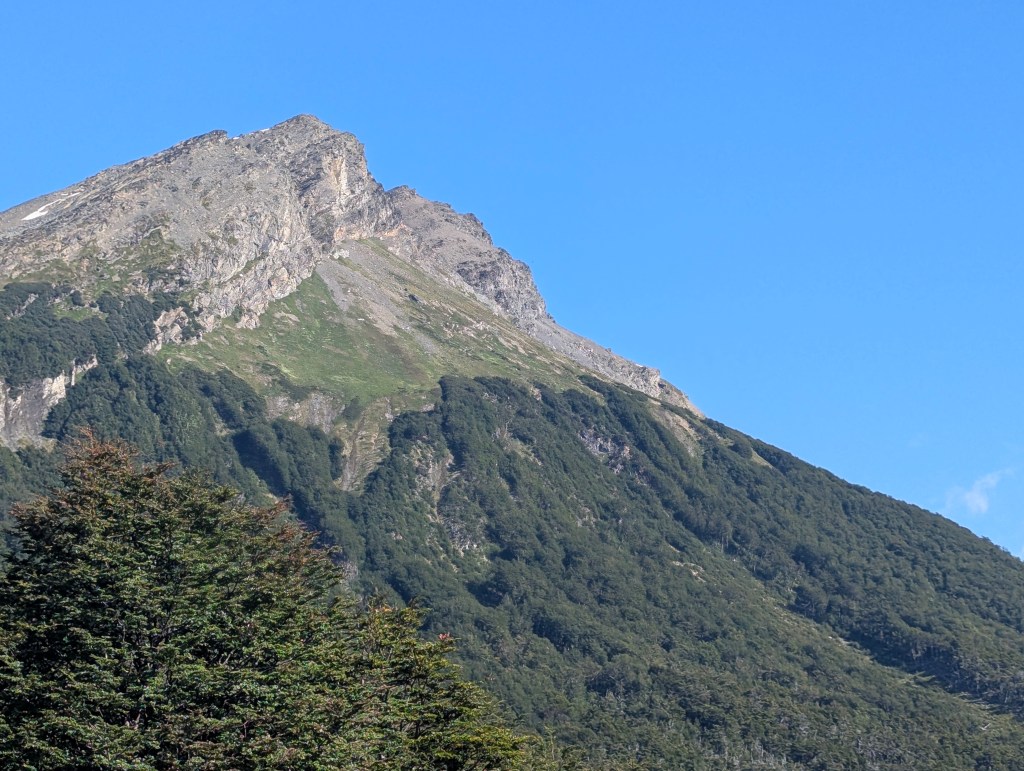
One of the first things Valentine pointed out is the low tree line as compared to what we are used to seeing in the Rockies. The mountains here are mostly 2-3,000 feet, but the tree line is just at about 2,000 feet. That is because all of the trees here are from the same beach family and cannot grow above that altitude.

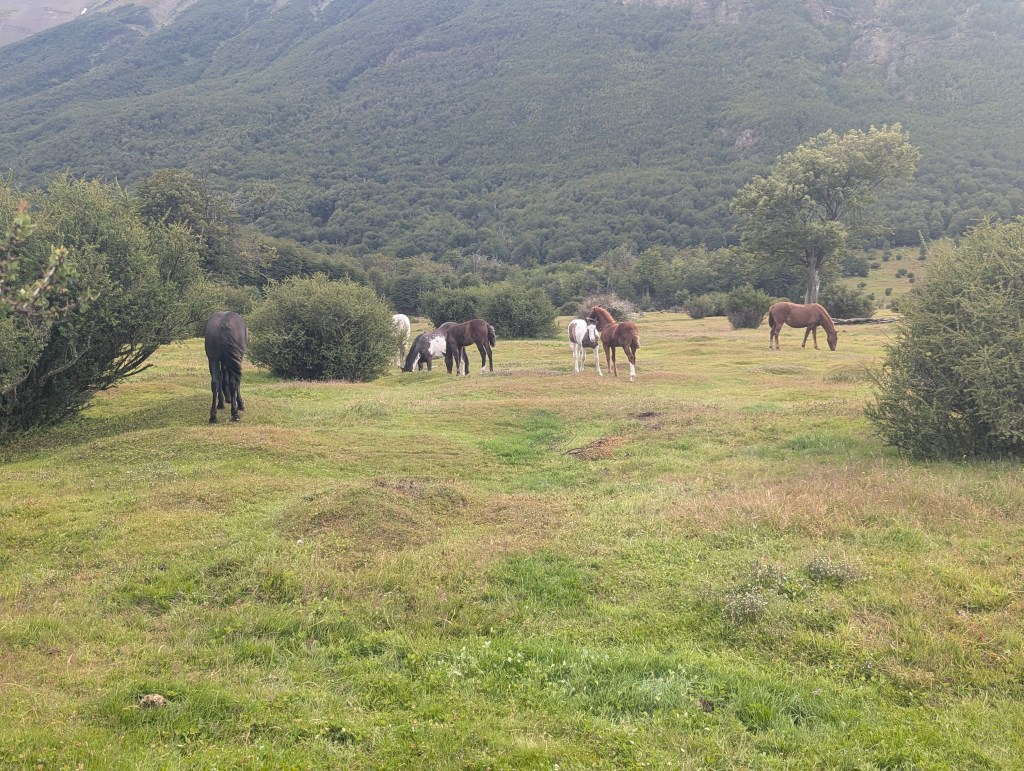
As we entered the Tierra del Fuego Parque National we saw several horses roaming about. Valentine explained that in Argentina, horses are often kept as pets and many owners do not have fences. There are no fences around the park. If a horse wanders into the park, the cost for retrieval is extremely high due to fines and fees for rangers to catch the horse, so owners often relinquish the horse to the park.

Once in the park, the horses often form herds and foals are delivered yearly. We were fortunate to see a couple of this year’s foals.

We were informed by the rangers that due to high winds and risk of falling trees along the coast, our planned route was closed for the day. We were rerouted to the Senda Pampa Alta.

Off we set for our approximately 4 mile hike into the woods. Along the way Valentine informed us that this is the southernmost and one of the youngest forests in the world because this land mass was one of the last to melt after the ice age. Because of the cool temperatures, all life evolves slowly here. Leaves take about 2 years to decompose, trees about 200 years. Between its young age and the slow decomposition, the forest floor is only about 4 inches thick. The tree roots are shallow and must grow laterally because they cannot grow into the ice age rock below (making hiking challenging avoiding them constantly). The first part of our hike contained all very young trees. It takes trees 120 years to reach full maturity.

Valentine explained that there are few bird species in these woods due to a dearth of insects, no ants. The bird species here include condors, caracaras, albatross, petrols, finches, thrushes, and the Magellanic woodpeckers. We were not fortunate enough to see a Magellanic woodpecker, but he did point out a tree stump with holes made from the woodpecker seeking the giant worms therein.

Valentine talking about woodpeckers and worms

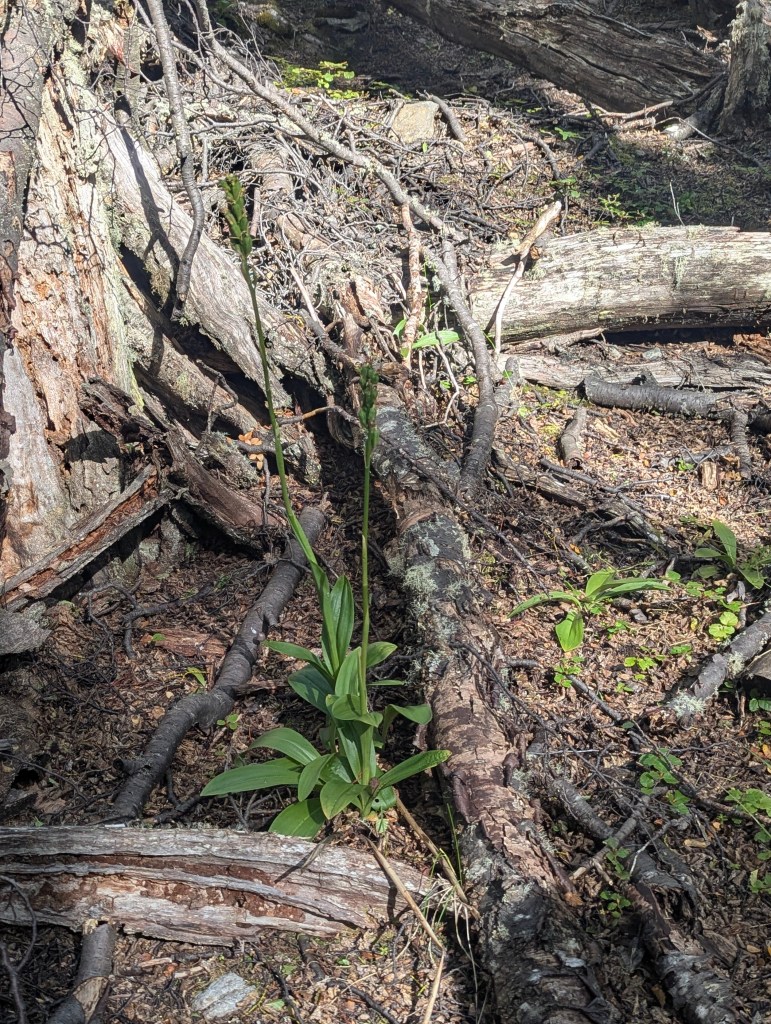
Varieties of flora we saw along the way included some orchids

and the edible chaura berries

and the also edible diddle-dee berries

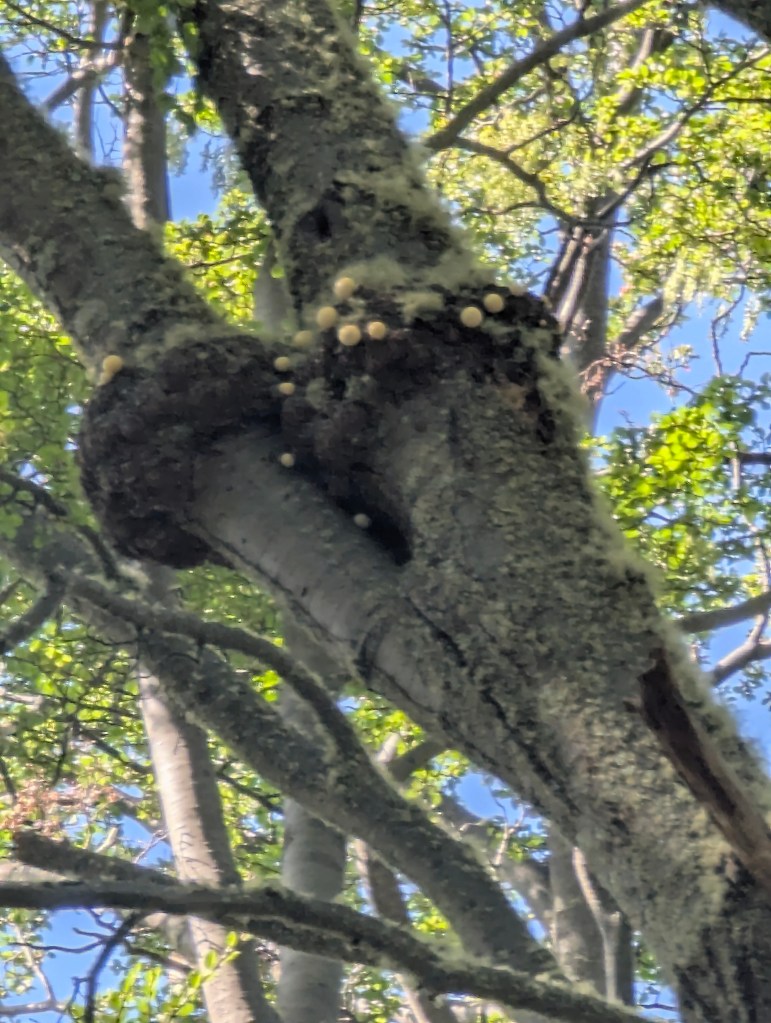
Many trees had an outcropped ring, a reaction by the tree to a fungal parasite. When the infection reaches maturity, little yellow balls are formed which produce at their center a fluid, chauchau (sweetsweet) that is edible to the birds.

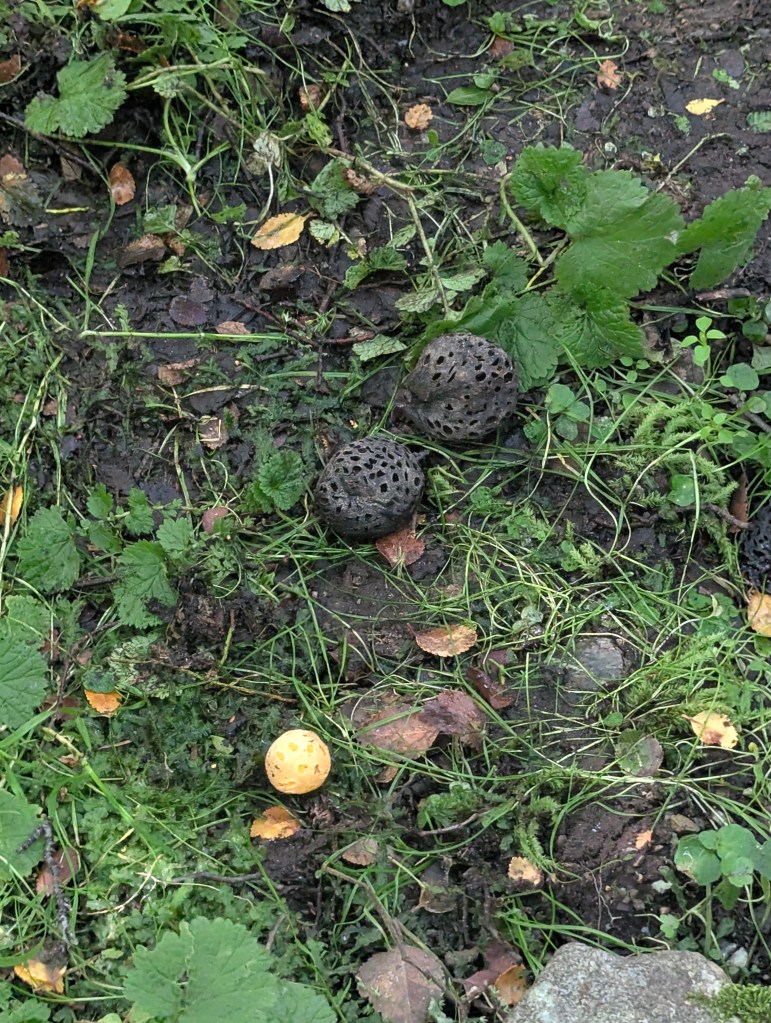
The formed balls develop holes through which their reproductive spores escape.

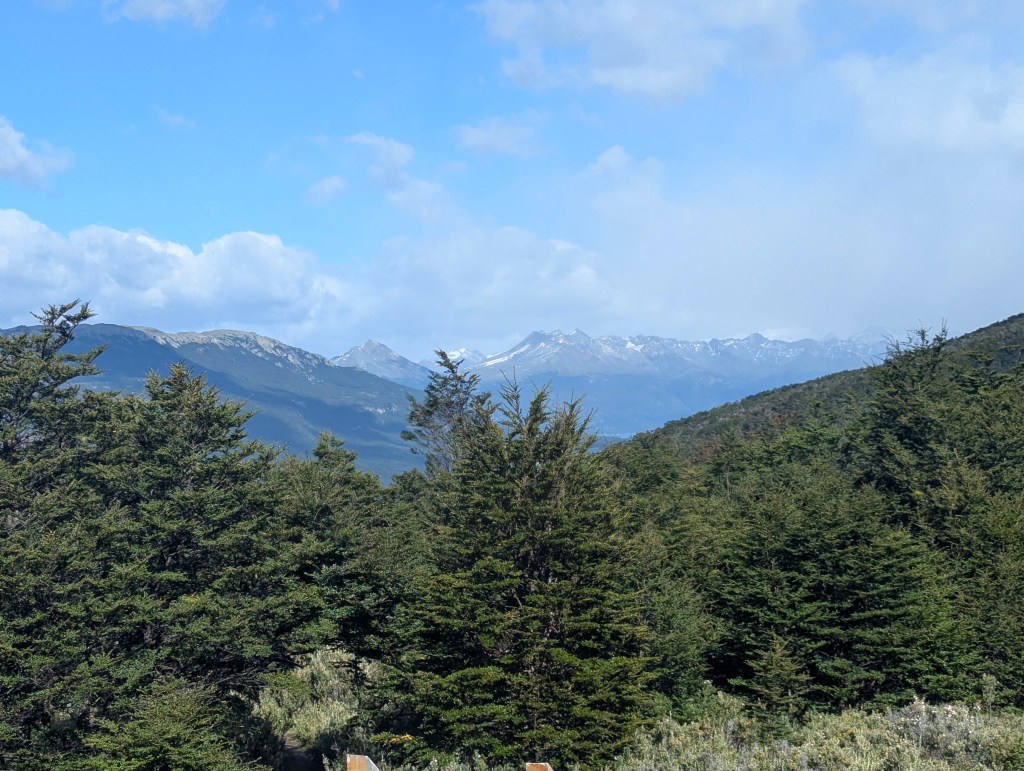
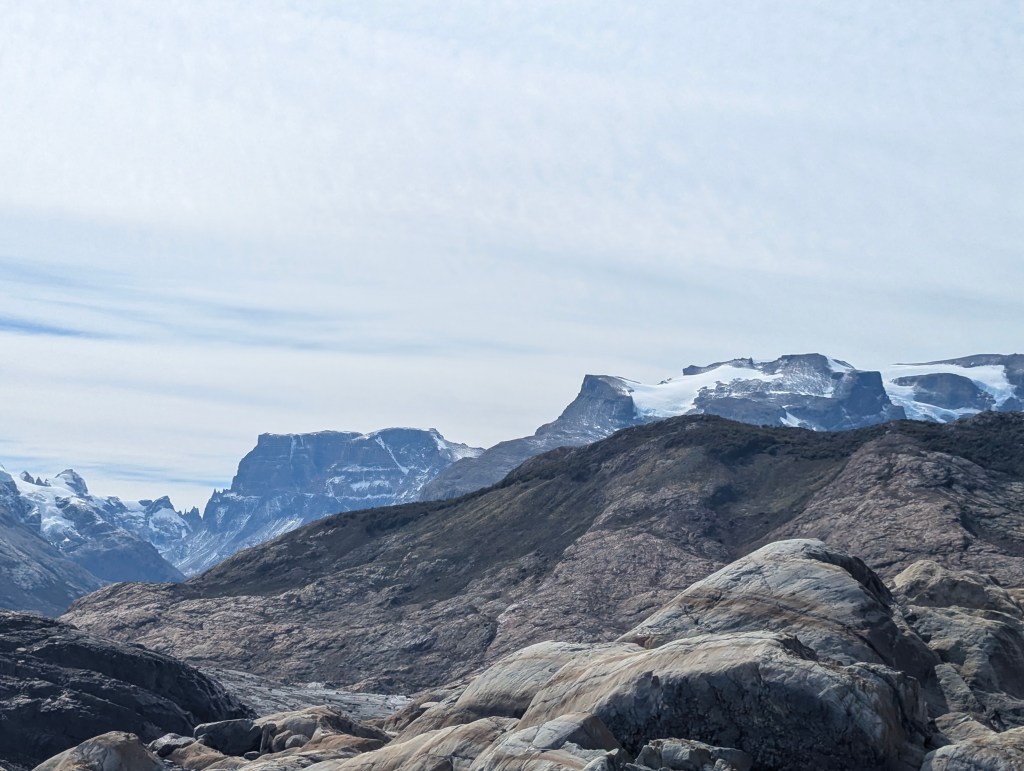
Once we reached the apex of our hike, we were treated to panoramic views including some of the first glaciers we were to see.

The distant mountains to the west are part of the Darwin Range.

While up here Valentine explained the geography in better detail. Patagonia (named for “area with big footed inhabitants” because the original Spanish explorers saw large footprints in the sand made by the Yáman, whose feet were about the size of the average US basketball player) is divided into the Chilean side and the Argentinian side by the Andes mountains. The Chilean side is generally lush with plentiful rainfall from the Pacific Ocean. The Argentinian side is 90% desert because the mountains block the rain. Ushuaia is in the lush 10%. The lower portion of Patagonia is an island (divided into the Chilean west and Argentinian east) called Tierra del Fuego (Land of the Fires) because the original Spanish explorers saw the smoke of the fires of the Yáman and thought they were volcanoes. Tierra del Fuego Province is an island bordered by the Strait of Magellan to its north and the Beagle Channel to the south.

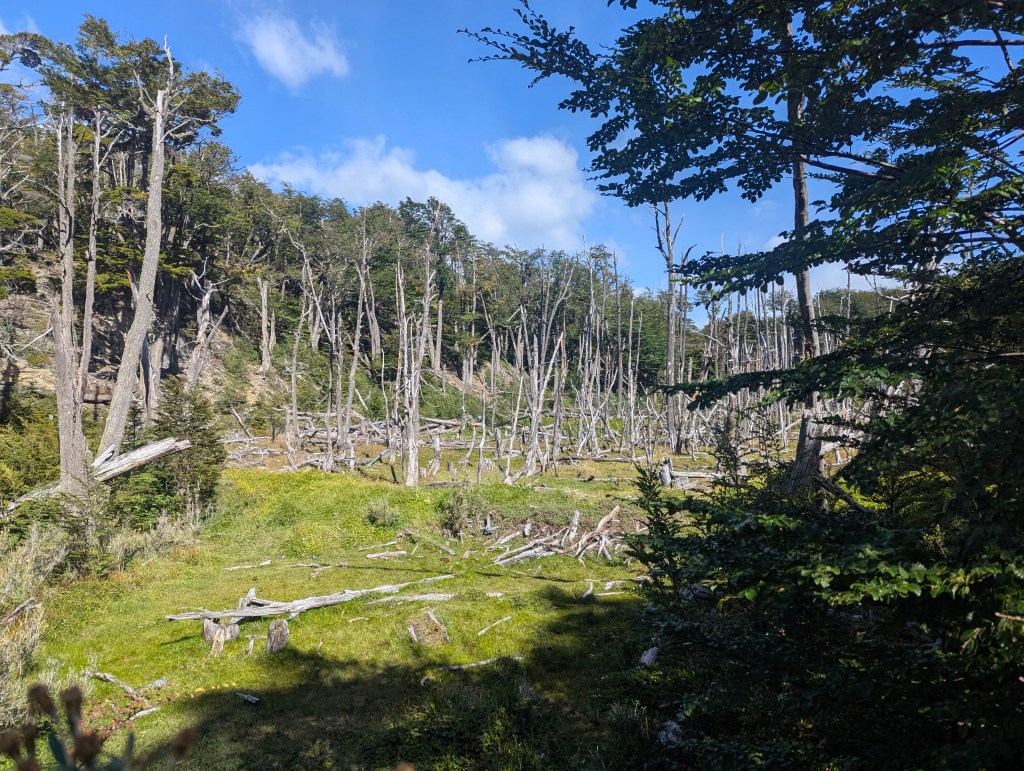
As we headed down the south side of the hike, we passed an area with many dead trees. Valentine told us that the fauna are even fewer than the flora and originally included pumas, foxes, and llamas, which had crossed the strait of Magellan before it melted. But when sheep and cattle were introduced by farmers, the pumas were predators and therefore killed off. Then in 1946 20 beaver couples, ie 40 total beavers, from Canada were introduced hoping to start a fur industry. But as the beavers adapted to the milder climate, theirs skins became thinner and the pelts were no longer desirable. With no human hunters and no natural predators, their numbers have increased to over 200,000 today. The dams they build create areas of standing water which choke the oxygen out of the roots and the trees die still standing.

As we reached the bottom, we again passed through a young area of the forest.

And finally we came out into the channel.

We then boarded our little bus and headed to lunch.

Lunch was a delicious beef stew and Argentinian Malbec. Eric and I happened to sit across from a young Brazilian couple who turned out to both be doctors! We spent the meal comparing healthcare systems.

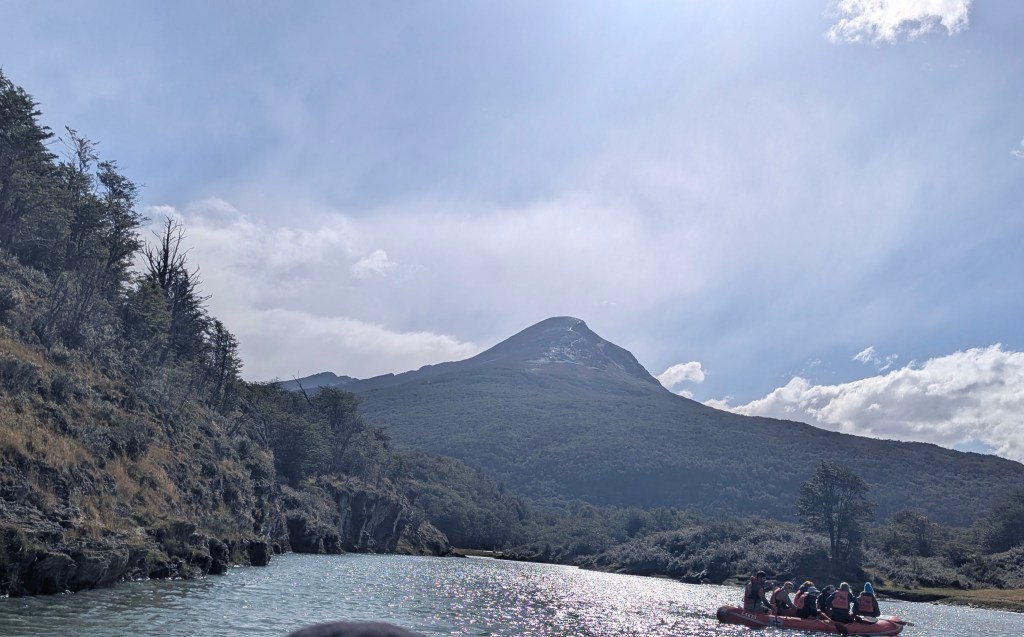
After lunch it was time for our paddle trip on the river. First we had to don the gear.

Once on the boat Valentine took a selfie of our group.

The mountain in the background is Condor Mountain in Chile.

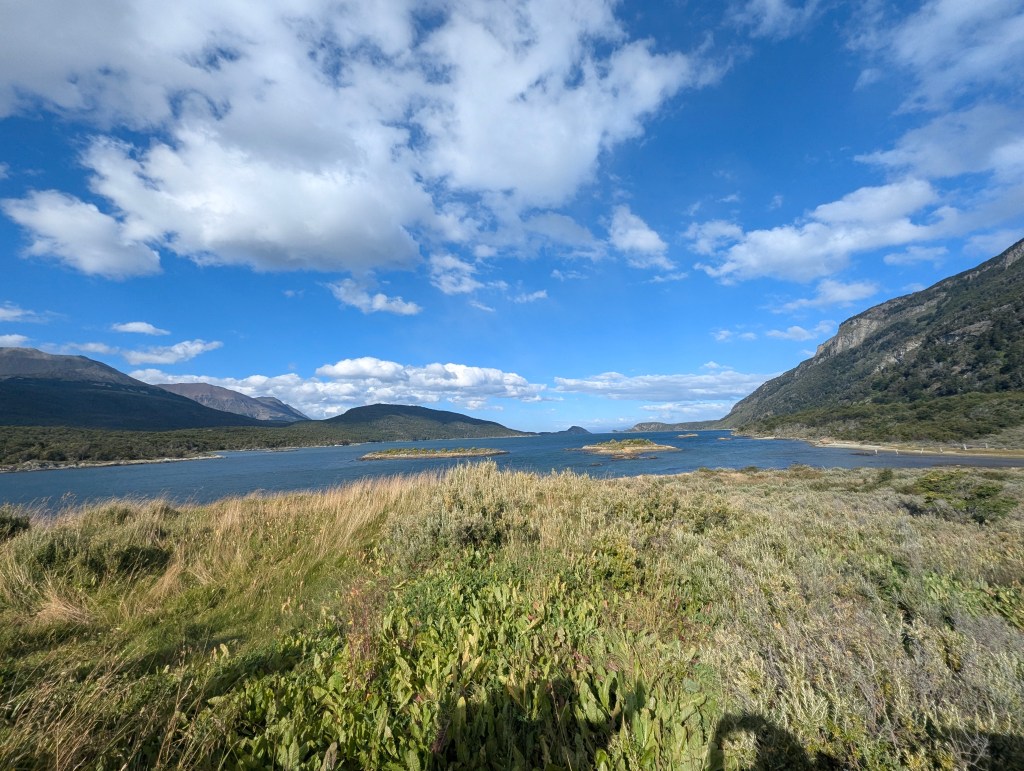
Once we reached the end, we had a view of the channel.

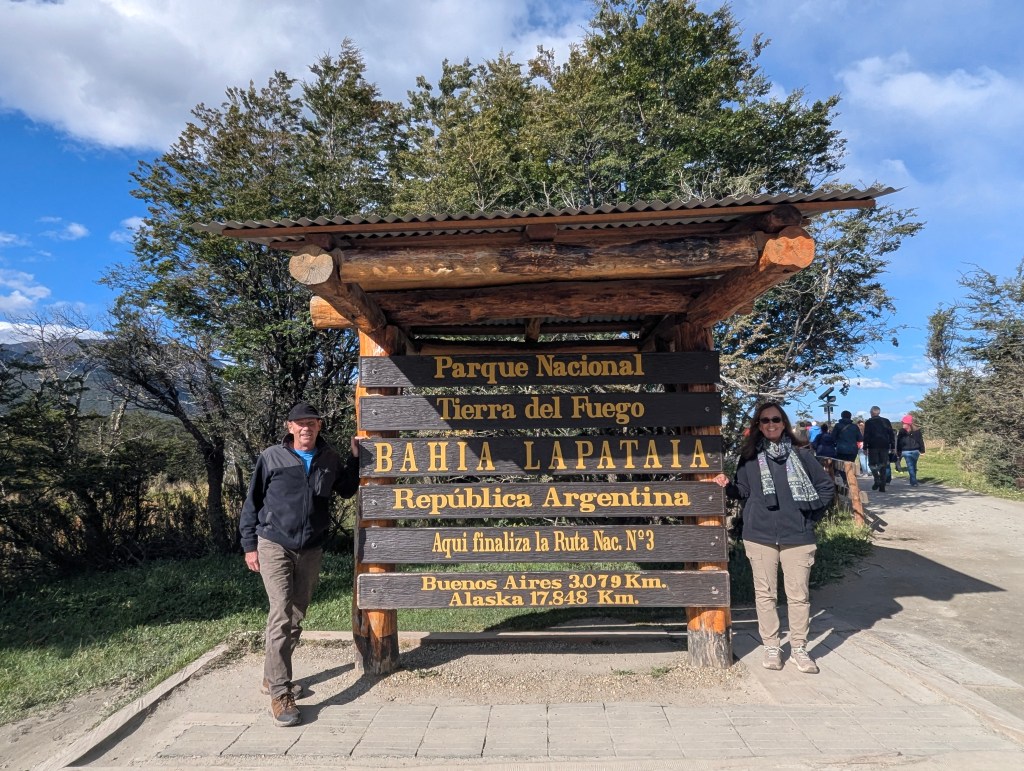
This is also the end of the PanAmerican highway which travels 18,000km (11,185 miles) through Alaska.

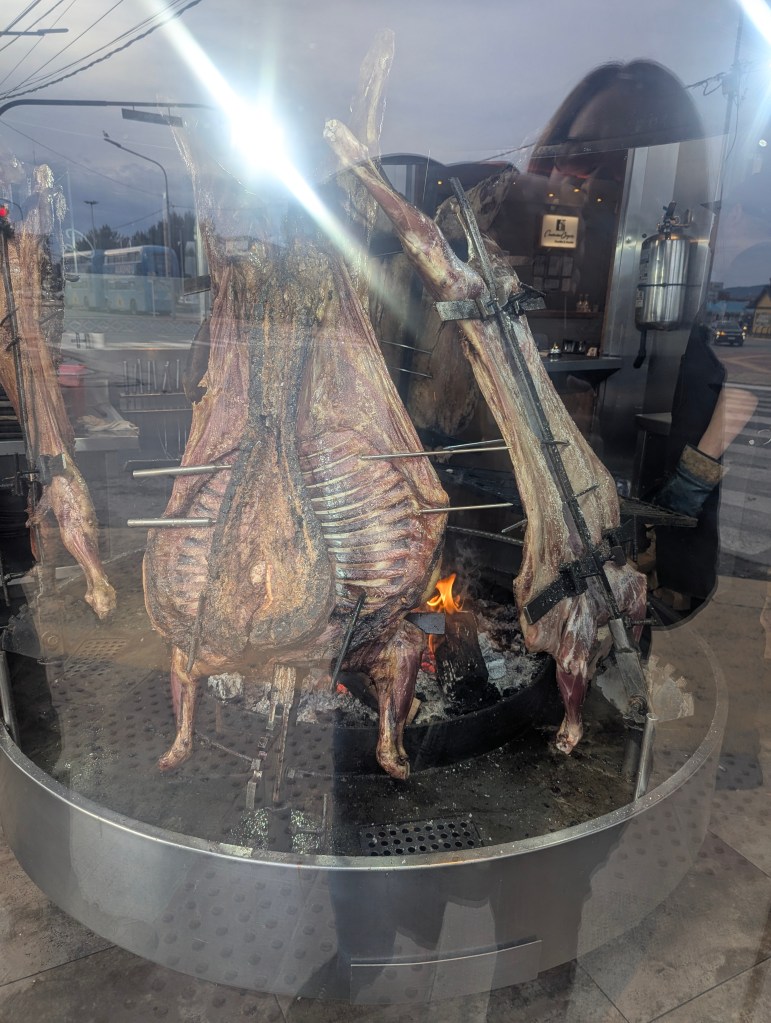
After our long day of outdoor exercise we treated ourselves to another Tierra del Fuego specialty: grilled lamb, unbelievably good.

The lambs can be seen from outside the restaurant grilling over the open fire (not my best photo due to the glass).

We were up and out by 6:30 the following morning to board a bus for our nearly 2 hour ride through the Fuegian forest (named for the Fuegian peoples, the original inhabitants, of which the Yáman mentioned above are one tribe), past peat valleys and a ski resort (there are 17 ski resorts in Argentina), over the mountains to the Estancia Haberton (Haberton Ranch).

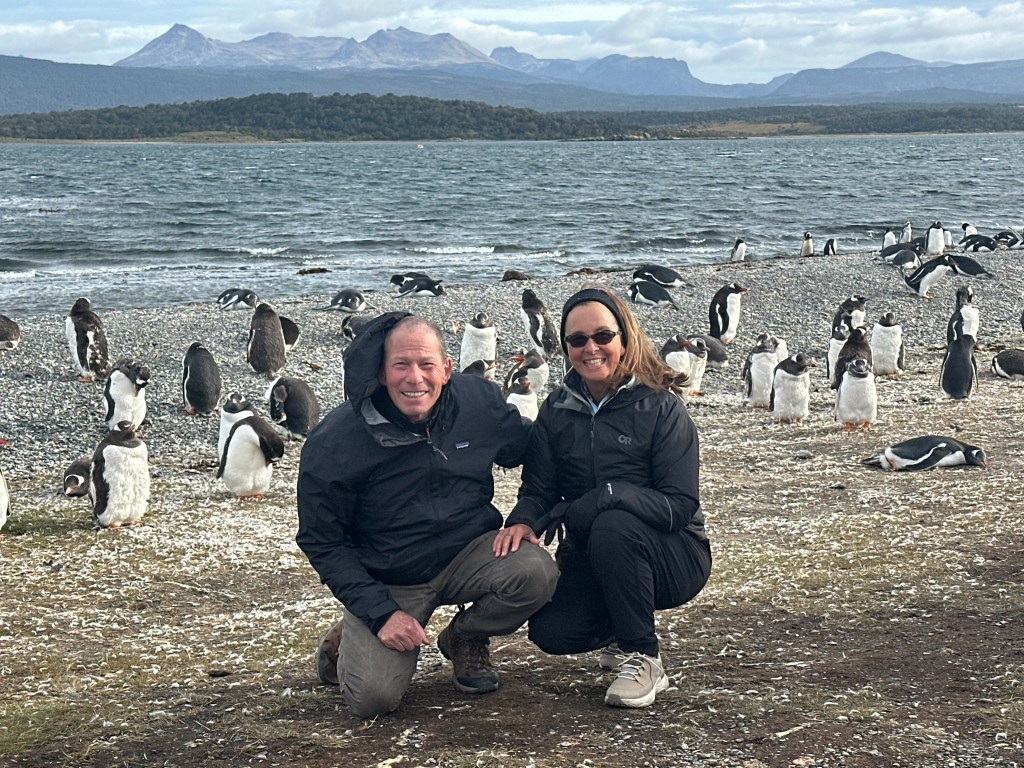
Once at the ranch our group of 40 was divided into two. We were in the first group to board the boat to Martillo Island, ie “Isla Yécapasela” (Penguin Island).

The island is owned by the farming Haberton family. Originally the family used the island for grazing sheep. One year, after weeks of continuous snow, the height of the snow reached over 10 feet, and all of the sheep on the island died. The island already had a few pairs of nesting penguins, but subsequently the population has grown significantly. The family now restricts visitors to the island to 20 at a time and only a few visits a day. We were instructed by our guide how best to visit the penguins without alarming them.

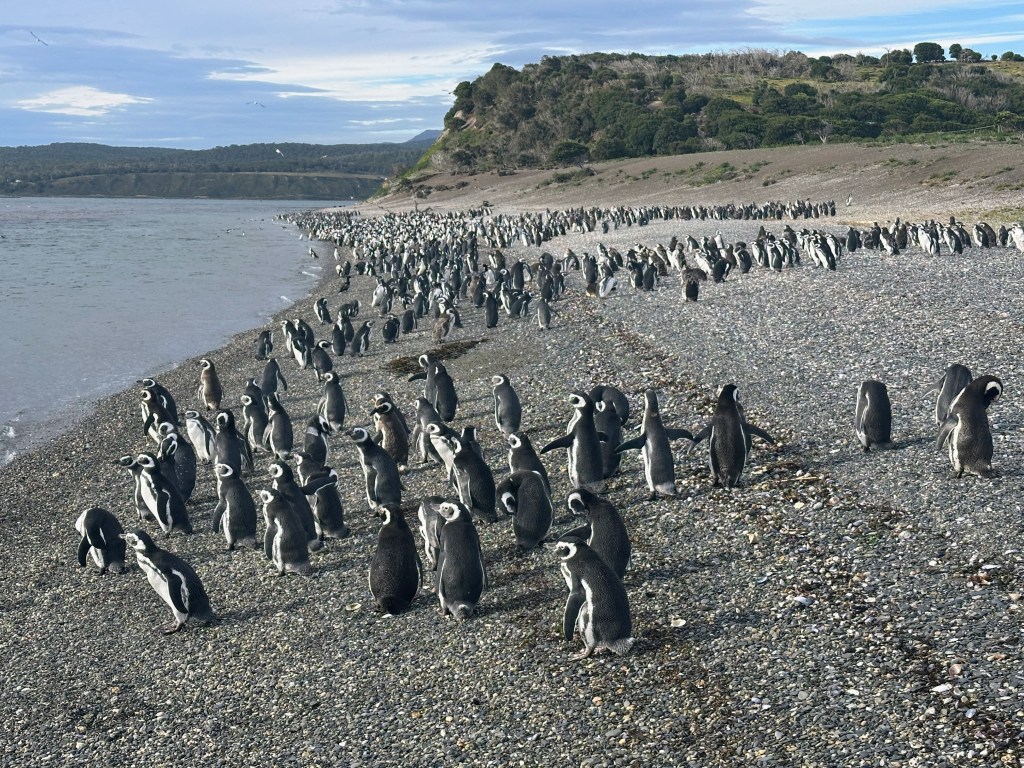
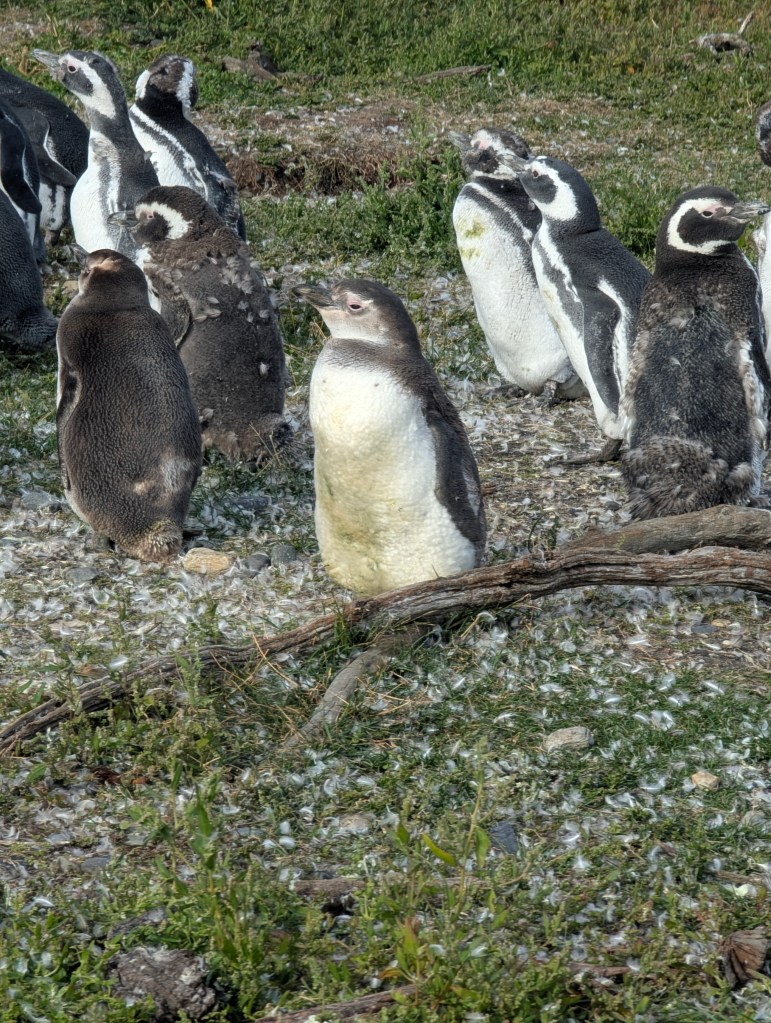
There are two species of penguins currently nesting on the island, one migratory, the other not. The migratory species, the Magellanic penguin, are the dominant species here. It is the southernmost colony of this species in Argentina. The number of breeding pairs on Martillo Island has been constantly increasing year after year, rising from 519 in 1992 to over 7,200 currently.

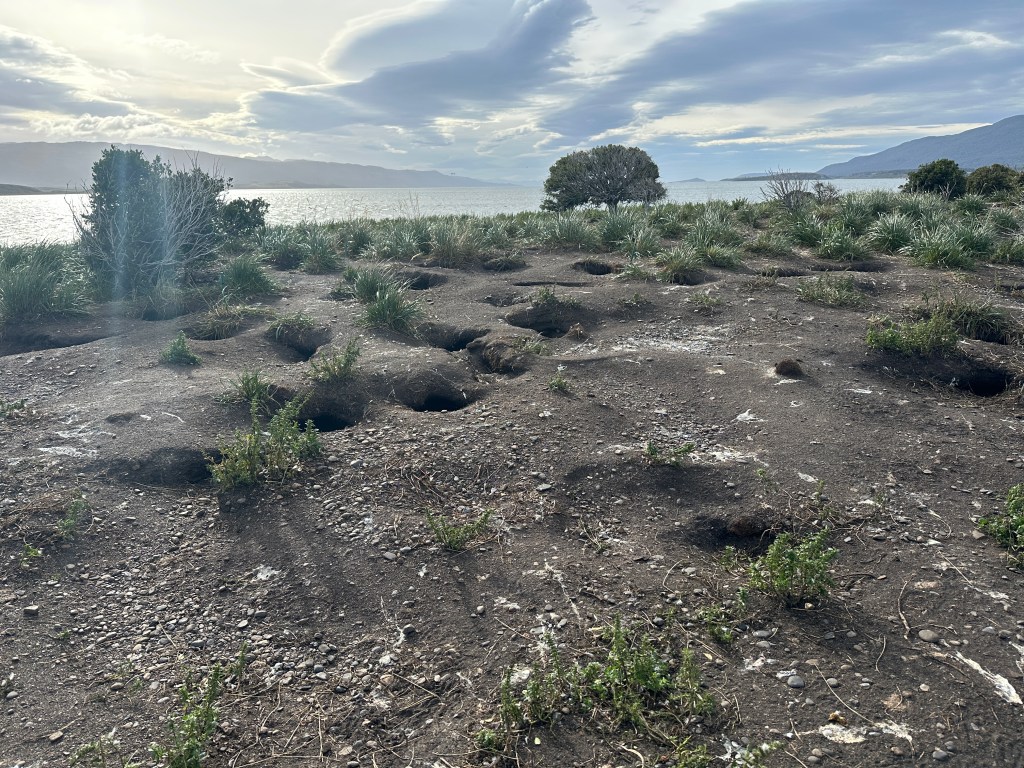
The soil on the Fuegian Islands is peaty and soft, with a high content of organic matter. This allows the species to maintain a high proportion of nesting caves of considerable size, sometimes exceeding three feet in length. The green sticks marking the burrows are those of researchers who have cameras recording the nesting and mating habits. The males and juveniles are the first to return to the island starting in September. The penguins generally will return to the same nest every year although the juvenile males may try to fight for them rather than build new. If the egg is successful, after migrating up the Atlantic coast of Argentina, always within 150 feet of shore, they will return and choose the same partner the following year.

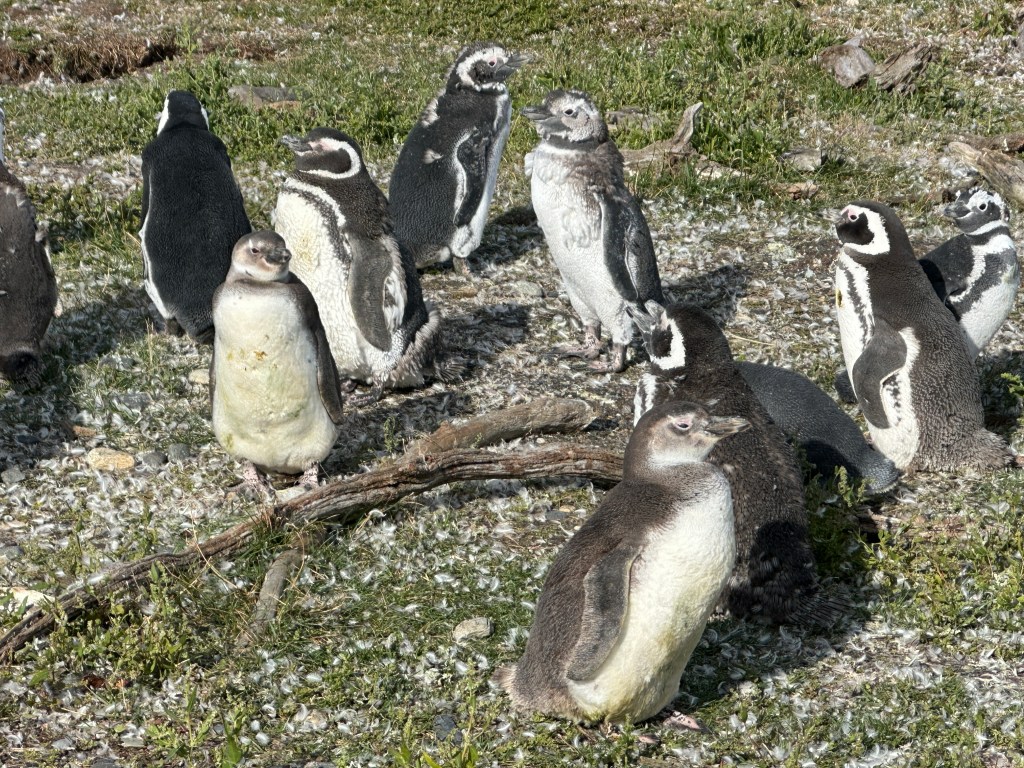
The penguins generally lay two eggs a year, but usually only one will reach adulthood. The eggs are laid in mid October and take 35 days to hatch. Both partners take turns both on the nest and subsequently feeding the juveniles for 70-100 days. The juveniles grow very fast reaching their adult size in about 60 days. The juveniles can be discerned because they have no vertical black stripe on their chest.

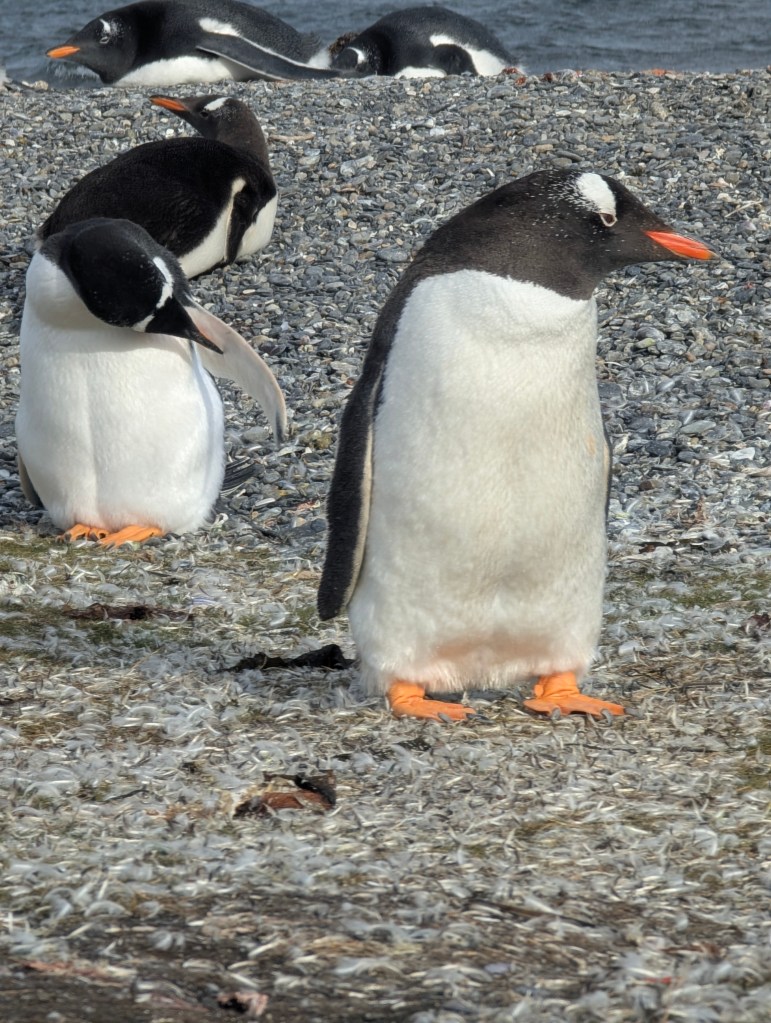
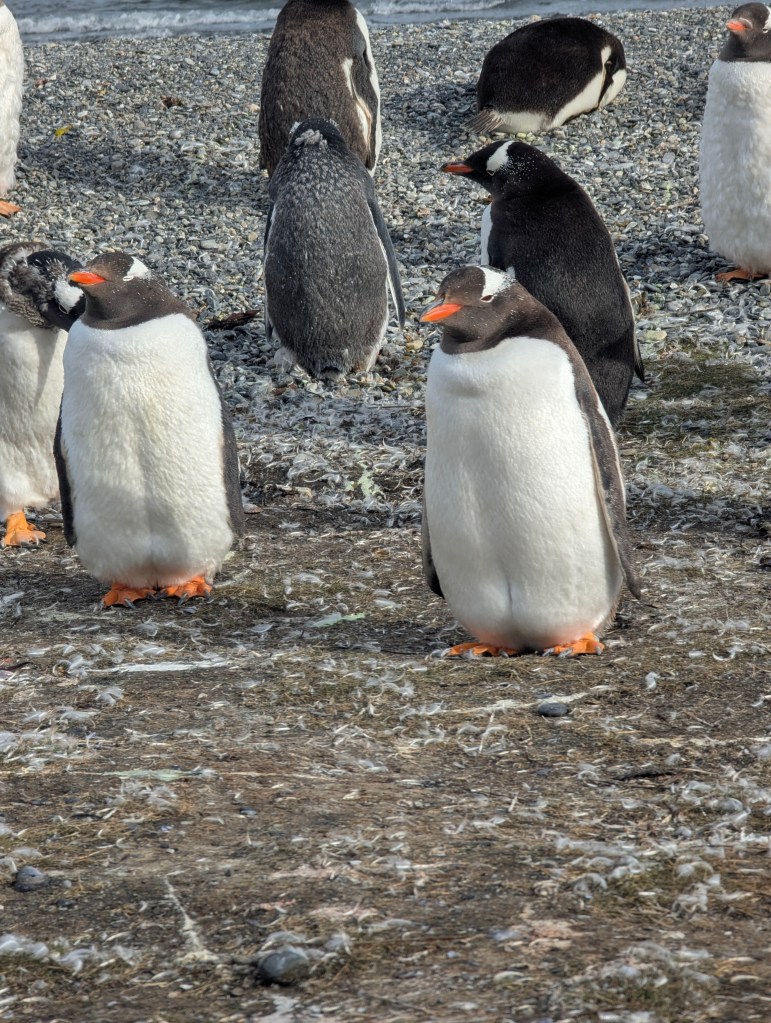
All penguins are white on the bottom and black on top, an adaptation that camouflages them from predators while swimming. The other species found on Martillo Island is a subspecies of the gentoo penguin, identifiable by the white patch behind its eye. They have red or orange beaks and feet. They can grow to 30-36 inches, making them second to the Emperor penguin in height. They have a life expectancy of up to 23 years in the wild. The gentoo are the fastest swimming penguins in the world reaching speeds up to 22 miles per hour. Another fun fact: they poop every 20 minutes.

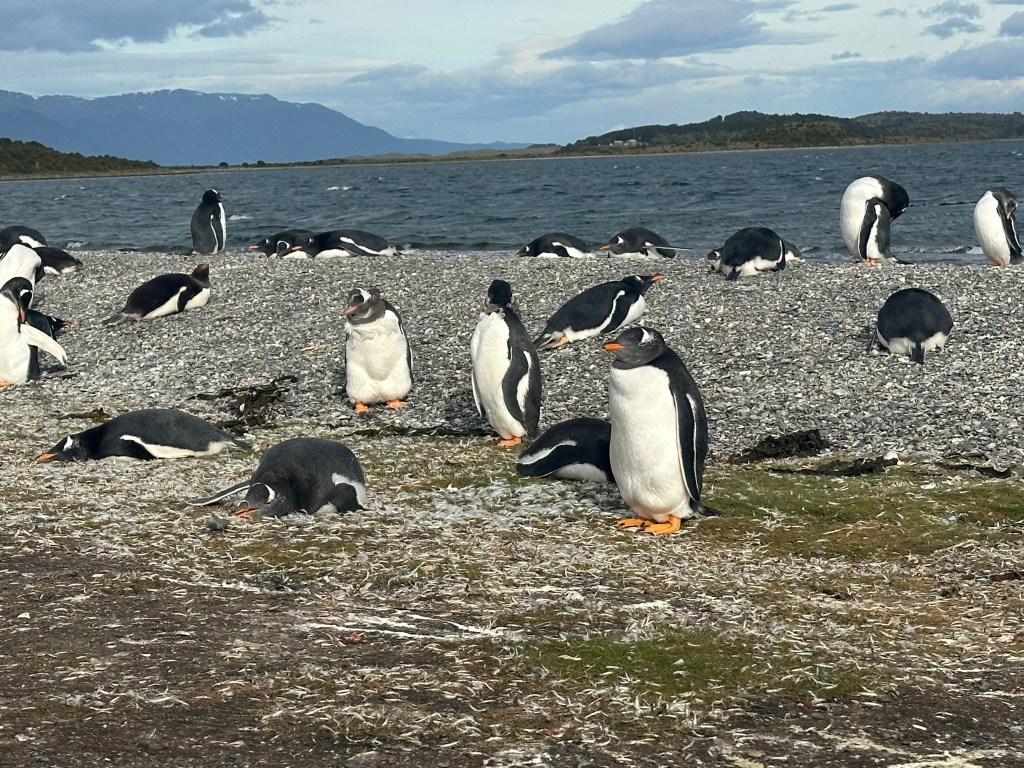
Here is the only breeding colony in South America of this subspecies. The colony has grown from a single pair in 1992 to over 180 currently on the island. They do not migrate. They are able to cohabitate with the Magellanic penguins because they do not fight for nesting space. Whereas the Magellanic penguins require soft ground to dig their nests, the gentoo need firm ground and build nests on the surface using pebbles and shells.

Currently the both species are molting, a process that requires 10-15 days.

They fast while molting because they are not yet waterproof and therefore cannot fish. While they are fasting they sometimes regurgitate stomach bile leading to the greenish hue seen on their underside.

The gentoo juveniles have a grey fuzz, not real feathers yet like the one in the far middle below.

No they are not looking at us looking at them. The gentoo hate the wind and stand with their backs to it.

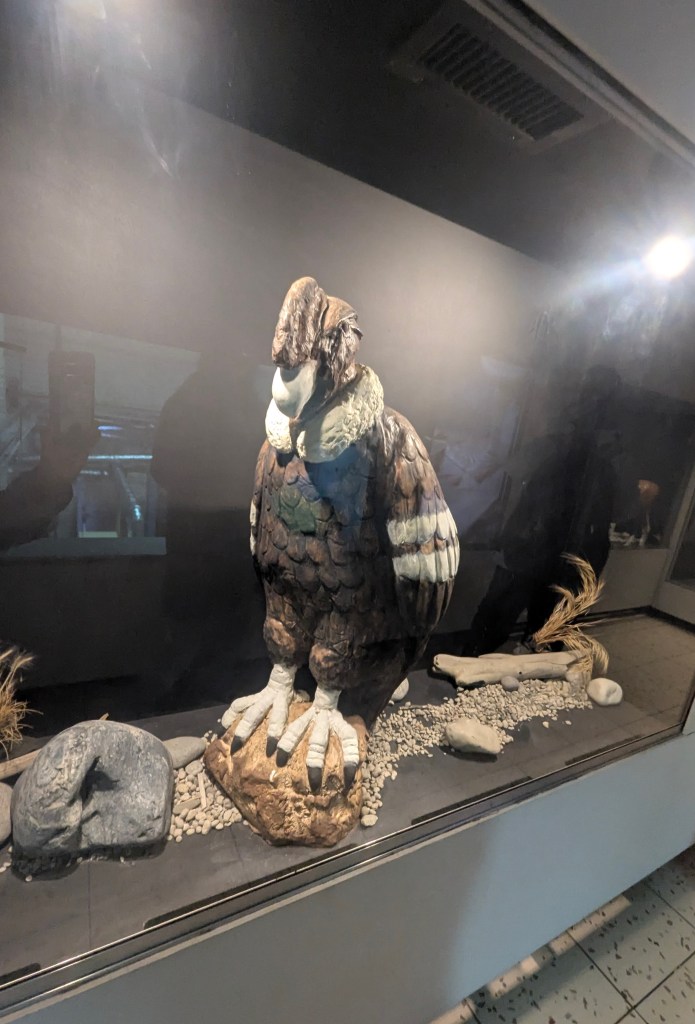
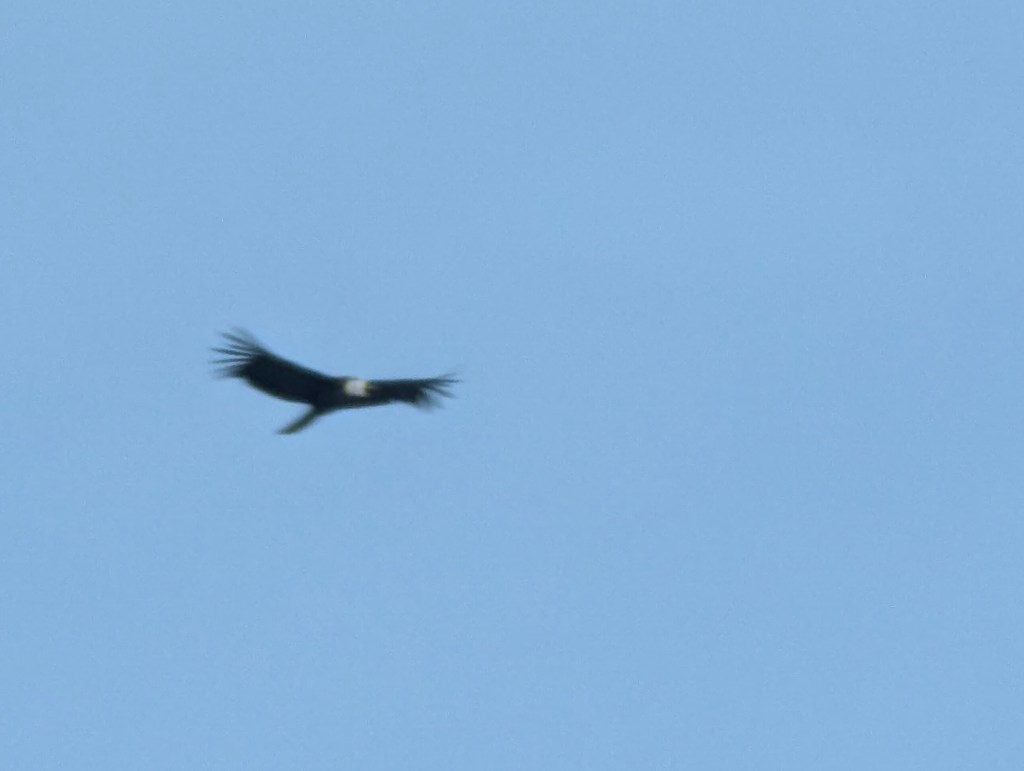
While on the island we also had the great luck to see not one, but five condors flying overhead. With a wingspan of nearly 11 feet, Andean condors are one of the world’s largest flying birds. My pictures are unfortunately of poor focus because they are so high in the sky.
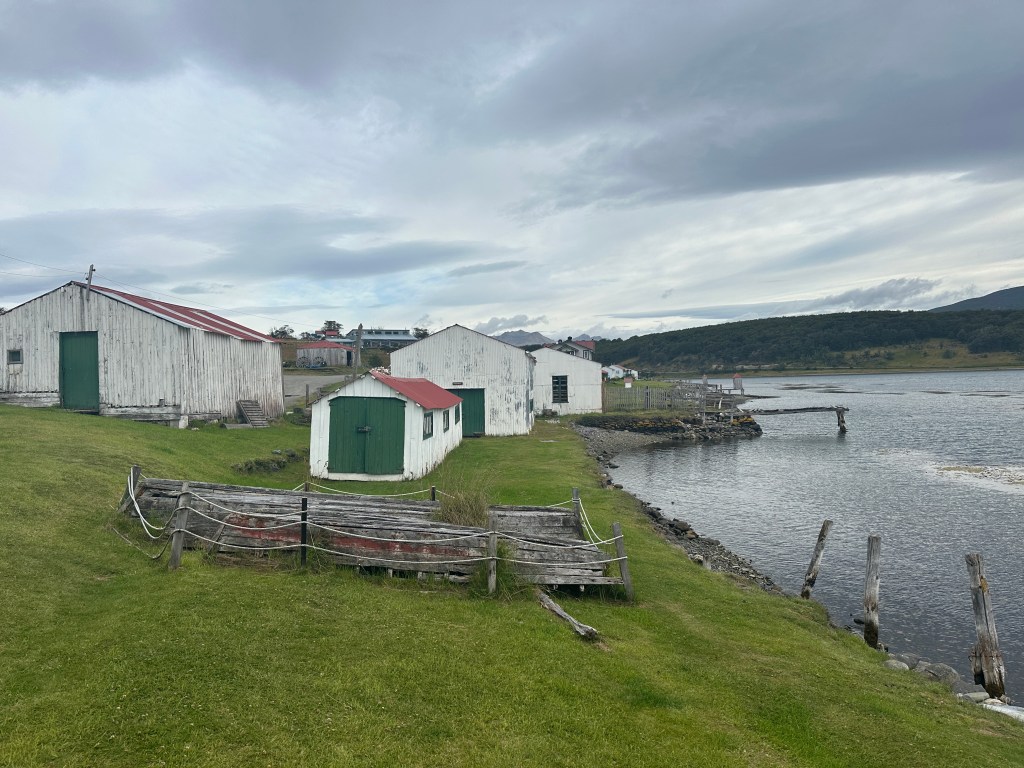
Our hour on the island had flown by, and the boat returned for us carrying the other 20 visitors. Note how they cluster into a group as, we had also been instructed; as a group we are not perceived as predators as we would be as individuals. I only wish I could include videos here; they are so much fun to watch swimming and playing in the waves.

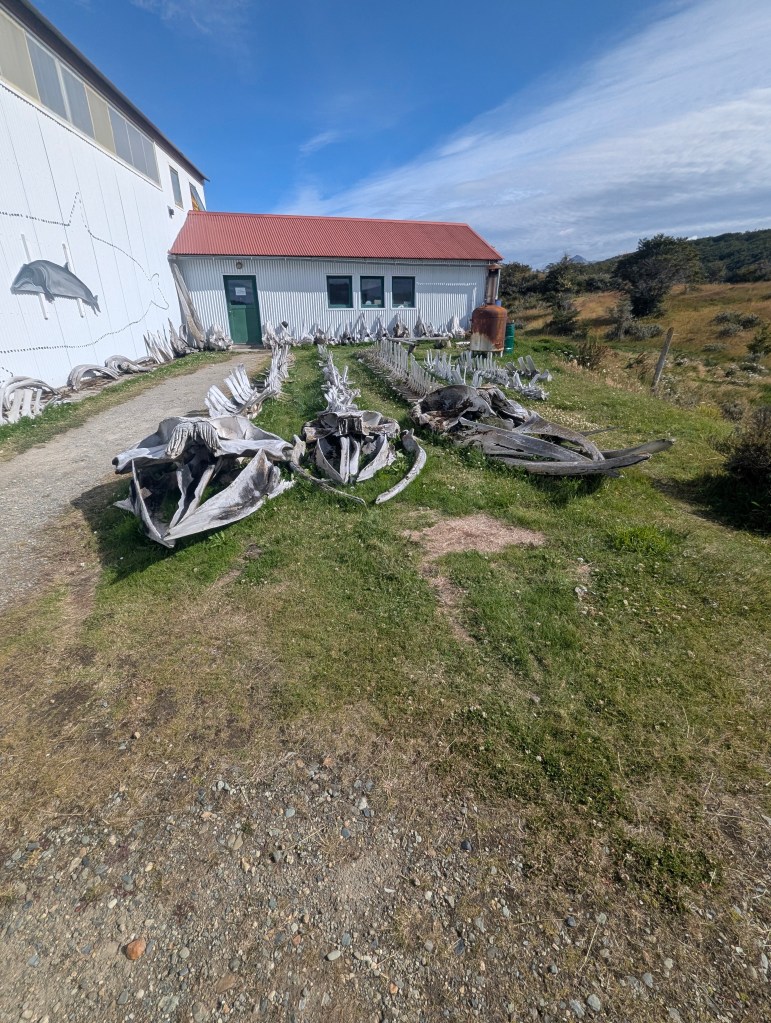
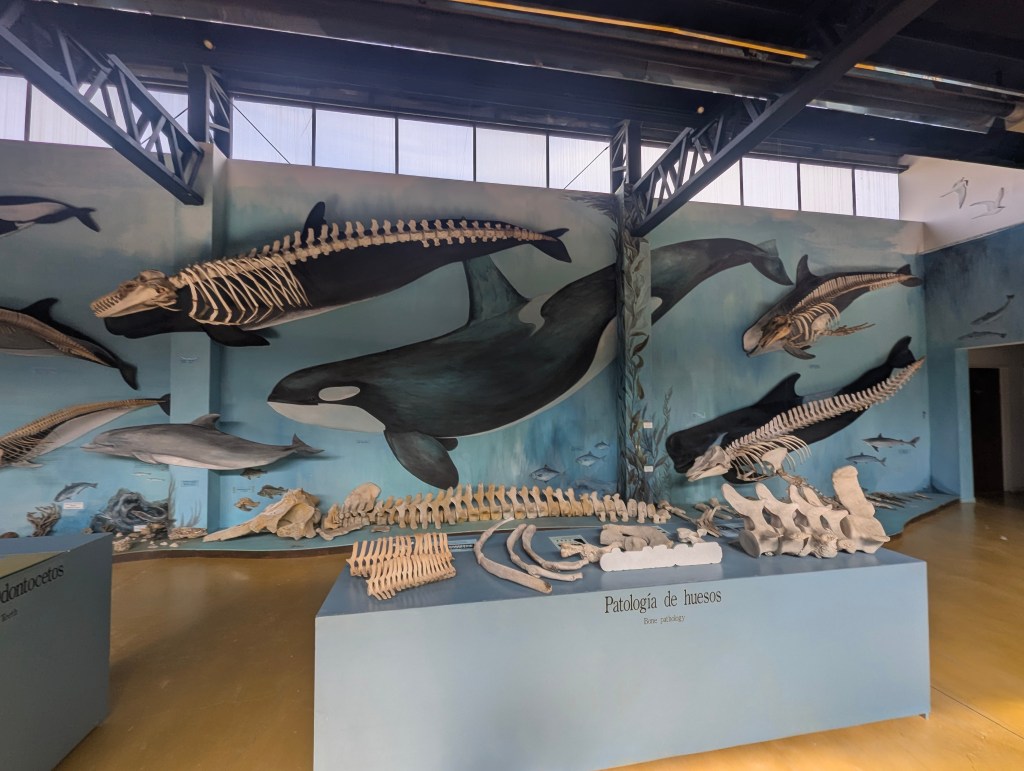
Once back at the Haberton Ranch were were treated to an hour-long tour of the museum and research facility of aquatic mammals and birds.

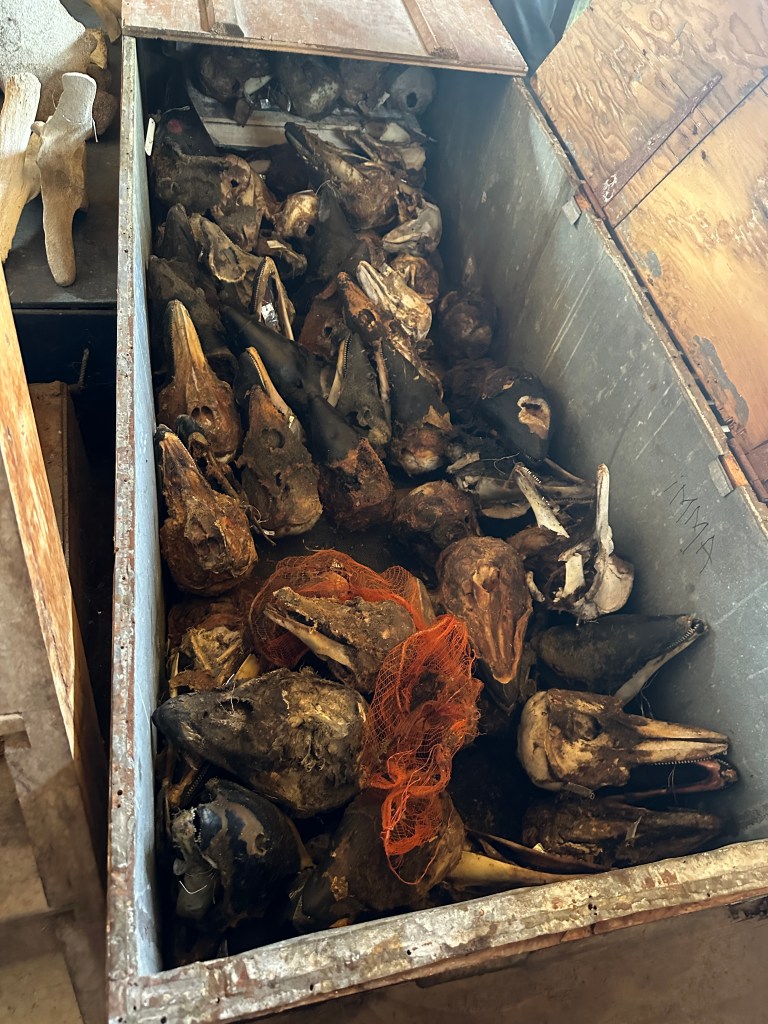
Here skeletons of animals found dead are cleaned

and studied.

One fun fact we learned is that killer whales are the only mammals besides humans to go through menopause. The grandma whale’s role is to teach the pups how to hunt.

Once the boat returned with our other half, we boarded the bus back for the nearly two hour return trip to Ushuaia where we had a delicious lunch prior to embarking a boat for our afternoon tour of the Beagle Channel. We noted the many cruise ships, all of 300 passengers or less to protect the biodiversity, headed for Antartica.

There is no net fishing in the Beagle Channel to protect the biodiversity. Tourism is the third largest source of income for the province behind fuel and fishing. Manufacturing is the fourth.

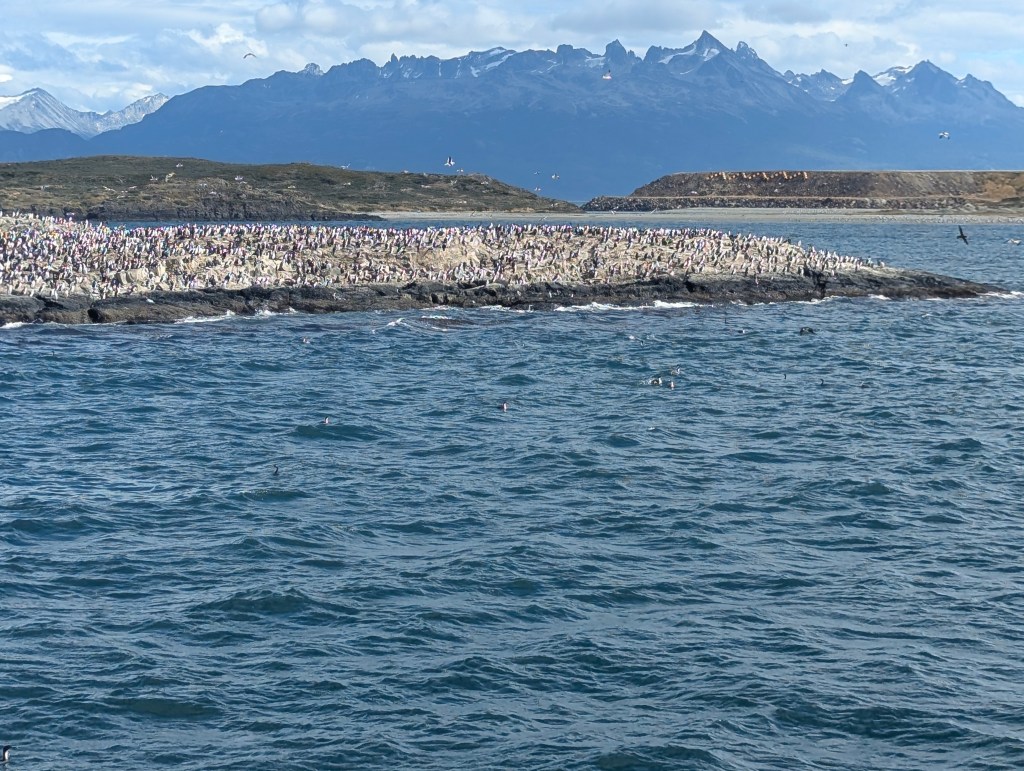
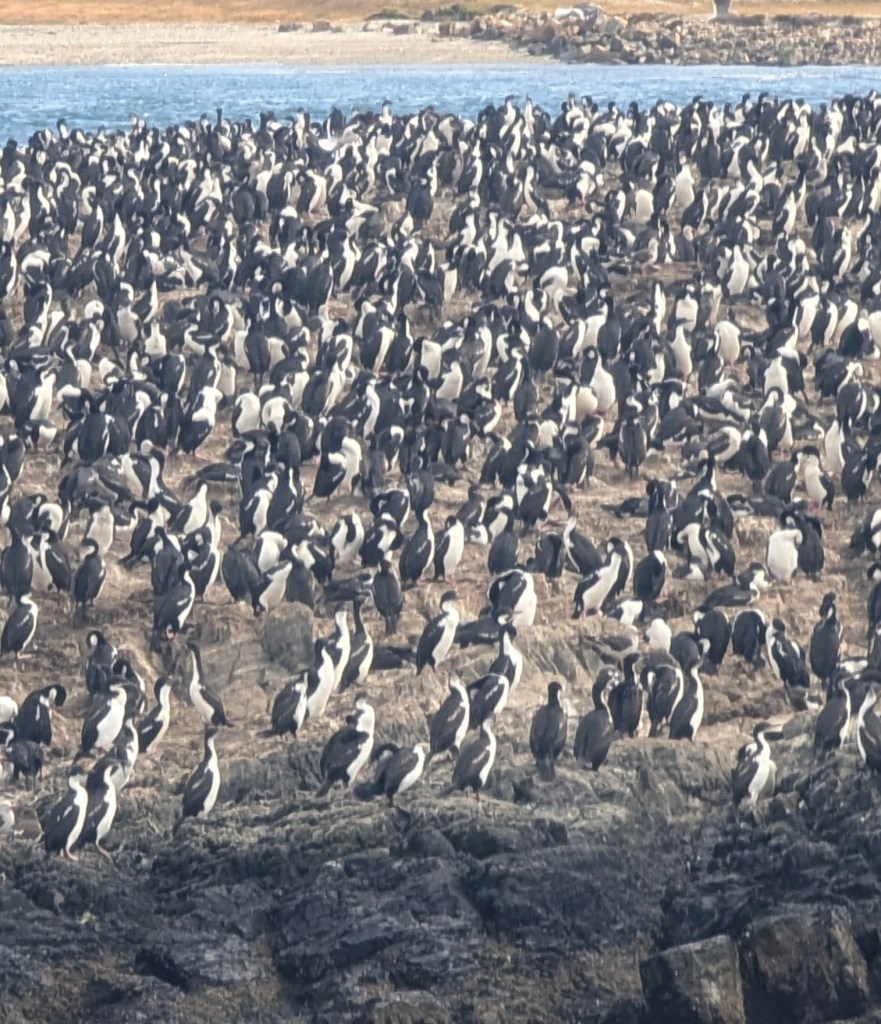
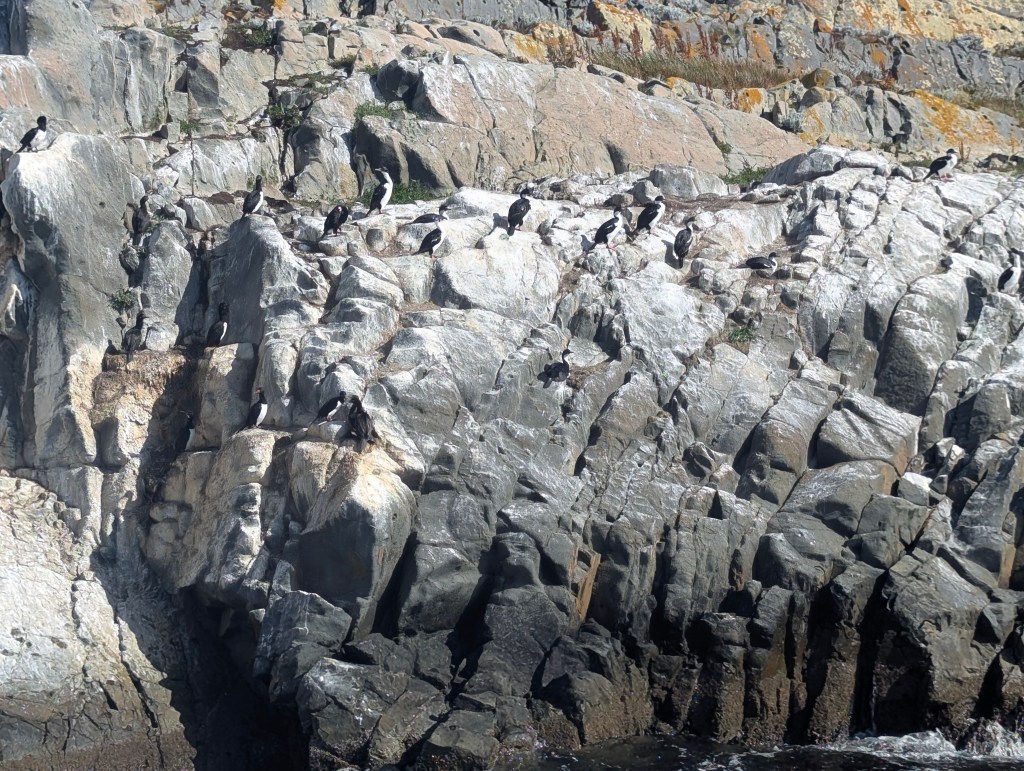
Our first stop was Cormorant Island, a meeting ground for the Imperial cormorants. Although they look like penguins: black on top and white on the bottom, they are actually more closely related to pelicans. They can be distinguished visually from penguins in that they fly while penguins cannot. They nest on the surface but unlike penguins, they do not use pebbles or shells but rather feathers, sticks, seaweed, ie softer items. The Imperial species can be recognized by their white collar and chest. After seagulls, they are the second most numerous sea birds locally .

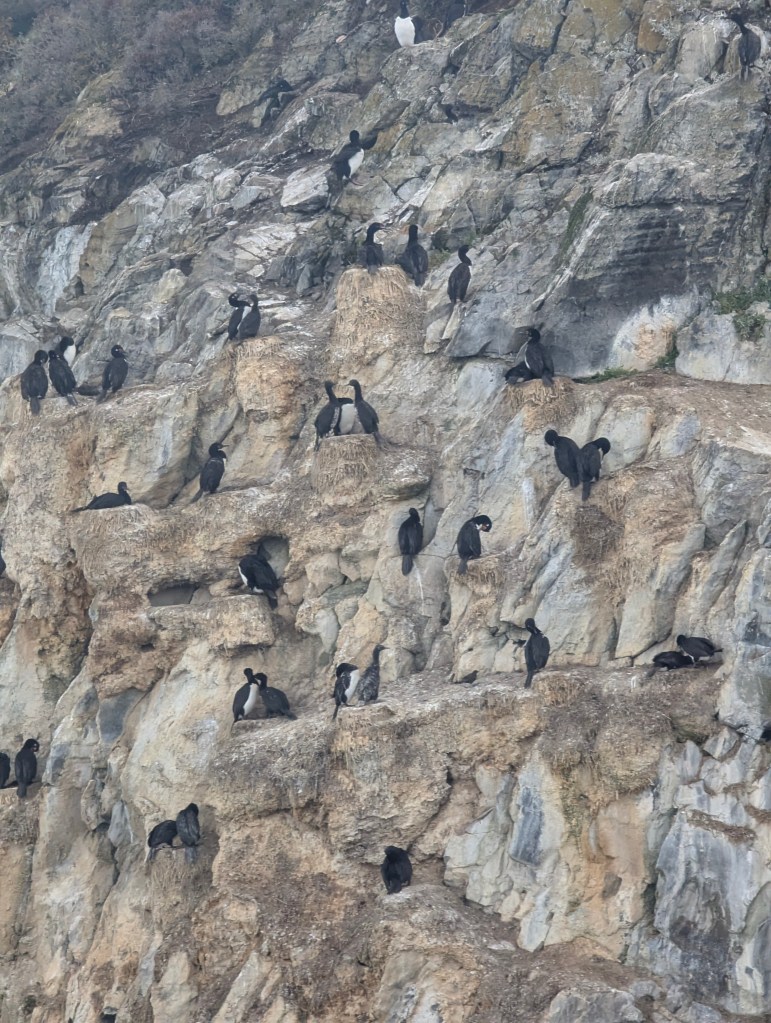
Our next stop was to visit Rocker Cormorants, much smaller than the Imperials; they nest on cliffs. They can be distinguished by their black collar, black heads, and red rings around their eyes which grow larger in size during mating season.

Both species of cormorants live about 10 years. They reach maturity at about age 3, then the males become scouters looking for a nesting area. They mate for life. The young have a grey fuzz then molt and develop their mature colors at about the age of one year. On the third island we visited the two species cohabitate.

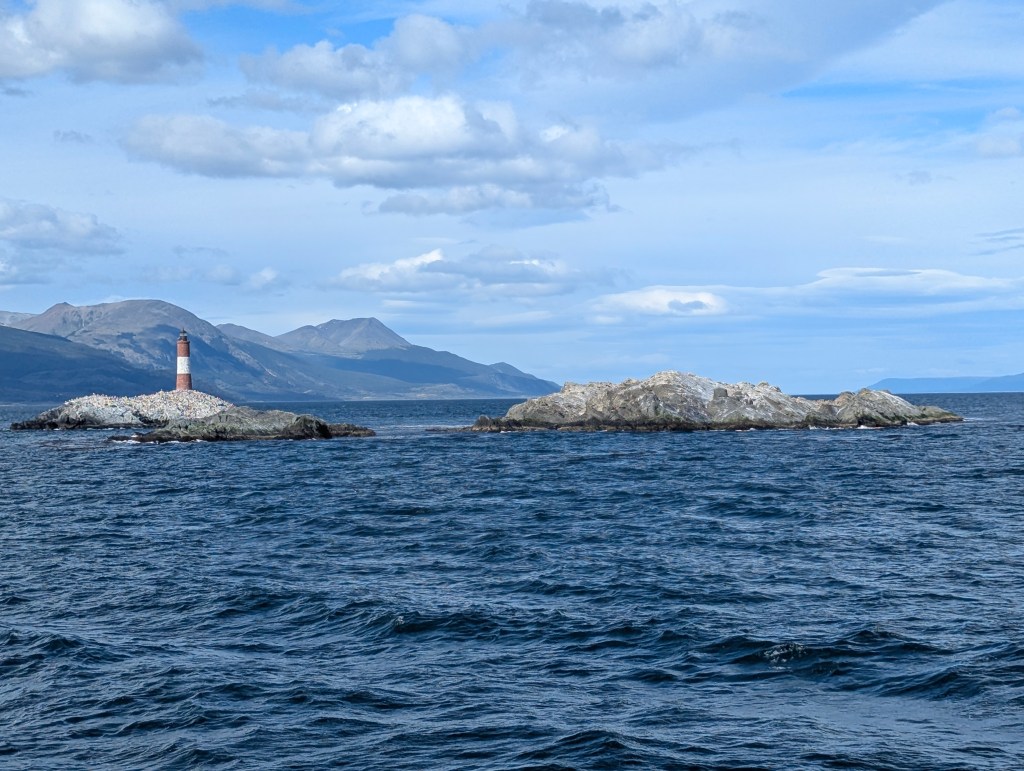
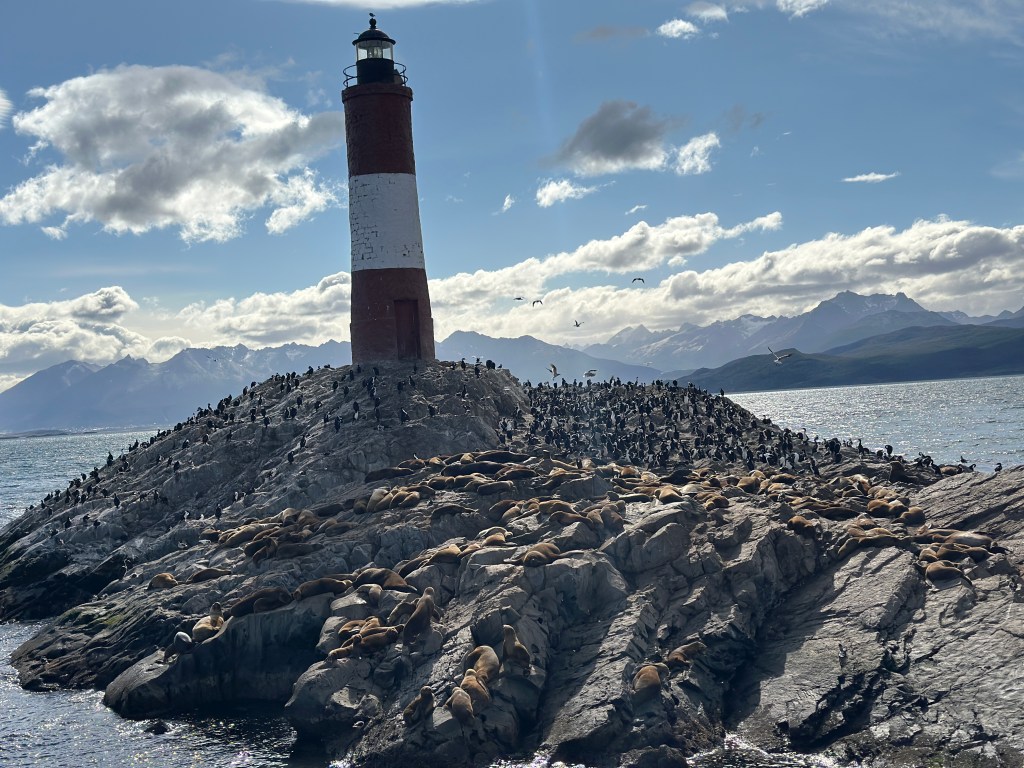
Next stop was  Les Eclaireurs (the Explorers) Lighthouse, named by French explorers who developed the site starting in 1918. The lighthouse was put into service on December 23, 1920 and currently is still in operation, is remote-controlled, automated, uninhabited and is not open to the public. Electricity is supplied by solar panels. 

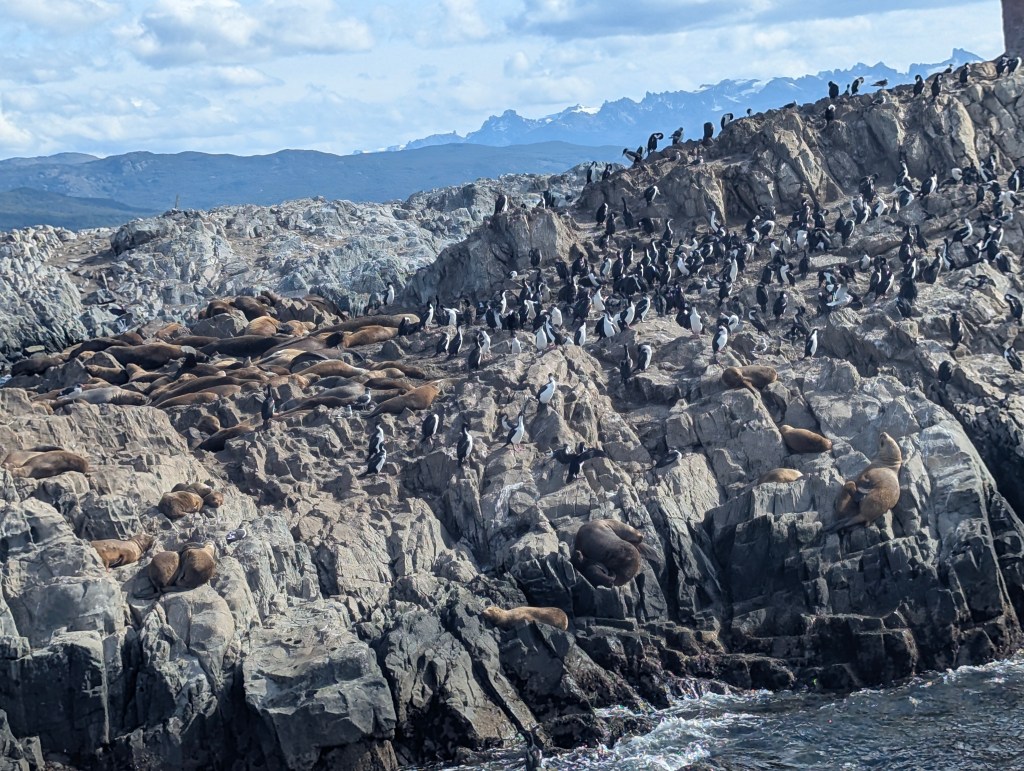
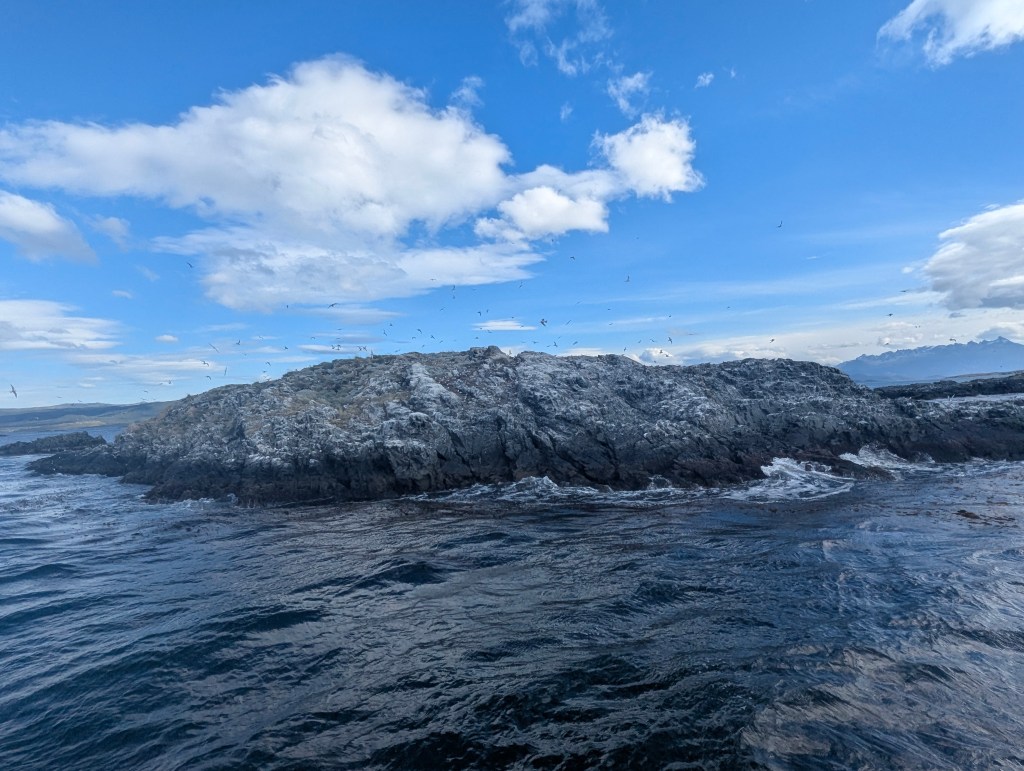
On 22 January 1930, Monte Cervantes, a German cruise ship, departed Ushuaia and within 30 minutes struck some submerged rocks near the lighthouse. The ship could not be dislodged and began to sink. The lifeboats were lowered and 1,200 passengers and 350 crew were removed from the ship. Monte Cervantes sank 24 hours later, and while all the passengers and crew were able to leave the ship before she sank, her captain subsequently committed suicide. The remainder of the crew and all of the passengers were taken ashore with the help of seven Argentinian and three Chilean naval ships . At the time Ushuaia had a population of 800 inhabitants. They housed the 1,500 survivors for three days before another ship came for them. Today this small island is home to Imperial cormorants and sea lions.

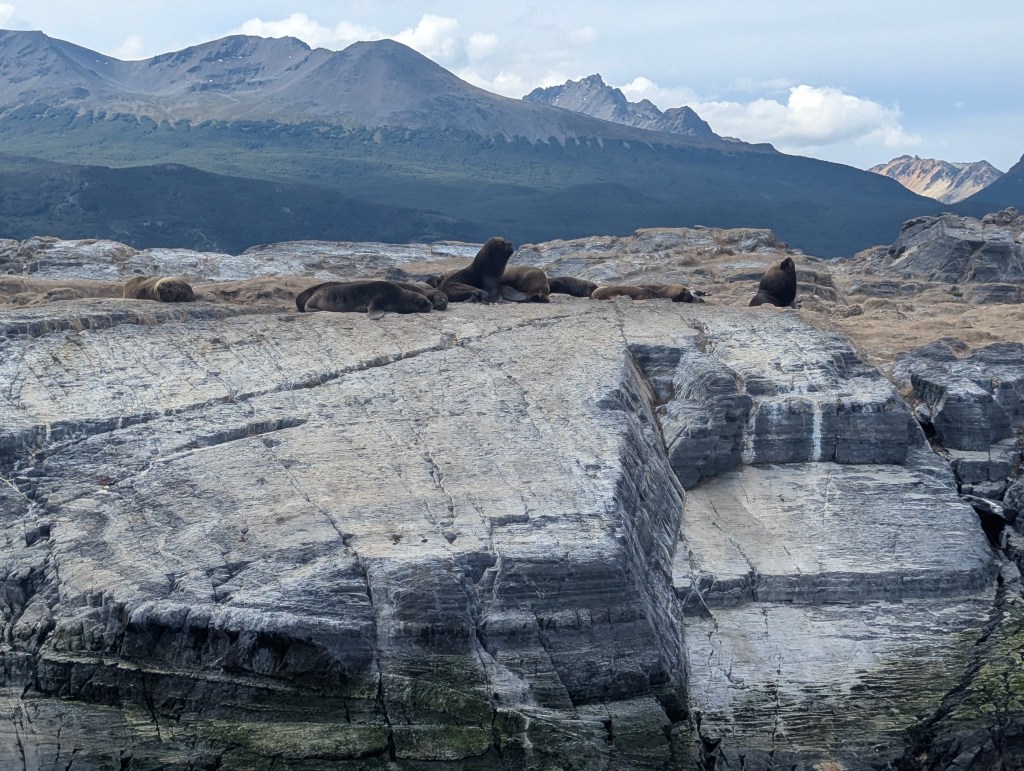
Sea lions generally do not eat birds because they cannot digest feathers, so the two can live side by side. Sea lions generally eat fish.

South American male sea lions fast the full three months of the mating season because if they leave to hunt, they will loose their female partners. They can weigh up to 650 pounds. Babies are born with little fat and cannot swim; they must be fed at first. They can gain as much as ten pounds a day. Babies remain with their mother for up to one year. They do not reach full maturity, however, until about age six when they develop neck fur.

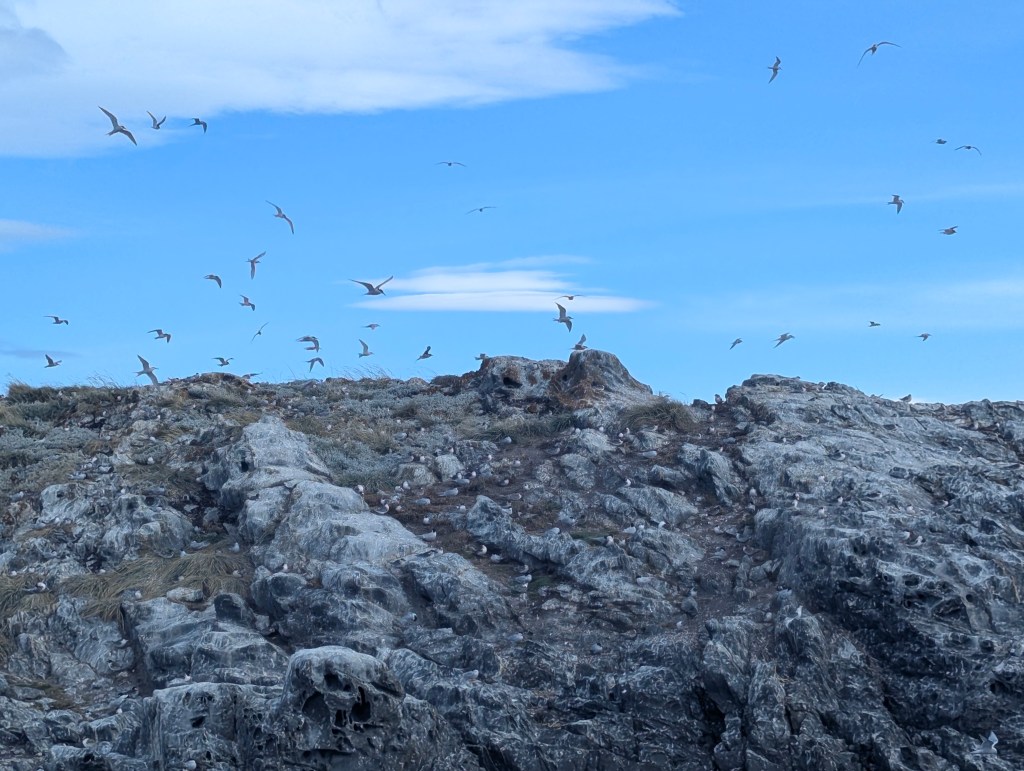
Our final stop in the channel was an island home to terns. South American terns are recognized by their black feathers on the top of their heads with all white bodies. They have red or orange beaks and feet. They are migratory and live here in the channel only for nesting. Like most sea birds, they mate for life. As a group they have an interesting behavior: to protect their young from predators, they make a huge screeching racket and fly en masse above their young. Again, I wish I could include a video.

We then had an added treat to see two-hair sea lions, so named because they have a second layer of hair, which is needed because they migrate even further south. They are smaller than South American sea lions, have smaller eyes and pointier noses.

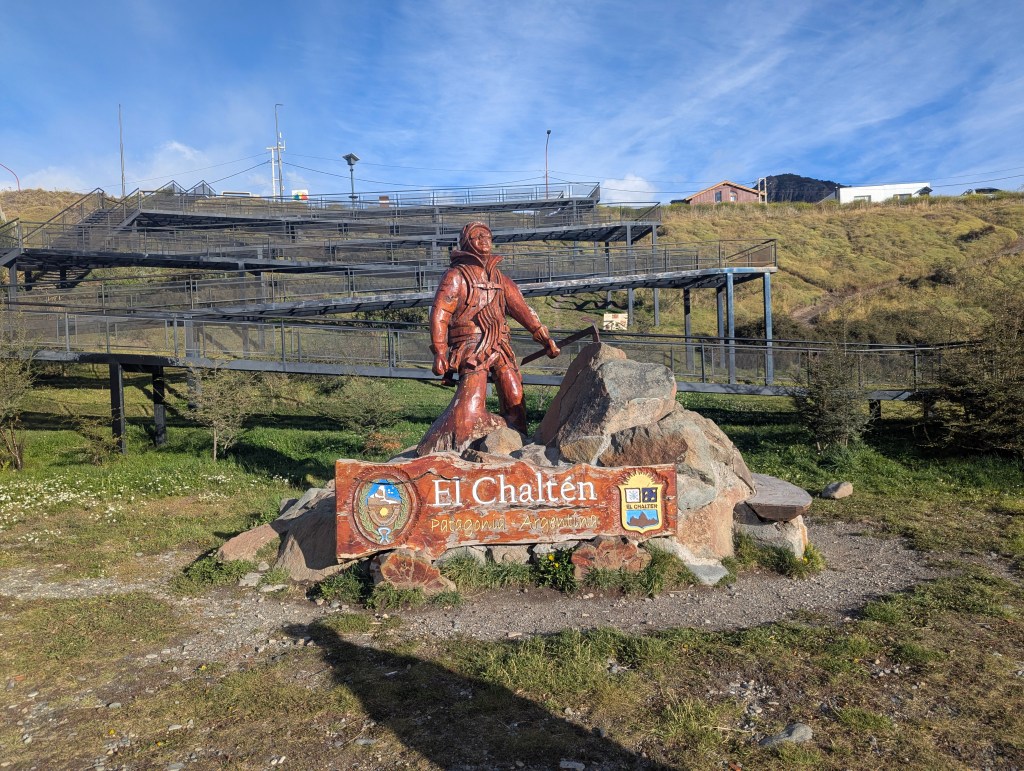
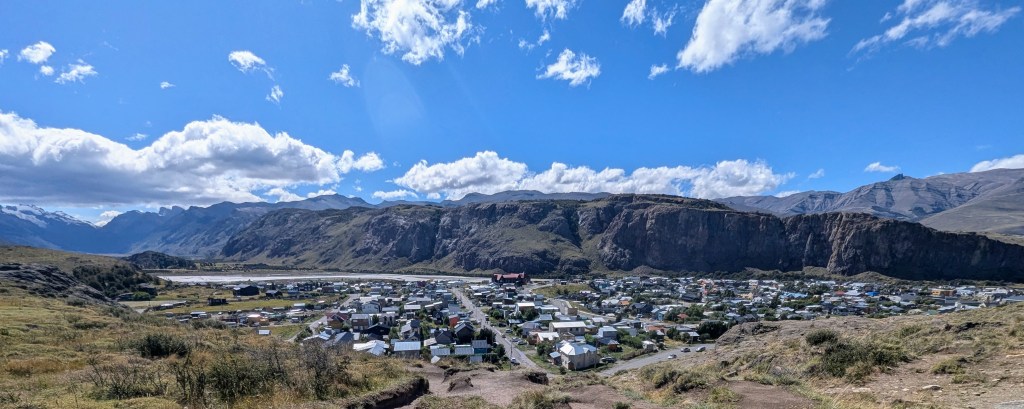
The next day we flew to El Calafate and then transferred via a 3 hour van ride to El Chaltén, a village within Los Glaciares National Park in Argentina’s Santa Cruz province. It is a gateway to trails surrounding the peaks of Cerro Torre and Mount Fitz Roy. Founded in 1985 and with a current population of under 2,000, the village boasts worldwide popularity for the outdoor adventures available. Having arrived late in the day, we settled into our home for the next few days, Kaulem Hosteria, and headed straight for dinner, which was a delicious fresh trout covered in a spinach and mushroom gratin and accompanied with ratatouille, so yummy. Have I mentioned we are absolutely loving the food here?

Kaulem Hosteria

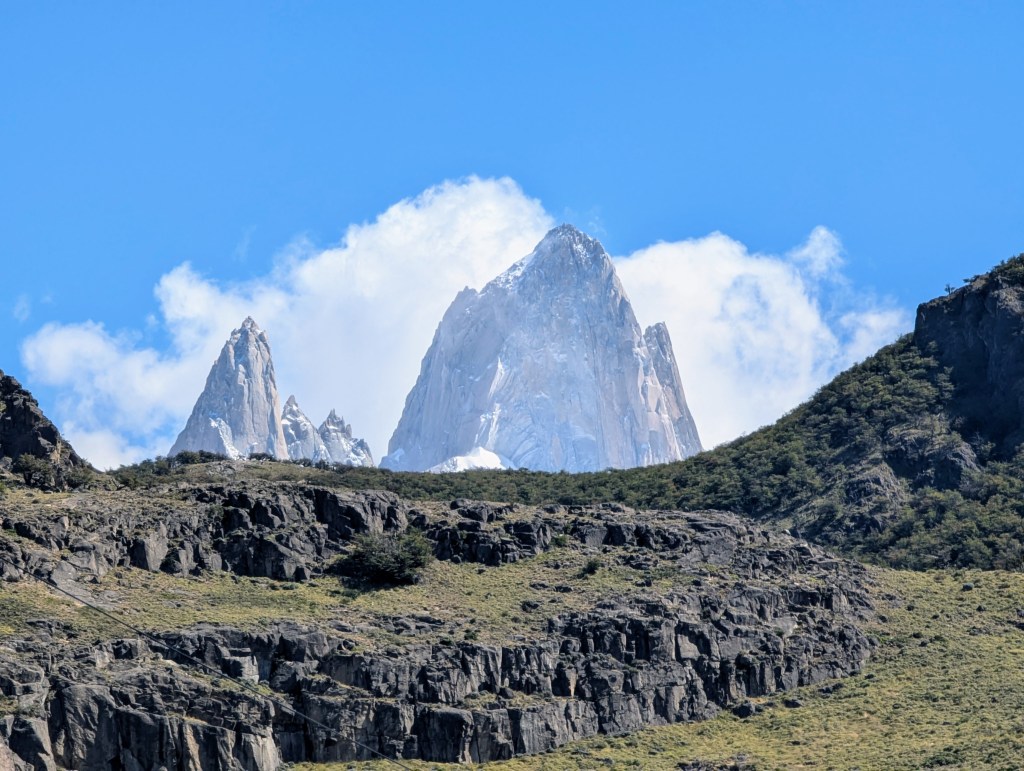
There are several popular trails from which to choose. The most popular is Cerro (Mountain) Fitz Roy trail to get closer to the famous mountain which looms over the town. Standing on the border with Chile at over 11,000 feet, it was first climbed in 1952. The first Europeans recorded as seeing Mount Fitz Roy were the Spanish explorers who reached the shores of Viedma Lake in 1783. Argentine explorer Francisco Moreno (1852-1919)  saw the mountain on 2 March 1877; he named it Fitz Roy in honor of Robert FitzRoy who, as captain of HMS Beagle, had travelled up the Santa Cruz River in 1834 and charted large parts of the Patagonian coast.

Cerro Fitz Roy

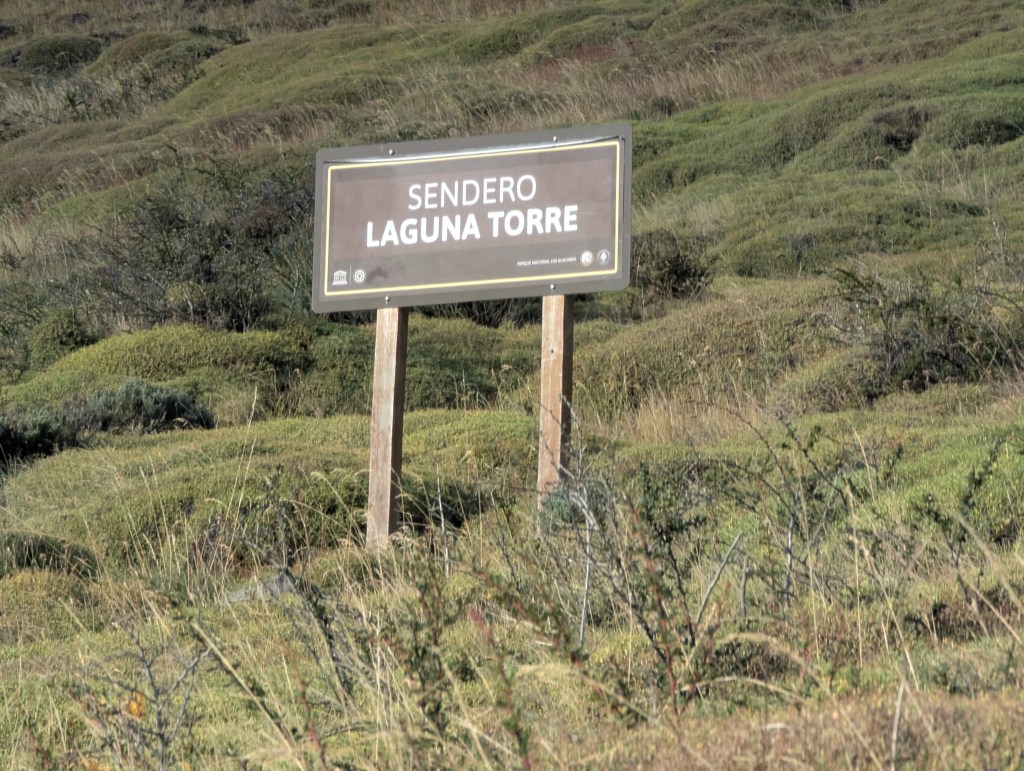
However that trail is considered advanced and is nearly 9 miles long round trip, so we chose the less difficult Láguna Torre route, headed for the lake, a 7 mile round trip. The hike starts past our hosteria at the base of town requiring stairs before even hitting the trail!

The start of the trail was a bit of a steep climb in a rocky, dry landscape despite rain the night prior.

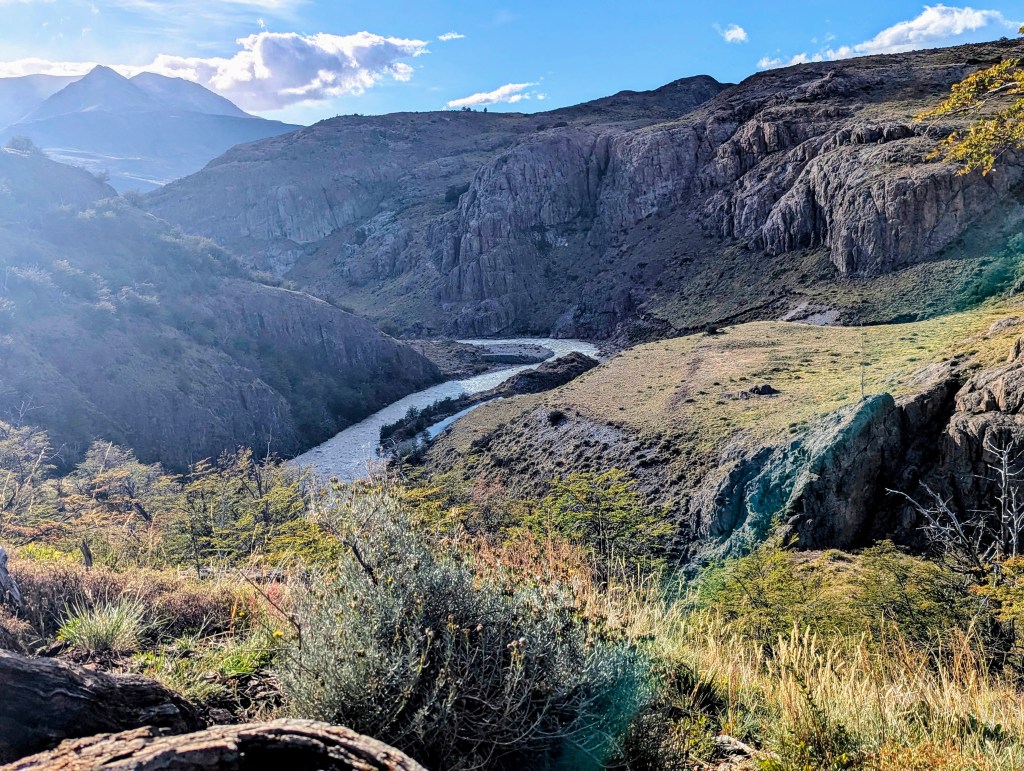
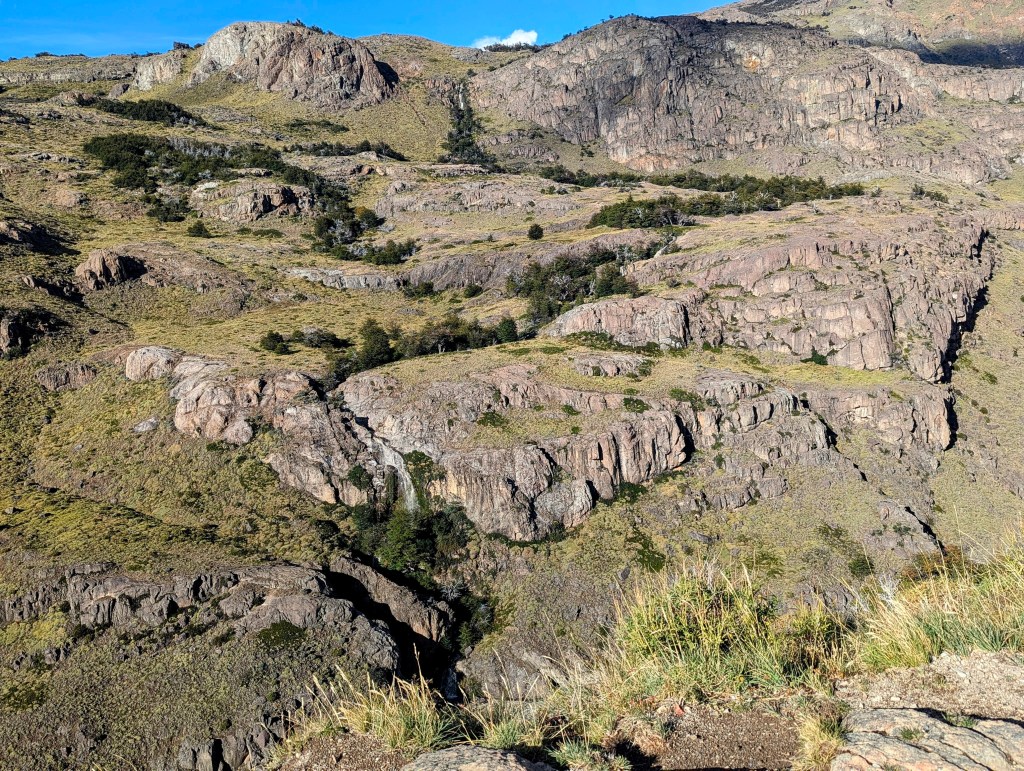
Our first Mirador (lookout) was a view of the Las Vueltas River.

Las Vueltas River

and the Cascada (Waterfall) Margarita. Looking closely one can actually see three areas of waterfalls.

Cascada (Waterfall) Margarita

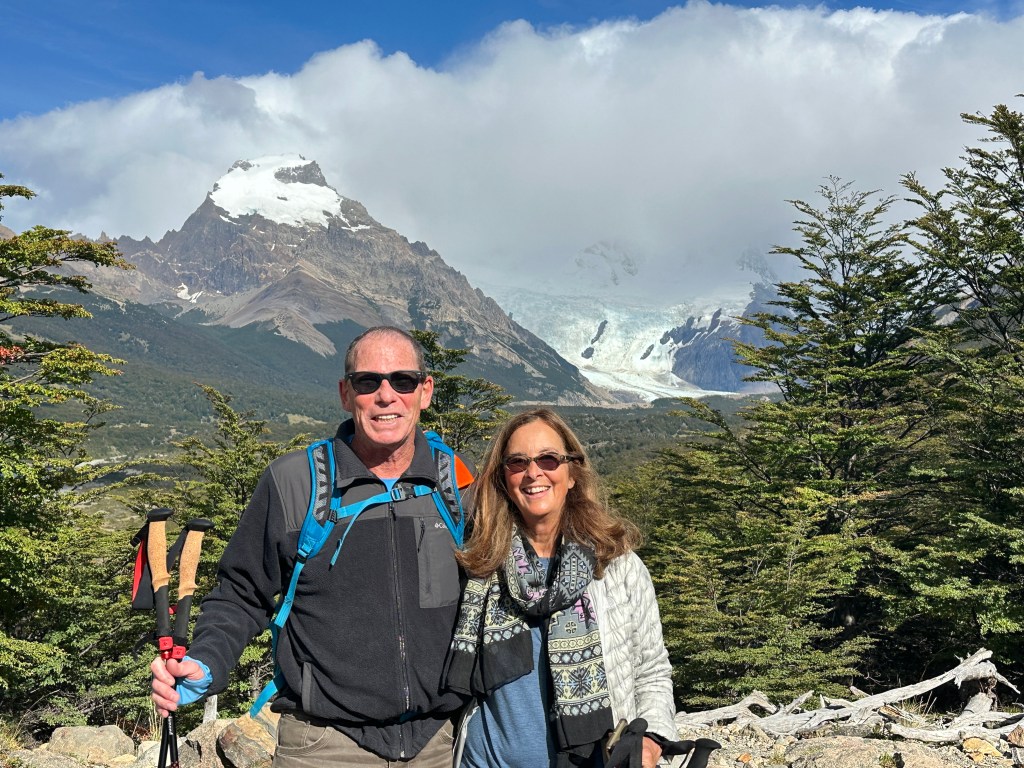
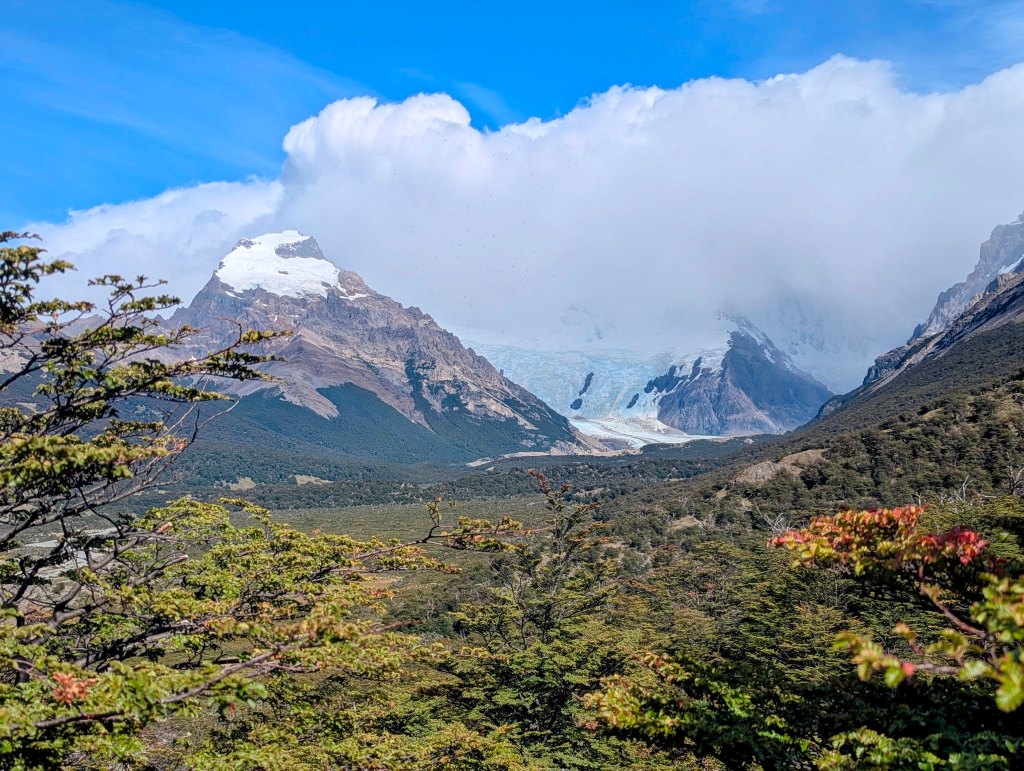
After about 1.8 miles of rocky uphill hiking, we reached the Mirador Cerro Tore (Lookout Mount Torre).

Unfortunately most of the mountains were covered in clouds.

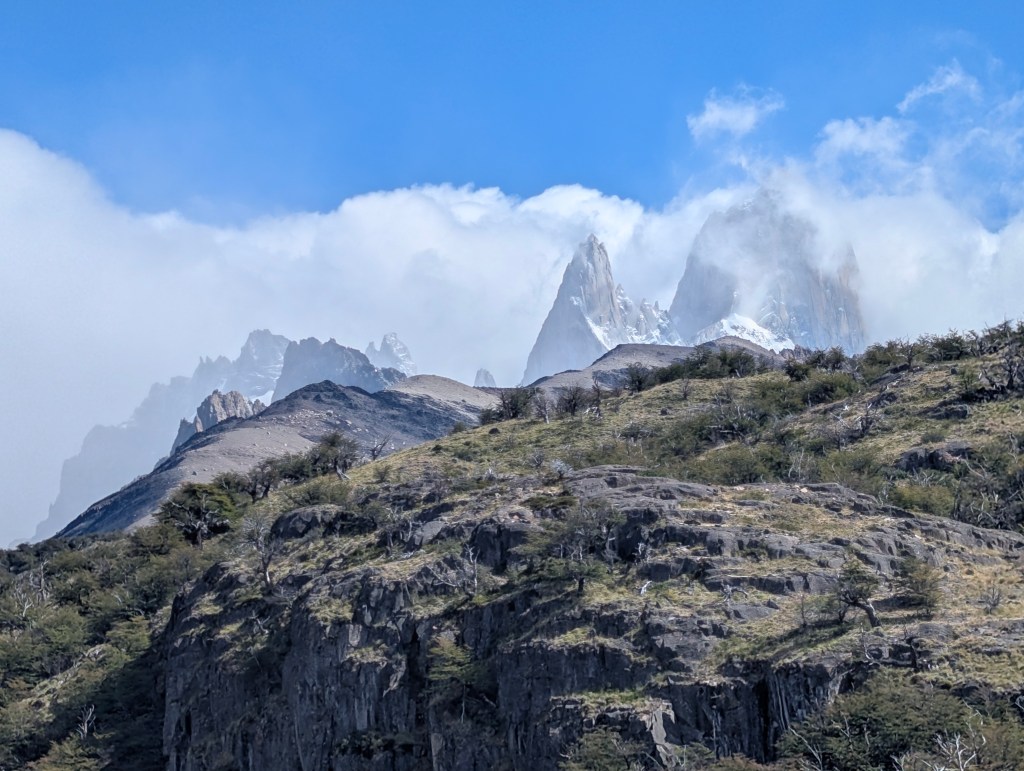
We hiked about another half mile when we realized that realistically we could make it to the lake, but we were never going to make the entire roundtrip, so we turned back. The weather was cloudy and threatening rain. As we descended, we got a few glimpses of Fitz Roy peaking out from the clouds.

We again passed Cascada Margarita.

And enjoyed to river views of the descent. And finally El Chaltén came into sight.

We were a bit exhausted from the hike and were happy to enjoy a well deserved steak dinner, our first in Argentina, in town that night. The next day it rained on and off all day, but due to the challenging terrain of the hikes here, we were not too disappointed to be forced in to catch up on correspondences and mosey about town whenever there was a bit of a break in the weather.

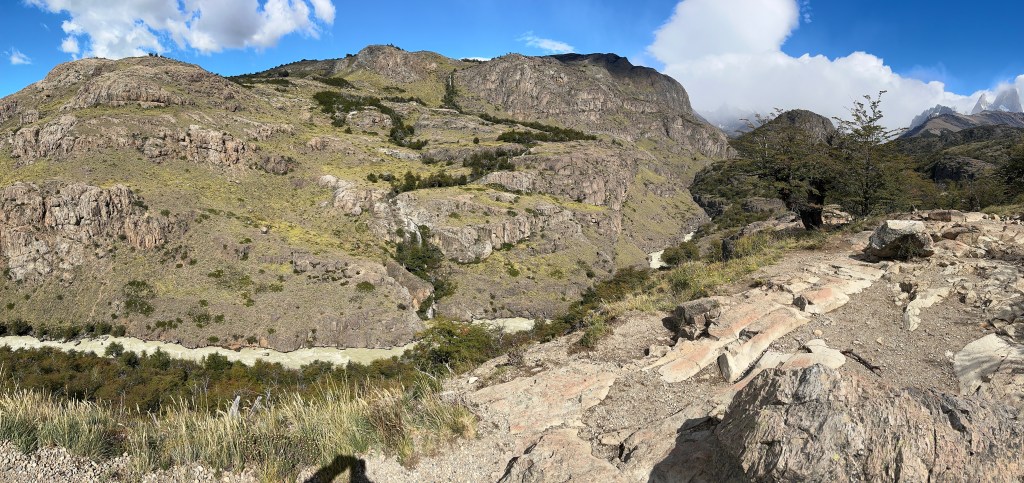
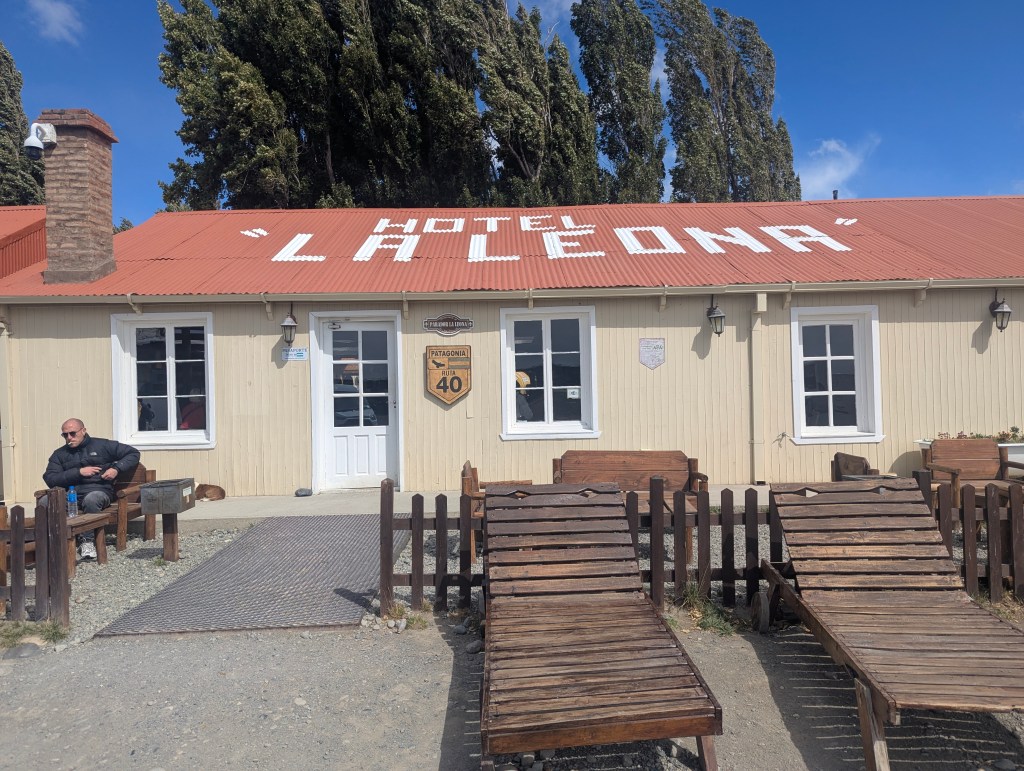
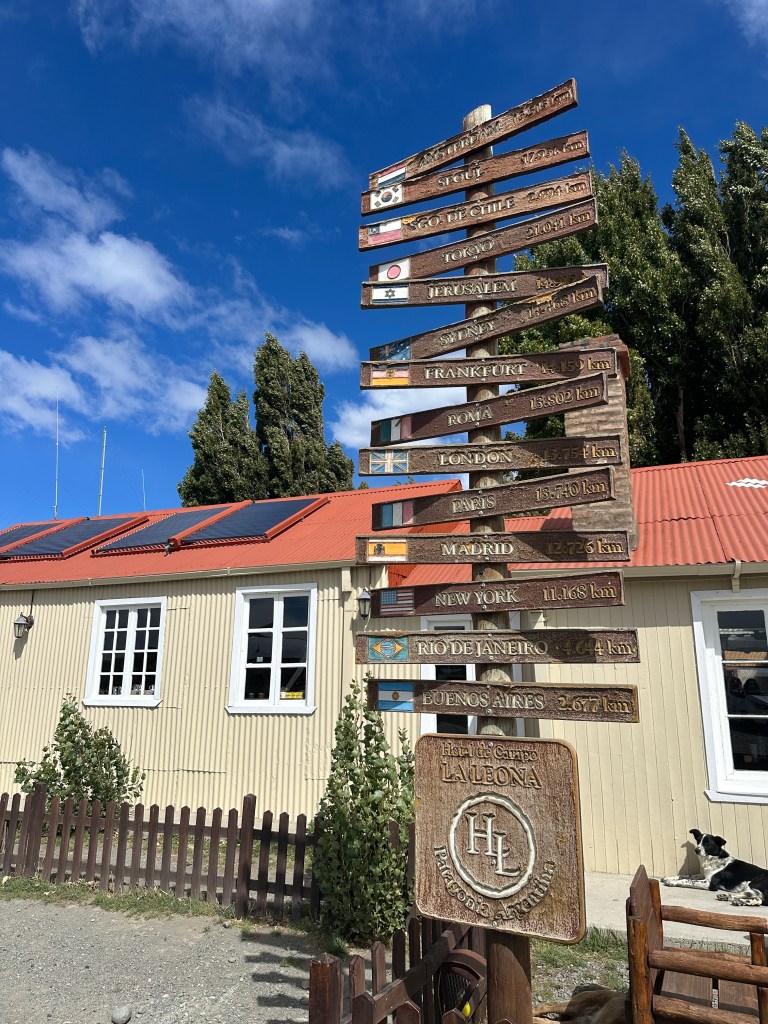
The following day we headed by van back to El Calafate. We stopped about half way on the 2.5+ hour trip at Hotel La Leona.

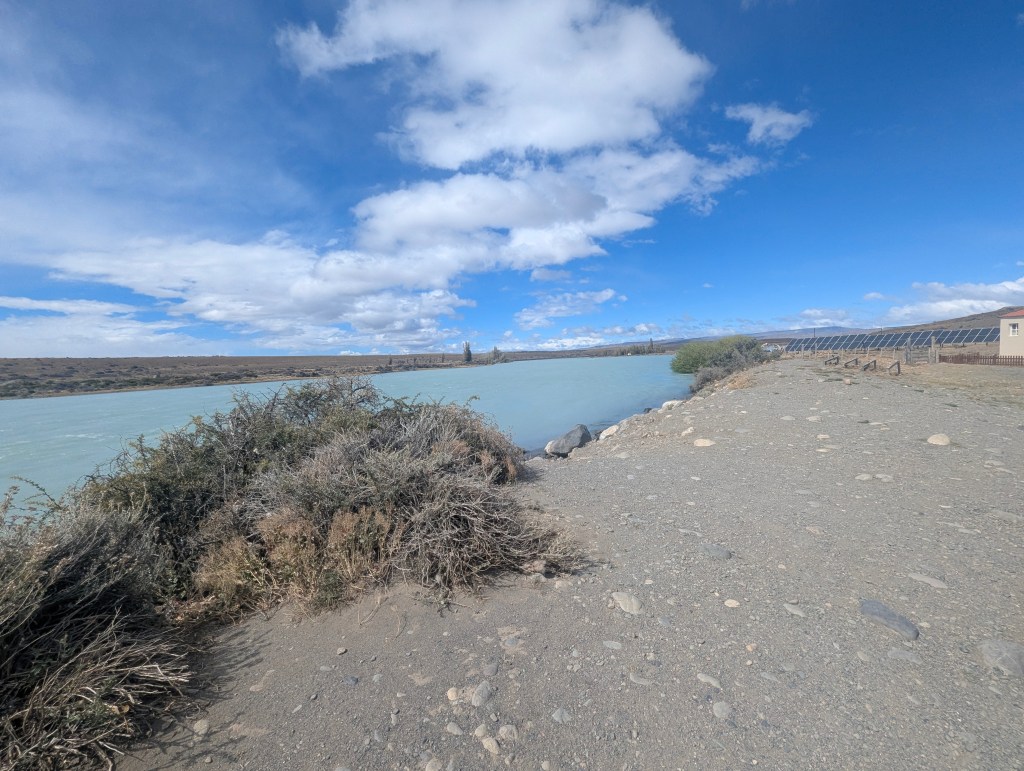
We had stopped on our way there, but had not paid much attention. The hotel is so named (The Lioness) because in 1877, while camping here on the bank of the river, Francisco Moreno was attacked by a lioness.

The hotel was built in 1894 by Dutch immigrants. In 1905 Butch Cassidy and the Sundance Kid stayed here after robbing the Bank of England in Rio Gollegos. For decades the estancia (ranch) was a meeting point for gauchos (cowboys), the US equivalent to a stagecoach stop. Today it considers itself quite the crossroads.

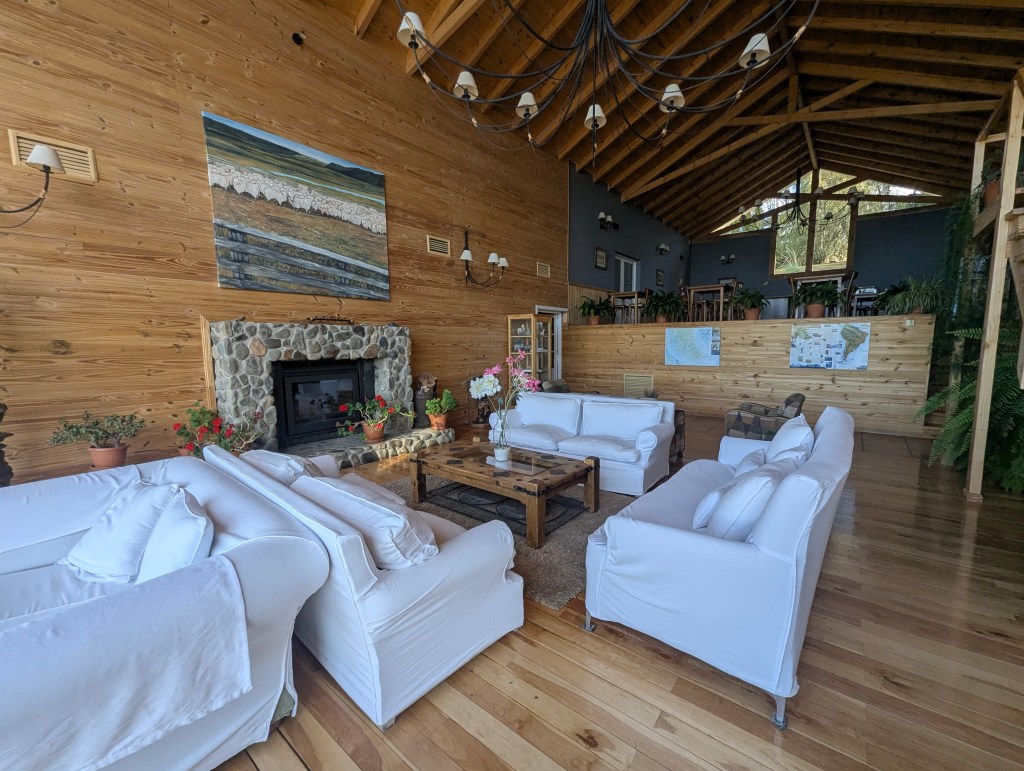
We arrived late in the day to our hotel Blanca Patagonia

lobby Blanca Patagonia

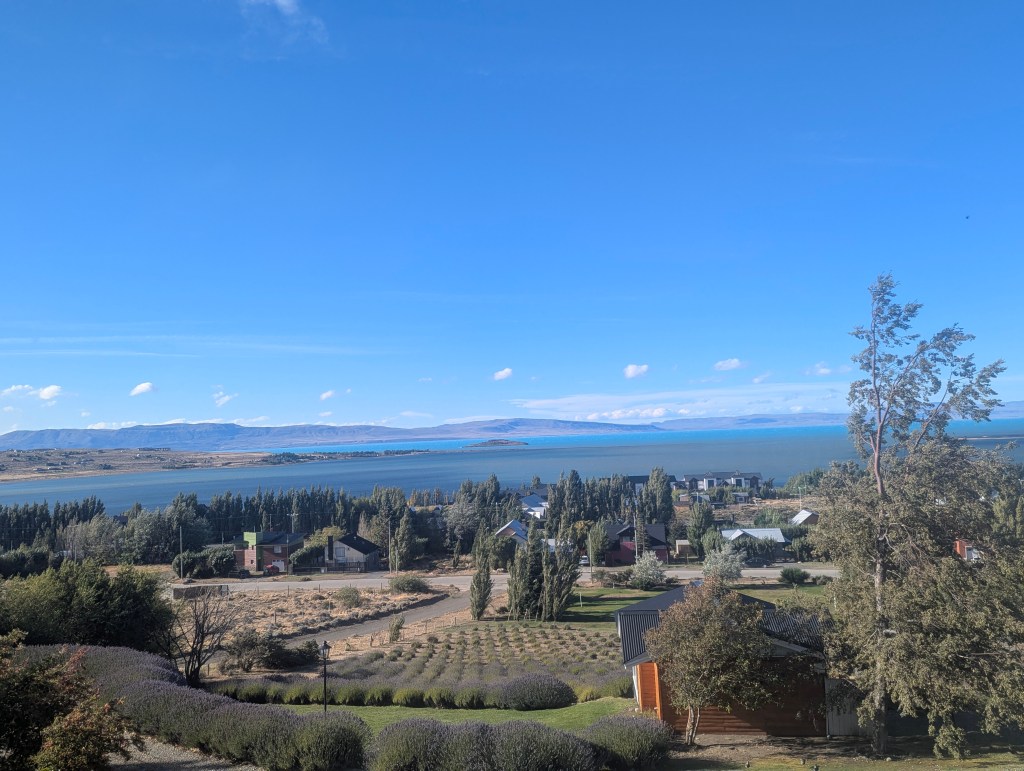
situated high above Lake Argentina with beautiful views of the lake.

view from our room in Hotel Blanca Patagonia

Due to the lateness of the day, we headed right into town. With a current population of about 25,000, El Calafate is a town near the edge of the Southern Patagonian Ice Field in the Argentine province of Santa Cruz. It is mainly known as the gateway to Los Glaciares National Park. In ancient times the town was called something sounding very similar to its current name which was loosely translated from the indigenous aonikenk peoples as meaning “a place for depositing human goods,” ie a trading post. The town was founded in 1927 by the Argentinian government as a place for trading wool, which was the major industry in the area at the time. In 1937 the Parques Nacionales de los Glaciares was founded; the population at the time was about 100. The town has a long history with local ranchers, ie gauchos, who still can be seen in the streets.

and are celebrated in the local park.

Local artisans sell goods handmade in the traditions of the indigenous peoples.

We had dinner at a restaurant called Pura Vida. They serve dishes very typical to this region of Patagonia: stews and pot pies served in large cast iron dishes, each enough for two people.

In the morning we were up before sunrise.

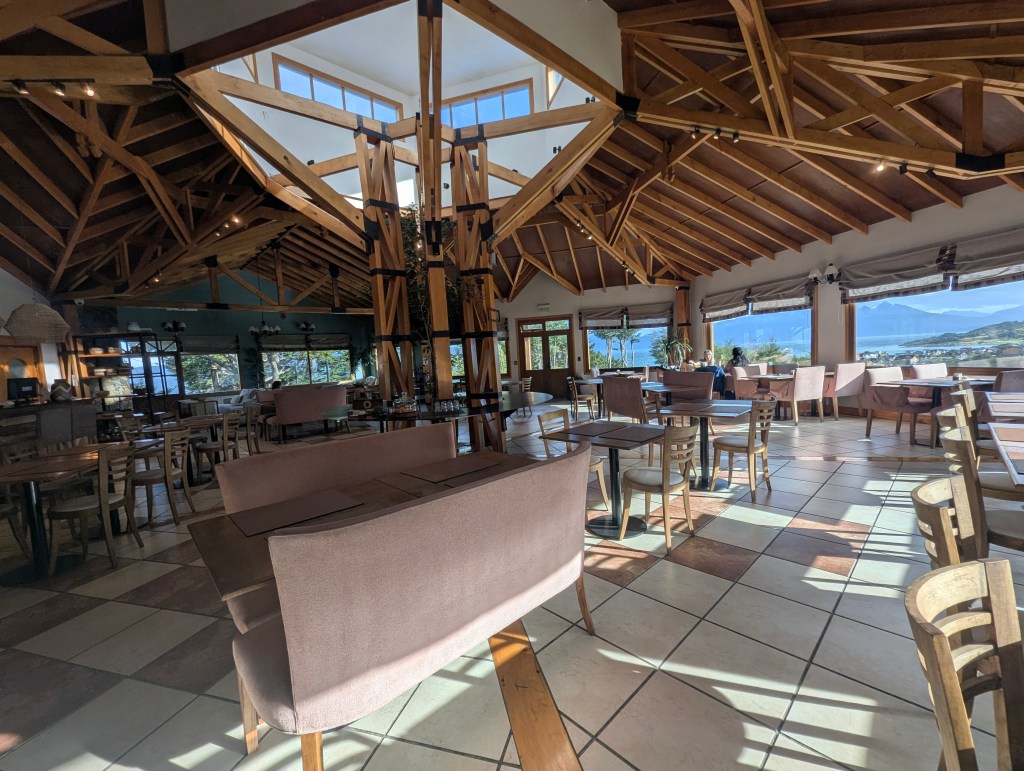
and enjoyed breakfast, included in every hotel in which we have stayed so far, in a beautiful setting.

We were met early by Nadia, our guide for the day. We drove by Lake Argentina, with a surface over 580 square miles, it is the largest lake fully within the borders of Argentina and one the country’s southernmost large lakes. Sitting at an altitude of about 580 feet, the lake has a average depth of about 650 feet with a maximum depth over 2,000 feet. The lake is fed though channels to the west by outlet glaciers from the Southern Patagonia Ice Field that move toward the channels and calve icebergs into them. The lake maintains a temperature of about 40 degrees F all year. The lake is home to perch, which are indigenous and now also trout and salmon (Chinook salmon from Canada) which originally escaped from fish farms and have made their way into the lake. The Santa Cruz River drains from the bottom of Lake Argentina across the eastern steppes and ultimately into the Atlantic Ocean. Lago (Lake) Argentina was discovered and named by Francisco Moreno in 1877.

Lago Argentina

Nadia pointed out the native calafate plant growing nearby the lake. In the early summer the plants, which grow prodigiously in the region, produce blue berries that are incorporated into many products.

As we drove close to an hour, Nadia filled us in on more of the history of the area. From the 1880s to 1920s Argentina received a huge influx of immigrants from Europe. The middle of the country’s immigrants were mostly from Spain and Italy but those in Patagonia came mostly from the UK. Ranchers were given tens of thousands of acres for animals because due to the dryness of the land, 5-10 acres is required per animal for grazing. And even then, the animals must be moved often, which is what gave rise to the horseback riding gauchos and their friends: dogs. The cattle are mostly herefords; the sheep are mostly merino. Merino sheep can yield 9-11 pounds of wool per animal per year. The current buyers of the wool are first from Italy followed by the US then China. Benneton company currently owns over a million acres. In the 1930s with the invention of synthetics the price of wool dropped precipitously. The industry in the country turned to fuels: natural gas in Patagonia, oil in the middle of the country. For Santa Cruz the industry became gold, but it was not very prosperous.

Currently the largest industry in Santa Cruz is tourism. In the 1950s some French climbers discovered the nearby glaciers. In 1981 the Parques Nacionales de los Glaciares was declared a UNESCO world heritage site, which gave a huge boost to tourism. But the biggest boost to the influx of tourism and the local economy and population came when the El Calafate airport opened in 2001. Currently they receive 14-16 flights a day during the high season, 4-5 daily in the low season.

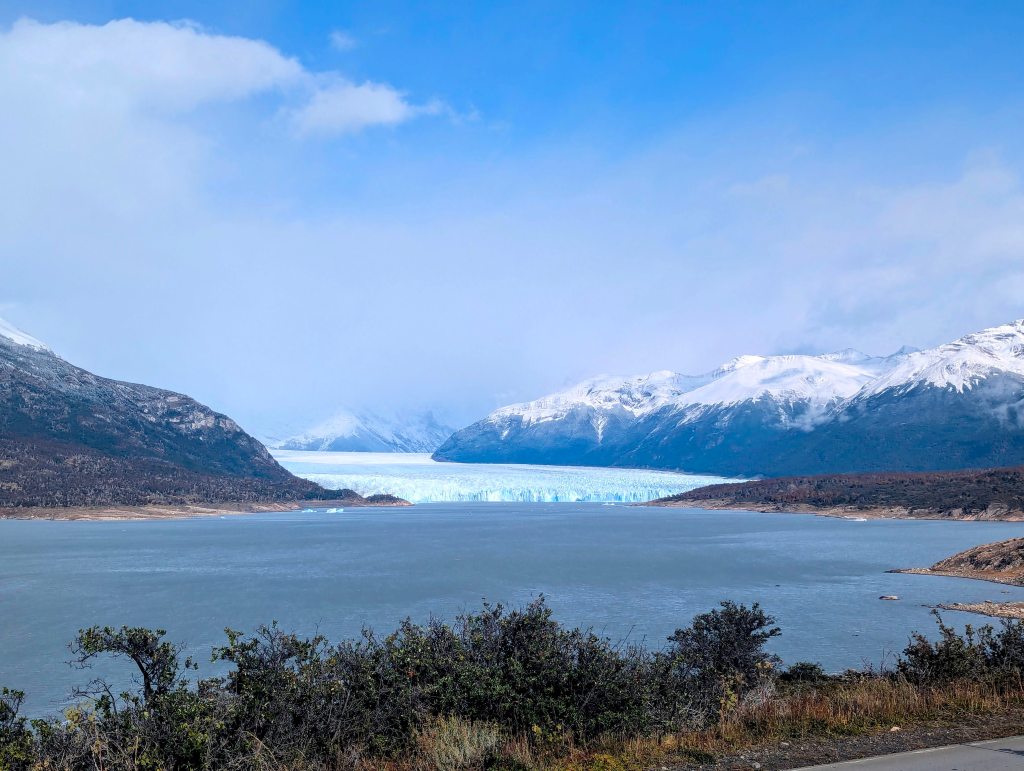
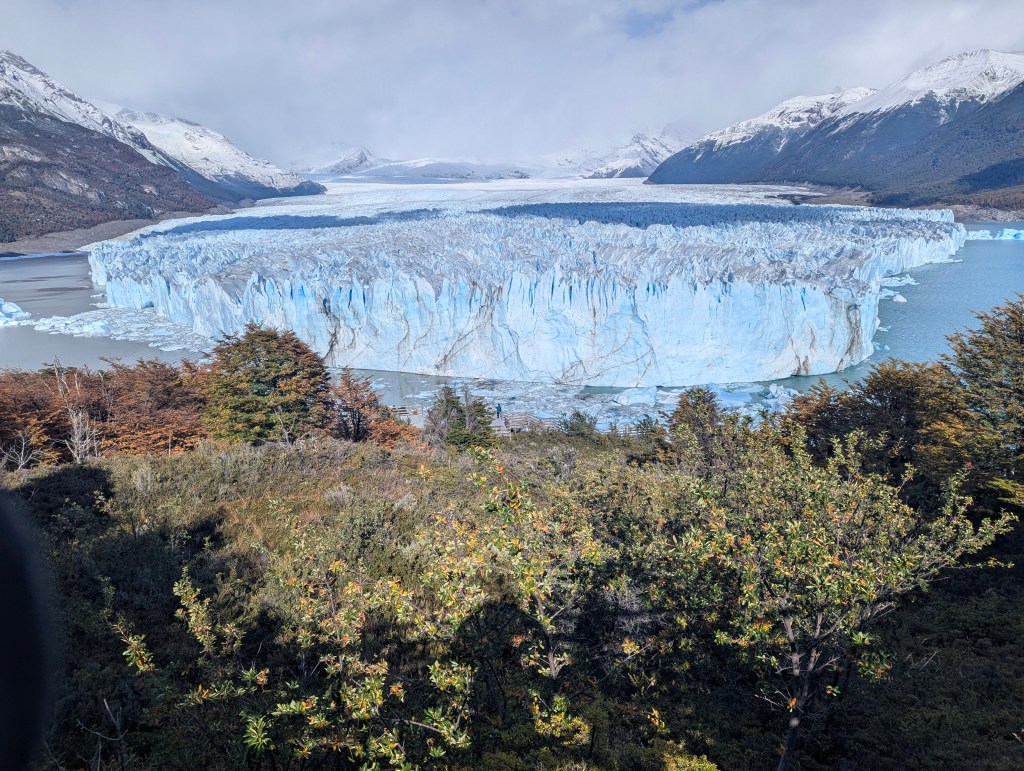
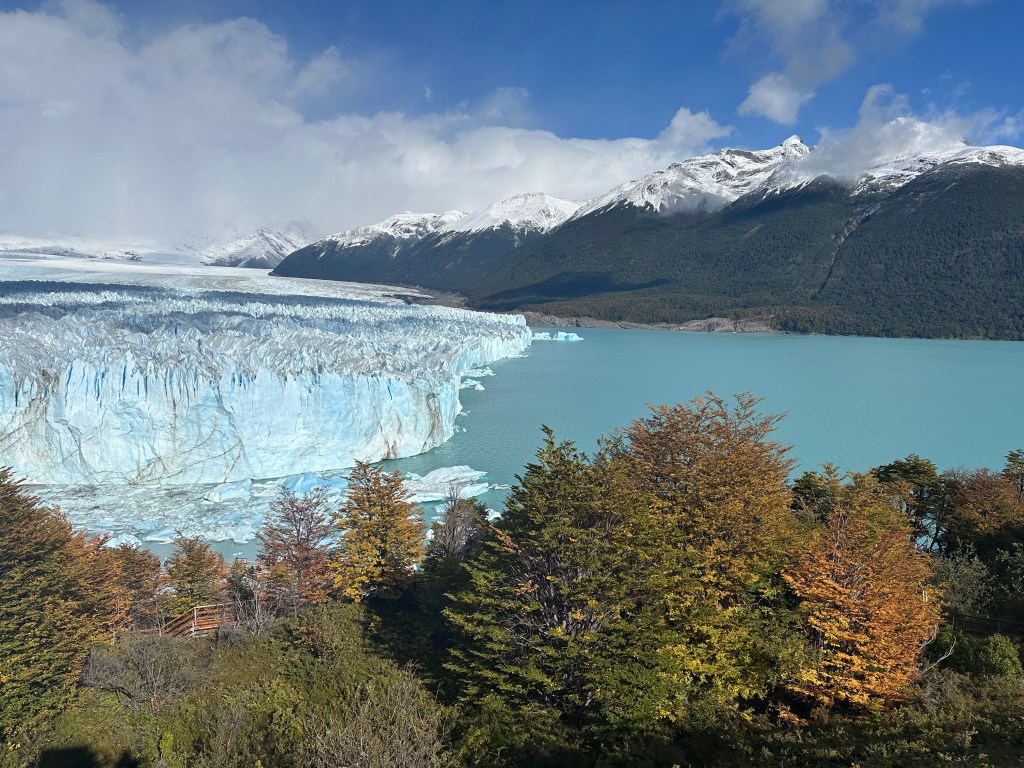
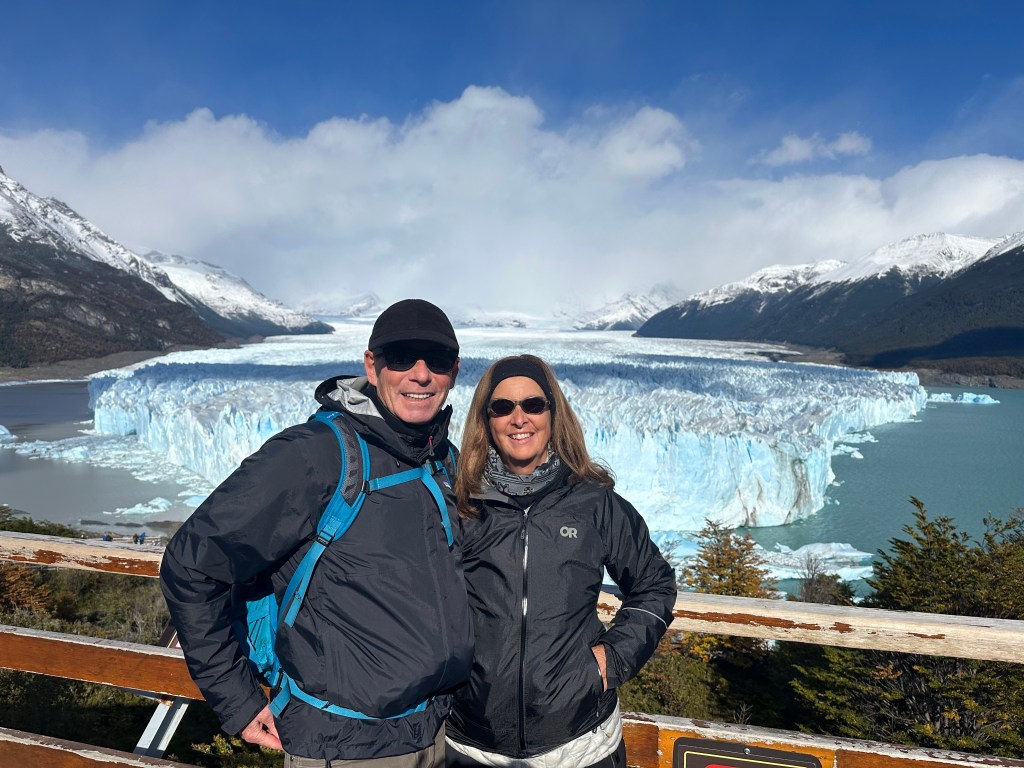
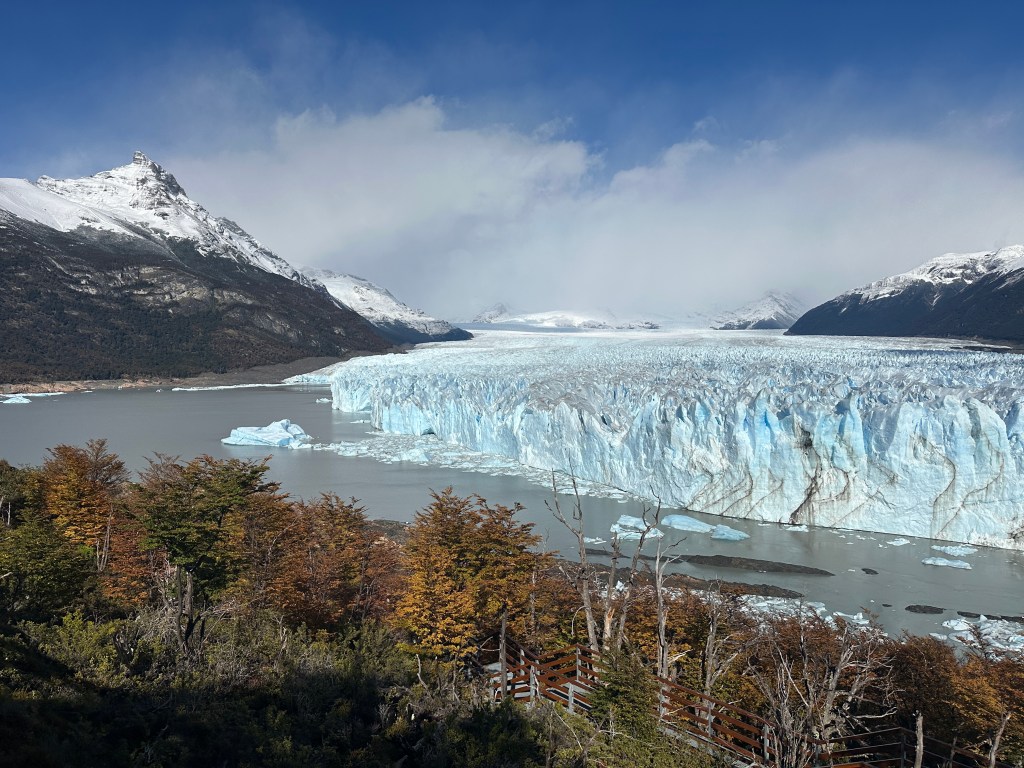
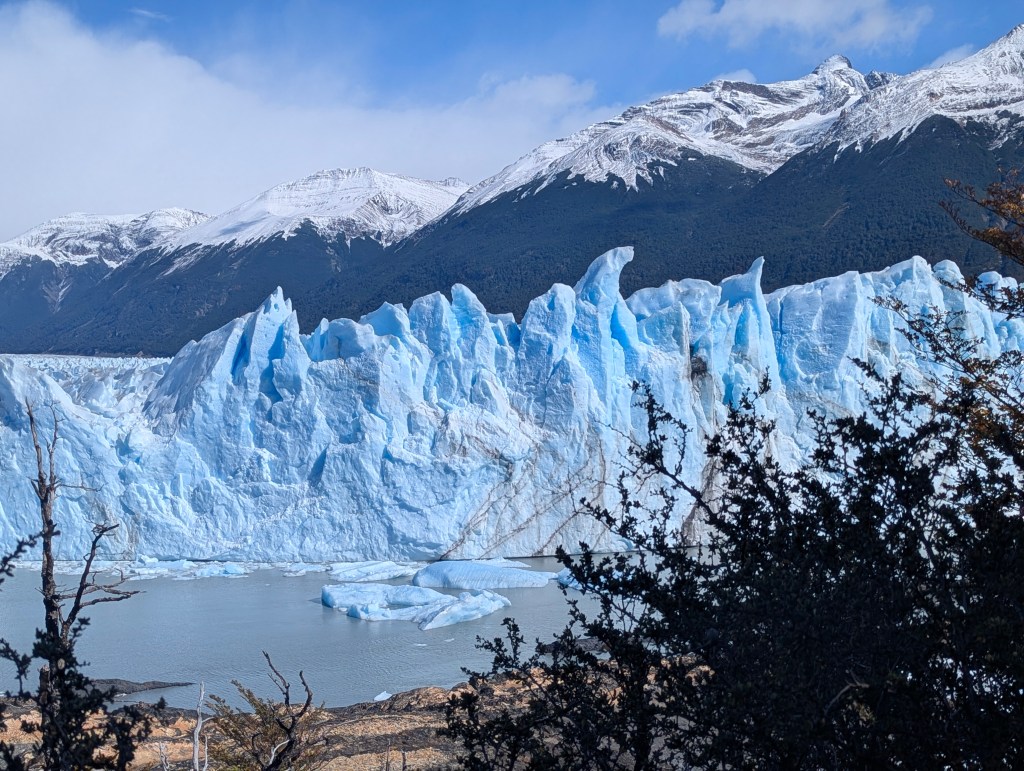
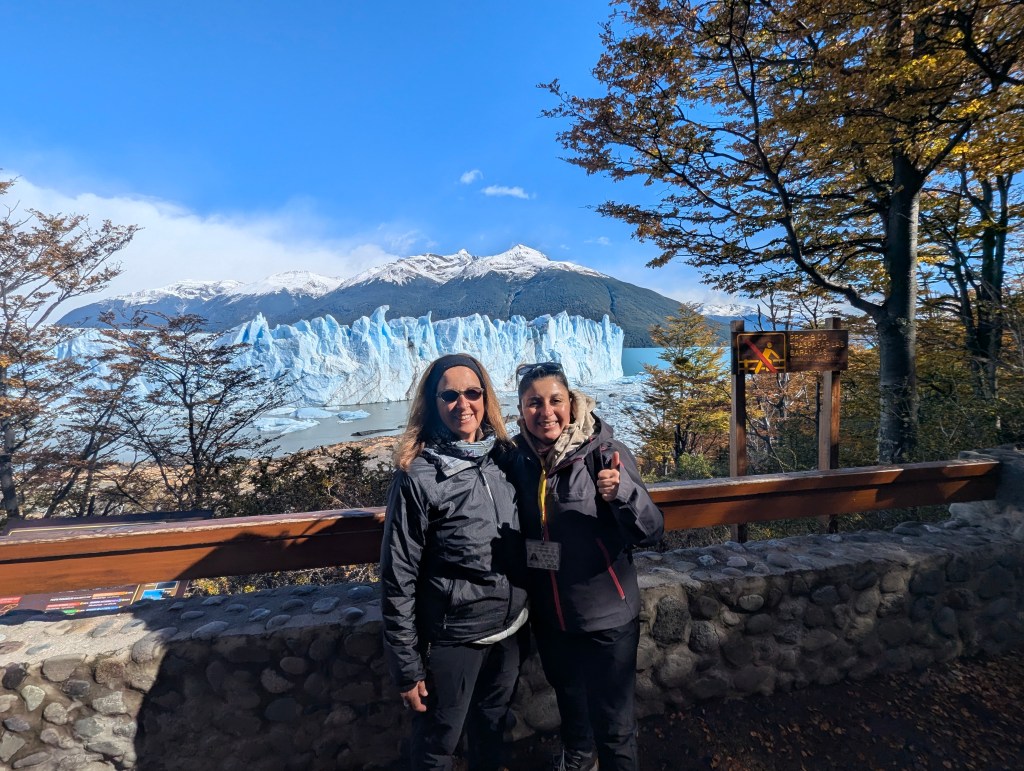
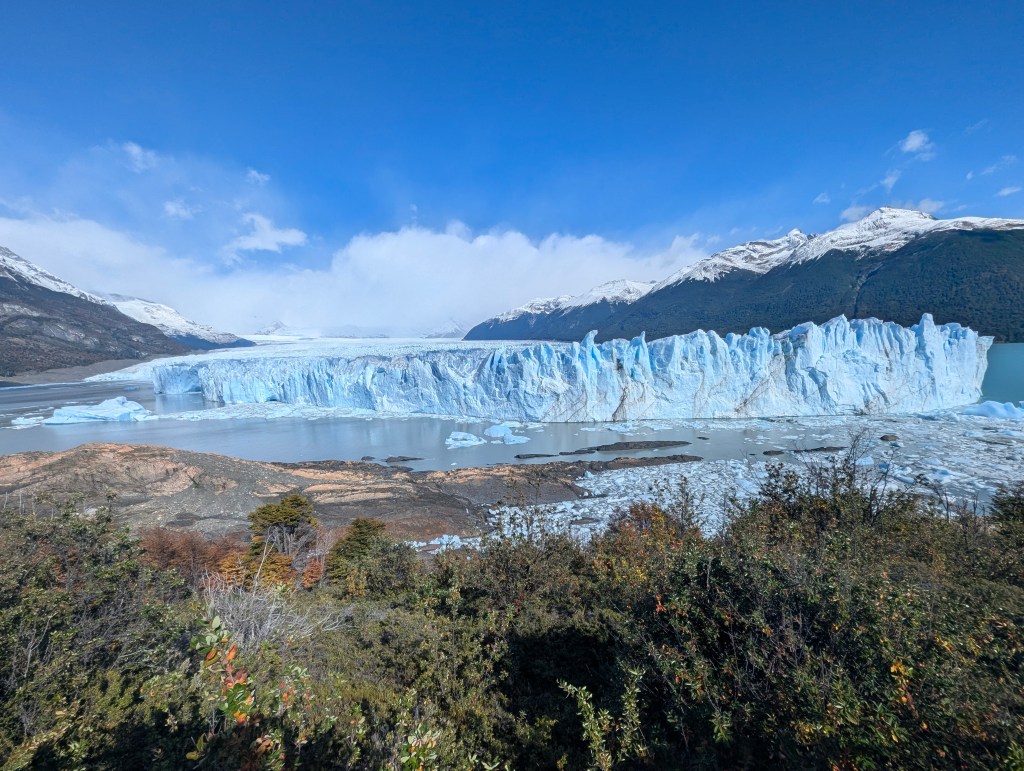
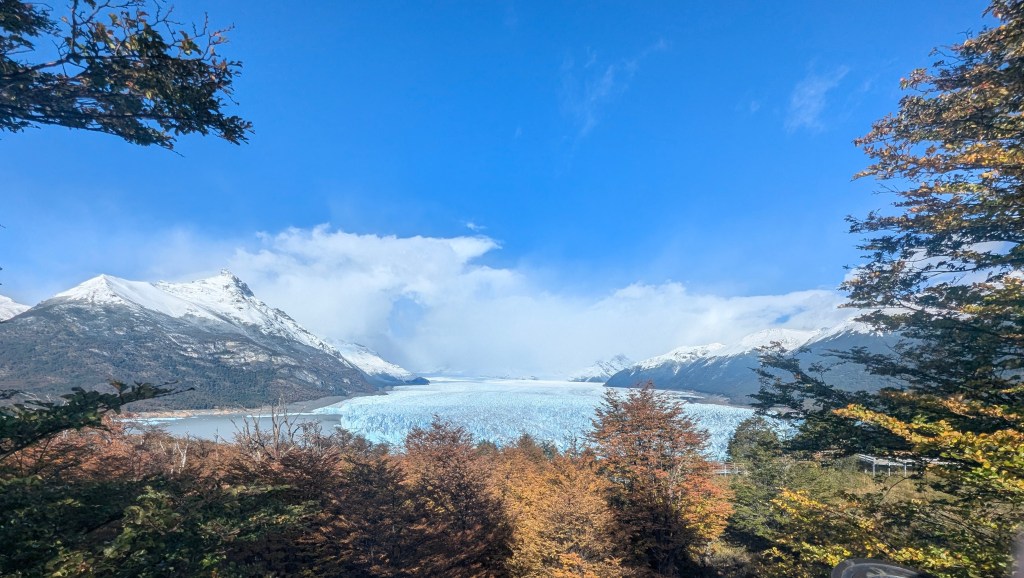
And finally we approached our destination for the day: the Perito Moreno Glacier. We got out for our first glimpse.

Perito Moreno Glacier

As we drove closer to the Perito Moreno Glacier Nadia explained that the Parques Nacionales Glaciares was founded in 1937 to protect the border with Chile, preserve the Southern Patagonian Ice Field (the huge mother of all the glaciers) and its glaciers (the country’s main source of fresh water), and the sub-Antarctic forests. The park was not initially created for tourism. Finally we reached the top of the access to the Perito Moreno Glacier. We spent the next over two hours traveling the extensive walkways, viewing the glacier from all sides, and learning more about it.

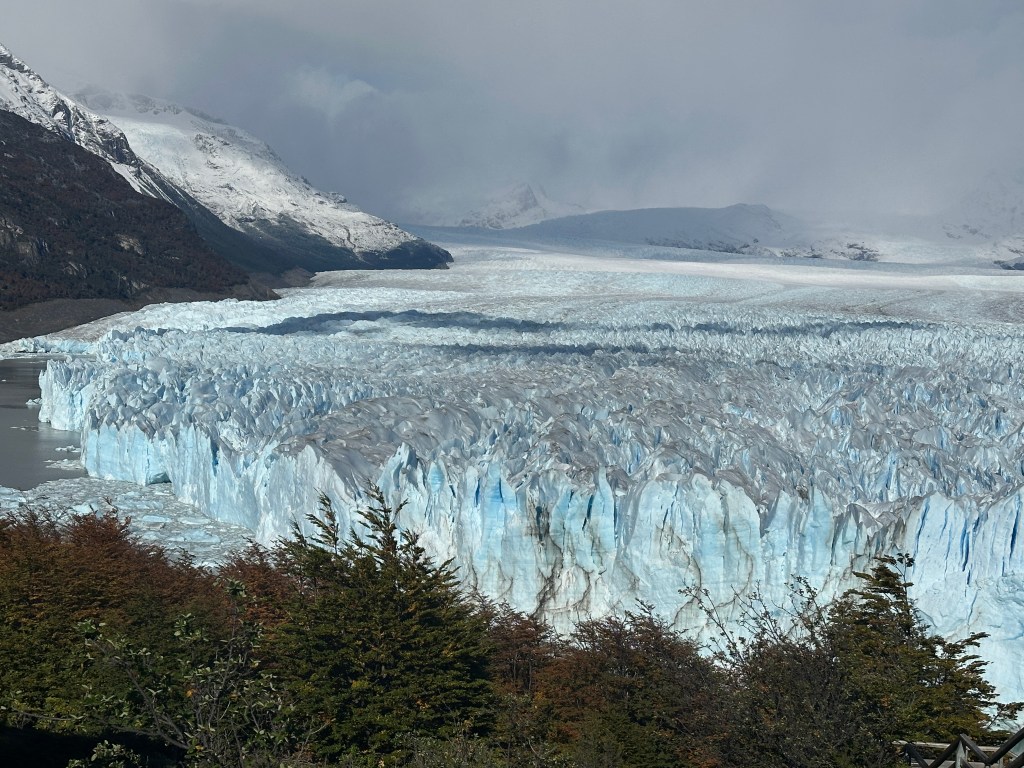
Covering 97 square miles with a length of 19 miles, the Perito Moreno Glacier is the third largest in the park, but it is the most accessible.

The glacier’s top sits at and altitude of 950 feet; its bottom is at an altitude of 650 feet. It moves at a rate of 6-7.5 feet a day. It takes 500 years for the ice to reach from the top to the bottom.

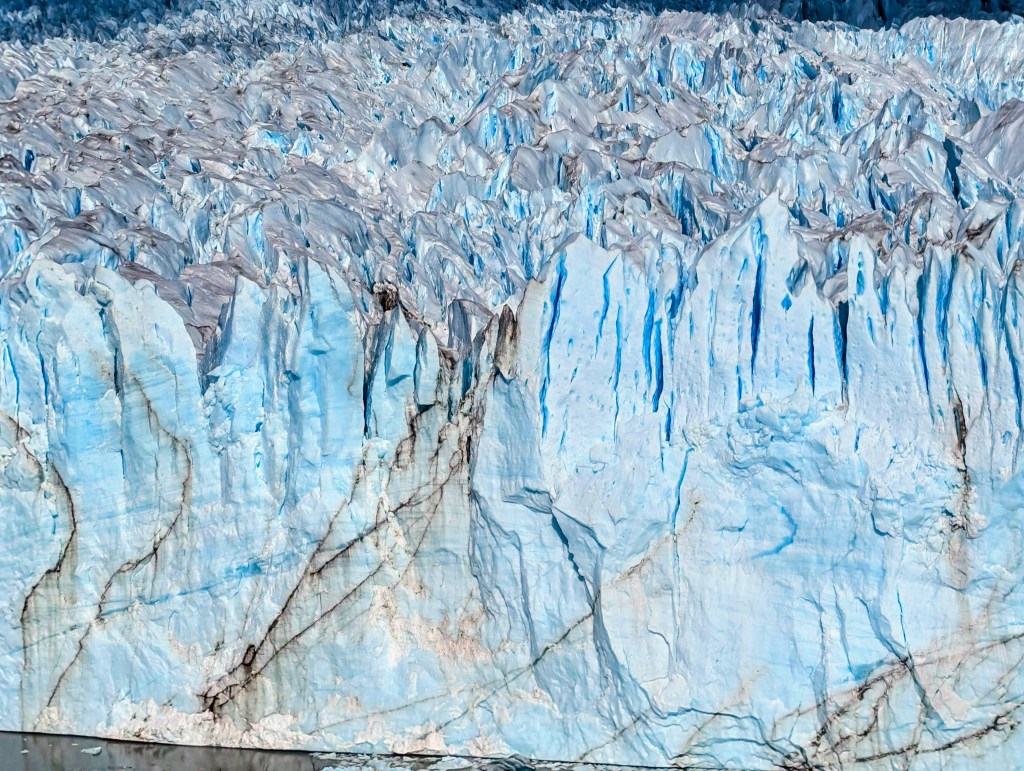
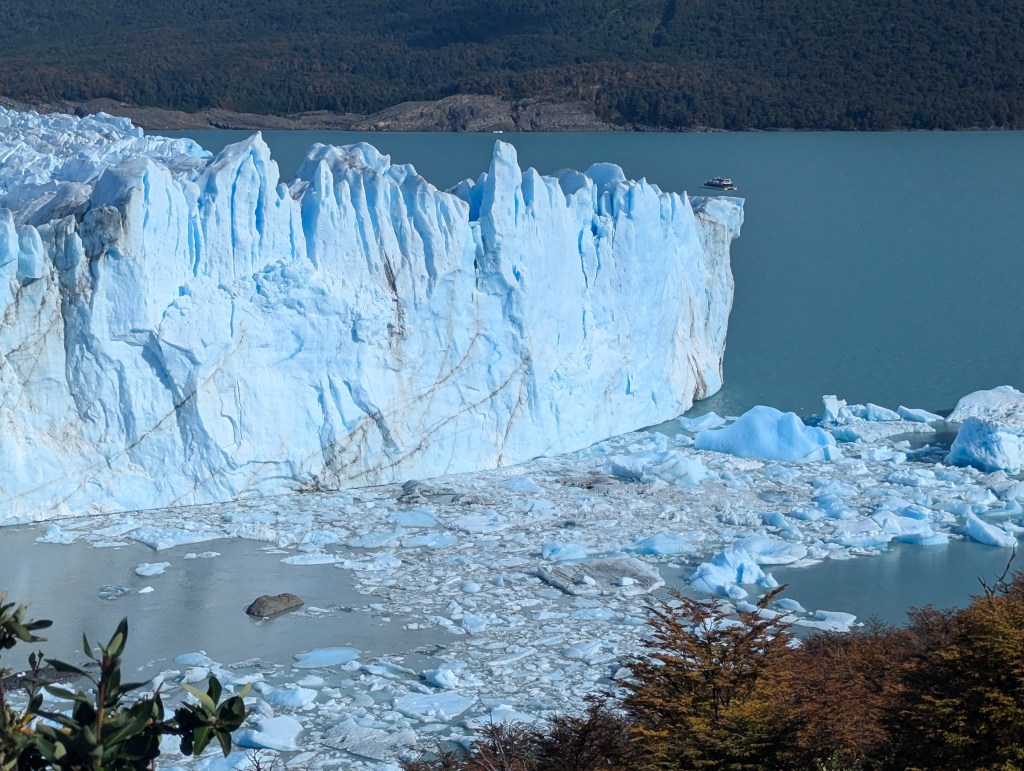
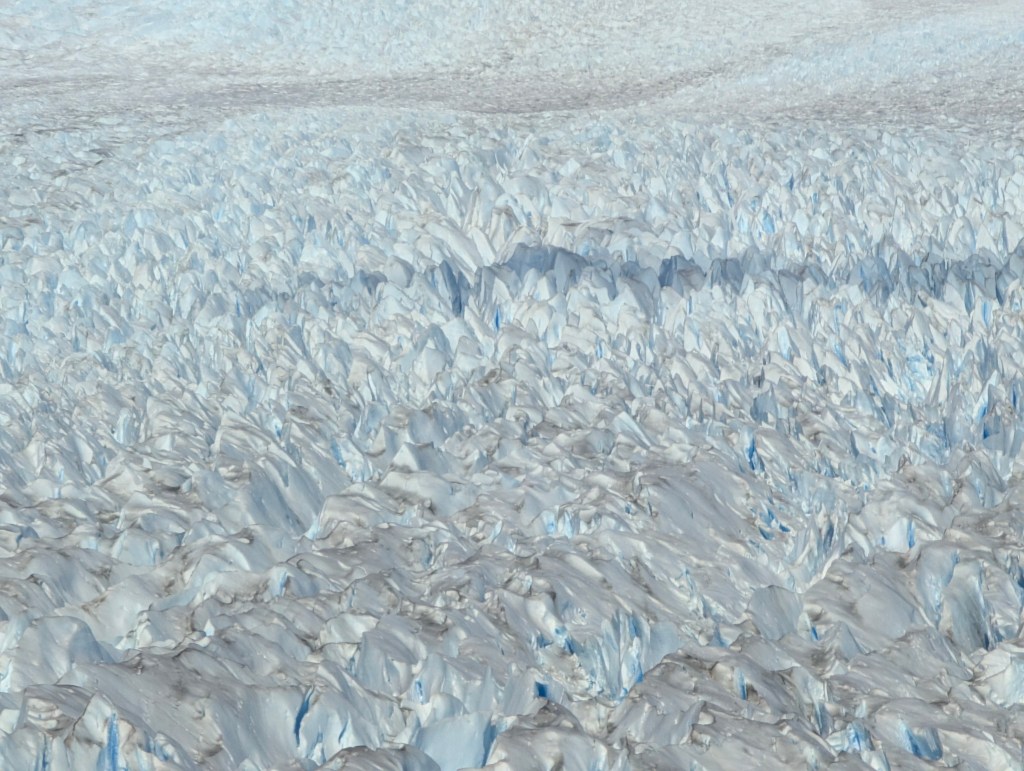
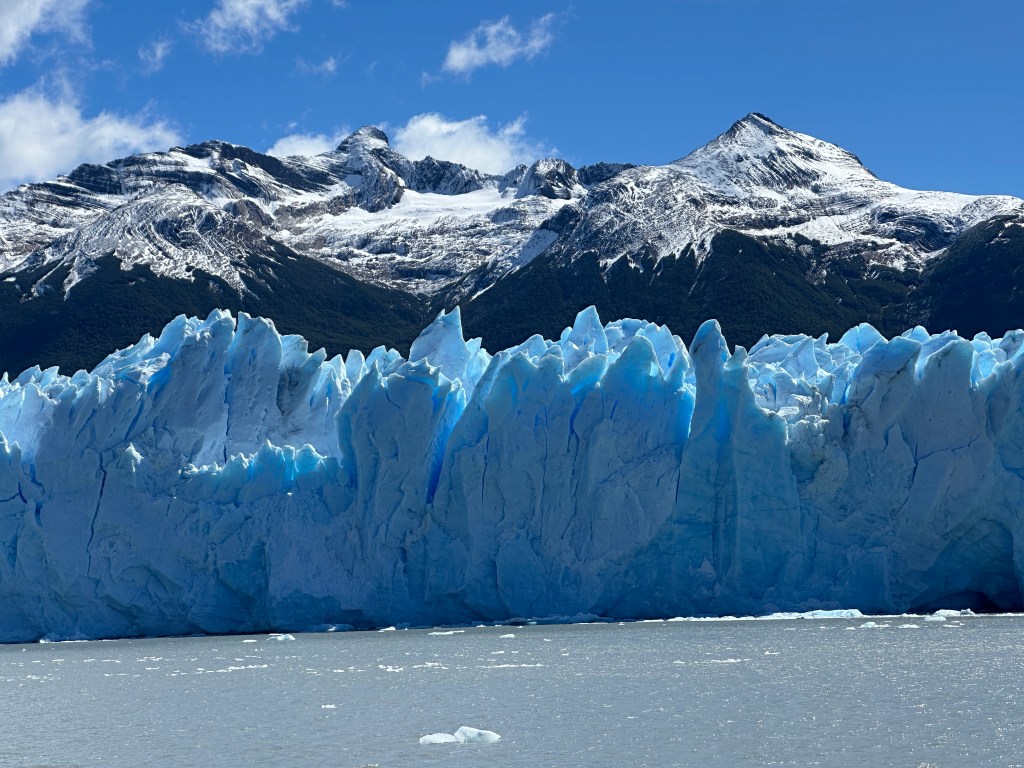
The streaks seen on the face of the glacier are from sediment picked up as the glacier moves. The are called morenas.

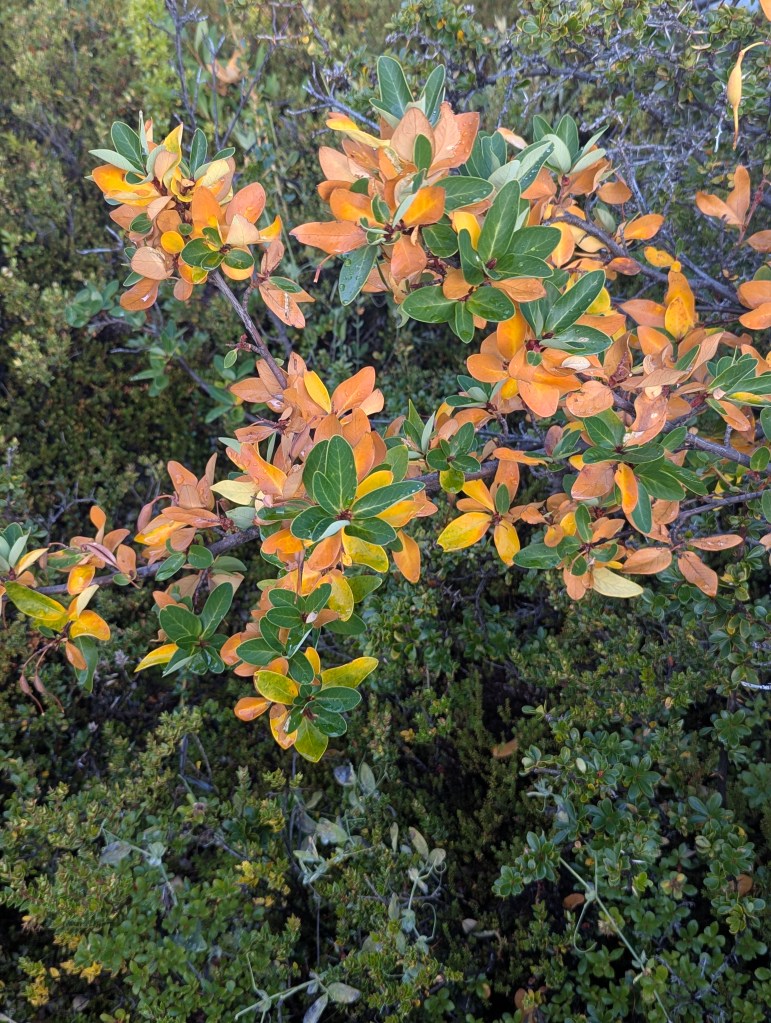
As we had seen in in the Parque Tierra del Fuego, the trees here are of the same beach family, but there are two species here: one deciduous the other an evergreen. The former has leaves significantly larger than the latter. The deciduous trees are turning color almost two months early this year because they have been stressed by drought. Both can be seen below.

The park has provided a extensive boardwalk system from which to view the glacier.

The glacier does not float on the lake, it stretches down and sits on solid bedrock. At the front it extends down about 150 feet but laterally it extends down as far as 750 feet. Facing the glacier the south wall is to our left, the north to our right. The south wall has a height of about 120 feet from the surface of the channel; the north has a height of about 210 feet. Because it is mostly protected by the mountains, the front of the glacier has been mostly stable or even grows some years, so the locals like to brag that it is the only glacier in the world not receding. But in fact it has become thinner and shallower through the years, so it is in fact shrinking.

The glacier is named for Francisco Moreno who was born in Buenos Aires in 1852. Perito means expert. Moreno is considered a hero in Argentina because he made the maps which at the time played an important role in the border disputes with Chile. For his work he was given by the Argentinian government extensive lands near Lake Nahuel Huapi in northern Patagonia. He then donated those lands back creating the first national park.

Perito Francisco Moreno never actually reached this glacier which bears his name. He did reach and name Lago Argentina, Lago San Martin, and Cerro Fitz Roy.

We stood for a long time watching and listening to the glacier calving small chunks from above and huge chunks that detach from the base. The sound is a cracking sound combined with thunder. The current of the water hitting the glacier at the surface sounds like lapping waves.

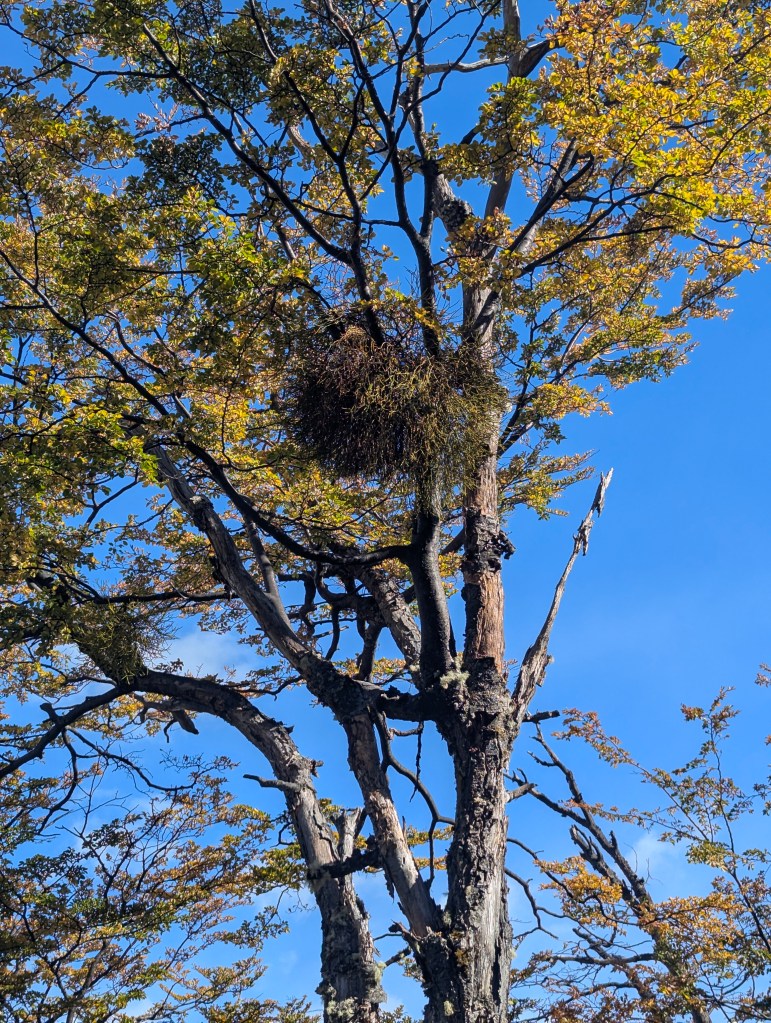
Nadia pointed out the tuft in the tree which is called false mistletoe ans is parasitic but does little actual damage to the tree.

Nadia shared that although she comes daily, she is never bored as the glacier is forever changing taking on new and more beautiful forms even hourly.

Nadia posing with me at the bottom of the walkways

At our closest point to the glacier we were about 600 feet away. From here one can appreciate the narrow space between the glacier and the rocks of our shore which connect the channels that flow from the south to the north. Between 1917, when observations first began and 2018, the most recent occurrence, that space has closed off several times. When that happens the Brazo Rico/Sur channel to the south becomes blocked and the water level rises as much as 75 feet in the past, 52 feet in the 2018 episode. The water erodes the surrounding land. Ultimately the pressure of the water creates tunnels in the glacier until the front collapses allowing the water to flow freely again.

F

We climbed back to the top, had a quick snack, then headed for our boat trip to visit the glacier from the water.

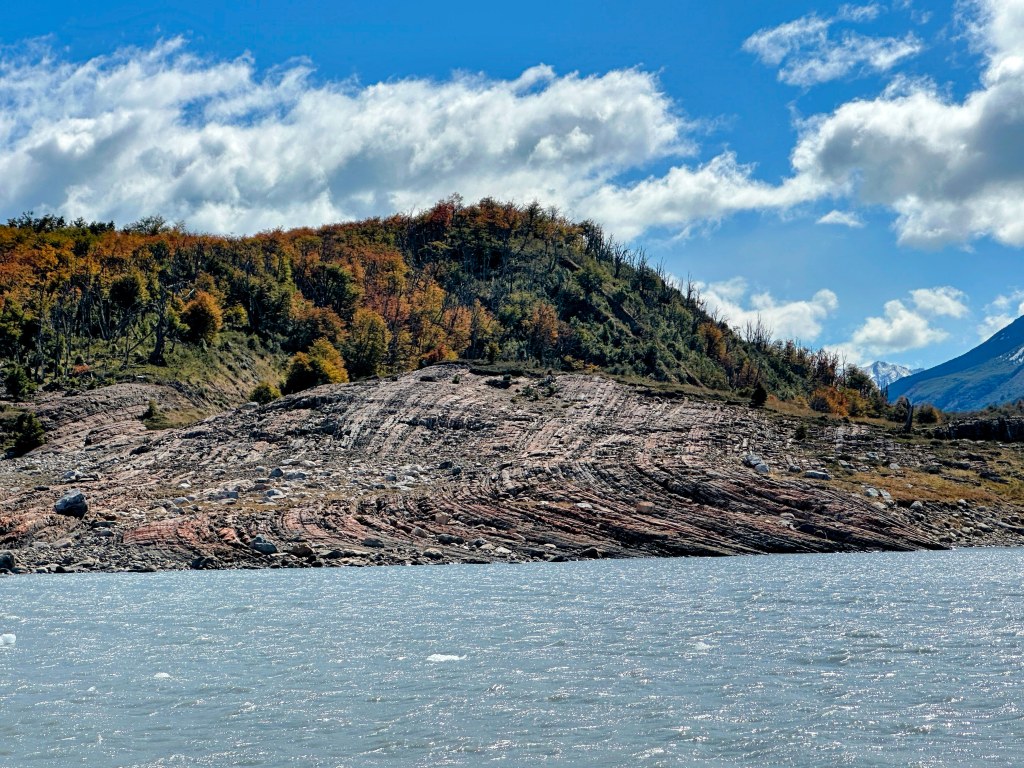
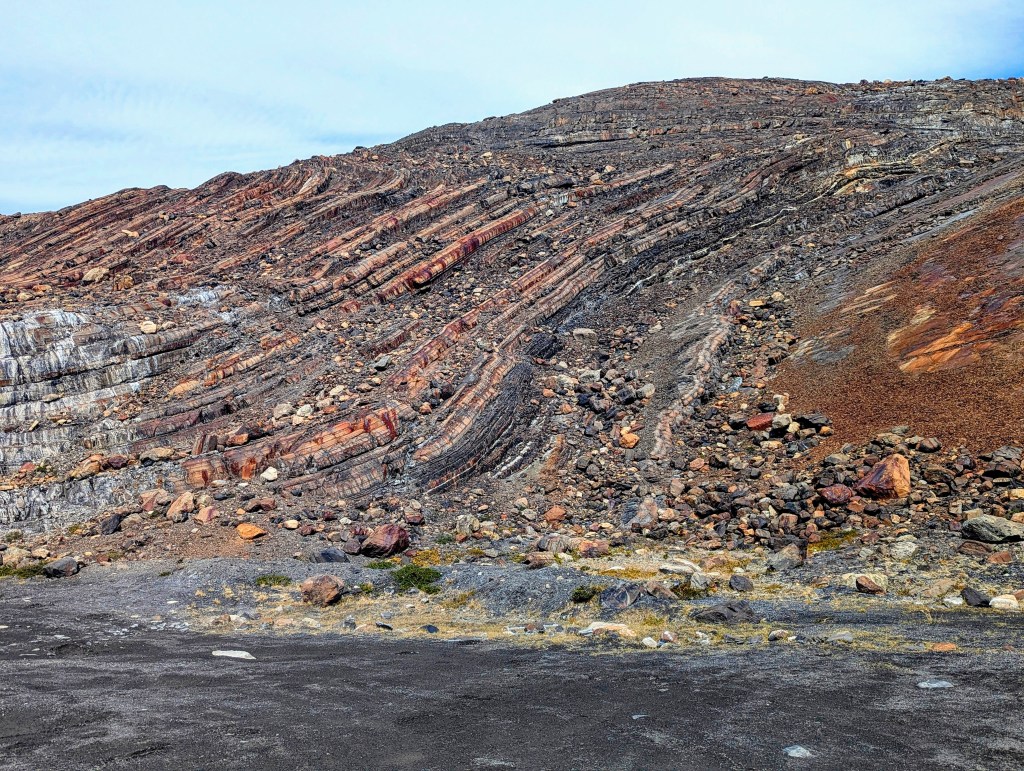
Along the way Nadia pointed out that the layering visible in the rocks is caused by the glacier both carving and depositing sediment as it moves over the bedrock.

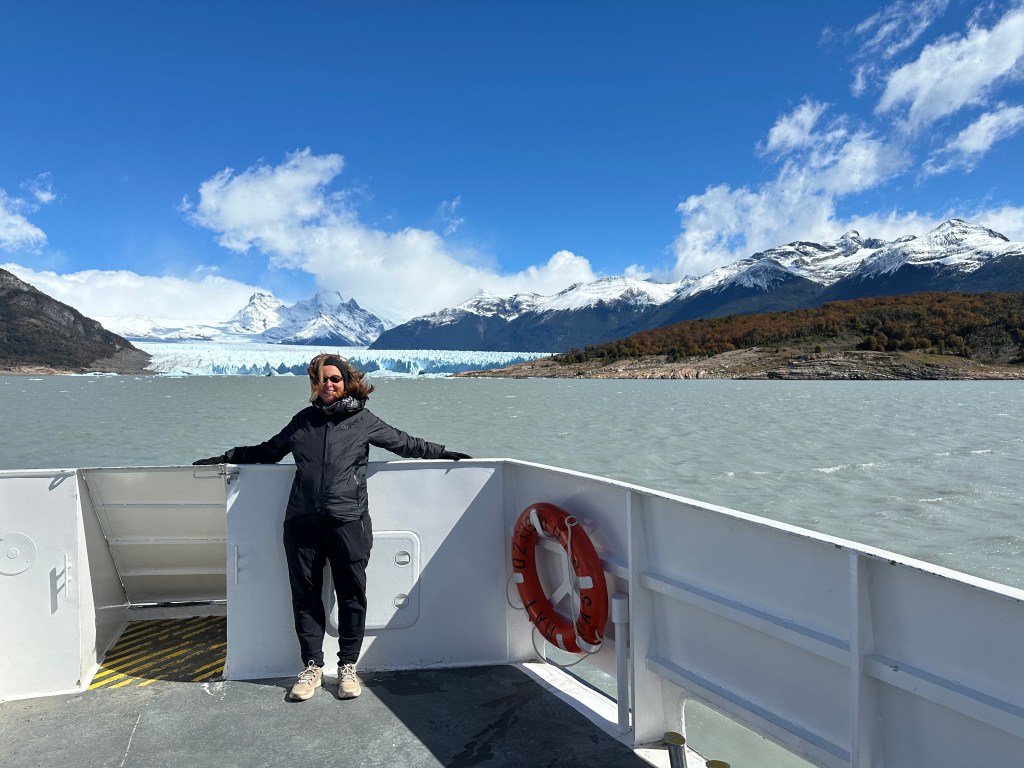
We added even more layers to be able to stand out on the boat’s deck as we approached the glacier.

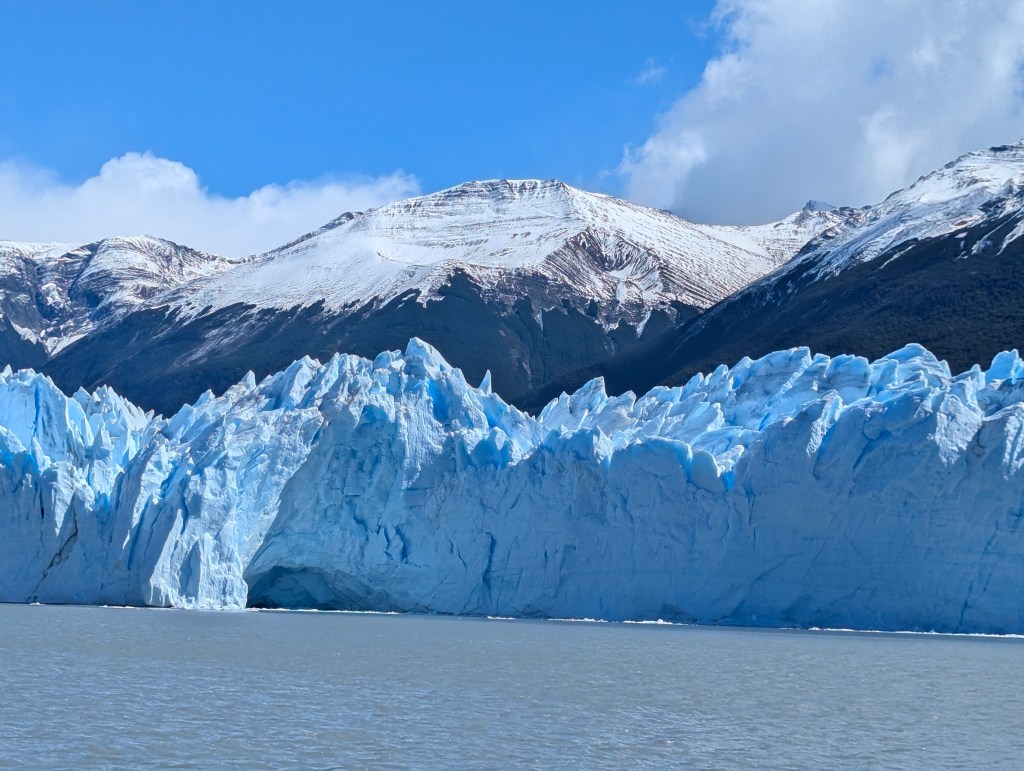
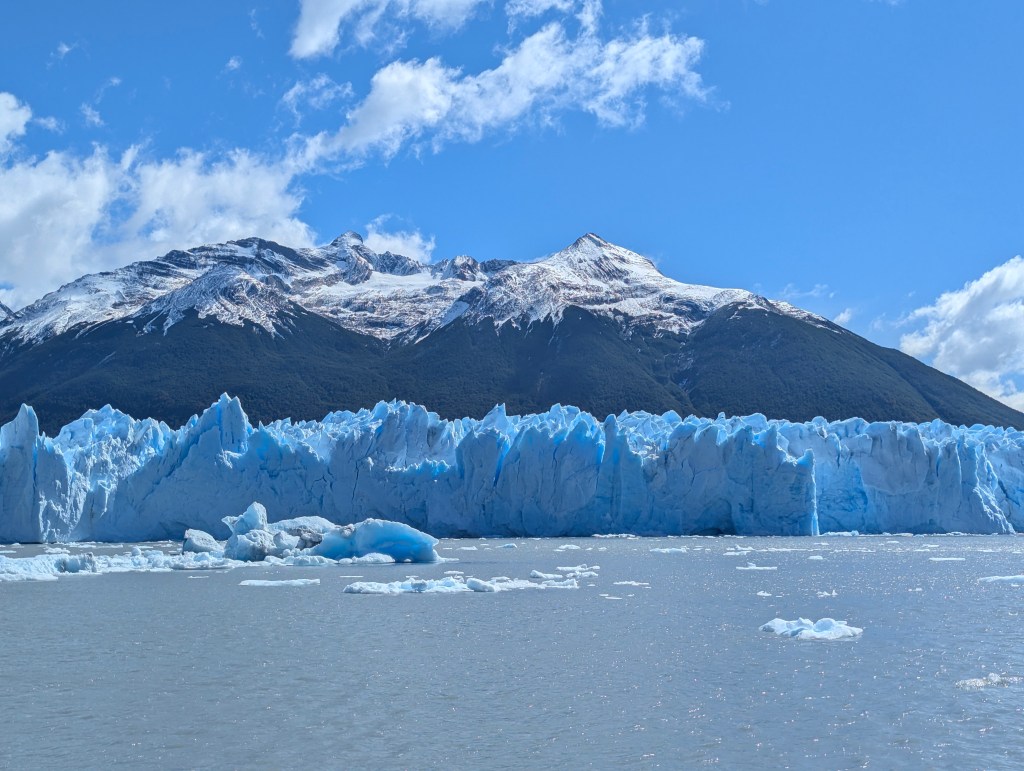
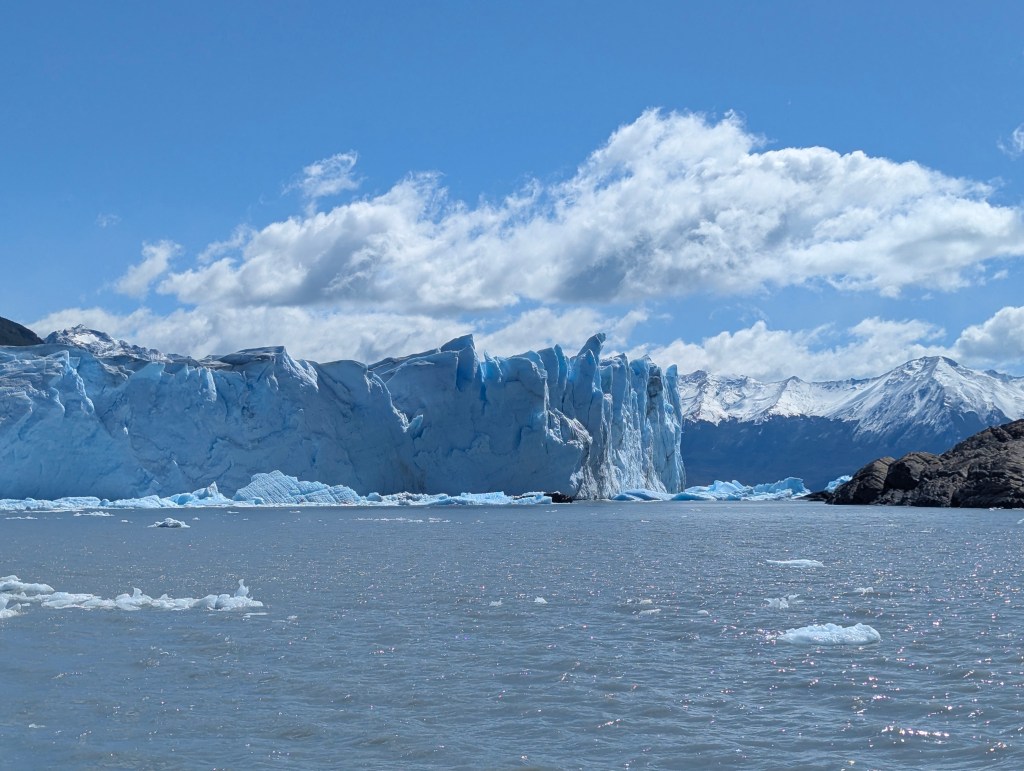
I do not have a lot more to add other than the views of the glacier were spectacular. We sailed toward the southern face.

The blue color is an optical illusion caused by the density of the packed ice squeezing the air out. Air on the surface of frozen water cause all of the light waves to bounce back giving a white appearance. But the densely packed glacier allows the red and yellow waves to absorb allowing only the blue to reflect.

Each angle provides a different but awesome picture.

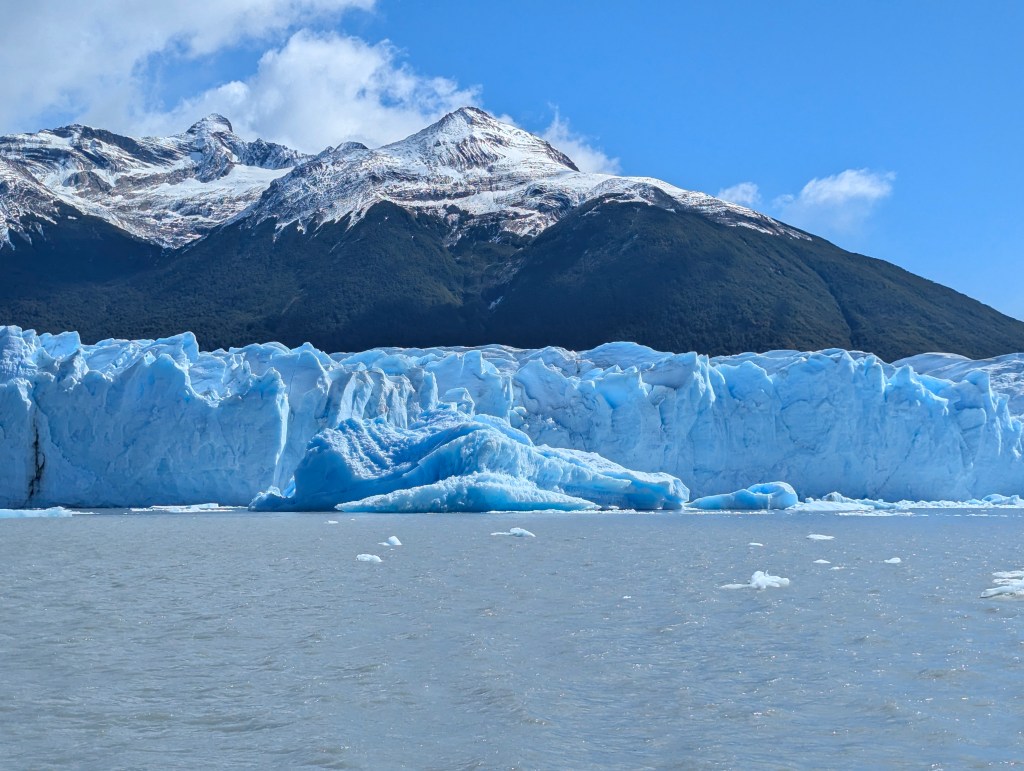
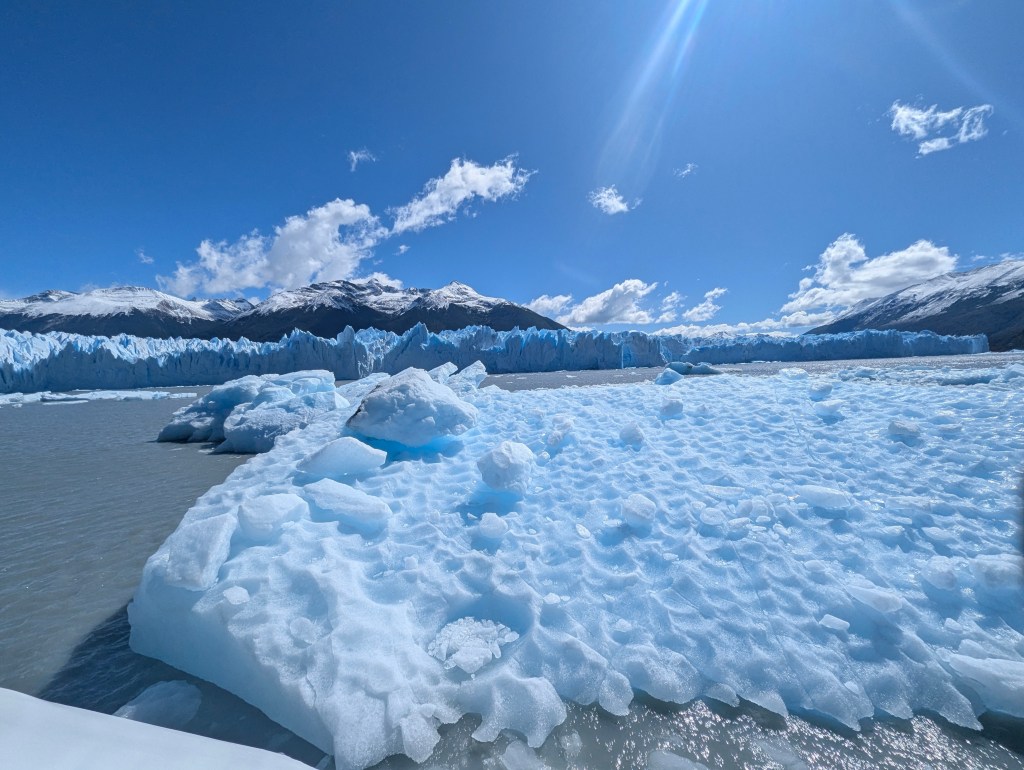
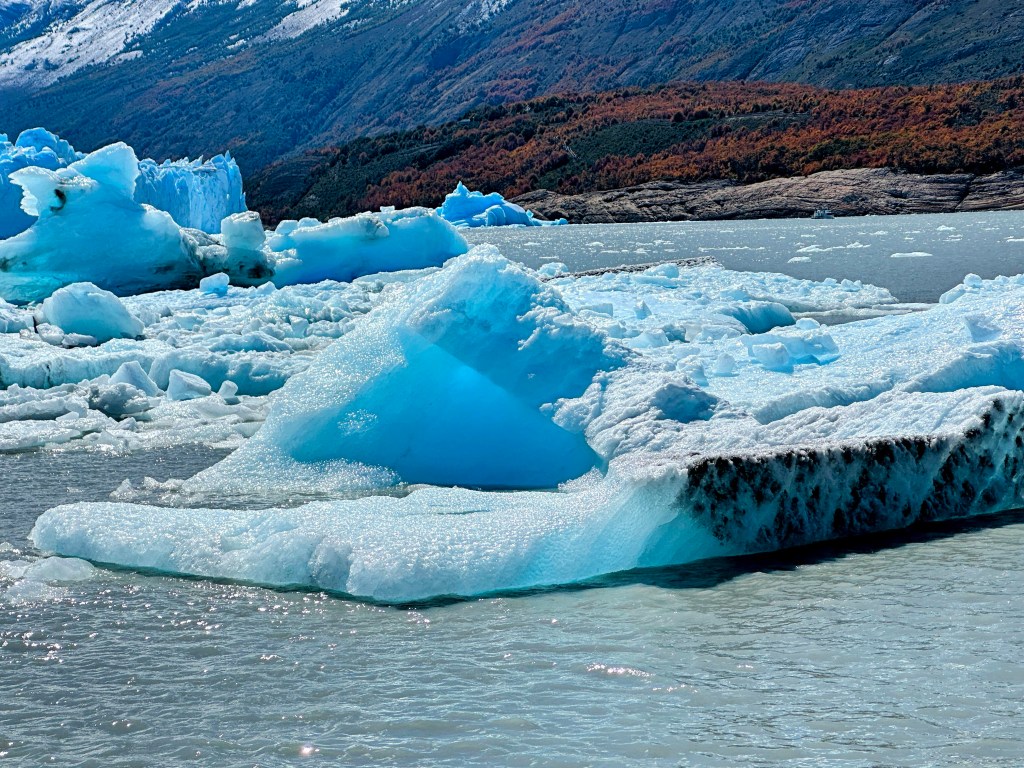
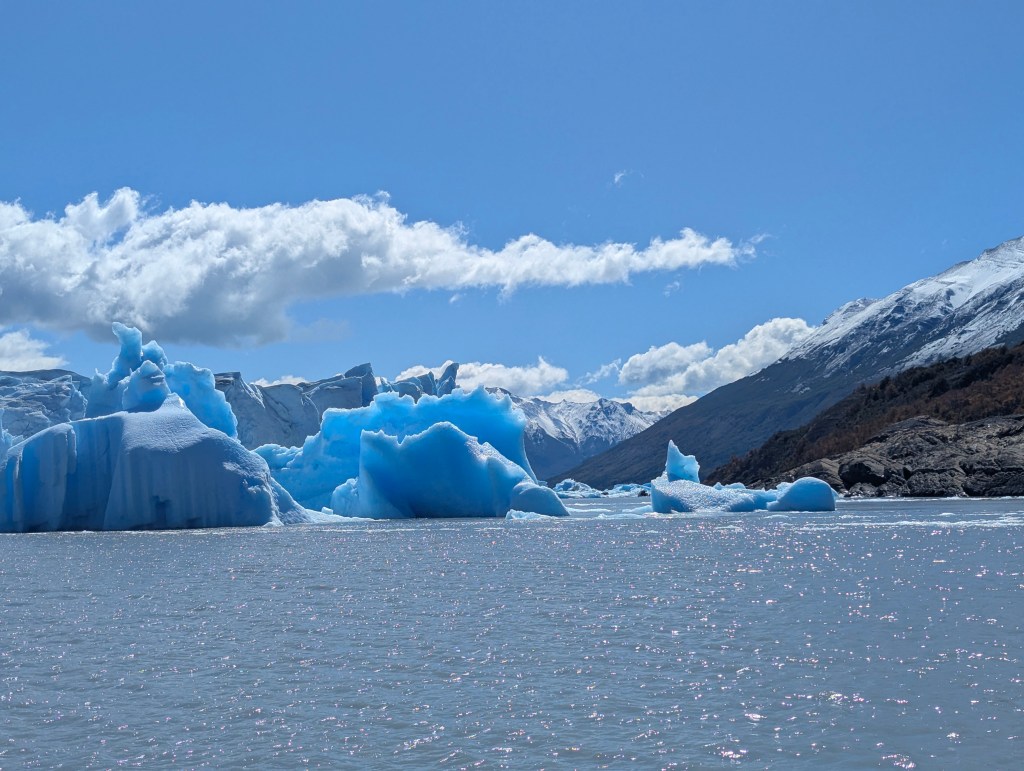
The largest icebergs were detached from the base. Only 10% of any iceberg can be seen floating above the surface; the rest remains below.

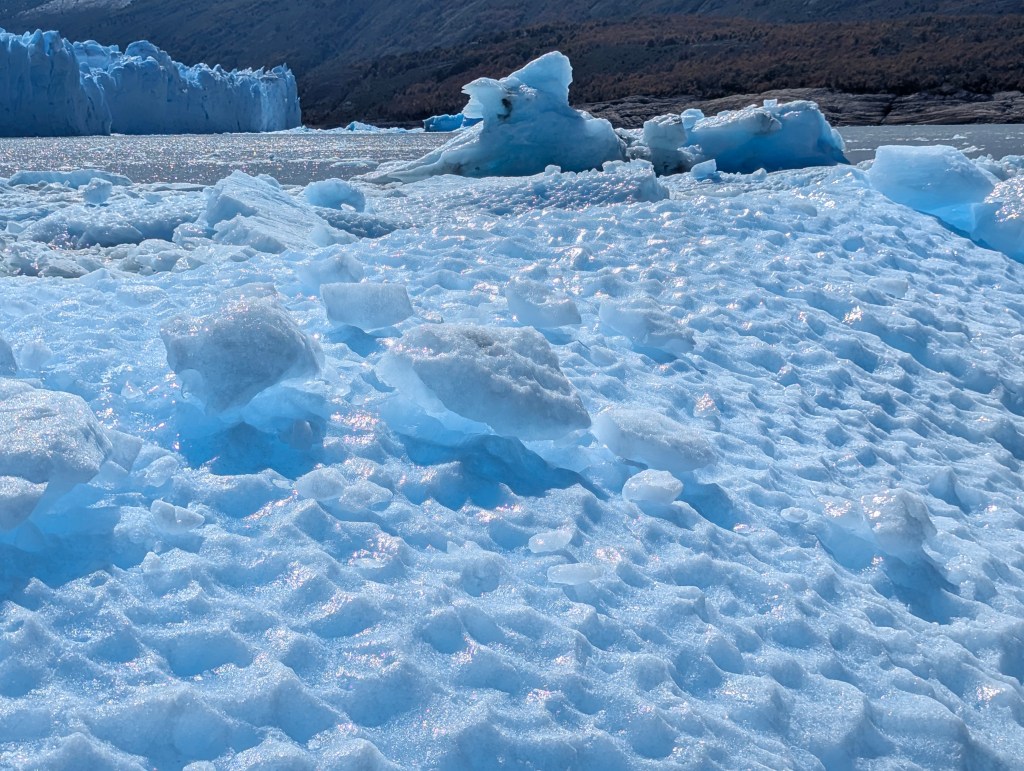
The littler icebergs fell from the top of the front of the glacier. The grey color of the water is due to unsettled sediment.

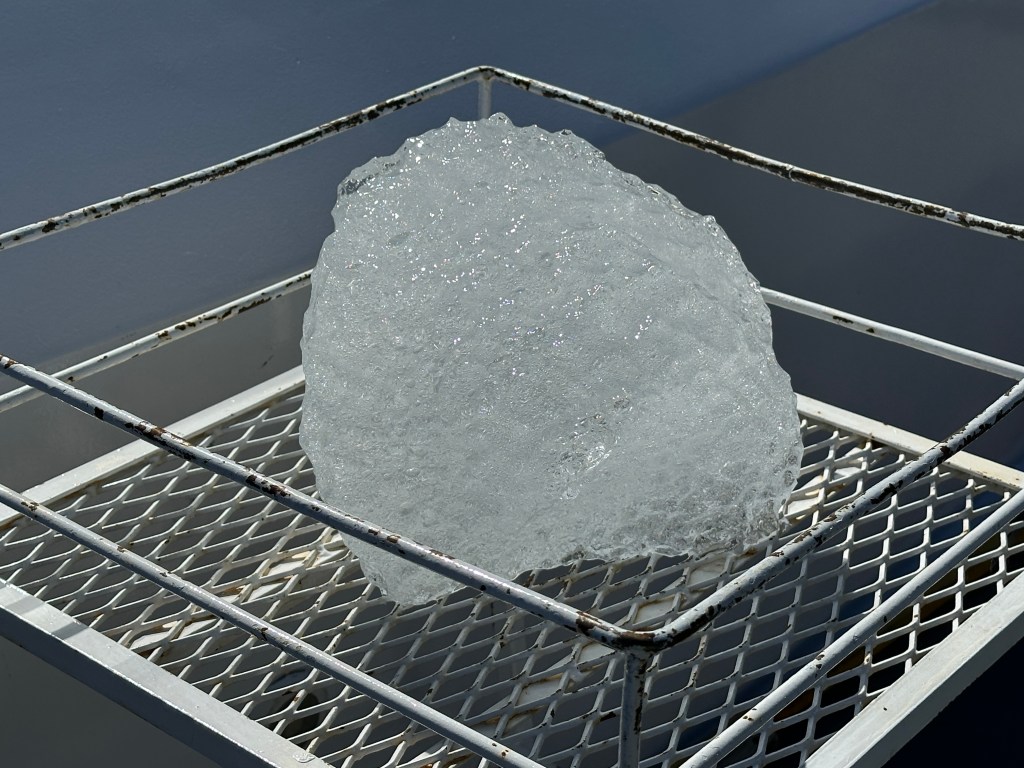
The boat guides pulled a few small icebergs on board for us to see and feel.

From this vantage point one can see how narrow is the space between the front of the glacier and the opposite shore through which one channel flows into the other.

It had been a long day. By the time we returned to Hotel Blanca Patagonia, we were ready for an early dinner. We hiked down to the lake’s edge to dine in Parilla Rustica. There I tried the calafate sour made from the blueberries of the plant to which we had been introduced hours earlier.

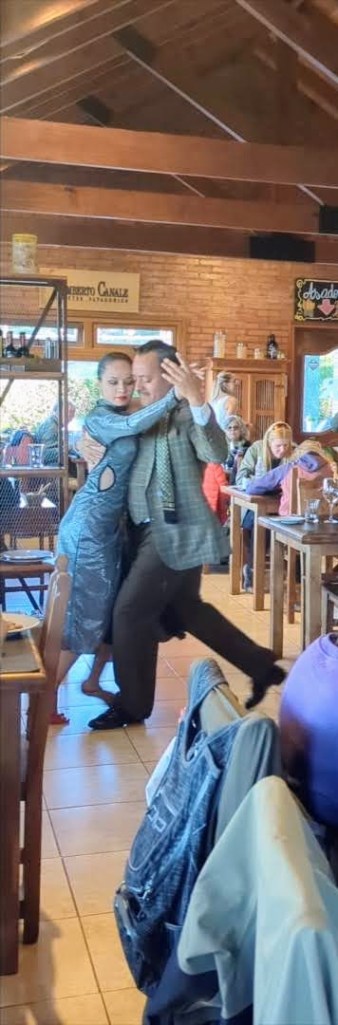
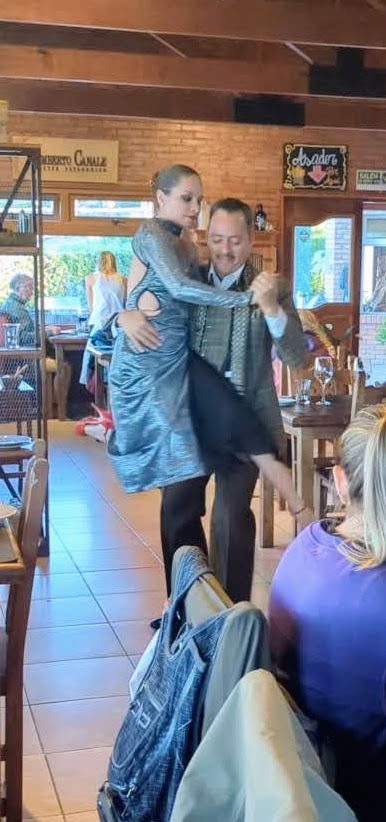
While enjoying a delicious grilled dinner, we were entertained by an Argentinian Tango.

The next morning we again beat the sun.

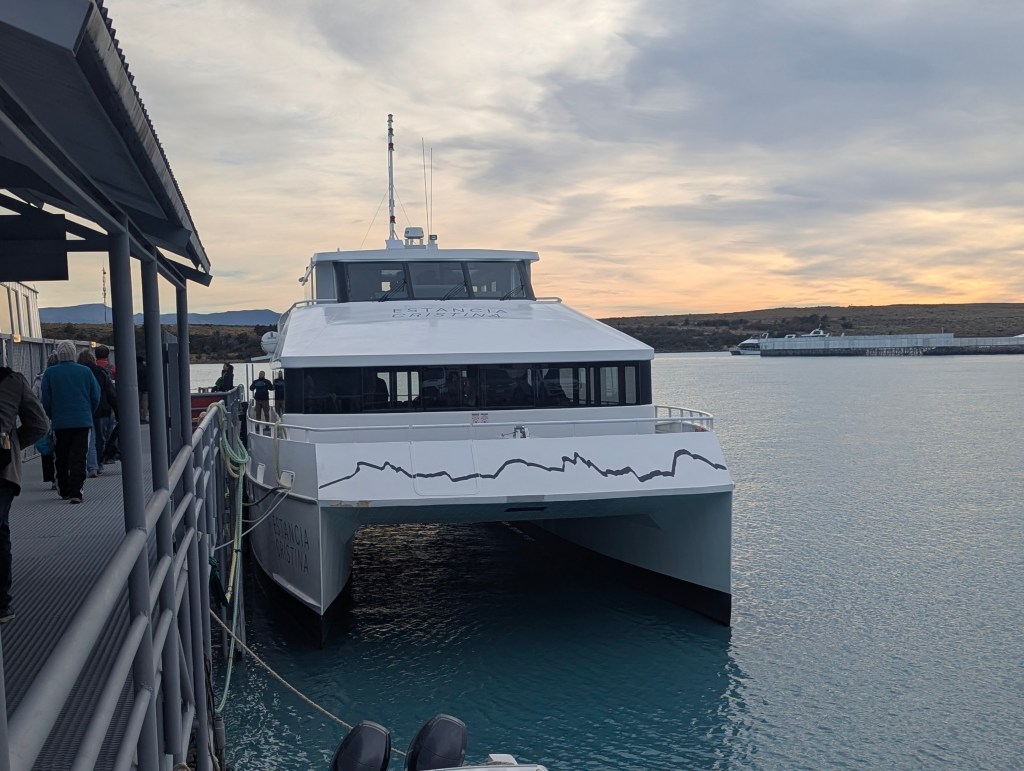
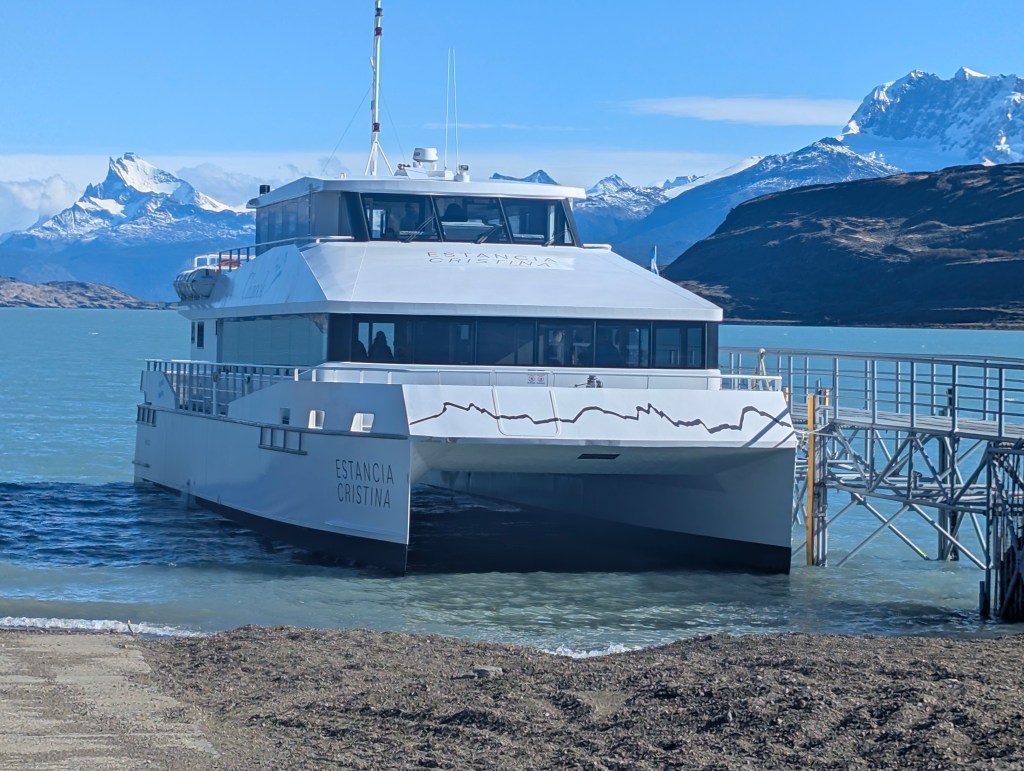
We were picked up early and driven with fellow passengers for the day to Port Moreno on Lago Argentina, baptized by Francisco Moreno in 1875. We boarded the boat for Estancia Cristina.

We travelled across Lago Argentina through its narrowest portion known as Hell’s Gate due to the high cross winds.

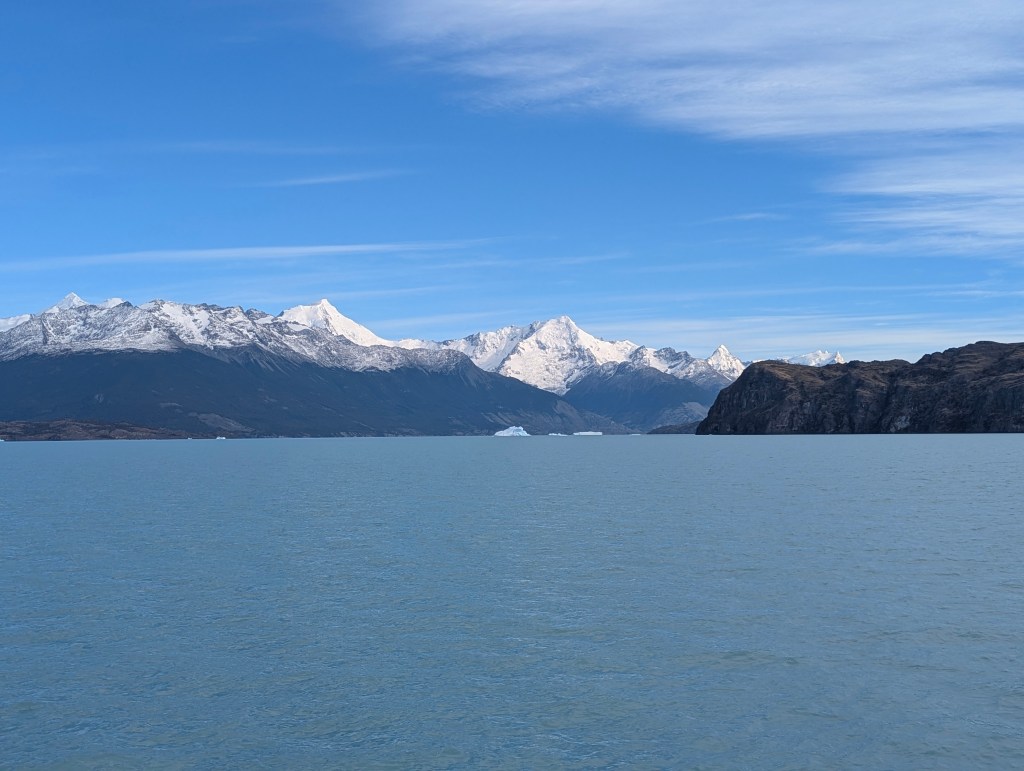
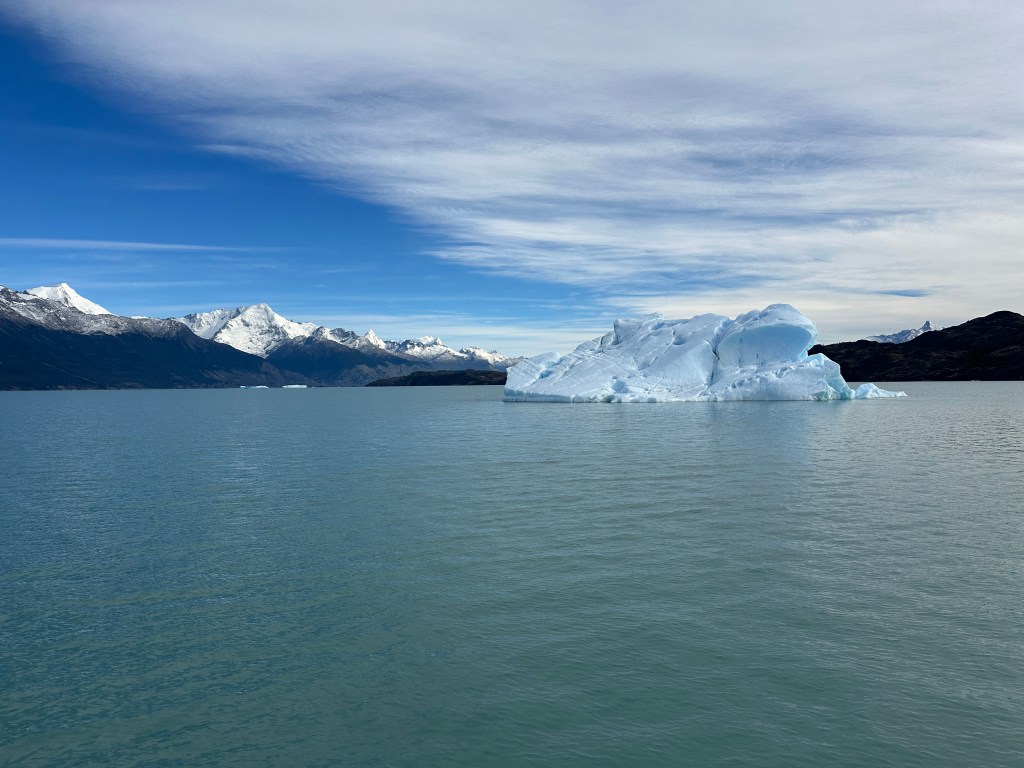
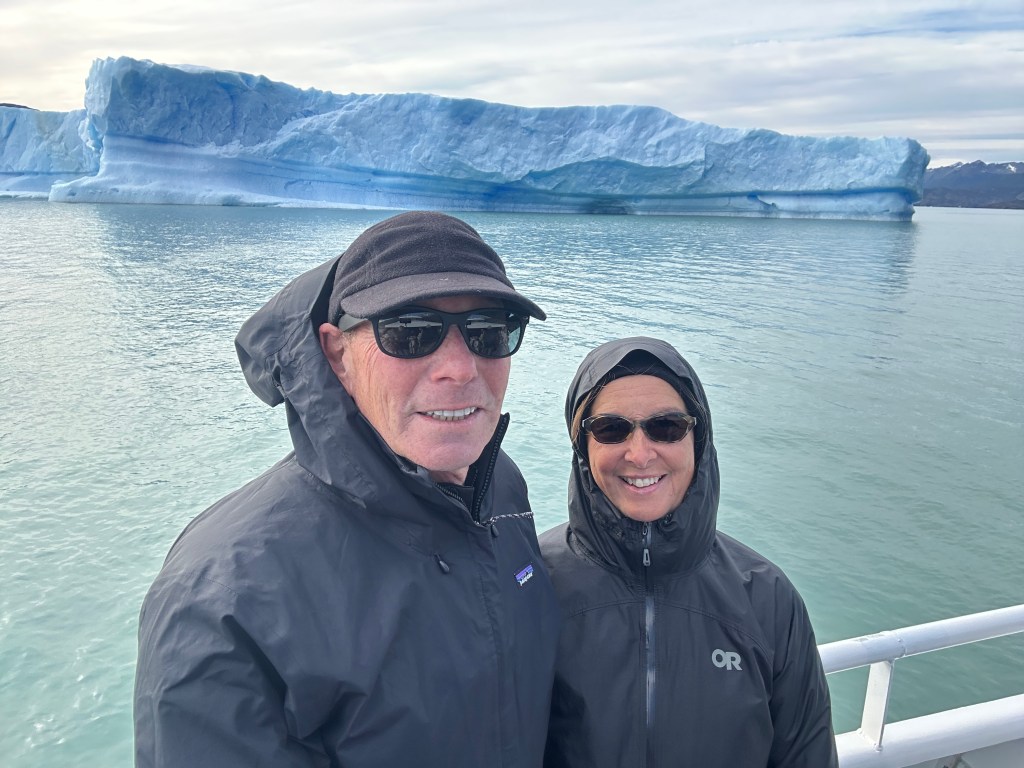
As we sailed towards the glaciers, we headed out onto the front deck to take a look around. We started to see our first icebergs floating in the lake.
and our first large iceberg of the day.

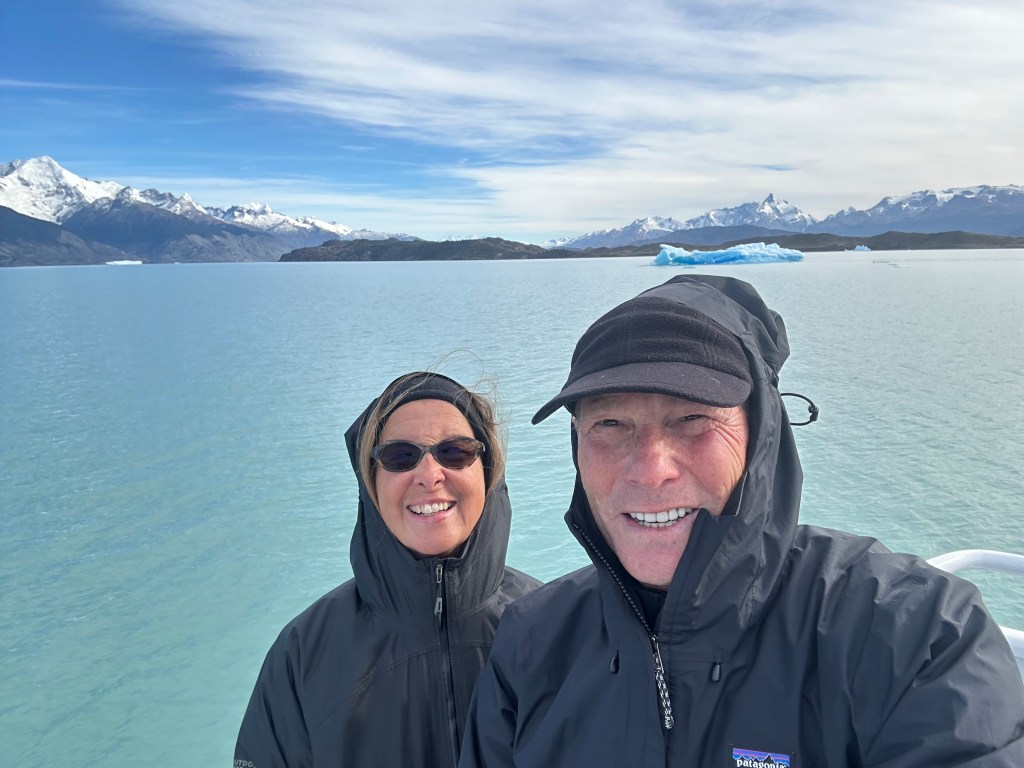
Boy was it cold out there!

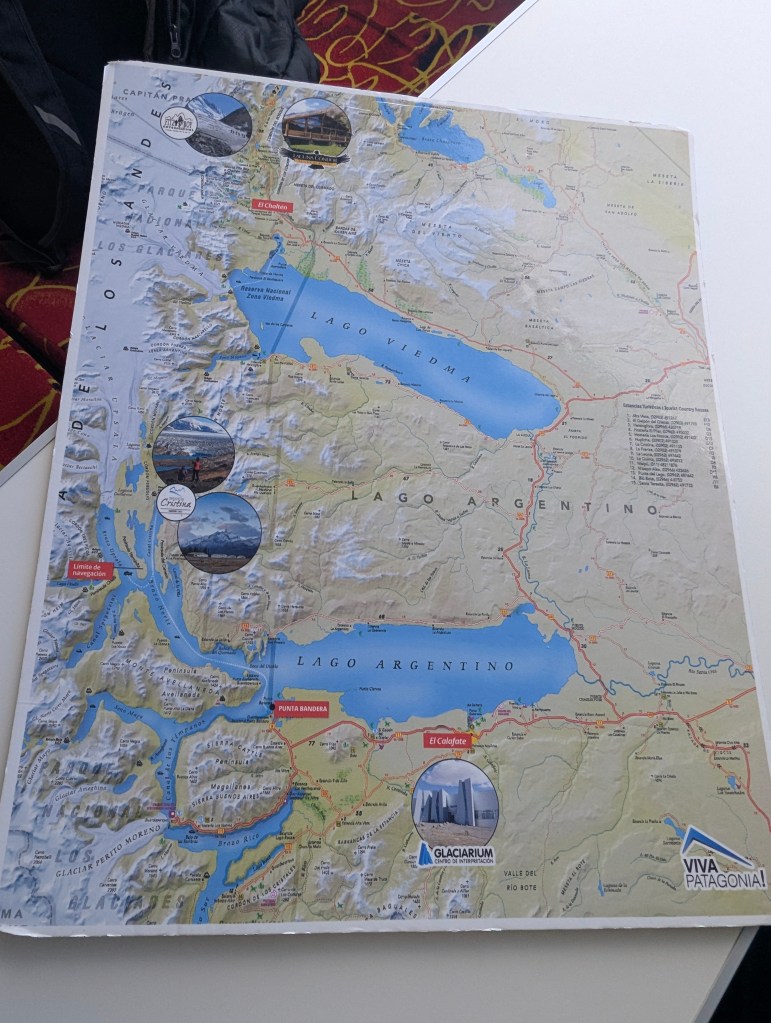
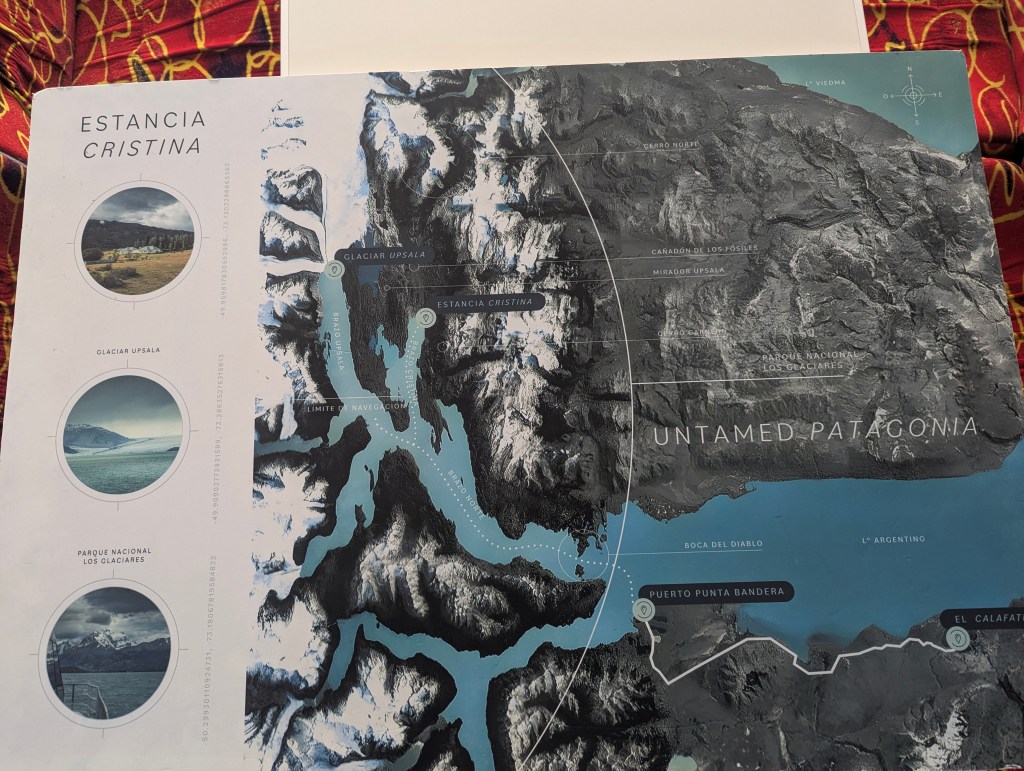
While we were headed toward the Upsala Glacier, I took a moment to study the maps. The map below shows the town of El Calafate Port Bondero where we boarded near the bottom. On the southwest corner of the map is Perito Moreno Glacier that we visited yesterday.

Zooming in, north of the Glaciar Perito Moreno are the channels we will enter today; the furthest north and west channel goes to the Upsala Glacier, the one next to it goes to Estancia Cristina, which we will visit. Notice on the map how far past the Glaciar Beriacchi (the top left corner of the map) the Glaciar Upsala extends. This is an eight year old map.

The next map is a two-year-old map which shows the Glaciar Upsala only as far as the Glaciar Beriacchi.

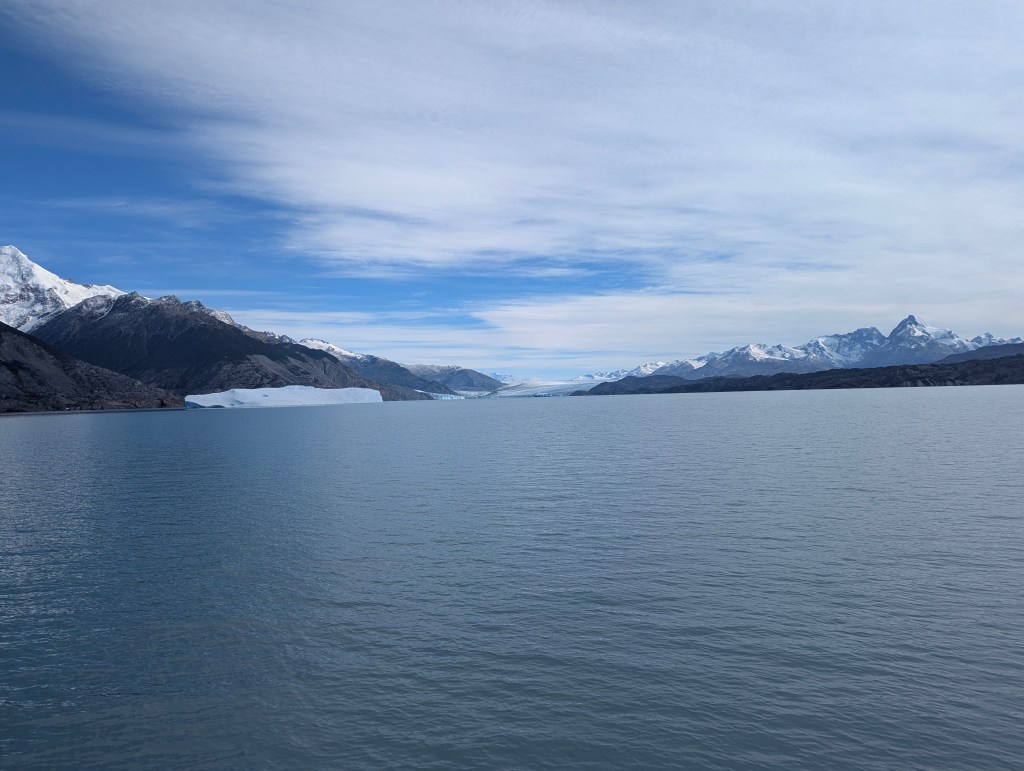
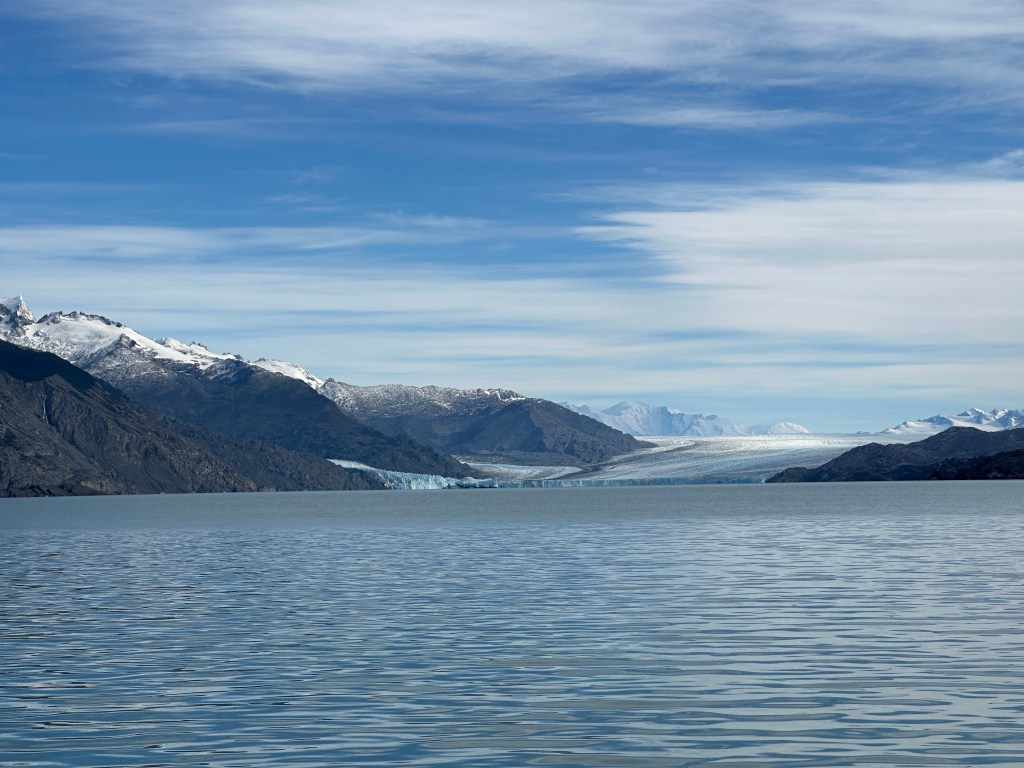
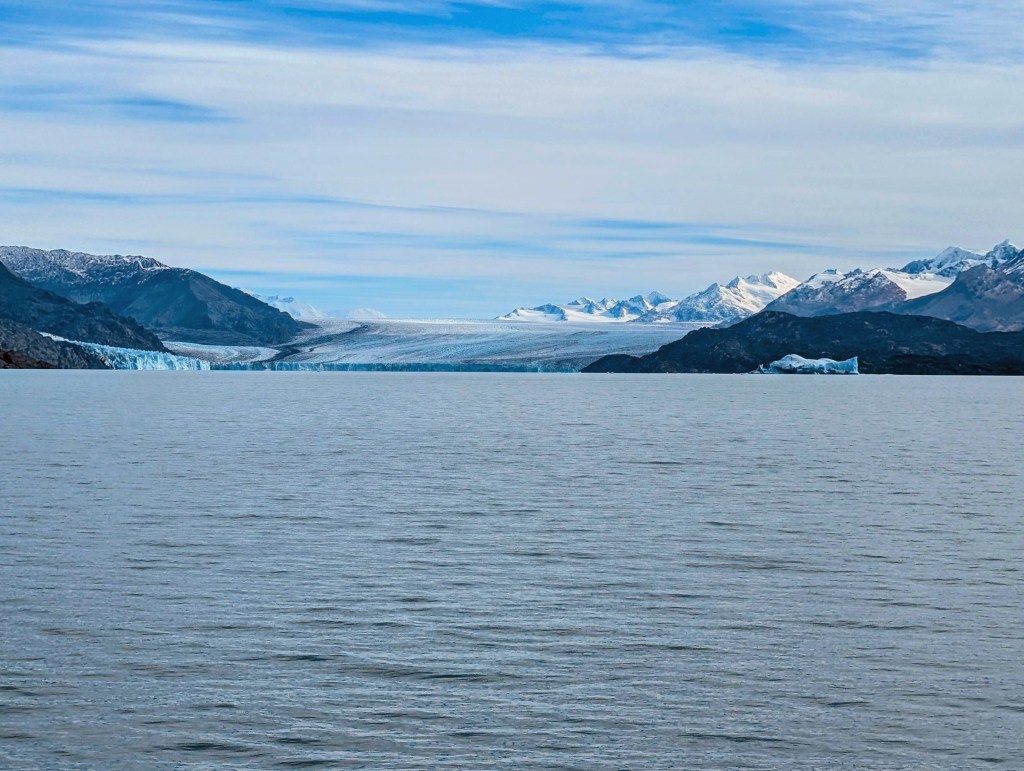
The reality of today is that the Glaciar Upsala has receded beyond the base of Glaciar Beriacchi; they are no longer connected. The other glacier seen between the two is Glaciar Cono, which so far is still connected to Glaciar Upsala although there appears to be a border between them. And finally, the glaciers have come into view from the boat. The fronts of the three above referenced glaciers are visible, but whether or not they are connected is not discernible from this view.

or even this one

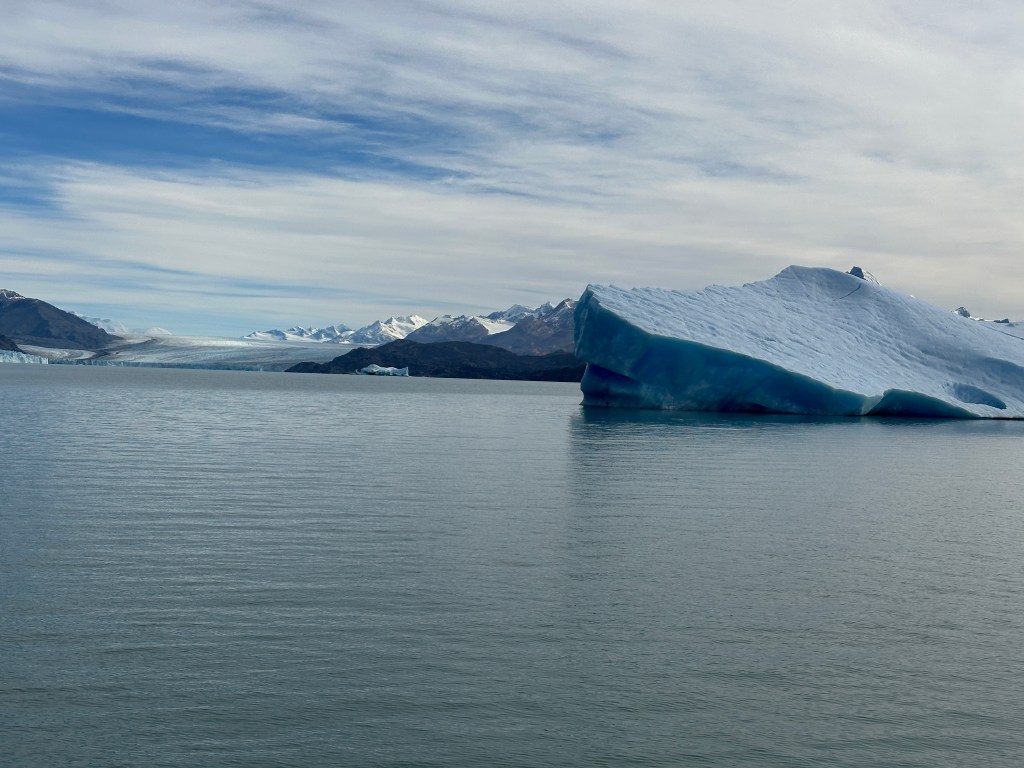
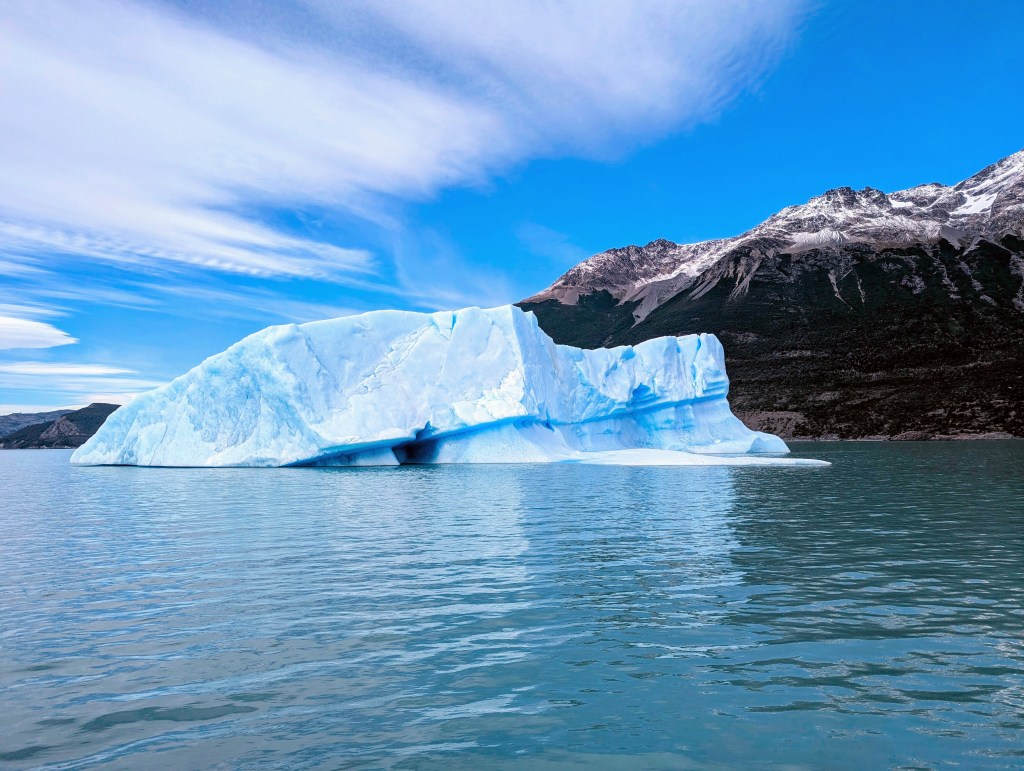
We sailed near a large iceberg.

We had reached the closest we were allowed to the glacier fronts.

But as the boat slowed and circled the icebergs while everyone snapped photos, it started to warm up a bit.

The icebergs are truly beautiful.

This picture gives an idea of scale; the bergs are huge!

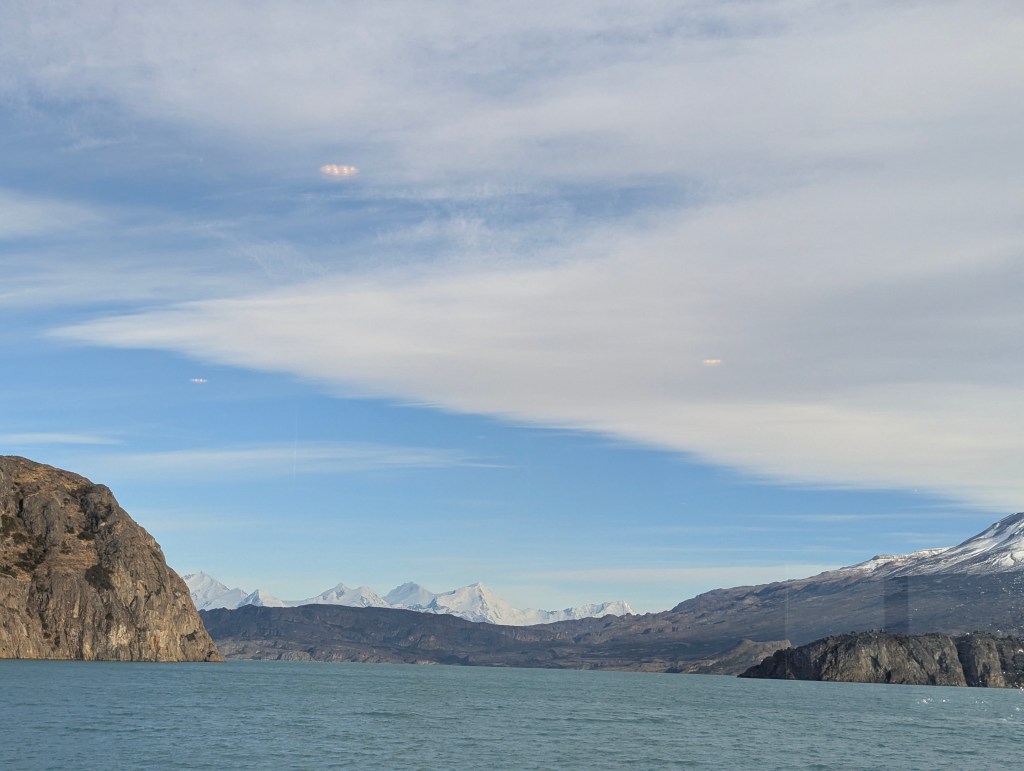
Eric took a gorgeous panoramic view of the mountains reflected on the lake.

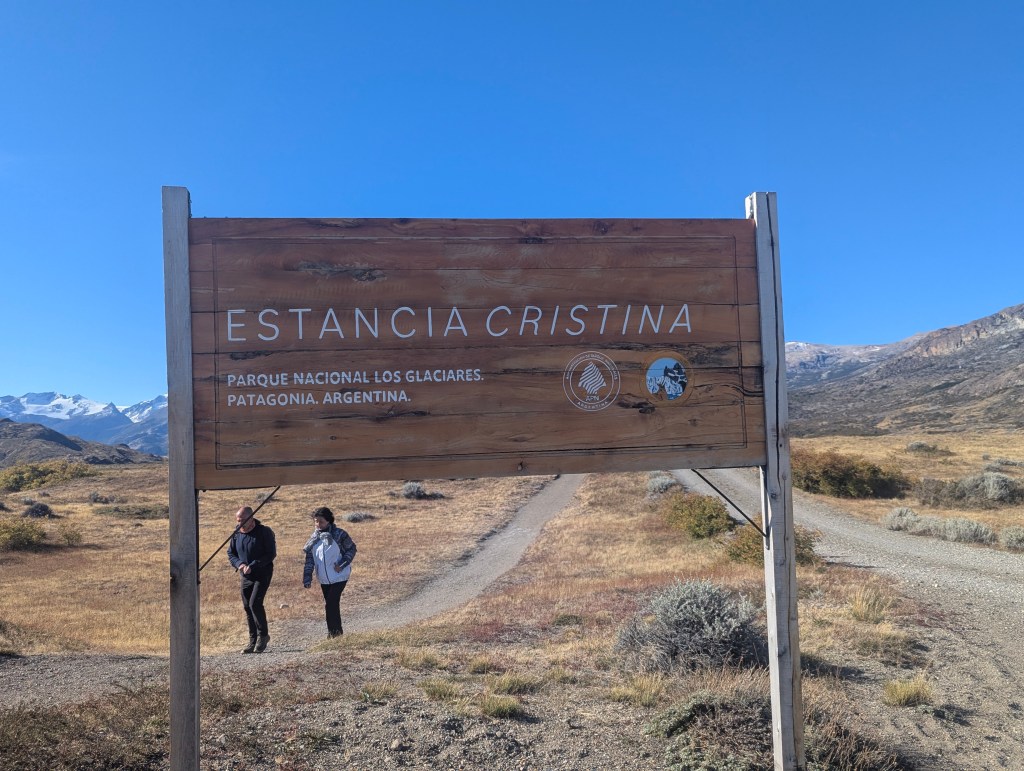
We then sailed up the adjoining channel to Estancia Cristina.

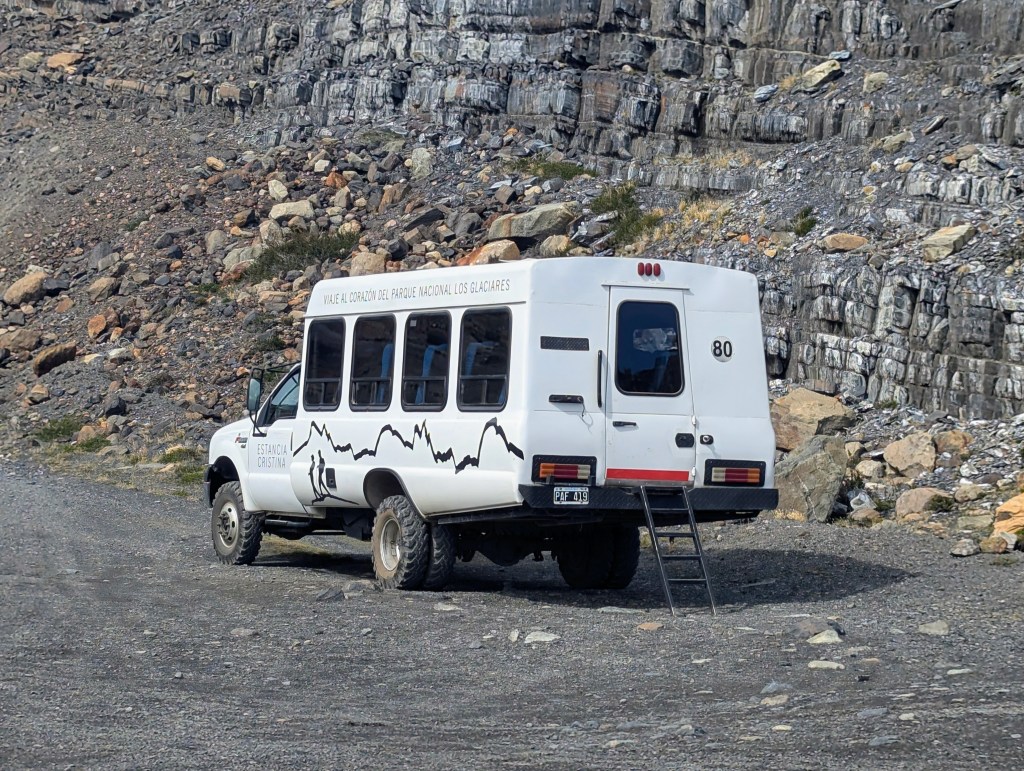
We boarded the largest 4×4 I have ever seen, so high it required a ladder to enter from the rear.

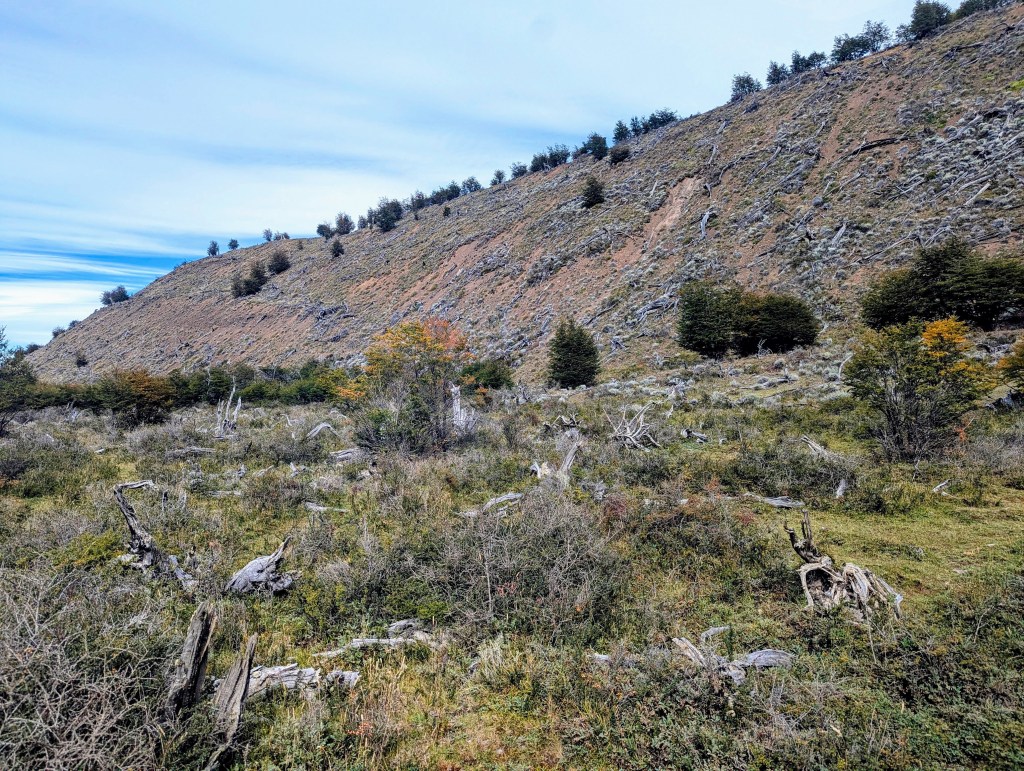
We drove for about 50 minutes toward the glacier on a road hand made by 40 men using pick axes and shovels, very bumpy. Along the way we saw large hillsides covered with fallen dead trees. We were told that over 80 years ago while trying to clear land for sheep and cattle grazing, a fire got out of control and decimated much of the forrest. As we had seen in other forests in Patagonia, decomposition happens very slowly here.

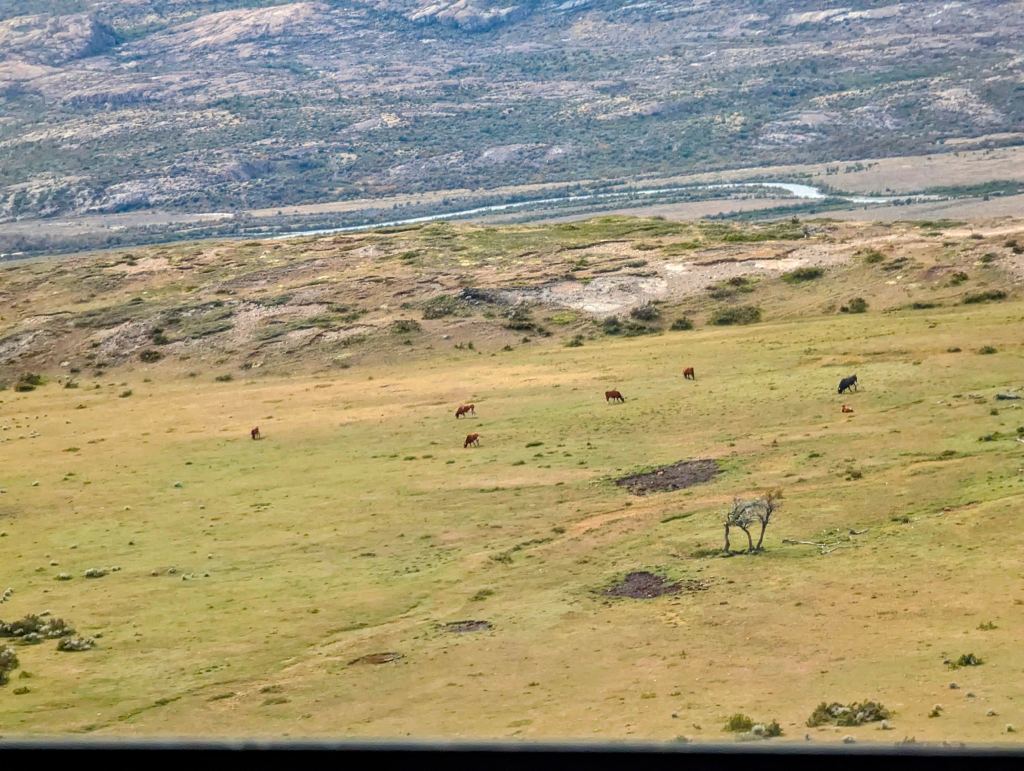
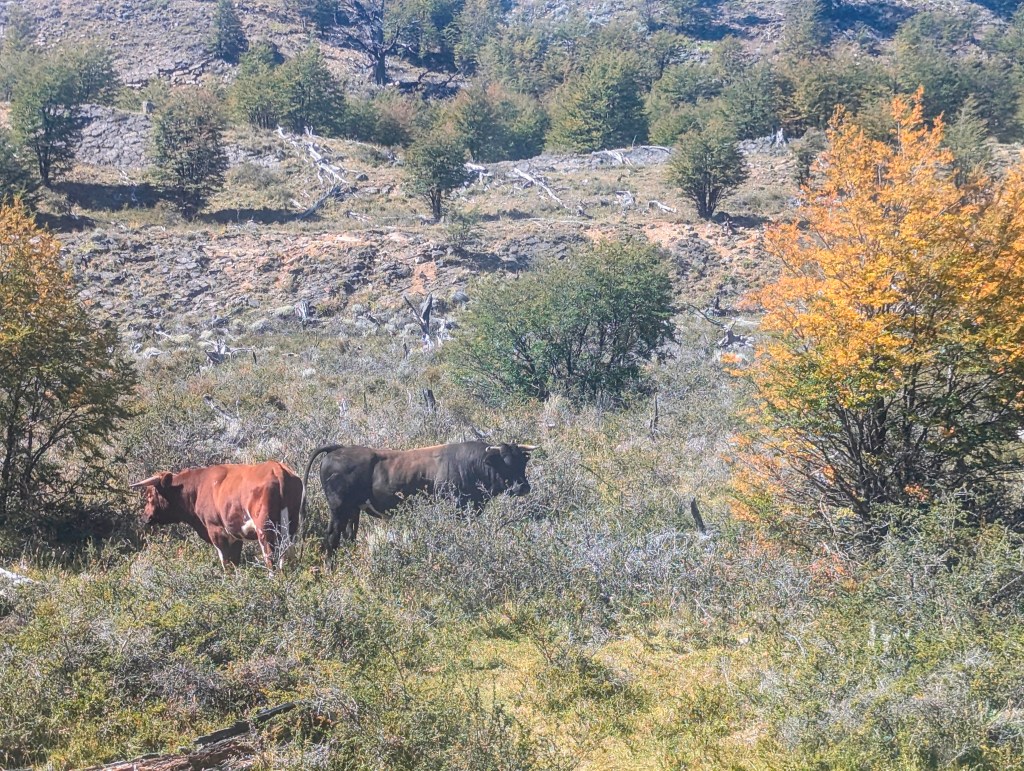
When the national park took over the land from the ranchers, they were asked to remove their animals. It was too expensive to relocate all of them, so many of the sheep and cattle were left behind. The assumption was that the animals would not last the winter. That was true for the sheep, which mostly became prey to the local pumas. But the cattle survived and now exist in the wild.

These are the eighth generation of wild cattle. They are purportedly aggressive toward tourists, but we only admired them through the windows of our 4×4.

We diembarked our 4×4 and began our trek toward the Upsala Glacier.

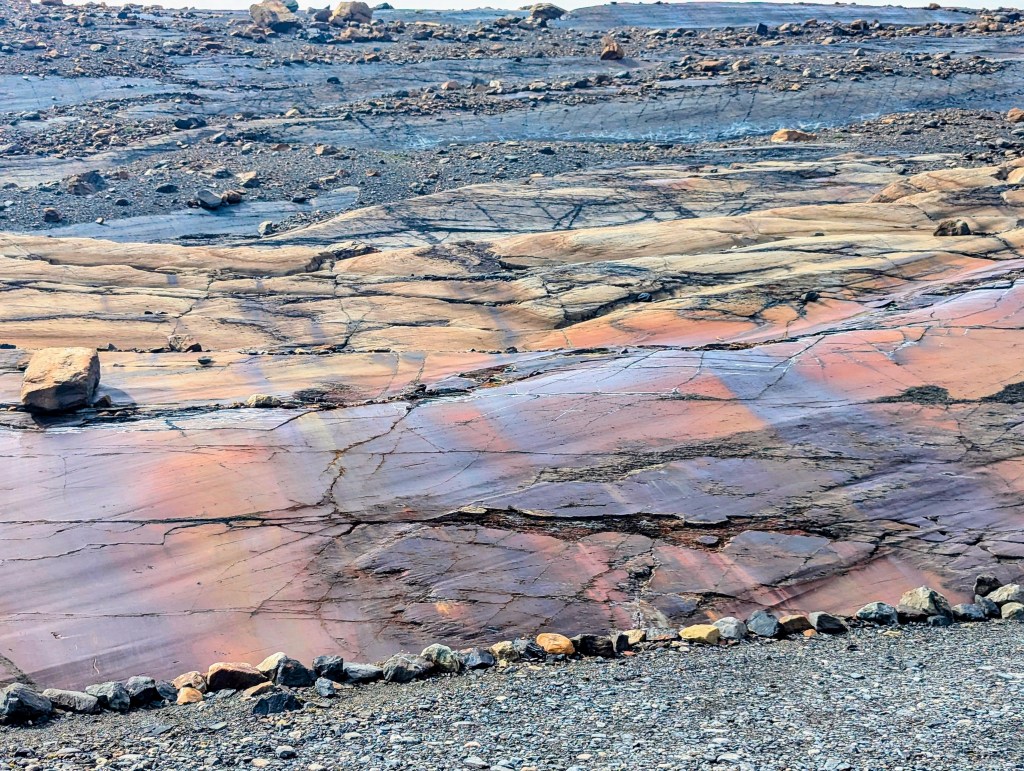
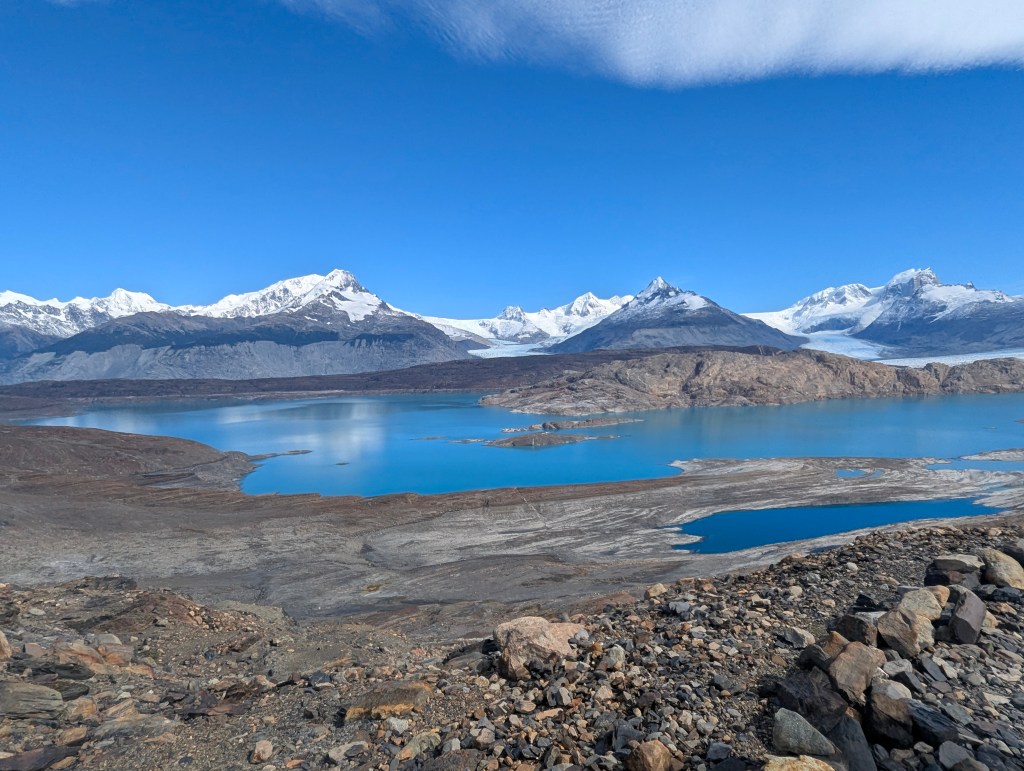
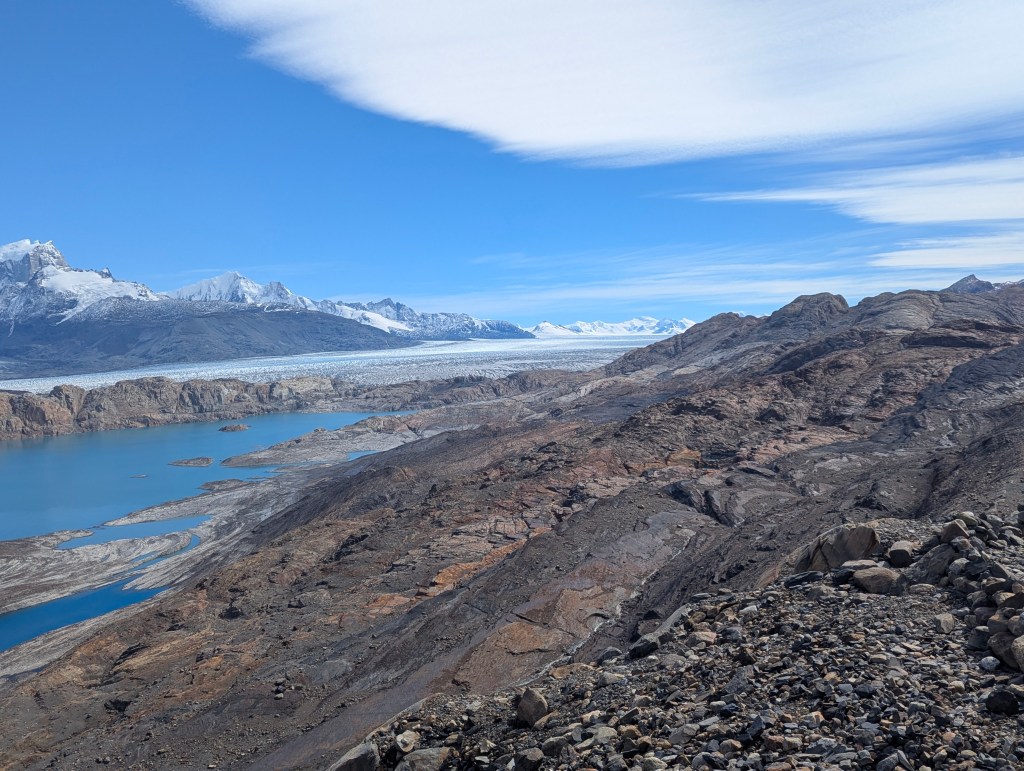
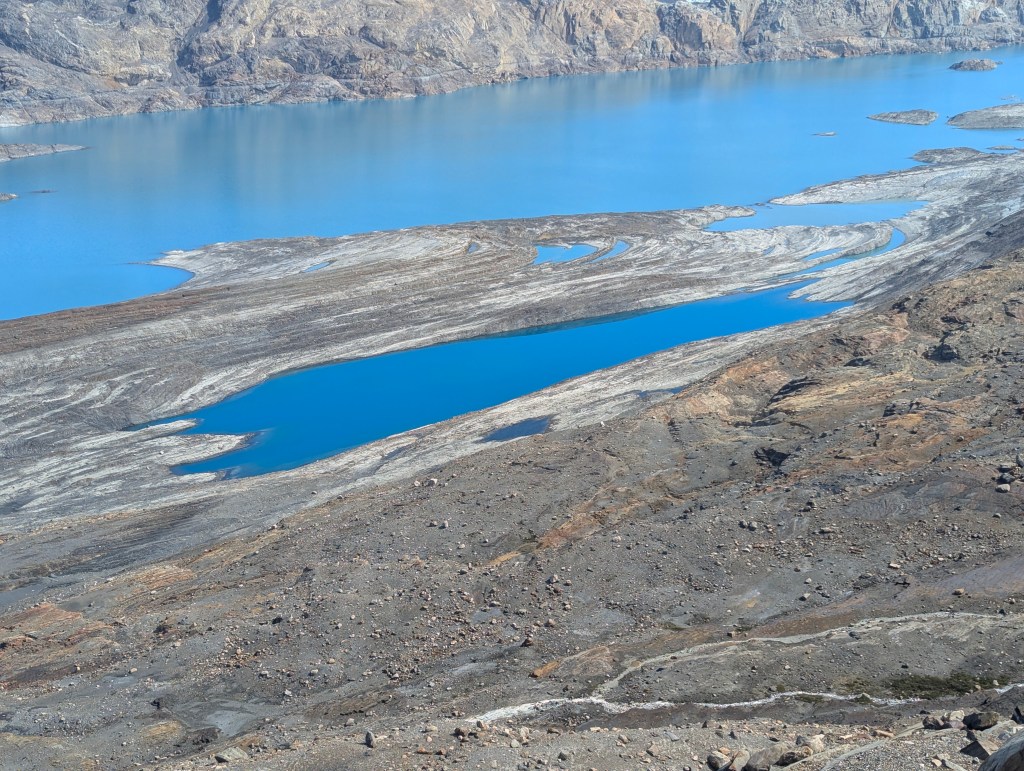
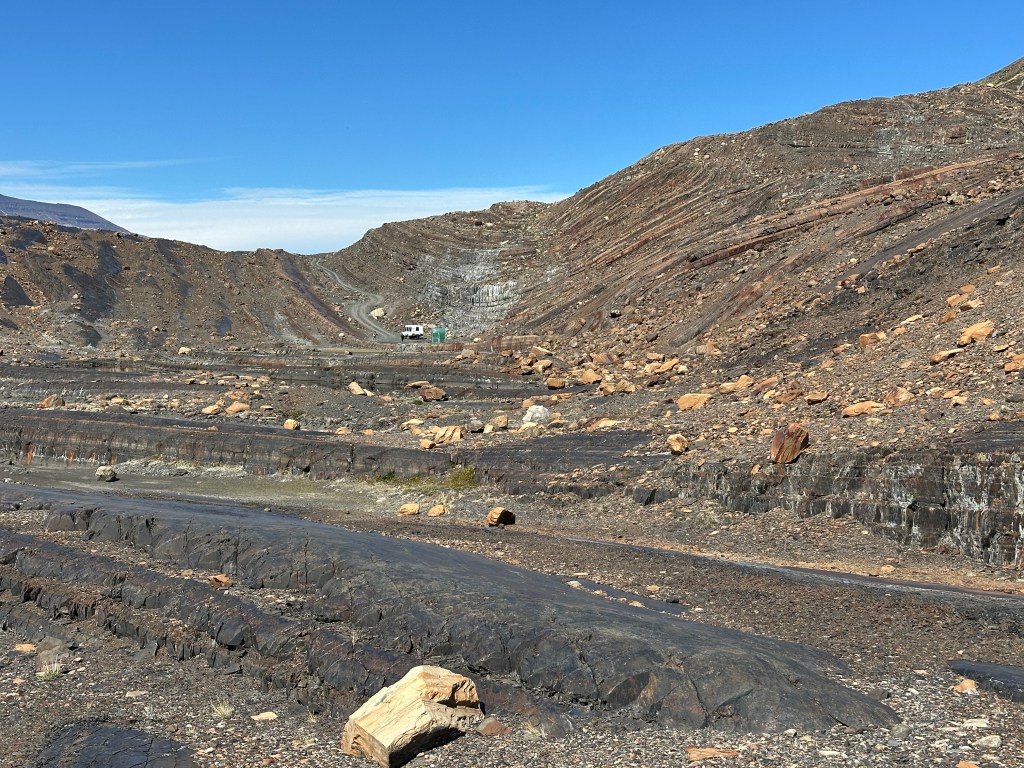
The landscape here is mostly that of Moraine terrain, a landscape created by glaciers and made of a variety of materials, including silt, boulders, sand, and clay. The resulting sediment is not conducive to vegetation. The smooth rocks were polished by the glaciers “glacier polish” or “pulimento glacier” in Spanish.

The striations are cut as the glaciers pass over the rocks.

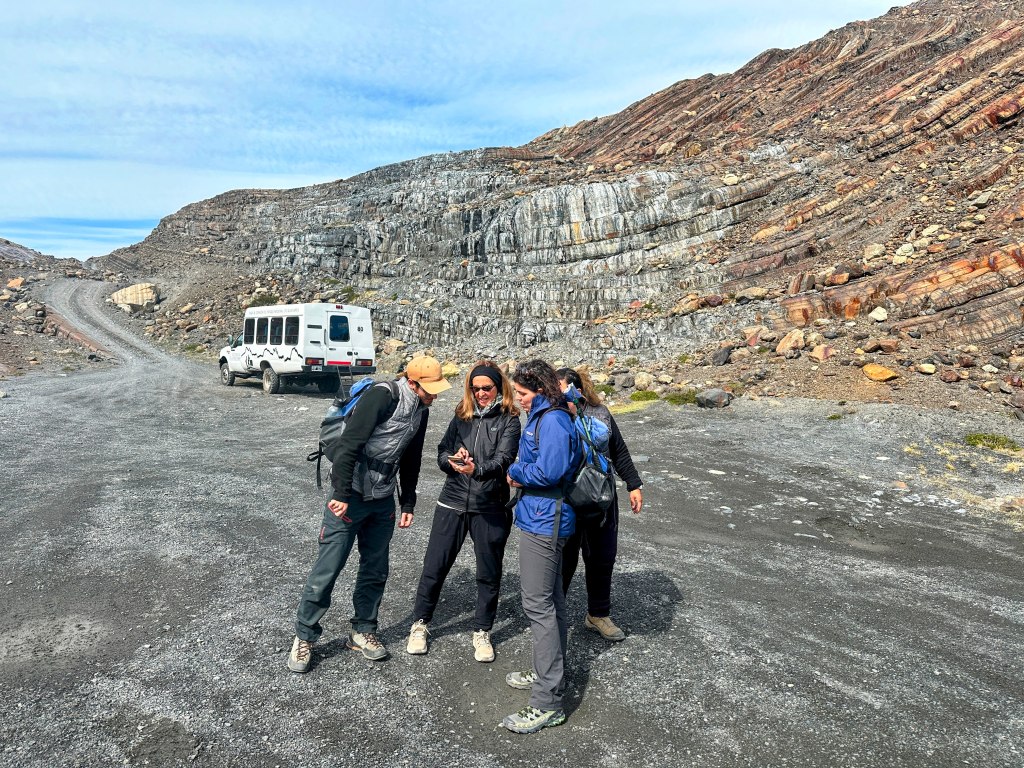
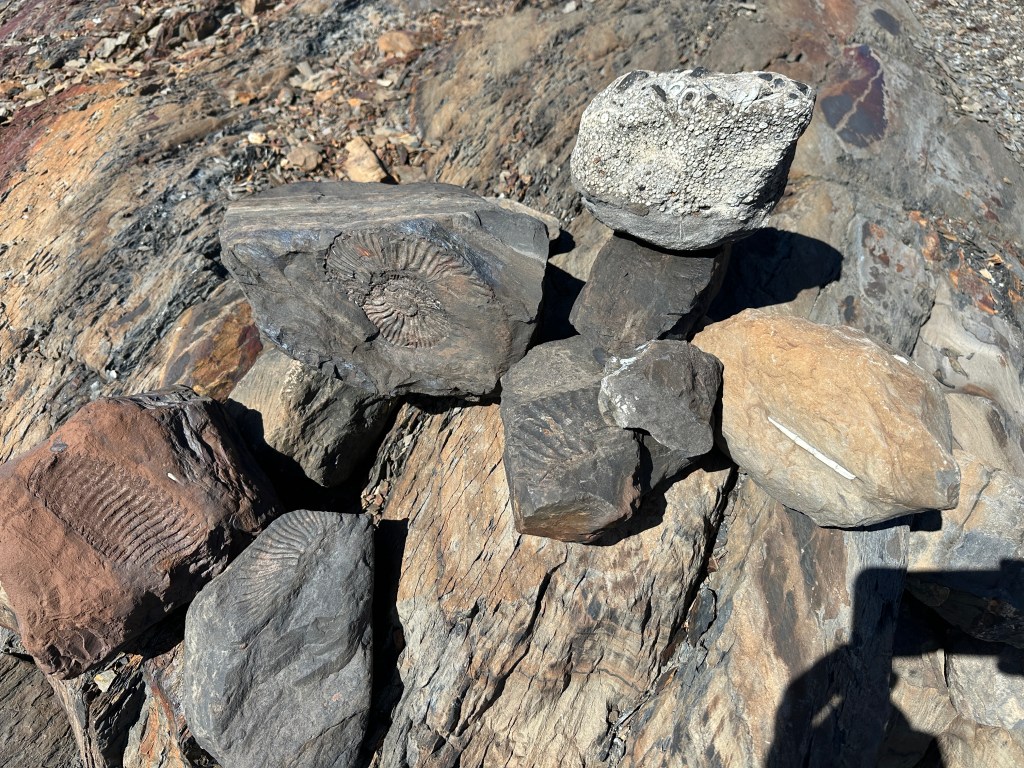
Millions of years ago this area was under the sea. Fossils can still be found in the area.

And so we started our hike toward the Upsala Glacier.

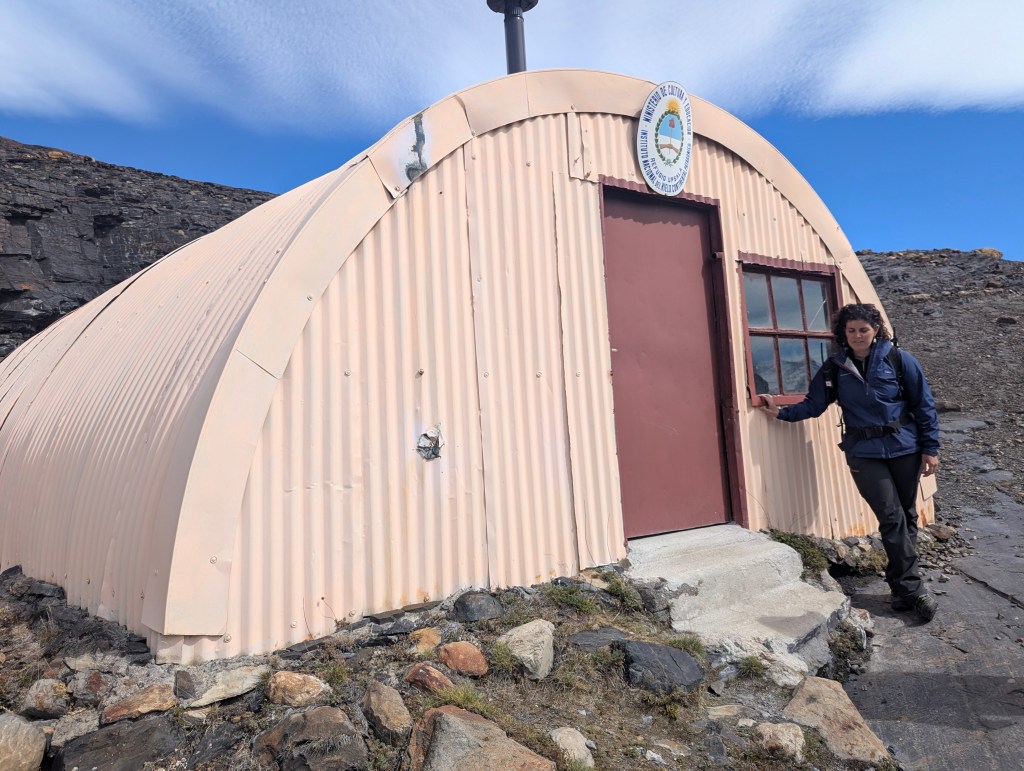
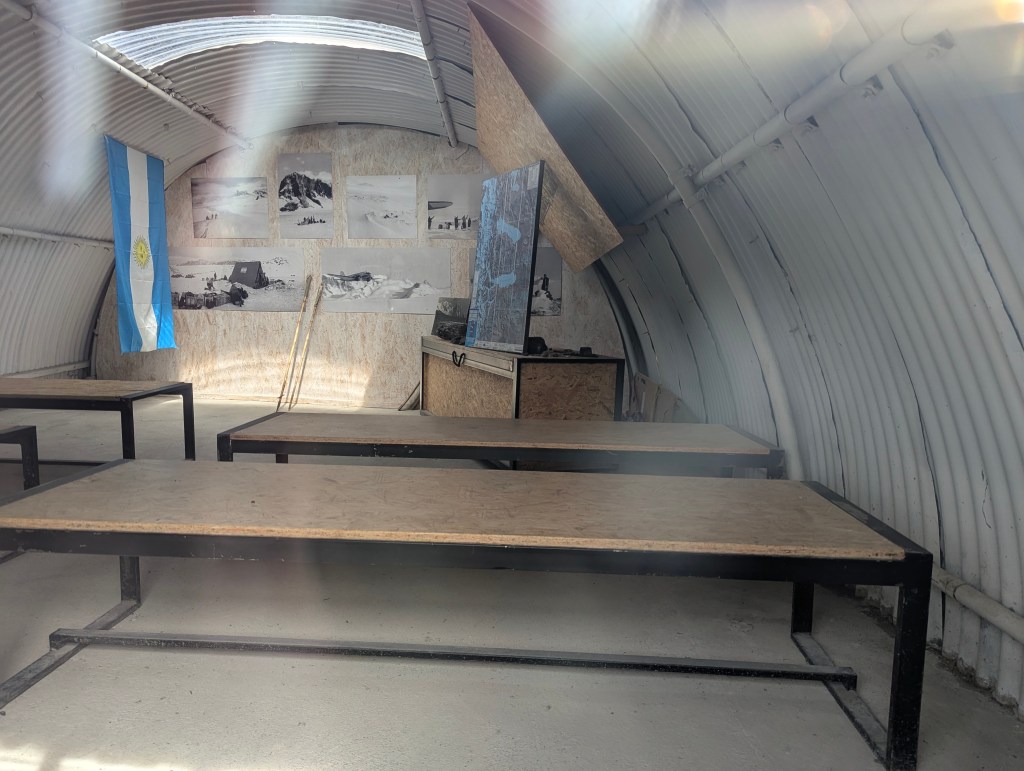
We stopped to see a shelter maintained by the Ice Institute. It is for scientists or park rangers who, for whatever reason, need to spend the night in the area. When it was built in 1950, it was a 15 minute walk to the edge of the glacier. Today it is about an 8 hour walk.

The shelter is always open and availbale.

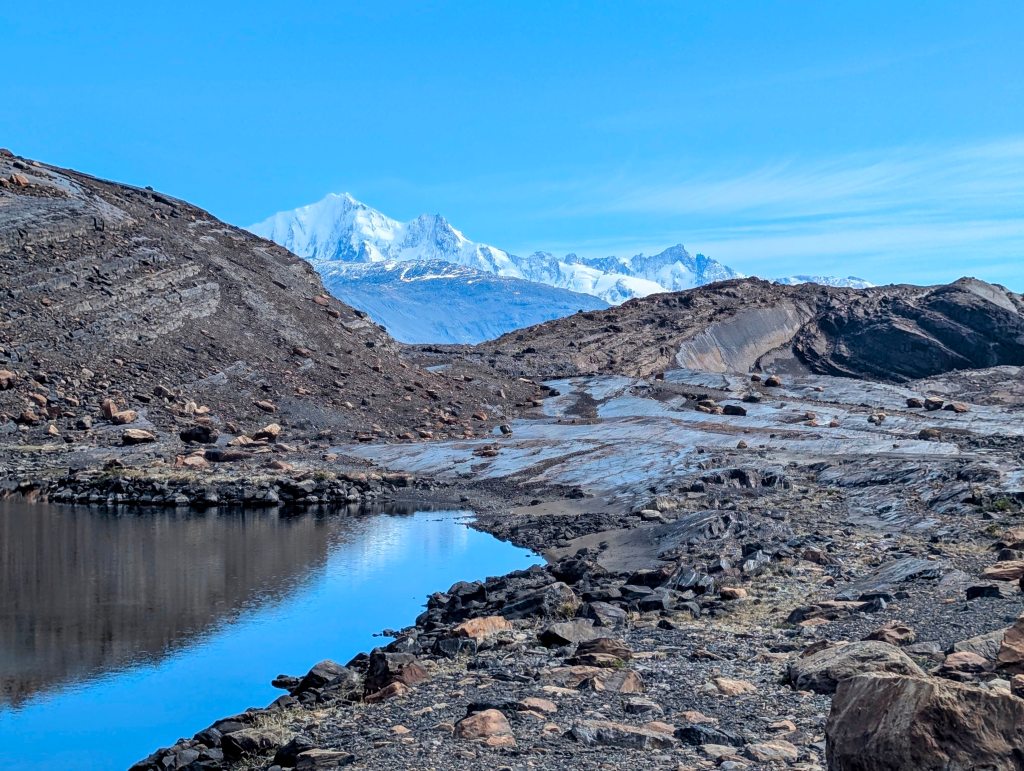
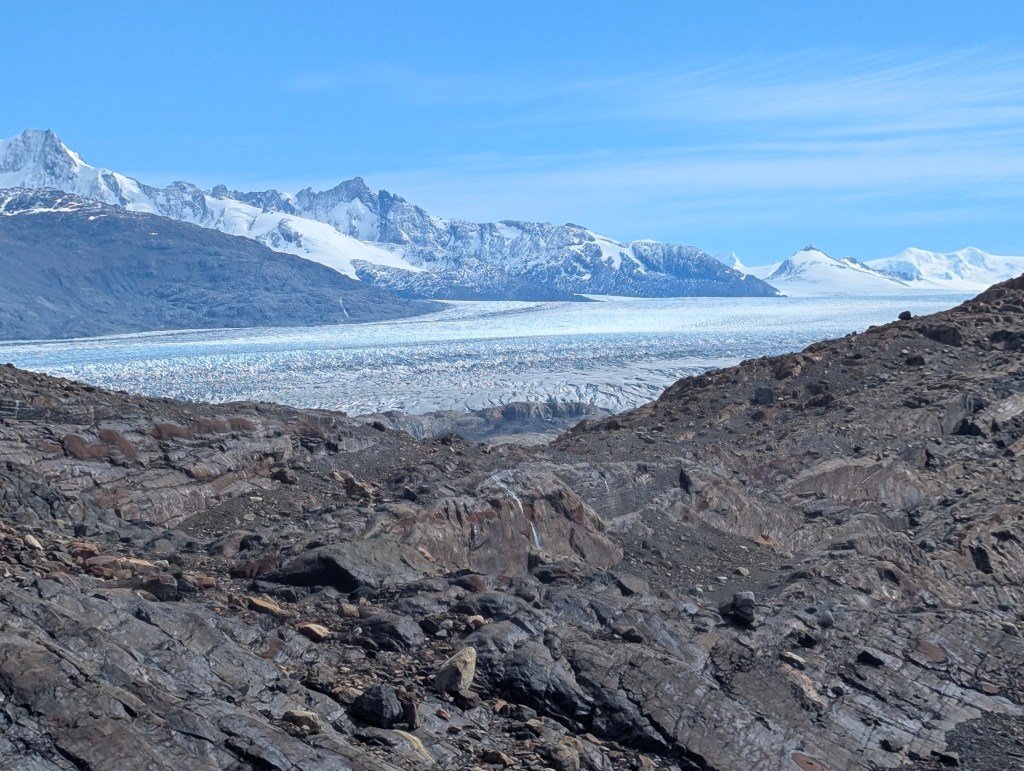
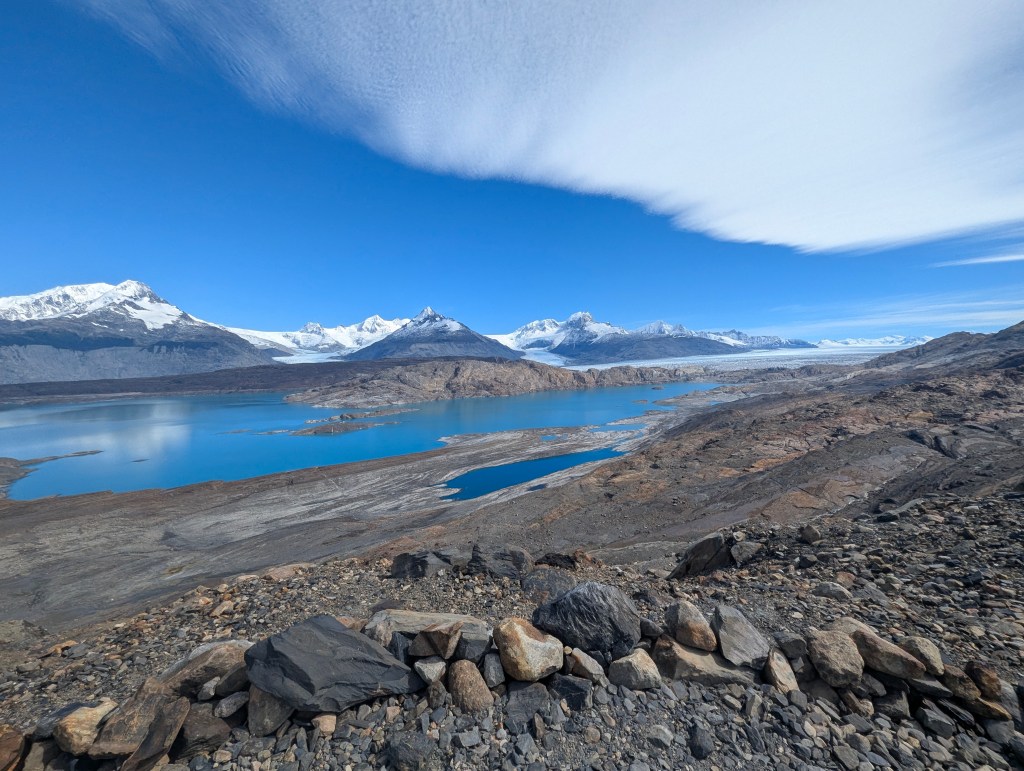
As we hiked we got our first glimpse of the Upsala Glaciar.

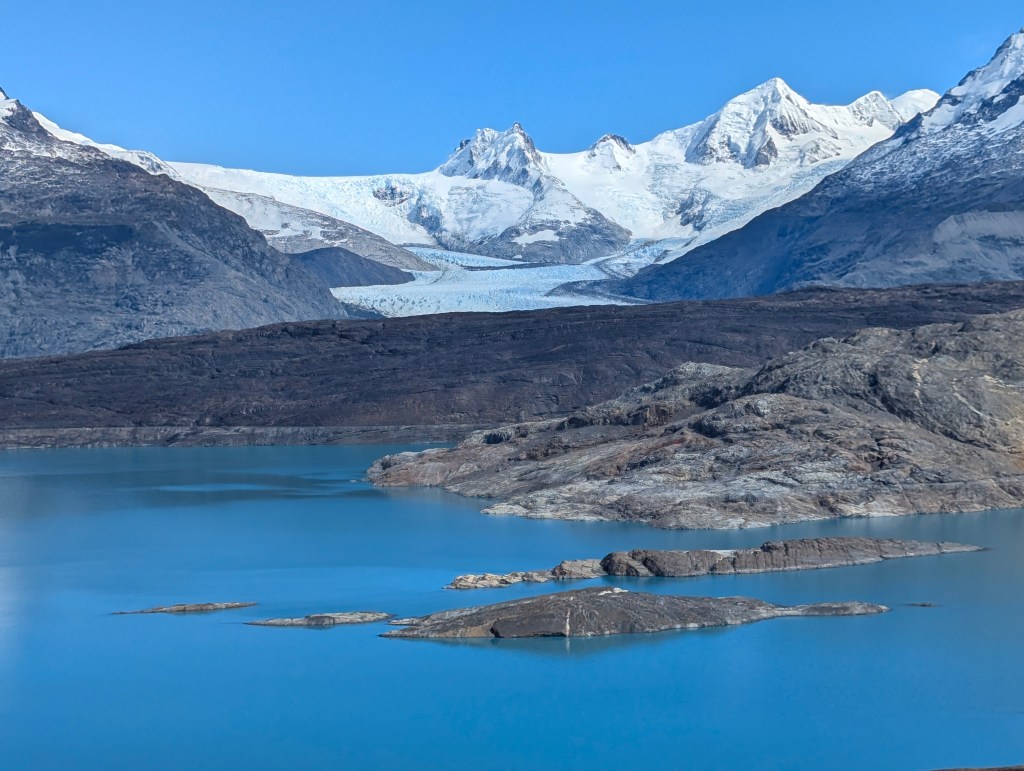
We continued along the path and were able to see the fronts of the Beriacchi Glacier on the left and the Cono Glacier on the right with the very front of the Upsala Glacier on the far right.

And finally the front of the Upsala Glacier as it is joined by the Cono Glacier at its front edge.

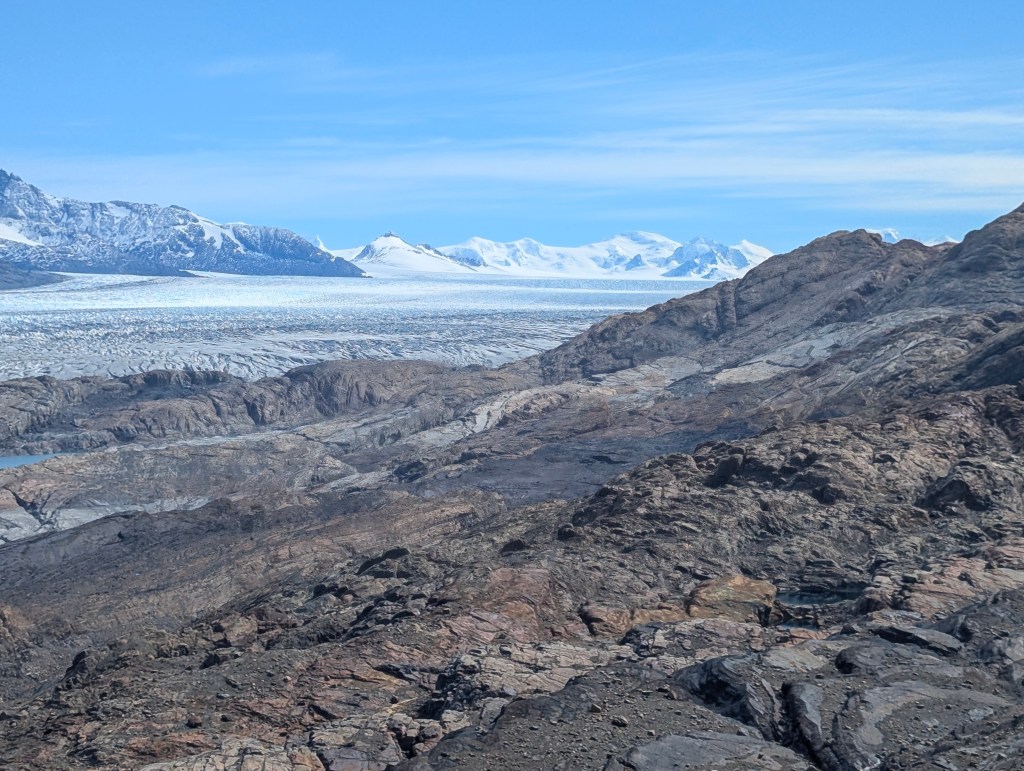
The Upsala Glacier at 197 feet long with a surface area of over 330 square miles, it is 3 times larger than the Perito Morena Glacier. It is the second largest in South America. Unlike the Perito Moreno Glacier, the Upsala Glacier is floating on the lake.

The glacier is named for Upsala, a Swedish university located 44-miles from the capital, Stockholm. It was the first university to sponsor glaciological studies in Los Glaciares National Park.

Glaciers must always be moving. For their formation and sustenance, they require rain, snow, cold, and wind.

Glaciers that are not valley glaciers are called hanging glaciers. In Argentina, they are named for the mountains upon which they sit like the one on North Mountain, seen below, the highest peak in the area at almost 9,000 feet.

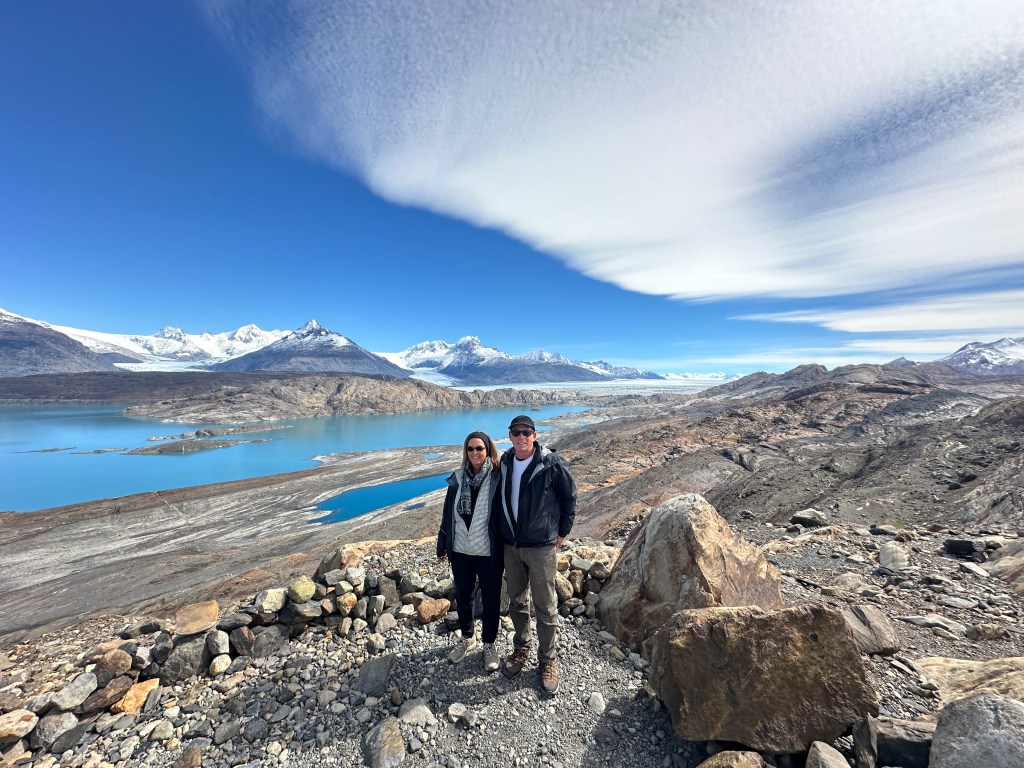
We could not get enough of the beauty of this special place.

And oh the colors were spectacular, or as they say in Argentina, “buonisimo!”

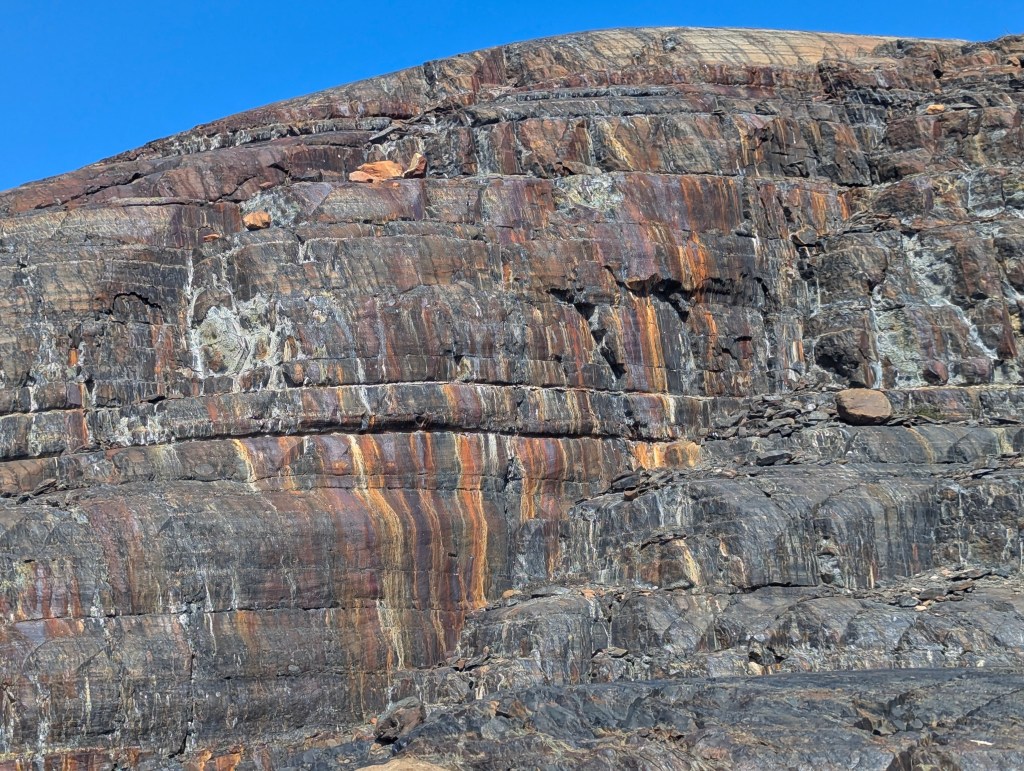
especially the colors in the rocks due to all the minerals contained therein.

We reluctantly made our way back to our 4×4 and the return bumpy and windy 50 minute trip back to Estancia Cristina.

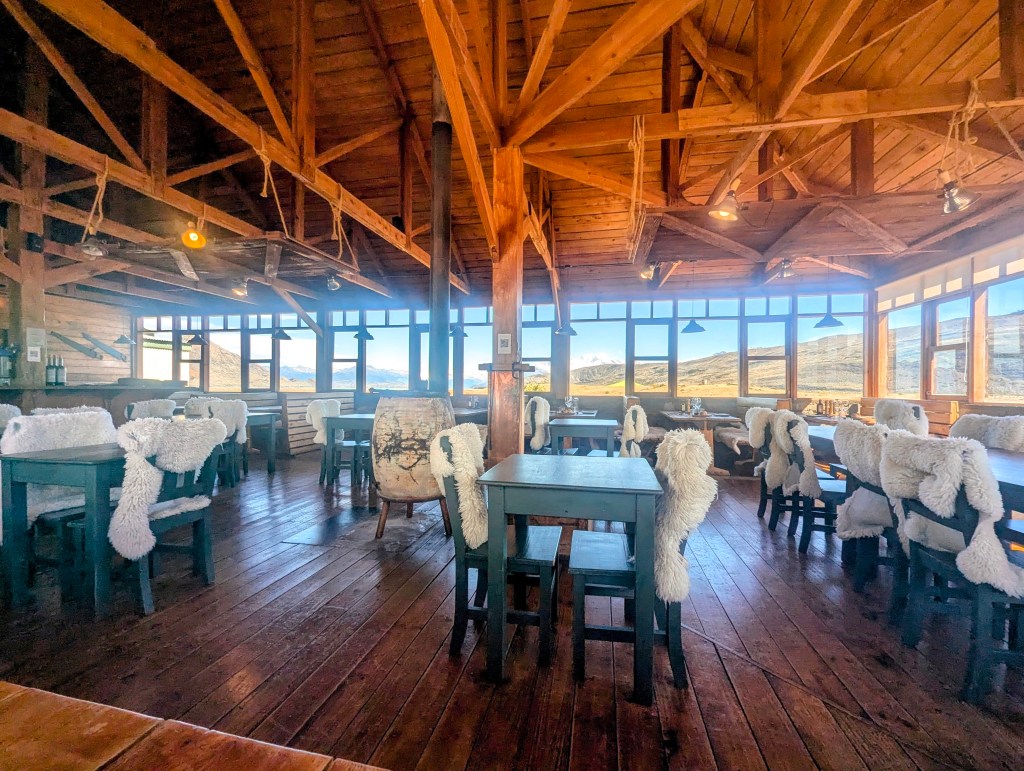
There a delicious lunch of local specialties including squash soup, guanoco meatballs, lamb, grilled veggies, and fried parmesan cheese was waiting for us in the restaurant.

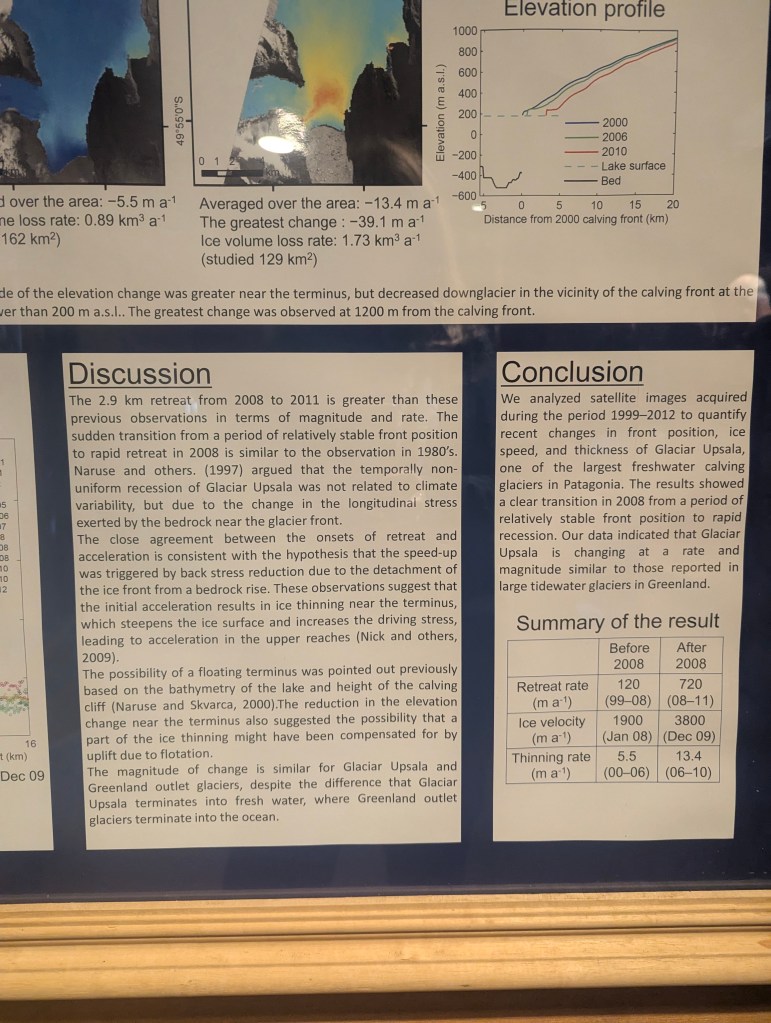
When asked about the human effect of global warming vs the natural evolution of the planet warming, our guide carefully responded with “my government and the park service require me to say that the data is uncertain.” To determine the rate of decrease in size of the world’s glaciers, one must study both the accumulation zone as well as the front of the glacier. The “accumulation zone” refers to the upper part of a glacier where more snow accumulates than melts, typically at higher altitudes, while the “front of a glacier” is the very edge or terminus of the glacier, which is the lowest point where the ice reaches and is where most melting and calving occurs, marking the boundary between the glacier and the surrounding land. The following data that appeared on a wall chart in the restaurant supports the effect of “human related global warming” on the shrinking of the glaciers. This is important because the Southern Patagonian Ice Field is the third largest source of global fresh water behind Antarctica and Greenland.

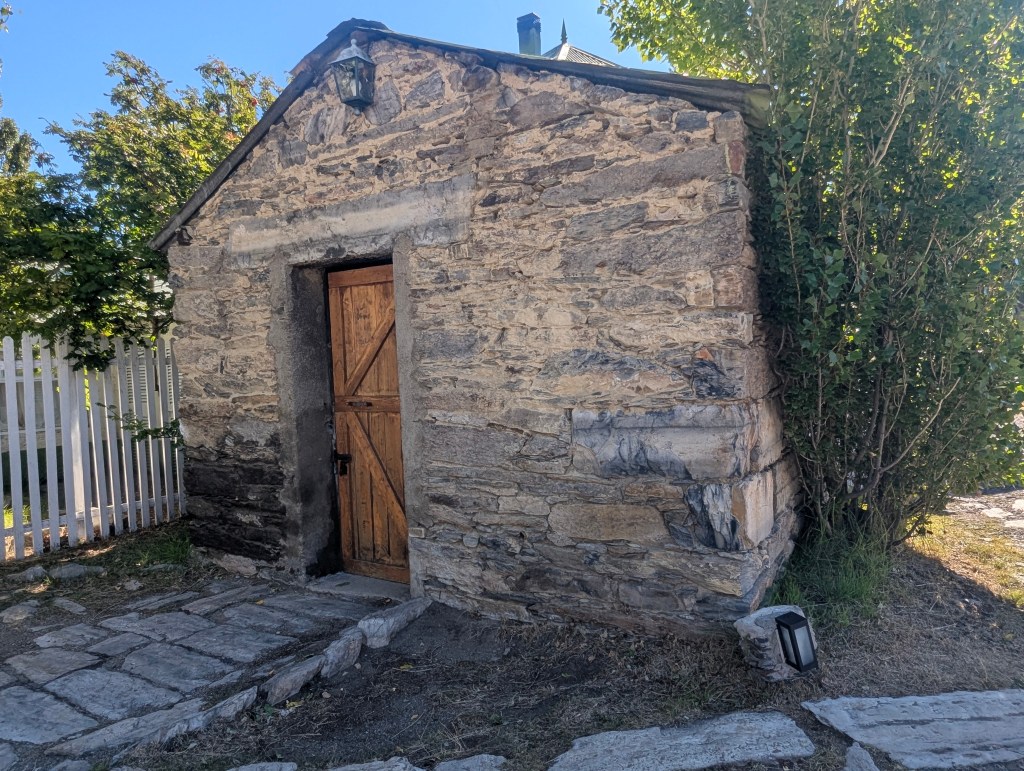
After lunch we were given a tour of the ranch and its museum. In Patagonia estancias have a historical as well as economic significance. In the mid nineteenth century the decision was made to boost an agricultural big-scale production as the base for the country’s flourishing economy. Lands in remote areas appropriated from the native peoples were given as farms to mostly European immigrants. The Homestead Act of 1884 established an amount of 20,000 hectares (about 50,000 acres) to be given each family for wool production. As long as the taxes were paid, after a period of 30 years the family would own the property. Percival Masters was moored in Punta Arenas, Chile in 1900 when he and his then girlfriend Jessie heard of the possibility of gold in Patagonia. They made their way here only to find pyrite, “fools gold.” Upon hearing of the possibility of land ownership for wool production, they moved to this western part of Santa Cruz. They arrived in 1914 with children Herbert age 4 and Cristina 9 and lived in a tent for the first year then built this small home, which took 9 months to build.

The inside is this one small room.

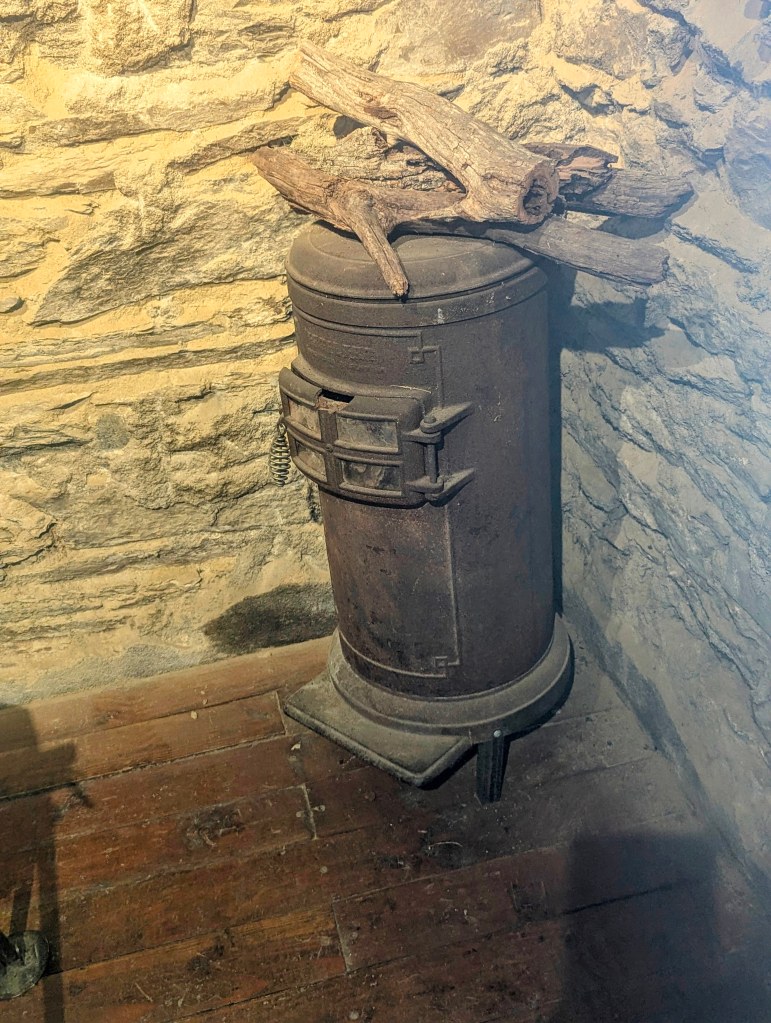
This is the original heater.

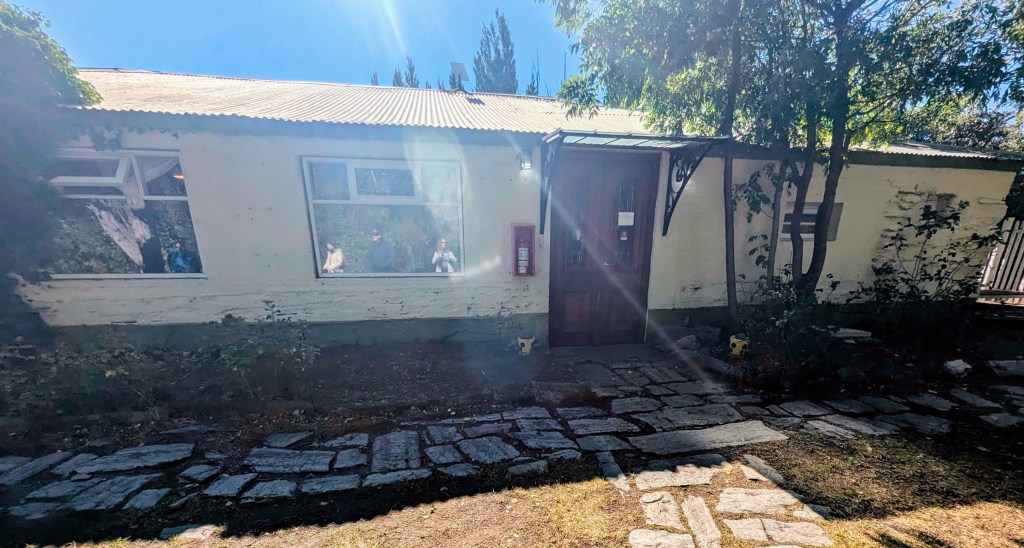
In 1919 they moved into this larger home which they surrounded with trees and shrubs to block the persistent strong winds. Only the front of the house now is the original. Originally the name of the farm was Estancia Masters, but is was changed to Estancia Cristina to honor their daughter after she passed away in 1924 from pneumonia.

Inside the museum we can see what their kitchen looked like.

Sheep were brought to Patagonia from Buenos Aires, where they had been introduced from Islas Molvinas, in large herds traveling for many miles and for many months, sometimes up to two years. In 1900 there were 74 million sheep in Patagonia. Today there are about 12 million.

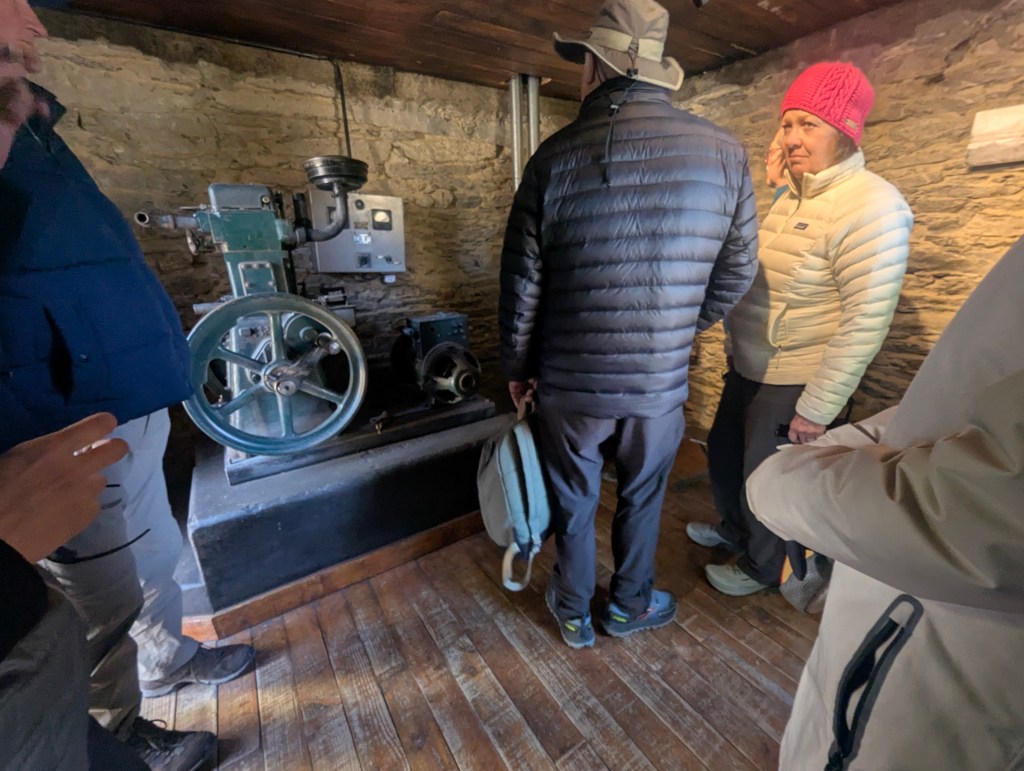
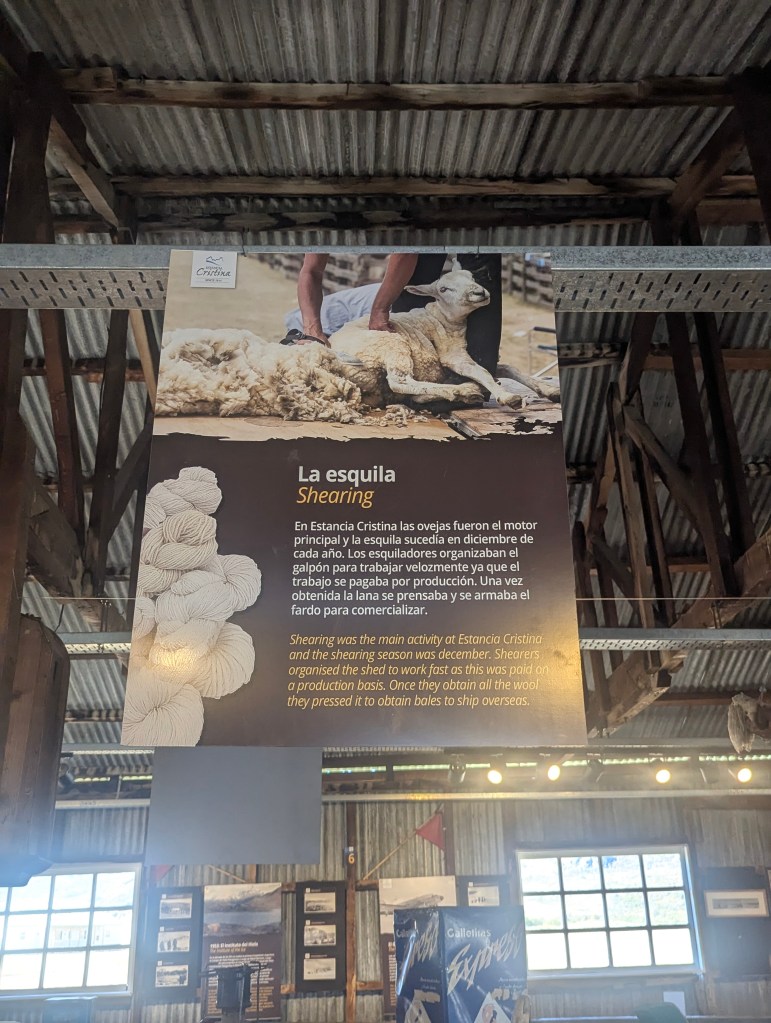
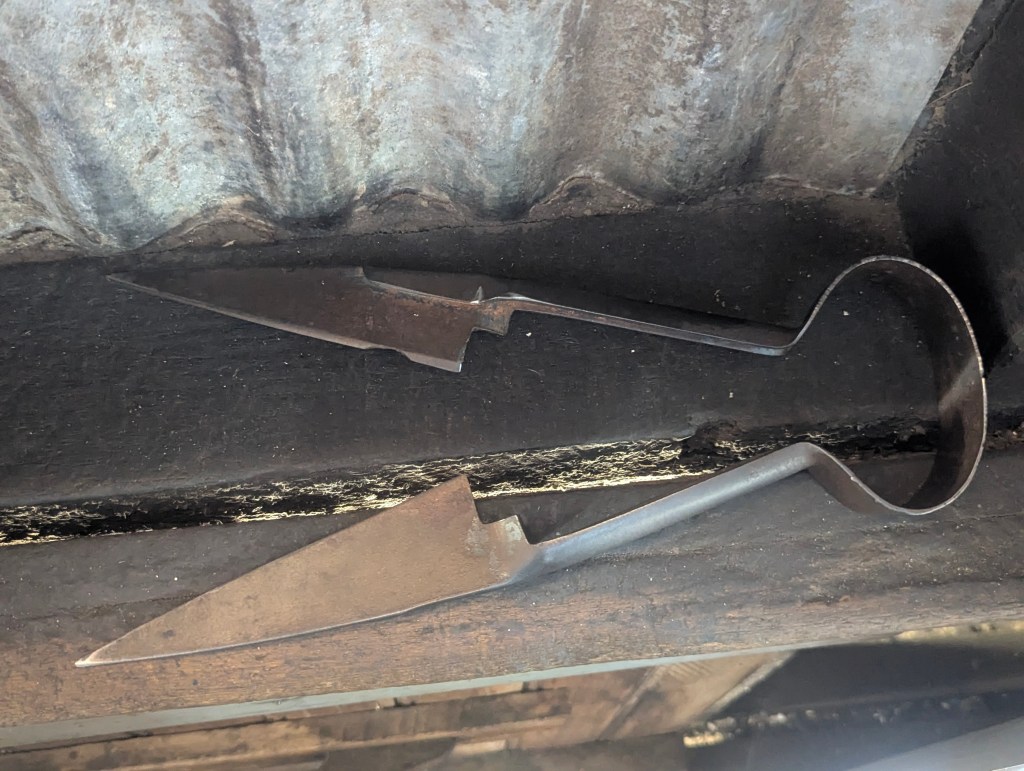
Initially the shearing was done by hand, which took about 10-15 minutes.

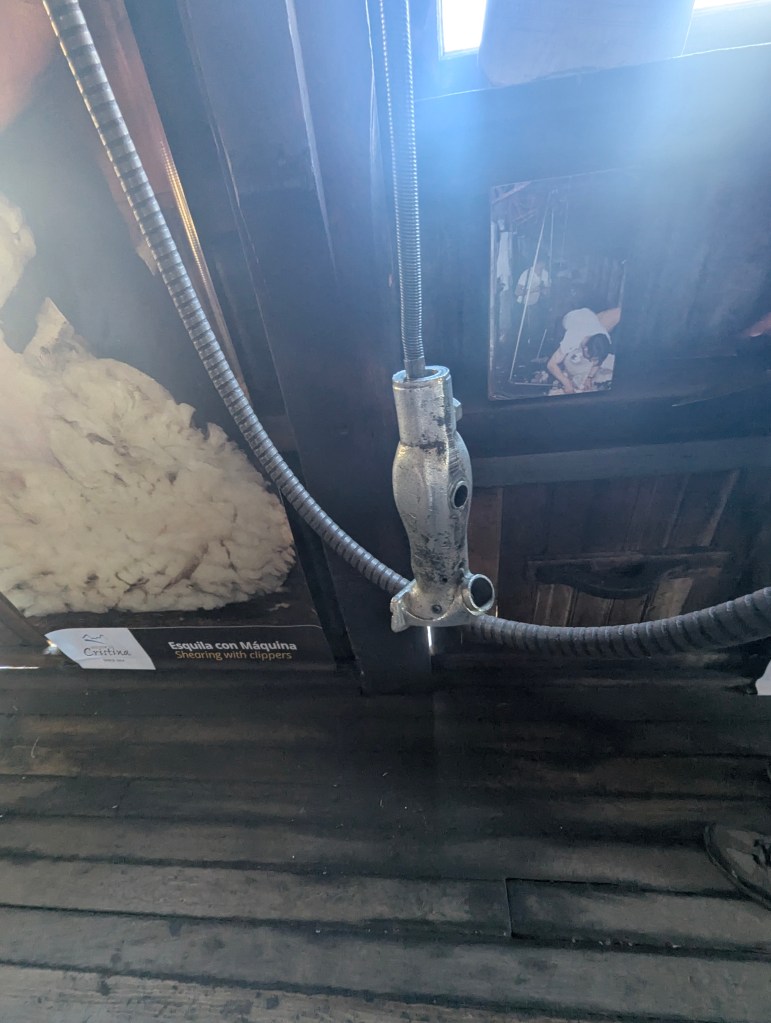
But with the invention of the motorized shaver, the shearing process was reduced to 3-5 minutes.

The wool needed to make it to market. A ship was built by the family in 1962 using a blueprint from the Popular Mechanics Magazine.

In 1937 the farm became part of the national park, so the family could not fulfill the term of their ownership. Instead they received a yearly renewable permit to farm the land as long as a member of the family remained on the land. In 1953 the Institute of Ice was formed to study and preserve the territory. Herbert became a guide for the institute in the 1950s. He lived his life on the farm with his parents who both lived well into their 90s. In 1966 Herbert brought Janet Hermingston to the farm to help with his aging parents. Janet fell in love with the farm and remained after Percival and Jessie passed away. At the age of 82 Herbert married Janet so she would become family and could remain on the farm after he passed away which he did in 1984 of lung cancer, having been a lifelong smoker. Prior to his death Herbert and Janet had worked the farm together, but after he died in 1984 the wool production ceased completely. In the 1950s the area started to become an attraction for climbers and scientists. In 1985 Janet began a Bed and Breakfast and changed the permit to one for tourism, but at that time she had to get rid of all of the animals. Janet worked with some of those more famous climbers including Pedro and Jorge Skvarca, Eric Shipton, and Cosimo Ferrari to create the Estancia Cristina of today: a place for tourists, climbers, and travelers. Janet passed away in 1997. Estancia Cristina is now owned by a corporation that has been granted rights to continue the tourism operations within the confines of the national park. For those staying at the ranch, horseback riding is an option.

And finally it was time to say goodbye.

and reboard the boat back to El Calafate.

And all of that was just our first week in Argentina!