Siam Reap, Cambodia Jan 19-23

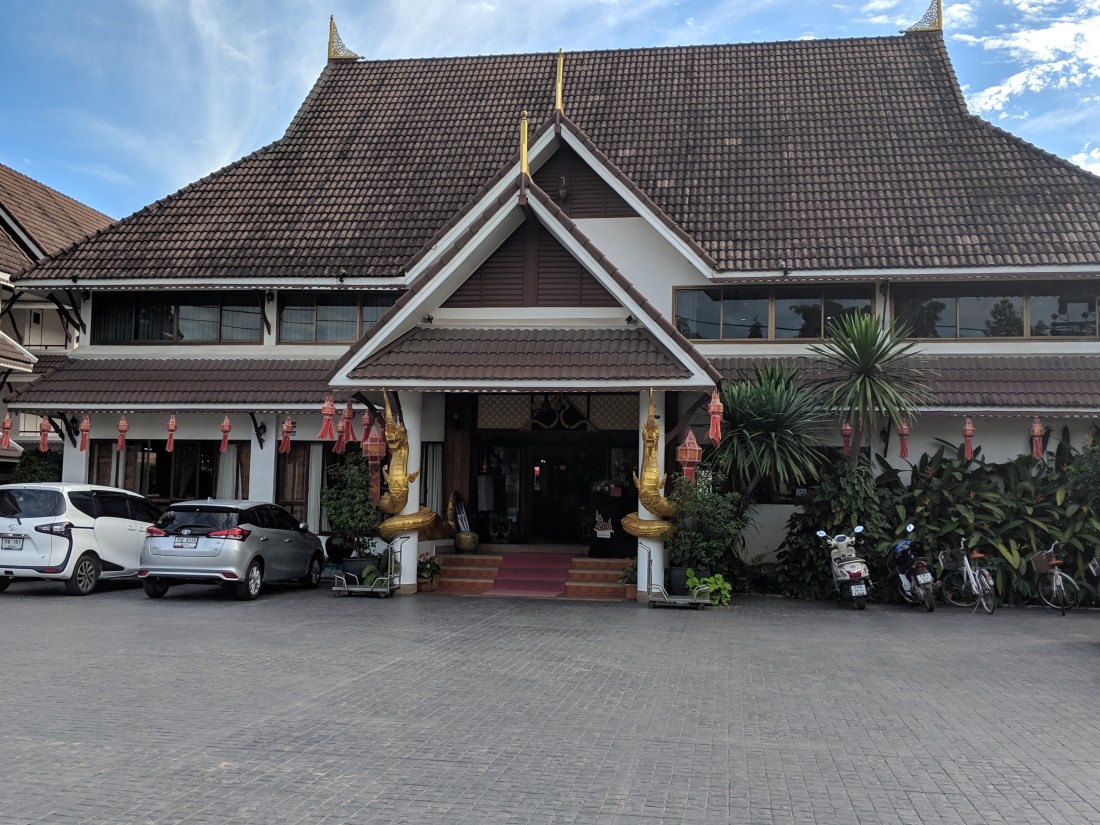
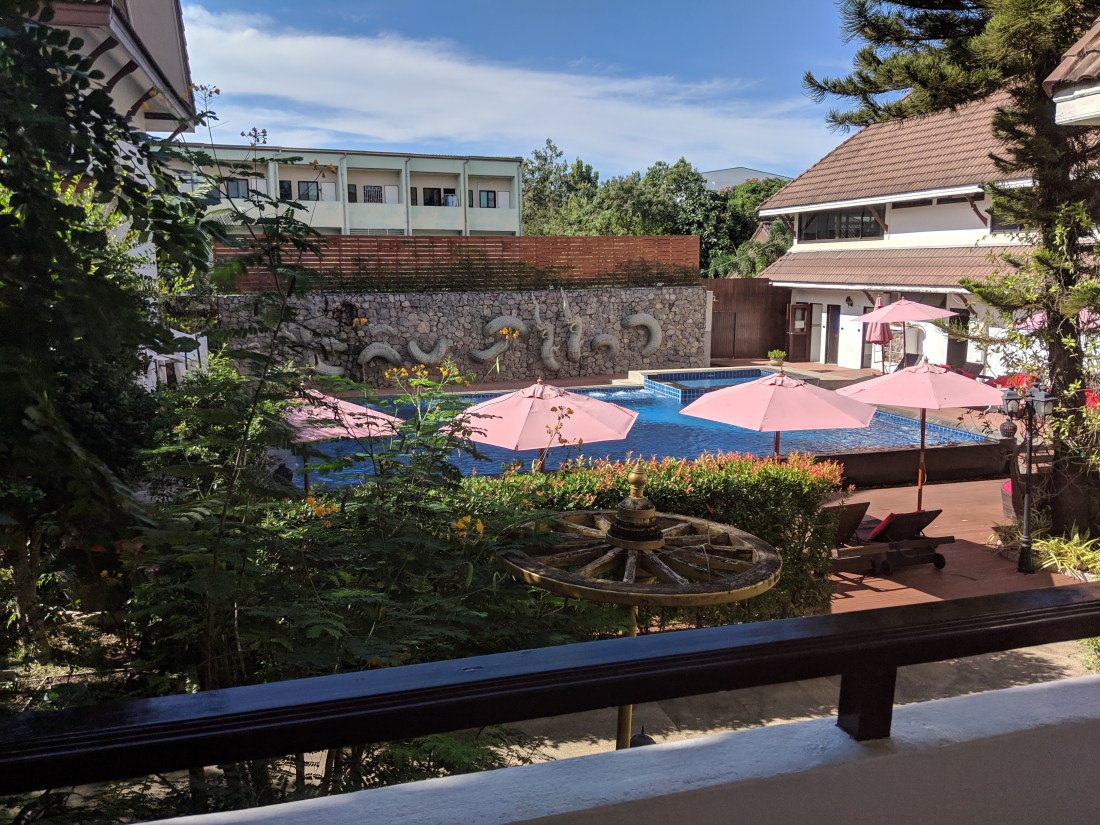
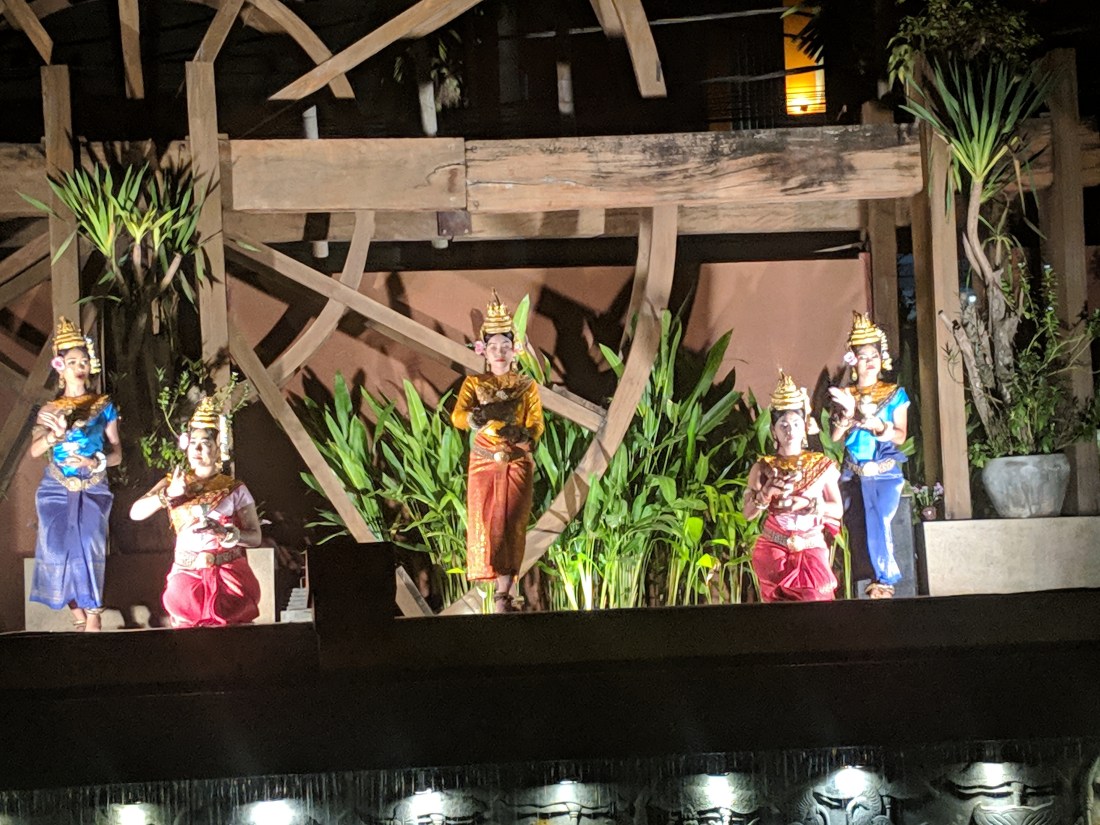
Once again we have managed to book a really lovely hotel convenient to everything.  The Golden Temple Residence treated us our very first night to dinner and a Cambodian show of singing and dancing, all poolside.
IMG_20190119_195026.jpg

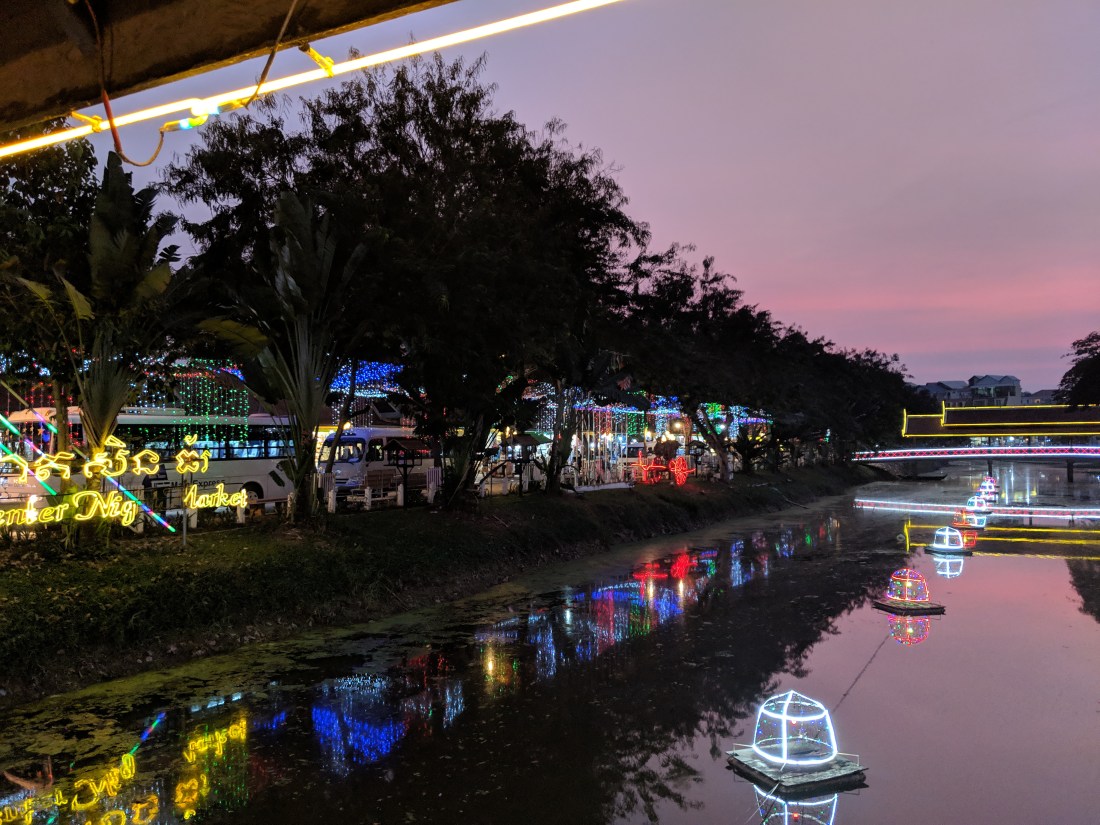
We then strolled through the night market which, compared to the others in SE Asia so far, was very commercial and unimpressive except from the outside.
IMG_20190119_181500.jpg

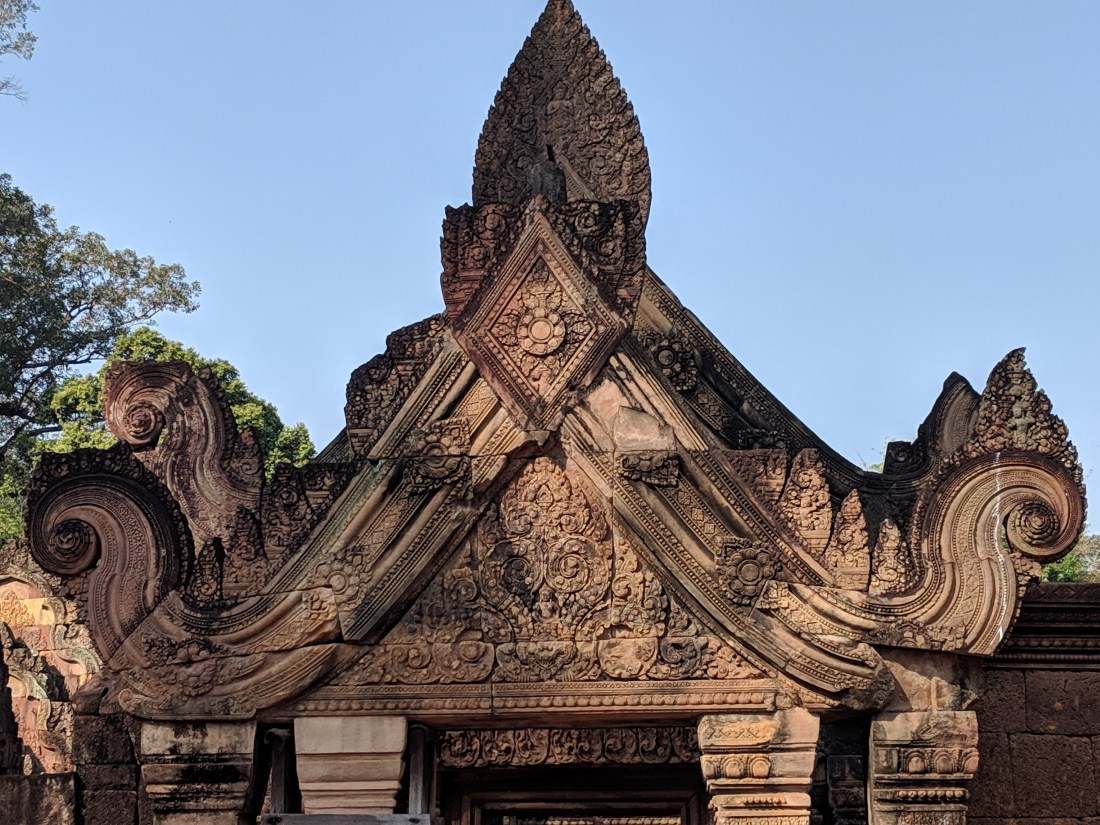
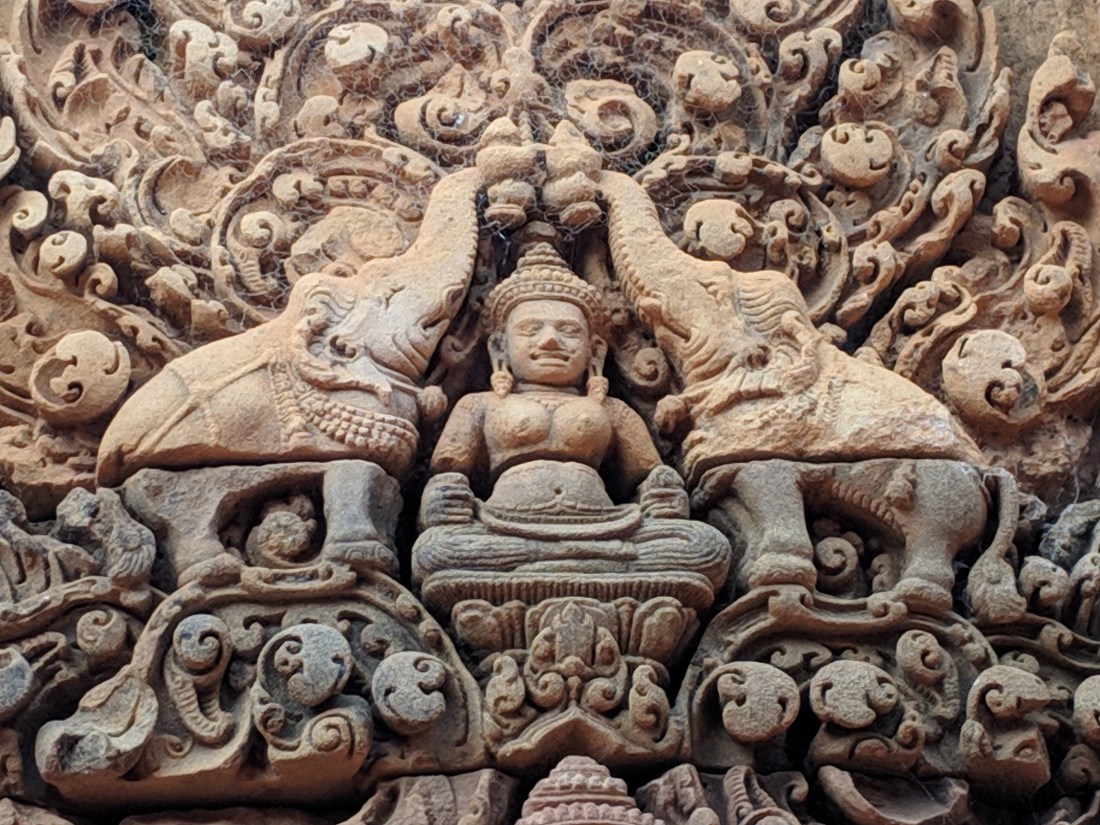
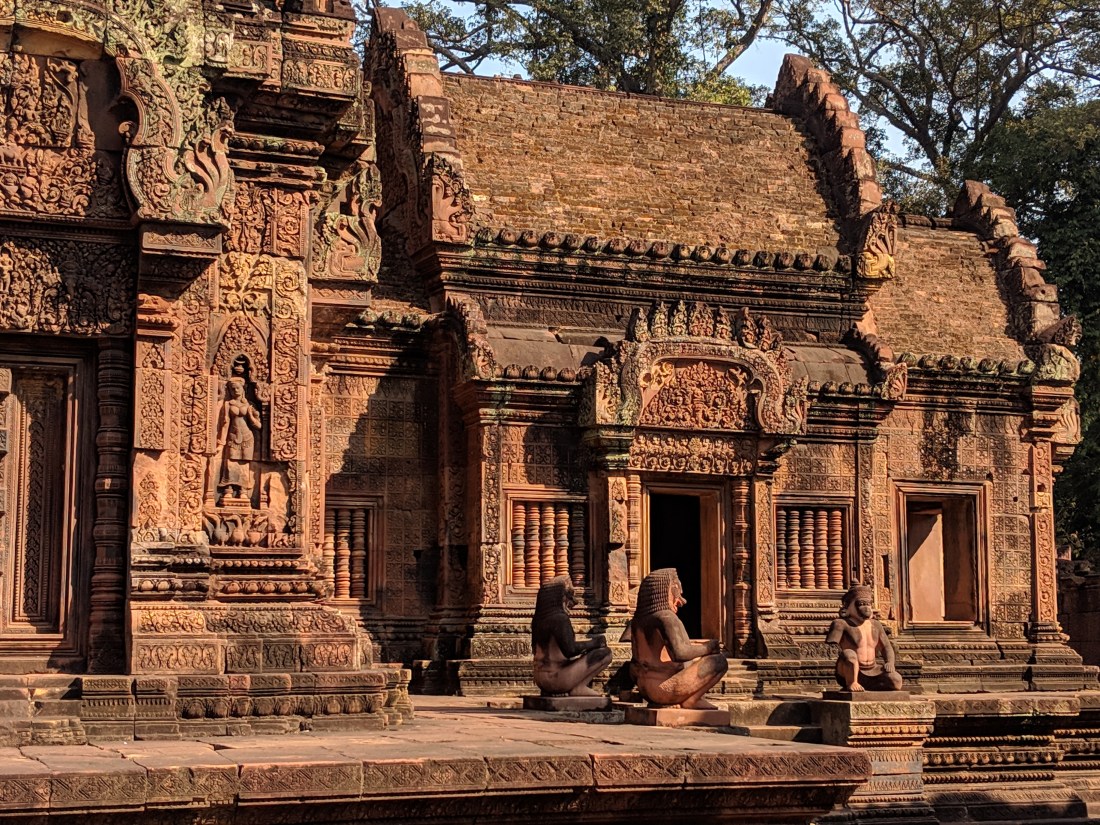
The following morning we started with our temple tours.  First on the agenda was Banteay Srei  which is actually about 27 km outside of town.   The name means “citadel of beautiful women,” but it has nothing to do with women.  It was so named by the explorers only because of its exquisitely beautiful carvings.  It was built in the early 10th century as a Hindu temple dedicated to Shiva, the god of destruction.  It is the only temple in the area built not by a king but by his counsellor, who was the teacher of the artisans, so he elicited the help of all his students for the carving of the temple. It is built in red sandstone, which lends itself to carving.  When looking at the photos, note the depth and intricacy of the carvings – and 10th century!
IMG_20190120_094253.jpg

IMG_20190120_092027.jpg

IMG_20190120_092309.jpg
Shiva


IMG_20190120_093024.jpg
burning of Khāṇḍava Forest
IMG_20190120_094234.jpg
one of the many devatas located throughout the temple


img_20190120_091312

img_20190120_092313
Shiva again

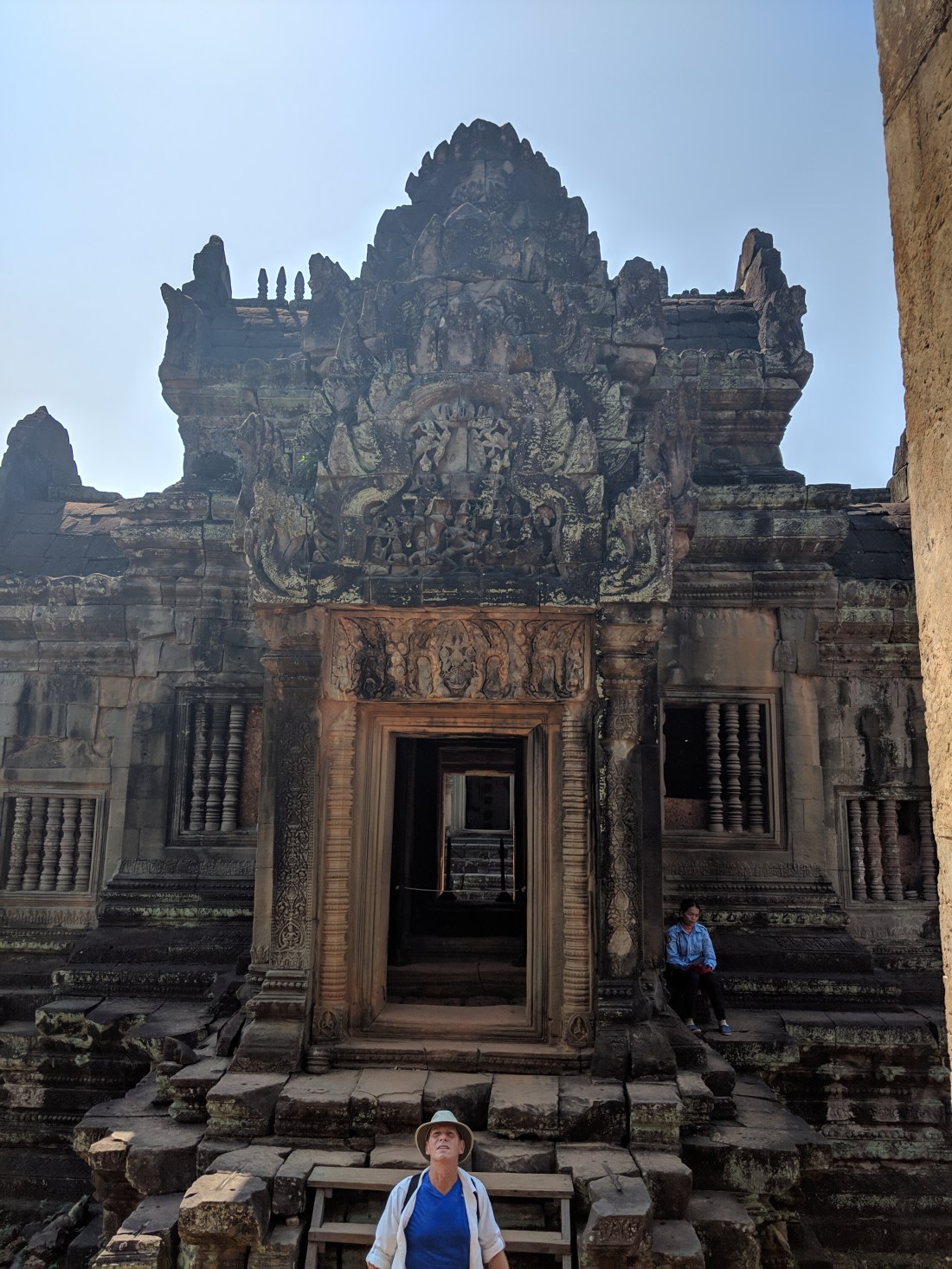
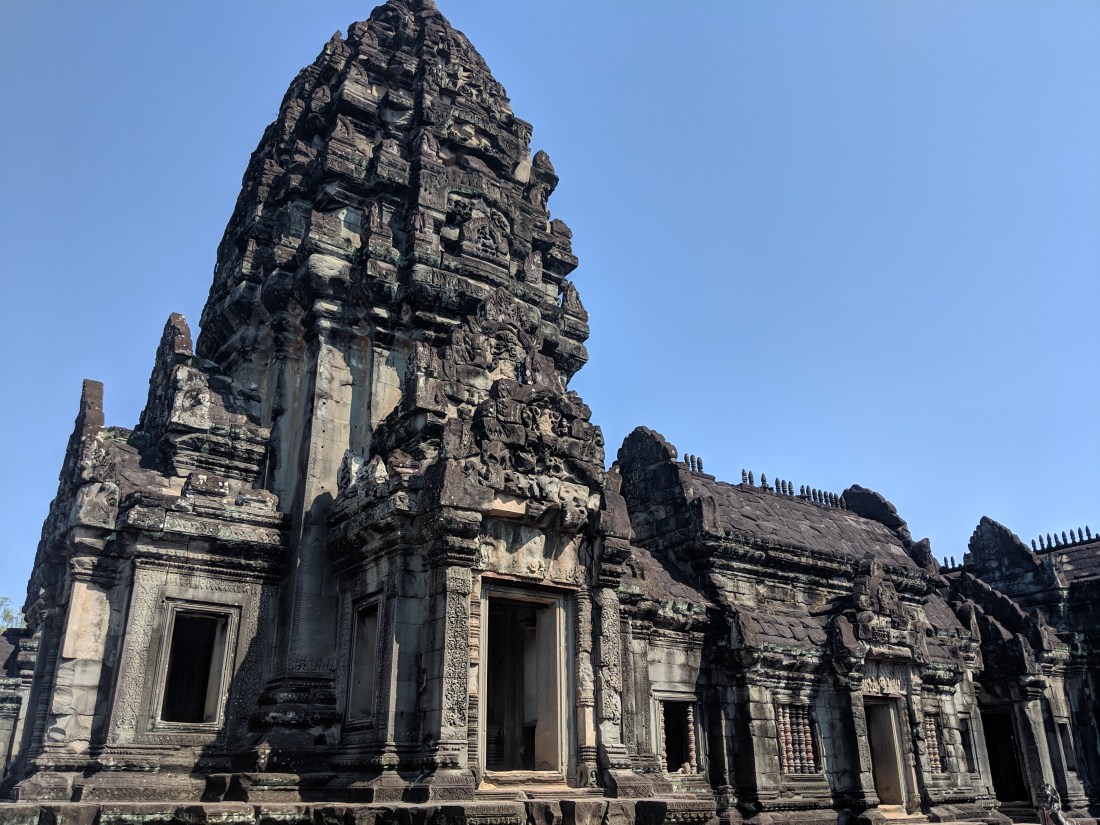
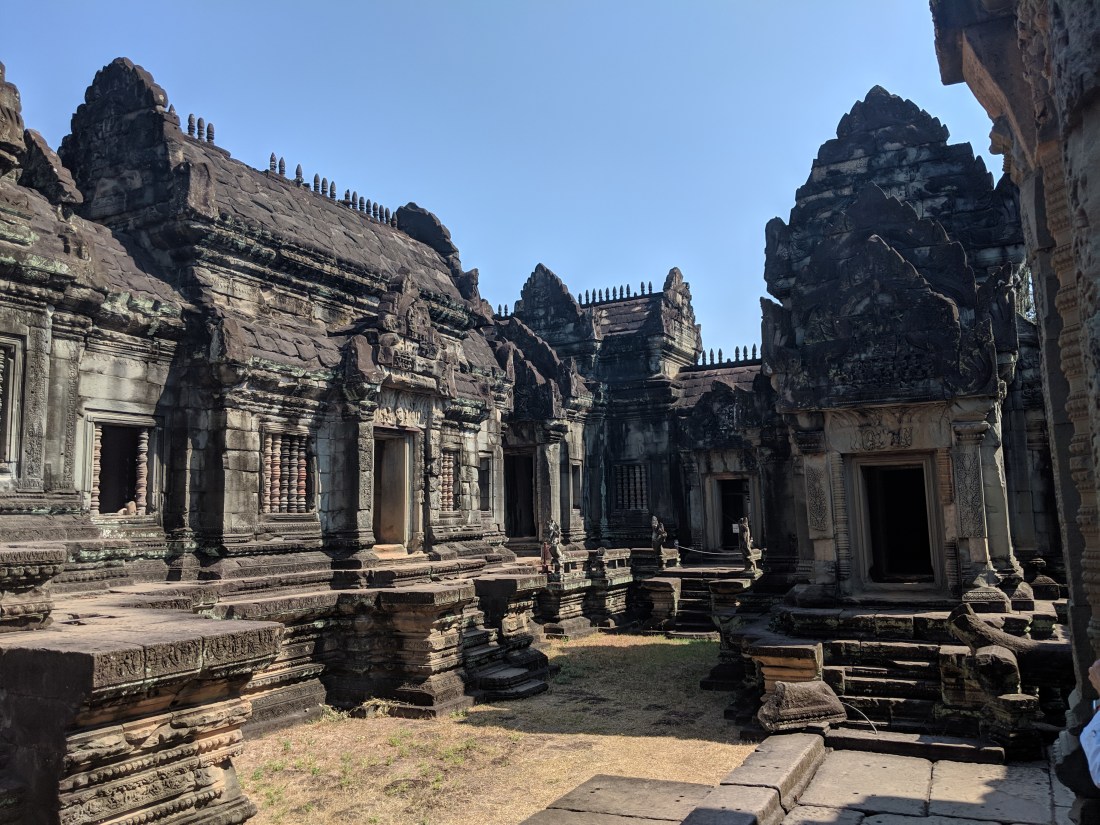
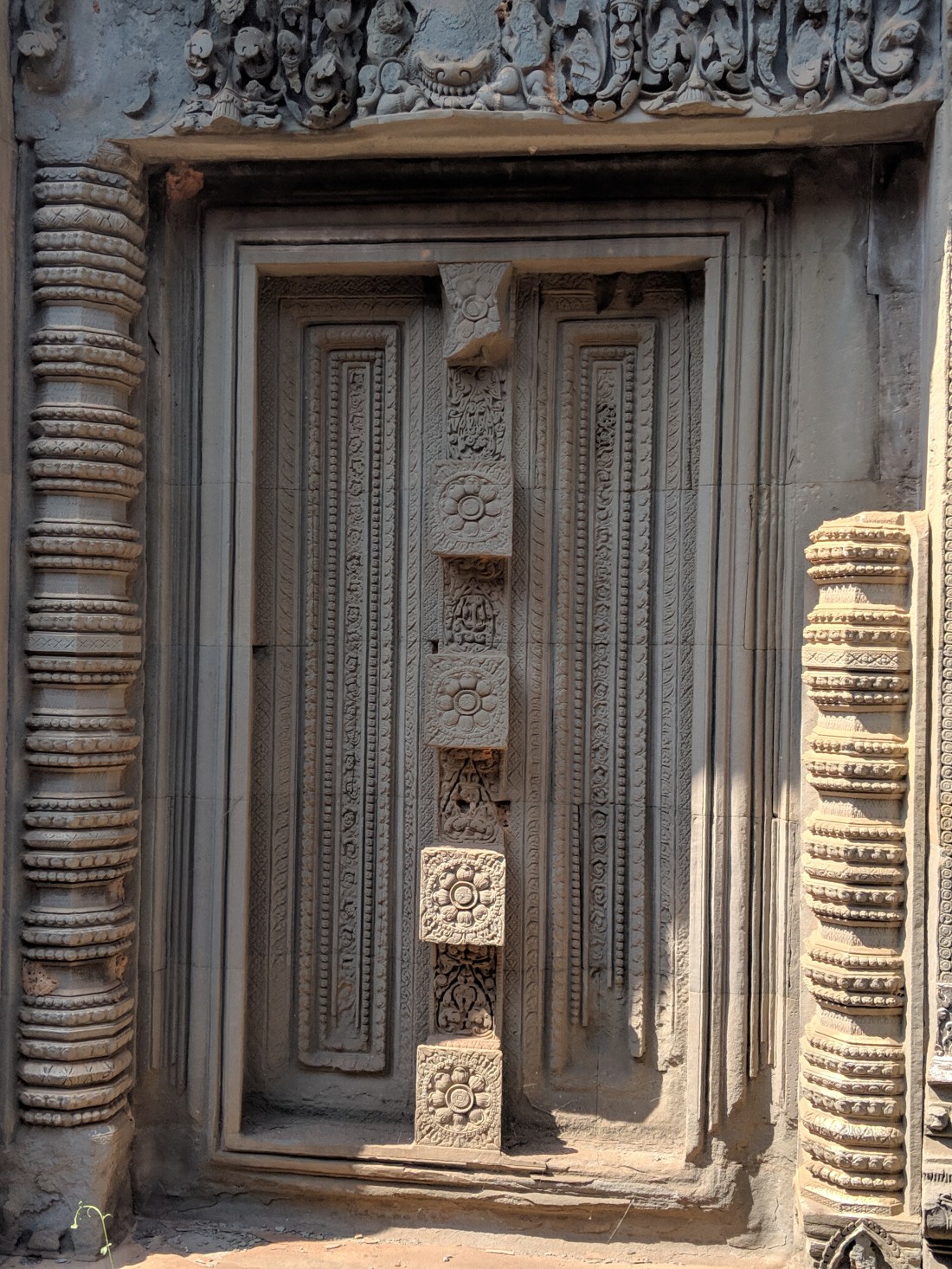
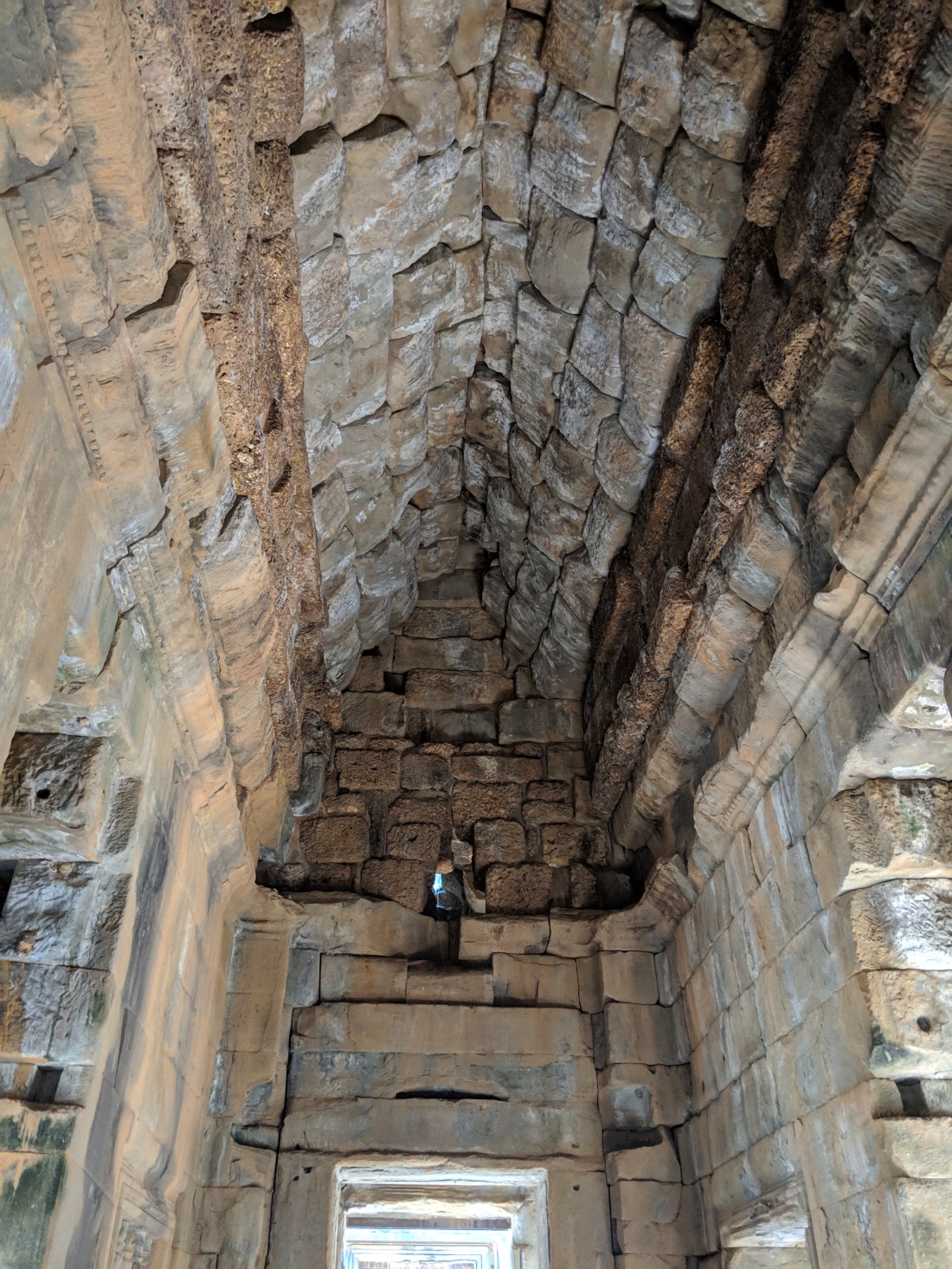
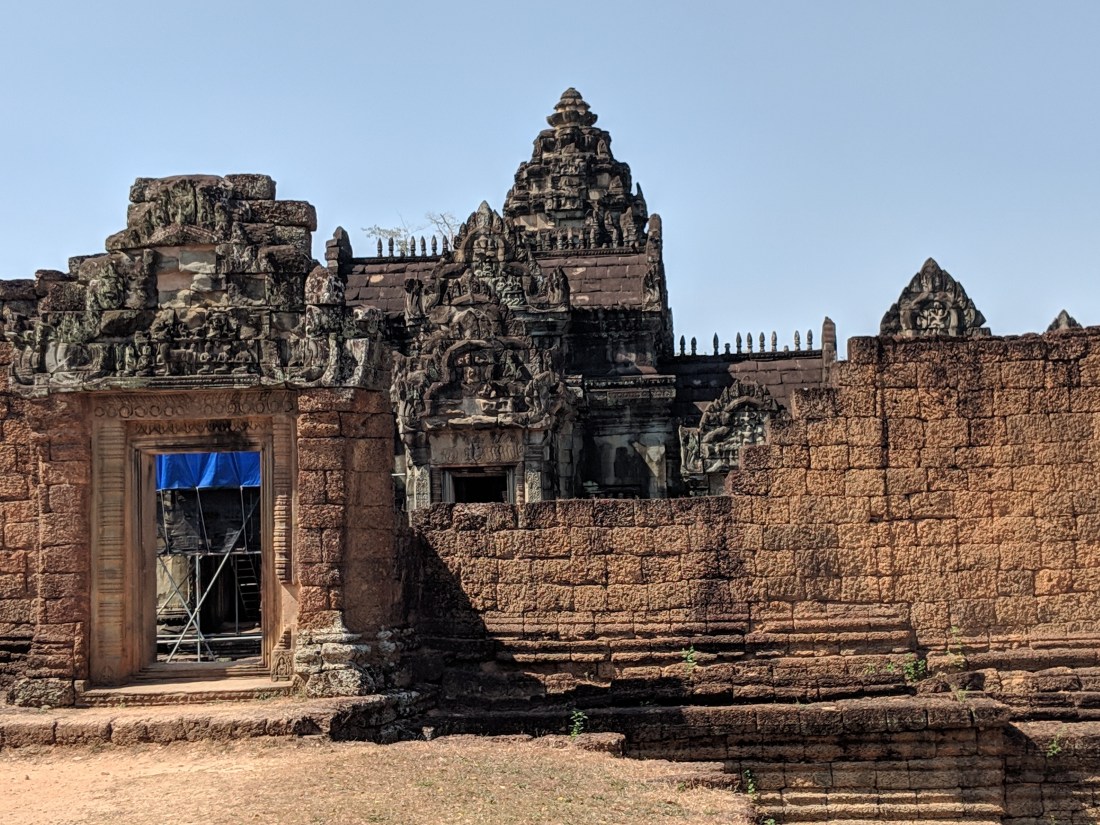
Our next visit was to Banteay Samre, the citadel of the Samre people, ie built for the common folk for prayer, unlike most of the temples that are only for the royal family’s use.  It was built in the early 12th century also as a Hindu temple dedicated to Vishnu, the god of preservation of life and truth.  The single ogival tower is of the Angkor Wat style.
img_20190120_104713
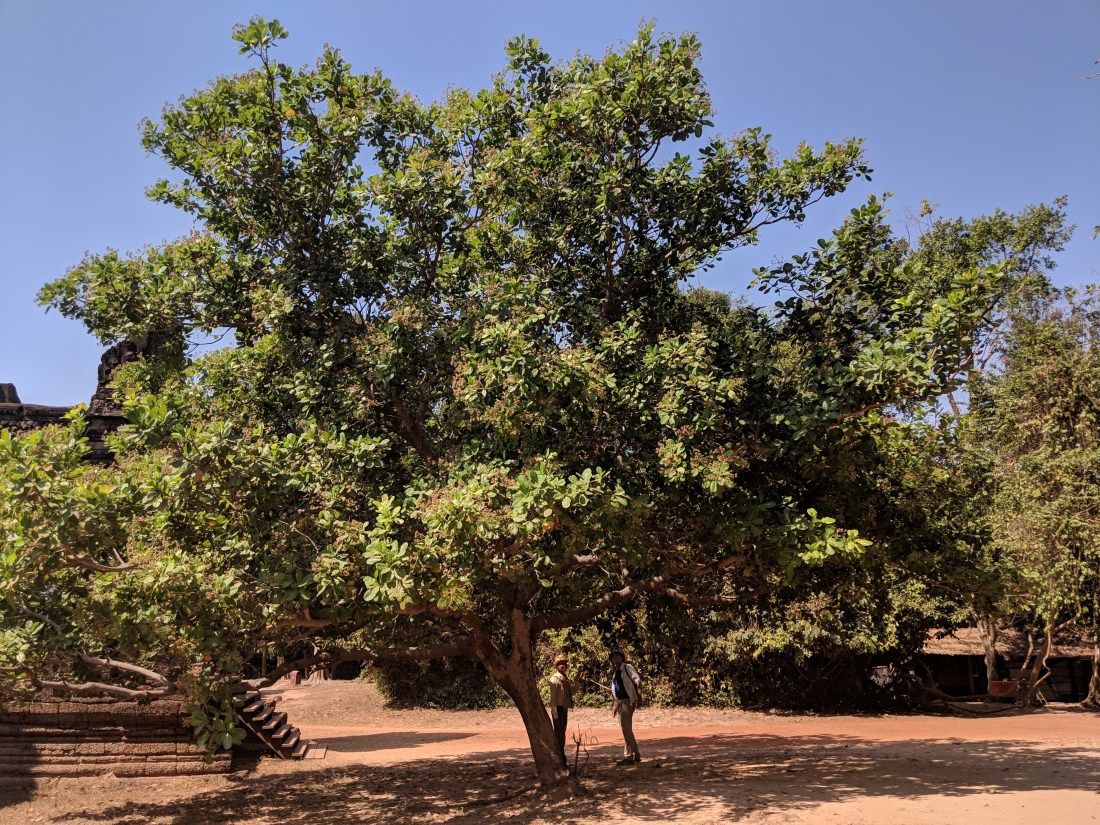
a cashew nut tree outside the temple.  cashew farming is a significant industry in Cambodia

img_20190120_105030img_20190120_105712img_20190120_105736img_20190120_105933img_20190120_110157

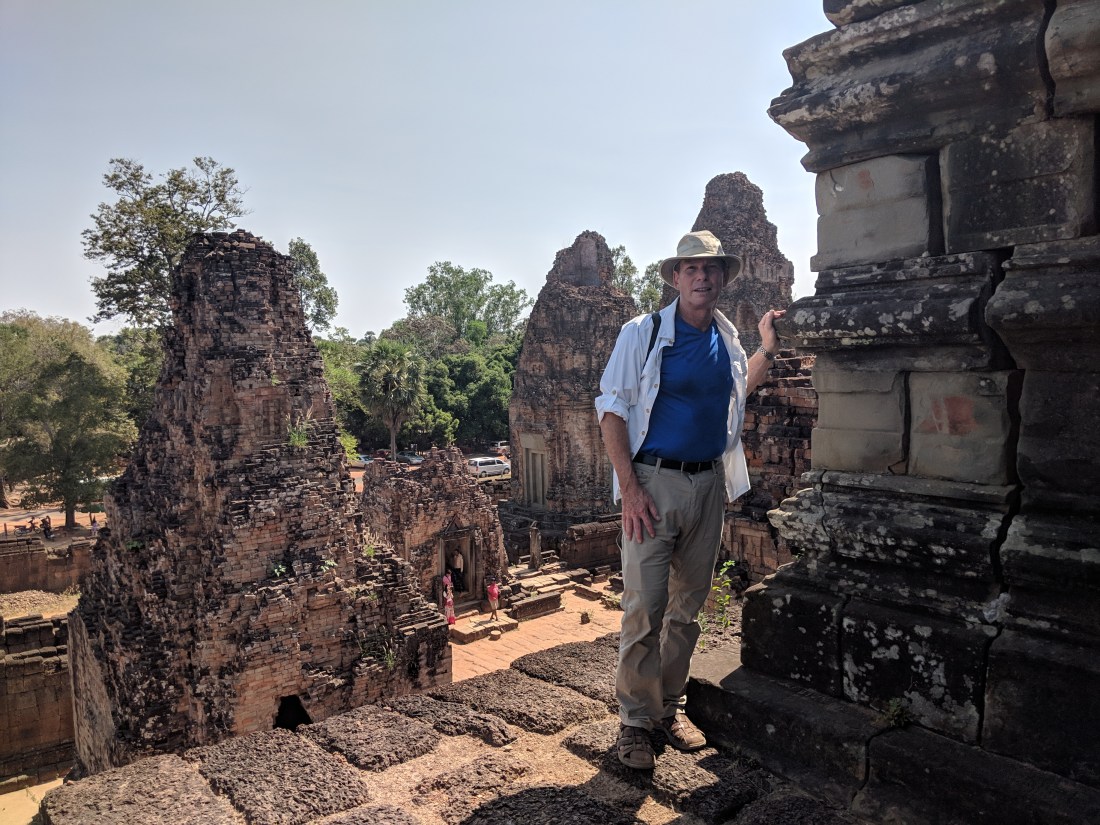
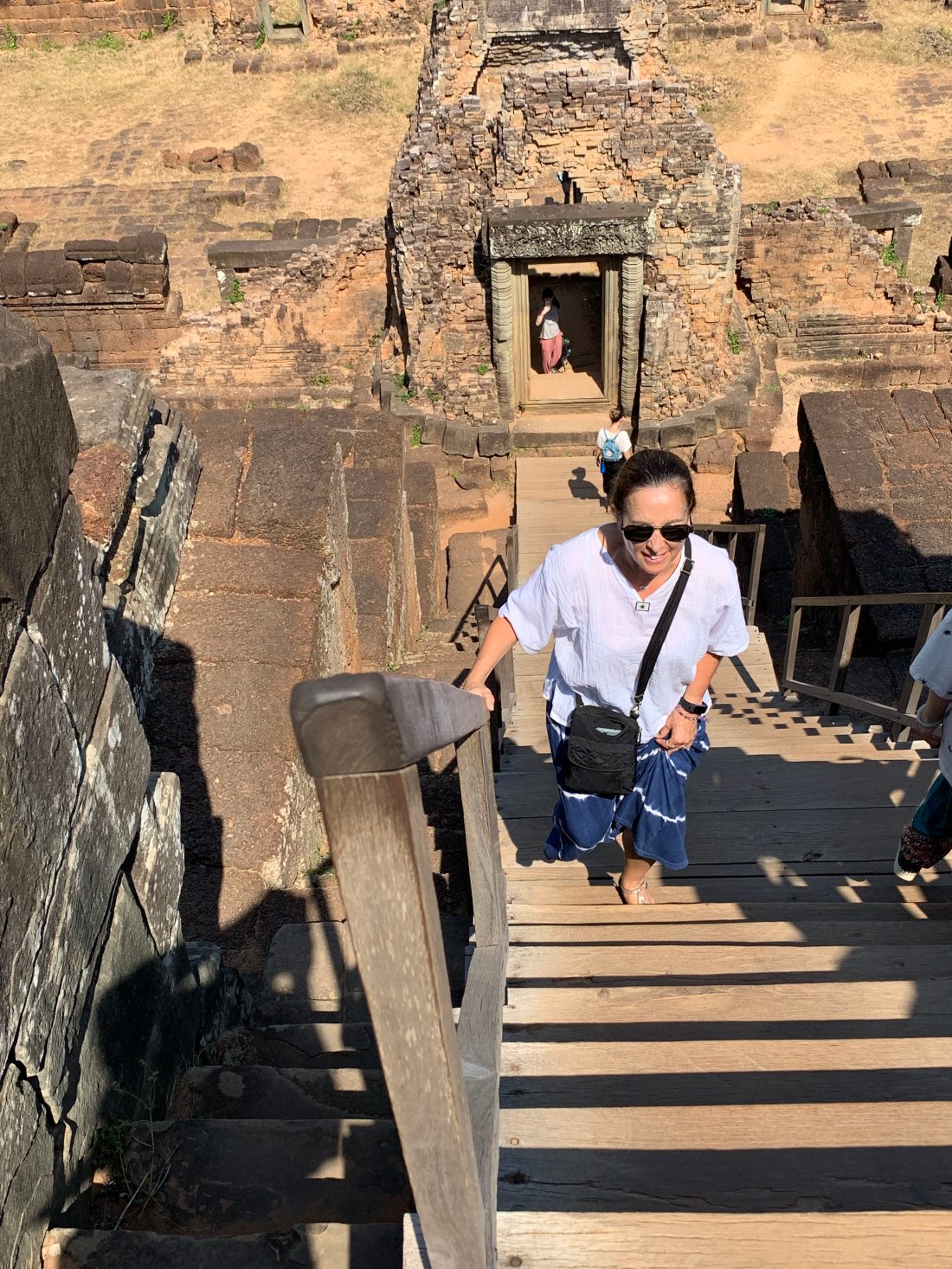
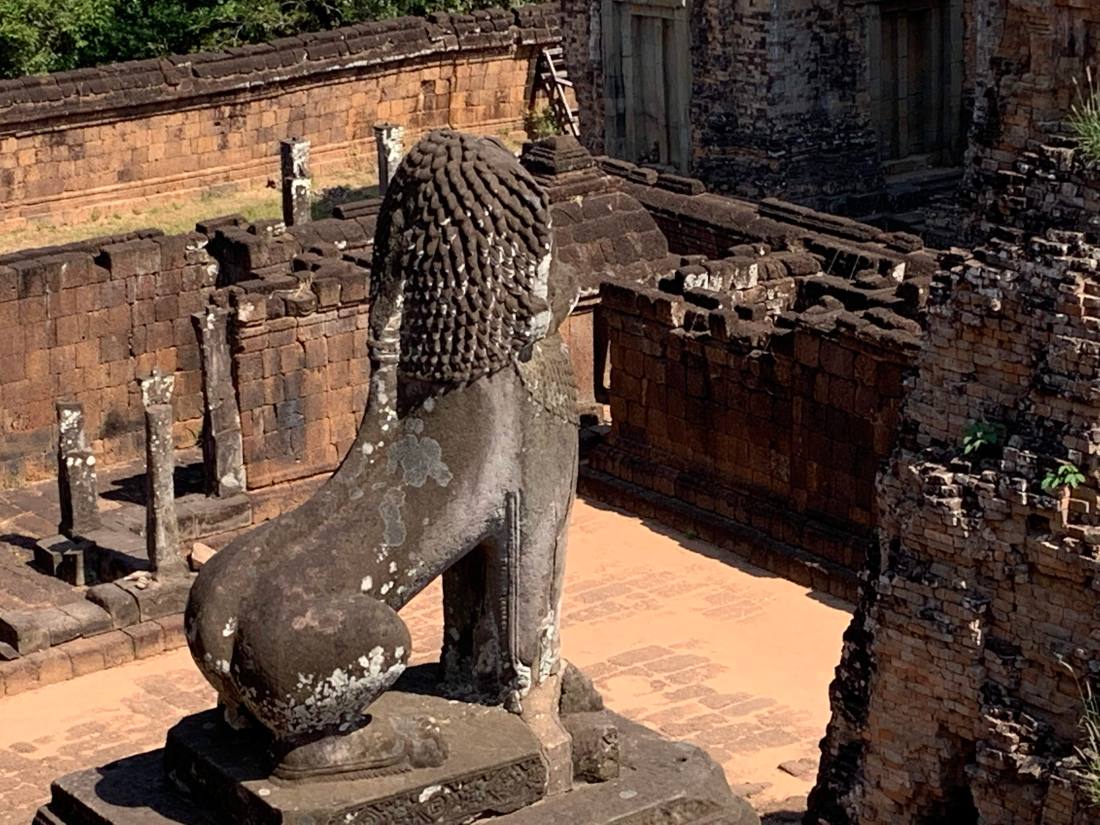
Our next stop of the morning was Pre Rup, built in the mid 10th century, also dedicated to the Hindu god Shiva.  It is built mostly of laterite and brick, giving it its reddish hue.  It was built by the same king whose counsellor built the first temple.
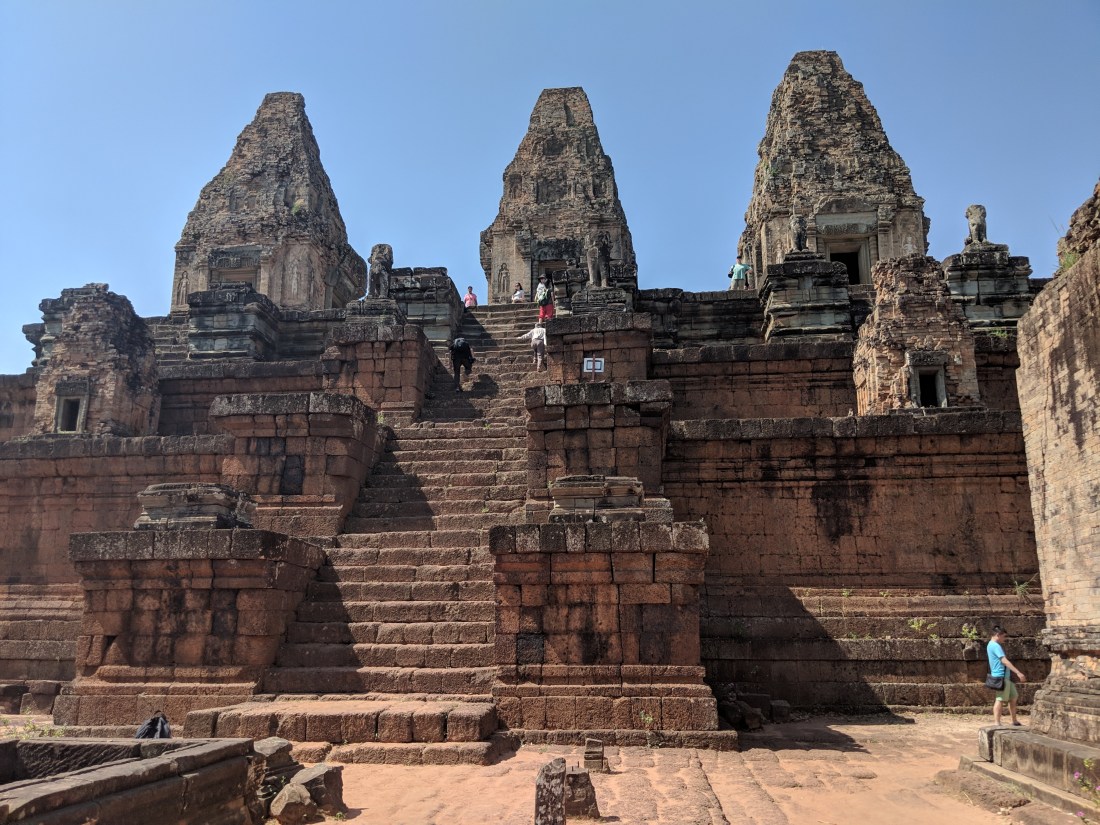
img_20190120_114643img_20190120_110725img_20190120_114003img_1271img_1276

After climbing around in the heat, we enjoyed a relaxing lunch by Srah Srang, an Angkorian royal pond.

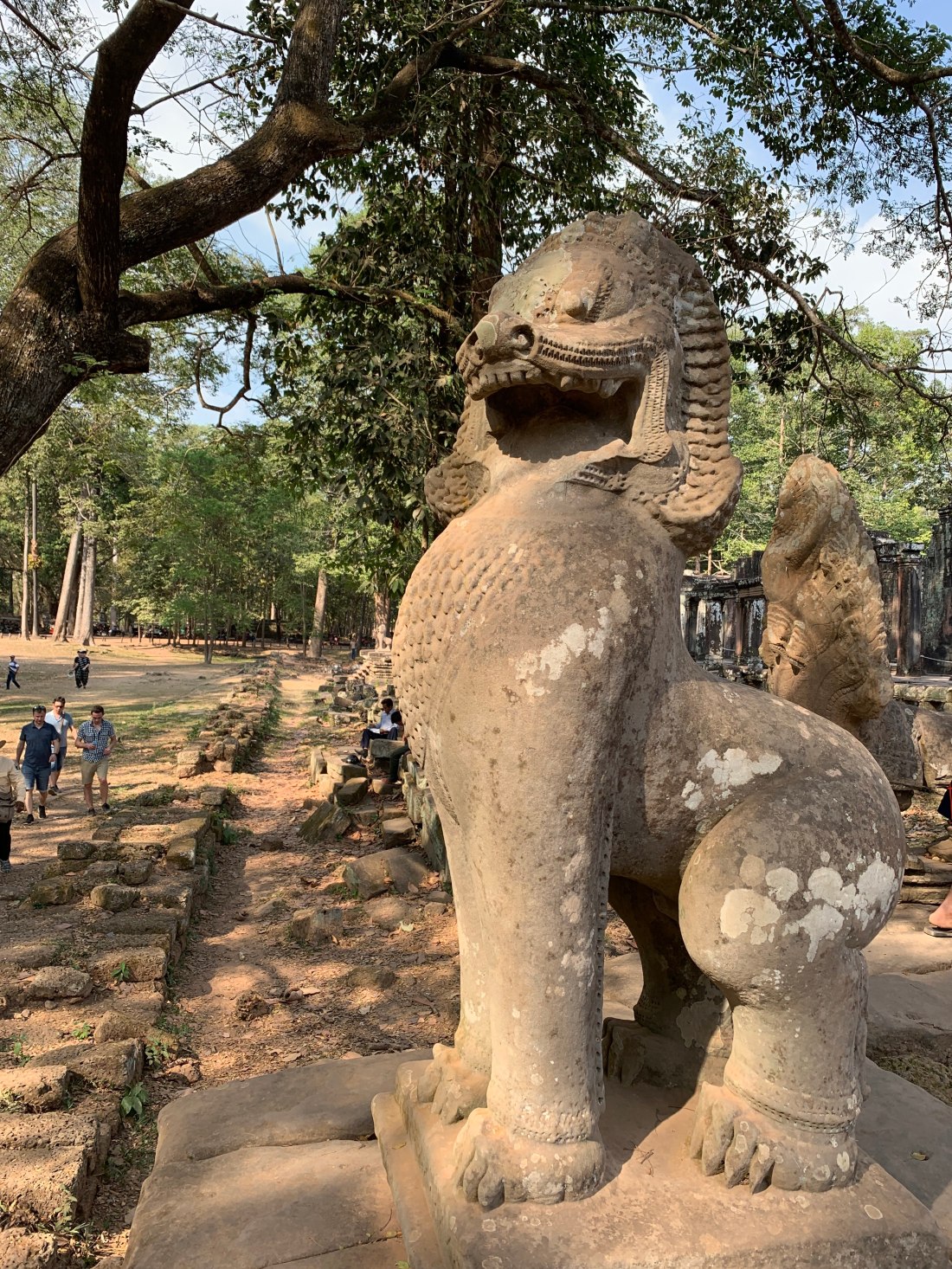
img_20190120_115903In the afternoon we visited Angkor Thom, The Great City, the ex-prosperous city of the Great King Jayavaraman VII’s era, built in the late 12th century.  He has come to be my favorite king in history, but more about him later.  Angkor Thom was the last and most enduring city of the Khmer empire.  King Jayavaraman VII built his central temple, a Buddhist one, Bayoun,  in the center of the city, but he incorporated preexisting Hindu temples: Baphoun and Phimeanakas without destroying or altering them.  The city was abandoned  by the Khmer when invaded and then looted by the Siamese in the 16th century.

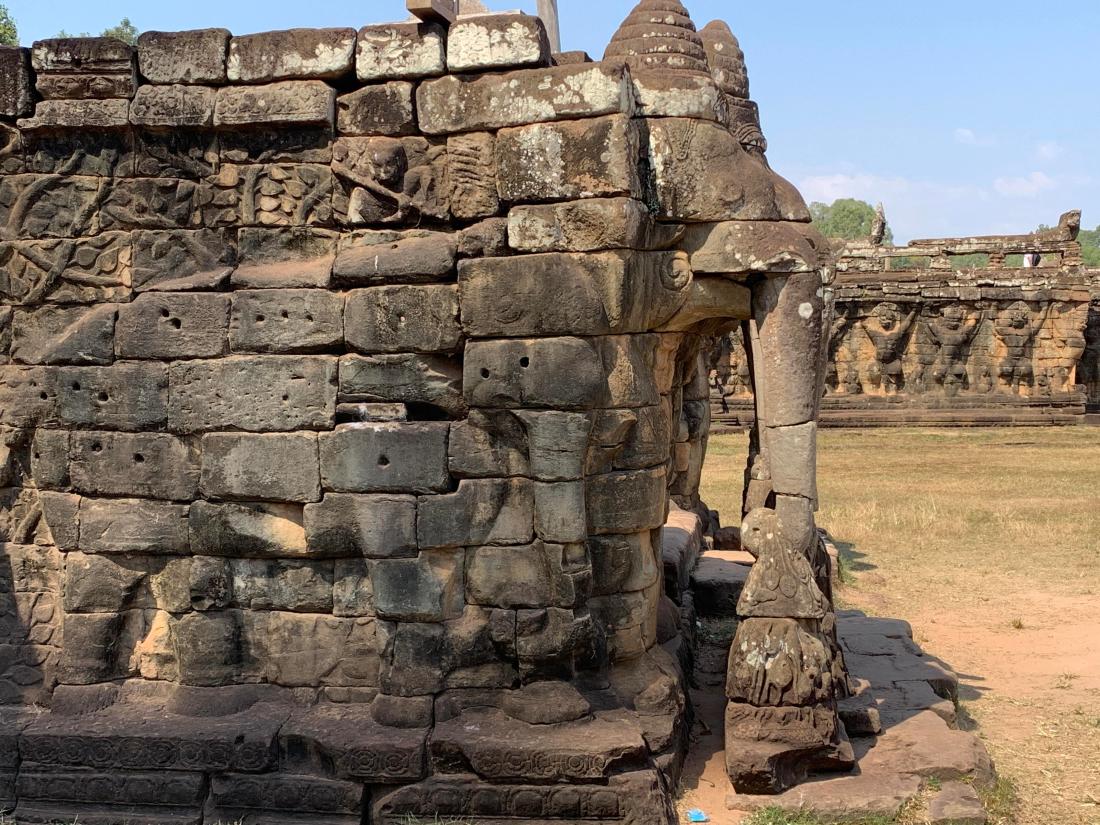
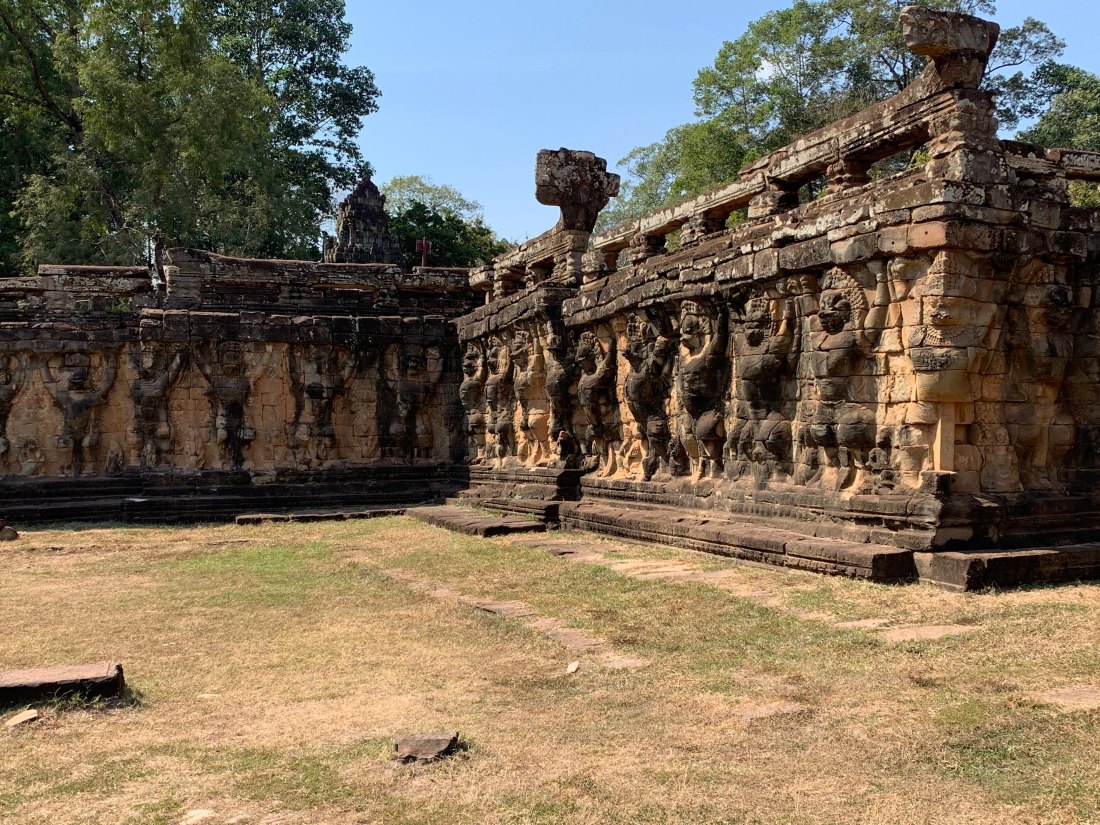
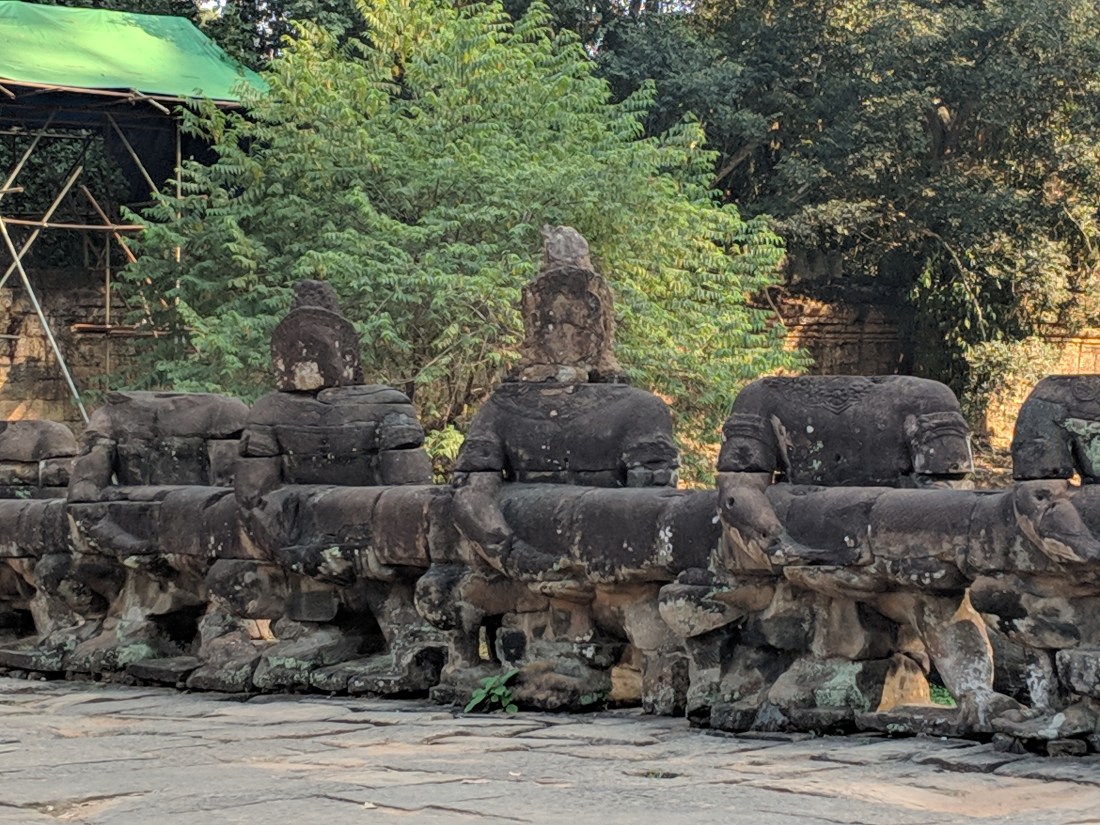
We started at the elephant terrace, which was added on to the Phimeanakas temple  by King Jayavaraman VII to view his returning army.
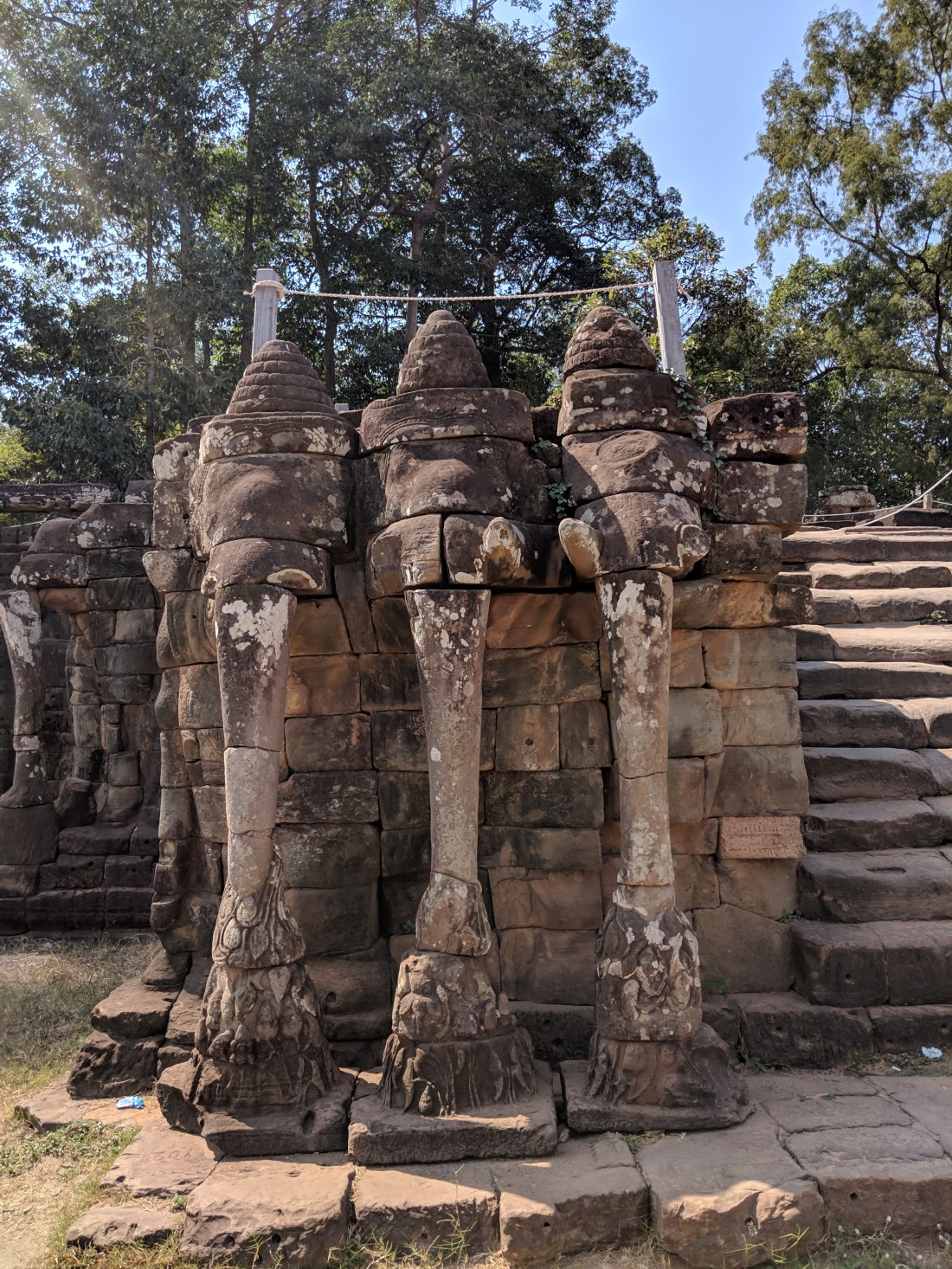
img_20190120_132441img_1283

img_1281

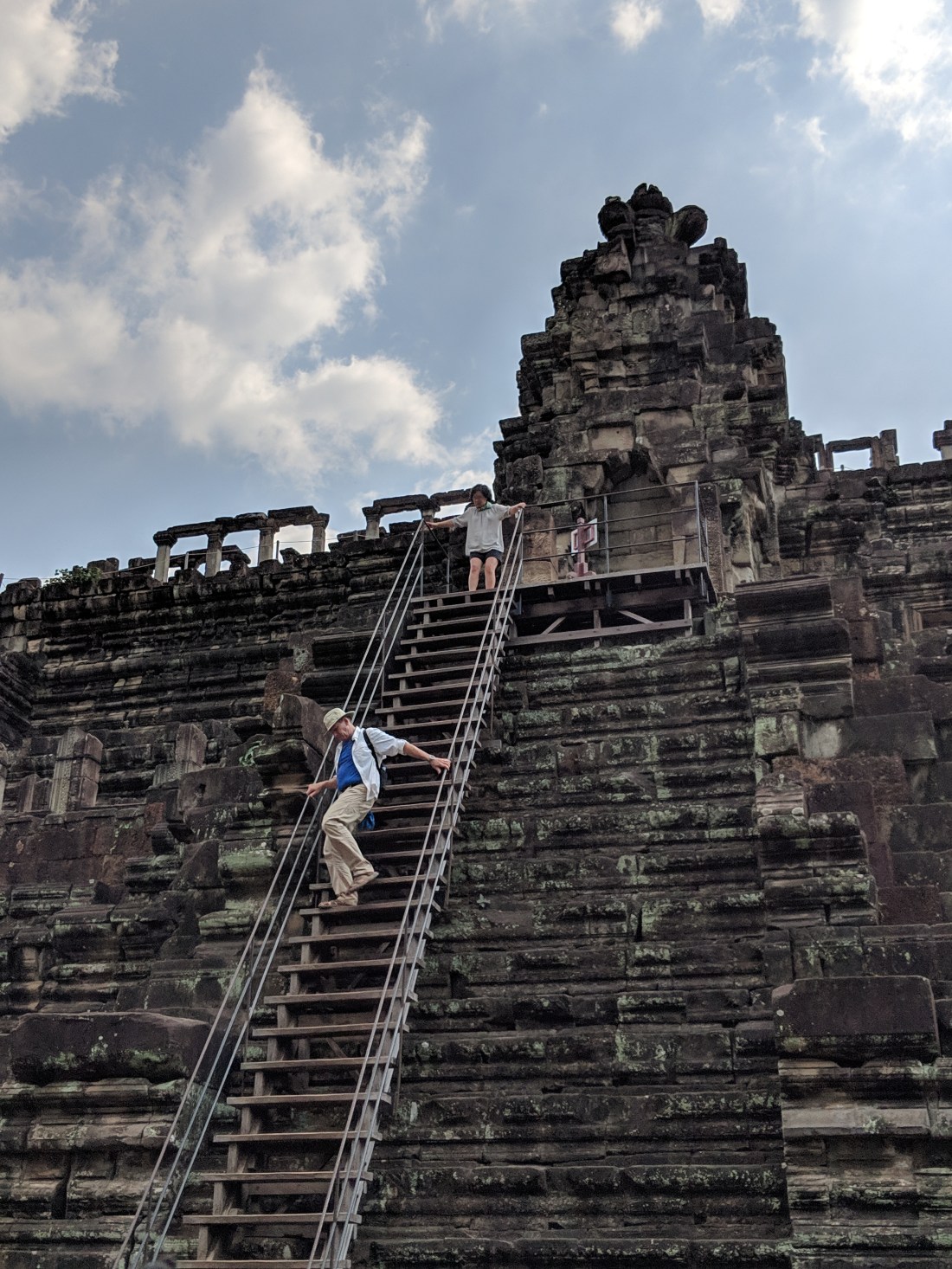
And Phimeanakas,  which is a Hindu temple in the Khleang style, built at the end of the 10th century, during the reign of Rajendravarman, in the shape of a three tier pyramid.  King Jayavaraman VII adapted it as a buddhist temple and used it personally.  He built his royal palace behind it, none of which remains.img_1293
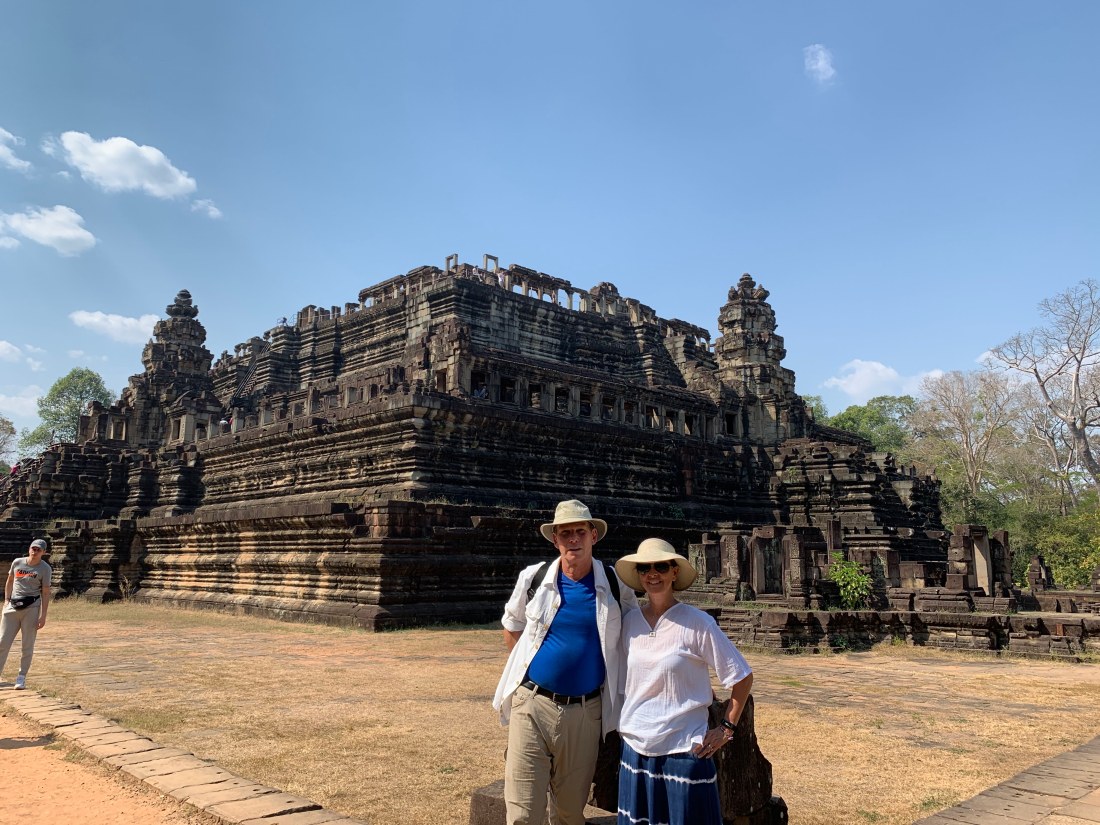
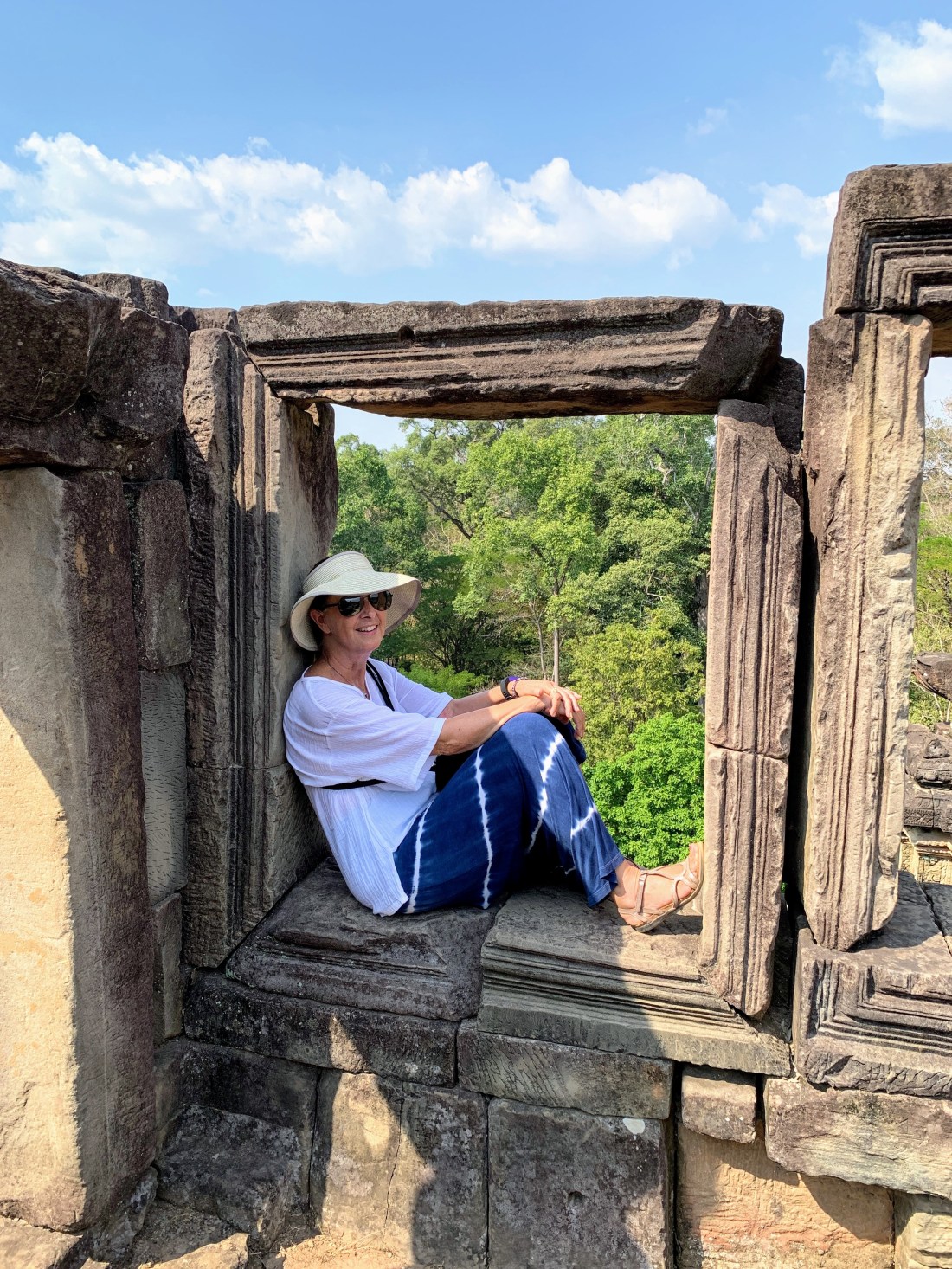
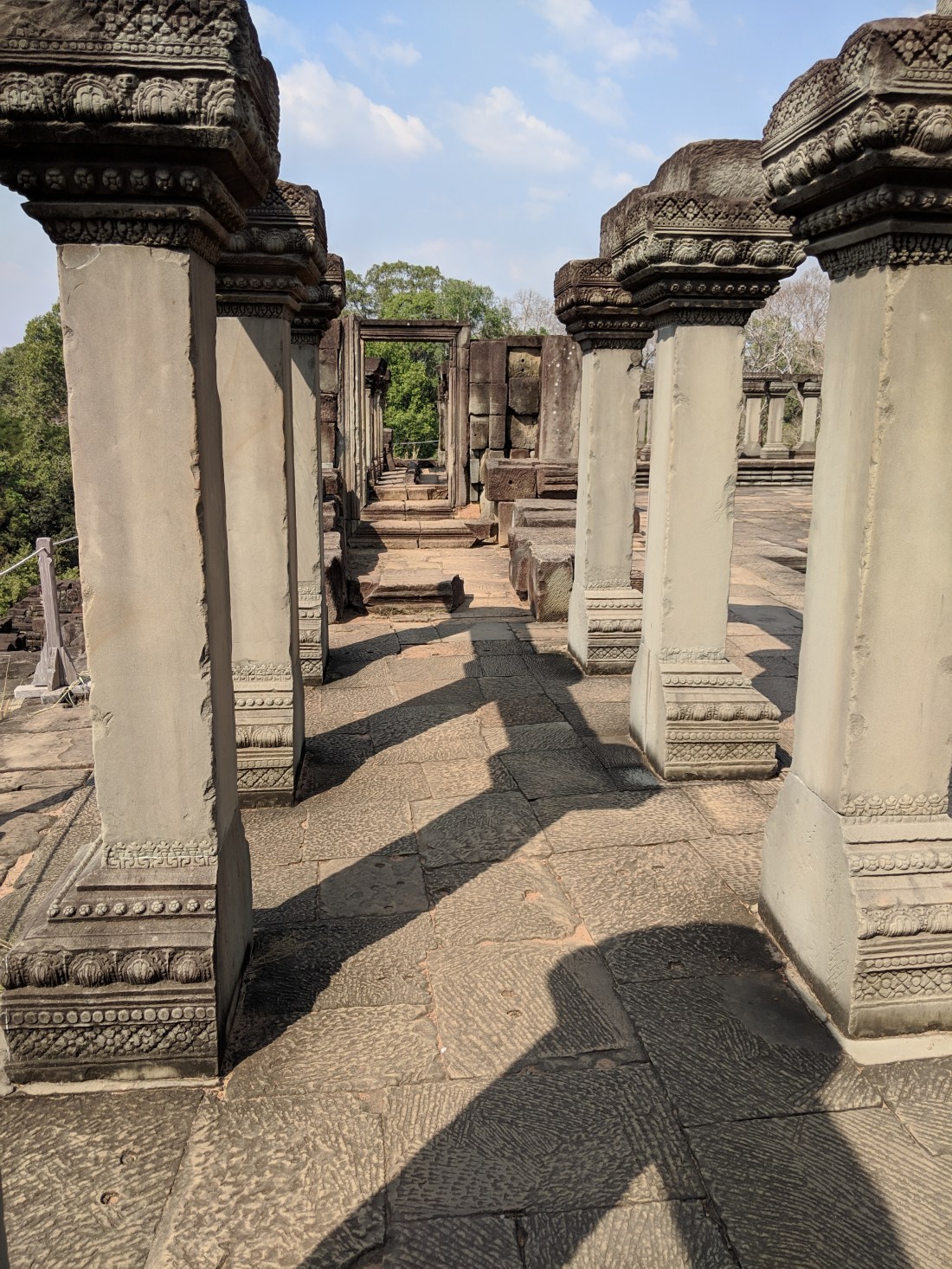
Then on to Baphoun, also a 3 tiered temple built in the 11th century as a Hindu temple dedicated to Shiva.  It was built on sand, which was very unstable, and much of it collapsed through the centuries.

img_20190120_140145

img_1305

img_20190120_140628img_1308

img_20190120_141921

In the late 15th century it was converted to a buddhist temple, and a wall of a reclining buddha was constructed using stones that had collapsed from the central tower.
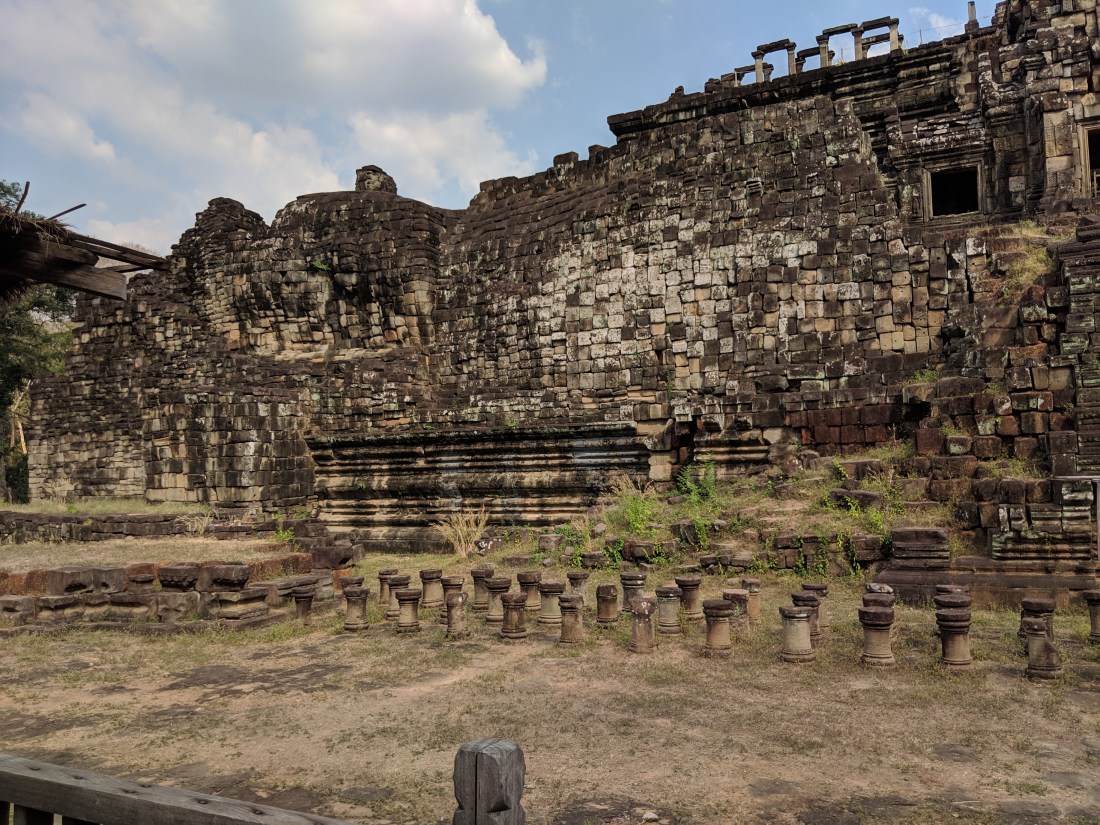
img_20190120_142819

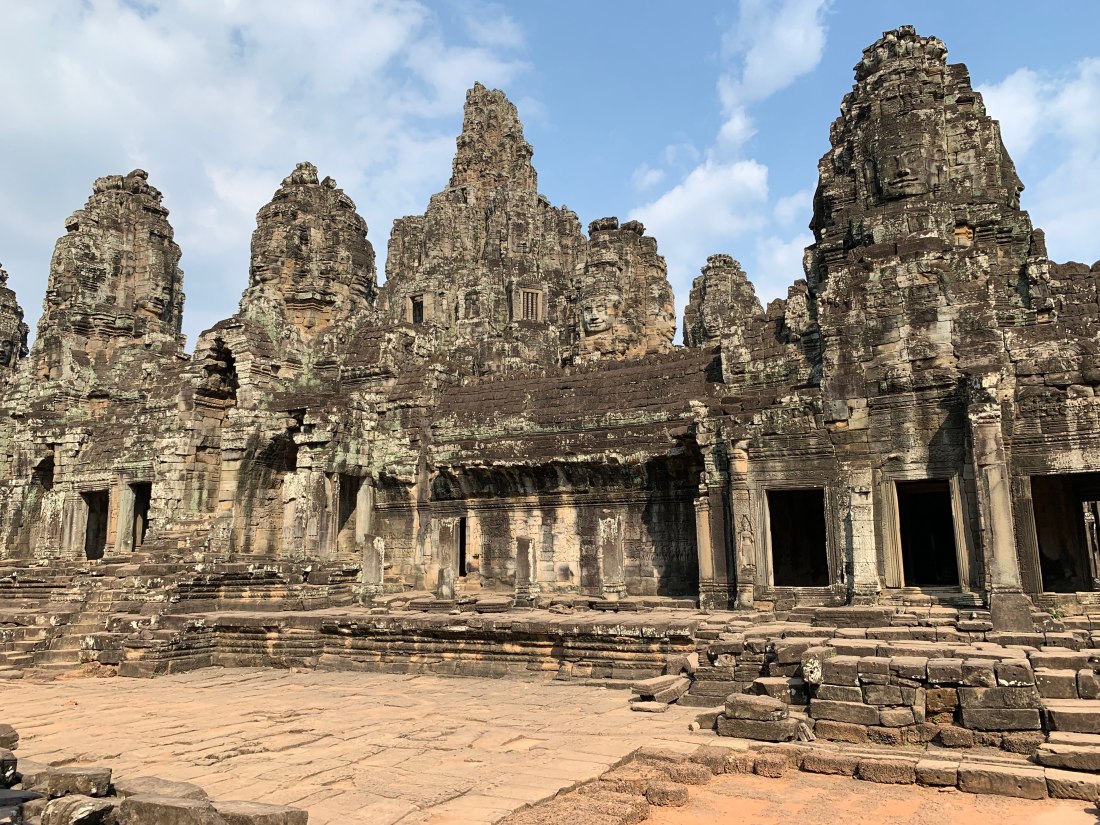
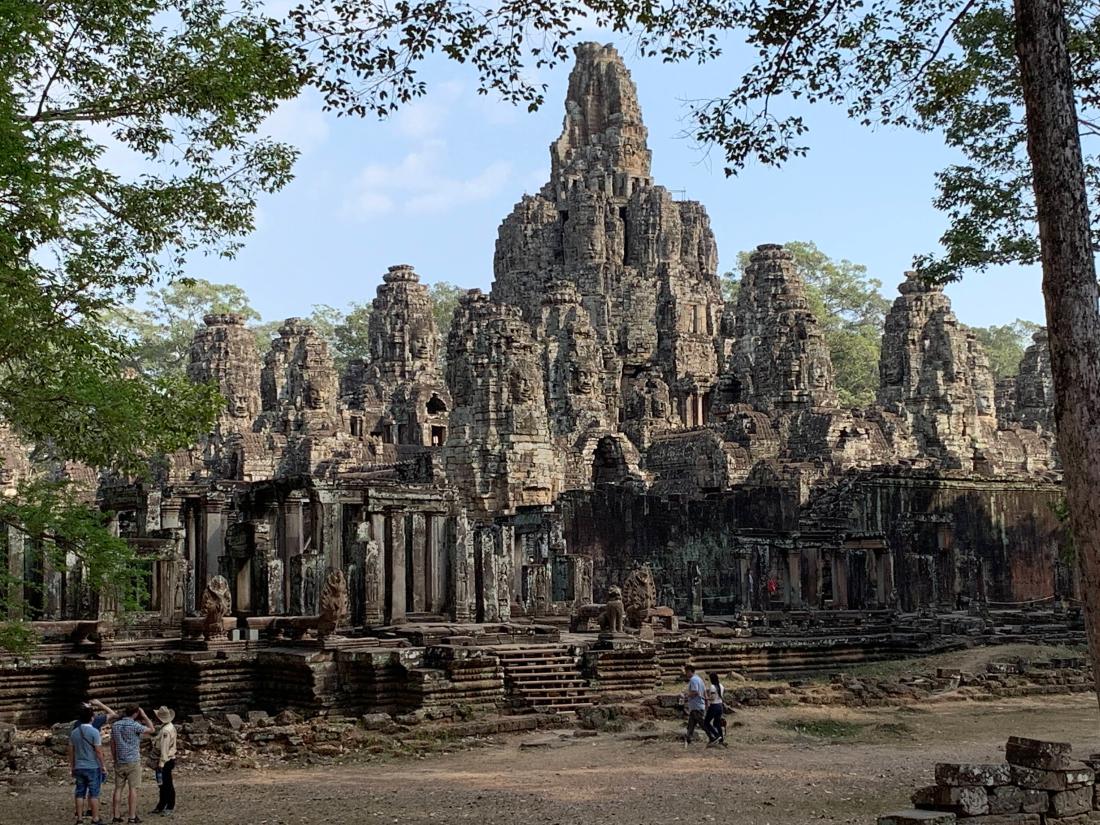
Then it was on to King Jayavaraman VII’s temple: Bayoun, one of the glories of all Siem Reap.
IMG_1313 (1).JPG

img_1314img_1315img_1317img_1319img_1324

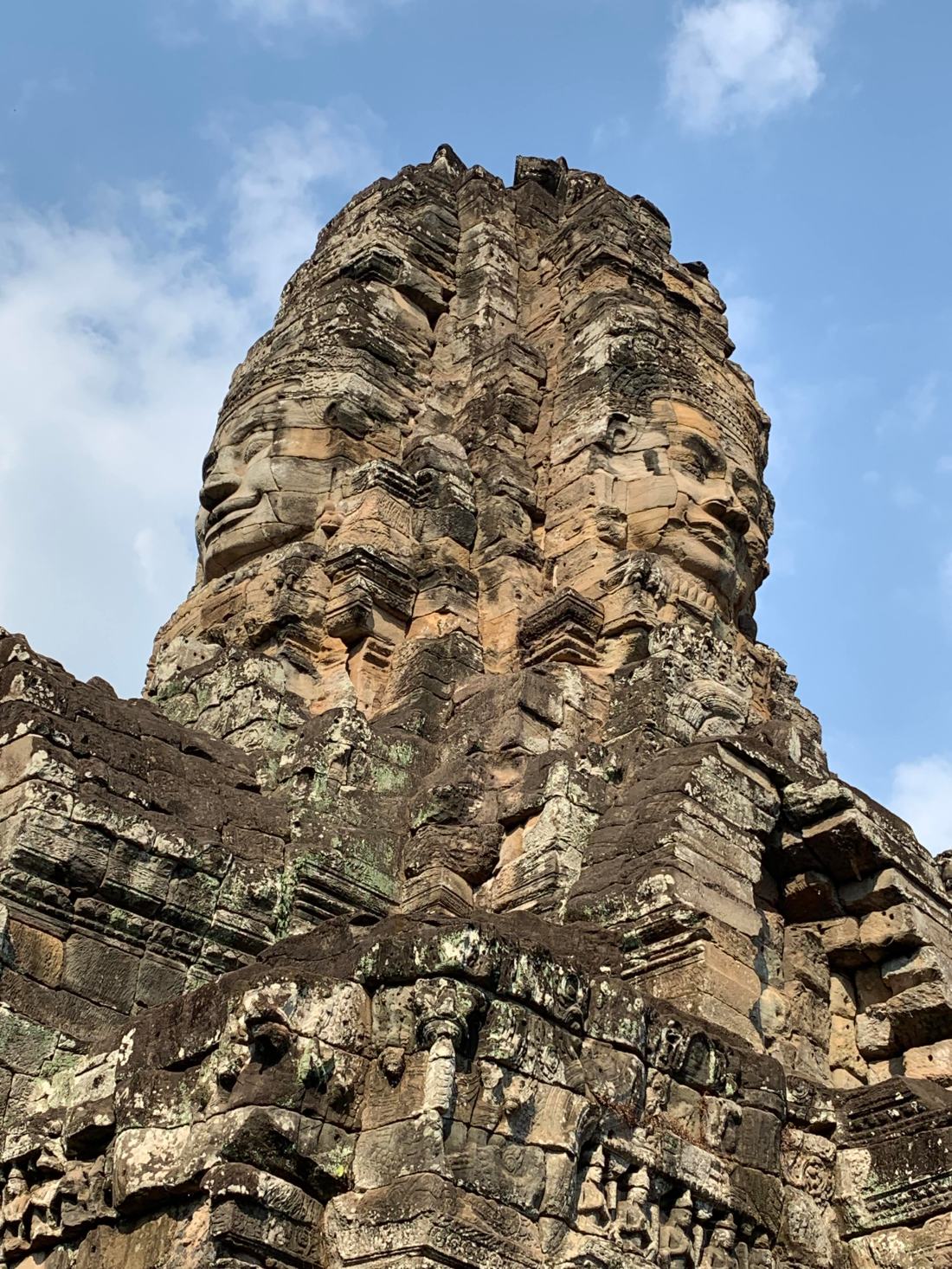
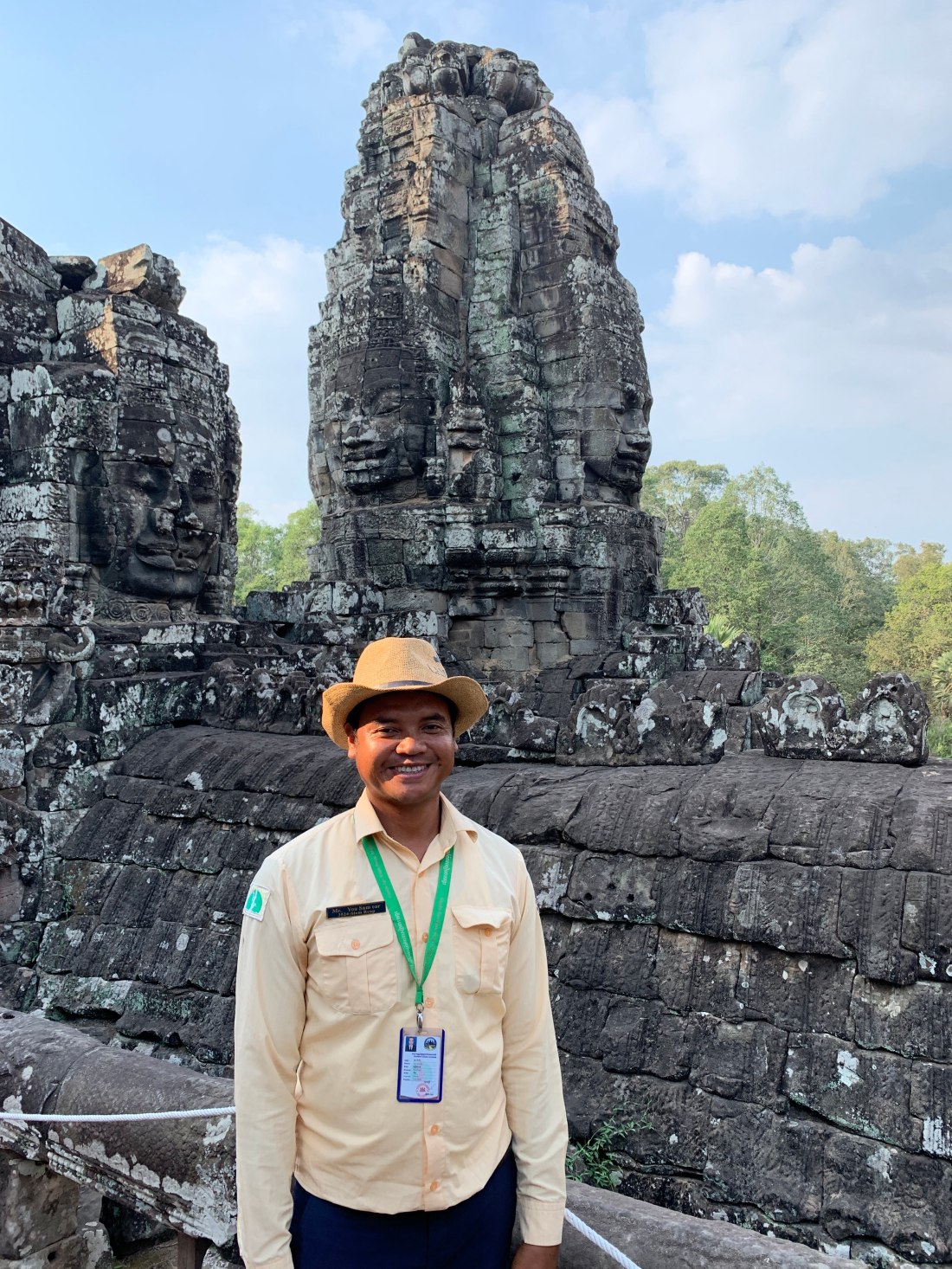
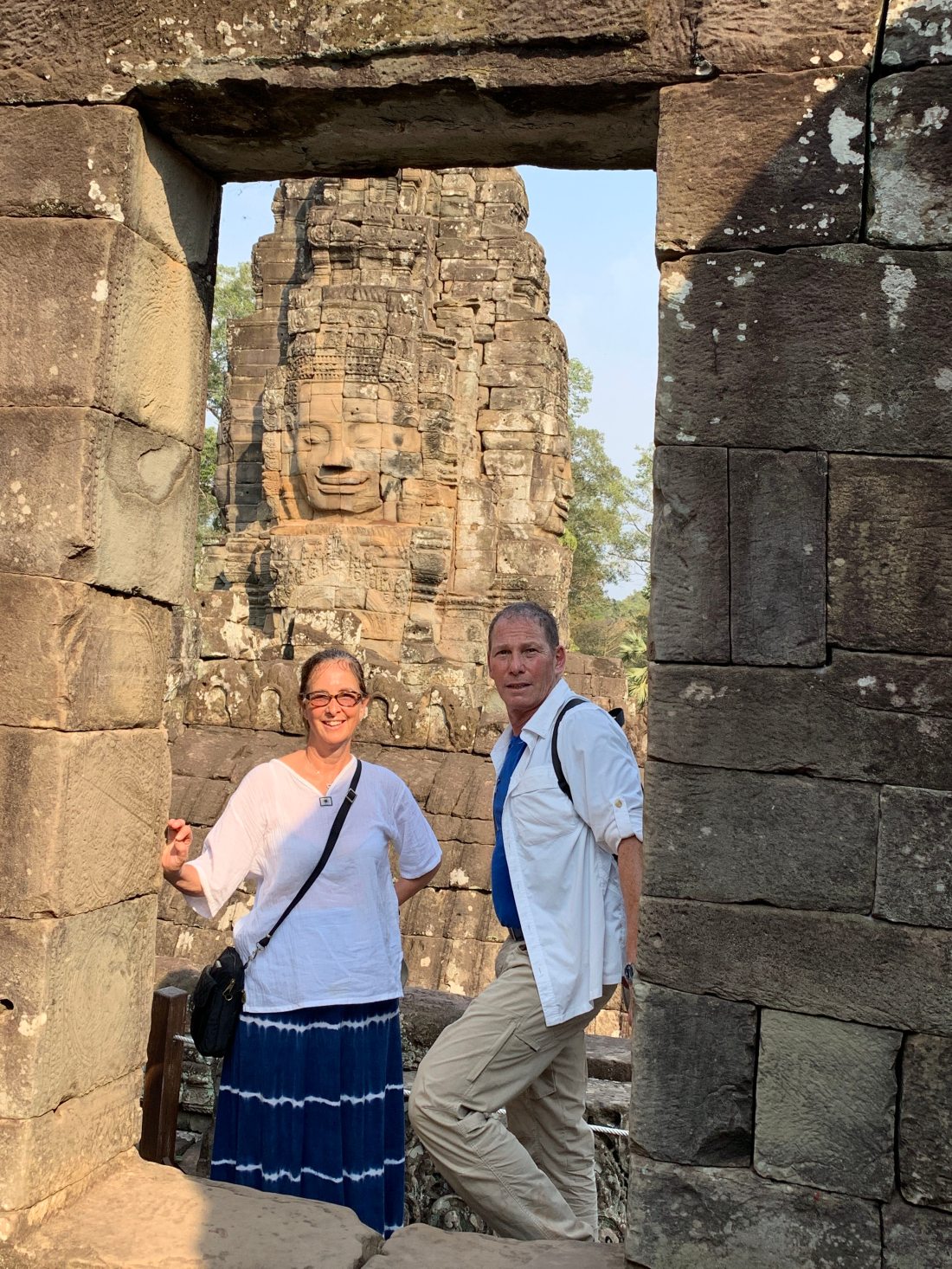
Notice the 4 faces of buddha on each of the 49 towers.  They point exactly to each of the 4 magnetic coordinates: N, E, S, &W.  In later years when the temple was converted to Hindu, all of the buddha statues were removed.  But the Buddha faces on the towers were allowed to remain because they were made in the image of King Jayavaraman VII, so were considered images of him, not the Buddha.img_1329
img_1335
our guide, Sam

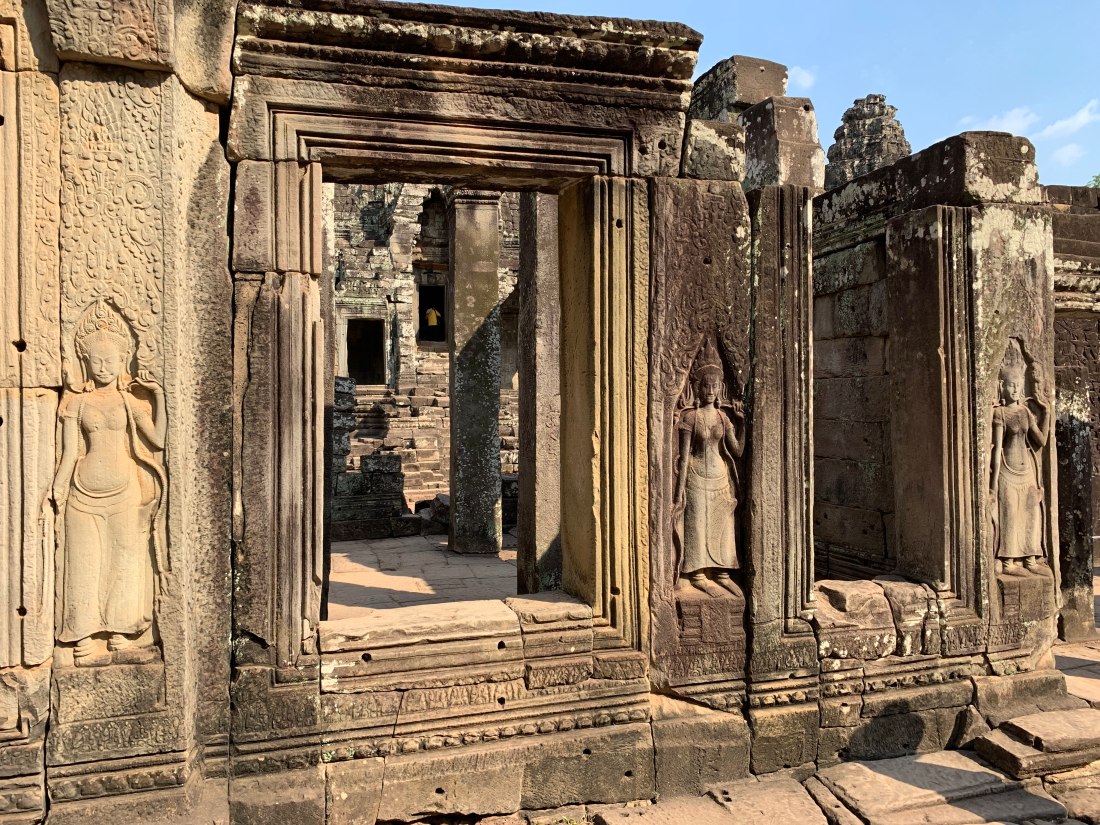
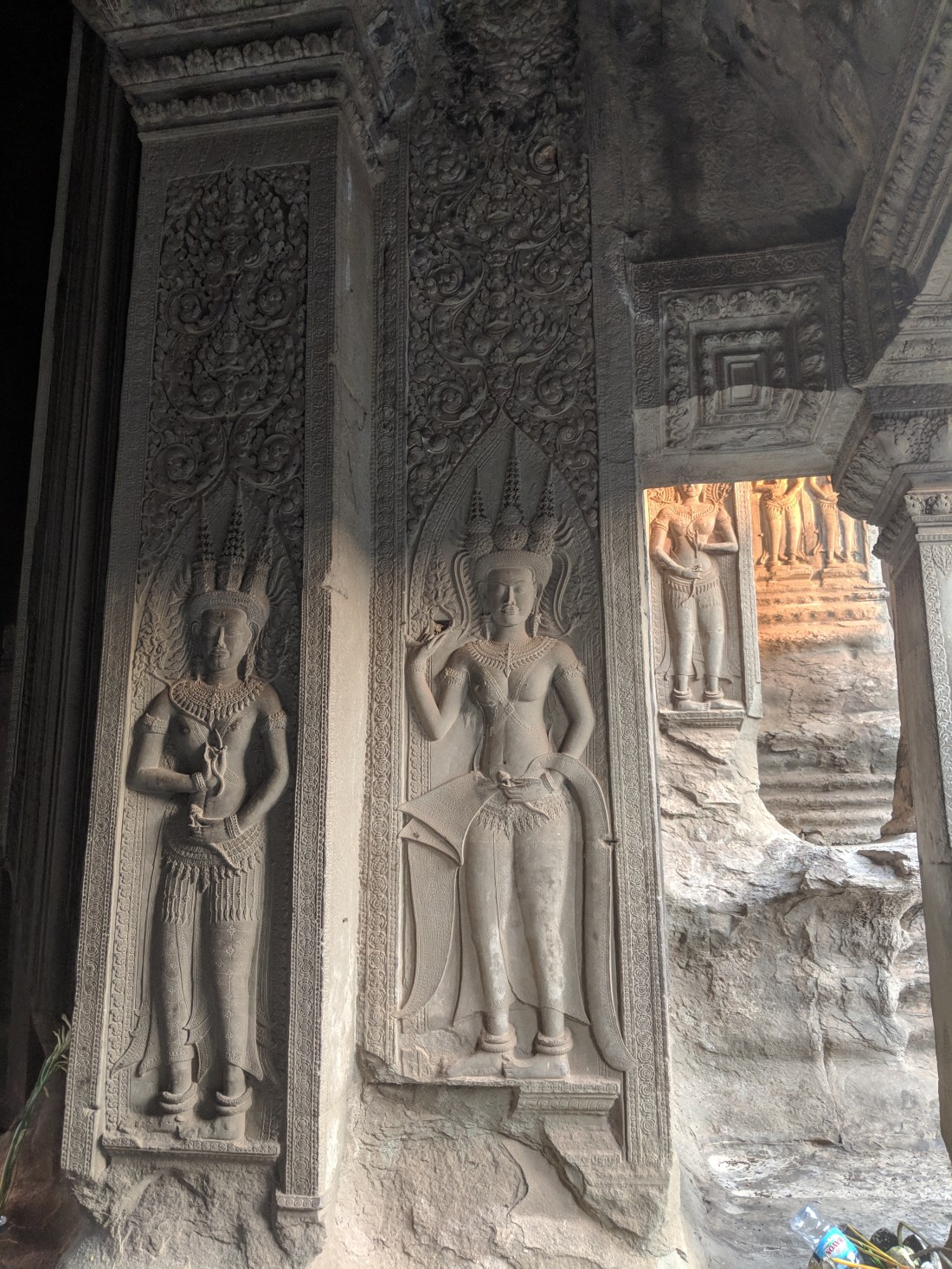
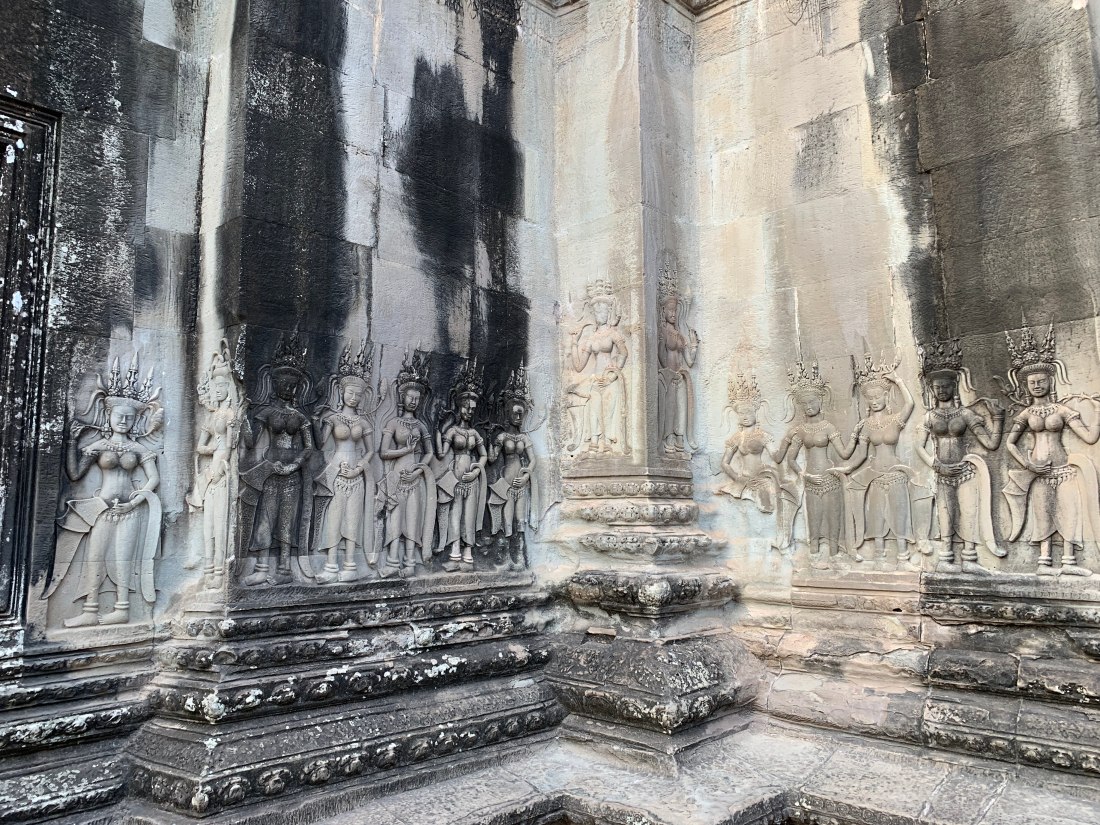
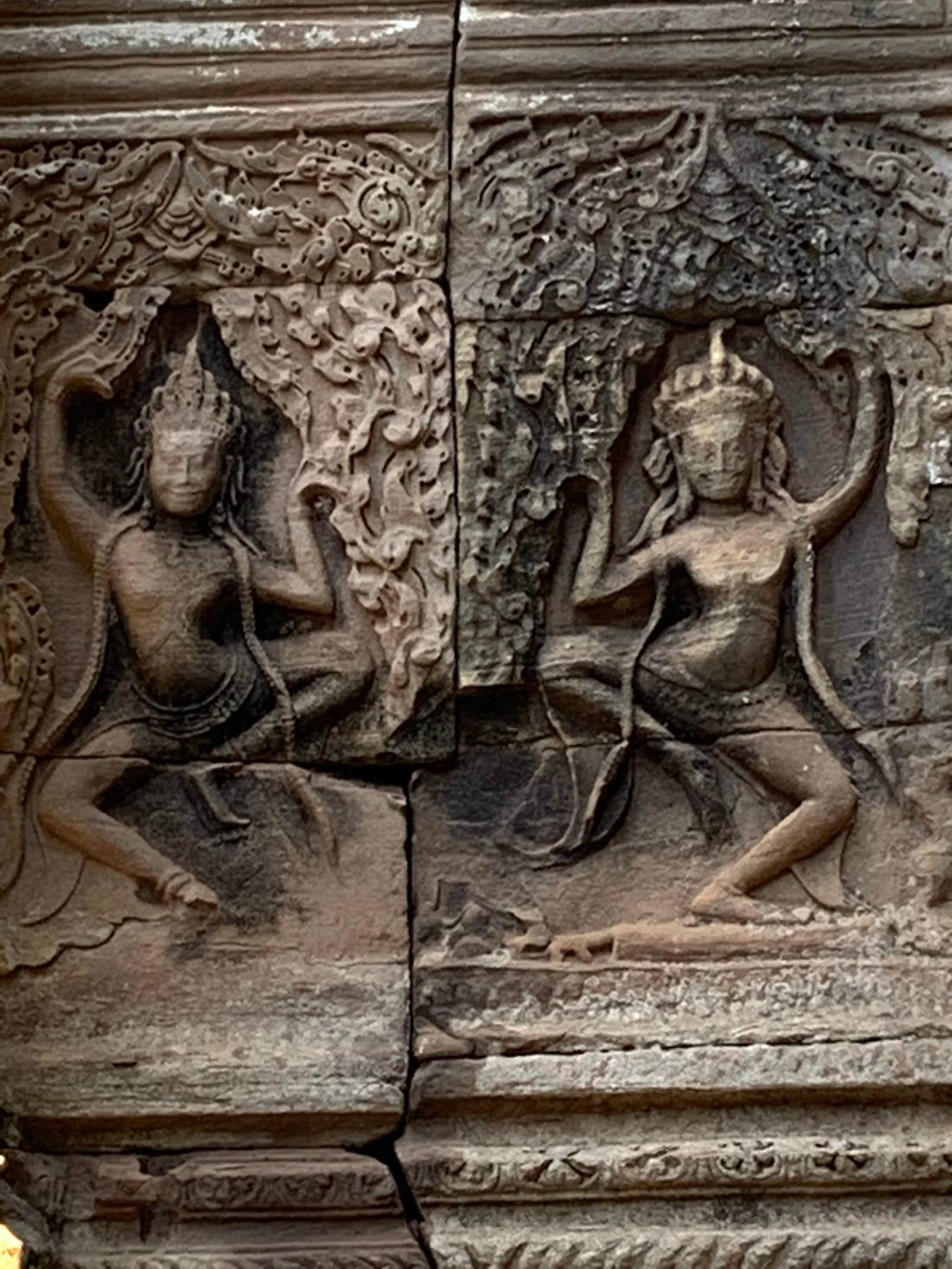
It was also at this temple that I became aware of Apsara.  She is the dancing lady at the sides of every entrance in every temple, both Hindu and Buddhist, thus making her symbol ubiquitous and truly Cambodian.
img_1342

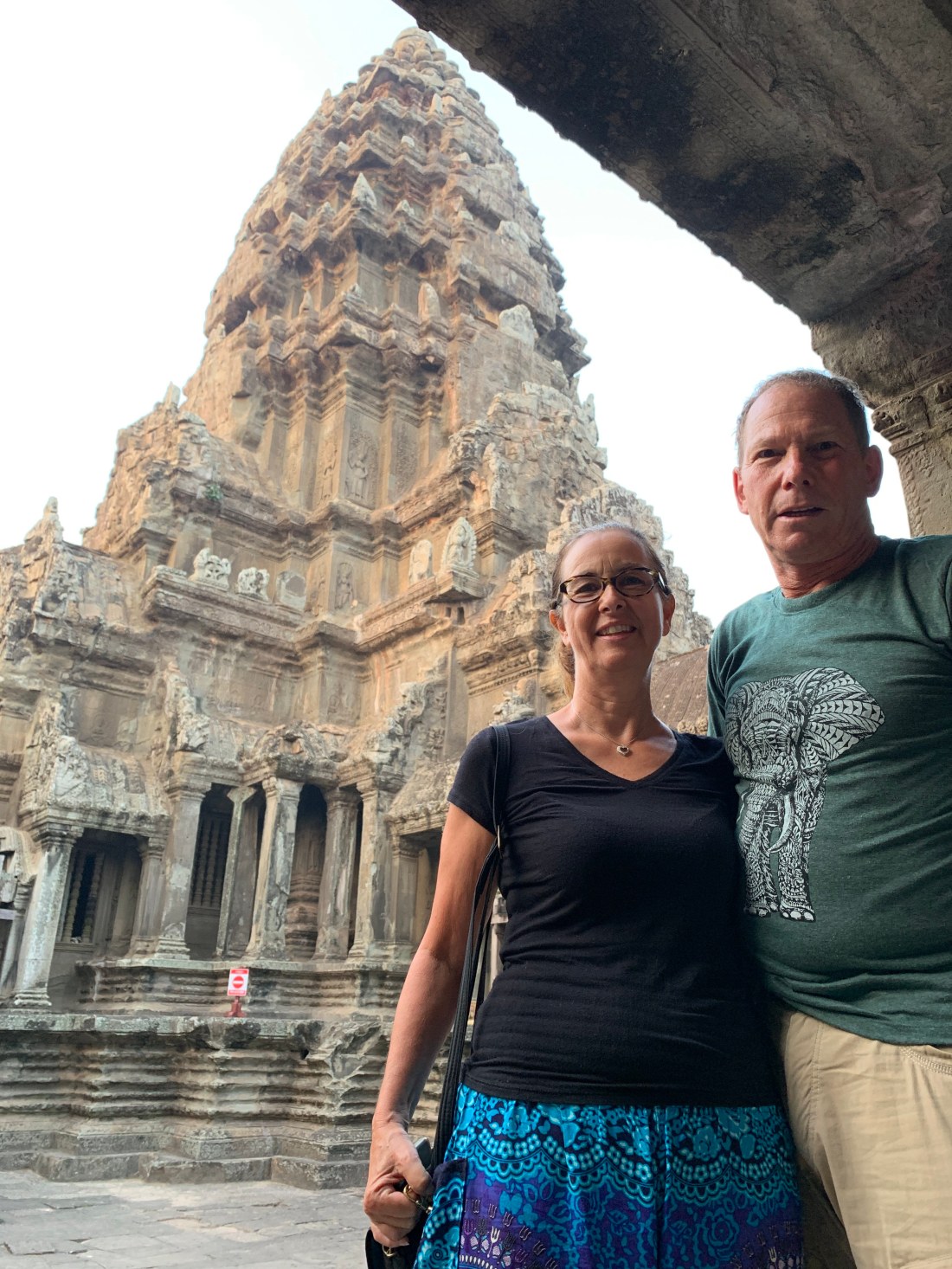
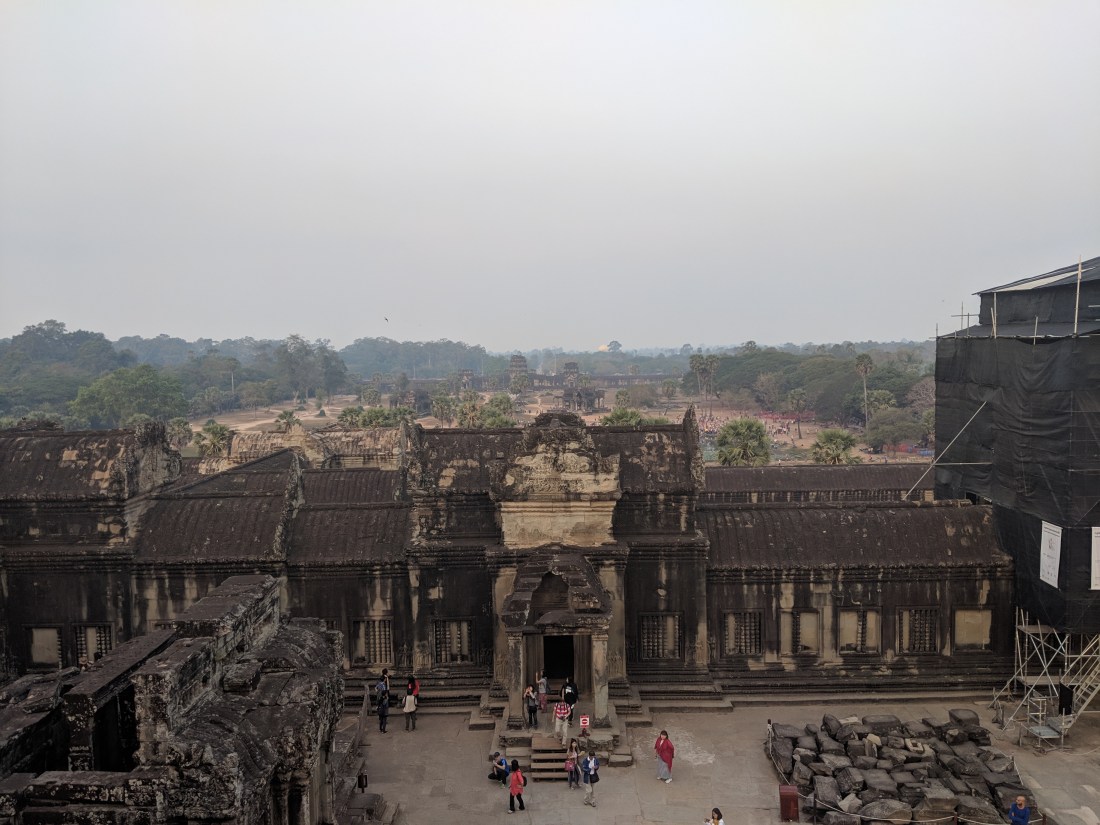
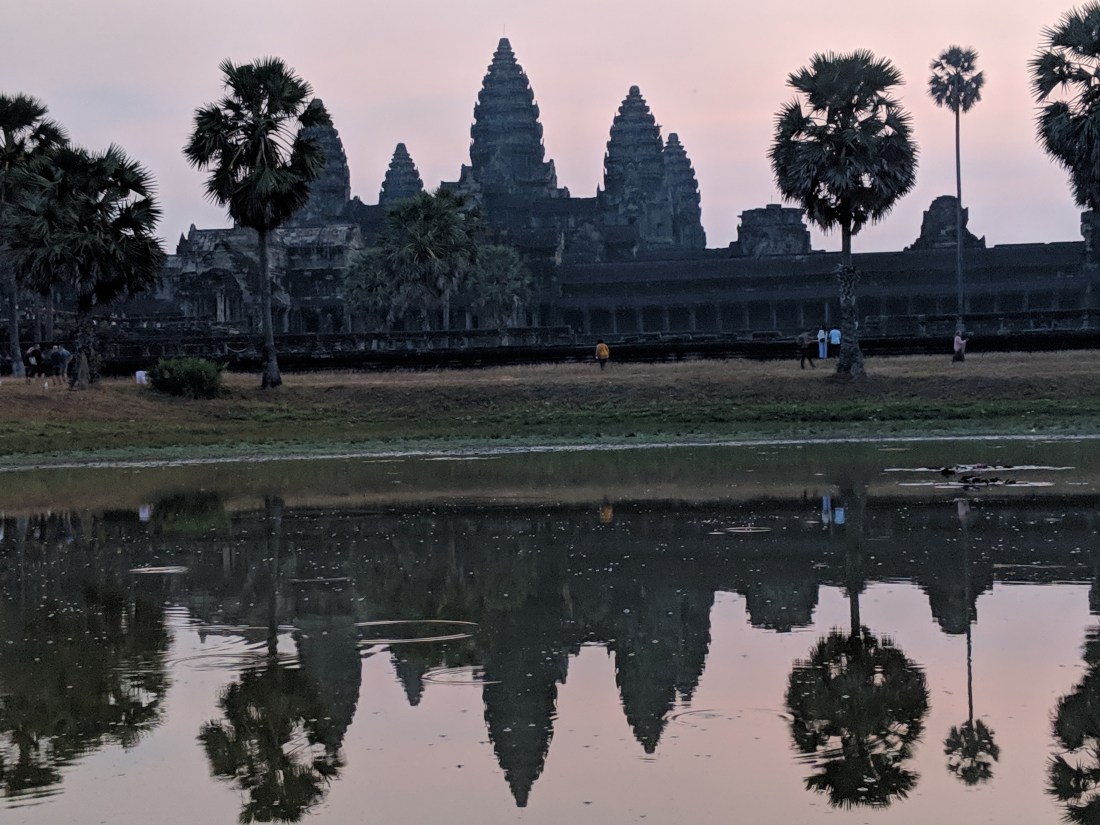
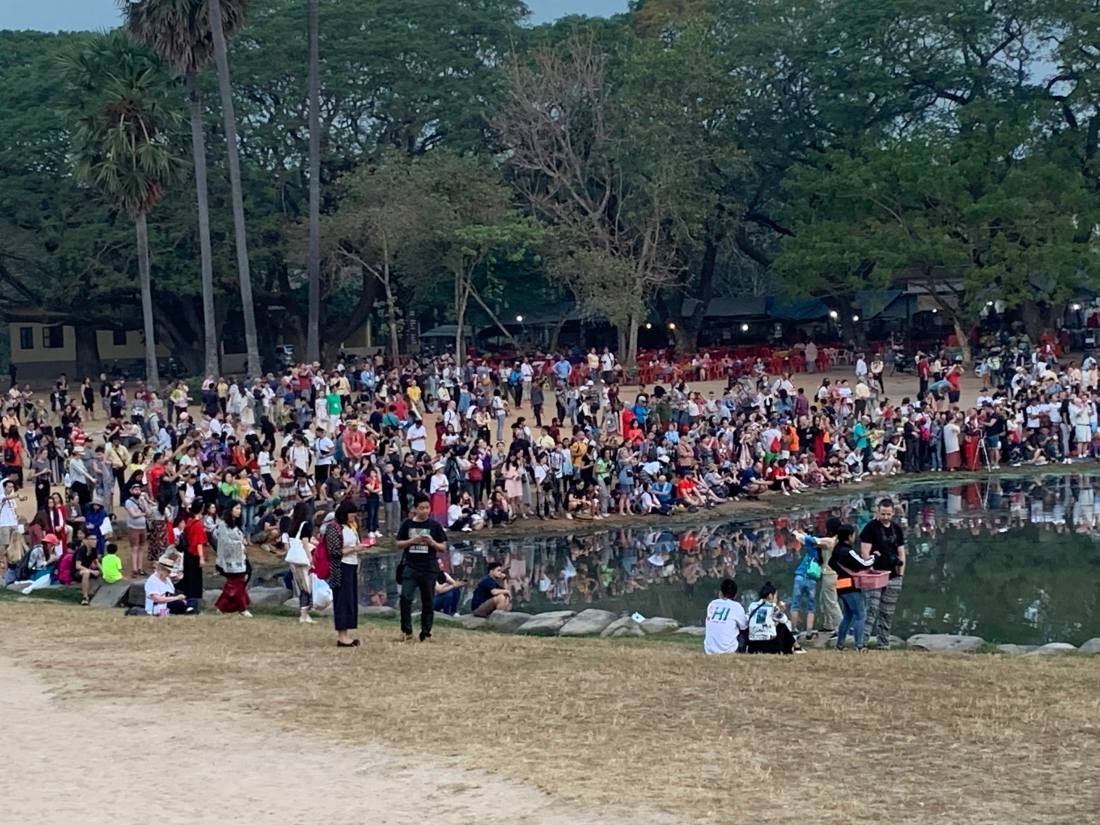
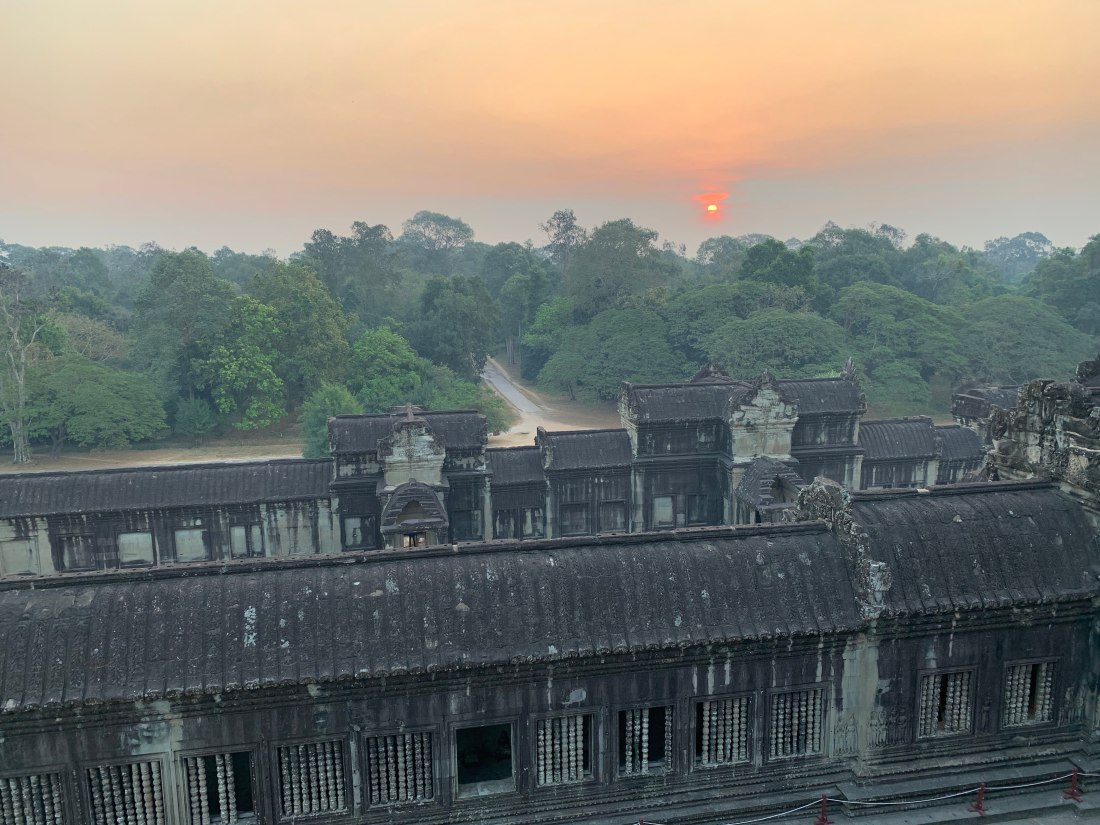
The next morning we were out by 5 am to watch the sun rise over Angkor Wat, Siem Reap’s crowning jewel, one of the largest religious monuments in the world.  It was built in the early 12th century  by the Khmer King Suryavarman II as a Hindu temple devoted to Vishnu, then converted in the late 12th century to a buddhist temple.
img_20190121_062234

Luckily we had gotten there early for a front row seat.  This was the crowd behind us.img_1379
Then we rushed up to the top level to further enjoy the sunrise and beat the crowds to the top.
img_1383

img_1391

img_20190121_071420
Apsara is everywhere

img_1435

img_20190121_065937
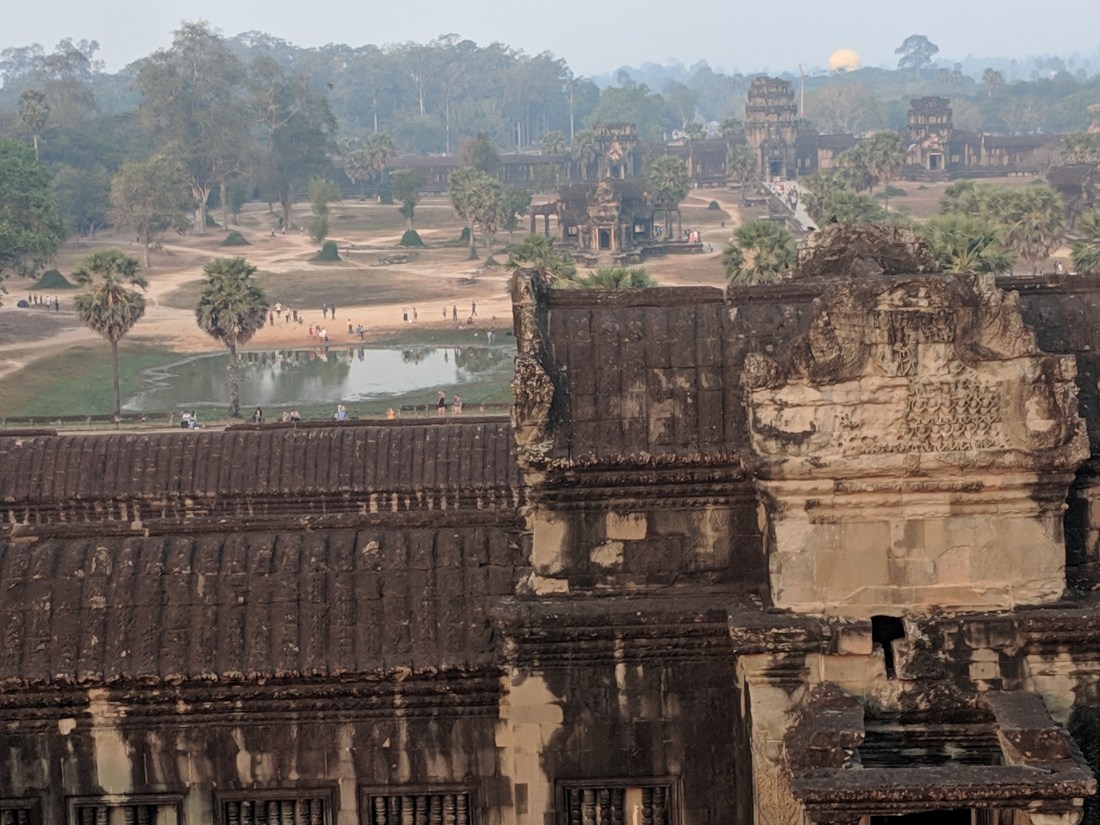
The view from the top looking out over the library
img_20190121_070613
the lake where we watched the sunrise with the library behind
img_1449
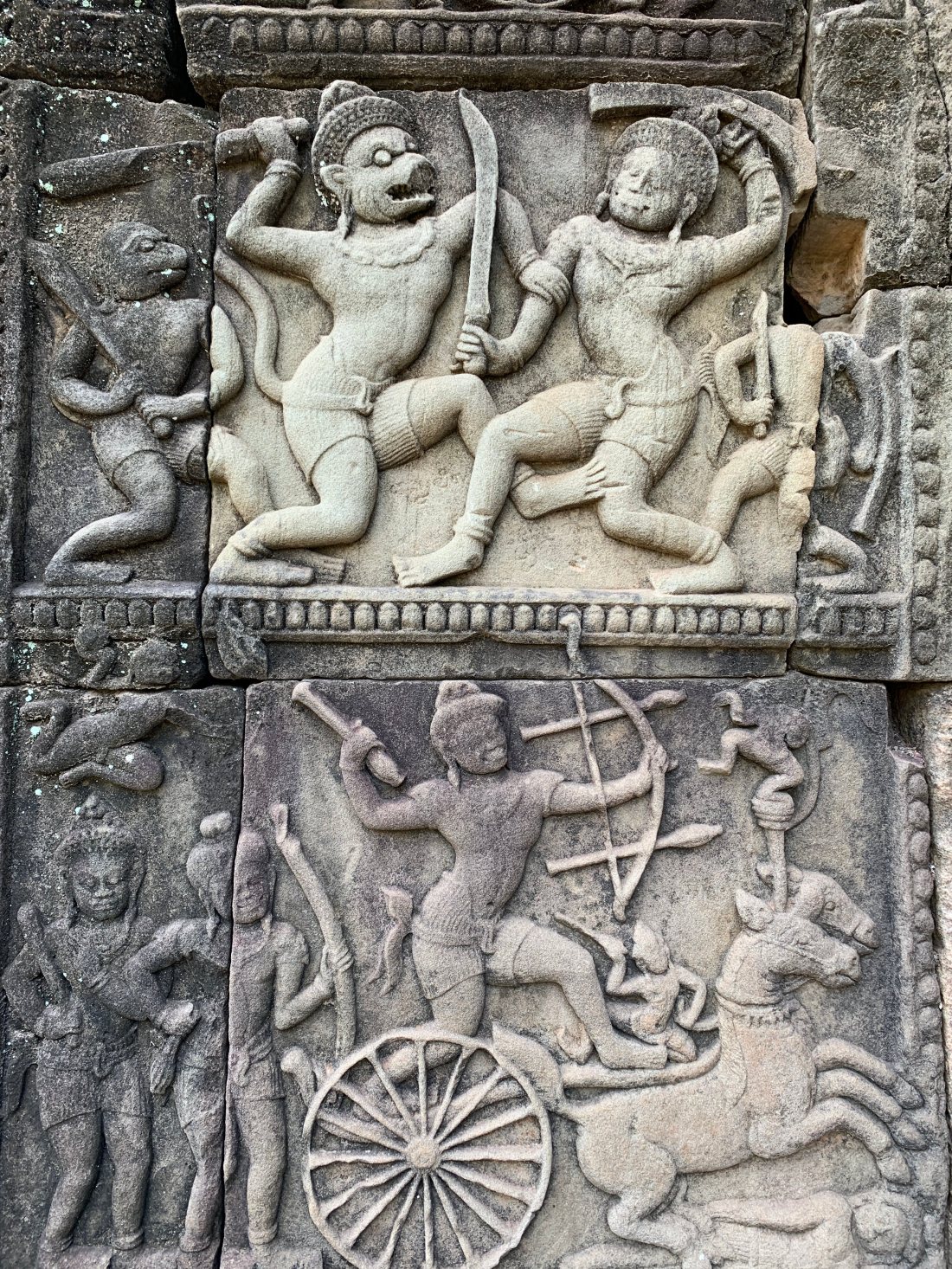
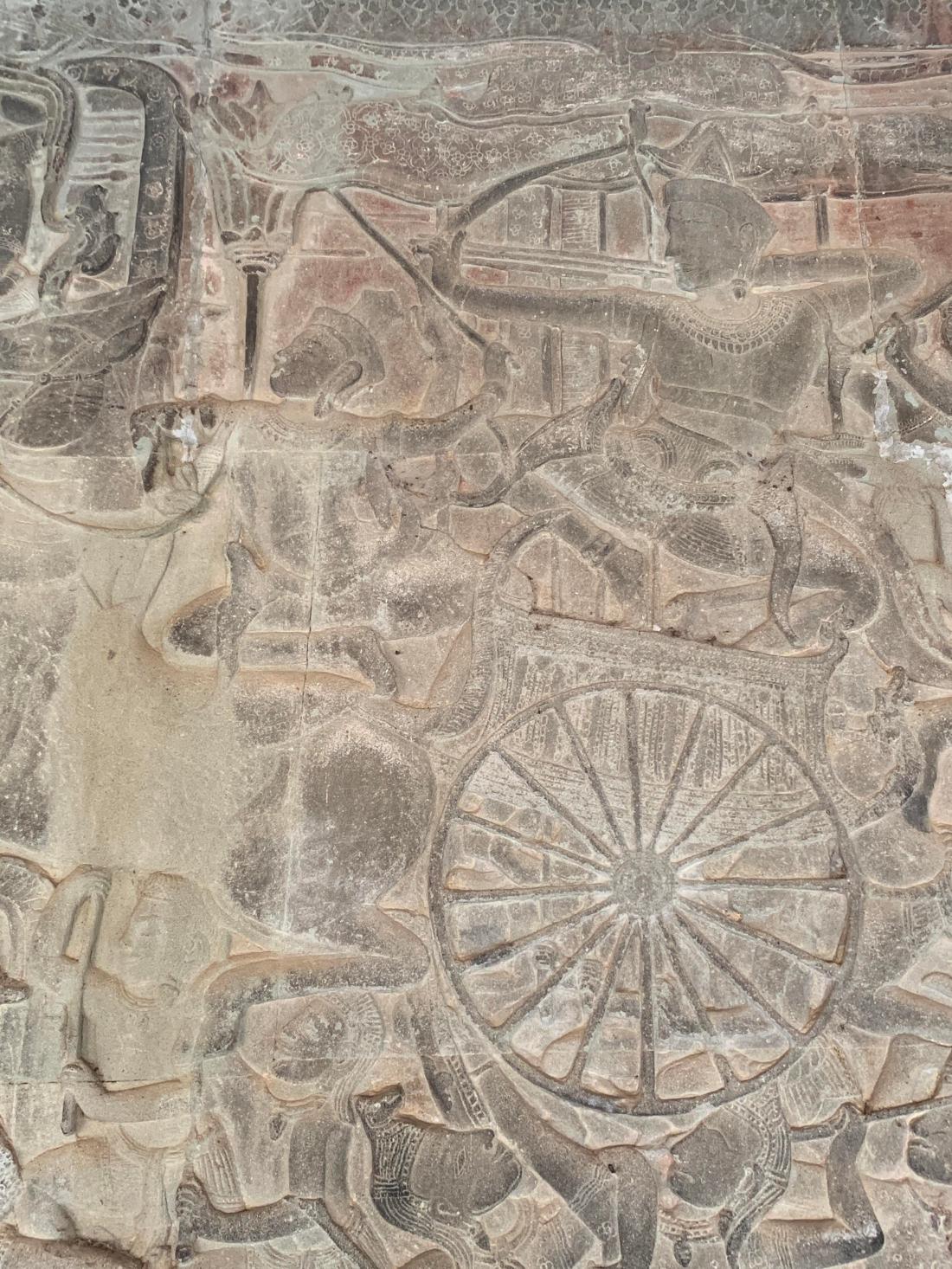
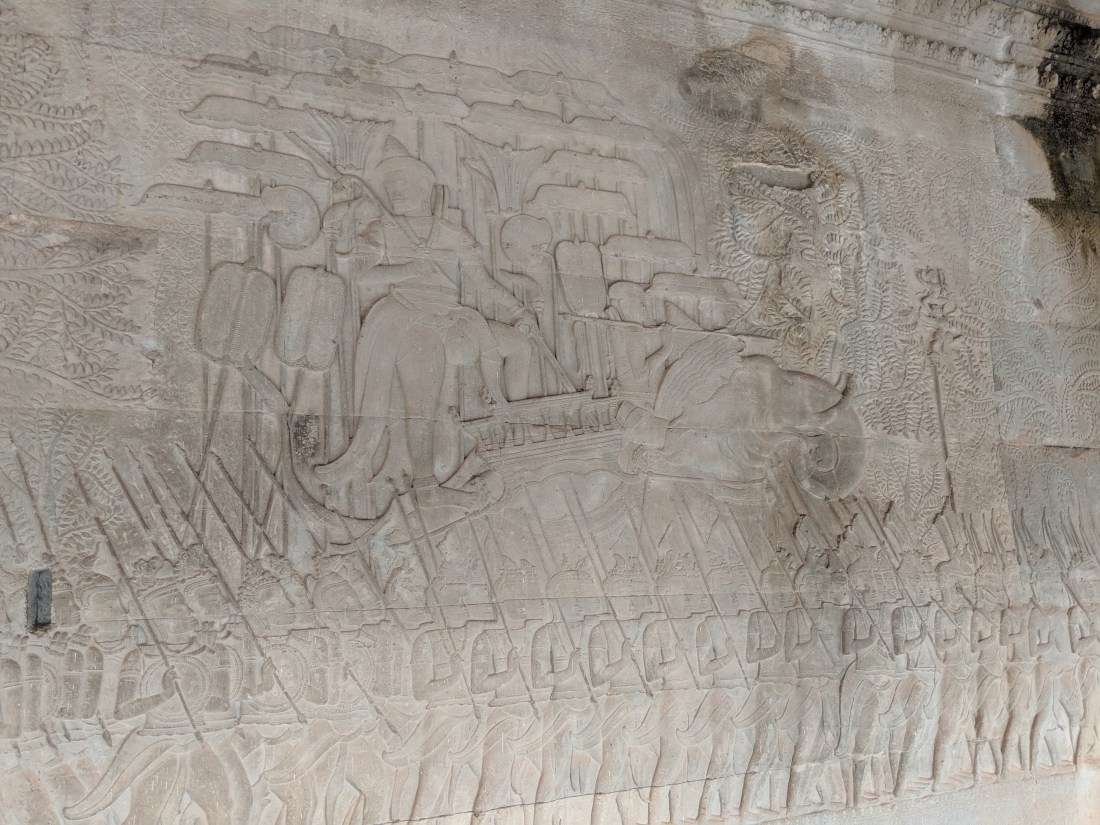
The many bas-reliefs tell stories, this one of Hare Krishna in battle

img_1454

img_20190121_082757img_1435

img_20190121_080828
King Suryavarman II in battle

When the king died, the temple was unfinished.  But since it was being built as his shrine, it was believed that the gods had decided it was finished, so some of the bas-reliefs were never completed.
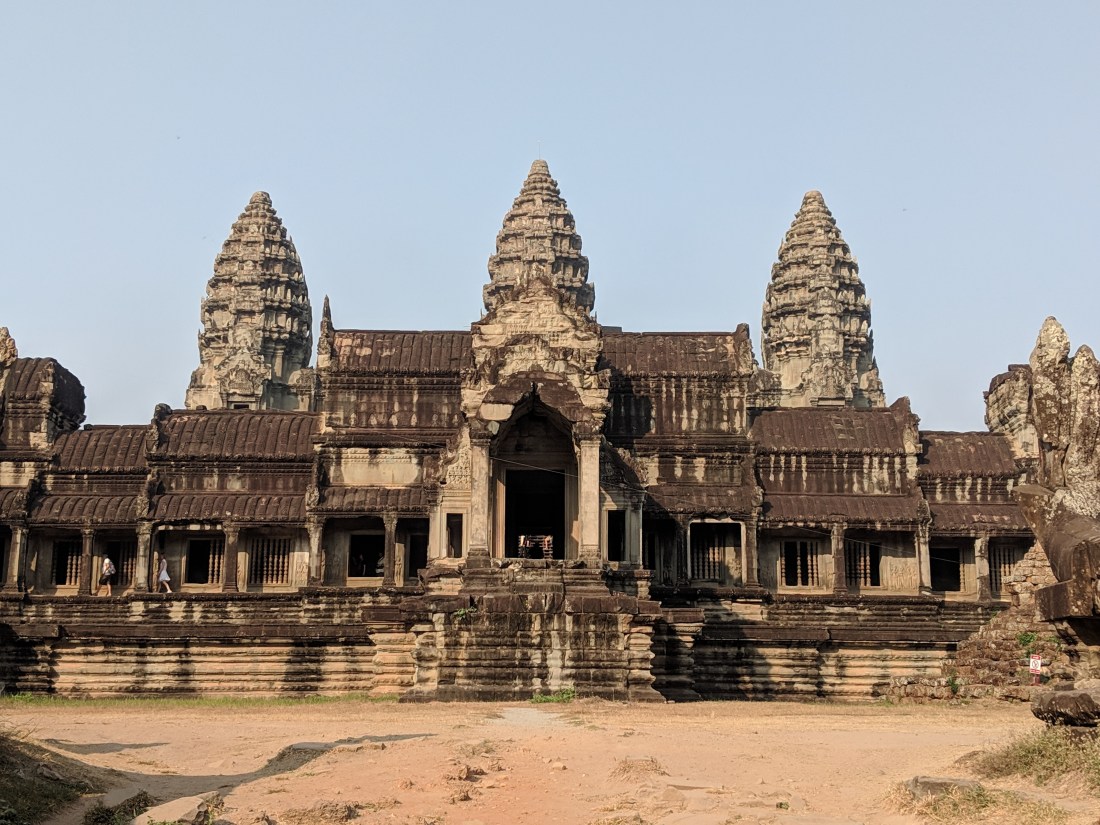
img_20190121_084018
This was the king’s private entrance

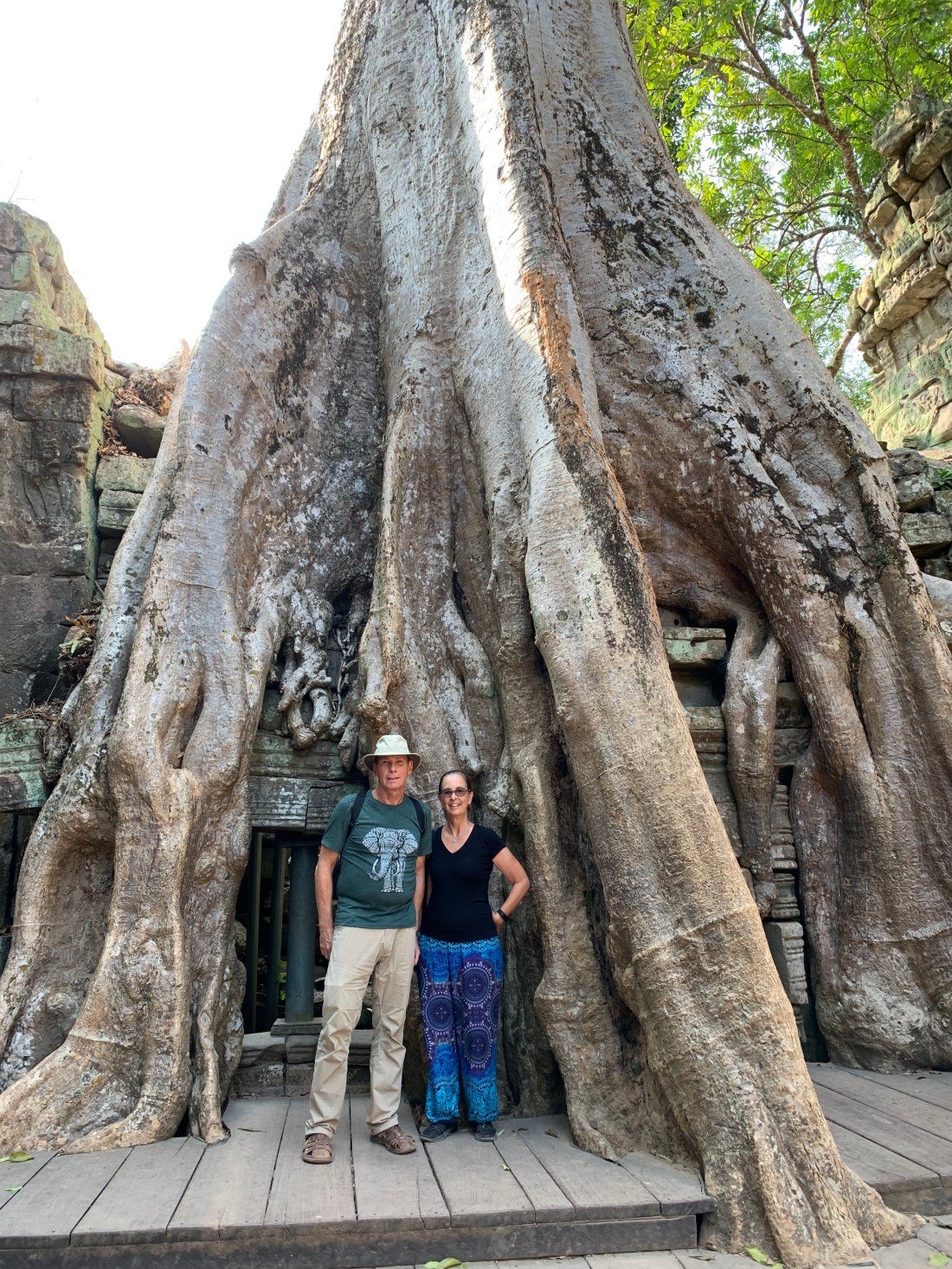
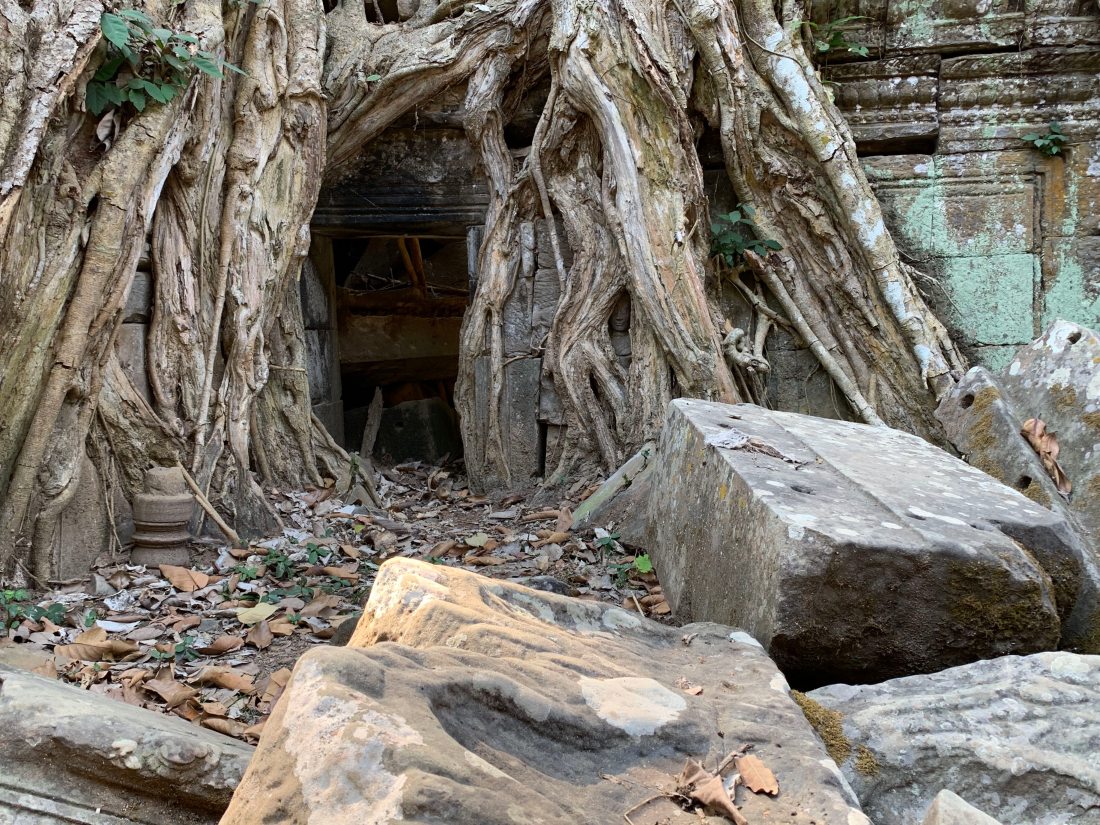
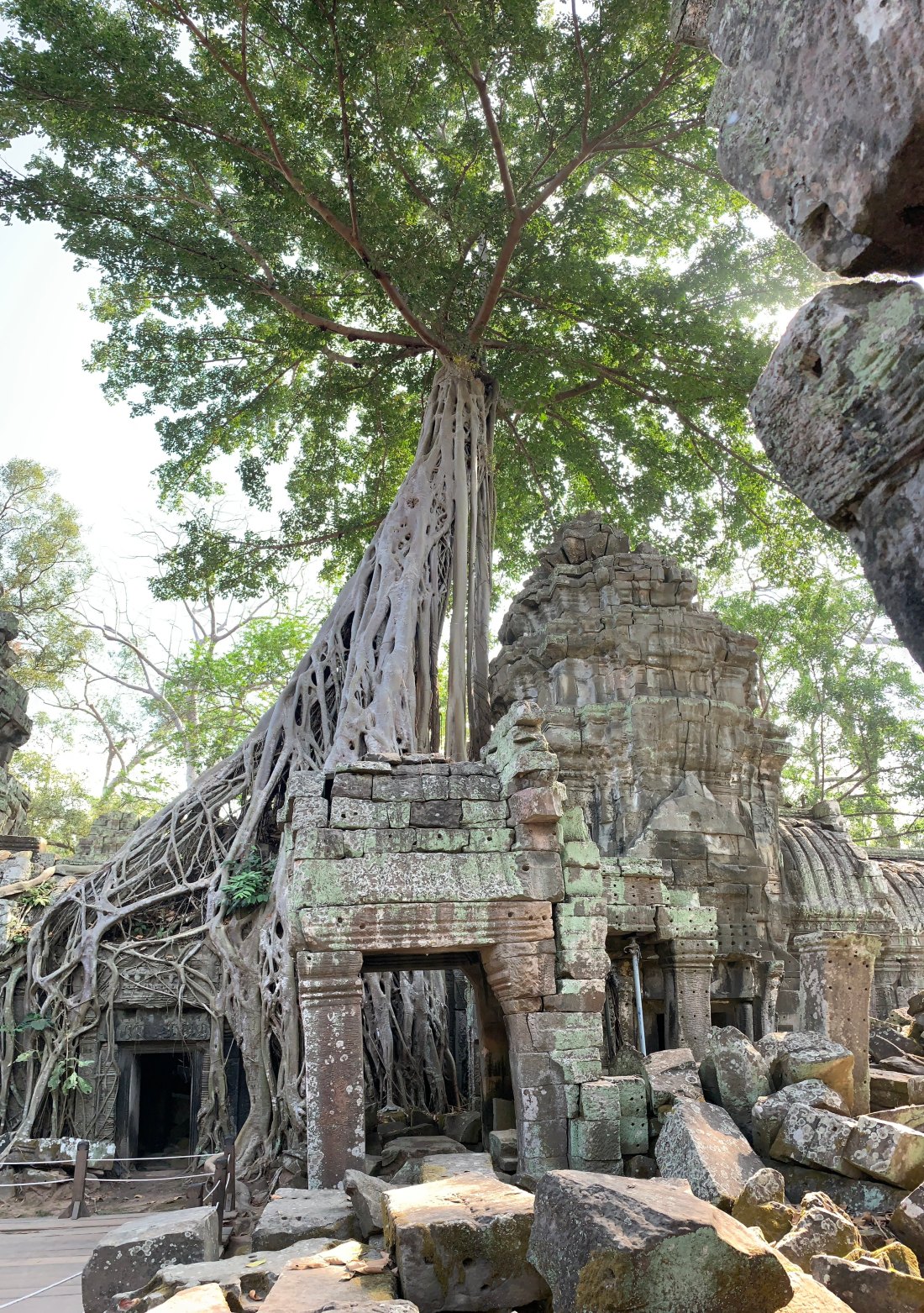
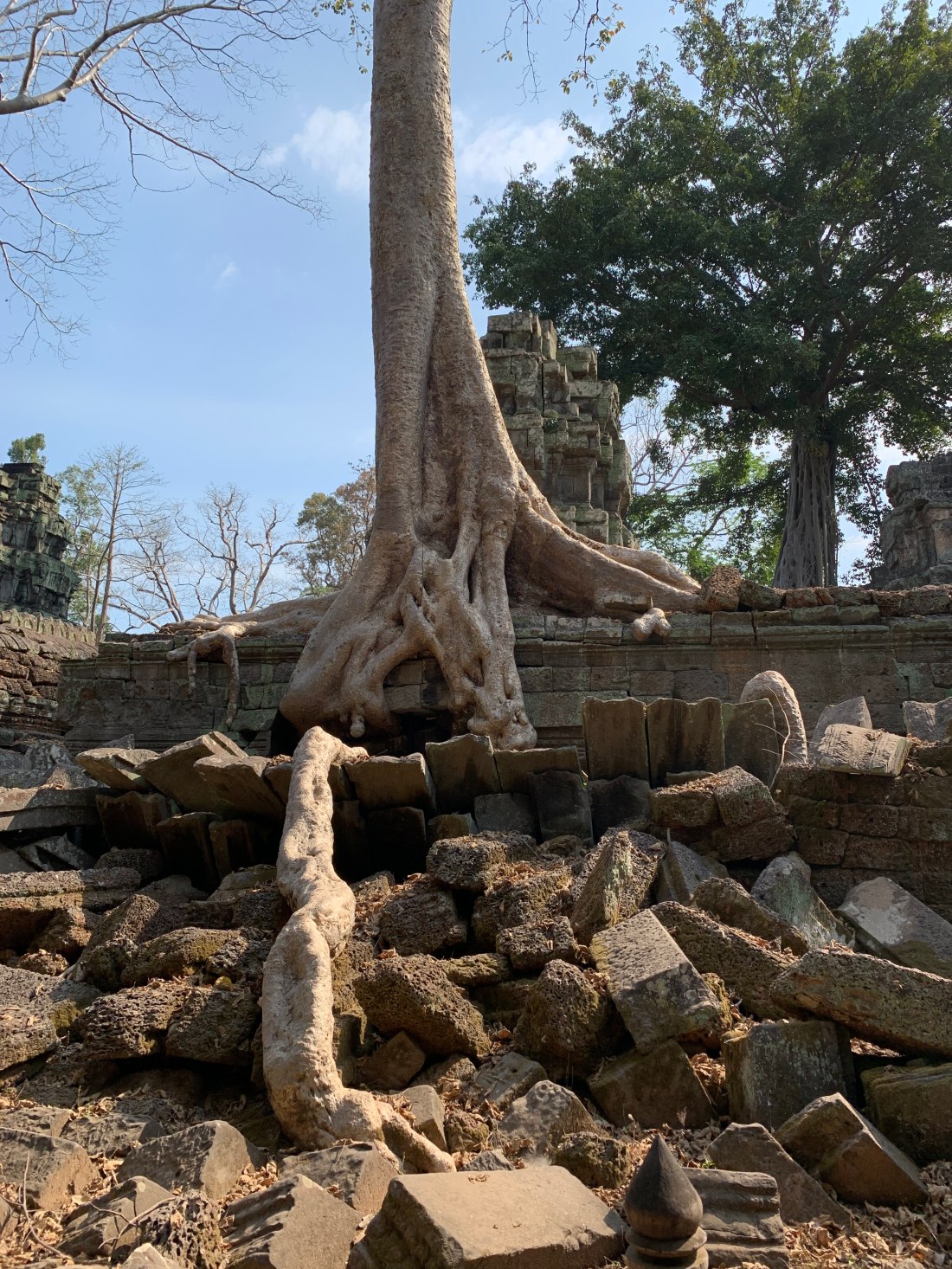
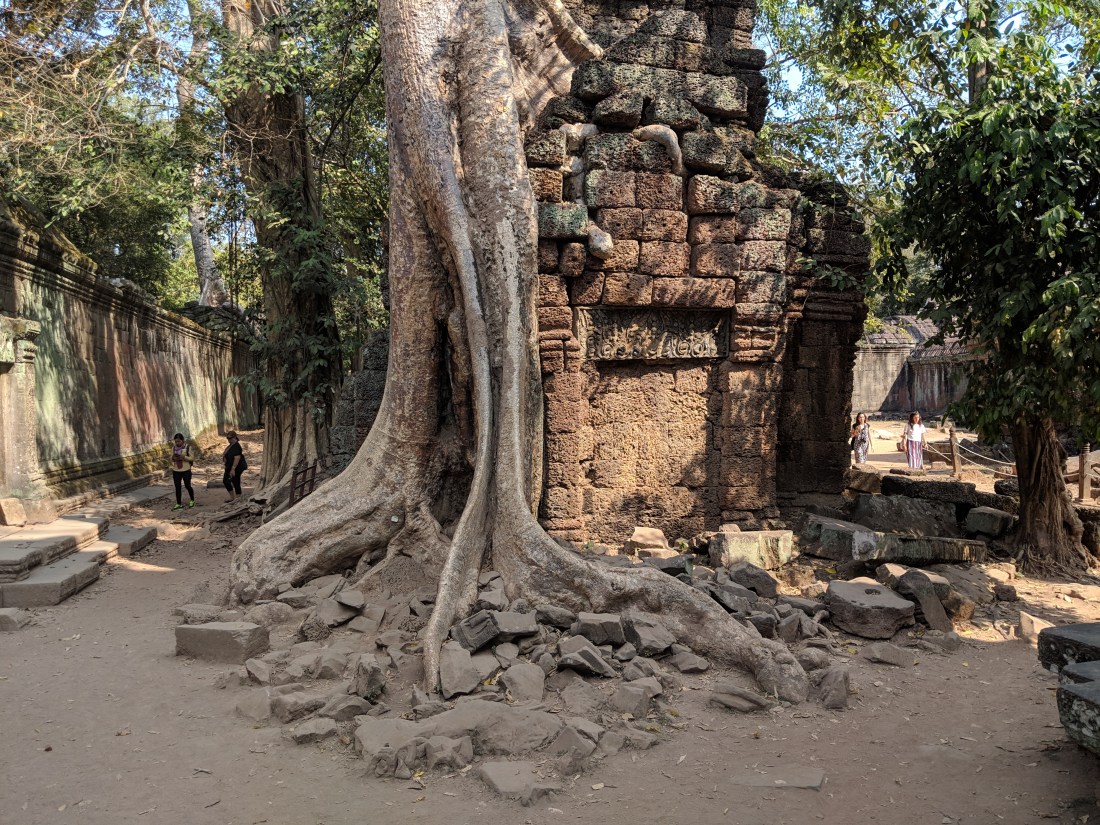
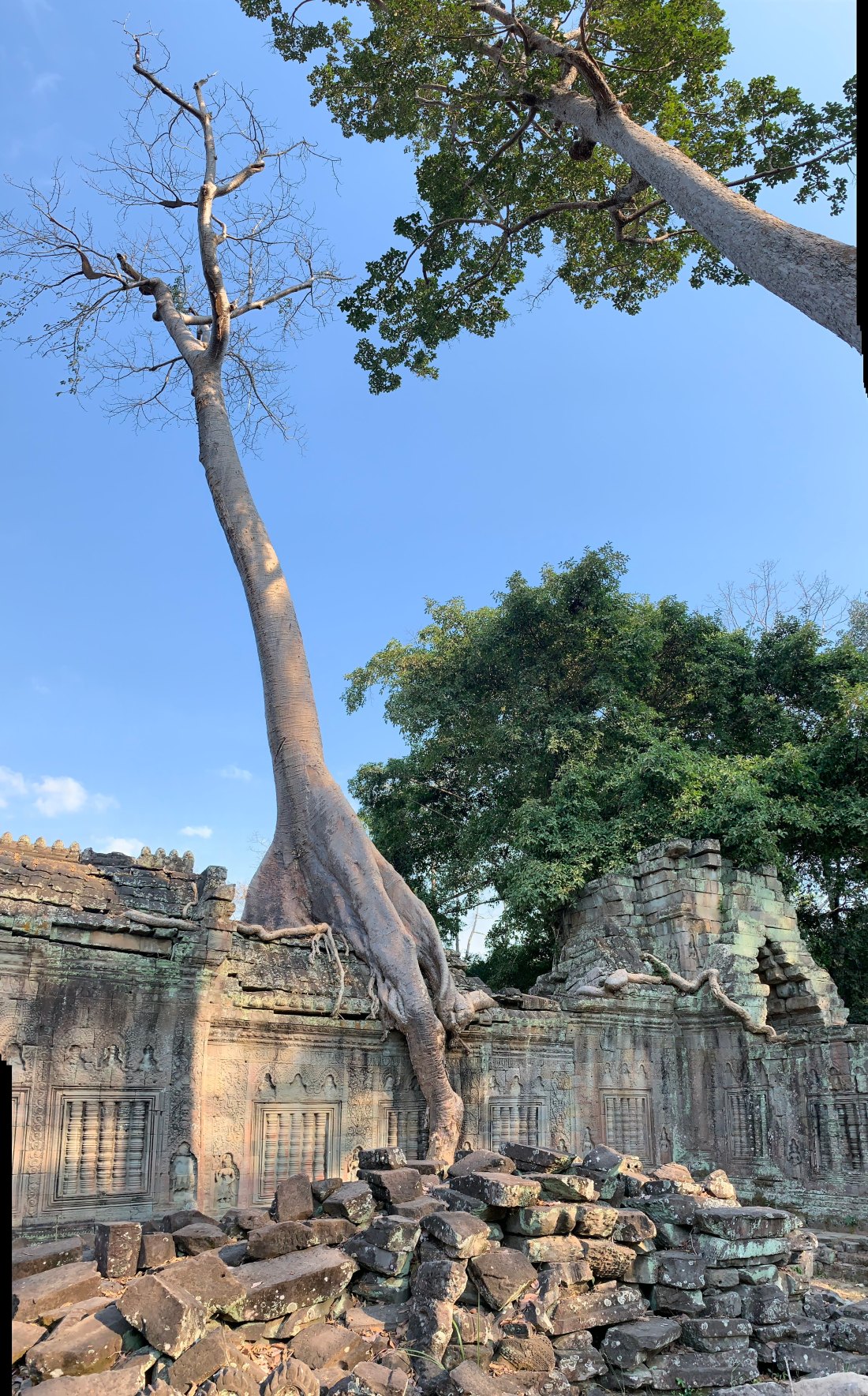
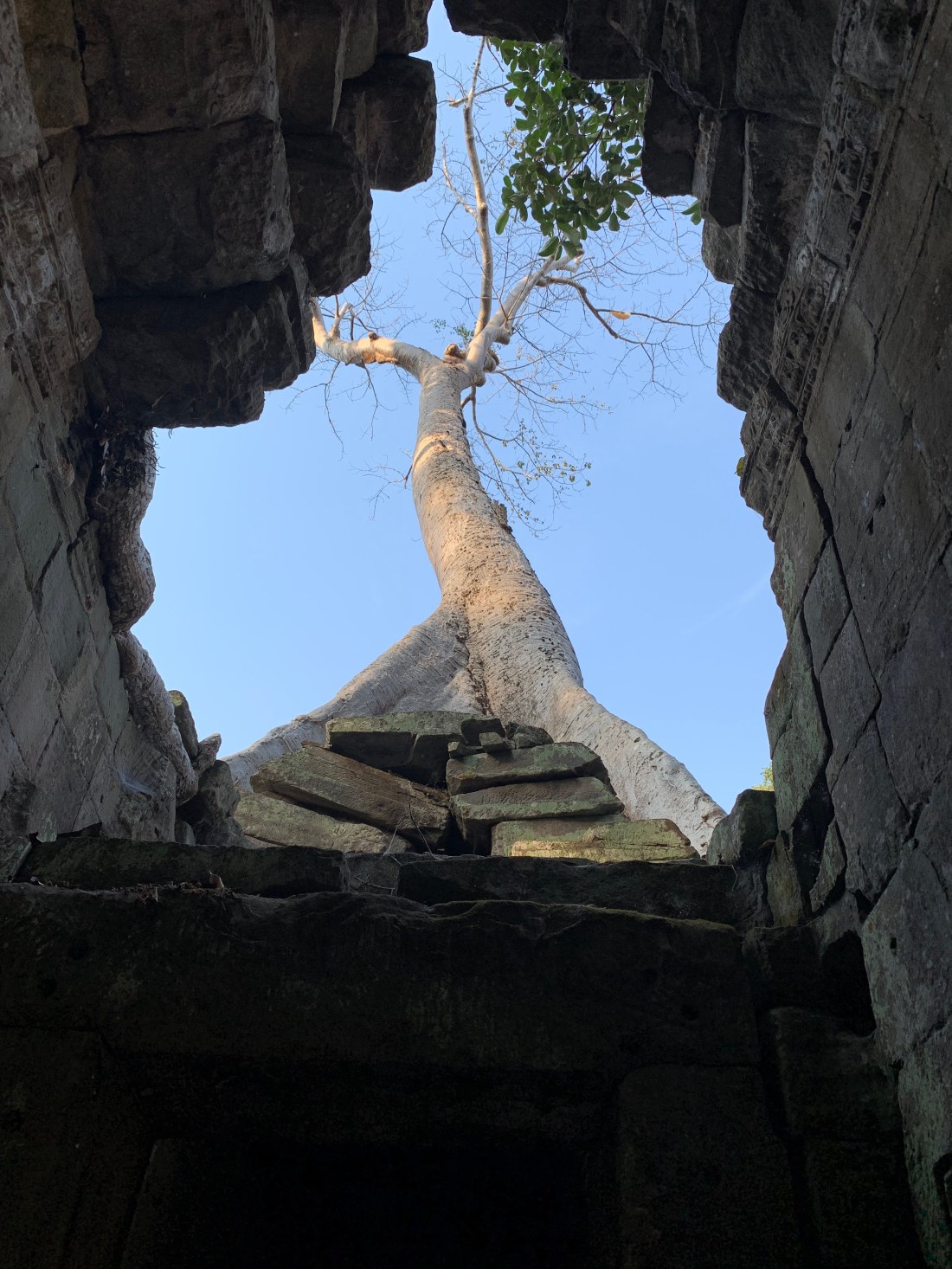
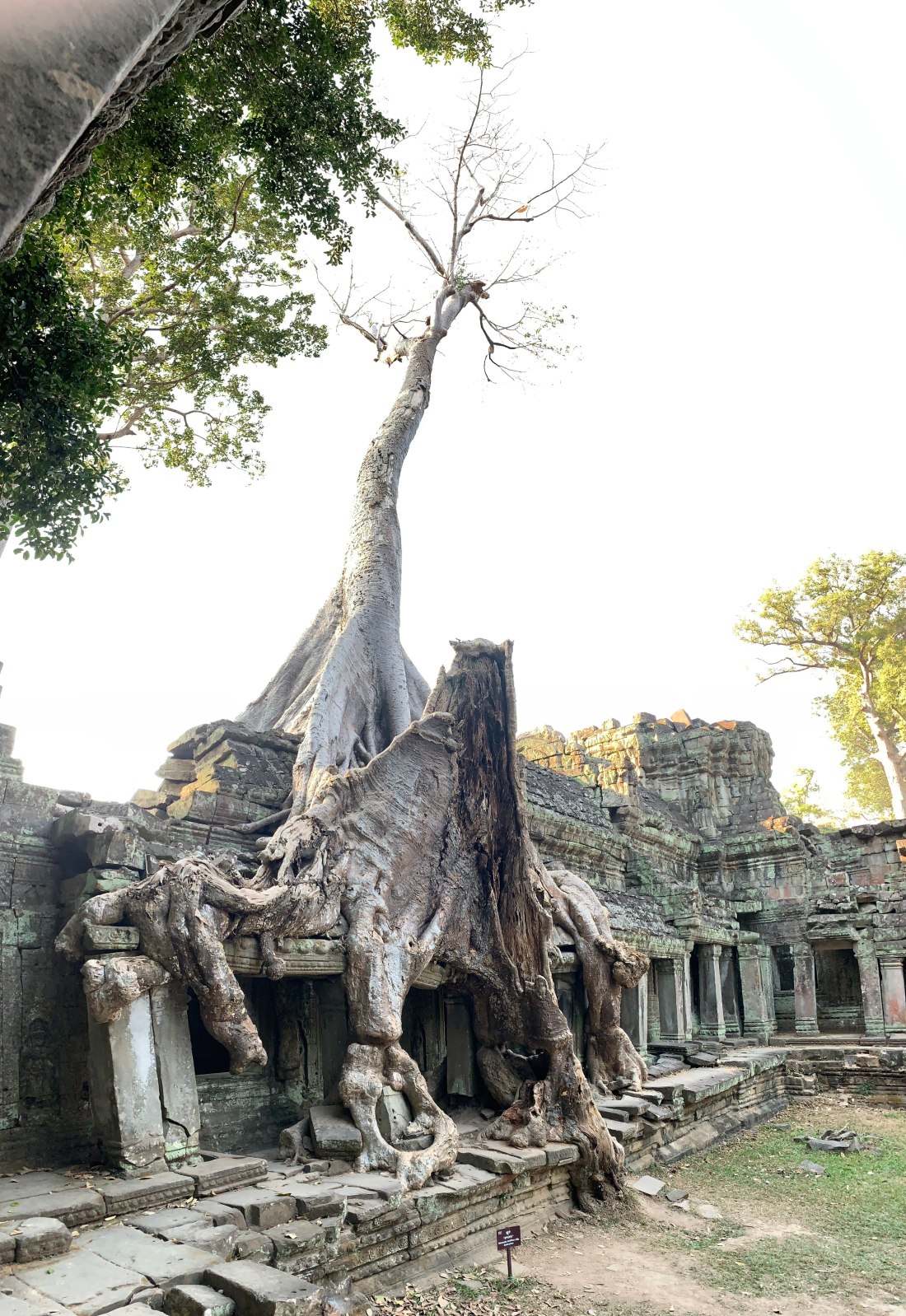
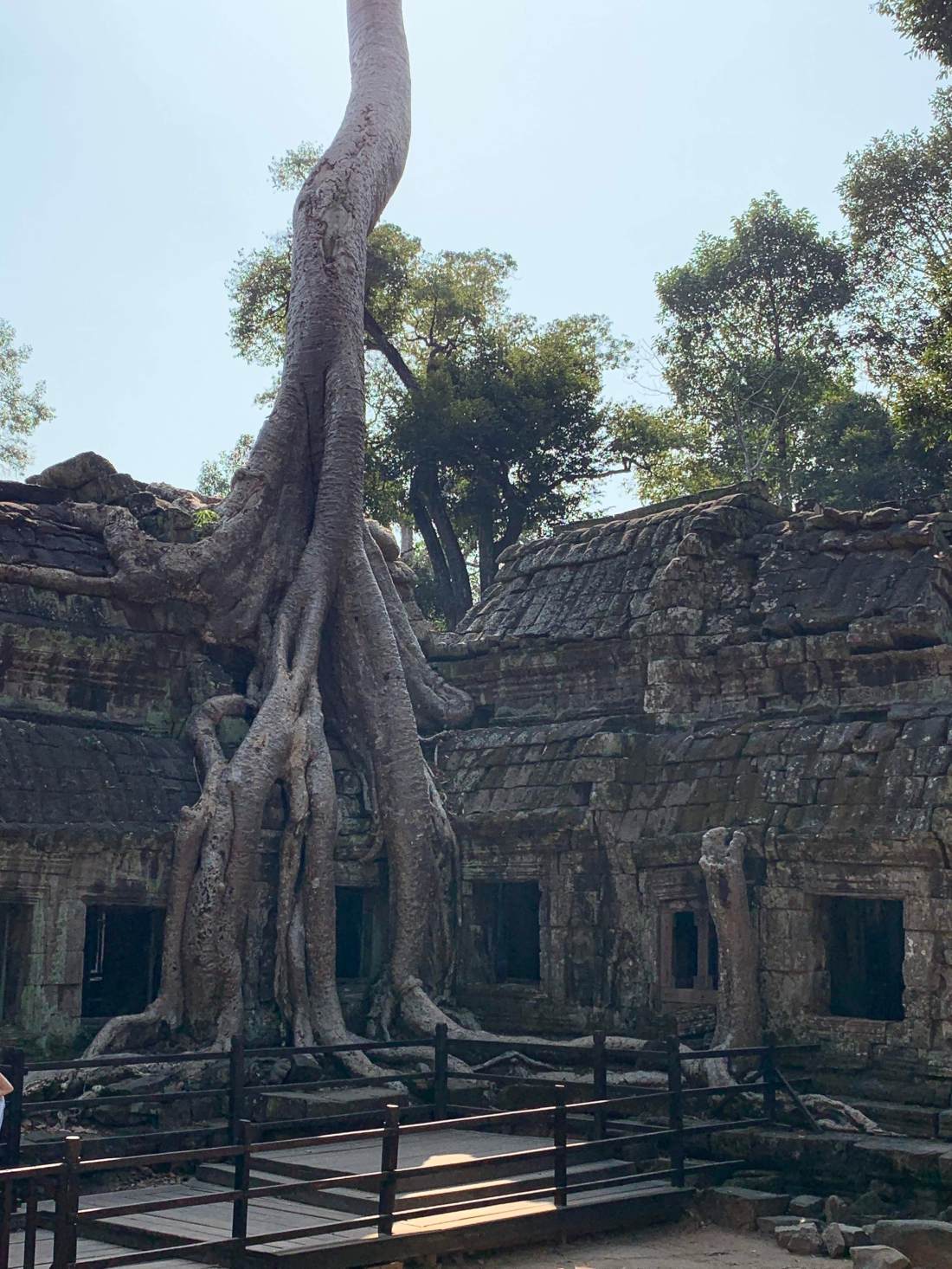
Next temple on our agenda was Ta Prohm, probably the most fun.  It was built in the late 12th century by King Jayavaraman VII to honor his mother (first, before he built one for his father) and was used as a monastery and university. It was abandoned in the 14th century with the fall of the Khmer empire, and when found later by explorers, the jungle trees had grown so entwined with the structures that it is felt that to remove them is structurally unsound.  It was used as a site for the filming of the movie Tomb Raiders.  img_20190121_093854
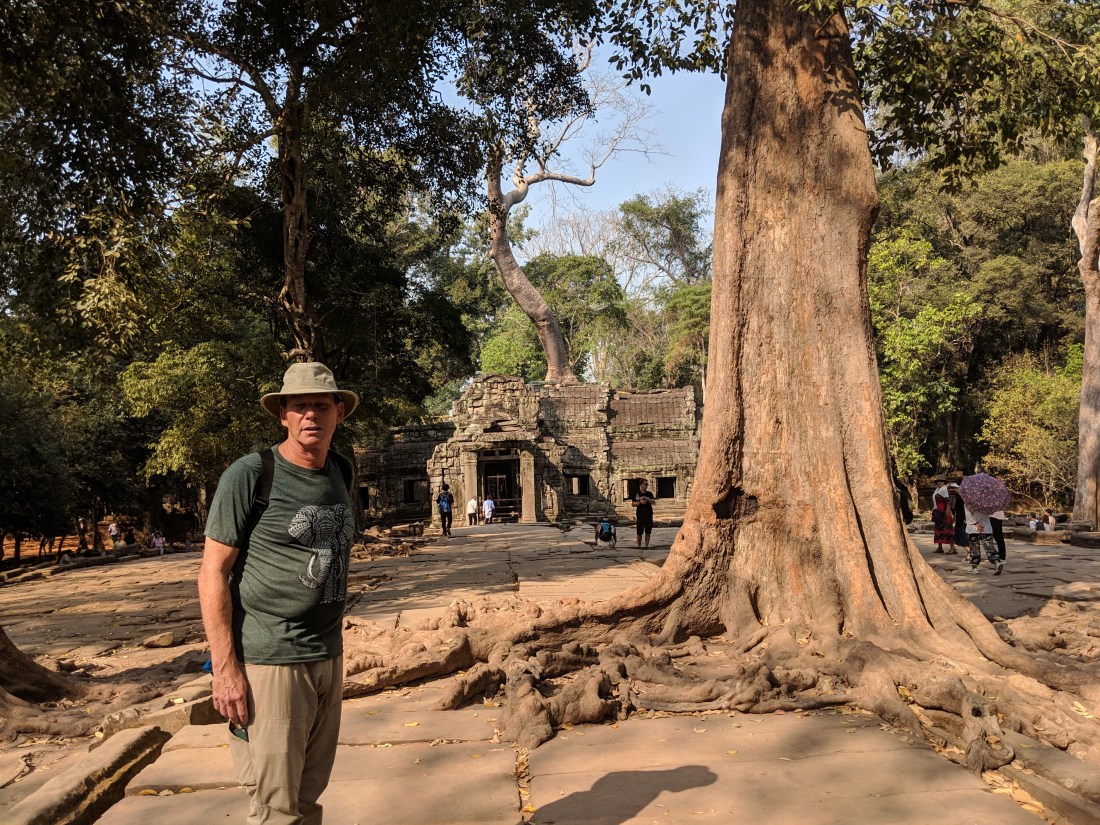
Yes that tree is growing on top of that building
img_1477img_1483img_1487img_1493img_1495

img_1498
Apsara again; I’m a bit of a fan of hers

img_1513img_20190121_101339img_20190121_101813

Most of the buddhas and bas-reliefs were later removed by Hindus.

img_1512
Buddhas scraped out of the relief
img_1511
one “lucky” Buddha left behind

img_20190121_103036

That is again the image of King Jayavaraman VII on the tower at the entrance to this complex.  Let me now add more of why I love him so much.  He became king at the age of 52 and then reigned for 40 years!  During that time he not only built shrines to both his parents (mother first) and many temples throughout Cambodia, Laos and Thailand – all part of the Khmer Empire – he built 102 hospitals with rest stops with water every 15 km along the way for the sick traveling to the hospitals.  His second wife was the older sister of his first wife, which was the first wife’s dying request.  His second wife was a learned lady who read and wrote books and believed in education for all and helped him expand the empire.  Also, although he was a buddhist, only the second in the Khmer empire, and his temples were built for Buddha, he never destroyed anything Hindu.  He invented a symbol of peace which incorporates symbols of both religions because he believed Hindus and buddhists should coexist peacefully.

img_20190122_084215

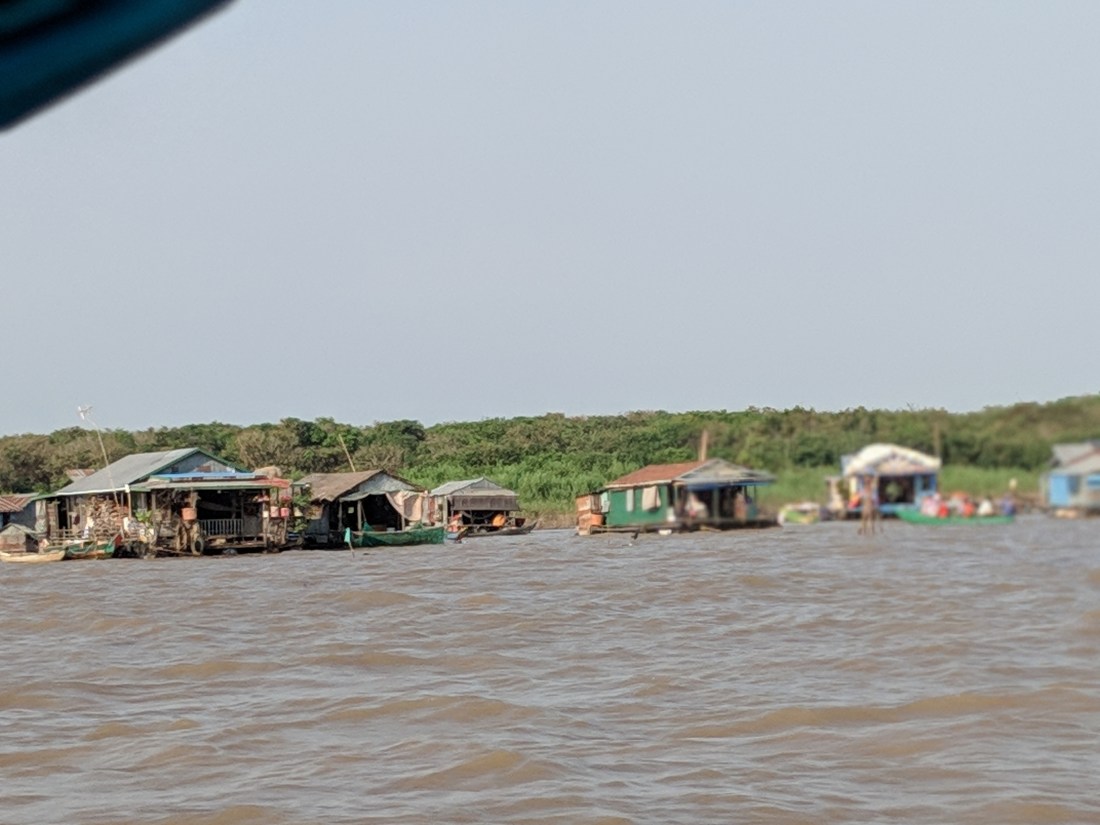
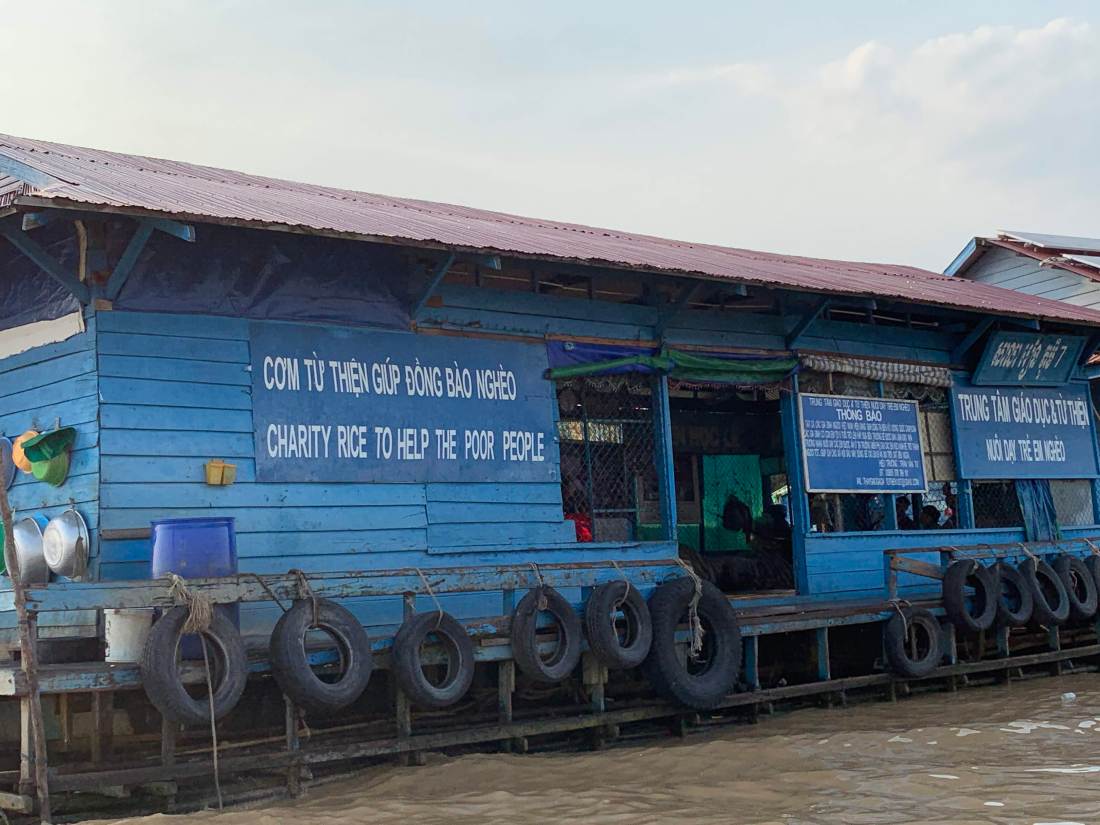
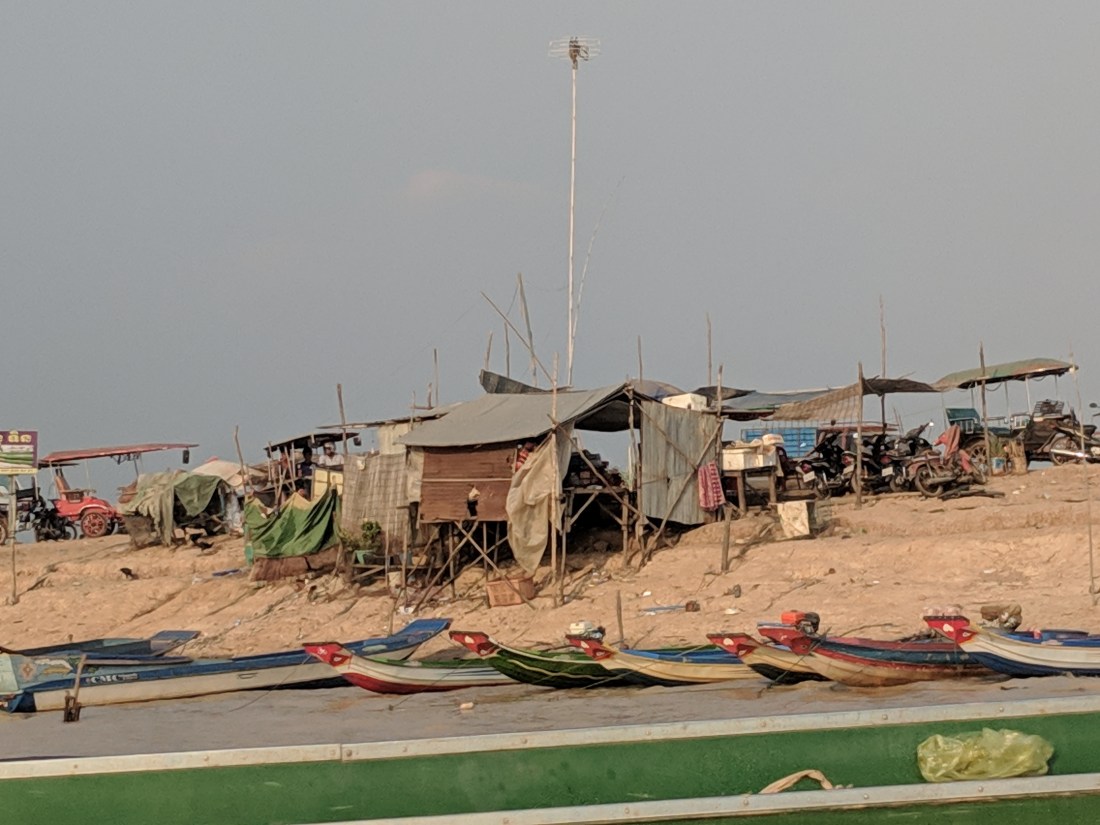
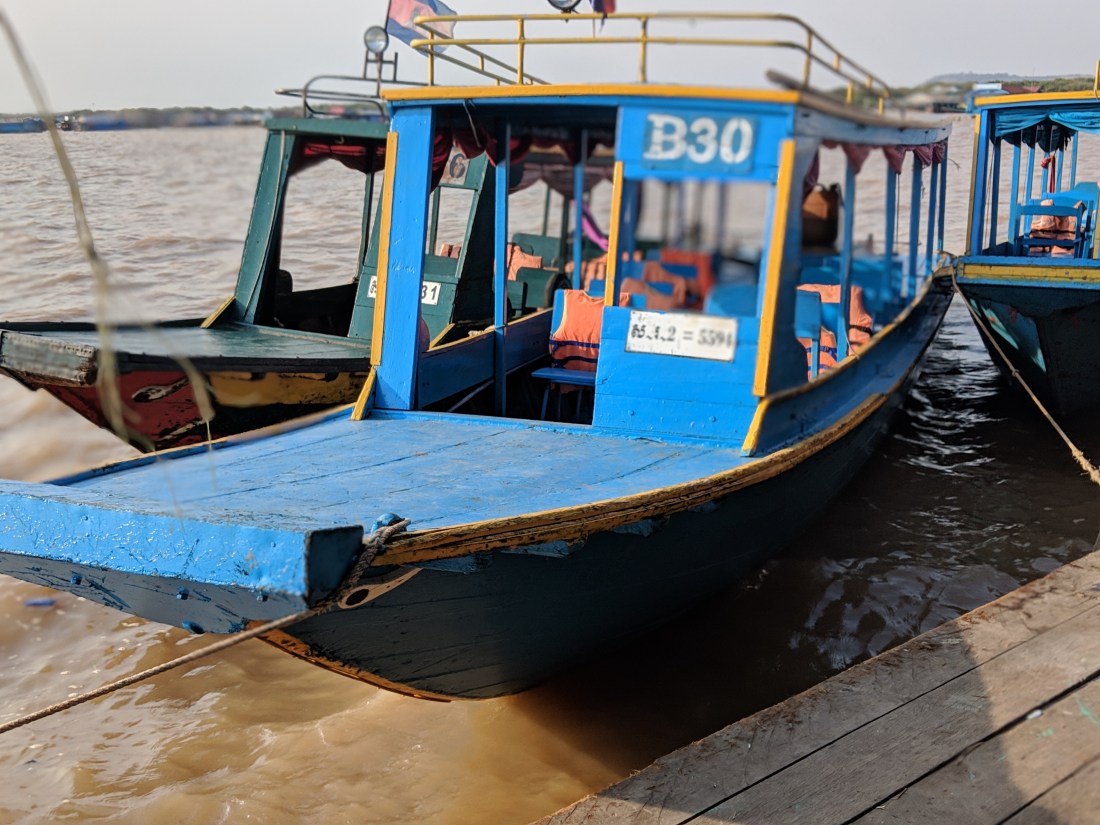
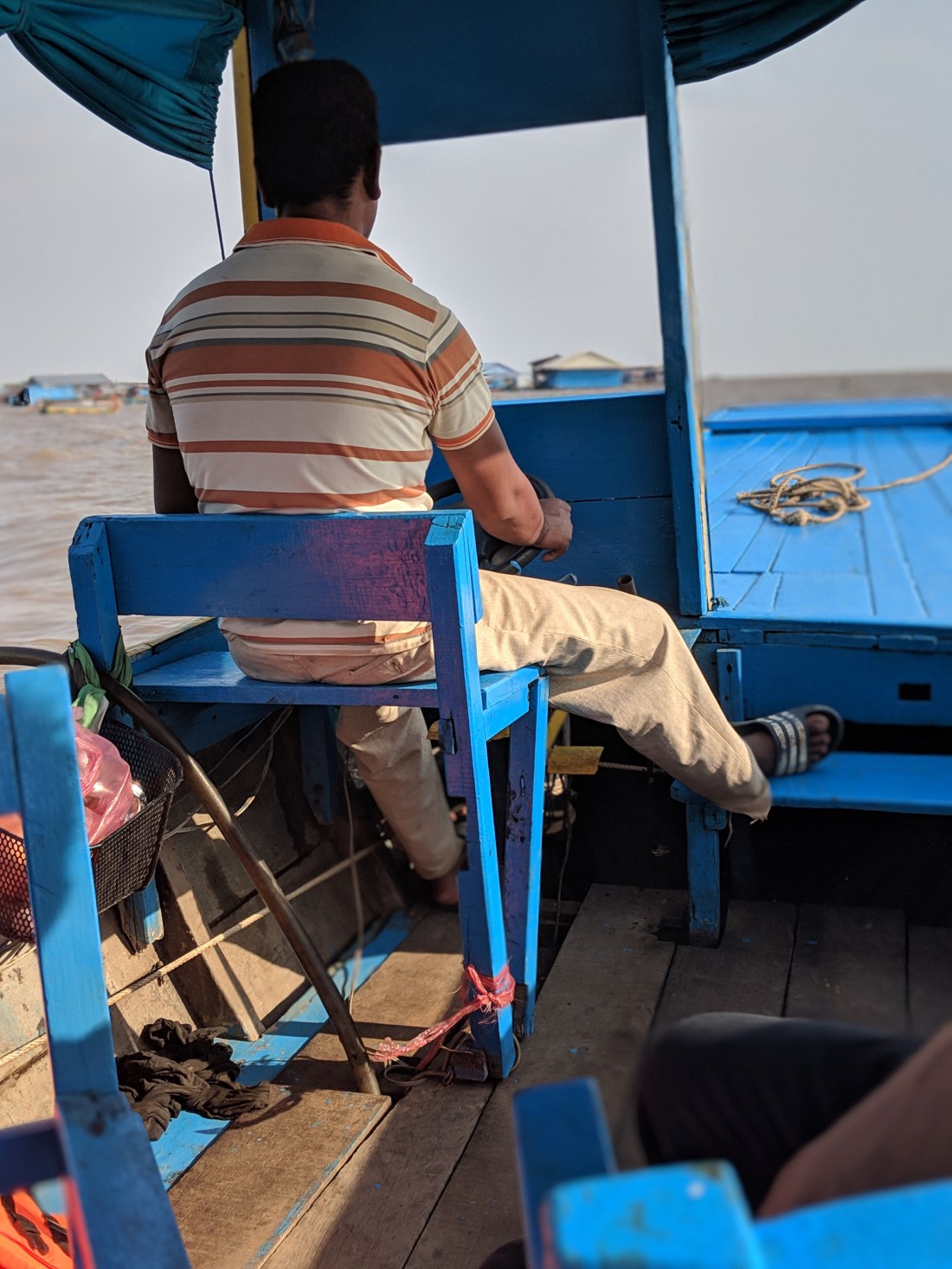
After Ta Prohm we were treated to a boat ride on a huge lake Tonle Sap with whole villages of fisherfolk that live out on the lake on floating homes.  What is interesting about this lake as that it has a river that flows from it and joins the Mekong River in Phnom Penh.  During the rainy season, the lake is high and the river flows south.  During the dry season, the lake is low, the river reverses course and flows from the Mekong into the lake.  It is the only river in the world that flows in opposite directions at different times of the year.
00100dportrait_00100_burst20190121160924922_cover00100dportrait_00100_burst20190121154636239_cover00100dportrait_00100_burst20190121154631119_cover

00100dportrait_00100_burst20190121154705441_cover
floating homes
img_1529
the place of worship
img_1532
floating school


img_20190121_162847
homes on the shore; stilts for the rainy season
img_20190121_162827
even the poorest home has a tv

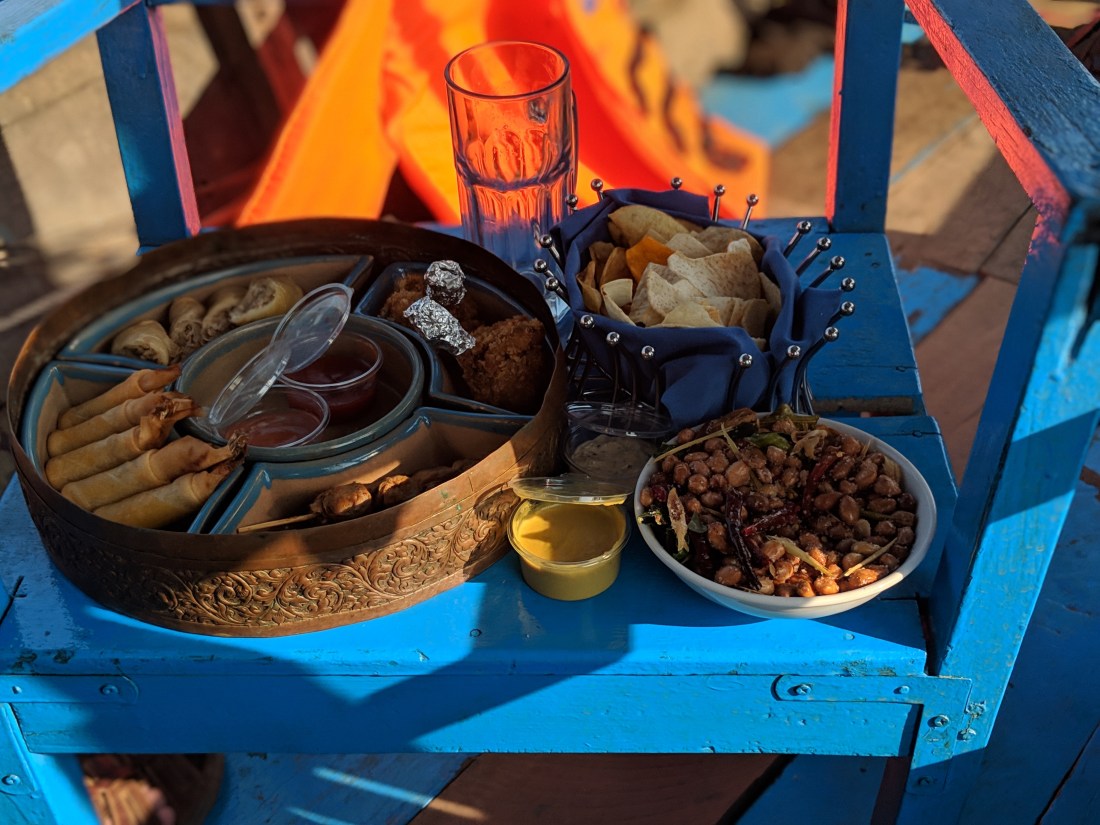
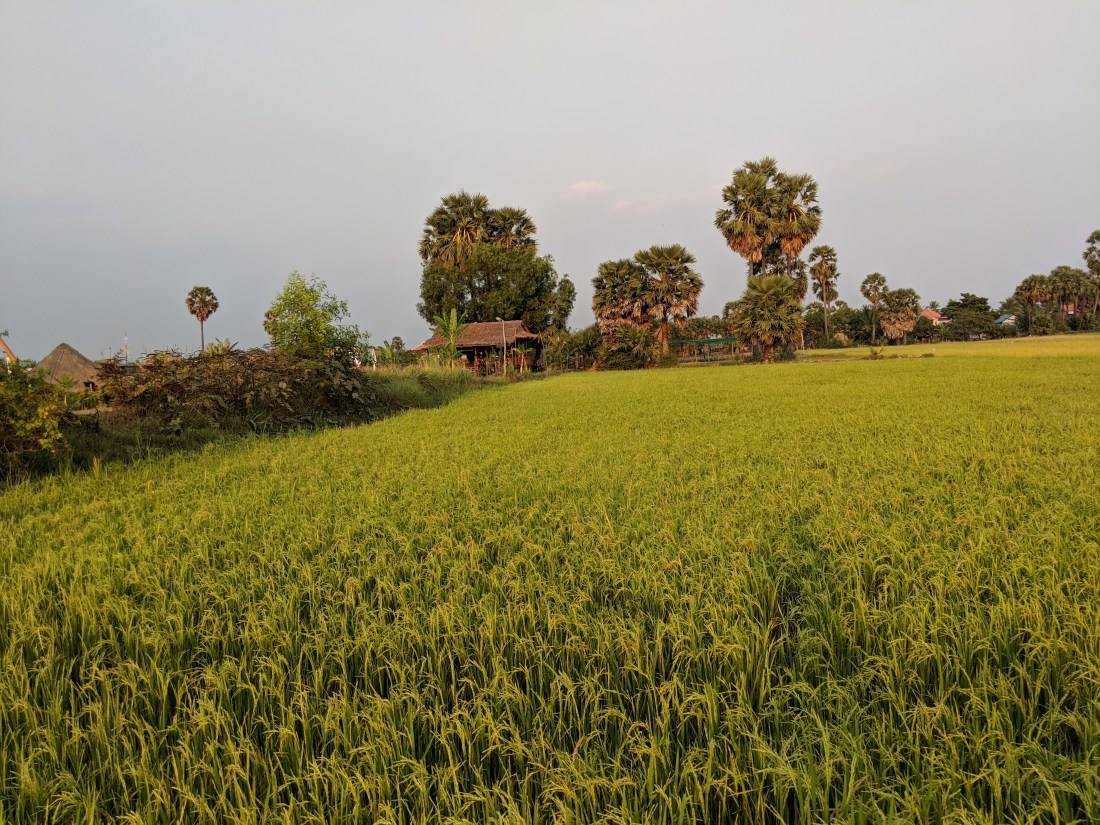
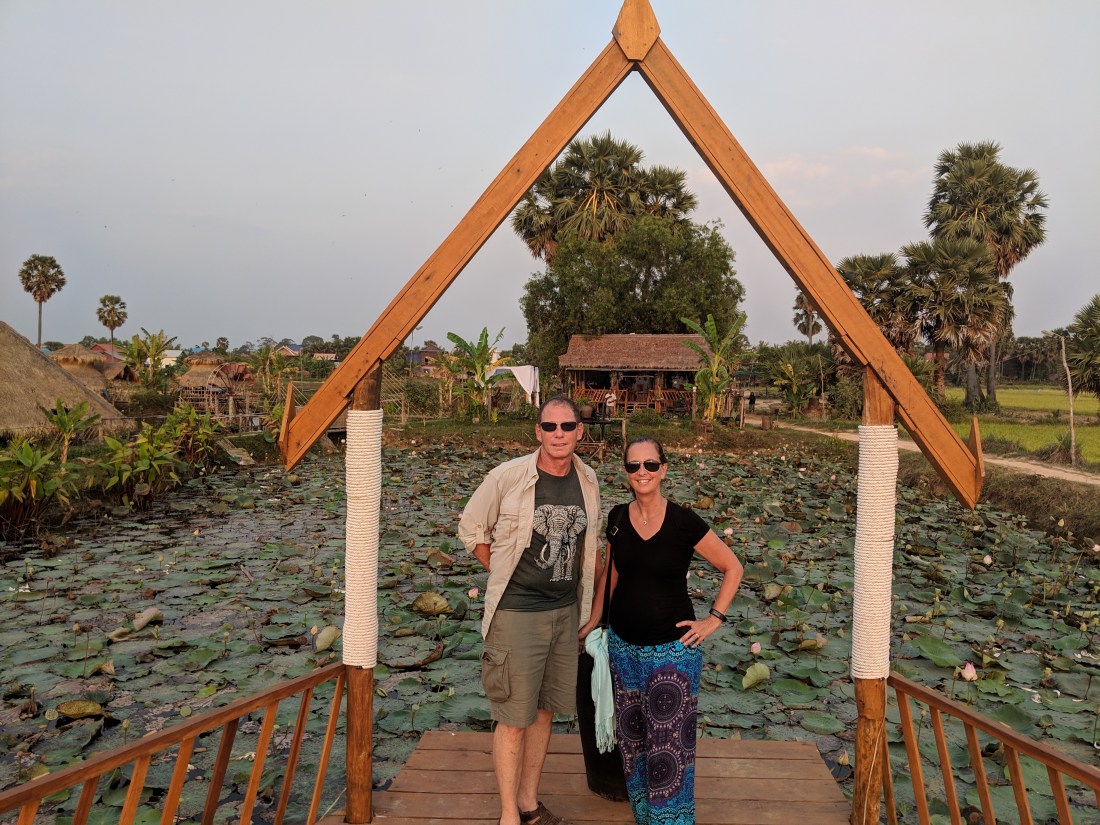
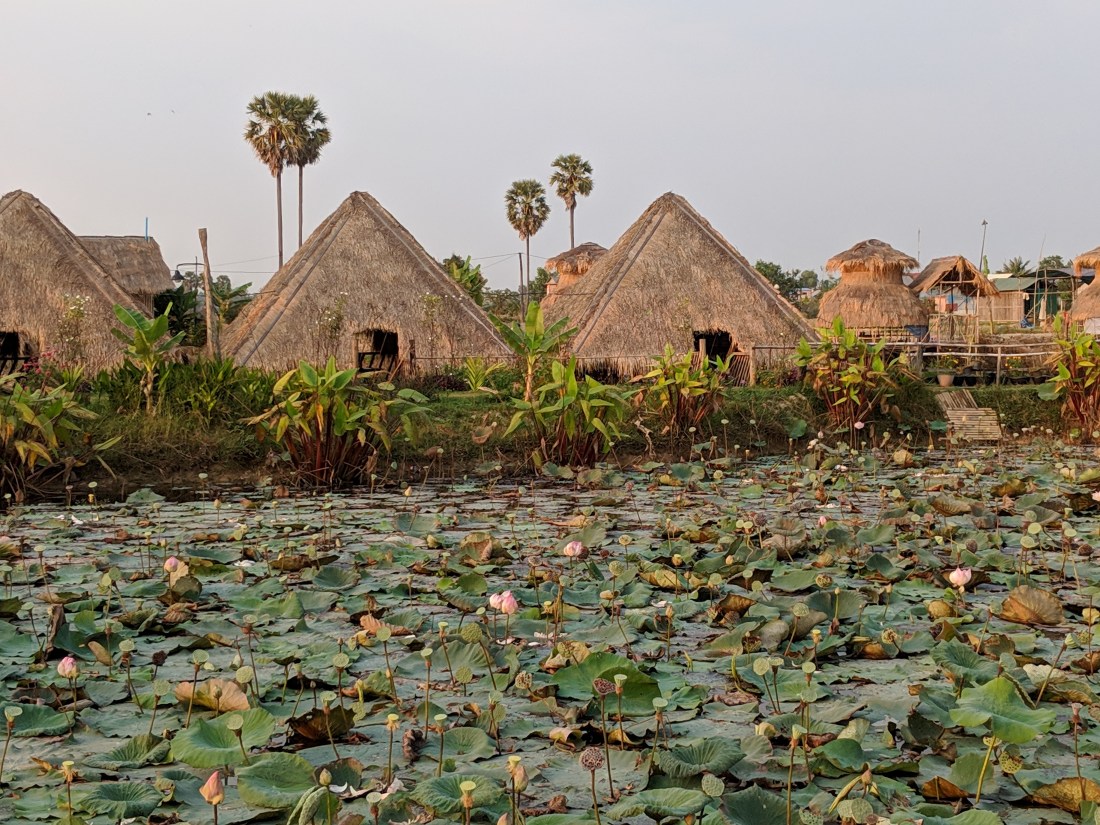
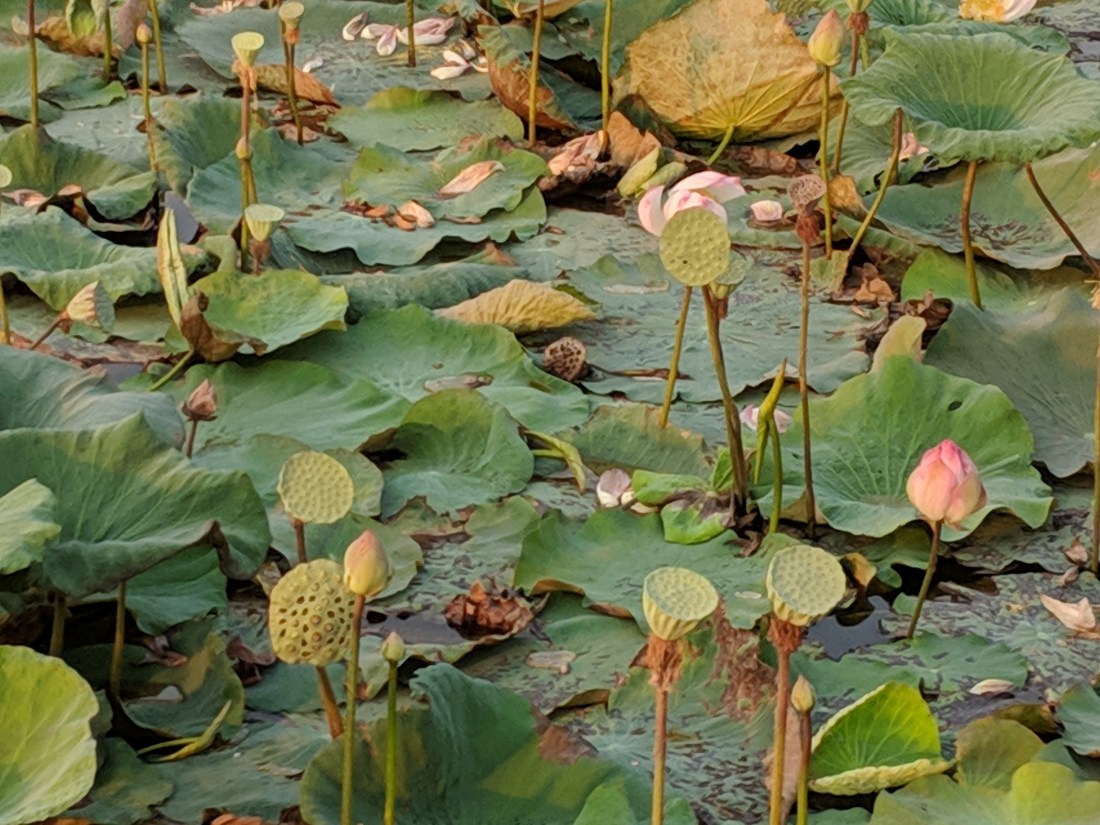
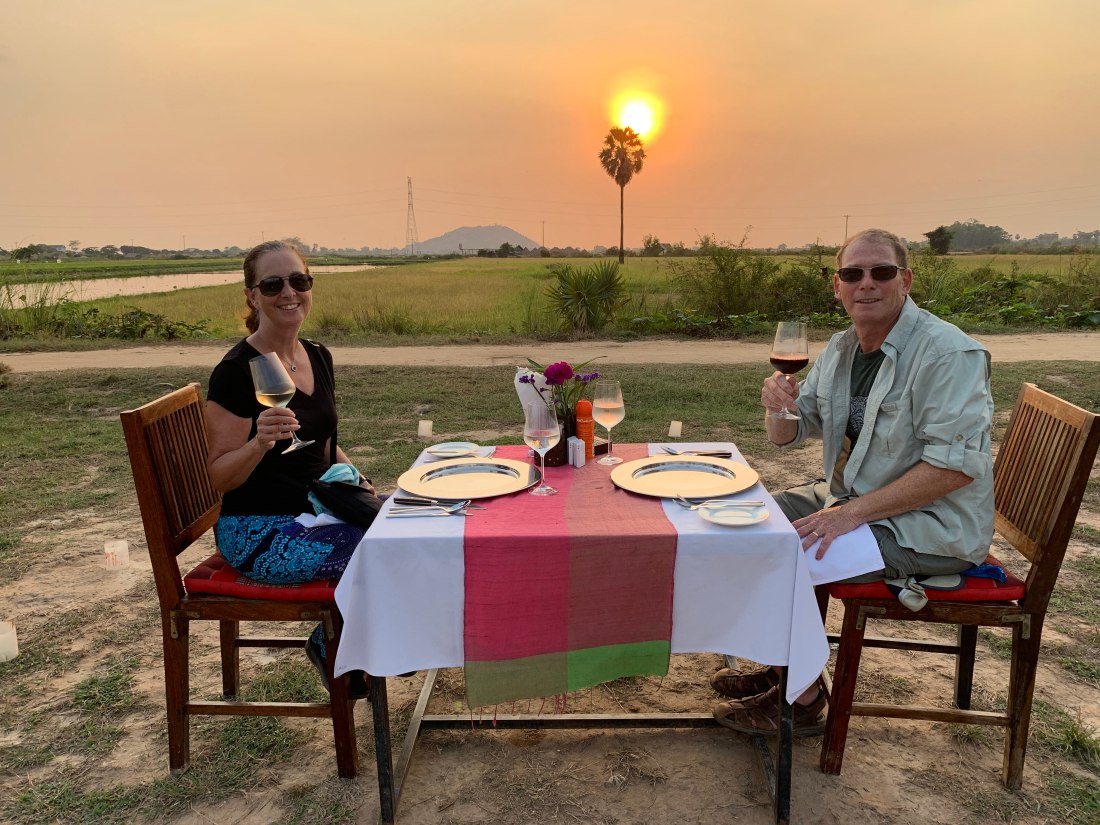
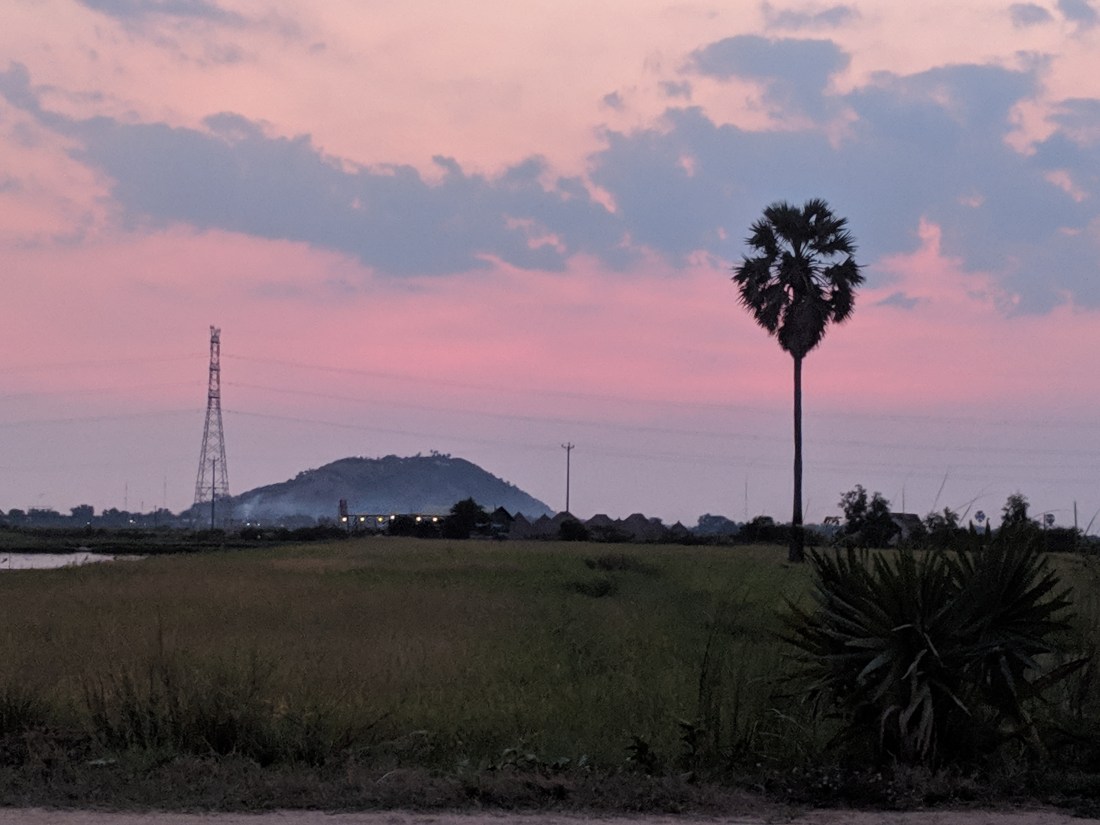
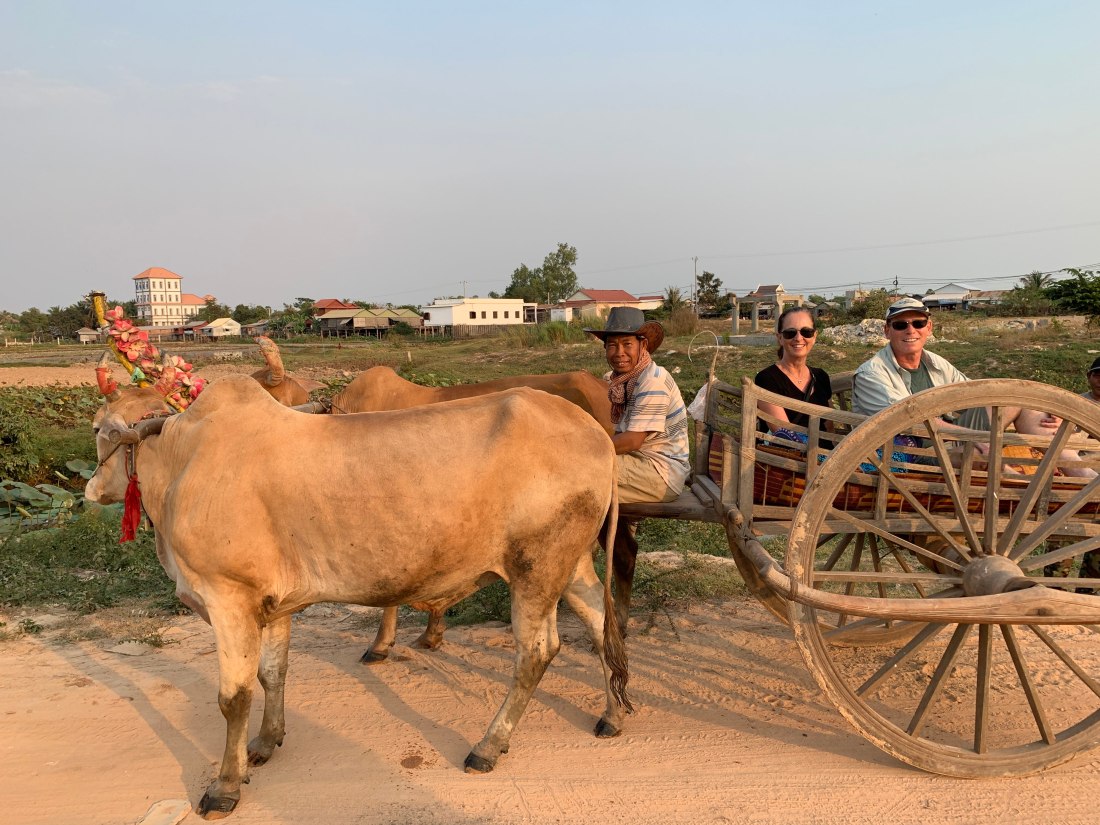
We were then taken by oxcart, the means of transport for the local farmers, to our restaurant for a sunset barbecue  on a rice and lotus flower farm.
img_1535img_20190121_170509img_20190121_170340img_20190121_171409img_20190121_170803img_20190121_170735img_1550img_20190121_181226

The next morning we went to Preah Prom Rath Pagoda.  It is currently a monastery and school.  There our guide Sam took us picture by picture inside the temple and told us the entire story of the life of Buddha.  It turns out Sam was once a monk.  He shared his story with us.  He is the 4th of 11 children to a now still working 78 year-old rice farmer.  After Sam finished primary school, his father told him he did not have the money to buy Sam any more school uniforms or transportation to school, so it was time for Sam to work in the rice fields.  Instead Sam joined a monastery and was schooled further there.  He ultimately won scholarships for university. After many years, he left the monastery, and at the age of 30 he married.  He, his wife, their 8 year old son and daughter-on-the-way live in the same village where he grew up near his extended family.
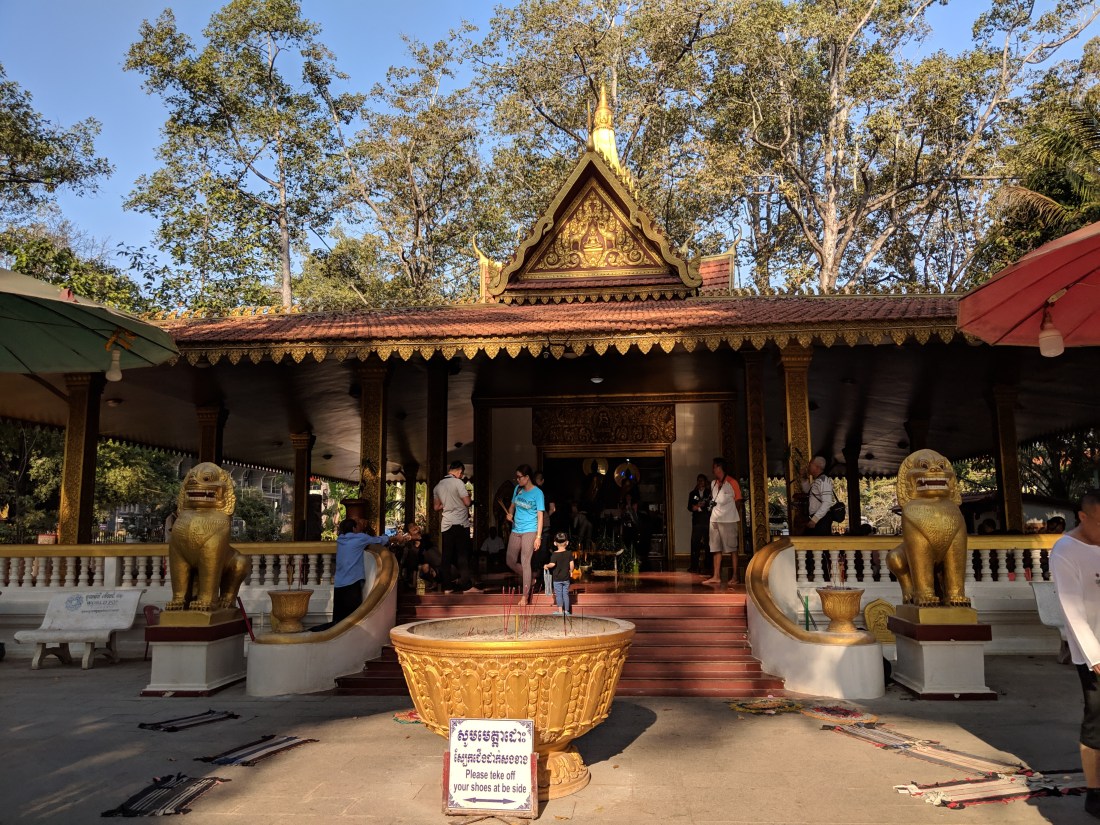
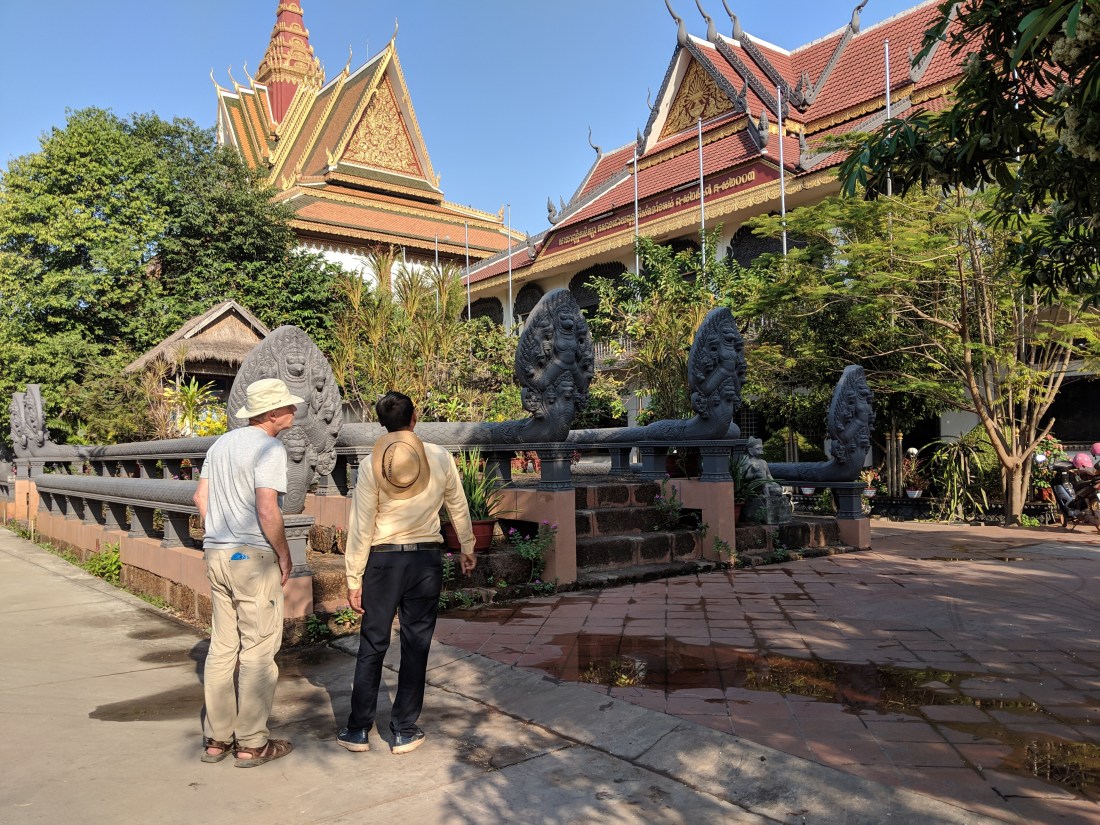
img_20190122_083050

img_20190122_084151

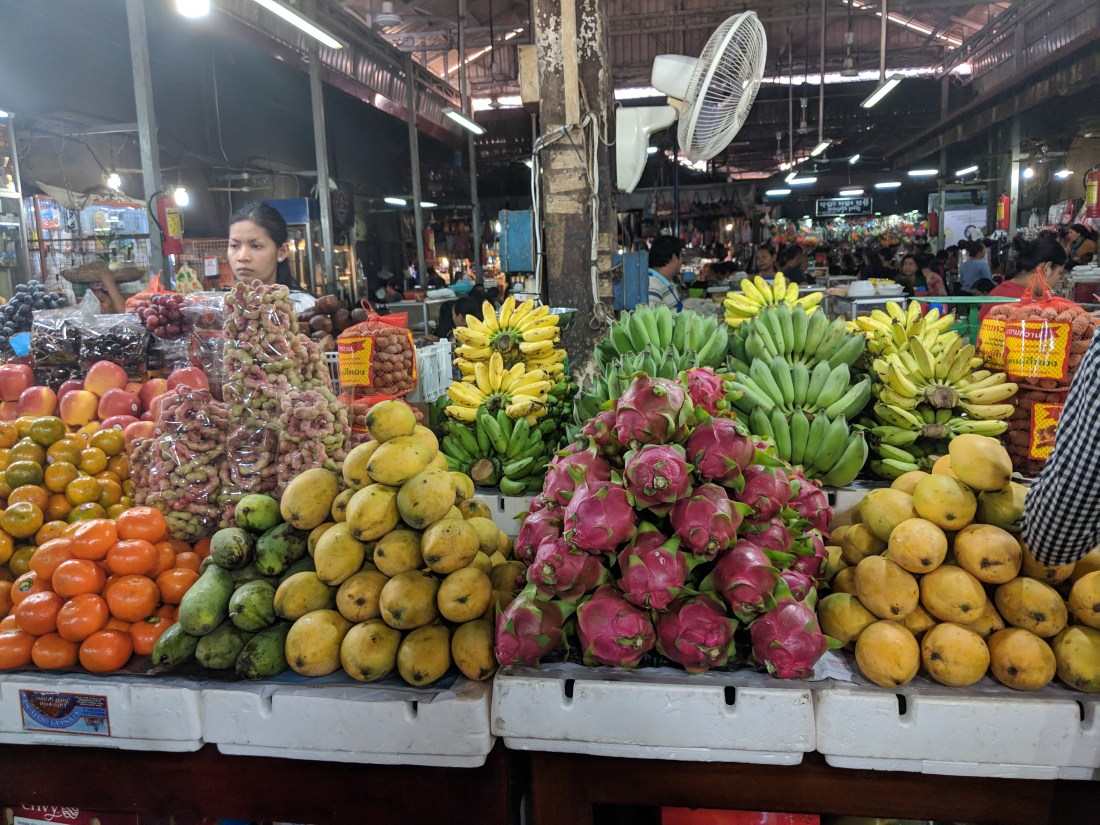
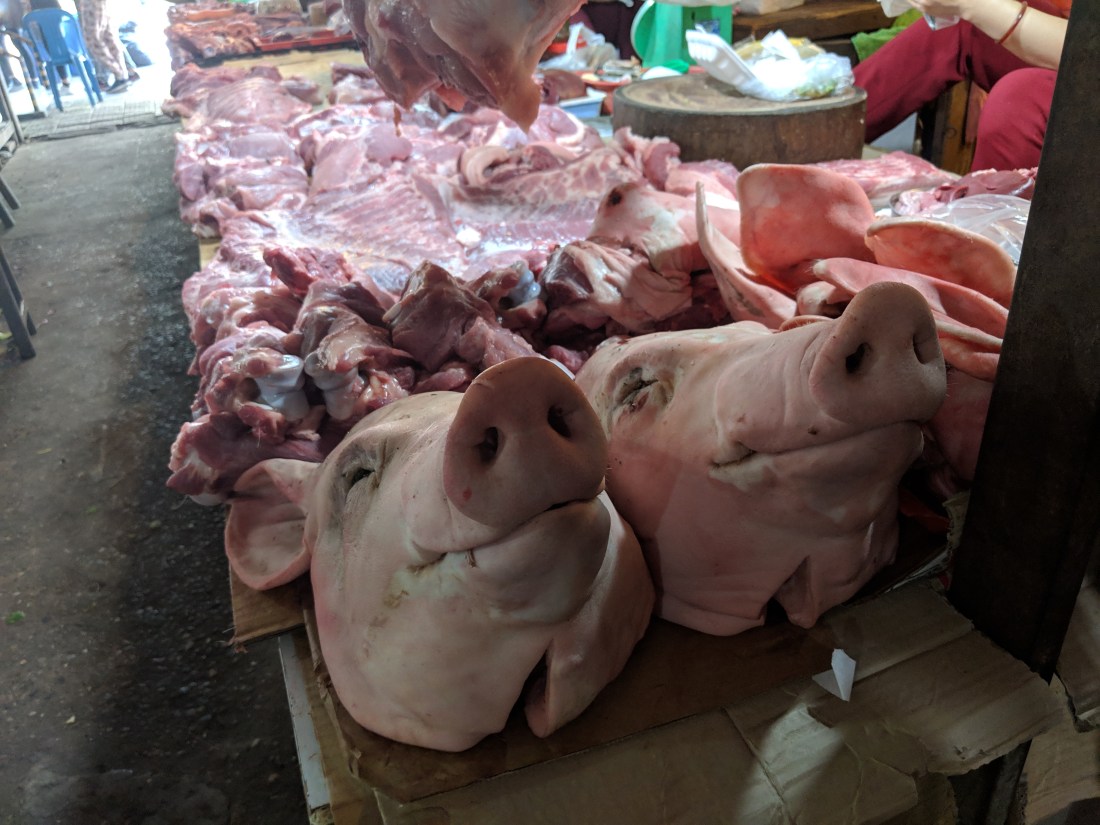
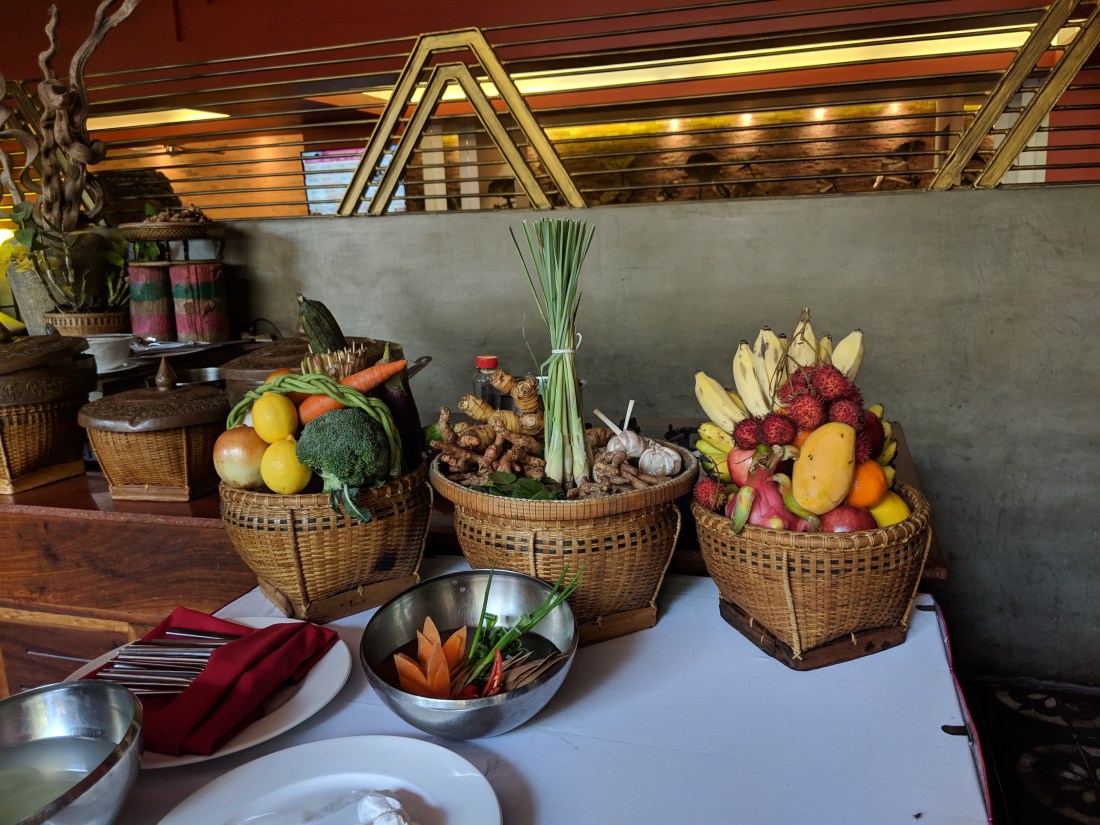
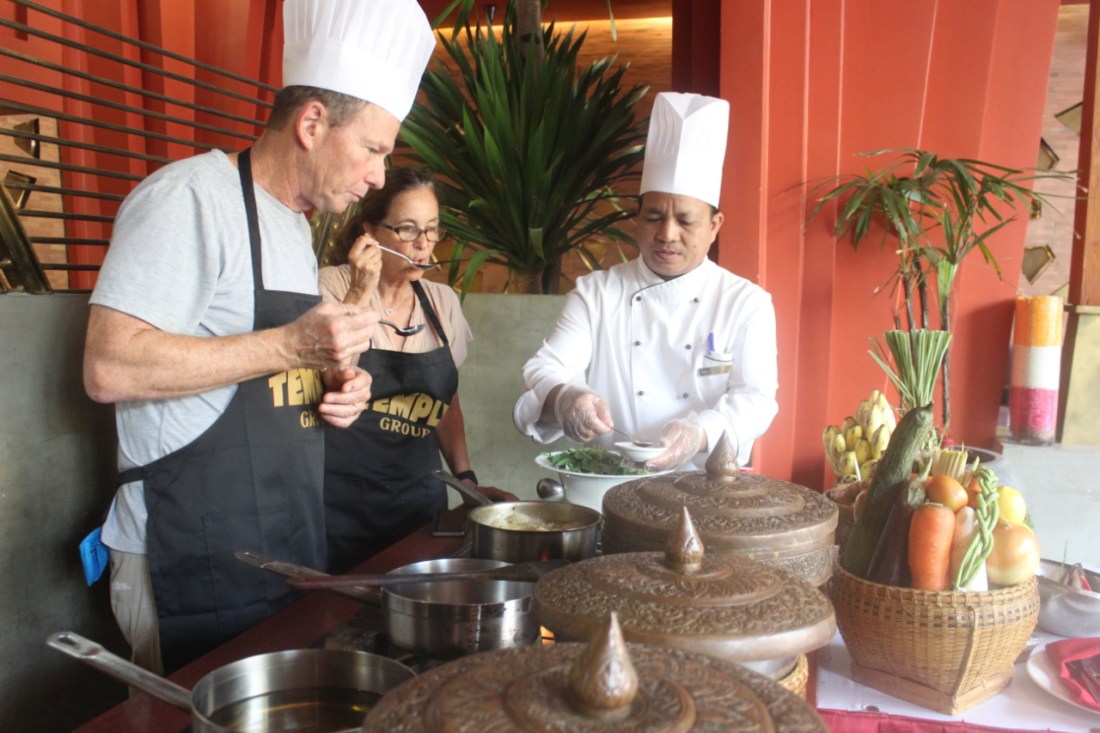
Next we went to the market to purchase ingredients for our Cambodian cuisine class. I am not a huge fan of the foods here which use a lot of fermentation and sour bases.
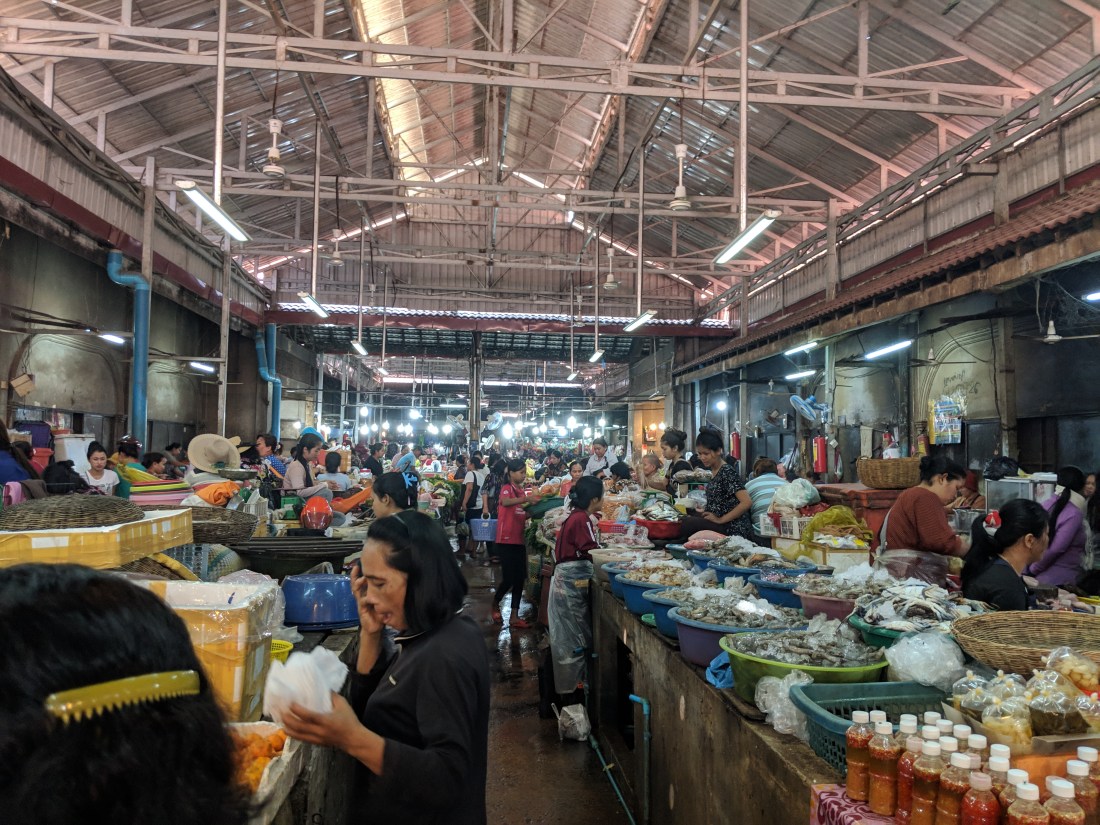
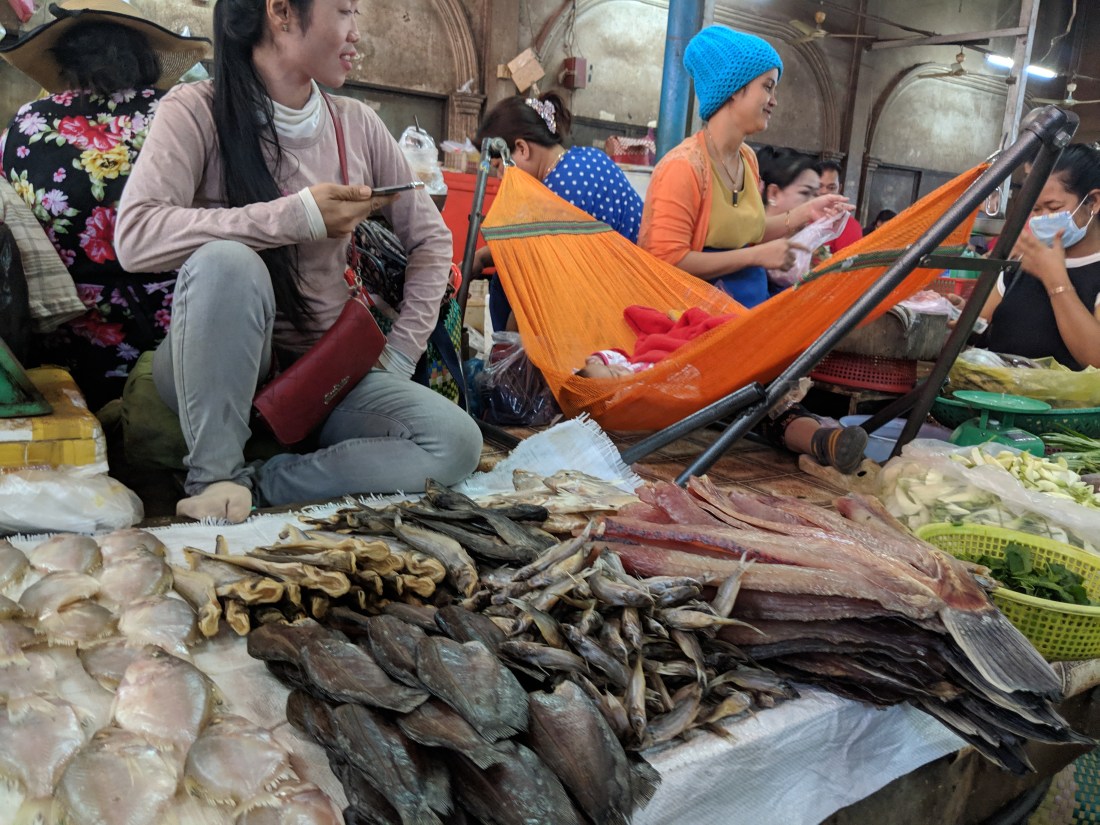
img_20190122_094131img_20190122_094415img_20190122_094750img_20190122_095830img_20190122_120707image-2019-01-27 (9)-1

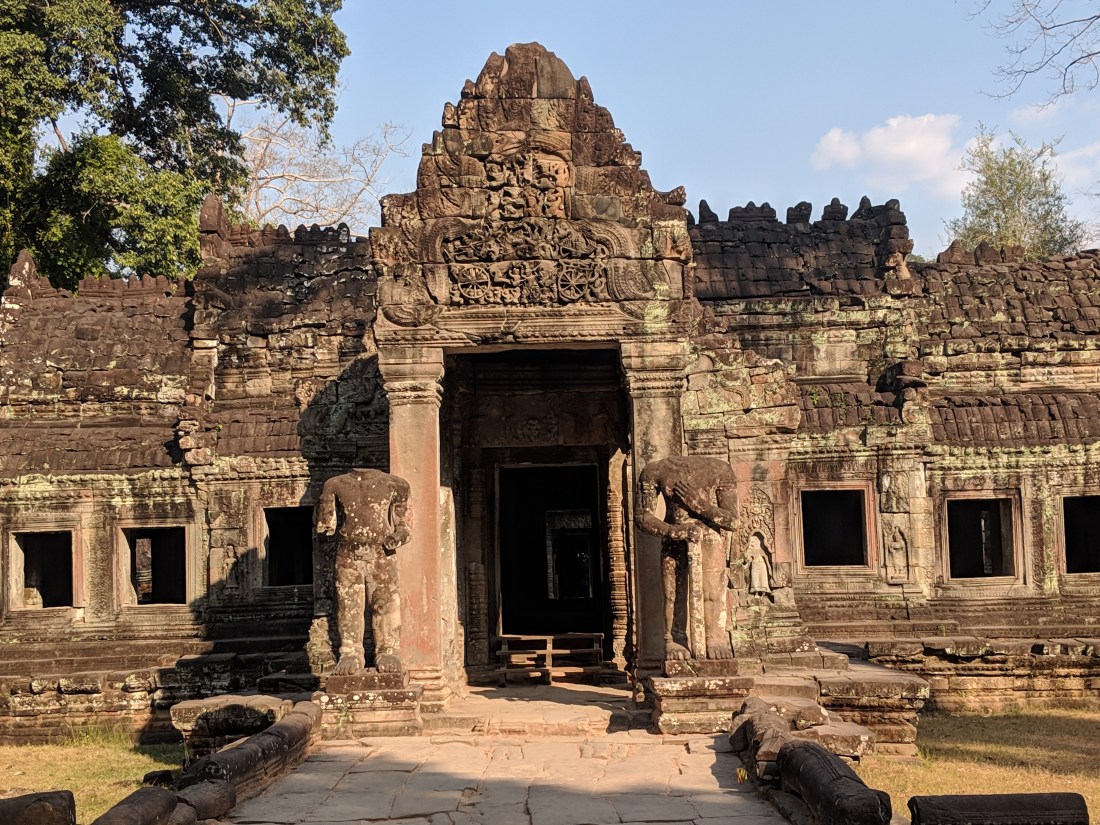
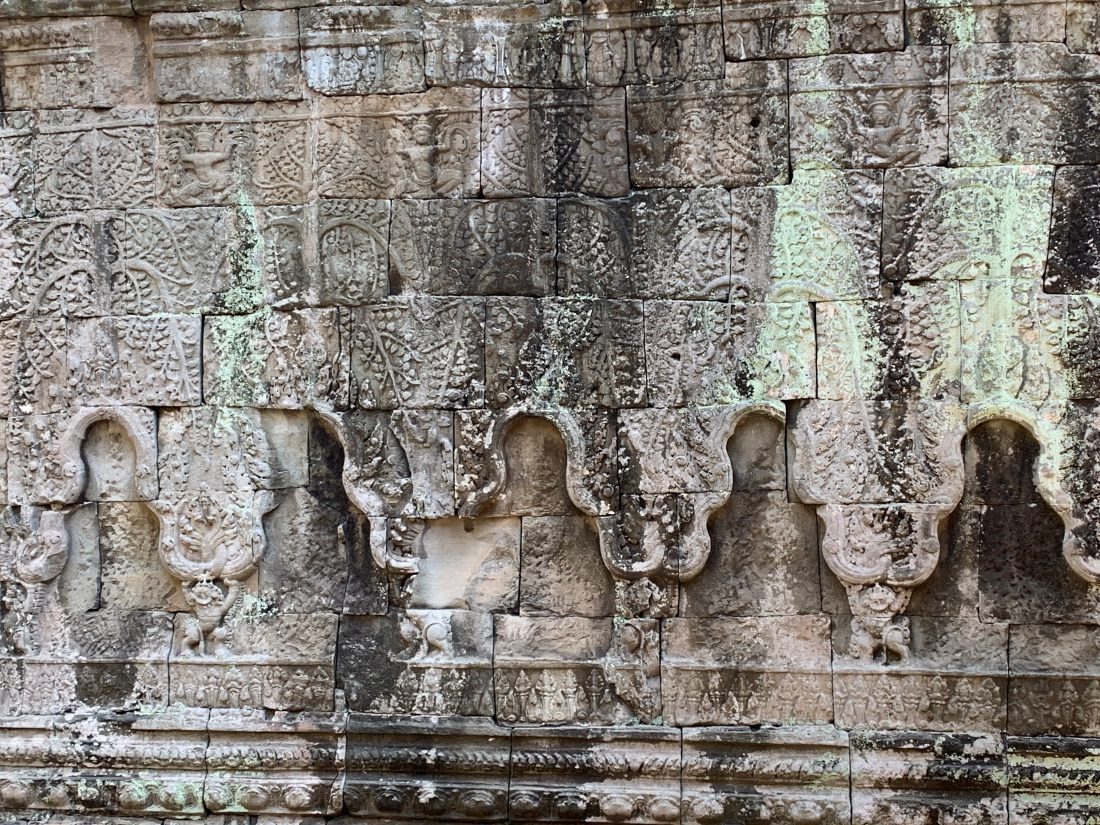
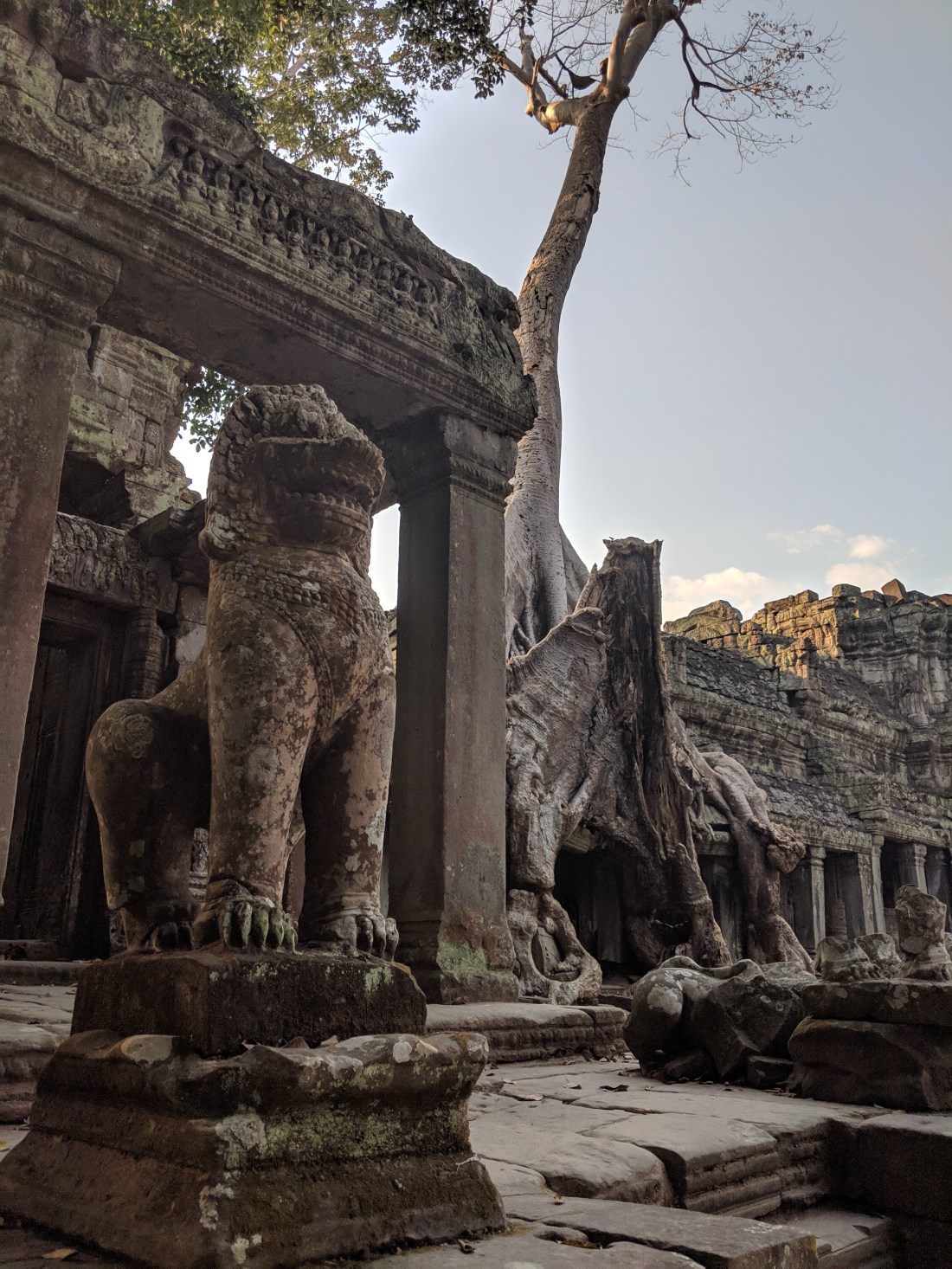
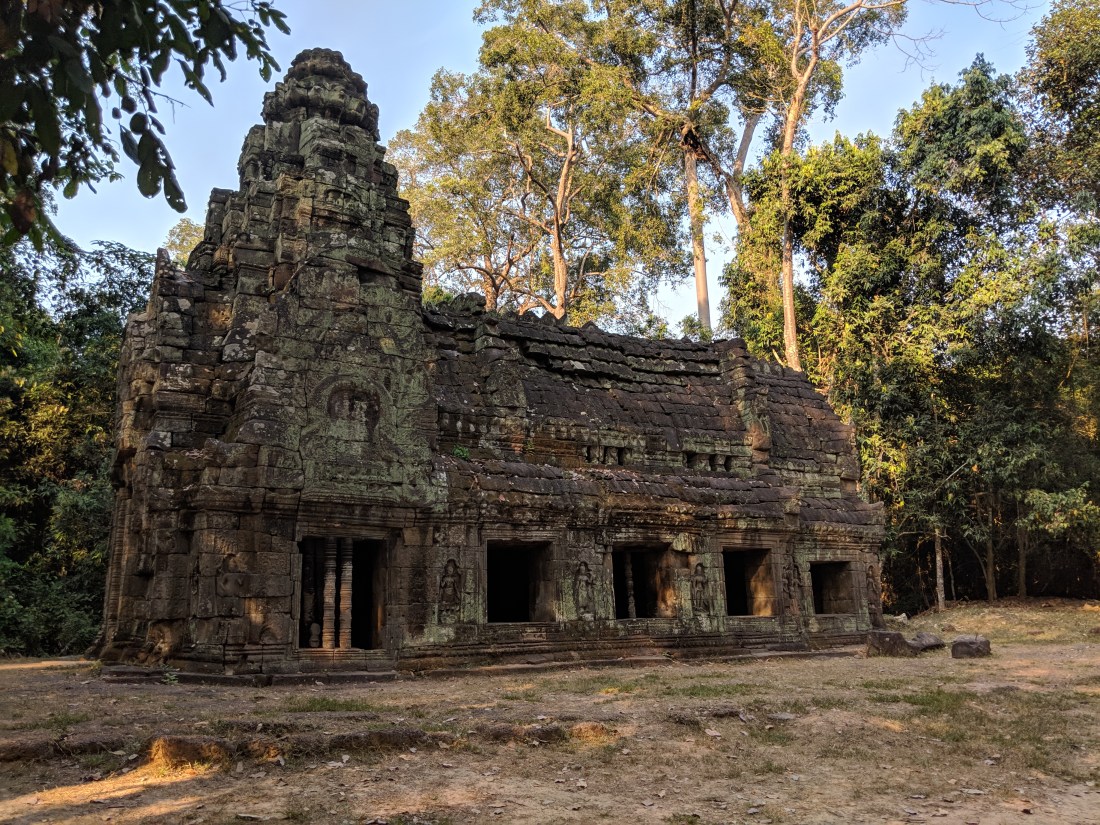
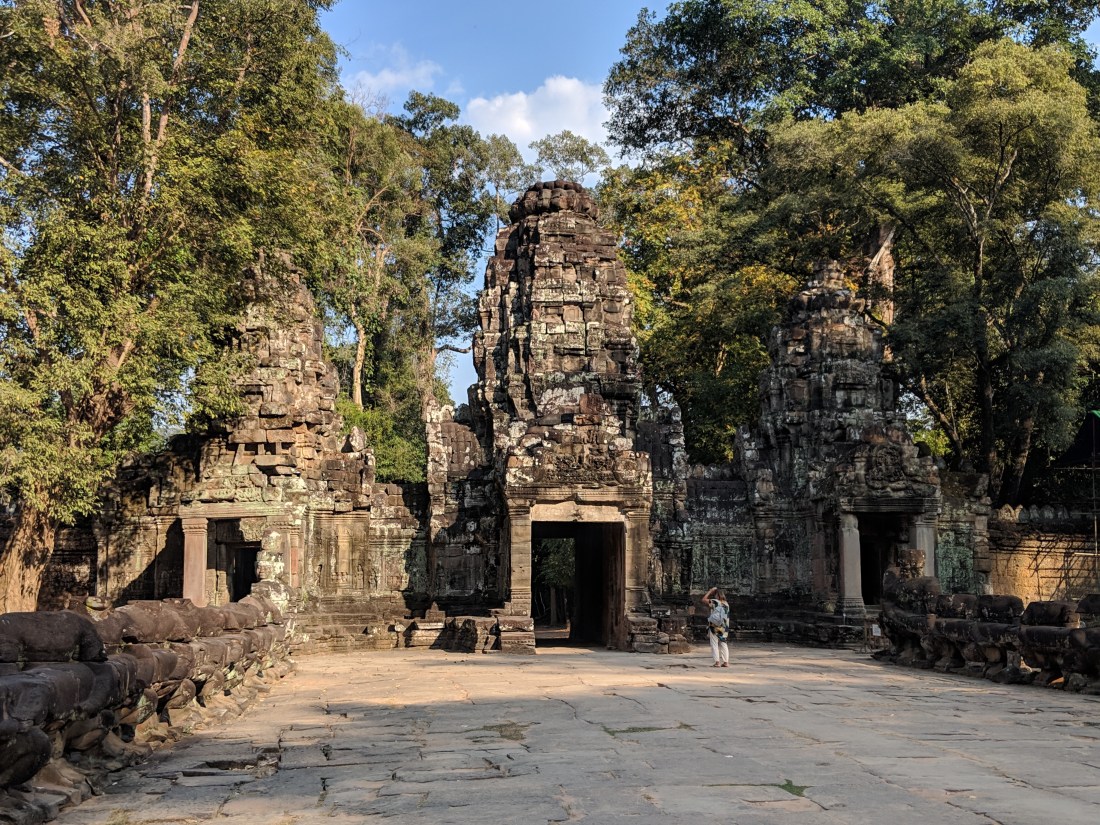
In the afternoon we visited Preah Khan – Royal Sword, King Jayavaraman VII’s temple to honor his father.  It was later converted to a Hindu temple and the many buddhas removed.
img_20190122_153337img_20190122_153349img_20190122_153743img_1563img_1564img_1569img_1570

img_1557
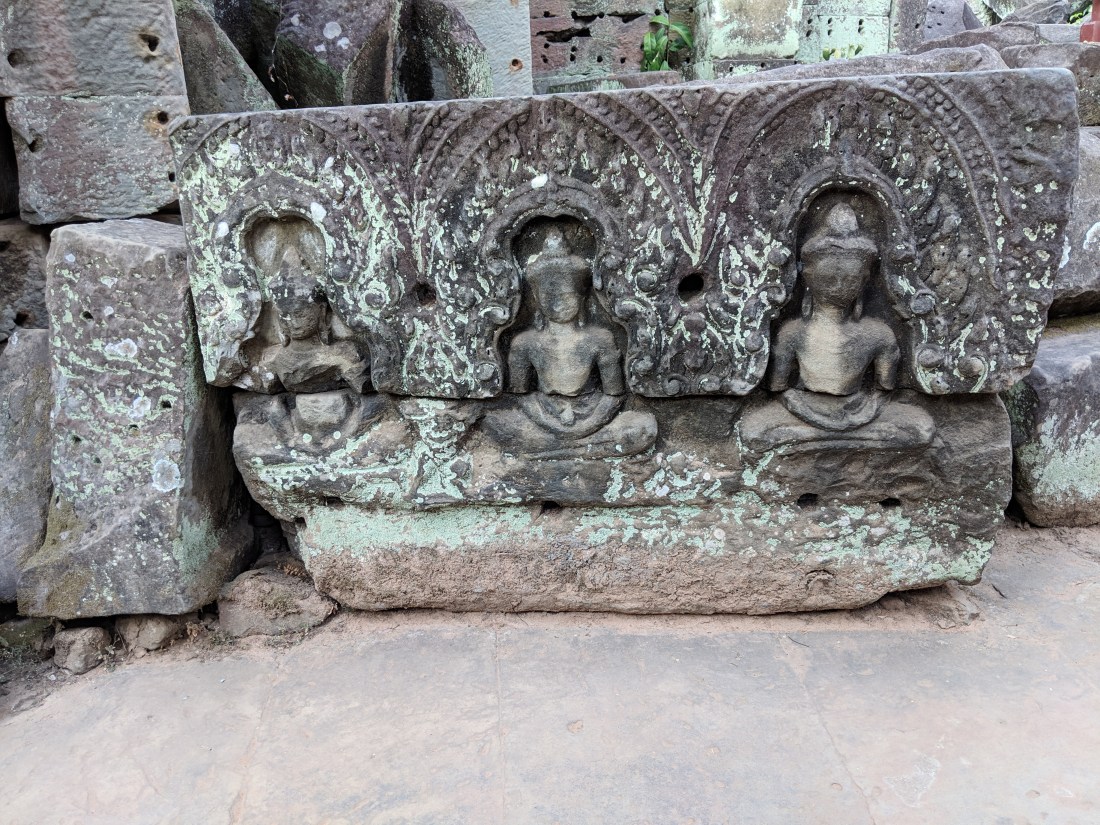
Buddhas removed
img_20190122_155124
these Buddhas survived because the stone had collapsed face down

img_20190122_160300

img_20190122_160354
again the symbol of peace
img_20190122_160640
the library

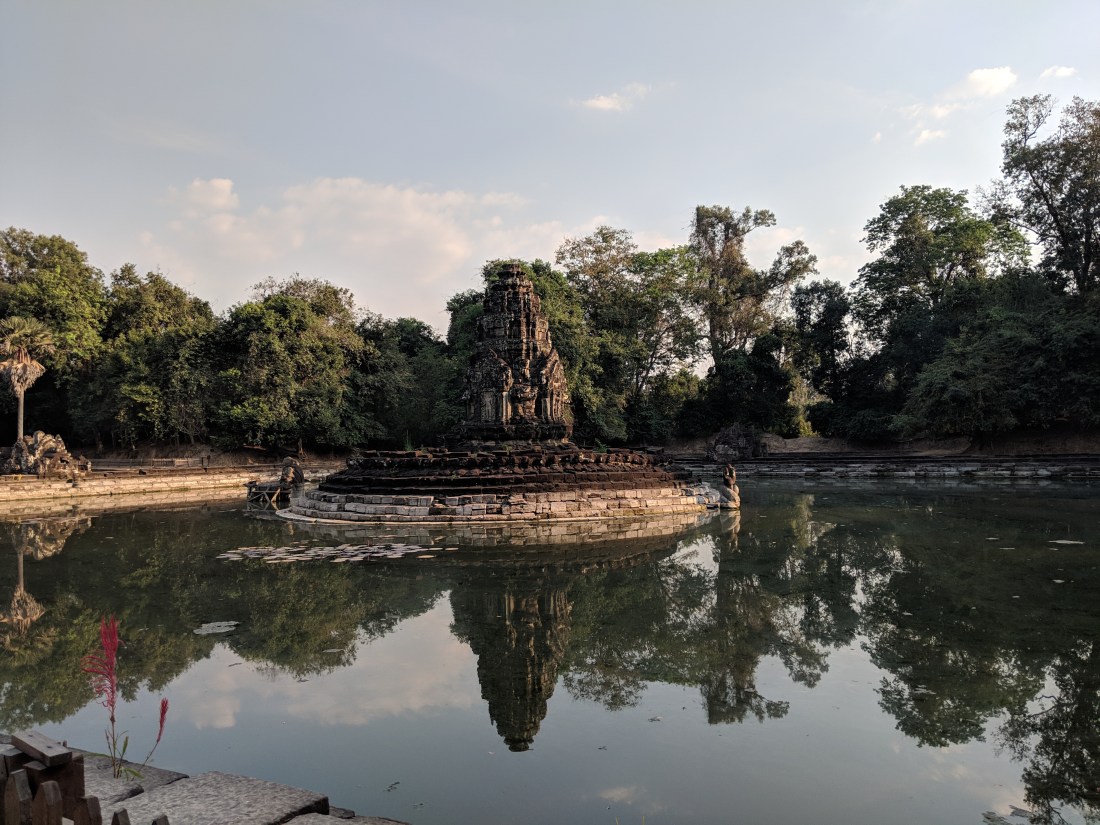
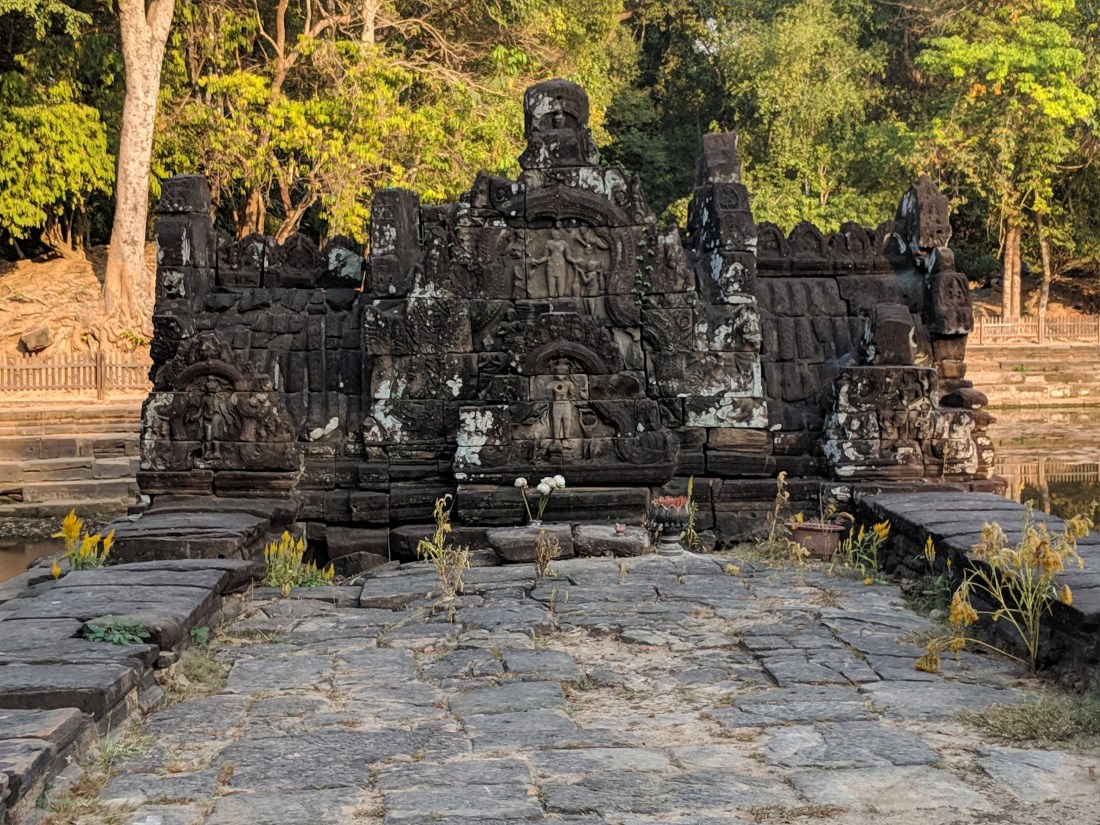
And our final temple was Neak Preah – encircled Naga , also built by  King Jayavaraman VII, one of the smallest but most beautiful temples in the Angkor complex, a fountain with four surrounding ponds set on an island in an artificial lake.  The lake’s existence was only first discovered about a decade ago due to satellite images revealing its outline.  The damn was reconstructed.
img_20190122_163400img_20190122_163024

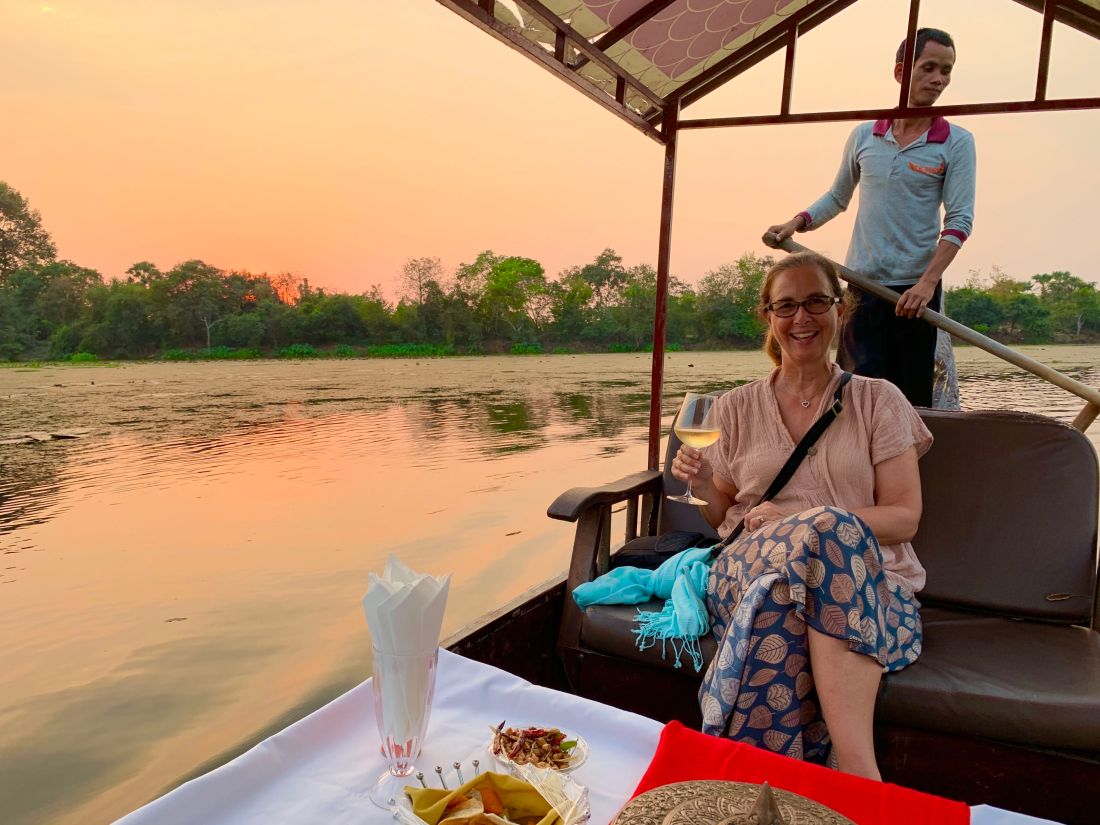
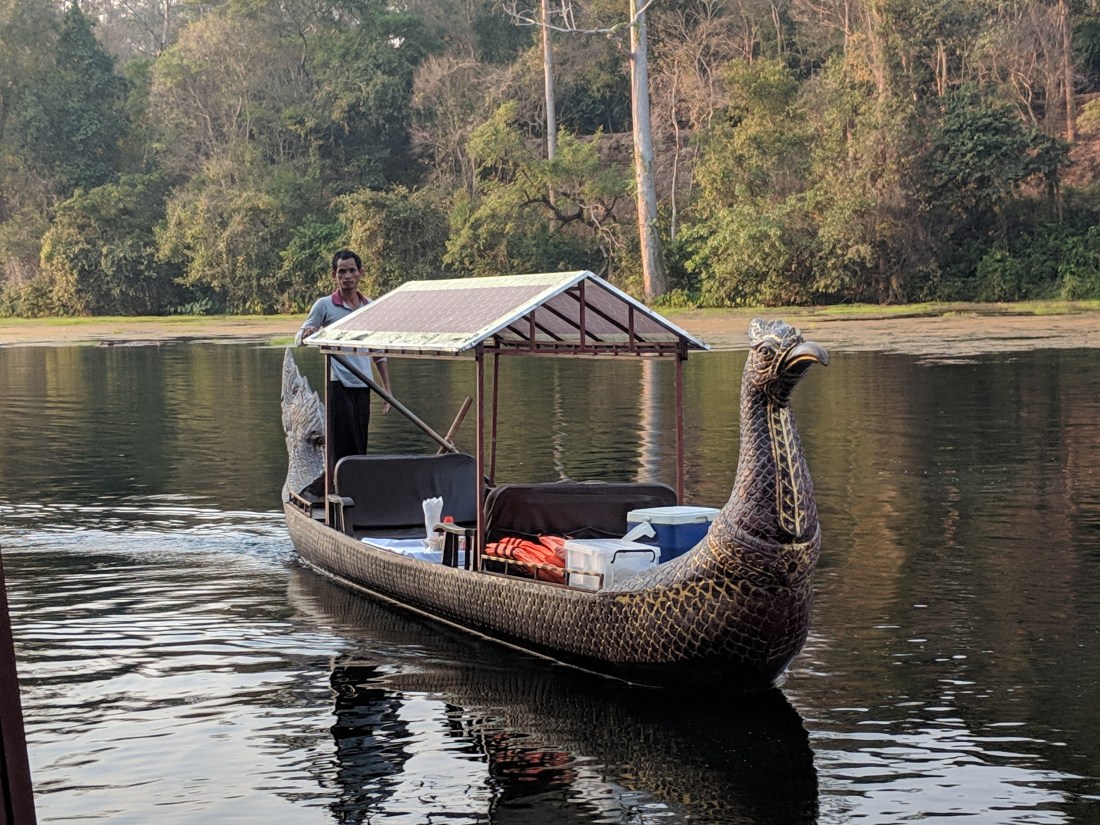
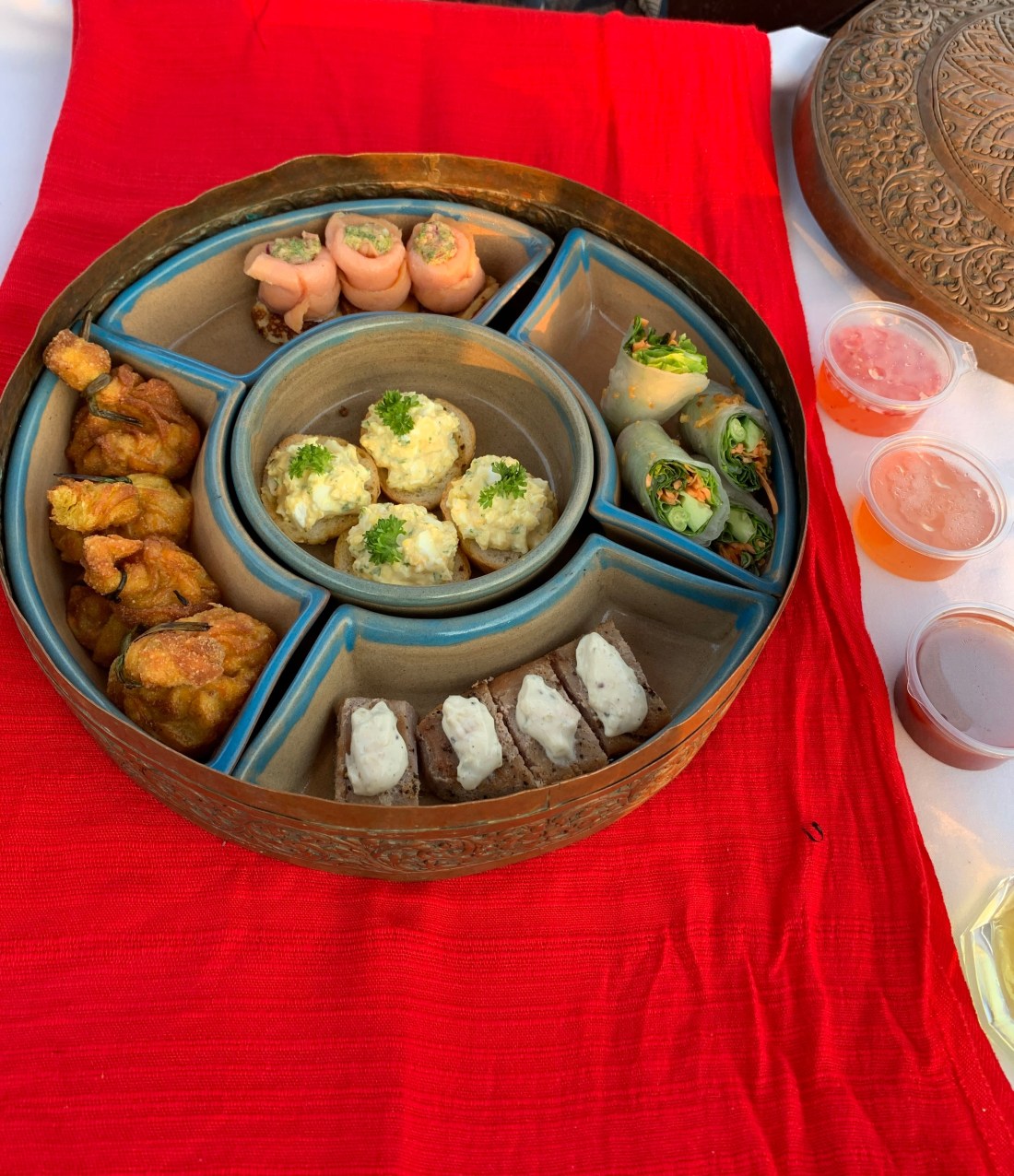
And finally, we had a sunset cruise on a Royal King boat on the man made moat at the southern gate of Angkor Thom.
img_20190122_165738img_1575img_1587

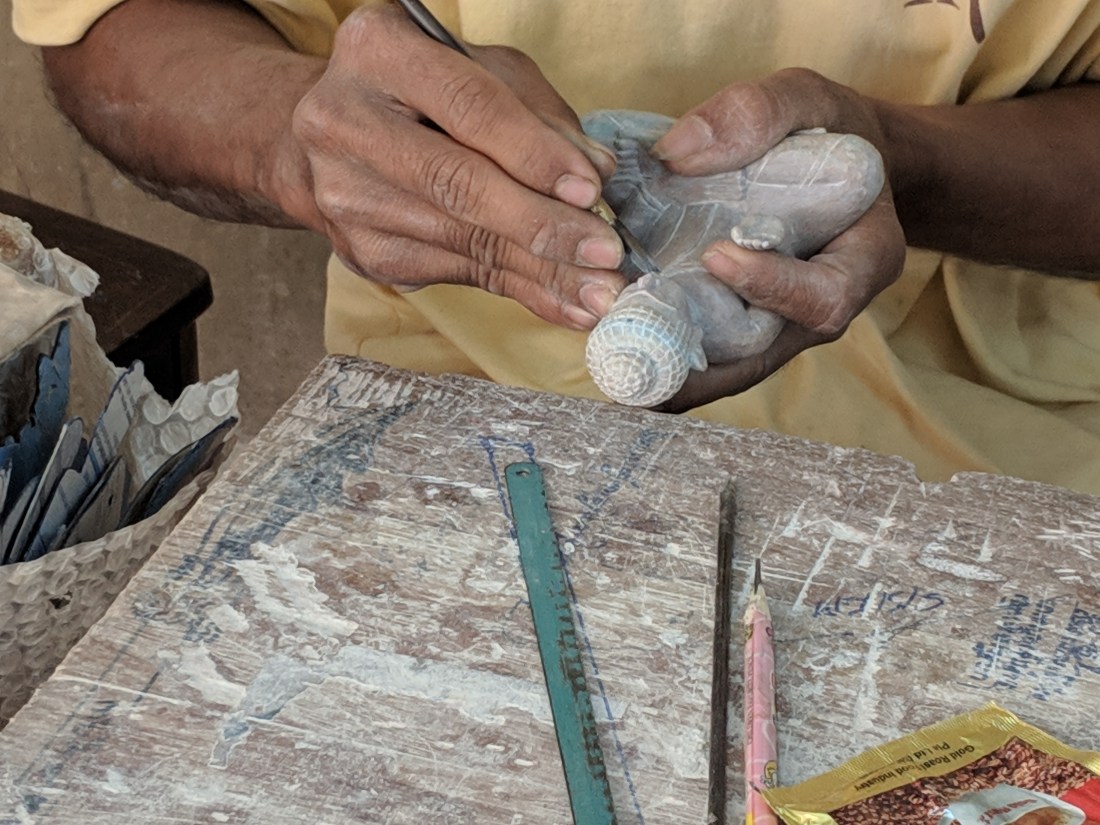
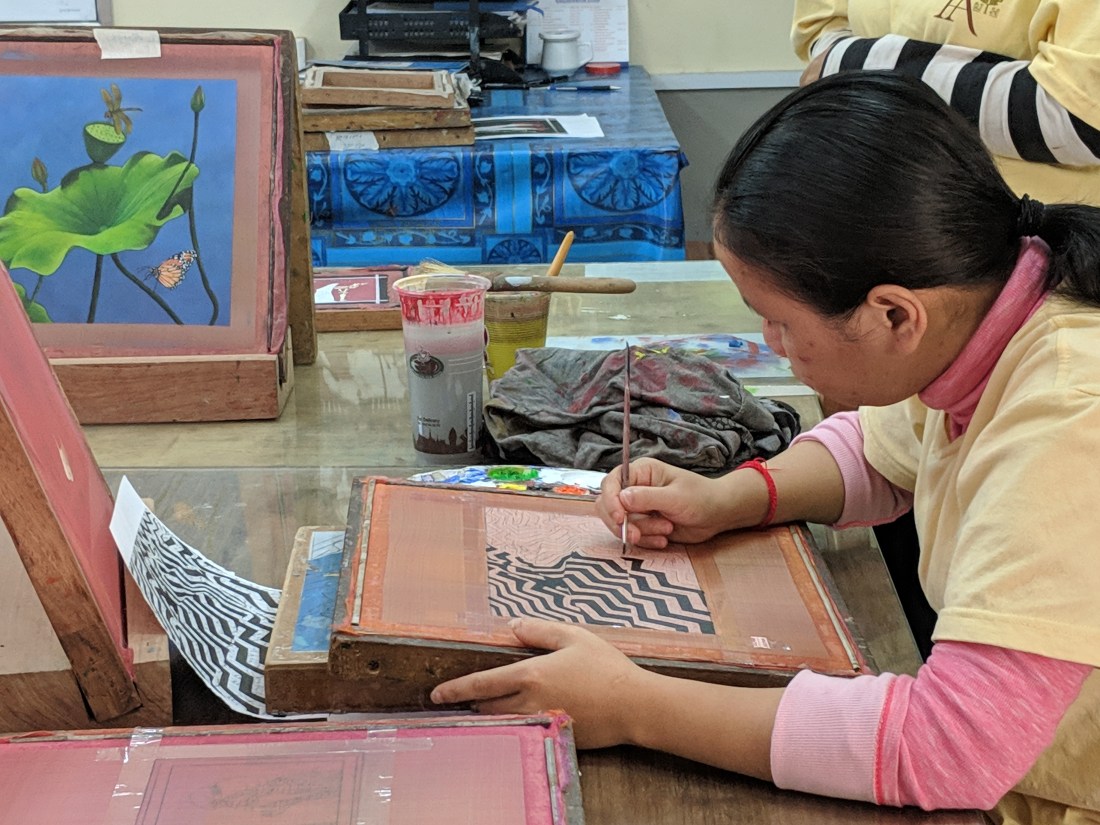
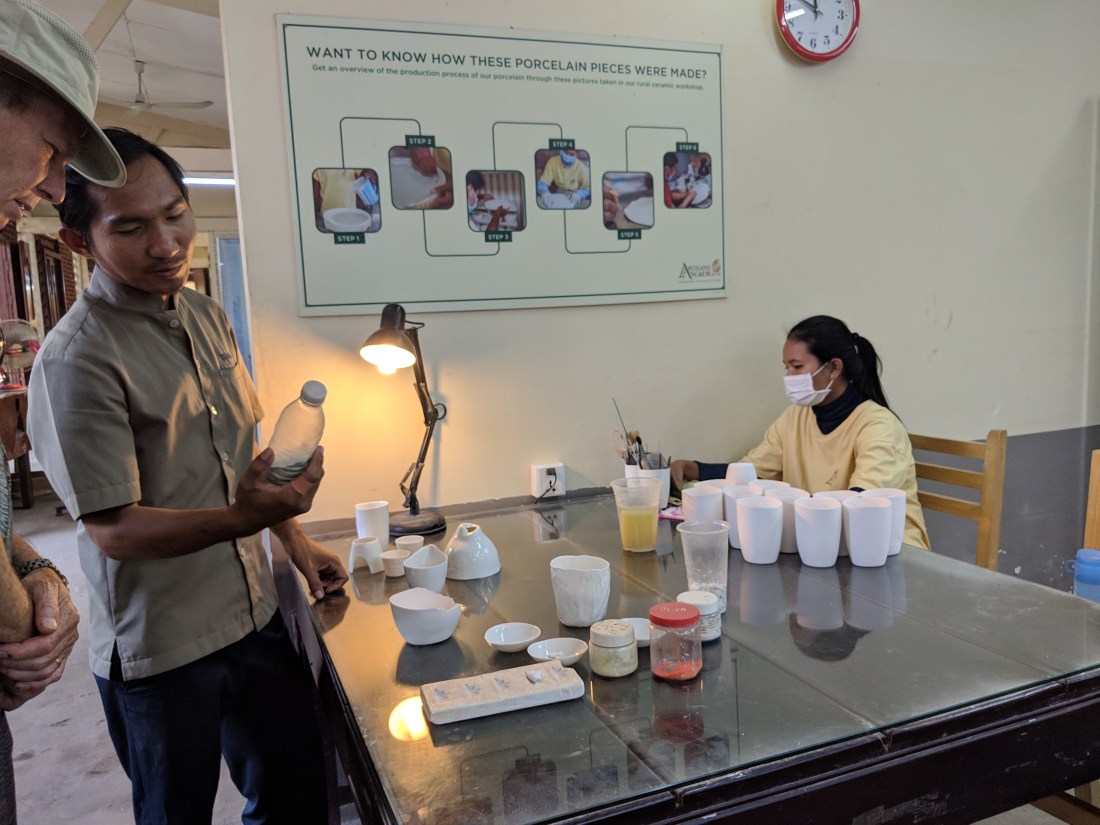
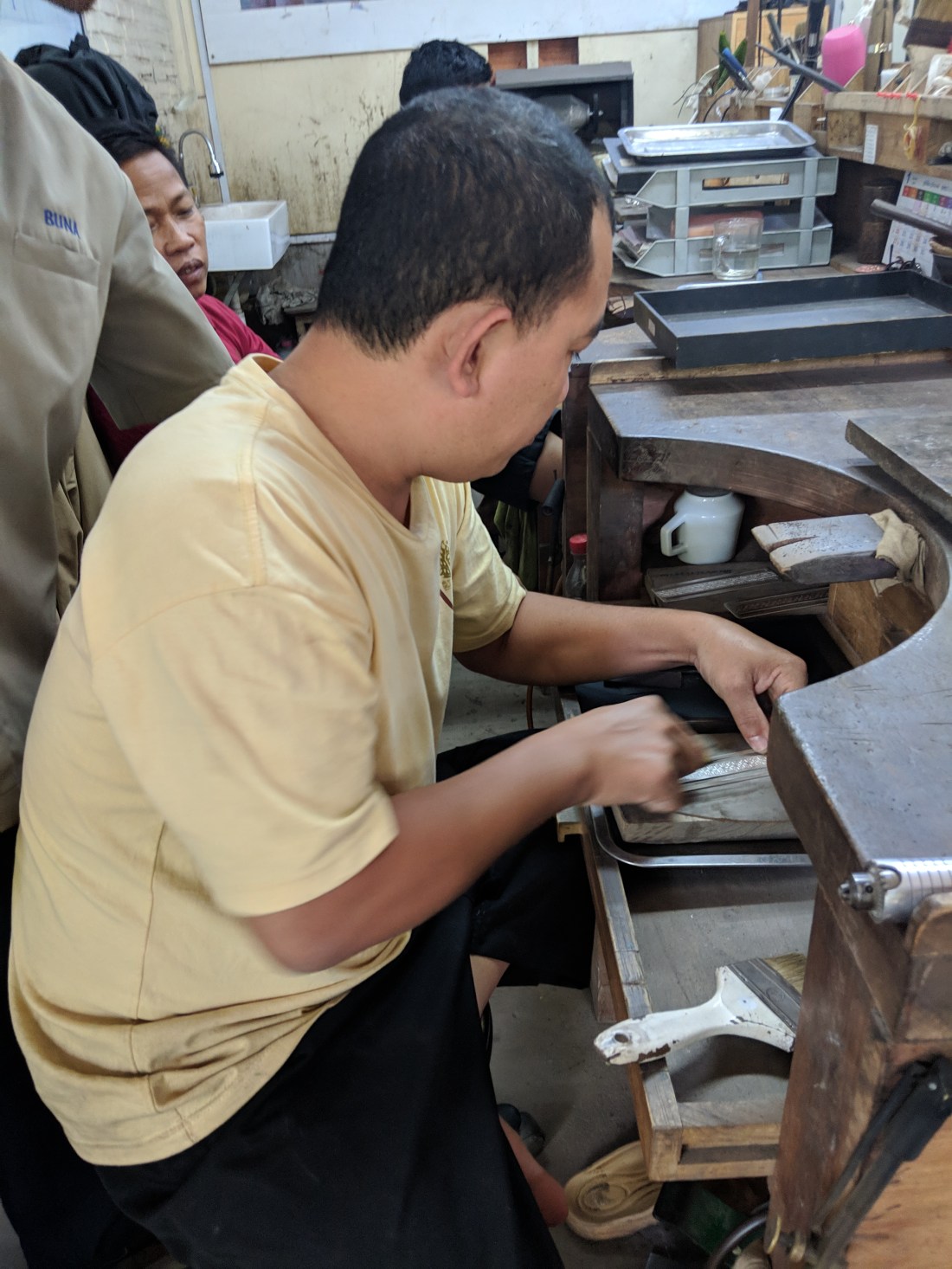
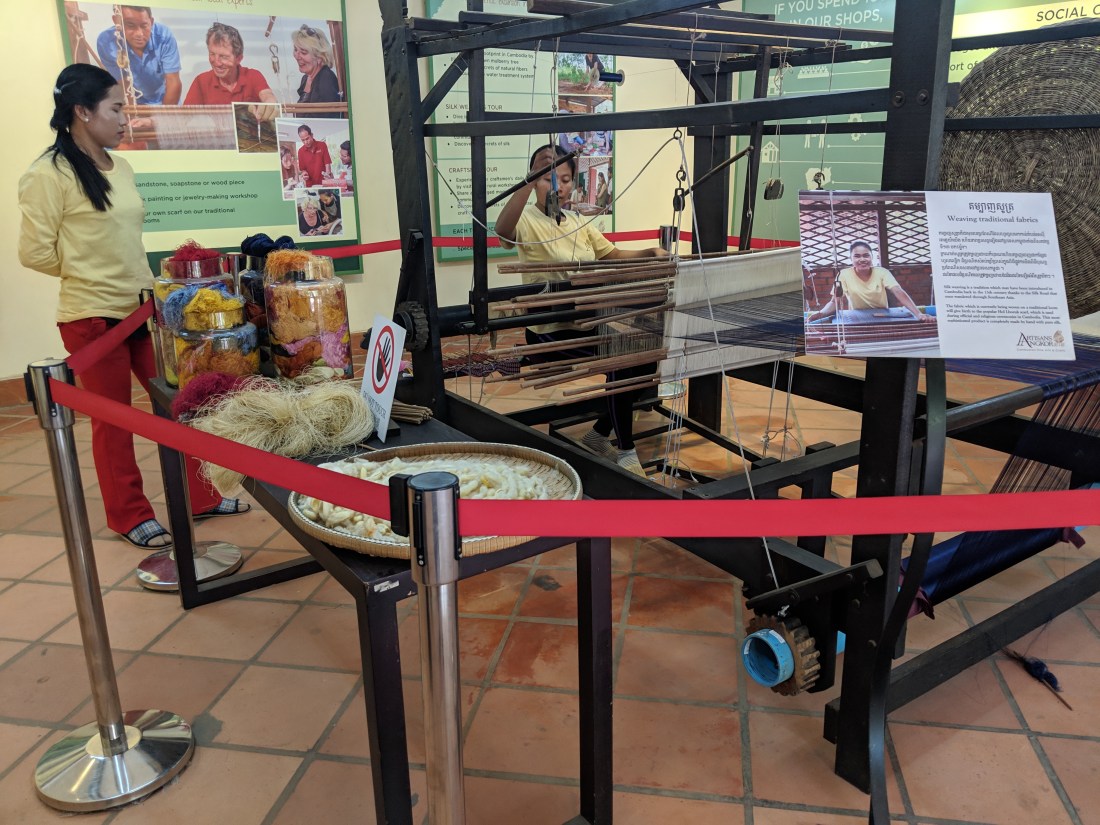
On out last morning in Cambodia we visited the artisan village where future crafts people are trained in all the arts of the Khmer.
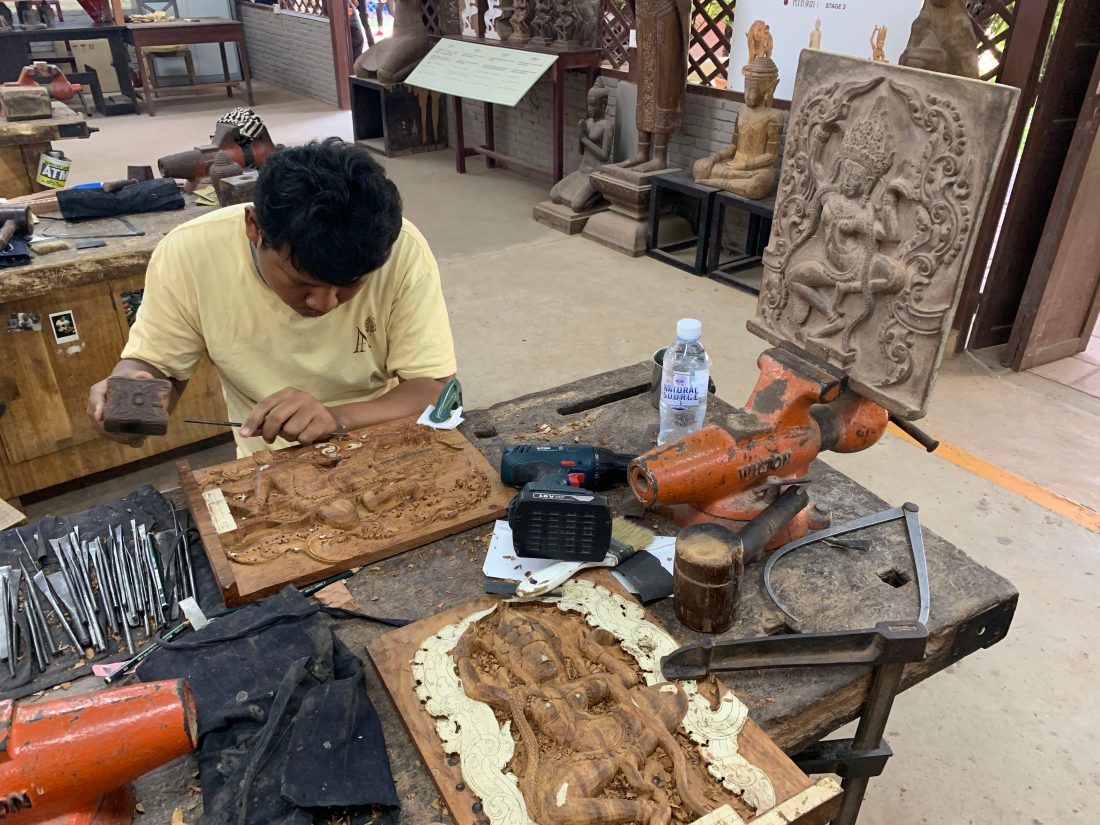
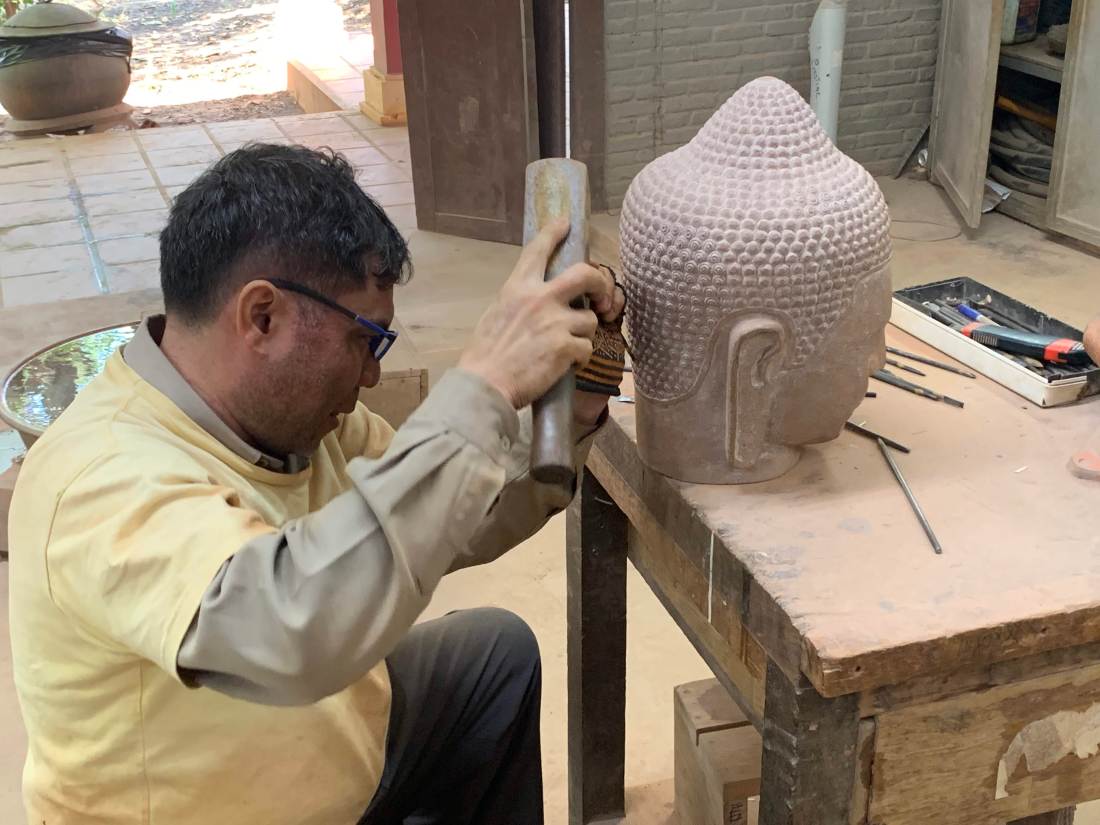
img_1593img_1594img_1595img_20190123_114525img_20190123_115115img_20190123_115224img_20190123_115240img_20190123_115405

img_20190123_115628
polishing hand made silver pieces

img_20190123_115741

Now we are off to Vietnam!


Luang Prabang, Laos Jan 16-19

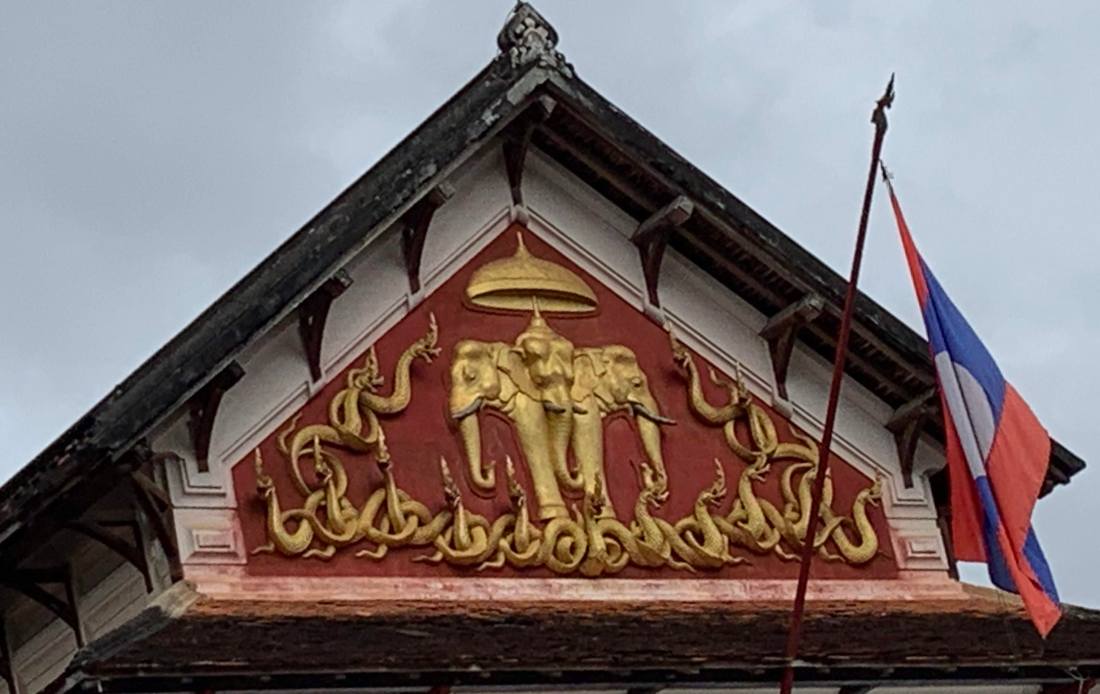
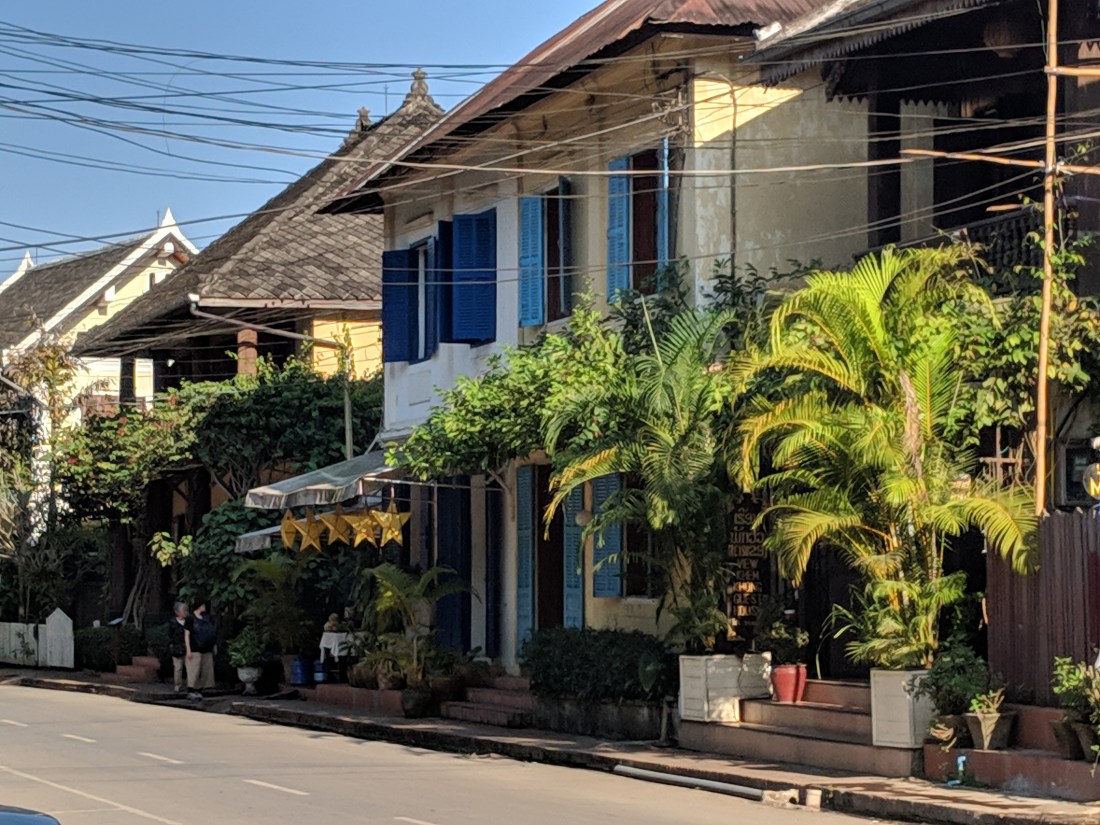
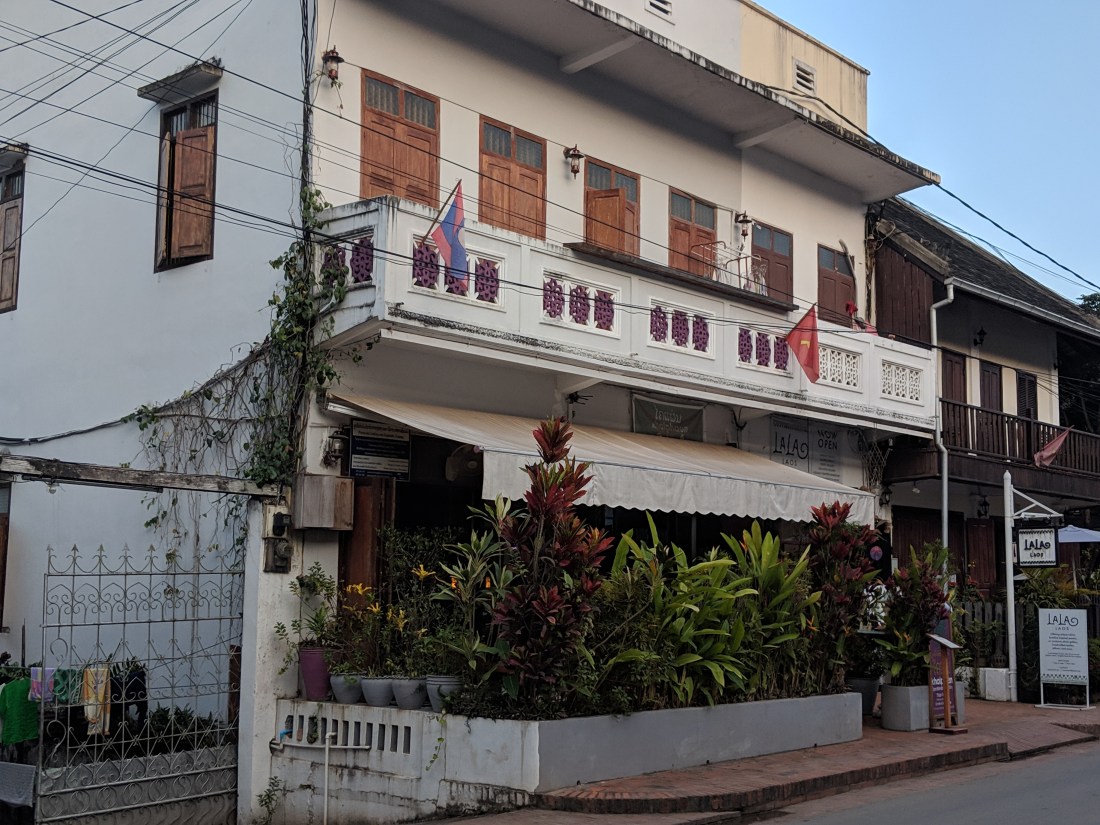
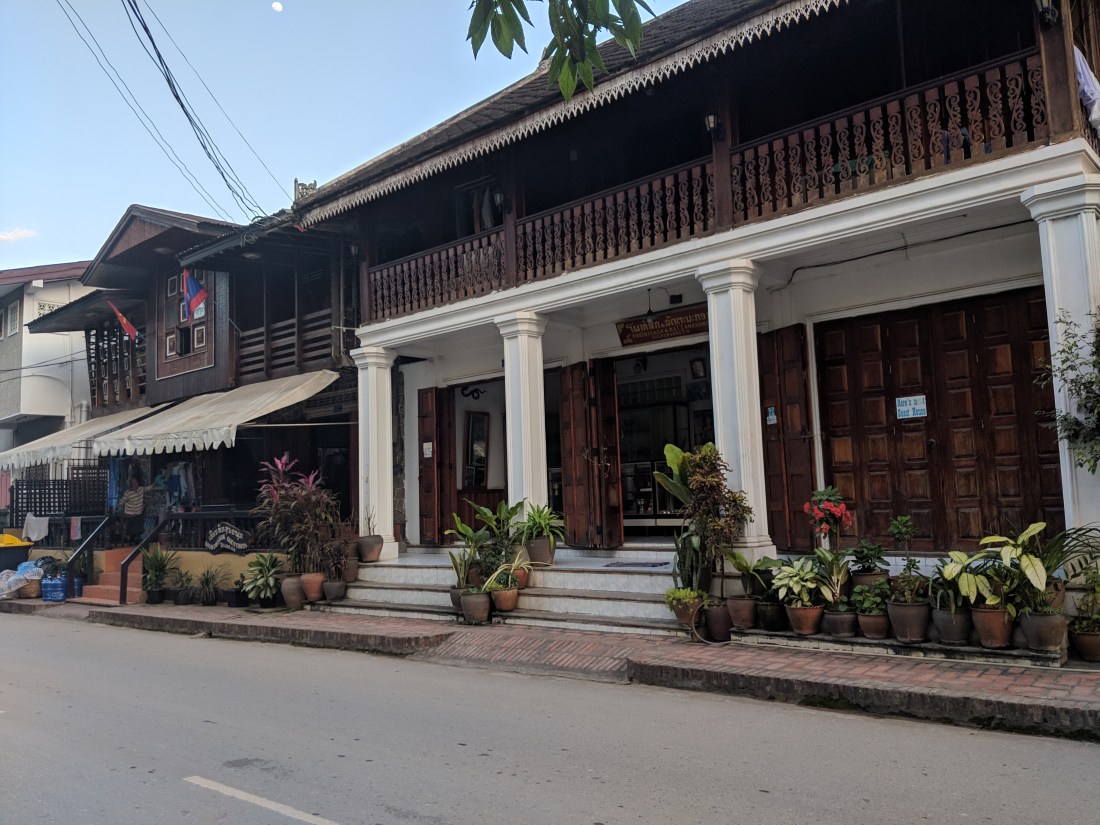
I cannot gush enough about how much we loved Laos, a surprise favorite so far. Thank you Angela for encouraging us to come here.  At first blush, the people and culture seem very similar to the Thai, so friendly.  But the architecture and cuisine as well as the art are distinct.   The entire city of Luang Prabang is a UNESCO heritage site because it uniquely captures the French colonial influence mixed with the Siamese (Thai) influence blended with the local Prabang style.  We started to notice this the very first night wandering the night market.  Where in most of Thailand one sees the same products of clothes, jewelry, trinkets over and over in markets in various cities, in Luang Prabang, there are many more hand made items, beautifully capturing those influences mentioned.

IMG_20190118_142440

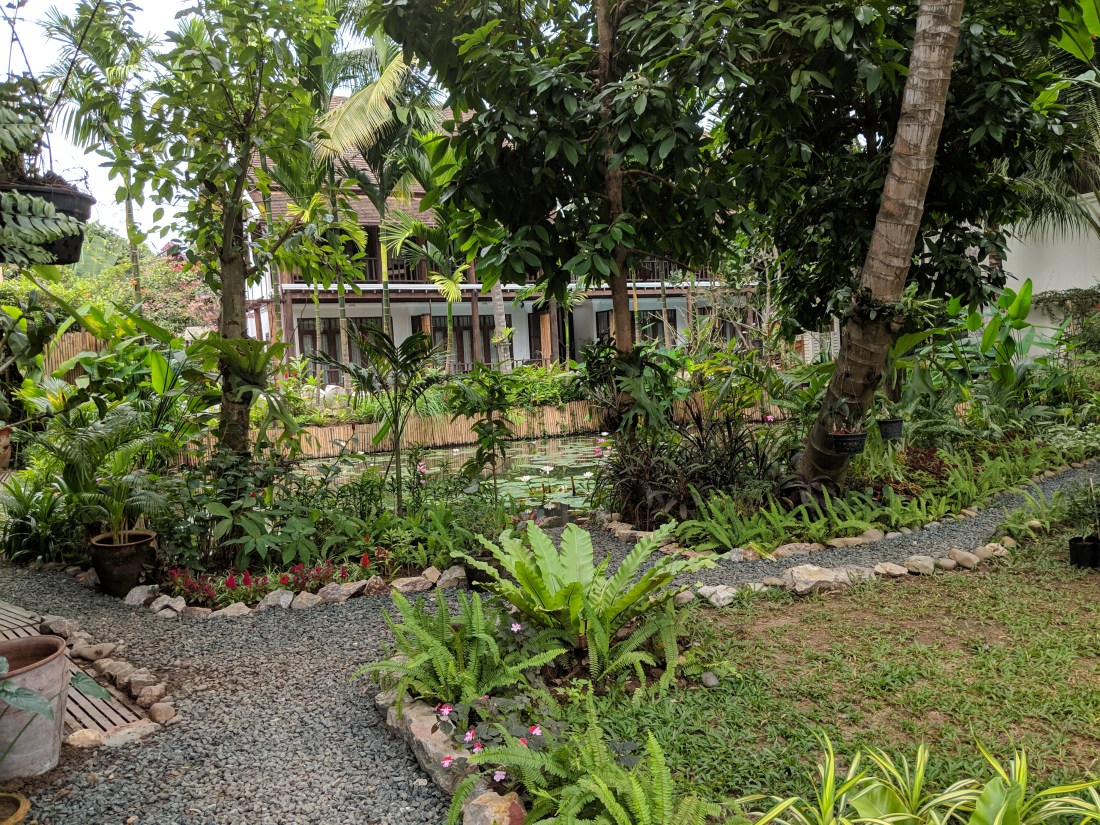
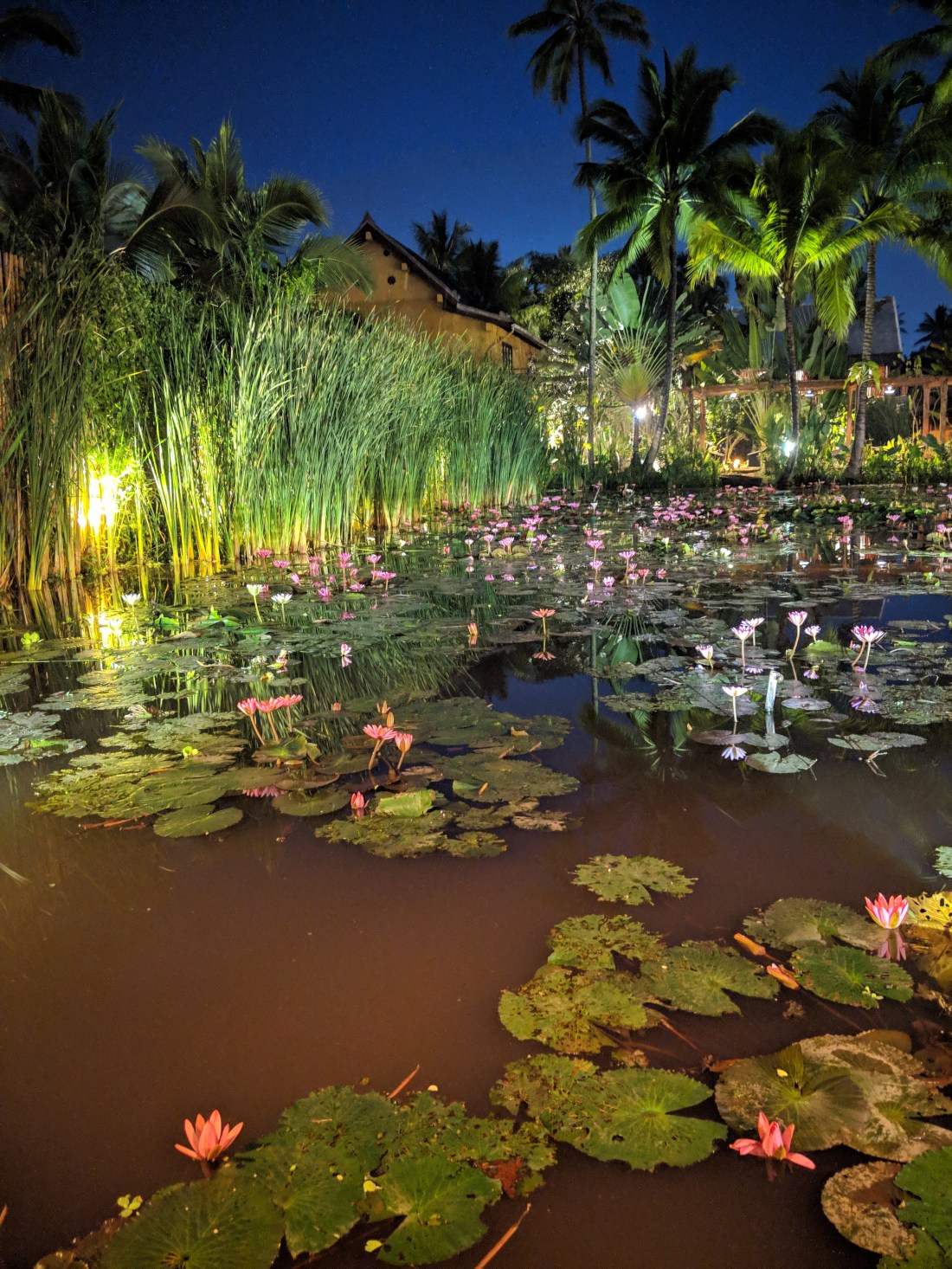
Our hotel Maison Dalabua, which was absolutely gorgeous,  surrounds a UNESCO protected lily pond.

IMG_20190117_090912.jpg

IMG_20190119_113428.jpg
The view from our balcony
IMG_20190118_203044.jpg
at the restaurant for dinner

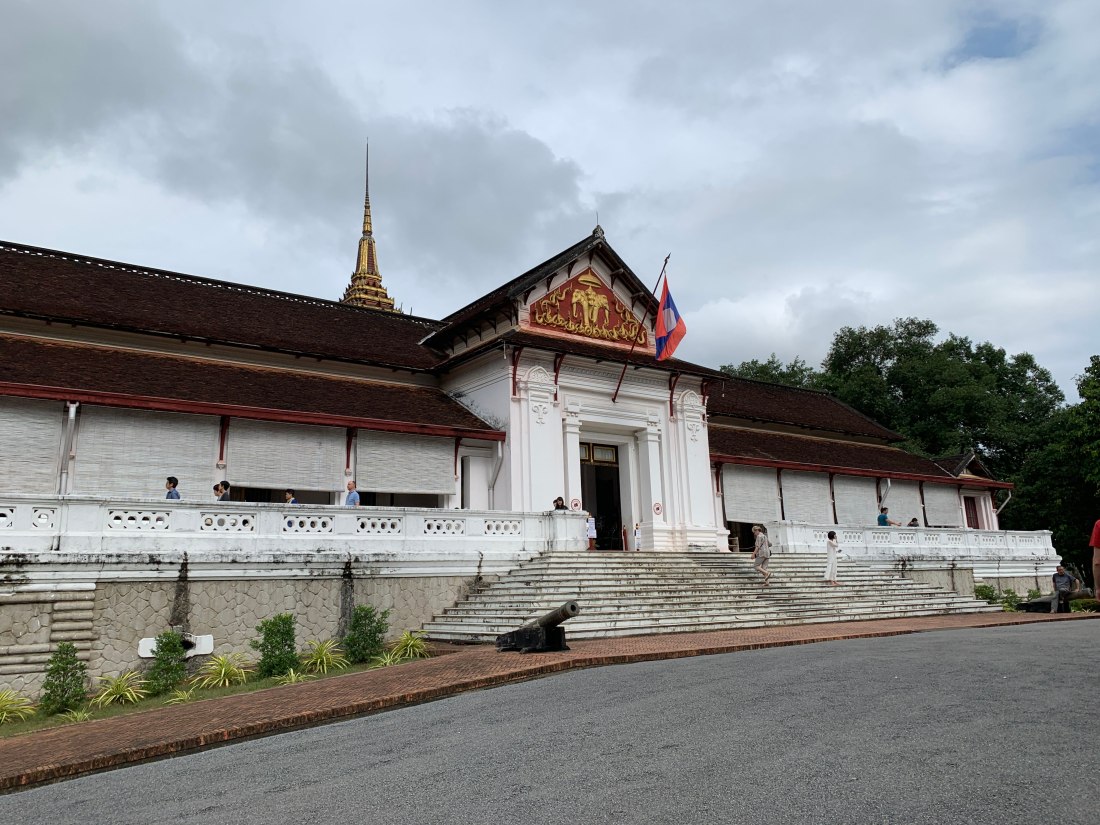
In the morning, our first visit was to the Royal Palace Museum, which was built as the king’s residence in 1904 during the French colonial period and remained the monarch’s home until 1975: communism.

IMG_1058.JPG

img_1059

Photos were not allowed inside, but most of the furniture are wood antiques imported from Europe.  The floors are also wood, very unusual in these hot climate countries.

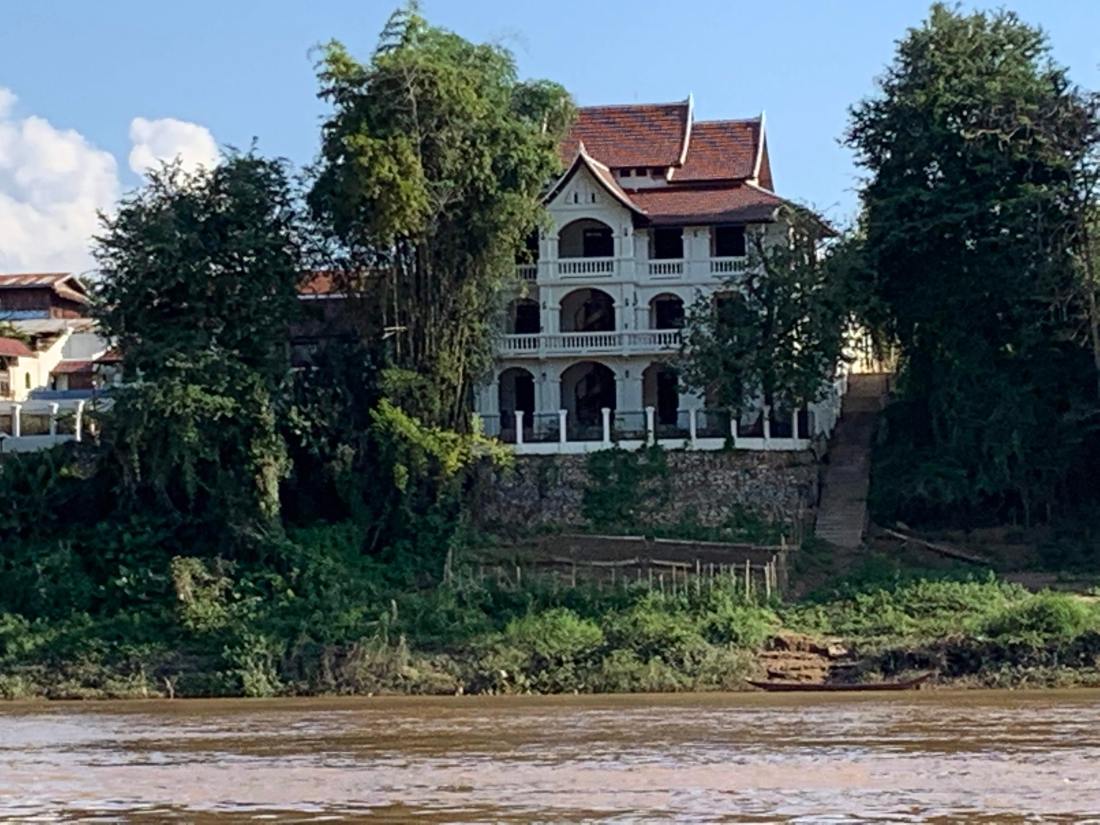
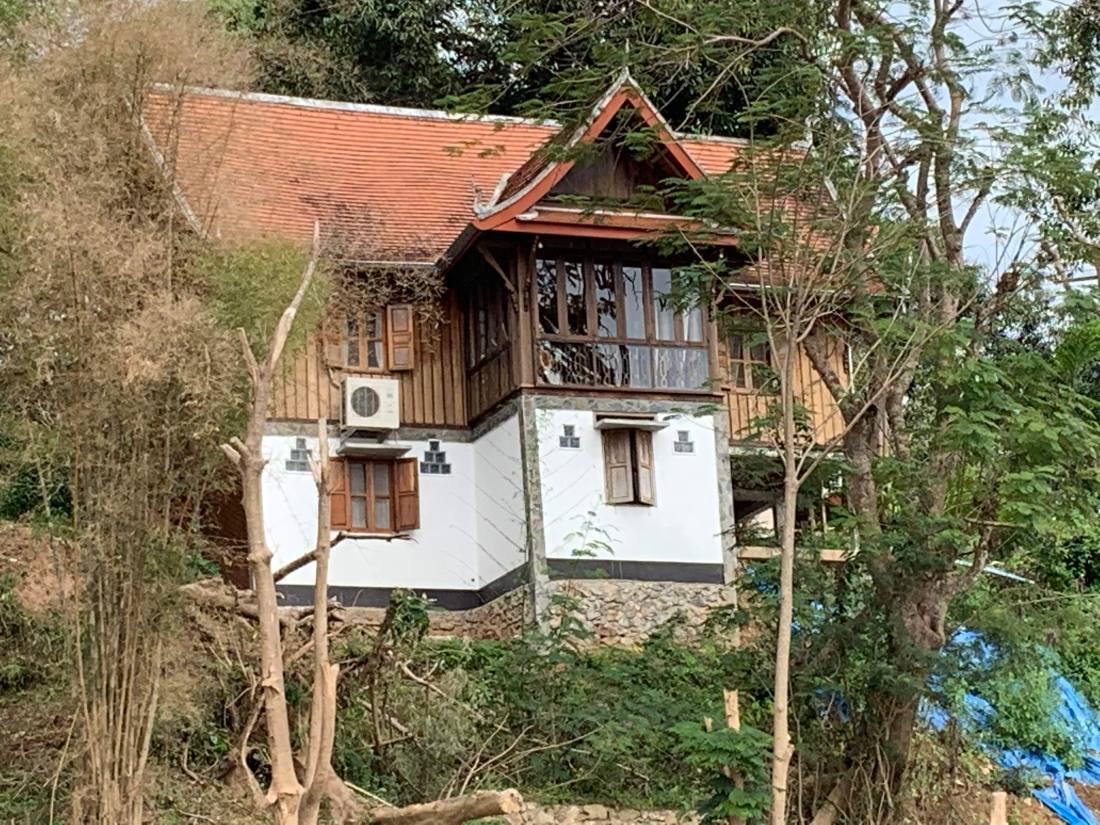
Walking along the riverfront, the homes show the mixture of architectural styles.

IMG_20190118_160038

img_20190118_172303img_20190118_172143

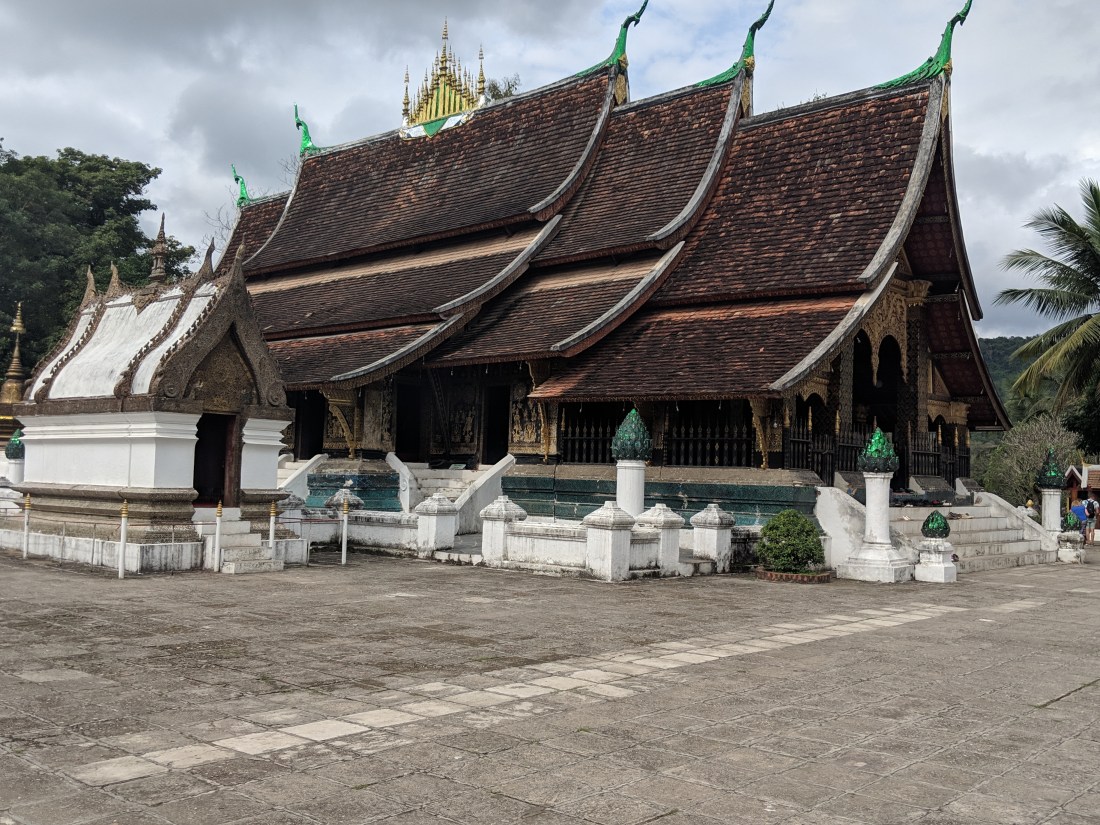
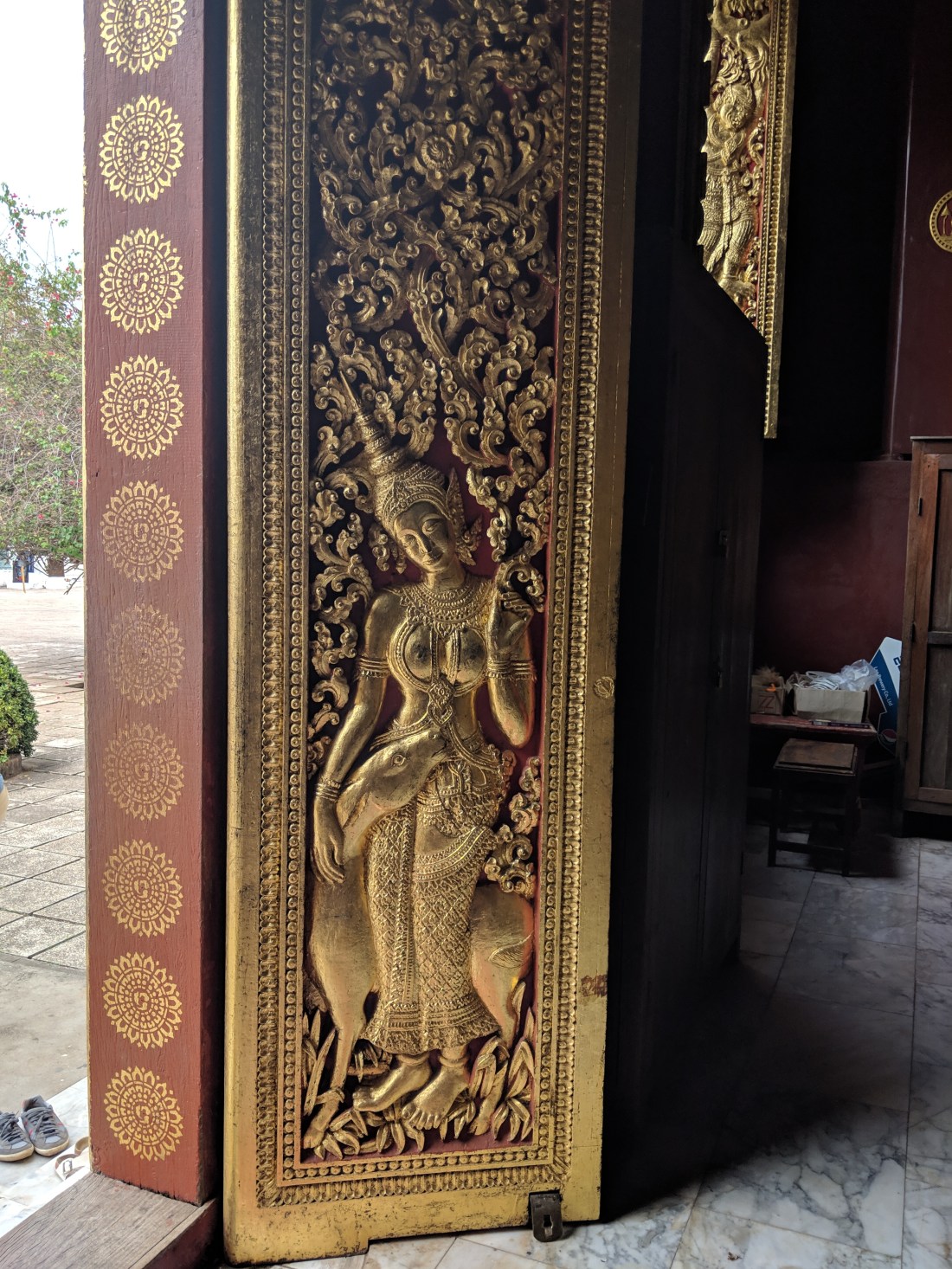
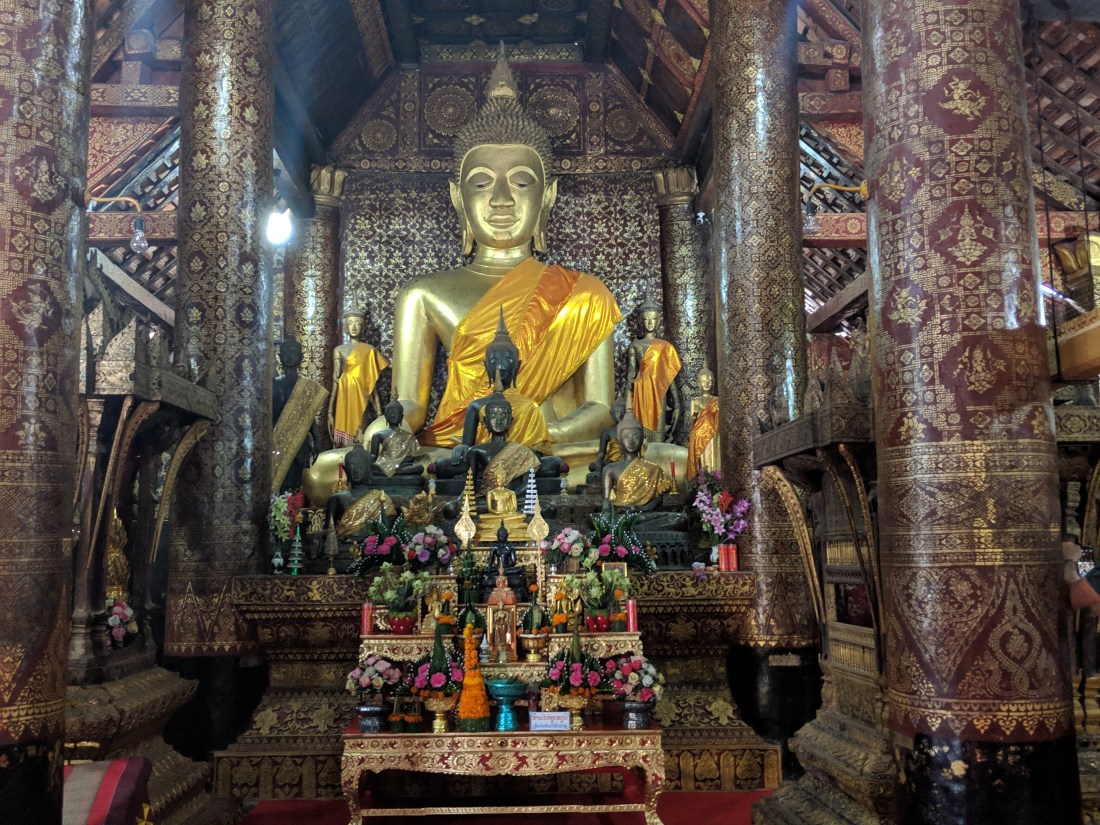
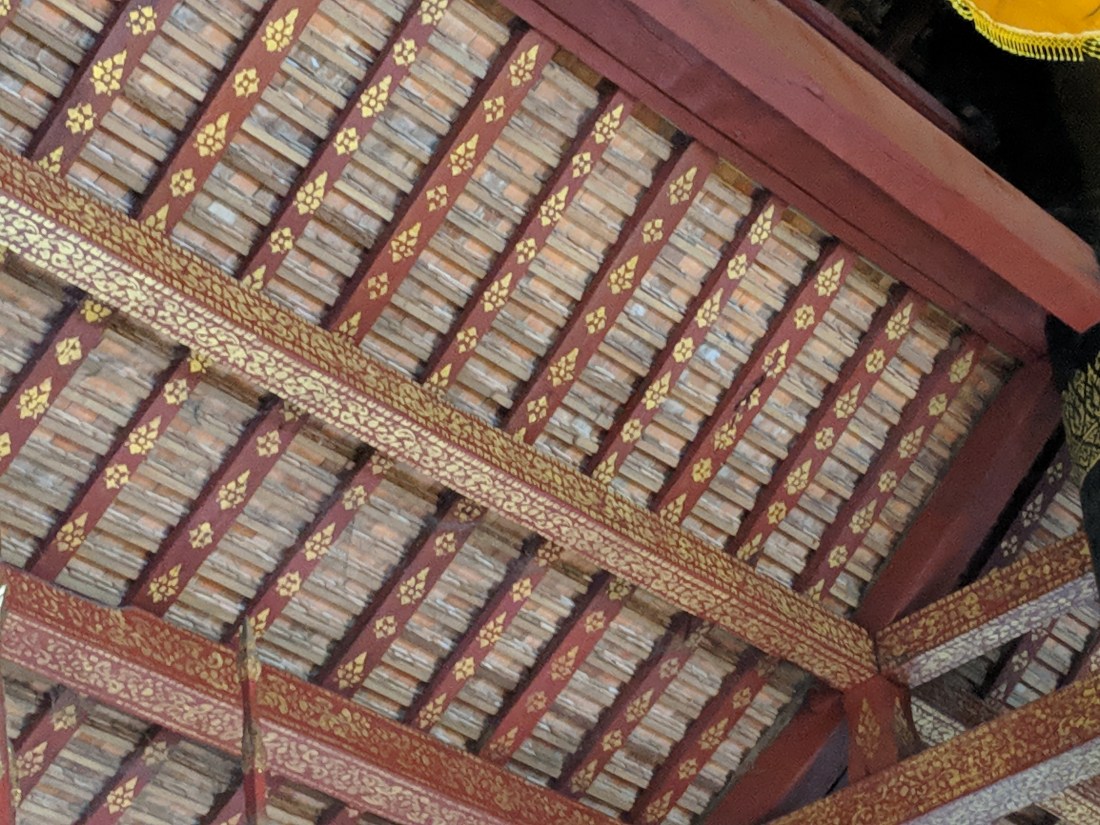
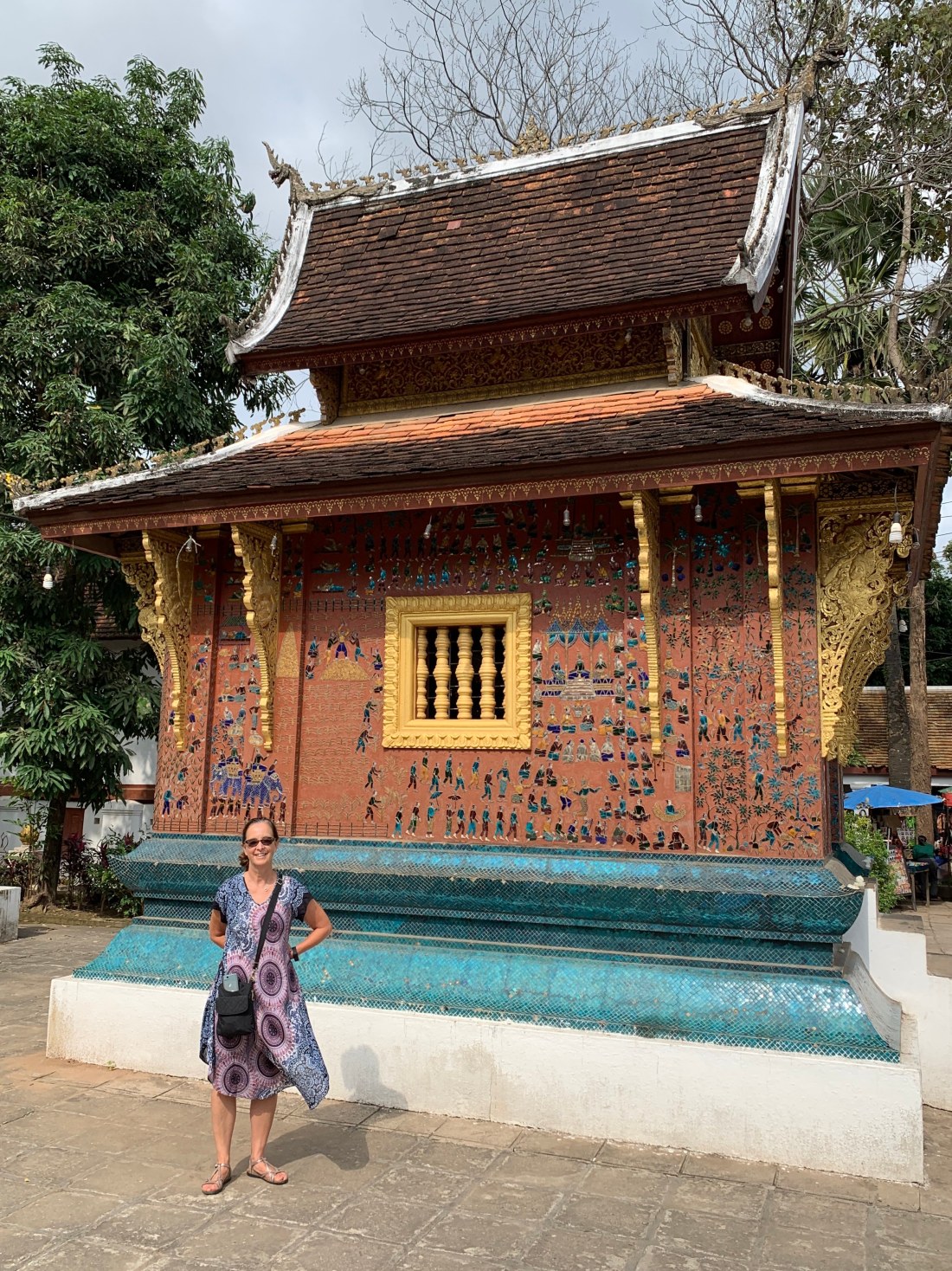
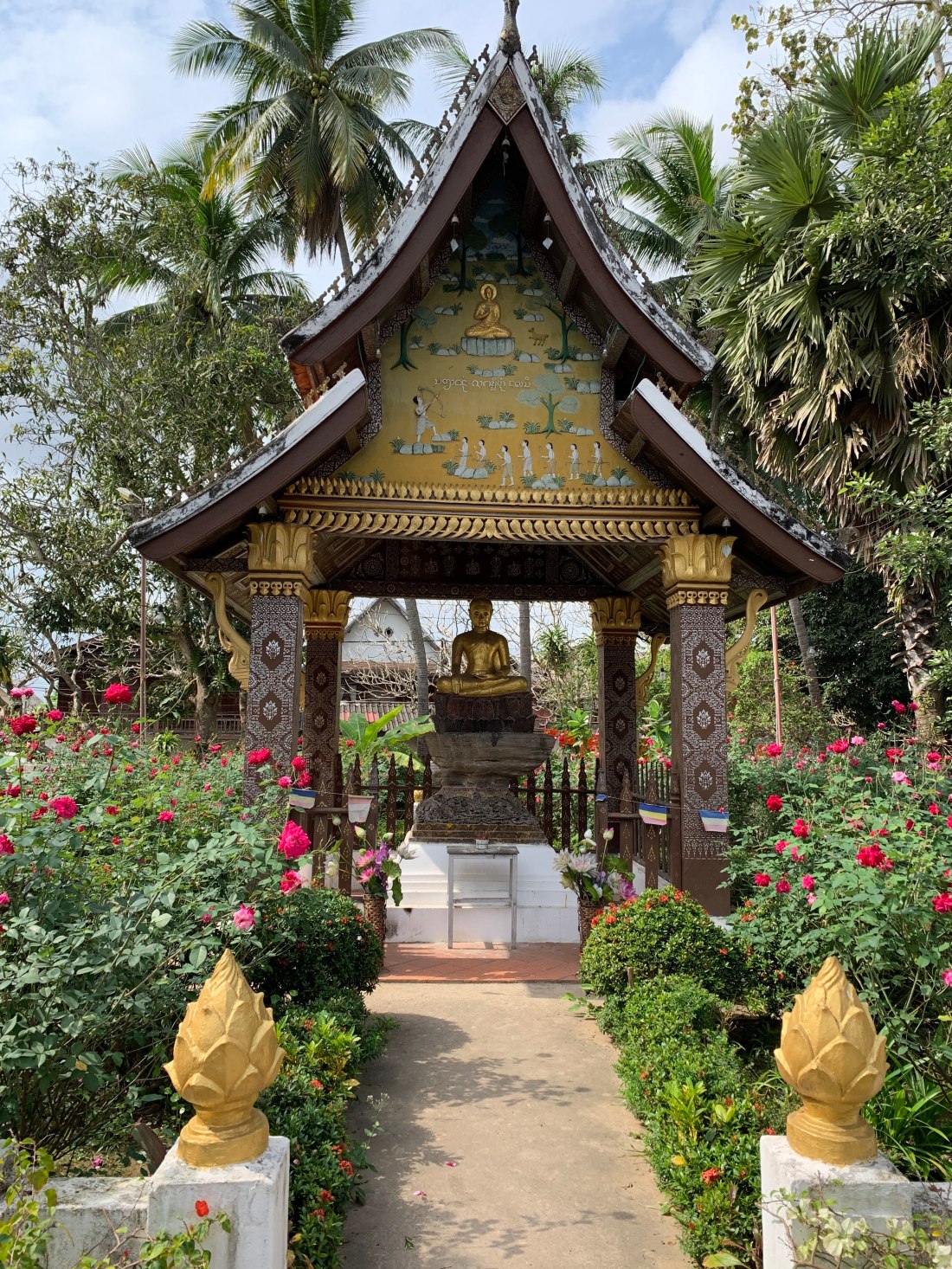
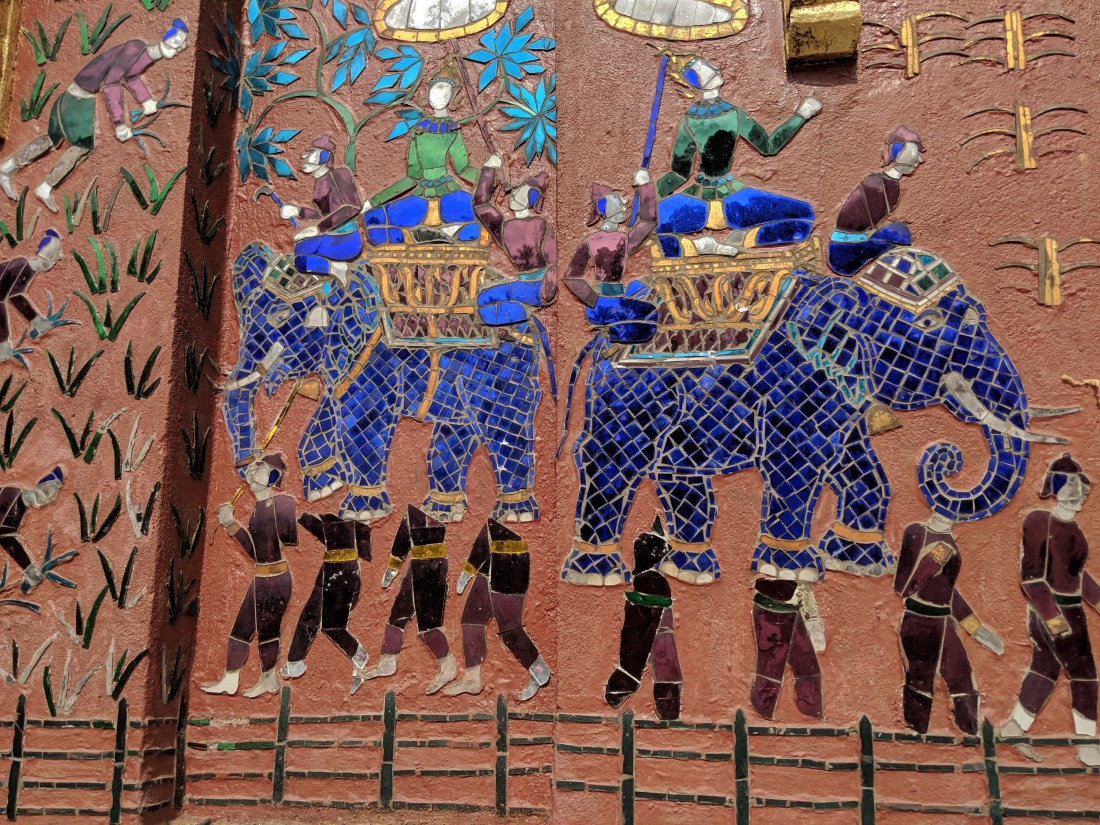
And of course we visited some local temples.  Wat Xienghtong is considered the most beautiful in the city.  Noticeable differences include the intricately carved wood paneled doors to the temple, and the outer wall colored mirror mosaics.  The interiors are relatively undecorated.

img_20190117_111453img_20190117_111145img_20190117_111821

img_20190119_110417

img_1079img_1080

img_20190117_112641img_20190117_112424

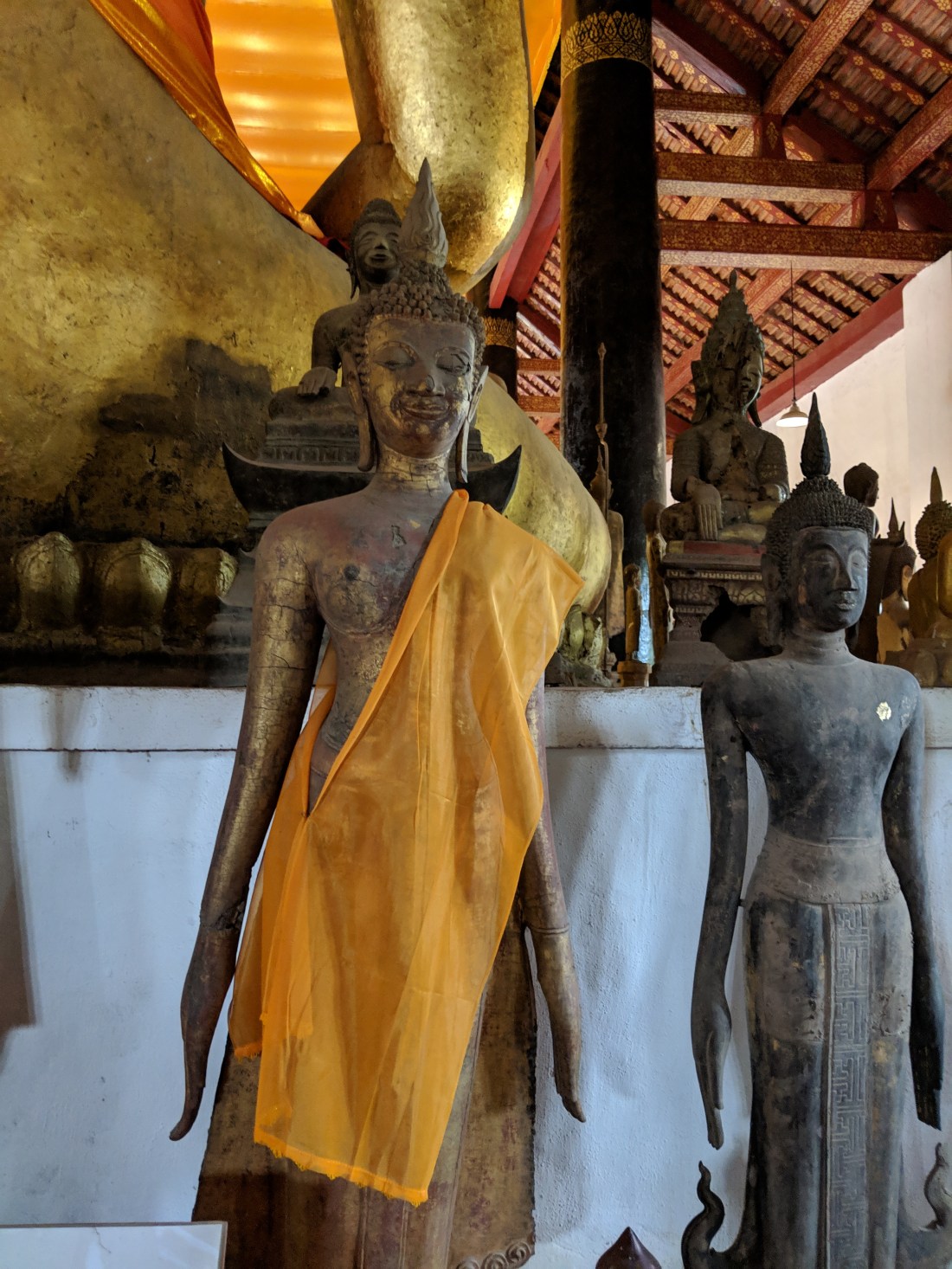
The below buddha has the wide forehead and mouth of the Khmer and the narrow waist of the Siamese.  Those features together with the pointed nipples and his “Calling for Rain” pose make him specifically in the Prabang style.

img_20190119_110714

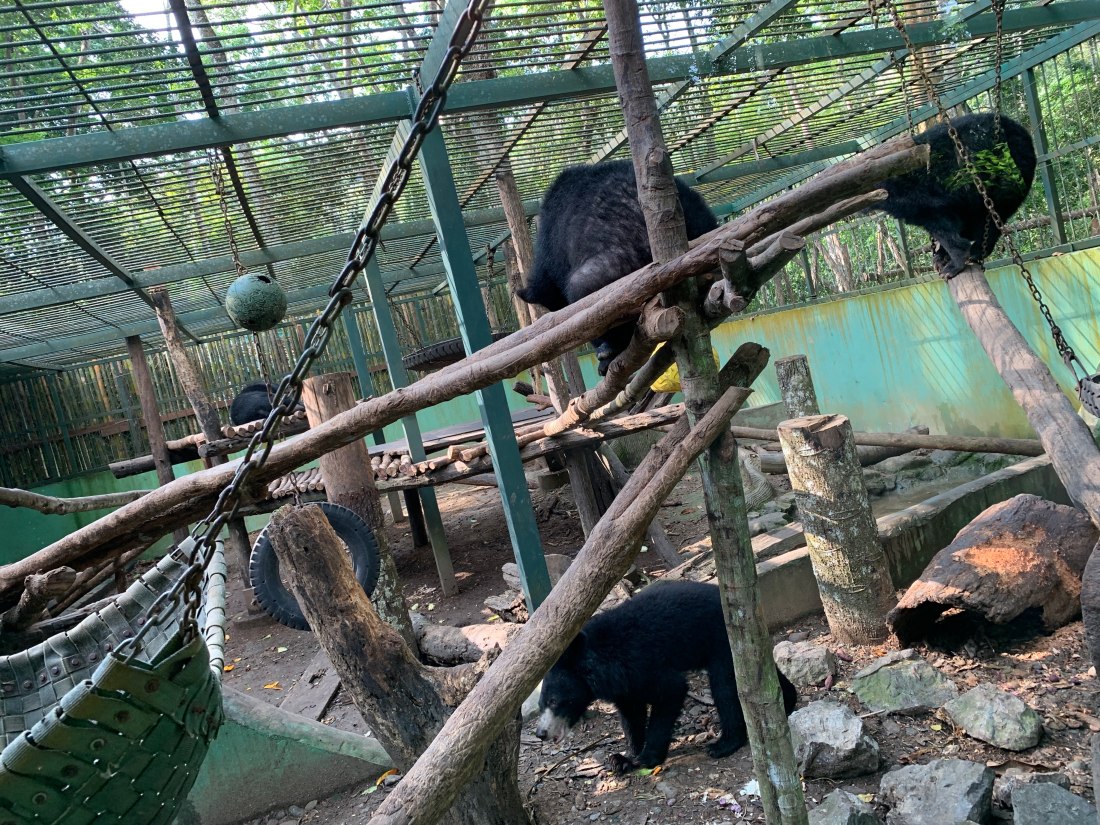
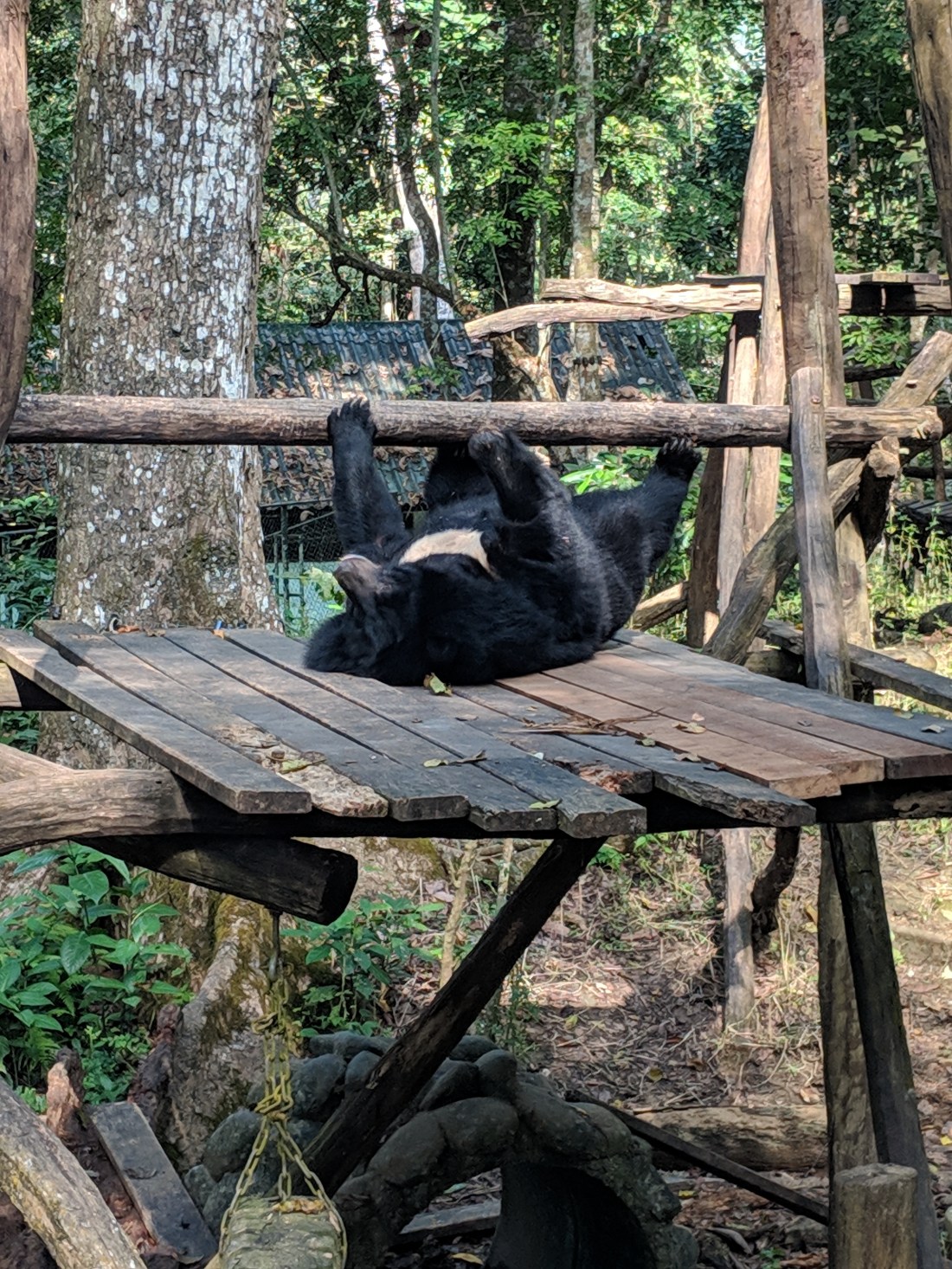
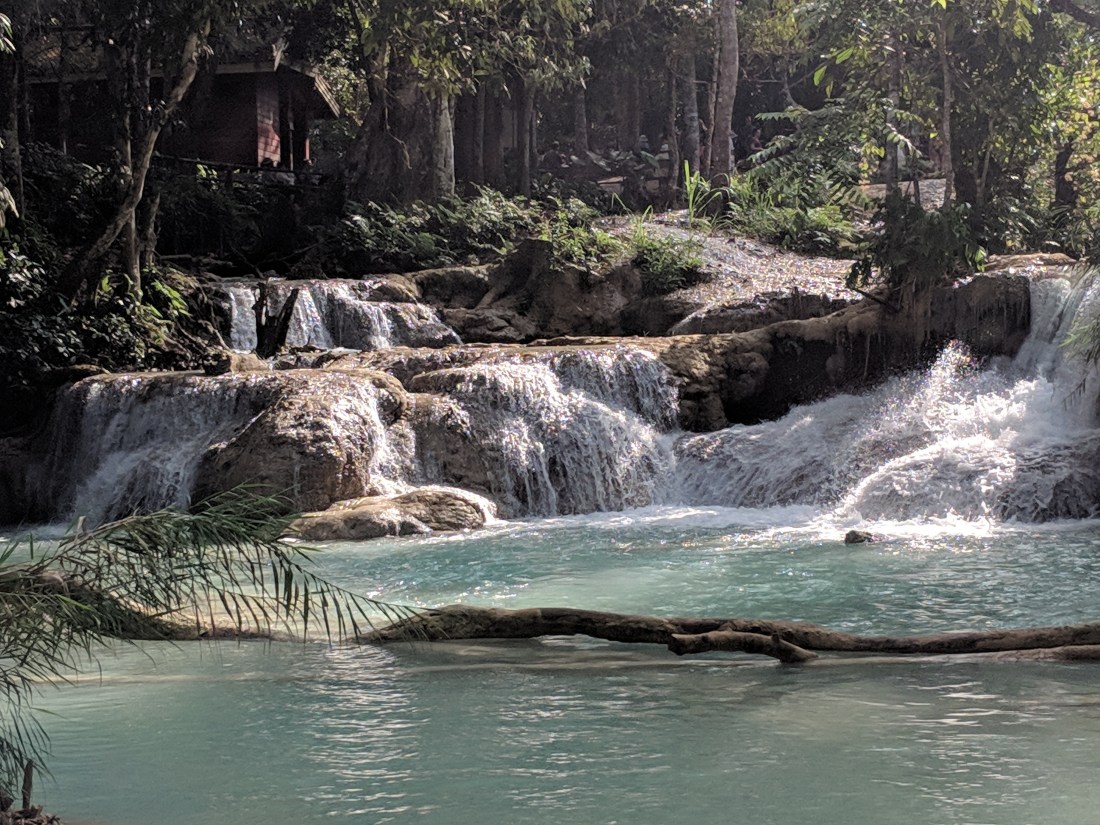
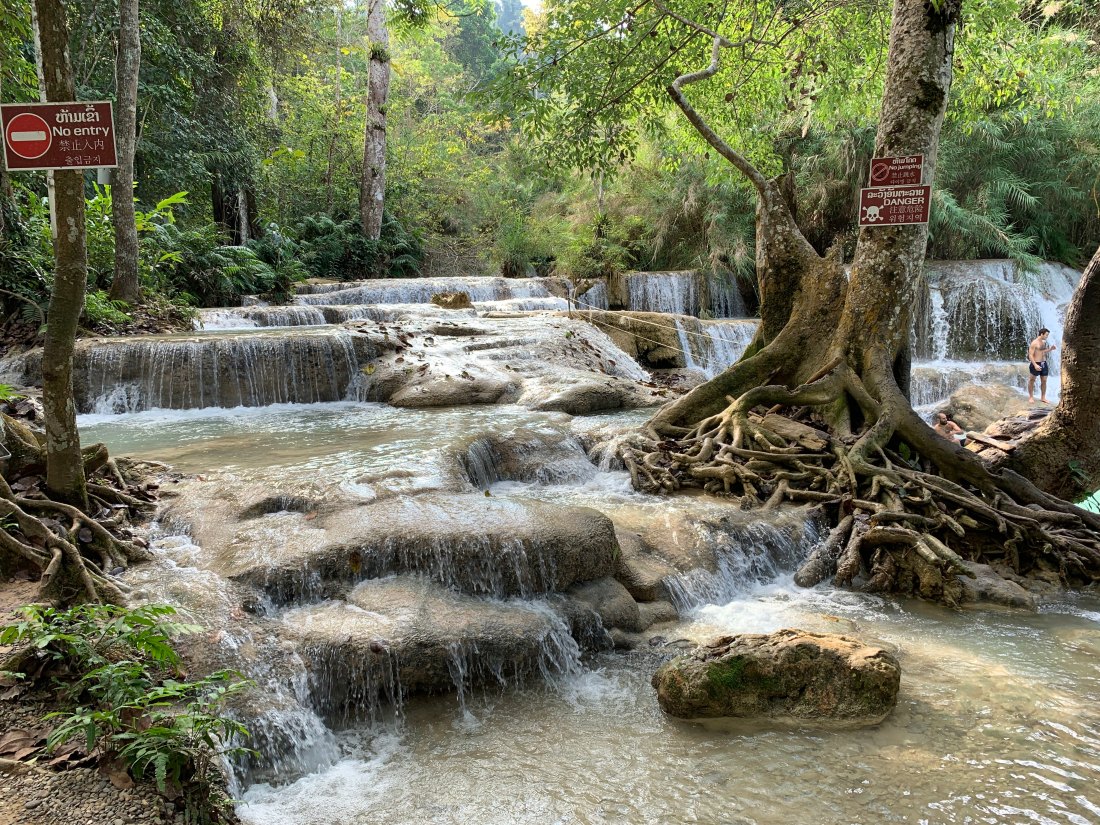
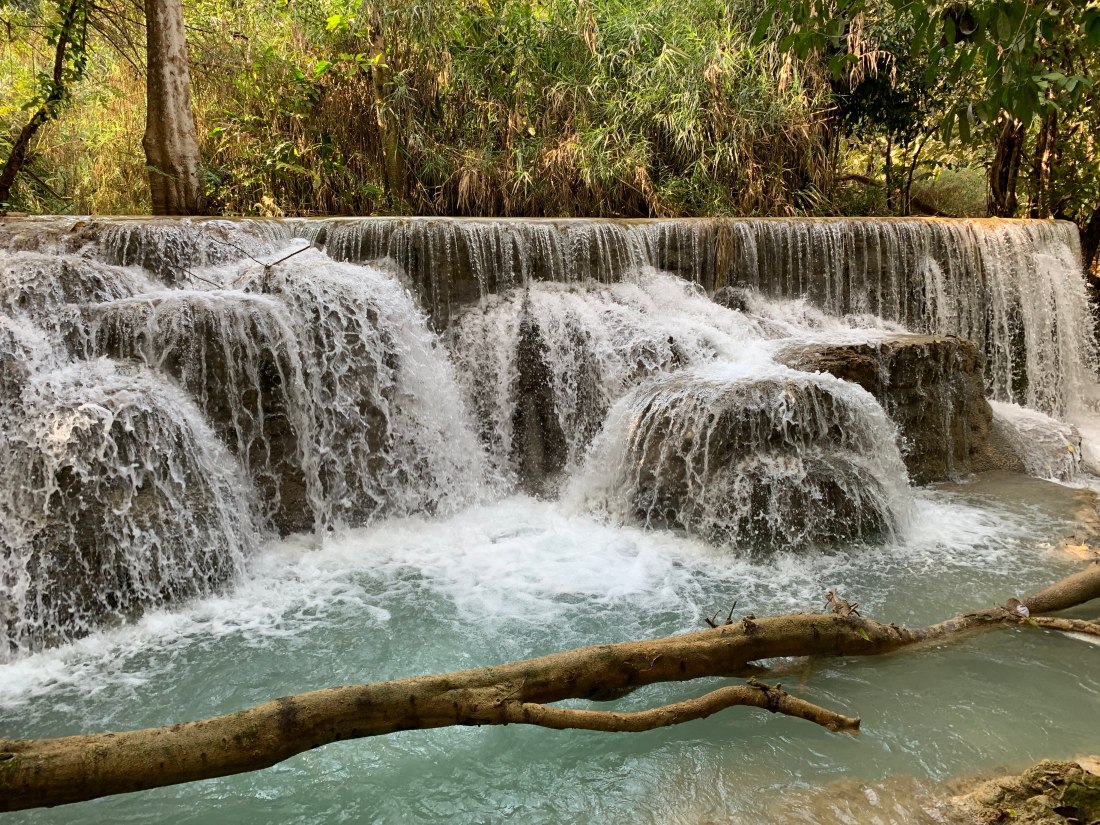
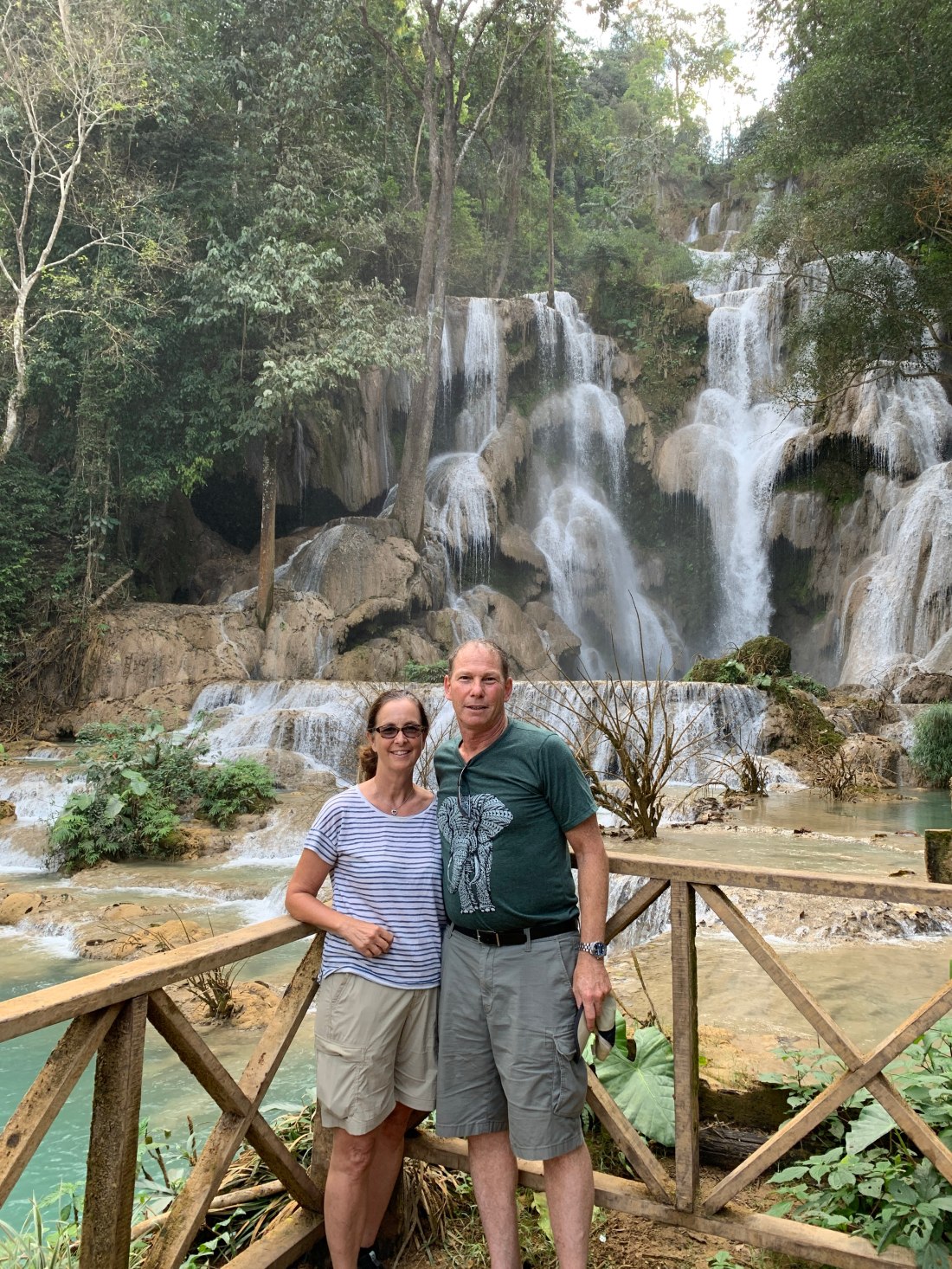
In the afternoon, we took a somewhat treacherous ride in a tour minivan so we could hike up the Kuang Si Waterfall.  At the bottom is a rescued bears preserve.

img_1091img_20190117_144131

img_20190117_145219img_20190117_150318img_1099img_1103

img_1112

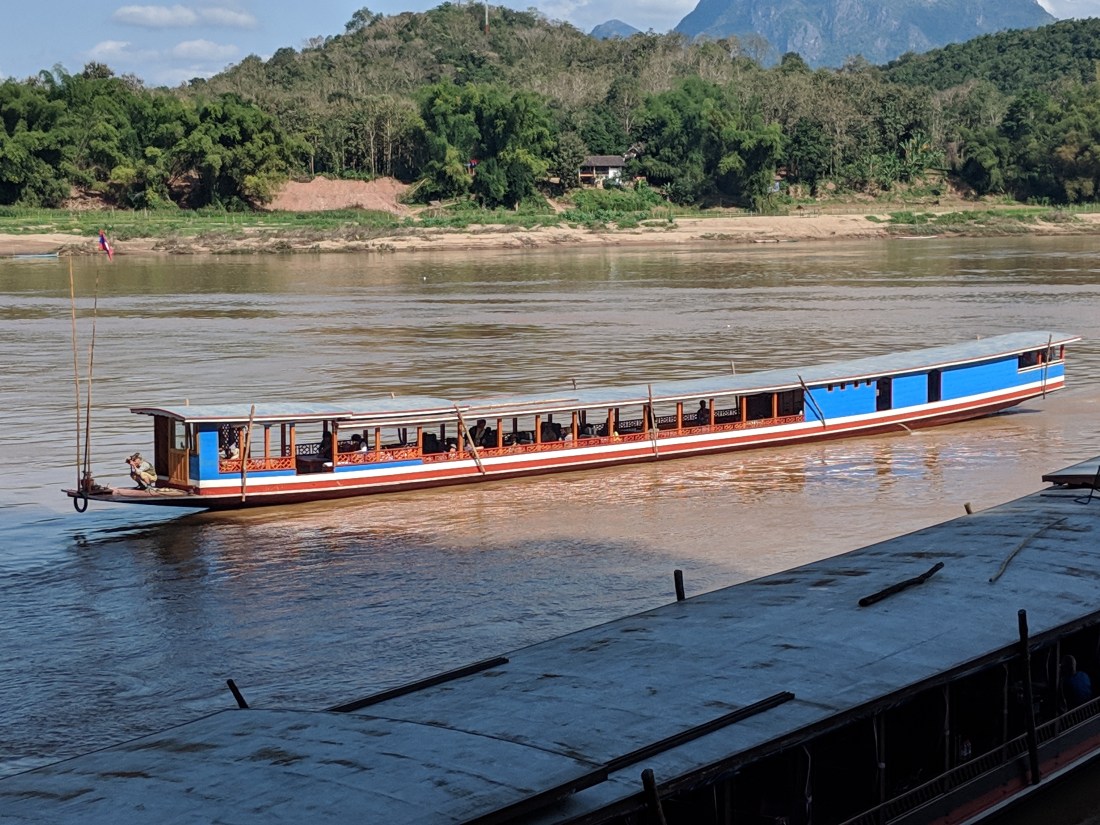
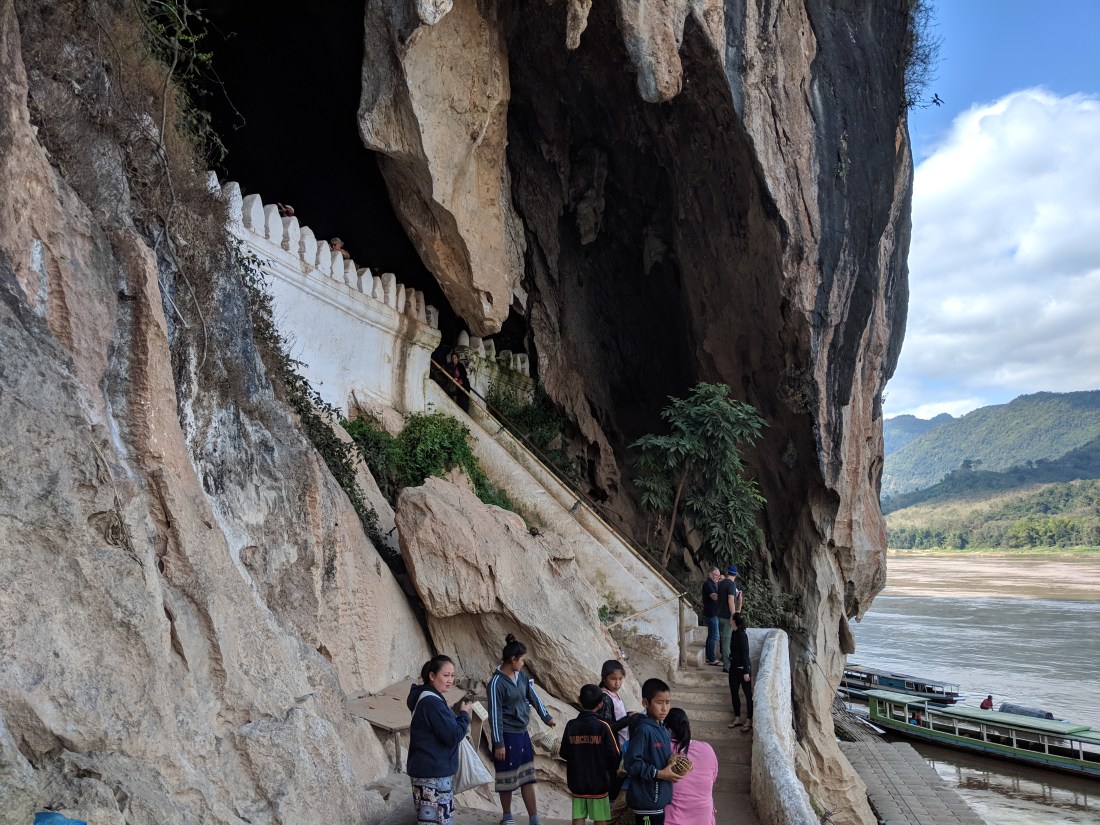
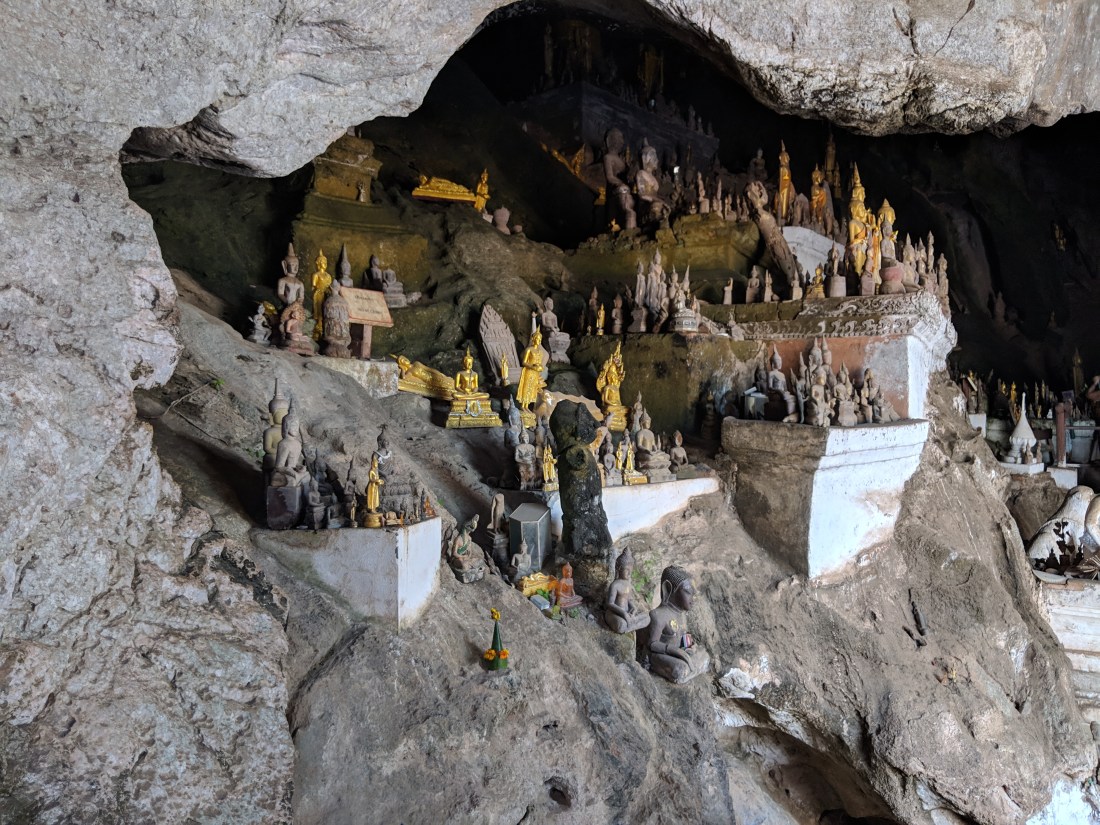
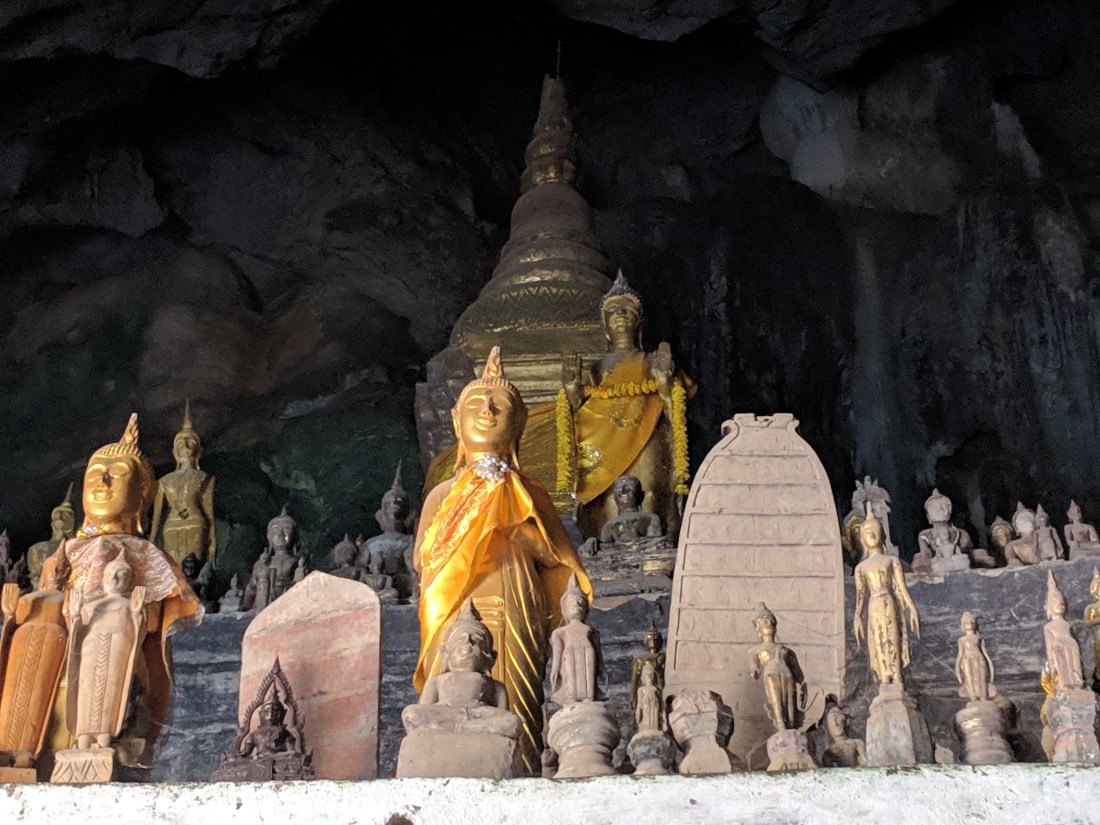
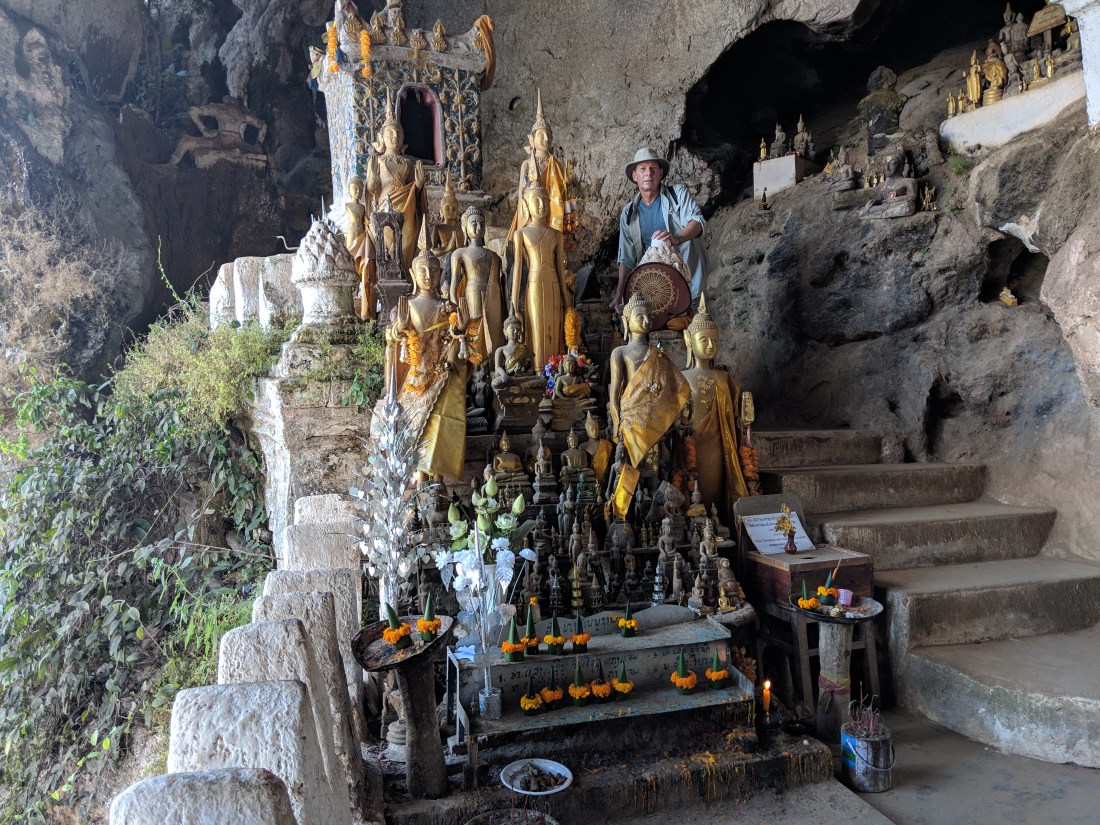
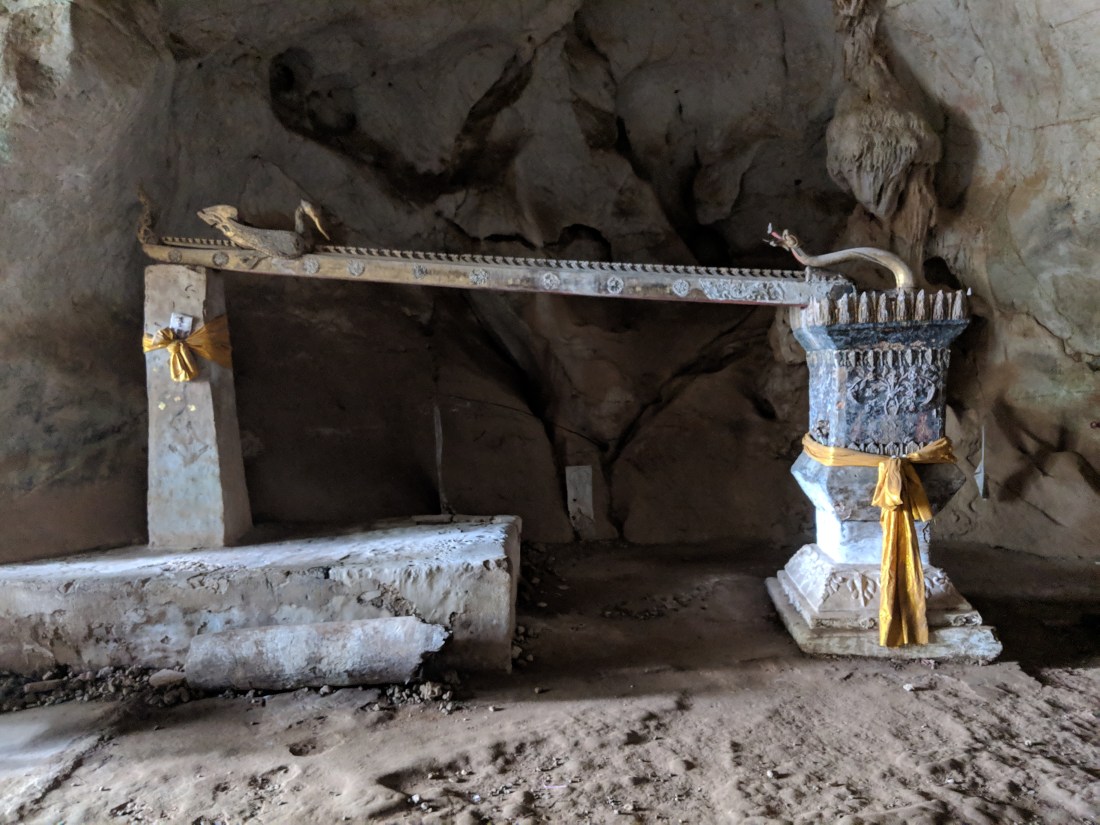
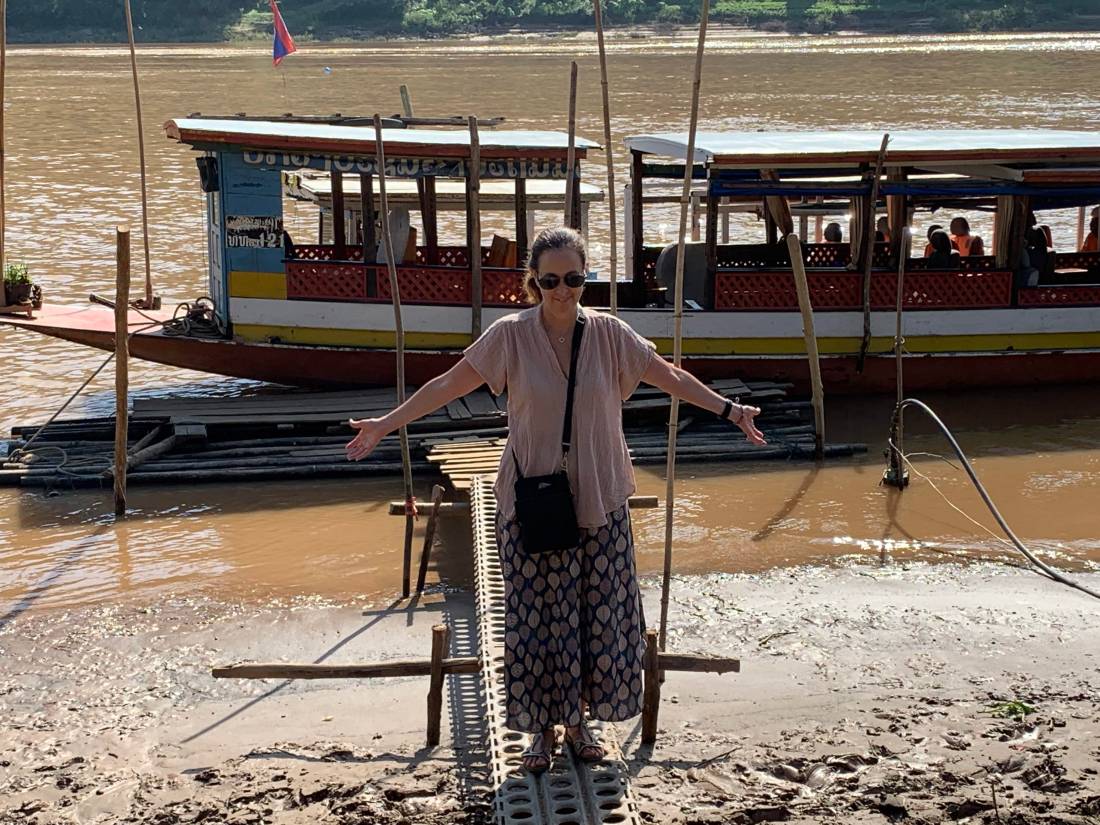
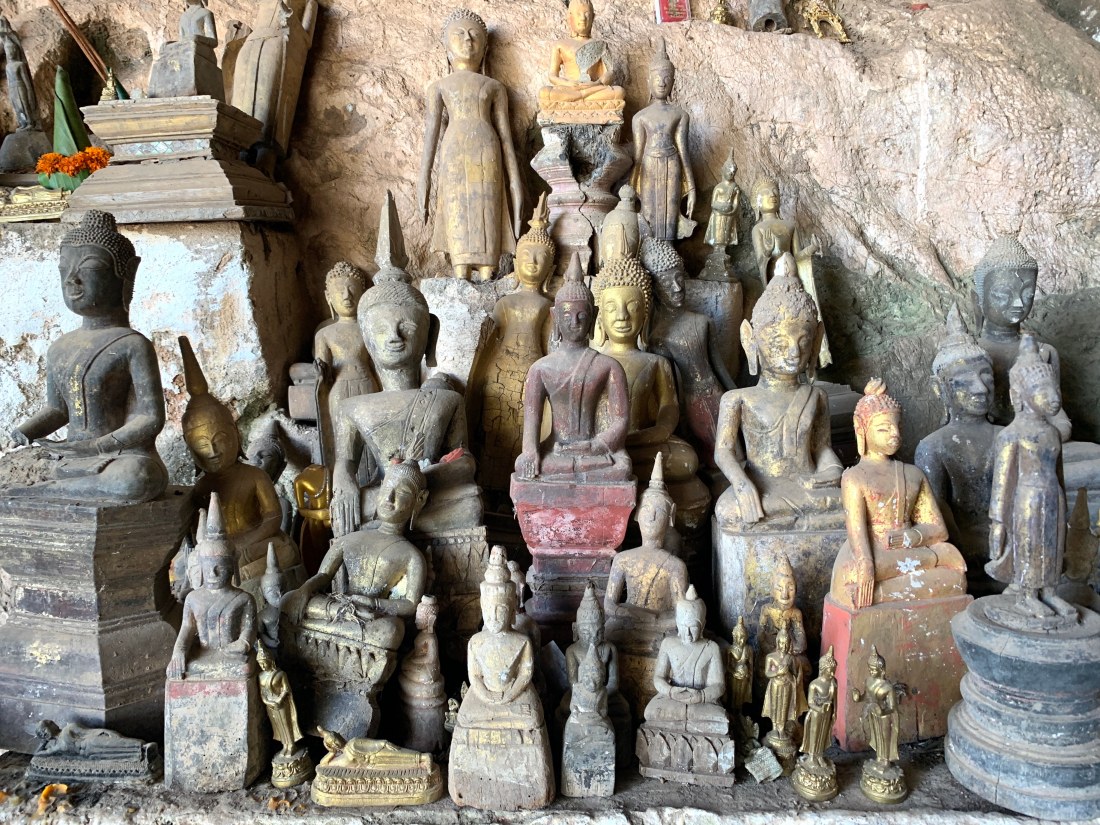
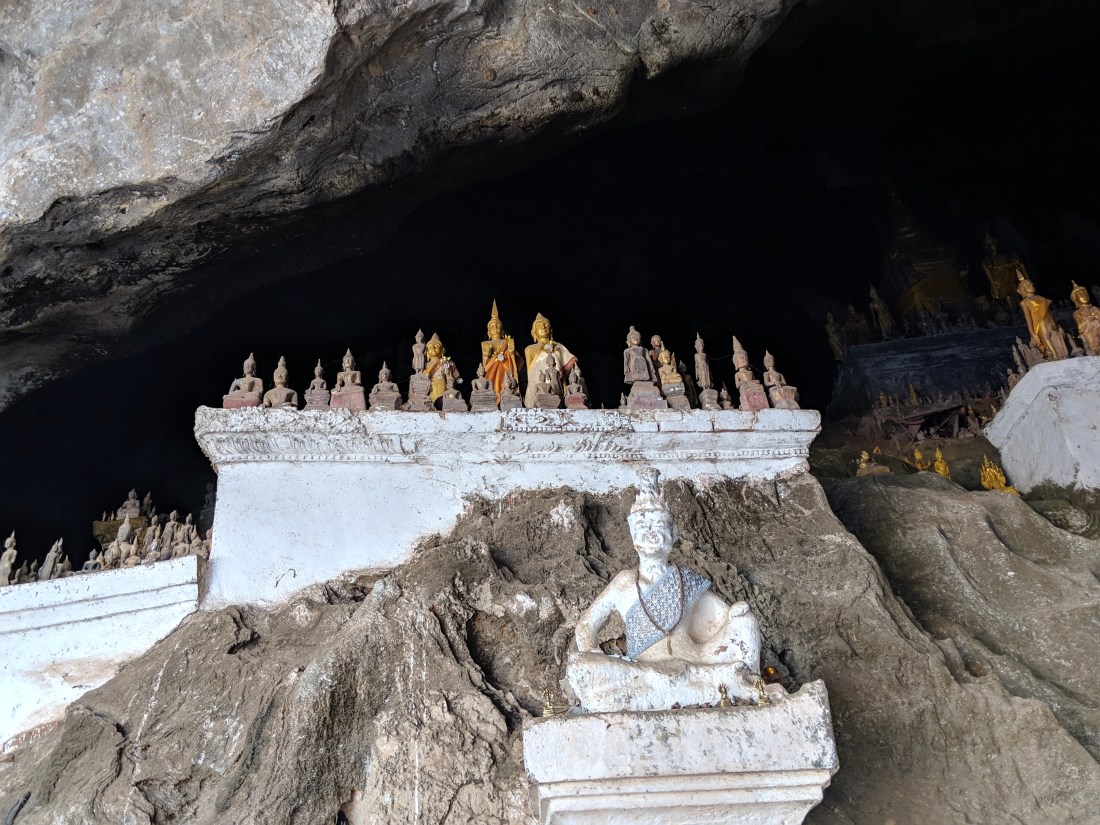
The next day we hired a private boat to take us 25 km – 2 hours – up the Mekong River to the Pak Ou Caves which house thousands of buddhas.  History has it that originally the caves were shrines.  But currently they are a home for used Buddhas, which cannot be discarded.  Also, yearly the locals take their household buddhas there for a cleaning in the vessel.

img_20190118_134335
Our boat
img_20190118_111518
View of the boat from our seats


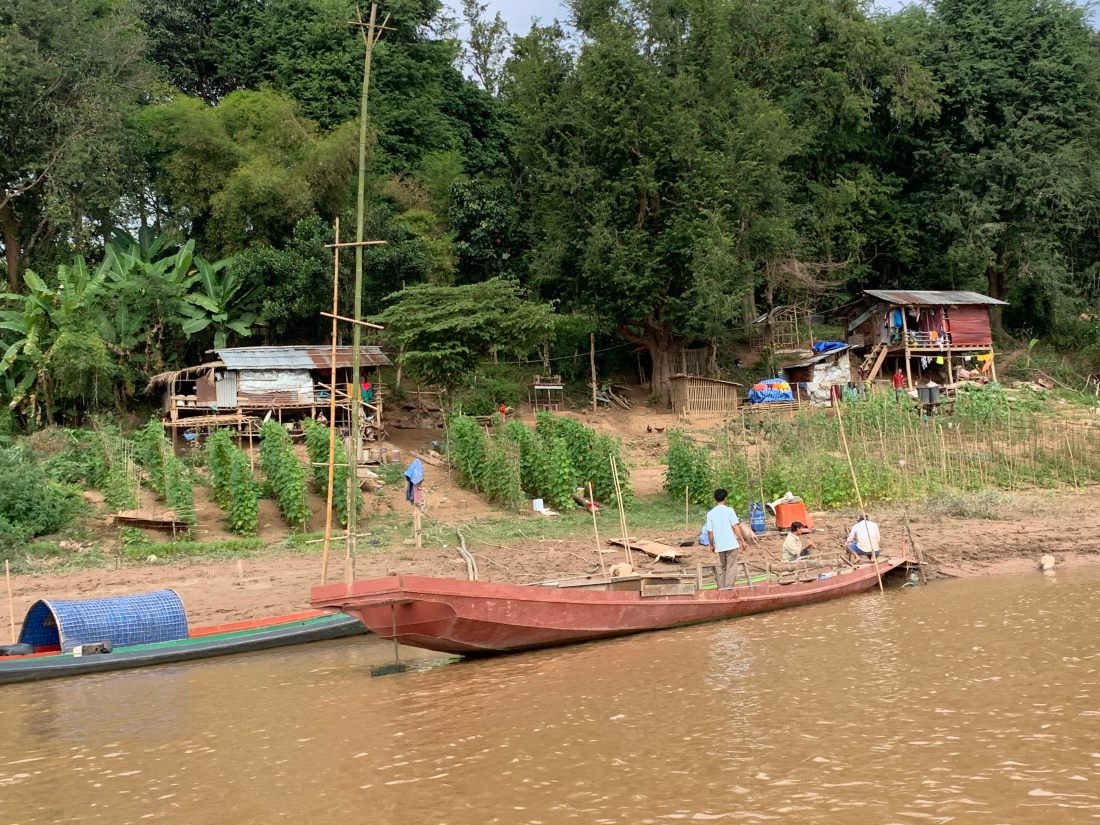
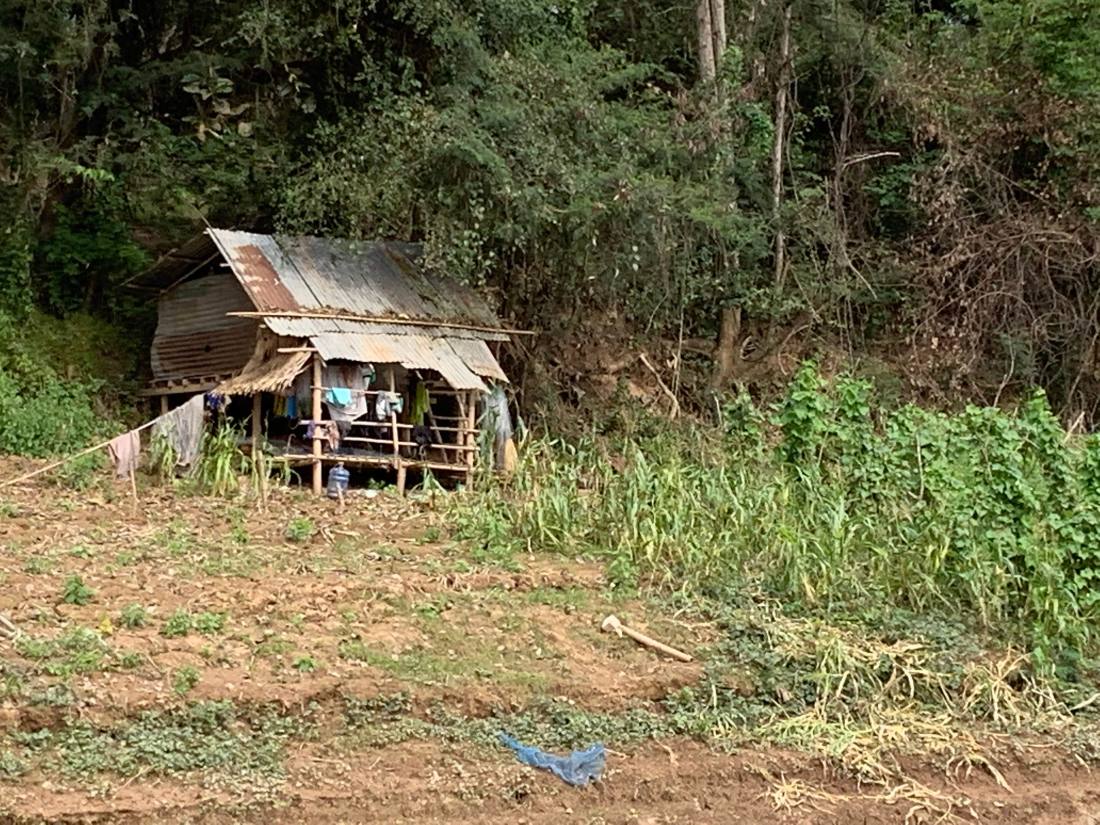
Along the way, the homes on the city side of the river are clearly more expensive than the homes in the villages and farms on the other side of the river.

img_1180

img_1131

img_1130img_1132

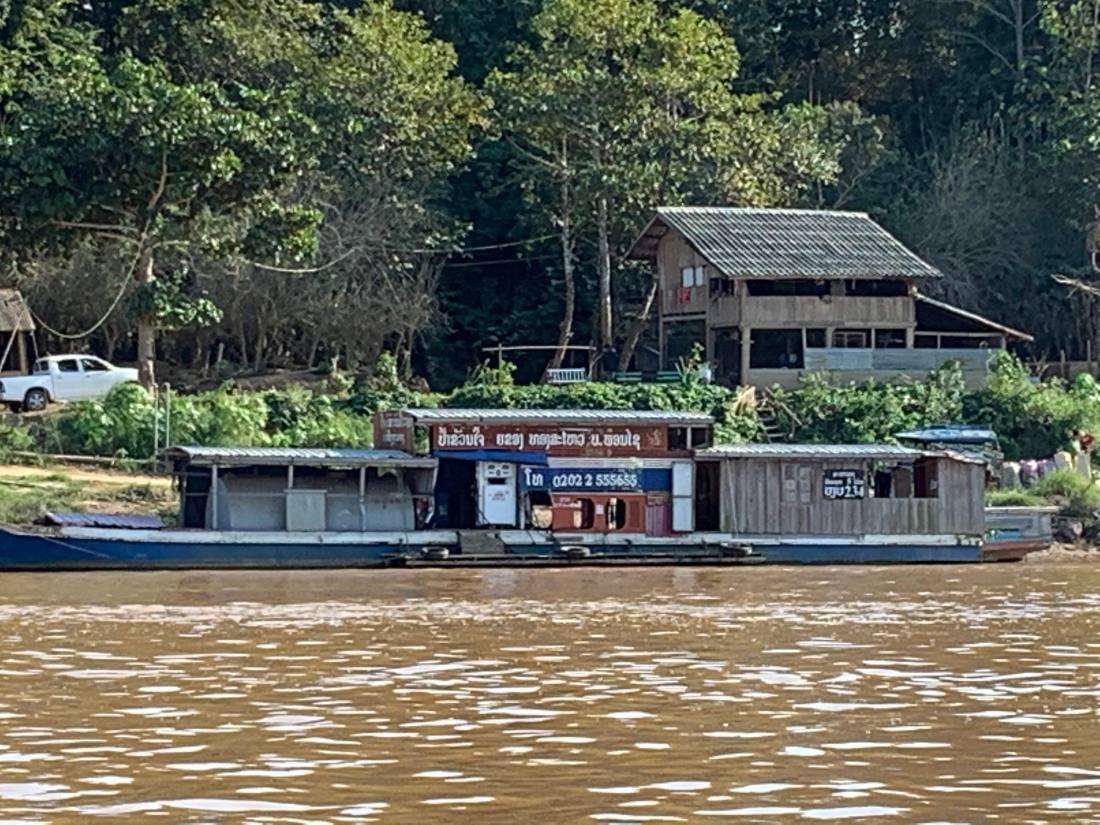
We stopped for gas at the station.

img_1177

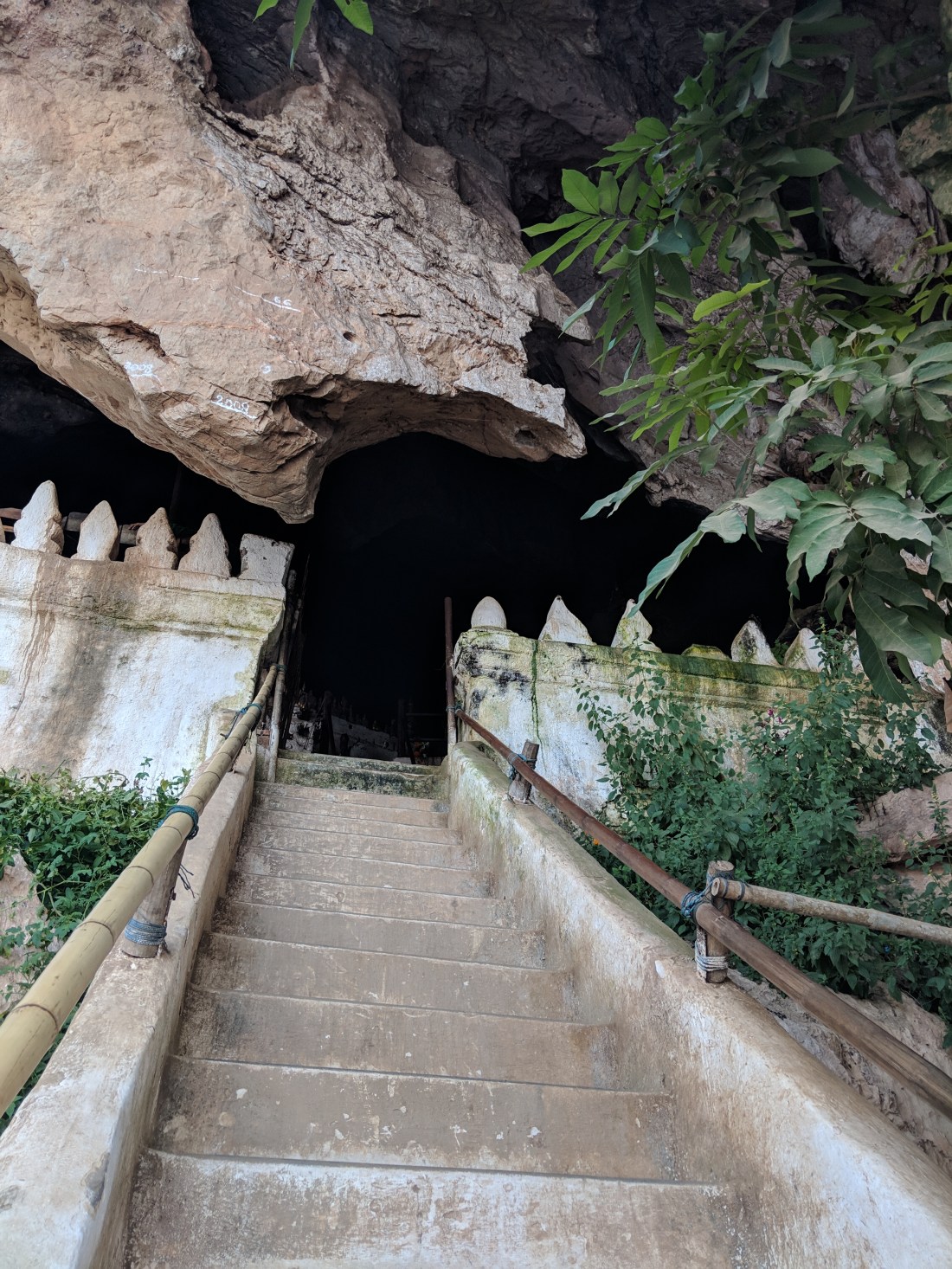
Once we reached the caves, we had to climb up very steep steps from the river to enter.

img_20190118_132233

img_20190118_134247

Once inside, there are buddhas literally in every nook and cranny of the caves.

img_20190118_132928img_20190118_133555img_20190118_133842img_1167

img_20190118_134013img_20190118_133941

img_20190118_131105
the vessel for cleaning the buddhas with a swan on one end and dragon on the other

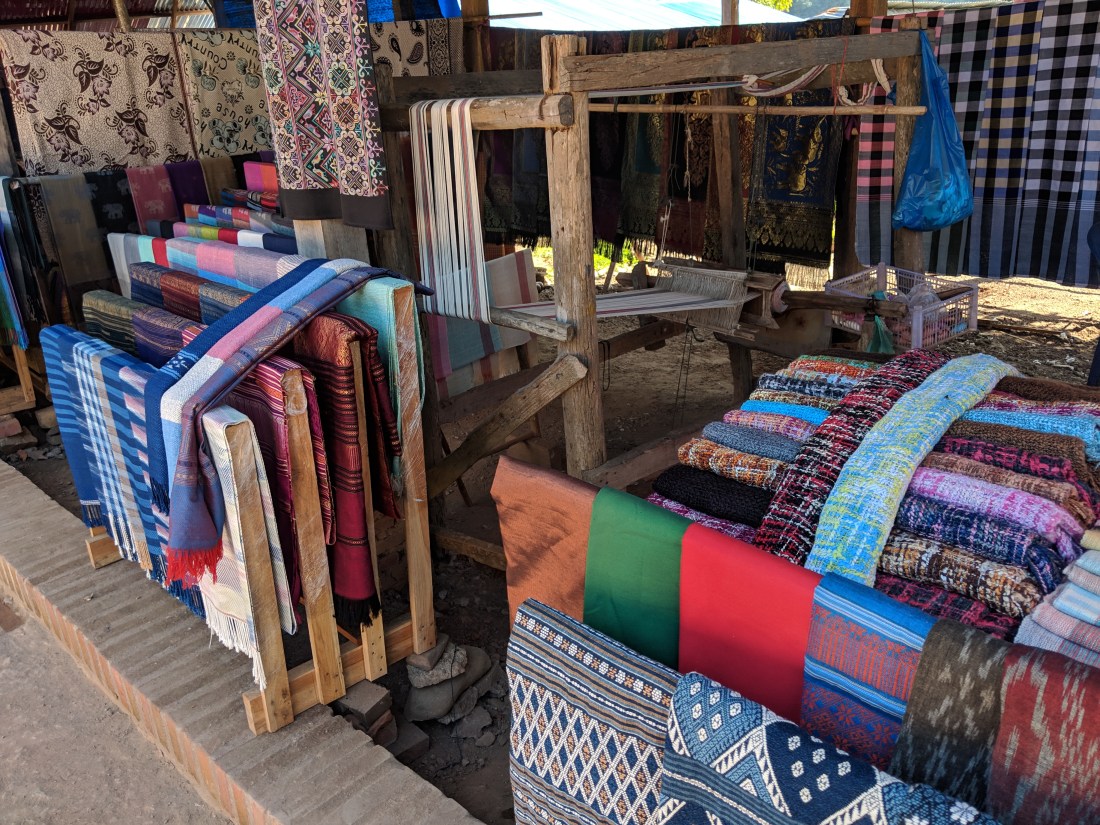
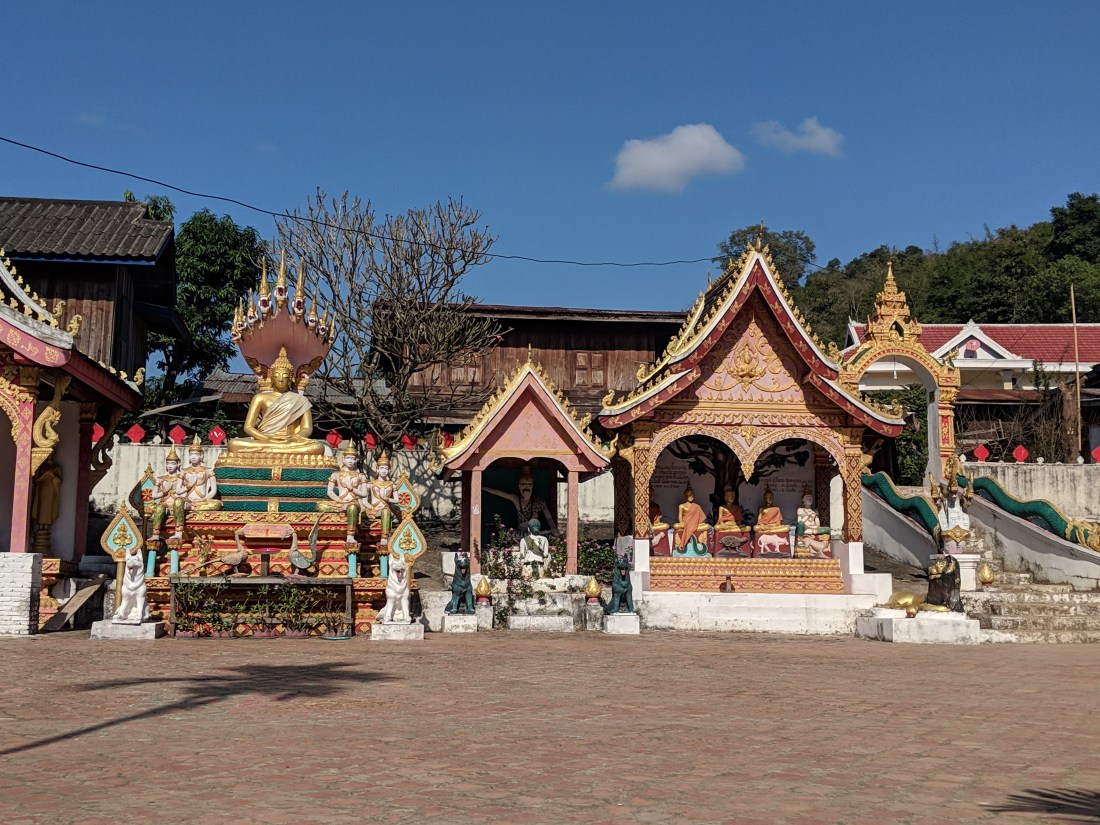
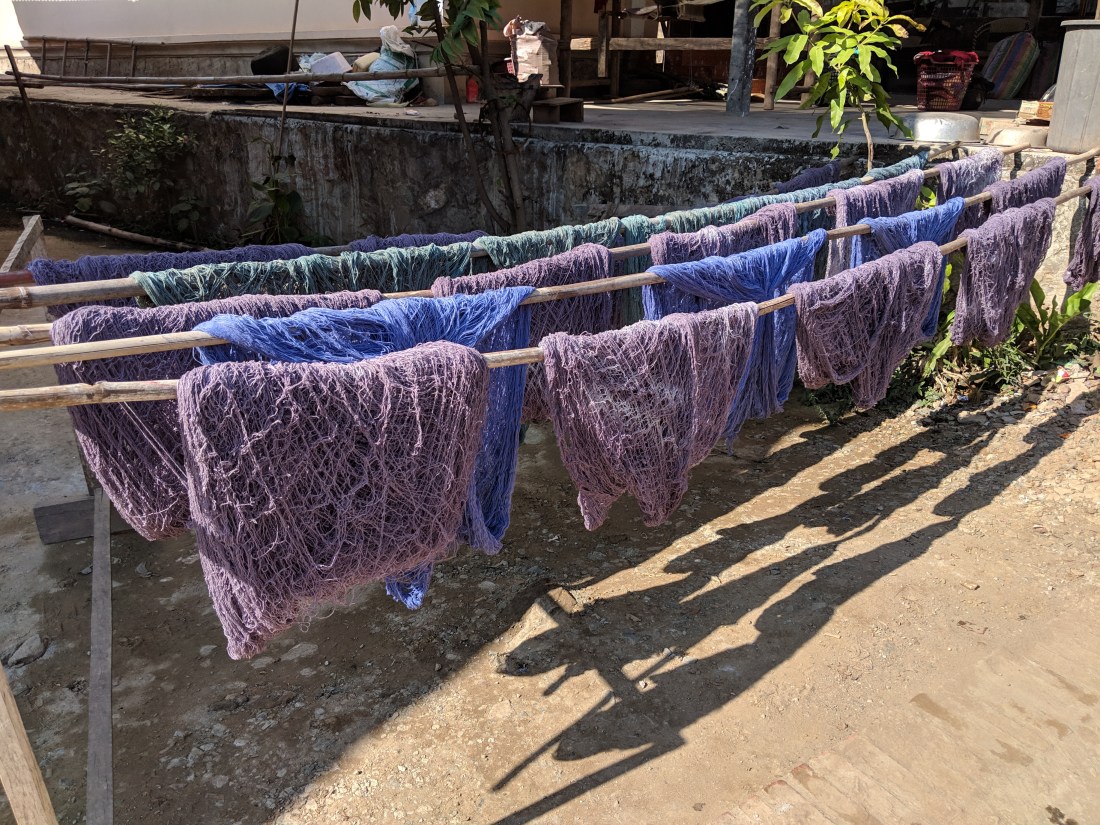
On the way down the river we stopped at the Whiskey Village know for its local moonshine as well as for textile weaving.  And of course, every local village has its own wat.

img_1169
they rolled out the red carpet for our arrival


img_20190118_142150

IMG_20190118_142836.jpg

After our long day on the river, we had a huge late lunch at a restaurant on the riverfront.  The food is somewhat similar to Thai but with less coconut milk, way more use of lemongrass and liberal use of a local spicy jam.  We loved everything we tried.

We ended the day with an hour of local Lao storytelling with a live music accompaniment: the guy on the right.  So fun!

img_20190118_183848

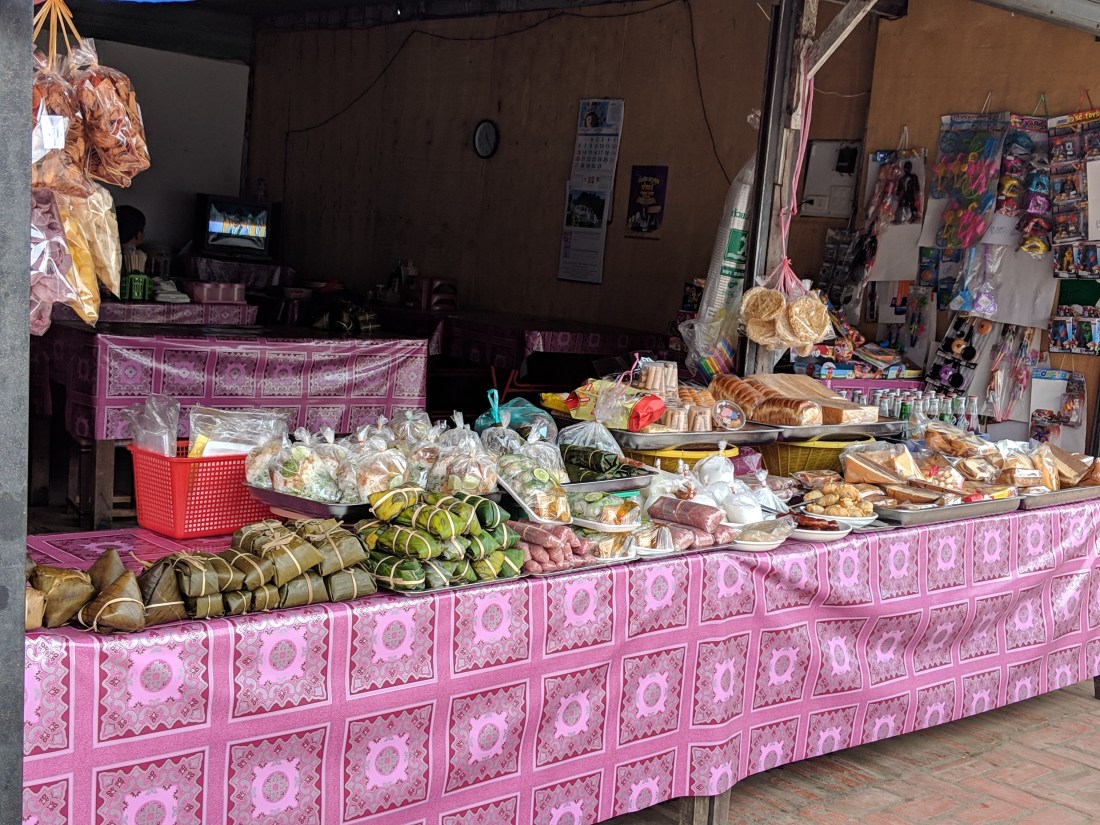
Our final morning in Luang Prabang we spent visiting local wats and markets for the town’s people.

IMG_20190119_112235IMG_20190119_112120

Our only regret is that we did not allow ourselves more time here.  I hugely loved this small country.


Chiang Mai Jan 12-16

This is our final destination in Thailand.  We have loved the friendly people and the delicious food and will miss them both.  We have particularly become street food junkies.  Of all the many night markets we have been to in Thailand, the Sunday night market in Chiang Mai was by far the best for street art and crafts.

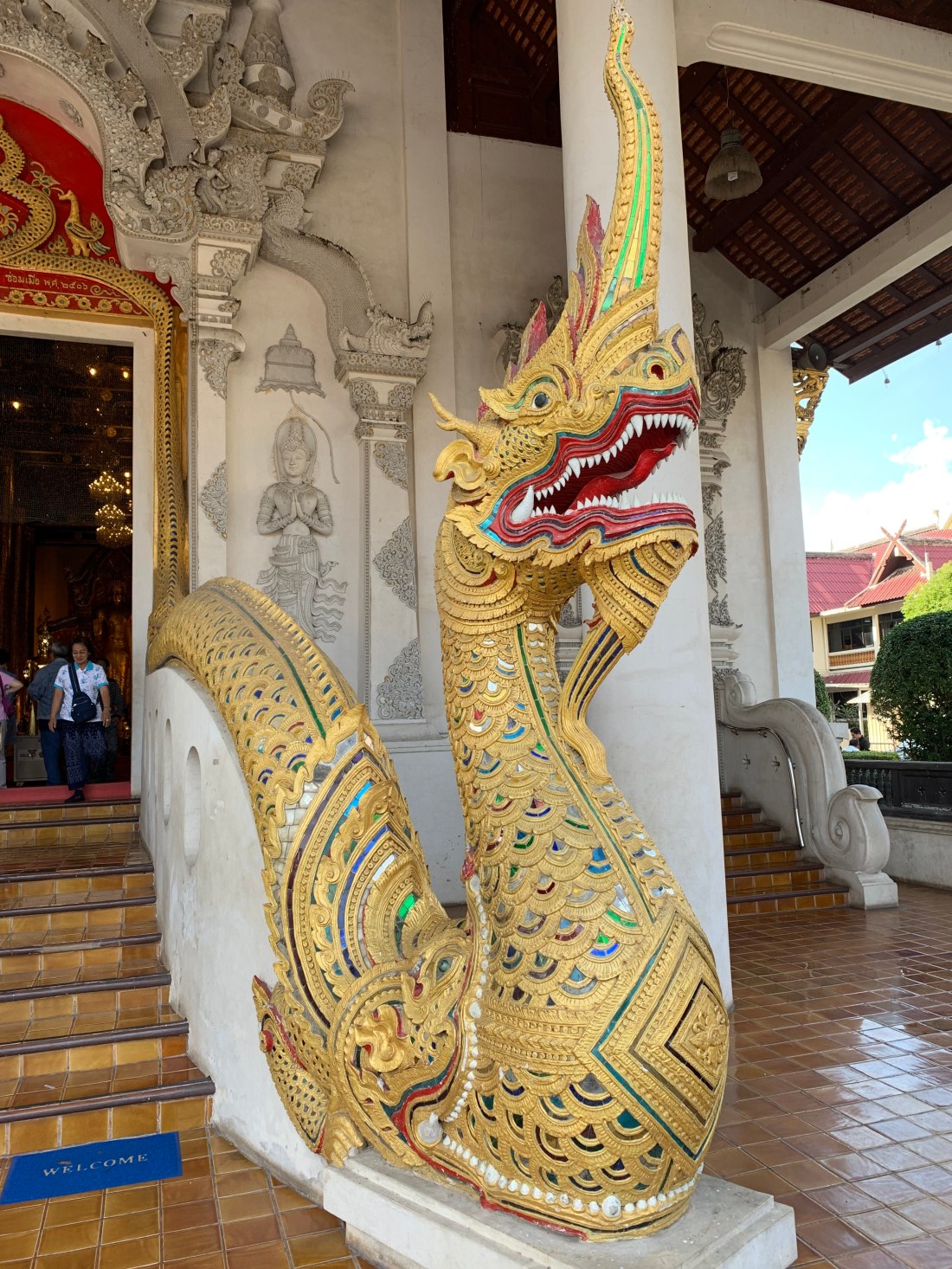
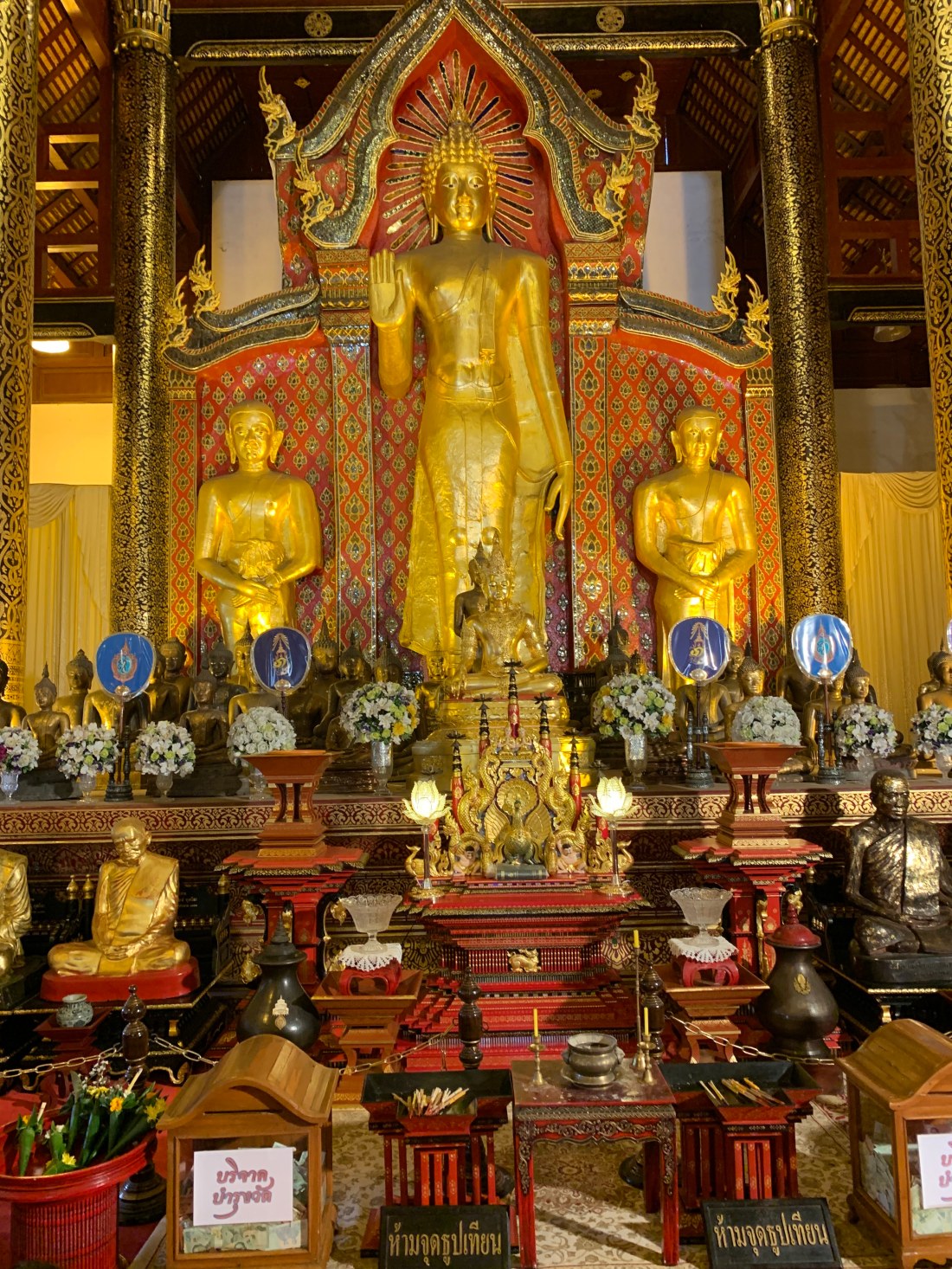
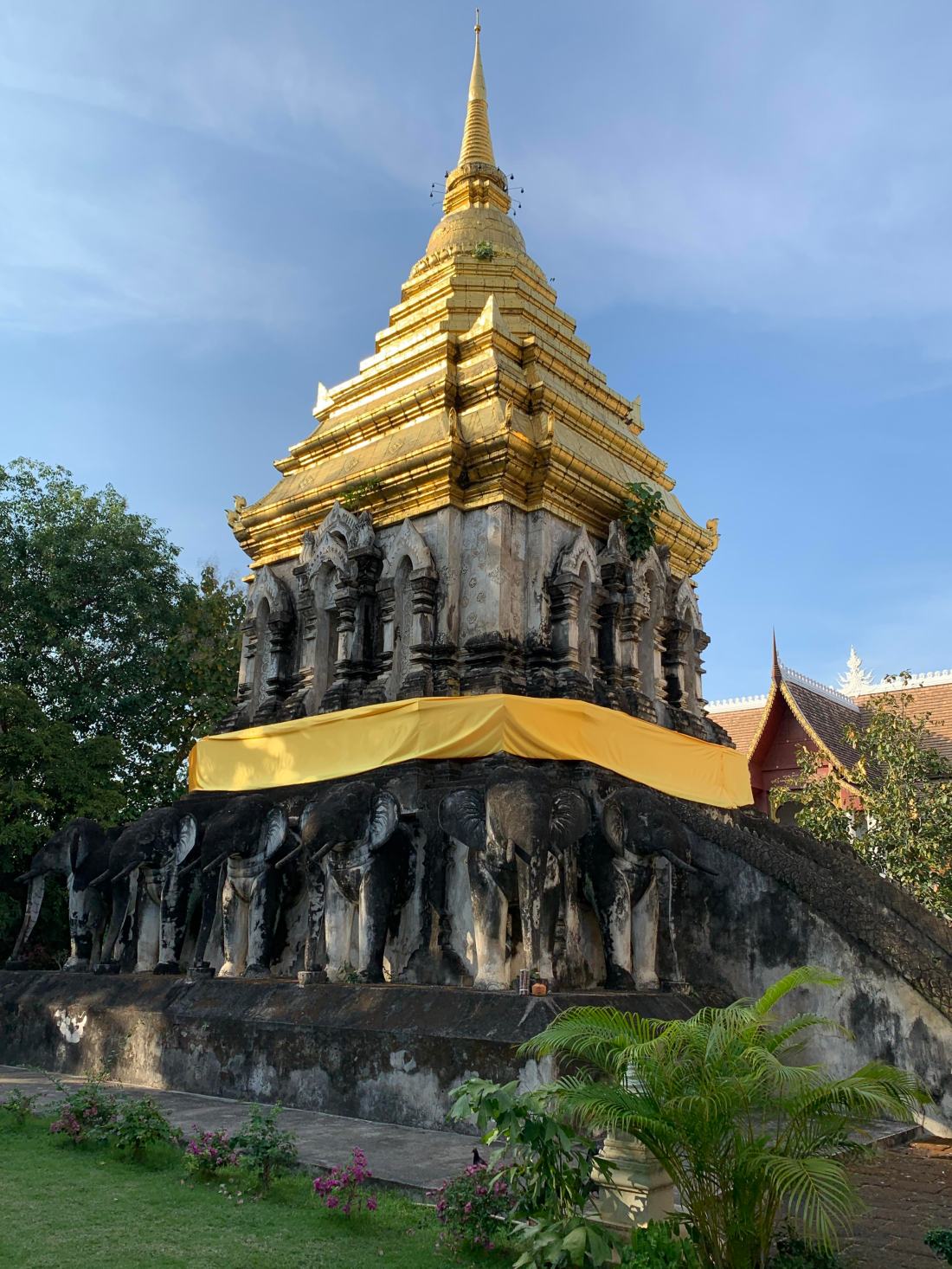
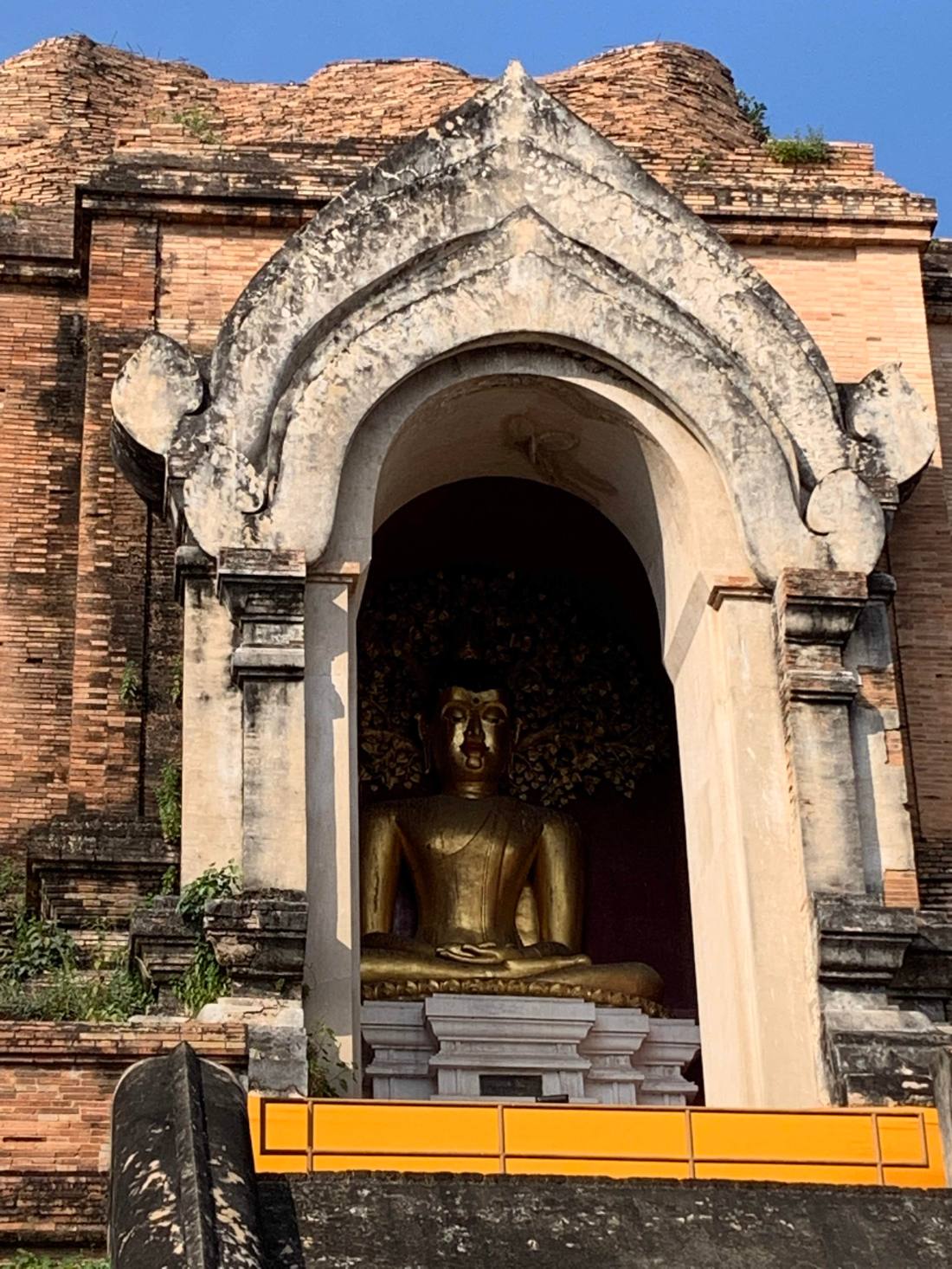
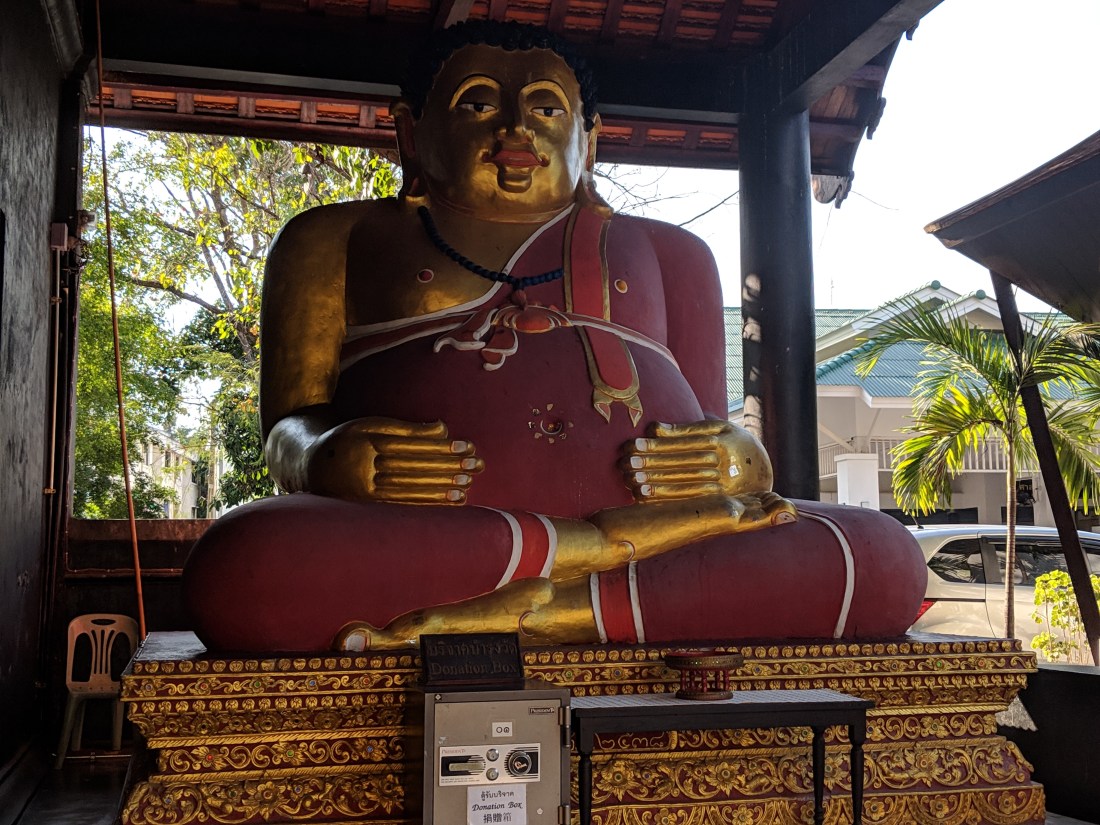
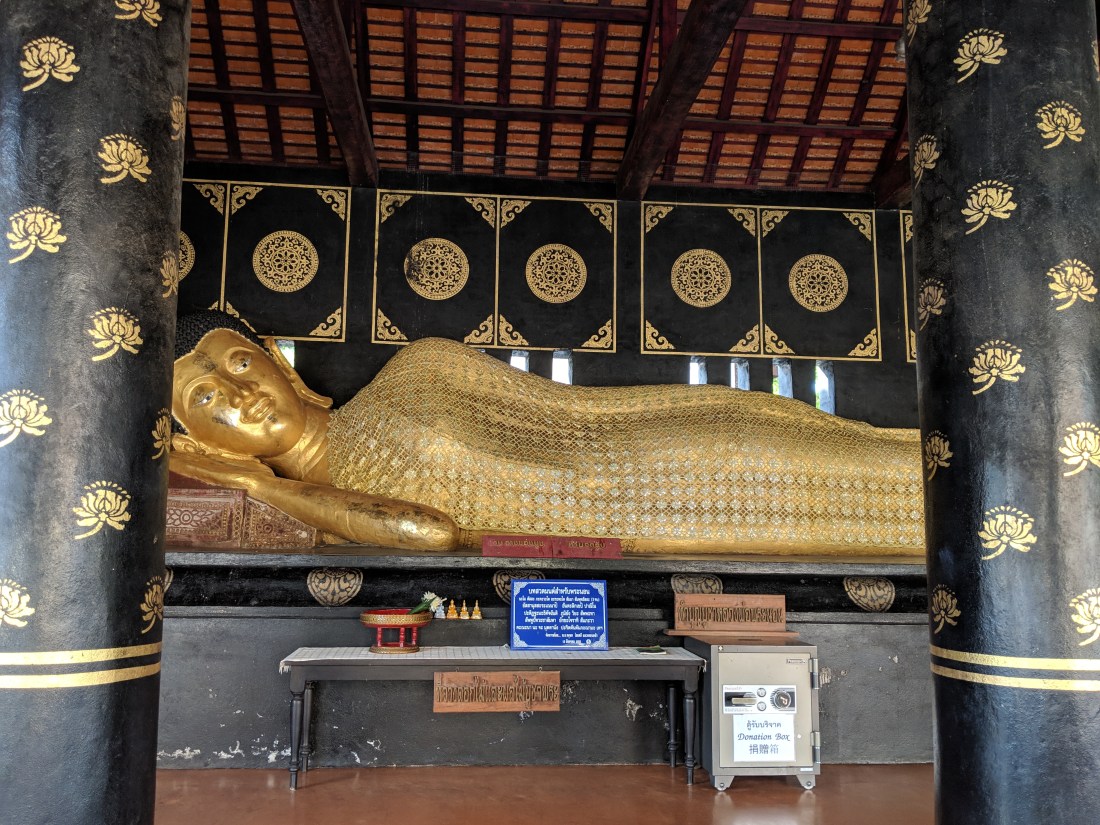
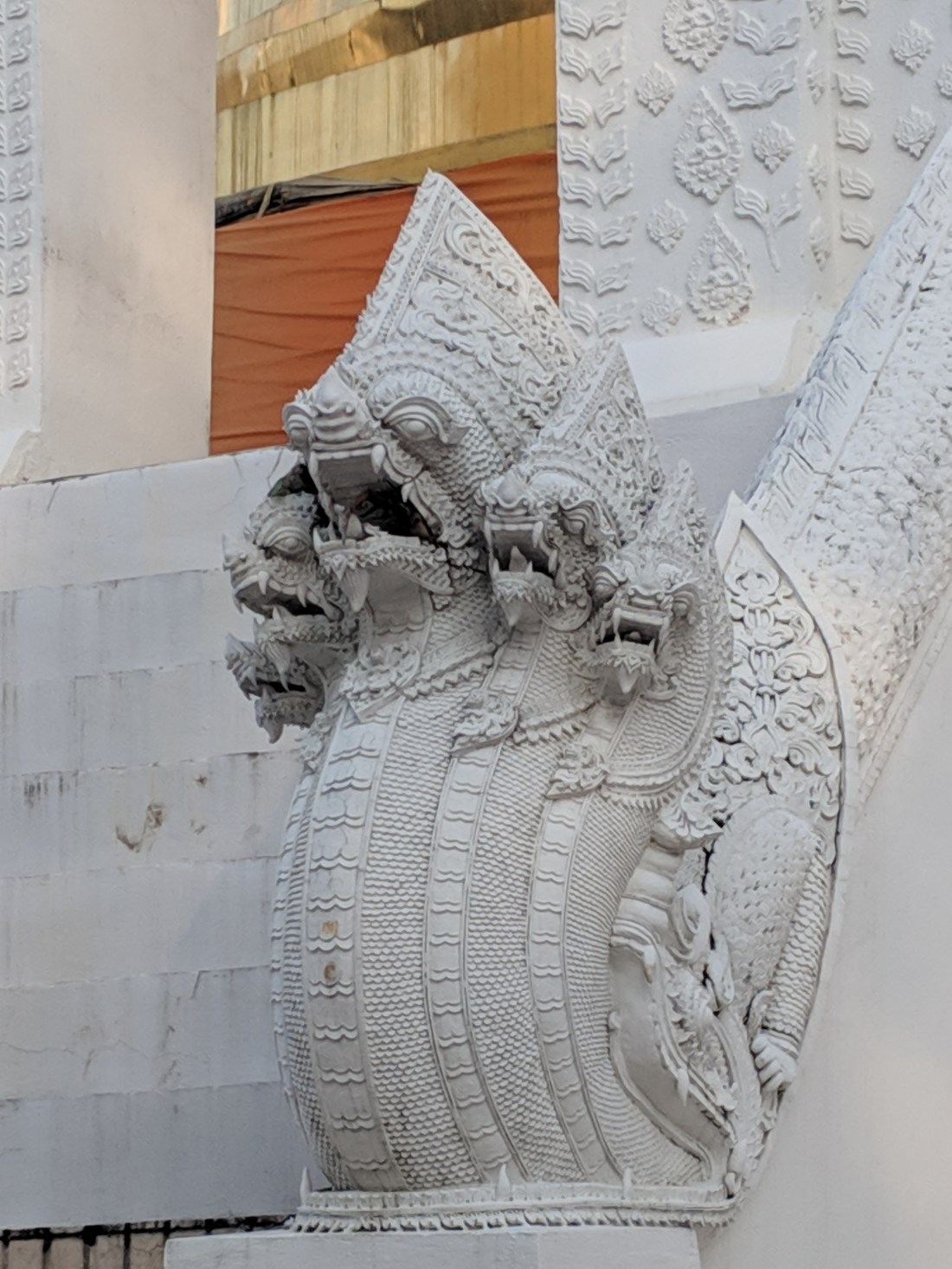
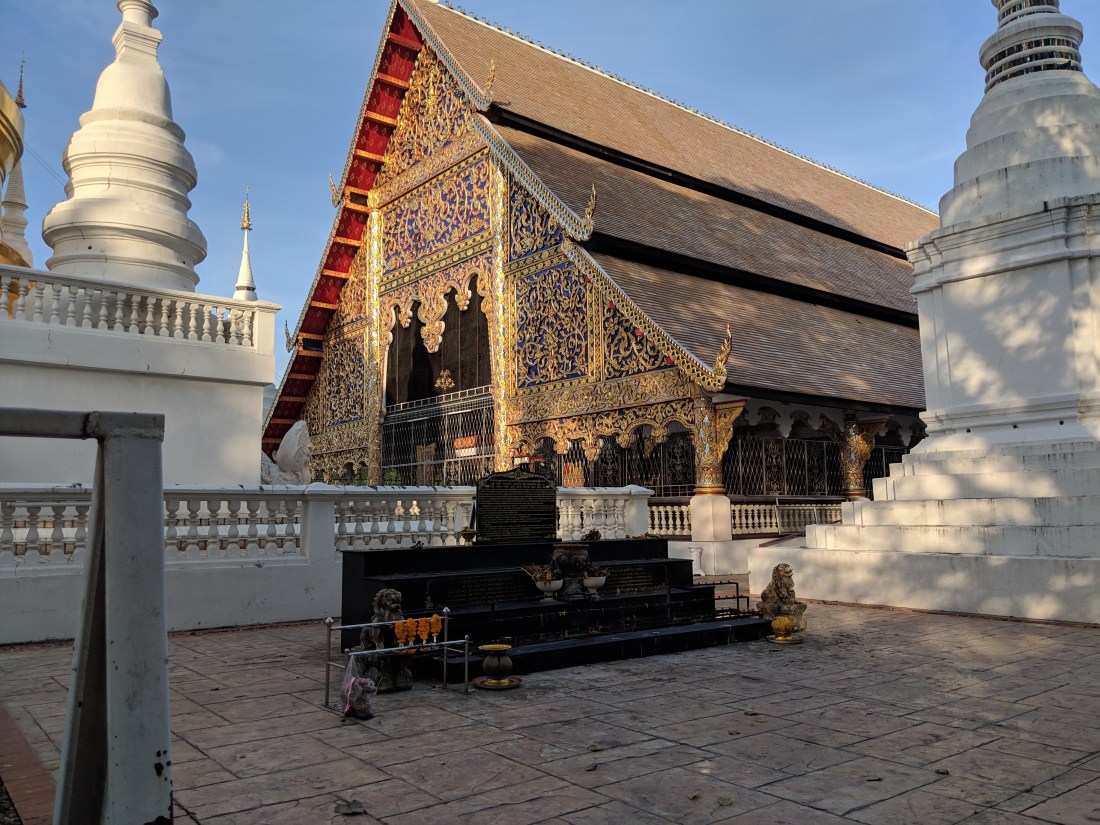
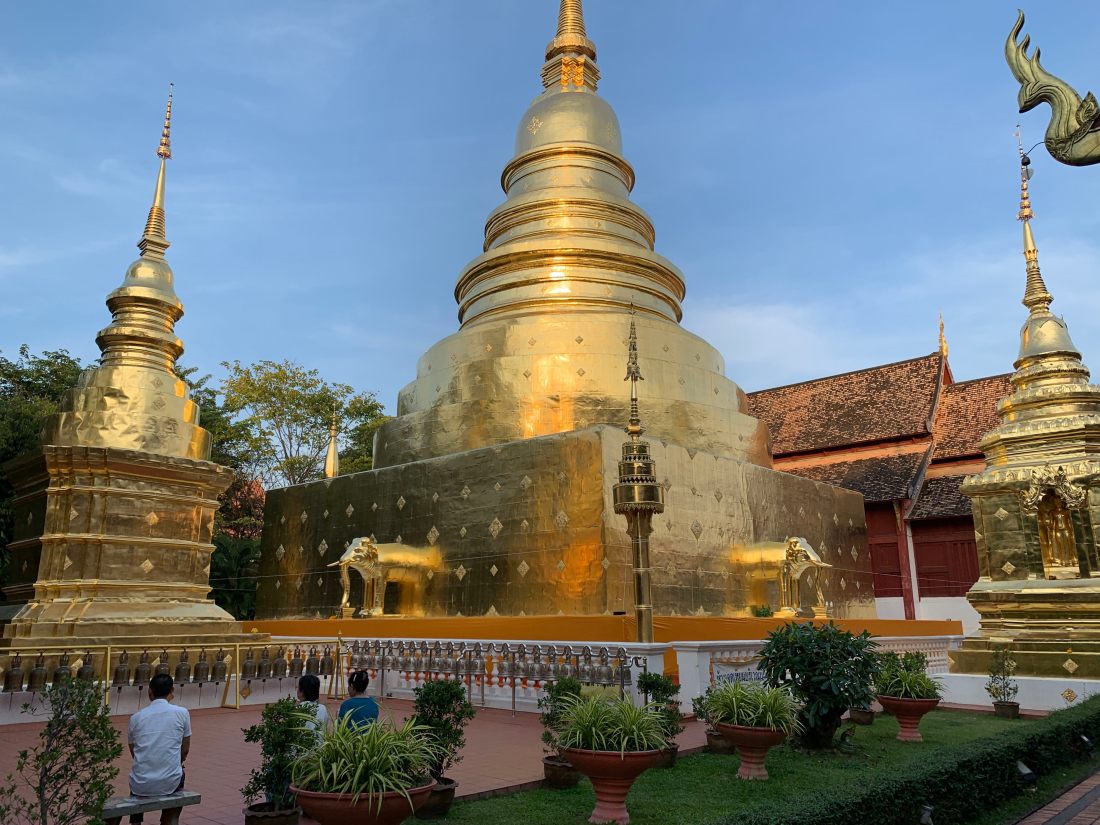
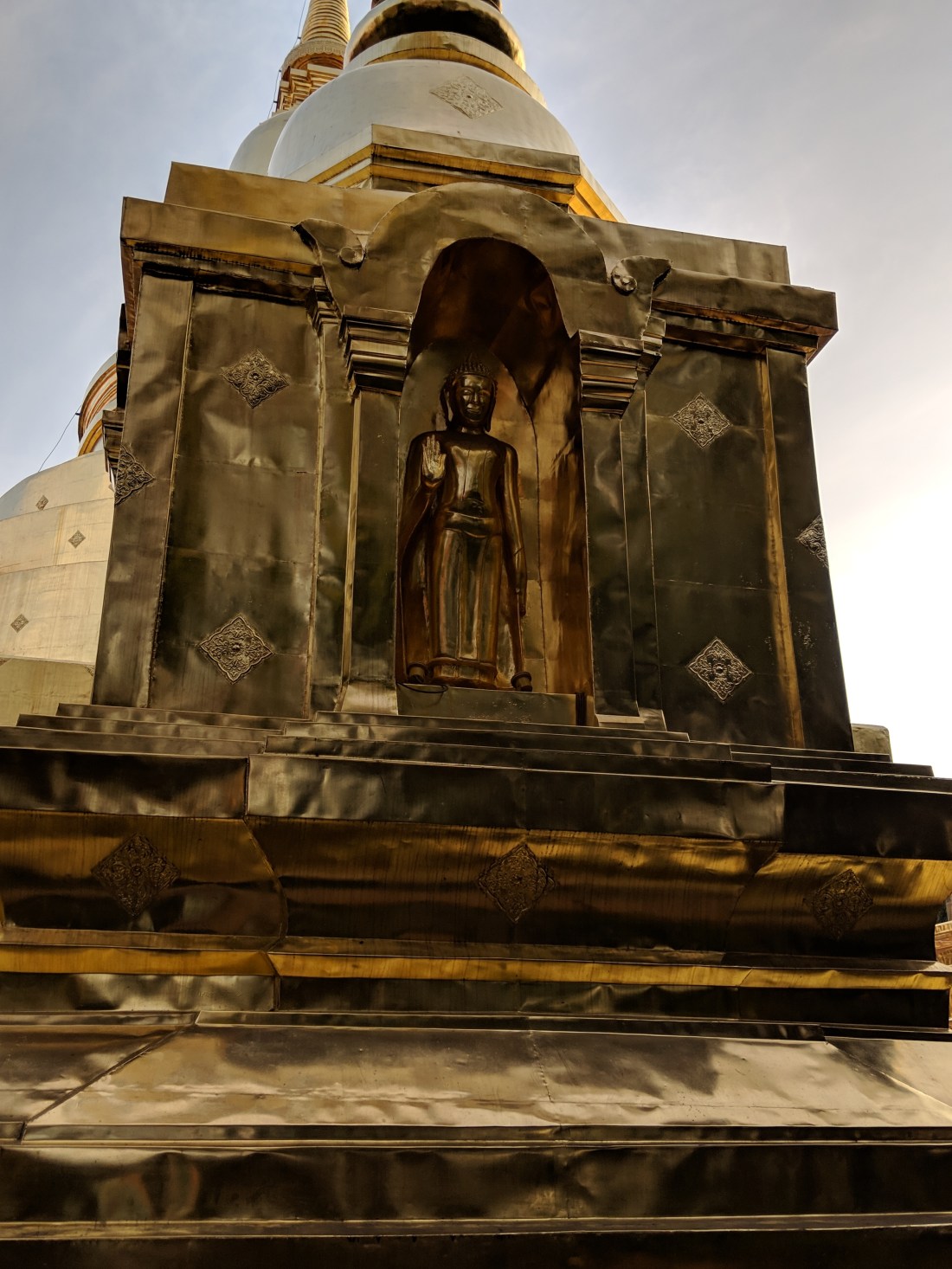
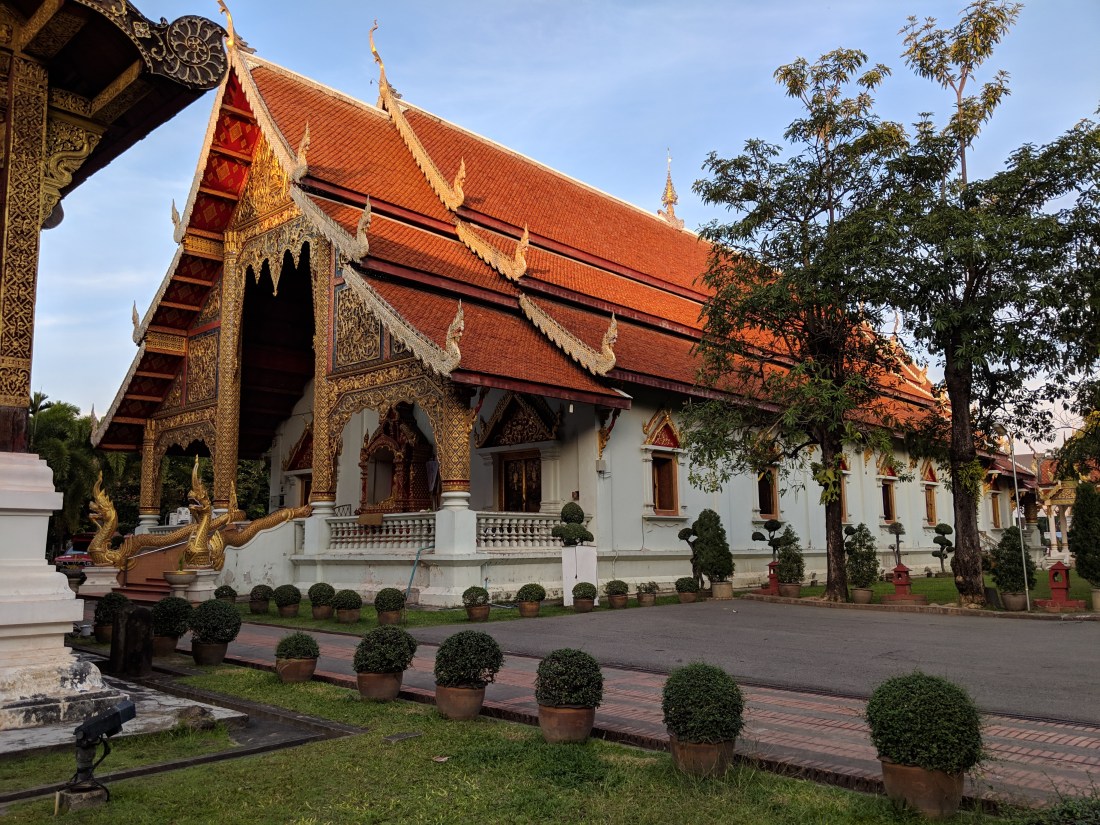
We visited several of the many temples – wats – in the old city of Chiang Mai.  Our first one was Wat Chedi Luang, which houses the city pillar, with its historic relics.  Unlike other wats we had visited, this one had both ancient and modern buildings; parts of it were erected in the 13th century.  Also, at the time we were there, the monks were holding an outdoor prayer service.

img_0885img_0887img_0888img_20190111_151316

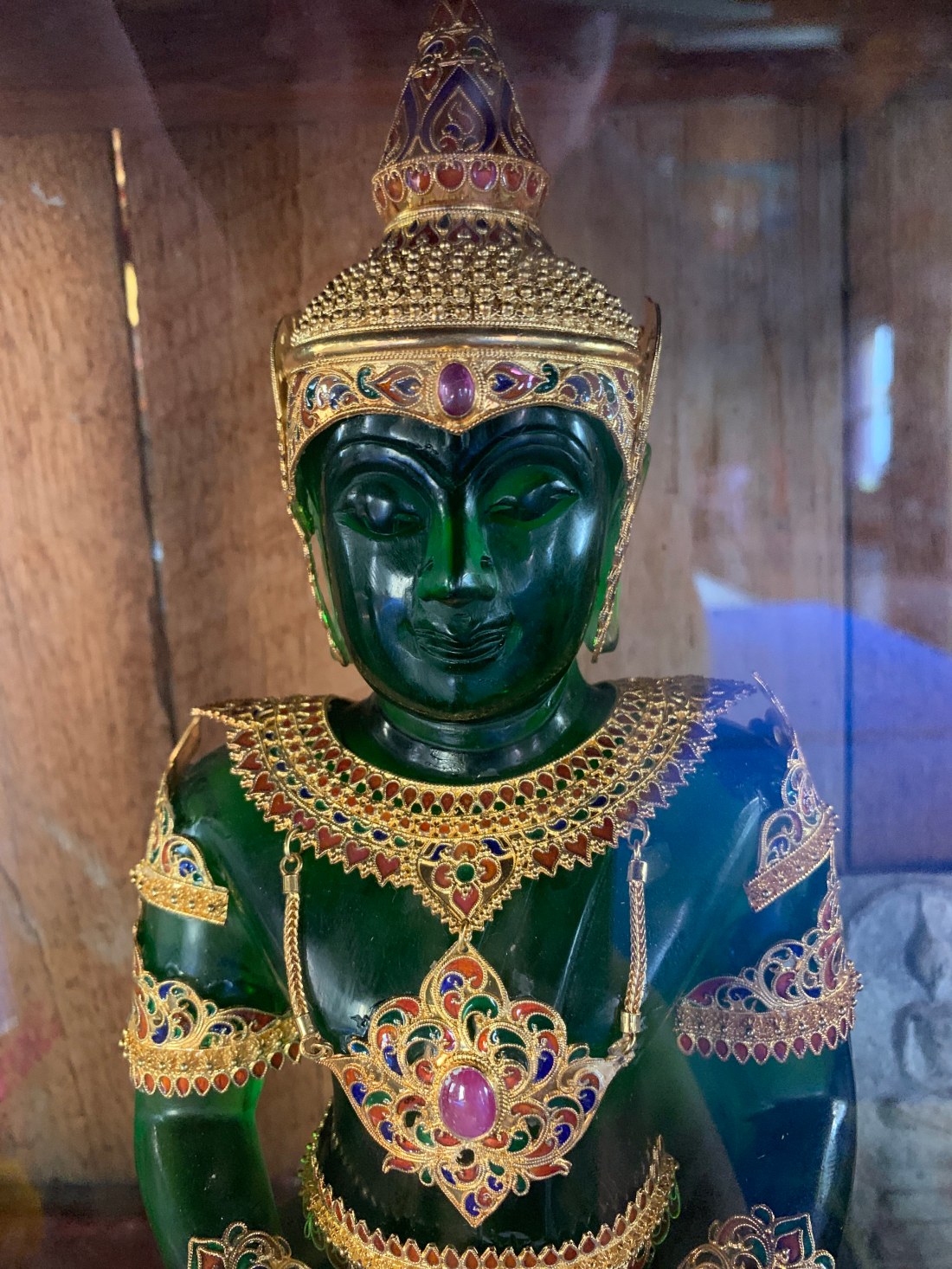
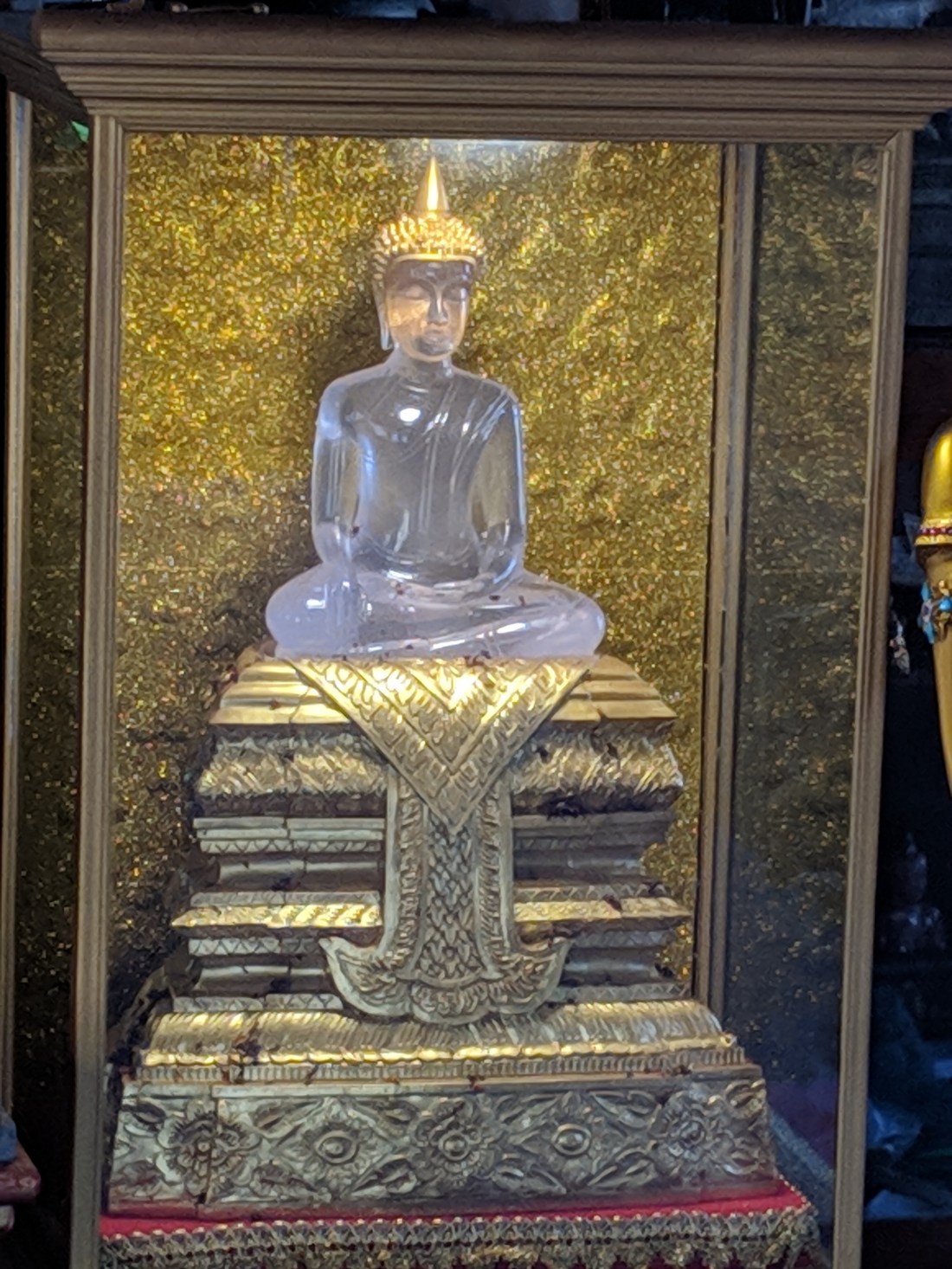
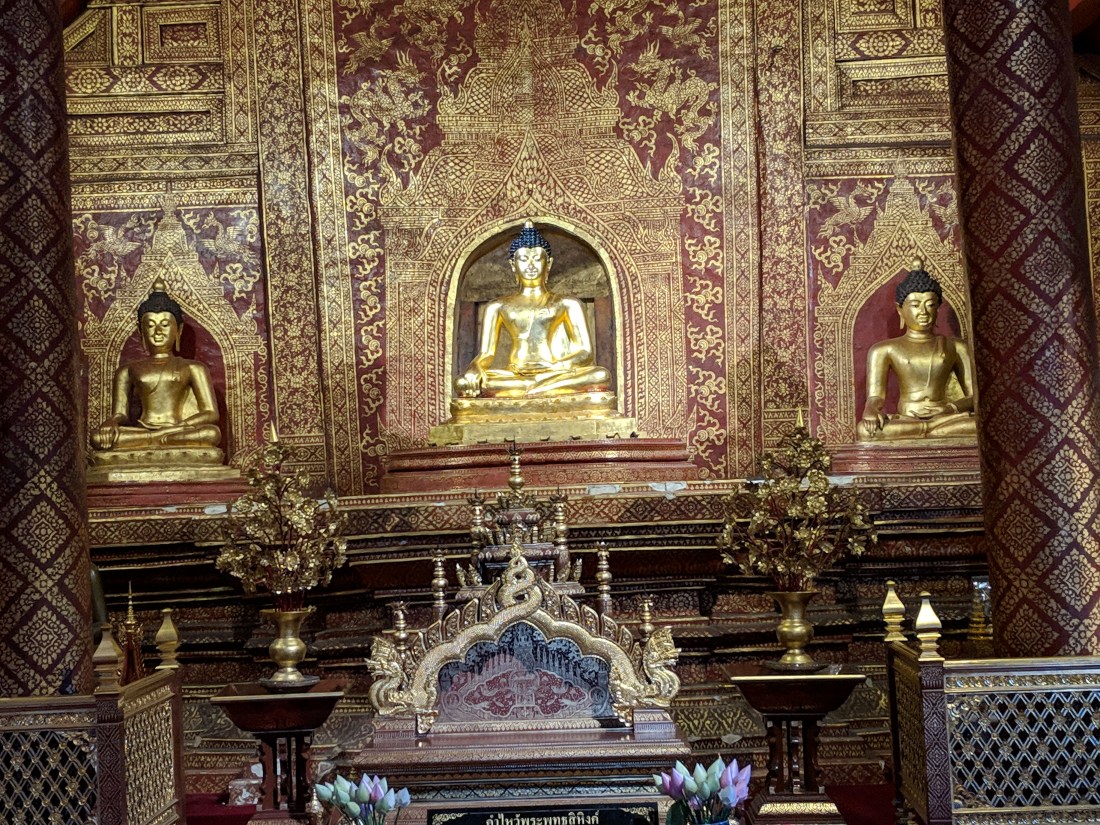
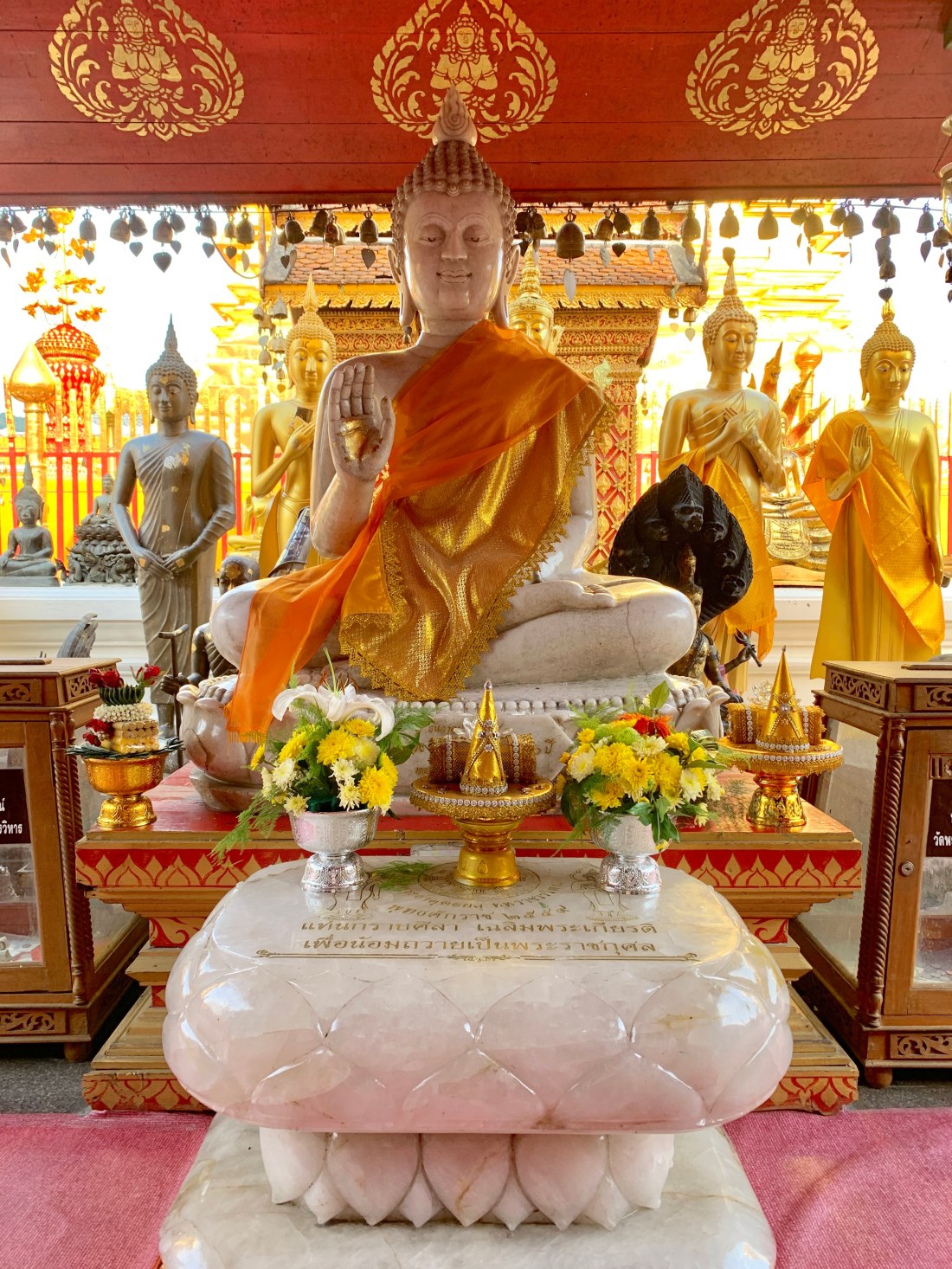
Next we went to Wat Chiangmun, which is the oldest temple in Chiang Mai.  It houses the crystal and marble buddhas.

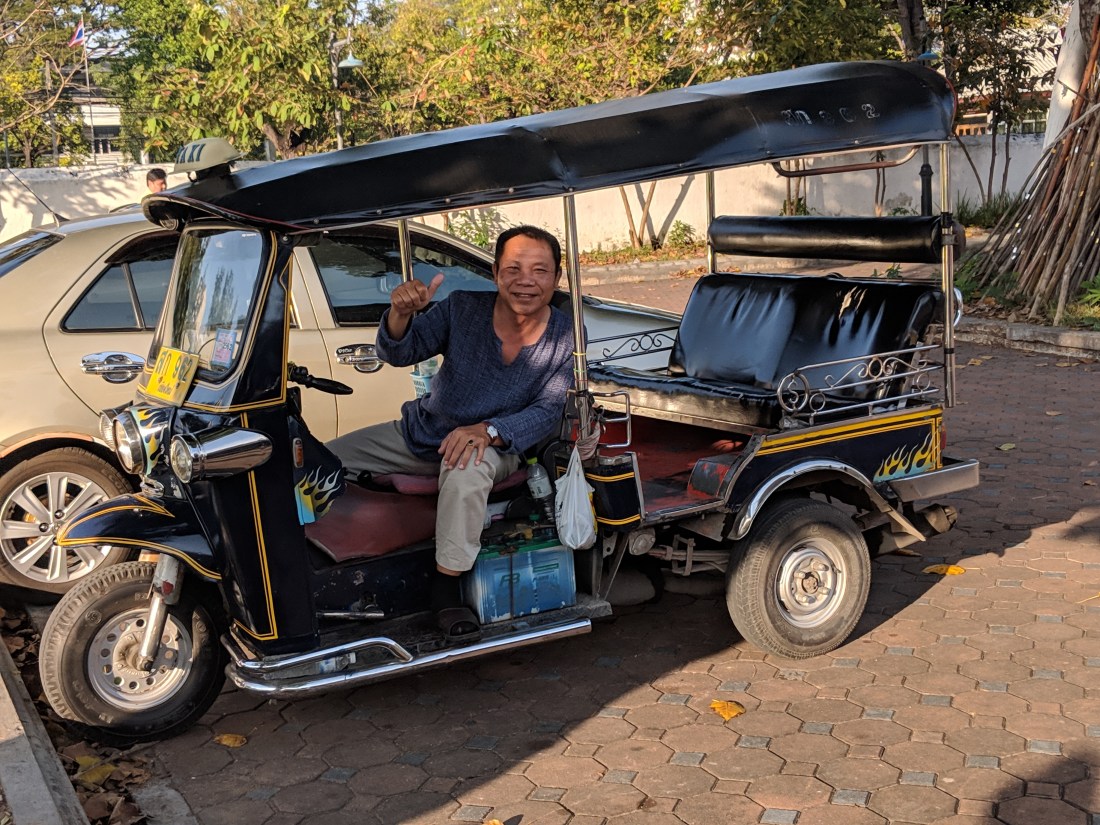
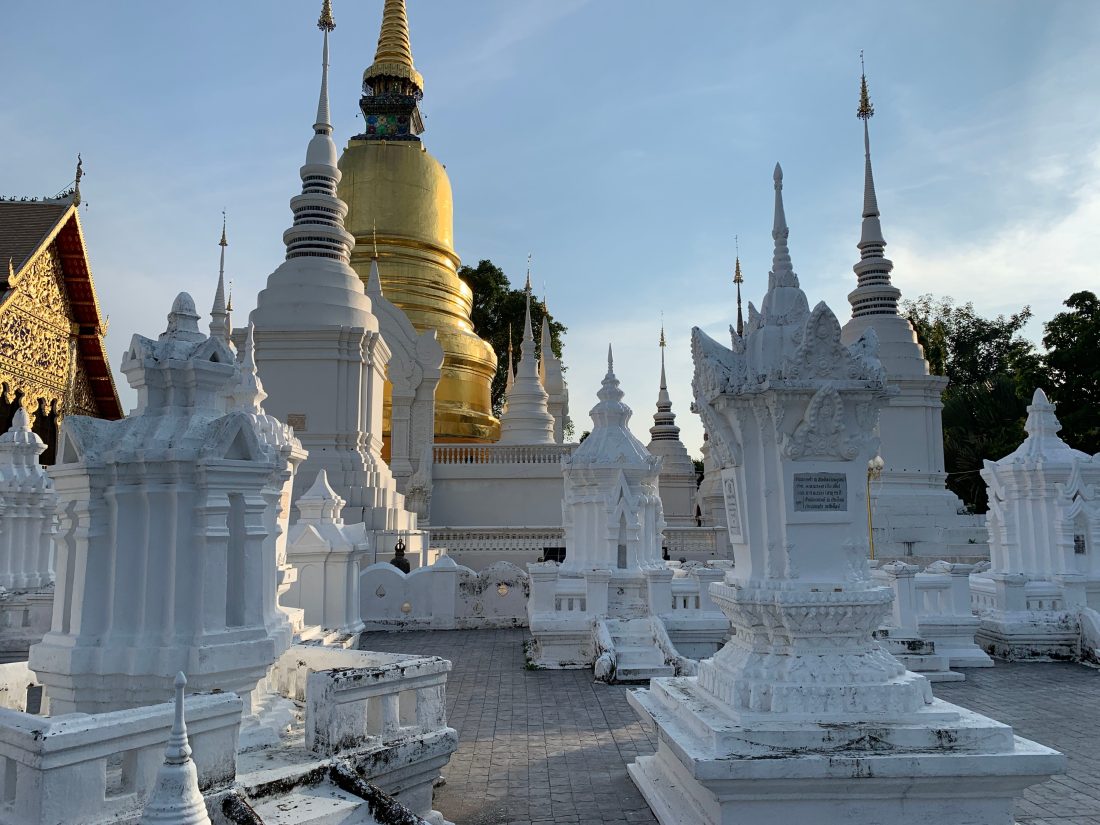
img_0900img_0905img_0898img_20190111_153026img_20190111_152831img_0909img_20190111_161009Then we met Pon, our very friendly tuk tuk driver, who insisted we go outside the Old City to visit Wat Suan Dok, as it was nearing sunset.  He insisted it is the most beautiful temple with the sun low in the sky; he was correct.  Ii is also the burial ground for many of Chiang Mai’s and Thailand’s royalty.

img_20190111_164156img_0911img_0913img_20190111_165117img_20190111_165220img_20190111_165553

Our final temple on the day was Wat Pra Singh.

img_0916img_20190111_172011img_20190111_172826img_20190111_172850img_20190111_173046

After all the sightseeing, it was time to hit the bar for happy hour.

img_20190111_202708

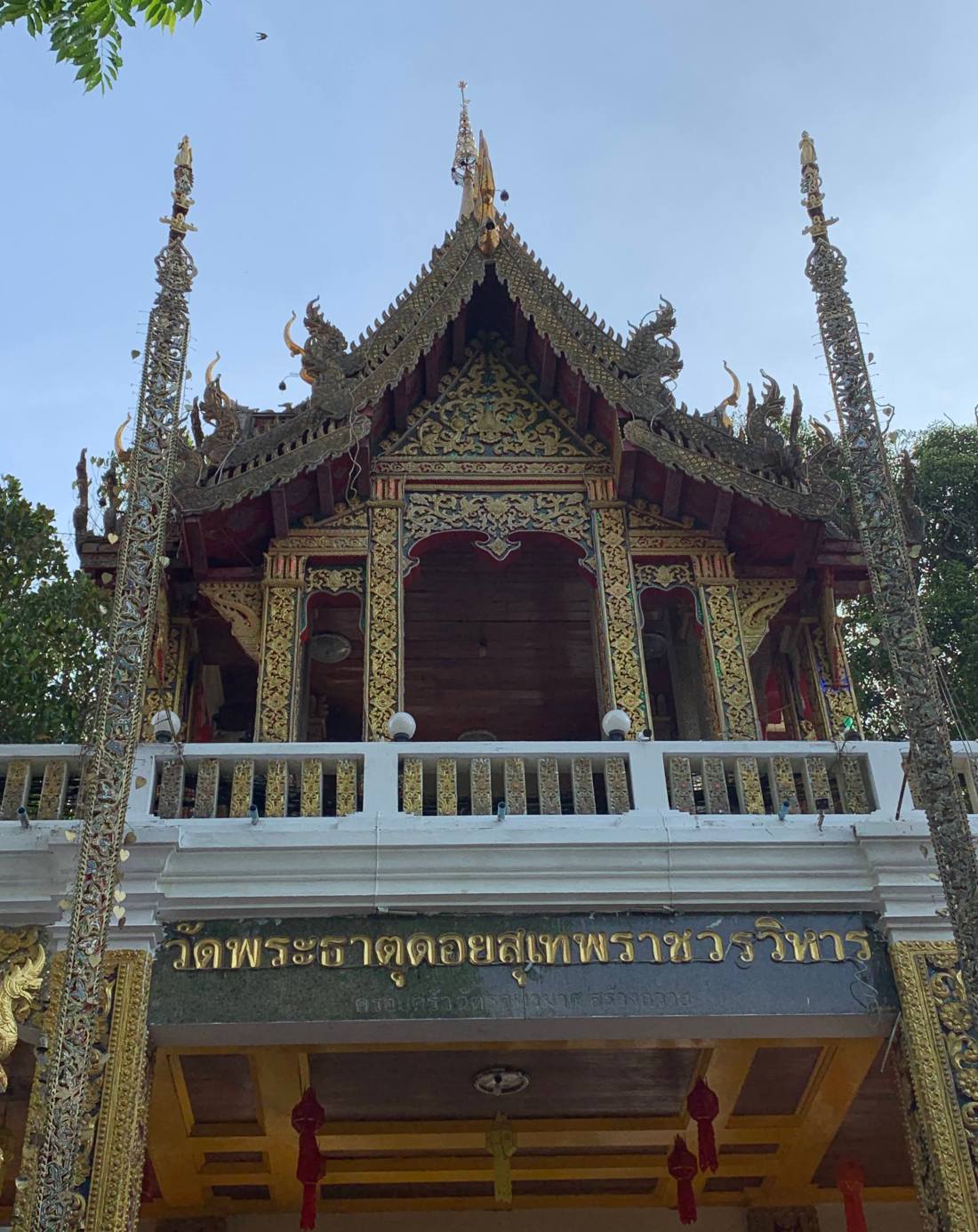
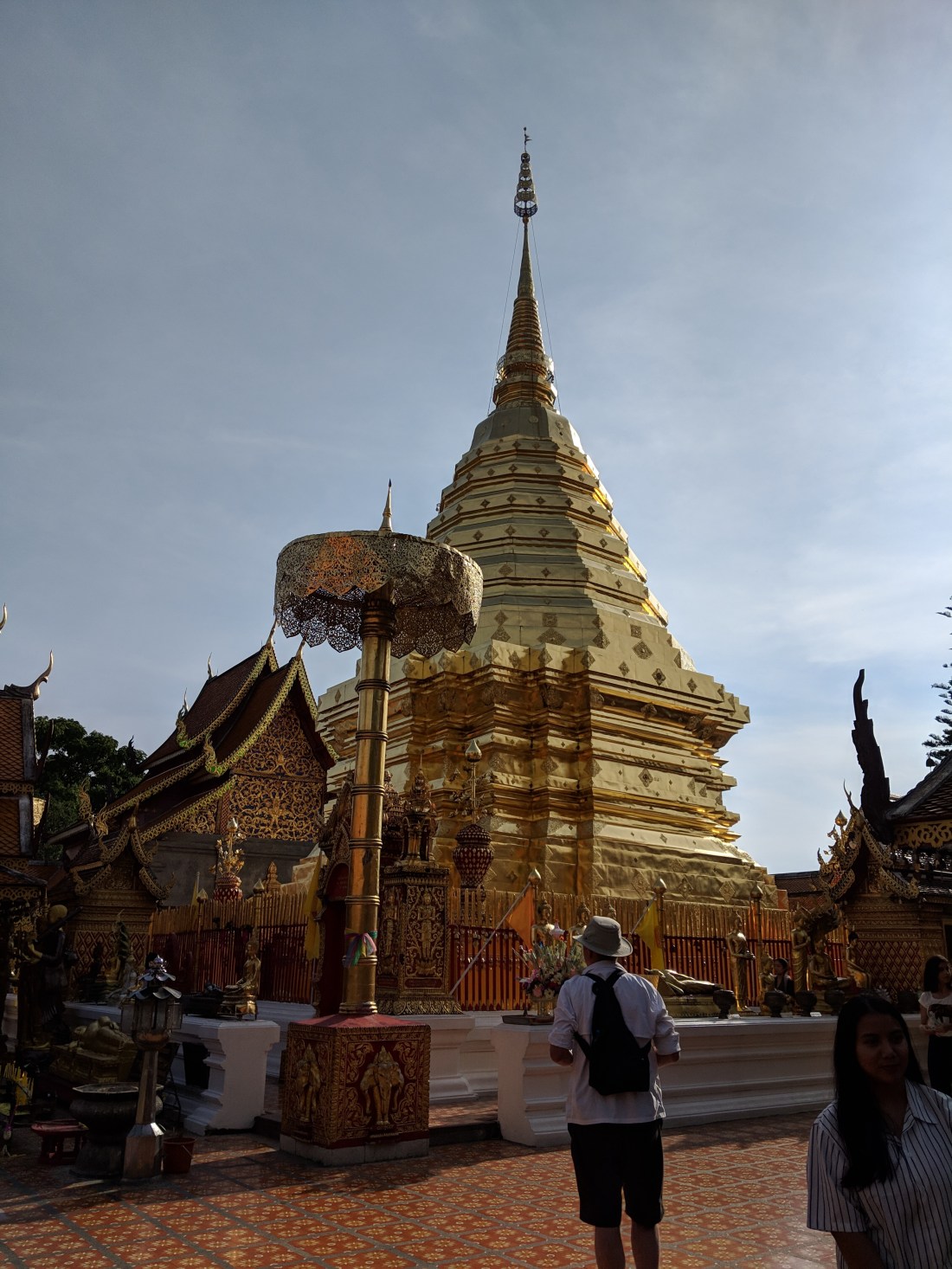
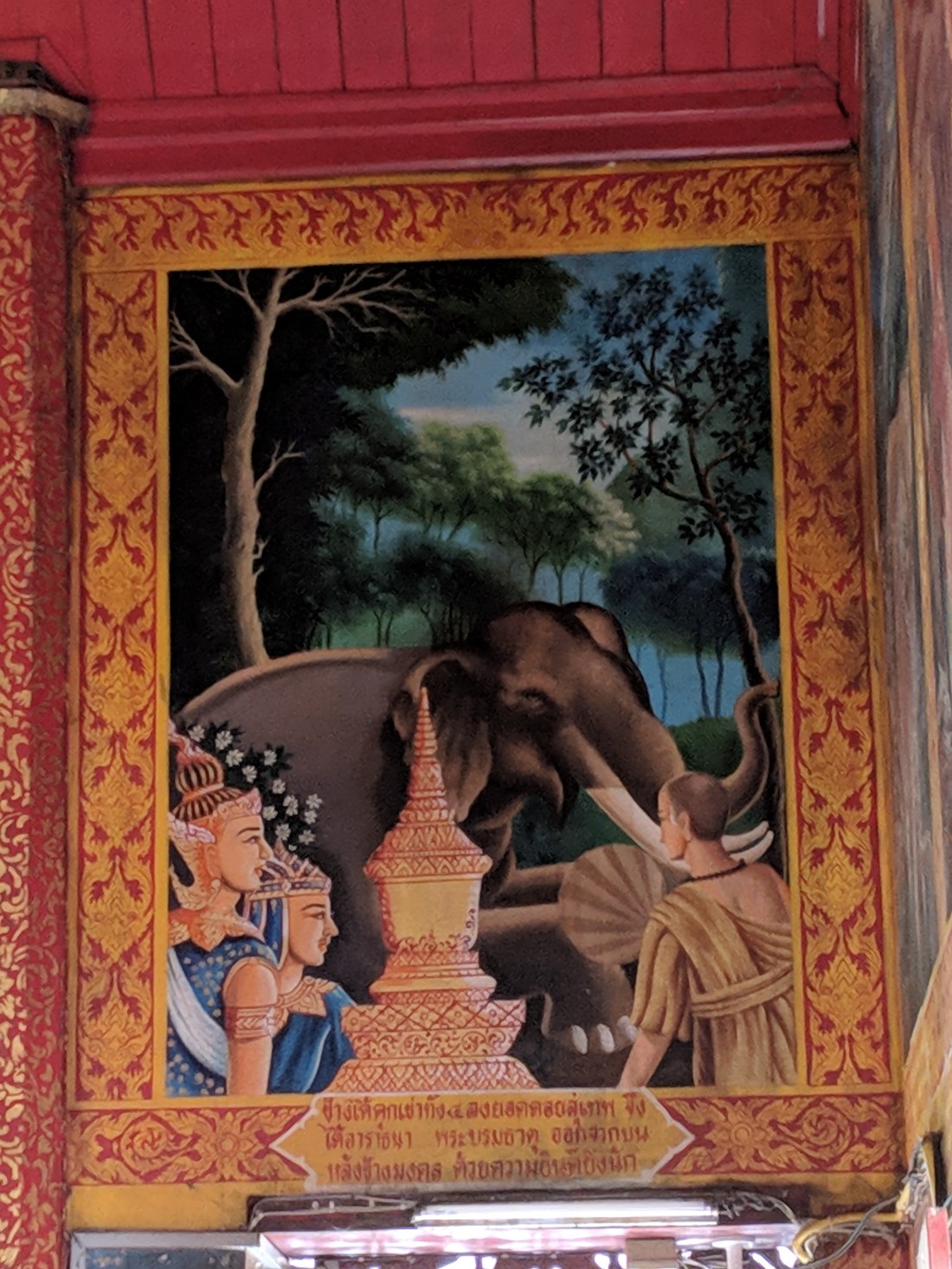
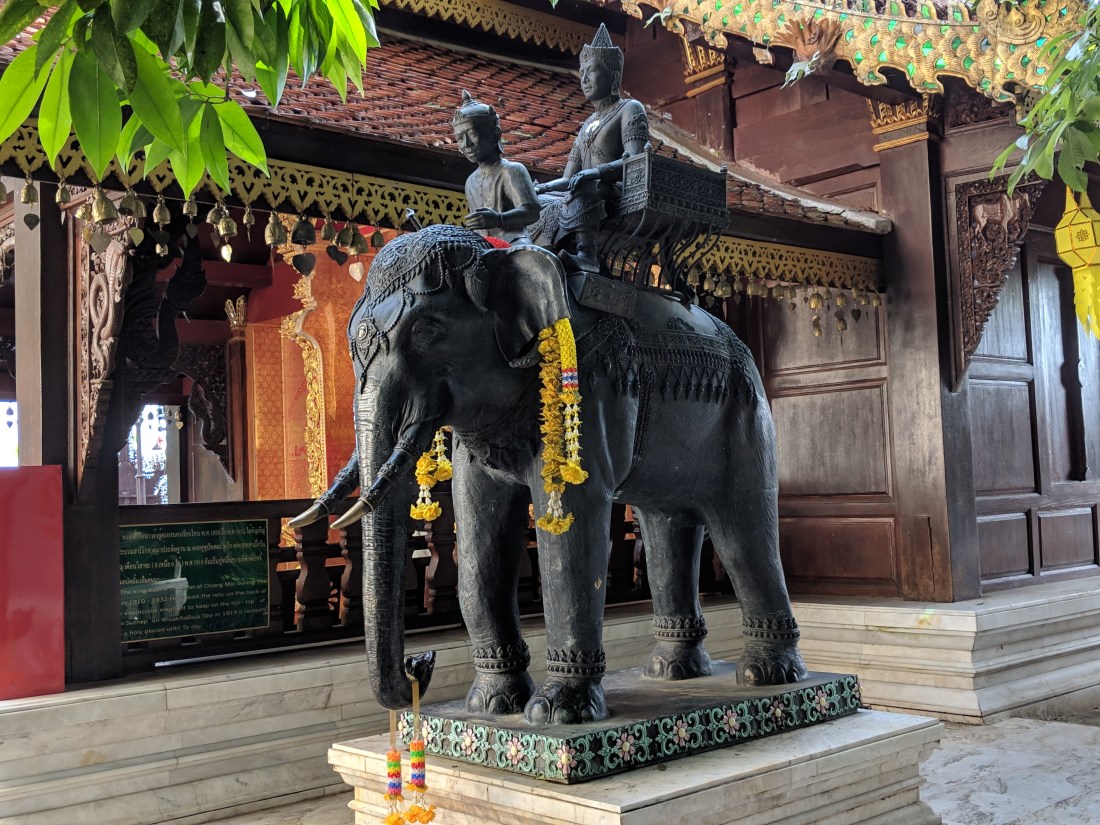
We had arranged with Pon that he would pick us up the next morning in his car and take us out of the city to the temple high on the hill overlooking Chiang Mai: Wat Prathat Doi Suthep.  This is probably the most famous temple in Chiang Mai because legend has it that the elephants carrying the buddha relics chose the spot for their resting place.

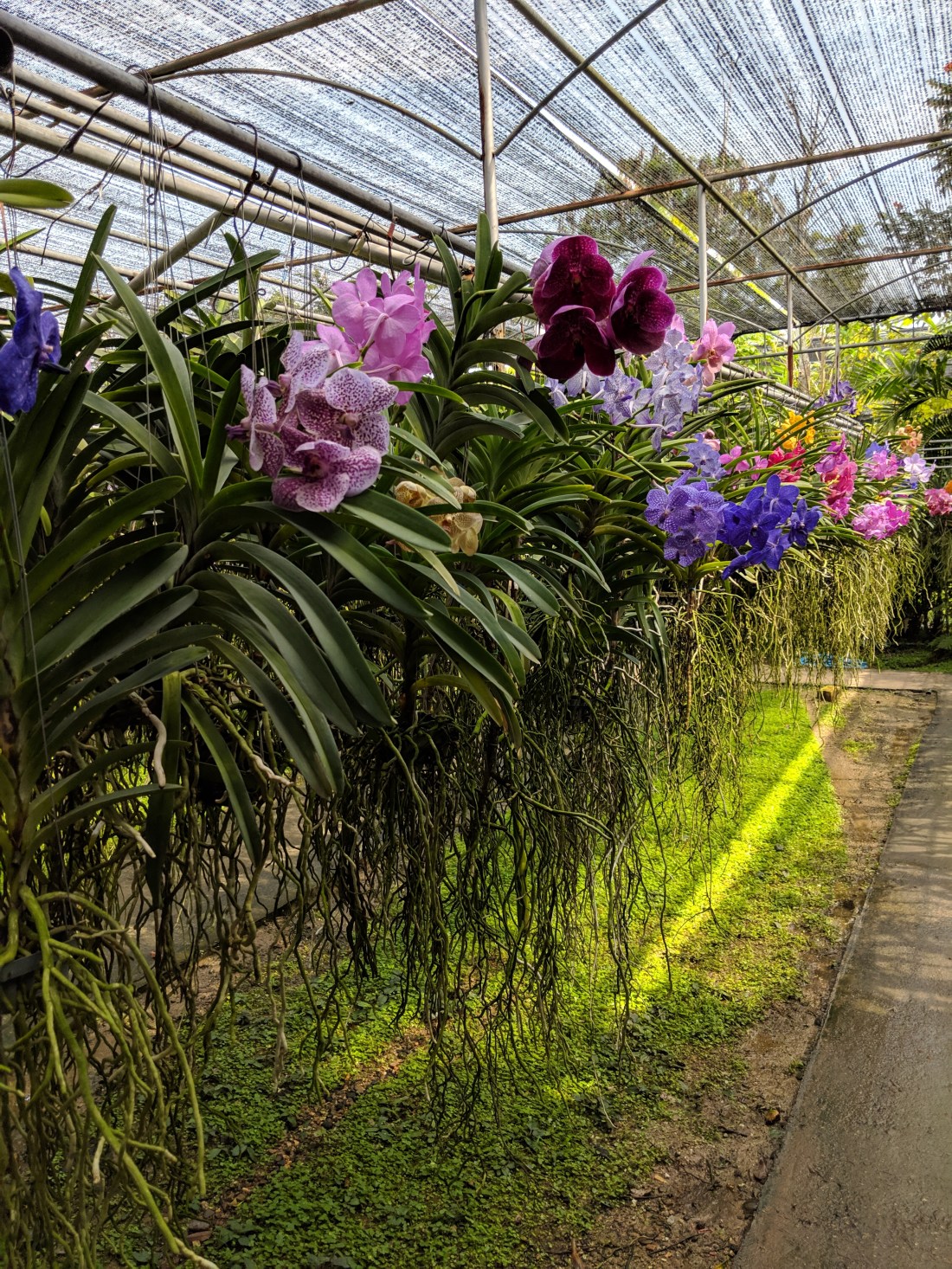
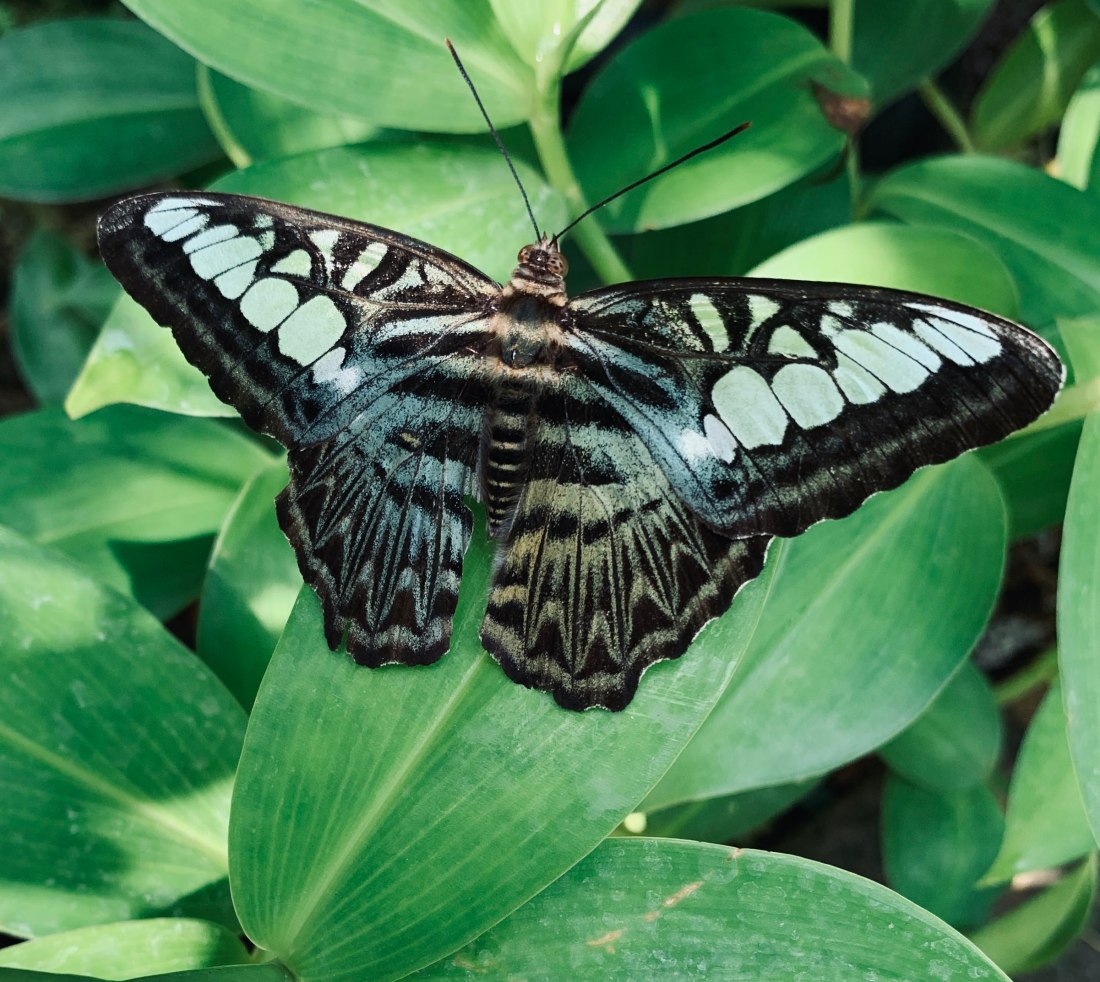
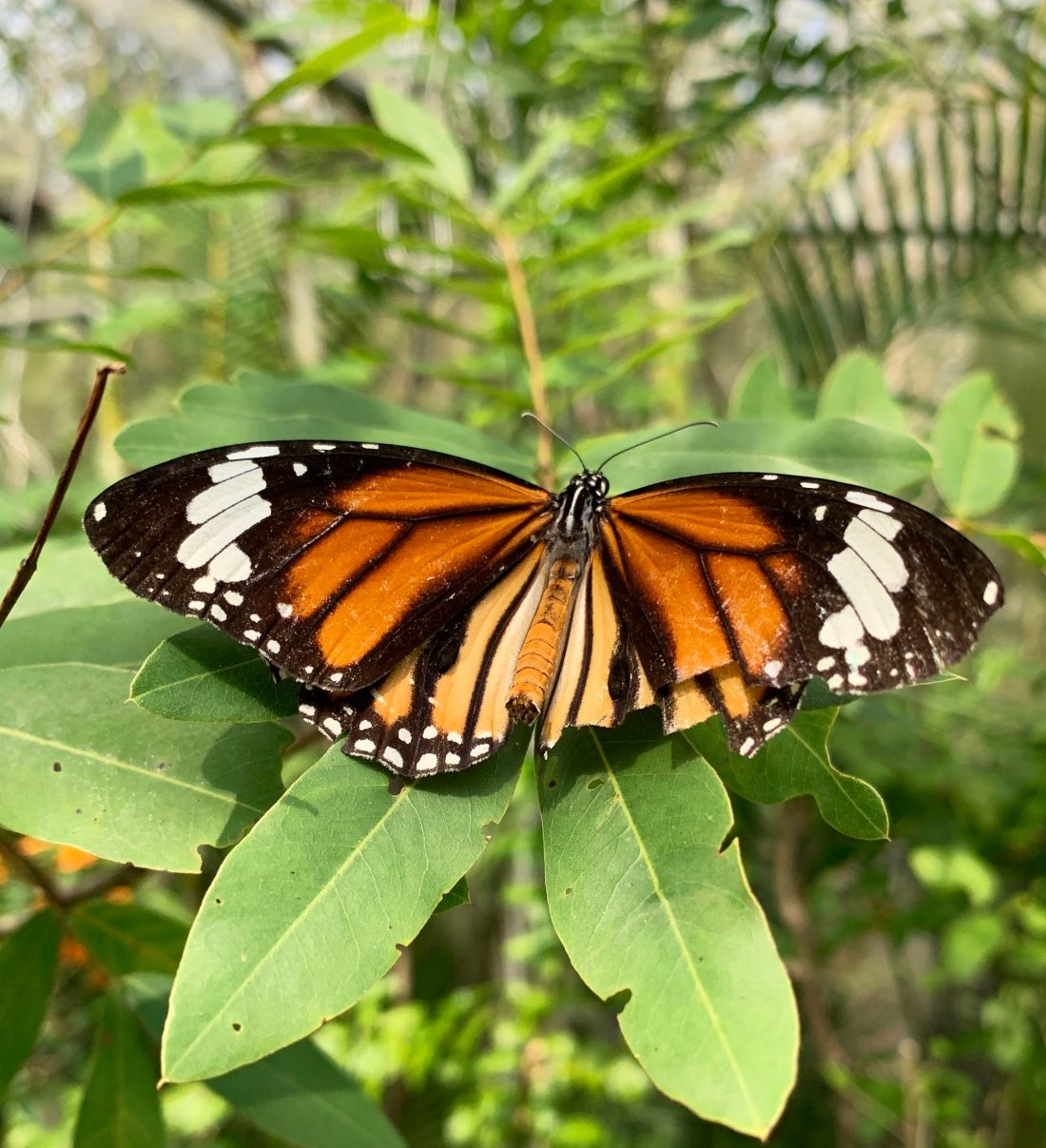
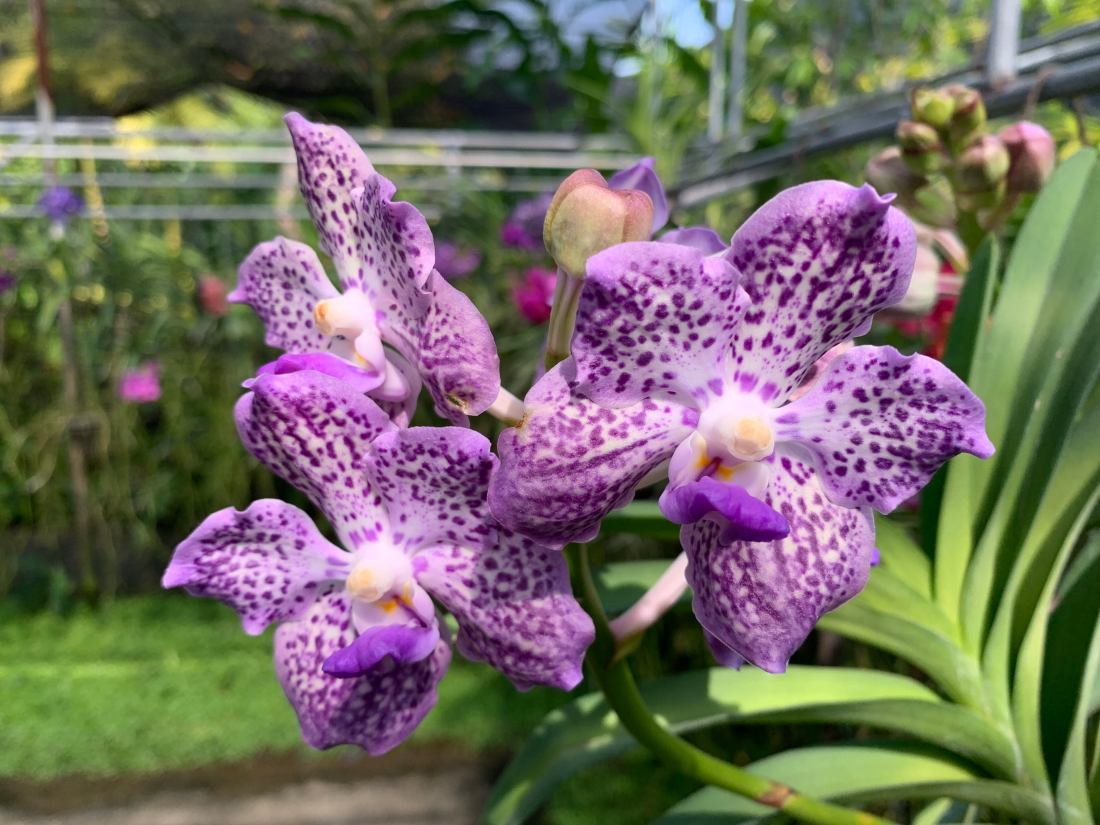
img_0918img_0927img_20190112_093544img_20190112_095226img_20190112_095733img_20190112_100655Pon then took us to an orchid and butterfly farm.

img_20190112_121231img_0944img_0933img_0970img_0960

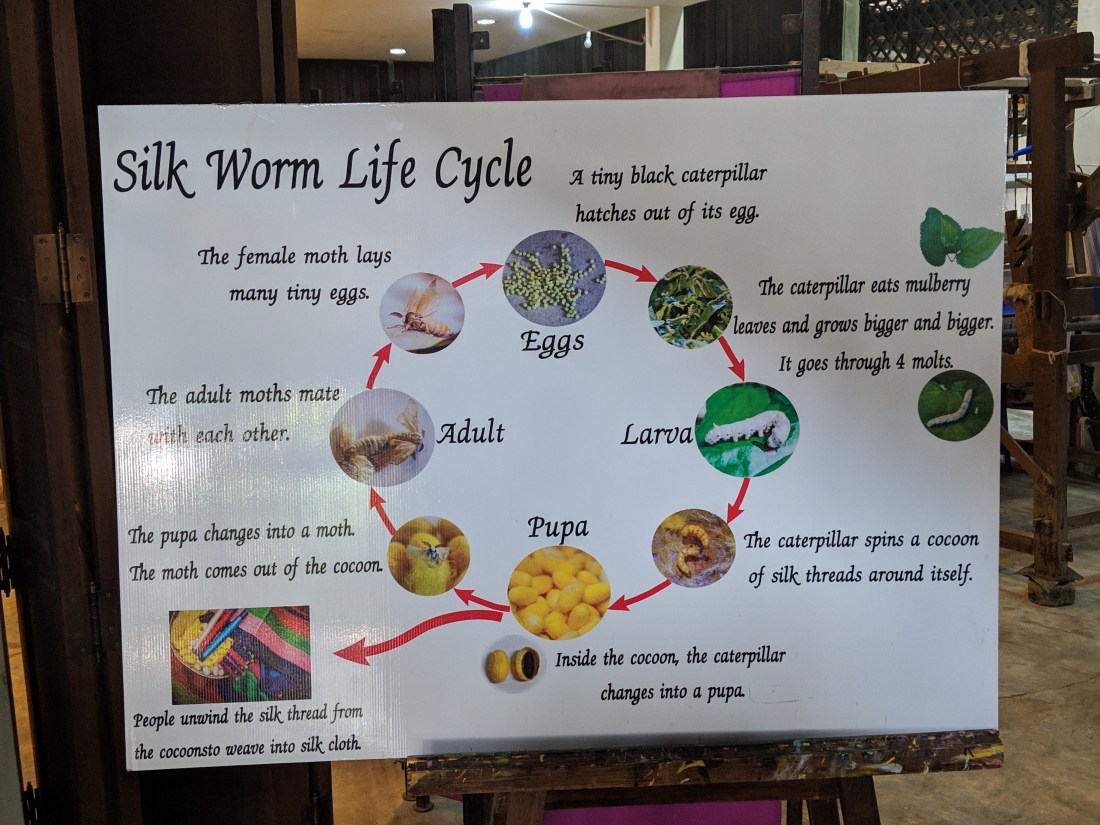
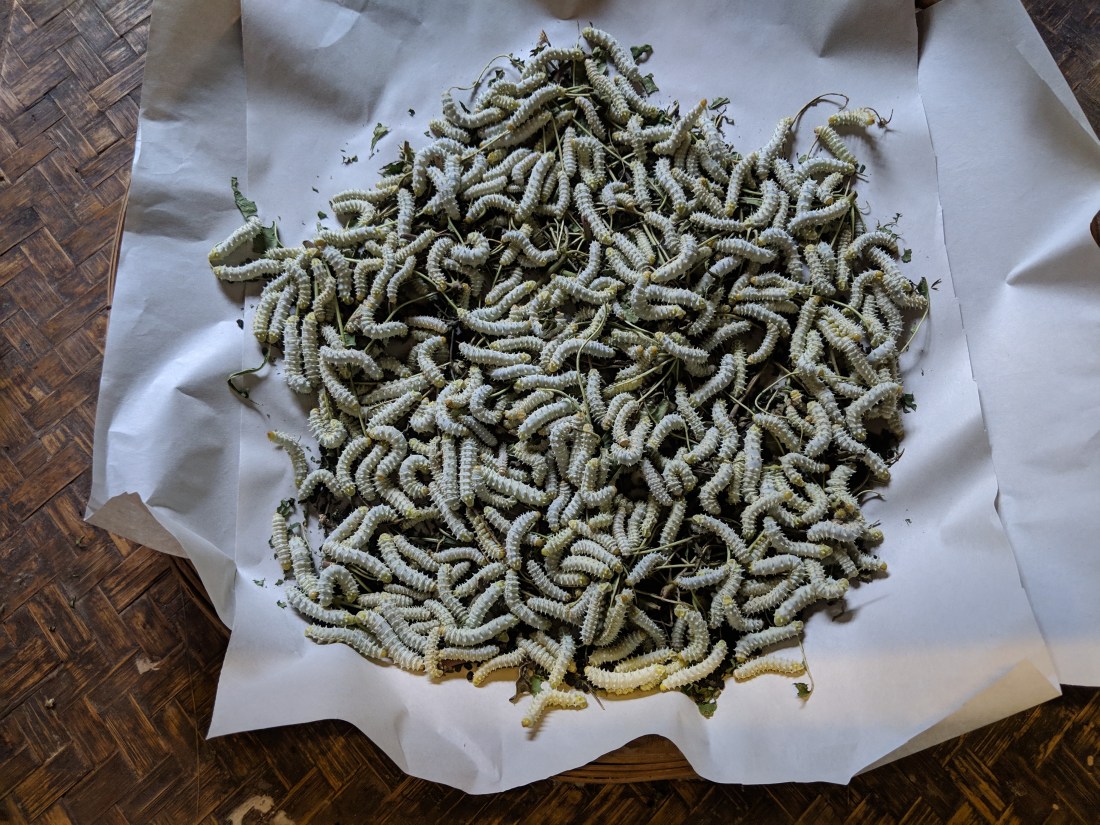
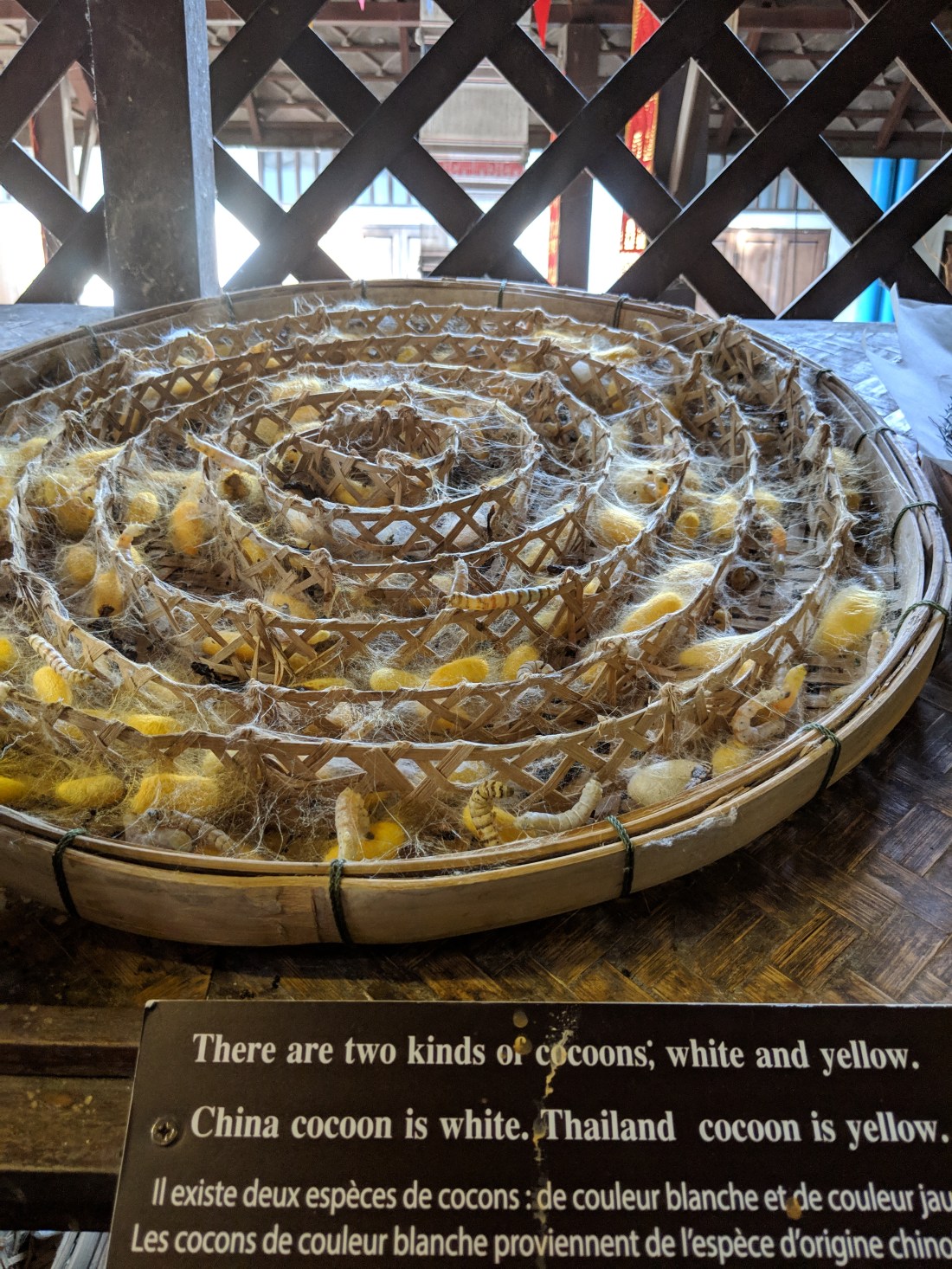
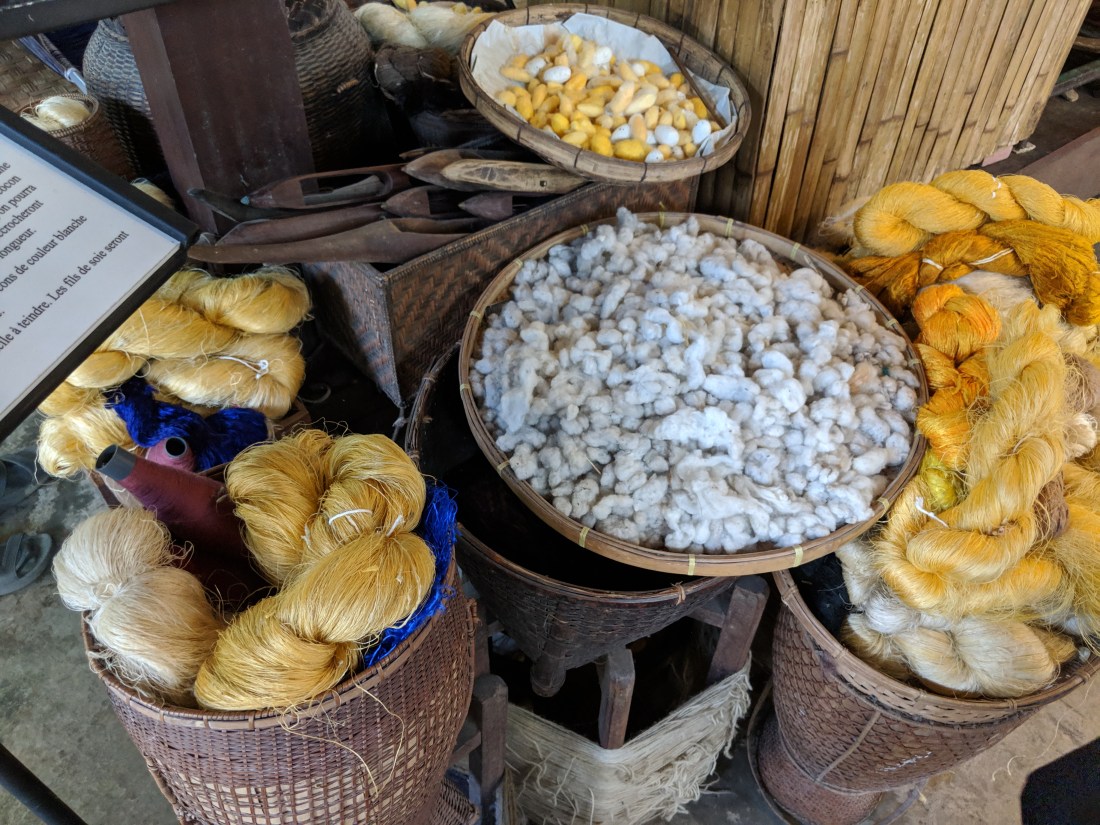
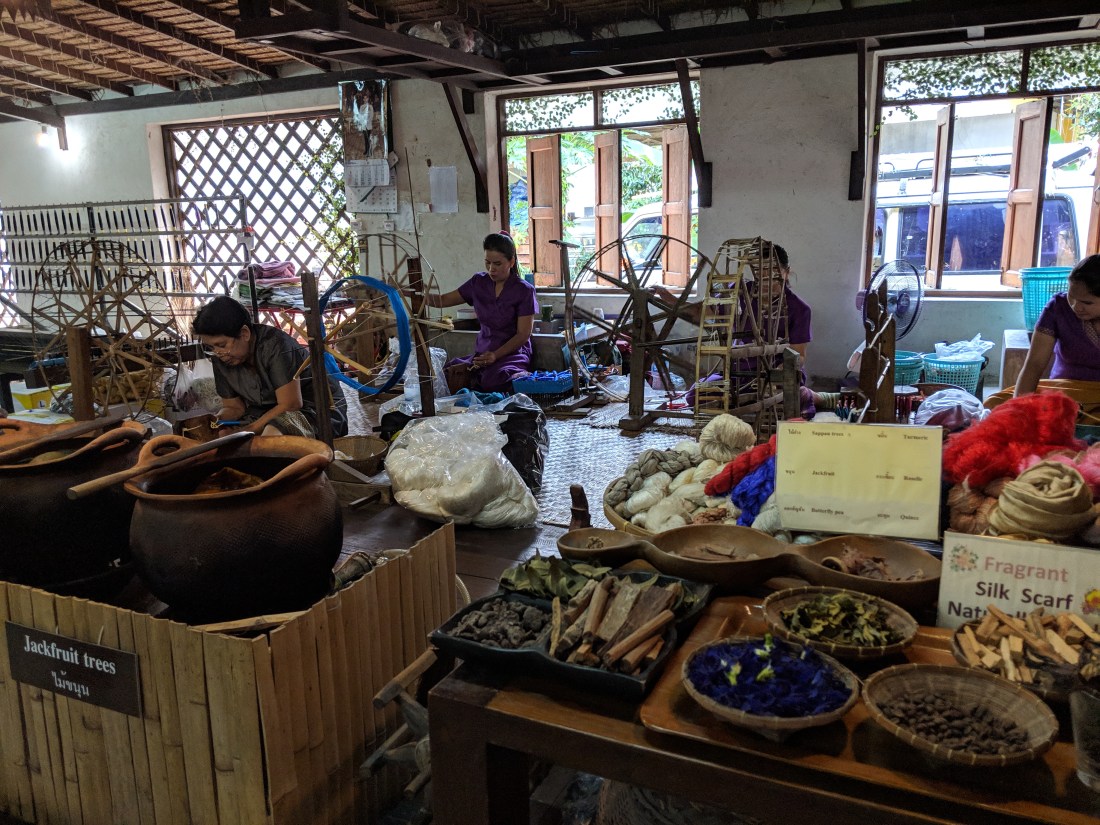
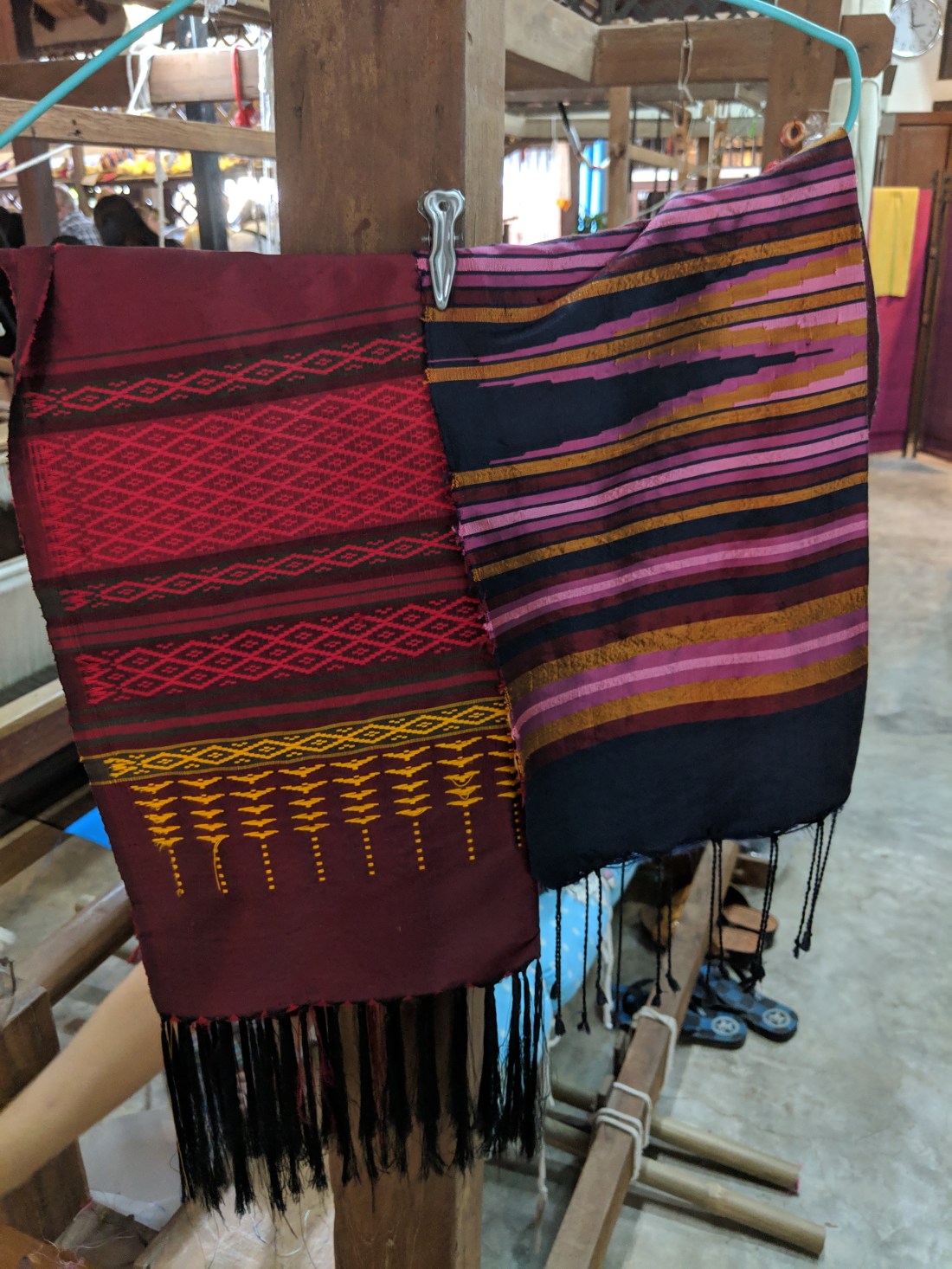
After a delicious buffet lunch at the tiger kingdom, Pon then took us to the Thai factories where jewelry is hand made as well as jade carved and polished.  But the factory we liked the best was the silk factory.  There they had the worms actually making the silk as well as the women extracting the silk threads, spinning it, dying it and finally weaving the silk materials.

img_20190112_144459img_20190112_144629img_20190112_144724img_20190112_145024mvimg_20190112_145045mvimg_20190112_145336mvimg_20190112_145446img_20190112_145923

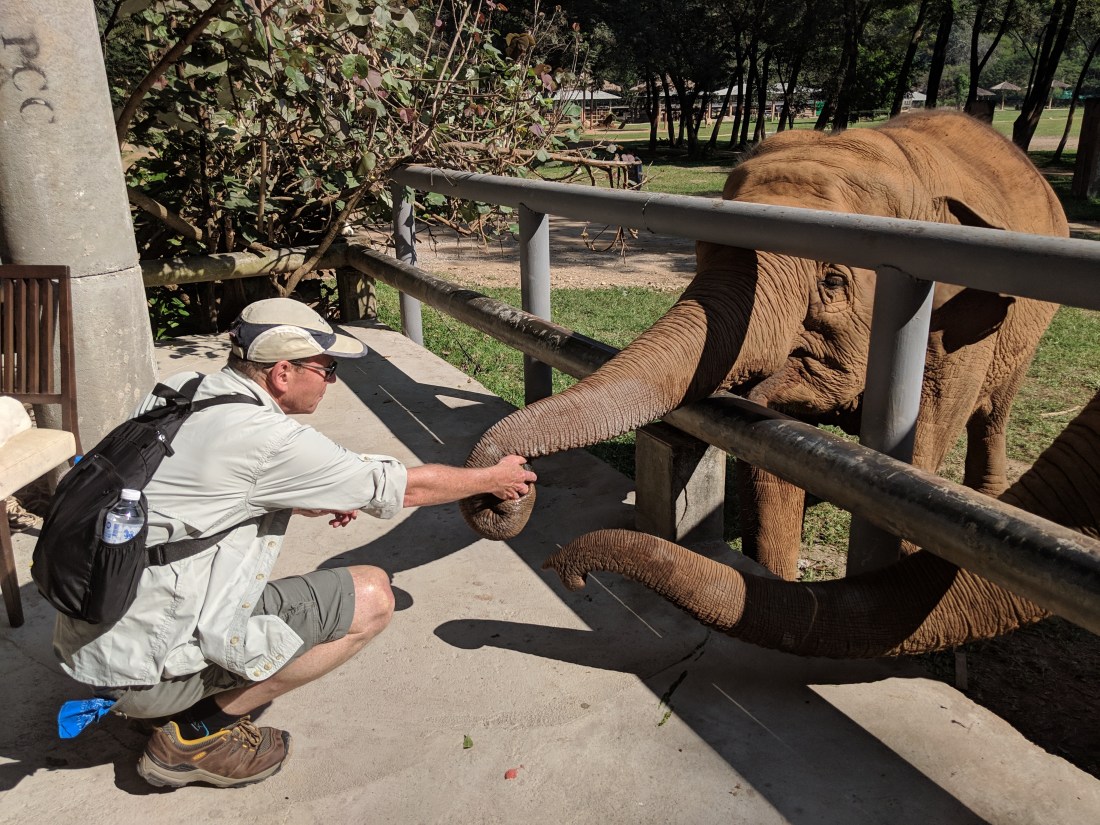
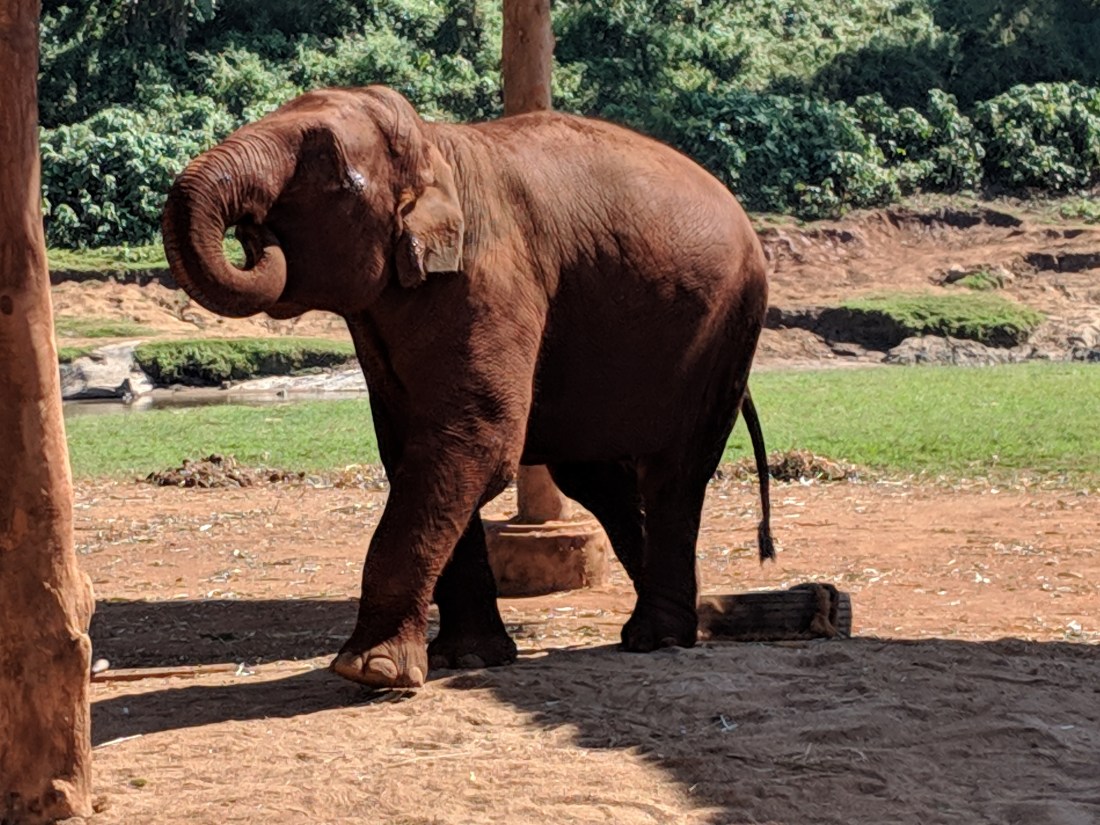
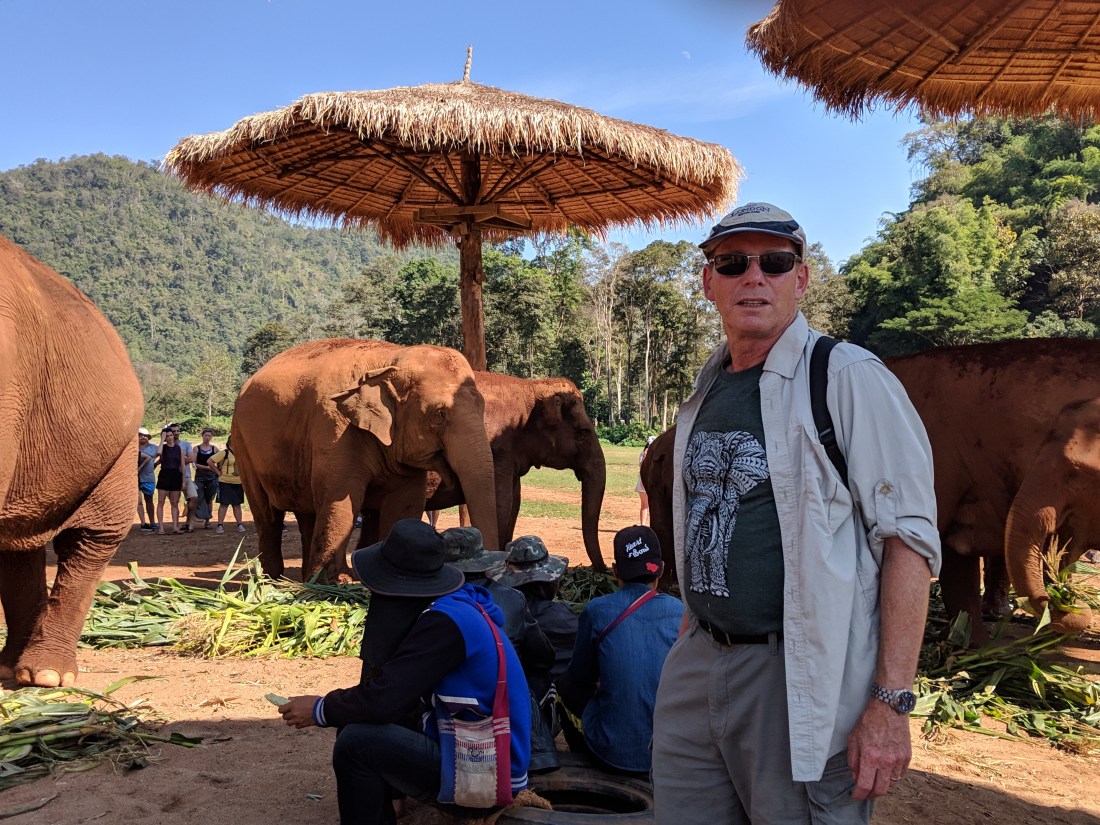
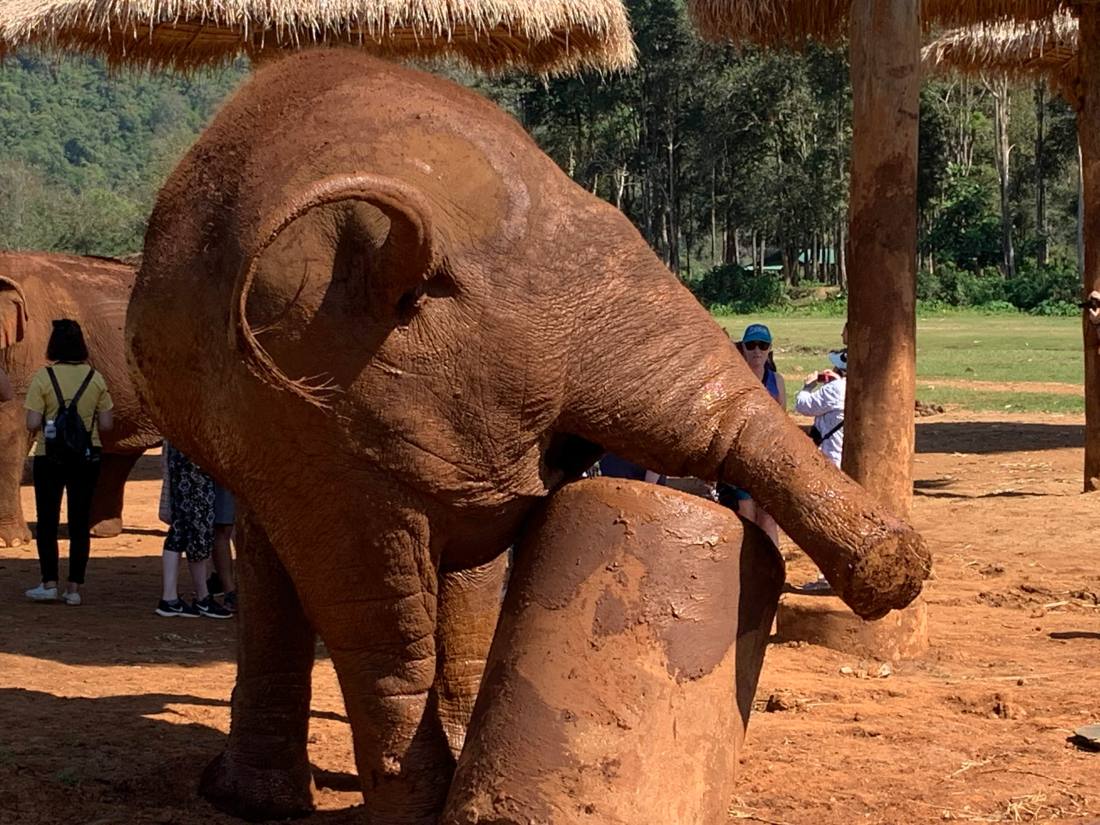
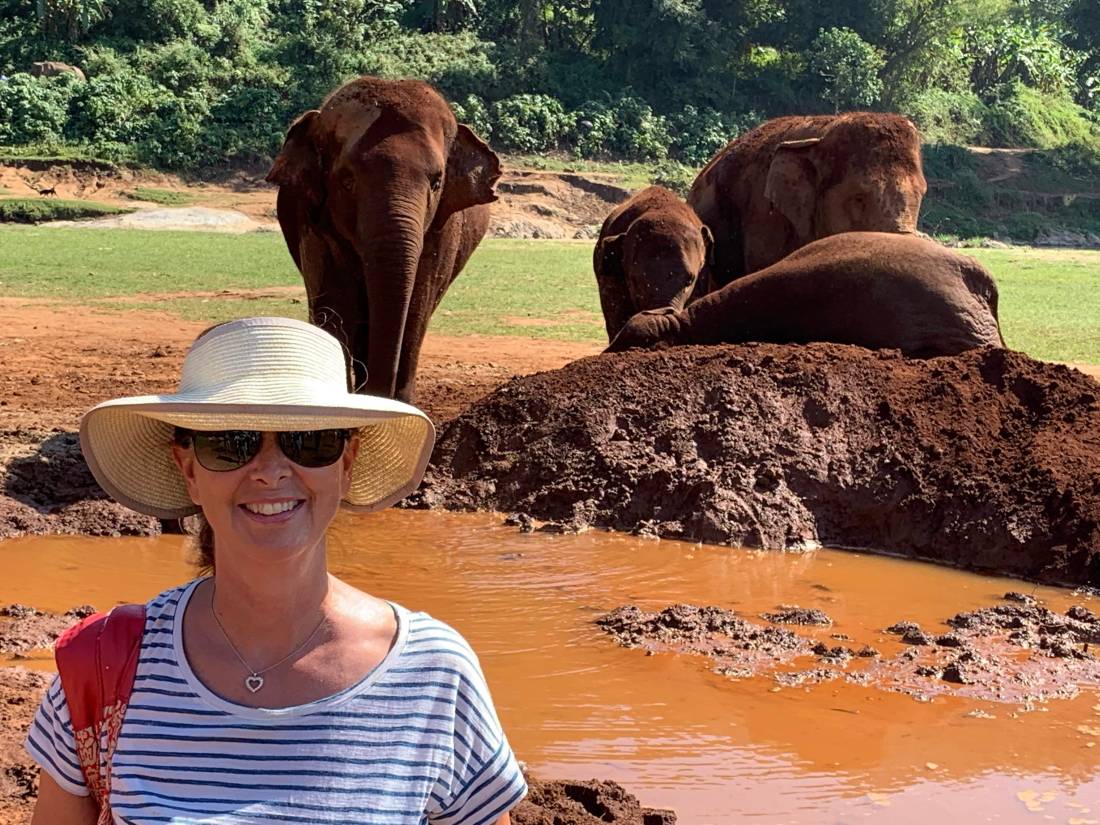
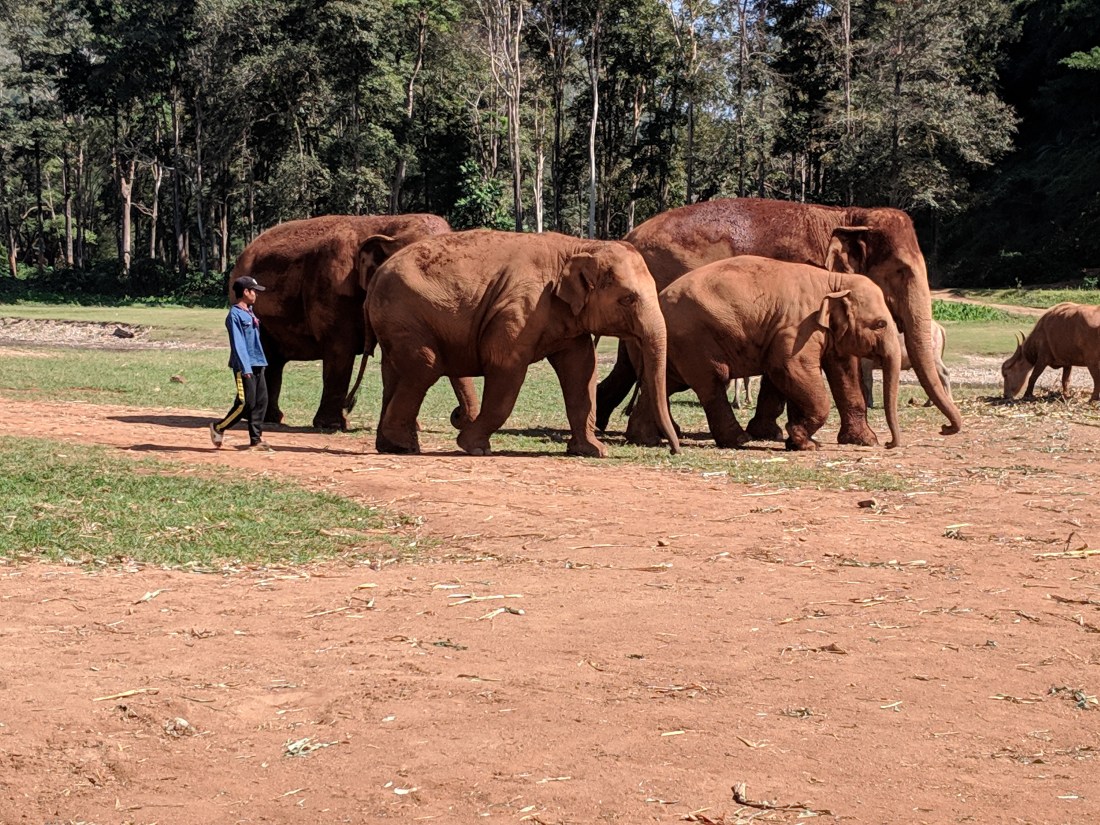
The next day we took a break from touring and spent the day indulging in that quintessential Thai experience perfected like no other: massages!  After a day lounging and lapping in the luxuries, we had another quintessential Thai experience and visited an elephant park.  We chose one that is a sanctuary in which all 80 current elephant residents are rescue animals as well as their numerous water buffalo, dogs, cats, and horses.  We spent the entire day there, including a fantastic vegan buffet Thai lunch.

img_0993

IMG_20190114_103535.jpg

img_20190114_132633img_20190114_130952img_20190114_133803img_1030img_1019img_20190114_131003

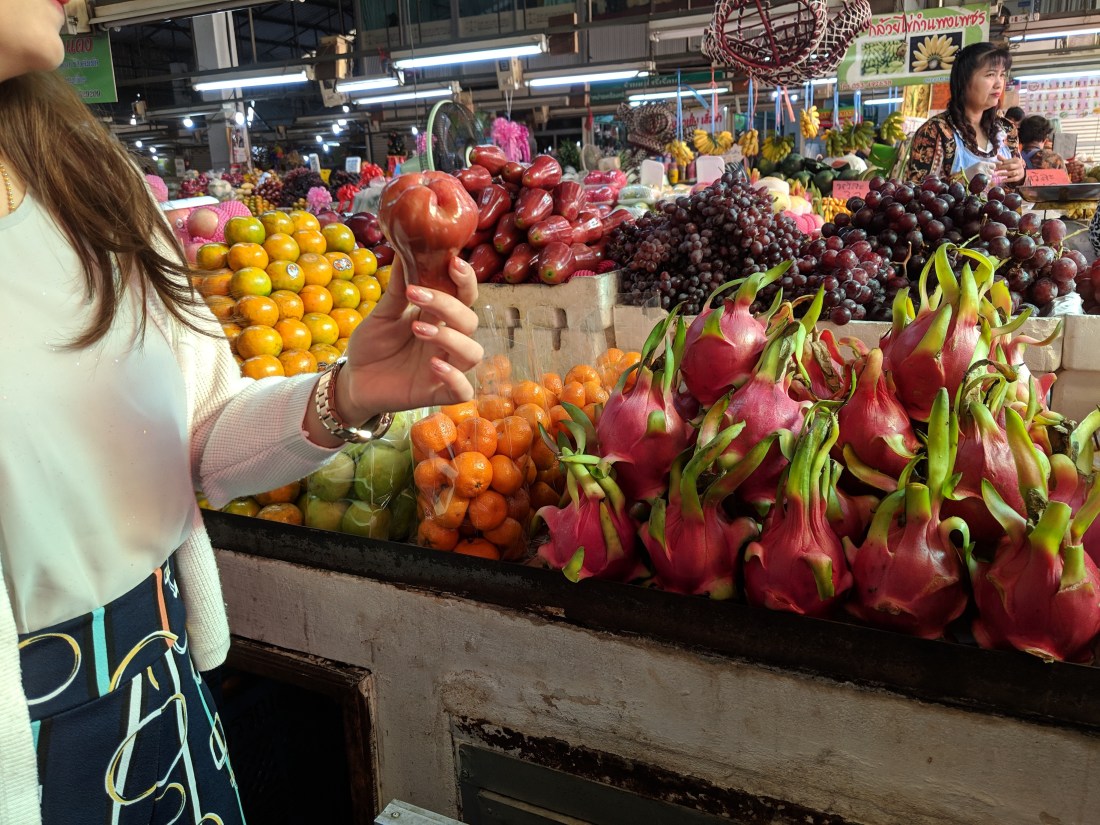
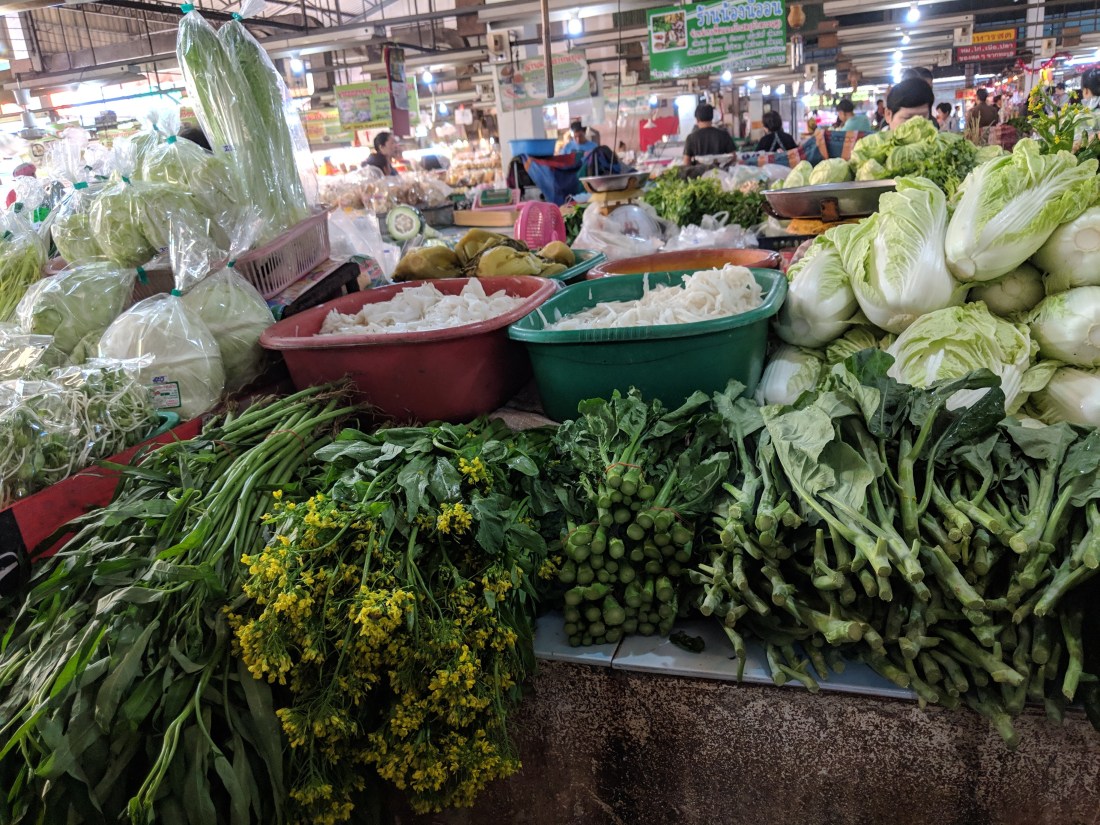
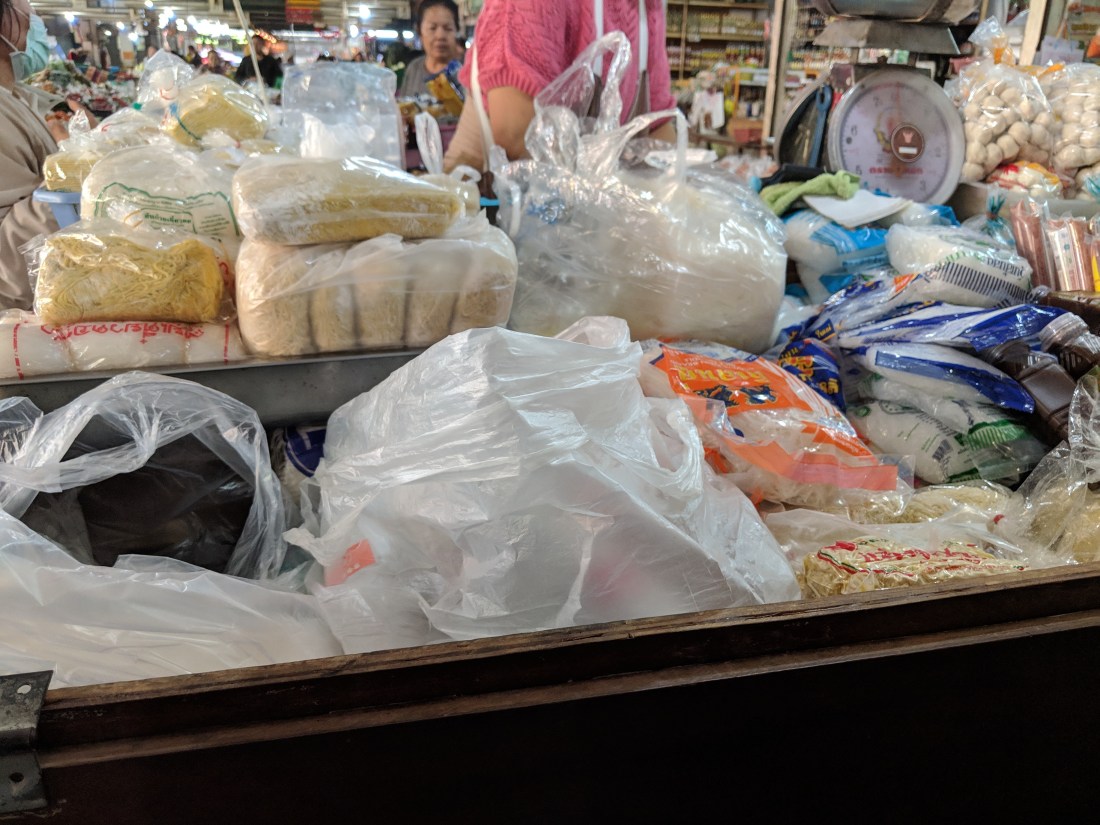
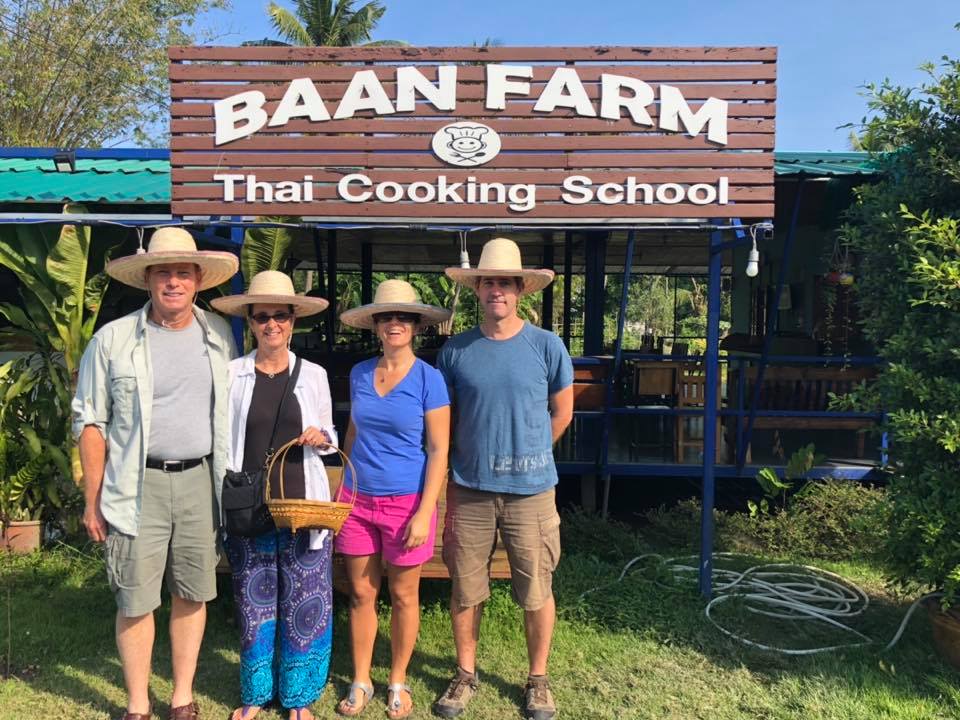
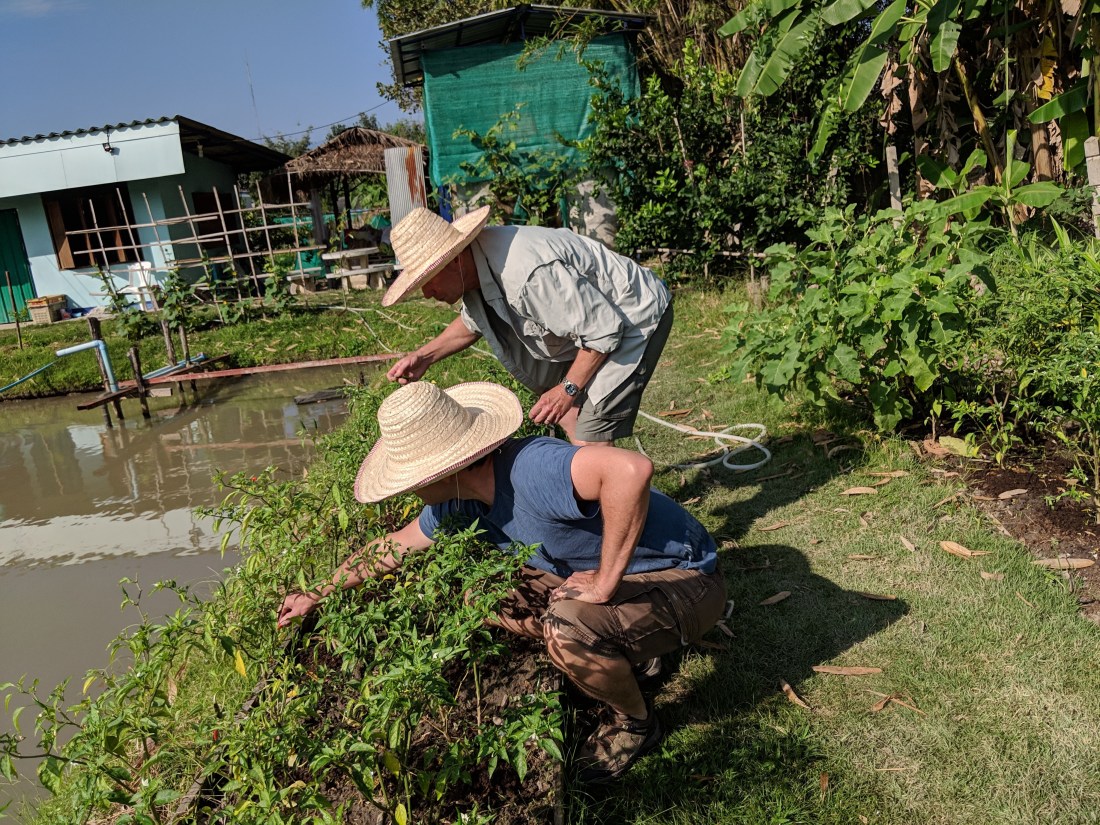
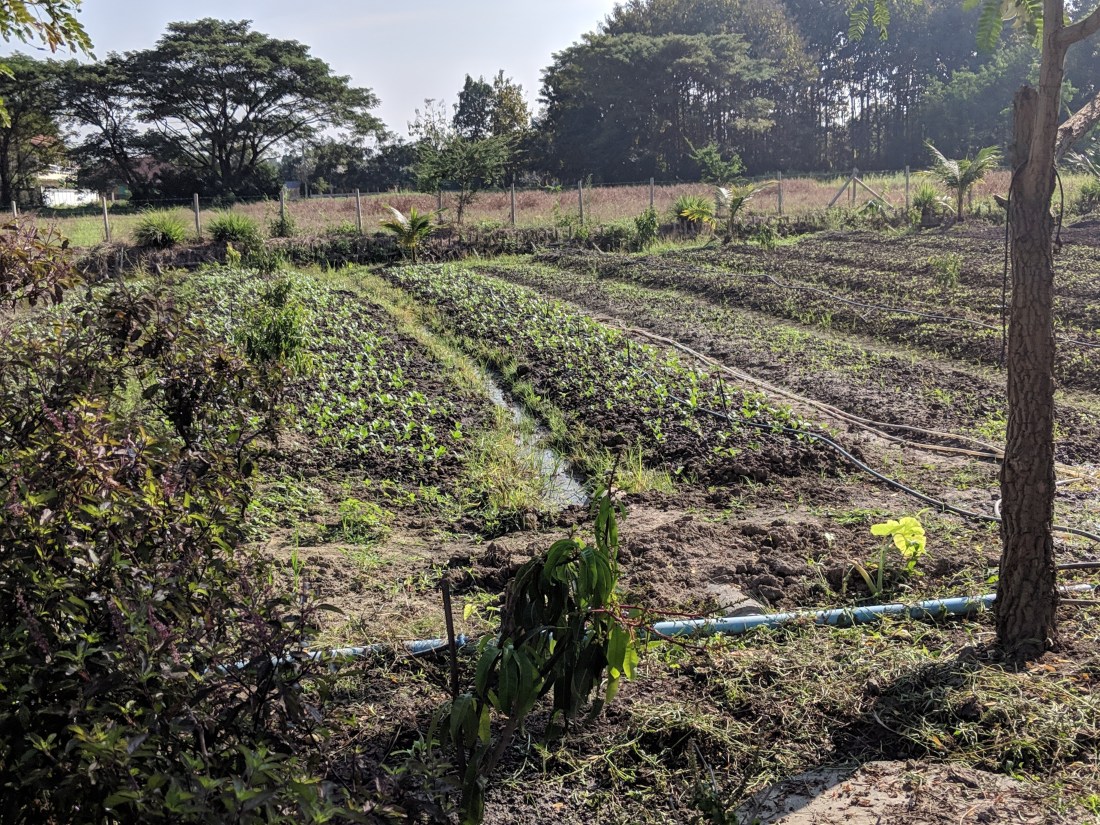
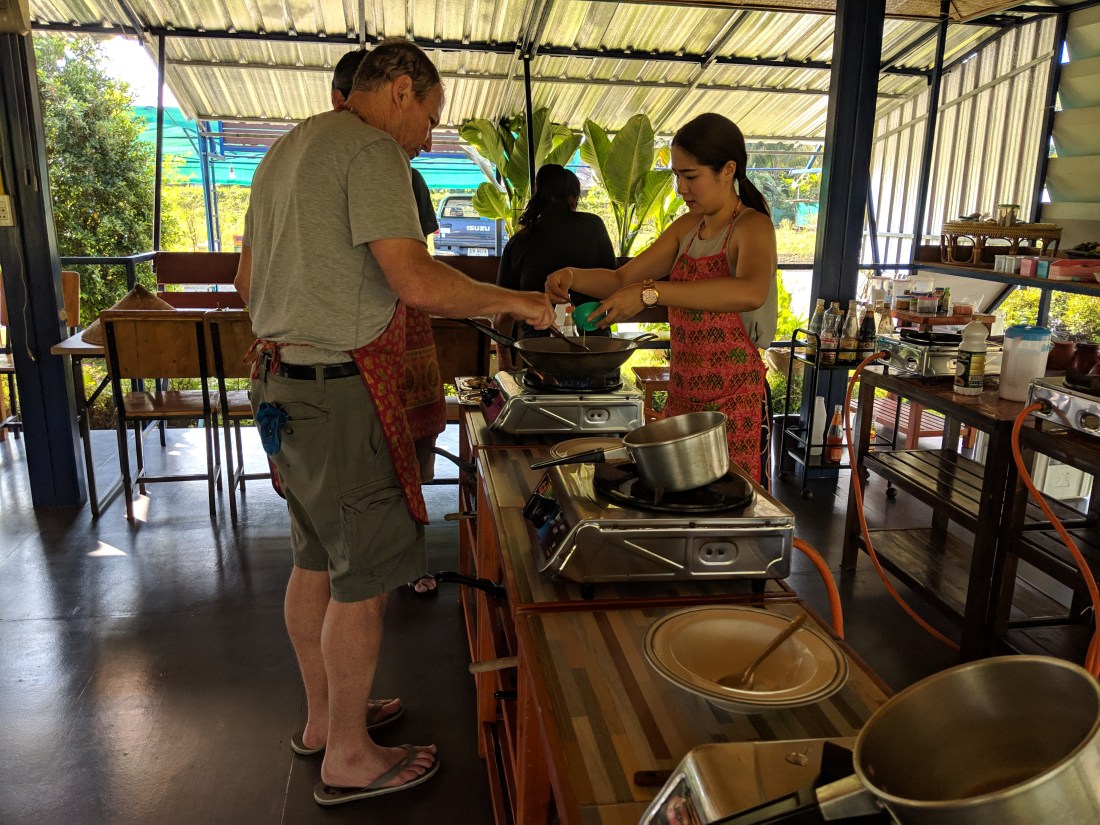
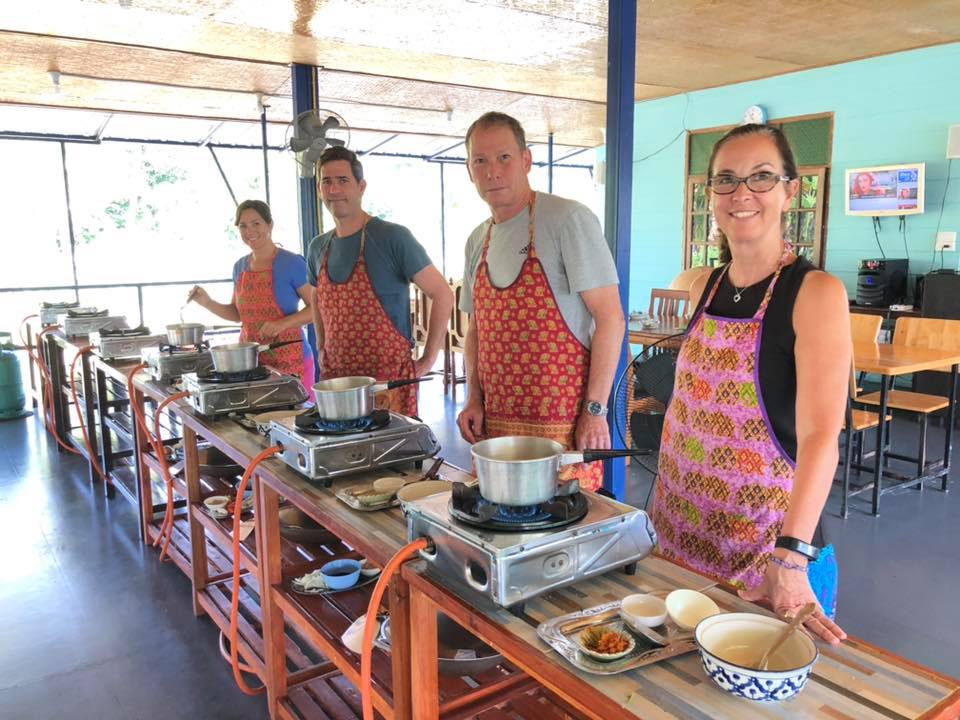
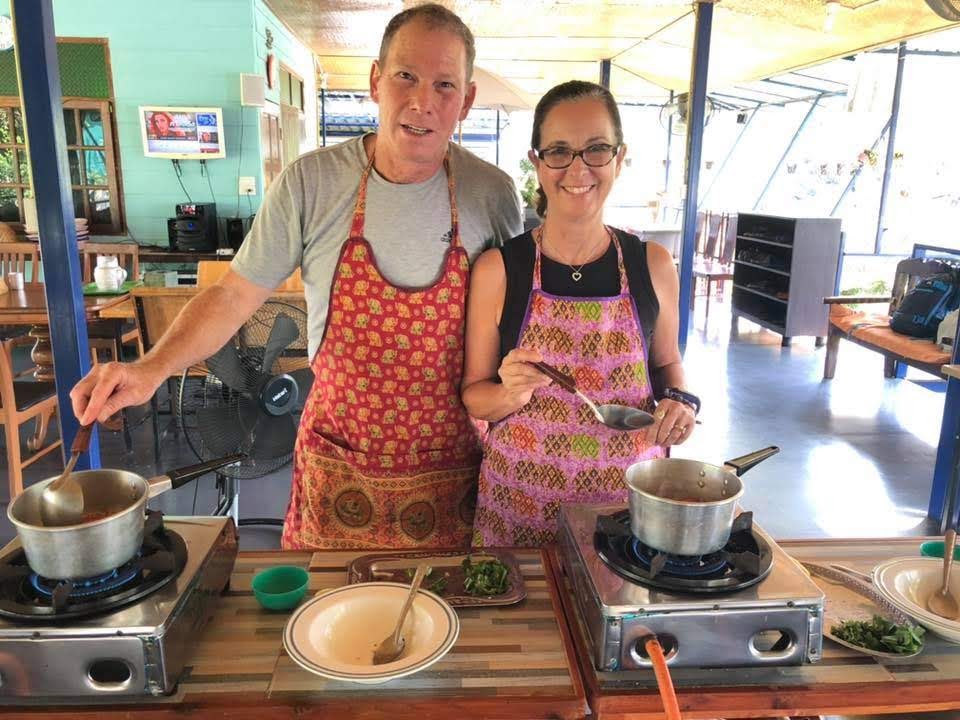
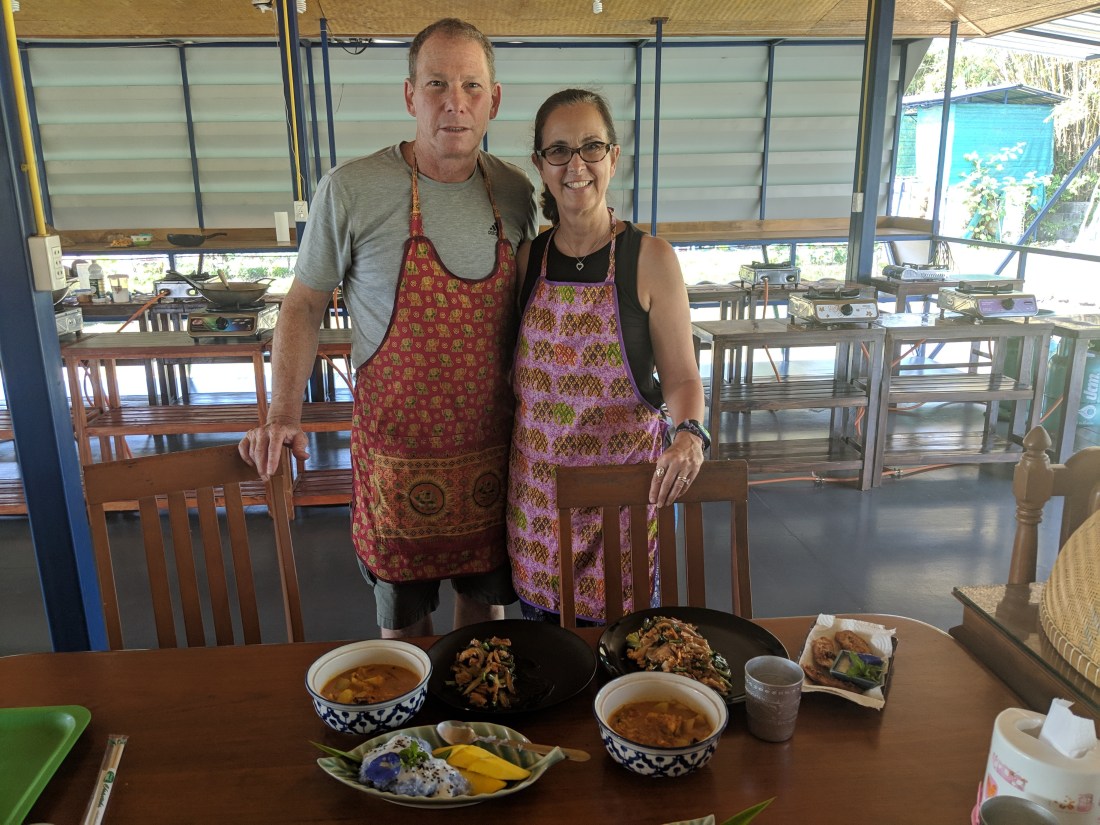
And for our final day in Thailand, the final quintessential Thai experience: a cooking class.  We chose the Baan Organic Farm Thai Cooking School.  Phoy picked us up at our hotel and took us and the only other couple in the class (visitors from Argentina) to the local market.  There she taught us how to recognize the ingredients that would go into our dishes.  She then drove us out to the organic farm where we picked our own fresh herbs.  We each individually made 5 dishes: a soup (Eric:Tom Yum; Me: spicy pork), an appetizer (E: fried spring roll; Me: papaya salad), a stir fry (E; chicken basil and chili, Me: Pad See Ew), a curry( both Masaman), and a dessert (E:sticky rice and mango, Me: fried banana).  We learned so much, and it was all so delicious!

IMG_20190115_091052IMG_20190115_091204IMG_20190115_091600

50286130_575050802918448_4136906095710961664_n.jpg

IMG_20190115_095309IMG_20190115_095928

00000PORTRAIT_00000_BURST20190115100455167


IMG_20190115_113312IMG_20190115_102918

49947311_575050879585107_2529792993553022976_n49899776_575050866251775_6984619036734652416_n (1).jpg


IMG_20190115_120852IMG_20190115_120938

We are sad to be leaving Thailand, but on to Laos!


Pai Jan 7-11

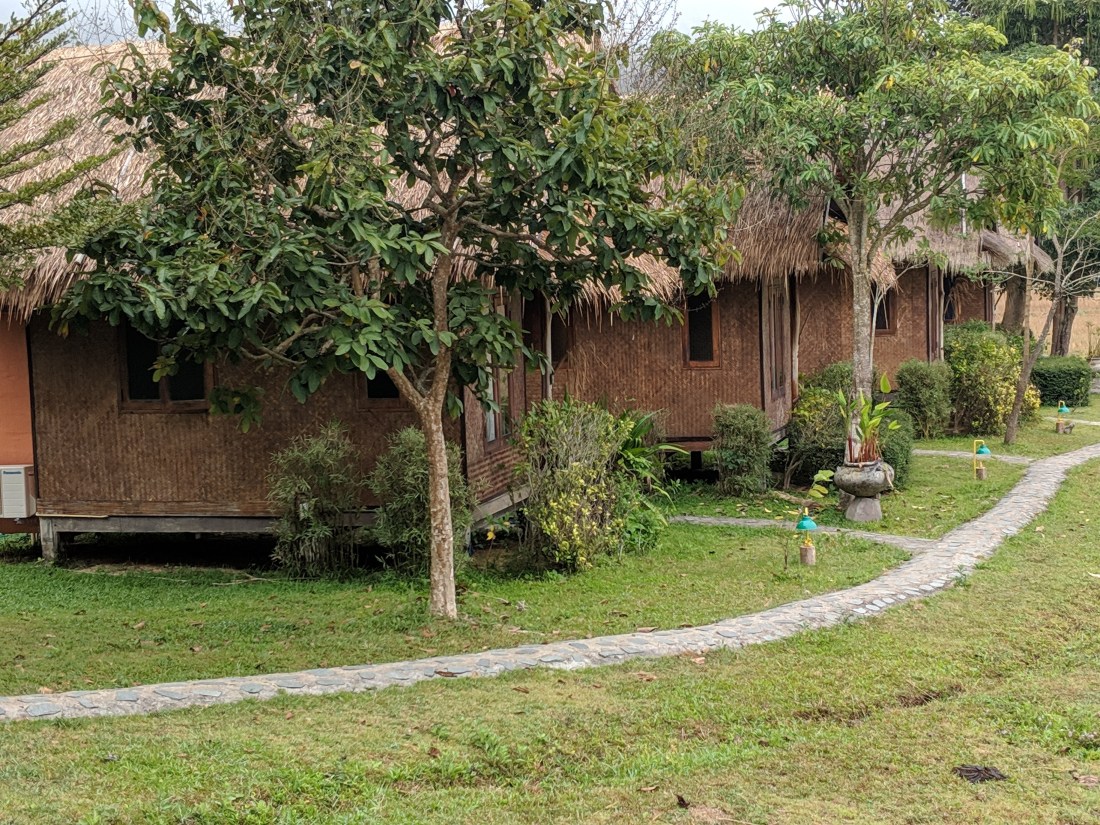
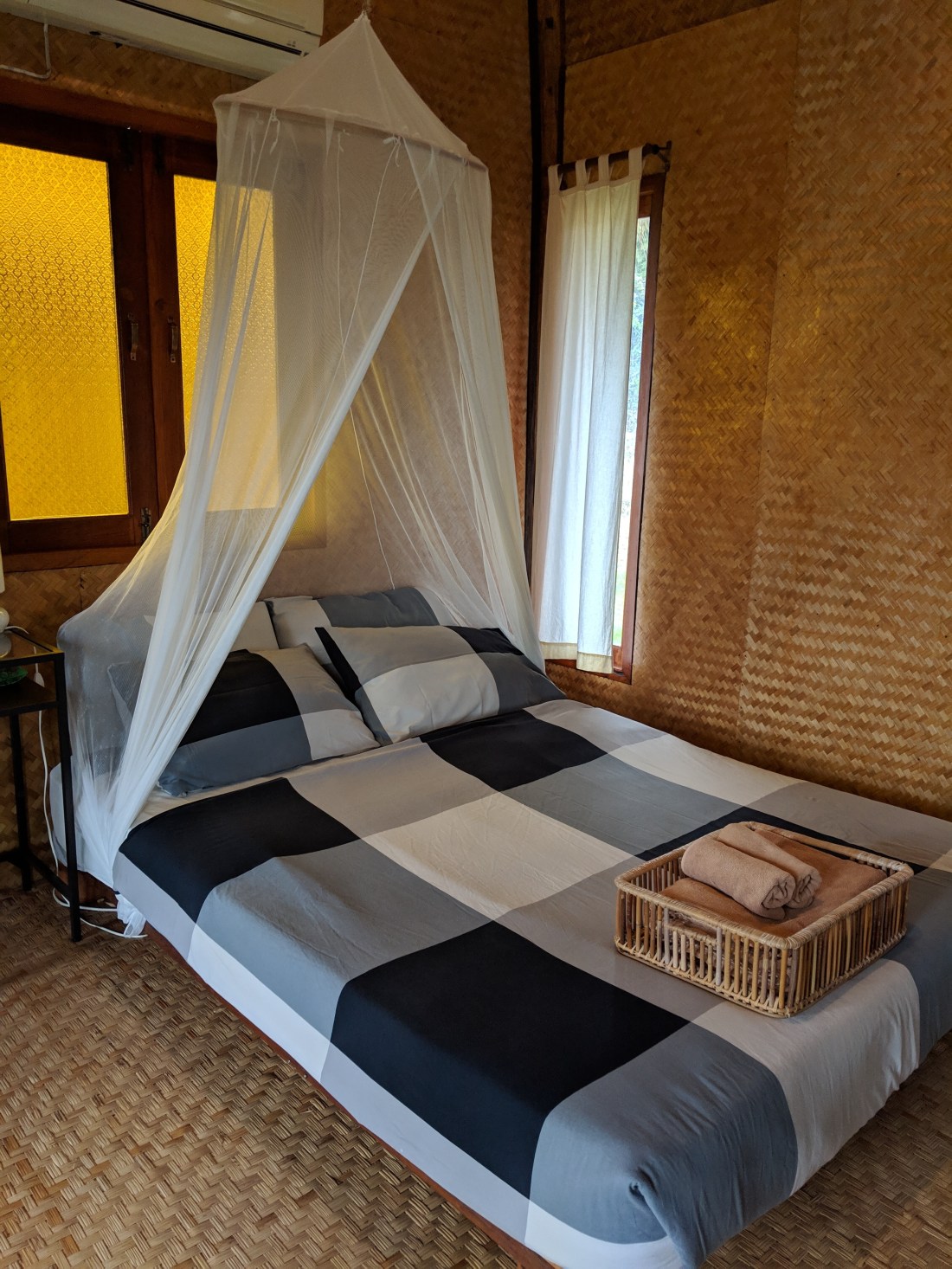
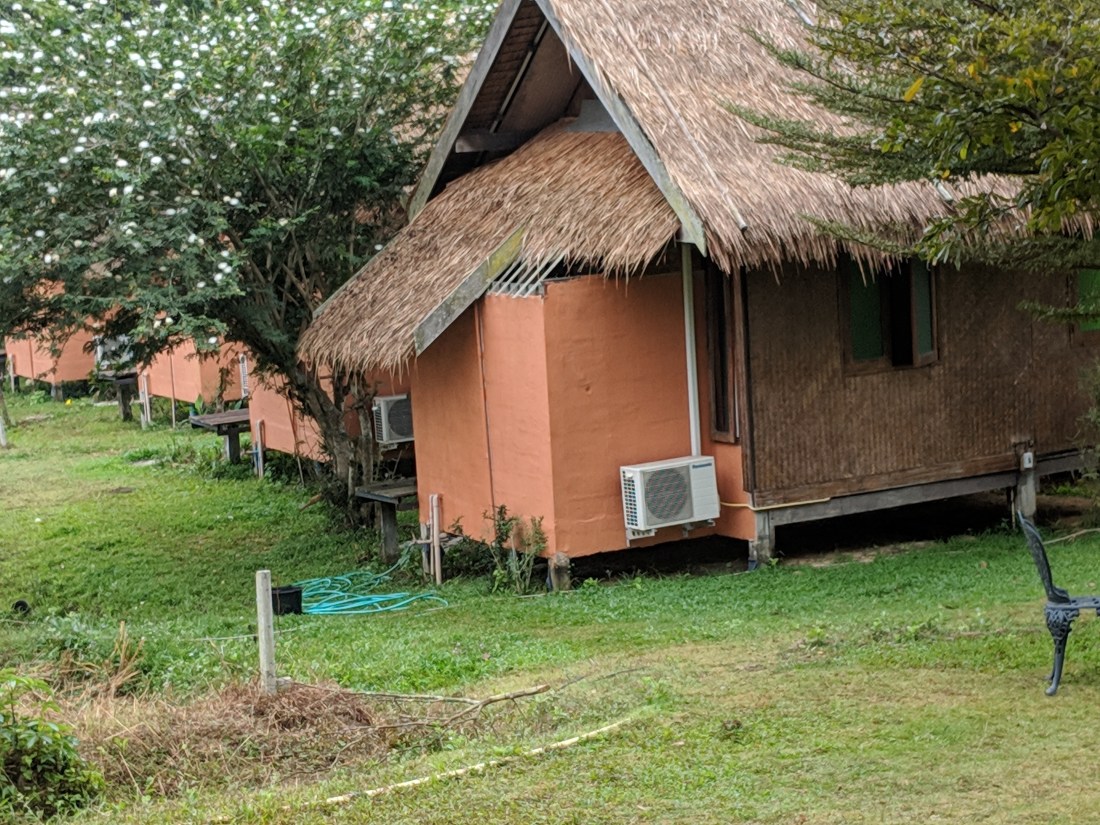
We travelled north to Pai on the suggestion of Adam and Nikki, who had been prior to joining us in Koh Phi Phi.  We stayed in the bungalows they recommended: Paiklangna Cottage.  We had our own bungalow.

img_20190108_170827

IMG_20190111_092916

IMG_20190108_151717

IMG_20190111_093015
The “lobby” reception and breakfast room

The only “surprise” was the semi-outside shower.

IMG_20190111_090911
notice the gap in the roof over the shower stall for ventilation. When we arrived it had been raining…

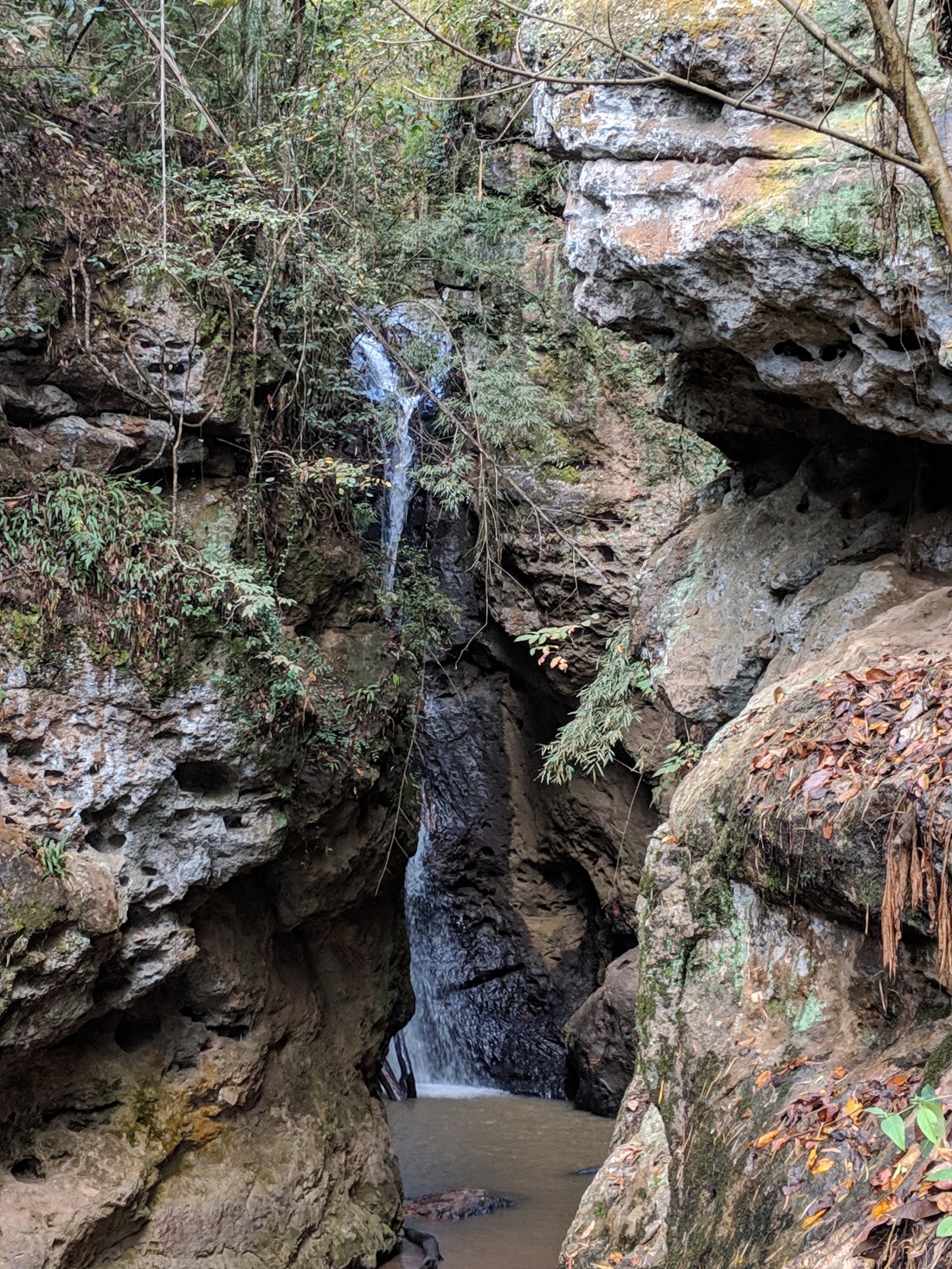
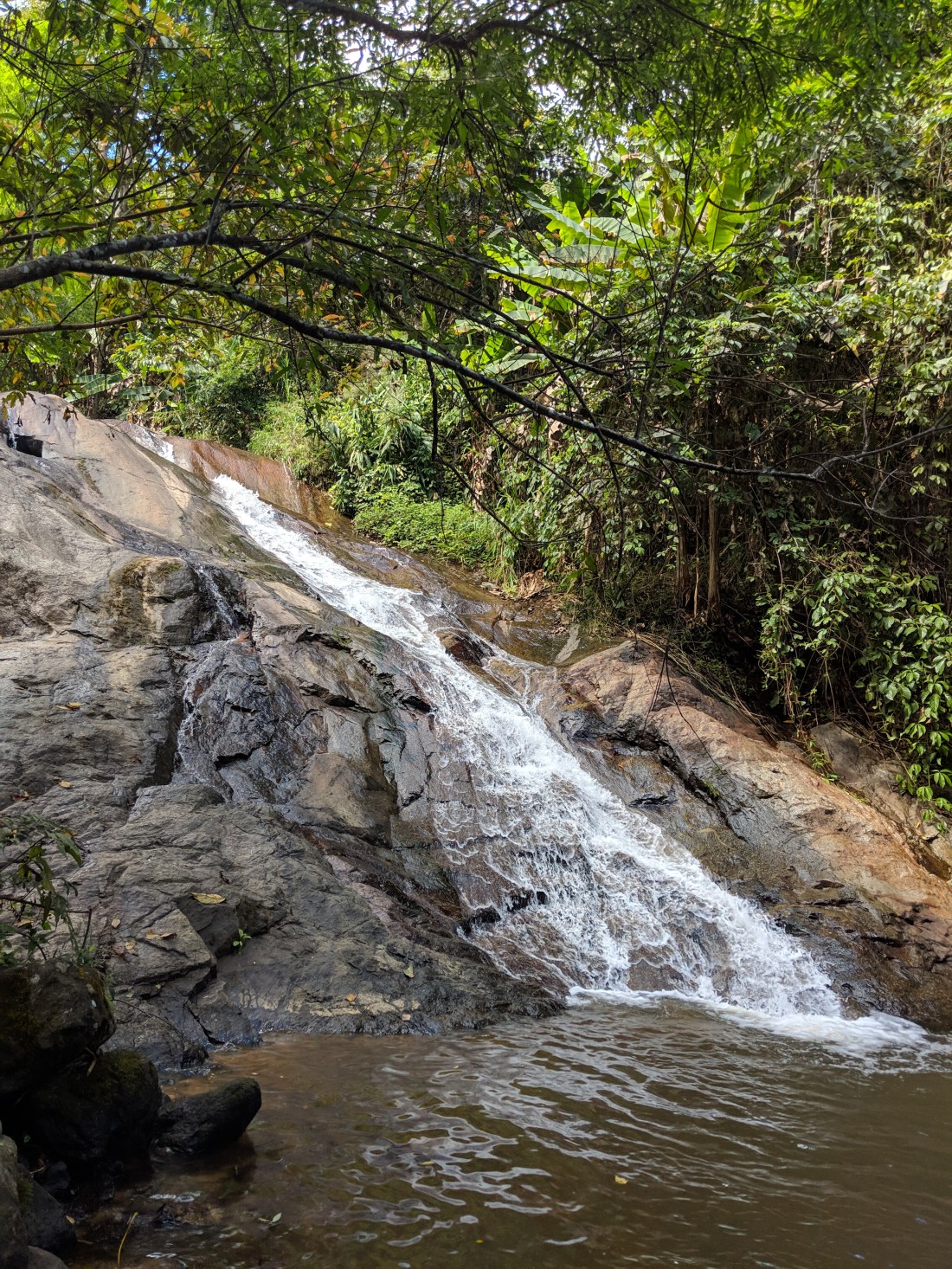
Pai was exactly what we expected Northern Thailand to be: friendly, rural, and youthful with such delicious food!  We spent our time hiking around visiting waterfalls and local villages.

img_20190109_105009
Pam Bok Waterfall

img_20190110_123822

img_20190110_123936
Mor Paeng Waterfalls

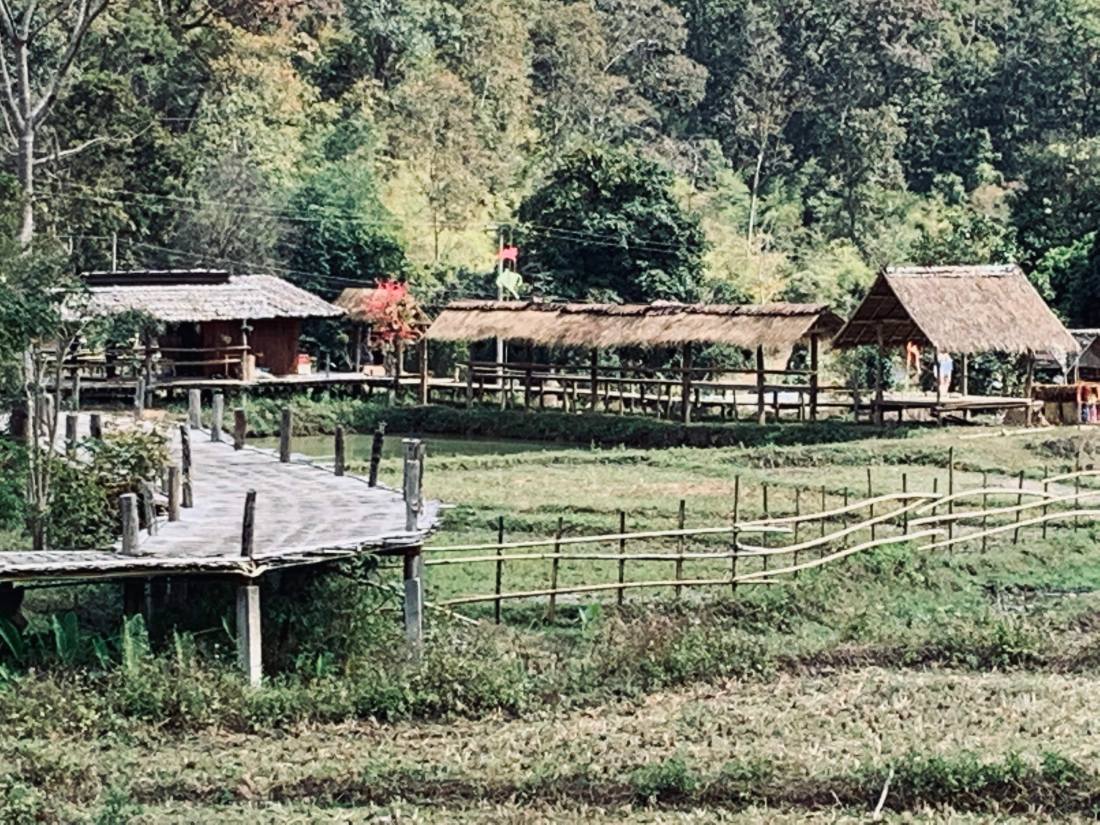
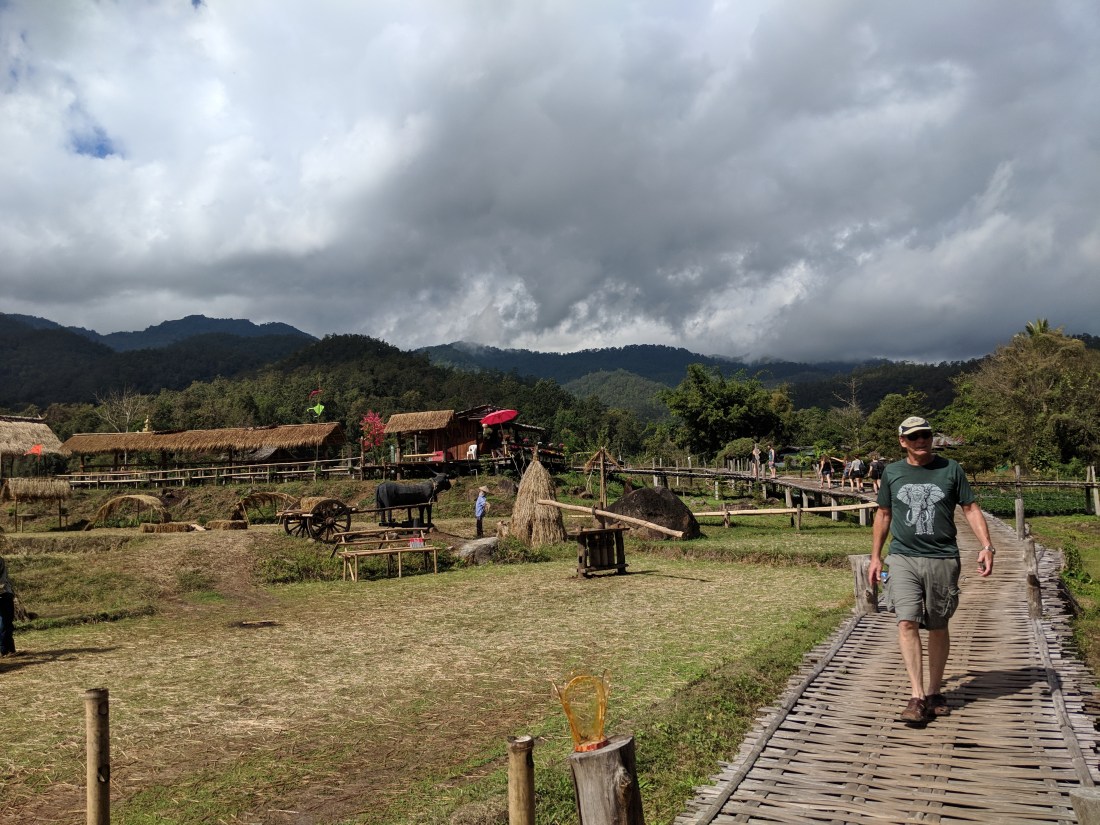
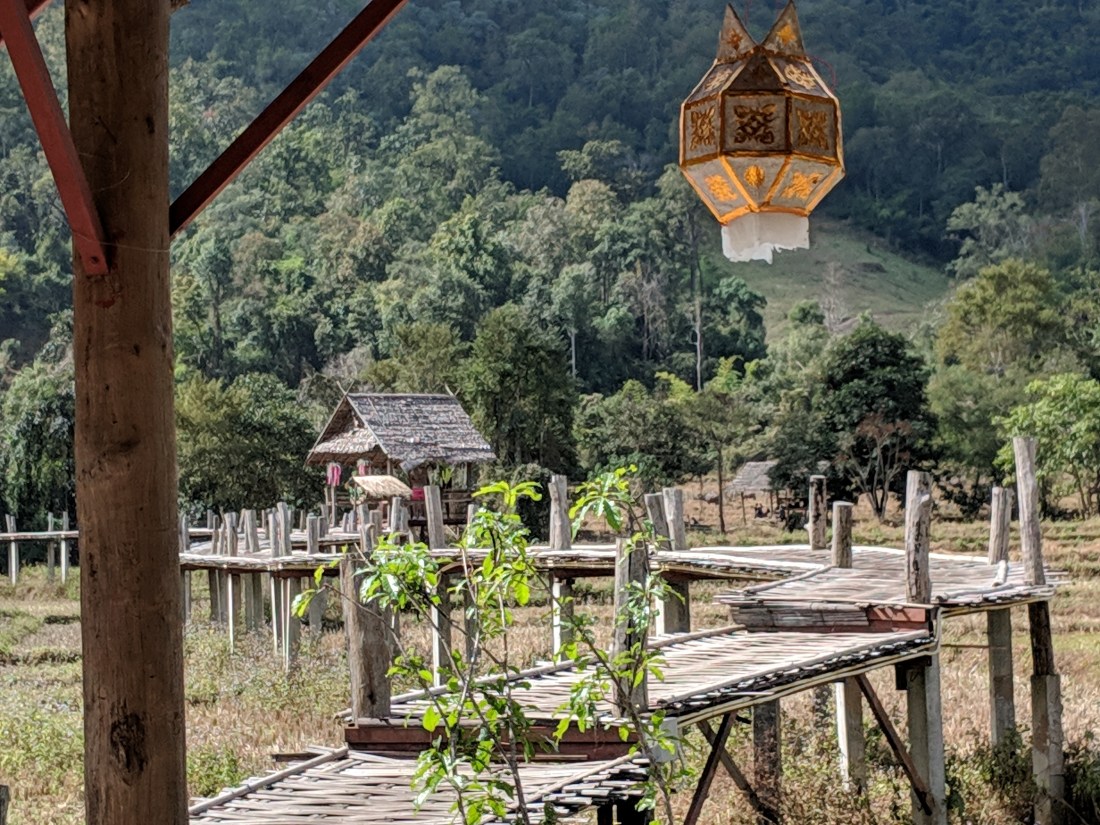
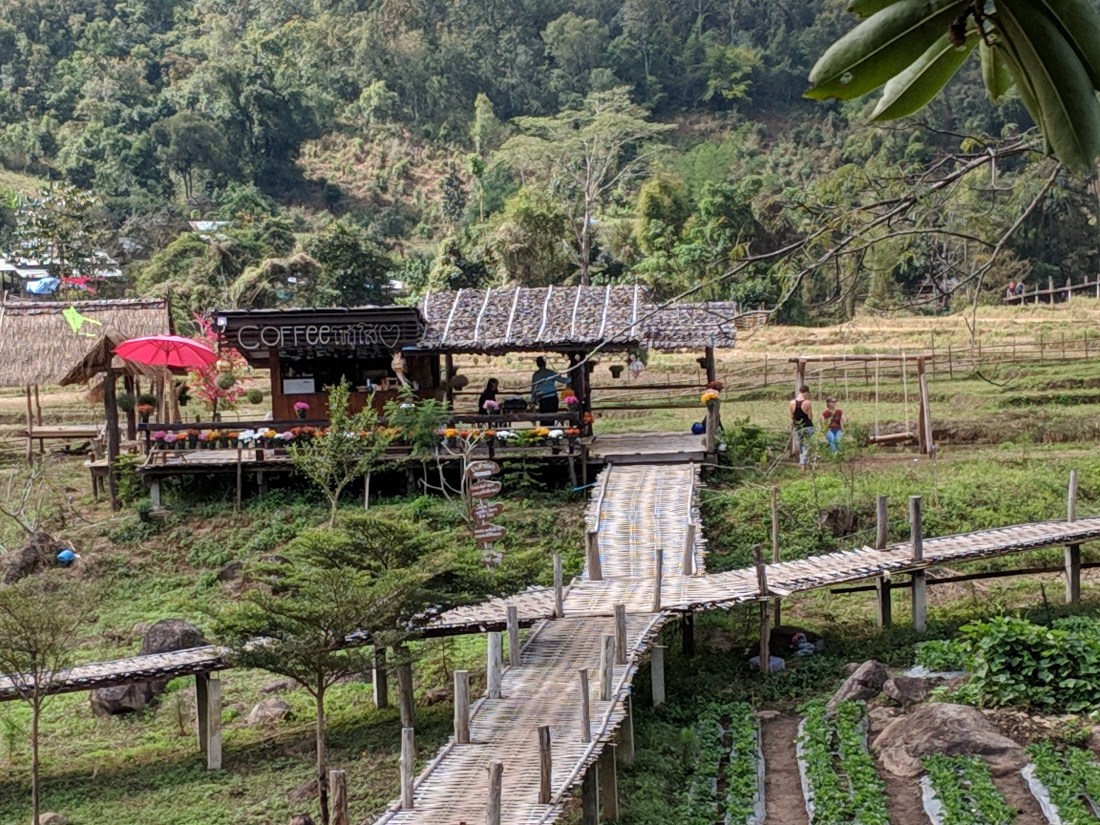
The village of Bann Pam-bok built the Kho-Kuu-So Bridge so the monks in the village could travel to the monastery in all weather, including the rainy season when the rice paddies are completely flooded.  The bridge building was an entire community event which took only 3 months to create an 800 meter network of bamboo bridges.  Tourist fees to visit help maintain it.

img_0843
rice paddies

img_0837IMG_20190109_121151.jpg


img_20190109_114538

img_20190109_113212
Those are strawberries in the lower right corner

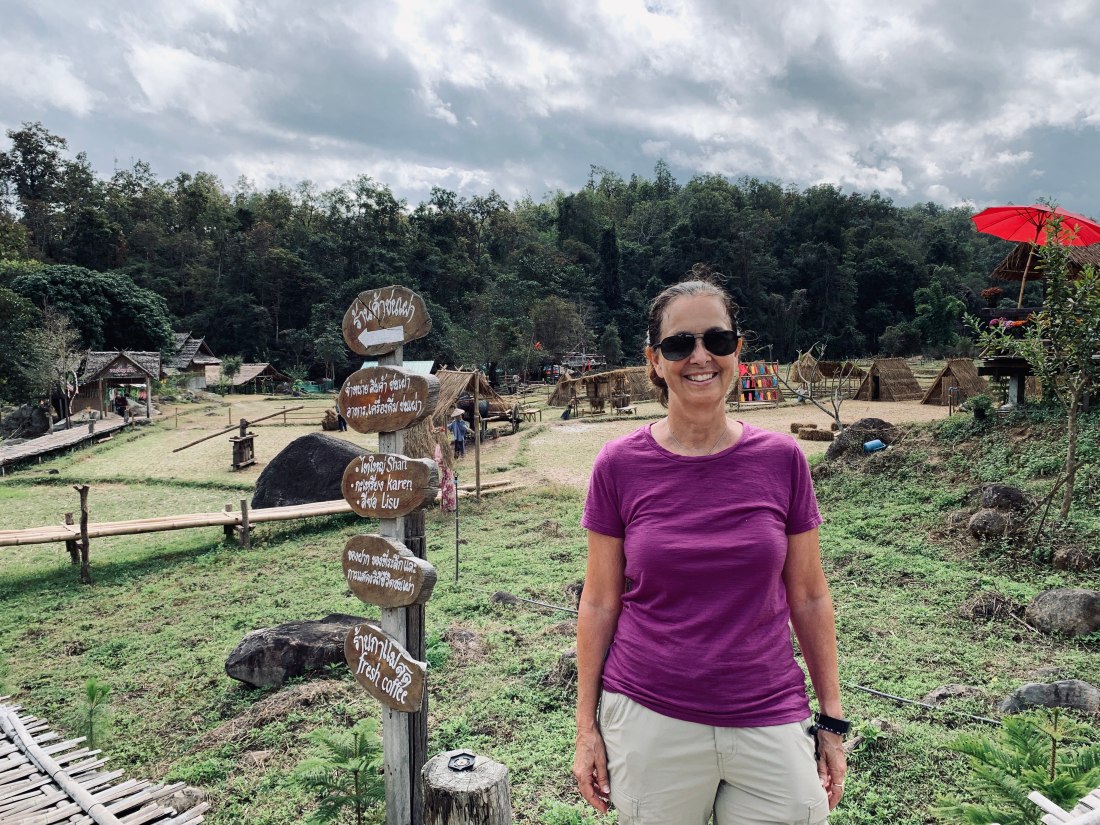
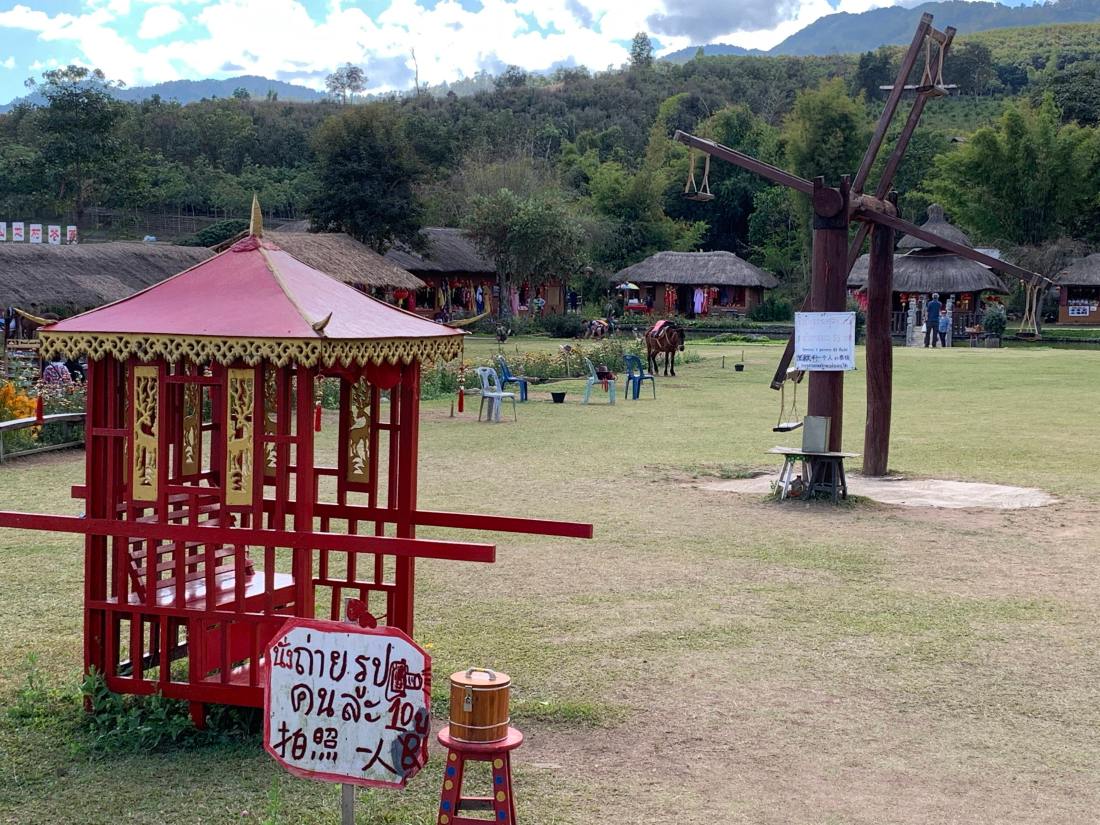
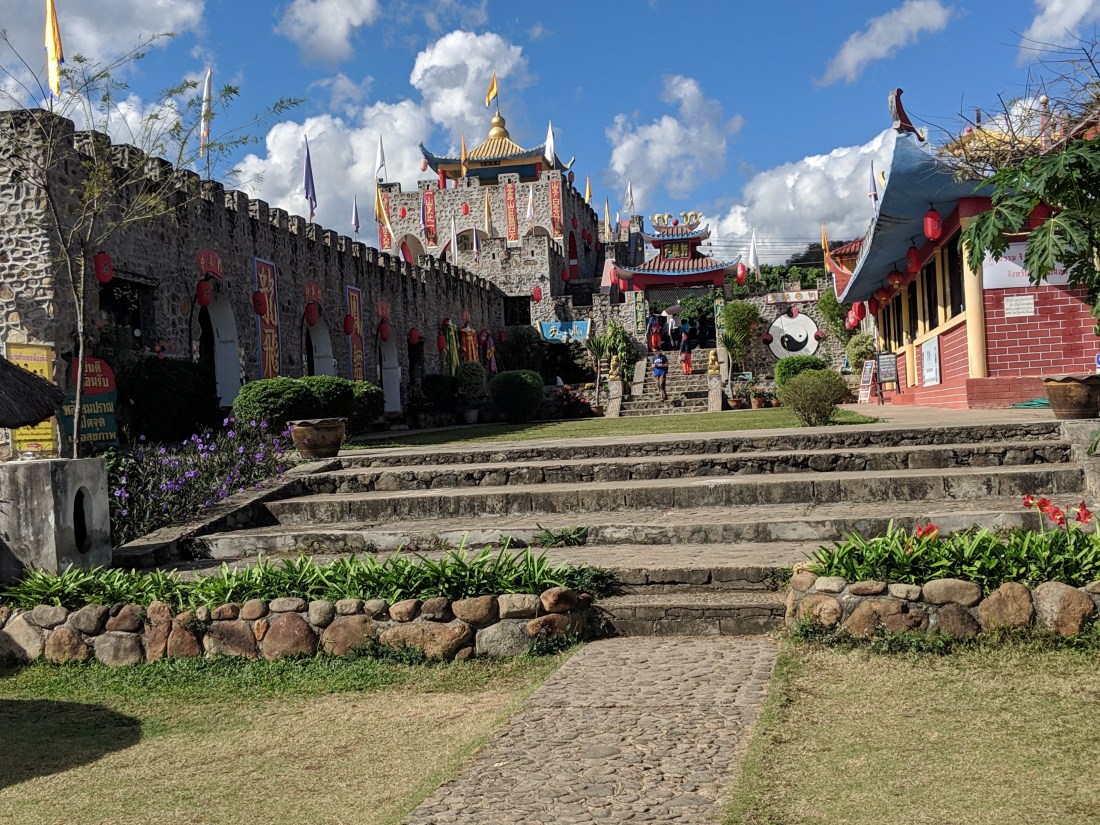
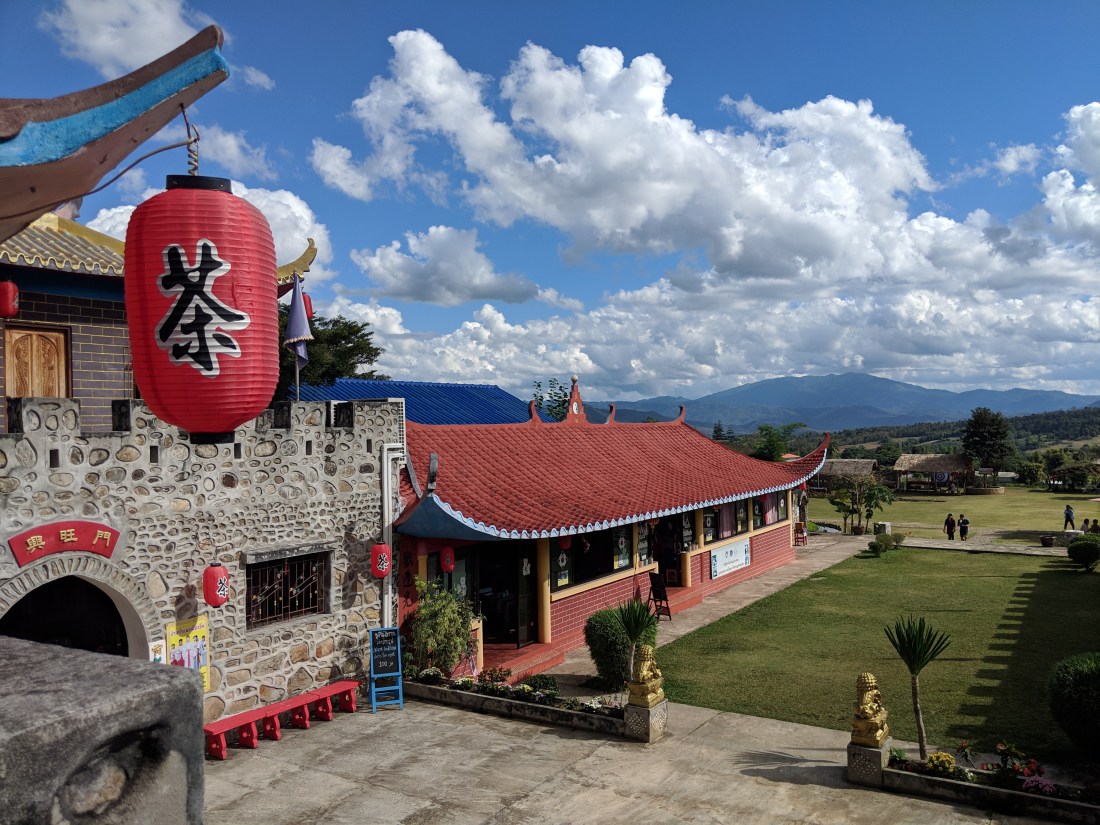
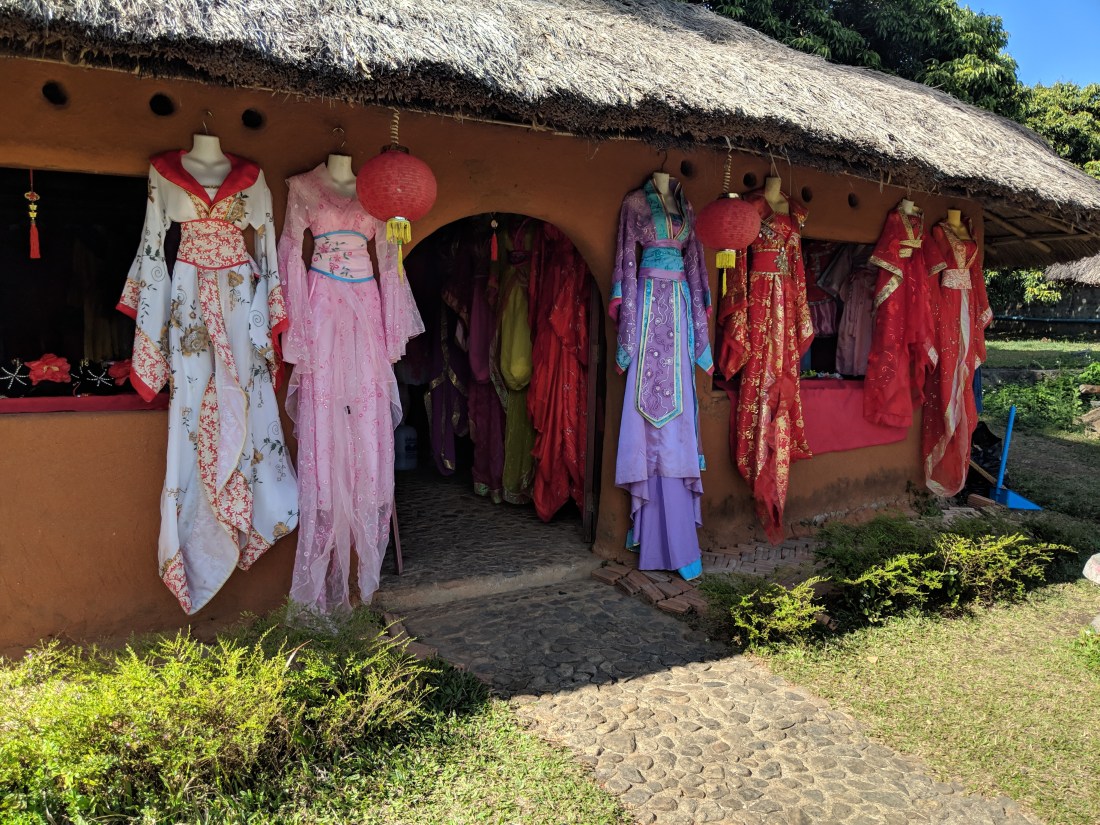
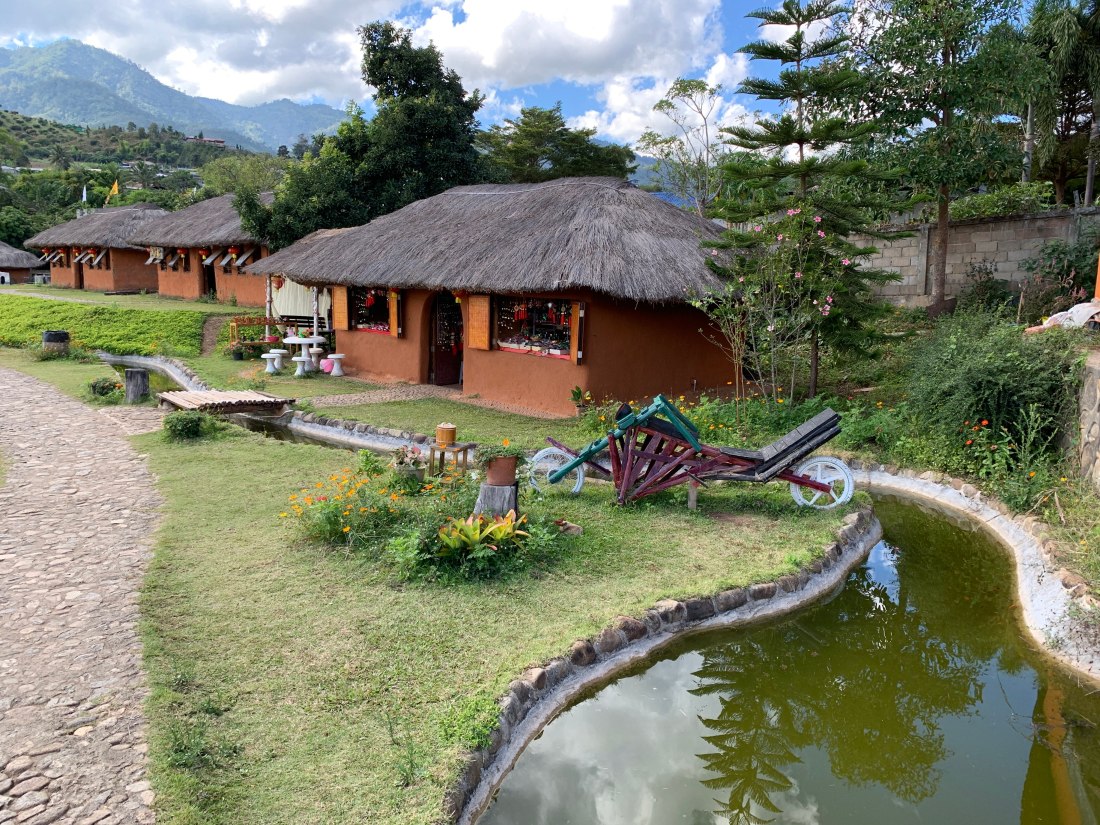
The Santichon Chinese village was originally comprised of refugees  fleeing Mao Tse Tung’s China in 1949.  Opium became the economic mainstay throughout the second half of the twentieth century.  When Thailand cracked down on the opium trade, they helped the descendants still living there convert their crops into tea. The village showcases the traditional Yunanese way of life including dress, cuisine, reproduction traditional clay houses, and trinkets.  Tourism as well as tea trade now sustain the 200+ families living there.

img_0867img_20190110_142923img_20190110_143206img_20190110_144046img_0871img_0866

img_20190110_144146

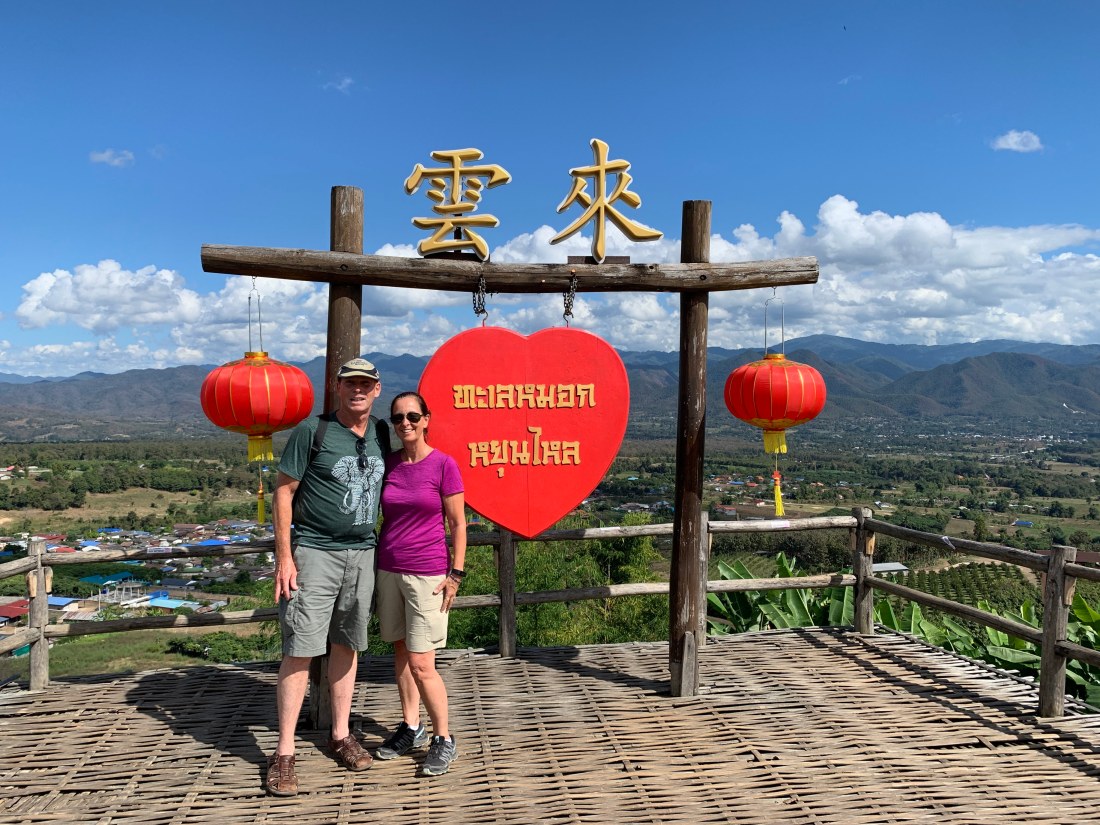
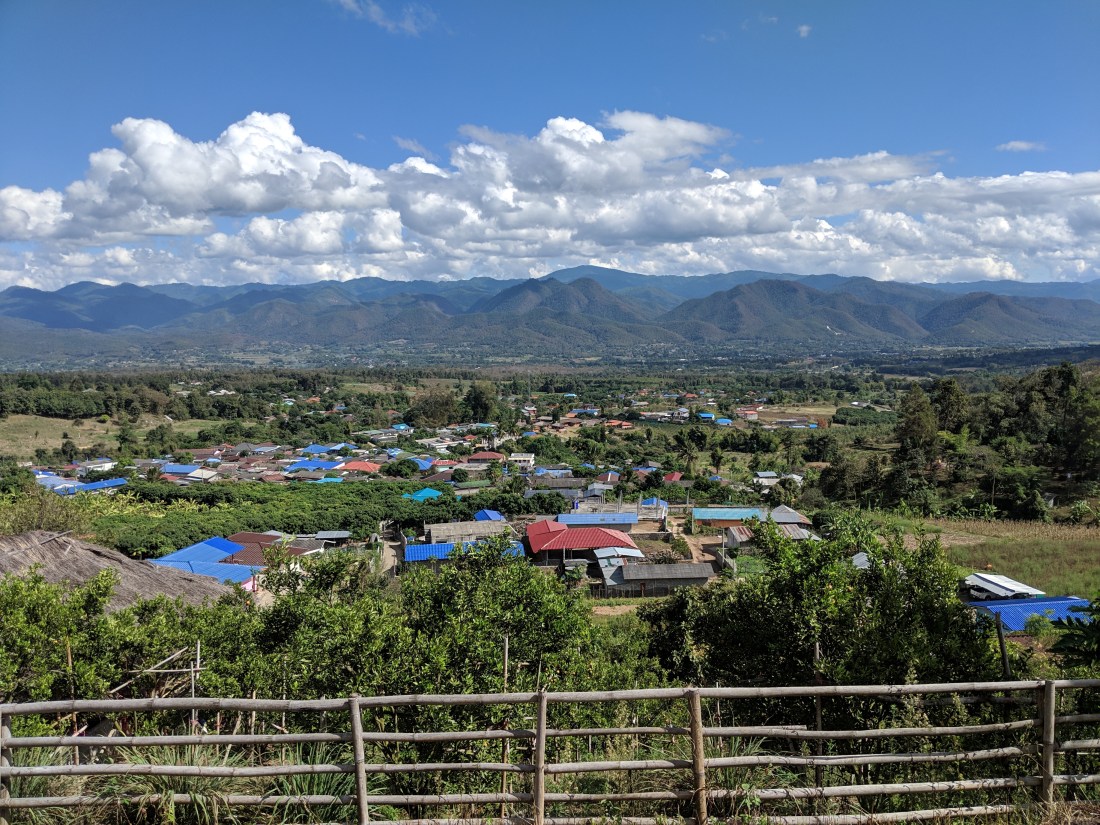
Then we drove to the mountain top above the Santichon Village for the view of Pai which is in the distance below.

img_0857img_20190110_132630

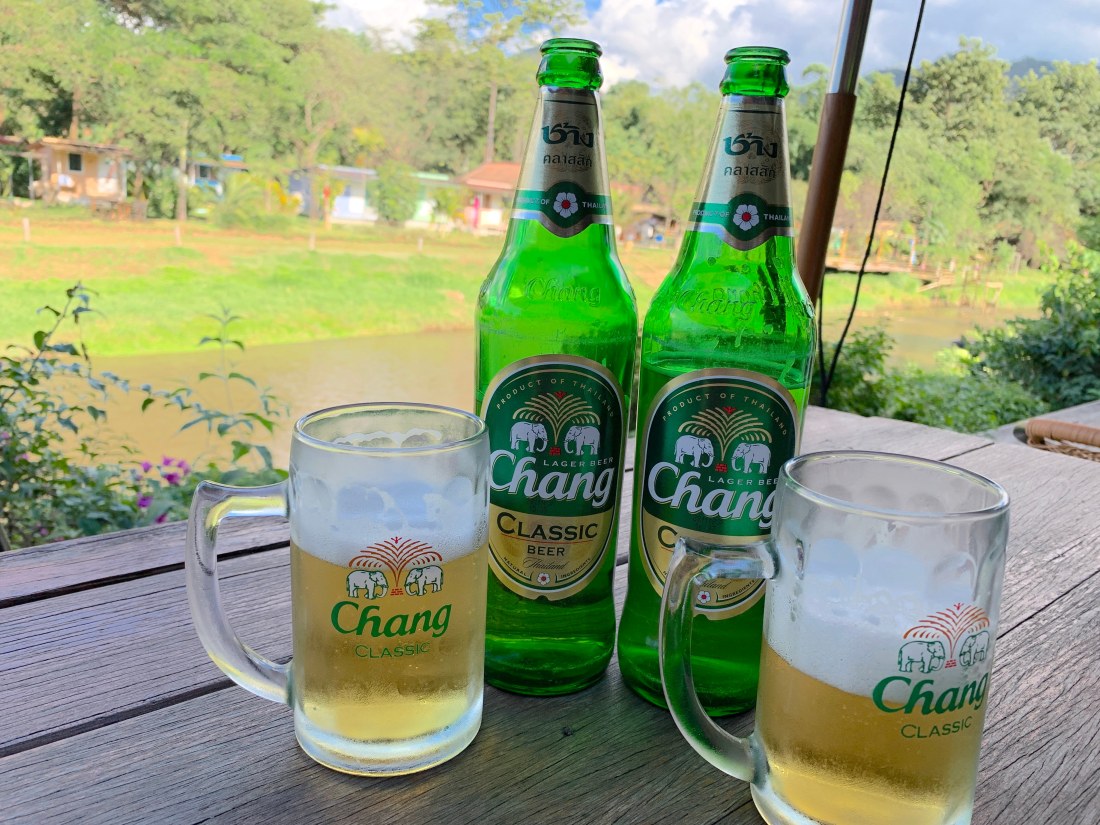
Our afternoon beer break by the river.

img_0875

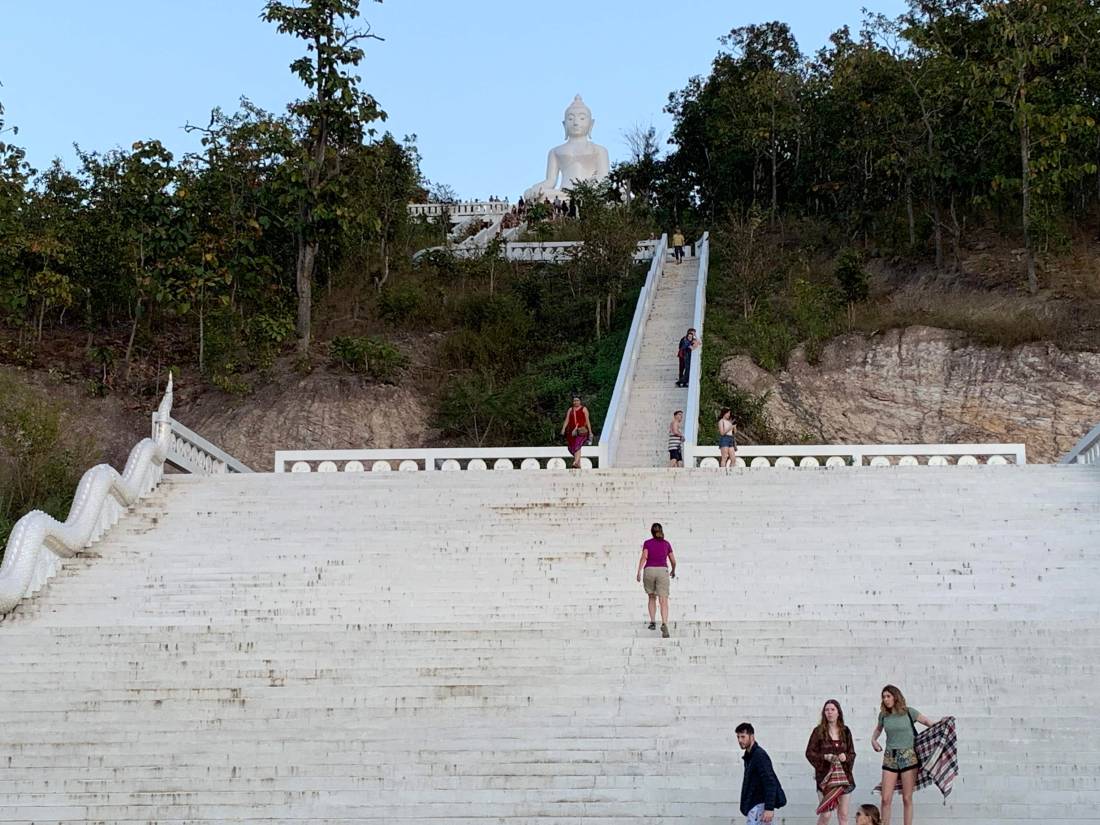
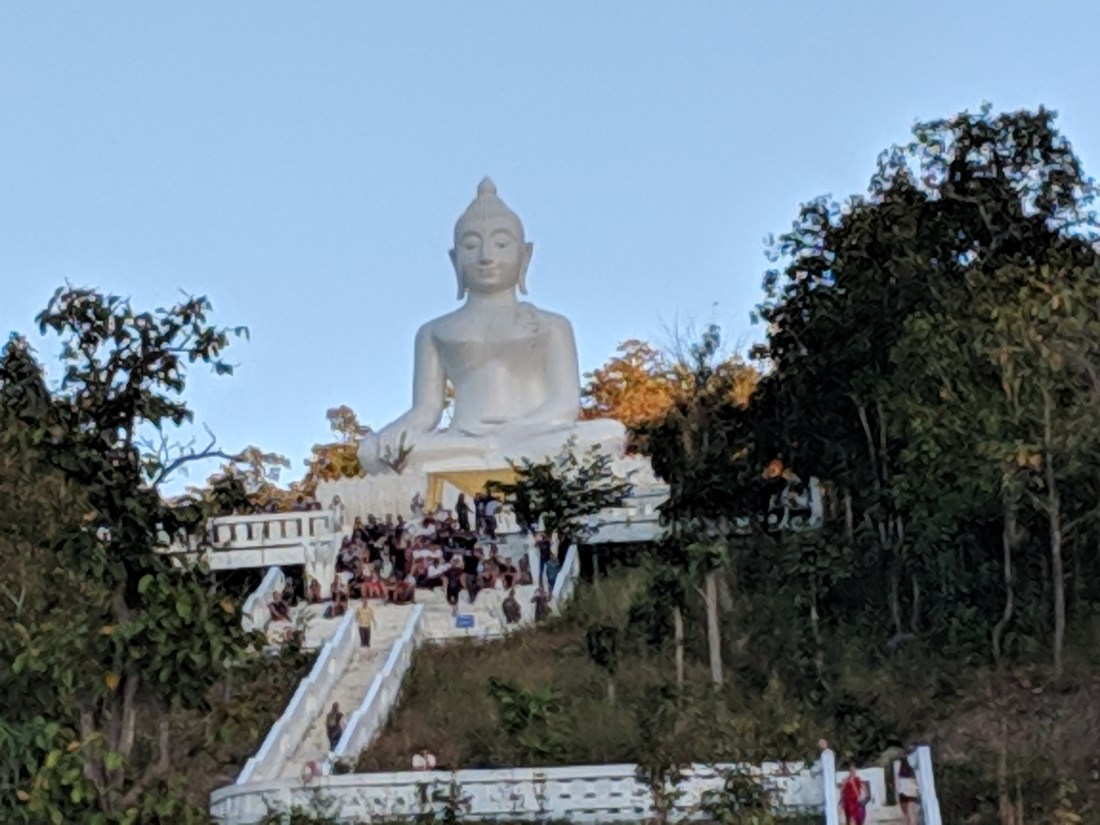
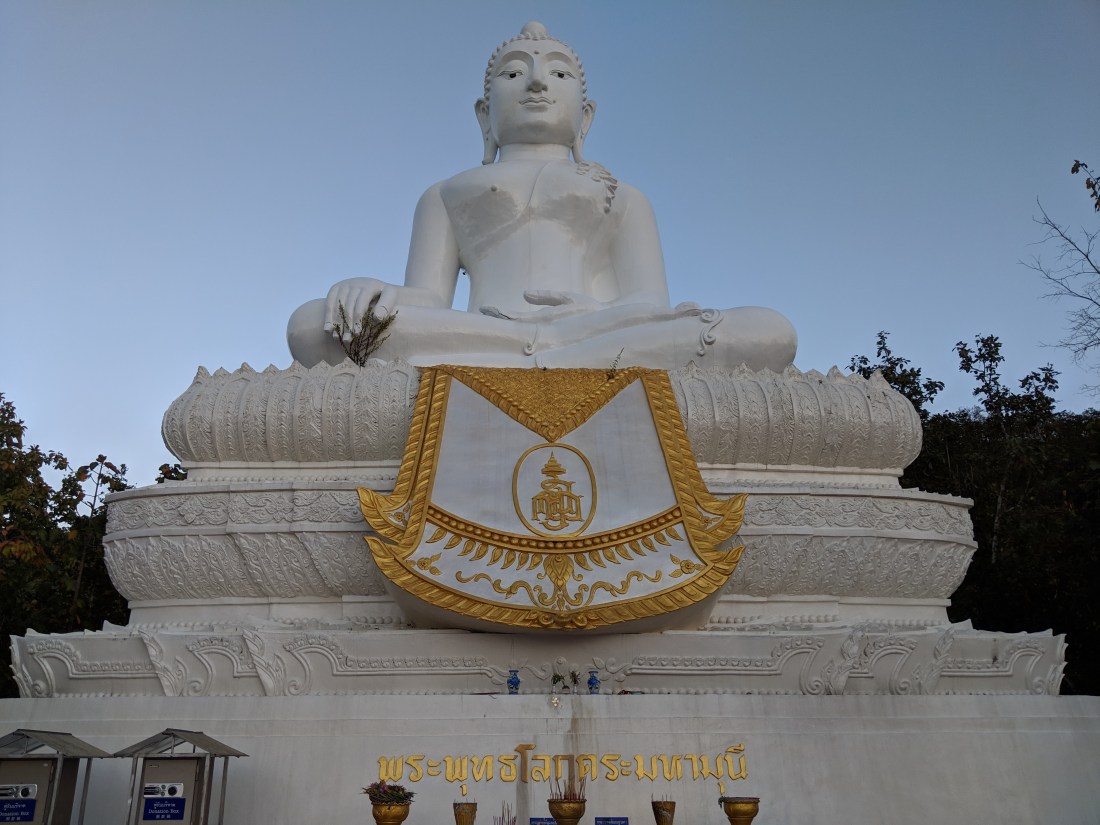
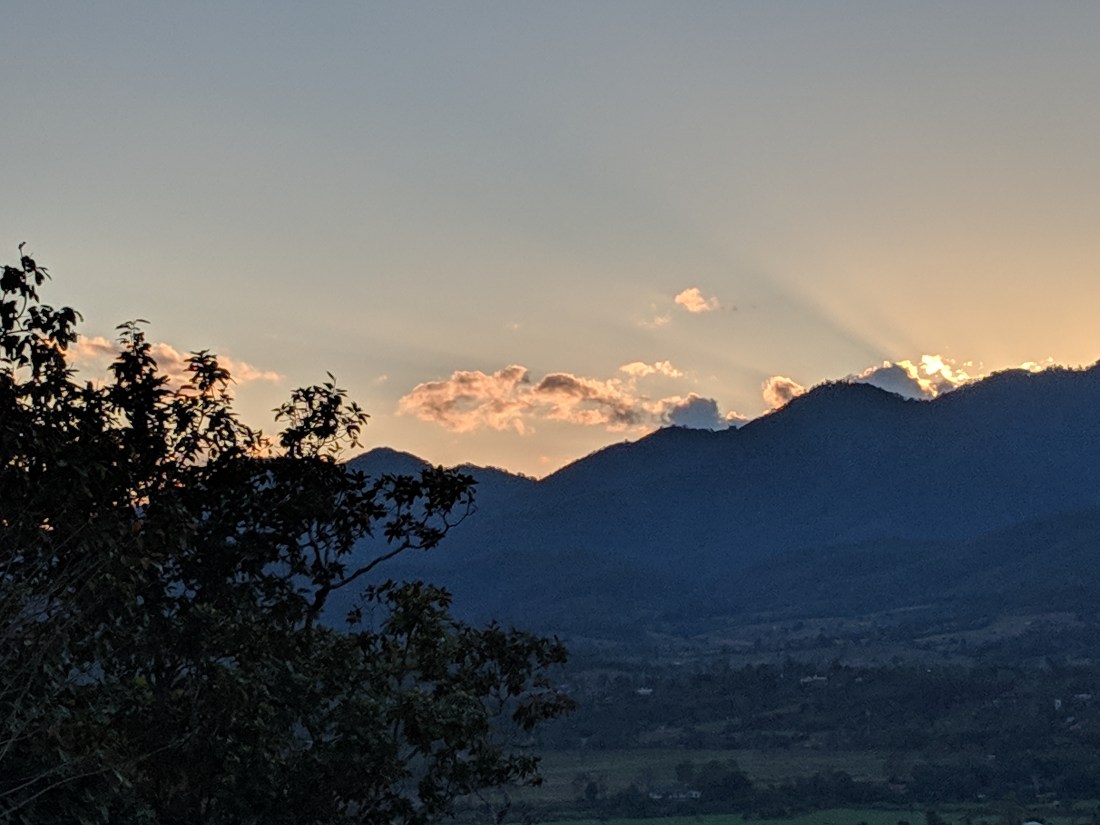
On our final evening in Pai, we realized we had not yet made it up to Wat Phra That Mae Yen – The Temple on the Hill.  It had been recommended that we watch the sun set from there.
As the sun was low in the ski, we sprinted up to the top (the stairs seen in the first picture were already about 2/3 of the way up!)

img_0878

img_20190110_174414

img_20190110_175528

And we made it in time!

img_20190110_175146


Chiang Rai January 5-7

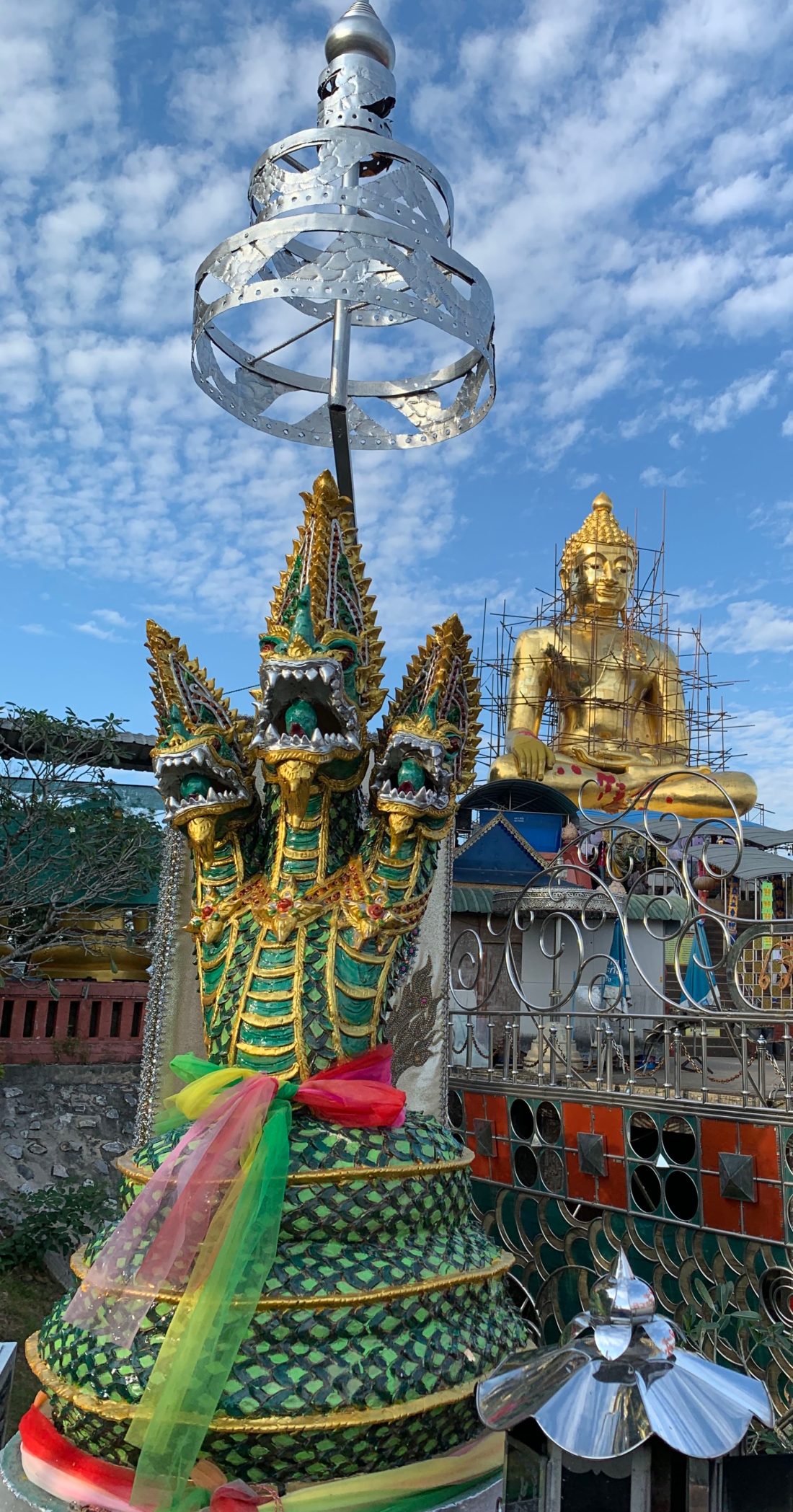
We added Chiang Rai to our itinerary thanks to Phyllis and Jay and were so thrilled that we did.  Firstly, we stayed at one the cutest places so far our our trip: Nak Nakara, which is named for Nag, the serpent.

IMG_20190105_163141IMG_20190105_140250IMG_20190105_140309

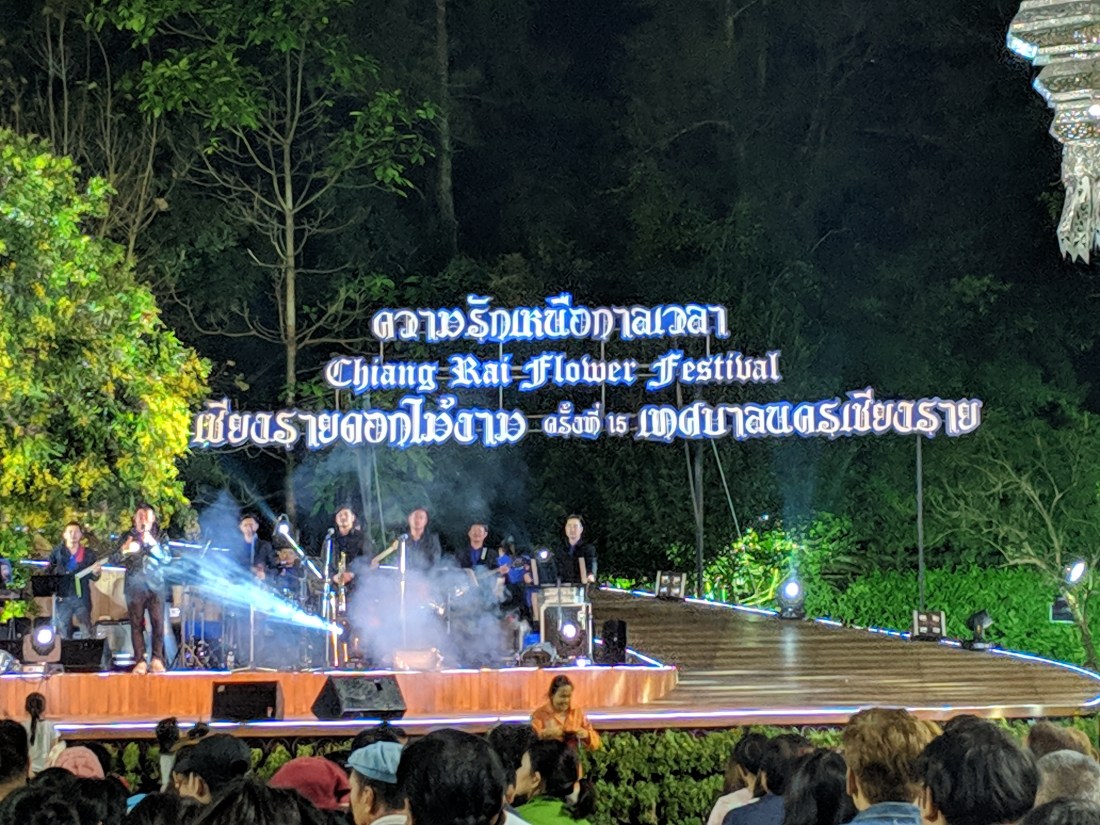
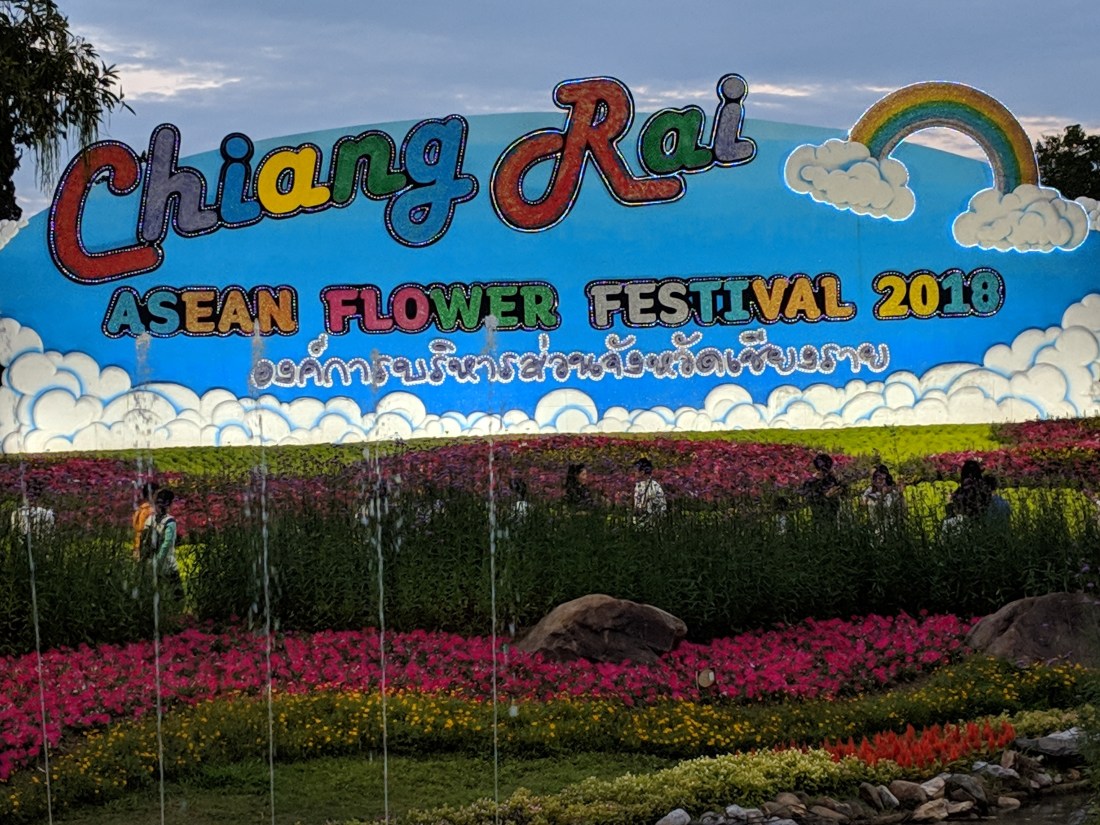
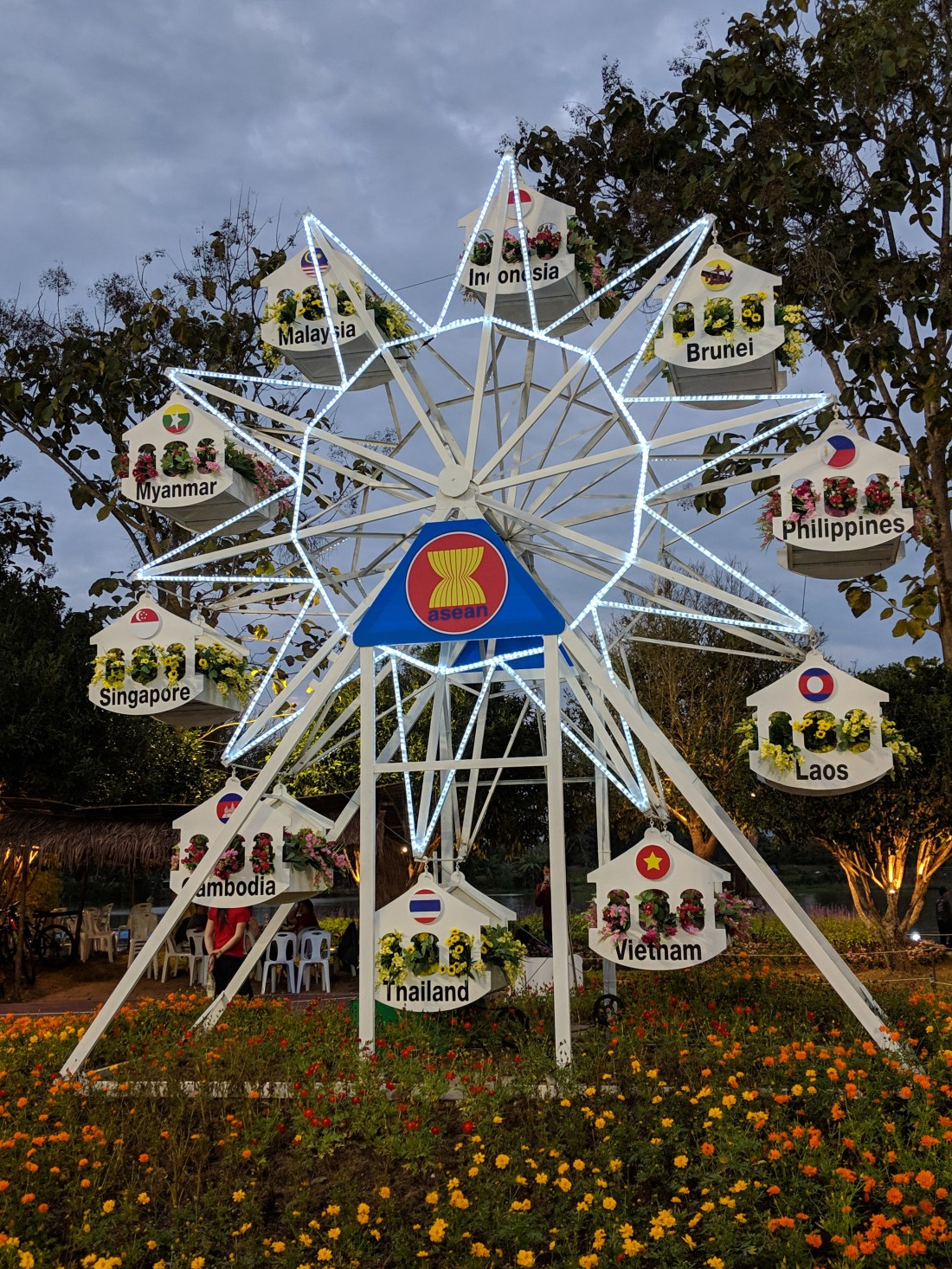
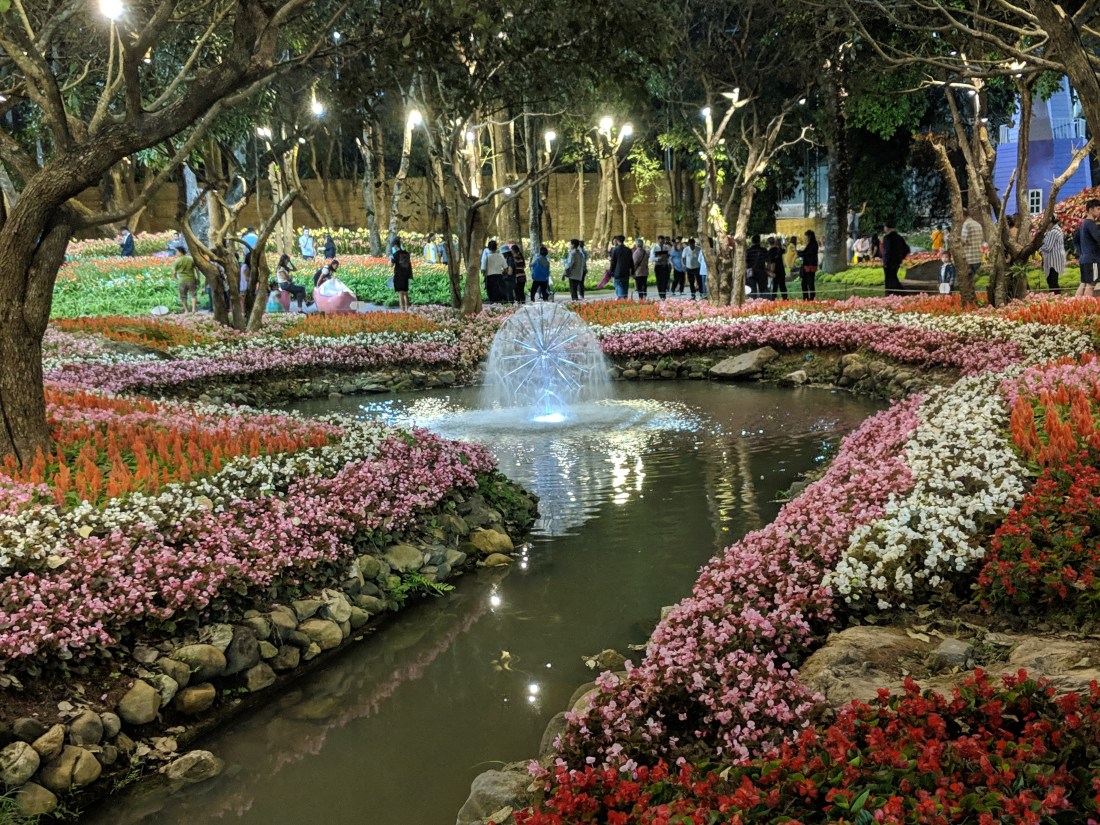
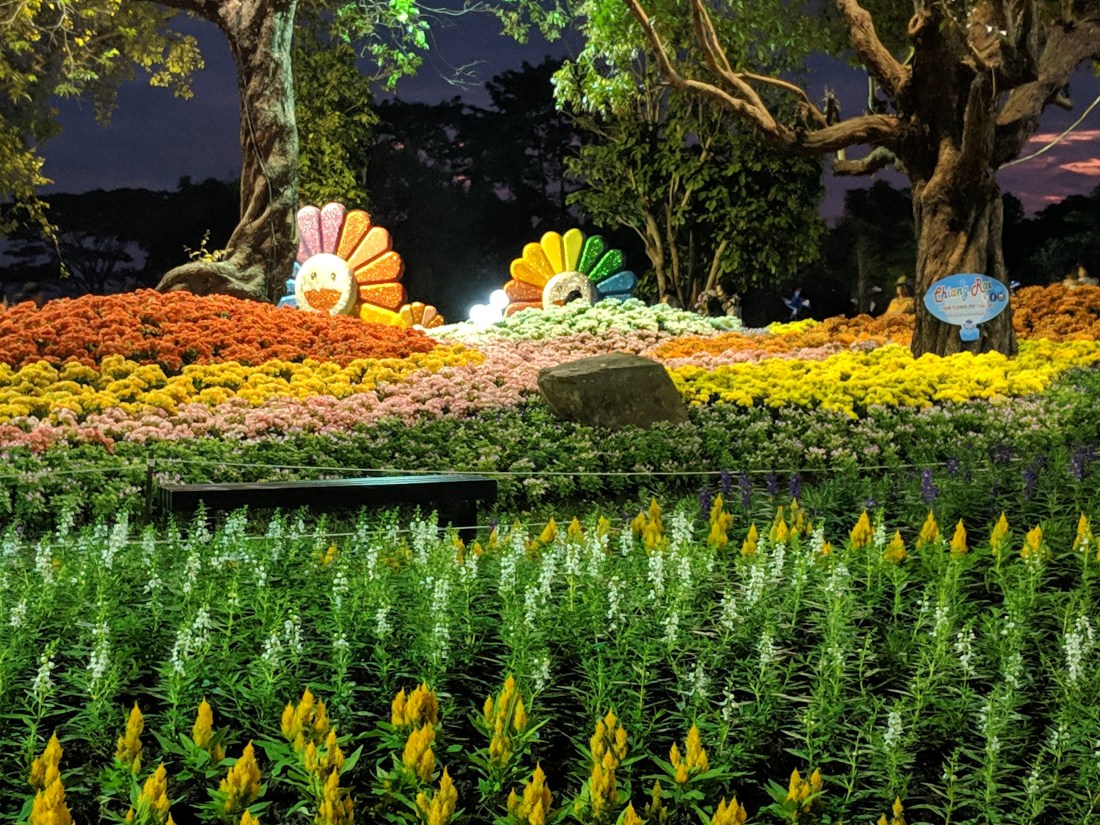
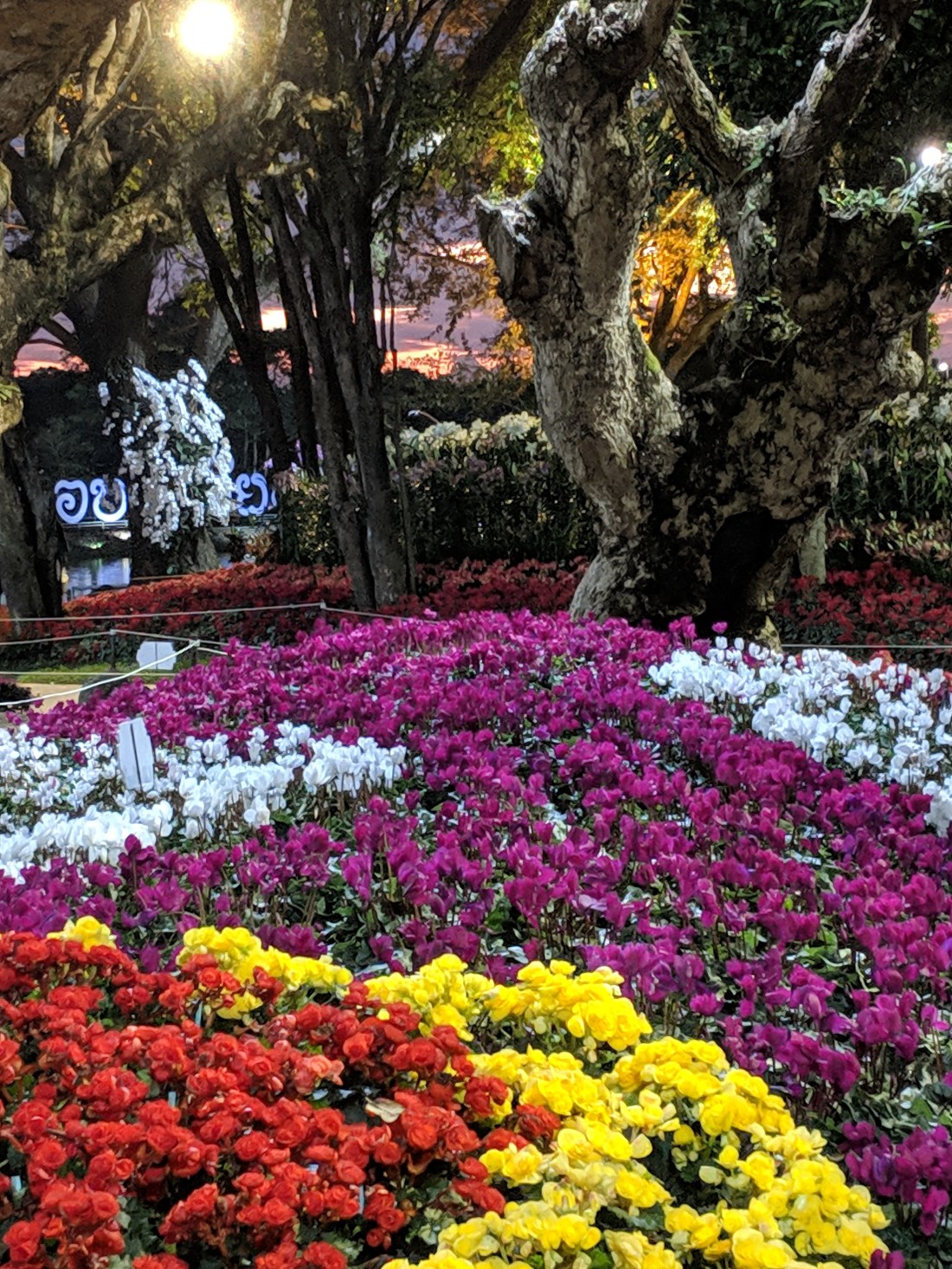
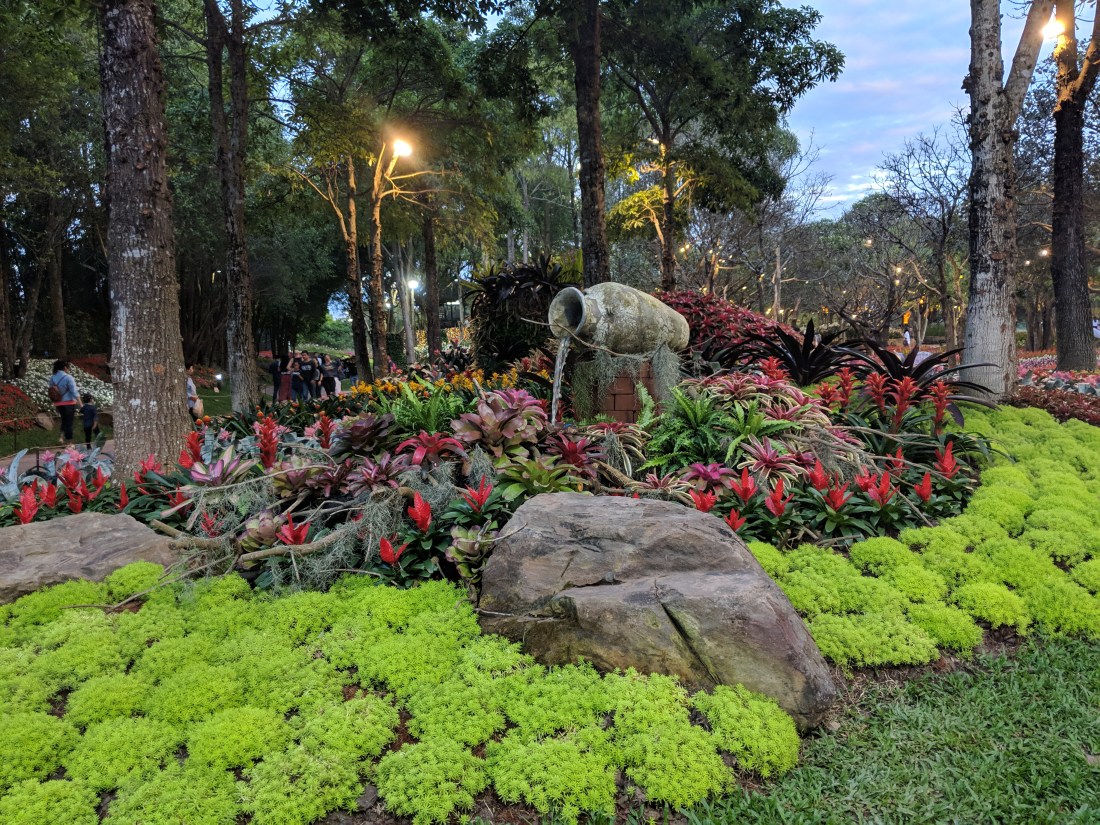
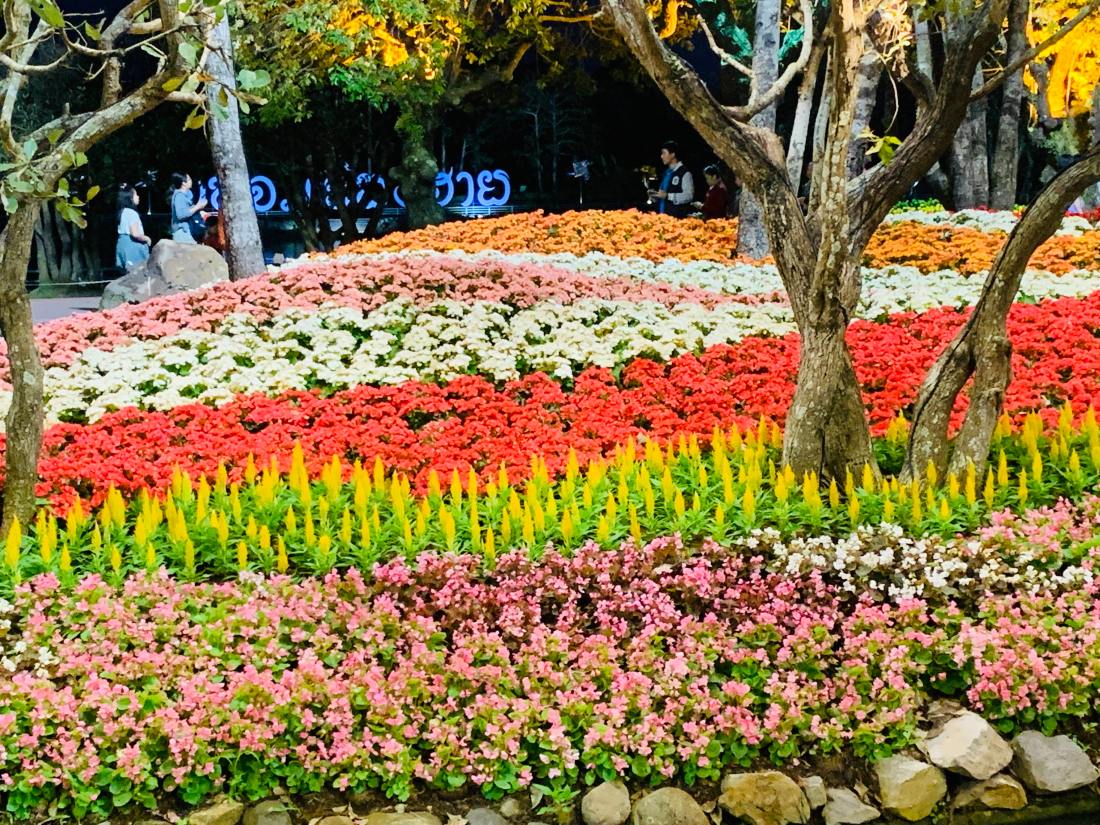
Second, under the heading of better lucky than good, we picked the dates based on logistics of air travel, availabilities, etc., and lucked in to being in Chiang Rai on the exact 2 days of the annual flower festival!!!  How lucky are we!  There was a smaller festival in town that we ventured out into the first night. The pictures do not even begin to capture the enormity of the event and the beauty of the flowers.

IMG_20190105_143916

IMG_20190105_150007

IMG_20190105_144325

00000PORTRAIT_00000_BURST20190105144940108

There were 2 stages with live music, one with classic Thai performers, the other with modern artists including hip-hop.

IMG_20190105_192007

The street food was amazing.  We tried at least 5 things we had never tried before, and all were delicious!

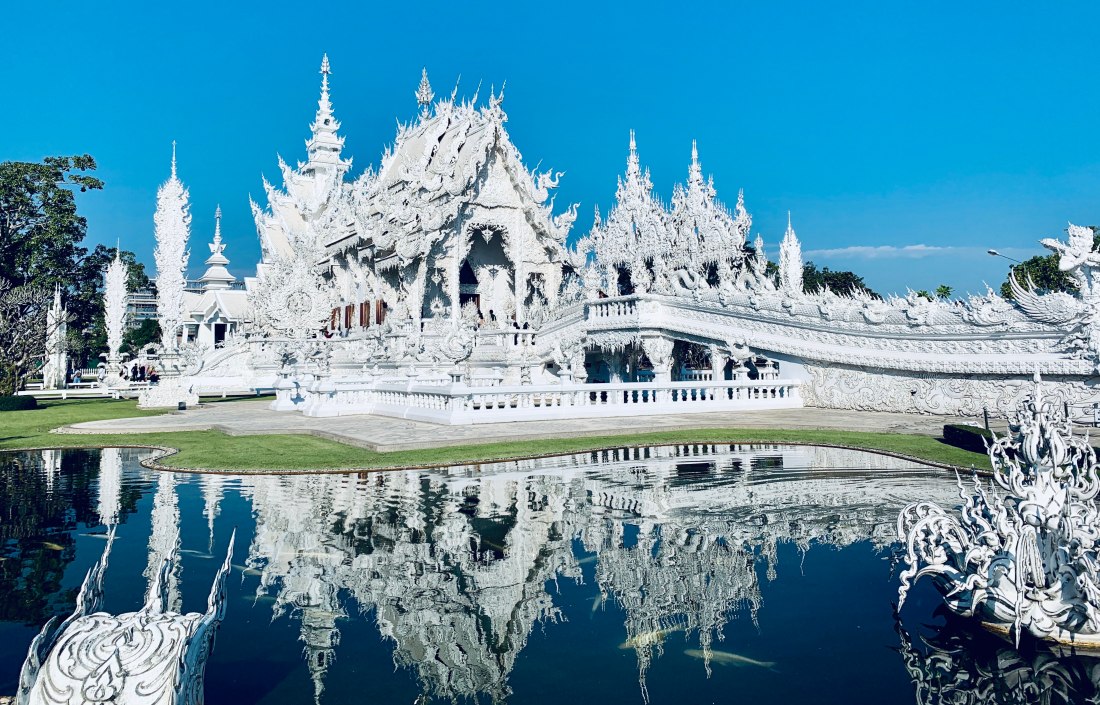
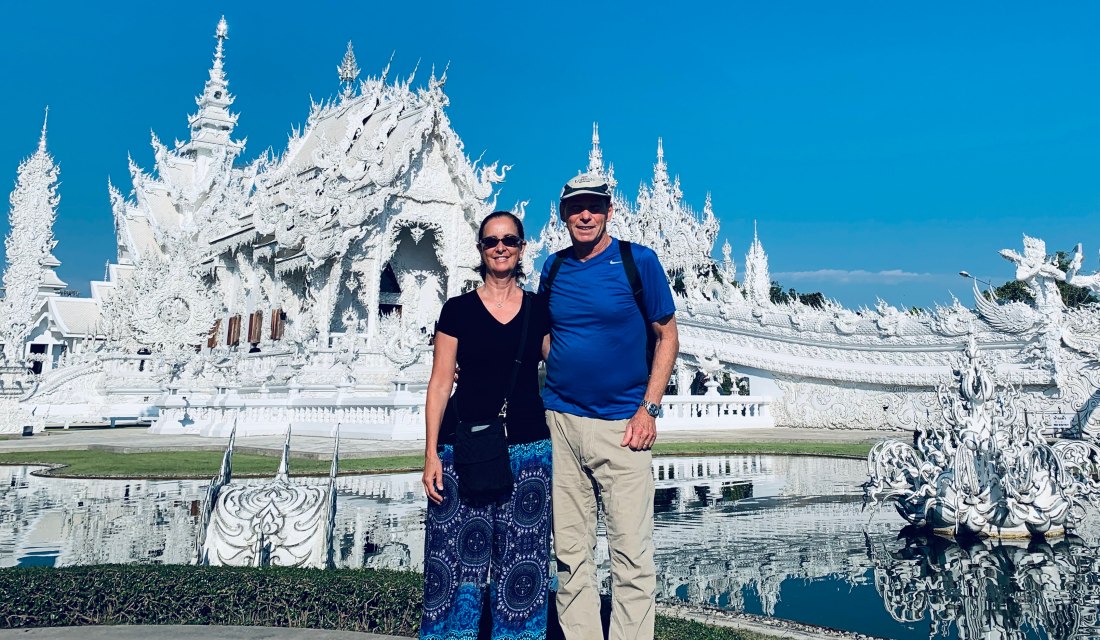
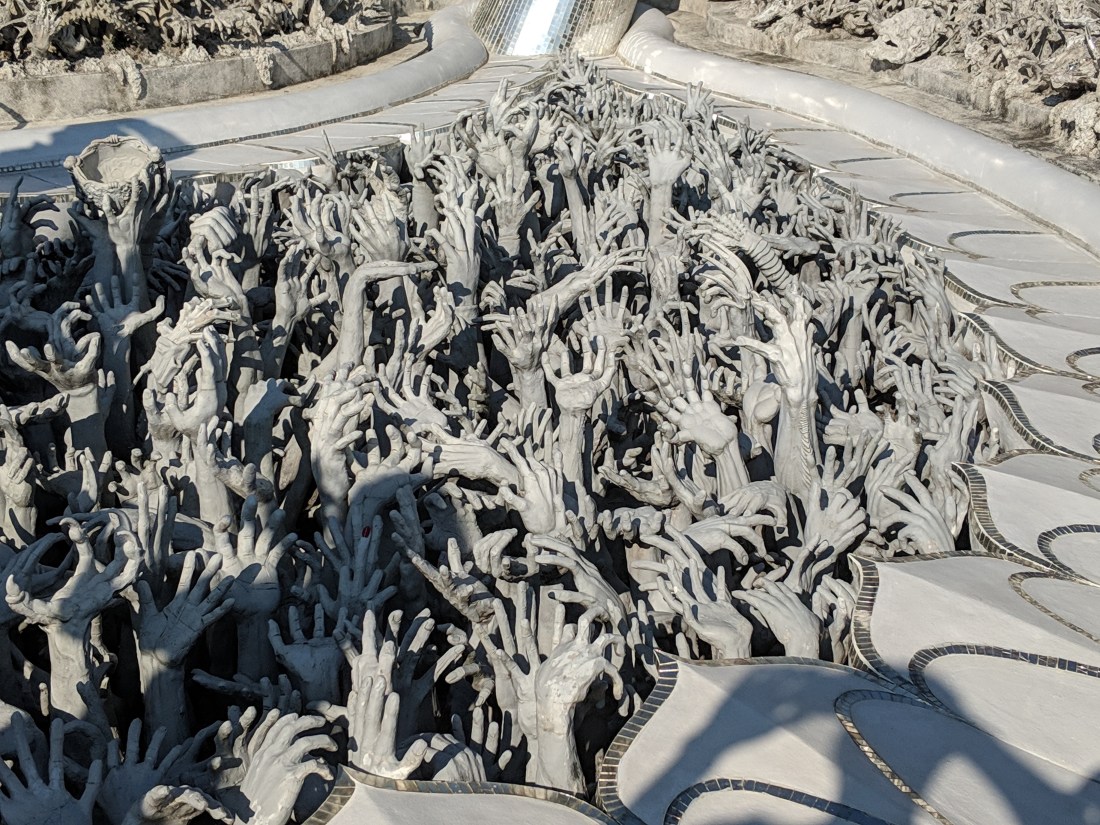
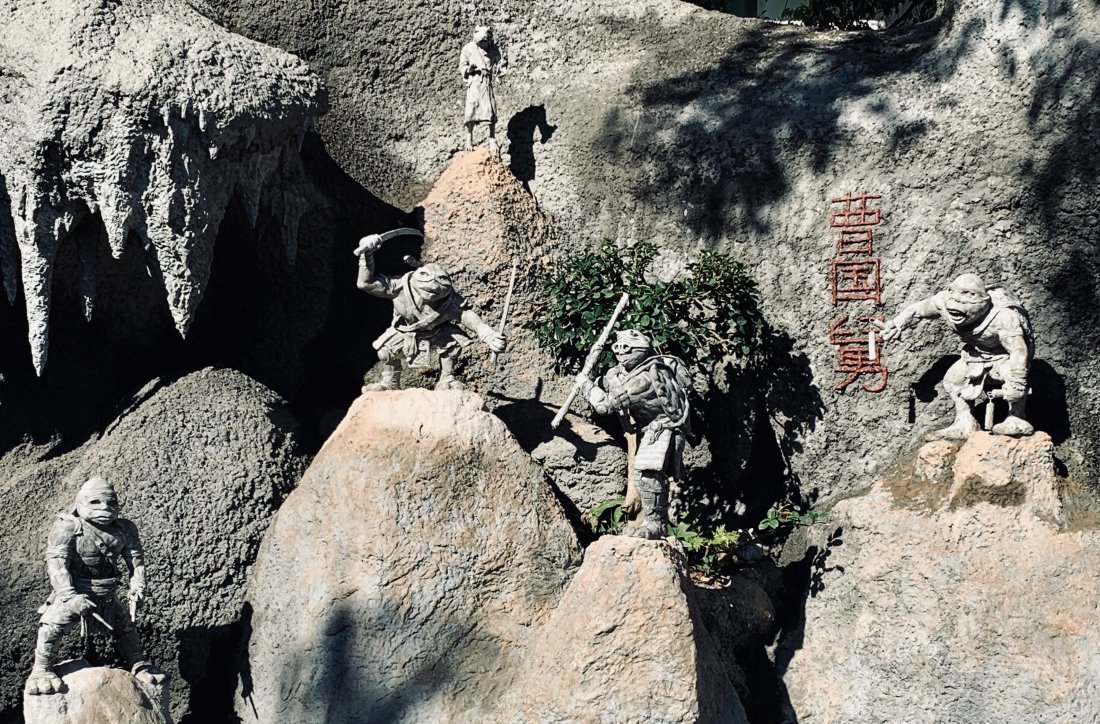
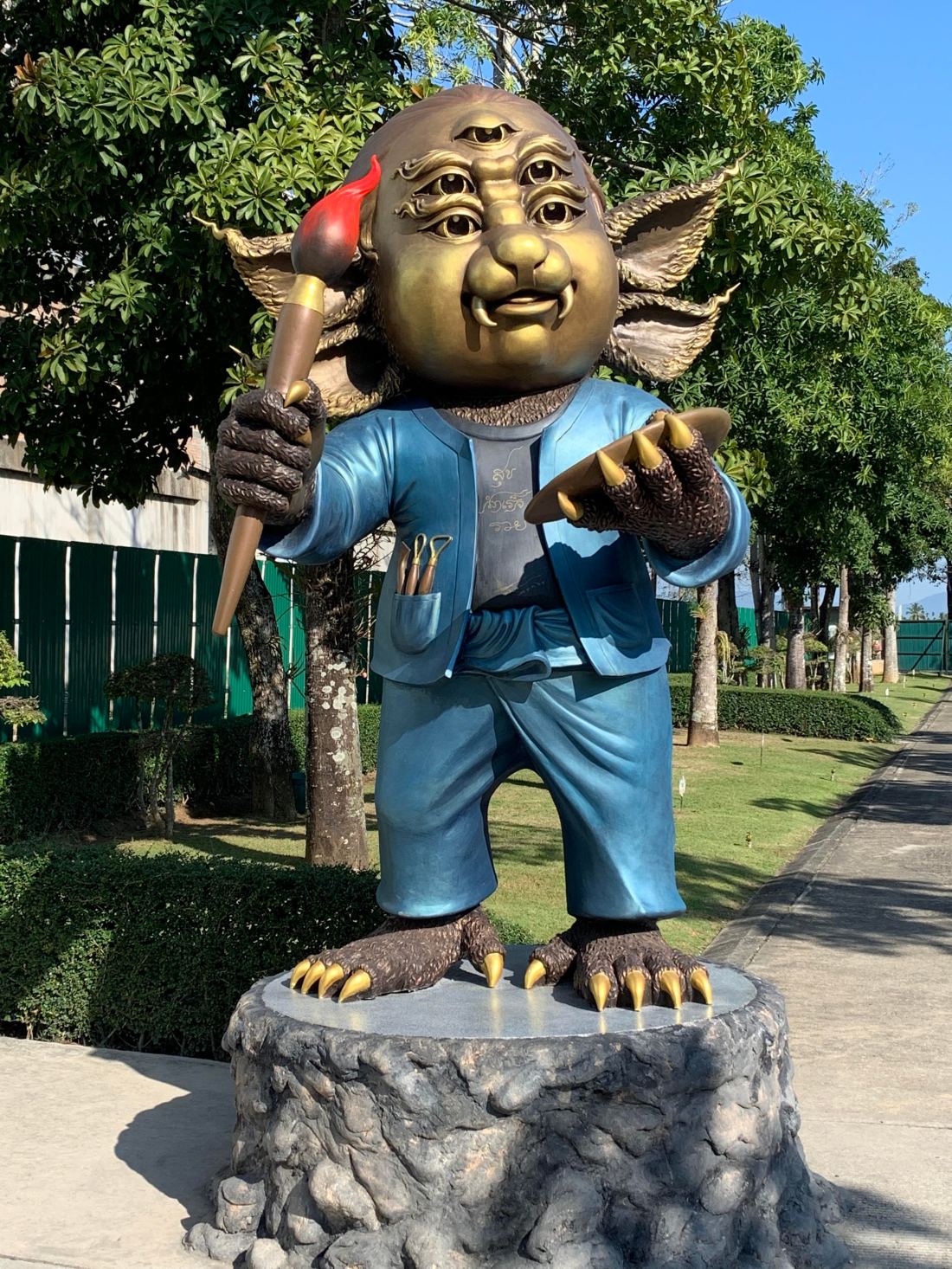
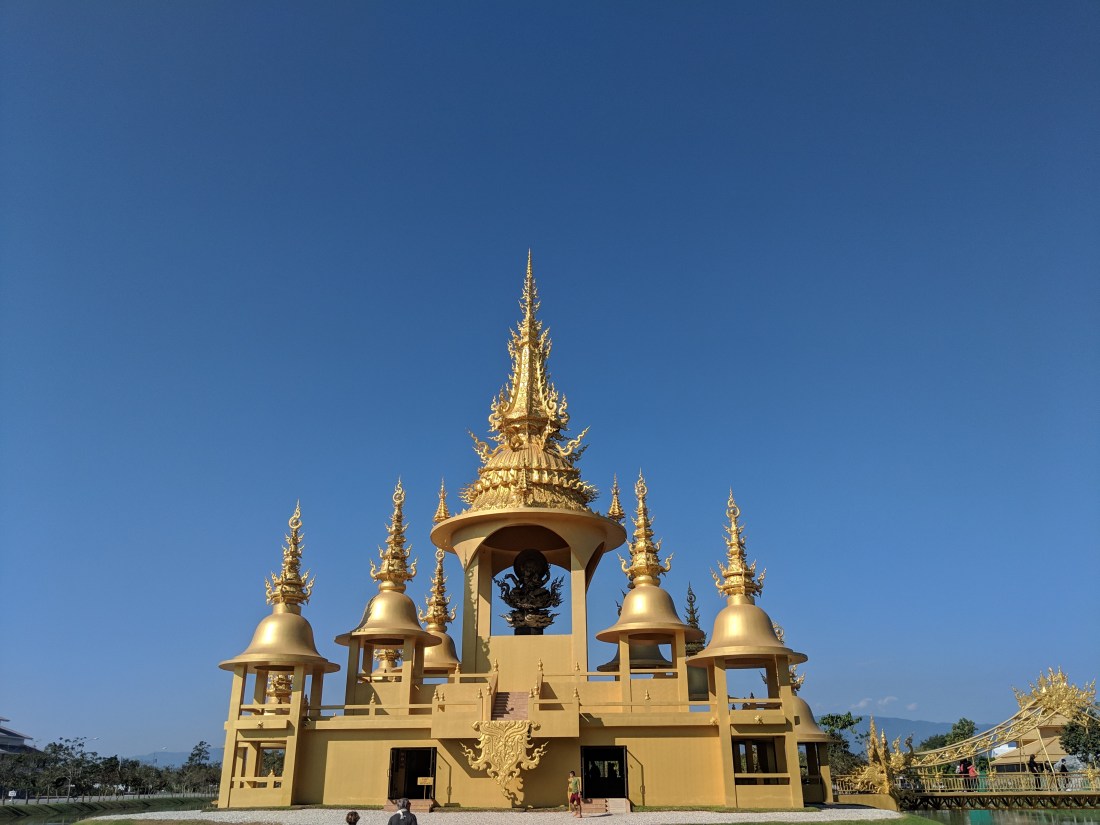
The next day we had so much to pack in.  First we went to Wat Rung Khun – The White Temple.  It is a modern art museum in the style of a Buddhist temple built by artist Chalermchai Kosipipat.  Again, the pictures do not even begin to show how amazing this place is.  Photos are not allowed inside, where the artist really expresses both his sense of humor and his anger at the corruption of and destruction caused by modern life.  Outside is white for purity with glass inlays throughout, shimmering brilliantly in the sun.

img_0676

img_0678

img_0687

IMG_20190106_093007

The reaching hands in front we are told represent unrestrained desire.  We cross from here to the main temple, passing toward eternal bliss by crossing over a bridge that proclaims the way to happiness by forgoing temptation, greed, and desire.

Inside there are pictures with a mix of classic Buddhist stories and modern ones including super heroes, Elvis Presley, Michael Jackson, and the twin towers burning, to name a few.  There are several other buildings, again mixing classic and contemporary.

IMG_0692.JPG

IMG_0697.JPG

IMG_20190106_101005

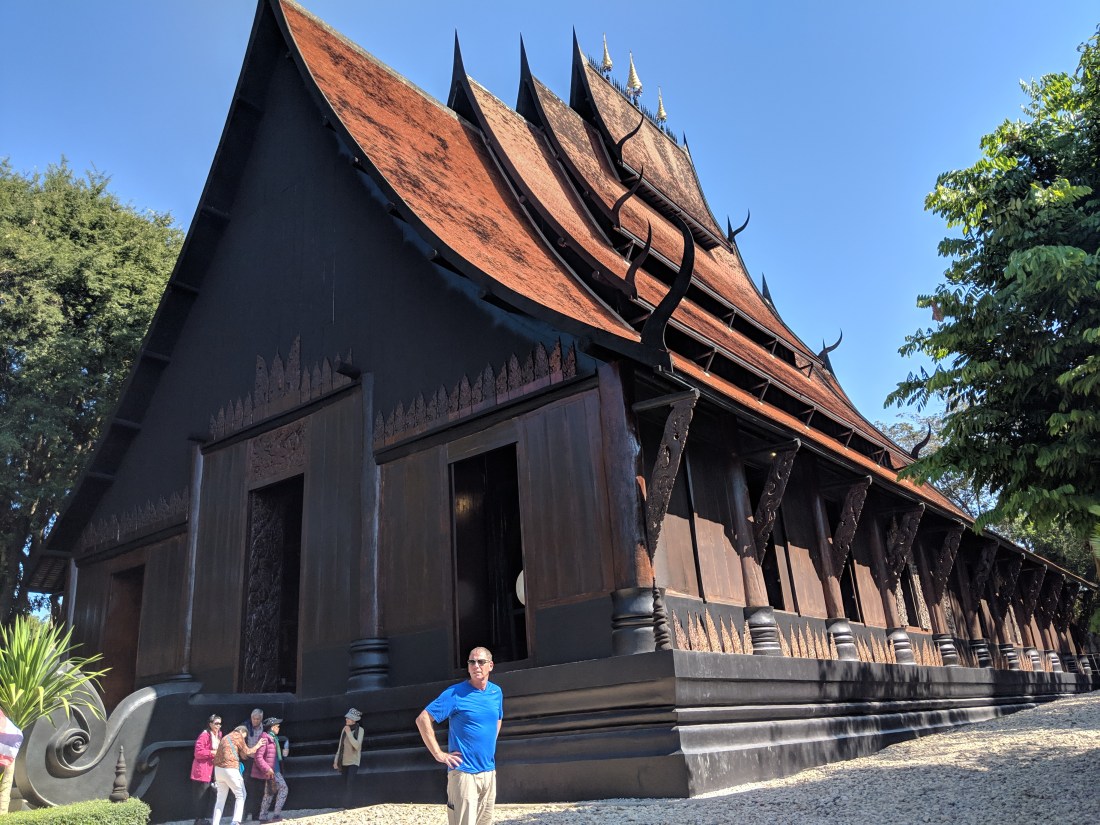
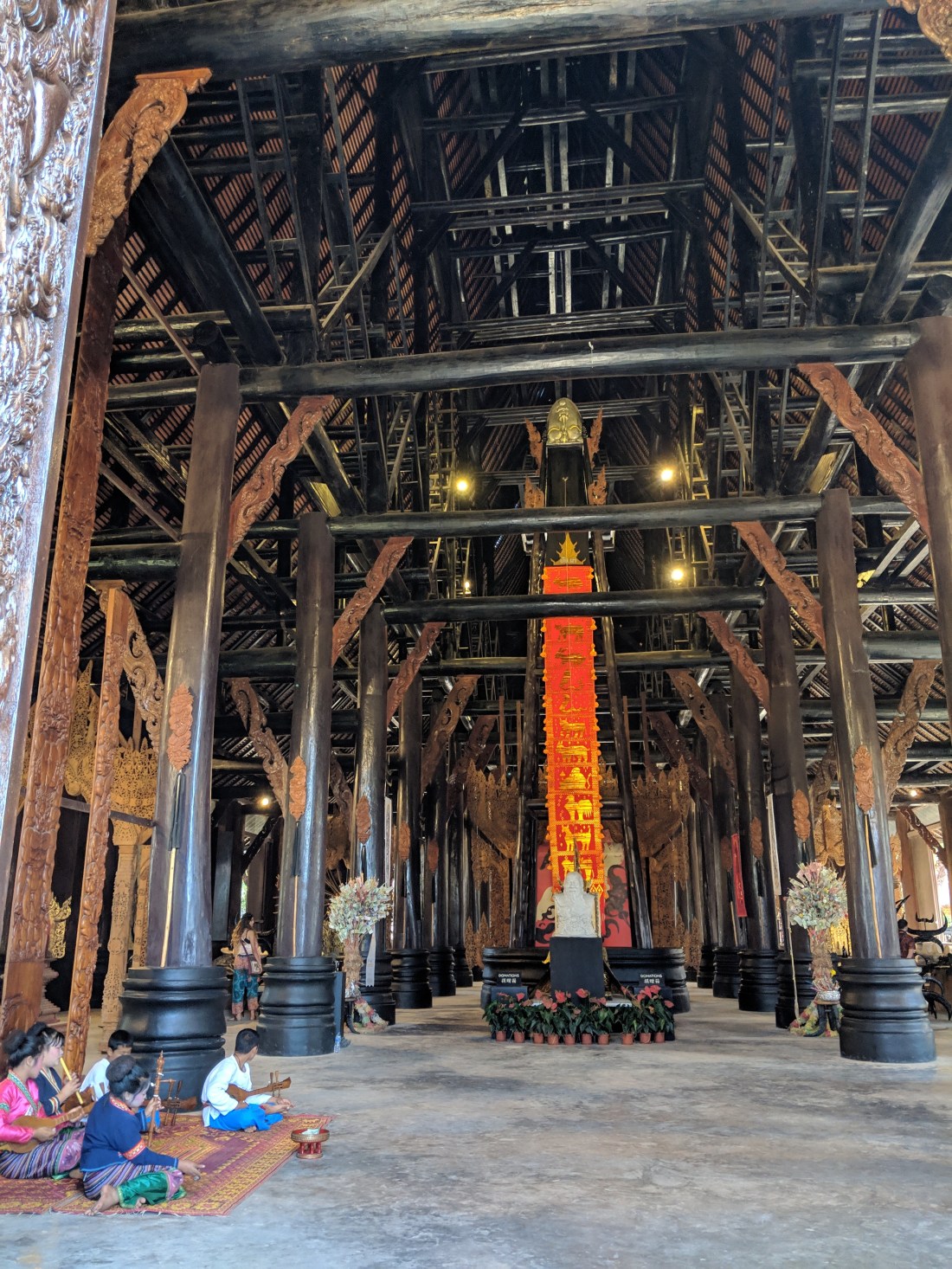
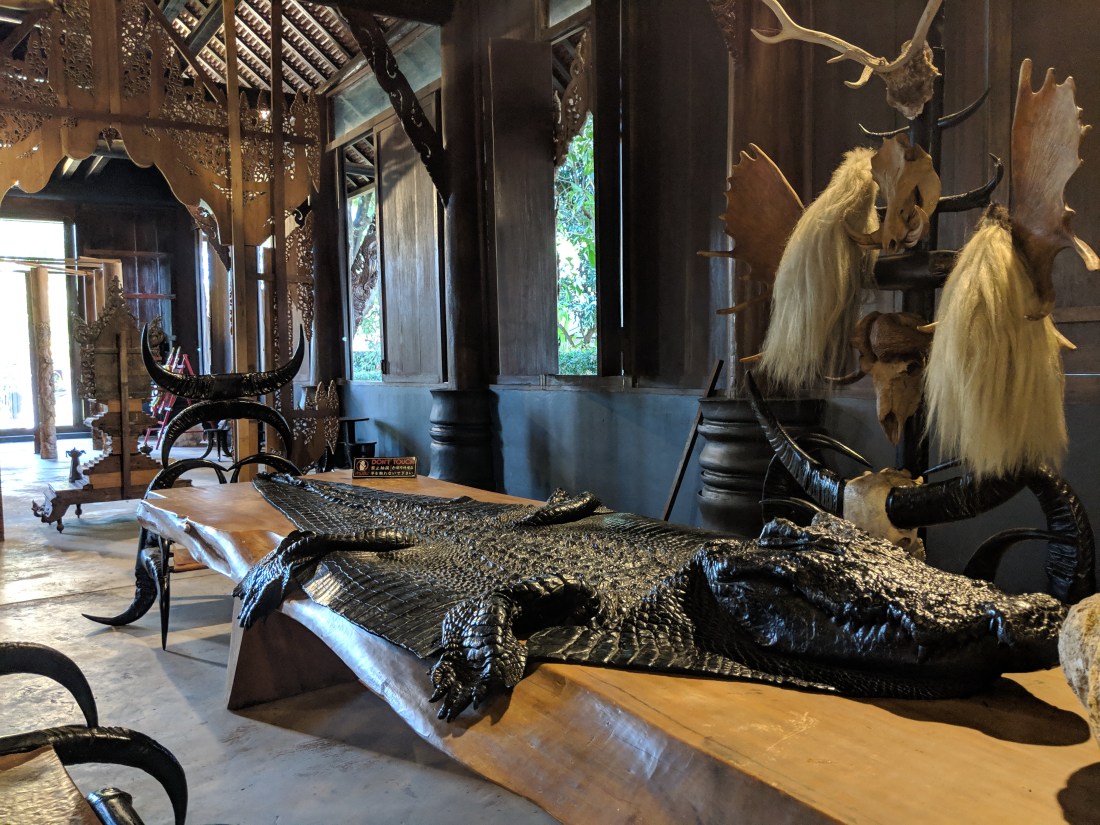
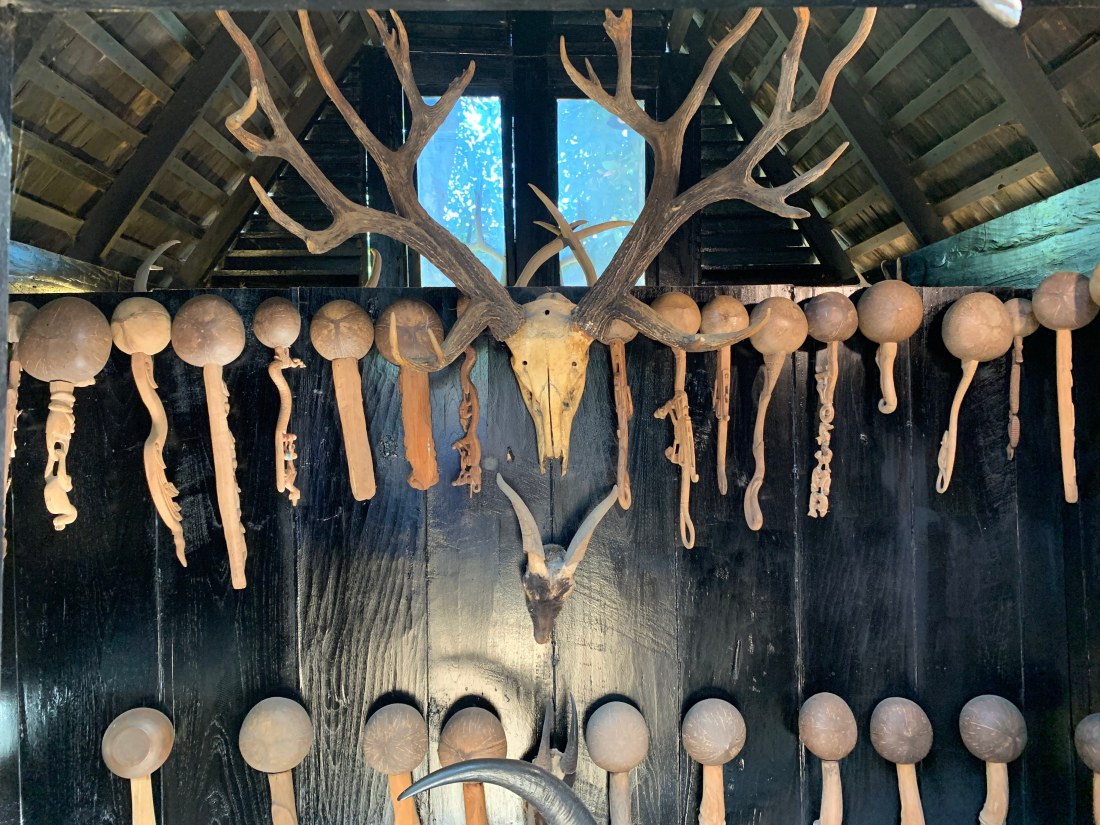
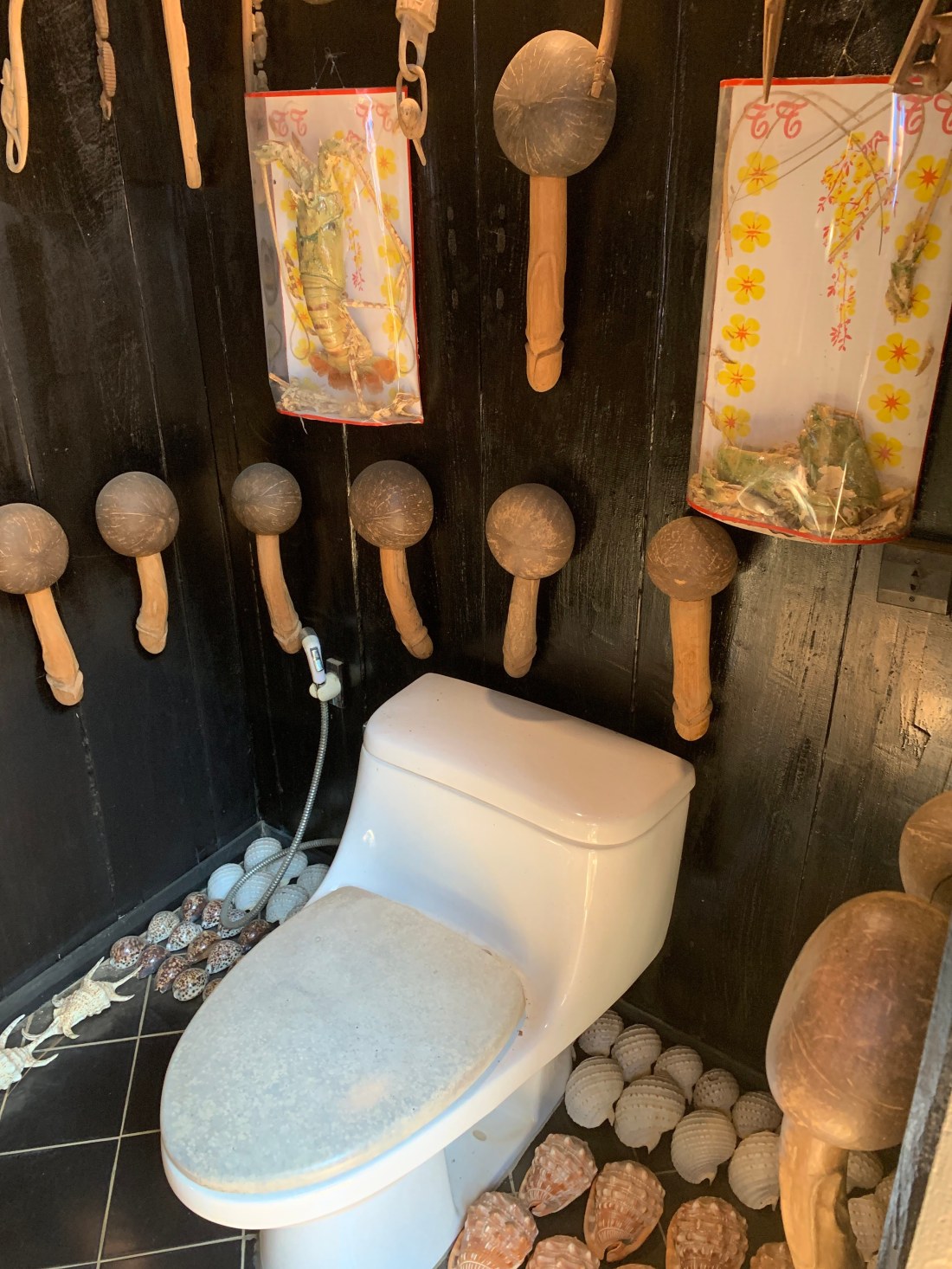
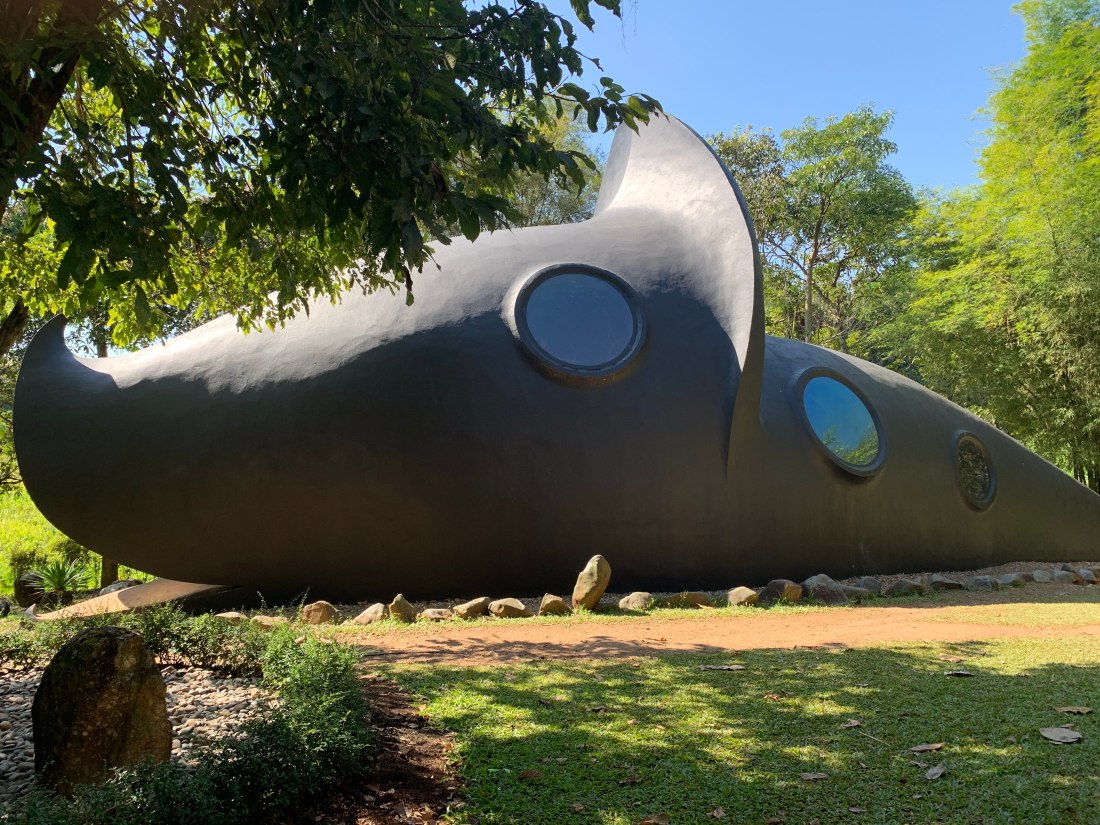
Next we went to Baan Dam – Black House, which is also an art museum in the Buddhist Temple style by a private artist, Thawan Duchanee.  It is actually 40 buildings on a several acre property. Both of theses temples/art museums are both revered and reviled by the Thai, depending on one’s point of view.  As expected, the Black House has a much darker, death related theme.  But it also has functional rooms for living.


IMG_20190106_112148

IMG_20190106_112329

IMG_20190106_112916

img_0721

img_0723

img_0743
The artist’s private home

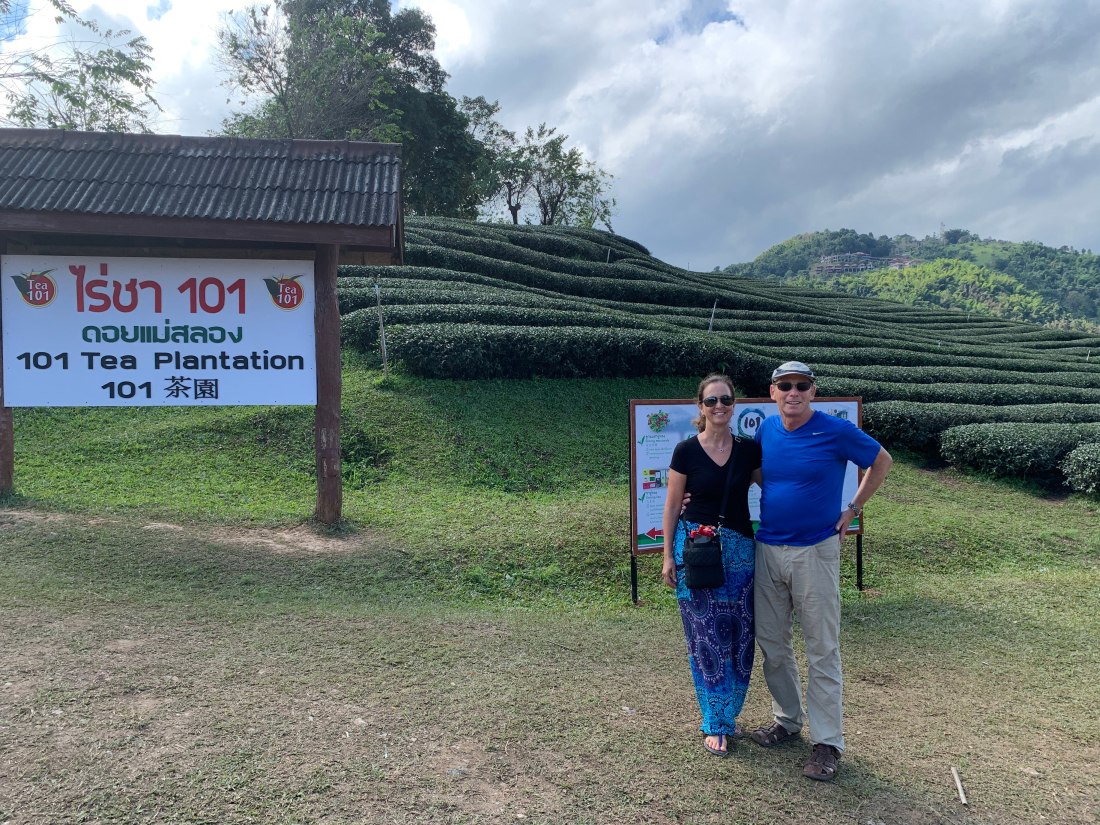
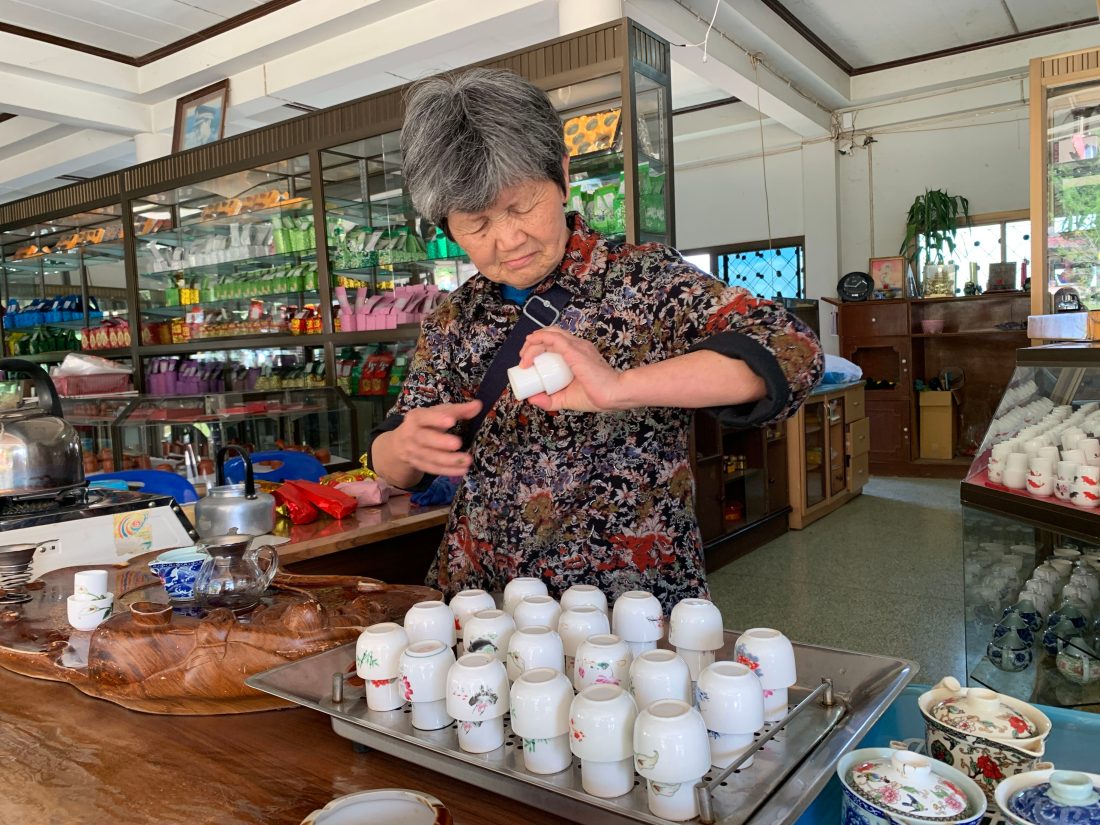
Then we visited a tea plantation and had a tea tasting.  Yes, believe it or not, I went to a tea tasting.

IMG_0759.JPG

IMG_0761.JPG

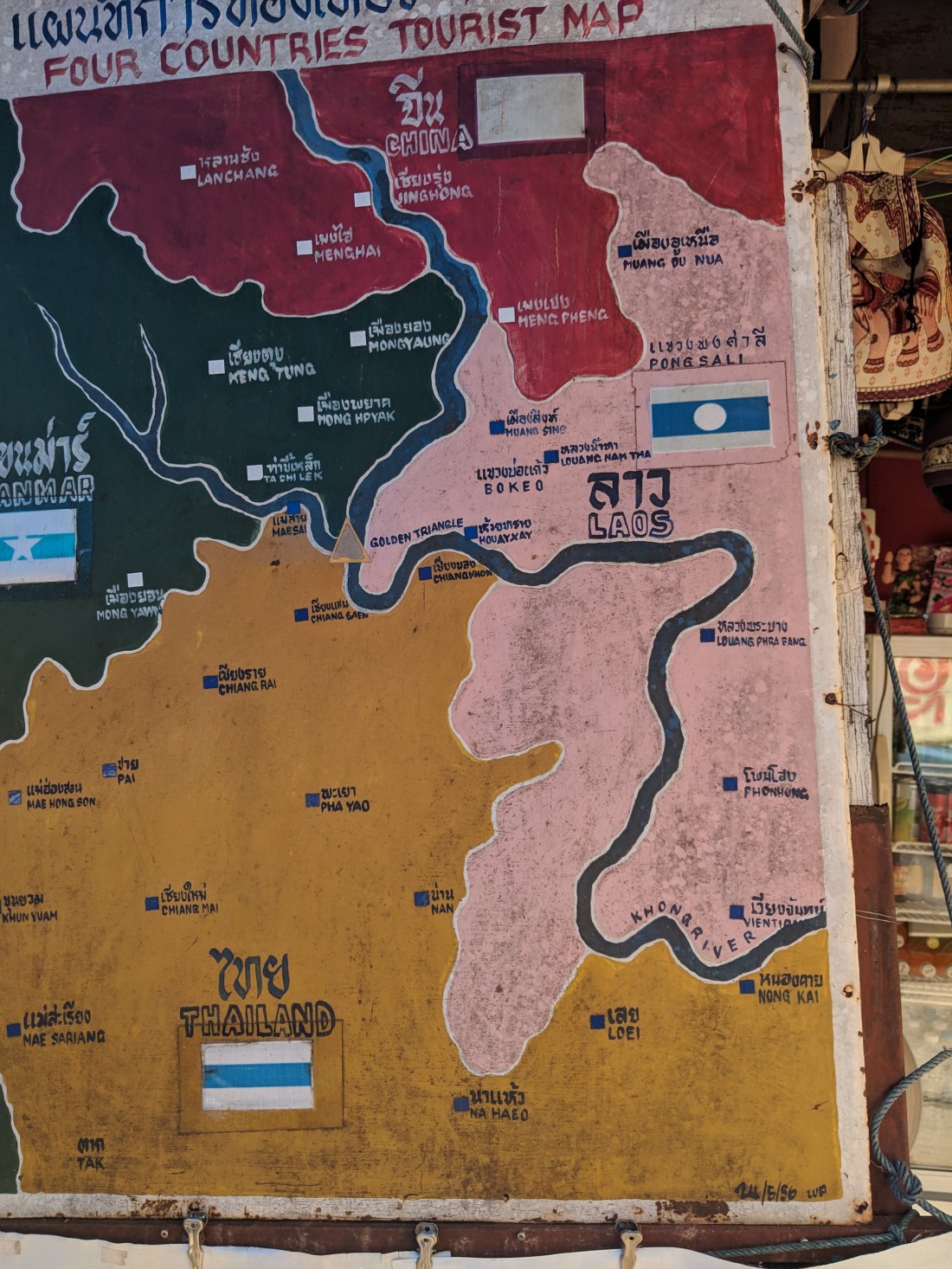
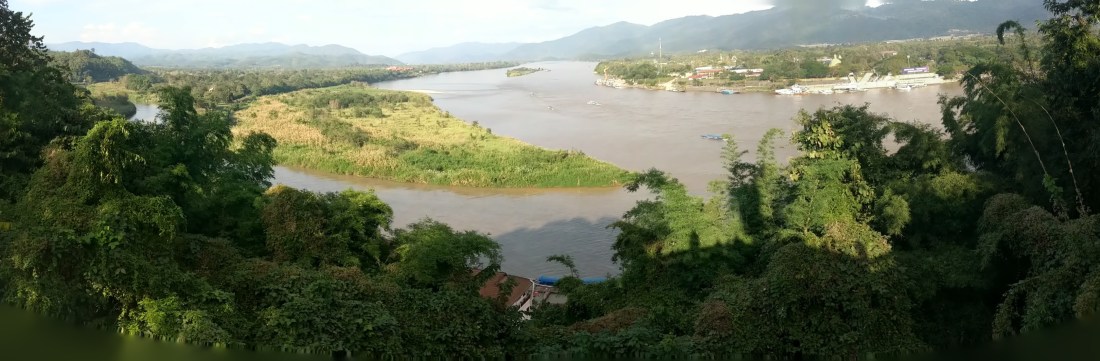
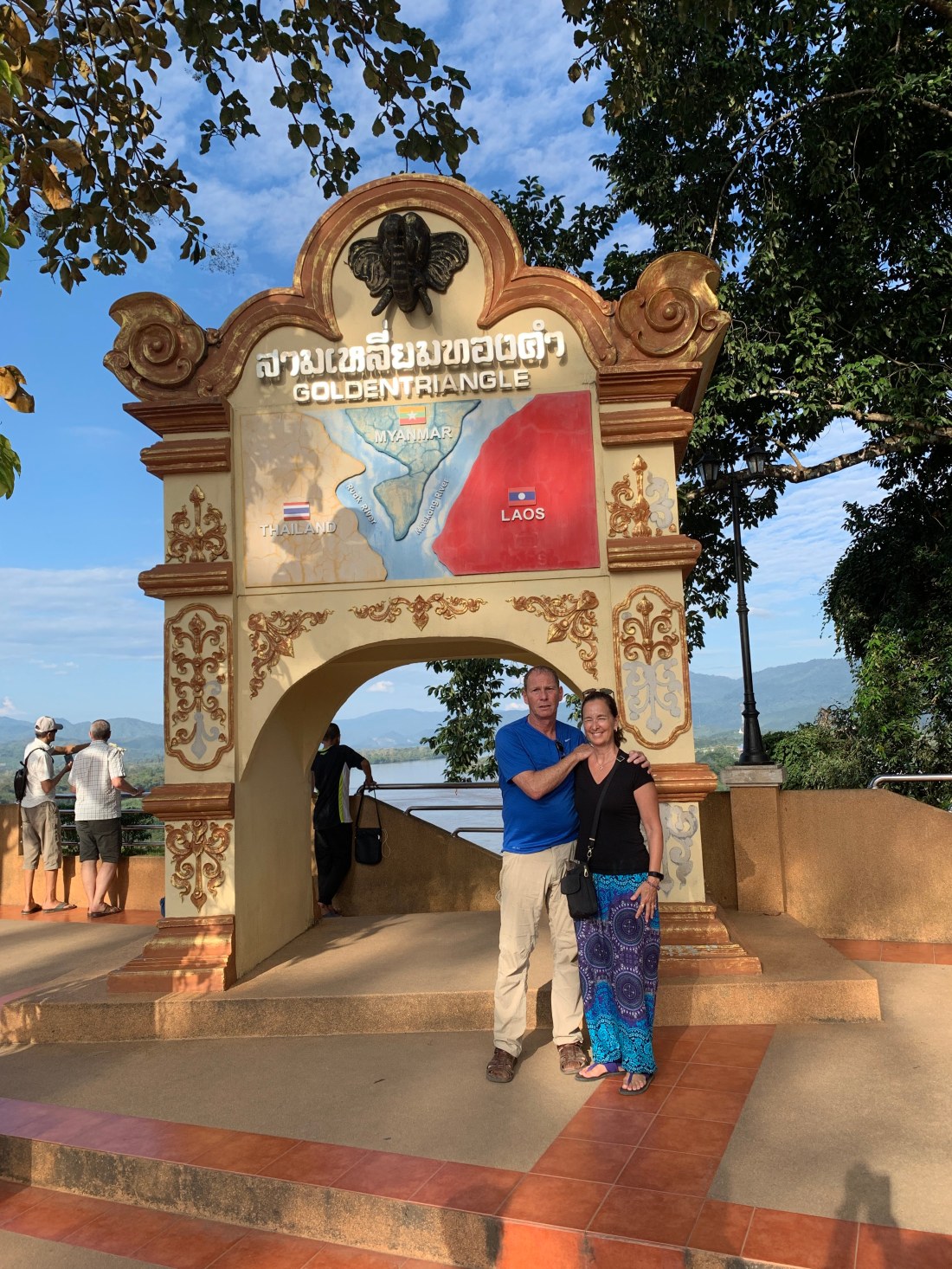
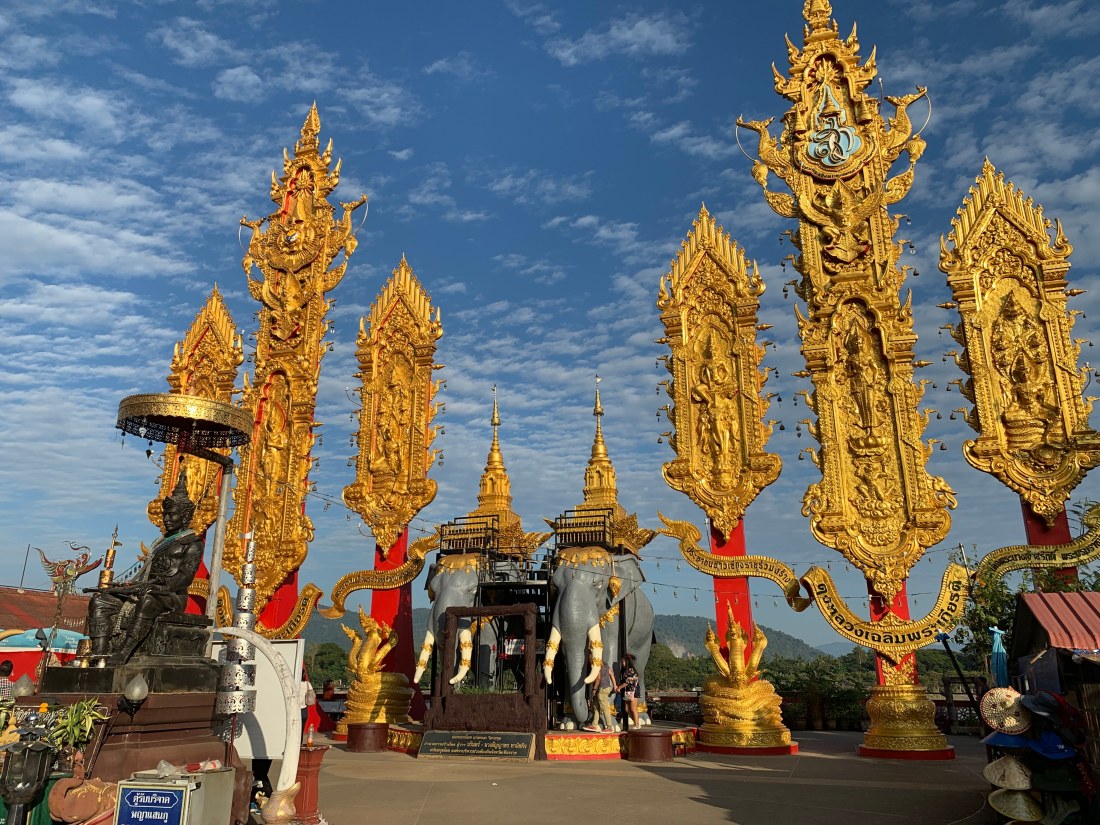
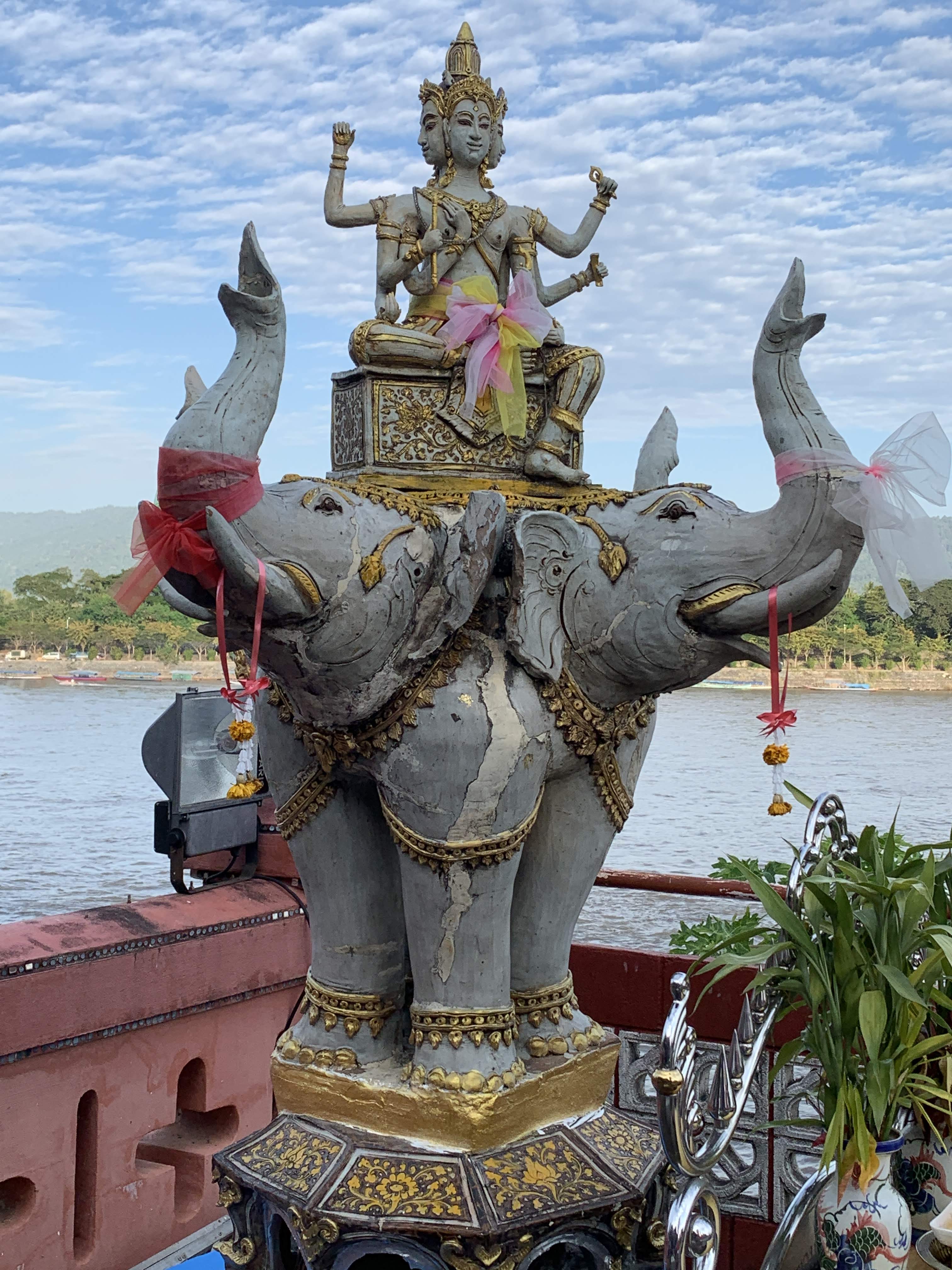
Then we drove up to the Golden Triangle, which is where Thailand borders both Myanmar and Laos.

IMG_20190106_160036

PANO_20190106_160407.vr_

The peninsula in the middle is Myanmar; the far coast Laos.

img_0763

IMG_0789.JPGIMG_0796.JPGIMG_0798.JPG

Finally on the day, we made it back to Chiang Rai in time before the sun set to visit the much larger flower festival by the river, again eating our way through the many food stalls surrounding the gardens.

IMG_20190106_175637

IMG_20190106_180122

IMG_20190106_180505

00000PORTRAIT_00000_BURST20190106182344247IMG_20190106_181705IMG_20190106_181304

IMG_0802.JPGIMG_20190106_175009

IMG_0806.JPG

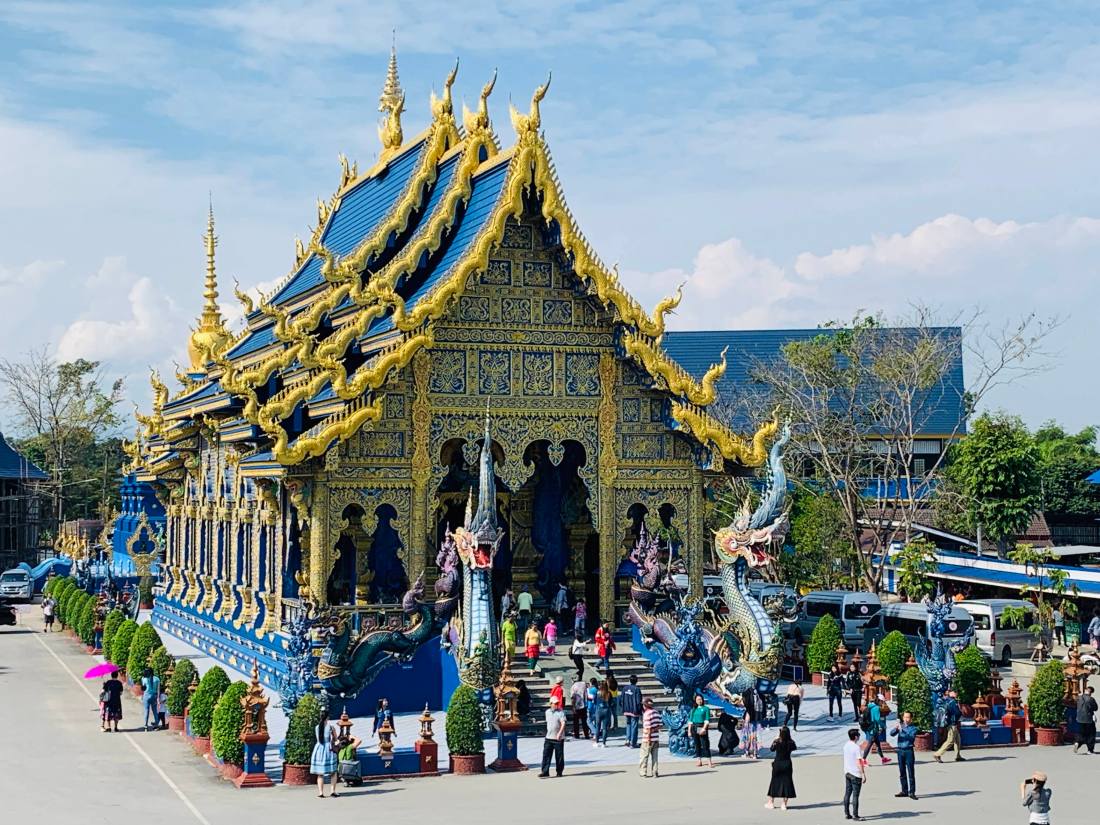
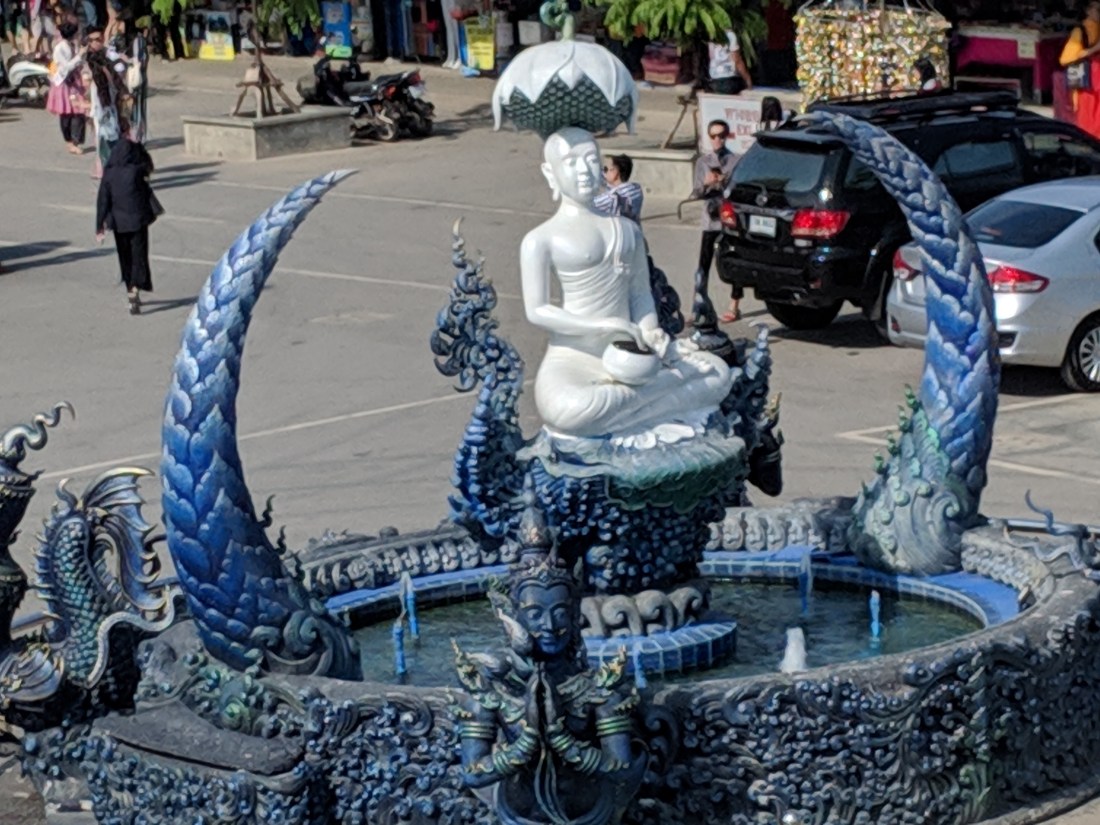
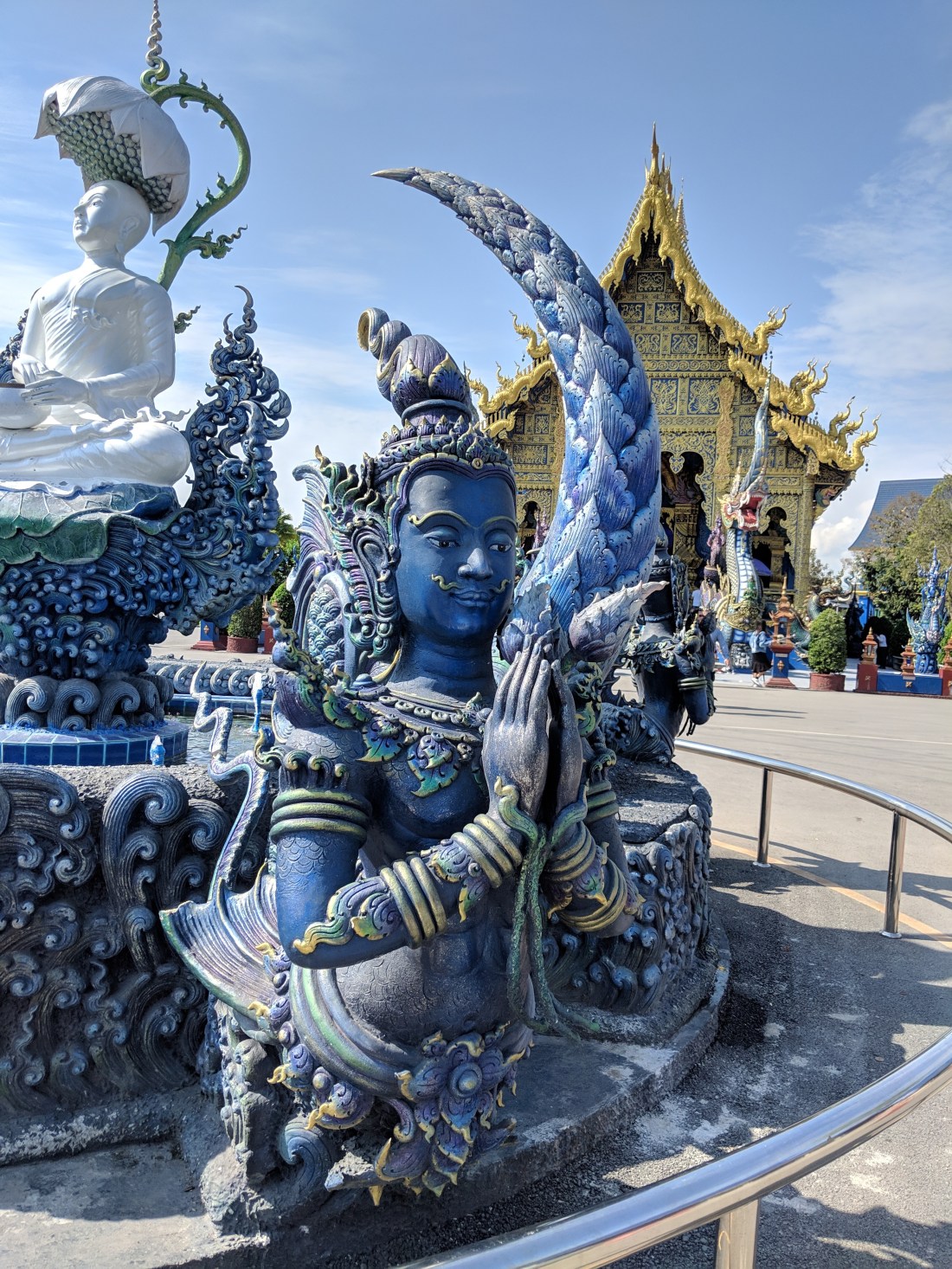
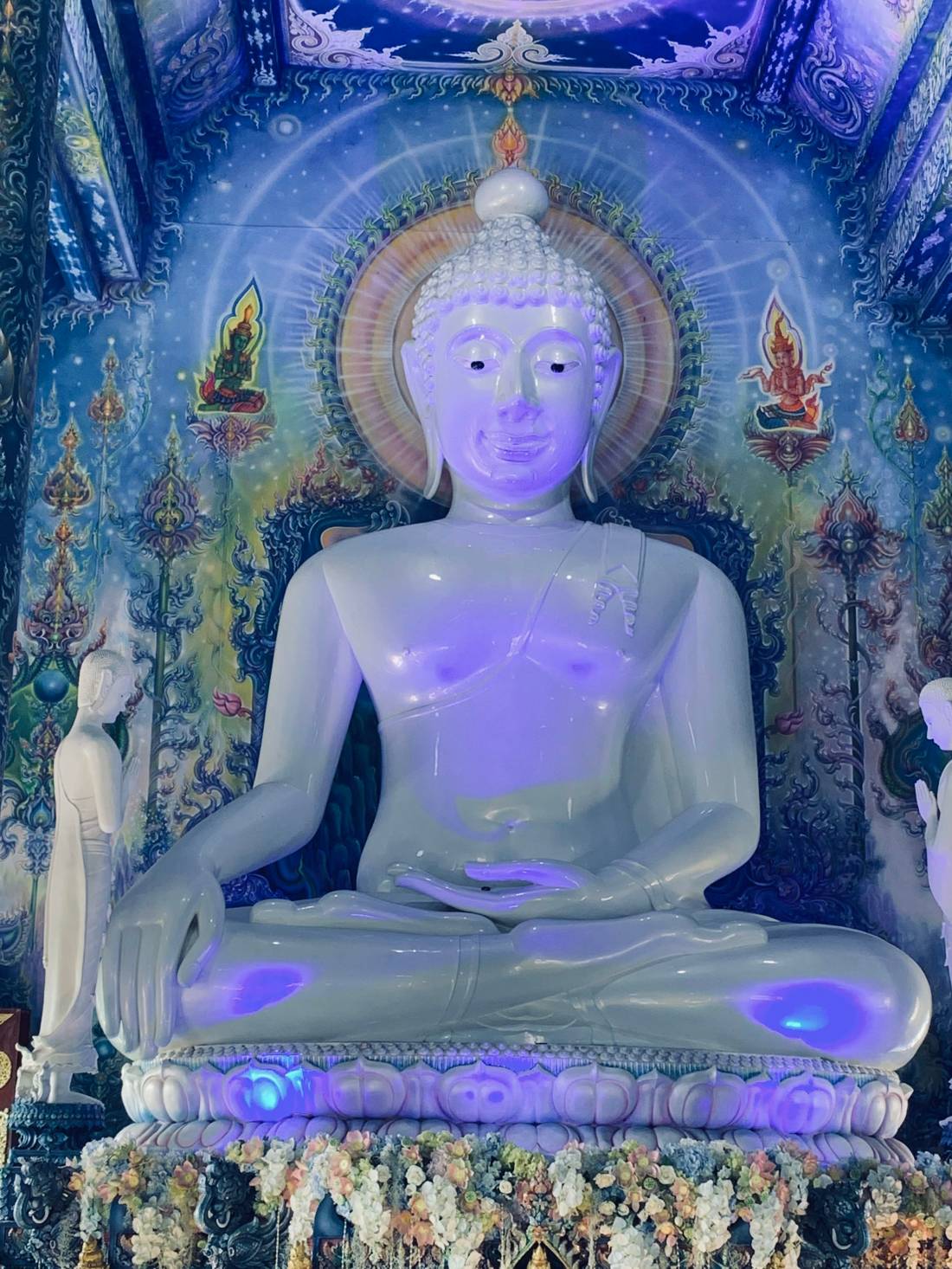
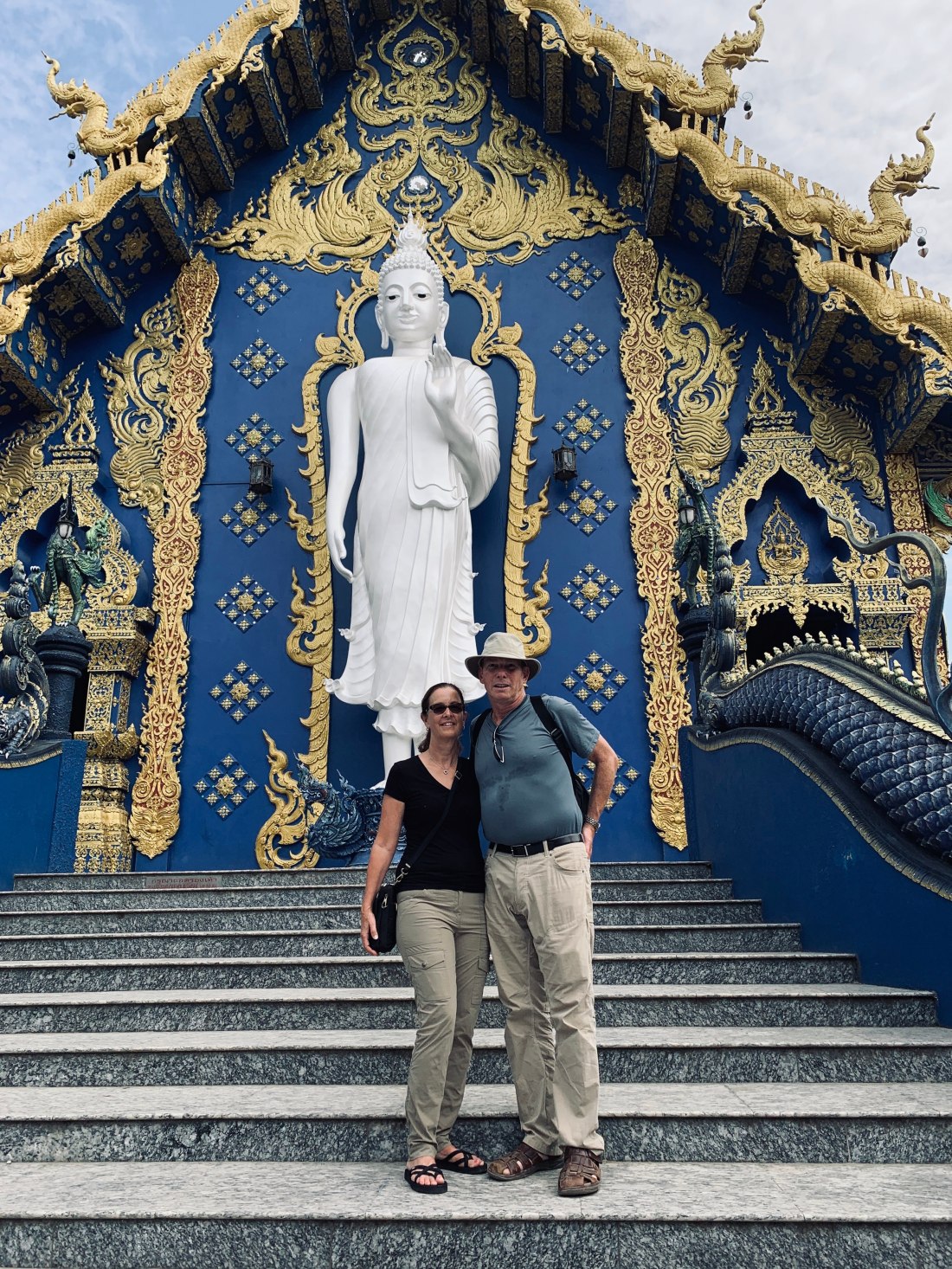
The next morning we found the energy to visit one last temple before leaving Chiang Rai, the Blue Temple.

IMG_0813.JPG

IMG_20190107_111509

IMG_20190107_111117

IMG_20190107_111818

IMG_0820.JPG

img_0830


Bangkok January 2-4

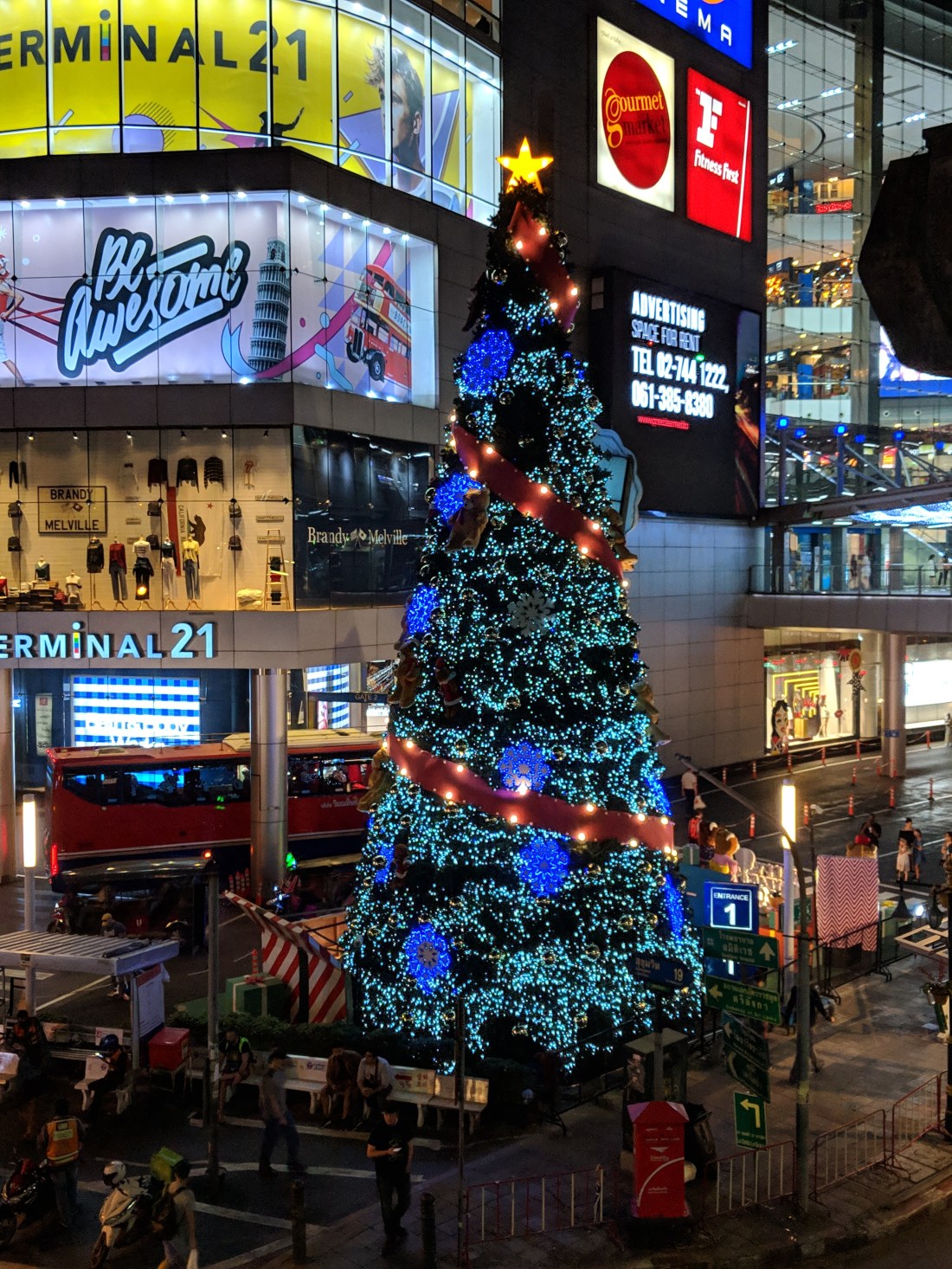
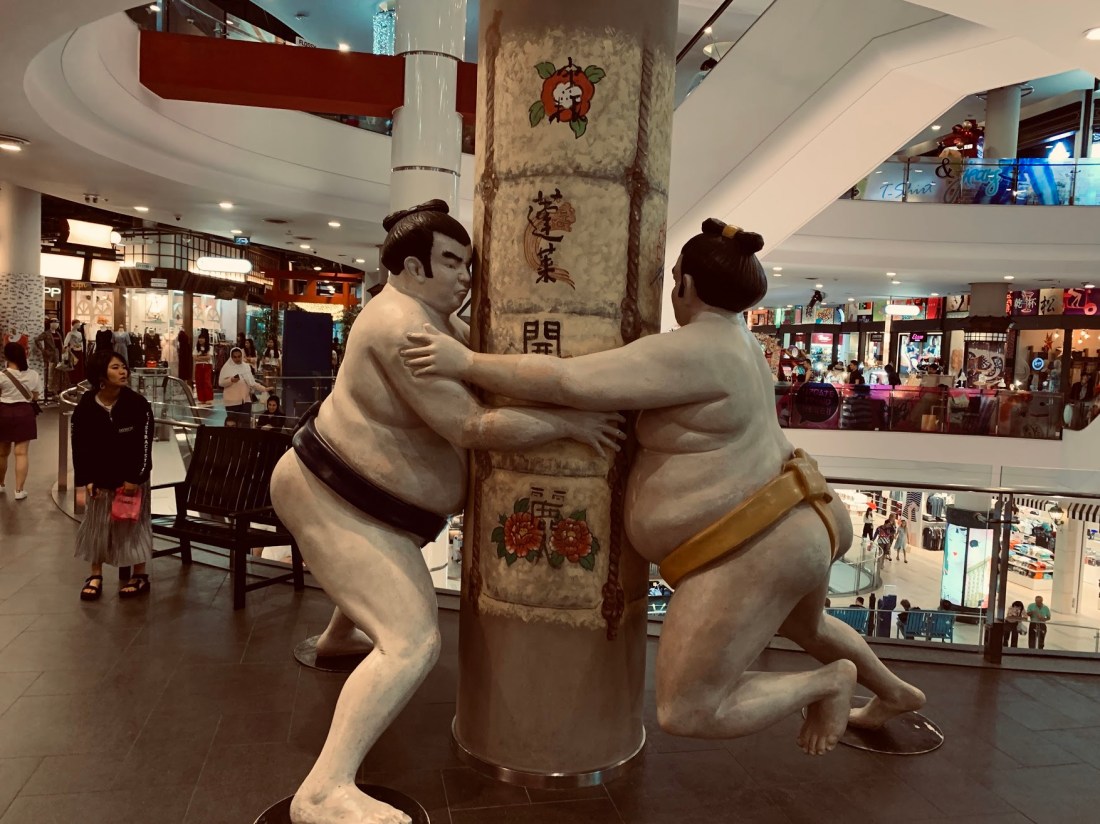
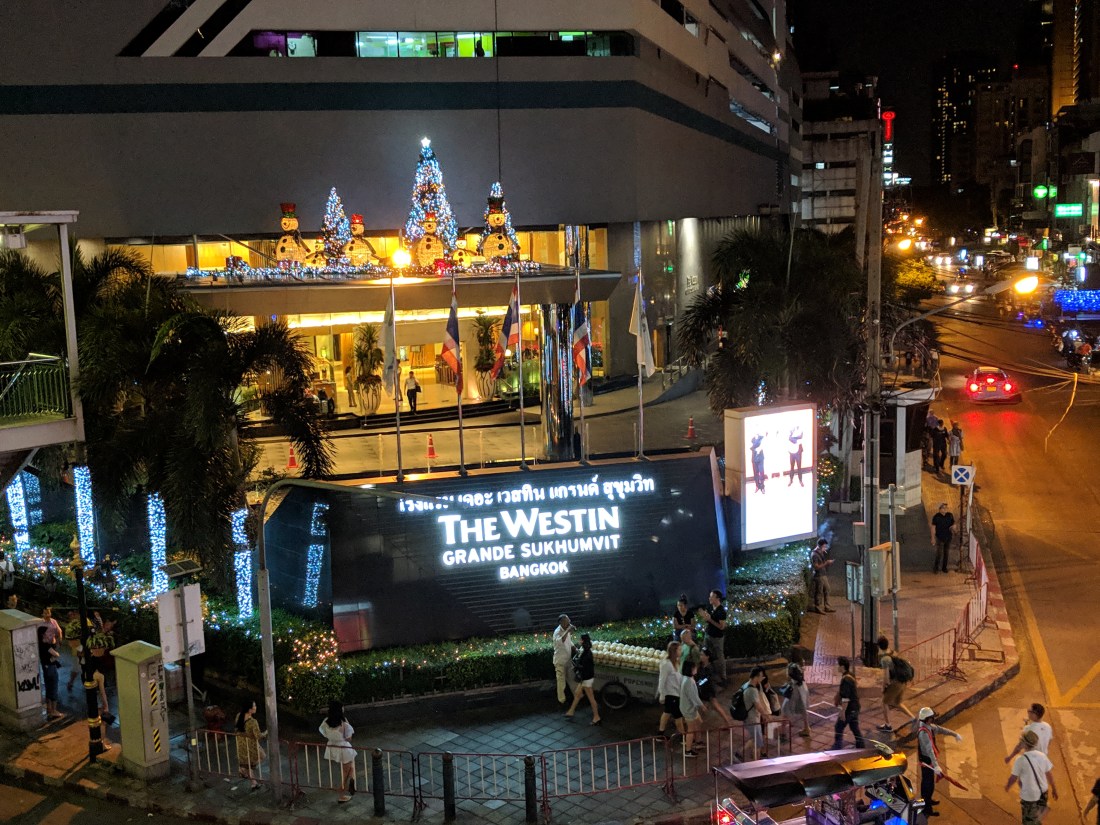
Our first night in Bangkok, after already 10 days in Thailand, we decided to westernize for the night and visited a mall: Terminal 21.IMG_20190102_201525

It was an amusing mall because each floor was themed based on a city: women’s clothes in Paris and Tokyo, men’s clothes in London, jewelry in Istanbul, etc.  The top floor is Hollywood, which is a multiplex cinema.

IMG_0554.JPG

Our favorite was San Francisco, which was a giant food court.

IMG_0555.JPG

We wandered the city a bit.

IMG_20190102_201507

The next couple of days we did the typical tourist attractions.  Having been warned about the traffic in the city, we were proud of ourselves figuring out how to get around with a combination of the sky train and the public water buses.

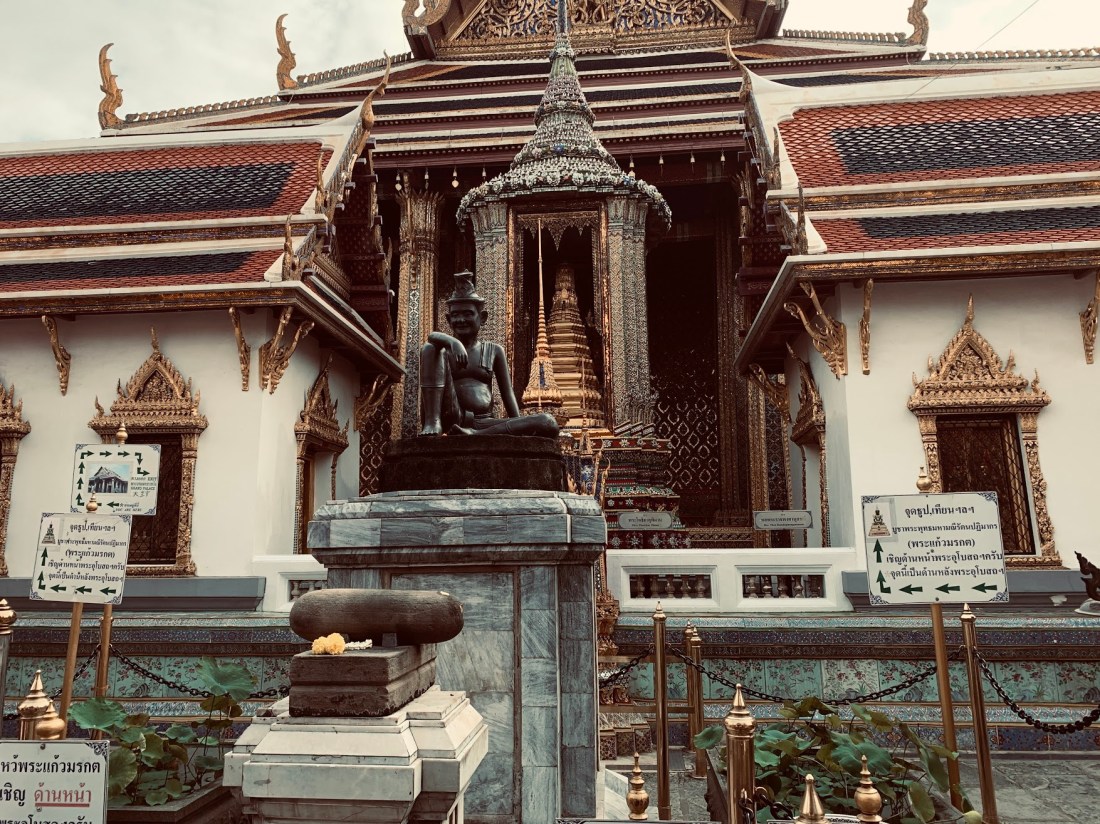
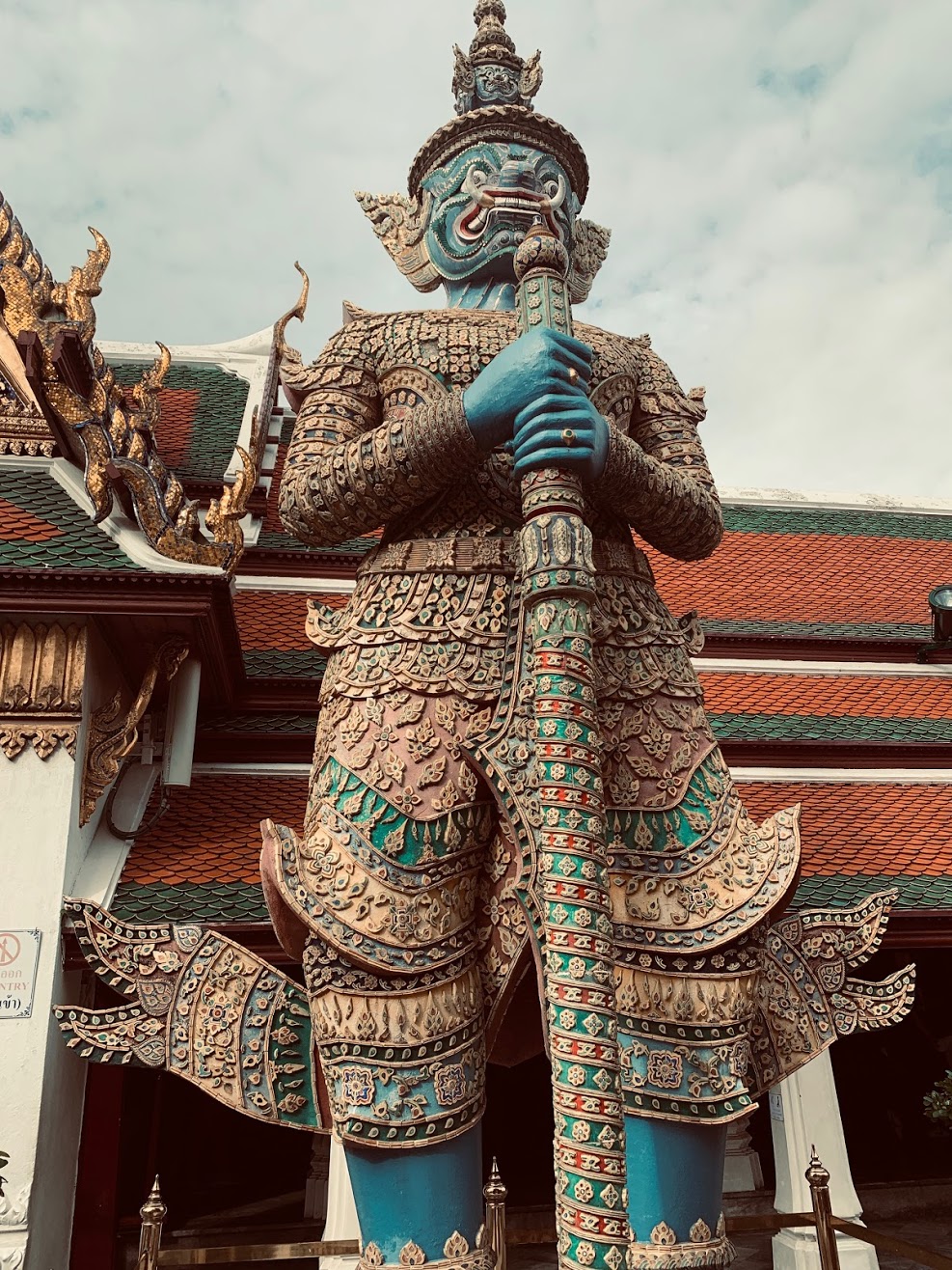
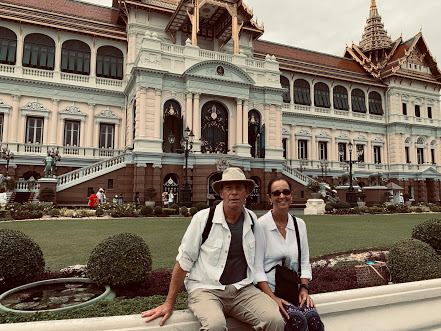
First he Grand Palace

IMG_0558.JPG

img_0578 (1)

img_0560

img_0588

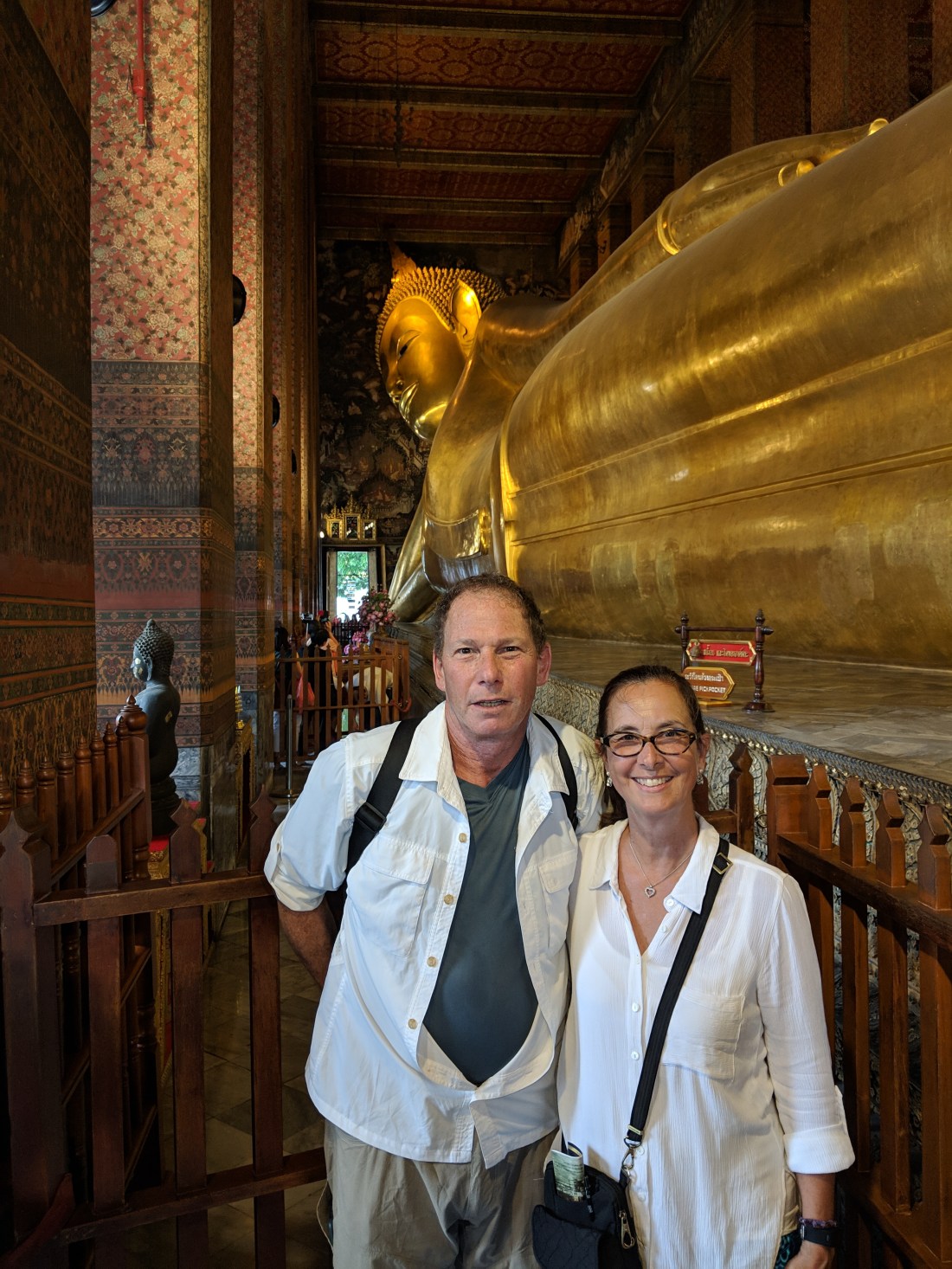
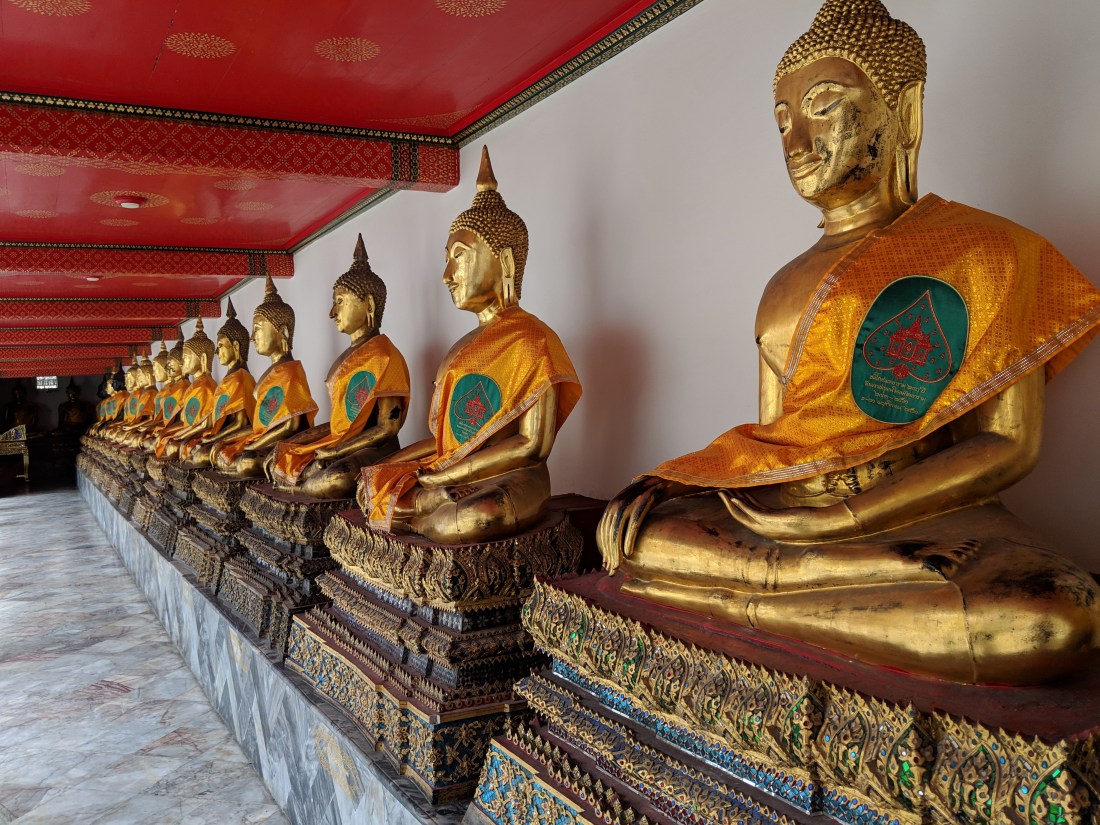
Wat Pho with the famous reclining Buddha

IMG_20190103_105849


IMG_20190103_114427

IMG_20190103_120212

IMG_20190103_112044

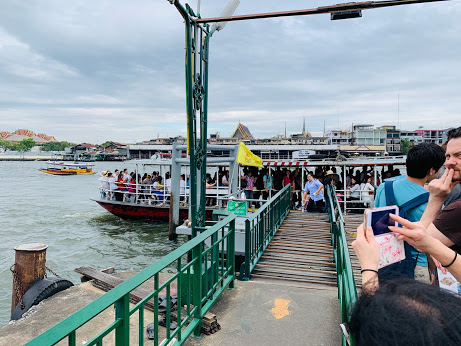
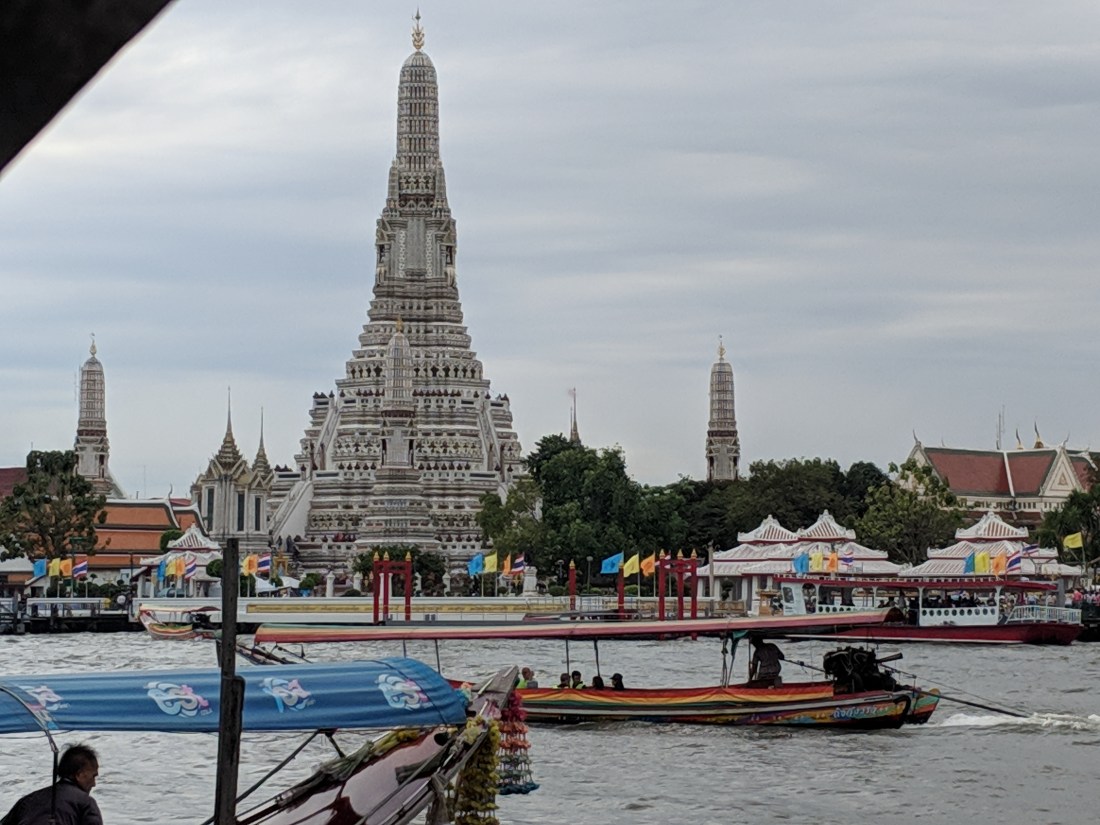
And then the ferry across to Wat Arun

img_0640

IMG_20190103_144709

img_0631 (1)

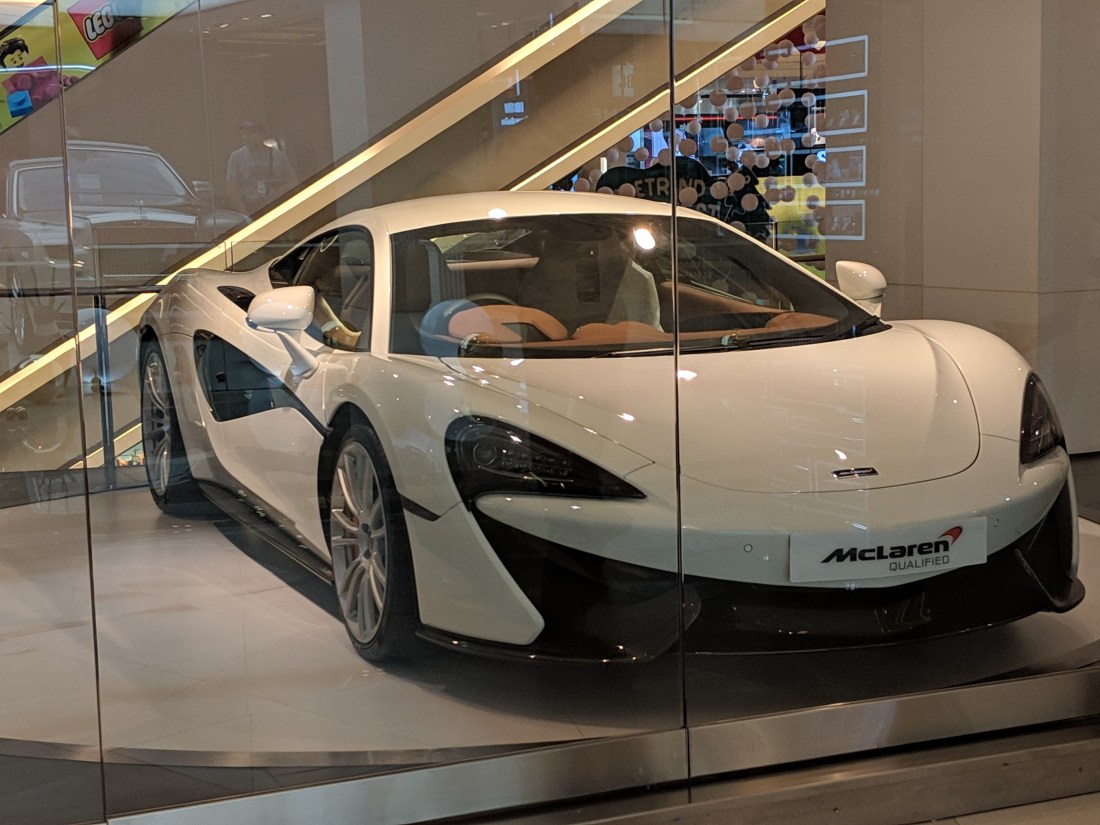
And finally, another mall, one of the highest class I have ever seen.

IMG_20190104_152322

And now it is on to Northern Thailand, ahead of the storm!
 

Thailand w/Family December 22-Jan 2

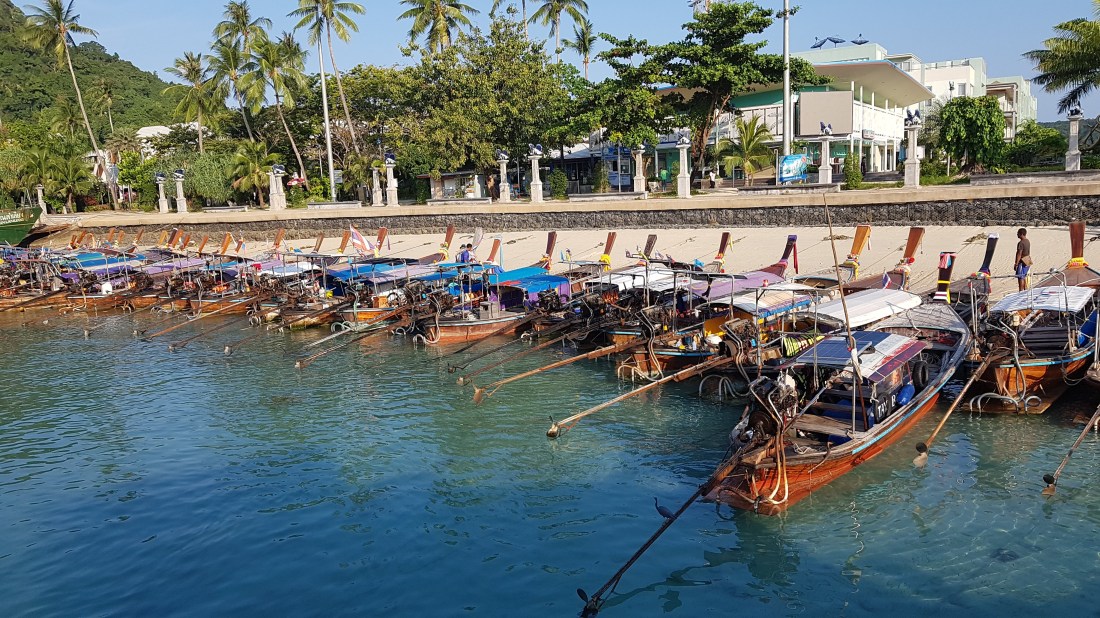
We all flew in separately to Phuket on the 22nd.  We went to the beach for our first family dinner together.  Then in the morning we took the ferry over to the island of Koh Phi Phi for a restful week of beach, food, drink, diving, and the holidays.

IMG_20181223_132211.jpg on the ferry

20181227_080201.jpg

arrival on Koh Phi Phi

Our resort: PP Princess

img_20181227_160029

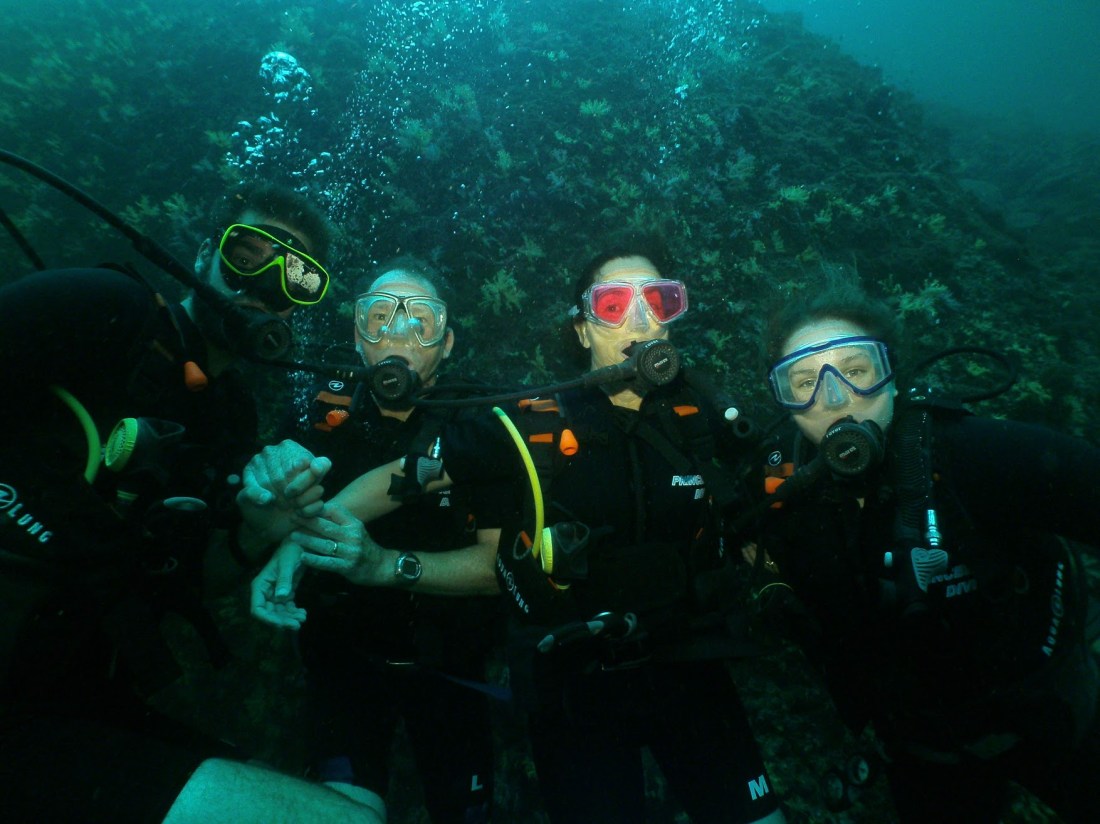
A family that dives together…

pict0220

pict0138

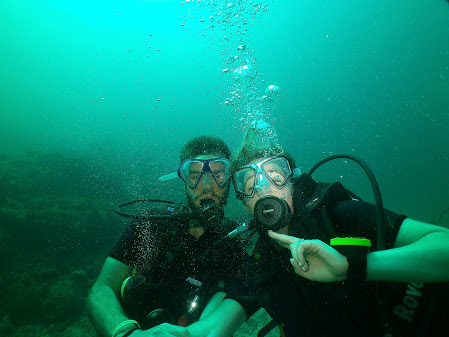
The diving was truly spectacular: turtles, schools of barracuda and squids, black tip sharks, lobsters, lots of angel fish, puffer fish, box fish, and clown fish in sea anemones, sea stars and urchins, and huge schools of yellow snappers that engulfed us, and so much more.

And of course, the night life:

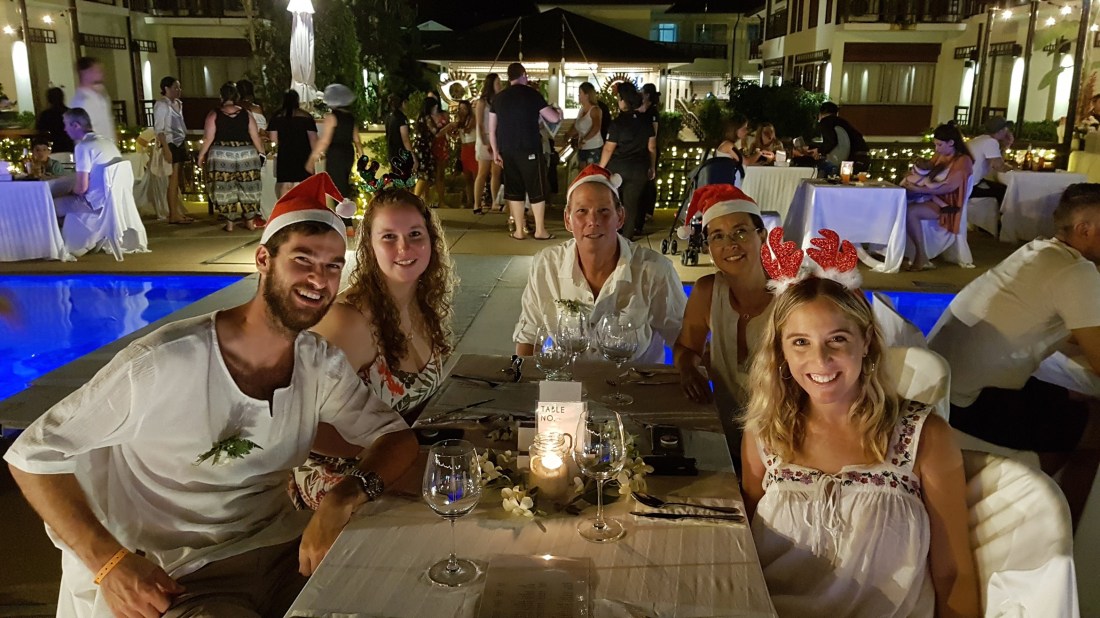
Christmas the PP Princess style

20181224_200616

Nikki enjoying a final sunset on the beach.

20181227_182405

And then we took the ferry back to Phuket to bring in the New Year.  We stayed on the 24th floor of a high rise with views of the beach.

New Year’s on the beach was one of the wildest, craziest experiences ever.  Thousands of people were floating up lit paper lanterns into the sky.  Others were setting off firecrackers.  This went on for hours both before and after midnight with, of course, a frenzied peak of craziness at the stroke.  It was like a crowd-sourced fireworks display (bordering on unsafe).  Pictures cannot come close to capturing it, but here’s an attempt.

p1012728


pc312636

pc312683

The final day we rested on the beach before departing on the 2nd, the kids to their respective homes, and Eric and I on to Bangkok.

Singapore December 19-22

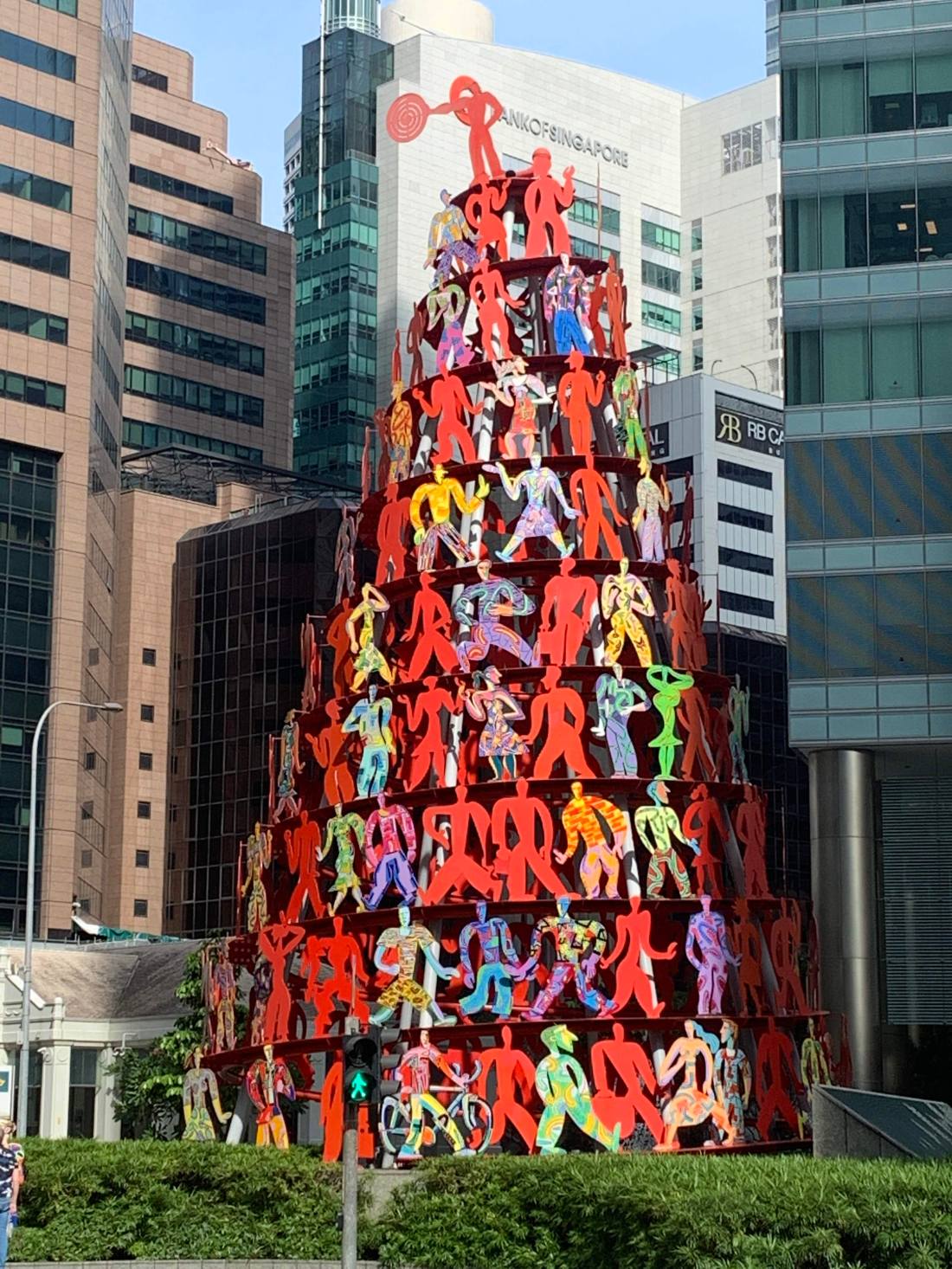
Where New Zealand was all about the beautiful vistas, Singapore is spectacular for its architecture.  After traveling for 10.5 hours by plane we arrived in Singapore at almost 5 pm (10 pm in NZ), and were immediately drawn out into the evening streets.

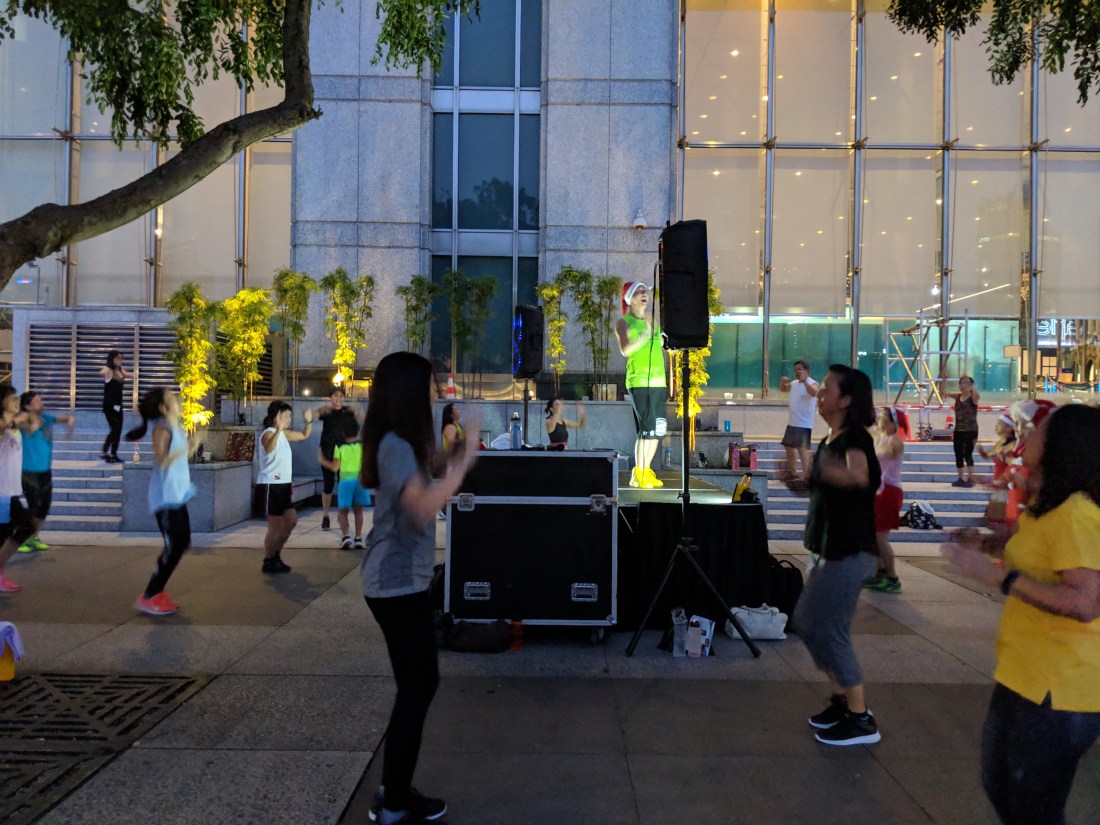
One of our first encounters was a street Zumba class.

IMG_20181219_191813

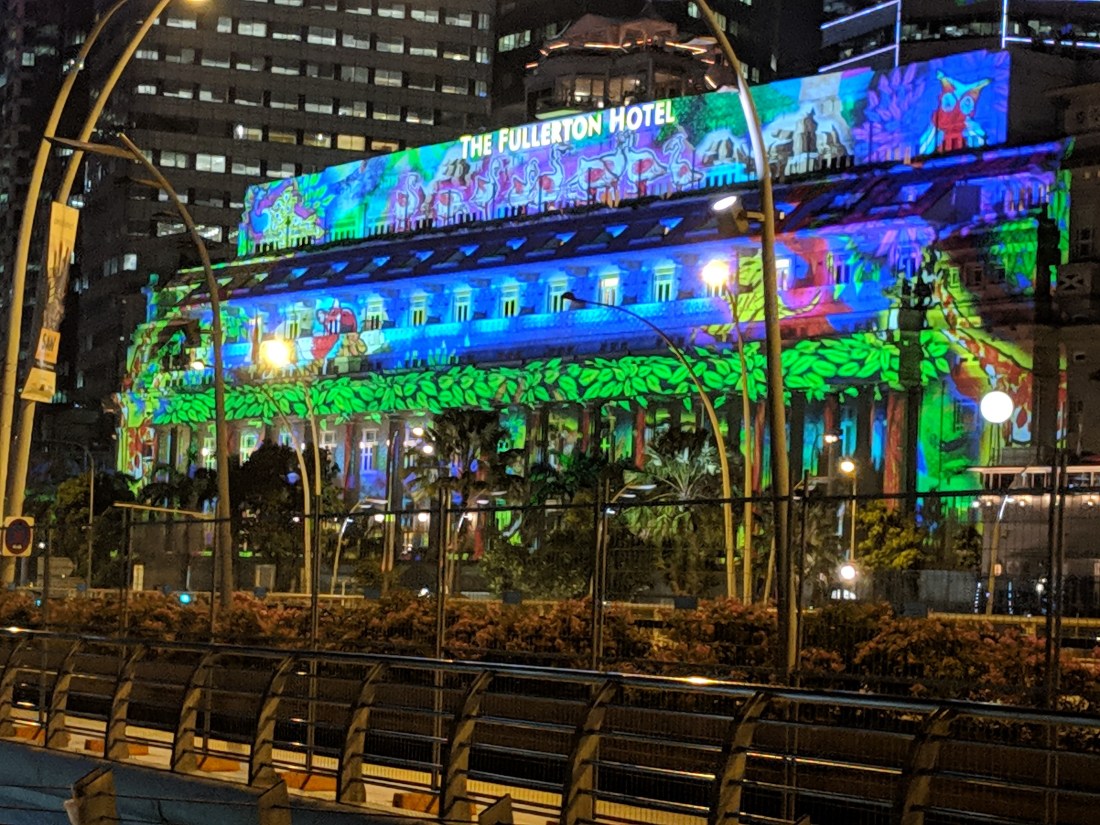
As night fell, the buildings began adding lights.  The Fullerton Hotel goes from just beautiful

IMG_20181219_192445

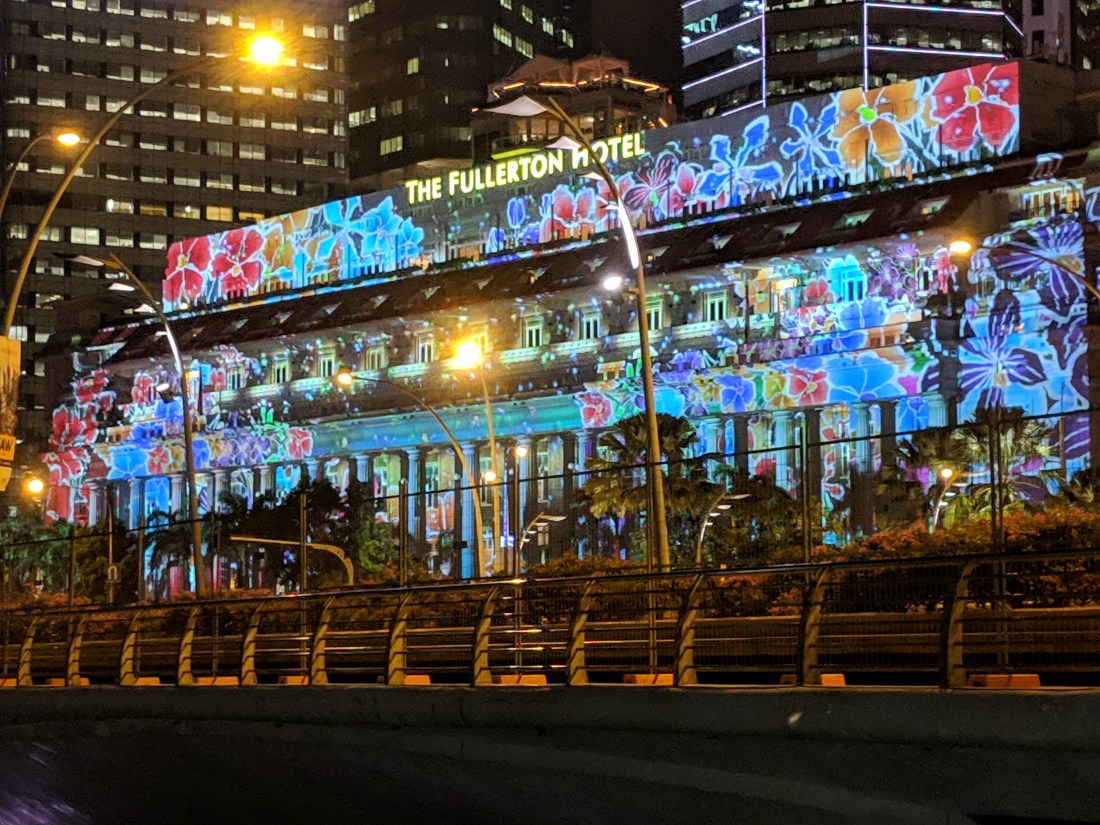
To adding a 5 minute long video light showing featuring flora and fauna of Singapore.

IMG_20181219_195641

IMG_20181219_200117

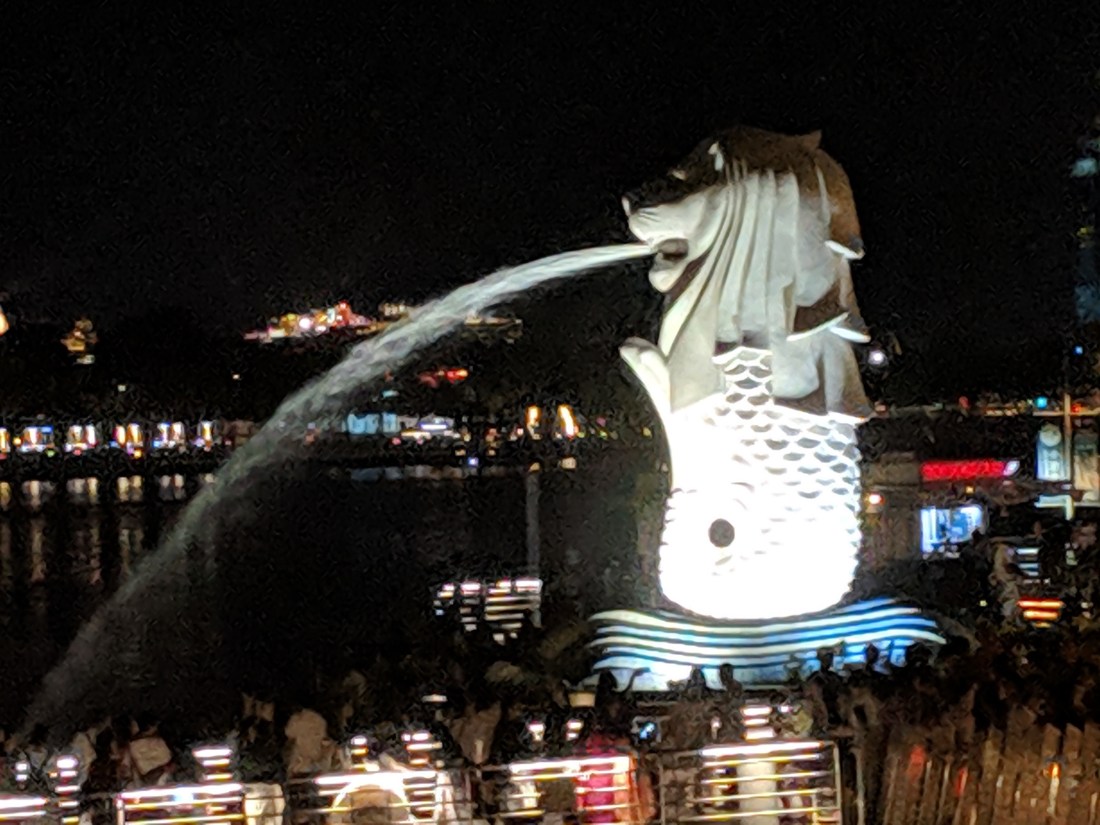
The famous Merlion lights up.

IMG_20181219_195932

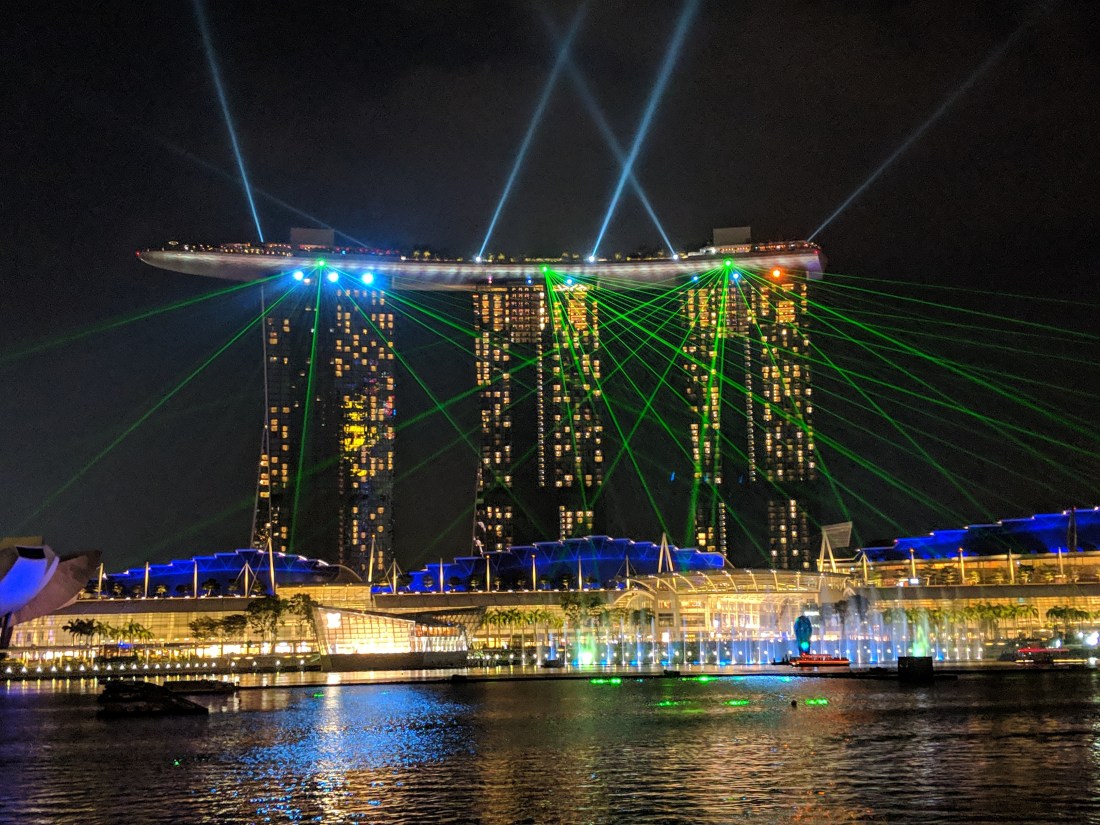
And most spectacular of all, the Marina Bay Sands does both a light and water show.

IMG_20181219_201442

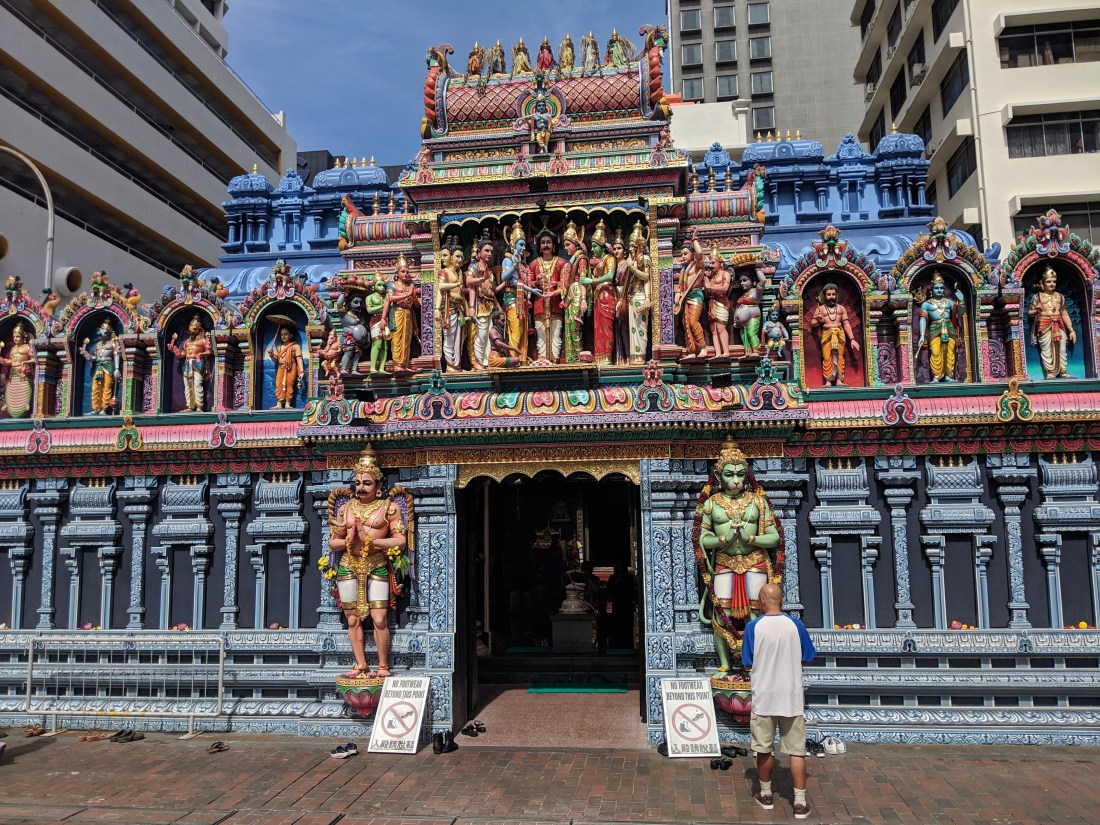
The next 2 days we roamed  the city taking in sites including Indian temples in Little India:

IMG_20181220_110042

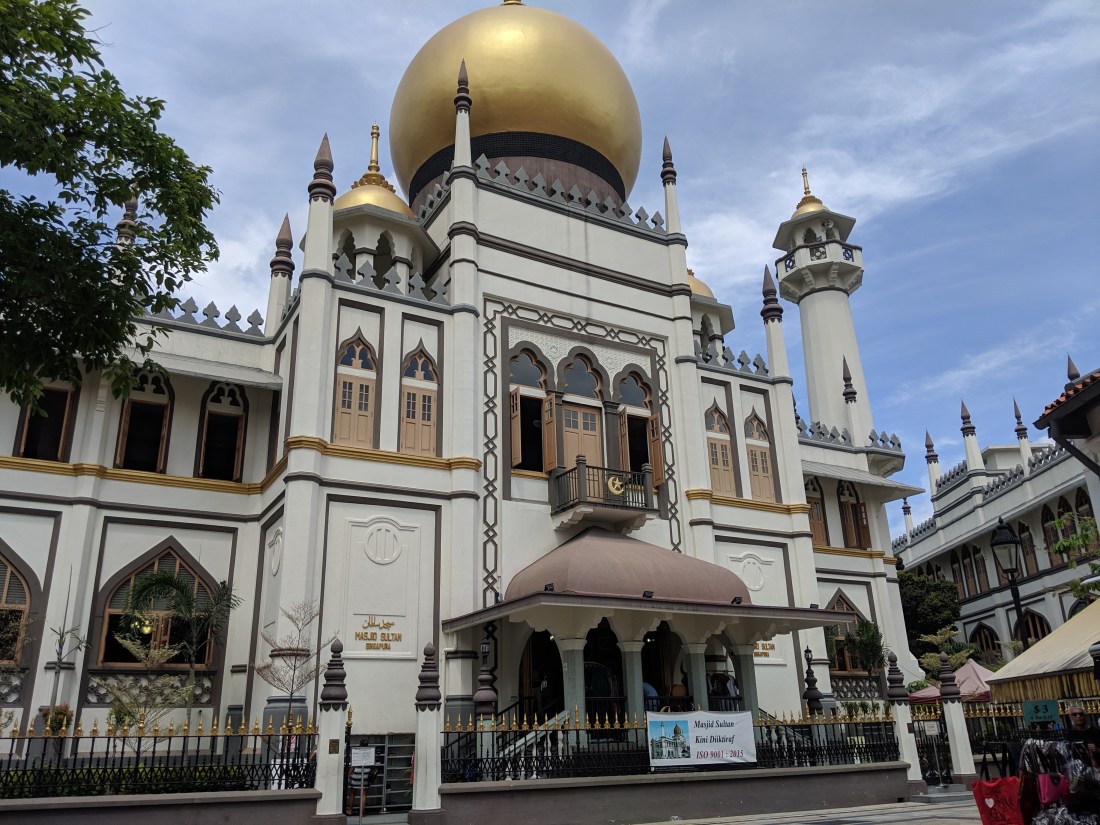
And a mosque:

IMG_20181220_115036

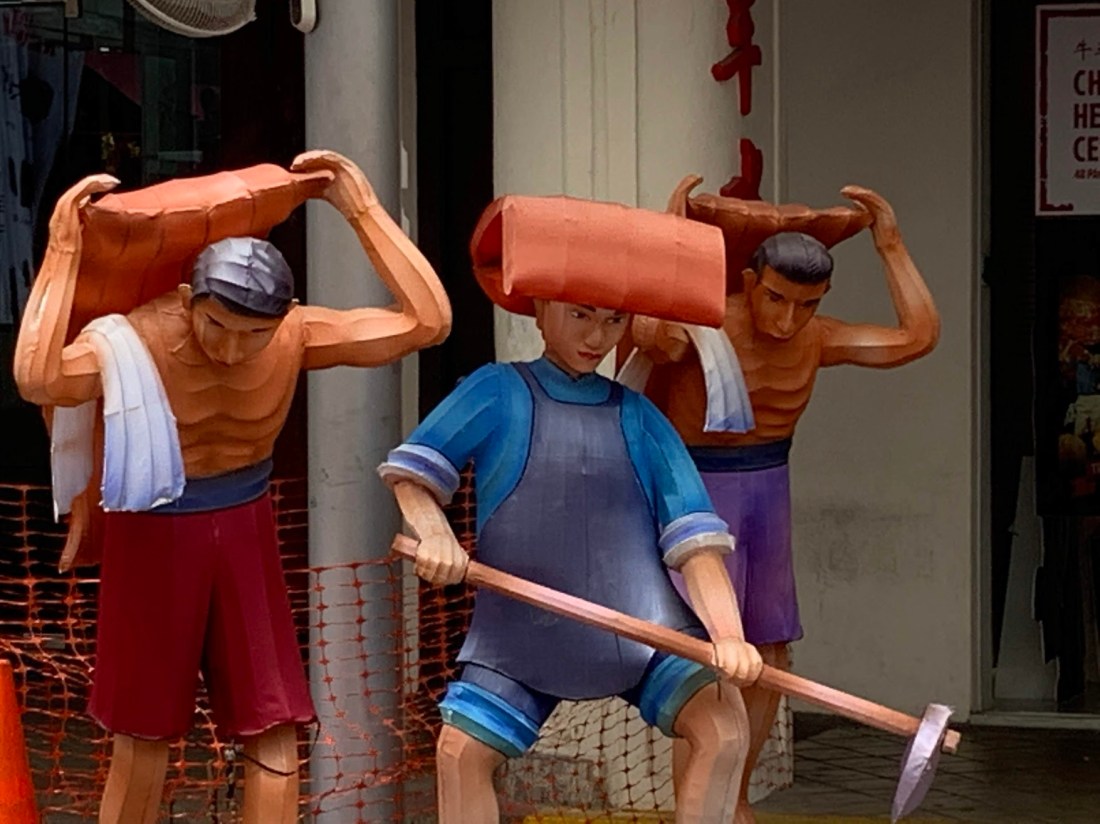
and temples in Chinatown:

Singapore is truly one of the most culturally,  ethnically, and religiously diverse countries I have ever visited, which also made for great eating!  The street food is amazing!
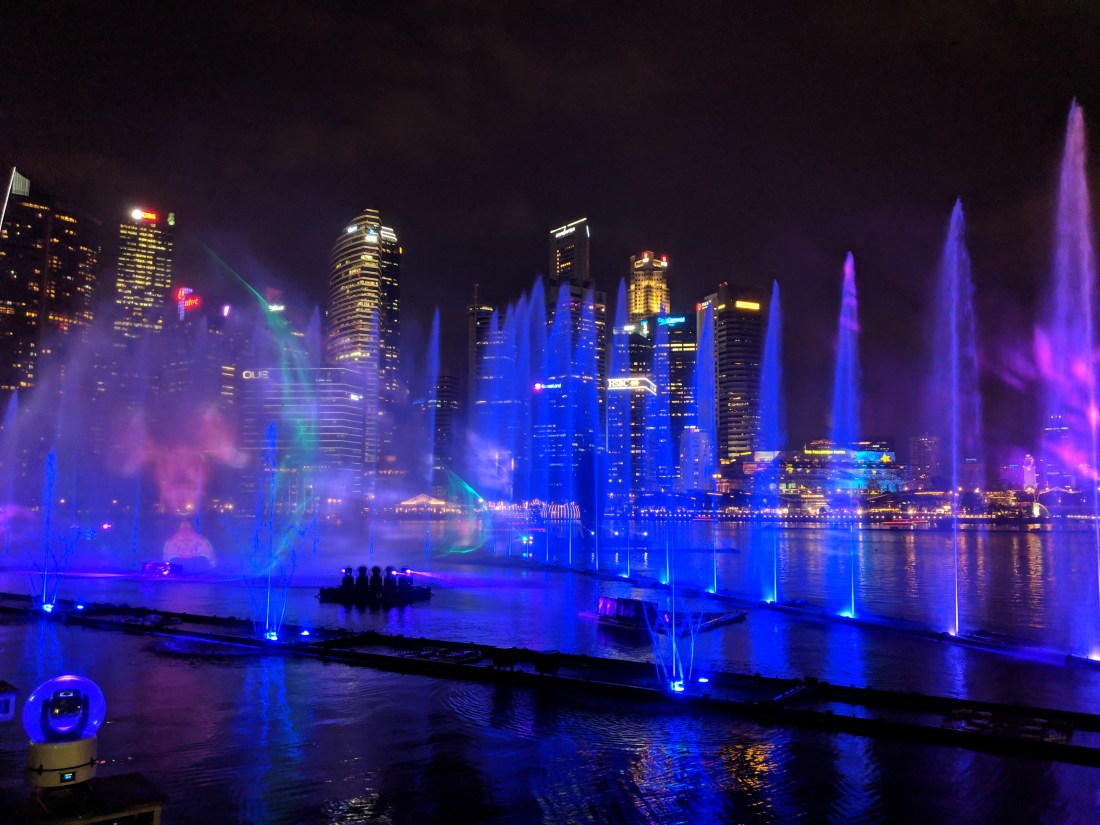
At night, more water and light shows, Christmas themed.

IMG_20181220_204919

IMG_20181220_200848

Another aspect of the city I loved is the street art.

IMG_20181221_093758

IMG_20181221_094432

IMG_20181221_092934IMG_20181221_092620IMG_20181221_093013


IMG_0478IMG_0513

And then it was time to move on to Thailand to meet the kids for Christmas!!!!

Auckland December 17-18

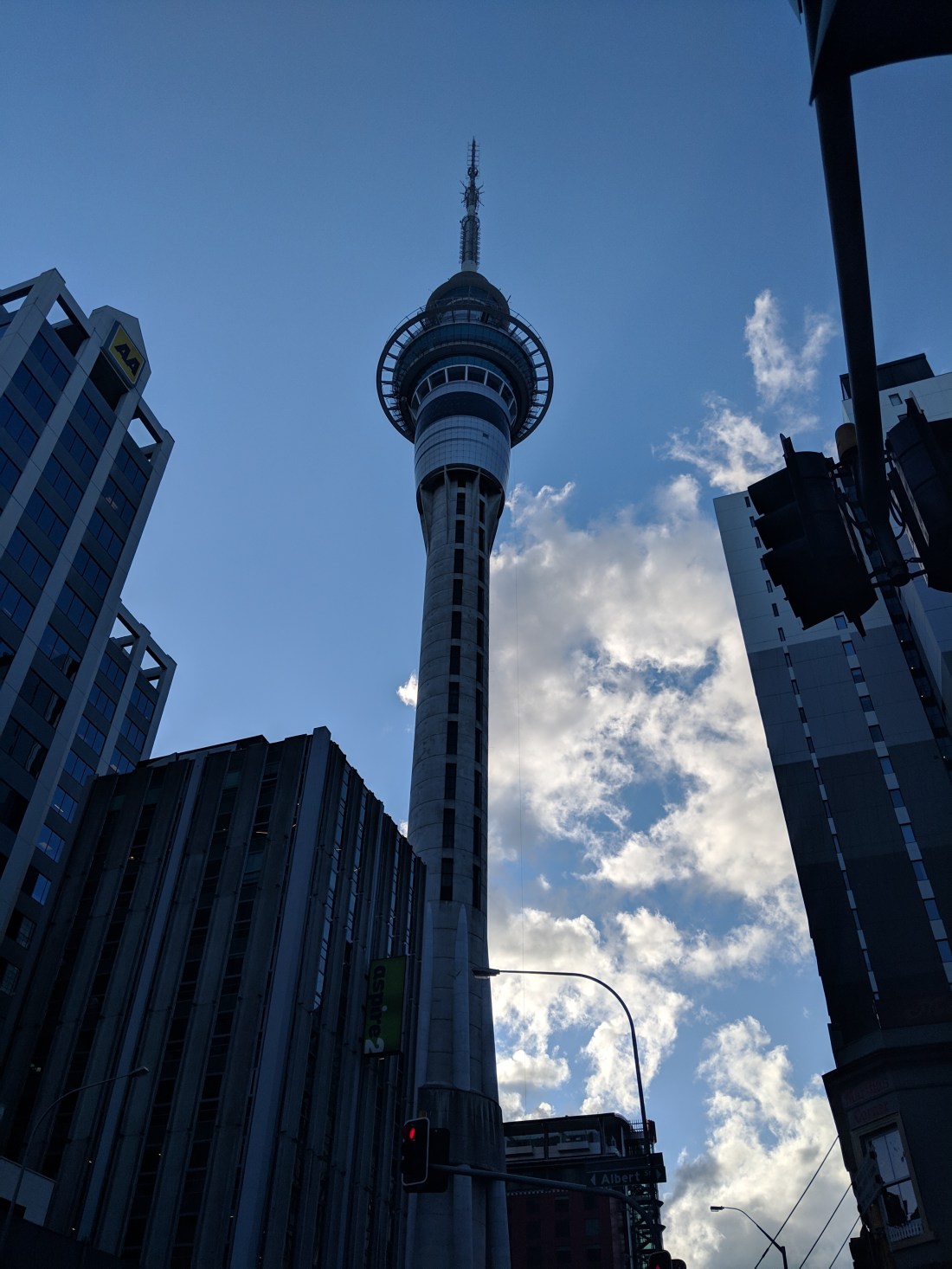
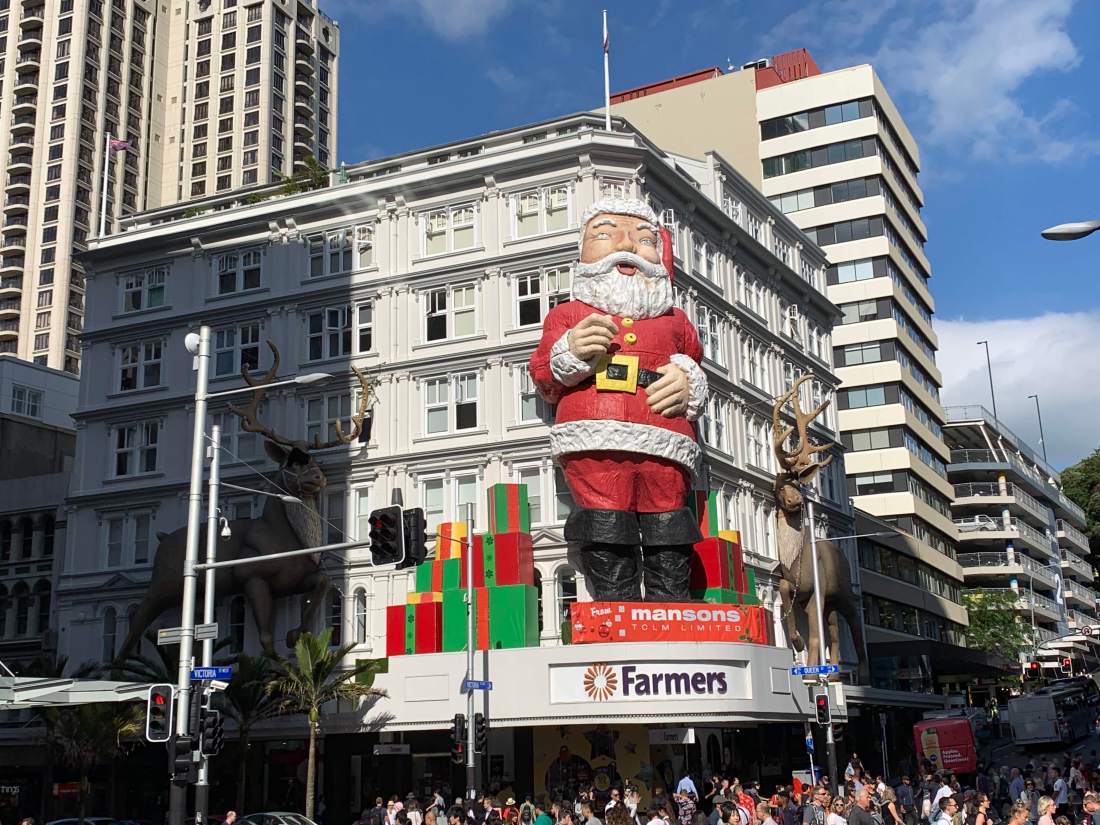
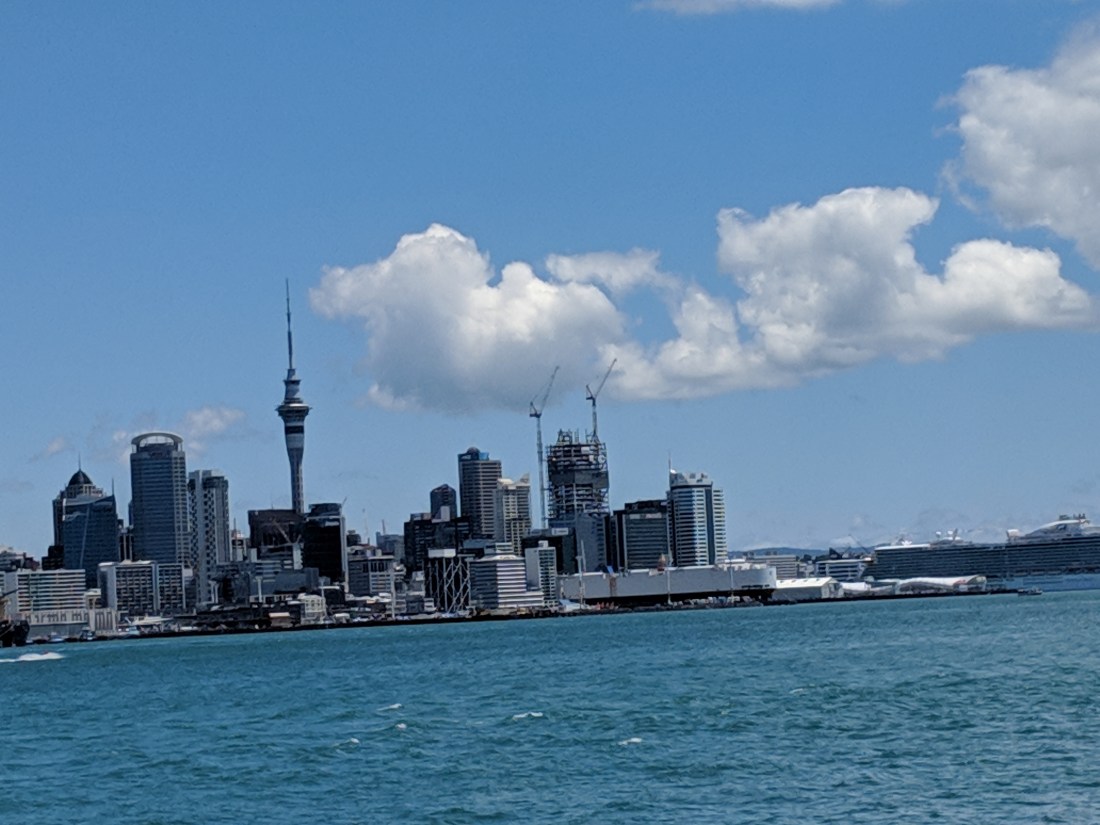
We spent our last couple of days in New Zealand in Auckland.  After all the beautiful places we had visited in the country, the city was less spectacular, but we needed the big international airport for our next leg.  We made the most of the day tooling around the city on the hop-on-hop off bus, taking in the sites.

IMG_20181218_185328

IMG_0414

IMG_0410

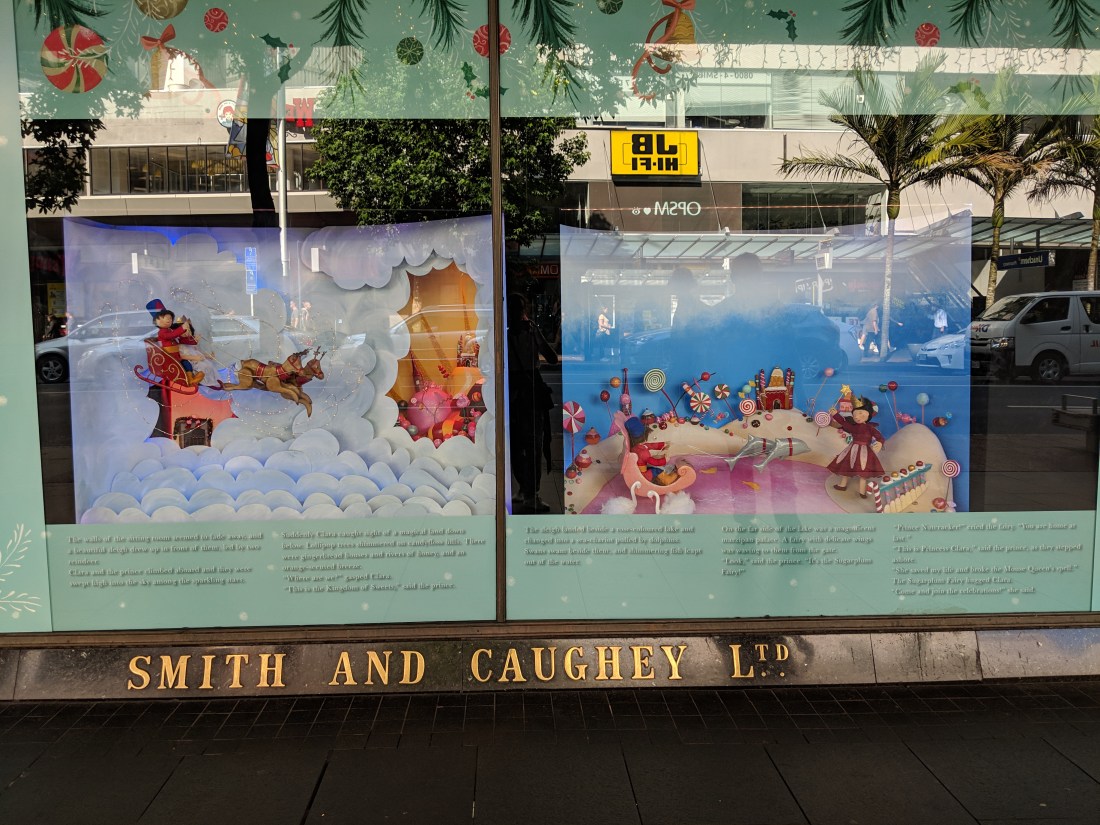
And we checked out the Christmas dressings and window displays

IMG_0400.JPG

This famous NZ department store did the entire nutcracker story.

IMG_20181217_172829

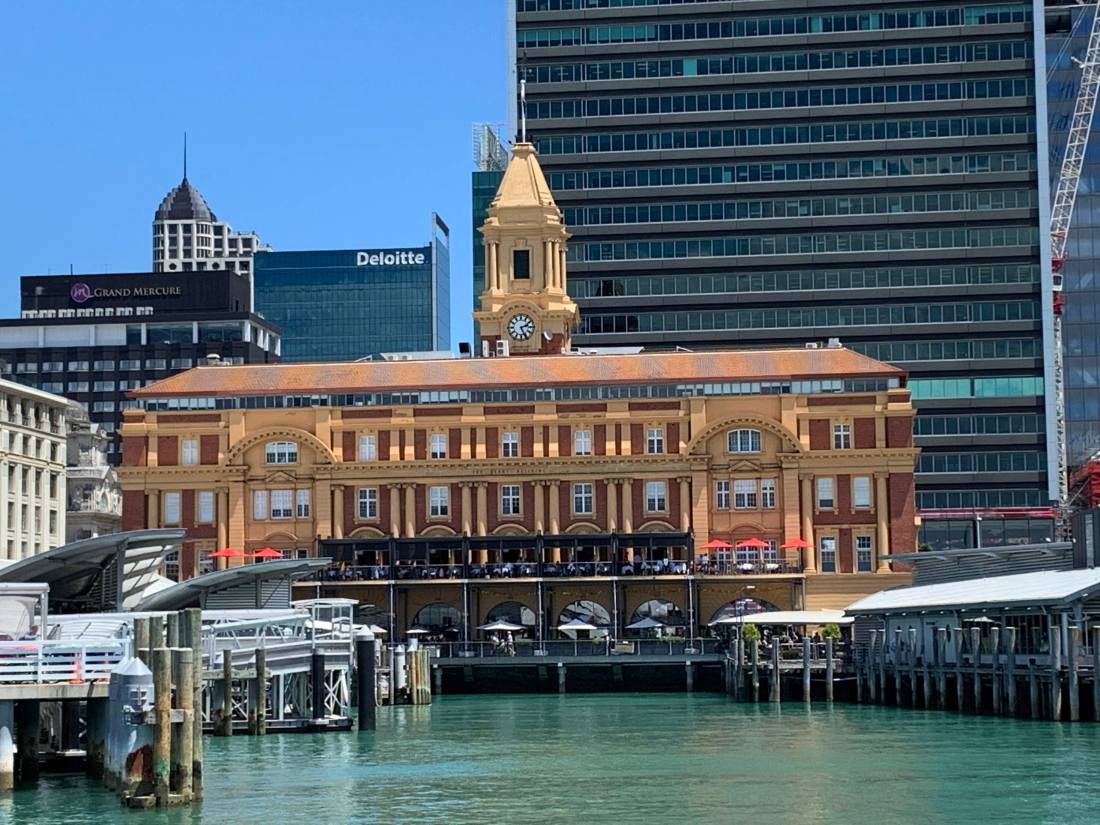
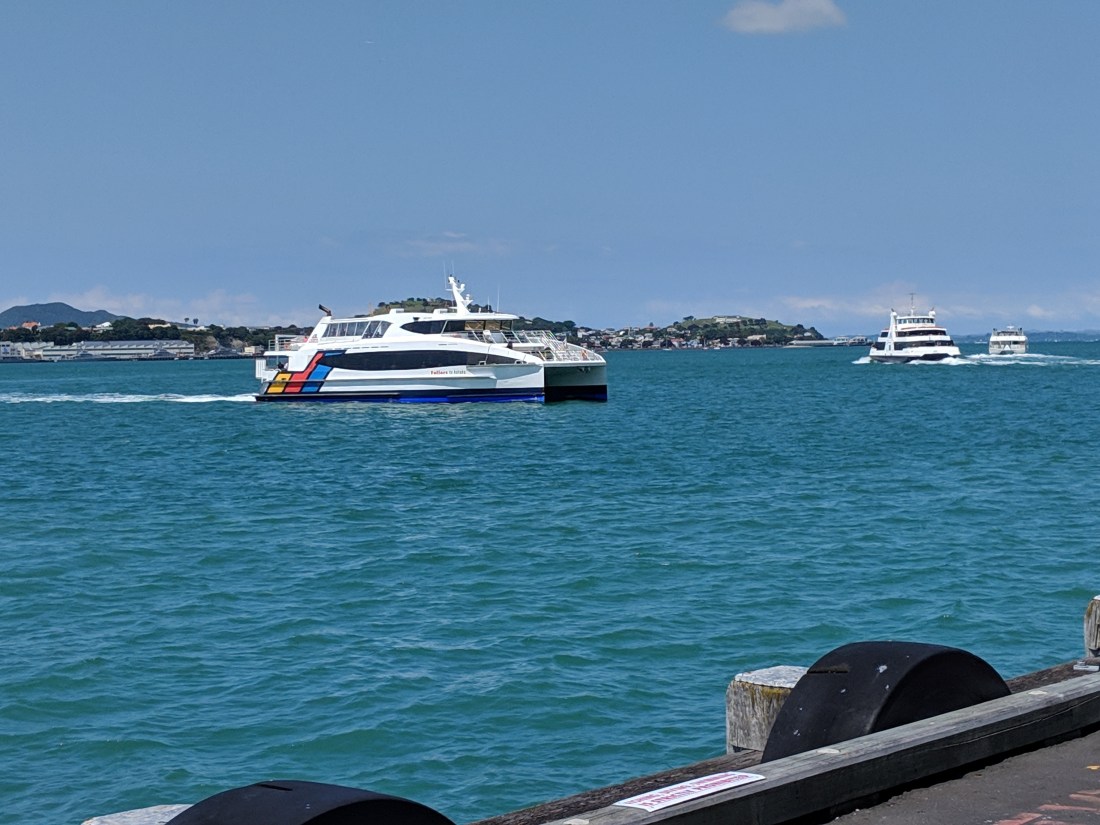
And we took a ferry across to Devonport.

IMG_20181217_150316

IMG_20181218_134941

And so our visit to New Zealand has come to an end.


Rotorua December 15-16

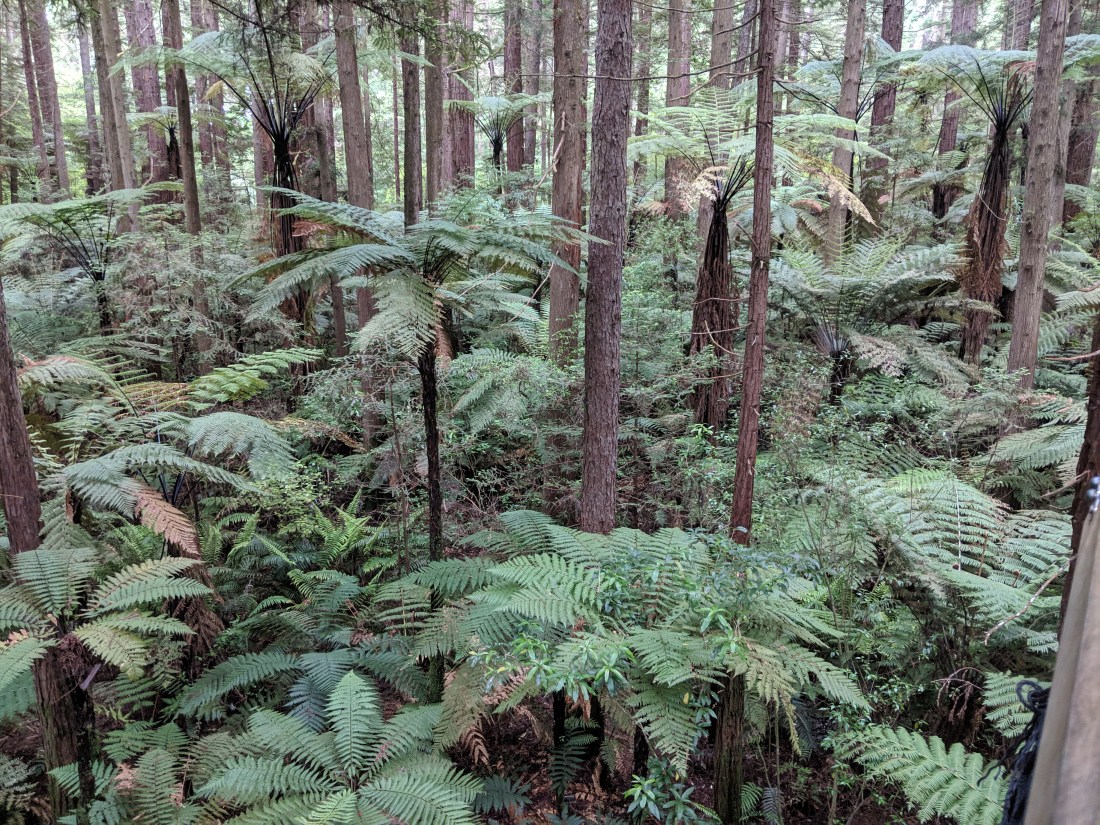
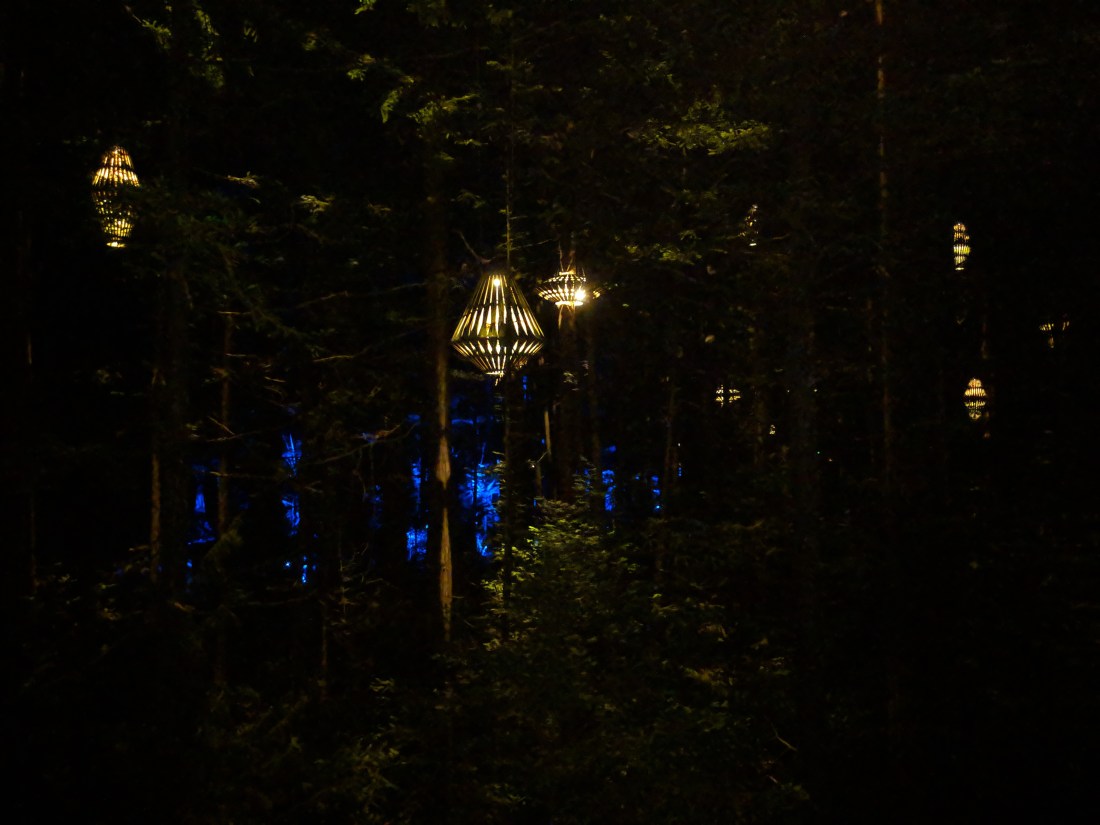
We arrived in Rotorua in the afternoon.  We immediately embarked on a hike through the redwood forest.  Redwoods were imported here from California over a hundred years ago.  They, like the pines from California, grow faster here, and are therefore a softer wood.  The pines are a huge export industry.  The redwoods, like California, are now for tourists.

IMG_20181215_172243

IMG_20181215_171309

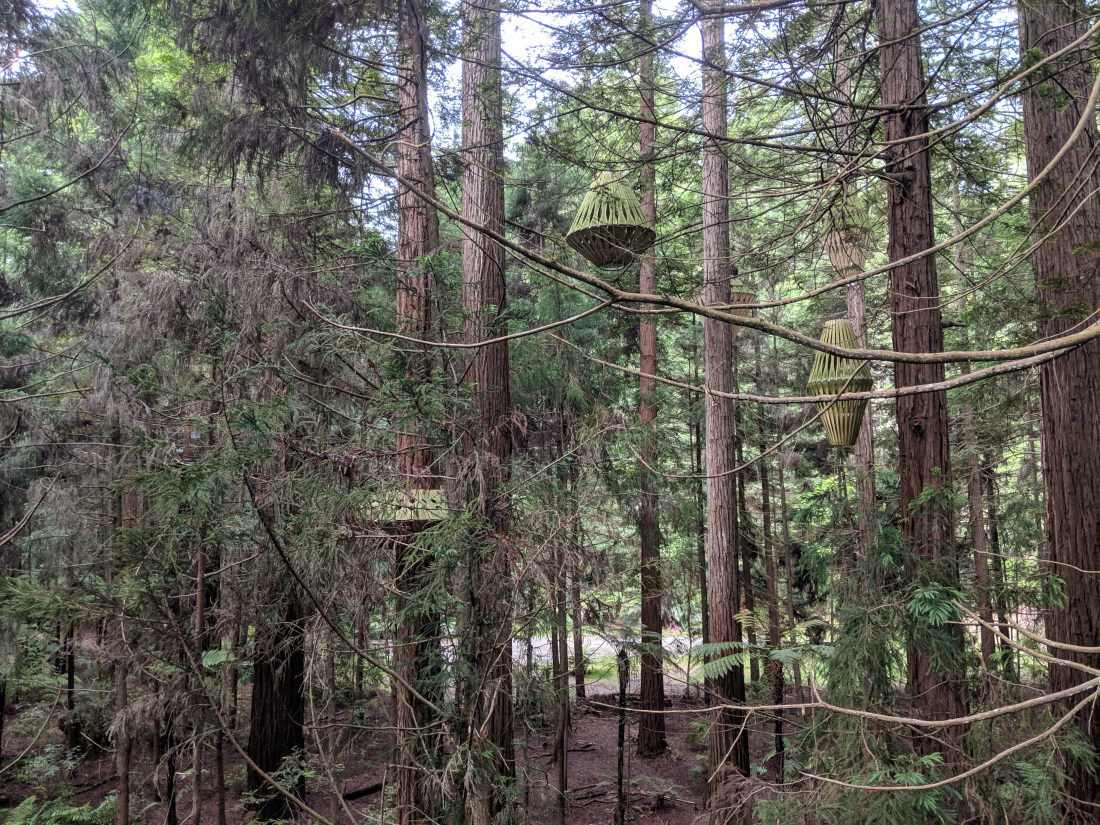
We are walking an elevated path that is suspended from tree to tree, thus protecting them.
 

IMG_20181215_171101

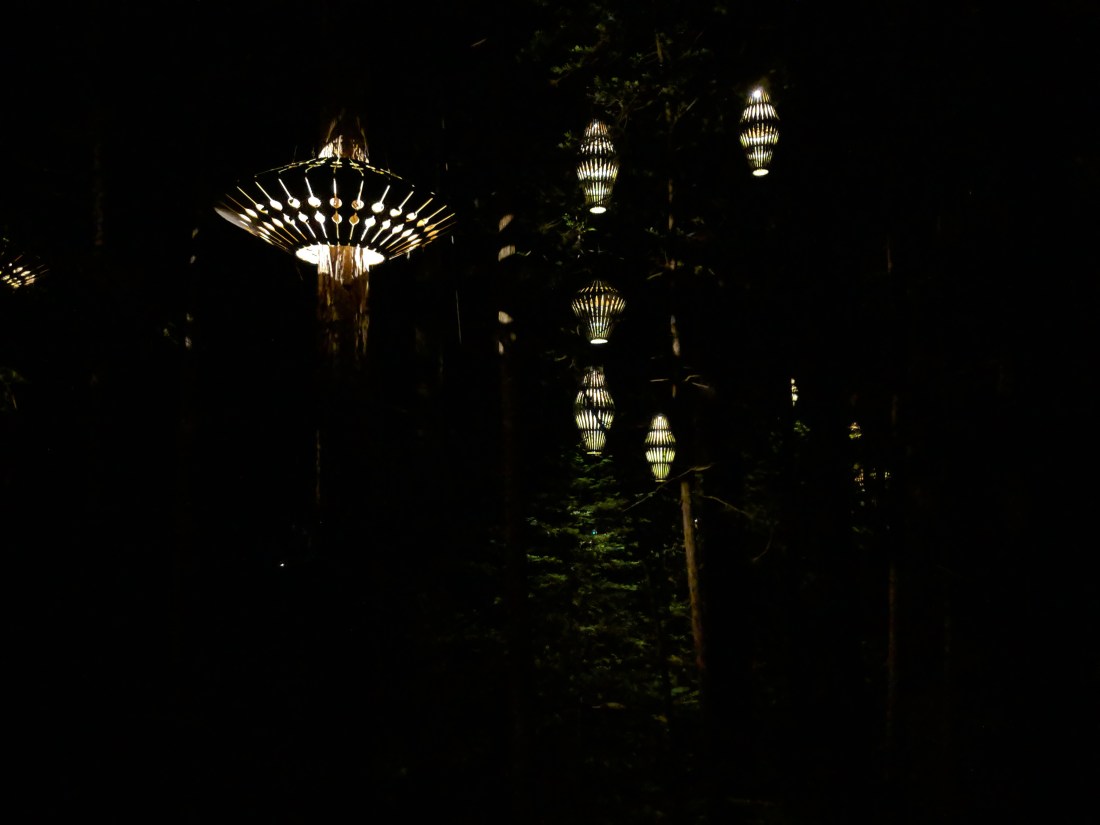
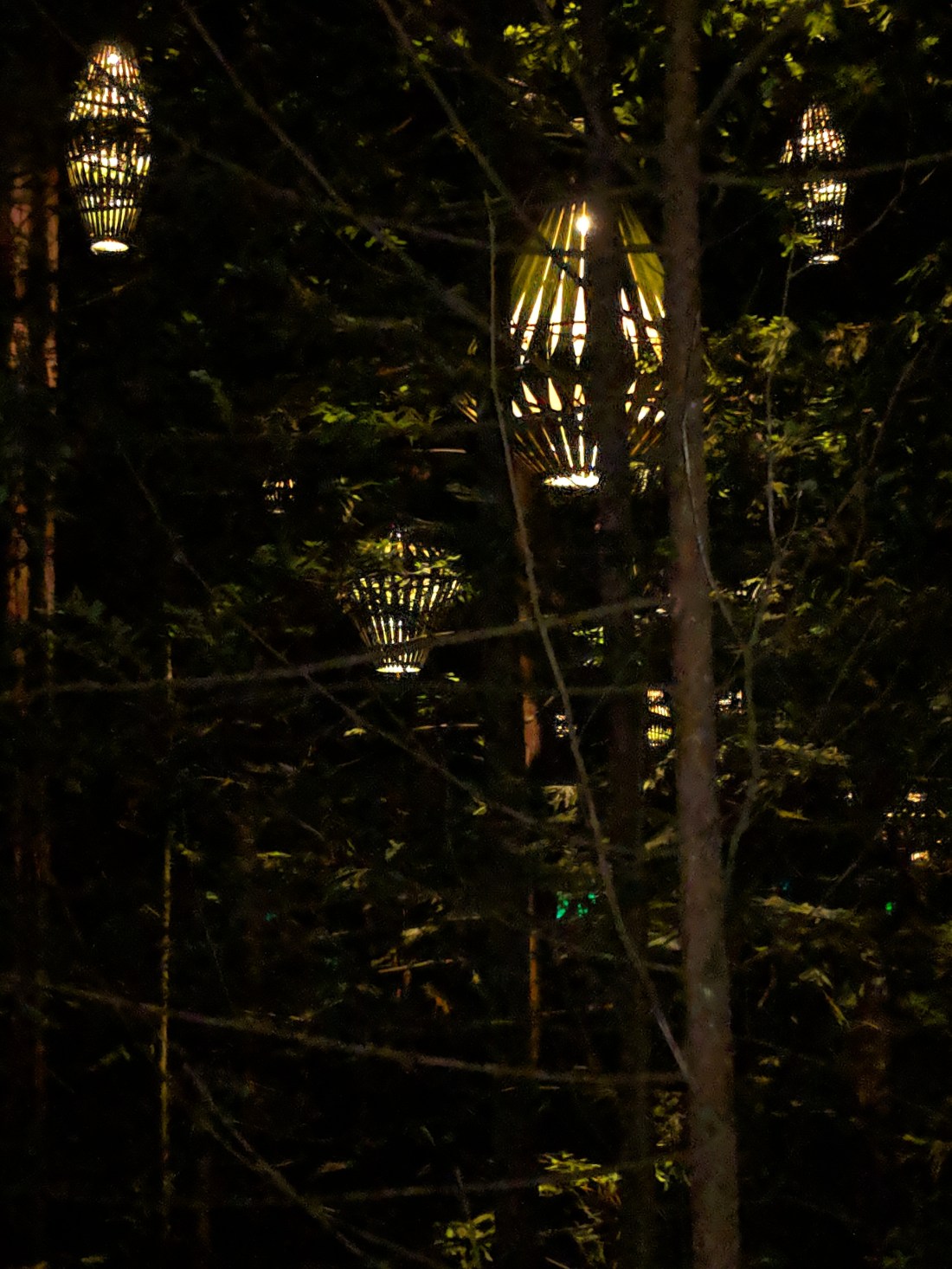
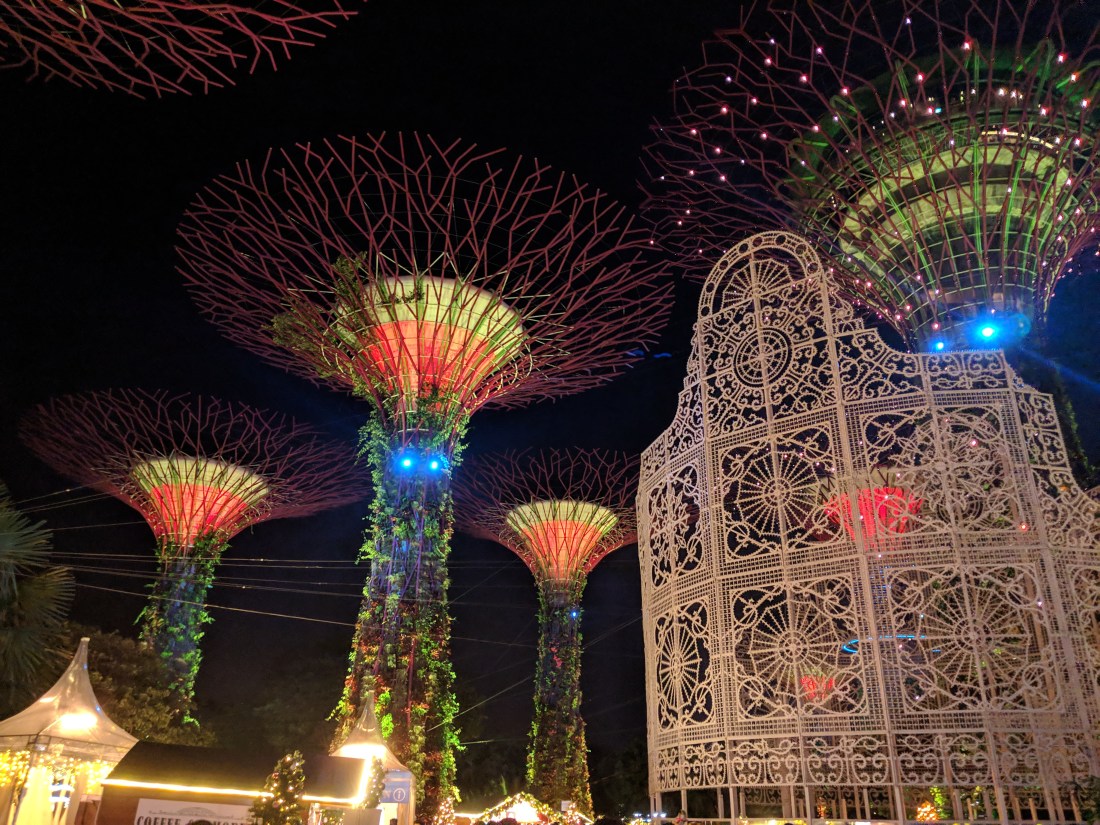
Those things hanging from the trees are light sculptures.  We came back at night for the light tour, which is also from the suspended path, very cool.  Pictures barely capture the experience.
IMG_20181215_215712

IMG_20181215_214516


IMG_20181215_215604

IMG_20181215_220150

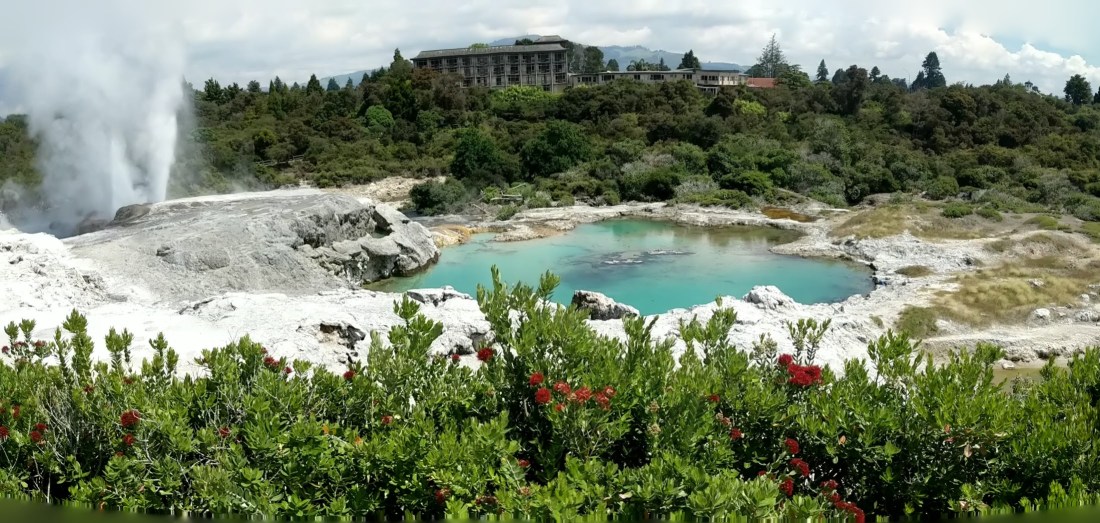
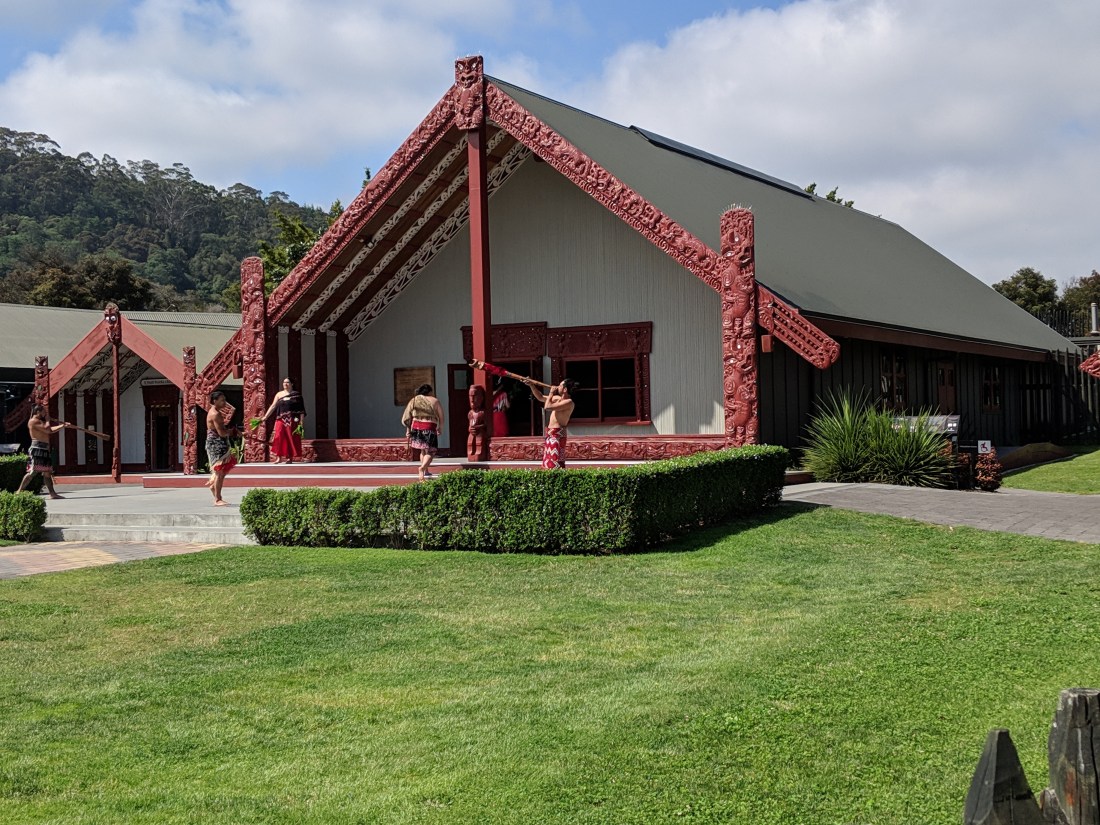
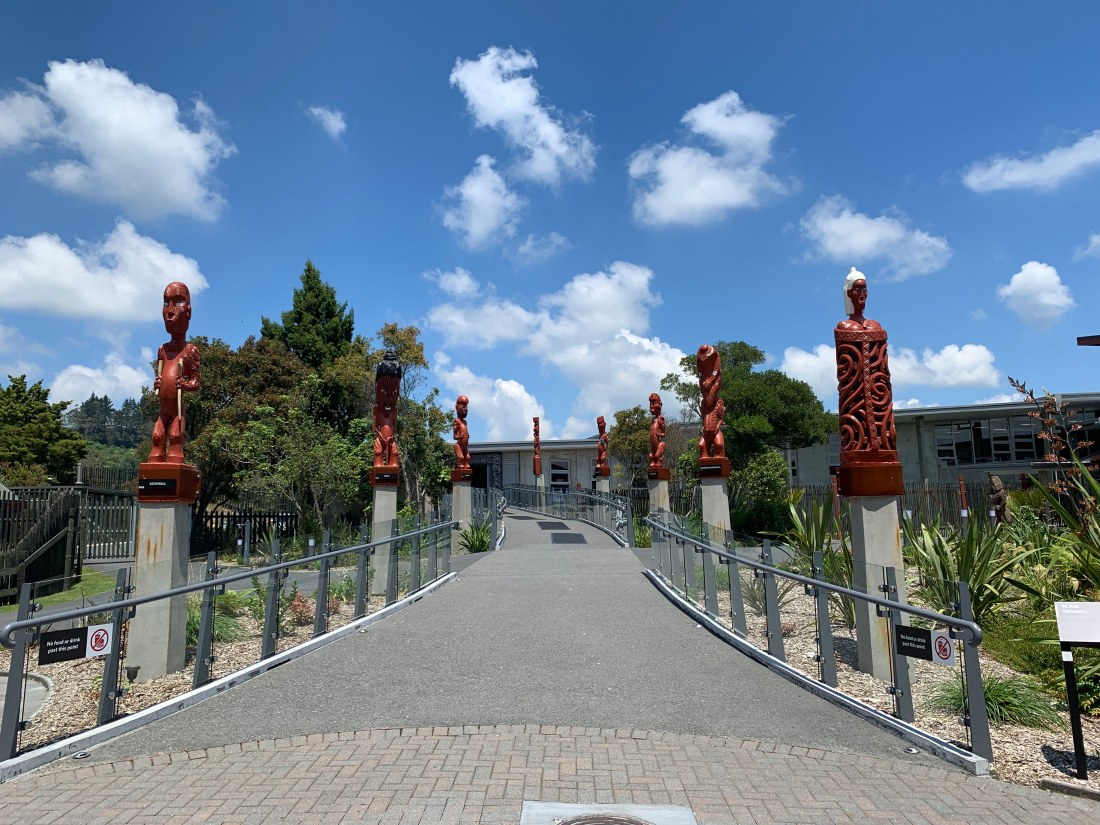
The next morning we went to Te Puia, which is a park that houses both a geothermal valley and activities devoted to understanding Maori life, arts, and culture.

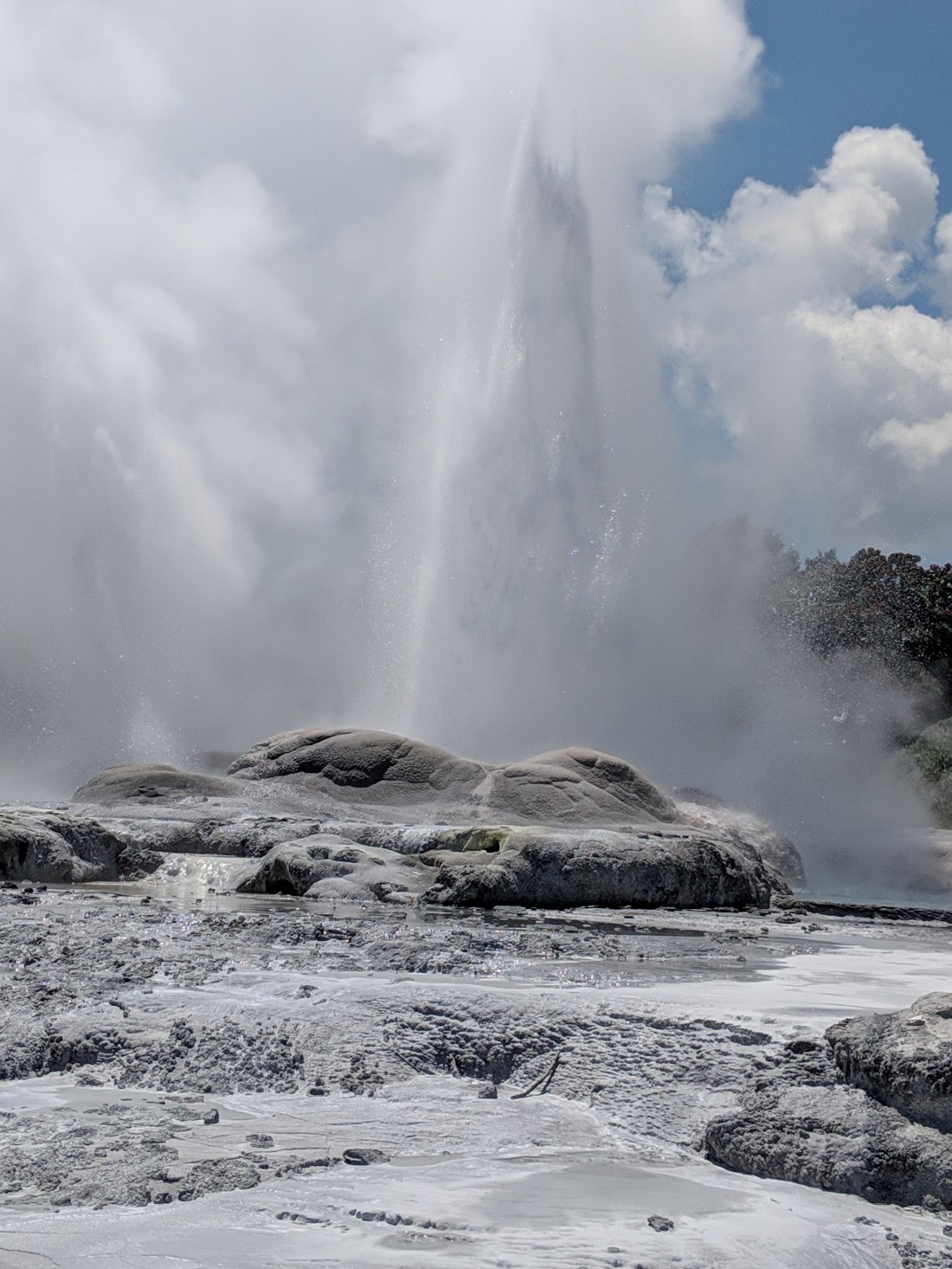
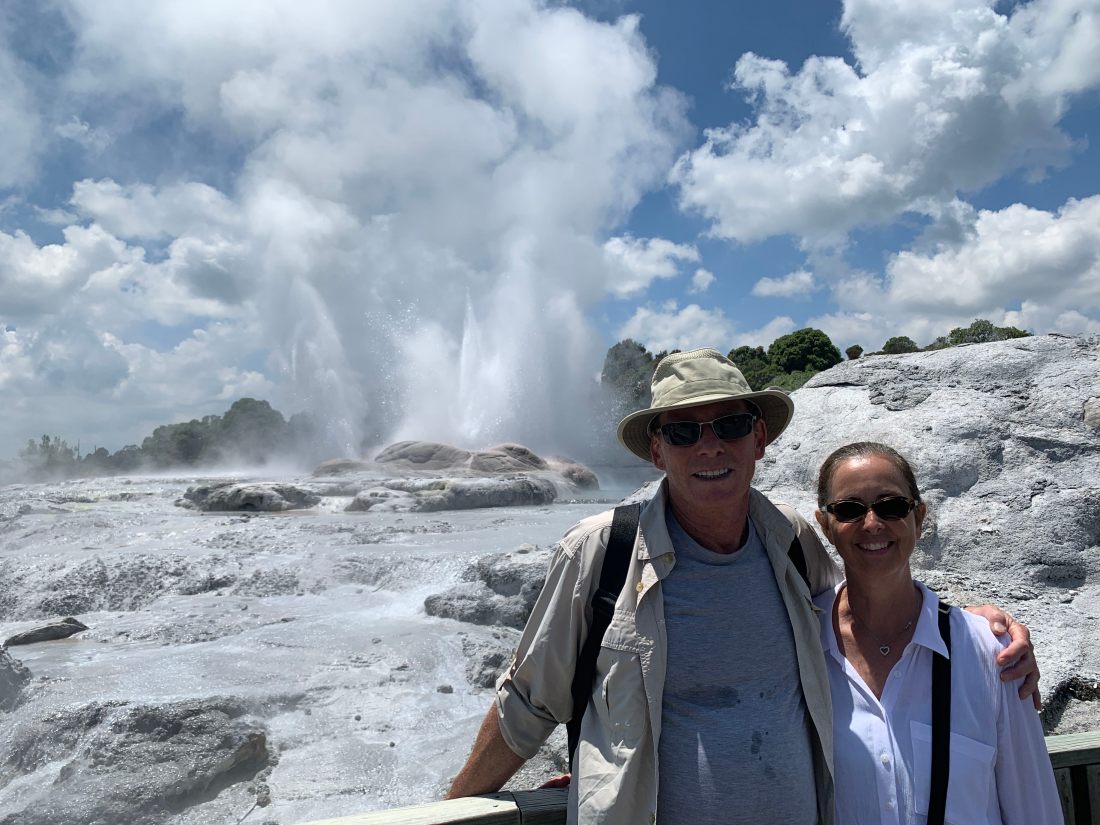
First the geothermal:  Pohutu Geyser, which is the largest in the Southern hemisphere.  We were lucky (and patient) enough to catch it erupting.

IMG_20181216_123418

PANO_20181216_112453.vr_

IMG_0390.JPG

And mud pools aplenty.


IMG_0372.JPG

Then we turned our attention to the Maoris.

IMG_20181216_102312

IMG_0393

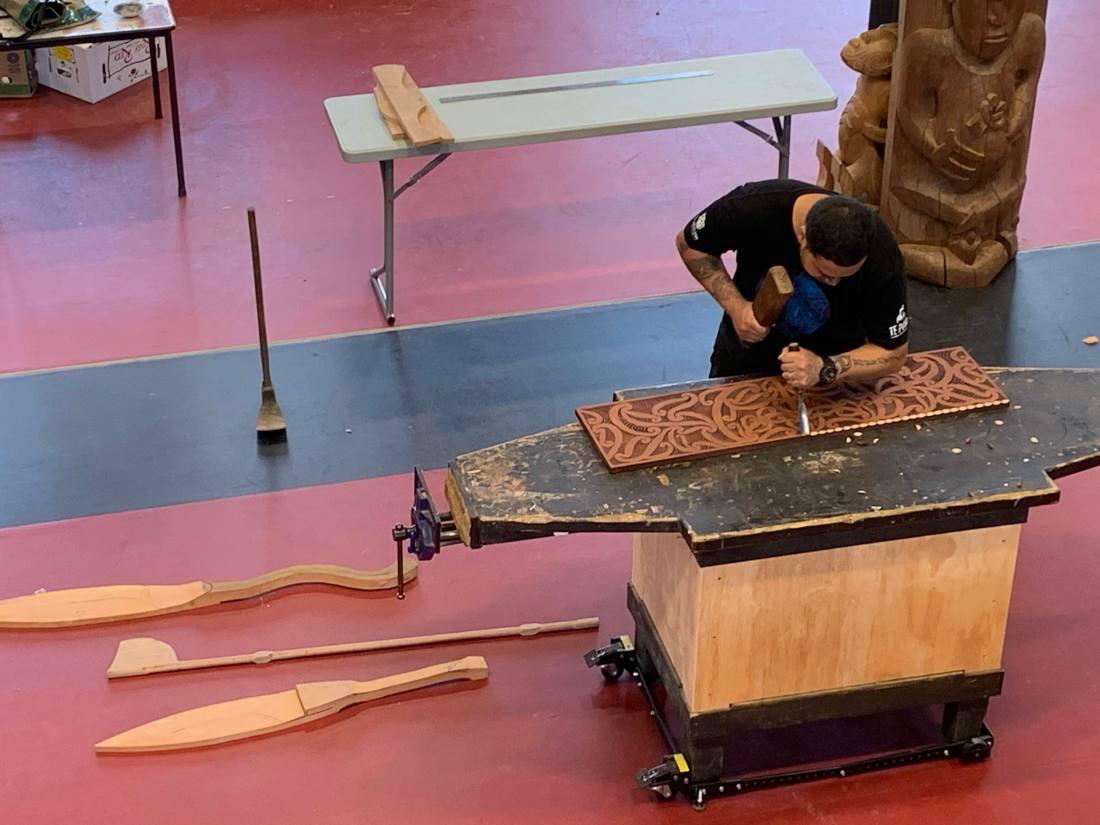
The park is home to the school of Maori arts and crafts.  We were able to watch students learning how to carve stone, jade, and bone as well as weave all manner of clothing and accessories from flax.

IMG_0394

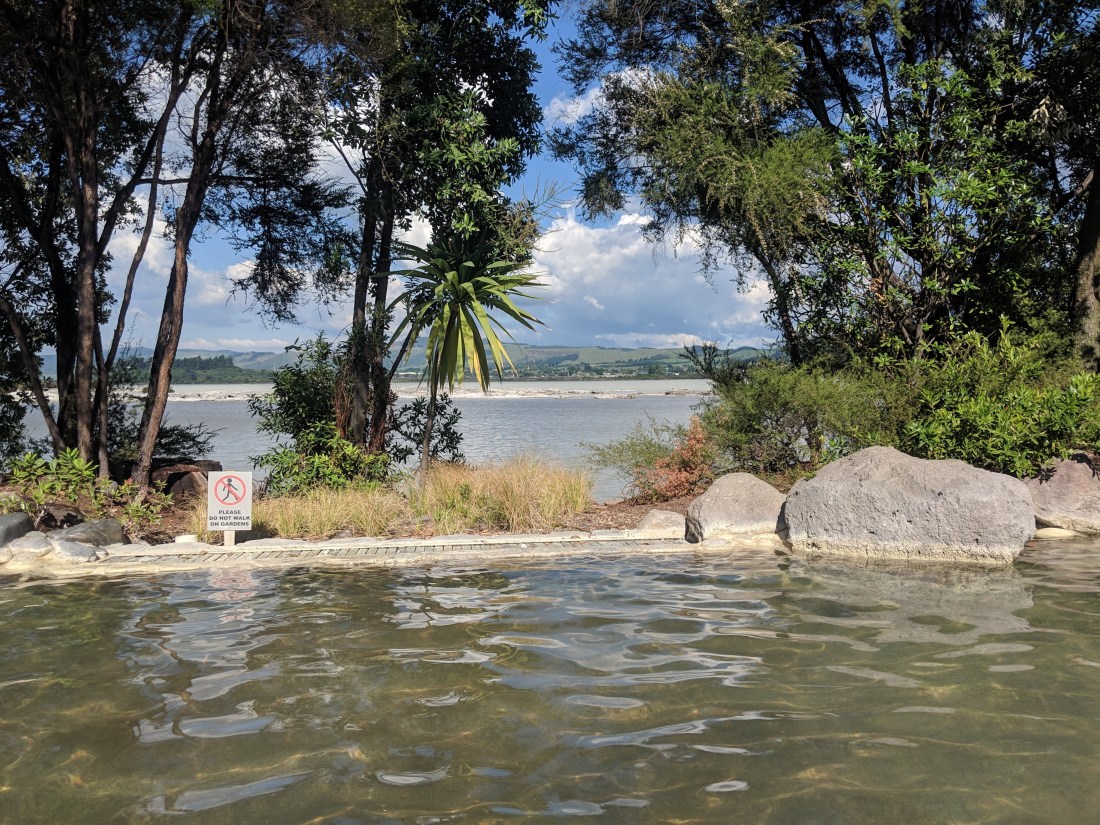
Finally, after a relaxing late lunch, we headed to the hot spring pools to soak in the spring-fed mineral baths.

IMG_20181216_170231


IMG_20181216_165822
View from the bath