Hanoi, Mai Chau, Ninh Binh, & Halong Bay Feb. 18-25

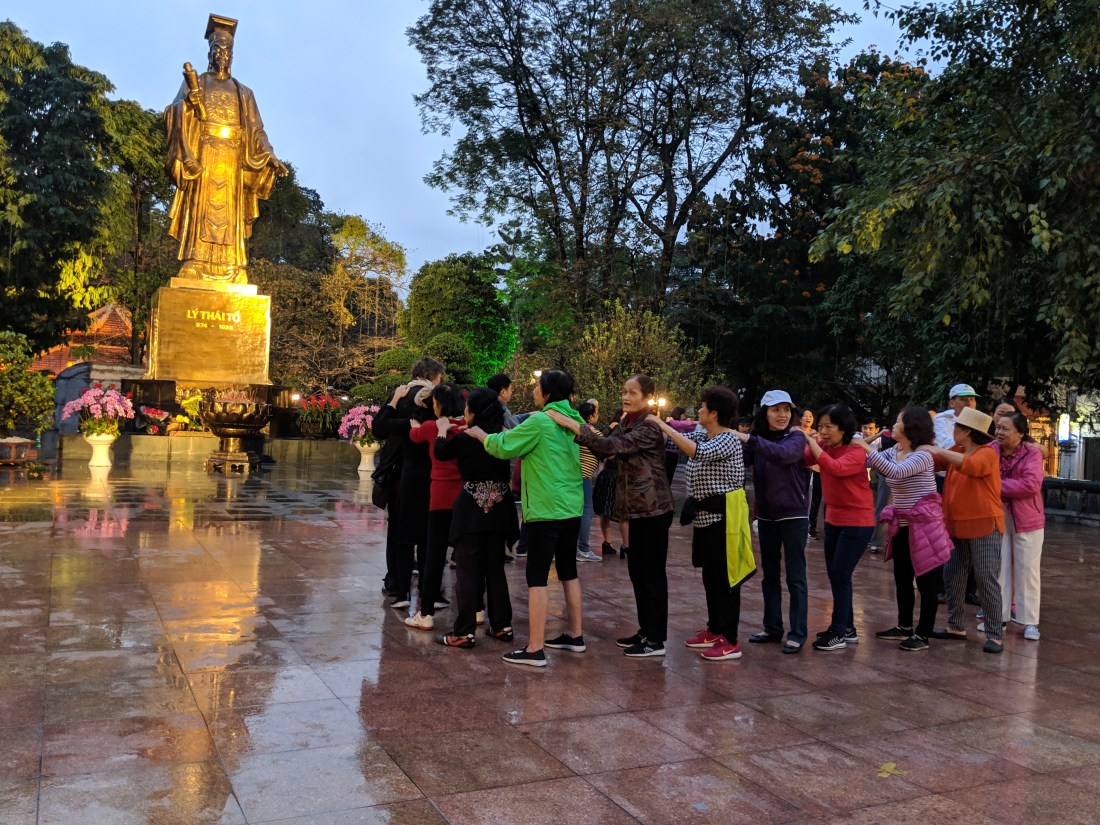
We arrived back to Hanoi from Sapa at 5:30 am. We strolled around Ho Hoan Kiem Lake where the locals were up exercising.  The group below is practicing Laughing Yoga.  I only wish I could post the video: hilarious!  They are in a square in front of a statue of Ly Thai To, who was the founder of Hanoi in 1010, more about him in Ninh Binh.
IMG_20190218_061915.jpg

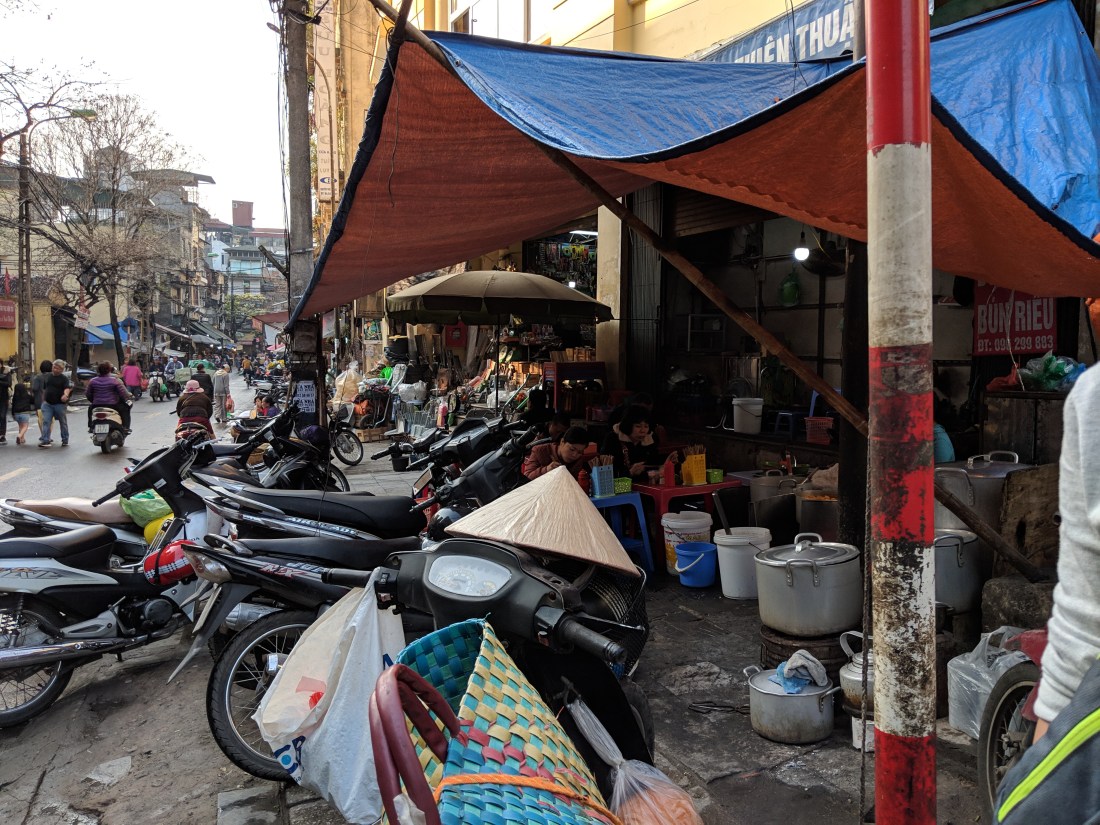
We toured the Old Quarter, which is basically a huge market but with stores in buildings along streets instead of just stalls.  The street used to be divided, and named, for the their specific trade or manufacturing, like Silver Street and Silk Street.  Some now still have specific items like hardware or bakeries or medicinal herbs, but the name of the street does not necessarily correlate with the goods sold anymore.  And some now are a combination of useful items like clothes and touristy souvenirs.

IMG_2784IMG_20190218_080954IMG_20190218_081018

IMG_20190218_081756
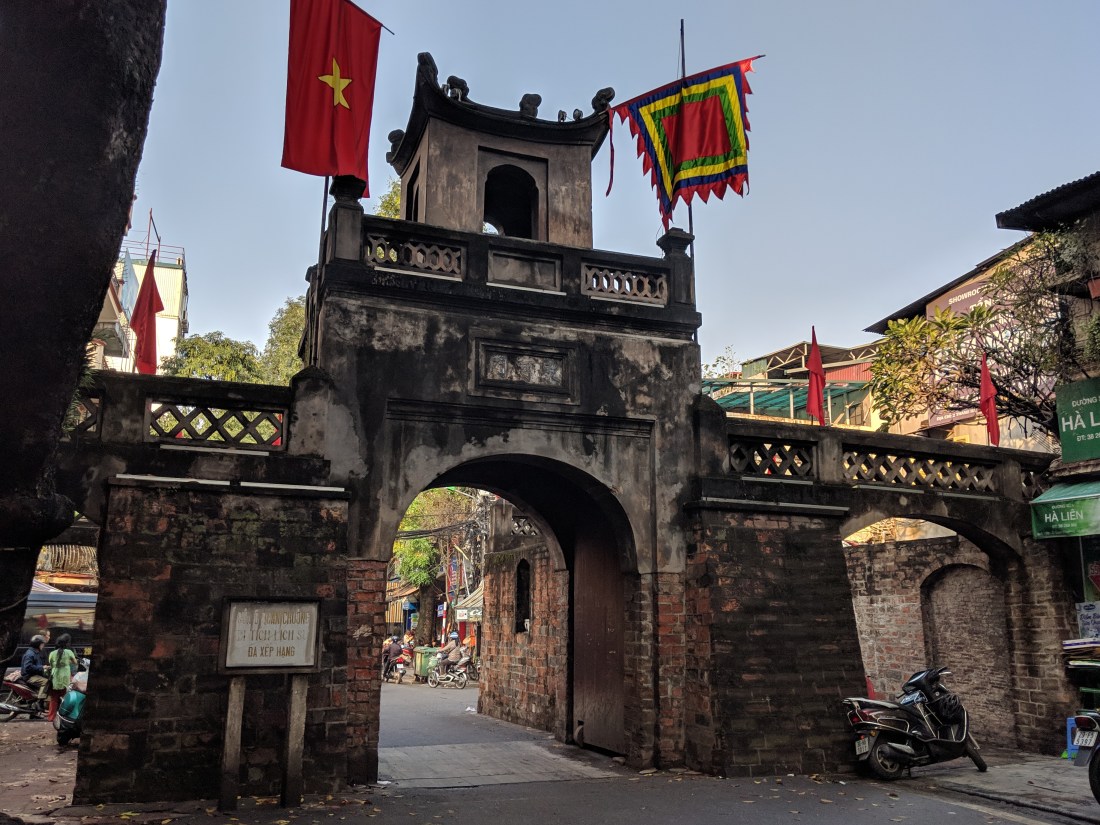
the last remaining gate of The Old City

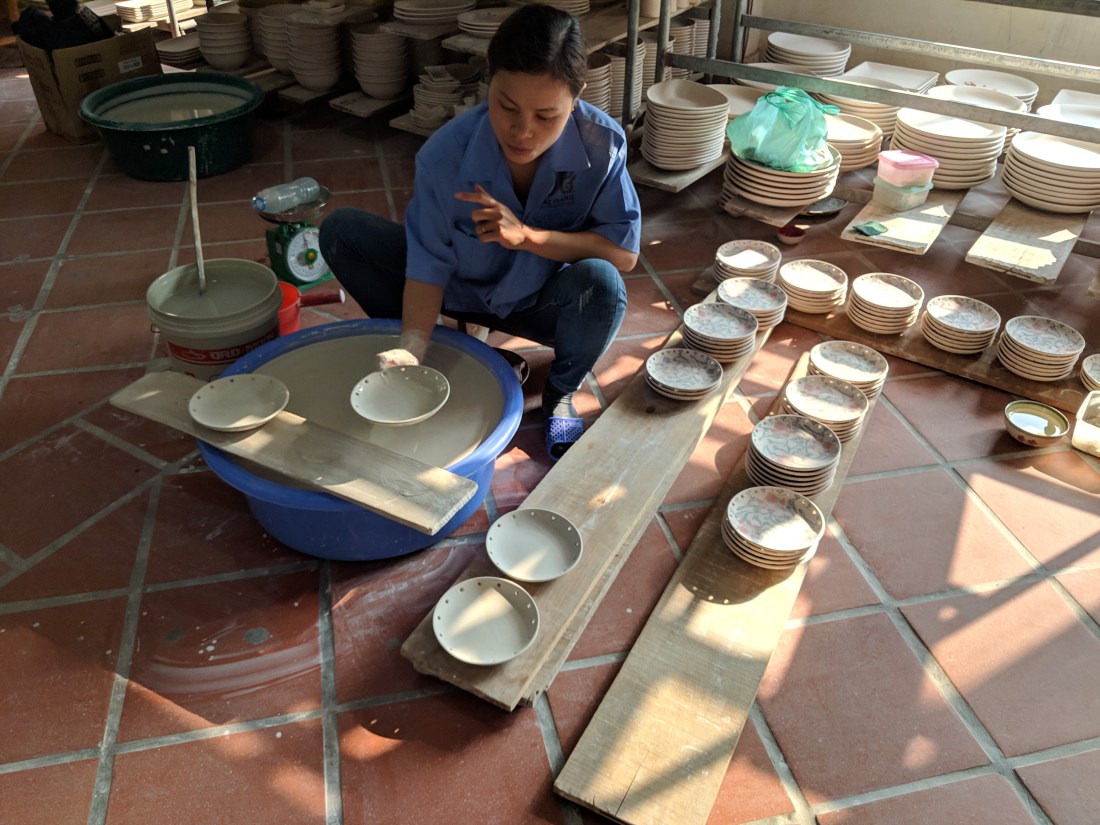
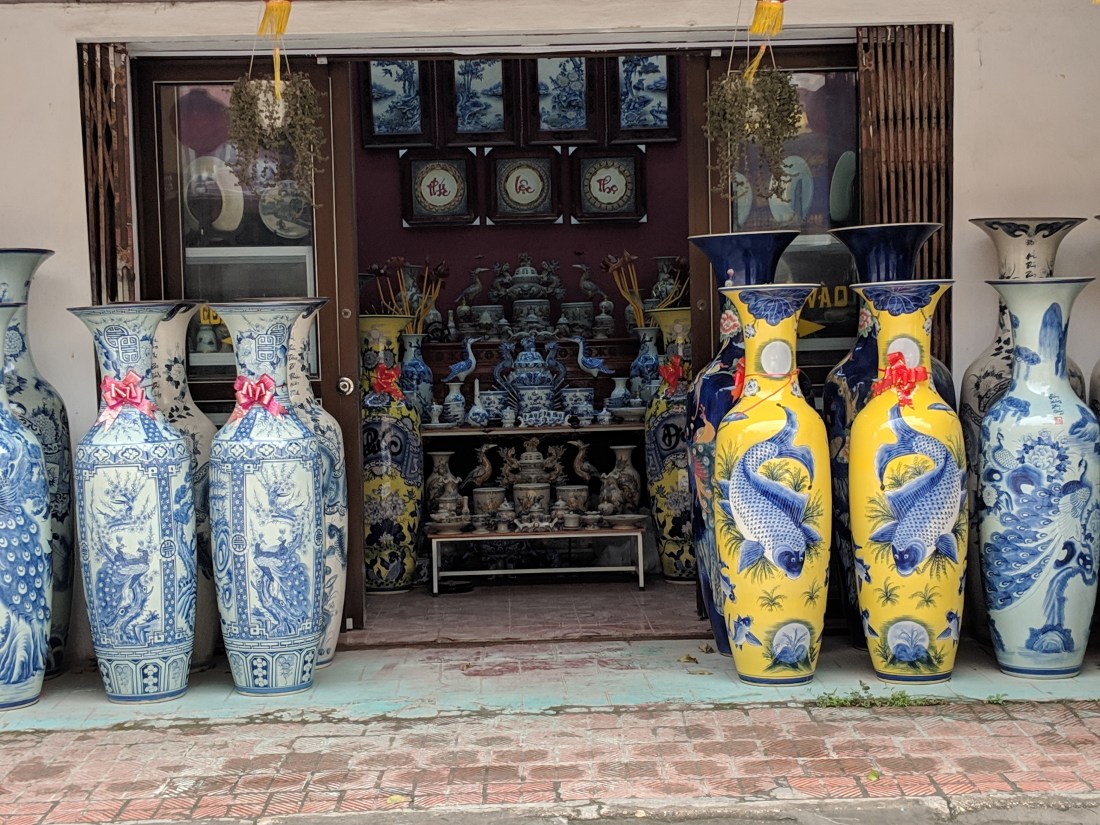
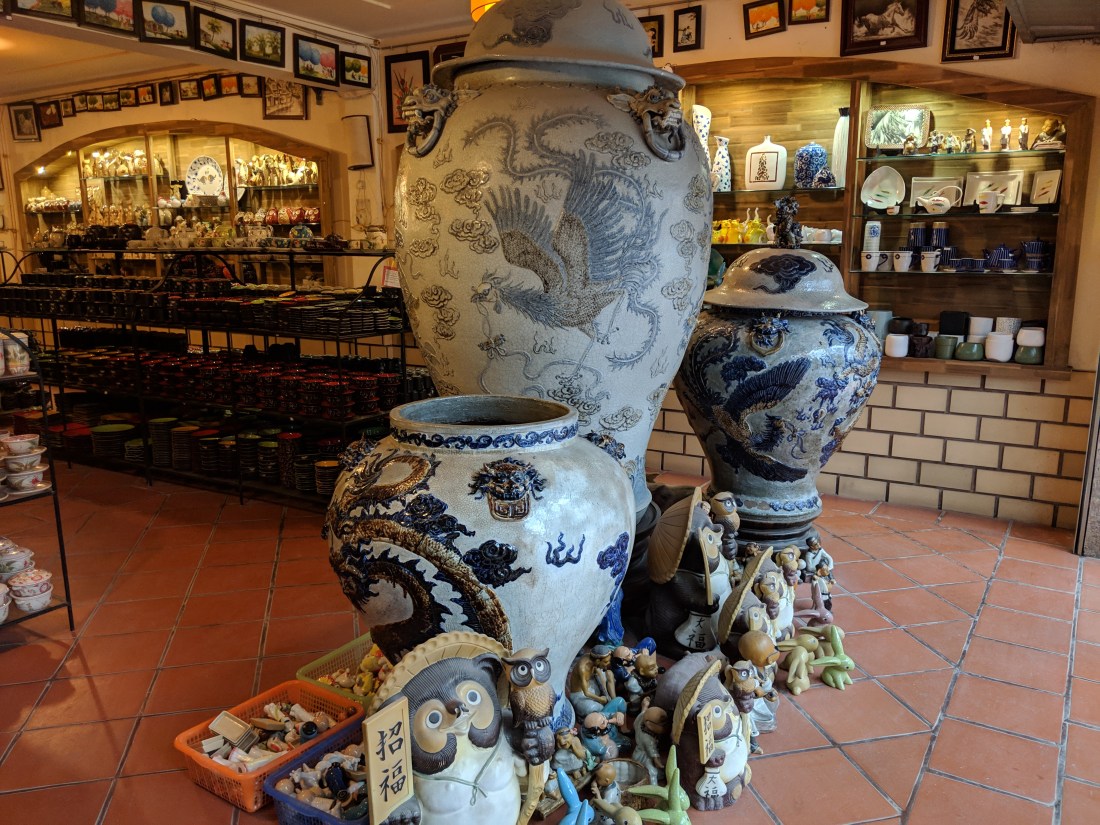
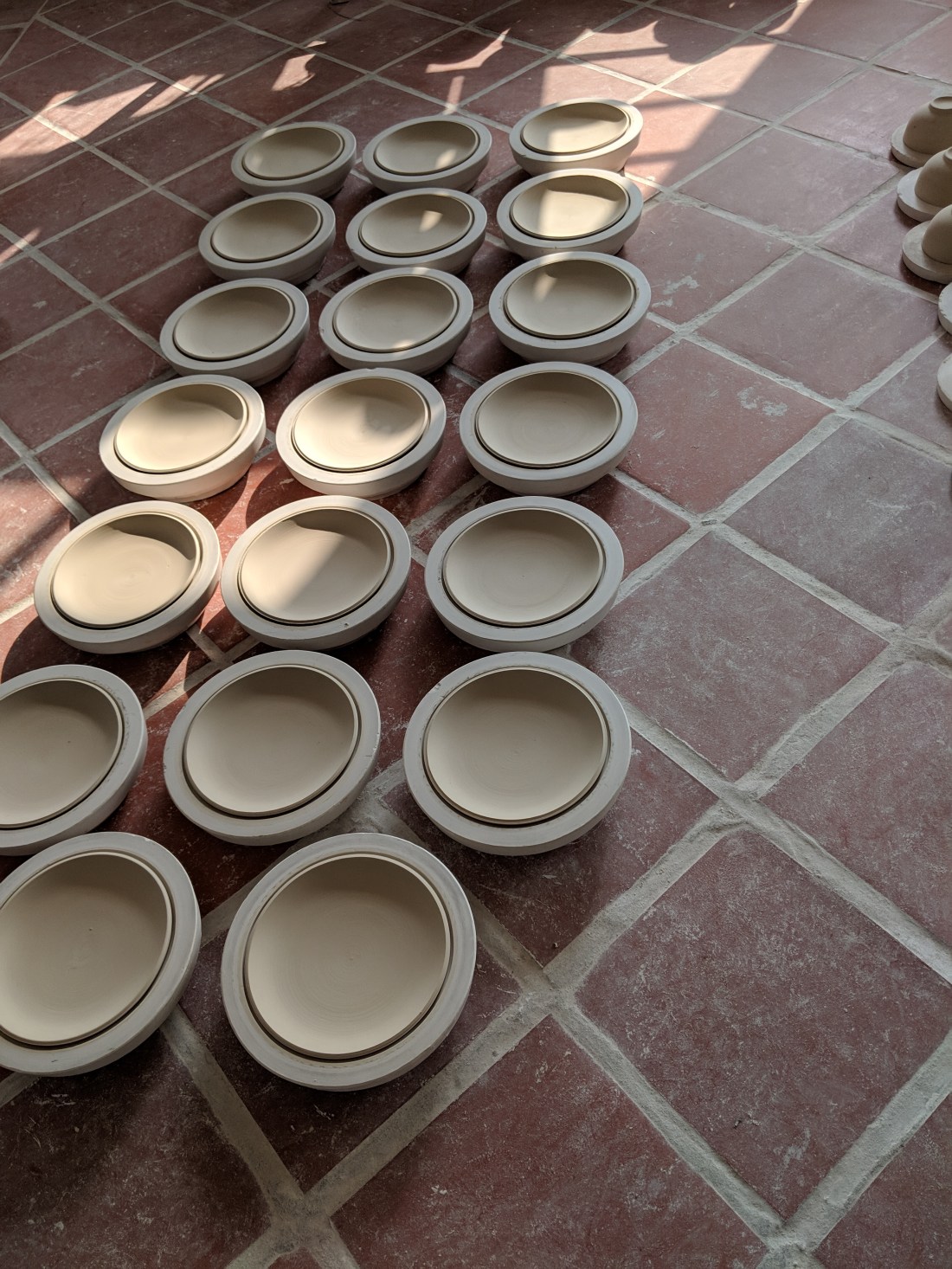
We then took a drive out to a neighboring town, Bat Trang Pottery village, to see how ceramics are made.  Ceramics have always been a huge part of Vietnamese trade.  Historically they had been hand made on wheels, but today almost, all except the huge ones, are made in molds.  But at the better factories, they are still hand painted.
IMG_20190218_085429
bowls in a mold
IMG_20190218_084954
dried before painting
IMG_20190218_085540
these women paint about 7 mugs a day
IMG_20190218_085857
painted items are dipped in glaze
IMG_20190218_090038
glazed items are then fired in the kiln

IMG_20190218_095556IMG_20190218_100056

We then went back to Hanoi to visit the Museum of Fine Arts.  But we were unimpressed with the museum, and I was feeling feverish, so we had a quick lunch, then went back to our hotel for a well needed rest.

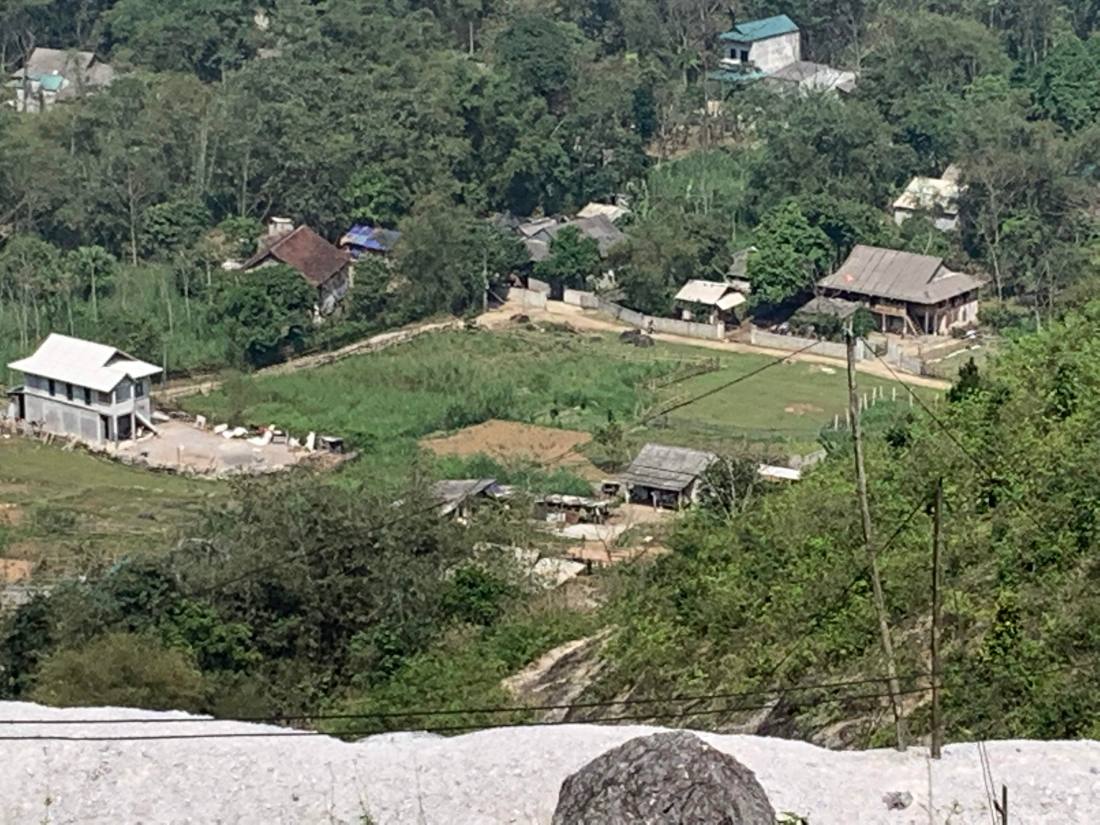
The next morning we travelled to Mai Chau.  Along the way we stopped at the Thung Khe Pass.  Our driver treated us to a local treat: sticky rice mashed into a sweet paste, steamed inside a bamboo pole, then you peel back the bamboo and dip the hot stick of paste into a combination of salt and crushed peanuts.
IMG_2800

IMG_2799
our driver
IMG_2798
the ladies’ had a bit more privacy

IMG_2801

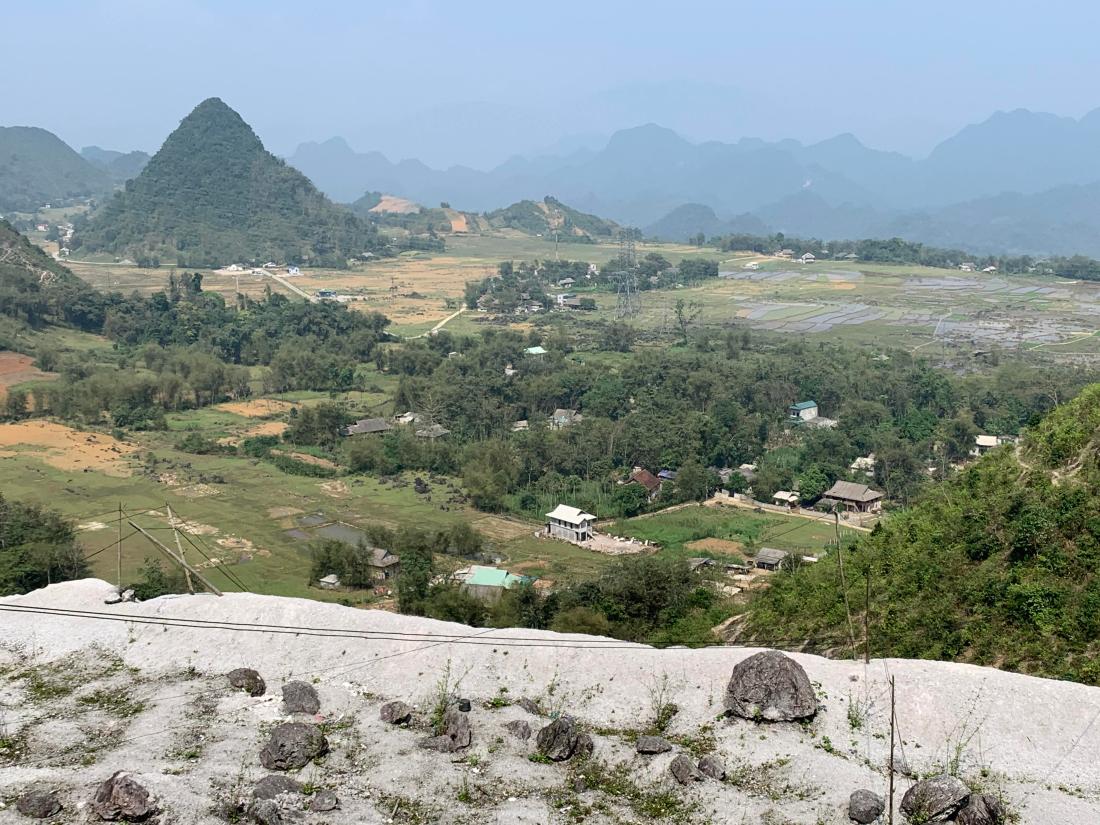
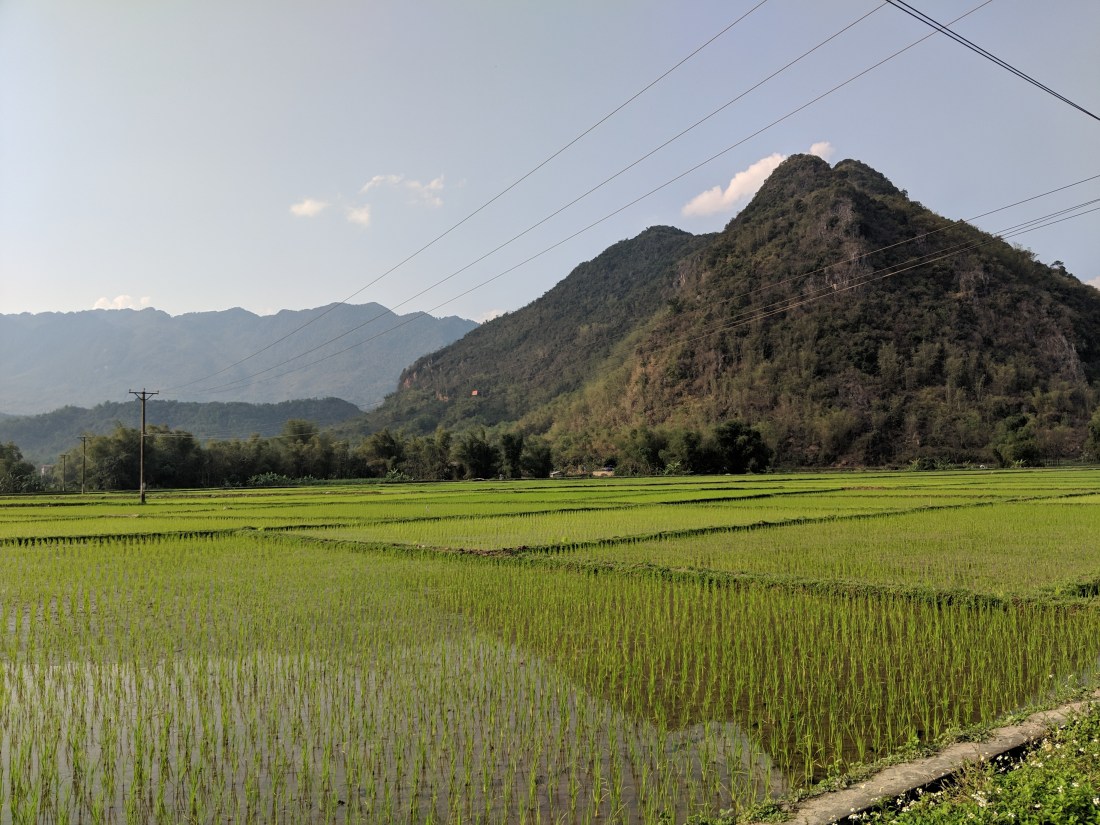
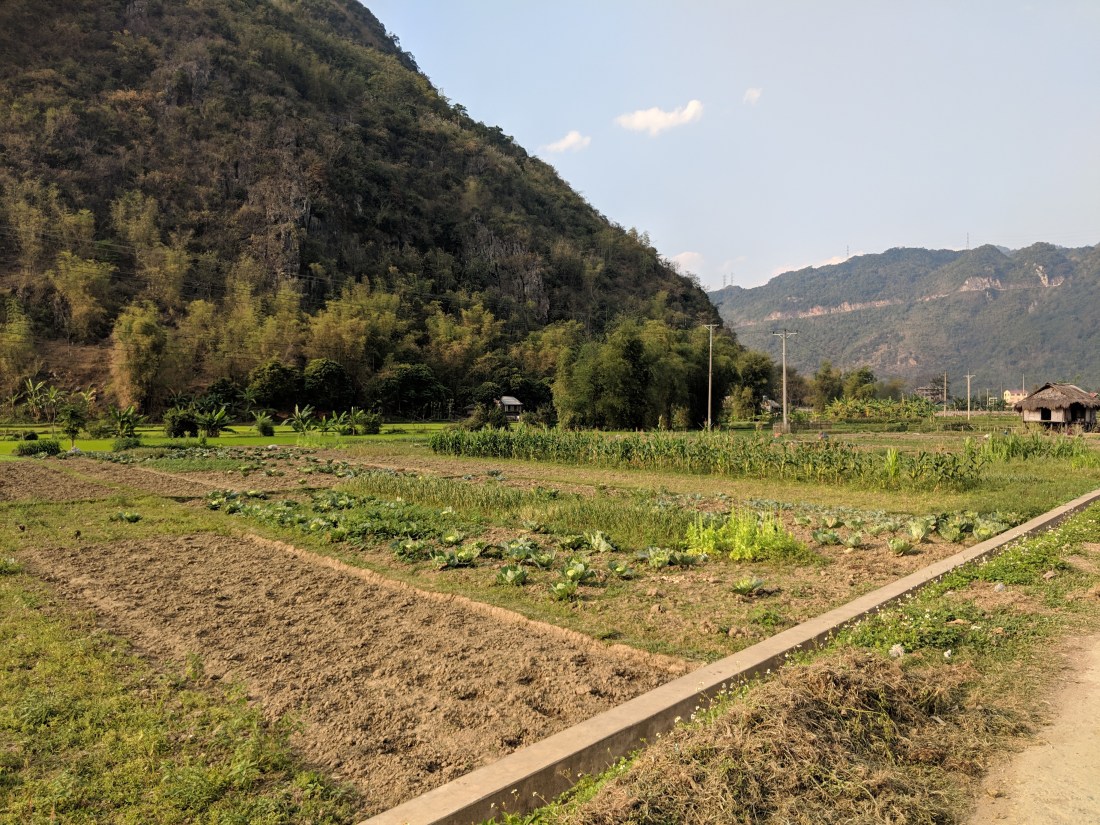
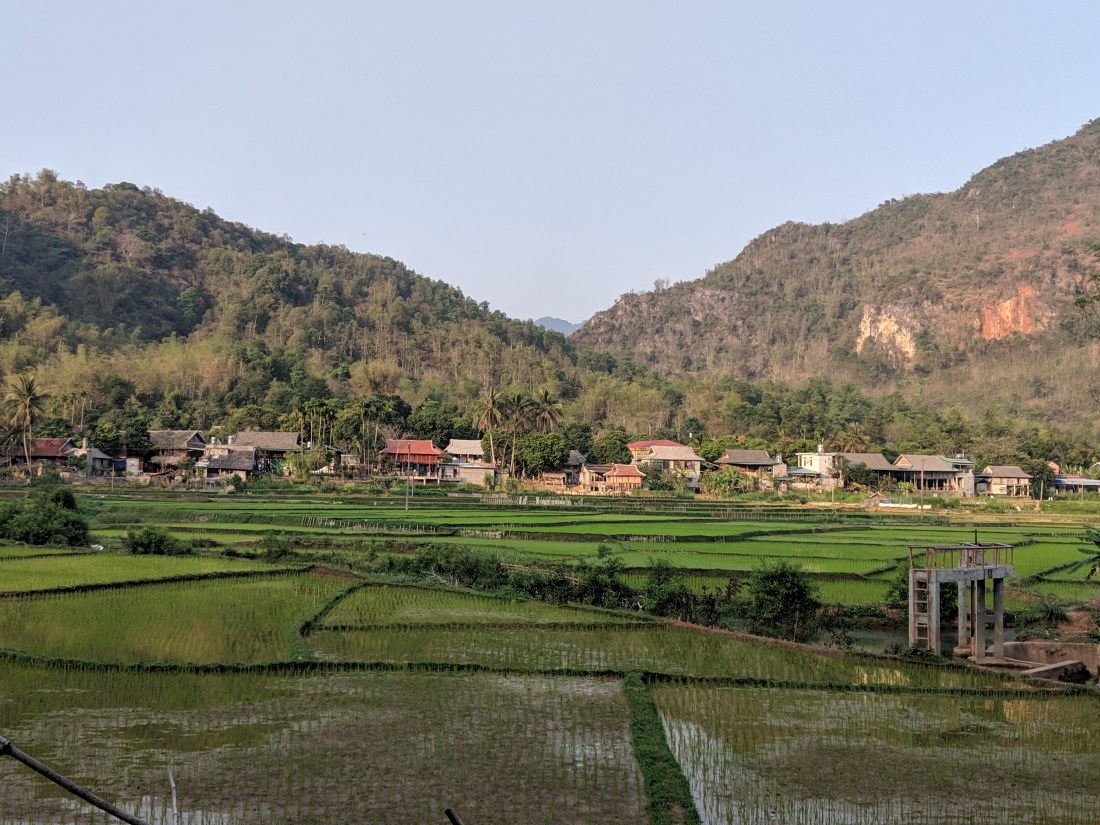
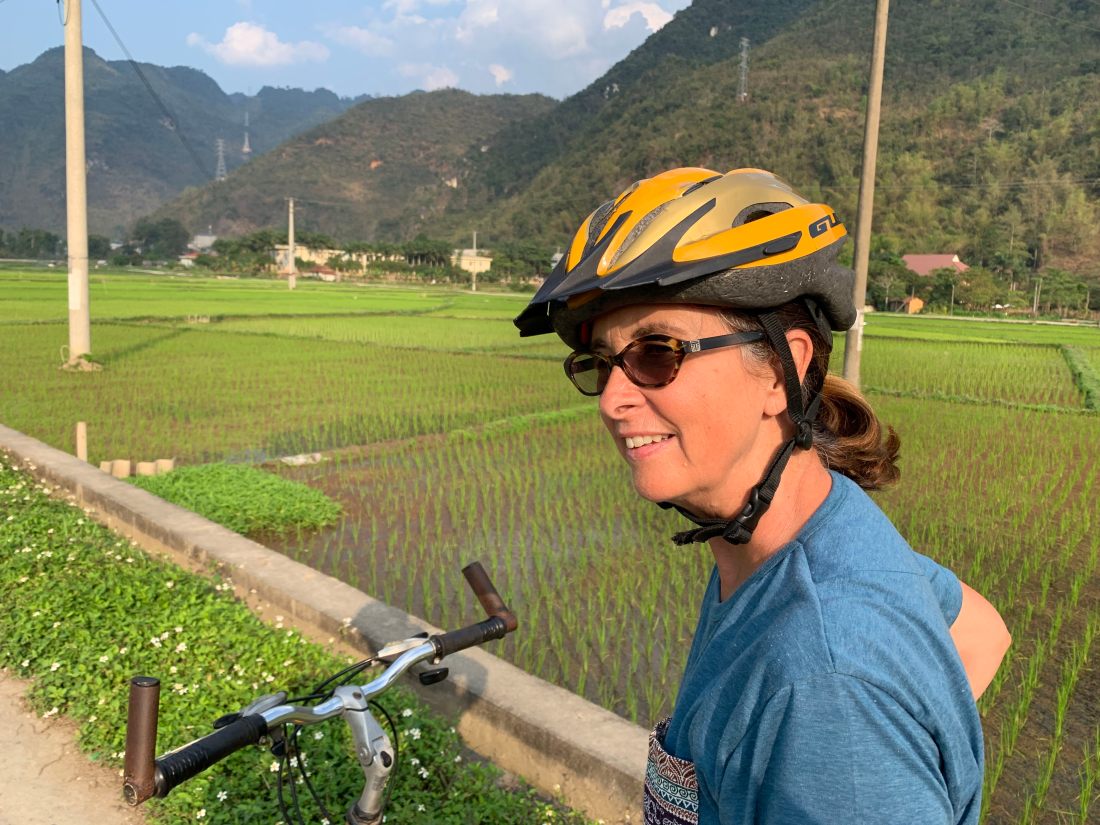
When we reached Mai Chau, I realized that this place is how my mind’s eye pictured Vietnam: rice paddies and gardens surrounded by villages with mountains in the backdrop.  I loved this town!  For the next 2 days we bicycled everywhere.
IMG_2802IMG_20190219_160051IMG_20190219_160316IMG_20190219_165248IMG_20190219_163535

IMG_20190220_095909
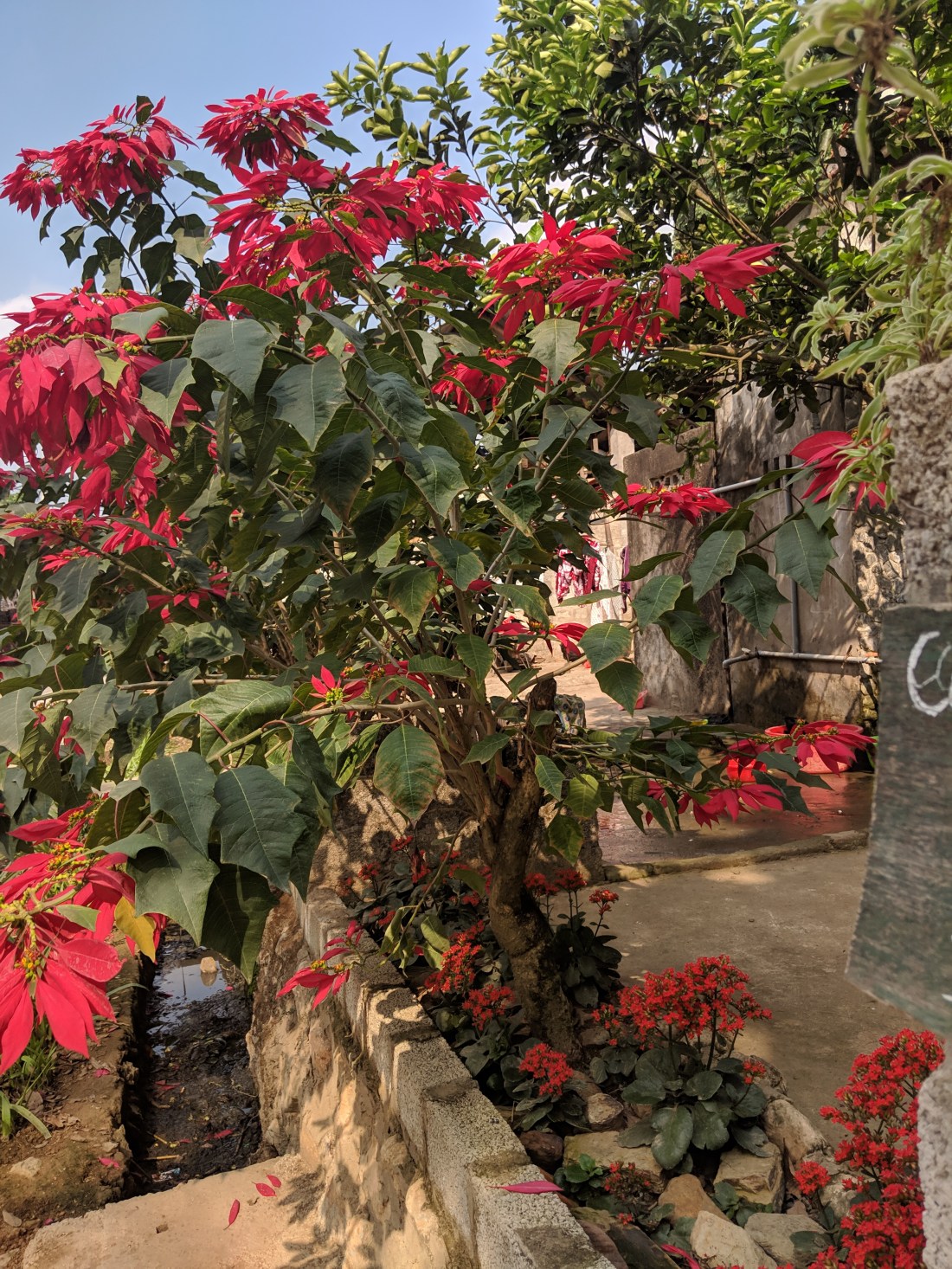
these next 2 pictures are poinsettia bushes! Never seen any so huge!!

IMG_20190220_095916

IMG_20190220_134038
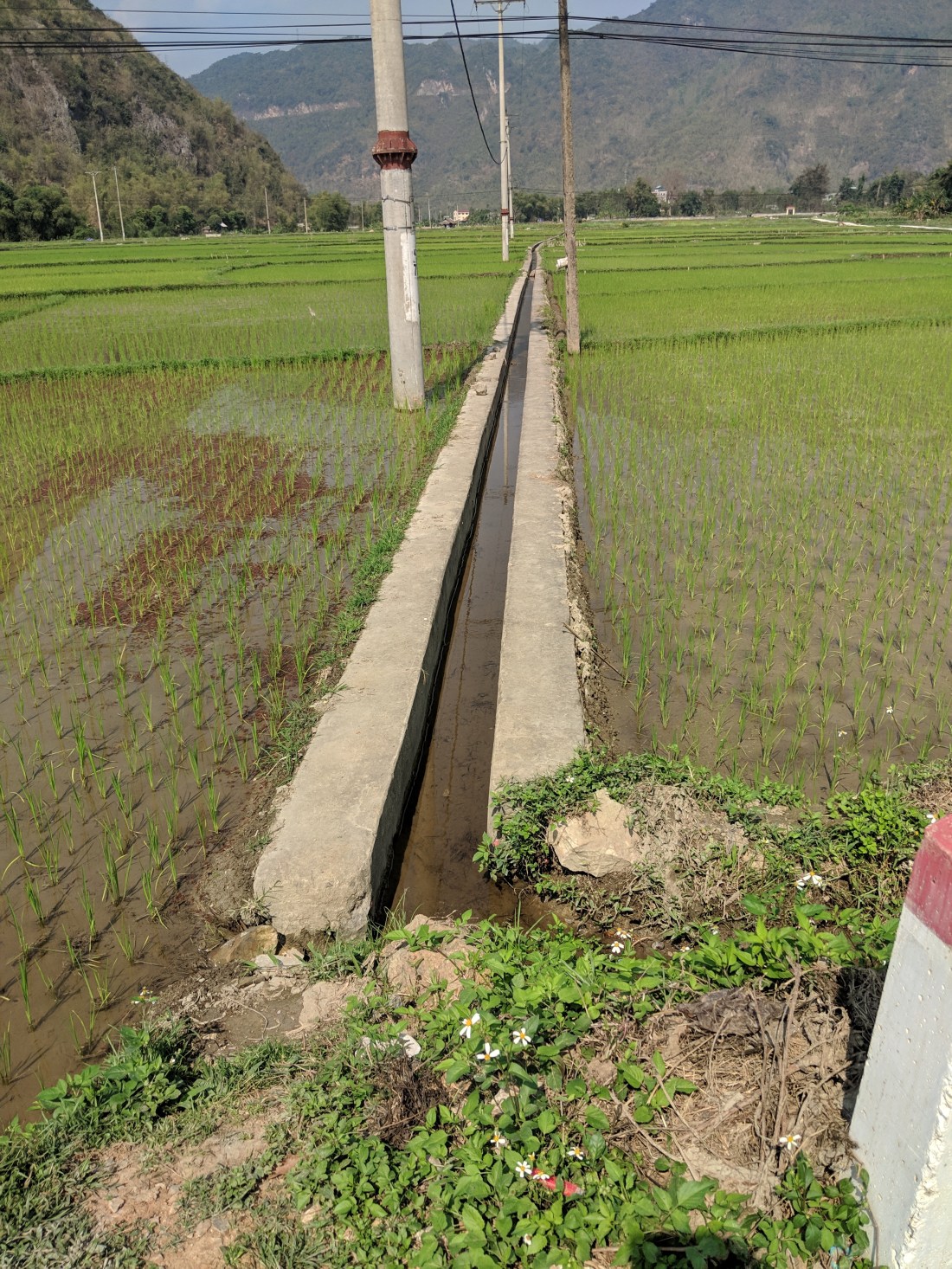
irrigation system uses water running down from the mountains, requires no pumping
IMG_20190219_162728
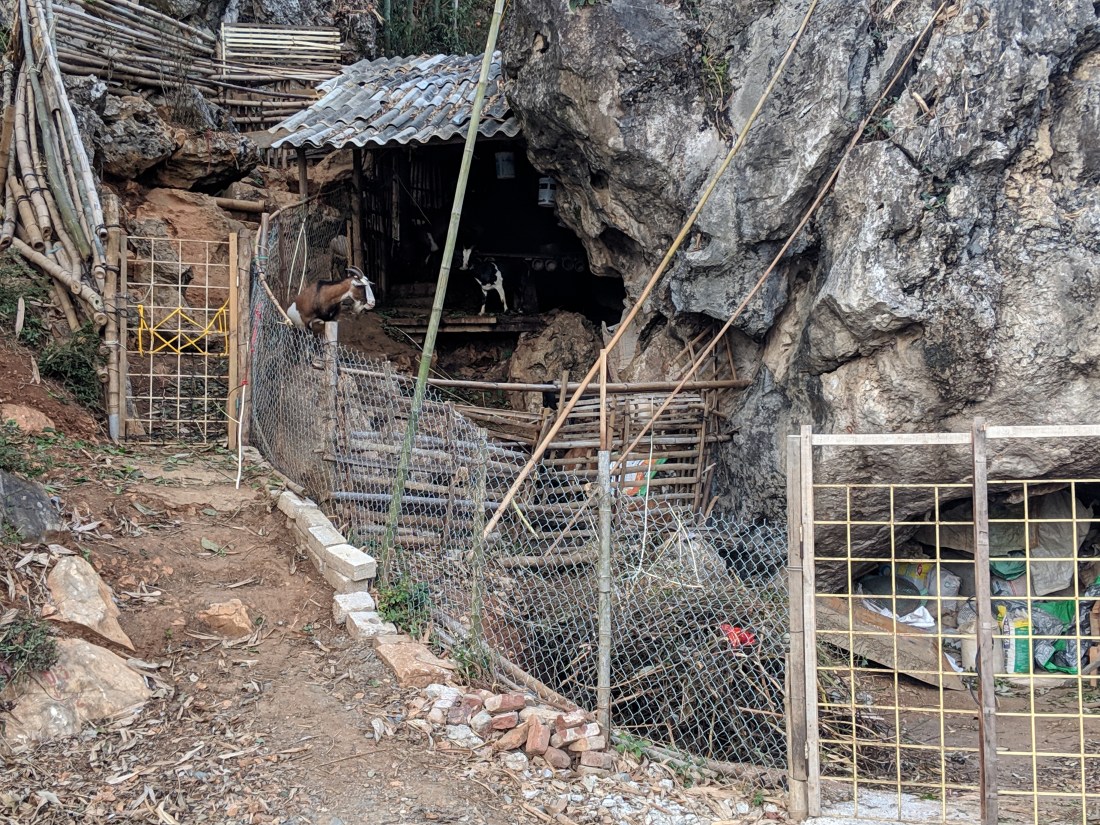
mountain goats are a favorite
IMG_20190219_163231
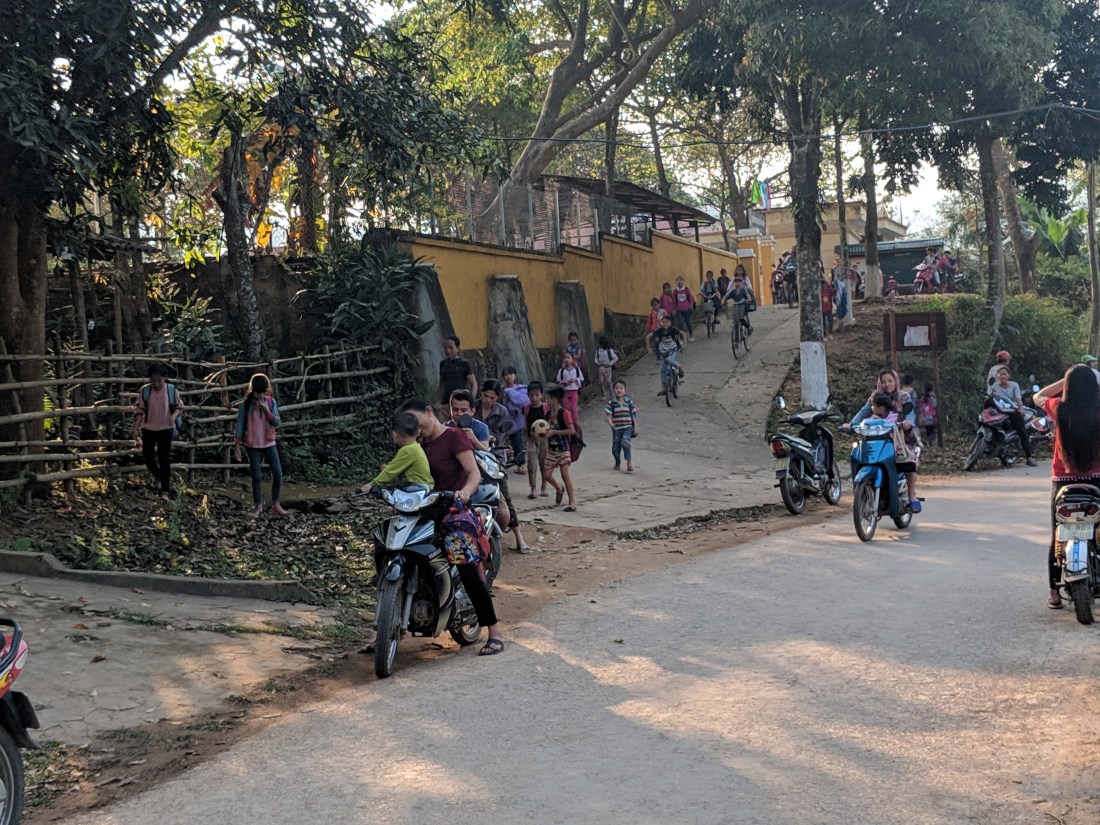
we were lucky enough to ride by just in time for pick-up at the primary school

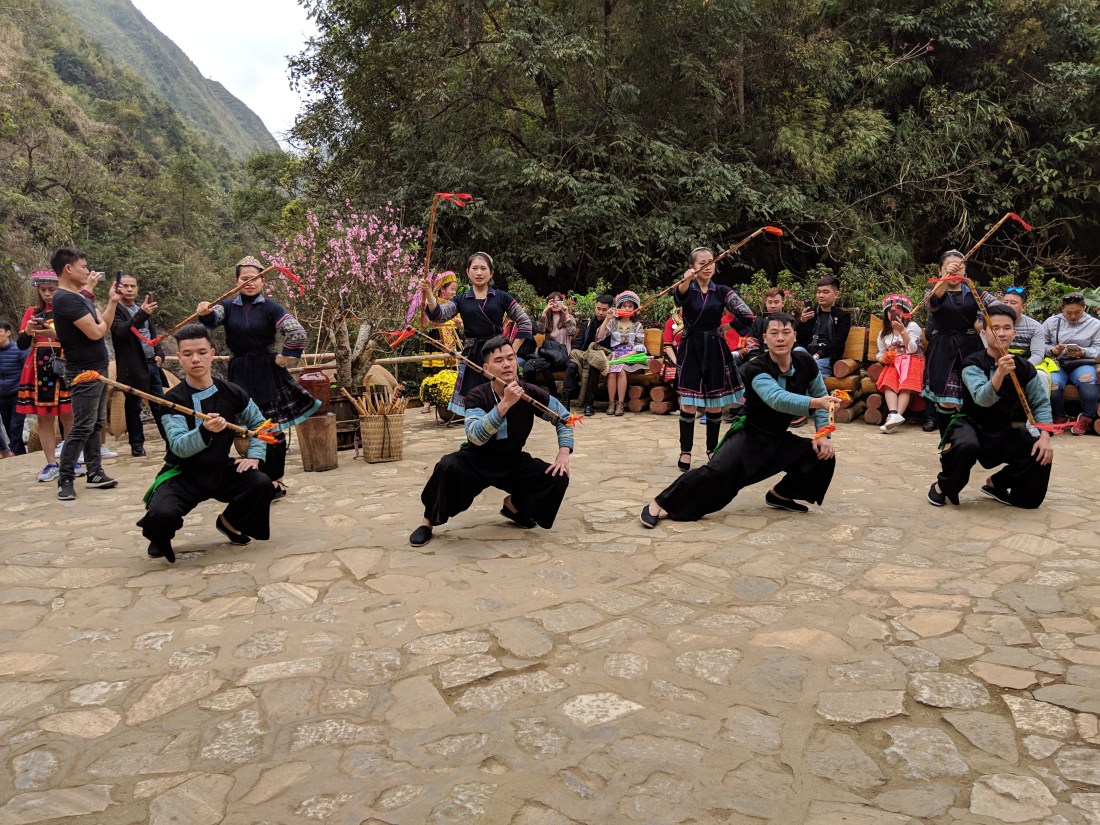
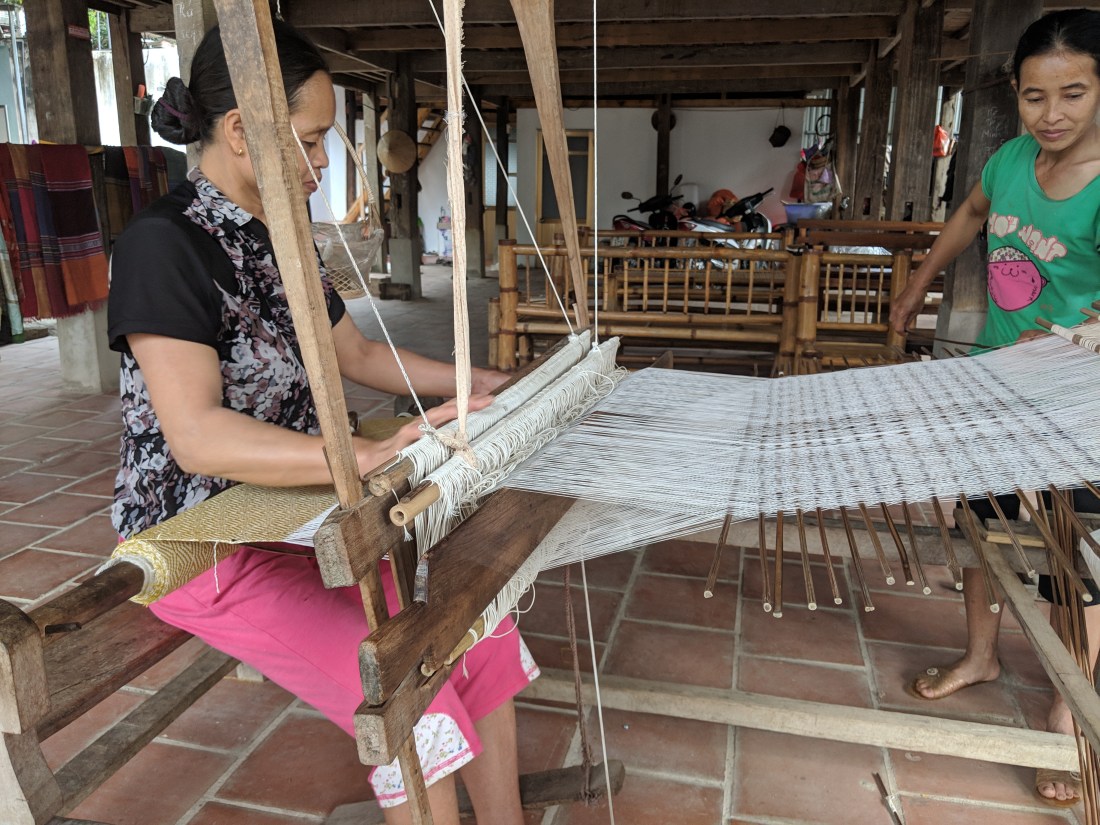
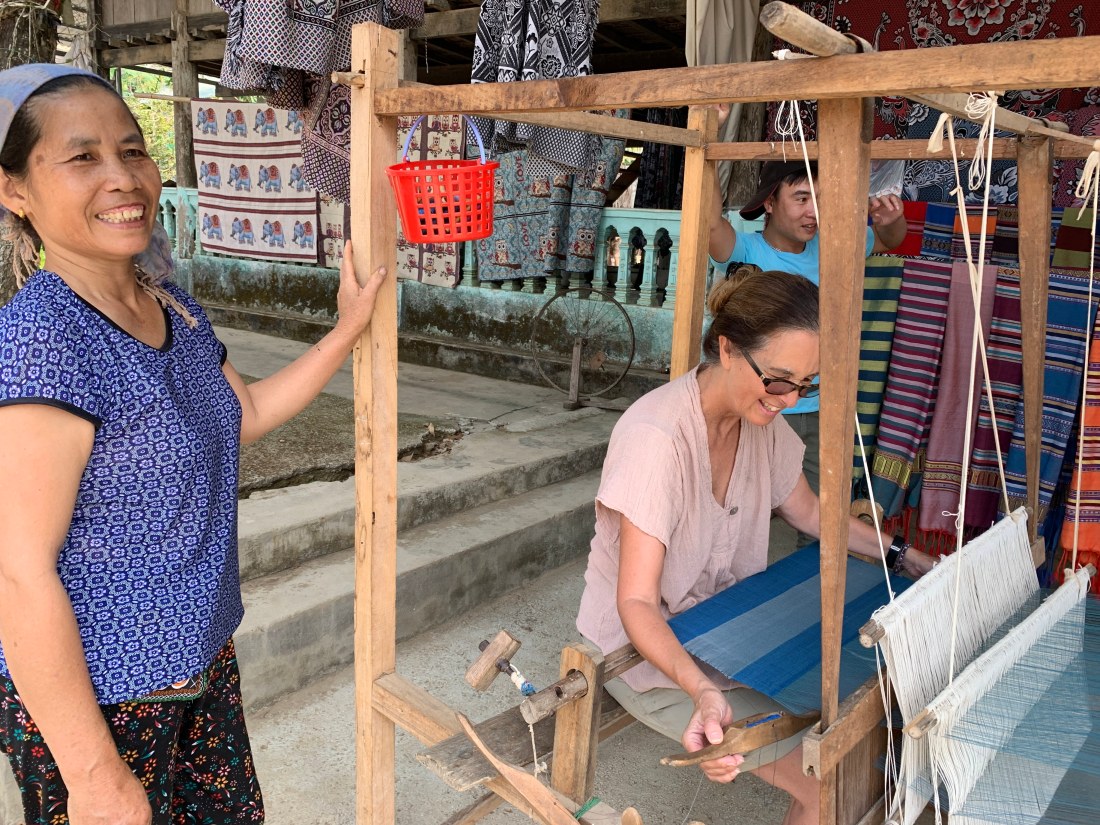
The local villages were all Tai, mostly White Tai.  They specialize in weaving cotton and some silk.  In Lac the local ladies were extremely friendly and happy to give us not only a weaving lesson, but a chance to try weaving for ourselves.
IMG_20190220_085154
these ladies are working together to weave an intricate design.  Notice all the sticks to create the pattern.

IMG_2813

IMG_2808
this woman is pulling silk from cocoons

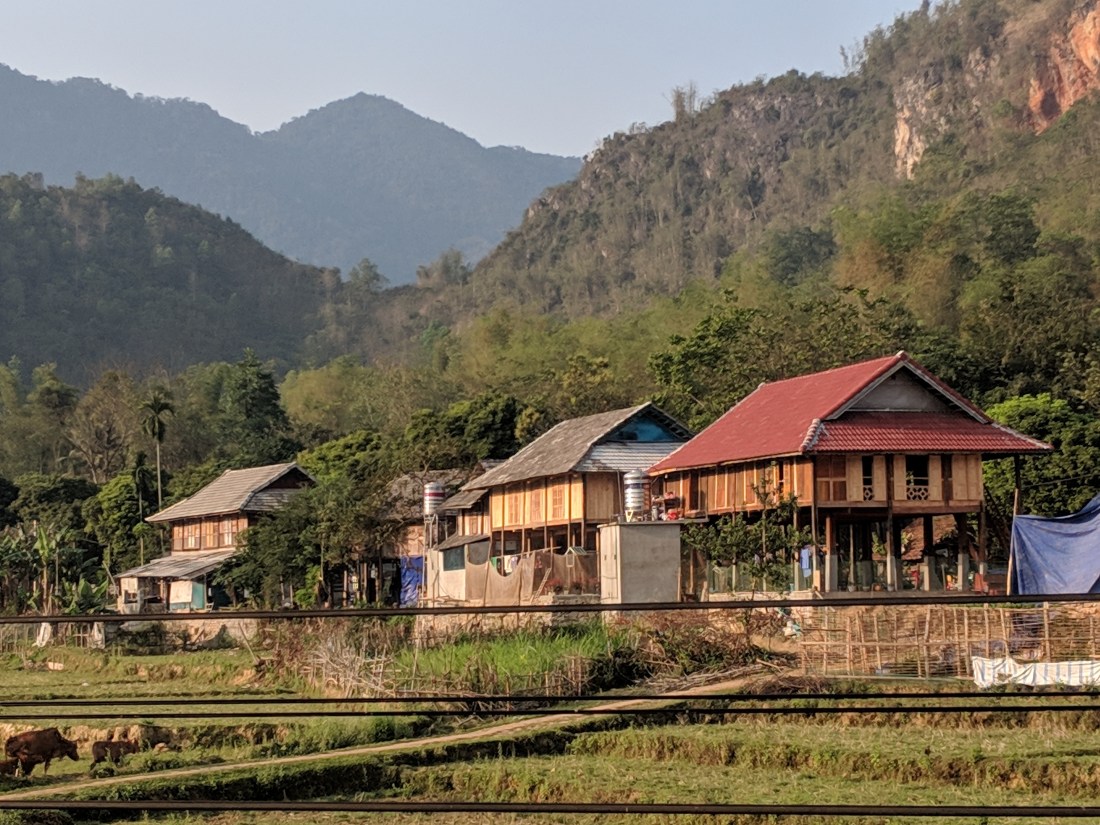
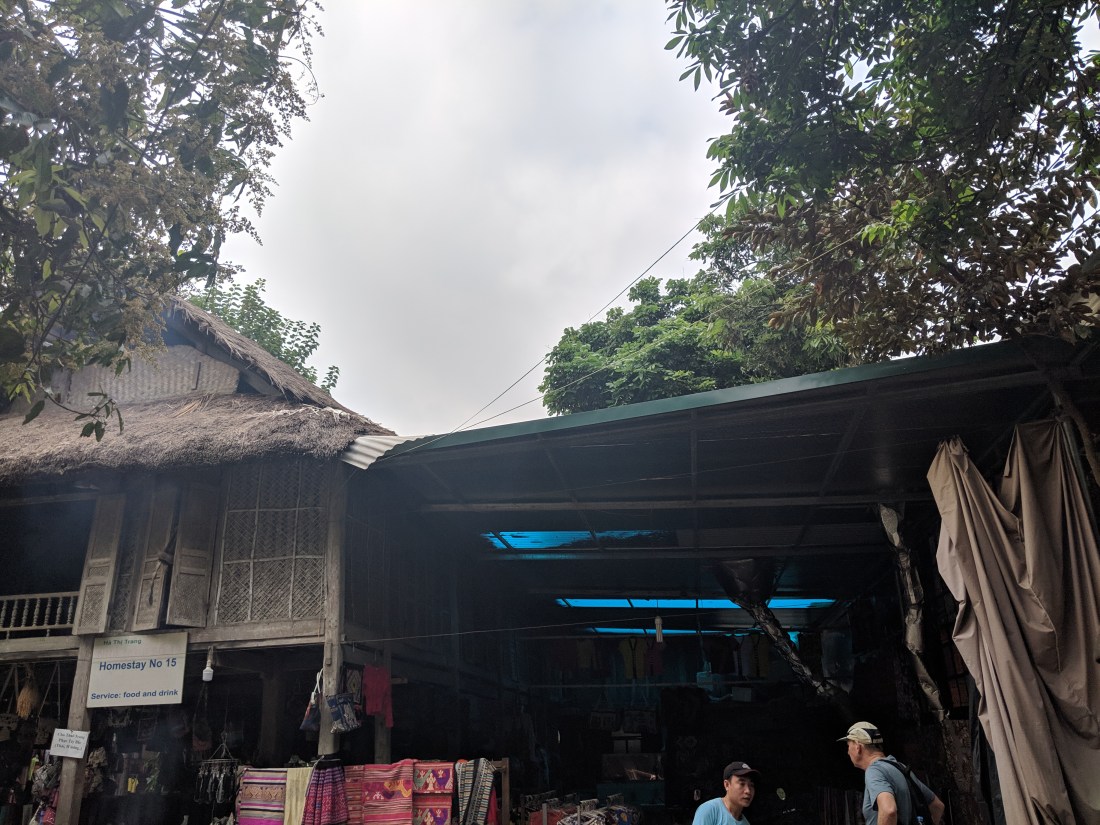
Their homes are all raised on stilts.  Originally it was not for flooding, as we presumed, but to keep out wild animals, mostly tigers, which are now extinct in the area.  Later they used the bottom floor for domestic farm animals and chickens.  But now, with increased wealth, much of it from tourism, they felt the animal smell was awful.  They still raise their homes, but most use the ground floor as either a shop, or, if they are a homestay, as the dining room for guests.  But trees are sacrosanct for the shade provided, so the home/shop is built around them.
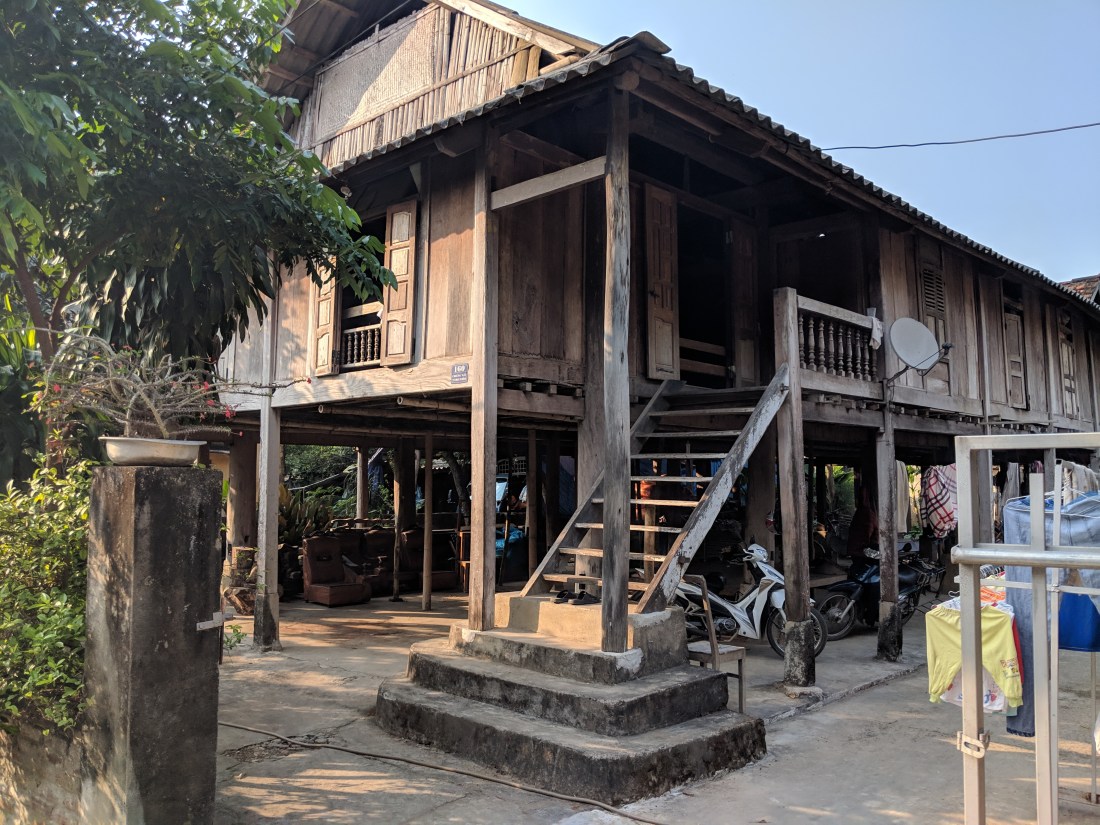
IMG_20190219_161529IMG_20190220_091456IMG_20190220_091515IMG_20190220_091553

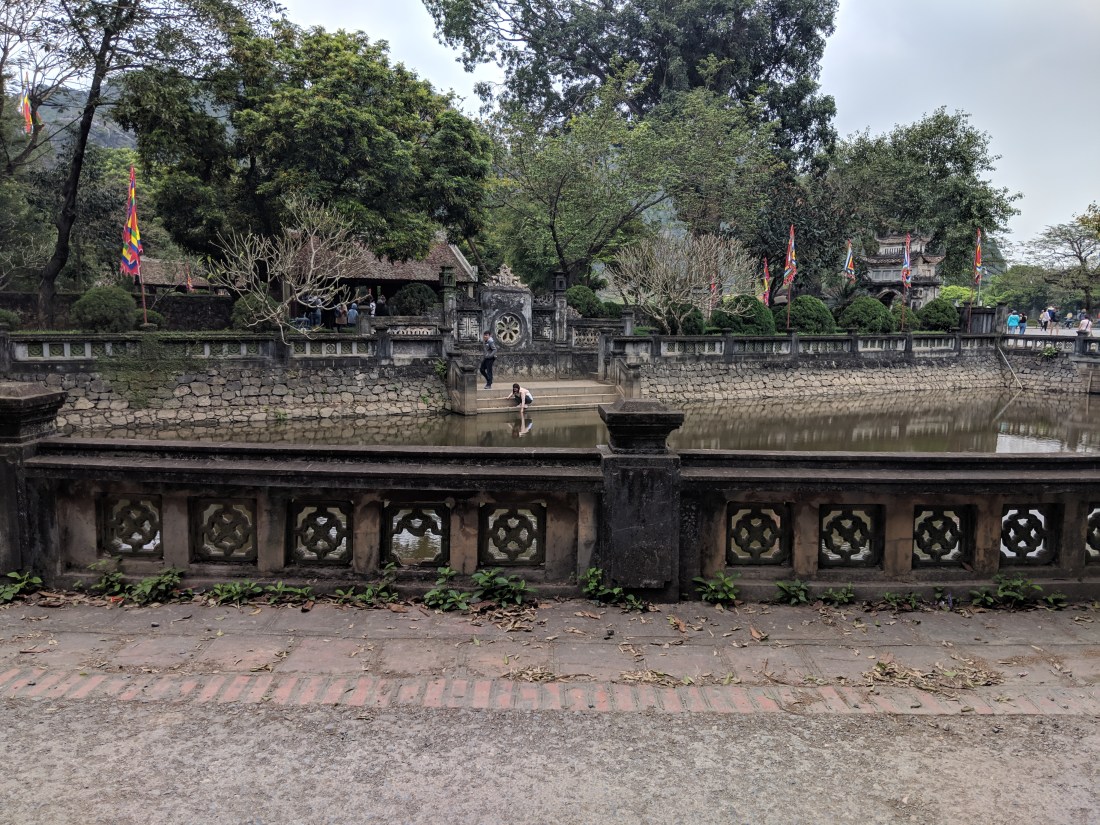
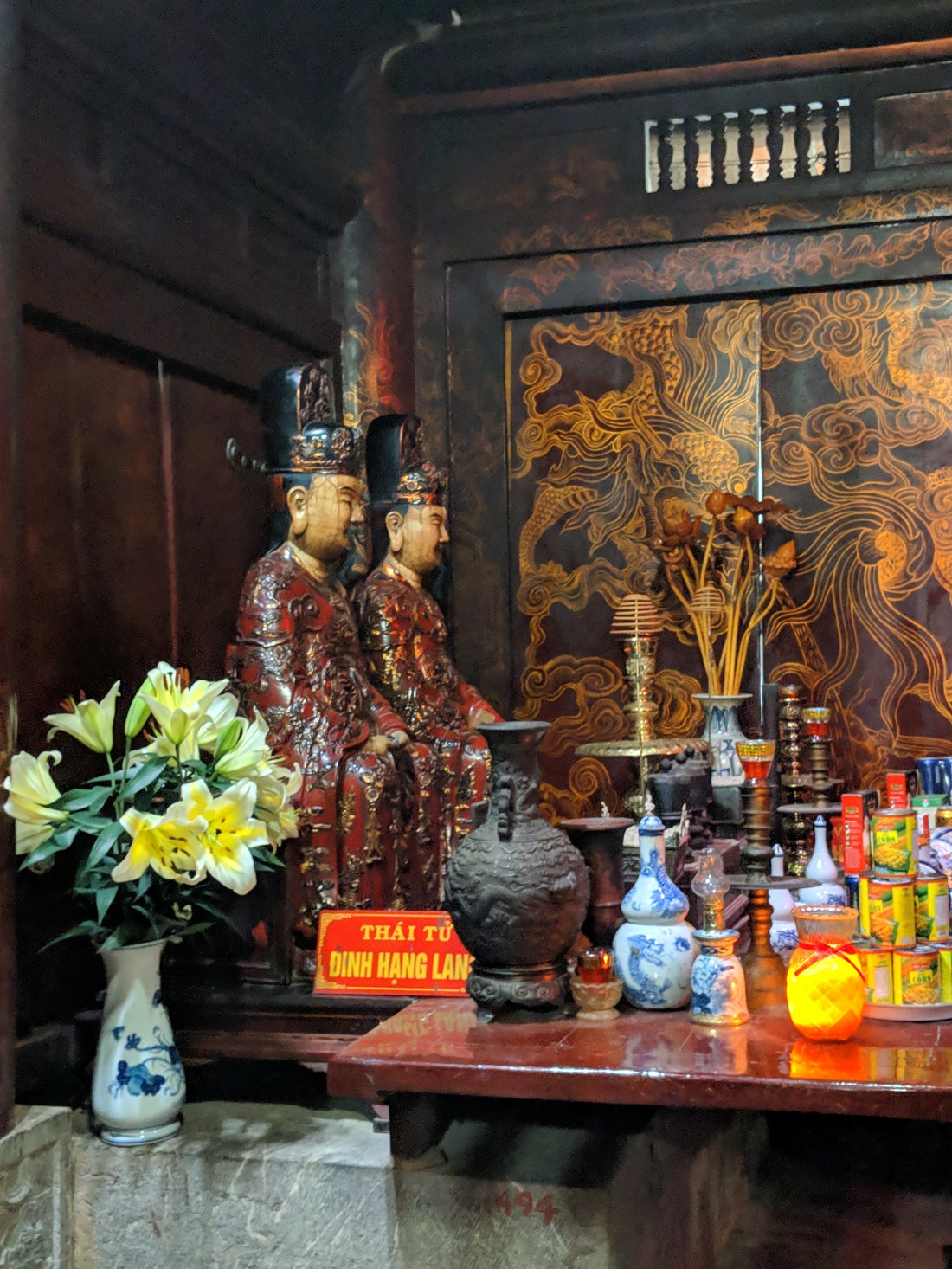
Sadly, it was time to move on from Mai Chau.  We drove over the mountain-pass to Ninh Binh, which was the first capital of Vietnam.  We visited temples built in the 17th century to worship the founding fathers of Vietnam: Emperor Dinh and his successor Emperor Le.  Dinh was born in the Ninh Binh province and had shown himself from an early age to be a brave warrior, a talented politician, and a natural leader.  He led the Viet people in their first successful secession from the ruling Han Dynasty after nearly 900 years of Chinese occupation.  In 968 Vietnam was for the first time in almost a millennium a united and independent country.  (Of note, only Northern Vietnam was included in the dynasty; at the time the south was under the rule of the Champs.) Dinh chose Hoa Lu as the site for his capitol because, having grown up there, he was familiar with the area in the Red River Delta that had the protection the large limestone mountains surrounding the flat valley below could afford the city.  Unfortunately for Dinh, he was poisoned by one of his Mandarins, as was his first born 8 year old son.  His favorite son, his 3rd of 3, who was 4 at the time, was murdered by his 6 year old brother so he could secure the throne.  Their mother, realizing her son was too young and unstable to rule, married Le, who was then named the 2nd emperor of Vietnam.  He ruled until 1009, when he was also killed.  After much fighting, Emperor Ly rose to power and moved the capital to Hanoi in 1010.  The Temple of Dinh was built by local residents on the site of the original citadel. They used feng shui principles in its design.
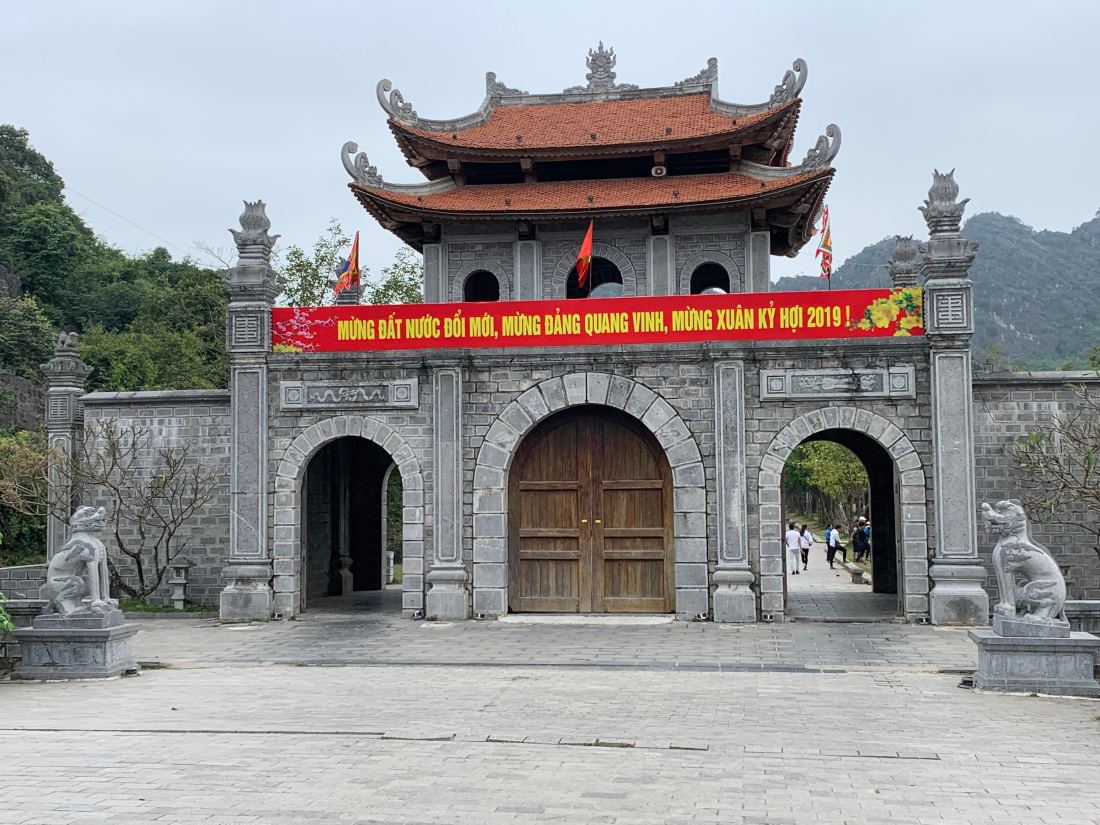
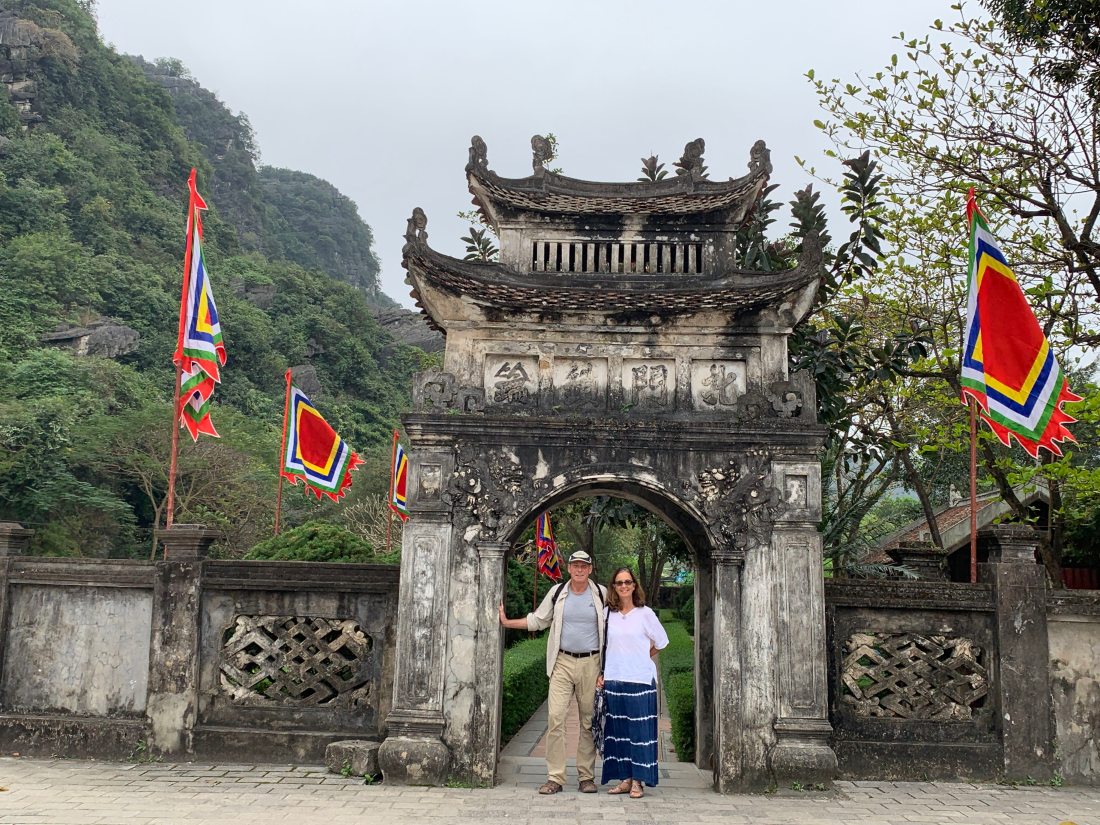
IMG_2824IMG_2829

IMG_20190222_113928
the half moon shape is used to connote the job is only half done; there is more work to be done in building the country

The water and stone: yin/yang for feng shui

IMG_2835
the dragon stone connotes an Emperor’s temple
IMG_20190222_104547
the Emperor Dinh is in the middle, his eldest son to the right, the younger 2 to the left, below.  Interesting they are depicted as adults although 2 were killed as children

IMG_20190222_104637

IMG_2832
we have become obsessed with banyan trees

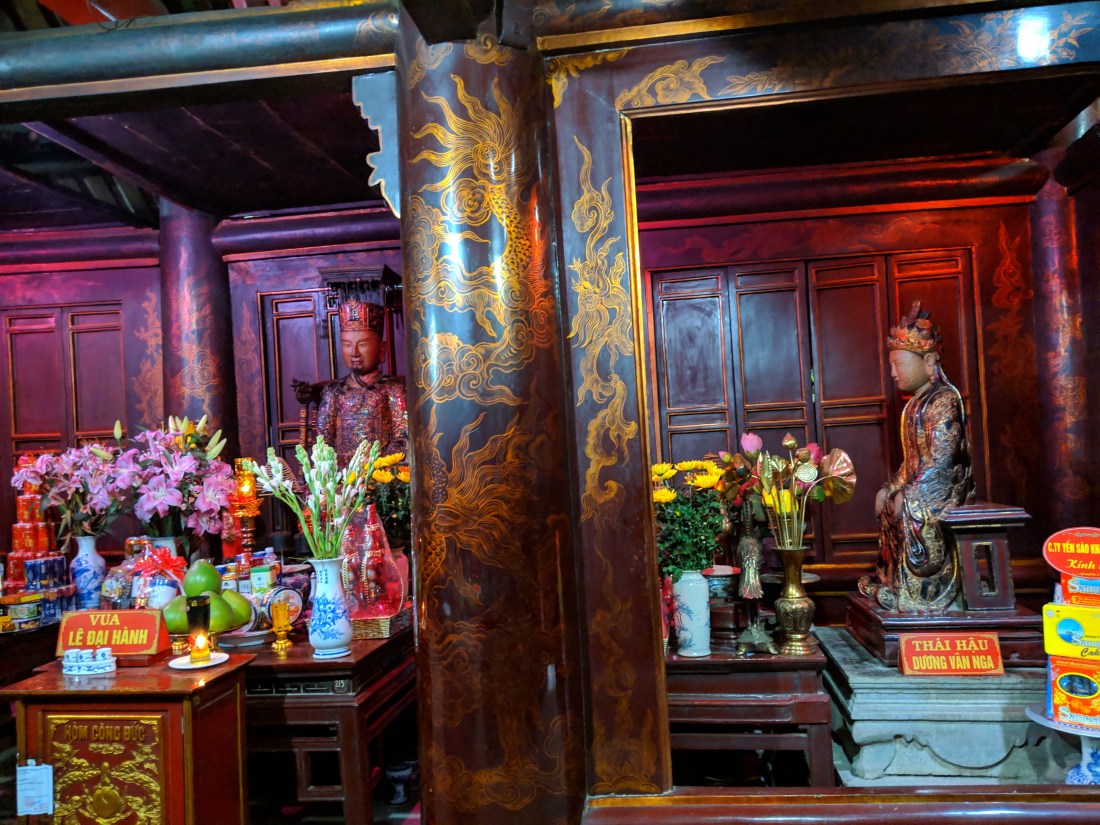
The Temple for Le is nearby, also on the original city site.  It is much more modest than that for Dinh.
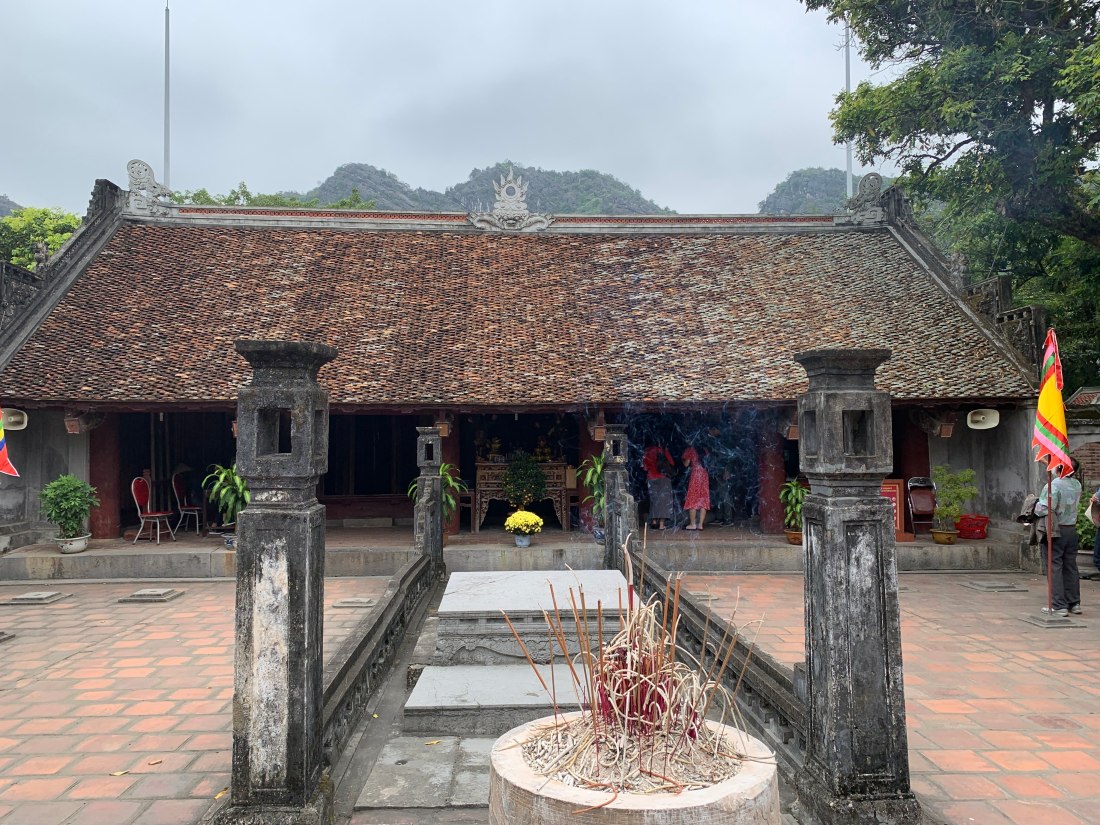
IMG_2852

IMG_20190222_111058
the wife is depicted here with Le, not with her first husband

IMG_2844

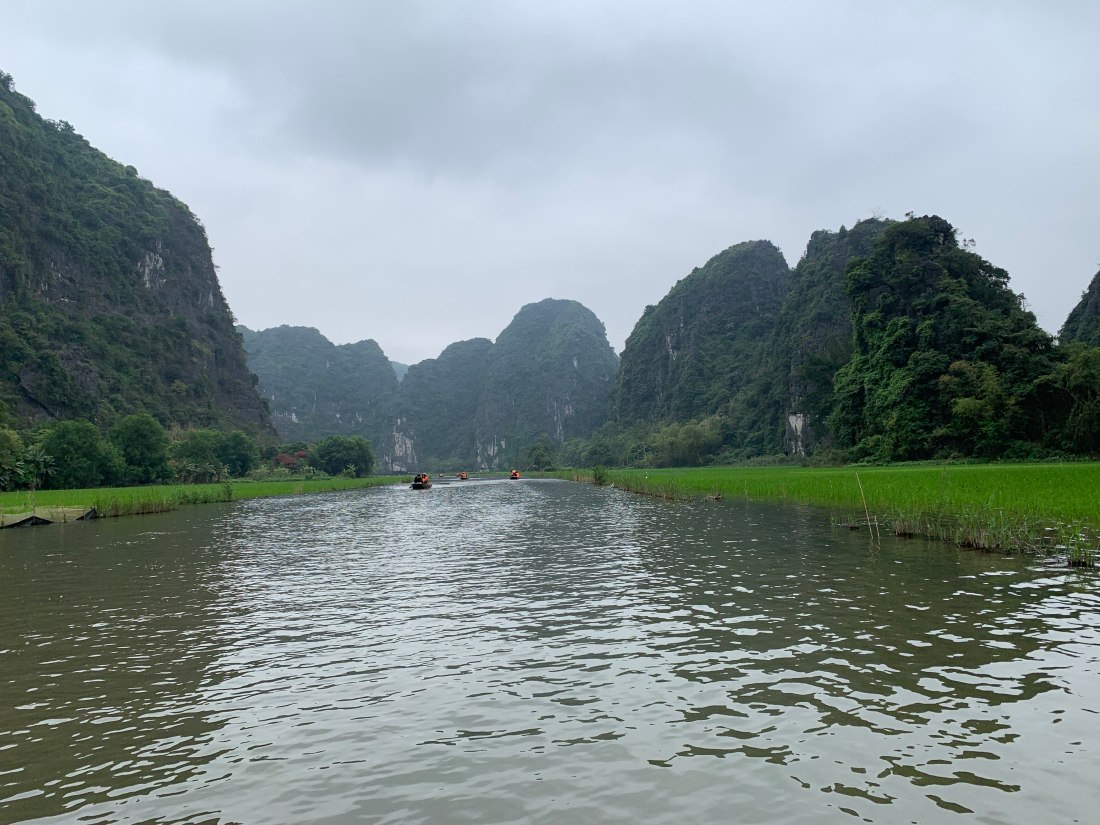
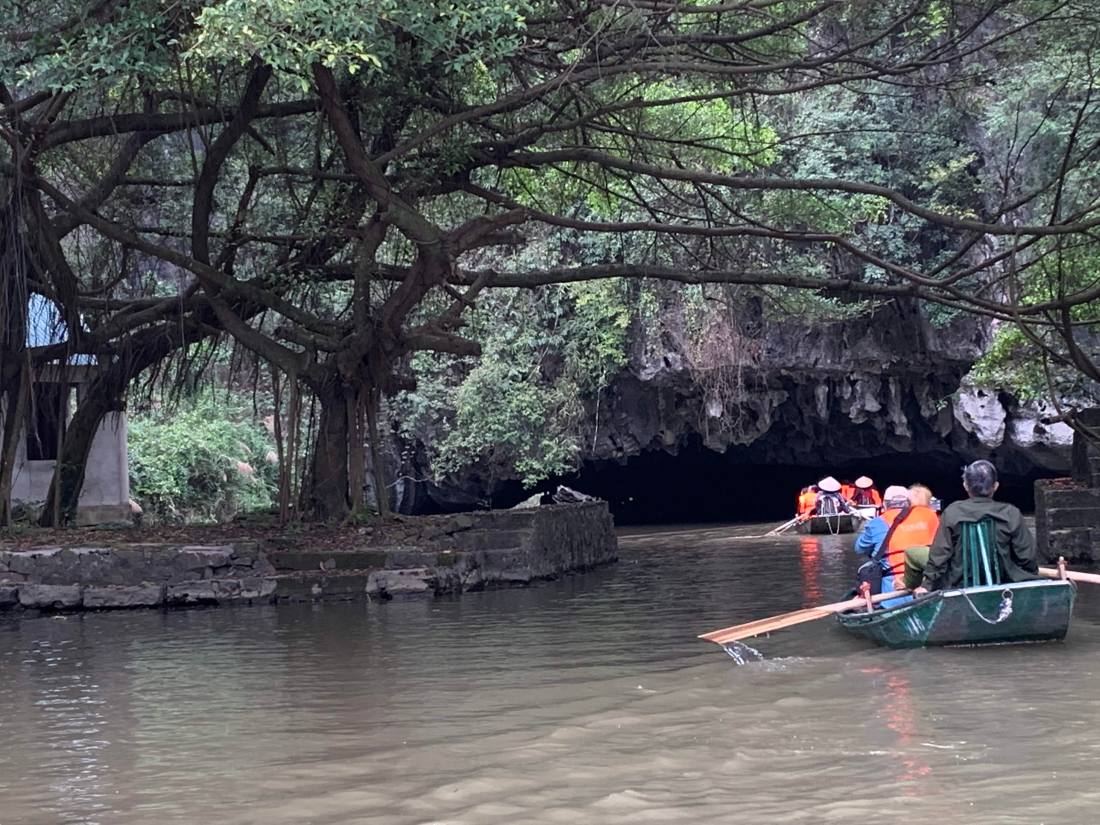
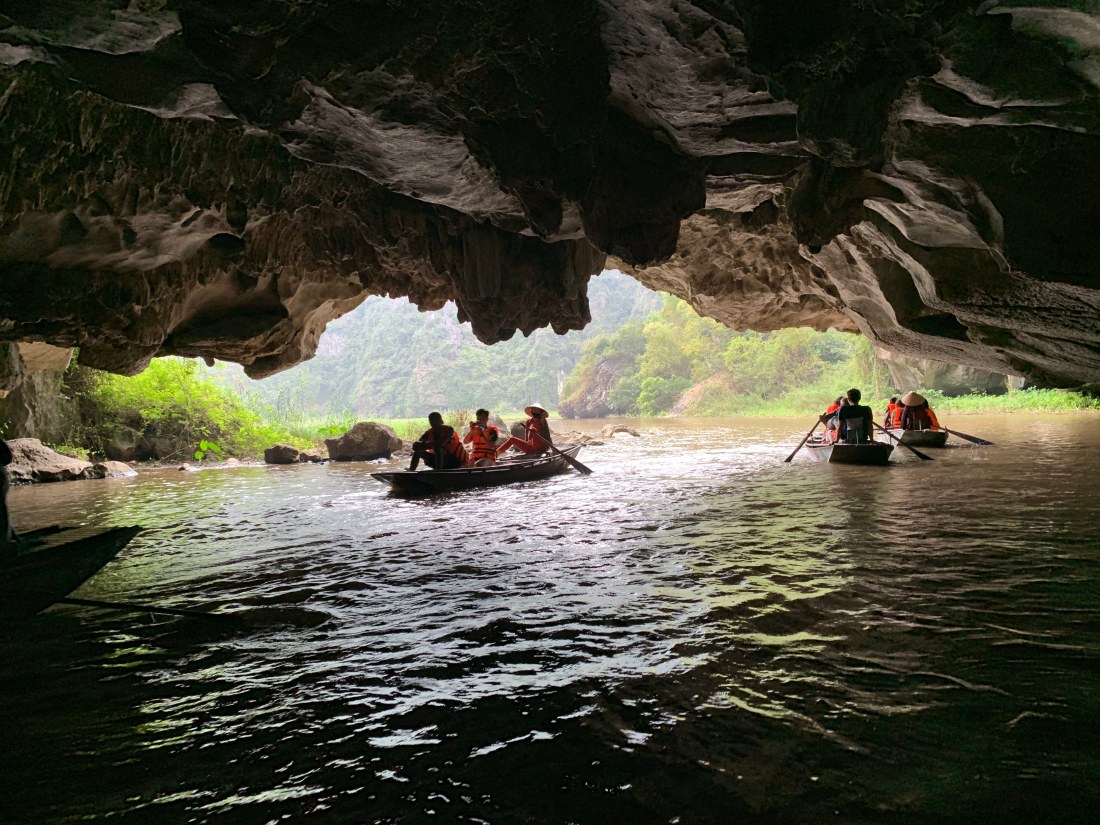
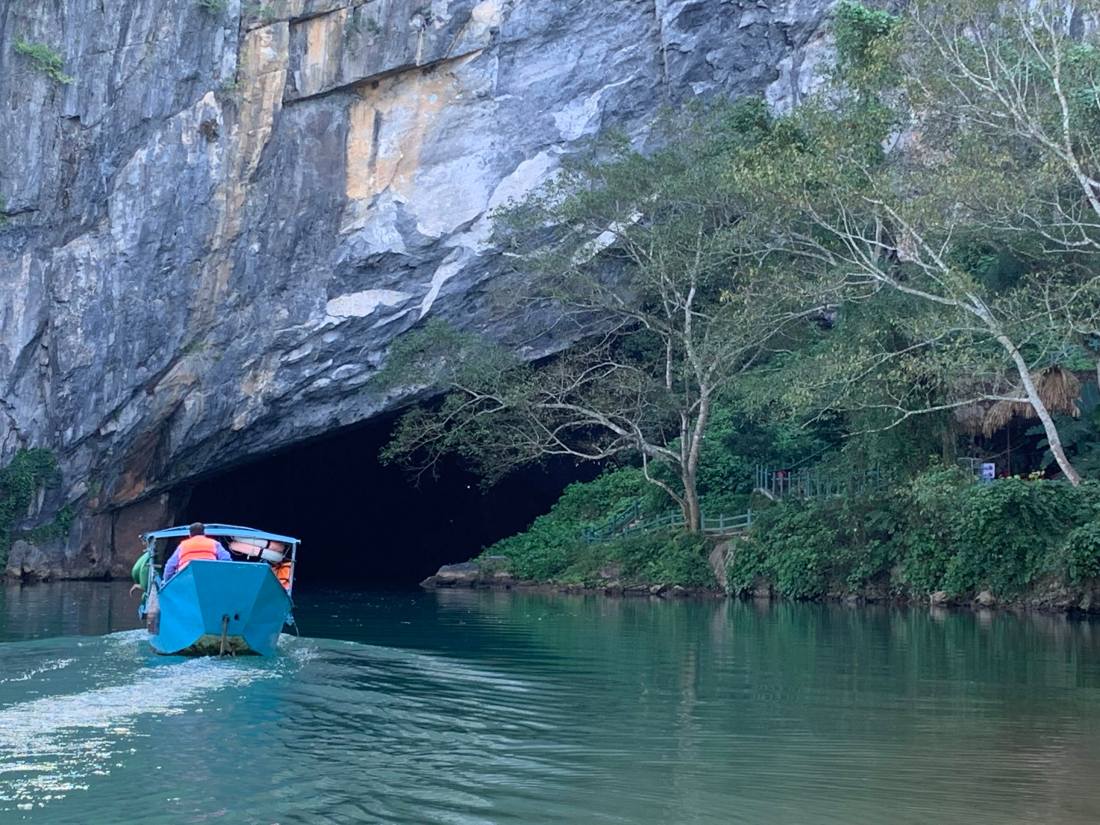
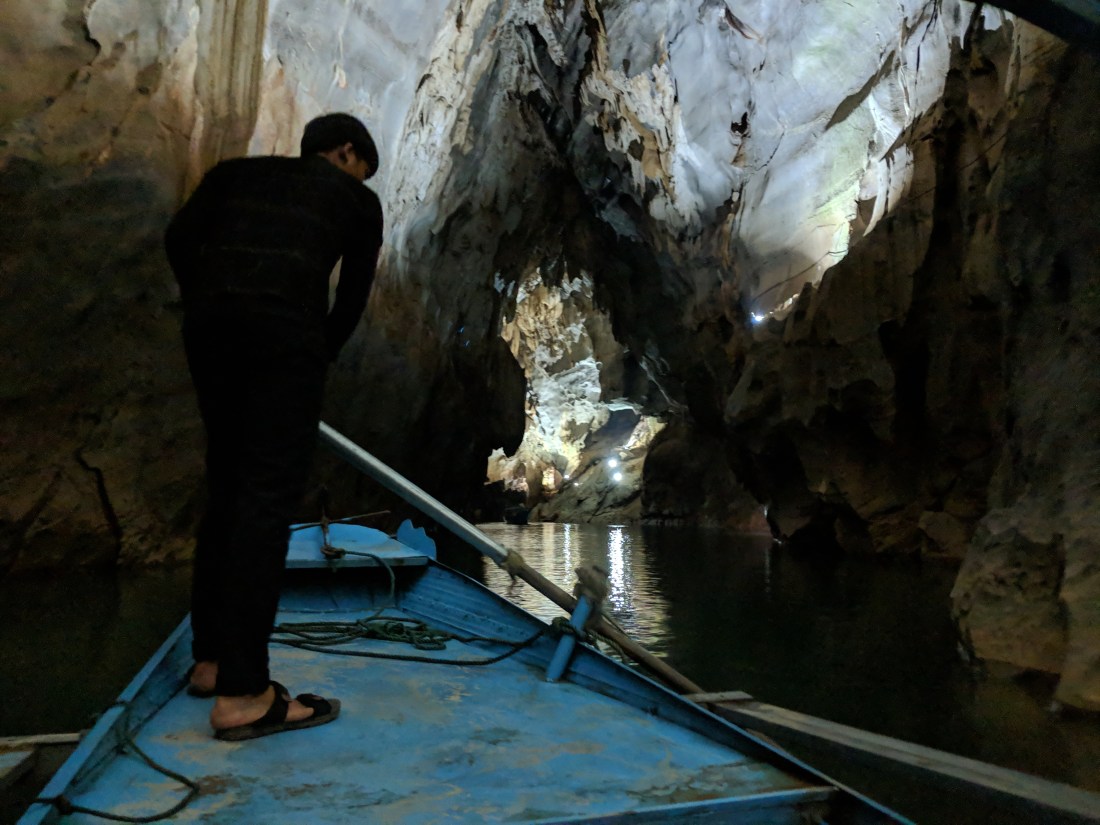
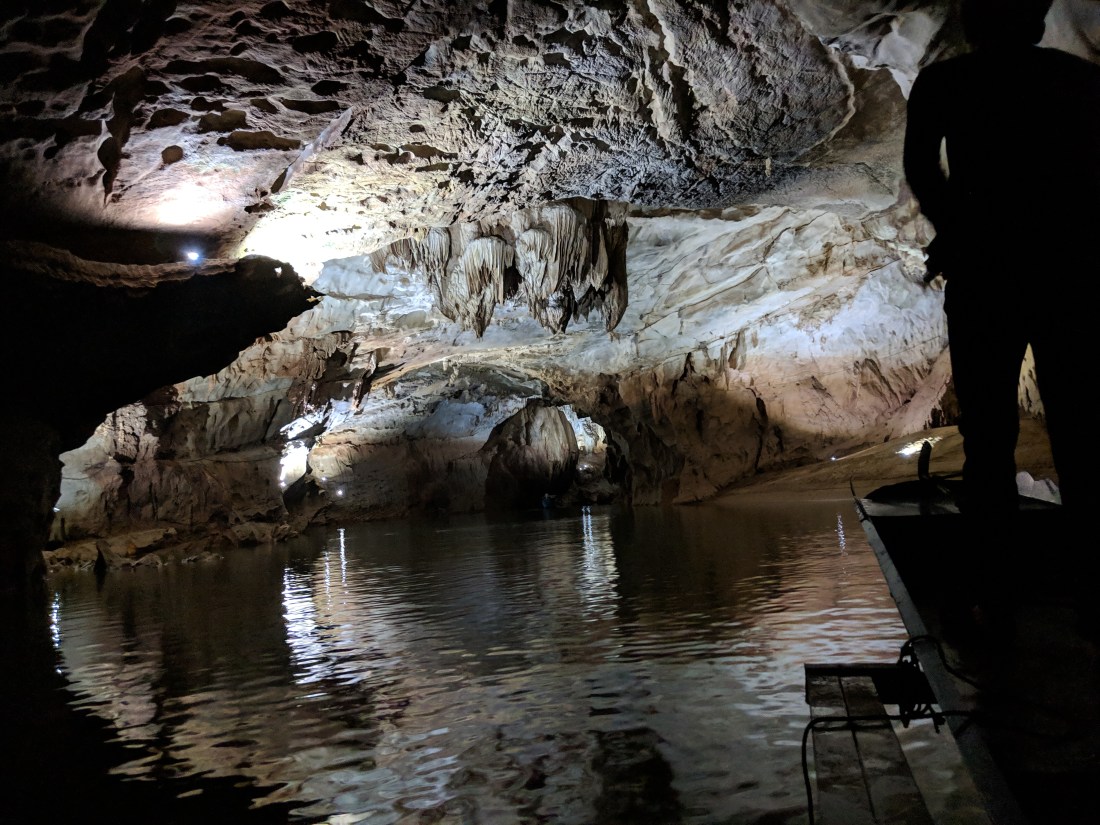
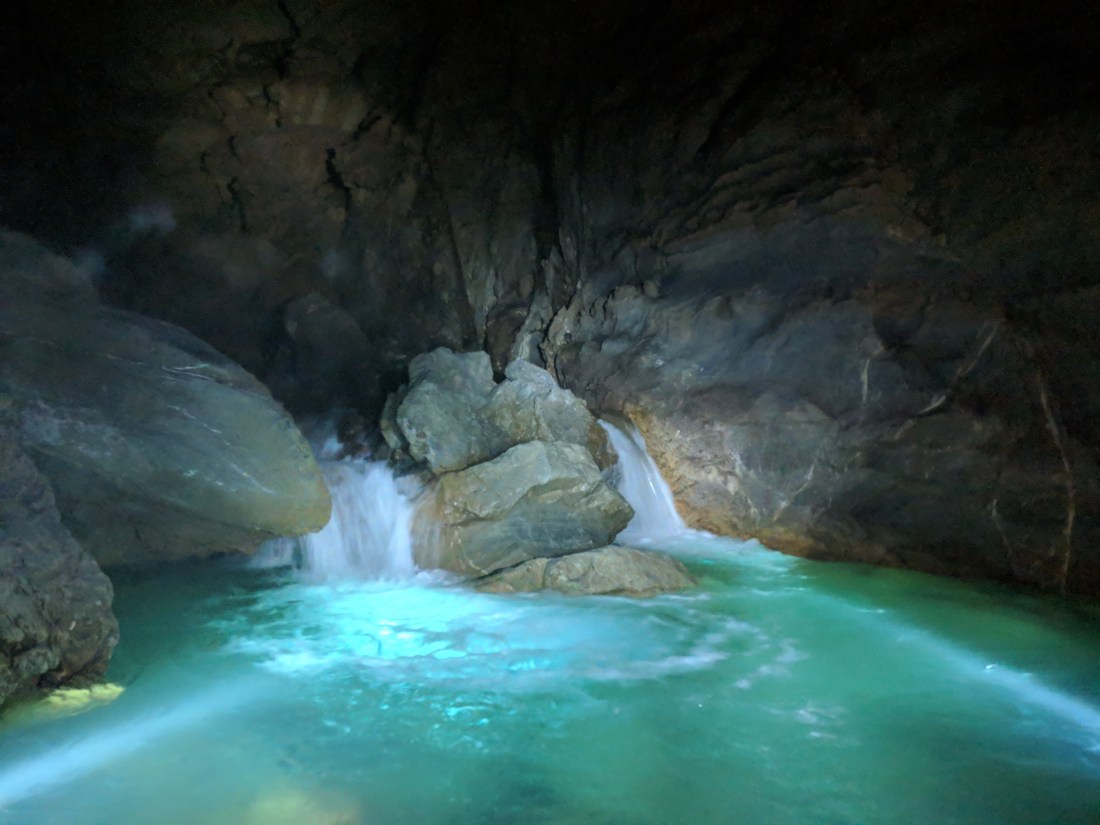
We then went to nearby Tom Loc (3 caves), which is a flooded cave karst system on the Ngo Dong River.  Locals row tourists from the village of Van Lam through the 3 caves and back passing gorgeous mountains and rice paddies along the way.
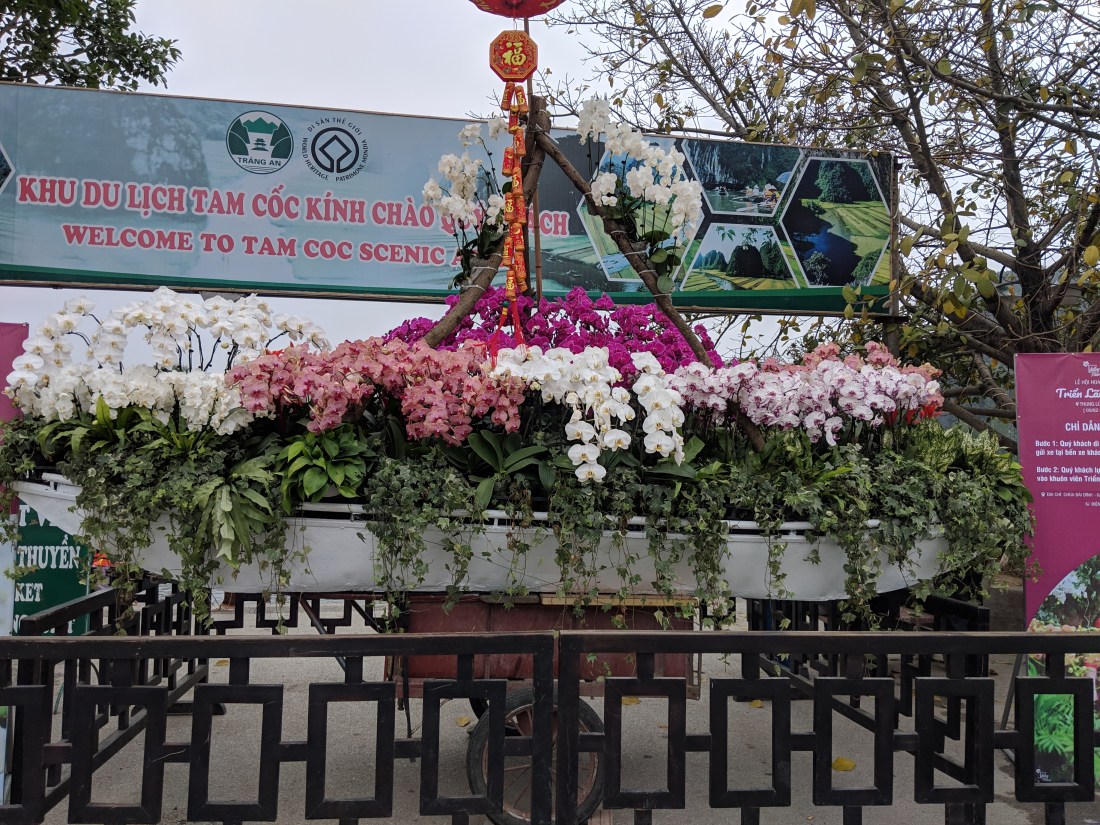
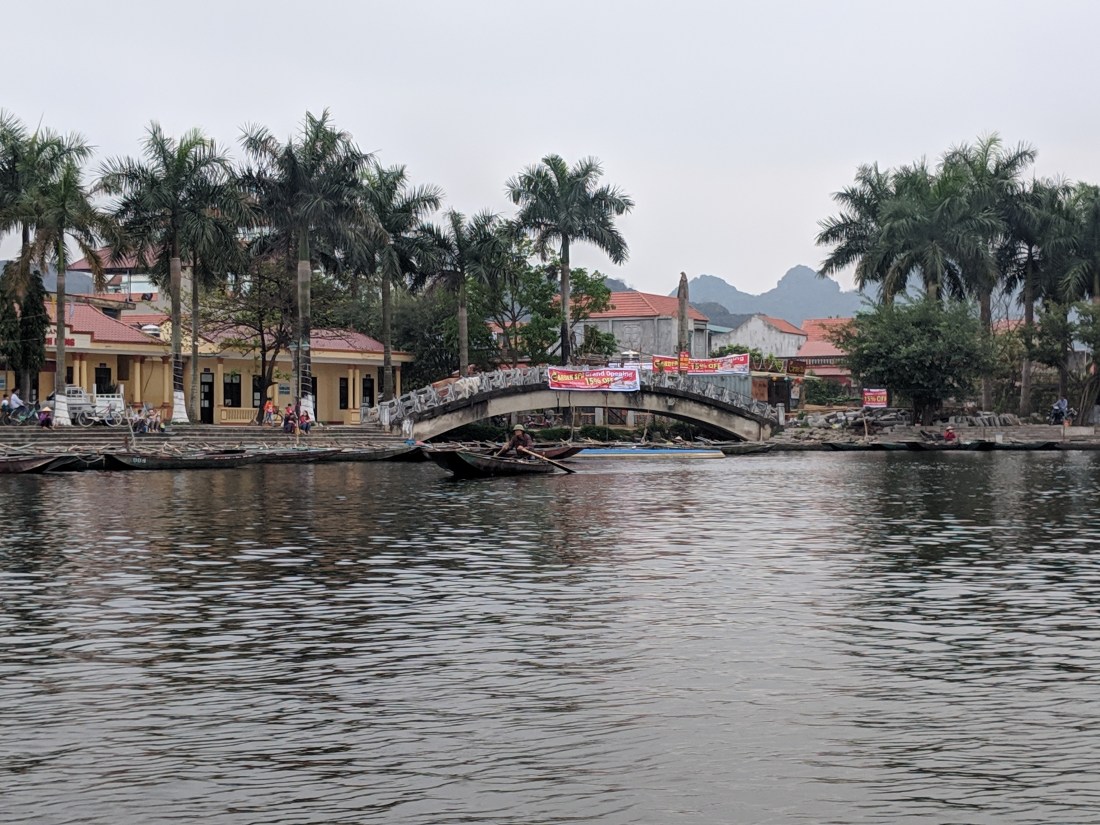
IMG_20190222_123051

IMG_20190222_123300

IMG_2865IMG_2866IMG_2881IMG_2868IMG_2870IMG_2871IMG_20190222_125052IMG_20190222_125547IMG_2885

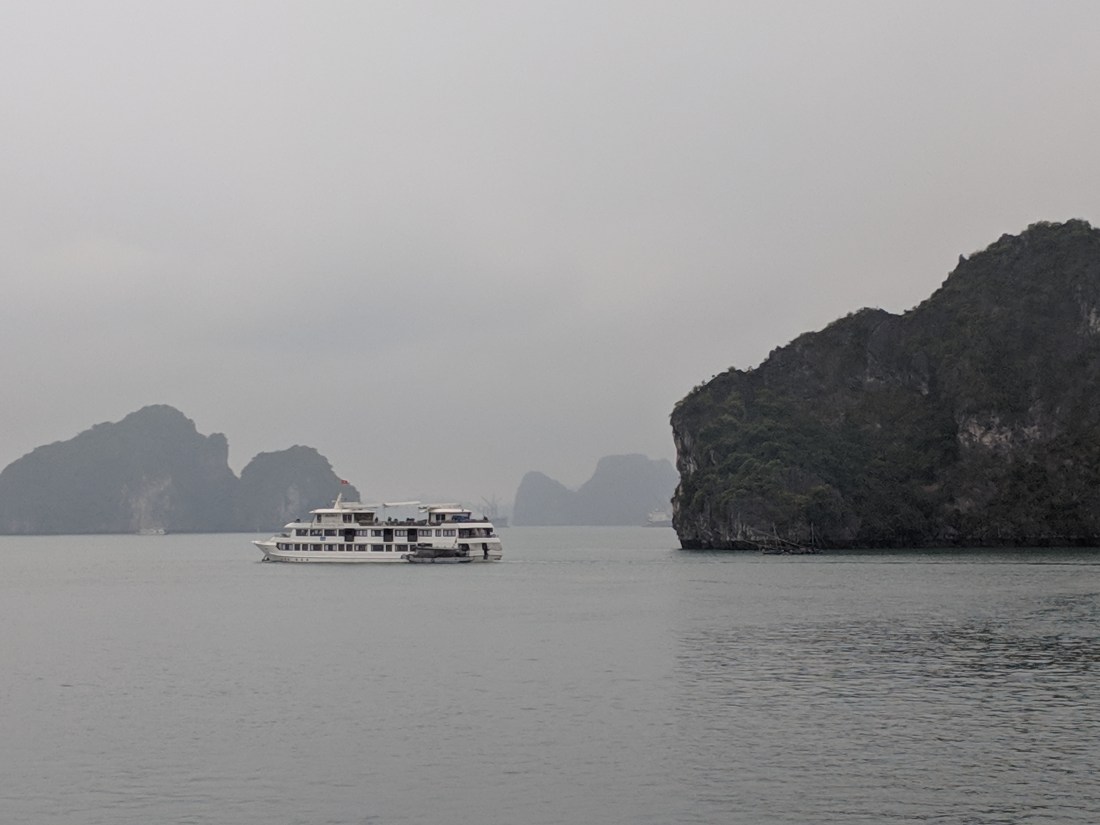
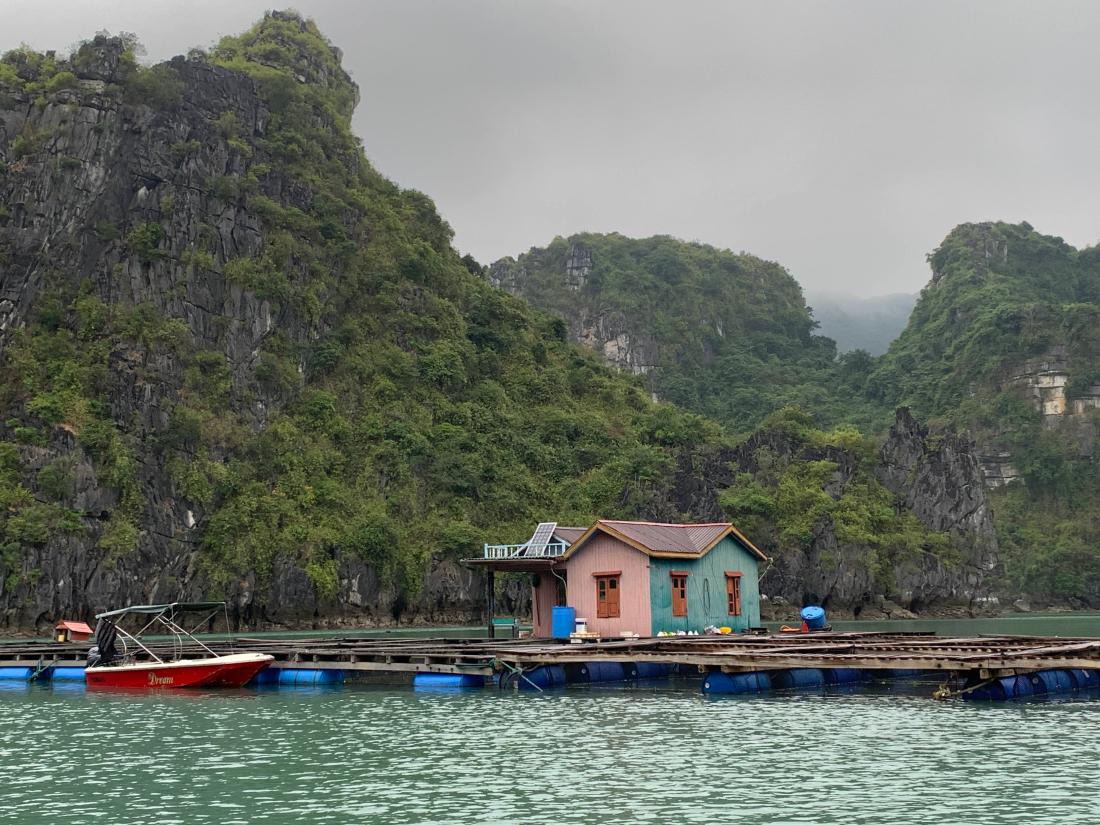
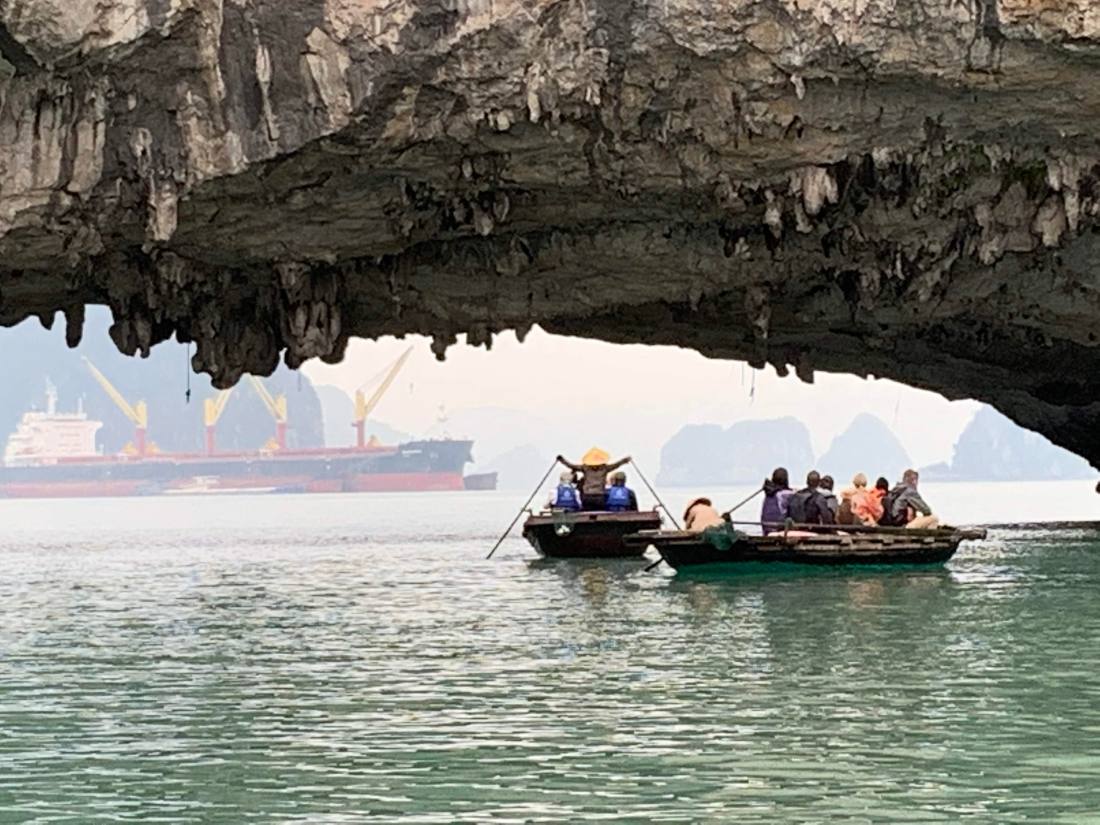
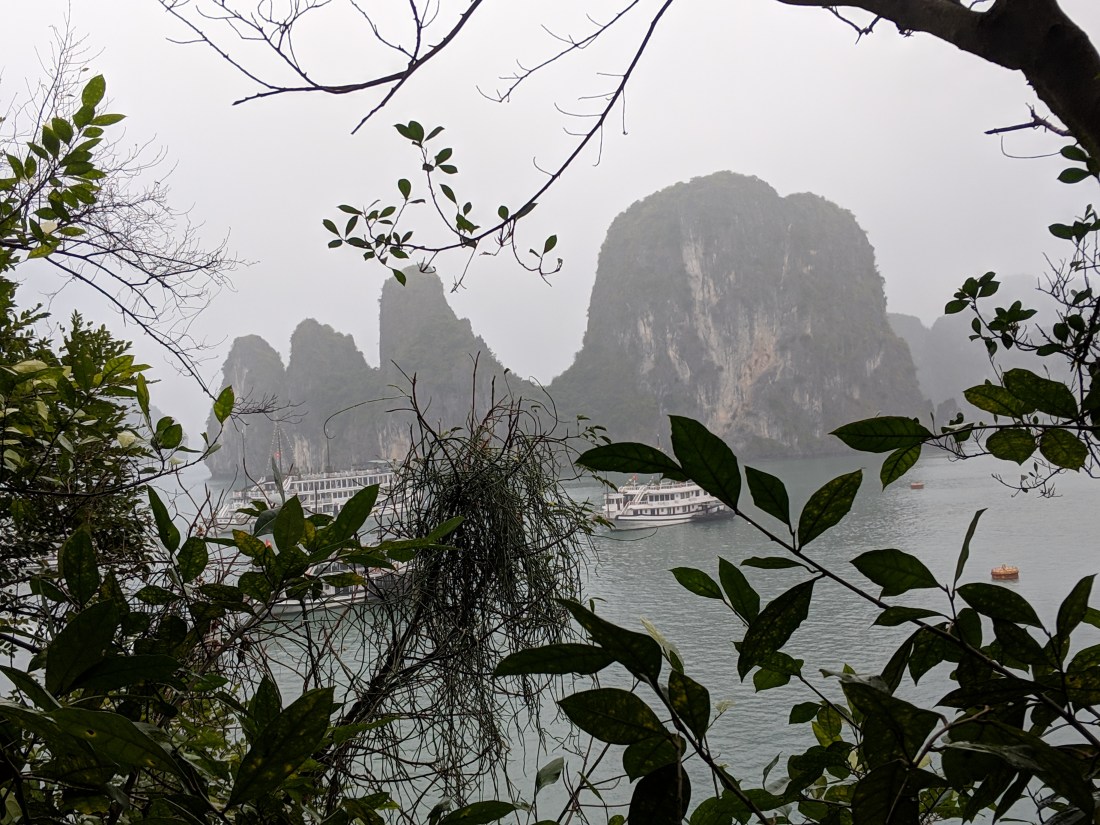
From Ninh Binh we traveled to Halong Bay where we spent a night aboard a cruise ship.  (It seems at this point we have used every mode of possible transportation during our time In Vietnam.) Halong Bay (Descending Dragon) is considered the crown jewel of Vietnam.  It is a Unesco World Heritage site featuring thousands of limestone karsts and isles. According to local legend, when Vietnam had just started to develop into a country, they had to fight against invaders. To assist the Vietnamese in defending their country, the gods sent a family of dragons as protectors. This family of dragons began spitting out jewels and jade. These jewels turned into the islands and islets dotting the bay, linking together to form a great wall against the invaders. Under magics, numerous rock mountains abruptly appeared on the sea, ahead of invaders’ ships; the forward ships struck the rocks and each other. After winning the battle, the dragons were interested in peaceful sightseeing of the Earth, and then decided to live in this bay.

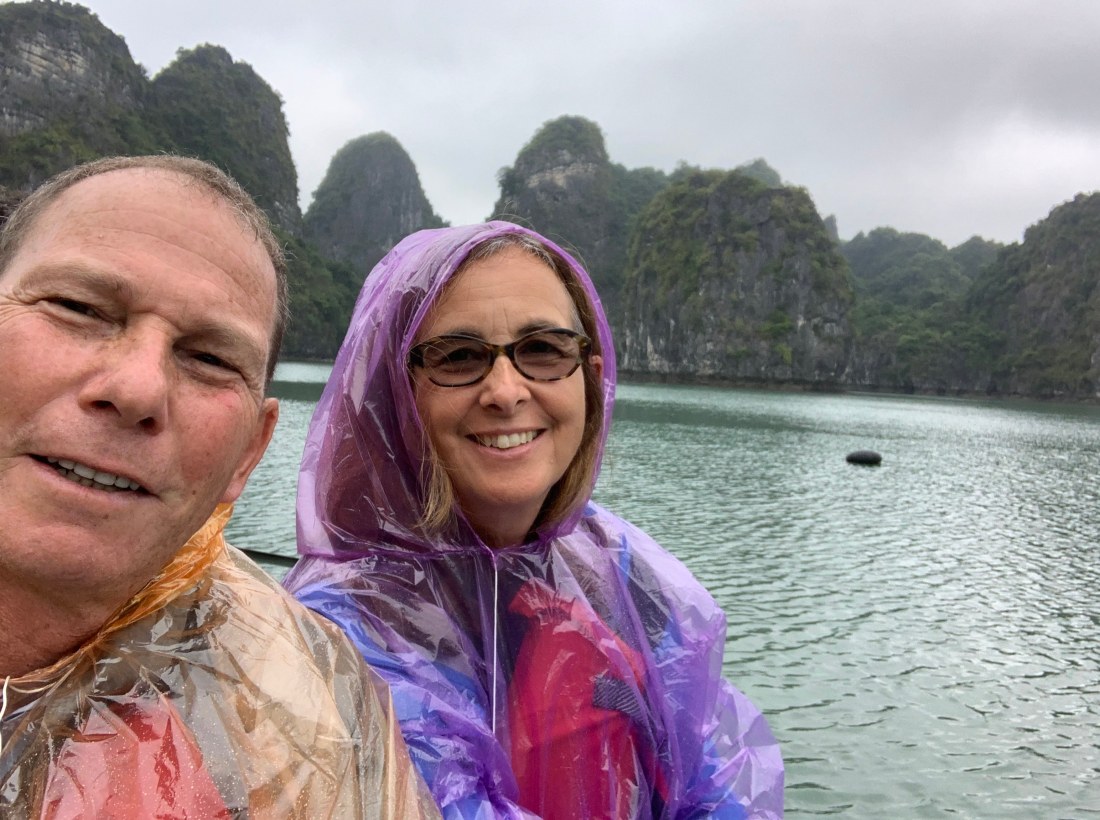
Sadly, our nearly 3 months of nearly perfect weather had come to an end with the unfortunate timing of our visit to the bay.  The bay and its surrounds are still stunningly beautiful in the mist, but the pictures provided do not do it justice.
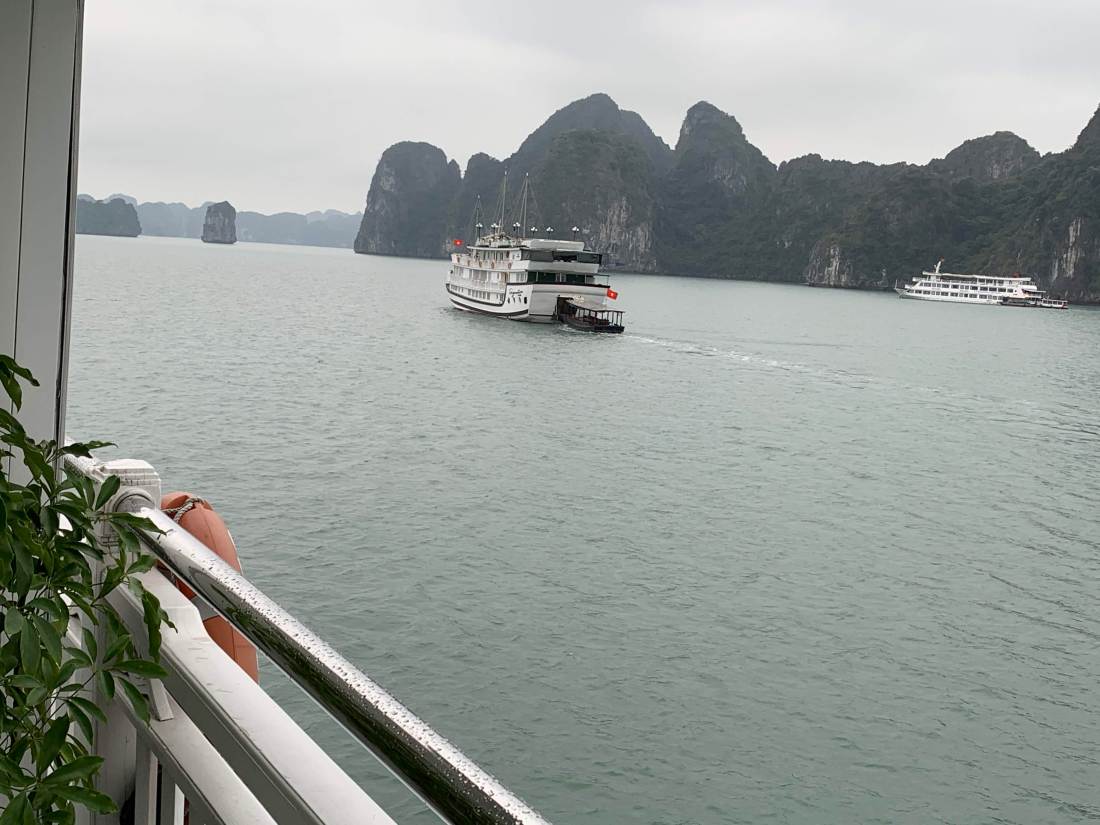
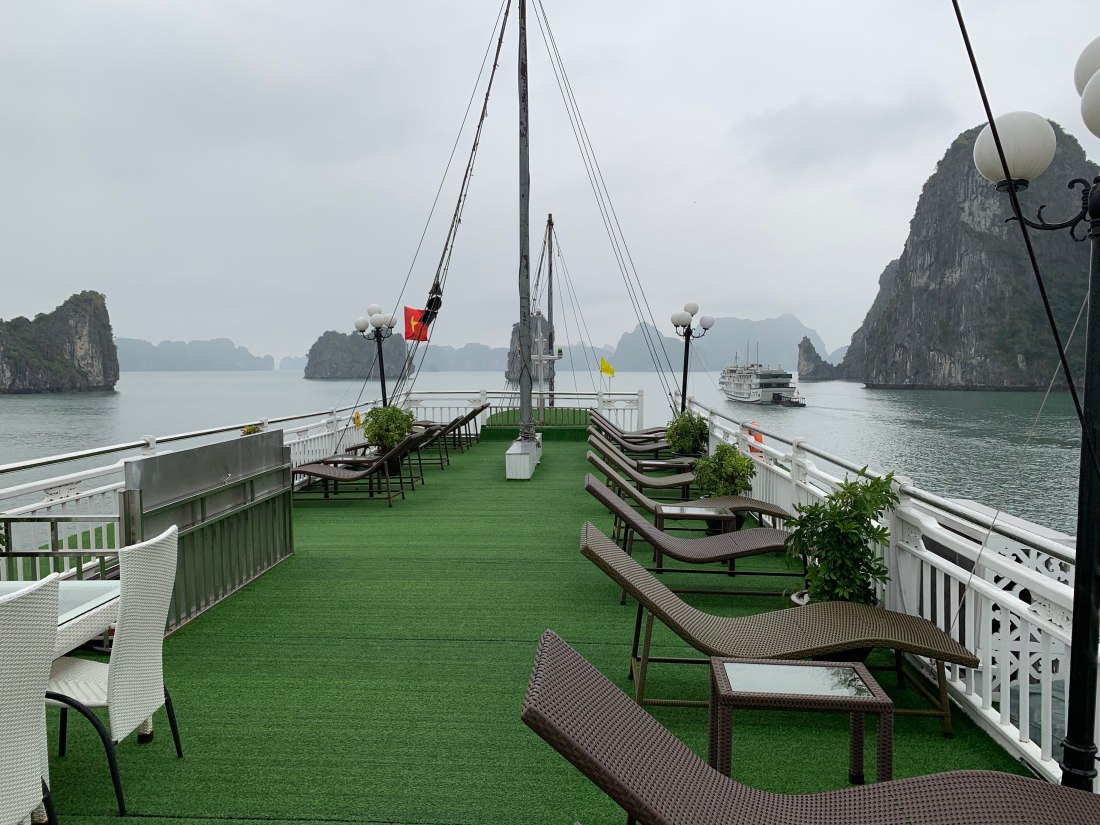
IMG_2895IMG_2896

IMG_20190223_142528

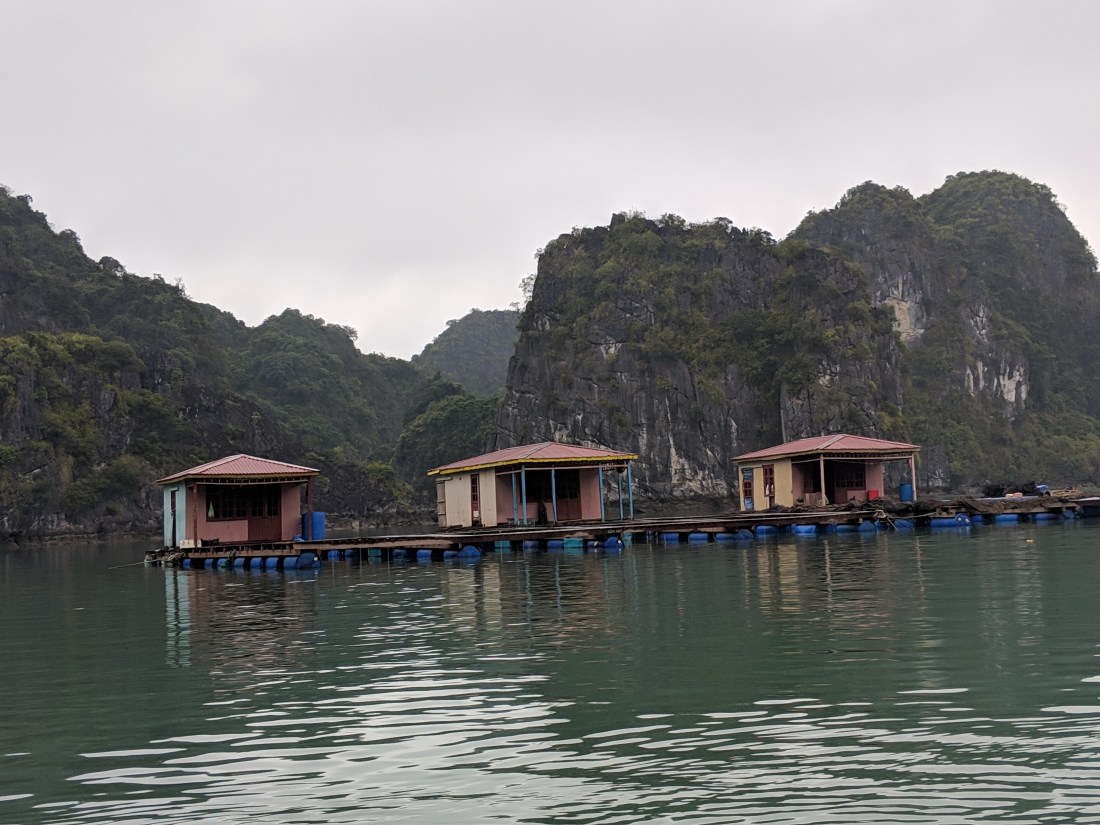
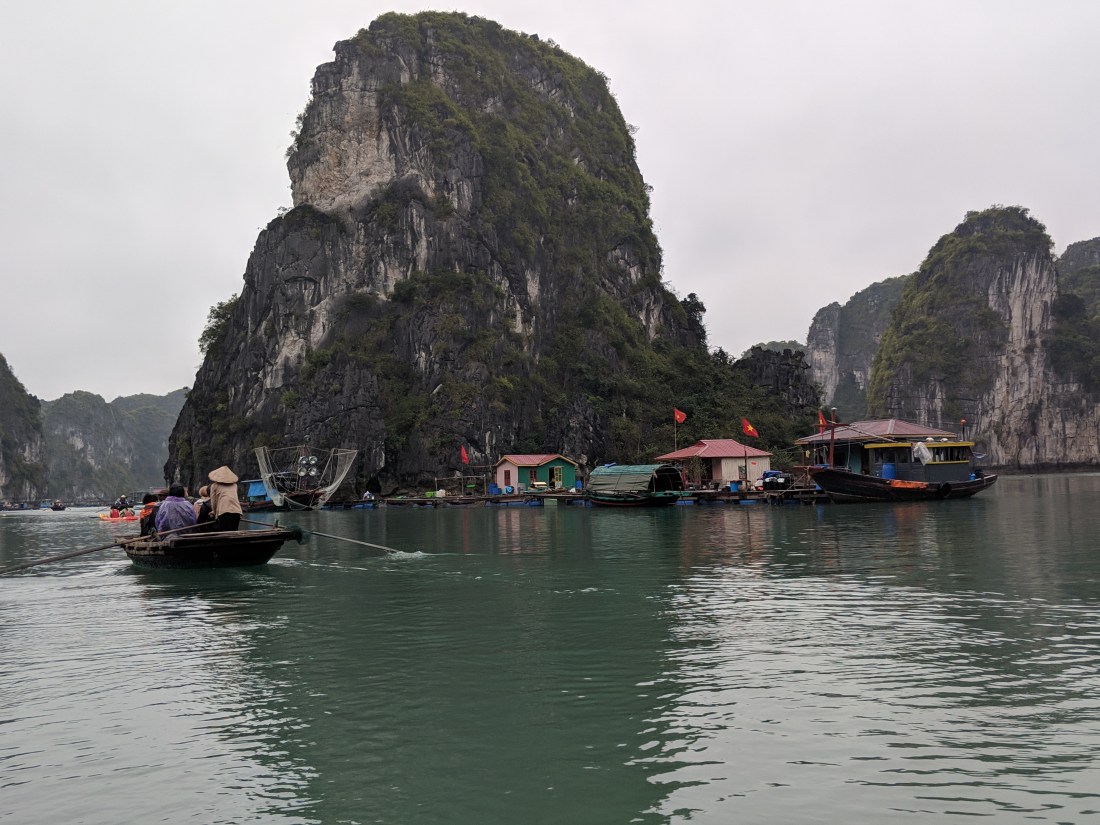
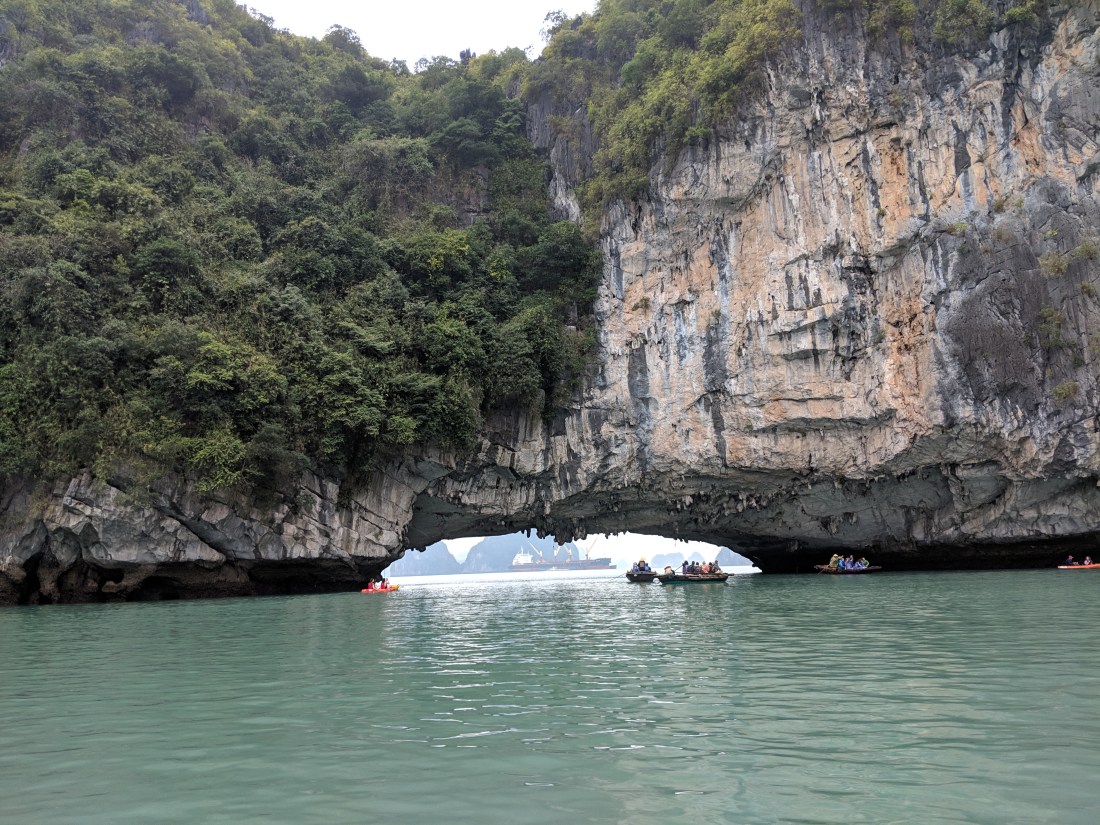
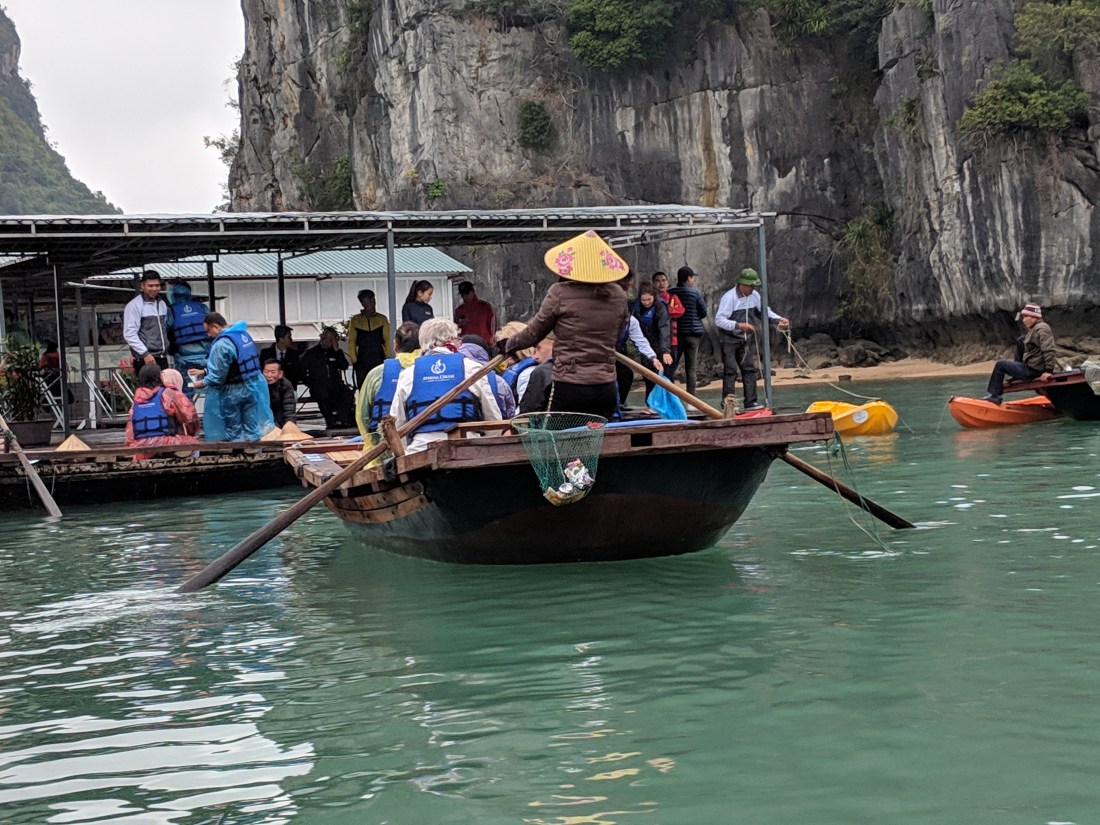
After lunch aboard ship we took the jitney to visit a floating fishing village. There we were rowed by locals in bamboo fishing boats through the floating village and some caves.  We also were treated to a tour of an oyster/pearl factory.
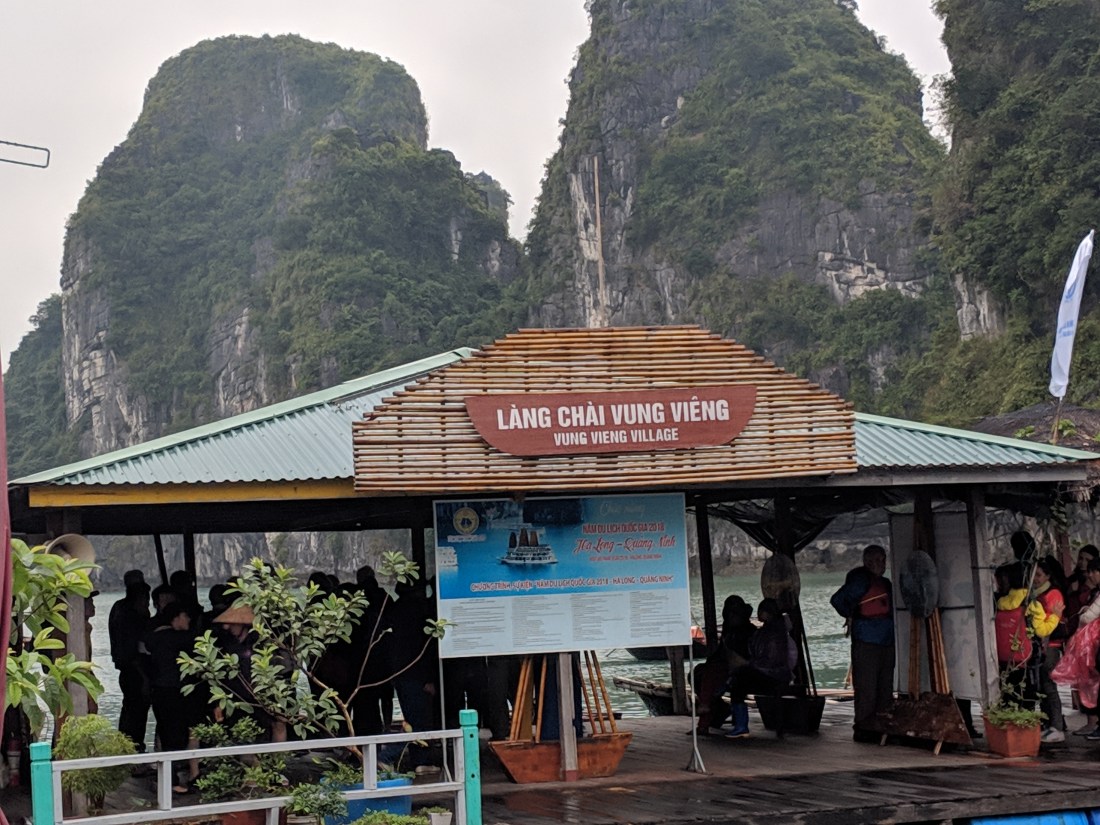
IMG_20190223_145654

IMG_2902IMG_2906IMG_20190223_152110IMG_20190223_152134IMG_20190223_153722

IMG_2907

IMG_20190223_155230

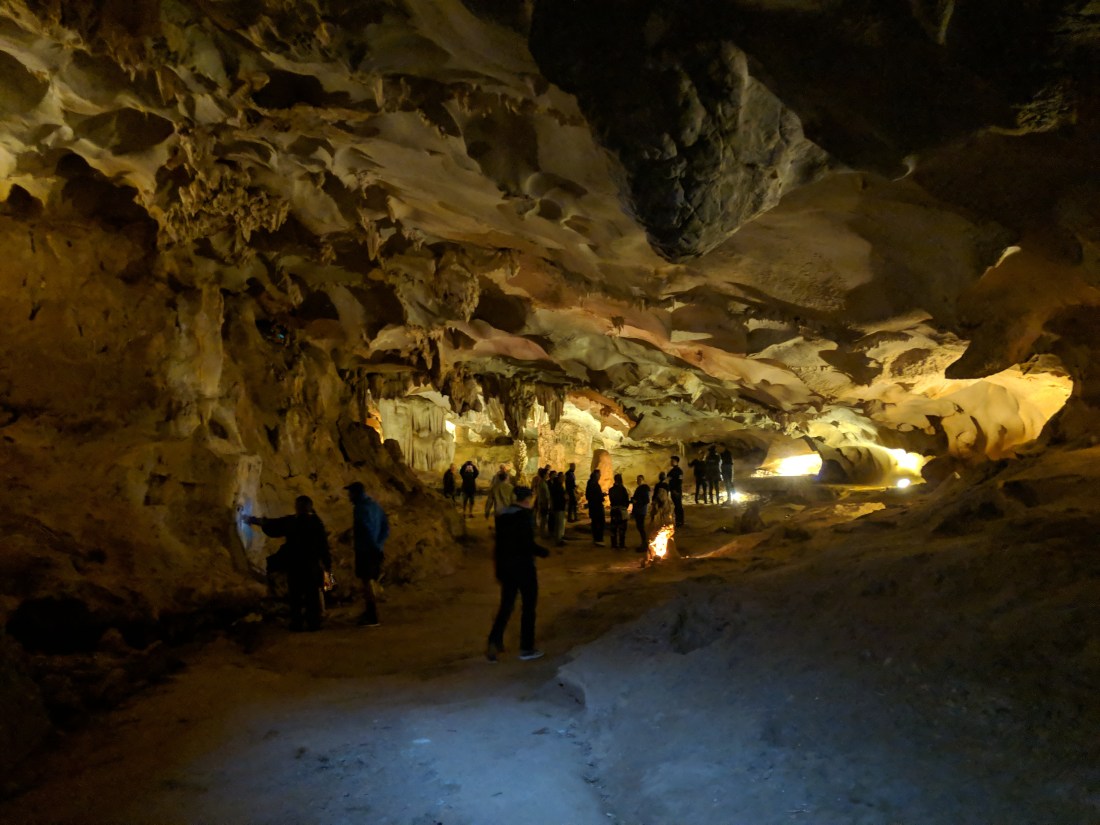
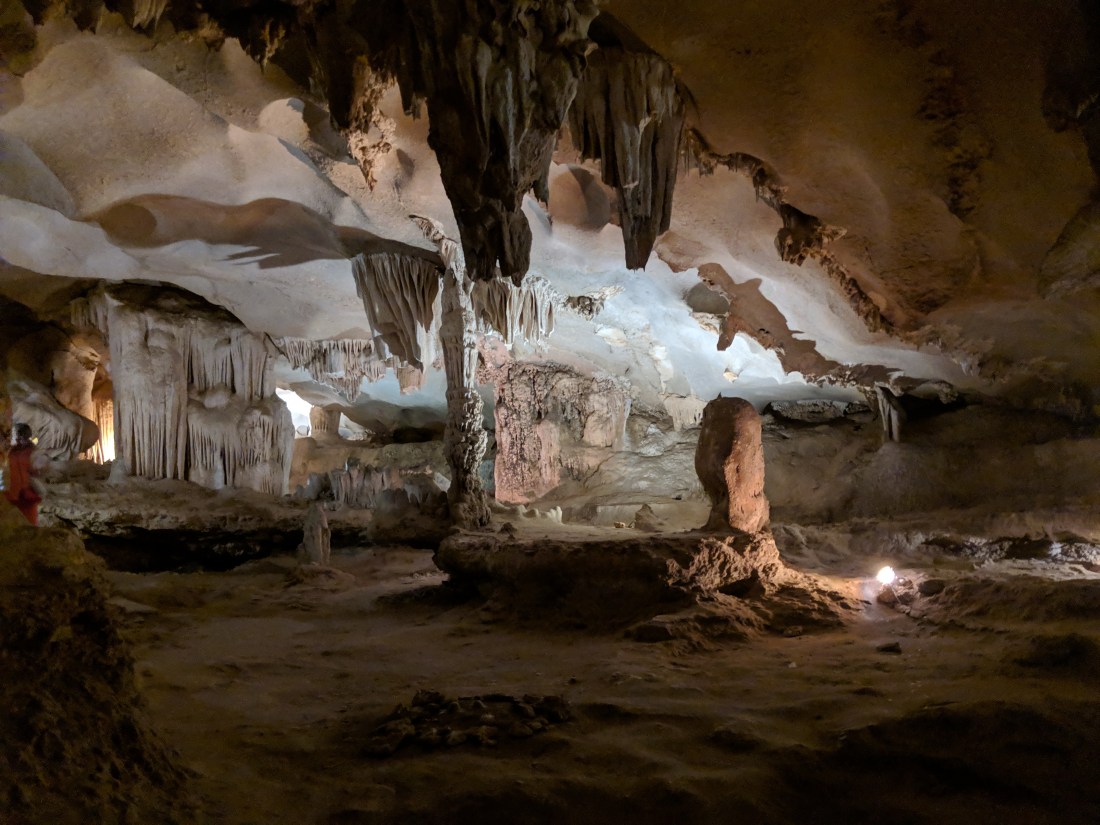
In the morning, after an amazing night sleep in a gorgeous room aboard ship, we visited one of the several caves in the bay.
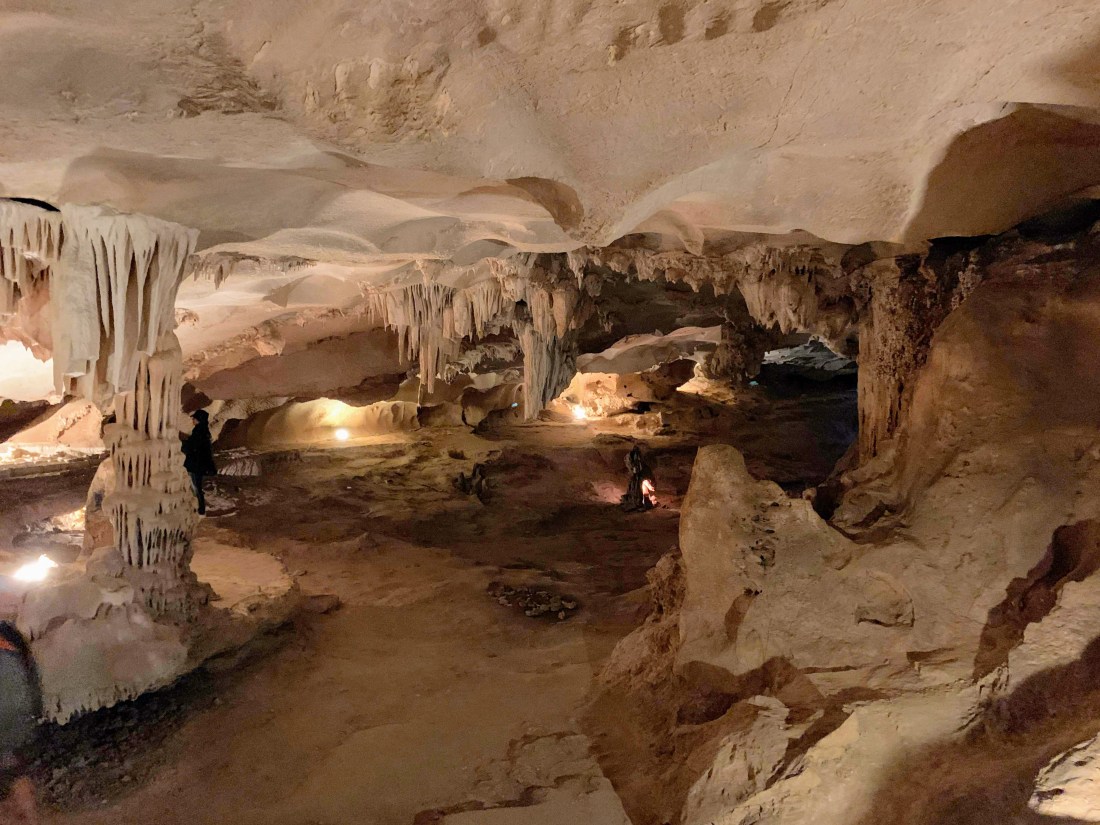
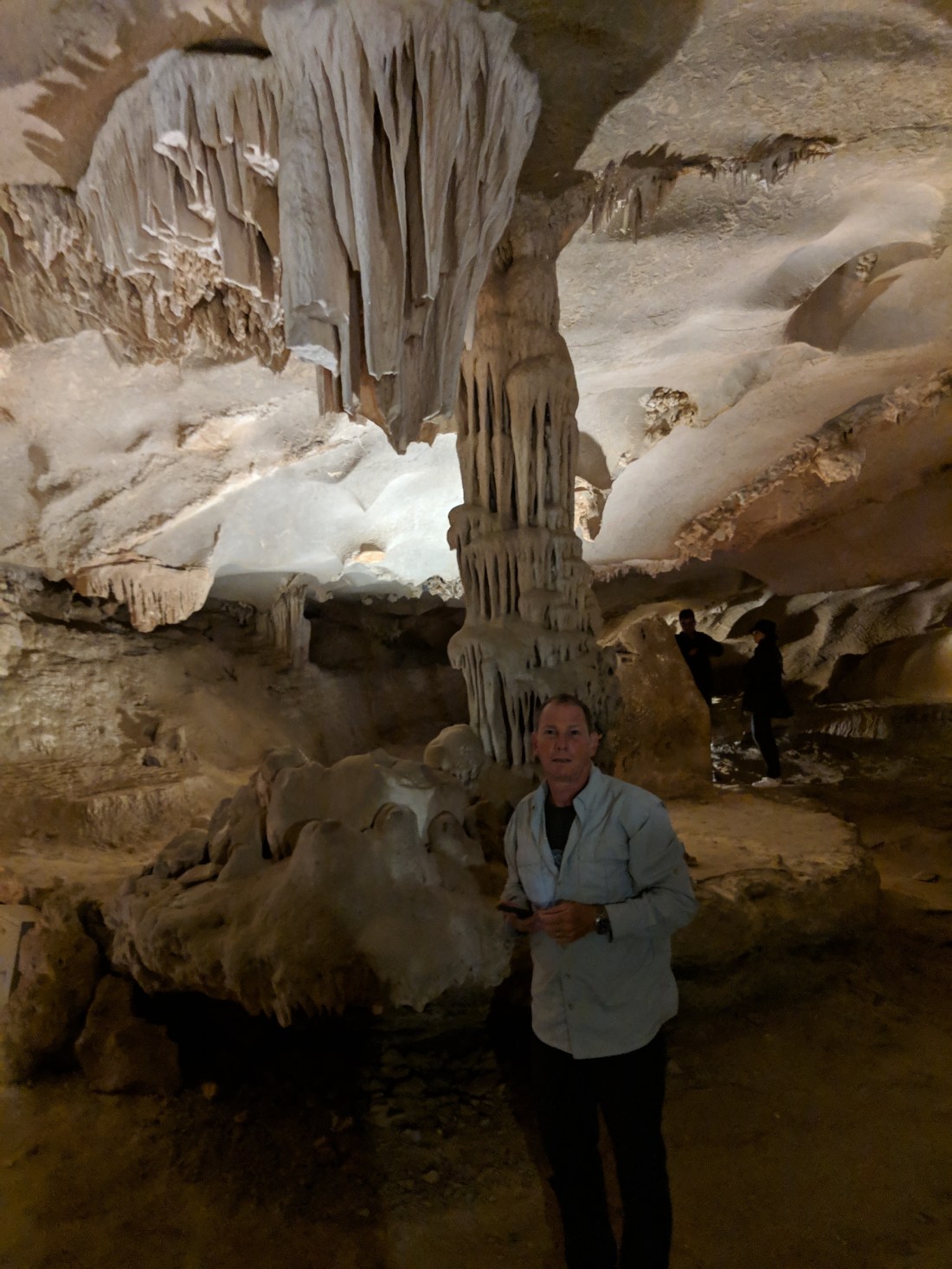
IMG_2915IMG_20190224_072823IMG_20190224_073051IMG_20190224_073500IMG_20190224_073848IMG_20190224_073223IMG_2920IMG_2923Then it was back to shore after brunch.
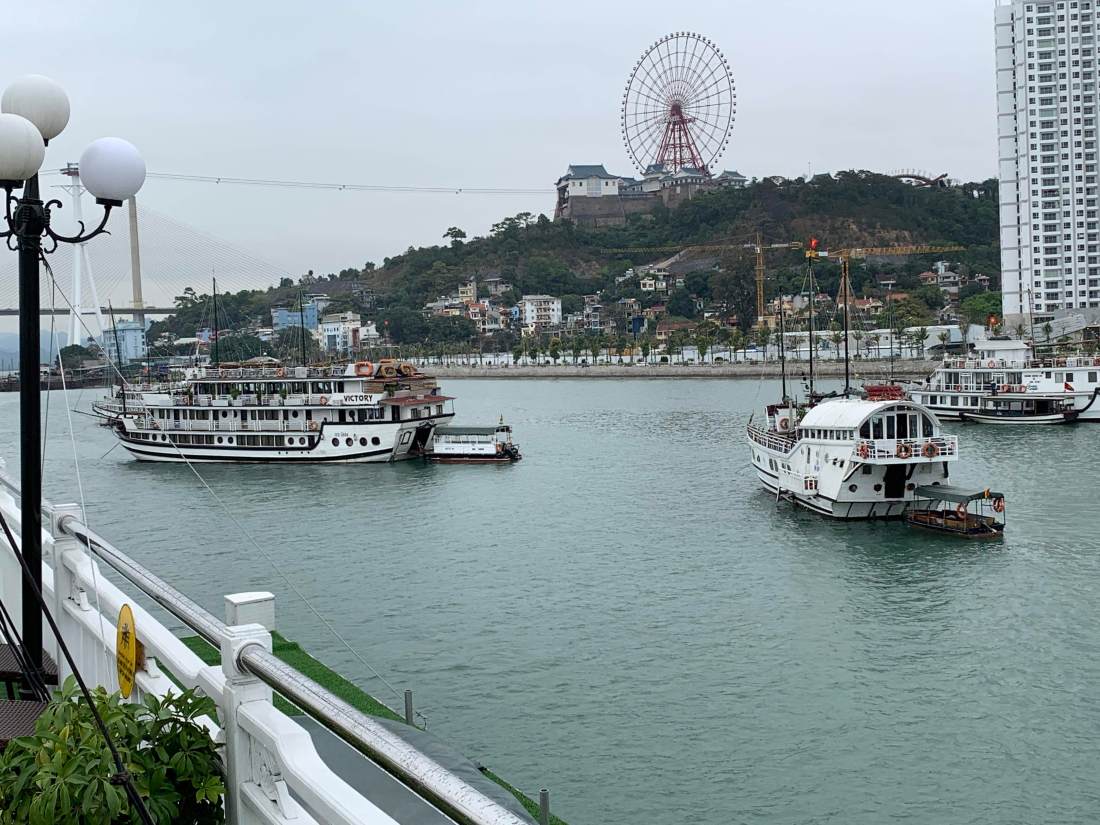
IMG_2934

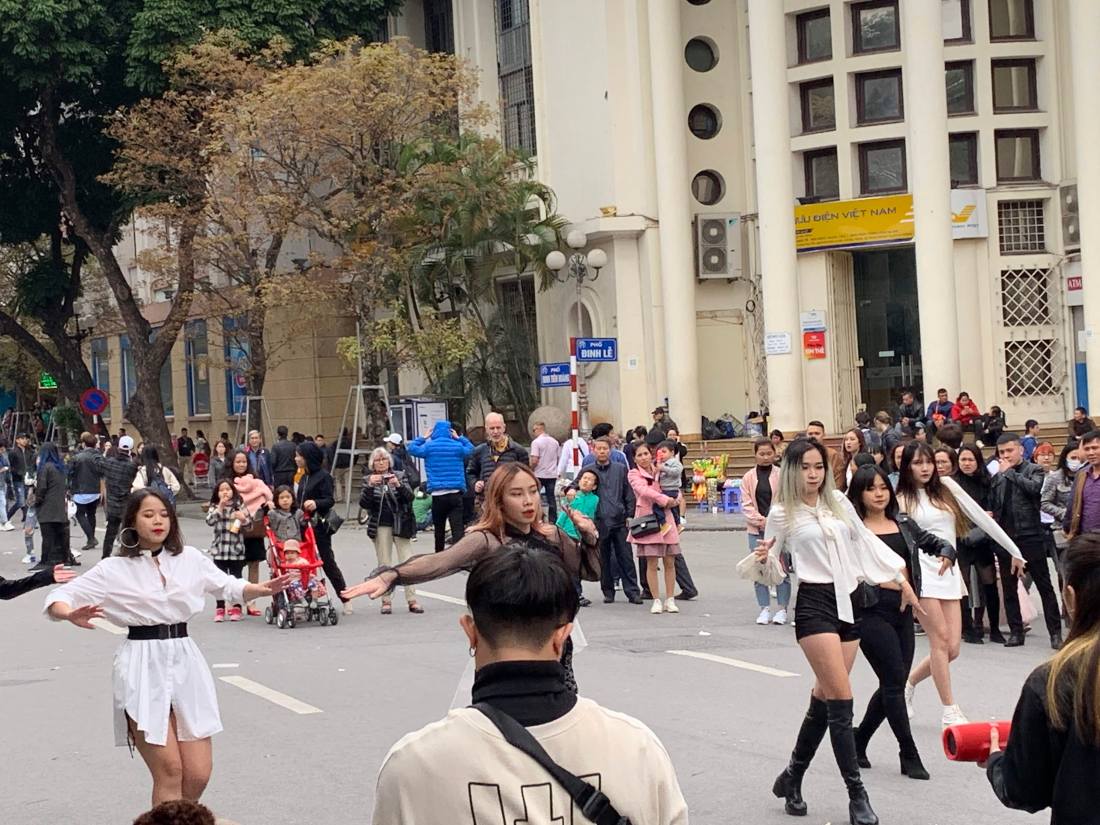
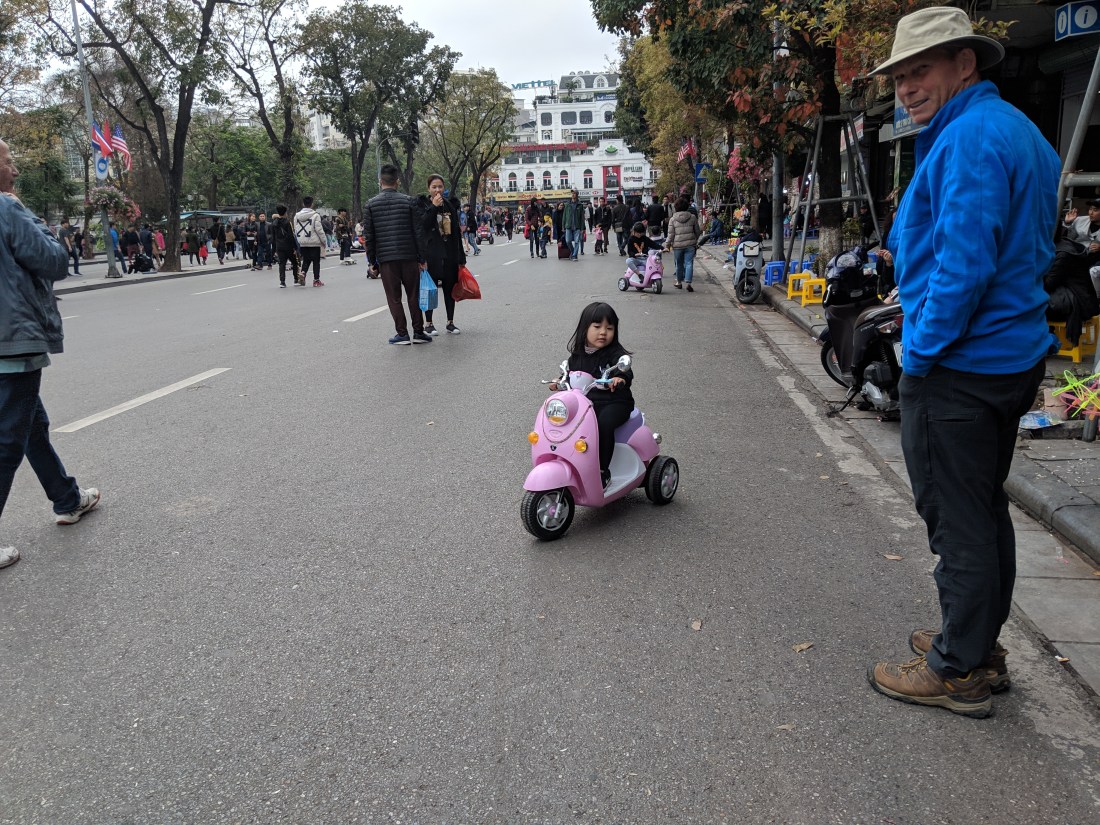
Then we traveled back to Hanoi. It was Sunday, and it turns out the streets around Ho Hoan Kiem Lake are blocked to traffic for families to enjoy.  There were children’s games and karaoke and lots of fun for everyone.
IMG_20190224_141931

IMG_20190224_141947

IMG_2940IMG_2944IMG_2945

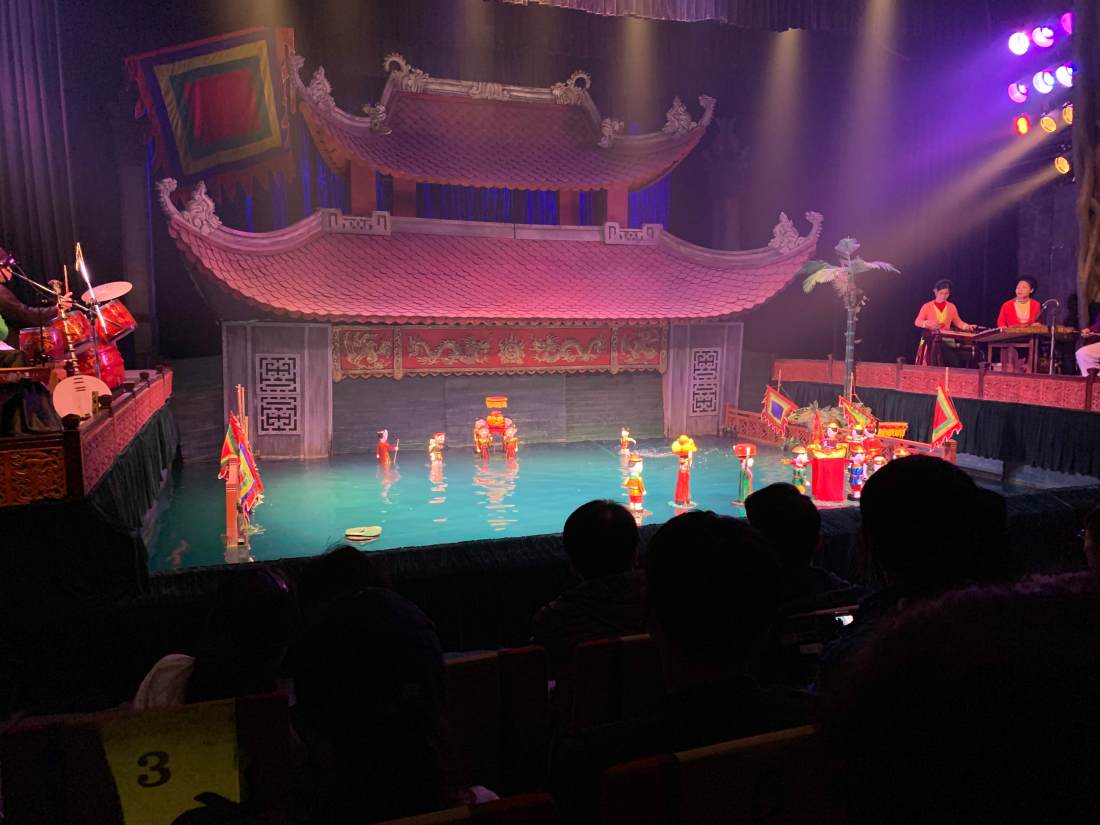
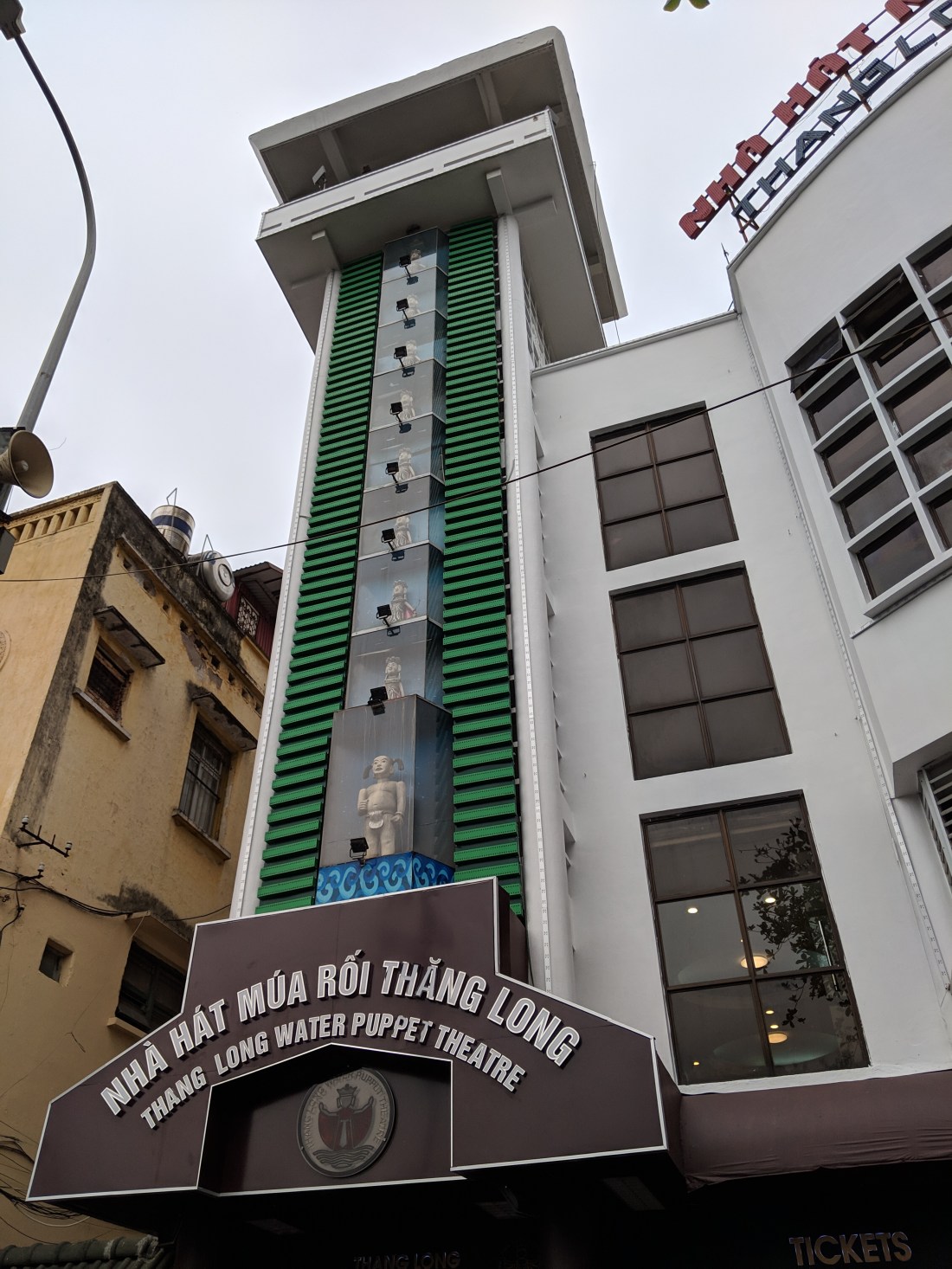
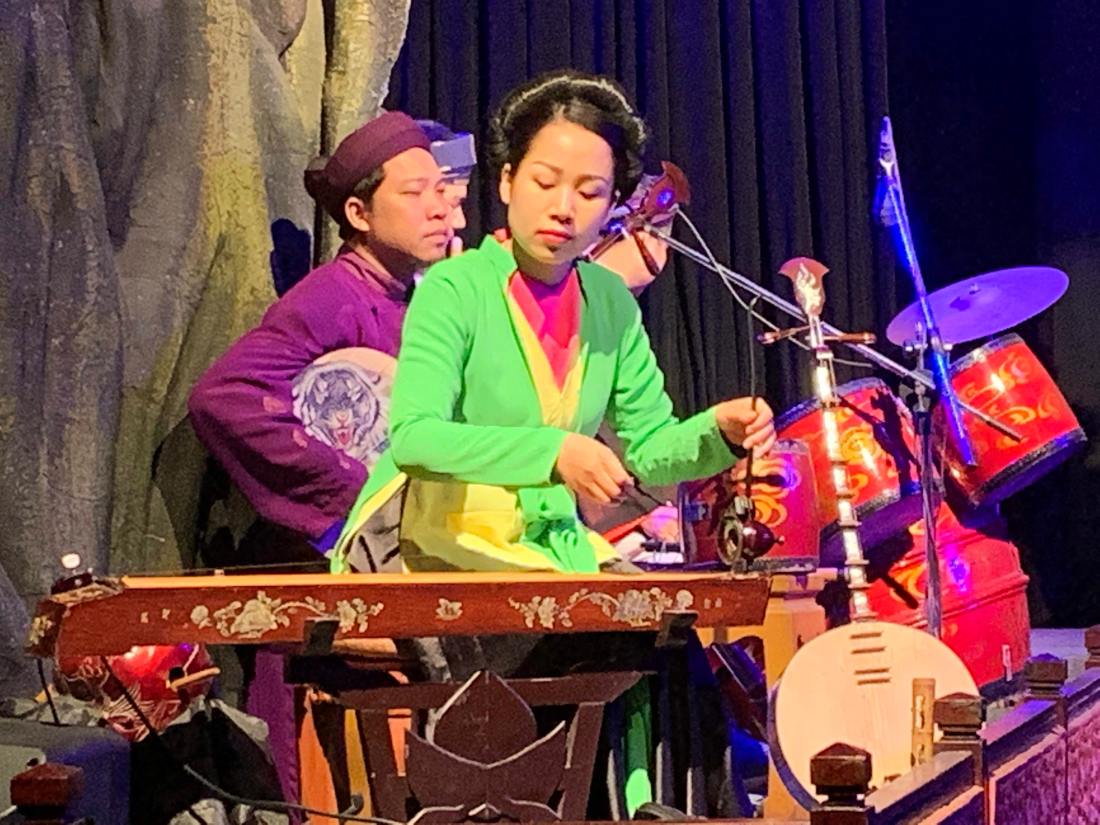
We got a chance to see a water puppet show, an ancient art form invented by the Vietnamese to entertain themselves during the flooded rainy season.
IMG_20190224_155623IMG_2947IMG_2950IMG_2948

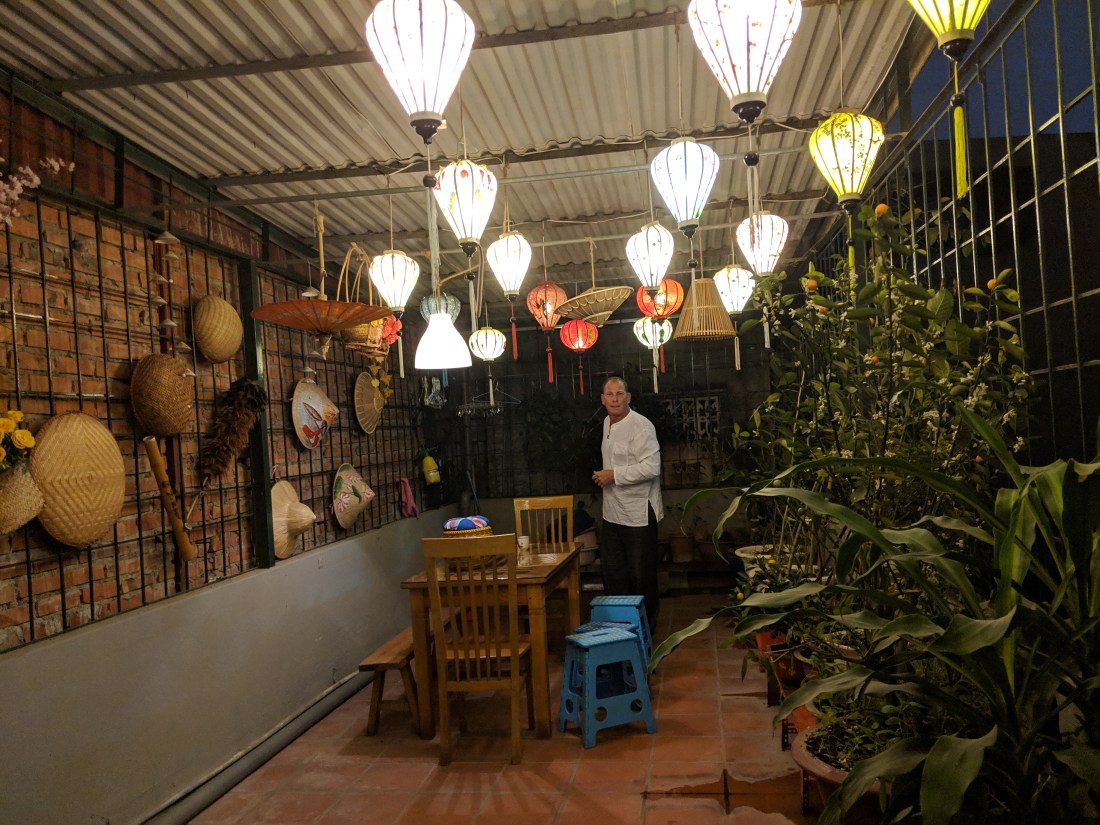
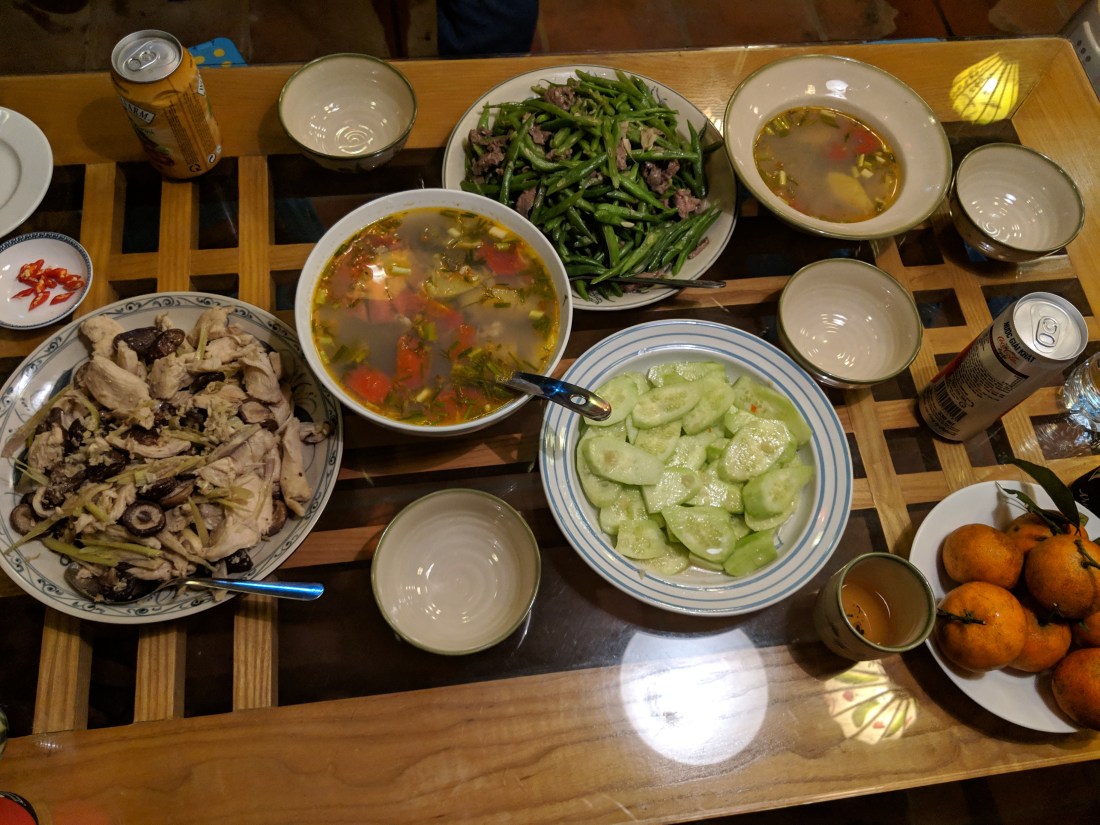
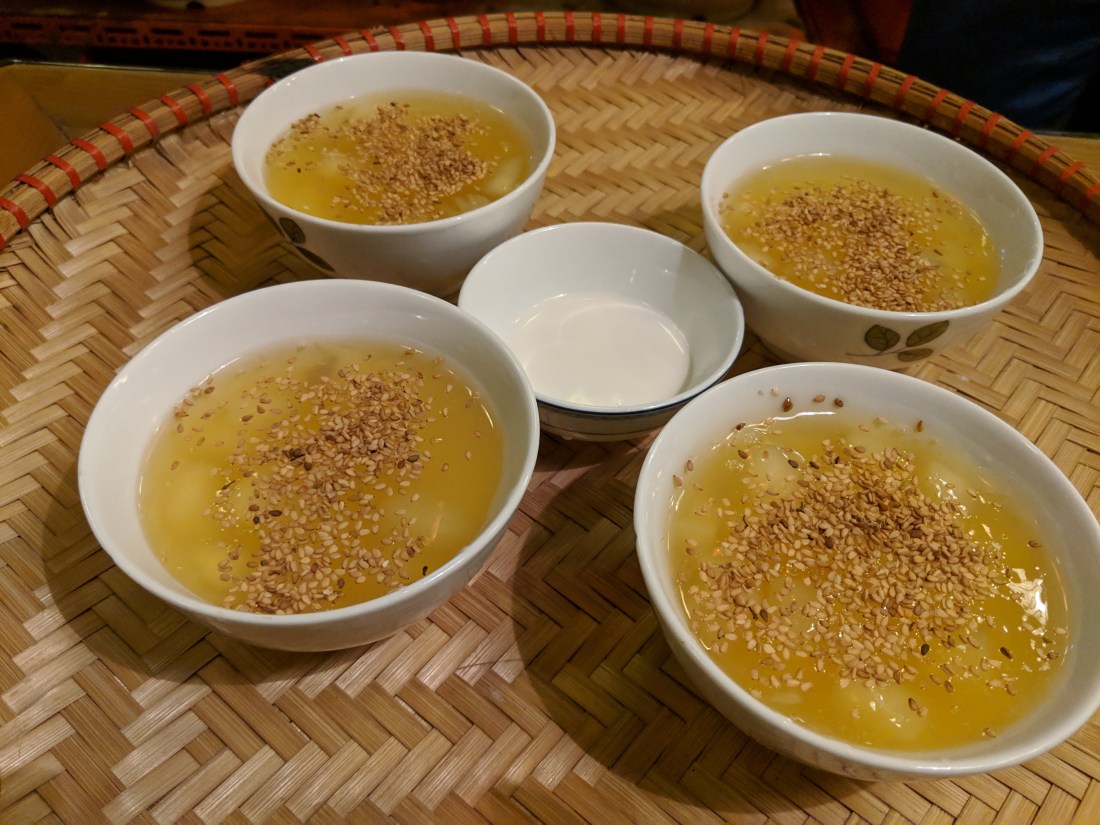
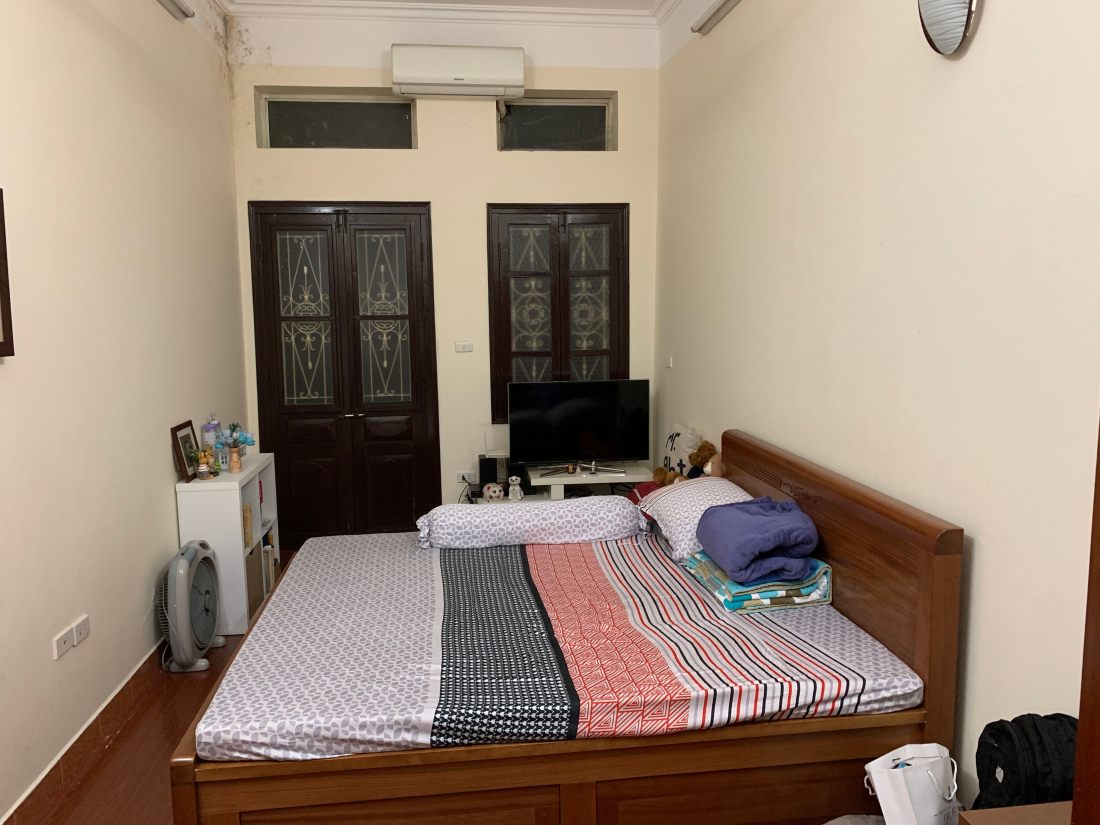
We had decided to cut out trip short a day to get out of Hanoi ahead of the Trump/Kim media frenzy.  So this was to be our last night in Hanoi.  Our local city guide, Thao, had invited us to dinner at his home for our final goodbye.  He has such a lovely home, typically Vietnamese: long and narrow and 4 stories high tucked away in a back alley well off the main streets.  And he prepared a feast!
IMG_2952IMG_20190224_185049IMG_20190224_184956IMG_20190224_193020IMG_20190224_203251IMG_20190224_192958


Hanoi & Sapa Feb 13-18

Northern Vietnam is as different from Southern Vietnam as New England is from the Mississippi Delta.  What we are learning to appreciate the longer we are in this country, is not only the regional differences, but the multiplicity of cultures due to the many ethnic minorities.  But more about that later.

First, as every tourist to Hanoi must do, we paid our respects to Ho Chi Minh.  He is laid to rest in a Mausoleum built 1973-75 (after the war).  He had died in 1969 at the age of 79, never getting to see his beloved Vietnam unified, as was his dream.  The Soviets trained the Viet Cong in the method of embalming to keep his remains preserved.  Now every year, they close the mausoleum for 2 months to continue to re-embalm him.  He is actually visible laying in his coffin in a glass enclosed space inside the mausoleum.  Needless to say, photos are not allowed, so I have just the building.

IMG_20190213_102539

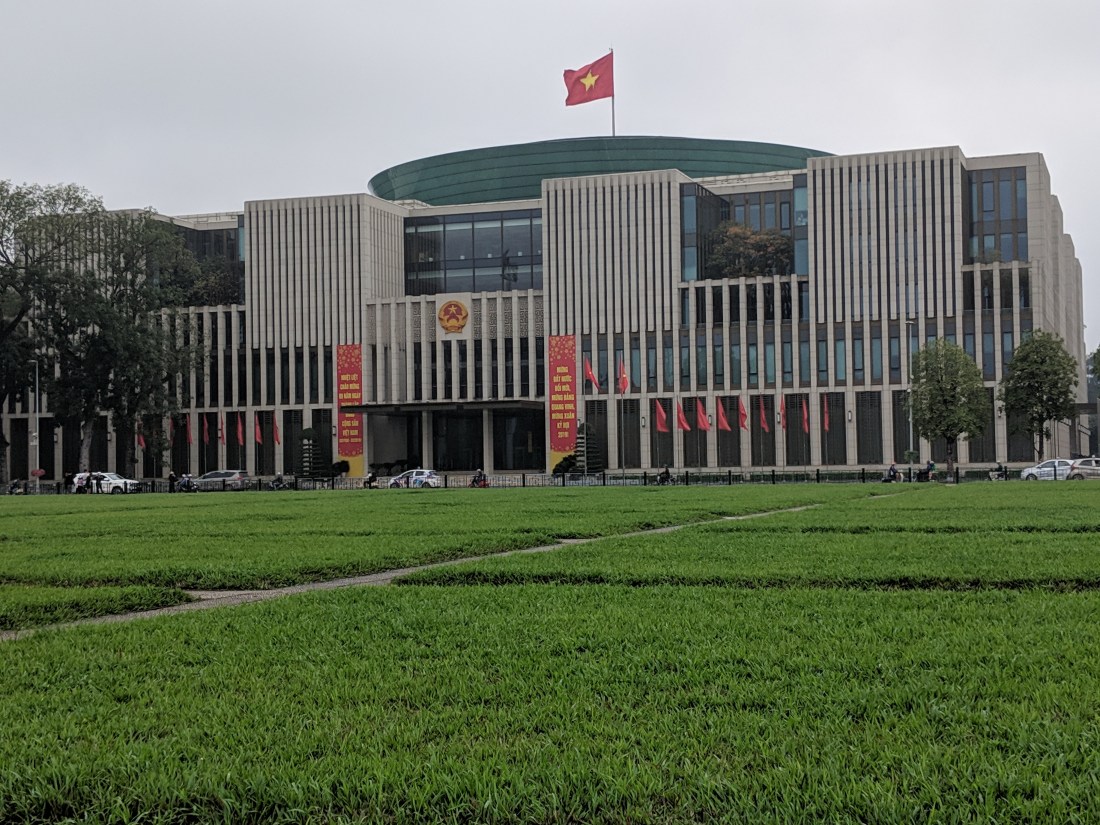
It is in the same Ba Dinh Square as the modern Parliament:

IMG_20190213_104318

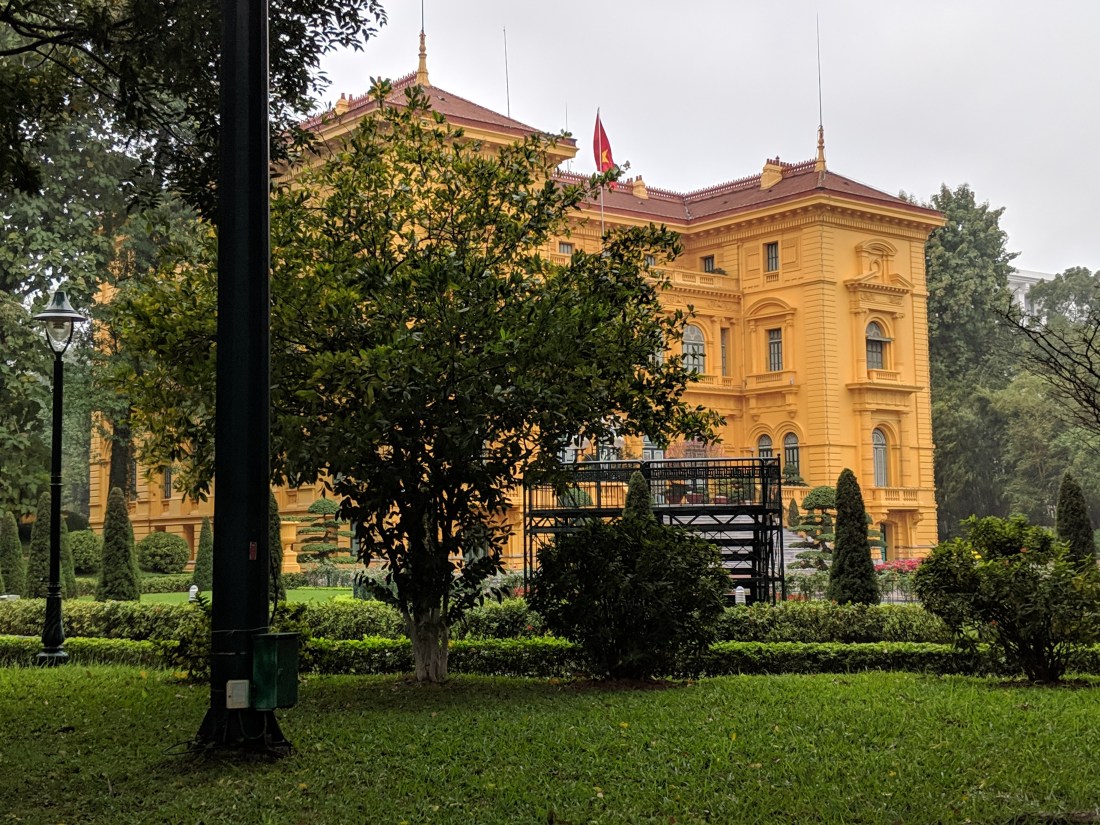
And also the Presidential Palace, which is where Trump and Kim Jong-un will meet on the 27th. It is a 30 room mansion built in the late 19th century by the French as both home and offices for the Governor of Indochina.  It was occupied by the Japanese during WWII.  In 1945 the French took it back over. But after the Geneva Convention in 1954, when Ho Chi Minh became president of North Vietnam, he designated the building for public use, and it has been used for meetings between heads of state ever since.

IMG_20190213_105140

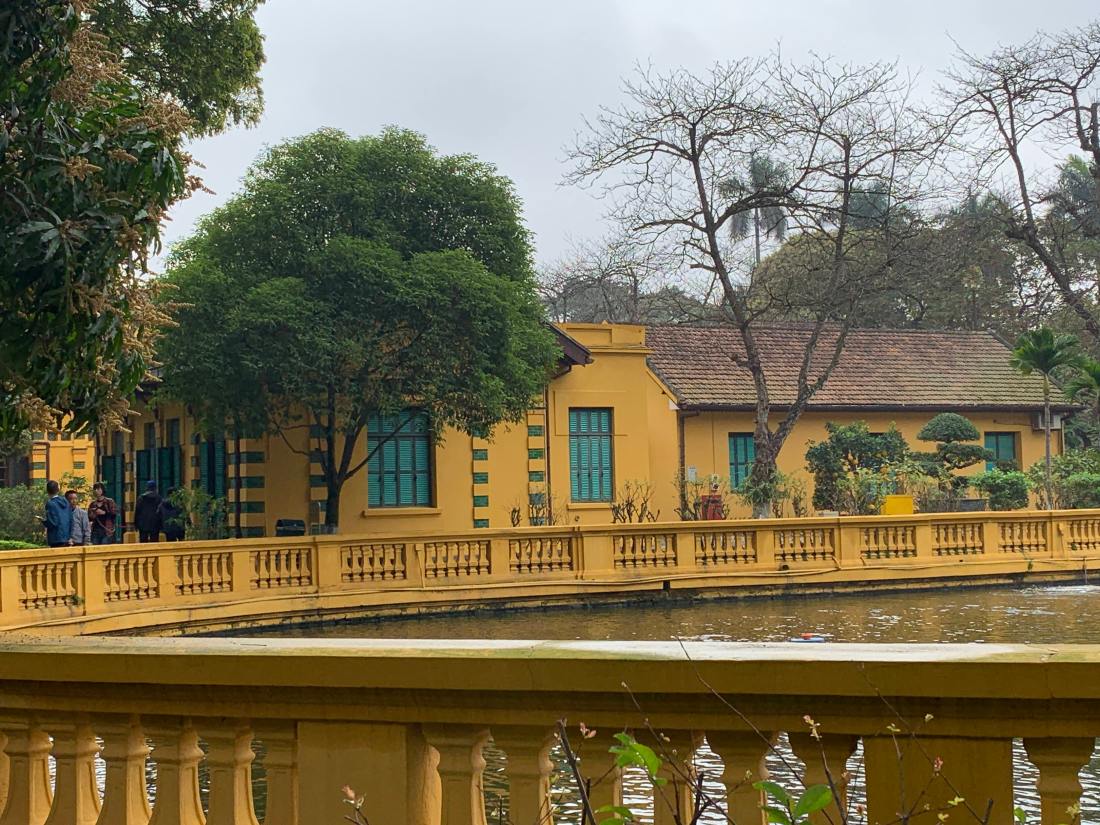
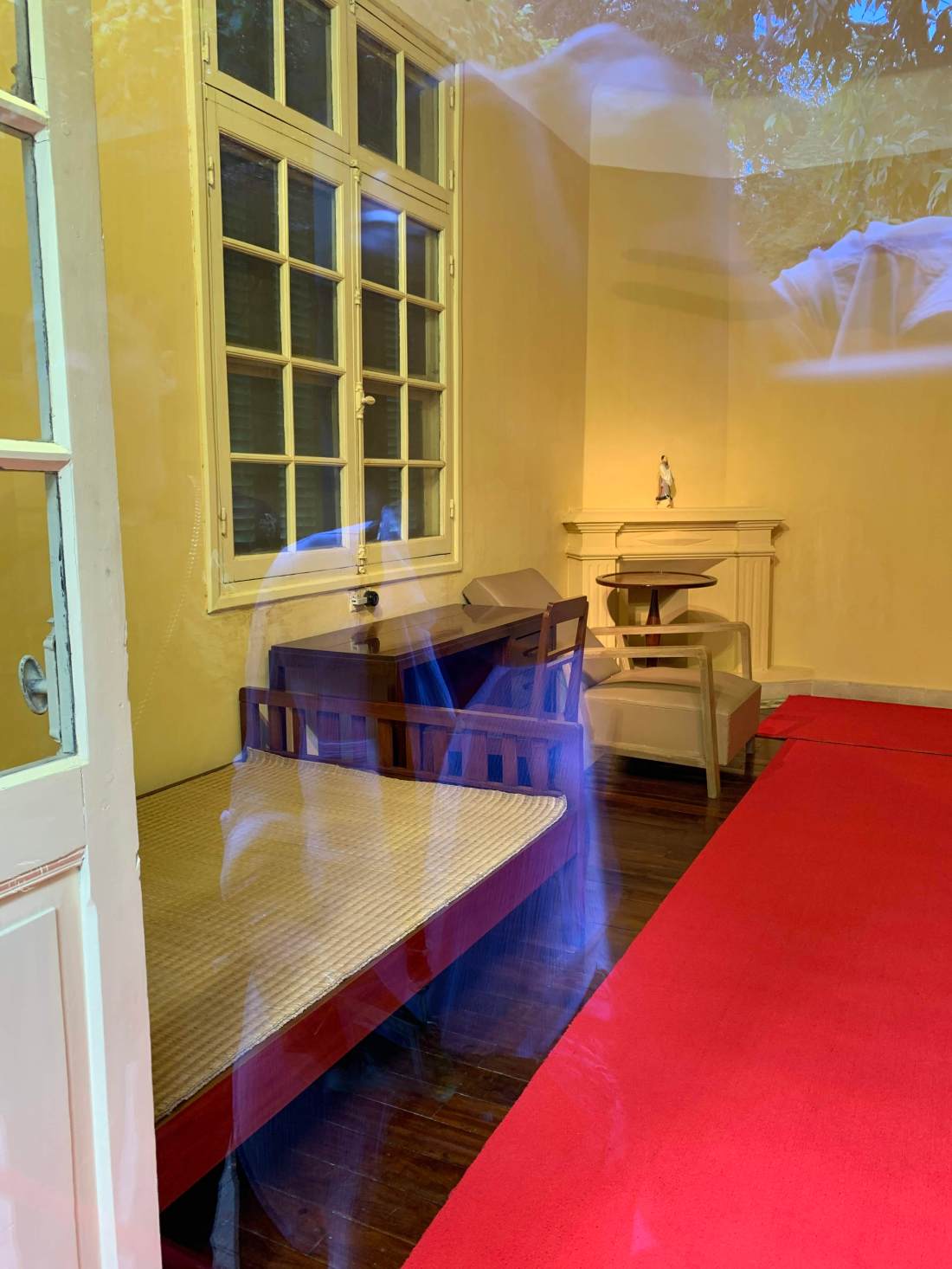
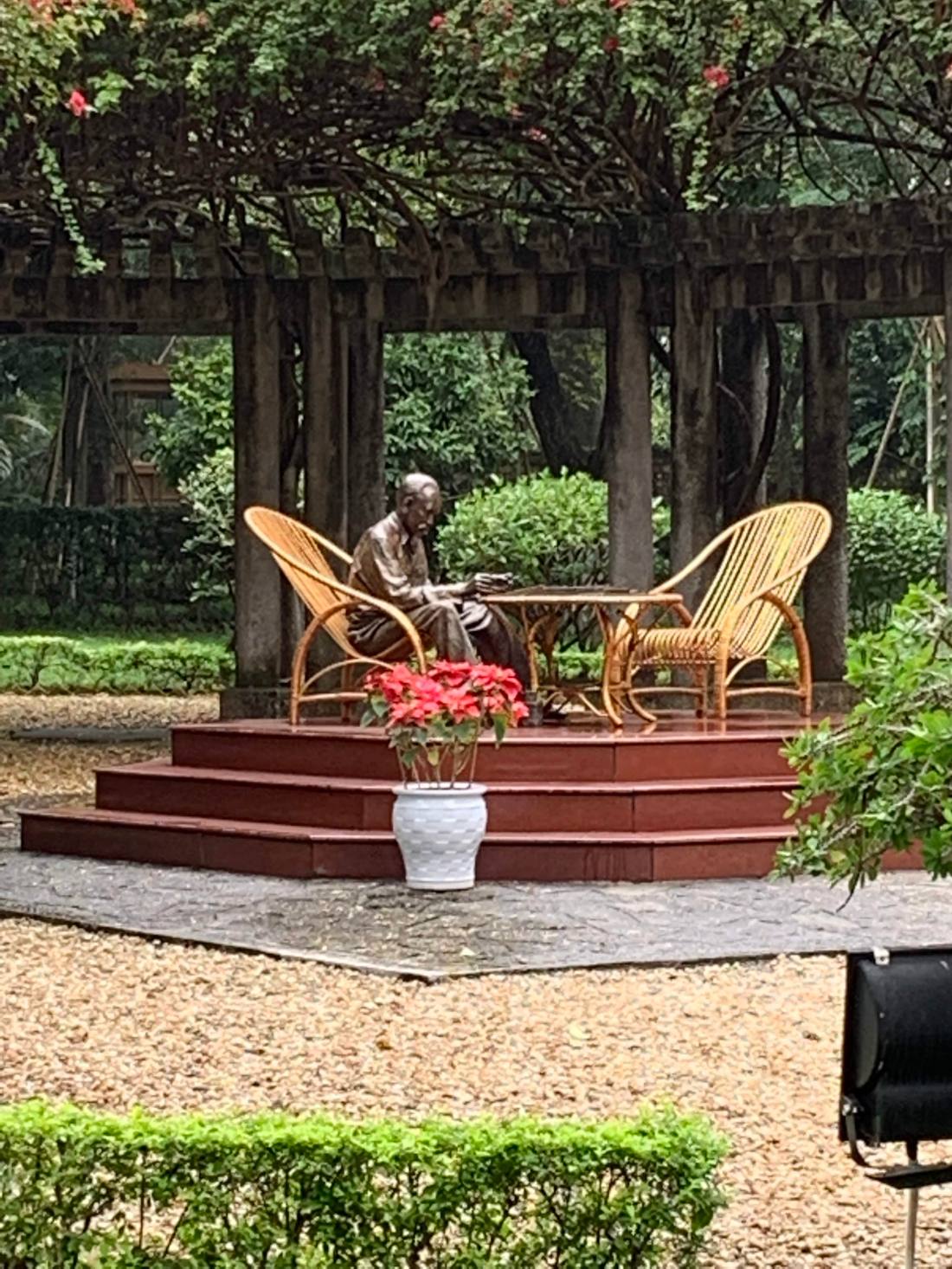
Ho Chi Minh chose to live more humbly in a 3 room house nearby (originally built for French staff).

IMG_2522IMG_2519

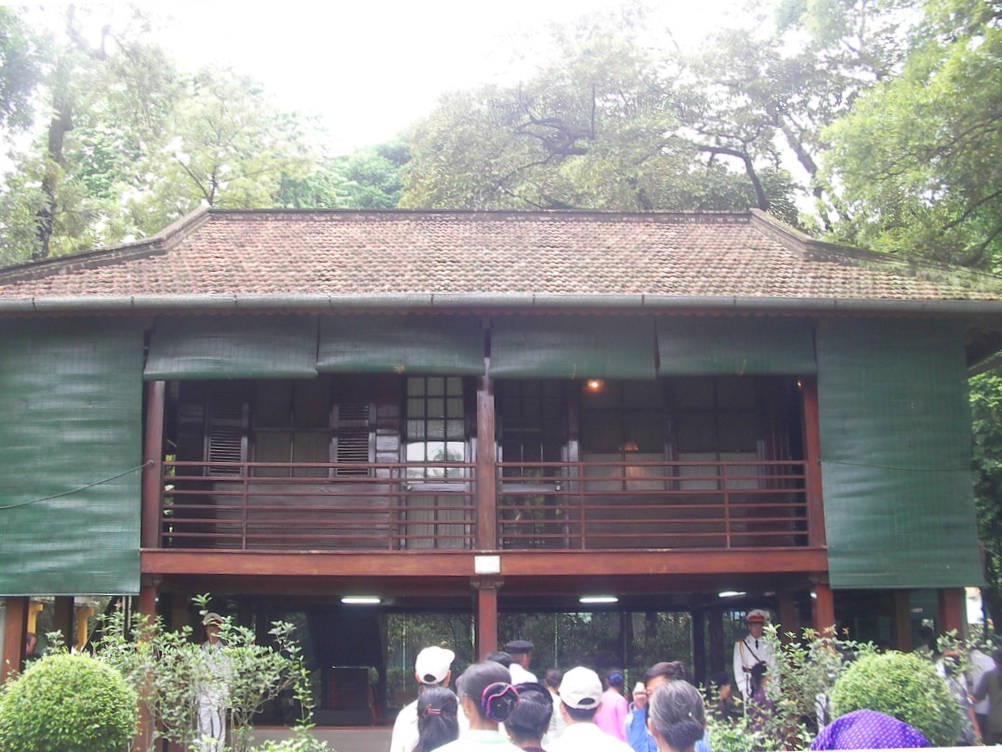
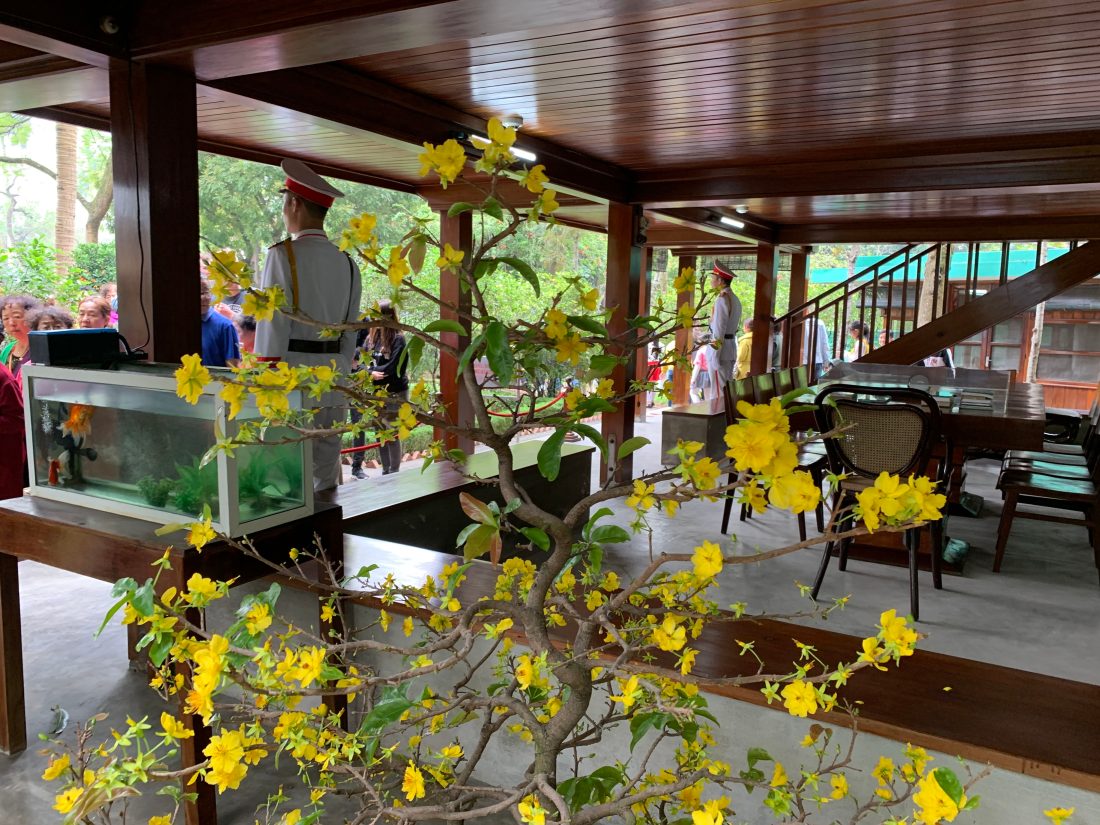
He lived there for 7 years, then his adoring fans built him a home on stilts, in the style of his origins, where he lived out the rest of his days.

Ho_Chi_Minh_House_1463237026_5317a7aaed.jpg

IMG_2528

IMG_2523
Ho Chi Minh’s private garden

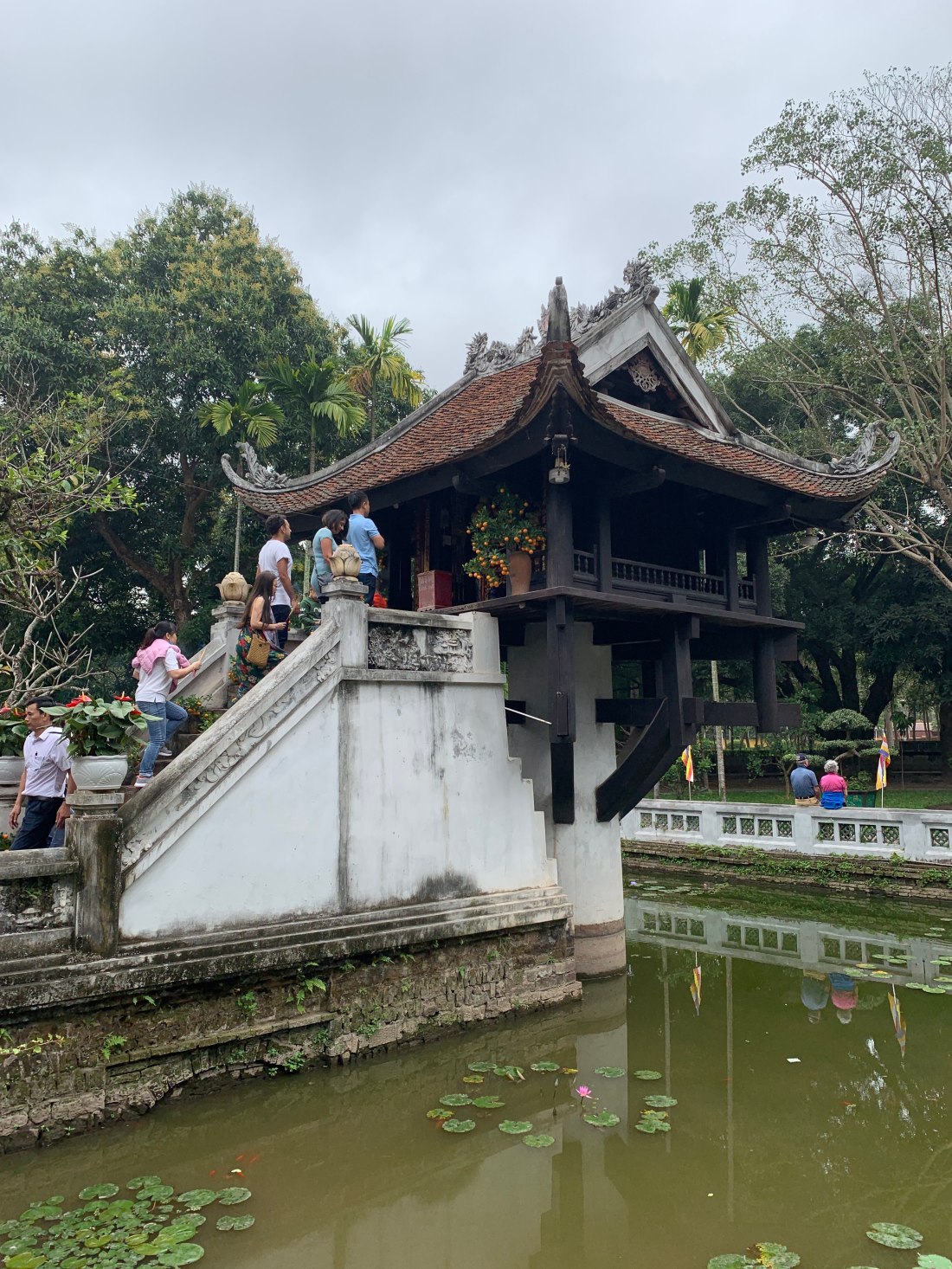
Near Ba Dinh Square is the One Pillar Pagoda, which is nearly as old as Hanoi itself.  Hanoi was founded in 1010 and celebrated 1000 years just 9 years ago!  The pagoda was built by Emperor Ly in 1049.  The story is that the emperor was childless but had a dream that he was handed a baby son by a goddess seated on a lotus flower.  He then married a peasant girl who bore him a son.  So he built the pagoda to thank Buddha. It was built in a lotus pond, of wood construction,  on a single stone pillar to resemble a lotus blossom.  Lotus is the symbol of purity in buddhism because it is a beautiful flower that grows from mud. Unfortunately, the temple was destroyed by the French in 1954 but has since been reconstructed.

IMG_2530

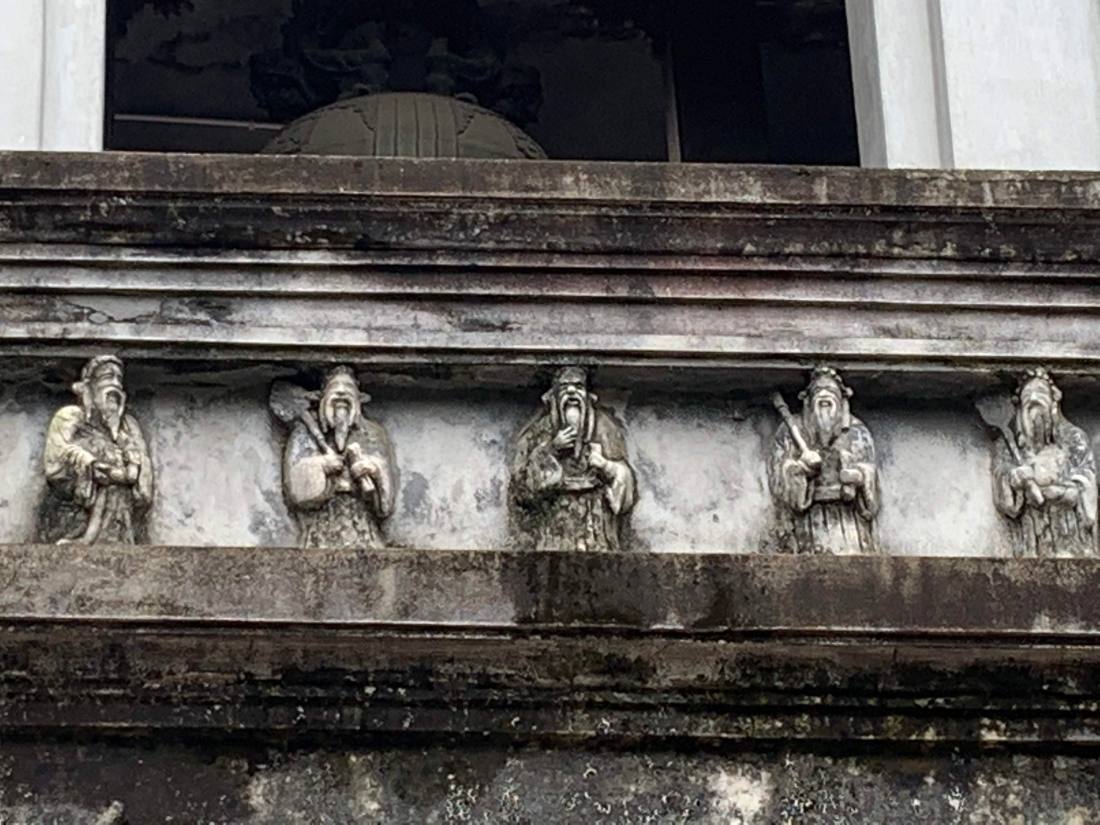
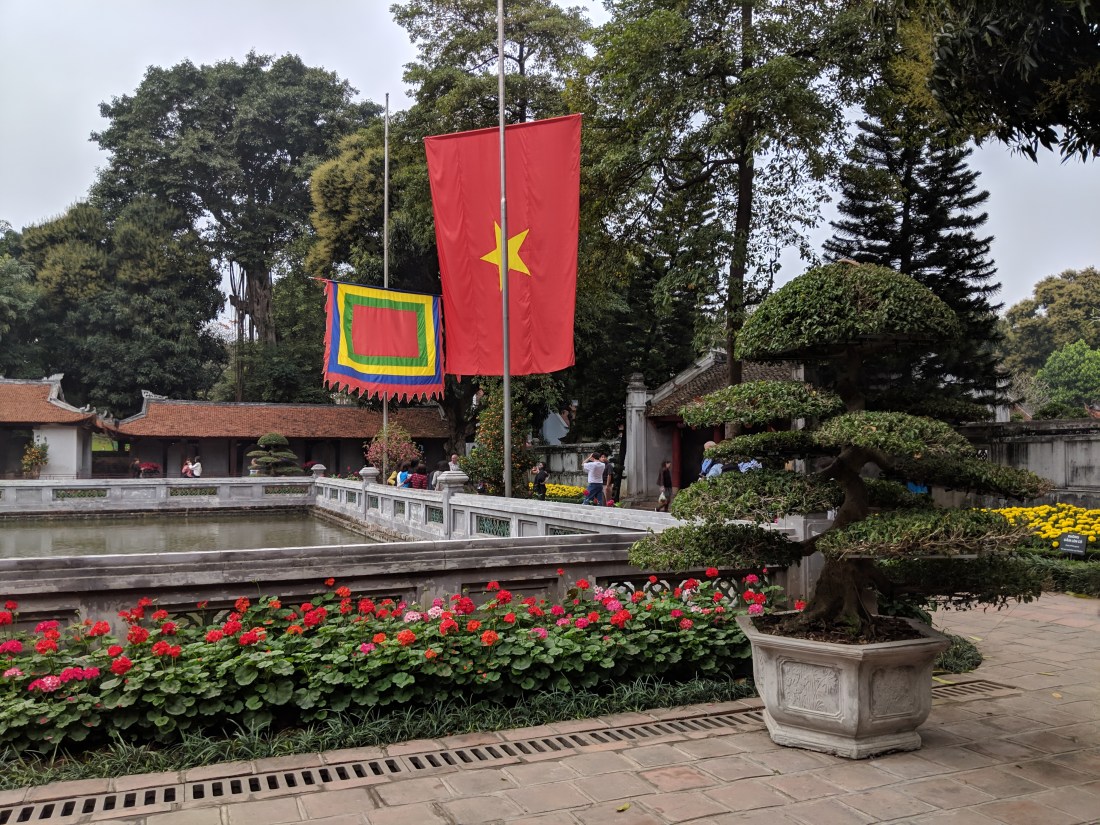
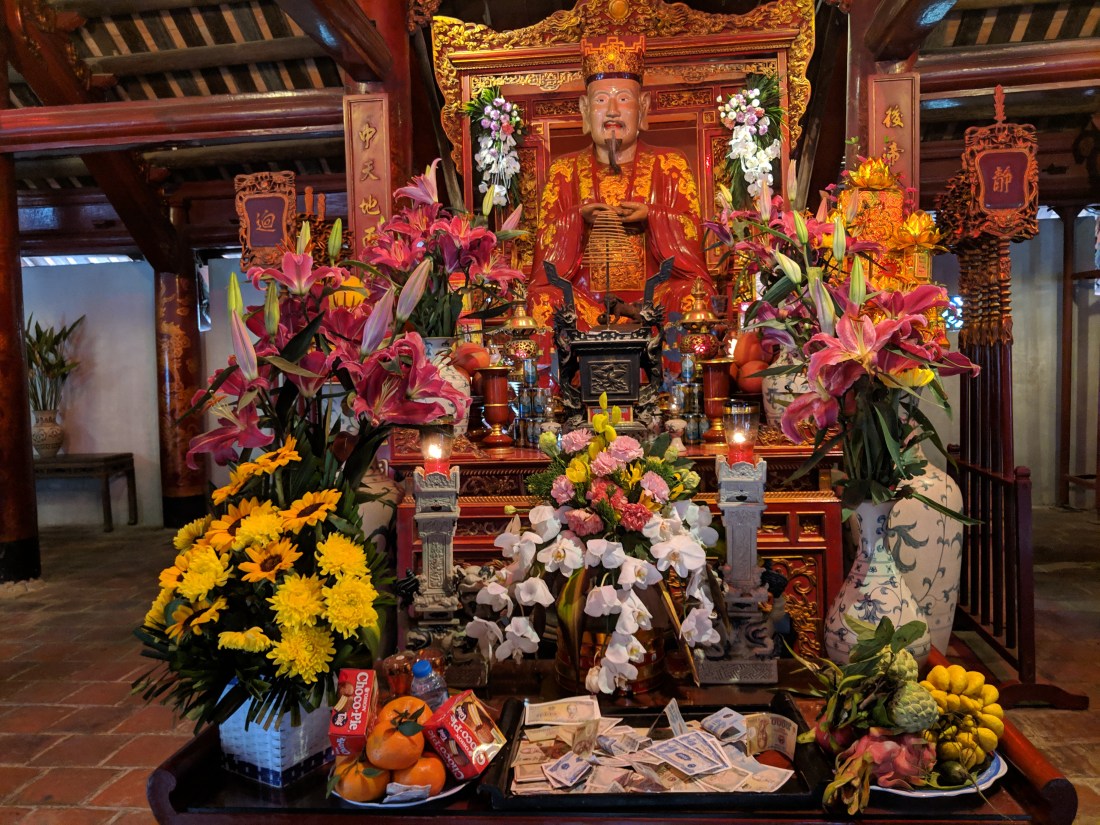
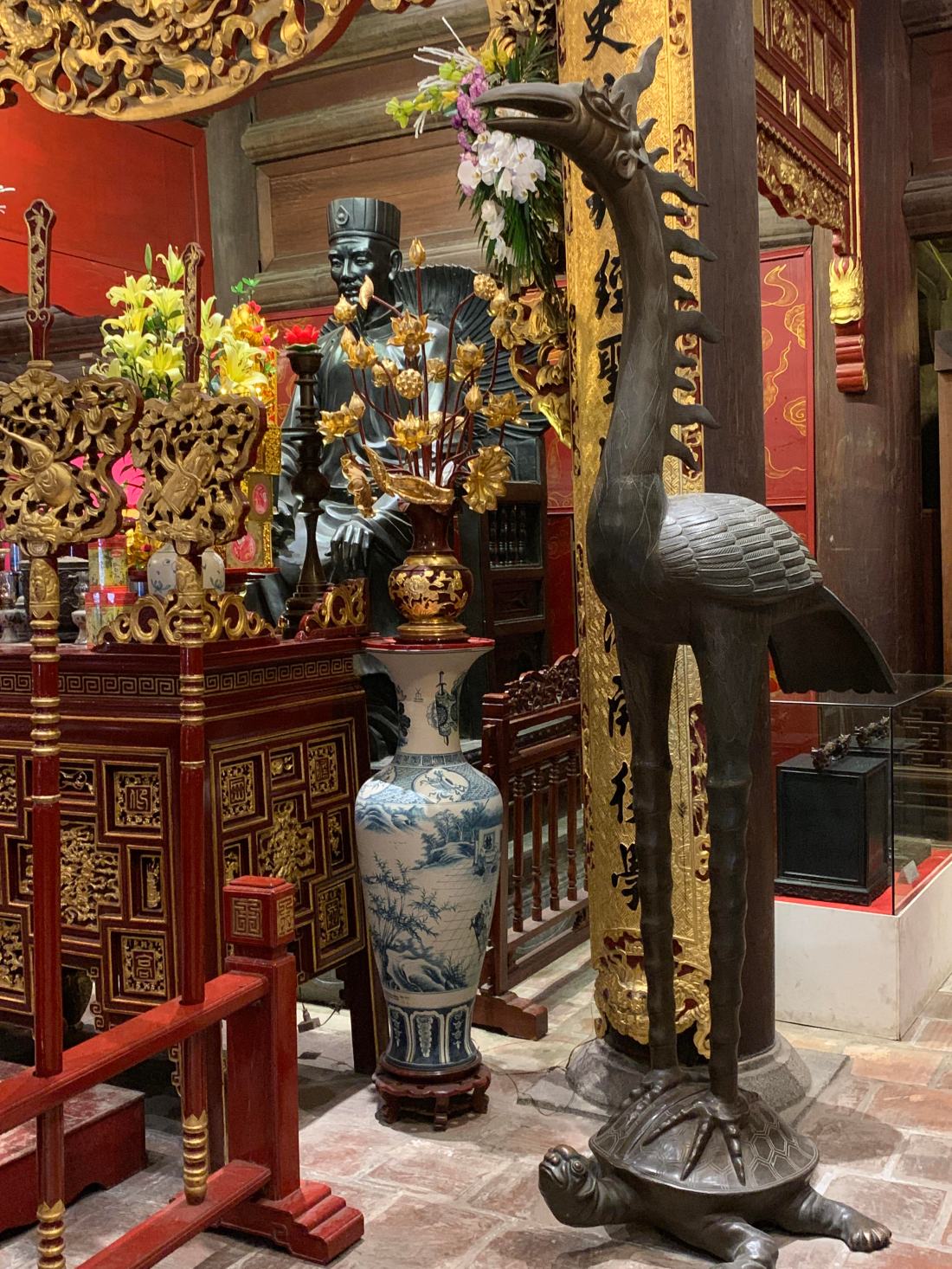
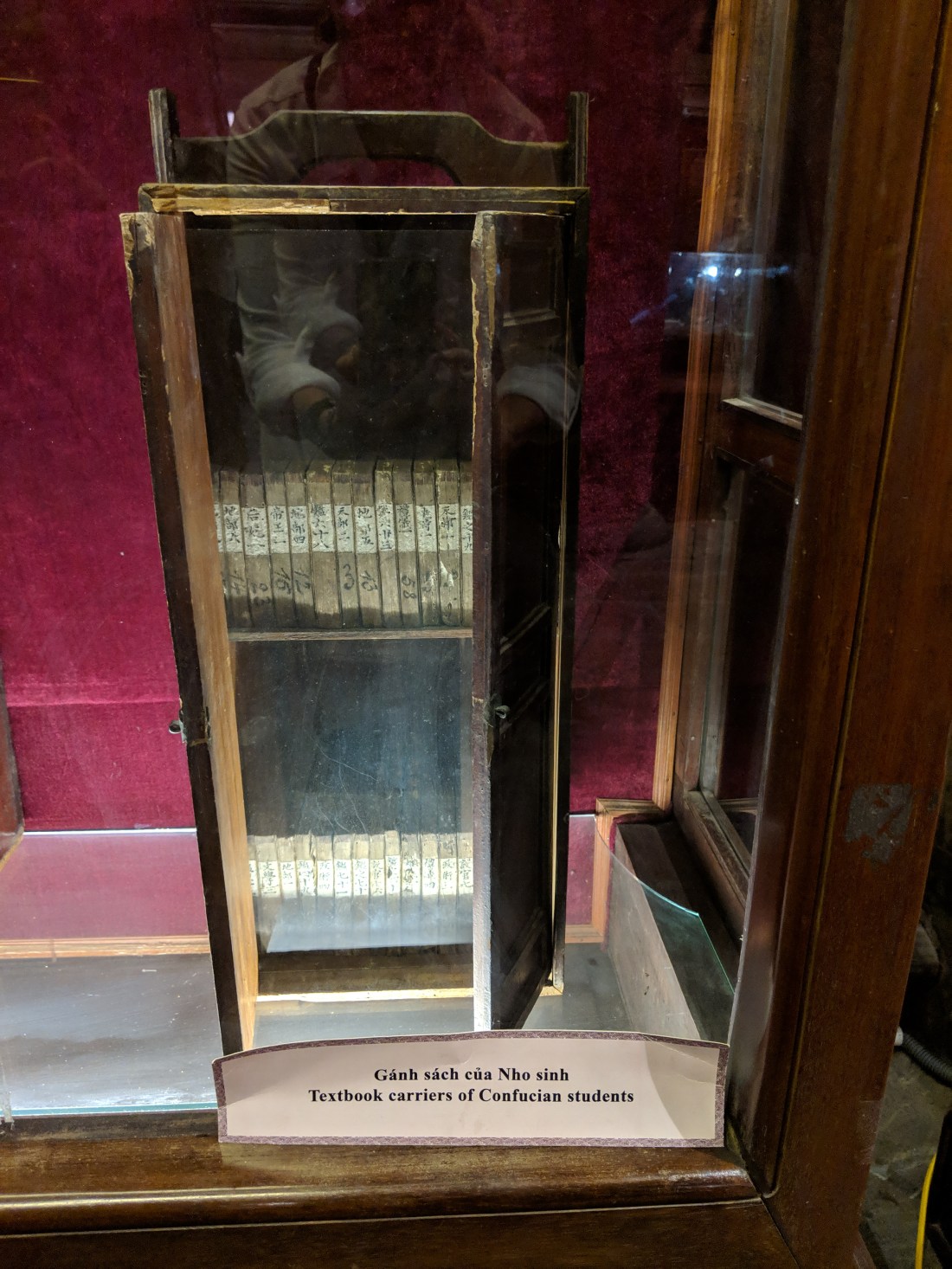
Next we went to the Temple of Literature, the oldest university in Vietnam.  It was built in 1070 by Emperor Ly and was dedicated to Confucius.  For centuries boys and young men came here to study and be examined for the job of mandarin.

IMG_2542IMG_2543

IMG_20190213_122019
each mandarin had a stone inscribed marking his successful completion of his doctorate degree
IMG_20190213_122035
the university courtyard
IMG_20190213_122650
temple to  Confucius

IMG_2569

IMG_20190213_125029

After lunch we went to the Museum of Ethnology.  Vietnam’s people are comprised of 54 different ethnicities.  Currently 86% are Viet, the other 53 minorities make up the remaining 14% of the population.  We spent several hours in this museum studying the migrations of the different groups, who they descend from, the differences in their cultures, languages, and customs.  I have mentioned some before like the Champs that originated in India, built temples at My Son, then migrated to the South.  Over the next couple of weeks we were to visit several more different ethnic minorities, so we spent time in this museum getting a general understanding.  Within certain groups, say Hmong or Tai or Dao, there are subgroups.  Each subgroup has the same language and architecture for their homes as their group, and live in the same general areas, but differ in clothing and have some cultural differences such as rituals for things like weddings and funerals. The subgroups are designated by the color that dominates their clothing, ie Black Hmong wear predominantly black clothes, Red Dao mostly red clothes, etc.

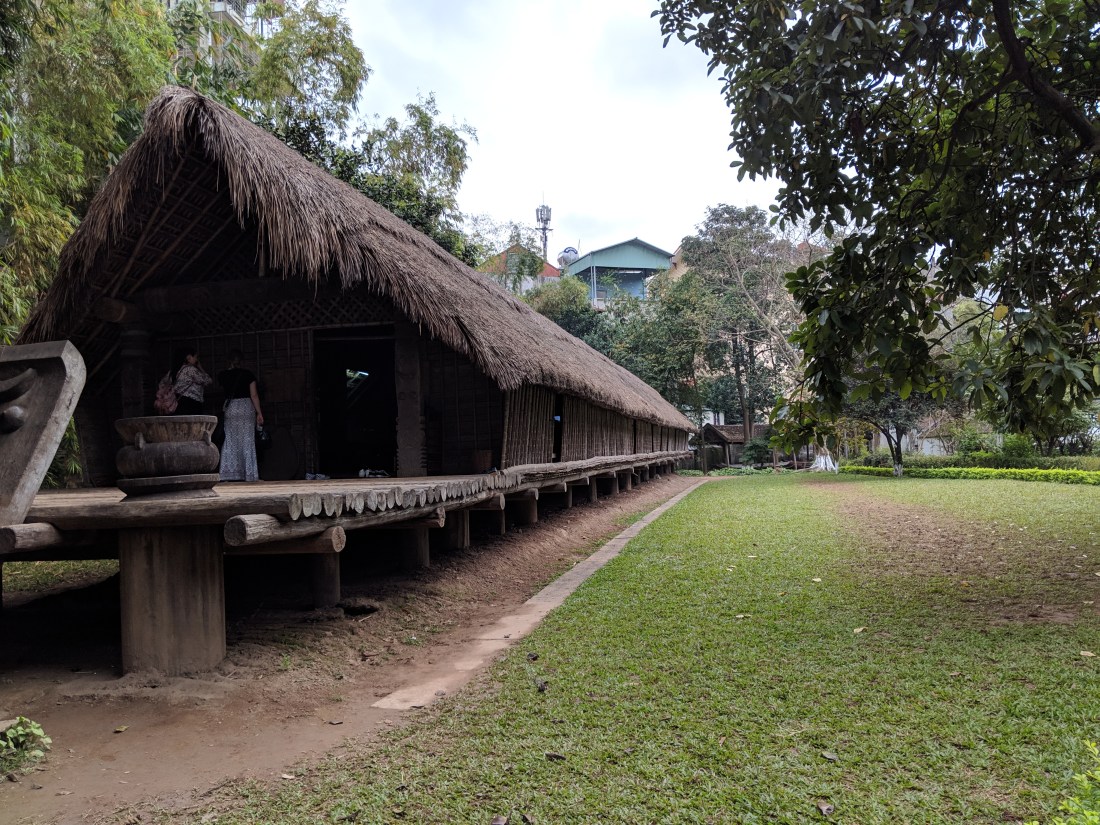
Outside were homes from various tribes donated and moved to the museum.  I am including only a few here, but note the hugely different architectural styles based on culture, climate, and other factors.

IMG_20190213_161734
An Ede home

IMG_20190213_162337

IMG_20190213_162530
a Hmong home

IMG_20190213_162701

IMG_20190213_163344
a Hani house

IMG_20190213_163419IMG_20190213_163448

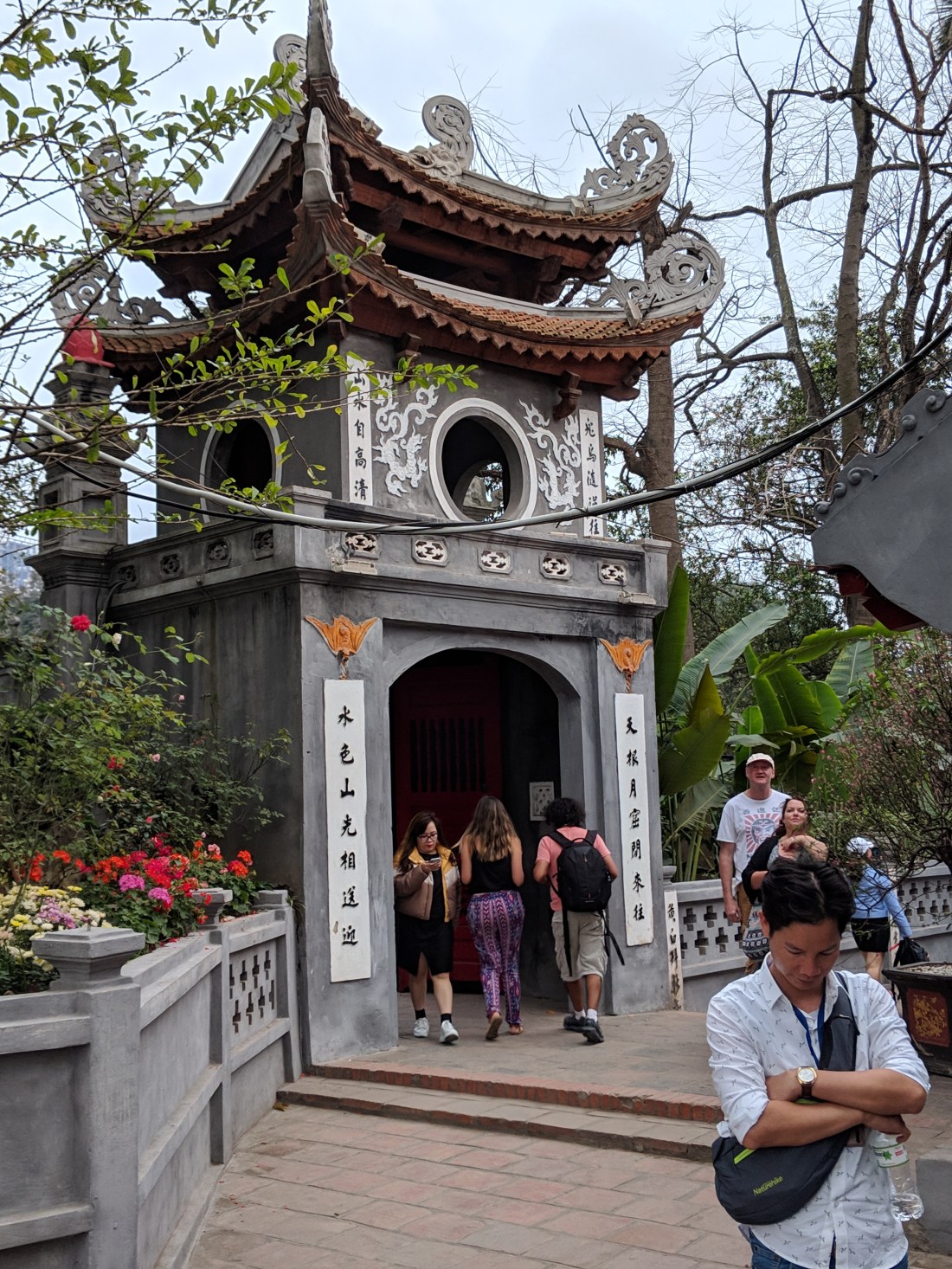
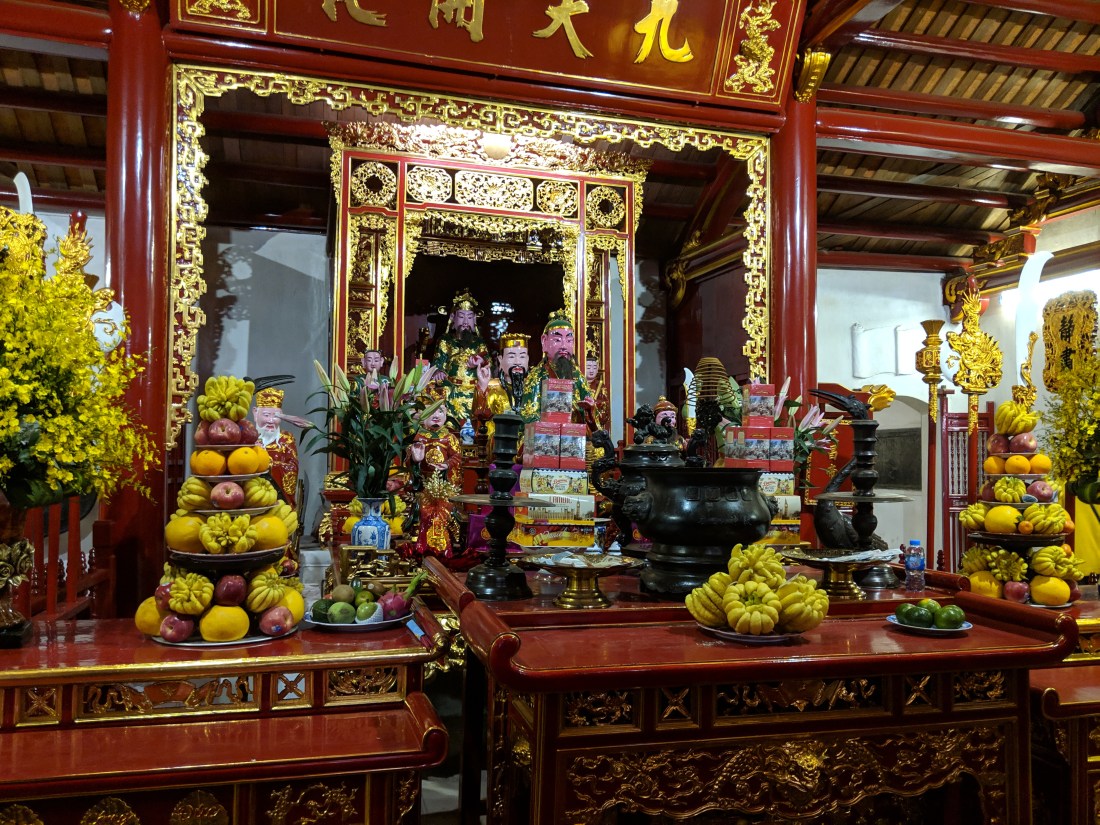
Finally on this exhausting day, we visited Ngoc Son Temple built in the 19th century on Hoan Kiem Lake, right on the edge of Hanoi’s Old Quarter.  The temple is for the worship of Tran Hung Dao, who defeated the Nguyen army in the 13th century and is now considered not only a hero, but the father of science.  Parents go here now routinely to pray that their children do well on their science tests and studies.

IMG_20190213_173231IMG_20190213_172649

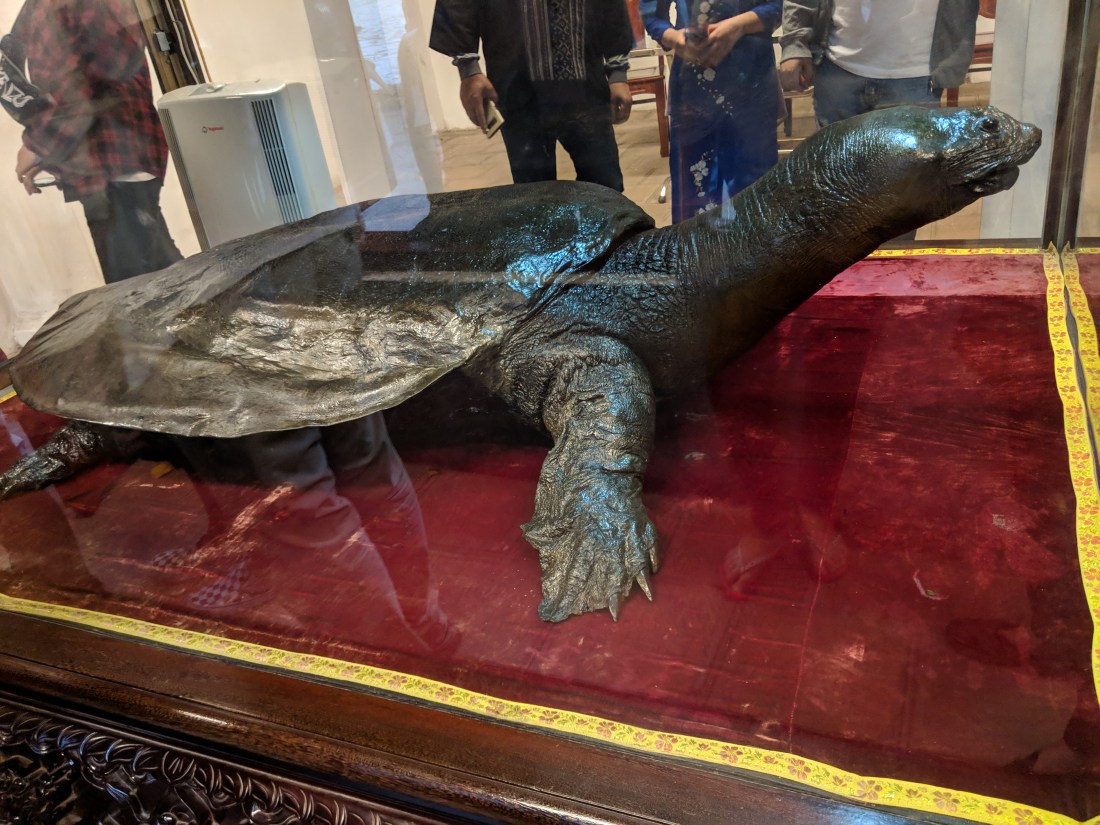
The lake is named for the legend of the God Turtle who according to 15th century legend, floated to the surface while  King Le Loi was standing on a boat on the lake, and demanded the king  return the sword lent to him by Long Vuong to conquer the invading Ming army.  The king gave the turtle the sword, and the turtle dived with it to the bottom of the lake.  Unfortunately, the turtles are now extinct in the lake due to pollution.

IMG_20190213_173500.jpg

IMG_20190213_175549
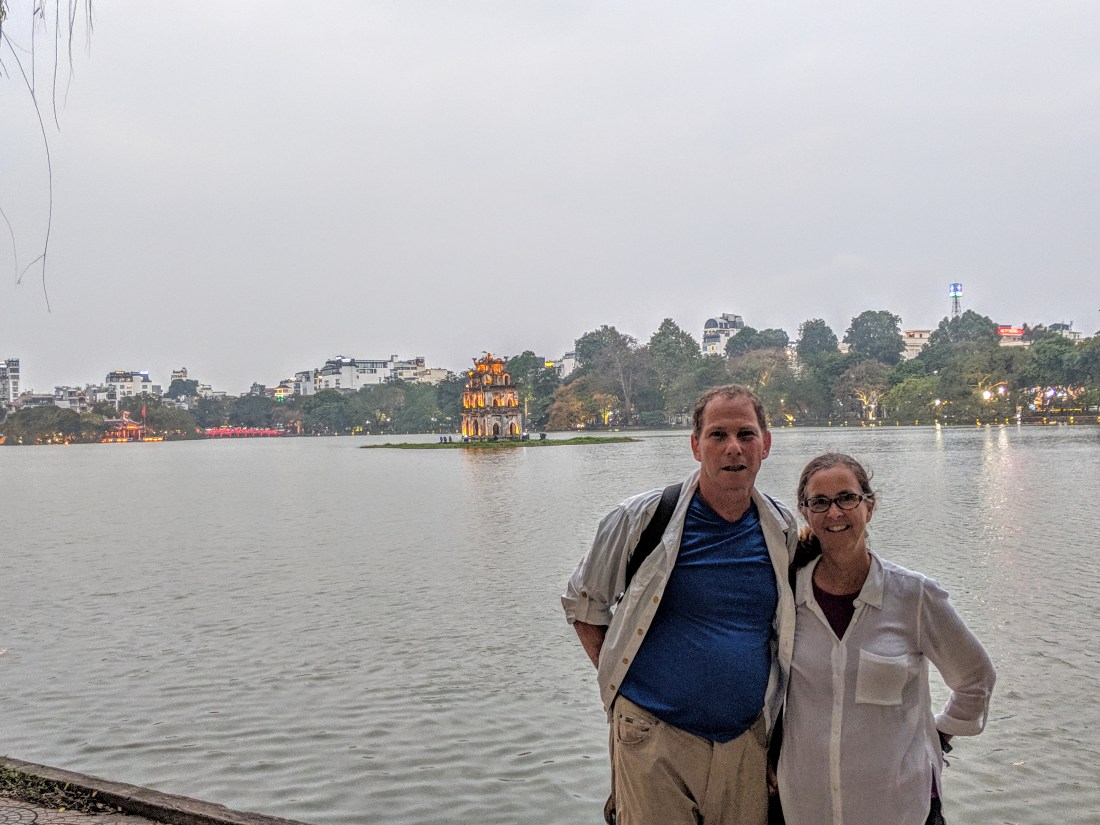
walking around the lake looking tpward the temple area at dusk

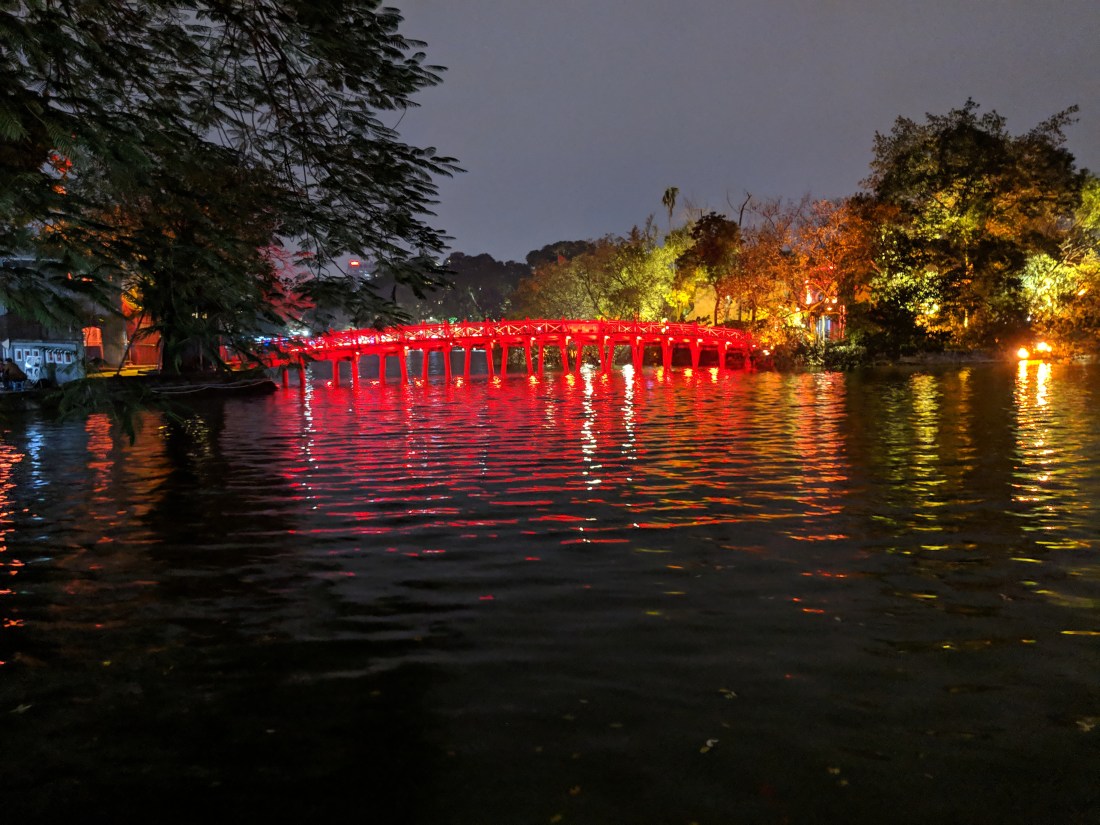
And Hanoi, like all cities, looks best at night.

IMG_20190212_184304IMG_20190212_184314

After this very long day, we headed to the train station.  At 9 pm we boarded a train headed for Lao Cai.  This was a first adventure sleeping on a train for both of us, and was actually more pleasurable than expected.  (I guess it was not that hard to sleep after such a long day.)

IMG_20190217_210228.jpg

We were awakened at 5:30 am for our 6 am arrival.  We drove about an hour from Lao Cai to Sapa for an early breakfast.  We then drove into the mountainous area where we were met by our local guide,  Tung, who is Black Hmong. Tung is 21 and has 2 sons; the older is in kindergarten.  She was “sold” for a couple of chickens, a pig, and some money, to her husband’s family in a neighboring village at the age of 16.  Their parents knew each other from community events.  She is the 8th of 10 but plans to have no more children of her own.

IMG_2590

We hiked into the mountains to visit a couple of the Black Hmong villages. Our first was Sin Chai, located right at the foot of the Hoang Lien mountain range. Notice the terracing in the planted fields. which is typical throughout this region.  Terracing is important to collect water for the crops, negating the need for irrigation, and also to prevent soil erosion due to run-off.

IMG_20190214_084034IMG_2602

IMG_20190214_083119
typical Hmong home
IMG_2594
a sure sign of Spring!

IMG_2598

IMG_2607
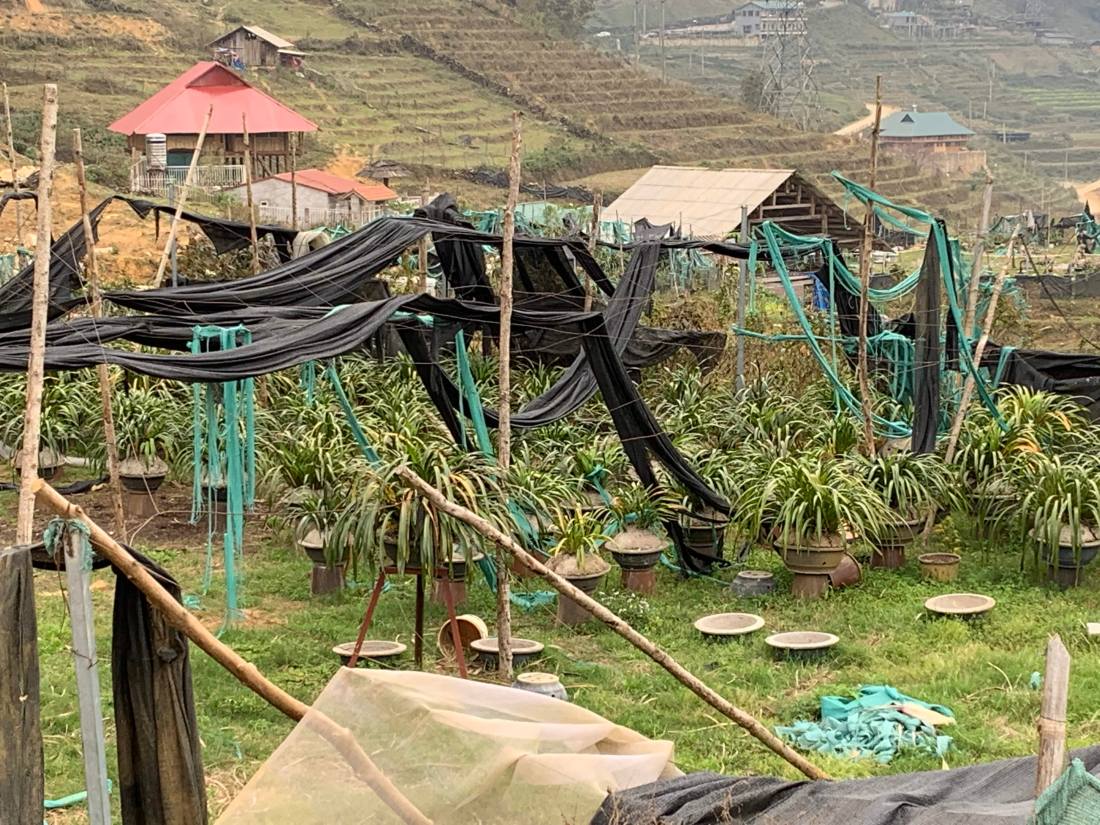
an orchid farm
IMG_2608
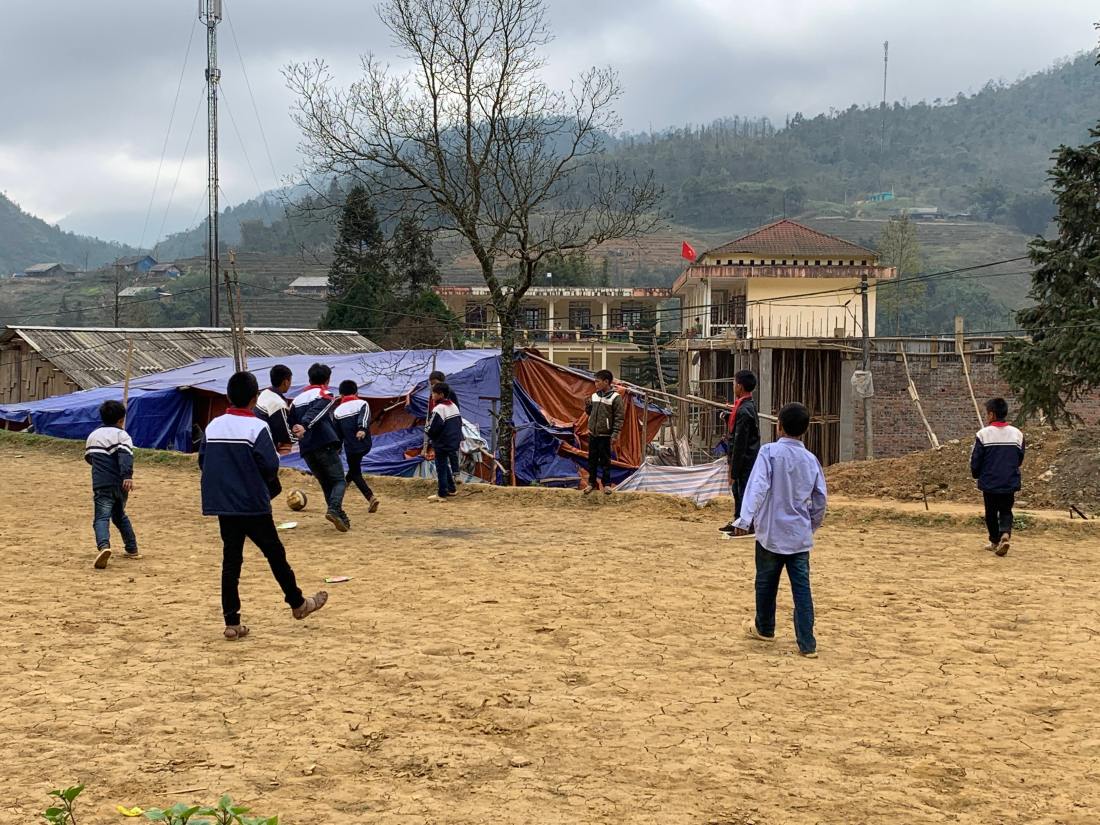
local ball field

IMG_2620

IMG_20190214_083703
that’s a pig in front of the primary school
IMG_20190214_085220
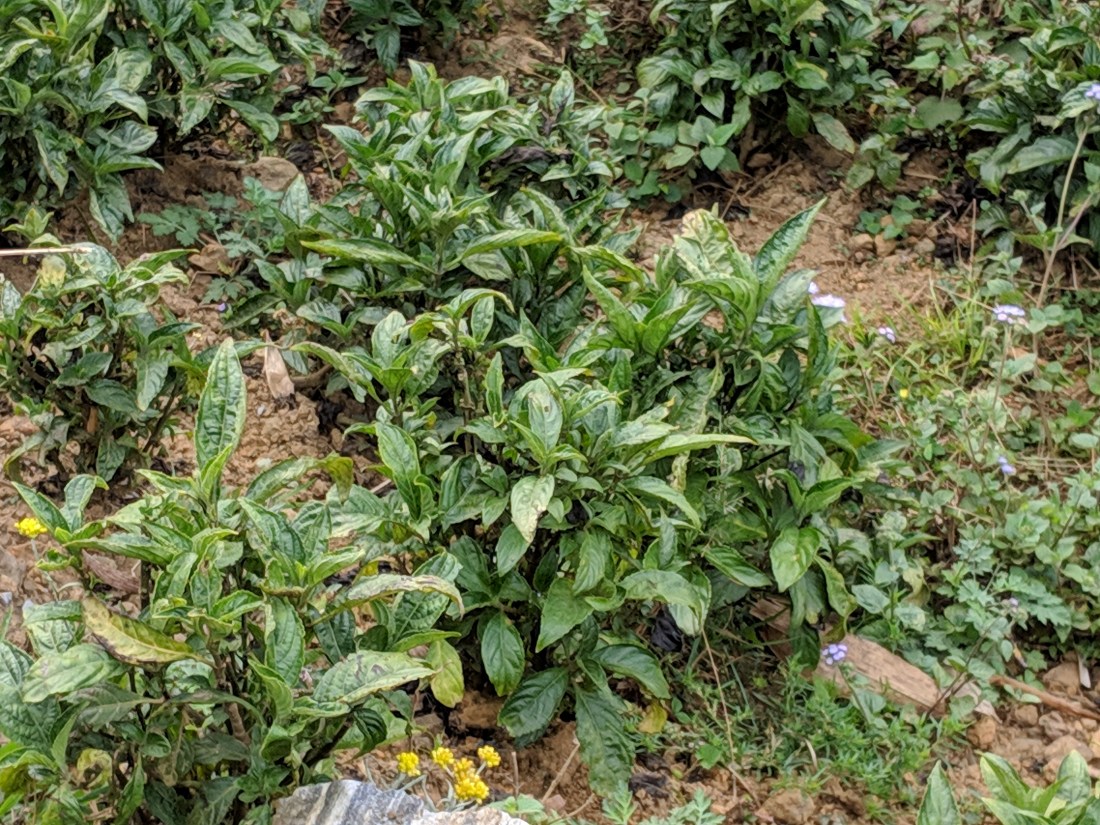
this is the plant used to make the indigo dye for the black clothes of the Black Hmong
IMG_2609
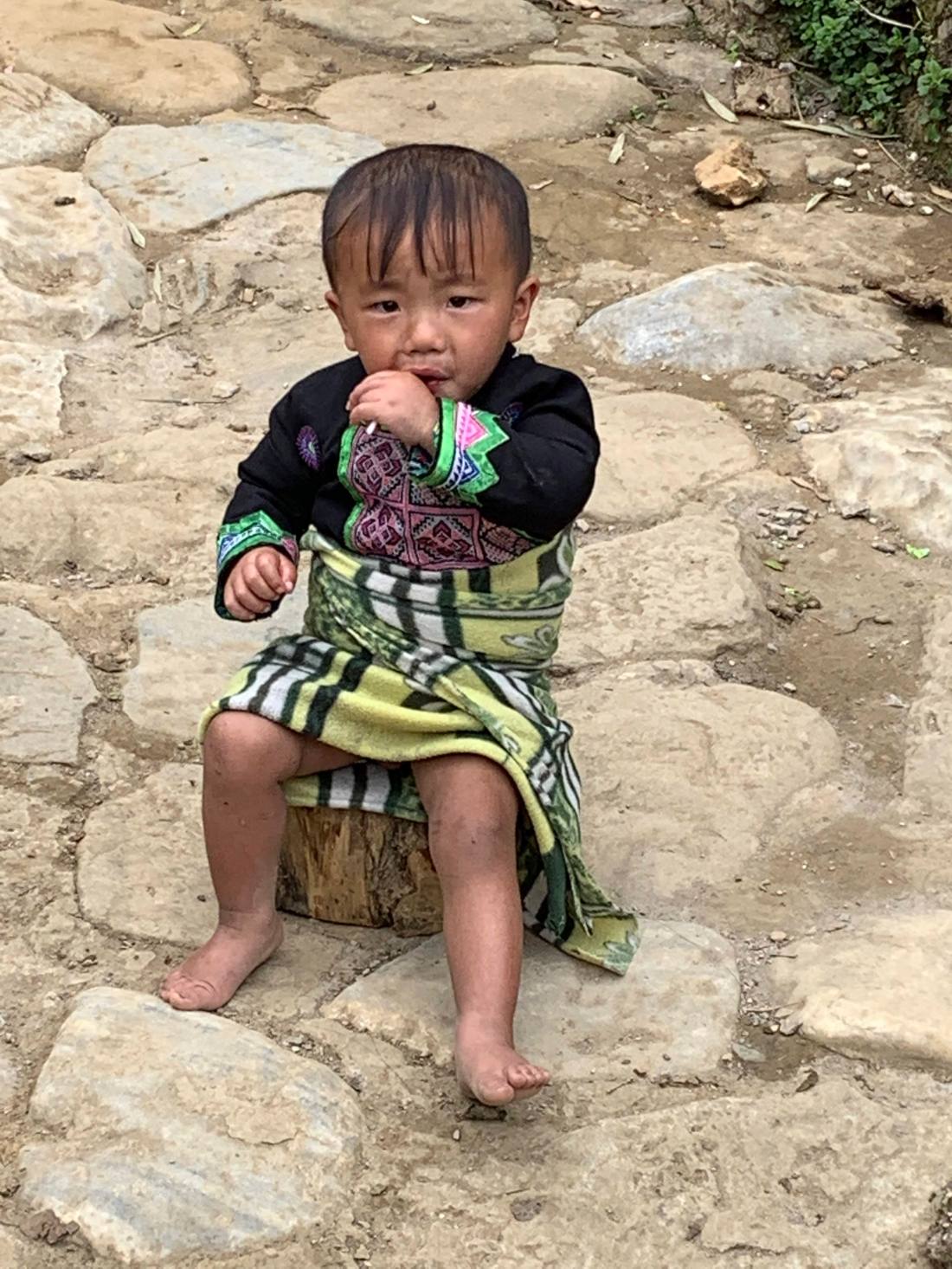
traditional dress of some of the different tribes

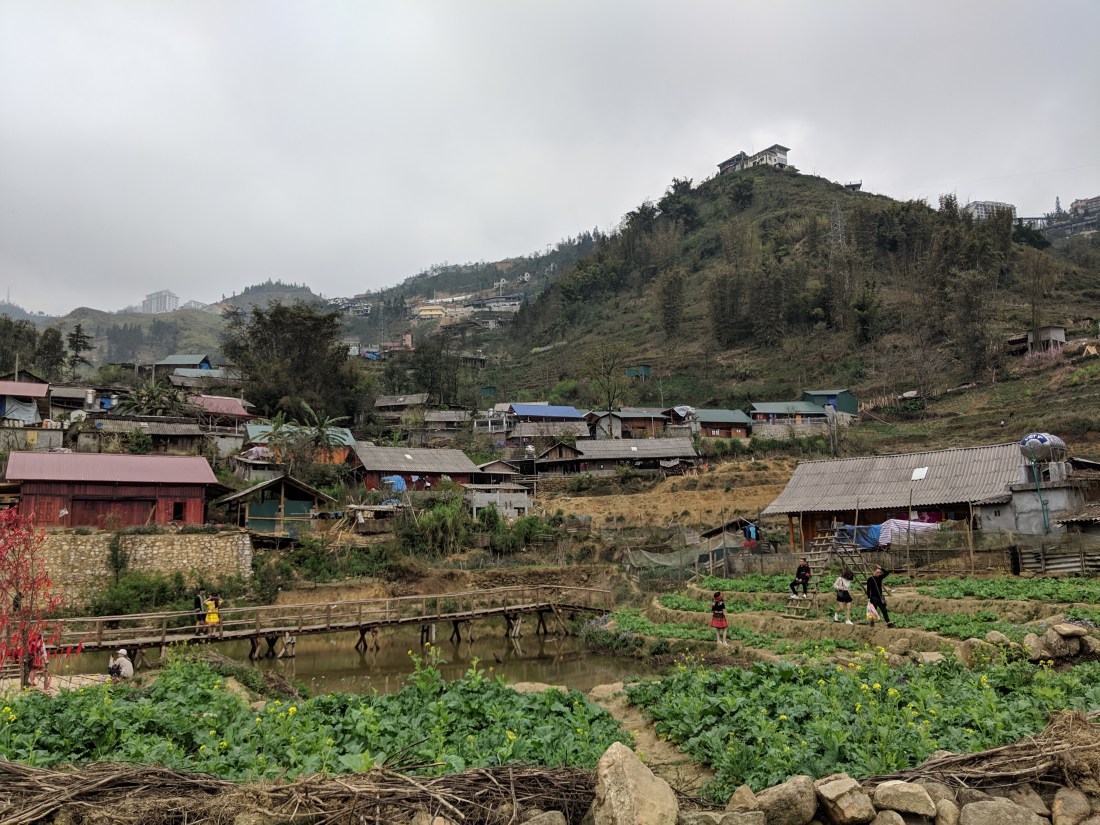
We then trekked up a mountain trail, then down a steep, narrow set of steps into Cat Cat Village, also Black Hmong.  This area has developed into a tourist destination in the last few years.

IMG_2630

IMG_20190214_094633IMG_2642IMG_20190214_095638IMG_20190214_095747

IMG_2636
the running water is moving the lever up and down to grind rice 
IMG_2657
could not resist adding this photo

Villagers demonstrate some of their traditional crafts and arts for the tourists.

IMG_20190214_100219

IMG_20190214_100527
she is grinding hemp to soften it for clothing
IMG_2647
she is spinning the hemp into a thread for weaving
IMG_2650
Batik: using the stencil guide, she applies wax , the material is then soaked in indigo dye for 5 days, then dried, then the wax melted off.


IMG_20190214_101024
we were fortunate with our timing to the village and were treated to a performance of local dance
IMG_20190214_101250
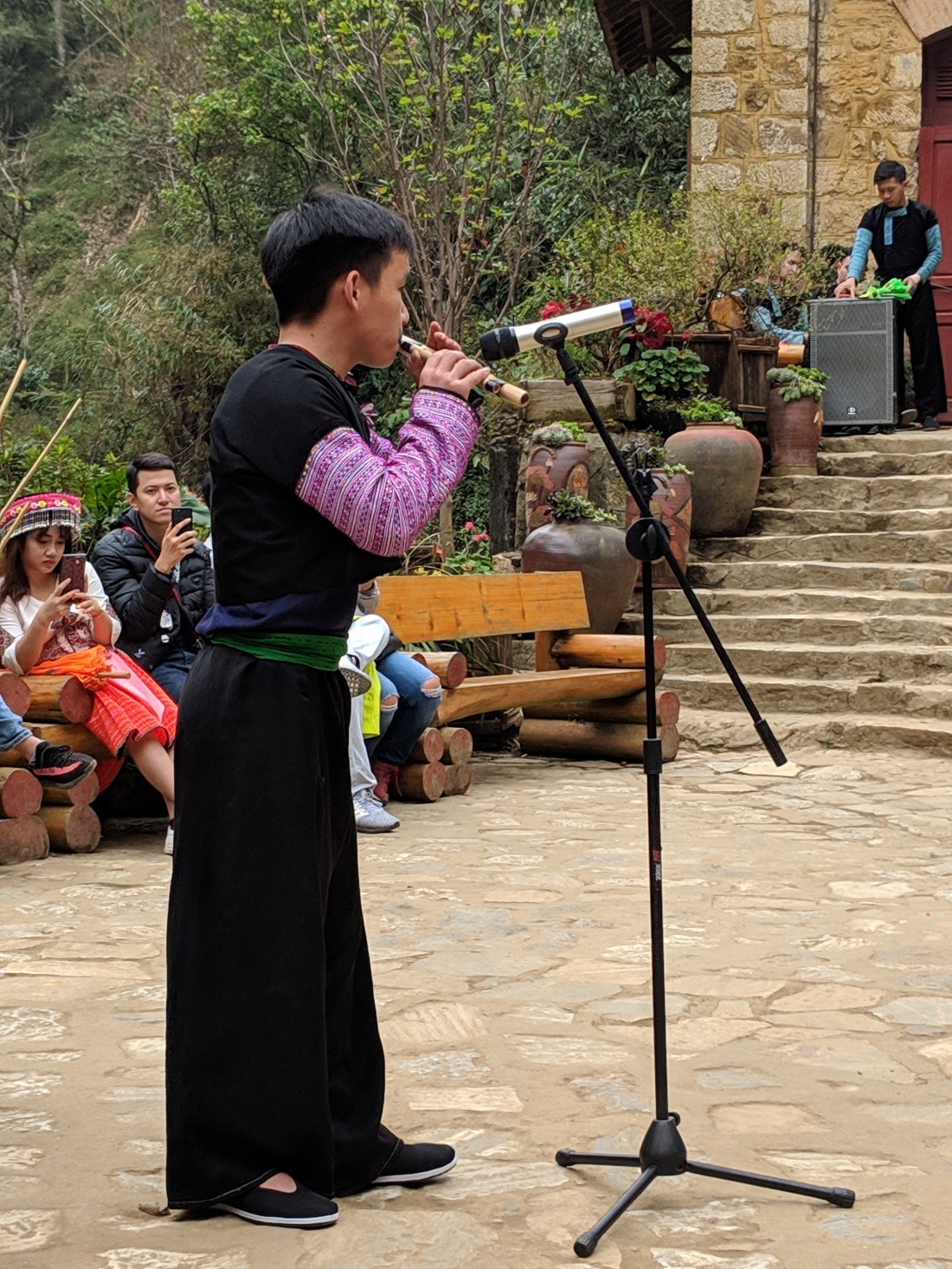
a traditional side blown bamboo flute

It was at this point that Tung announced we had a 2 hour trek to reach our lunch destination.  Having been up since 5:30, we dug into our reserves and steamed ahead through some pretty steep inclines.  Tung kept exclaiming how “strong” we were (‘for a couple of old tourists’ went unsaid), but with a few rest stops at vistas along the way, we made lunch in 1 hour and 15 minutes!  We had trekked a total of over 7 km in the morning.

IMG_2645IMG_2676IMG_20190214_102852

IMG_20190214_110742IMG_2689

IMG_2690.JPG

Our lunch destination was in Y Linh Ho Village, a Red Dao community.

IMG_2751.JPG

IMG_2685IMG_2687

IMG_20190214_114910
Our restaurant on top of the hill!

IMG_2699

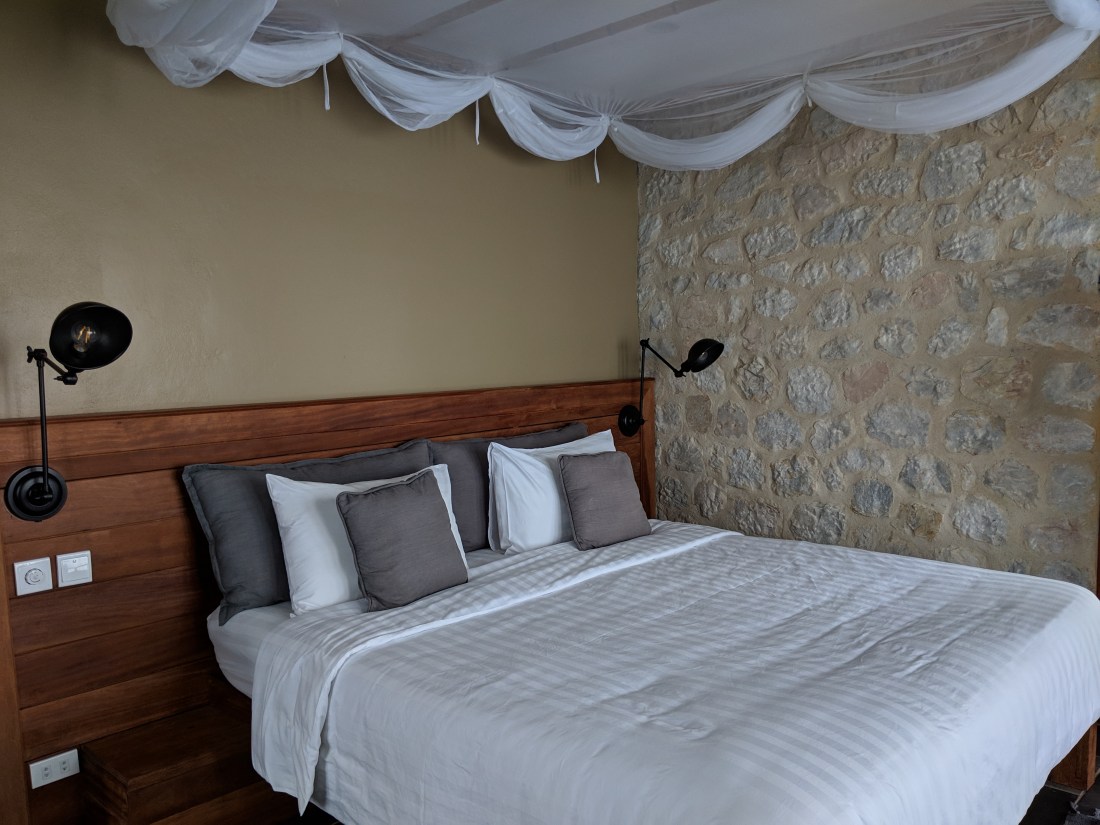
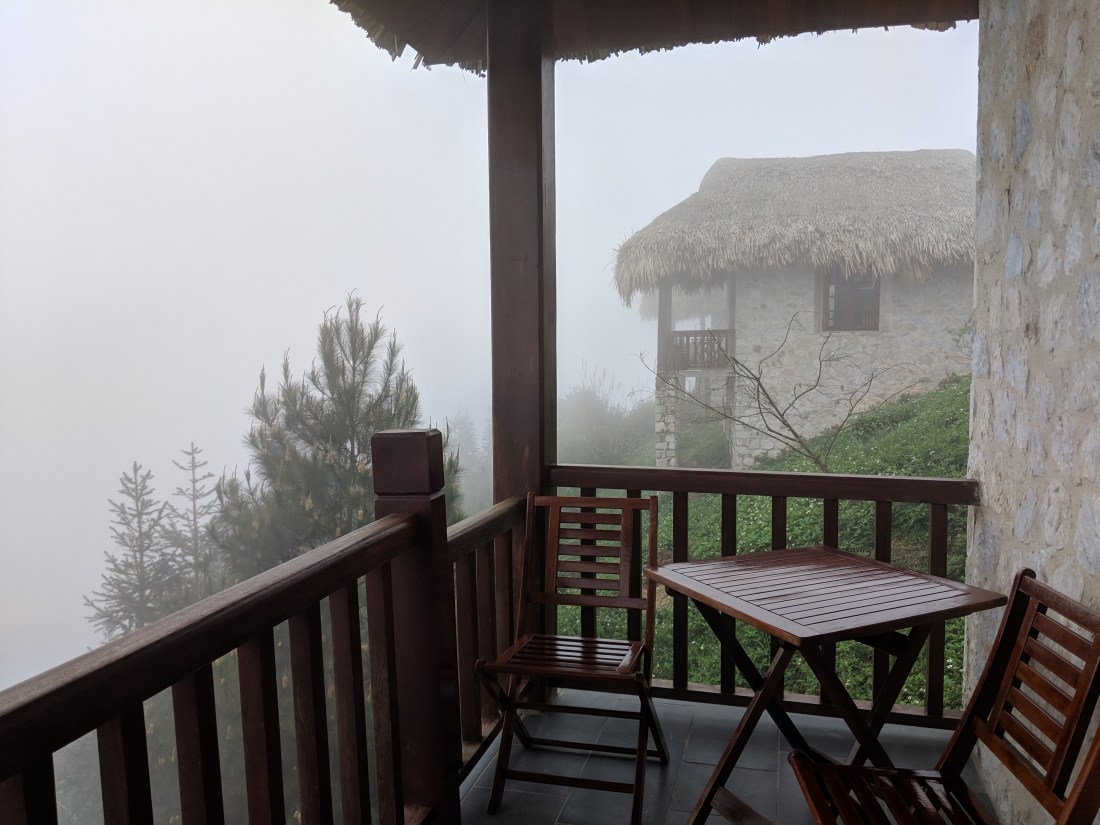
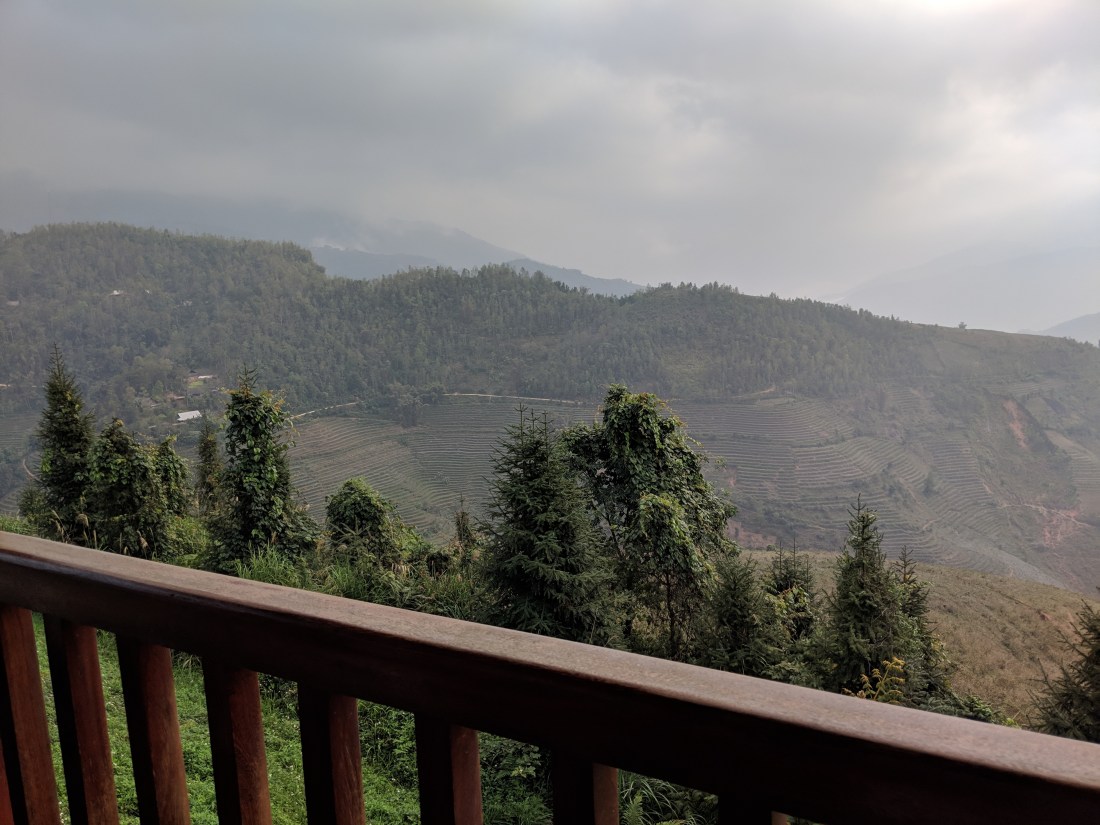
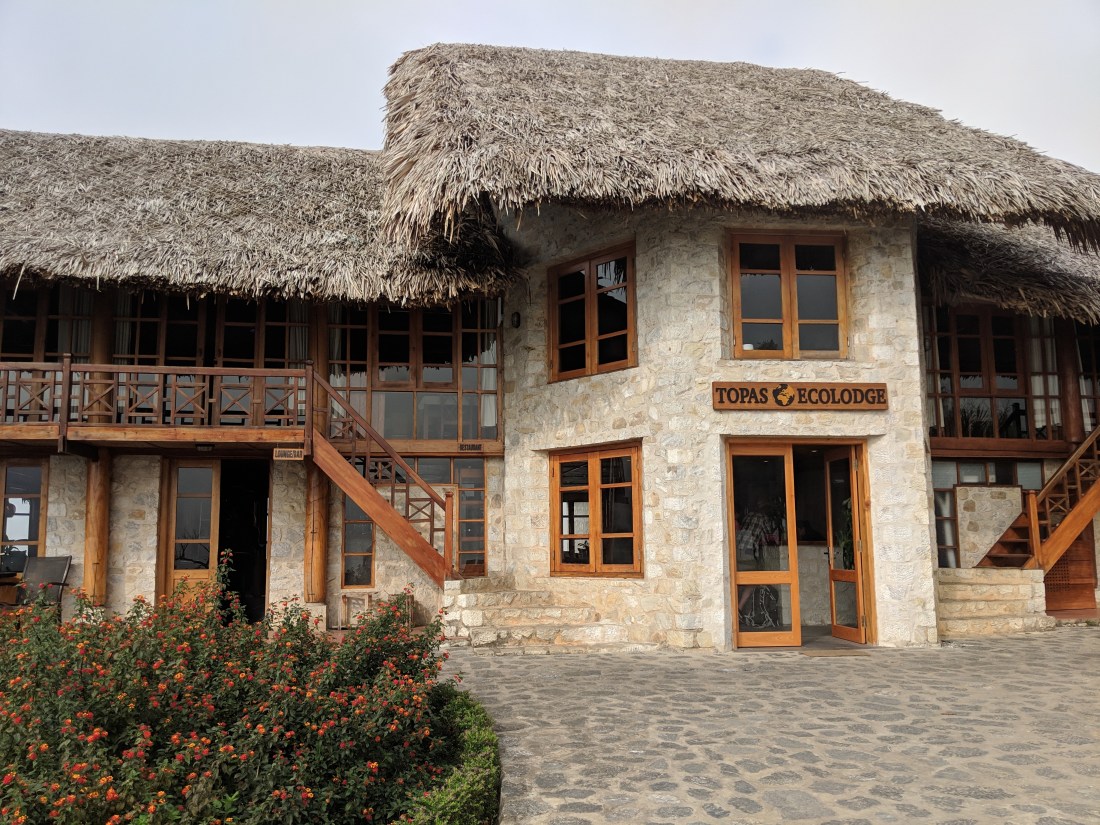
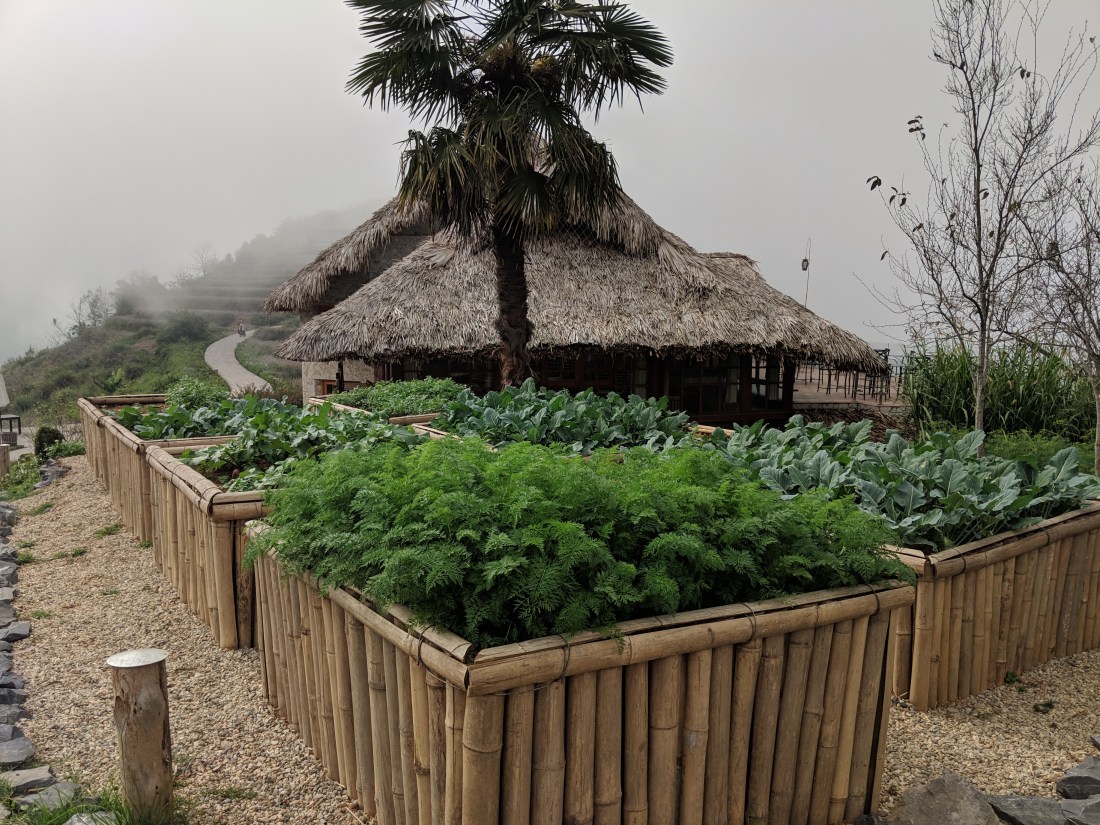
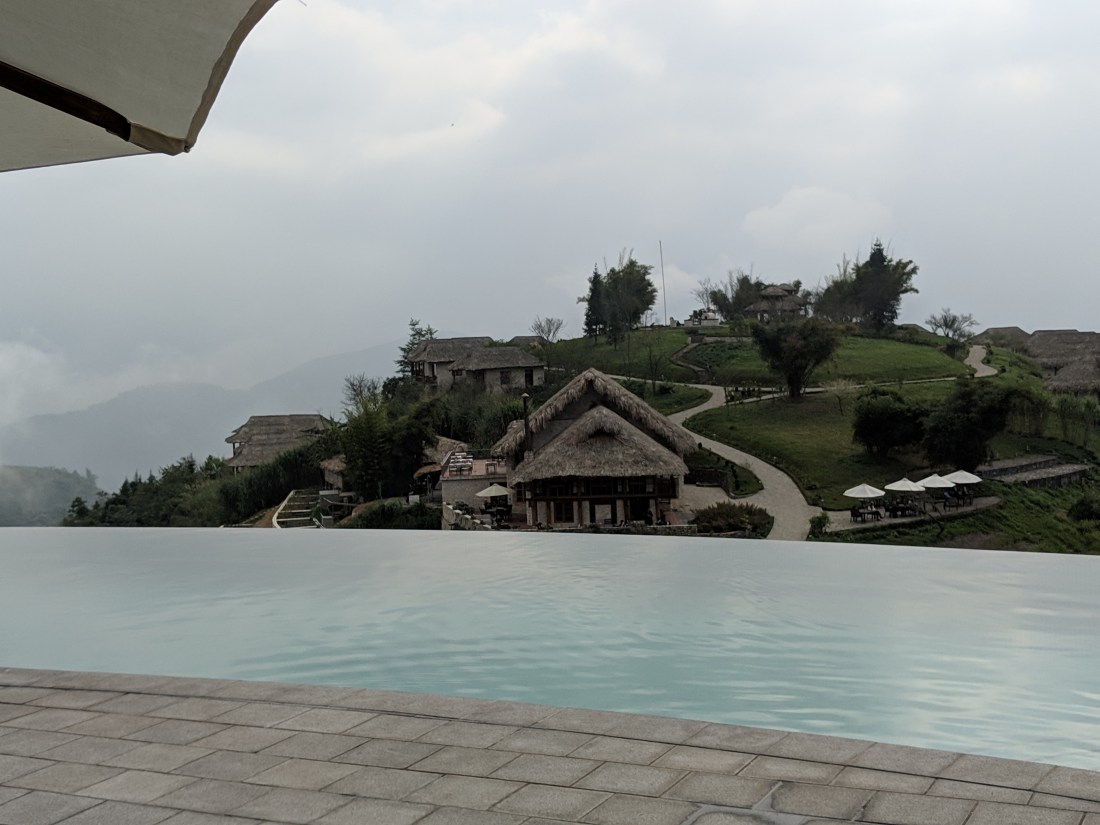
After a relaxing and delicious lunch, we drove about an hour and checked into Topas Ecolodge, a National Geographic “Unique Lodge,” and that it is!  Because of the altitude: nearly 5,000 feet, the mountaintop was shrouded in mist through most of our stay, making the pictures not nearly capture the beauty of the place, but here are a few.

IMG_20190216_095019IMG_20190214_141106IMG_20190214_141217

IMG_20190216_083622

IMG_20190215_150540
reception and bar/lounge downstairs, dining room upstairs
IMG_20190215_150656
they grow almost all of their own organic produce, the rest plus meat and fish all locally sourced
IMG_20190216_090044
view from reception up toward pool and spa
IMG_20190216_095134
views from the infinity pool

IMG_20190216_095043

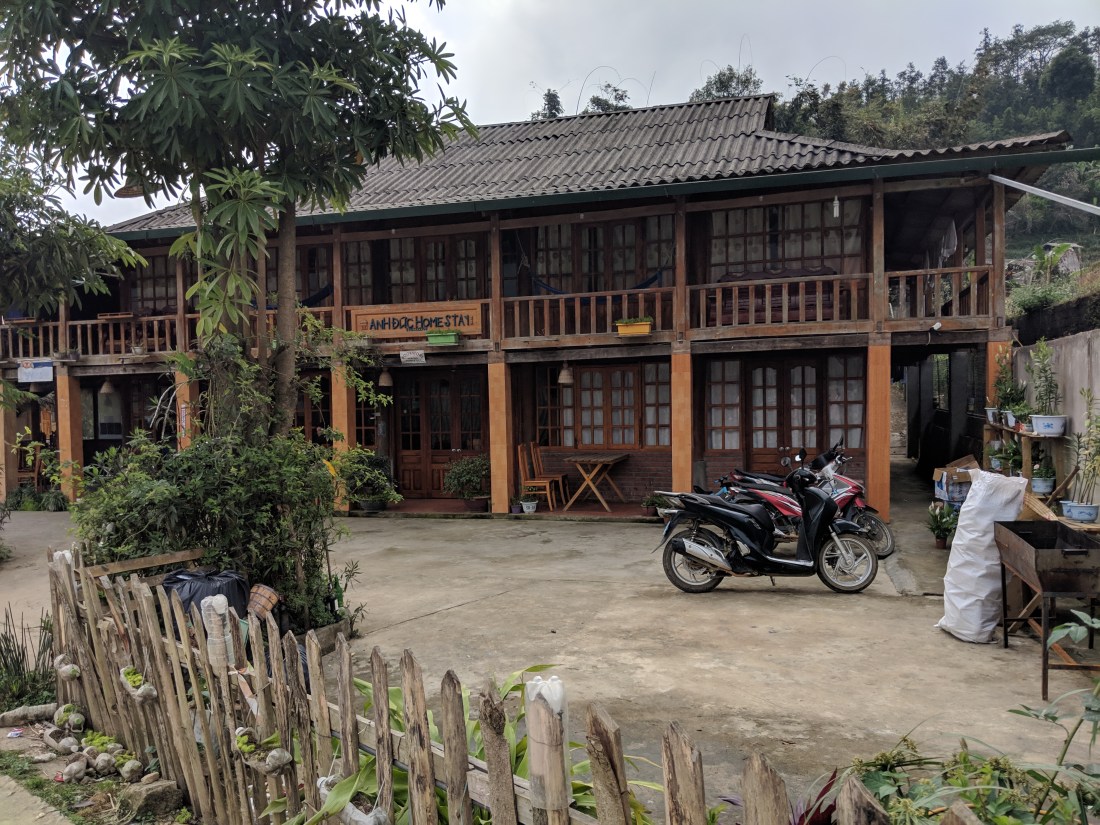
After a much needed rest, we were up and out early the next morning for another day of trekking, this time only 6 km.  We followed a small track and crossed the Muong River into our first village of the day:  Lao Chai, another Black Hmong Village. This is where Tung moved to live with her husband and his family.IMG_20190214_103023

IMG_20190215_105909
Kindergarten letting out 
IMG_20190215_110527
the primary school
IMG_20190215_113047
the secondary school

IMG_20190215_112509

IMG_20190215_112210
the building materials are the same as those yesterday: wood house with cement roof, but better quality because it is a more well-off community

IMG_20190215_112823IMG_20190215_112827

Continuing through rice terraces we reached the village of Ta Van of Giay people. Notice the different architecture to the home of the Giay: a thatched roof and more open-style home, often with a second story

IMG_20190215_113809

Tung tells us that between these 2 villages there are now 53 homestay options, almost all of them built in the last 5 years. Here are a few.

IMG_2716

IMG_20190215_112742IMG_20190215_112701

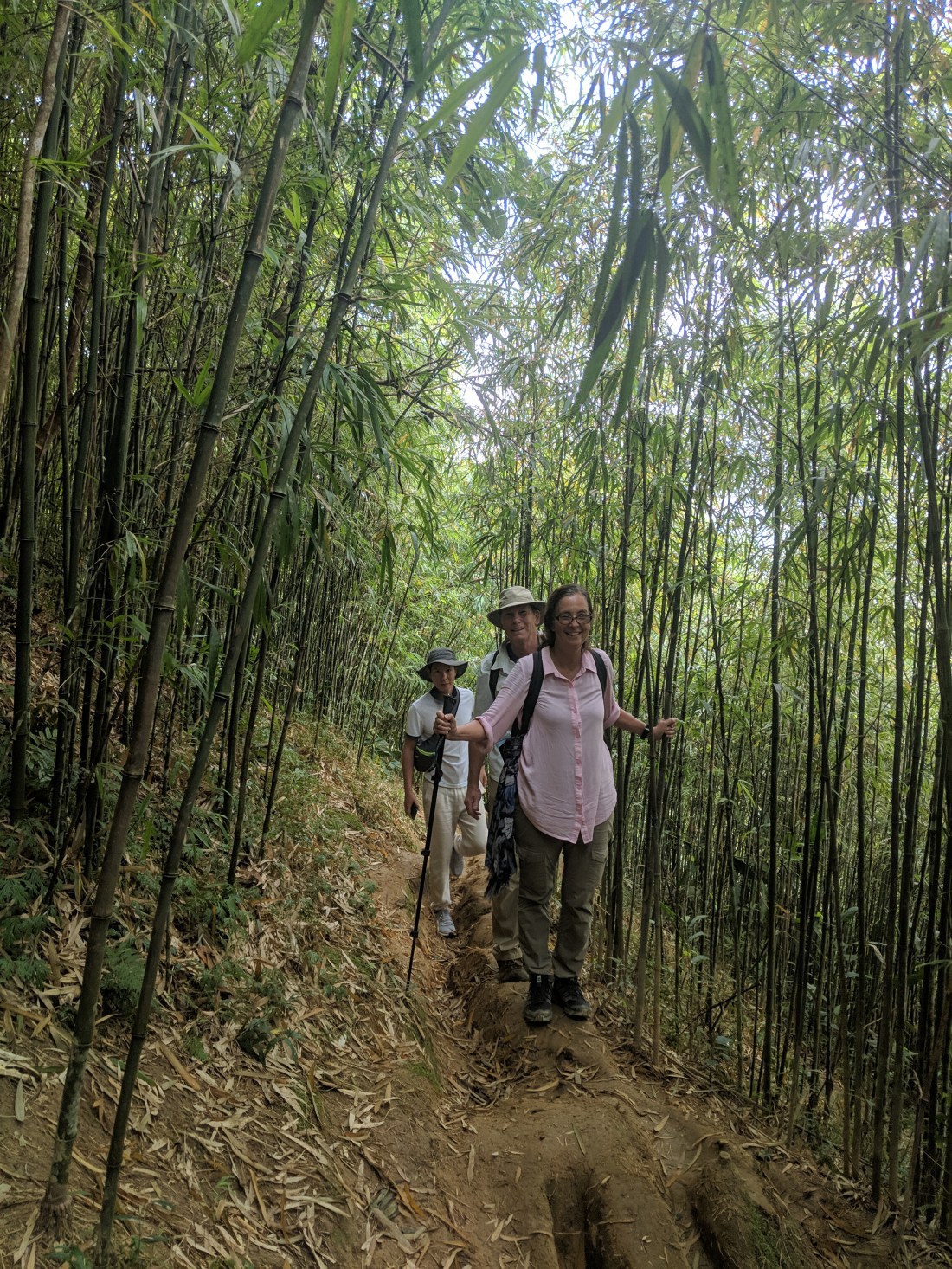
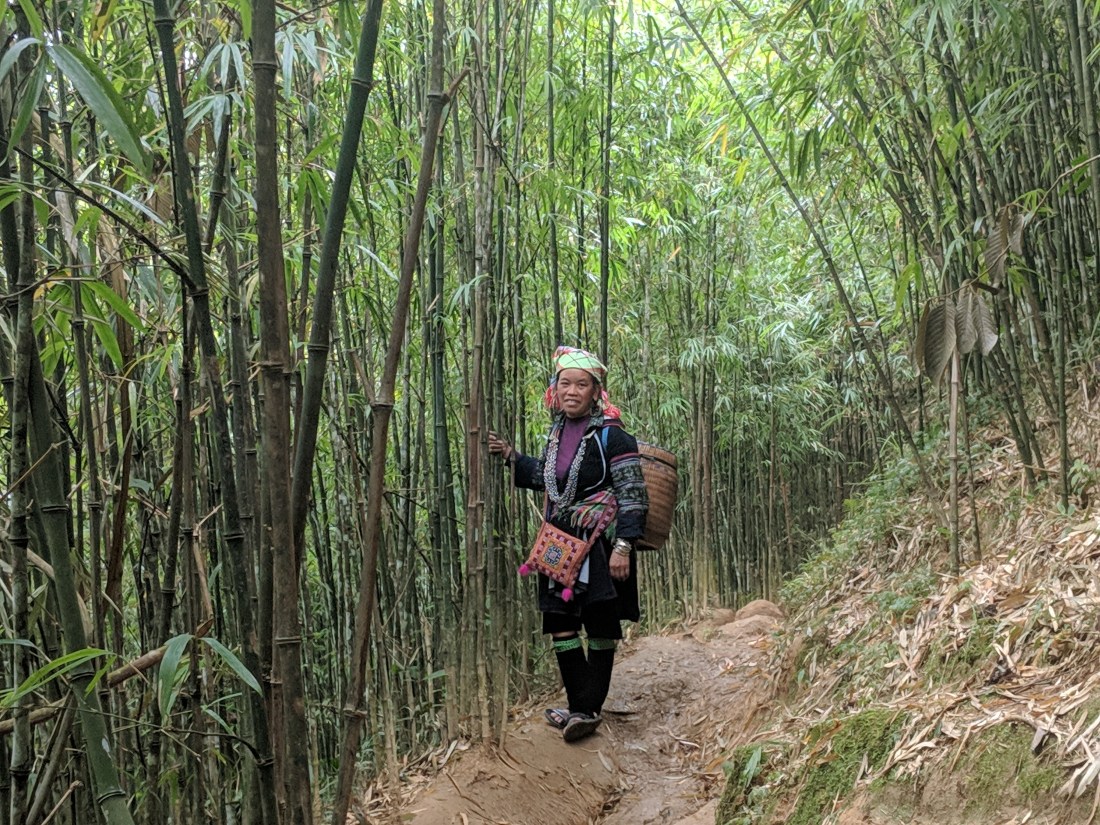
Our trek continued through a bamboo forest.  We had picked up a few friends along the way who insisted on helping me with my footing through some of the rougher spots.

IMG_2727IMG_20190215_125441

IMG_20190215_125525

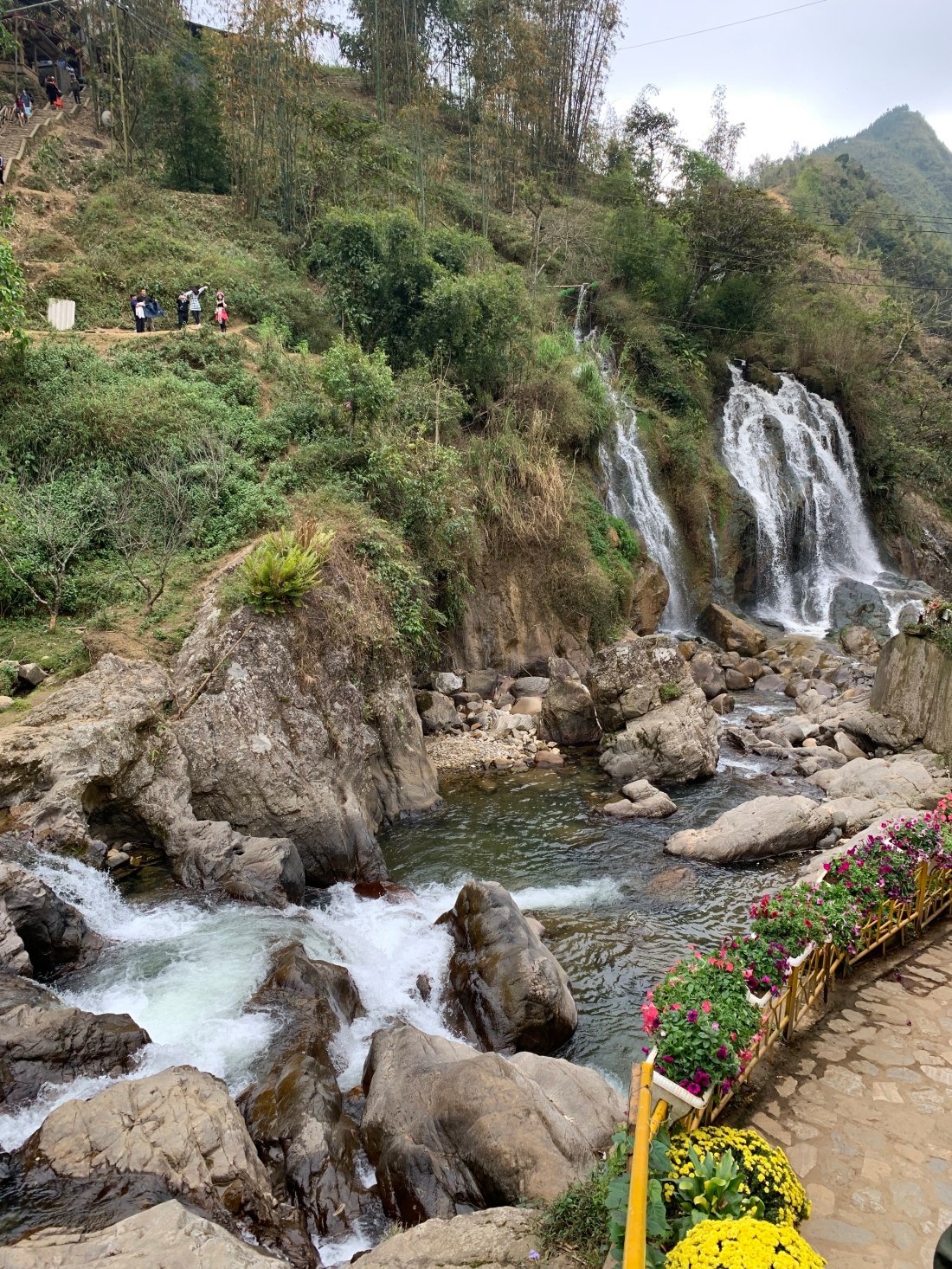
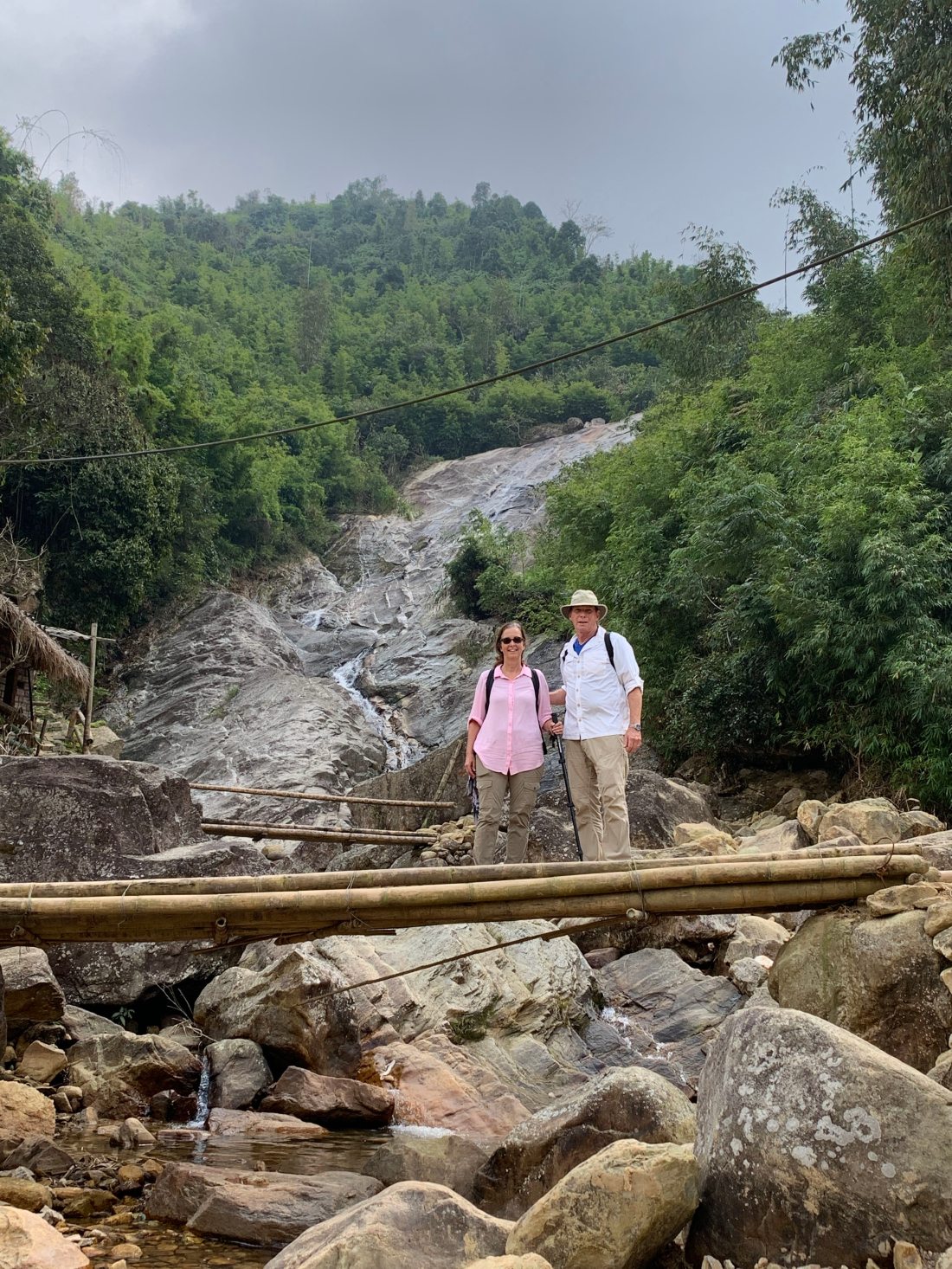
We came out of the bamboo forest to a waterfall and descended along it to the village of Giang Ta Chai, of Red Dao people. Note the difference in these houses: up on stilts and more open.

IMG_2736IMG_2739IMG_2708

It was time to say goodbye to my new friends, so I bought a hand made item from each of them.

IMG_20190216_105101IMG_20190216_105034

Then we had lunch in a local spot, not as elegant as the day before in setting, but every bit as delicious!

IMG_20190215_134501

Our final day was rainy – our first day of rain while touring in 3 months!  We had 2 while driving. So we took the hour long shuttle into Sapa town to be city slickers for the day.

IMG_2761IMG_2760IMG_2765IMG_2766IMG_2768IMG_20190217_104513IMG_20190217_105740

IMG_20190217_122136

IMG_20190217_110511

Then it was back to Lai Cao for the overnight train back to Hanoi.

IMG_20190217_210413


Da Lat, Vietnam (aka Dalat) Feb 10-12

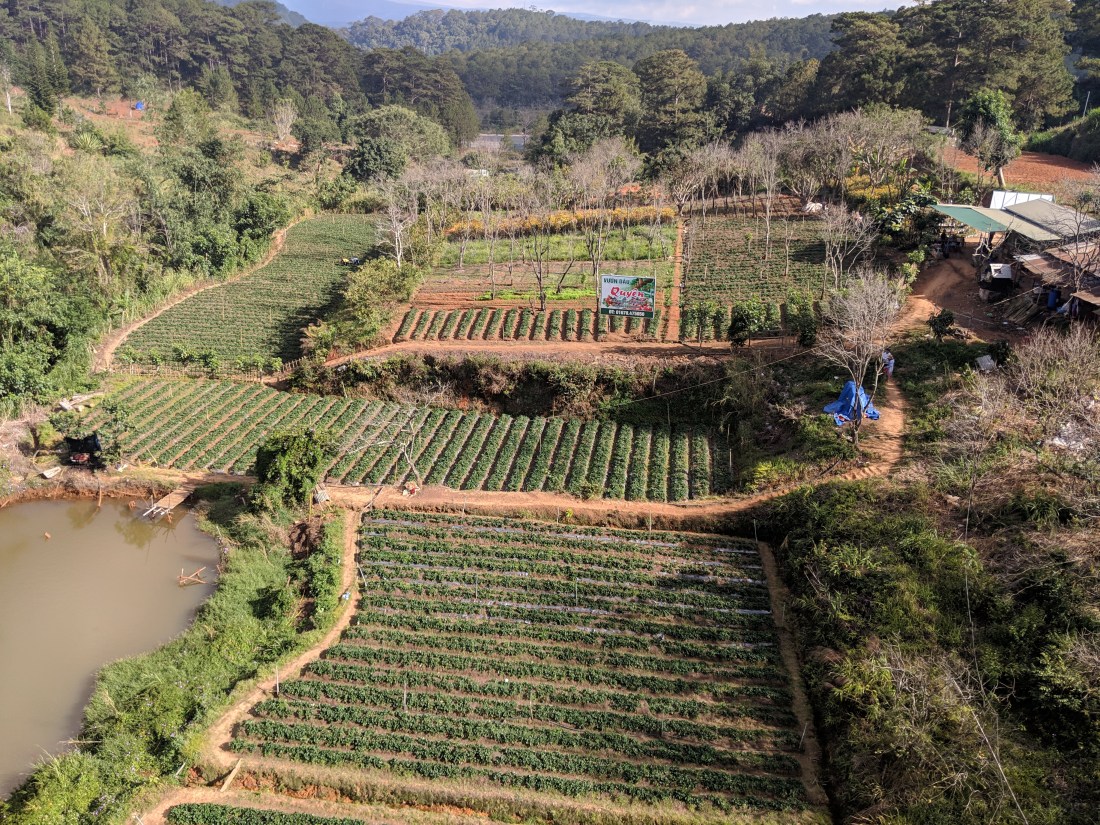
Dalat is located in the southern part of the Central Highlands region of Vietnam at an altitude of nearly 5,000 ft.  Its climate is cool compared to most of the rest of the tropical country, making it perfect conditions for the many pines that dominate the landscape as well as numerous flowers and vegetables.  It is known as both the food and flower capitol of the country as well as the most popular honeymoon spot.  It is a huge tourist destination for Vietnamese, but not a large Western tourist destination due to its relative inaccessibility, which is a shame, because it is absolutely beautiful.  It was originally settled and developed by the French at the turn of the twentieth century as a resort area.  They built villas on wide boulevards with parks, schools, and even golf courses, which are rare in SE Asia.

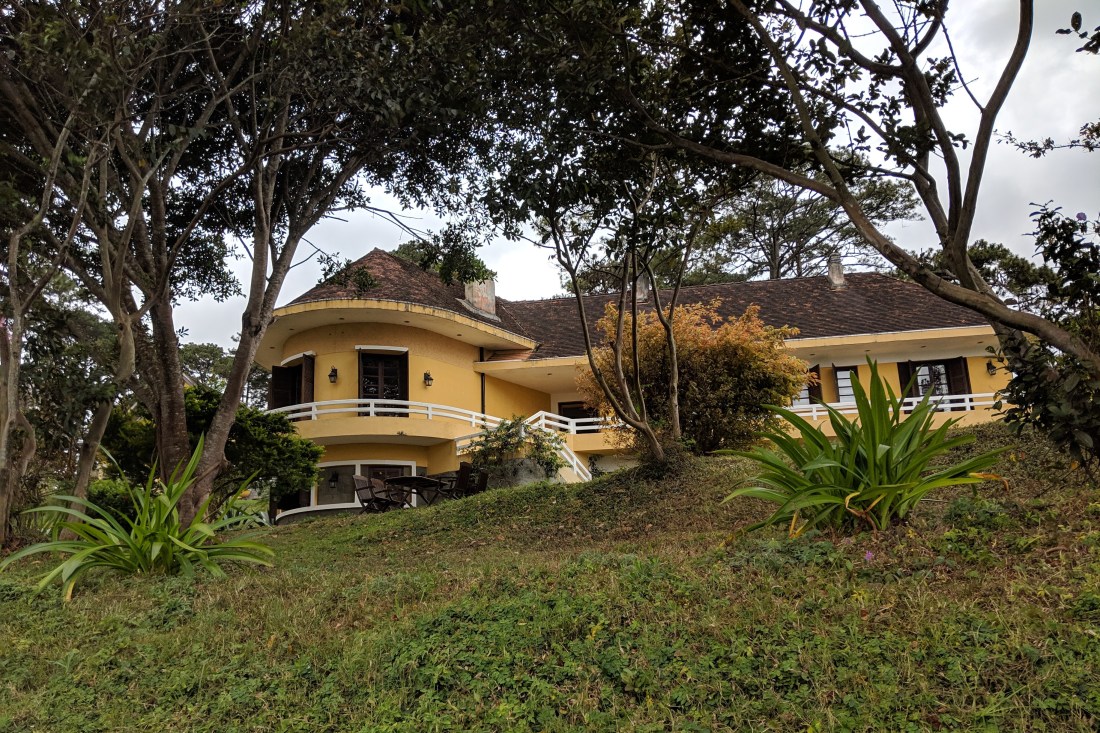
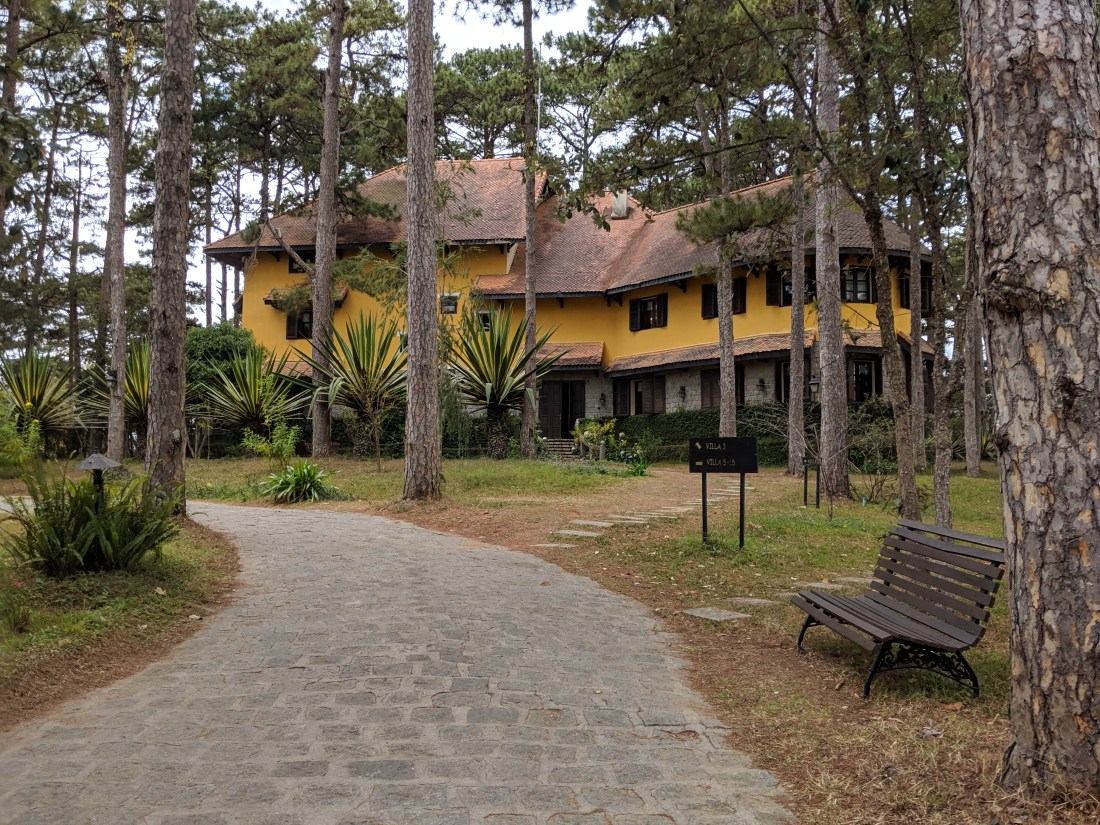
We stayed in a villa at a resort that took 17 existing villas that had once been a small French community, and restored them into absolutely stunning suites preserving their original charm while adding modern amenities.

IMG_20190212_104049IMG_20190212_104337

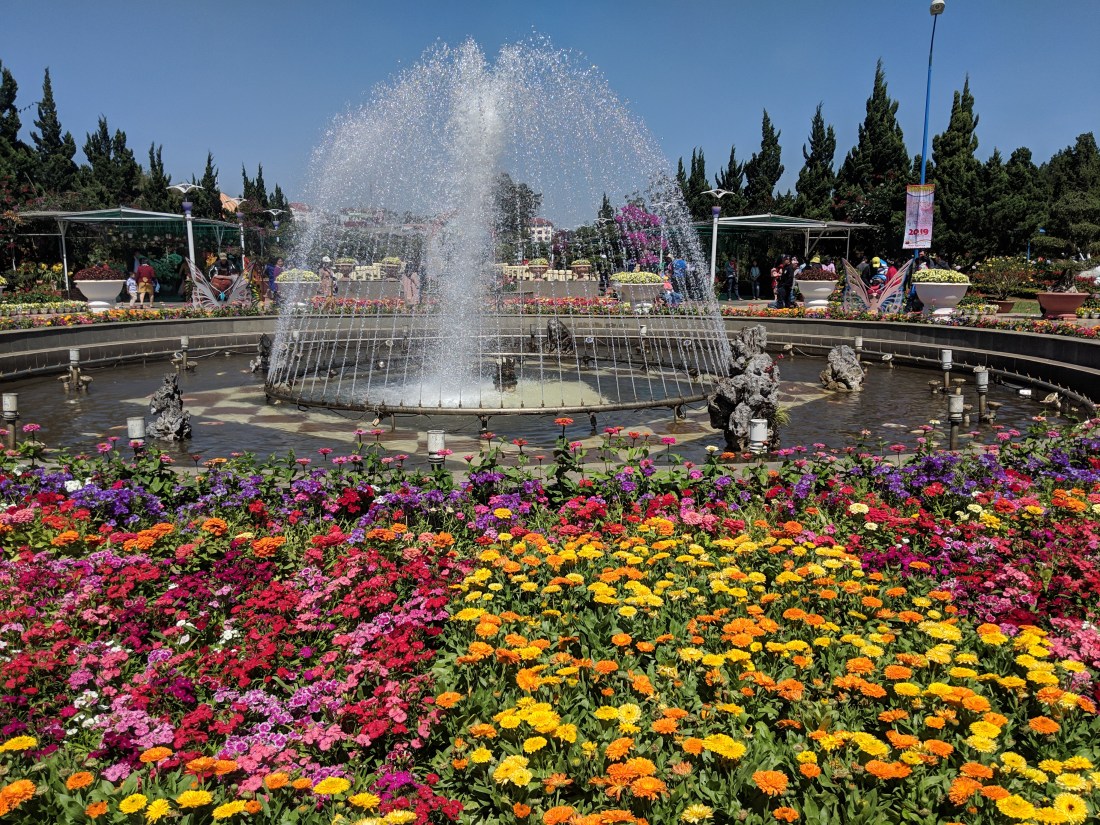
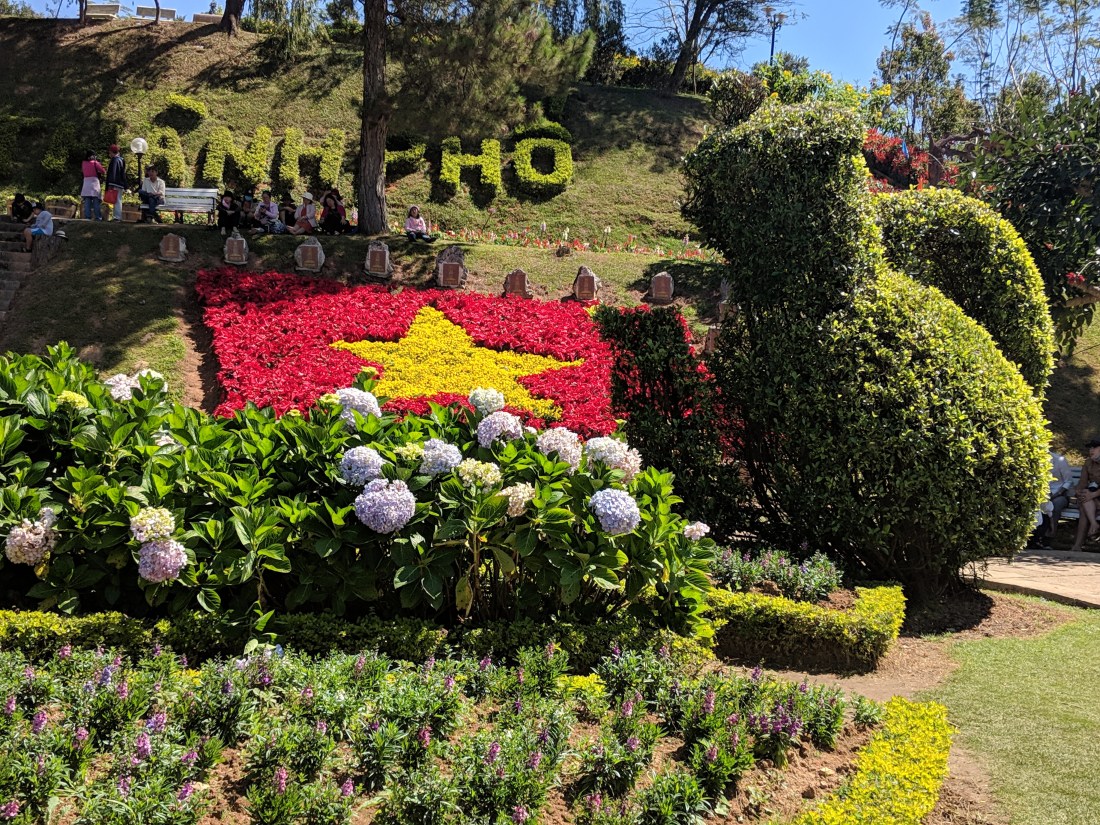
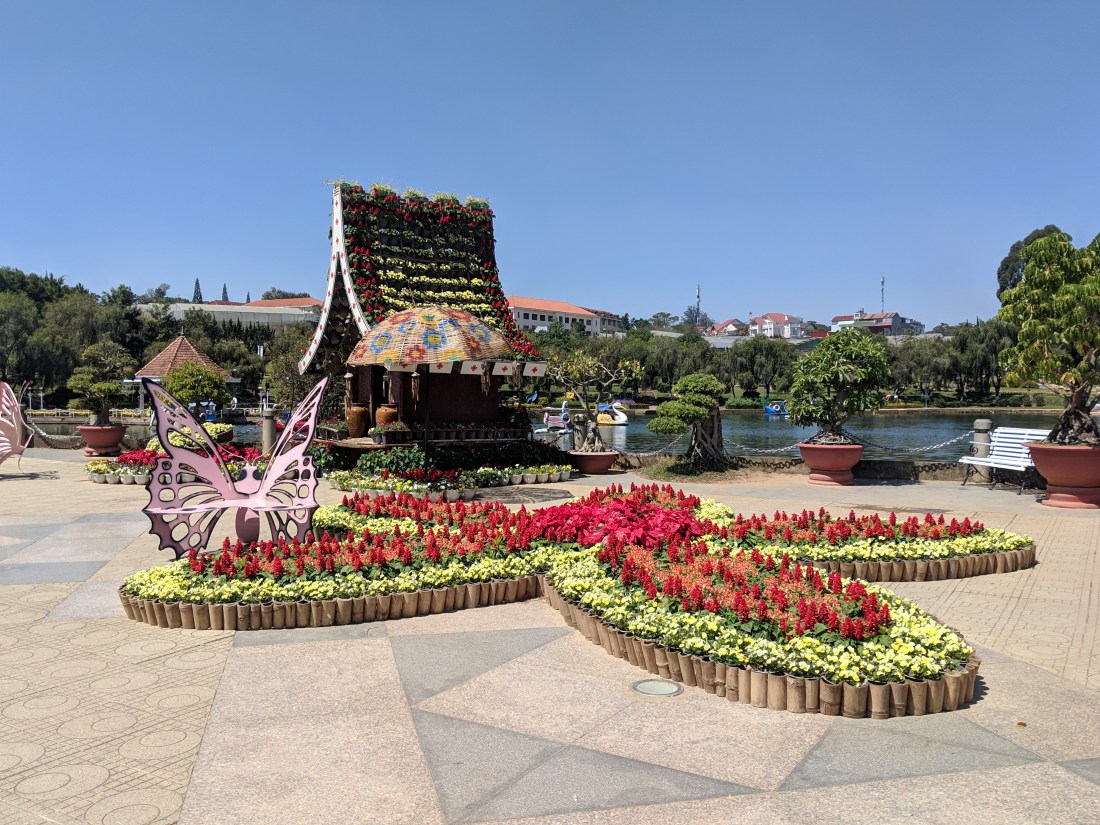
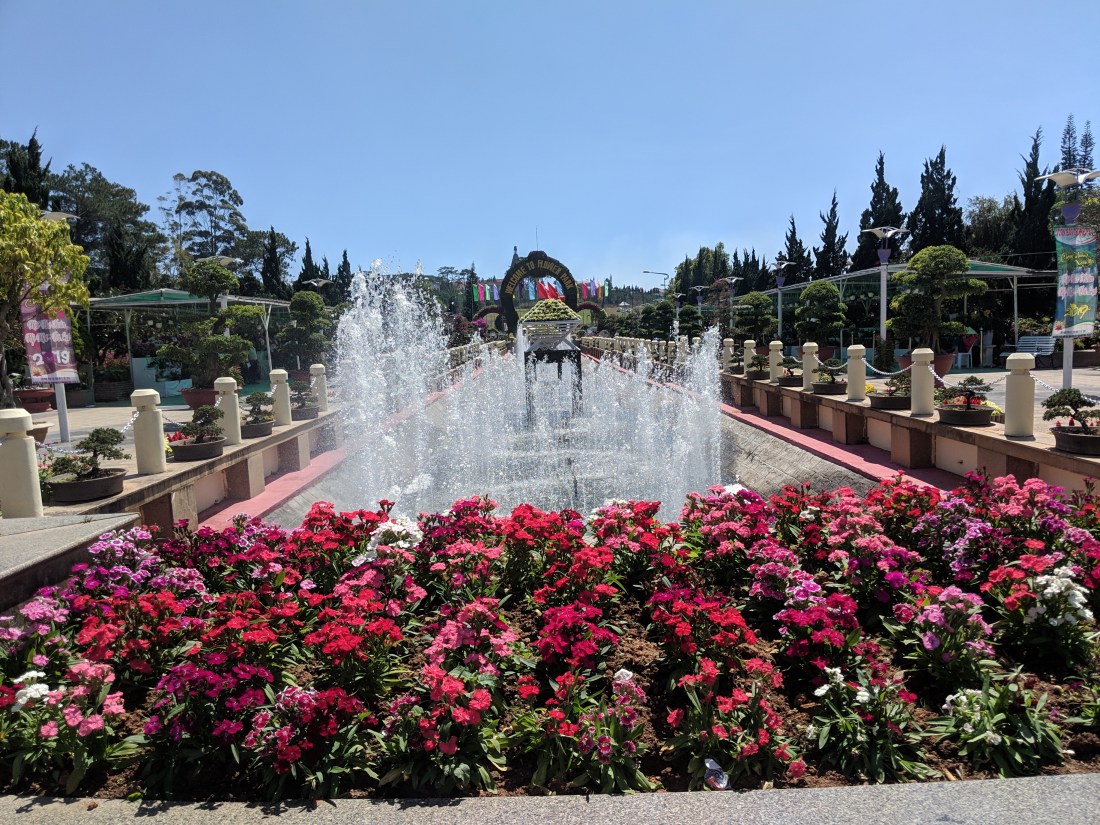
Our first morning we ventured out on foot and visited the market, Xuan Huong Lake, a manmade lake that dominates the center of Dalat, and the Dalat Flower Gardens.

IMG_2349IMG_2352IMG_20190210_110338

IMG_20190210_110447
hydrangeas are a particular specialty of the area

IMG_20190210_115458IMG_20190210_115618IMG_2369IMG_20190210_115625

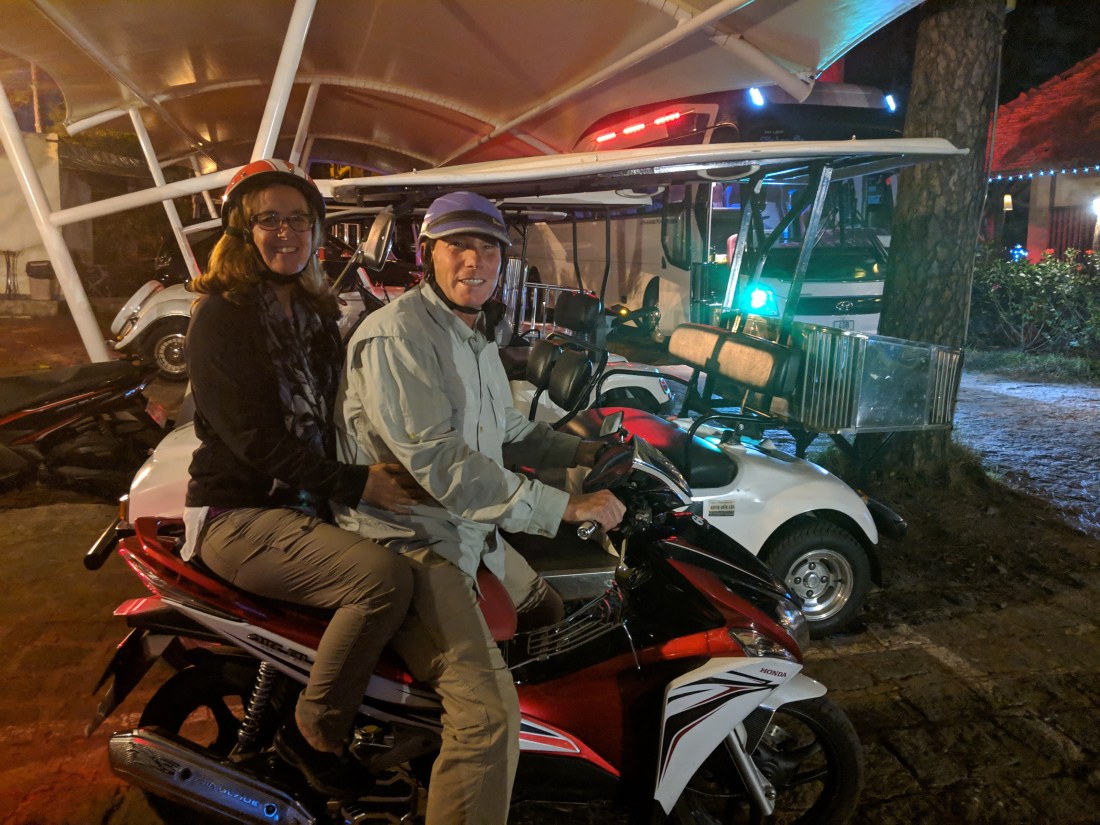
But we quickly realized that this town is way too spread out to cover on foot.  So we broke down and rented a motorbike, which Eric had been yearning for since we arrived in SE Asia, I resisting.  As Eric adjusted to driving the bike, we first visited sites that were close, so also some of the more touristy.

IMG_20190211_183616.jpg

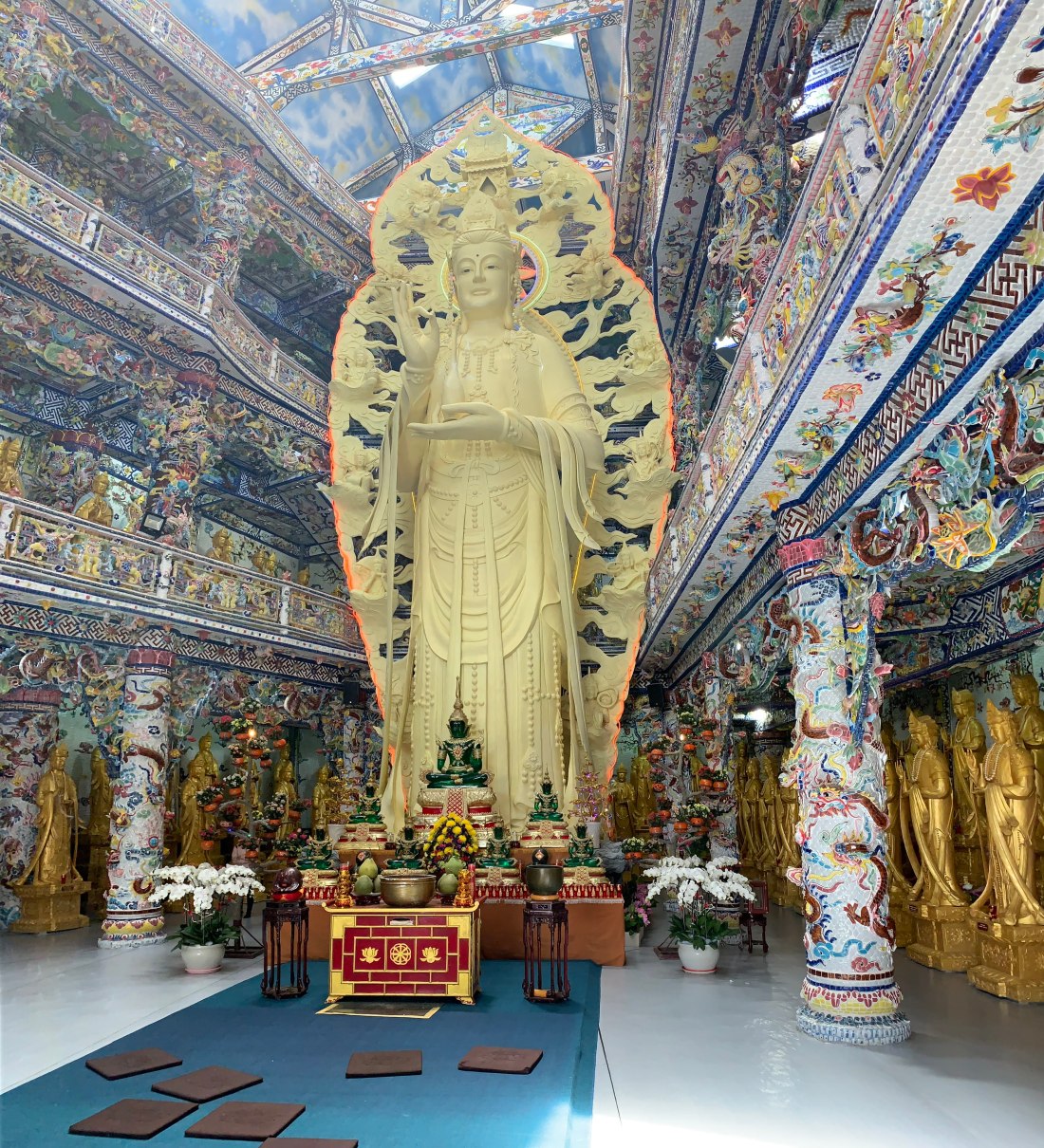
First stop was the giant Golden Buddha sitting high on the hill with great views of Dalat below.  He is part of a monastery that is also quite interesting inside the temple with its multiple stained glass and ceramic mosaics.

IMG_2377IMG_20190210_153614

IMG_20190210_153635

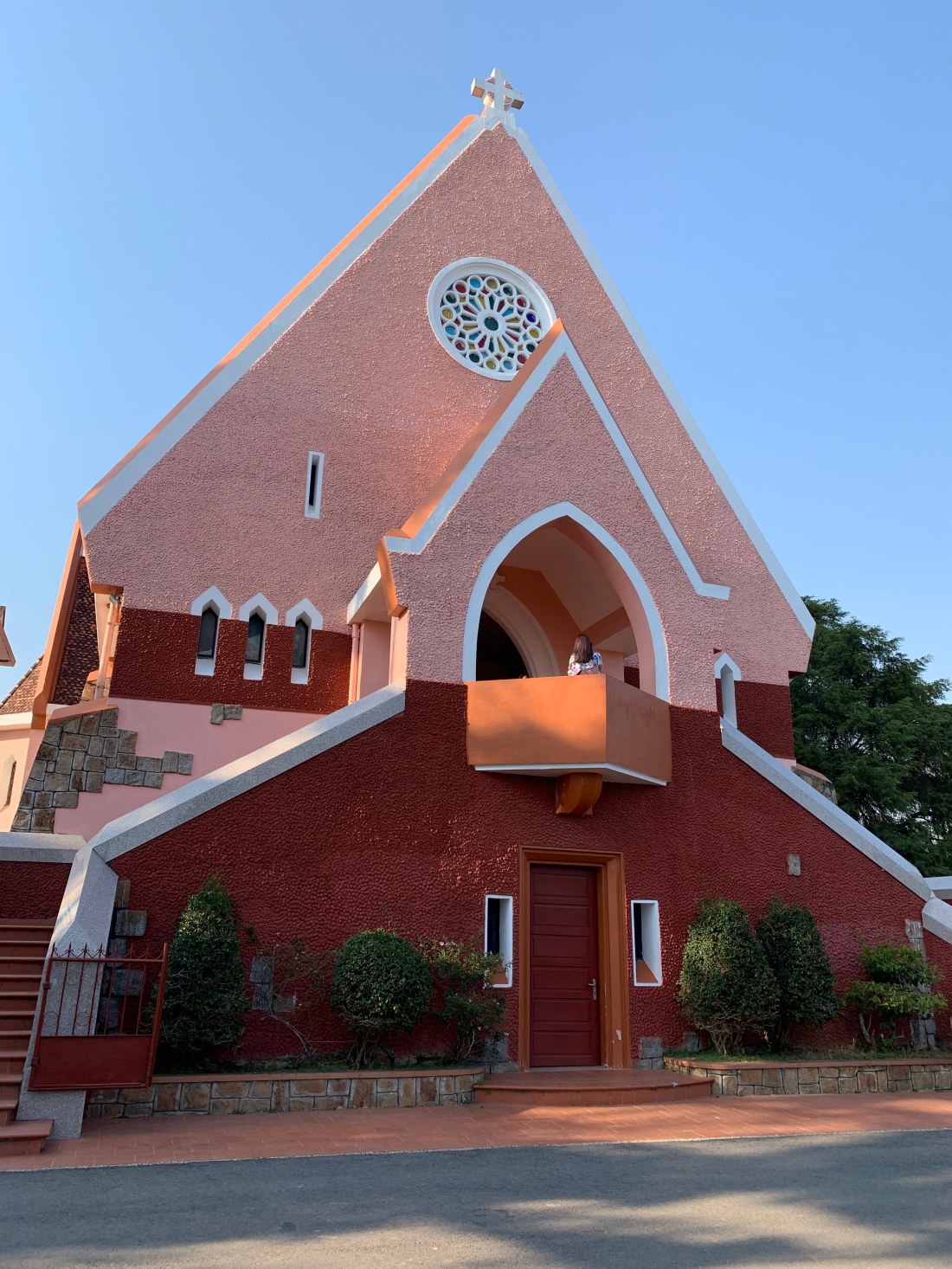
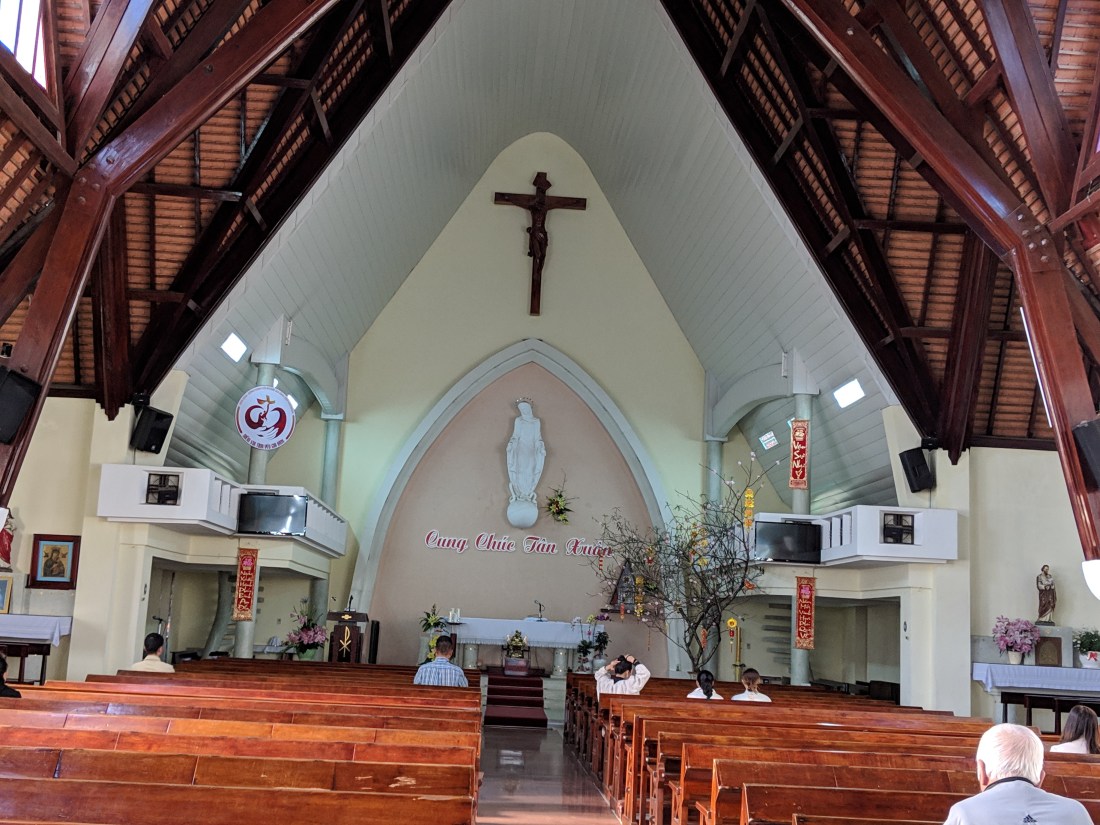
Next stop was the Domaine de Marie, a catholic church built in 1938 and contains both a nunnery and a school for children.  Its significance is its color and its pointed roof style that was typical of the Cao Nguyen communal buildings in the Central Highlands.

IMG_2387IMG_20190210_161444IMG_20190210_161806IMG_20190210_161843

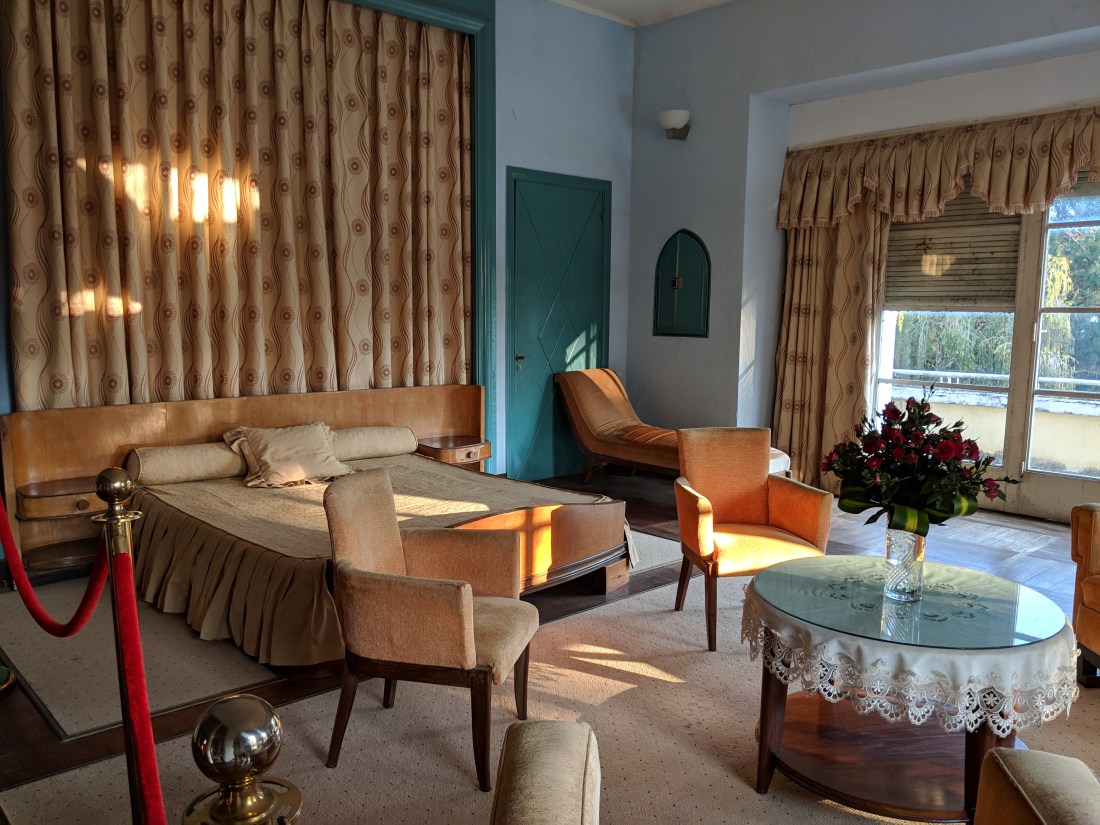
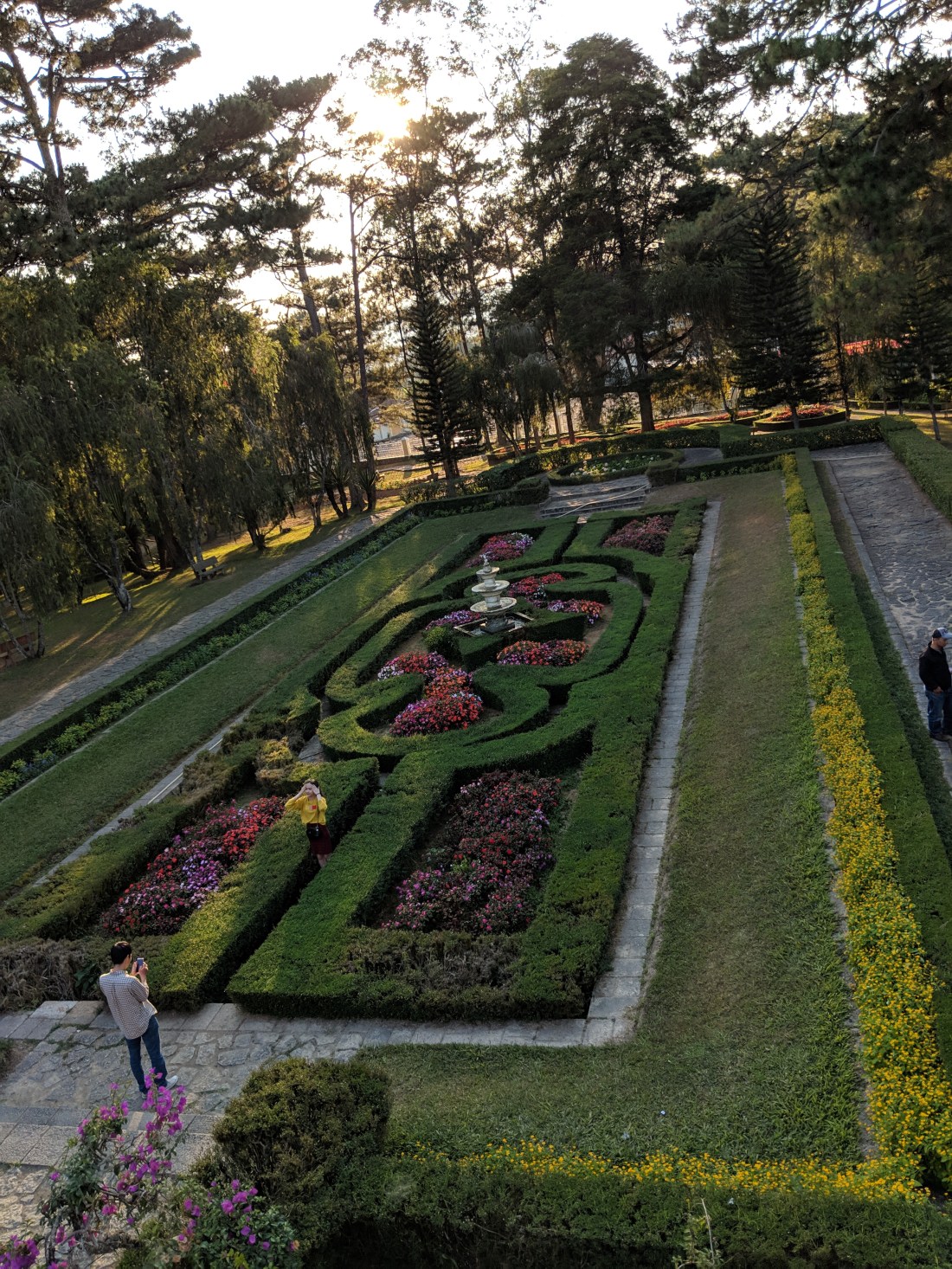
Then it was on to the summer palace of the last emperor Bao Dai and his family built in 1933-38 in the French colonial style with gardens in both the front and the back.

IMG_2395

IMG_20190210_165918
Queen Nam Phuong’s private bedroom.

IMG_20190210_170110

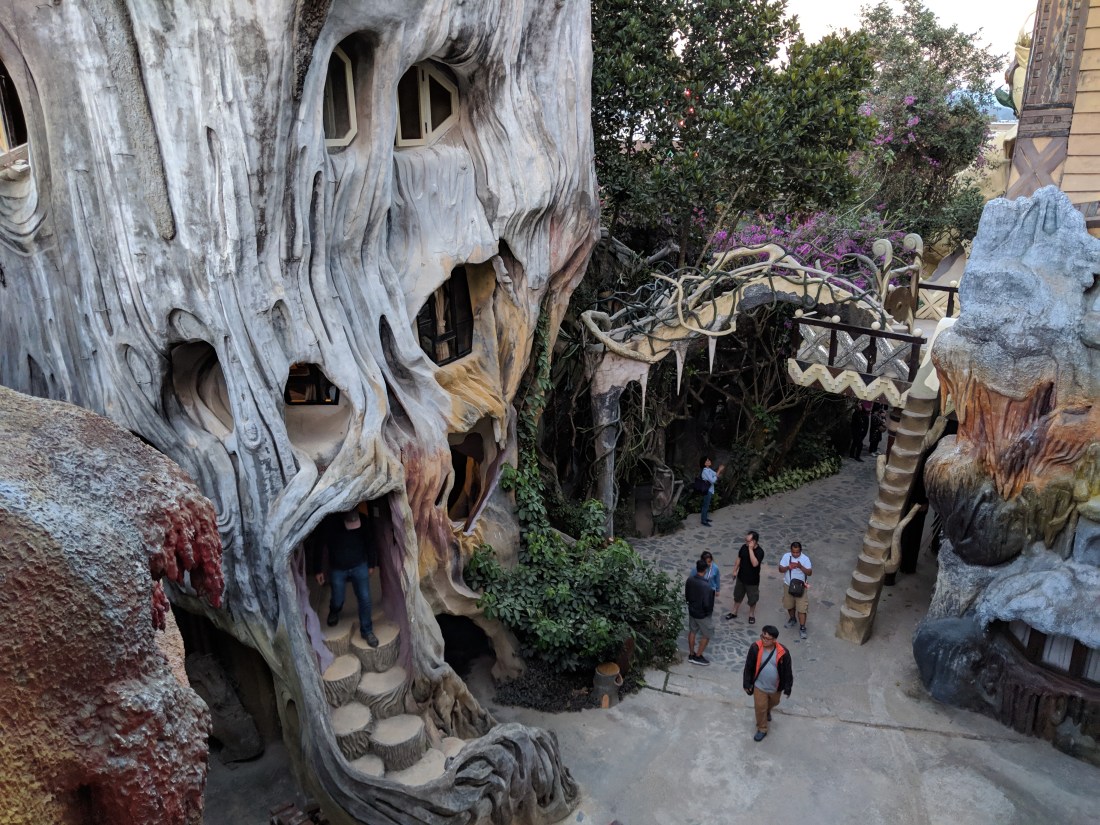
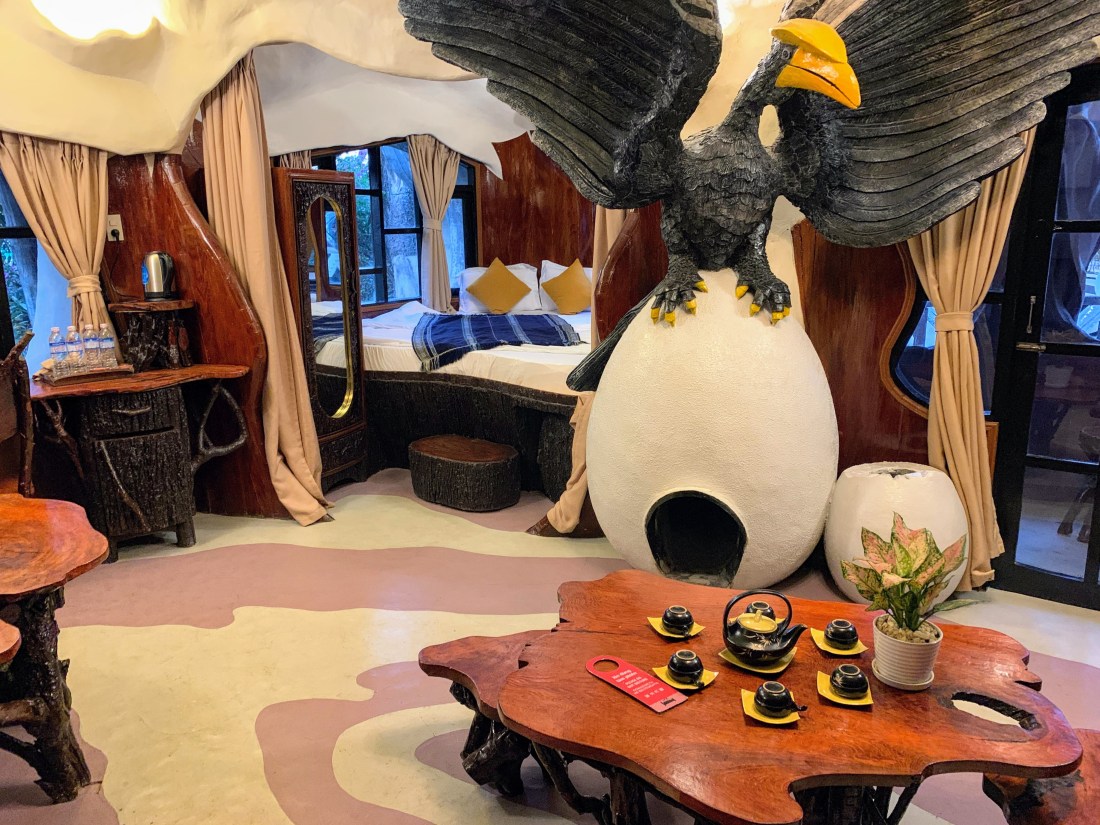
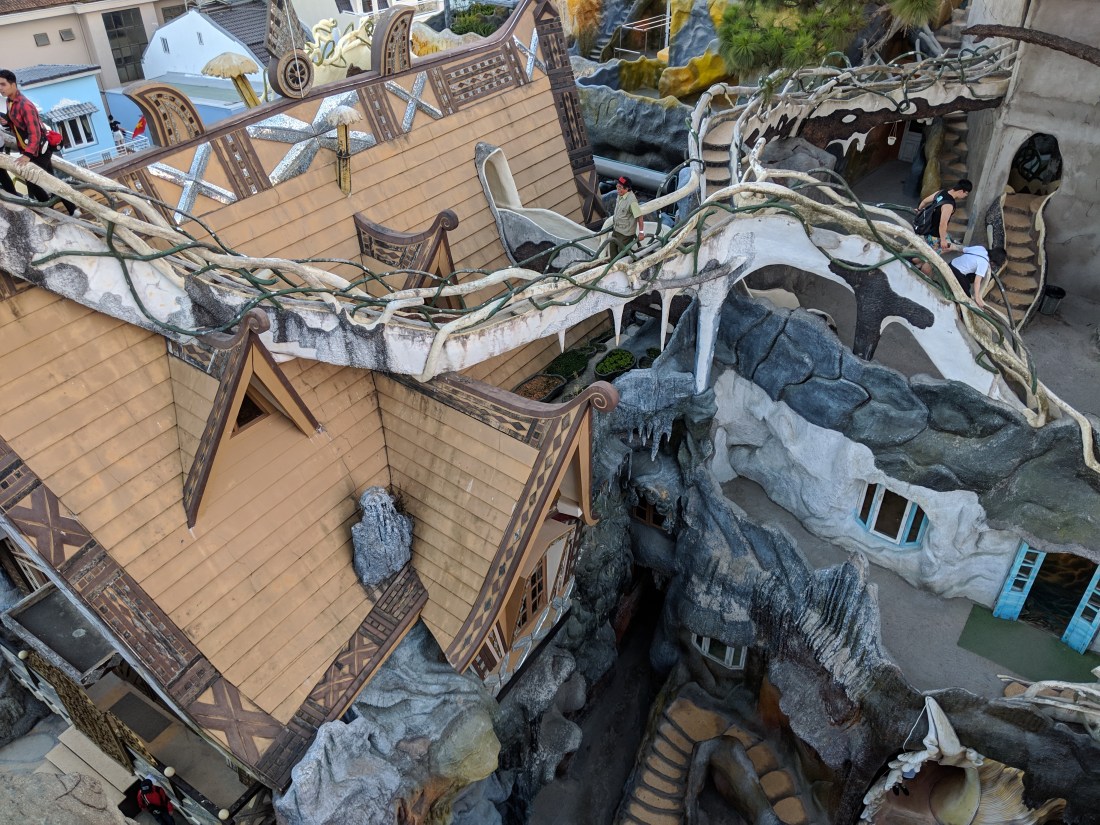
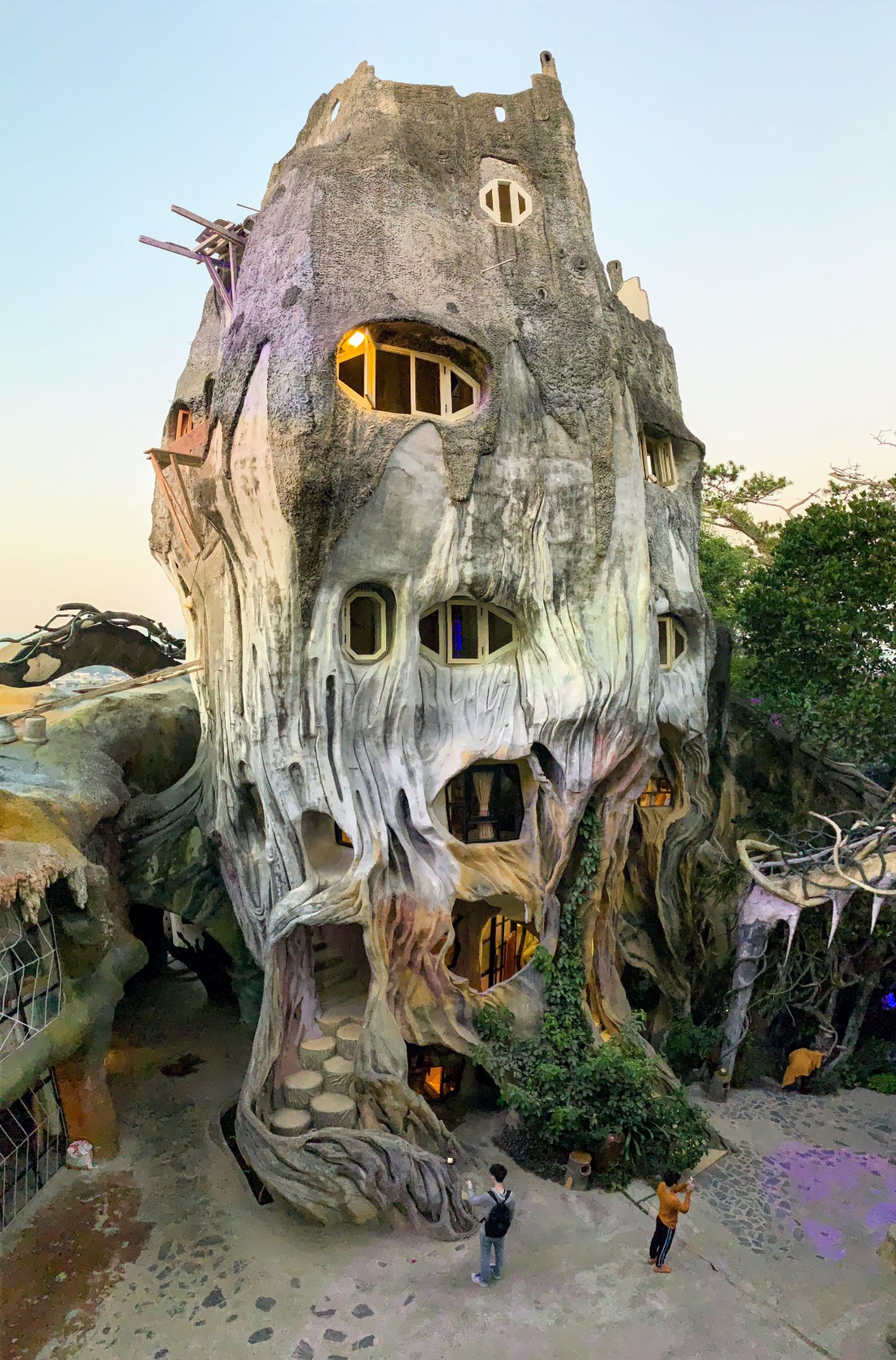
Then we drove to Crazy House, a guest house designed by Vietnamese architect Dang Viet Nga, who claims that his inspiration was Catalan architect Gaudi.  Its overall design is to look like a giant banyan tree.

IMG_20190210_174925IMG_2406

IMG_20190210_173012
dining hall
IMG_2409
guest room

IMG_20190210_173833

IMG_2417

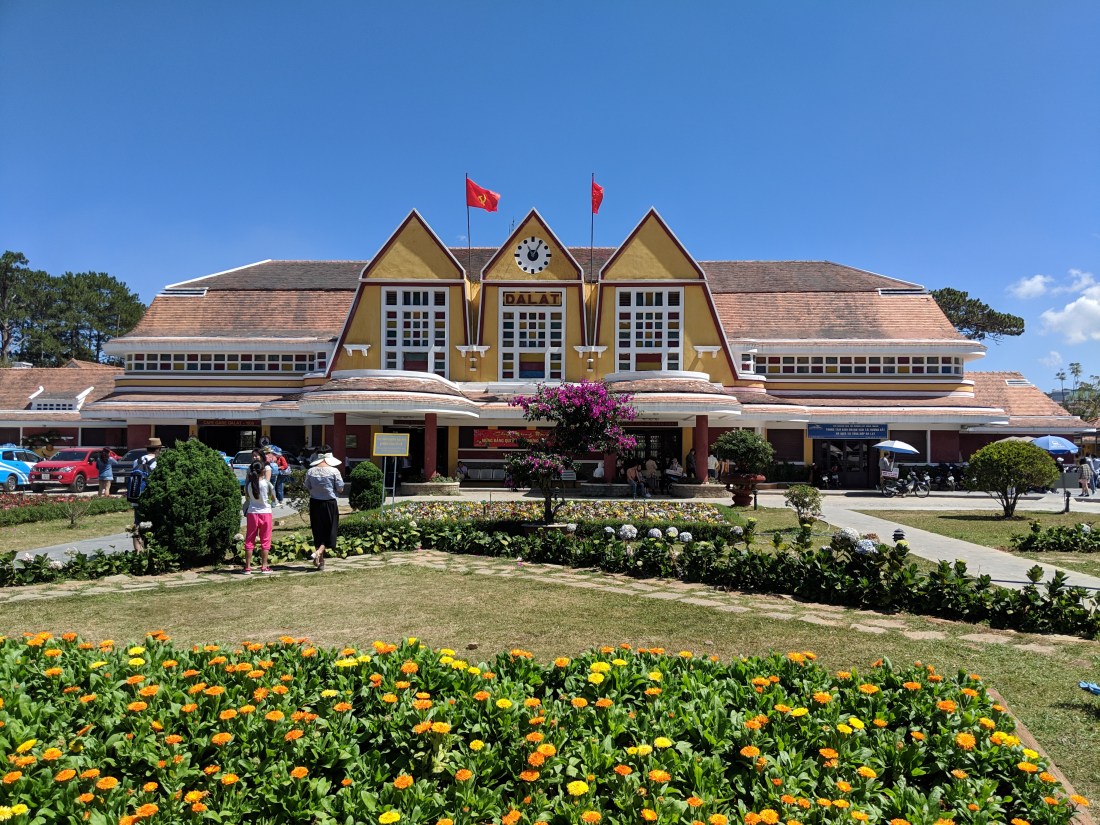
We then had one of our most delicious meals yet.  In the morning we were ready to venture a bit further on the bike.  We drove over to the Dalat train station.  It was built in 1932-38 by the same french architects as the pink church.  But in addition to the Cao Nguyen high  pointed roof, it incorporates 3 gables and stained glass of the  art deco french style of the time.

IMG_20190211_111350IMG_20190211_111629

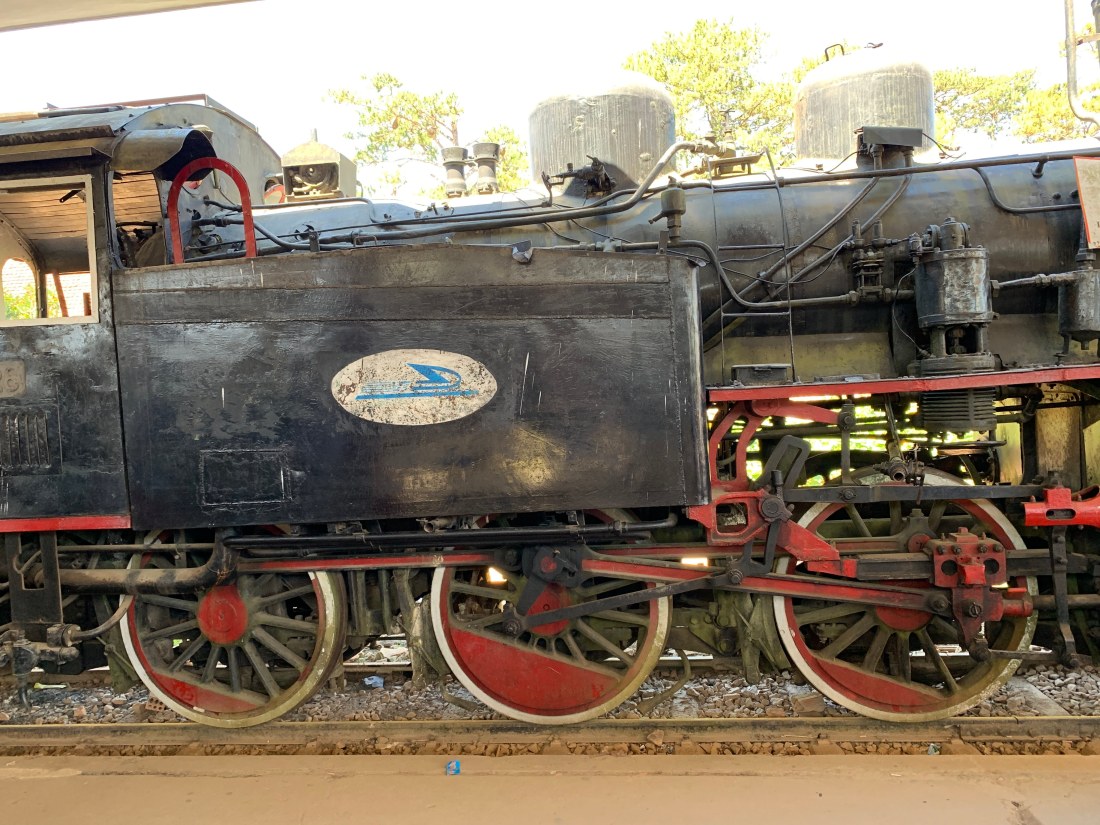
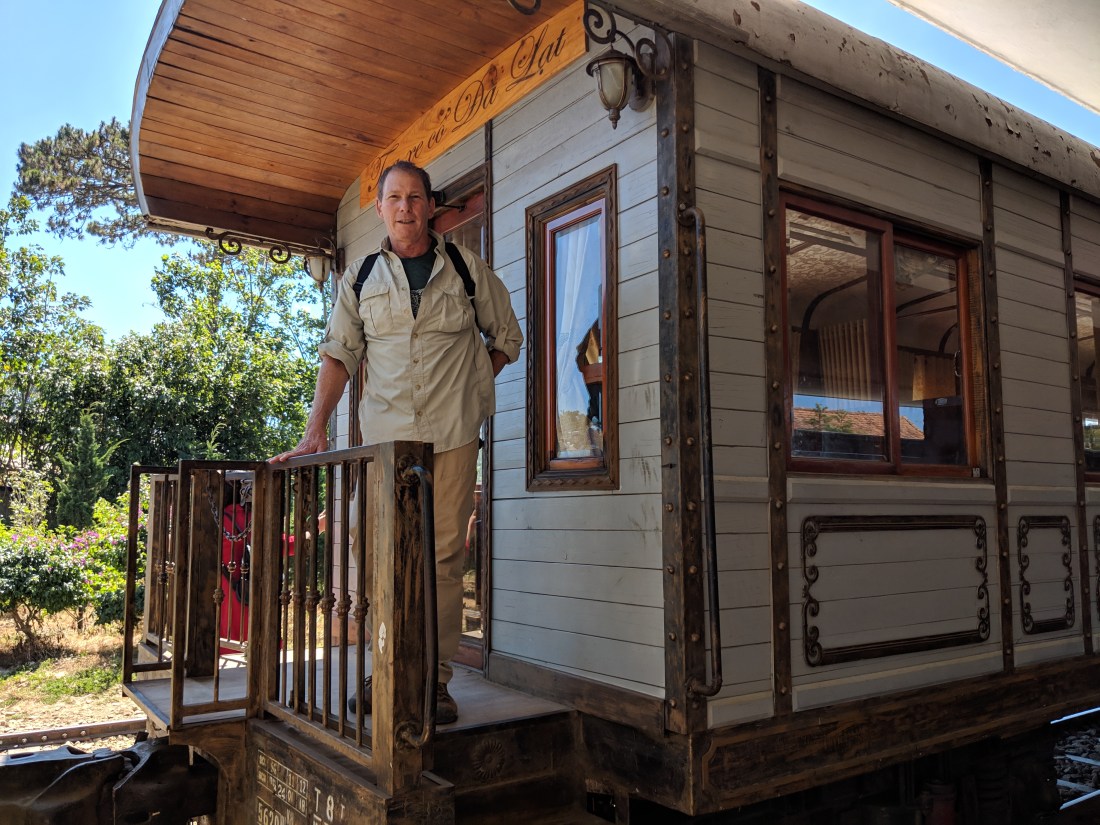
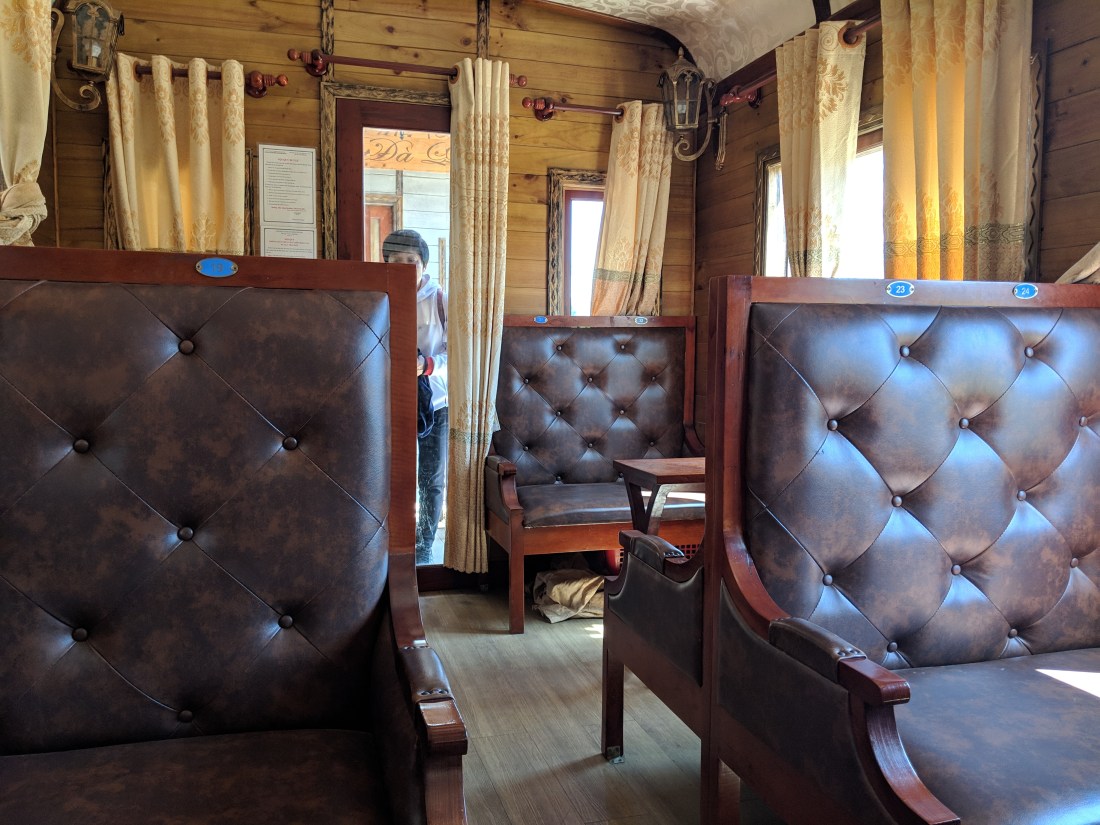
The station is currently used only for a tourist round trip on vintage trains to Trai Mat, passing the incredible gardens of the area on the way.

IMG_2428IMG_20190211_113920IMG_20190211_114517

IMG_2440
literally hundreds of greenhouses containing both flowers and vegetables can be seen through the passing train windows.

IMG_2442.JPG

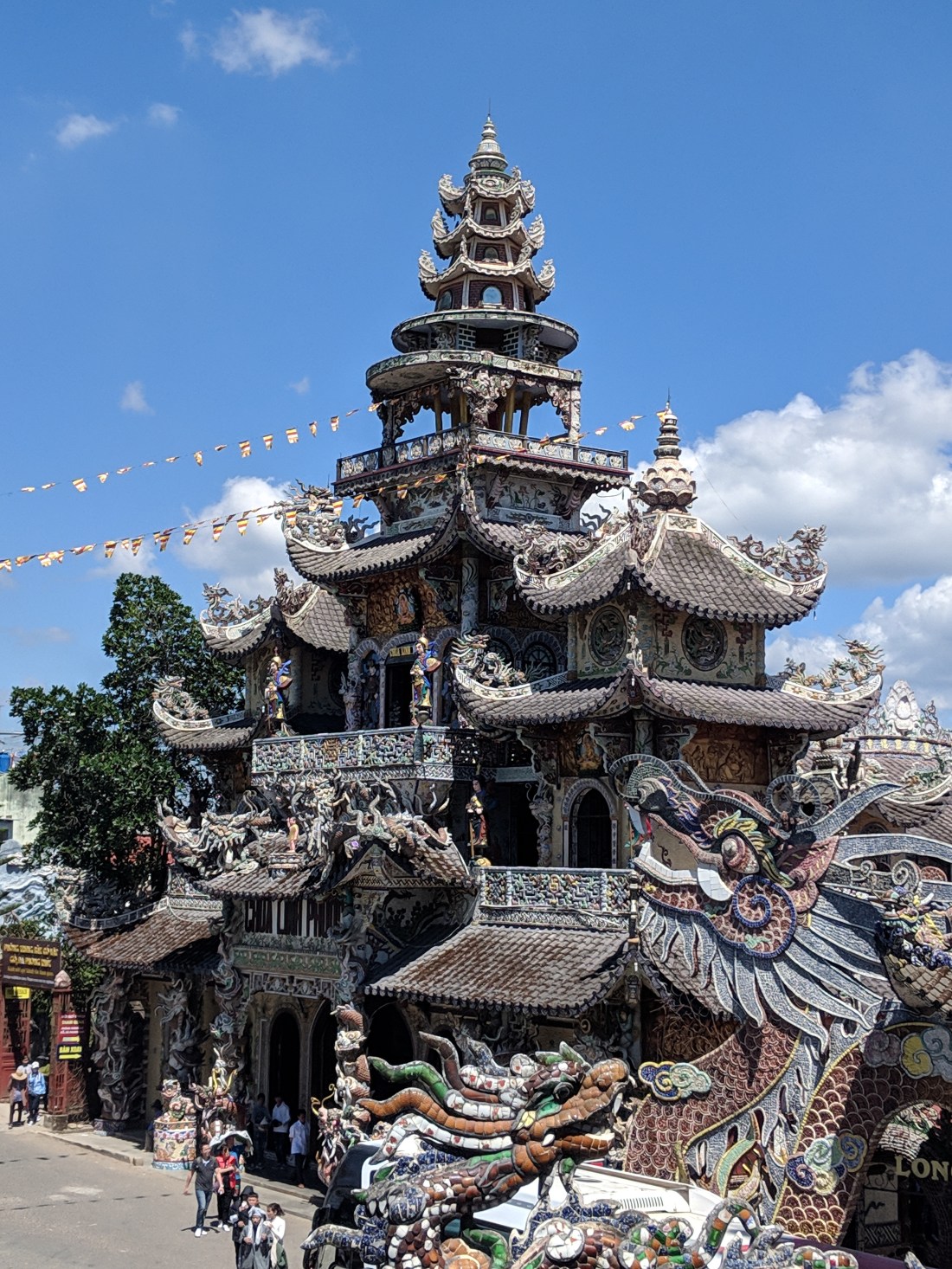
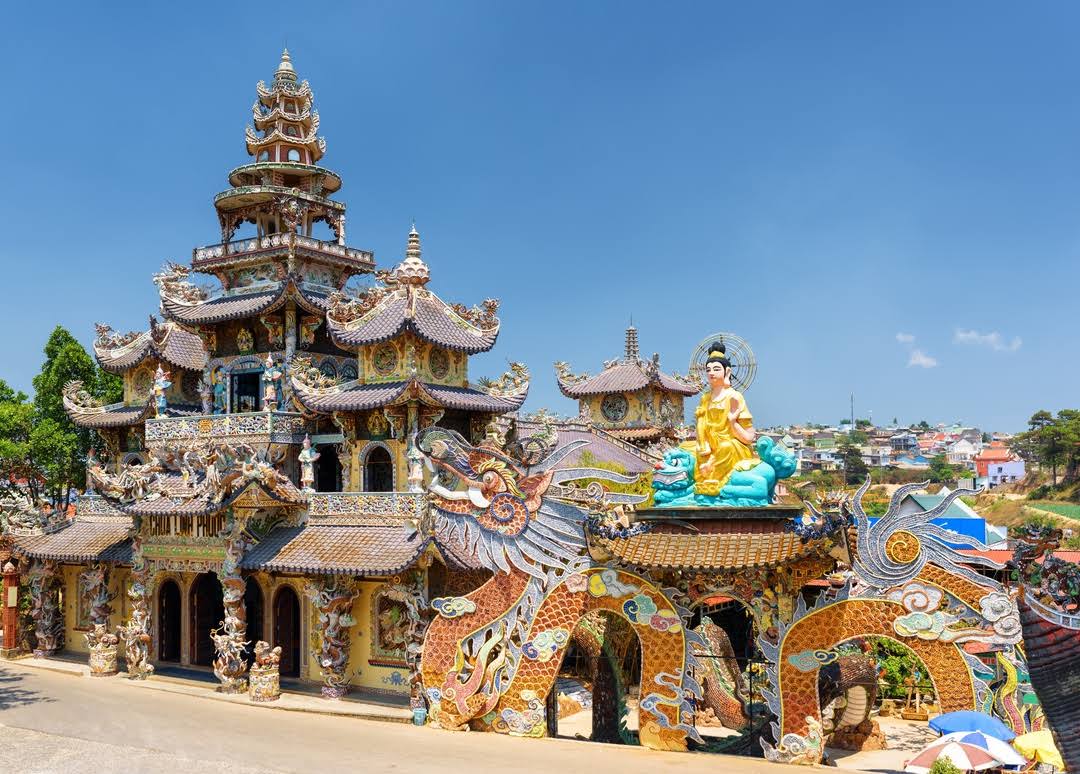
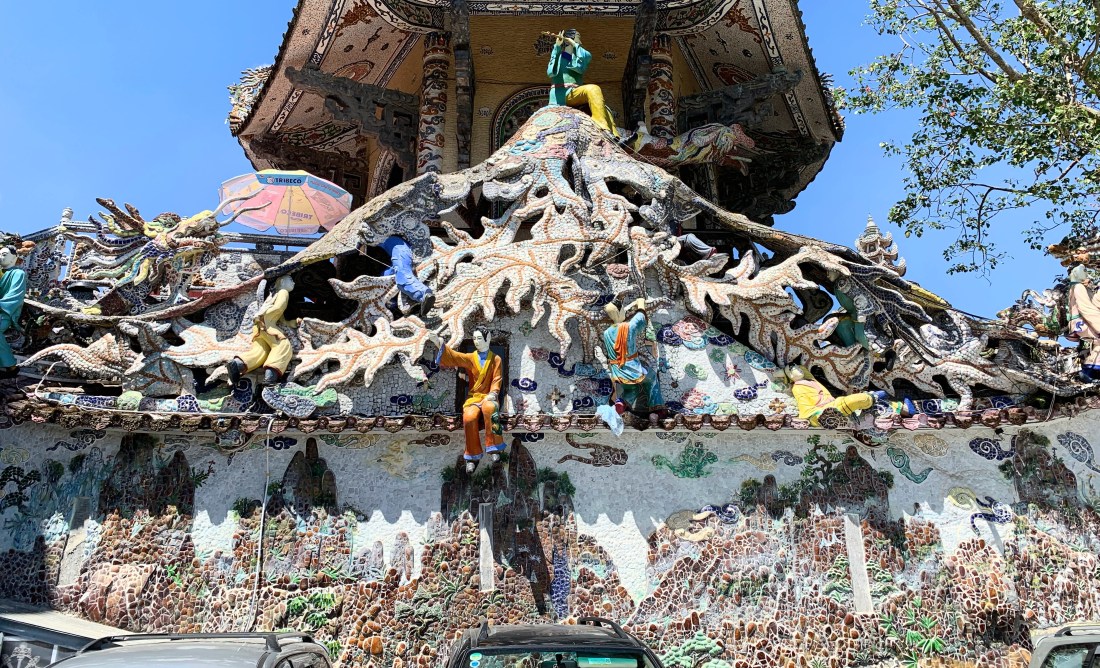
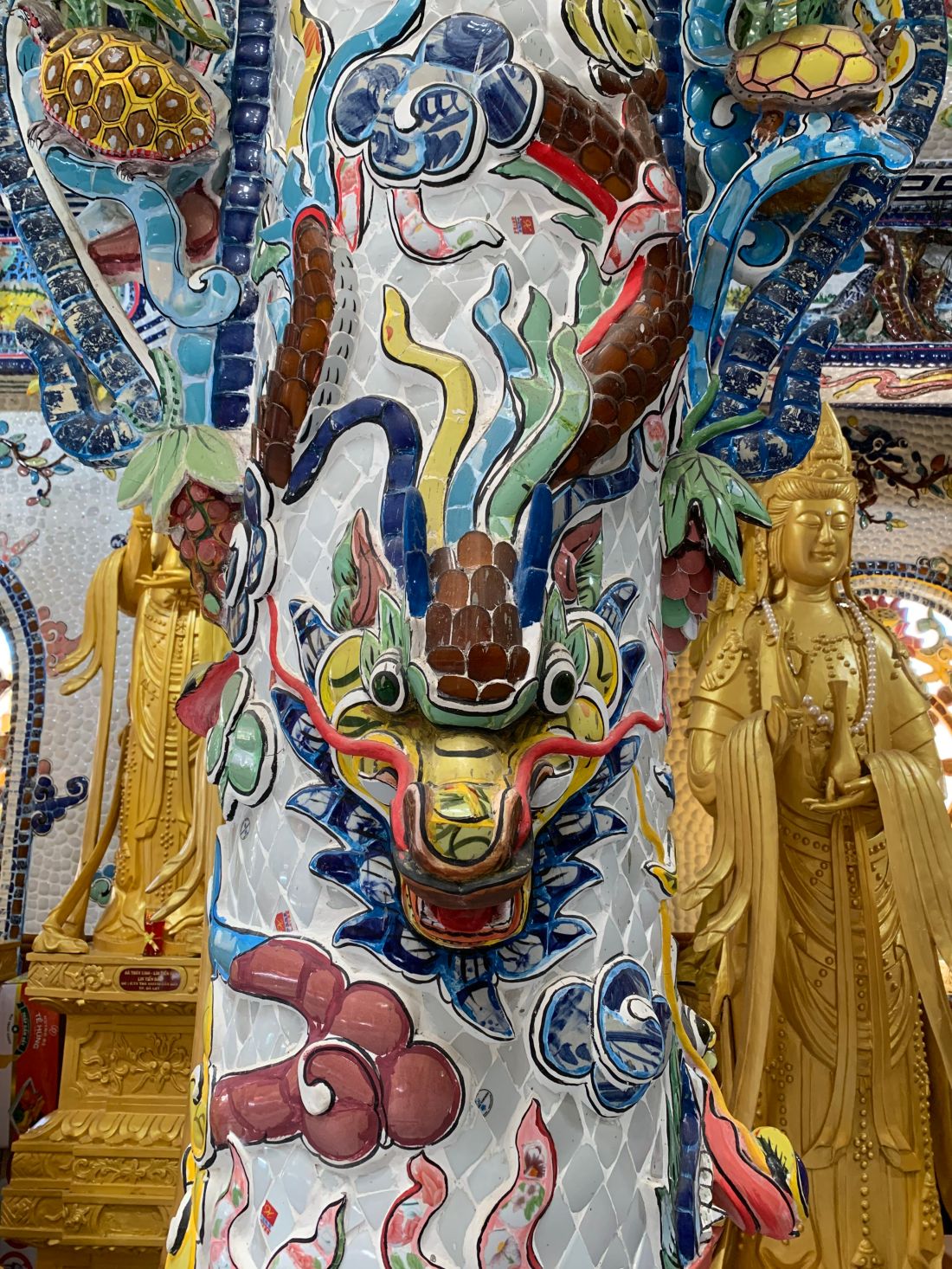
Once the train stopped in the tiny town of Trai Mat, we trekked up the hill to the  Linh Phuoc Pagoda.  The pagoda was built in 1949-52 and is covered in broken bottles and pieces of pottery to make up its intricate mosaics.  The dragon head is 7 m high, and the dragon is 49 m long, using over 12, 000 bottles to make up its scales.  The bell tower is 37 m high, making it the tallest bell tower in Vietnam, and the bell weighs in at over 8,500 kg, making it the heaviest bell in Vietnam.  Overall, the pagoda brags 11 “mosts” in Vietnam.

IMG_20190211_123340

unnamed

IMG_2463

IMG_2455IMG_2457IMG_2459

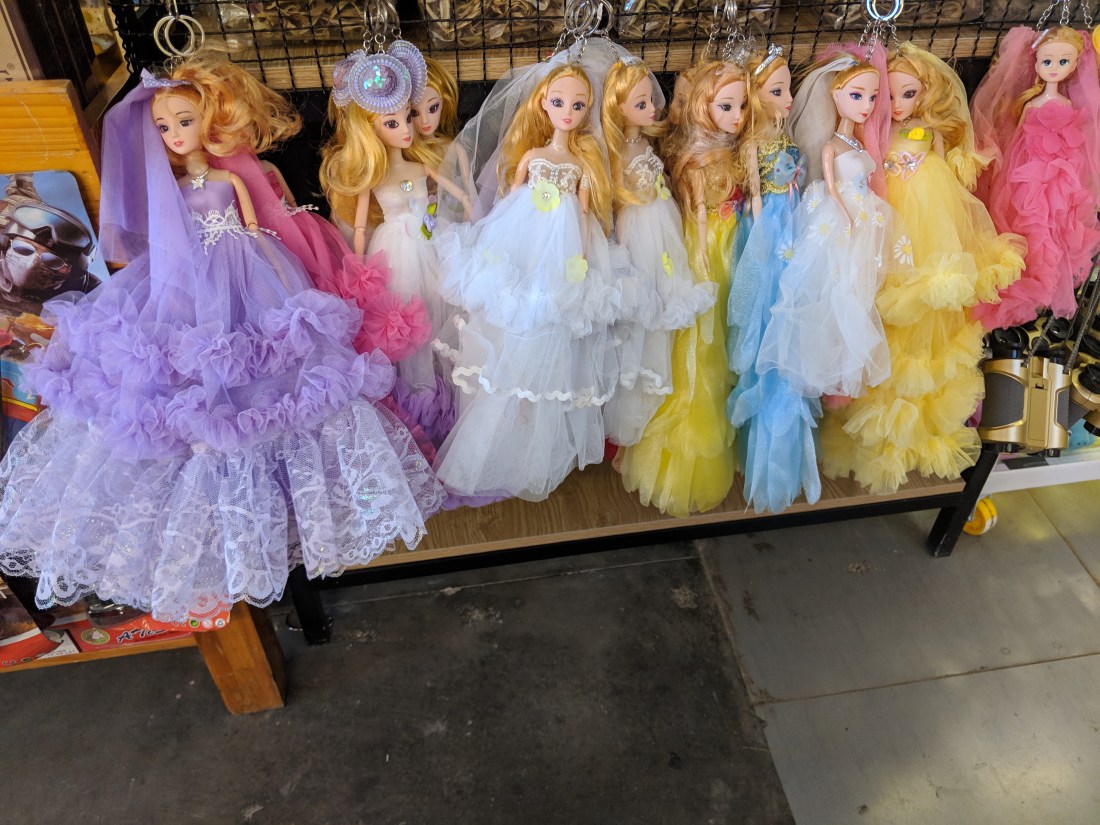
At his point, I just have to share this next picture.  At many tourist sites, there are numerous souvenir shops.  What I found stunning in Dalat is that although almost all of the tourists are Asian, the dolls being sold are exclusively blonde.

IMG_20190211_151106

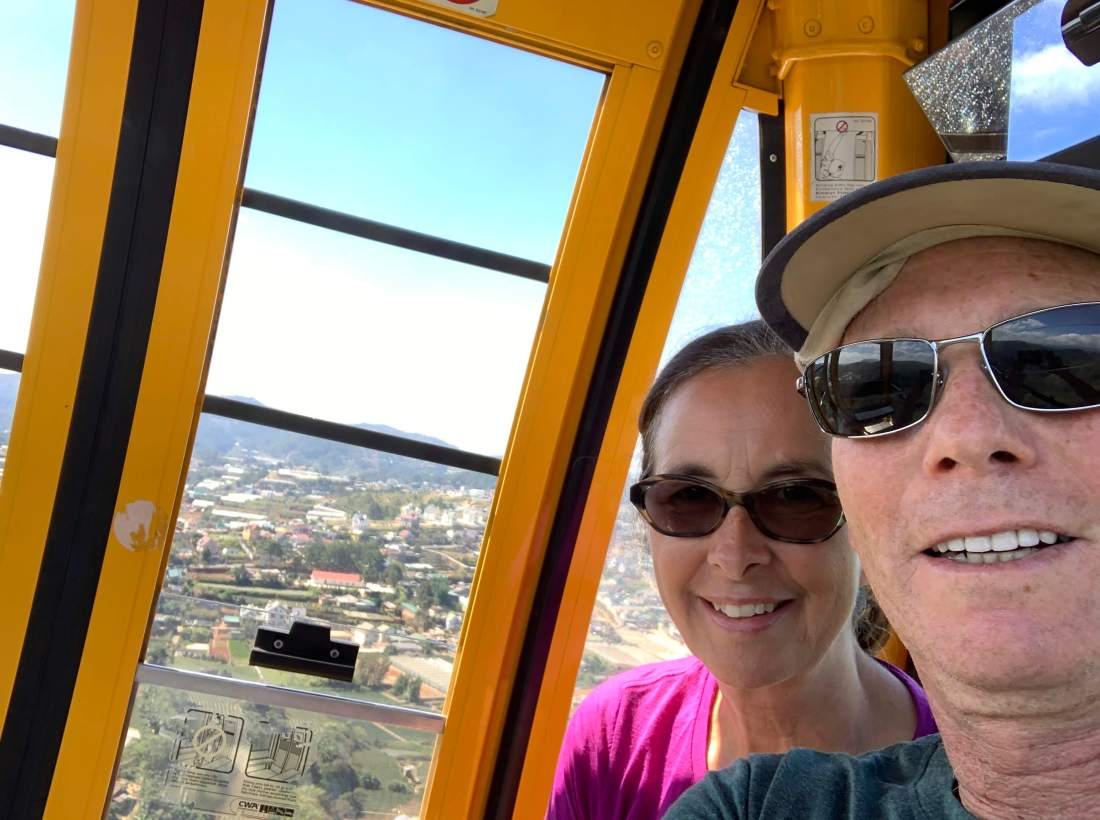
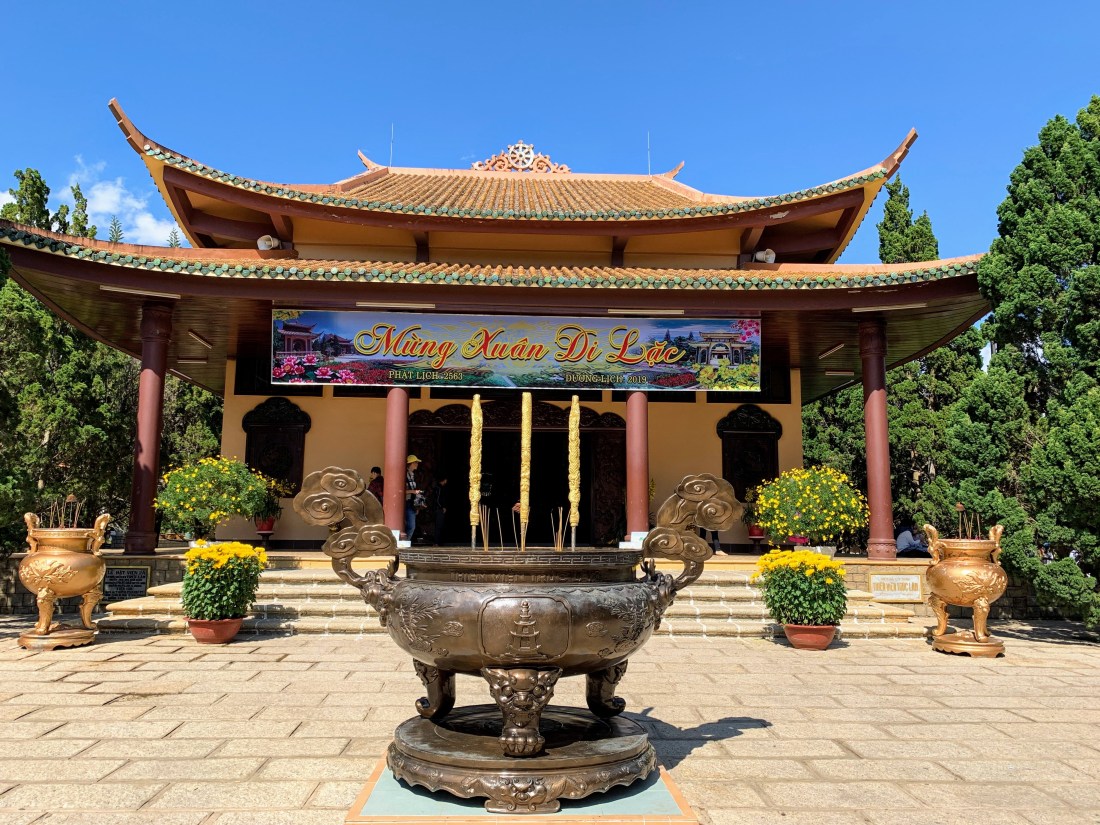
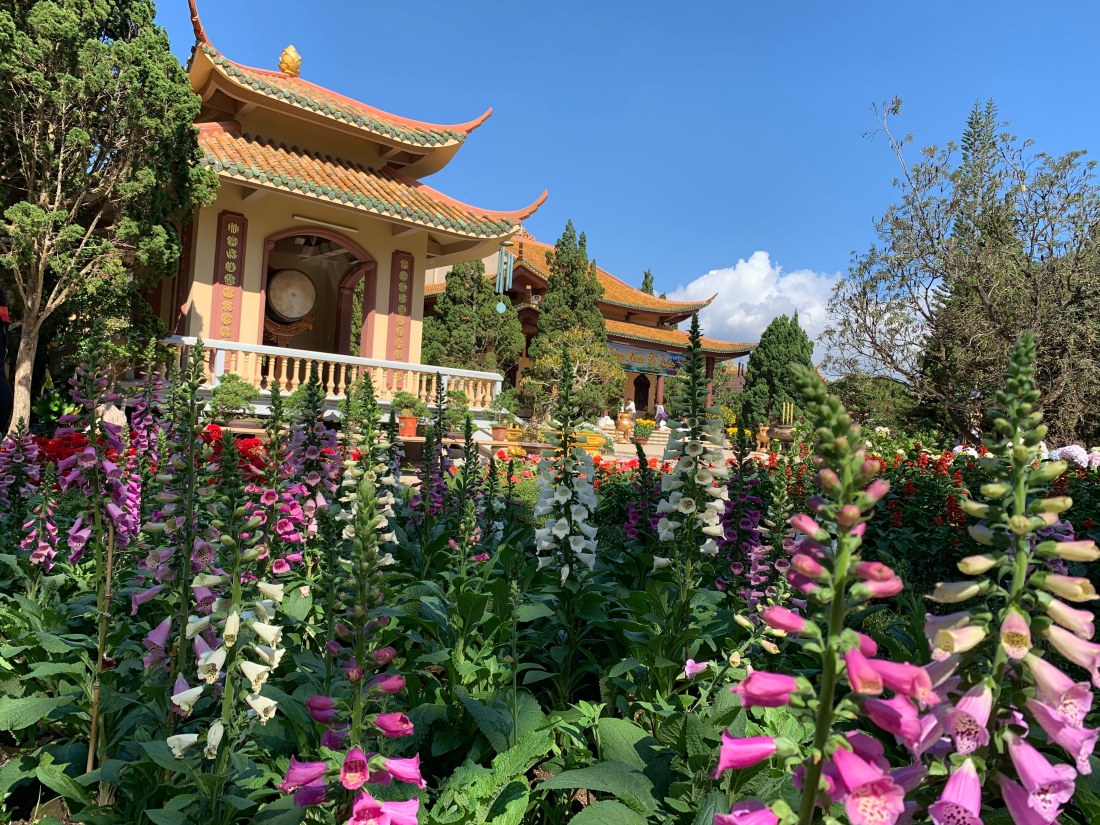
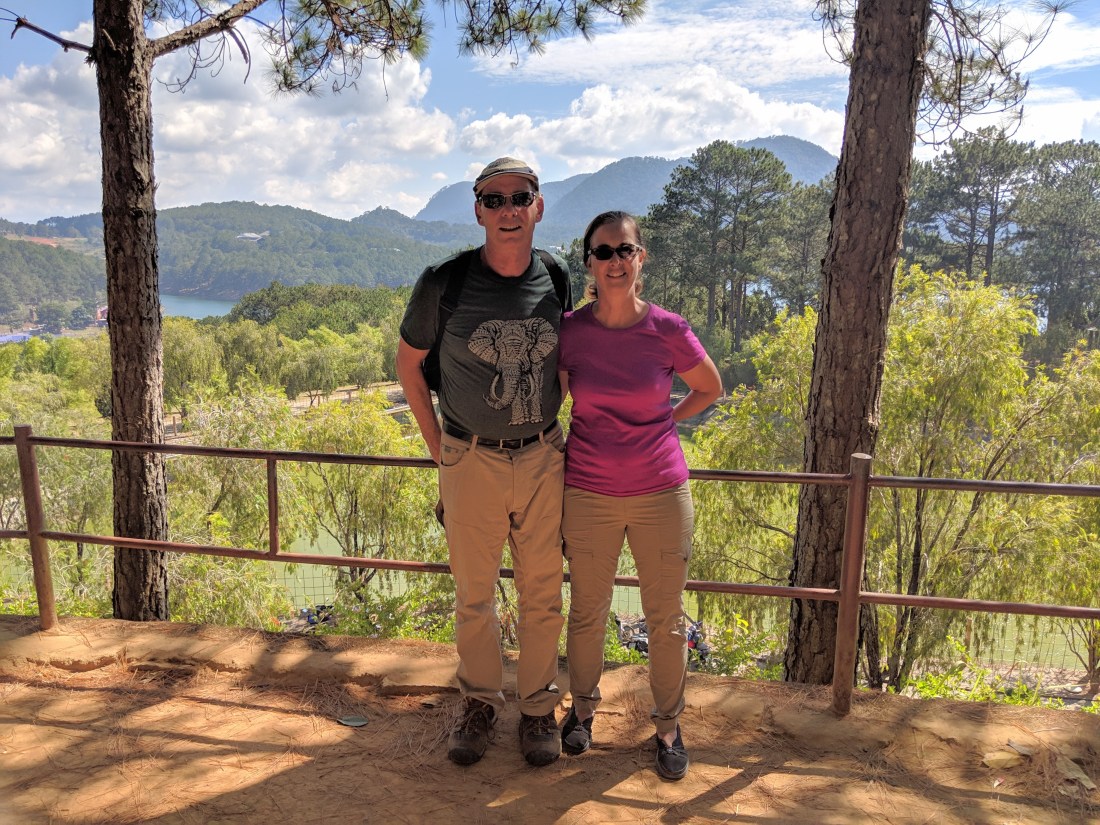
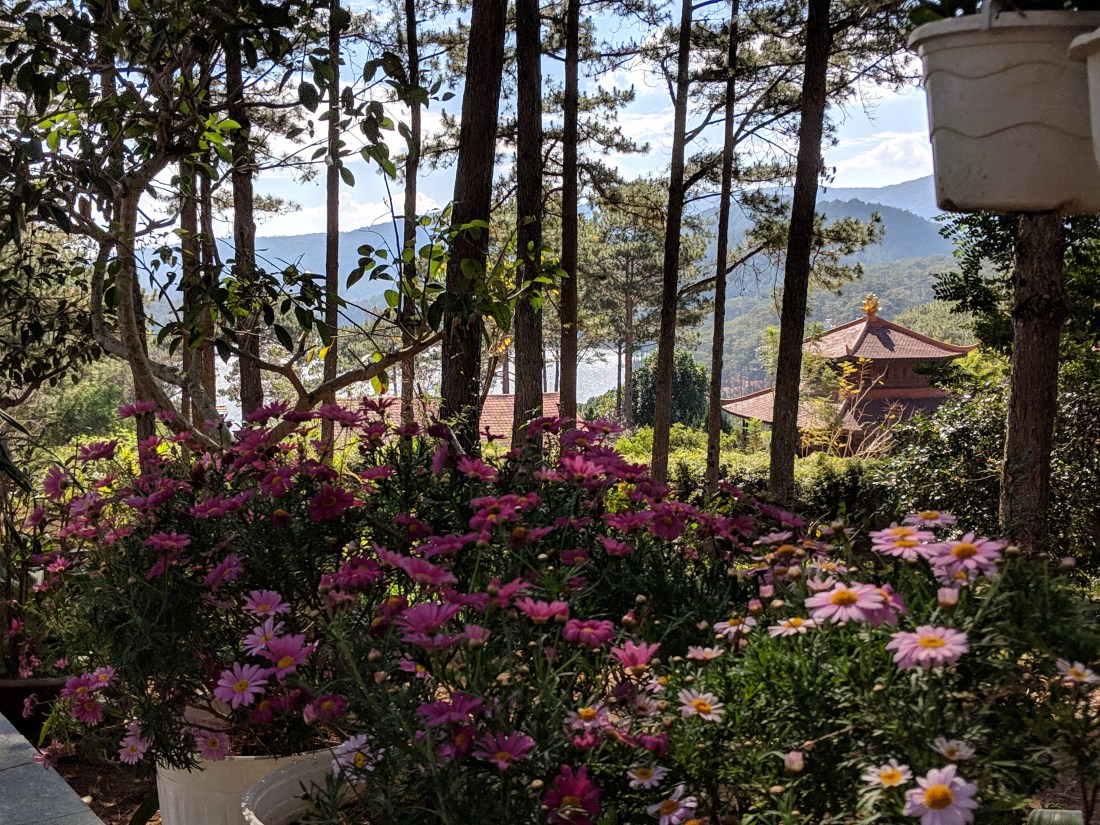
Once back in Dalat, we drove over to the cable car for yet another trip, this time to visit Thien Vien Truc Lam, the most beautiful monastery we have seen yet both with regards to the elegance of its buildings and the serenity of its gardens.  It is so peaceful sitting atop a rise at 1300 m elevation, nestled amongst pine  trees, and with views of Tuyen Lam Lake.  One objective of the temple was to recreate the  Zen Buddhism practiced during the Tran Dynasty of the 14th century, which incorporated 3 sects of Zen Buddhism that came from China to Vietnam.  The new Vietnamese Zen Buddhism was called Truc Lam.  The monastery is large with many private areas closed to the public, used only by the nuns and monks who reside there.

IMG_2467.JPG

IMG_20190211_151601
view from the cable car

IMG_2481IMG_2488IMG_2507IMG_2494IMG_2493IMG_2509IMG_20190211_141852IMG_20190211_142405IMG_20190211_140950IMG_20190211_142602IMG_20190211_142910

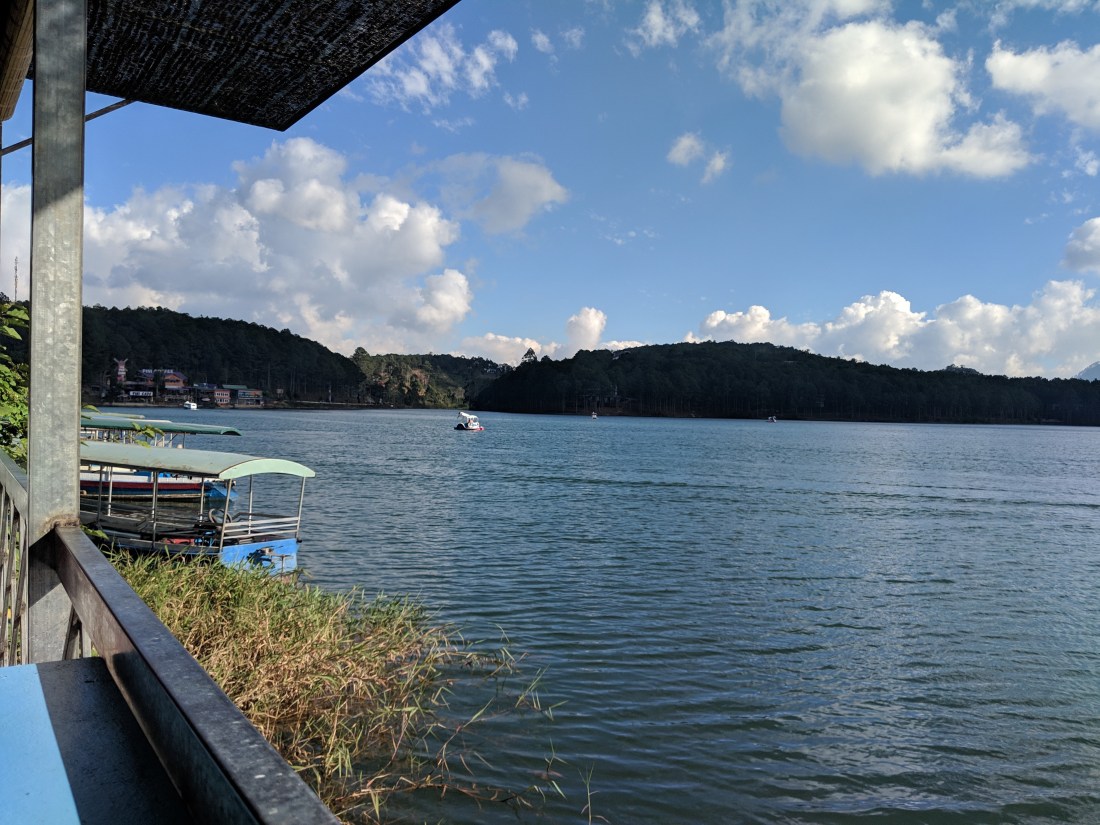
We decided to enjoy a late afternoon beer by the lake before the trip back to town for our last dinner in Dalat.

IMG_20190211_154611


Hoi An, Vietnam Feb -9

On the New Year’s day we traveled from Hue to Hoi An, stopping along the way.  First stop was Lang Co beach where we saw oyster farms.

IMG_2189IMG_20190205_110635IMG_20190205_110929

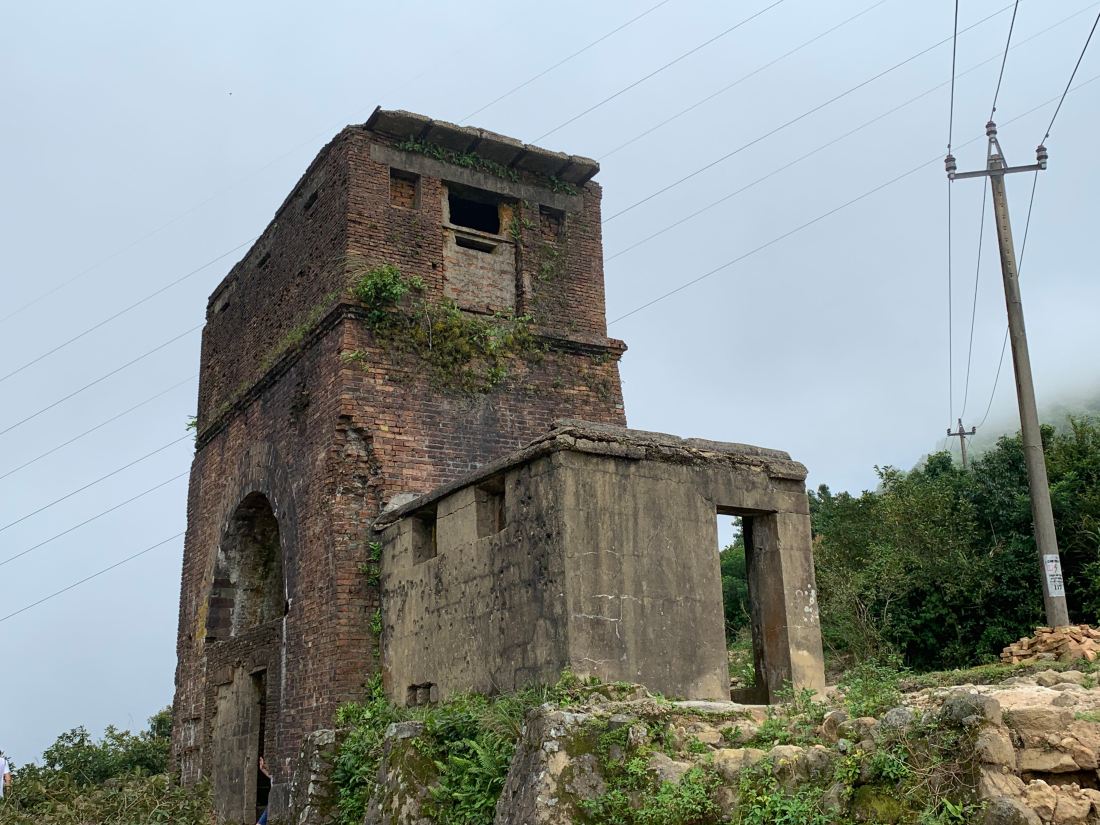
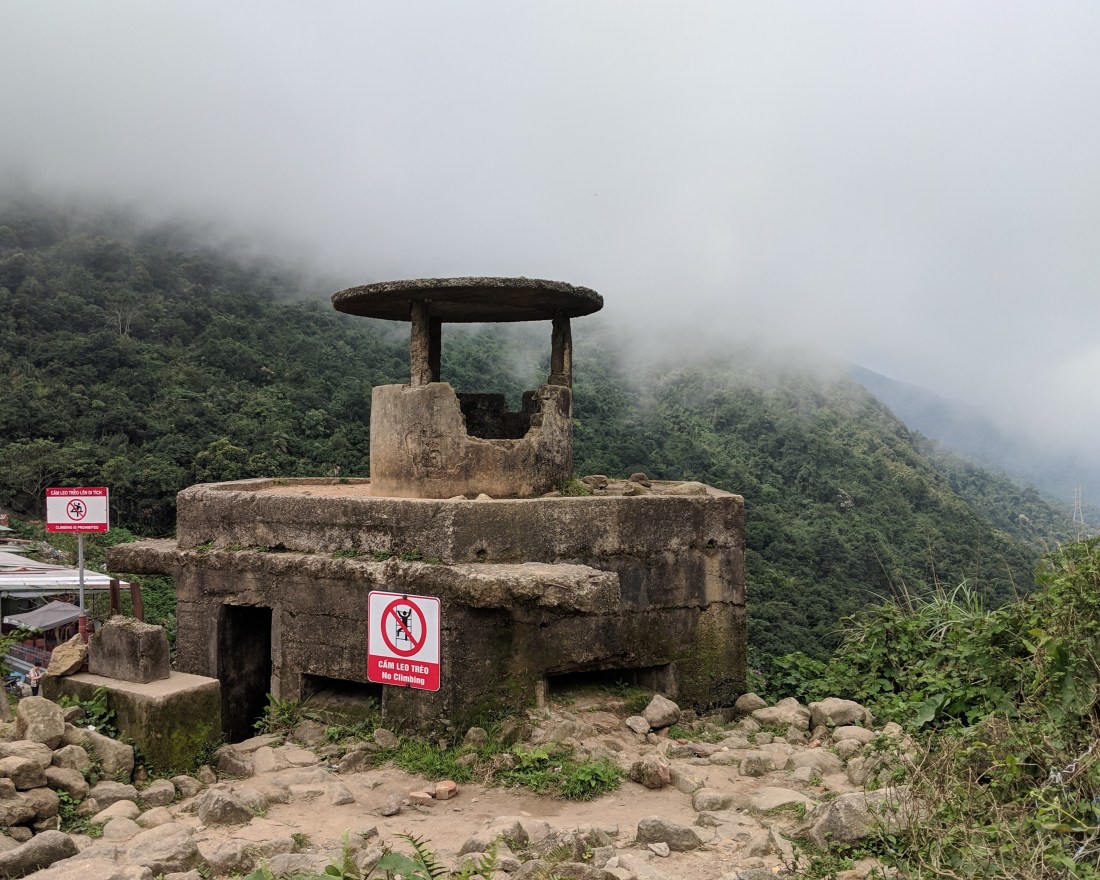
Then we went up over the Hoi Van ( Sea Clouds) Pass, which is the tallest pass in Vietnam with a height of 500 m, and the peak is in the clouds.  Because of its strategic location, it was an important military site throughout history.  In 1826 during the Nguen Dynasty, the Hai Van Gate was built to house Mandarins for look out protecting Hue from invasion from the north.  During the 1970s, the Americans built bunkers.

IMG_2193
Ngyuen Dynasty fort
IMG_20190205_114744
American bunker

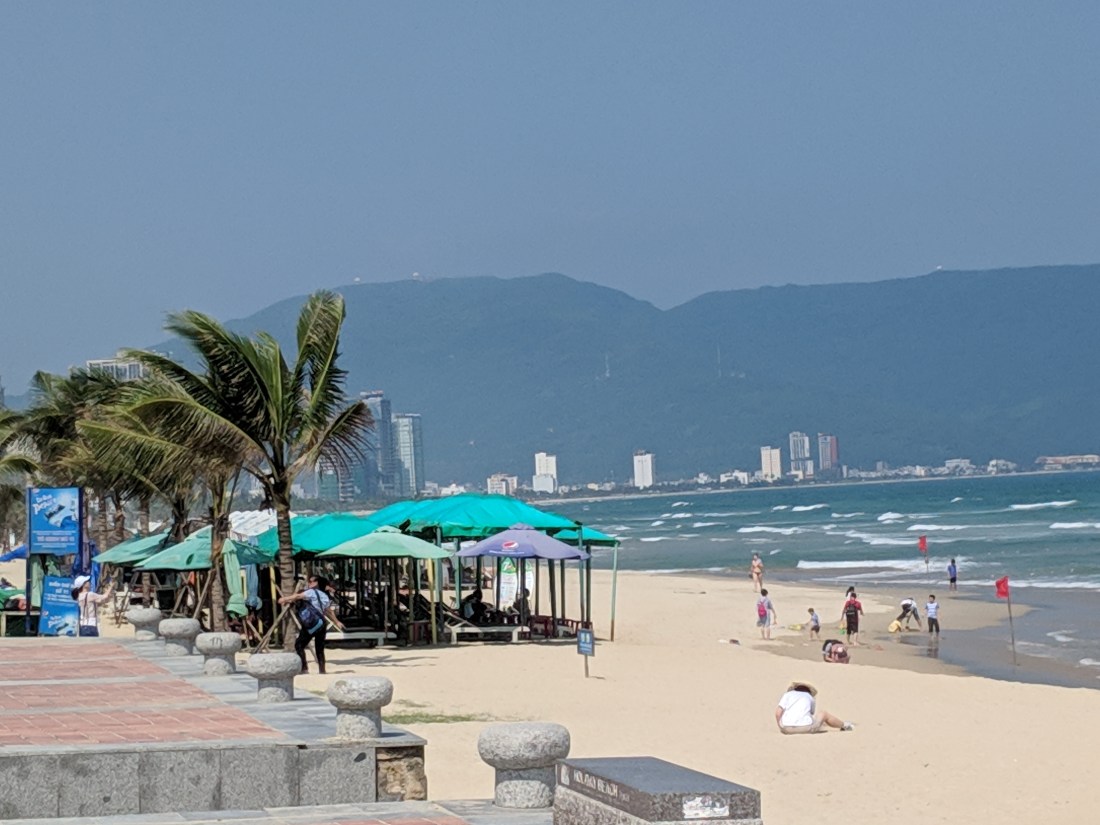
Then we went down the other side of the pass into Da Nang, which looks to us a bit like Ft. Lauderdale, with its famous China Beach (My Khe to locals) where American GIs were able to relax and enjoy barbecue and beer during the war.

IMG_20190205_124008

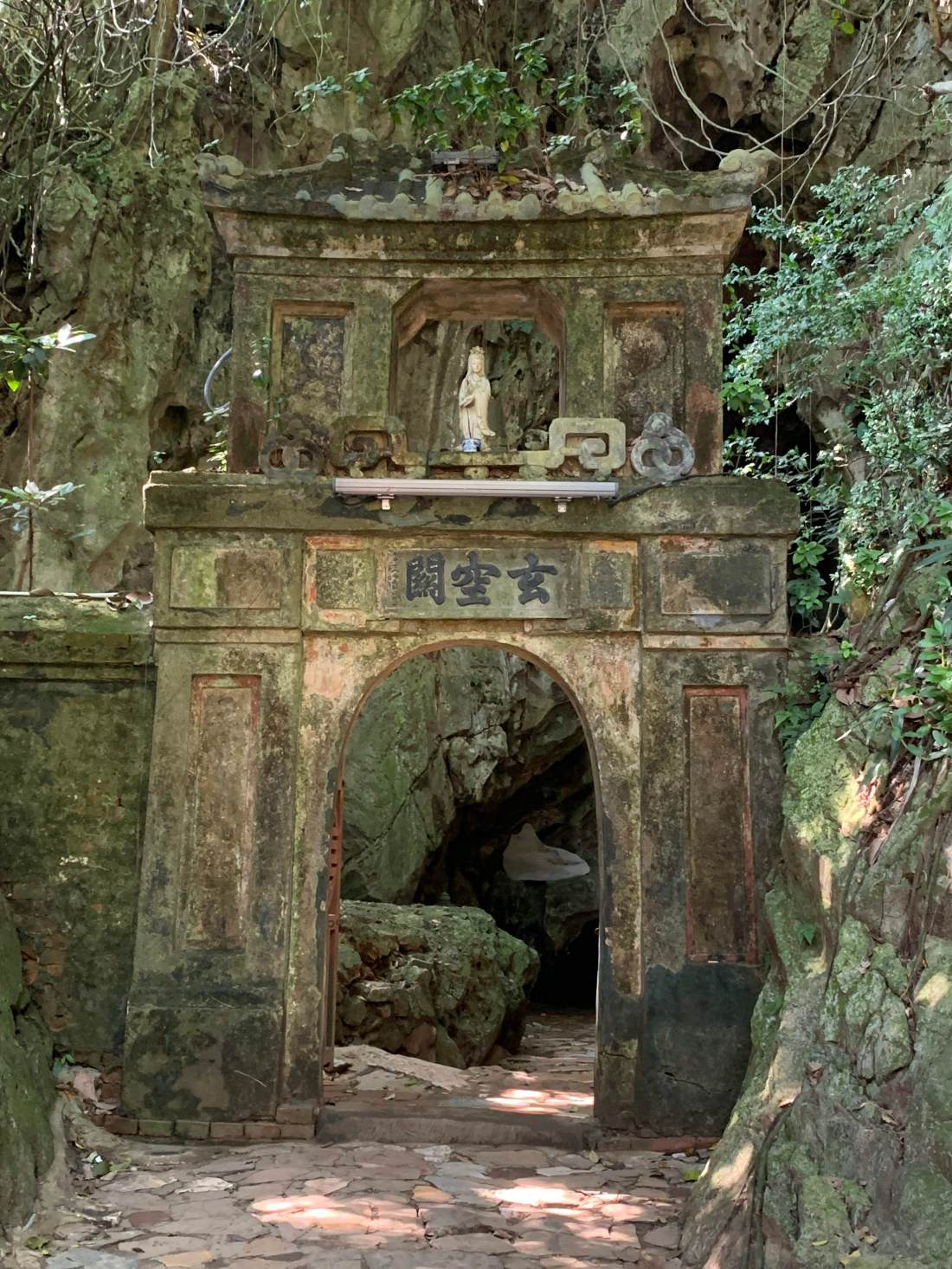
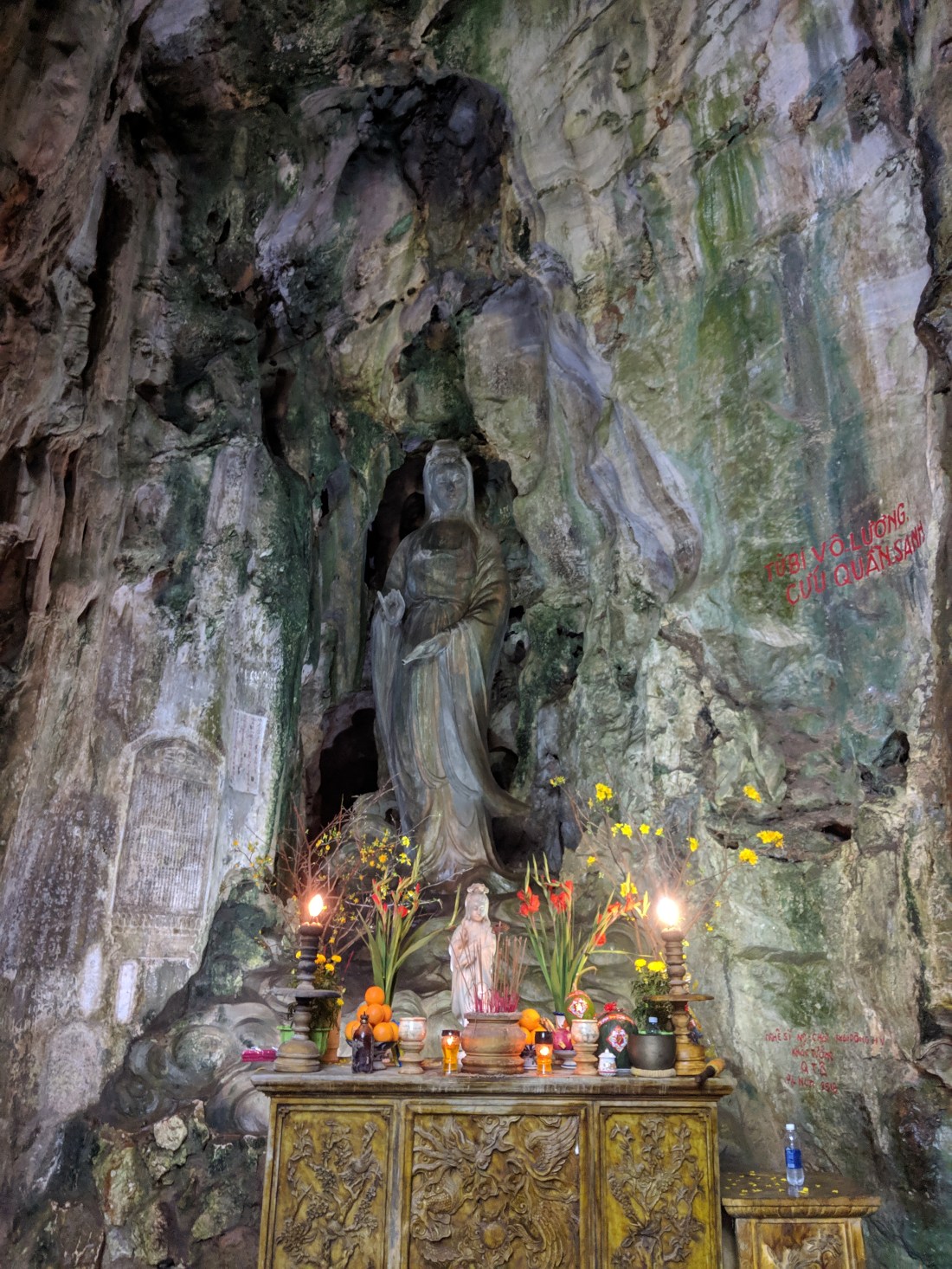
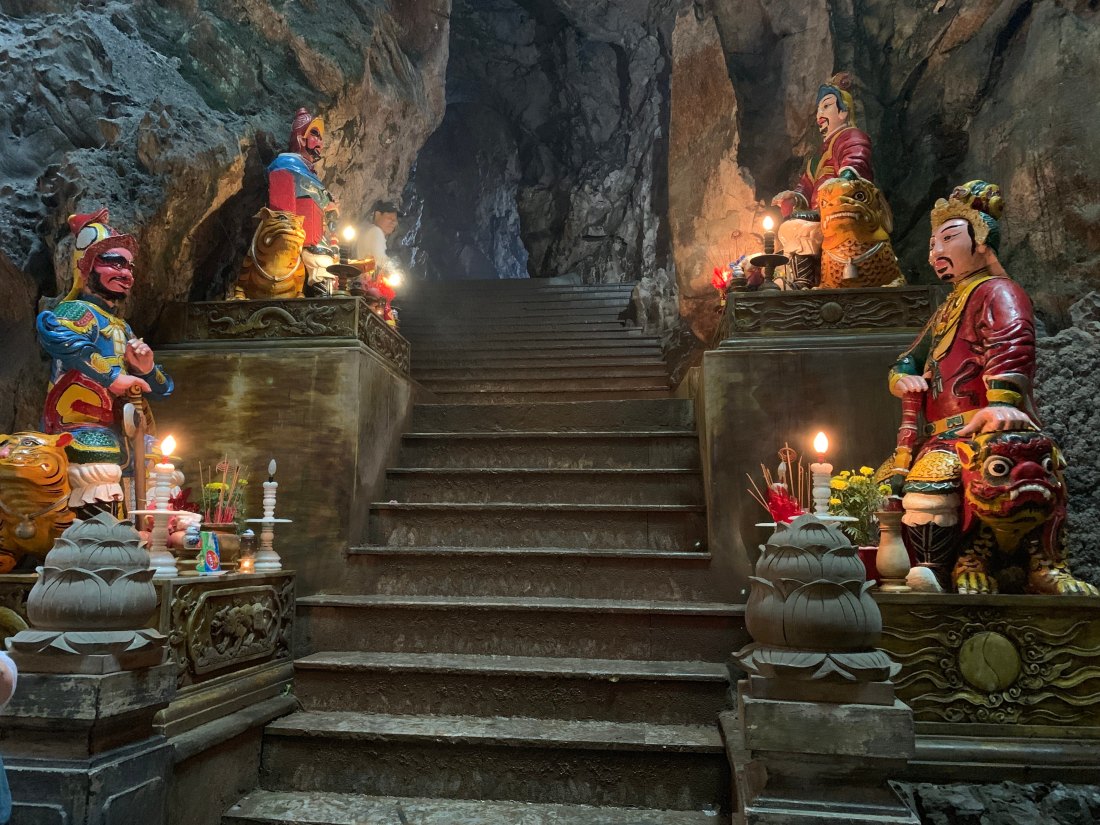
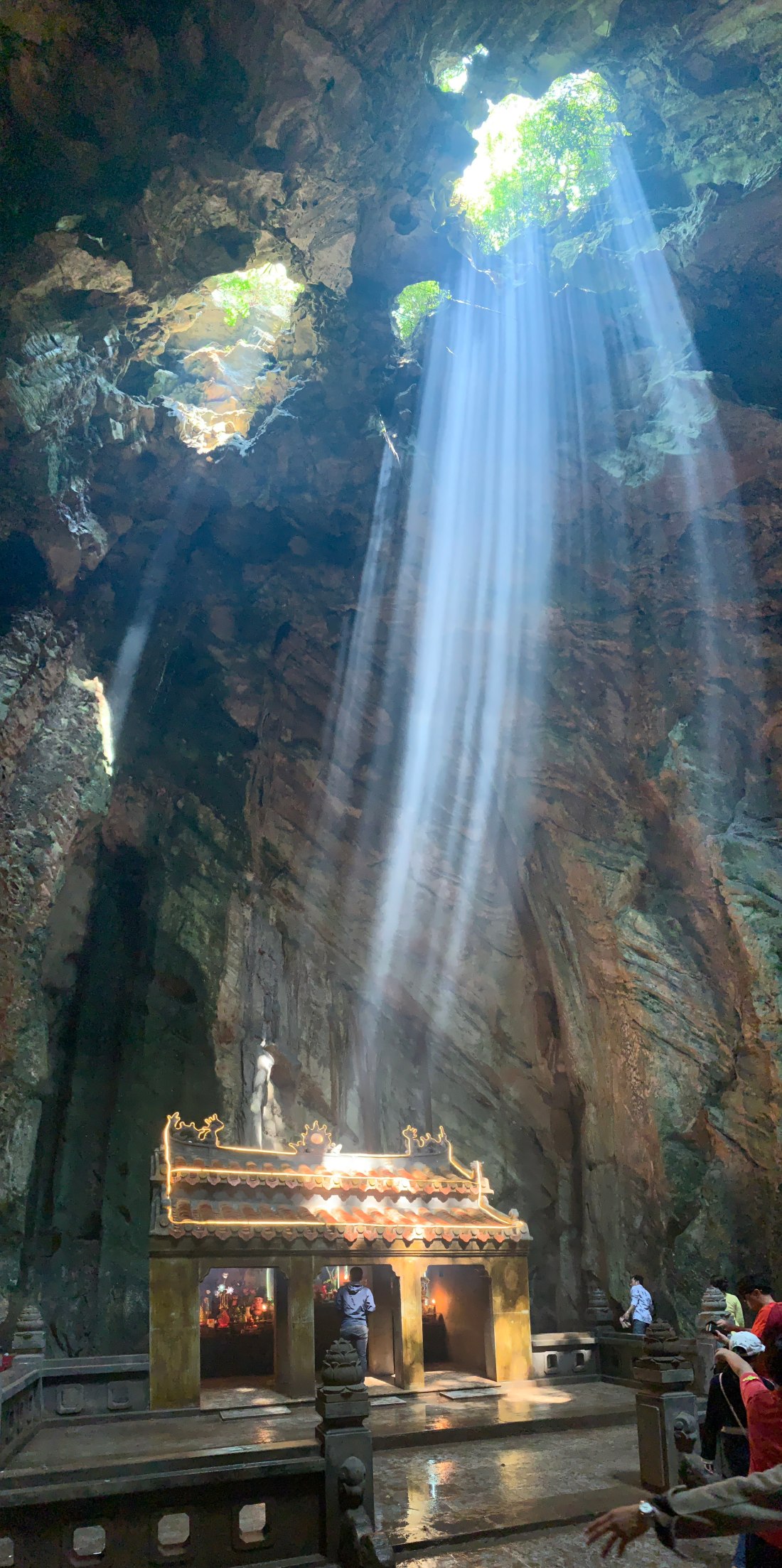
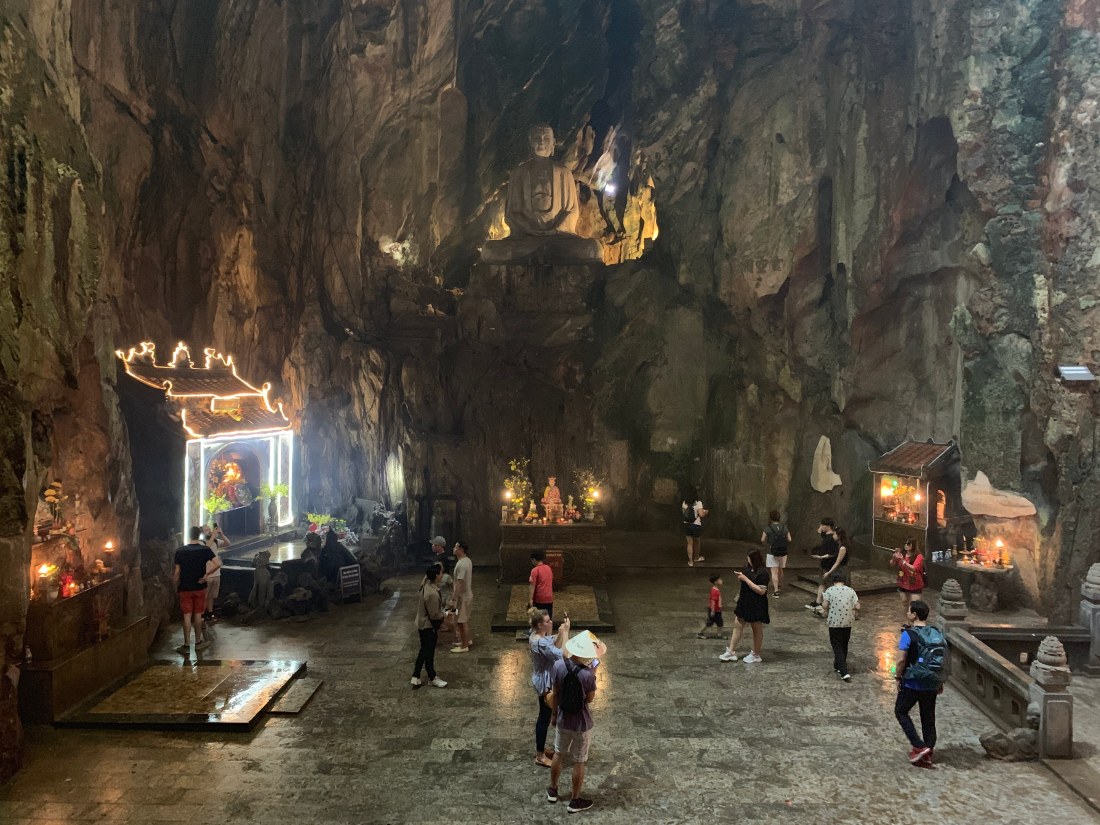
While in Da Nang we visited Marble Mountain with its sweeping views of Da Nang and its multiple caves and both Buddhist and Hindu sanctuaries.  We took the elevator up, then climbed the 156 steps to the top of Thuy Son, the only summit available to tourists.

IMG_2205
Huyen Khong Buddhist grotto
IMG_20190205_130925
Huyen Khong Buddhist grotto
IMG_2212
Huyen Khong Buddhist grotto
IMG_2211
Huyen Khong Buddhist grotto
IMG_2215
Huyen Khong Buddhist grotto
IMG_20190205_132550
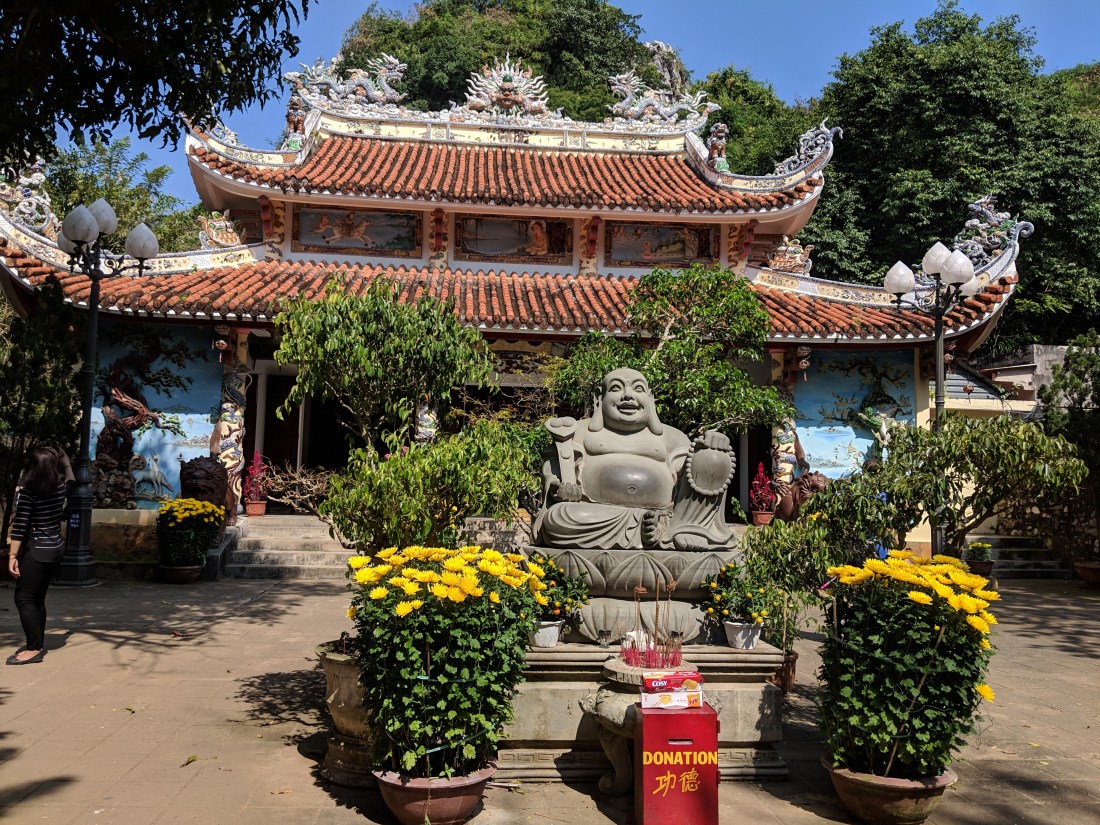
temple on Mt. Thuy Son

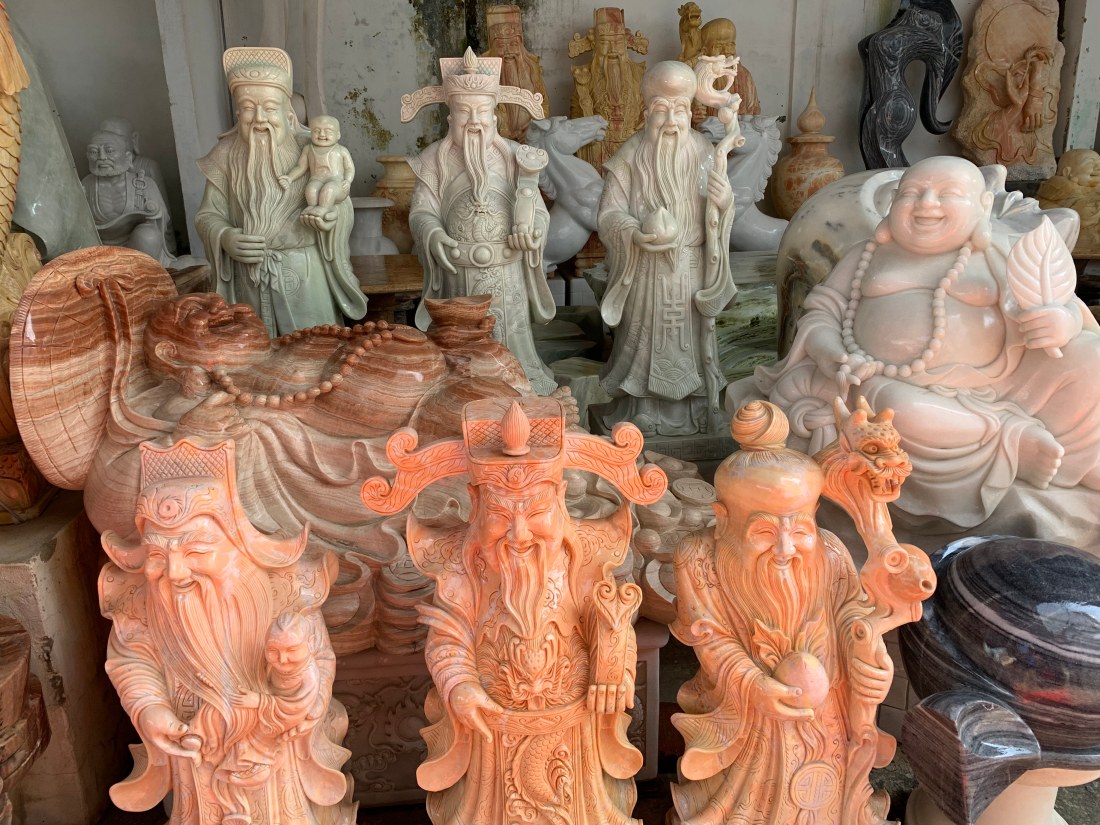
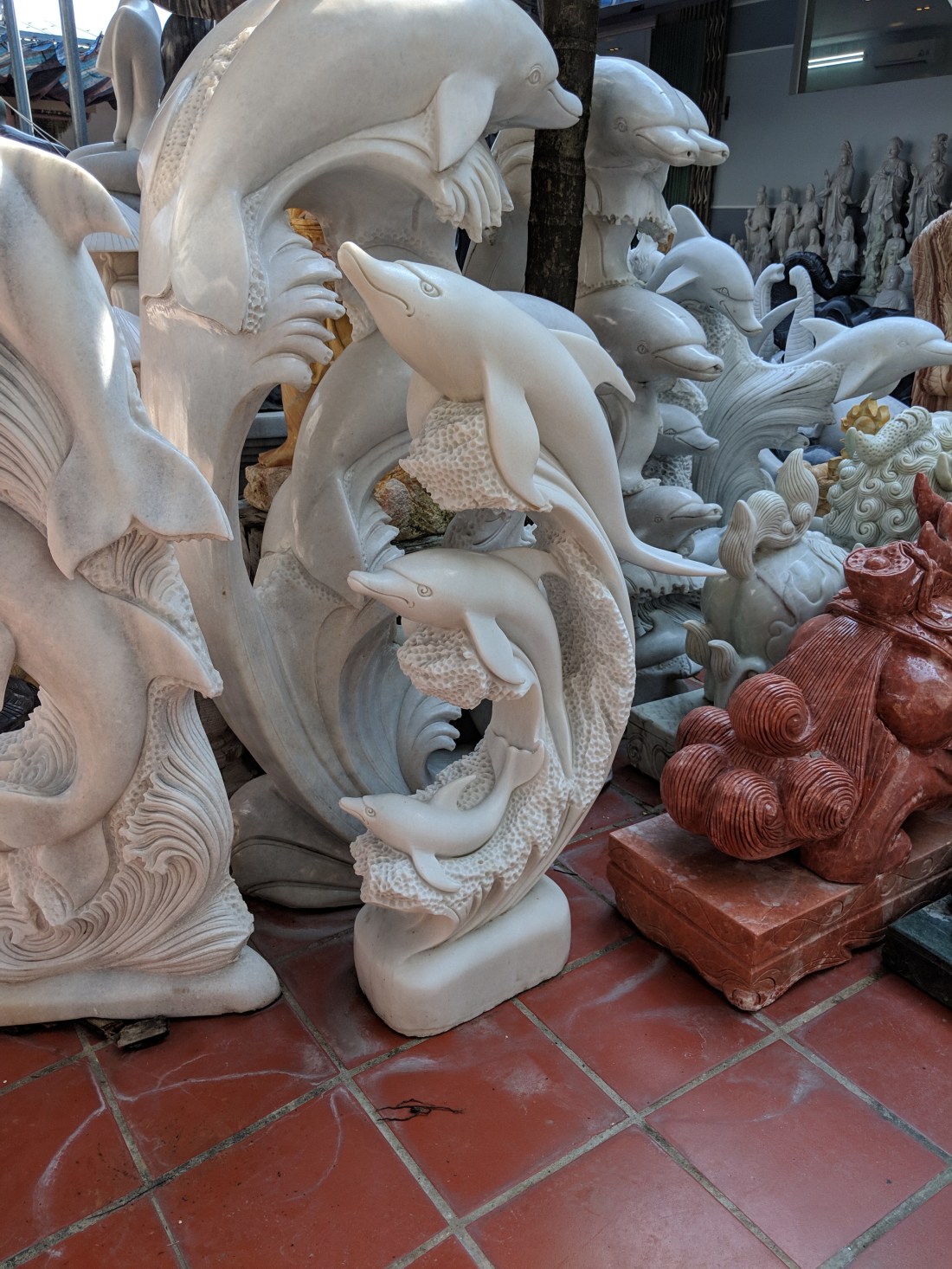
The area is also know for its many marble sculpture shops with dozens of artisans from families, often 5th generation in the business.

IMG_2228IMG_20190205_134756

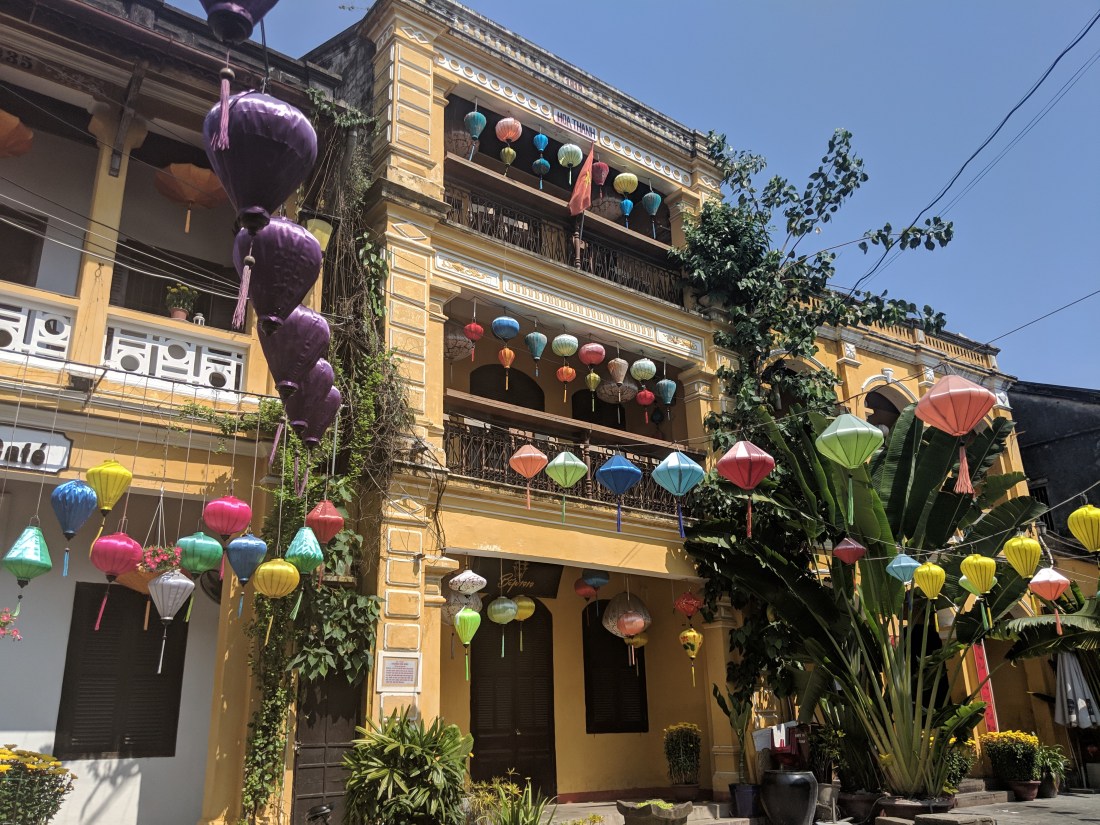
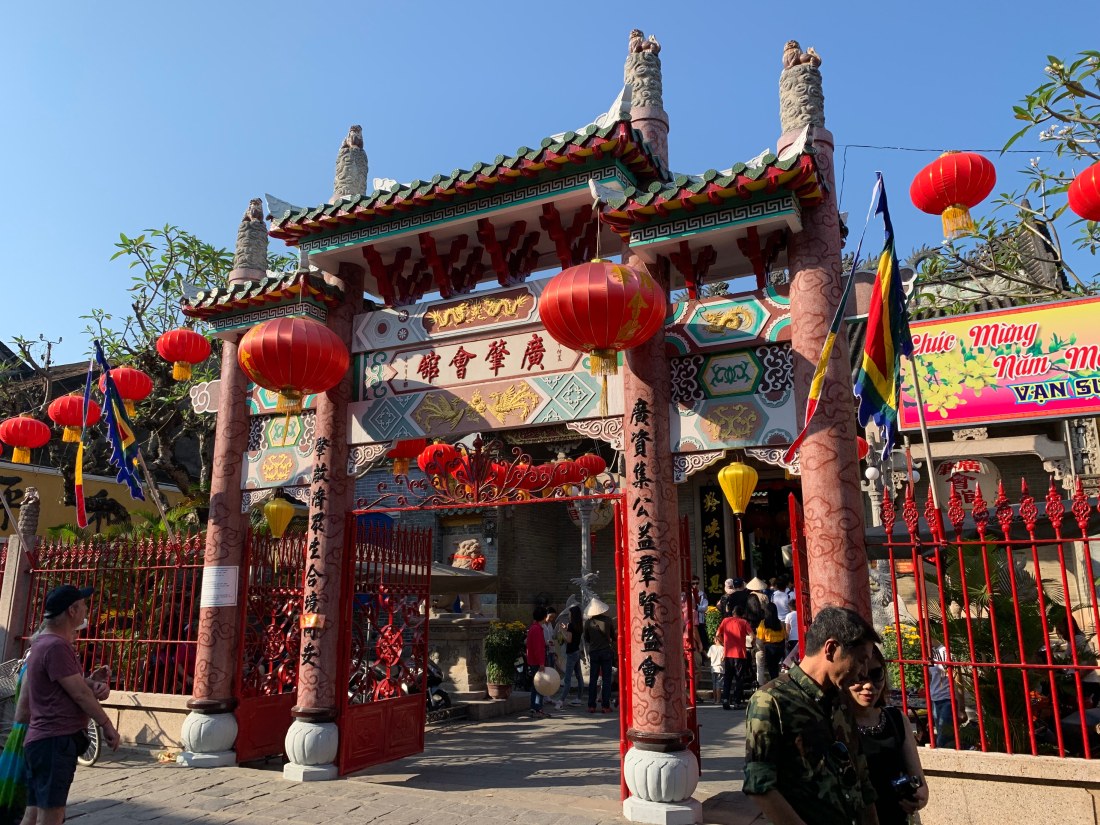
From there it was on to Hoi An – “Peaceful Meeting Place.”  Its ancient town is a well preserved example of the melting pot that was Vietnam during the height of its trading period of the 15th – 18th centuries, when the new dynasty became opposed to trade.  When the French reinstated Vietnam as an important trading center in the late 18th century, the major port was moved to Da Nang with its deeper canals allowing for the bigger more modern ships.  So Hoi An was mostly deserted, which allows for it preservation in its current state.  The ancient town is now a UNESCO Heritage site for continued preservation.  The towns’ architecture reflects the influences of its Chinese, Japanese, French, and Portuguese, as well as Vietnamese inhabitants of the time.  We settled in for a several day stay to relax and soak it all in.

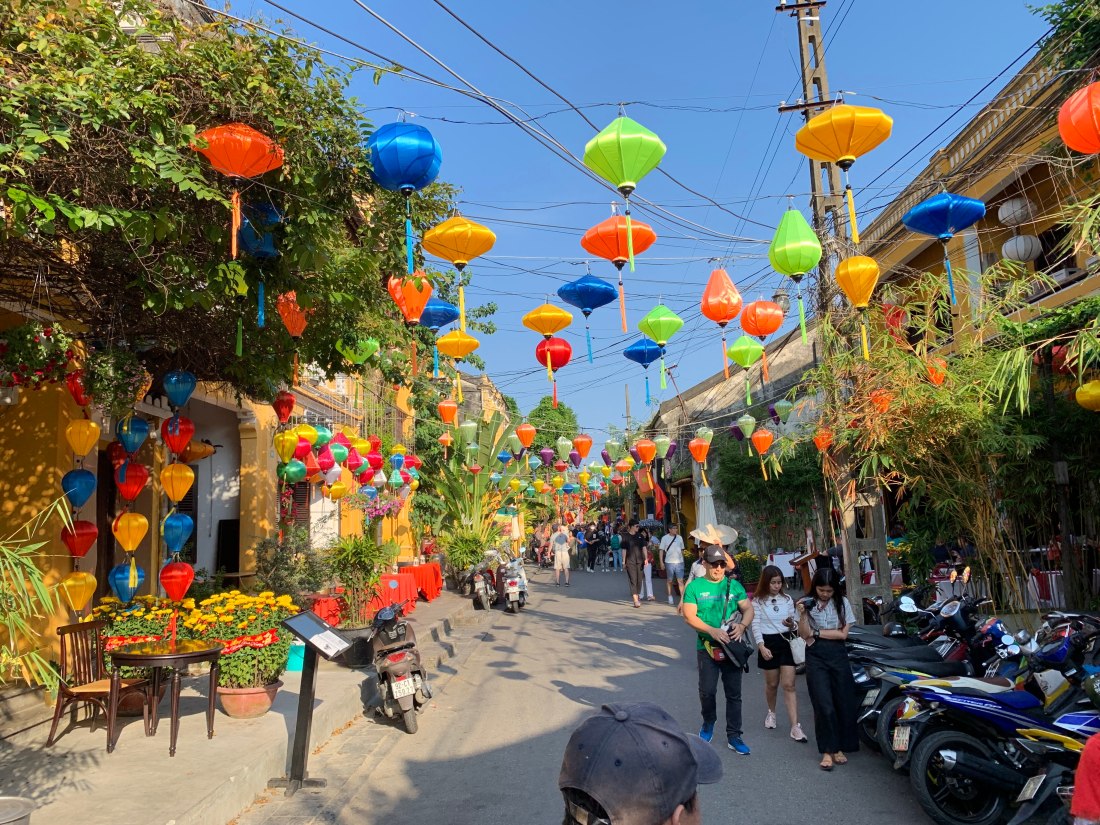
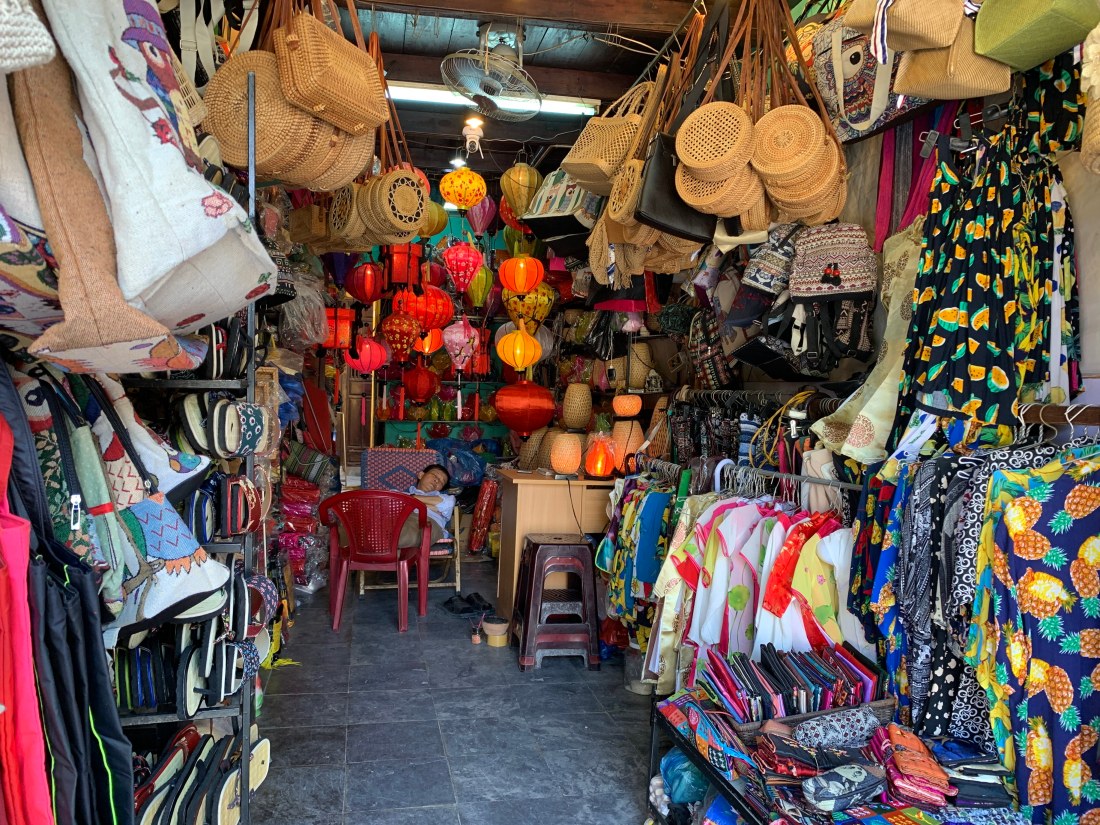
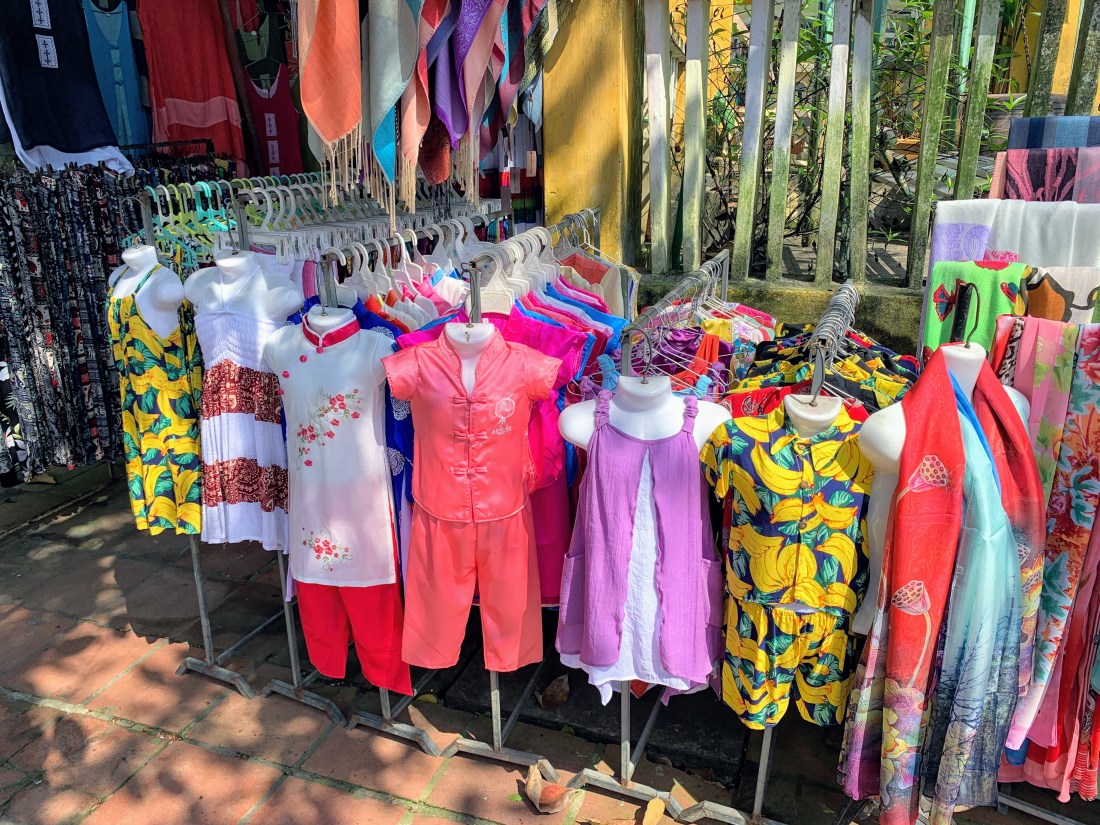
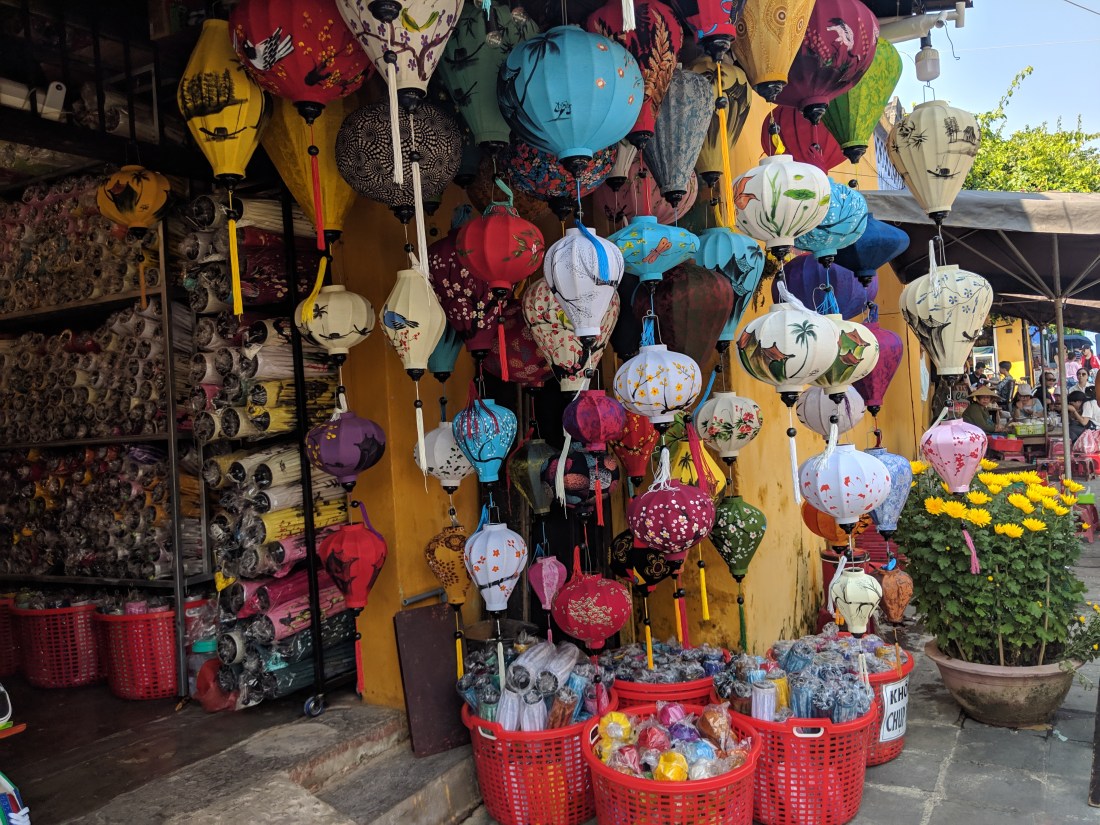
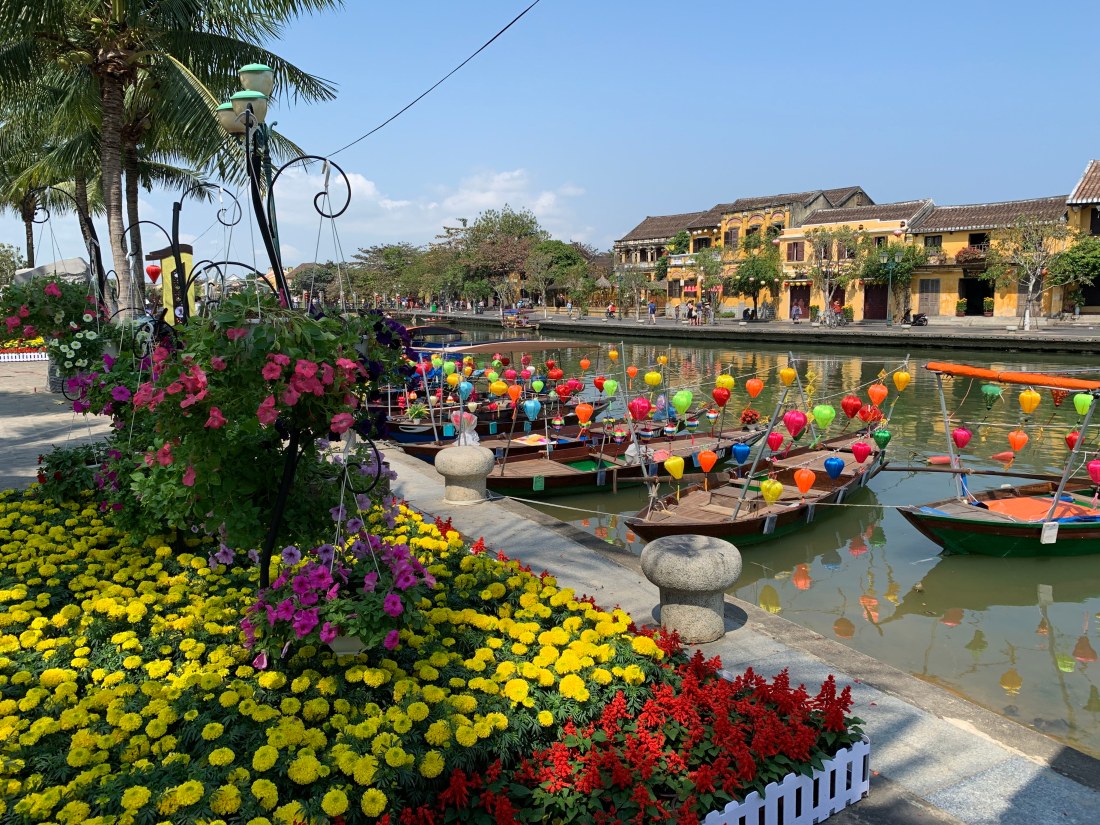
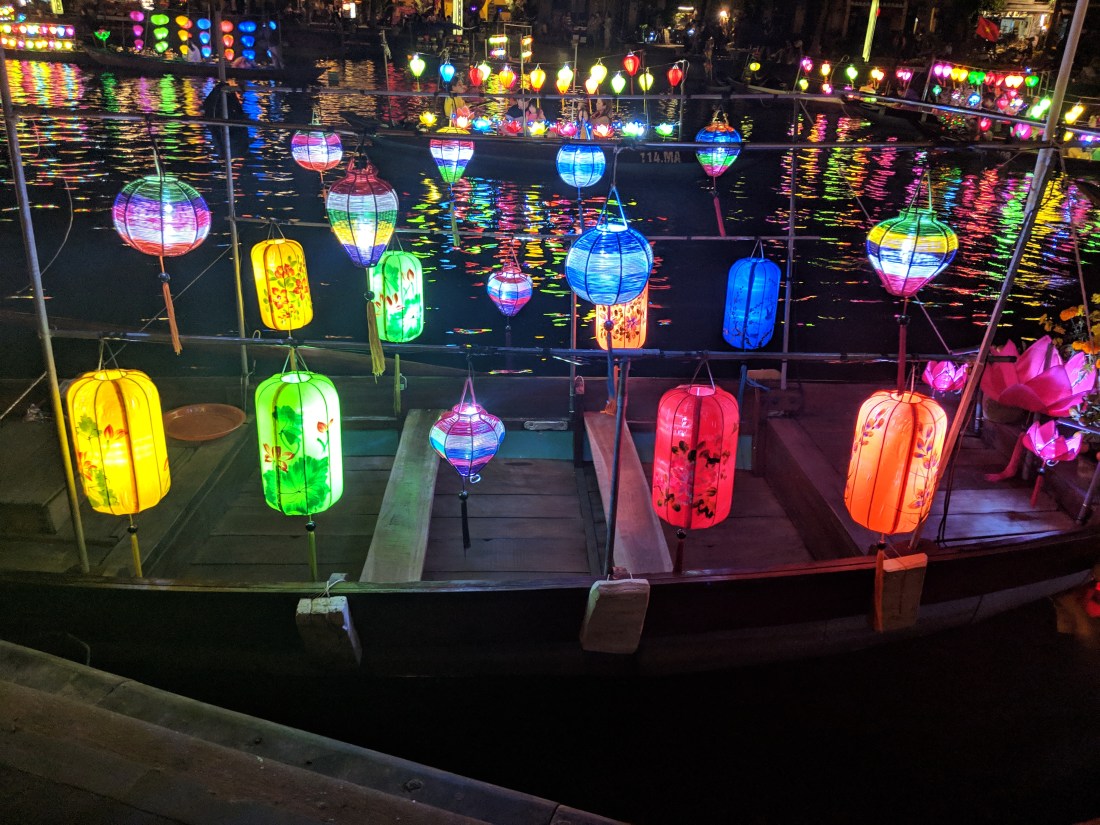
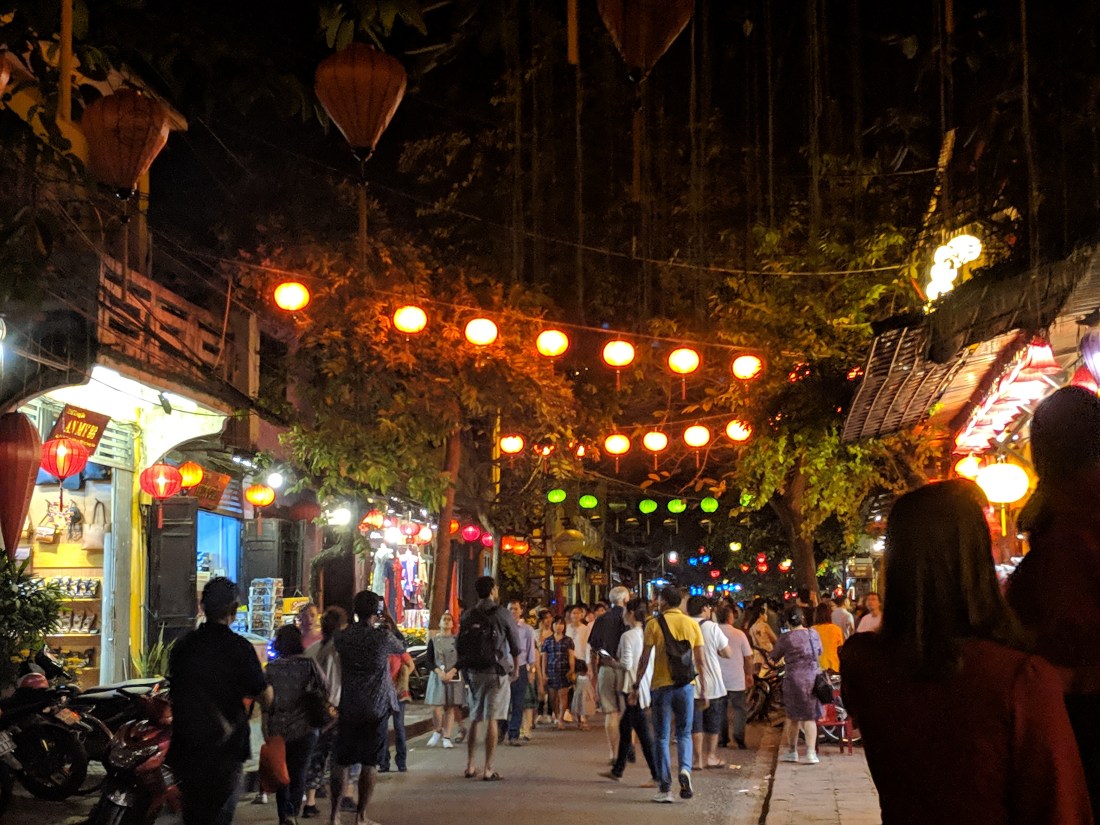
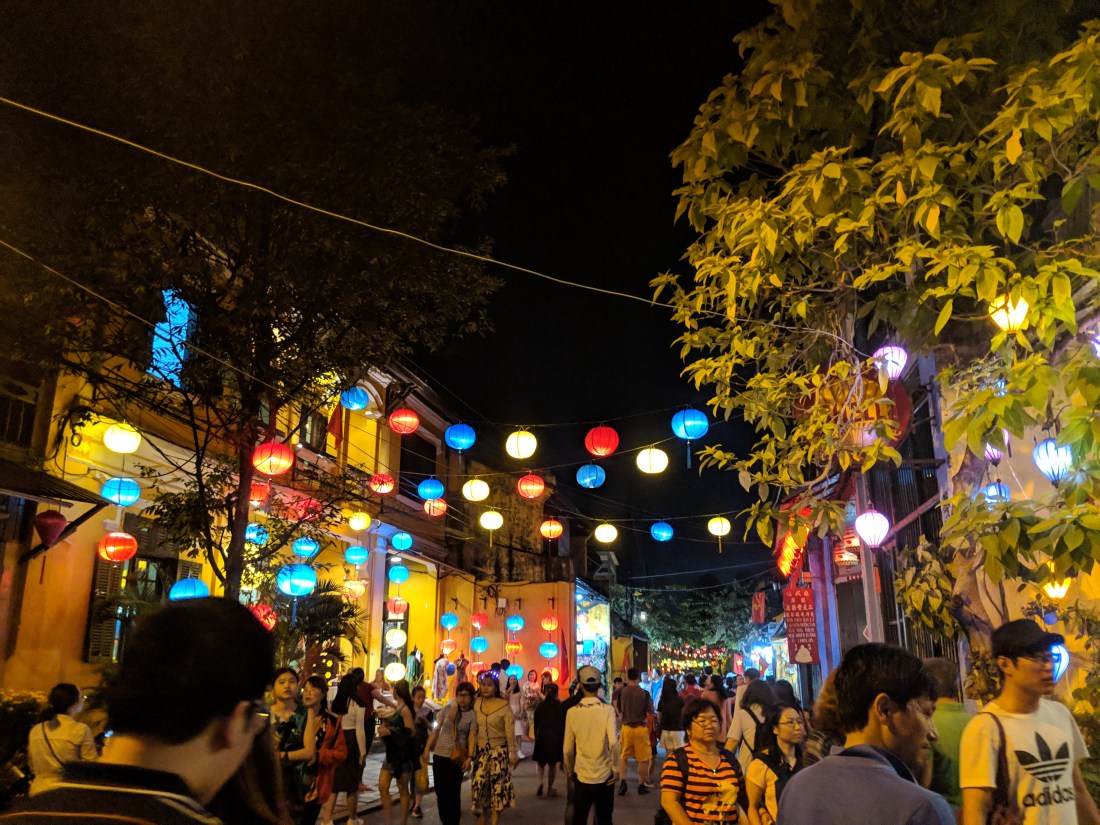
The pedestrian-only streets are narrow and contain numerous homes, shops, temples, restaurants, and cafes and they are packed with tourists, especially now for the holidays.  But the lanterns are a staple, not just holiday decor.

IMG_2235

IMG_20190206_112651

IMG_20190207_184523IMG_2333

IMG_2262IMG_20190207_131641

IMG_2263

IMG_2230
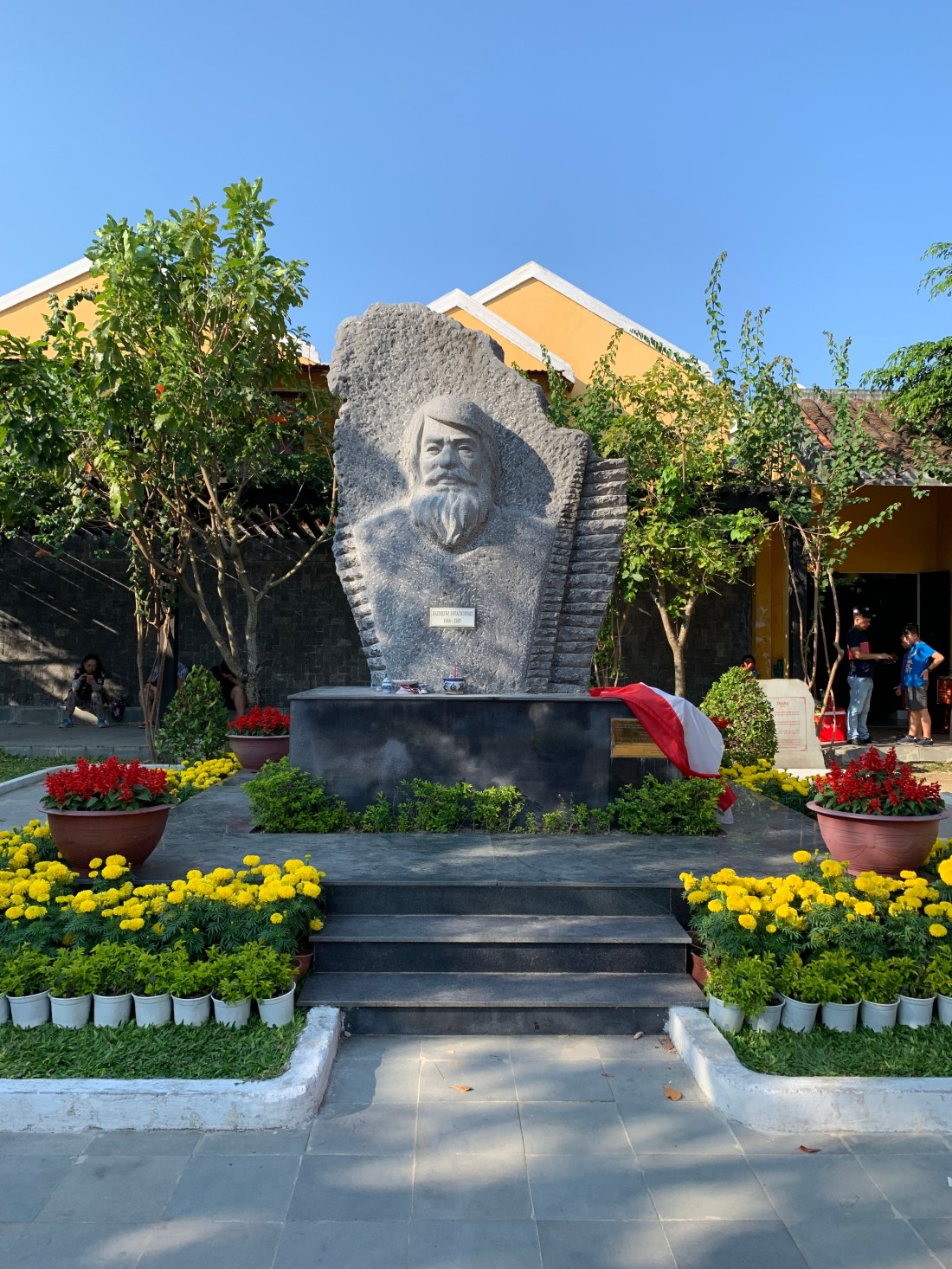
monument to Polish benefactor for restoration of Vietnam after the war
IMG_2233
one of numerous Chinese temples

IMG_2244IMG_2268

IMG_2255
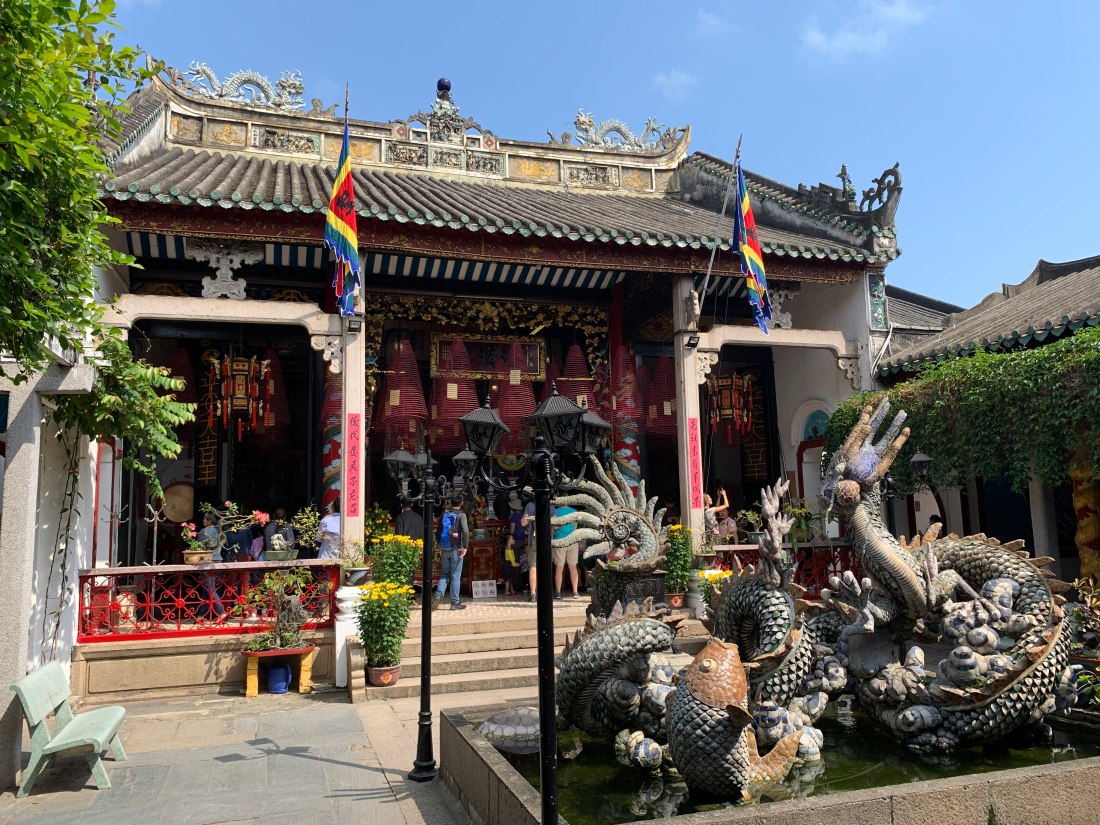
another Chinese temple
IMG_20190207_134017
inside a typical Chinese home.  note alters on both sides; a Vietnamese home would have a single central alter
IMG_20190207_132414
open kitchen in the back, open to avoid fire and smoke.  Vietnamese homes are similar
IMG_20190207_132741
the upstairs has a large opening to lift furniture through during the floods of the rainy season


IMG_2239
a Vietnamese Temple

IMG_2264

IMG_2266

IMG_2245
17th century temple gate

The Japanese Bridge, a wooden structure built in the late 17th century, is the only covered bridge known to have a Buddhist temple on the side.

IMG_2271

IMG_2256

IMG_2259

IMG_20190207_134035
temple on side of bridge

The canals run to the sea historically carrying trade goods: ceramics, spices, and silk.

IMG_2274IMG_20190206_111326

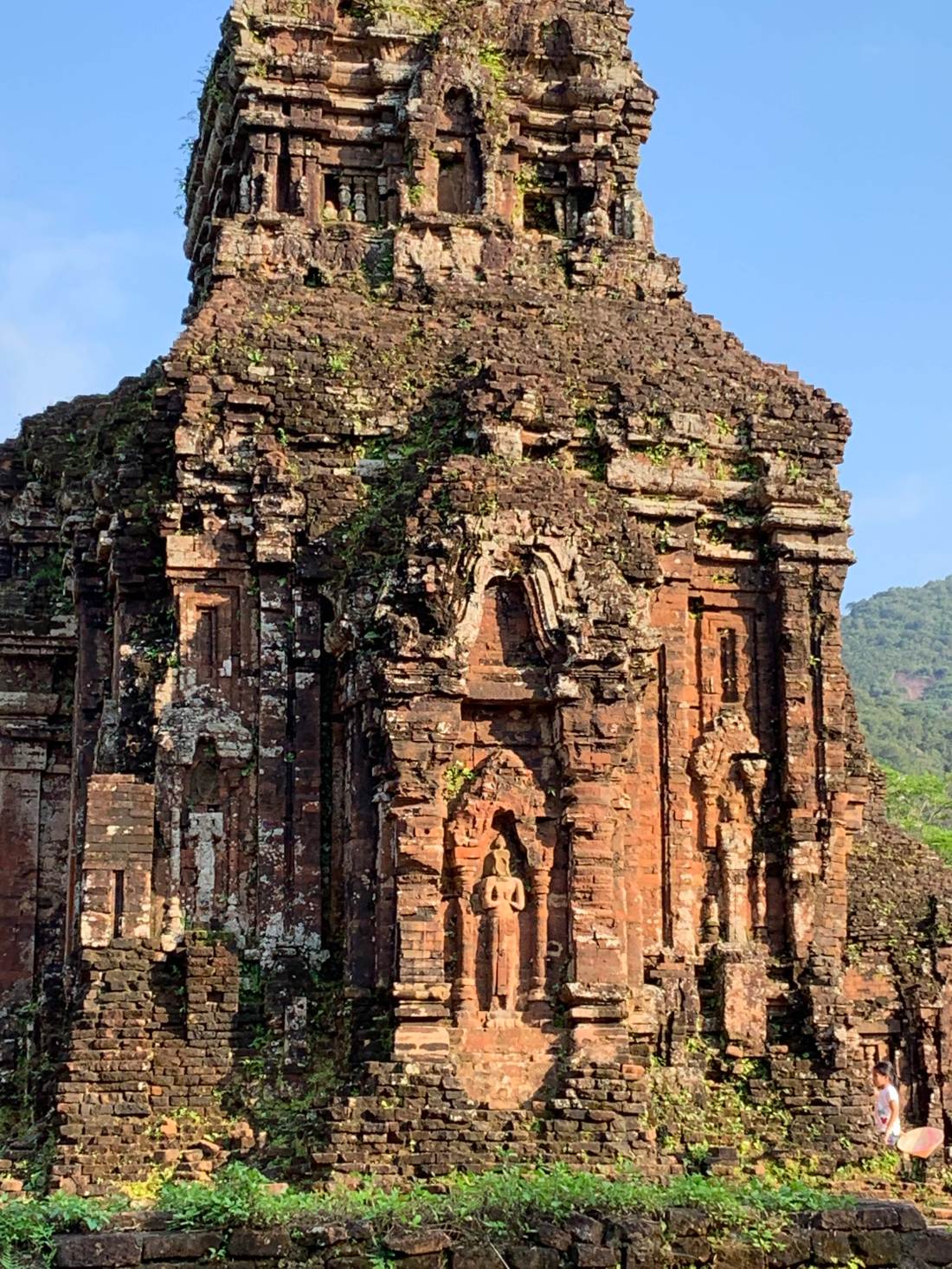
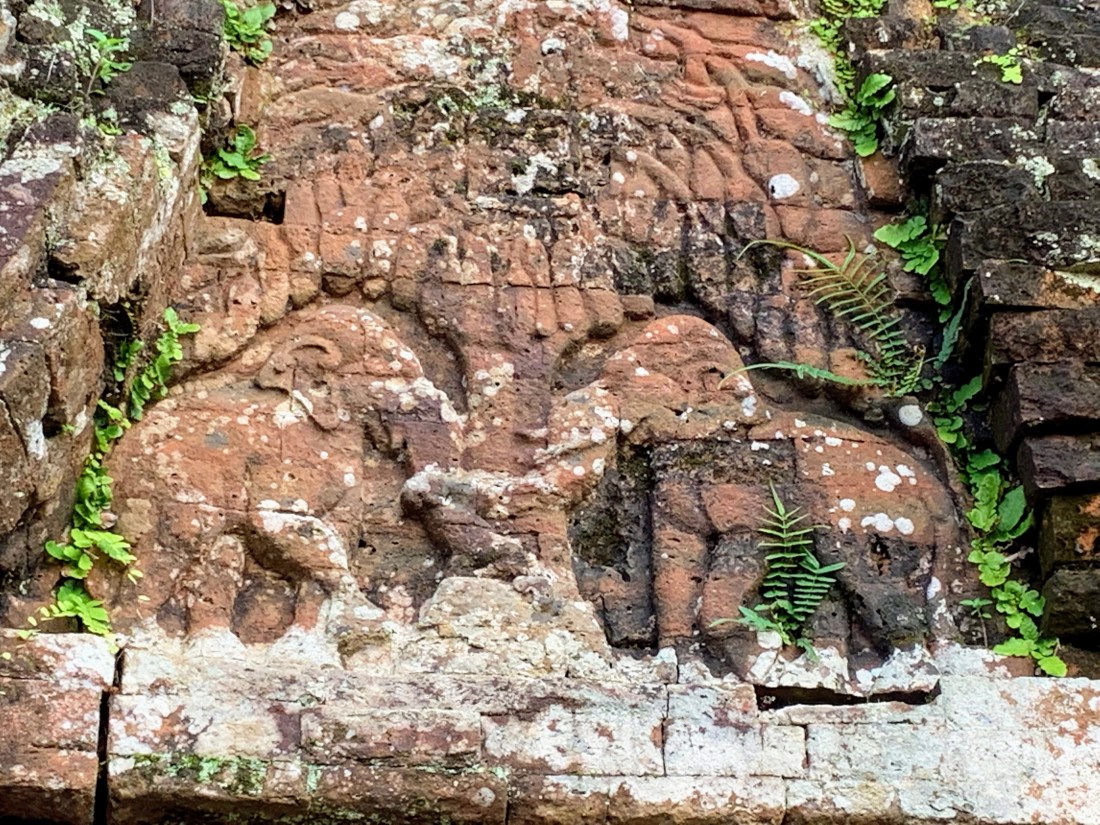
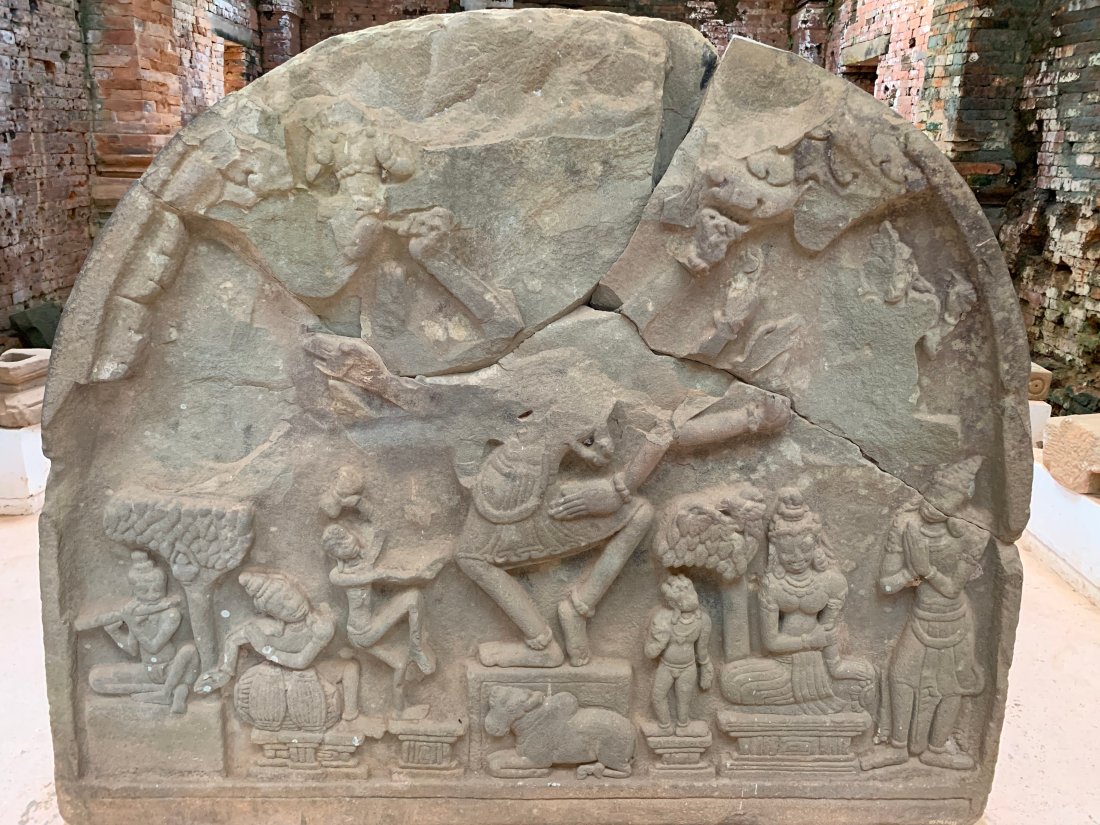
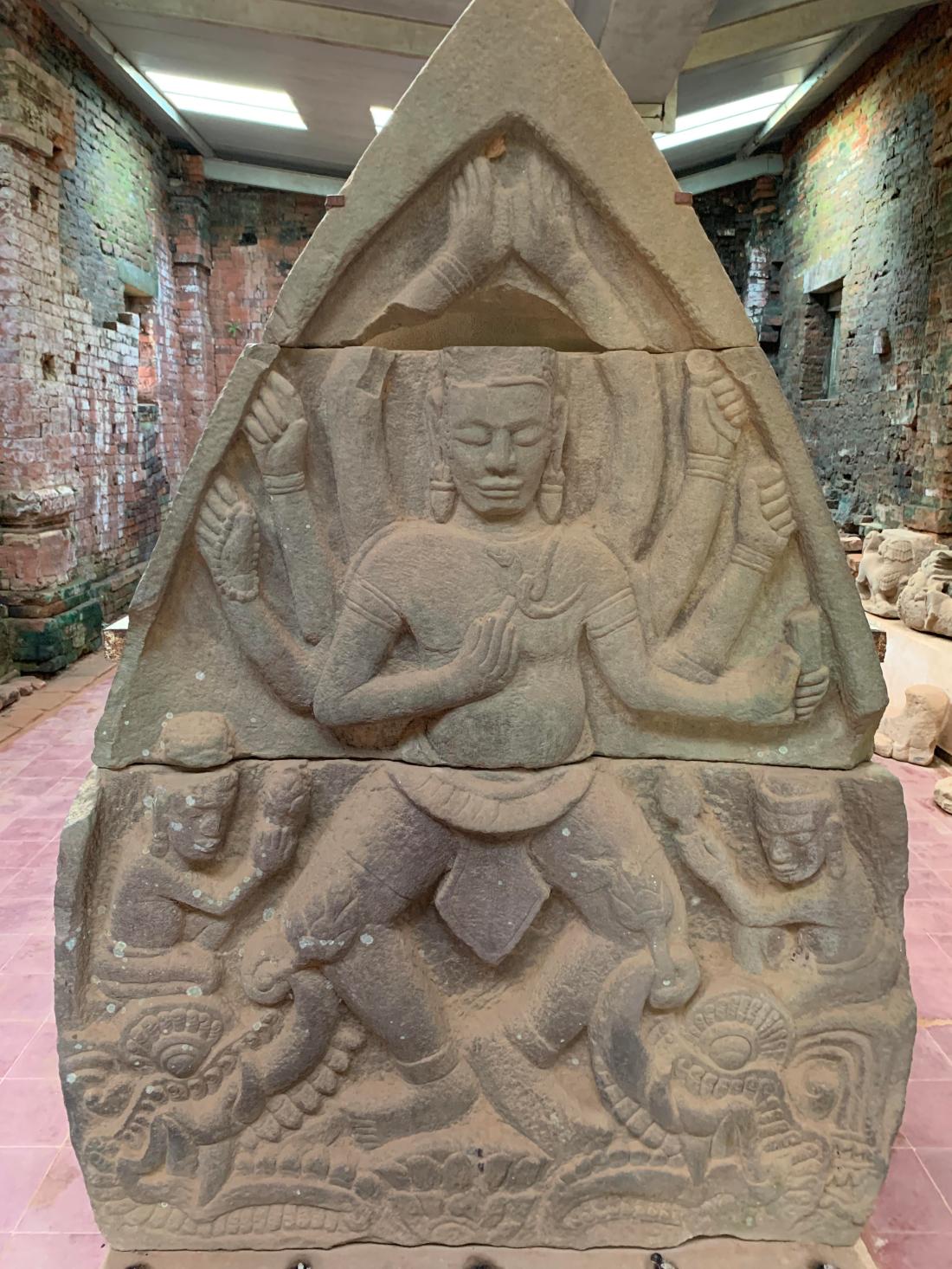
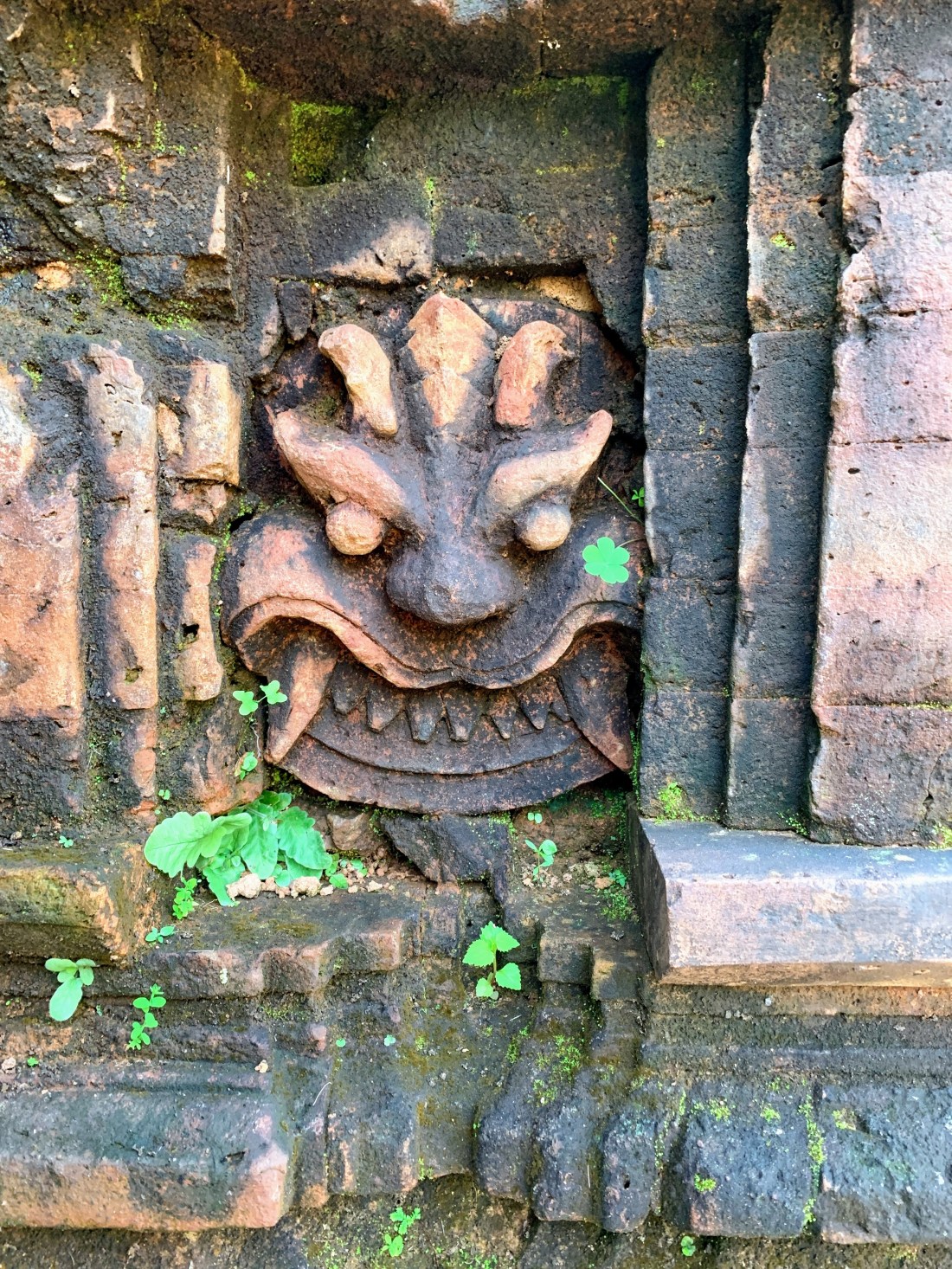
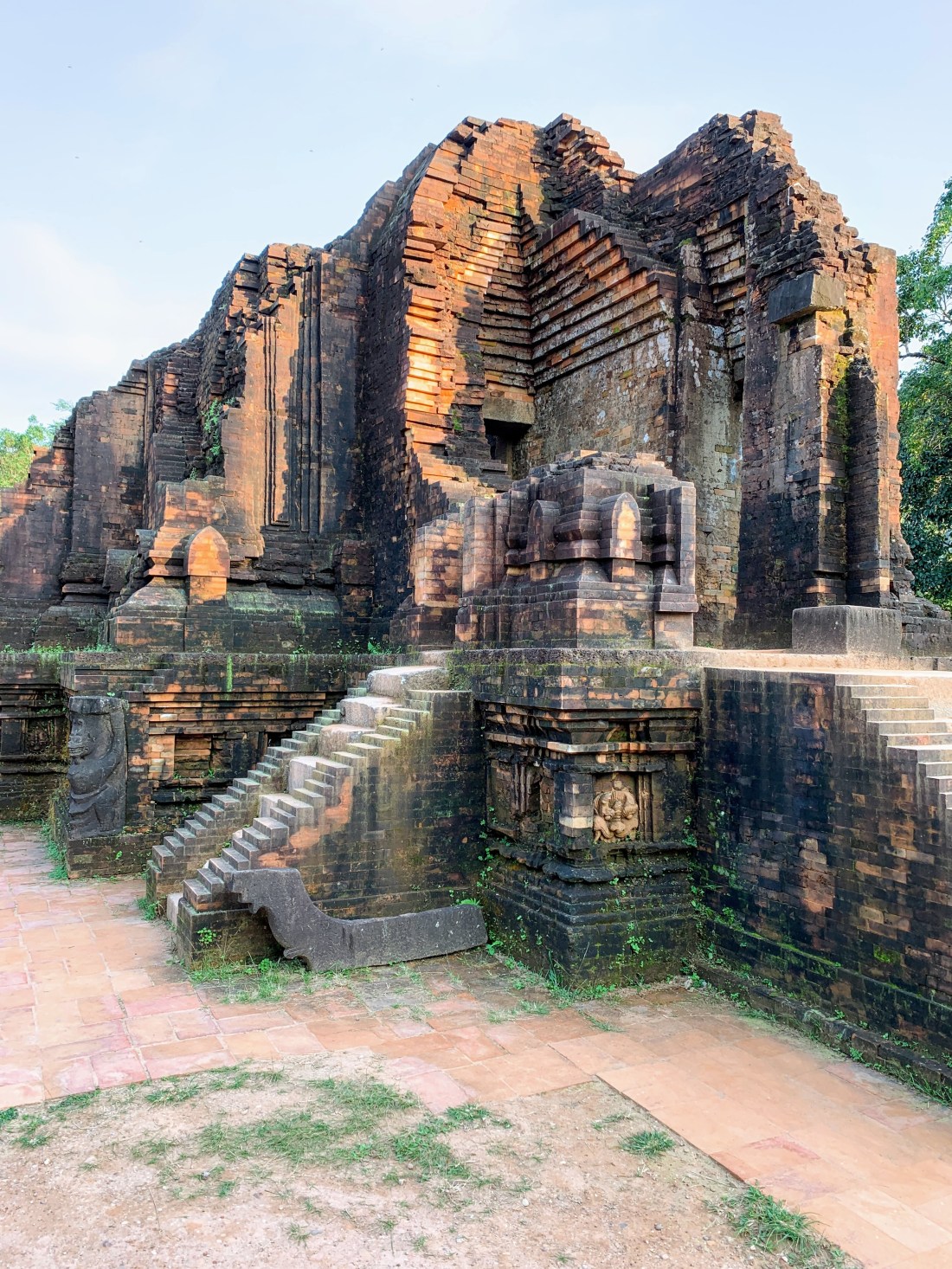
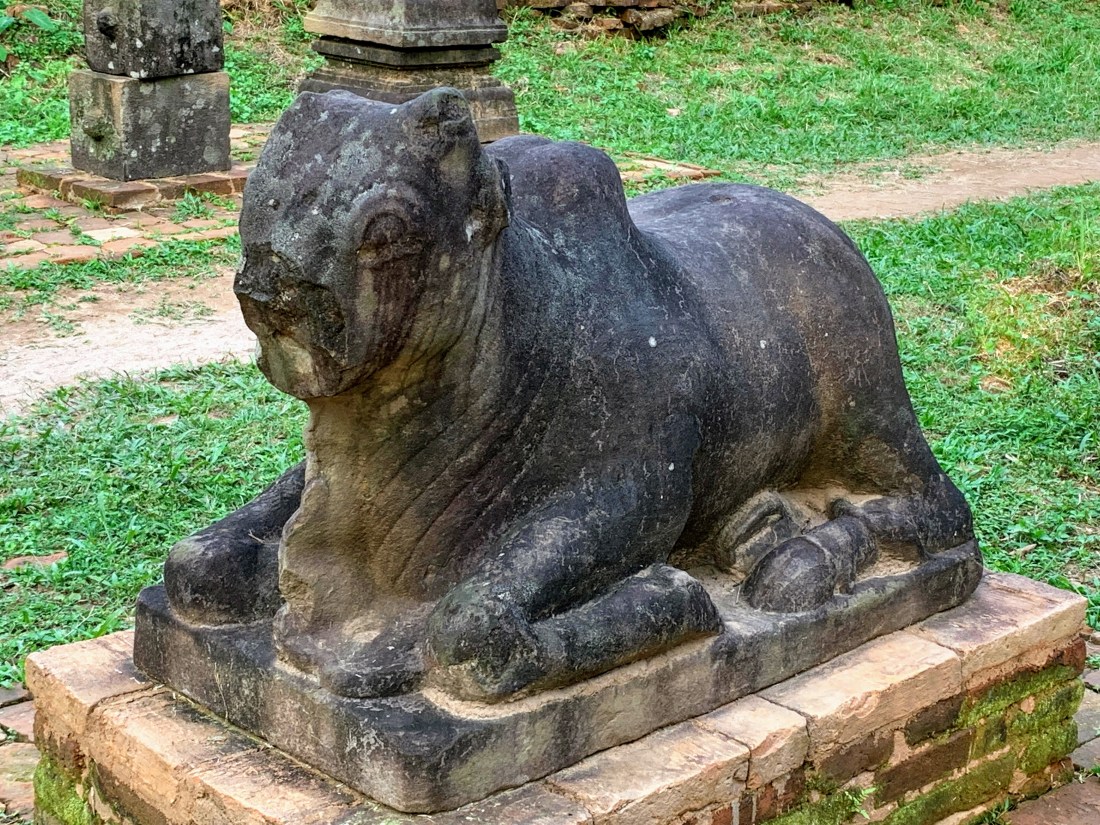
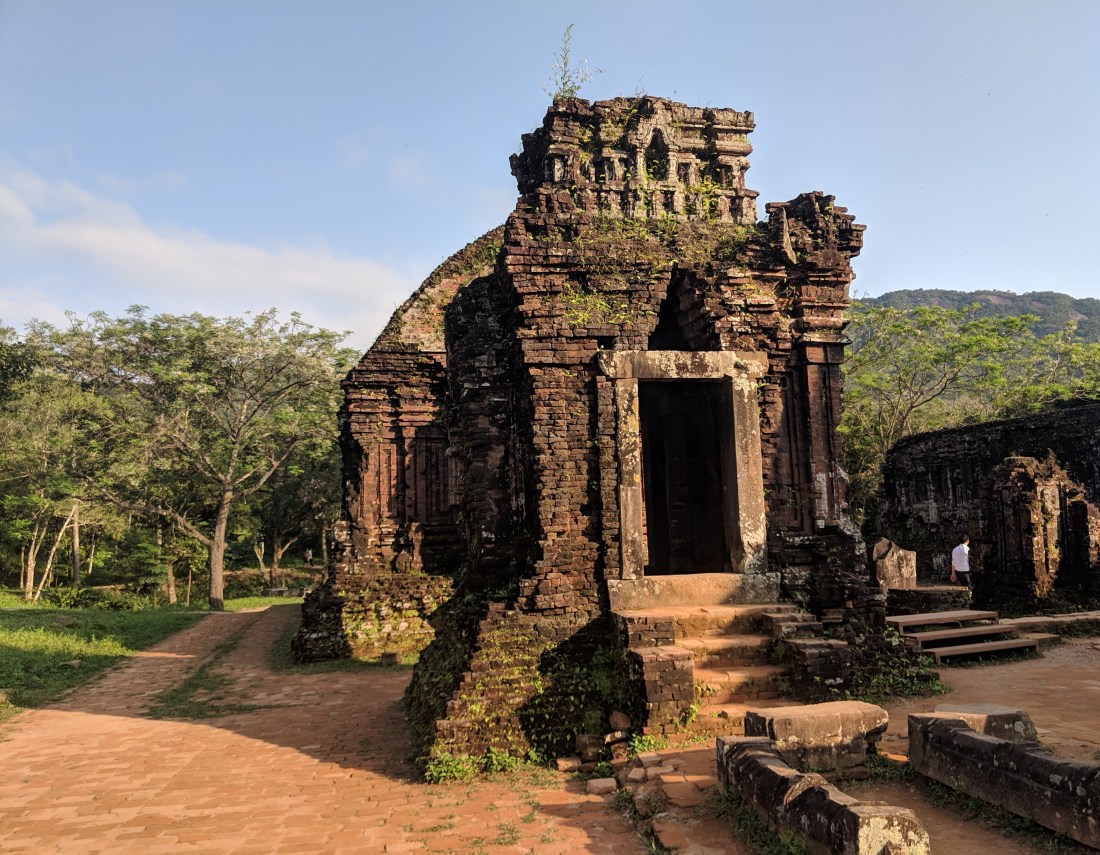
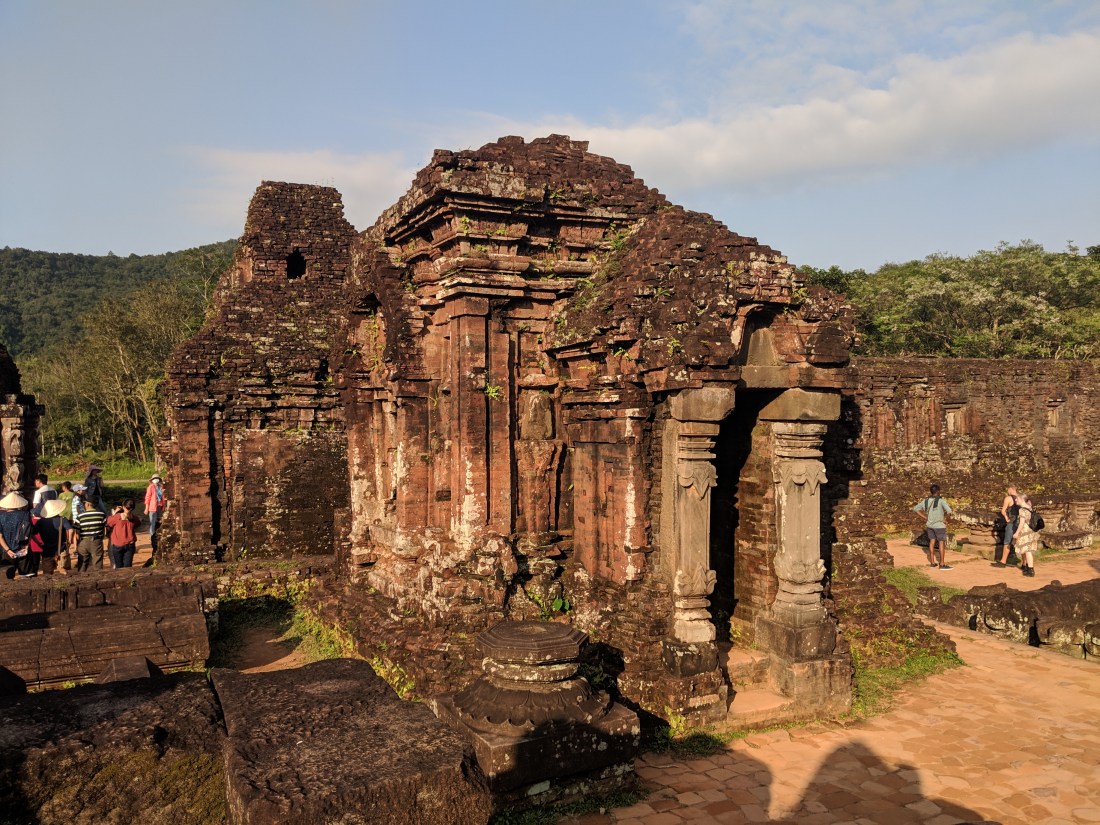
One day we visited My Son (Beautiful Mountain).  The area of Vietnam from Hue south was controlled by the Cham (people of the Champan Empire, originally Malayo-Polynesian, originally from India) from the 7th to the 10th centuries before taken over by the Khmer.  (the north by the Viet peoples of Chinese descent).  My Son is the grouping of temples built by the Cham for Hindu gods, mostly Shiva, between the 7th and 10th centuries, 300-400 years and more before Angkor Wat!  Most of the temples are in ruins today because the Viet Cong hid there during the war, and the Americans bombed the site extensively.  Currently India has pledged 30 million USD for reconstruction.

IMG_2276
Shiva temple

IMG_2280IMG_2283IMG_2285

IMG_2291
Shiva
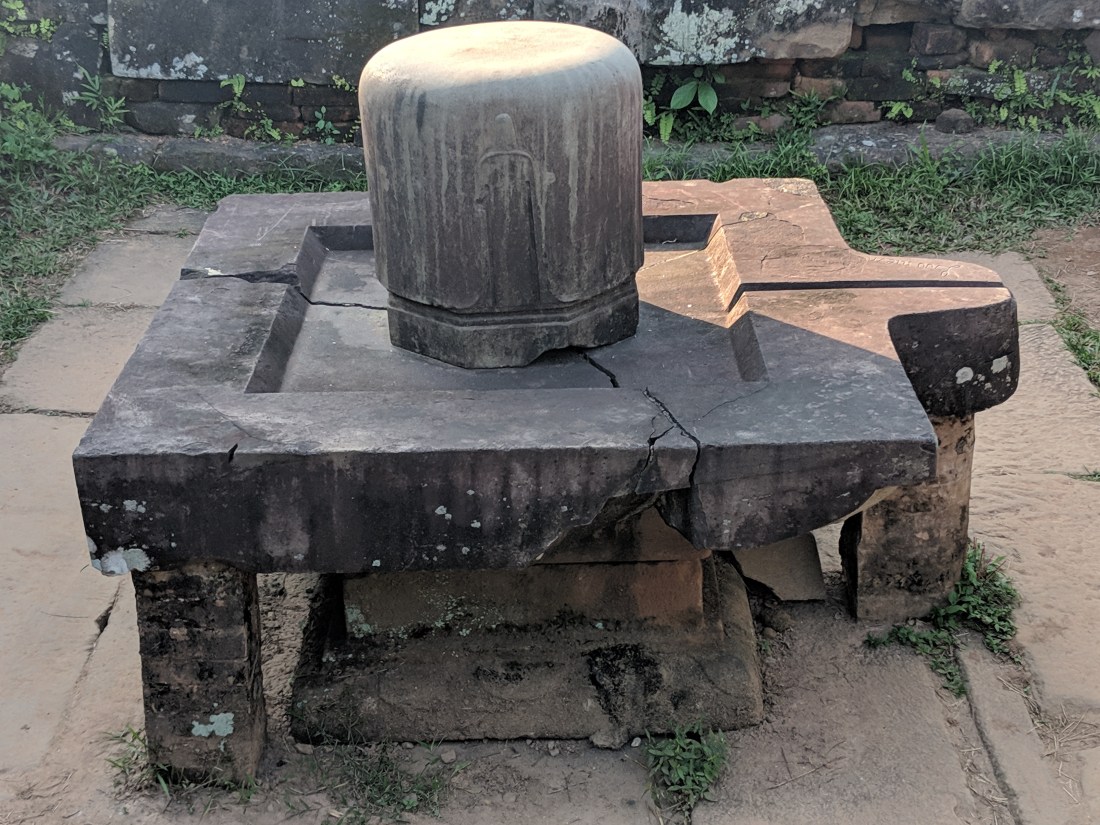
IMG_20190206_160837
a ling, symbol for Shiva with a yin/yang: male/female
IMG_2301
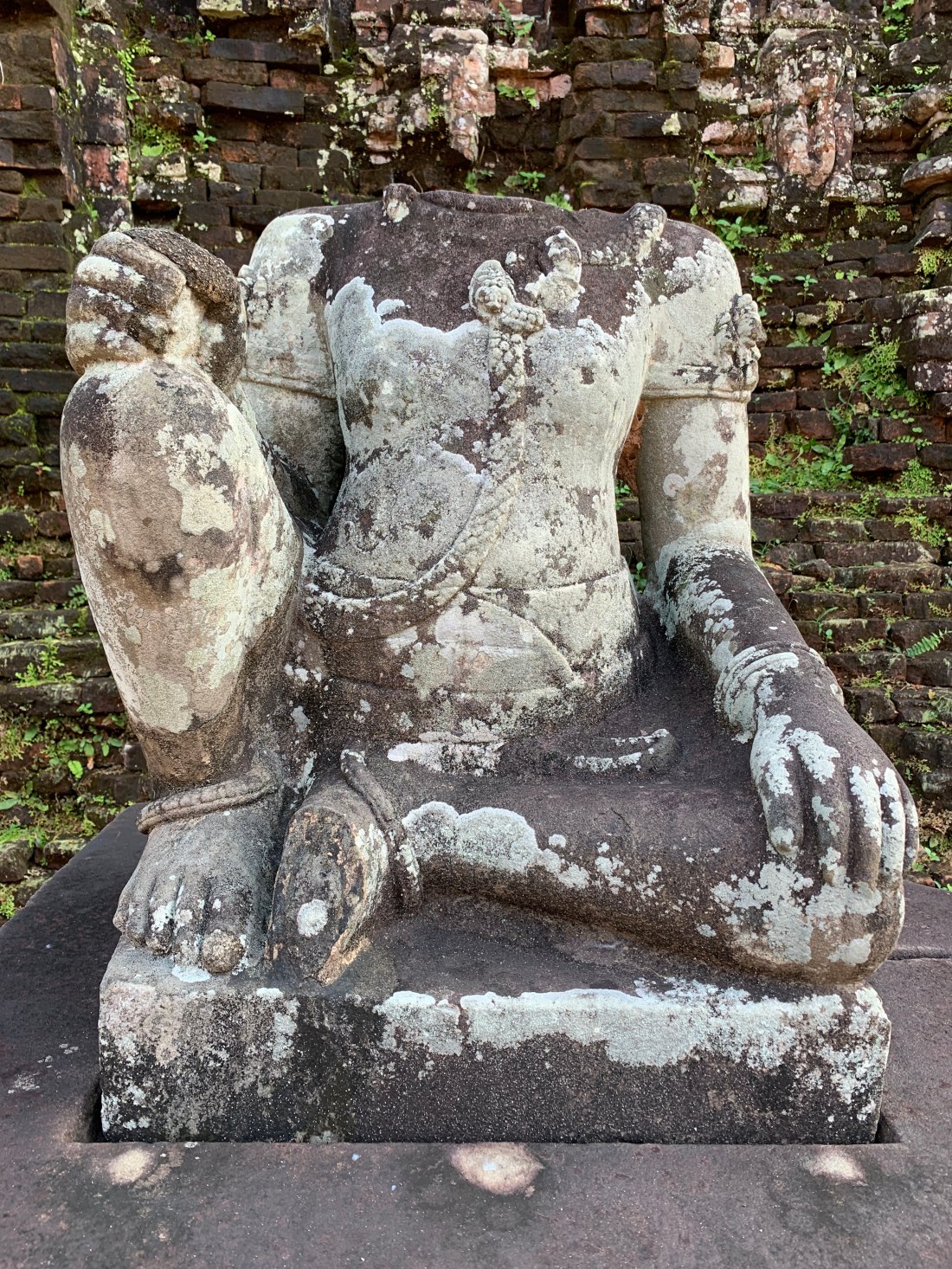
Like Angkor Wat, most of the heads of statues have been looted
IMG_2303
Shiva

IMG_2310IMG_2311IMG_2312IMG_20190206_164556IMG_20190206_161420IMG_20190206_160448IMG_20190206_160818

IMG_20190206_160939
Sanskrit tablets left by the Cham preserve the history of the site
IMG_2317
bomb crater

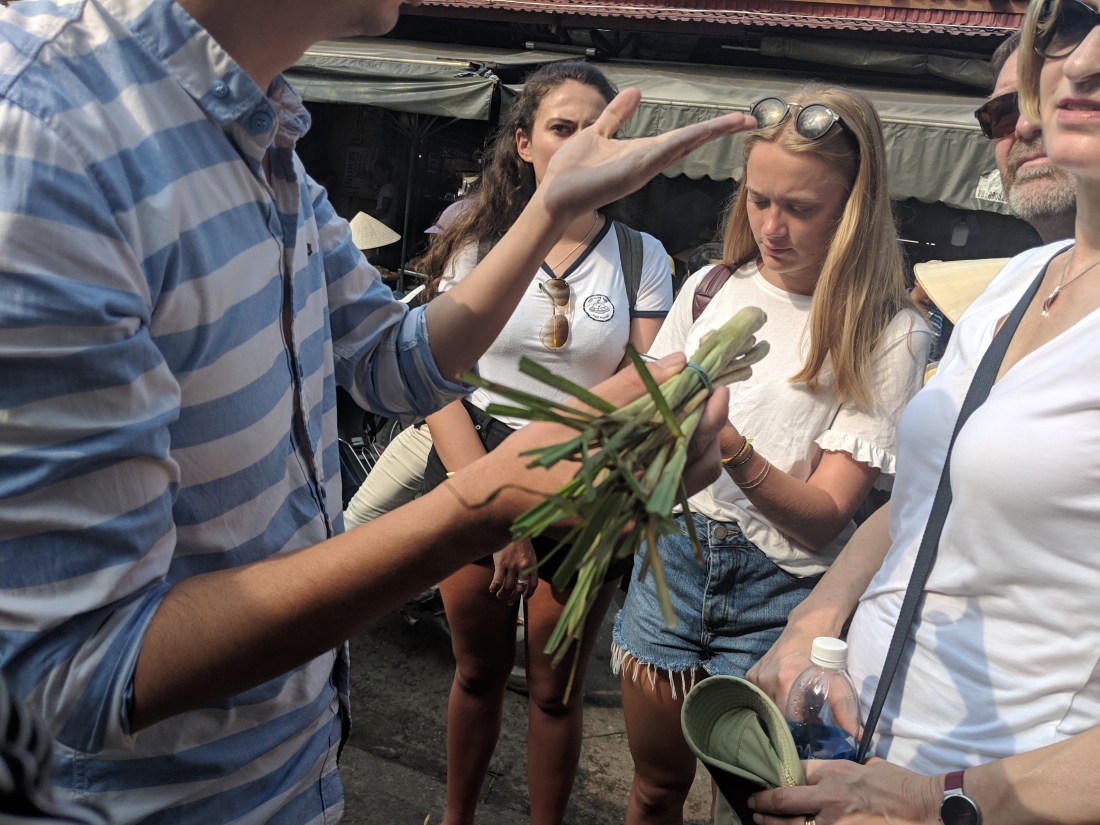
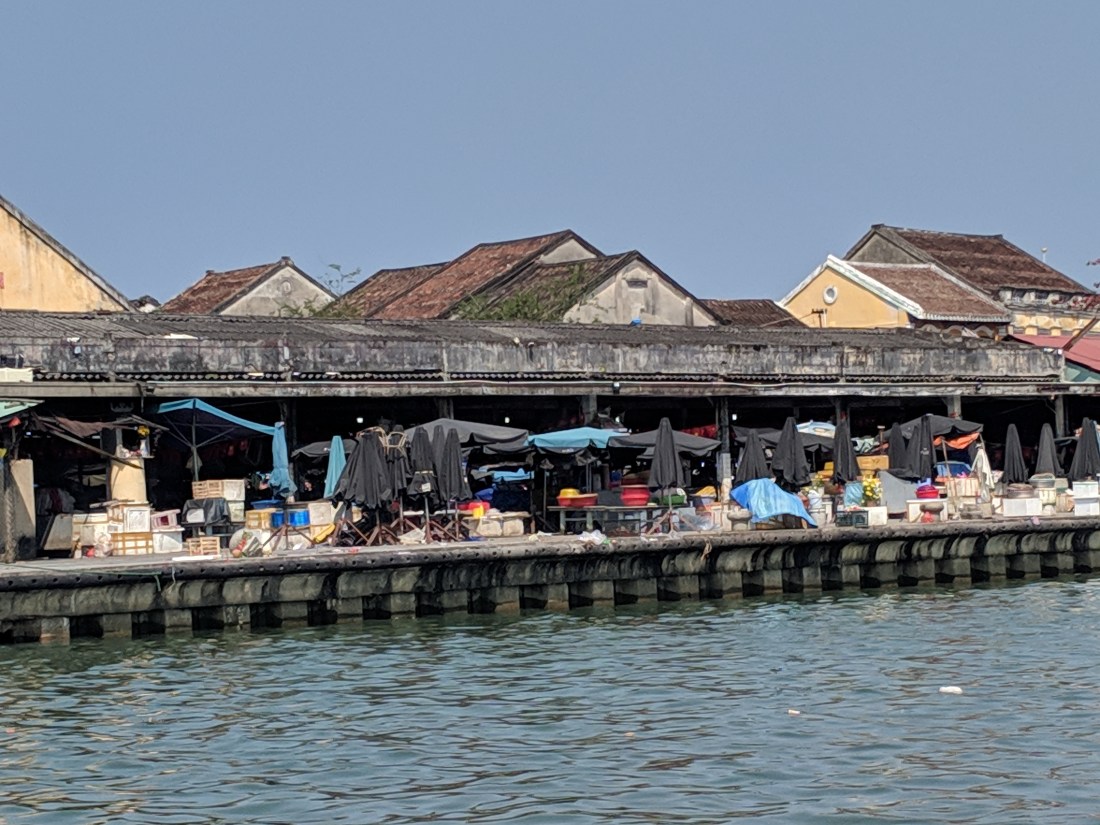
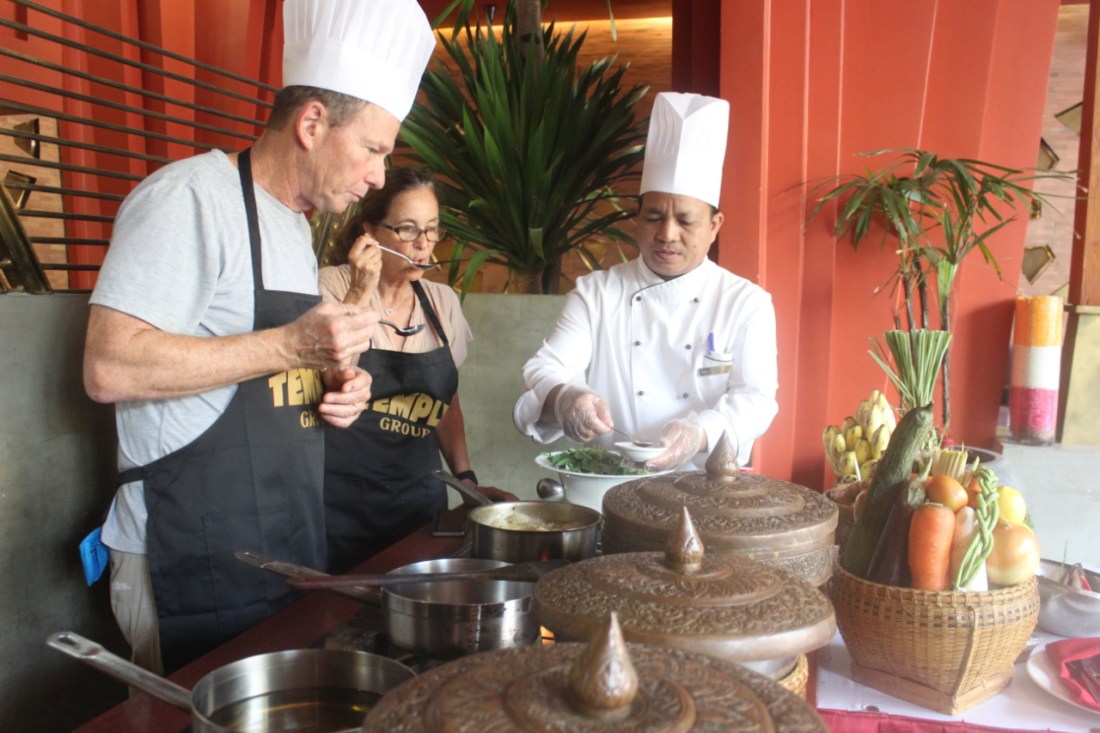
And of course we went for a Vietnamese cooking class with the requisite trip to the market and a boat ride on the Thu Bon River.

IMG_20190207_085925IMG_20190207_090025IMG_20190207_131126IMG_2321

IMG_2323
this class came with the addition of plate decor

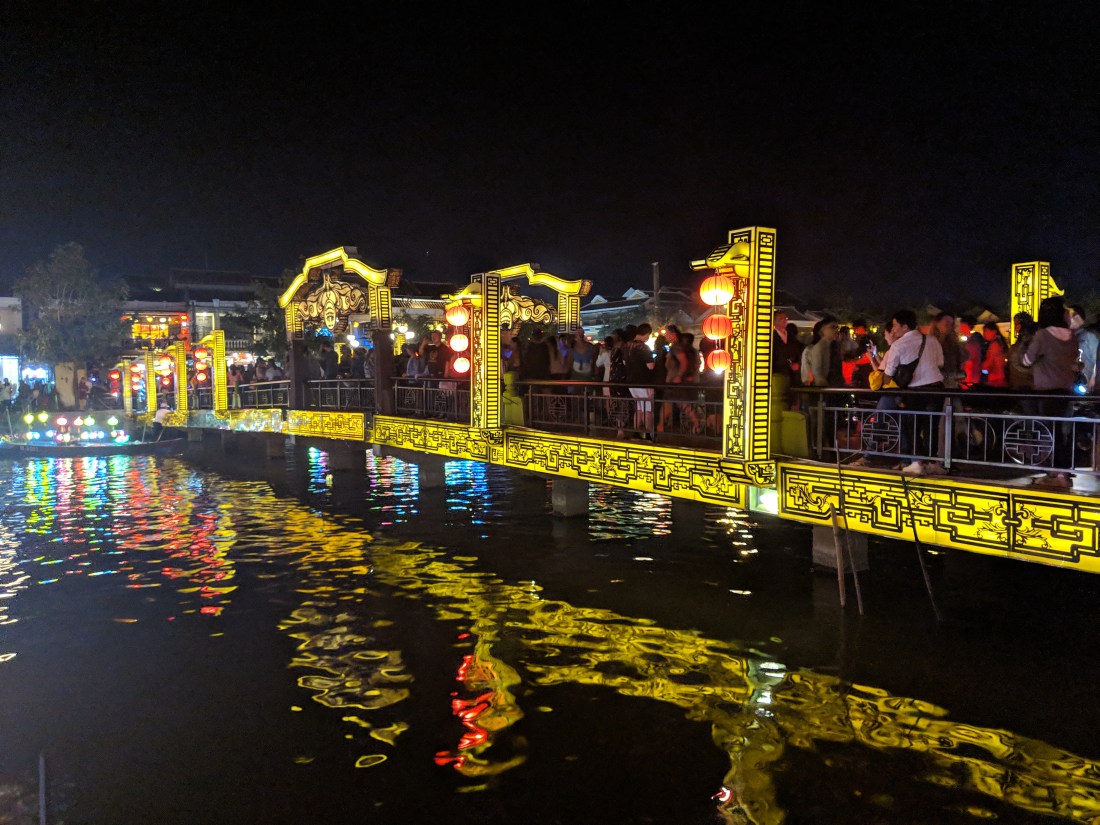
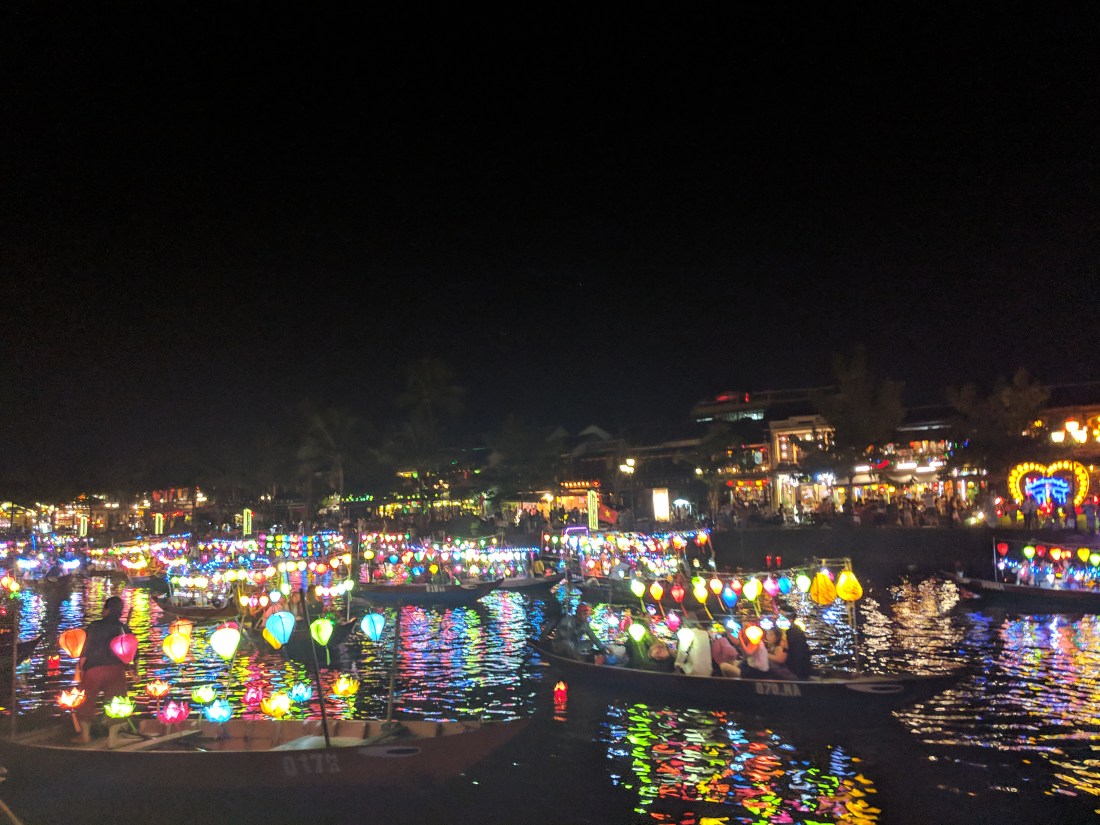
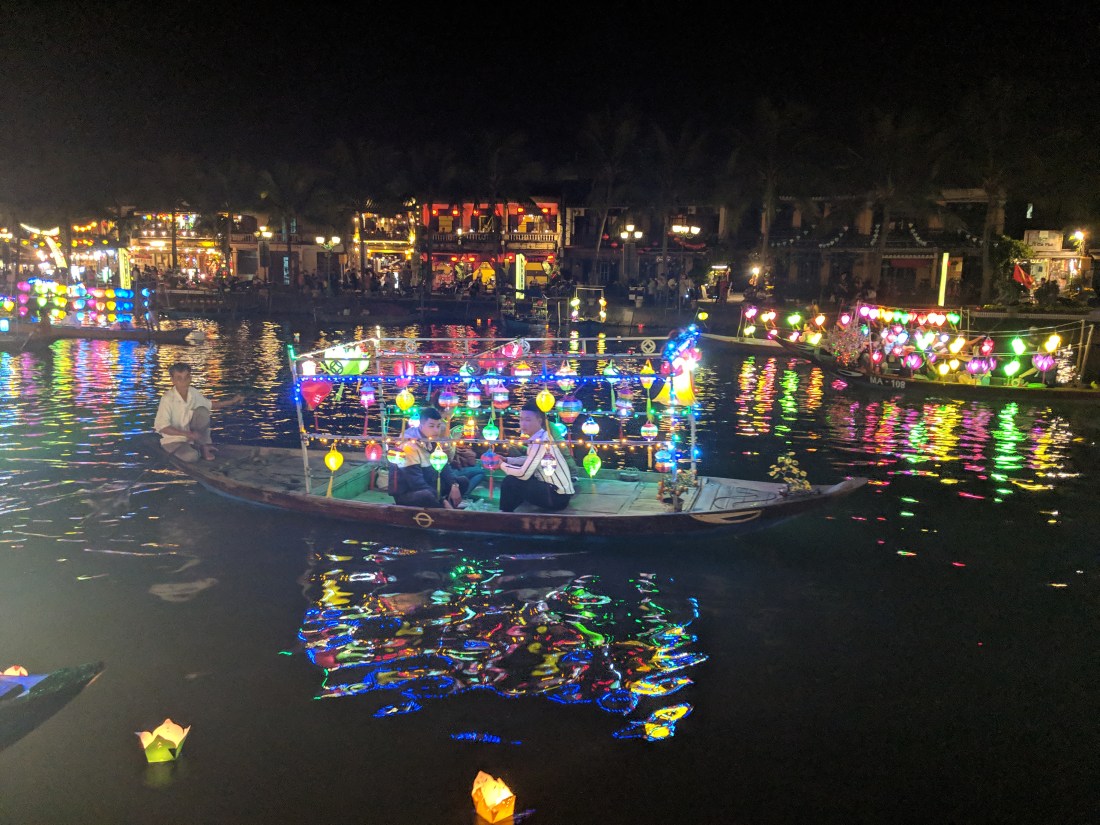
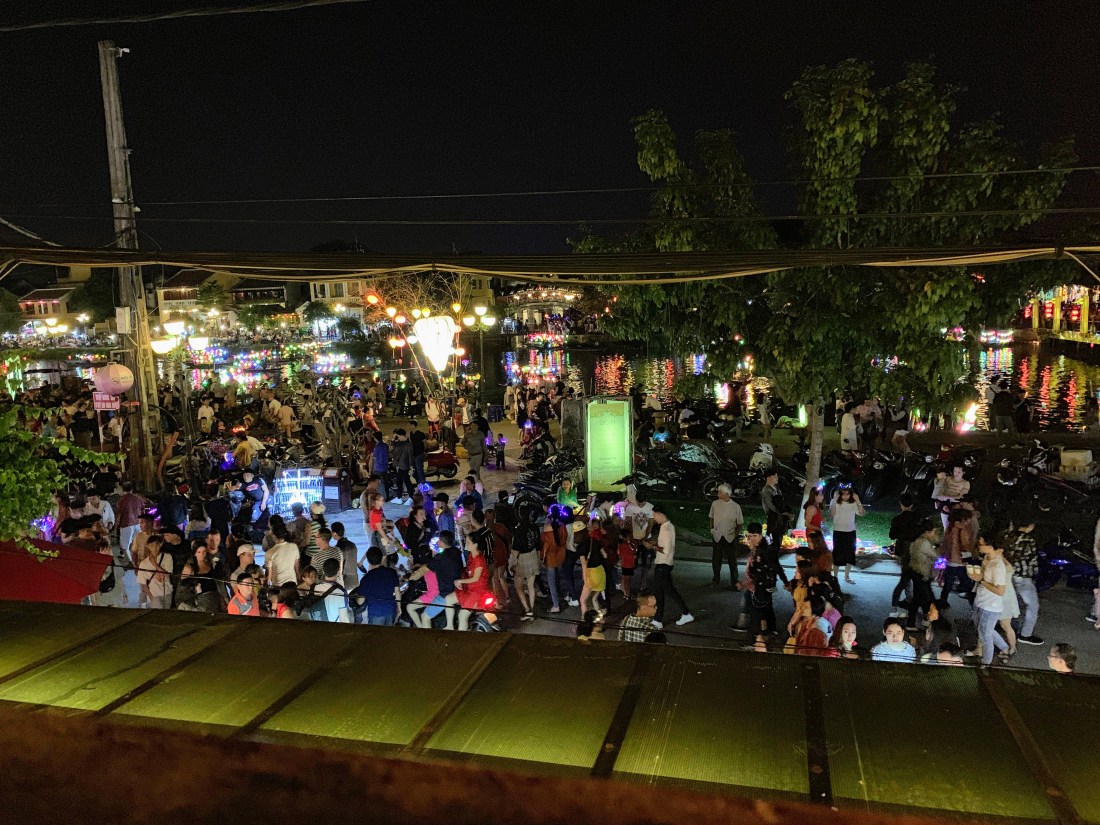
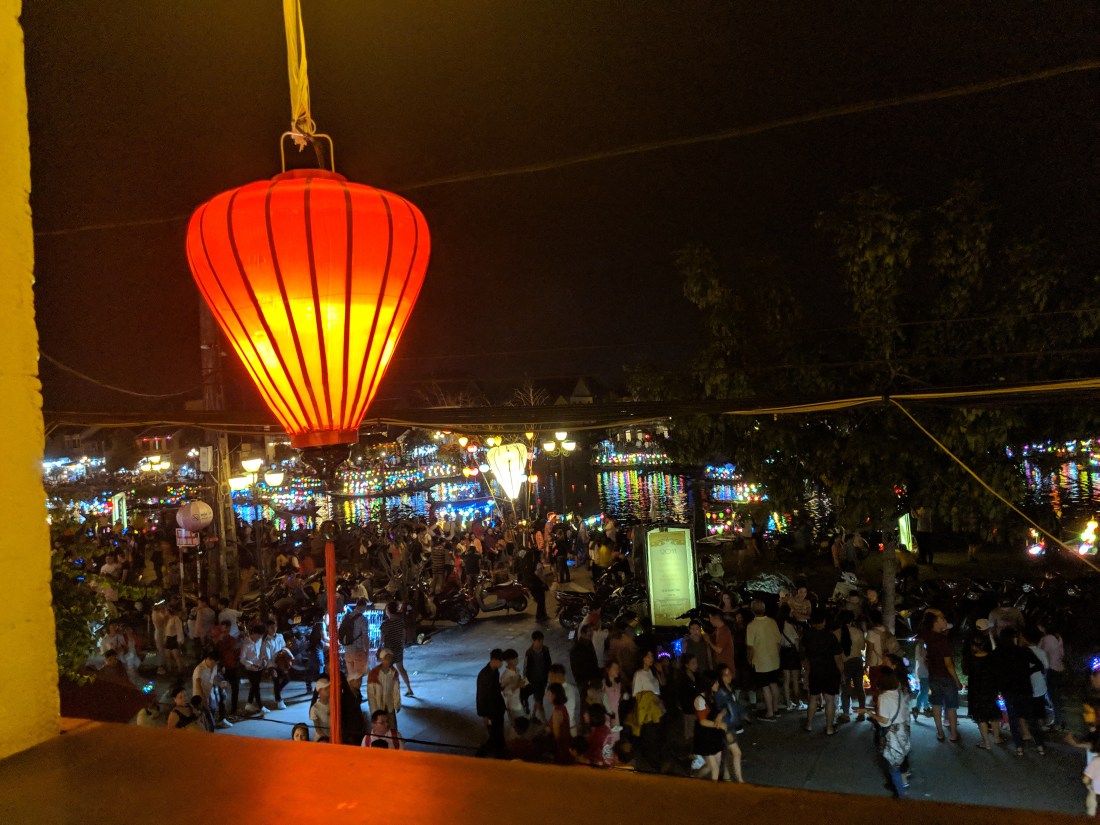
As much fun as Hoi An is by day, at night it lights up, literally!  And the New Year crowds, OMG.  I only hope the pictures can even slightly convey the enormity of the crowds, both Vietnamese and foreign tourists.

IMG_20190206_184150IMG_20190206_184233IMG_20190206_184422IMG_20190206_184434IMG_20190206_184833

IMG_20190207_190549IMG_2336IMG_2337IMG_20190207_184701IMG_20190207_203524

We spent our last day lazy on the beach, no pics.


Hue, Vietnam Feb 2-5

Lucky us, we arrived In Hue in time to watch the excitement build for the coming New Year celebration!  Hue was the capital of Vietnam from 1802-1945 during the 13th, and final, dynasty: Nguyen.  It was suited to be so situated in the center of the recently reunited country.

Our first afternoon we wandered around the city to get a feel for it.  It is a good sized city: large enough to have plenty of great restaurants but without the congestion and pollution of Ho Chi Minh.  We meandered through the February 3 Park with its many sculptures collected through years of sculpture camps held here.

IMG_1941IMG_1942IMG_1943

img_20190203_185041
famous ” I Love Hue” sign same park later.  huda is the local beer


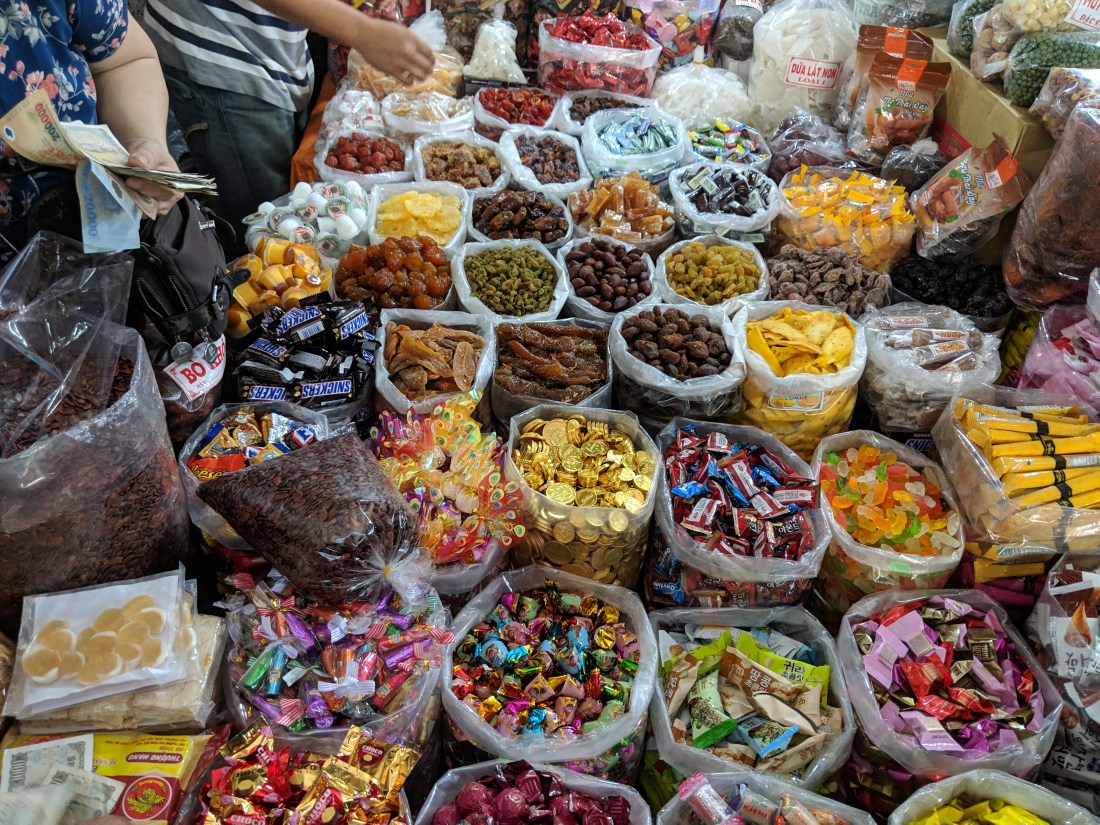
Crossing the river we found the Dong Ba Market full of locals madly shopping for their holiday goodies.  Outside was all produce, but on the inside were goods from clothes and shoes to candies and nuts to gold and silver.

img_20190202_153812img_20190202_160331img_20190202_155003img_20190202_155749

In the evening we were lucky enough to find a tiny restaurant offering Hue specialties.  Because Hue was home to the Imperial family (and French dignitaries starting in 1865), this city is known for its own specialized cuisine.  We sampled the stuffed crispy pancakes, the minced pork on lemongrass stalks, the specialty spicy beef noodle soup, and others, one of our best meals yet!

IMG_1955.JPG

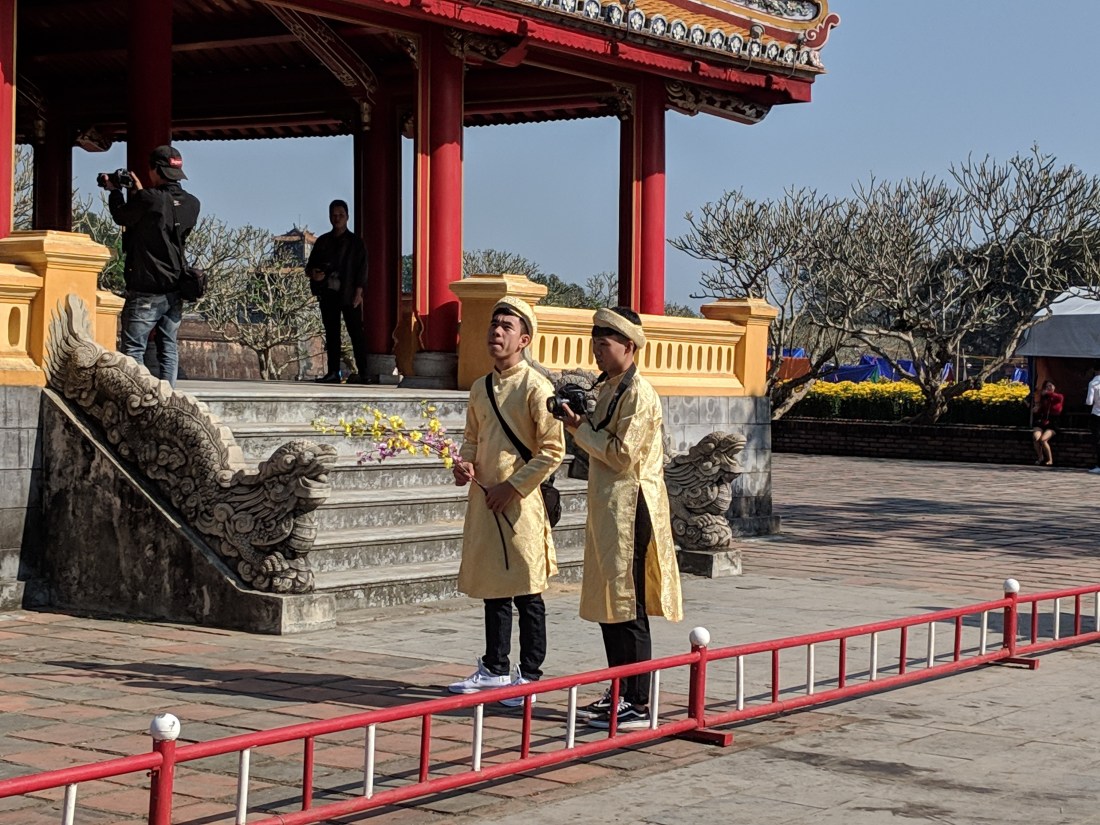
In the morning we were met by a guide to go to the Imperial City, home of the emperors of the Nguyen dynasty.  But first we stopped outside the city walls to watch the locals buying flowers to decorate their homes for the holiday.  It was so exciting to see everyone dressed up and celebratory.

img_20190203_091452
yellow symbolizes prosperity and royalty
img_20190203_092701
red symbolizes luck, happiness, celebration, and love

img_20190203_092128img_20190203_092215

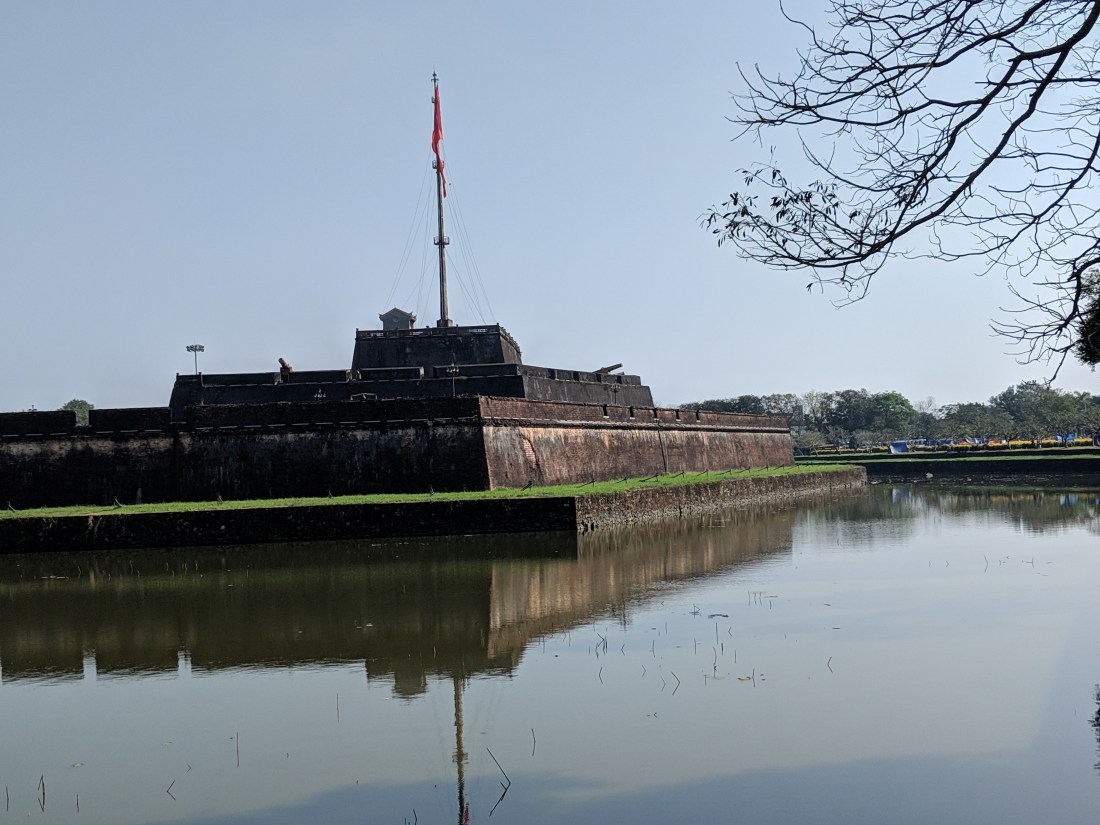
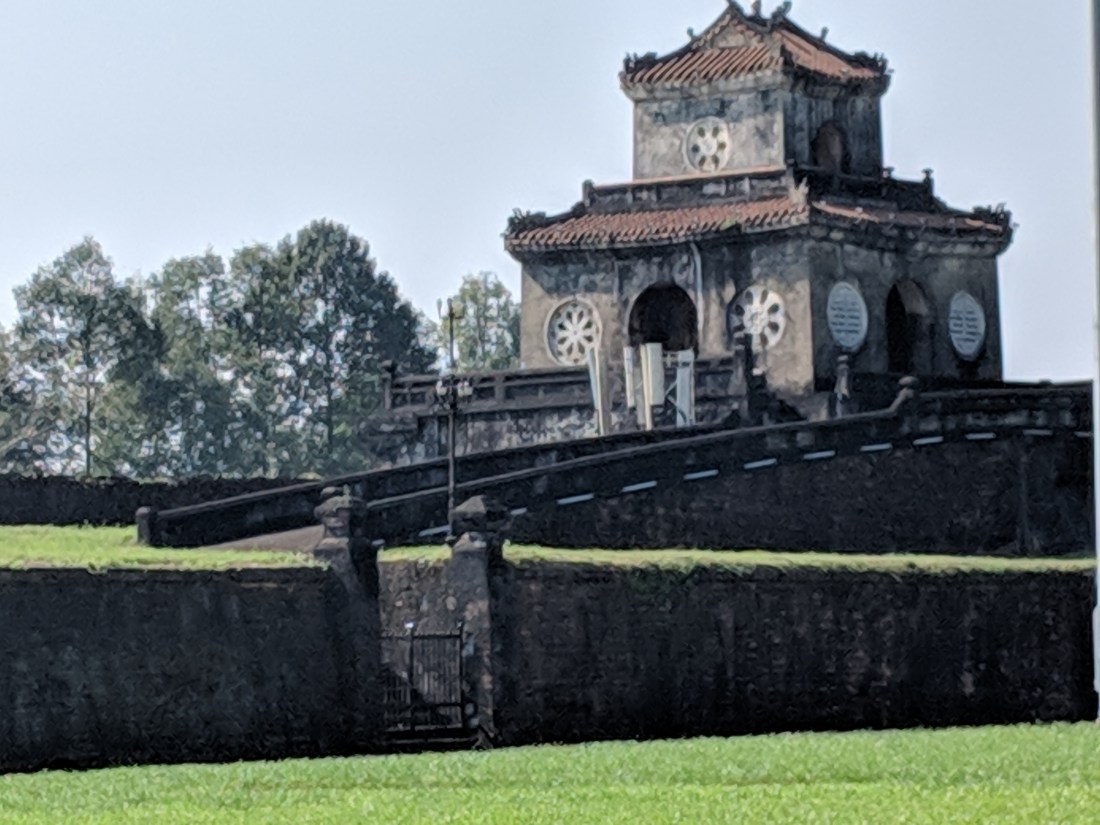
Vietnam had been unified in 1789, but the dynasty changed to the Nguyen family in 1802.  Shortly thereafter, the king consulted geomancers  as to the propitious location  for the new city and construction began in 1804.  It was modeled after the forbidden city in Beijing, but was situated to face the Huong (Perfume) River: ie Southeast. The location had to have running water and a protective mountain in front to satisfy the feng shui. The encircling moat and the walled citadel with its watch towers and flag tower was built in 1807 as a lookout for the Imperial City within.  The flag has changed many times:  in 1945, the end of the imperial regime when Ho Chi Minh took over the country, again in 1947 when the french retook the city, then a communist flag in 1968 after the Tet offensive, and then back to the South Vietnam flag after 30 days, and finally the current Vietnamese flag in 1975.

img_20190203_093342-1

img_20190203_100405
one of the watch towers
img_20190203_100732
crossing the moat between the outer walls of the Imperial Citadel and the inner walls of the   Imperial City

It was at this point that our guide Thanh shared with us his personal story of the Tet offensive.  Born in Hue in 1956, he was 12 when it happened.  His father was a soldier for the South/Americans and had been given the day off for the New Year.  He had heard rumors of the attack to come, so he took his family of 15 underground into tunnels that were the canals of the citadel.  There the family lived for the 27 days of bombing and the 3 more days of “cleansing” that occurred before the Americans drove the Viet Cong out, and it was safe to come out.  They lived on 2 small bowls of rice each a day.  In 1975 his father spent 2 years in a “re-education” camp, his uncle 17 years.

The Imperial City suffered much damage throughout history: with the French seizure of power in the 1880s, again with the French in 1947, and hugely during the Tet offensive in 1968.  The entire site is now a Unesco protected site , and restoration is underway. But many structures have been reduced to rubble.

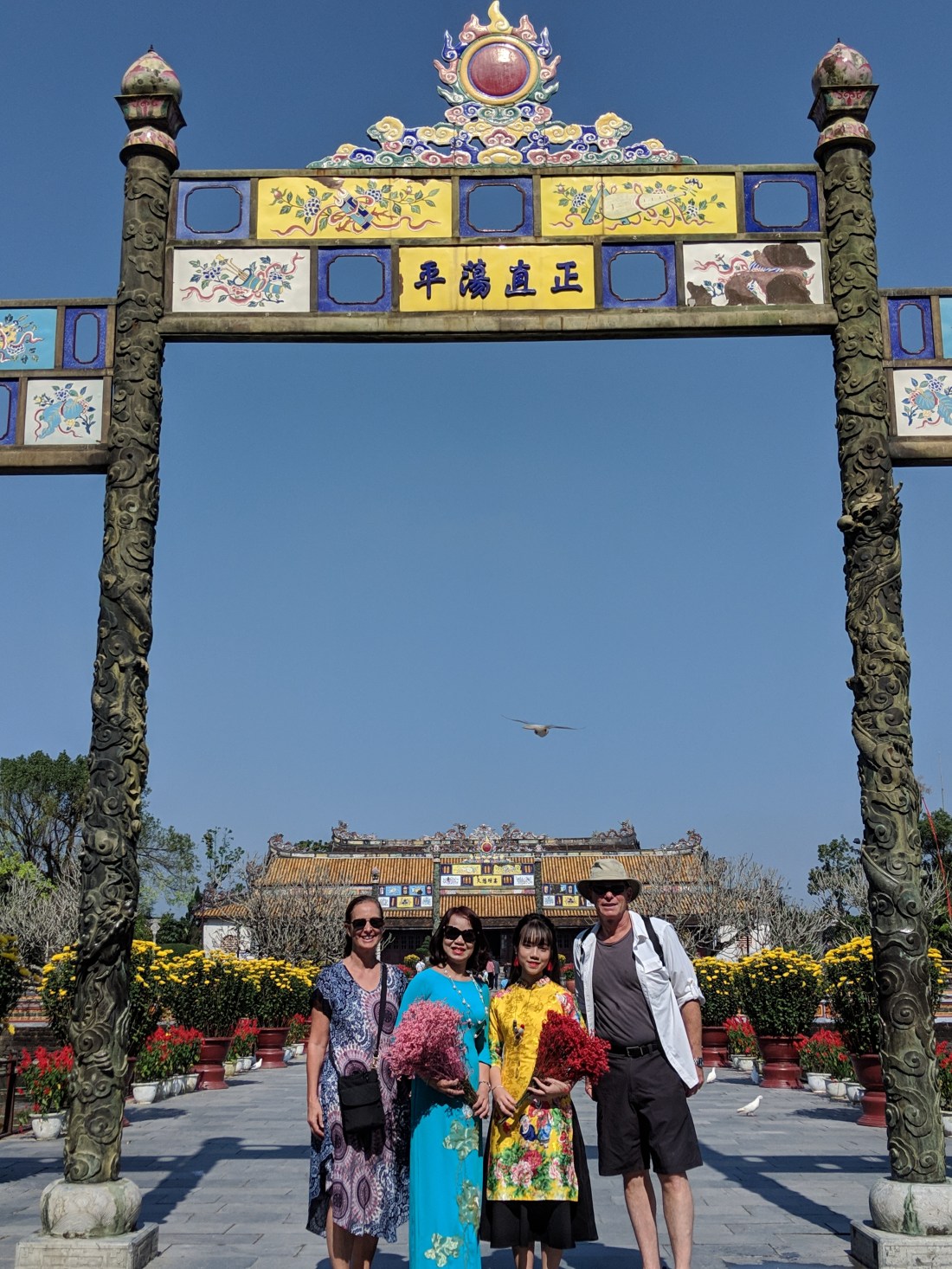
The main entrance to the city is through  is the south gate, know as the Meridian gate or the Noon Gate built in 1833.

img_20190203_101241
mother and daughter posed with us

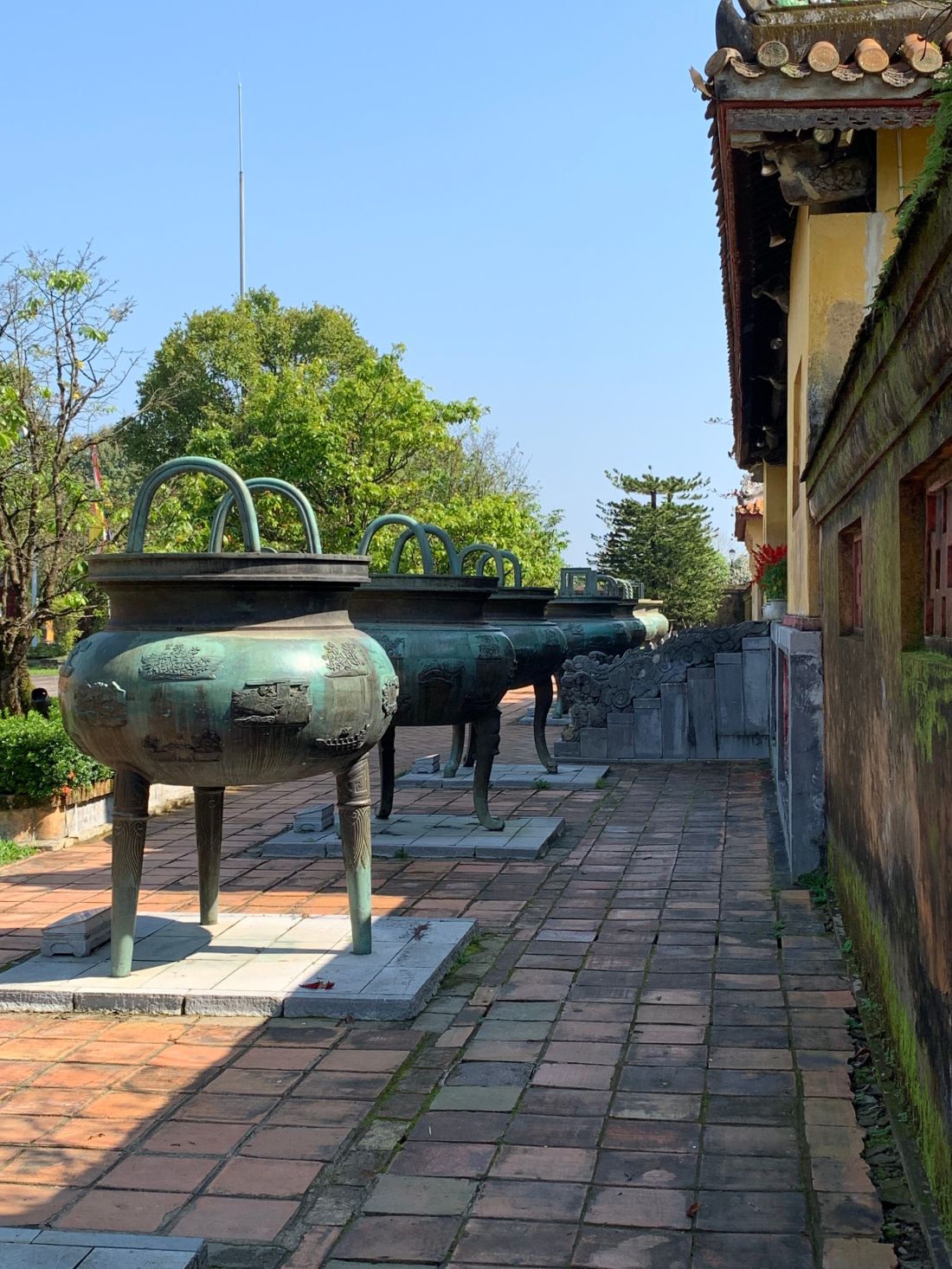
One of the remaining temples: The Mieu was built in 1822 to worship the 9 Nguyen ancestor emperors and was based on the temples of the Forbidden City in China.  The 9 dynastic urns lined up opposite the temple correspond to the same 9 emperors to that date and were designed based on Chinese 9 tripod cauldrons.  Later the temple was expanded to include the subsequent emperors.

IMG_20190203_102938IMG_1970

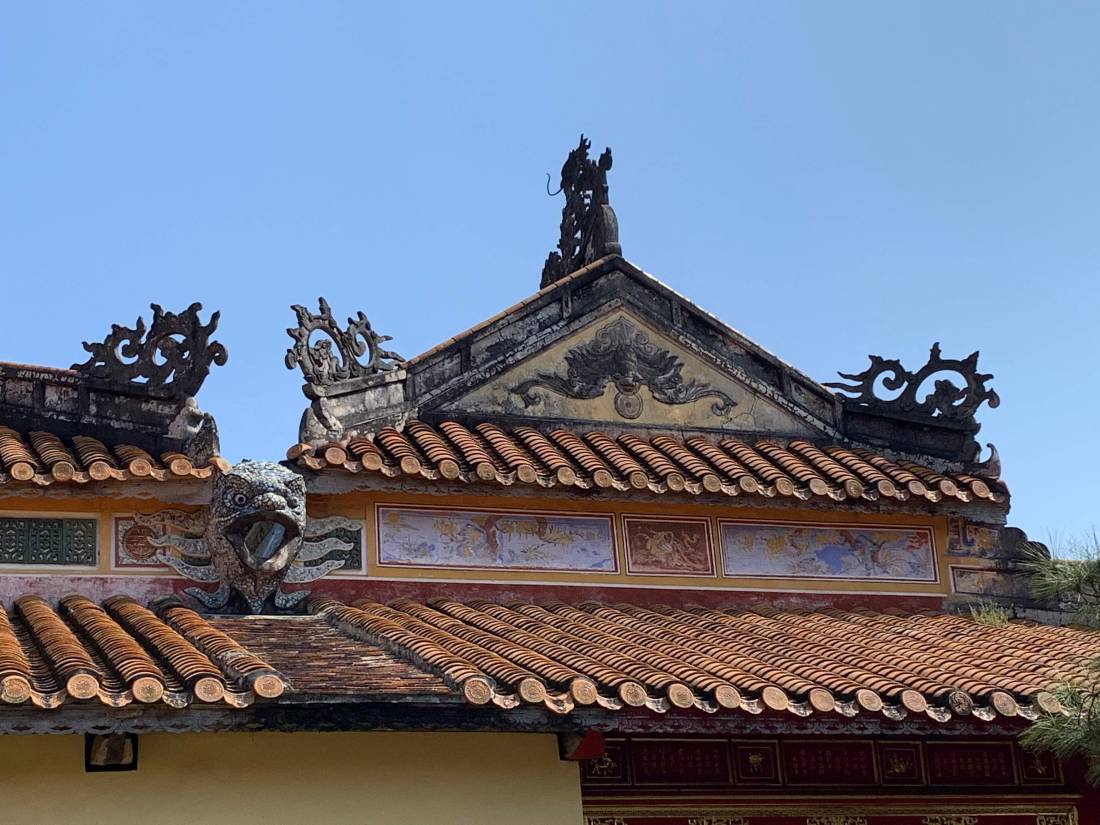
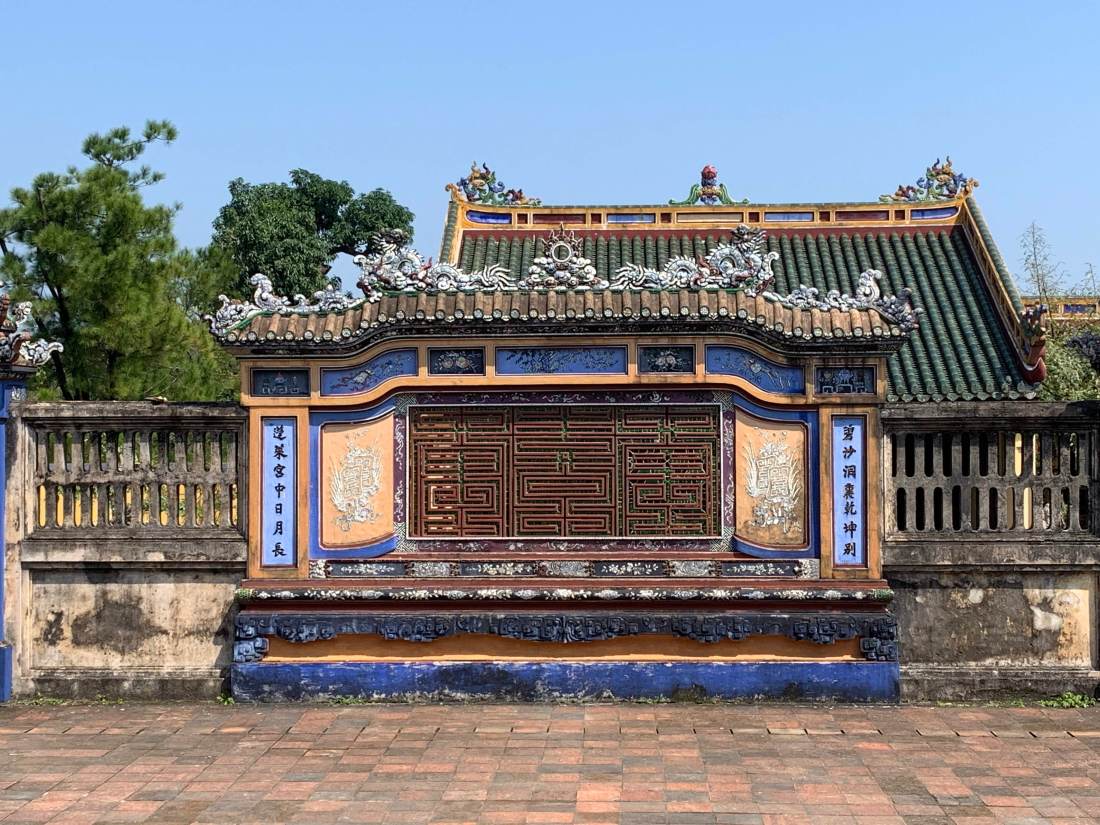
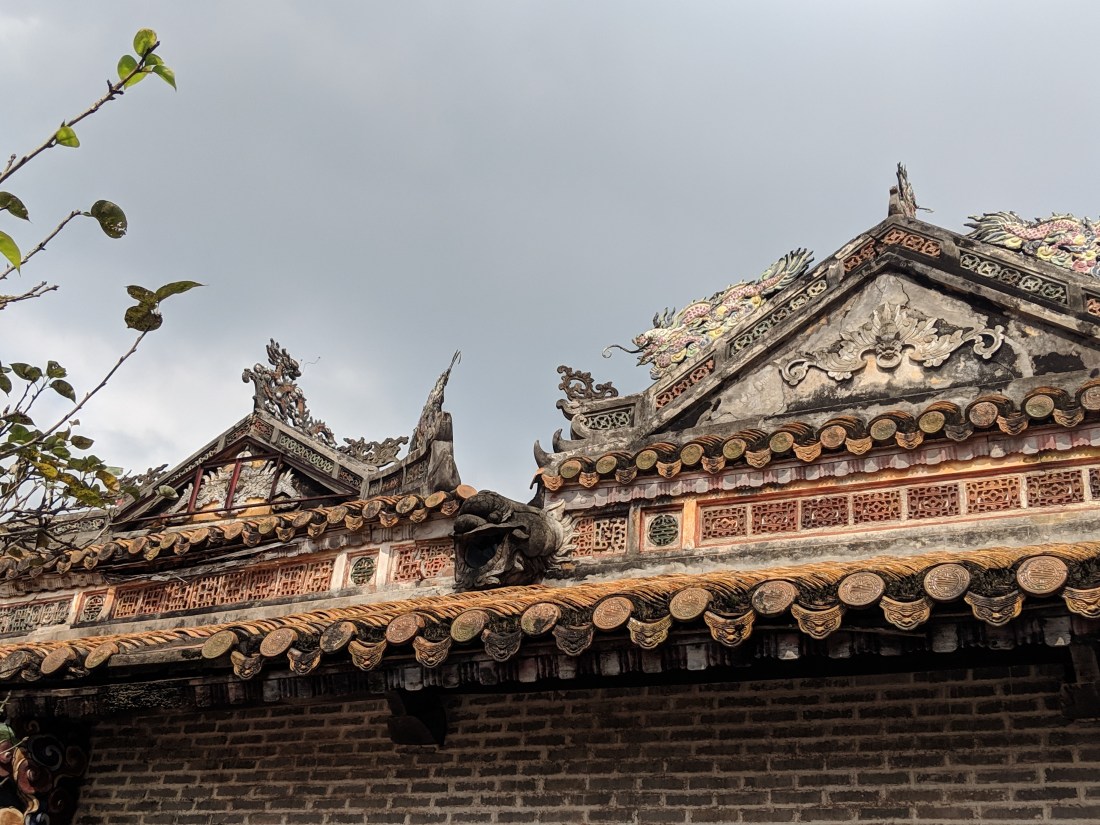
This building exemplifies architecture that was developed in Hue: the 2 level roof makes it lighter and splitting it into 2 halves also makes it lighter, both safety issues in cyclones.  Note the gargoyle in the middle to expel water, a forerunner to our gutter system.  Also the roof itself allows easy drainage of water, but also the upper/lower pattern of layering the ceramic tiles is the yin/yang, satisfying feng shui.

IMG_1978IMG_1977

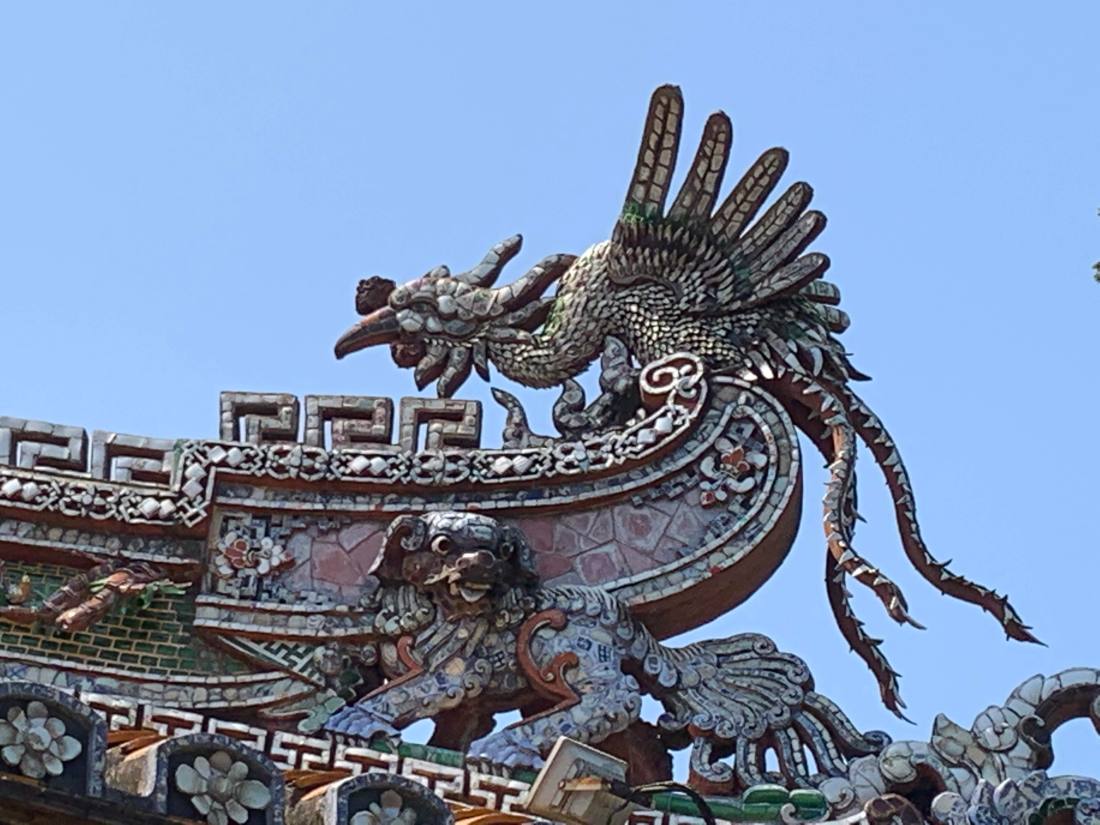
The empress had her own temple, but only the gate survives.  You can tell it is hers because the animals on the top are phoenixes (notice the peacock-like tails), which arise from the fire and symbolize rebirth, fertility.  Male structures generally have dragons, for power.  Other common Vietnamese animal symbols are unicorns for prosperity, and turtles for longevity.

IMG_1988.JPG

IMG_1984
example of a unicorn, not the single horned horse of Western mythology

The Thai Hoa Palace is where the King held court on the 1st and 15th days of the lunar month, and also where special occasions such as coronations and wedding took place.

IMG_1969

IMG_20190203_111227
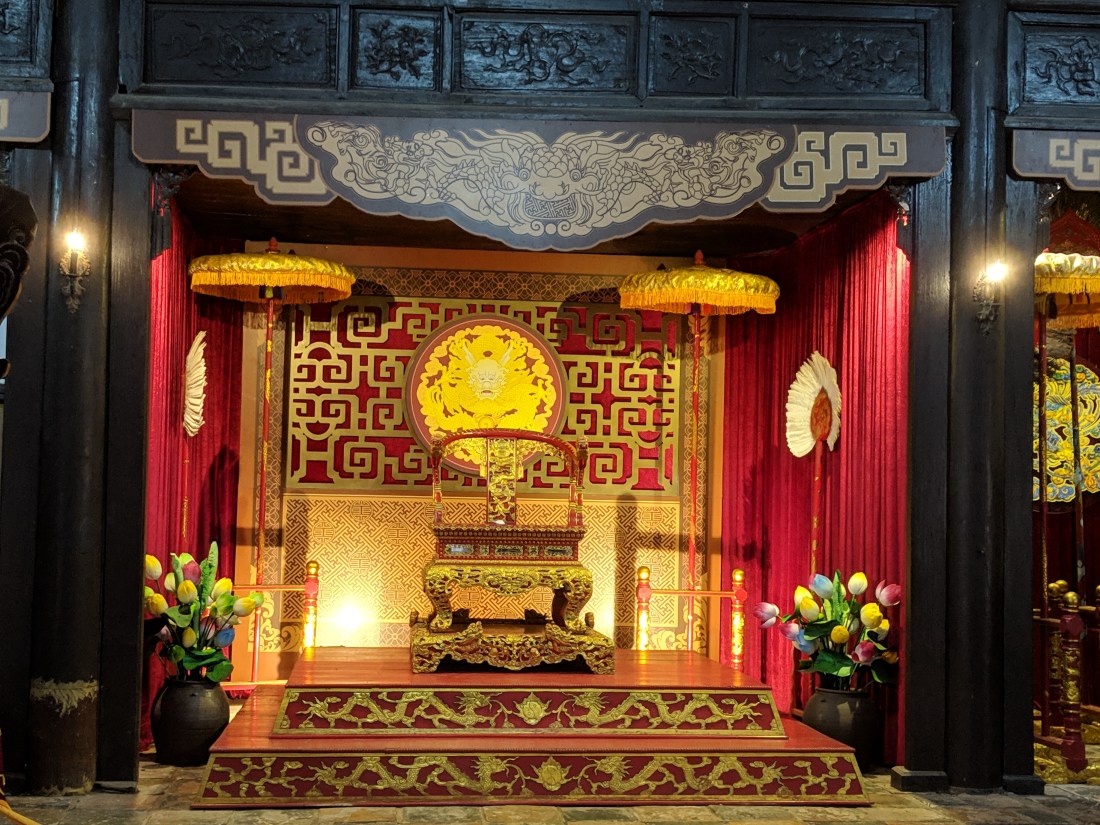
the throne room where Mandarins (royal counsellors) were received
IMG_20190203_102725
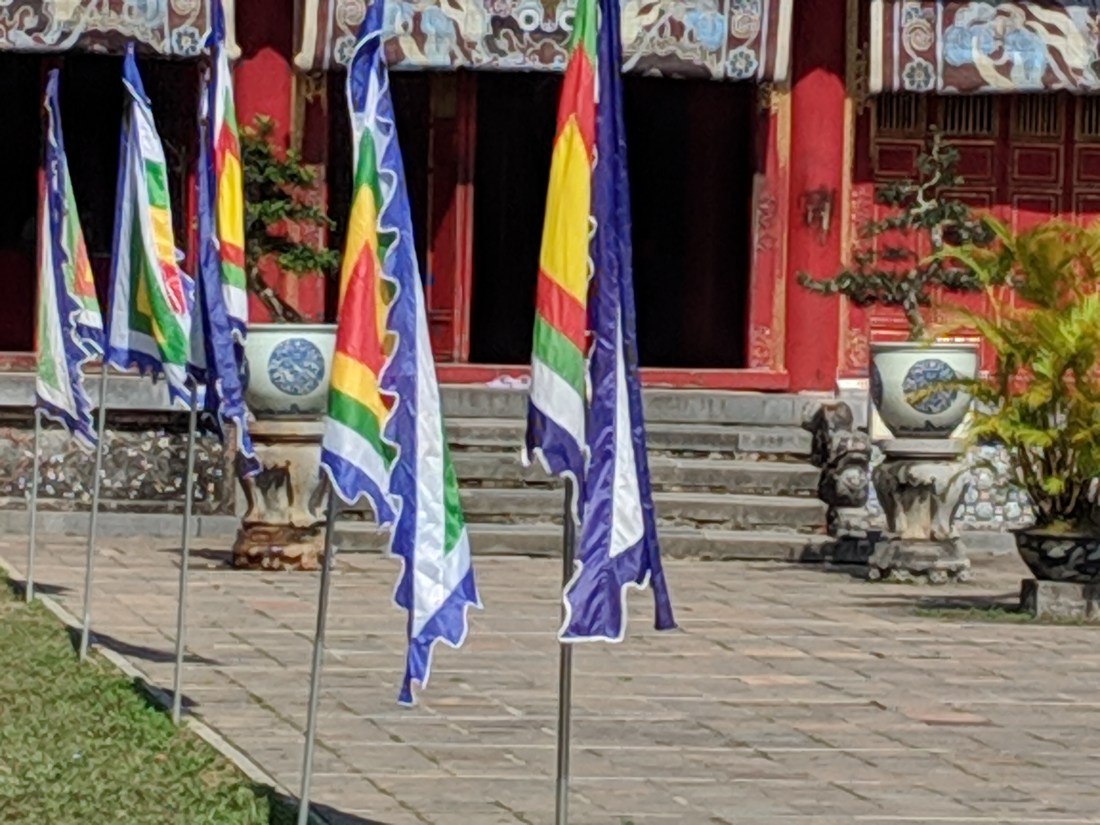
the 5 colors of the flag exemplify the 5 elements of nature: earth: yellow, wood: green, fire: red, metal: white, and water: blue


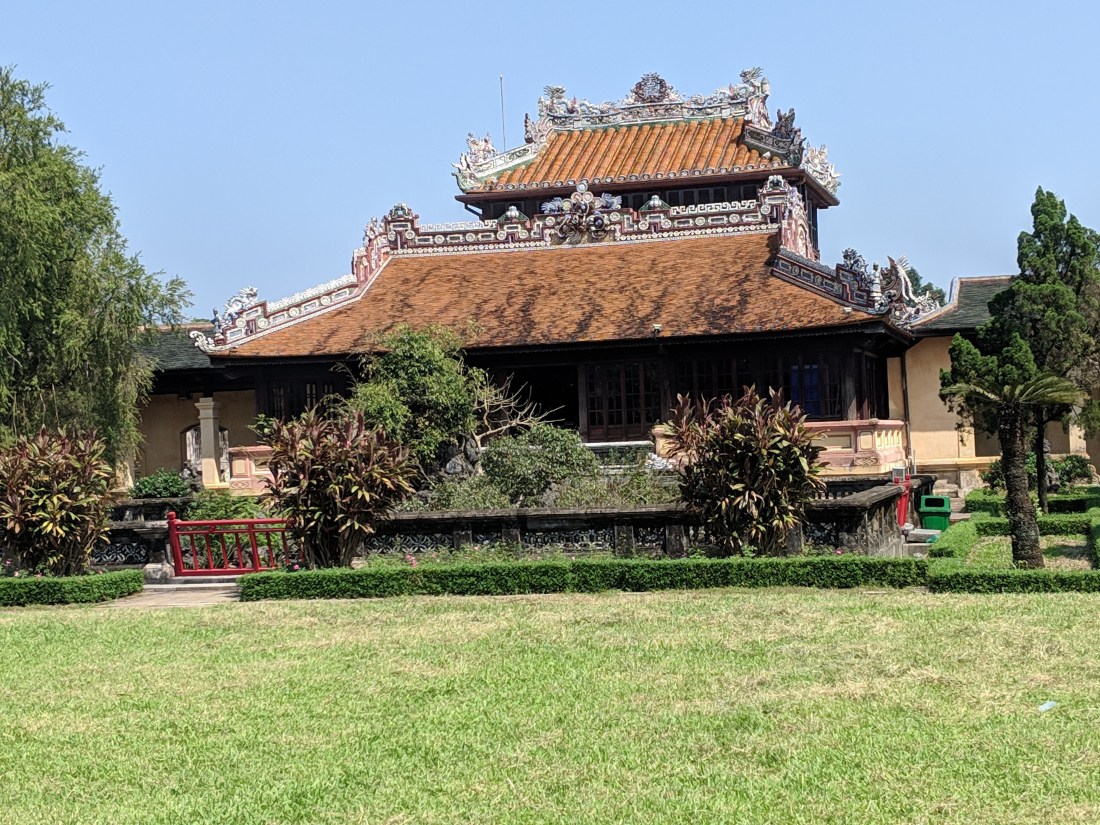
Further within the Imperial City is yet another walled entrance, this for the Forbidden Purple City, which was home to the royal family. Any given king could have dozens to hundreds of concubines, elevated to level  of second wives once they bore children, but only 1 empress, the first wife.  The Purple City consisted of the emperor’s private home, the empress’s private home (both completely destroyed) and many more homes for the concubines, second wives, children, and eunuchs.  There are gardens, swimming pools, and libraries.

IMG_20190203_115939
king’s personal library
IMG_2008
a home of  concubines
IMG_2036
phoenix above a unicorn
IMG_2014
royal garden

IMG_2029

IMG_2042
concubines’ swimming pool
IMG_20190203_115847
covered walk to the Emperor’s residence; note the dragons

We left the Imperial City and visited the arena where elephants fought tigers for entertainment a couple of times a year.  It is still being renovated, so not a lot to see.

IMG_20190203_124459
elephant gate
IMG_20190203_124329
platform for observation
IMG_20190203_125051
emperor’s private staircase
img_20190203_124426
stairs for the Mandarins
img_20190203_124751
tiger gate

We then had a lovely vegan lunch at a monastery.  In Vietnam, all monks are vegan, unlike monks in the rest of SE Asia.

img_20190203_132150img_20190203_132146img_20190203_132042

After lunch we visited a local village of rice farmers.  IMG_2054

img_20190203_142159
site of tunnels where locals hid from the Viet Cong at night during the war.
IMG_2050
they covered the tunnels with fake tombs

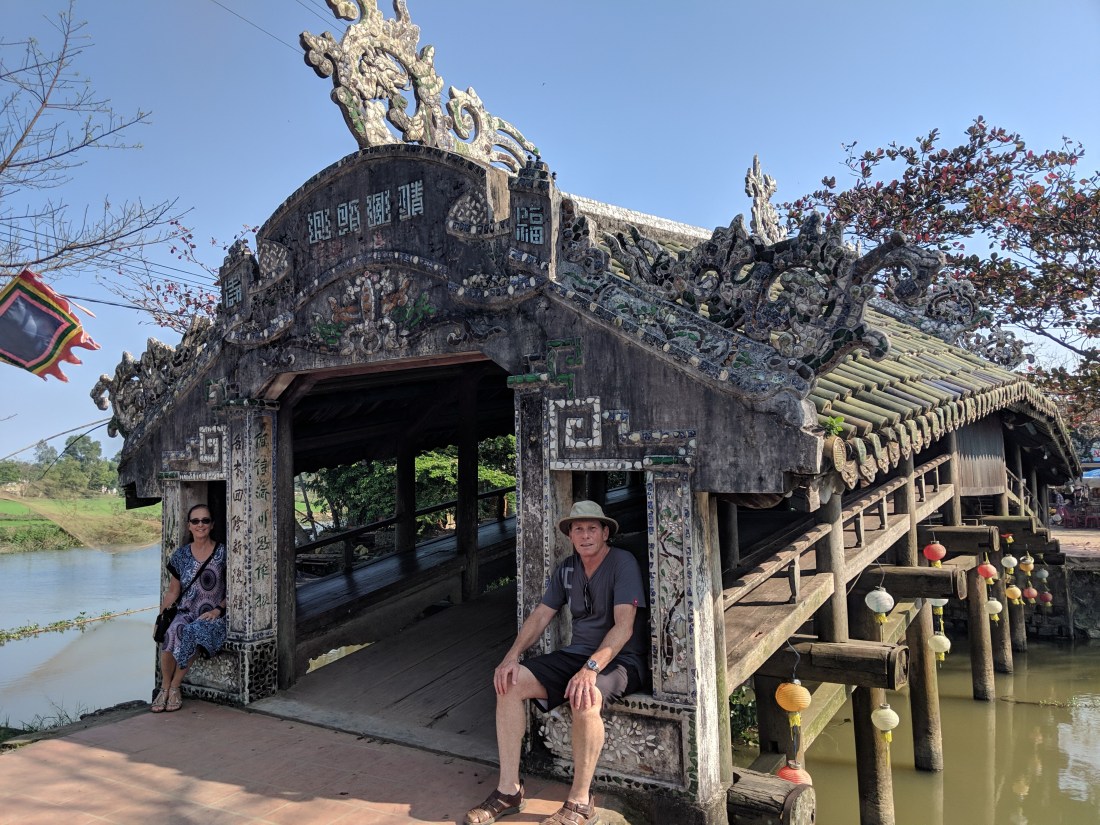
There we saw the beautiful covered Thanh Toan Bridge built in 1776.

img_20190203_143203img_20190203_143831

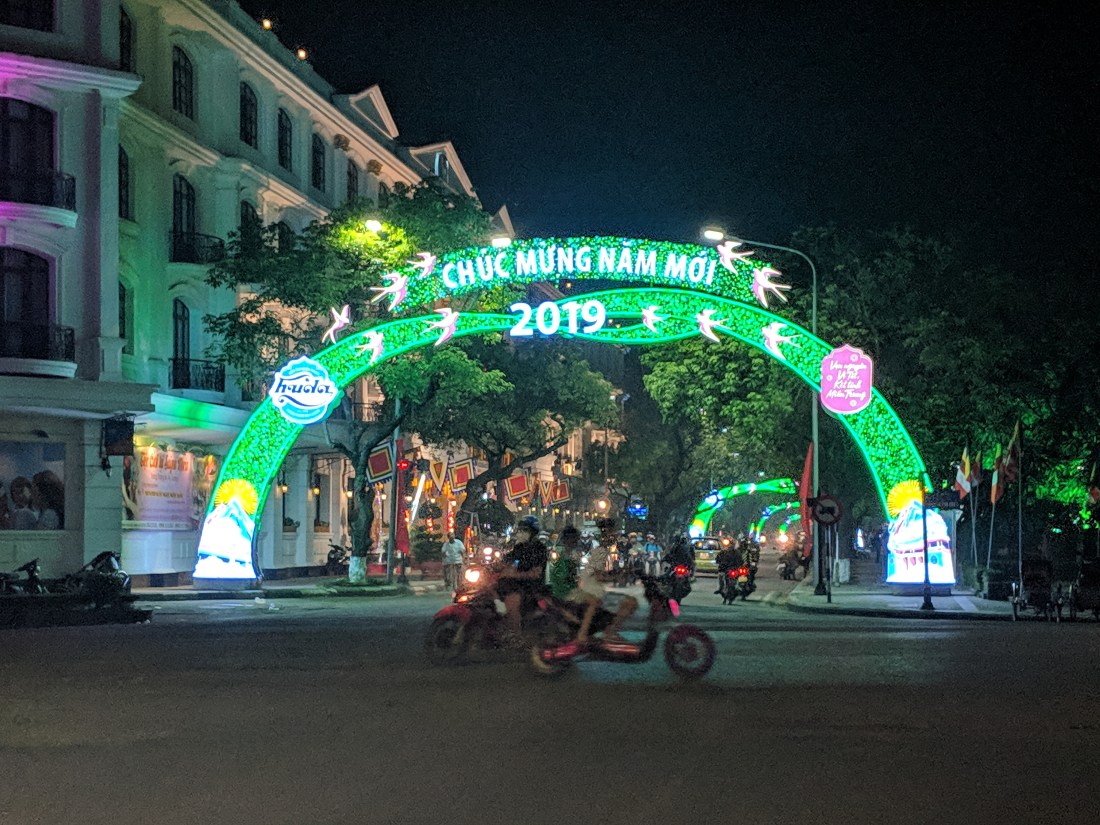
After our busy day we still had energy to hit the town at night.  Again, the excitement for the upcoming holiday is palpable.

img_20190203_185249

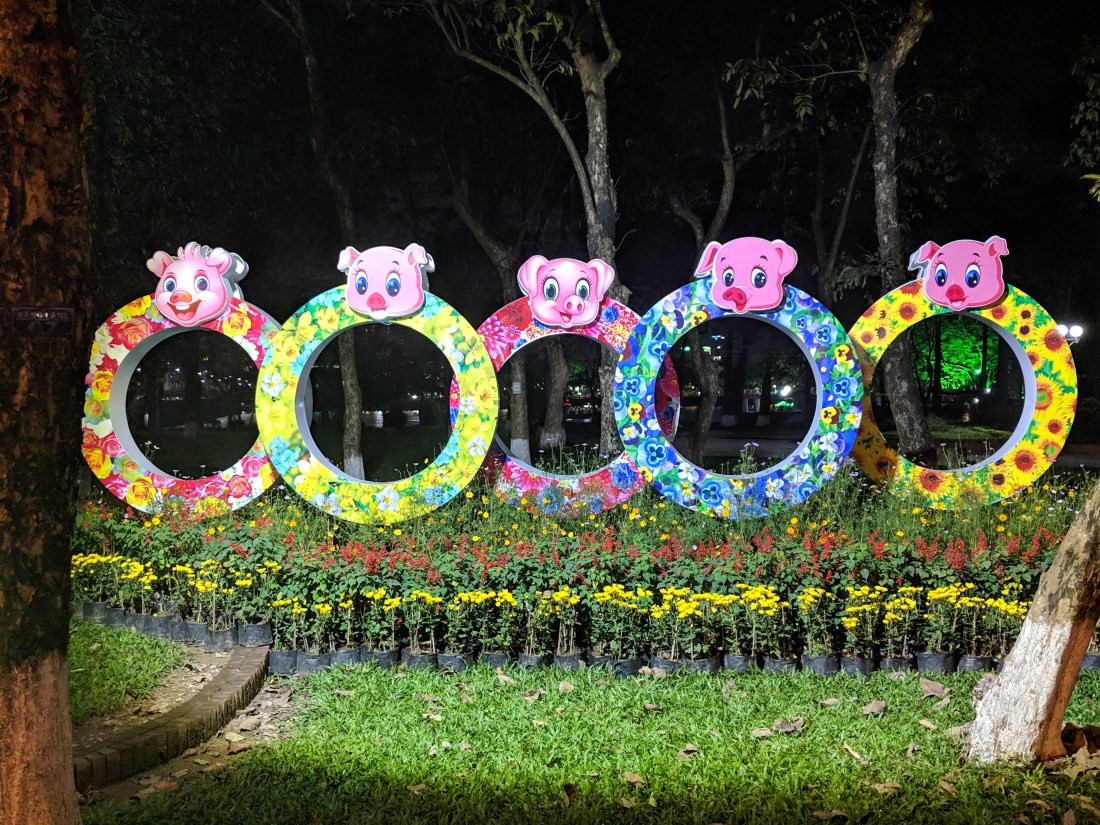
img_20190203_190101
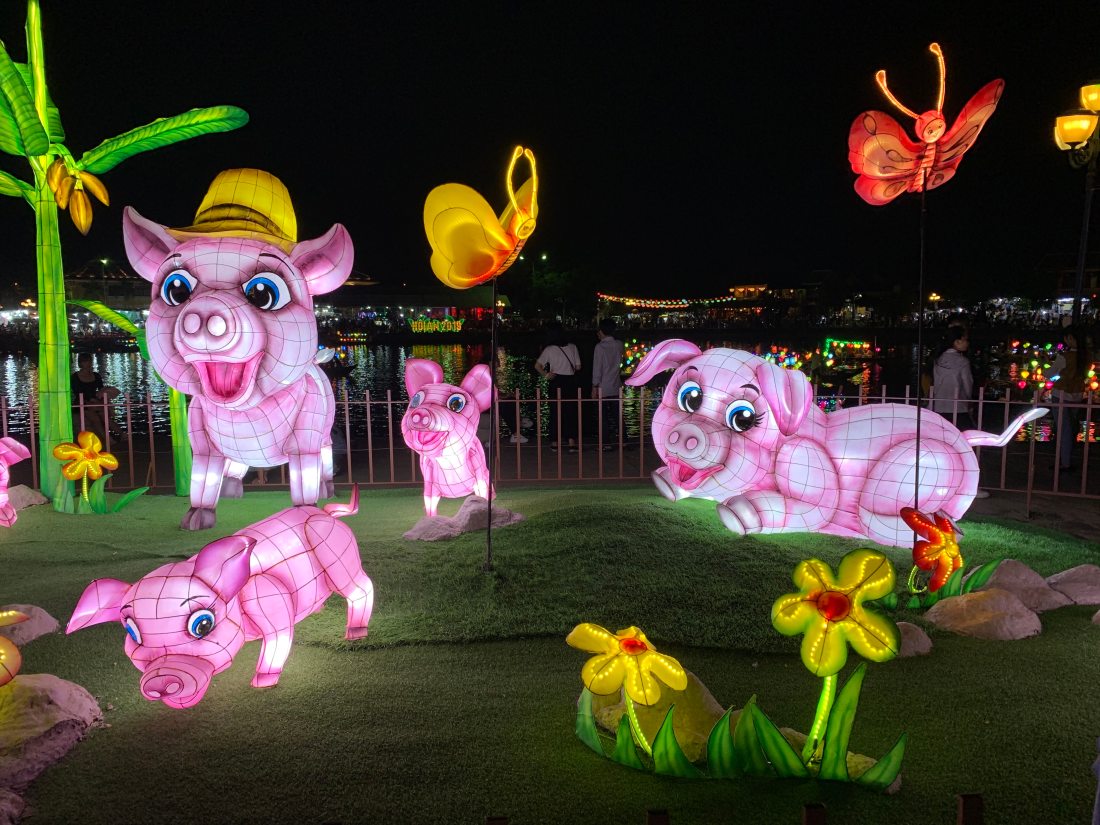
it will be the year of the pig

img_20190203_191409img_20190203_193012

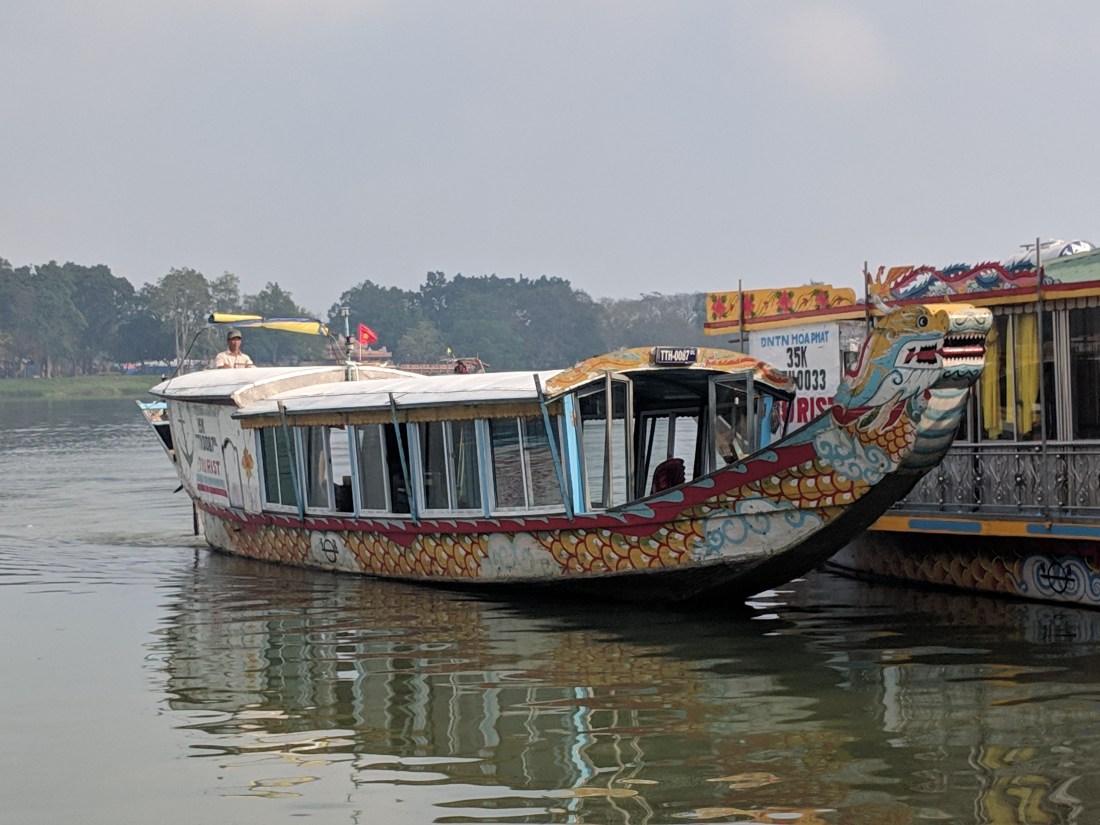
In the morning we took a dragon boat up the Perfume River, so named in 1307 by a visiting princess who was enamored by the fragrance of the numerous frangipani trees lining its banks.

img_20190204_083332

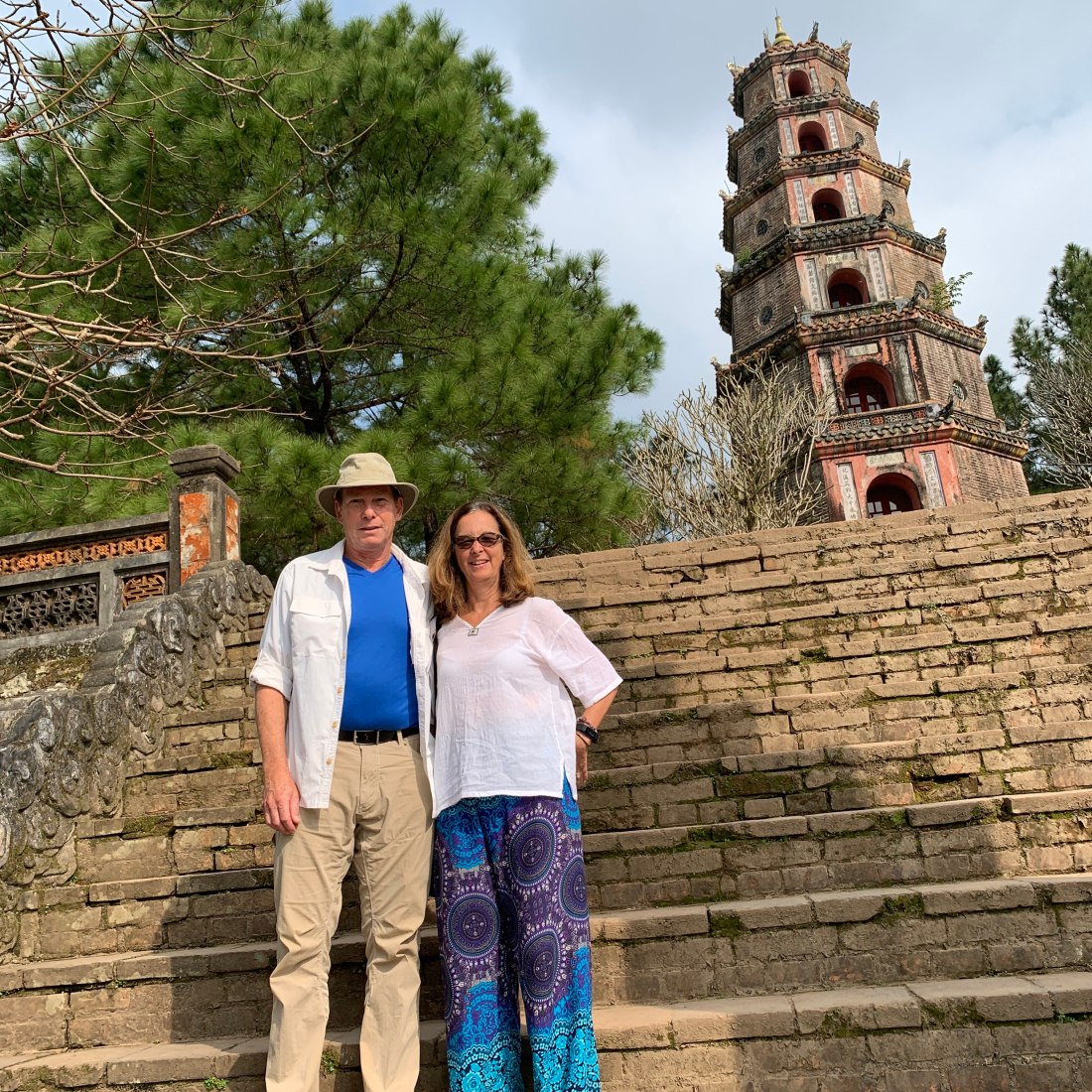
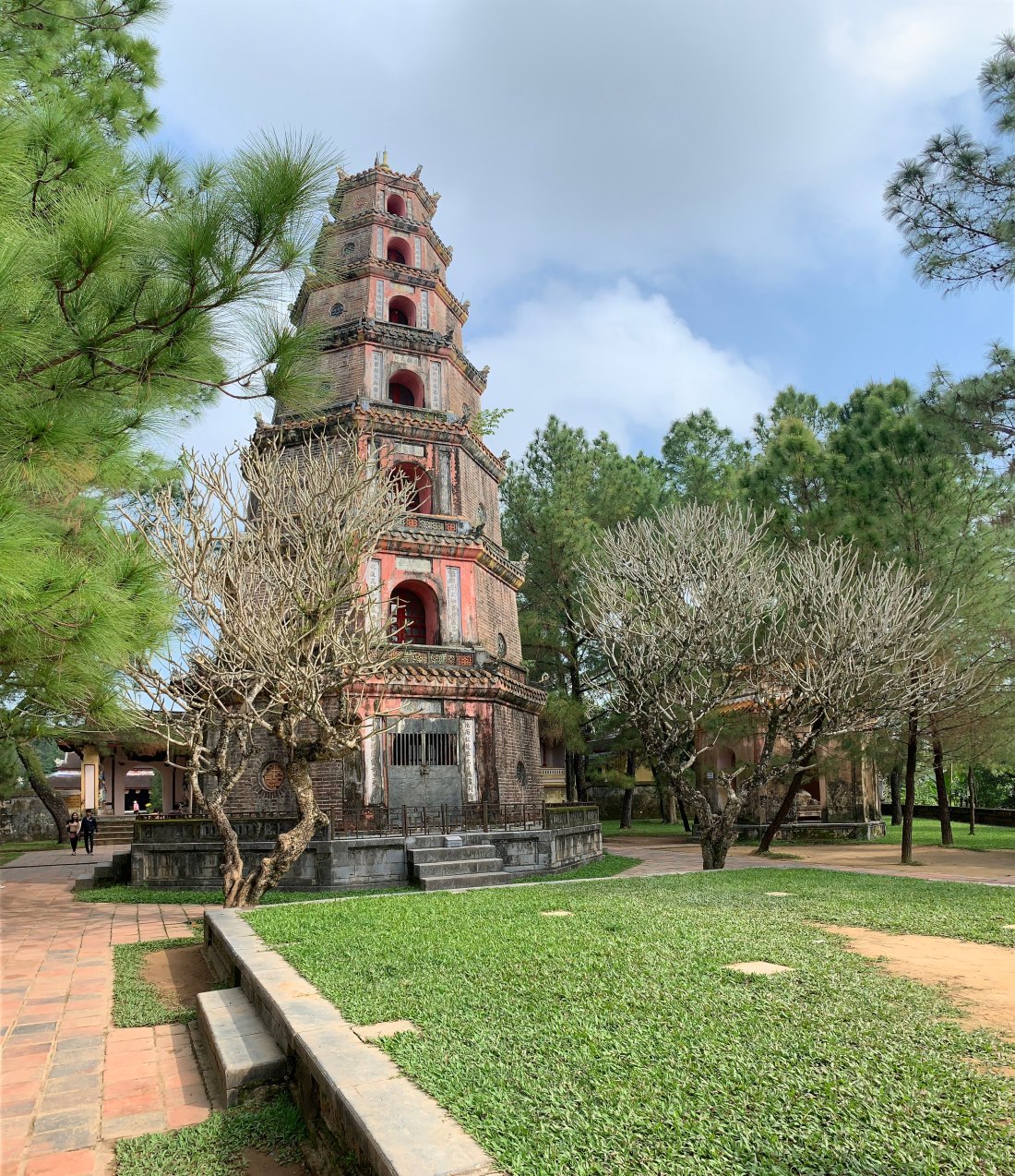
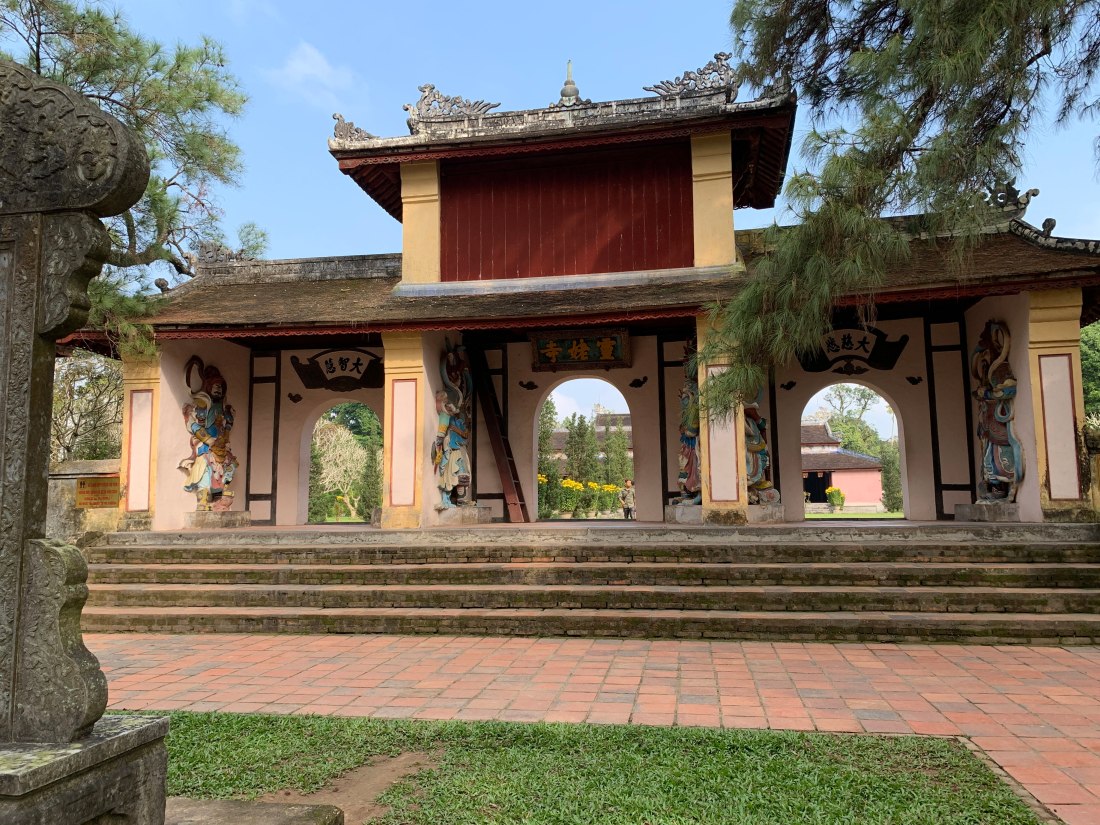
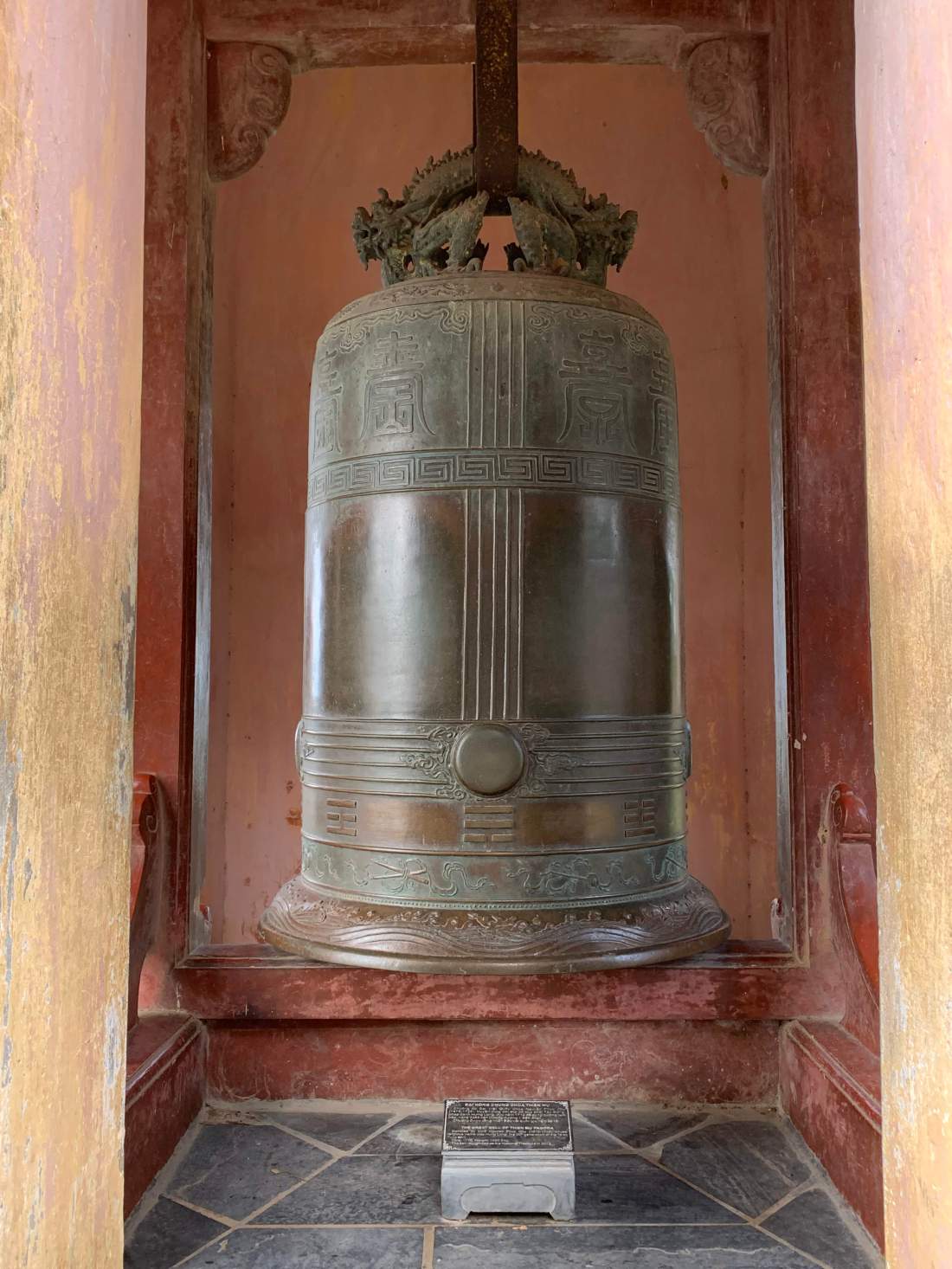
We visited first the Thien Mu (Celestial Lady) Pagoda, first built in 1601.  It has had many renovations, expansions, and reconstructions over the centuries.  Its 7 story octagonal tower built in 1844, dedicated to Buddha, has become the symbol of Hue.

IMG_2061IMG_2062

img_20190204_093739
statue of Maitreya Buddha

IMG_2067

IMG_2065
early 18th century bell weighs >3000 kgm and can be heard for > 6 miles call to prayer


img_20190204_095100

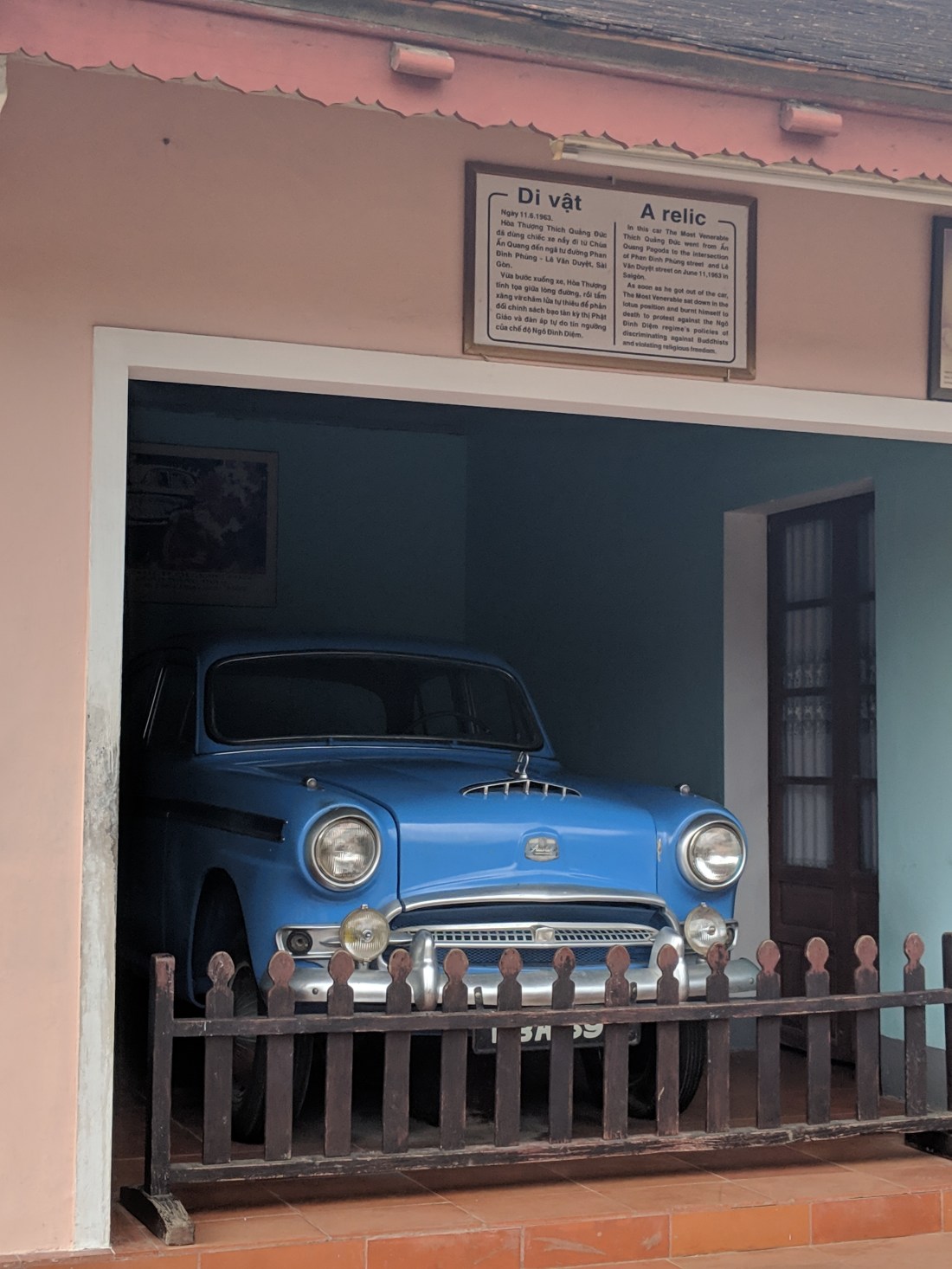
Thích Quảng Đức was a Vietnamese Mahayana Buddhist monk who self-immolated to death at a busy Saigon intersection on June 11, 1963. Quảng Đức was protesting the persecution of Buddhists by the South Vietnamese government led by Ngo Dinh Diem, a puppet catholic president chosen by the U.S.  Đức drove this Austin from this pagoda to Saigon, and now it is memorialized here.

img_20190204_095147-1

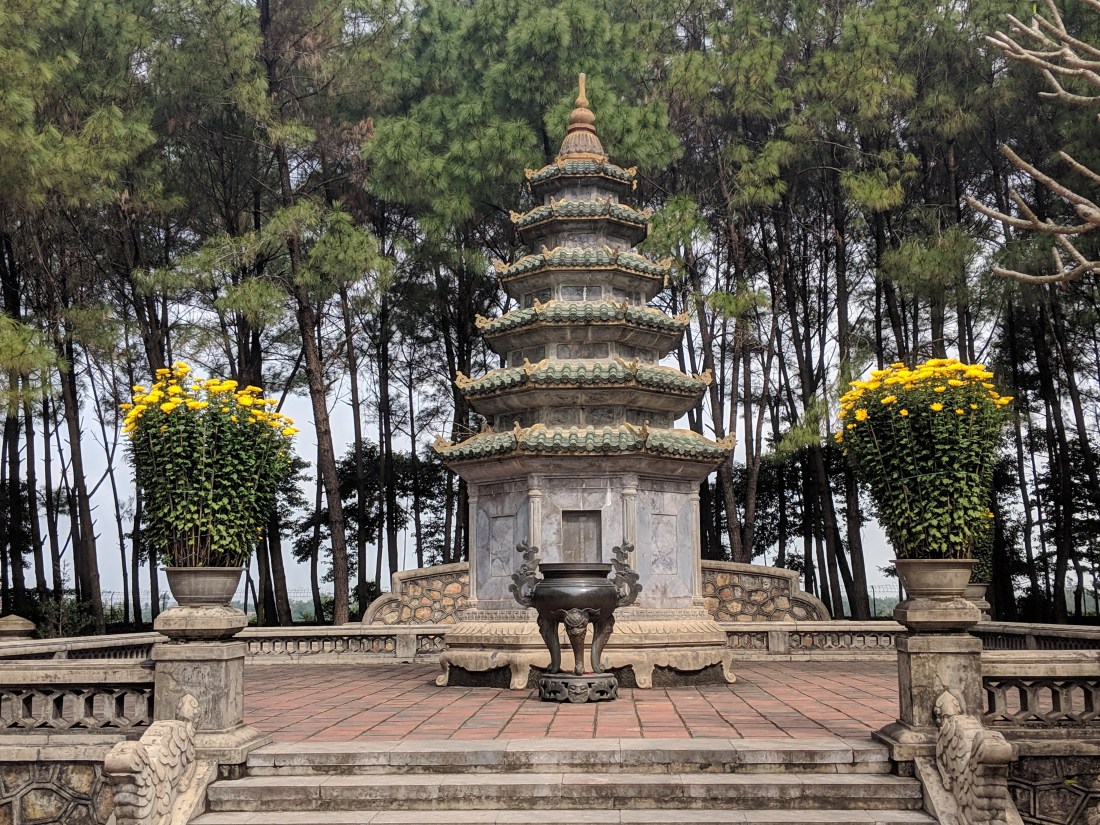
In 1904 a cyclone demolished much of the pagoda.  The abbot who oversaw the reconstruction is enshrined in a stuppa at the end of the pagoda.

img_20190204_100451

Next we visited the tomb of Tu Duc, the 4th emperor of the dynasty, built 1864-1867.  He was a poet king with many concubines but no children of his own.  He adopted 3 who then fought over the throne after his death, and killed each other off, weakening the empire and giving the French an entrance.  The tomb was built in his life time, and used by him and his family as a summer palace until his death, when it then became a temple and tomb.

img_20190204_104627img_20190204_104533img_20190204_104758

img_20190204_110542
same roof architecture as in the Imperial City

Inside was a theater for the family’s entertainment.

img_20190204_105707img_20190204_105747img_20190204_105856

The emperor’s tomb: (there is one for the empress and one for their 3rd adopted son, his favorite, but they look mostly the same but smaller).

IMG_2122IMG_2116IMG_2123

Finally, we visited the Tomb of Khai Dinh, the 12th emperor of the Nguyen dynasty,  built from 1920-1931.  He was the last emperor to be buried in Vietnam.  It is a blend of Eastern and Western styles, he being a puppet king of the French.

img_20190204_124009

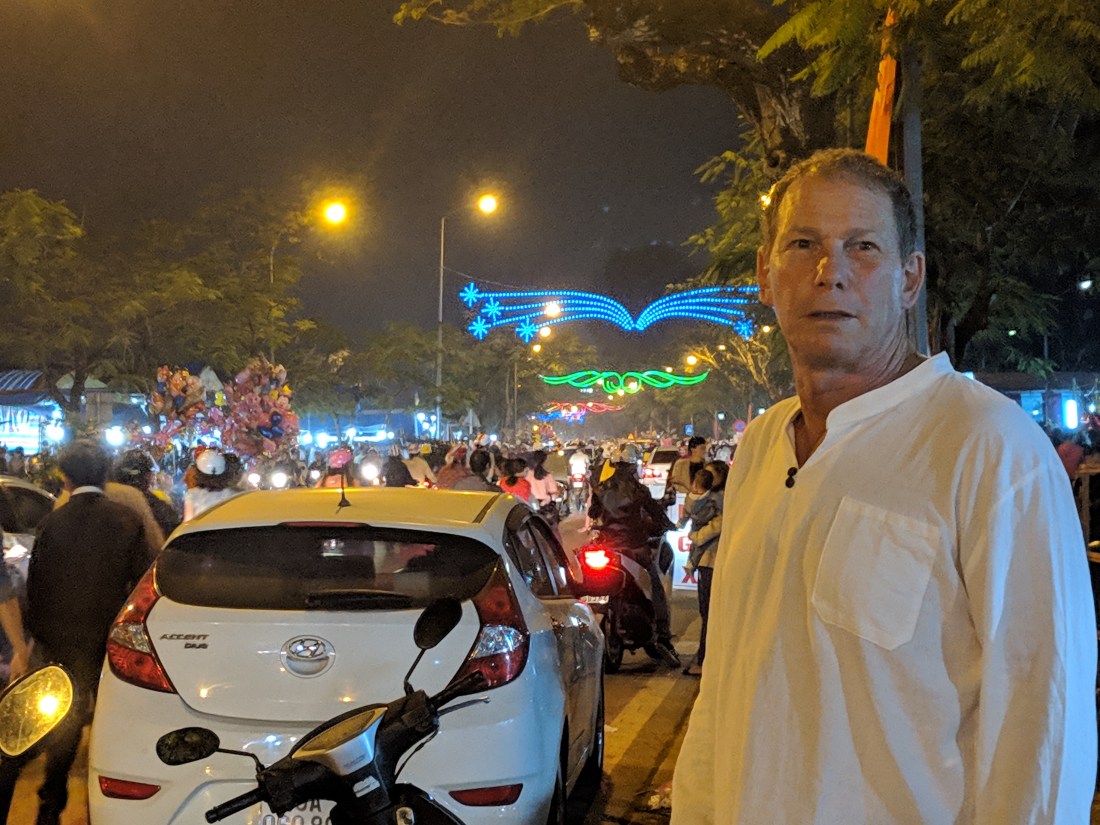
We then went back and rested up for the big events of the night. Later, after another great meal of local cuisine, we headed to the river to joining the rest of Hue in celebrating the arrival of the new year!  I particularly loved the children in their finest.

img_20190204_215645img_20190204_224840img_20190204_225117img_20190204_231535img_20190204_232222

Screenshot_20190206-133449Screenshot_20190206-133604Screenshot_20190206-133633

Chúc Mừng Năm Mới – Happy New Year!!!


Phong Nha, Vietnam Jan 30-Feb 1

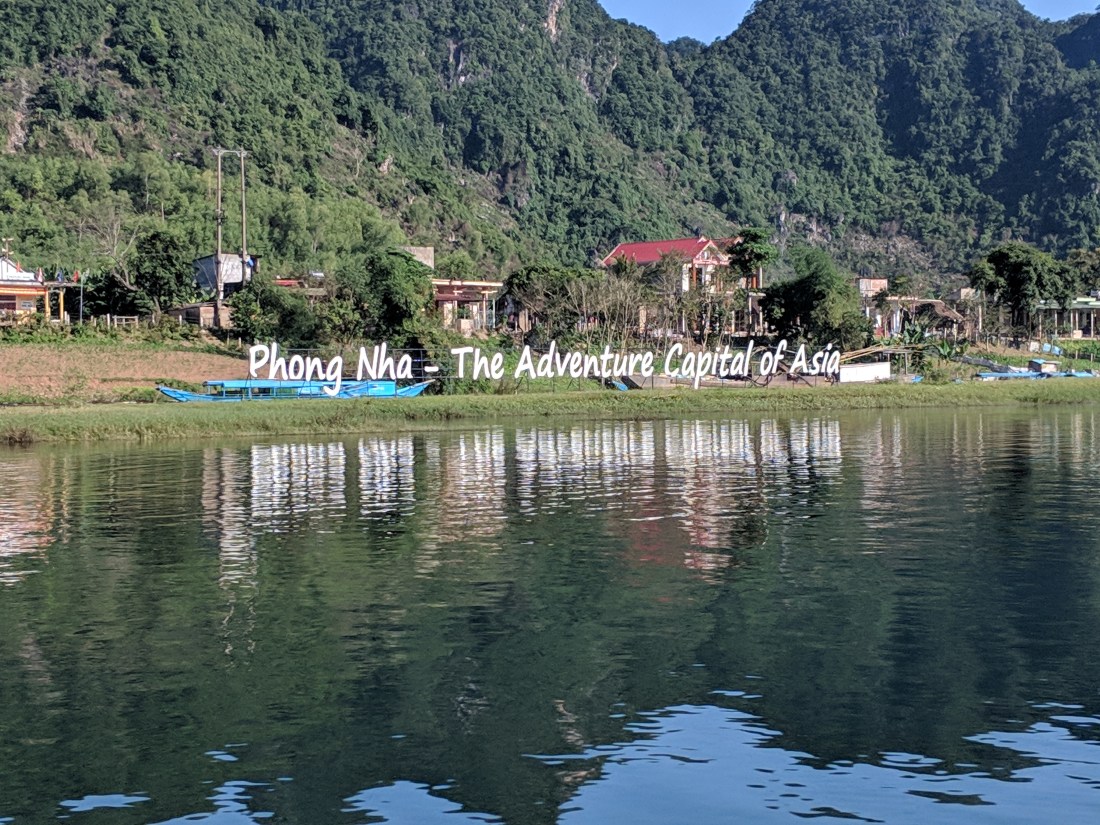
We travelled by plane from Ho Chi Minh City to Dong Hoi then by car for another hour to Phong Nha, part of Ke Bang National Park, a protected area in north-central Vietnam bordering the Hin Namno Reserve in Laos. The park consists of limestone mountains hollowed out over the last 3.5-5 million years by underground rivers to form some of the largest and most magnificent caves in the world. We have left the city and delta behind for the mountains!  We stayed at a resort on a corn and peanut farm with water buffalo and, of course, chickens roaming freely.

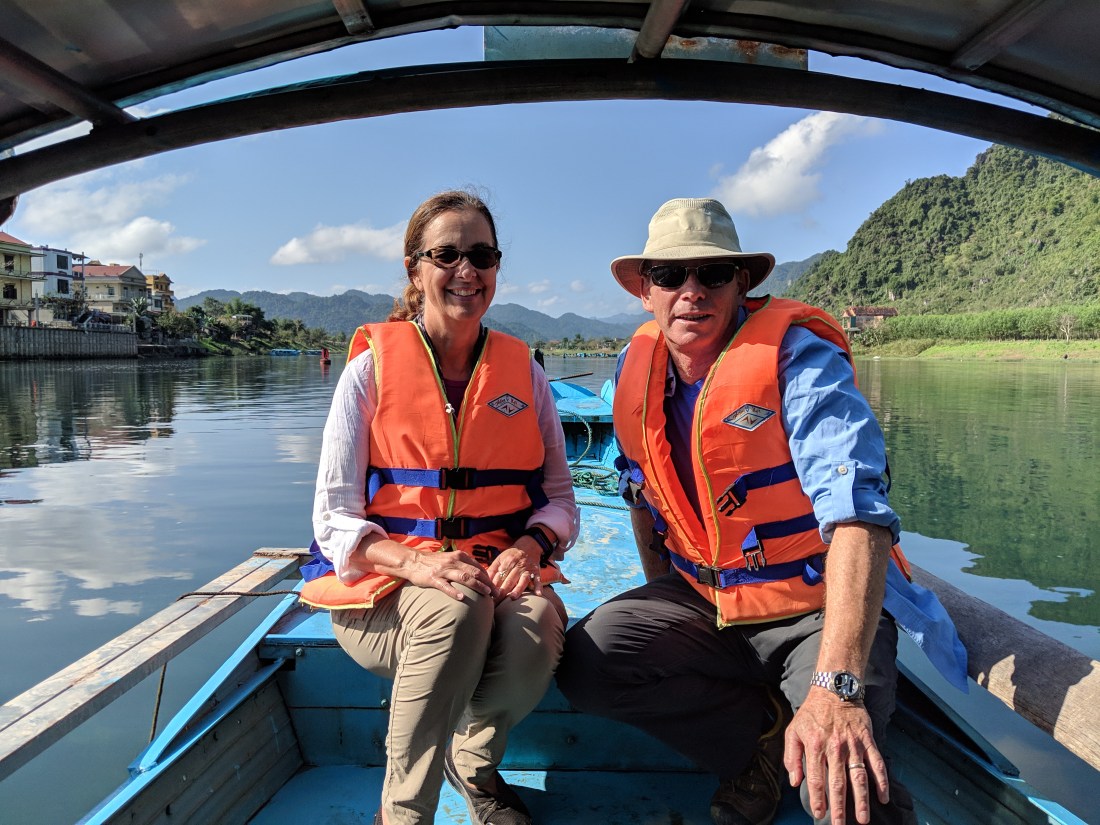
In the morning we were picked up by our guide for the day and taken by boat up the  Son River (name means lipstick due to its red color in the rainy season) to join the excursion into the Phong Nha (Wind and Teeth) Caves.  These caves, from which the name of the park is derived, are a UNESCO World Heritage site and popular to visit because of the long underground river large enough to allow entrance to the cave by boat.  It also has many magnificent stalactites and stalagmites.  The caves extend almost 8000 m, but we were only able to visit the first 1500 m.

IMG_20190131_090520_1IMG_20190131_092549

IMG_1787

IMG_20190131_100137

IMG_1802IMG_20190131_101807IMG_20190131_100731

There was also a significantly large sandbank, so we were able to get out of the boat and explore some of the cave by foot.

IMG_20190131_103633IMG_20190131_104144IMG_20190131_103715IMG_1833IMG_1848IMG_20190131_105707

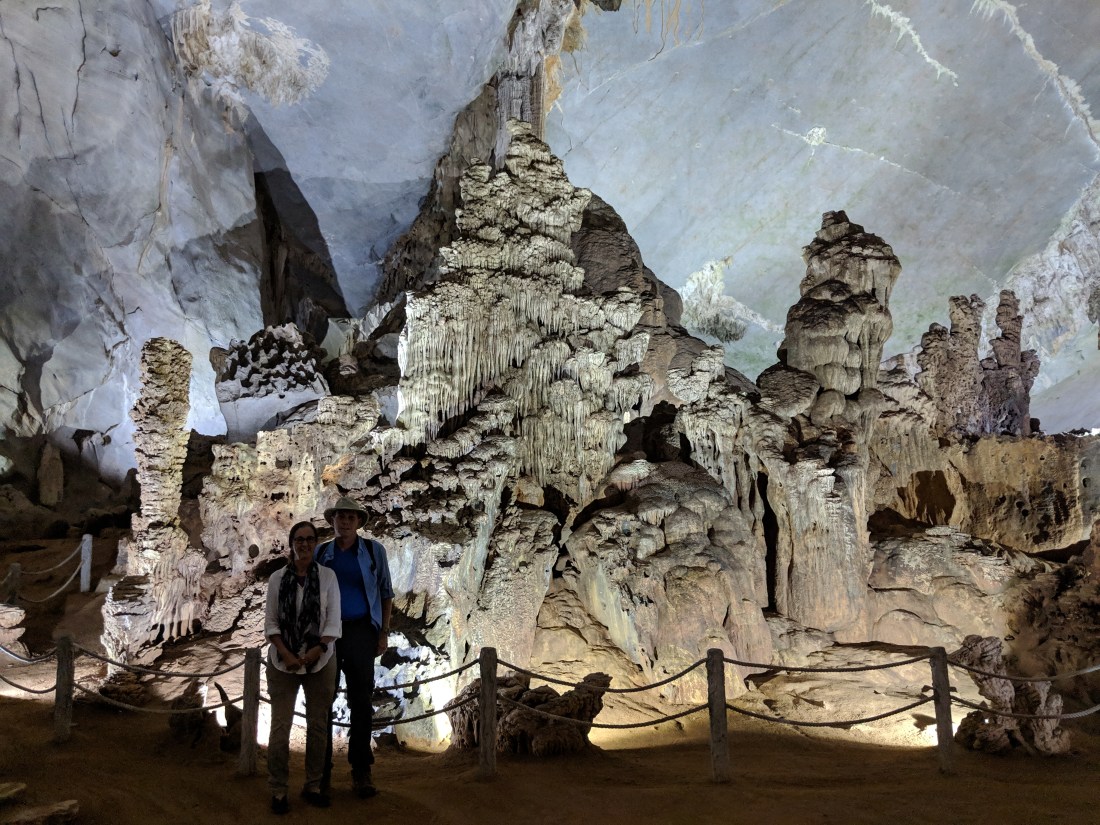
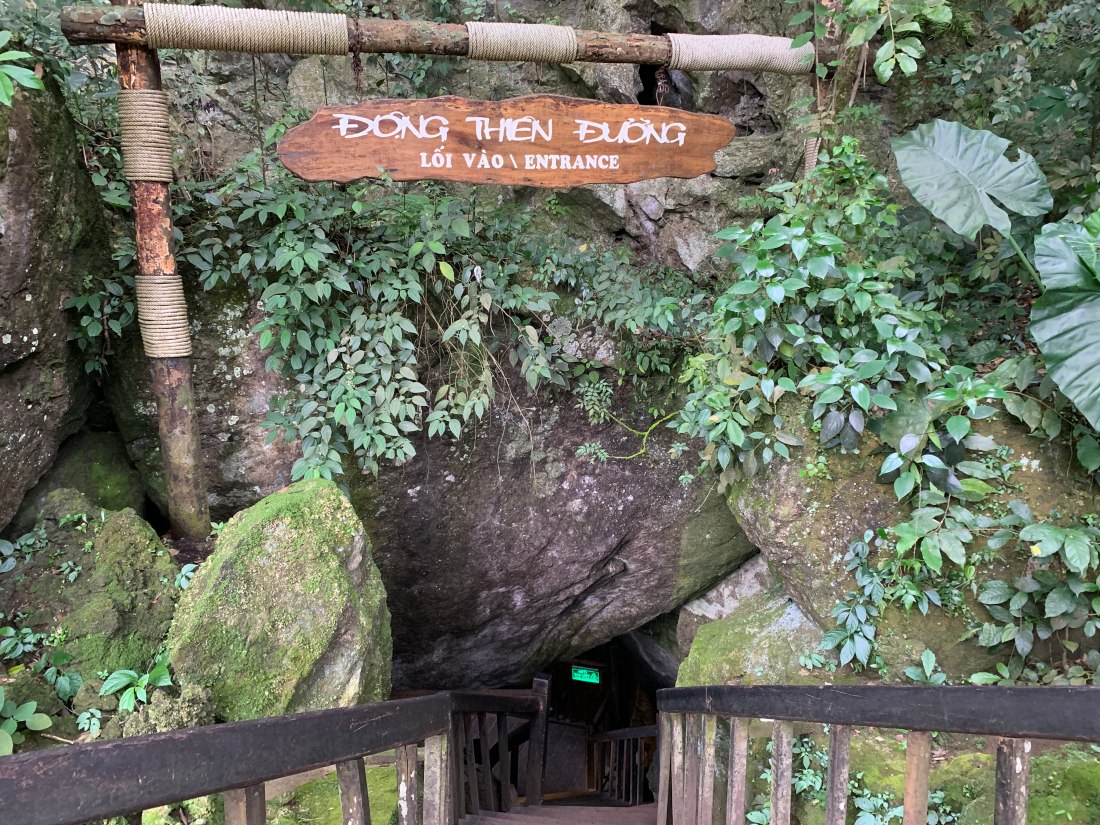
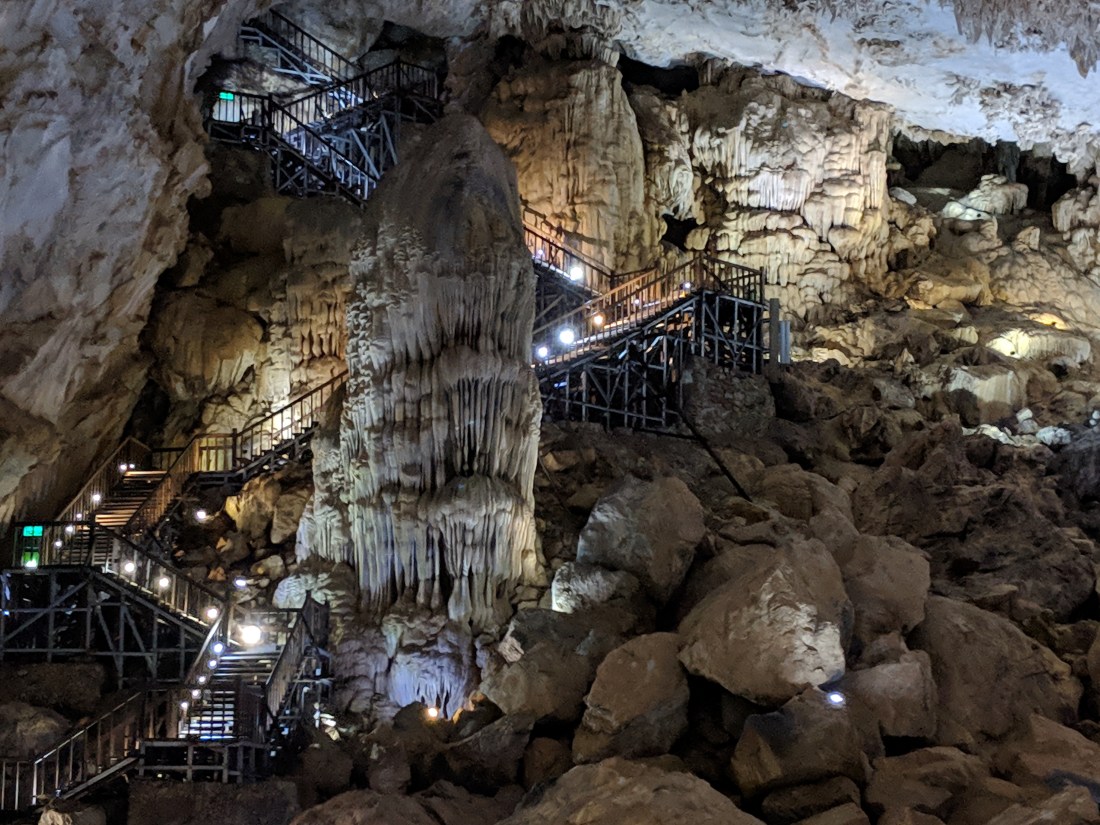
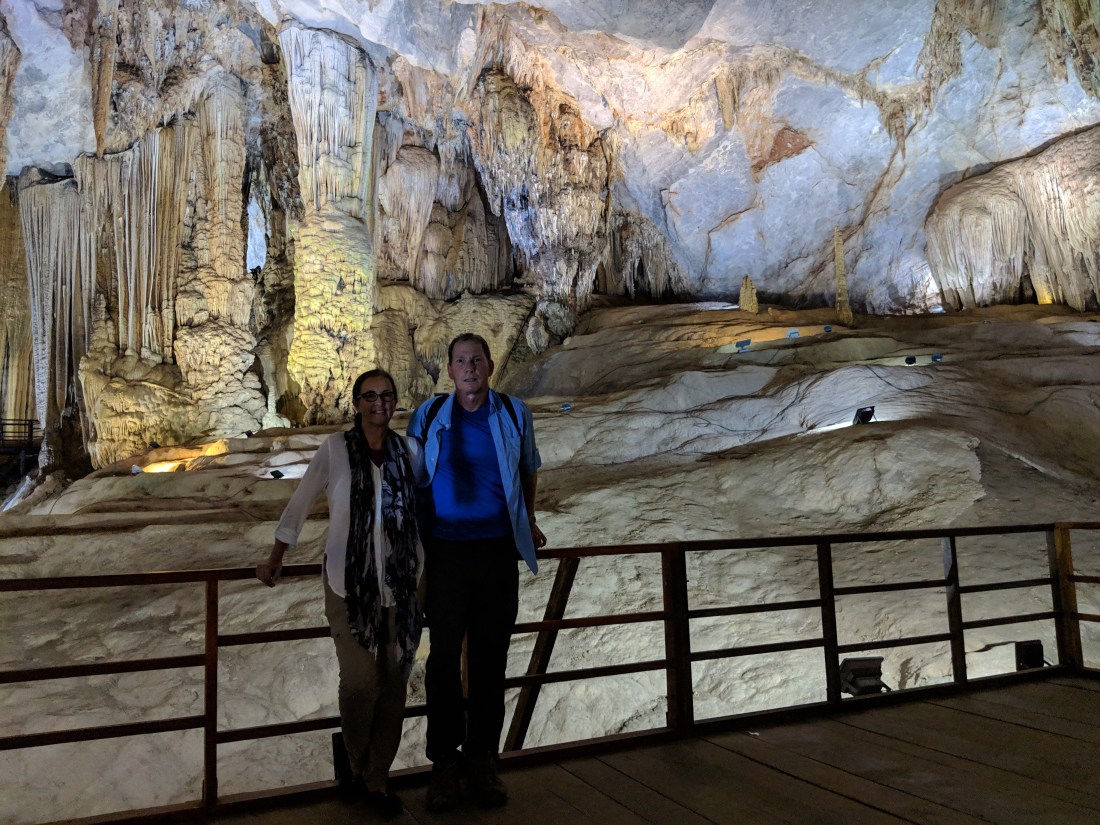
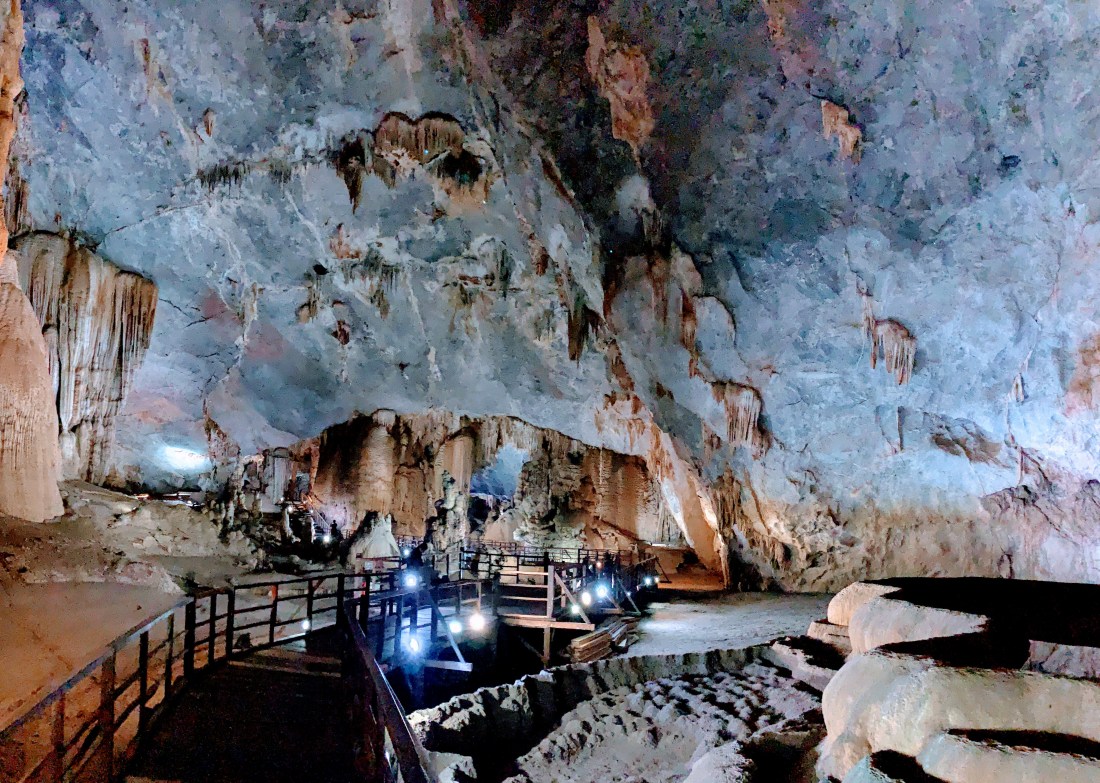
Then it was time for a lunch break.  In the afternoon we went to Paradise Cave.  This cave was fist discovered by a local man in 2005; it has only been available to tourists since 2010.  Through exploration, it was found to be part of a larger cave system extending a total of 34 km.  But we only were able to visit the first 1km, which is lighted and platformed for tourists.  As spectacular as we had thought Phong Nha Cave, we were soon to be blown away.  First we had to hike up a path through the jungle with 500 m elevation (it is 200m above sea level), then through the mouth of the cave and down many stairs into the cave.

IMG_1905

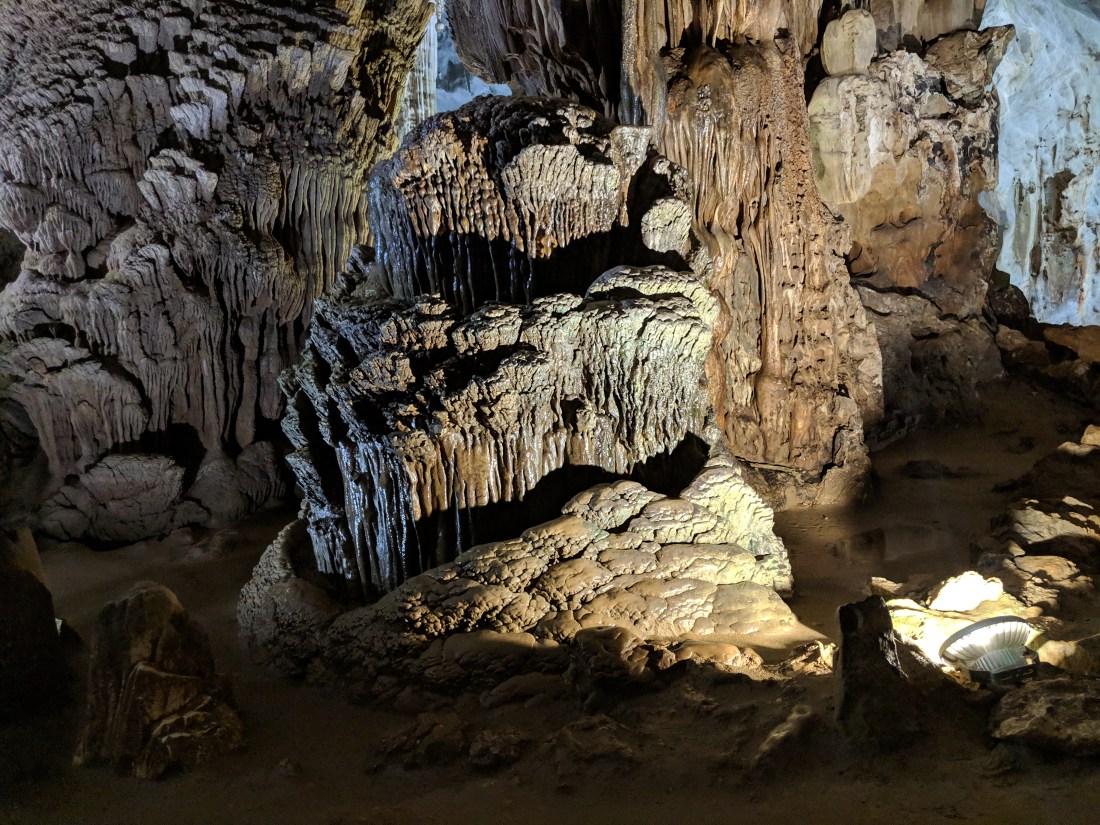
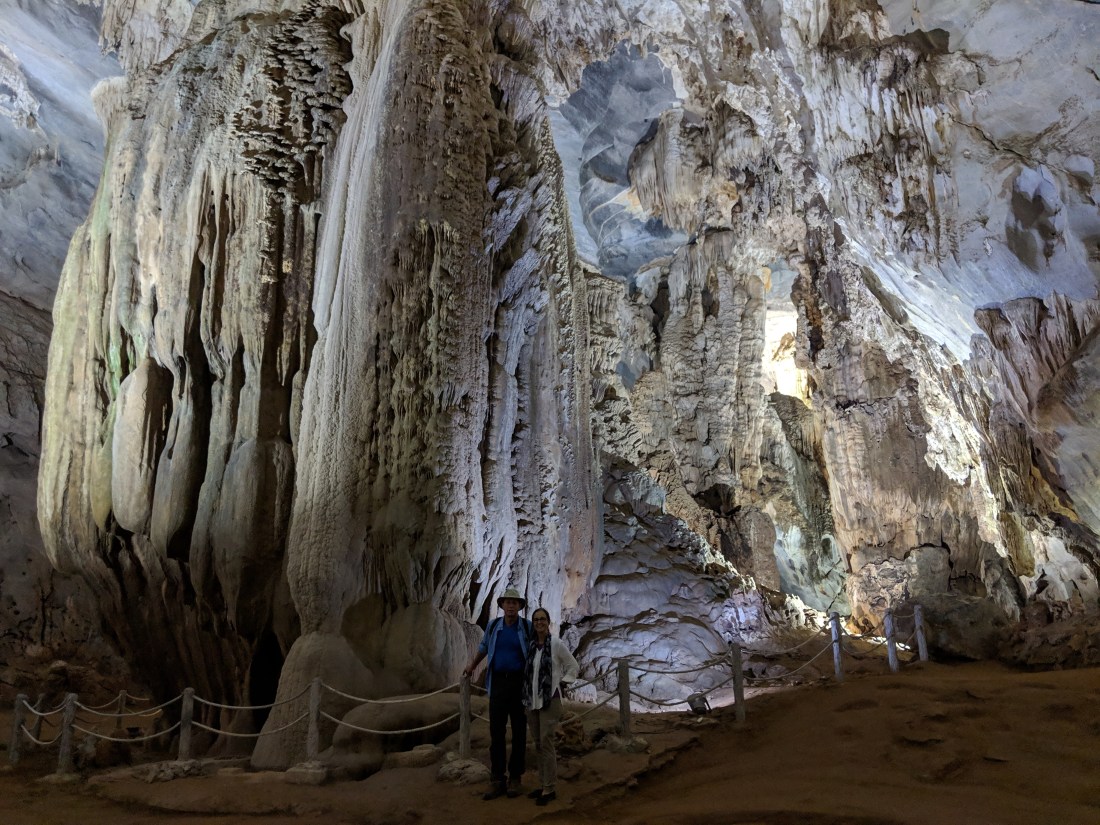
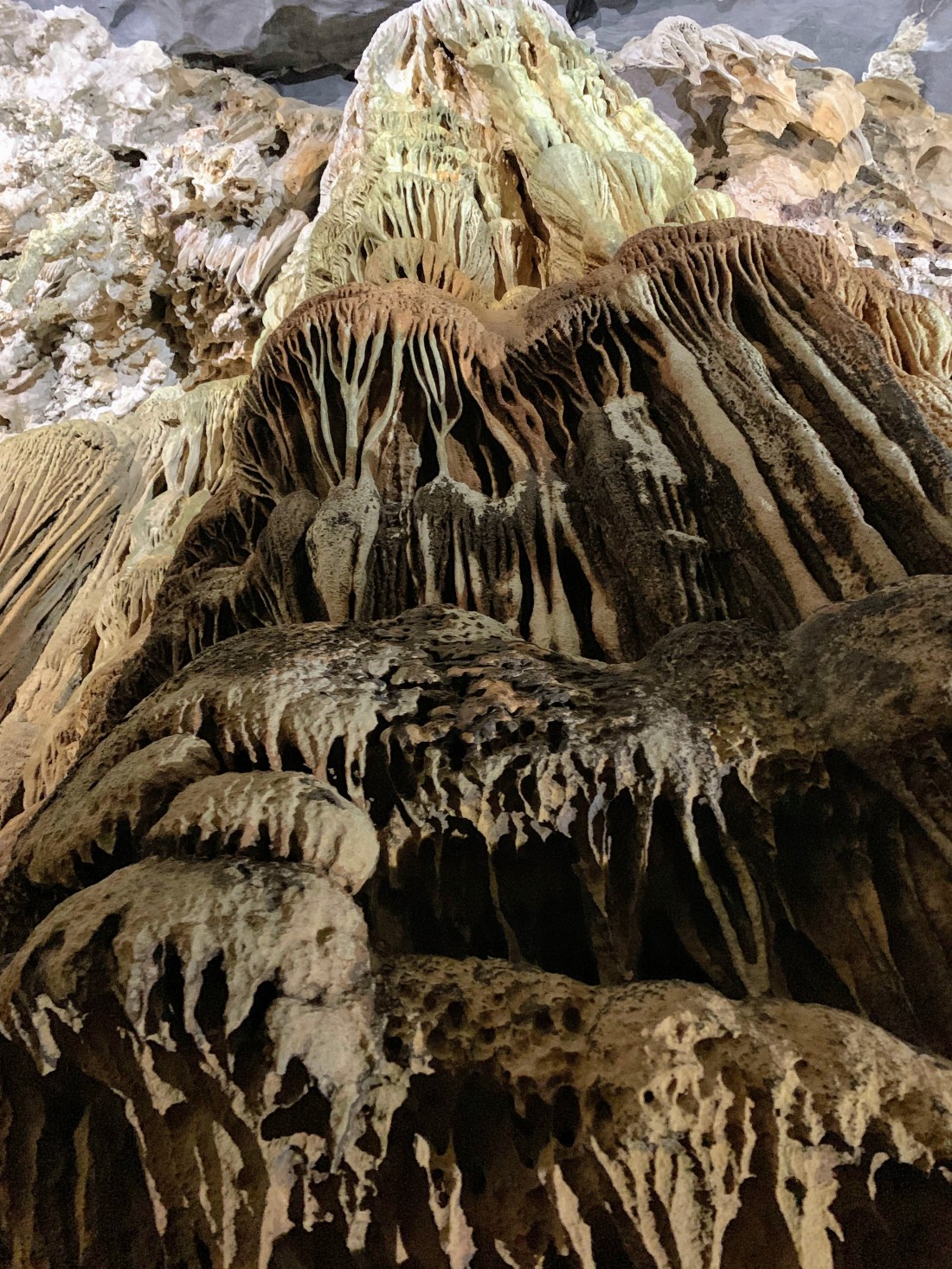
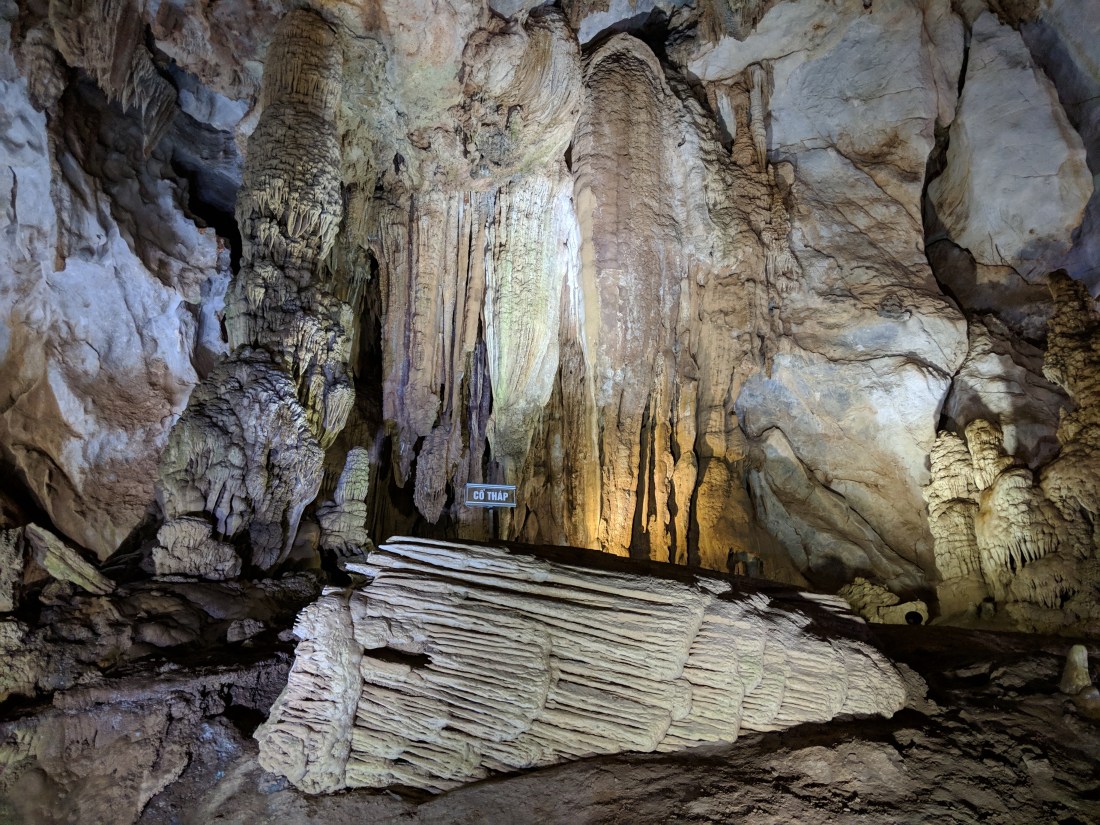
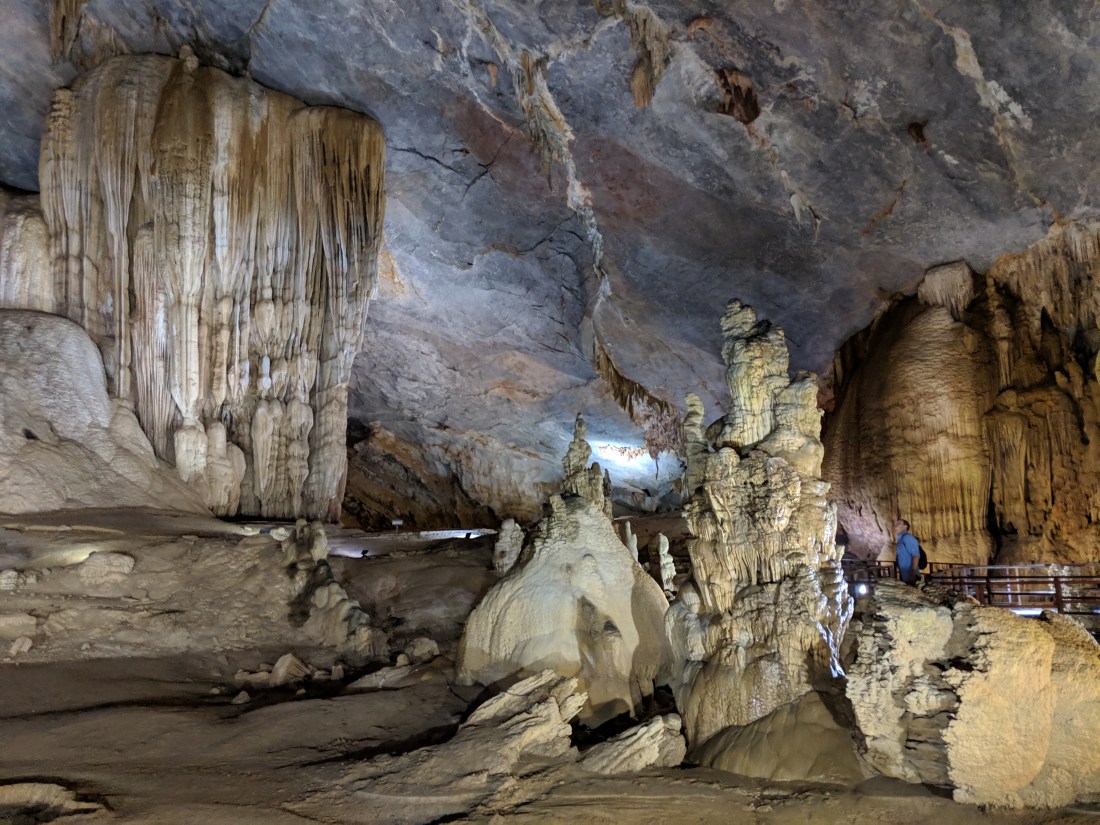
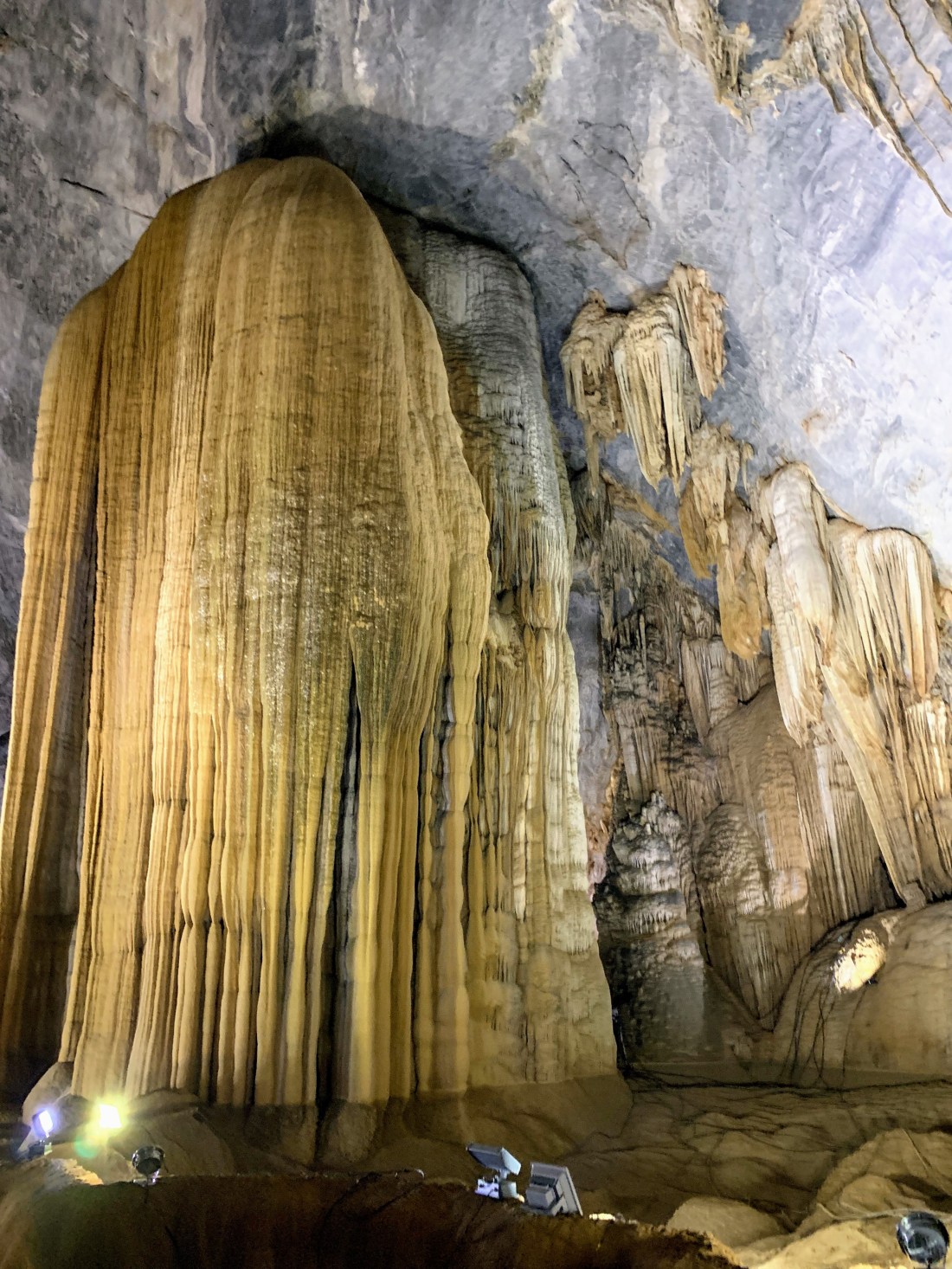
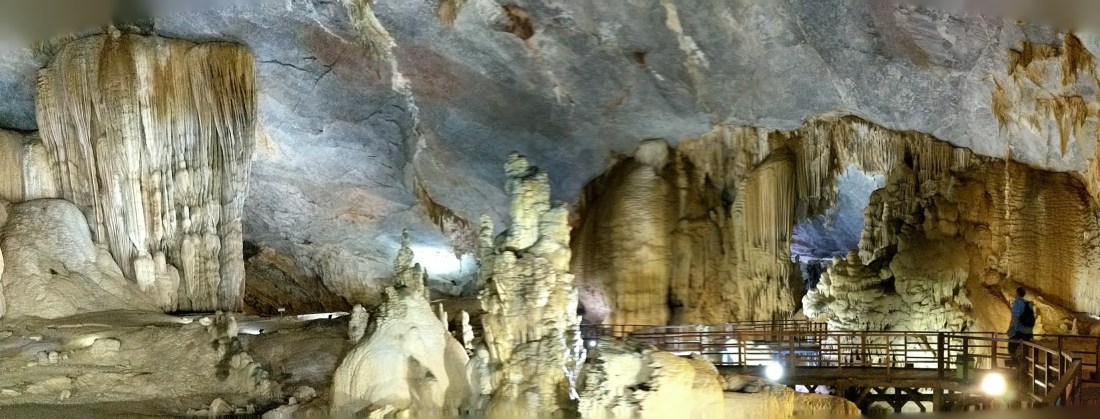
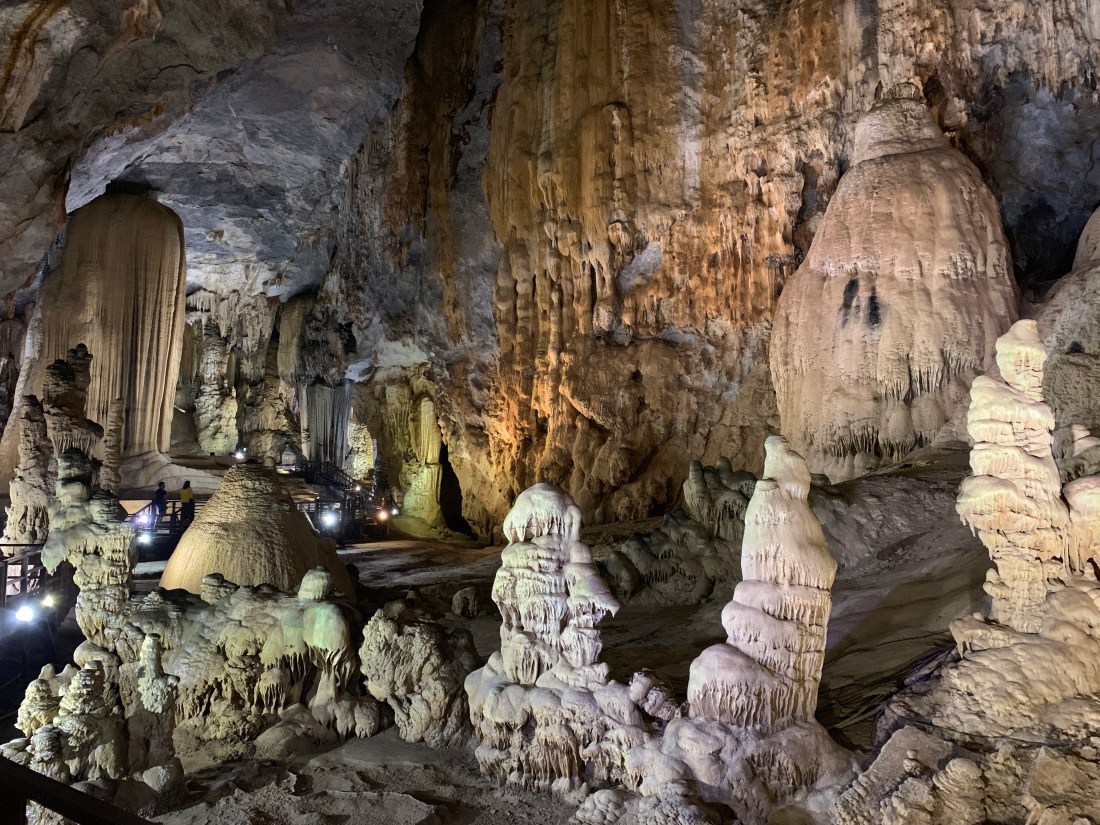
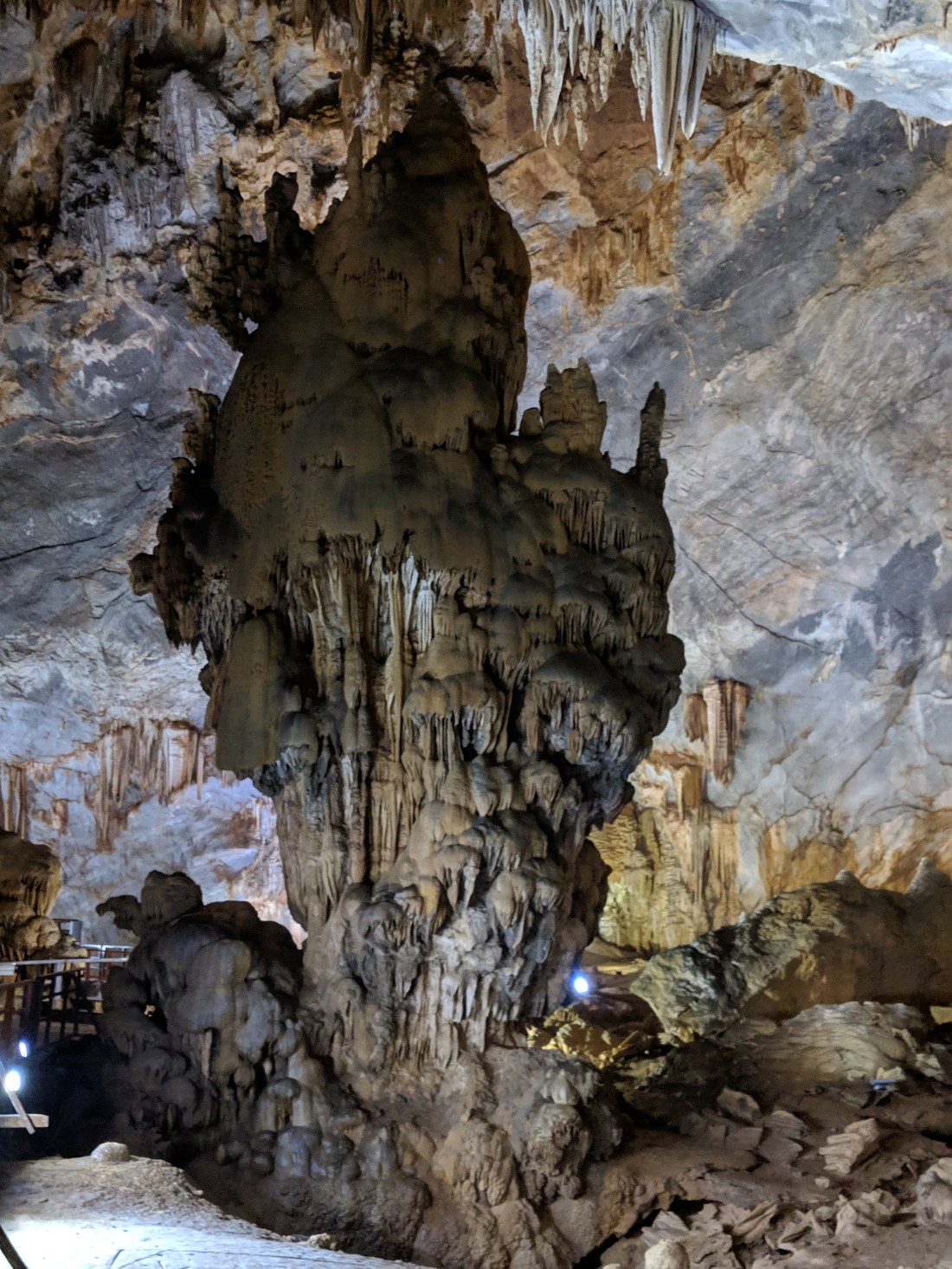
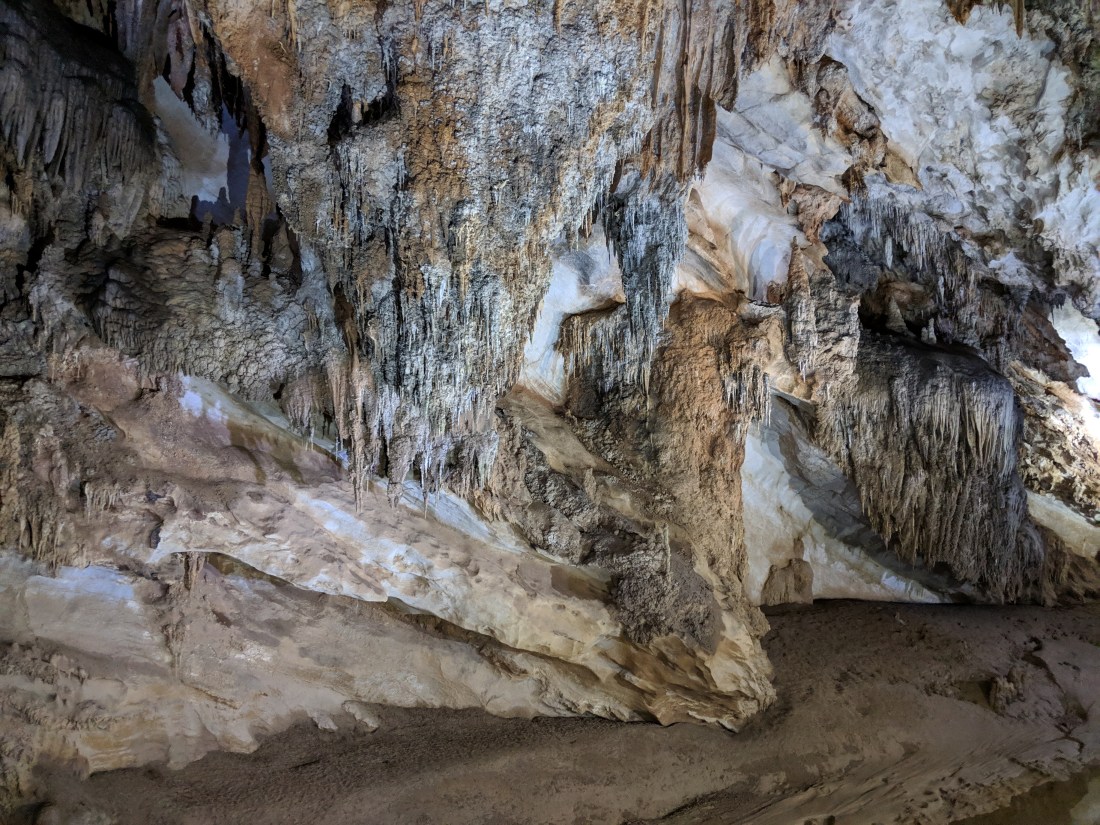
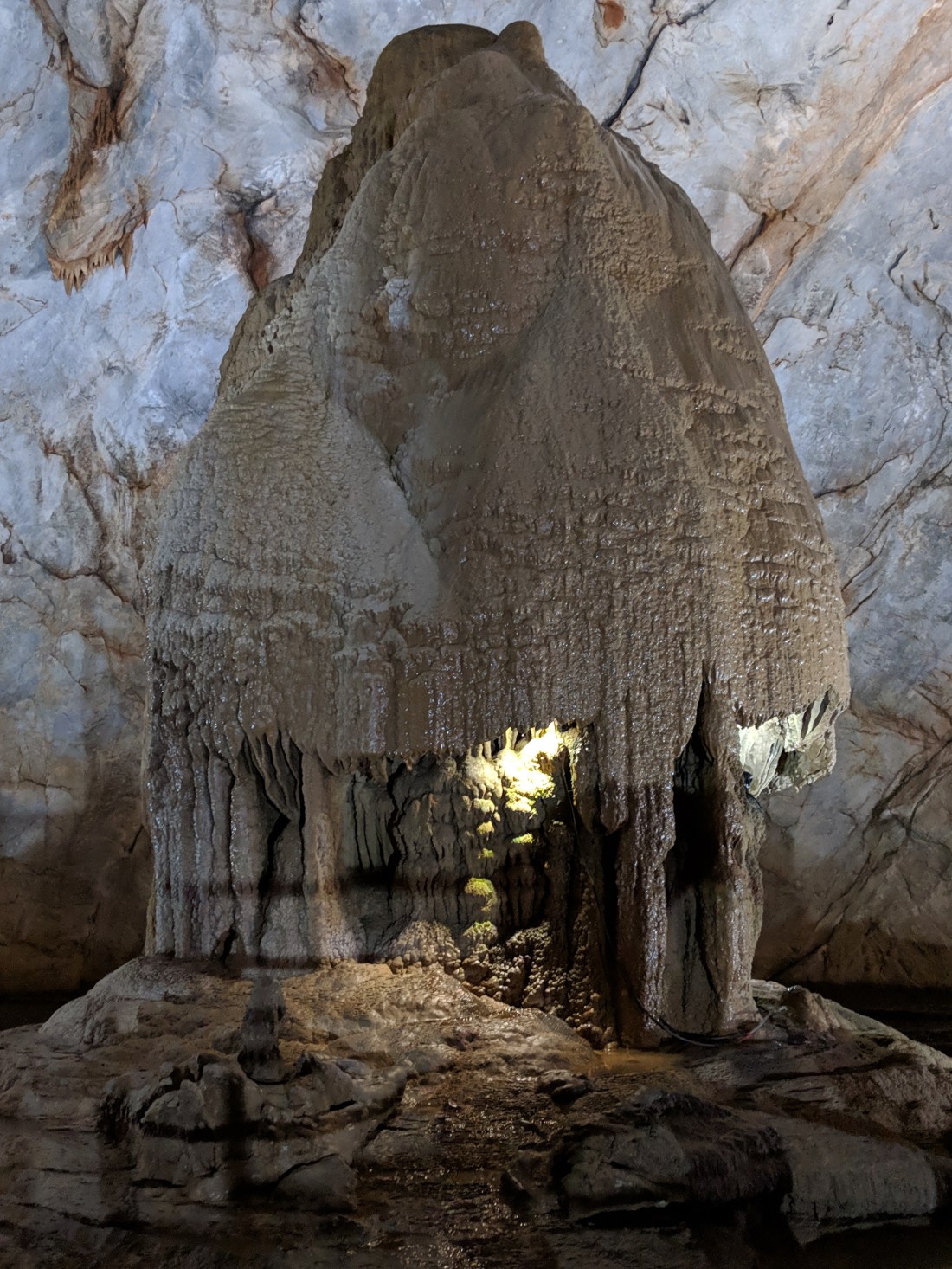
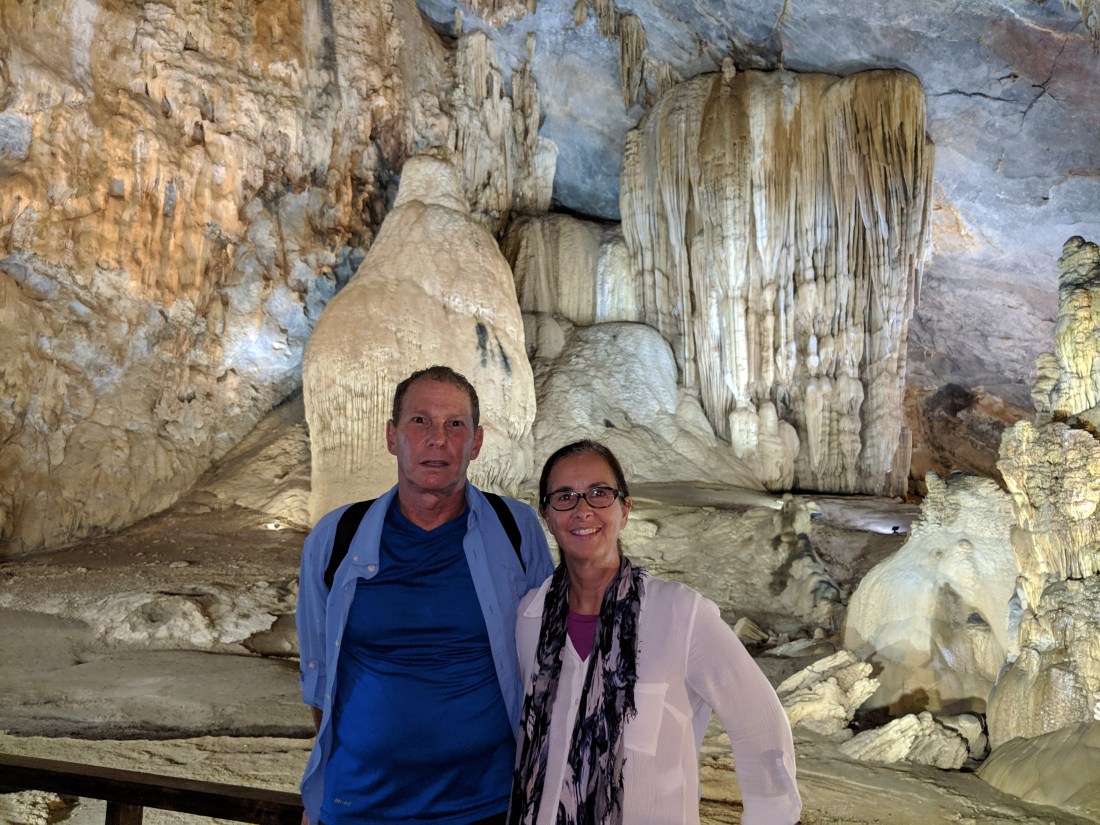
Words and even pictures cannot describe the incredible beauty of the formations inside this cave, but I will try with several of the literally hundreds of pictures we took.

IMG_20190131_144924

IMG_20190131_145743

IMG_20190131_145510
this is a stalagmite that was knocked over by flooding waters

IMG_20190131_150250IMG_20190131_150809IMG_1867PANO_20190131_150741.vrIMG_1870IMG_1878IMG_20190131_151615IMG_20190131_15340100000IMG_00000_BURST20190131152411200_COVERIMG_20190131_155455IMG_20190131_160000


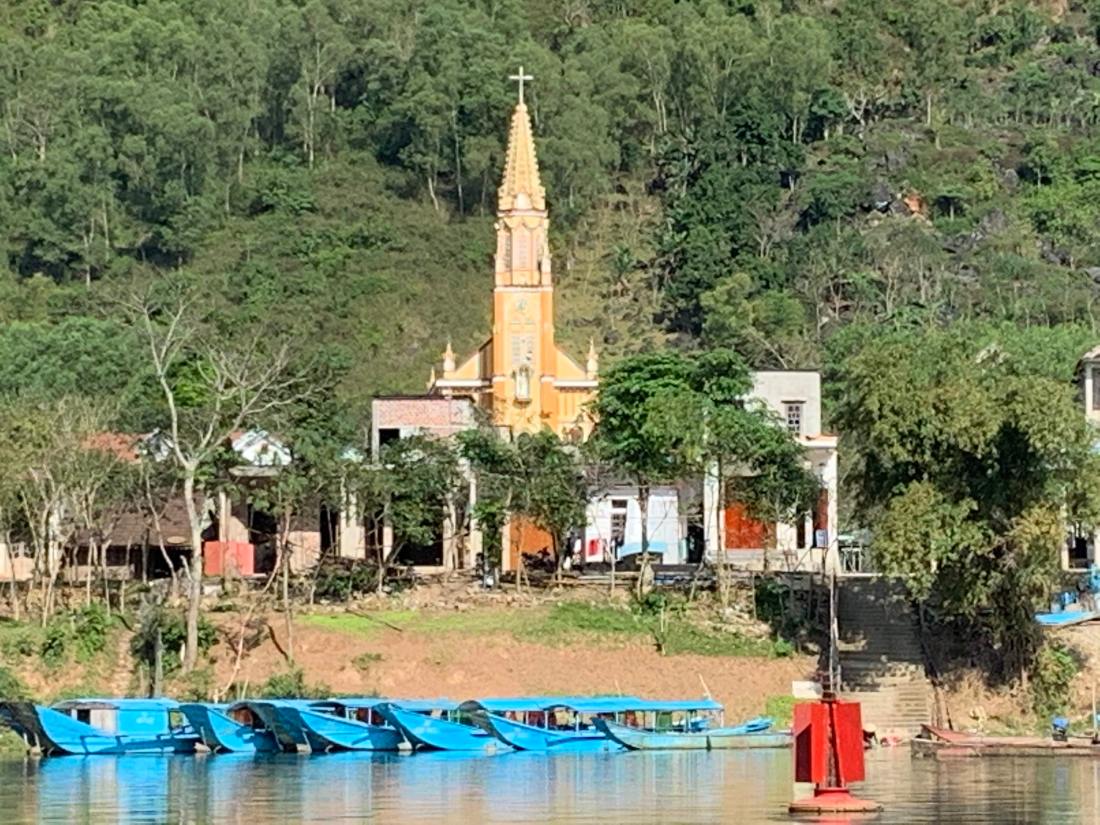
An interesting fact about the area is that the locals are almost 100% Christian despite the country being only about 10% Christian.  This has mostly to do with the French influence and the relative isolation of the village.  Several churches can be seen to dot the countryside.

IMG_1784

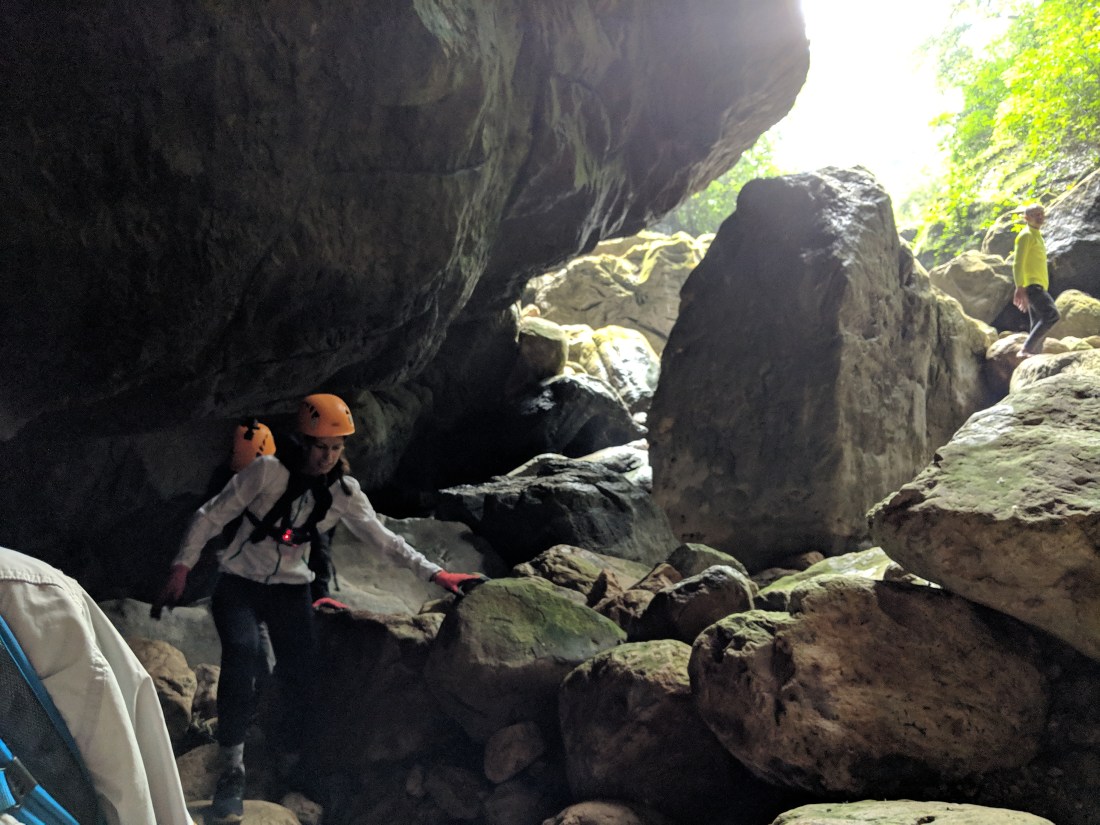
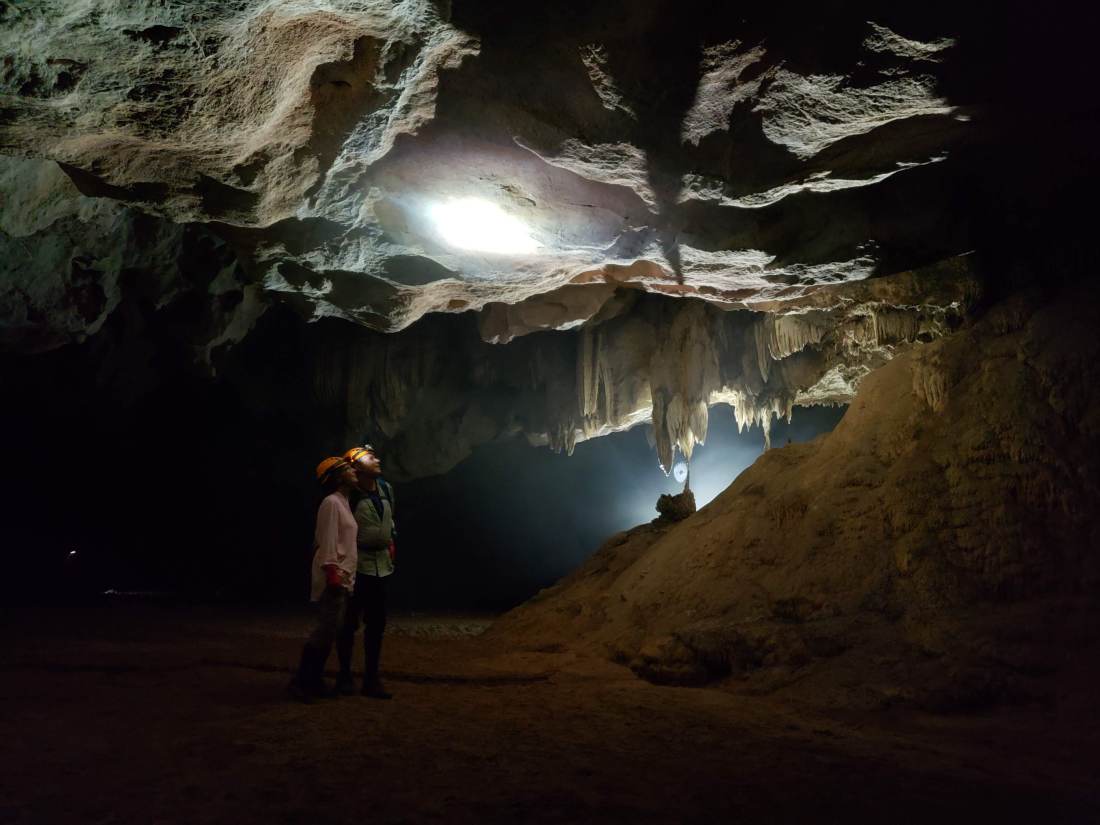
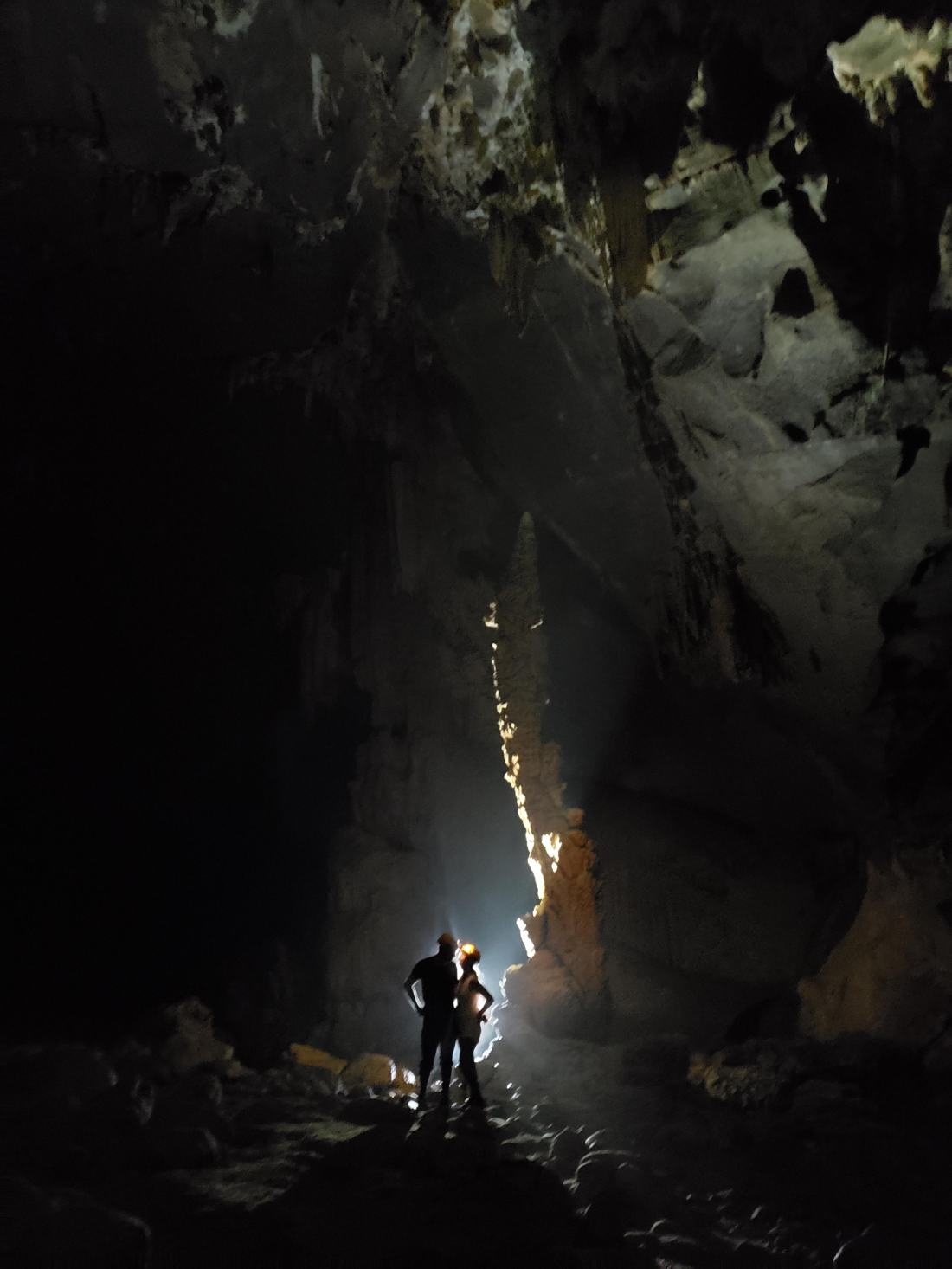
The next day was our biggest adventure thus far.  We started at 7 am with a trip into town to join with our group for the day.  We were to visit the Nuoc Nut Caves (which means crack in the rock where water comes out).  But first we had a safety briefing and a description of the day ahead.  We had been advised to wear quick dry clothes for the water crossing and high socks to tuck in our pants so leeches could not get to us, so we knew we were in for an adventure.

img_20190201_090306
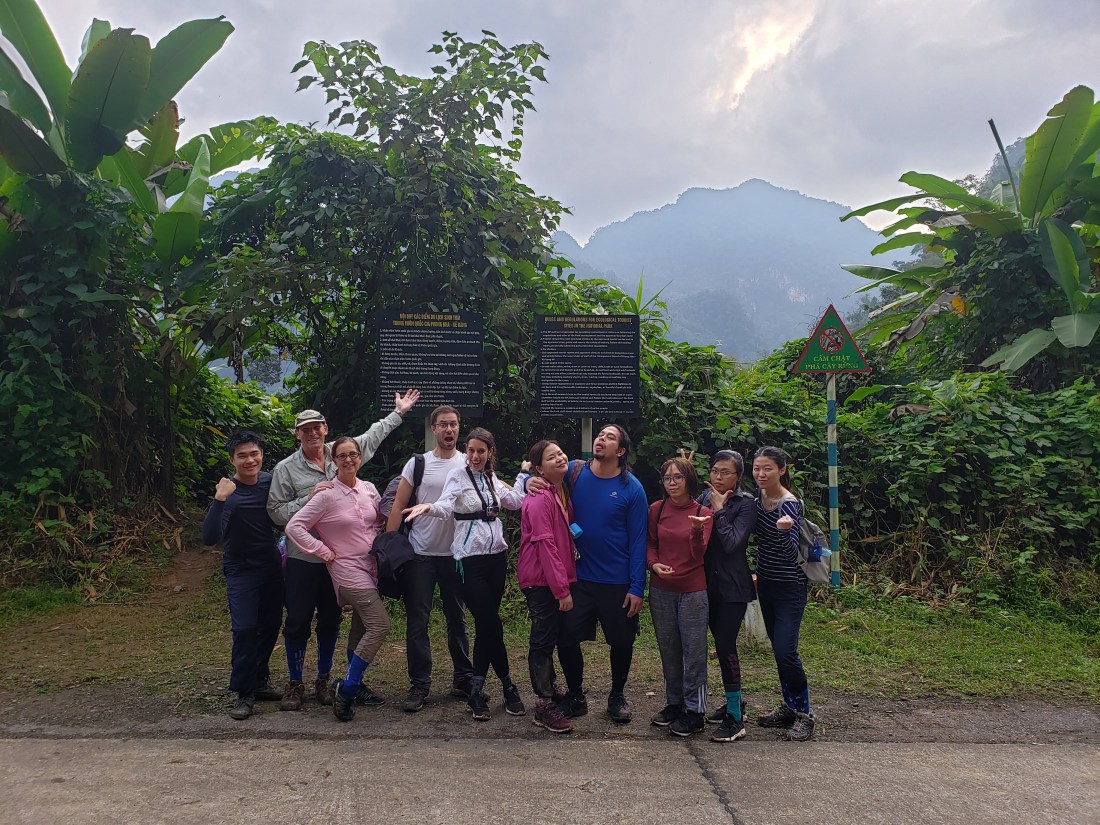
our group for the day representing (from left to right: Malaysia, Vietnam, Philippines, Portugal, and US
IMG_1908
our guide Long

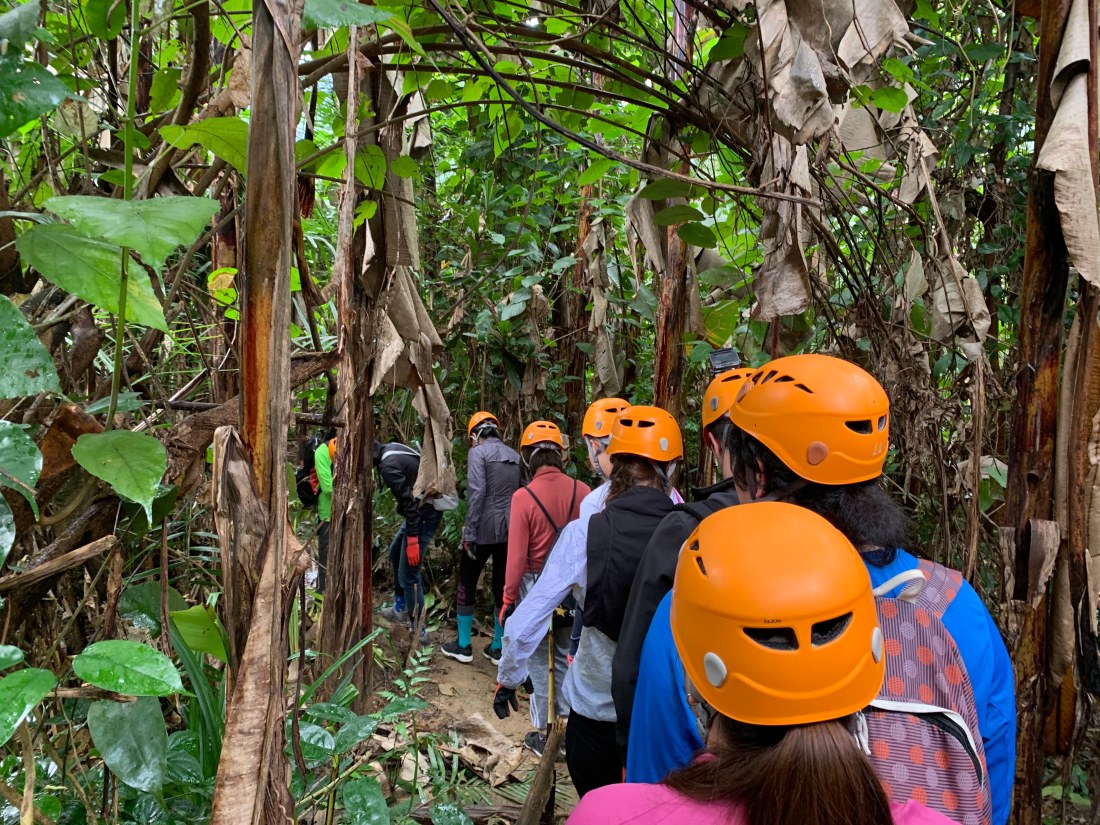
We drove about 30 minutes  to the trailhead, then started our trek of about 2.5 km through the jungle to the mouth of the cave.  The first bit of the trail was steep! And the trail was extremely rocky and muddy.

IMG_1920

IMG_20190201_160047

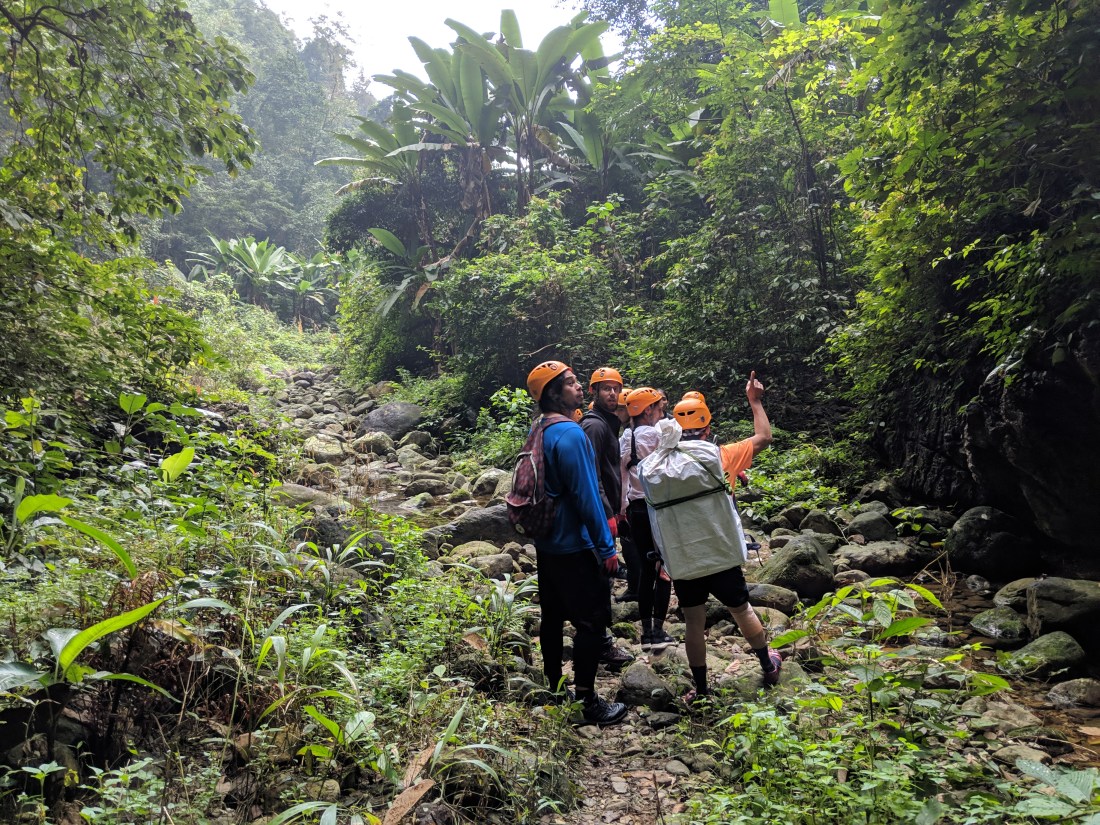
We stopped for a breather before descending down to the mouth of the cave.

IMG_20190201_113631IMG_1929IMG_20190201_114857

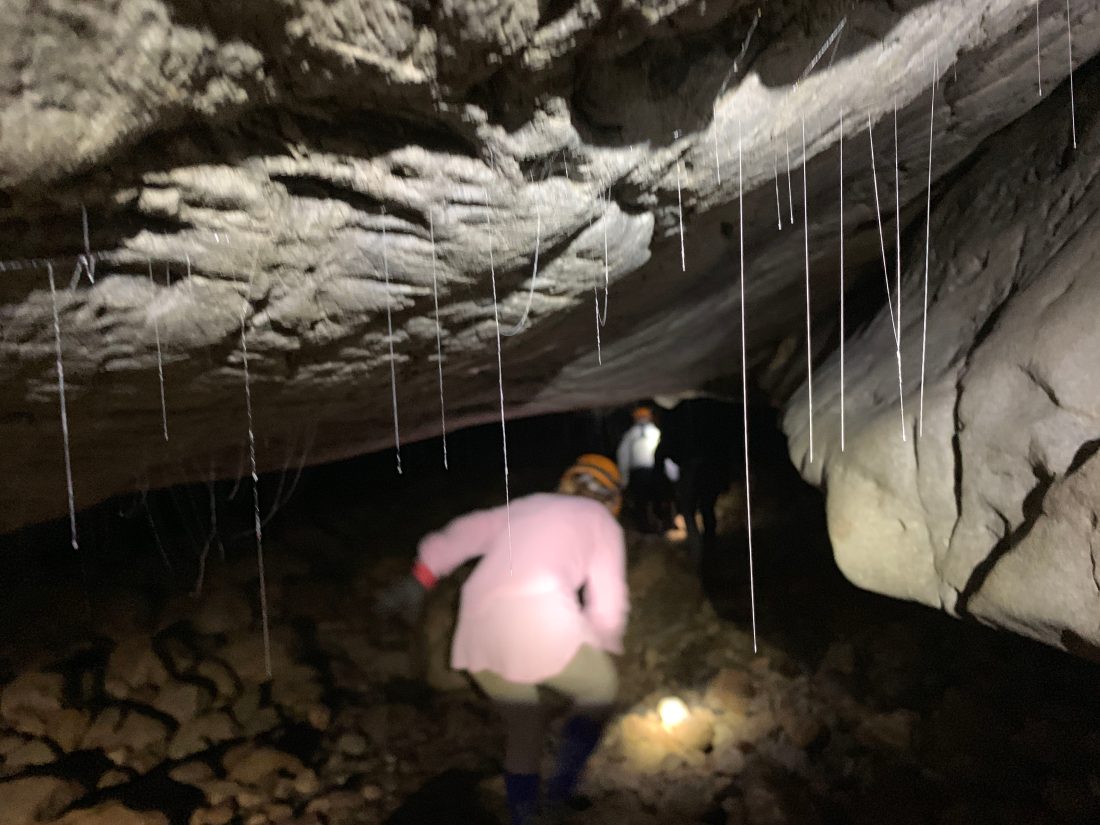
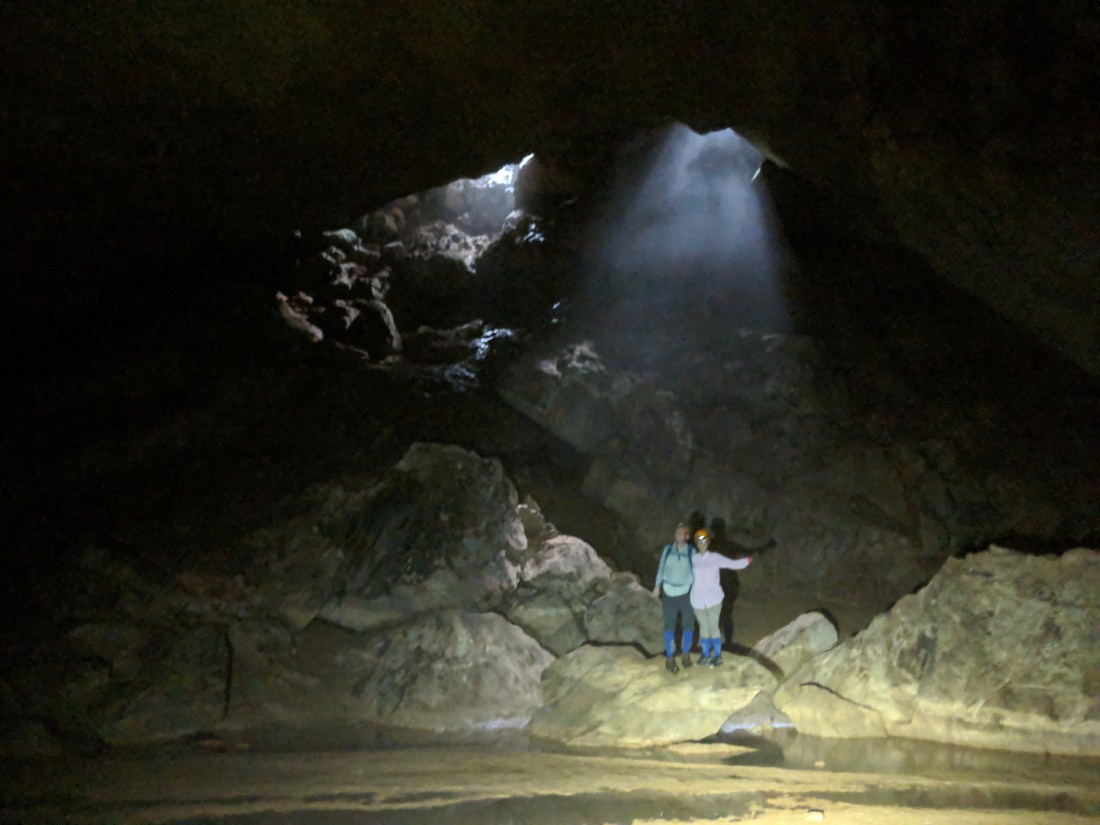
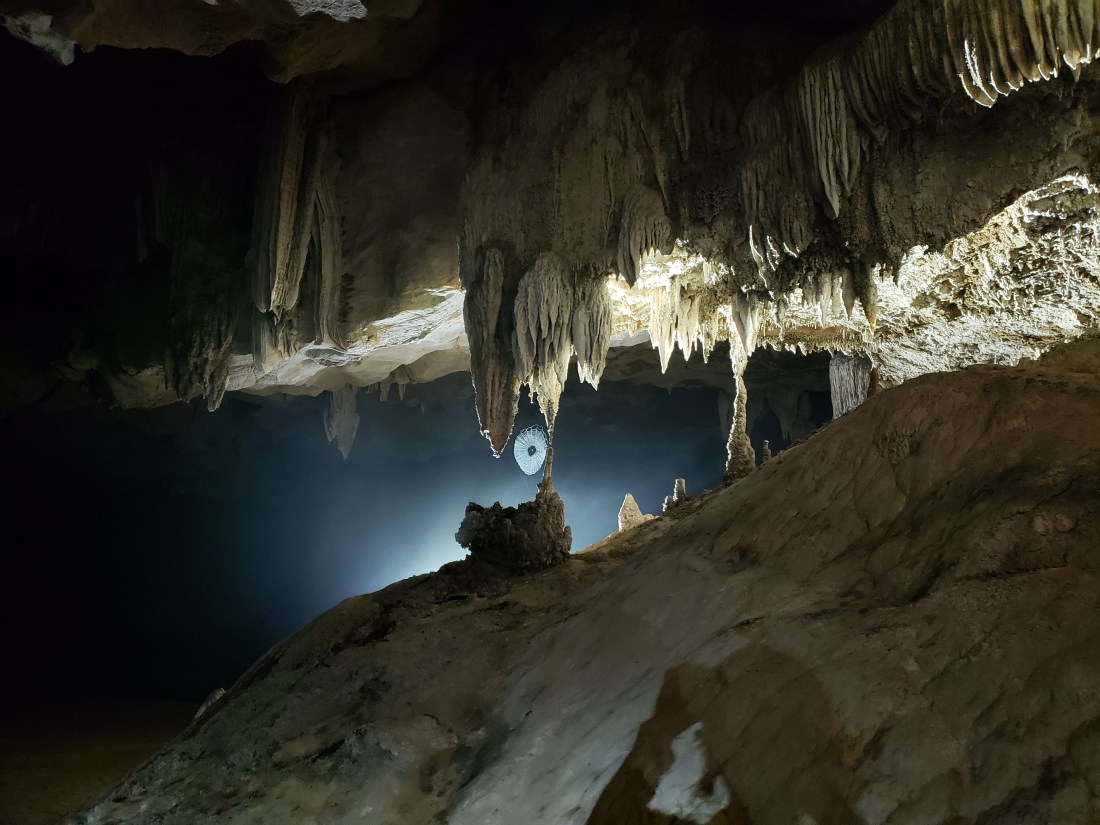
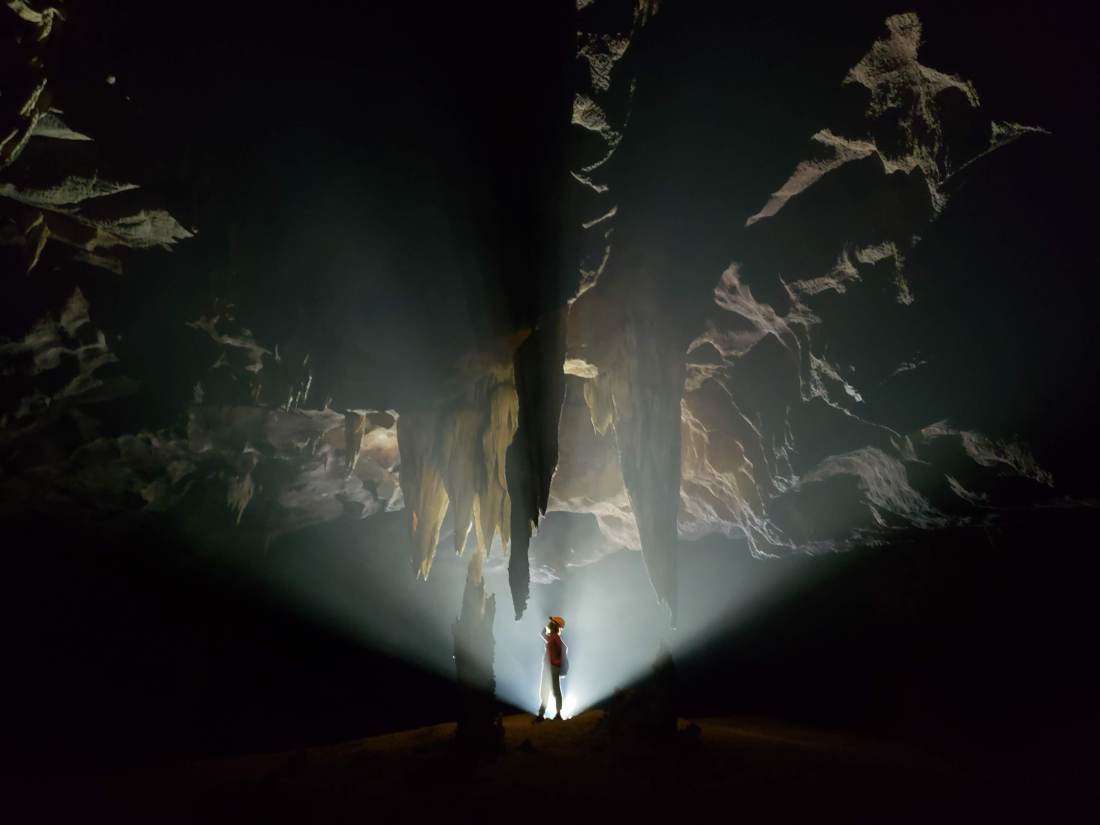
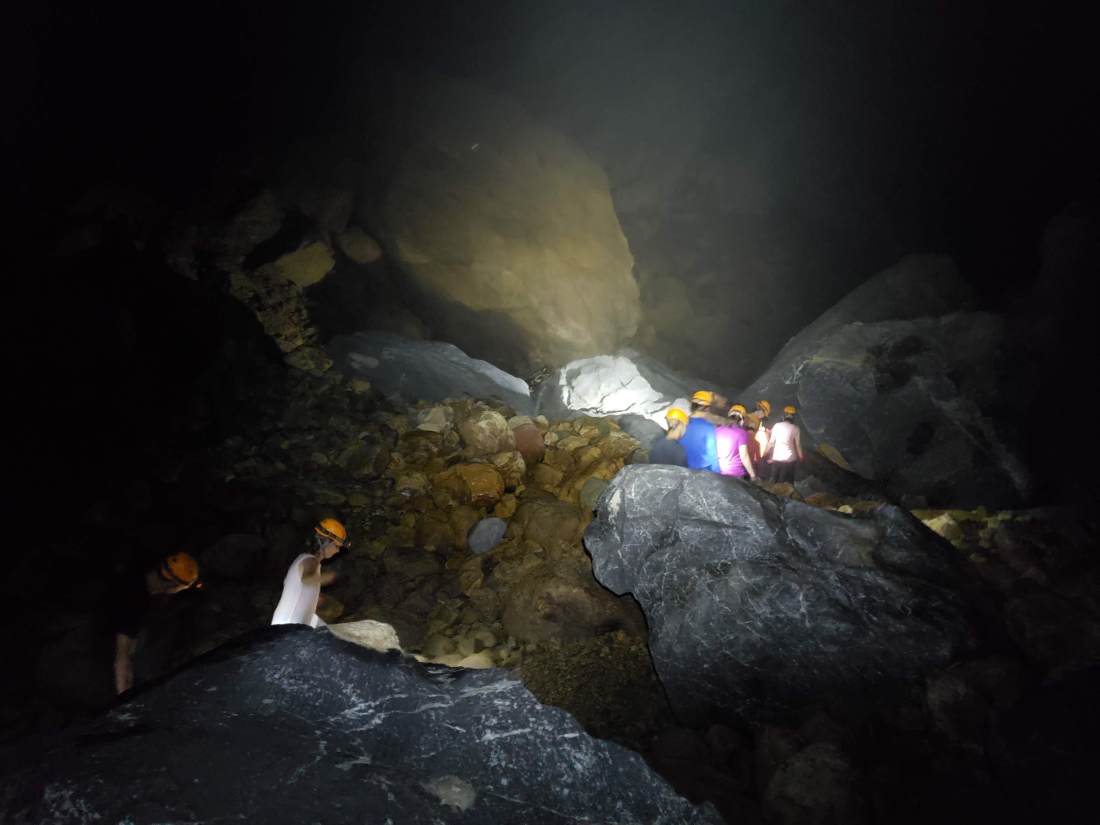
We were given hard hats with head lights, and in we went.  The first part required ducking, but after that it opened up to a spectacular area with a beam of sunshine streaming in, breathtaking!


IMG_1933IMG_20190201_120802

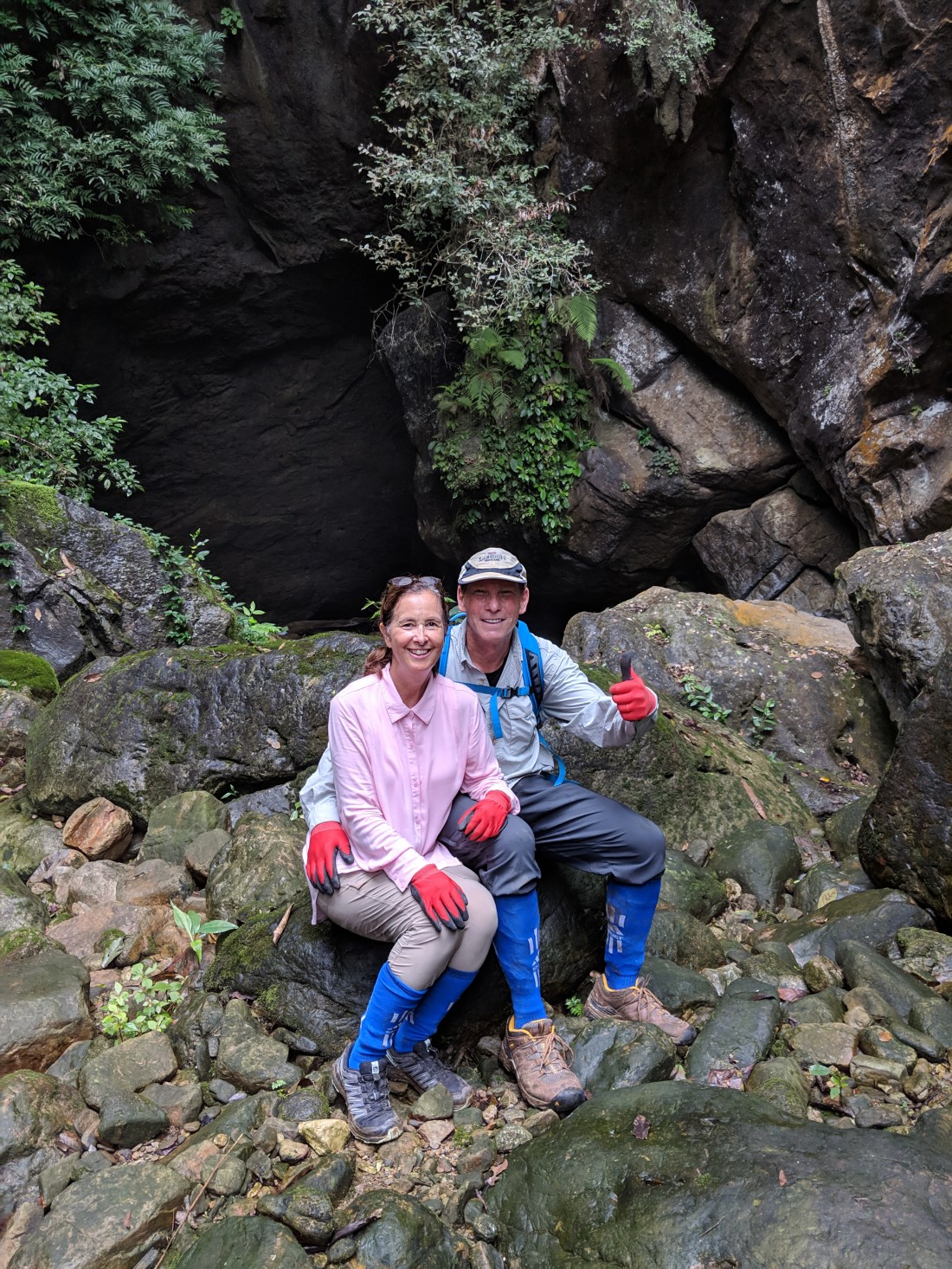
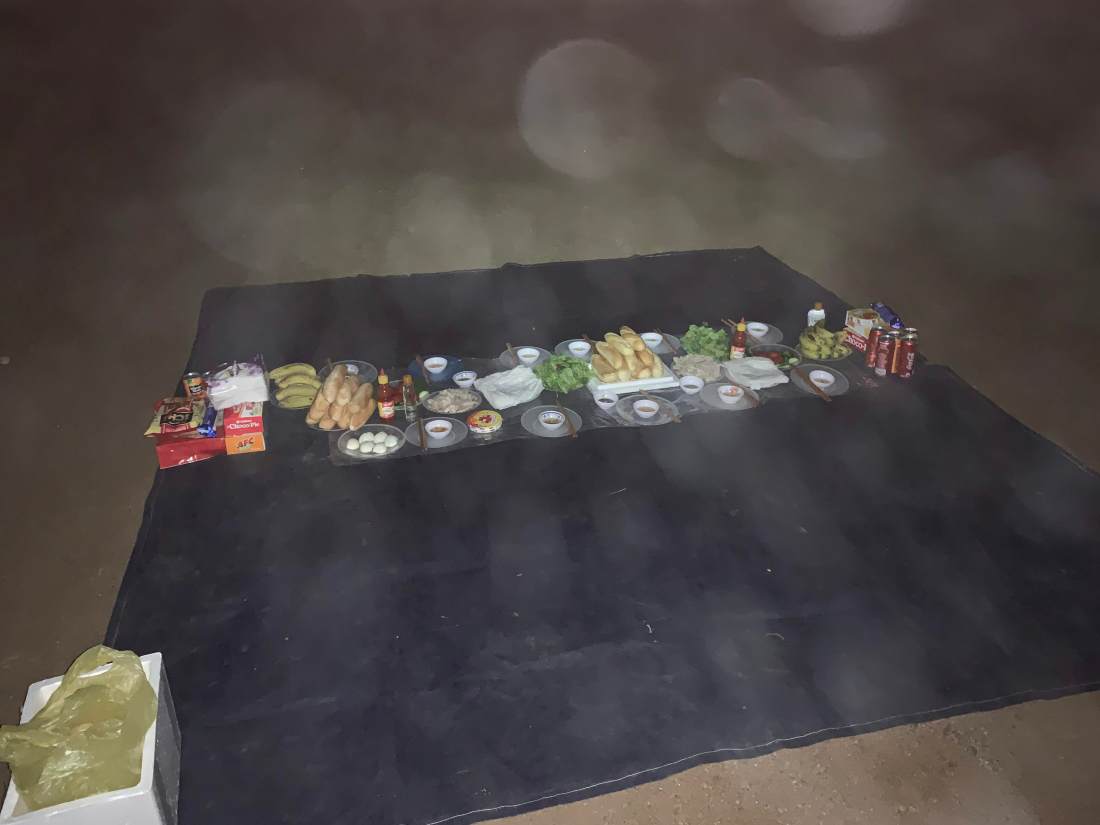
After we all posed for pictures, we were treated to lunch that the porters had carried in and set up for us.

IMG_1935

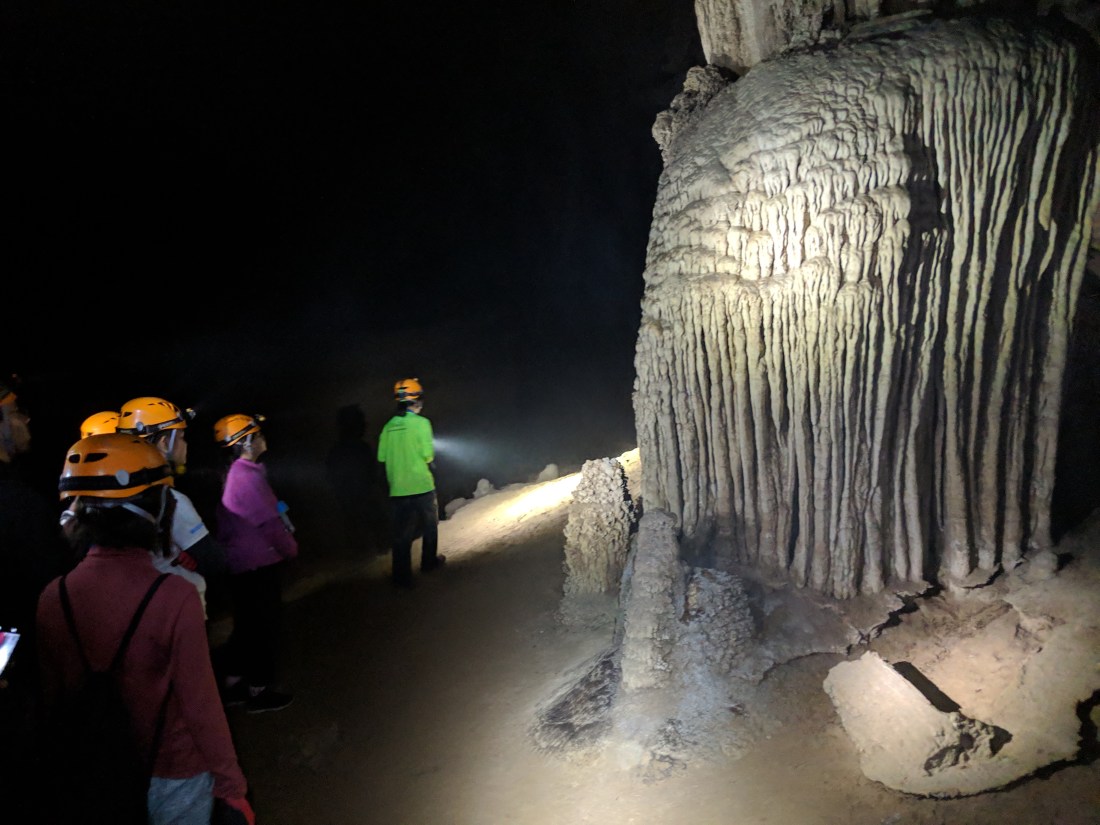
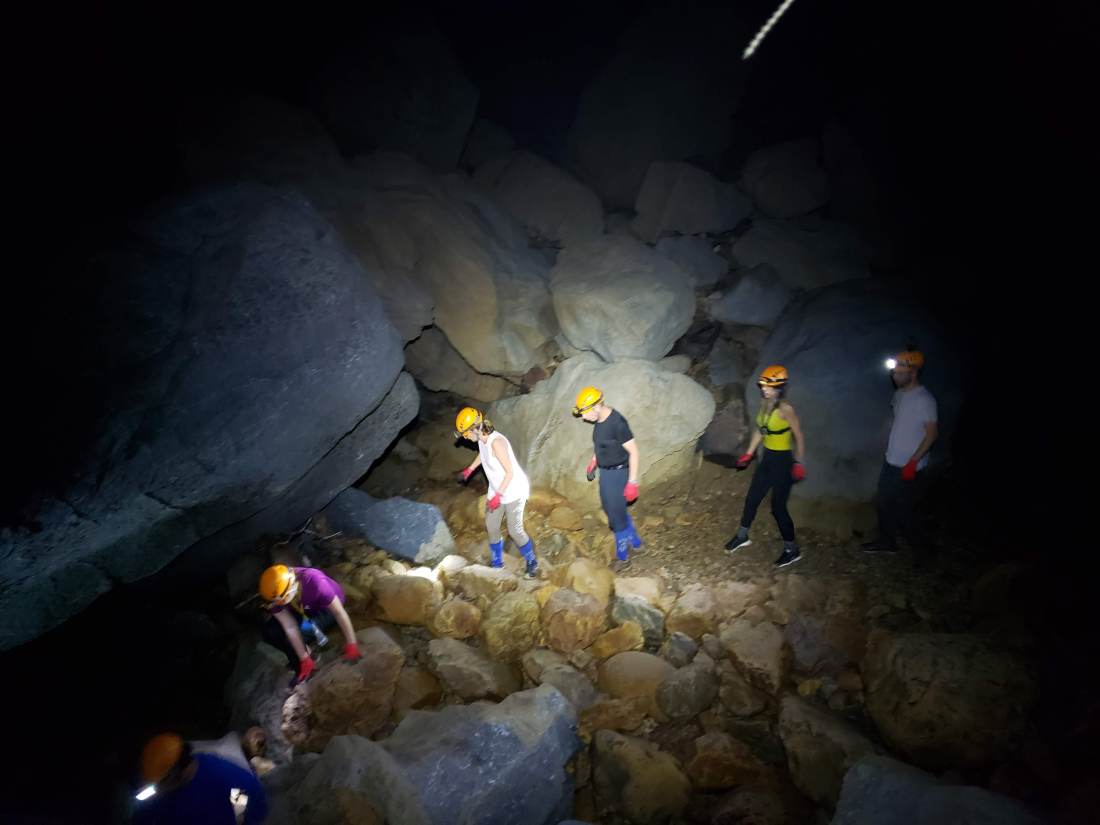
After lunch we continued the trek into the cave for a total of about 1 km, stopping for photo ops along the way.  The porter was great at lighting assist.

20190201_13013020190201_13022420190201_131527IMG_20190201_13121320190201_133616IMG_20190201_132951

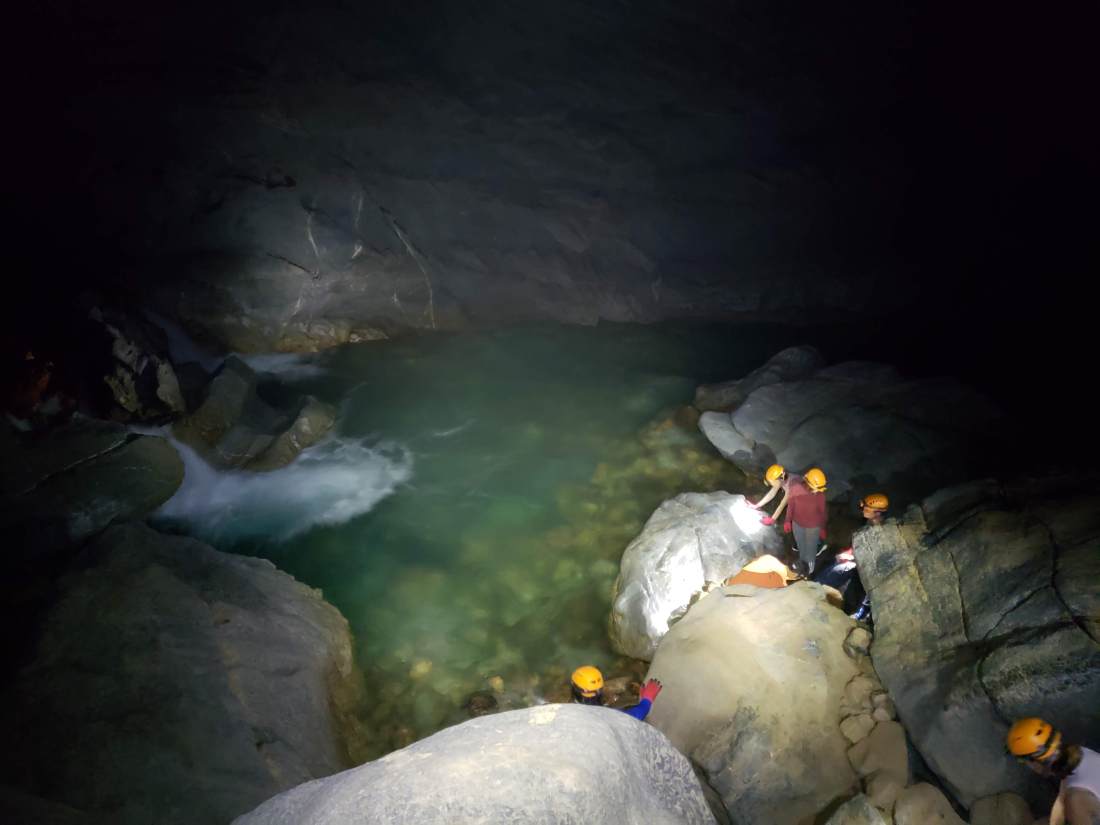
Then it was time to cross the river, swimming, fully clothed with sneakers still on, OMG!

20190201_133916


20190201_134410

Once on the other side we continued the trek.

20190201_14180020190201_14325020190201_14454820190201_144949

And the final destination was reached: a waterfall inside the cave.

20190201_145147

IMG_20190201_145501

IMG_20190201_145914

Then we did the whole thing in reverse, but now soaking wet.

IMG_20190201_160417IMG_20190201_162645

The last bit was as steep coming out as it was going in.

20190201_162820

We made it!

20190201_164259

Luckily the next day we had a 4 hour car trip to rest our weary muscles.


Ho Chi Minh City & Mekong Delta Jan 24-30

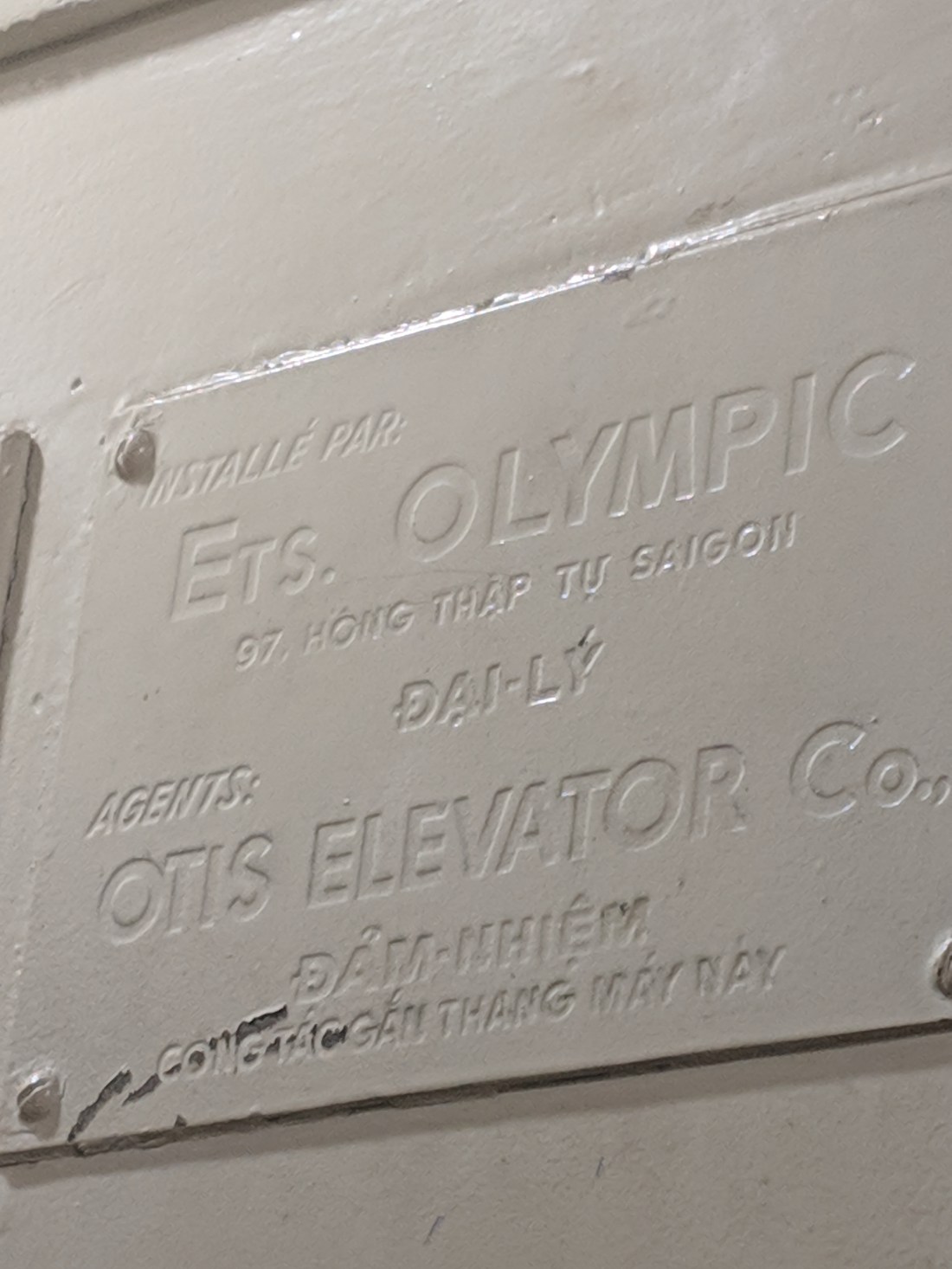
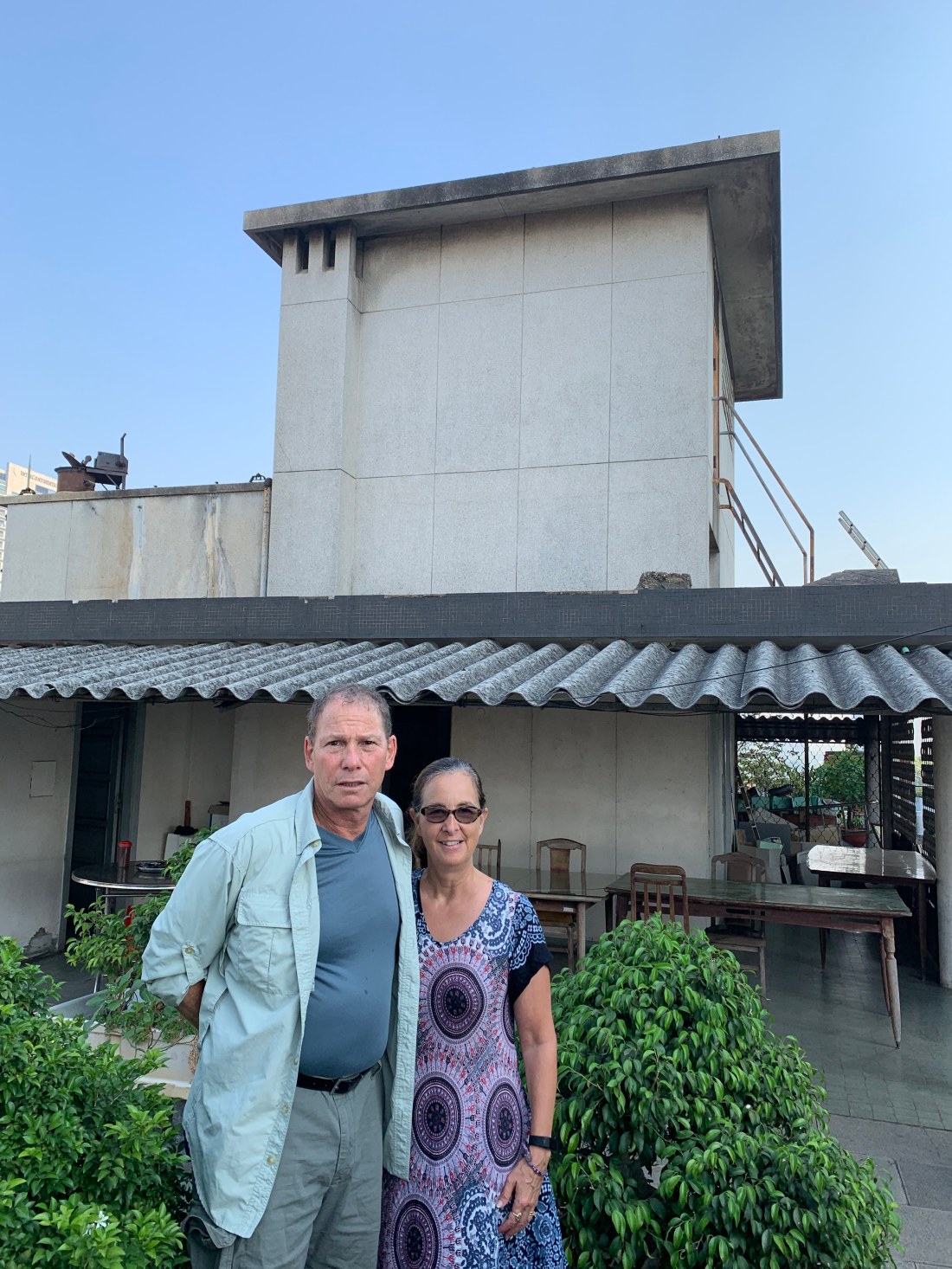
Our starting point in Vietnam was Ho Chi Minh City, a place packed with motorcycles everywhere.  Crossing the street as a pedestrian is an adventure.  The very first stop on our tour was the site of the landing of the very last helicopter to leave Saigon on April 29, 1975.  It is not a usual tourist spot, but our guide is friends with the building security.  There are no signs or plaques on the building; it is now just an ordinary office building.  But it was made famous by a scene captured by Dutch photojournalist Hubert van Es in one of the most iconic and dramatic photographs from the Vietnam War. The building was one the CIA had rented from the Chinese during the war.  We road up in the same elevator used by the CIA.

img_20190125_084654

img_1601

saigon-hubert-van-es  this is the scene 1975

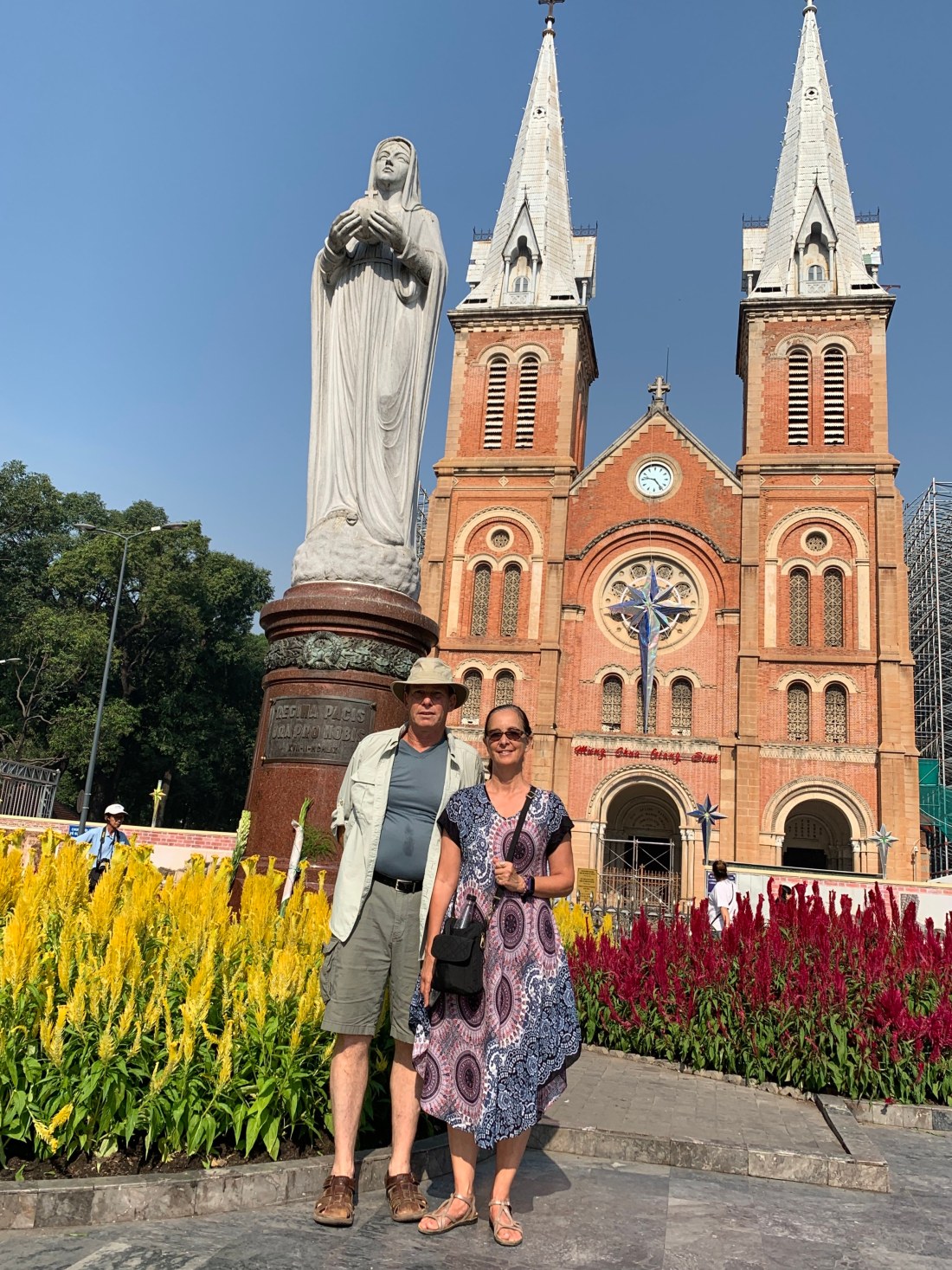
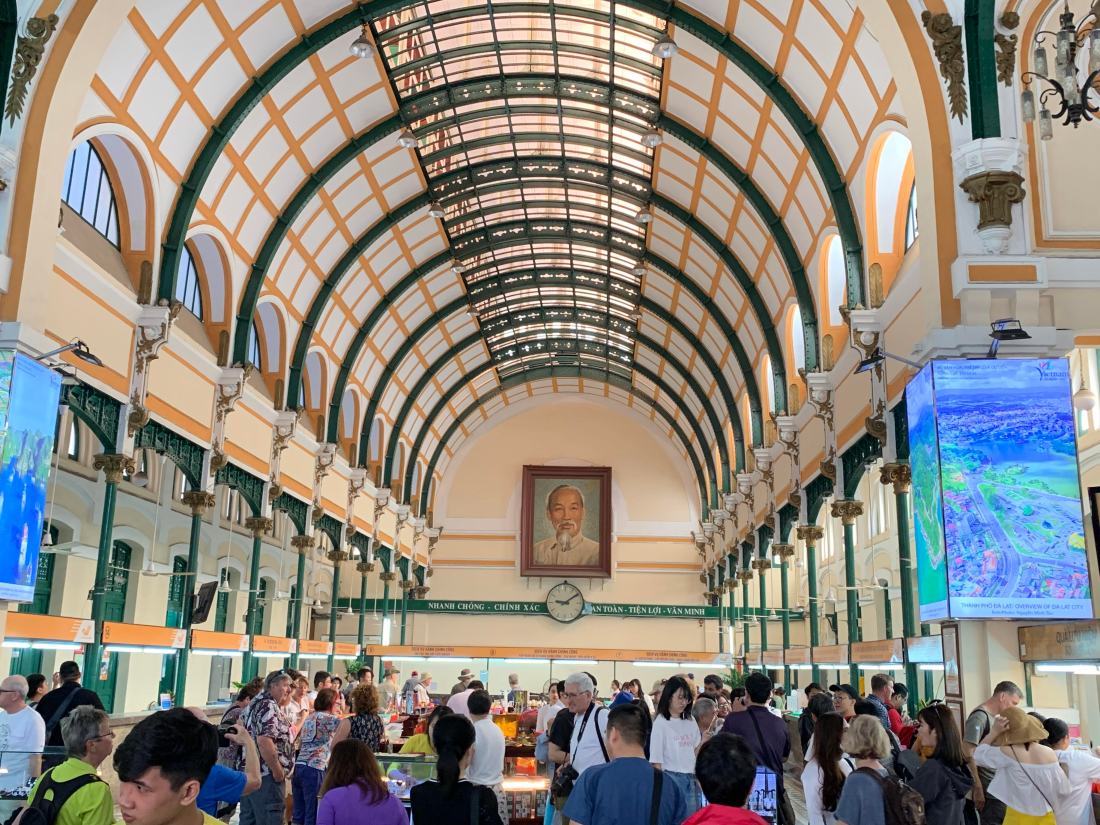
Our next stops were buildings erected by the French colonialists in the late 19th century: Notre Dame Cathedral and the post office, which is still a functioning post office today.  Notre Dame is closed for the next several years for renovations.

img_1623img_1612img_1617

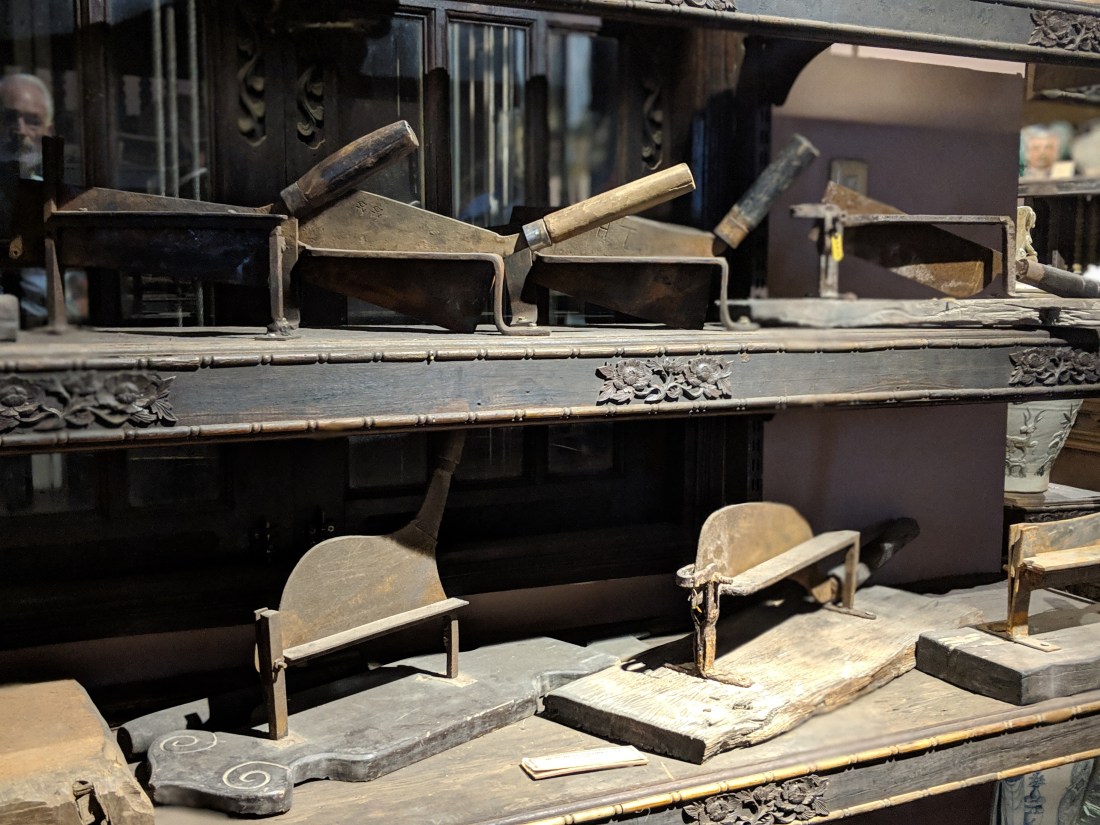
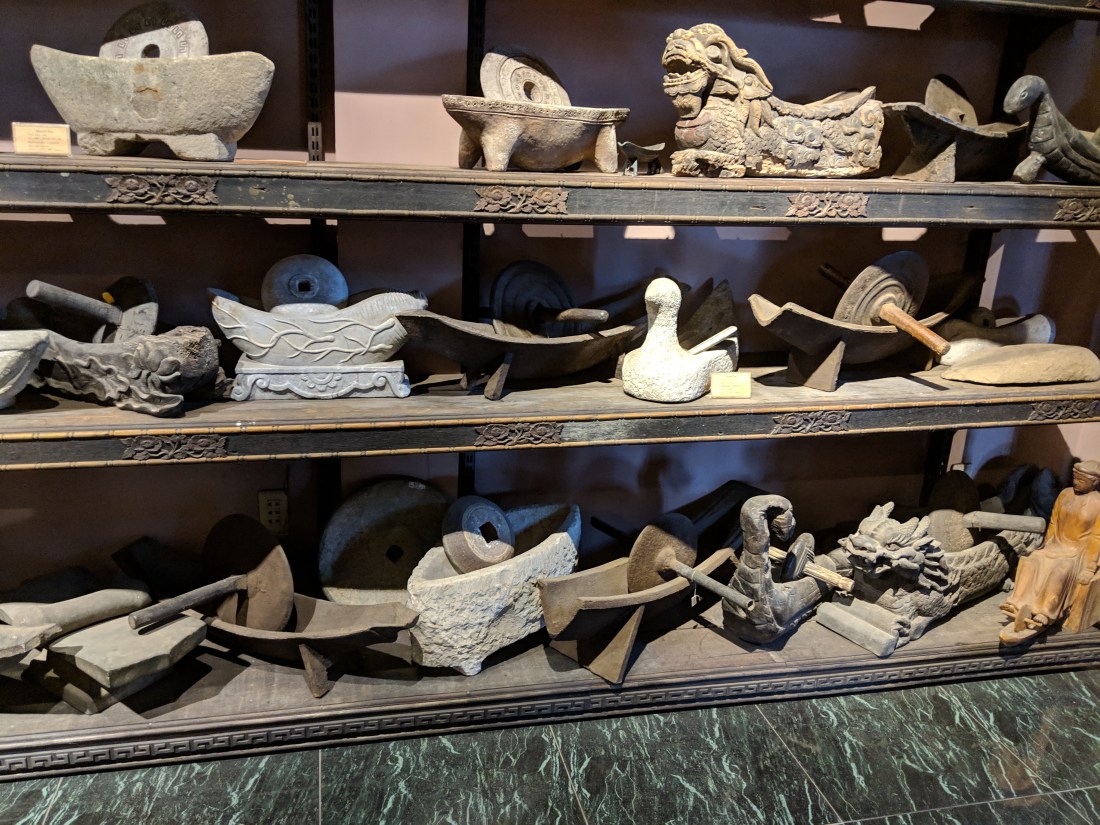
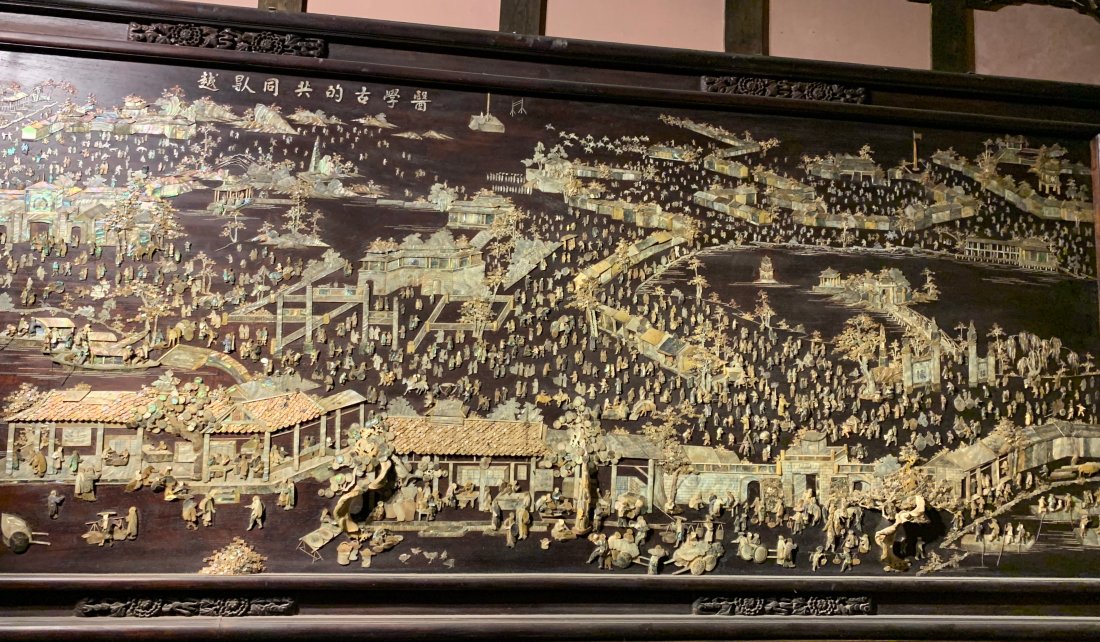
Next on our tour was the Museum of Traditional Medicine.  The building and its architecture were as interesting as the contents.  We took a tour and learned about the history of traditional medicine in Vietnam, which goes back to the 2nd century BC.  It covers acupuncture, acupressure, which predates acupuncture because bones were used before metal items that could pierce skin were utilized, and herbal therapies.  There are over 5000 plants known for use, 2000 commonly used today.

img_20190125_11033900100dportrait_00100_burst20190125112334315_cover

00100dportrait_00100_burst20190125112112399_cover
for chopping plants
img_20190125_112054
for grinding plants
00100dportrait_00100_burst20190125112559902_cover
they have dozens of containers from every century starting from the 2nd AD
img_1640
showing the history of teaching the medicines
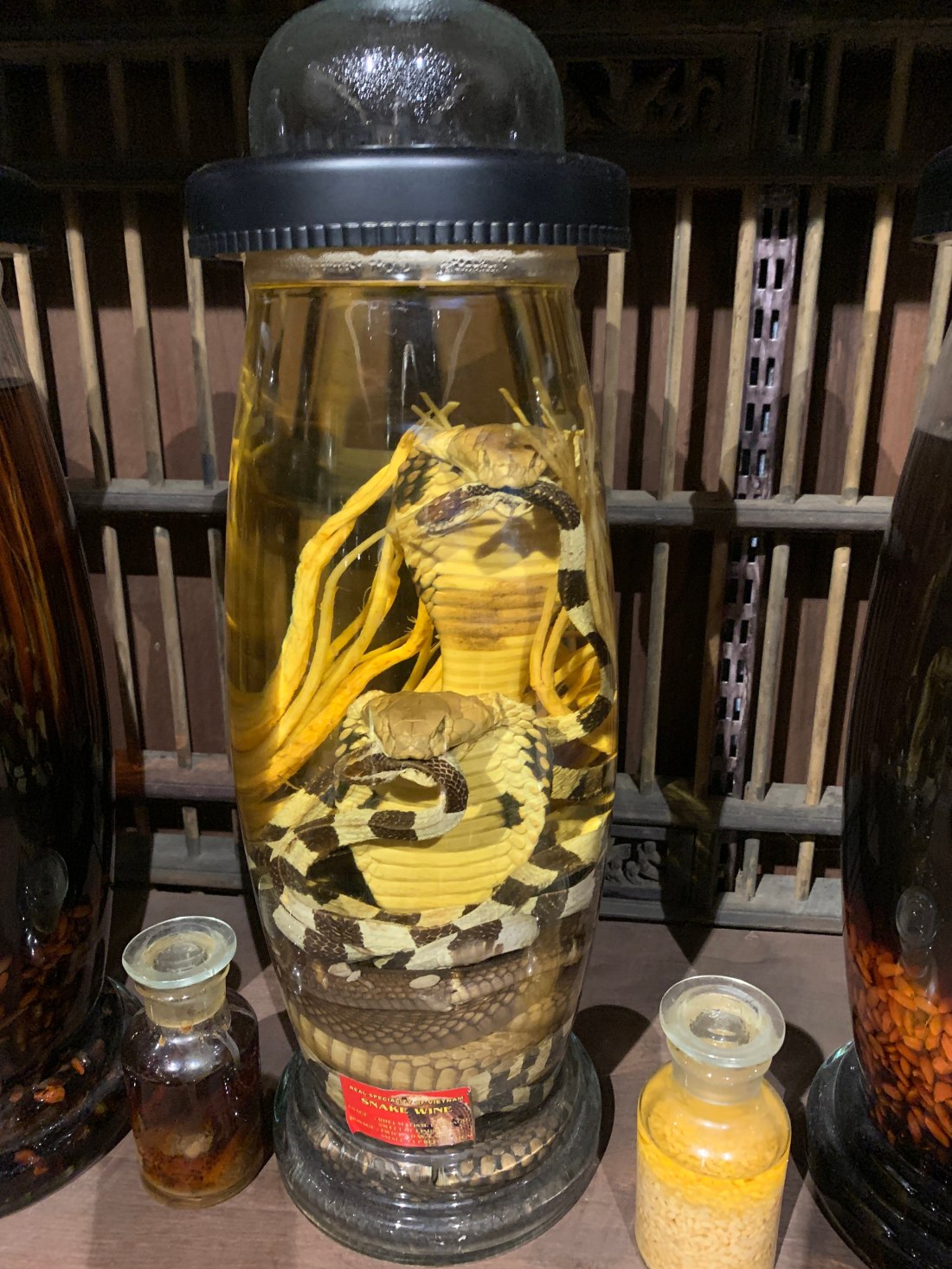
img_1637
that is a cobra in there
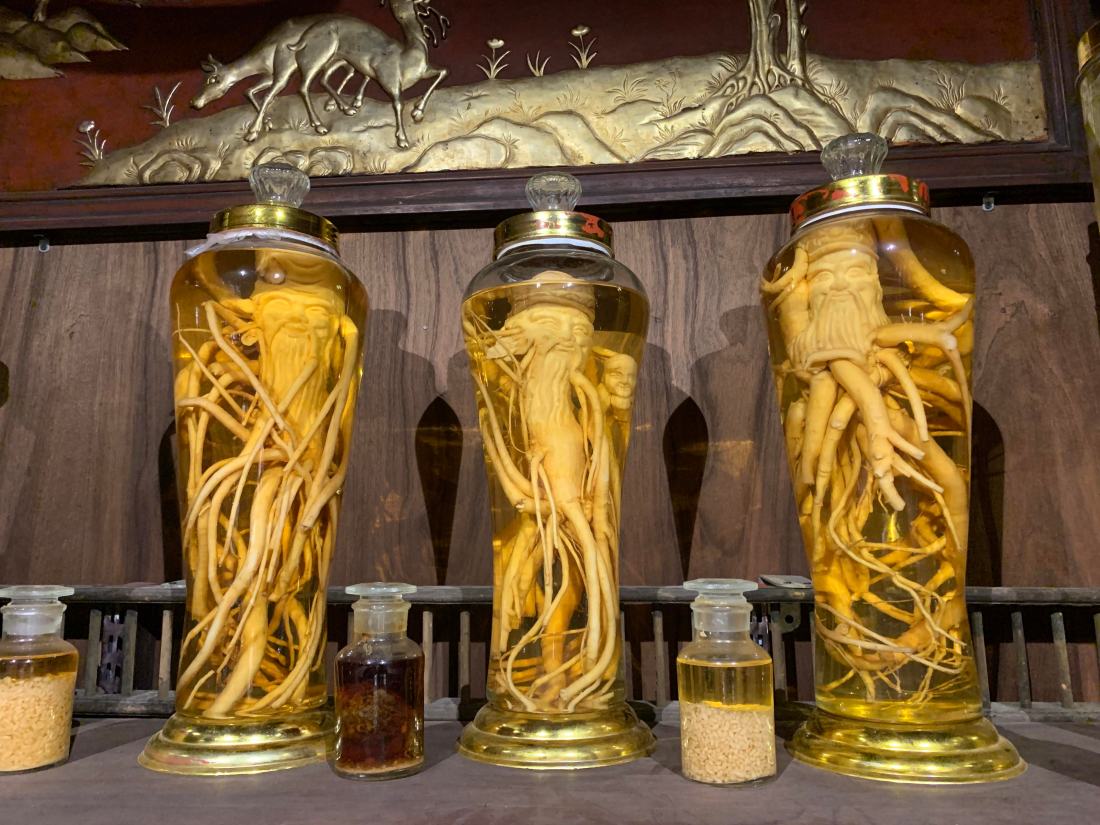
img_1636
carved ginger roots
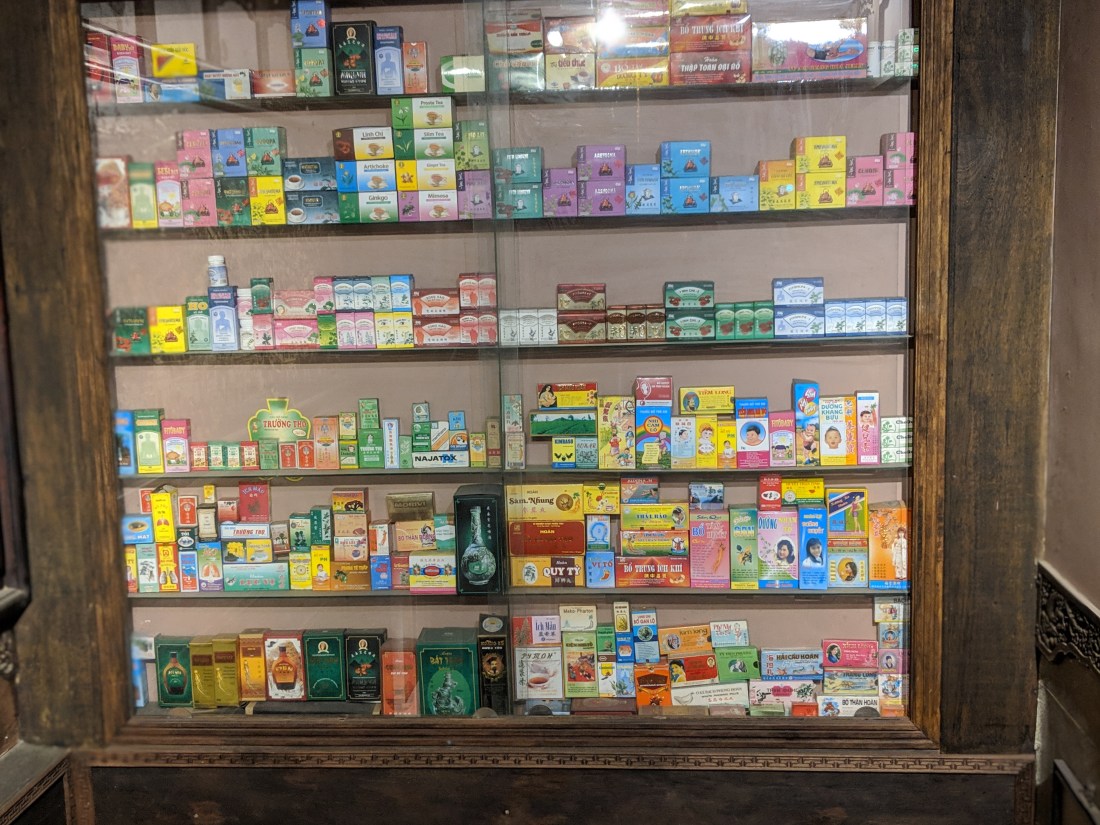
00100dportrait_00100_burst20190125114157428_cover
medicines currently in production

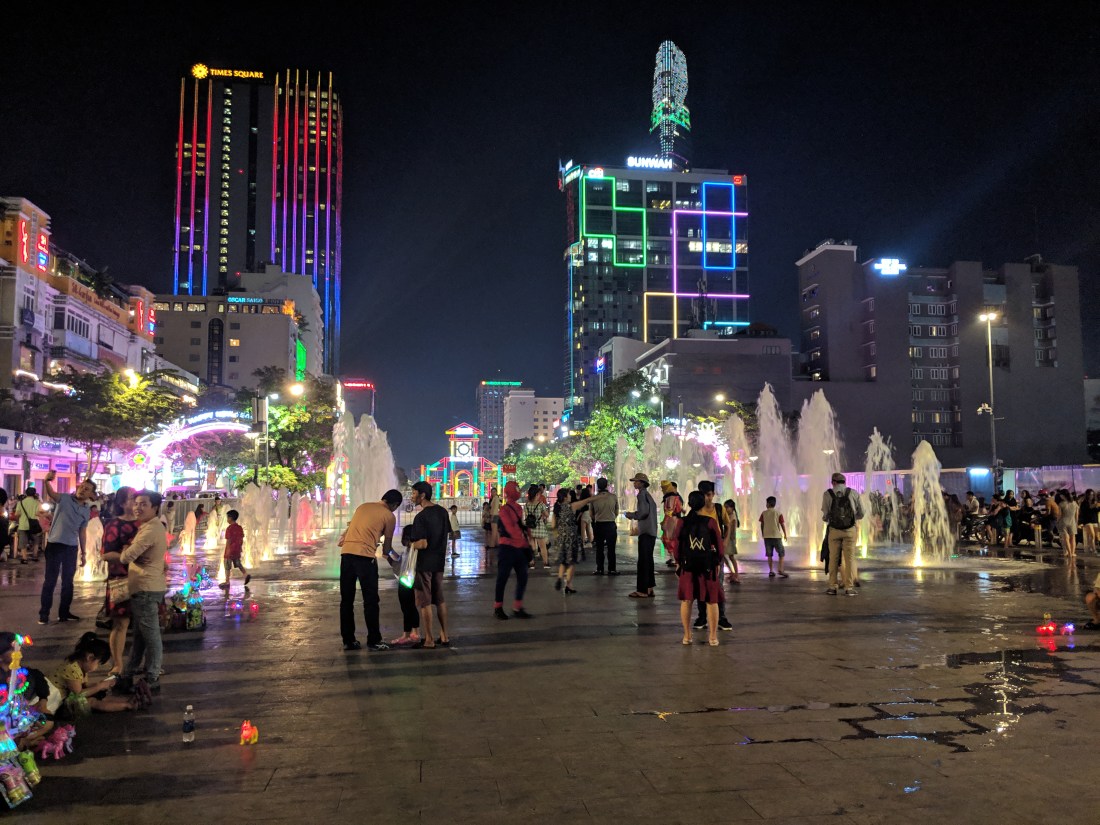
At night we explored the city on our own, dodging motor bikes.

img_20190125_213838

img_20190125_212712
notice the neon on the tall building in the far left says Times Square
img_20190125_213746
feeling a NYC vibe
img_20190125_212813
City Hall with statue of Ho Chi Minh in front

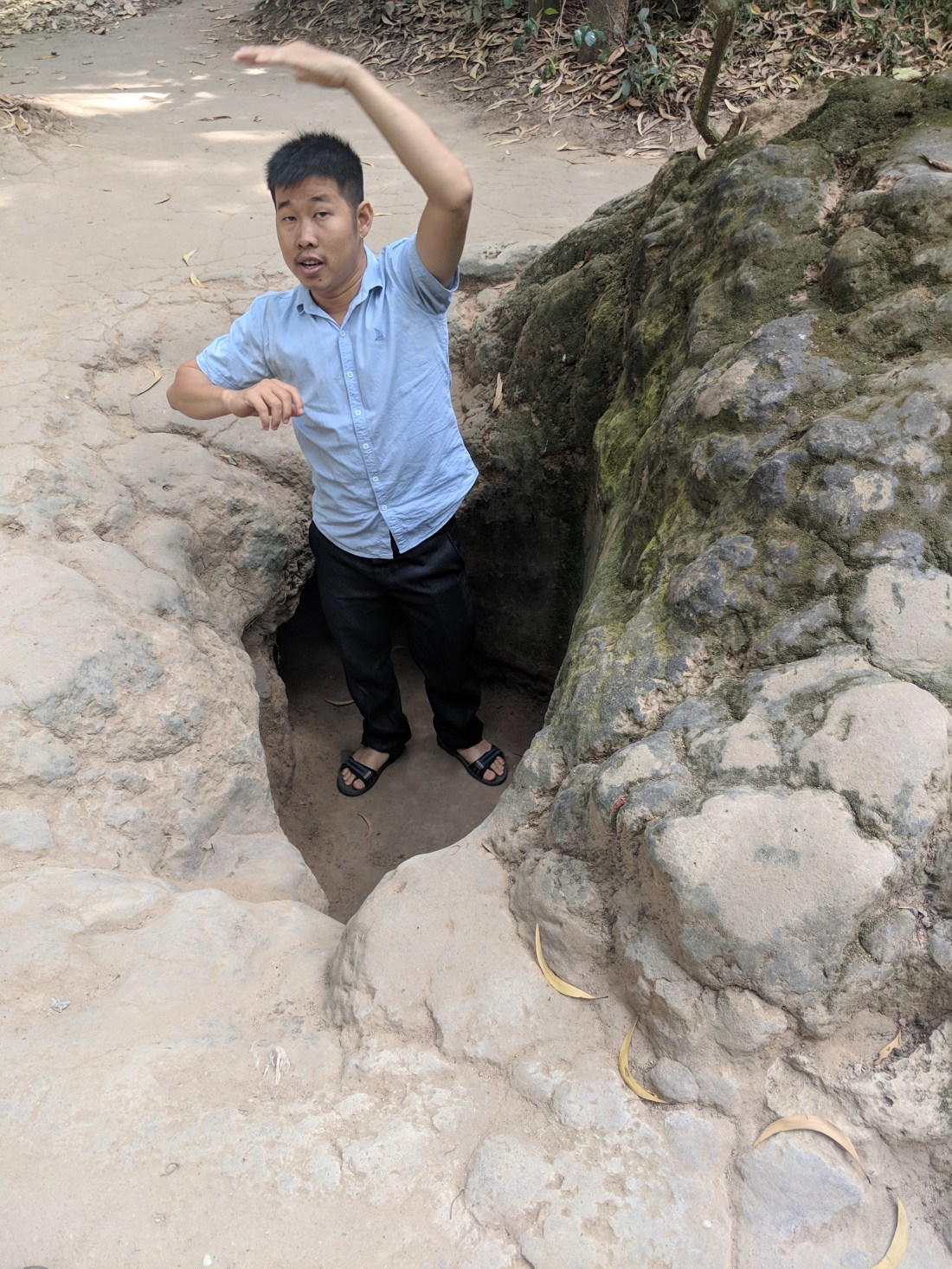
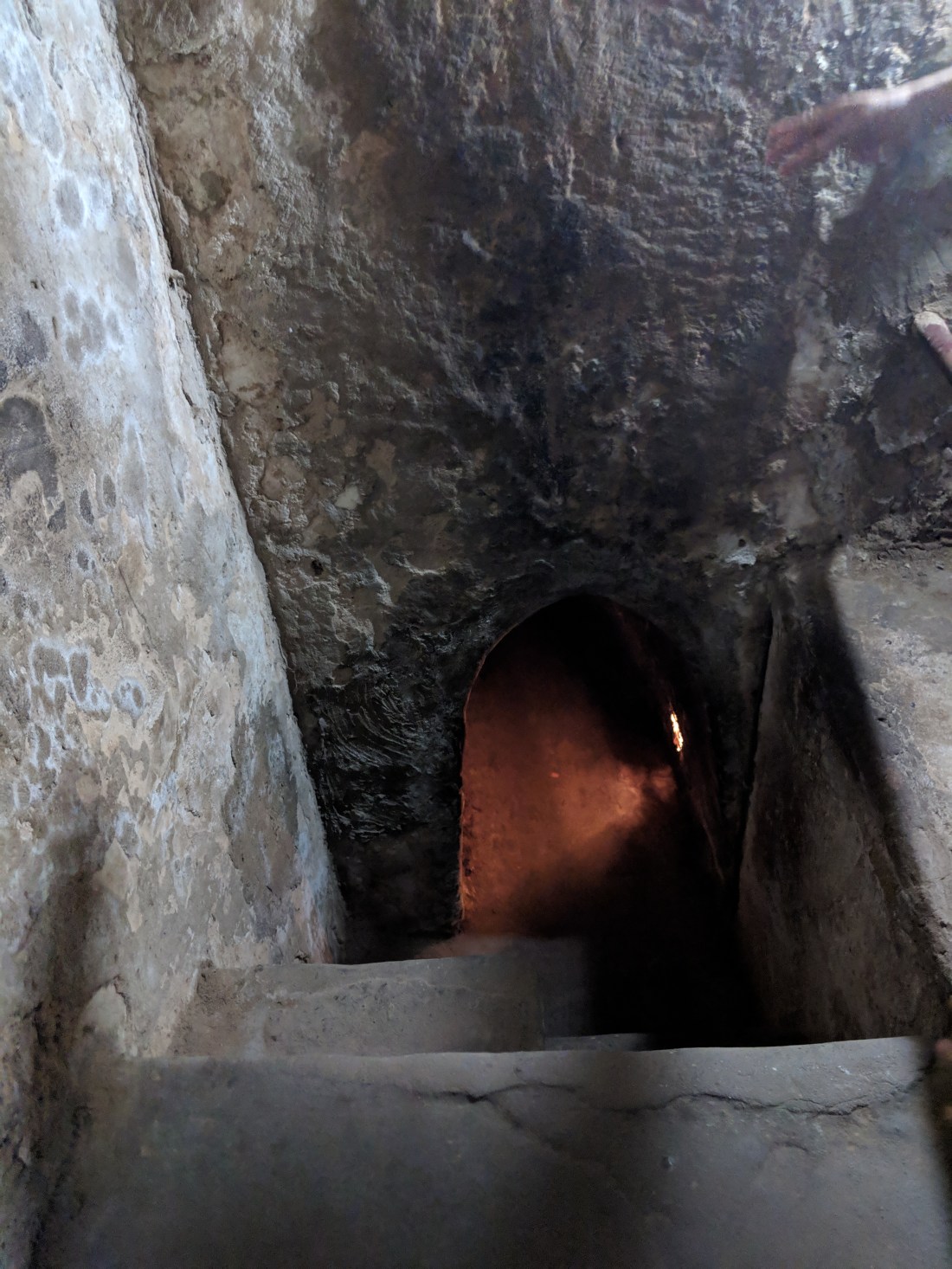
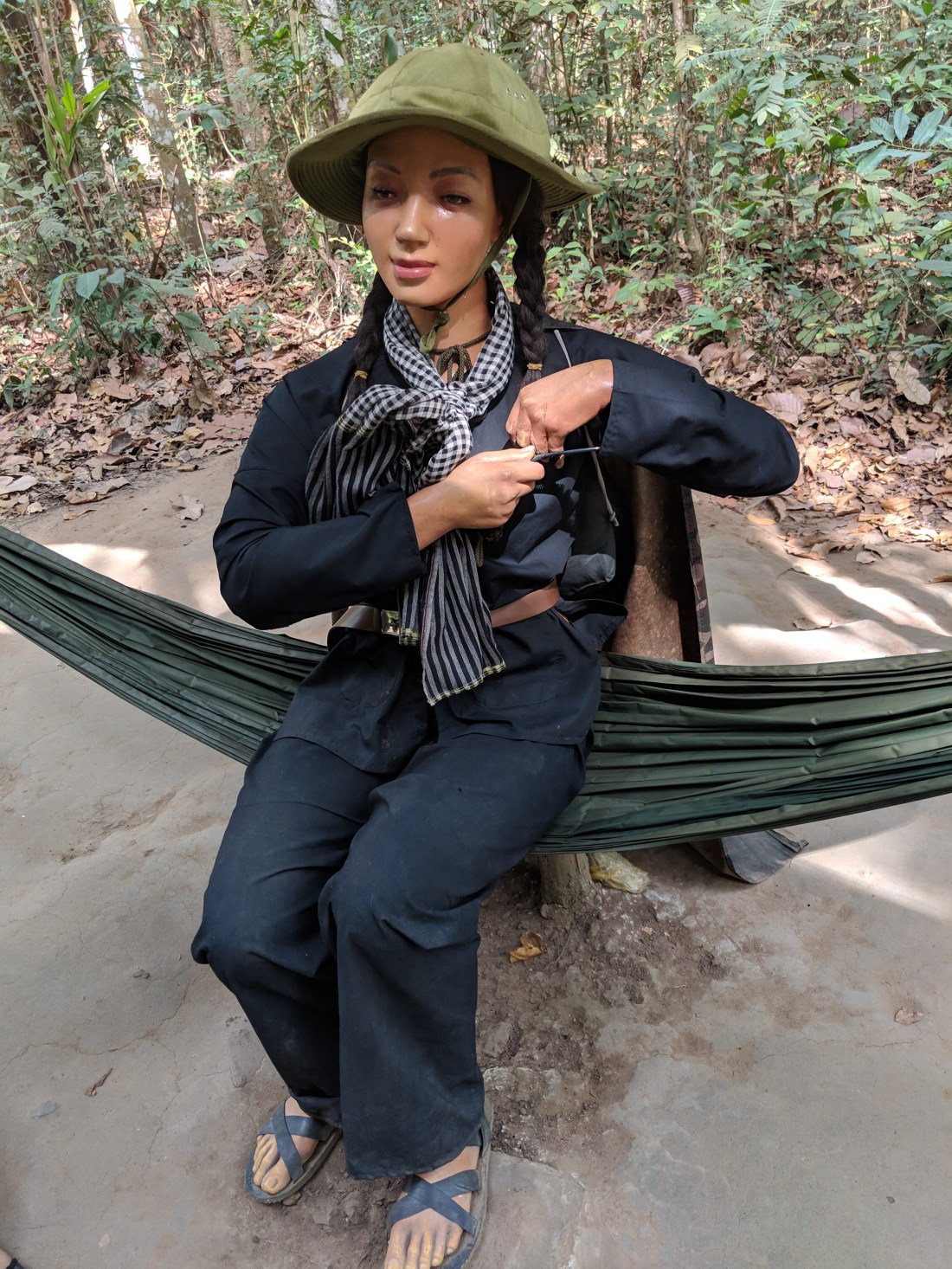
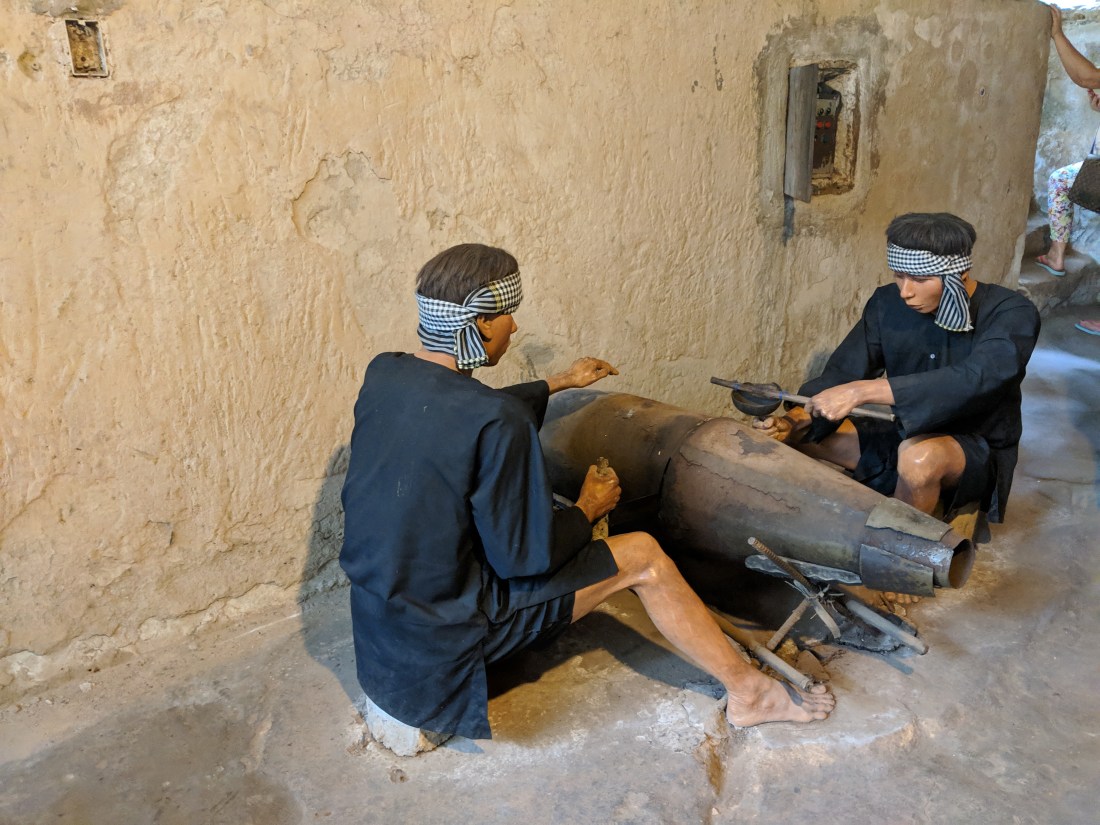
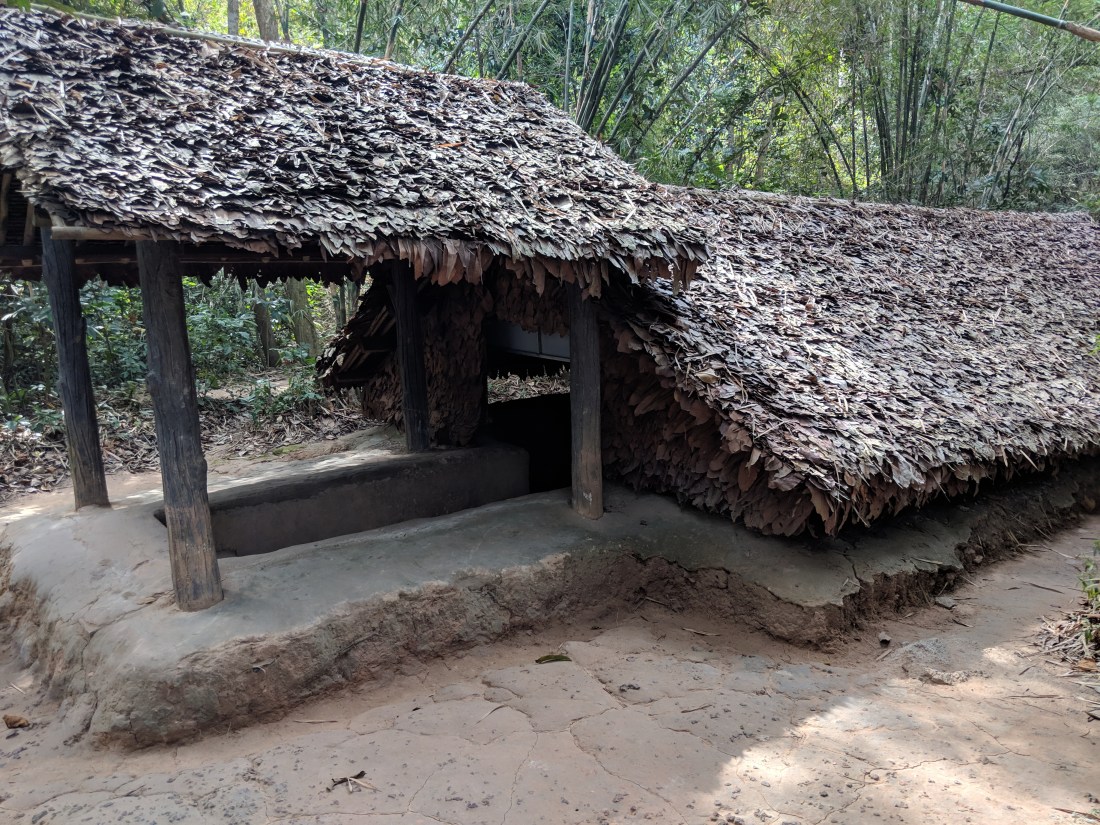
The next morning we visited the Cu Chi tunnels, a vast net work of connected underground tunnels used by the Viet Cong during the war in their resistance against the Americans.  There was basically an entire city underground including places for sleep, cooking, eating, storage and movement of combat supplies, and hospitals.

img_20190126_095458img_20190126_102903img_20190126_100317img_20190126_101424img_20190126_103343img_20190126_103512img_20190126_103533

Then we went back into the city for a tour of Chinatown, which was busy prepping for the New Year holiday Tet.

img_20190126_125014img_20190126_125049

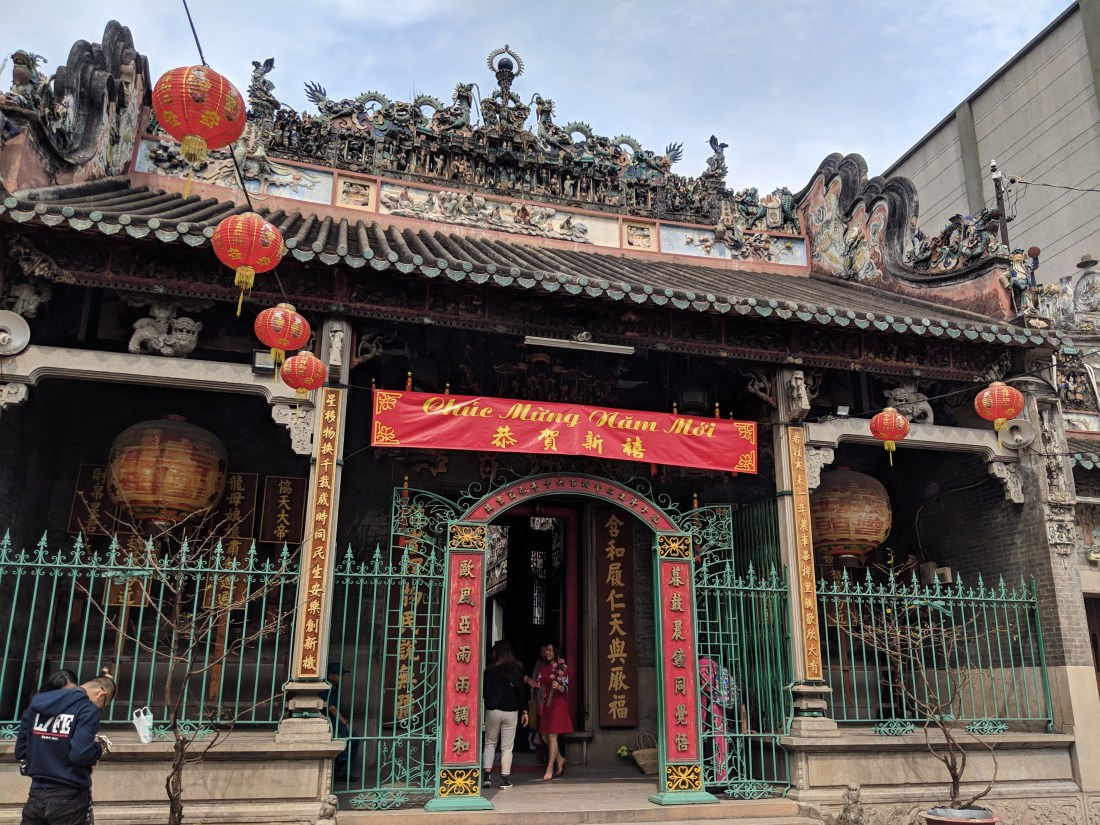
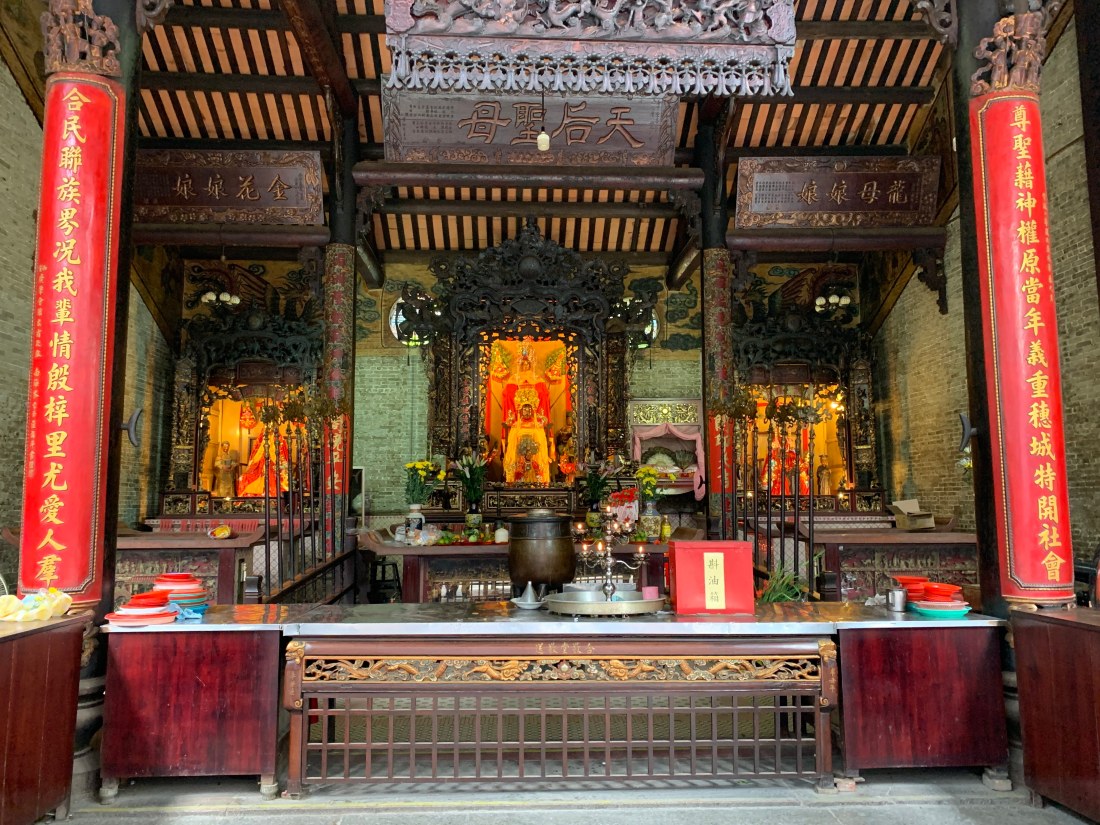
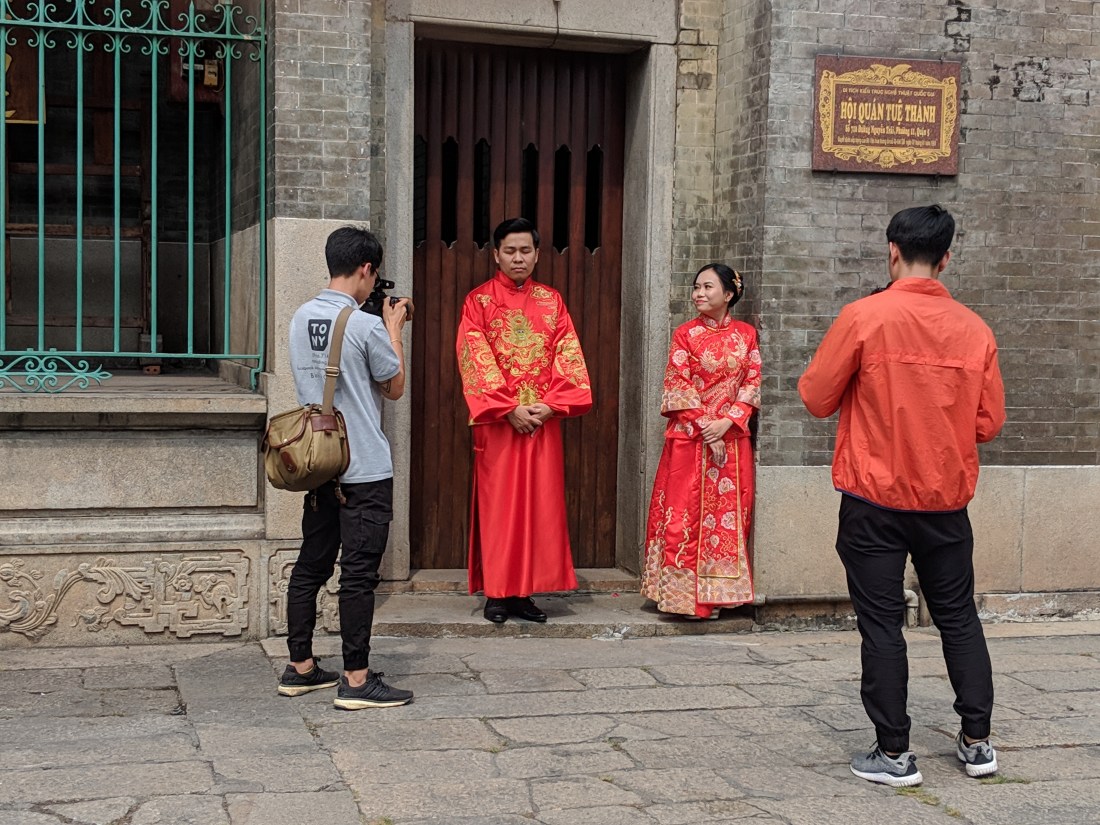
And we visited Ba Thien Hau temple in Cholon: Chinatown built in 1760 to honor the Chinese sea goddess Mazu, who protects ships.  The exterior statues are of porcelain.  We also saw a wedding couple having their photos taken.

img_20190126_125913

img_1675

img_20190126_130008
a couple posing for their wedding photos

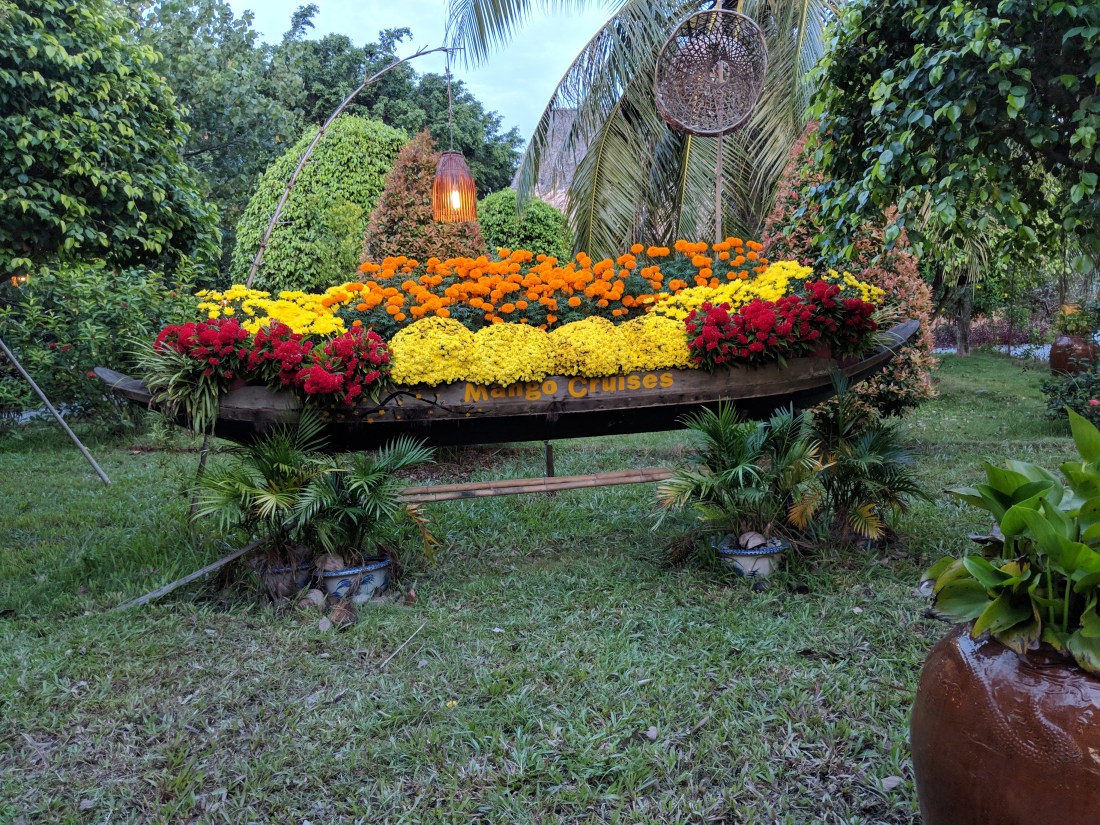
In the afternoon we drove down to Ben Tre in the Mekong Delta, the coconut capital of Vietnam.  We stayed at a lovely resort Mango Home right on the river.

img_20190126_175152

img_20190126_175207
the sunset lounge where we enjoyed daily happy hour
img_20190129_120852
our private cabana: Jasmine

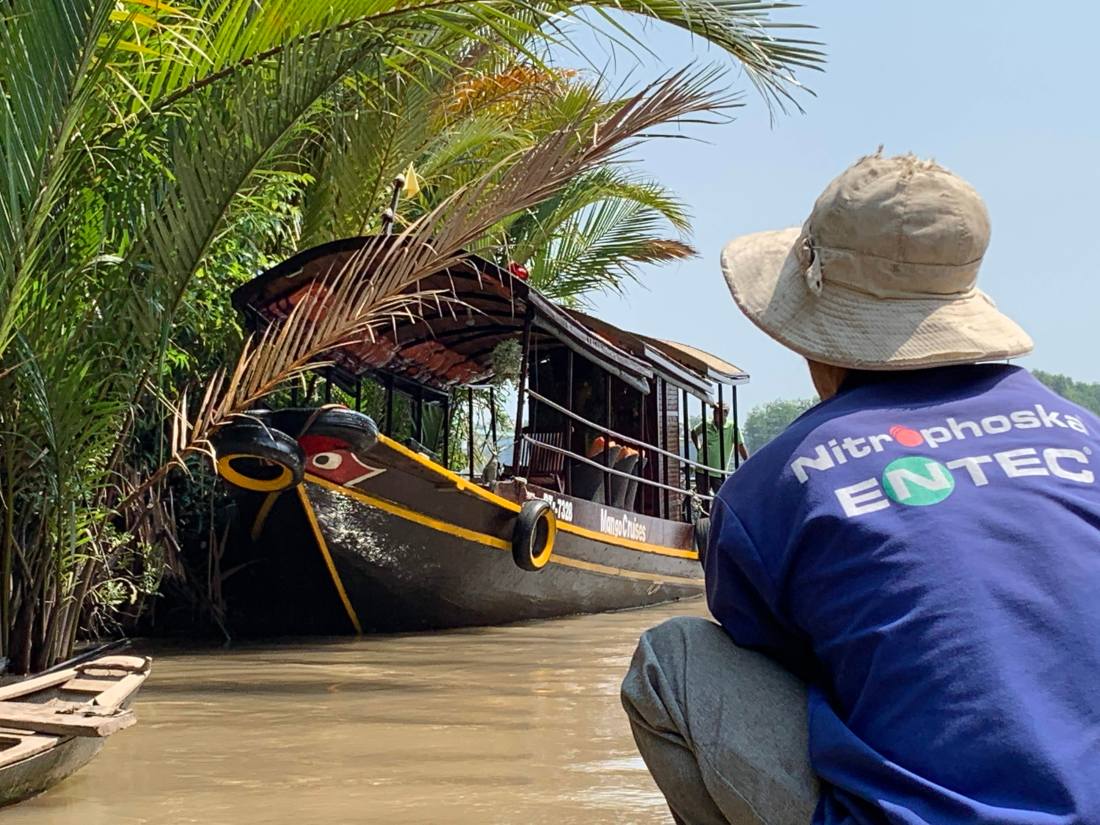
Our first morning started with a short cruise up the river.

img_20190129_122907
the “eyes” on the front of the boat are to scare away crocodiles, now extinct in these parts due to over hunting

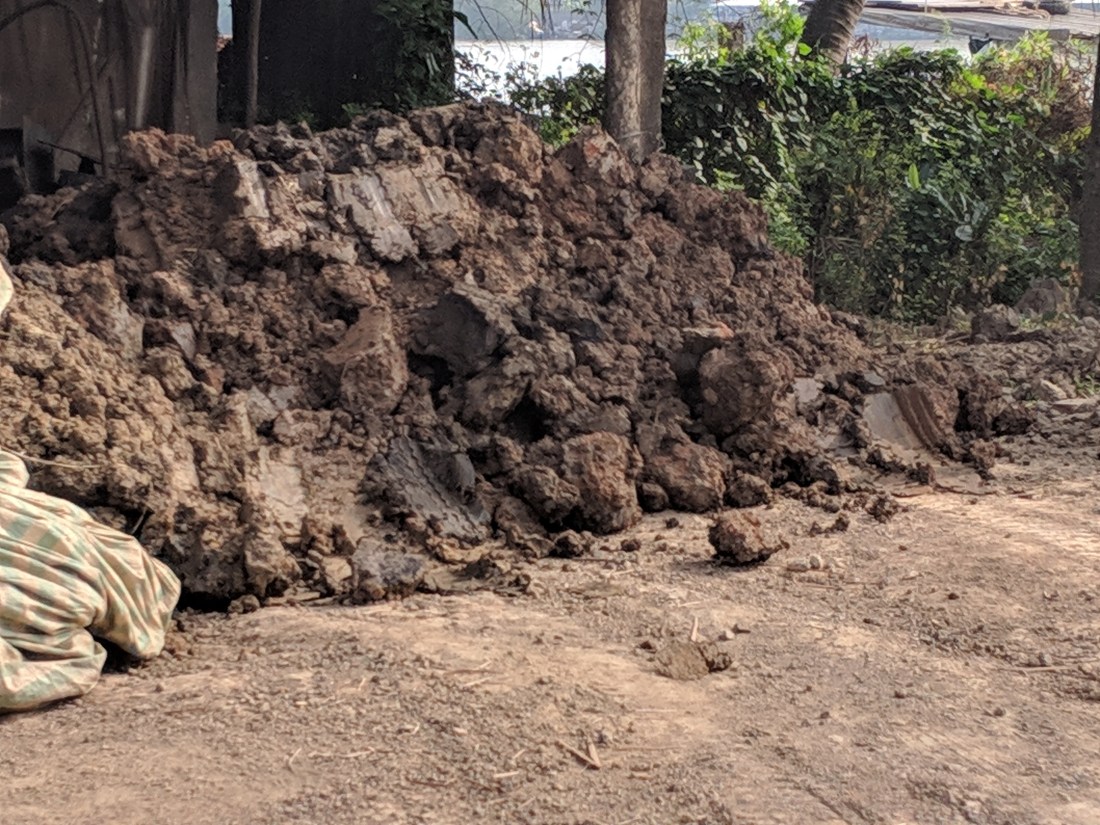
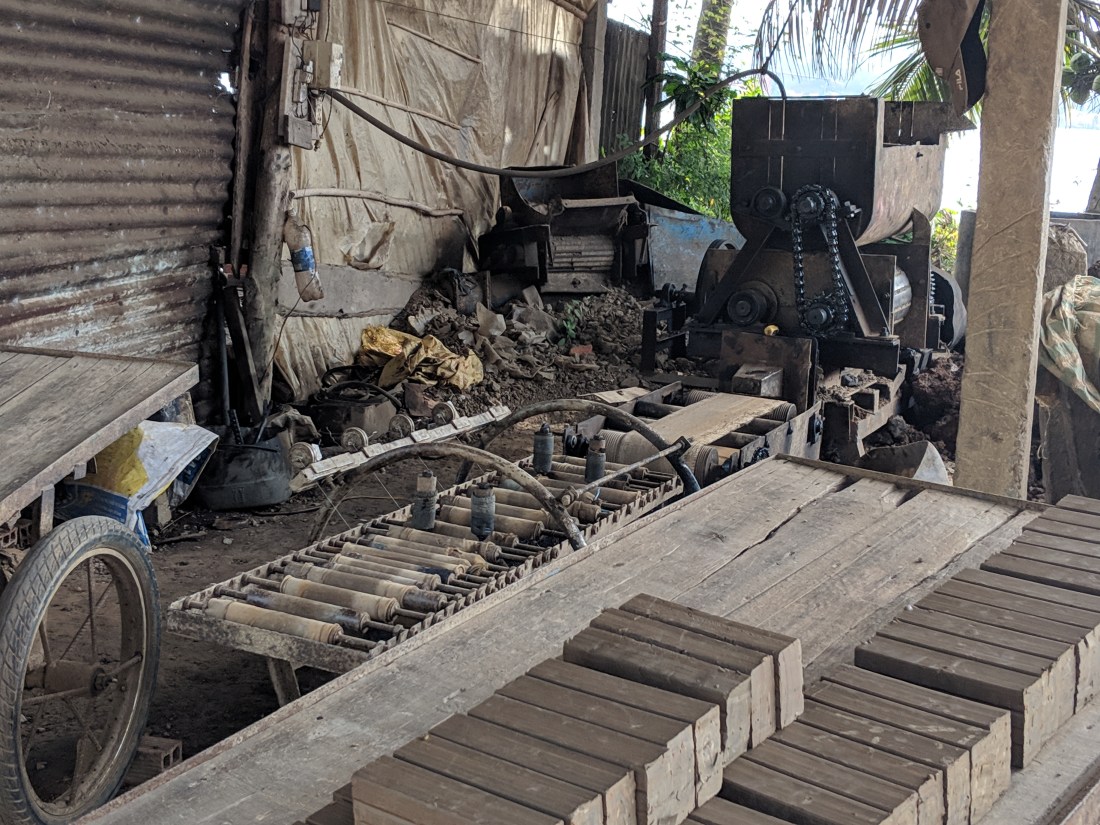
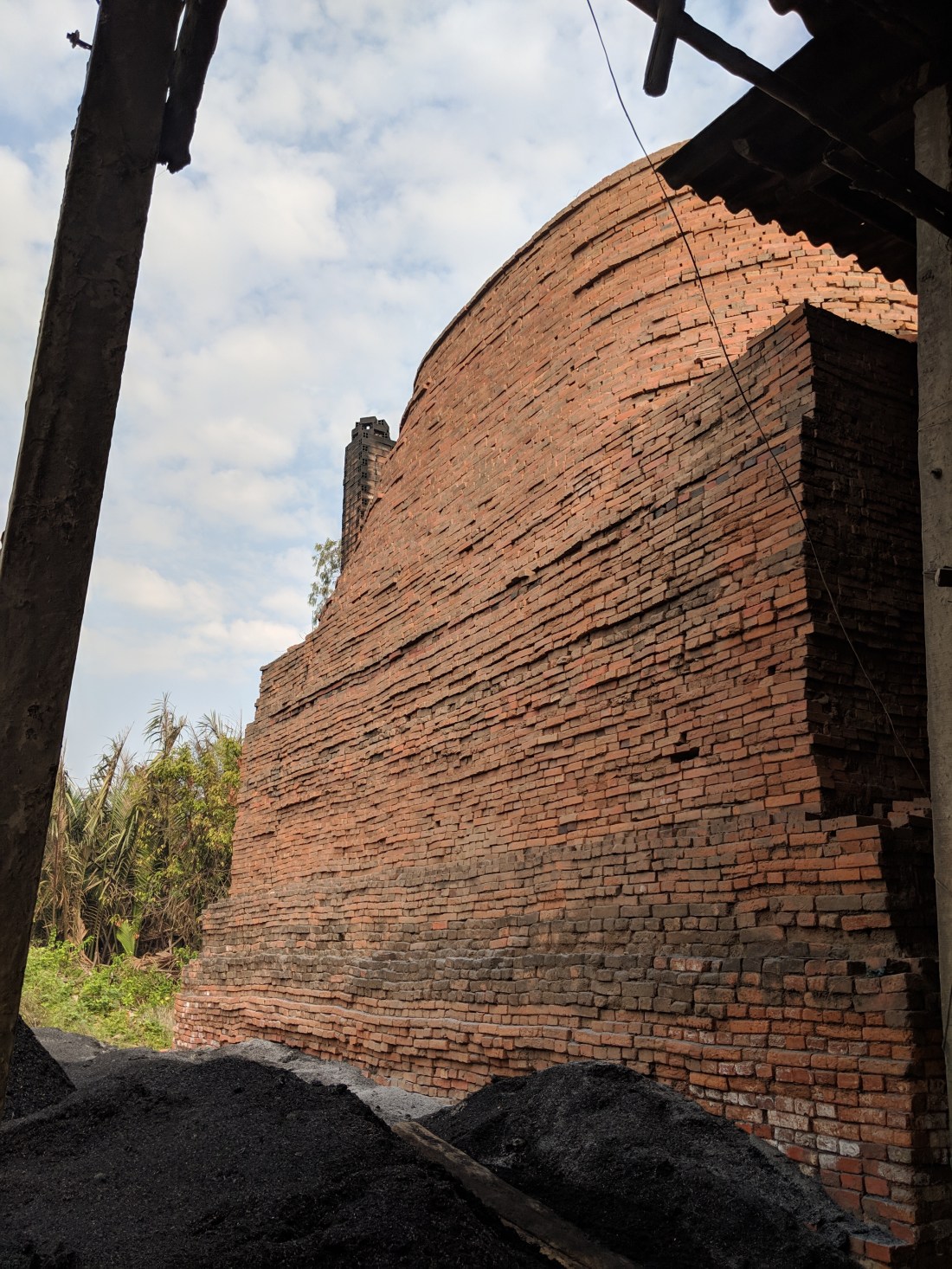
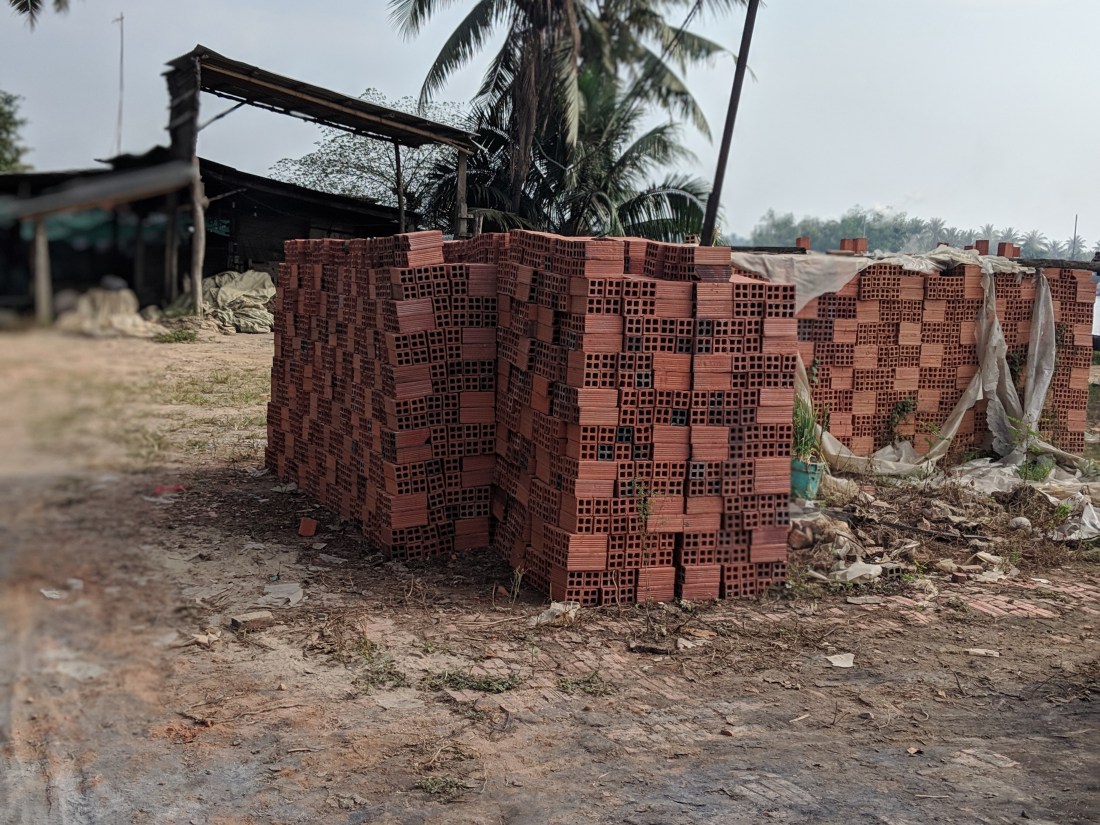
First stop was a brick making “factory.”  The mud is brought in on barges from rice paddies, then put in the assembly belt with a mold and made into either solid bricks for foundation or with holes for walls.

00000img_00000_burst20190127090718640_coverimg_20190127_090741img_20190127_090627

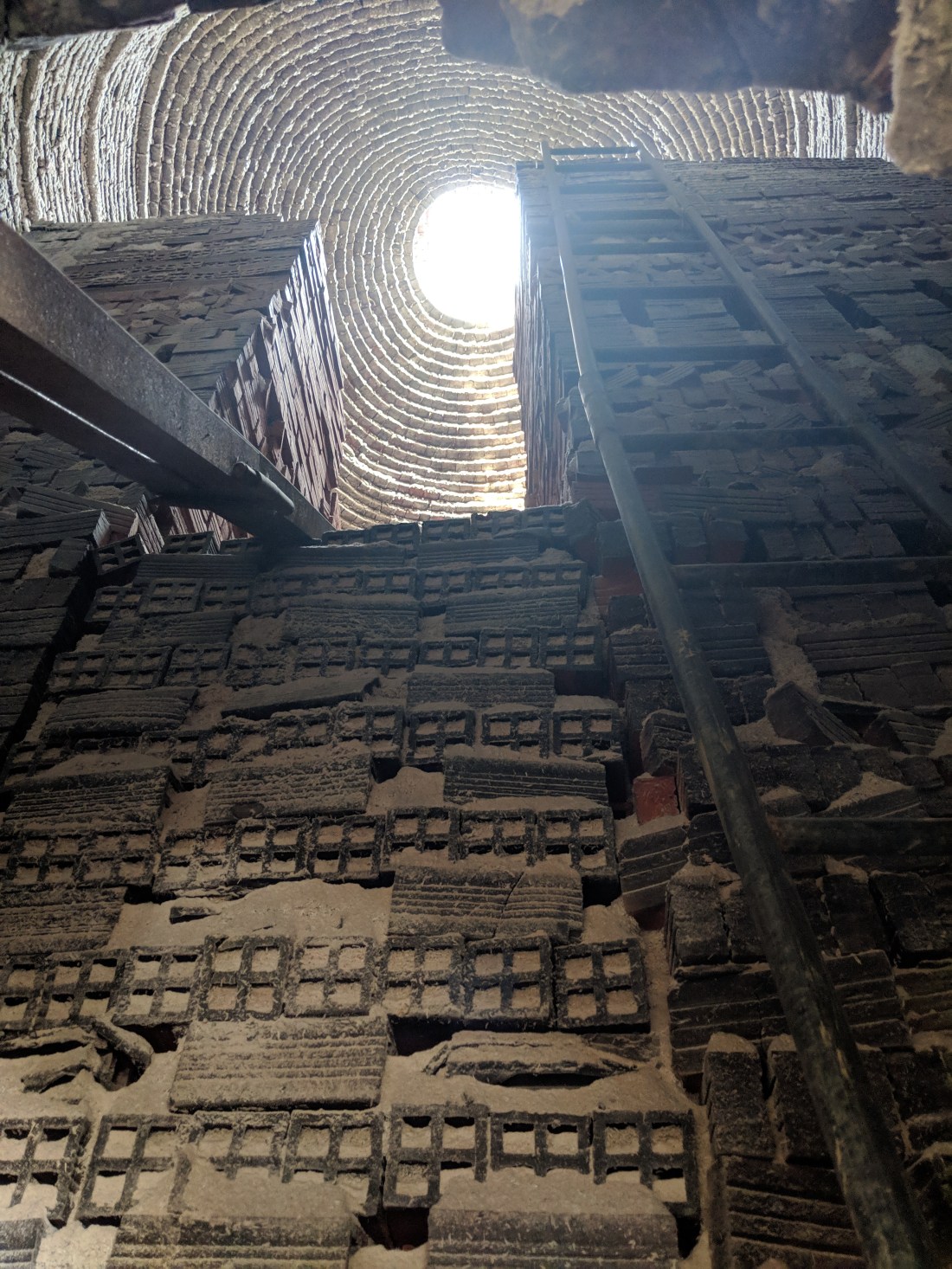
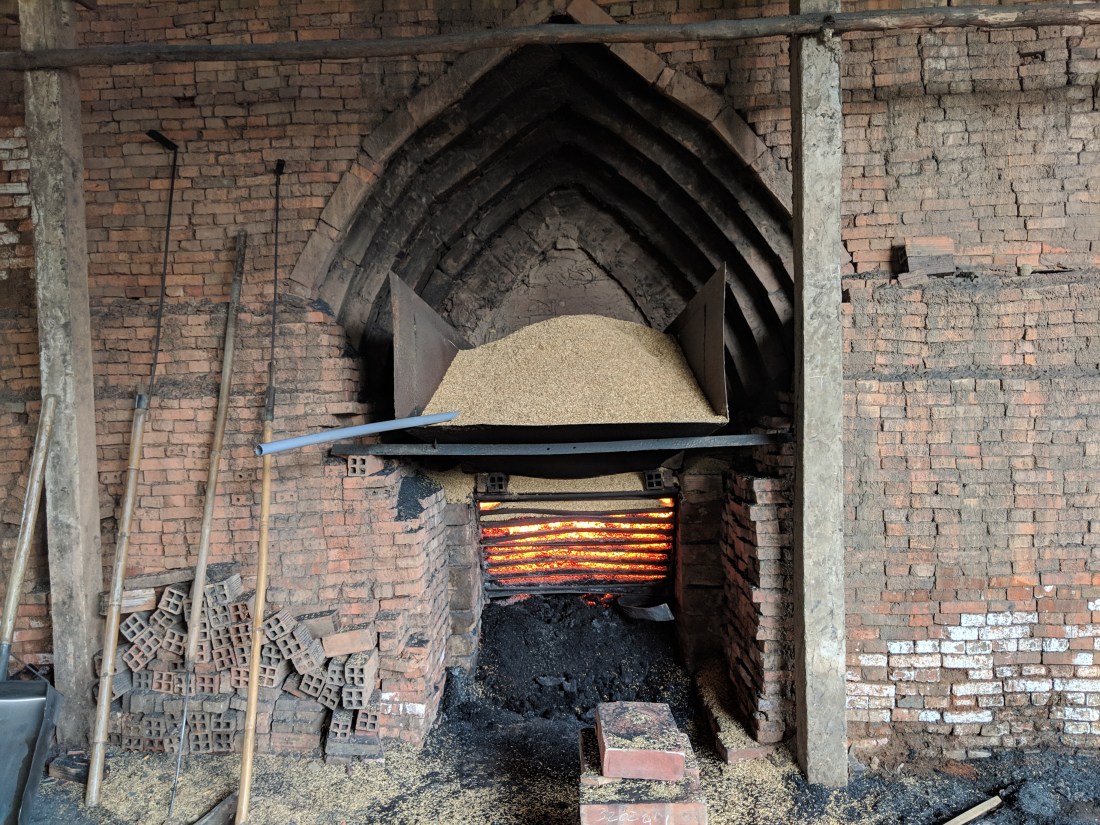
Then it is stacked into the oven.  The man uses the ladder to climb to the top of the stack.  When the oven is full, he climbs out the hole in the top, which is then covered to keep the heat in.  There is a separate chimney. The oven is kept hot with a fire burning rice husks kept going 24/7 for 2 weeks.  Then the bricks cool in the oven for 7-10 days before being shipped out on barges.

img_20190127_090154img_20190127_090337img_20190127_08581100100dportrait_00100_burst20190127090658931_cover

img_20190127_090623

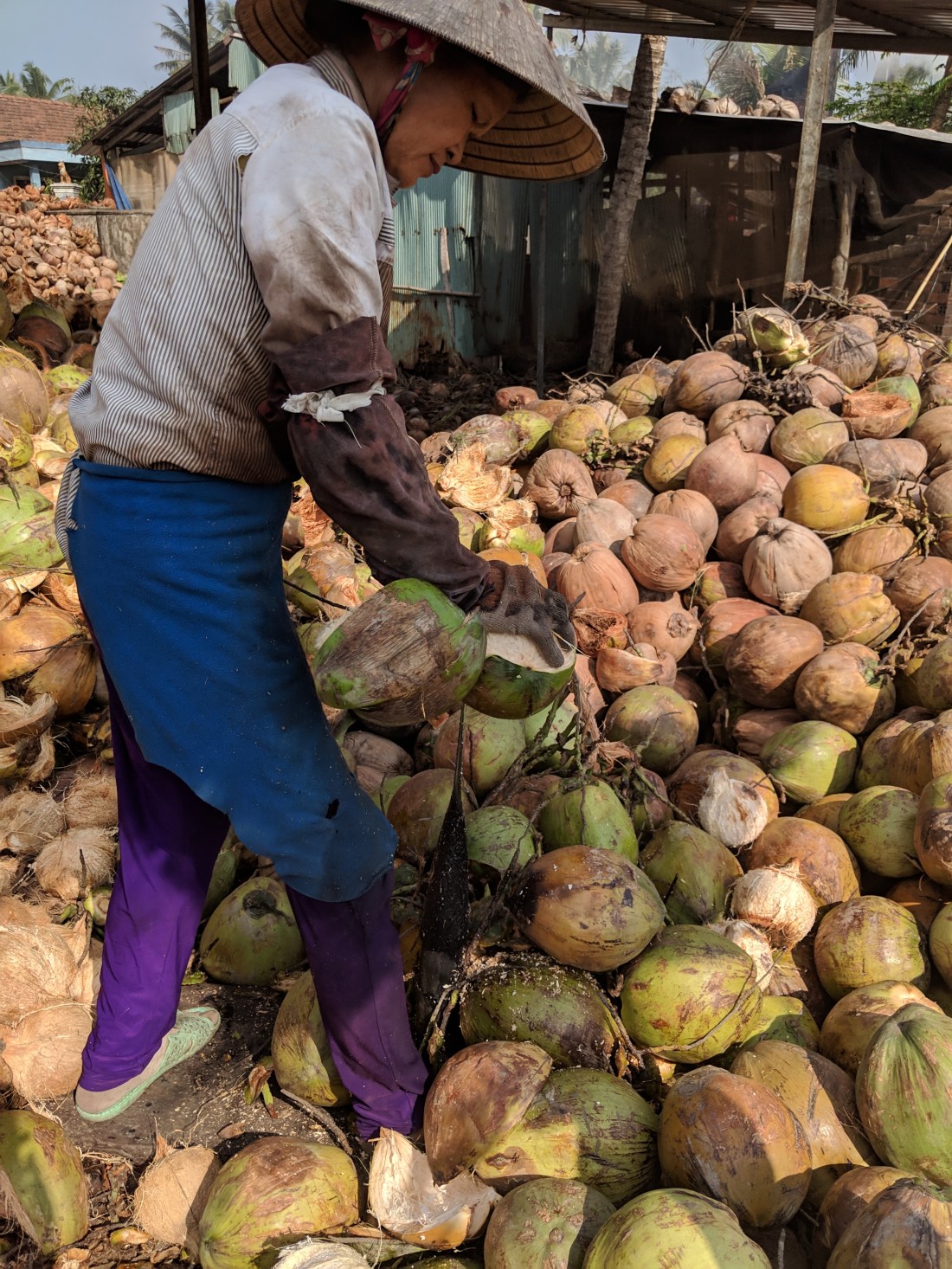
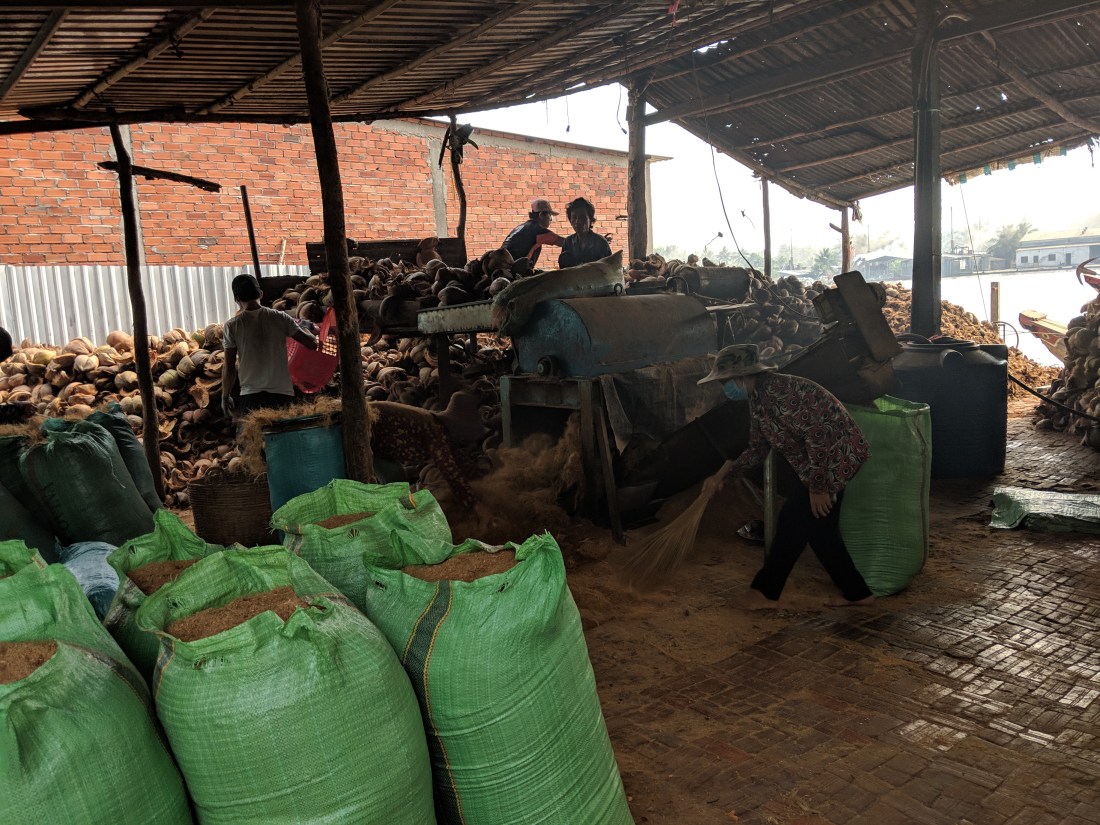
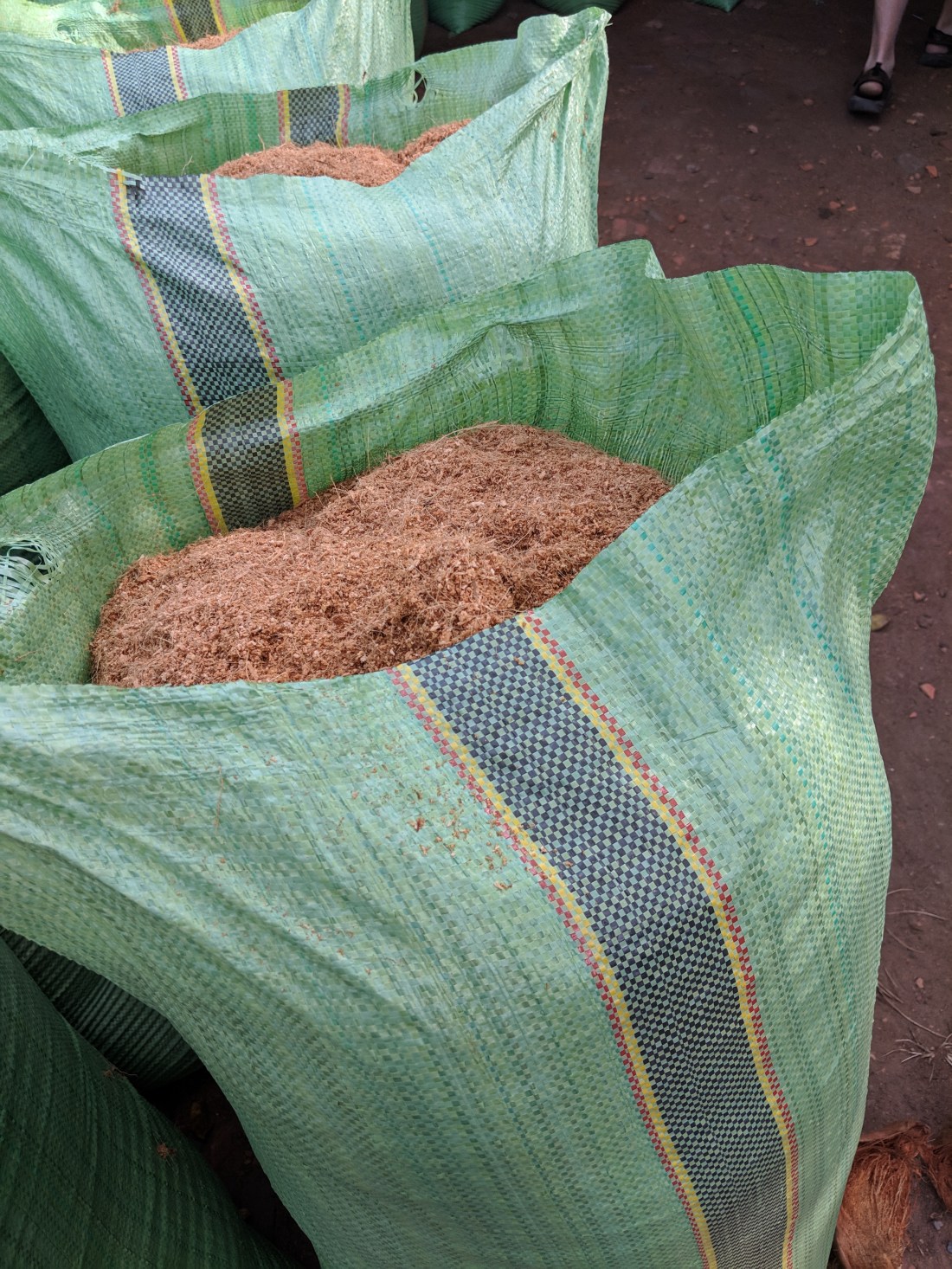
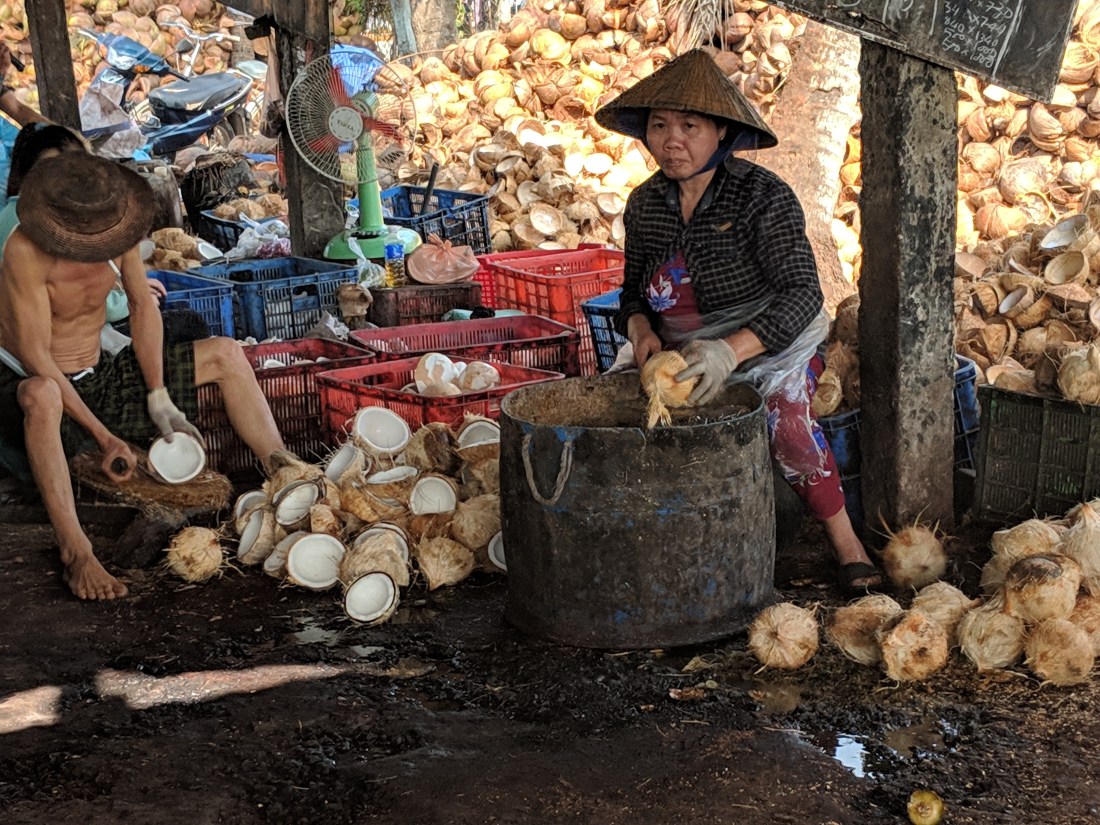
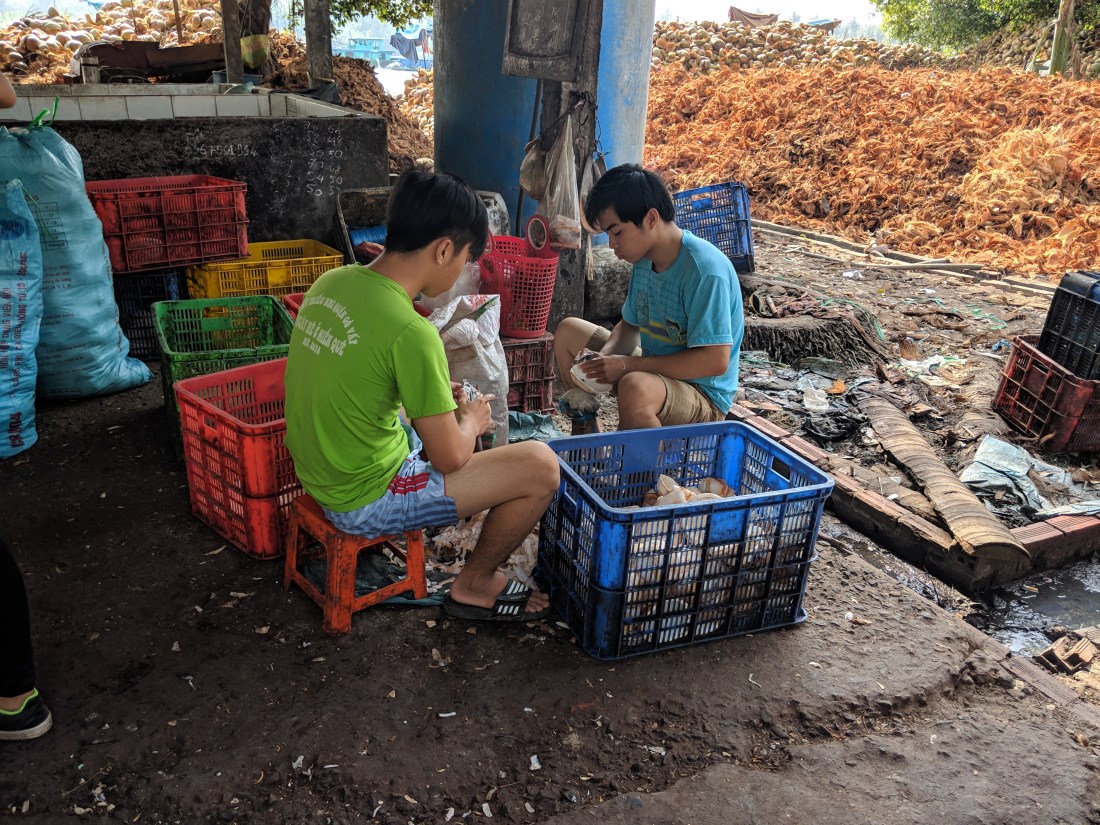
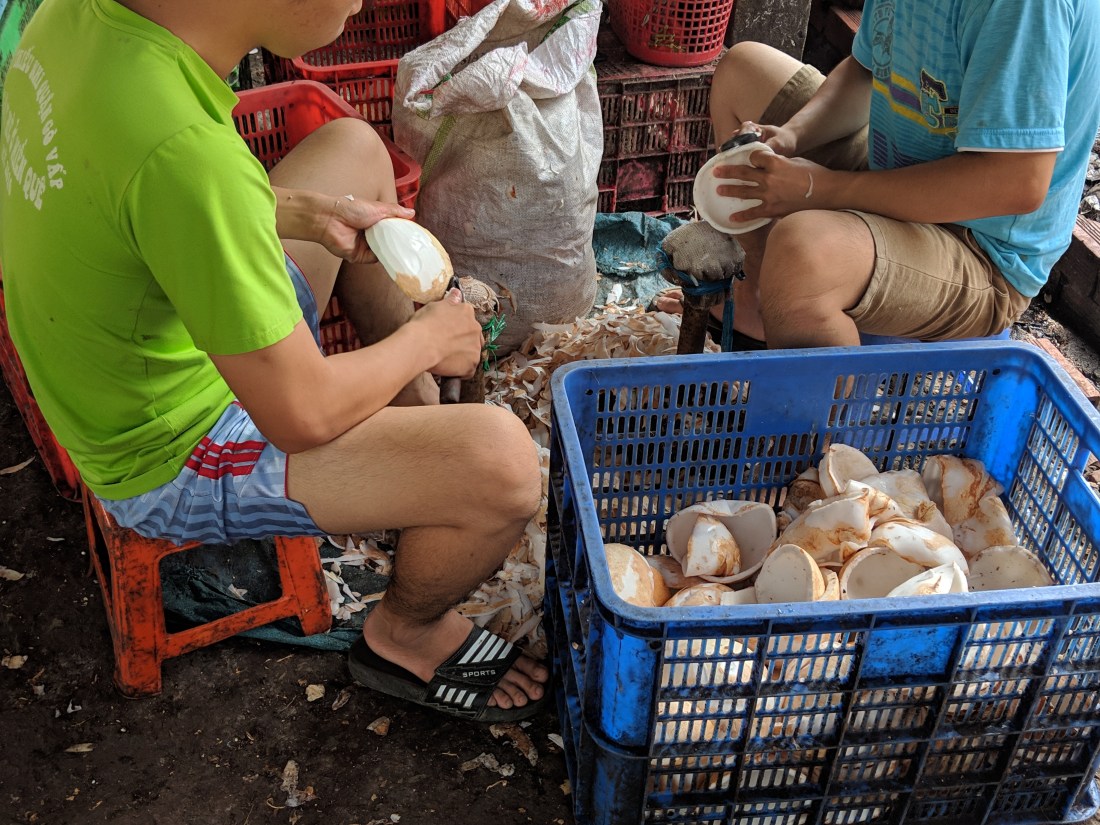
Next we went to a coconut processing “factory.”  The coconuts also arrive by barge.  First they are split open and the husk removed.  The husk is then further separated into the stringy bits that are sent to China for weaving into string and netting materials.  The shake is used as fertilizer.

img_20190127_092232
notice the sharp spike she is using to crack it open
img_20190127_090924
a machine is separating the string from the shake

img_20190127_090906

Then the nut is split open, the water is saved,  the nut meat is separated from the shell.

img_20190127_092305

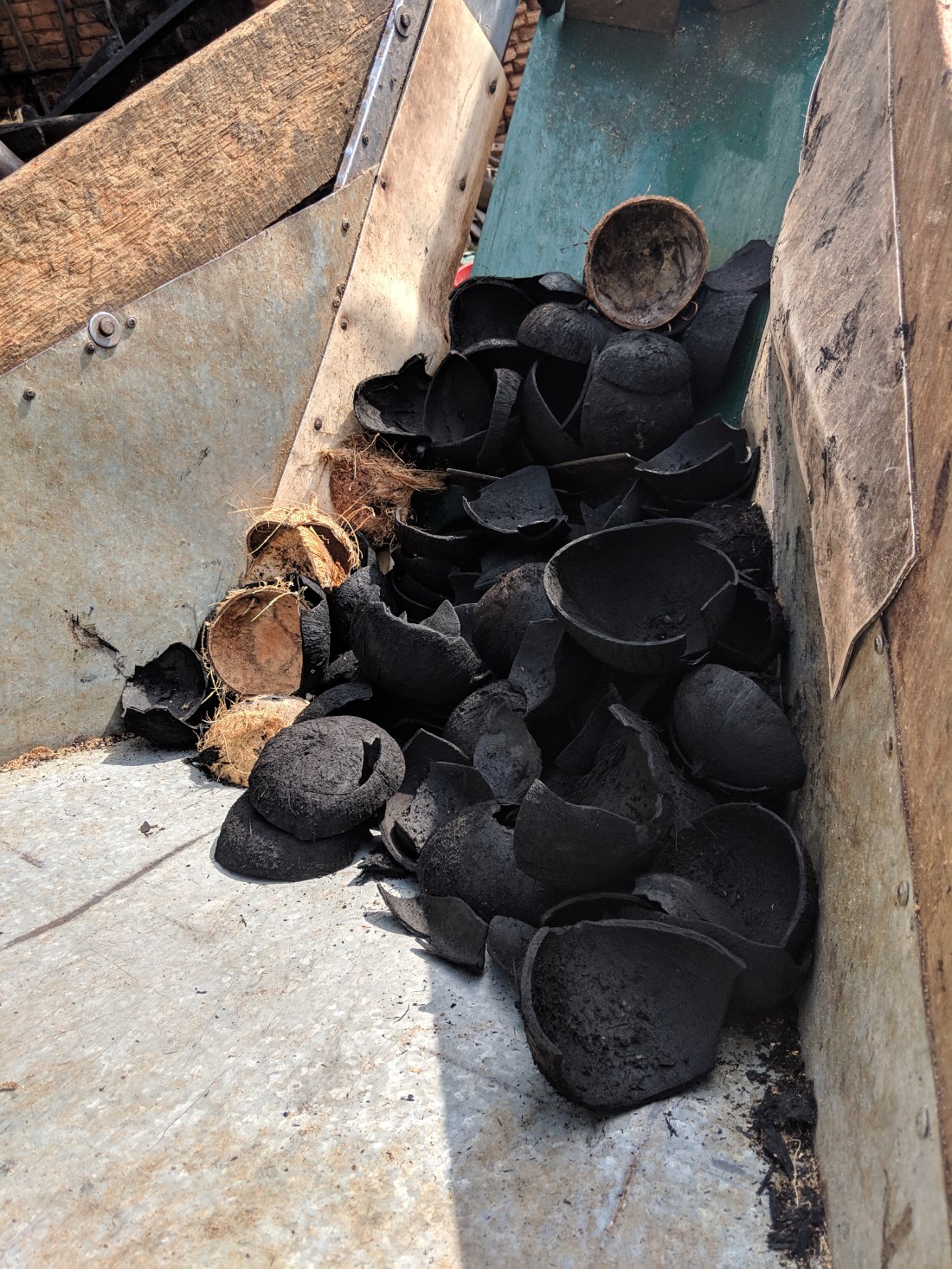
The shell is burned in an oven for 10 days and turns into charcoal.  The charcoal can be used for grilling food.  But most of it is sold to China who makes it into charcoal for activation, ie filters.

img_20190127_092032

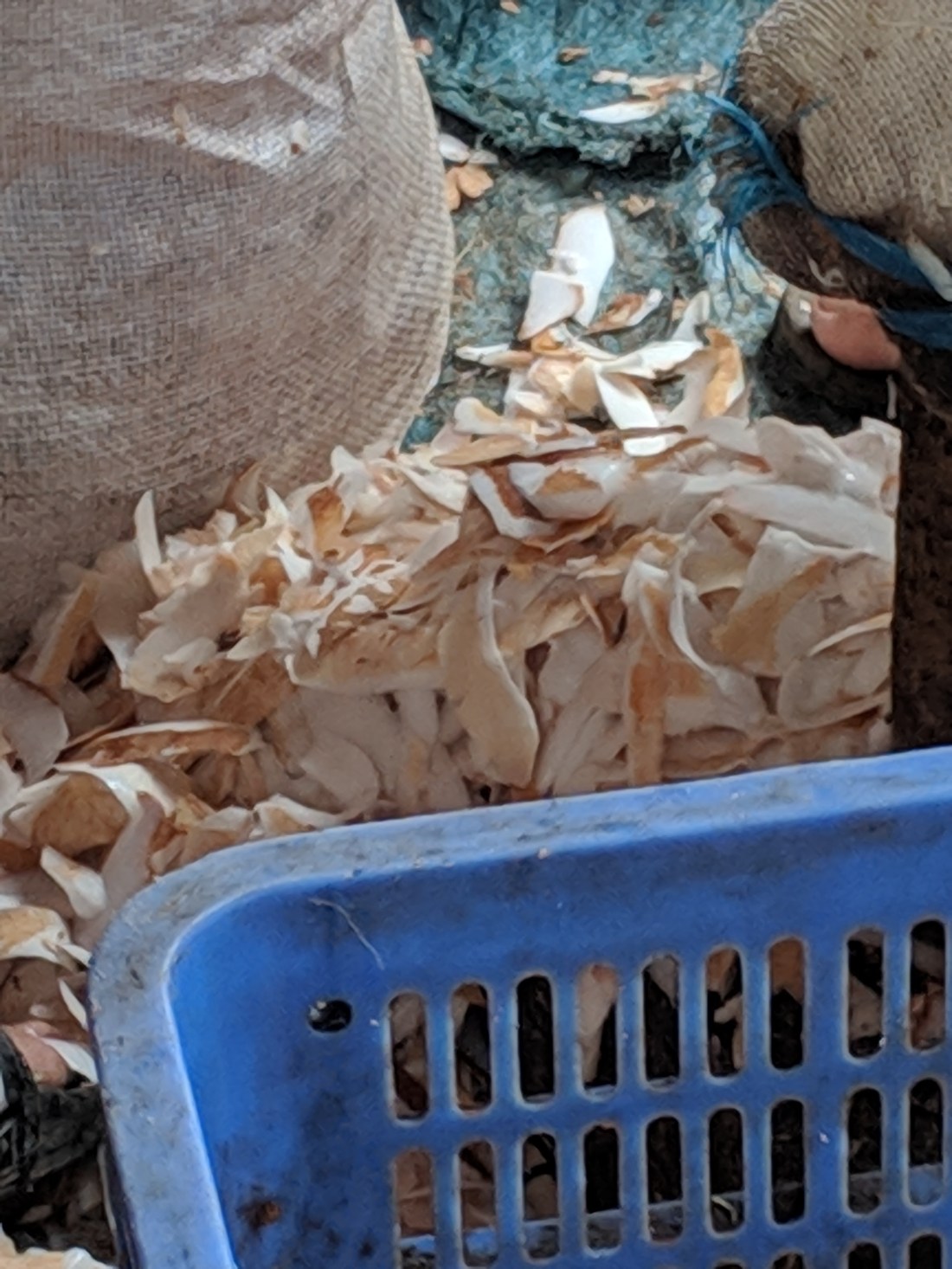
The meat is then further trimmed.  The scraps are squeezed for coconut oils.  The meat separated by quality, softer being better, and bagged, then shipped by barge.  It is generally freeze dried and used for cooking, candy, etc or turned to powder and reconstituted as coconut milk.  Every bit of the plant is used.  Dead leaves are used as fuel and the trunks of old trees are used for carving.


img_20190127_092445img_20190127_092624img_20190127_092608img_20190127_092452

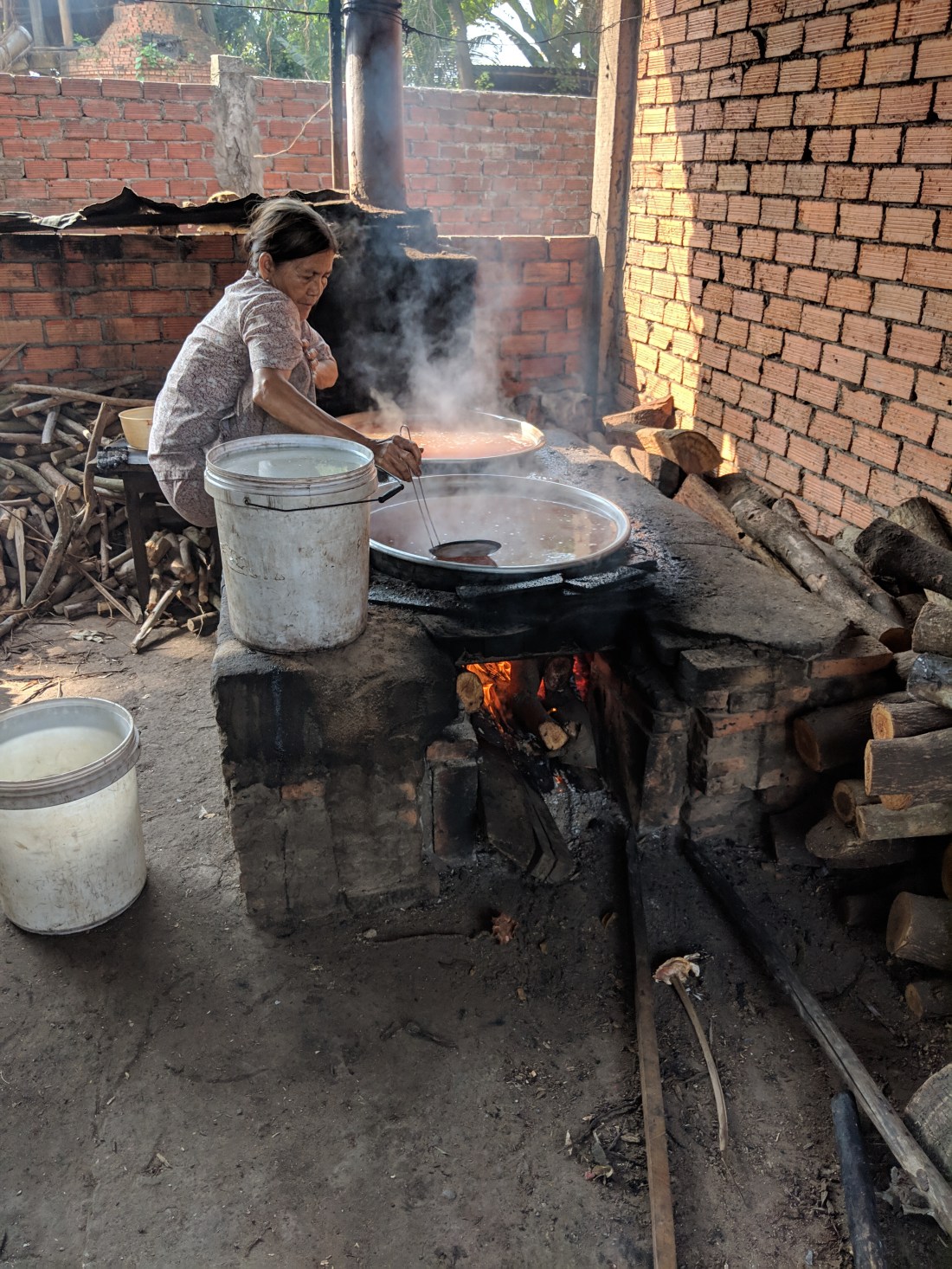
Finally, the water is cooked down over a low flame for hours until it caramelizes into coconut caramel, bottled, and used for cooking.

img_20190127_093058

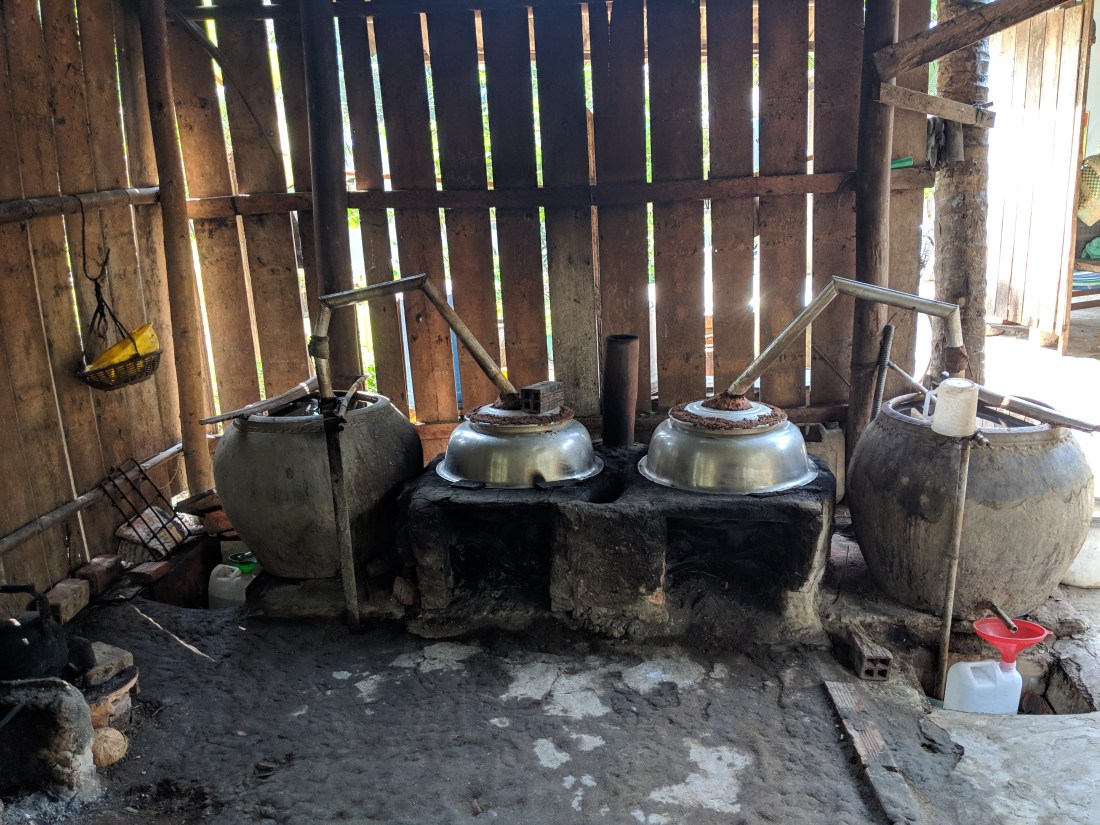
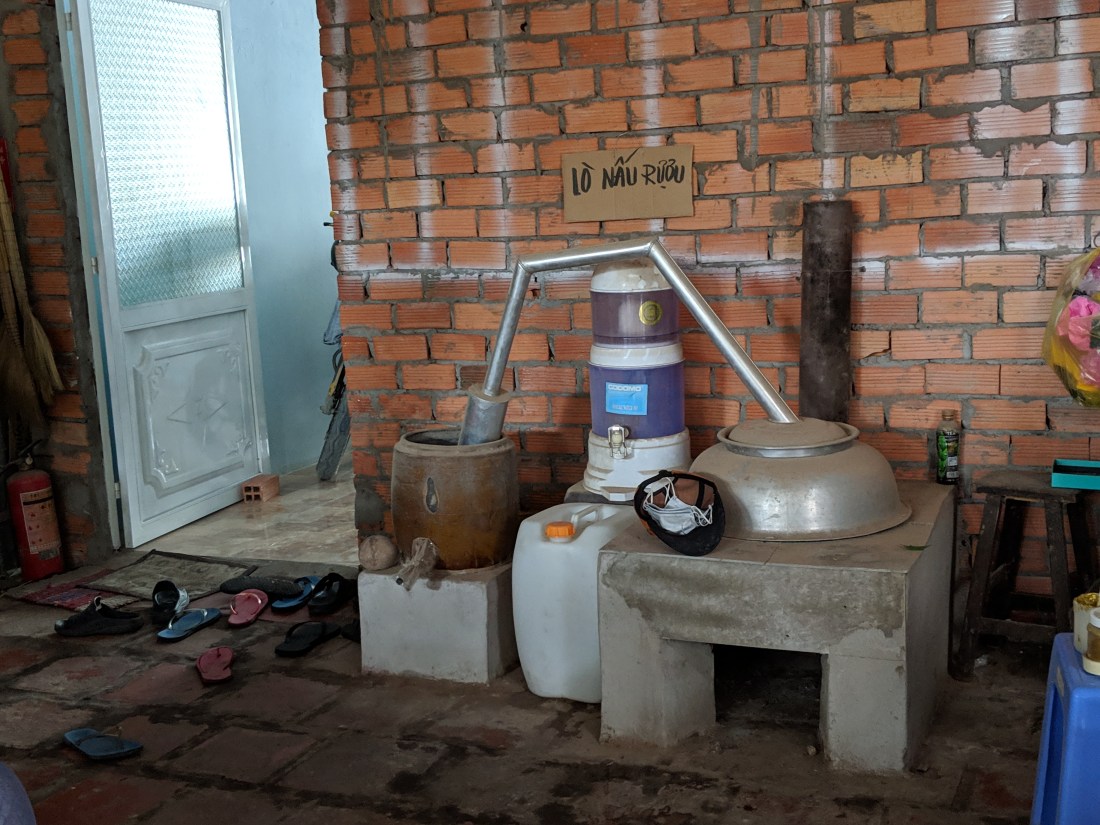
We then took a tuk tuk and visited the small local village.  Then we got back on our boat and cruised further on the river to a family home where rice wine is made.

img_20190127_105629
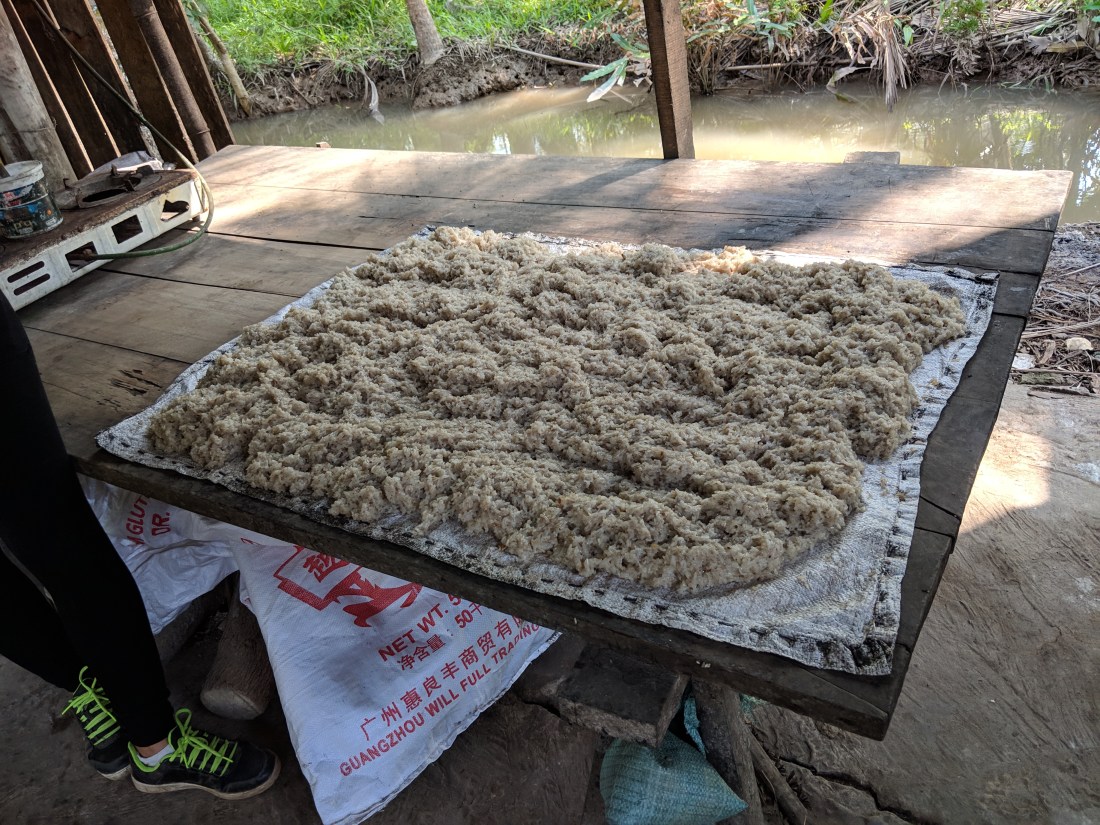
sticky rice is soaked then boiled and water added
img_20190127_105858
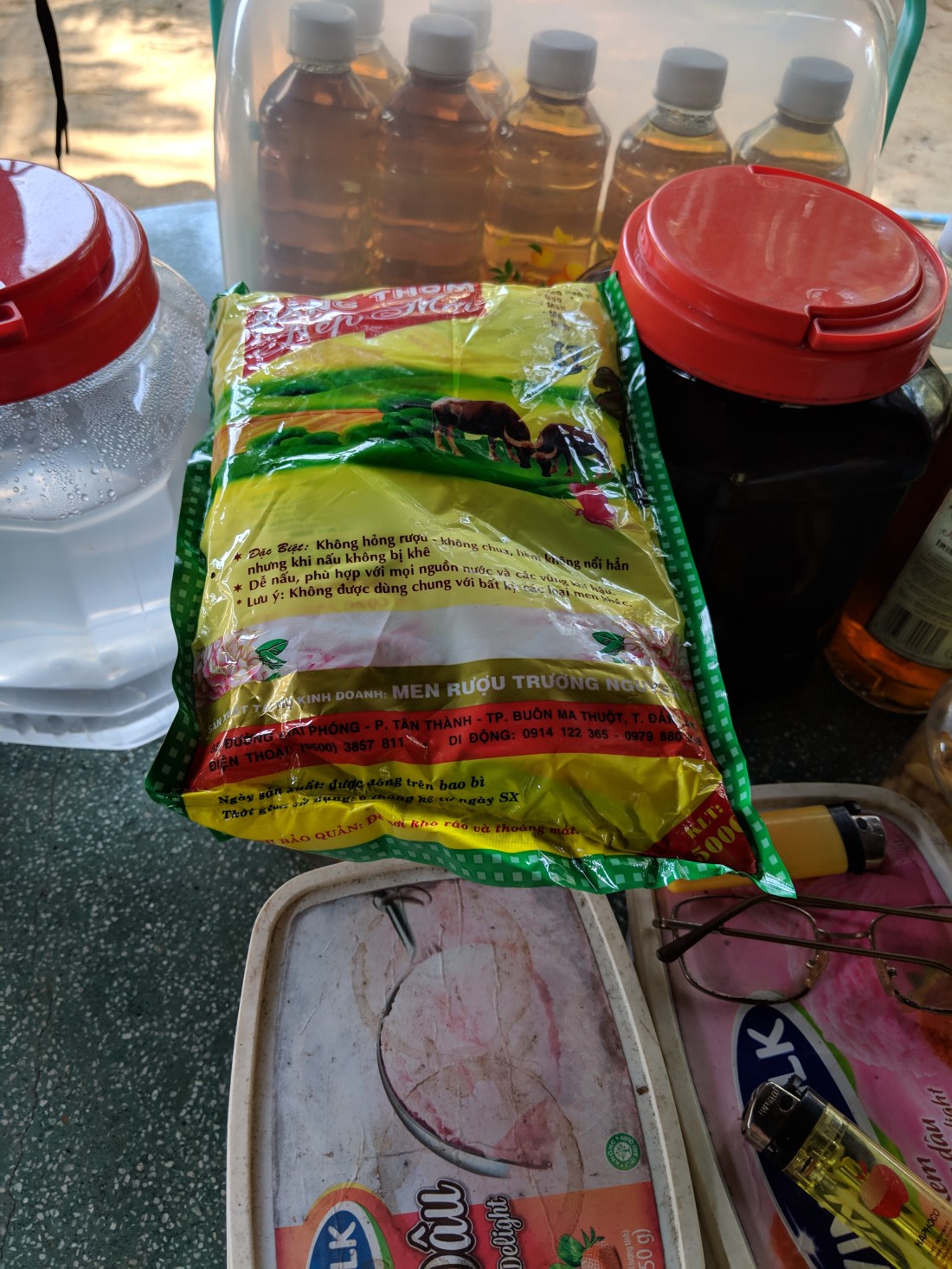
the yeast
img_1699
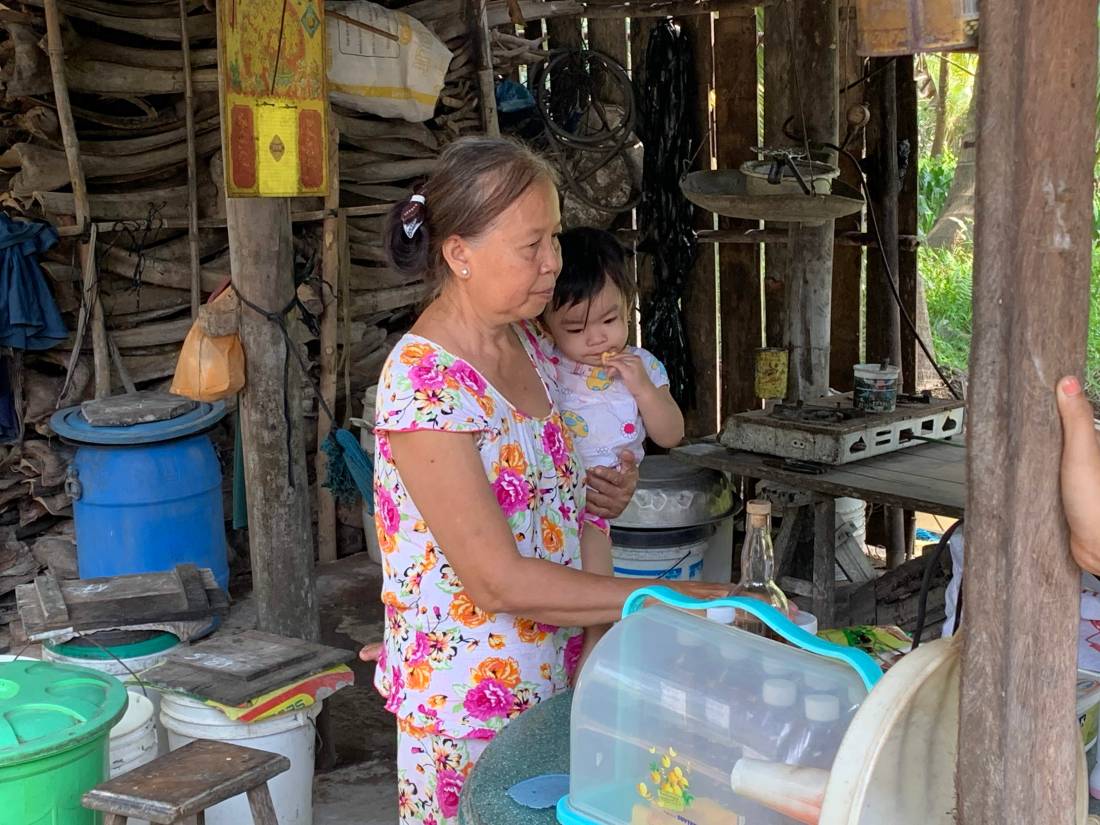
the matriarch of the operation with her granddaughter and finished product in the bottles
img_20190127_105903
the fermenting jugs
img_20190127_110345
the distillery
img_20190127_110541
their home
img_20190127_111038
their home
img_20190127_111036
the kitchen
img_20190127_110743
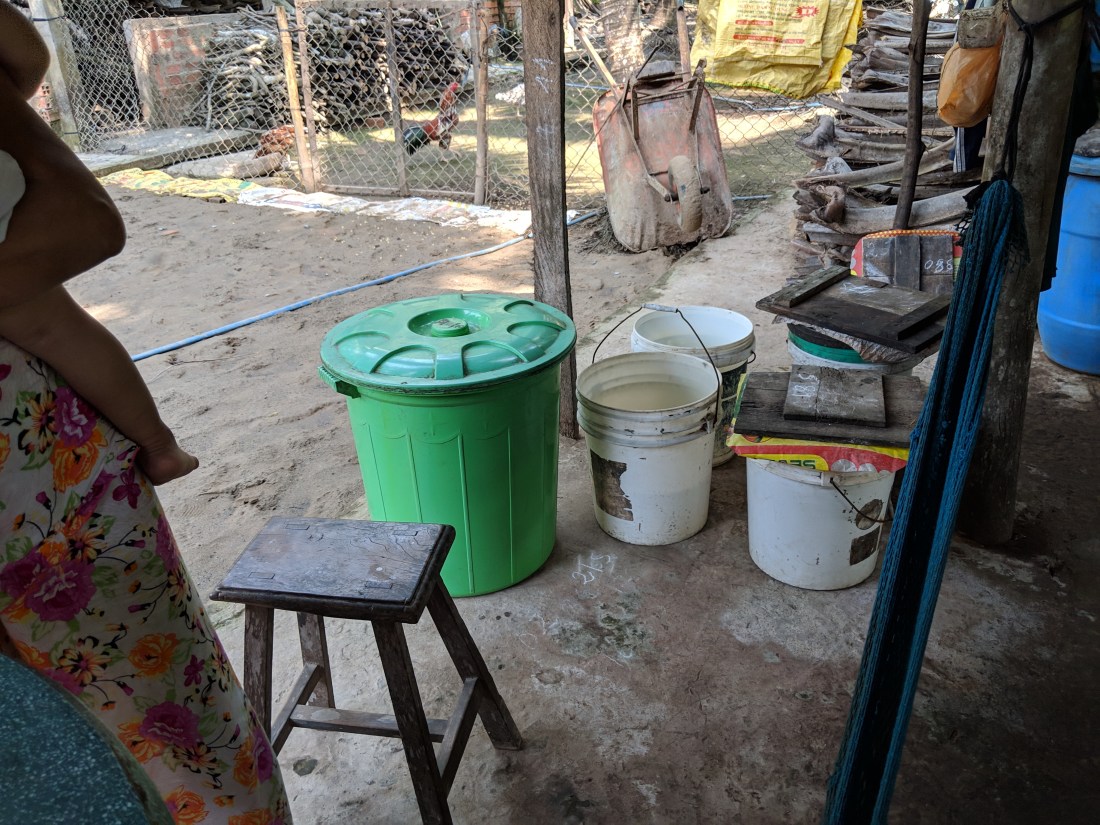
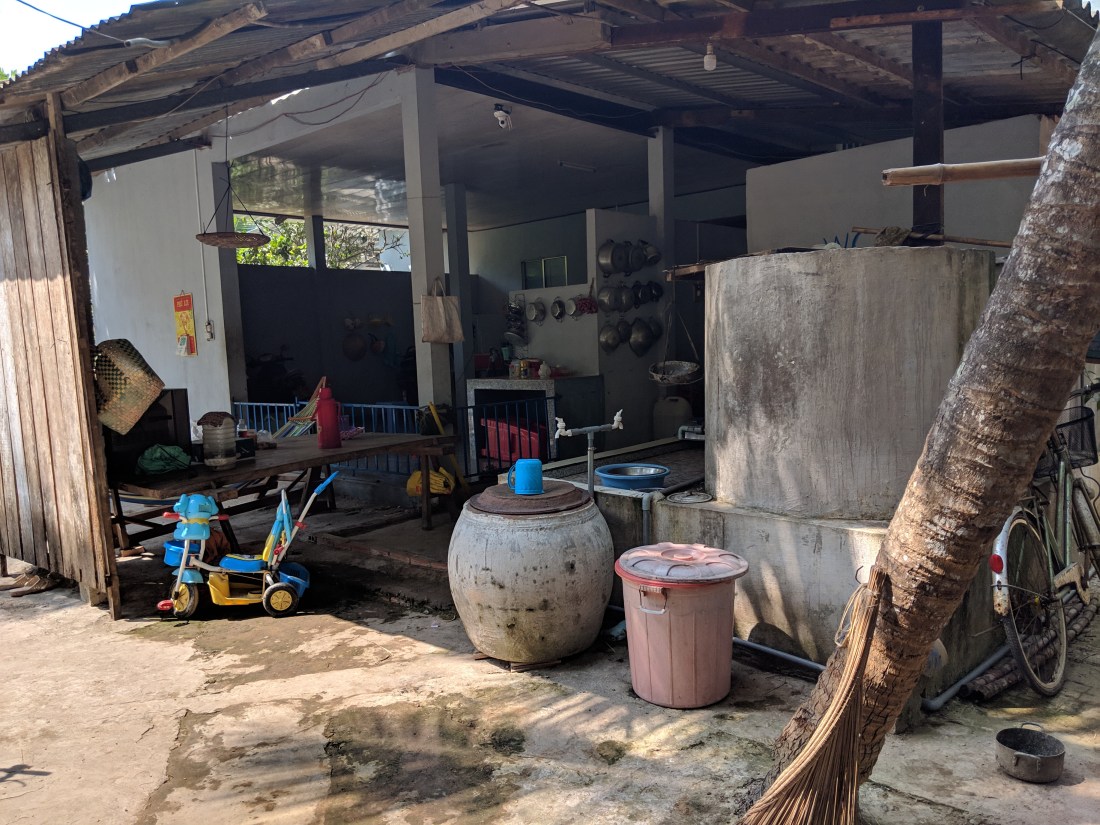
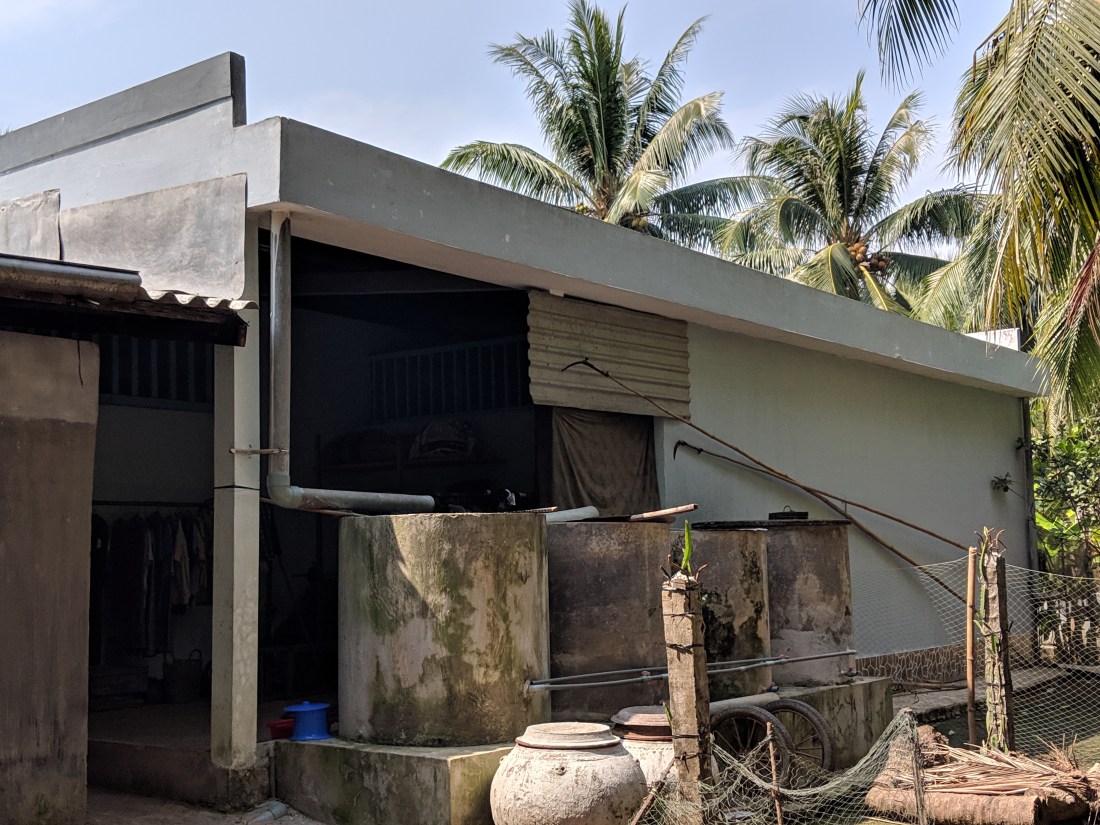
water collection and storage system


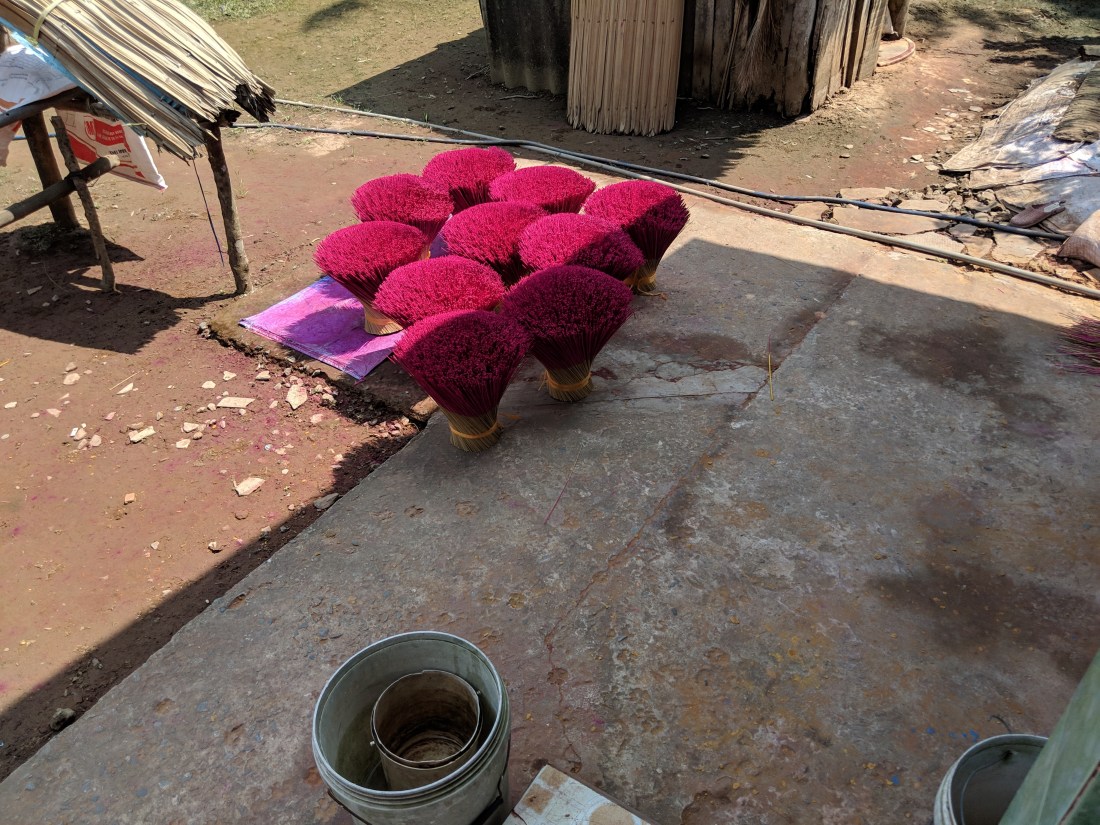
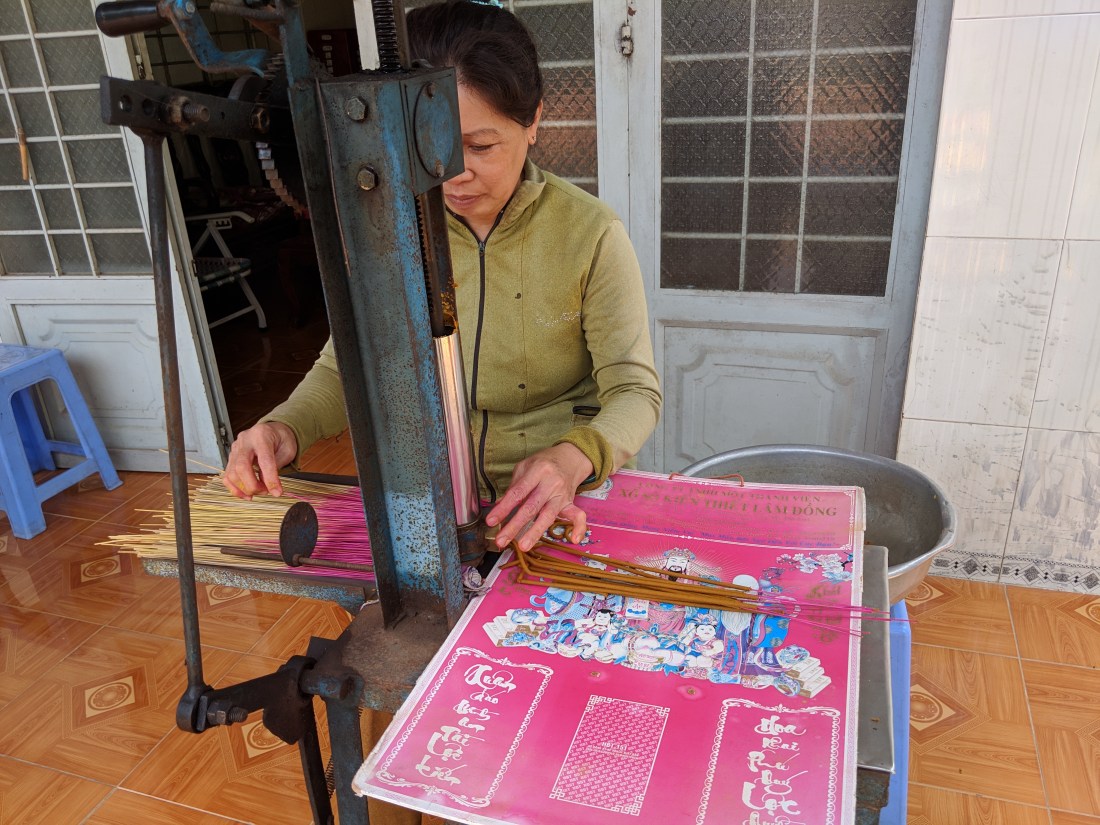
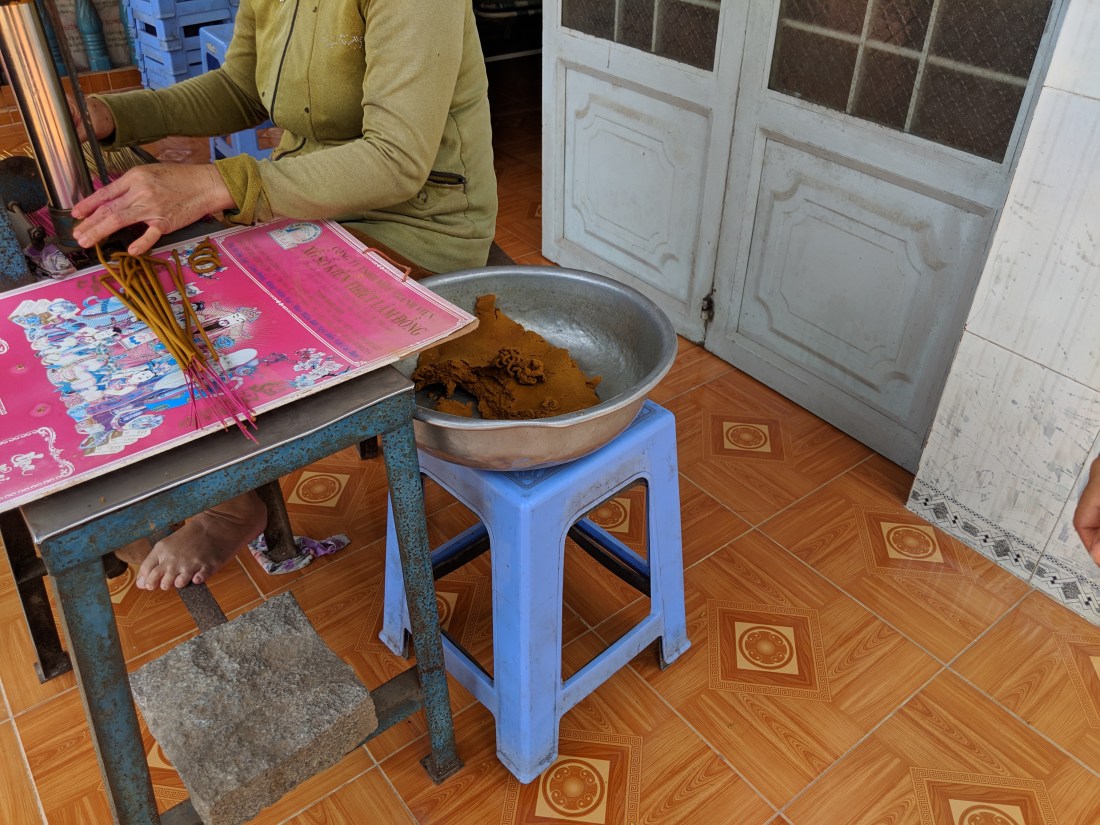
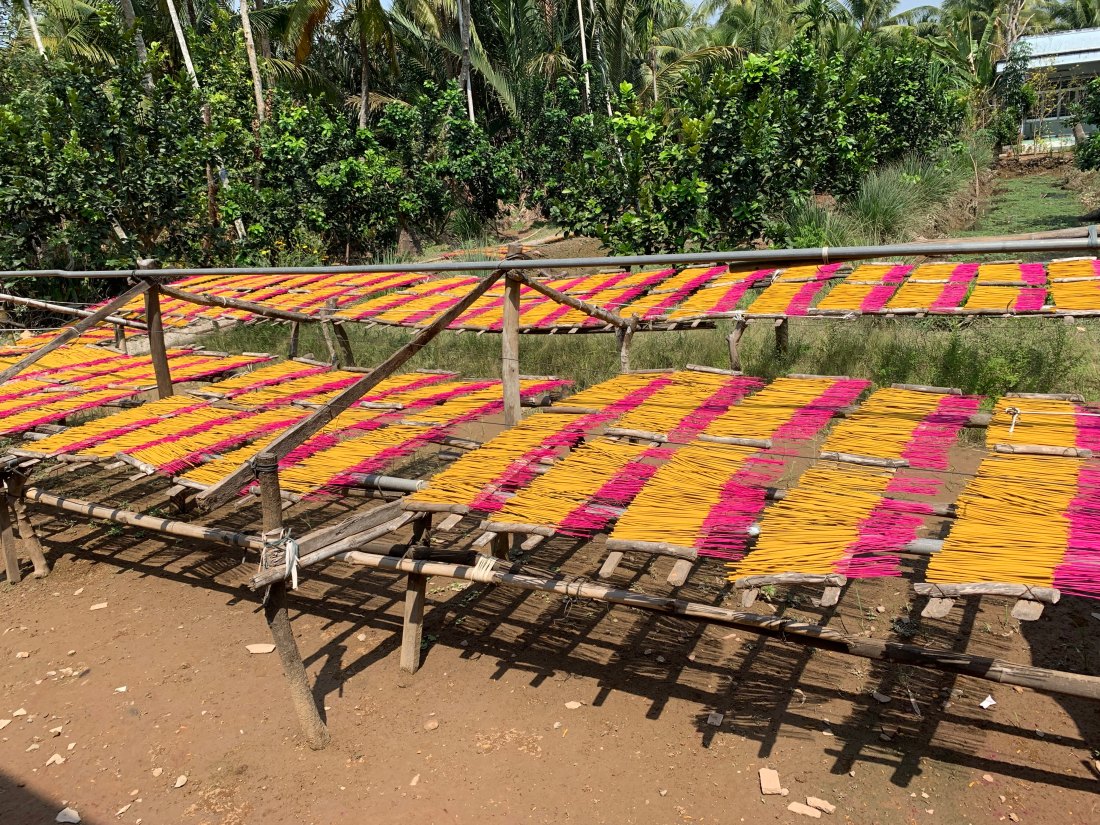
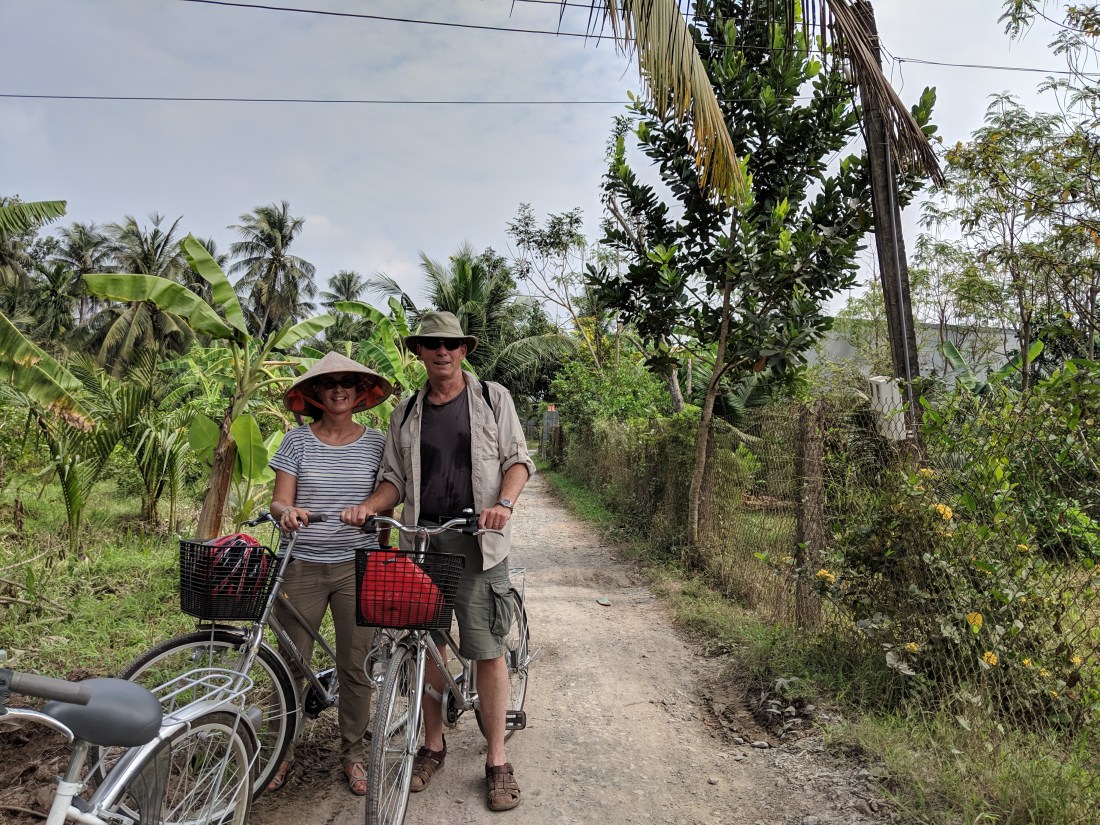
Then we got on bicycles and rode a short distance through the jungle to a home where incense is made by a husband and wife team.

img_20190127_112234
first the bamboo sticks are dyed red for luck

img_20190127_112311

img_20190127_112321
mud is mixed with turmeric for scent and color
img_1701
the sticks need to dry in the sun for 4 hours.  They start their day at 3 am so they can have the 20,000 sticks of the day ready for the mid-day sun

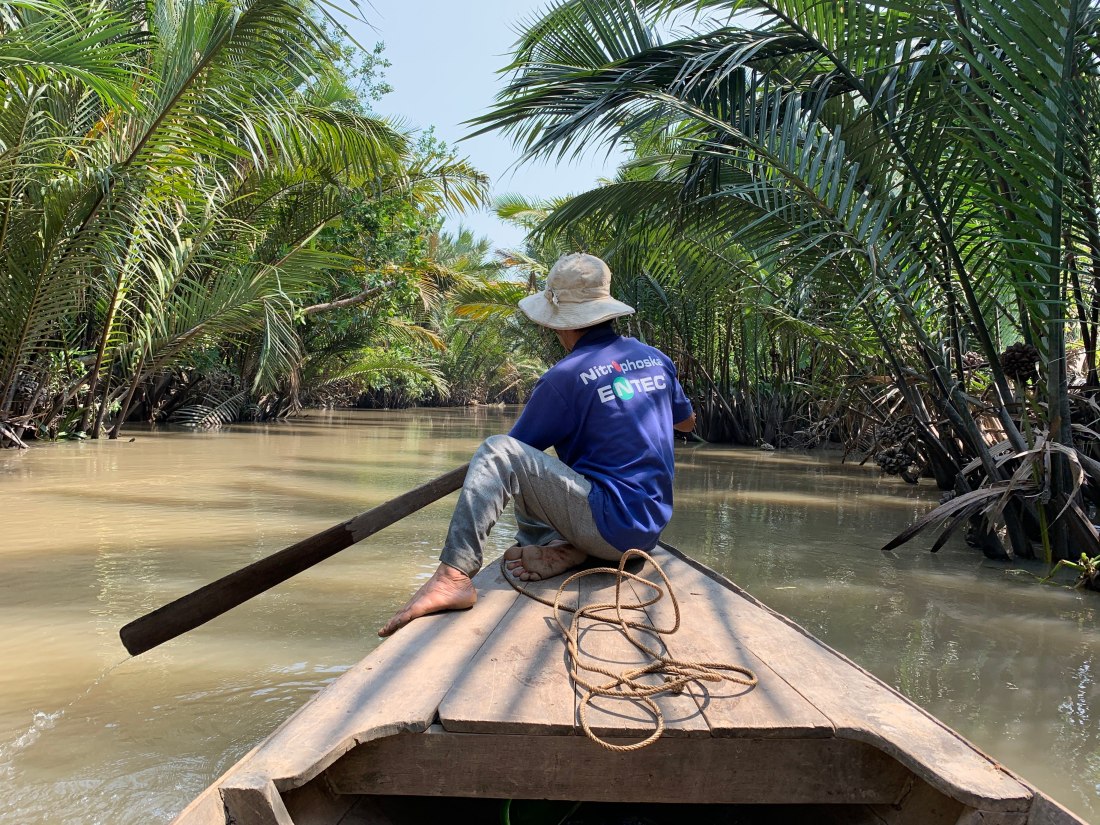
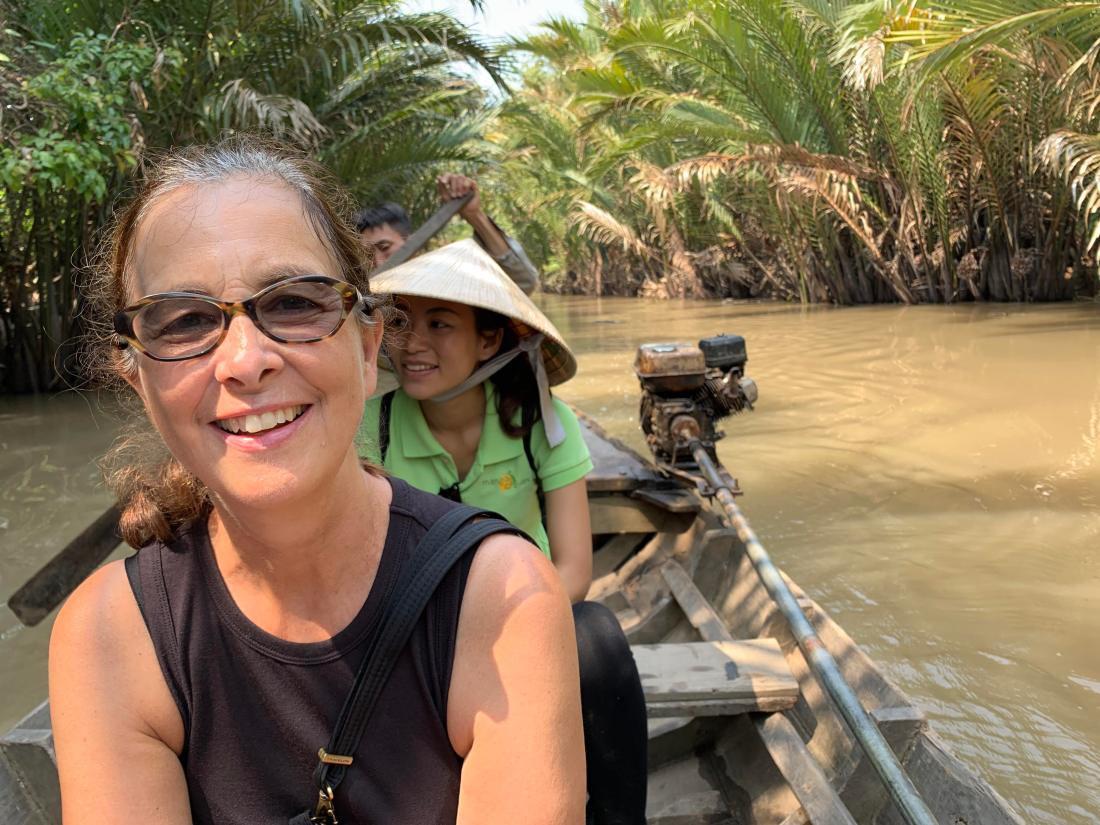
We then were rowed in a paddle boat through the jungle back to our big boat on the river.

img_1703img_1704img_1707

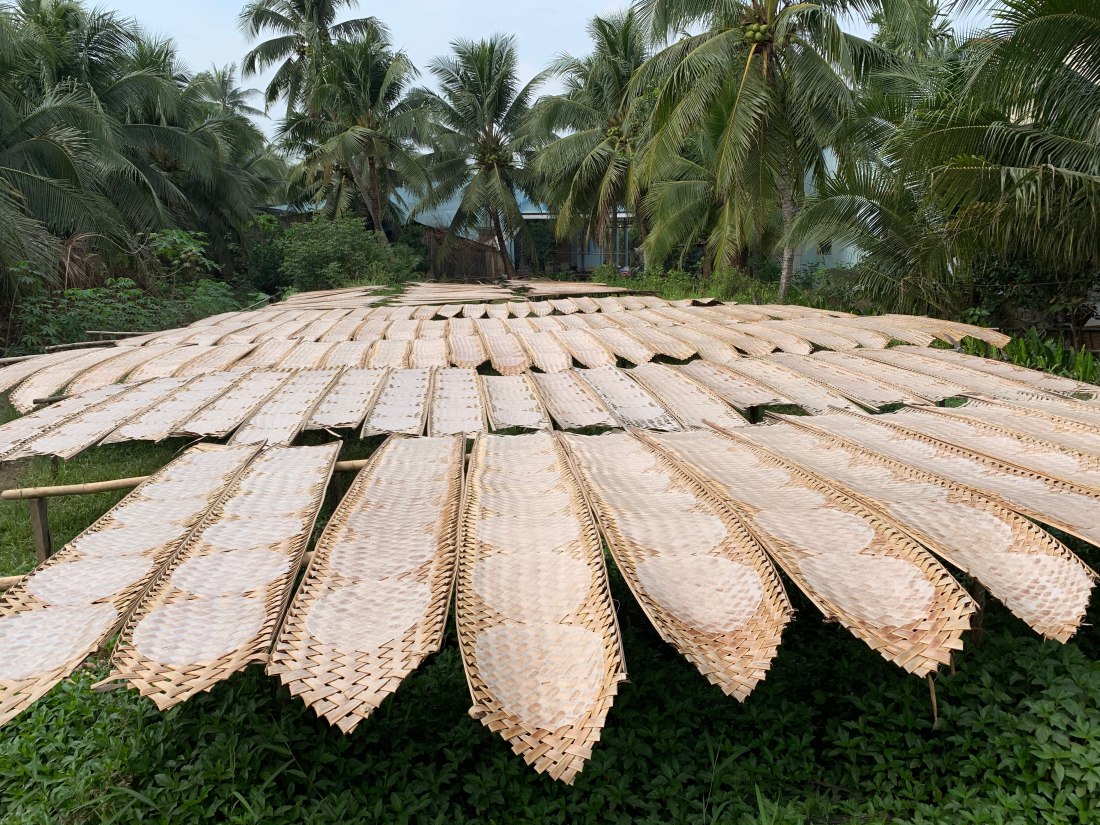
Then we landed and cycled again, this time to a home where rice paper used to wrap fresh spring rolls is made.

img_20190127_121604
typical Vietnamese home
img_20190127_121715
combo kitchen/bedroom
img_20190127_121635
noticed the hard-packed floor
img_1711
a lesson in making rice paper, which then dries in the sun for 4 hours

img_1730

After our busy day, it was back to Mango Home for delicious food and relaxing by the pool.

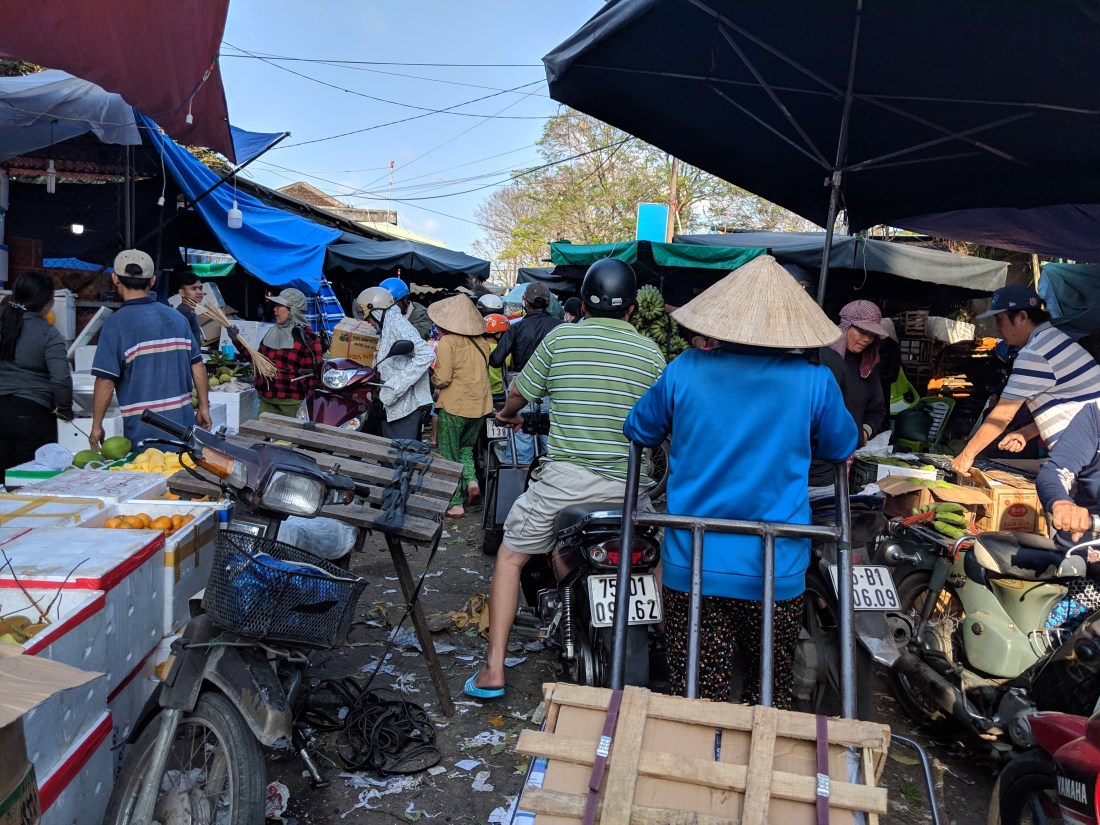
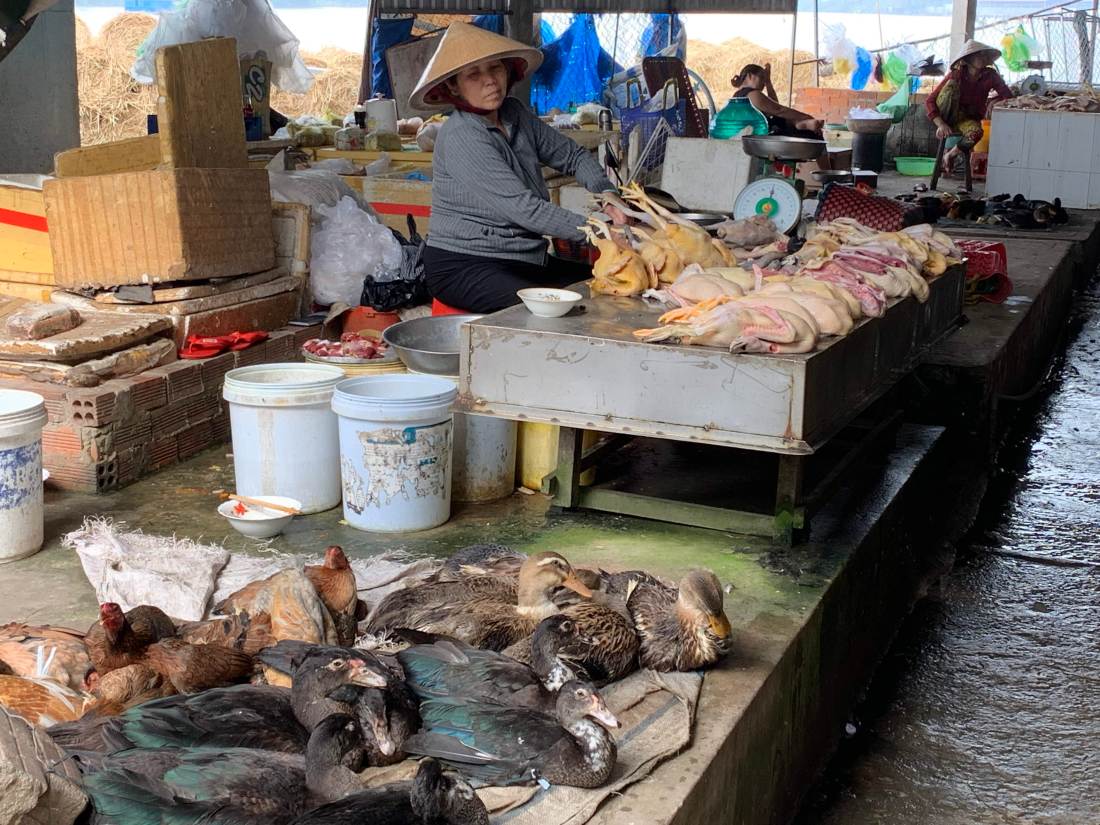
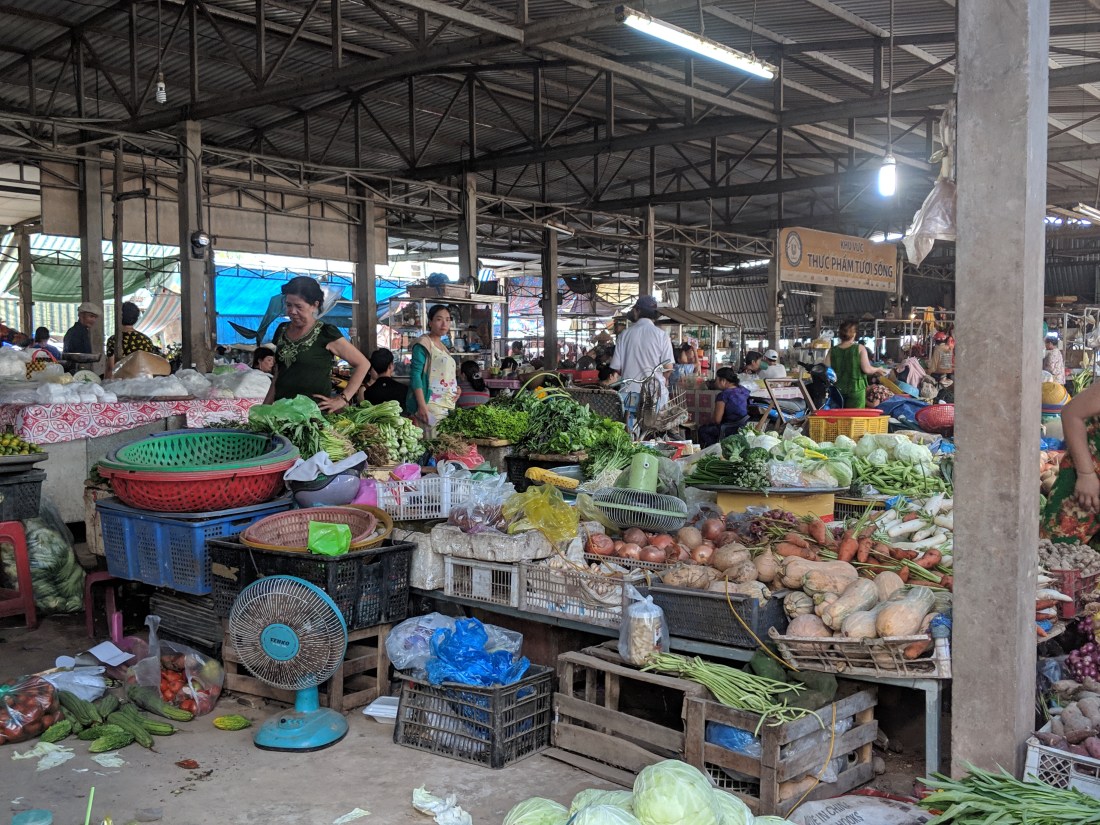
Next morning we were back on the river boat, this time in the opposite direction to the market.  Of the many markets I have been to, this was the most authentic/least touristy.

img_1713img_20190128_093424img_20190128_095739img_20190128_095935img_20190128_092811

img_1715
every part of the animal is eaten.  the pale things on the left table are stomach

img_20190128_100044

img_20190128_100118
fishing gear

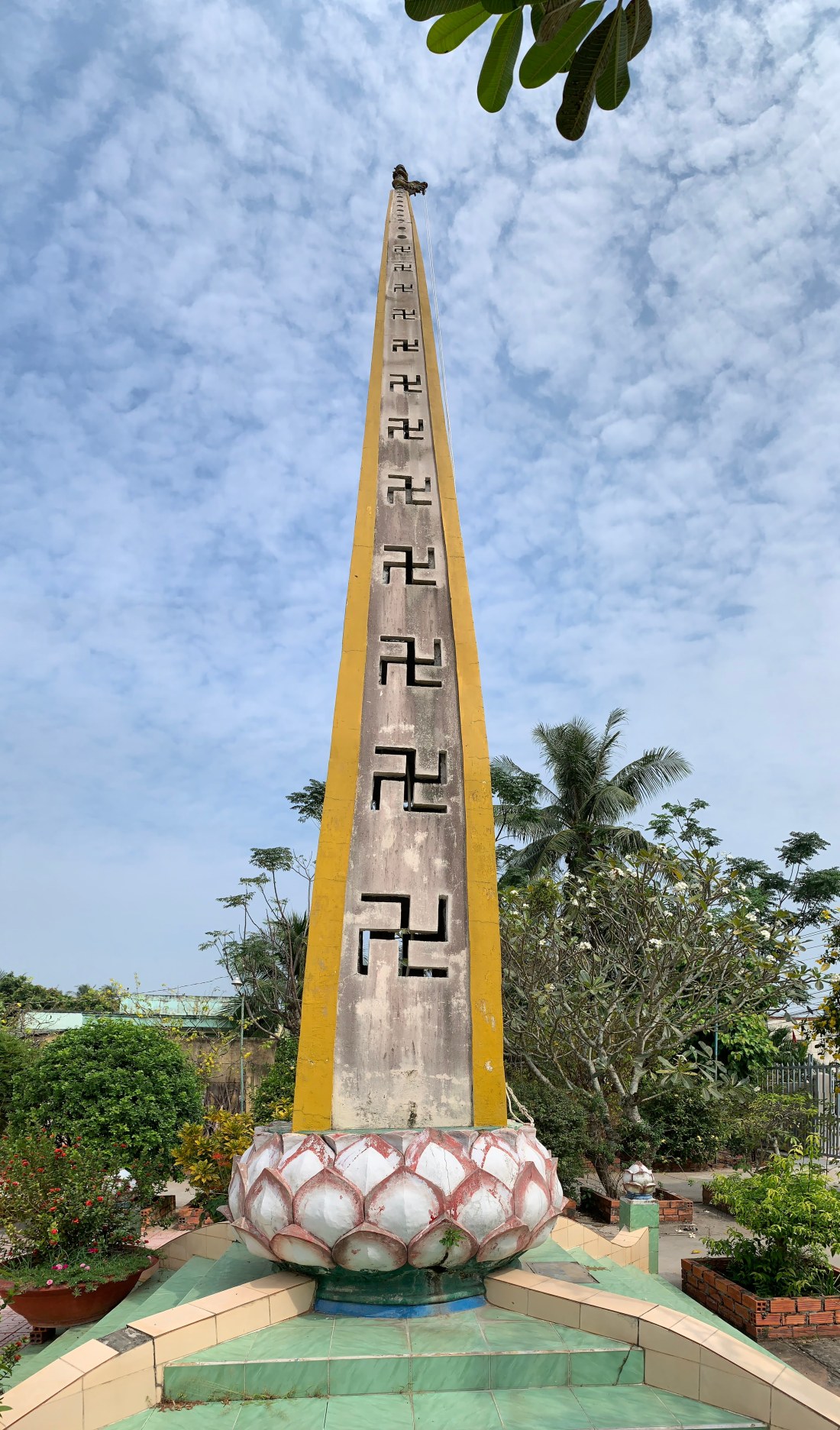
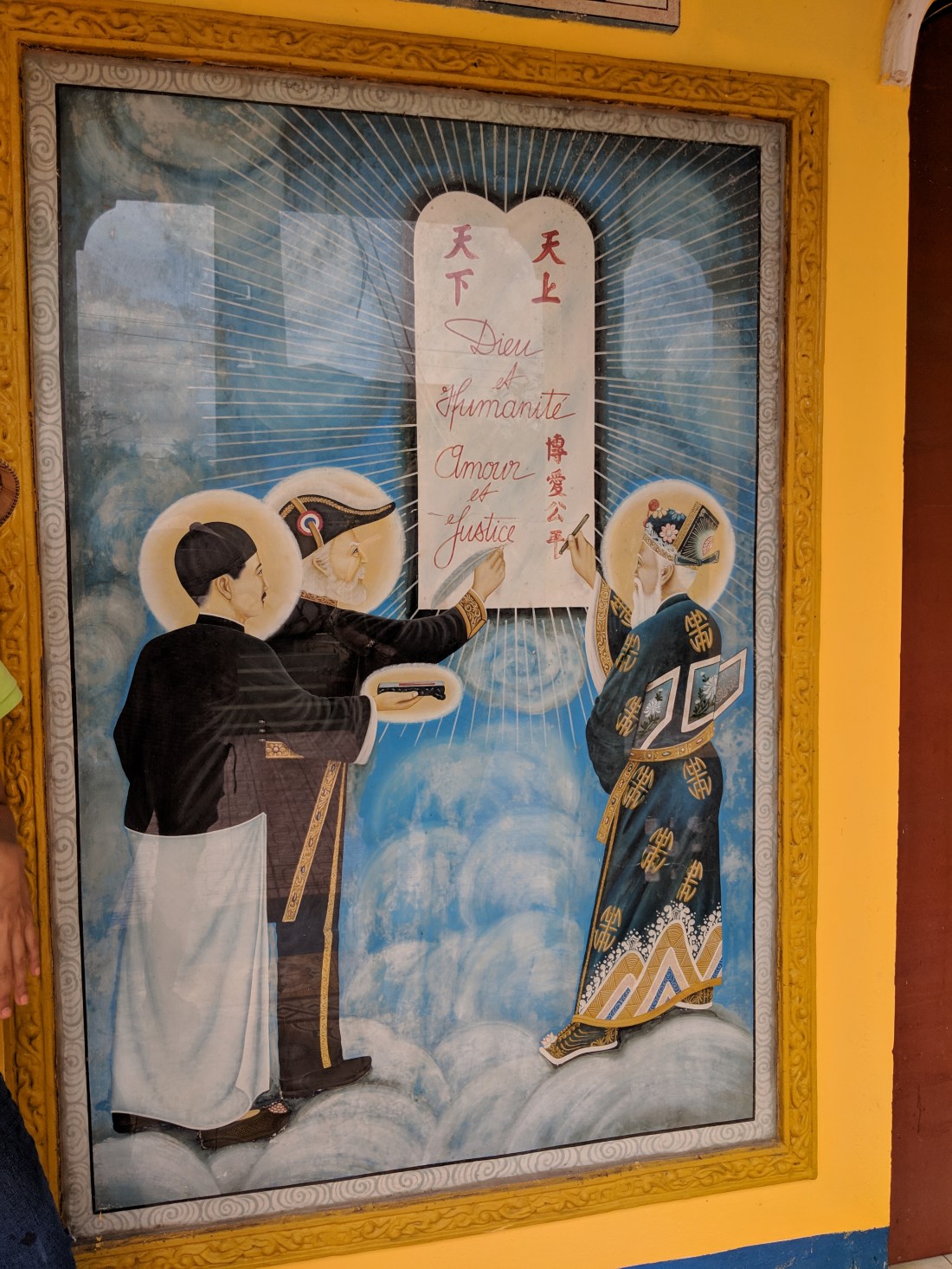
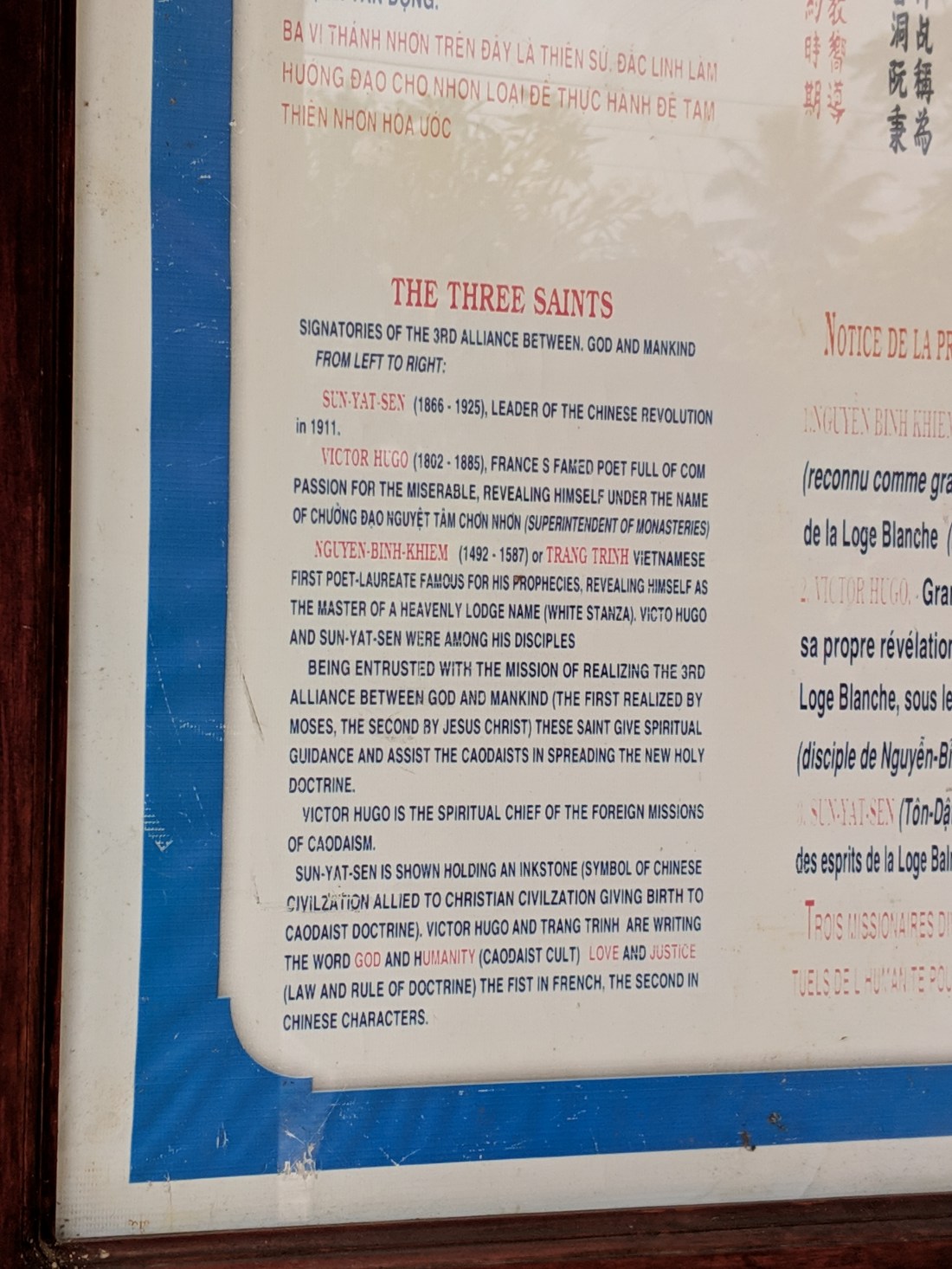
Then we visited a Cau Dai temple, a monotheistic religion founded in 1926 in  southern Vietnam combining Taoism, Buddhism, and Christianity.  The symbol is the left eye.

img_20190128_101824img_1725img_20190128_102048

img_20190128_102111
Victor Hugo is one of the saints

img_1723

img_20190128_103528
the funeral barge


Then we bicycled to a husband/wife home/factory that bottles and sells coconut whisky.

img_20190128_104908img_20190128_104900img_20190128_104545

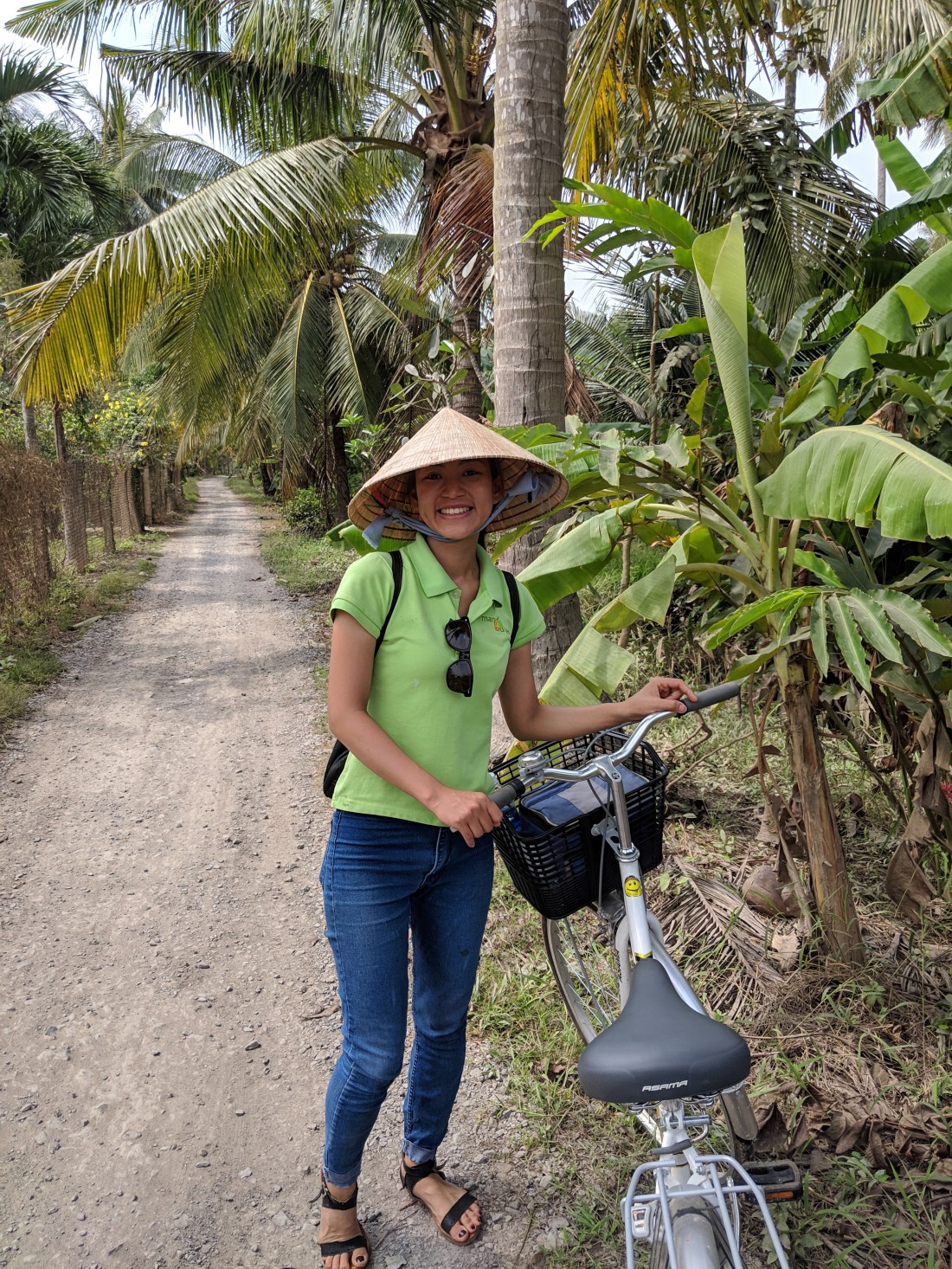
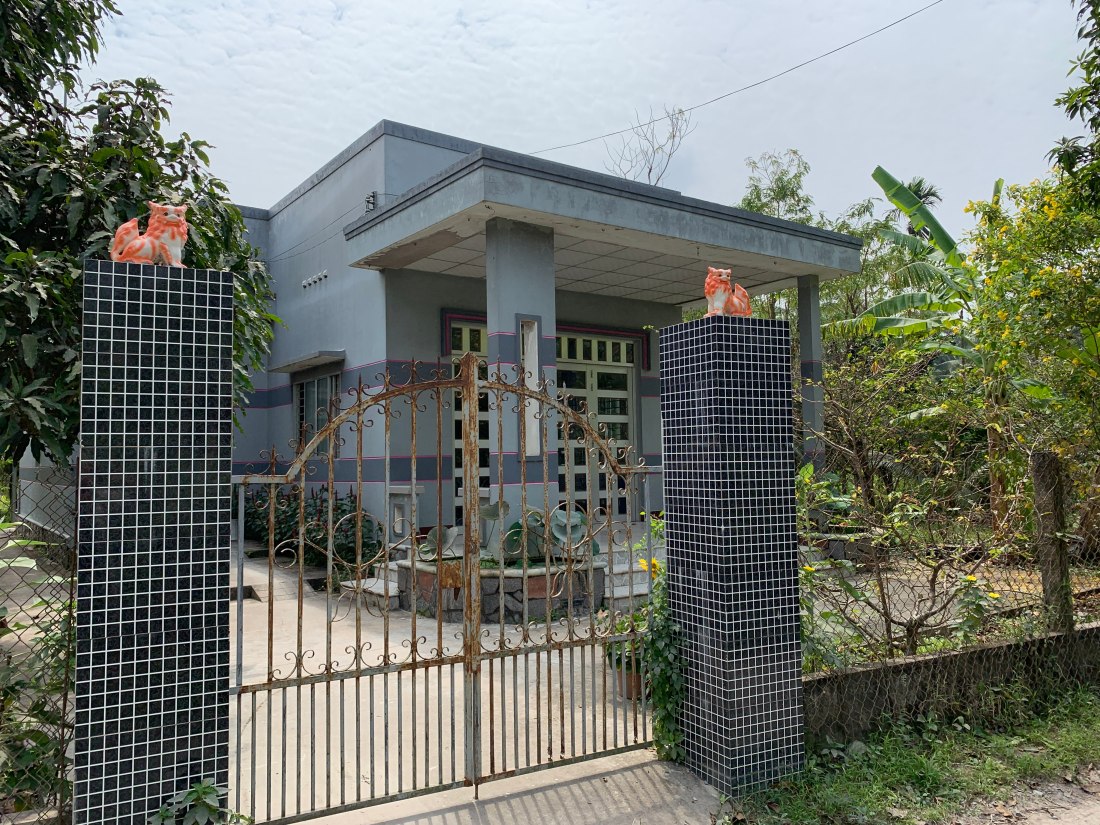
And then took a long bicycle trip through the jungle and with homes interspersed  throughout.

img_20190128_111855img_20190128_111924

img_1726

img_1728

IMG_1686.JPG
family members are often buried right in the back yard.

img_20190128_112248

Then it was back to Mango Home for another amazing meal and relaxation by the pool.

img_20190129_122951

img_20190128_134118

img_20190129_113619

The next day we journeyed back to Ho Chi Minh City through the Mekong Delta, which is famous for its floating homes and markets.

img_1747img_1749

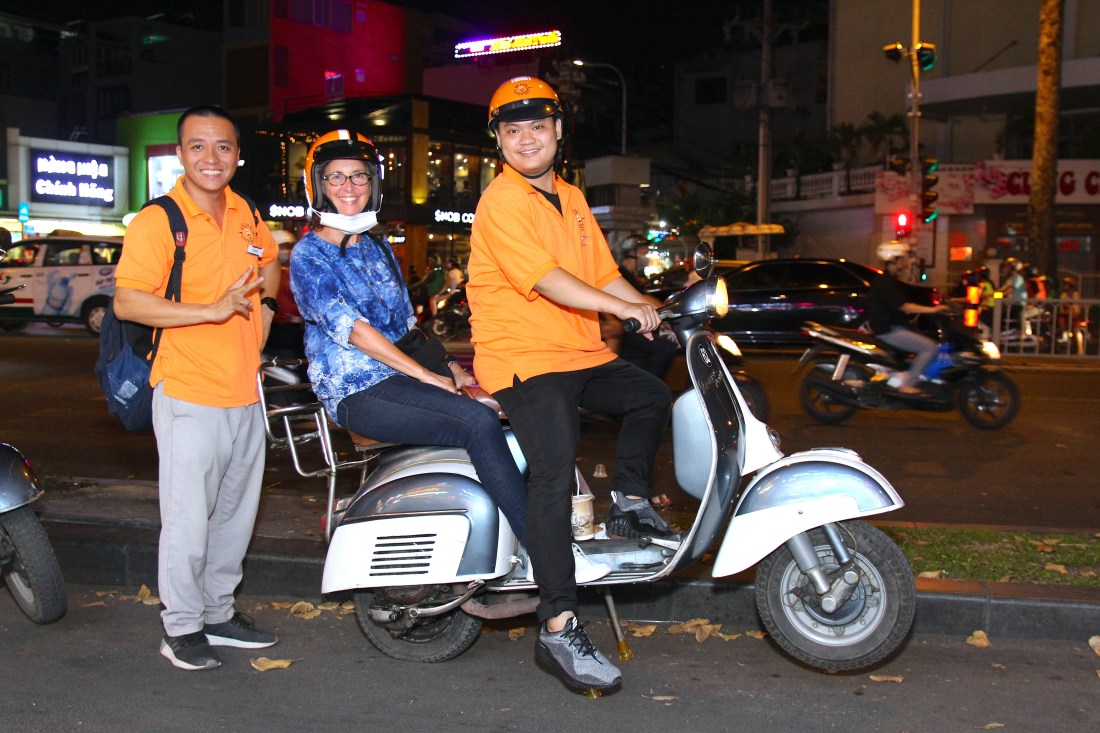
Back in Ho Chi Minh City, we took the Saigon After Dark vespa food tour of the city.  It is a food tour by motorbike.  We stopped first at Cafe Zoom for chips and drinks  and got an overview of the city and the tour from  our guide Binh.

img_4113img_4189img_4190


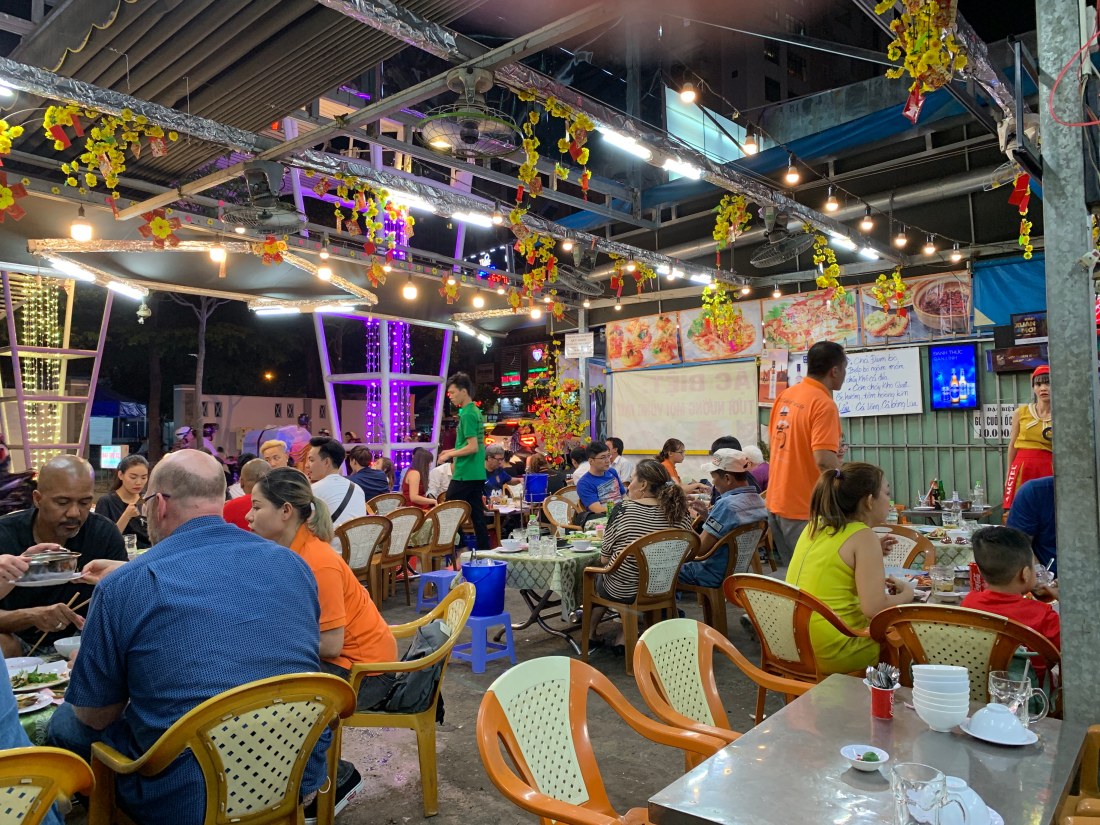
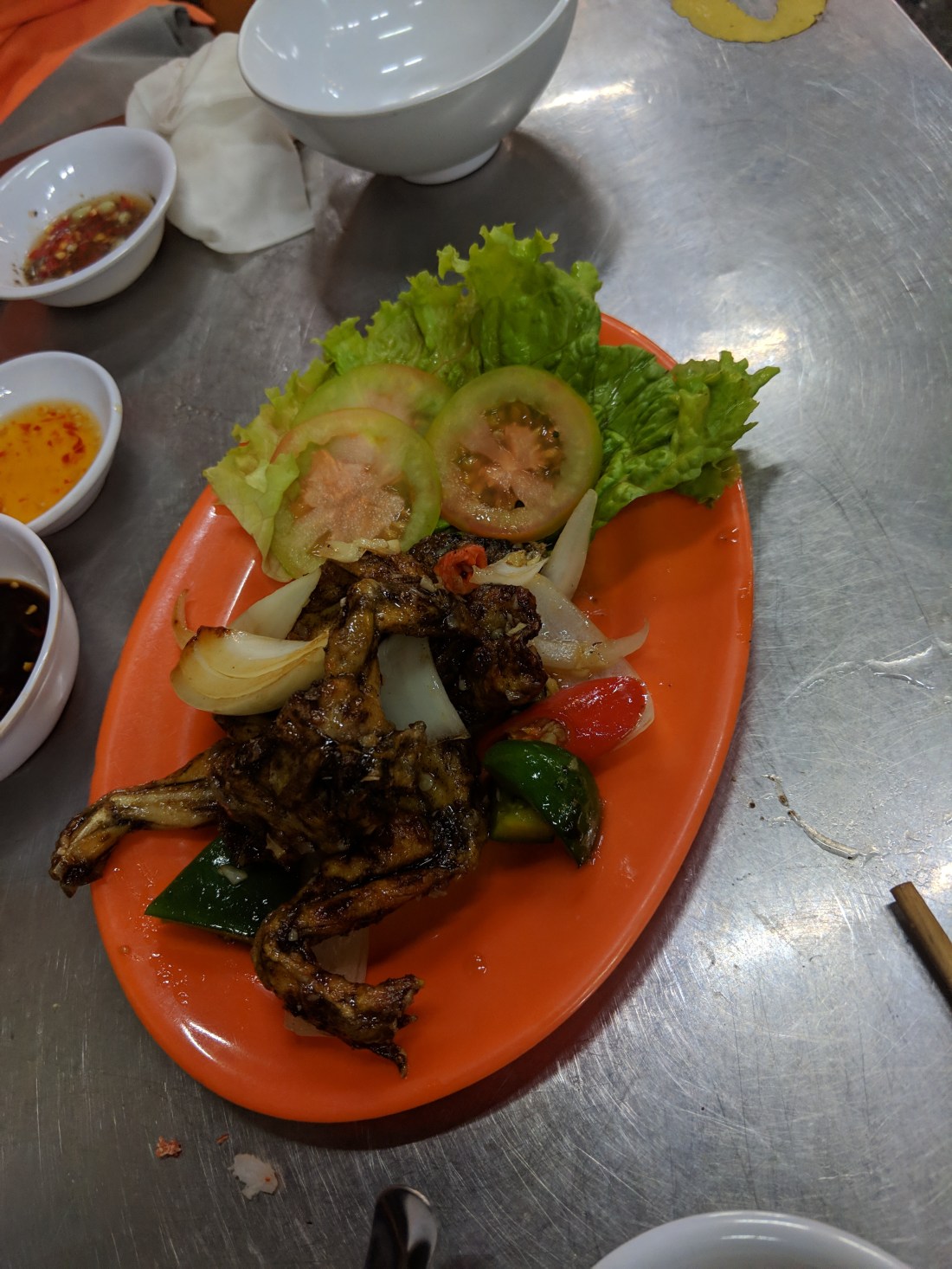
Next stop was at Seafood for delicious crabs, clams, mussels, all made ways we had never experienced, as well as fried noodles, plus beer.  And yes, we tried frogs legs; tastes like chicken.  Then it was on to District 4, over the water, to Banh Xeo for Vietnamese pancakes, and of course more beer.

img_1755

img_20190129_192510

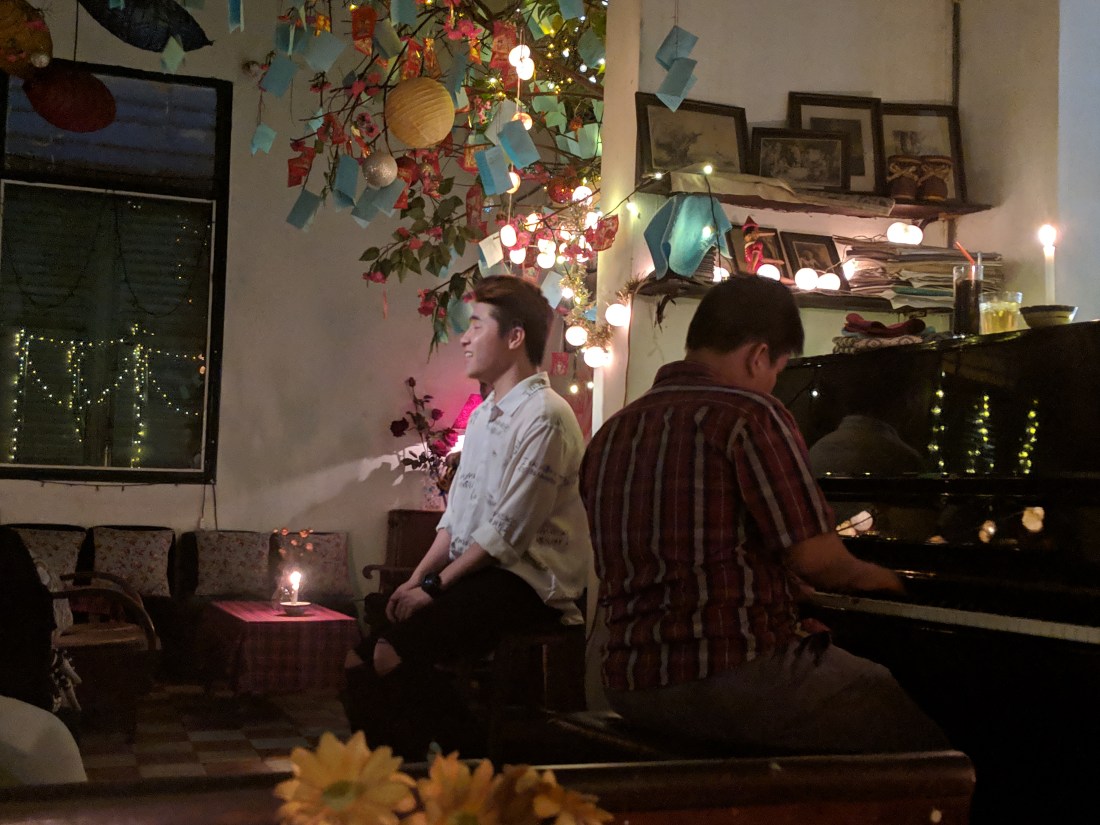
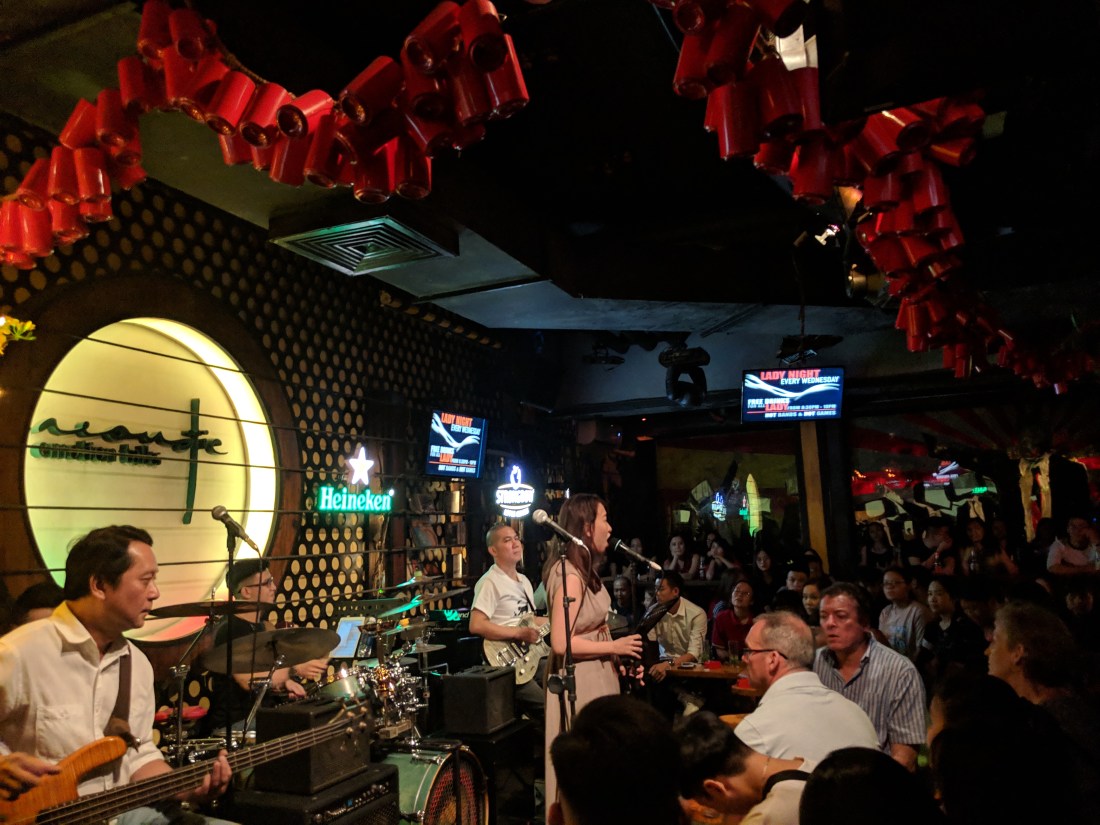
Then we went to Hidden Cafe back in District 1.  At these intimate coffee bars each singer performs exactly 3 songs then moves on to his next venue and another singer joins us.  So it is rotating singers at any venue all night.

img_20190129_210244

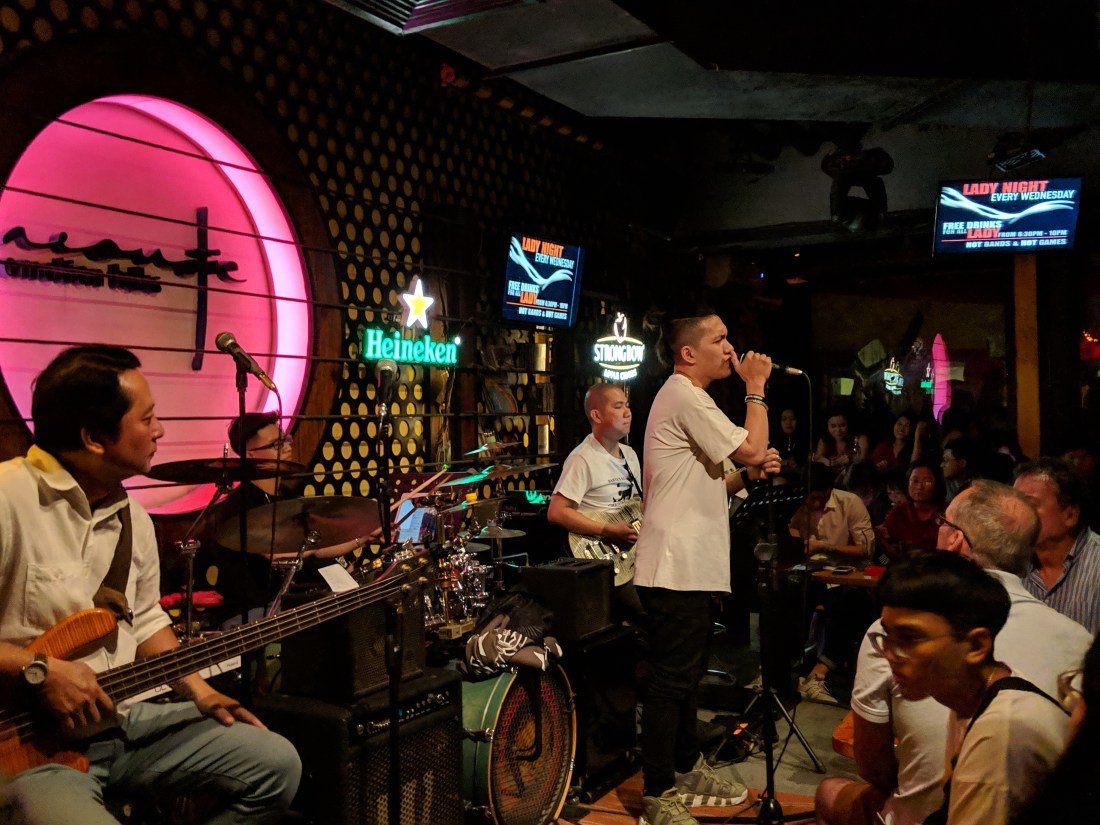
Then it was on for night caps at a Rock Bar, which has the same rotating performers system but much more lively.  Lots of 80’s music, so we had a blast!

img_20190129_213724

img_20190129_221456
Singing Uptown Funk

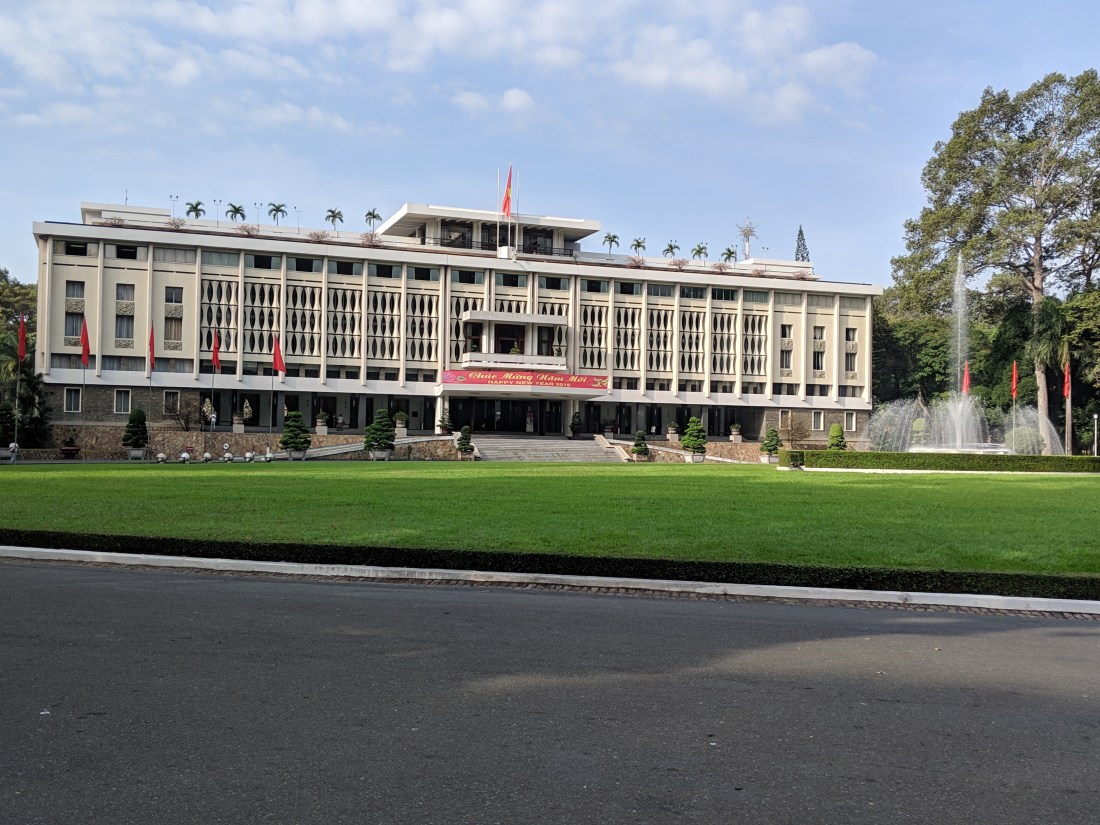
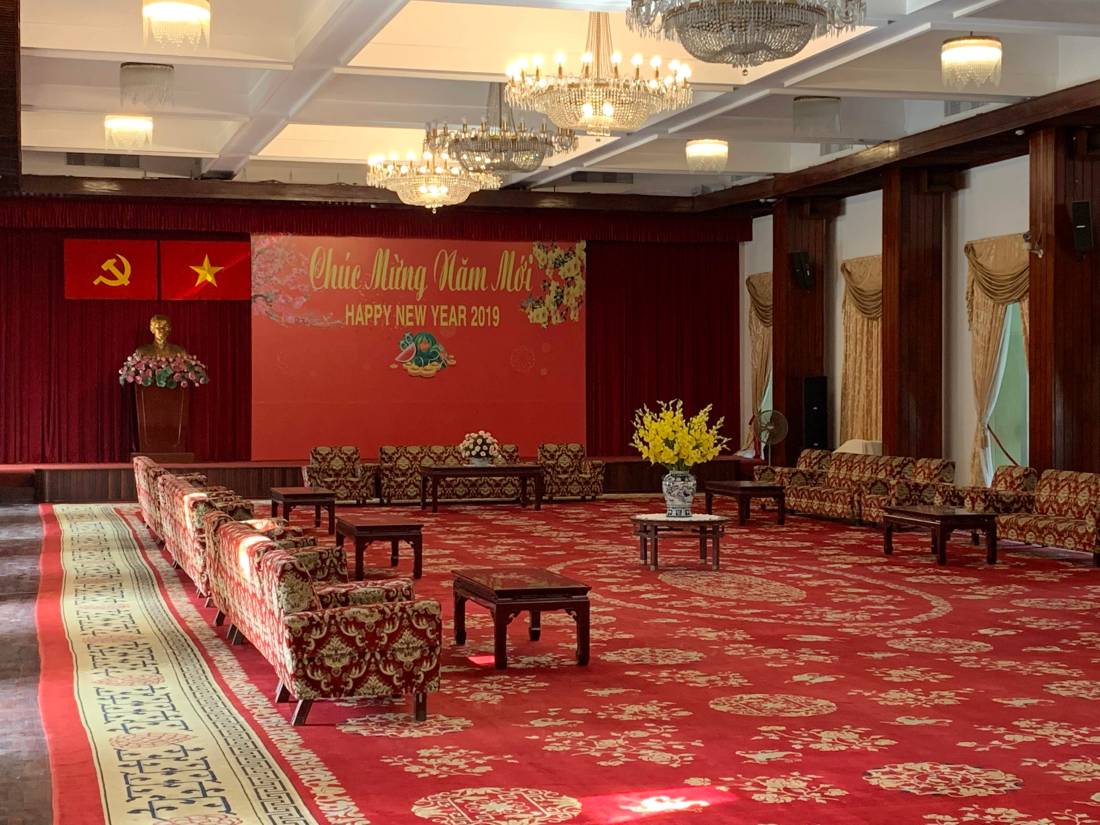
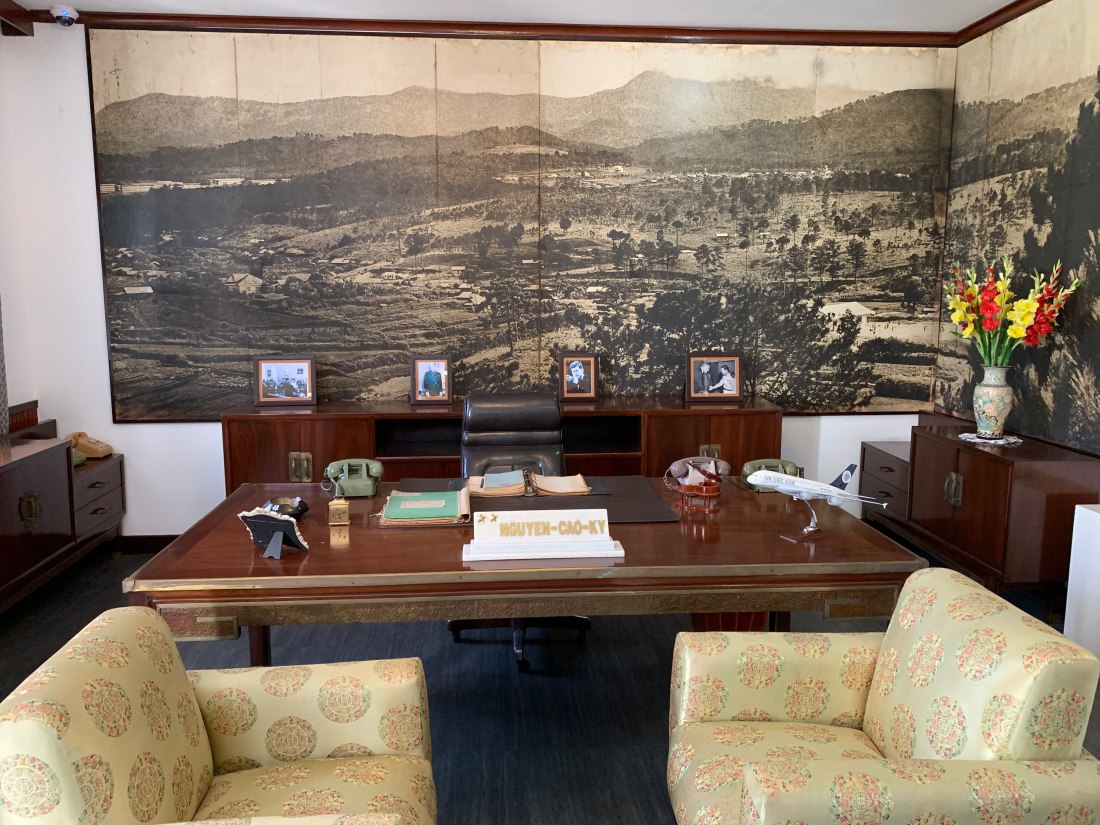
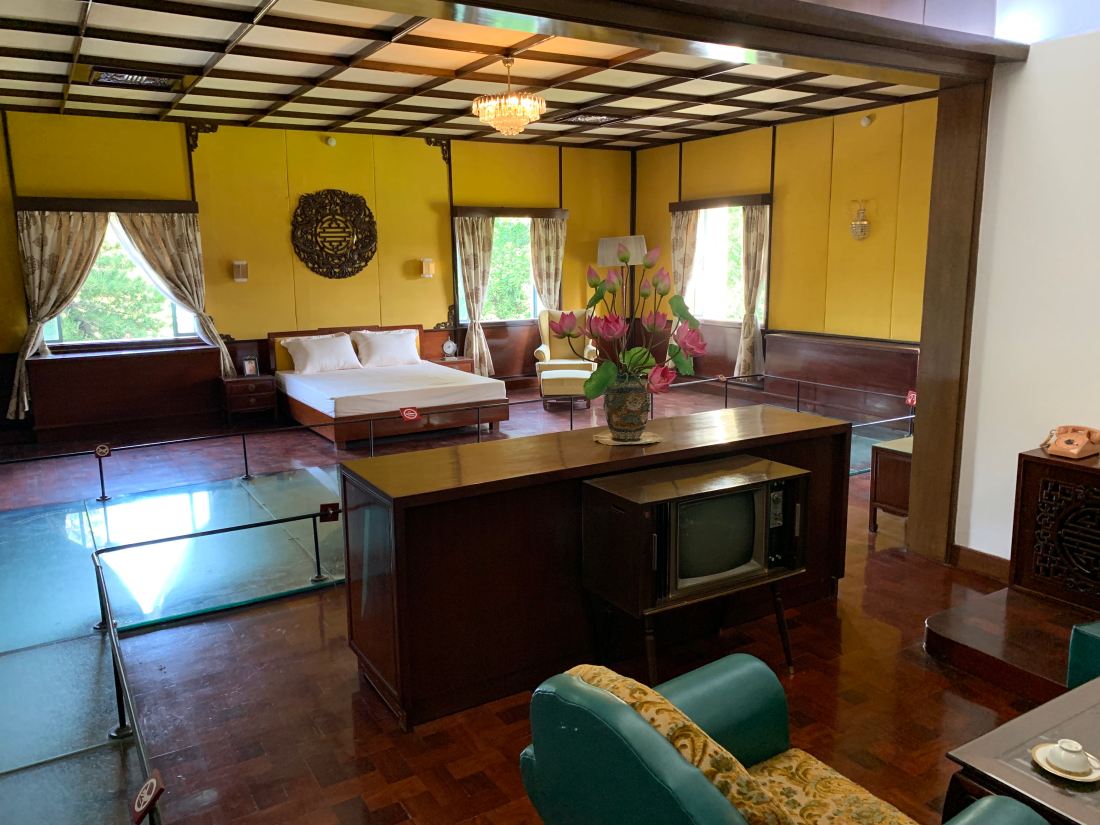
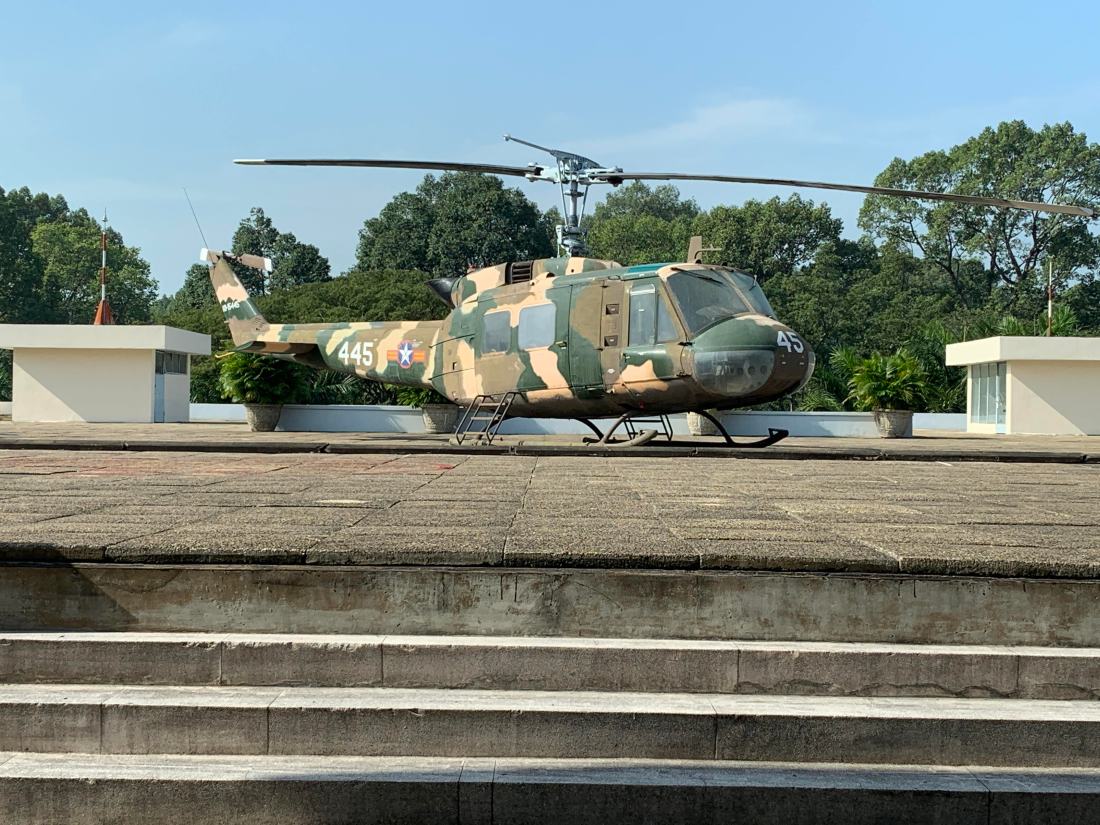
Our last morning in Ho Chi Minh City we visited the Reunification Palace which had been closed for an event we we took our tour of the city a few days ago.  It is the sight where North Vietnamese tanks broke through the fence on April 30, 1975 ending the war.  The South Vietnamese president had fled the county 5 days earlier.  The South Vietnamese put down their arms once the palace had been breeched.  Prior, it had been both the home and offices for the President and offices for the Vice President of South Vietnam, similar to the White House in DC.  The original building Norodom Palace had been built by the french in the late 19th century but was destroyed in 1962 by a North Vietnamese pilot who had infiltrated the South’s army and was in an allied plane when he dropped the bomb.  The original building was cleared away and a whole new palace was erected.

img_20190130_082934img_1764img_1774img_1771img_1775img_1776


Siam Reap, Cambodia Jan 19-23

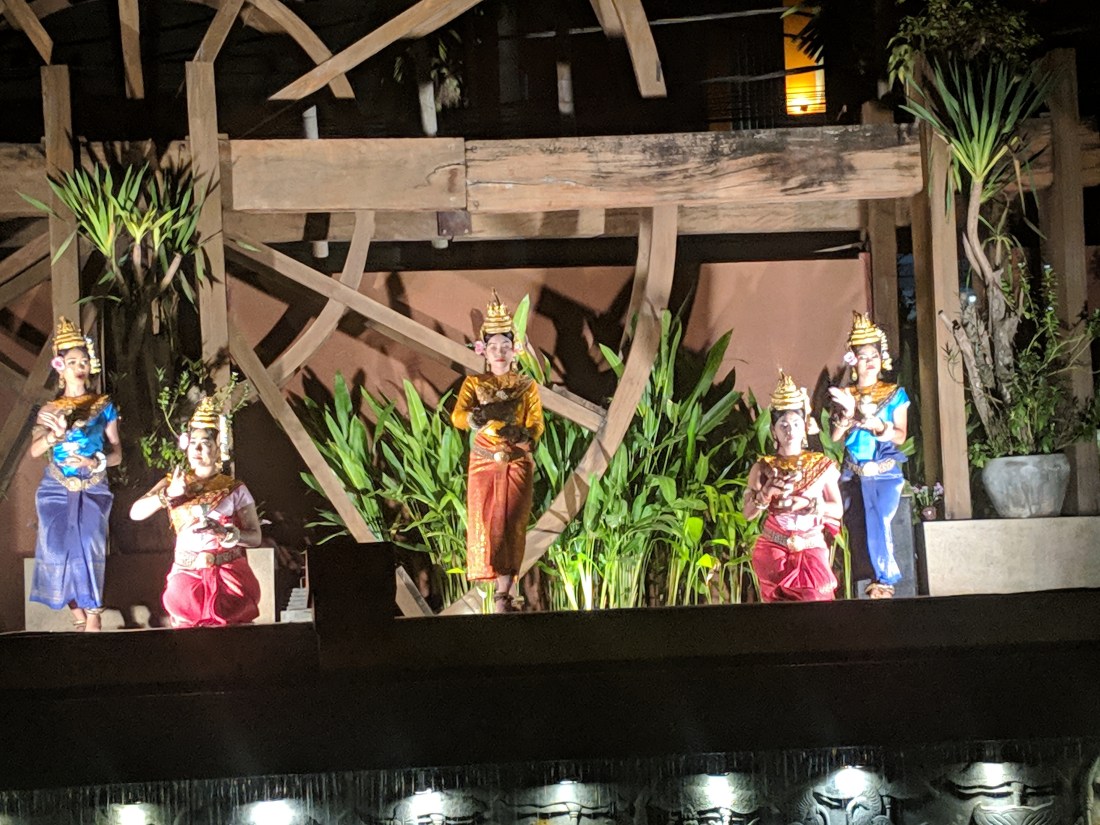
Once again we have managed to book a really lovely hotel convenient to everything.  The Golden Temple Residence treated us our very first night to dinner and a Cambodian show of singing and dancing, all poolside.

IMG_20190119_195026.jpg

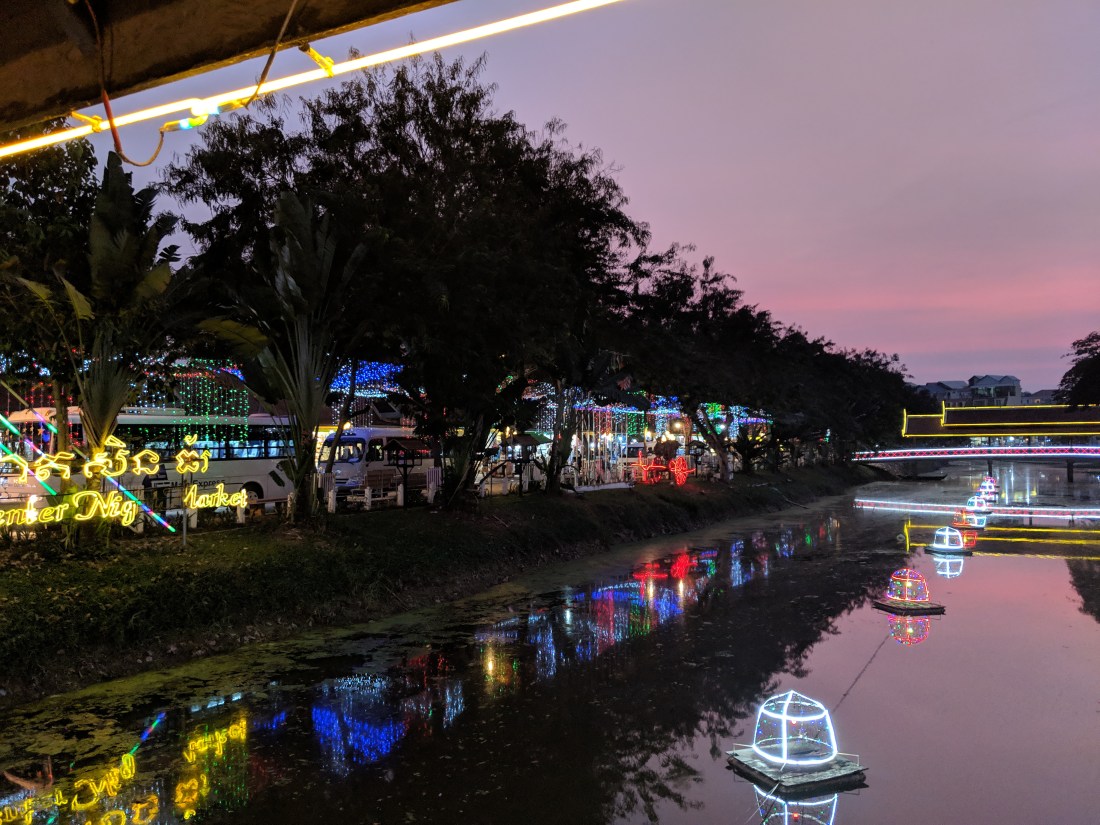
We then strolled through the night market which, compared to the others in SE Asia so far, was very commercial and unimpressive except from the outside.

IMG_20190119_181500.jpg

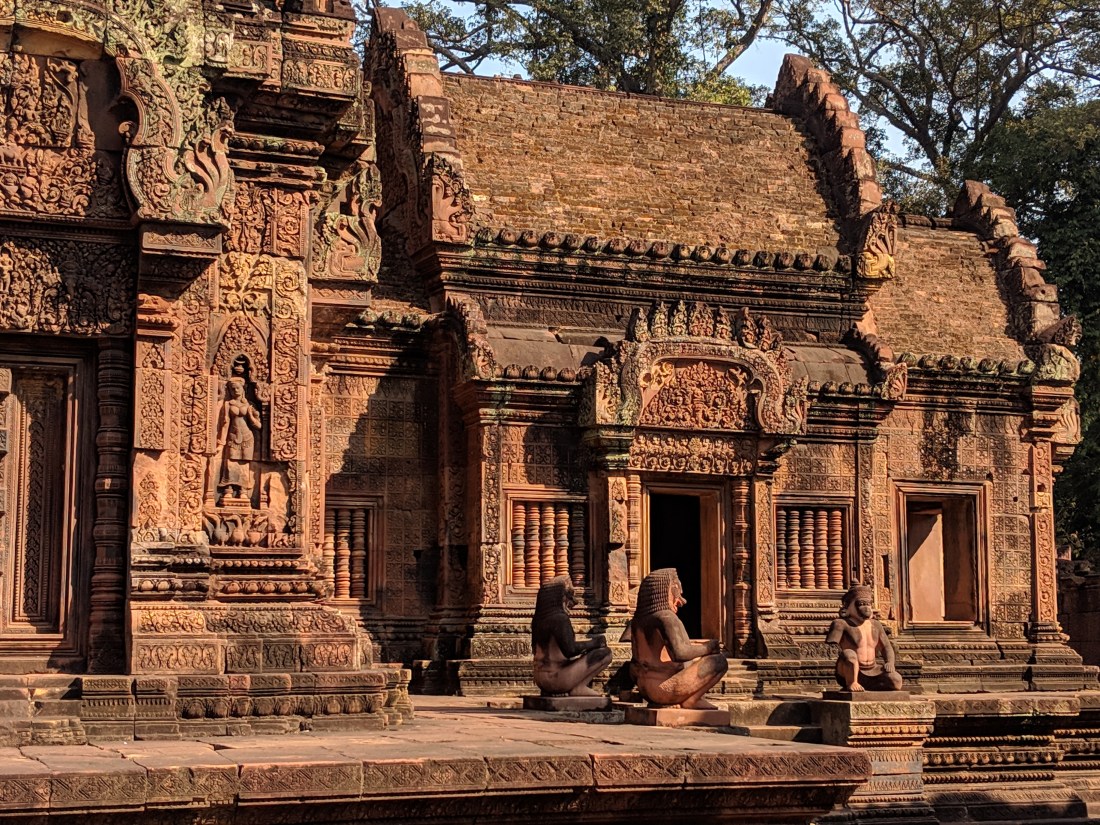
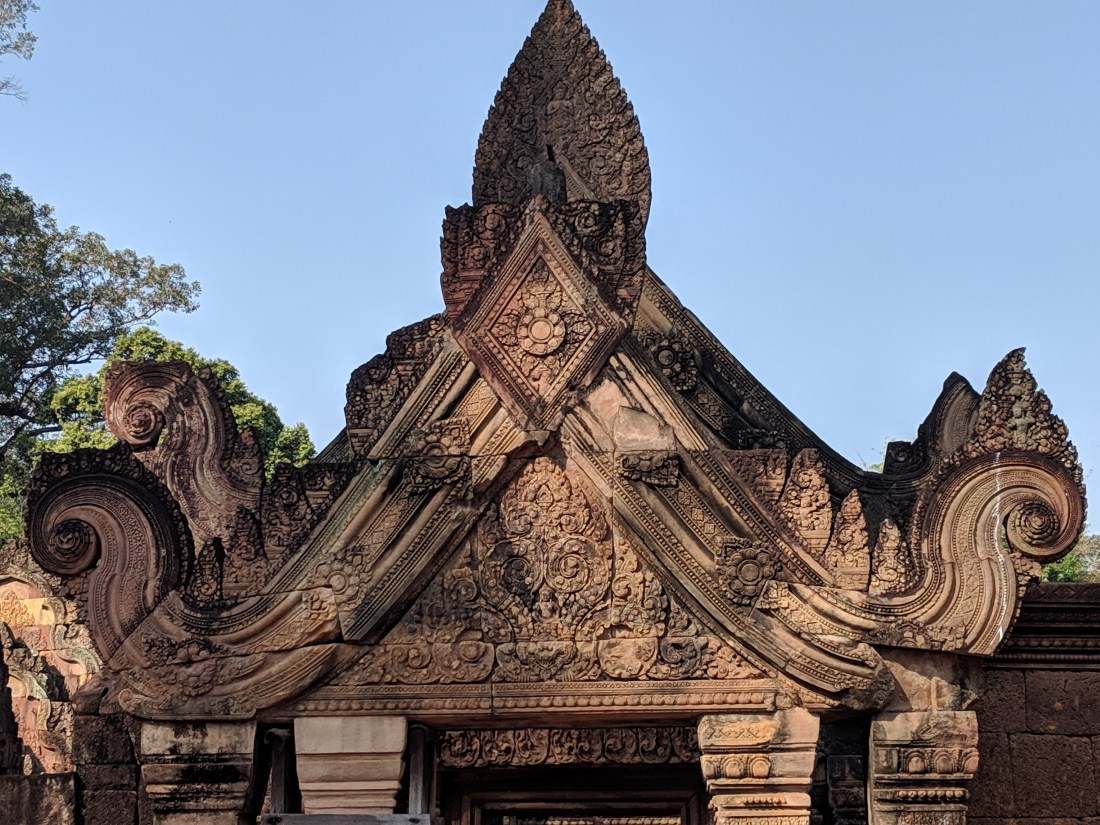
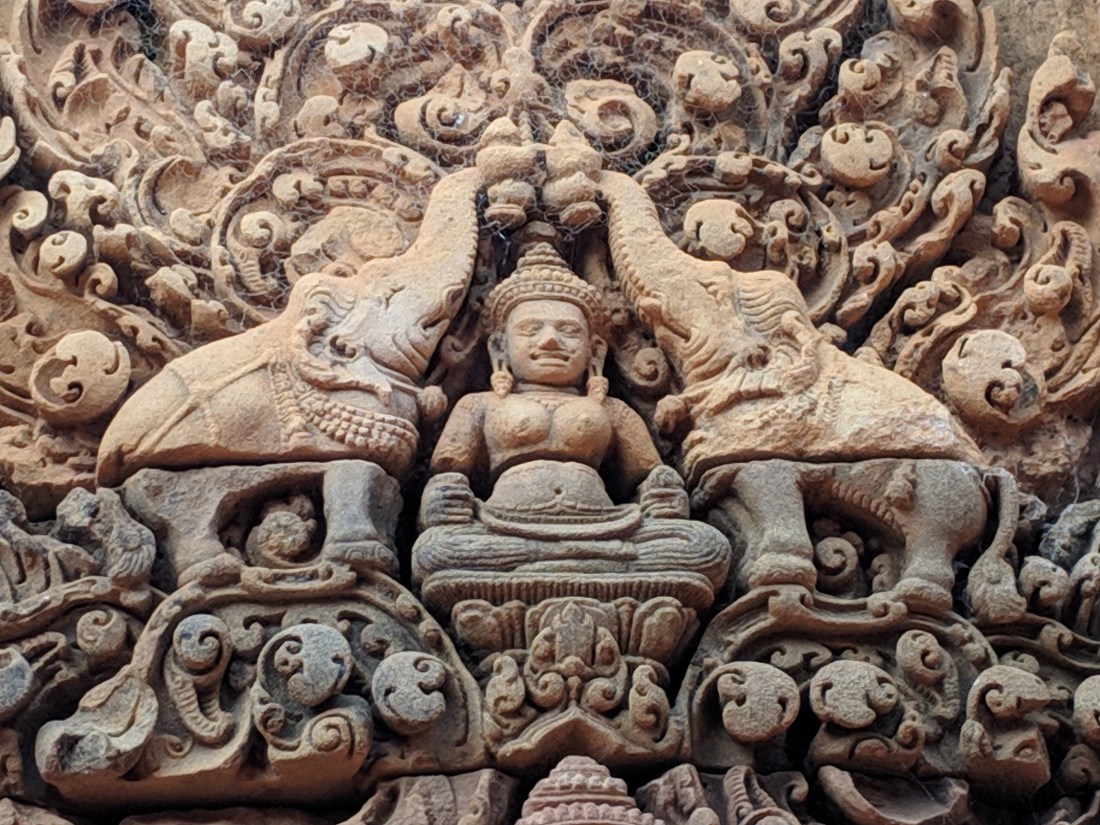
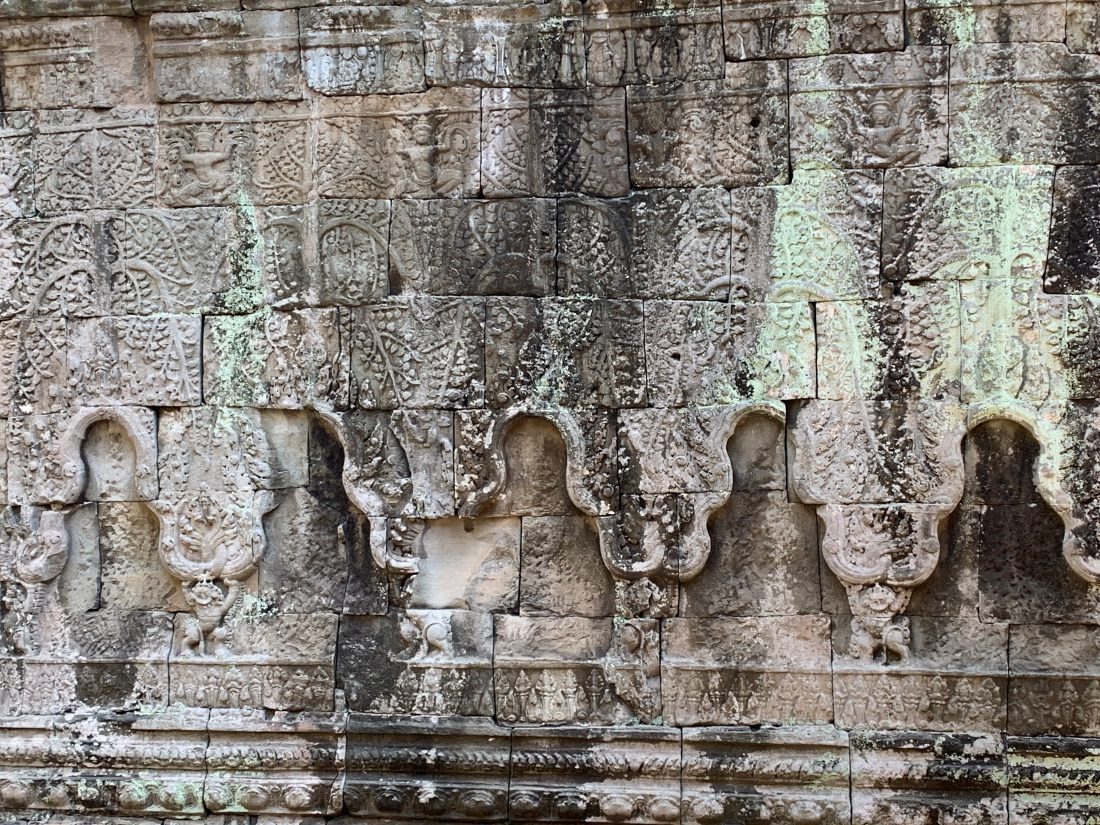
The following morning we started with our temple tours.  First on the agenda was Banteay Srei  which is actually about 27 km outside of town.   The name means “citadel of beautiful women,” but it has nothing to do with women.  It was so named by the explorers only because of its exquisitely beautiful carvings.  It was built in the early 10th century as a Hindu temple dedicated to Shiva, the god of destruction.  It is the only temple in the area built not by a king but by his counsellor, who was the teacher of the artisans, so he elicited the help of all his students for the carving of the temple. It is built in red sandstone, which lends itself to carving.  When looking at the photos, note the depth and intricacy of the carvings – and 10th century!

IMG_20190120_094253.jpg

IMG_20190120_092027.jpg

IMG_20190120_092309.jpg
Shiva


IMG_20190120_093024.jpg
burning of Khāṇḍava Forest
IMG_20190120_094234.jpg
one of the many devatas located throughout the temple


img_20190120_091312

img_20190120_092313
Shiva again

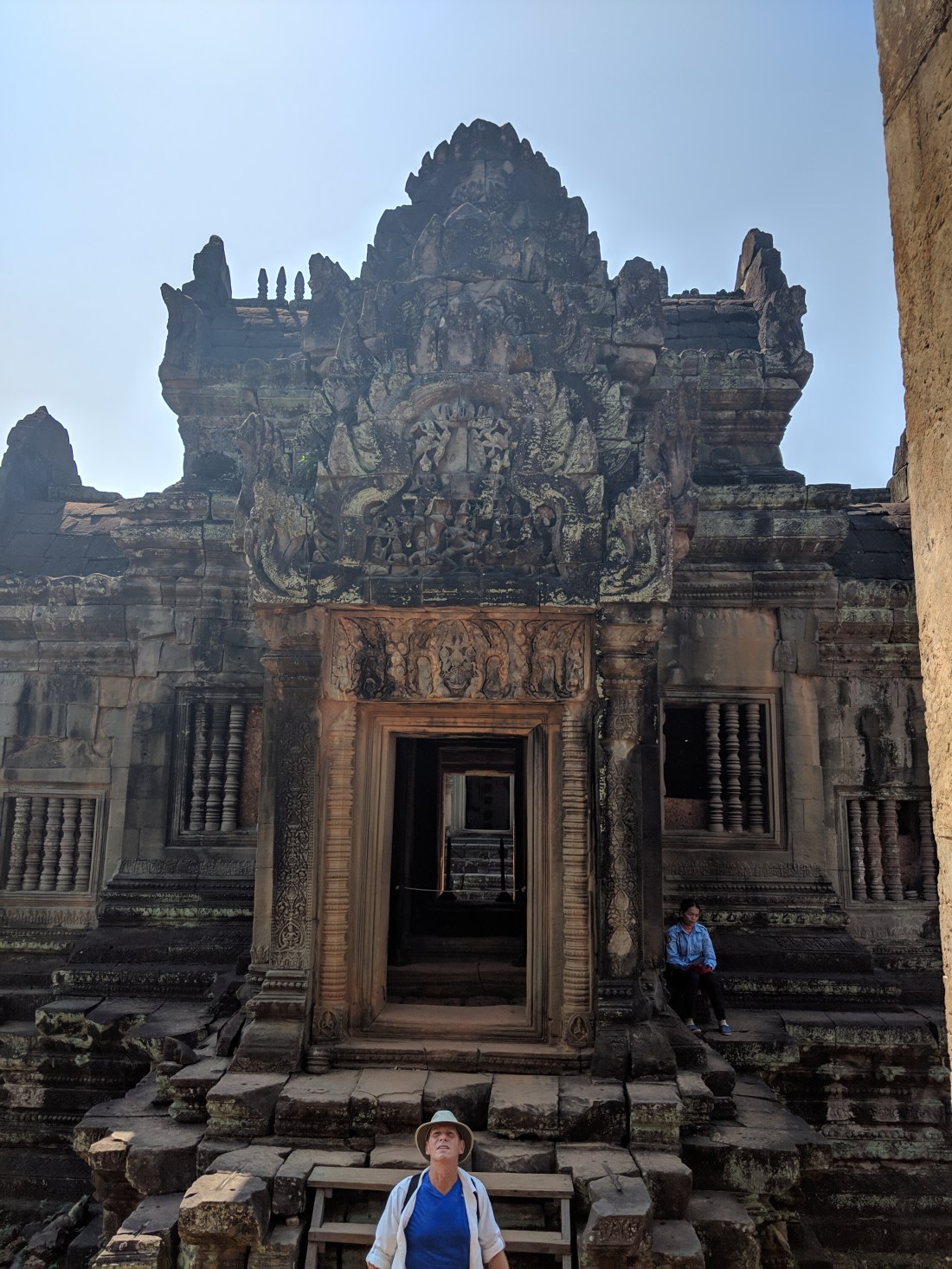
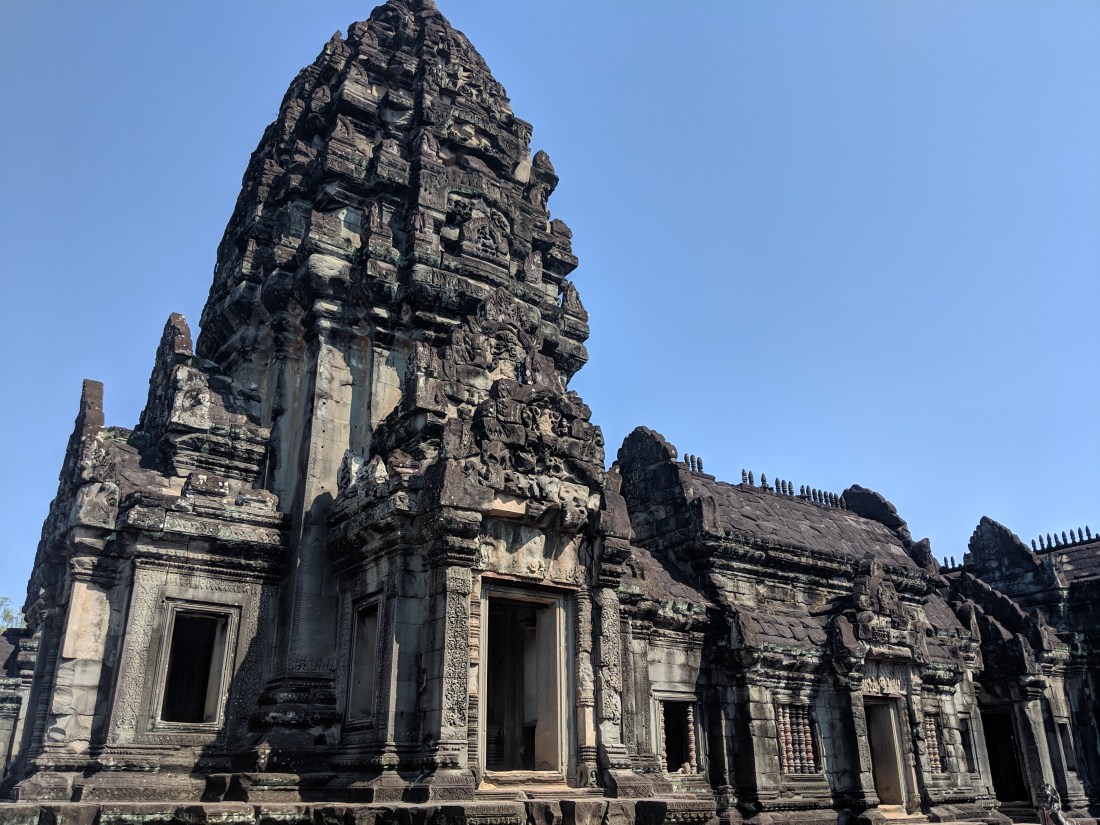
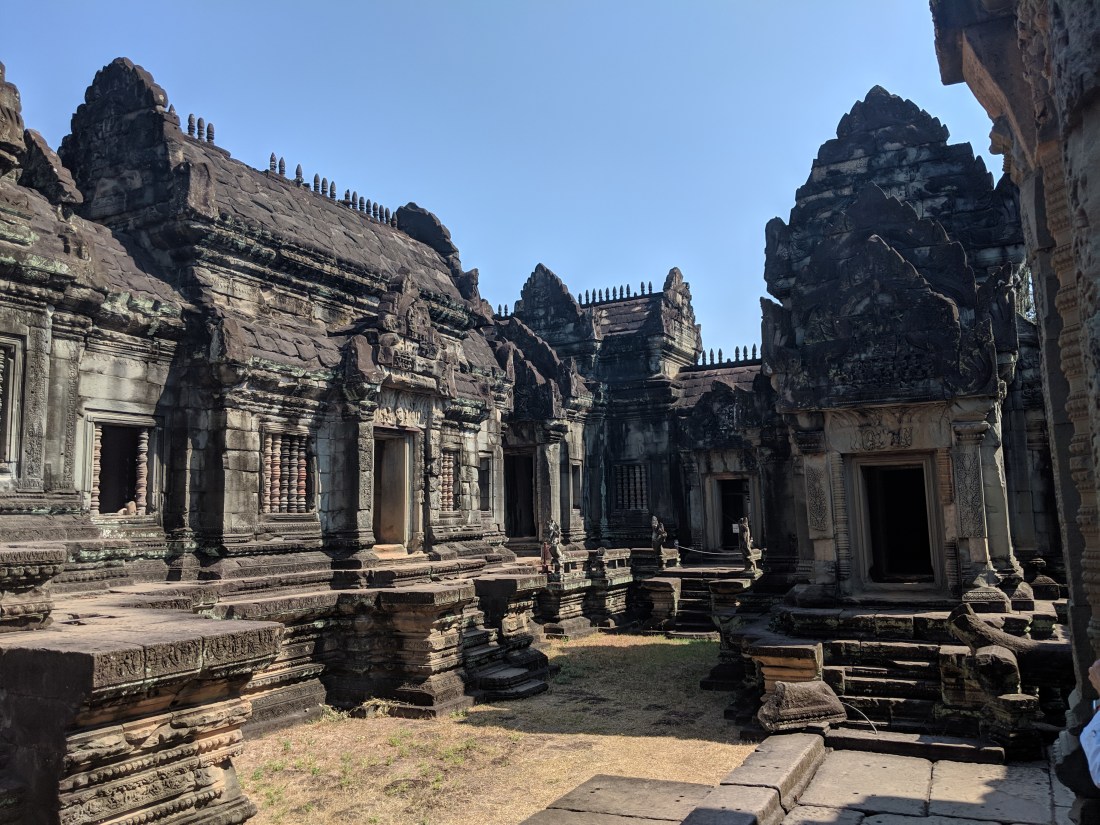
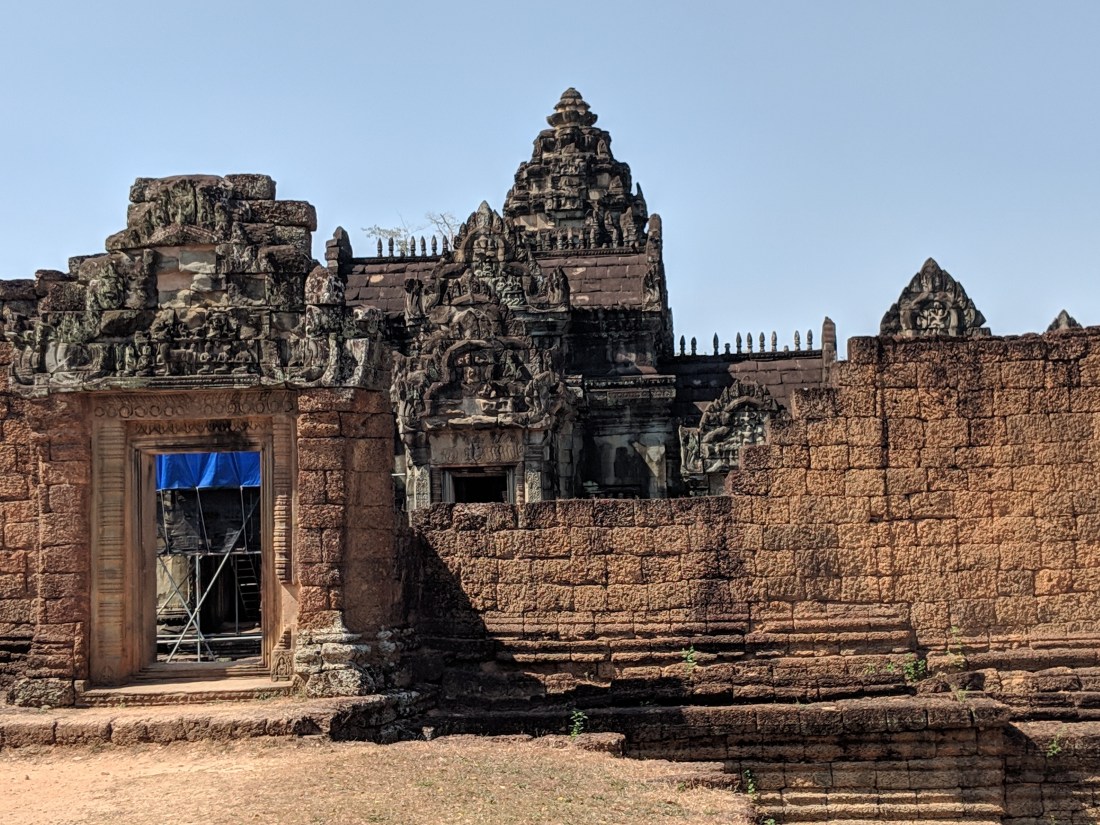
Our next visit was to Banteay Samre, the citadel of the Samre people, ie built for the common folk for prayer, unlike most of the temples that are only for the royal family’s use.  It was built in the early 12th century also as a Hindu temple dedicated to Vishnu, the god of preservation of life and truth.  The single ogival tower is of the Angkor Wat style.

img_20190120_104713
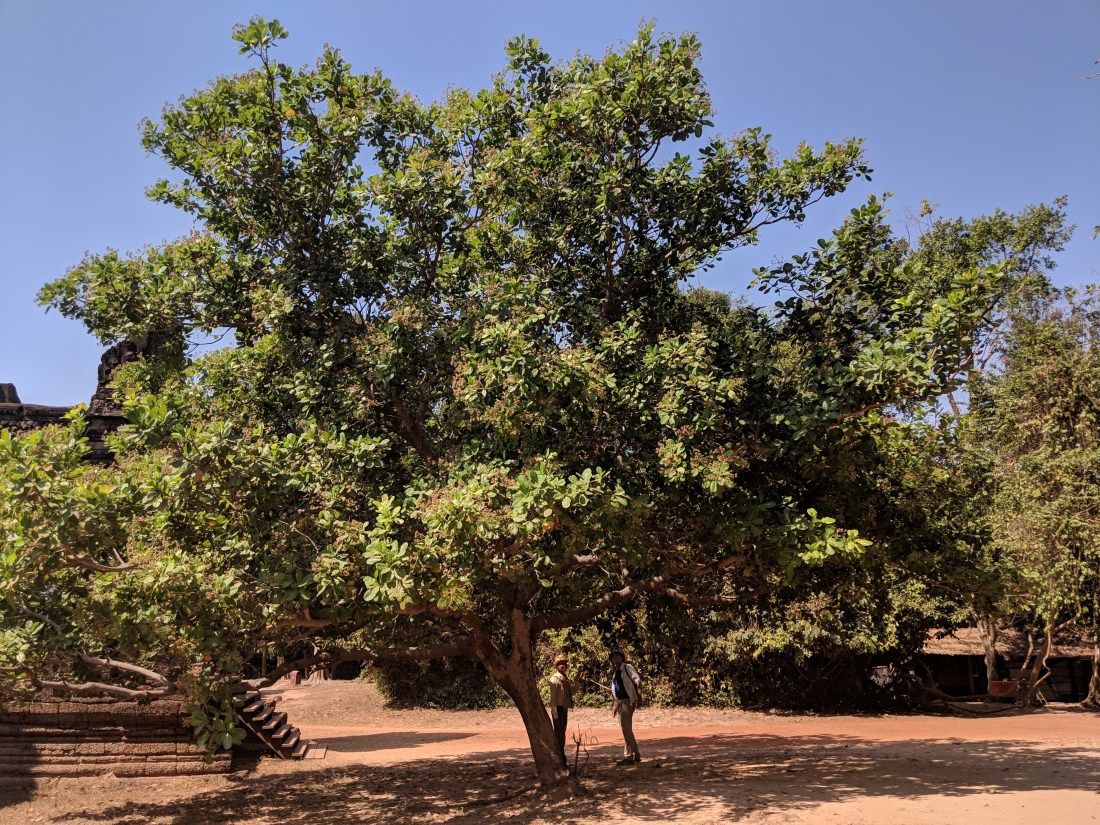
a cashew nut tree outside the temple.  cashew farming is a significant industry in Cambodia

img_20190120_105030img_20190120_105712img_20190120_105736img_20190120_105933img_20190120_110157

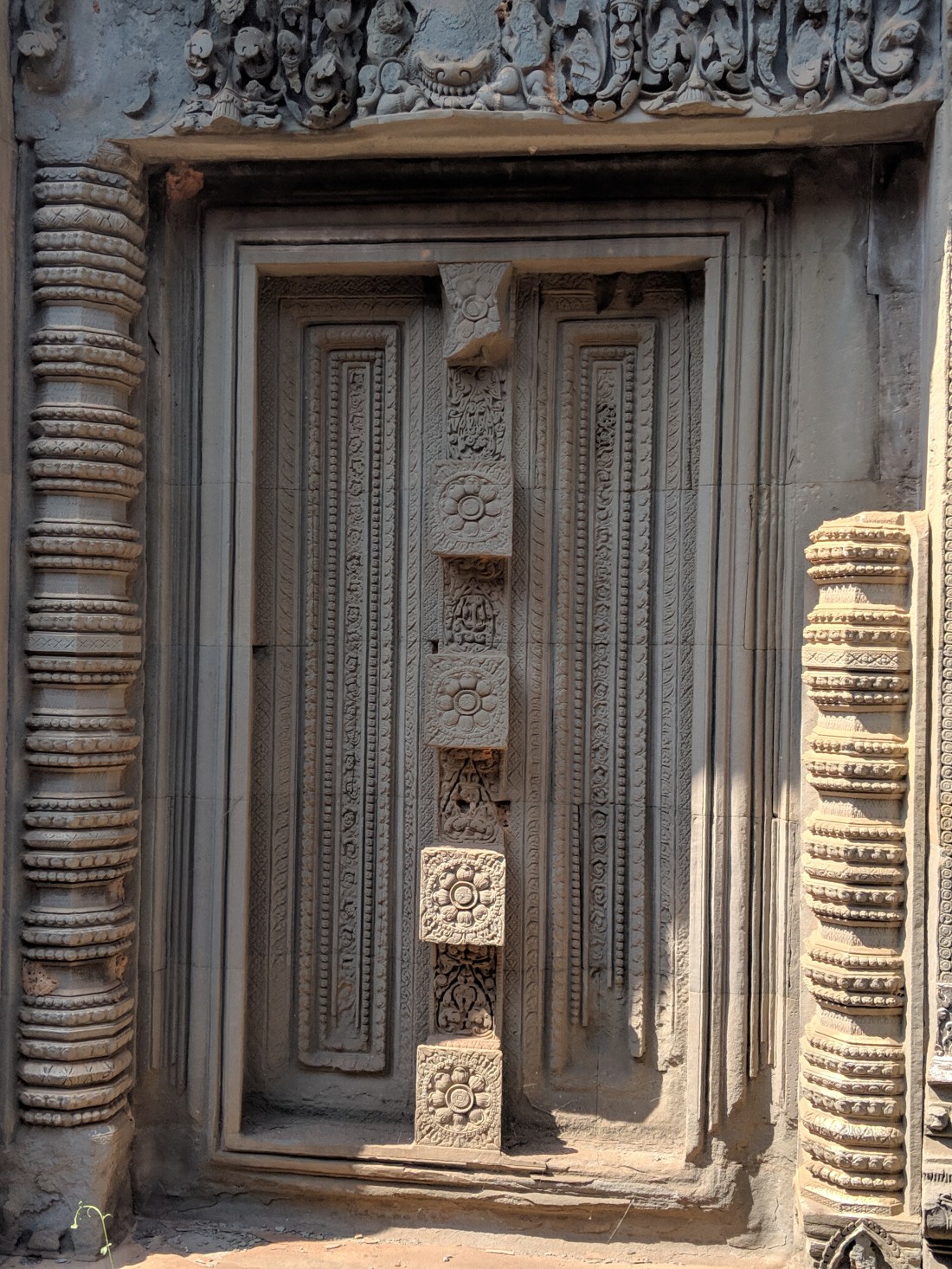
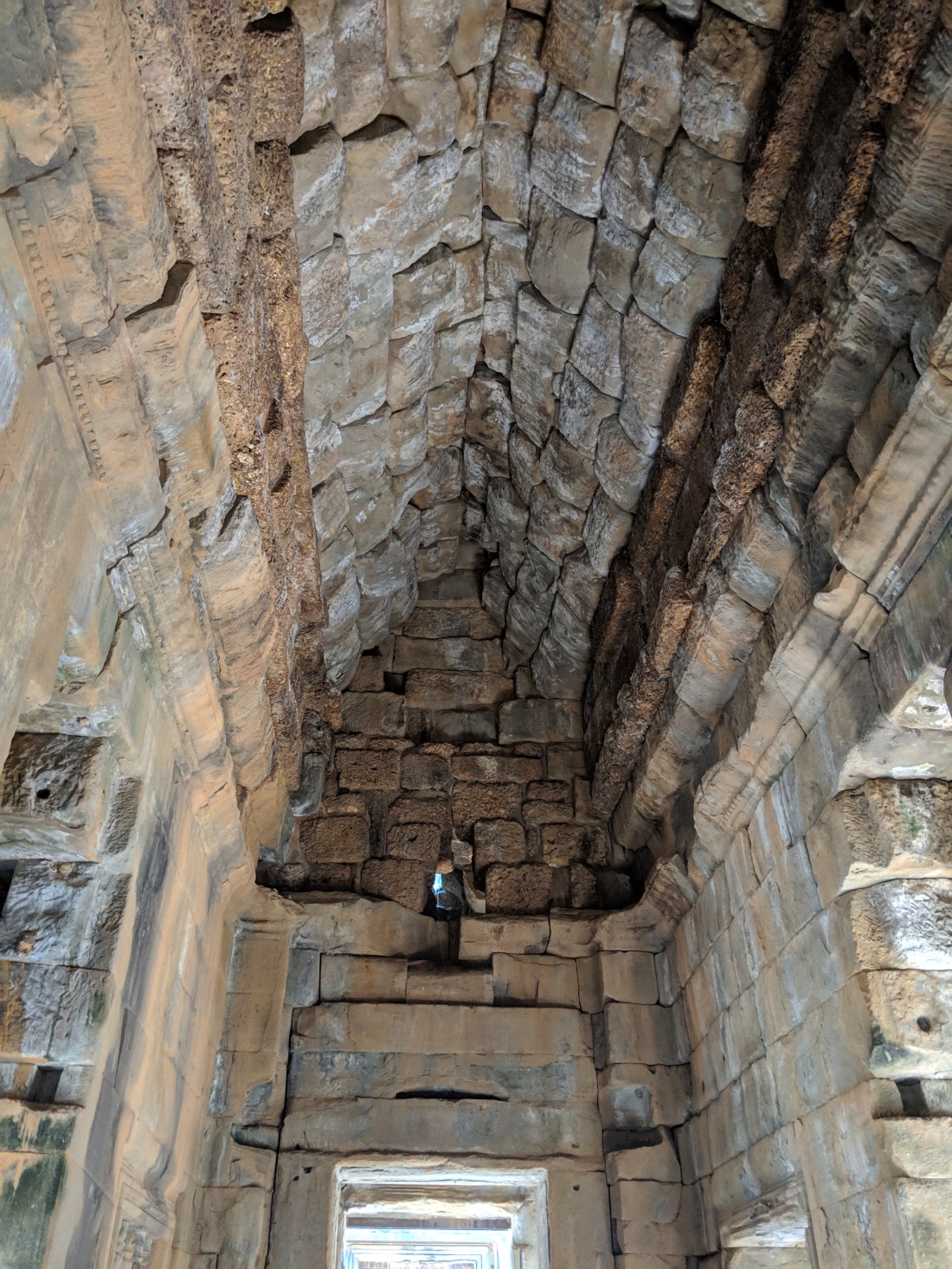
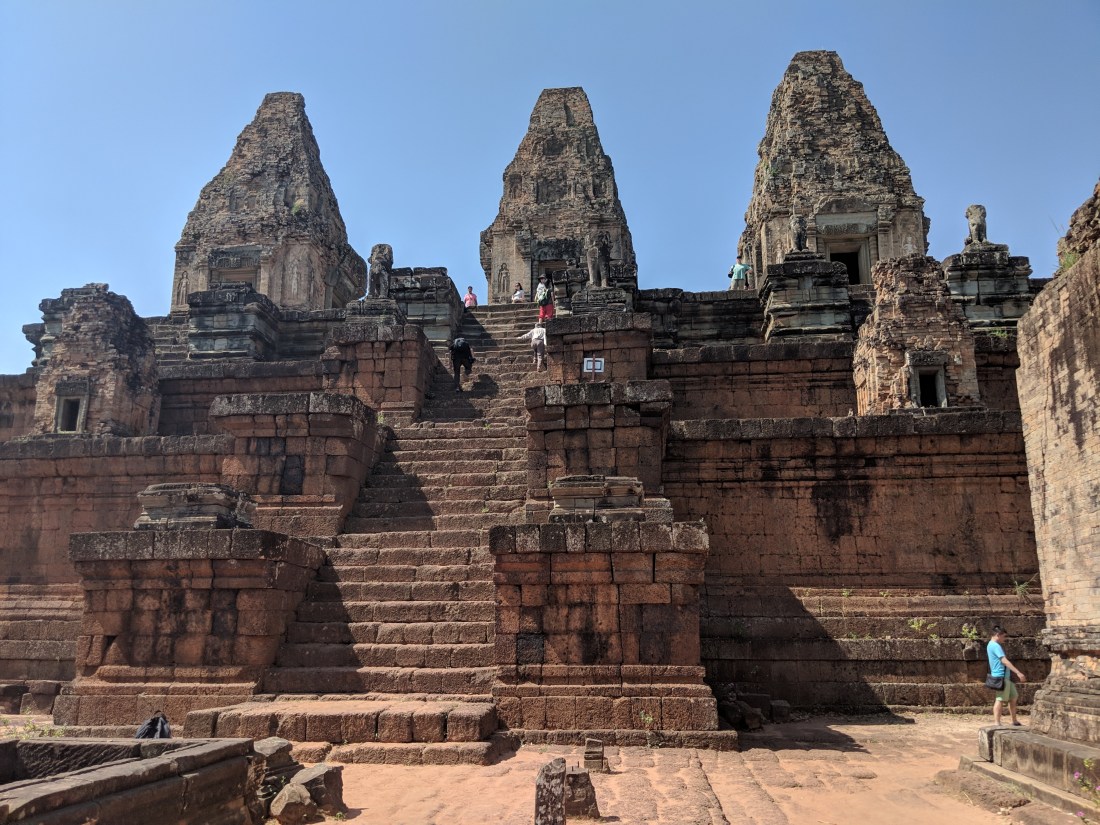
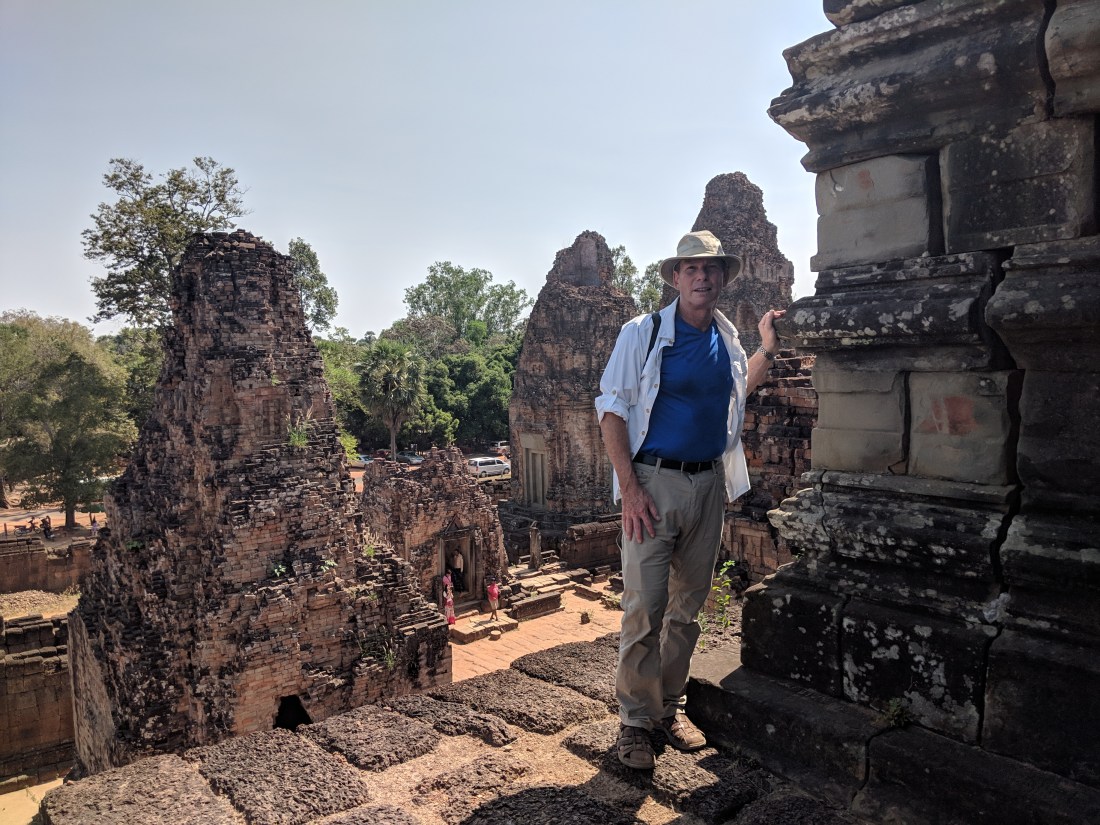
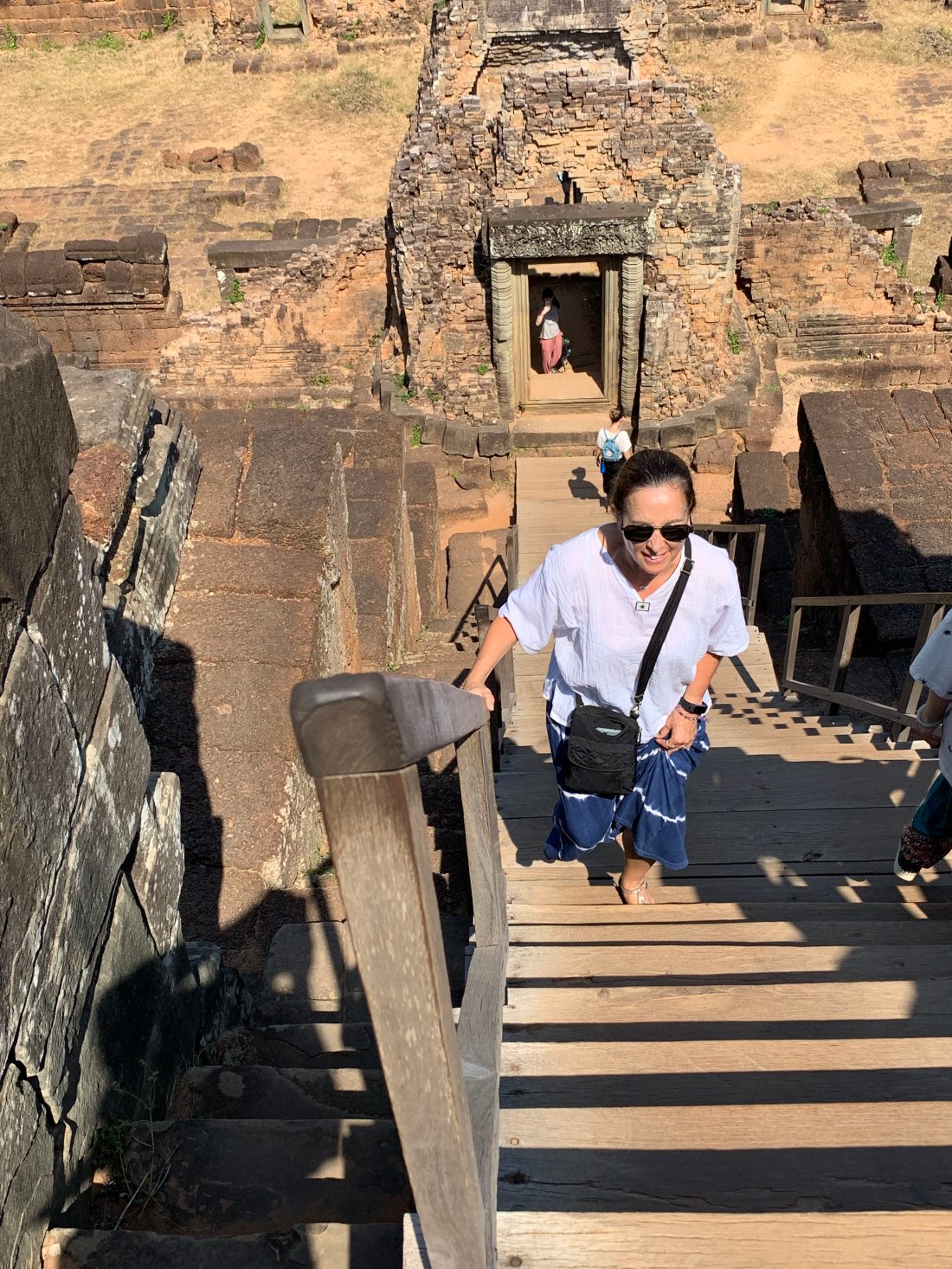
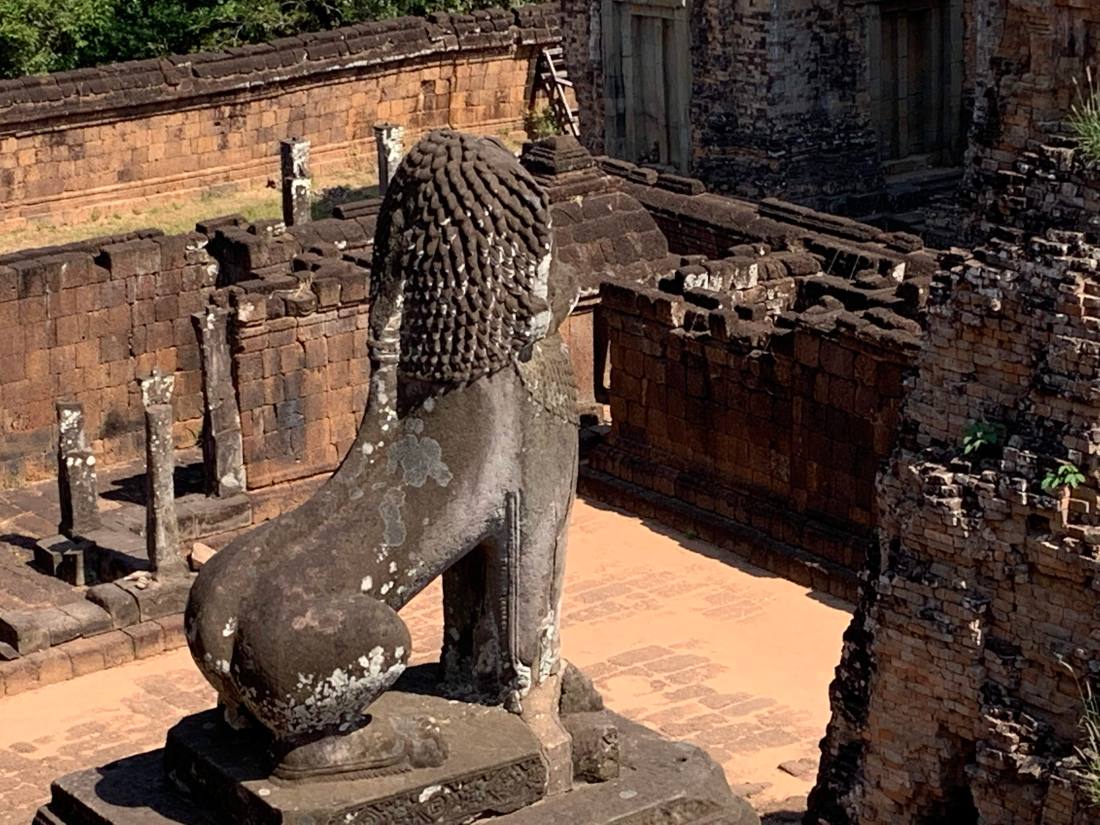
Our next stop of the morning was Pre Rup, built in the mid 10th century, also dedicated to the Hindu god Shiva.  It is built mostly of laterite and brick, giving it its reddish hue.  It was built by the same king whose counsellor built the first temple.

img_20190120_114643img_20190120_110725img_20190120_114003img_1271img_1276

After climbing around in the heat, we enjoyed a relaxing lunch by Srah Srang, an Angkorian royal pond.

img_20190120_115903In the afternoon we visited Angkor Thom, The Great City, the ex-prosperous city of the Great King Jayavaraman VII’s era, built in the late 12th century.  He has come to be my favorite king in history, but more about him later.  Angkor Thom was the last and most enduring city of the Khmer empire.  King Jayavaraman VII built his central temple, a Buddhist one, Bayoun,  in the center of the city, but he incorporated preexisting Hindu temples: Baphoun and Phimeanakas without destroying or altering them.  The city was abandoned  by the Khmer when invaded and then looted by the Siamese in the 16th century.

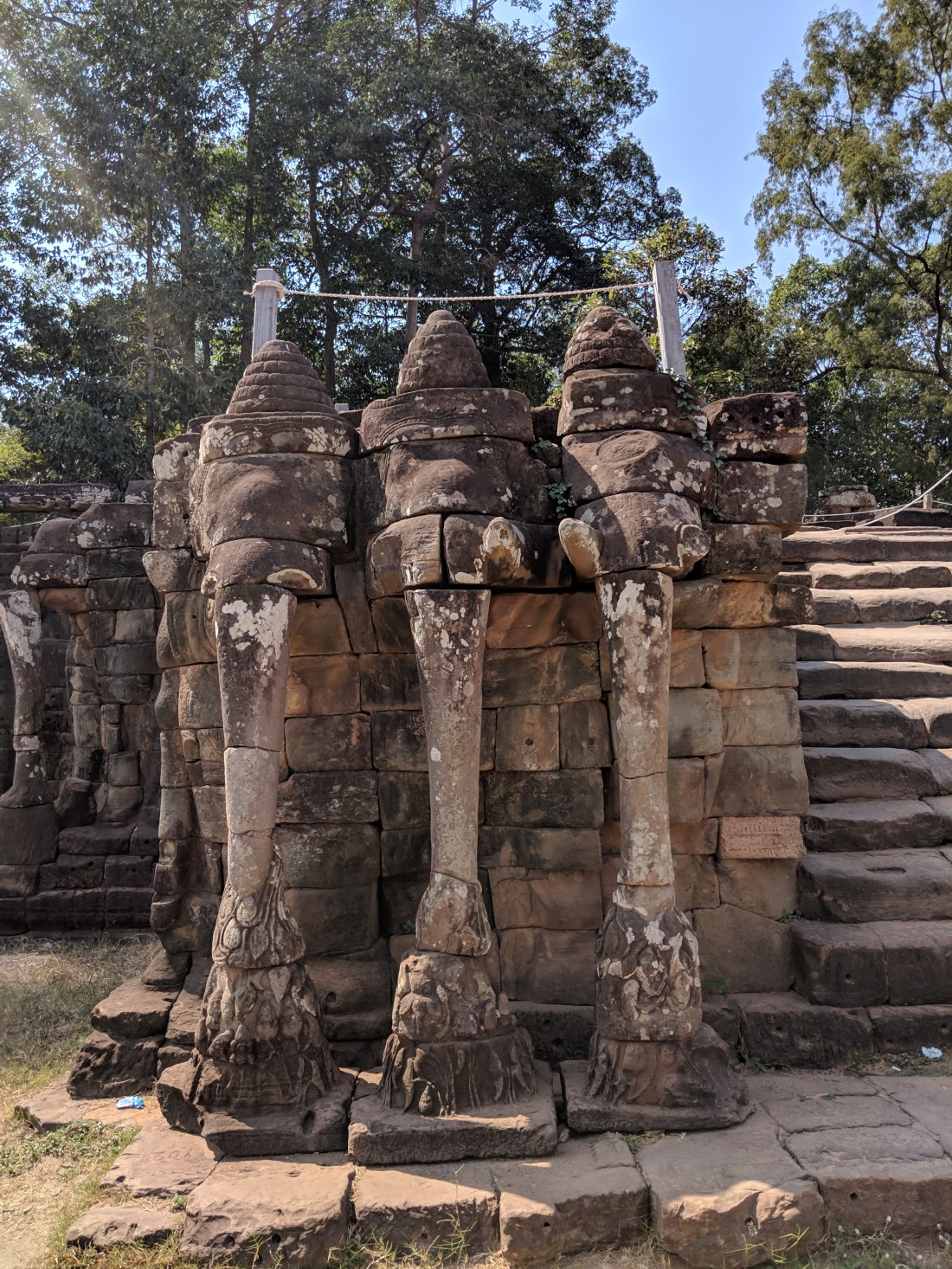
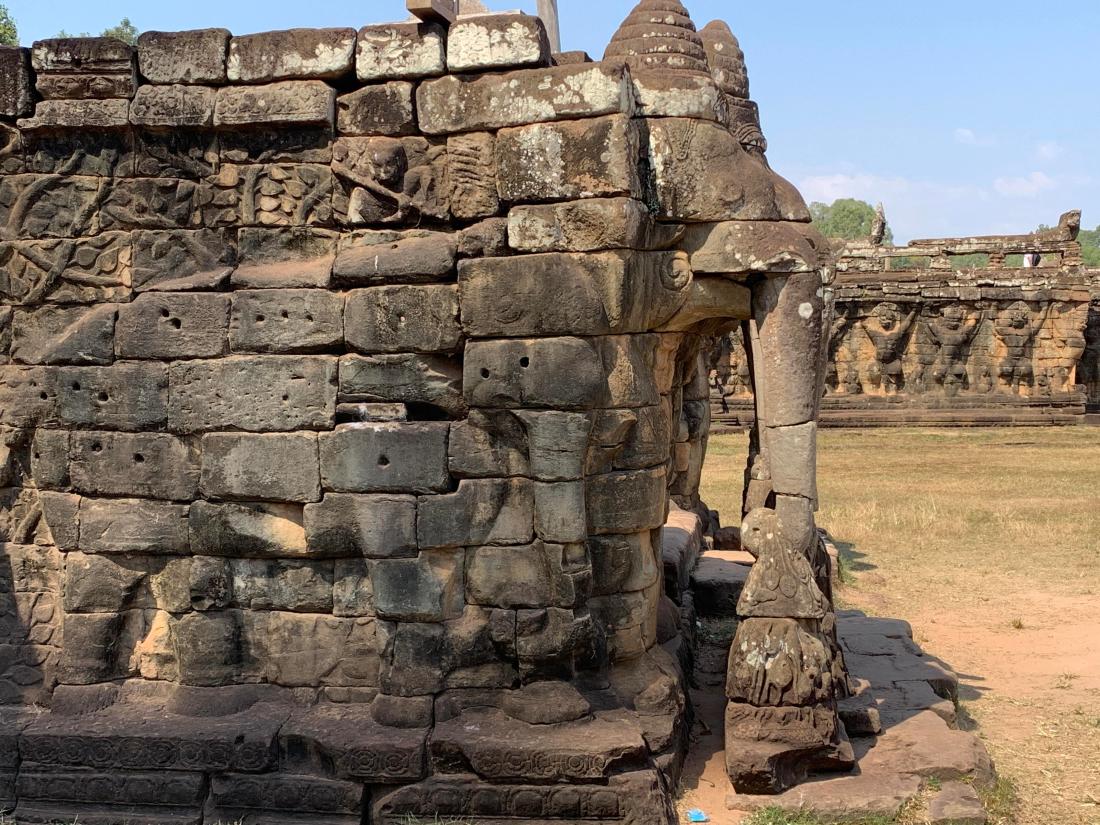
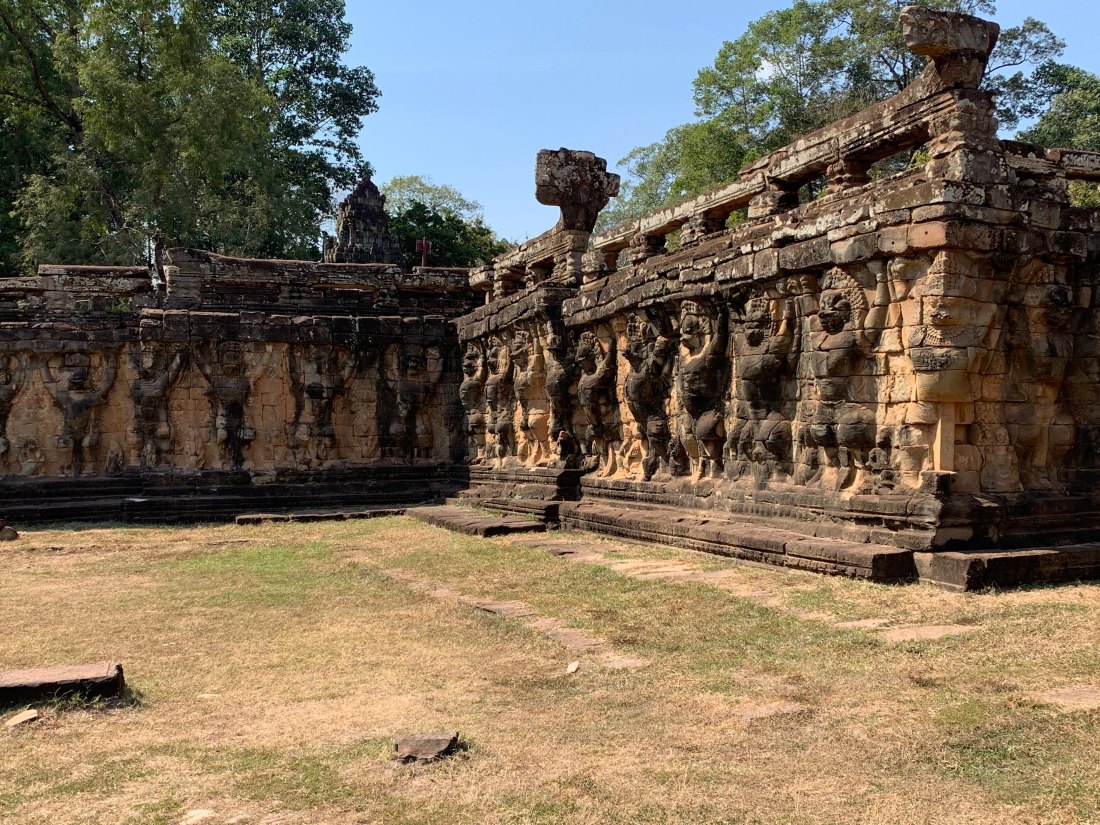
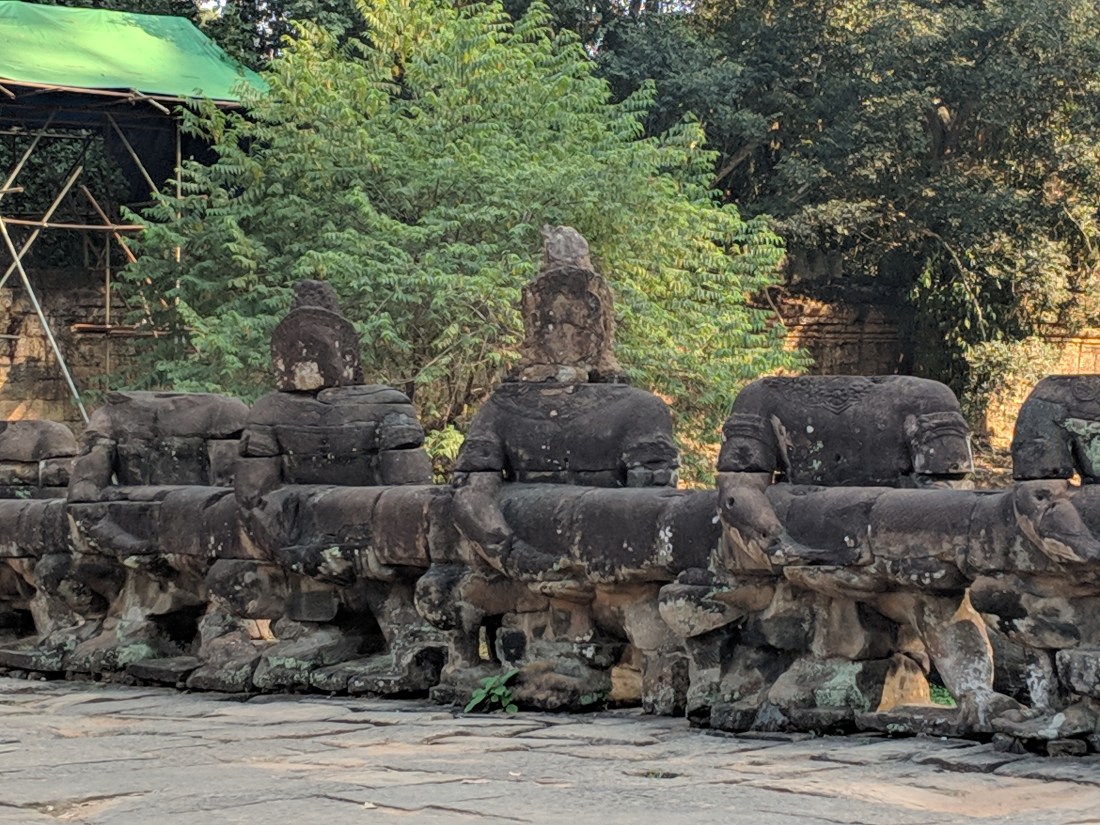
We started at the elephant terrace, which was added on to the Phimeanakas temple  by King Jayavaraman VII to view his returning army.

img_20190120_132441img_1283

img_1281

And Phimeanakas,  which is a Hindu temple in the Khleang style, built at the end of the 10th century, during the reign of Rajendravarman, in the shape of a three tier pyramid.  King Jayavaraman VII adapted it as a buddhist temple and used it personally.  He built his royal palace behind it, none of which remains.img_1293

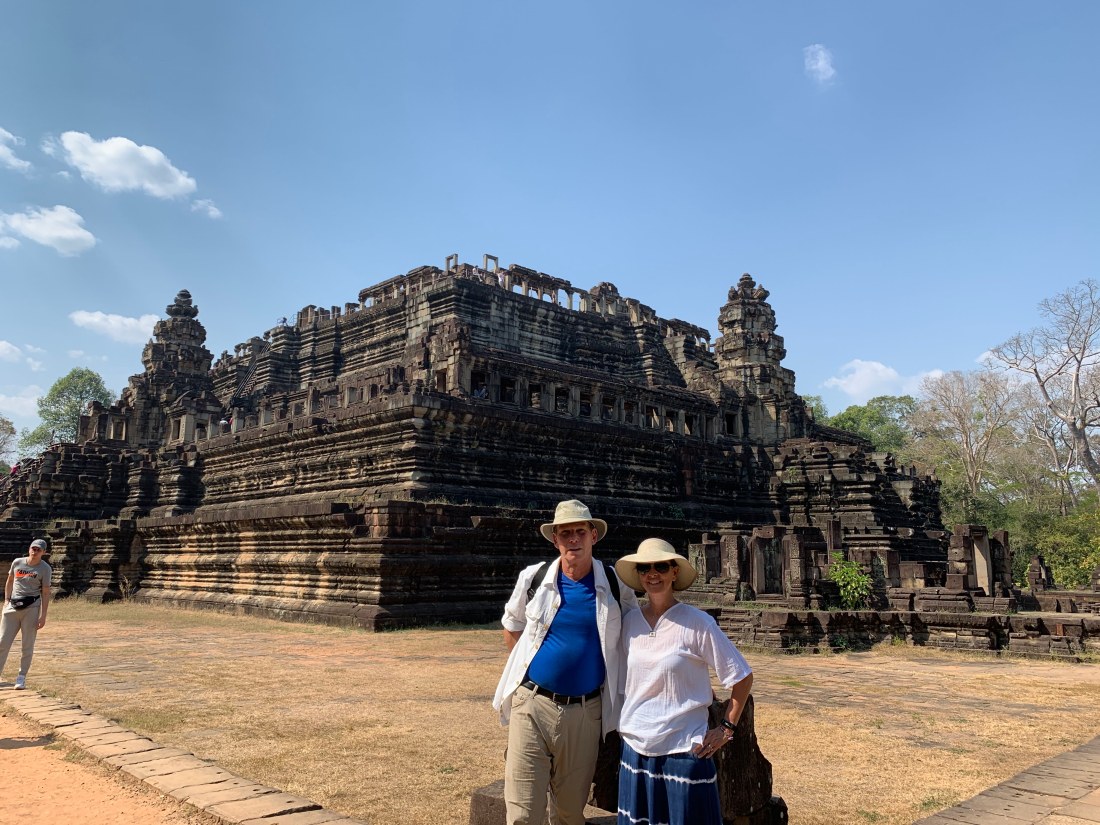
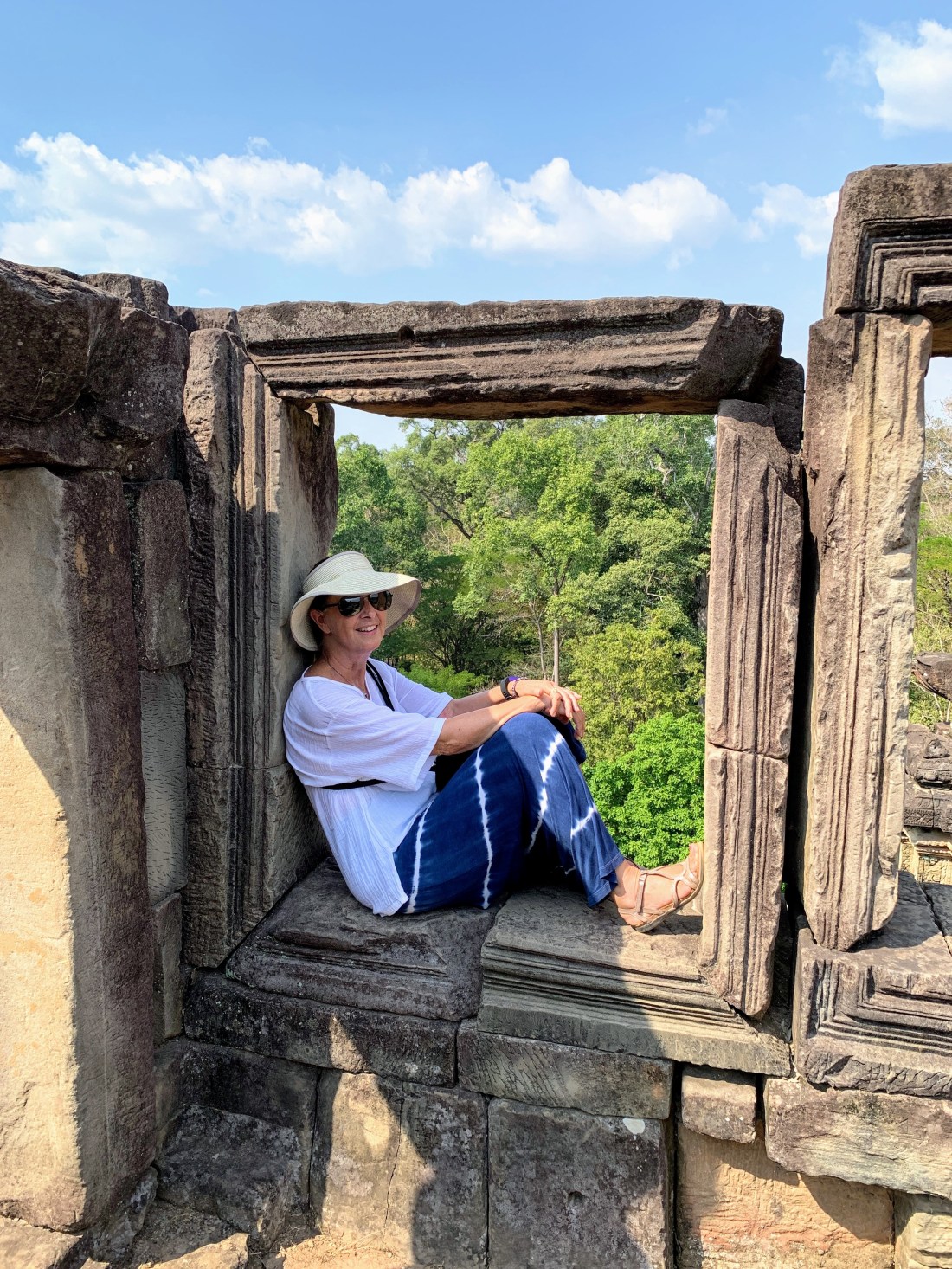
Then on to Baphoun, also a 3 tiered temple built in the 11th century as a Hindu temple dedicated to Shiva.  It was built on sand, which was very unstable, and much of it collapsed through the centuries.

img_20190120_140145

img_1305

img_20190120_140628img_1308

img_20190120_141921

In the late 15th century it was converted to a buddhist temple, and a wall of a reclining buddha was constructed using stones that had collapsed from the central tower.

img_20190120_142819

Then it was on to King Jayavaraman VII’s temple: Bayoun, one of the glories of all Siem Reap.

IMG_1313 (1).JPG

img_1314img_1315img_1317img_1319img_1324

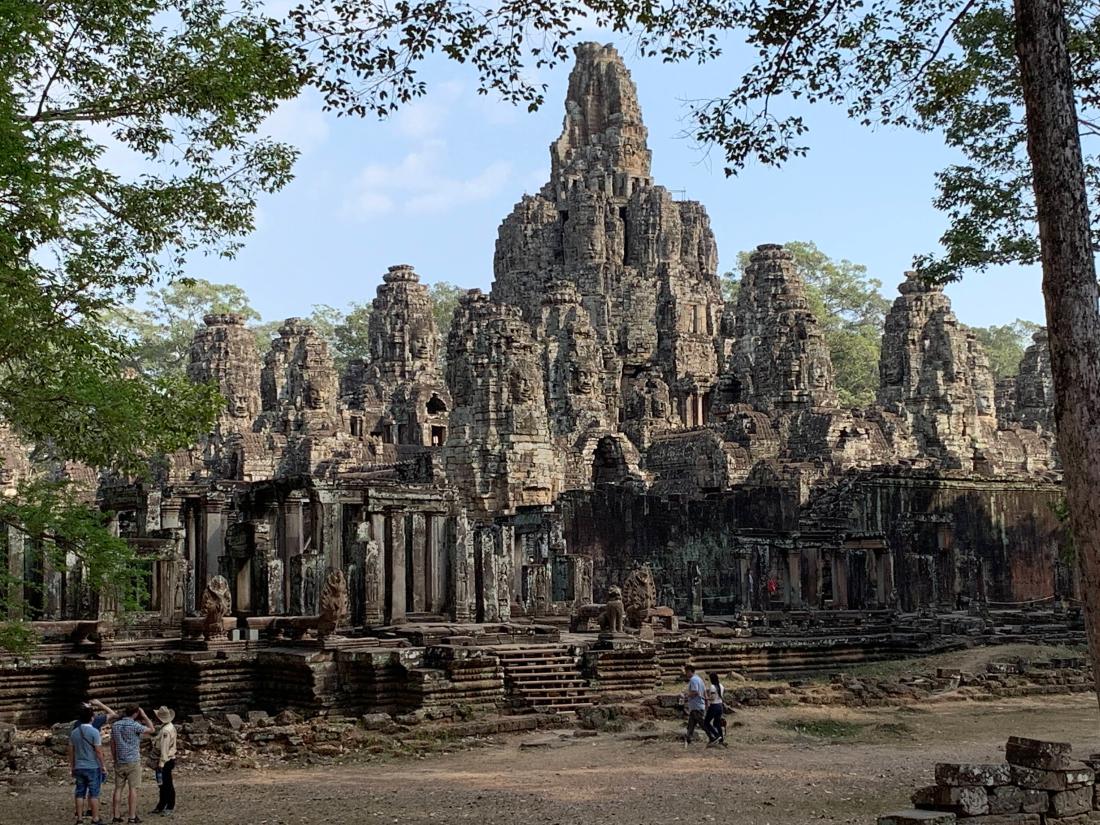
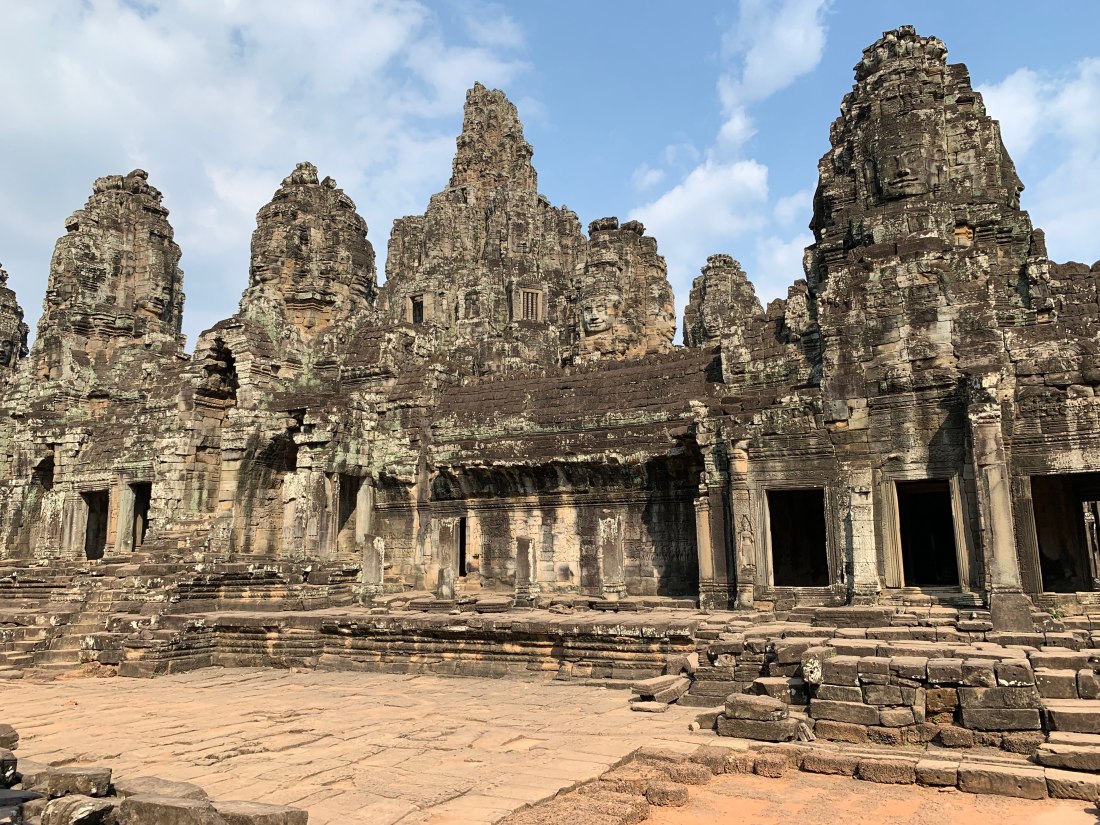
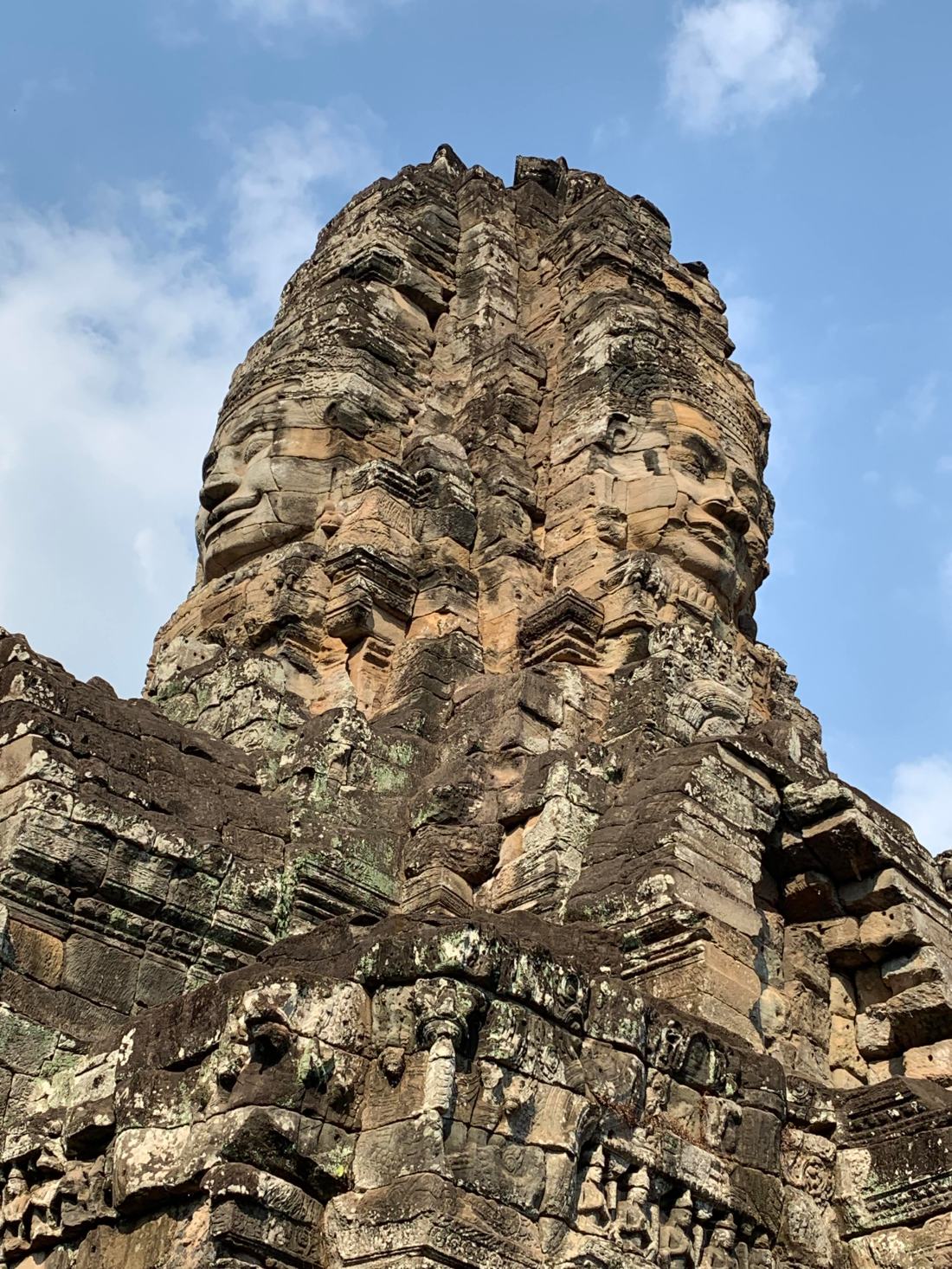
Notice the 4 faces of buddha on each of the 49 towers.  They point exactly to each of the 4 magnetic coordinates: N, E, S, &W.  In later years when the temple was converted to Hindu, all of the buddha statues were removed.  But the Buddha faces on the towers were allowed to remain because they were made in the image of King Jayavaraman VII, so were considered images of him, not the Buddha.img_1329

img_1335
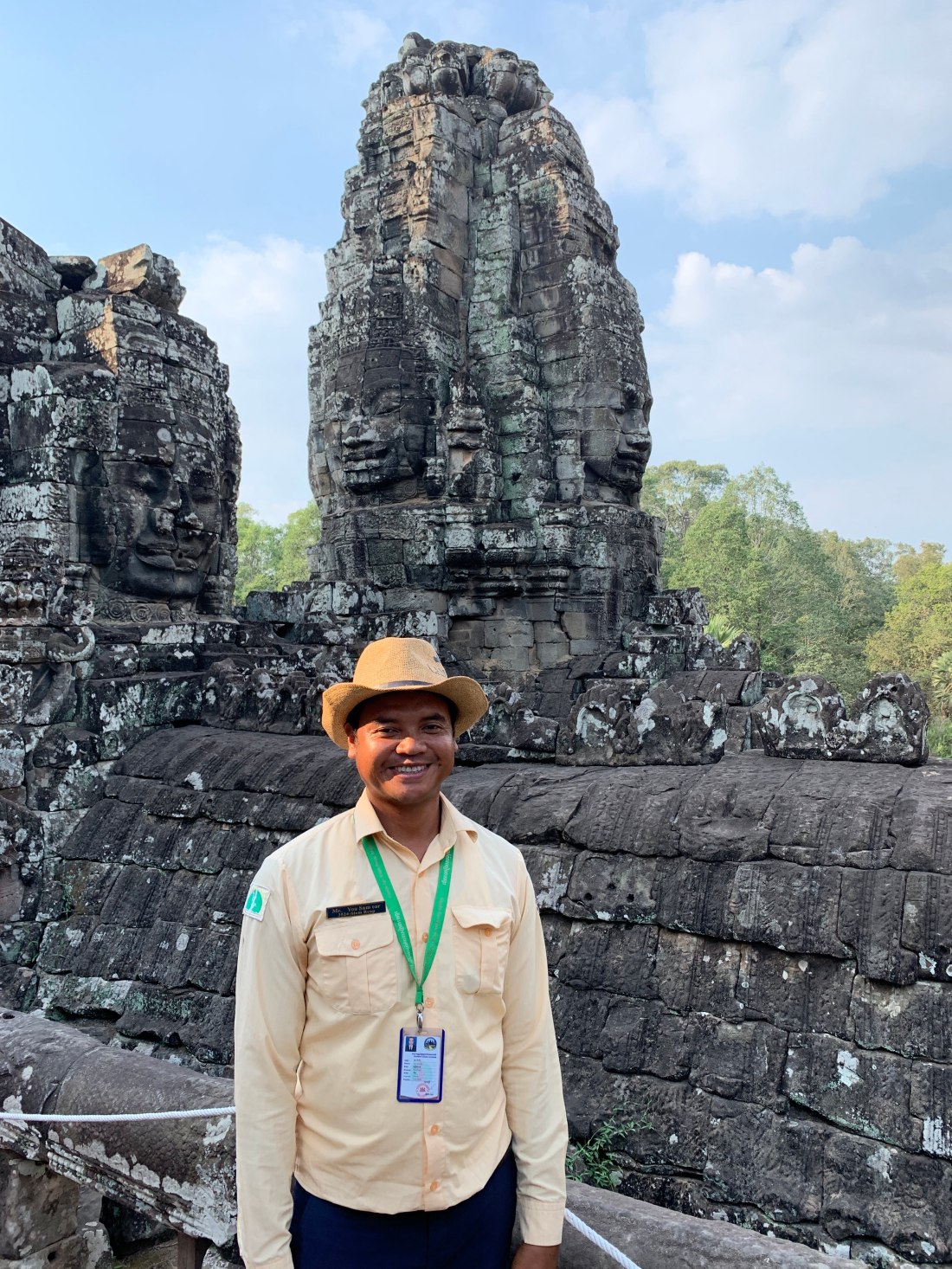
our guide, Sam

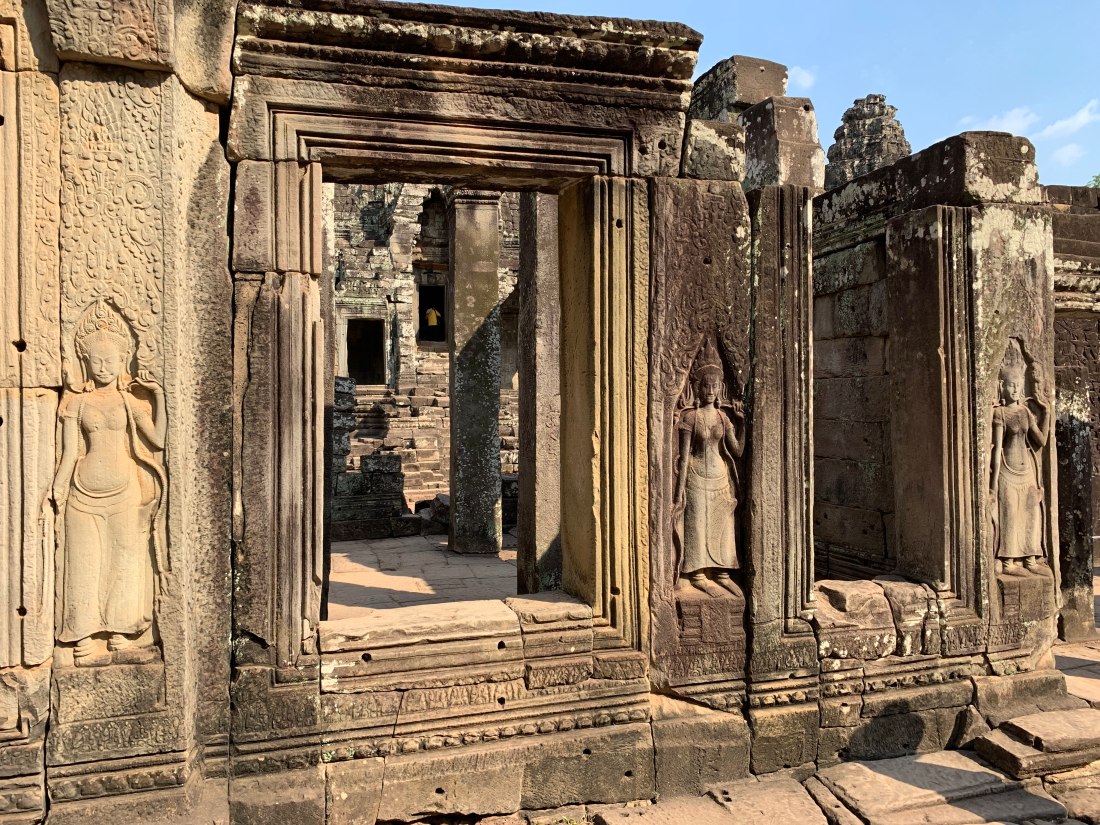
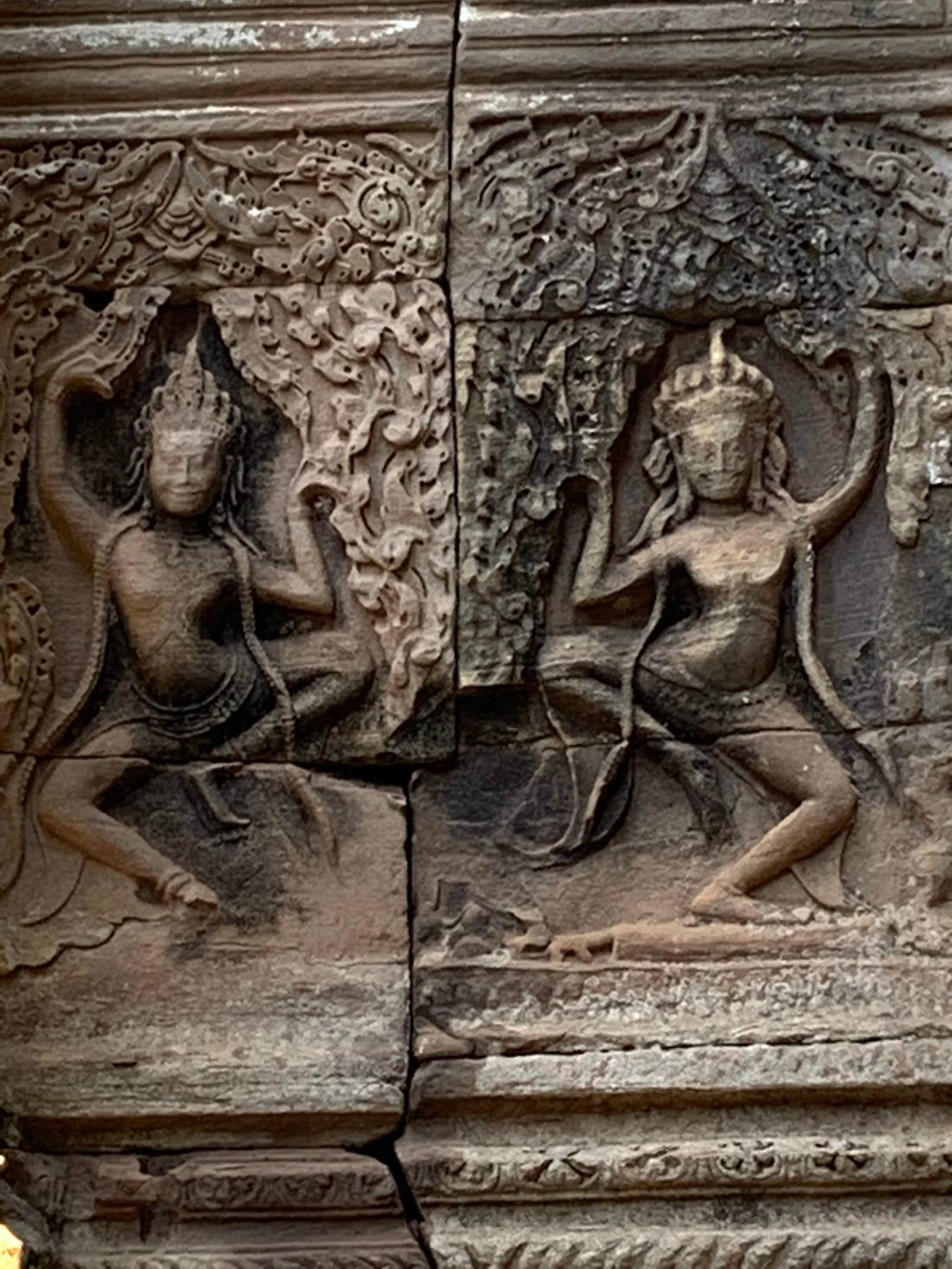
It was also at this temple that I became aware of Apsara.  She is the dancing lady at the sides of every entrance in every temple, both Hindu and Buddhist, thus making her symbol ubiquitous and truly Cambodian.

img_1342

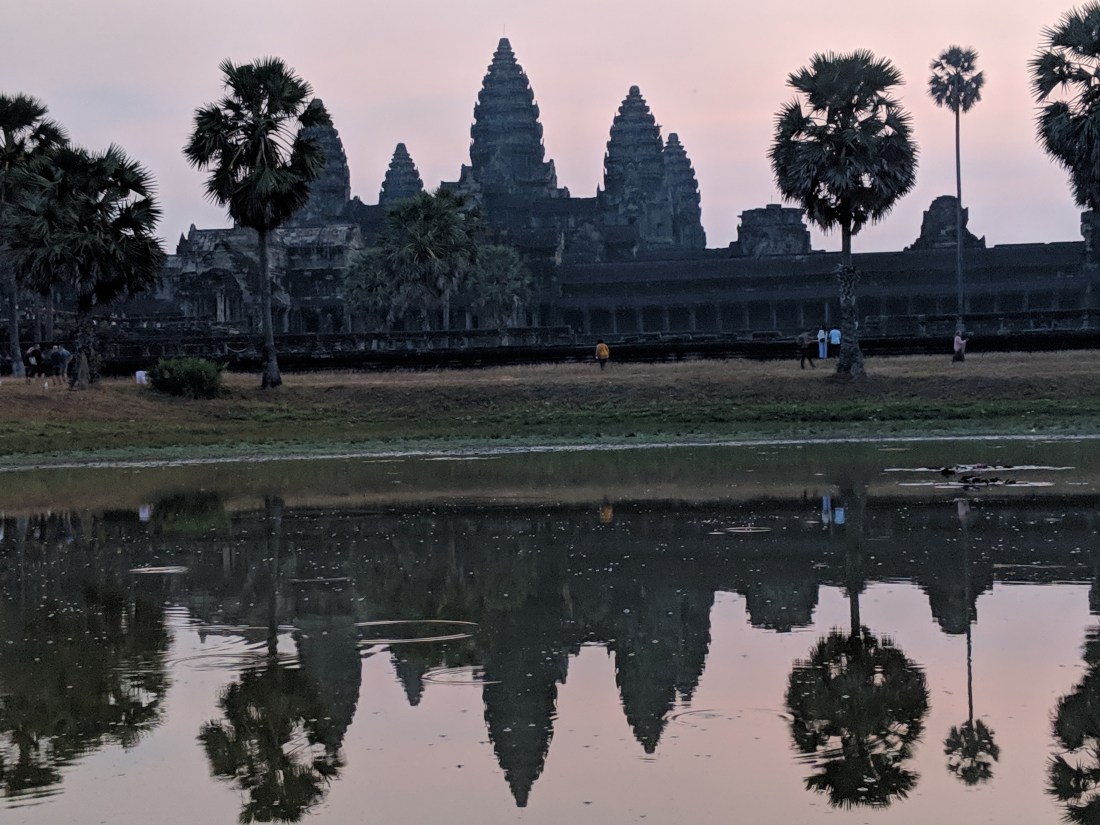
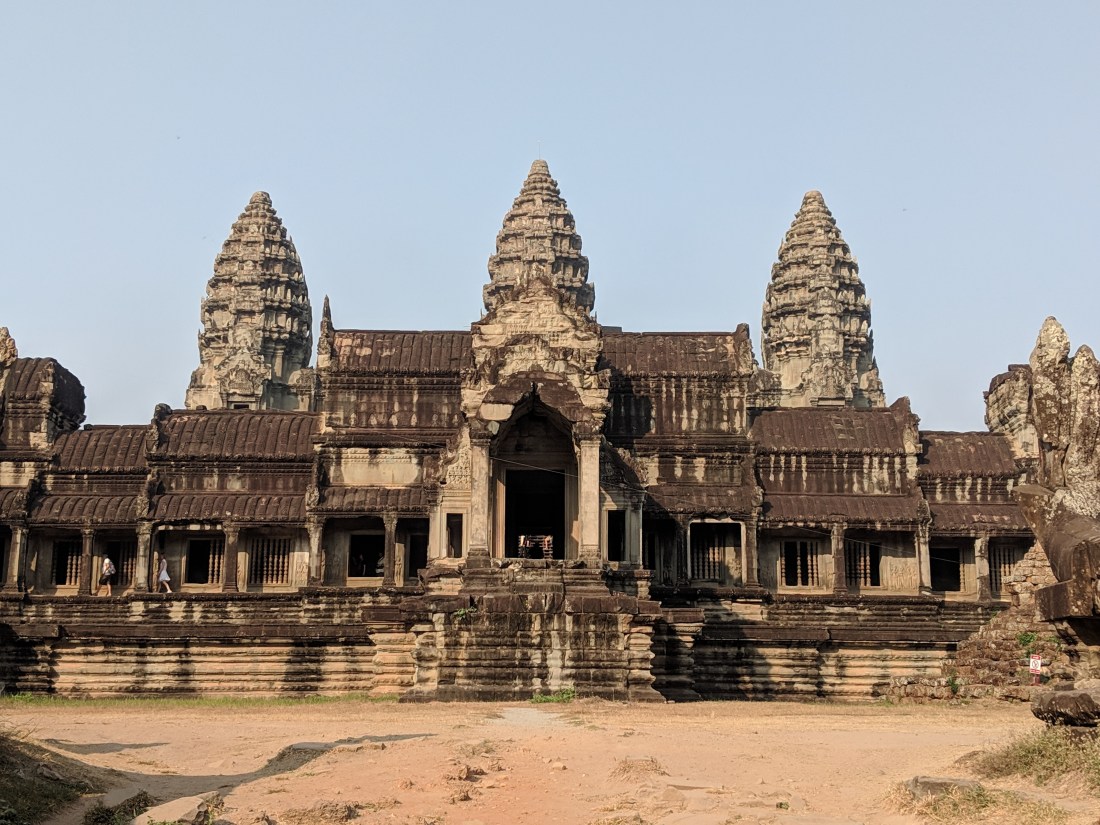
The next morning we were out by 5 am to watch the sun rise over Angkor Wat, Siem Reap’s crowning jewel, one of the largest religious monuments in the world.  It was built in the early 12th century  by the Khmer King Suryavarman II as a Hindu temple devoted to Vishnu, then converted in the late 12th century to a buddhist temple.

img_20190121_062234

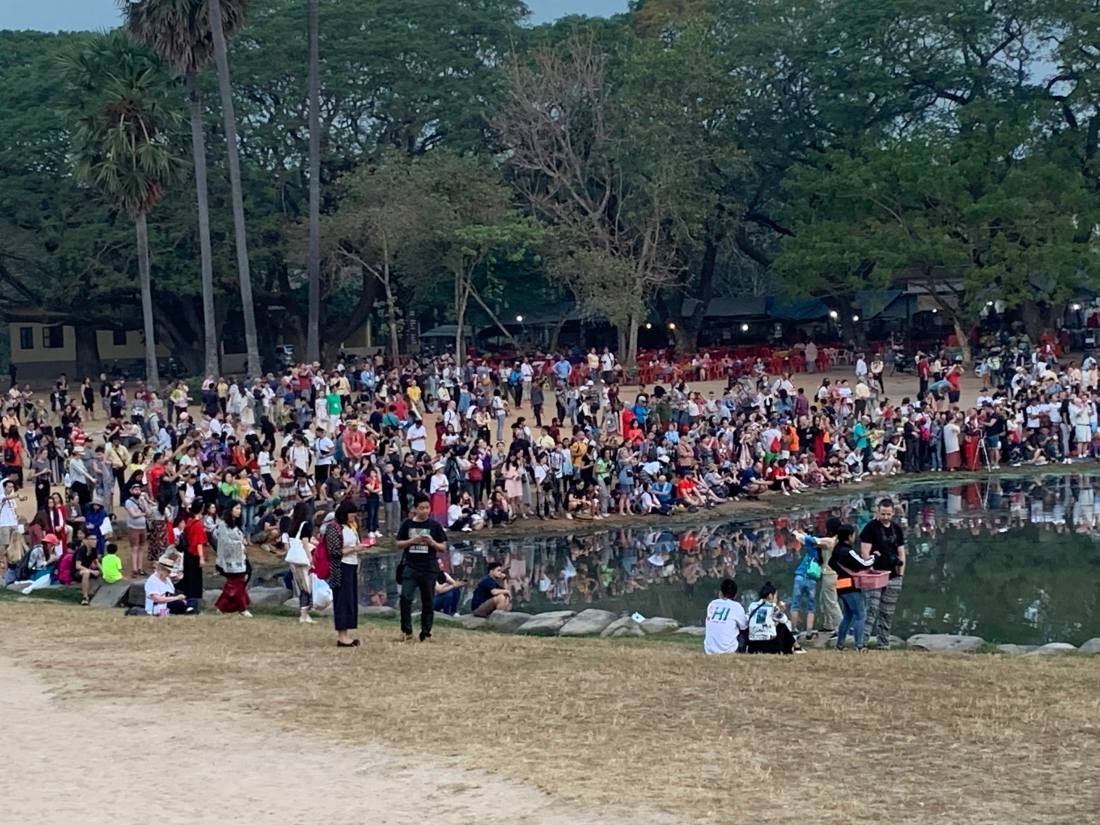
Luckily we had gotten there early for a front row seat.  This was the crowd behind us.img_1379

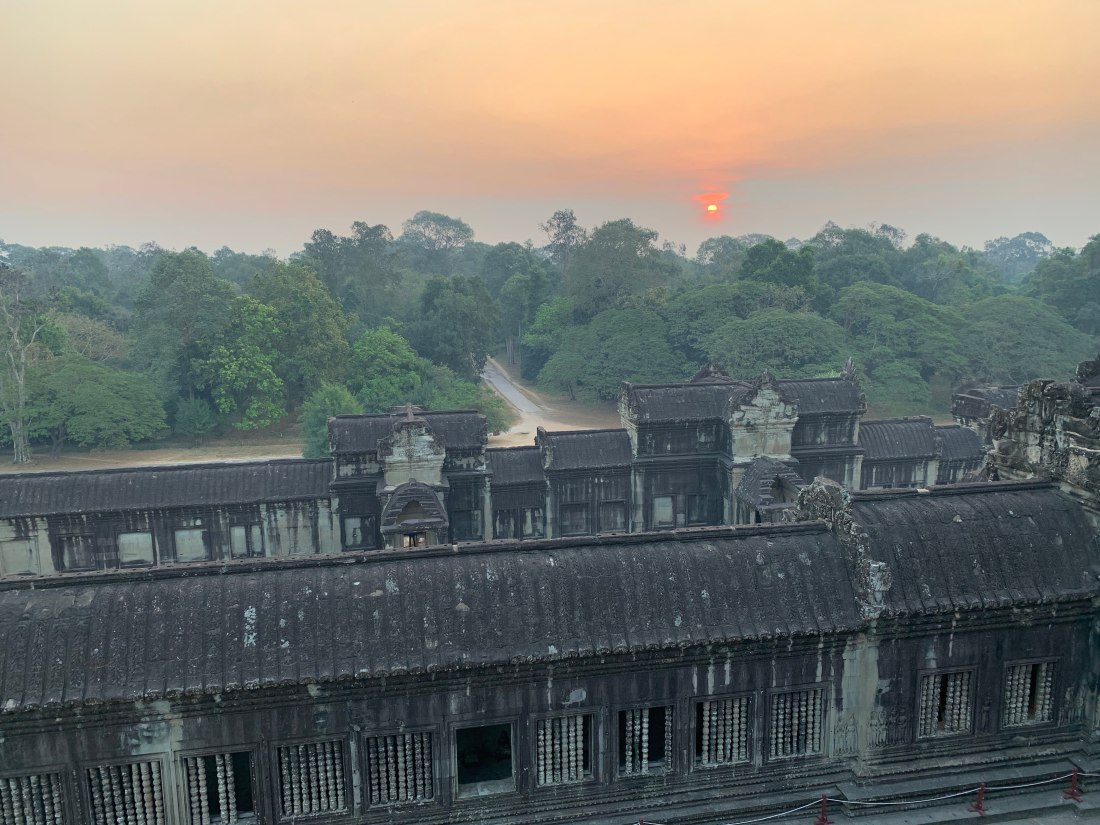
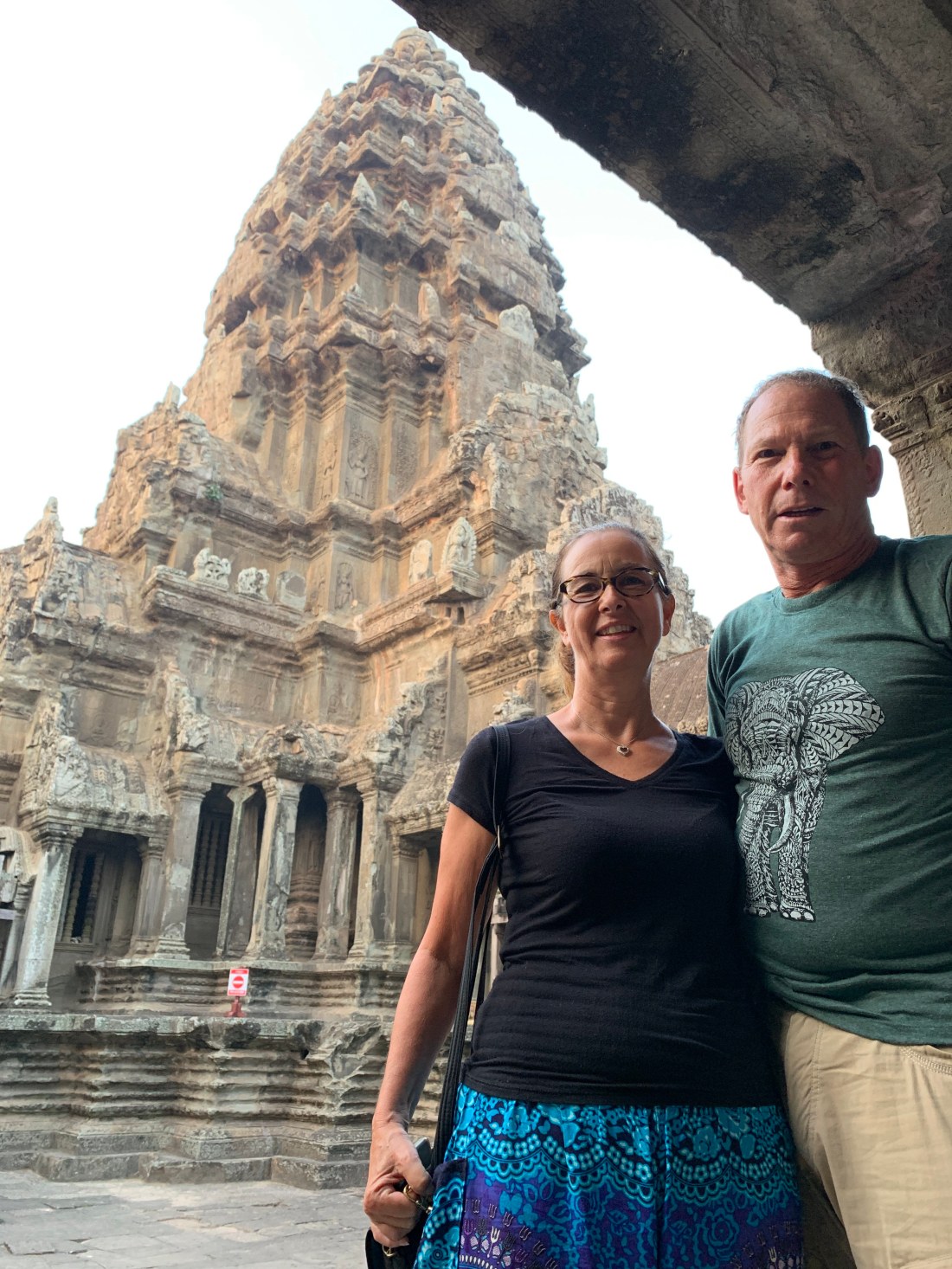
Then we rushed up to the top level to further enjoy the sunrise and beat the crowds to the top.

img_1383

img_1391

img_20190121_071420
Apsara is everywhere

img_1435

img_20190121_065937
The view from the top looking out over the library
img_20190121_070613
the lake where we watched the sunrise with the library behind
img_1449
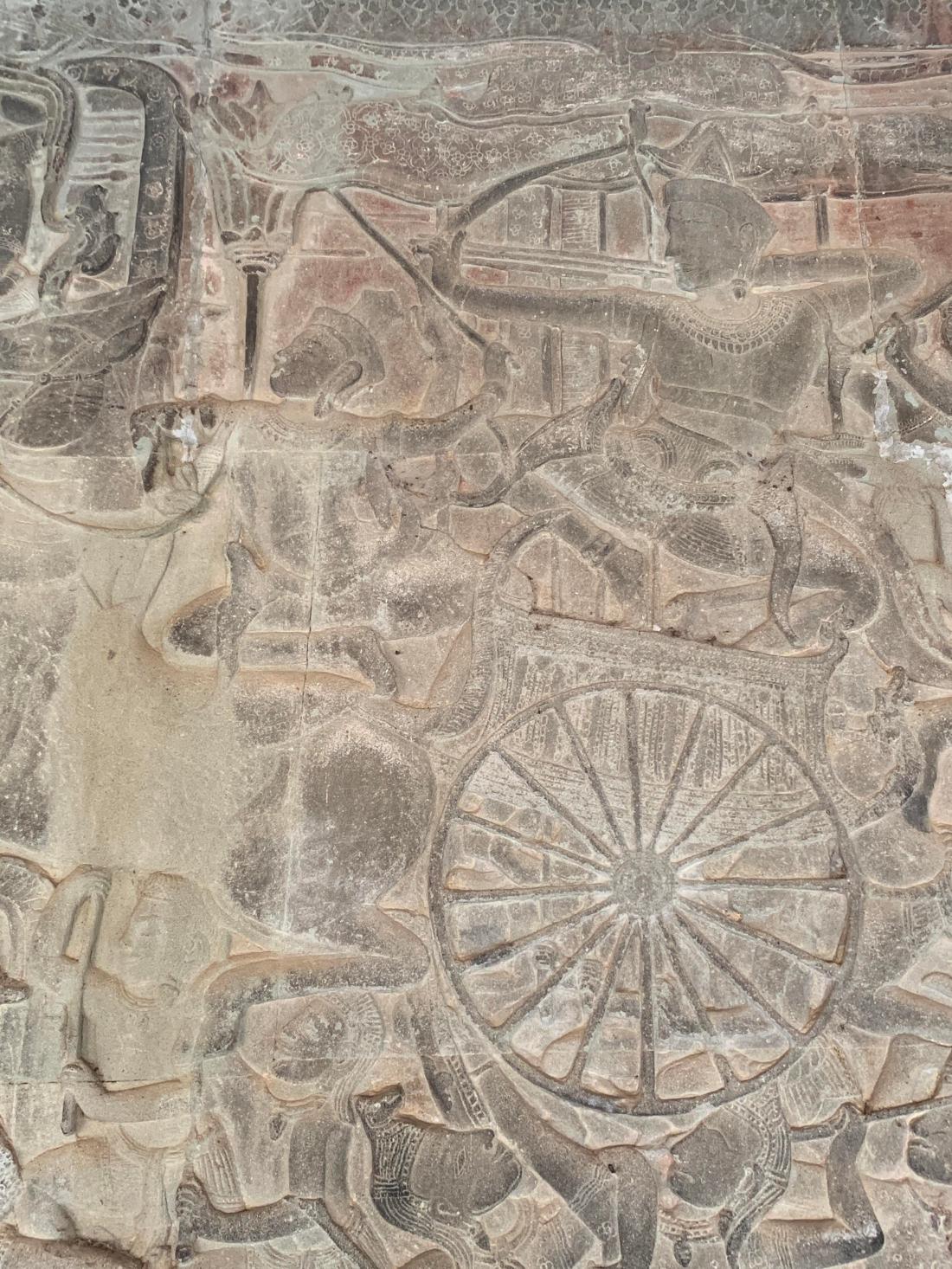
The many bas-reliefs tell stories, this one of Hare Krishna in battle

img_1454

img_20190121_082757img_1435

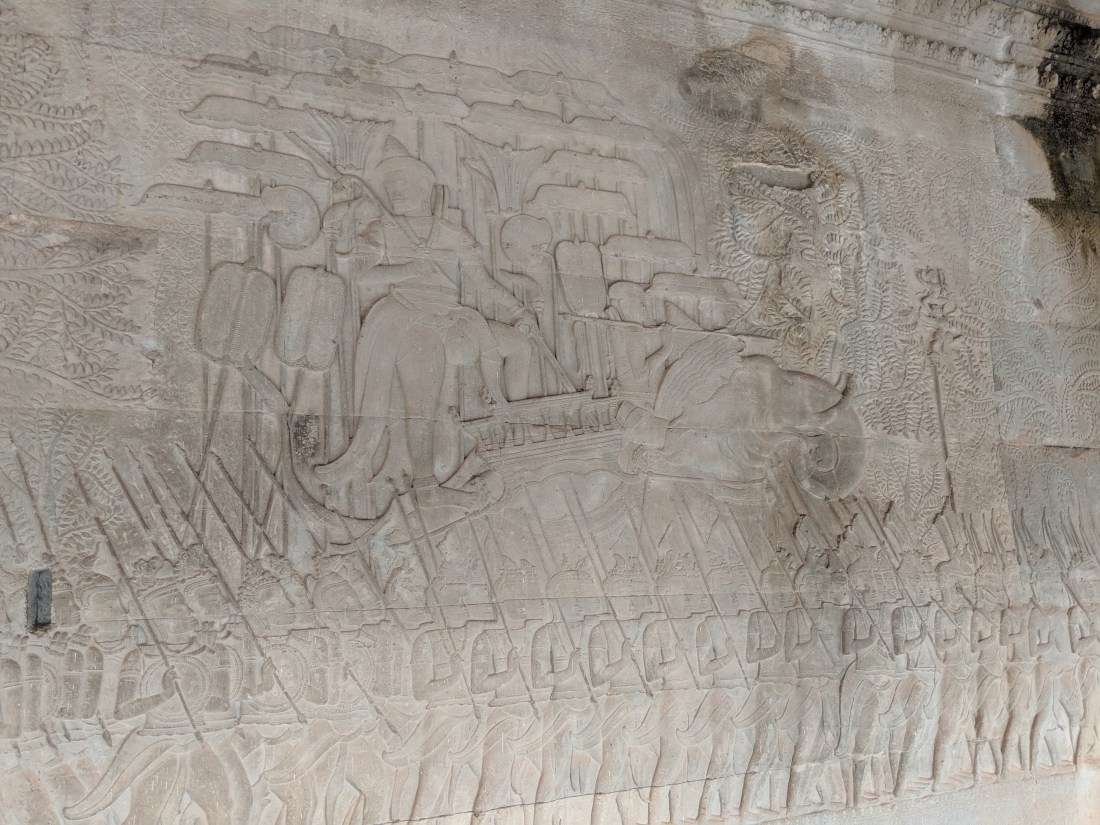
img_20190121_080828
King Suryavarman II in battle

When the king died, the temple was unfinished.  But since it was being built as his shrine, it was believed that the gods had decided it was finished, so some of the bas-reliefs were never completed.

img_20190121_084018
This was the king’s private entrance

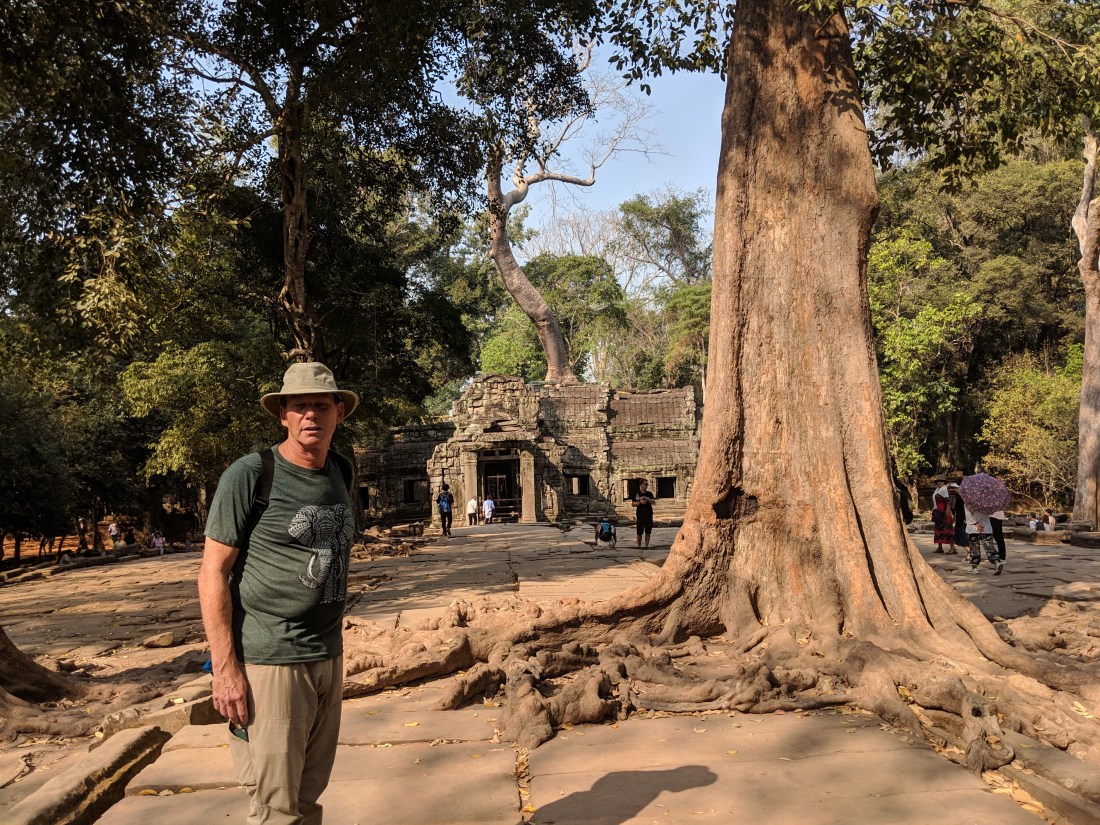
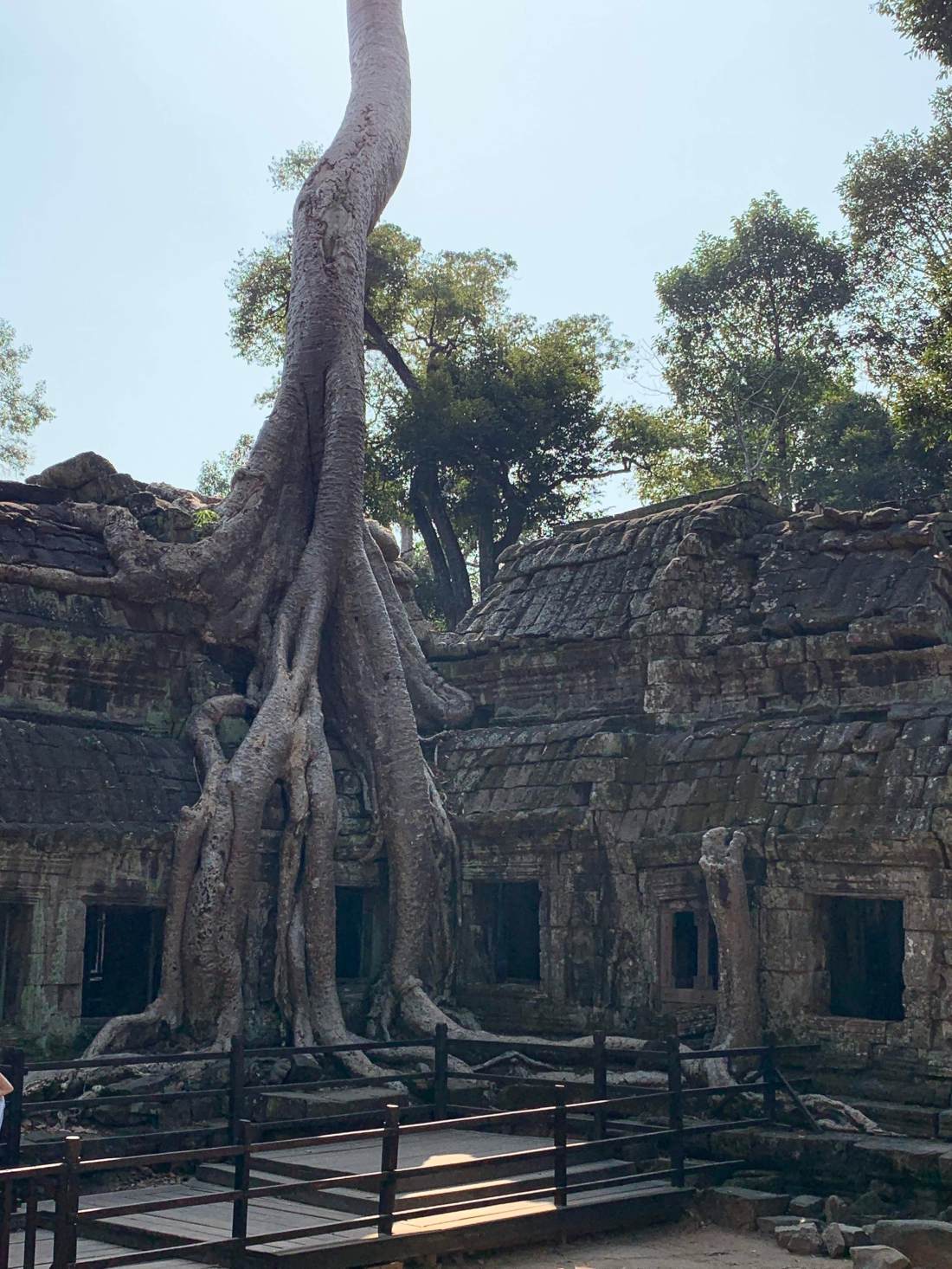
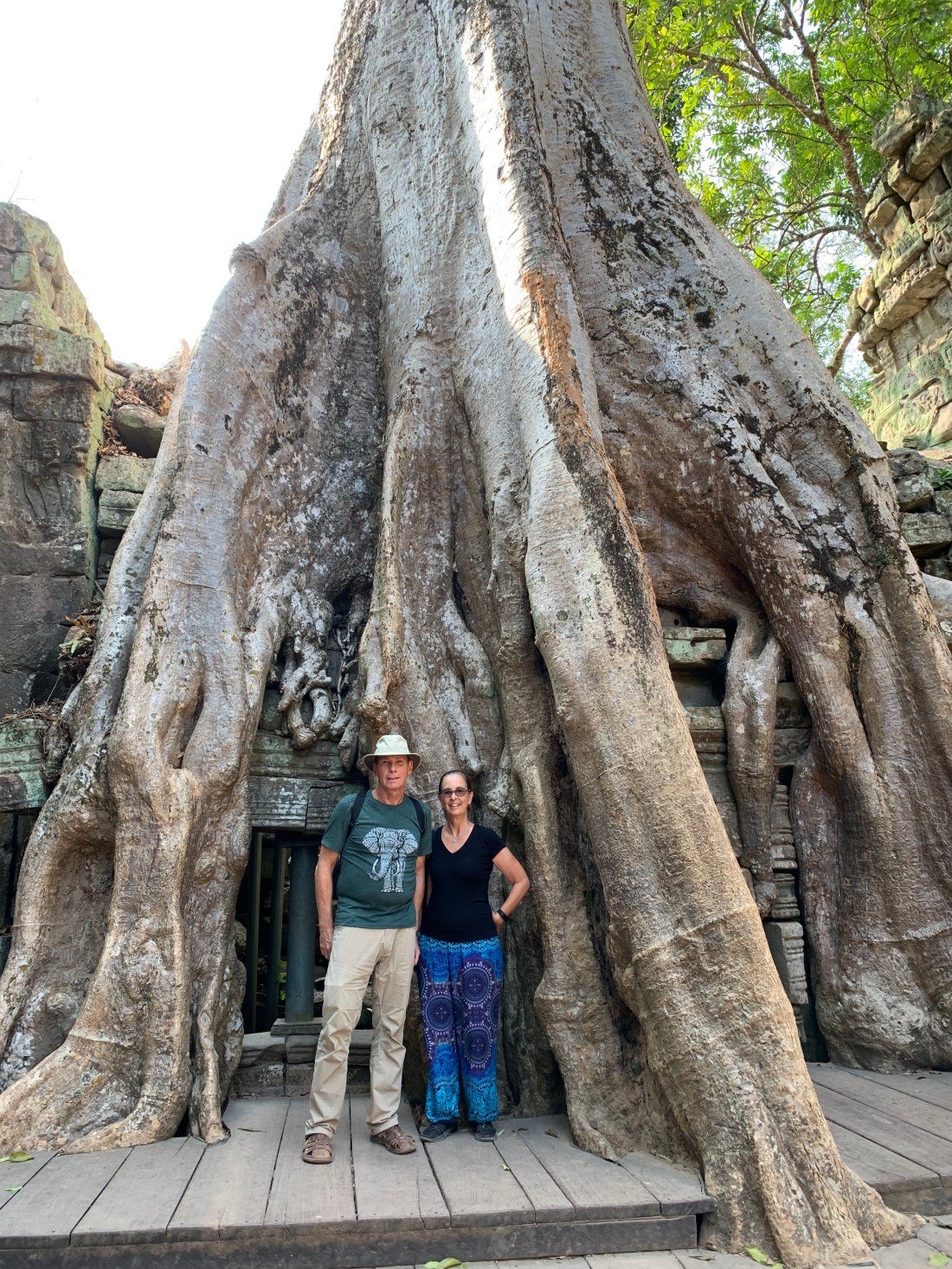
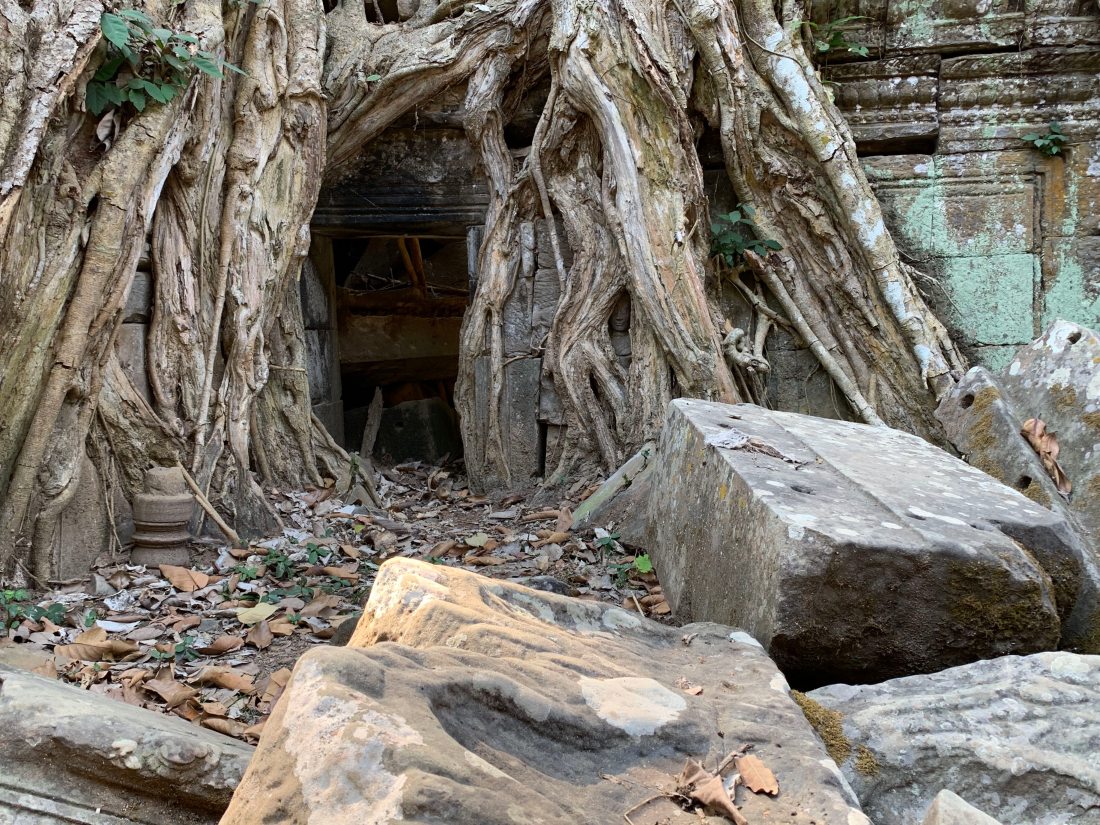
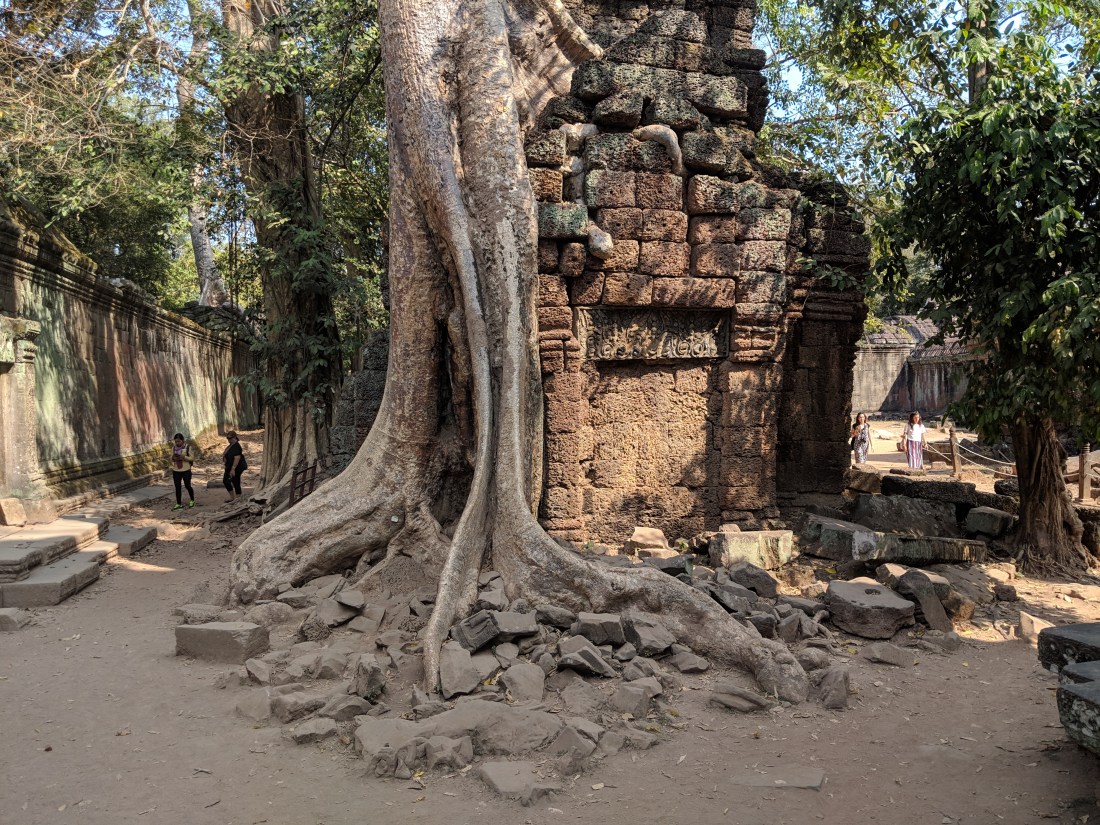
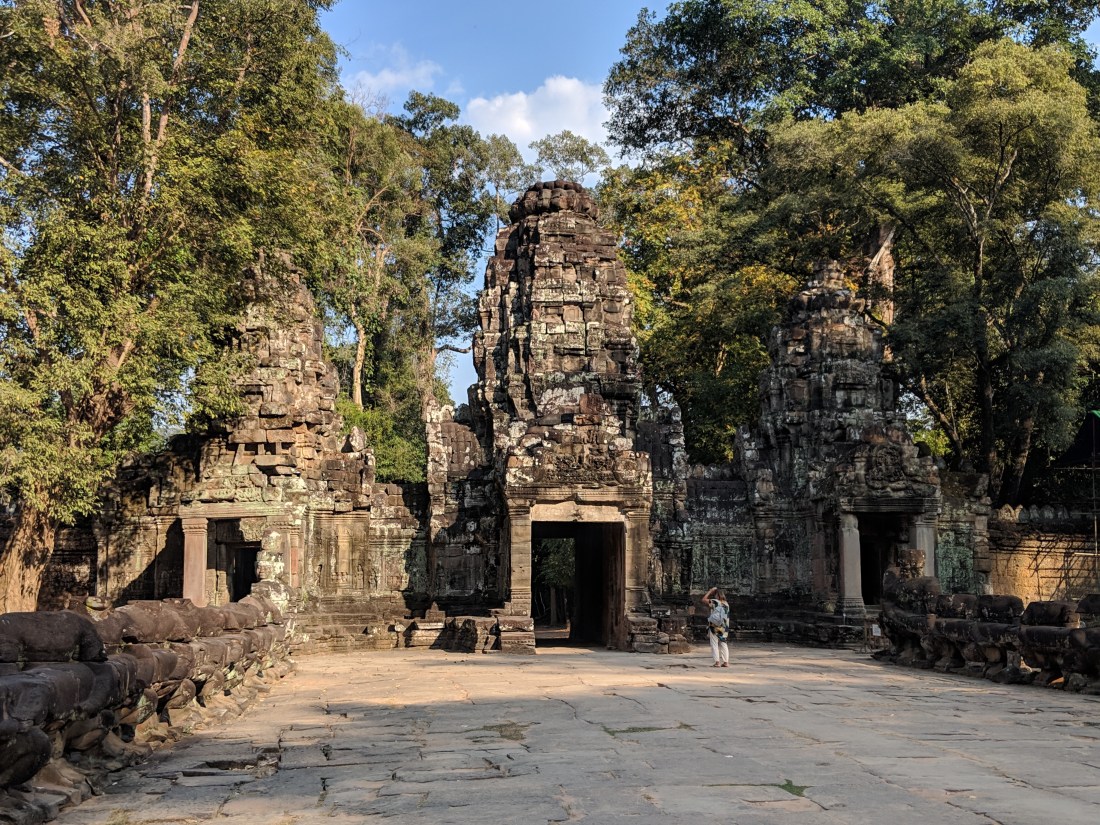
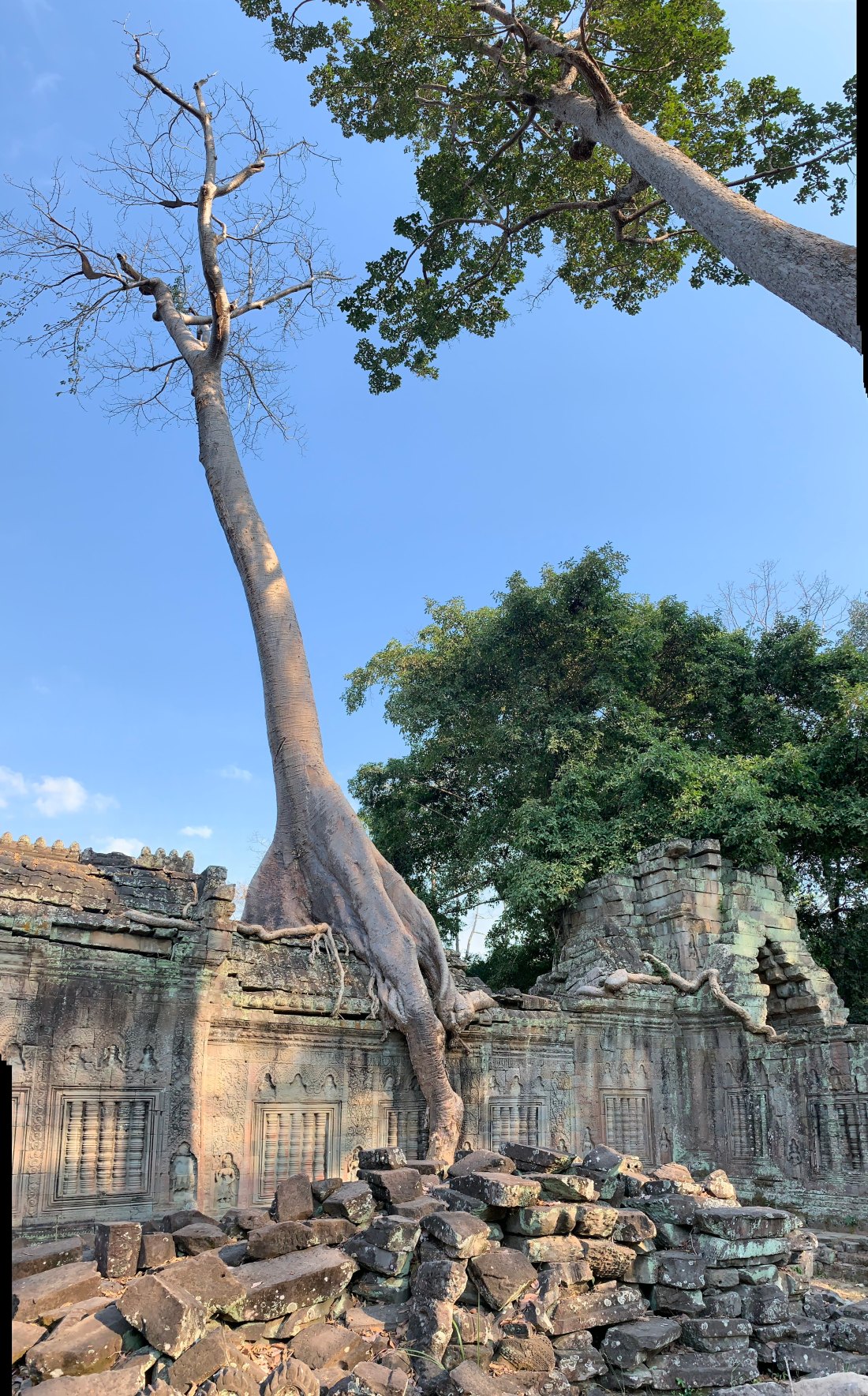
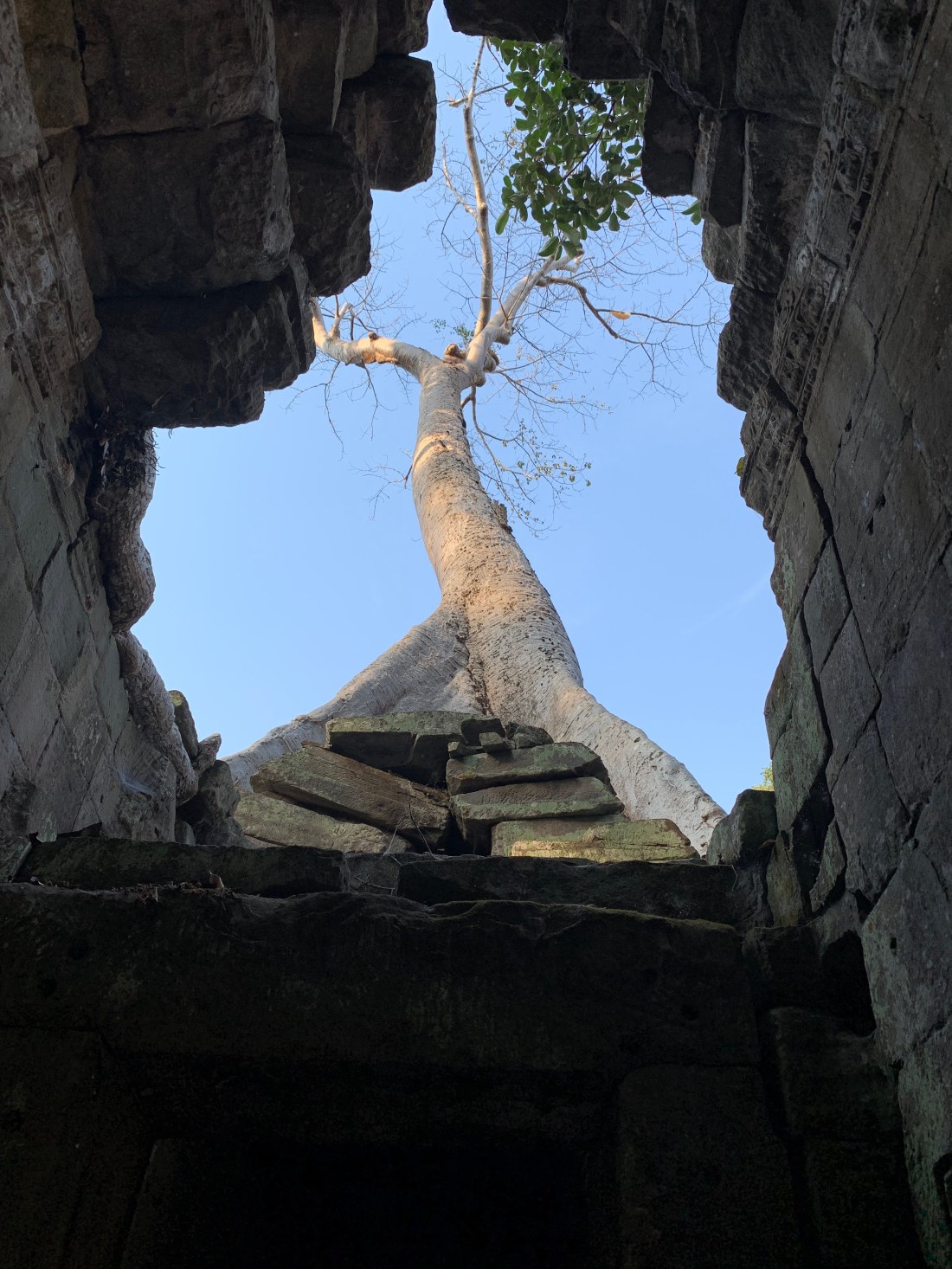
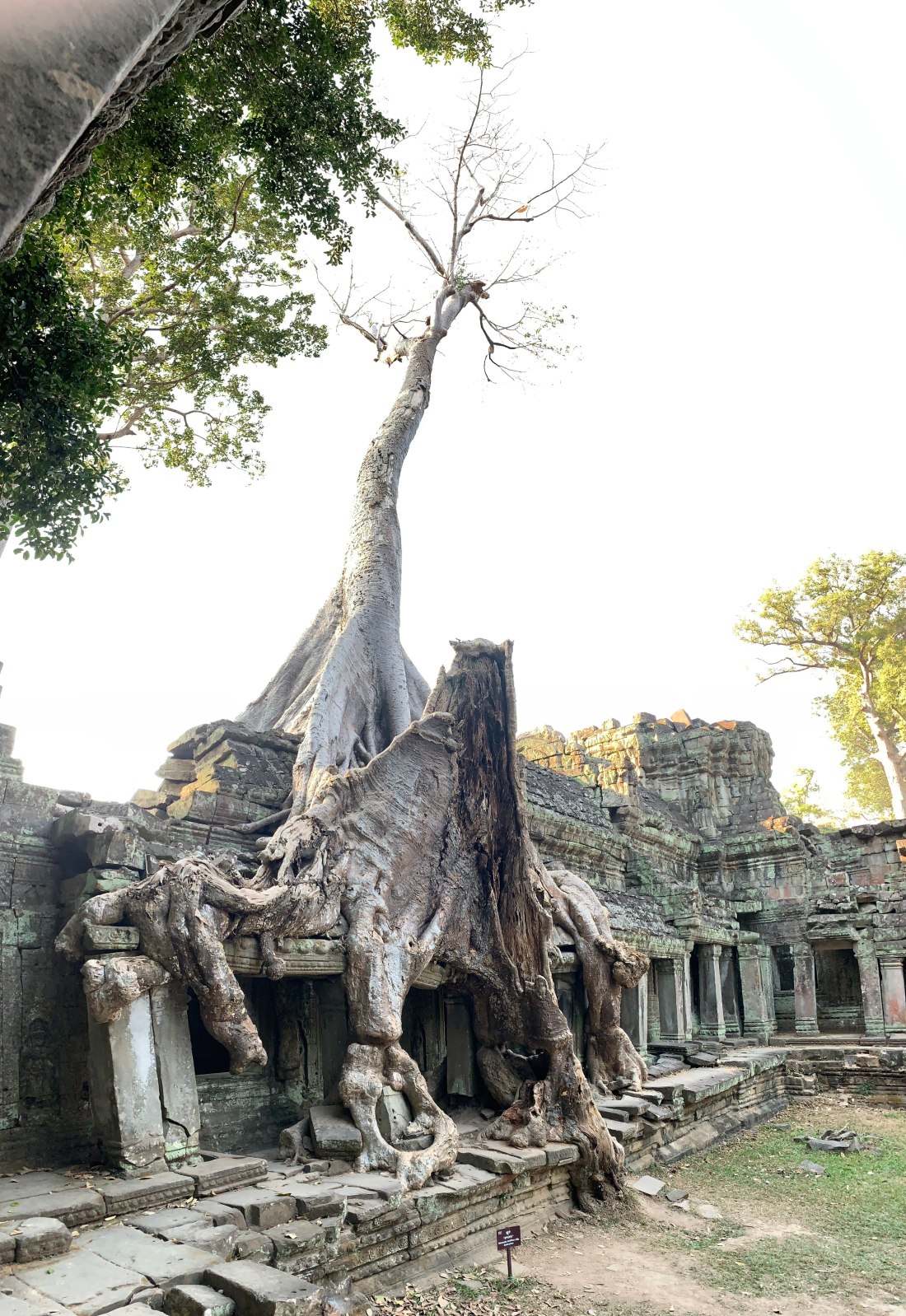
Next temple on our agenda was Ta Prohm, probably the most fun.  It was built in the late 12th century by King Jayavaraman VII to honor his mother (first, before he built one for his father) and was used as a monastery and university. It was abandoned in the 14th century with the fall of the Khmer empire, and when found later by explorers, the jungle trees had grown so entwined with the structures that it is felt that to remove them is structurally unsound.  It was used as a site for the filming of the movie Tomb Raiders.  img_20190121_093854

Yes that tree is growing on top of that building

img_1477img_1483img_1487img_1493img_1495

img_1498
Apsara again; I’m a bit of a fan of hers

img_1513img_20190121_101339img_20190121_101813

Most of the buddhas and bas-reliefs were later removed by Hindus.

img_1512
Buddhas scraped out of the relief
img_1511
one “lucky” Buddha left behind

img_20190121_103036

That is again the image of King Jayavaraman VII on the tower at the entrance to this complex.  Let me now add more of why I love him so much.  He became king at the age of 52 and then reigned for 40 years!  During that time he not only built shrines to both his parents (mother first) and many temples throughout Cambodia, Laos and Thailand – all part of the Khmer Empire – he built 102 hospitals with rest stops with water every 15 km along the way for the sick traveling to the hospitals.  His second wife was the older sister of his first wife, which was the first wife’s dying request.  His second wife was a learned lady who read and wrote books and believed in education for all and helped him expand the empire.  Also, although he was a buddhist, only the second in the Khmer empire, and his temples were built for Buddha, he never destroyed anything Hindu.  He invented a symbol of peace which incorporates symbols of both religions because he believed Hindus and buddhists should coexist peacefully.
img_20190122_084215
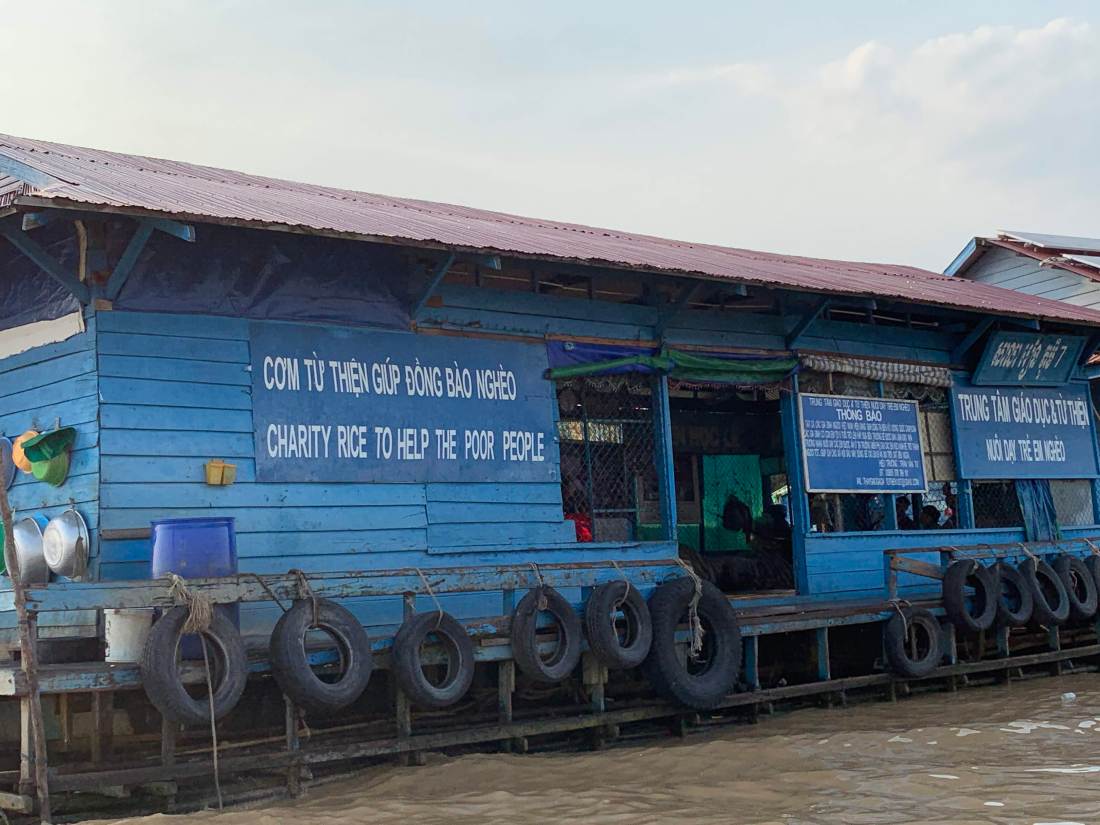
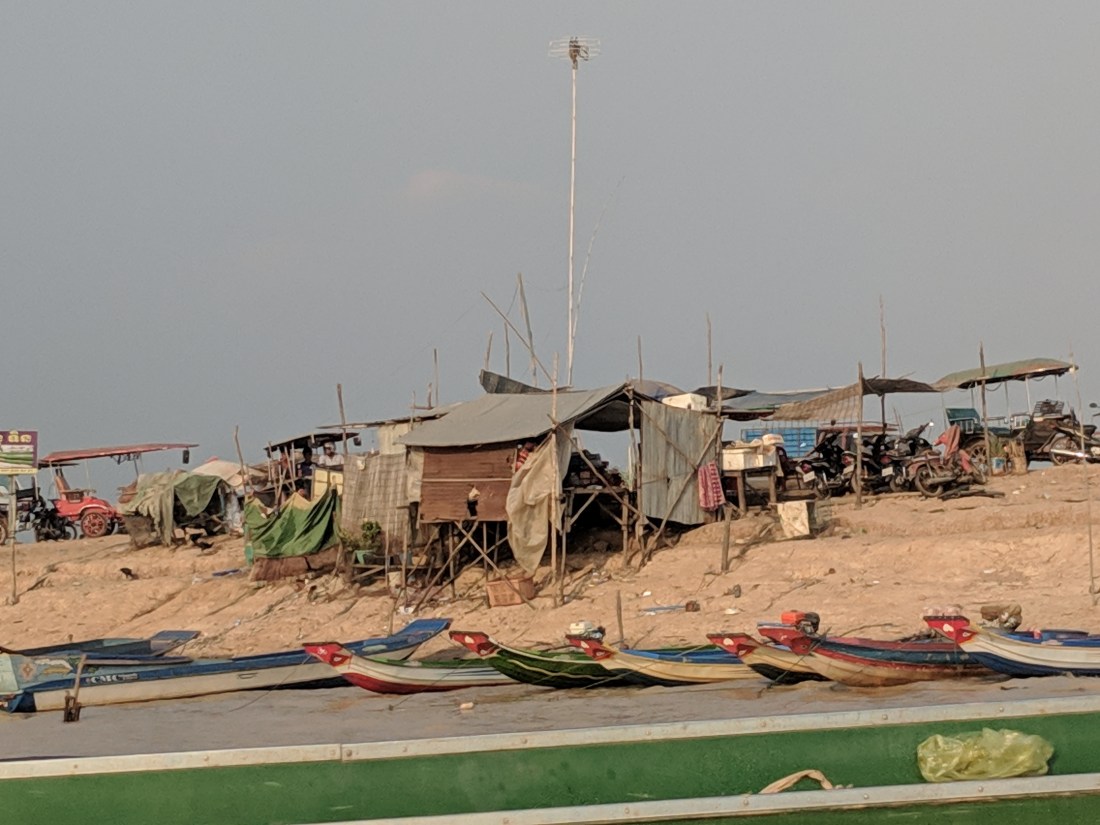
After Ta Prohm we were treated to a boat ride on a huge lake Tonle Sap with whole villages of fisherfolk that live out on the lake on floating homes.  What is interesting about this lake as that it has a river that flows from it and joins the Mekong River in Phnom Penh.  During the rainy season, the lake is high and the river flows south.  During the dry season, the lake is low, the river reverses course and flows from the Mekong into the lake.  It is the only river in the world that flows in opposite directions at different times of the year.

00100dportrait_00100_burst20190121160924922_cover00100dportrait_00100_burst20190121154636239_cover00100dportrait_00100_burst20190121154631119_cover

00100dportrait_00100_burst20190121154705441_cover
floating homes
img_1529
the place of worship
img_1532
floating school


img_20190121_162847
homes on the shore; stilts for the rainy season
img_20190121_162827
even the poorest home has a tv

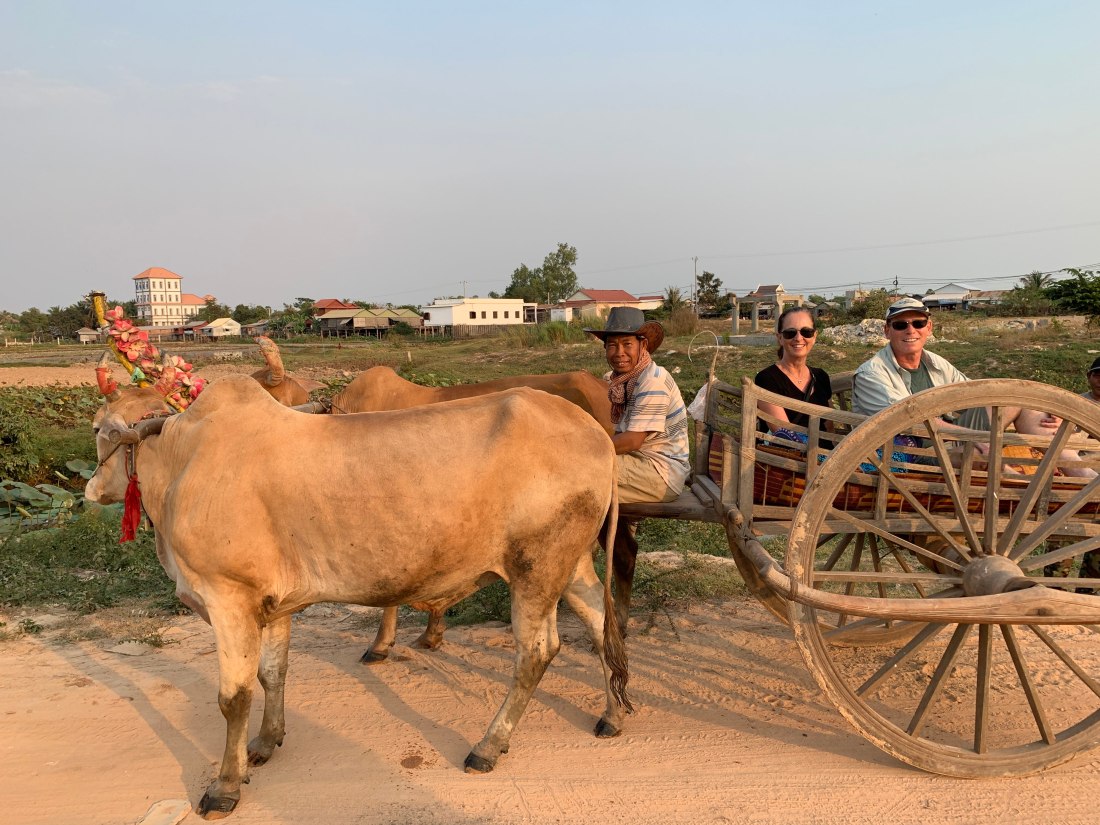
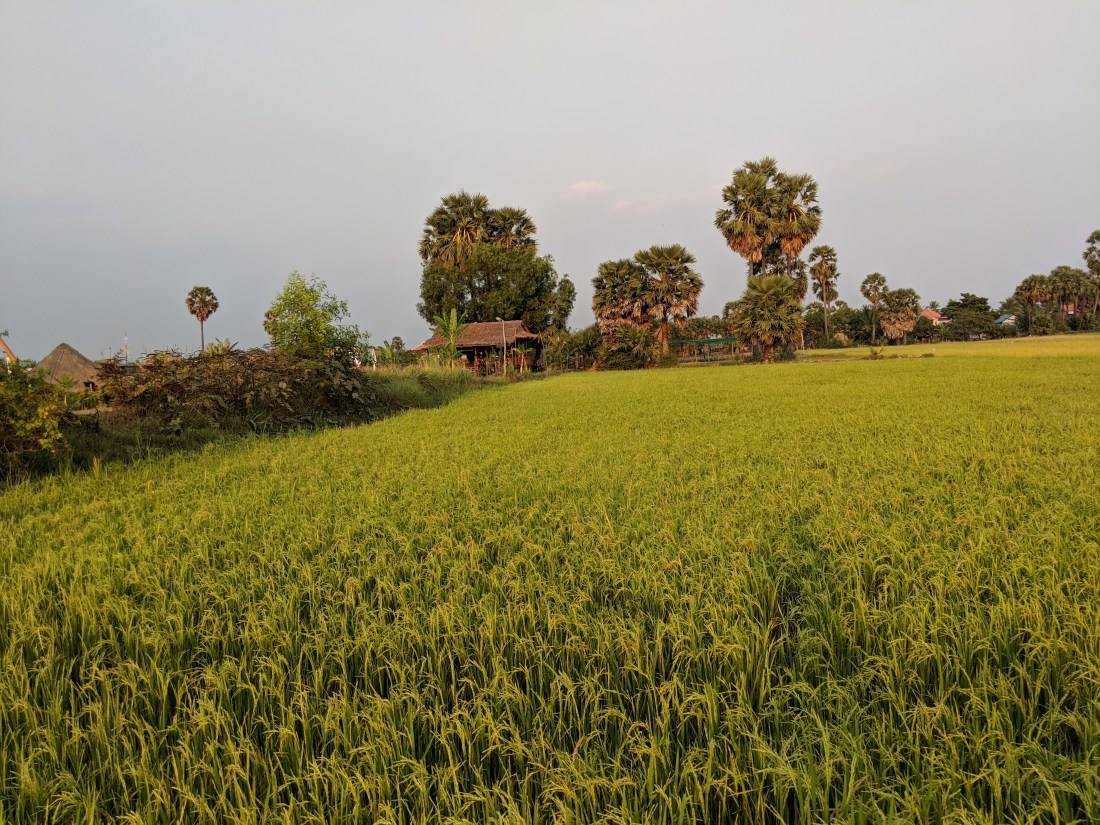
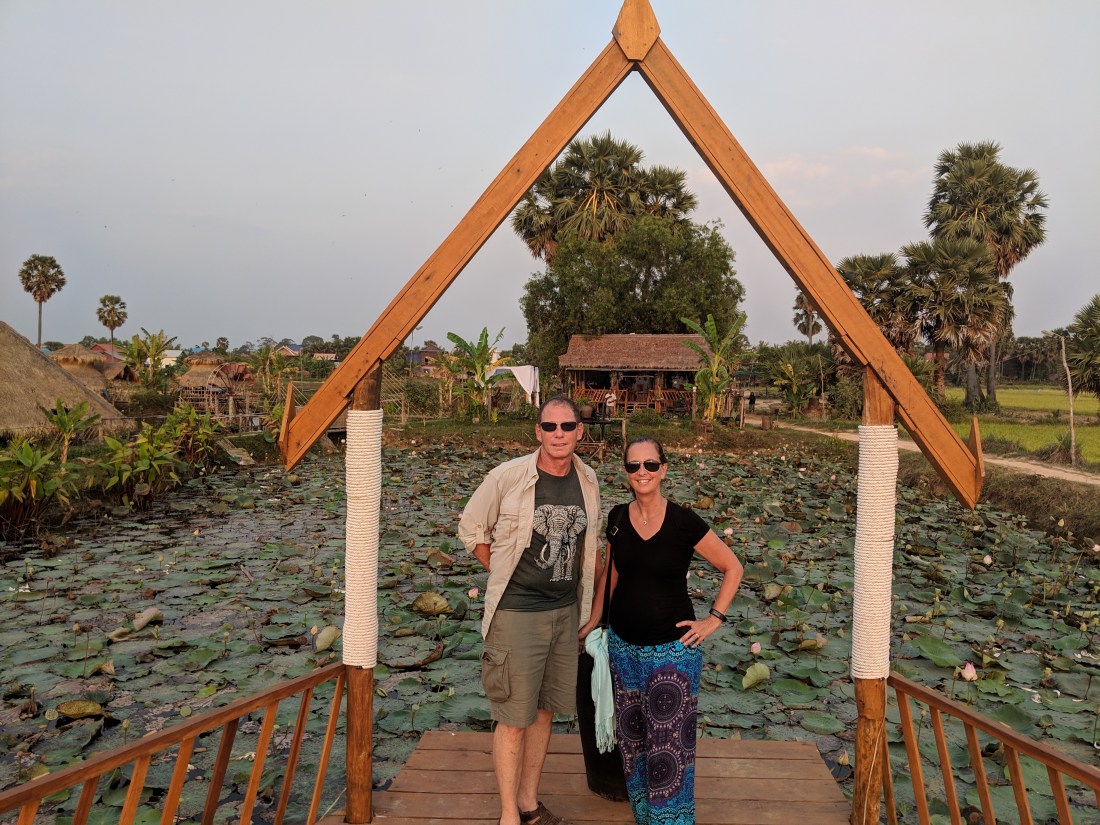
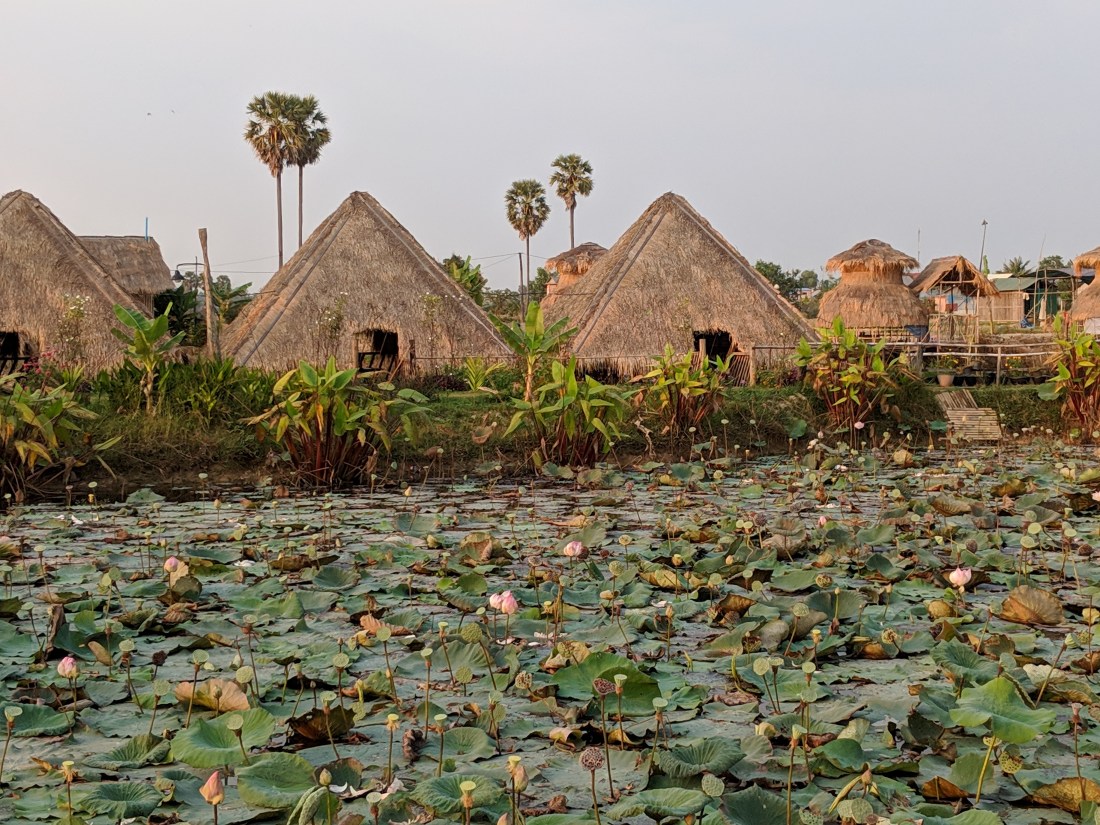
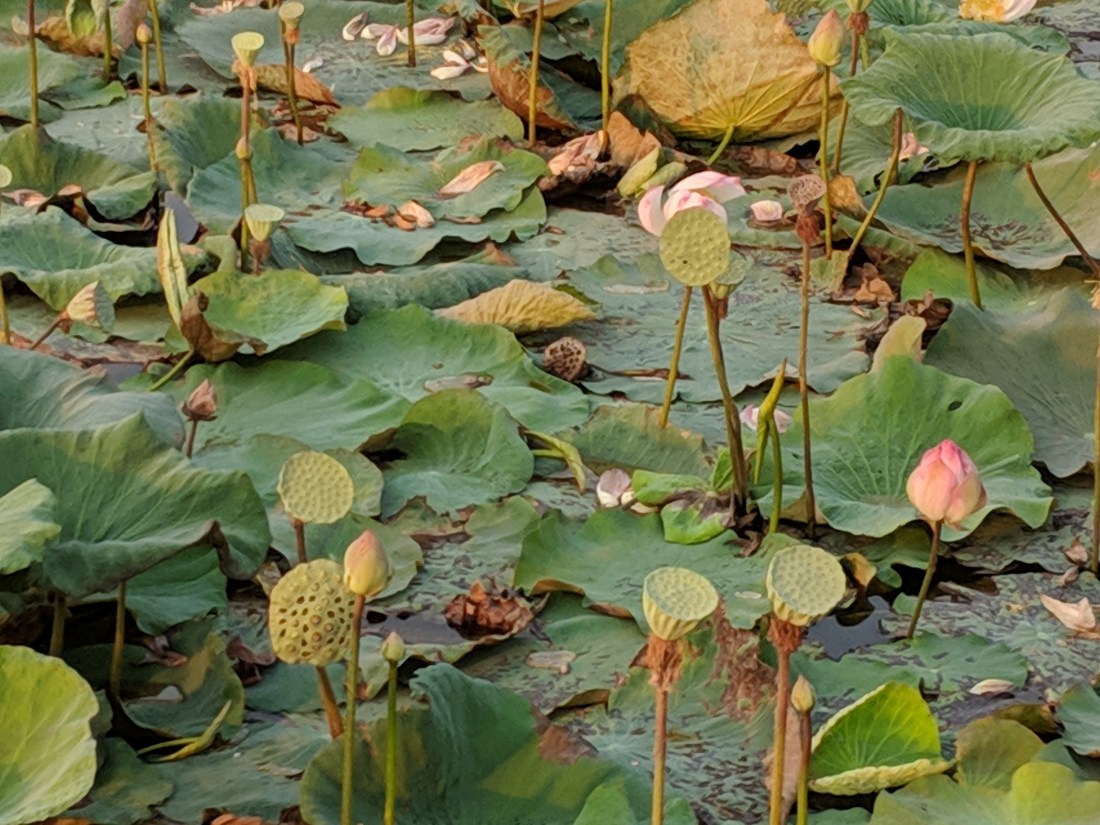
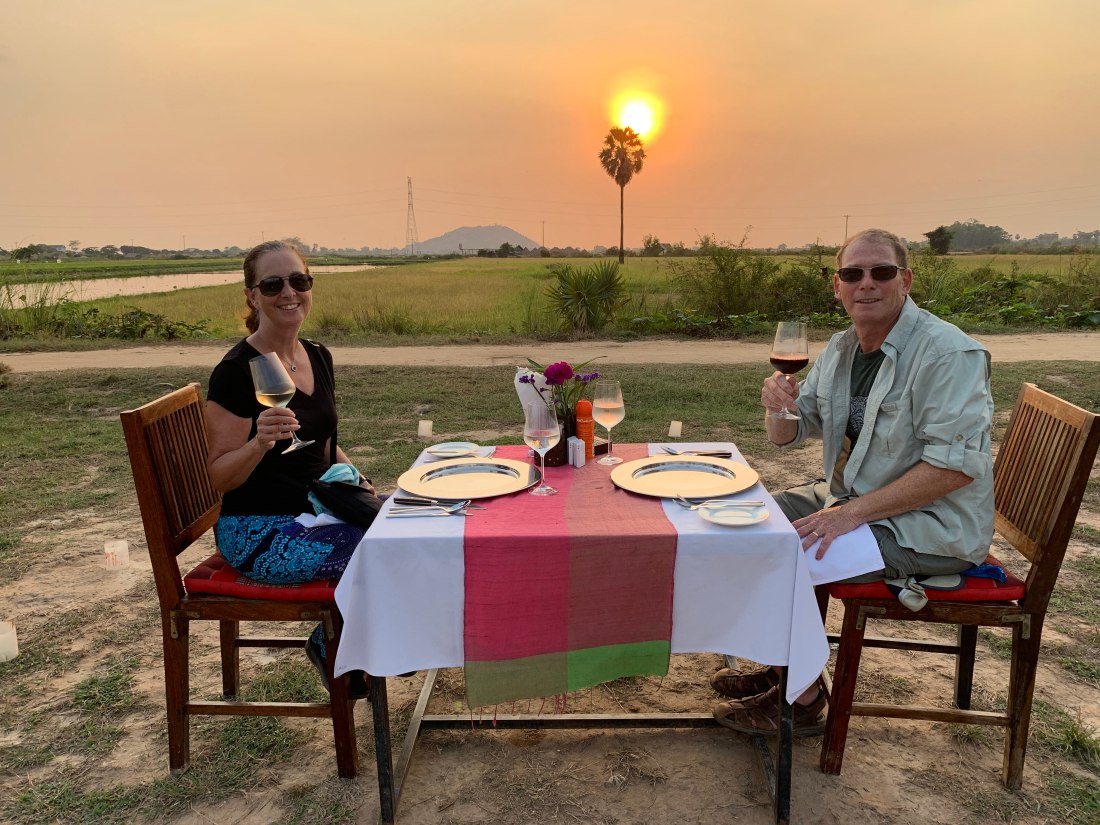
We were then taken by oxcart, the means of transport for the local farmers, to our restaurant for a sunset barbecue  on a rice and lotus flower farm.

img_1535img_20190121_170509img_20190121_170340img_20190121_171409img_20190121_170803img_20190121_170735img_1550img_20190121_181226

The next morning we went to Preah Prom Rath Pagoda.  It is currently a monastery and school.  There our guide Sam took us picture by picture inside the temple and told us the entire story of the life of Buddha.  It turns out Sam was once a monk.  He shared his story with us.  He is the 4th of 11 children to a now still working 78 year-old rice farmer.  After Sam finished primary school, his father told him he did not have the money to buy Sam any more school uniforms or transportation to school, so it was time for Sam to work in the rice fields.  Instead Sam joined a monastery and was schooled further there.  He ultimately won scholarships for university. After many years, he left the monastery, and at the age of 30 he married.  He, his wife, their 8 year old son and daughter-on-the-way live in the same village where he grew up near his extended family.

img_20190122_083050

img_20190122_084151

Next we went to the market to purchase ingredients for our Cambodian cuisine class. I am not a huge fan of the foods here which use a lot of fermentation and sour bases.

img_20190122_094131img_20190122_094415img_20190122_094750img_20190122_095830img_20190122_120707image-2019-01-27 (9)-1

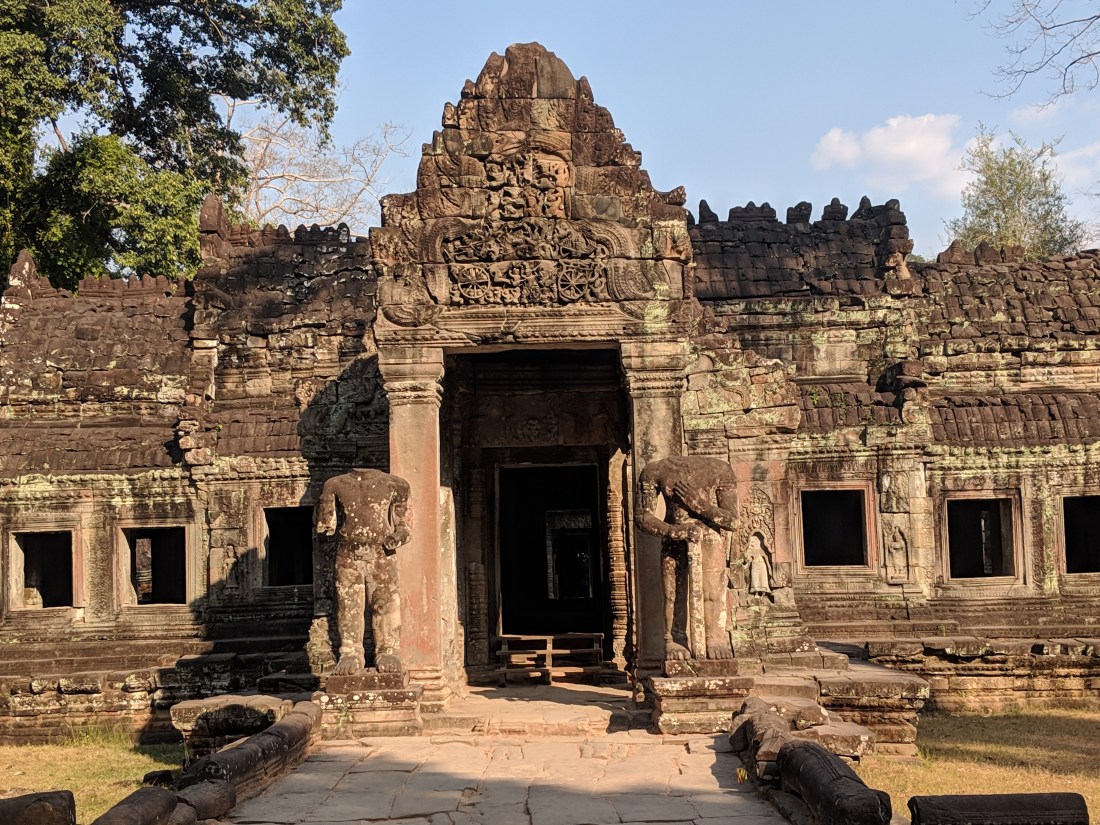
In the afternoon we visited Preah Khan – Royal Sword, King Jayavaraman VII’s temple to honor his father.  It was later converted to a Hindu temple and the many buddhas removed.

img_20190122_153337img_20190122_153349img_20190122_153743img_1563img_1564img_1569img_1570

img_1557
Buddhas removed
img_20190122_155124
these Buddhas survived because the stone had collapsed face down

img_20190122_160300

img_20190122_160354
again the symbol of peace
img_20190122_160640
the library

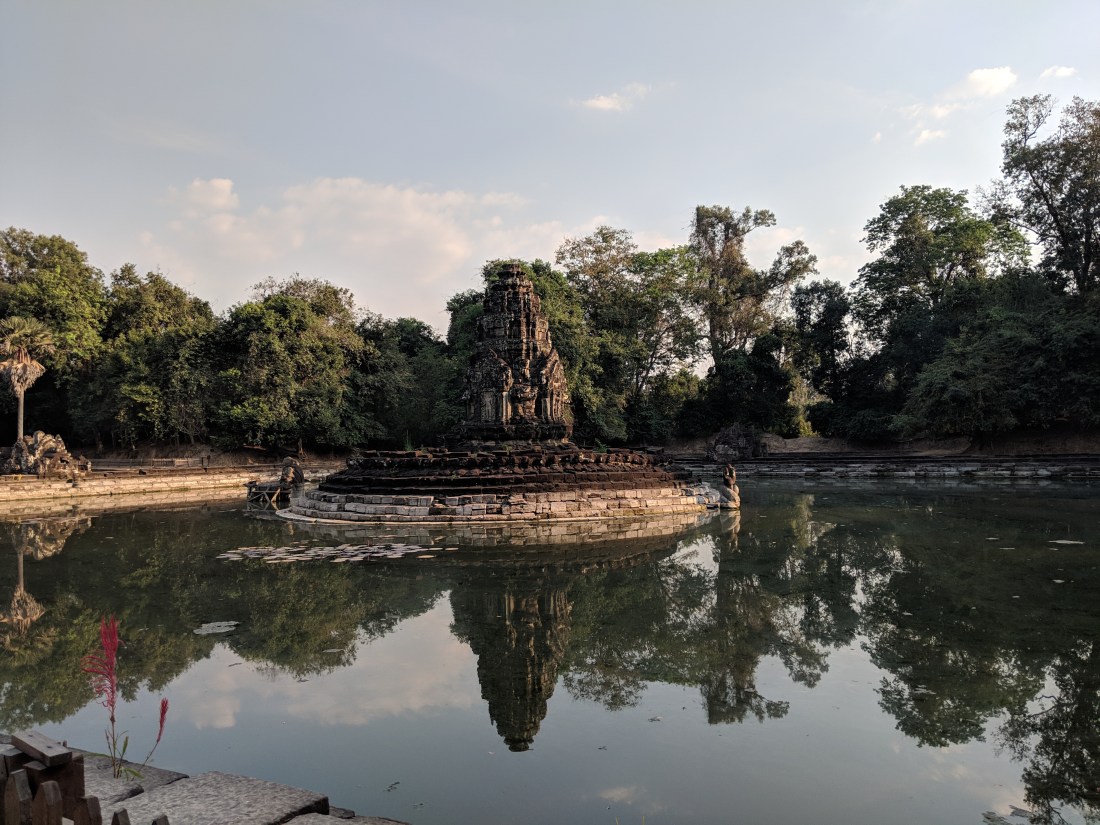
And our final temple was Neak Preah – encircled Naga , also built by  King Jayavaraman VII, one of the smallest but most beautiful temples in the Angkor complex, a fountain with four surrounding ponds set on an island in an artificial lake.  The lake’s existence was only first discovered about a decade ago due to satellite images revealing its outline.  The damn was reconstructed.

img_20190122_163400img_20190122_163024

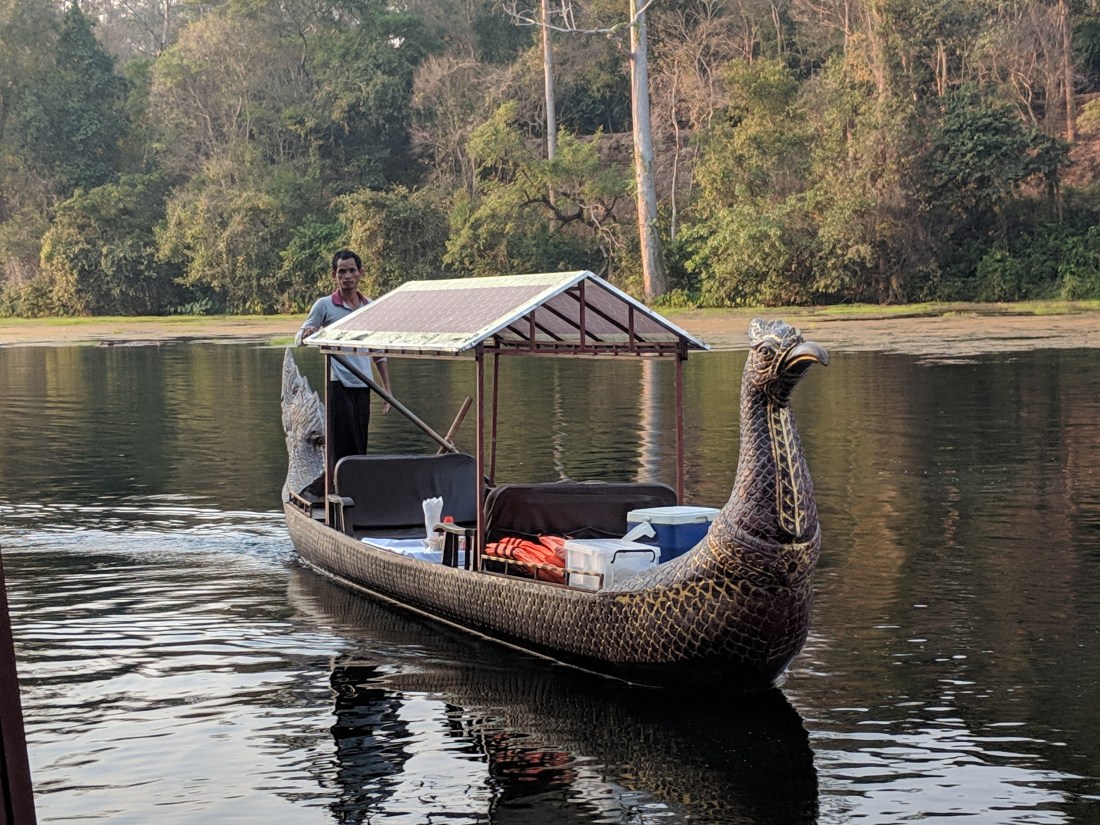
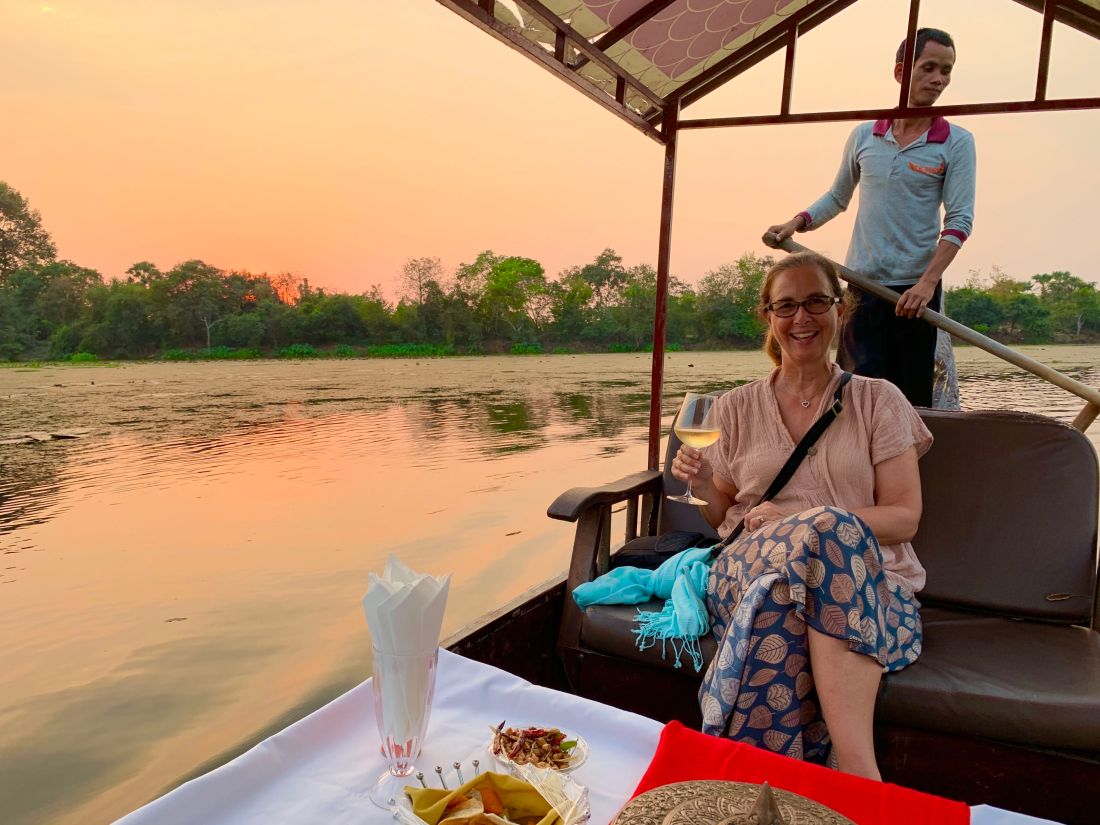
And finally, we had a sunset cruise on a Royal King boat on the man made moat at the southern gate of Angkor Thom.

img_20190122_165738img_1575img_1587

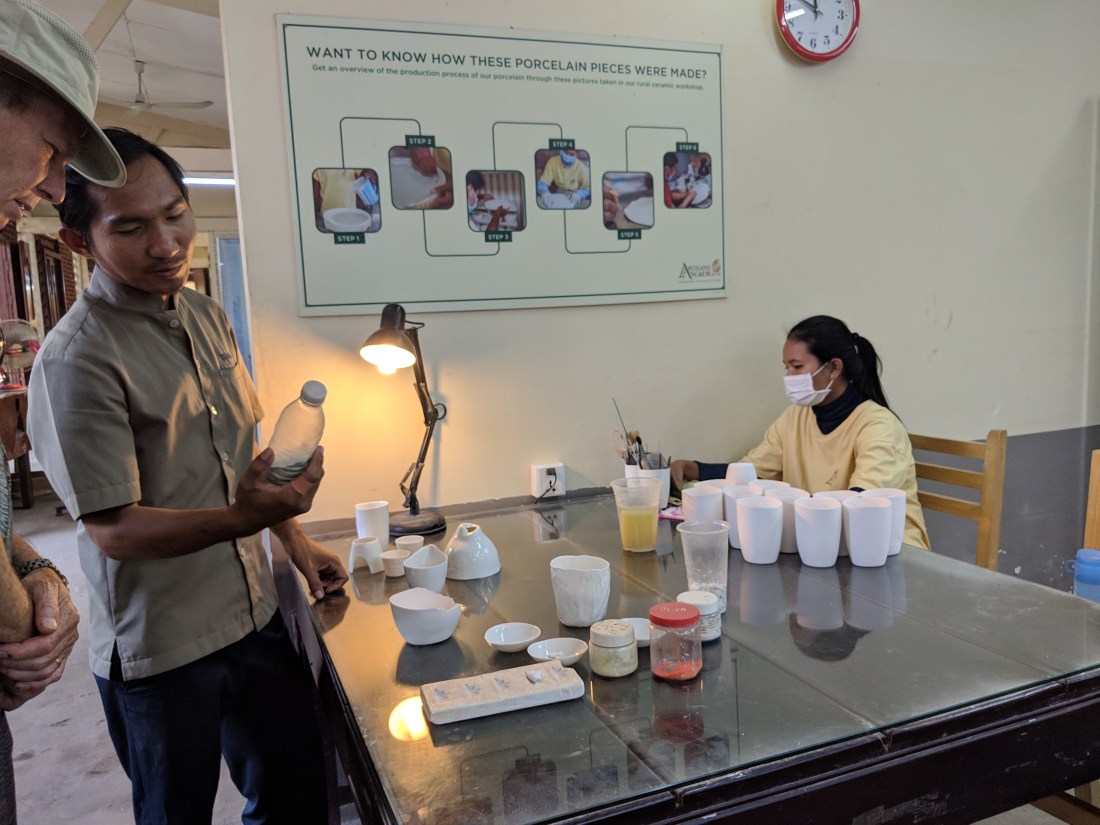
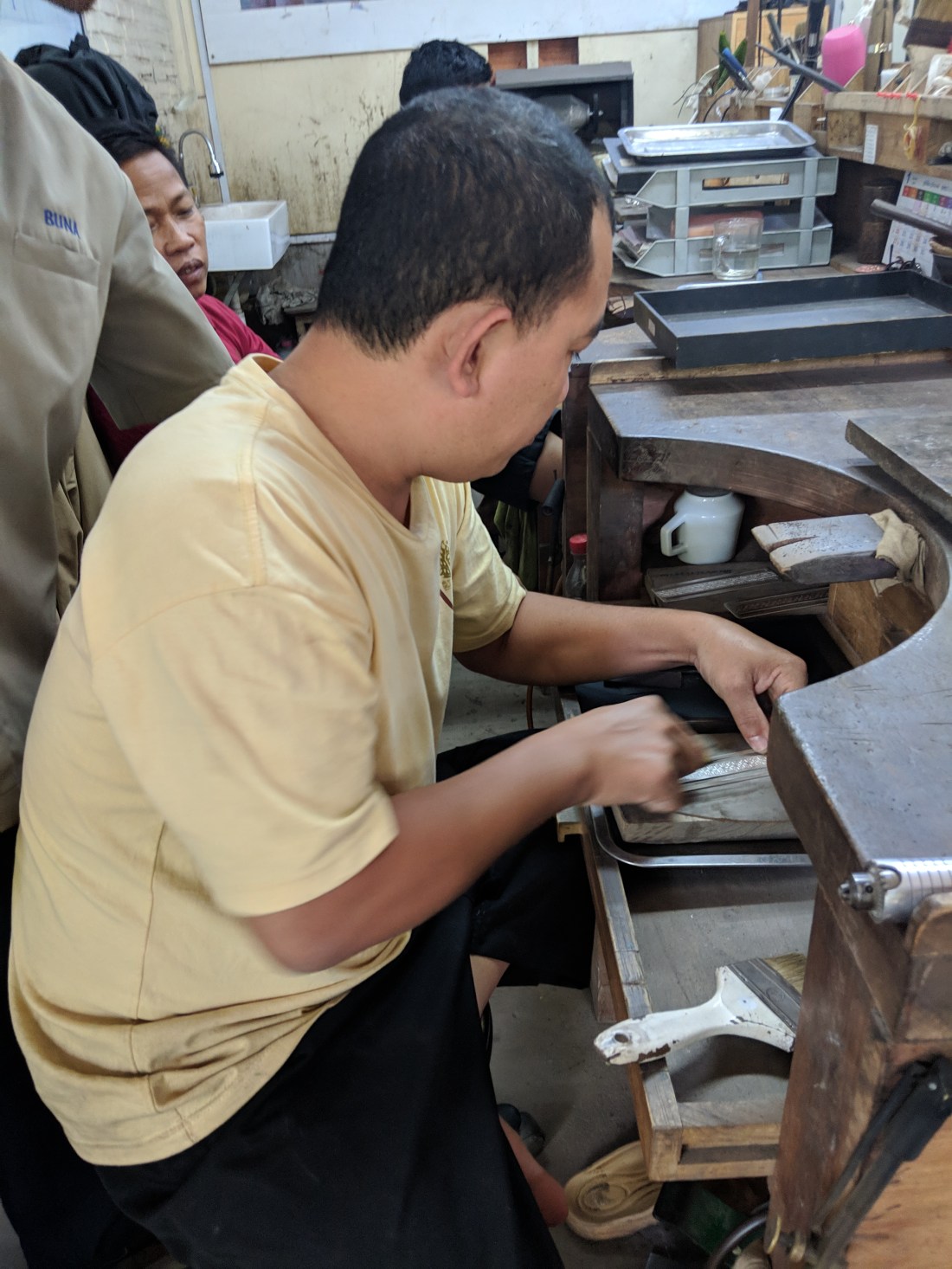
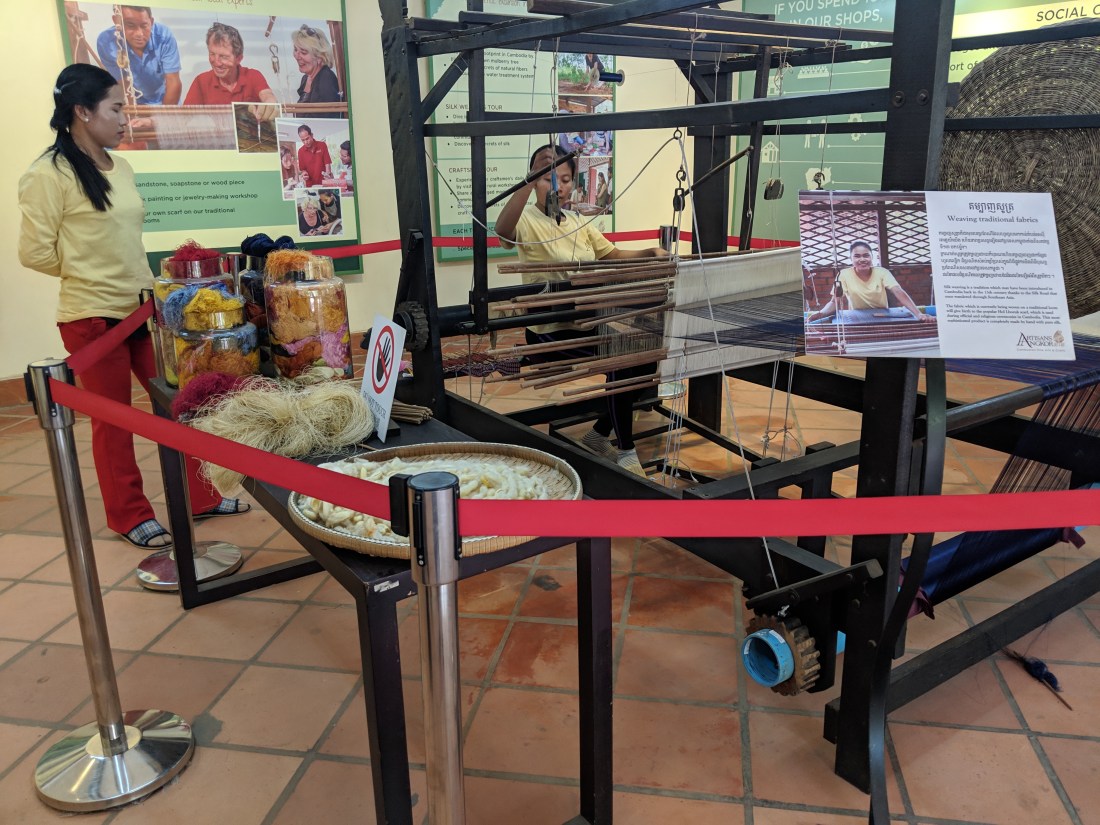
On out last morning in Cambodia we visited the artisan village where future crafts people are trained in all the arts of the Khmer.

img_1593img_1594img_1595img_20190123_114525img_20190123_115115img_20190123_115224img_20190123_115240img_20190123_115405

img_20190123_115628
polishing hand made silver pieces

img_20190123_115741

Now we are off to Vietnam!


Luang Prabang, Laos Jan 16-19

I cannot gush enough about how much we loved Laos, a surprise favorite so far. Thank you Angela for encouraging us to come here.  At first blush, the people and culture seem very similar to the Thai, so friendly.  But the architecture and cuisine as well as the art are distinct.   The entire city of Luang Prabang is a UNESCO heritage site because it uniquely captures the French colonial influence mixed with the Siamese (Thai) influence blended with the local Prabang style.  We started to notice this the very first night wandering the night market.  Where in most of Thailand one sees the same products of clothes, jewelry, trinkets over and over in markets in various cities, in Luang Prabang, there are many more hand made items, beautifully capturing those influences mentioned.

IMG_20190118_142440

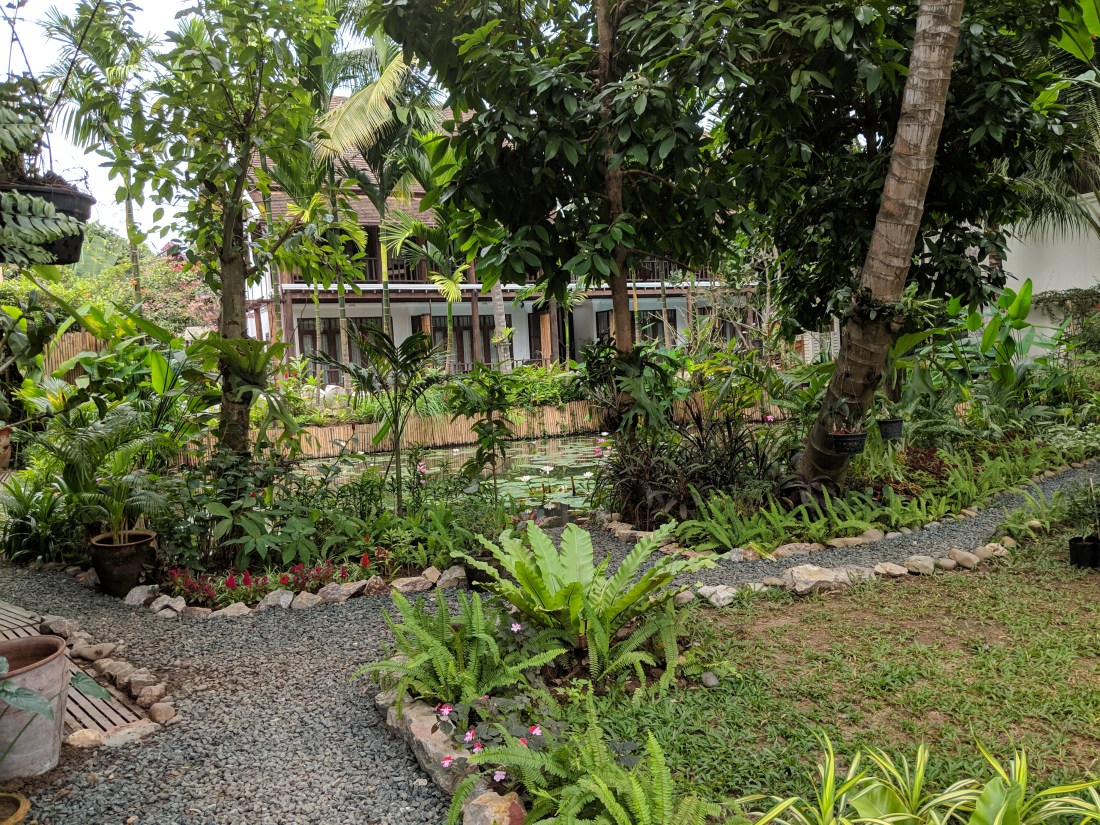
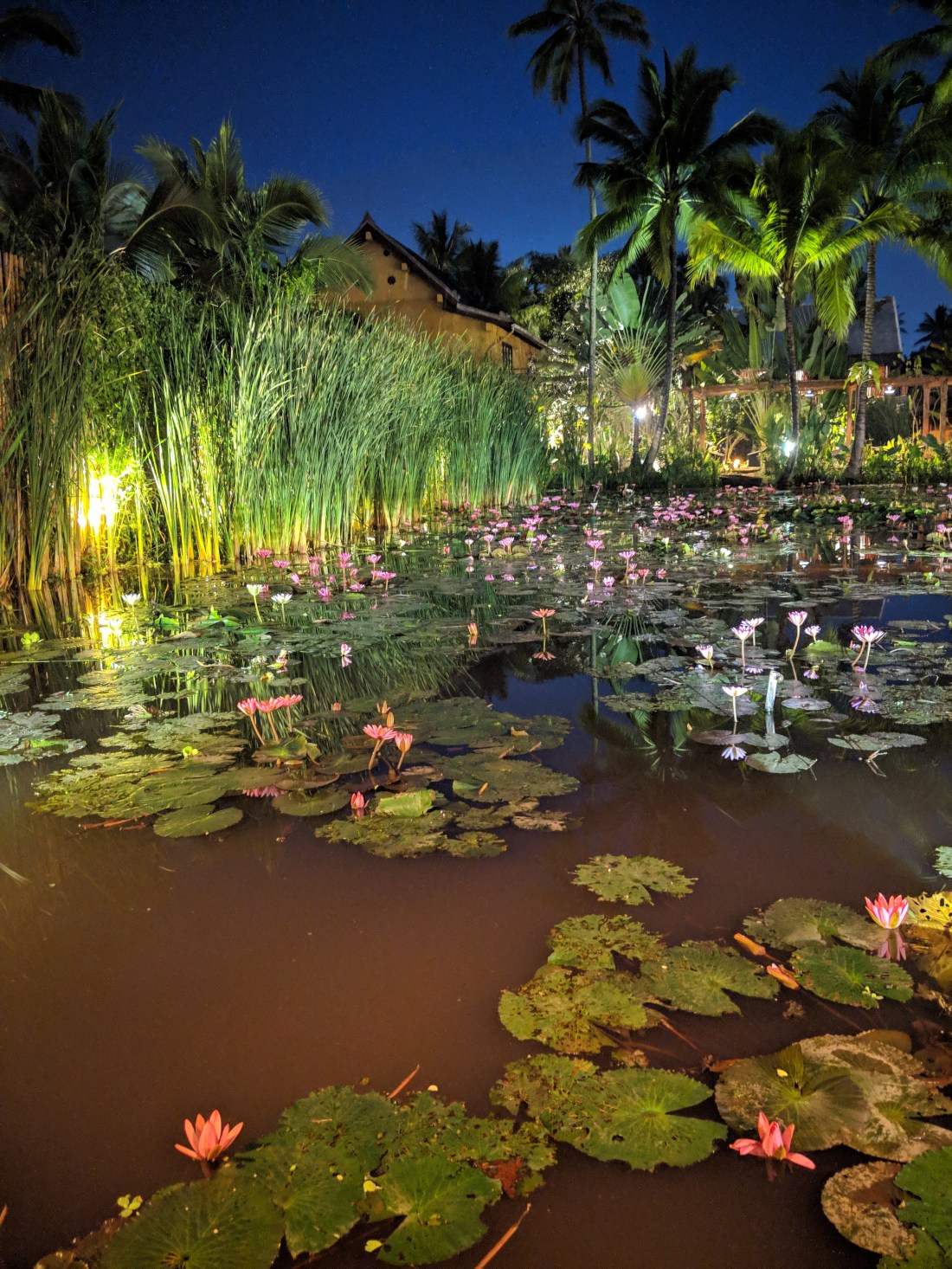
Our hotel Maison Dalabua, which was absolutely gorgeous,  surrounds a UNESCO protected lily pond.

IMG_20190117_090912.jpg

IMG_20190119_113428.jpg
The view from our balcony
IMG_20190118_203044.jpg
at the restaurant for dinner

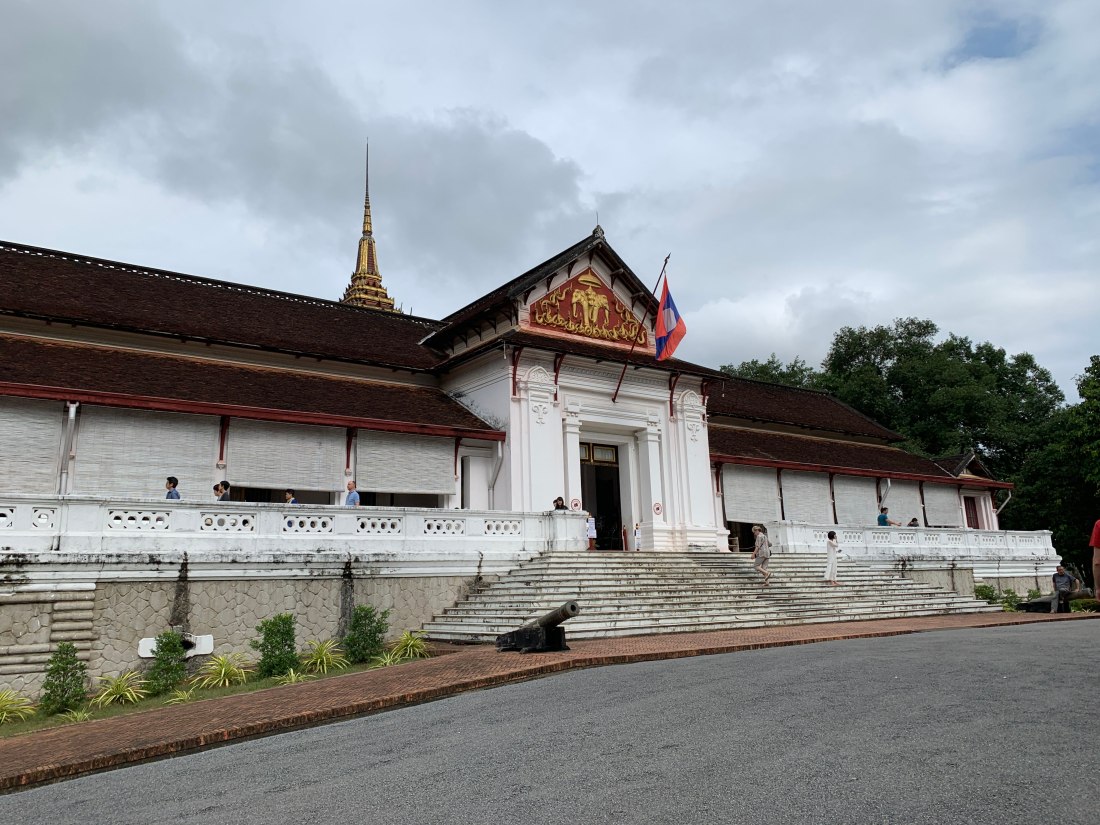
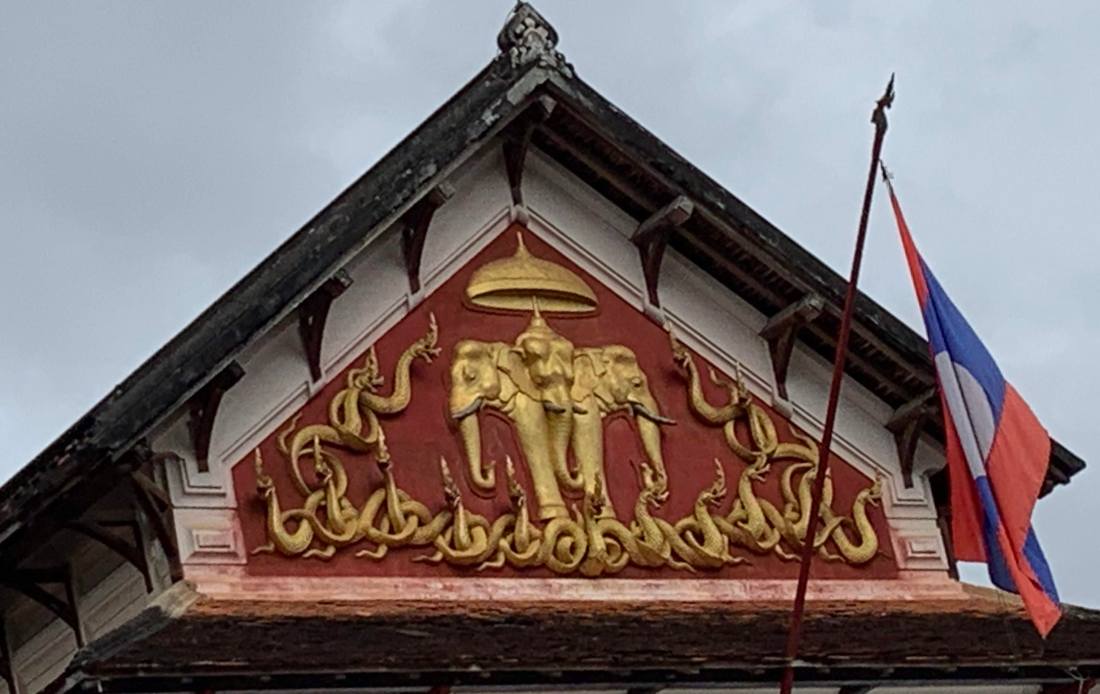
In the morning, our first visit was to the Royal Palace Museum, which was built as the king’s residence in 1904 during the French colonial period and remained the monarch’s home until 1975: communism.

IMG_1058.JPG

img_1059

Photos were not allowed inside, but most of the furniture are wood antiques imported from Europe.  The floors are also wood, very unusual in these hot climate countries.

Walking along the riverfront, the homes show the mixture of architectural styles.

IMG_20190118_160038

img_20190118_172303img_20190118_172143

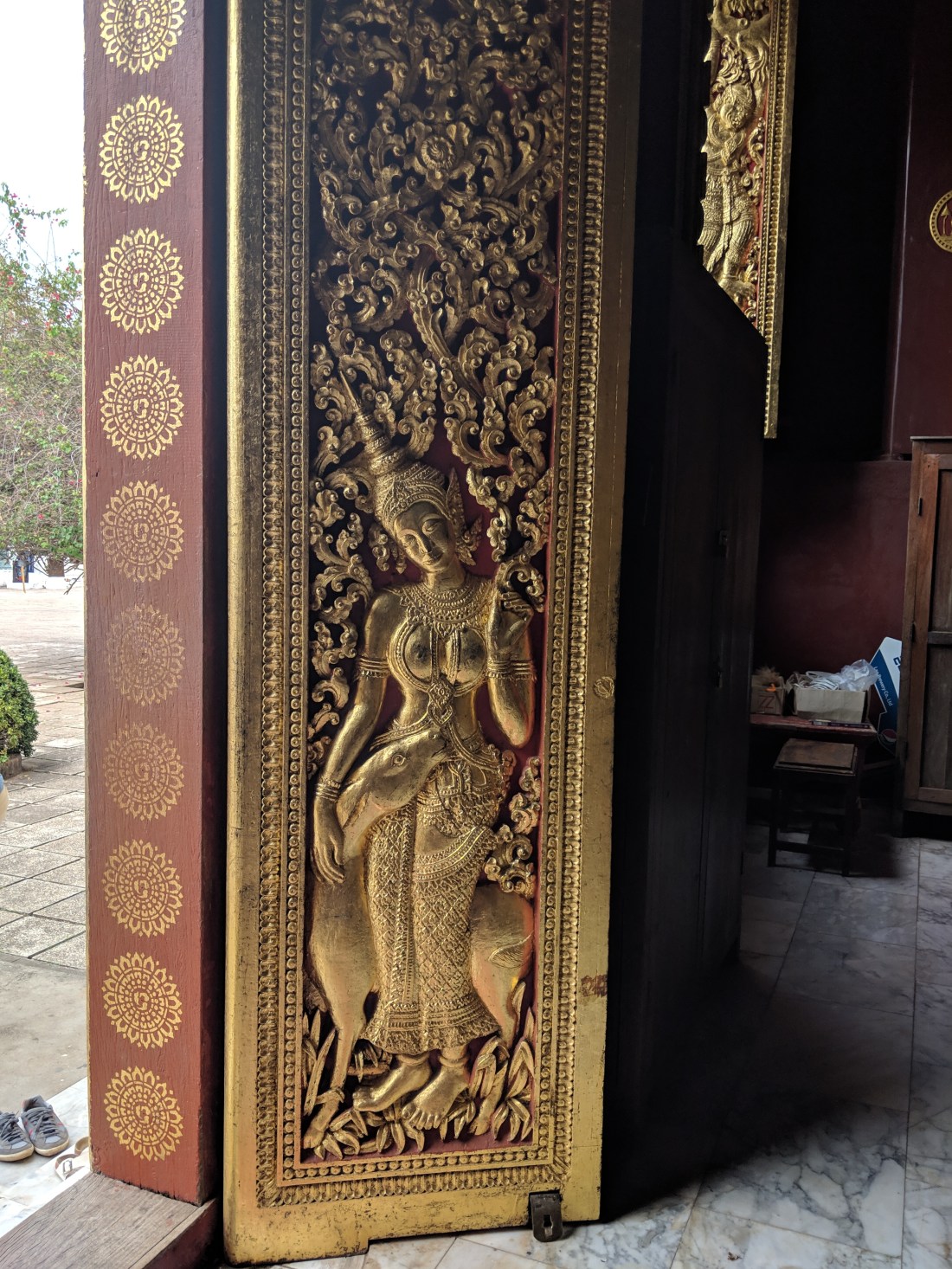
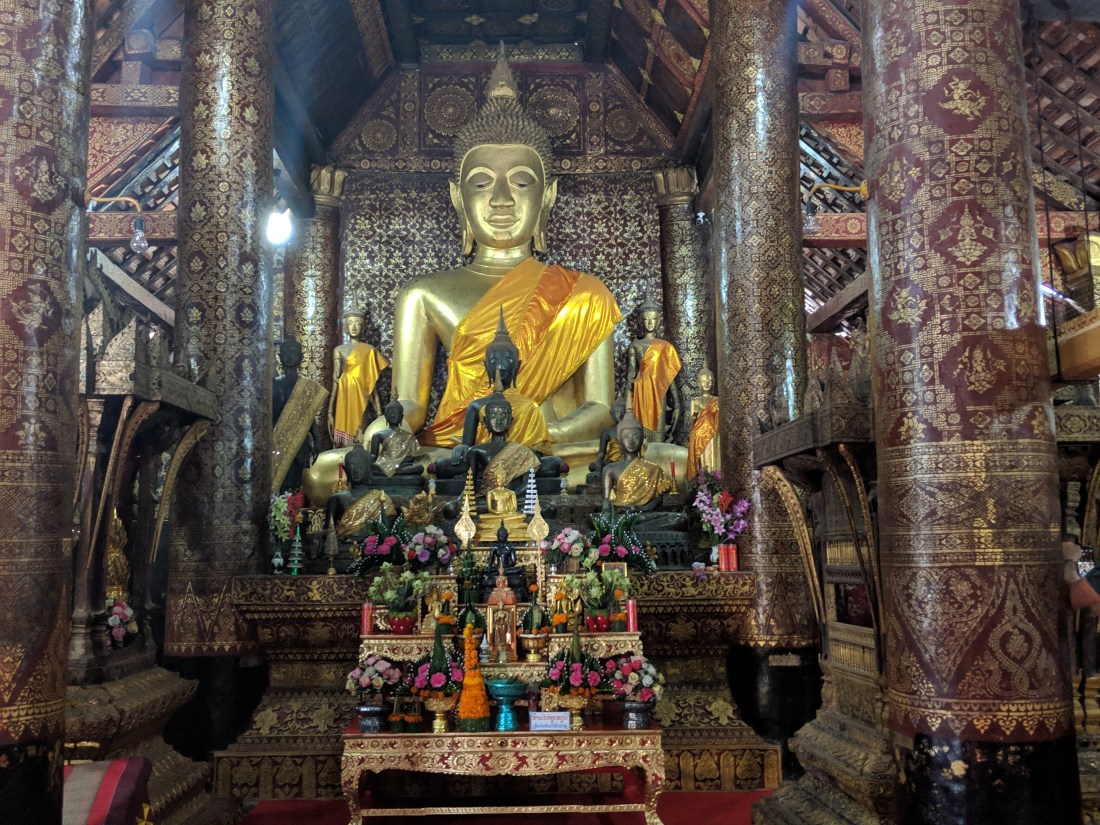
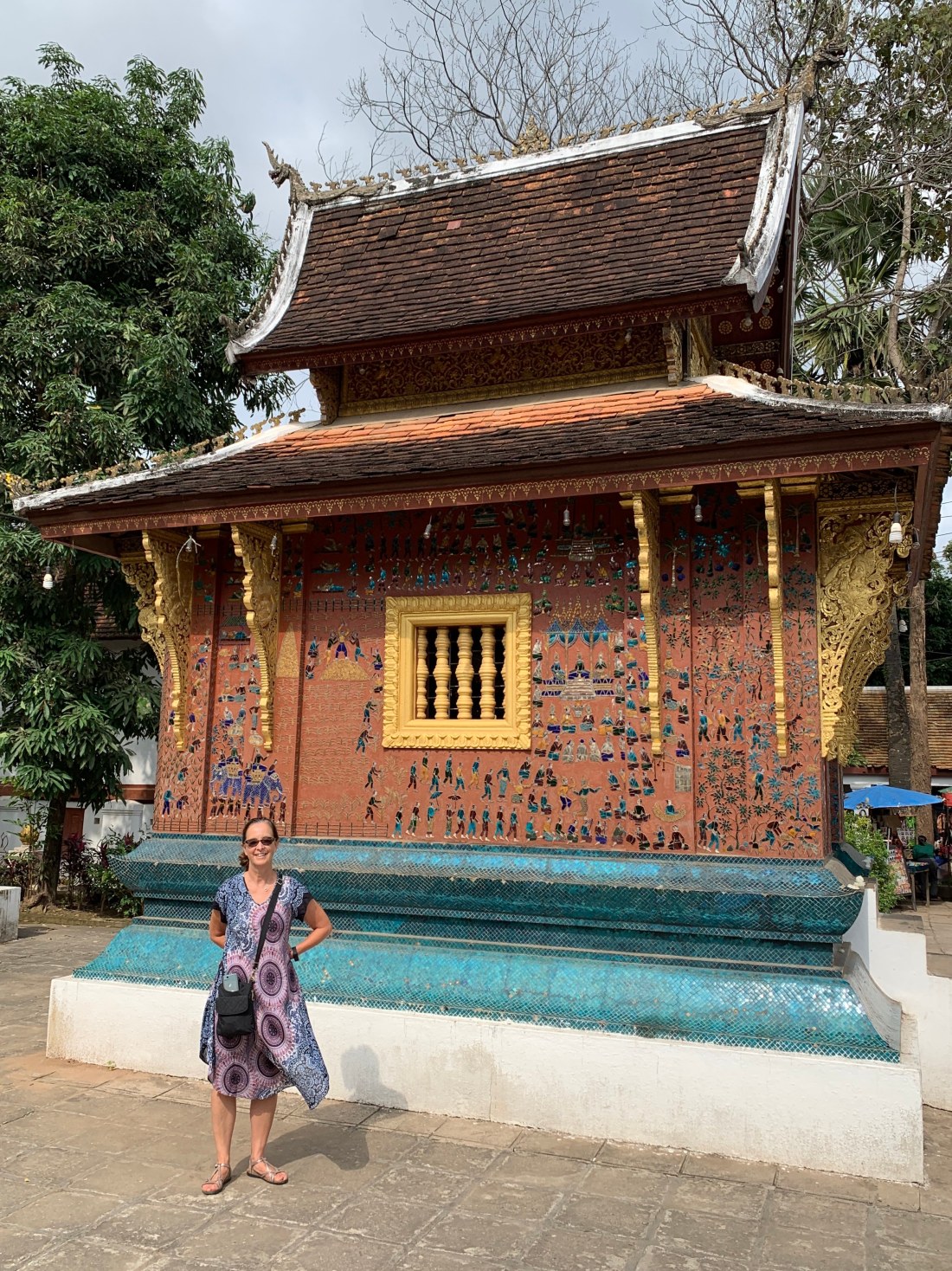
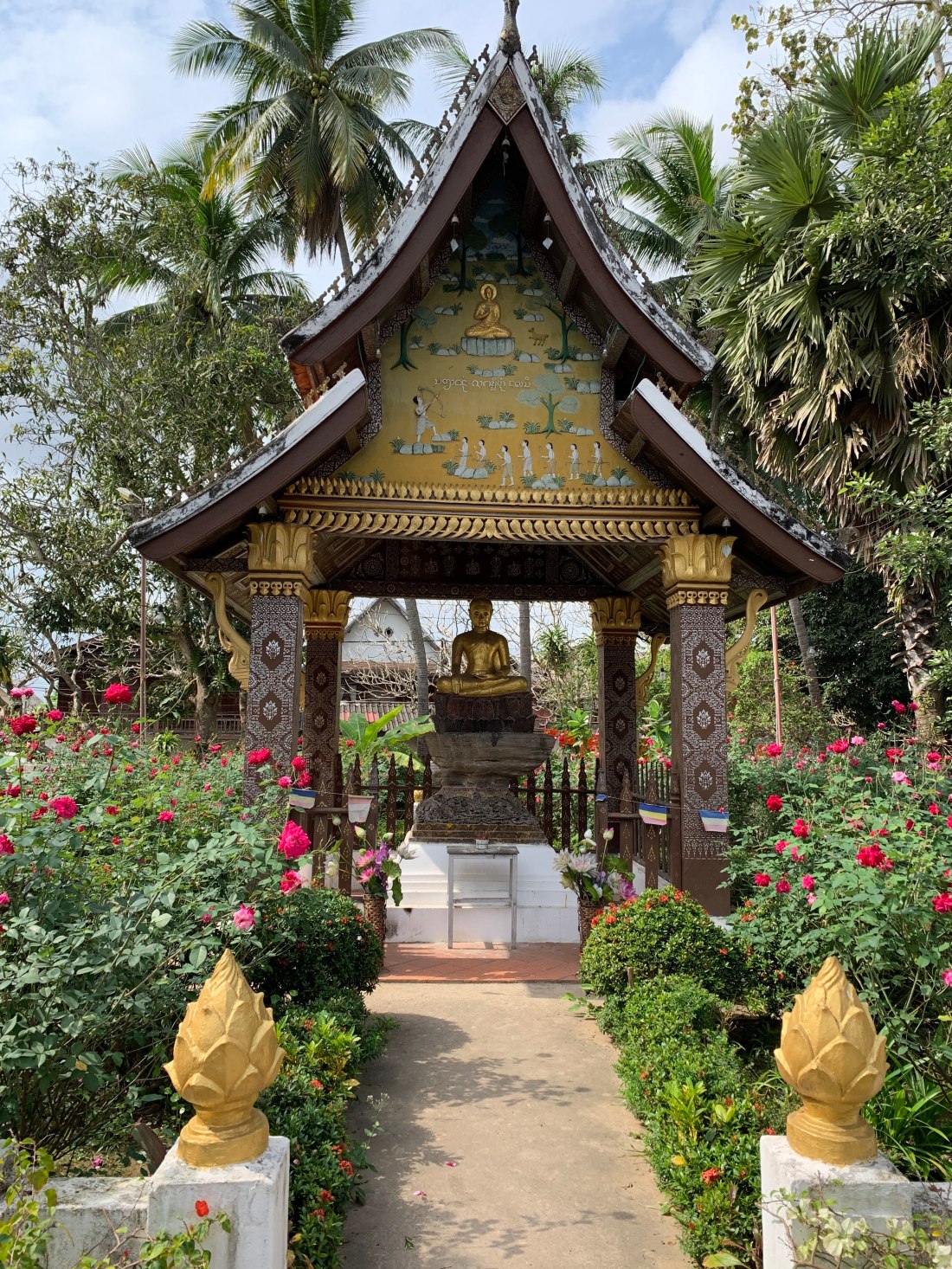
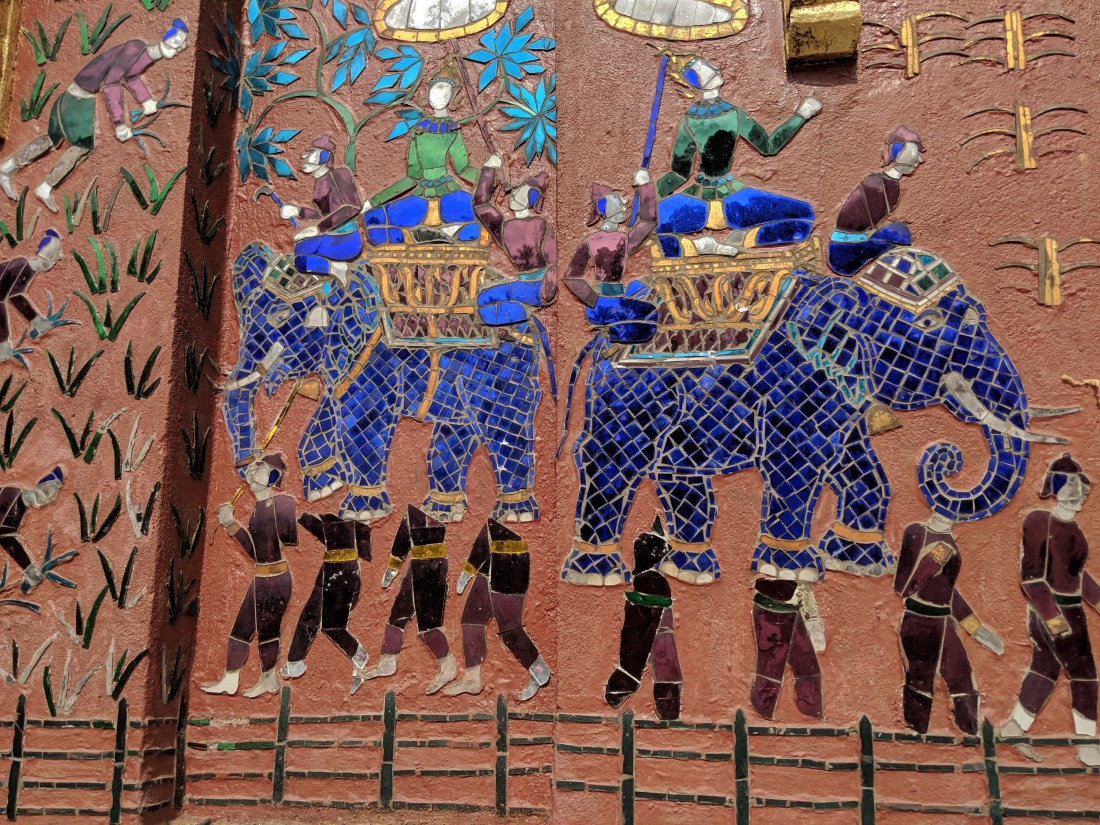
And of course we visited some local temples.  Wat Xienghtong is considered the most beautiful in the city.  Noticeable differences include the intricately carved wood paneled doors to the temple, and the outer wall colored mirror mosaics.  The interiors are relatively undecorated.

img_20190117_111453img_20190117_111145img_20190117_111821

img_20190119_110417

img_1079img_1080

img_20190117_112641img_20190117_112424

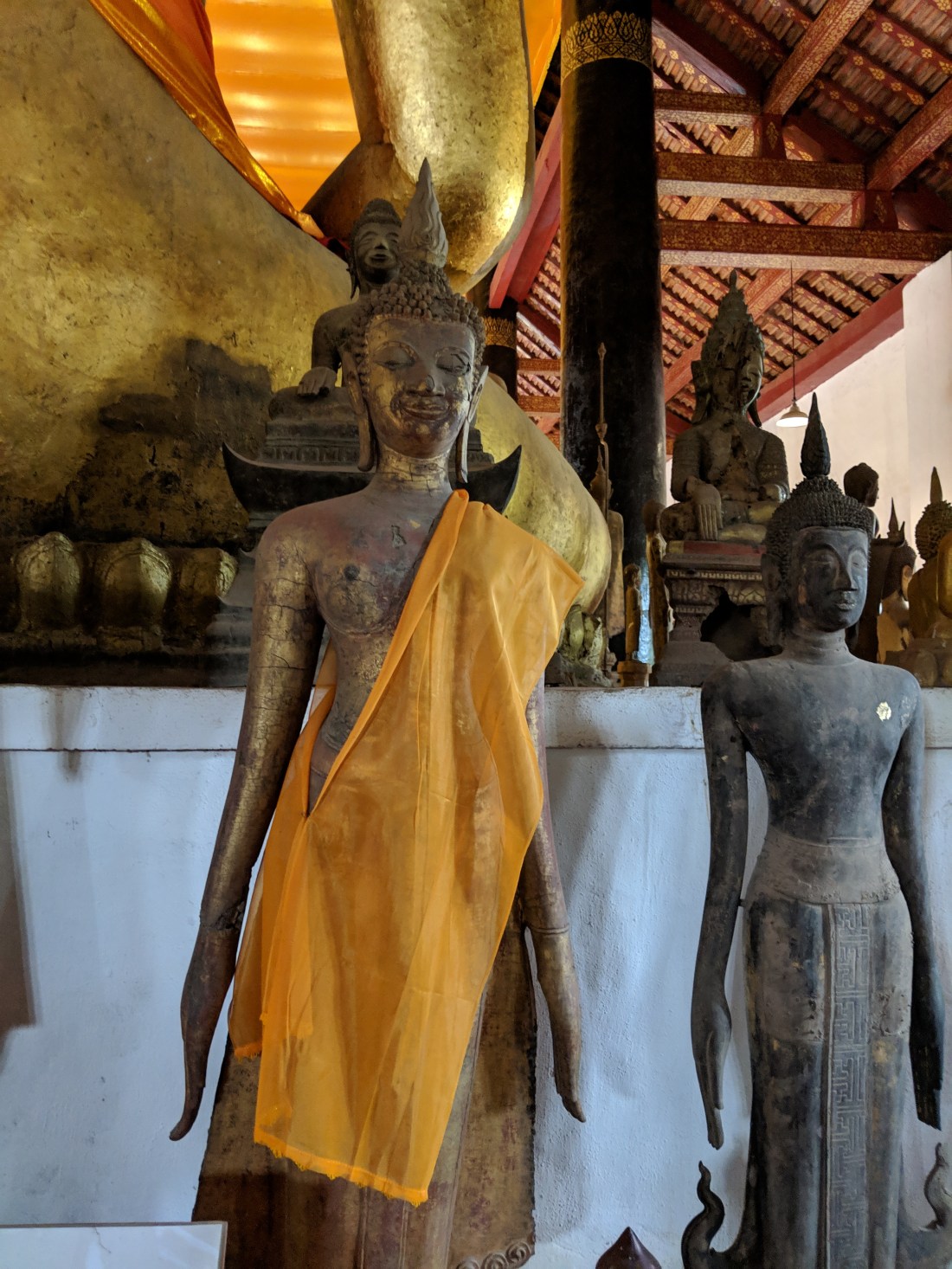
The below buddha has the wide forehead and mouth of the Khmer and the narrow waist of the Siamese.  Those features together with the pointed nipples and his “Calling for Rain” pose make him specifically in the Prabang style.

img_20190119_110714

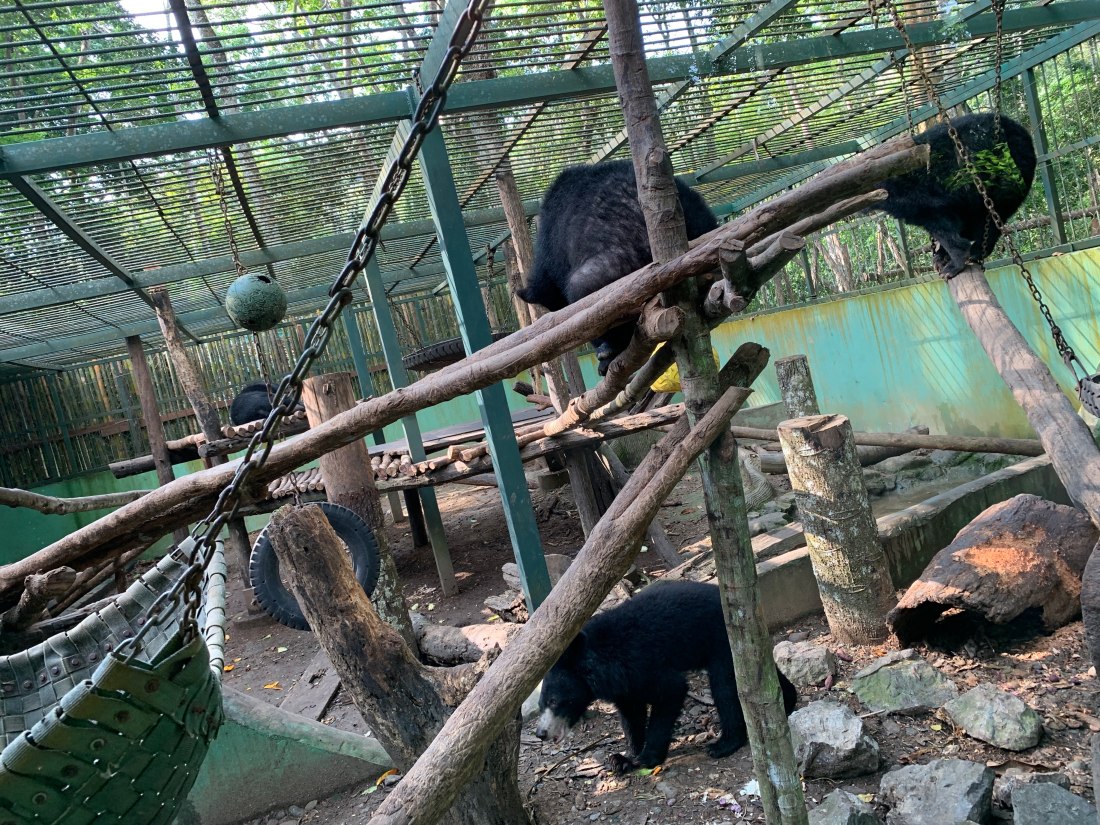
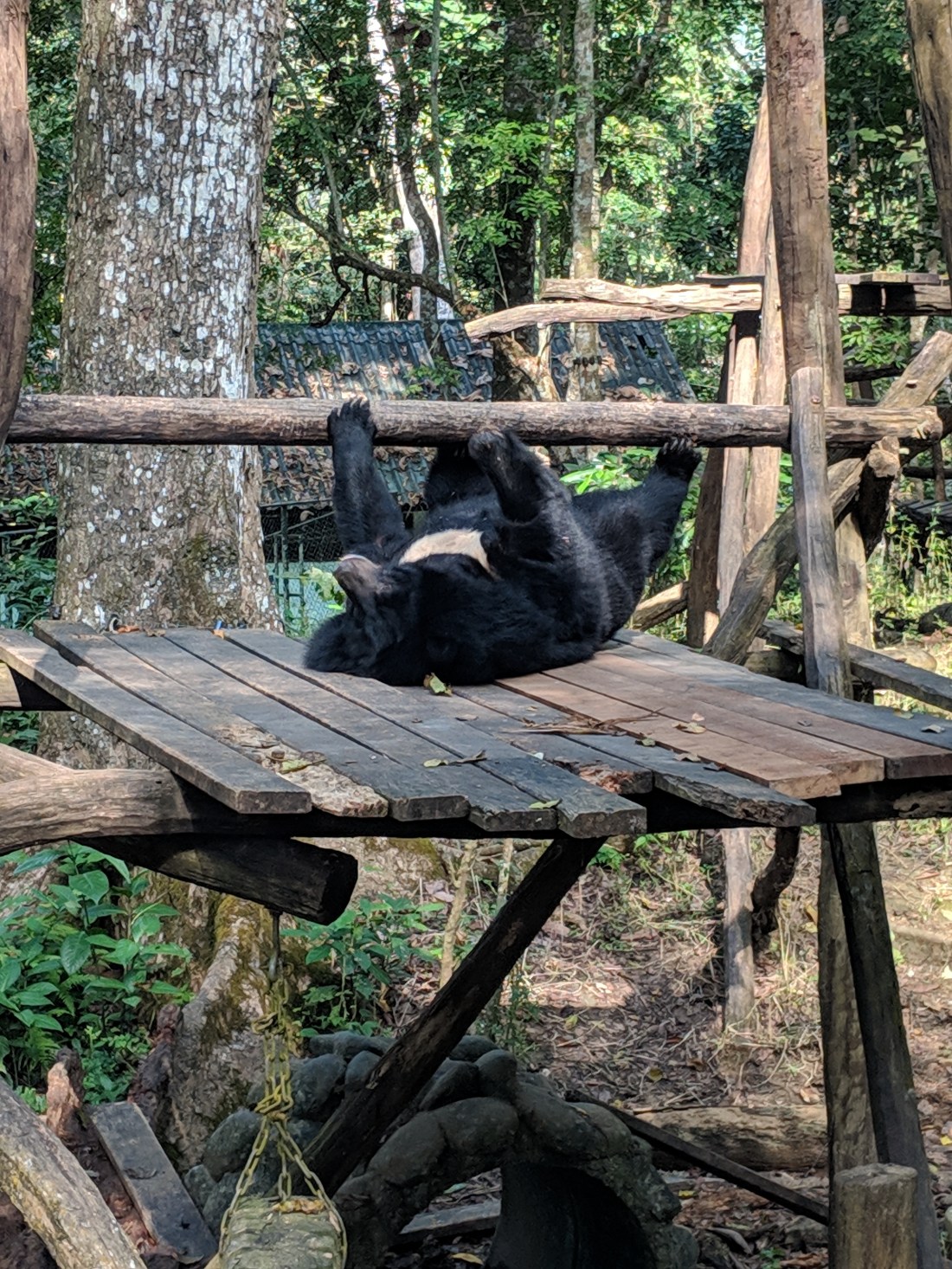
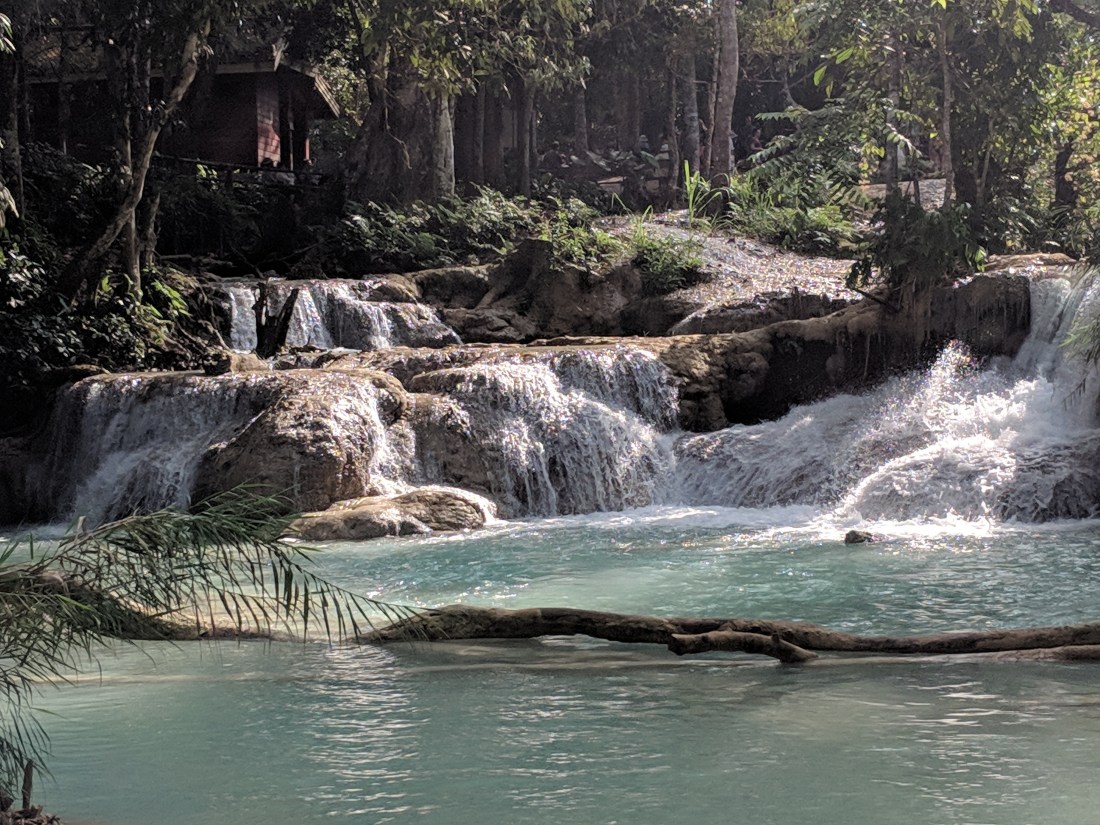
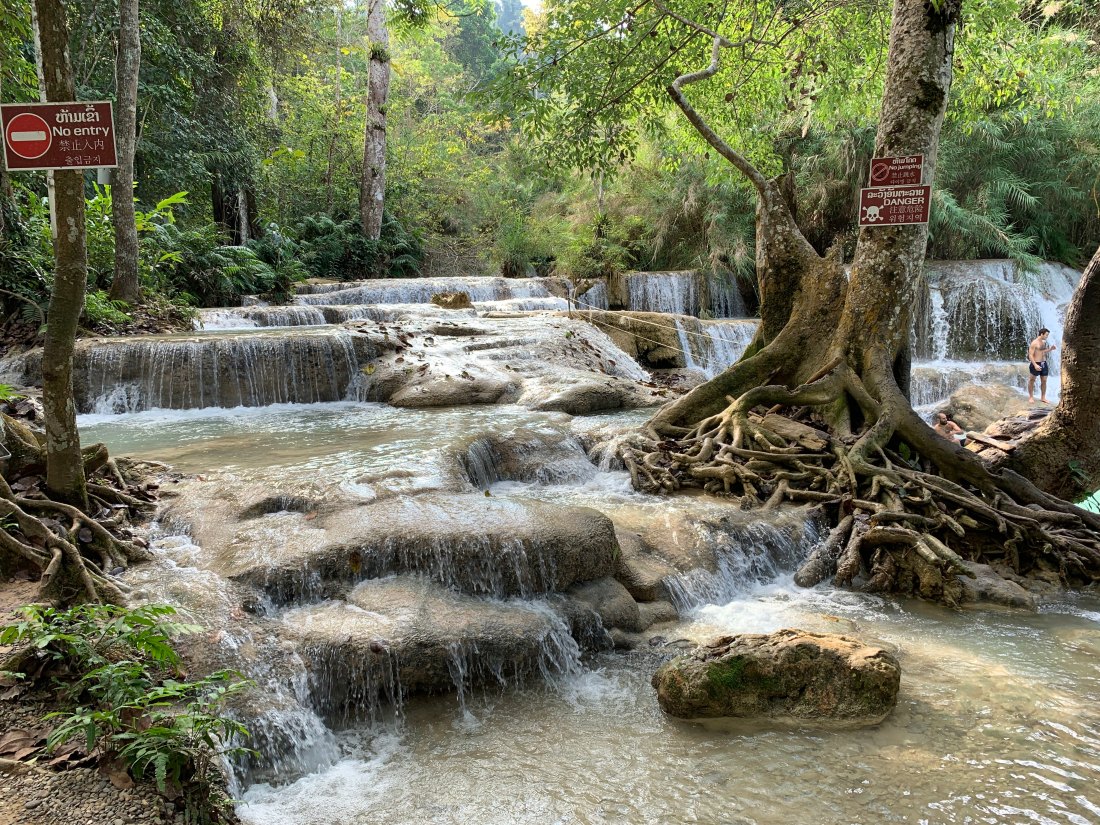
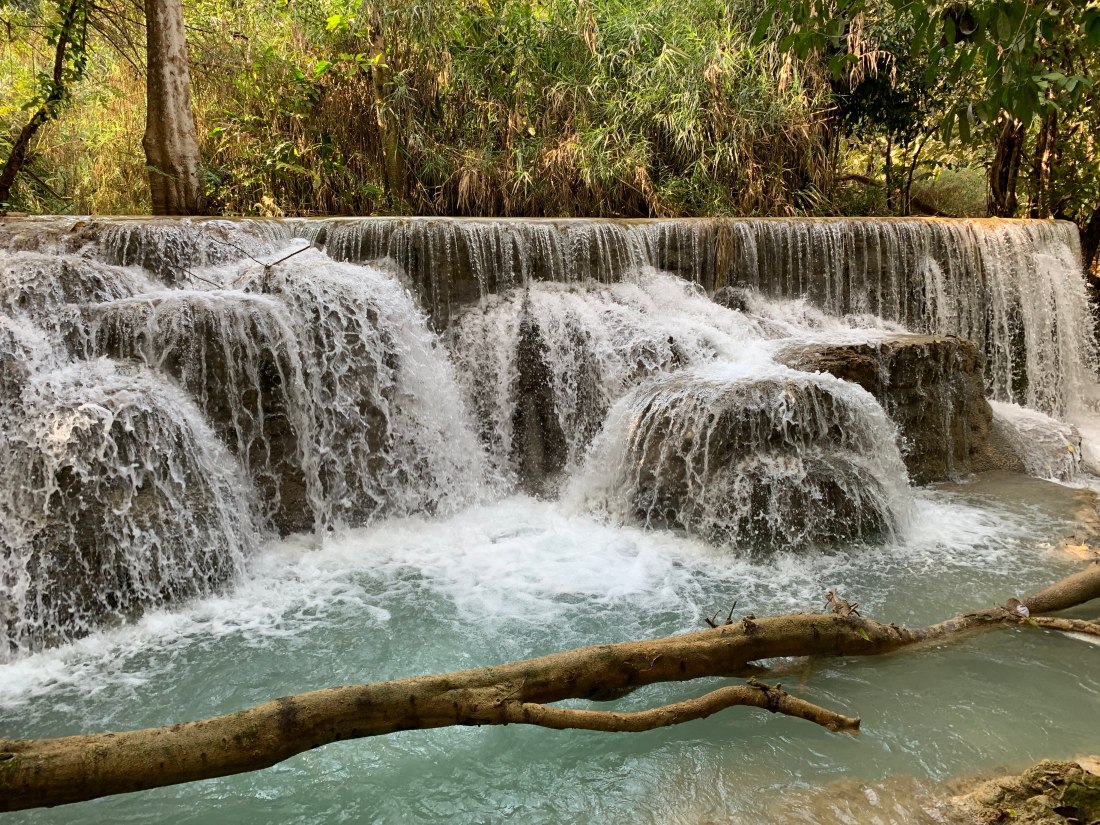
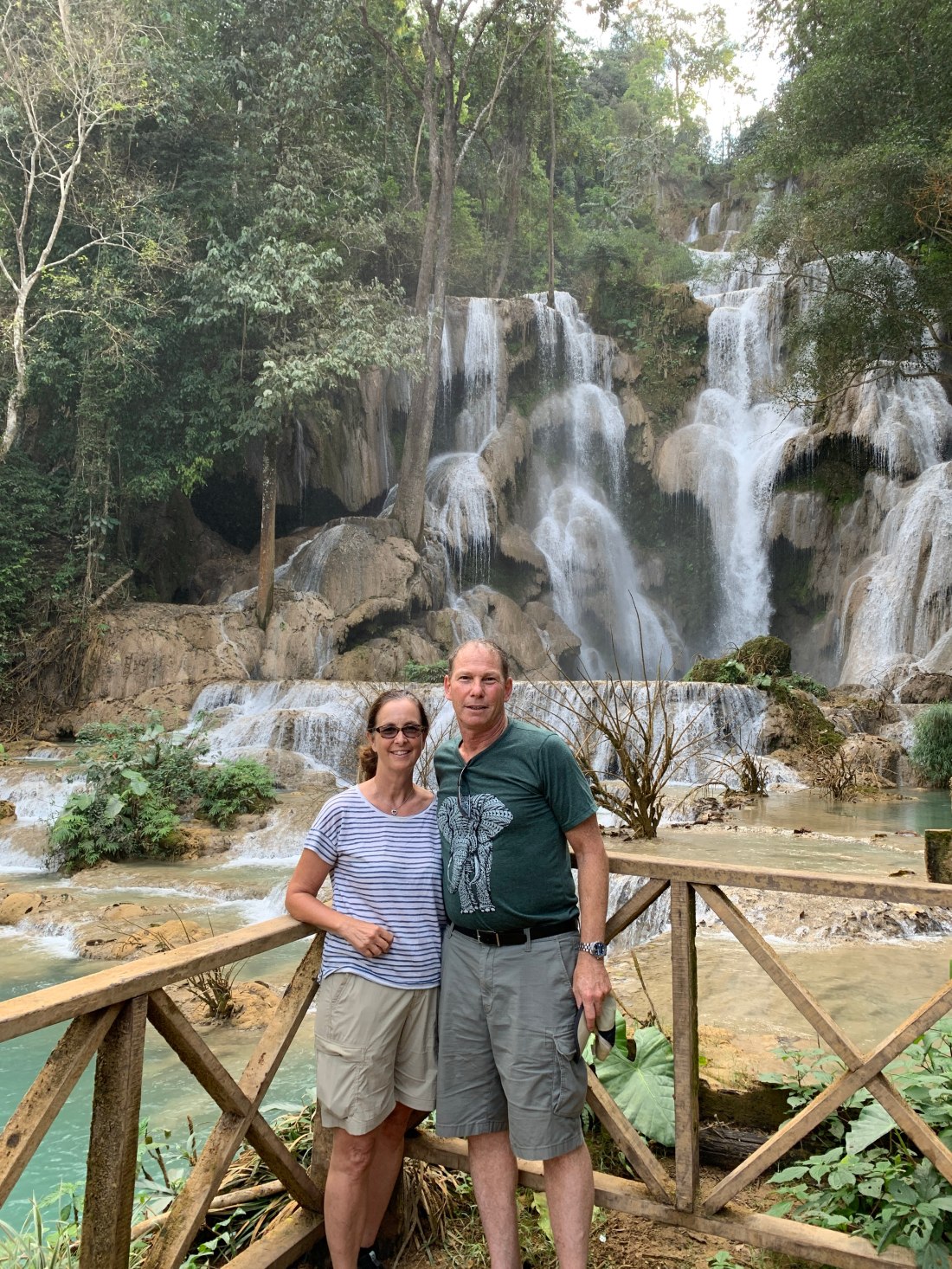
In the afternoon, we took a somewhat treacherous ride in a tour minivan so we could hike up the Kuang Si Waterfall.  At the bottom is a rescued bears preserve.

img_1091img_20190117_144131

img_20190117_145219img_20190117_150318img_1099img_1103

img_1112

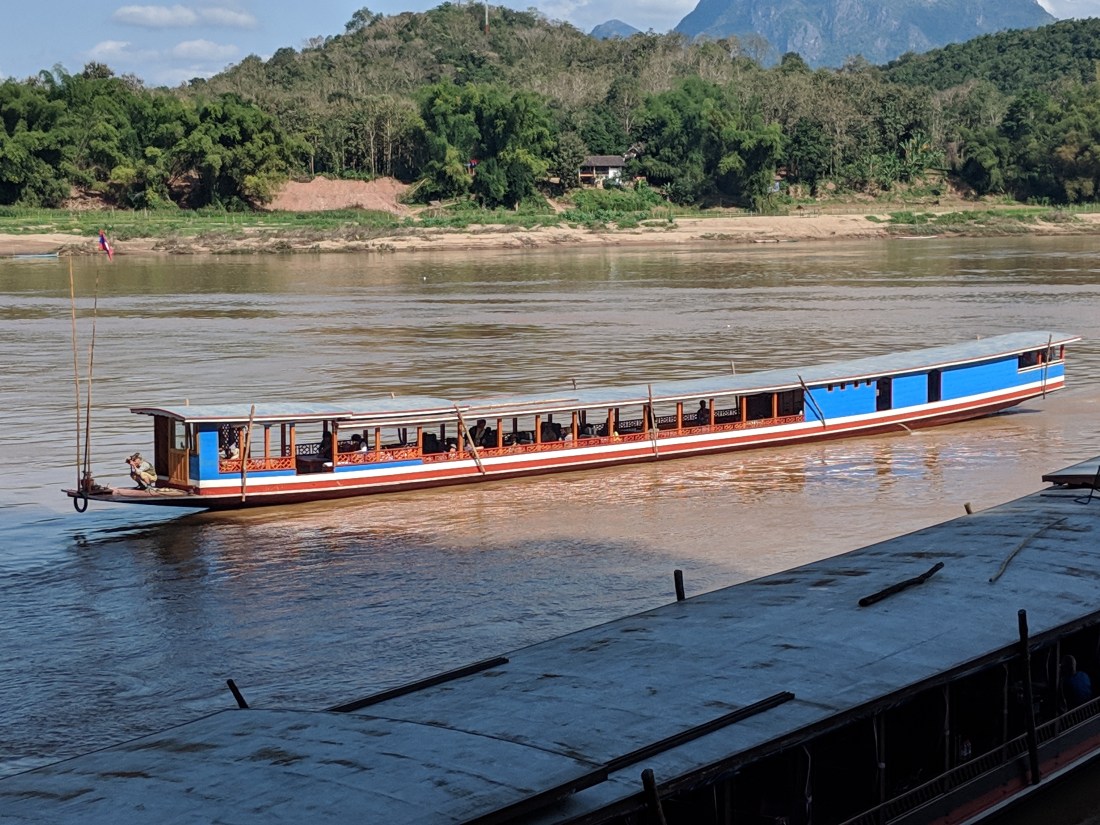
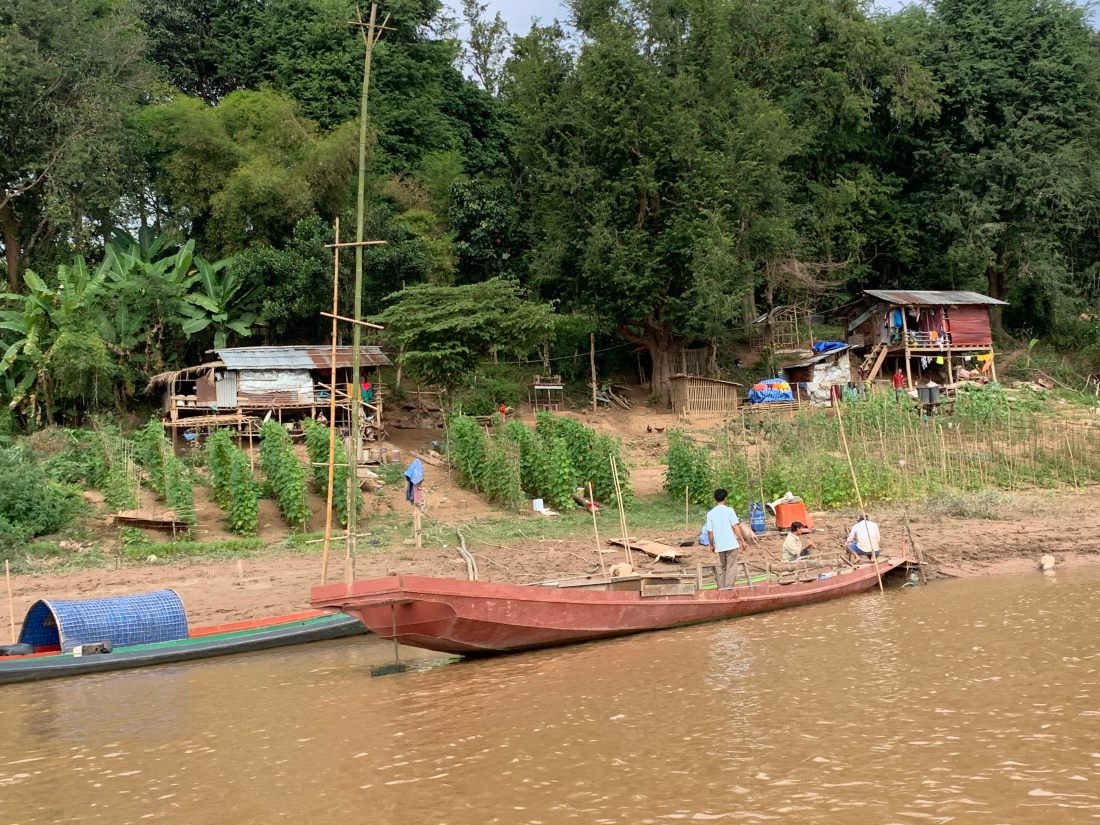
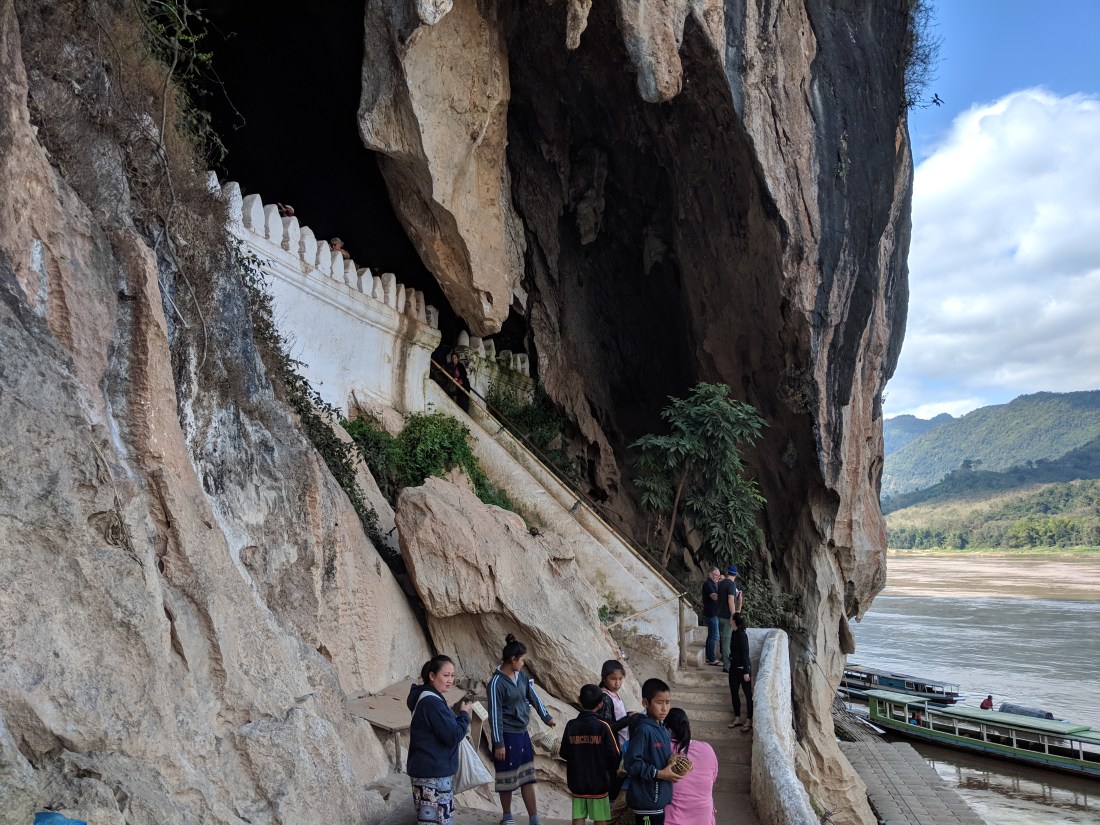
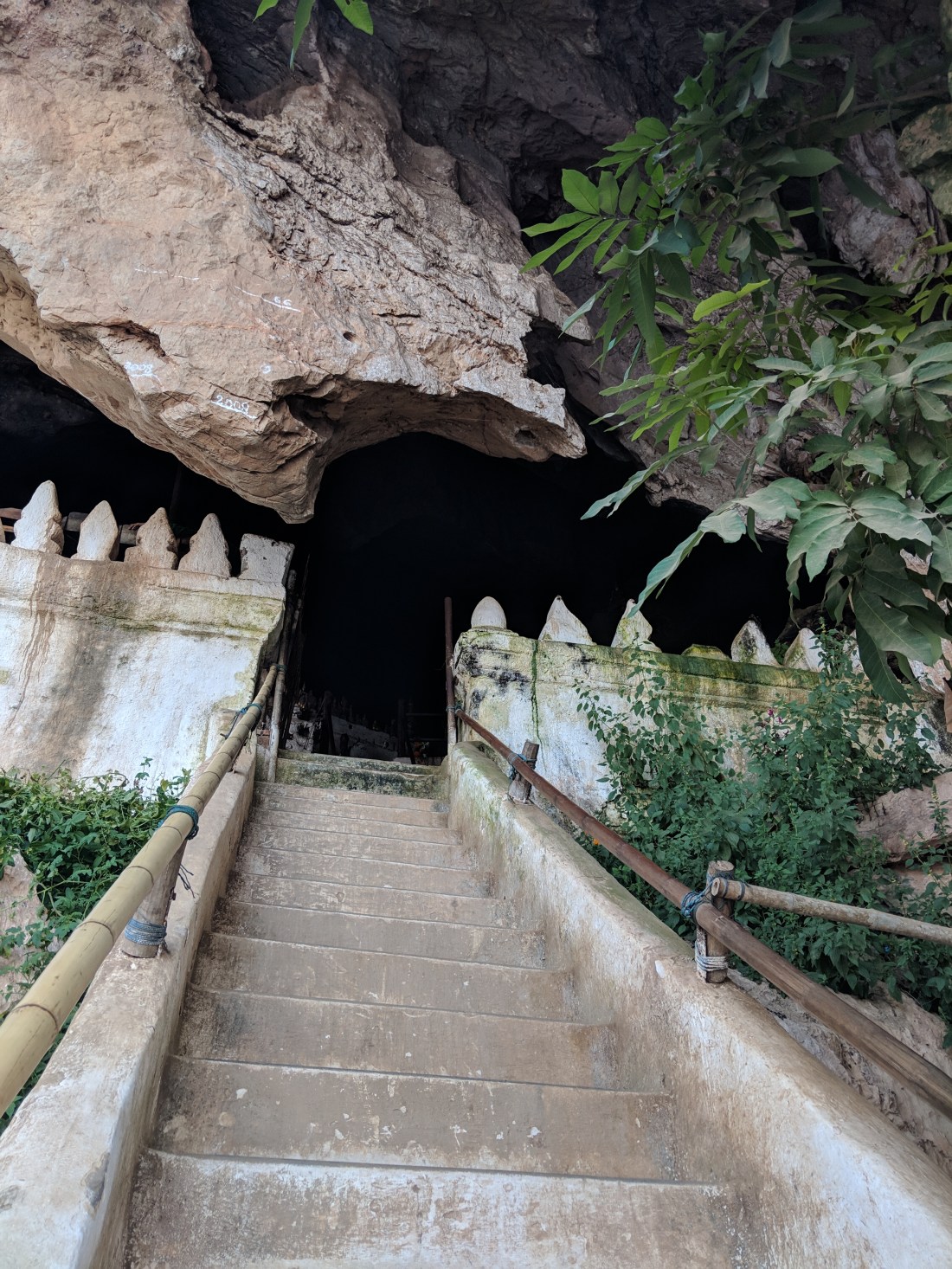
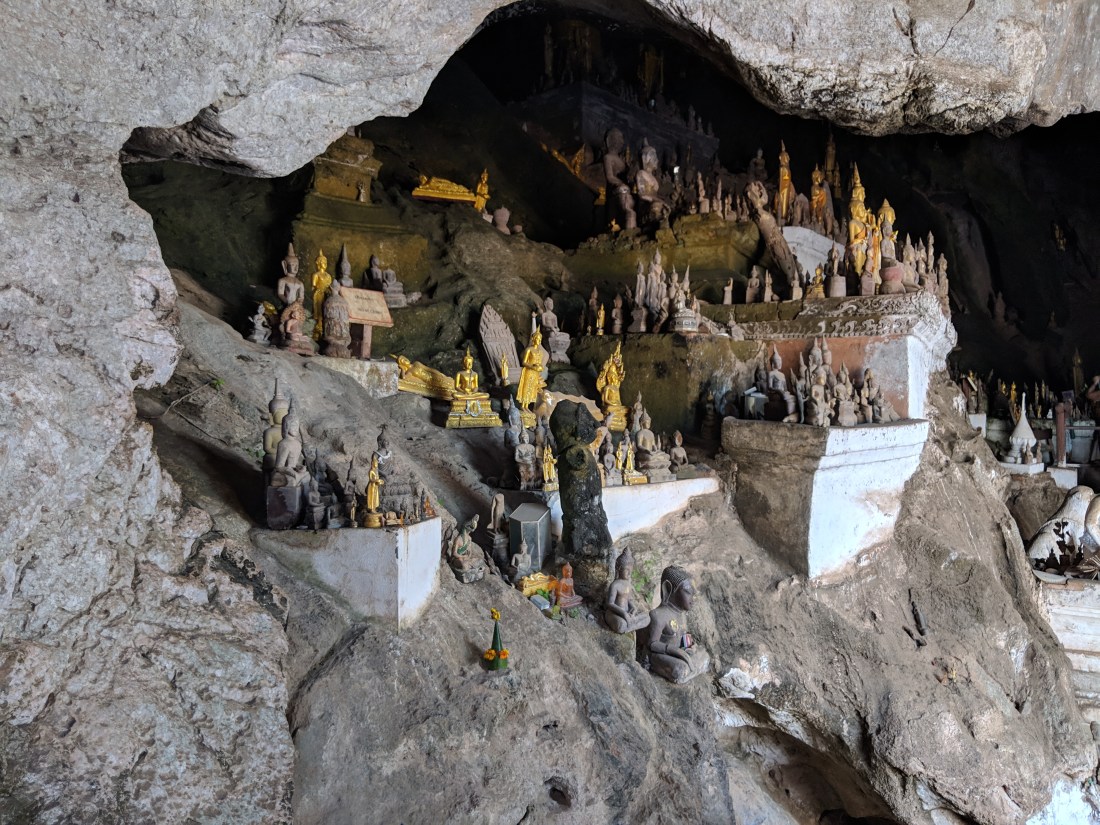
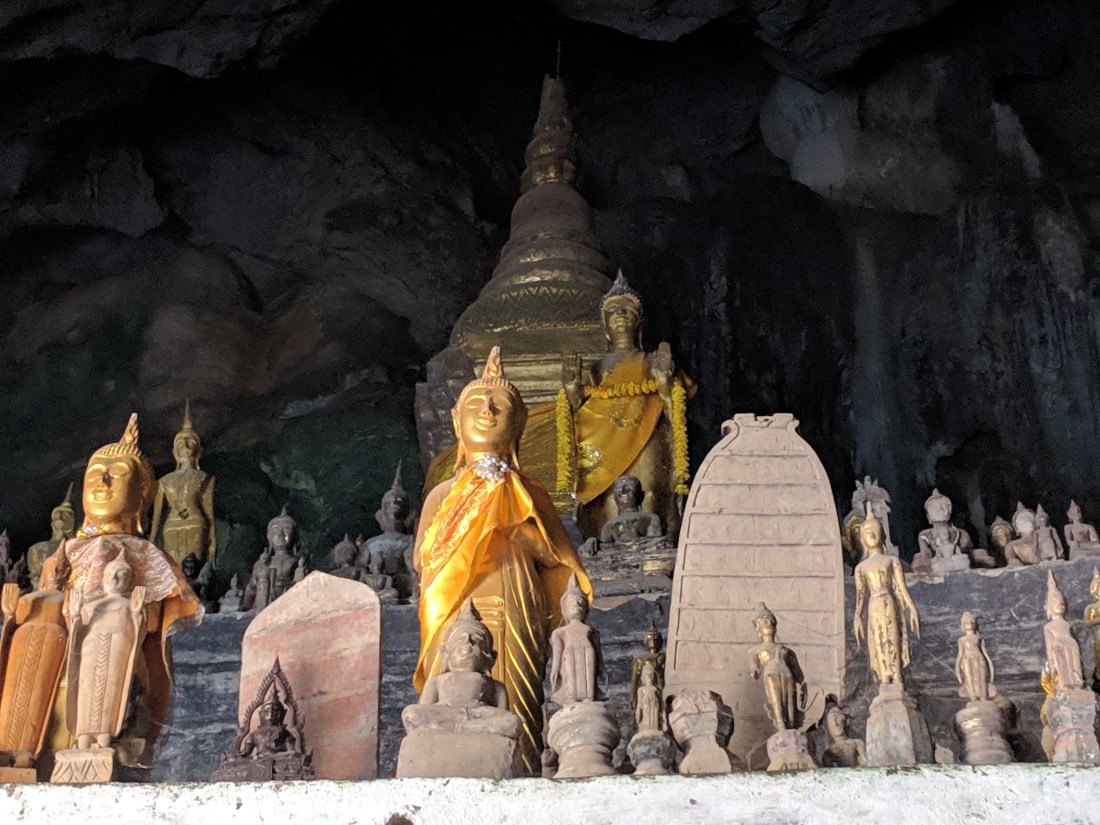
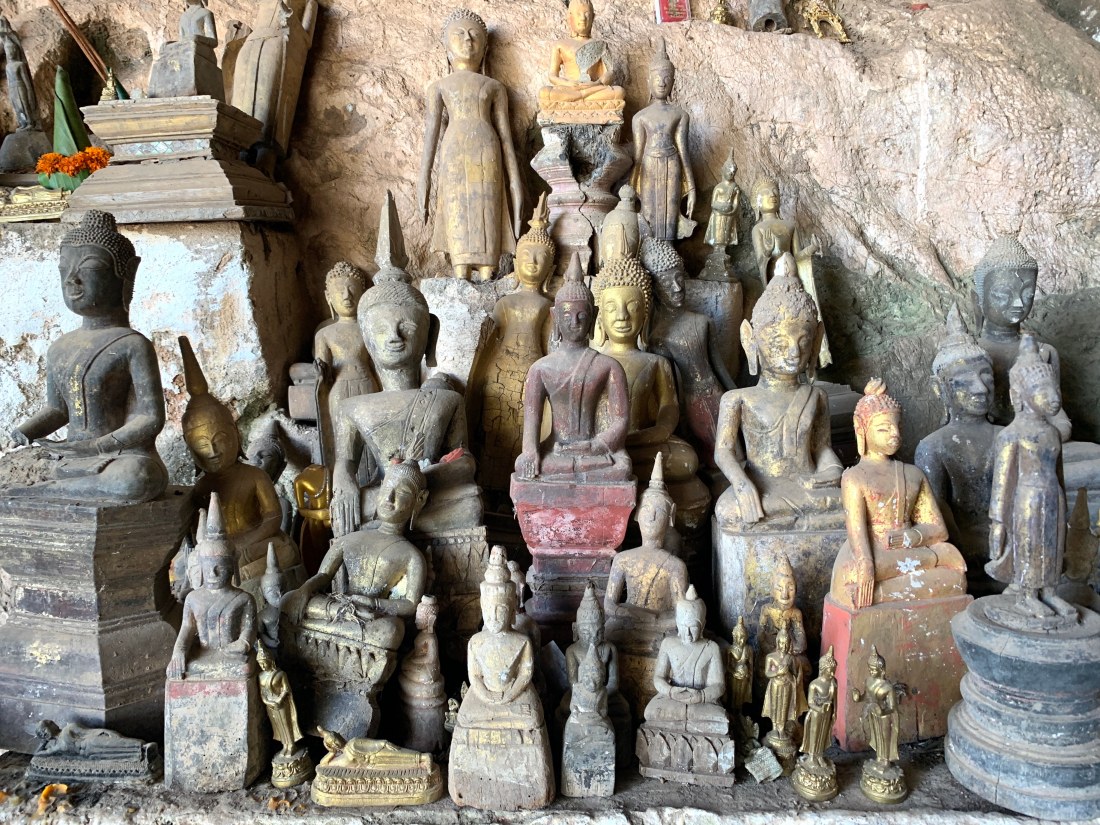
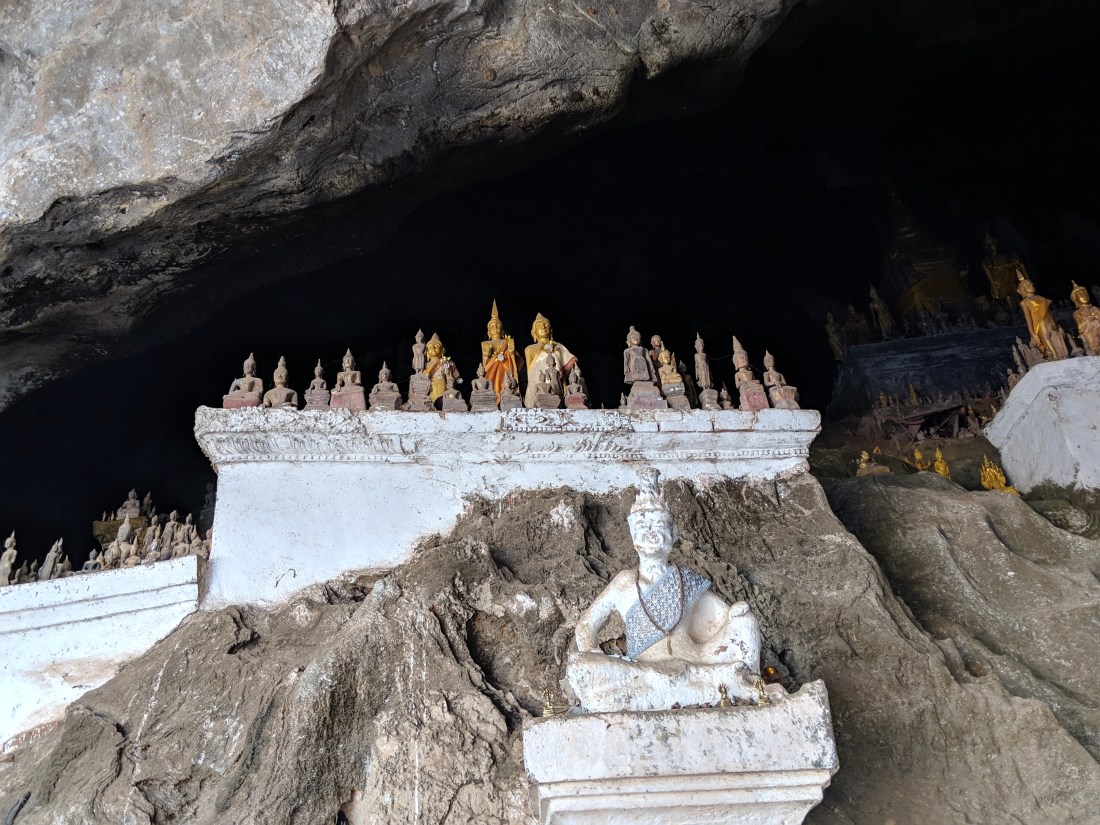
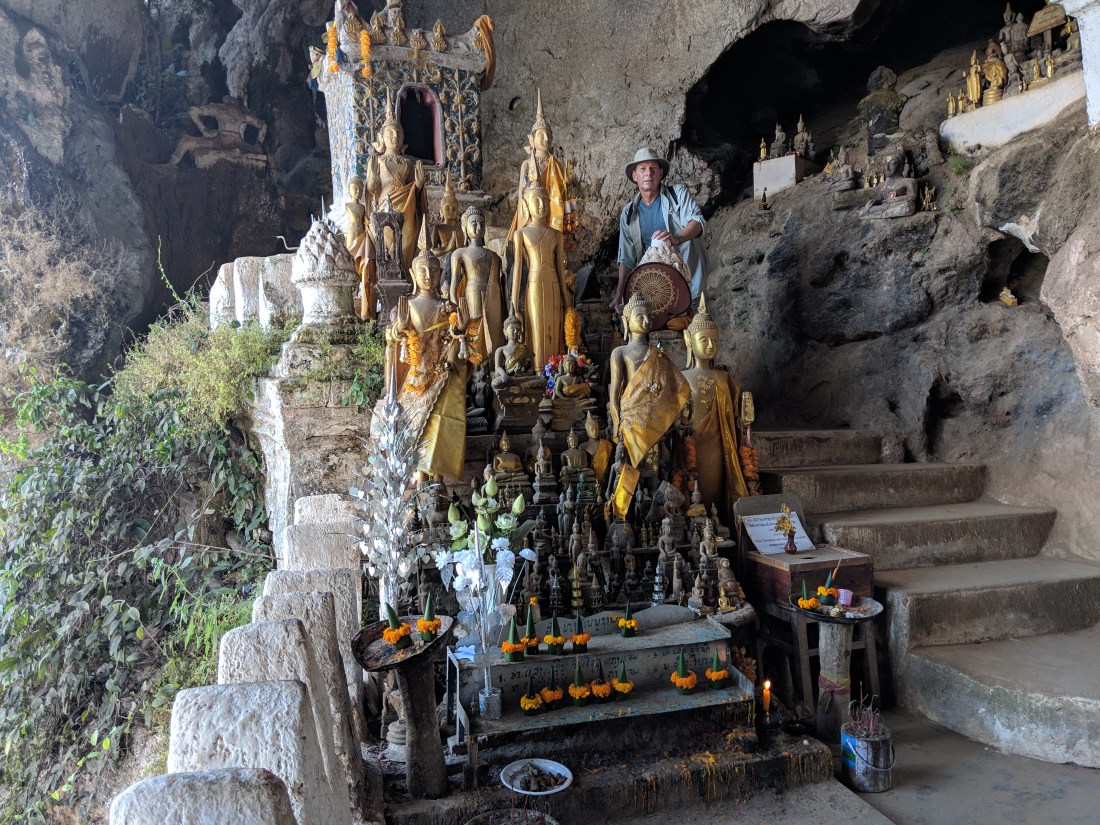
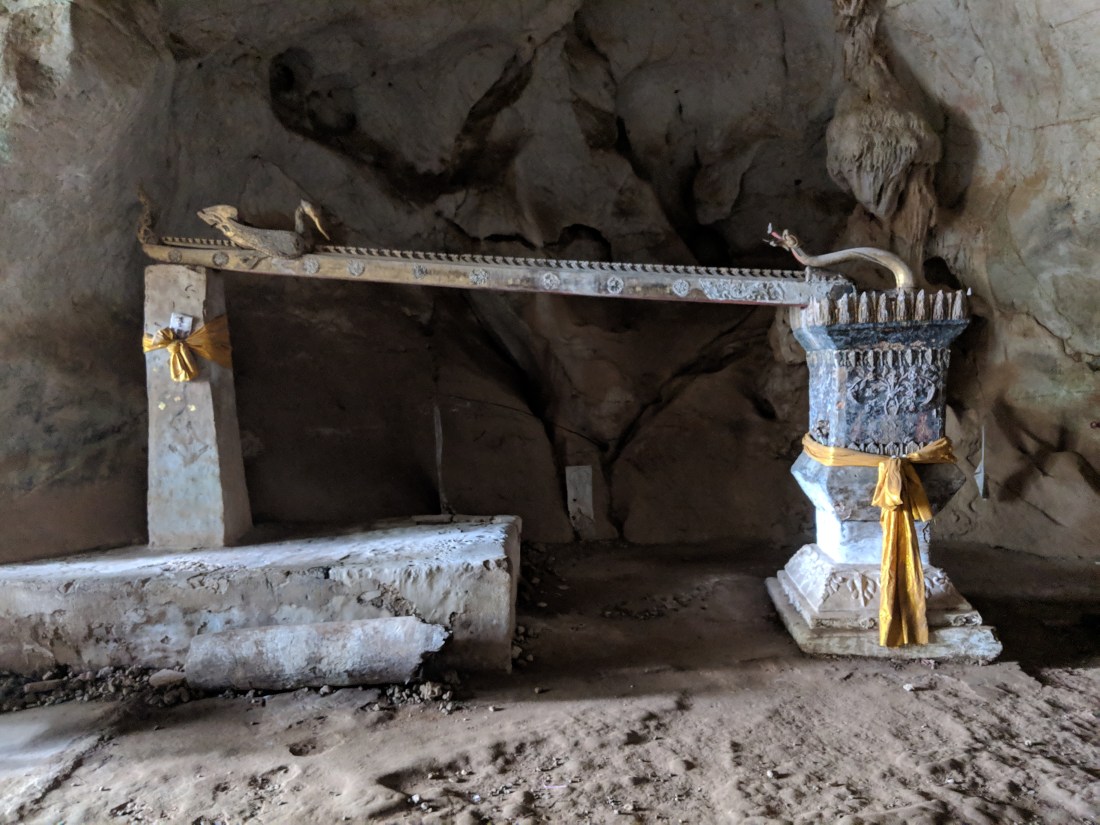
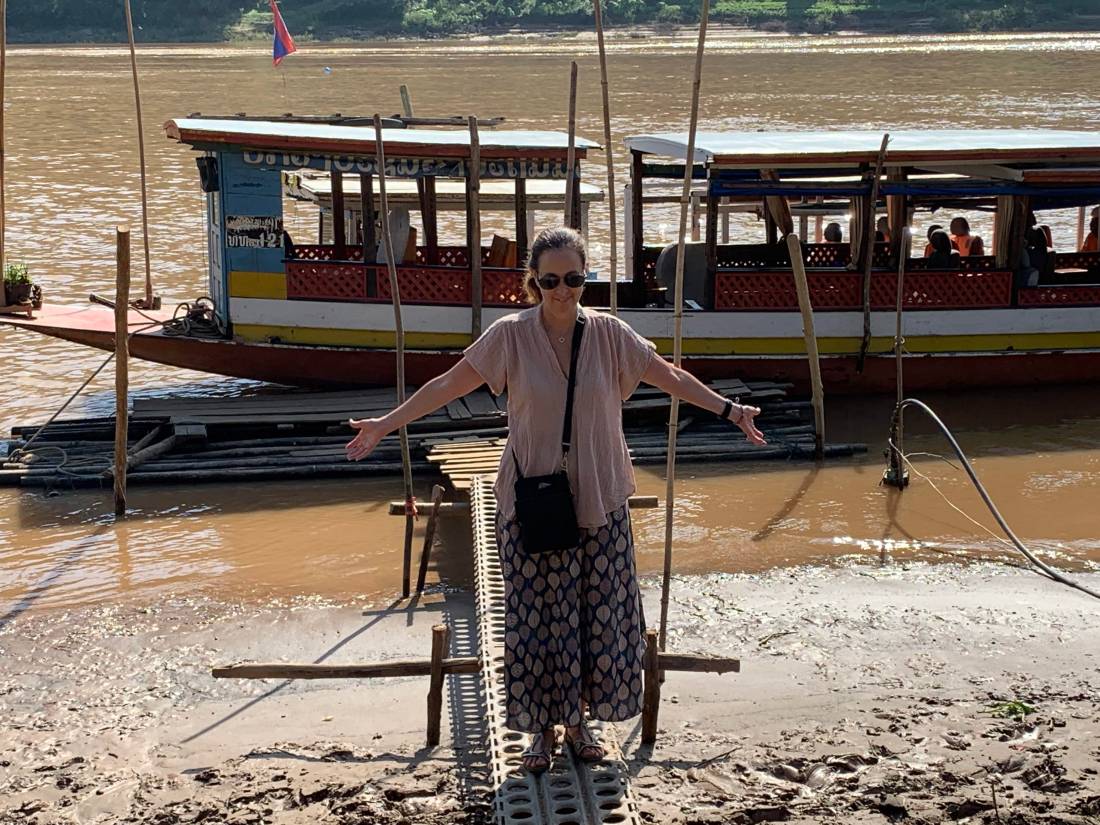
The next day we hired a private boat to take us 25 km – 2 hours – up the Mekong River to the Pak Ou Caves which house thousands of buddhas.  History has it that originally the caves were shrines.  But currently they are a home for used Buddhas, which cannot be discarded.  Also, yearly the locals take their household buddhas there for a cleaning in the vessel.

img_20190118_134335
Our boat
img_20190118_111518
View of the boat from our seats


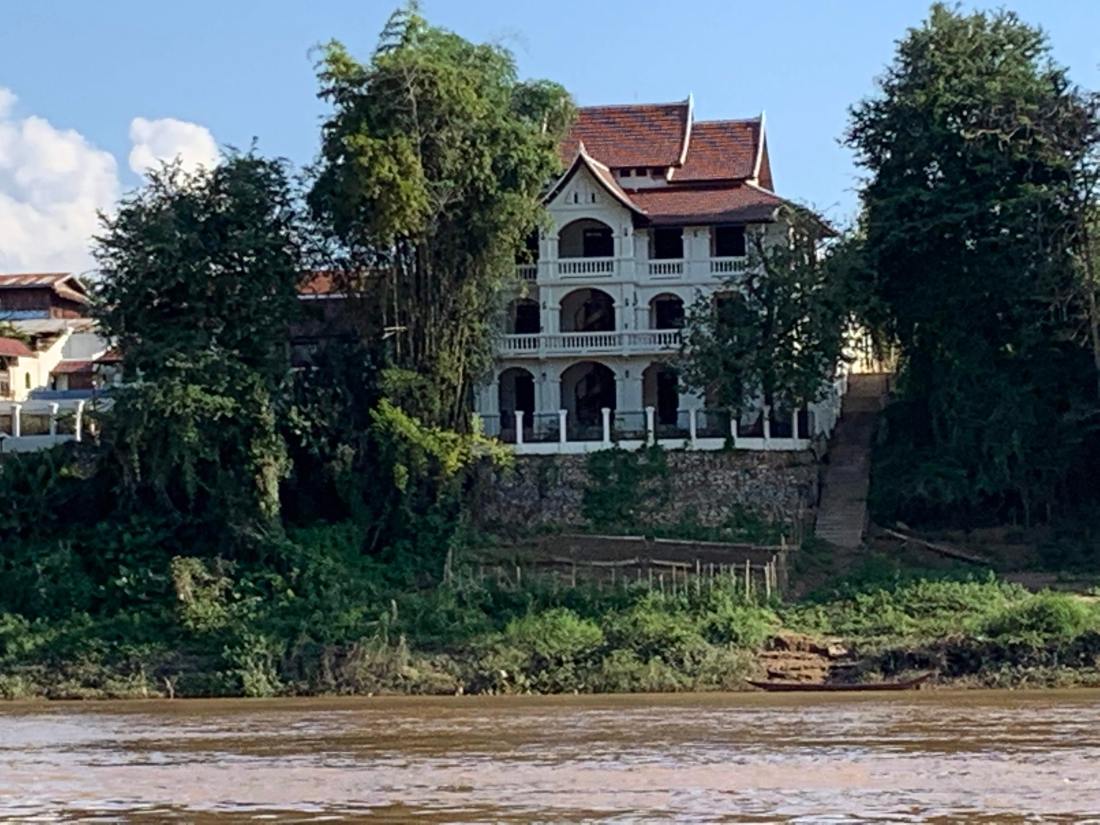
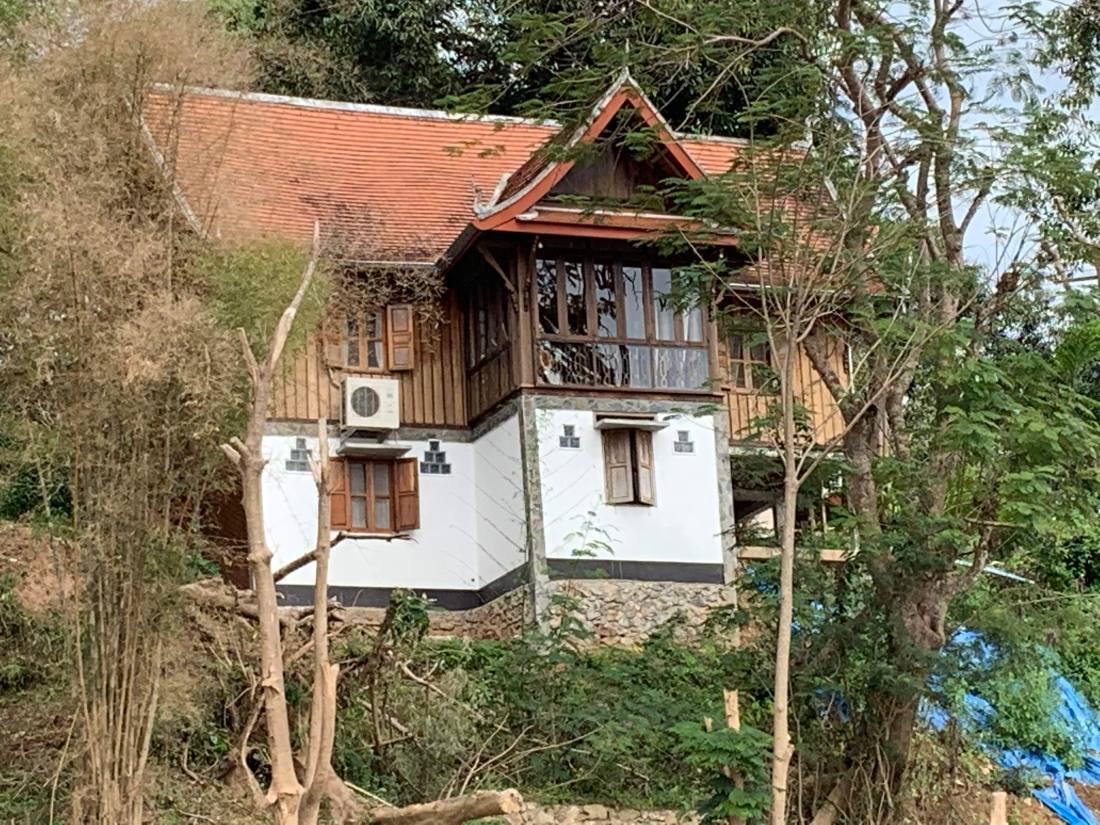
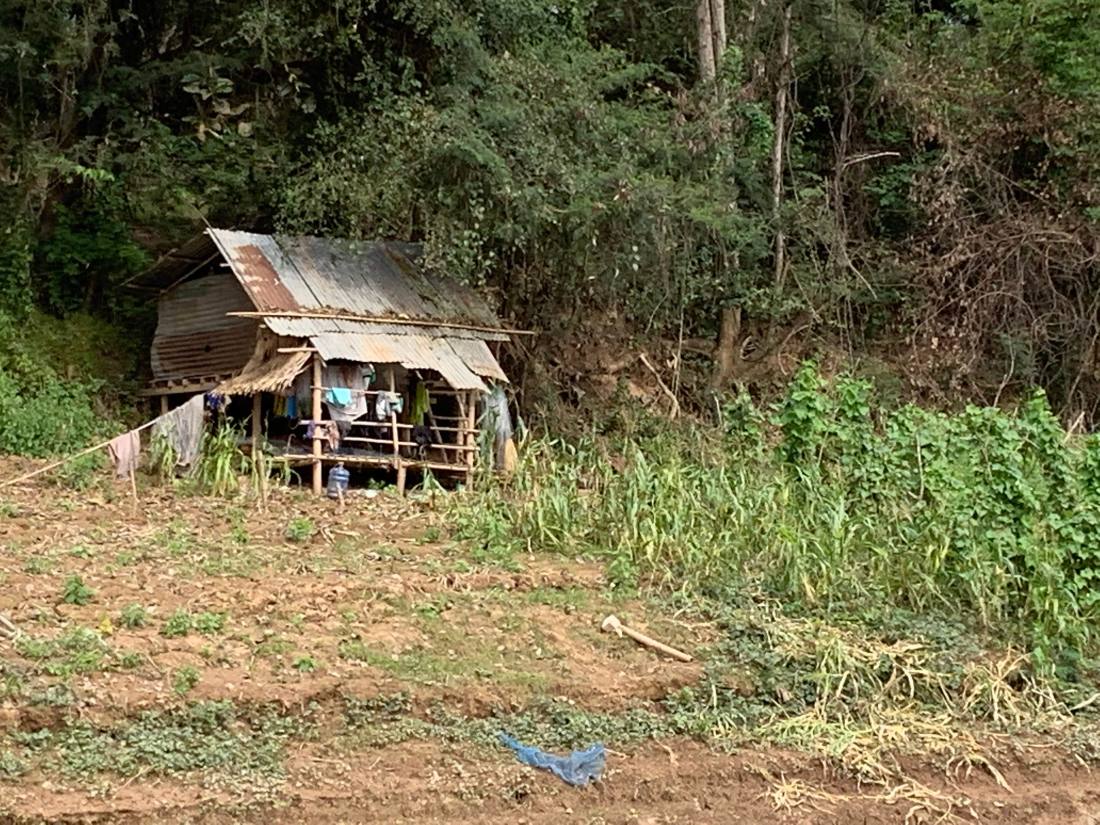
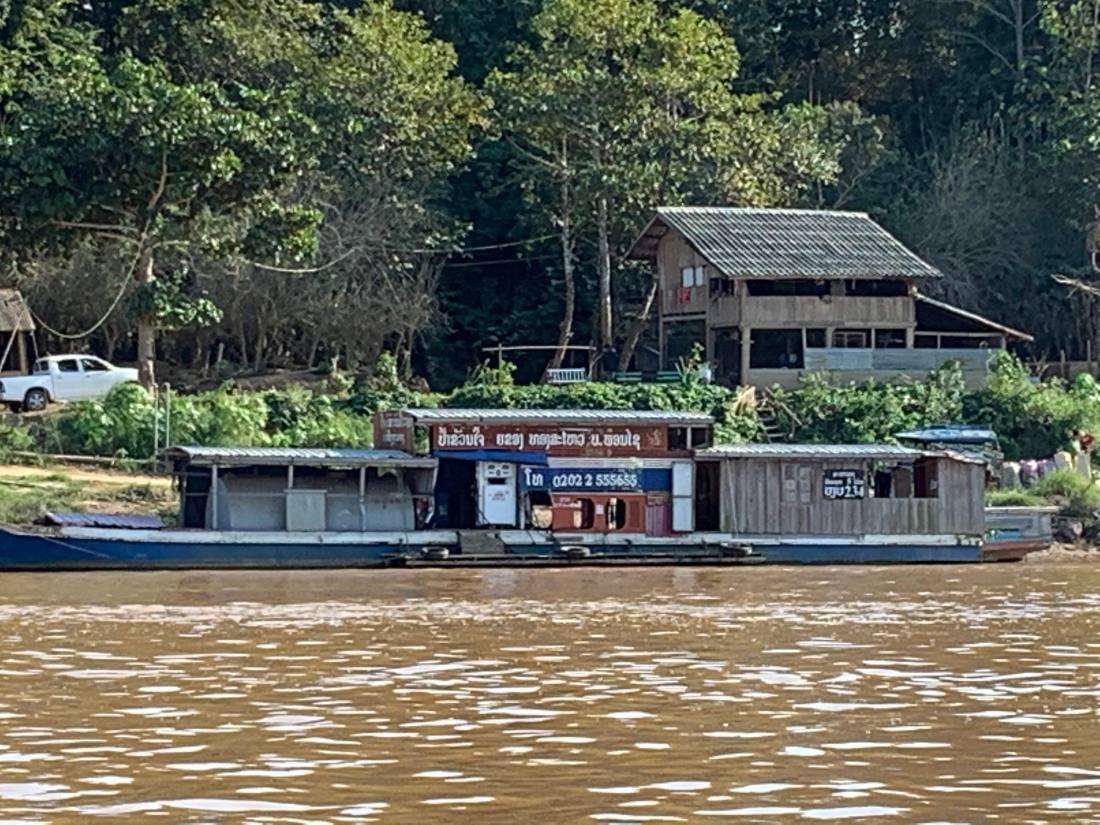
Along the way, the homes on the city side of the river are clearly more expensive than the homes in the villages and farms on the other side of the river.

img_1180

img_1131

img_1130img_1132

We stopped for gas at the station.

img_1177

Once we reached the caves, we had to climb up very steep steps from the river to enter.

img_20190118_132233

img_20190118_134247

Once inside, there are buddhas literally in every nook and cranny of the caves.

img_20190118_132928img_20190118_133555img_20190118_133842img_1167

img_20190118_134013img_20190118_133941

img_20190118_131105
the vessel for cleaning the buddhas with a swan on one end and dragon on the other

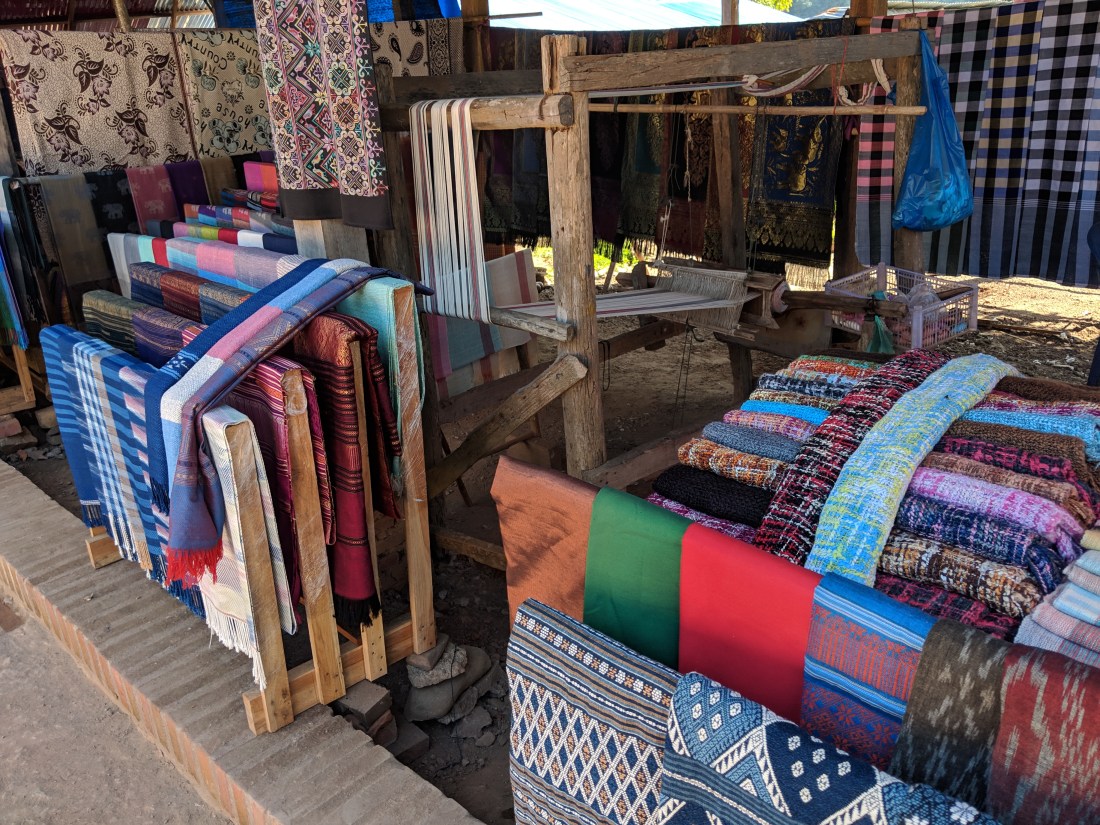
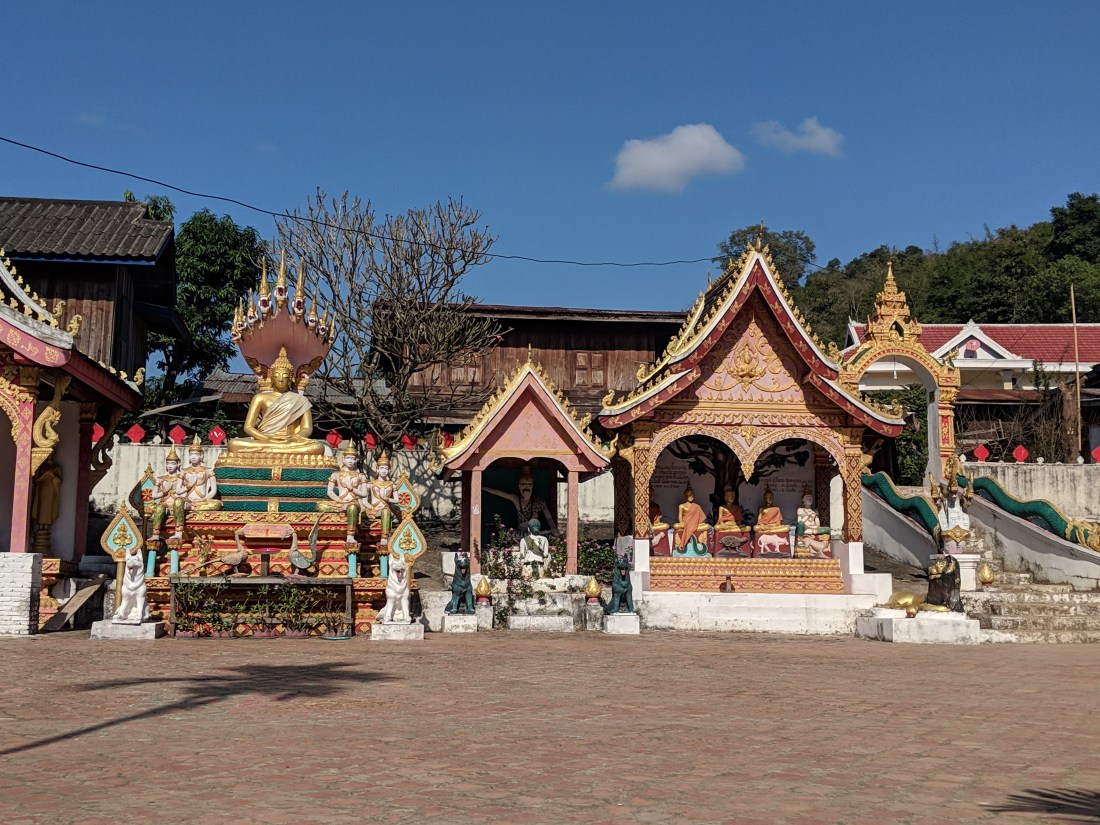
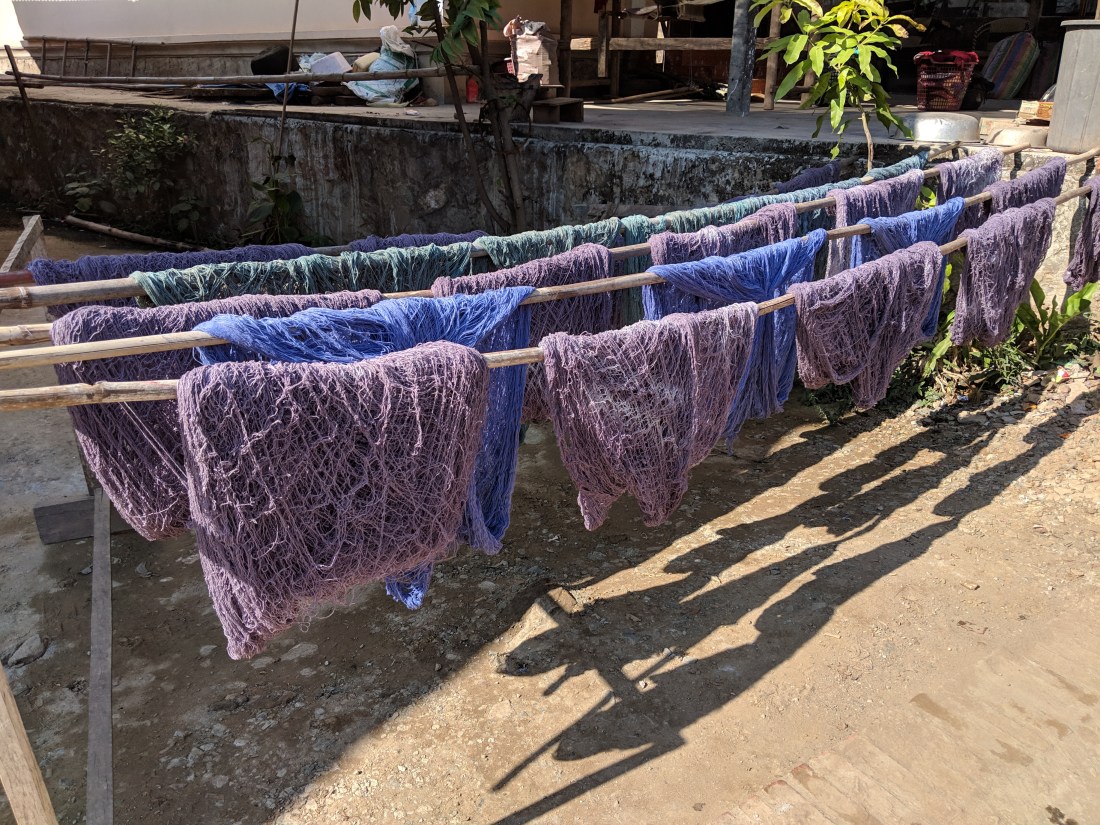
On the way down the river we stopped at the Whiskey Village know for its local moonshine as well as for textile weaving.  And of course, every local village has its own wat.

img_1169
they rolled out the red carpet for our arrival


img_20190118_142150

IMG_20190118_142836.jpg

After our long day on the river, we had a huge late lunch at a restaurant on the riverfront.  The food is somewhat similar to Thai but with less coconut milk, way more use of lemongrass and liberal use of a local spicy jam.  We loved everything we tried.

We ended the day with an hour of local Lao storytelling with a live music accompaniment: the guy on the right.  So fun!

img_20190118_183848

Our final morning in Luang Prabang we spent visiting local wats and markets for the town’s people.

IMG_20190119_112235IMG_20190119_112120

Our only regret is that we did not allow ourselves more time here.  I hugely loved this small country.


Chiang Mai Jan 12-16

This is our final destination in Thailand.  We have loved the friendly people and the delicious food and will miss them both.  We have particularly become street food junkies.  Of all the many night markets we have been to in Thailand, the Sunday night market in Chiang Mai was by far the best for street art and crafts.

We visited several of the many temples – wats – in the old city of Chiang Mai.  Our first one was Wat Chedi Luang, which houses the city pillar, with its historic relics.  Unlike other wats we had visited, this one had both ancient and modern buildings; parts of it were erected in the 13th century.  Also, at the time we were there, the monks were holding an outdoor prayer service.

img_0885img_0887img_0888img_20190111_151316

Next we went to Wat Chiangmun, which is the oldest temple in Chiang Mai.  It houses the crystal and marble buddhas.

img_0900img_0905img_0898img_20190111_153026img_20190111_152831img_0909img_20190111_161009Then we met Pon, our very friendly tuk tuk driver, who insisted we go outside the Old City to visit Wat Suan Dok, as it was nearing sunset.  He insisted it is the most beautiful temple with the sun low in the sky; he was correct.  Ii is also the burial ground for many of Chiang Mai’s and Thailand’s royalty.

img_20190111_164156img_0911img_0913img_20190111_165117img_20190111_165220img_20190111_165553

Our final temple on the day was Wat Pra Singh.

img_0916img_20190111_172011img_20190111_172826img_20190111_172850img_20190111_173046

After all the sightseeing, it was time to hit the bar for happy hour.

img_20190111_202708

We had arranged with Pon that he would pick us up the next morning in his car and take us out of the city to the temple high on the hill overlooking Chiang Mai: Wat Prathat Doi Suthep.  This is probably the most famous temple in Chiang Mai because legend has it that the elephants carrying the buddha relics chose the spot for their resting place.

img_0918img_0927img_20190112_093544img_20190112_095226img_20190112_095733img_20190112_100655Pon then took us to an orchid and butterfly farm.

img_20190112_121231img_0944img_0933img_0970img_0960

After a delicious buffet lunch at the tiger kingdom, Pon then took us to the Thai factories where jewelry is hand made as well as jade carved and polished.  But the factory we liked the best was the silk factory.  There they had the worms actually making the silk as well as the women extracting the silk threads, spinning it, dying it and finally weaving the silk materials.
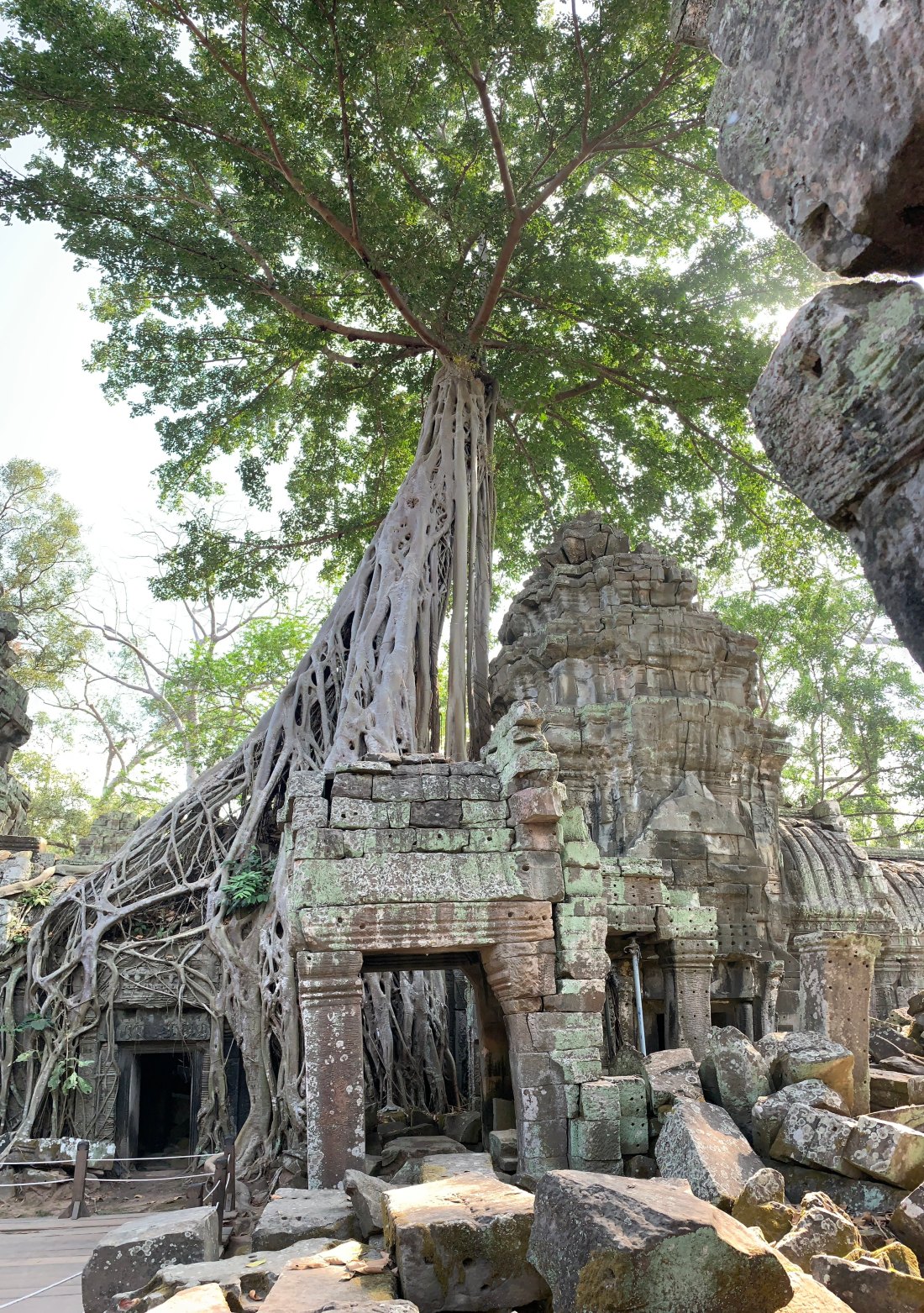
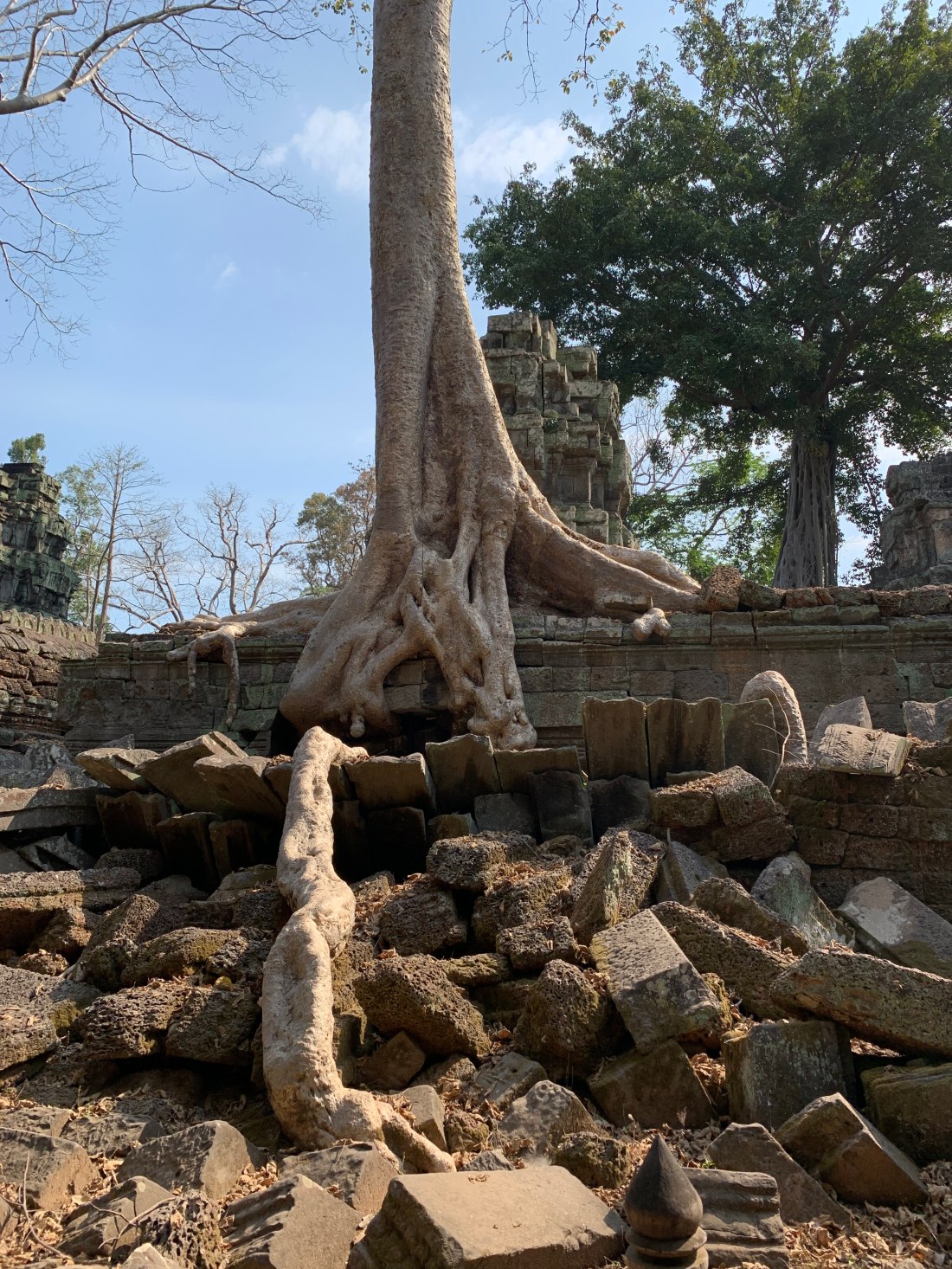
img_20190112_144459img_20190112_144629img_20190112_144724img_20190112_145024mvimg_20190112_145045mvimg_20190112_145336mvimg_20190112_145446img_20190112_145923

The next day we took a break from touring and spent the day indulging in that quintessential Thai experience perfected like no other: massages!  After a day lounging and lapping in the luxuries, we had another quintessential Thai experience and visited an elephant park.  We chose one that is a sanctuary in which all 80 current elephant residents are rescue animals as well as their numerous water buffalo, dogs, cats, and horses.  We spent the entire day there, including a fantastic vegan buffet Thai lunch.

img_0993

IMG_20190114_103535.jpg

img_20190114_132633img_20190114_130952img_20190114_133803img_1030img_1019img_20190114_131003

And for our final day in Thailand, the final quintessential Thai experience: a cooking class.  We chose the Baan Organic Farm Thai Cooking School.  Phoy picked us up at our hotel and took us and the only other couple in the class (visitors from Argentina) to the local market.  There she taught us how to recognize the ingredients that would go into our dishes.  She then drove us out to the organic farm where we picked our own fresh herbs.  We each individually made 5 dishes: a soup (Eric:Tom Yum; Me: spicy pork), an appetizer (E: fried spring roll; Me: papaya salad), a stir fry (E; chicken basil and chili, Me: Pad See Ew), a curry( both Masaman), and a dessert (E:sticky rice and mango, Me: fried banana).  We learned so much, and it was all so delicious!

IMG_20190115_091052IMG_20190115_091204IMG_20190115_091600

50286130_575050802918448_4136906095710961664_n.jpg

IMG_20190115_095309IMG_20190115_095928

00000PORTRAIT_00000_BURST20190115100455167


IMG_20190115_113312IMG_20190115_102918

49947311_575050879585107_2529792993553022976_n49899776_575050866251775_6984619036734652416_n (1).jpg


IMG_20190115_120852IMG_20190115_120938

We are sad to be leaving Thailand, but on to Laos!