
We went to the Interlaken train station and bought a ticket to Lucerne but were told that the first part of the journey would have to be by bus due to the track needing repairs from all the rain. The bus journey to the next station was only about 15 minutes. Along the way we passed numerous small waterfalls and dairy farms: the source of all that milk for the cheese and chocolates we have been consuming.
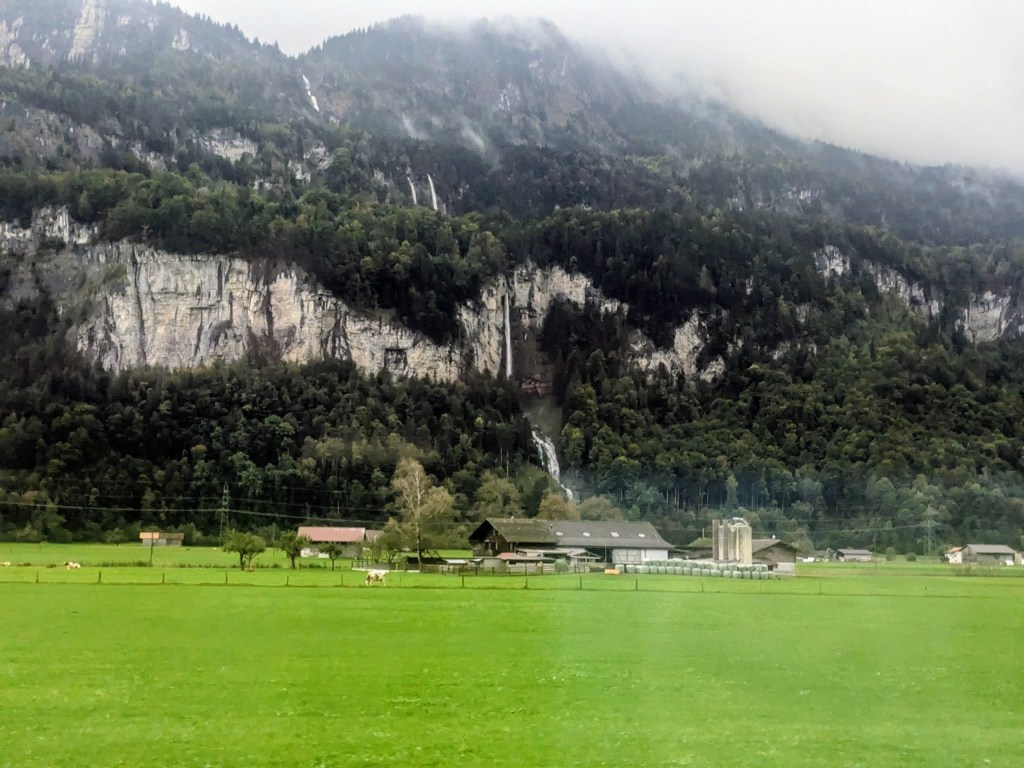
The train ride to Lucerne was also quite scenic passing several cute towns, lakes, and mountain views along the way.
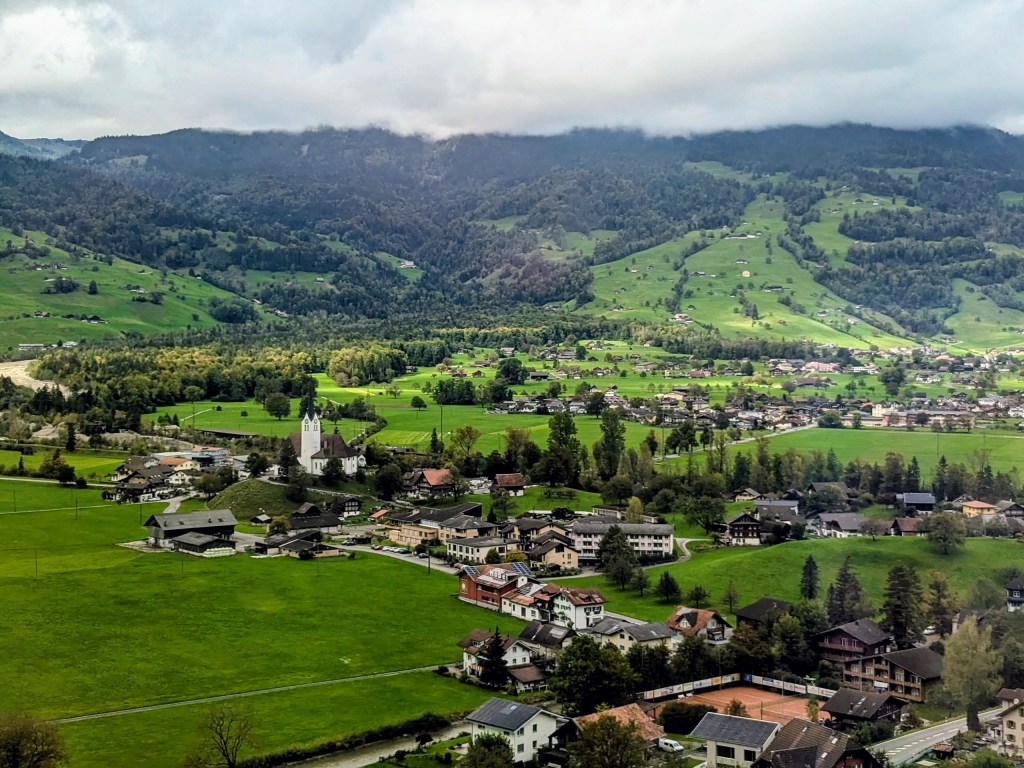
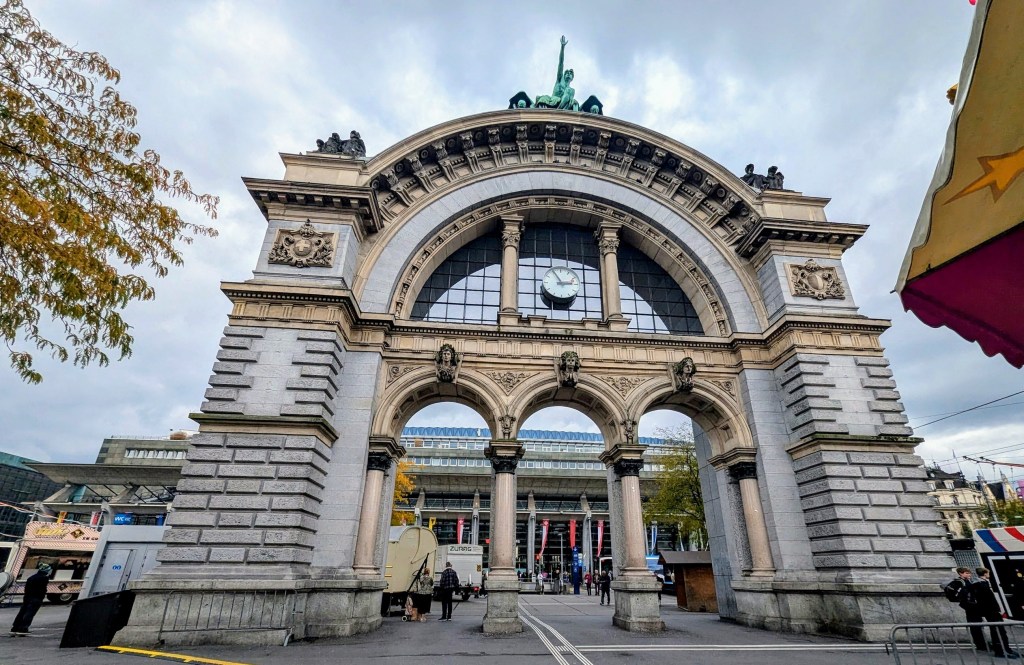
Once off the train, we were immediately struck by how much larger a city Lucerne is than those we had visited thus far. The train station, which is also the bus depot, is large with over 2 dozen bus routes.
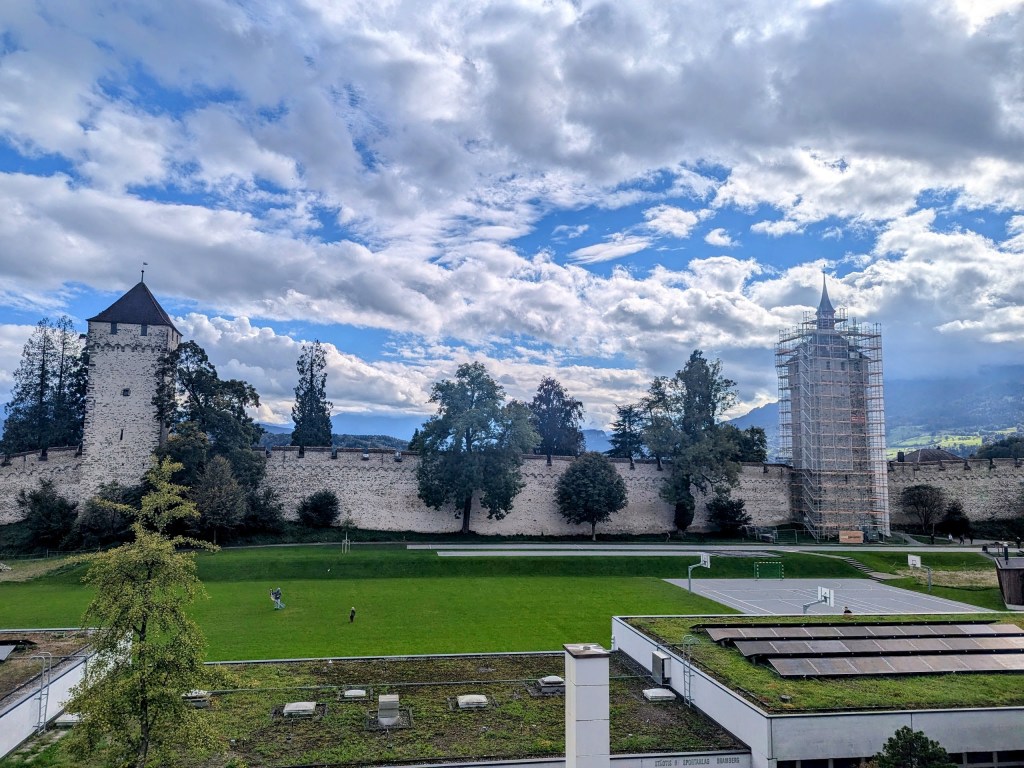
As instructed by our VRBO host, we hopped the 9 bus to the end, a steady uphill climb, to our apartment, which had a great view of the Old City Walls: Museggmauer (Musegg Wall) and towers. The wall and nine towers were built in the 13th century. With much of it still preserved, it is one of the longest defensive walls still standing in the country
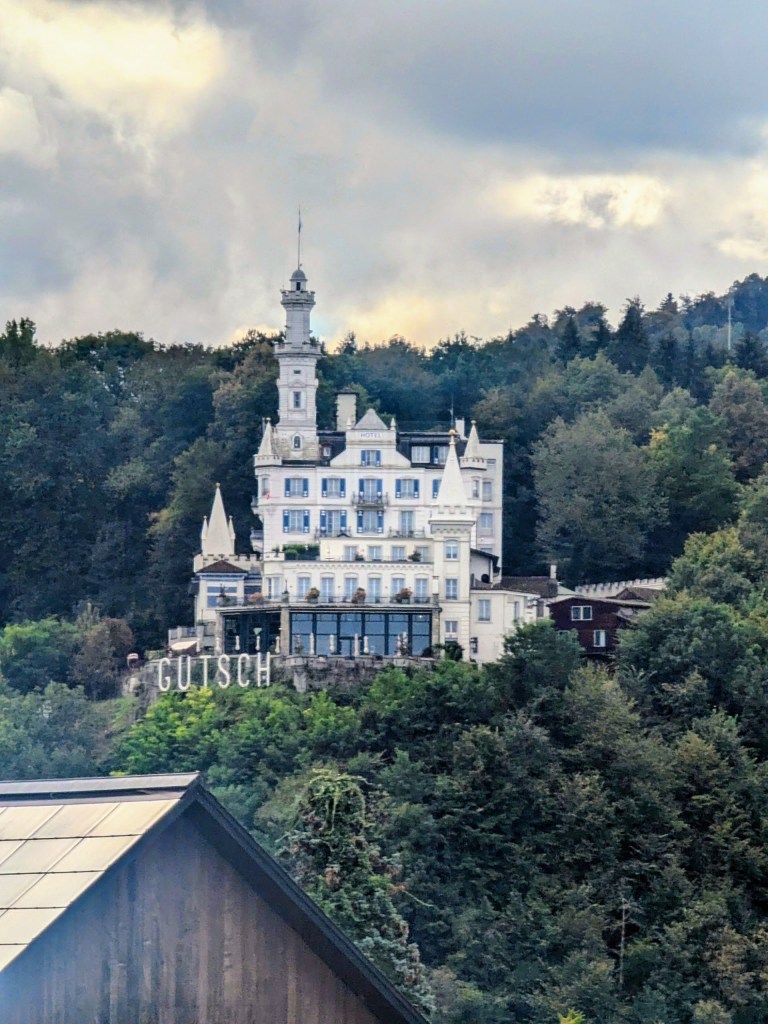
and the distant view of a hotel high on a hill across the river
Once settled, we hiked back down into the Old City to have a look around. First we passed these neighbors, funny to find in the city.
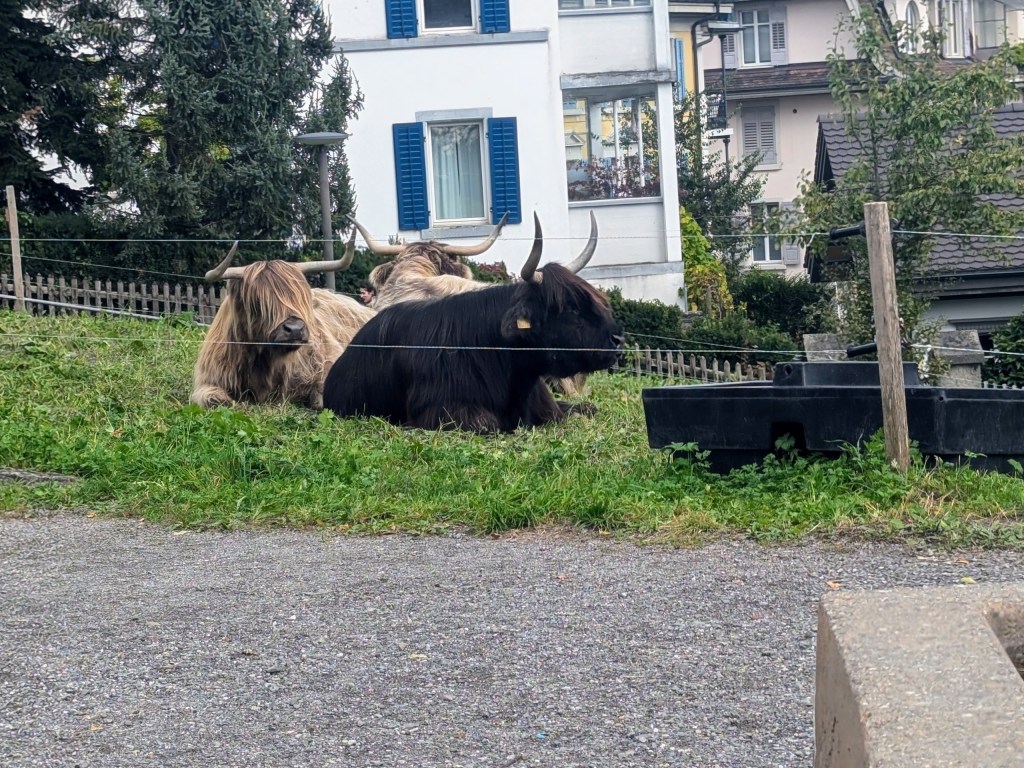
They were sitting in this cute park right below our building.
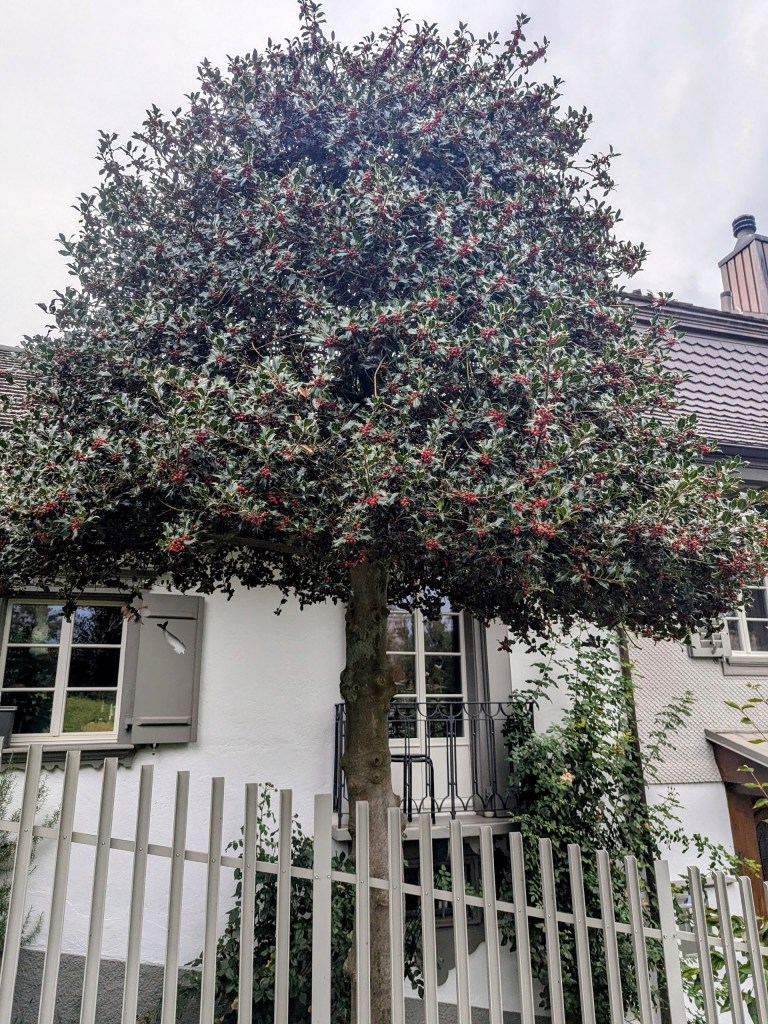
Along the path we passed this gorgeous holly tree full of berries.
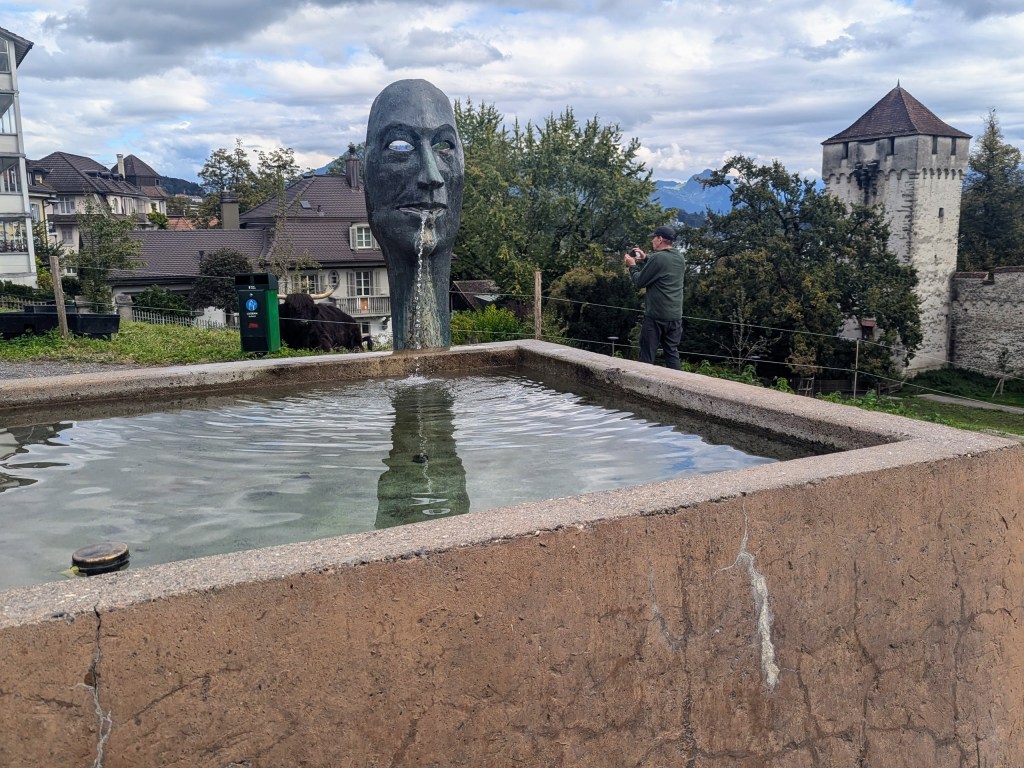
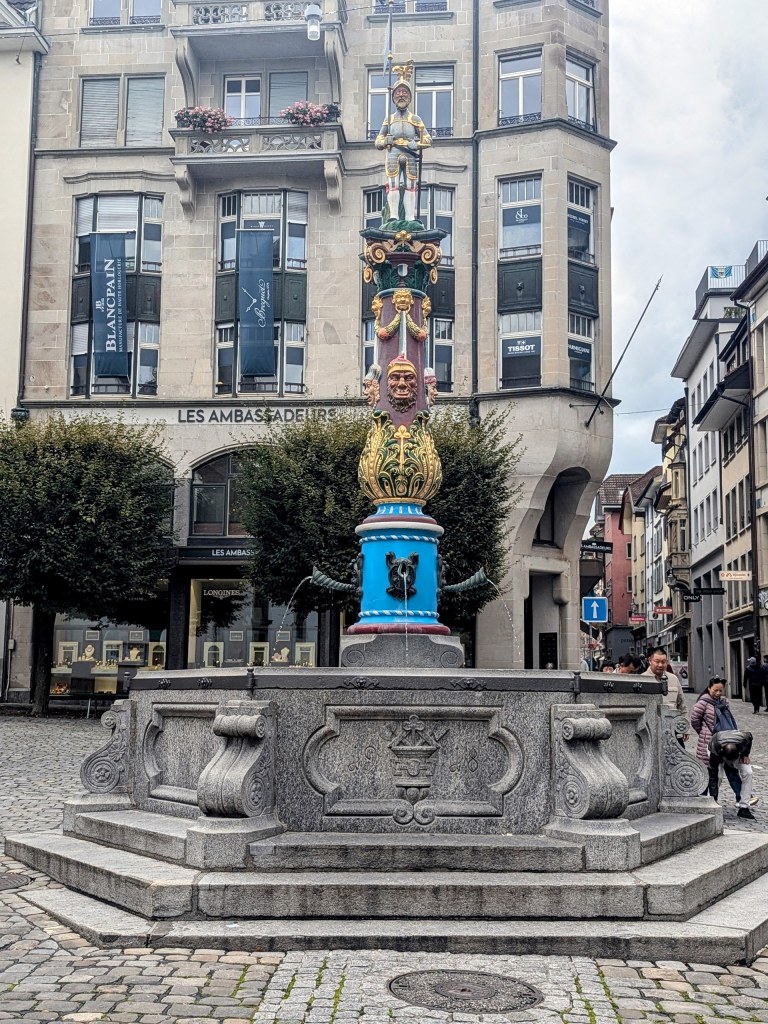
What was immediately striking was that fountains in Lucerne, although plentiful and still a source of fresh drinking water, are not nearly as beautiful nor as integral to the history and culture of the city as they had been in Bern.

We made it down to the river and found the Chapel Bridge, originally built in 1333, it is oldest covered wooden bridge in Europe and the world’s oldest surviving truss bridge.

It is a famous tourist spot and one of the most photographed sites in Lucerne.

The Chapel Bridge was named for Saint Peter’s Chapel nearby; it stretches diagonally across the Reuss River. What makes this bridge special is that it has some old triangle-shaped paintings inside from the 17th century. Unfortunately, many of these paintings were destroyed in a fire that happened in 1993, which also damaged most of the bridge. Thankfully, they fixed the bridge but were only able to recover 30 of the paintings.

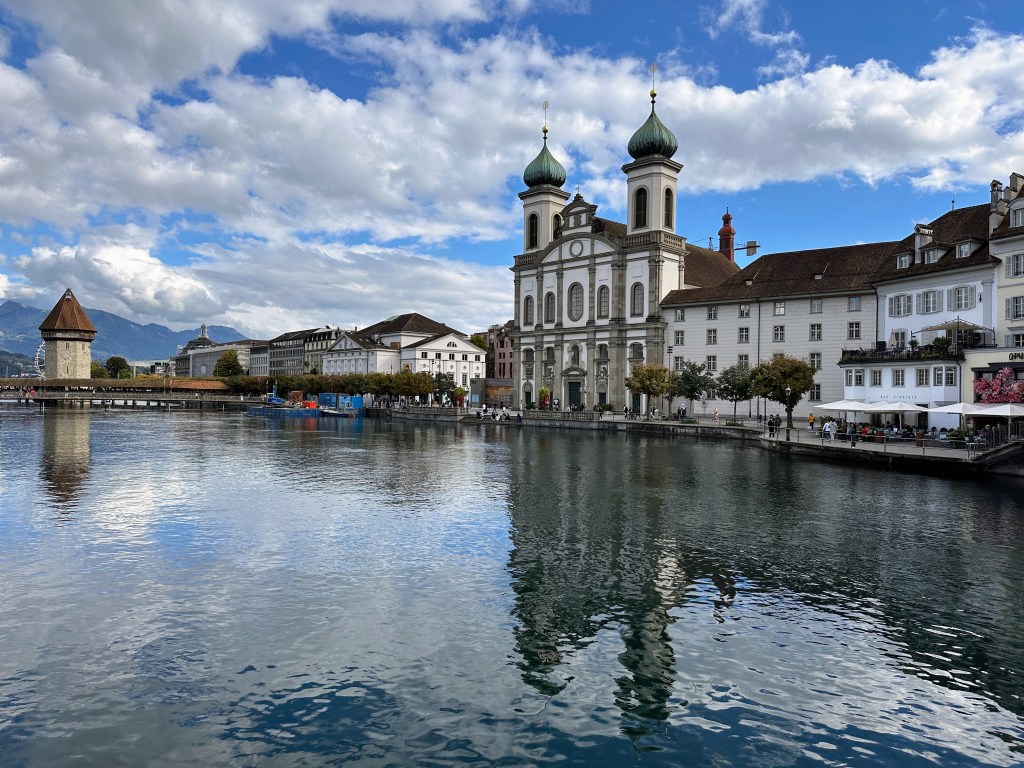
Across the bridge can be seen the Jesuit Church (Jesuitenkirche).
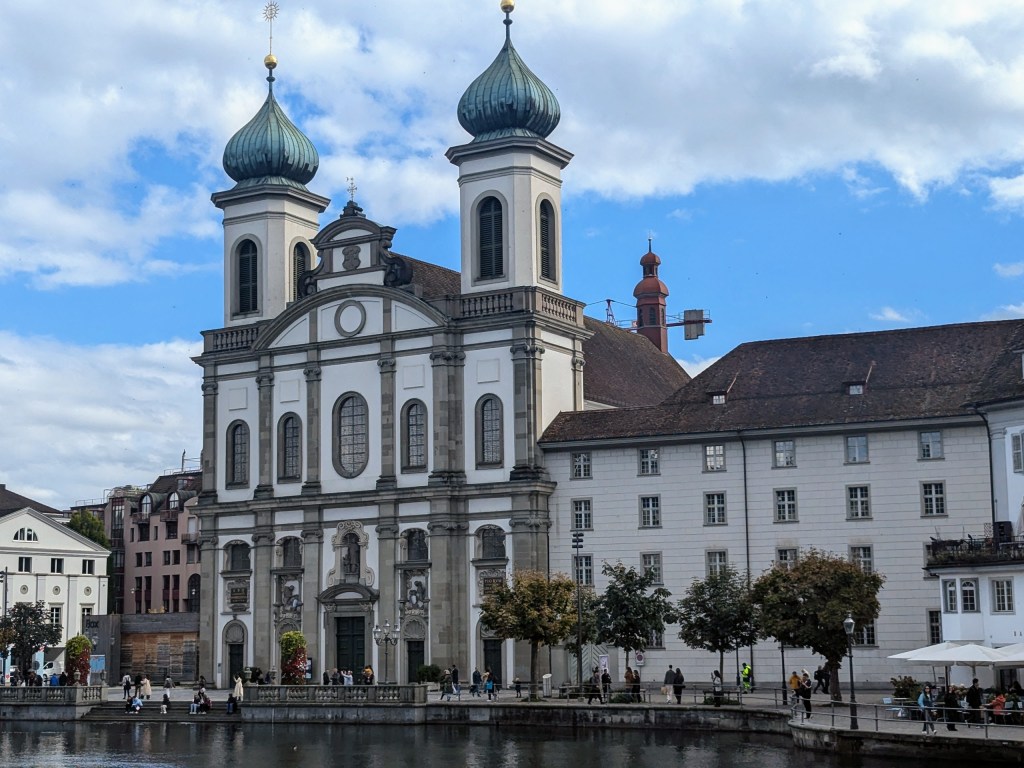
A Catholic church which, built in the mid-seventeenth century, it has the distinction of being first grand Baroque-style church constructed in northern Switzerland, situated above the Alps. Now it is an integral part of the cityscape.
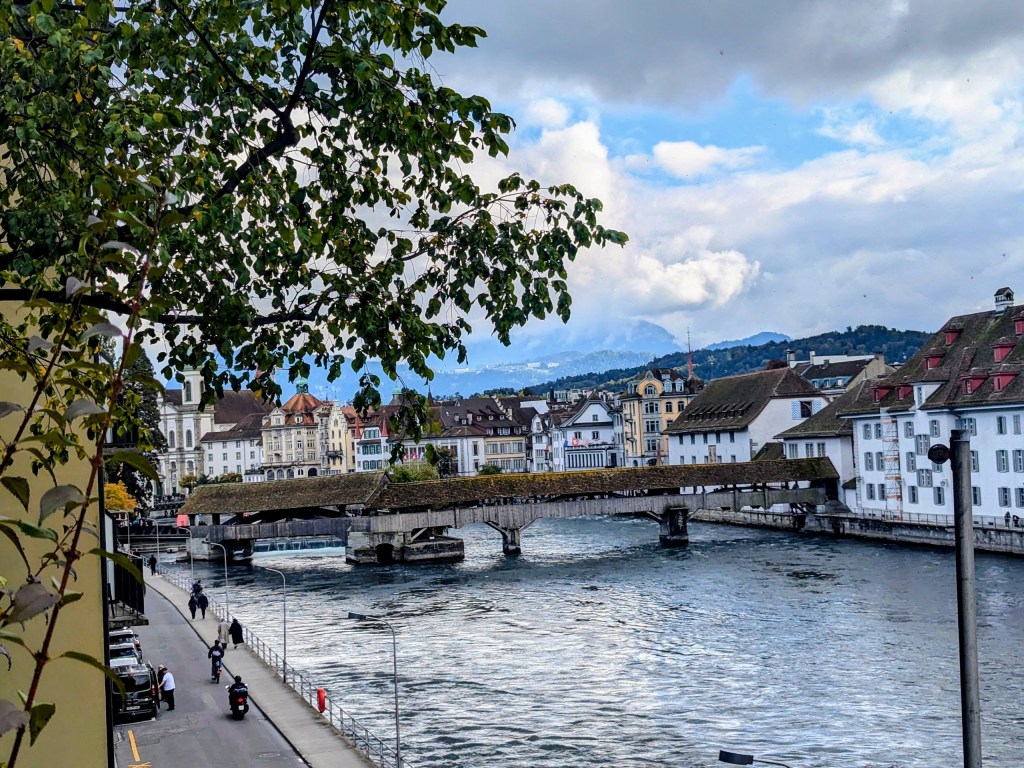
Further along the Reuss River is a second covered bridge: Spreuer Bridge. The original bridge was constructed in the 13th century connecting the old mill to the newer side of the city but was destroyed by a flood in 1566.
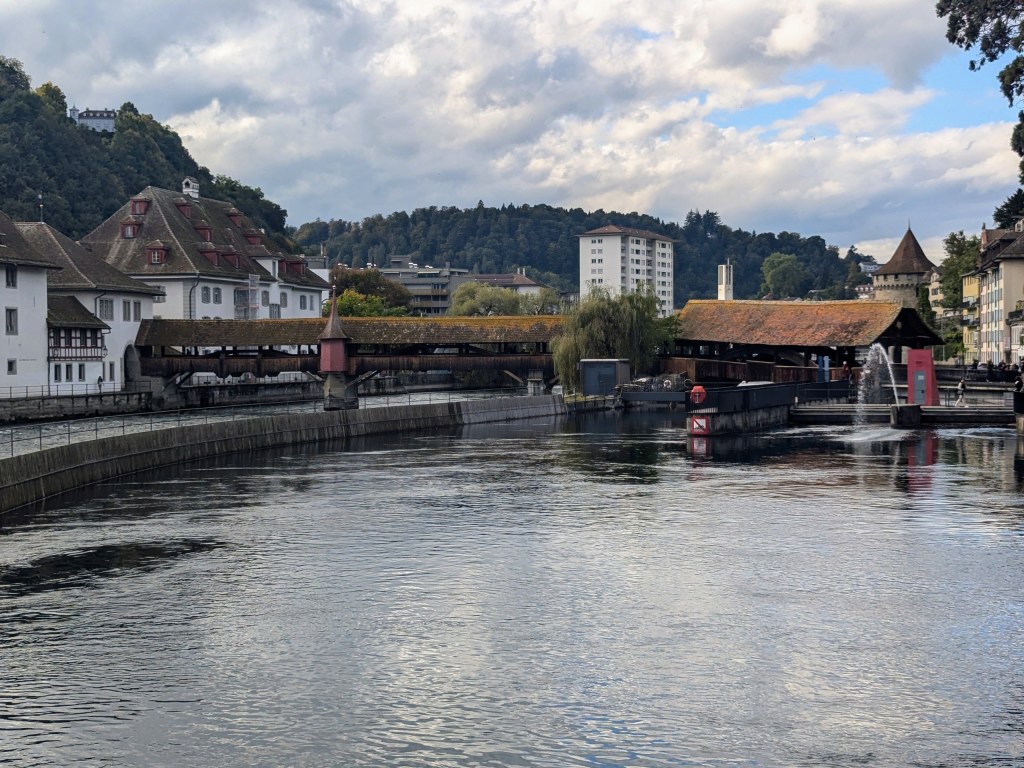
It was rebuilt shortly thereafter, which was when the paintings were added, 45 of which have survived. The paintings are the largest known paintings of the Dance of Death during the late Middle Ages, and which have now created the nickname “The Dance of Death Bridge.” These two bridges are the only in Europe that house these triangular framed paintings.

We crossed to the other side of the Reuss River.
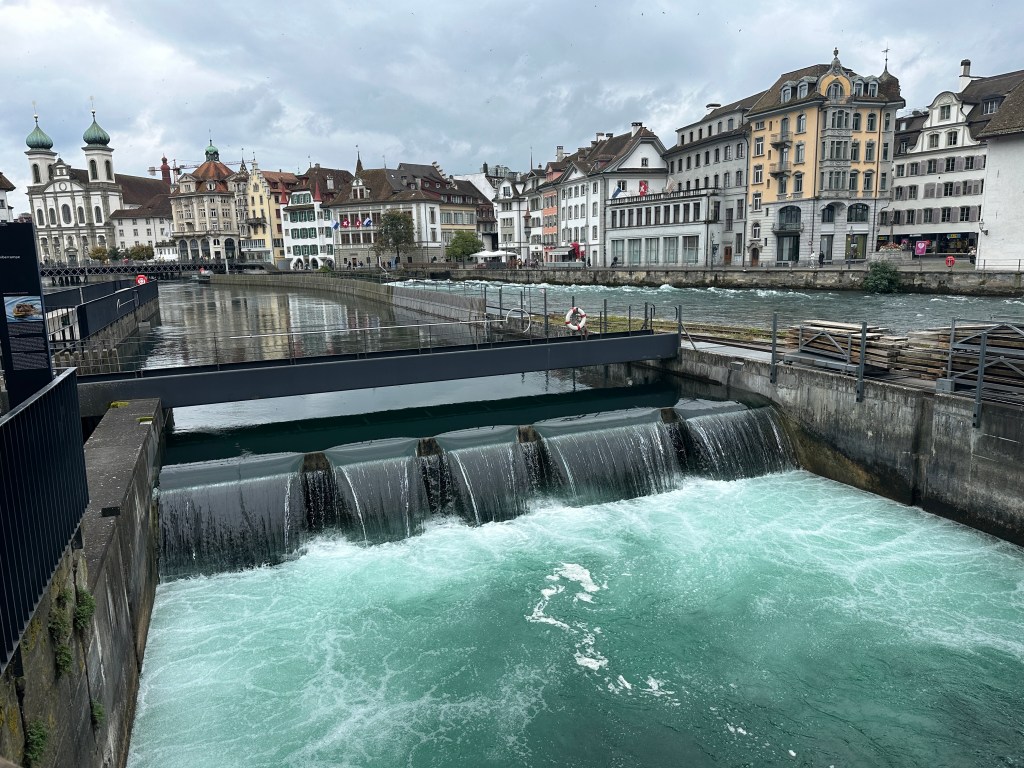
Once on the other side we strolled along the riverfront with its monstrous annual flower pots still blooming.

and were able to have a better look at the buildings we had passed including Town Hall (Rathaus).
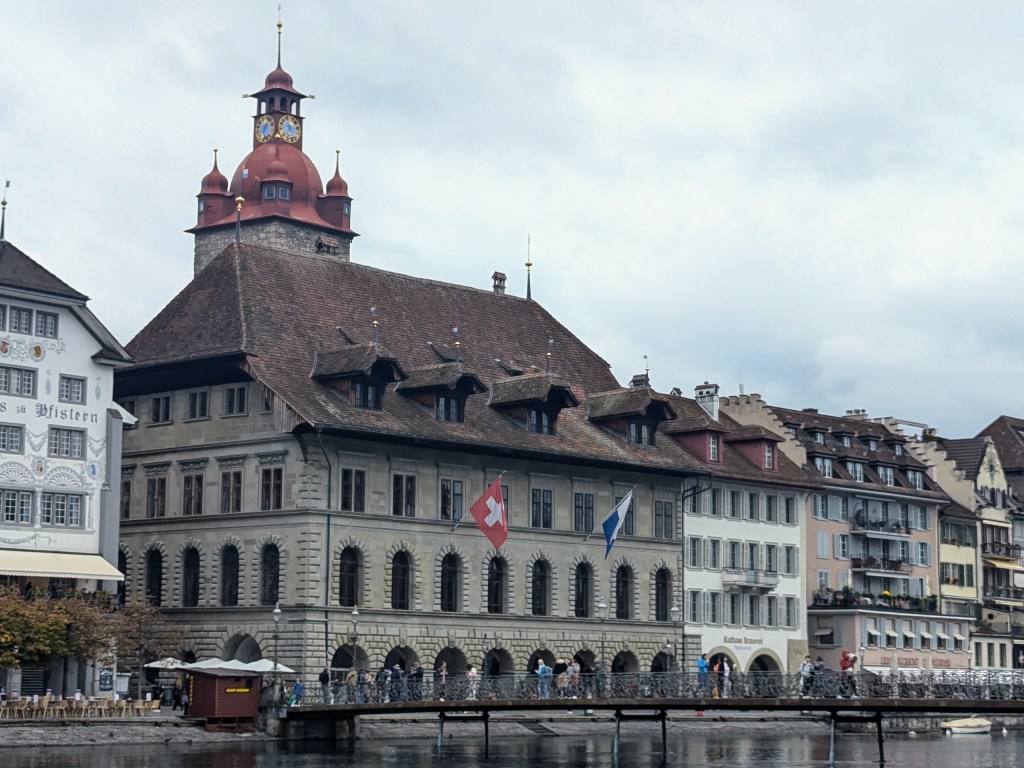
and Pfistern Hall

more on these last two buildings later. But now it was time to cross back and stop for a beer.
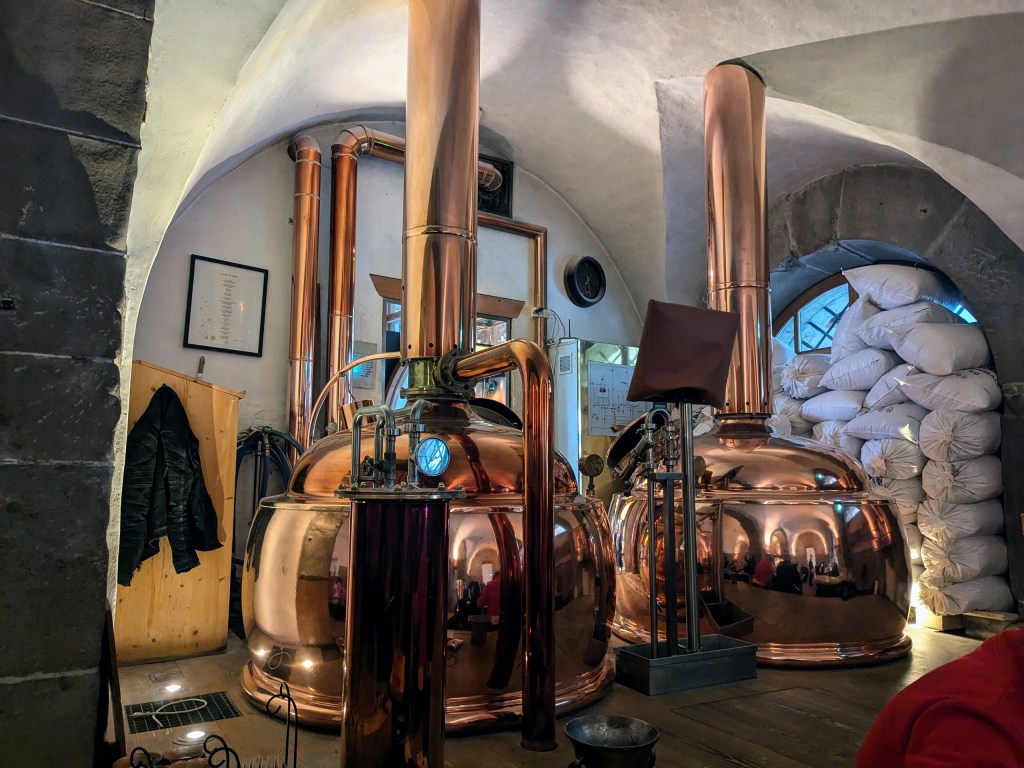
Dinner our first night was in the Rathaus Brewery, which was delicious.
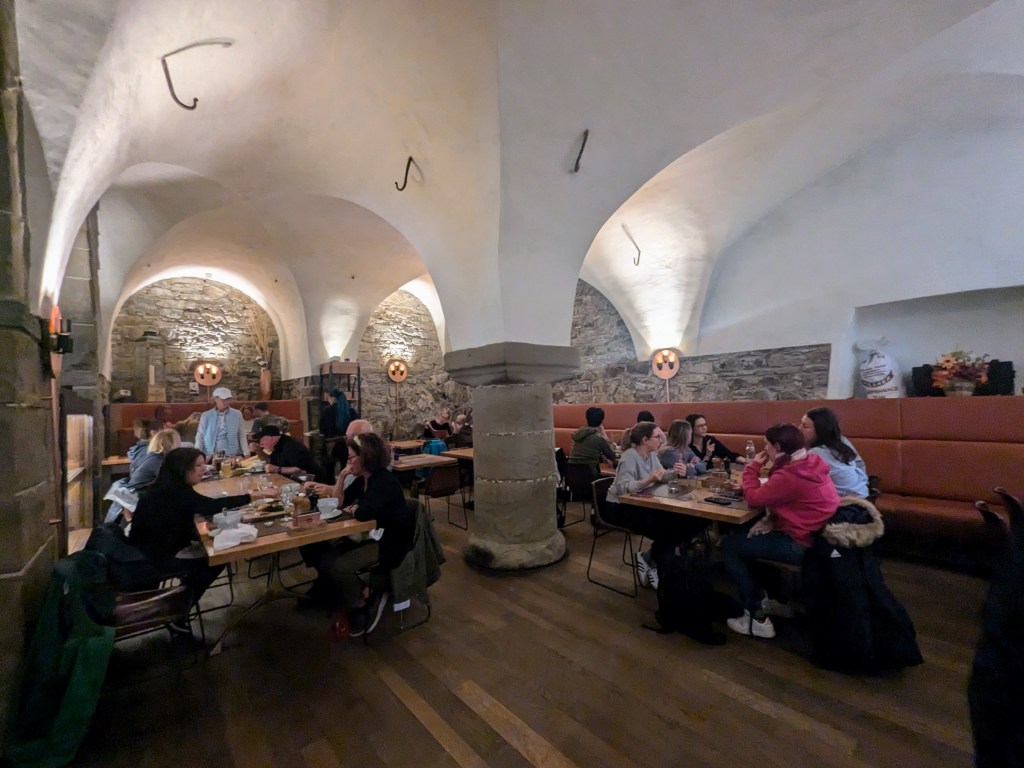
In the morning we set out to more thoroughly explore the Old City. We learned that in German schmuck means jewelry. (So Yiddish schmuck=dick, ie penis: the family jewels?)
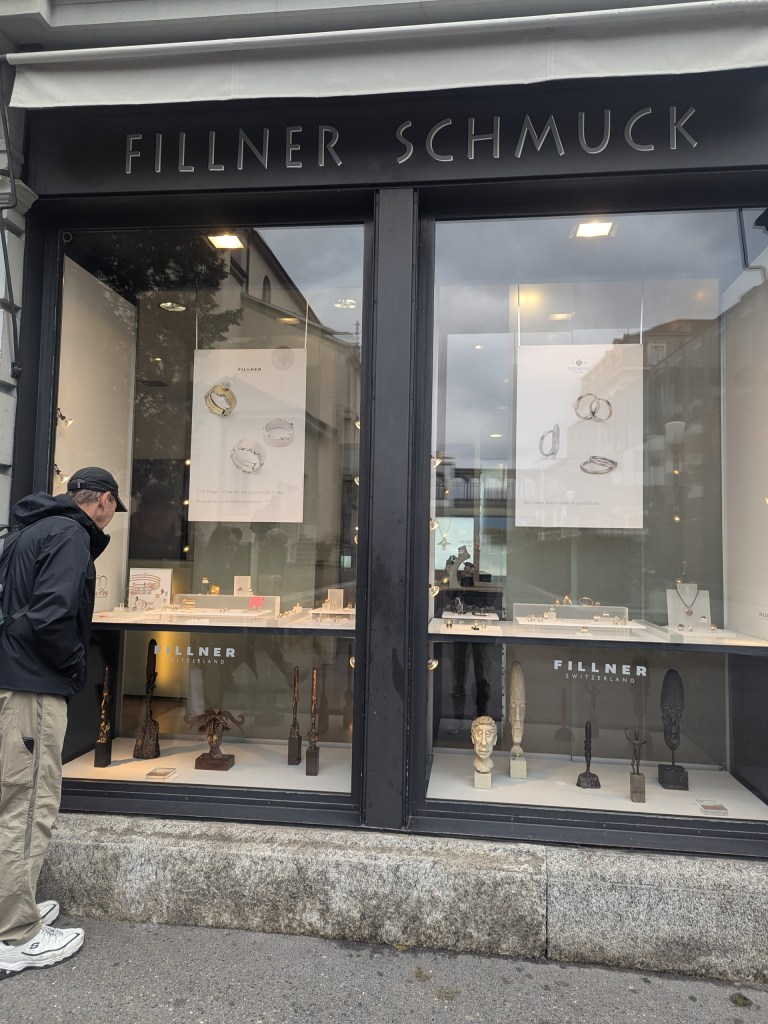
We passed so many pastry shops and chocolatiers. Also fun was the spectacles shop.
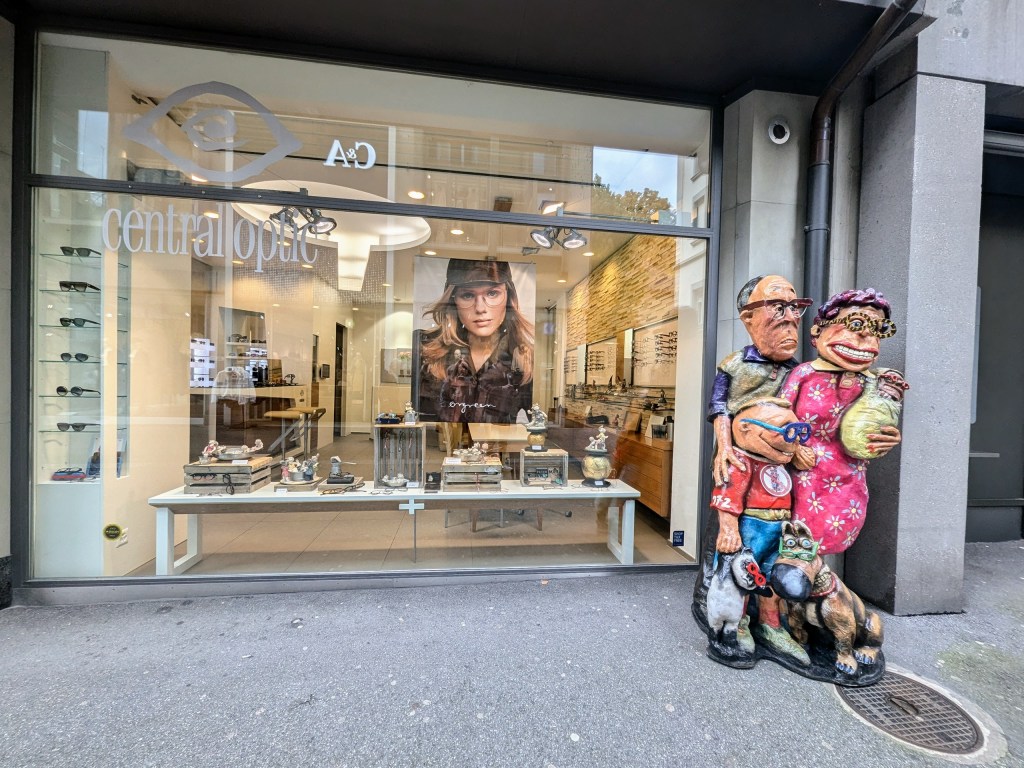
There are seemingly random works of art on buildings.
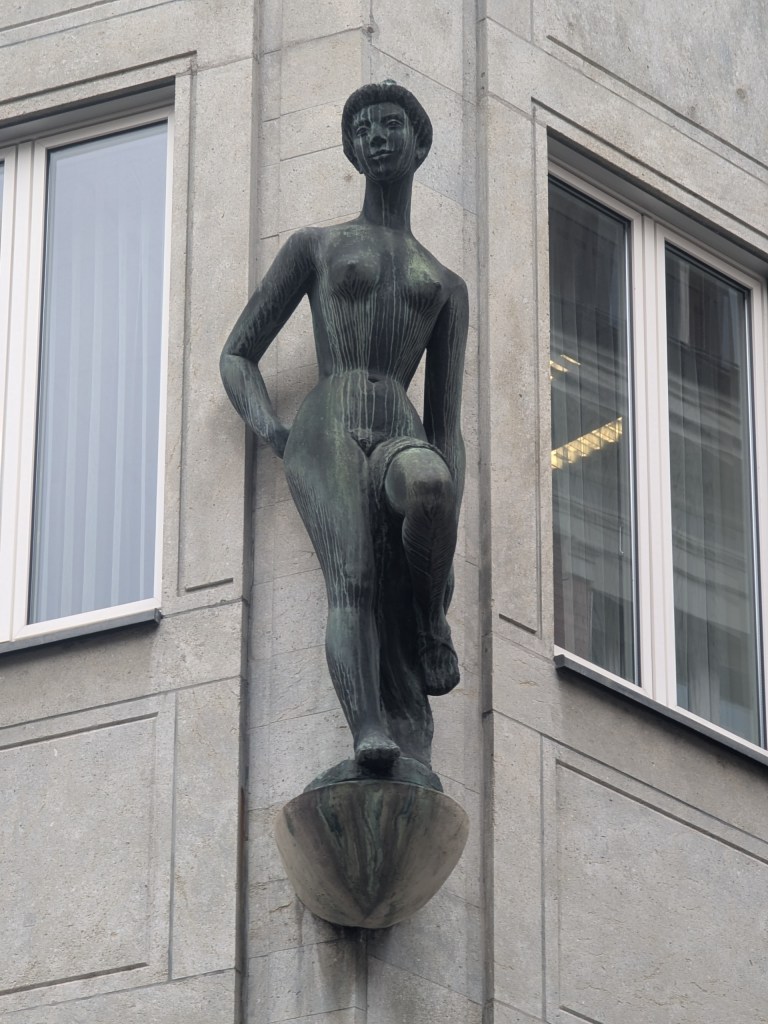
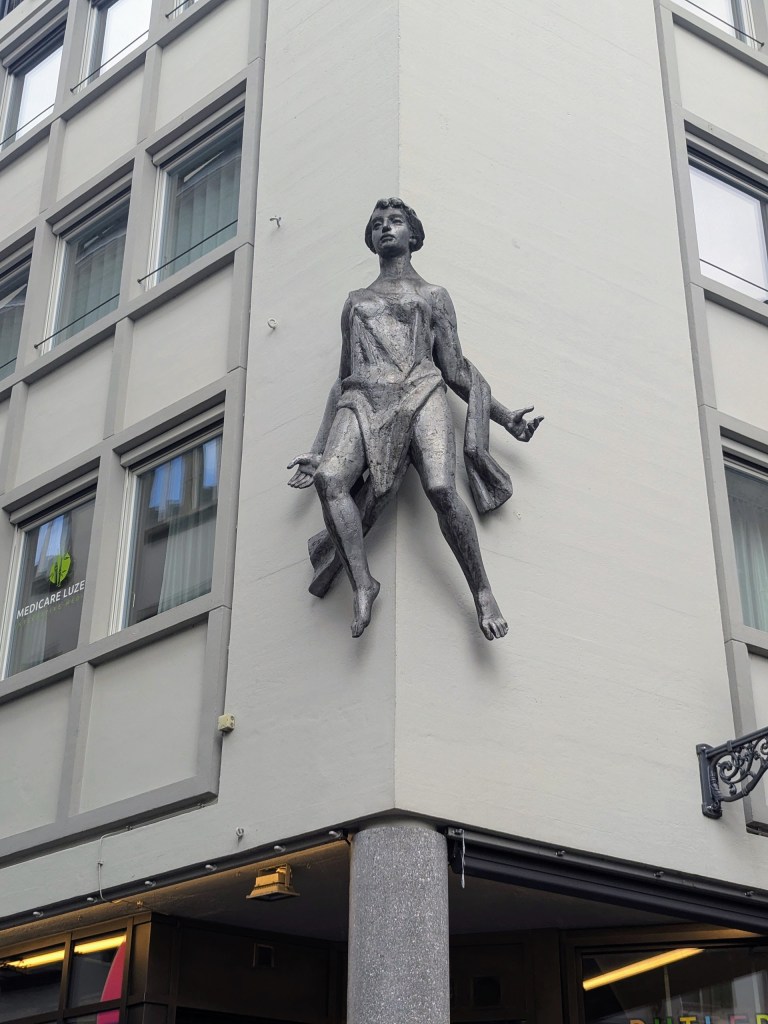
and several charming statues
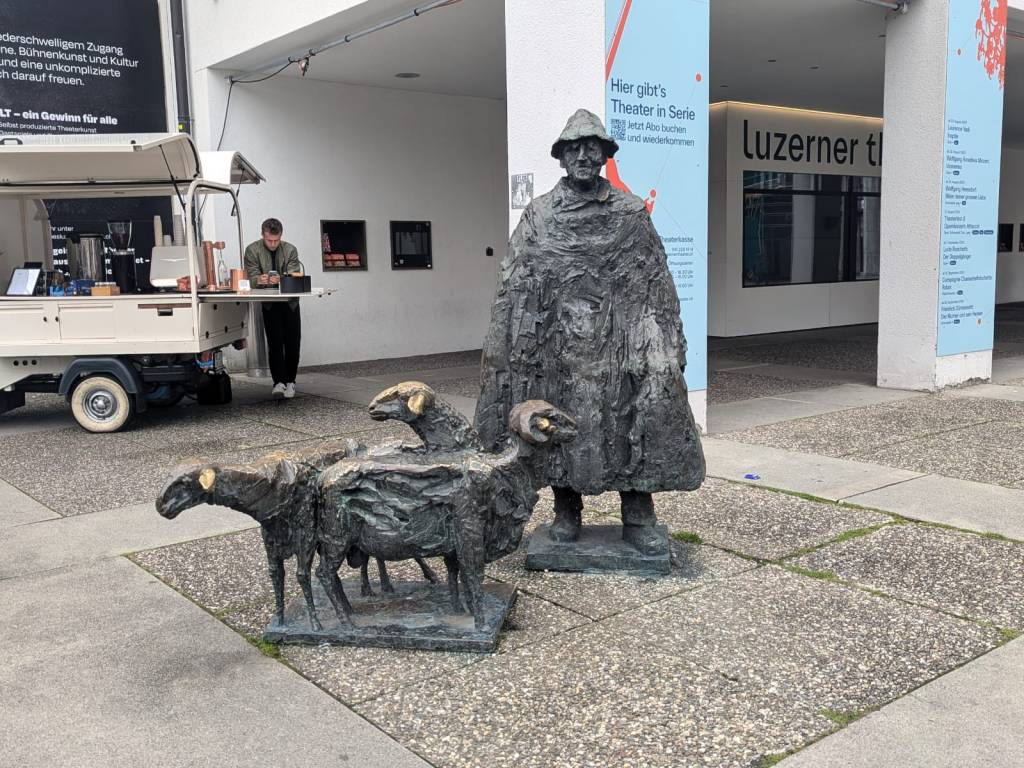
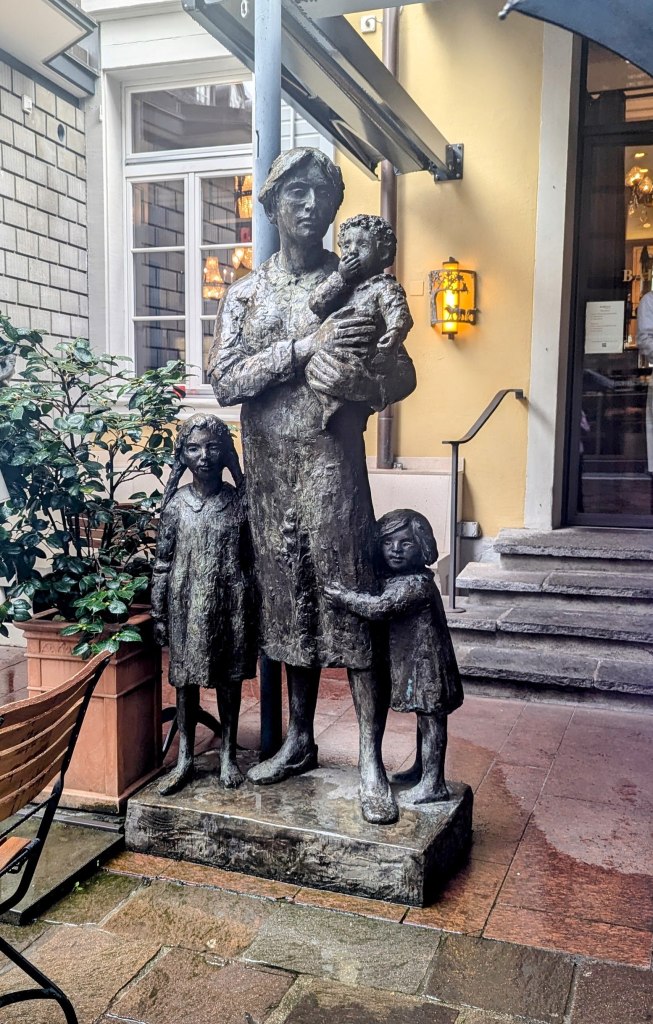
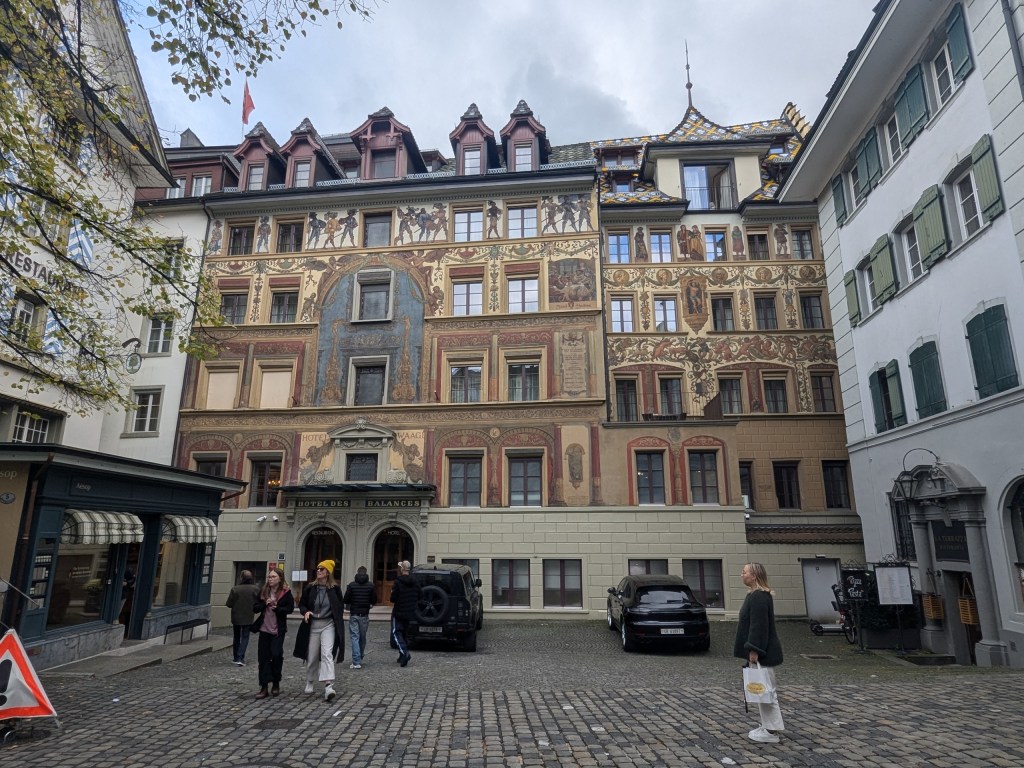
What is most striking about the Old City of Lucerne are the many buildings with beautiful mosaics.
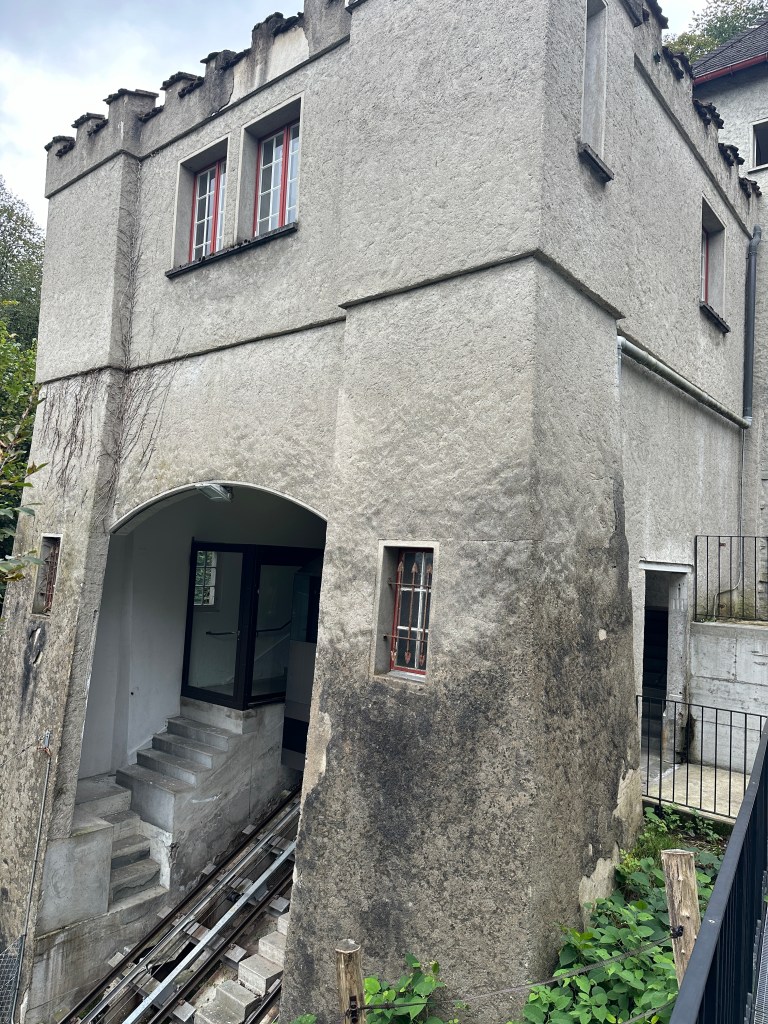
Once again we crossed the river to take the funicular up to the Gutch Hotel, another steep climbing train.
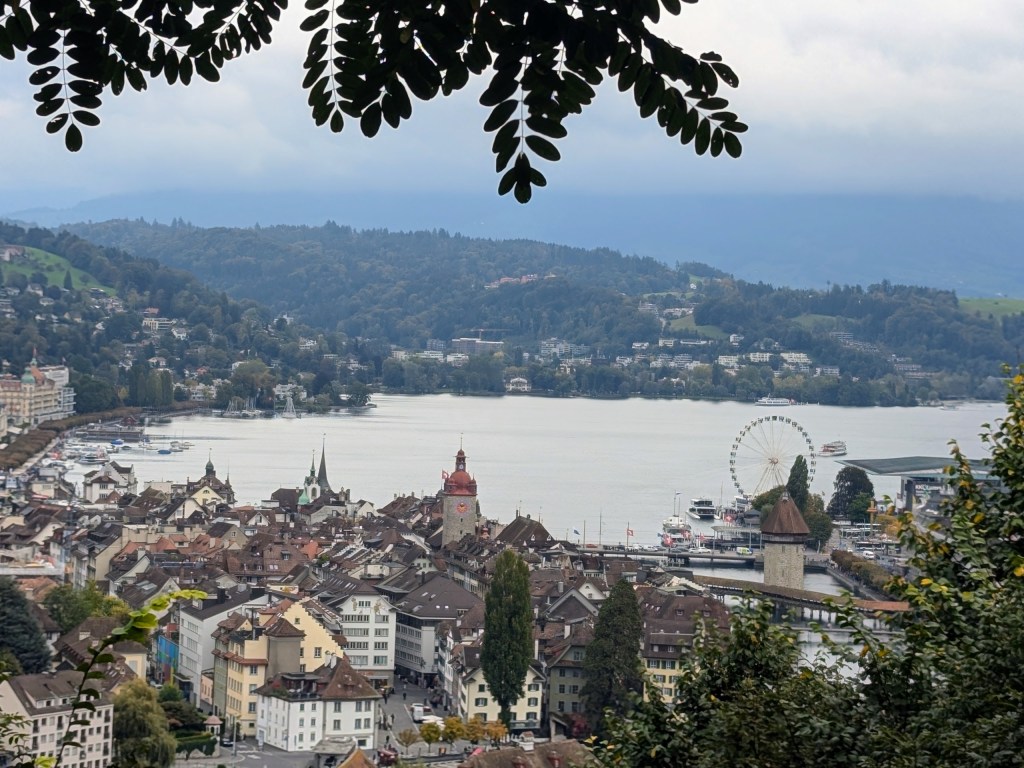
The view from there of the city was amazing, not only the river, but also Lake Lucerne can be seen.
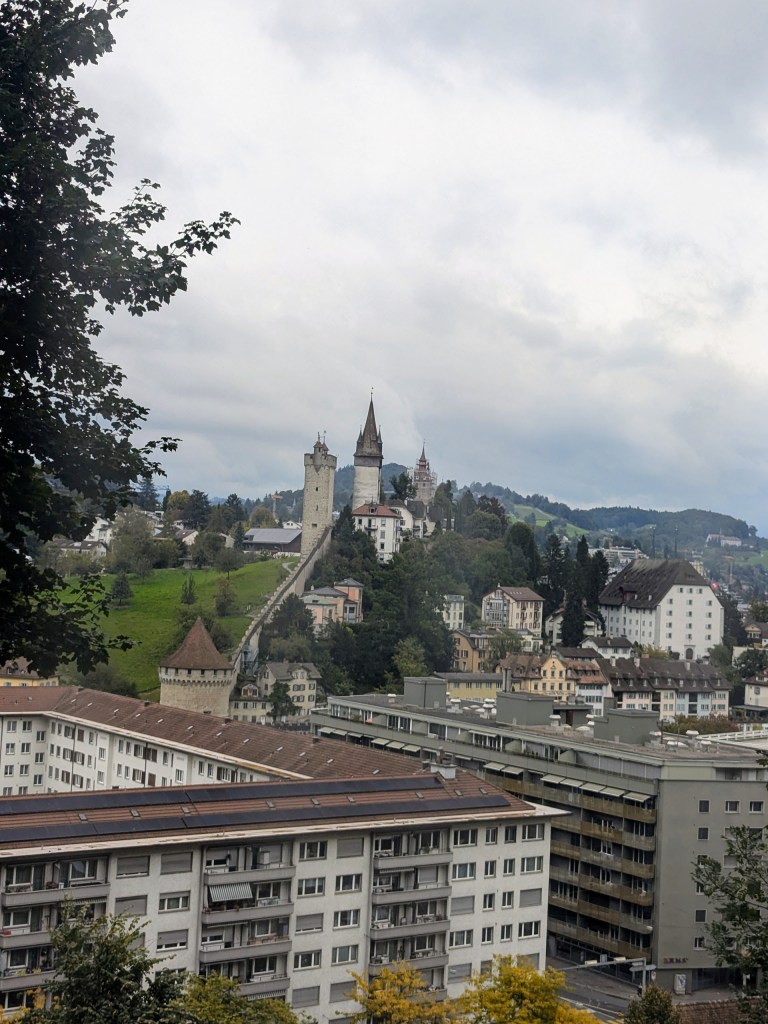
And a great view of the first tower and a part of the Musegg Wall.
Once on river level again, we continued our city self-tour. Old City Lucerne is such an interesting place to wander through, full of so many architecturally interesting buildings either because of, as mentioned above, their frescos like these
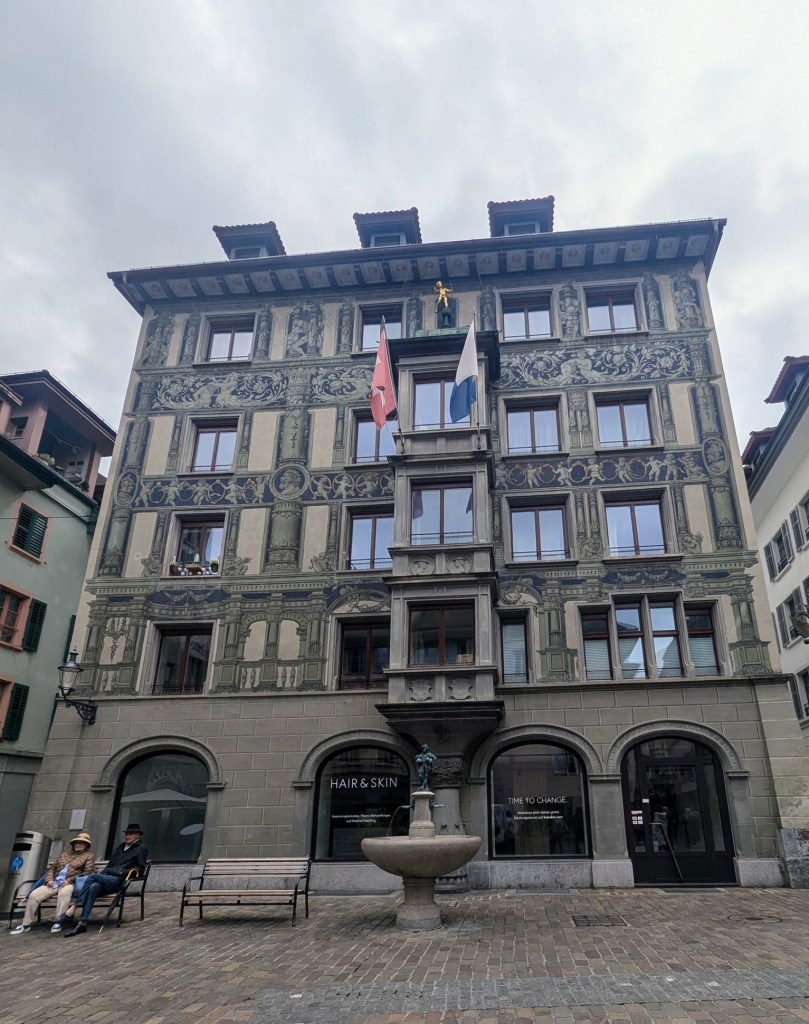
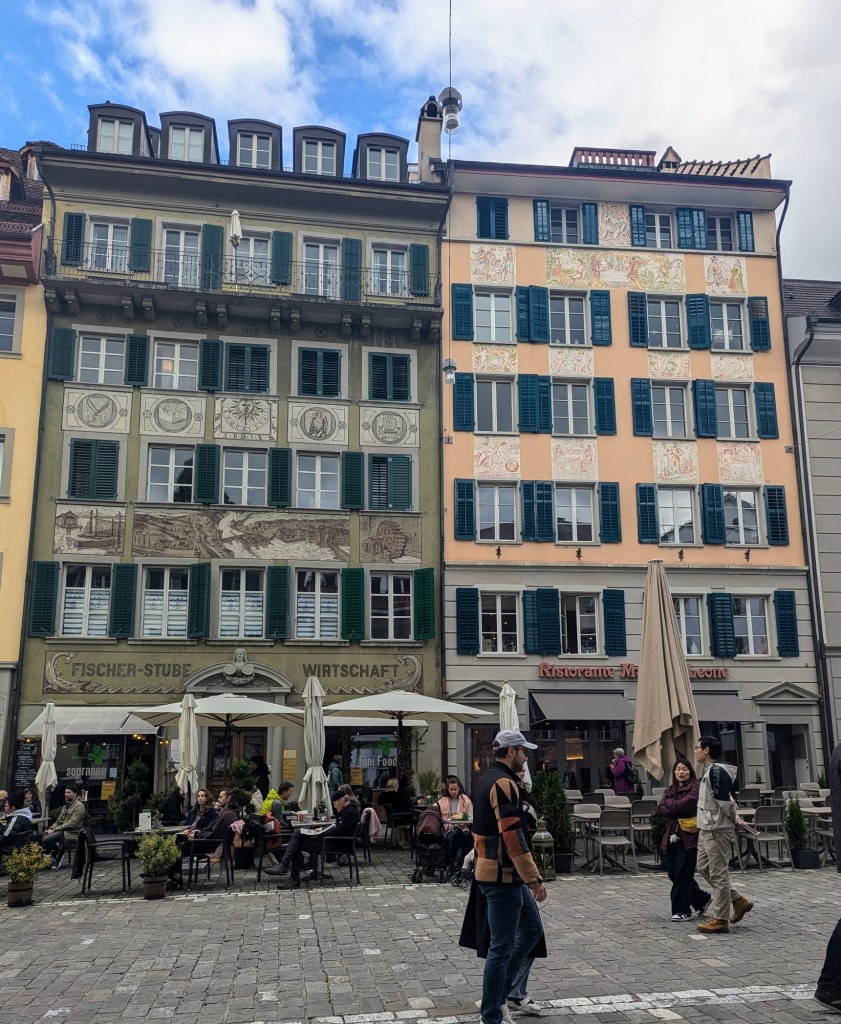
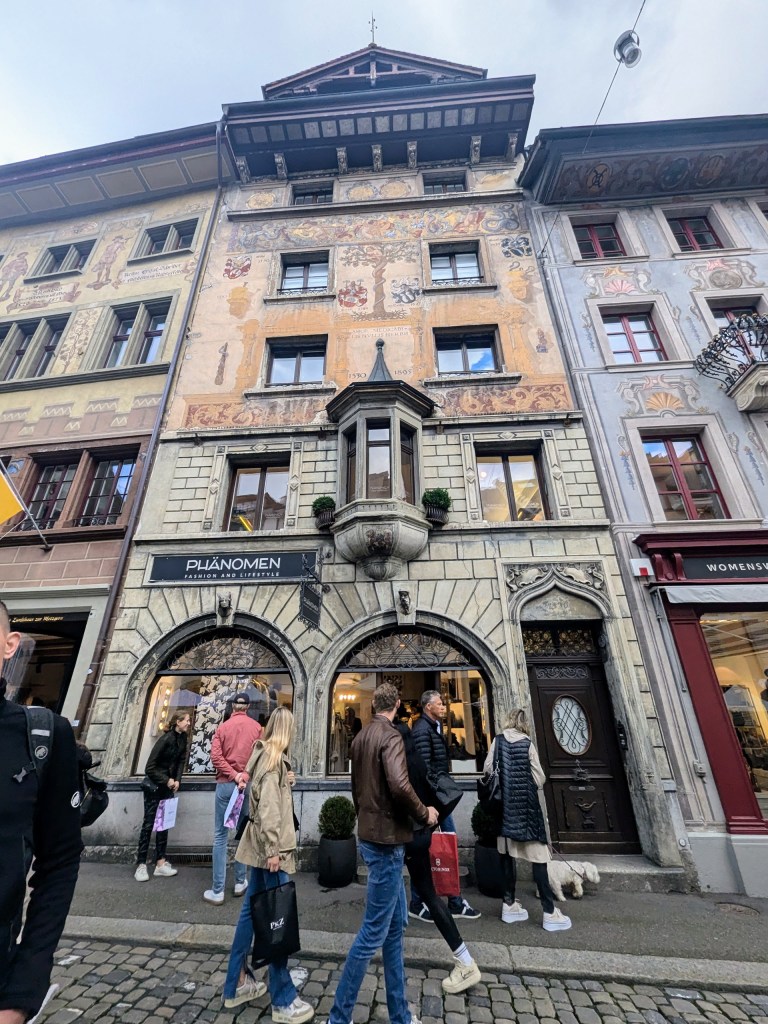

and this really fun one
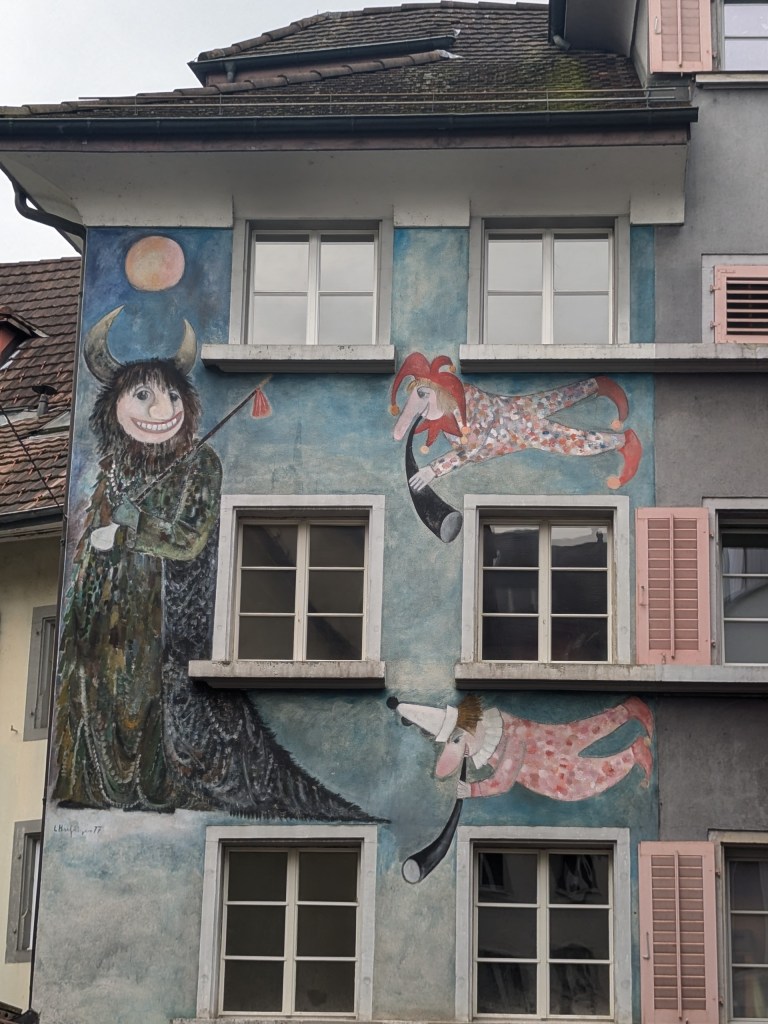
or because of the woodwork like this one
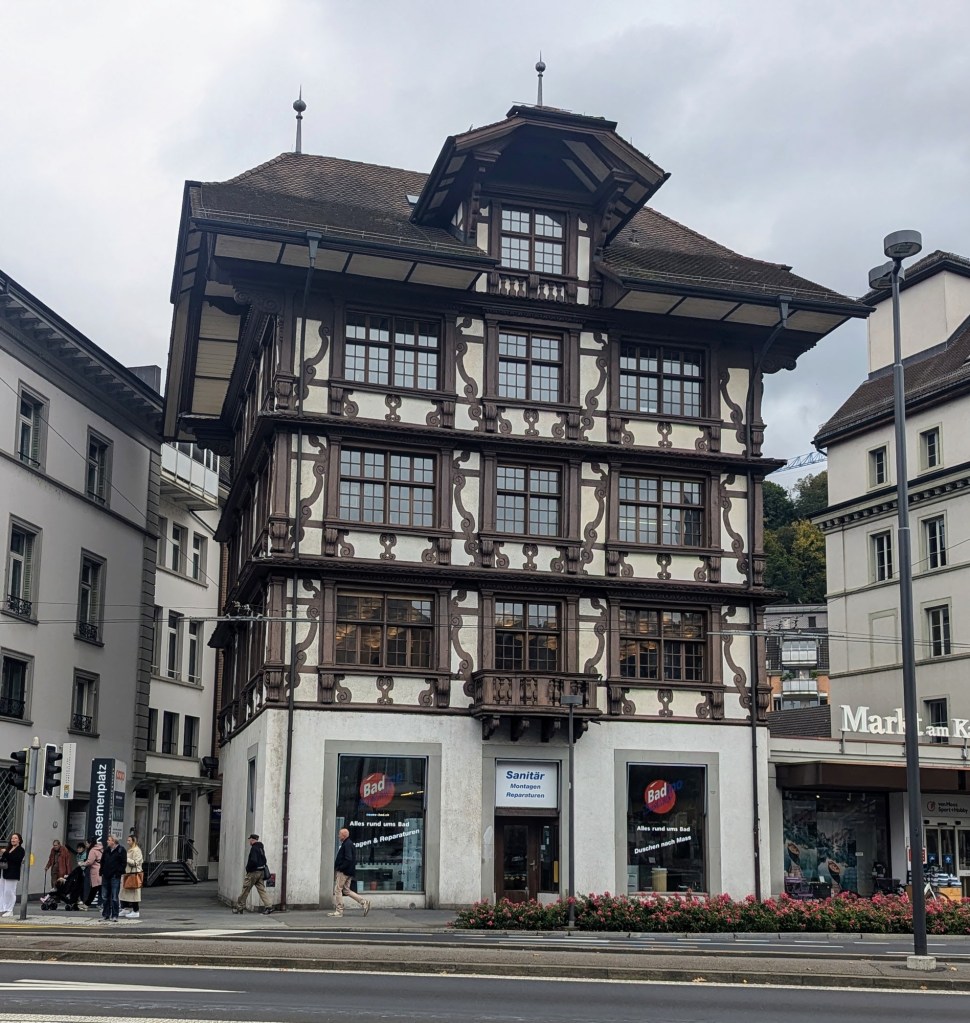
or because of the stonework
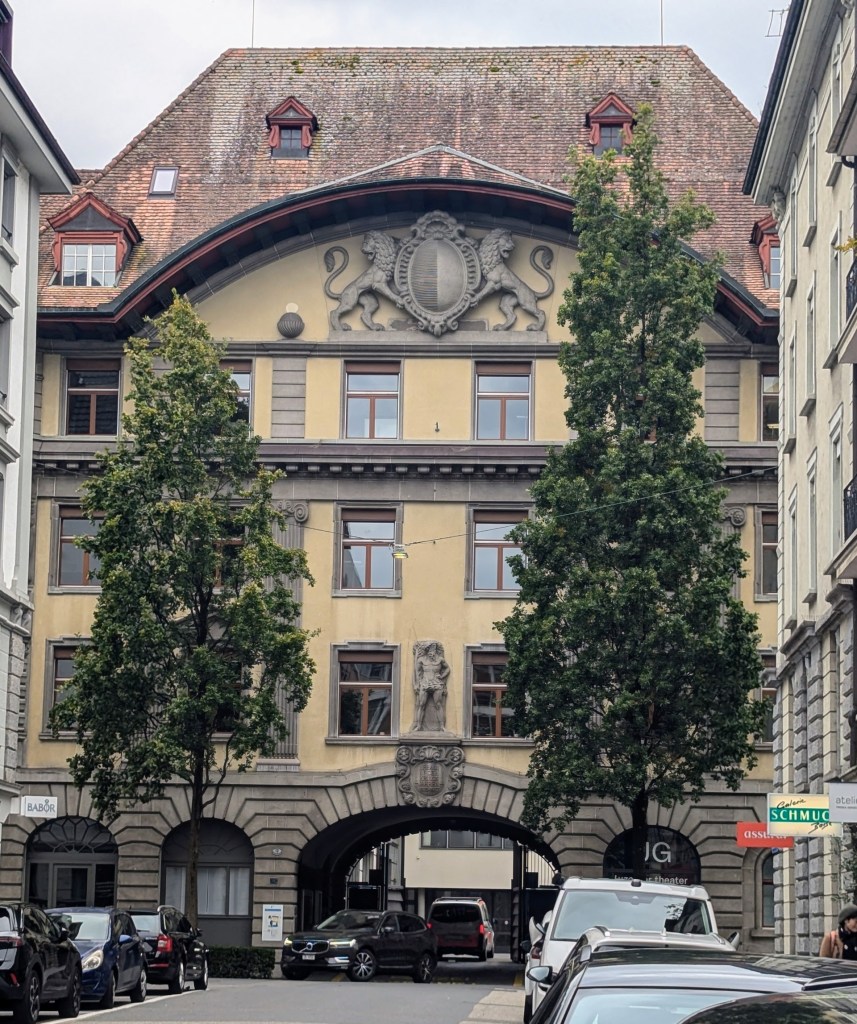
many for the gorgeous flower pots

and some just for the architecture itself

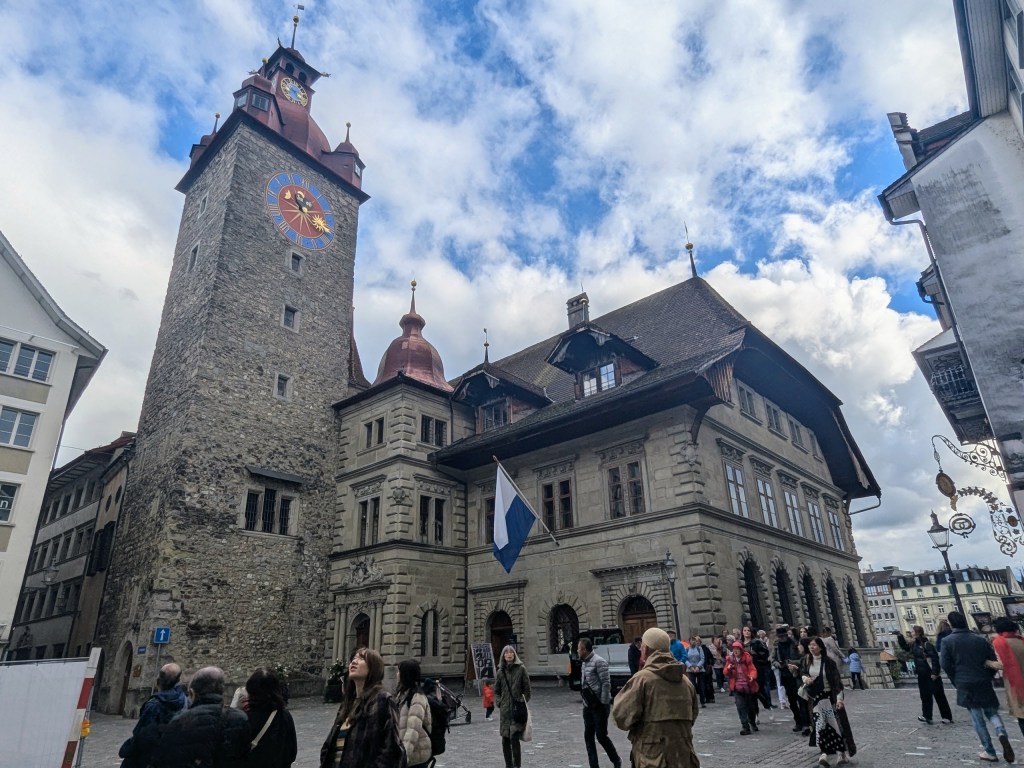
Two standout buildings are the Rathaus, seen from in front above, which is considered by many to be one of the most beautiful historical buildings in Lucerne. Construction began on Rathaus in 1602 and was completed in 1606. Here is the tower in the back.
The other standout building is Pfistern Guild Hall, also seen from the front above. It is one of the last standing guild halls in the city. The name Pfistern comes from the Latin “pistor”, which was what the Romans called bakers. The Germanization of the word turned it into “Pfister”. The Pfister Guild initially united artisans, bakers and millers, and was founded in 1408. The guild house was the noble gentlemen’s meeting place to discuss politics and business, not forgetting some great food and drinks during the process. Shortly before the guild was dissolved in 1875, the house was auctioned for 80,000 Francs. A century later – in 1977 – after numerous ownership changes, the property was acquired by the Lucerne Association of Pastry Bakers, thus reverting to its original purpose.
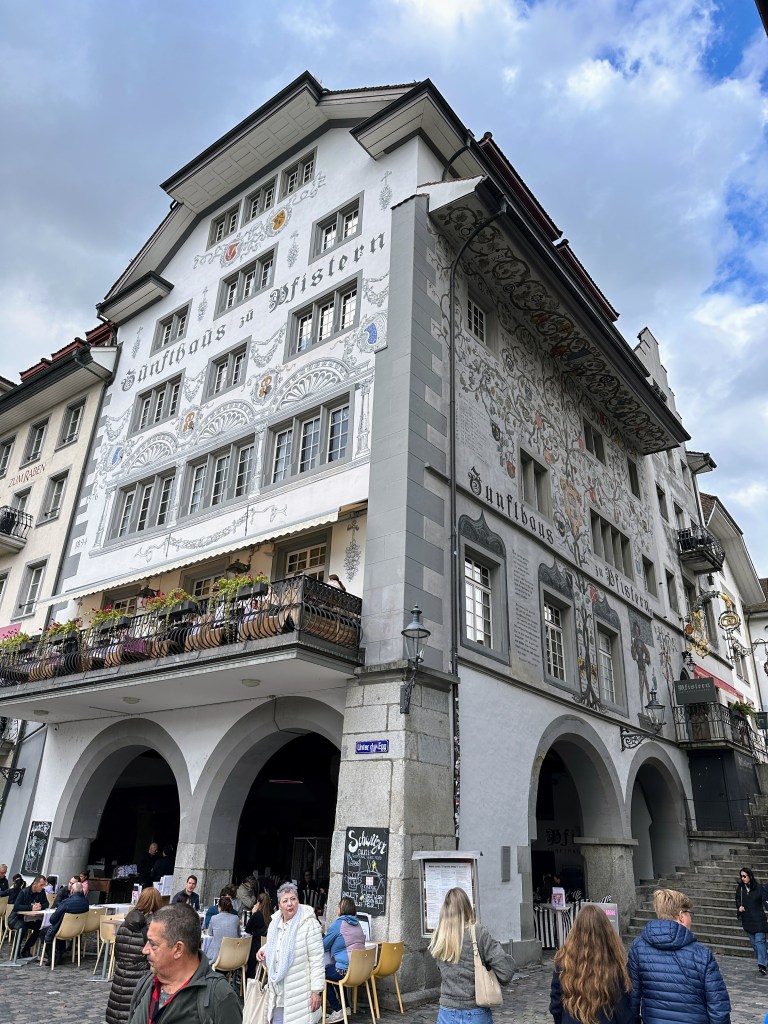
On the side of the building is a mural of the Pfistern family tree hung with coats of arms.

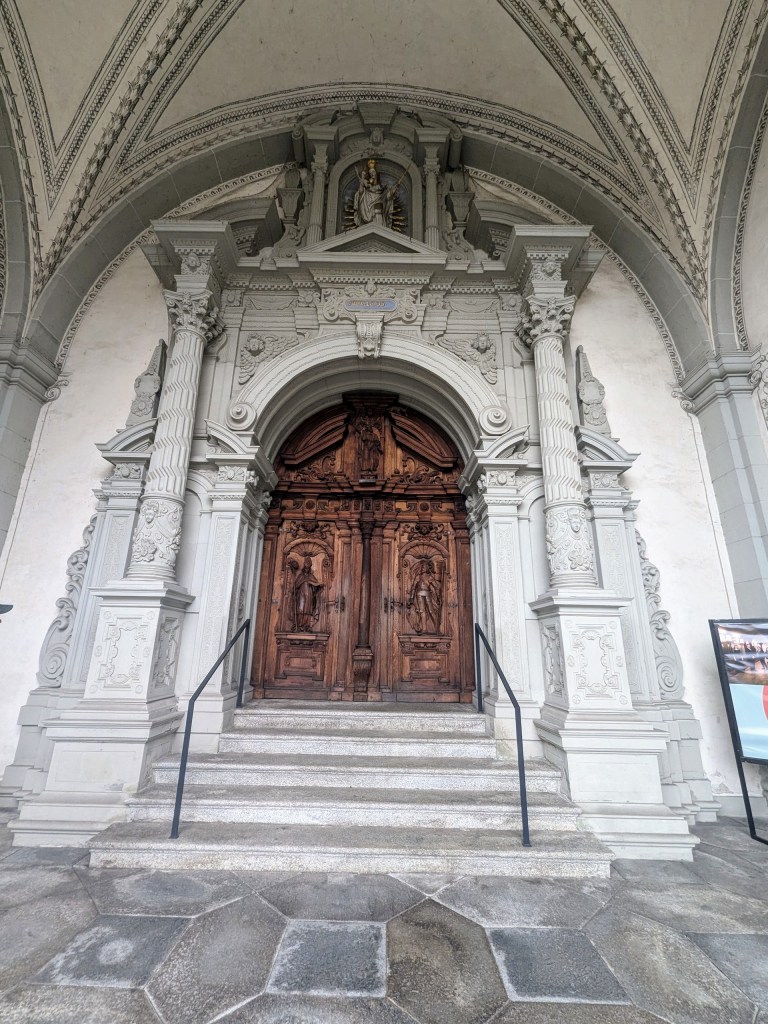
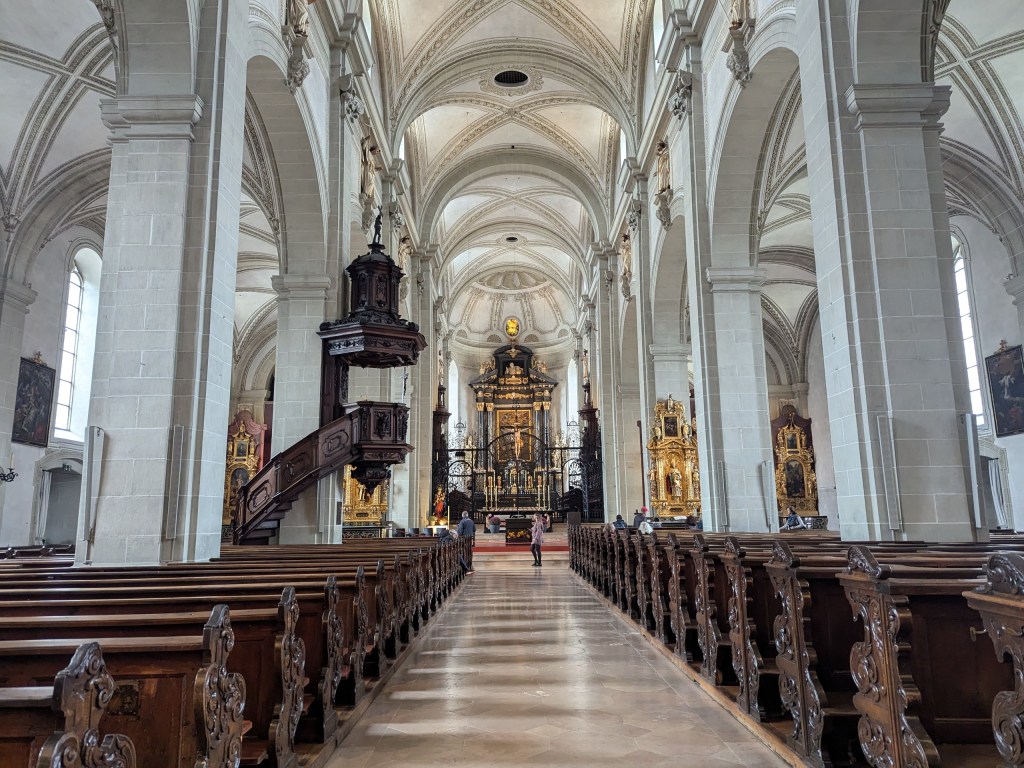
Our tour continued on to the Church of St. Leodegar, a 17th century Roman Catholic church completed in 1639. Yet the history of the church can be traced as far back as the 8th century. An older church once stood on the site where the Church of Saint Leodegar now stands, built around 735 or 736. Unfortunately, that building burned in 1633. All that was left behind were two Romanesque towers. Many consider the Church of Saint Leodegar to be the most important example of a church using Renaissance architecture in Switzerland.

We next passed through a very touristy square on which sits the Old Swiss House.
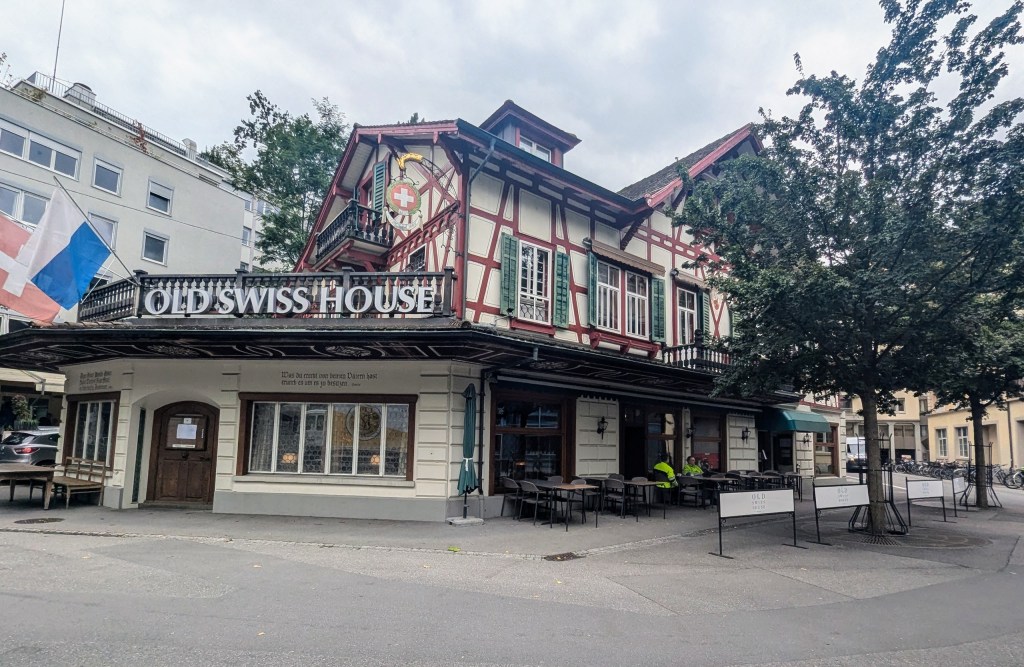
The souvenir shops there have, in addition to the usual stuff, an amazing selection of cuckoo clocks.

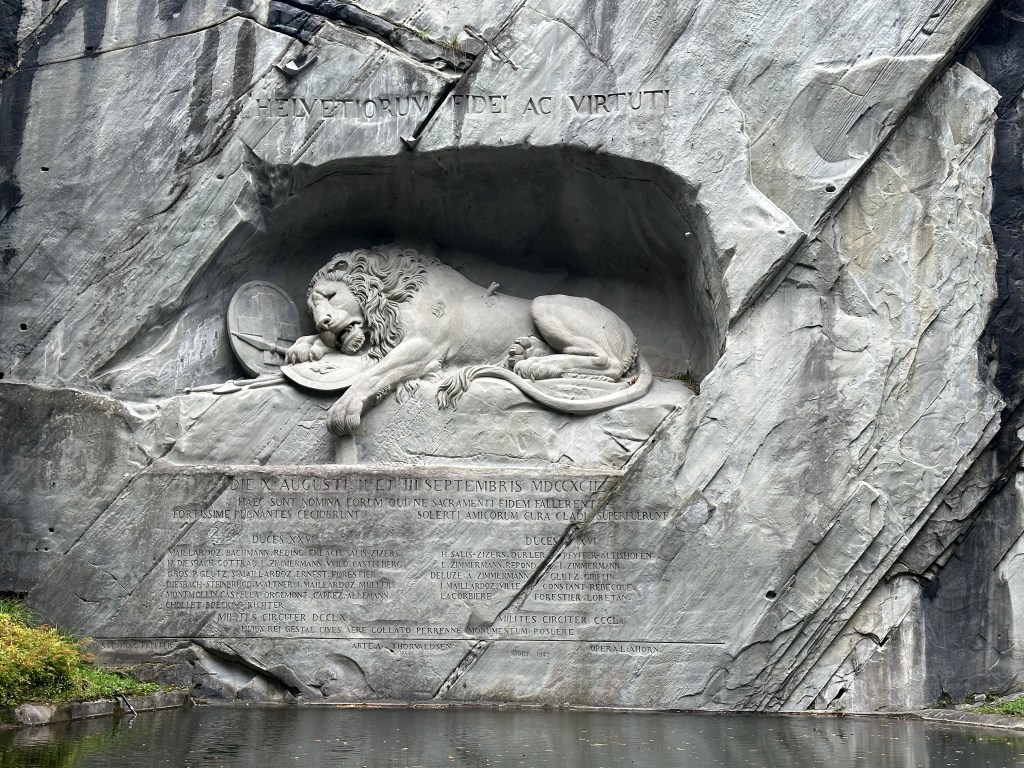
We finally made our way to what is one of the most renowned landmarks is Lucerne: the Lion Monument, a carved rock sculpture located in Lucerne, Switzerland. It was crafted in 1820 to honor the memory of the Swiss Guards who tragically lost their lives in 1792 during the French Revolution.

The Lion Monument measures an imposing ten meters in length and six meters in height. It is dedicated to honoring the loyalty and courage of the Swiss. The sculpture depicts a dying lion impaled by a spear, with a shield bearing the emblem of the French monarchy covering its body. Adjacent to the lion, there is another shield bearing the coat of arms of Switzerland. Mark Twain famously referred to this sculpture of a mortally wounded lion as “the most mournful and moving piece of stone in the world.”
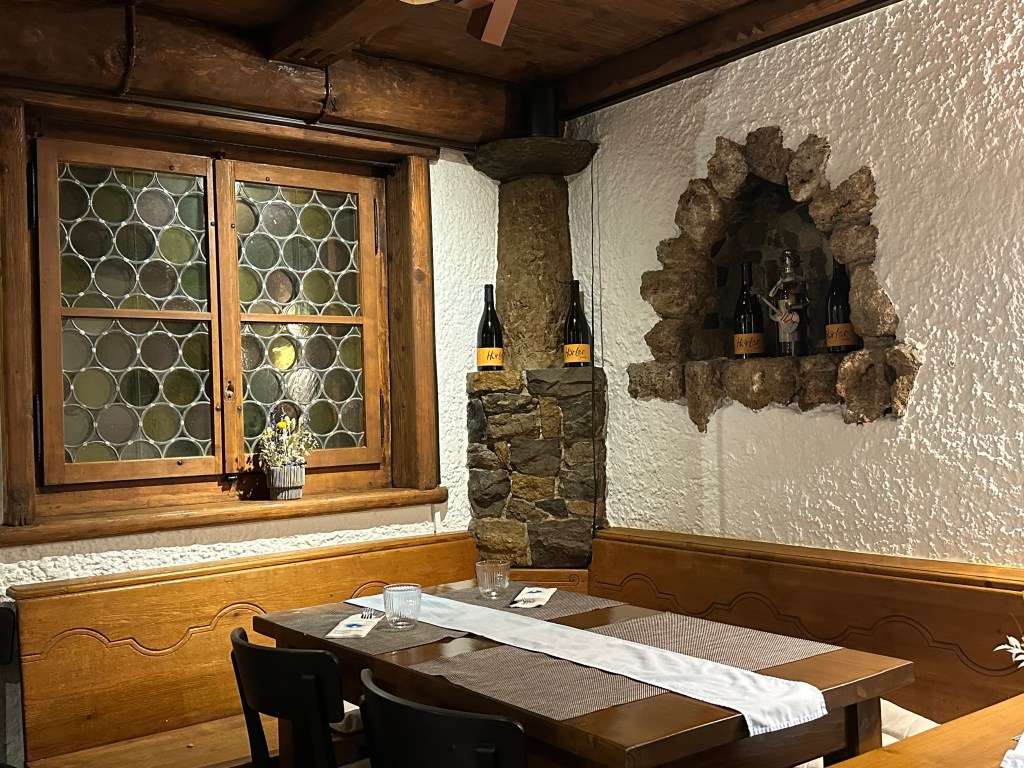
Dinner was typical Swiss fare including spaetzle and maluns in an historic building at Restaurant Bündnerland.
The next day was overcast with threats of rain, so we postponed our lake adventure. But while inquiring about boat tickets, we noticed a lot of activity beyond the ferris wheel, which was turning for the first time since we had arrived.
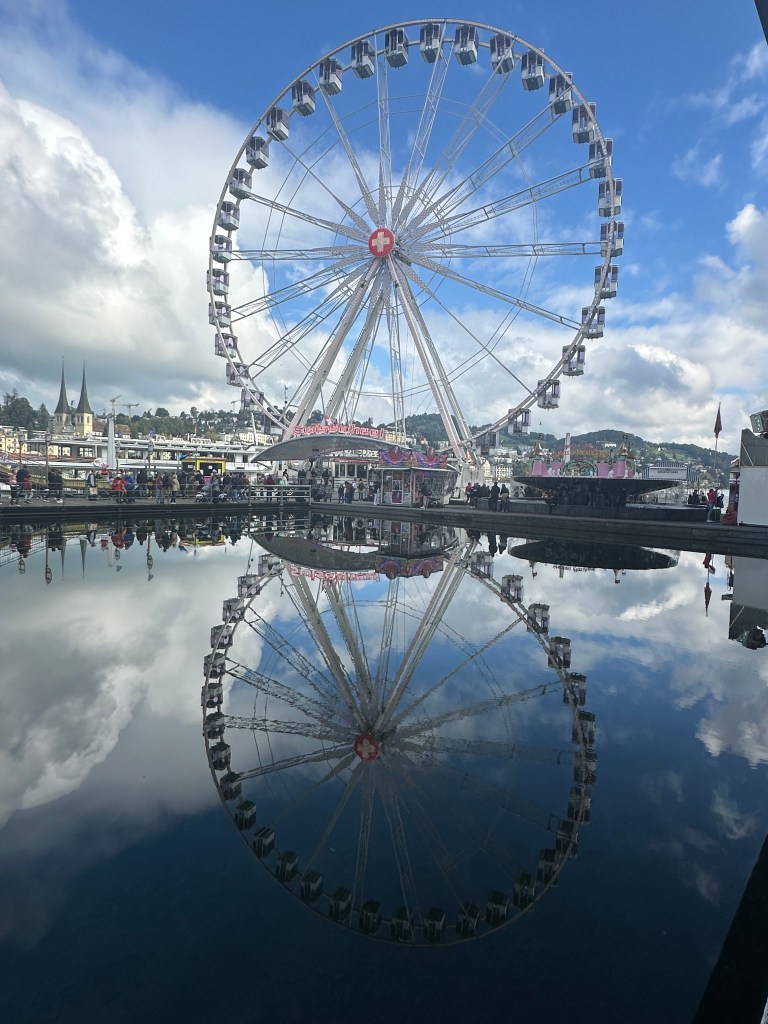
We stumbled onto the Octoberfest Lunapark fair that opened that day and would remain for 2 weeks, how lucky for us!

It was a combination of a market and an amusement park.
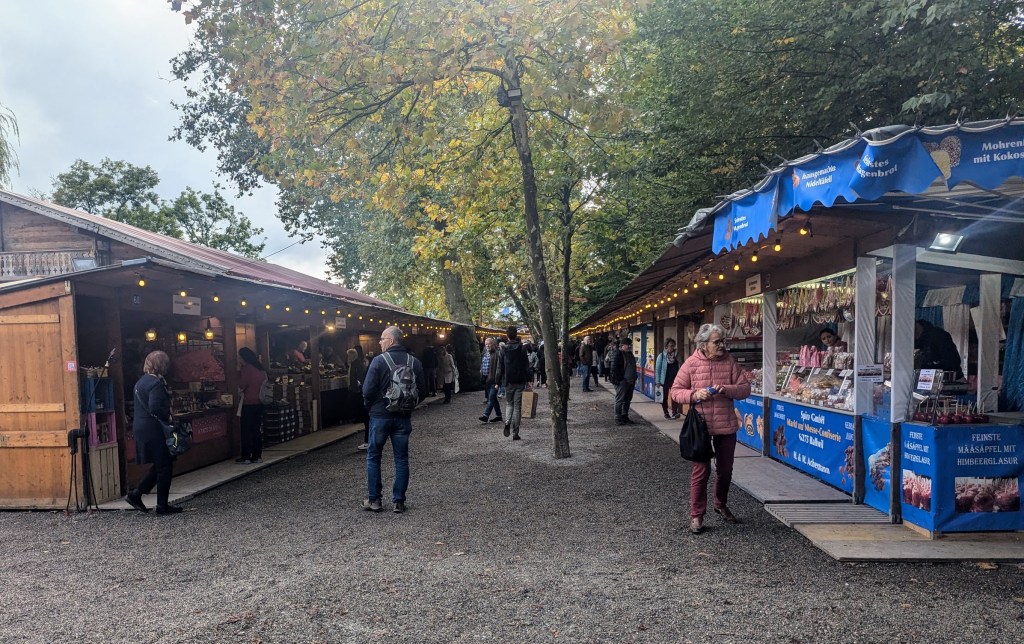
There were all the usual handmade products like leather goods and hats

and several booths with jewelry.

The market included all kinds of typical Swiss products including cheeses
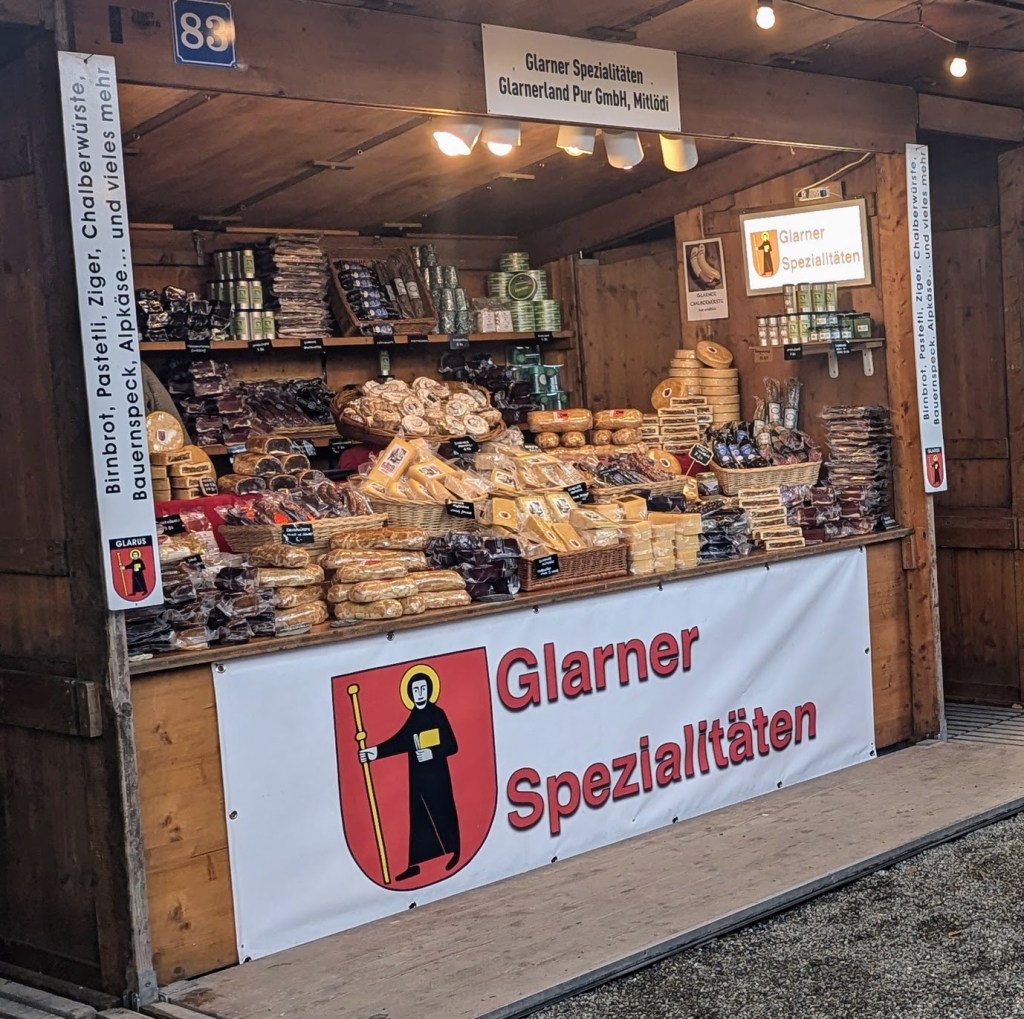
sausages
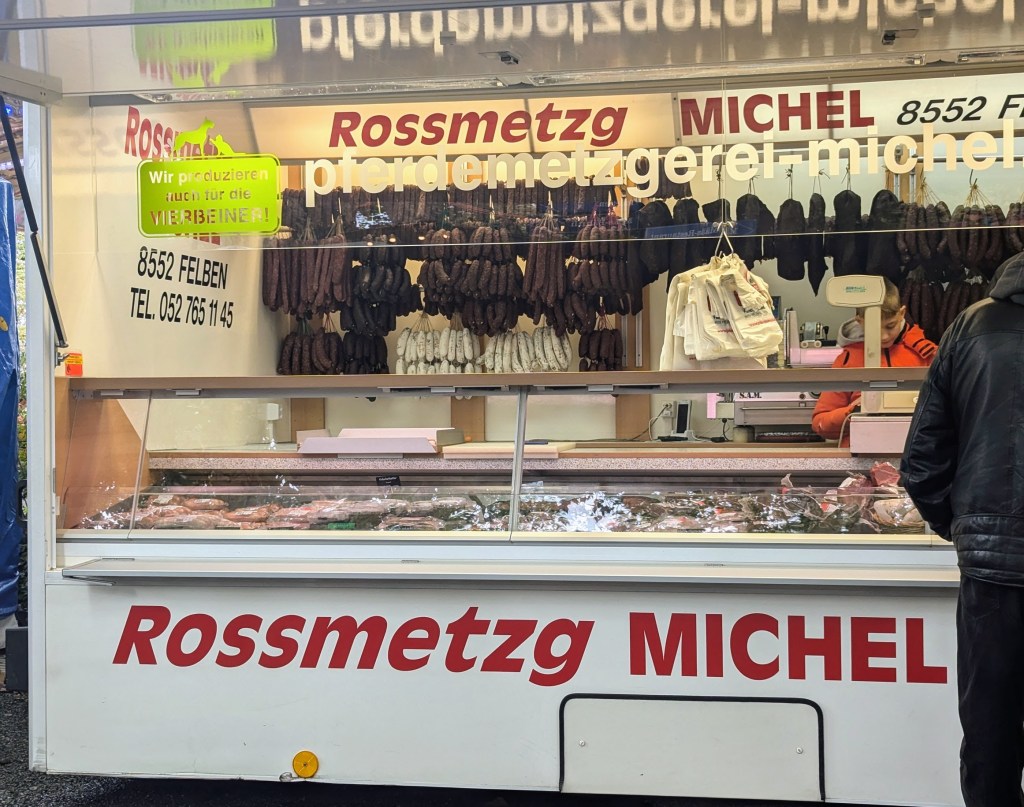
smoked game

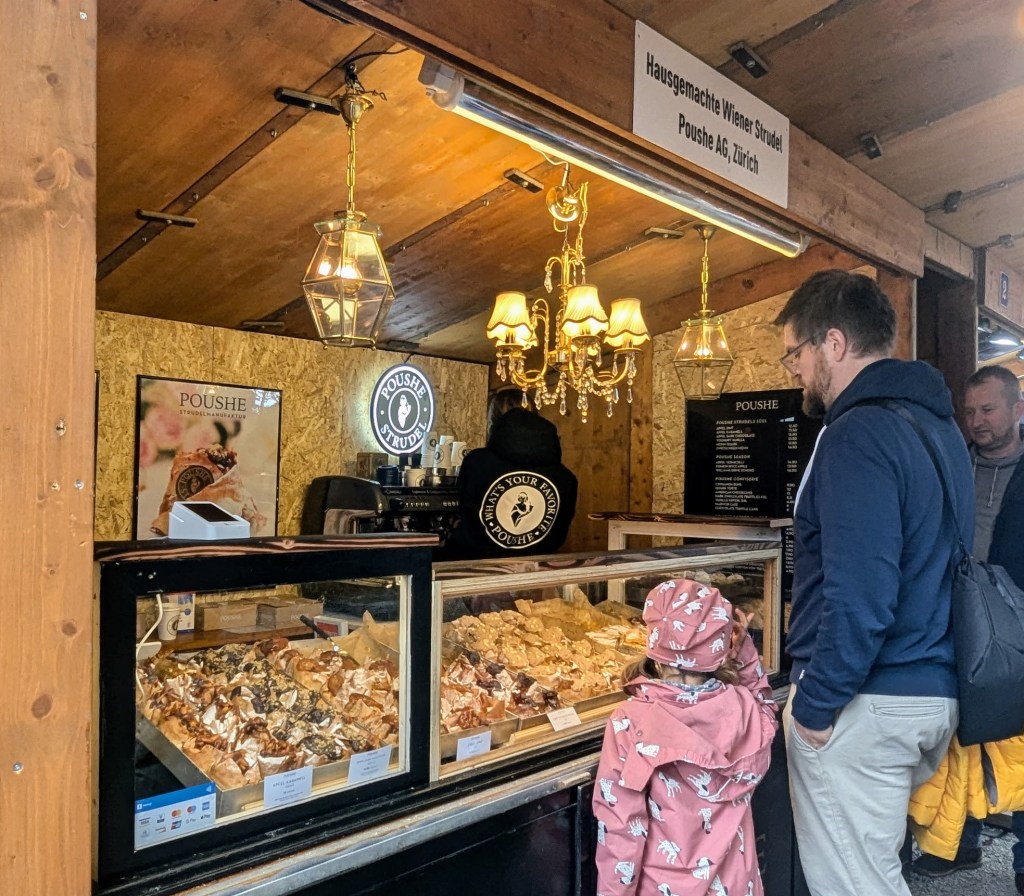
and this one with all kinds of strudel
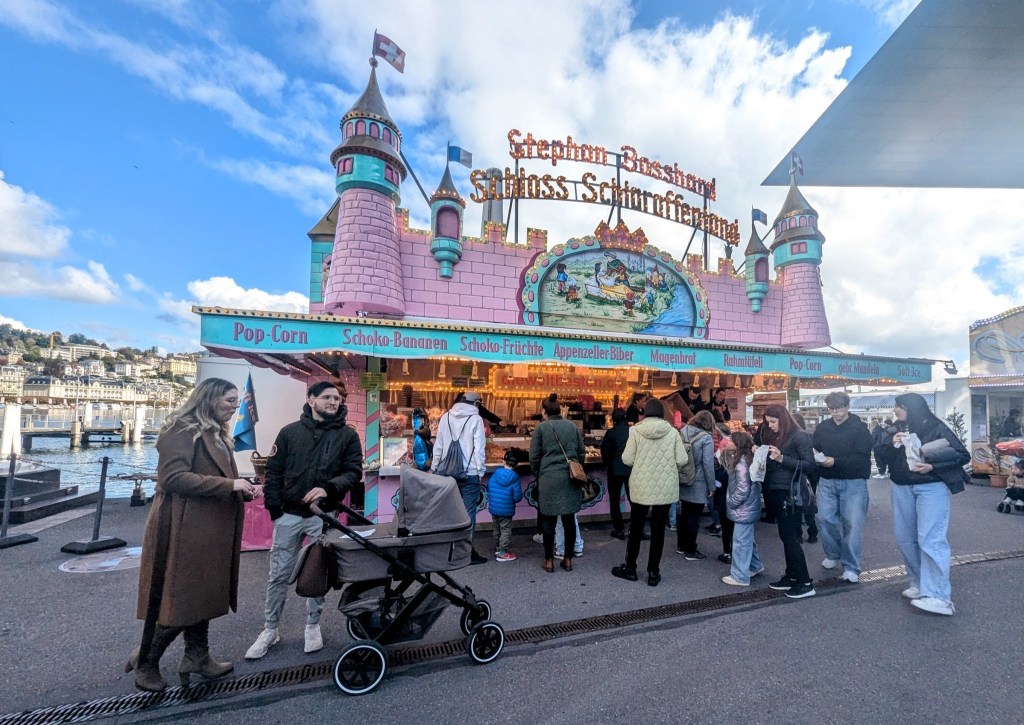
Several carts claiming Swiss treats had an item called mogenbrot. We looked them up and they were compared to British “digestive biscuits,” so we gave them a try. Not a fan. Dense, sweet, but tasteless.
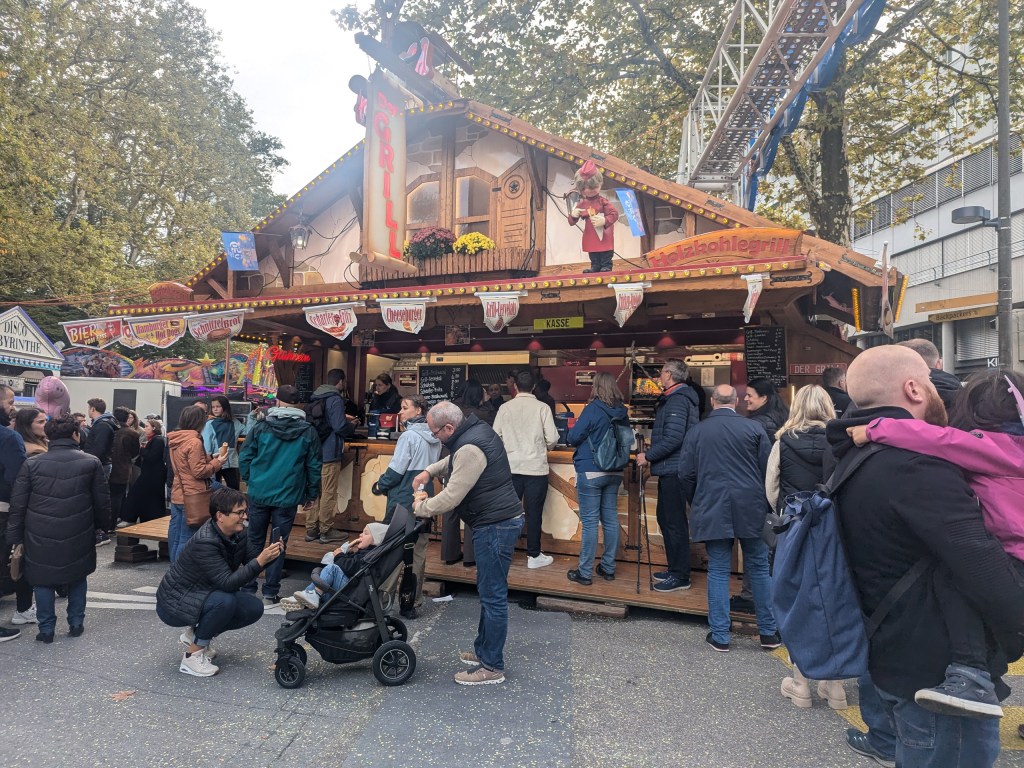
We chose to buy our bratwurst at this cute grill.
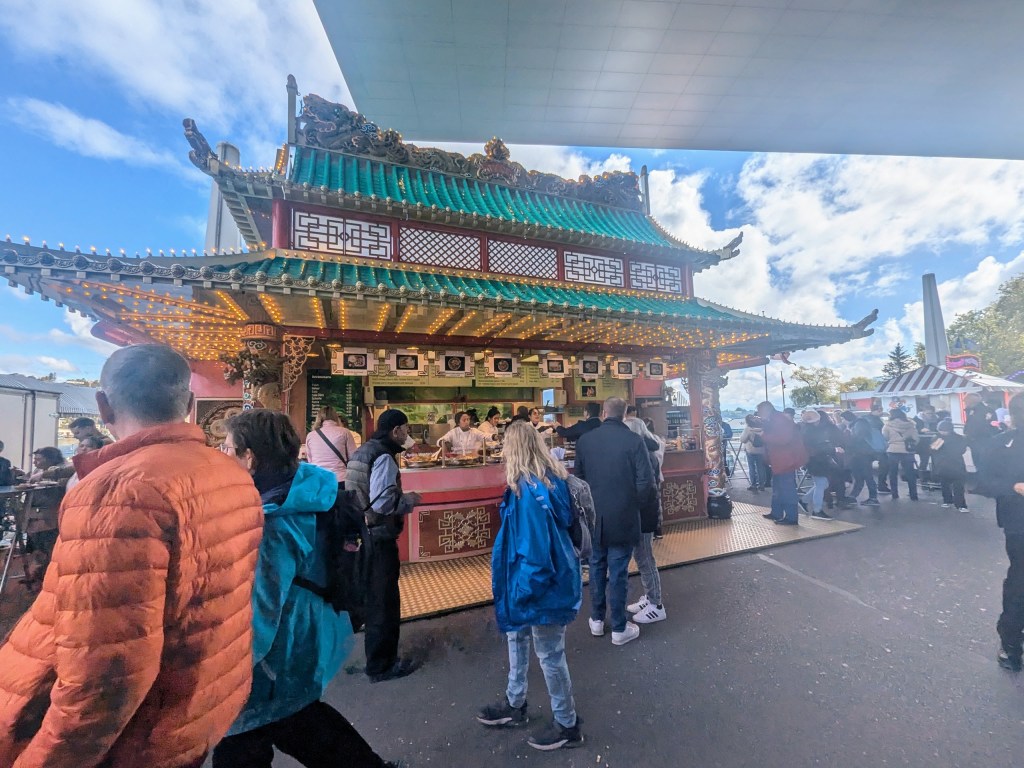
There were also plenty of non Swiss food choices including Chinese
French

and Spanish deserts

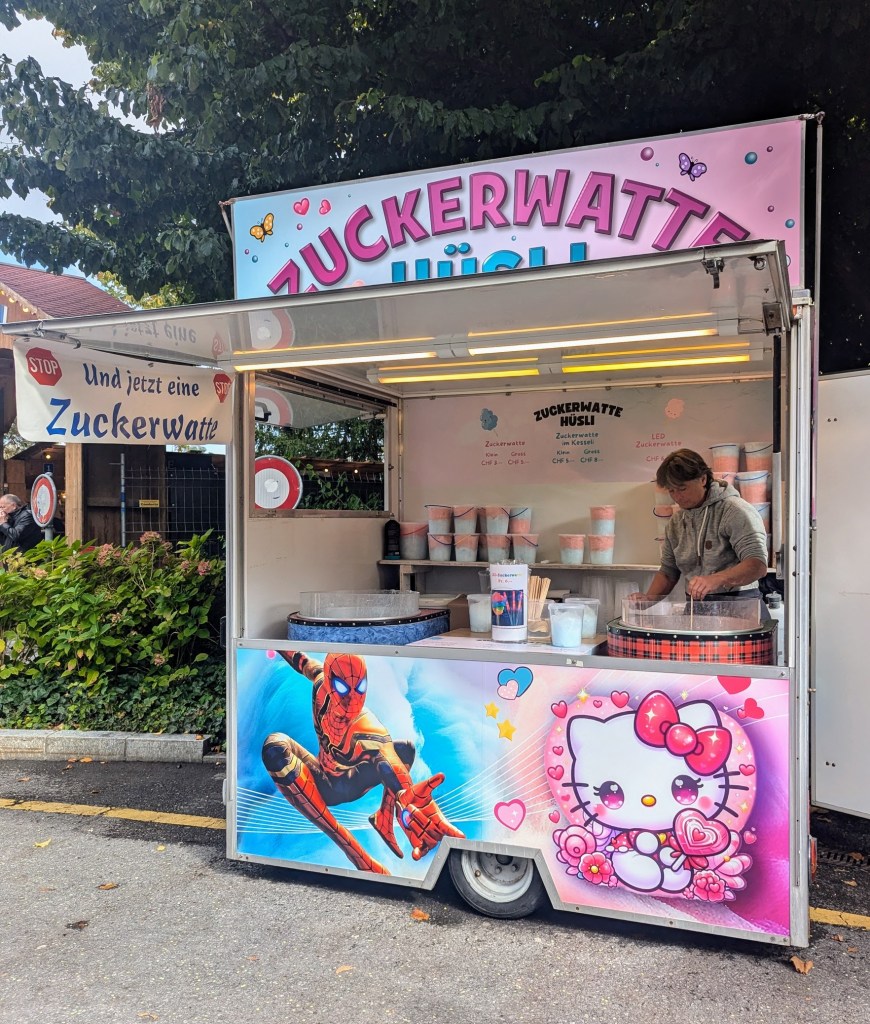
As for fair treats, they had both of Eric’s favorites: candy apples and cotton candy
The international options were not only food. They had dreamcatchers from the Americas.
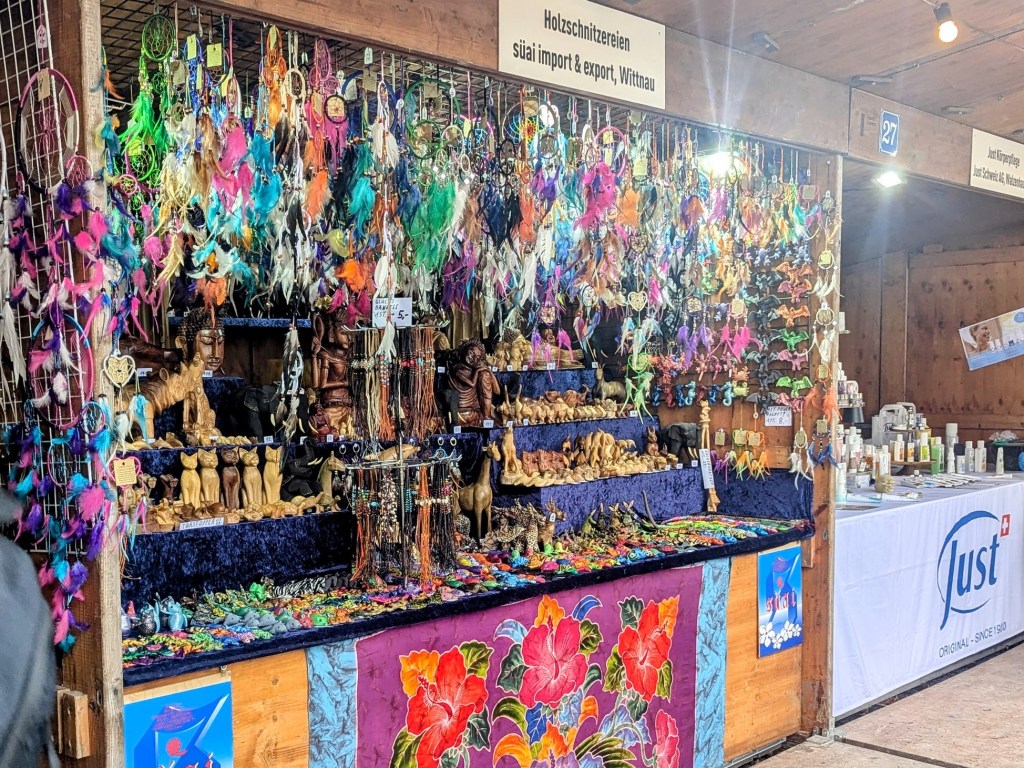
beaded trinkets from Thailand

didgeridoos from Australia

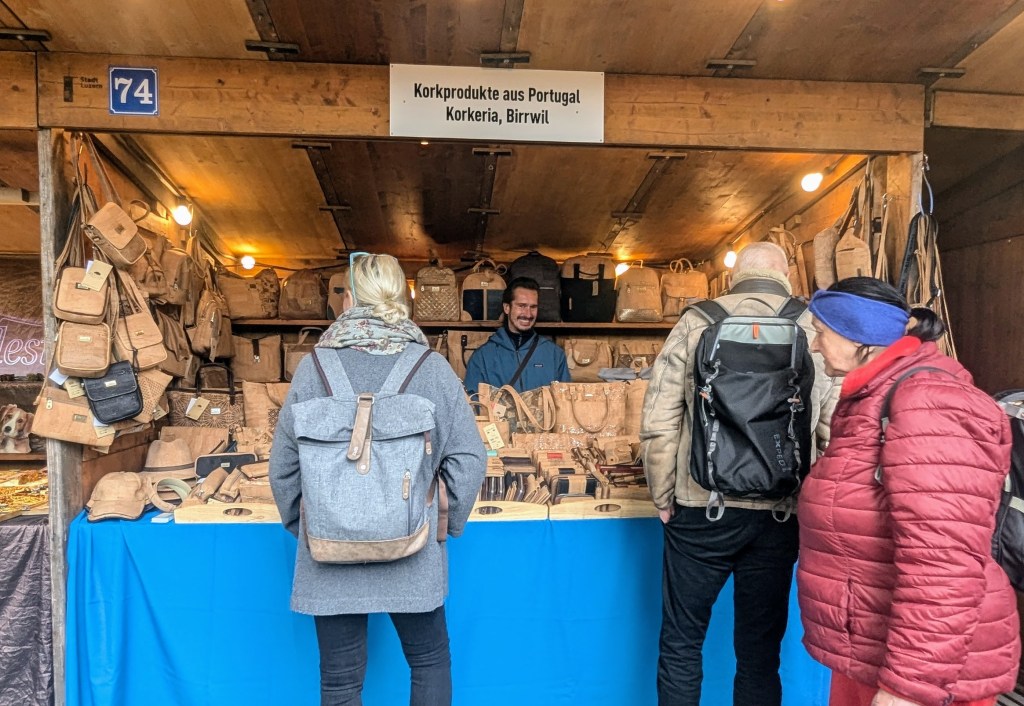
and cork products from Portugal.
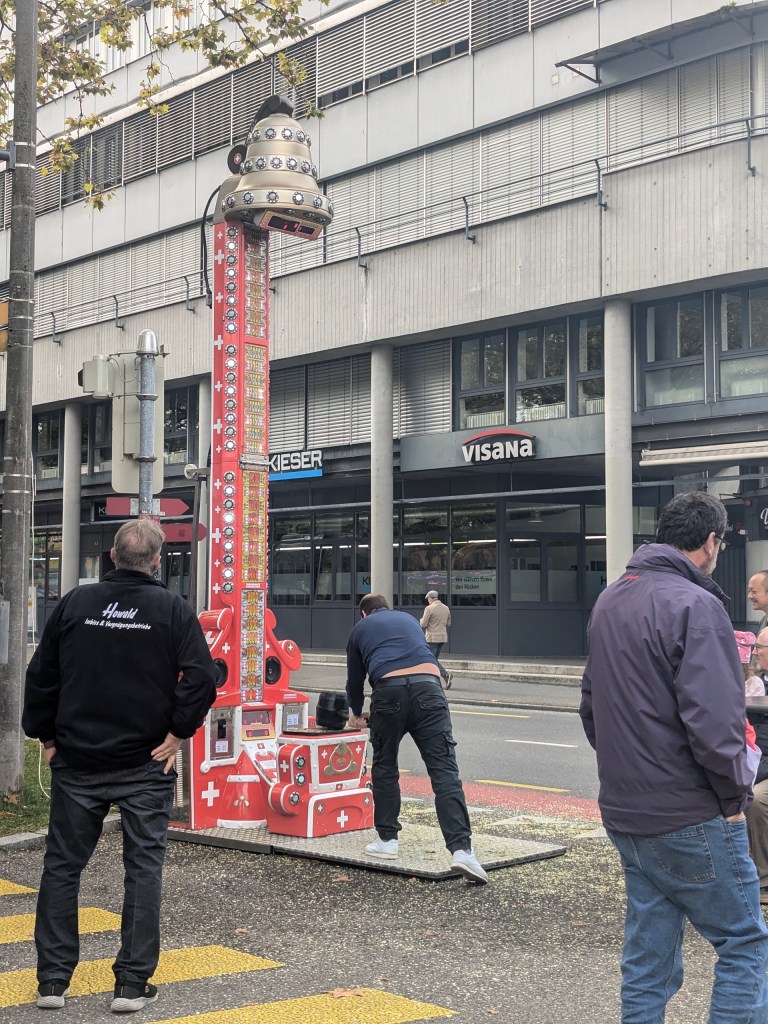
Games included those for the macho
the wild west shooting range
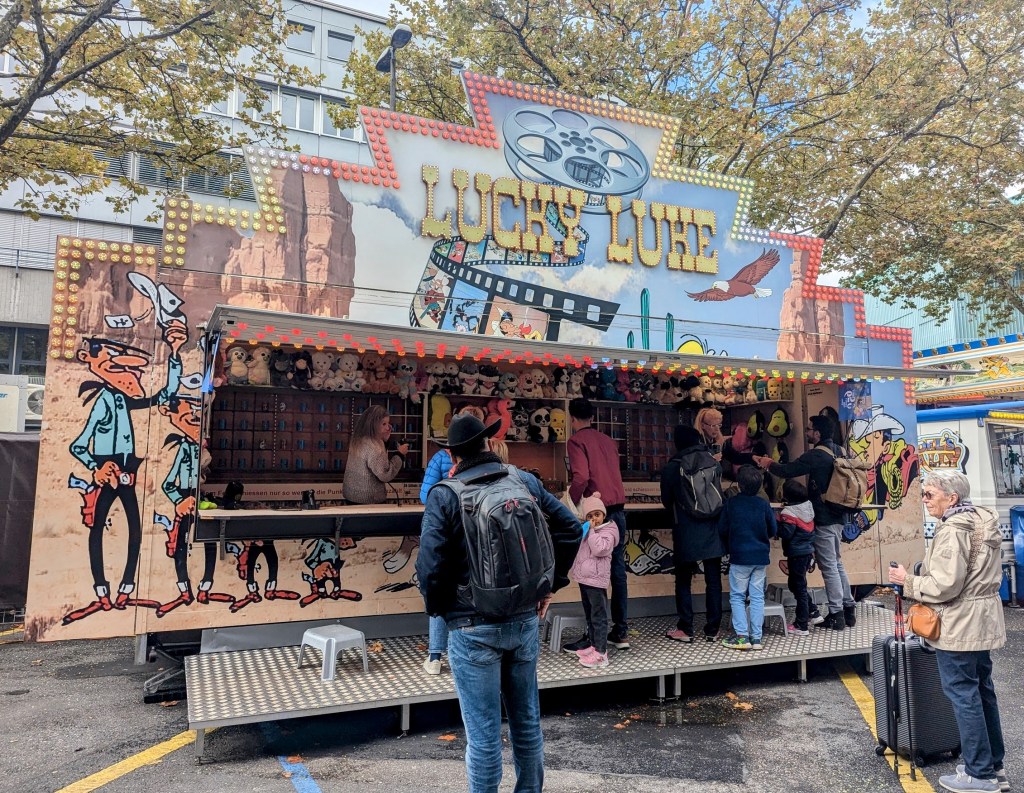
and even little duckies for the kids.
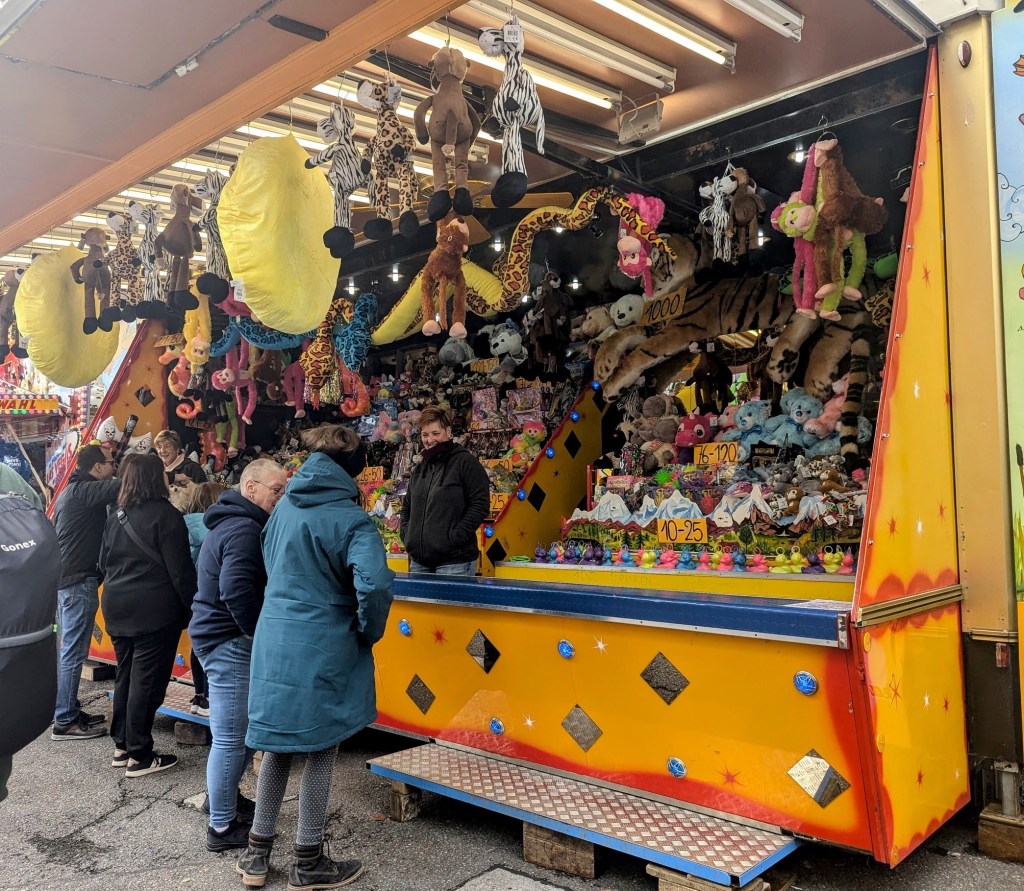
The rides also spanned the ages from children
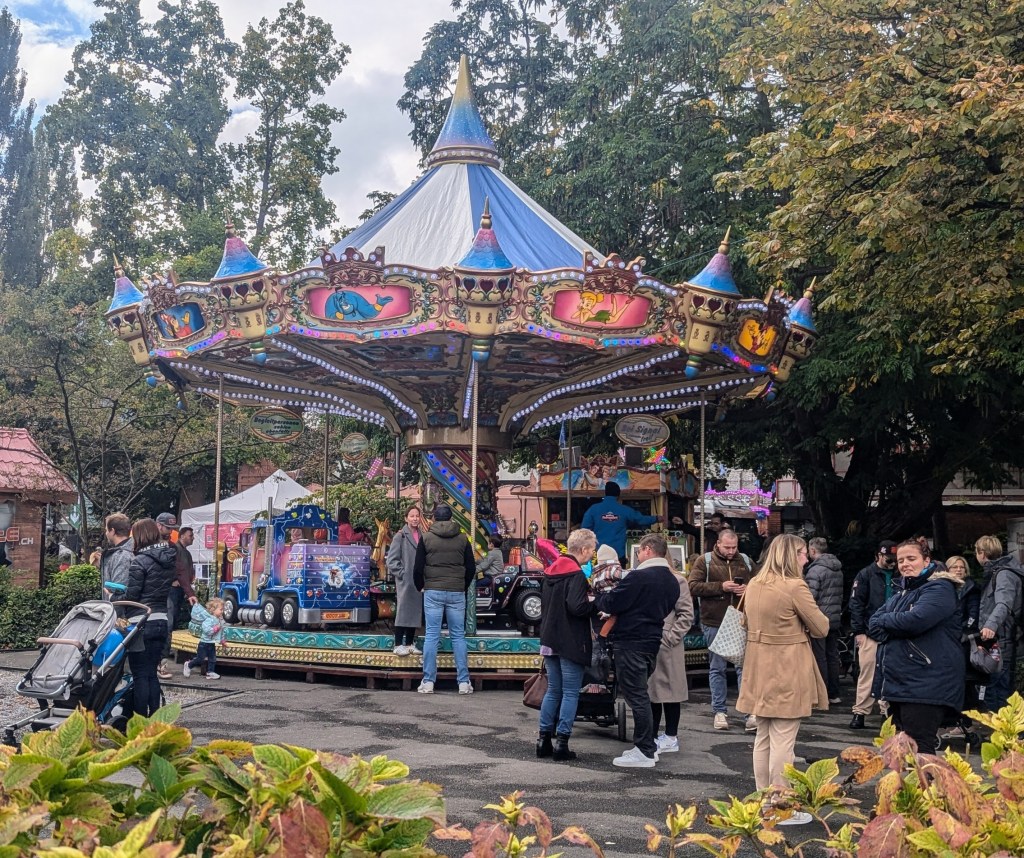
to the bigger kids
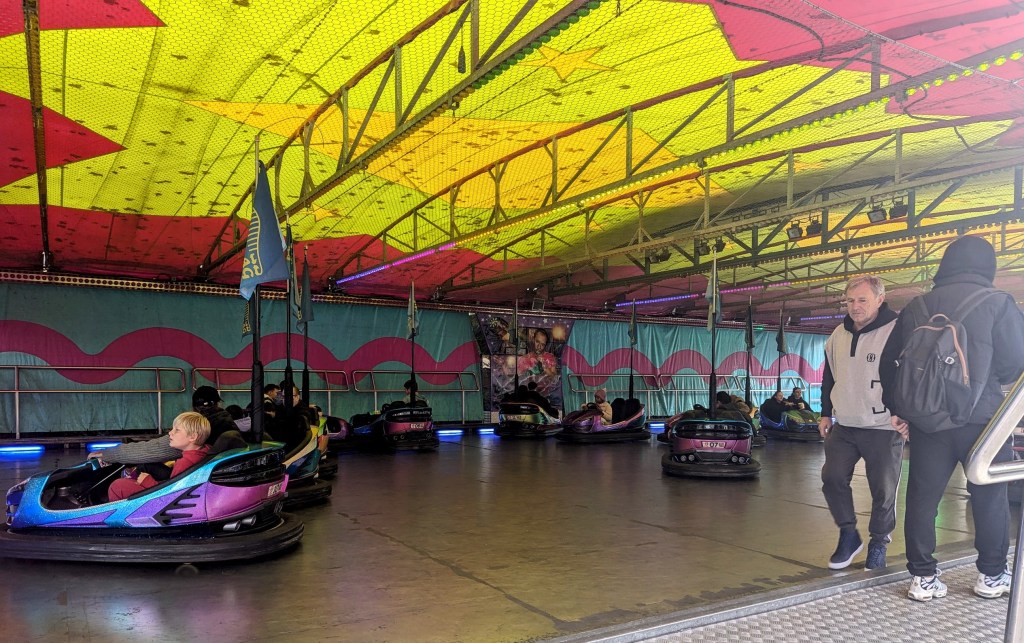
(with an American theme)

to the rides for the more adventurous (not me, not ever)

But my personal favorite item at the fair was this concert organ. I only wish I could upload a video not only for the music, but for all the moving parts.

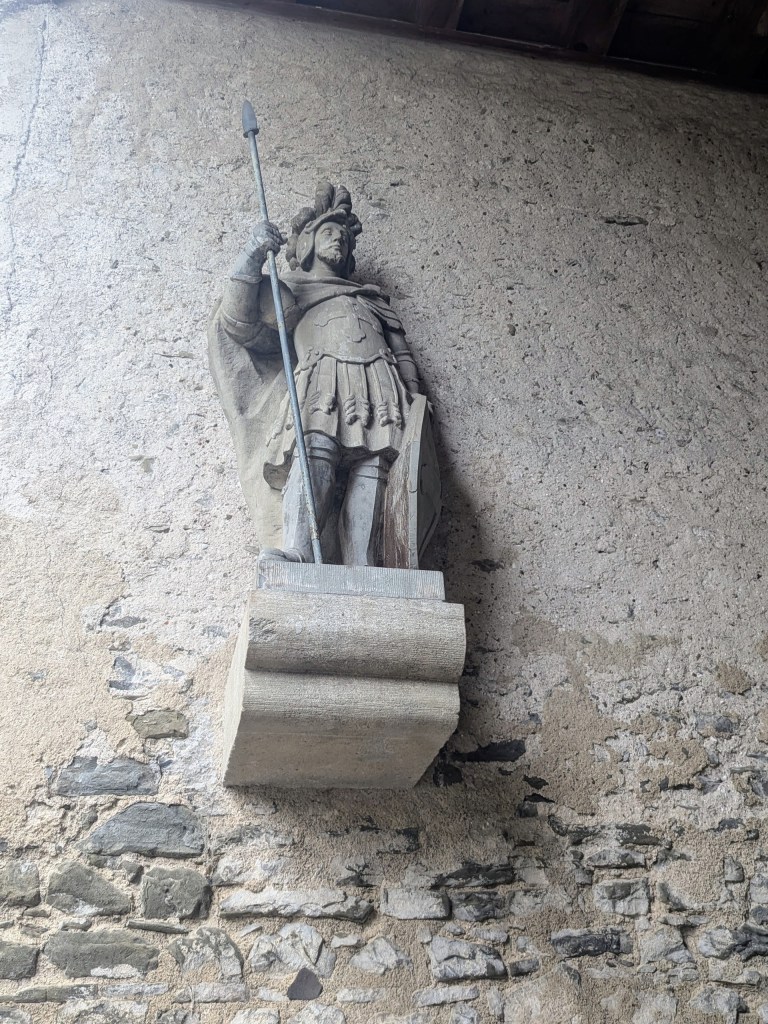
Once we had our fill at the fair, we decided to walk off the food with a climb to the towers. Not only did we look out onto them from our apartment, but we walked through the wall every time we went down into town. The rain had finally stopped enough that it was time to take the climb. There are 9 towers but only four that can be climbed, the first of which was right in front of our place, so we started there, which is the sixth tower (counting from west to east): Schirmerturm (Umbrella Tower). In the passage of the tower there is a statue of one of the city’s patrons, Saint Mauritius.
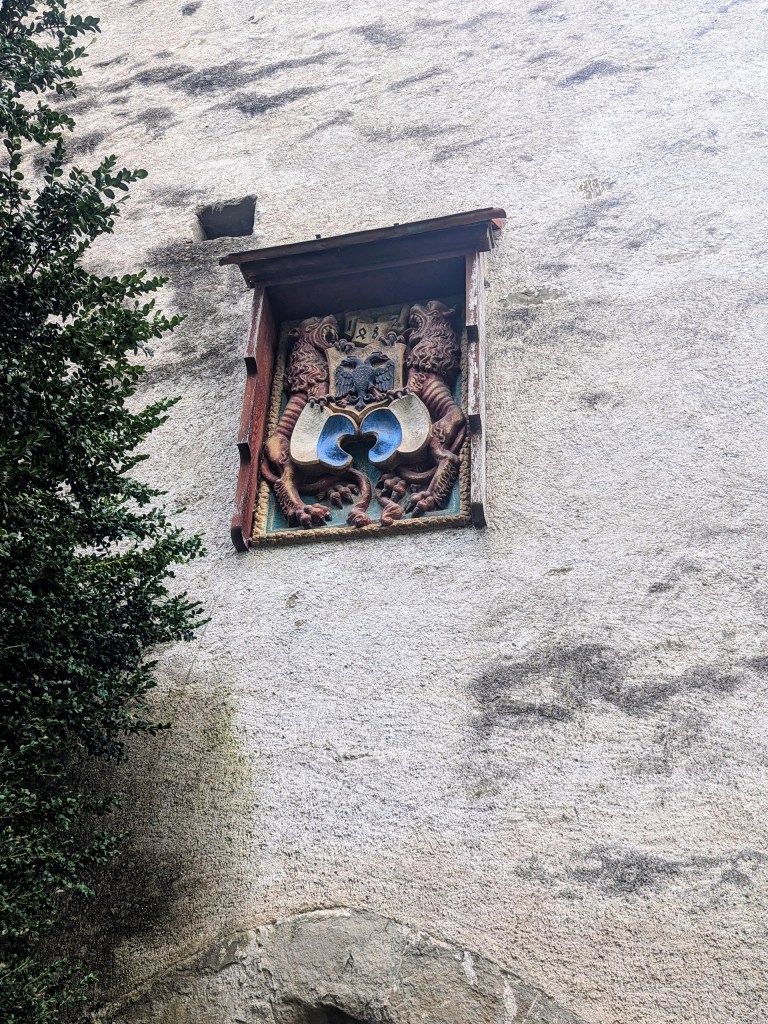
Above the gateway is his shield.
The Schirmerturm is a gate tower, built in 1420 and is one of the smallest of the towers. We climbed the 96 steps leading to the top floor. From there we not only had a view of the city
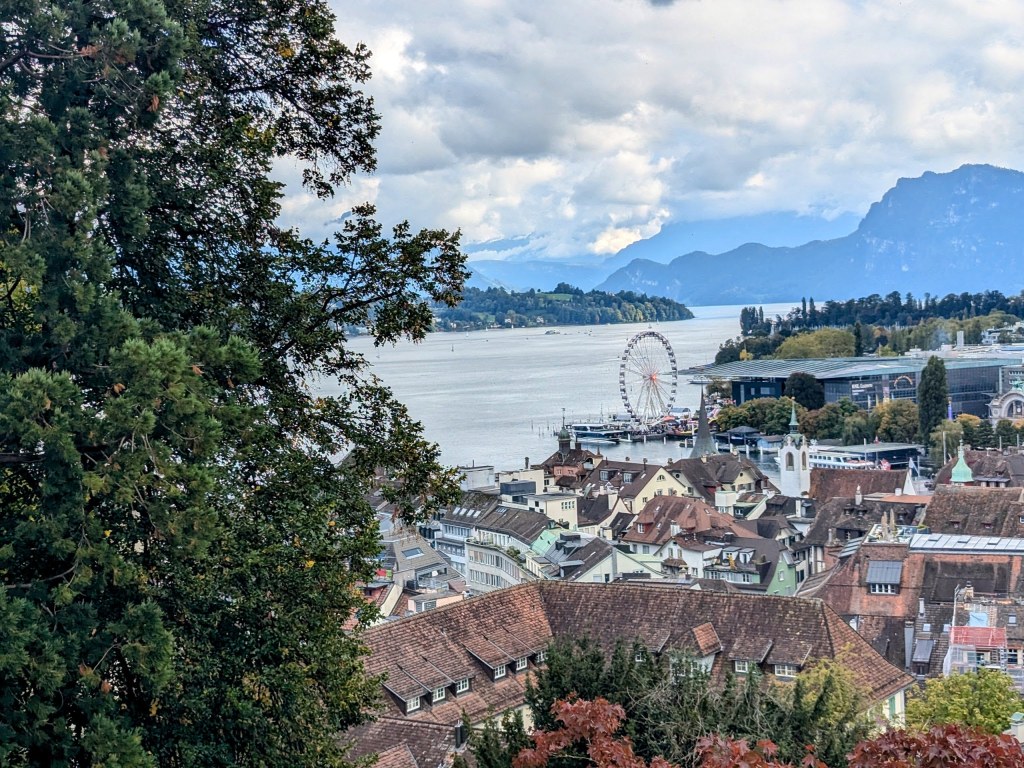
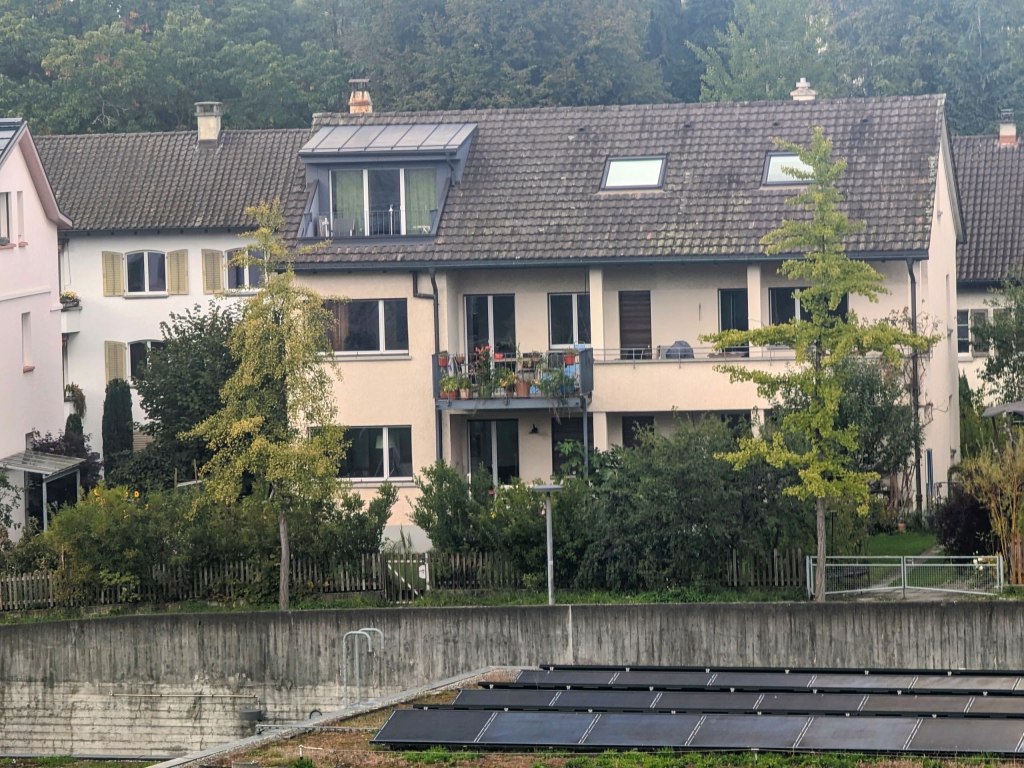
but also of our apartment, shown below we were the very top floor with the small terrace. It seems a typical Swiss apartment is the entire floor.
We were able to walk along the top of the Musegg wall to the next tower: Zytturm – one of Europe’s most unique clock towers. seen from below

The clock mechanism was made in 1535 and is still working; it famously strikes the hour one minute before all the other clocks in Lucerne.

We continued along the wall to the Heuturm/ Wachtturm – a former hay storage from the 14th century, destroyed by gunpowder explosion in 1707; rebuilt as a watchtower. We climbed down from there and walked at ground level past the 3rd and second towers to the first tower: Nölliturm which was built in 1513 and is the only round tower on the Musegg Wall.
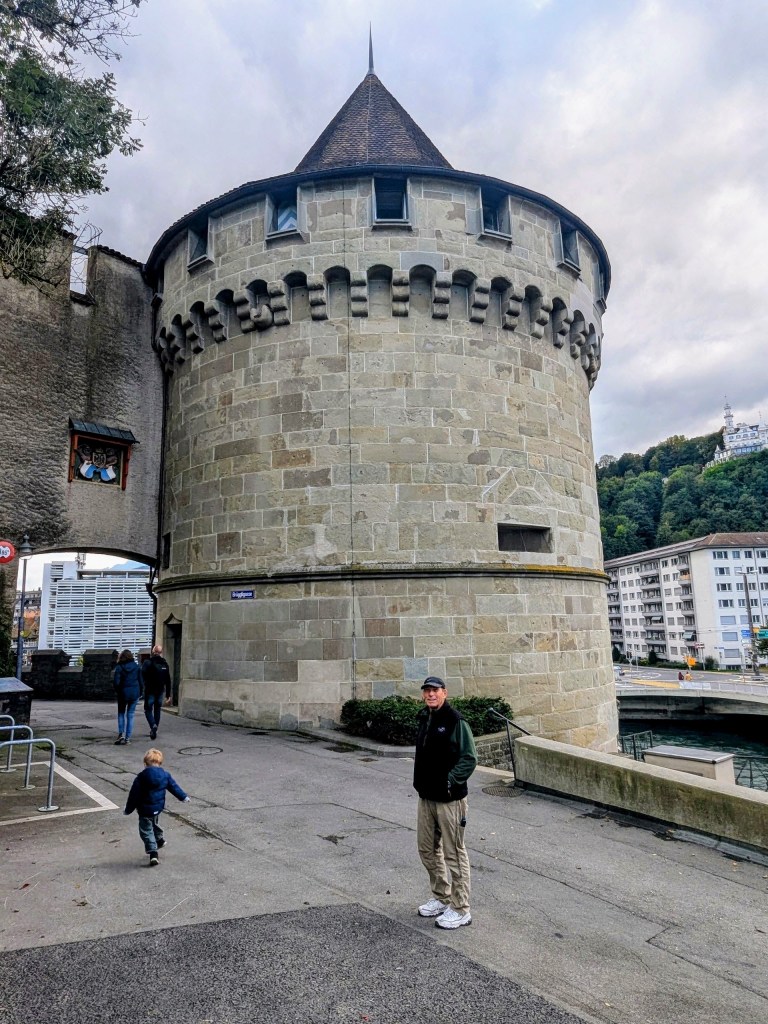
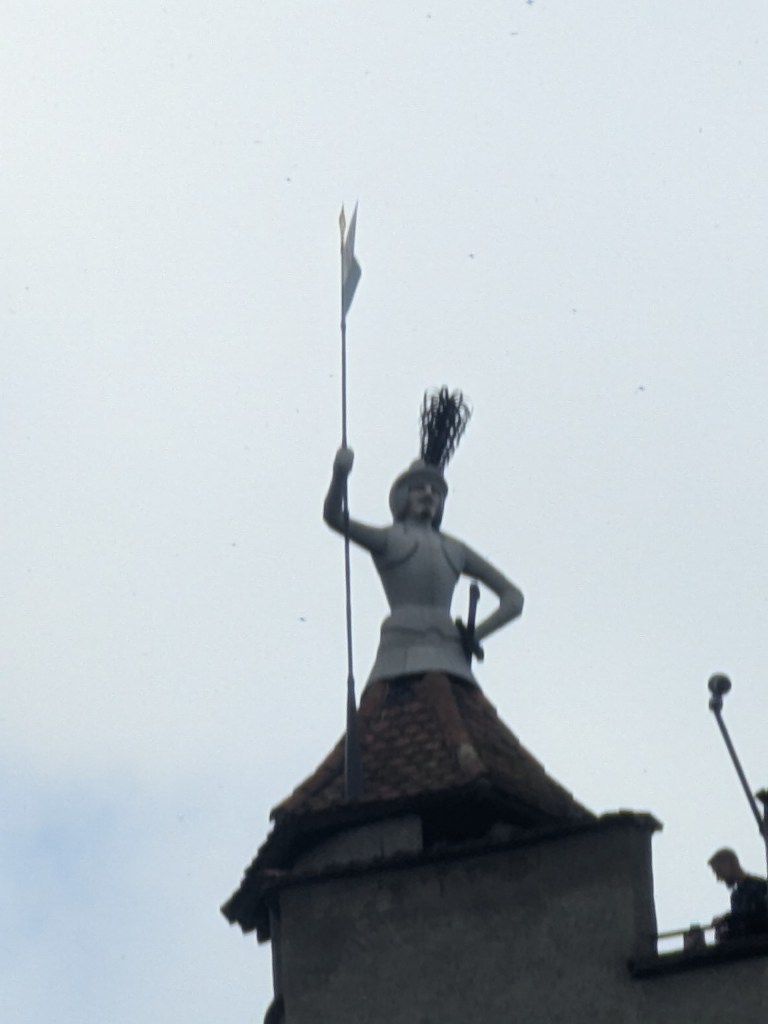
We strolled around to the front of the Musegg wall to get a better look at the second tower: Männliturm (Little Man), a 15th-century tower

renowned for its “Little Iron Man” crowning the top
From here we had a view of the Spreuer Bridge from the other side.
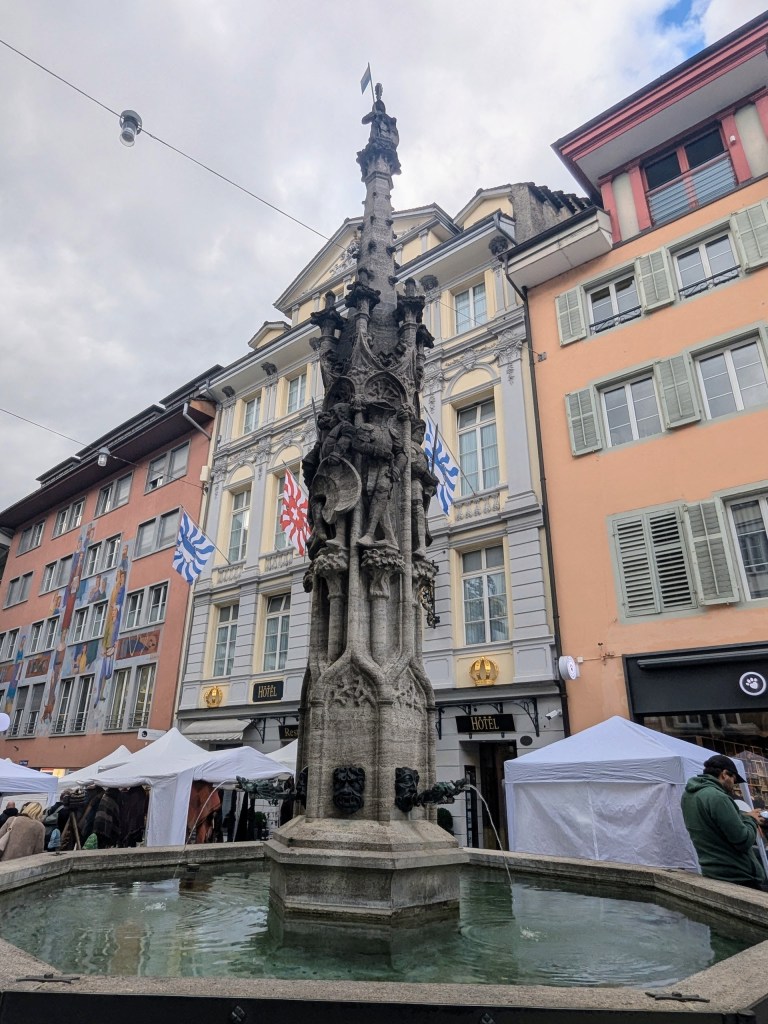
We passed into yet another square hosting a market.
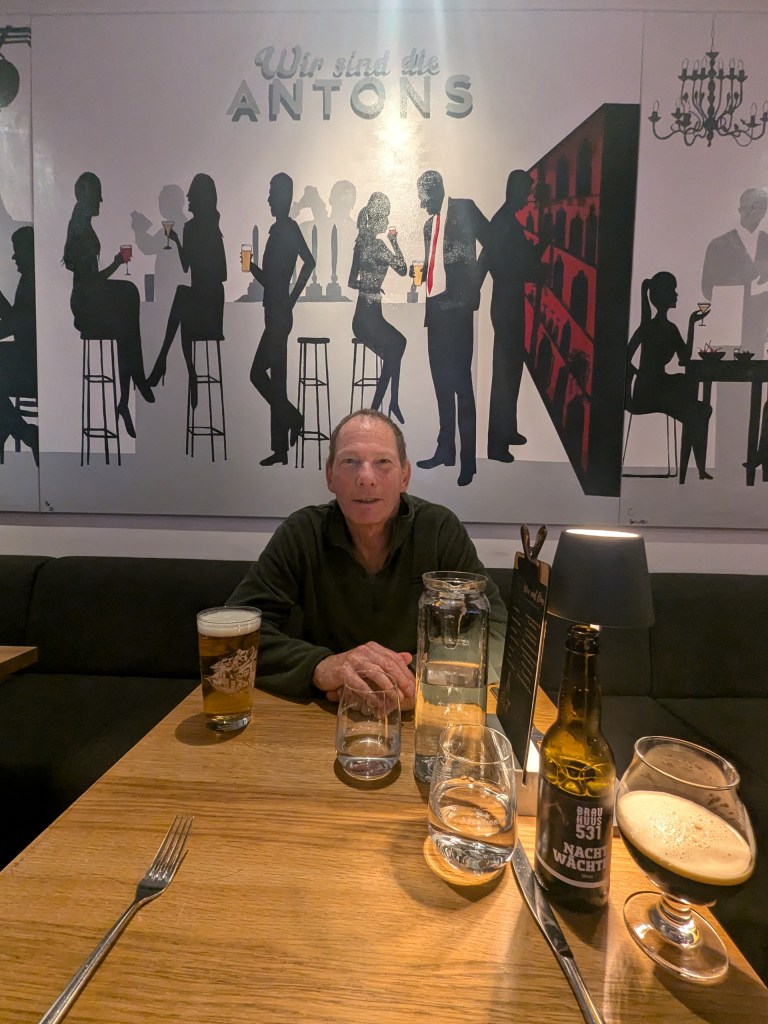
Dinner that night was a delicious meal at Anton’s
The morning, although still very overcast, did not portend rain, so we embarked on our adventure. We boarded the boat
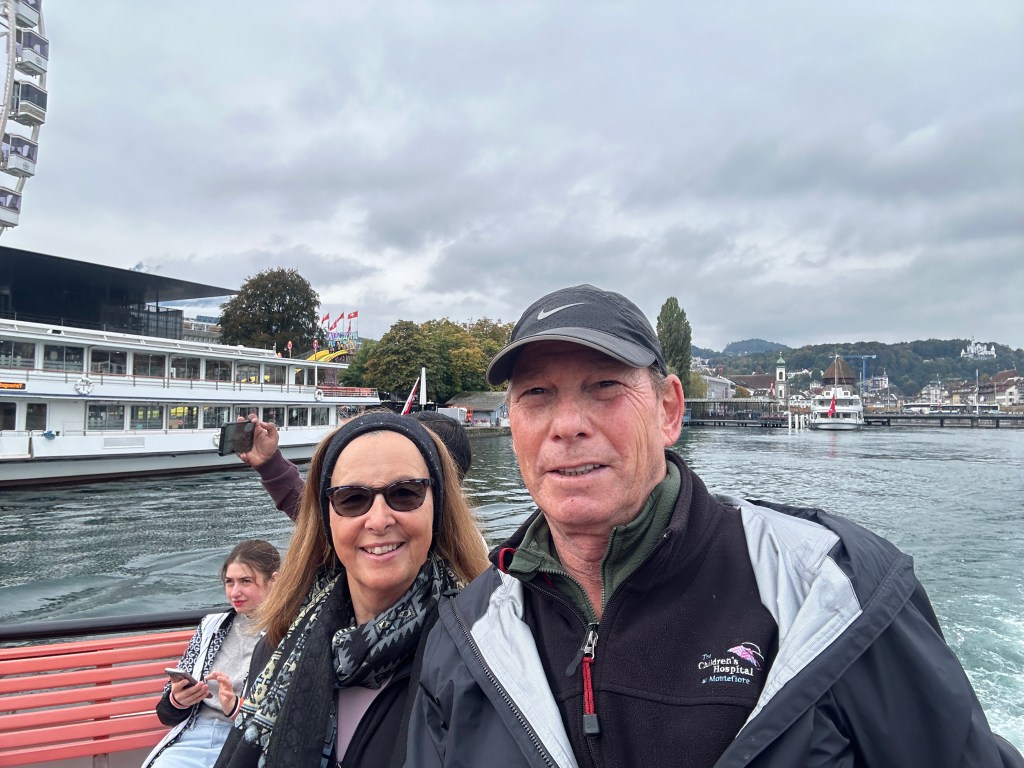
and immediately started snapping pictures of the surrounding mountains laden with clouds.
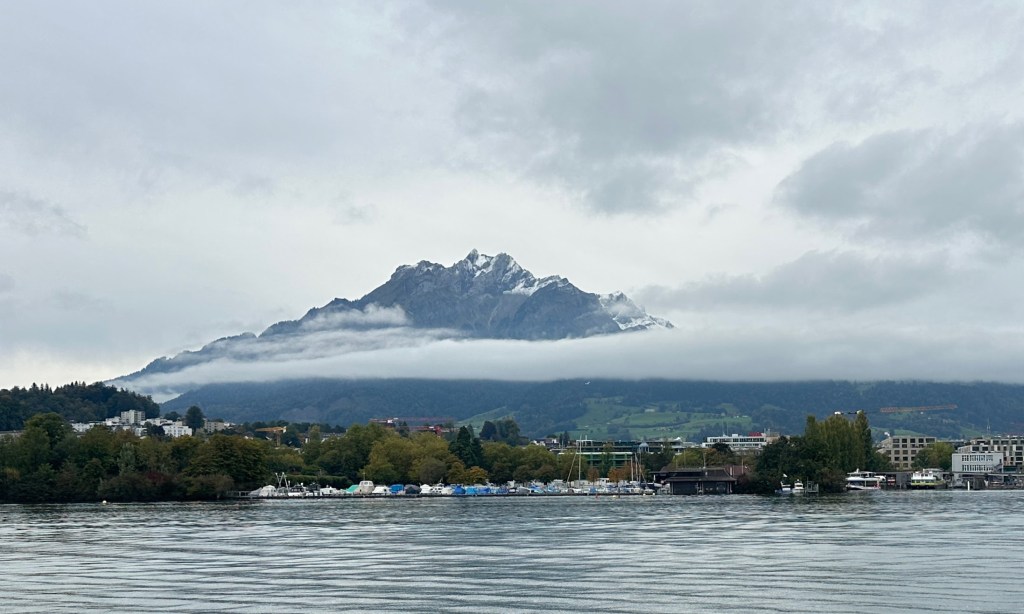
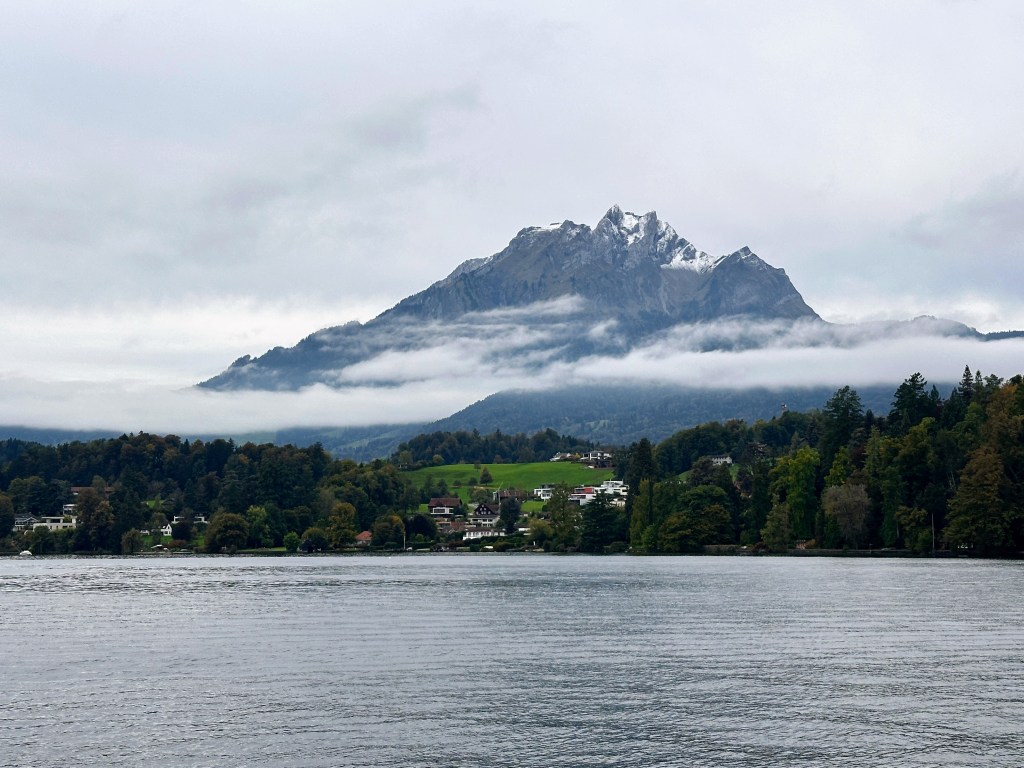
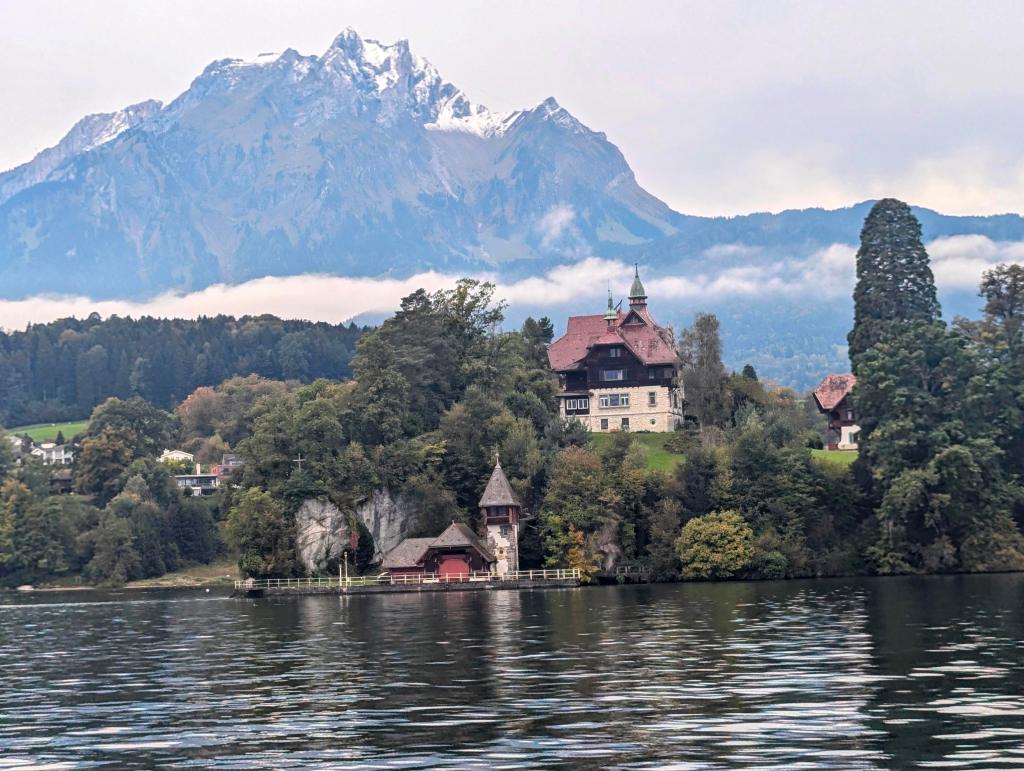
After about an hour on Lake Lucerne we arrived in Alpnachstad.
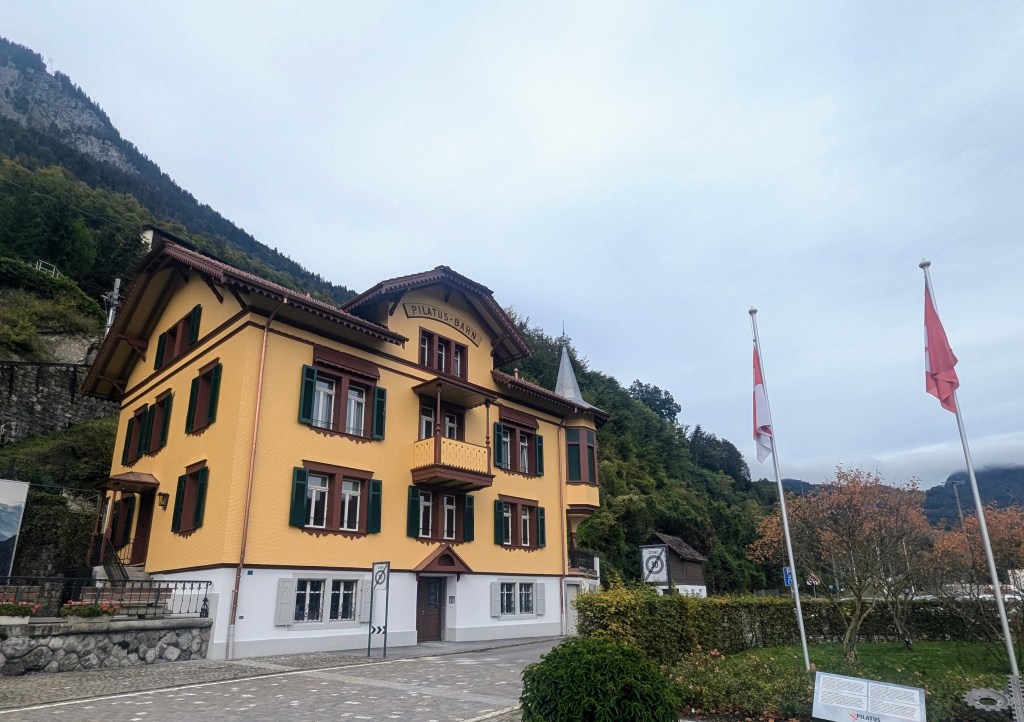
From there we caught a cogwheel train up to Pilatus
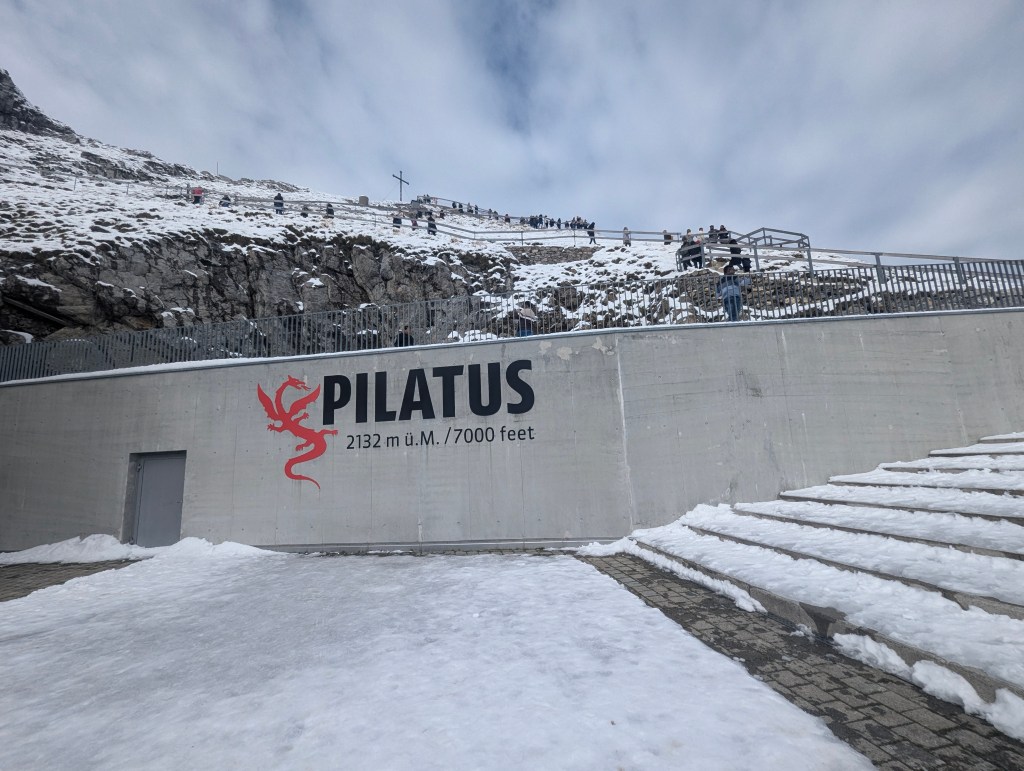
and stepped off the train into a winter wonderland.

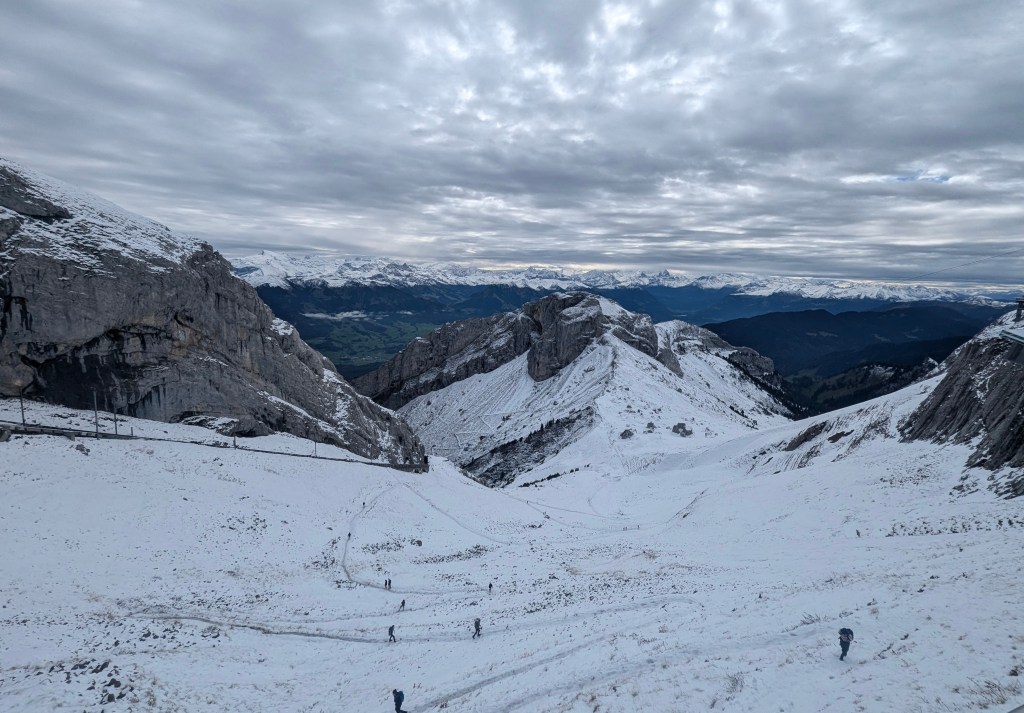
We were able to look back at the train track we had just climbed

and see the many brave souls who chose to hike the mountain rather than ride the train.
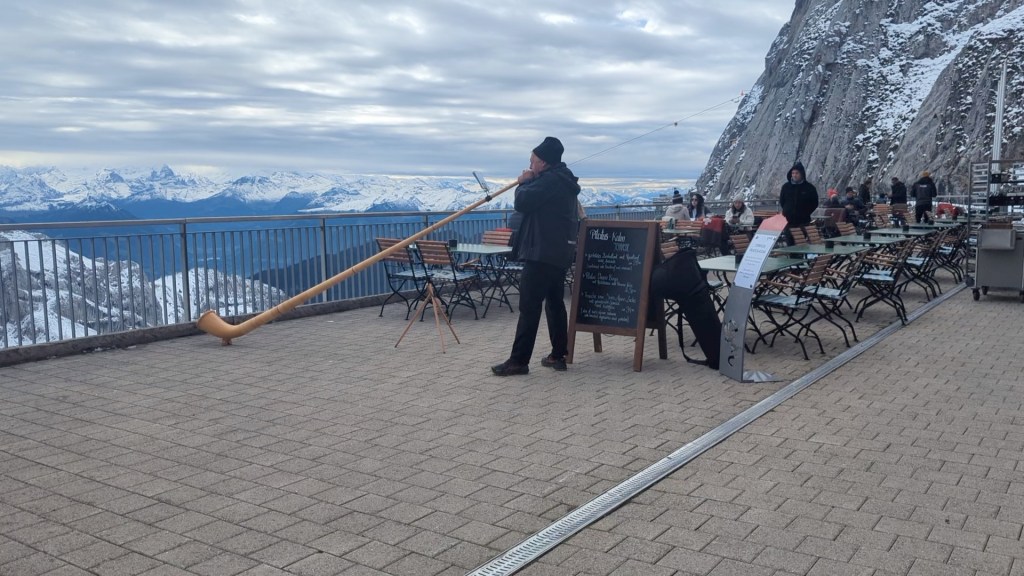
There is a restaurant
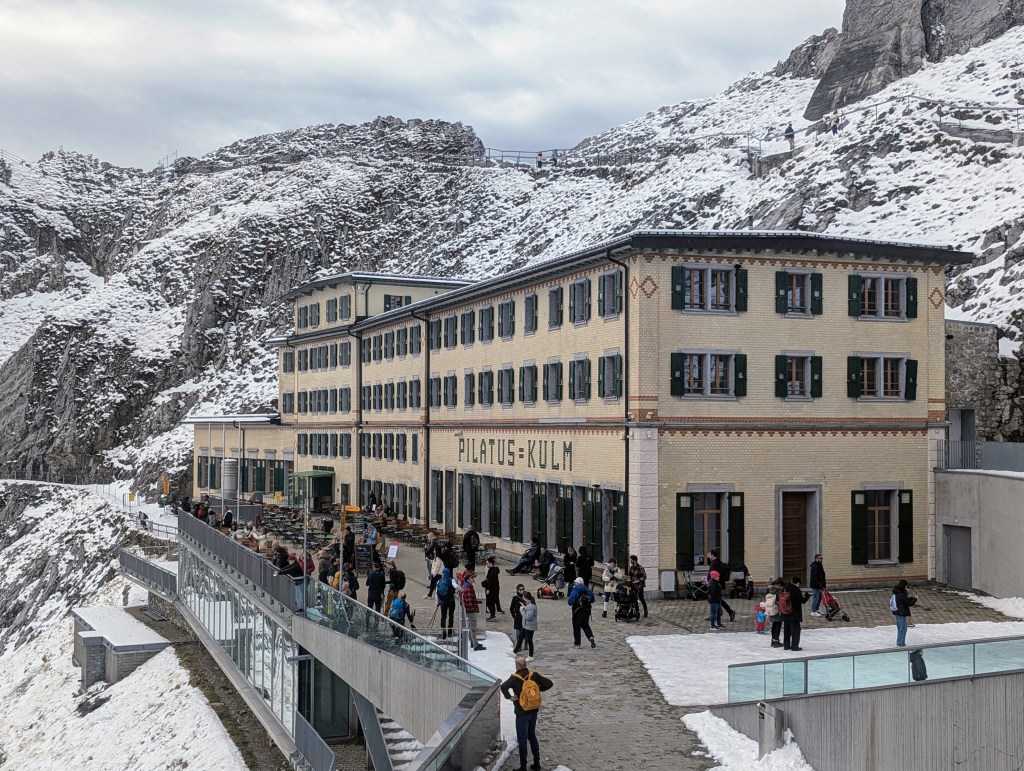
in front of which was a Swiss musician
There is also a hotel aptly named the Bellevue
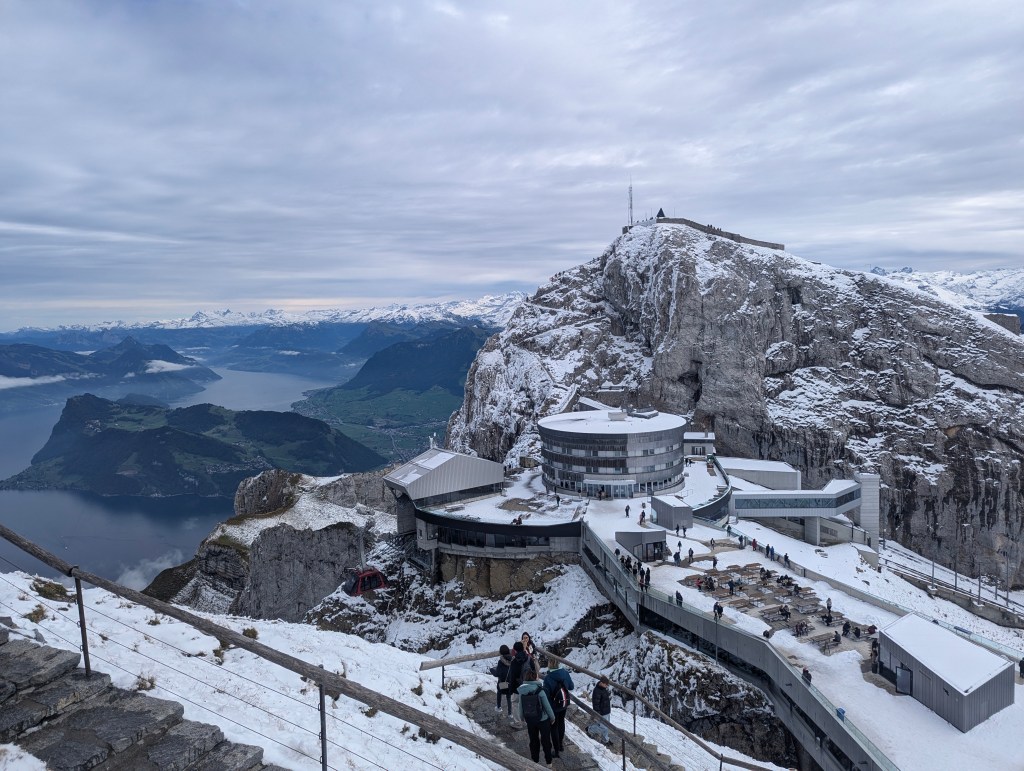
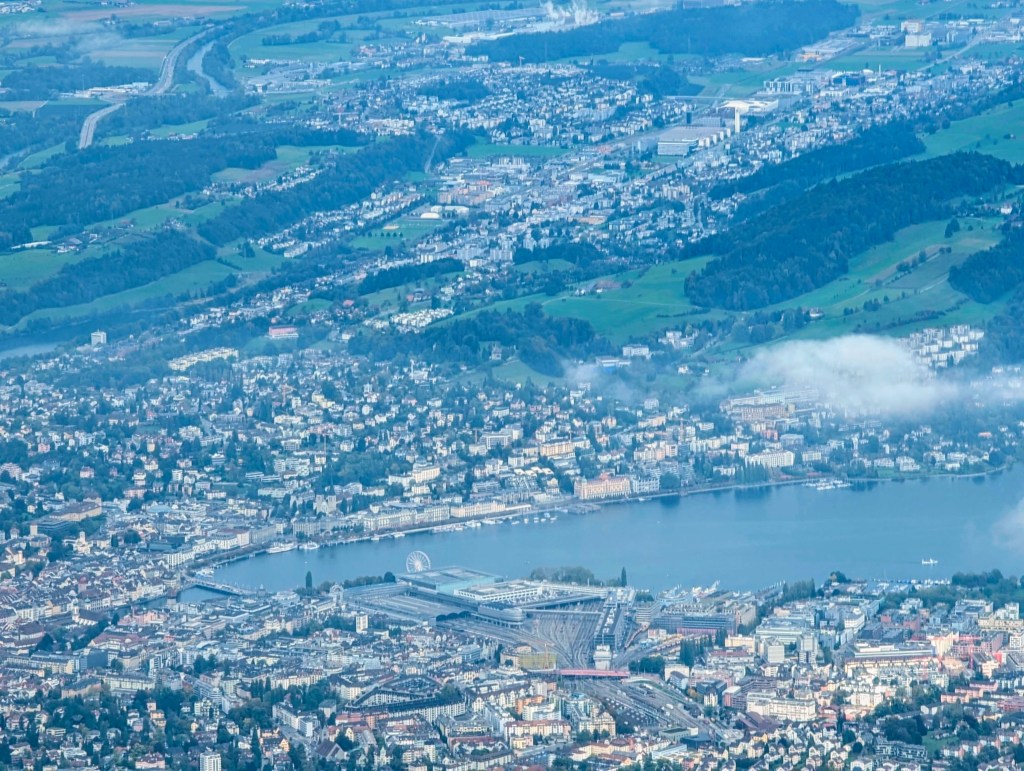
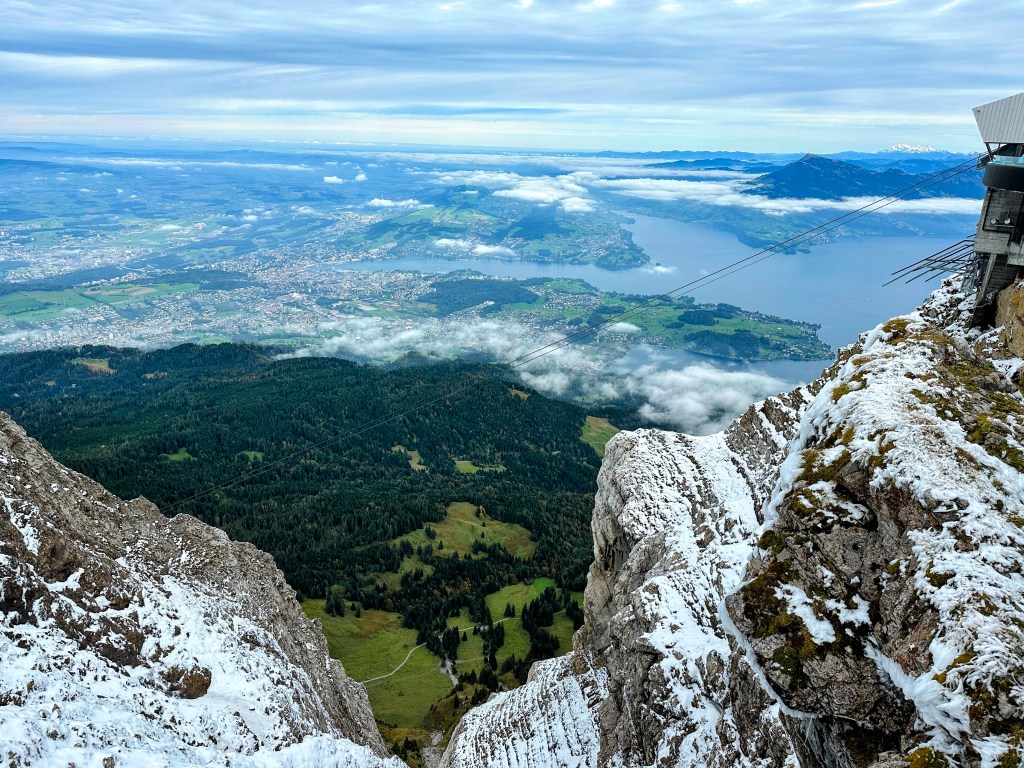
From this high up looking out the other way, Lake Lucerne can be seen almost in its entirety.
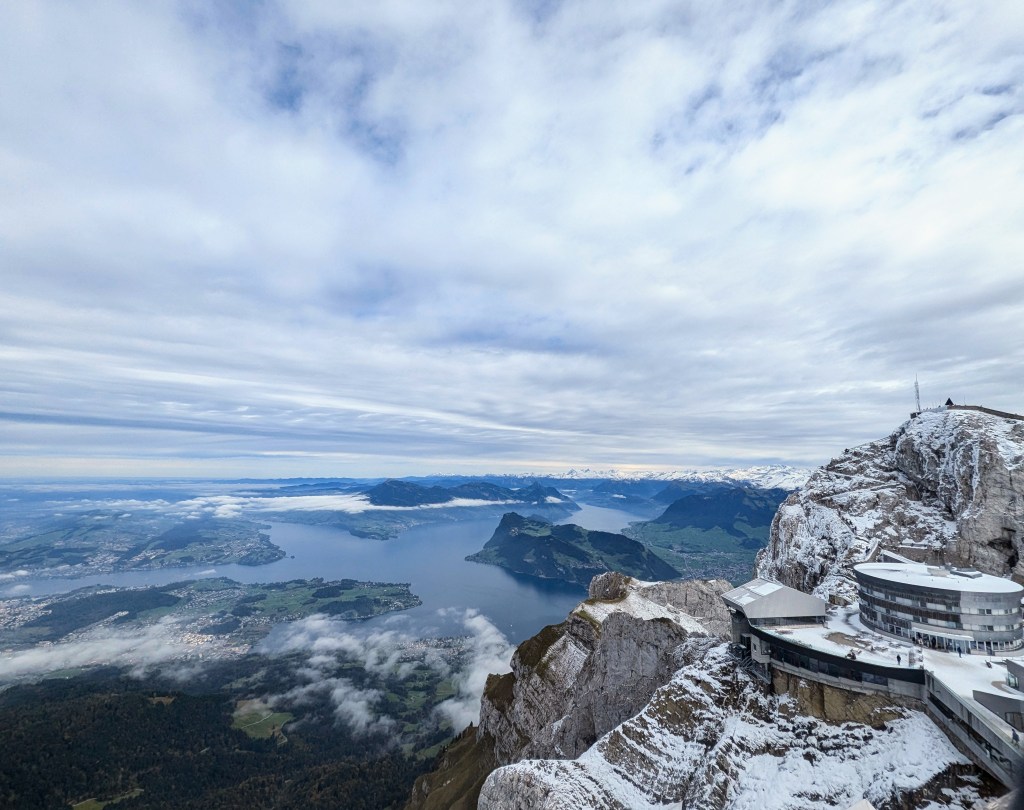
Zooming in, the Ferris Wheel can be discerned way in the distance.
Neither words nor pictures can do justice to the beauty of Pilatus
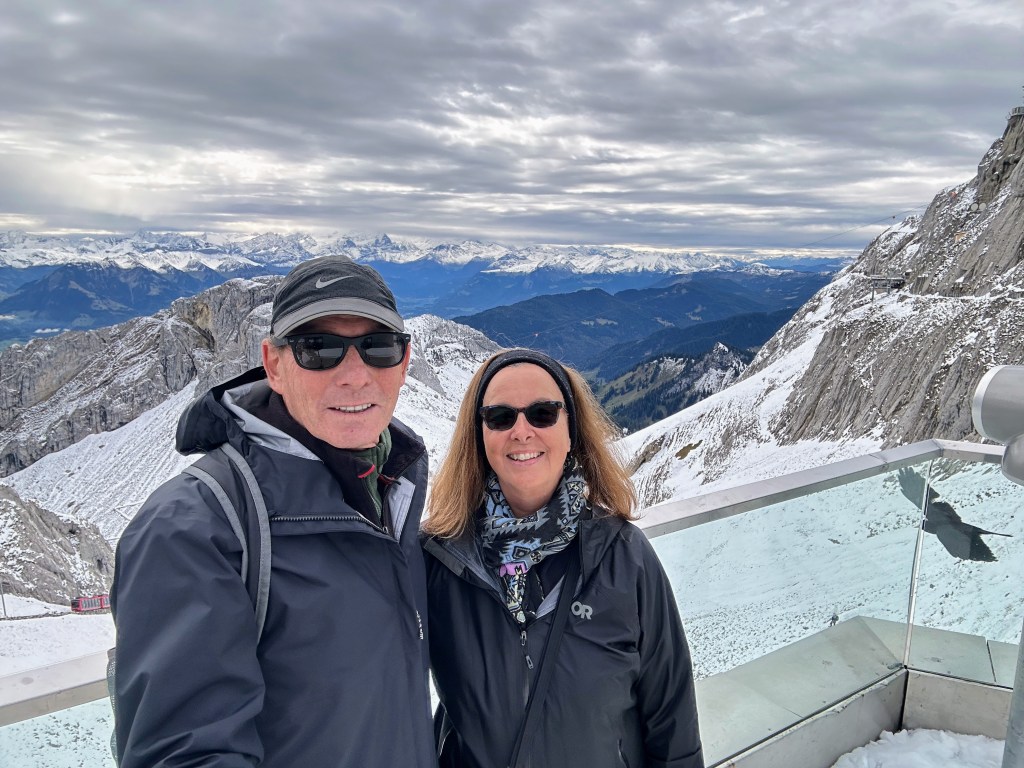
but I will try.

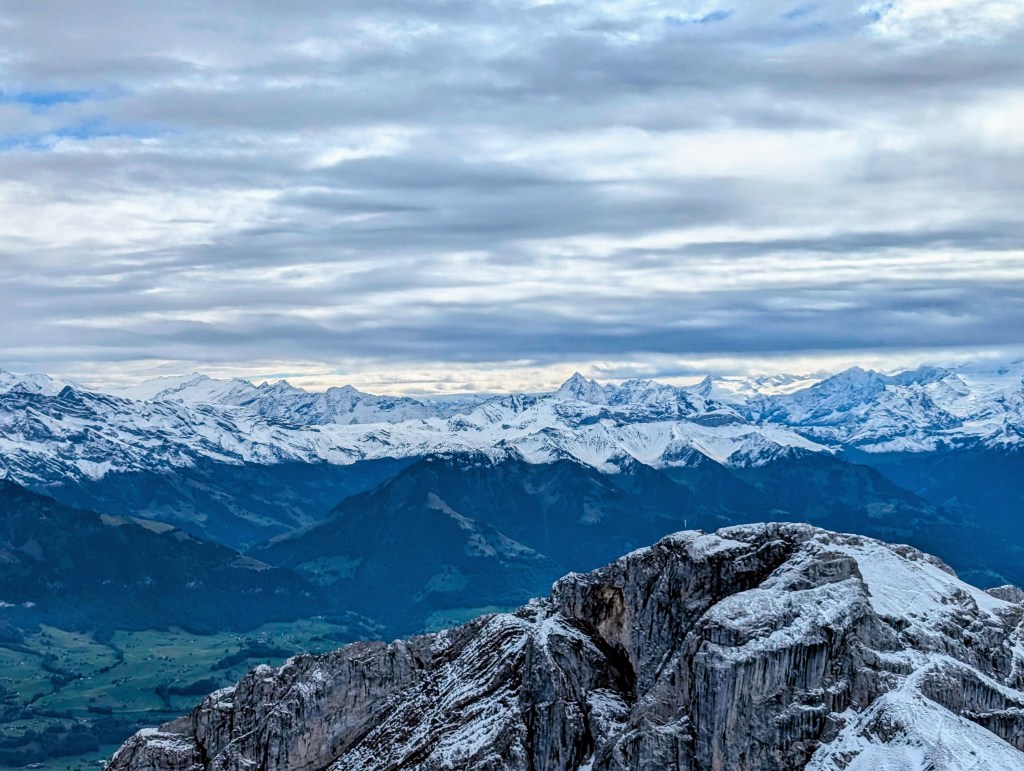

The distant mountainside is dotted with houses.
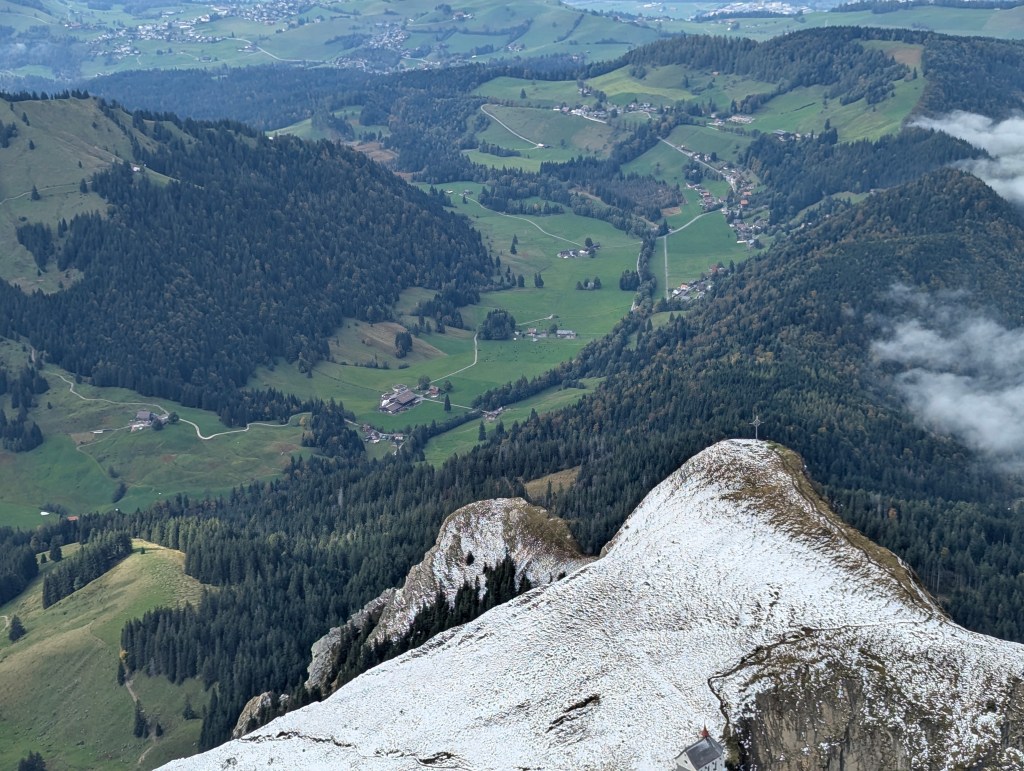
Pilatus legends include stories of dragons. We entered the dragons’ den.
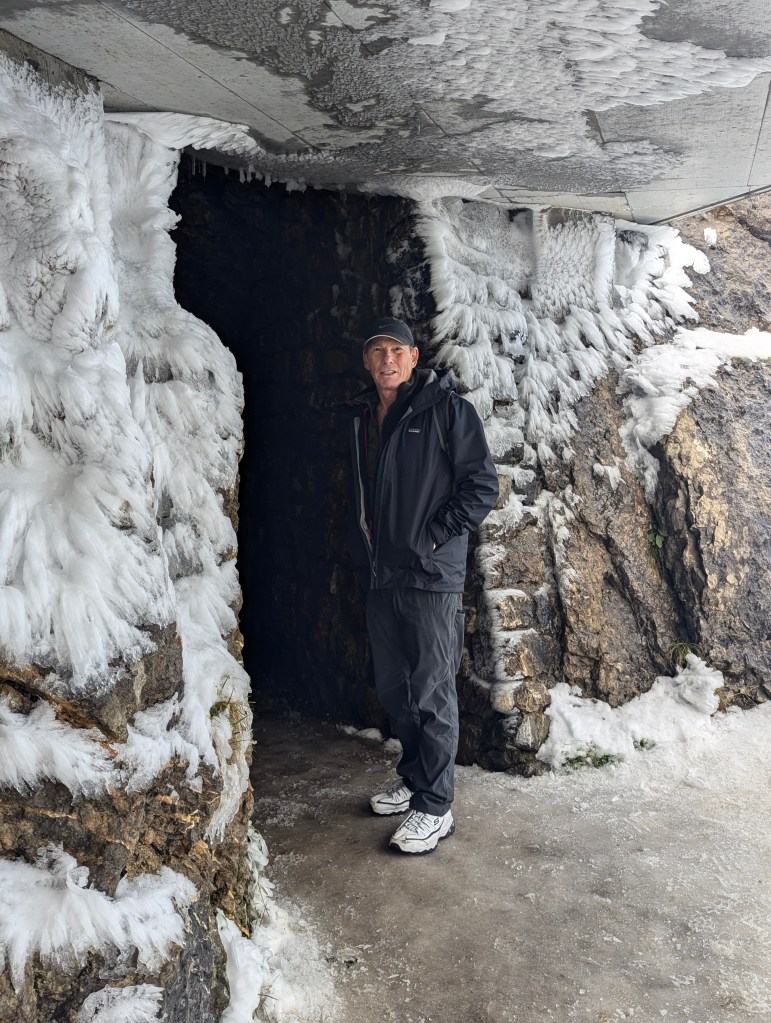
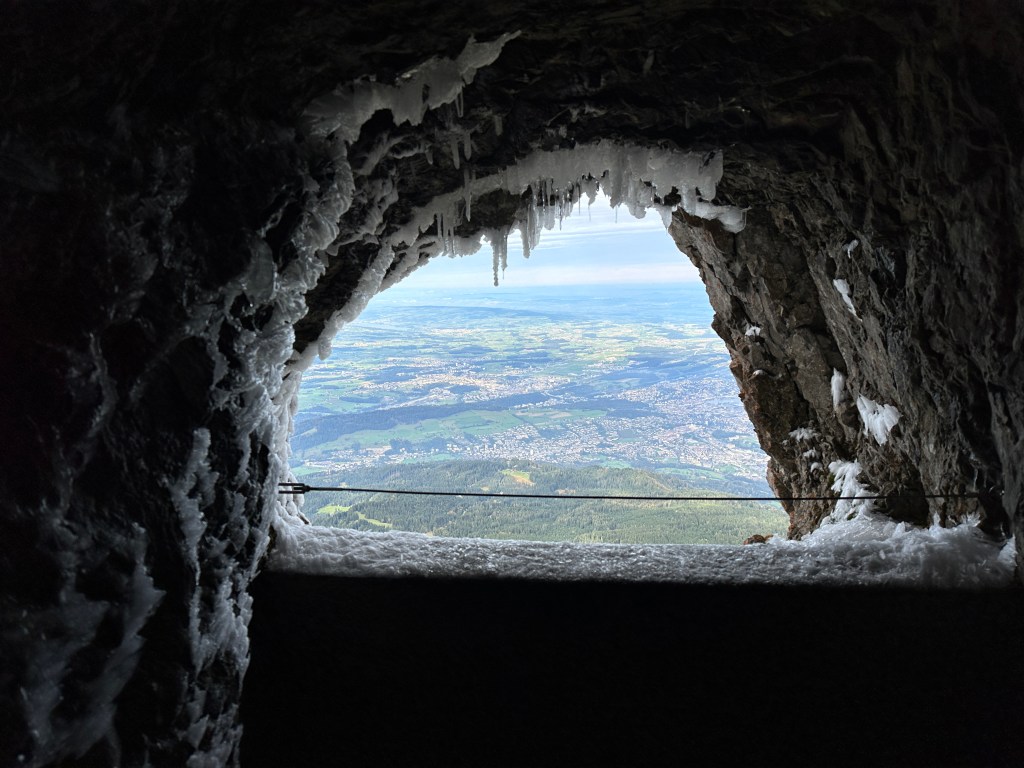
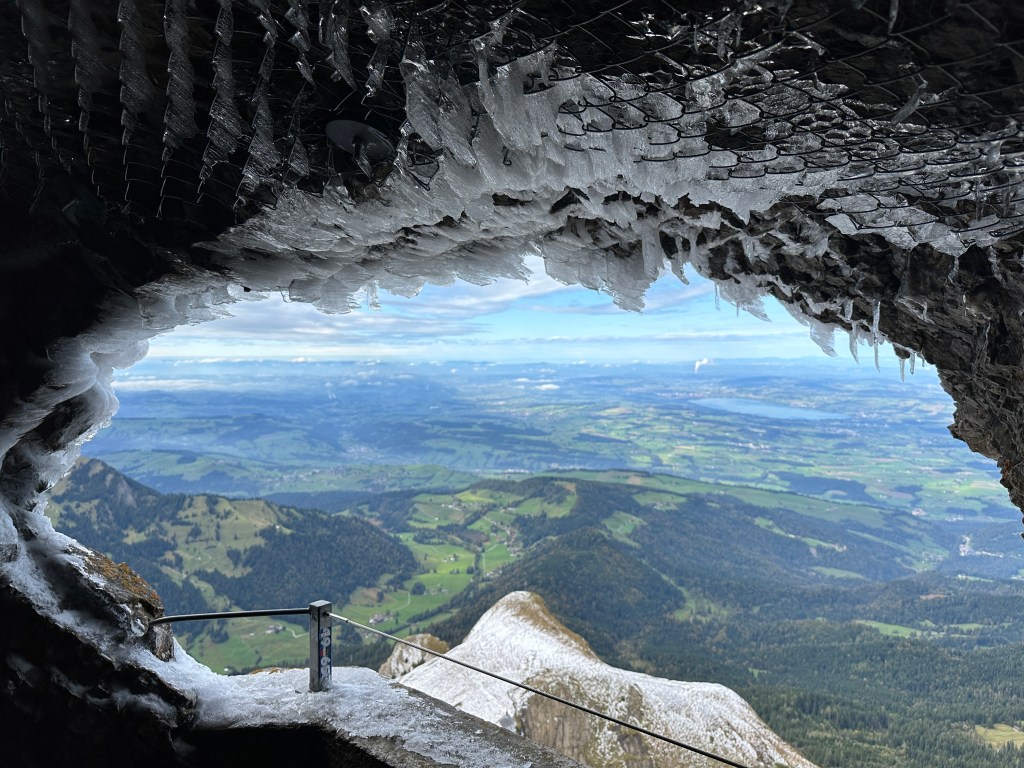
Finally, it was time to head home which was to be a different route from which we came. I had to muster the courage for a ride on the cable car.

Down we went for about 15 minutes to the town of Fräkmüntegg
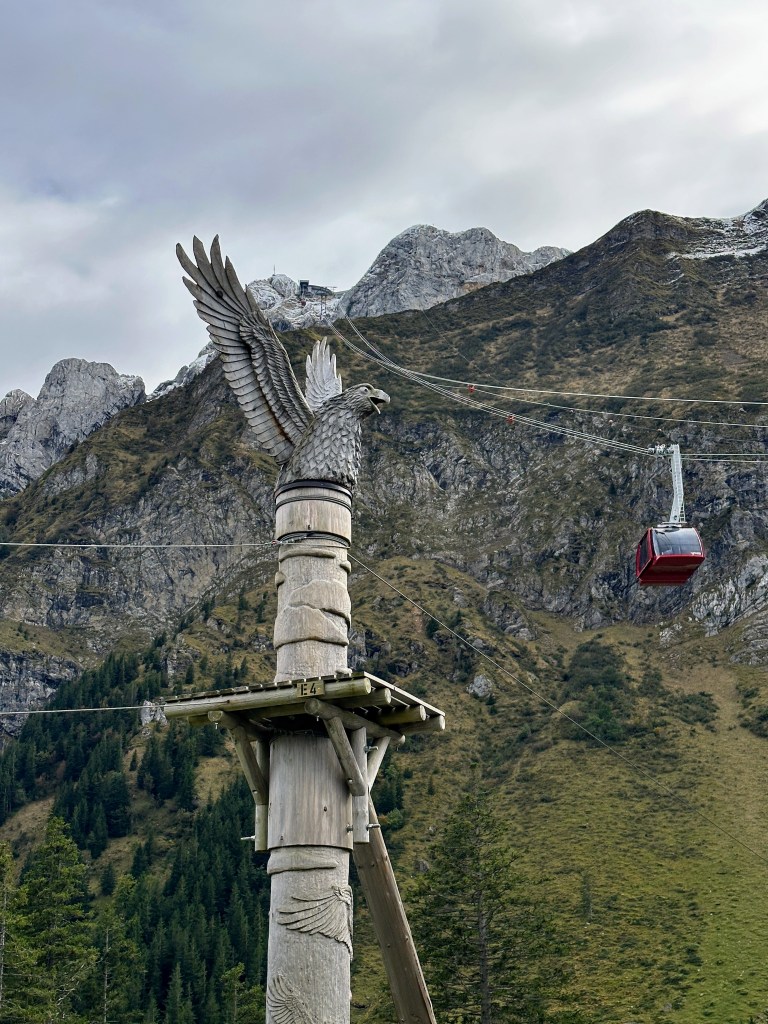
There were all kinds of fun parks including a very long alpine sled and zip lines.
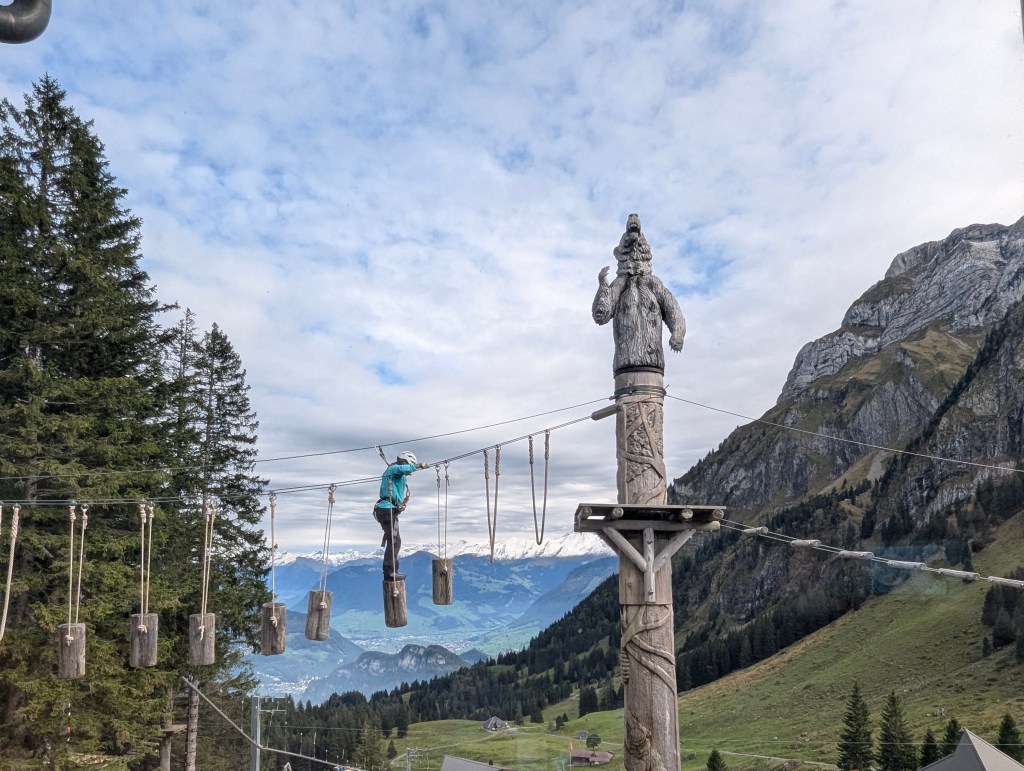
We stopped for a hot chocolate before boarding the gondolas
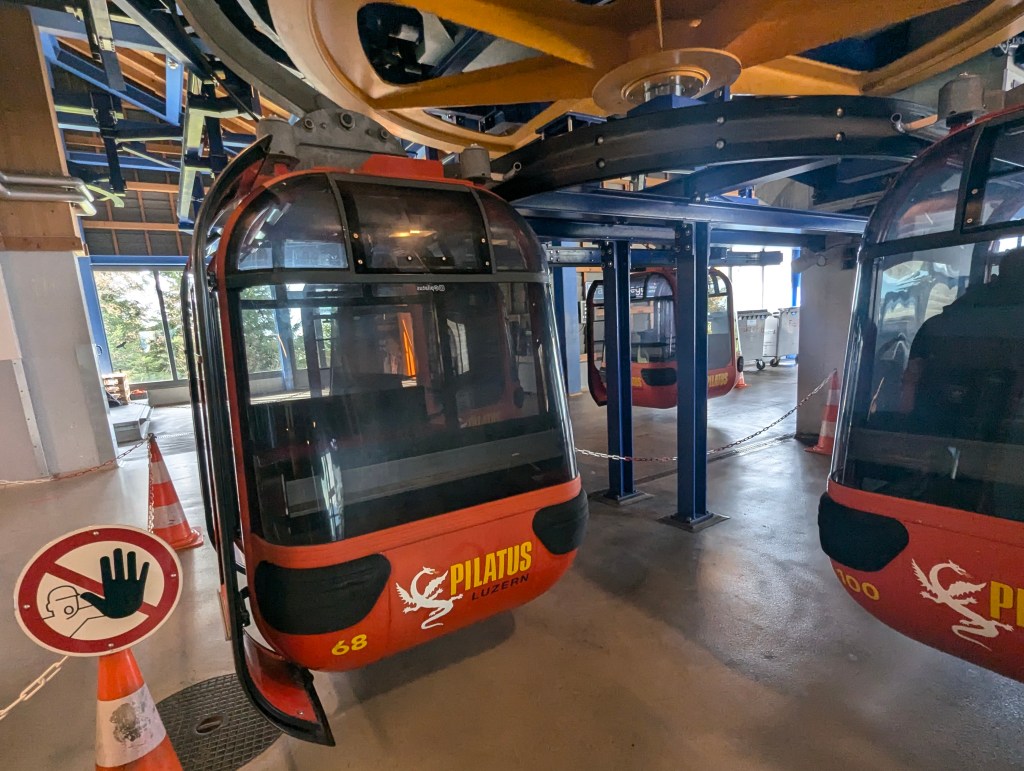
for a 30 minute ride
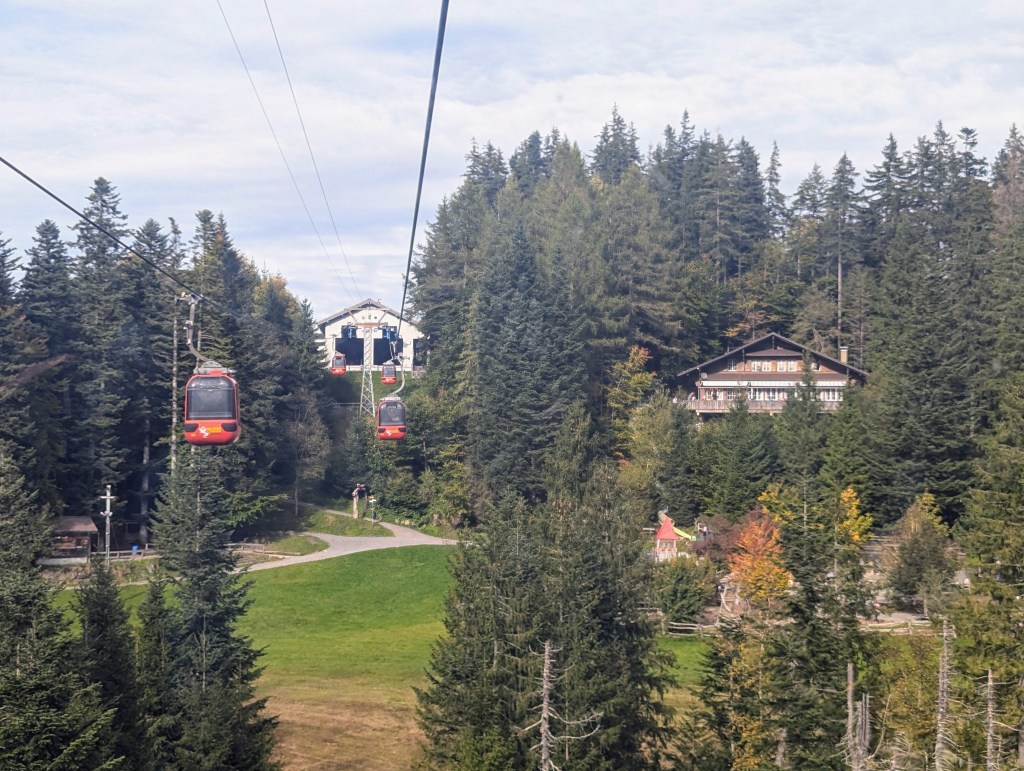
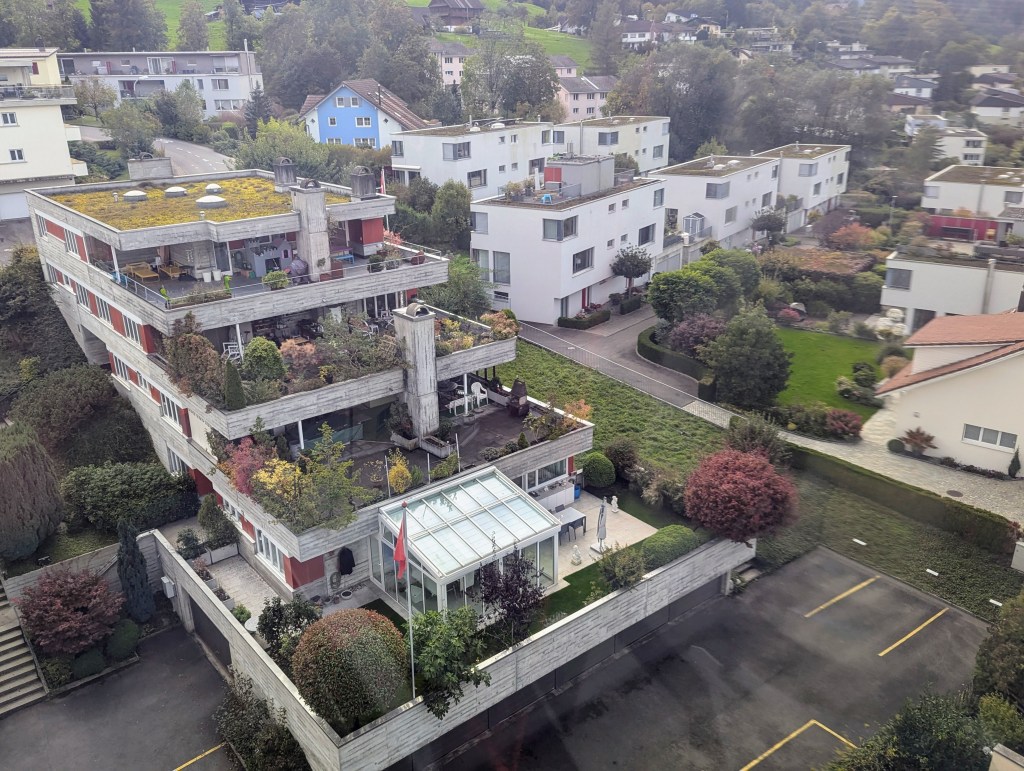
down to the town of Kriens. Along the way we noted how many of the homes have green roofs. Also, plantings on terraces are plentiful as in this apartment building.
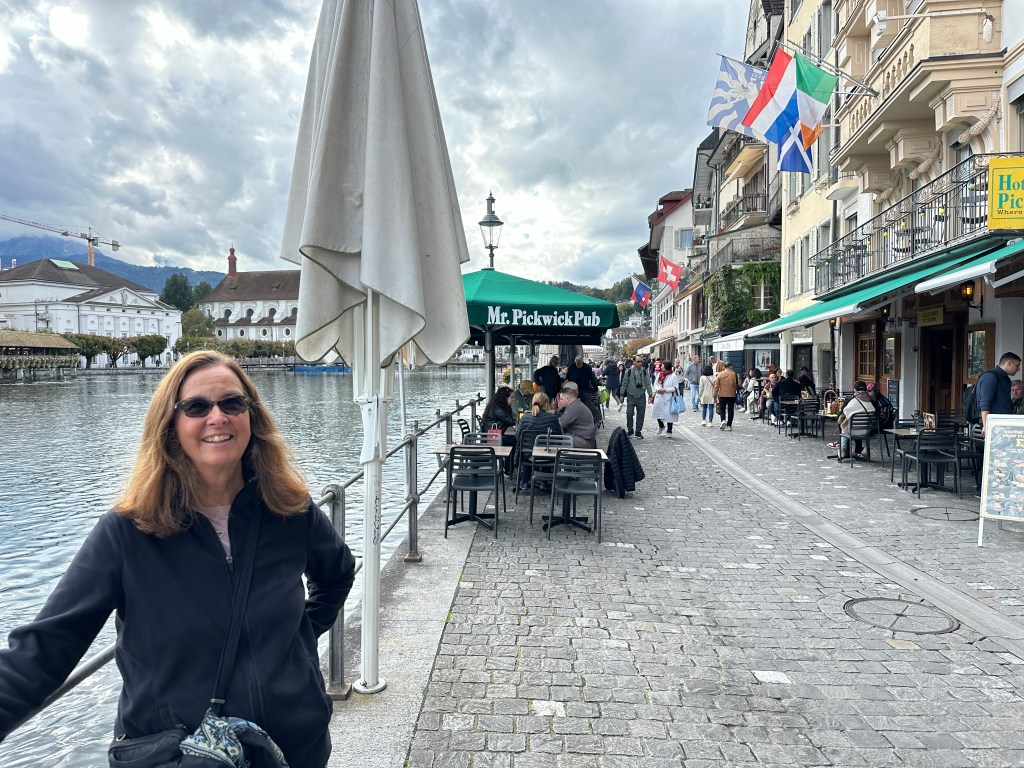
Finally, in Kriens we caught a 15 minute bus back to Lucerne. Tired, we stopped at Pickwick’s Pub for fish and chips for dinner while the locals watched football (ie soccer) on the telly.
 Jo & Eric's travels