
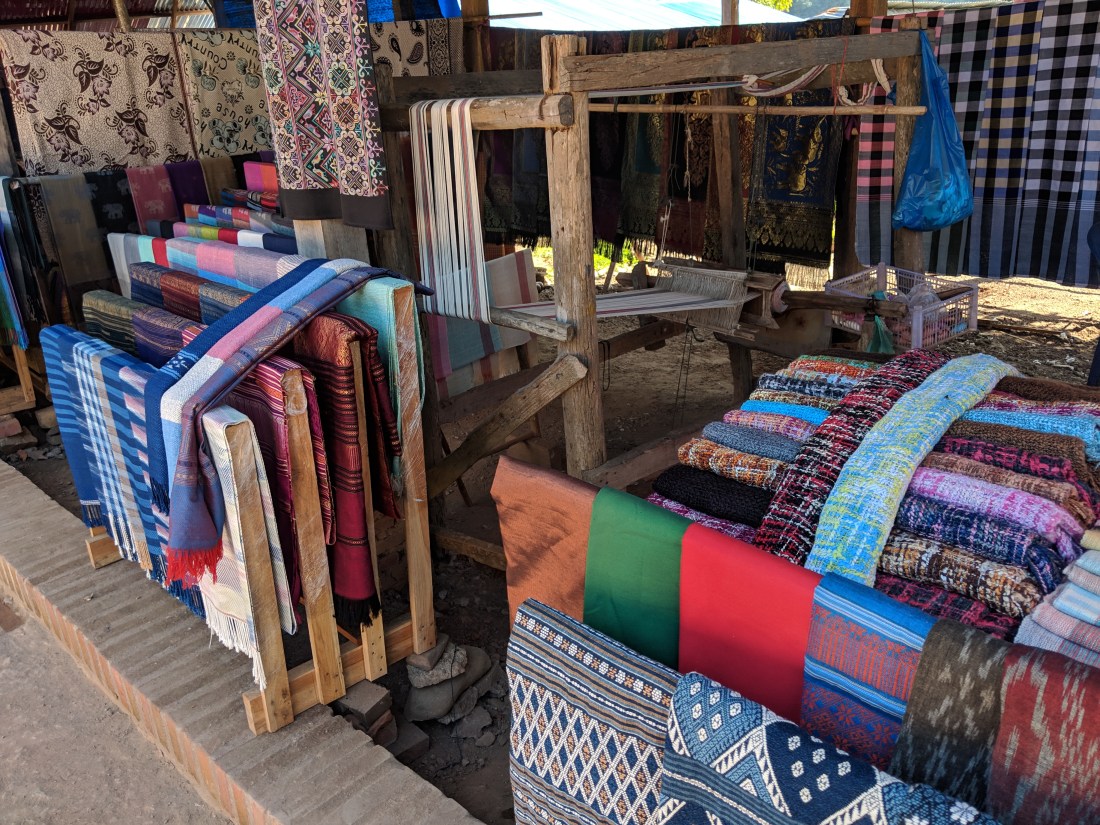
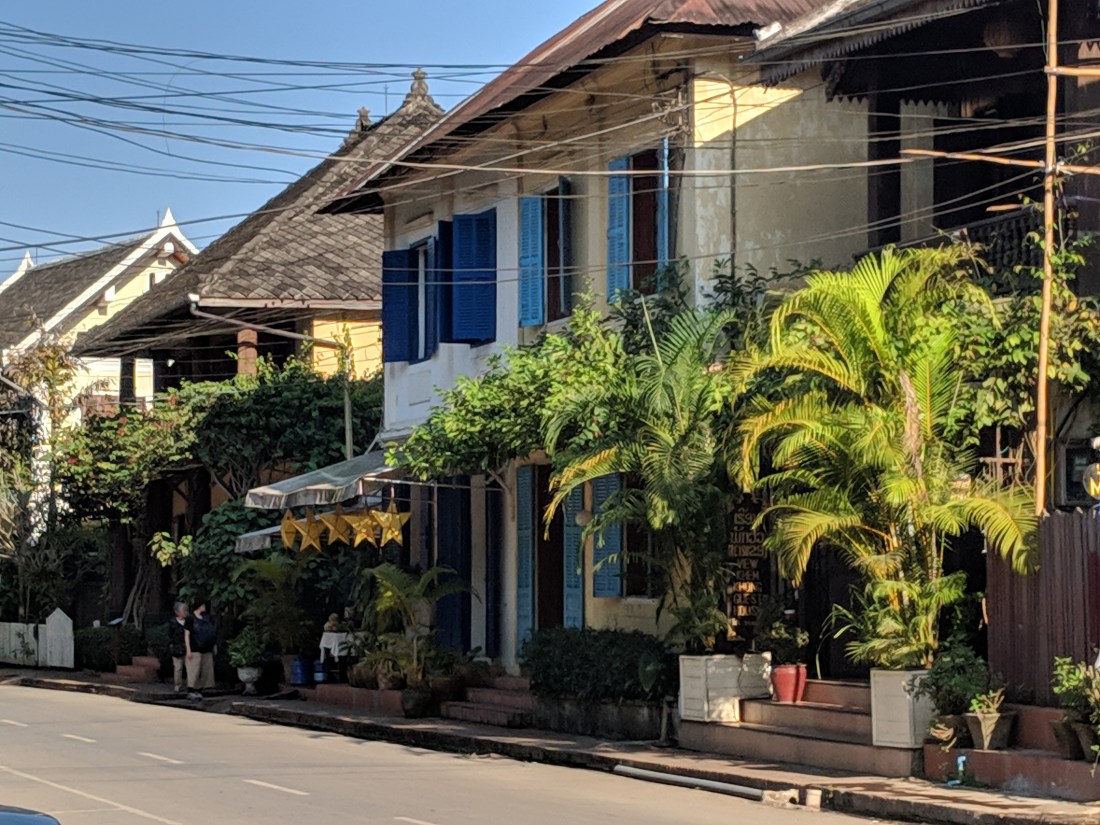
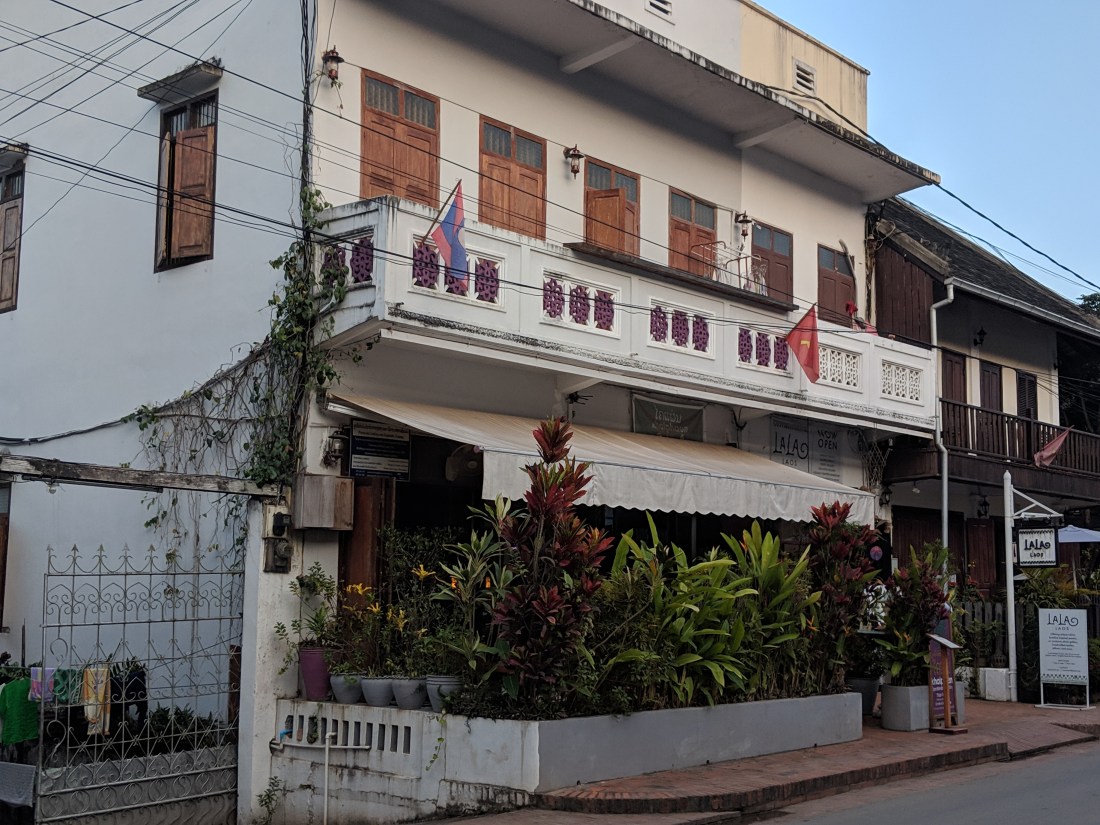
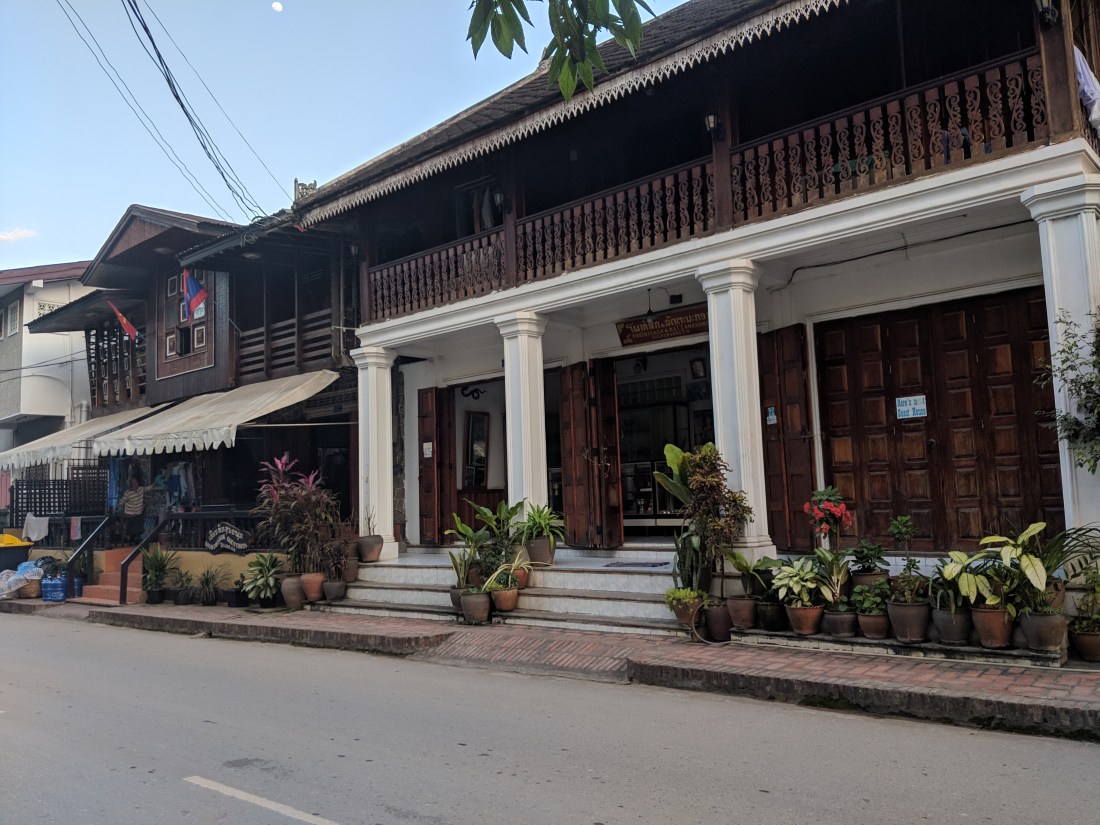
I cannot gush enough about how much we loved Laos, a surprise favorite so far. Thank you Angela for encouraging us to come here. At first blush, the people and culture seem very similar to the Thai, so friendly. But the architecture and cuisine as well as the art are distinct. The entire city of Luang Prabang is a UNESCO heritage site because it uniquely captures the French colonial influence mixed with the Siamese (Thai) influence blended with the local Prabang style. We started to notice this the very first night wandering the night market. Where in most of Thailand one sees the same products of clothes, jewelry, trinkets over and over in markets in various cities, in Luang Prabang, there are many more hand made items, beautifully capturing those influences mentioned.
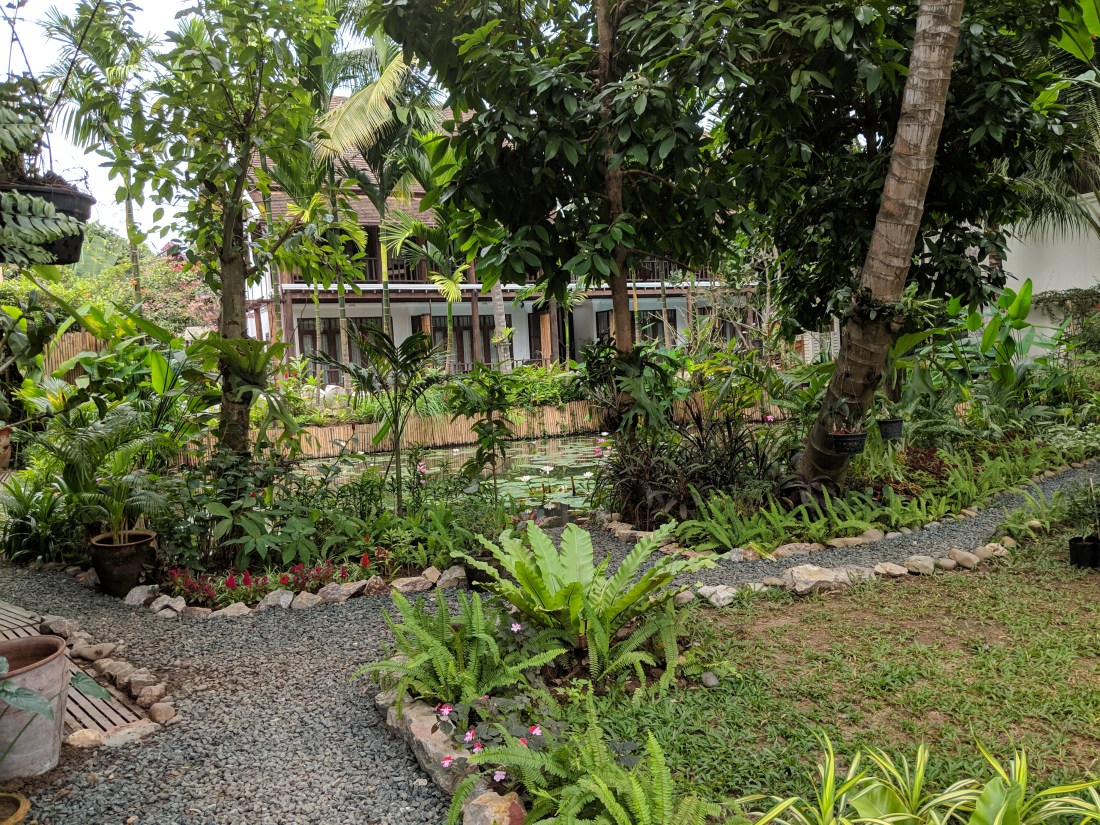
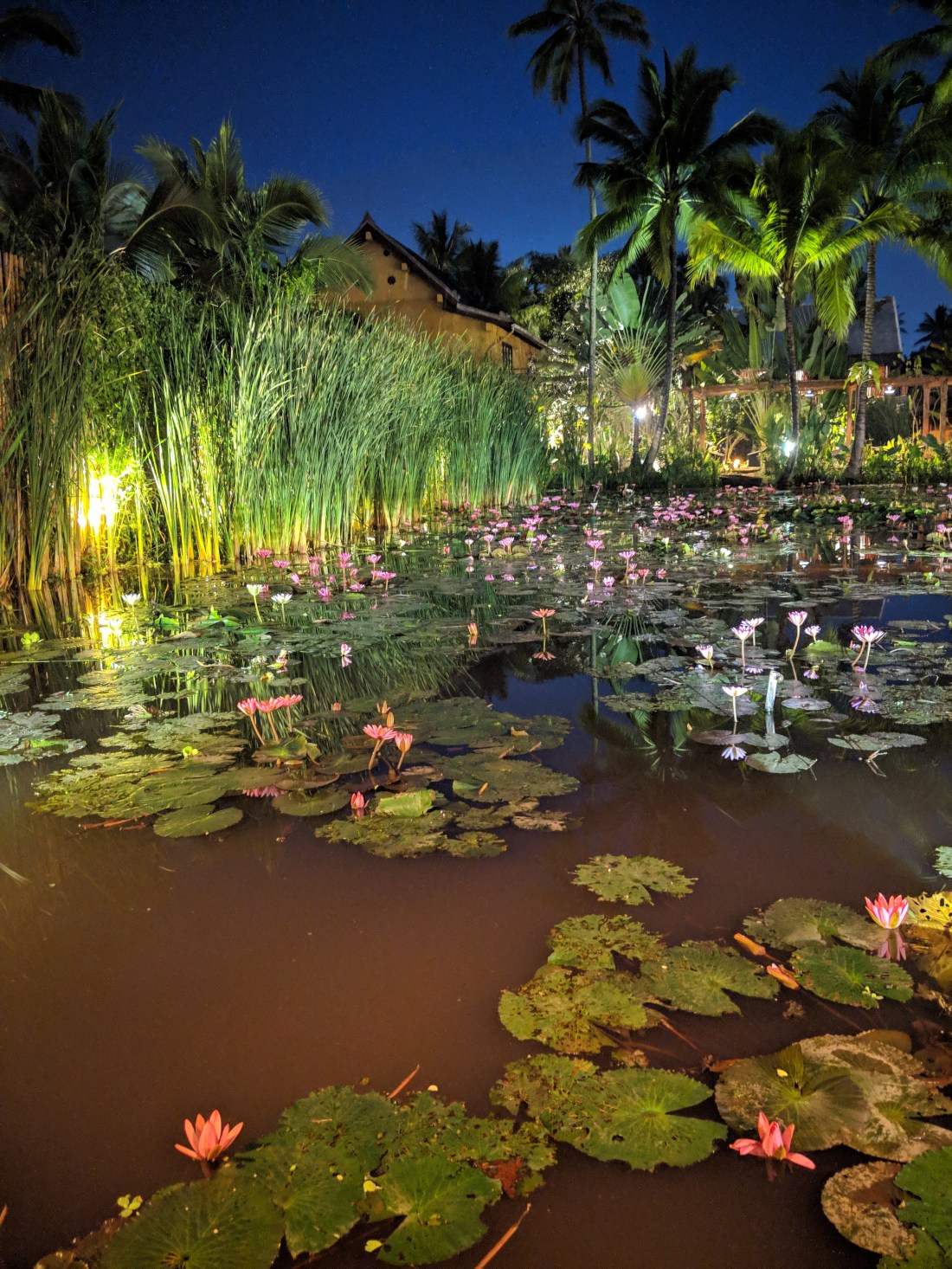
Our hotel Maison Dalabua, which was absolutely gorgeous, surrounds a UNESCO protected lily pond.

In the morning, our first visit was to the Royal Palace Museum, which was built as the king’s residence in 1904 during the French colonial period and remained the monarch’s home until 1975: communism.
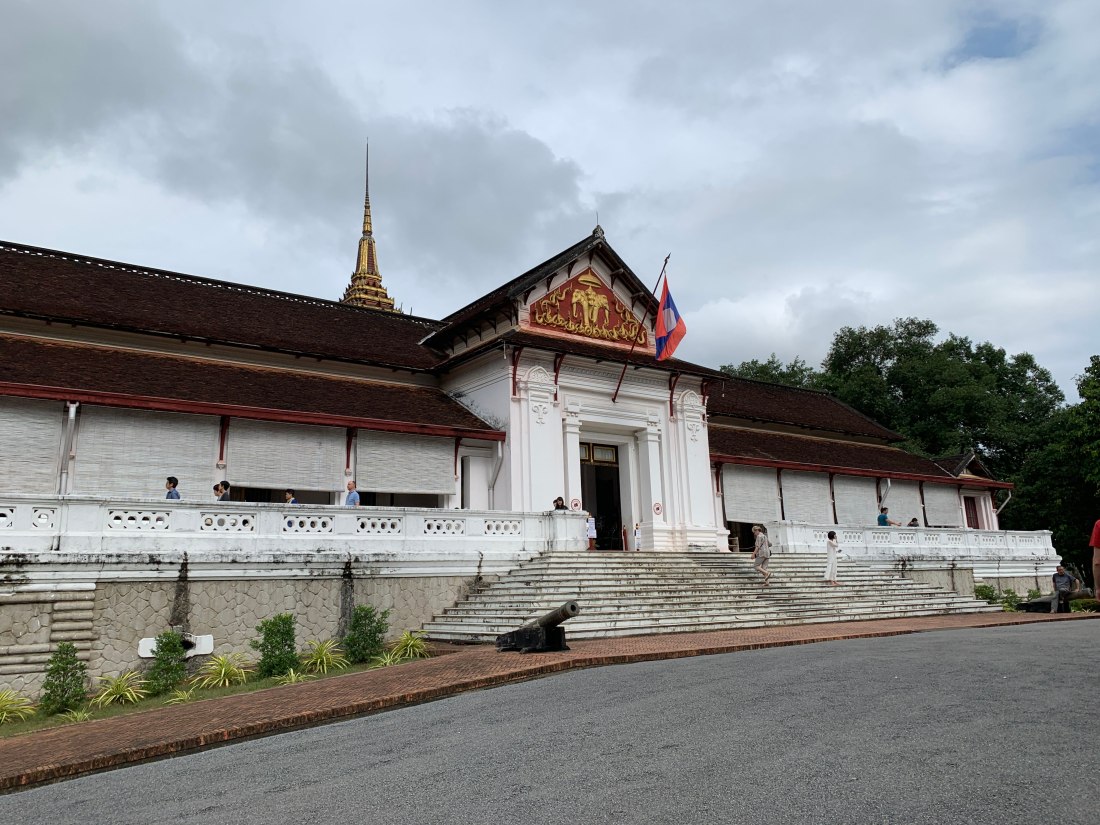
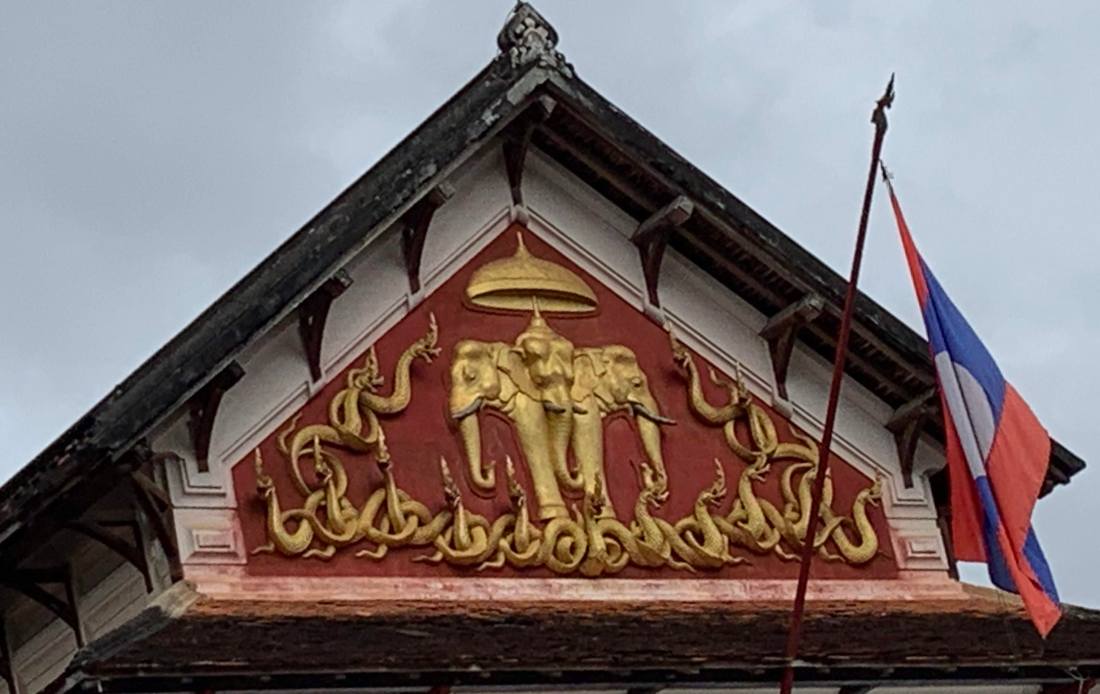
Photos were not allowed inside, but most of the furniture are wood antiques imported from Europe. The floors are also wood, very unusual in these hot climate countries.
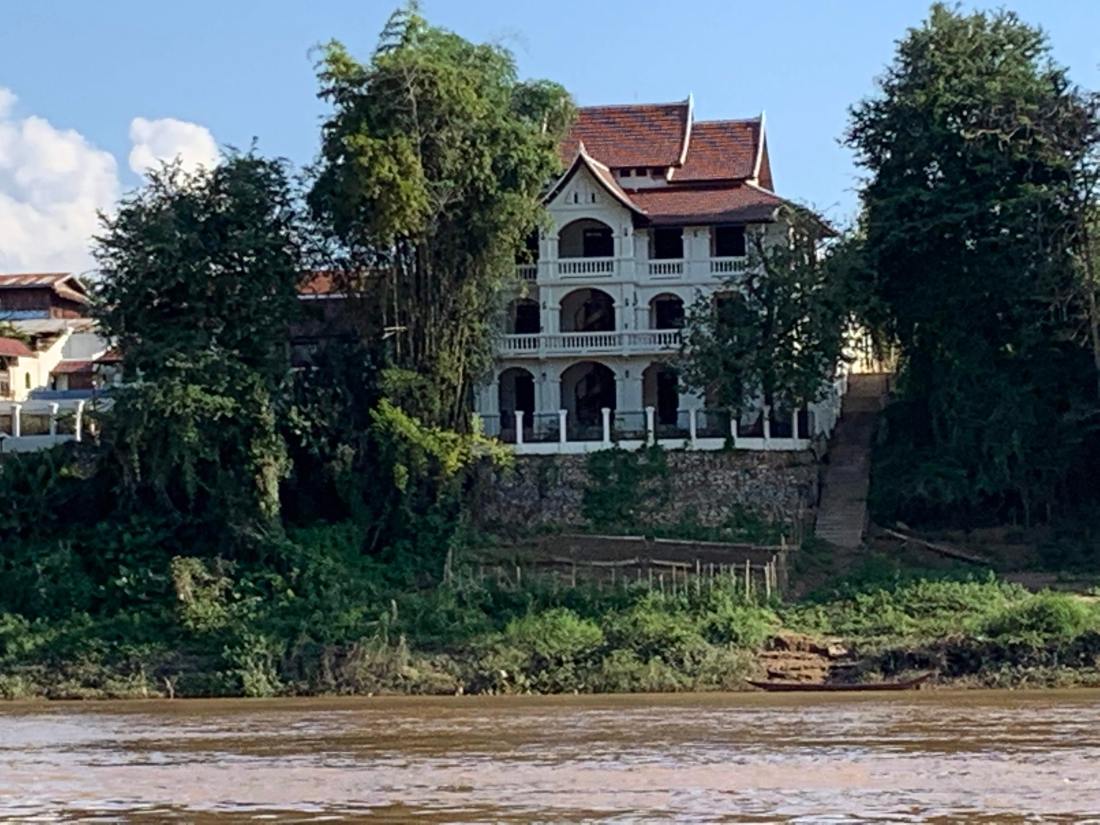
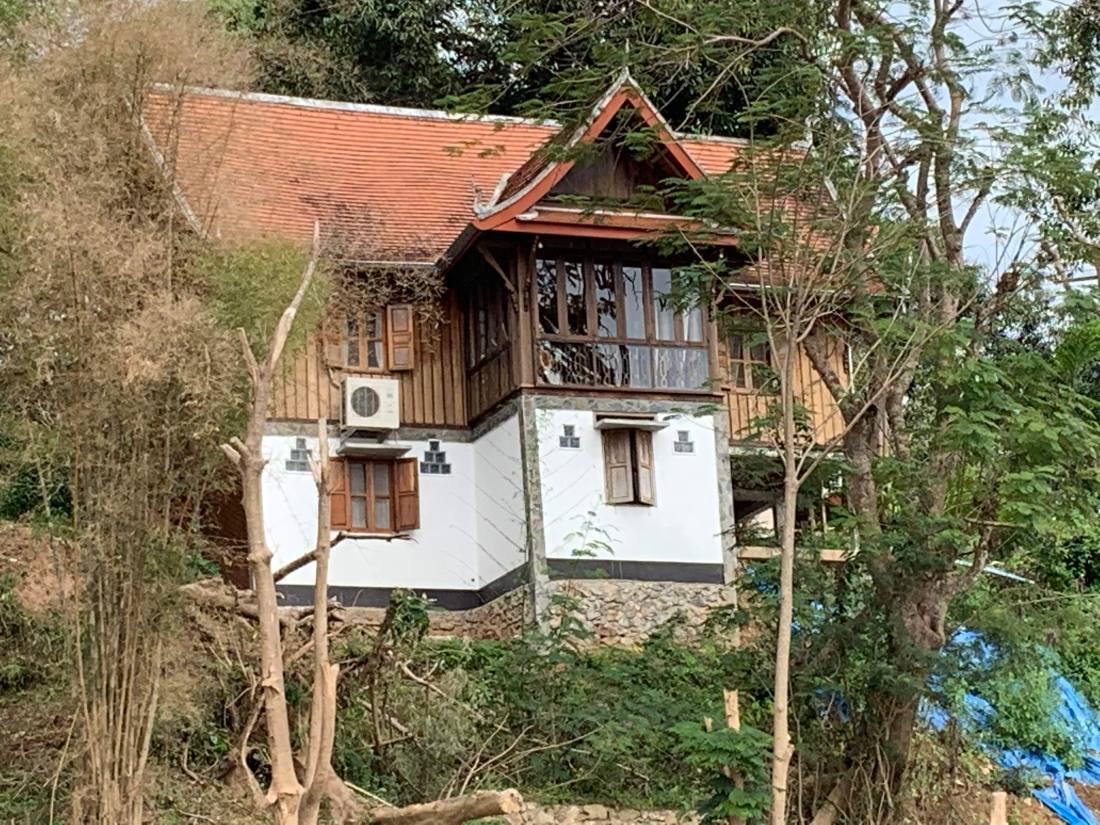
Walking along the riverfront, the homes show the mixture of architectural styles.
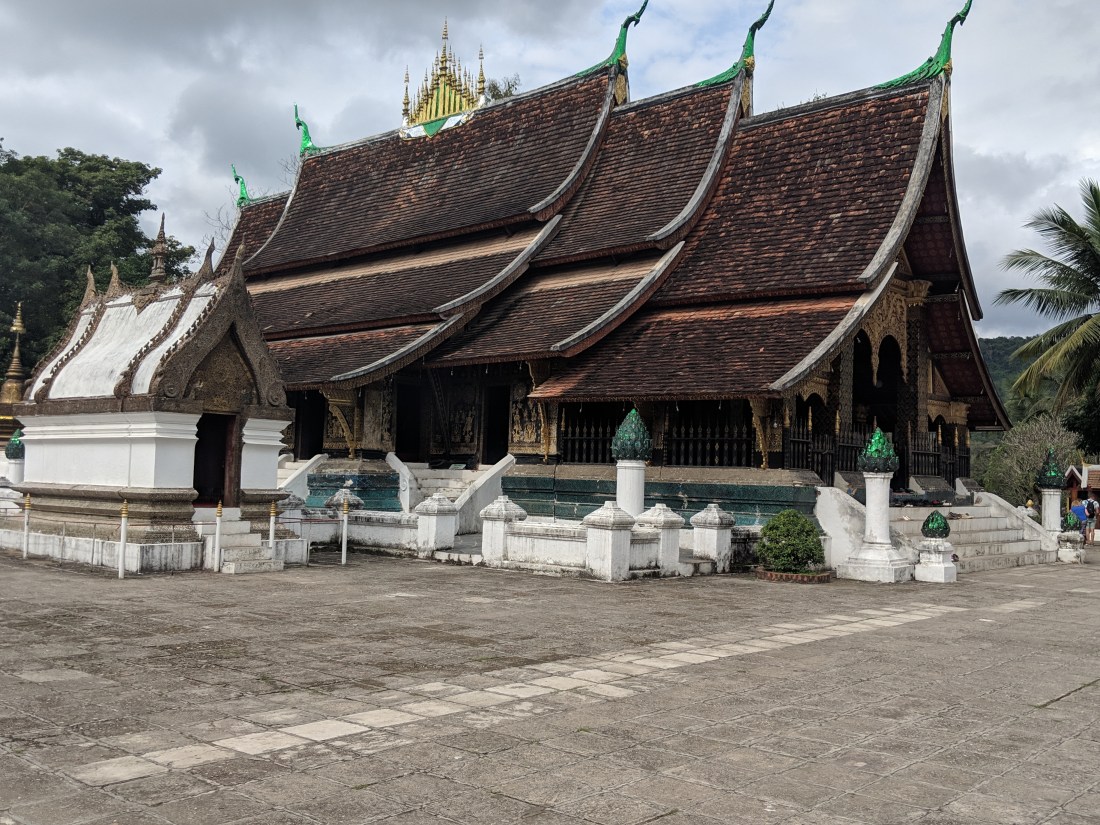
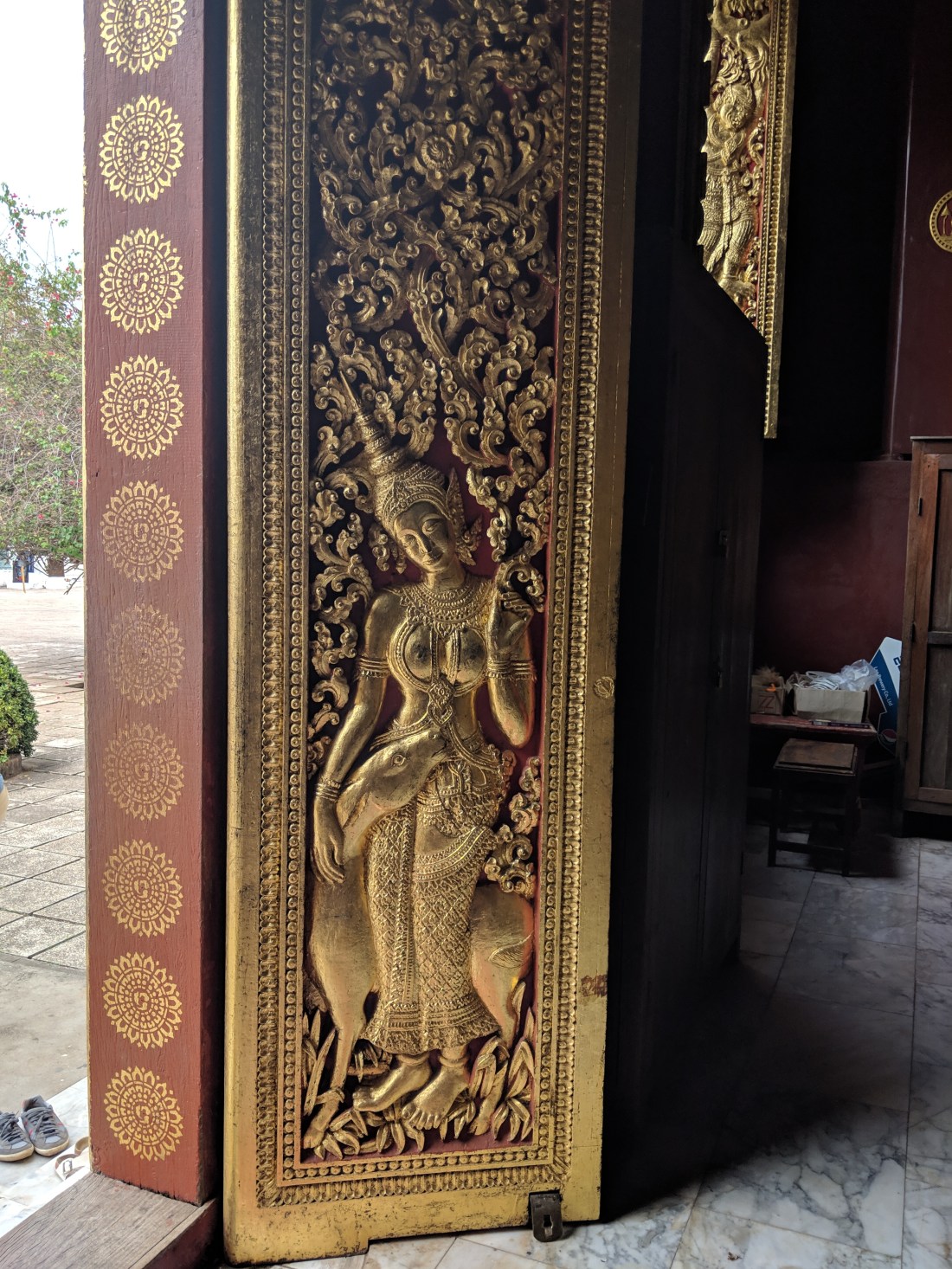
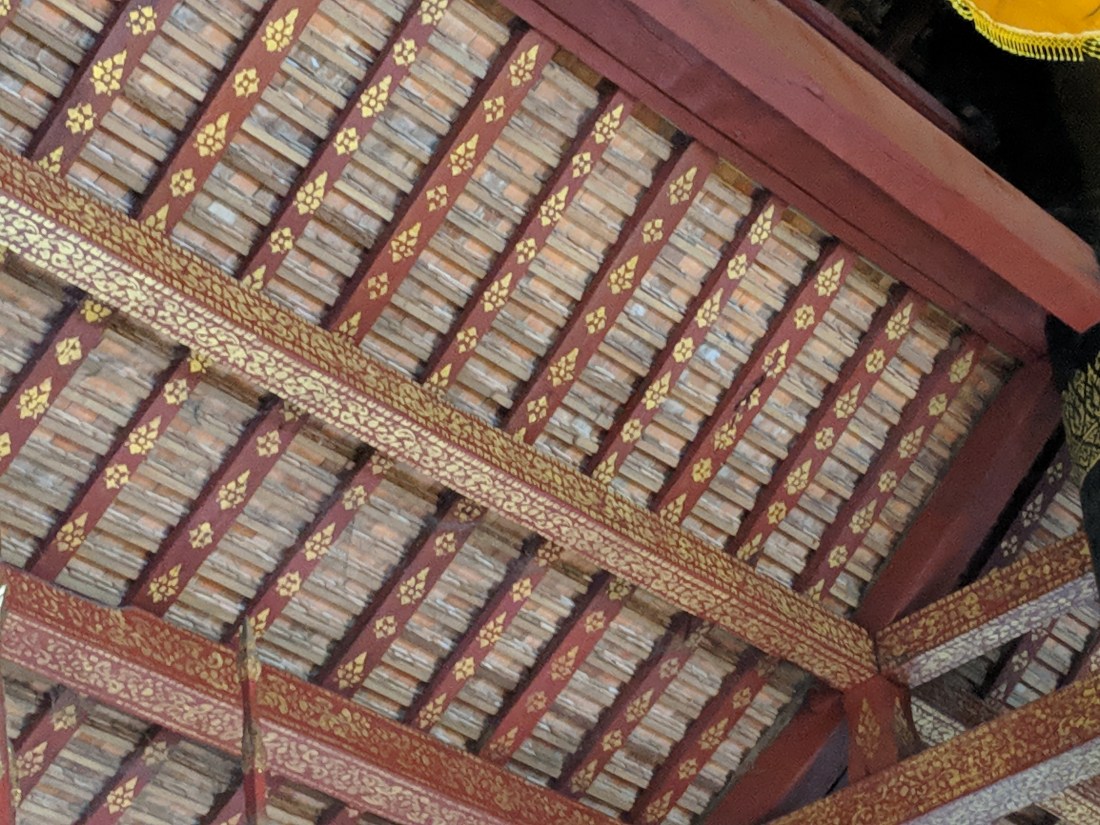
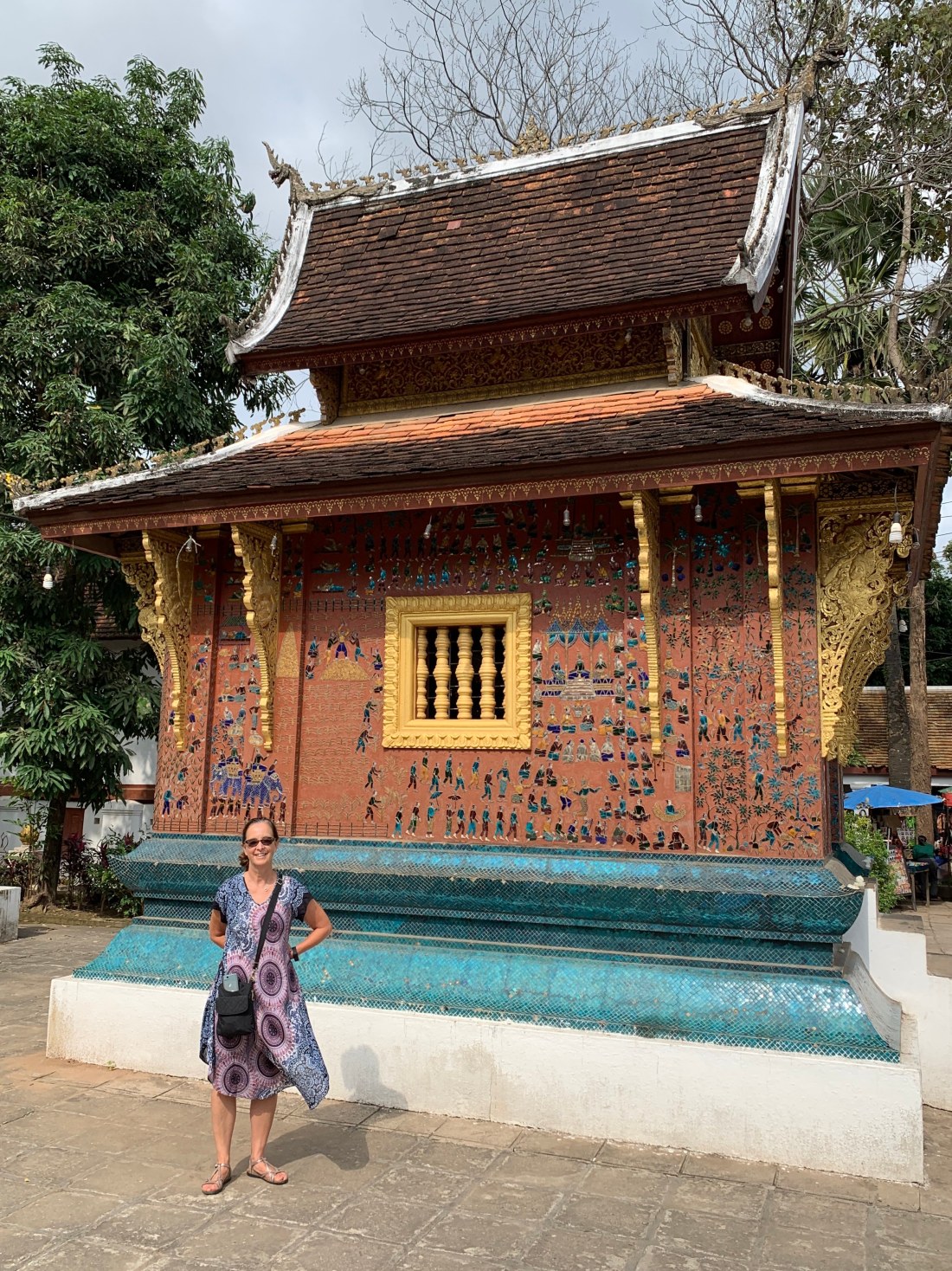
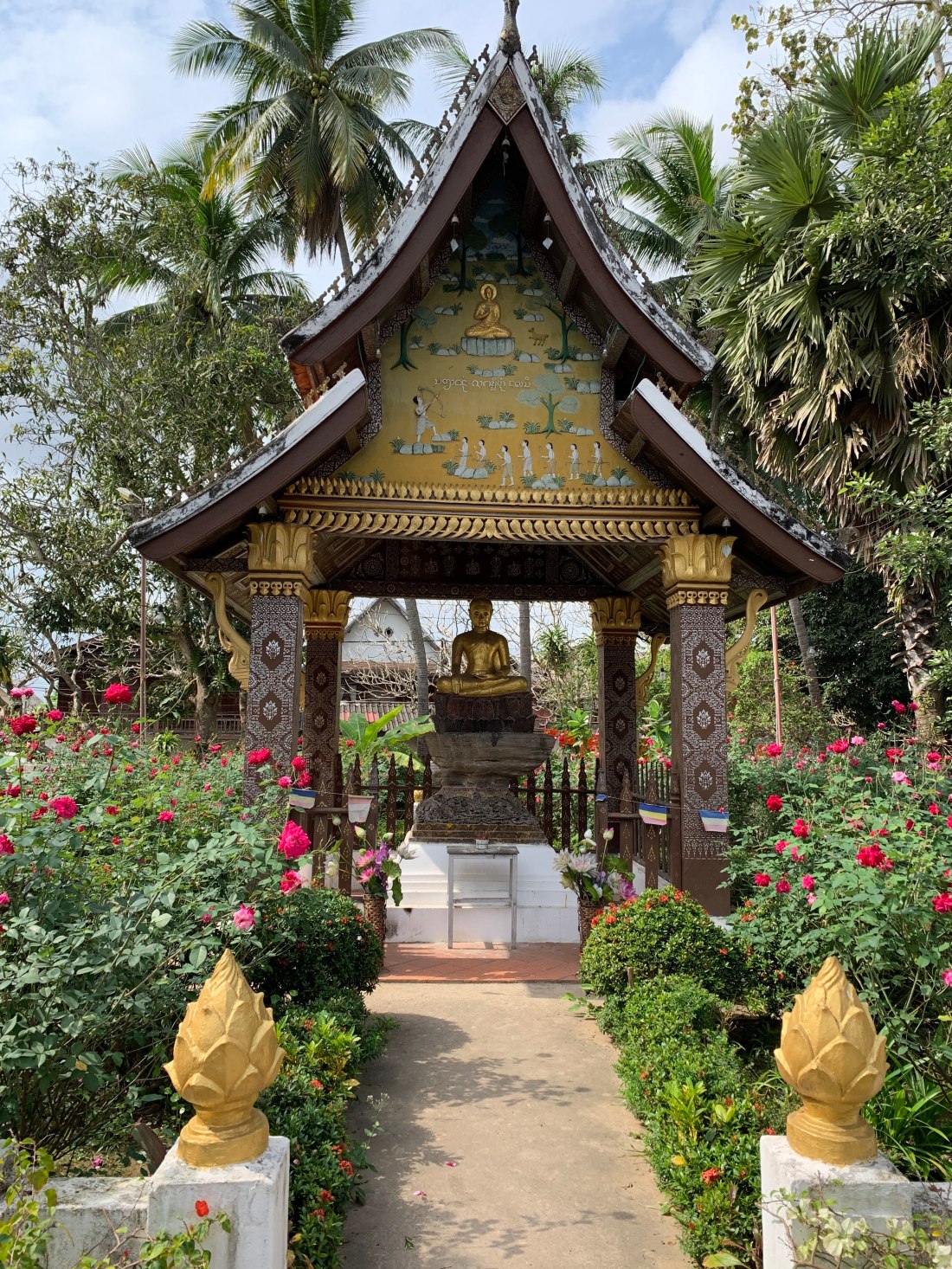
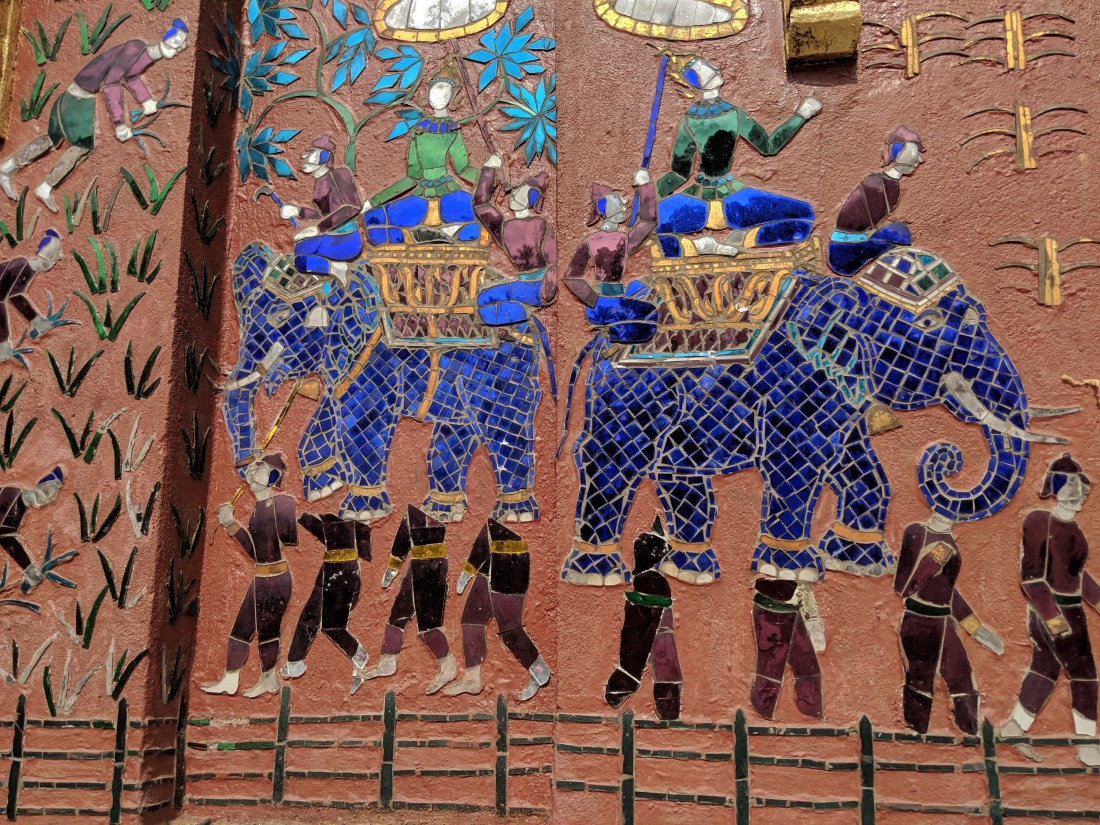
And of course we visited some local temples. Wat Xienghtong is considered the most beautiful in the city. Noticeable differences include the intricately carved wood paneled doors to the temple, and the outer wall colored mirror mosaics. The interiors are relatively undecorated.
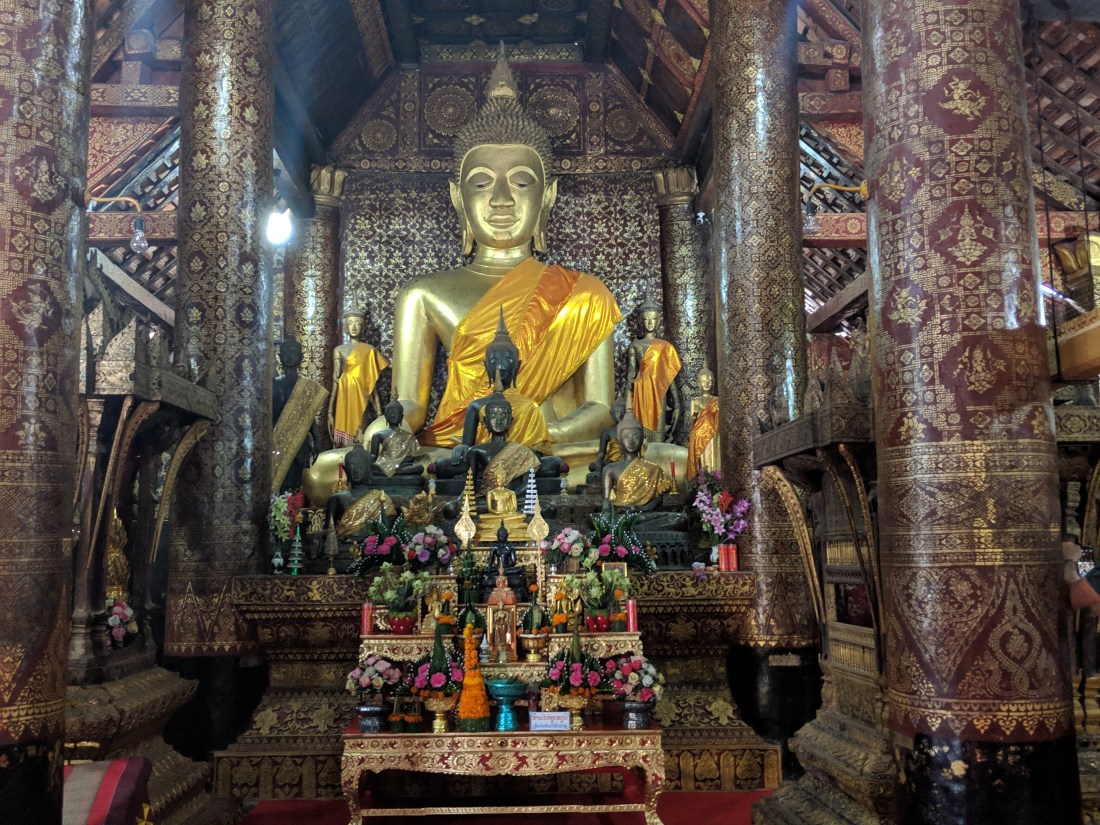

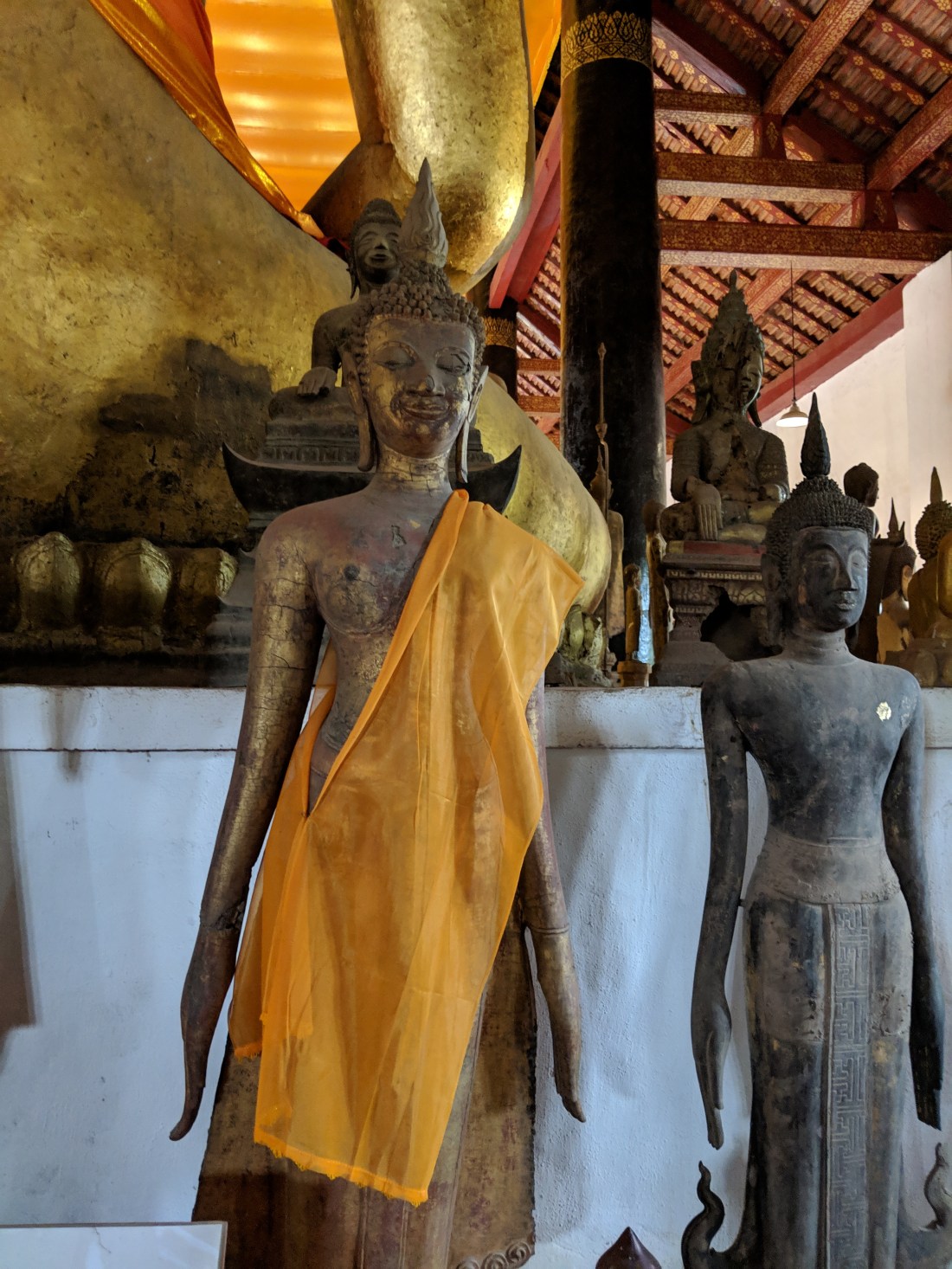
The below buddha has the wide forehead and mouth of the Khmer and the narrow waist of the Siamese. Those features together with the pointed nipples and his “Calling for Rain” pose make him specifically in the Prabang style.
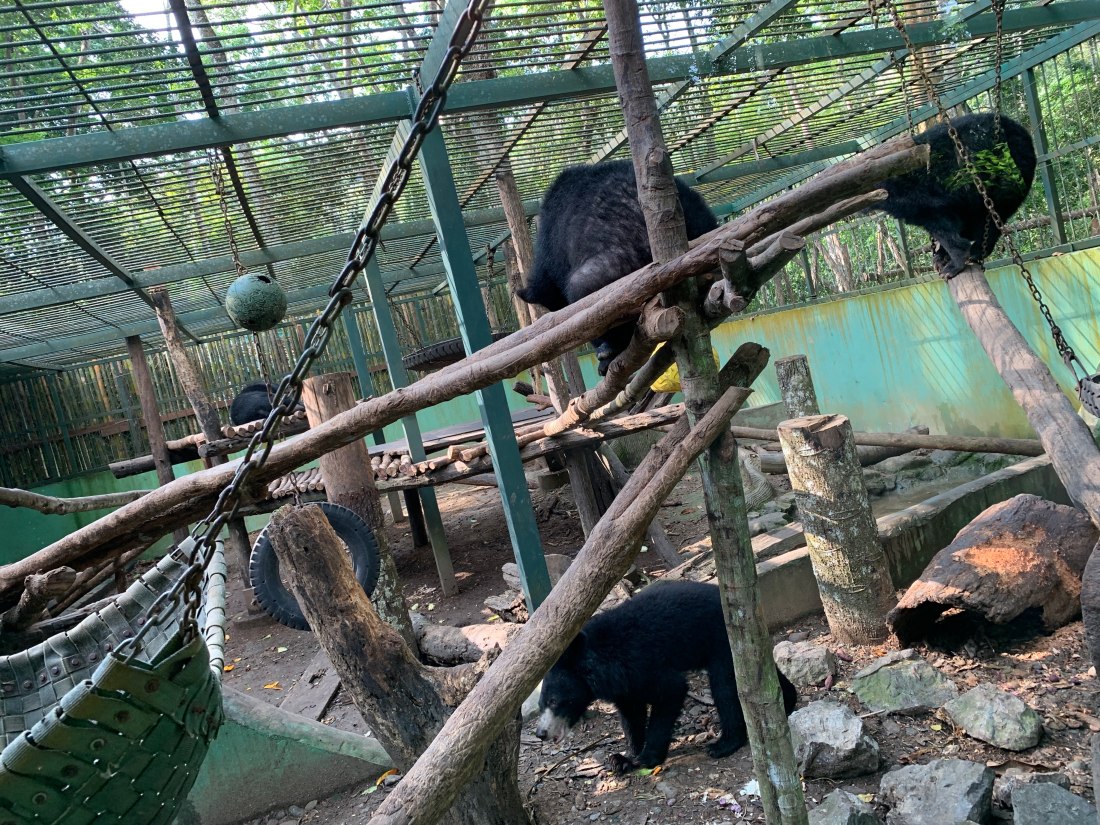
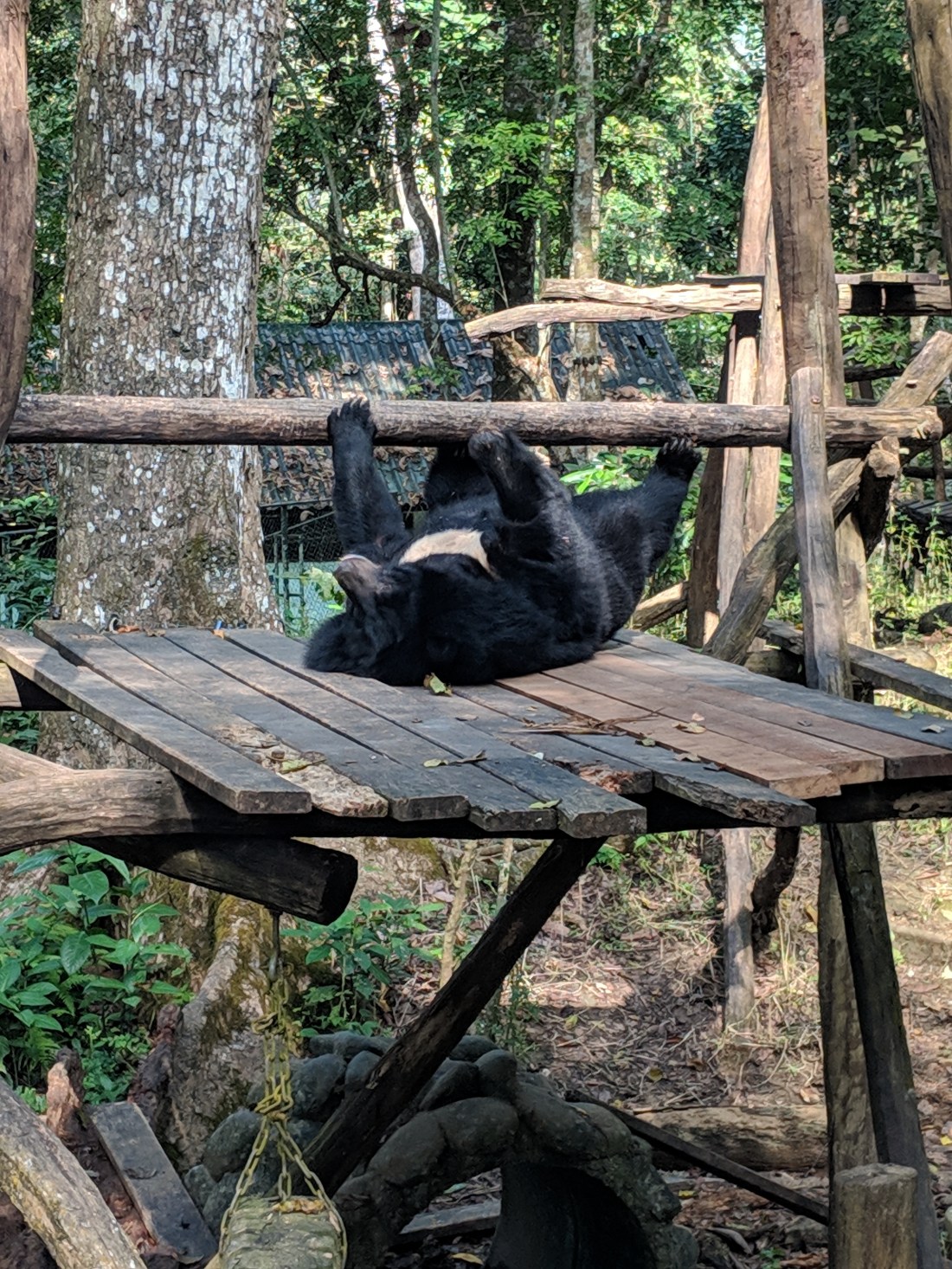
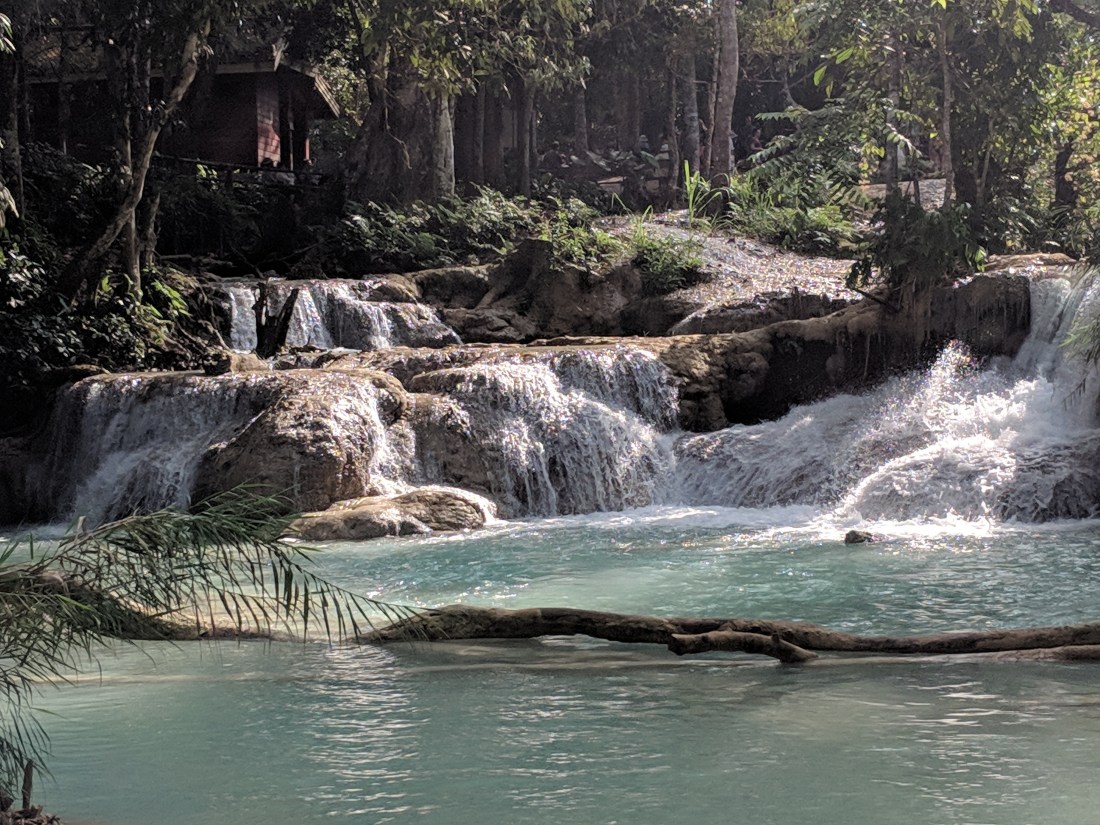
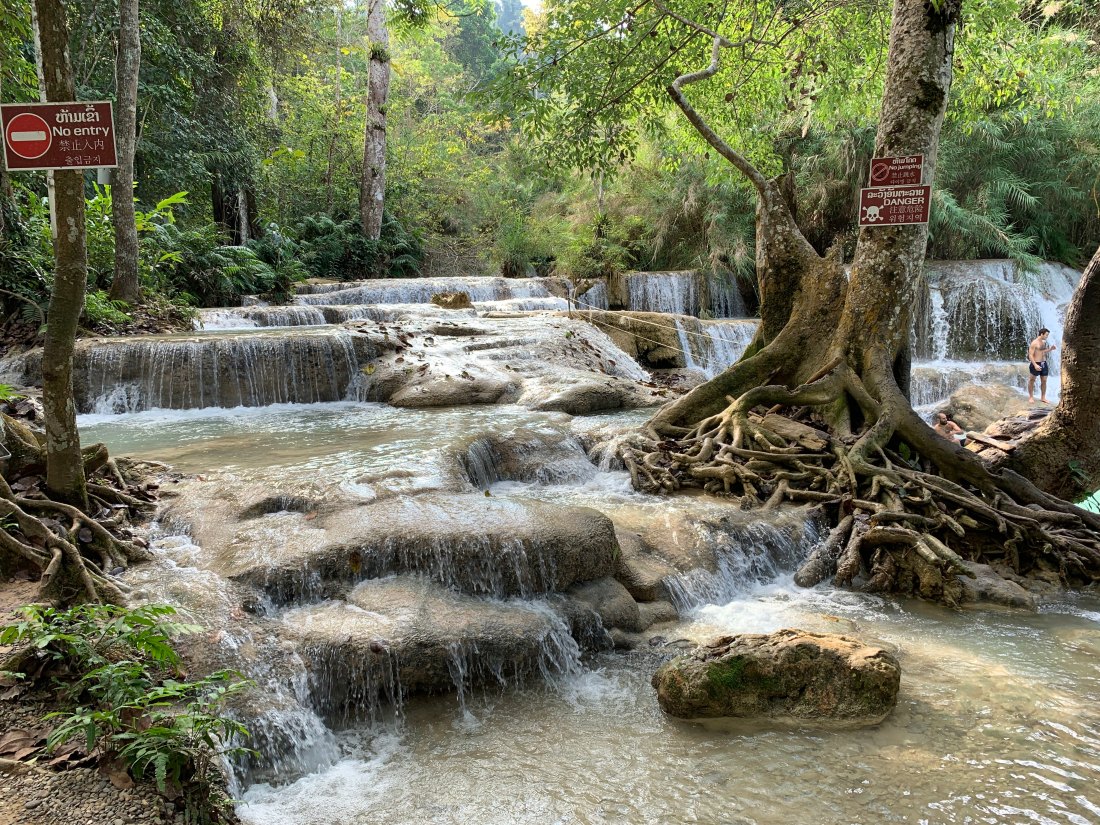
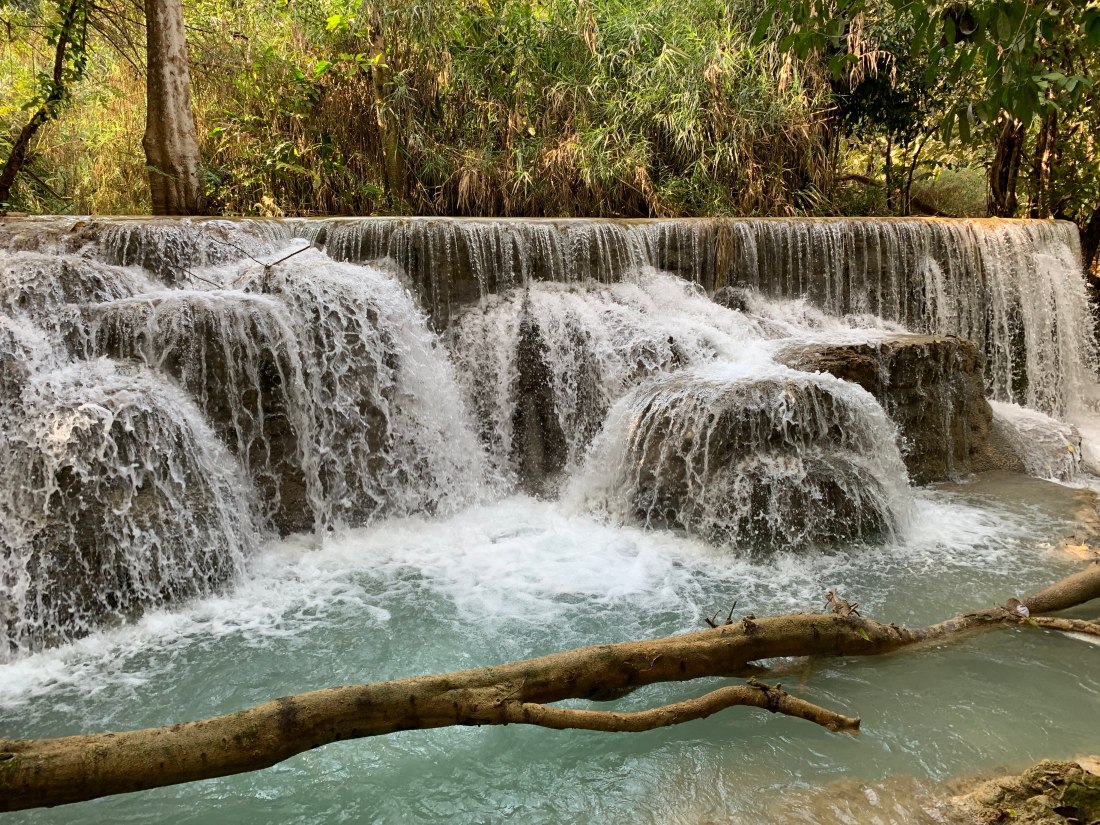
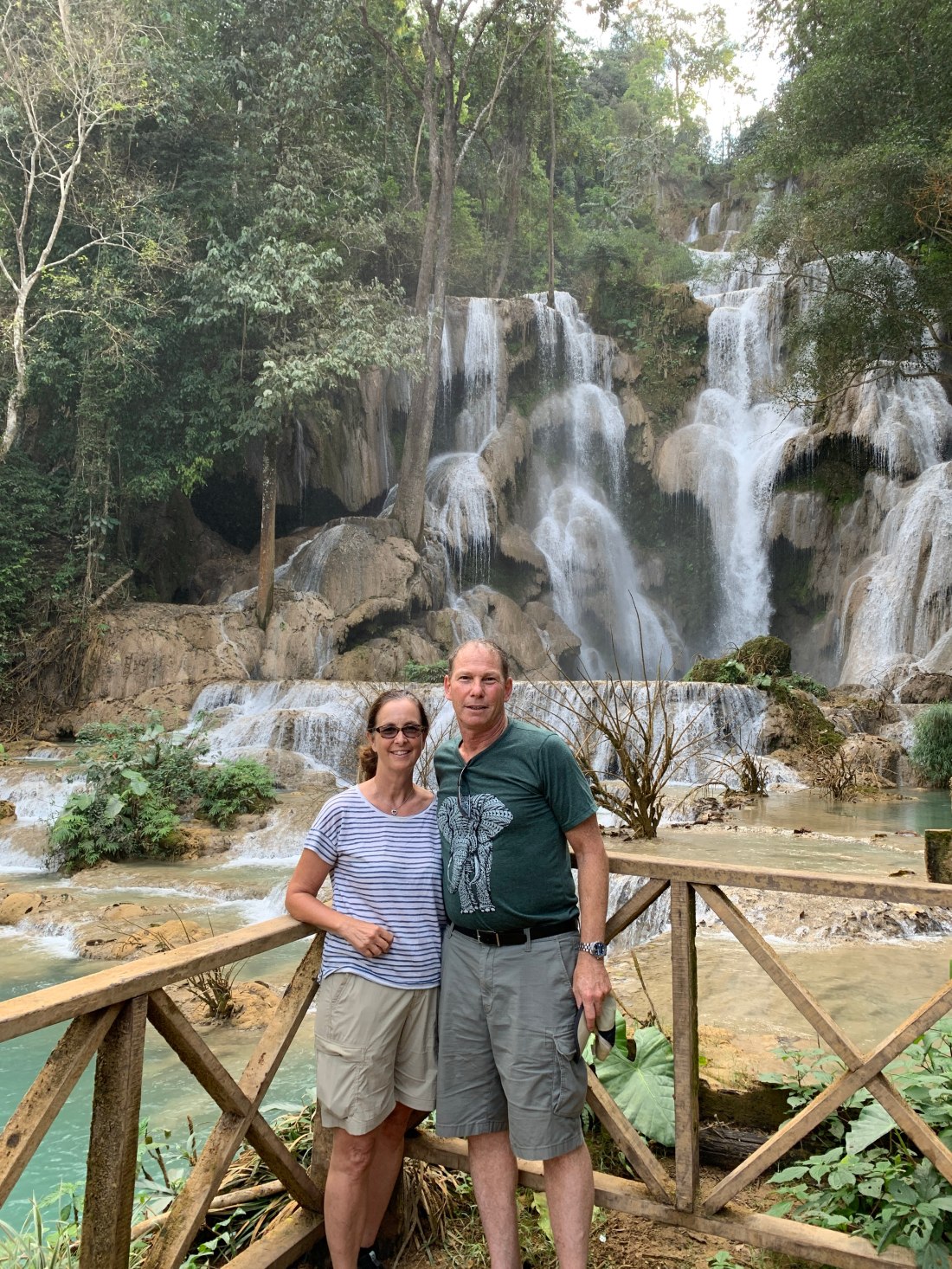
In the afternoon, we took a somewhat treacherous ride in a tour minivan so we could hike up the Kuang Si Waterfall. At the bottom is a rescued bears preserve.

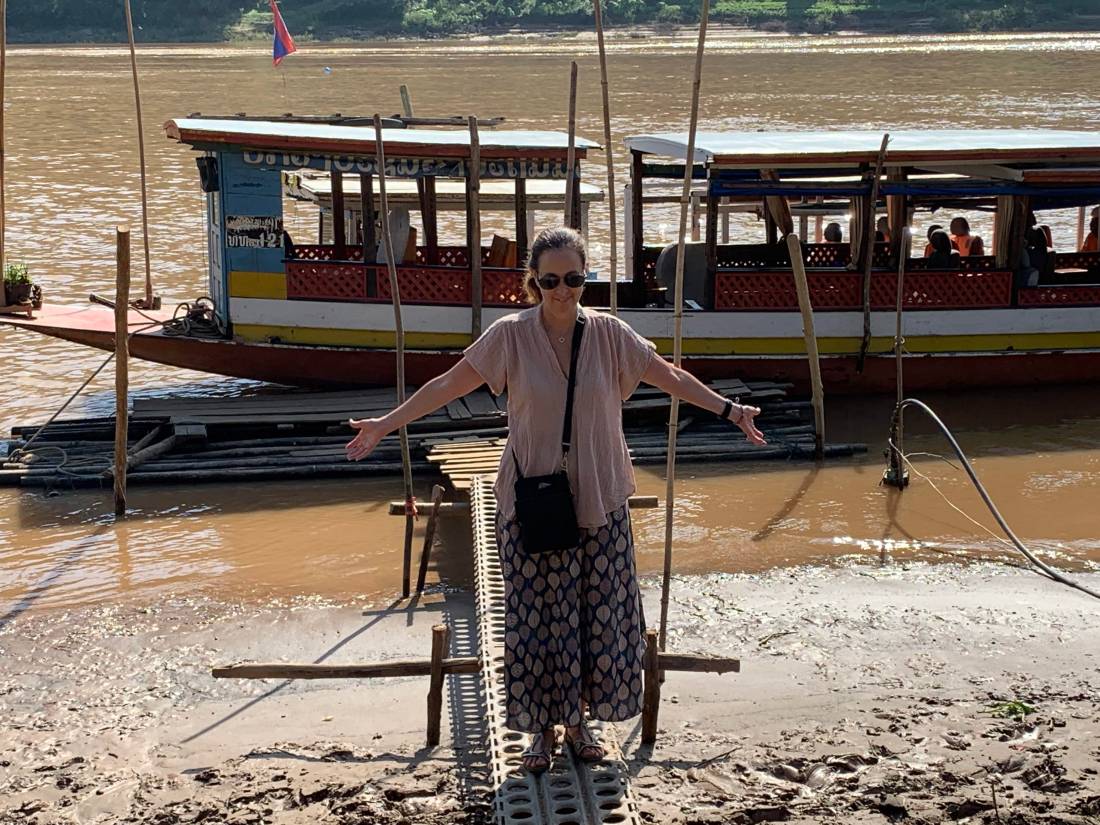
The next day we hired a private boat to take us 25 km – 2 hours – up the Mekong River to the Pak Ou Caves which house thousands of buddhas. History has it that originally the caves were shrines. But currently they are a home for used Buddhas, which cannot be discarded. Also, yearly the locals take their household buddhas there for a cleaning in the vessel.
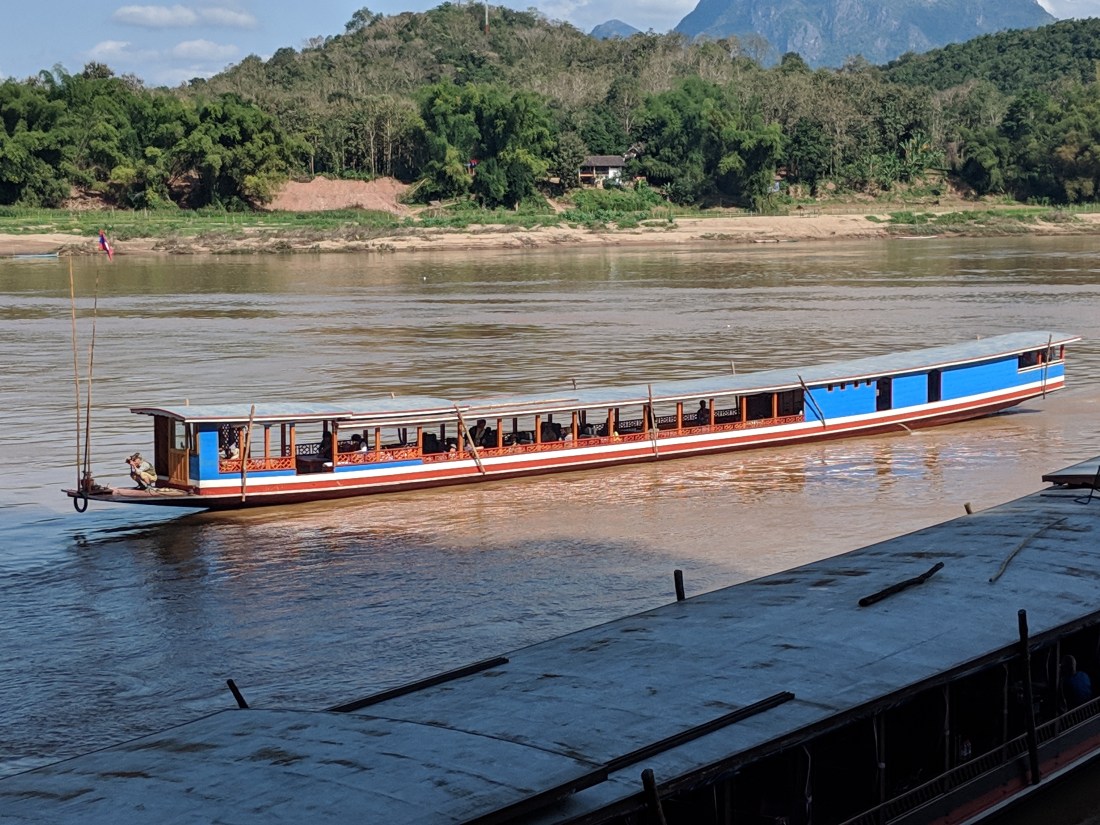

Along the way, the homes on the city side of the river are clearly more expensive than the homes in the villages and farms on the other side of the river.
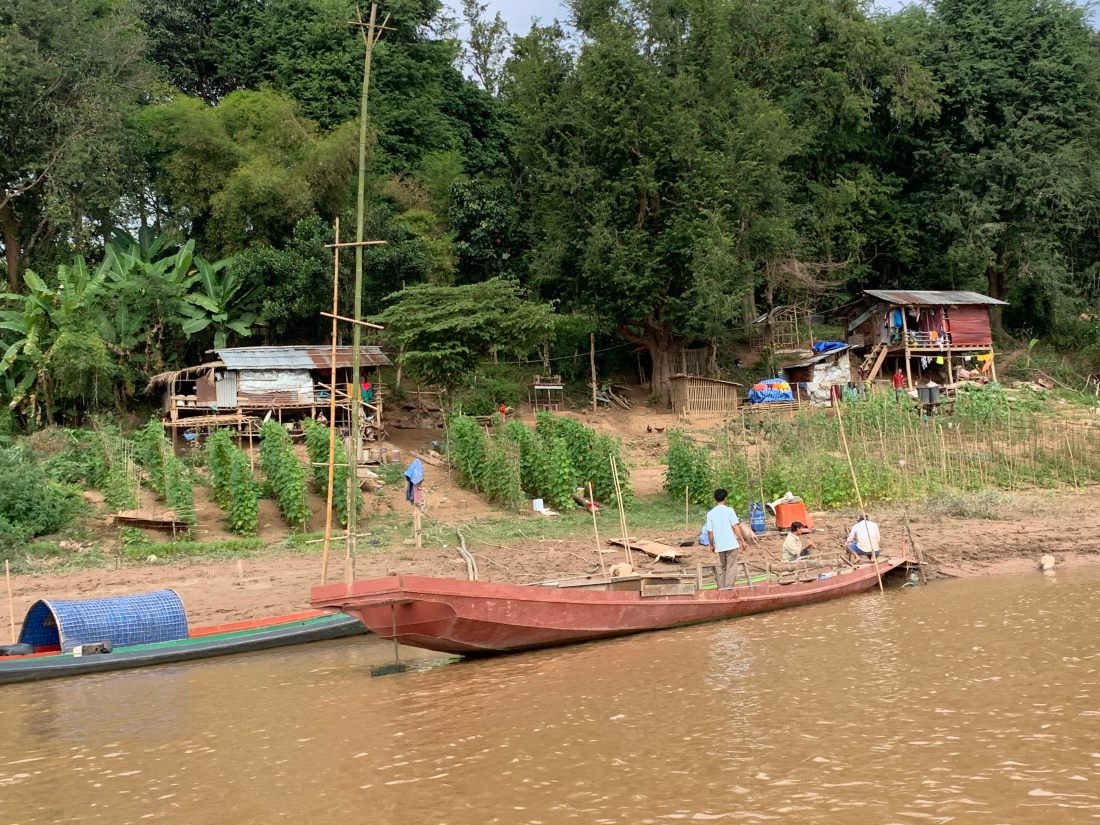
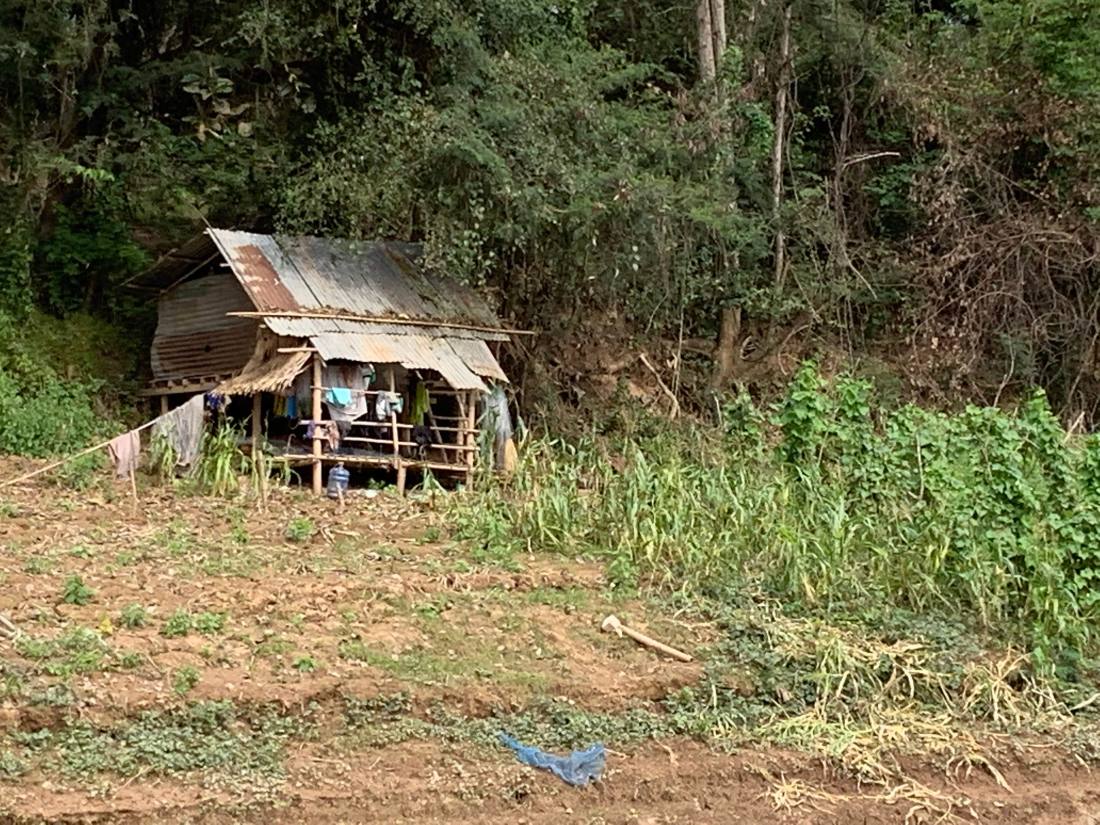
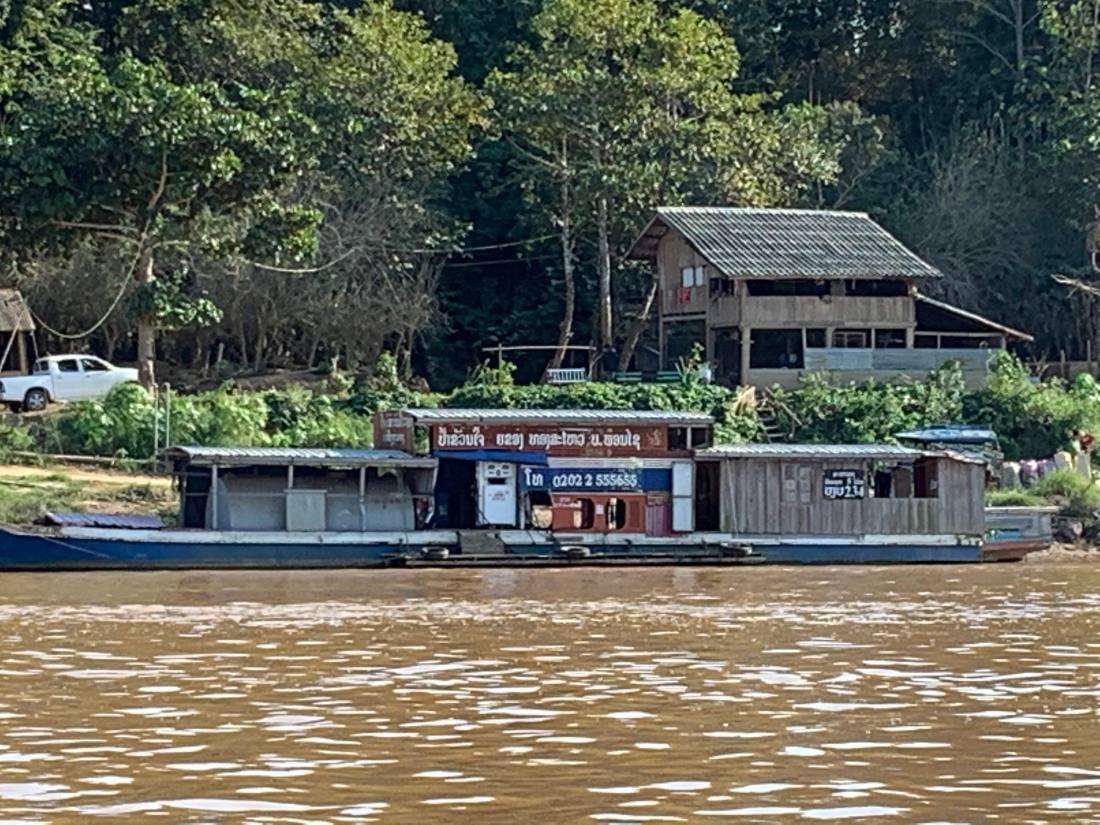
We stopped for gas at the station.
Once we reached the caves, we had to climb up very steep steps from the river to enter.
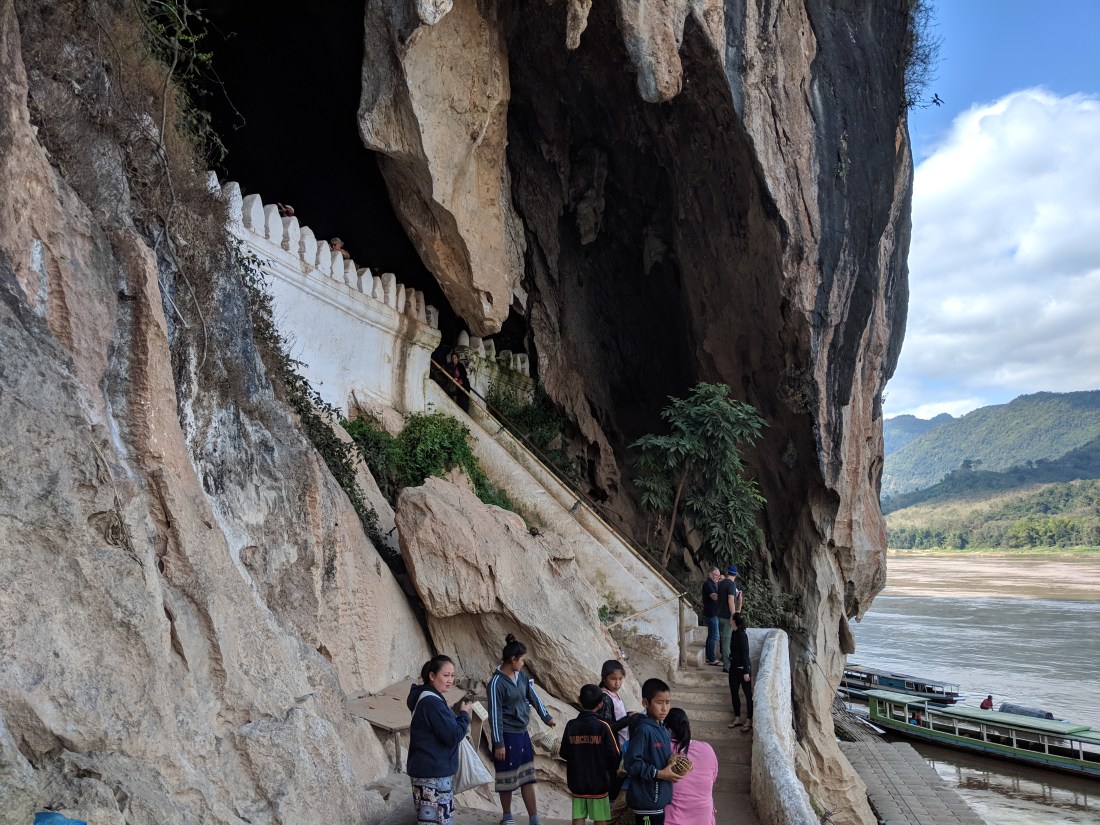
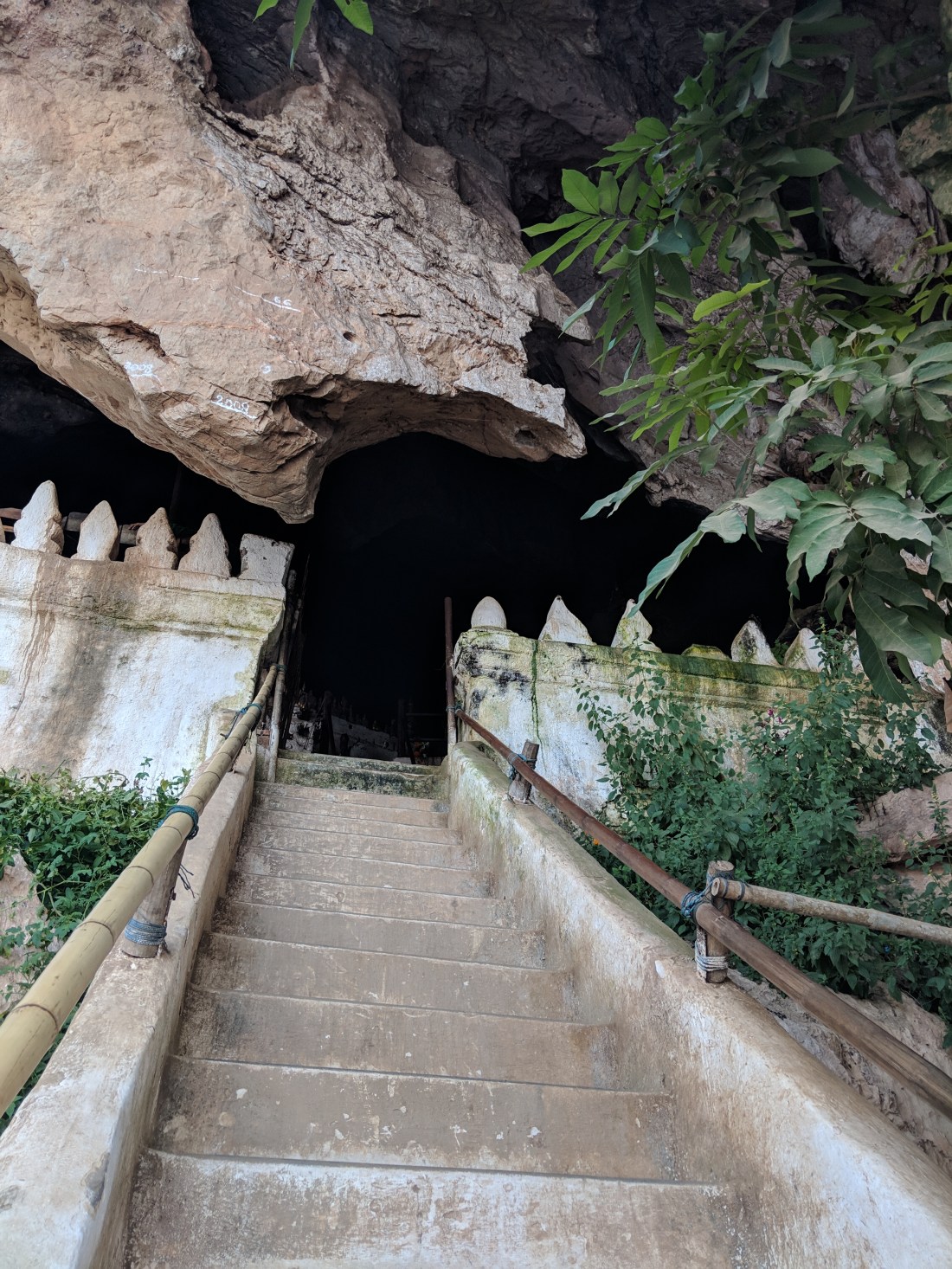
Once inside, there are buddhas literally in every nook and cranny of the caves.
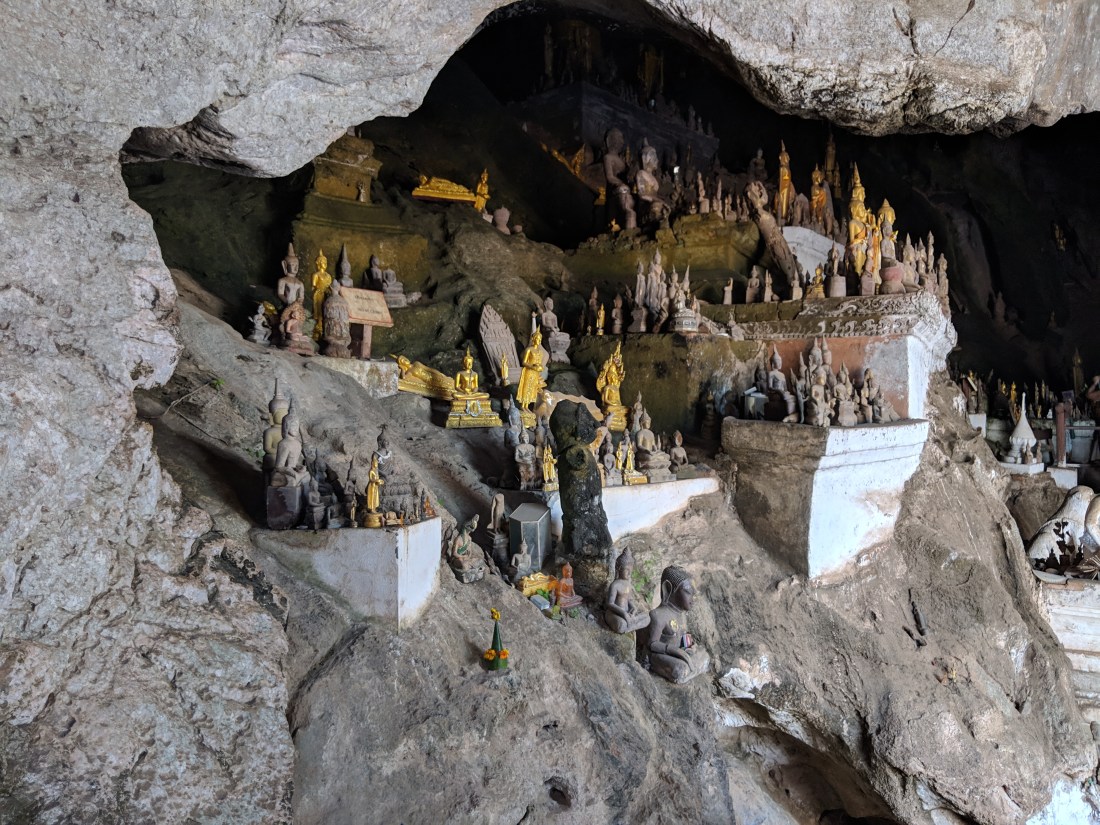
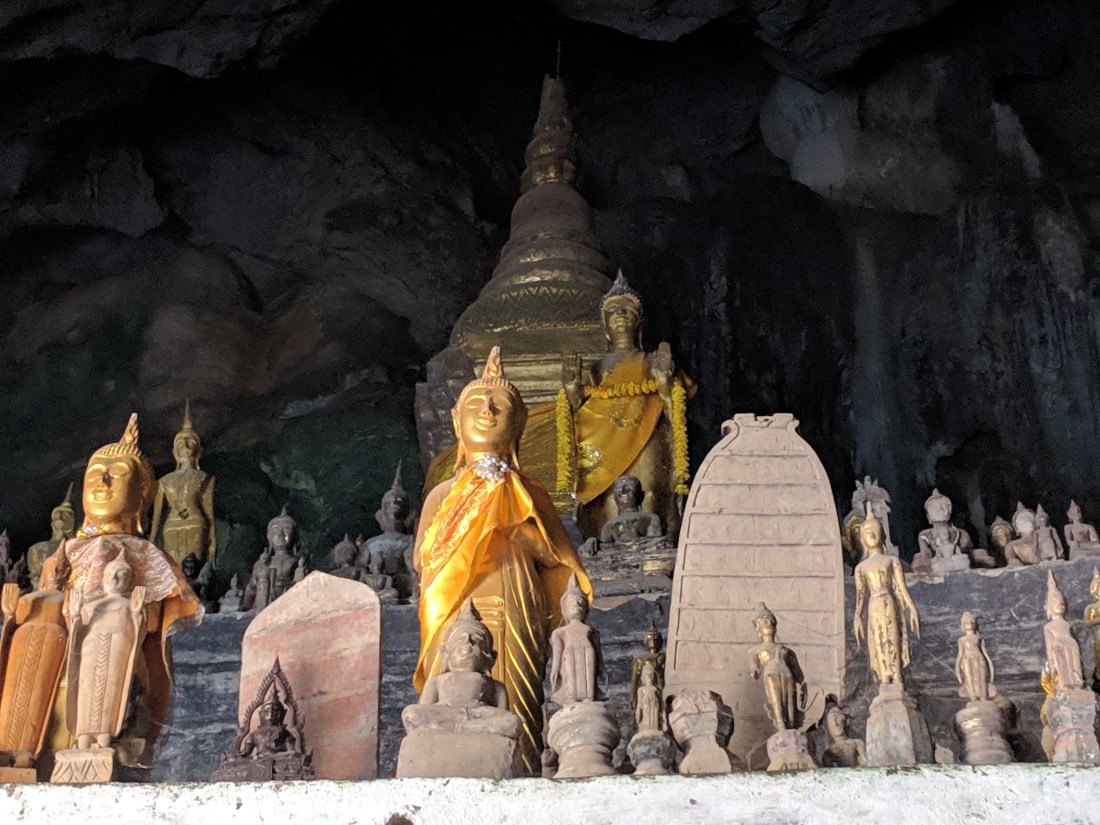

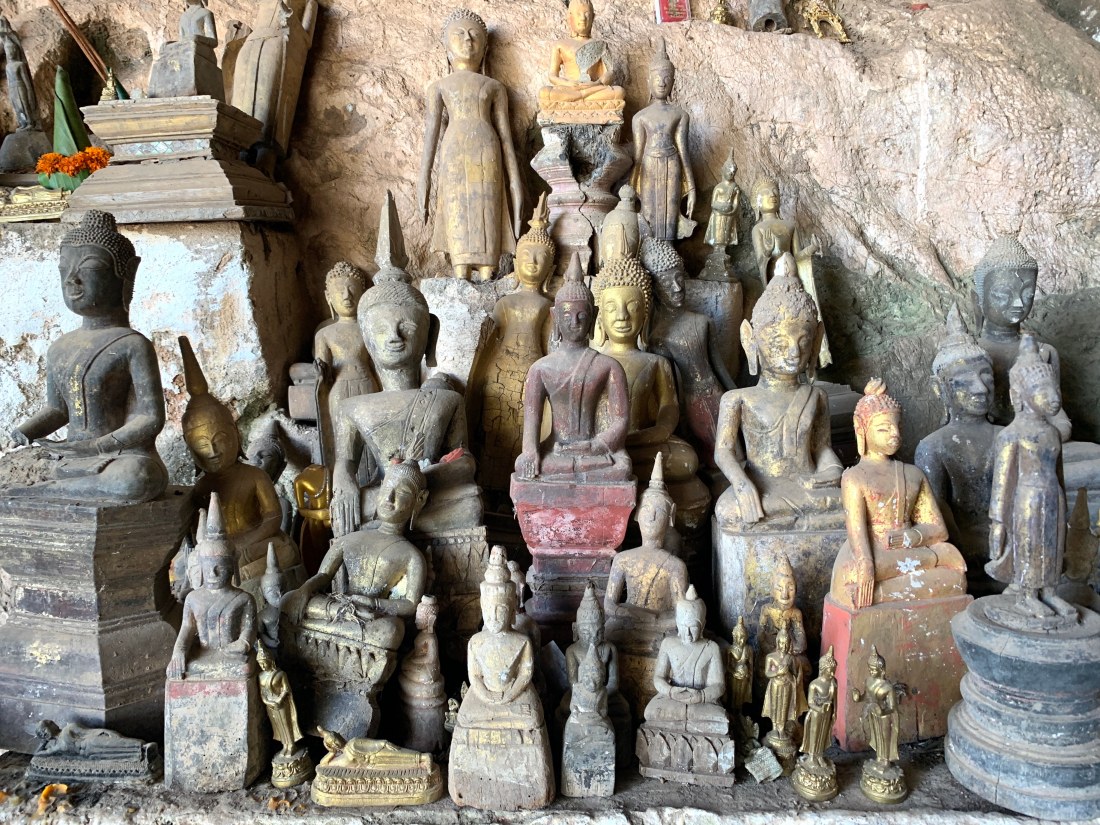
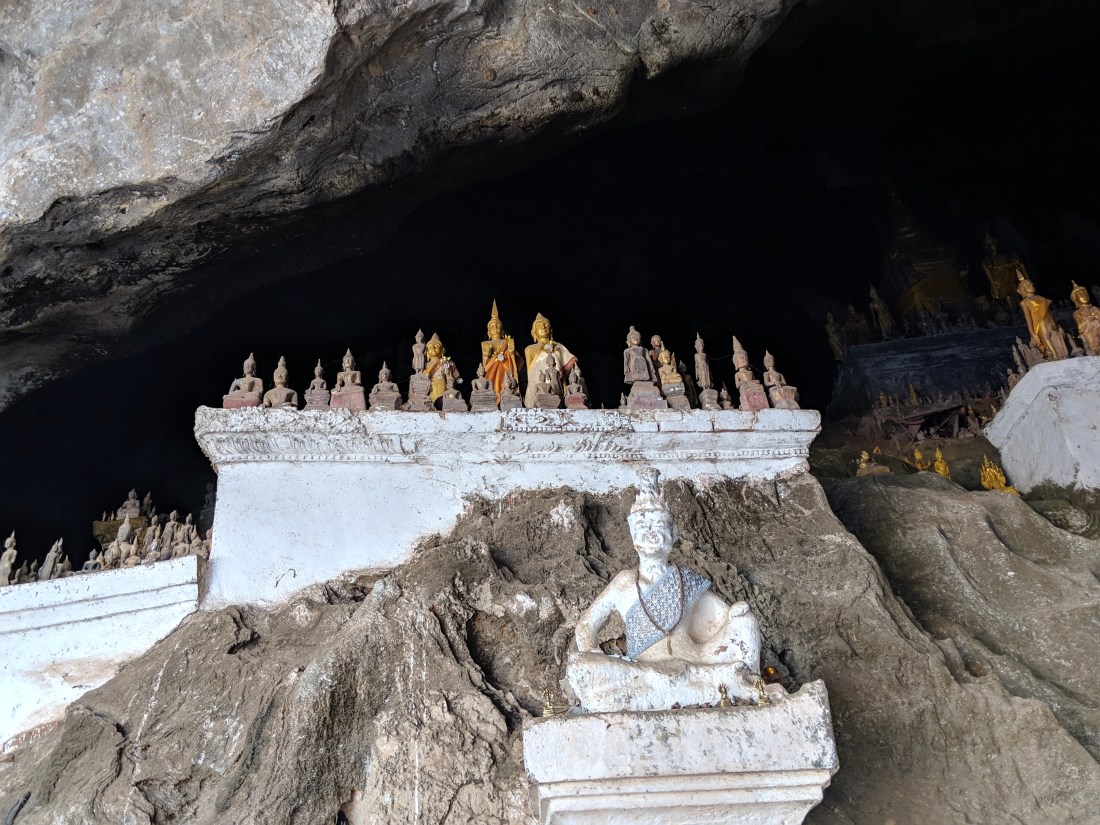
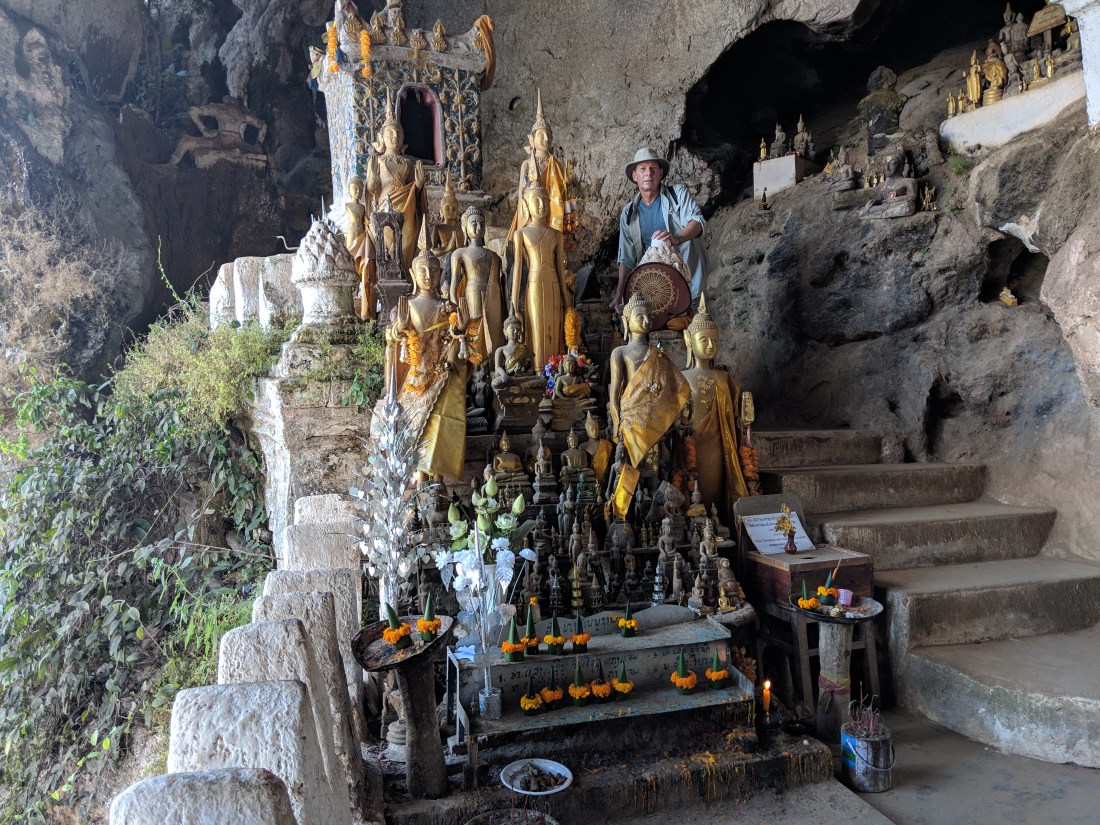
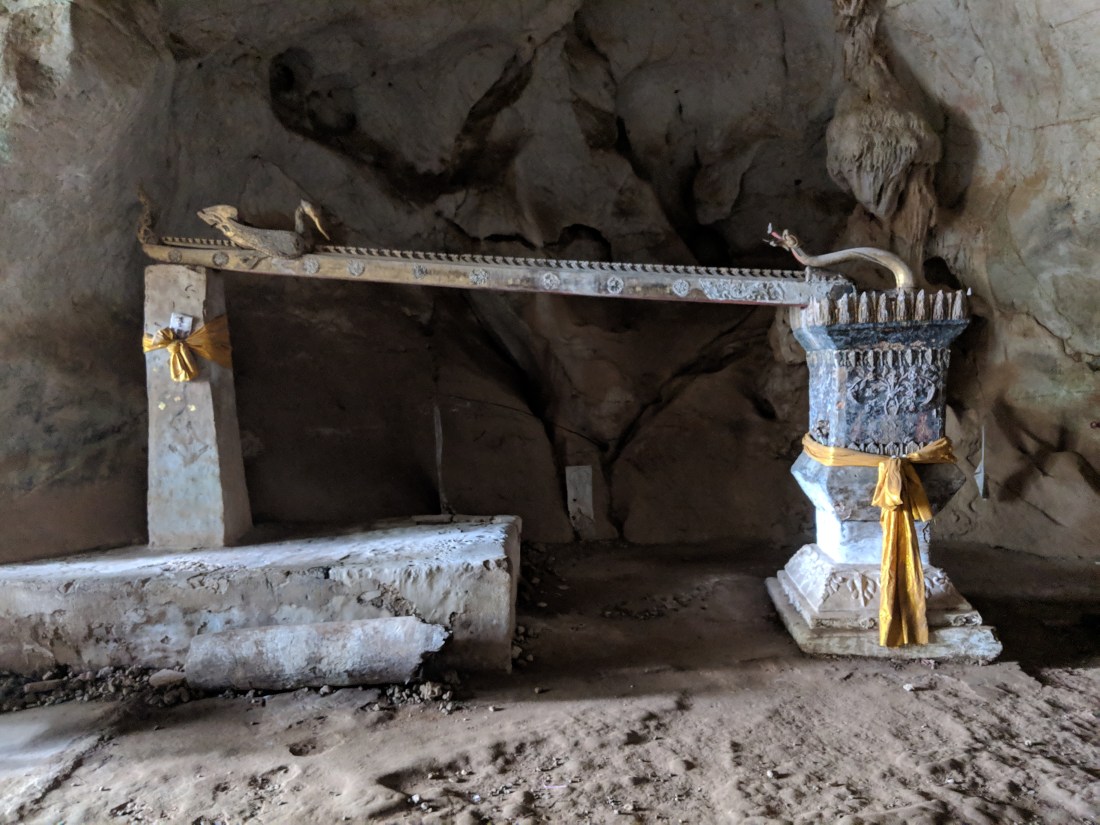
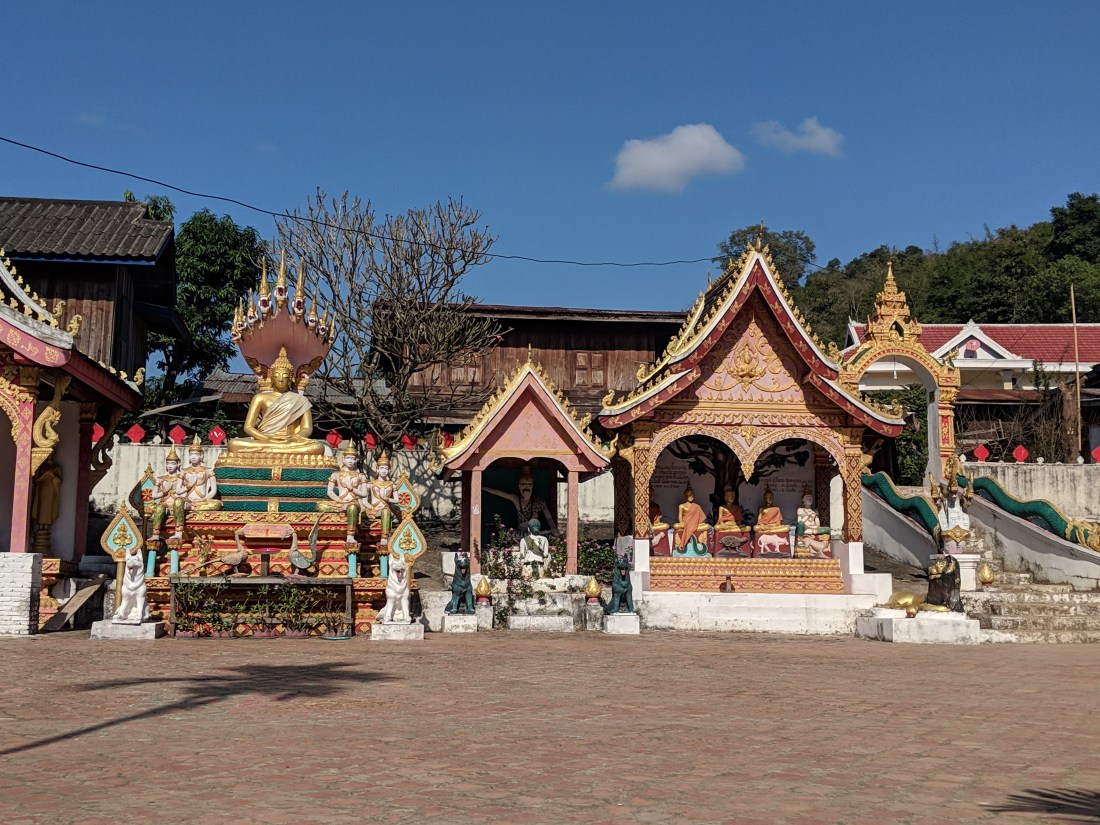
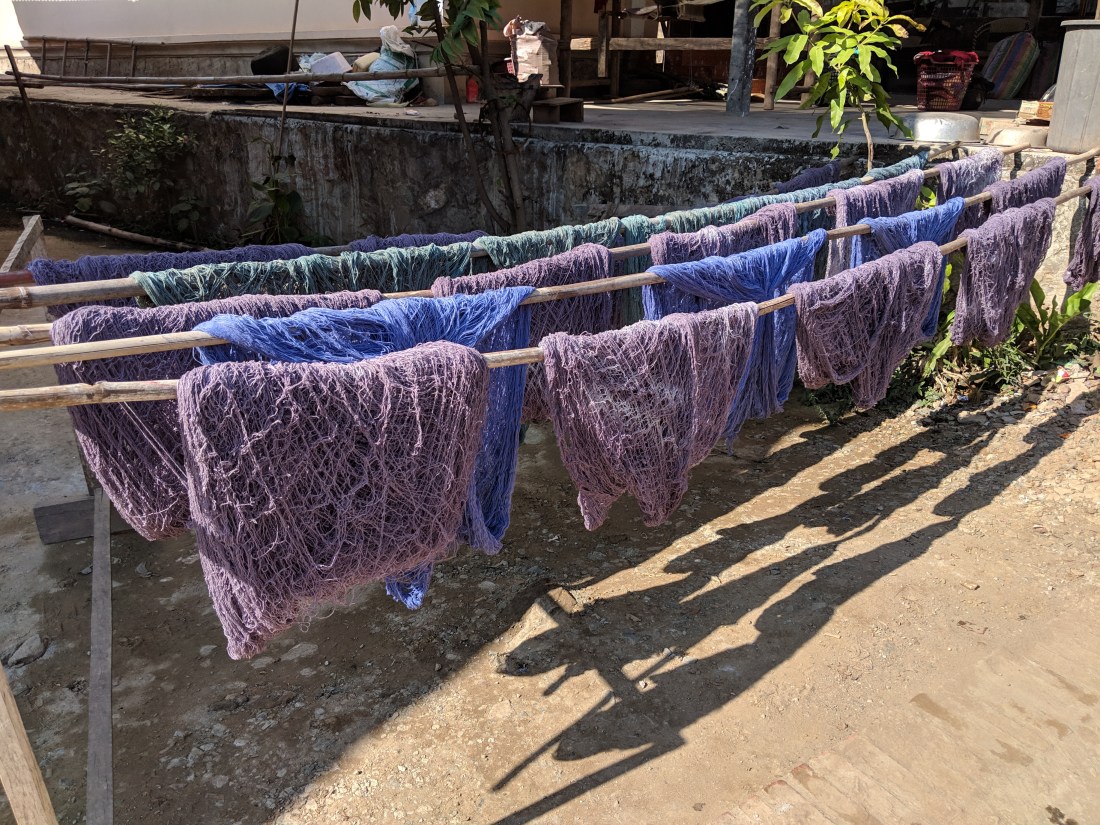
On the way down the river we stopped at the Whiskey Village know for its local moonshine as well as for textile weaving. And of course, every local village has its own wat.
After our long day on the river, we had a huge late lunch at a restaurant on the riverfront. The food is somewhat similar to Thai but with less coconut milk, way more use of lemongrass and liberal use of a local spicy jam. We loved everything we tried.


We ended the day with an hour of local Lao storytelling with a live music accompaniment: the guy on the right. So fun!

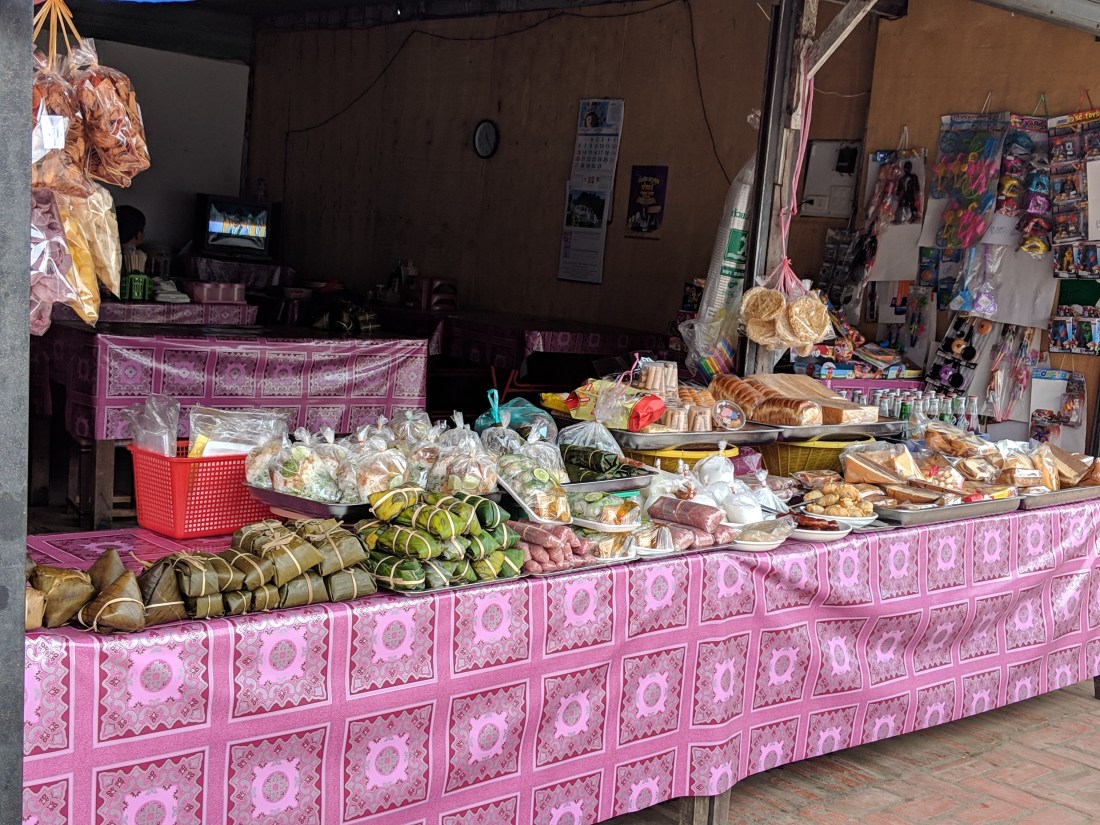
Our final morning in Luang Prabang we spent visiting local wats and markets for the town’s people.

Our only regret is that we did not allow ourselves more time here. I hugely loved this small country.
 Jo & Eric's travels
You guys have that look now of seasoned travelers. It’s great to see! You’re immersed. So happy for you. And now I want to go to Laos! Jay
LikeLike
Eric now says he can imagine doing this for 8-12 months. The longer we’re on the road, the easier it gets. We’ll have to coincide our adventures at some point. Miss you guys!
LikeLike
These pictures are spectacular and I agree with Jay – you look totally in your element!!
LikeLike