
Our starting point in Vietnam was Ho Chi Minh City, a place packed with motorcycles everywhere. Crossing the street as a pedestrian is an adventure. The very first stop on our tour was the site of the landing of the very last helicopter to leave Saigon on April 29, 1975. It is not a usual tourist spot, but our guide is friends with the building security. There are no signs or plaques on the building; it is now just an ordinary office building. But it was made famous by a scene captured by Dutch photojournalist Hubert van Es in one of the most iconic and dramatic photographs from the Vietnam War. The building was one the CIA had rented from the Chinese during the war. We road up in the same elevator used by the CIA.
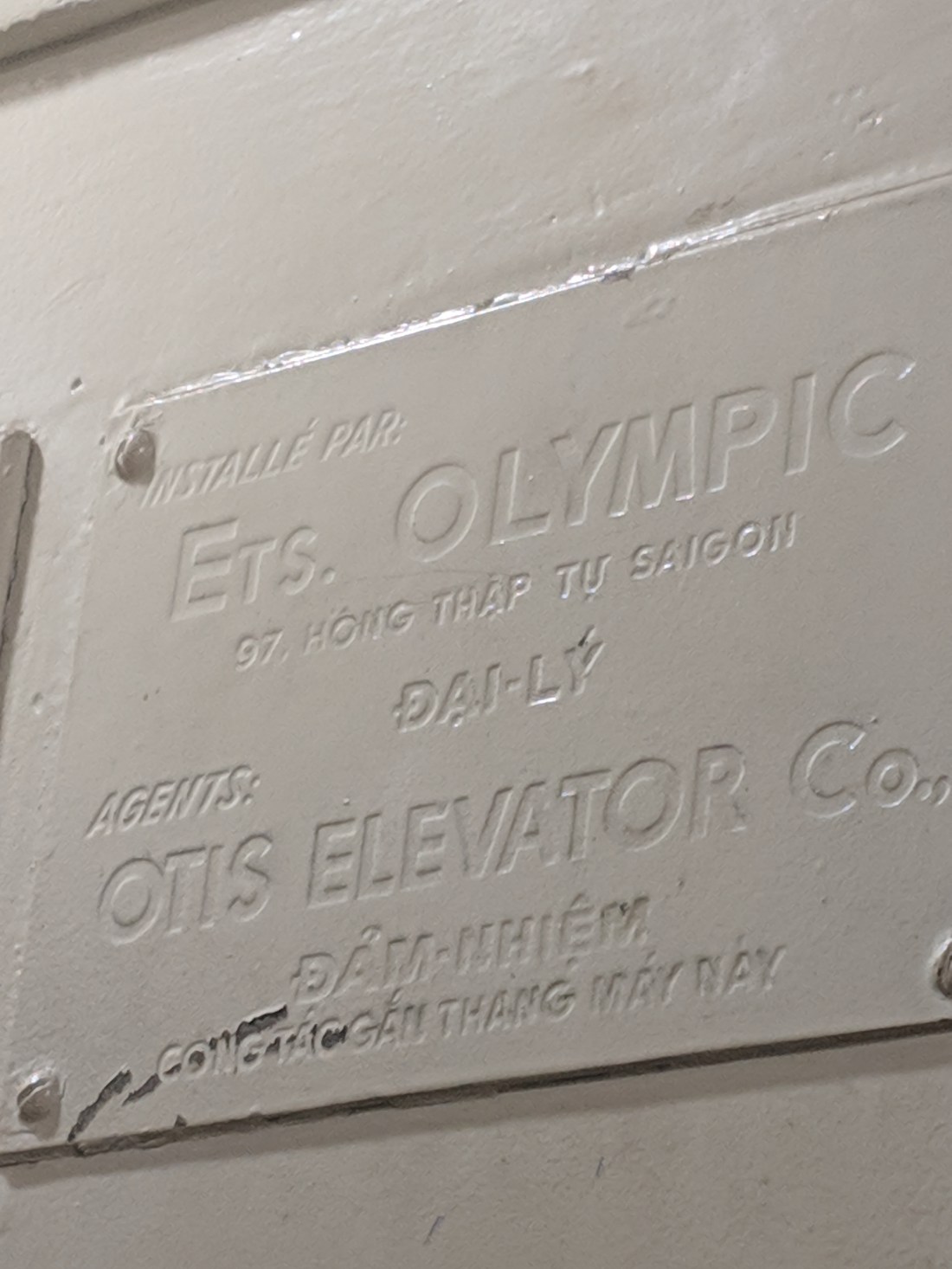
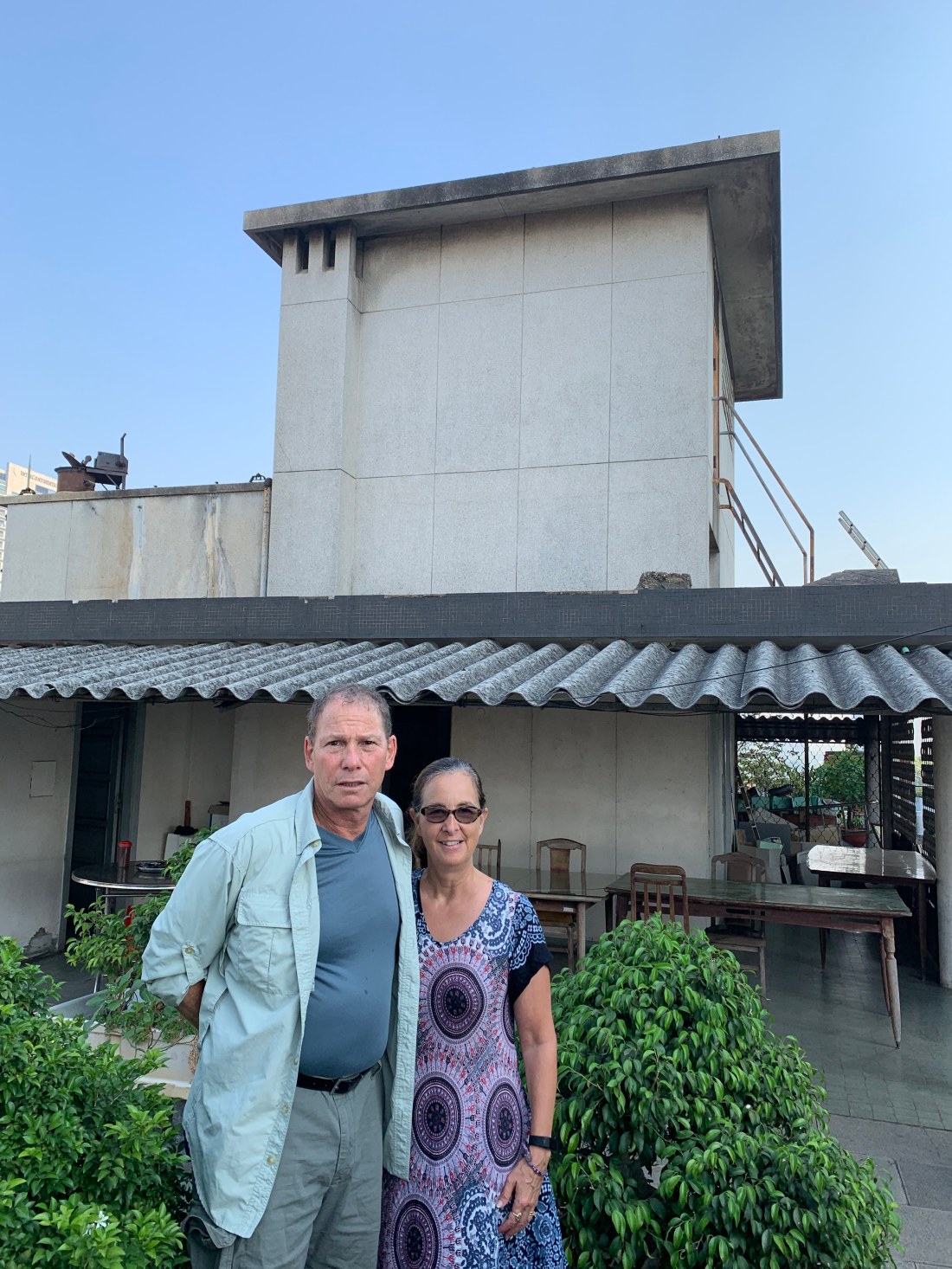
 this is the scene 1975
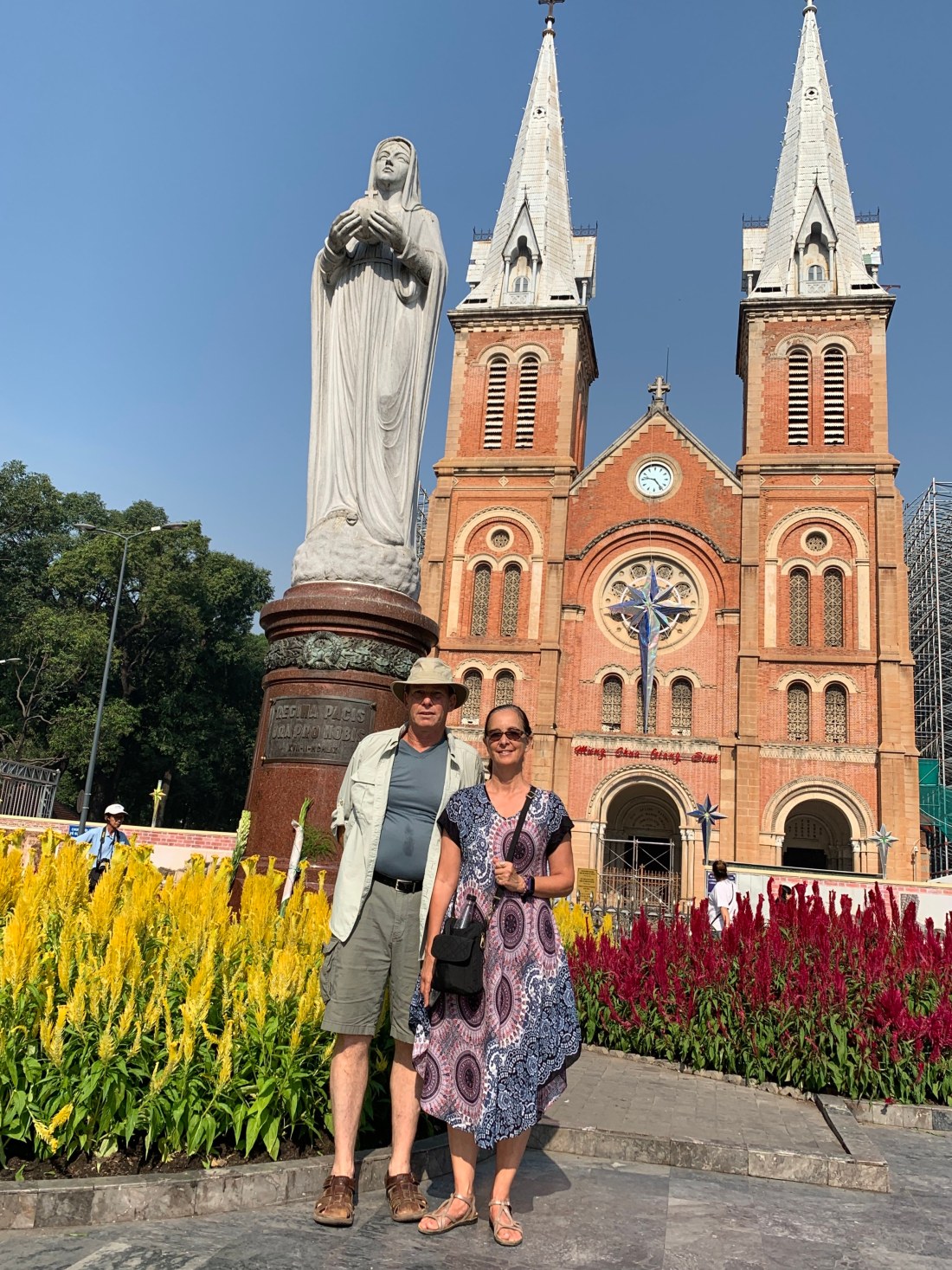
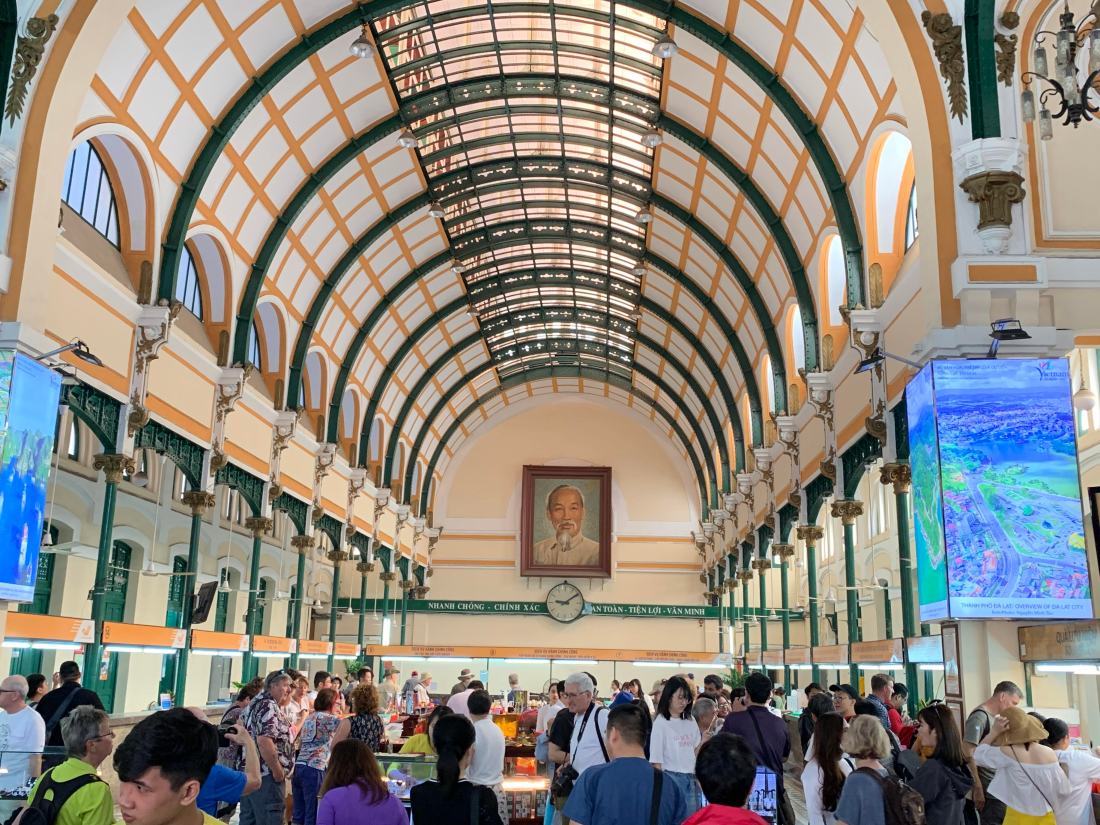
Our next stops were buildings erected by the French colonialists in the late 19th century: Notre Dame Cathedral and the post office, which is still a functioning post office today. Notre Dame is closed for the next several years for renovations.

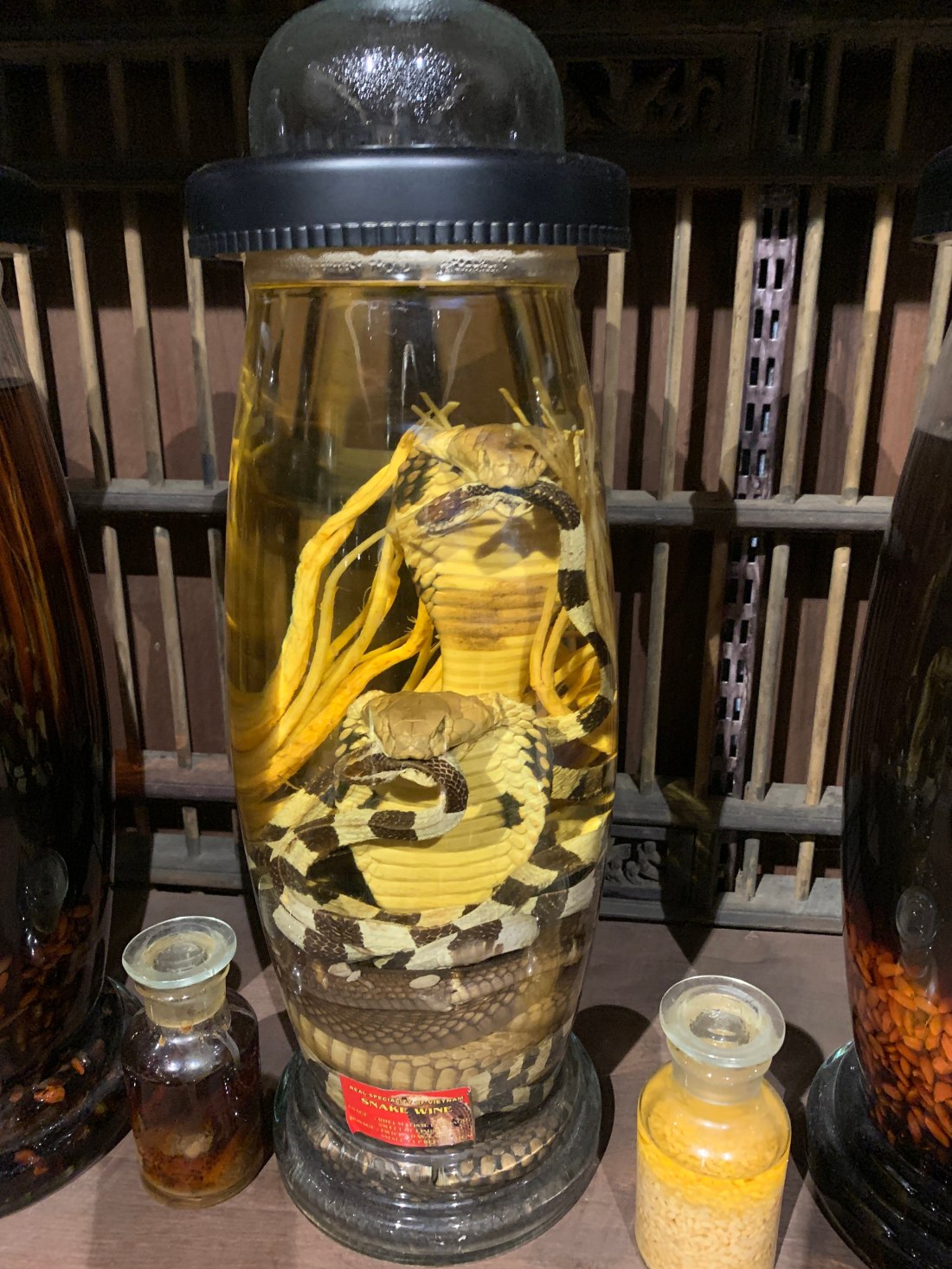
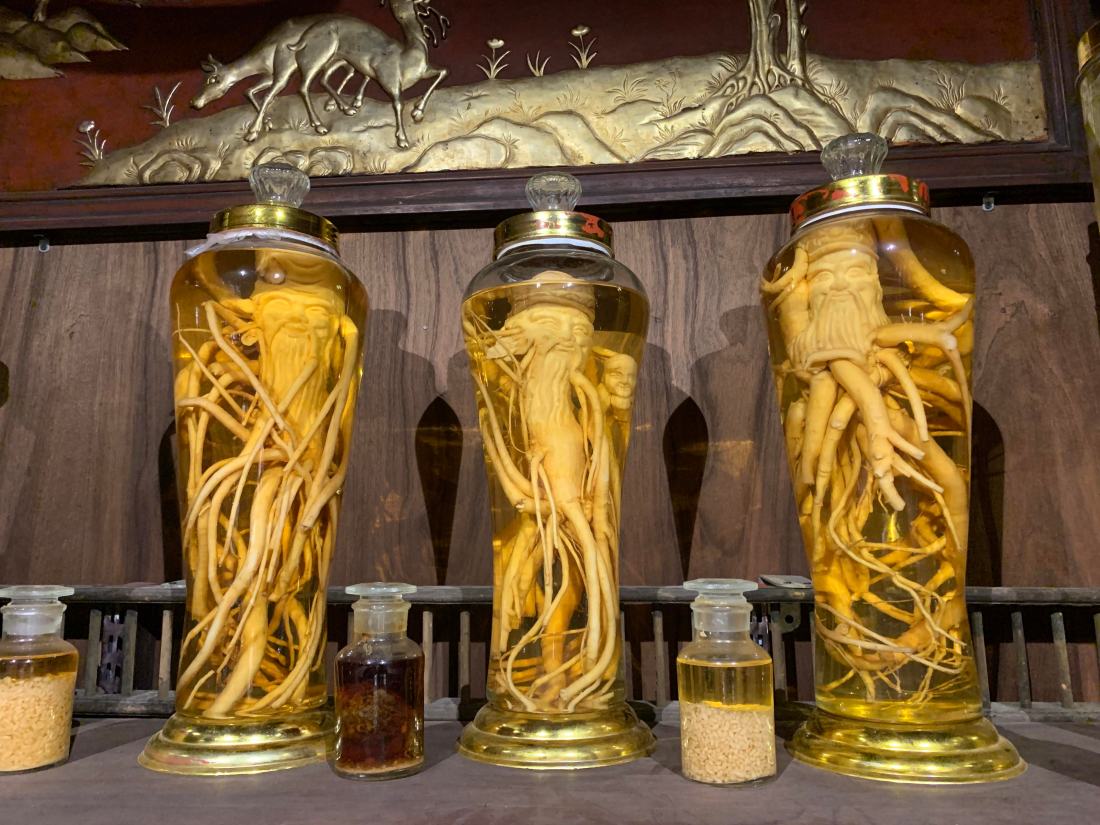
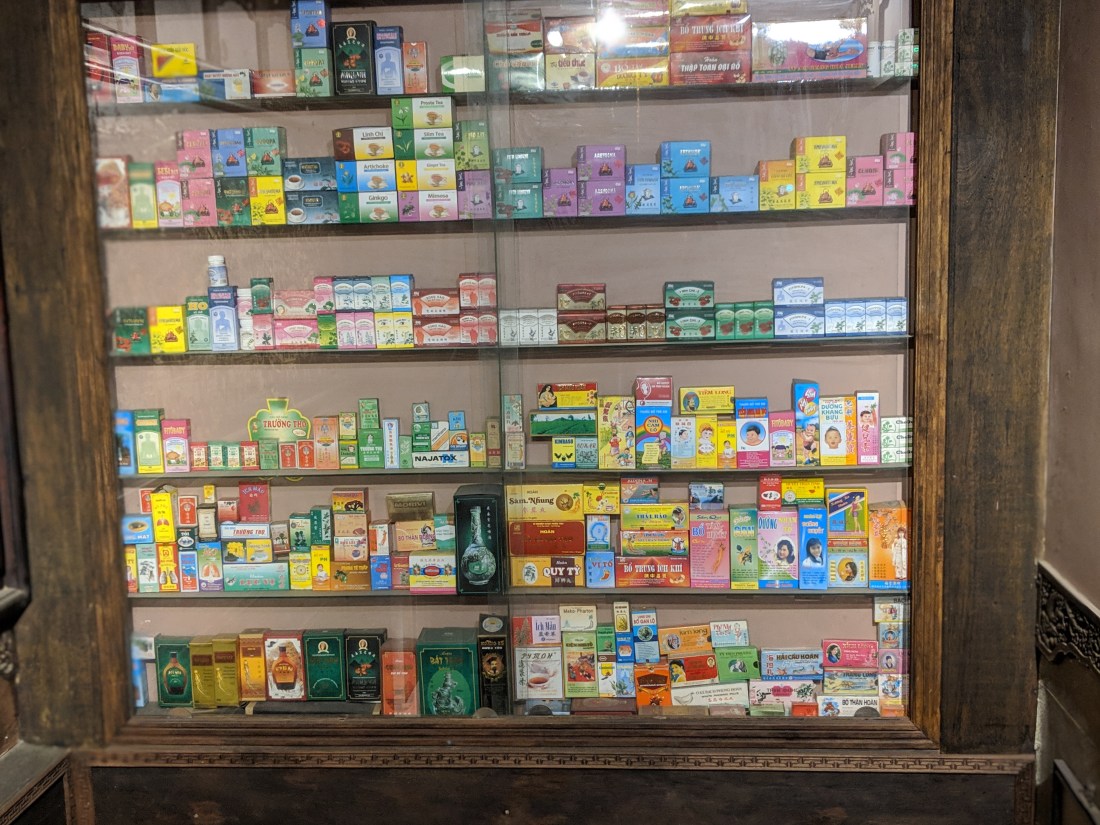
Next on our tour was the Museum of Traditional Medicine. The building and its architecture were as interesting as the contents. We took a tour and learned about the history of traditional medicine in Vietnam, which goes back to the 2nd century BC. It covers acupuncture, acupressure, which predates acupuncture because bones were used before metal items that could pierce skin were utilized, and herbal therapies. There are over 5000 plants known for use, 2000 commonly used today.
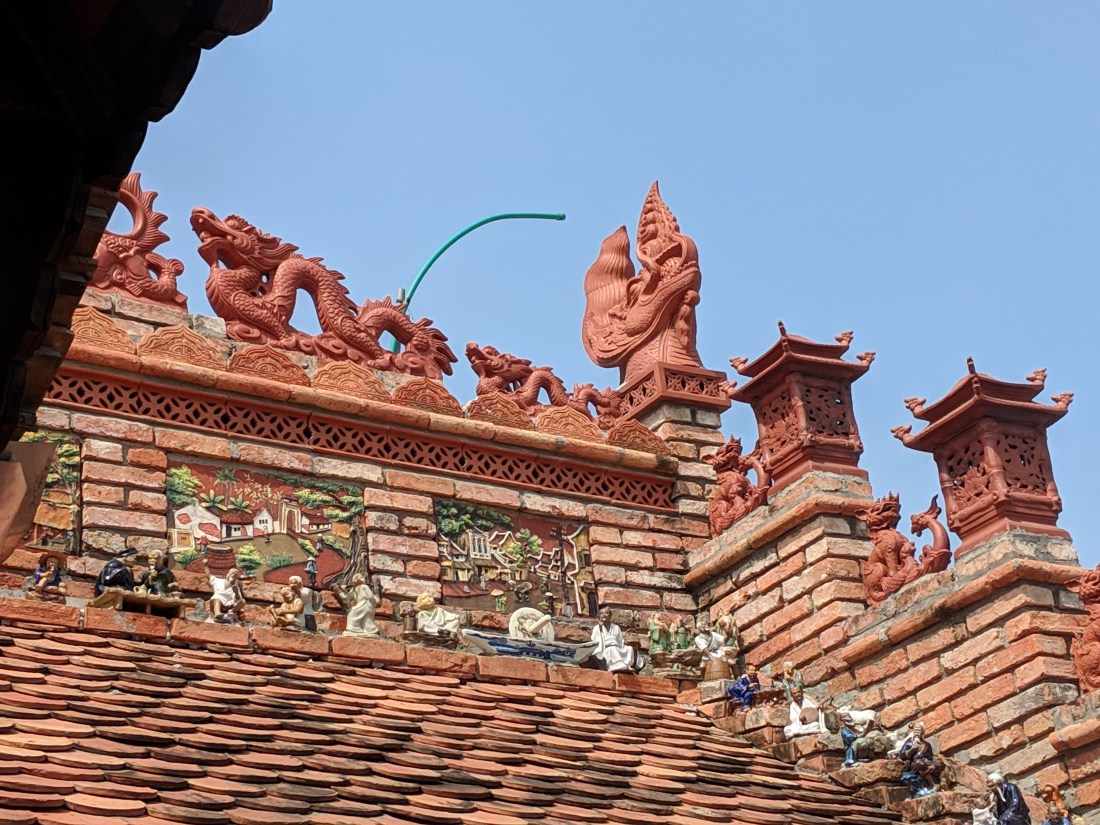

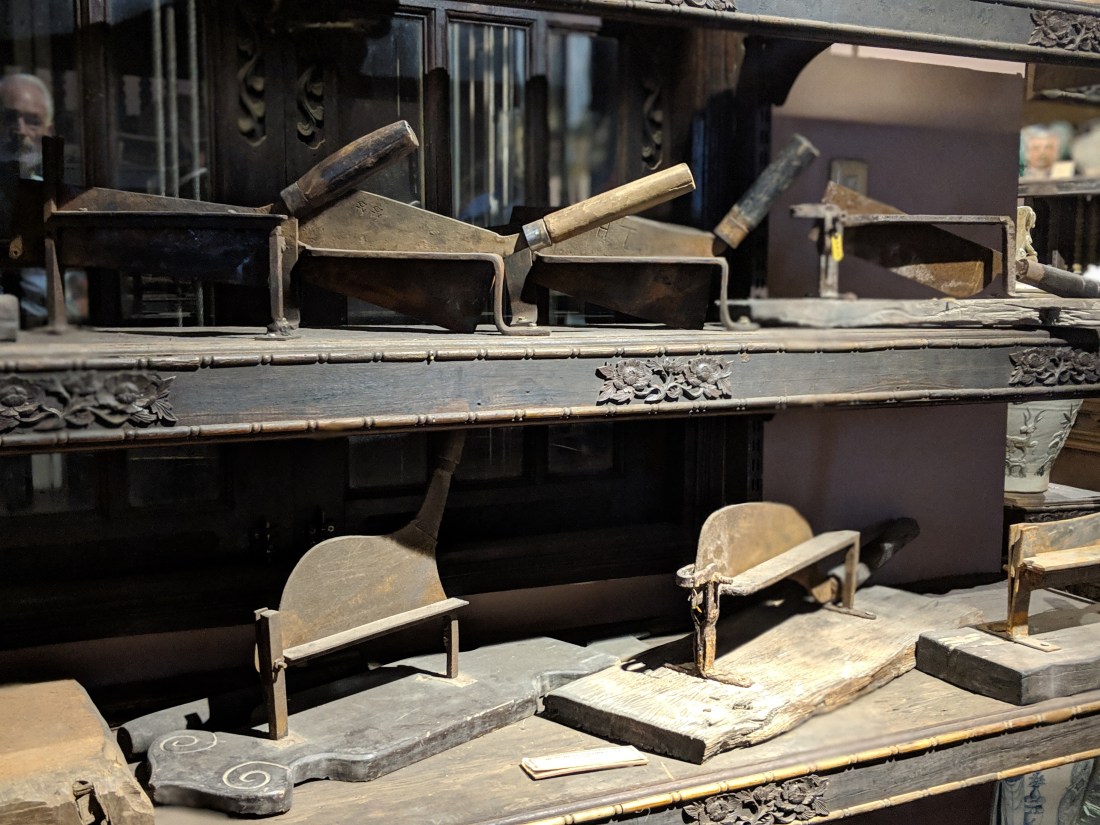
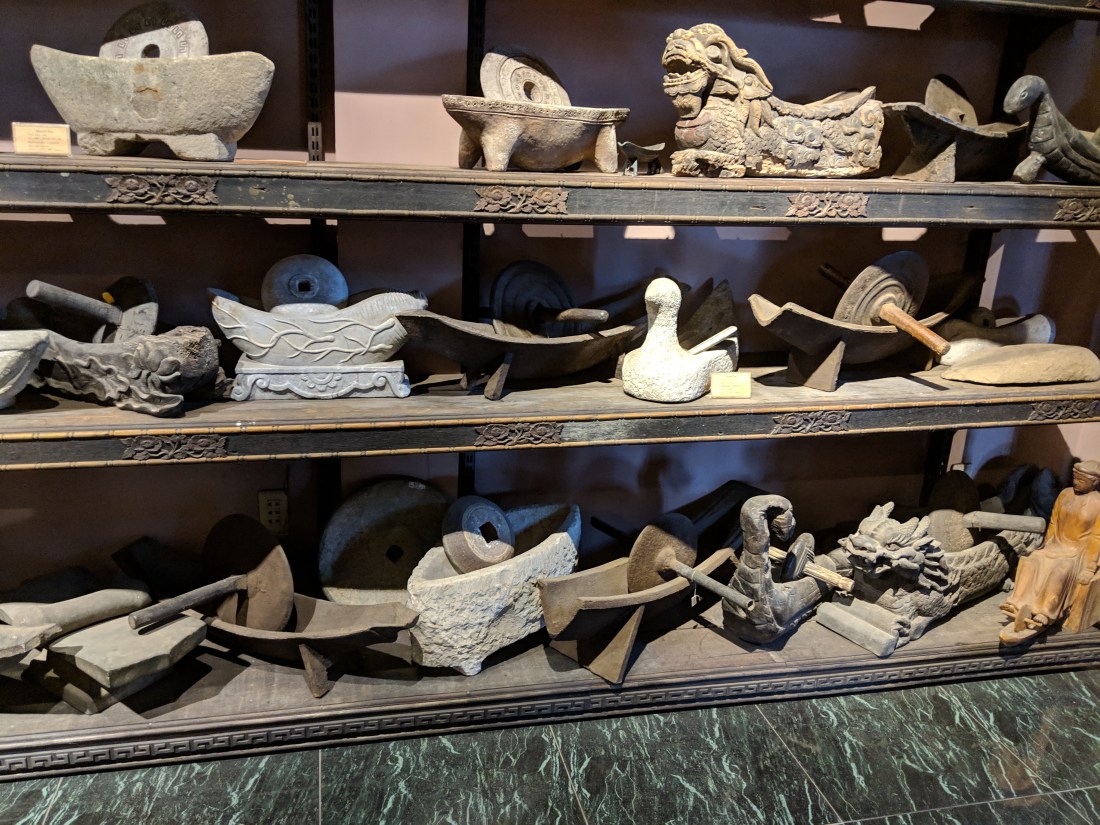

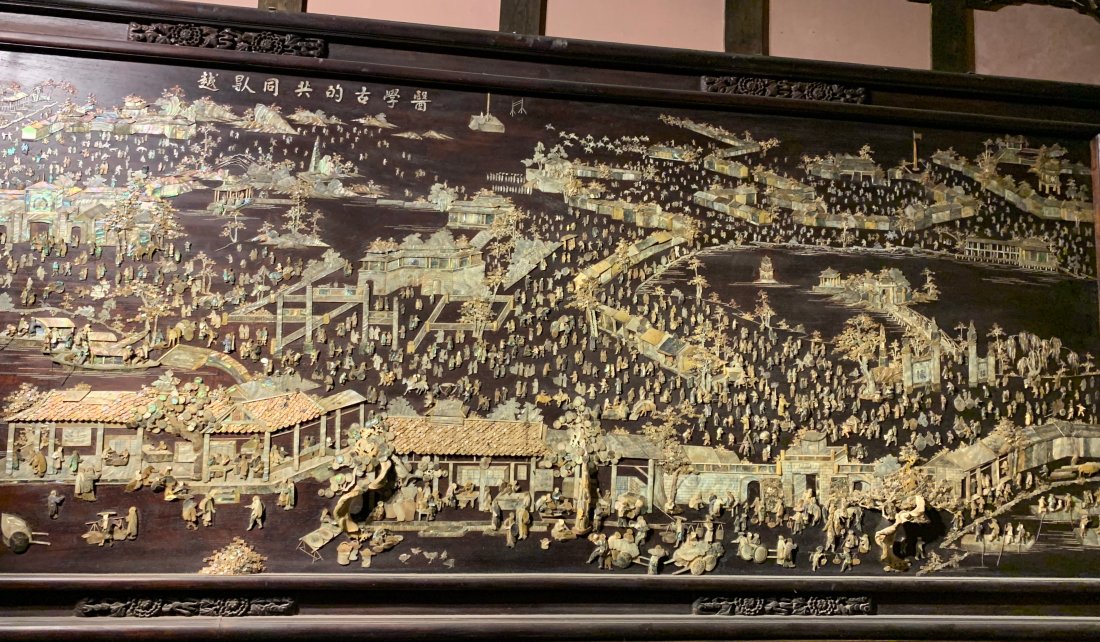
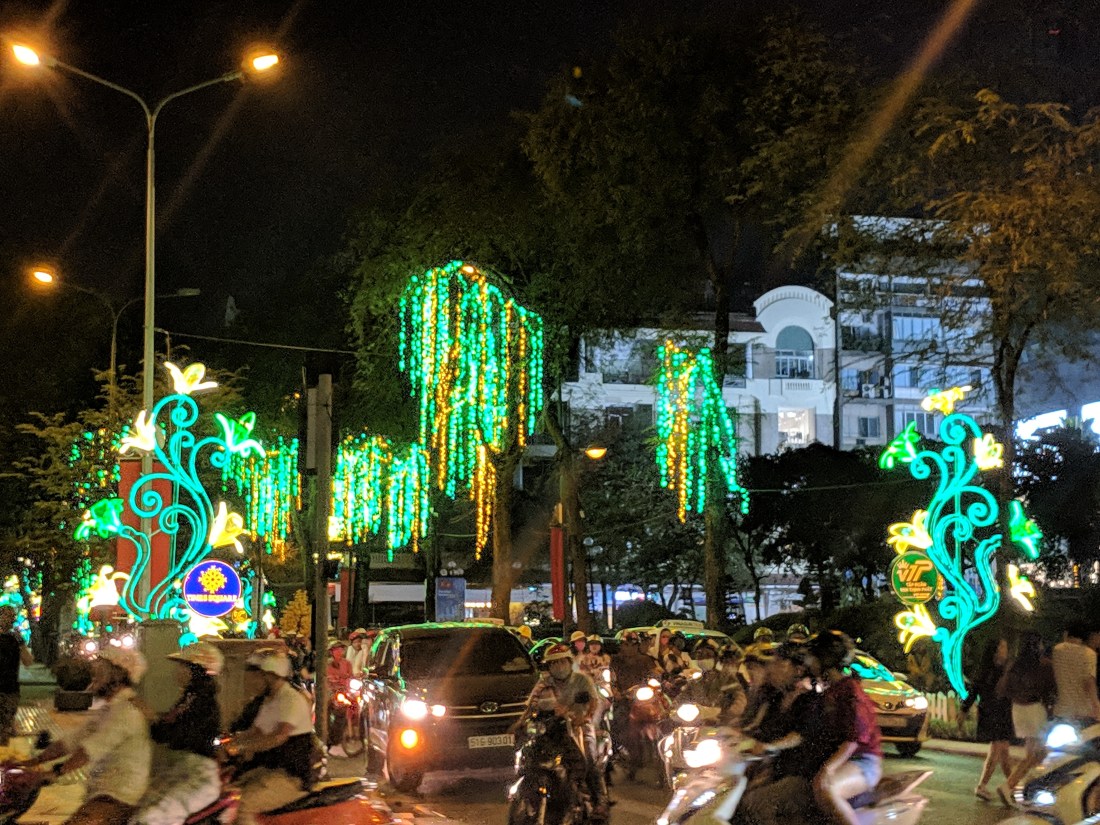
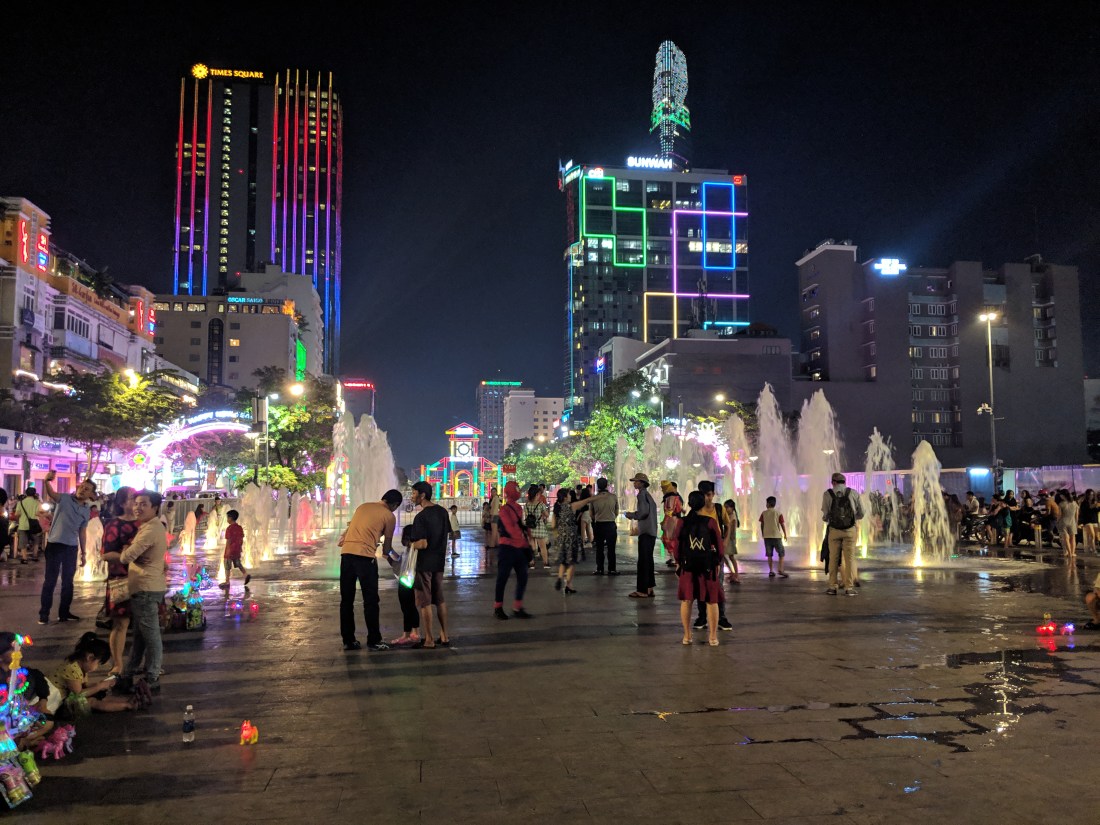
At night we explored the city on our own, dodging motor bikes.

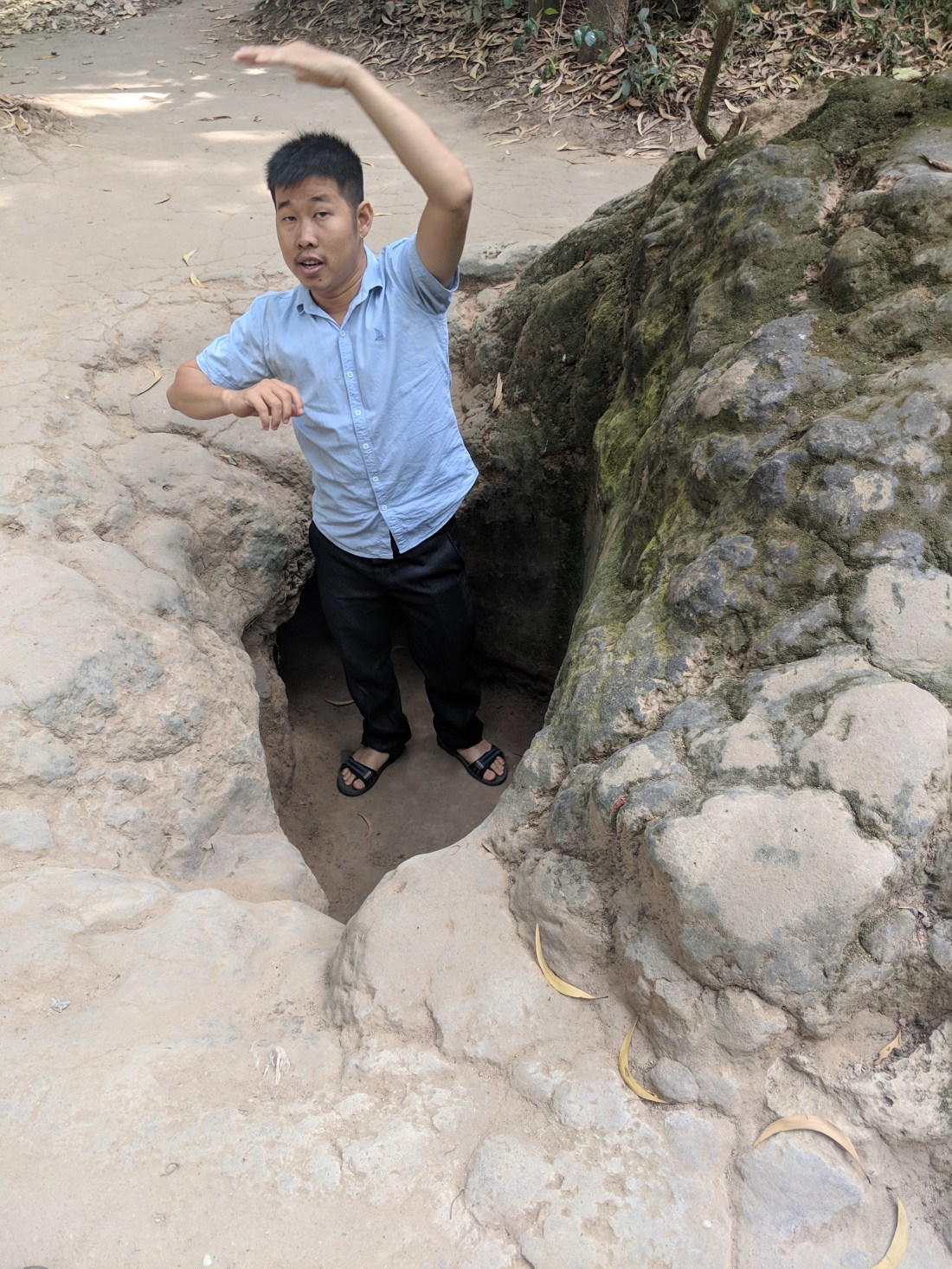
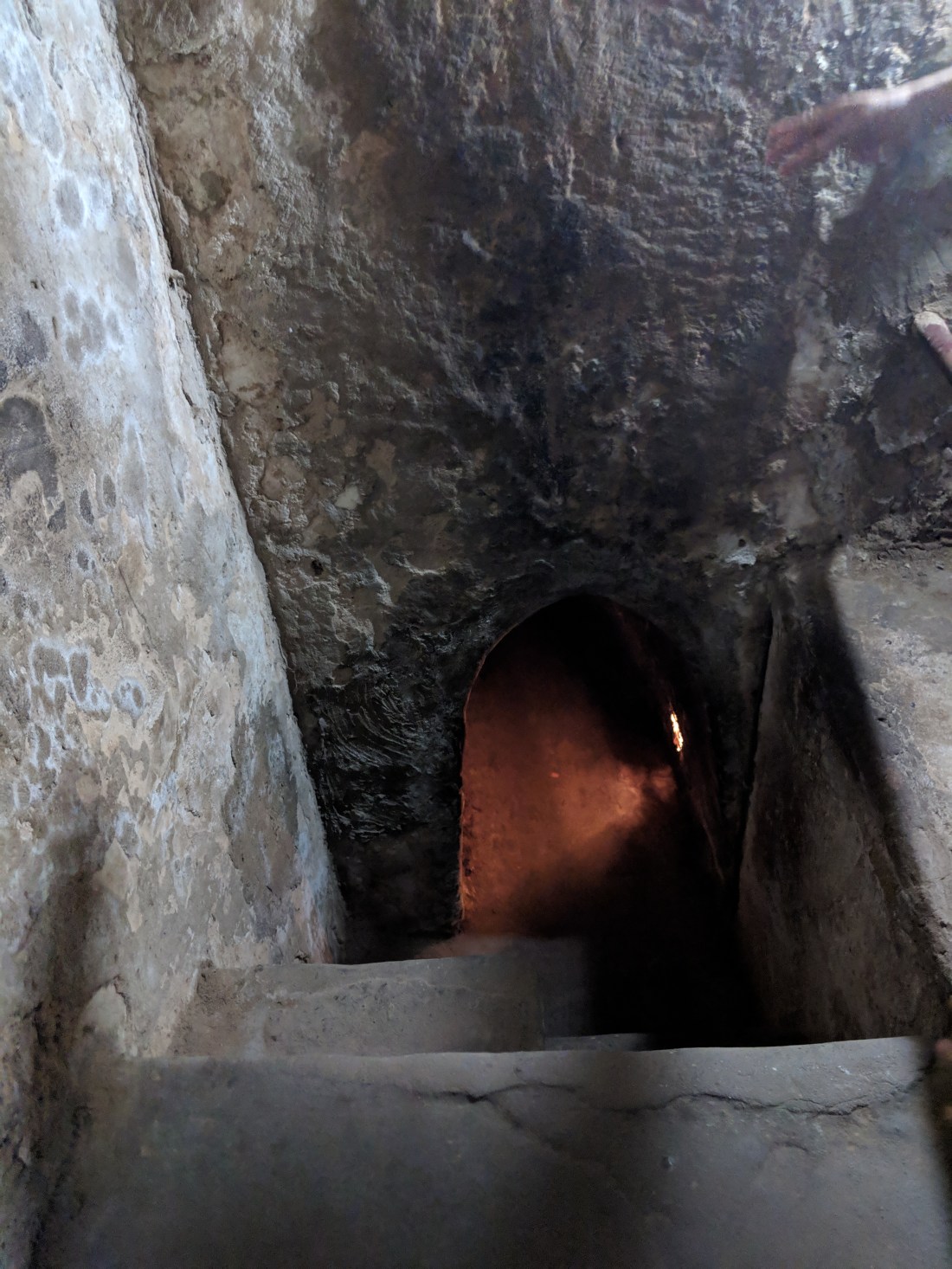
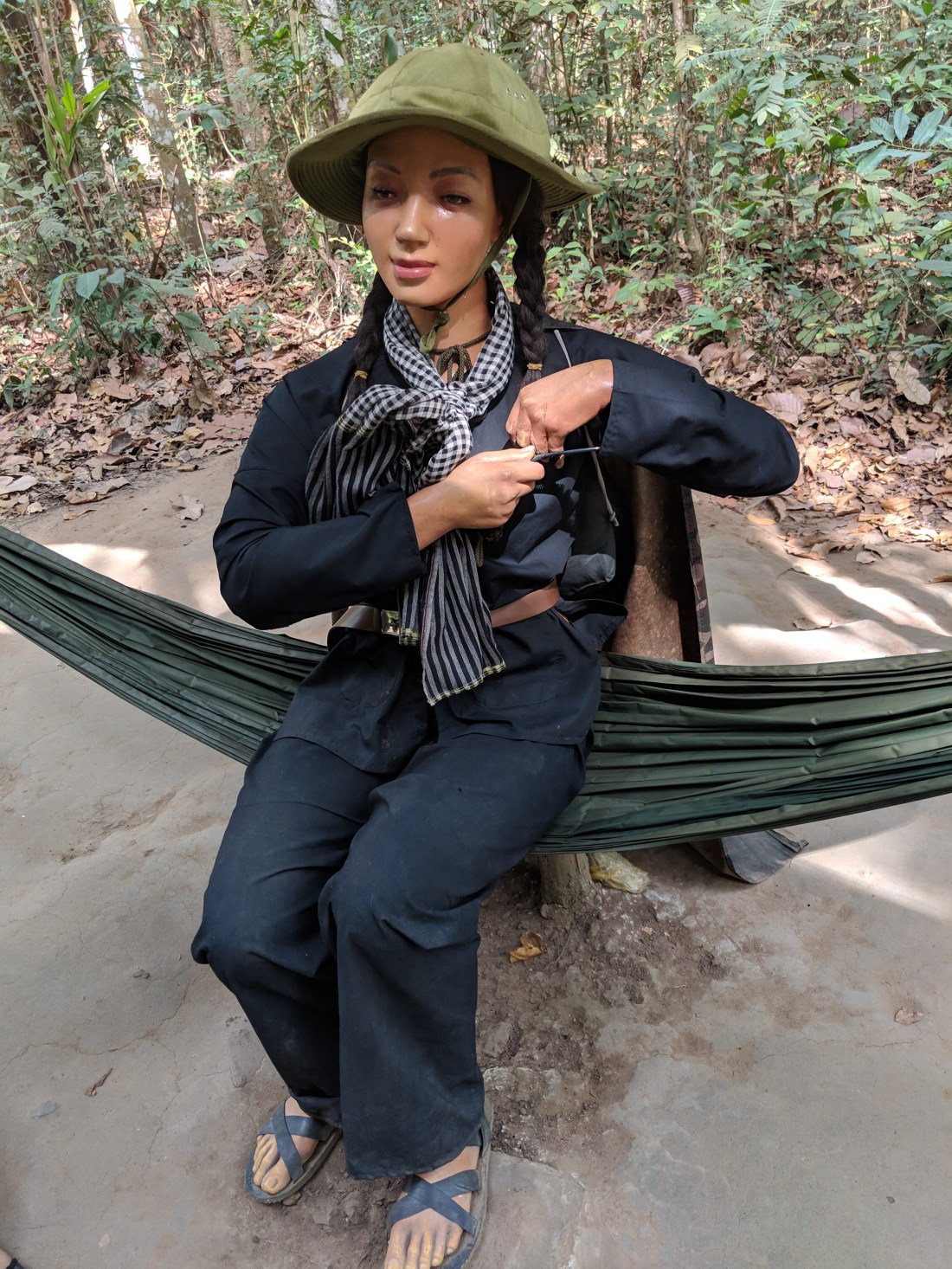
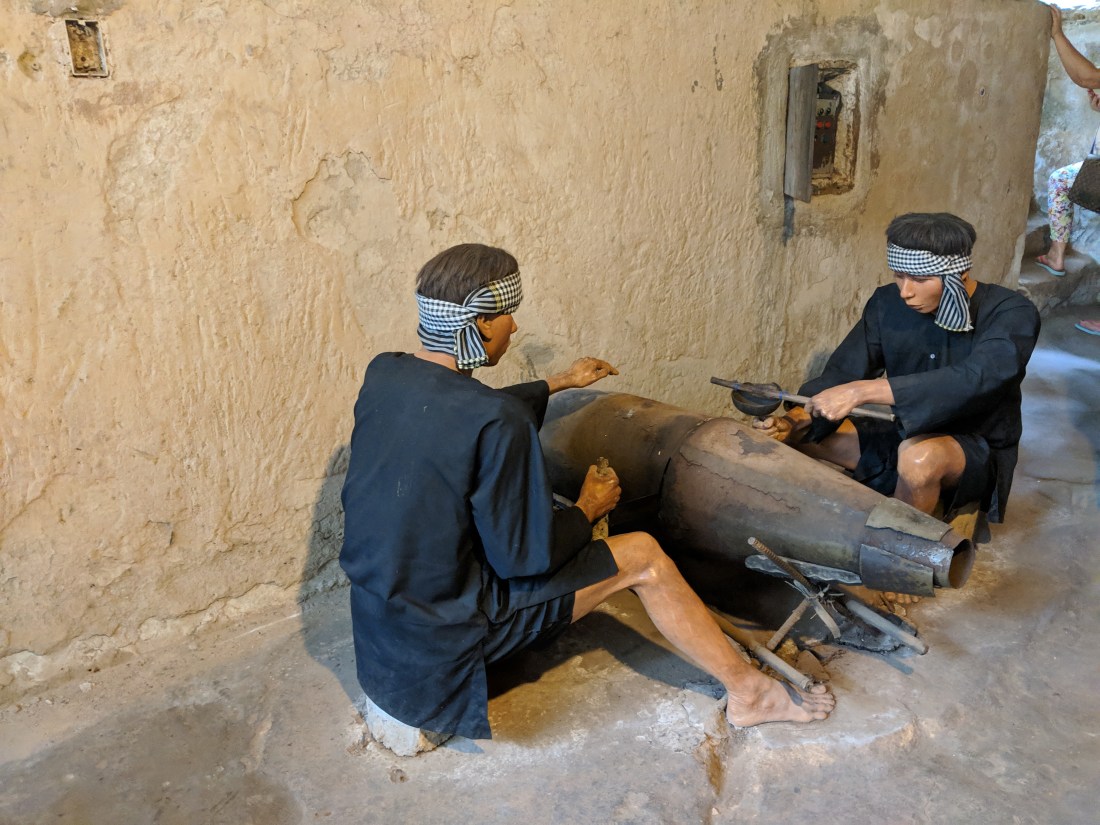
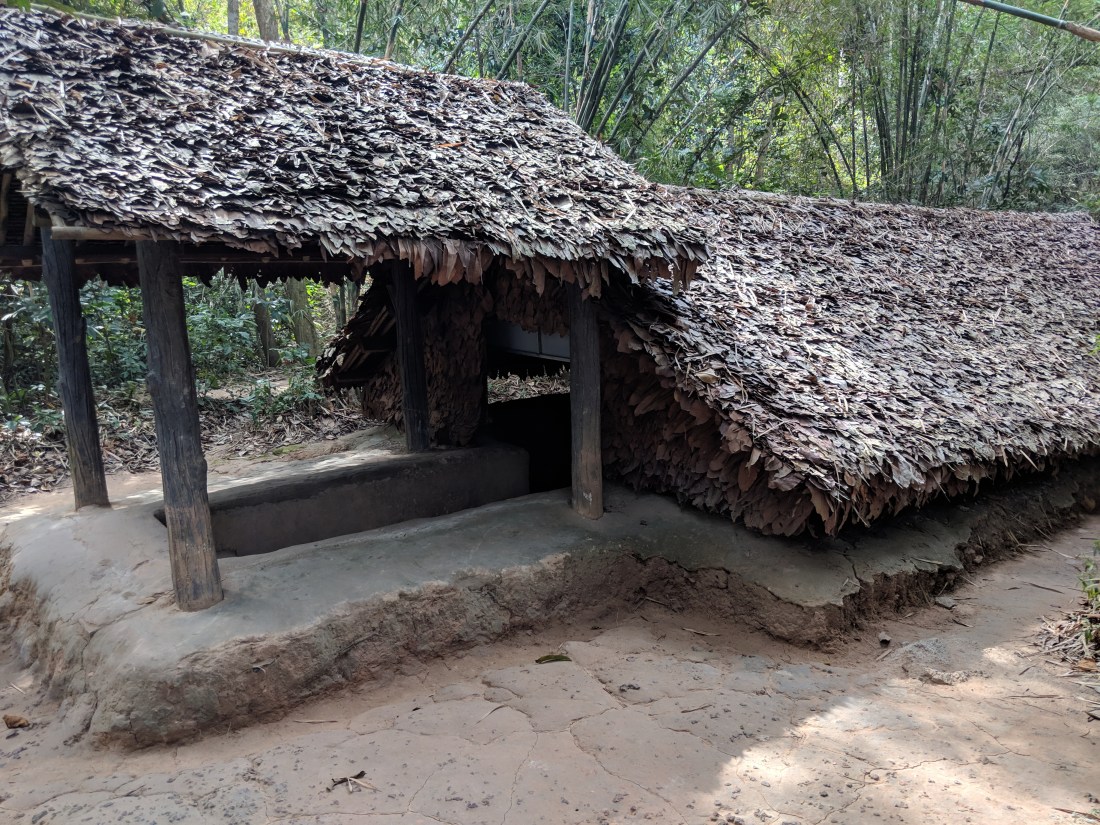
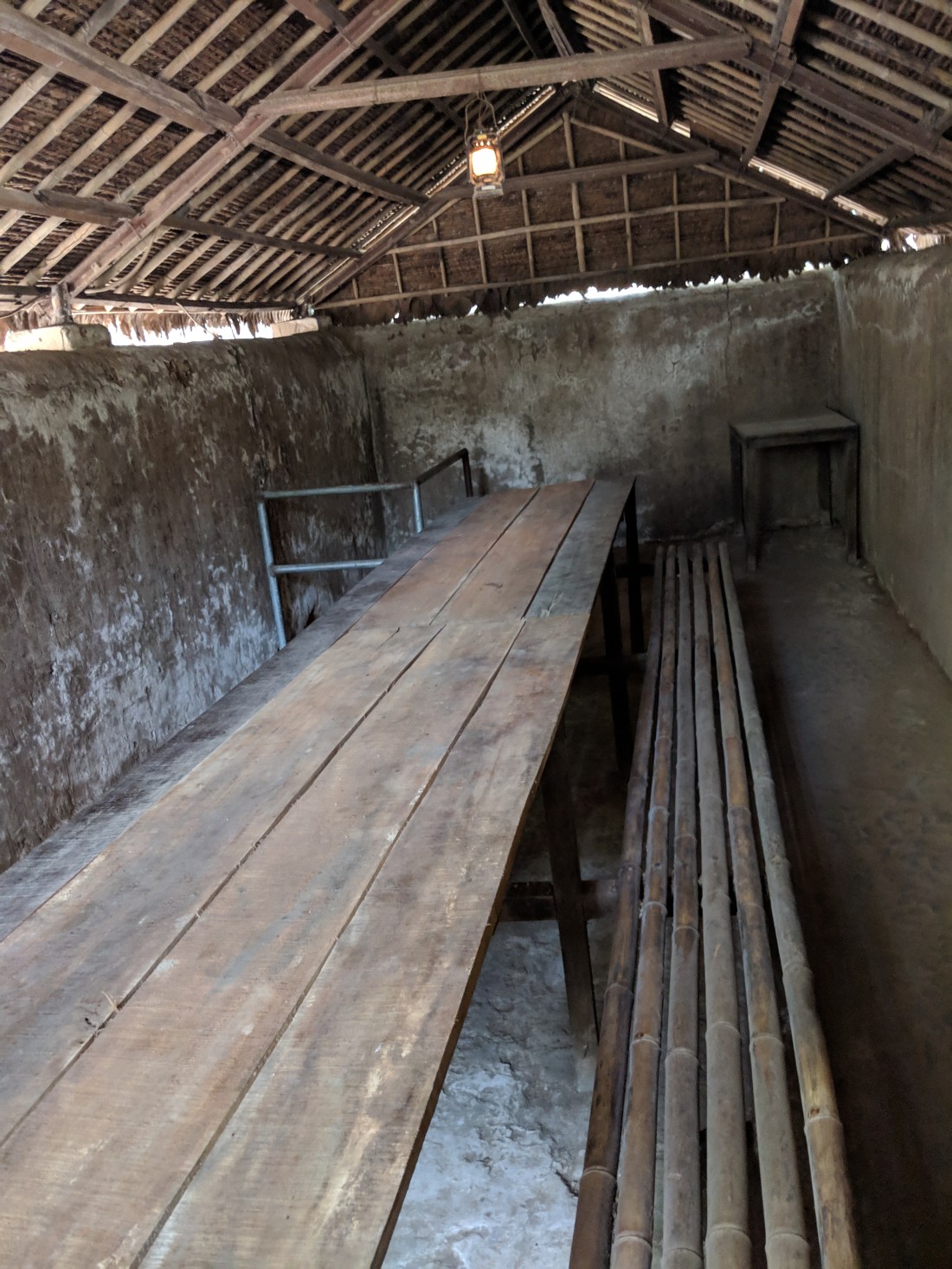
The next morning we visited the Cu Chi tunnels, a vast net work of connected underground tunnels used by the Viet Cong during the war in their resistance against the Americans. There was basically an entire city underground including places for sleep, cooking, eating, storage and movement of combat supplies, and hospitals.
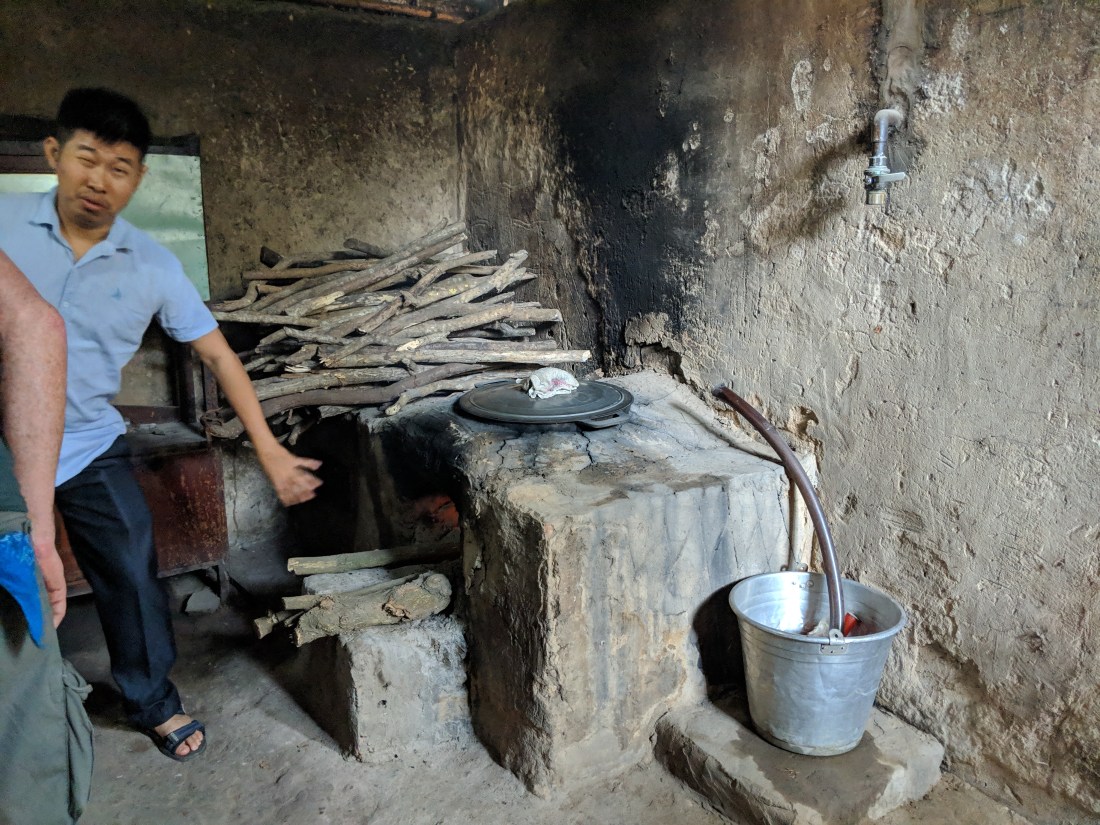
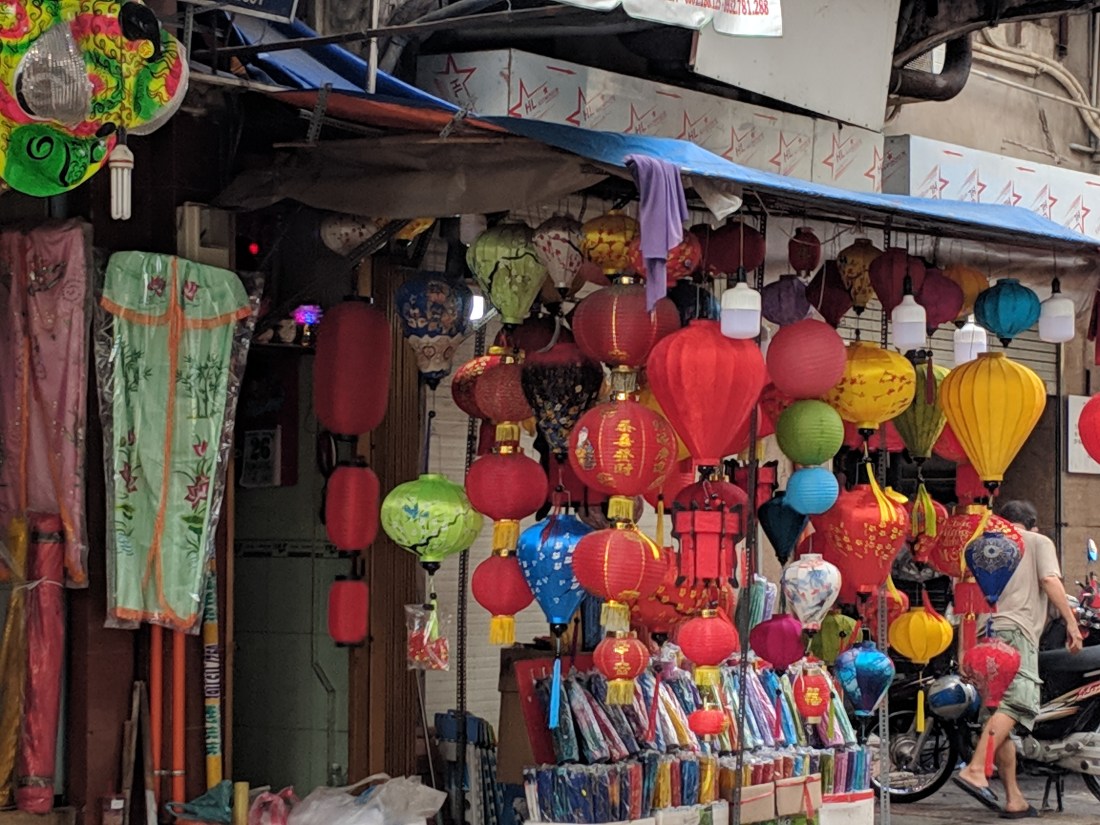
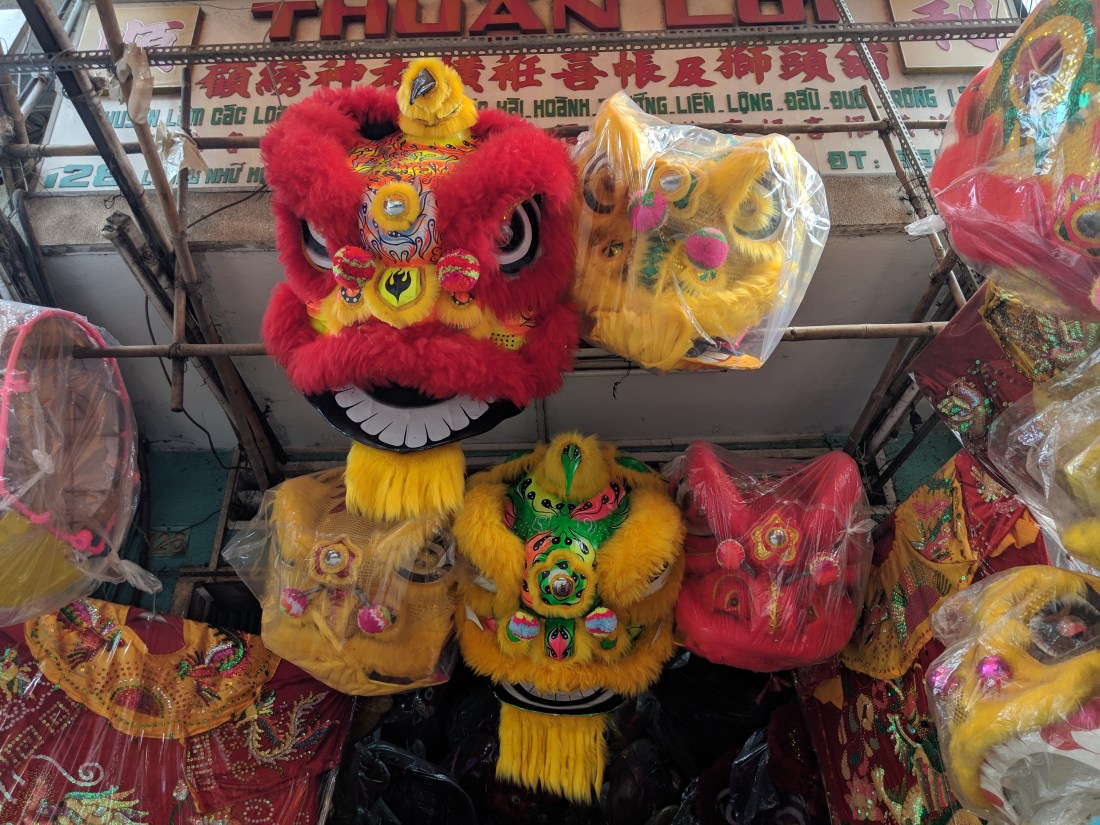
Then we went back into the city for a tour of Chinatown, which was busy prepping for the New Year holiday Tet.
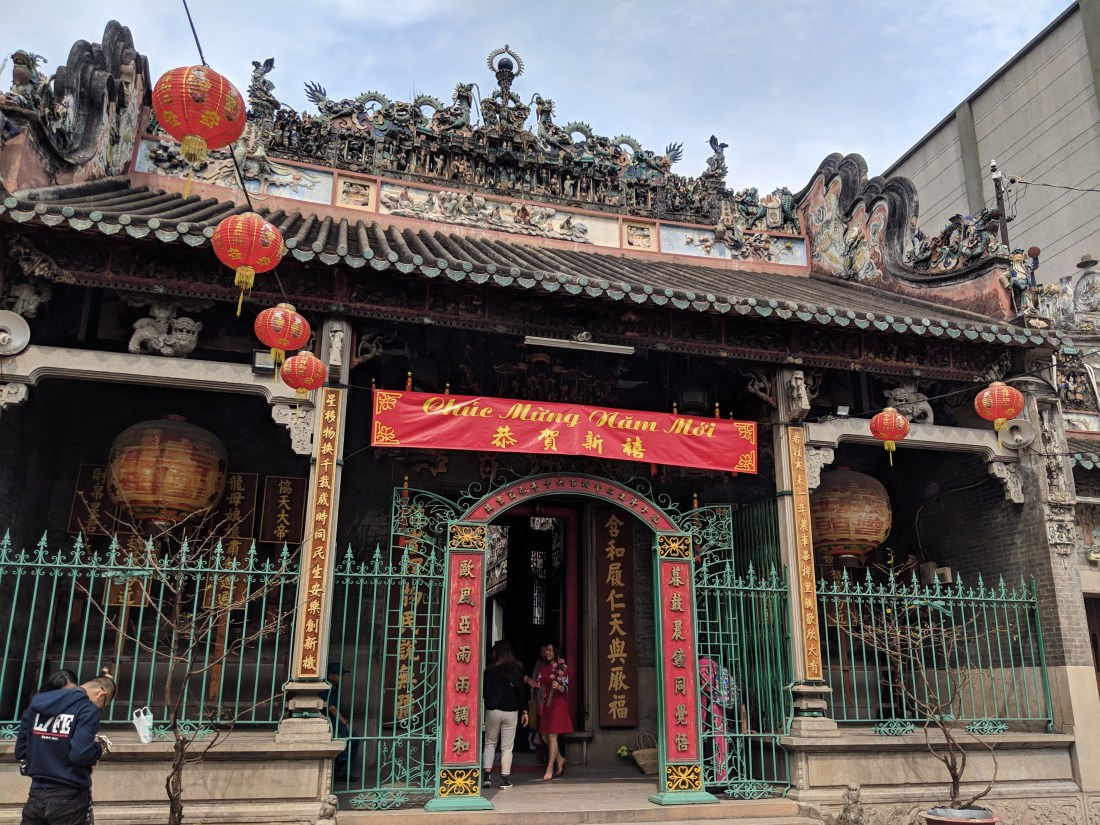
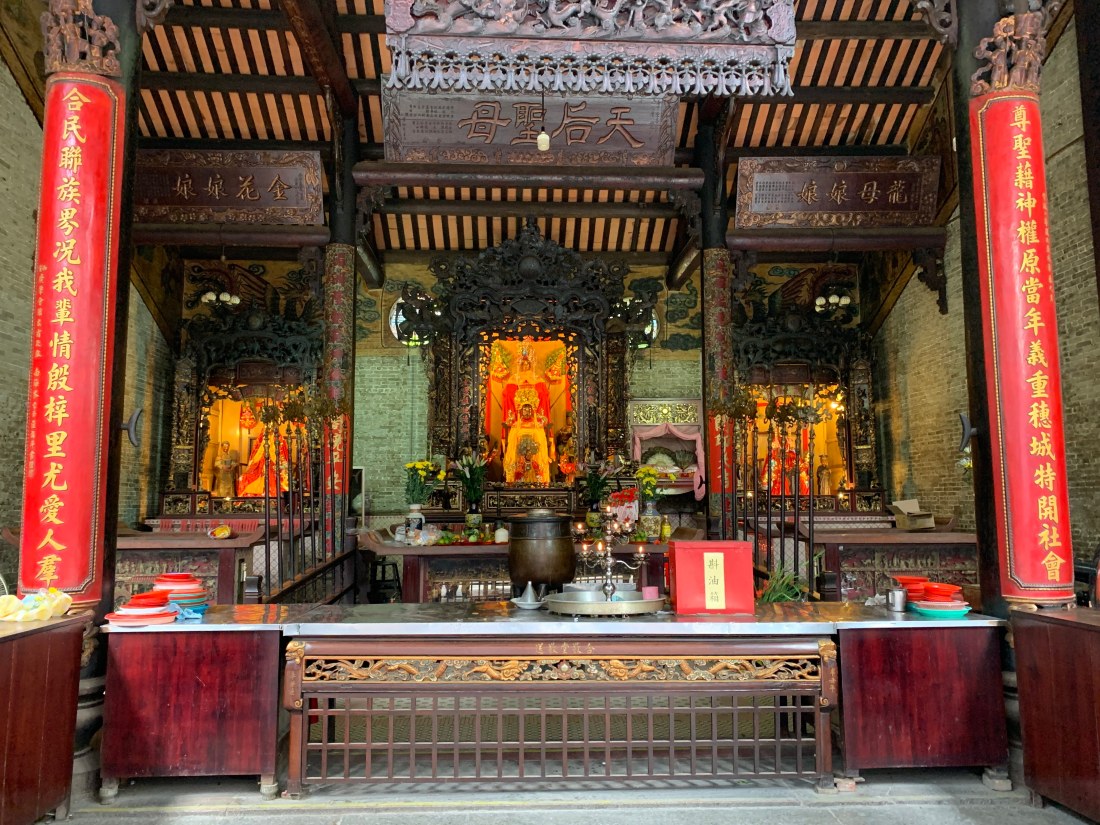
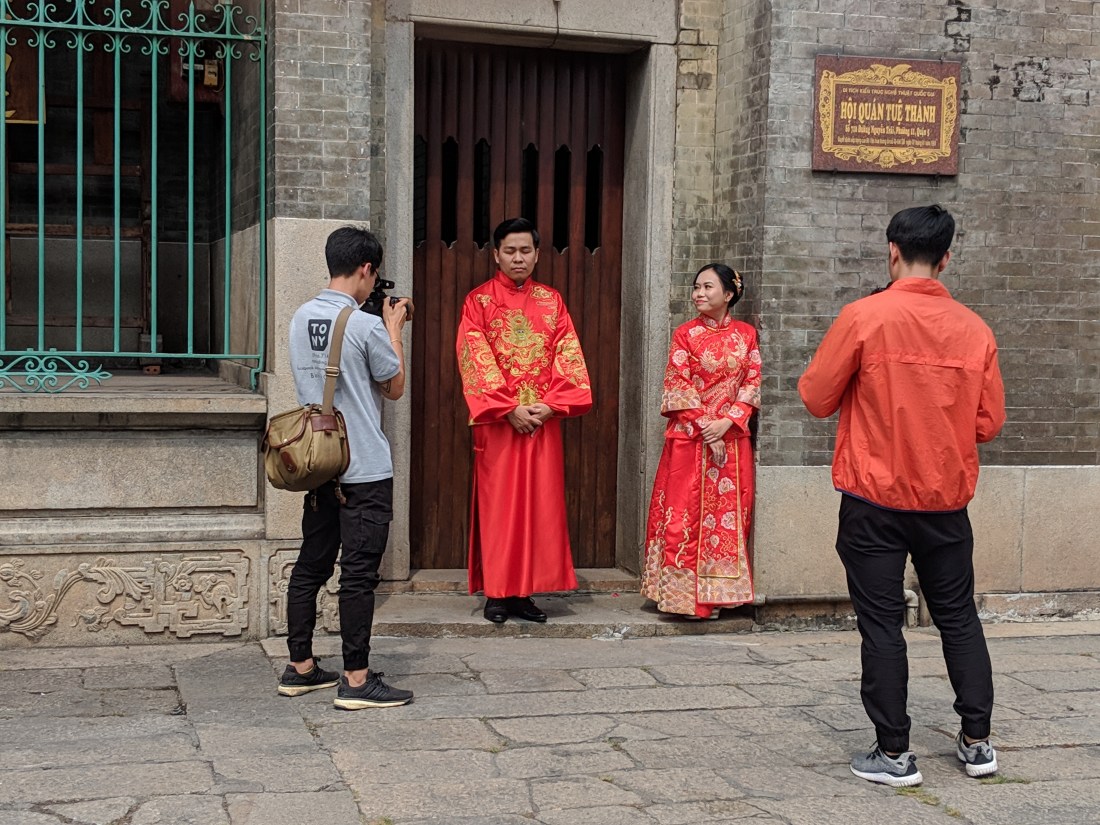
And we visited Ba Thien Hau temple in Cholon: Chinatown built in 1760 to honor the Chinese sea goddess Mazu, who protects ships. The exterior statues are of porcelain. We also saw a wedding couple having their photos taken.
In the afternoon we drove down to Ben Tre in the Mekong Delta, the coconut capital of Vietnam. We stayed at a lovely resort Mango Home right on the river.
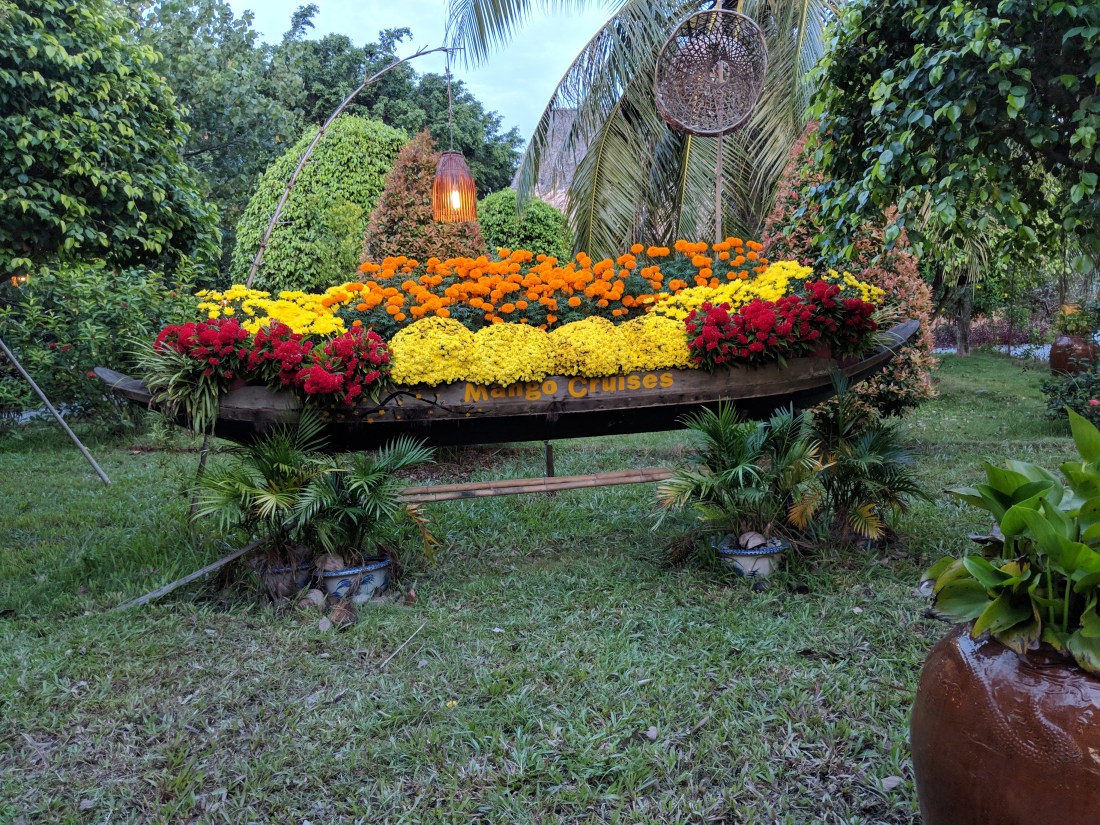

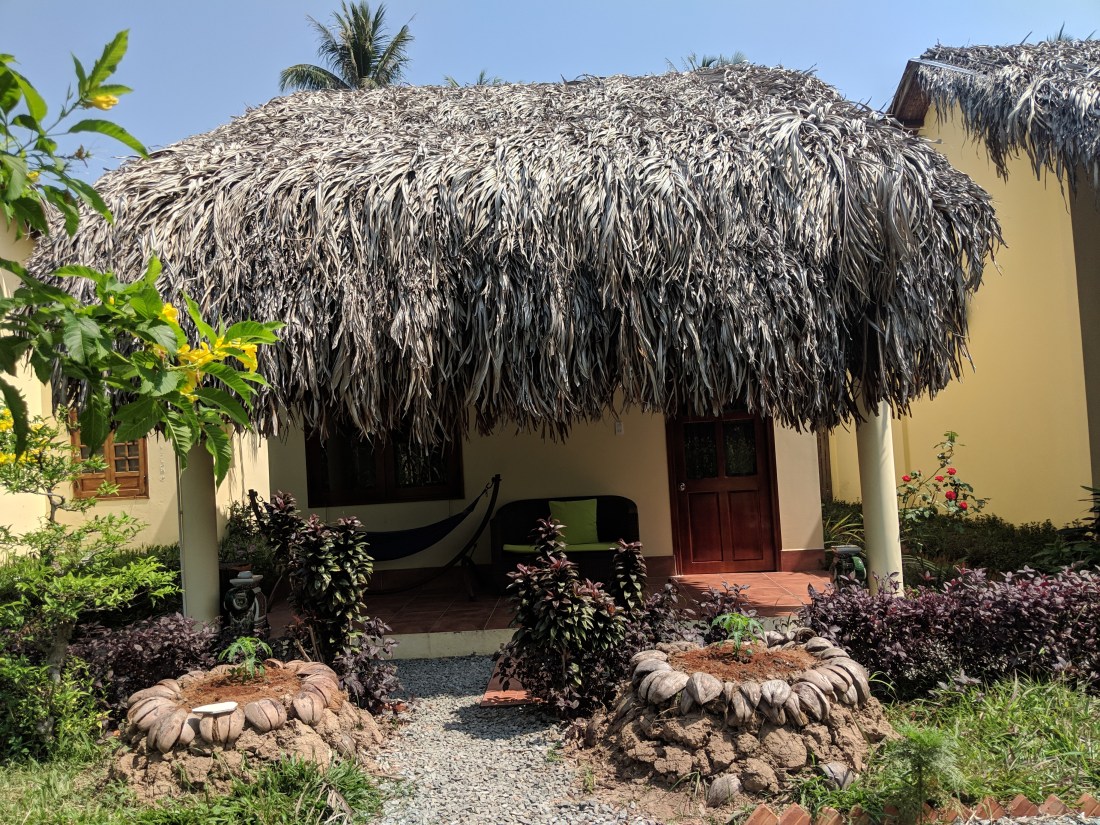
Our first morning started with a short cruise up the river.

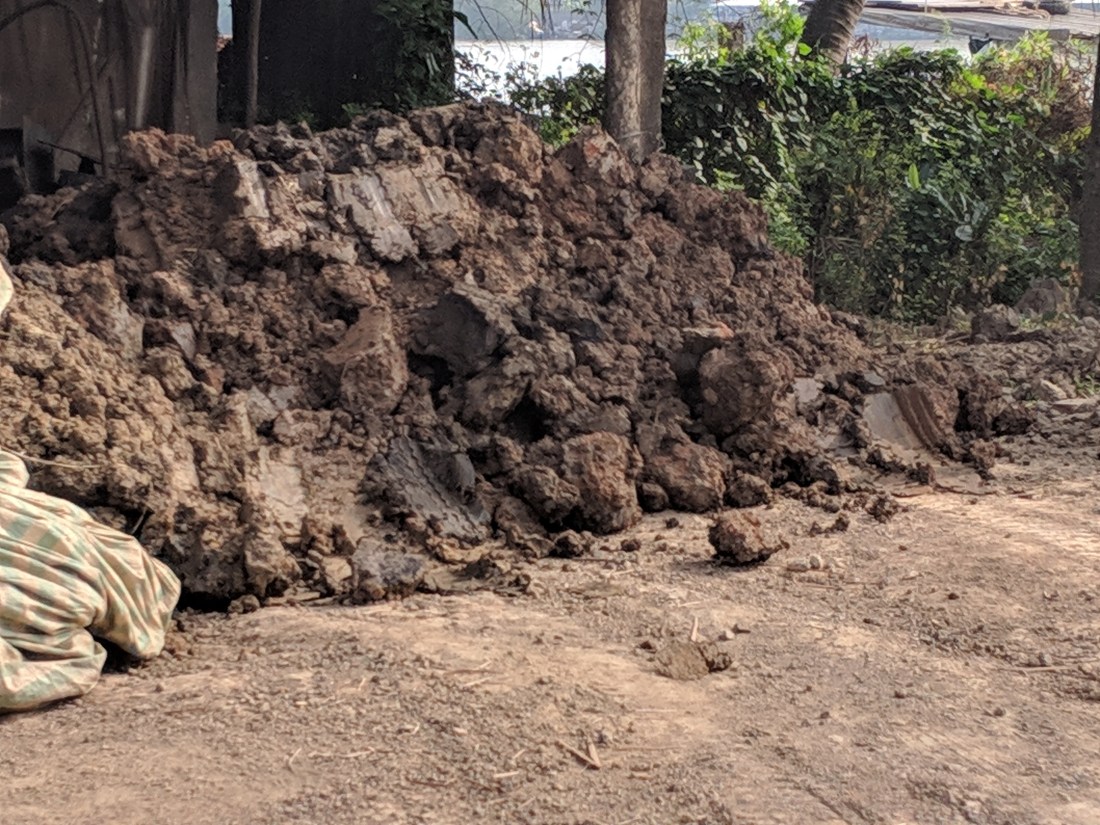
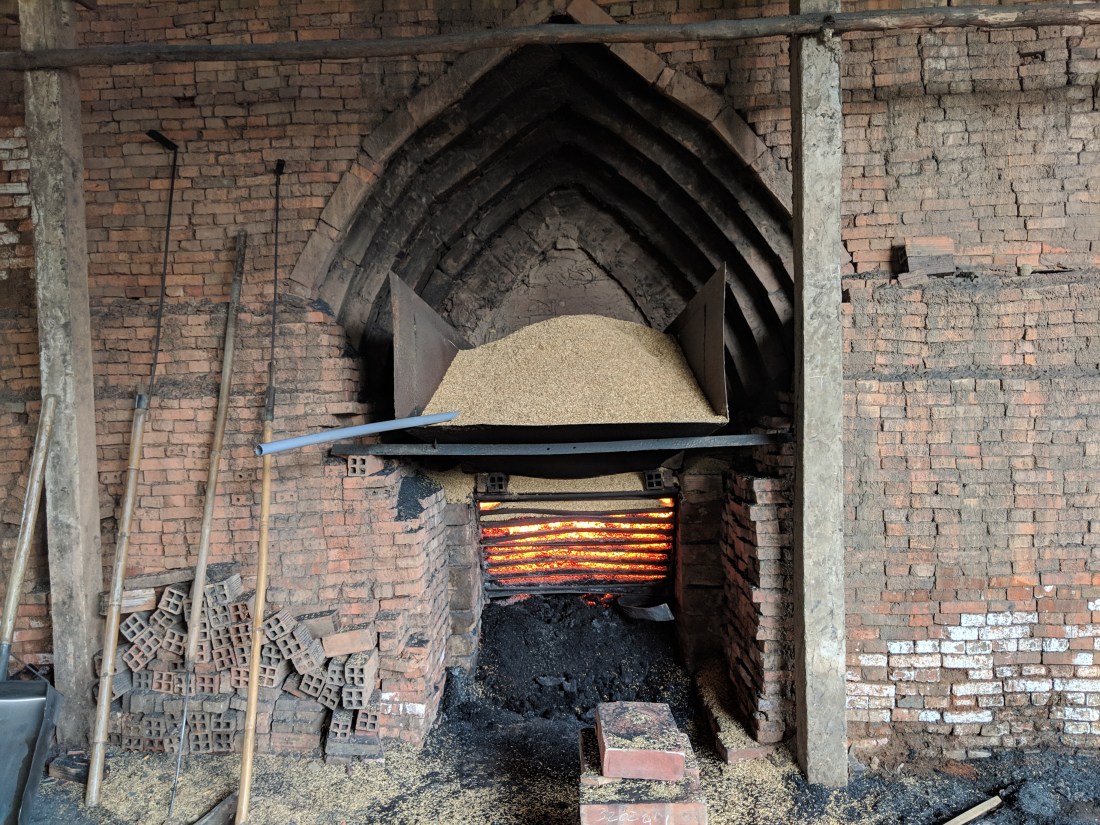
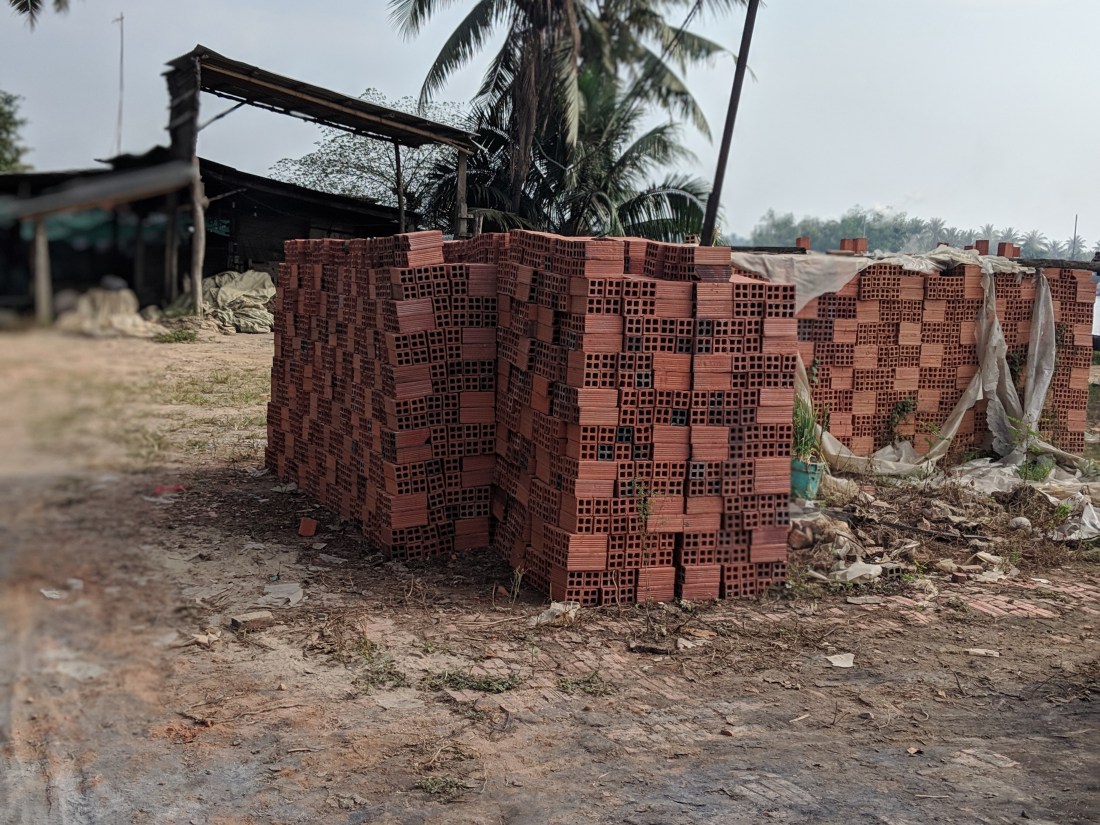
First stop was a brick making “factory.” The mud is brought in on barges from rice paddies, then put in the assembly belt with a mold and made into either solid bricks for foundation or with holes for walls.
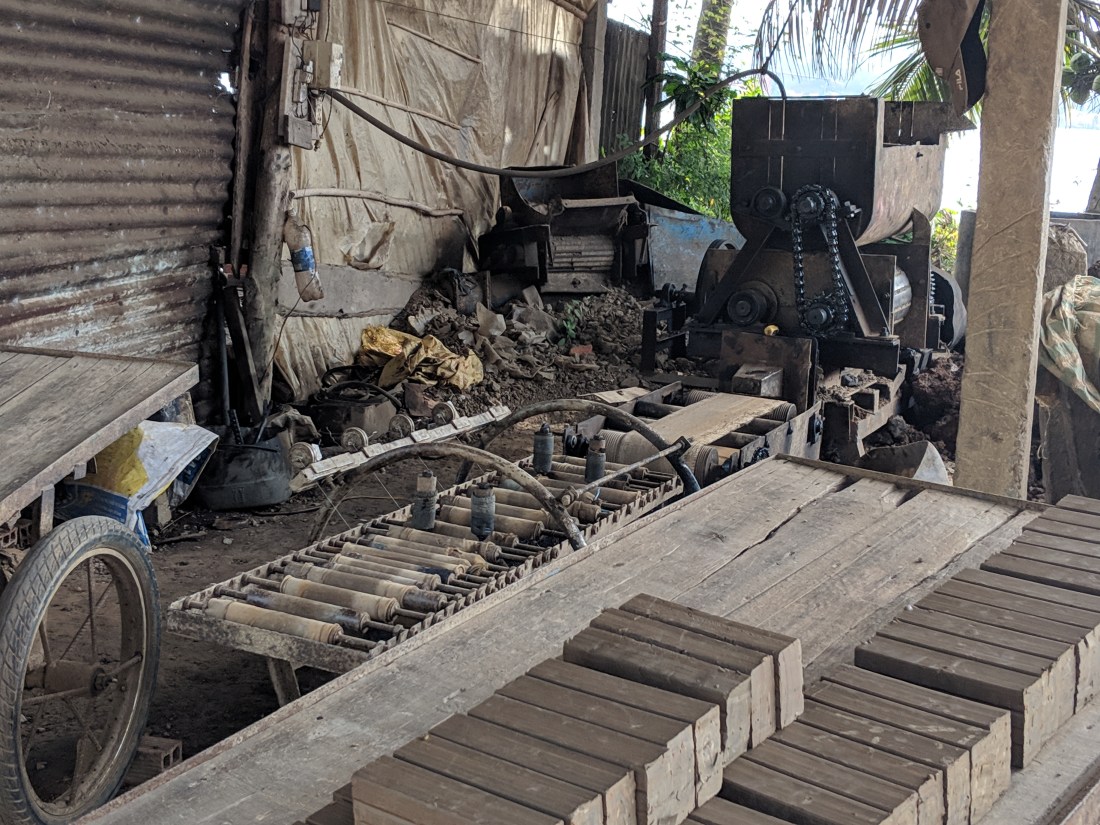

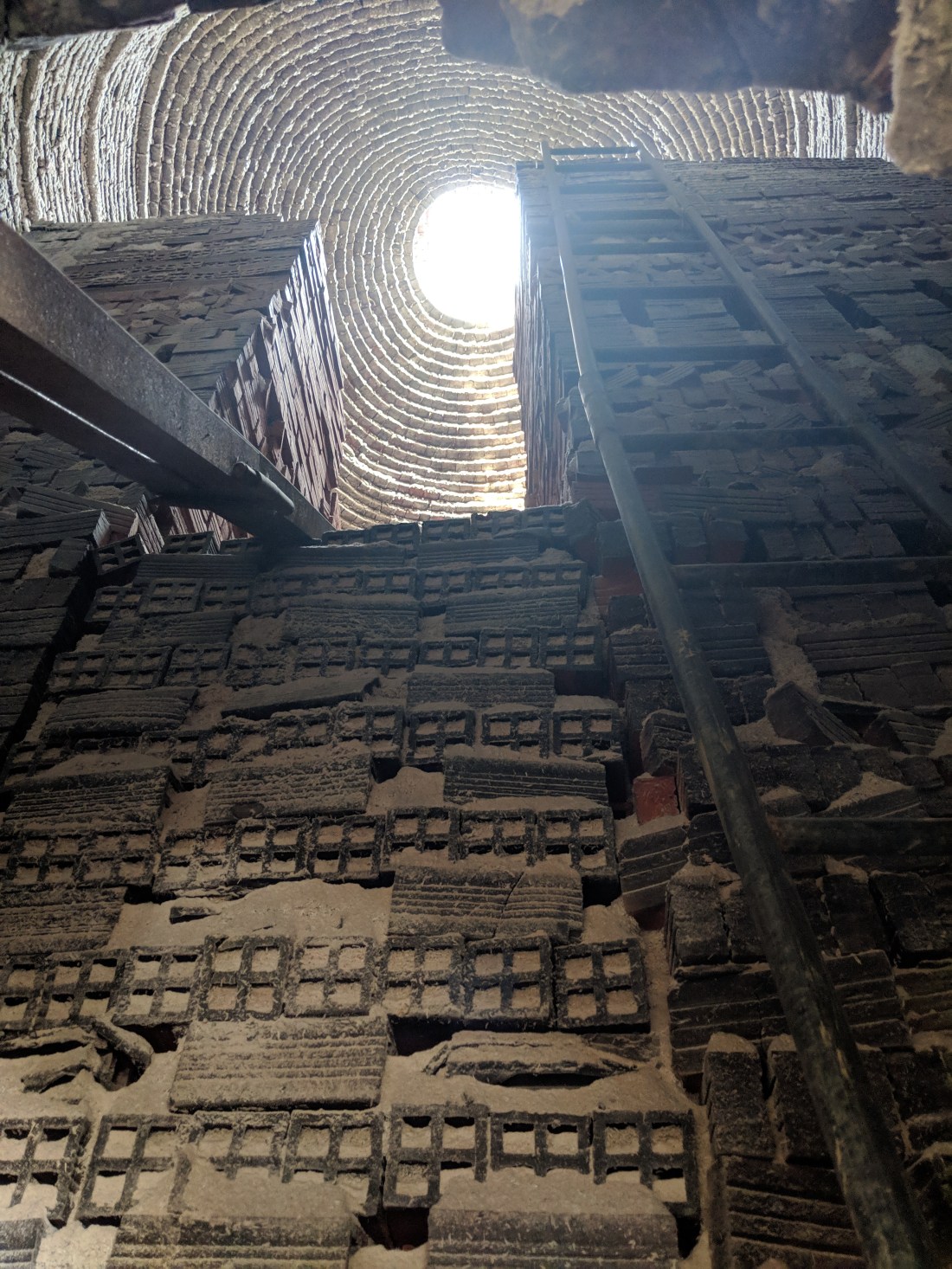
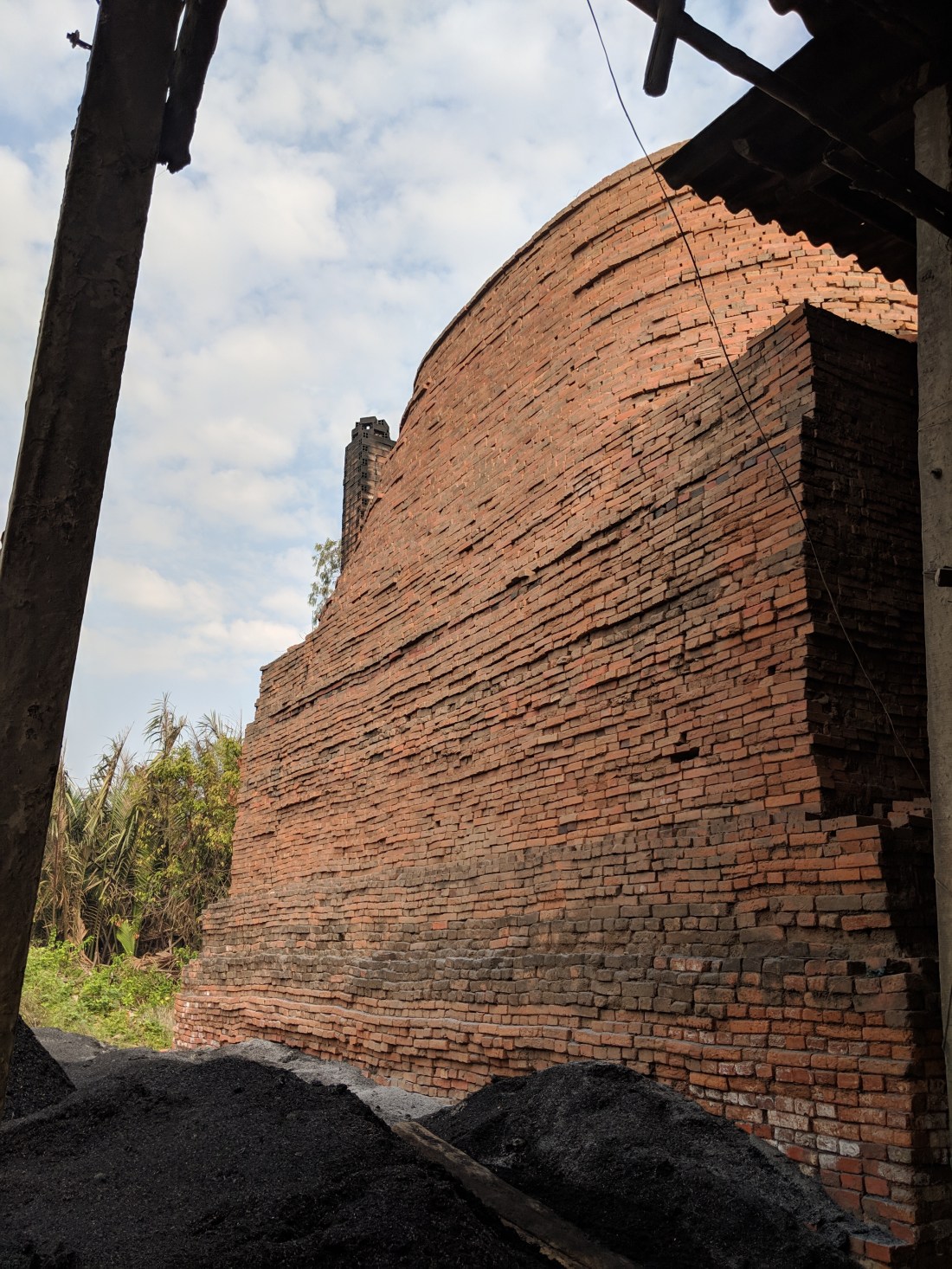
Then it is stacked into the oven. The man uses the ladder to climb to the top of the stack. When the oven is full, he climbs out the hole in the top, which is then covered to keep the heat in. There is a separate chimney. The oven is kept hot with a fire burning rice husks kept going 24/7 for 2 weeks. Then the bricks cool in the oven for 7-10 days before being shipped out on barges.

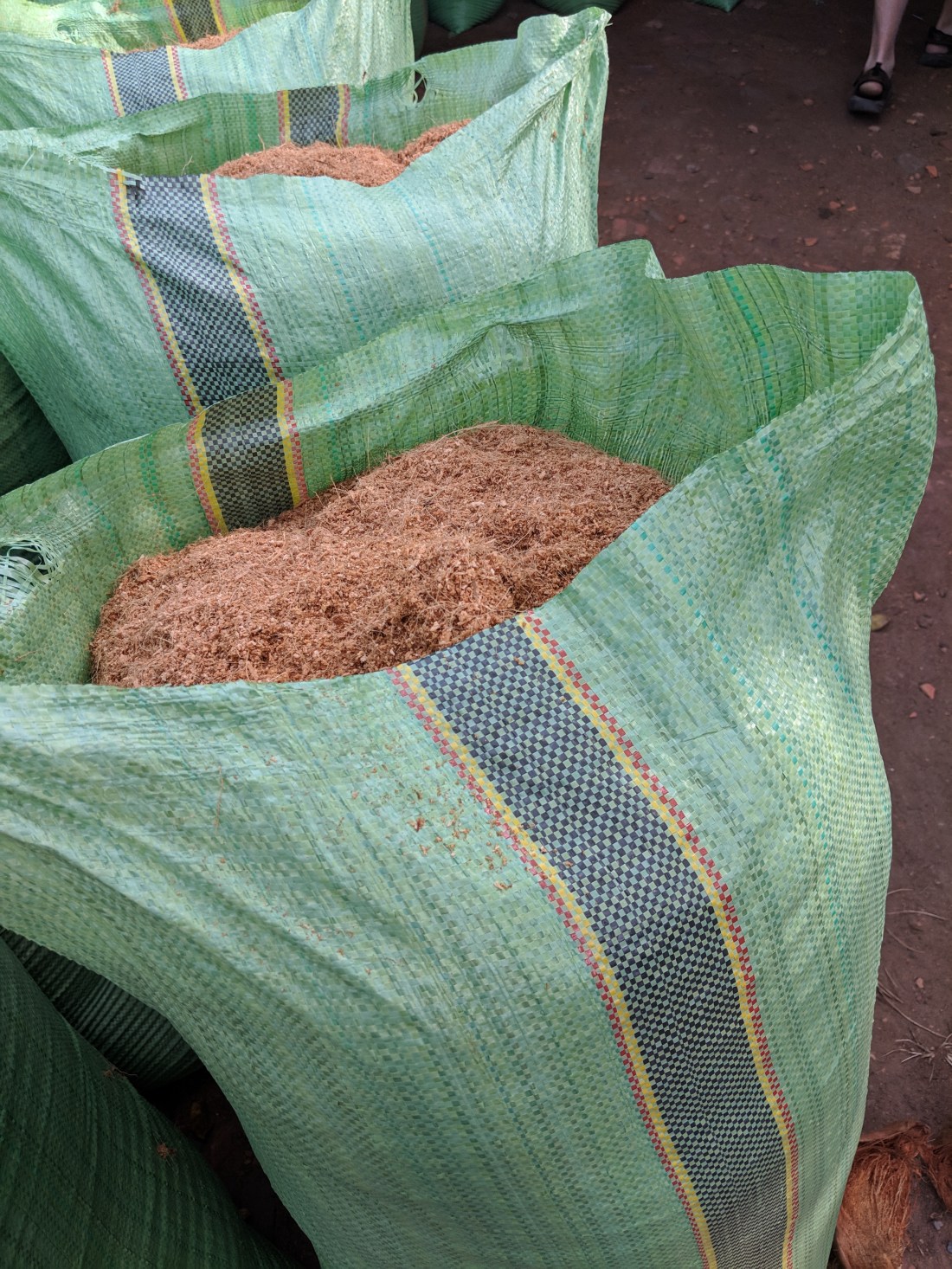
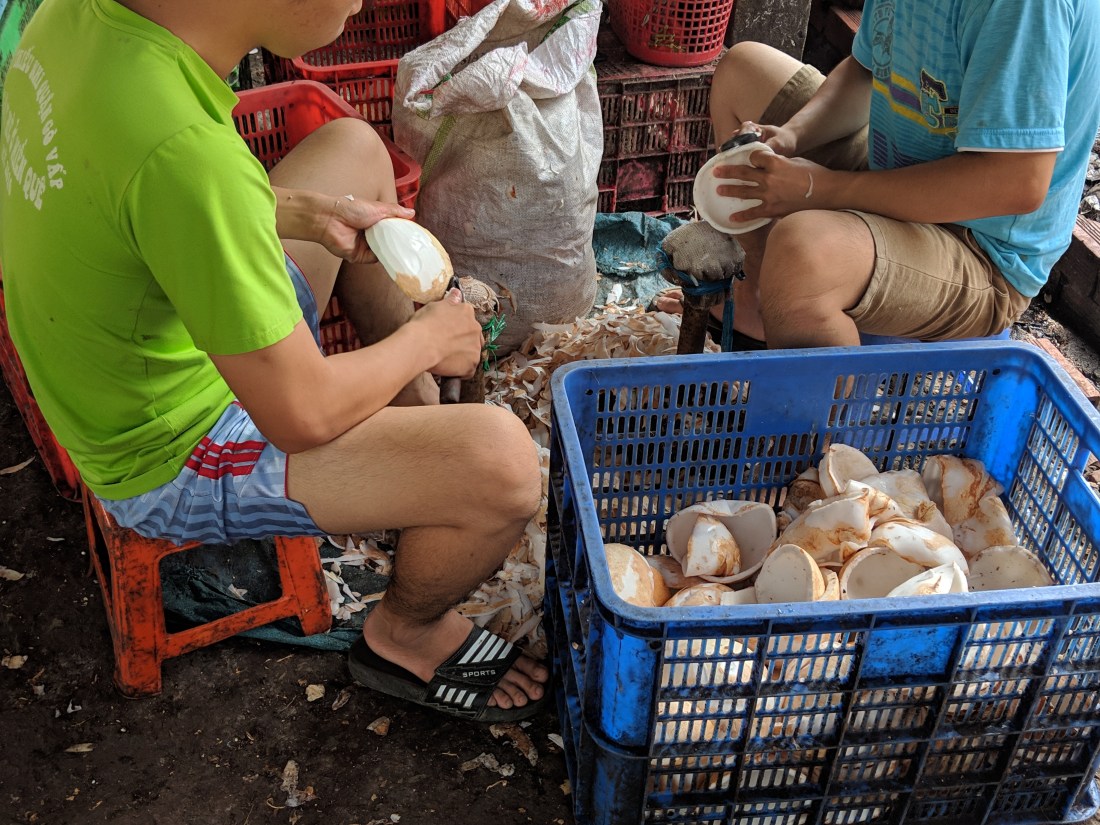
Next we went to a coconut processing “factory.” The coconuts also arrive by barge. First they are split open and the husk removed. The husk is then further separated into the stringy bits that are sent to China for weaving into string and netting materials. The shake is used as fertilizer.
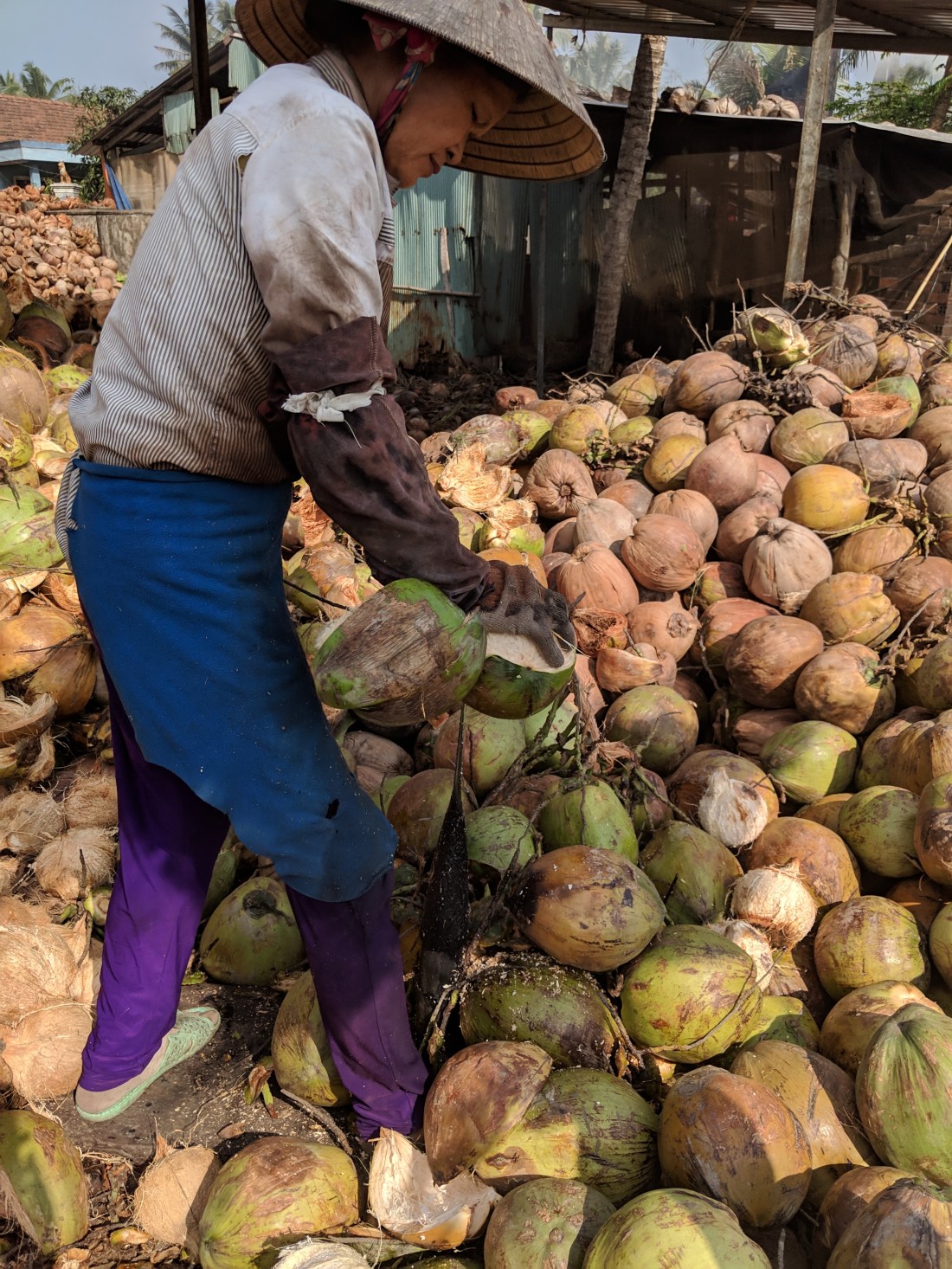
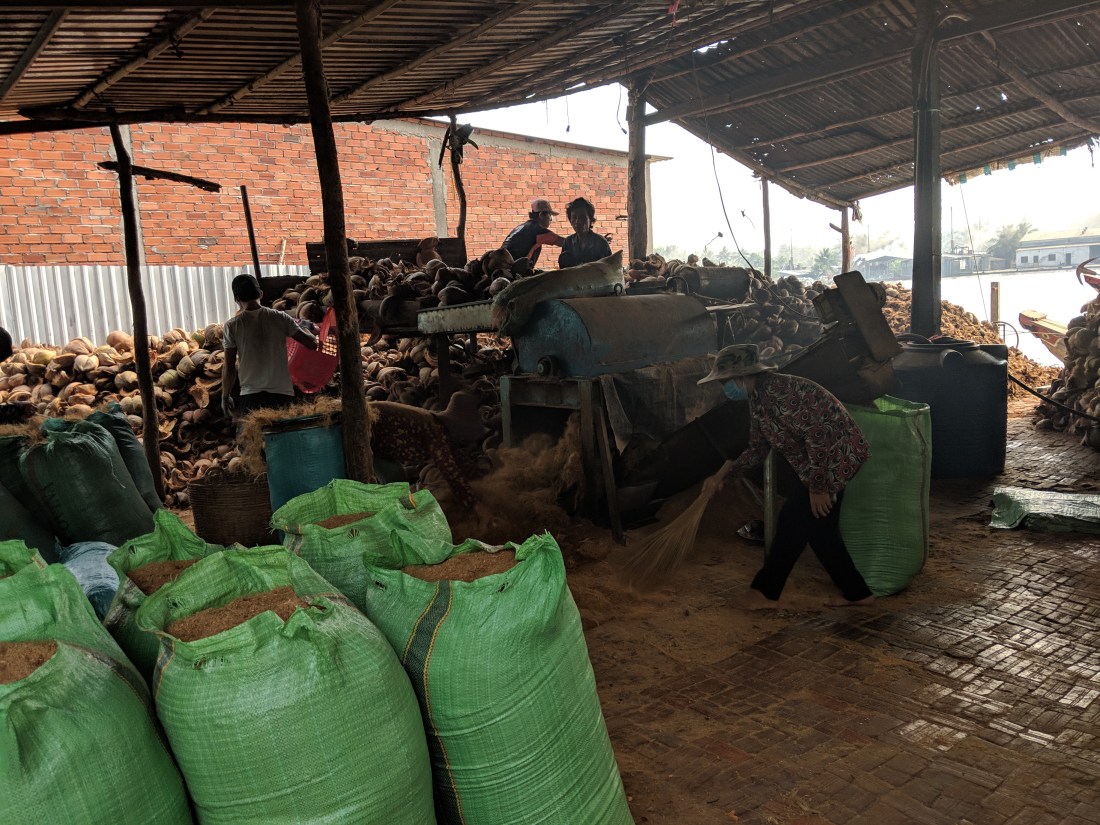
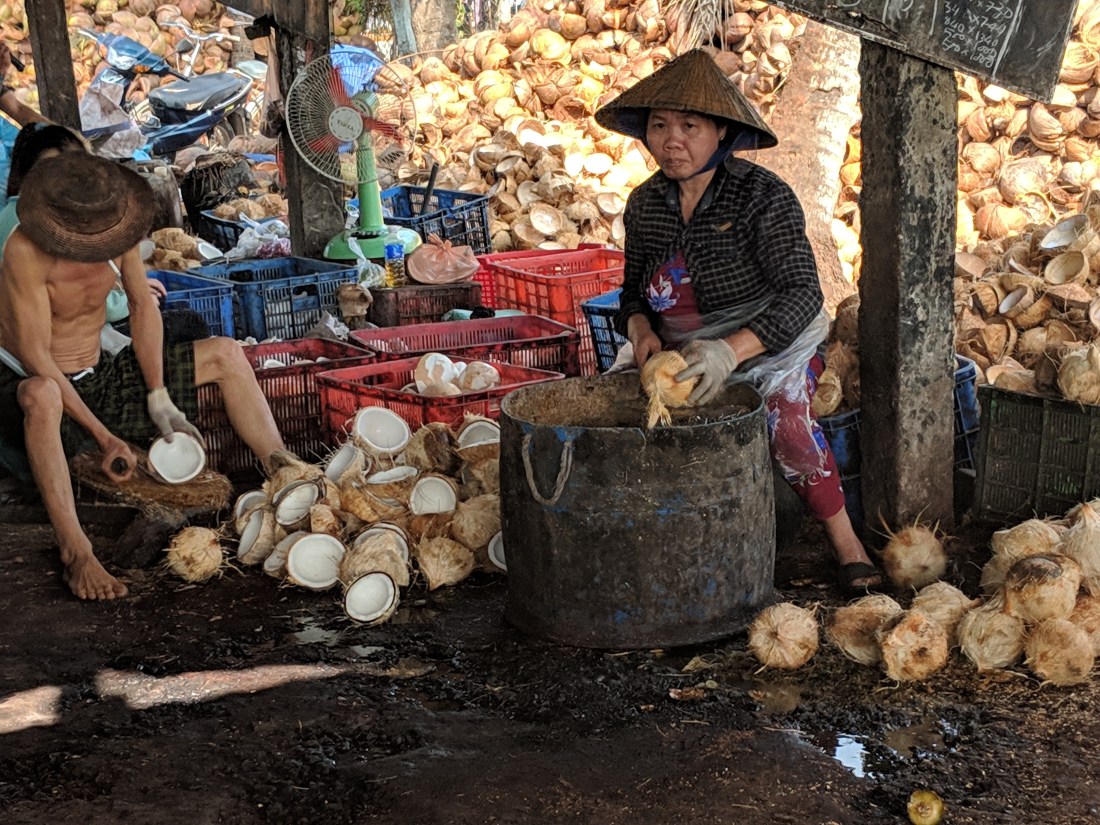
Then the nut is split open, the water is saved, the nut meat is separated from the shell.
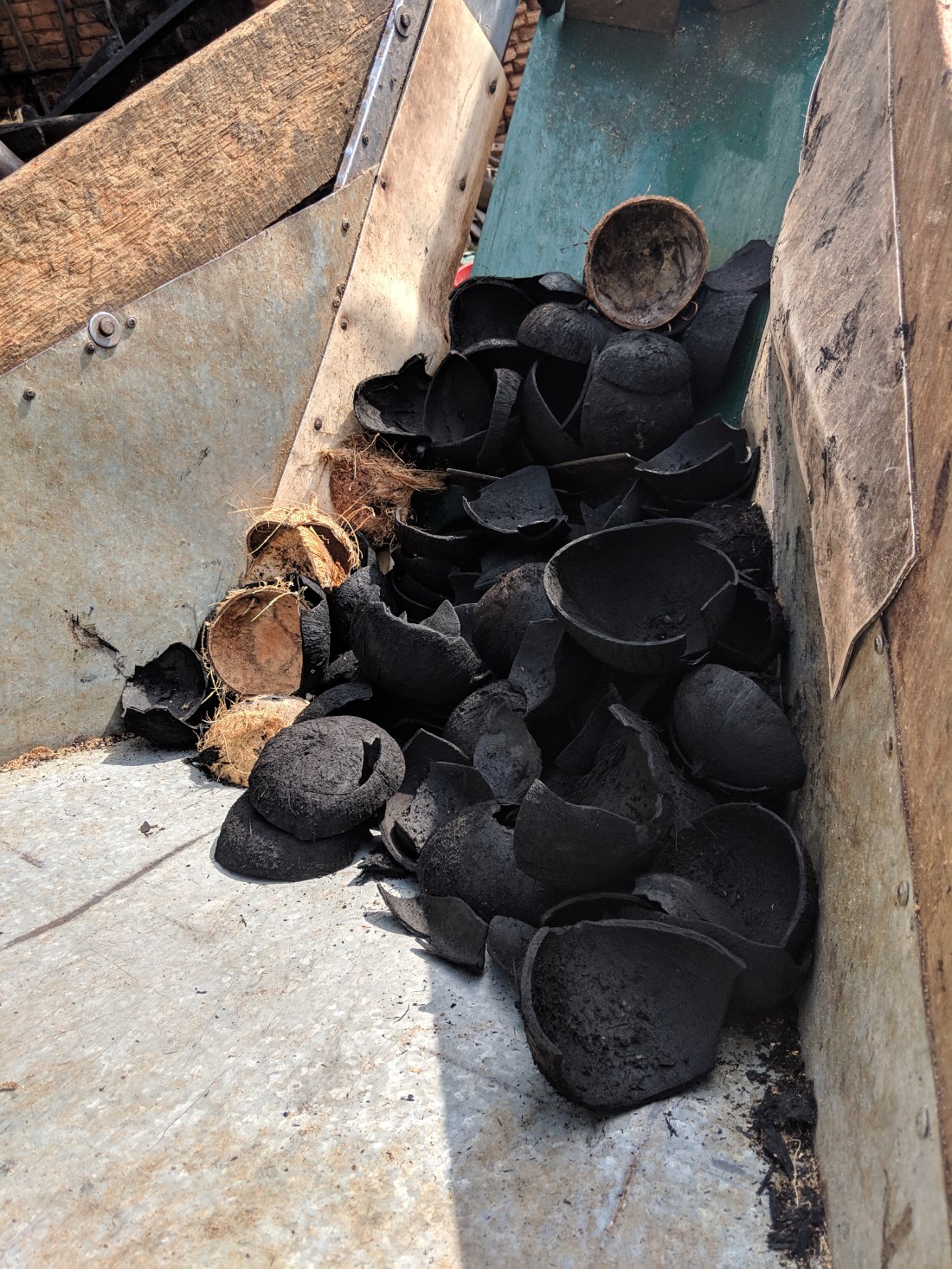
The shell is burned in an oven for 10 days and turns into charcoal. The charcoal can be used for grilling food. But most of it is sold to China who makes it into charcoal for activation, ie filters.
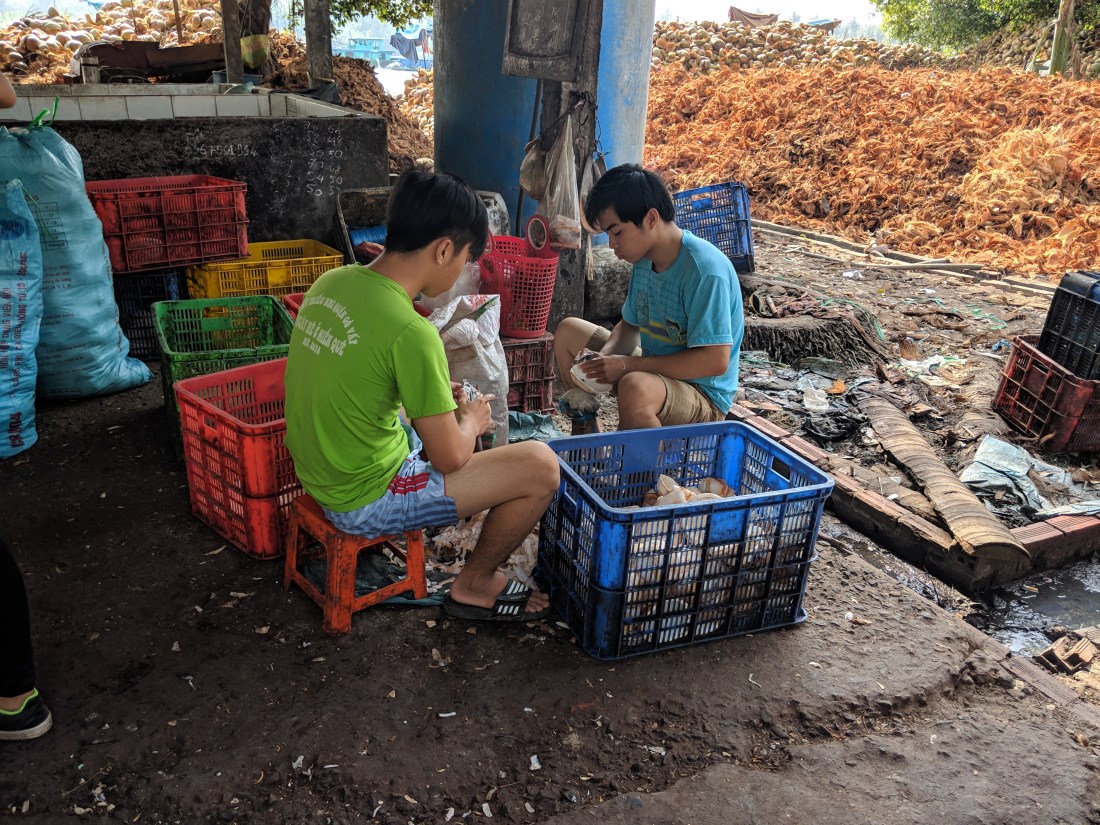
The meat is then further trimmed. The scraps are squeezed for coconut oils. The meat separated by quality, softer being better, and bagged, then shipped by barge. It is generally freeze dried and used for cooking, candy, etc or turned to powder and reconstituted as coconut milk. Every bit of the plant is used. Dead leaves are used as fuel and the trunks of old trees are used for carving.
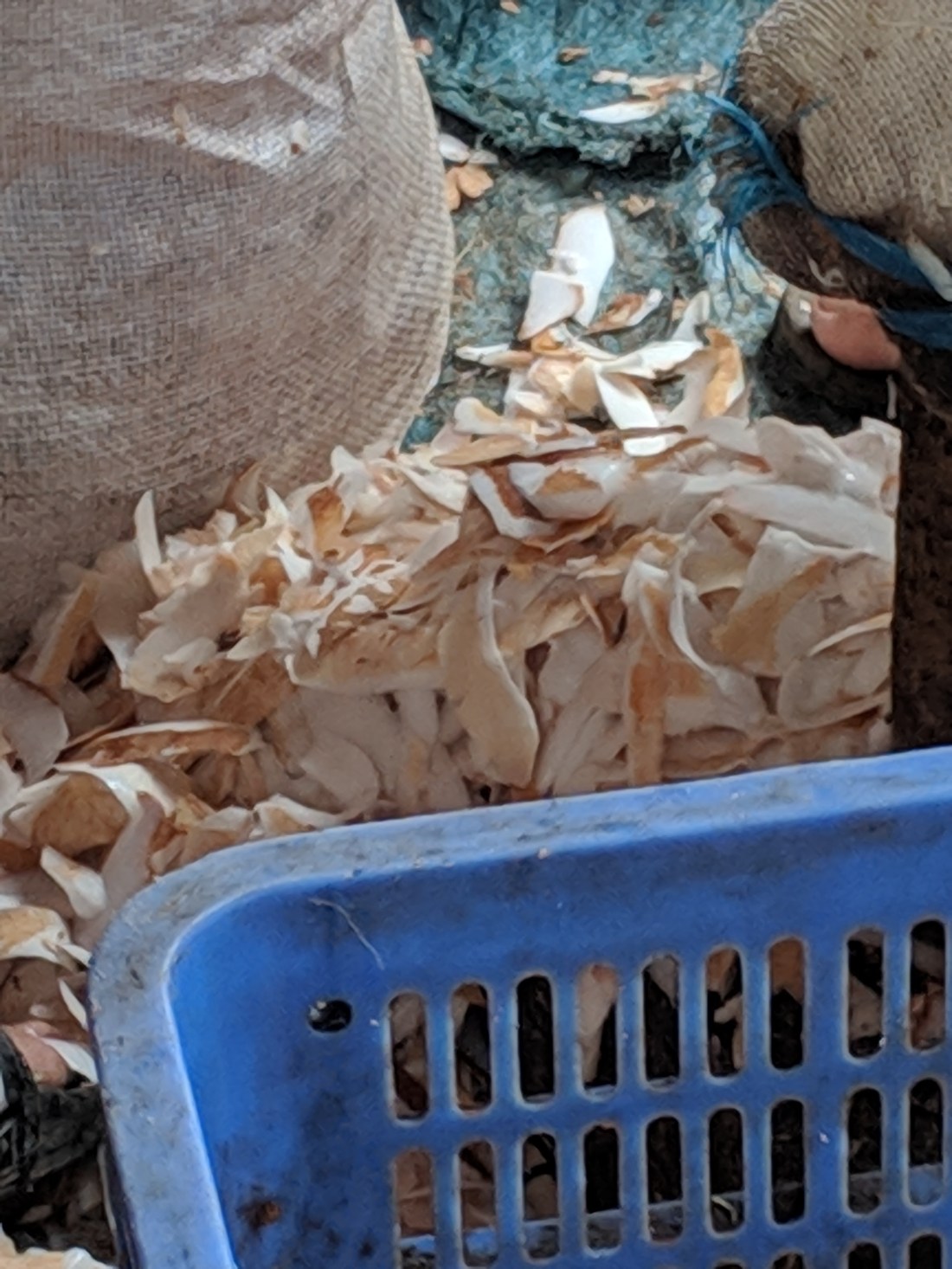

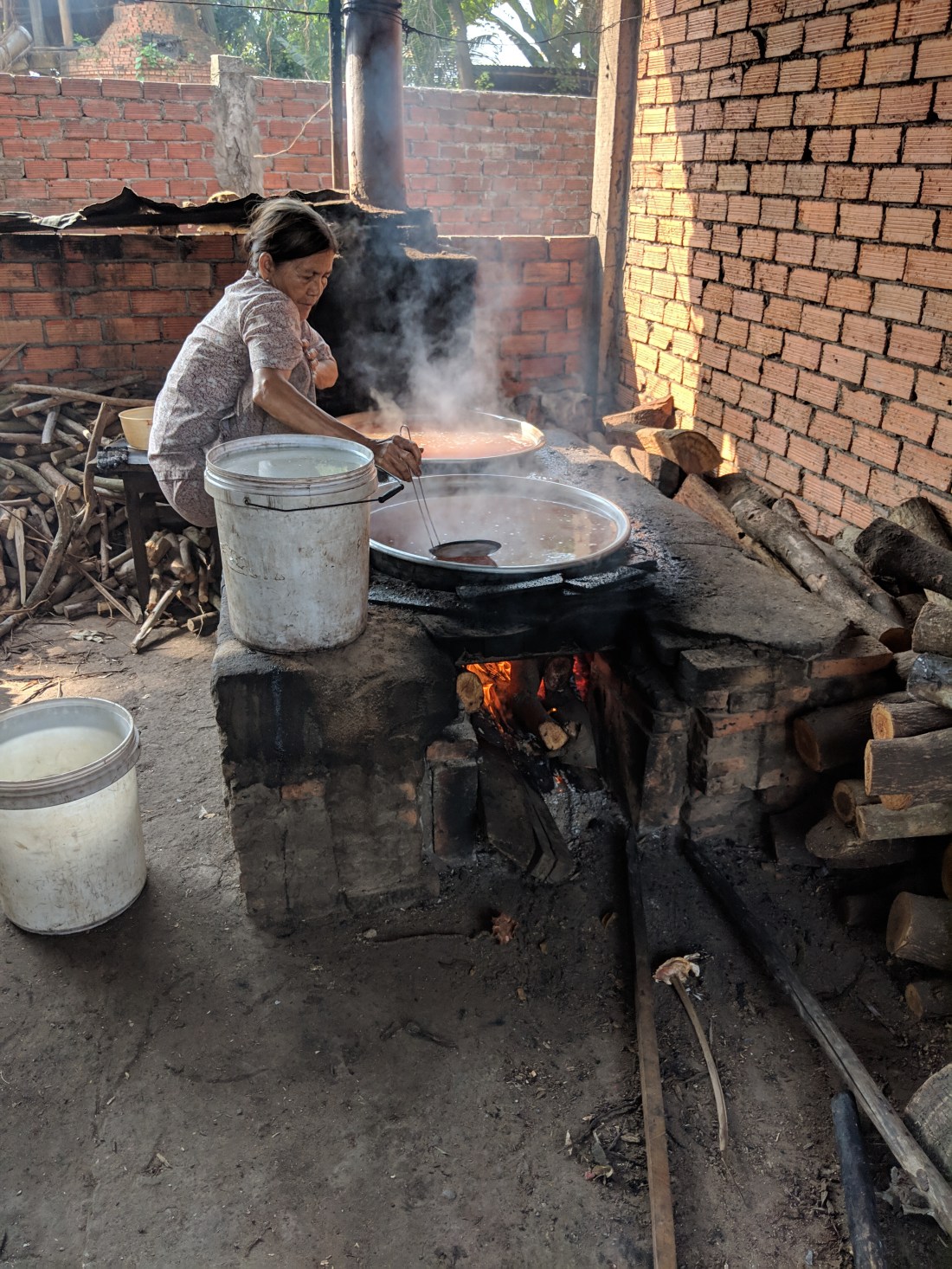
Finally, the water is cooked down over a low flame for hours until it caramelizes into coconut caramel, bottled, and used for cooking.
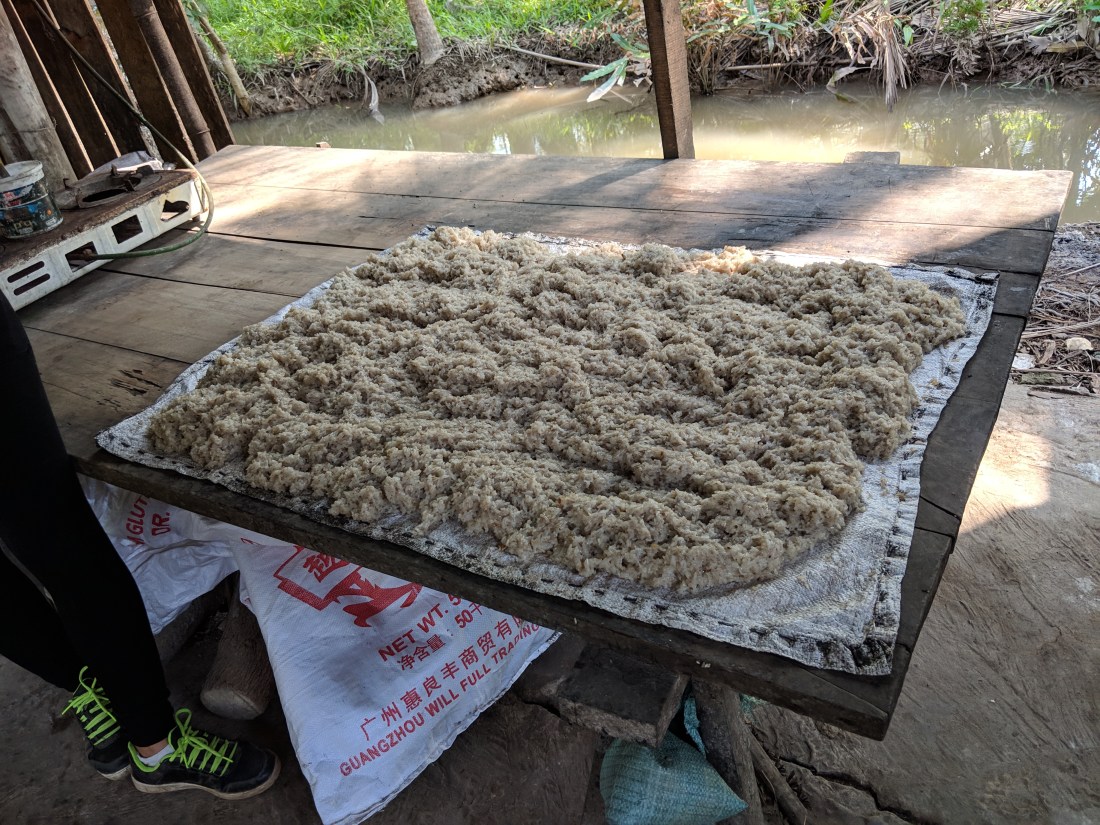
We then took a tuk tuk and visited the small local village. Then we got back on our boat and cruised further on the river to a family home where rice wine is made.
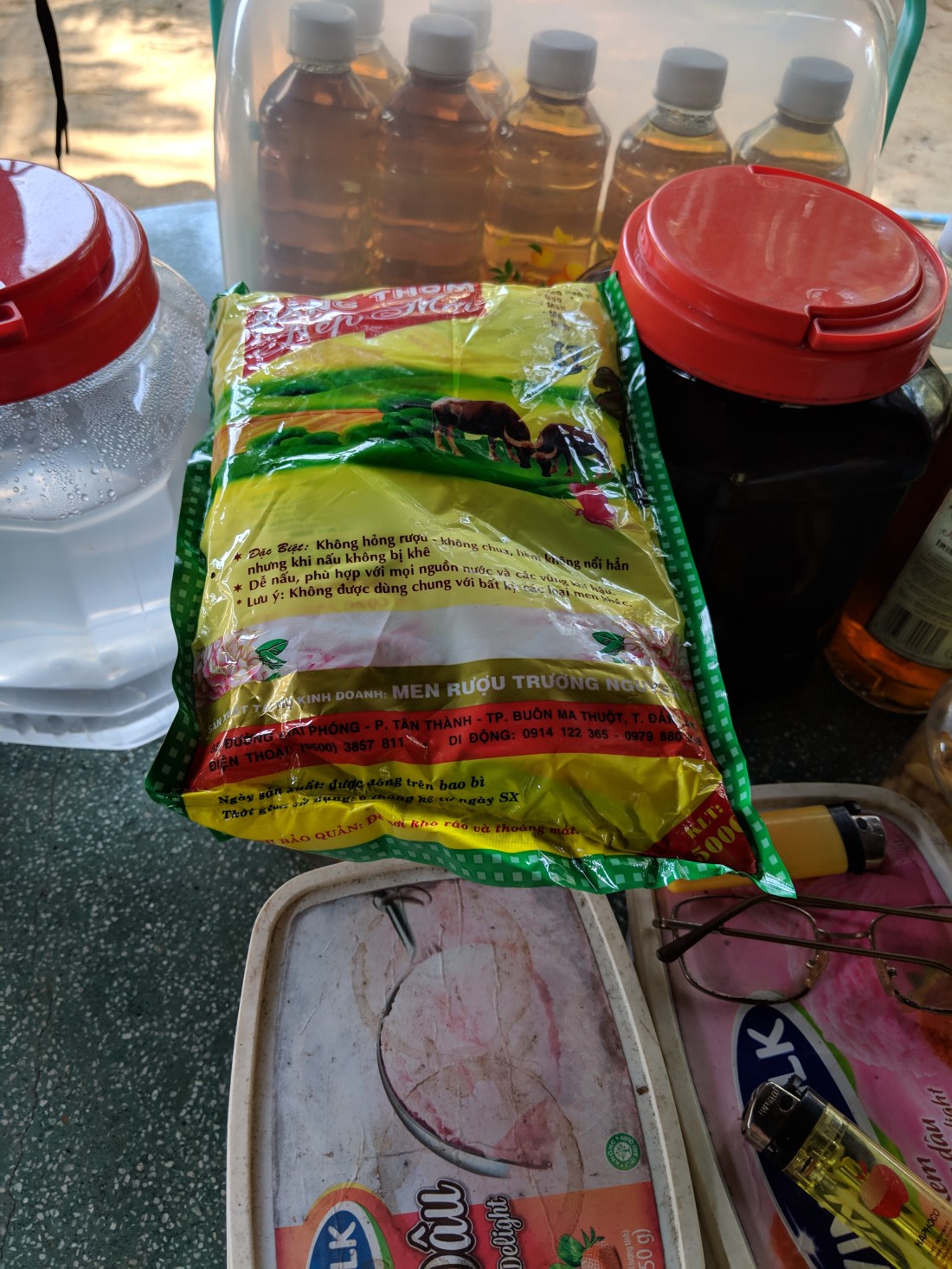
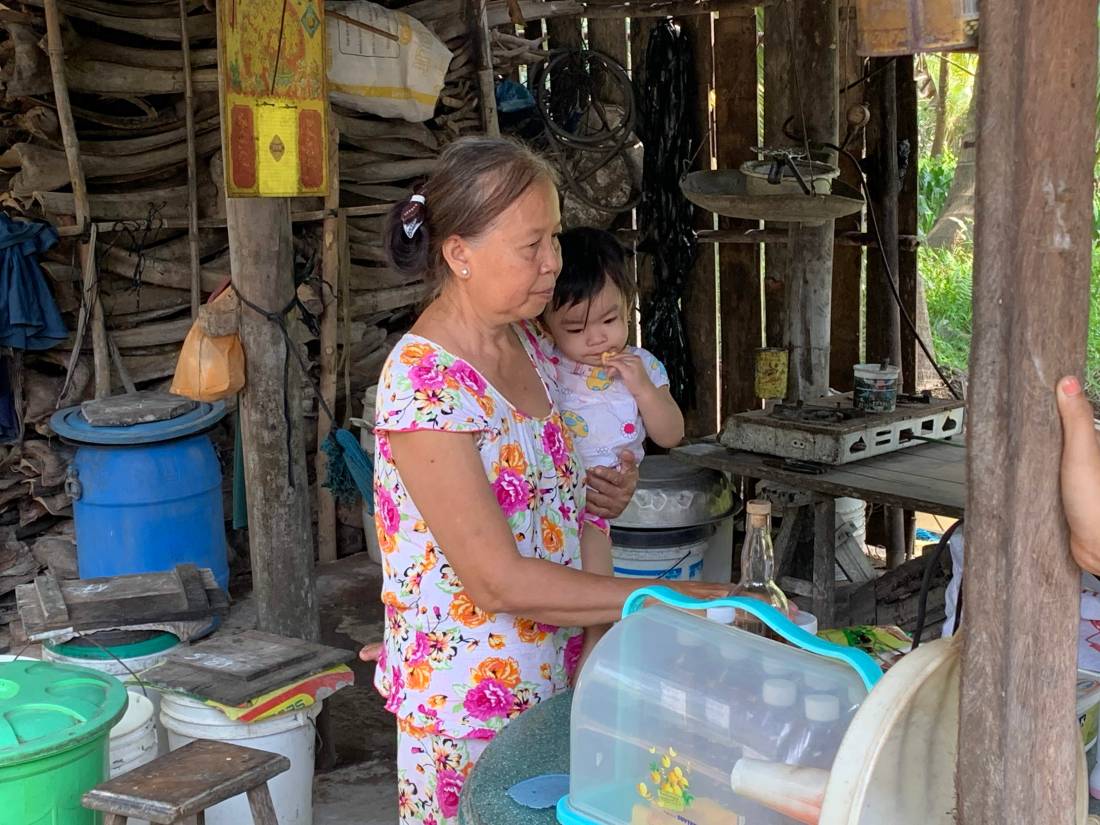
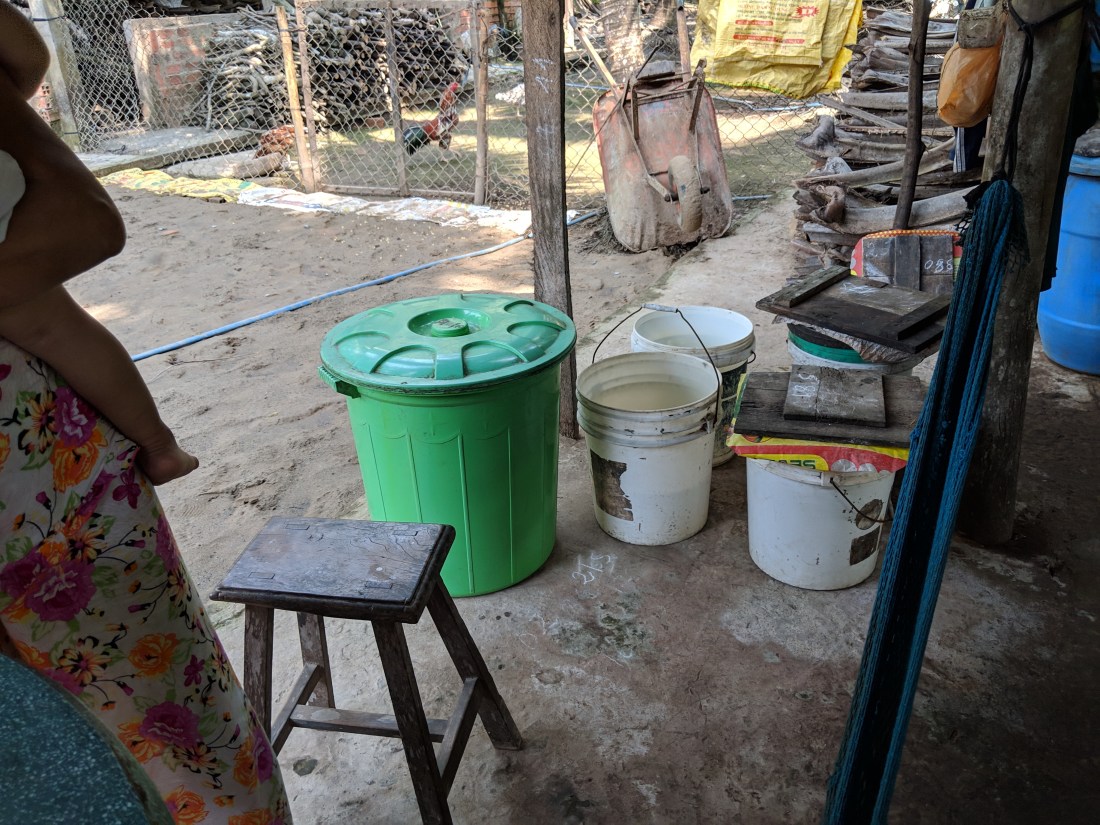
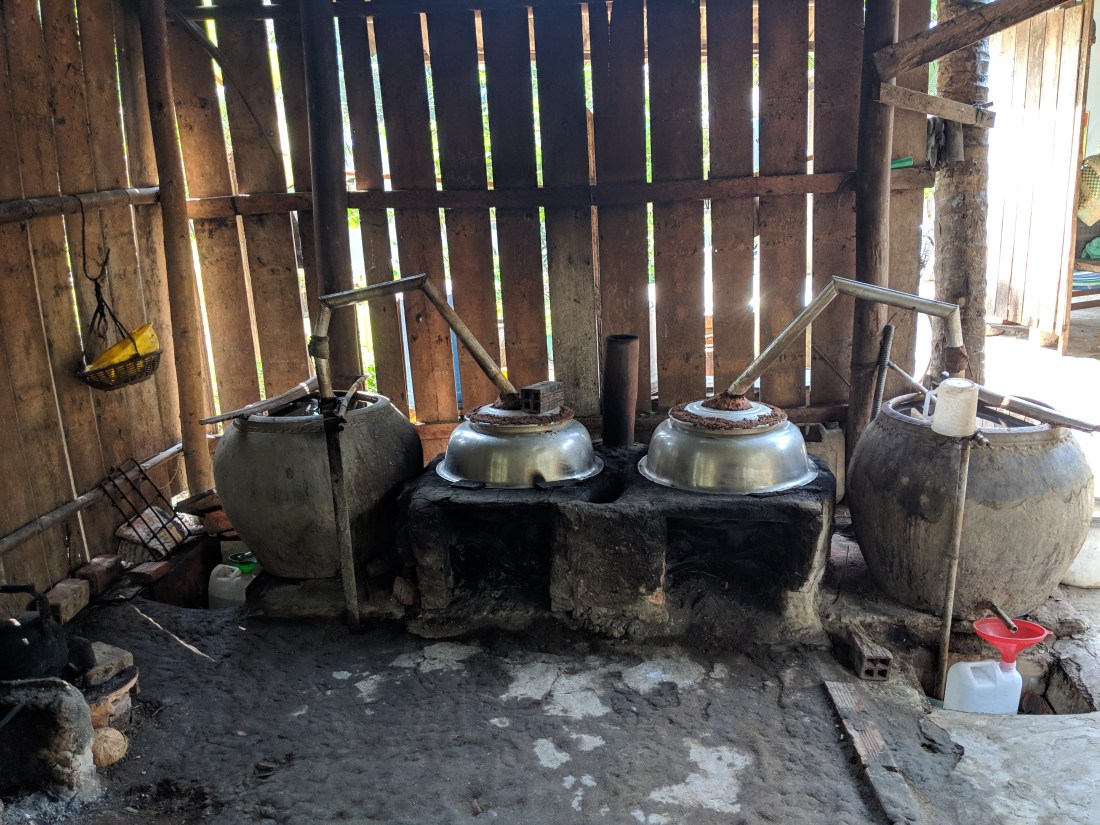
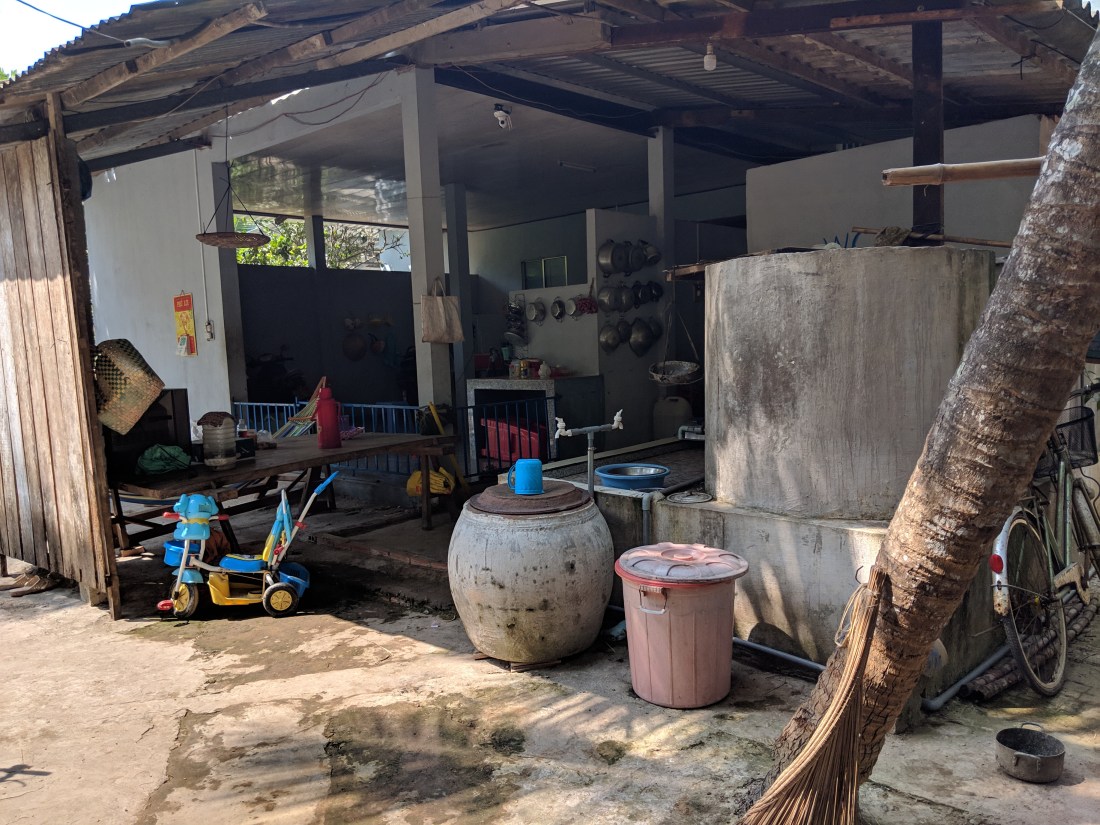
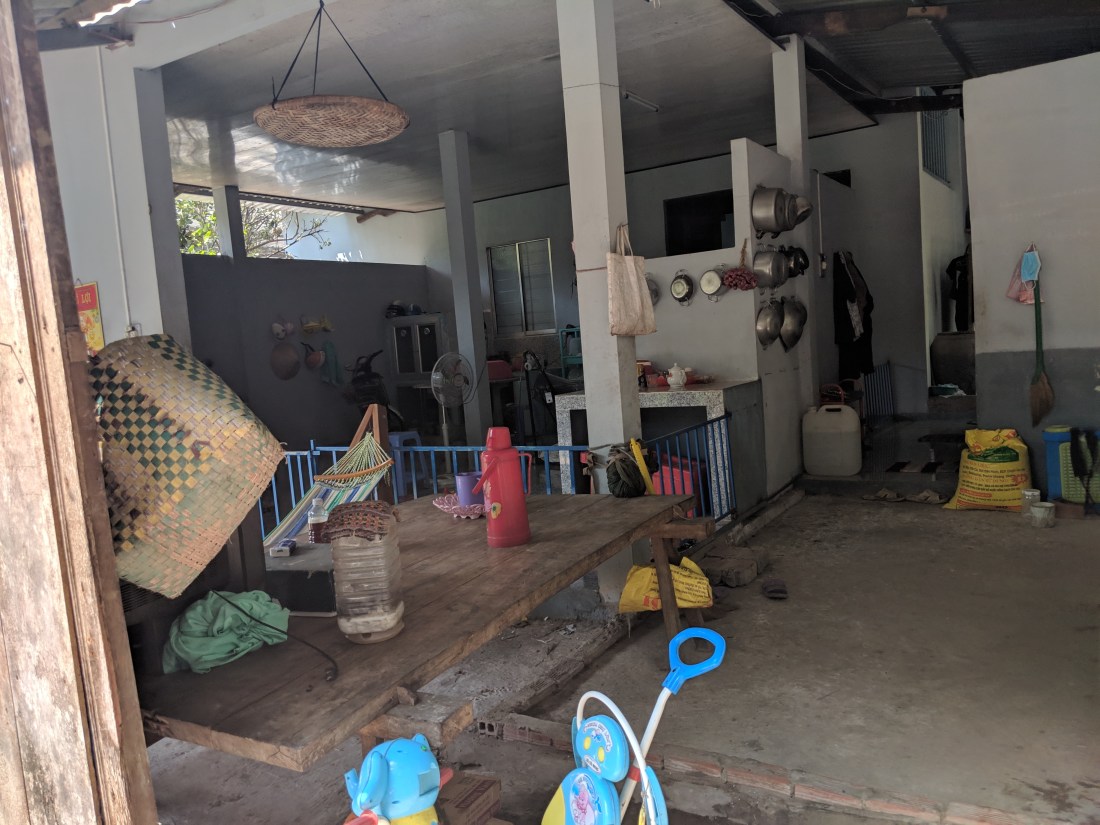
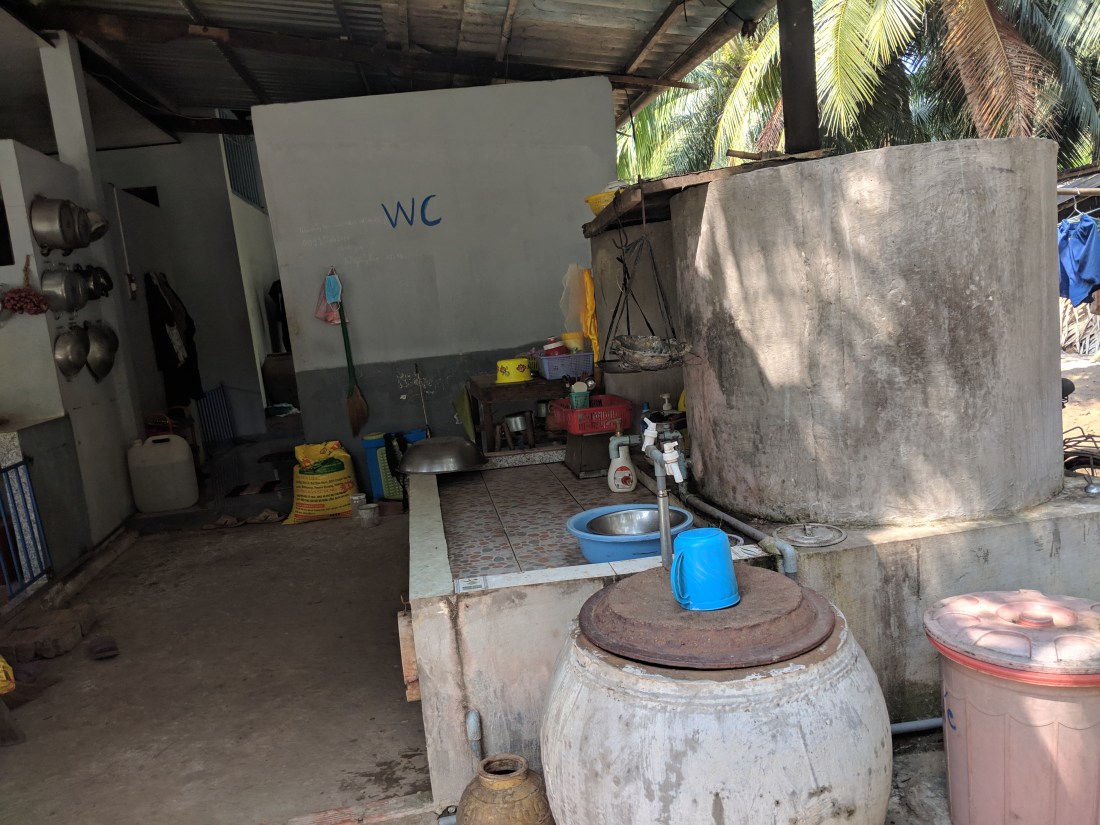
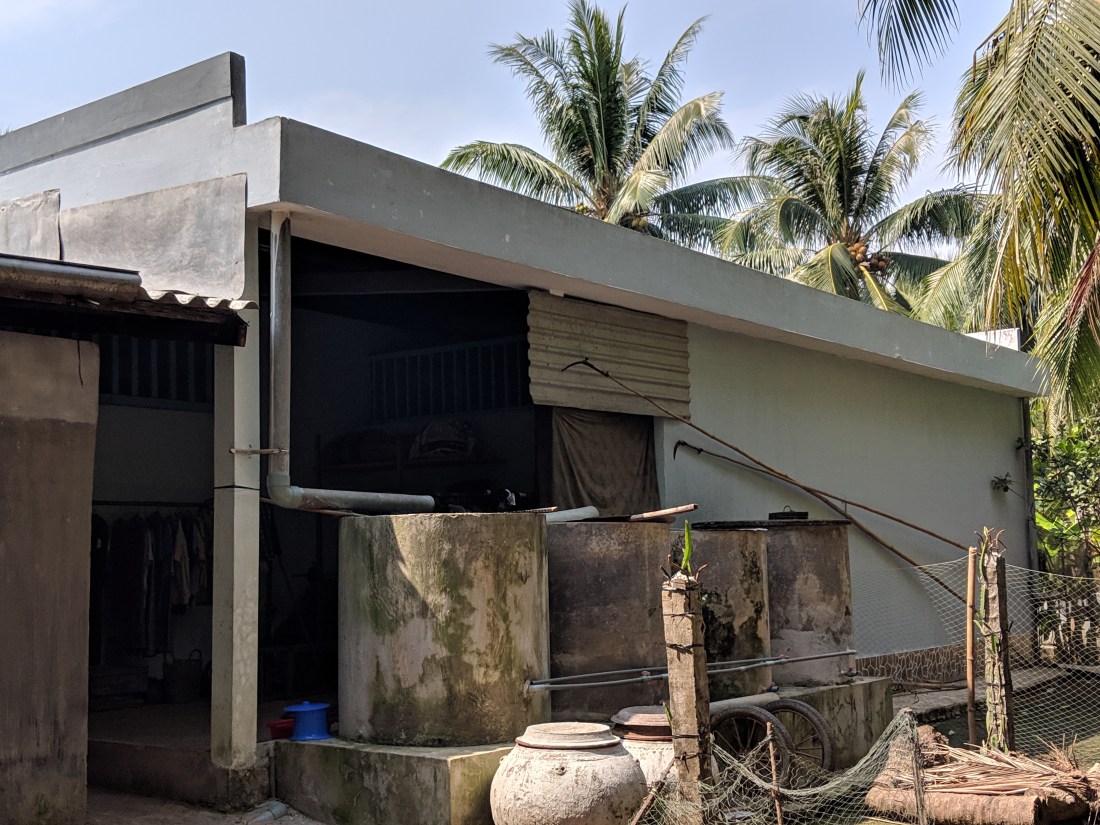
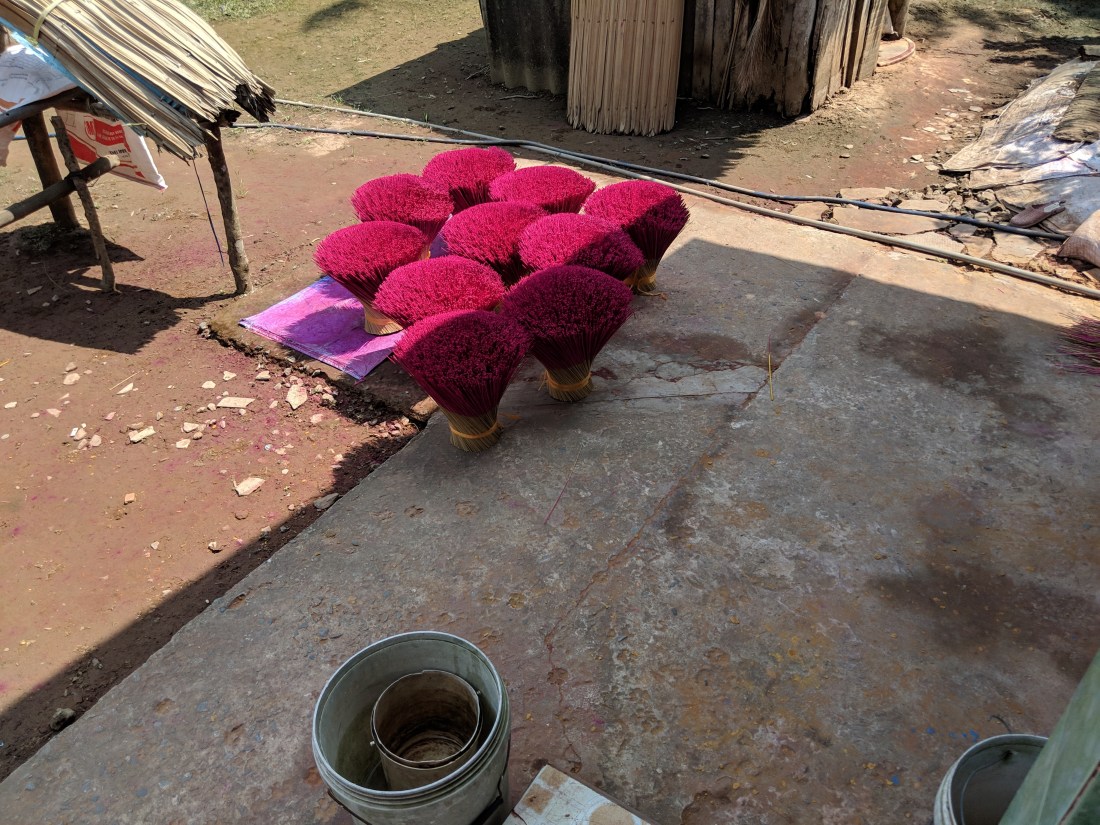
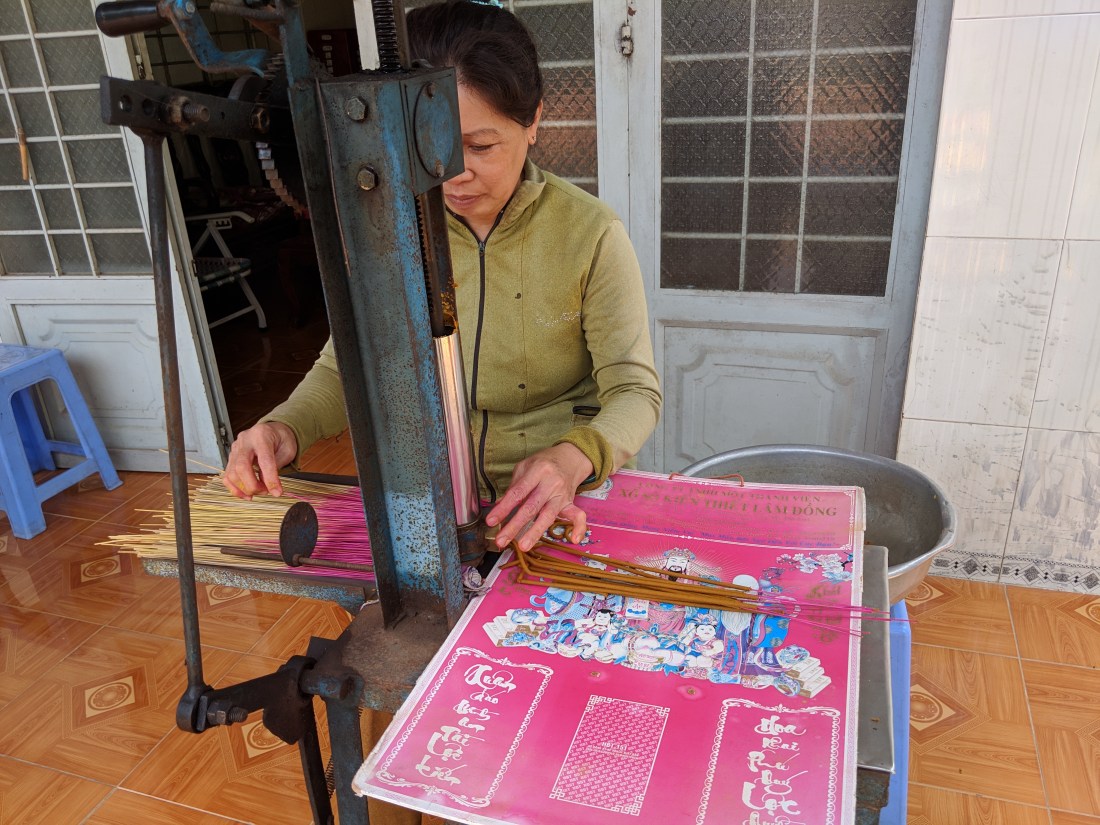
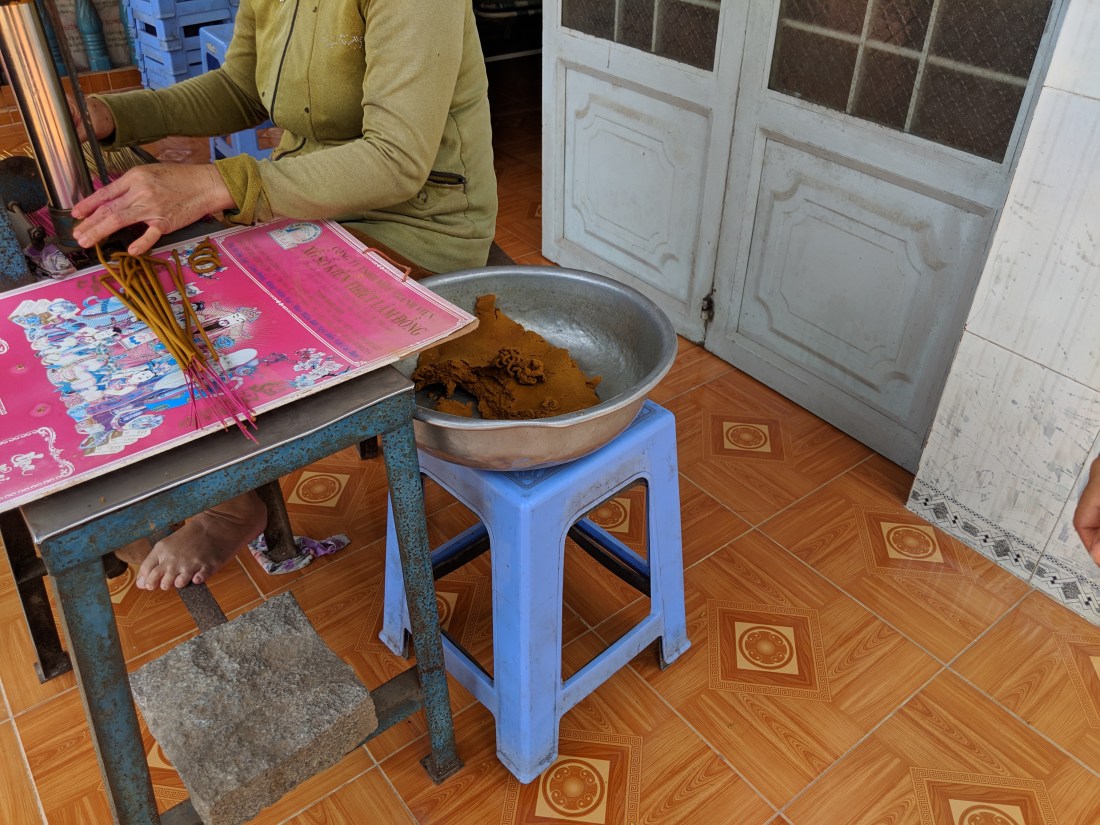
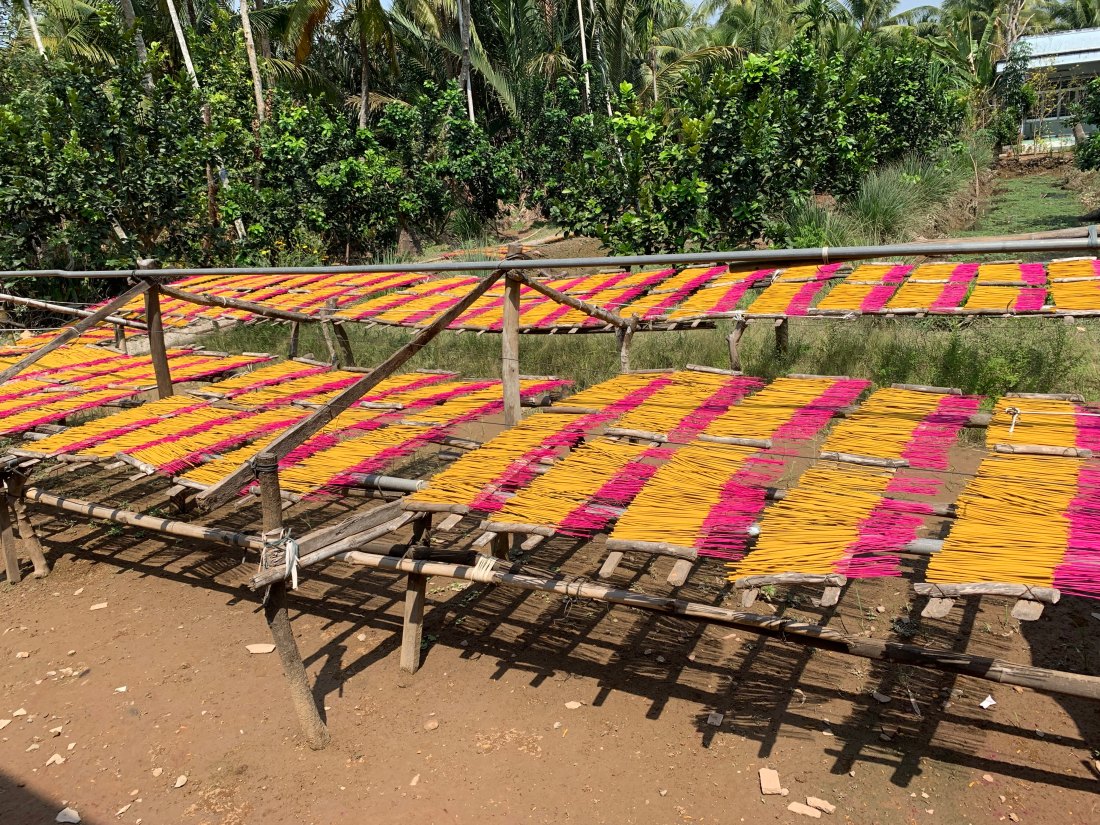
Then we got on bicycles and rode a short distance through the jungle to a home where incense is made by a husband and wife team.
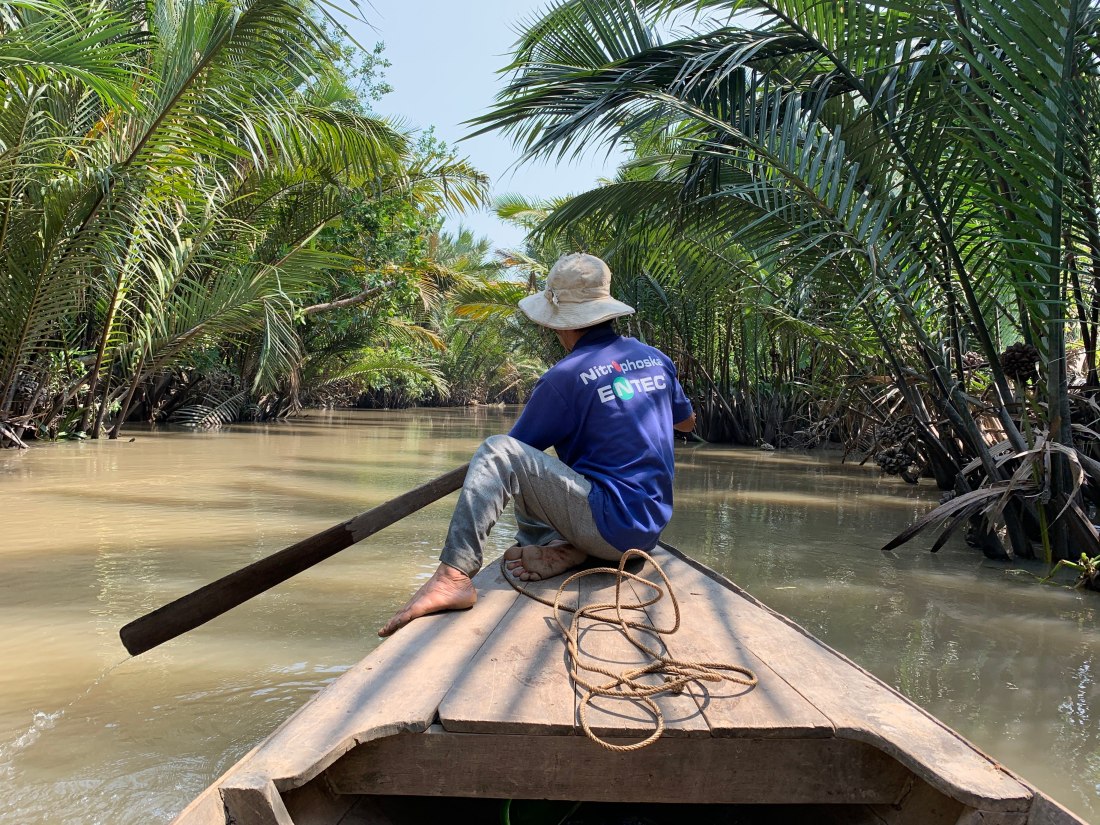
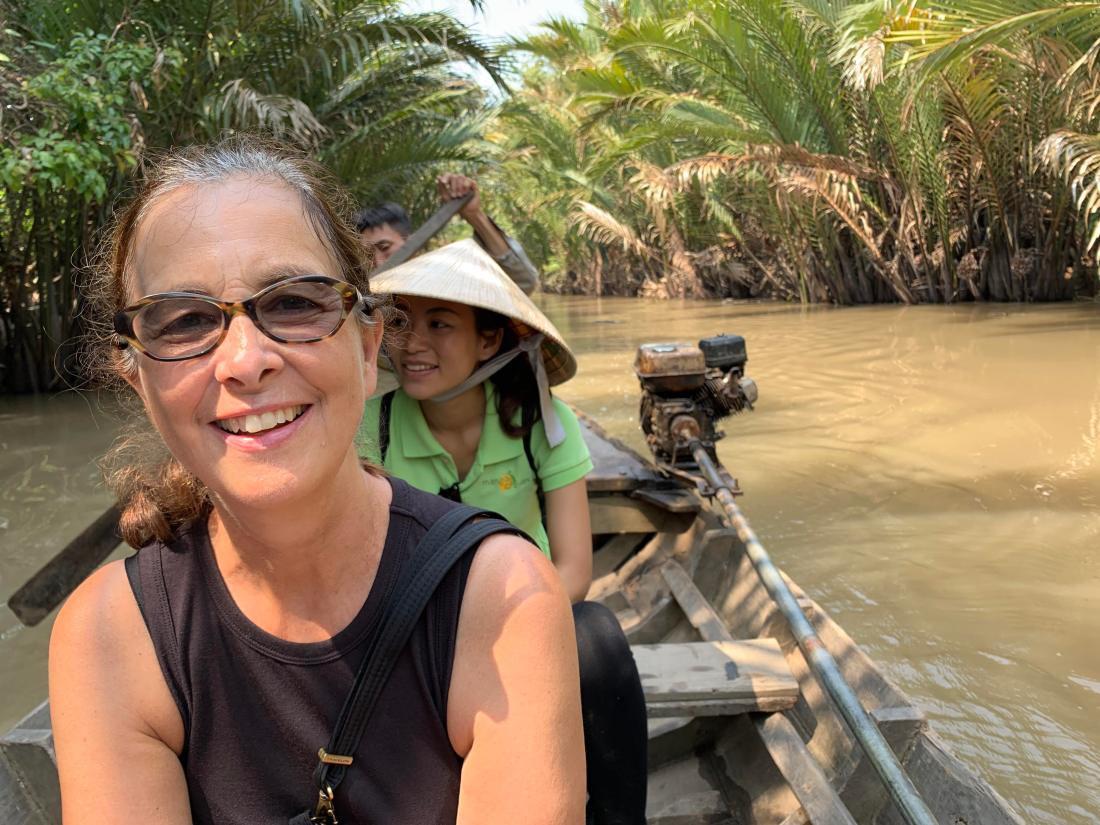
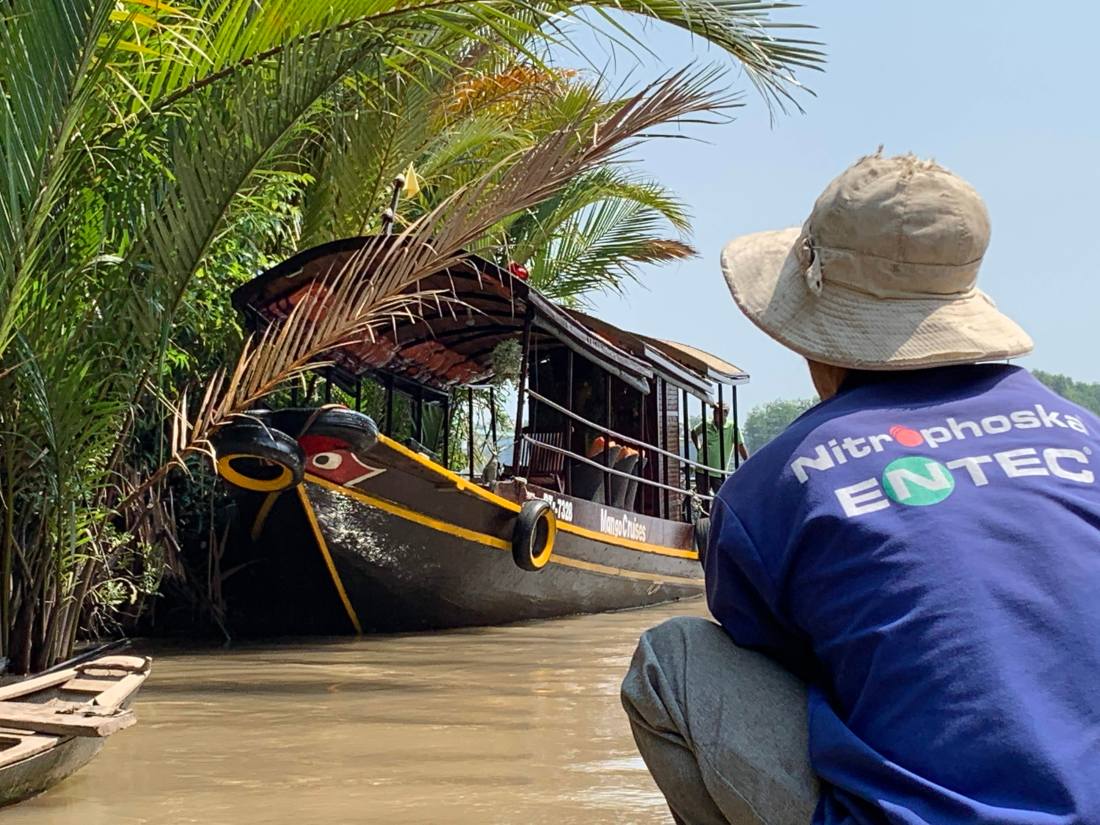
We then were rowed in a paddle boat through the jungle back to our big boat on the river.
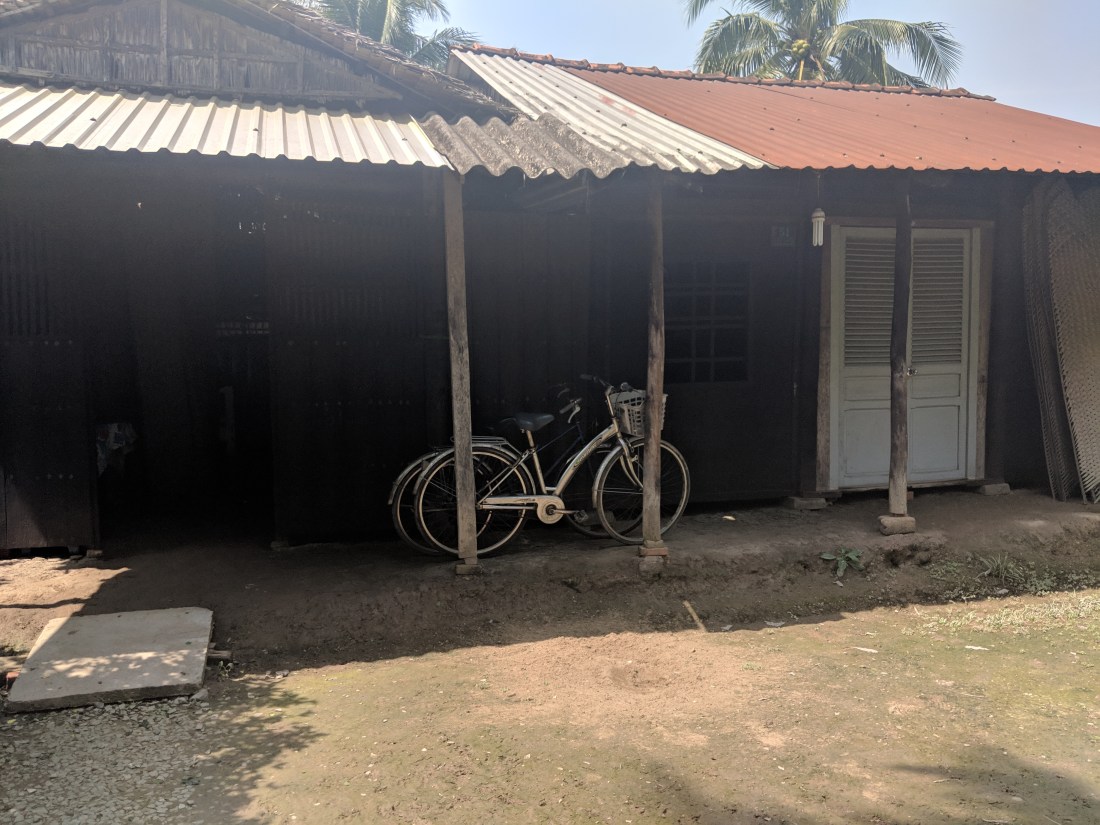
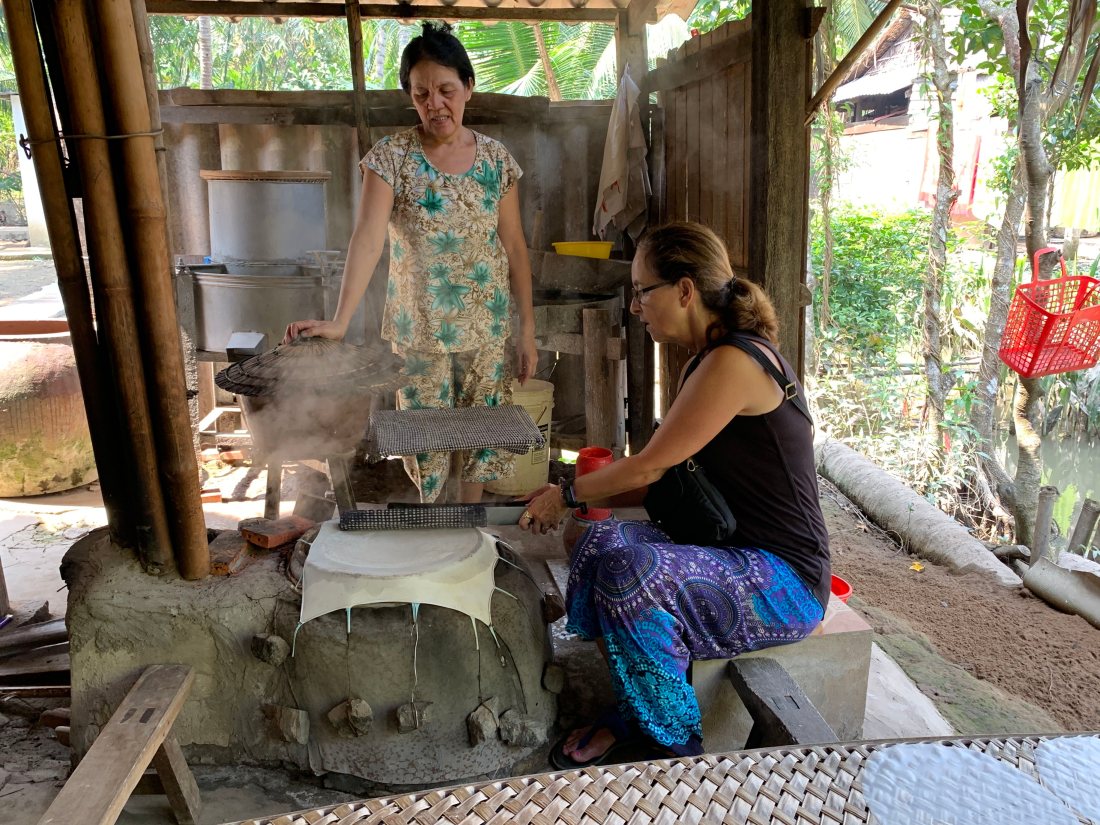
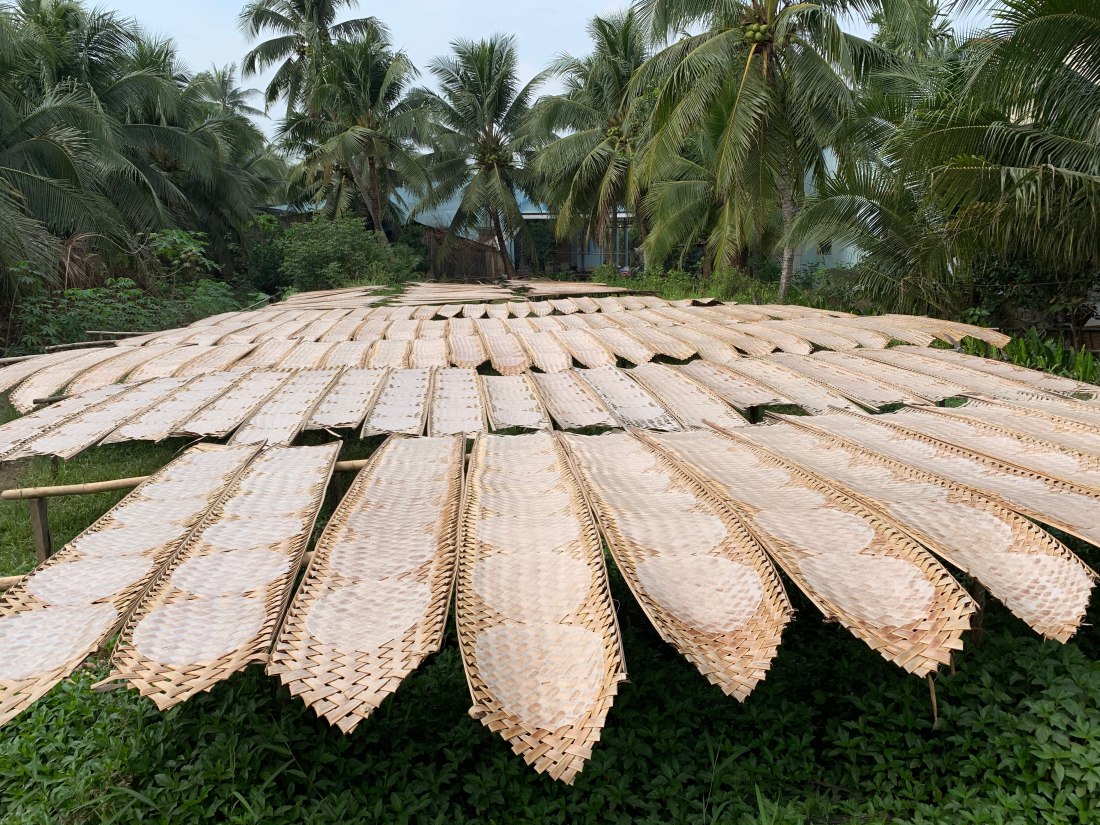
Then we landed and cycled again, this time to a home where rice paper used to wrap fresh spring rolls is made.
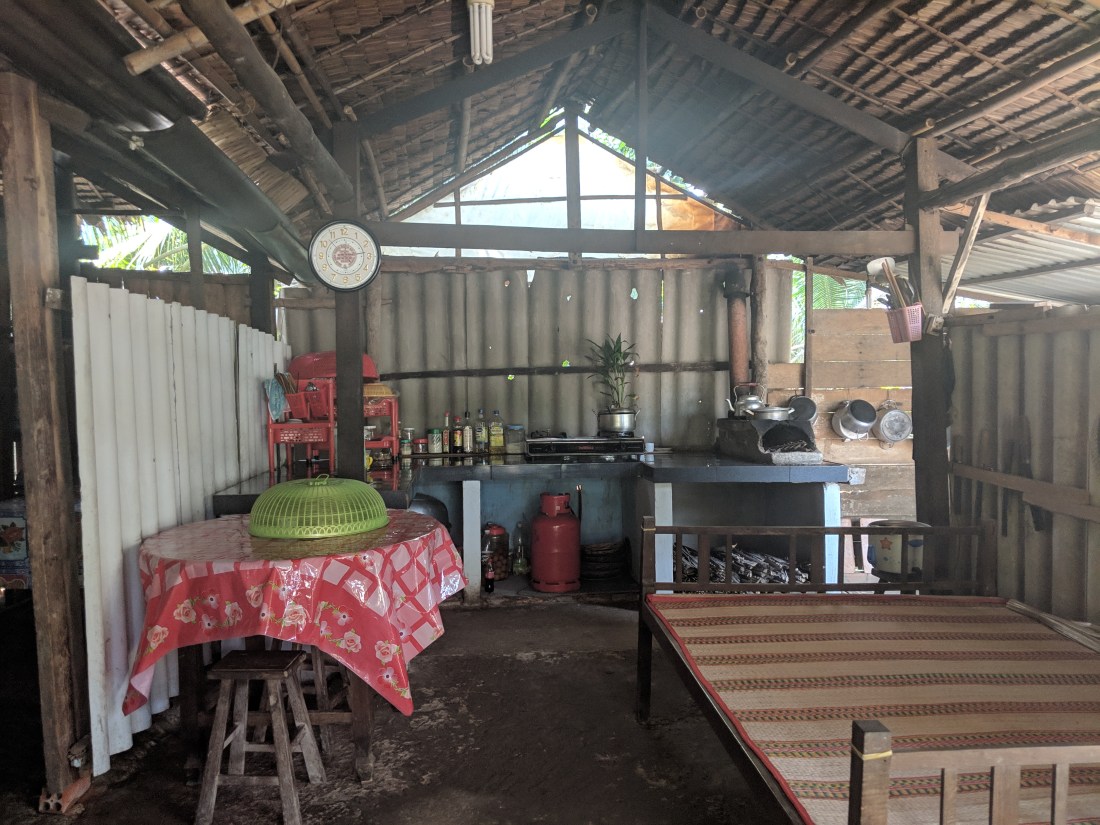
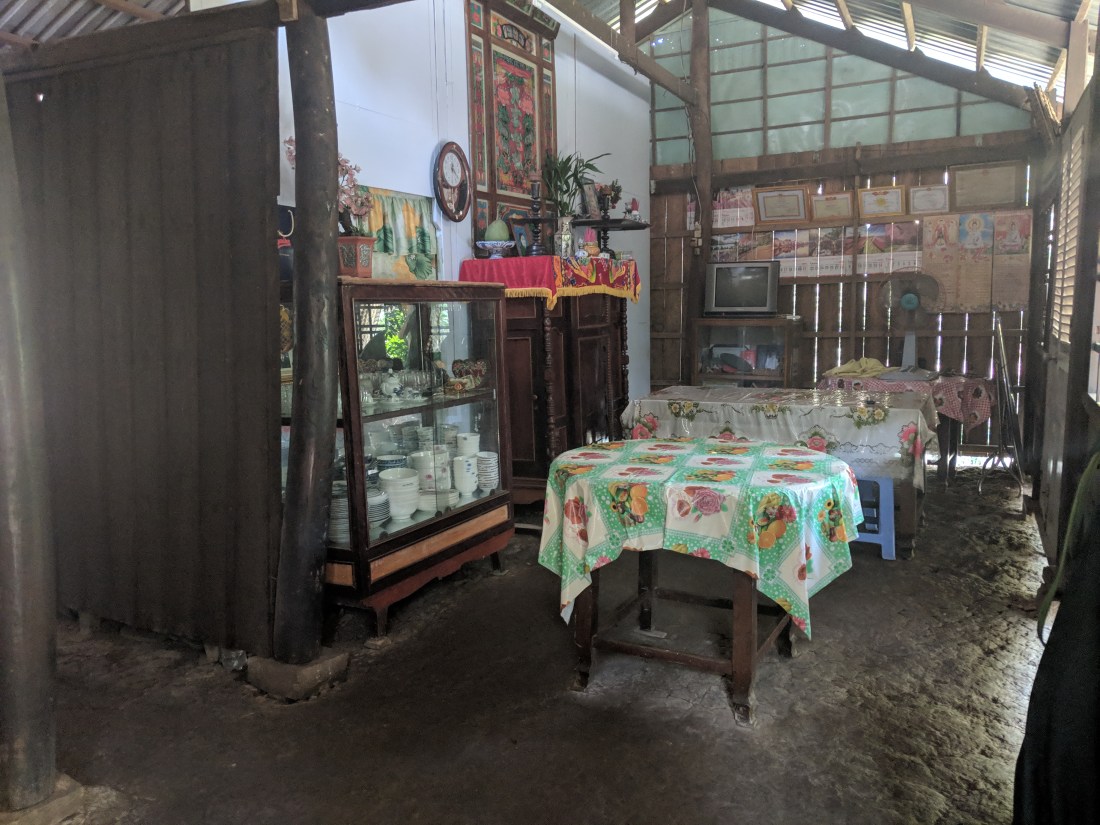
After our busy day, it was back to Mango Home for delicious food and relaxing by the pool.
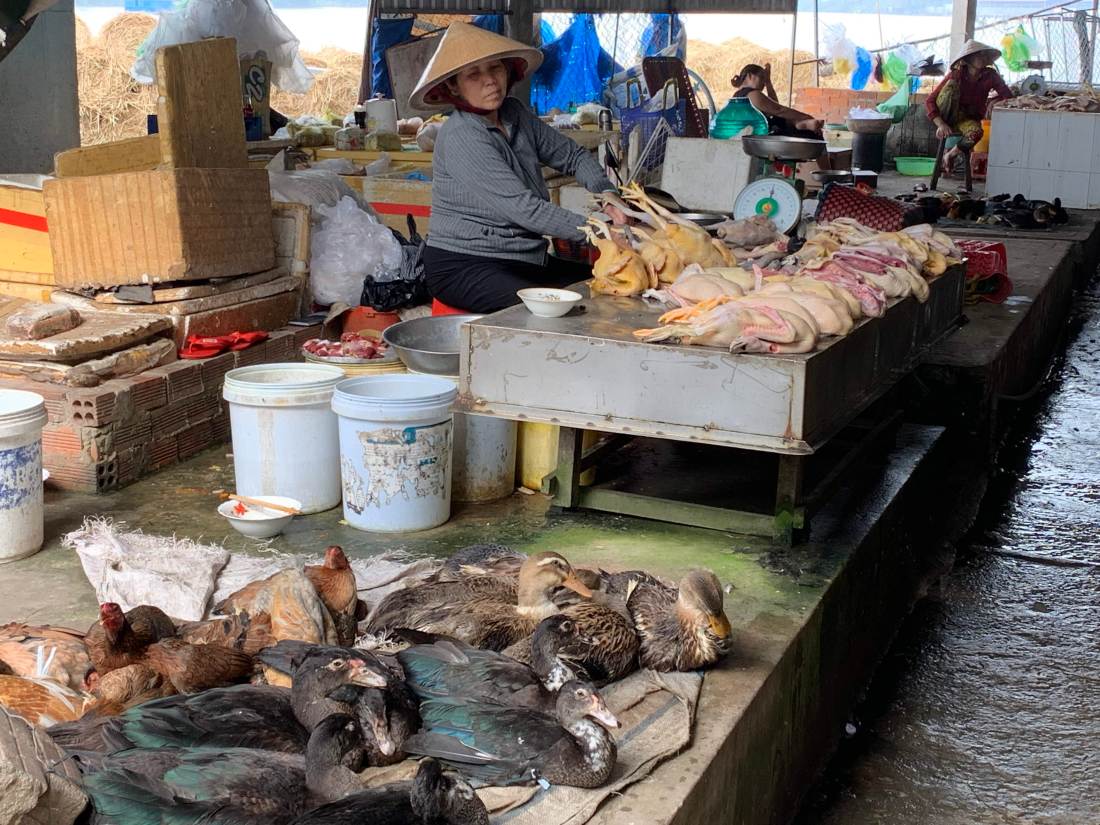
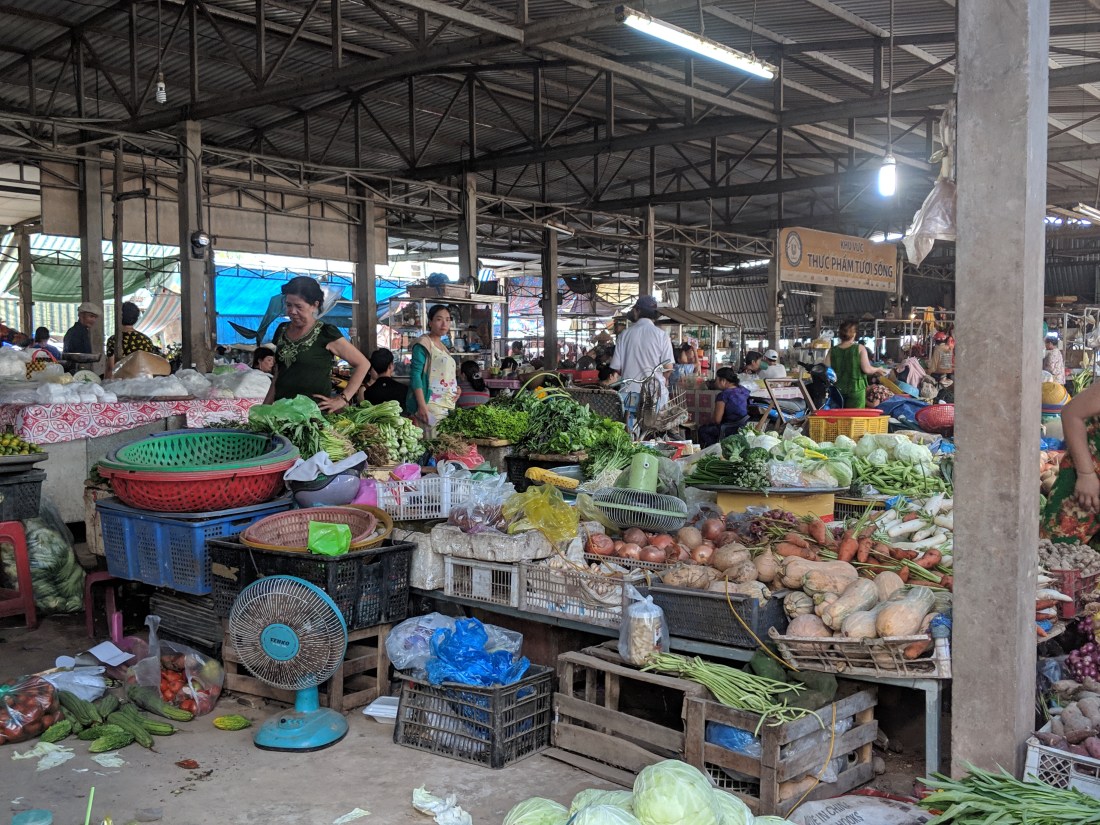
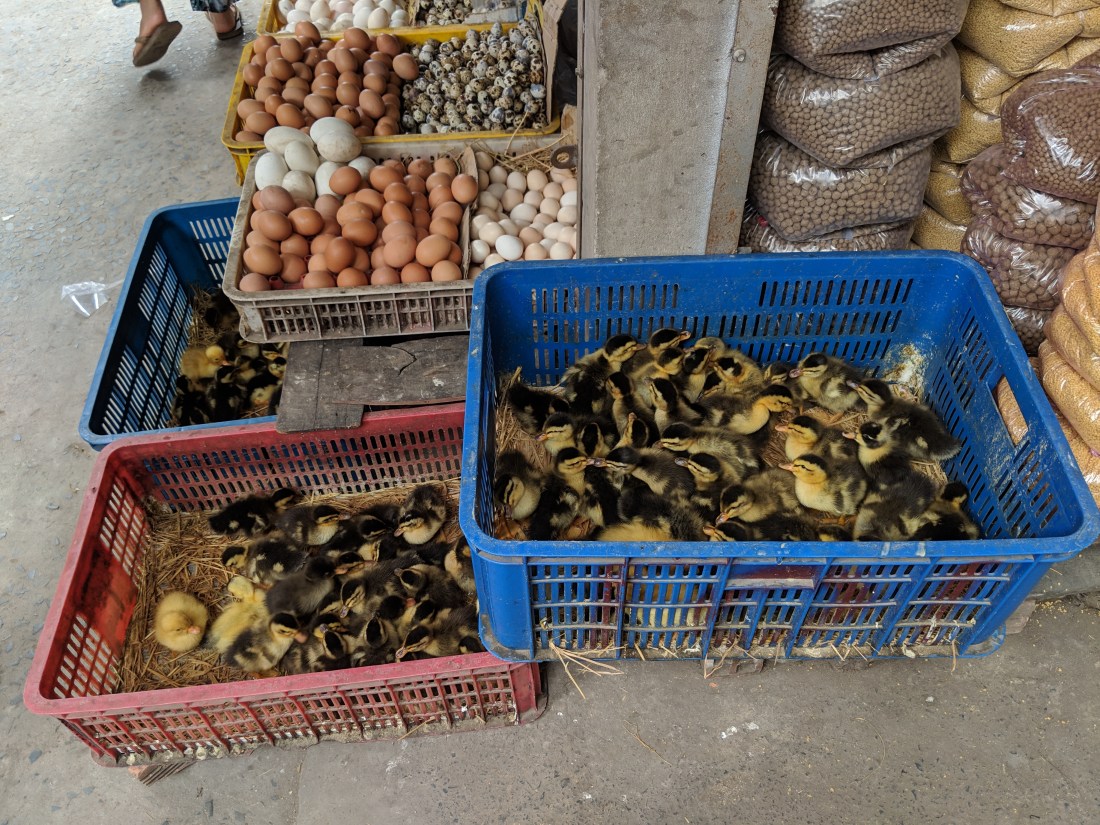
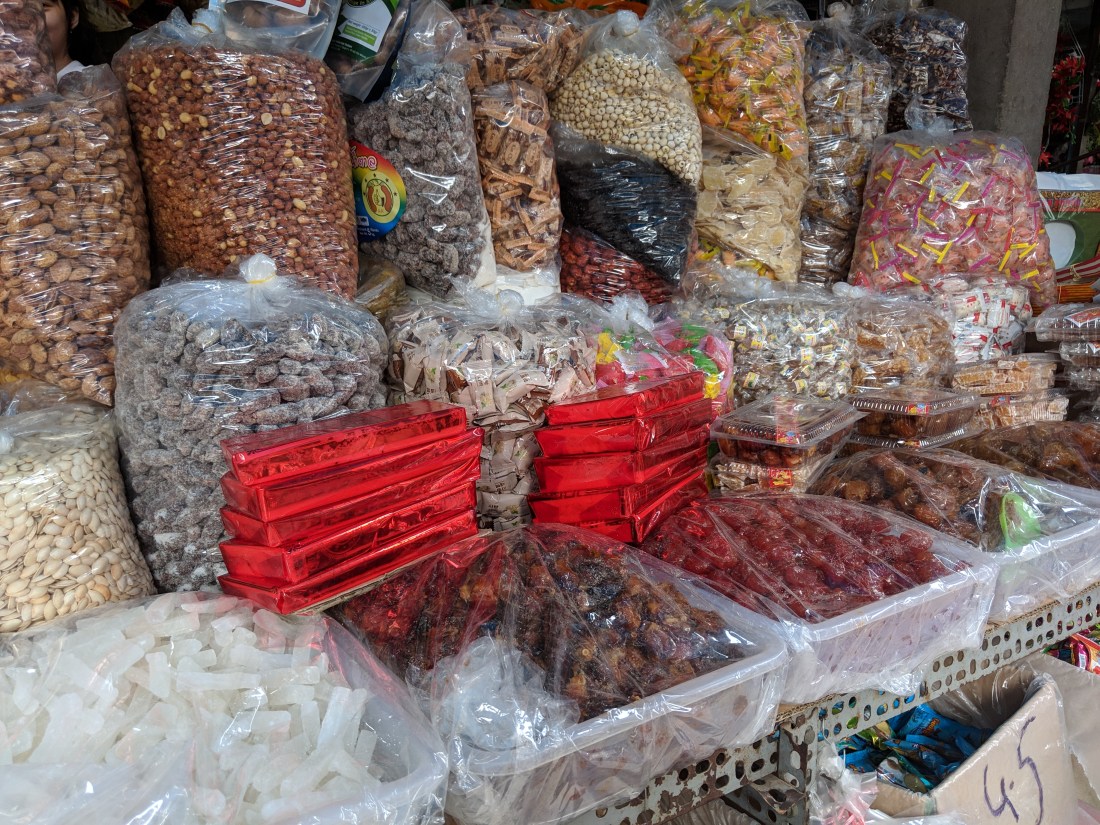
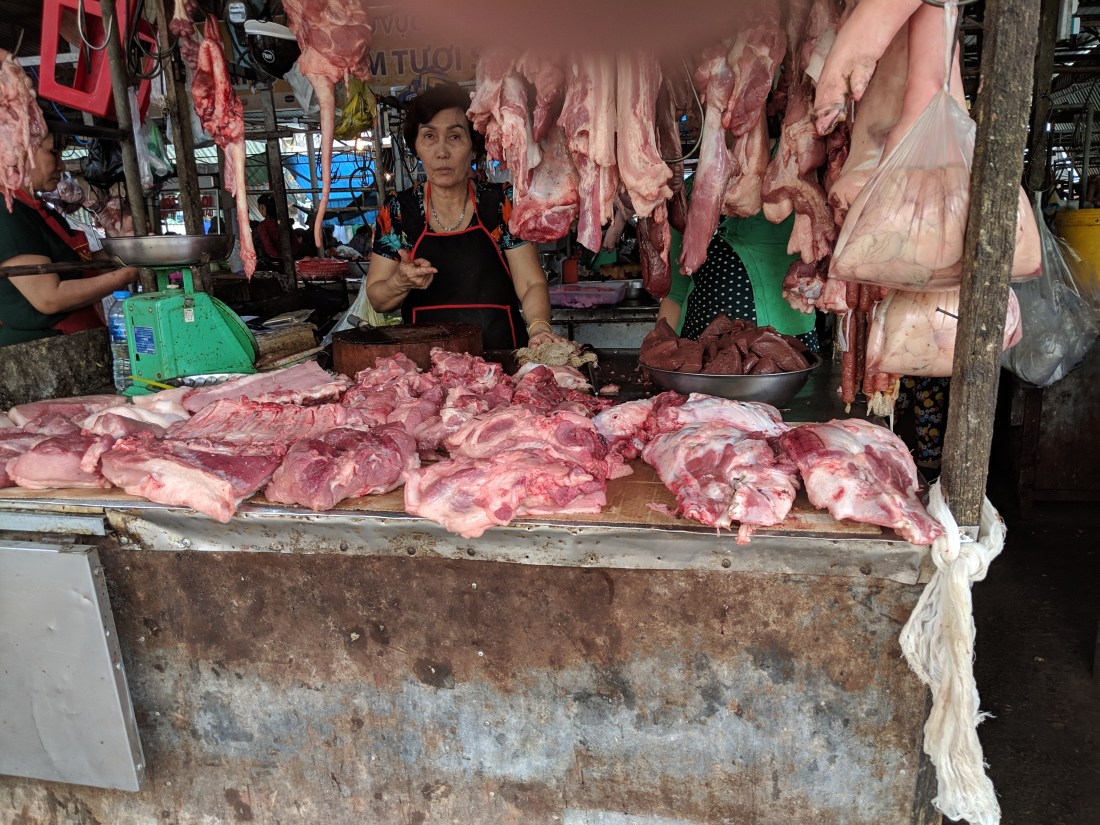
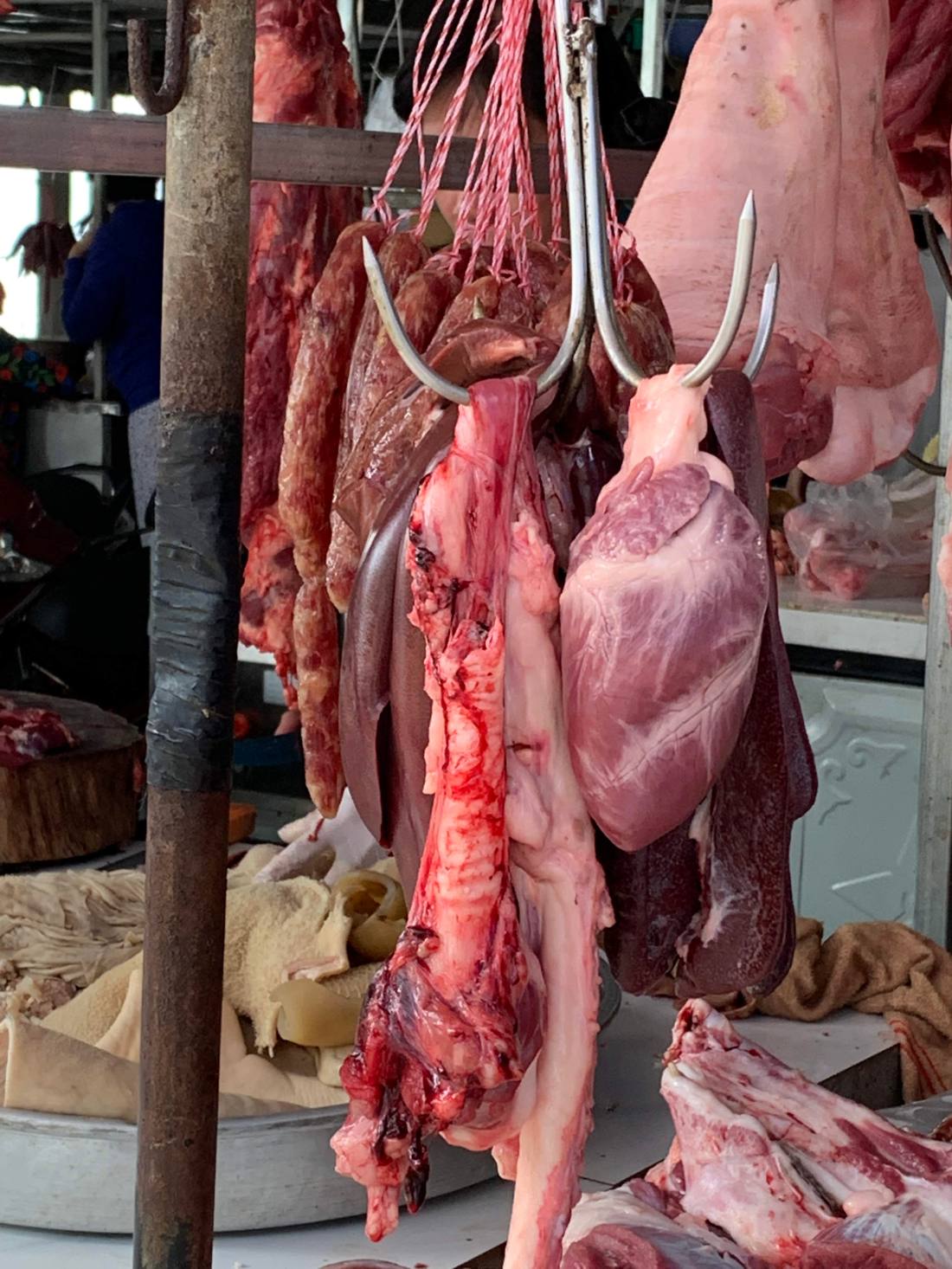
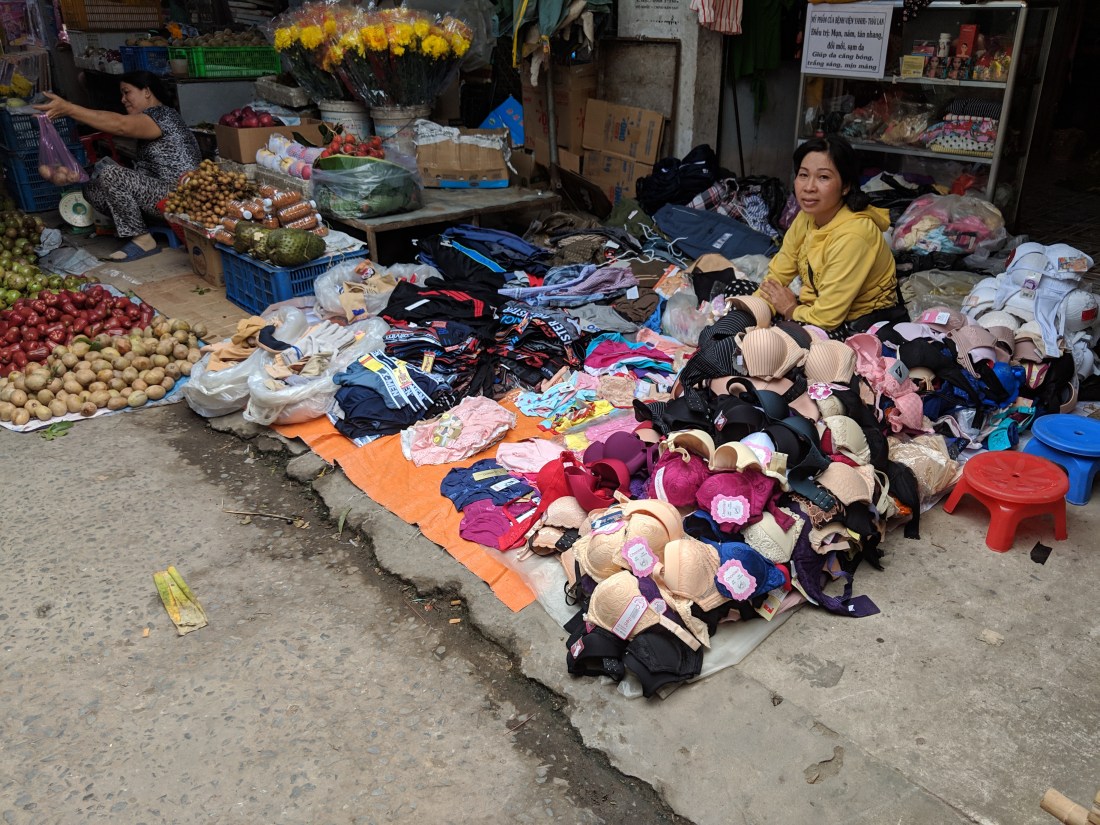
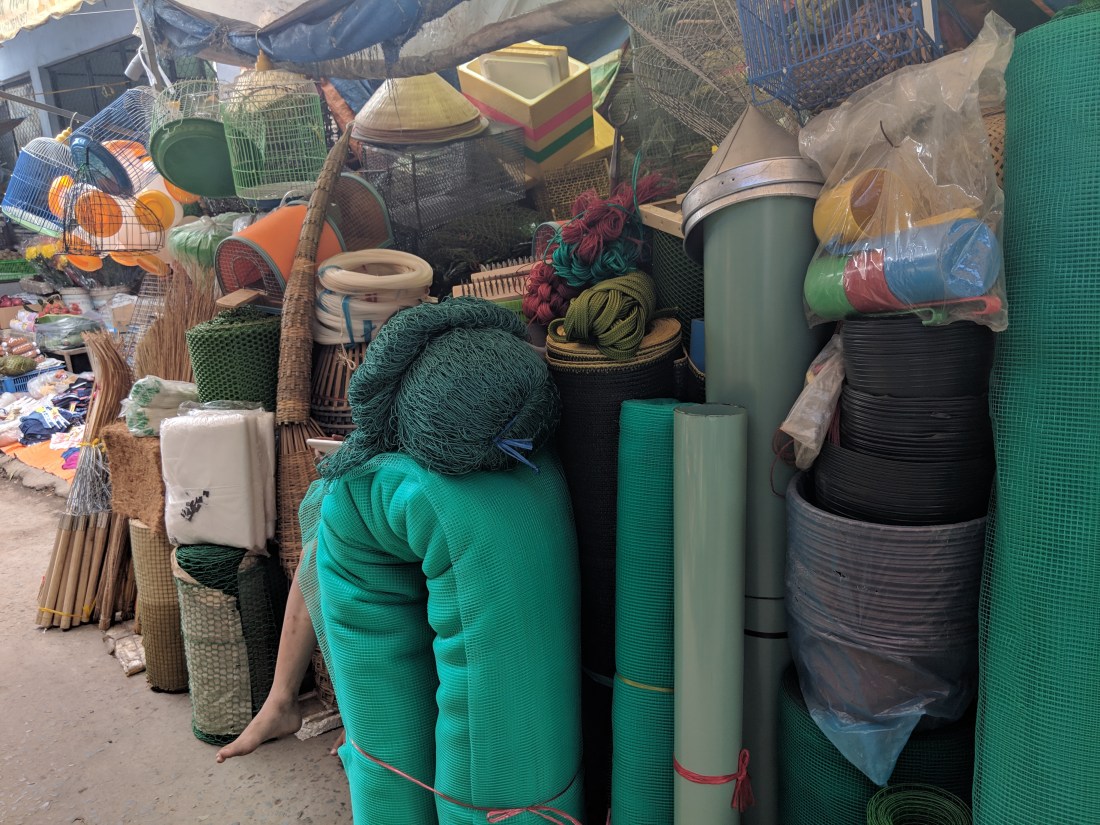
Next morning we were back on the river boat, this time in the opposite direction to the market. Of the many markets I have been to, this was the most authentic/least touristy.
Then we visited a Cau Dai temple, a monotheistic religion founded in 1926 in southern Vietnam combining Taoism, Buddhism, and Christianity. The symbol is the left eye.

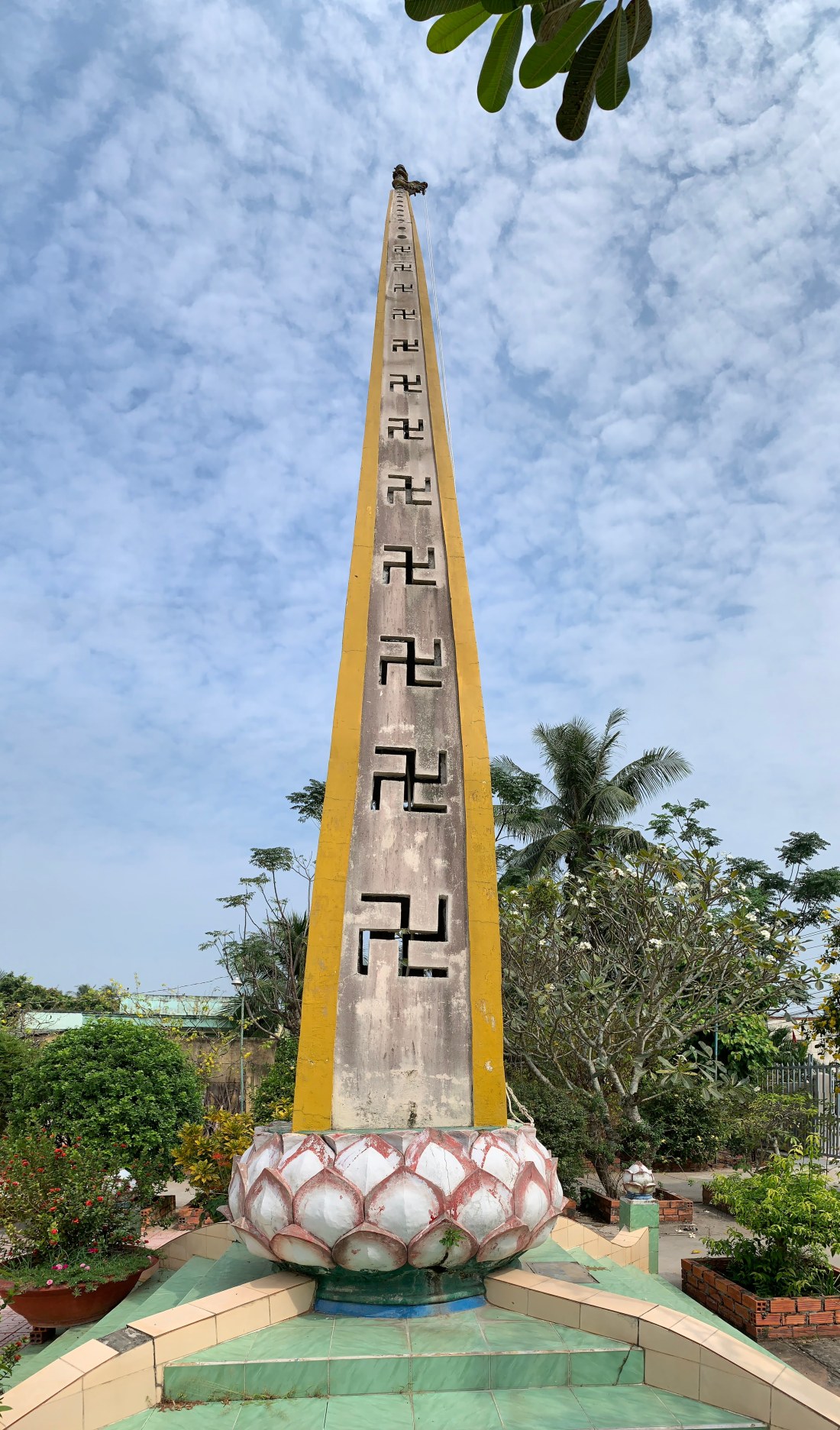
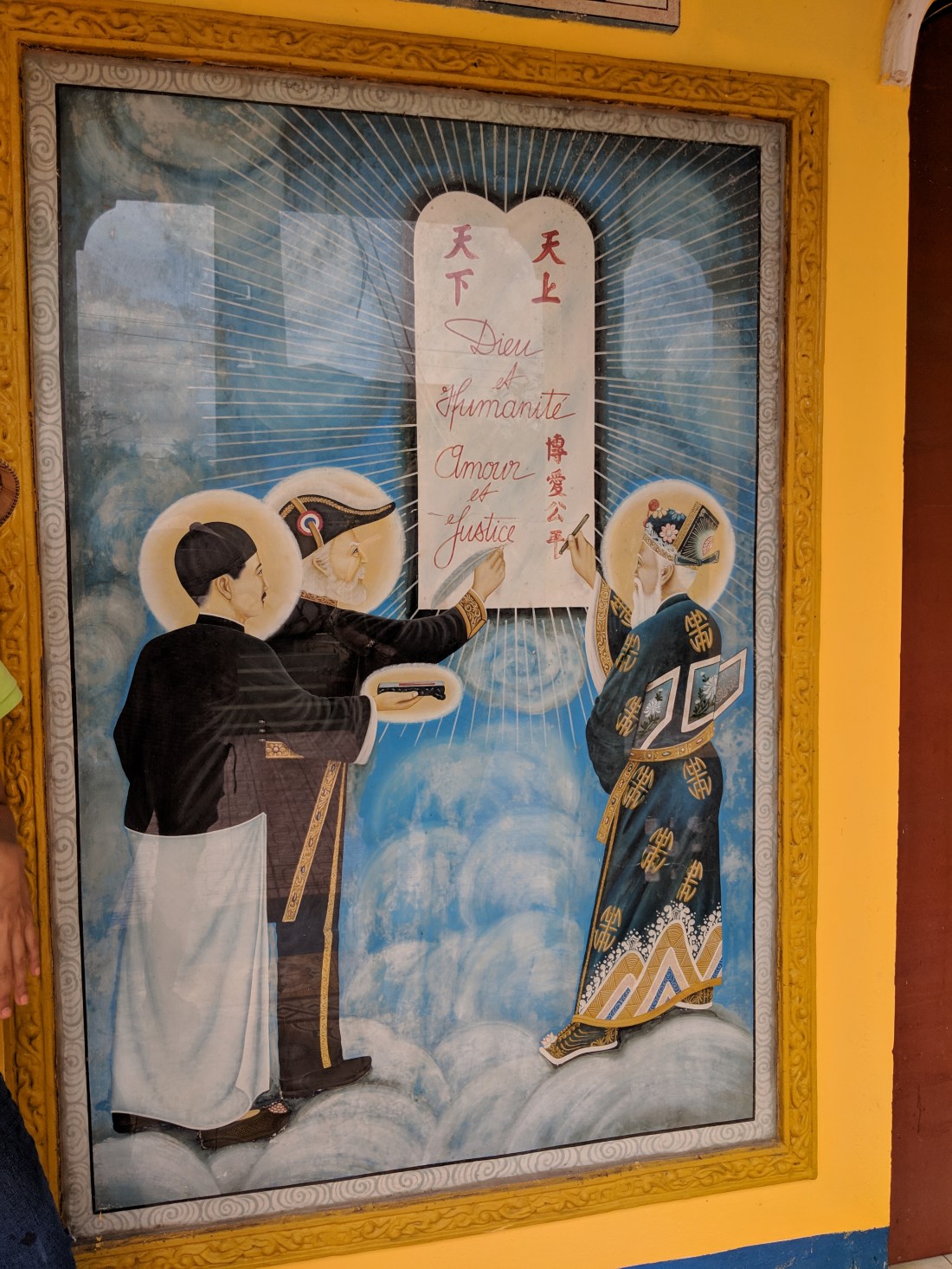
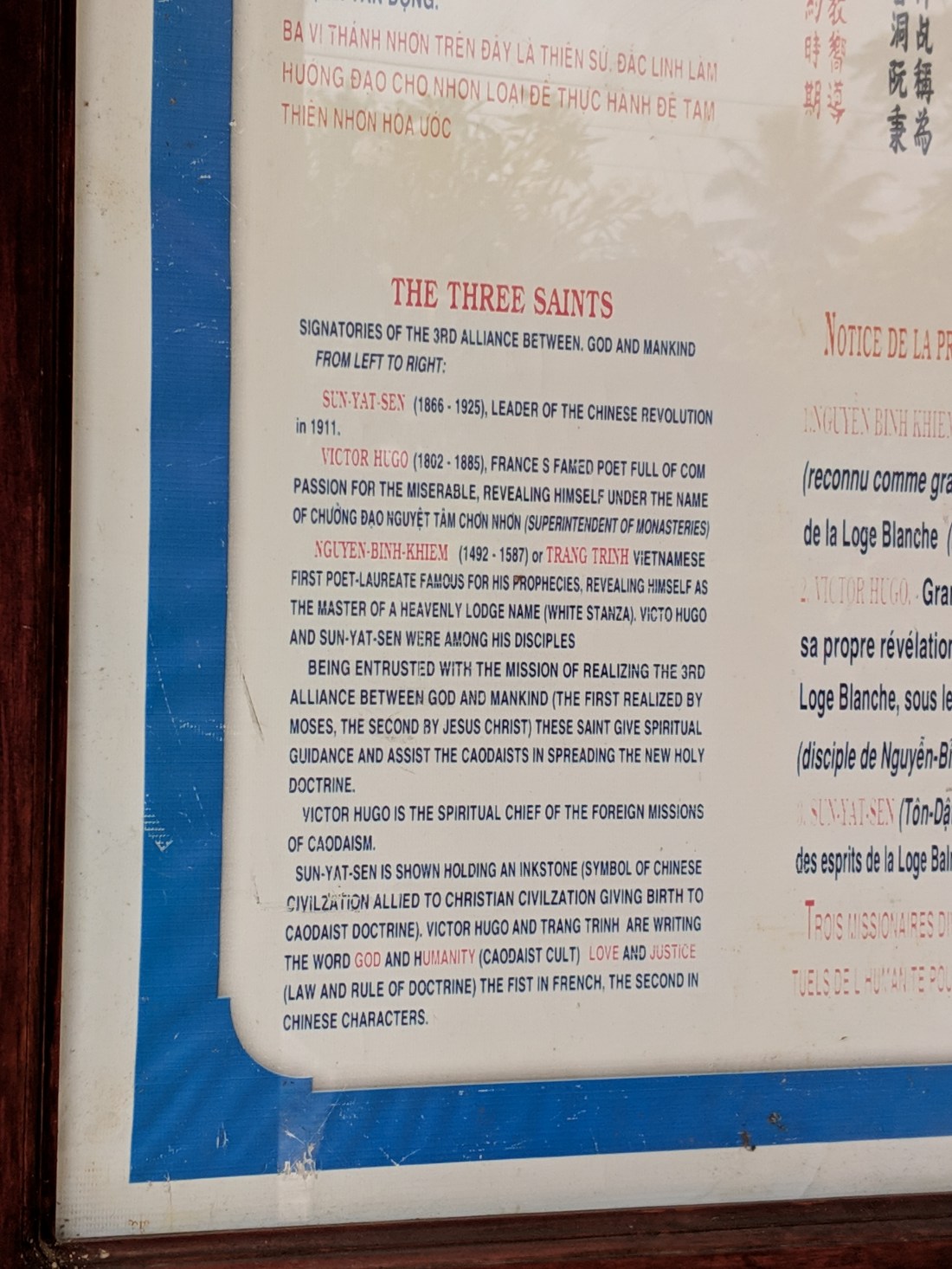


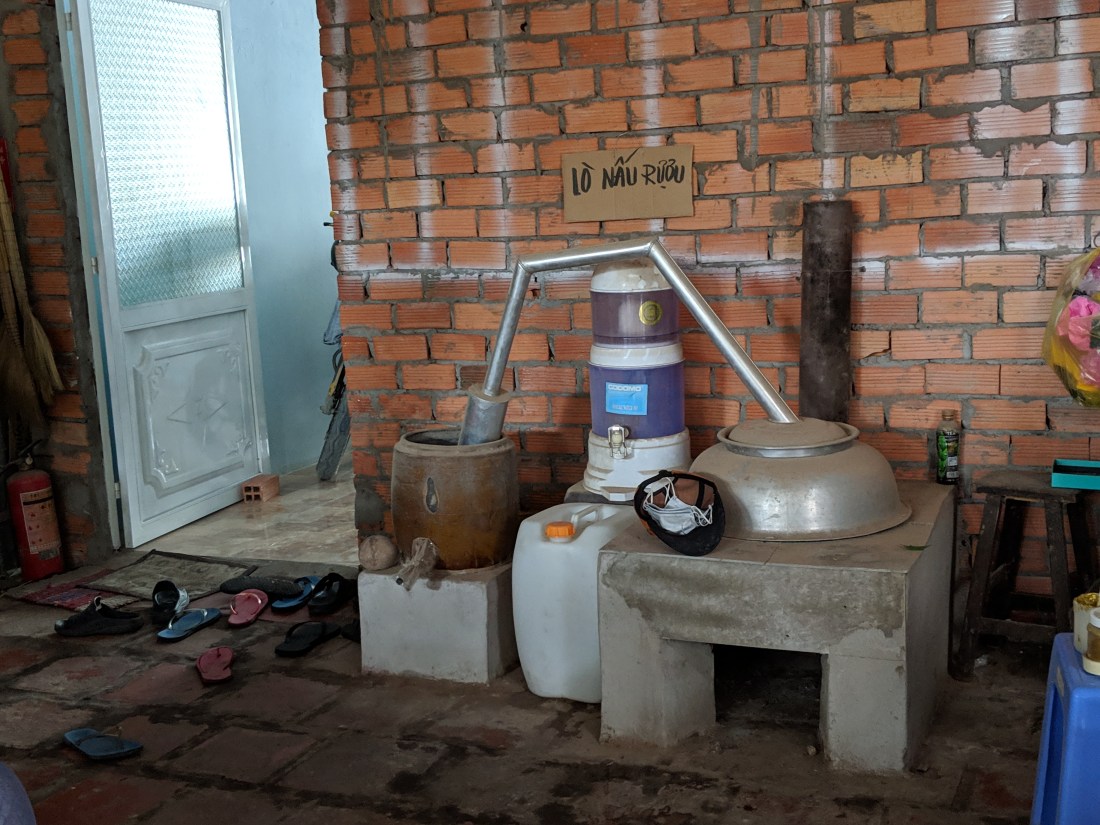
Then we bicycled to a husband/wife home/factory that bottles and sells coconut whisky.


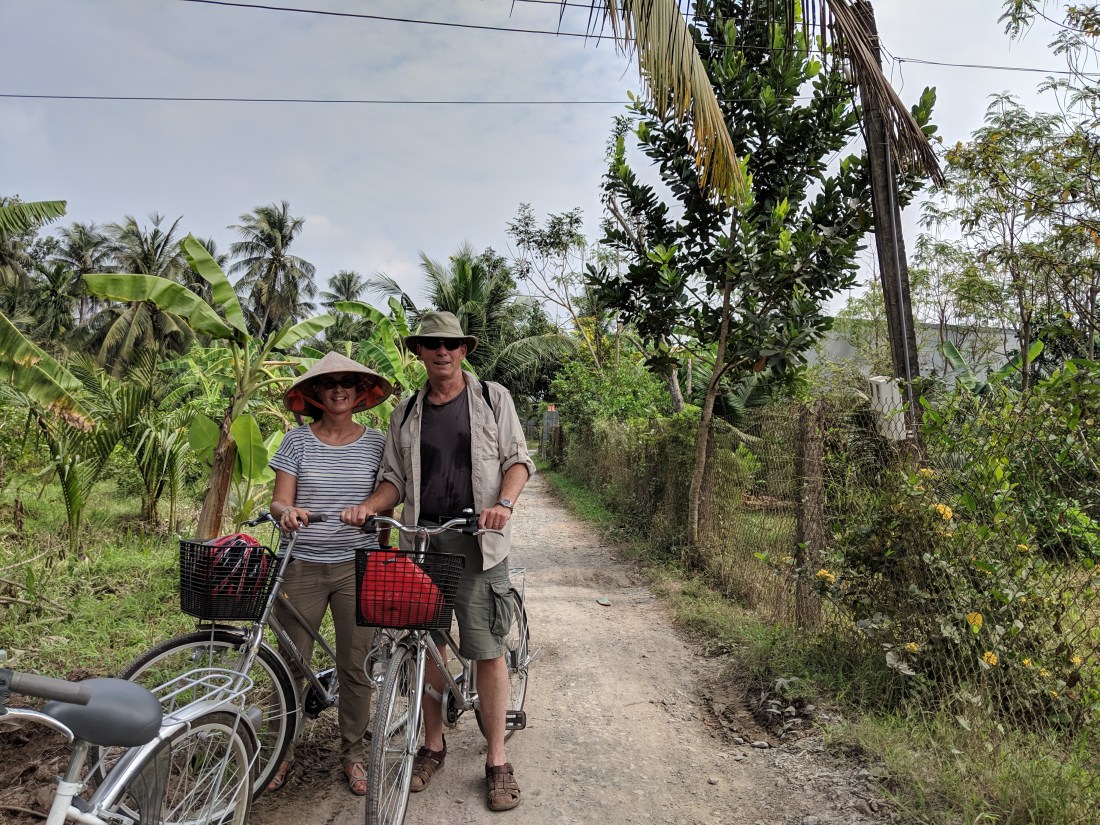
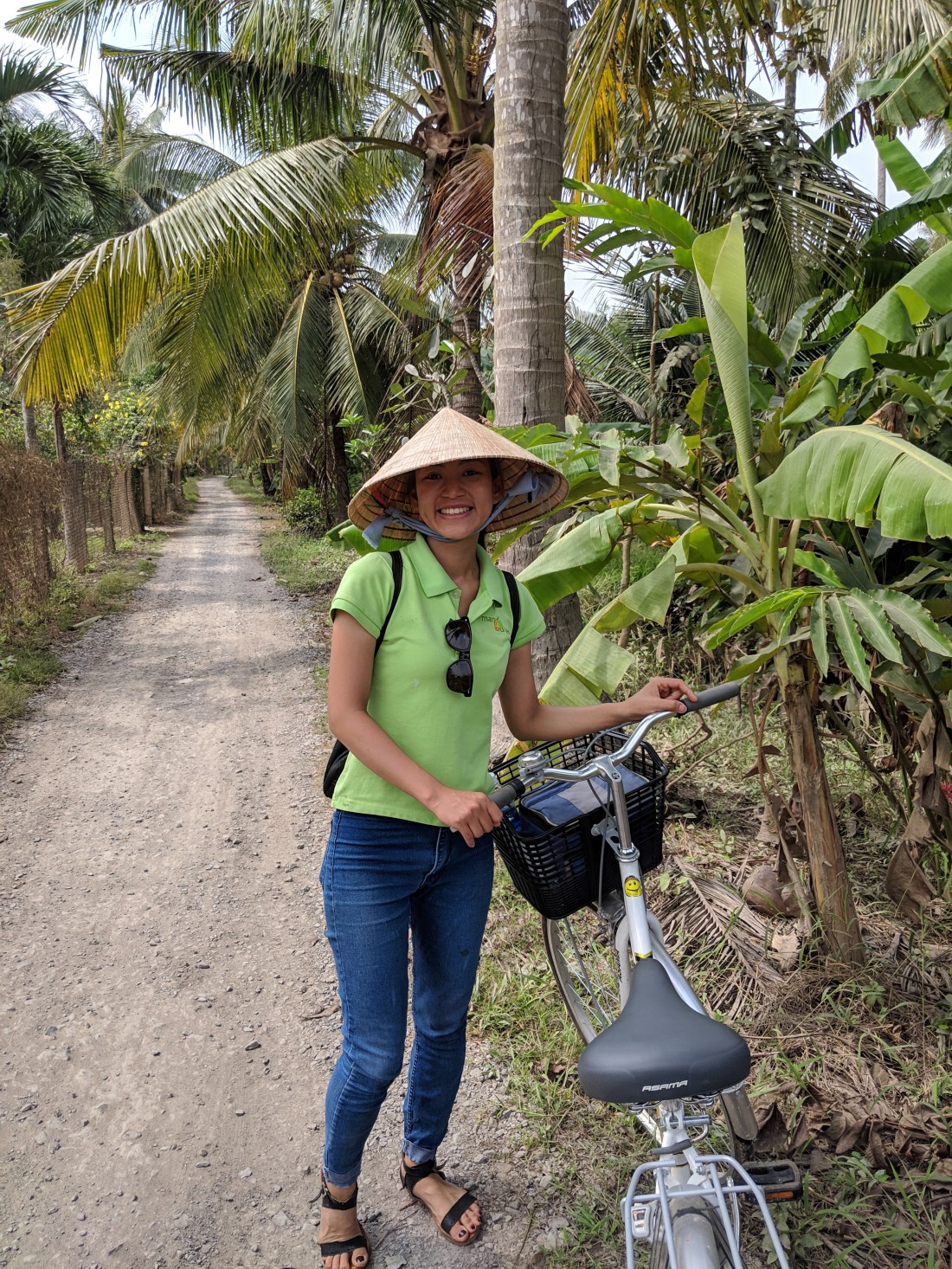
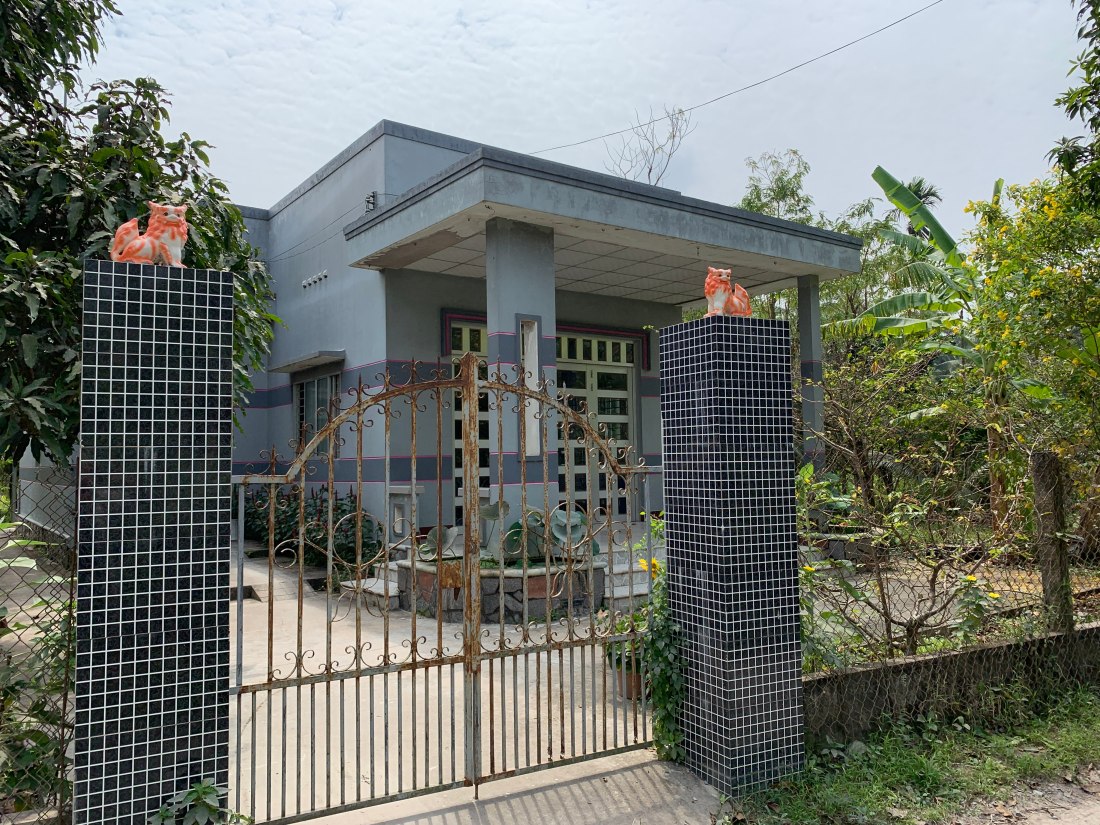
And then took a long bicycle trip through the jungle and with homes interspersed throughout.
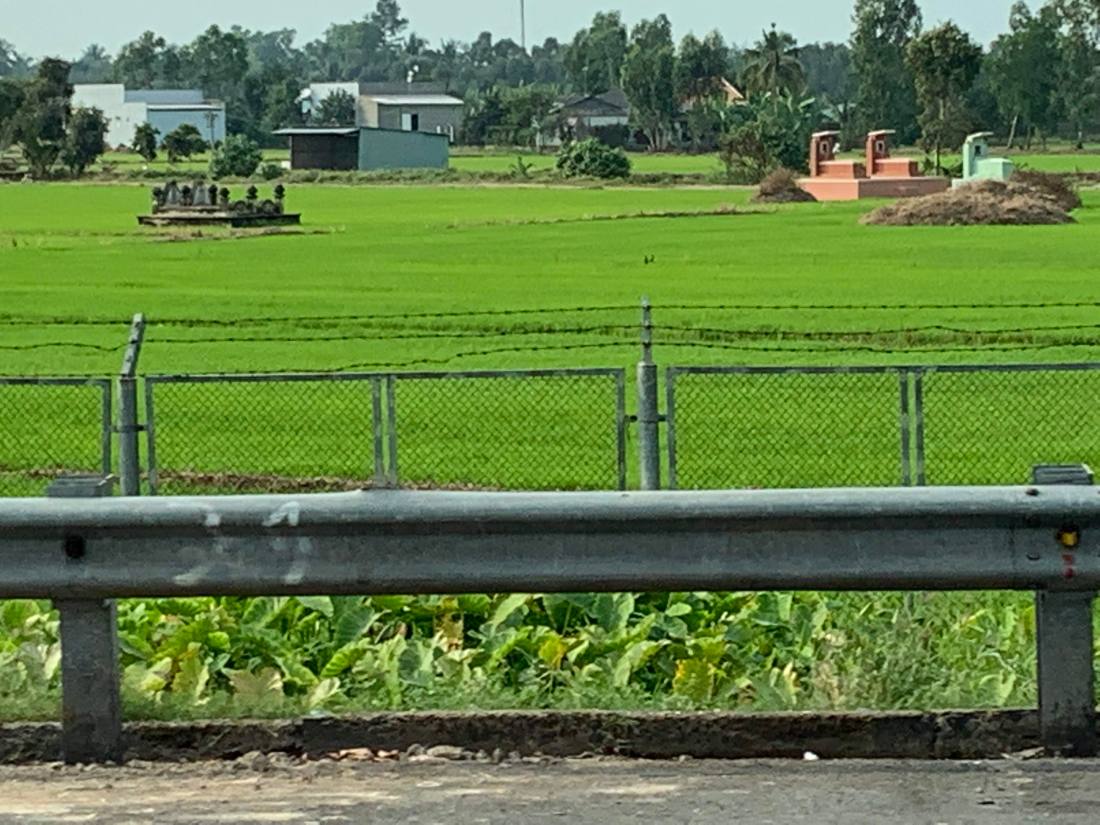

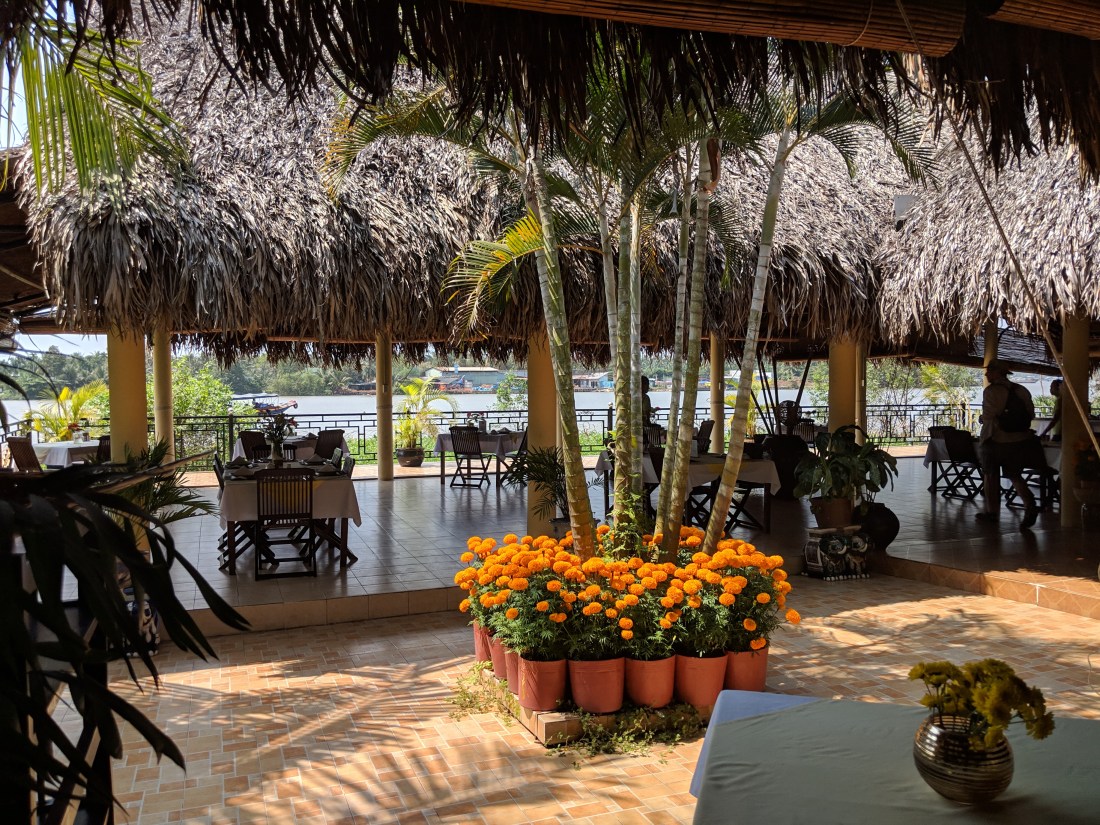
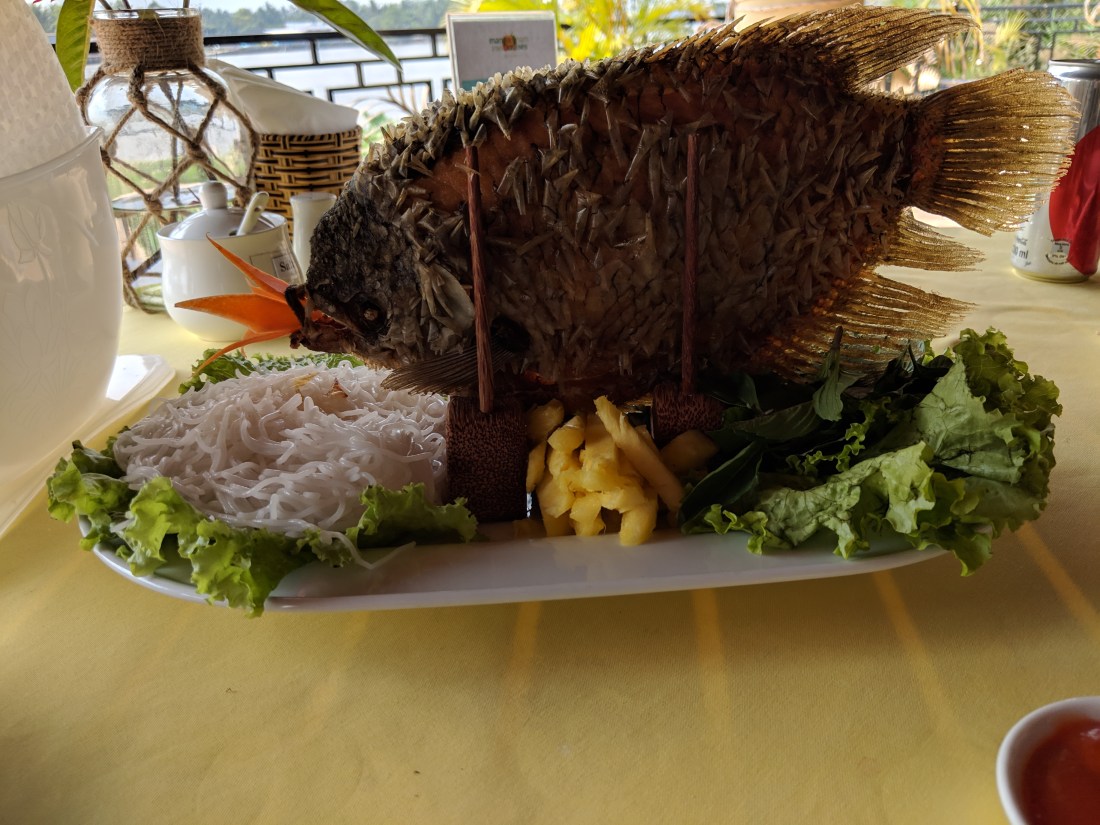
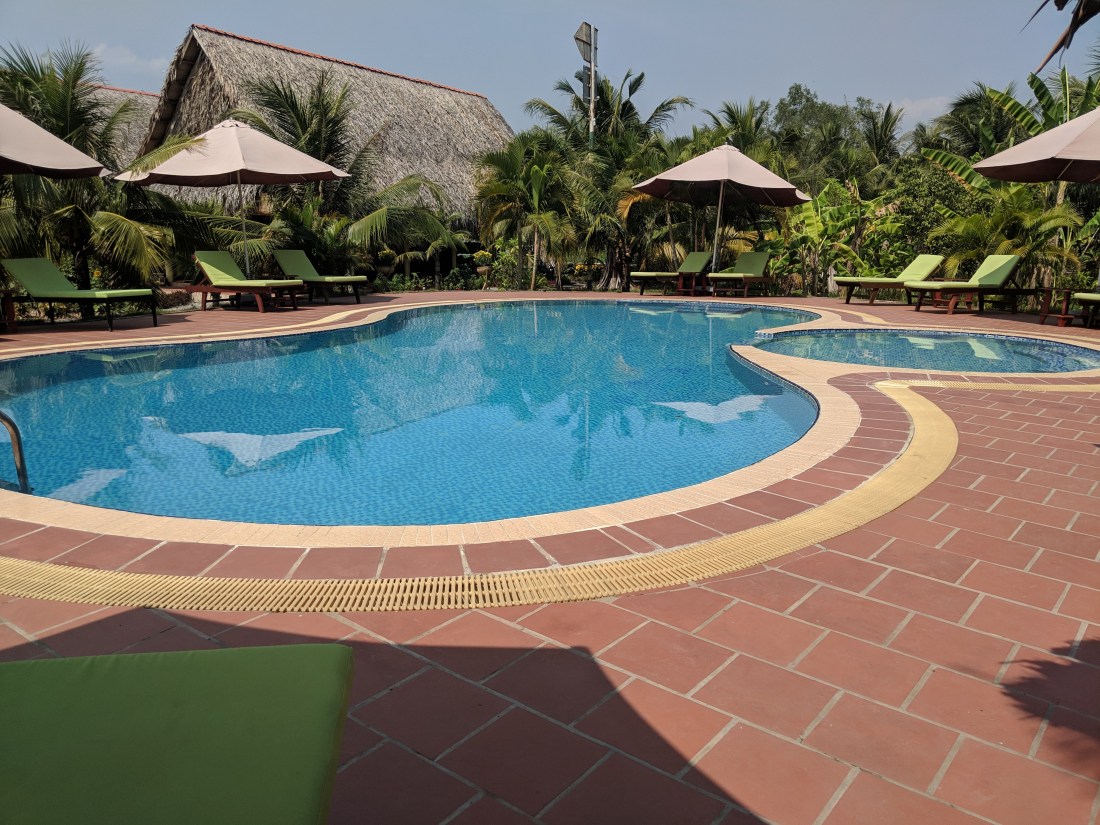
Then it was back to Mango Home for another amazing meal and relaxation by the pool.
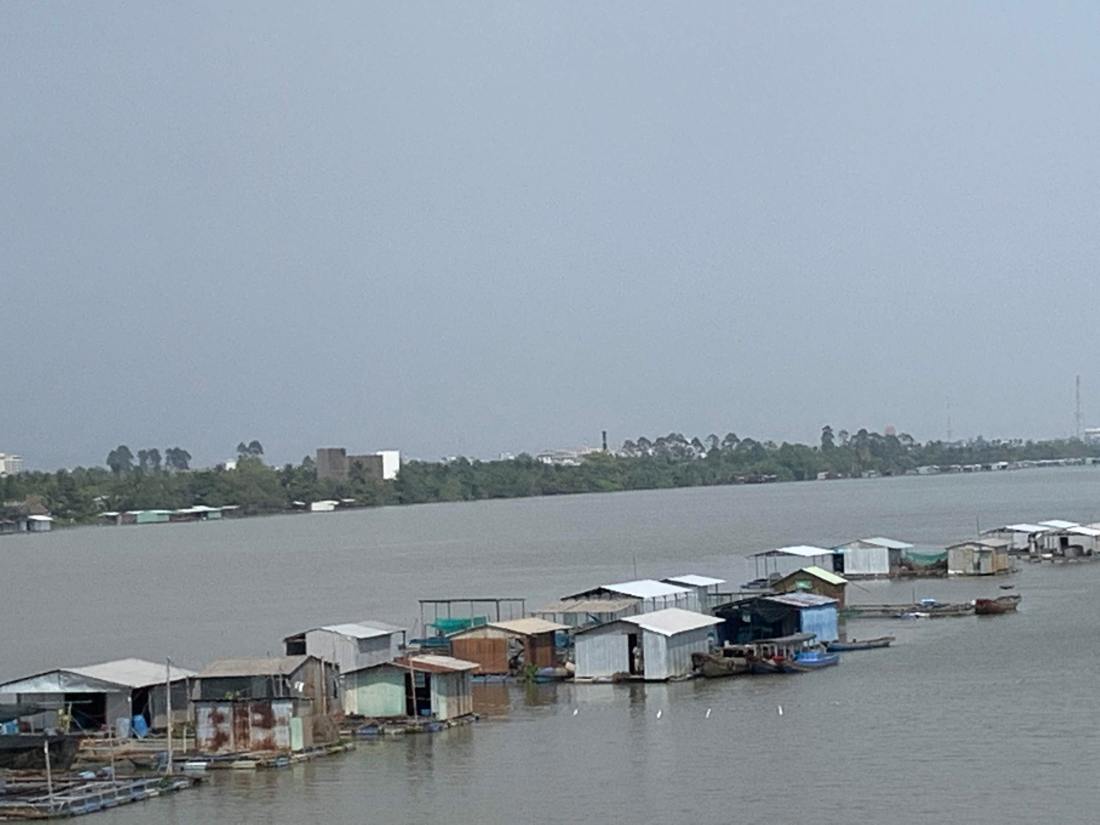
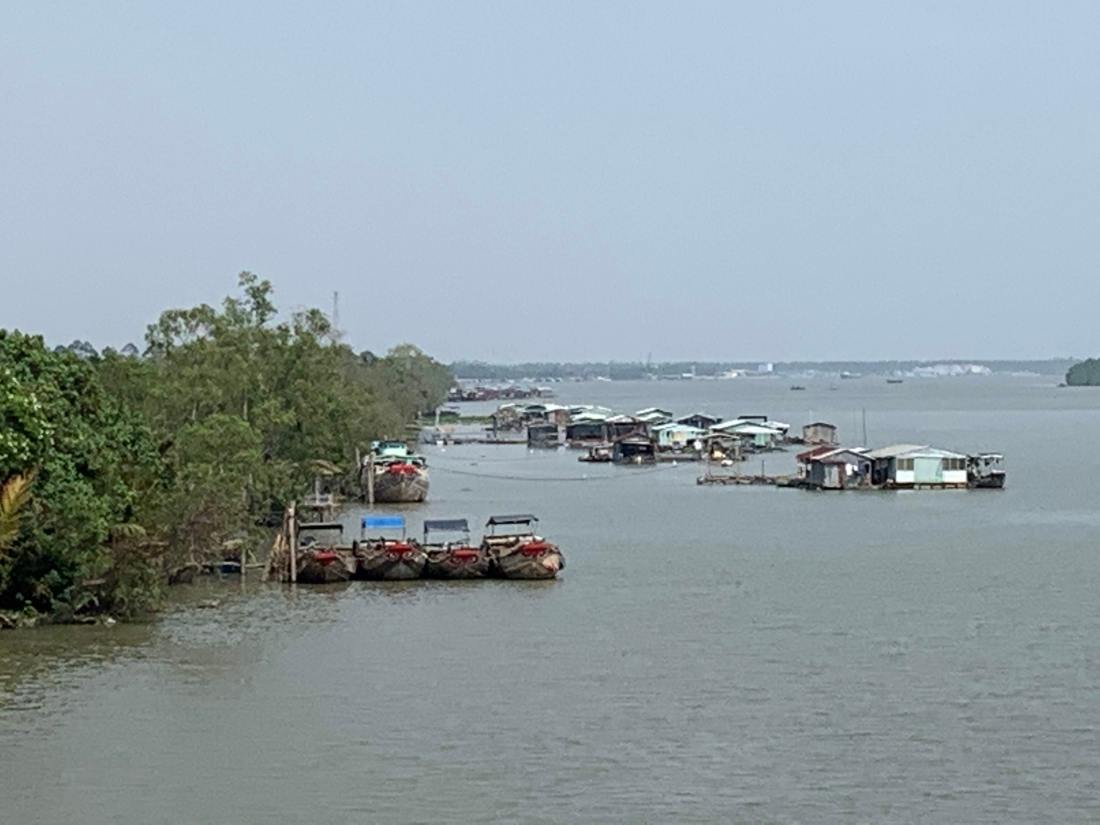
The next day we journeyed back to Ho Chi Minh City through the Mekong Delta, which is famous for its floating homes and markets.
Back in Ho Chi Minh City, we took the Saigon After Dark vespa food tour of the city. It is a food tour by motorbike. We stopped first at Cafe Zoom for chips and drinks and got an overview of the city and the tour from our guide Binh.
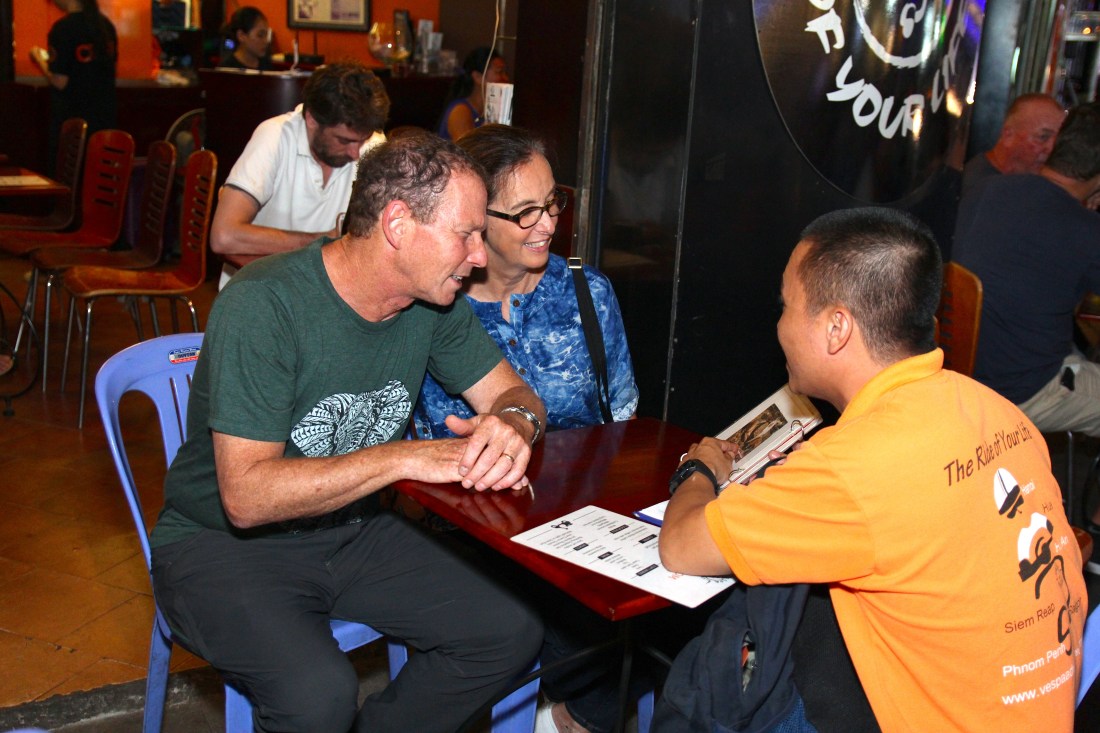
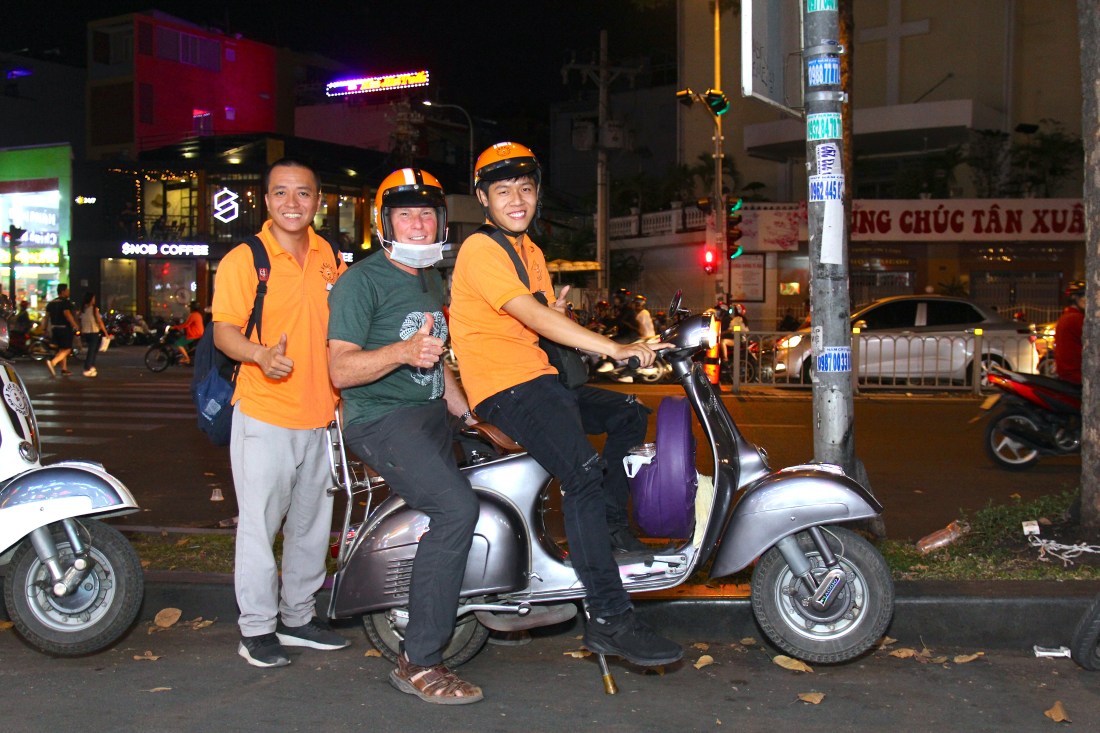
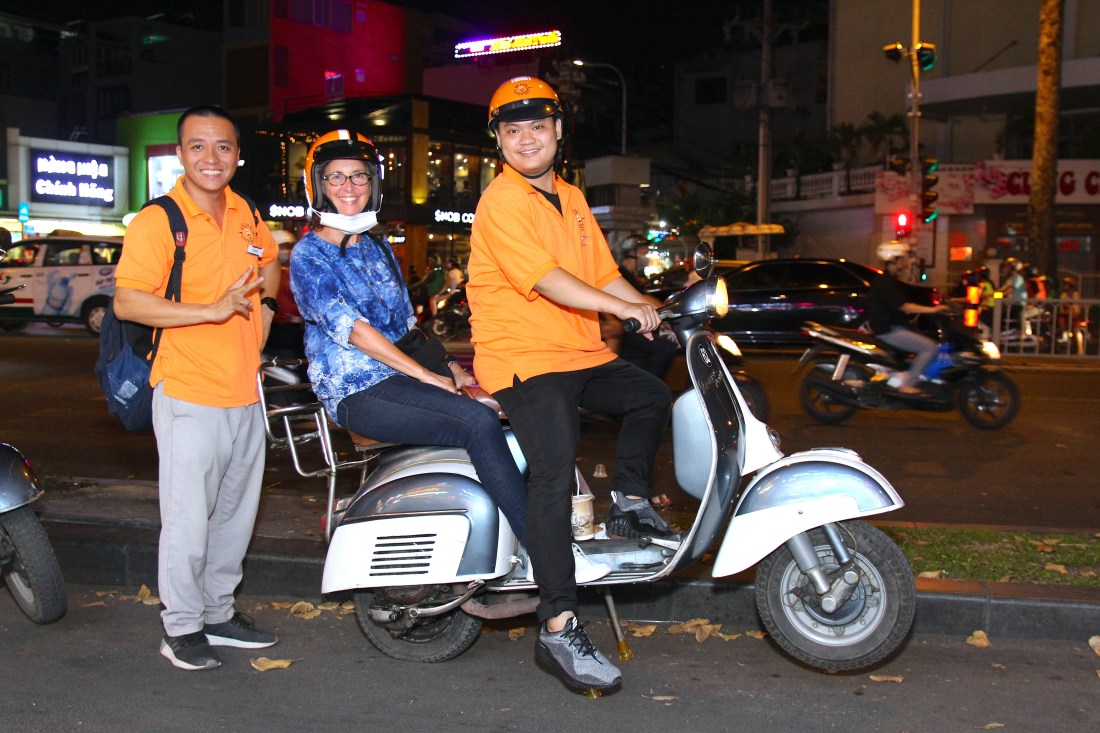
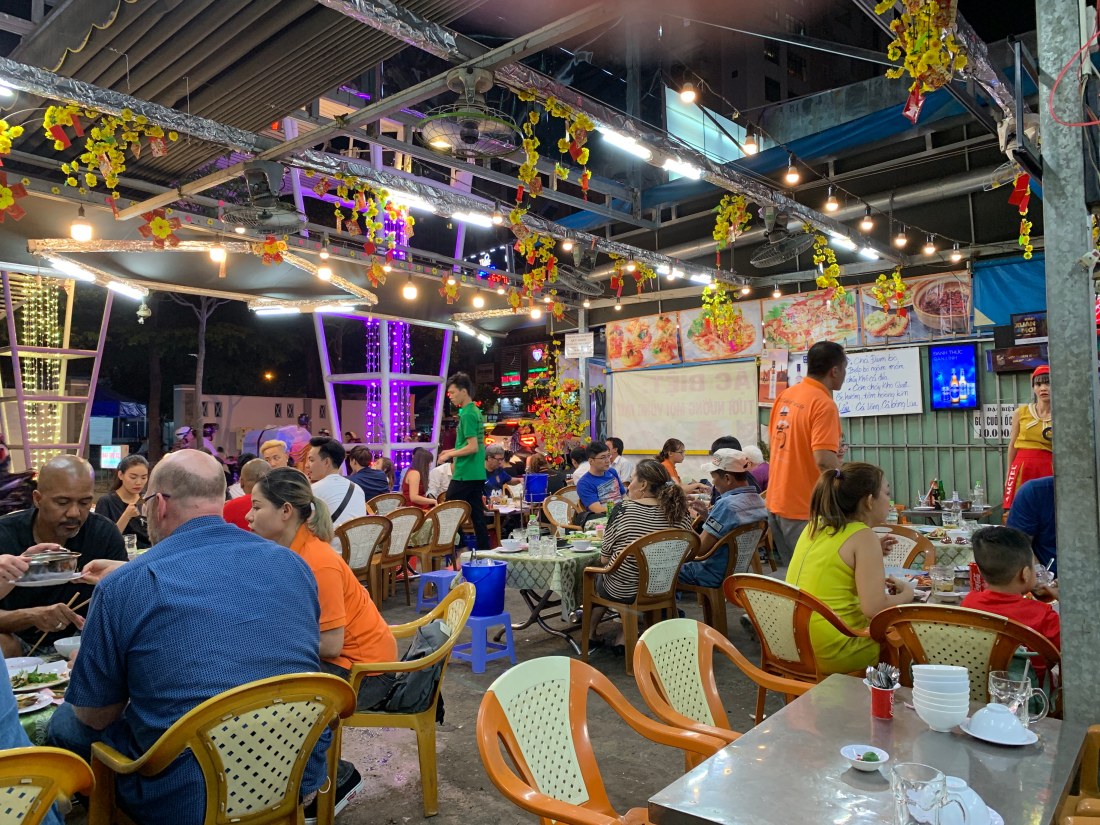
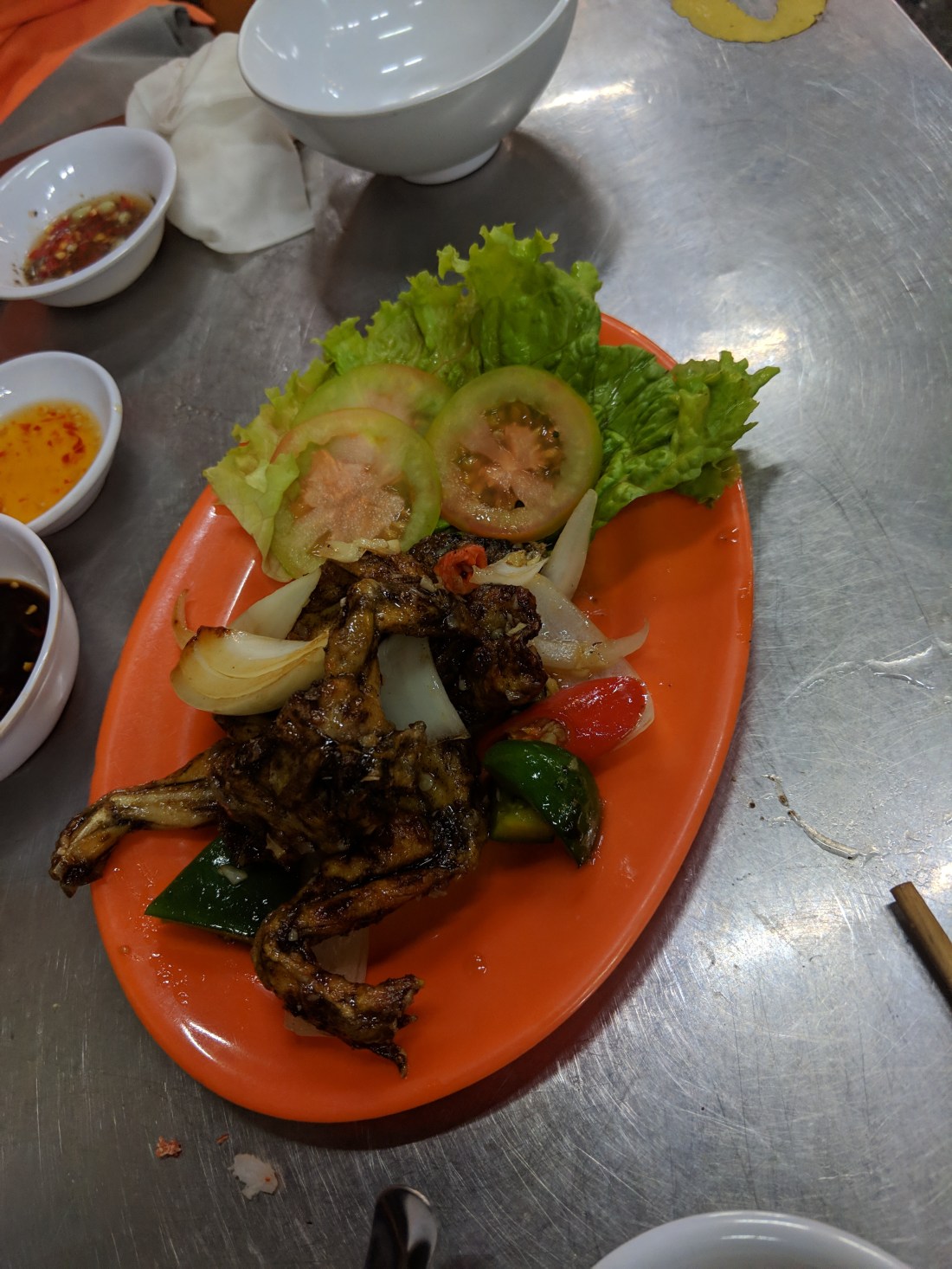
Next stop was at Seafood for delicious crabs, clams, mussels, all made ways we had never experienced, as well as fried noodles, plus beer. And yes, we tried frogs legs; tastes like chicken. Then it was on to District 4, over the water, to Banh Xeo for Vietnamese pancakes, and of course more beer.
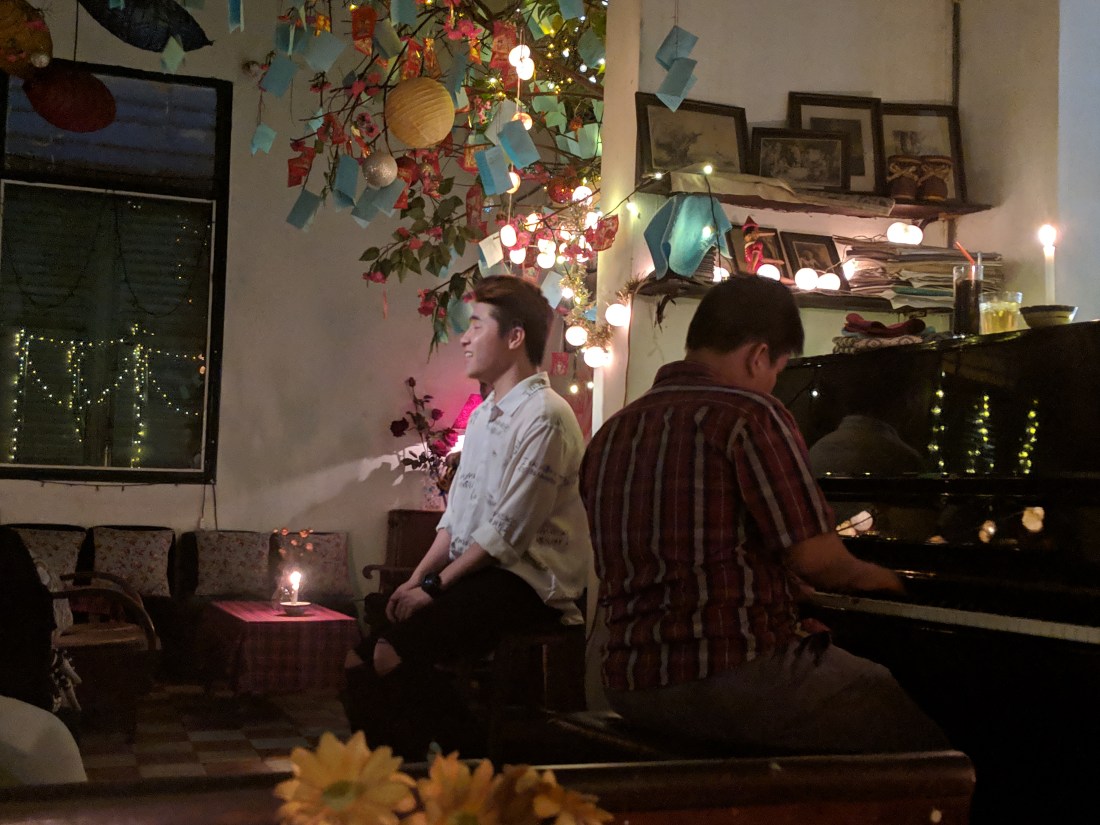
Then we went to Hidden Cafe back in District 1. At these intimate coffee bars each singer performs exactly 3 songs then moves on to his next venue and another singer joins us. So it is rotating singers at any venue all night.
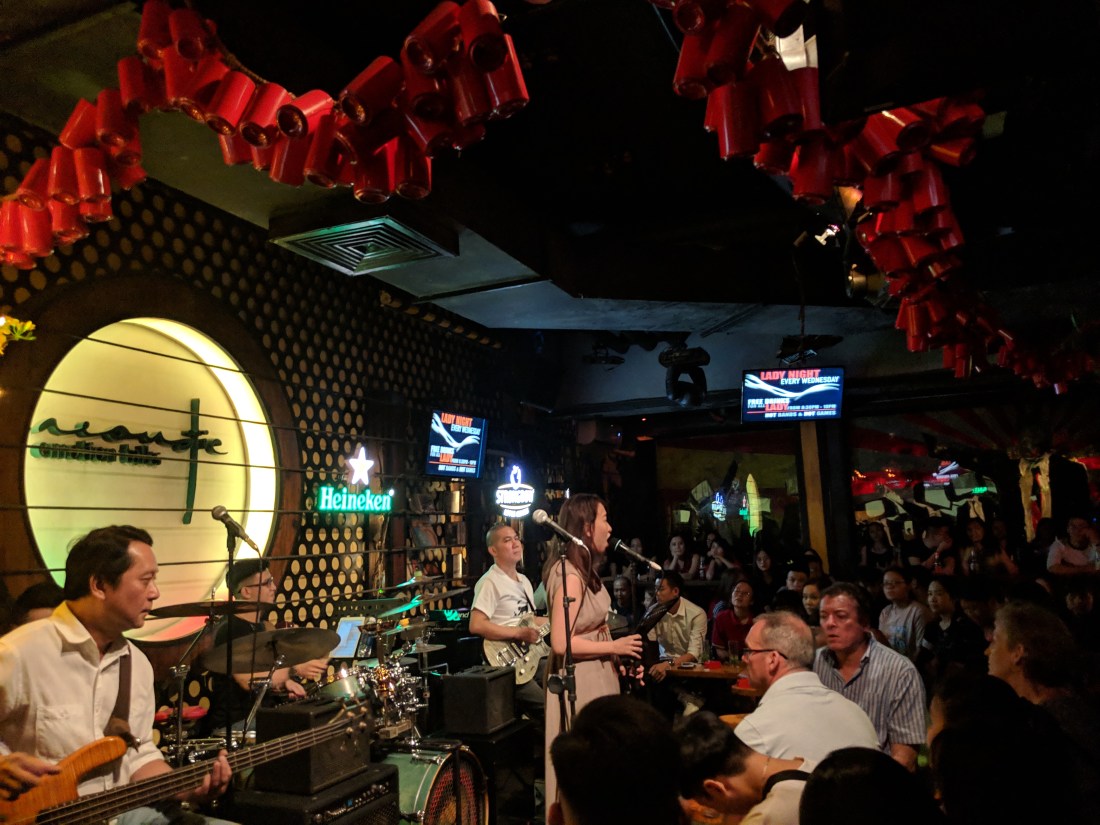
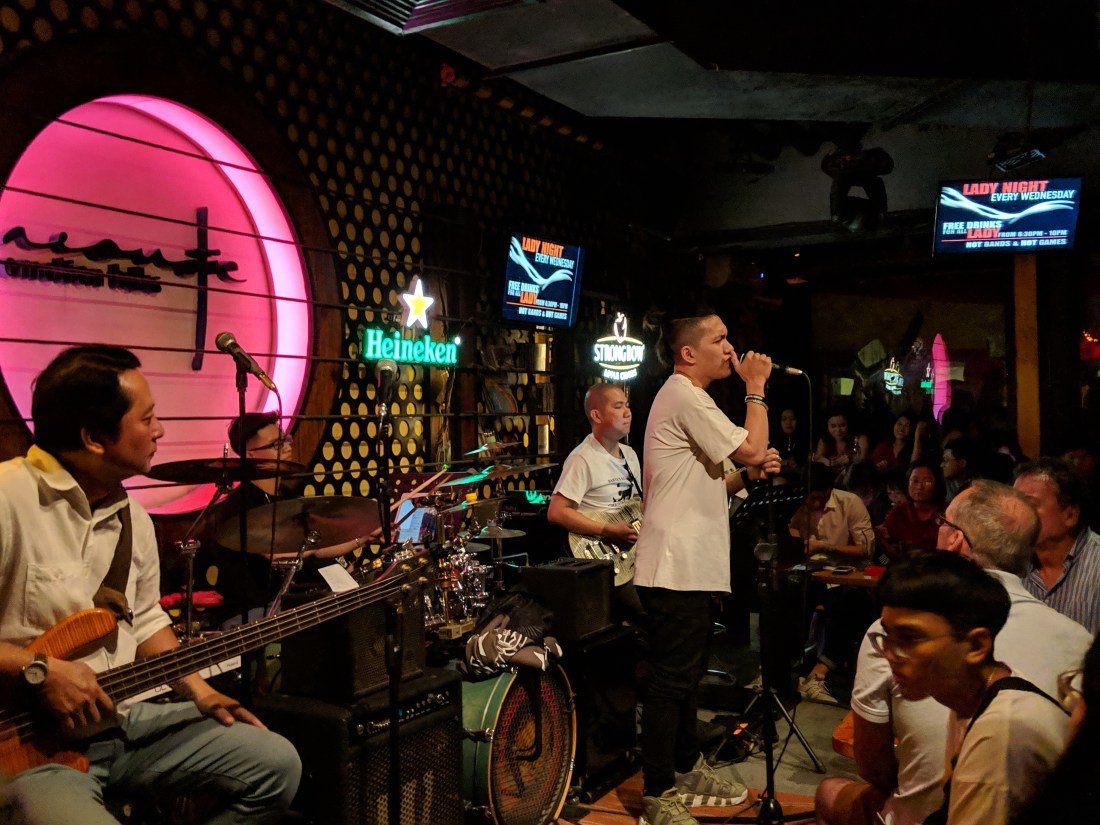
Then it was on for night caps at a Rock Bar, which has the same rotating performers system but much more lively. Lots of 80’s music, so we had a blast!
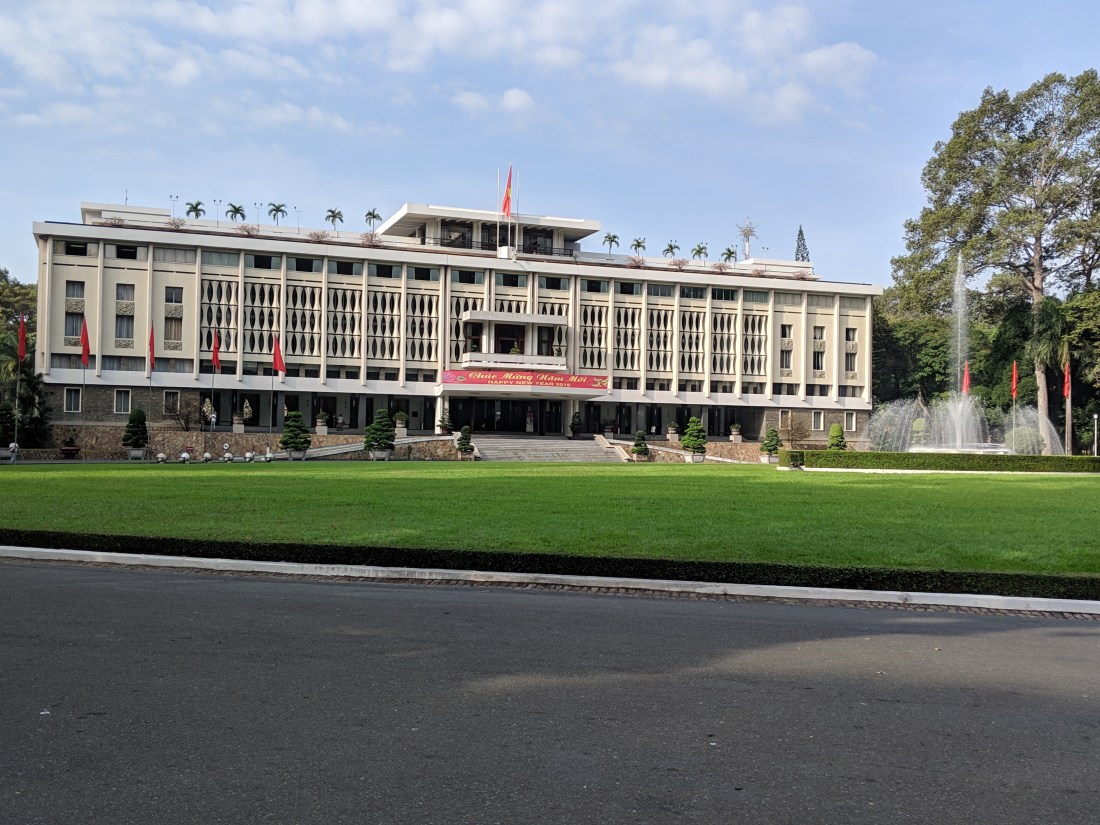
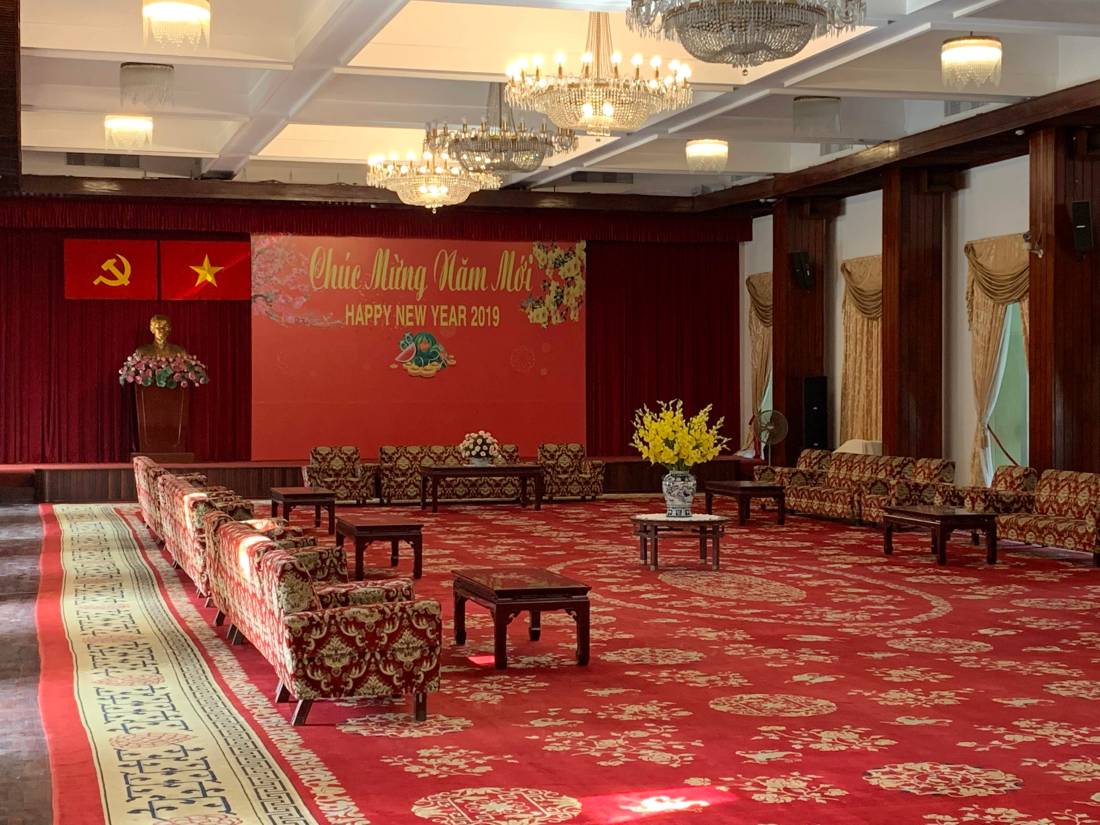
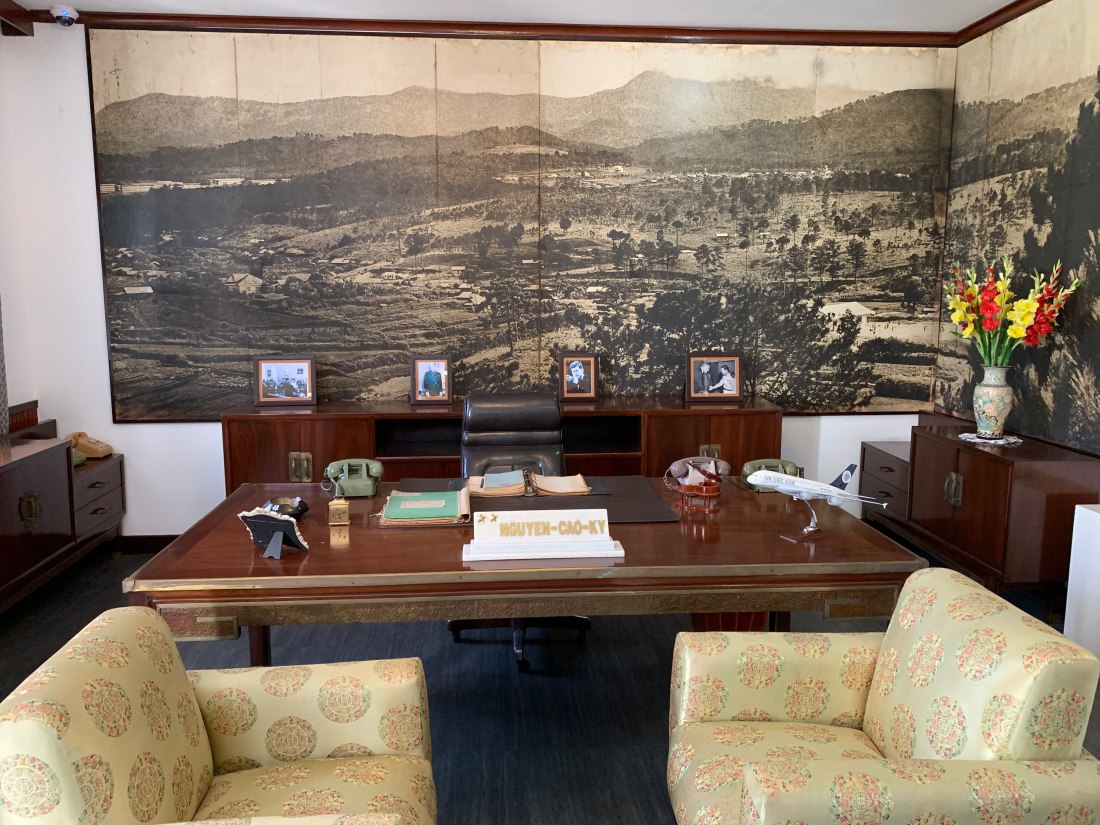
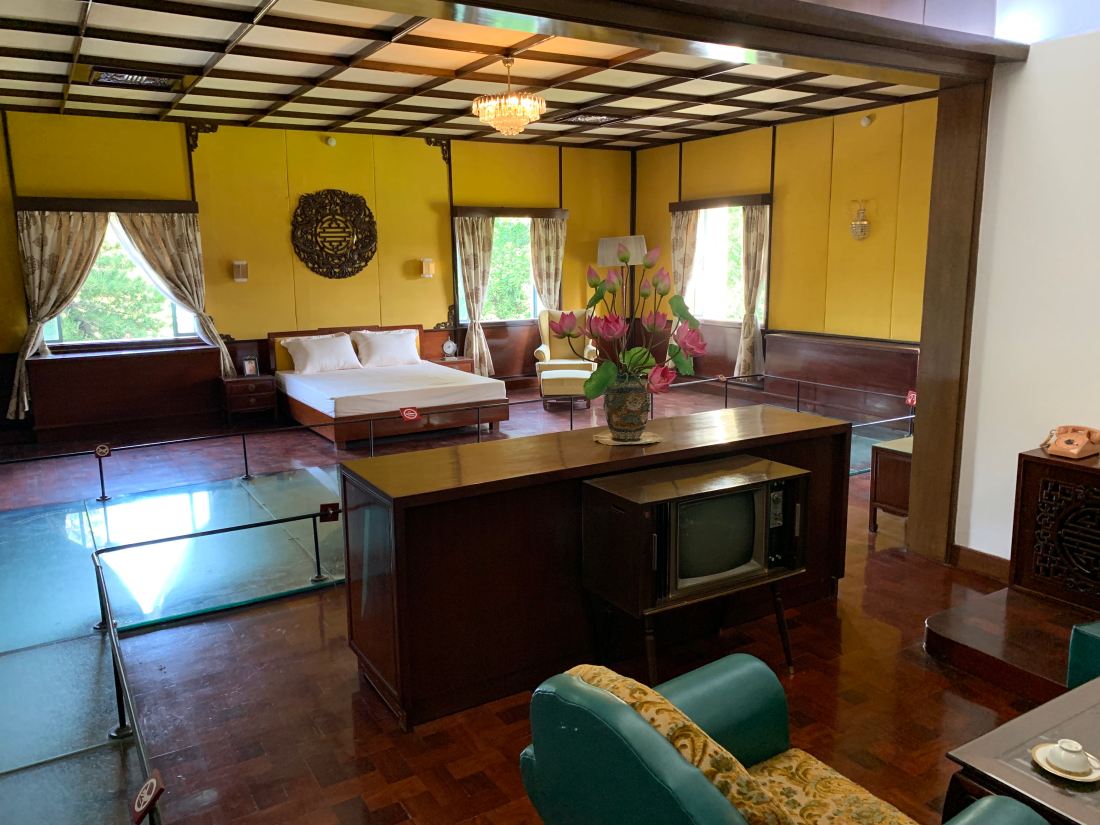
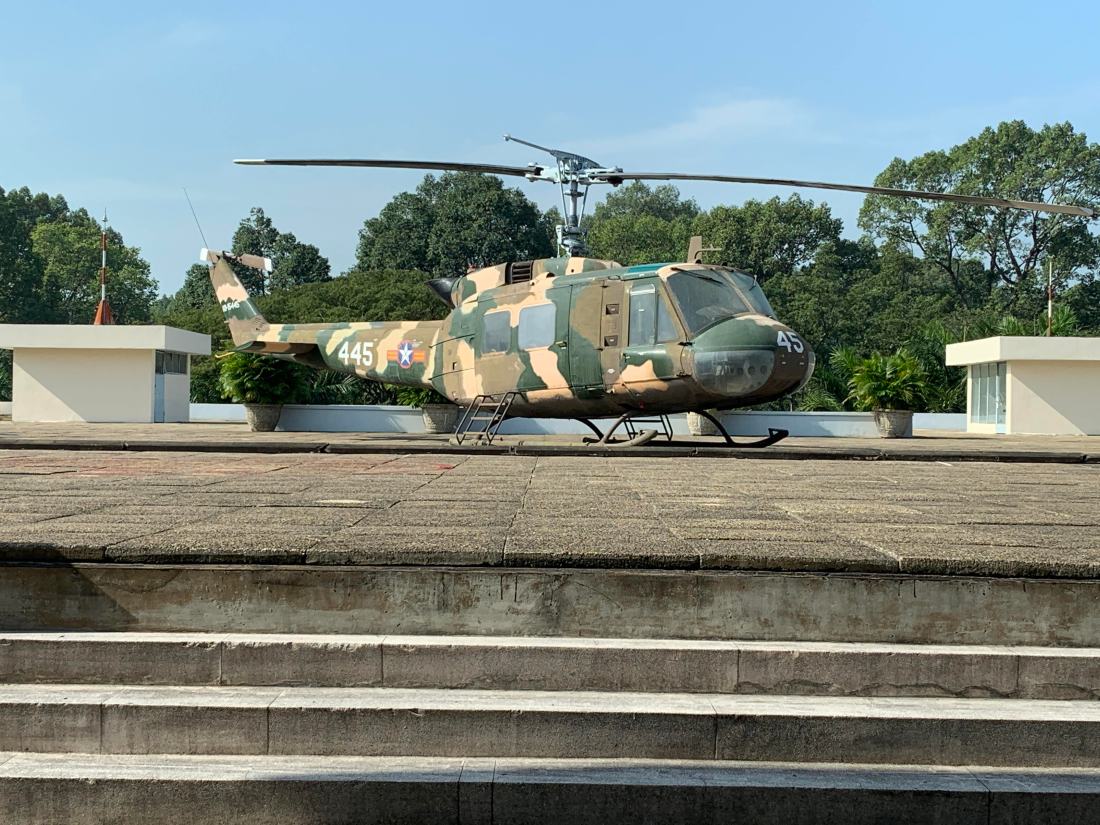
Our last morning in Ho Chi Minh City we visited the Reunification Palace which had been closed for an event we we took our tour of the city a few days ago. It is the sight where North Vietnamese tanks broke through the fence on April 30, 1975 ending the war. The South Vietnamese president had fled the county 5 days earlier. The South Vietnamese put down their arms once the palace had been breeched. Prior, it had been both the home and offices for the President and offices for the Vice President of South Vietnam, similar to the White House in DC. The original building Norodom Palace had been built by the french in the late 19th century but was destroyed in 1962 by a North Vietnamese pilot who had infiltrated the South’s army and was in an allied plane when he dropped the bomb. The original building was cleared away and a whole new palace was erected.



Your literary and photographic talents are expanding exponentially!! Spectacular!
LikeLike
thanks. this trip just keeps getting better and better.
LikeLike