
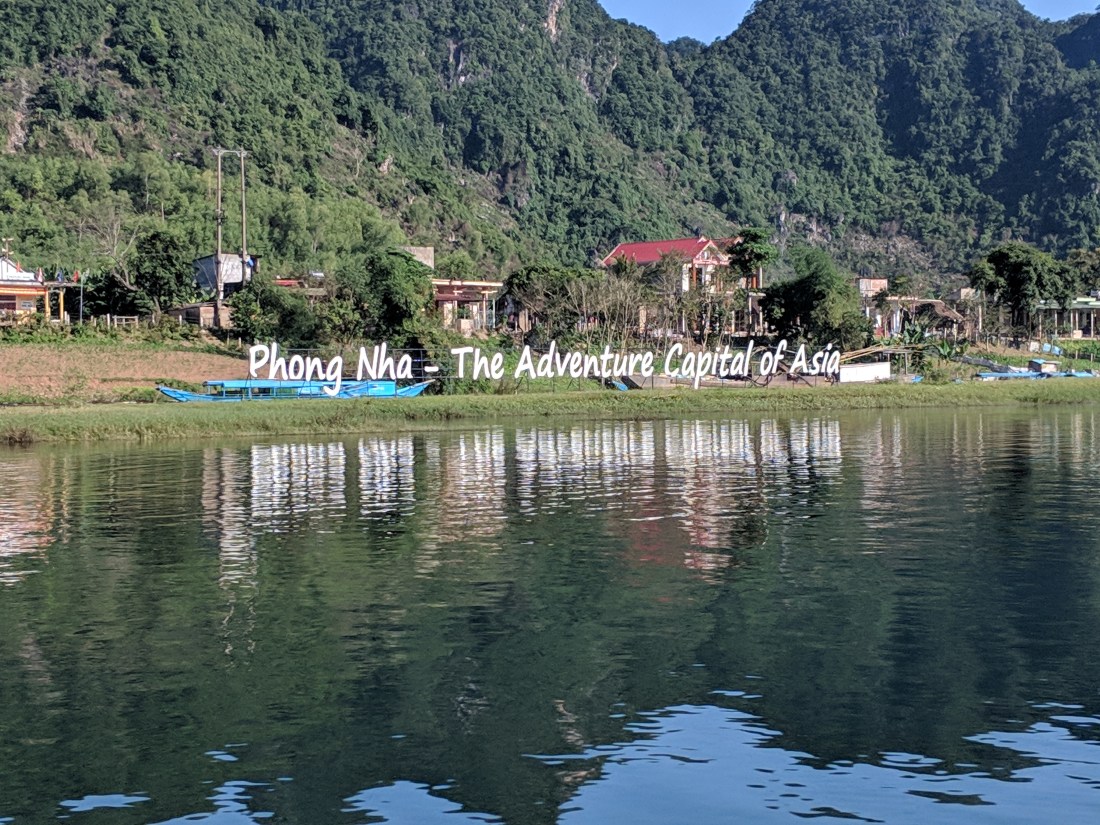
We travelled by plane from Ho Chi Minh City to Dong Hoi then by car for another hour to Phong Nha, part of Ke Bang National Park, a protected area in north-central Vietnam bordering the Hin Namno Reserve in Laos. The park consists of limestone mountains hollowed out over the last 3.5-5 million years by underground rivers to form some of the largest and most magnificent caves in the world. We have left the city and delta behind for the mountains! We stayed at a resort on a corn and peanut farm with water buffalo and, of course, chickens roaming freely.
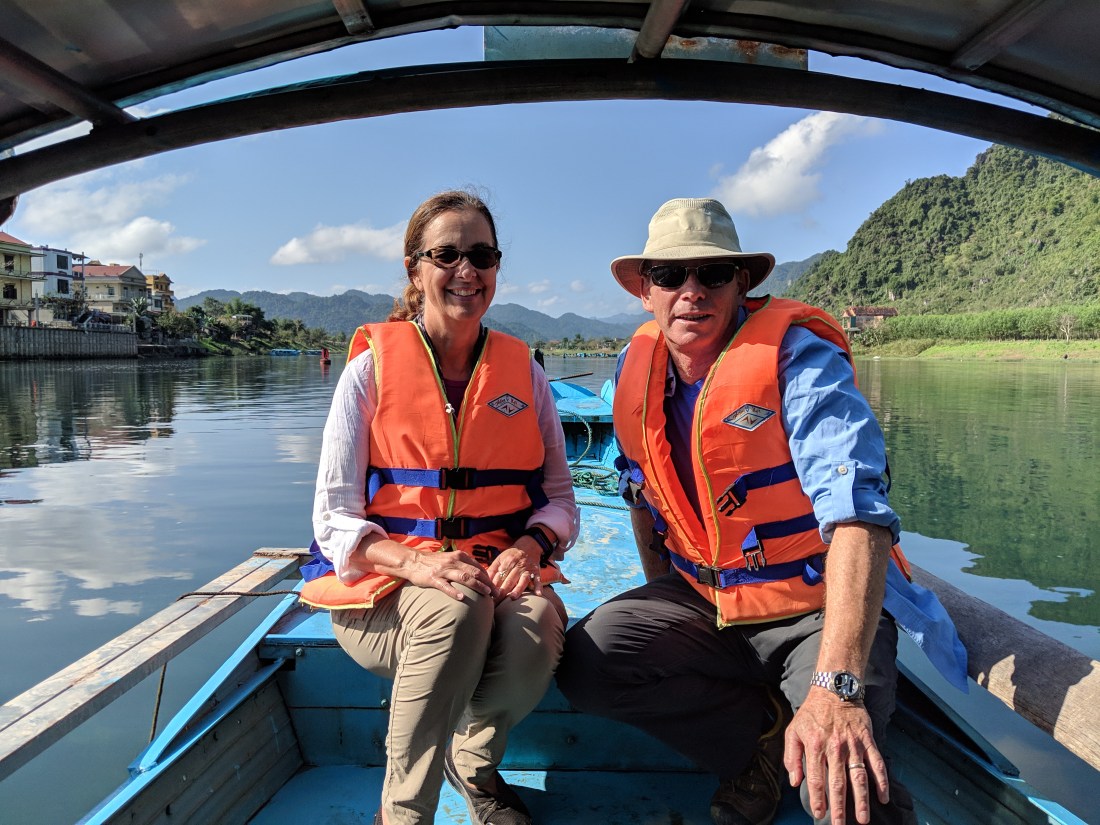
In the morning we were picked up by our guide for the day and taken by boat up the Son River (name means lipstick due to its red color in the rainy season) to join the excursion into the Phong Nha (Wind and Teeth) Caves. These caves, from which the name of the park is derived, are a UNESCO World Heritage site and popular to visit because of the long underground river large enough to allow entrance to the cave by boat. It also has many magnificent stalactites and stalagmites. The caves extend almost 8000 m, but we were only able to visit the first 1500 m.
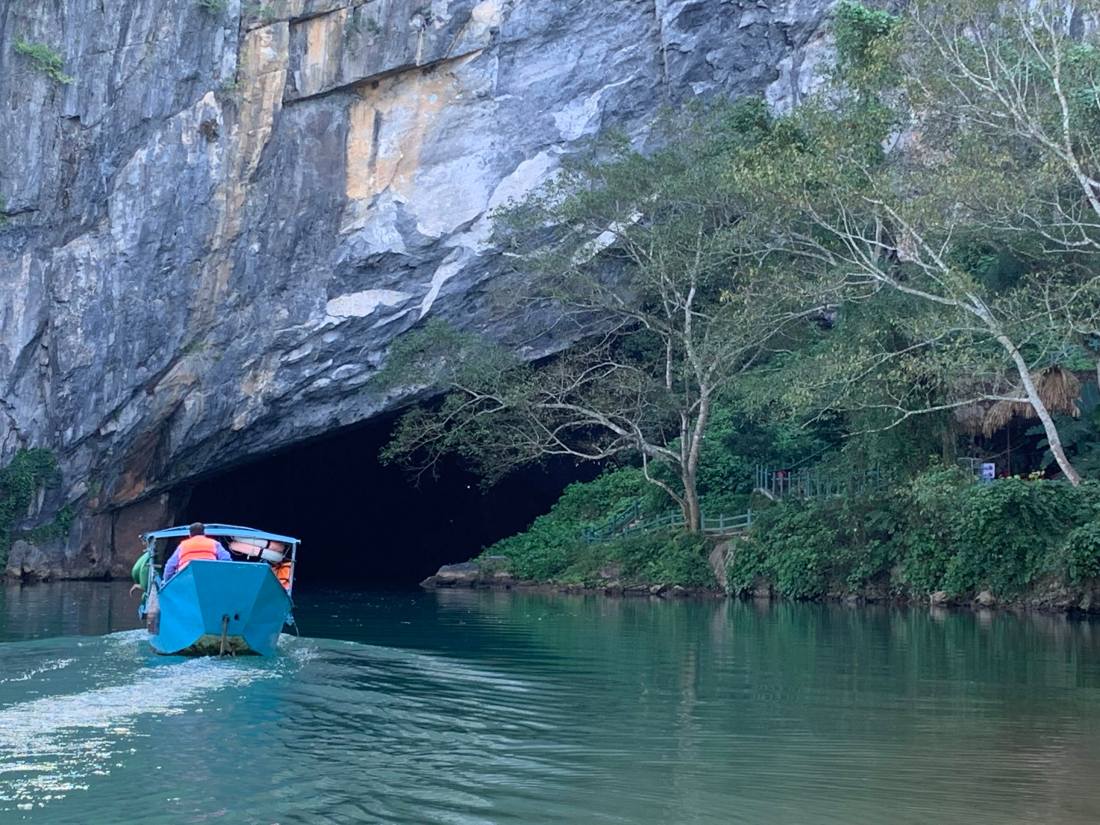
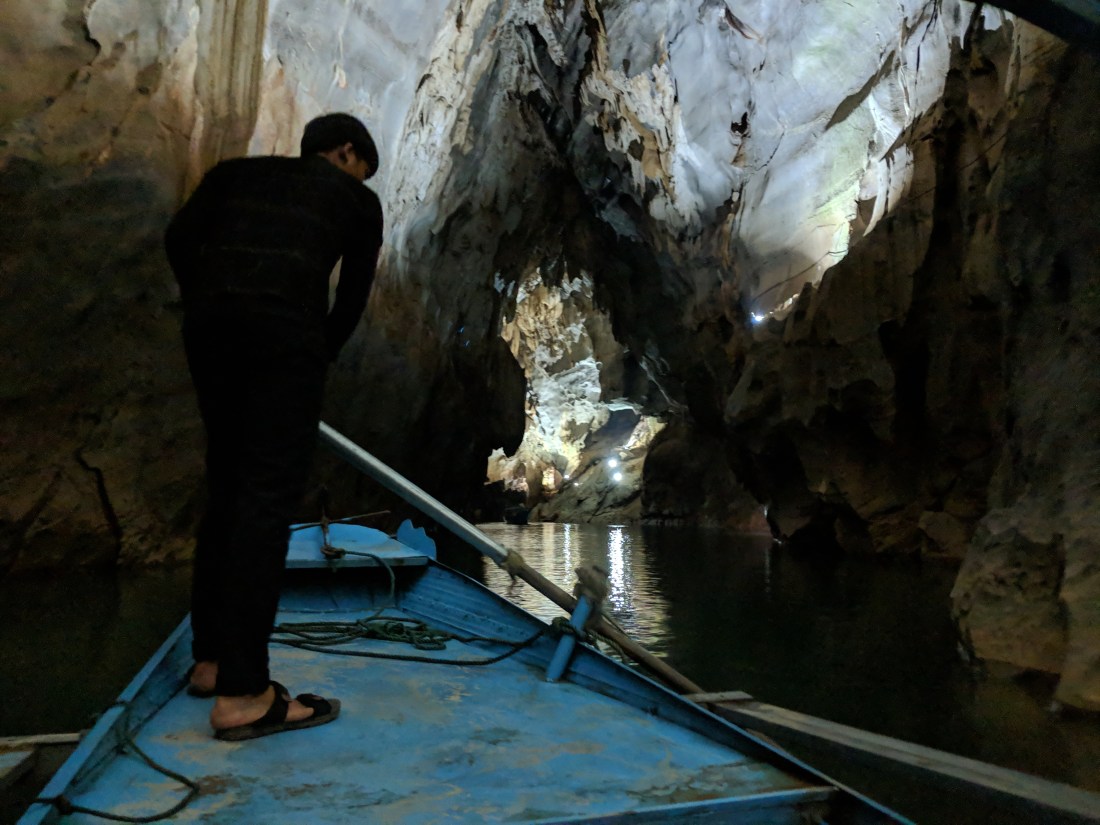


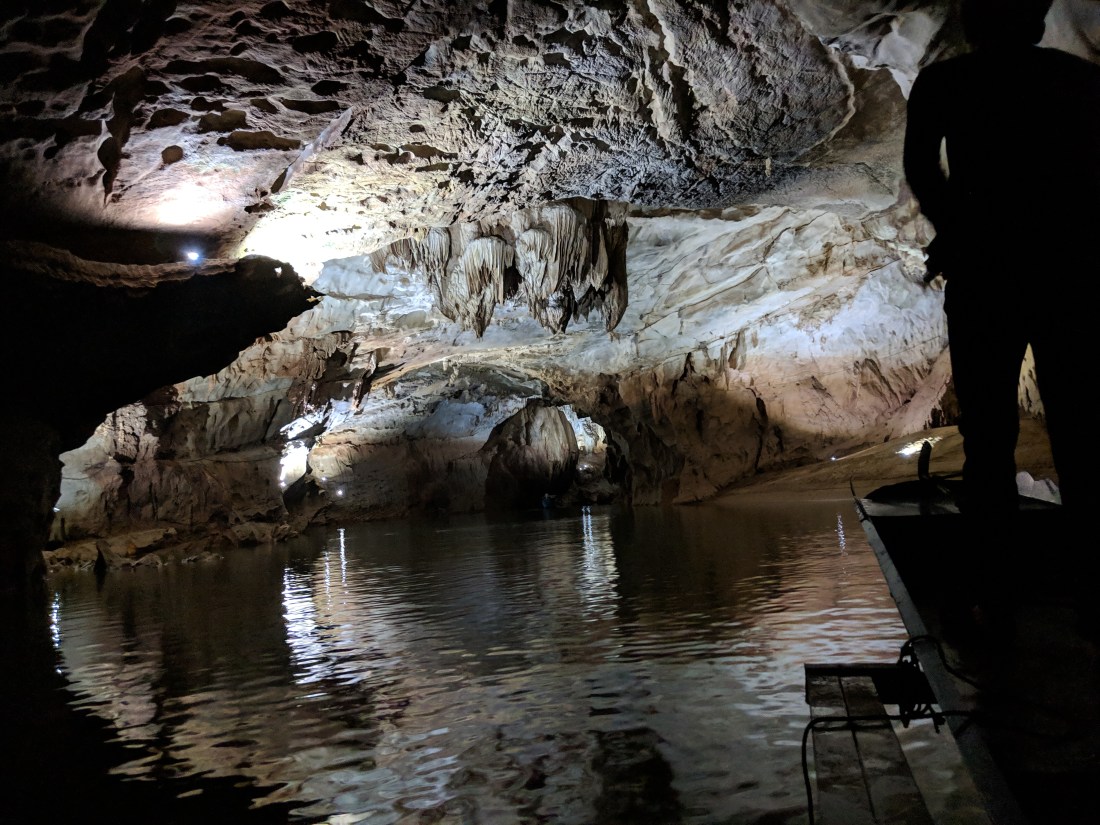
There was also a significantly large sandbank, so we were able to get out of the boat and explore some of the cave by foot.
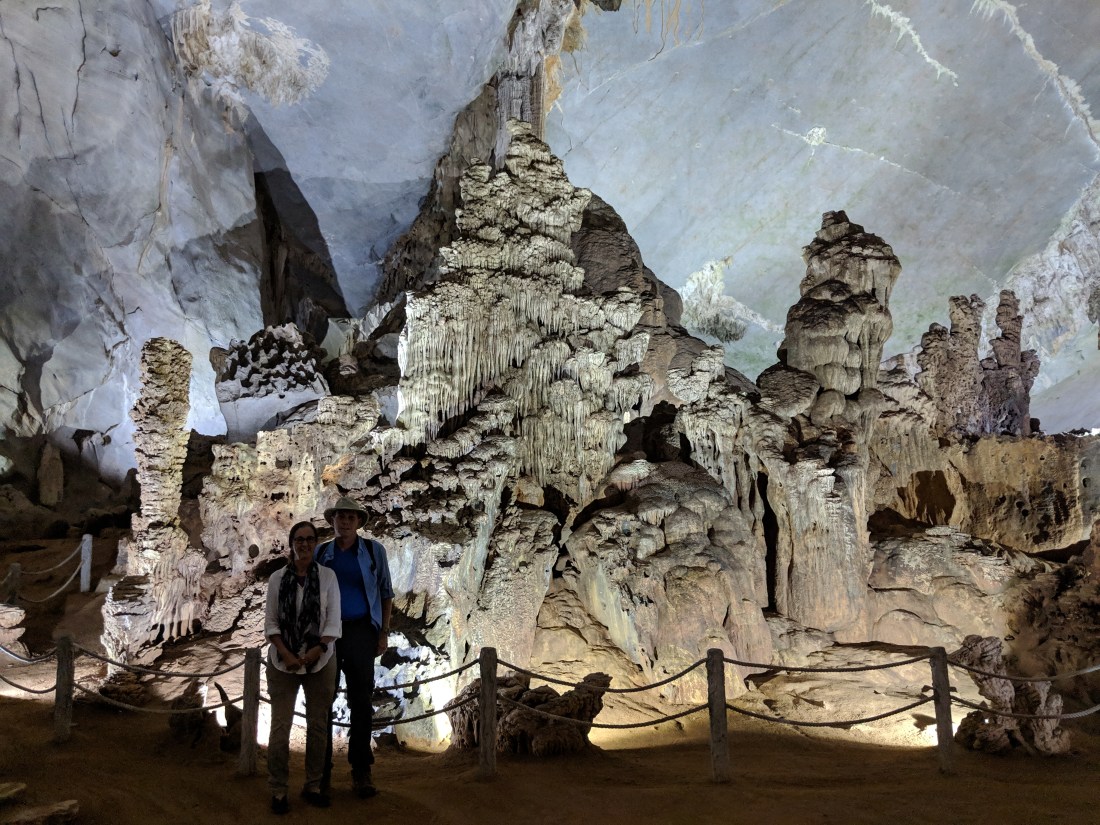
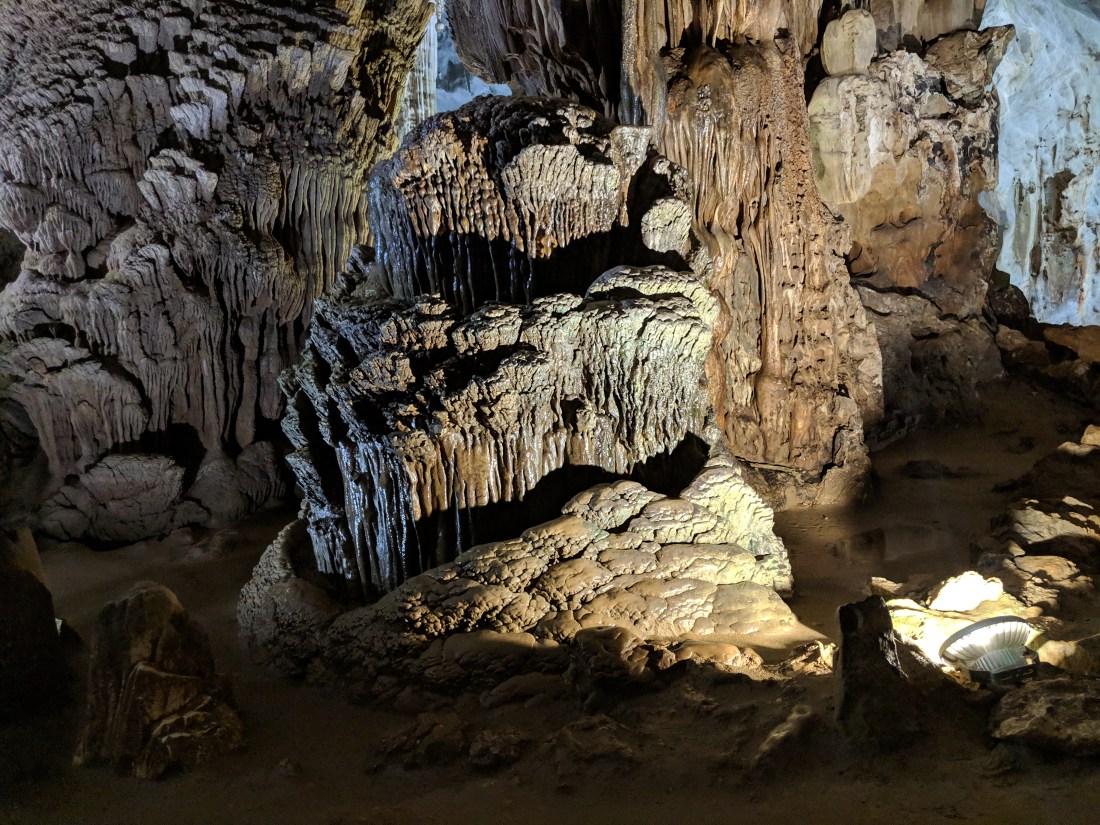
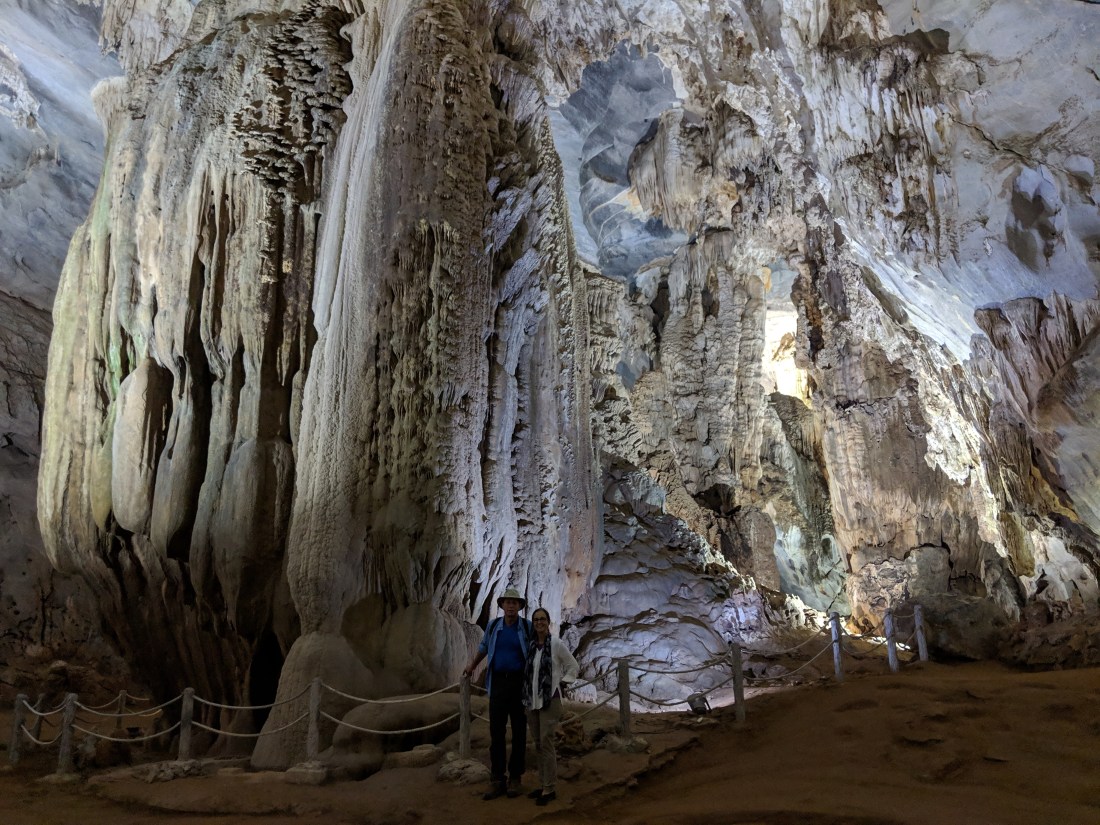
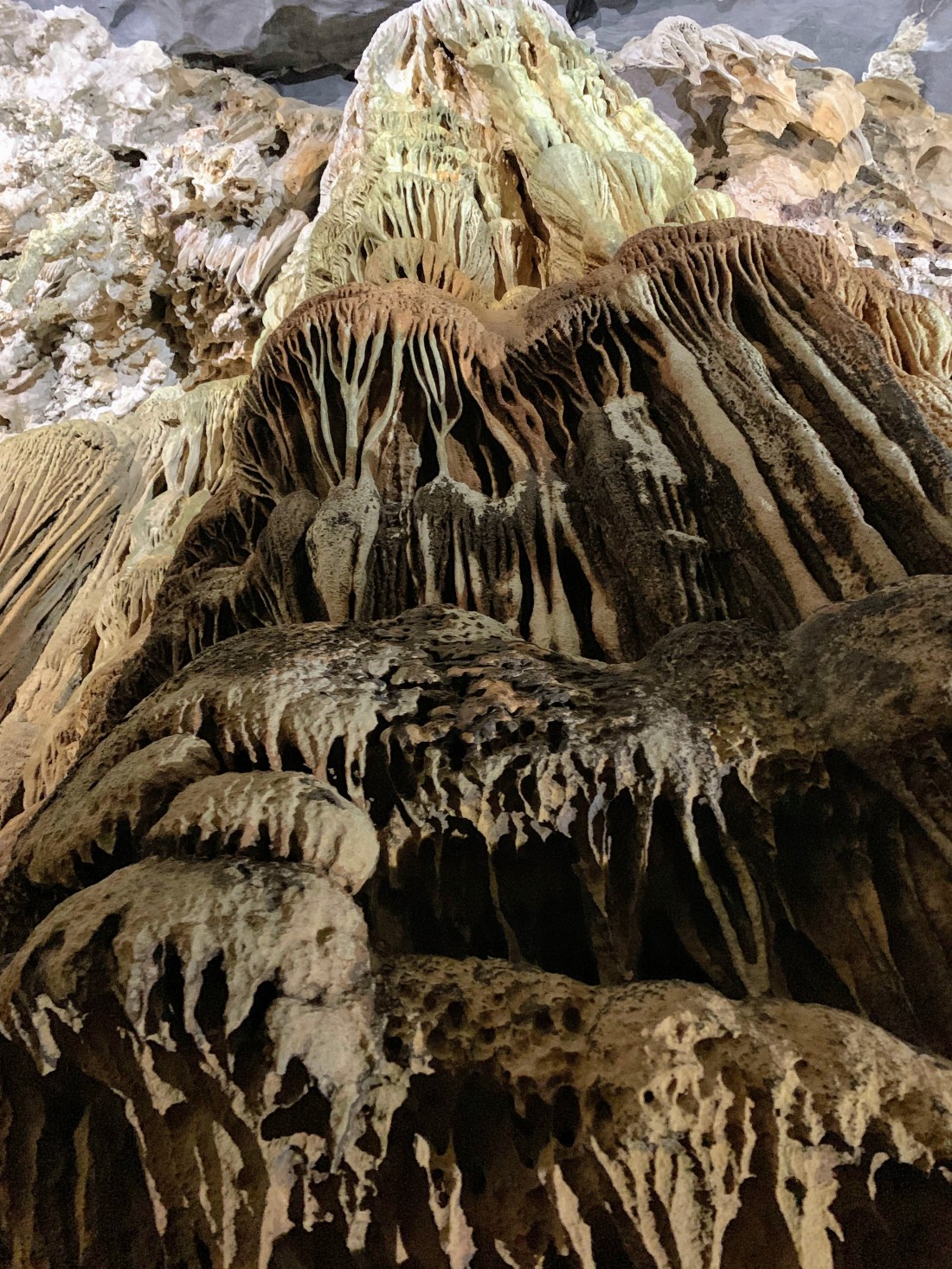


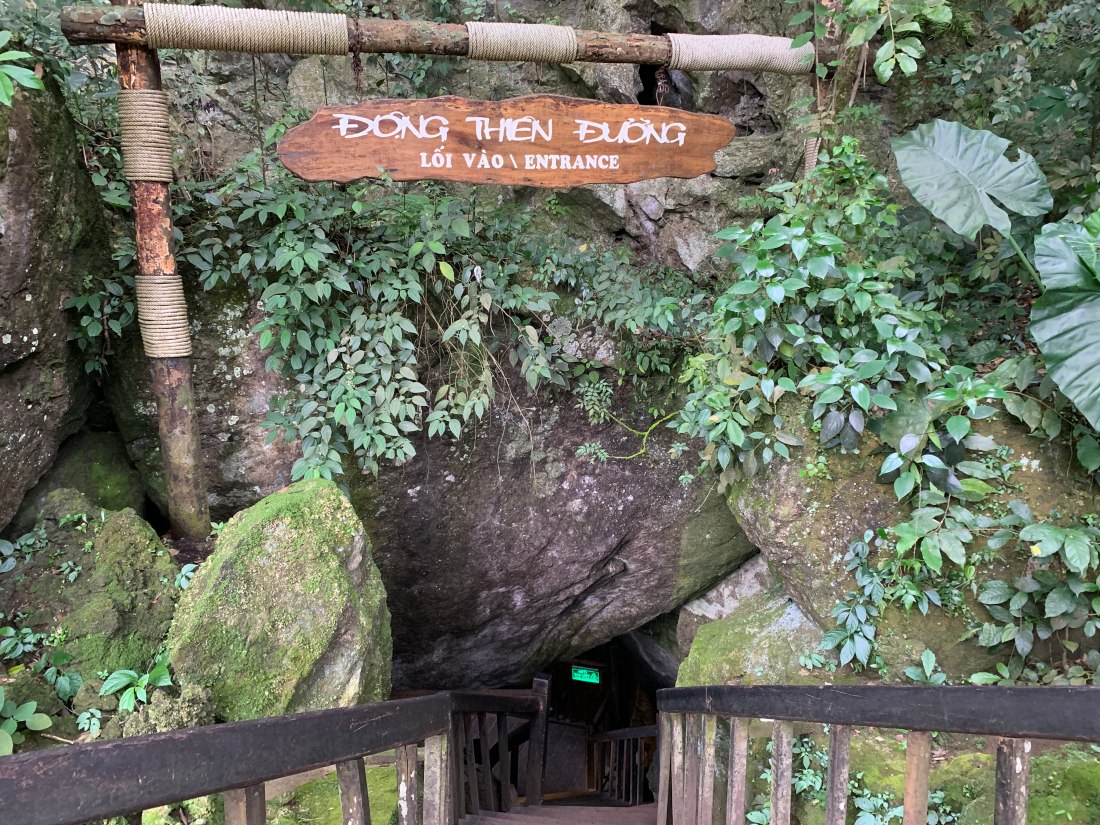
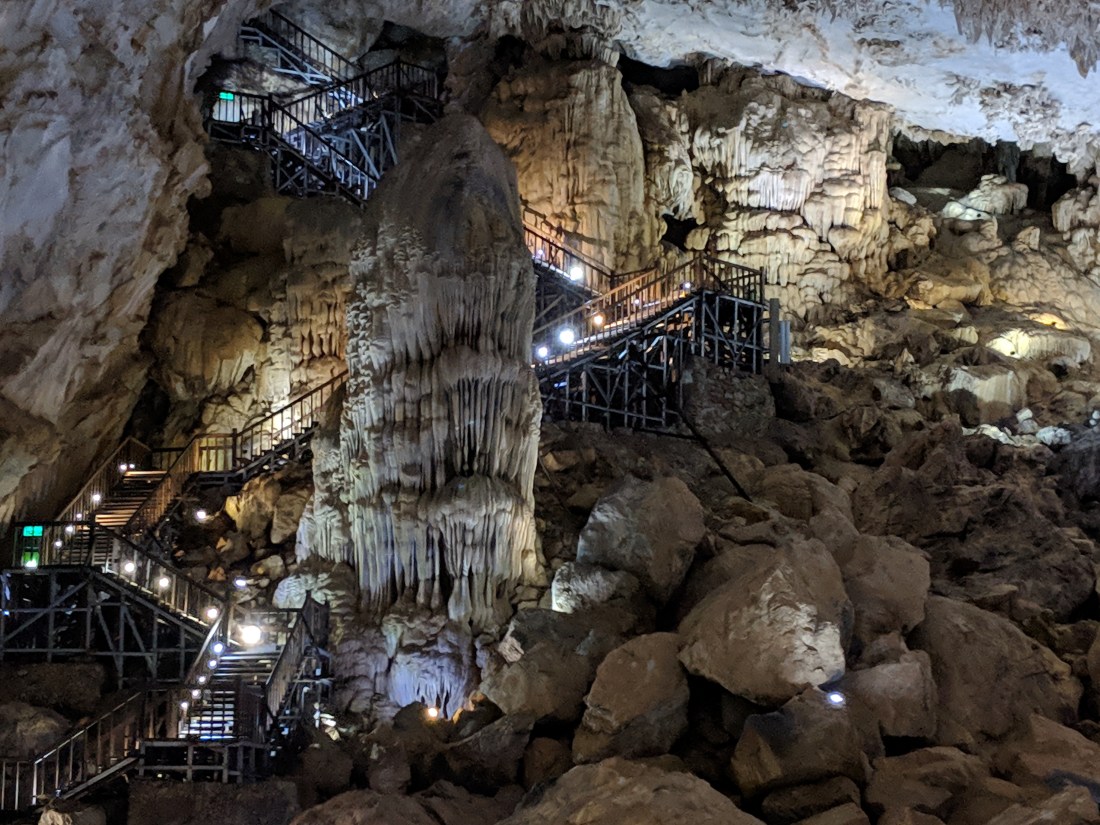
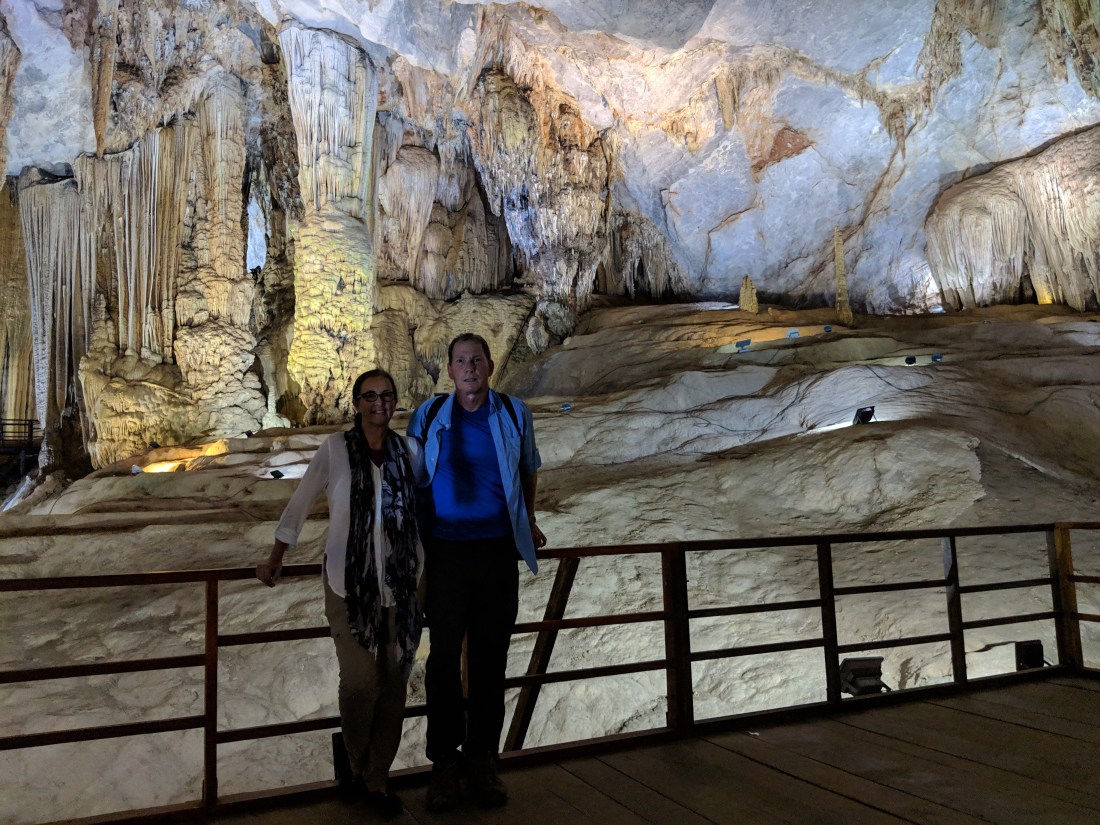
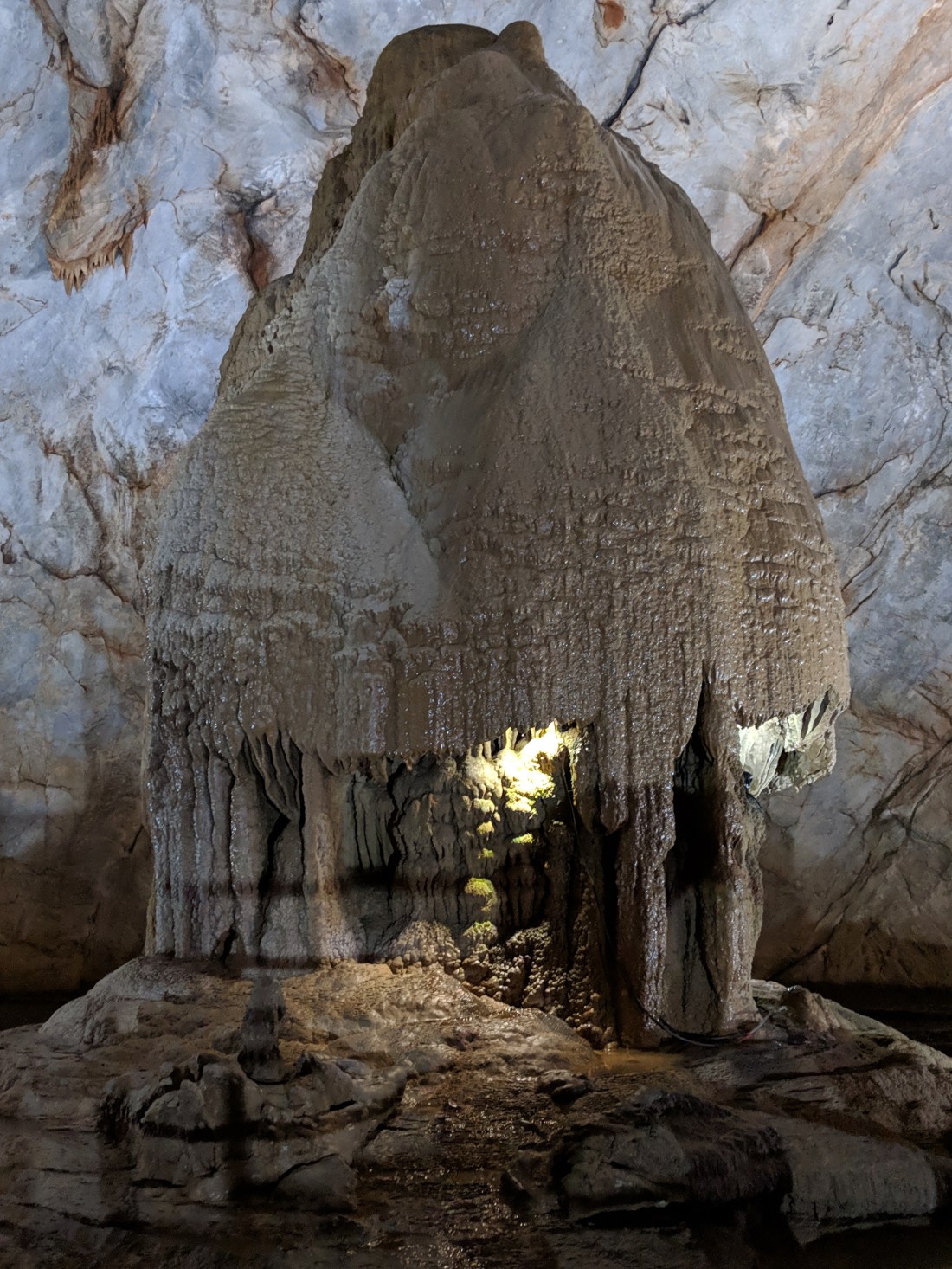
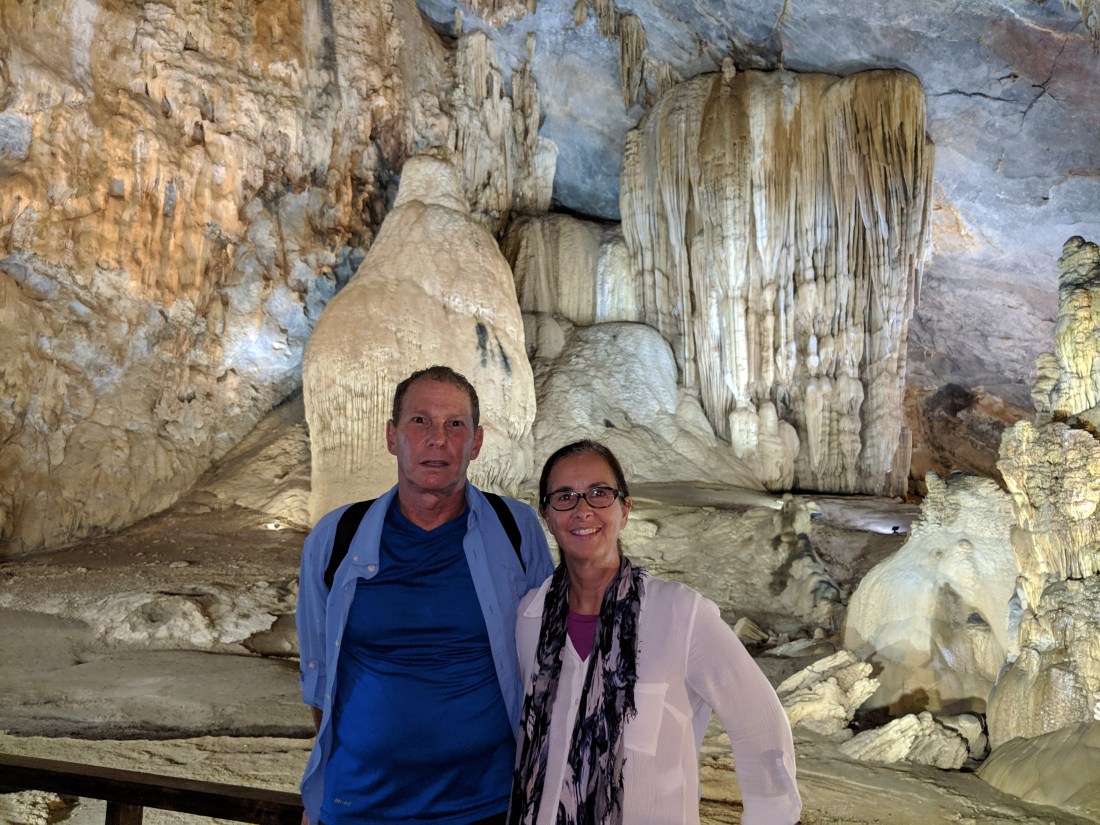
Then it was time for a lunch break. In the afternoon we went to Paradise Cave. This cave was fist discovered by a local man in 2005; it has only been available to tourists since 2010. Through exploration, it was found to be part of a larger cave system extending a total of 34 km. But we only were able to visit the first 1km, which is lighted and platformed for tourists. As spectacular as we had thought Phong Nha Cave, we were soon to be blown away. First we had to hike up a path through the jungle with 500 m elevation (it is 200m above sea level), then through the mouth of the cave and down many stairs into the cave.
Words and even pictures cannot describe the incredible beauty of the formations inside this cave, but I will try with several of the literally hundreds of pictures we took.
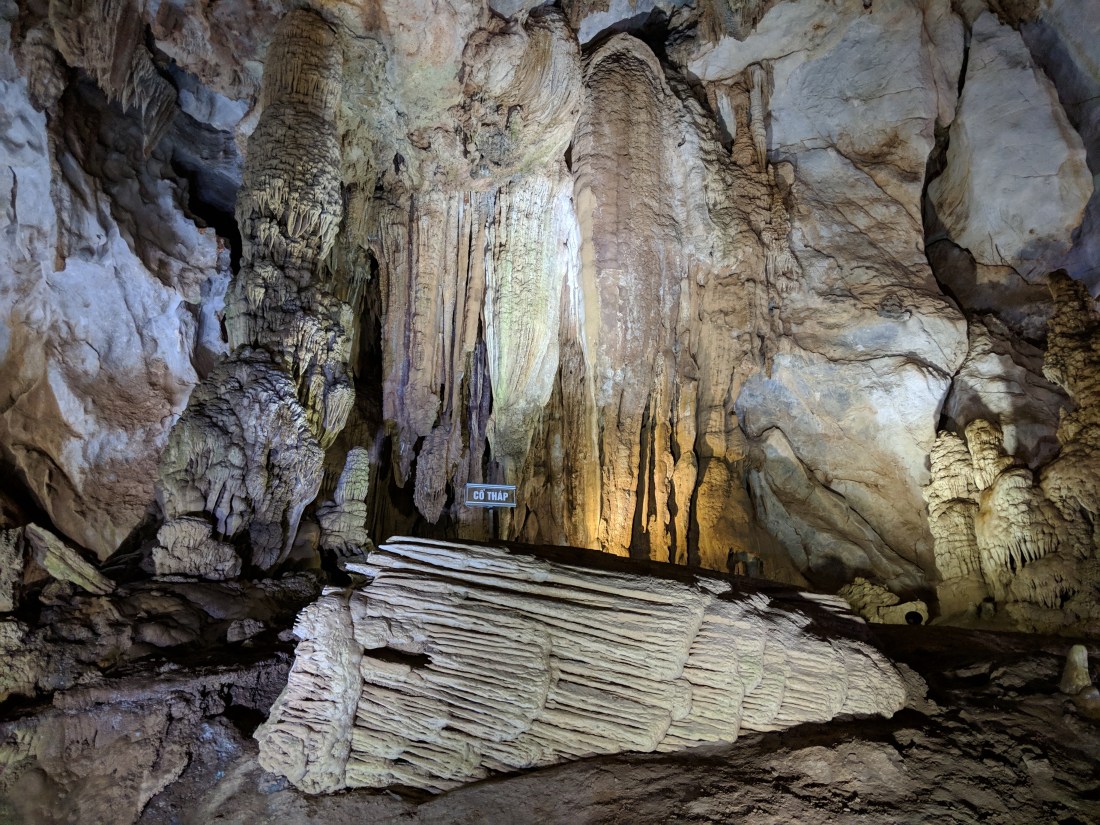

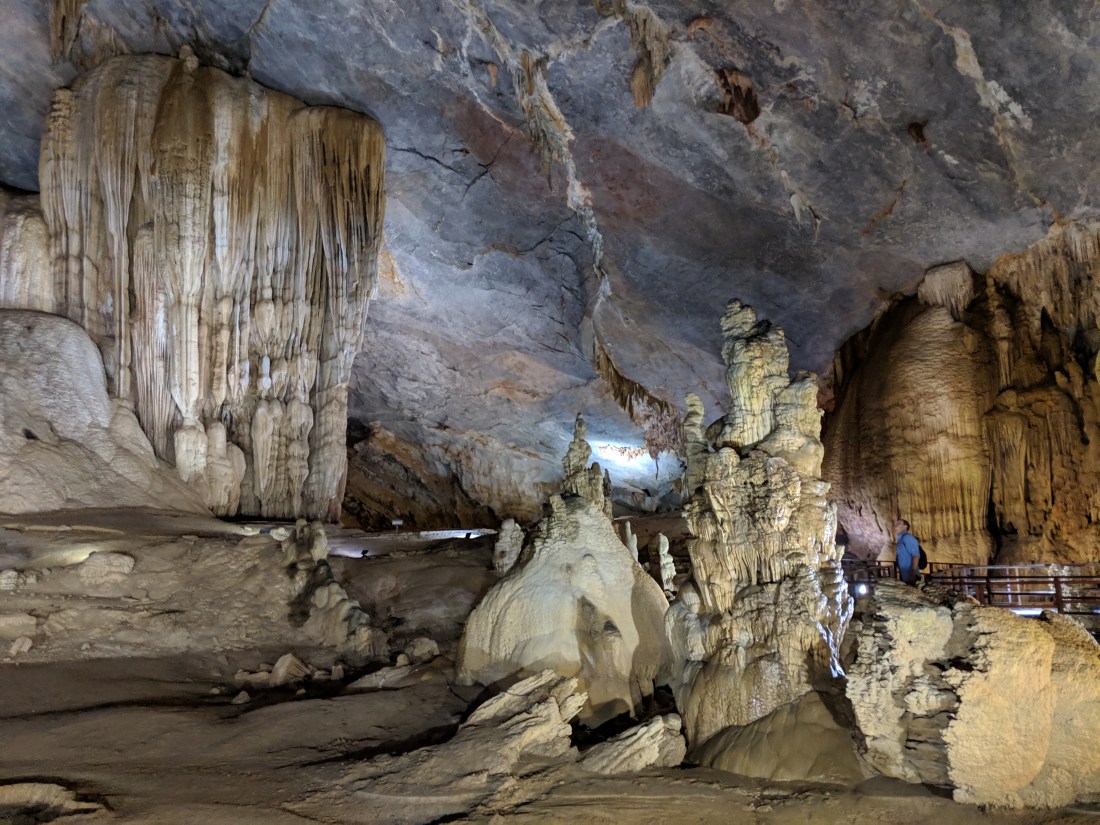
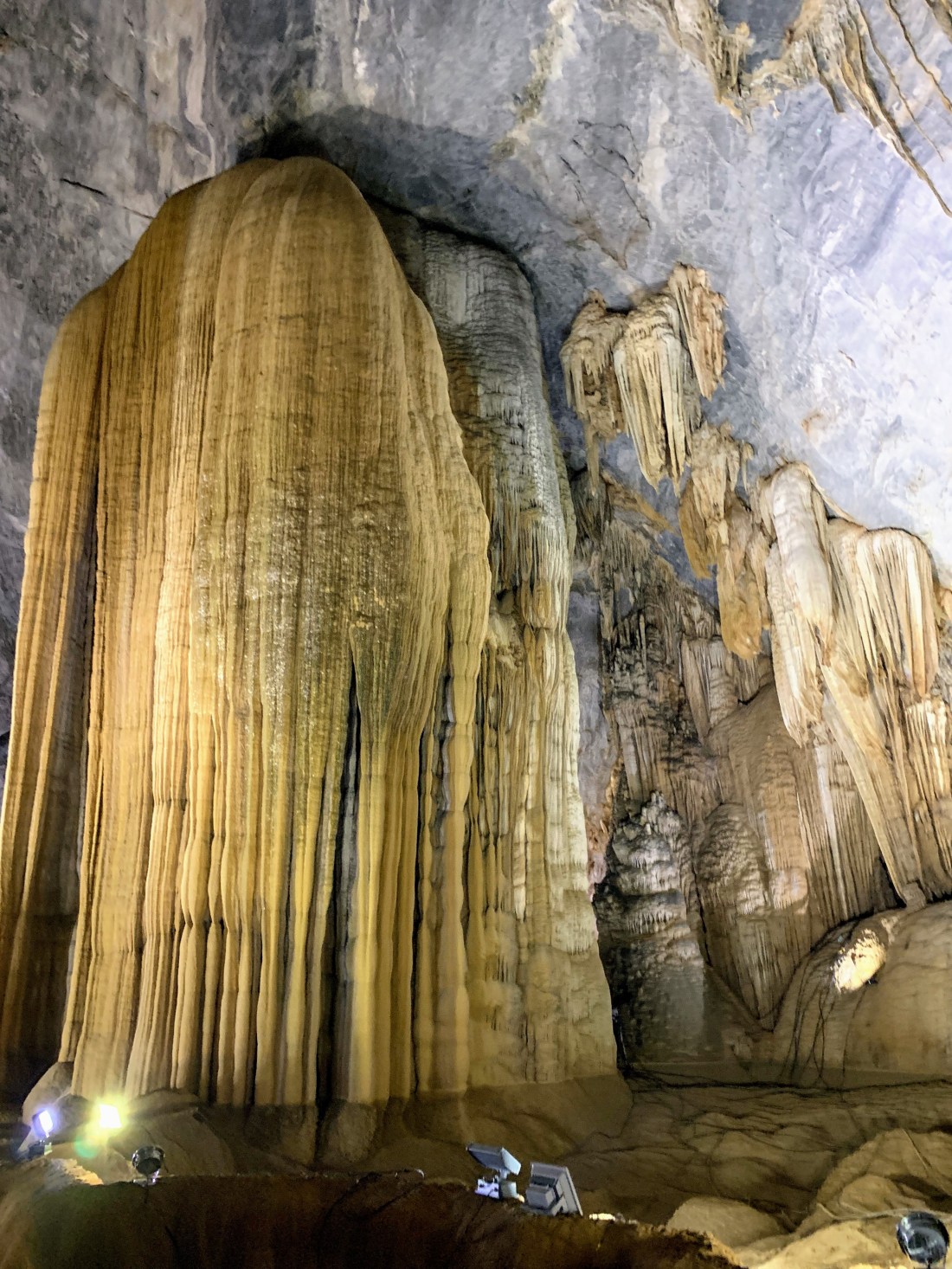
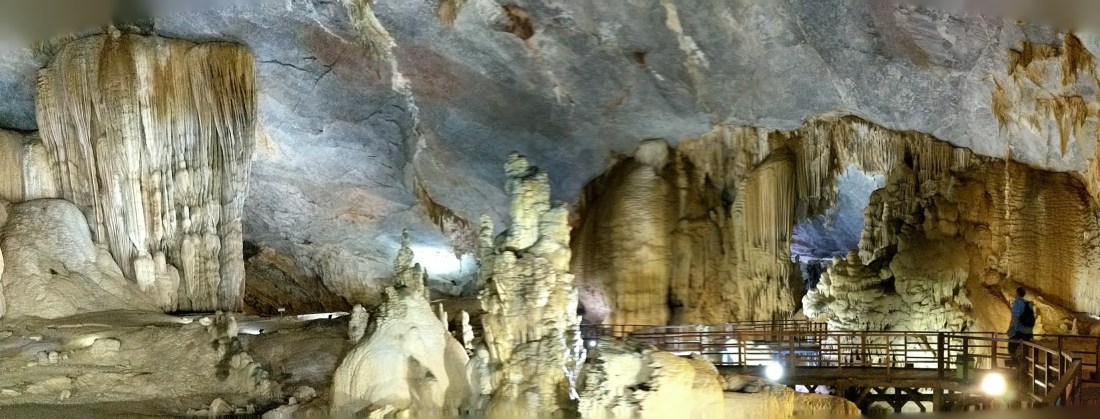
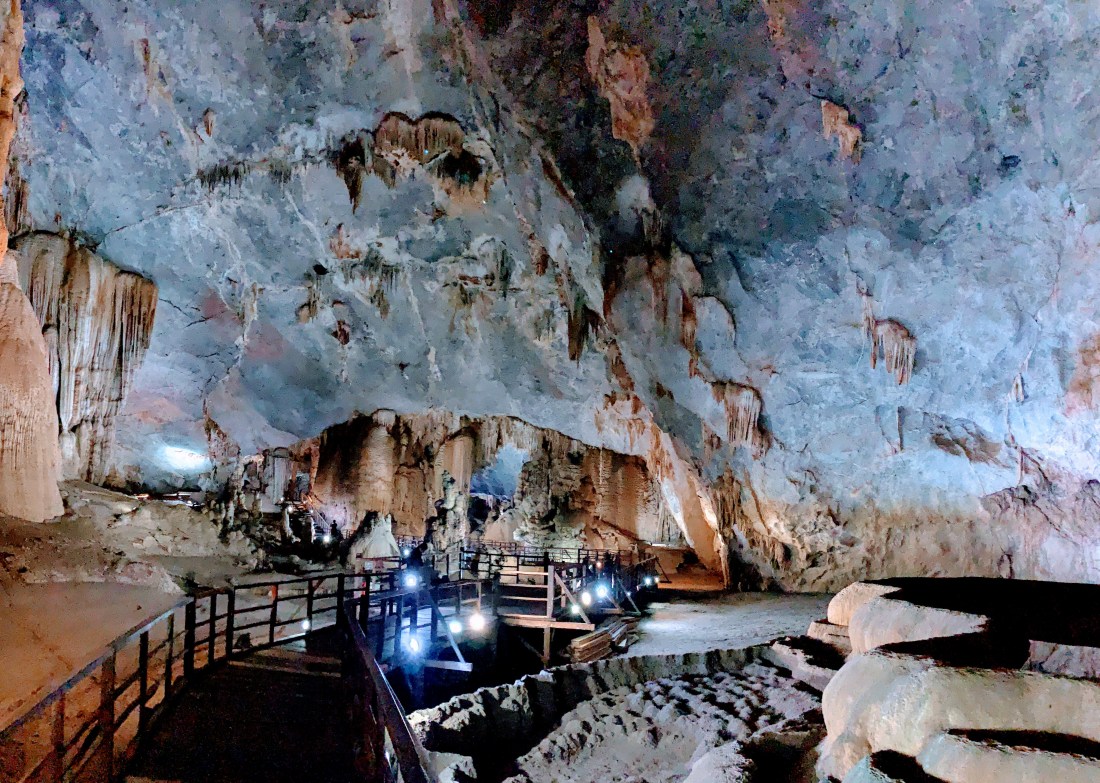
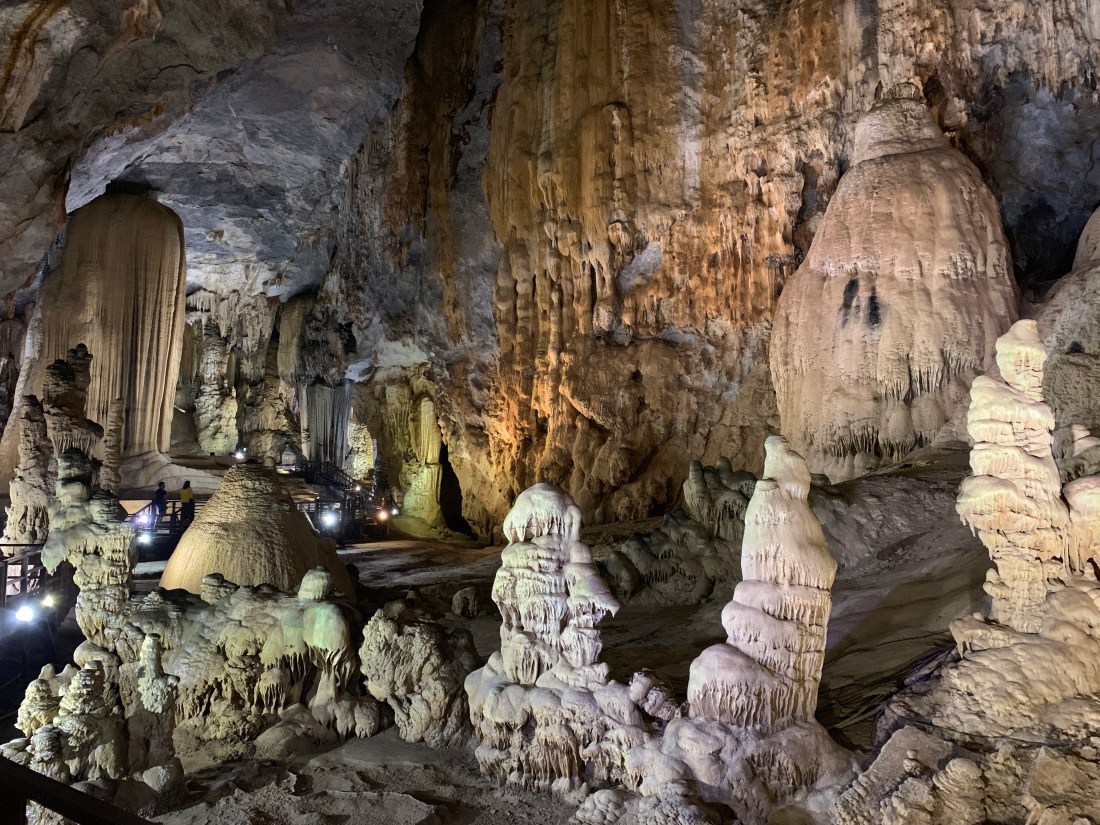
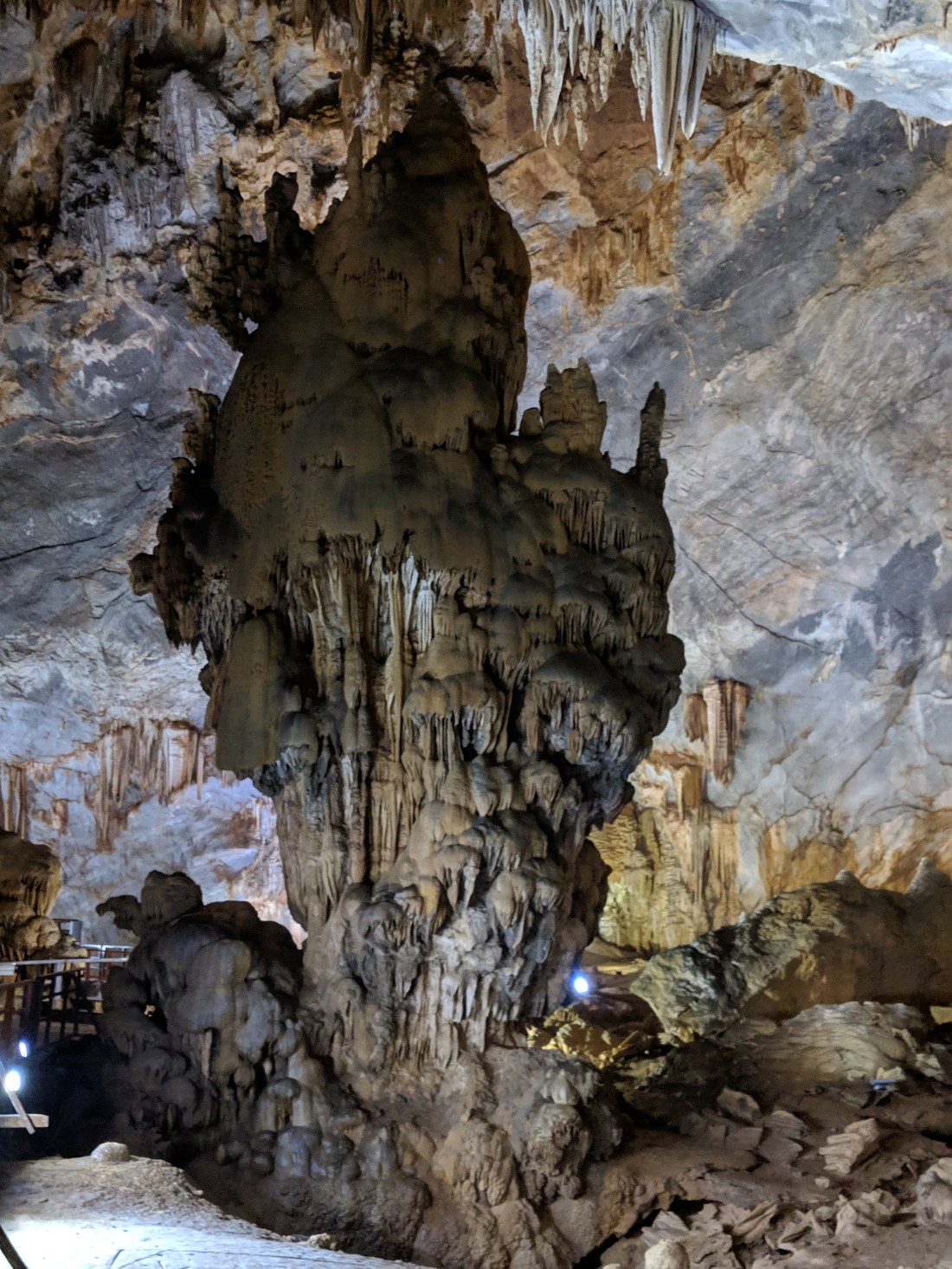
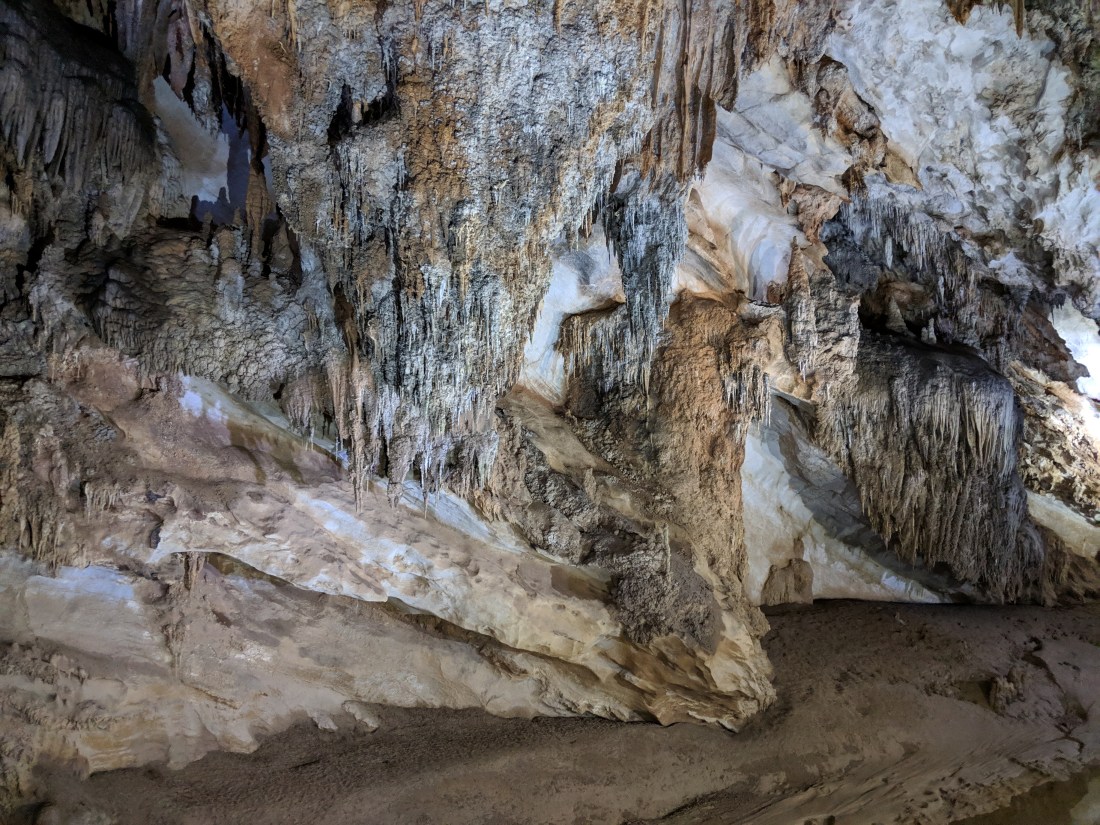

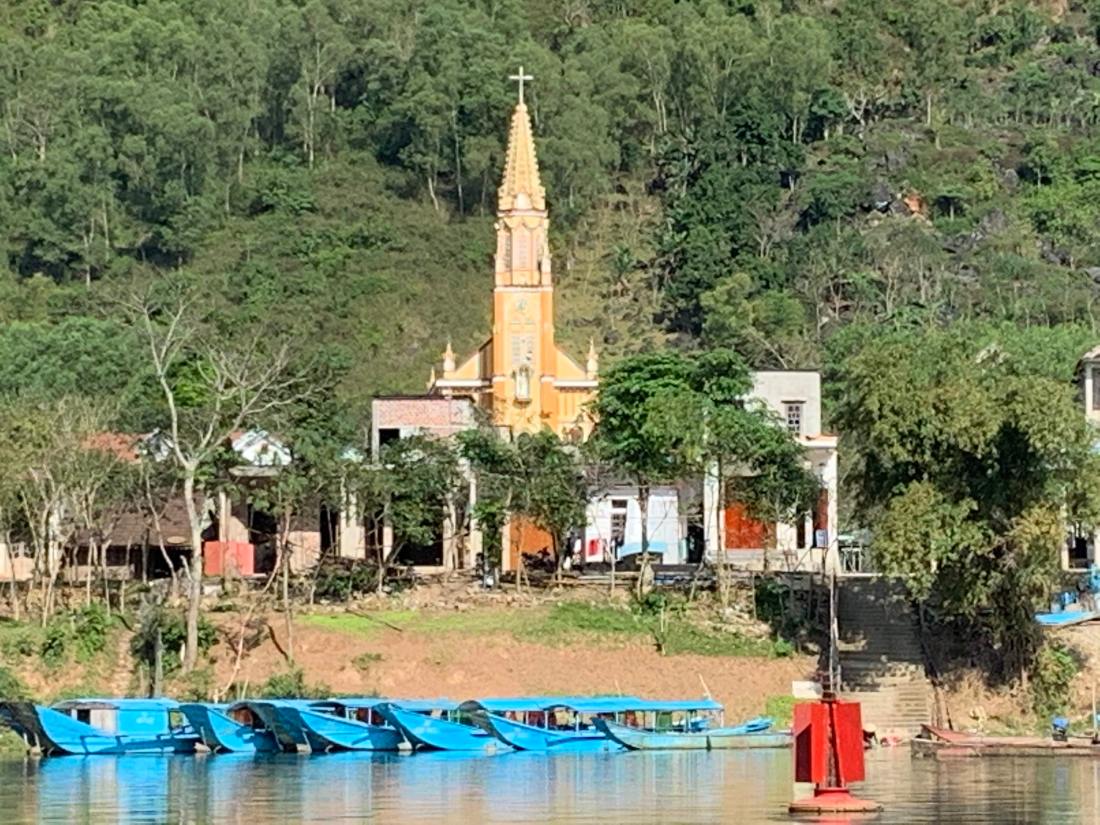
An interesting fact about the area is that the locals are almost 100% Christian despite the country being only about 10% Christian. This has mostly to do with the French influence and the relative isolation of the village. Several churches can be seen to dot the countryside.
The next day was our biggest adventure thus far. We started at 7 am with a trip into town to join with our group for the day. We were to visit the Nuoc Nut Caves (which means crack in the rock where water comes out). But first we had a safety briefing and a description of the day ahead. We had been advised to wear quick dry clothes for the water crossing and high socks to tuck in our pants so leeches could not get to us, so we knew we were in for an adventure.


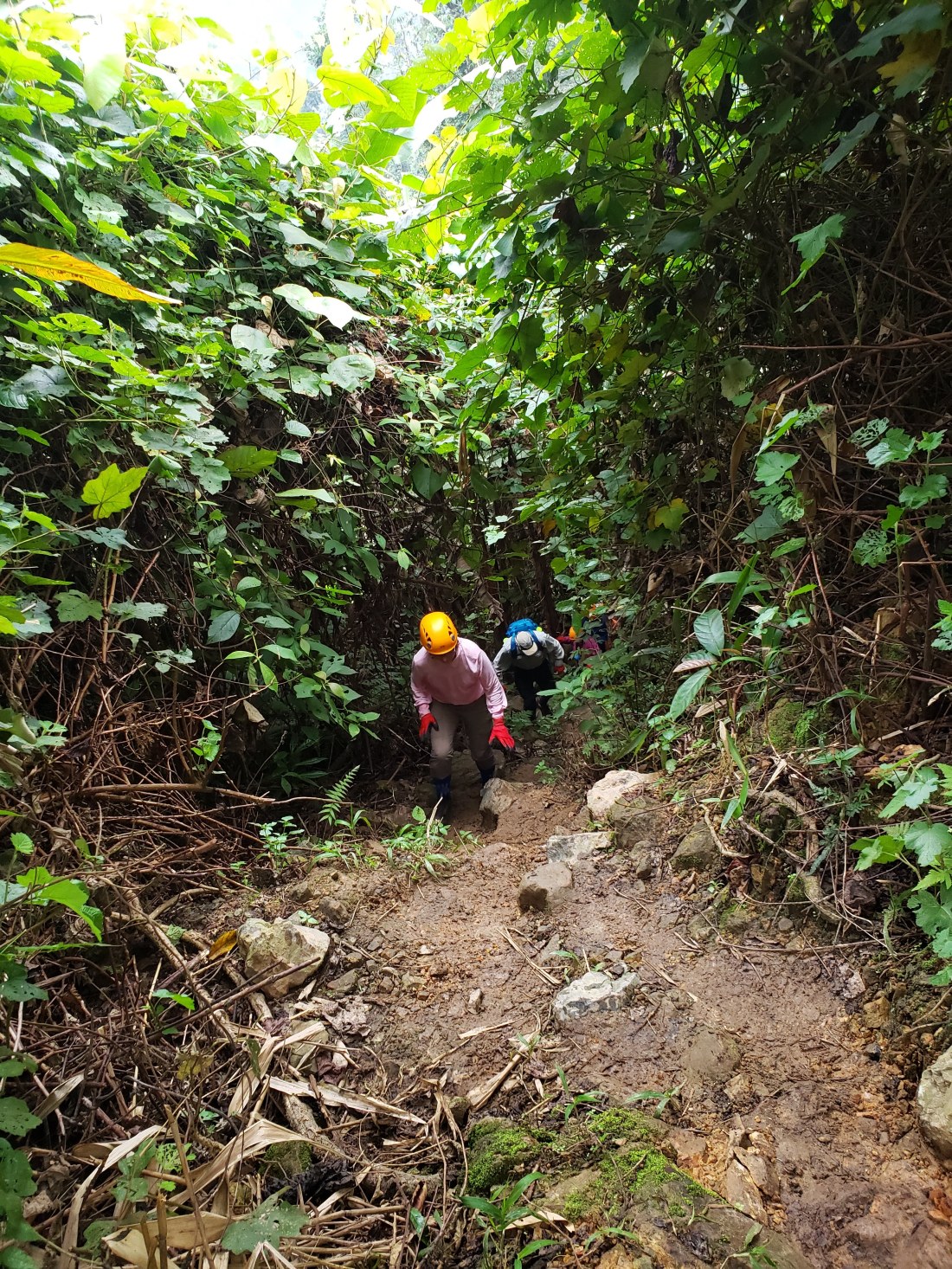
We drove about 30 minutes to the trailhead, then started our trek of about 2.5 km through the jungle to the mouth of the cave. The first bit of the trail was steep! And the trail was extremely rocky and muddy.
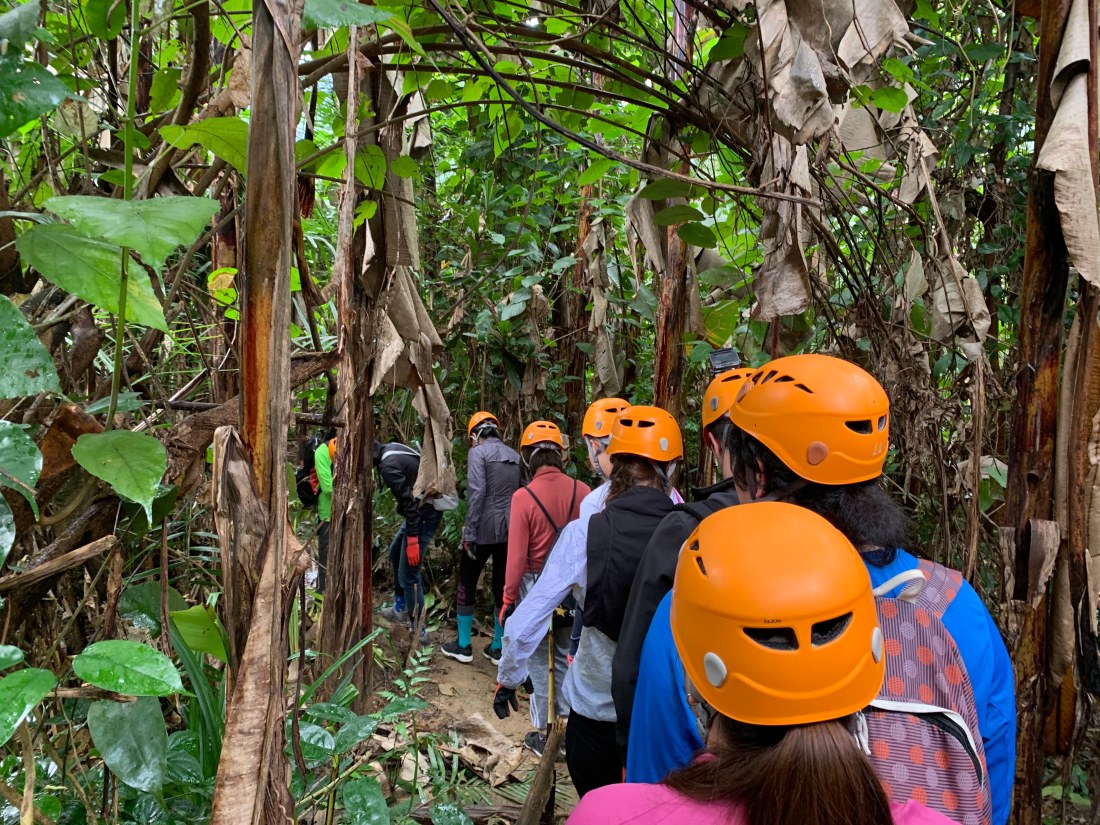
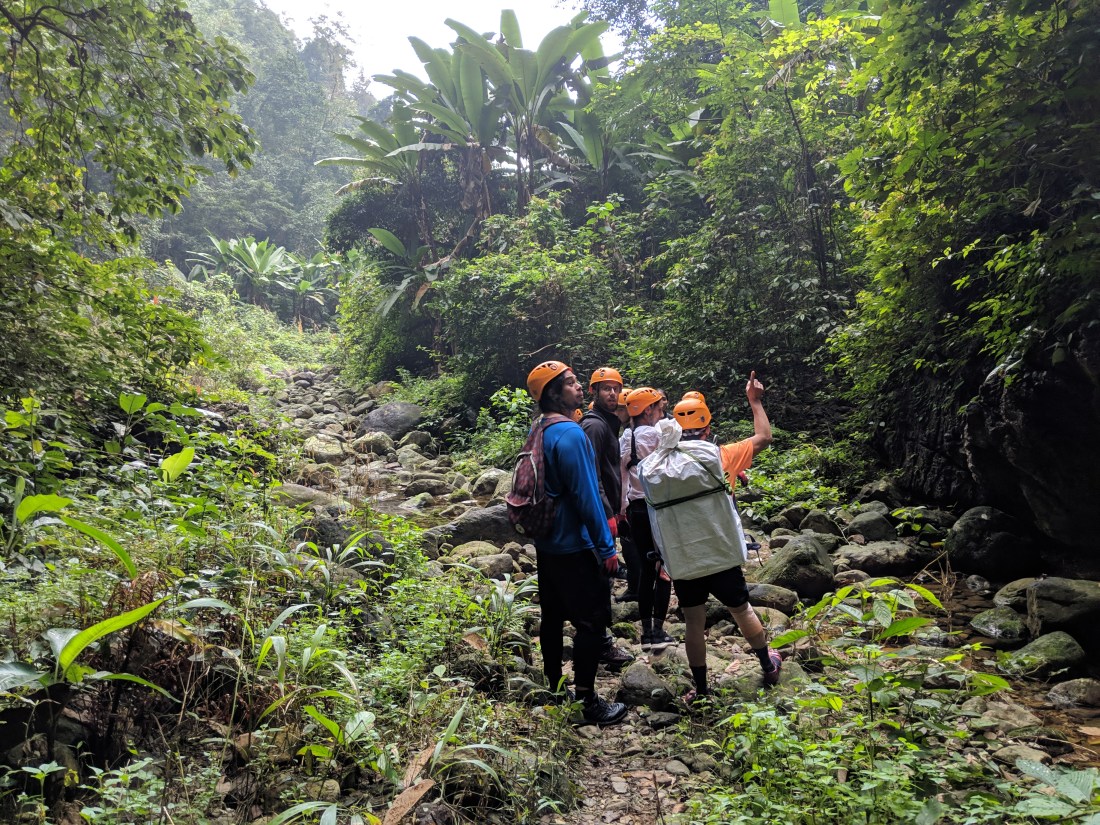
We stopped for a breather before descending down to the mouth of the cave.
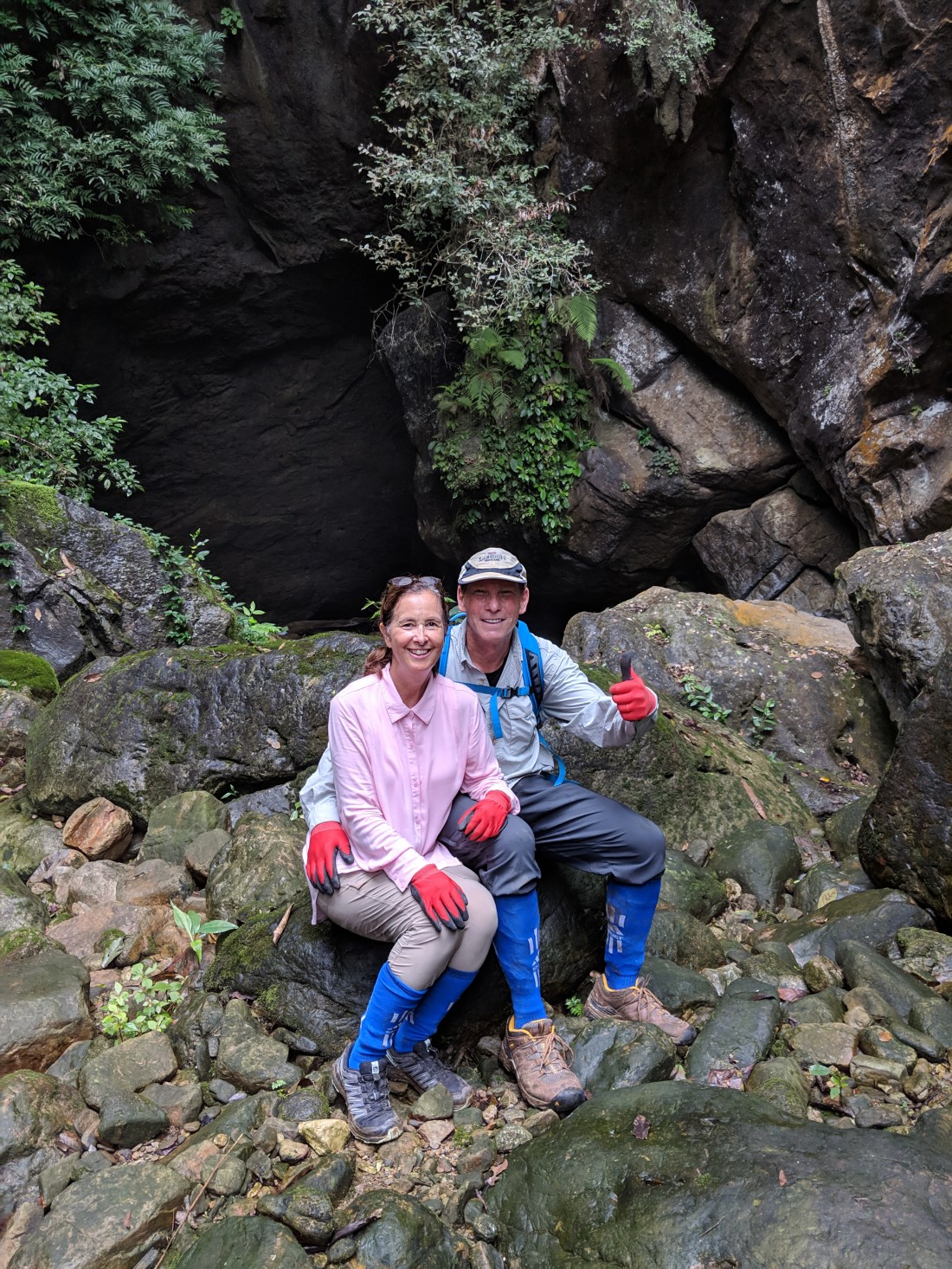

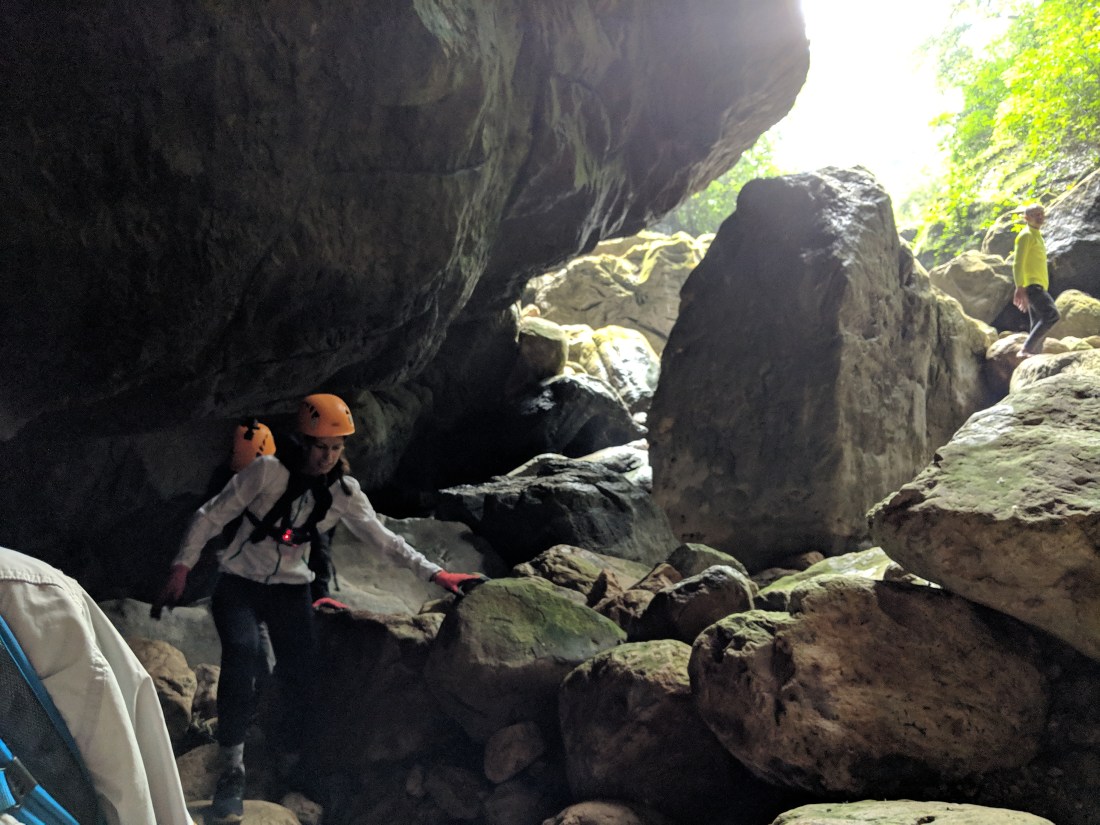
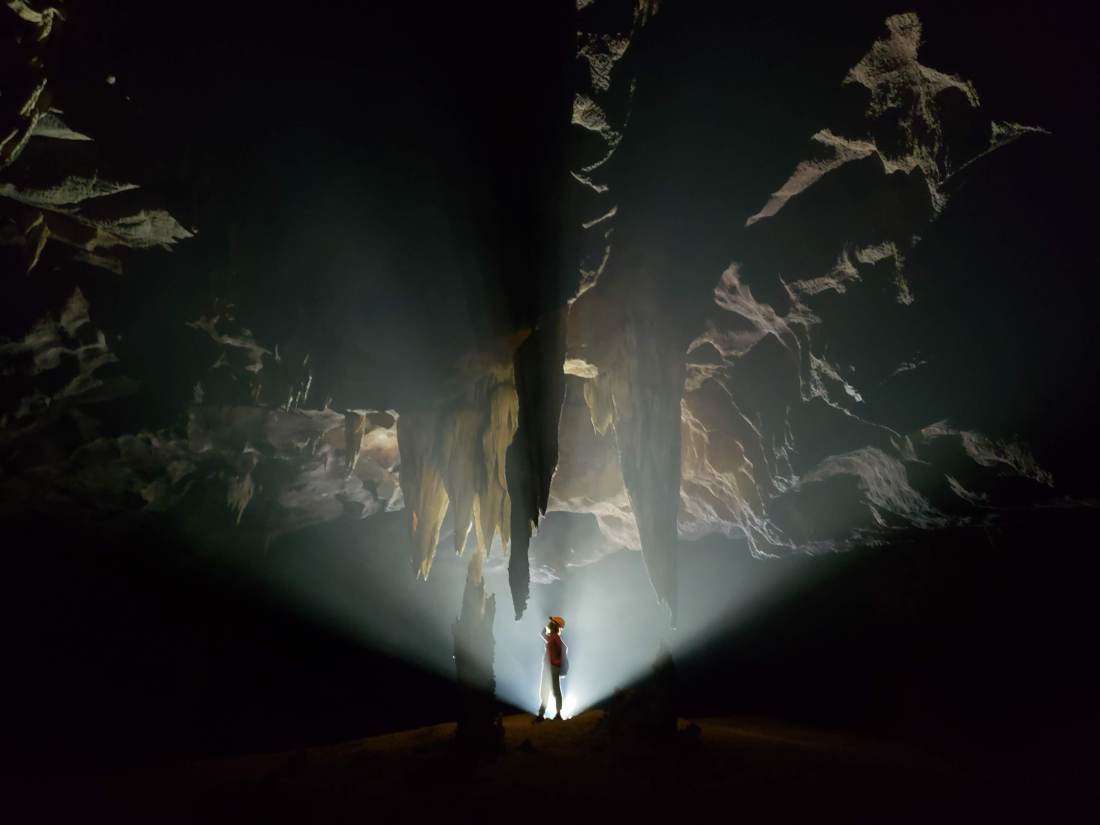
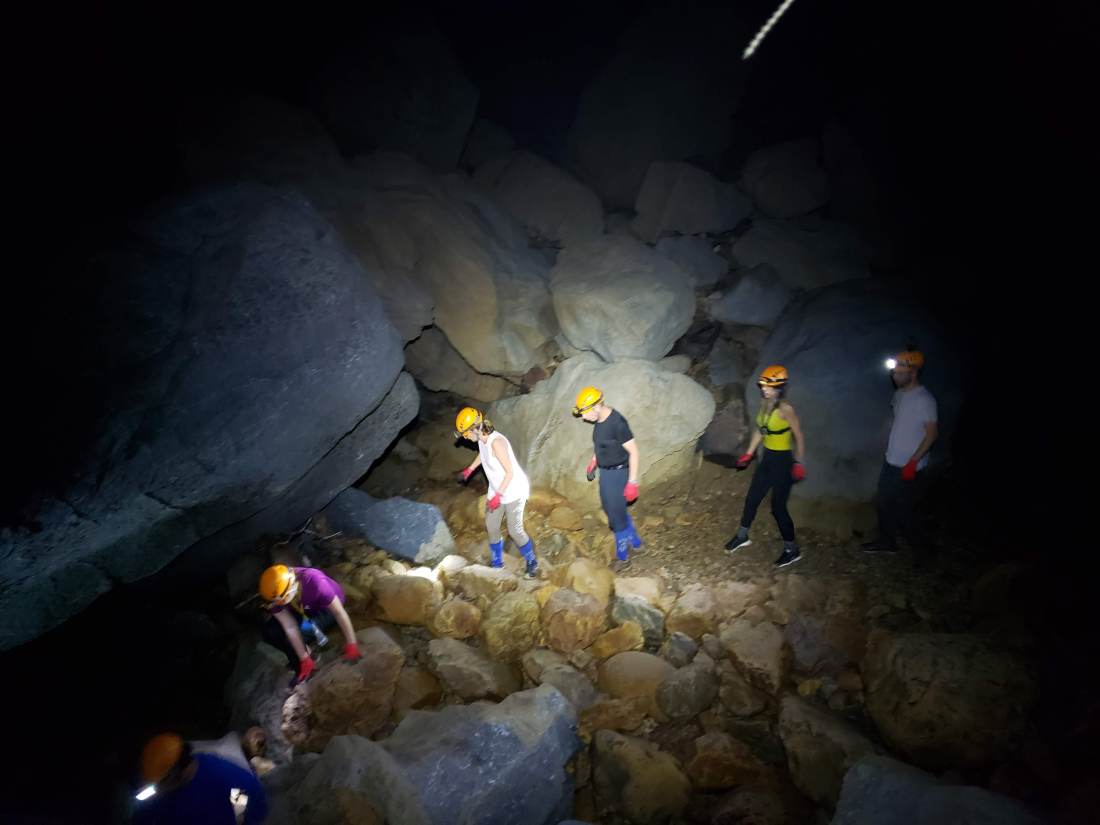
We were given hard hats with head lights, and in we went. The first part required ducking, but after that it opened up to a spectacular area with a beam of sunshine streaming in, breathtaking!
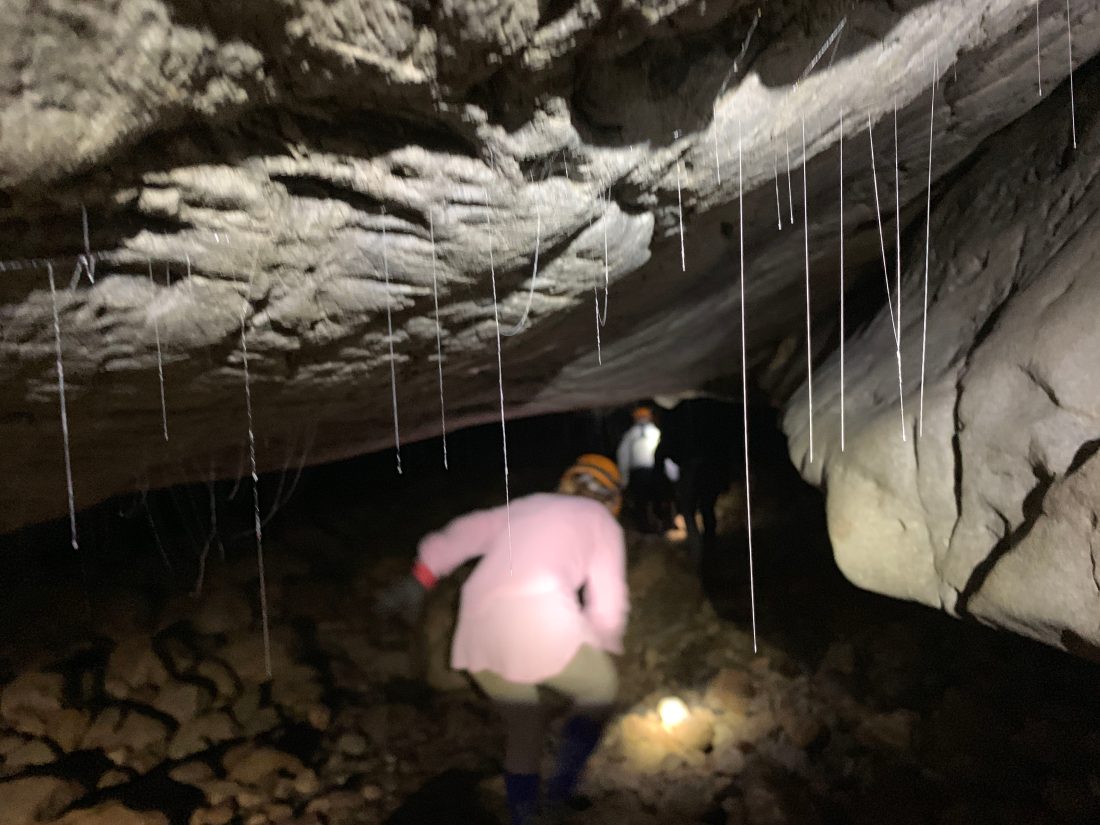
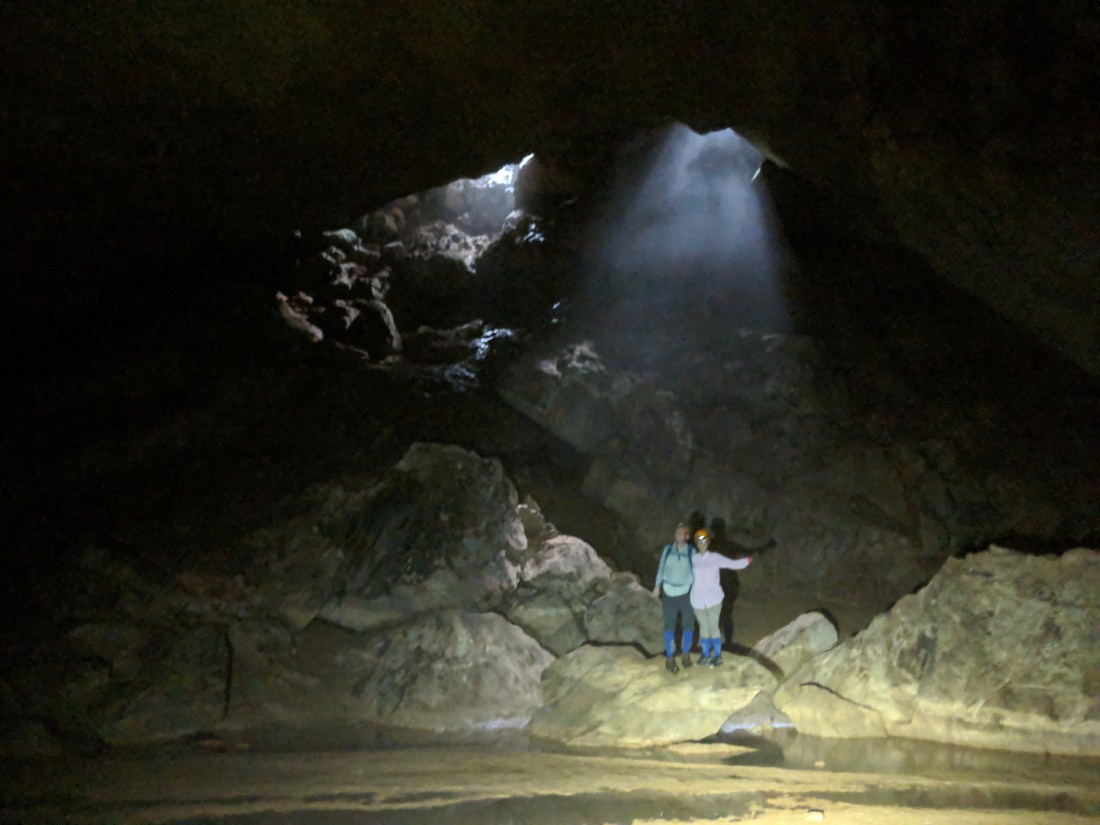
After we all posed for pictures, we were treated to lunch that the porters had carried in and set up for us.
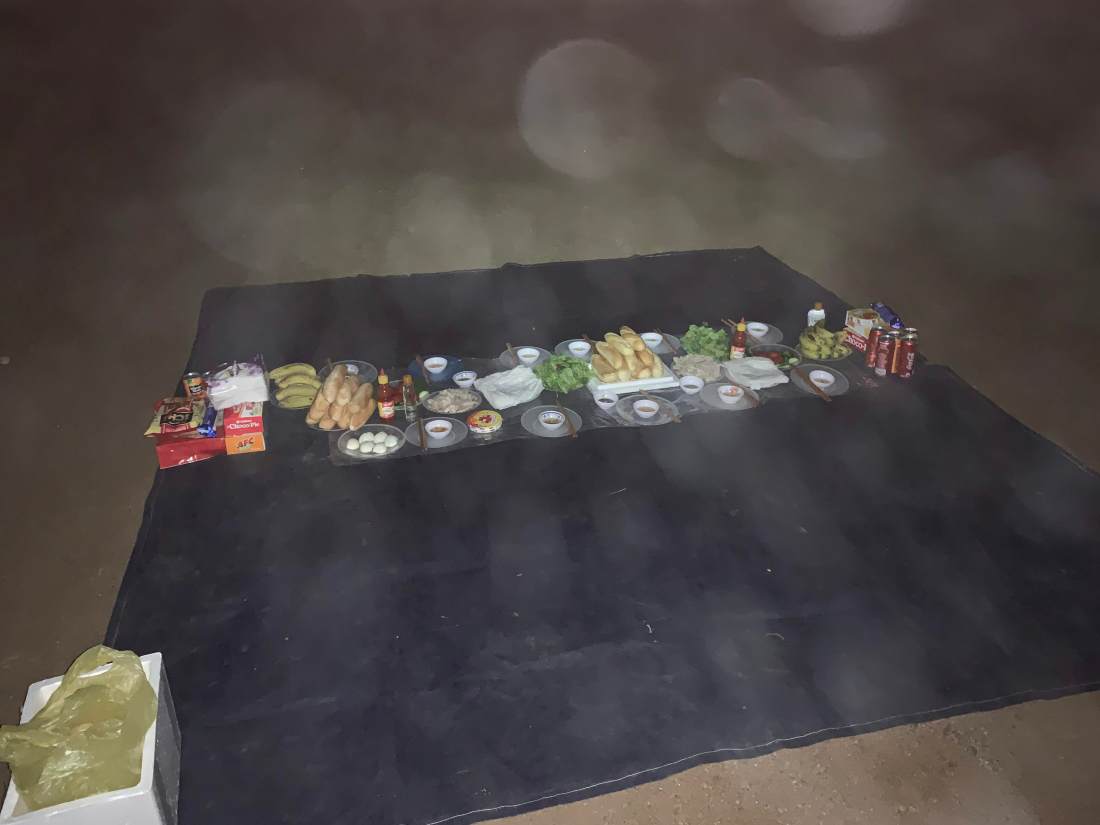
After lunch we continued the trek into the cave for a total of about 1 km, stopping for photo ops along the way. The porter was great at lighting assist.
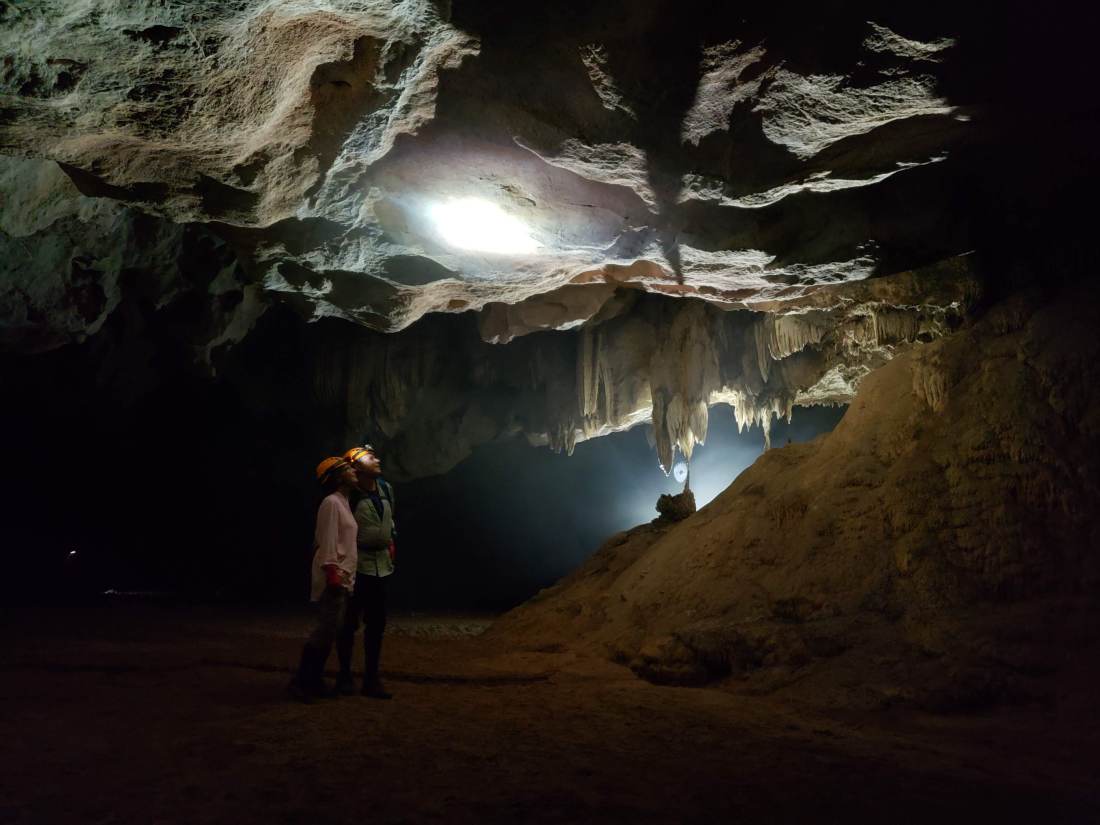
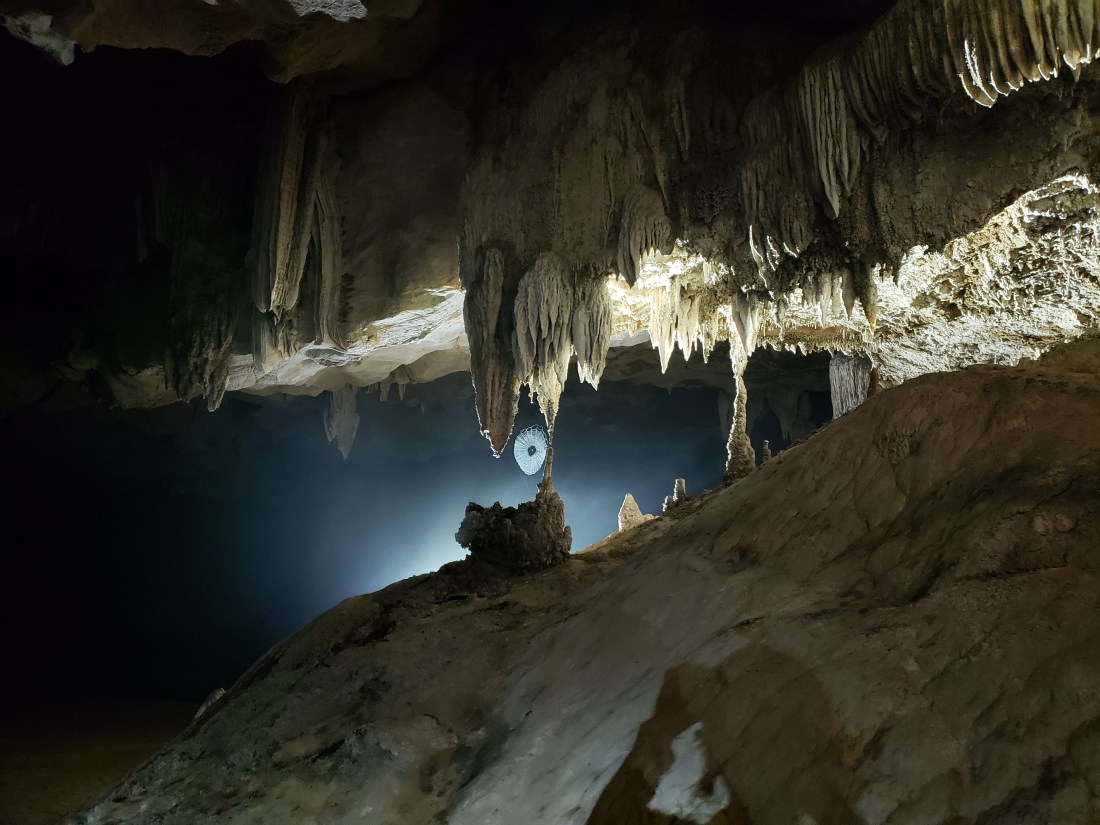
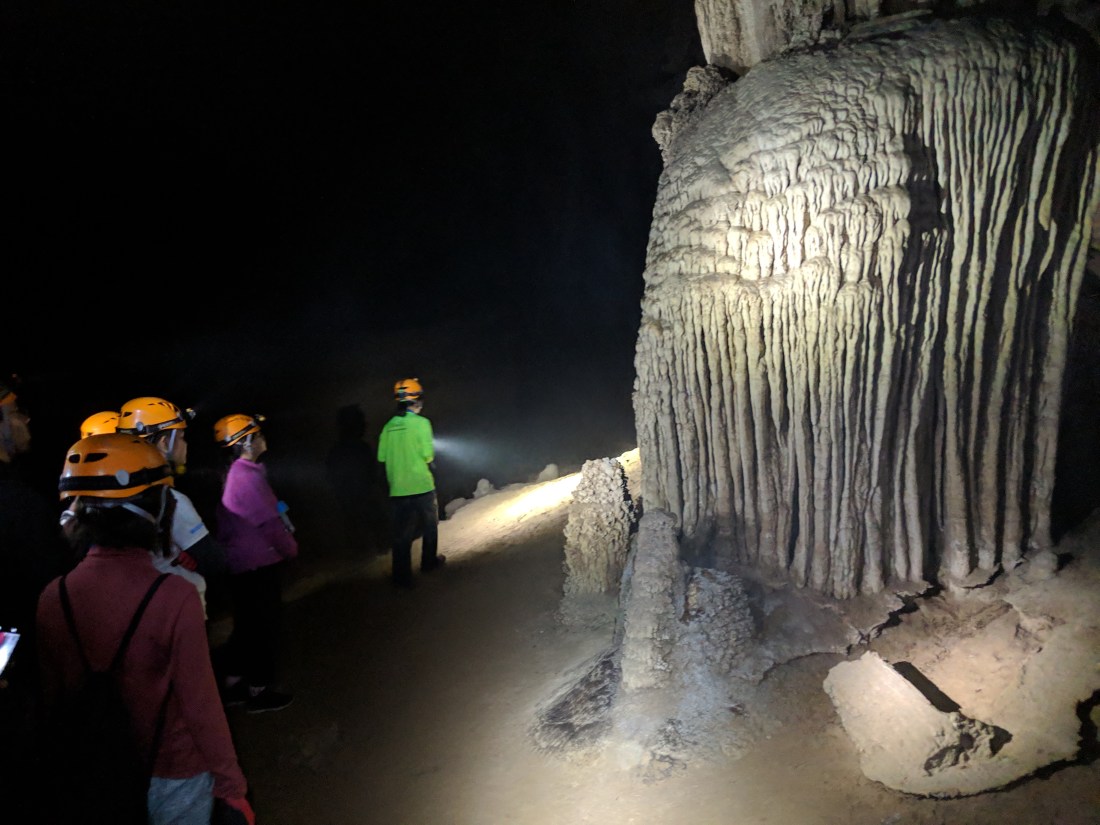


Then it was time to cross the river, swimming, fully clothed with sneakers still on, OMG!


Once on the other side we continued the trek.

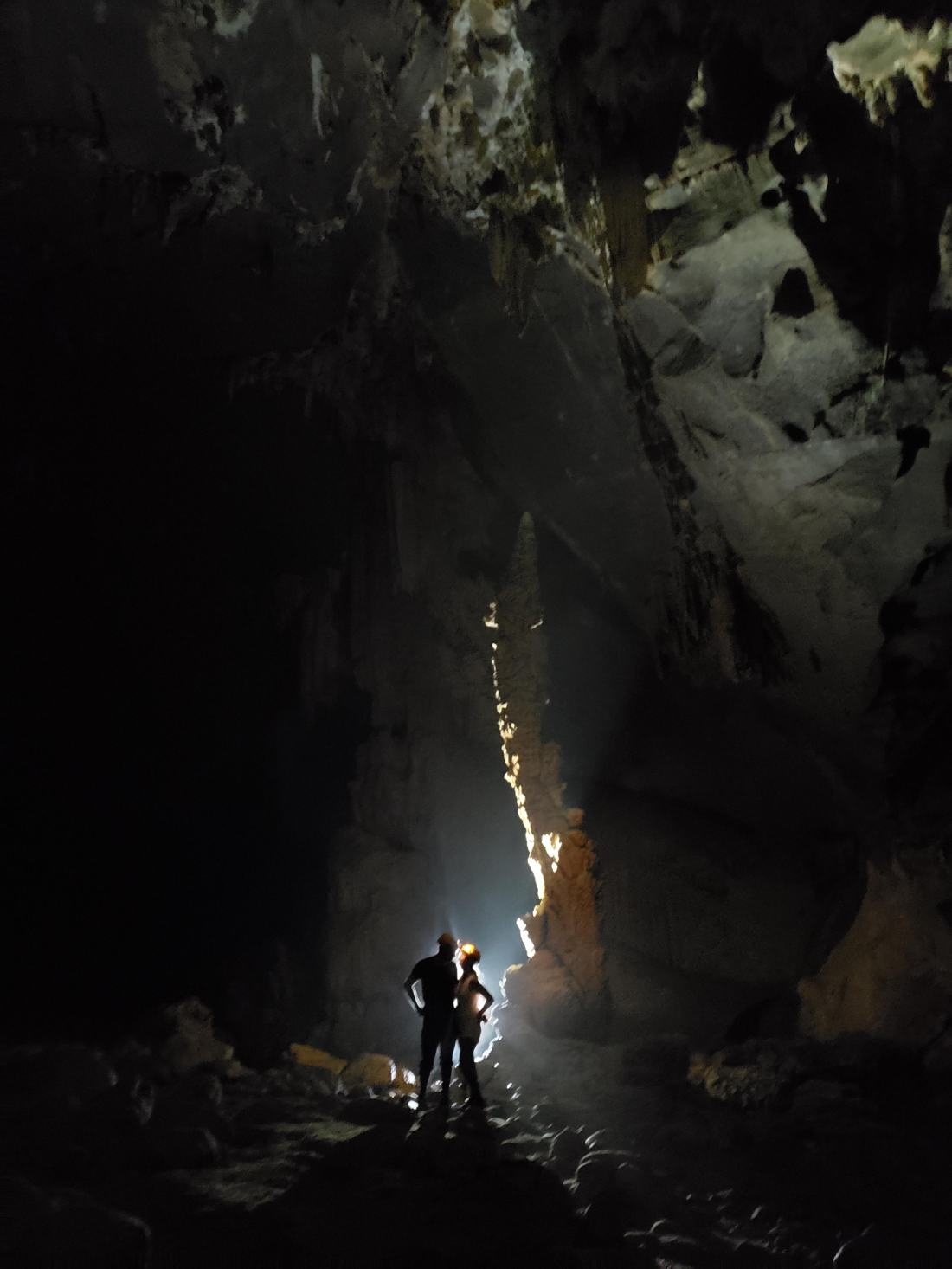
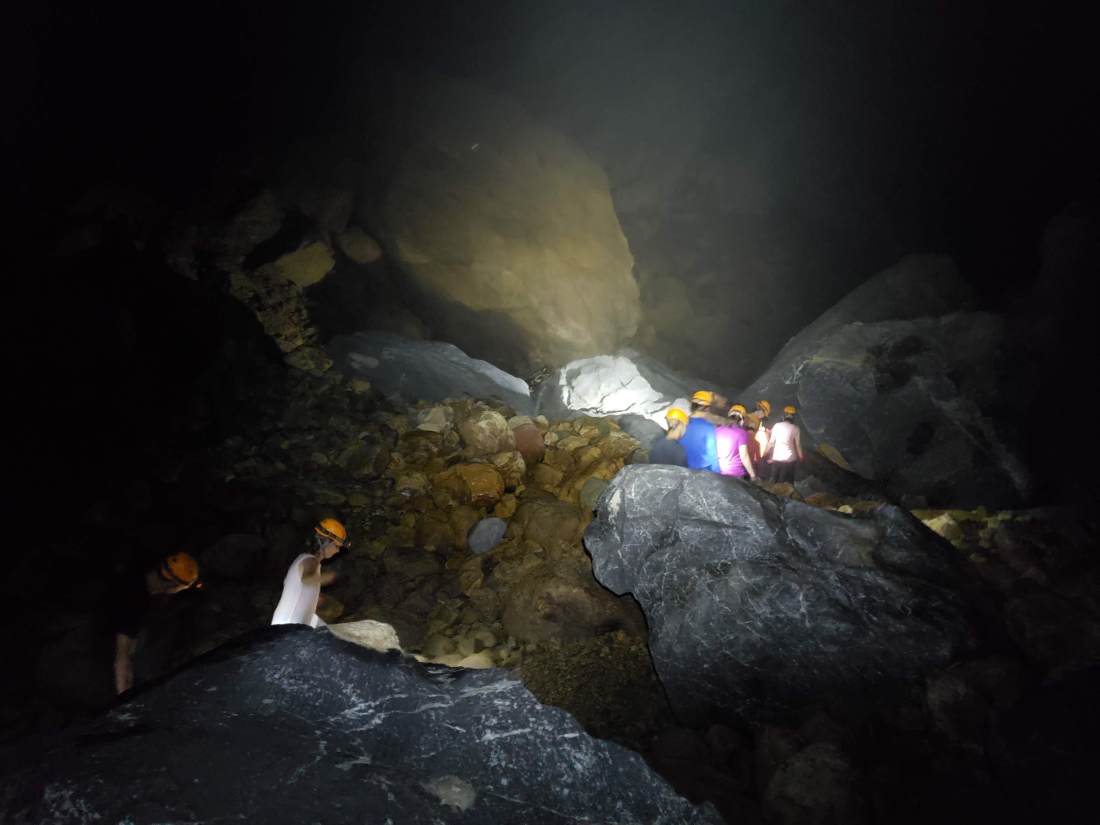
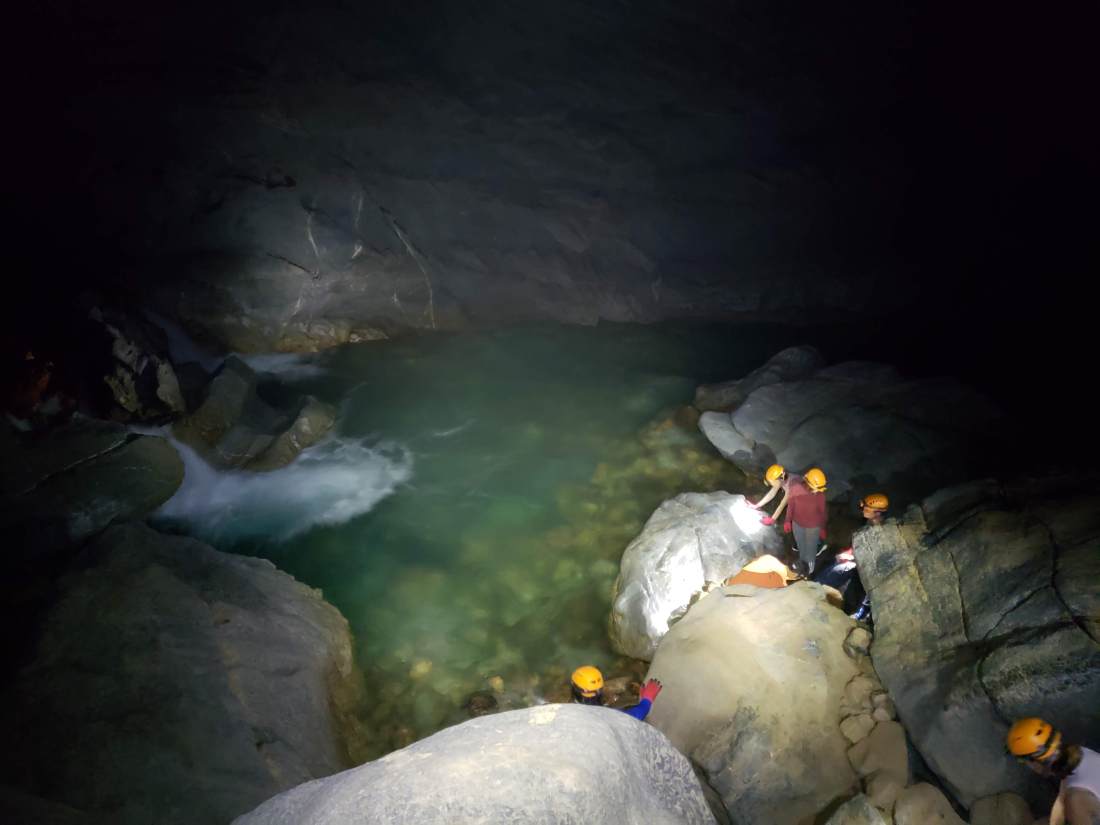
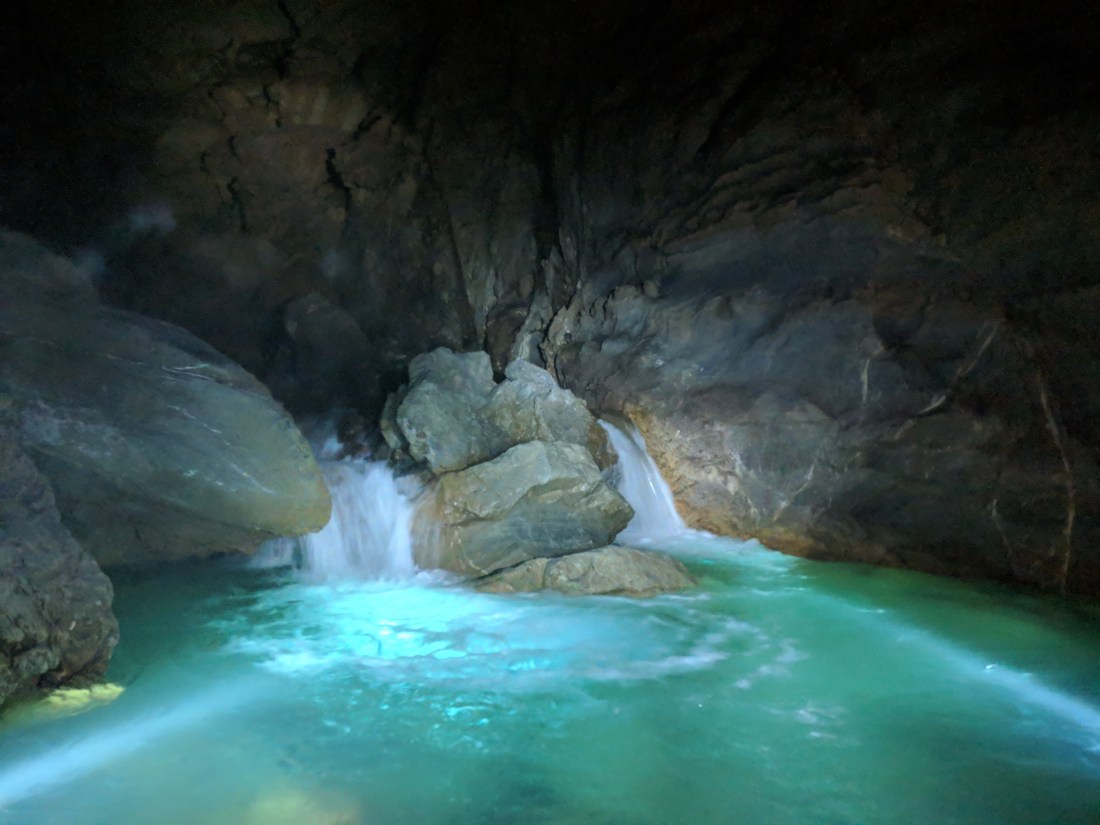
And the final destination was reached: a waterfall inside the cave.

Then we did the whole thing in reverse, but now soaking wet.
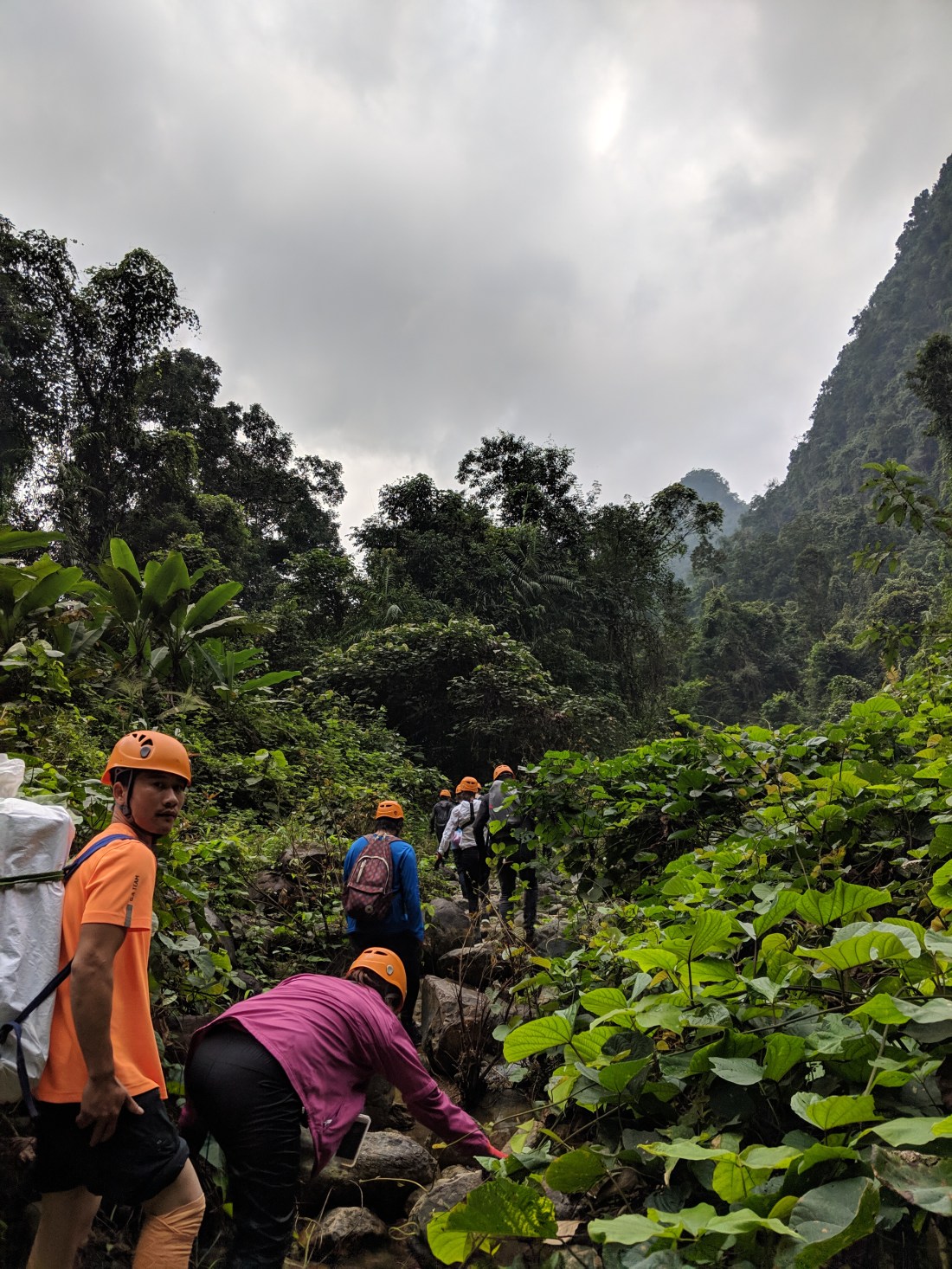
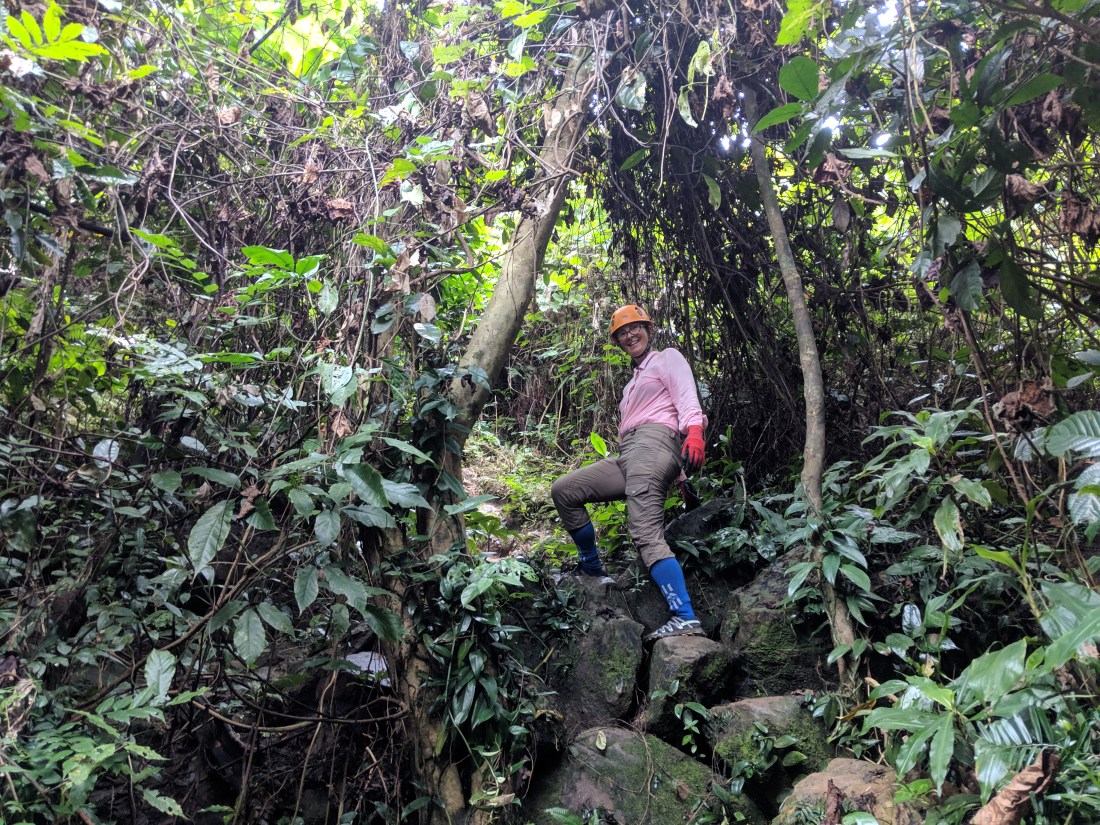
The last bit was as steep coming out as it was going in.
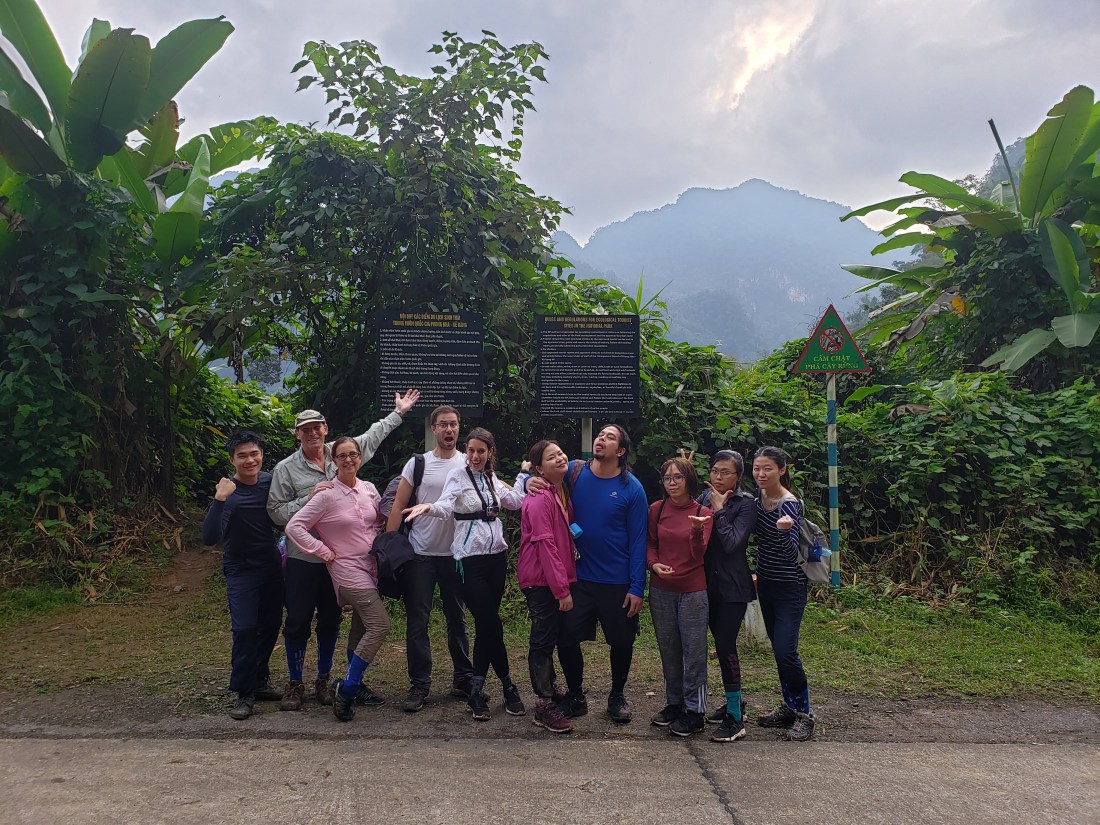
We made it!
Luckily the next day we had a 4 hour car trip to rest our weary muscles.


All I can say is WOW!
LikeLike
is the WOW for the pictures or the adventure?
LikeLike