
Northern Vietnam is as different from Southern Vietnam as New England is from the Mississippi Delta. What we are learning to appreciate the longer we are in this country, is not only the regional differences, but the multiplicity of cultures due to the many ethnic minorities. But more about that later.
First, as every tourist to Hanoi must do, we paid our respects to Ho Chi Minh. He is laid to rest in a Mausoleum built 1973-75 (after the war). He had died in 1969 at the age of 79, never getting to see his beloved Vietnam unified, as was his dream. The Soviets trained the Viet Cong in the method of embalming to keep his remains preserved. Now every year, they close the mausoleum for 2 months to continue to re-embalm him. He is actually visible laying in his coffin in a glass enclosed space inside the mausoleum. Needless to say, photos are not allowed, so I have just the building.

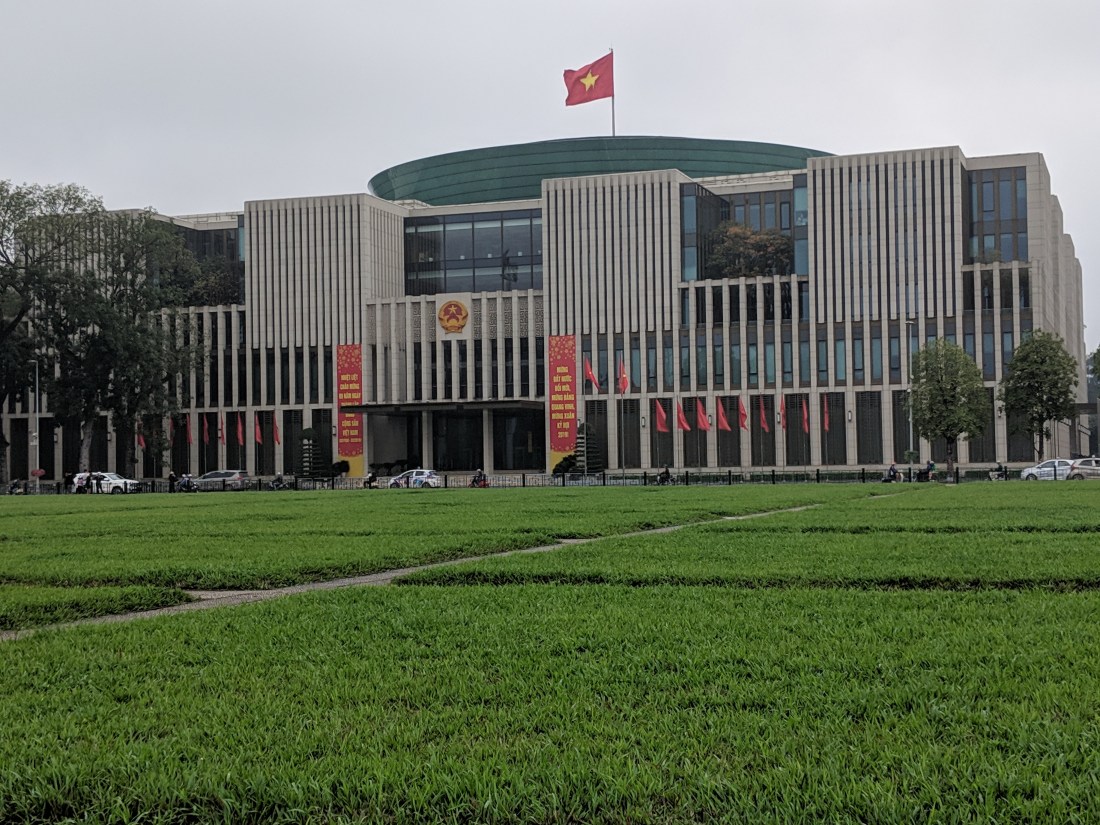
It is in the same Ba Dinh Square as the modern Parliament:
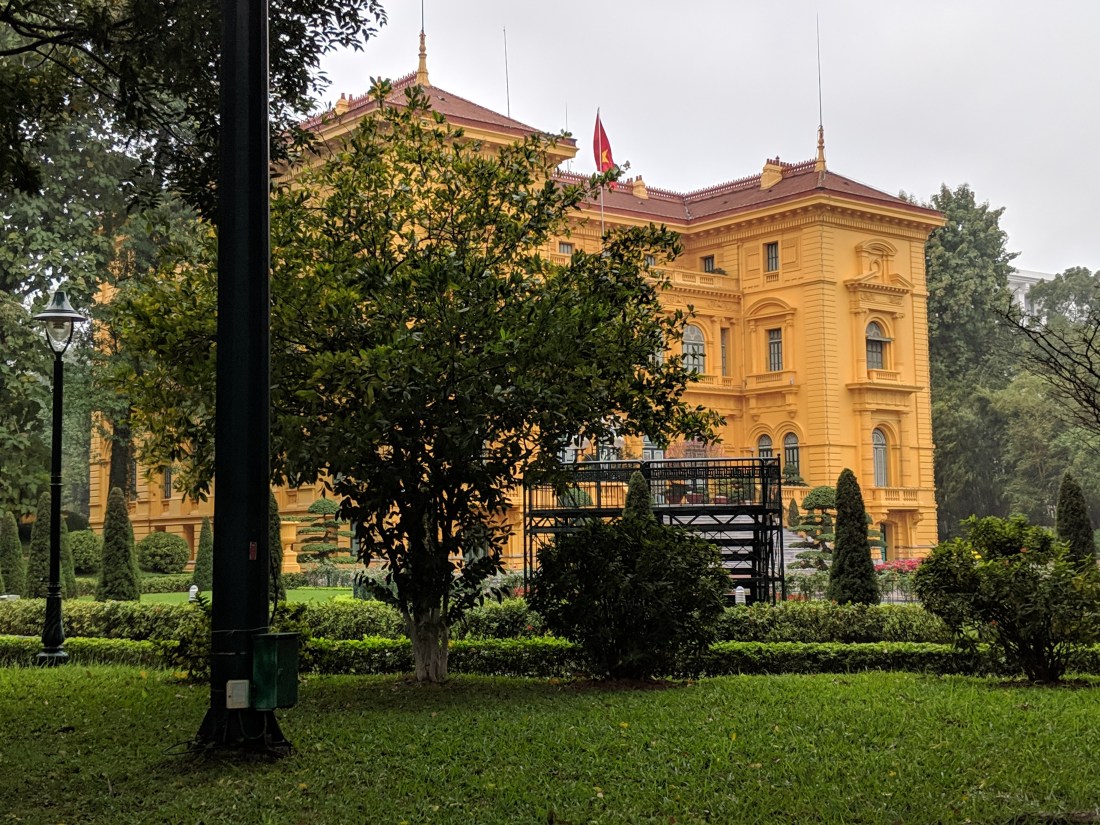
And also the Presidential Palace, which is where Trump and Kim Jong-un will meet on the 27th. It is a 30 room mansion built in the late 19th century by the French as both home and offices for the Governor of Indochina. It was occupied by the Japanese during WWII. In 1945 the French took it back over. But after the Geneva Convention in 1954, when Ho Chi Minh became president of North Vietnam, he designated the building for public use, and it has been used for meetings between heads of state ever since.
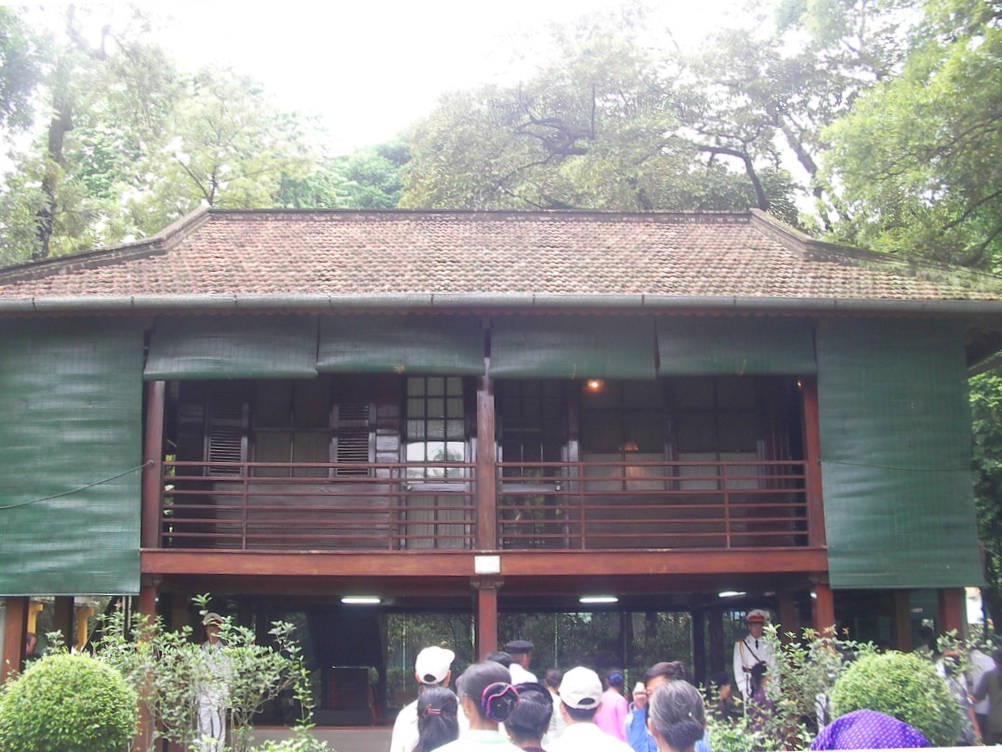
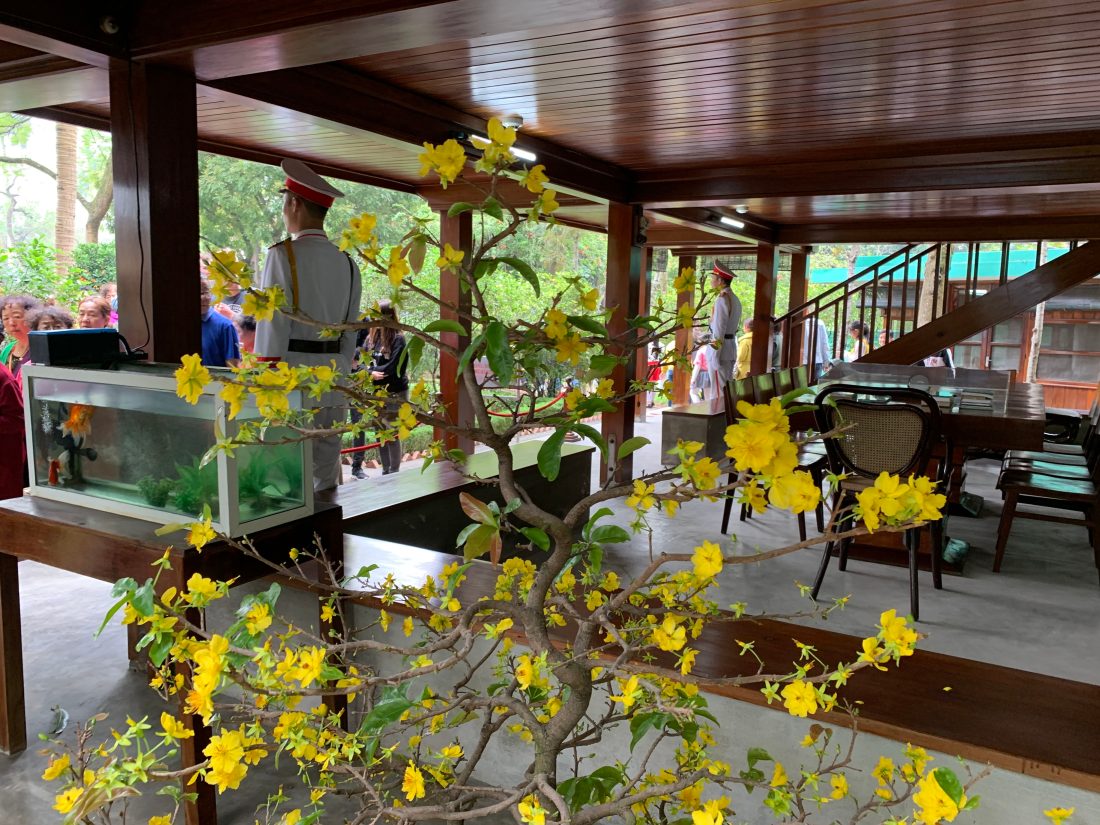
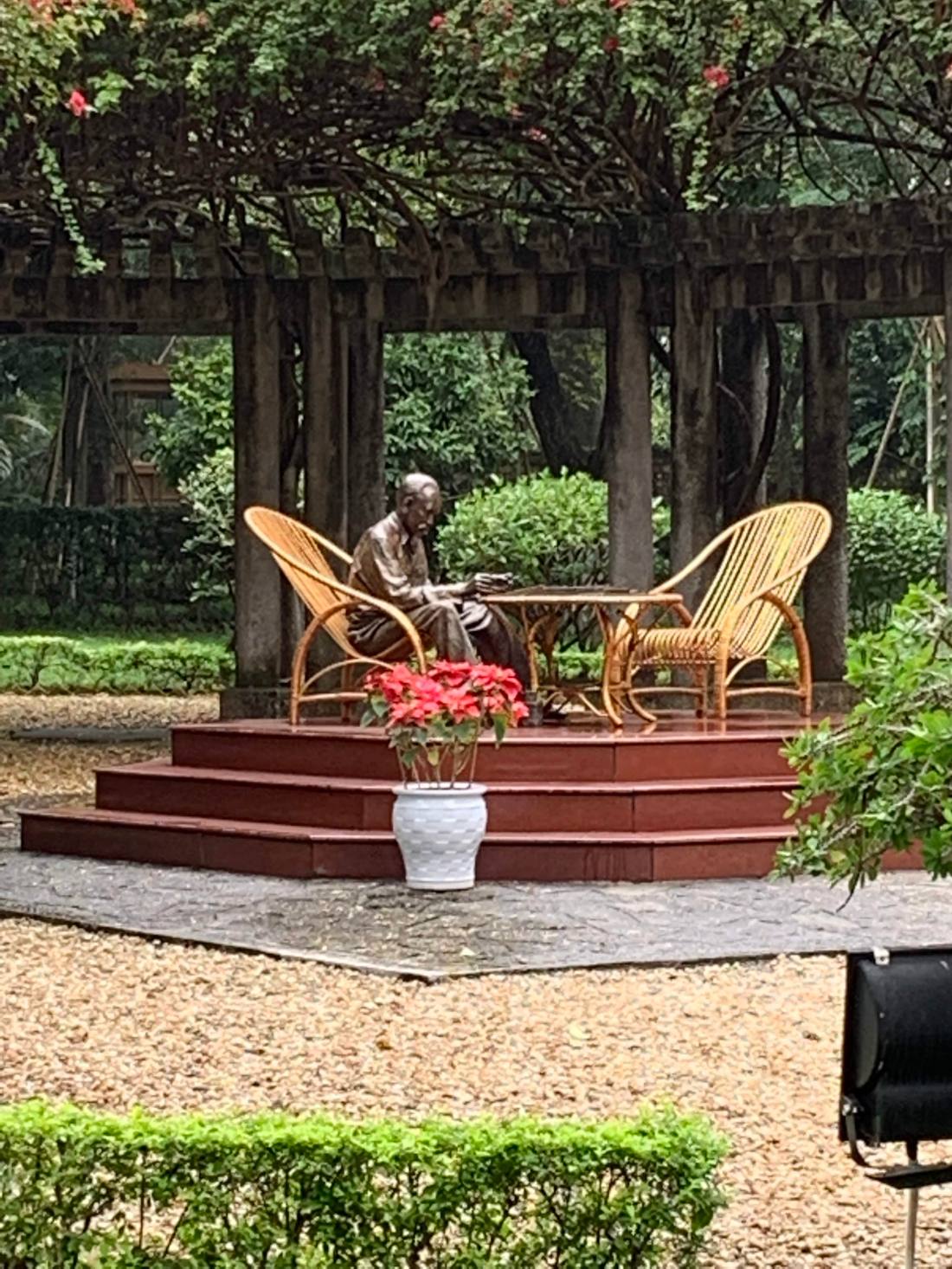
Ho Chi Minh chose to live more humbly in a 3 room house nearby (originally built for French staff).
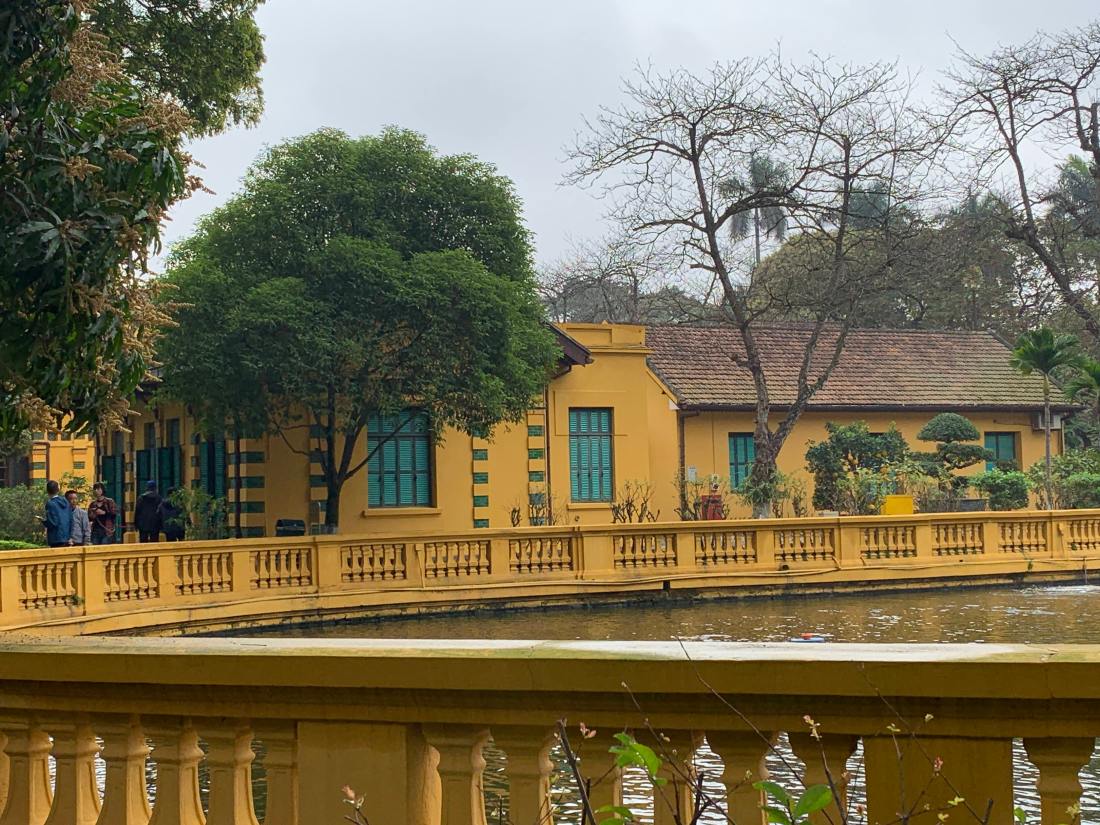
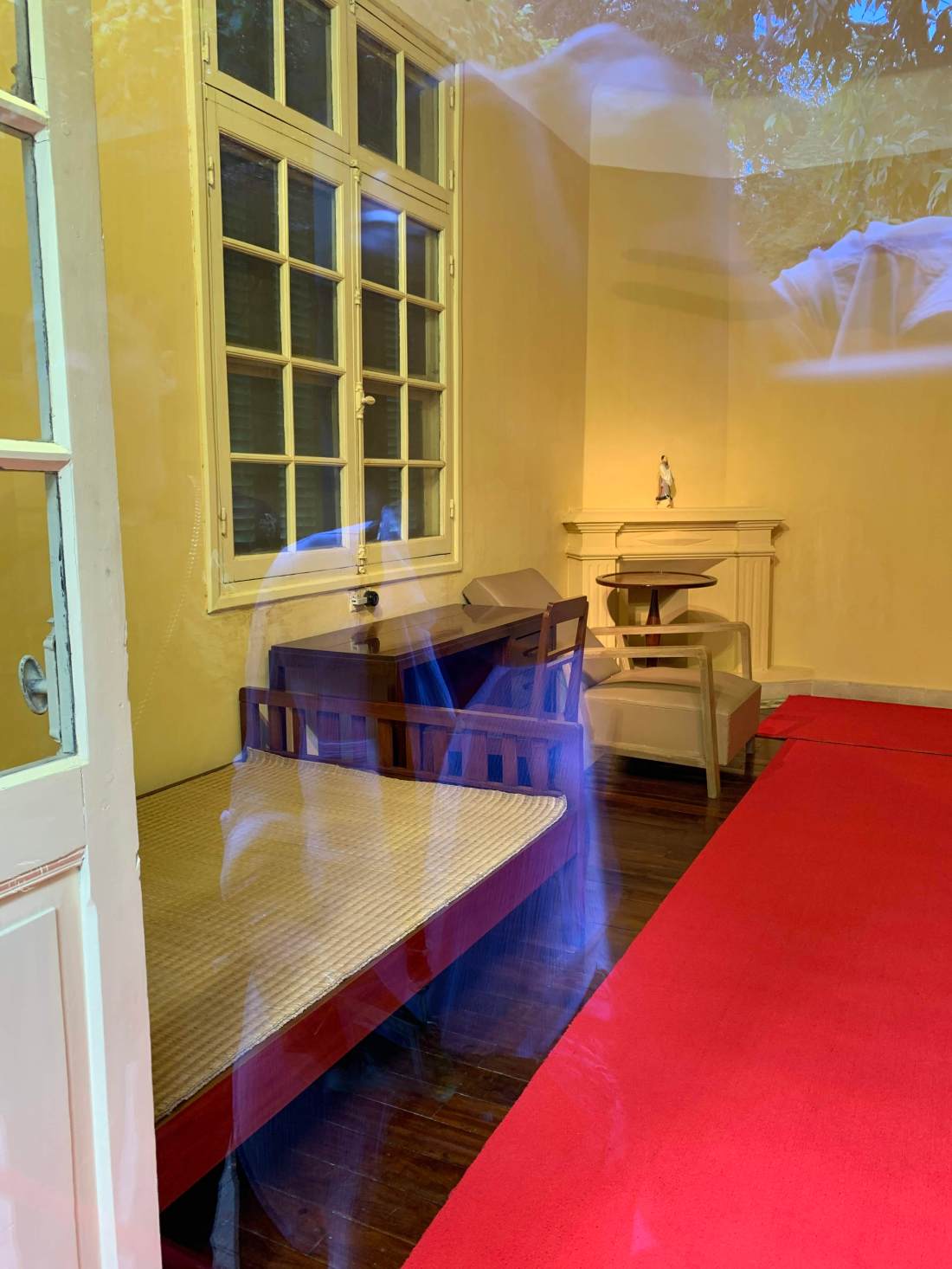
He lived there for 7 years, then his adoring fans built him a home on stilts, in the style of his origins, where he lived out the rest of his days.
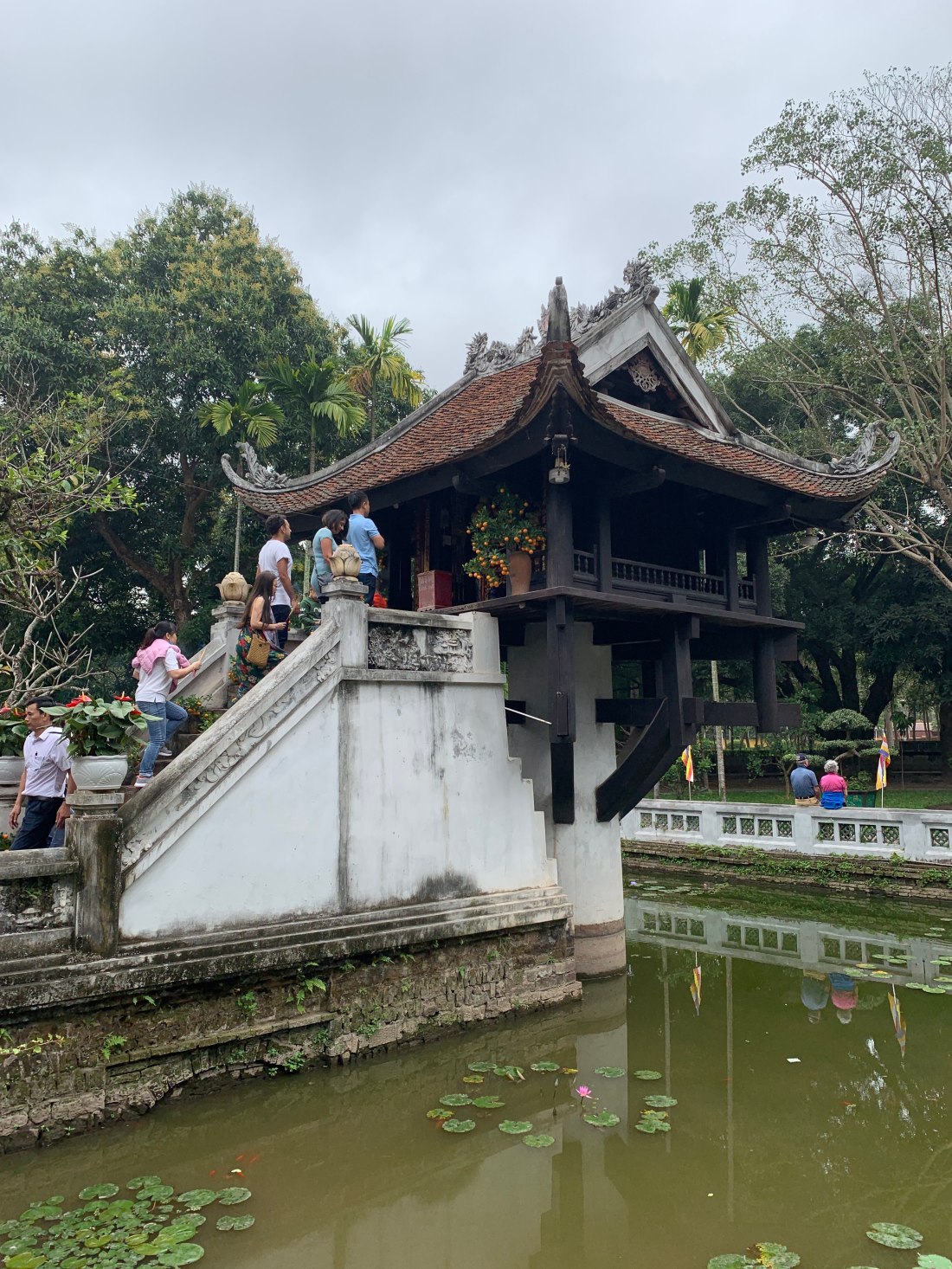
Near Ba Dinh Square is the One Pillar Pagoda, which is nearly as old as Hanoi itself. Hanoi was founded in 1010 and celebrated 1000 years just 9 years ago! The pagoda was built by Emperor Ly in 1049. The story is that the emperor was childless but had a dream that he was handed a baby son by a goddess seated on a lotus flower. He then married a peasant girl who bore him a son. So he built the pagoda to thank Buddha. It was built in a lotus pond, of wood construction, on a single stone pillar to resemble a lotus blossom. Lotus is the symbol of purity in buddhism because it is a beautiful flower that grows from mud. Unfortunately, the temple was destroyed by the French in 1954 but has since been reconstructed.
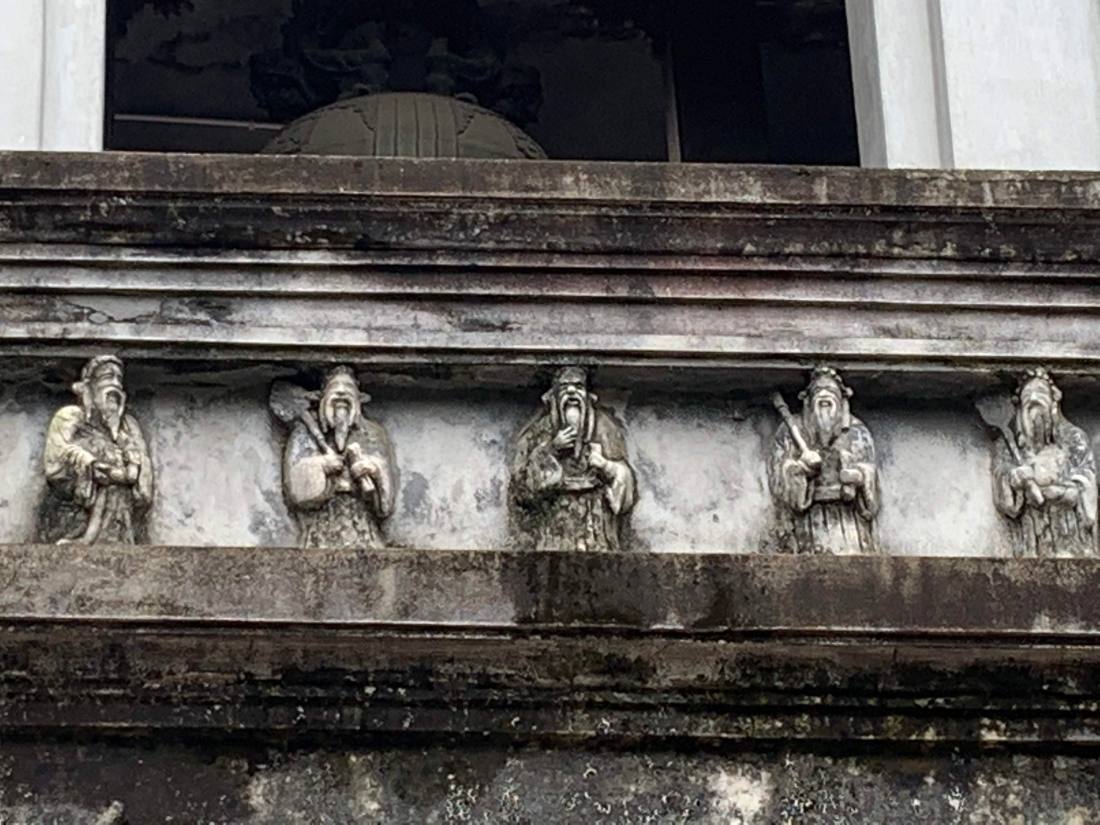
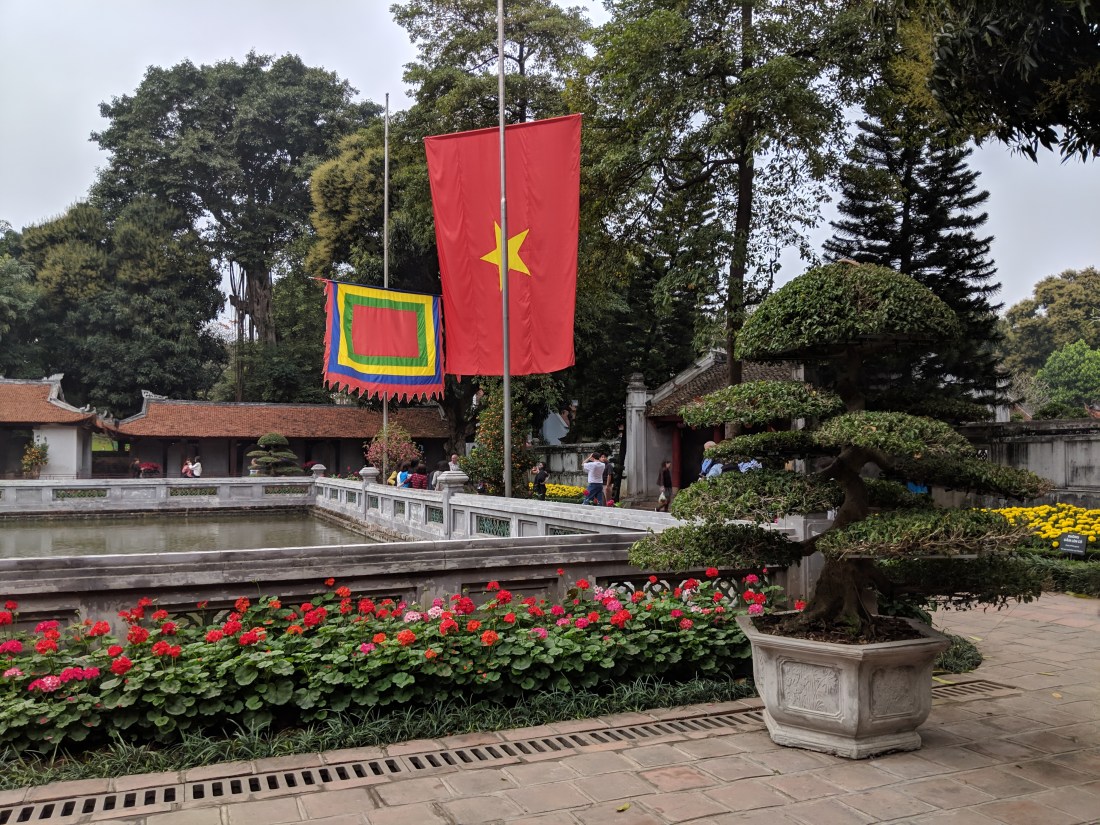
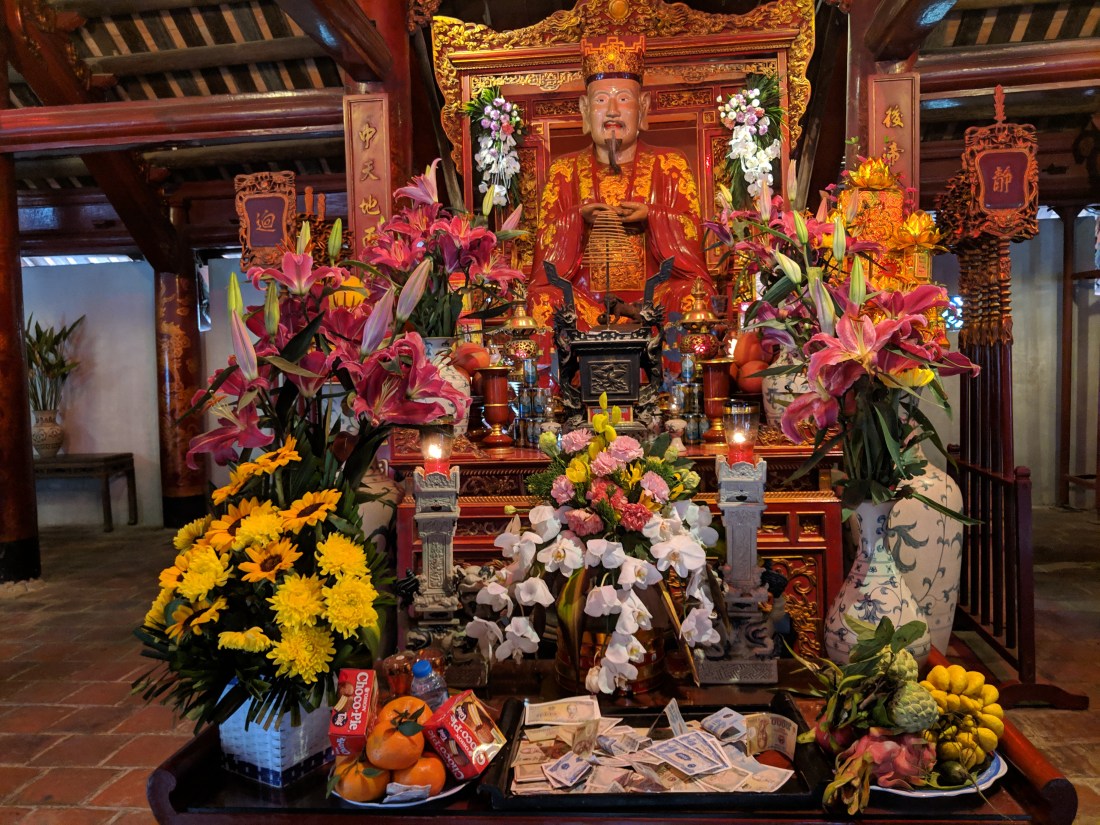
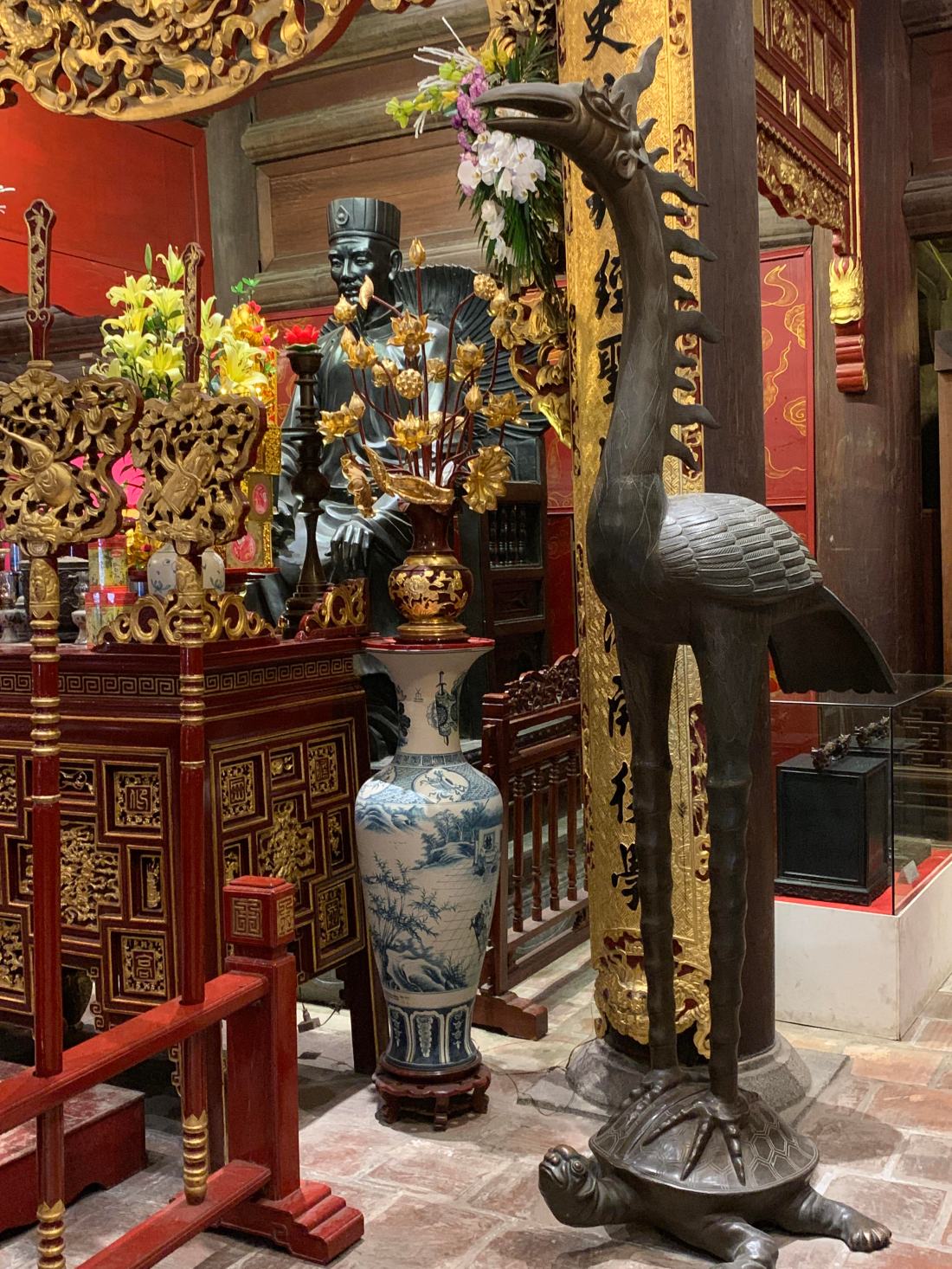
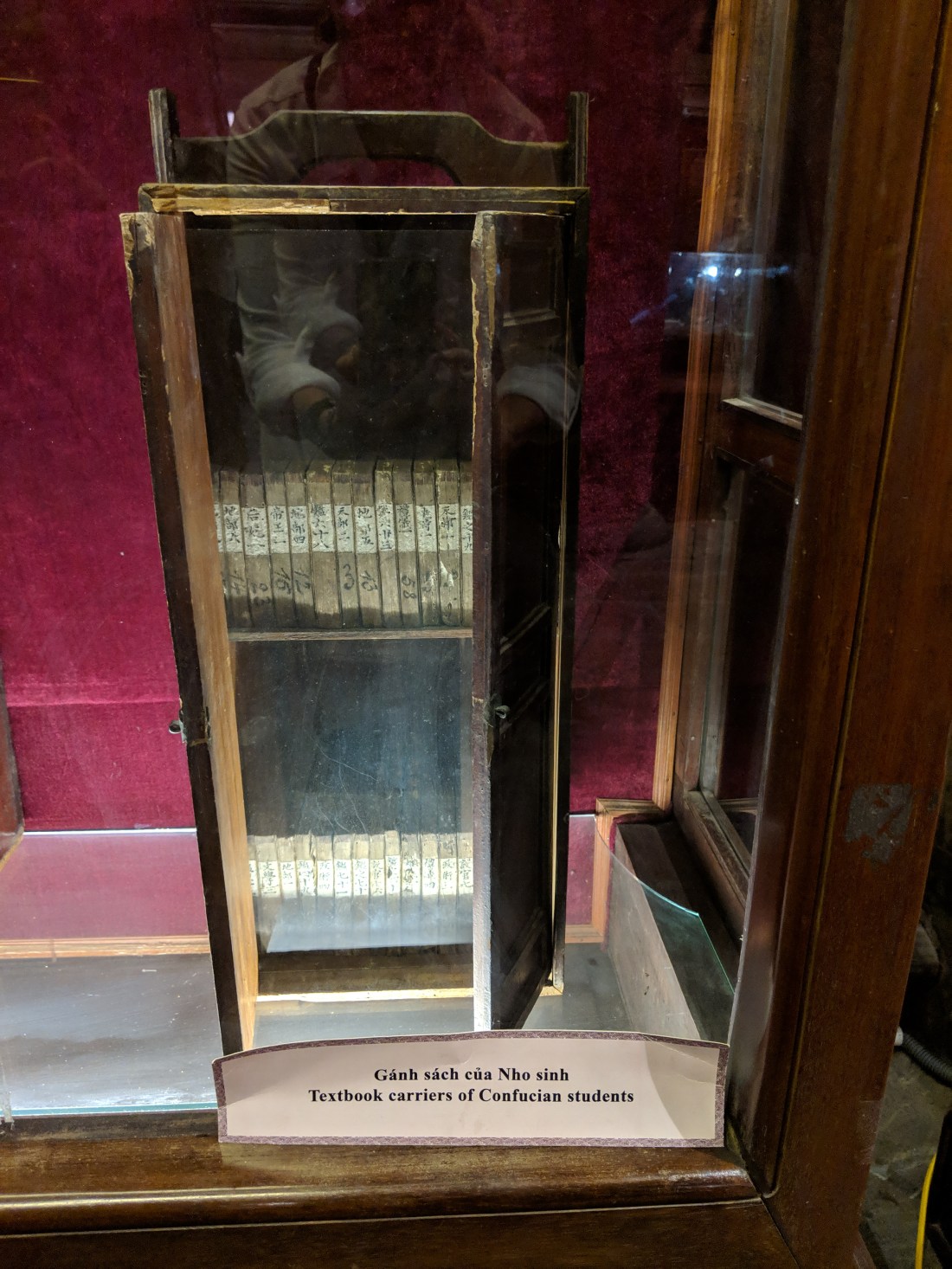
Next we went to the Temple of Literature, the oldest university in Vietnam. It was built in 1070 by Emperor Ly and was dedicated to Confucius. For centuries boys and young men came here to study and be examined for the job of mandarin.


After lunch we went to the Museum of Ethnology. Vietnam’s people are comprised of 54 different ethnicities. Currently 86% are Viet, the other 53 minorities make up the remaining 14% of the population. We spent several hours in this museum studying the migrations of the different groups, who they descend from, the differences in their cultures, languages, and customs. I have mentioned some before like the Champs that originated in India, built temples at My Son, then migrated to the South. Over the next couple of weeks we were to visit several more different ethnic minorities, so we spent time in this museum getting a general understanding. Within certain groups, say Hmong or Tai or Dao, there are subgroups. Each subgroup has the same language and architecture for their homes as their group, and live in the same general areas, but differ in clothing and have some cultural differences such as rituals for things like weddings and funerals. The subgroups are designated by the color that dominates their clothing, ie Black Hmong wear predominantly black clothes, Red Dao mostly red clothes, etc.
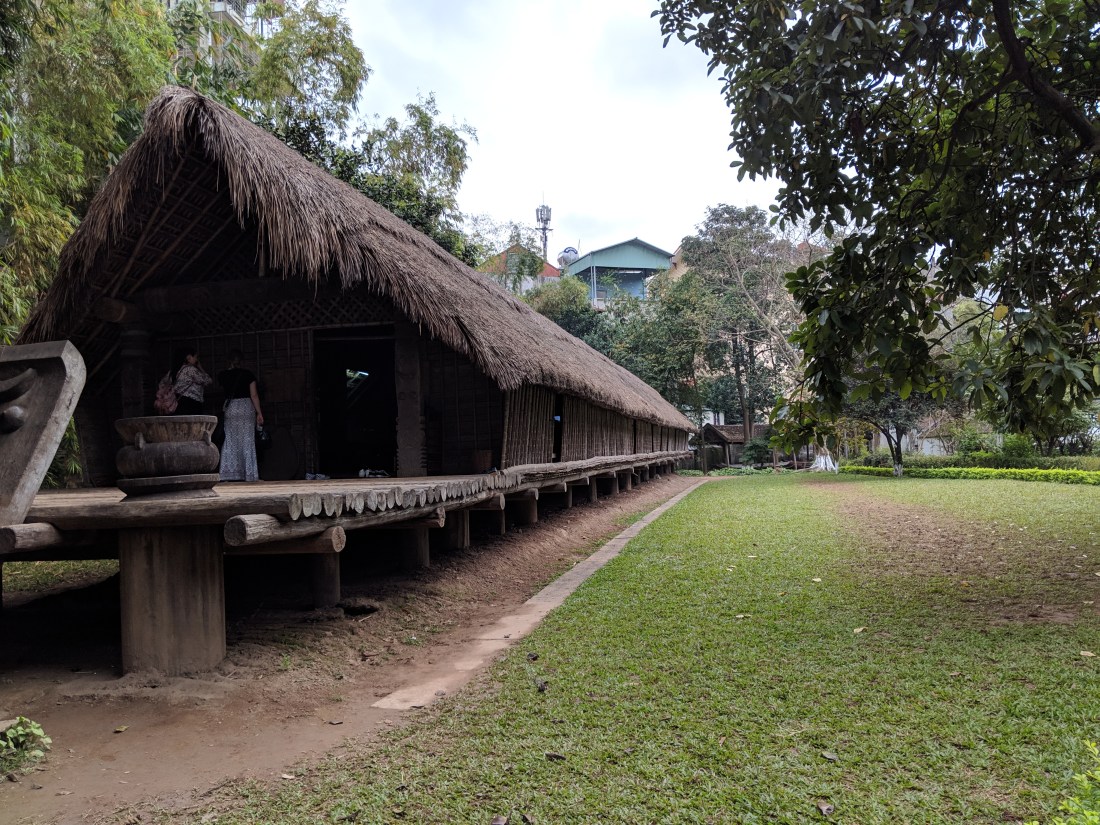
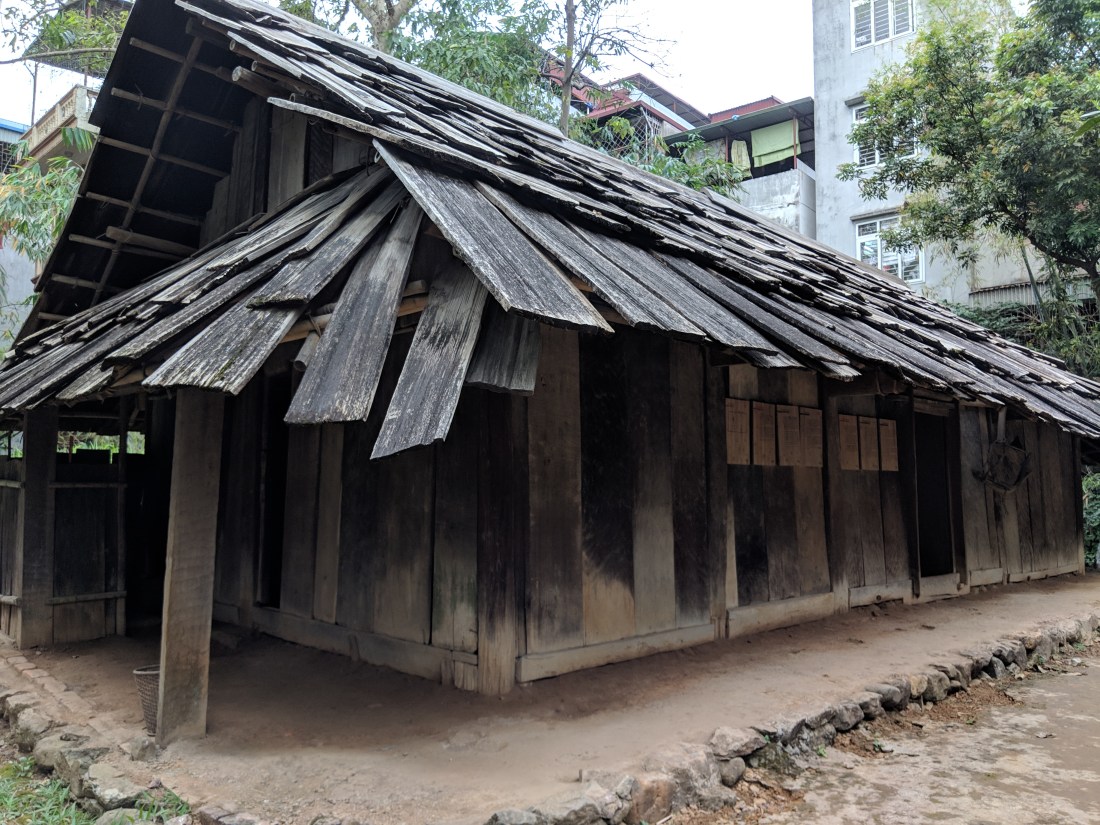
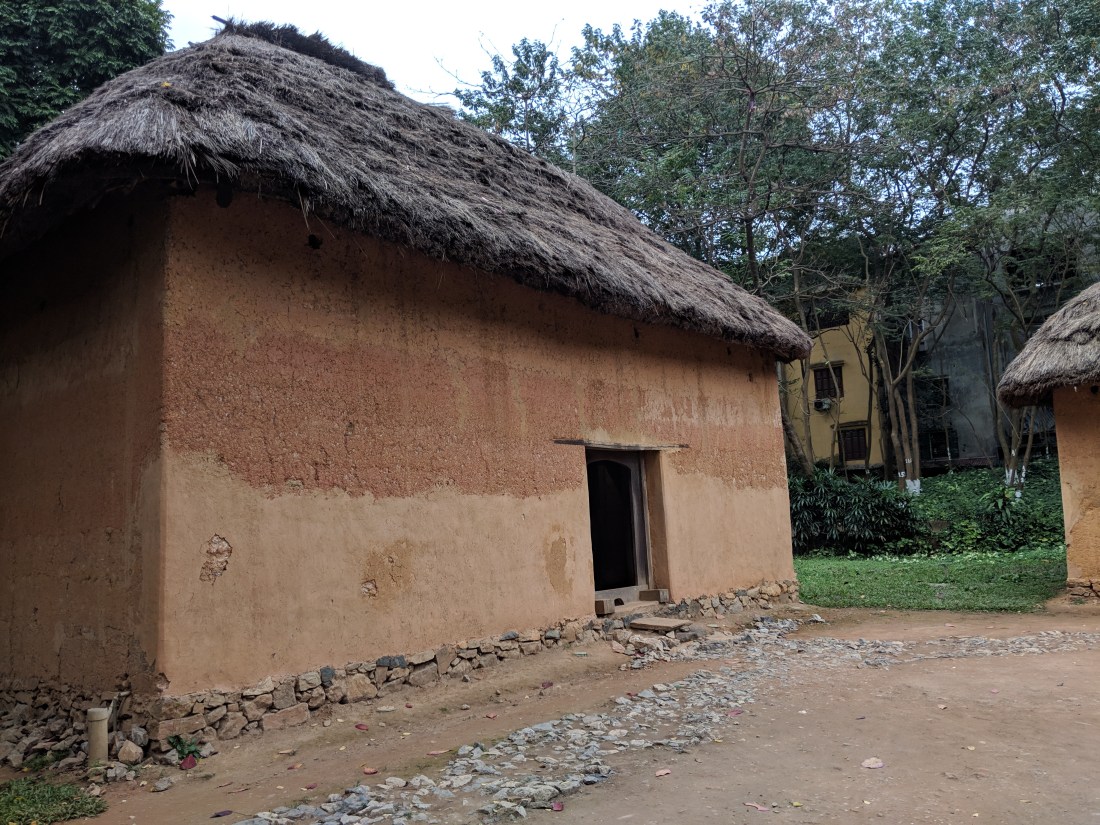
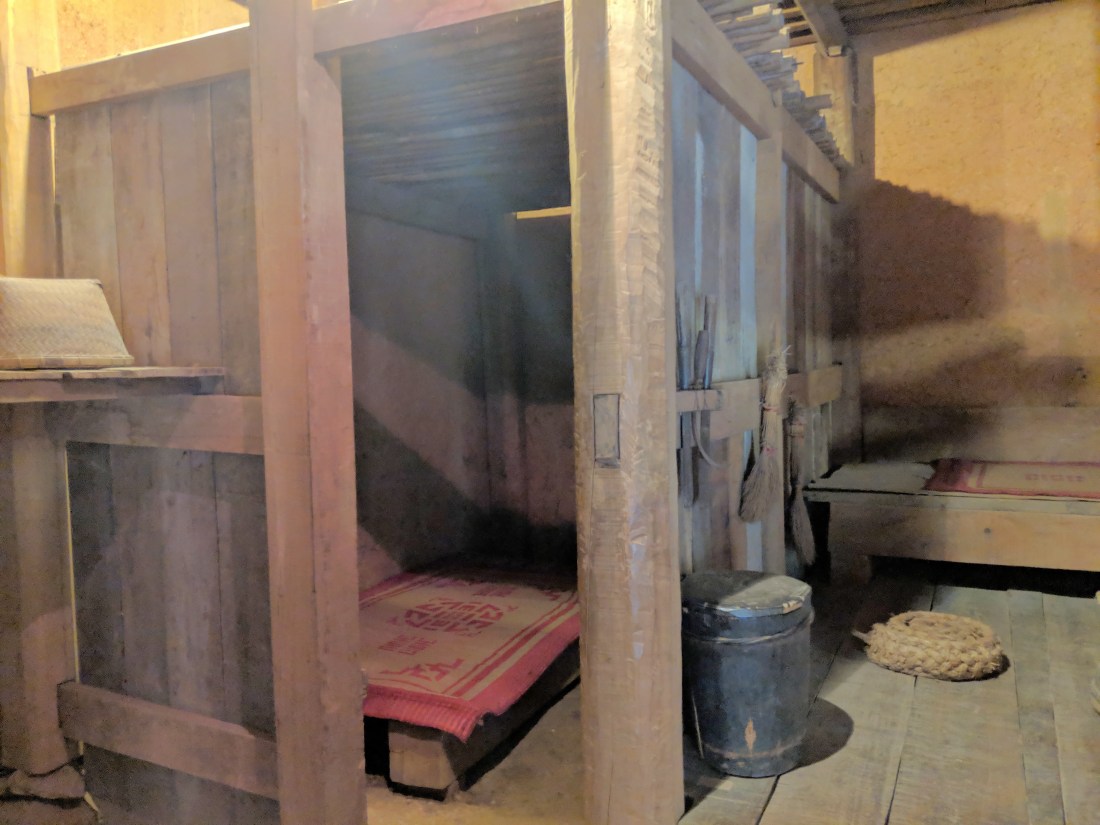
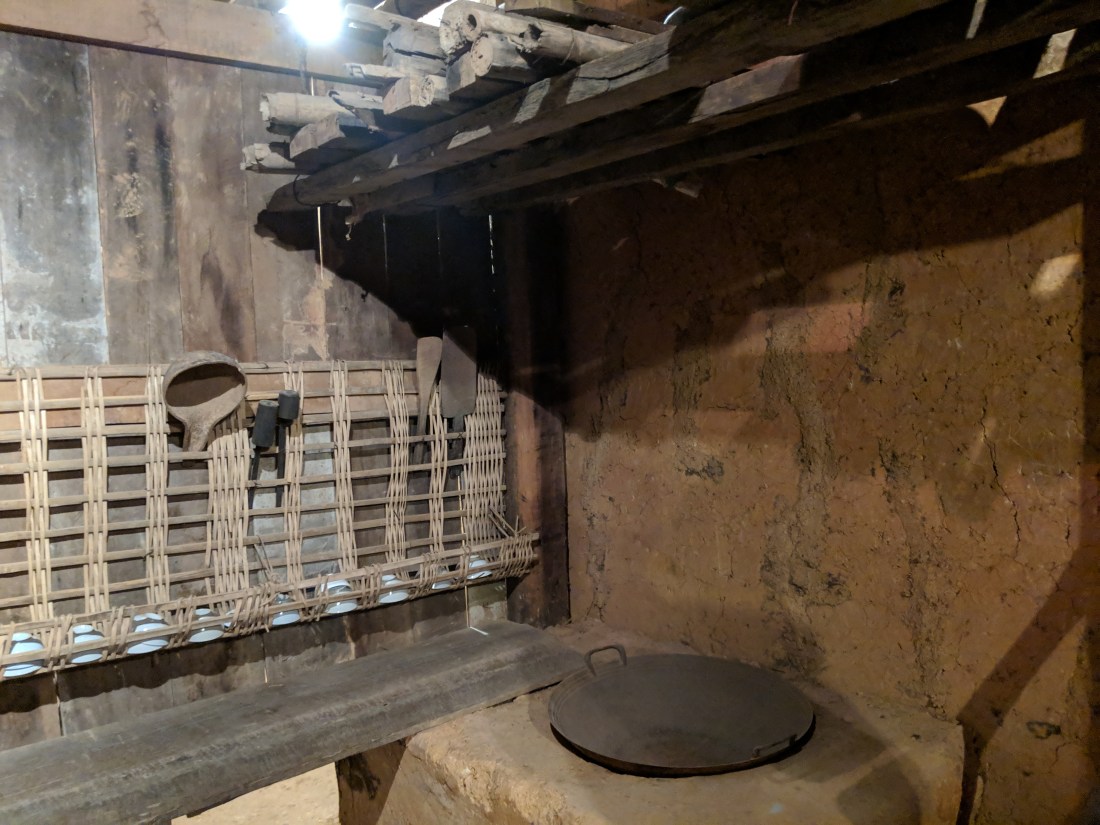
Outside were homes from various tribes donated and moved to the museum. I am including only a few here, but note the hugely different architectural styles based on culture, climate, and other factors.


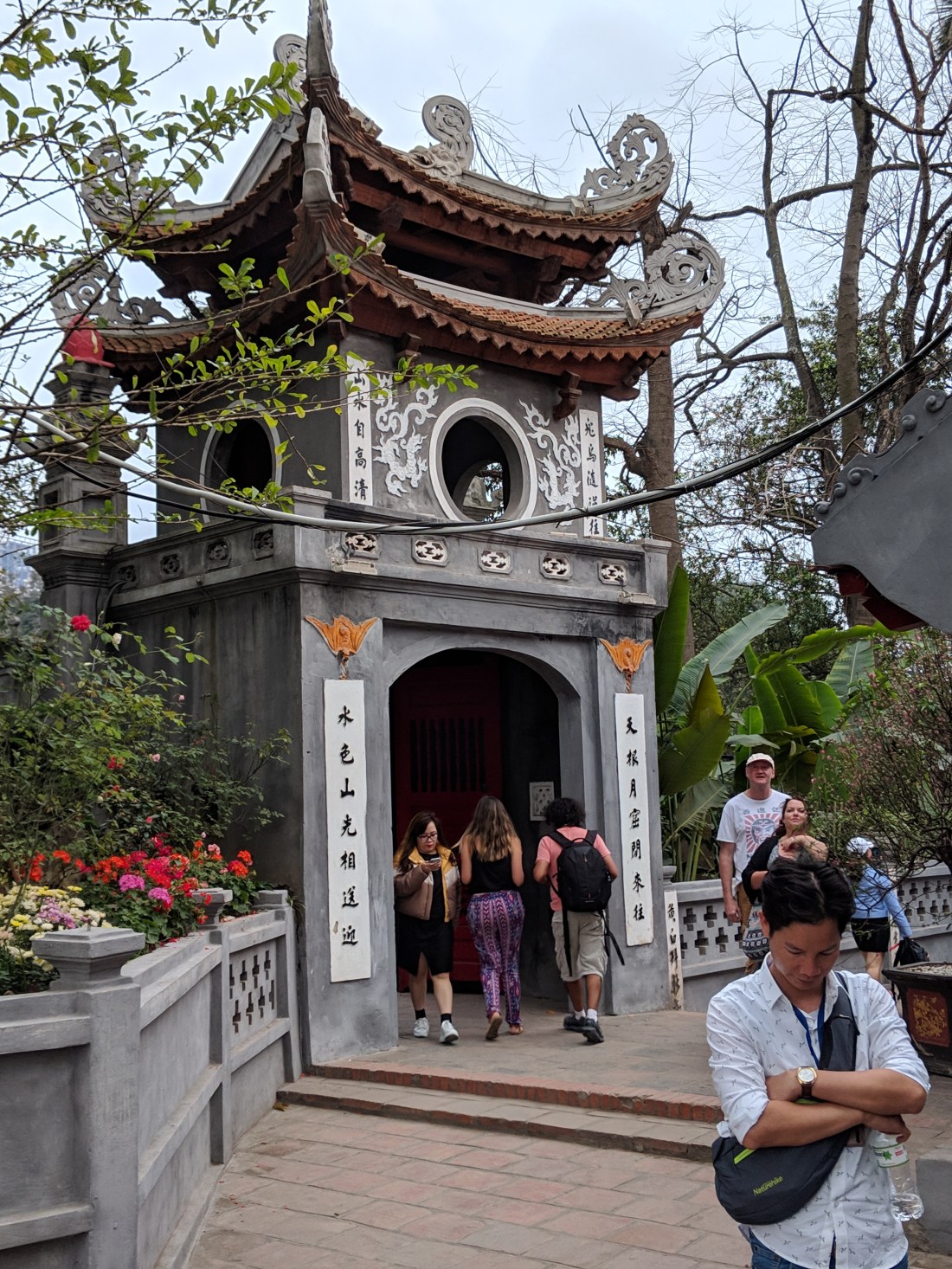
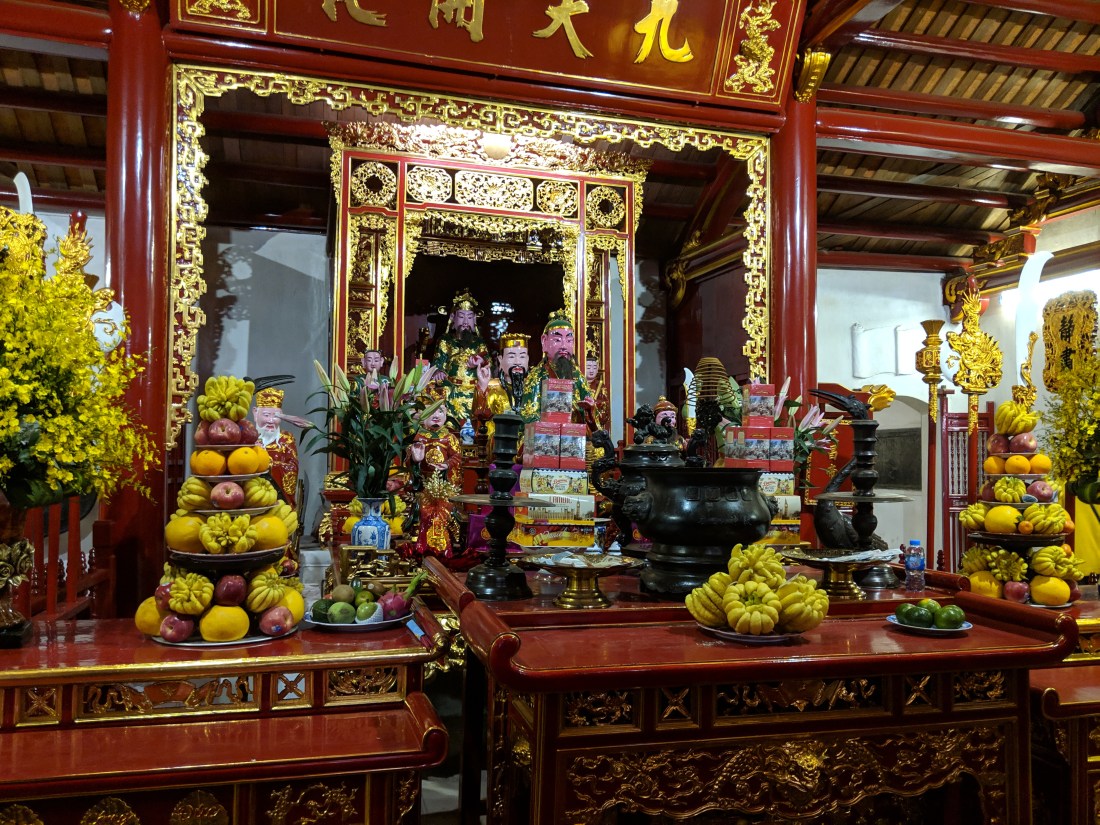
Finally on this exhausting day, we visited Ngoc Son Temple built in the 19th century on Hoan Kiem Lake, right on the edge of Hanoi’s Old Quarter. The temple is for the worship of Tran Hung Dao, who defeated the Nguyen army in the 13th century and is now considered not only a hero, but the father of science. Parents go here now routinely to pray that their children do well on their science tests and studies.
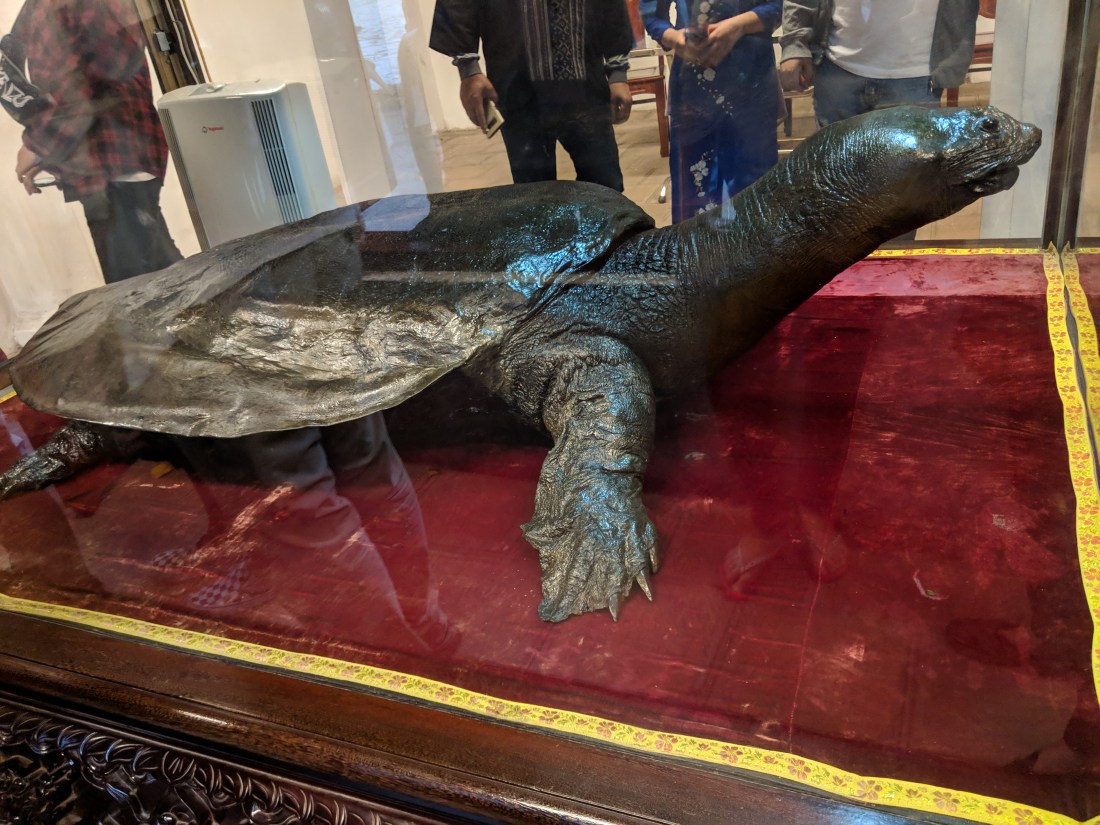
The lake is named for the legend of the God Turtle who according to 15th century legend, floated to the surface while King Le Loi was standing on a boat on the lake, and demanded the king return the sword lent to him by Long Vuong to conquer the invading Ming army. The king gave the turtle the sword, and the turtle dived with it to the bottom of the lake. Unfortunately, the turtles are now extinct in the lake due to pollution.
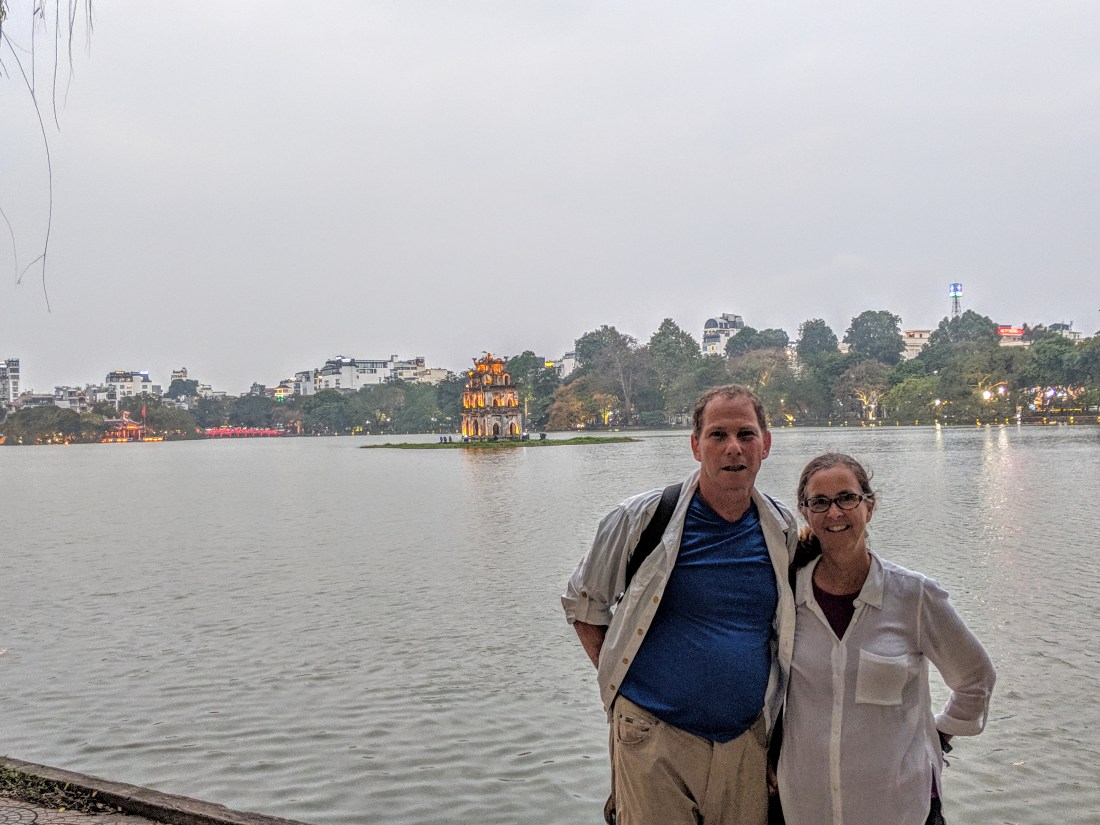
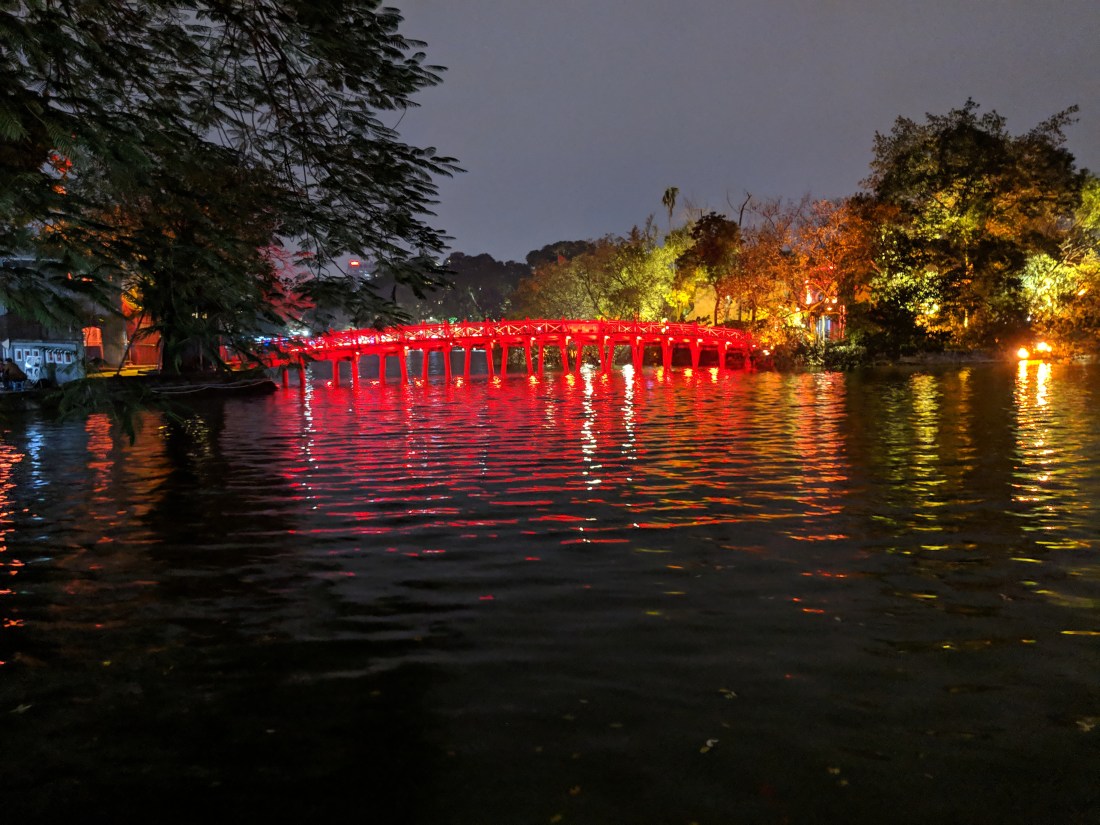
And Hanoi, like all cities, looks best at night.

After this very long day, we headed to the train station. At 9 pm we boarded a train headed for Lao Cai. This was a first adventure sleeping on a train for both of us, and was actually more pleasurable than expected. (I guess it was not that hard to sleep after such a long day.)

We were awakened at 5:30 am for our 6 am arrival. We drove about an hour from Lao Cai to Sapa for an early breakfast. We then drove into the mountainous area where we were met by our local guide, Tung, who is Black Hmong. Tung is 21 and has 2 sons; the older is in kindergarten. She was “sold” for a couple of chickens, a pig, and some money, to her husband’s family in a neighboring village at the age of 16. Their parents knew each other from community events. She is the 8th of 10 but plans to have no more children of her own.
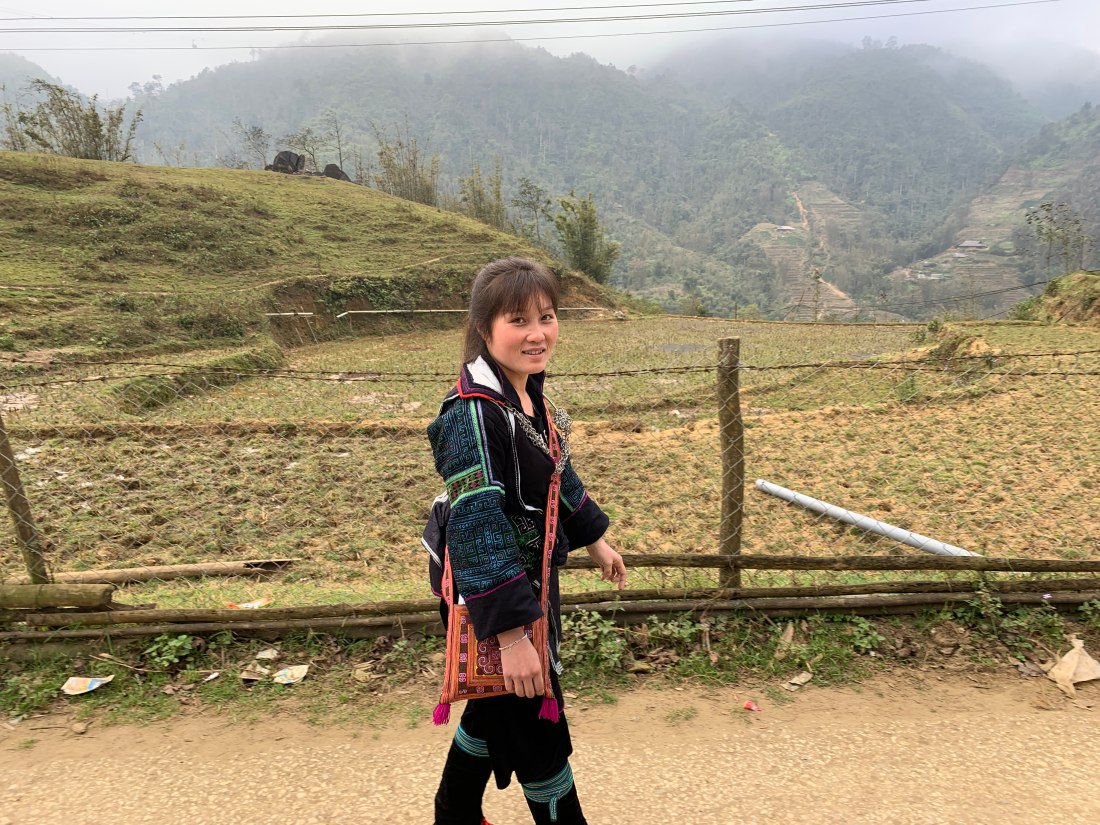
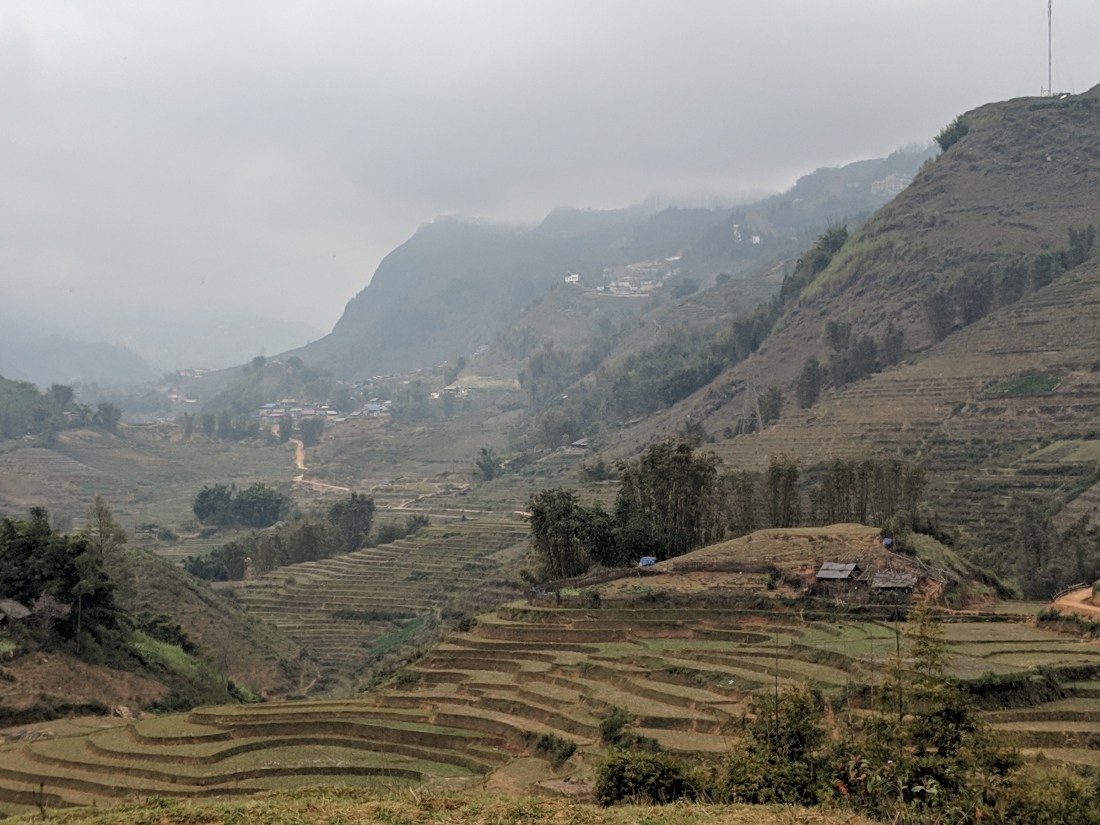
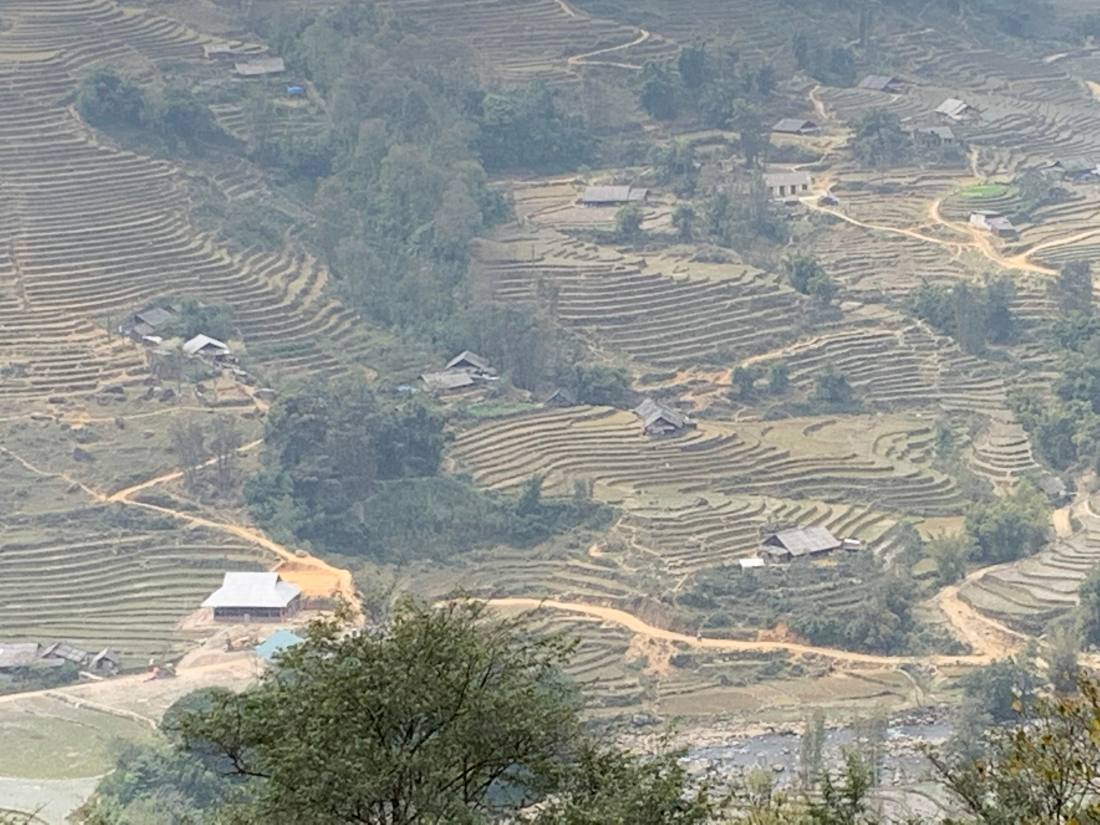
We hiked into the mountains to visit a couple of the Black Hmong villages. Our first was Sin Chai, located right at the foot of the Hoang Lien mountain range. Notice the terracing in the planted fields. which is typical throughout this region. Terracing is important to collect water for the crops, negating the need for irrigation, and also to prevent soil erosion due to run-off.
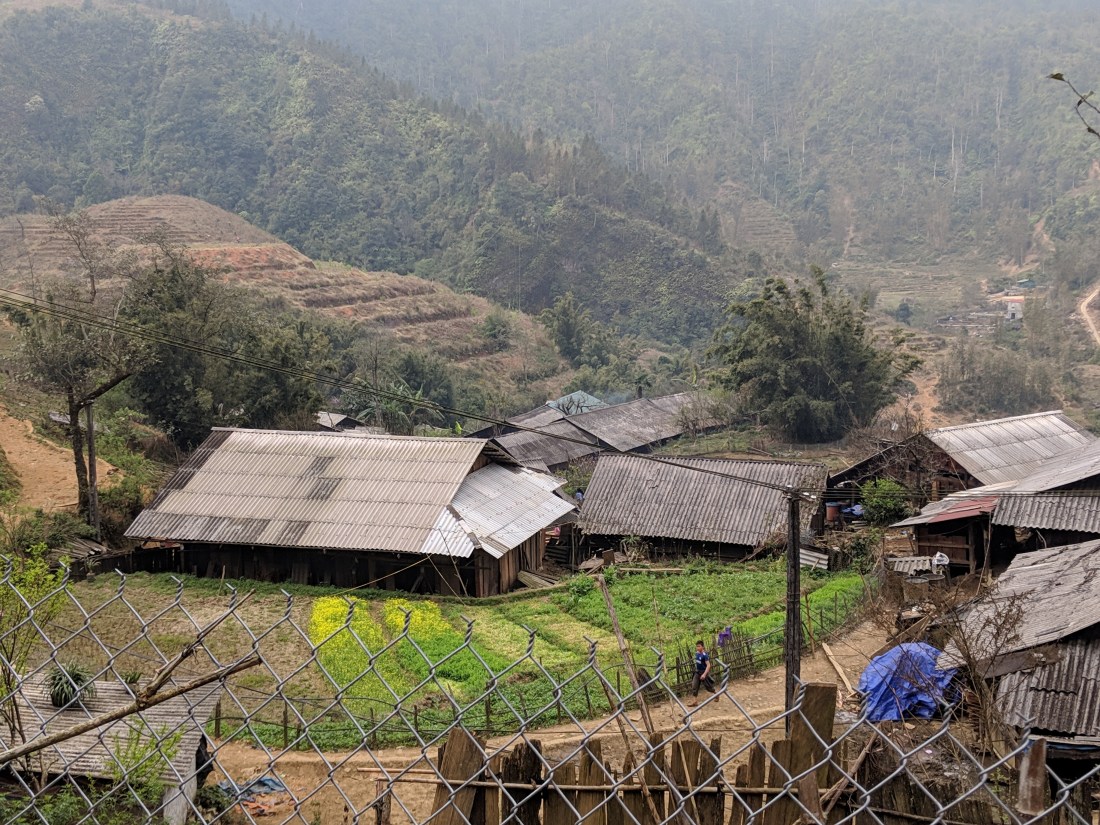


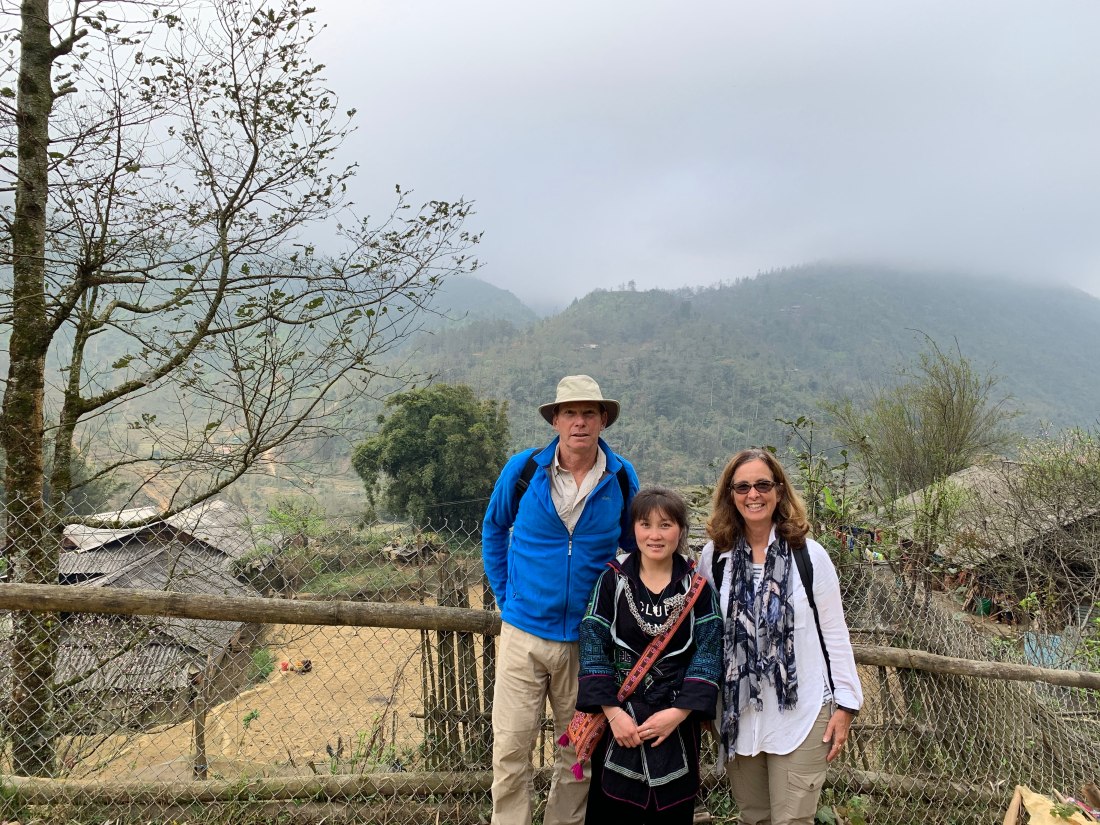
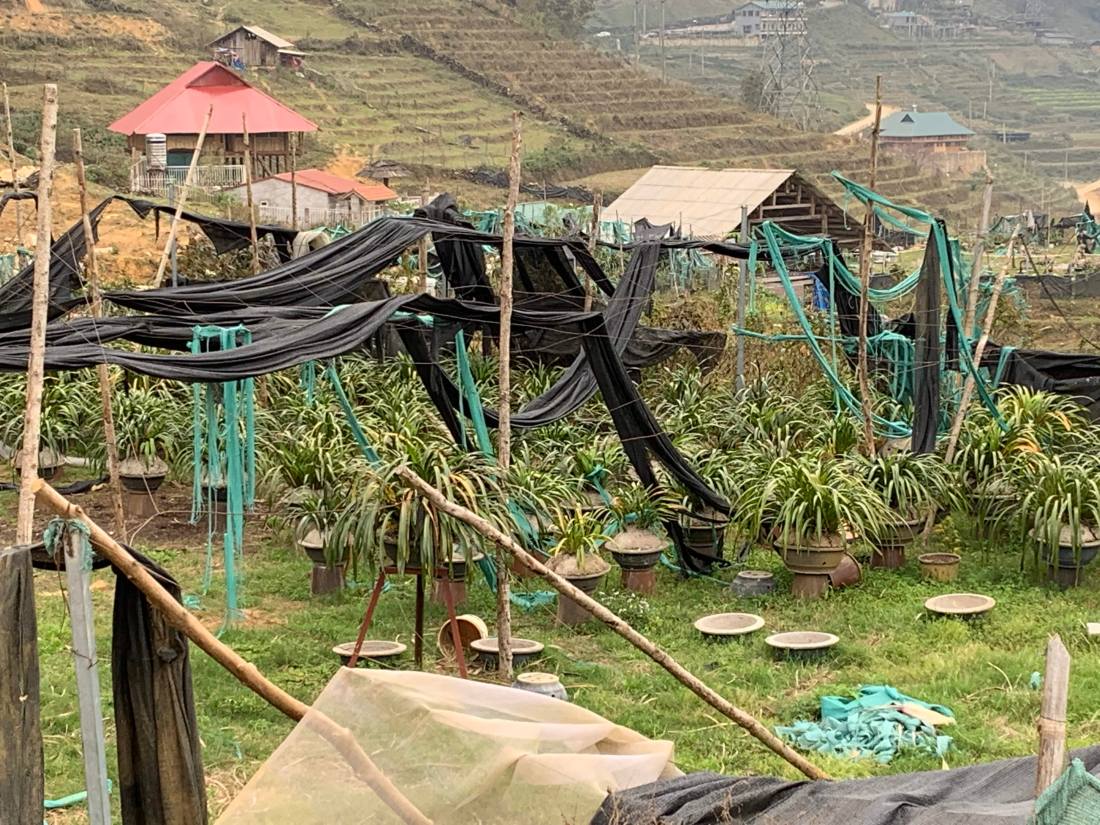
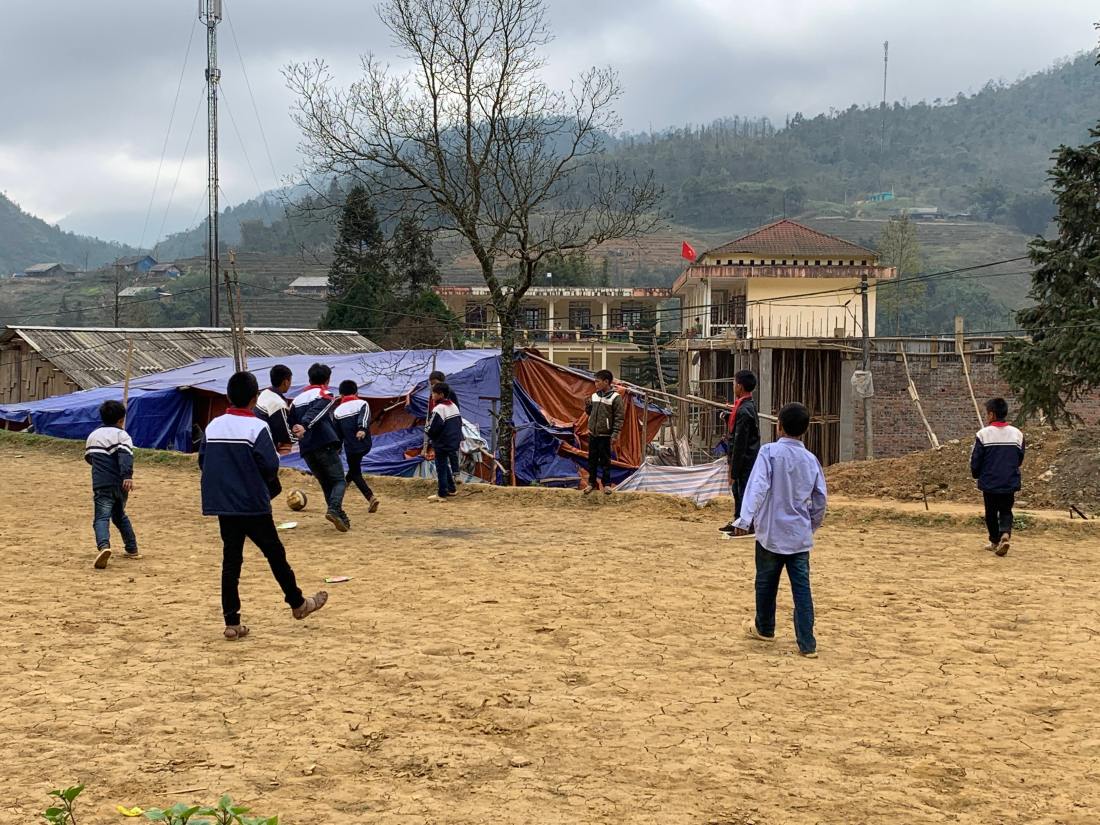
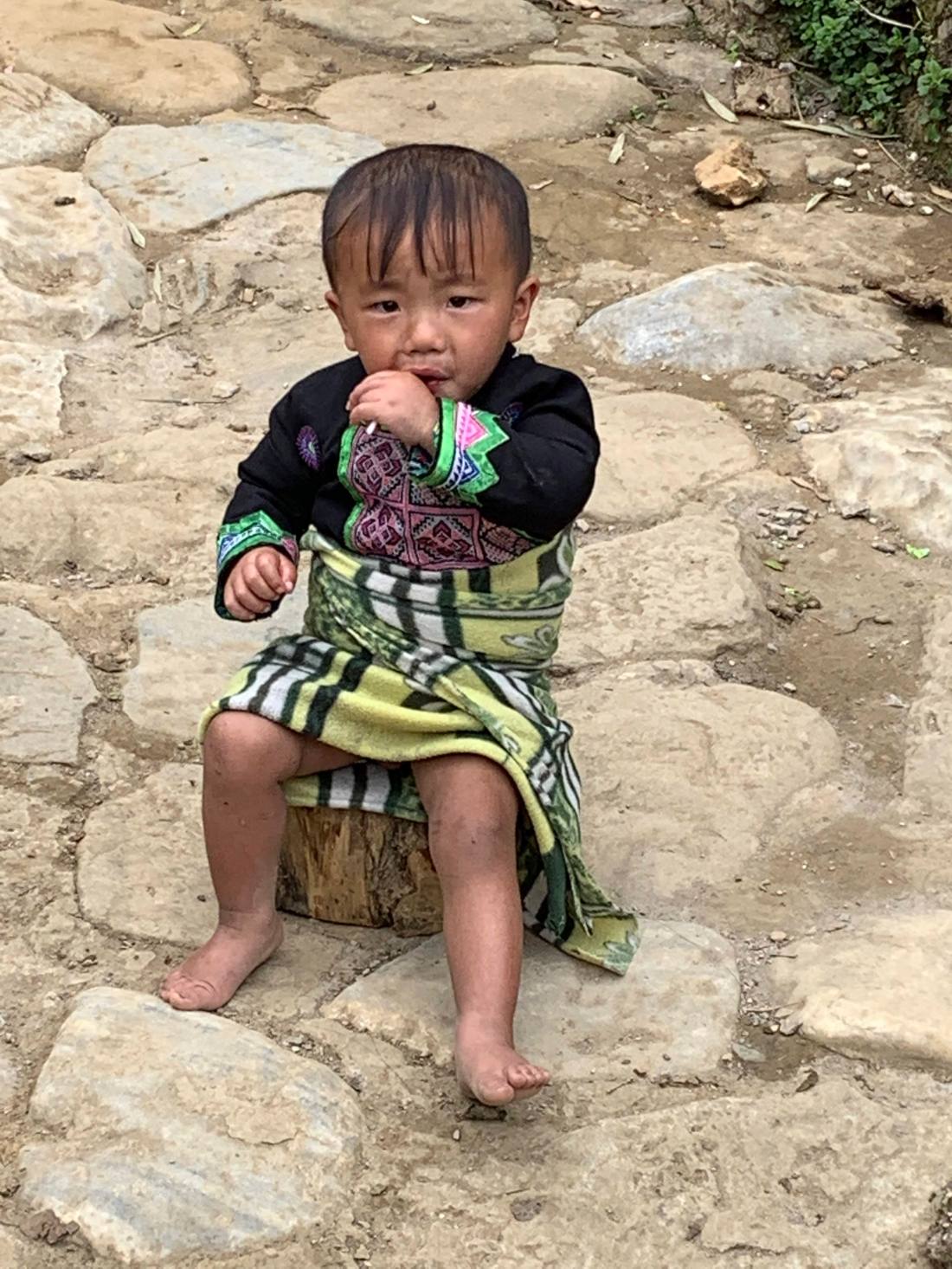

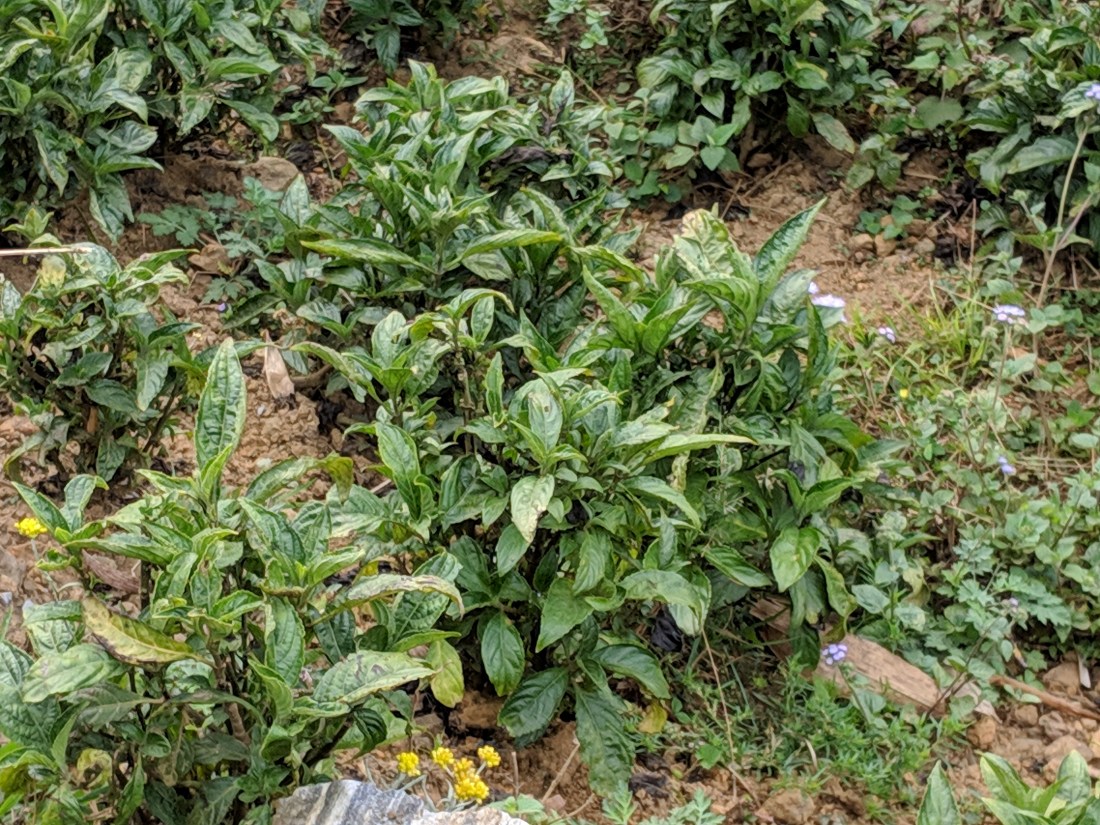

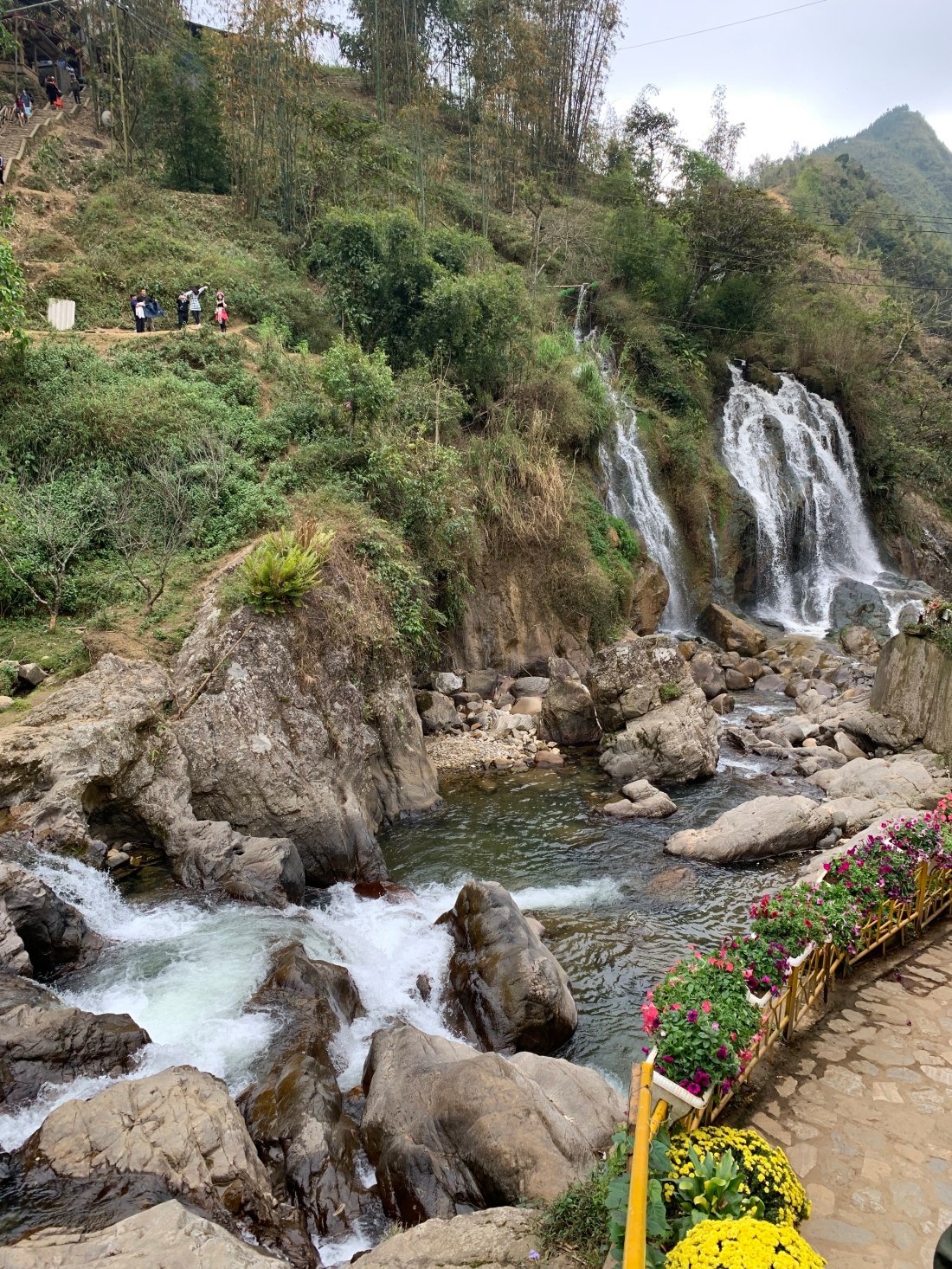
We then trekked up a mountain trail, then down a steep, narrow set of steps into Cat Cat Village, also Black Hmong. This area has developed into a tourist destination in the last few years.


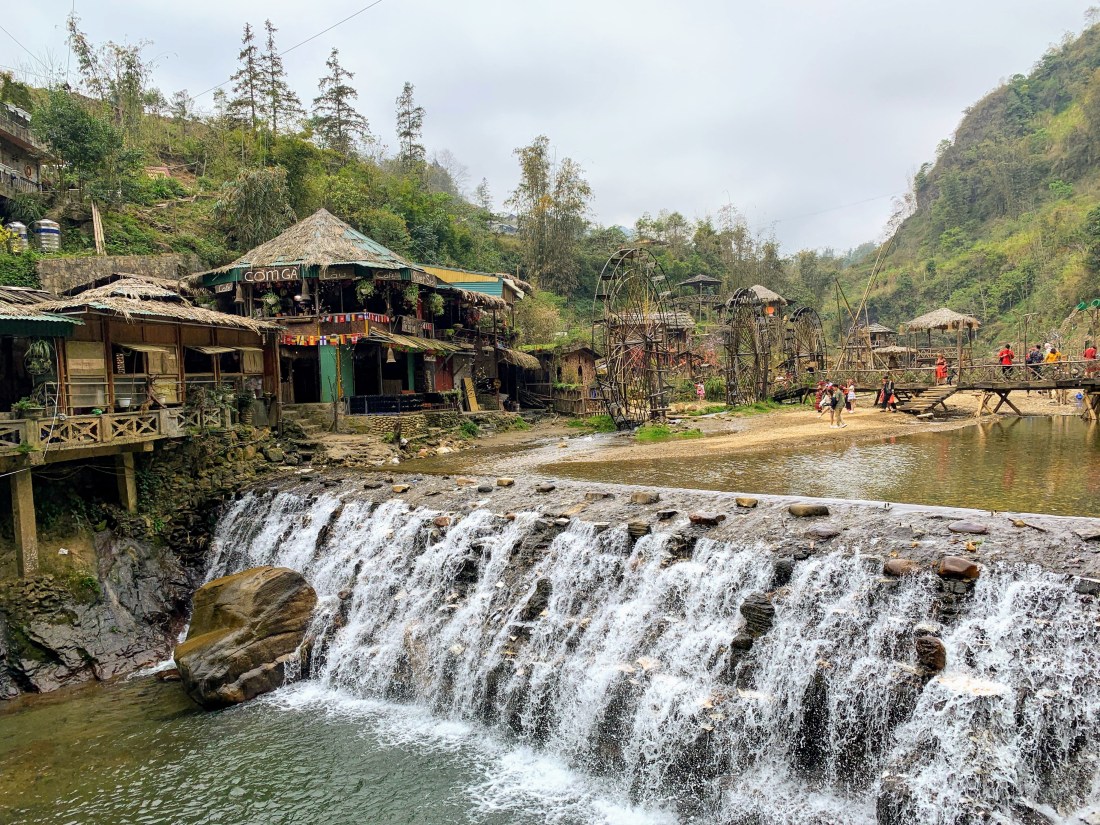

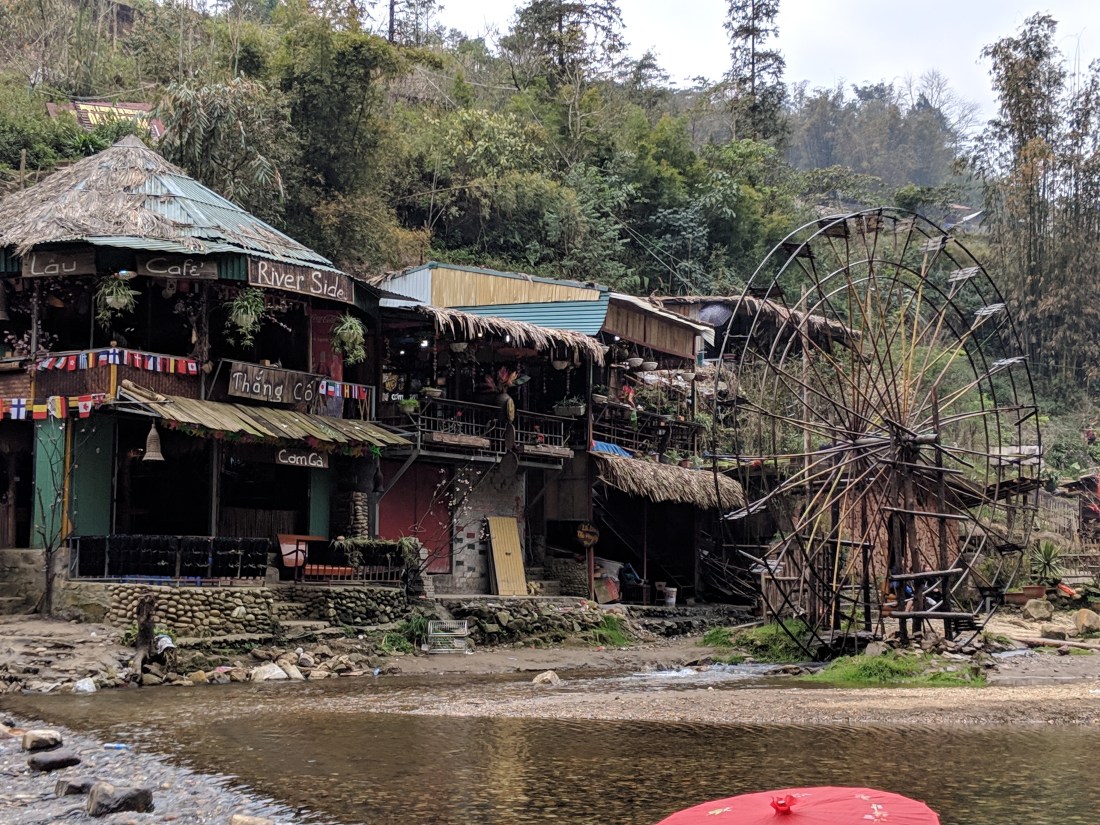


Villagers demonstrate some of their traditional crafts and arts for the tourists.
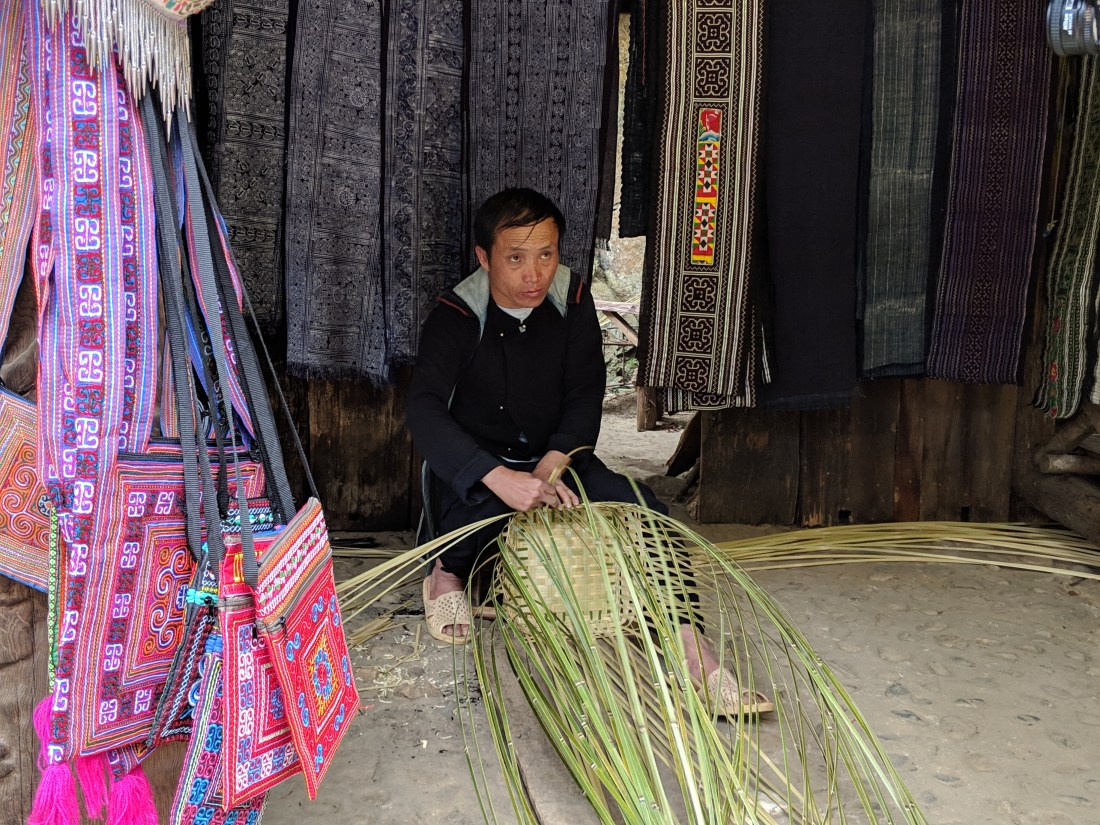
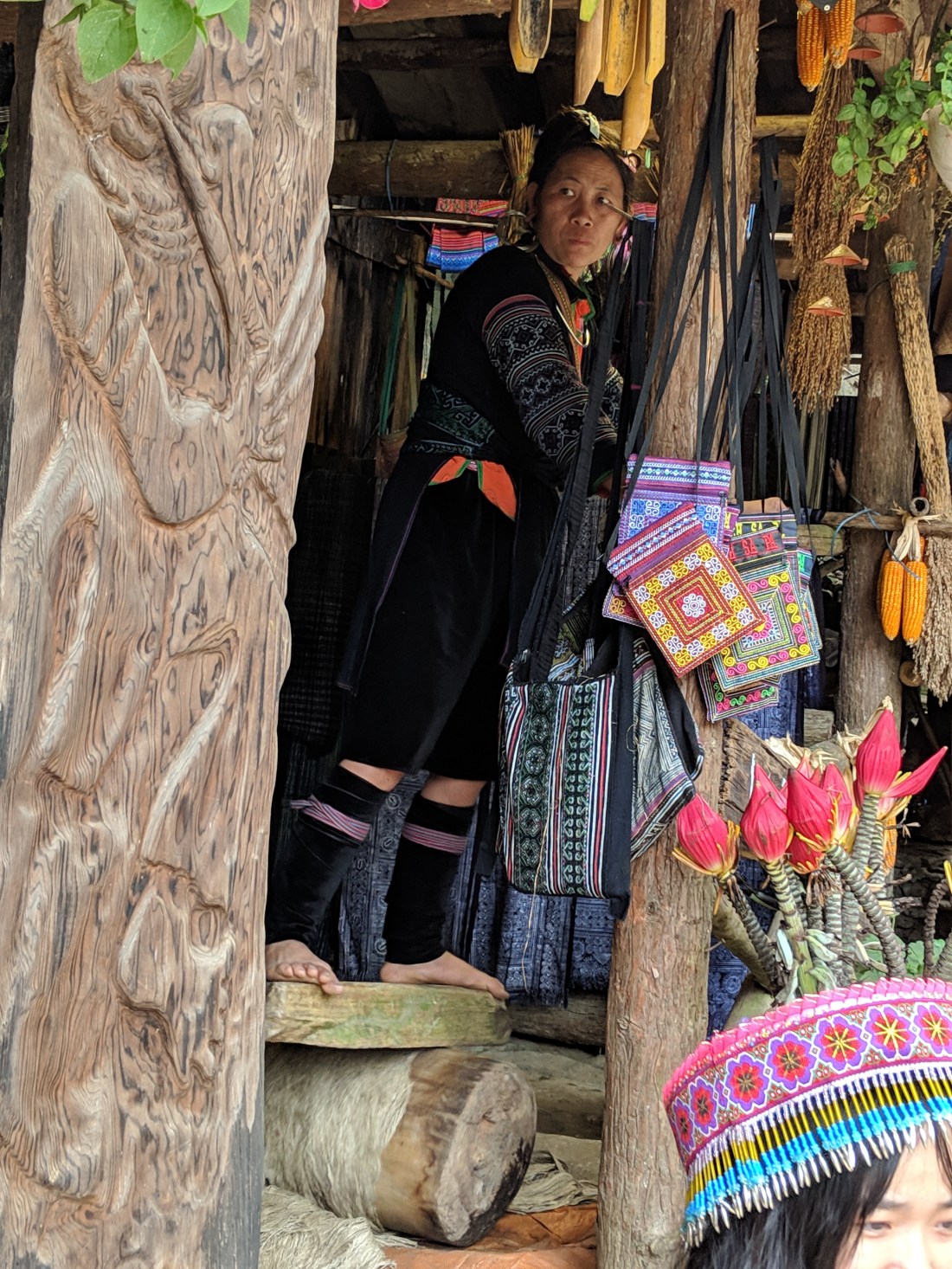


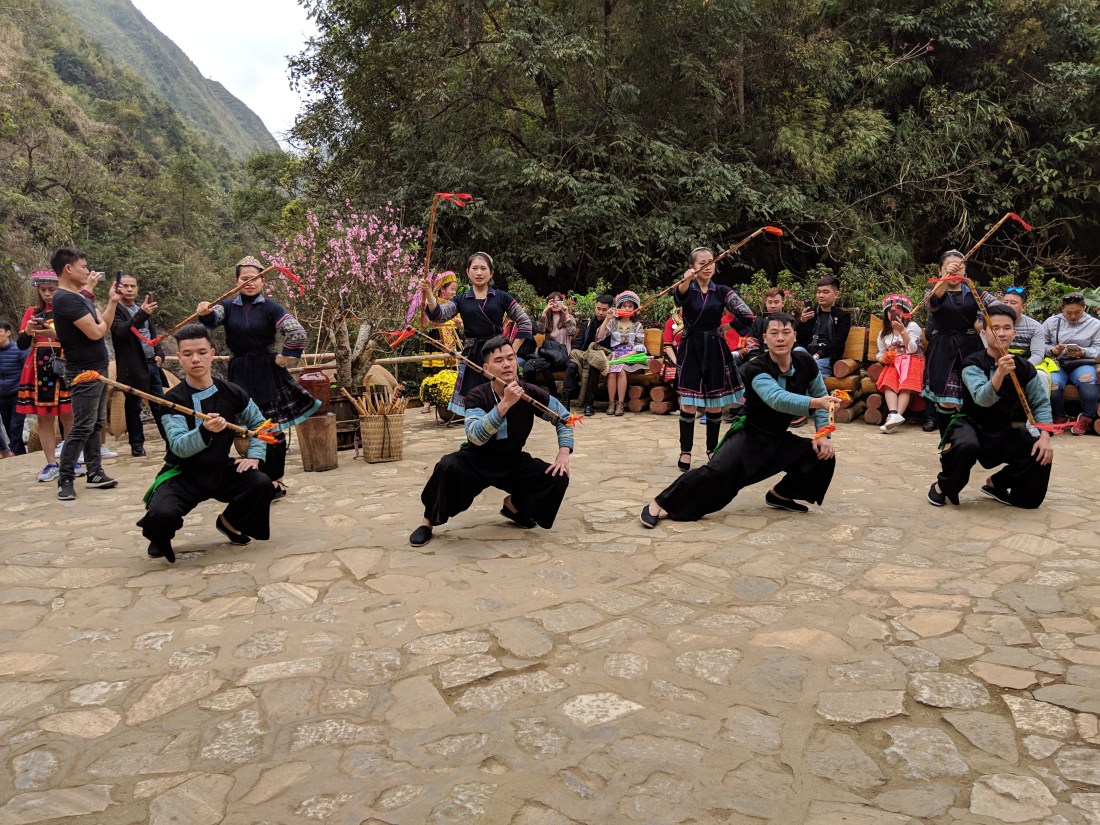
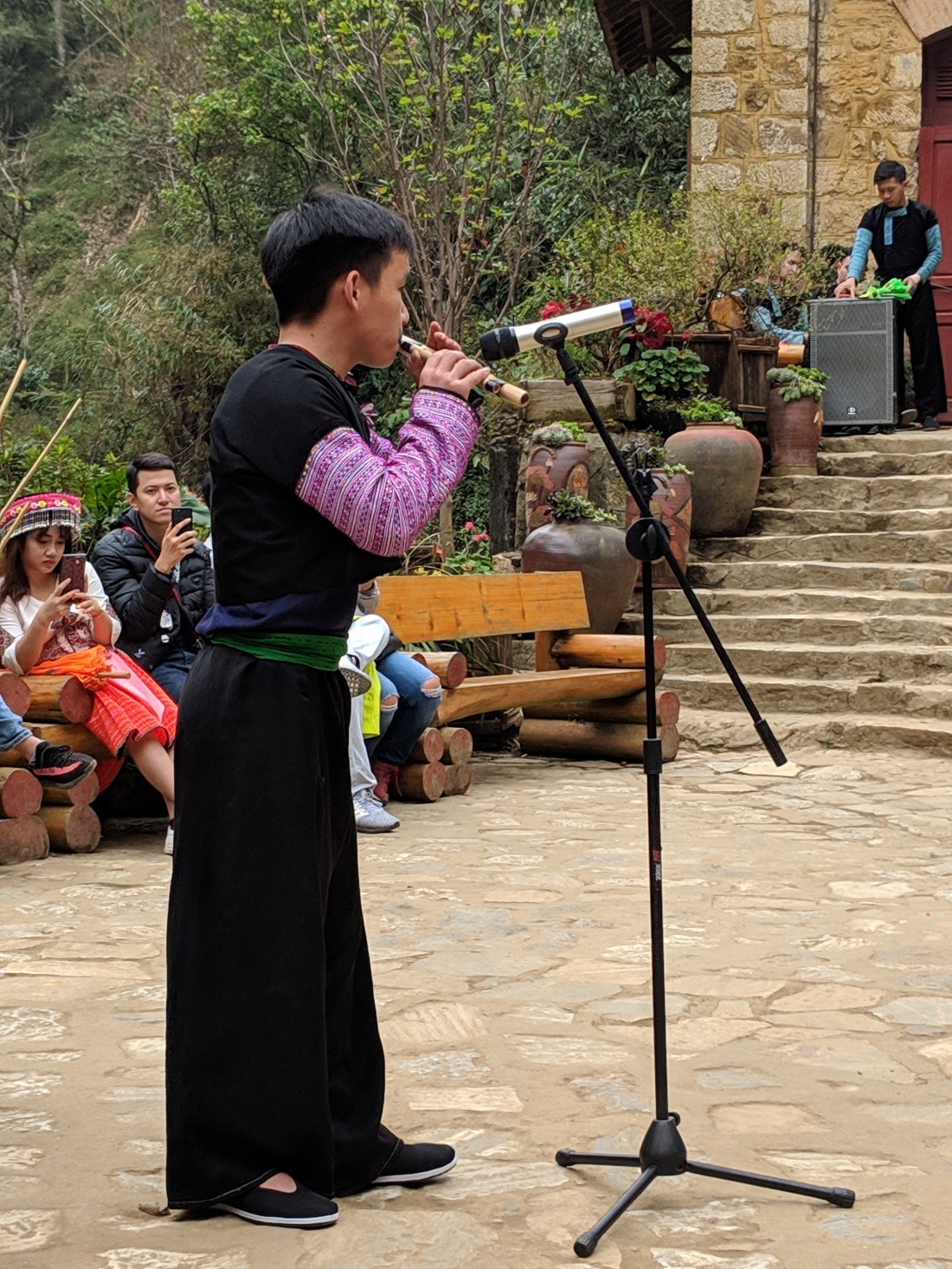
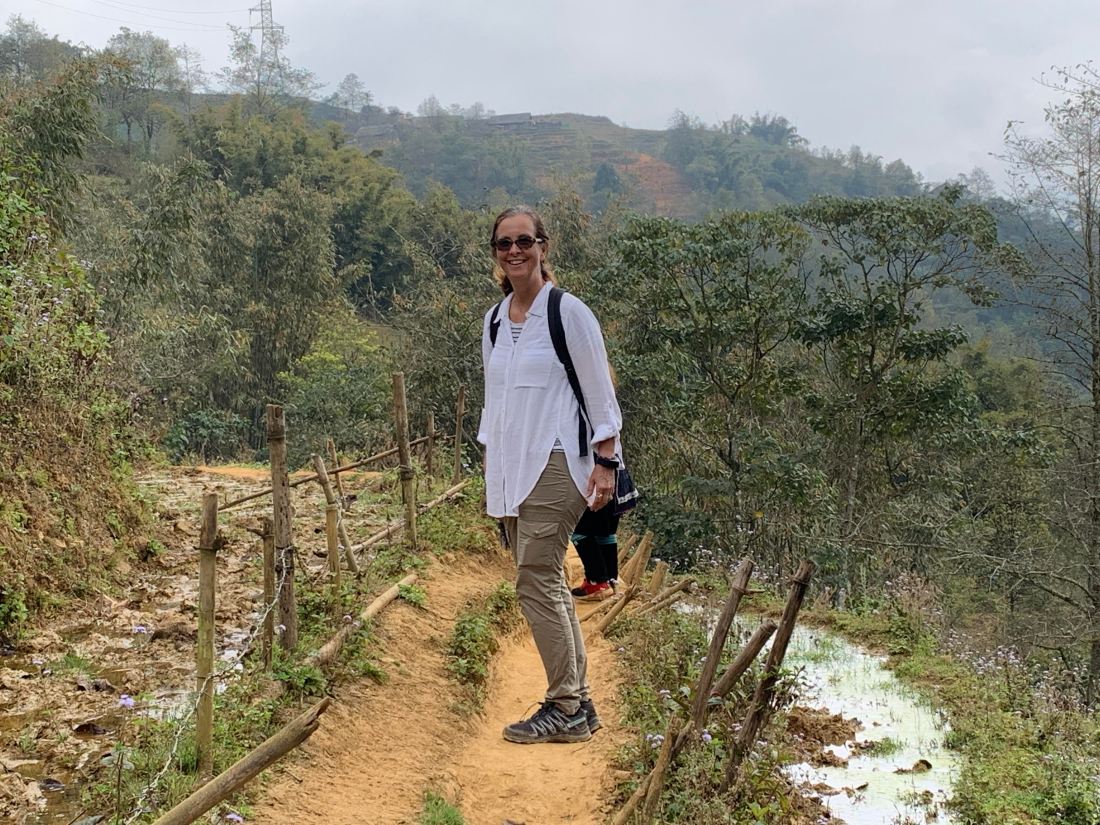
It was at this point that Tung announced we had a 2 hour trek to reach our lunch destination. Having been up since 5:30, we dug into our reserves and steamed ahead through some pretty steep inclines. Tung kept exclaiming how “strong” we were (‘for a couple of old tourists’ went unsaid), but with a few rest stops at vistas along the way, we made lunch in 1 hour and 15 minutes! We had trekked a total of over 7 km in the morning.
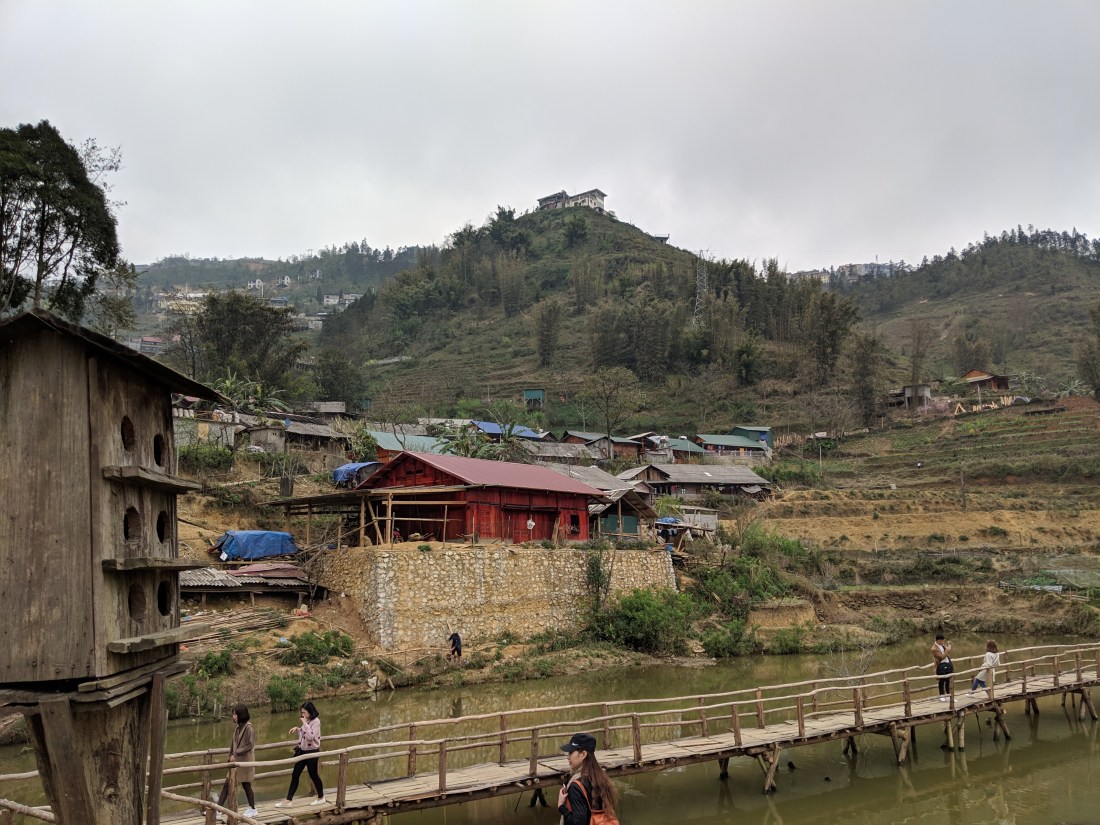
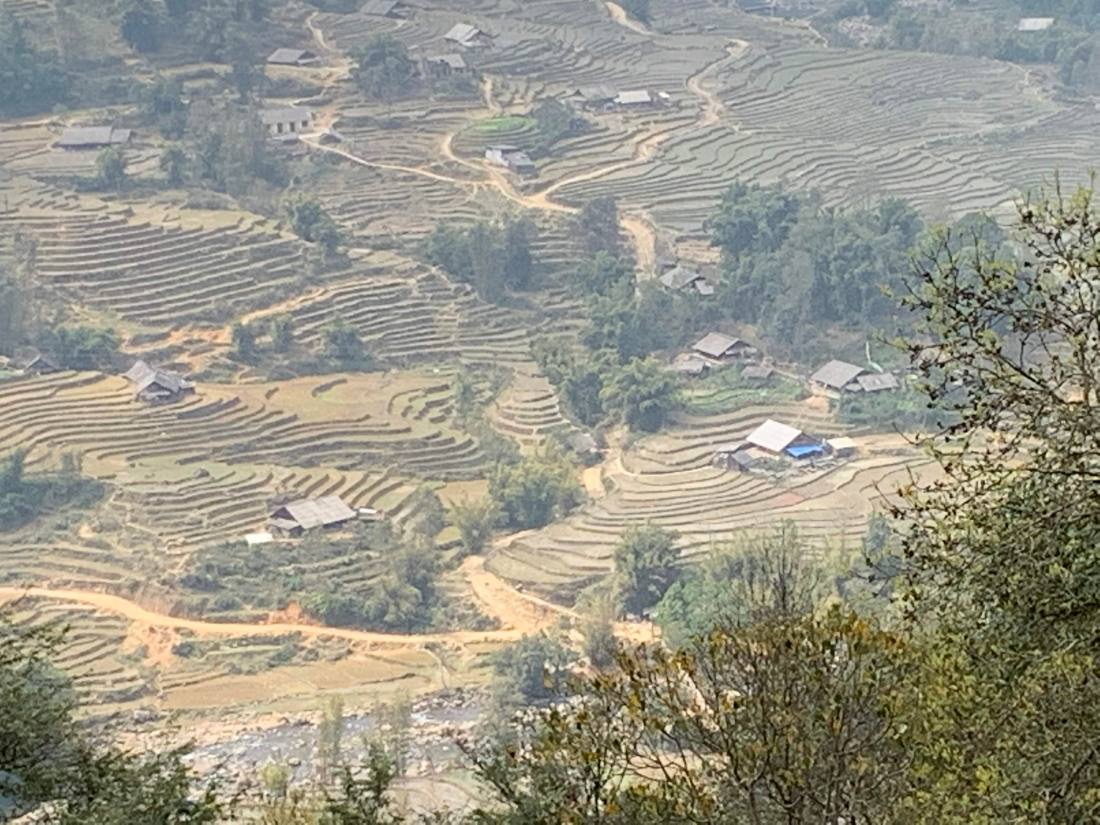
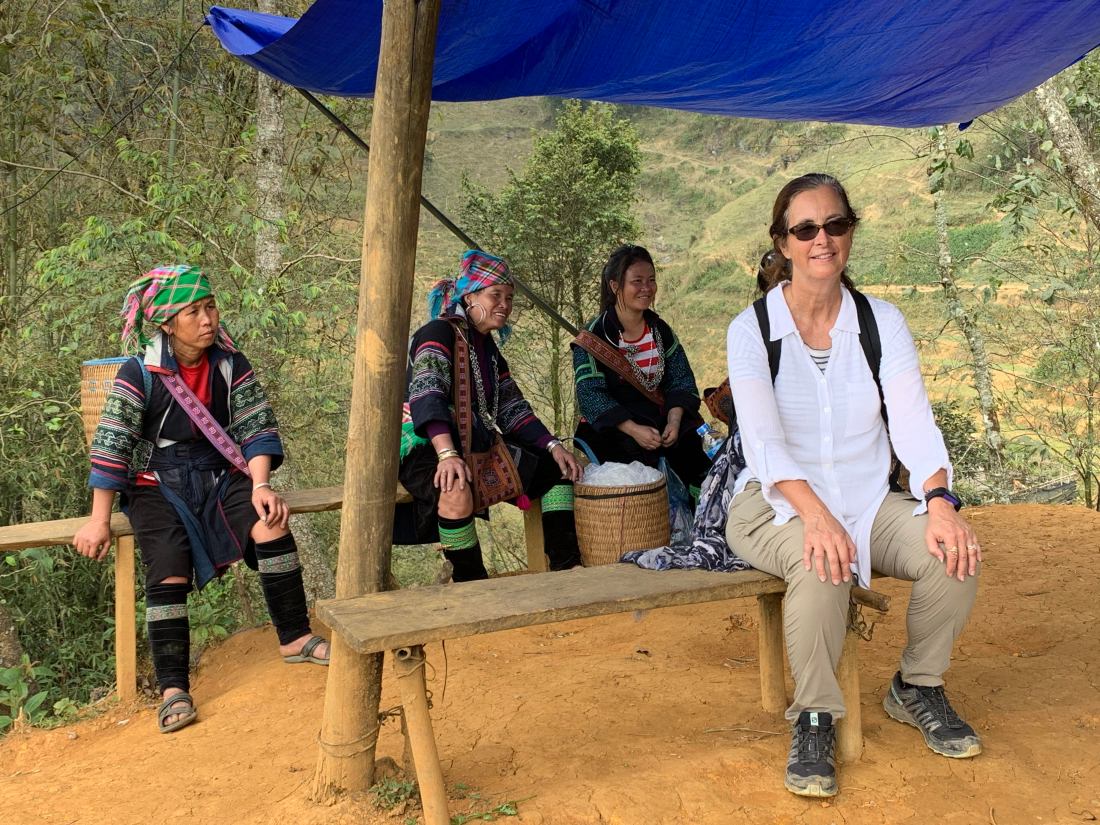
Our lunch destination was in Y Linh Ho Village, a Red Dao community.
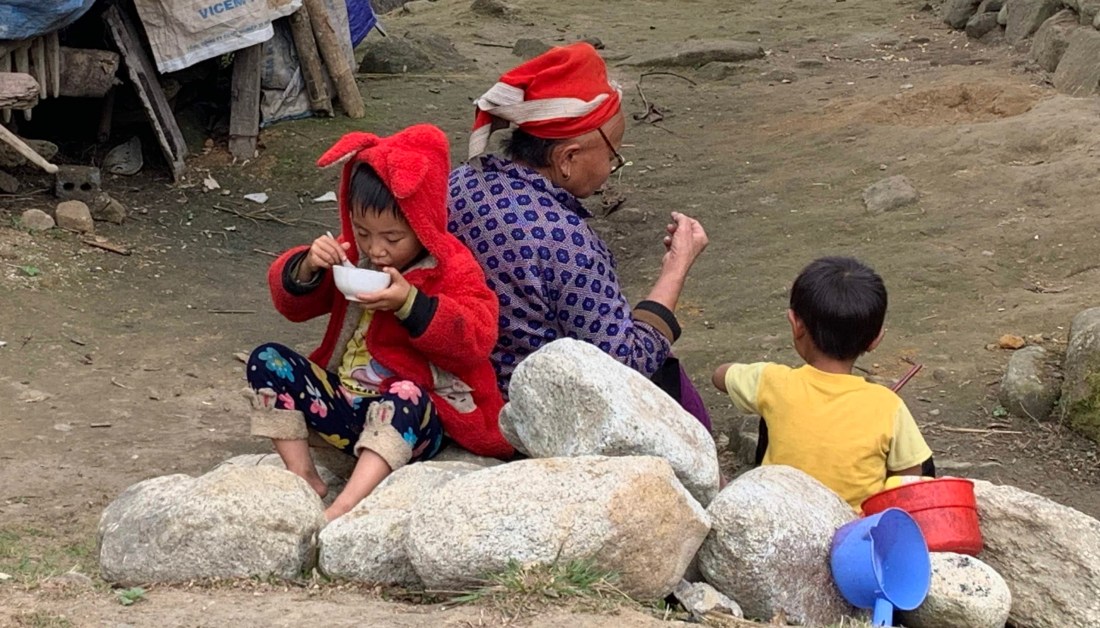
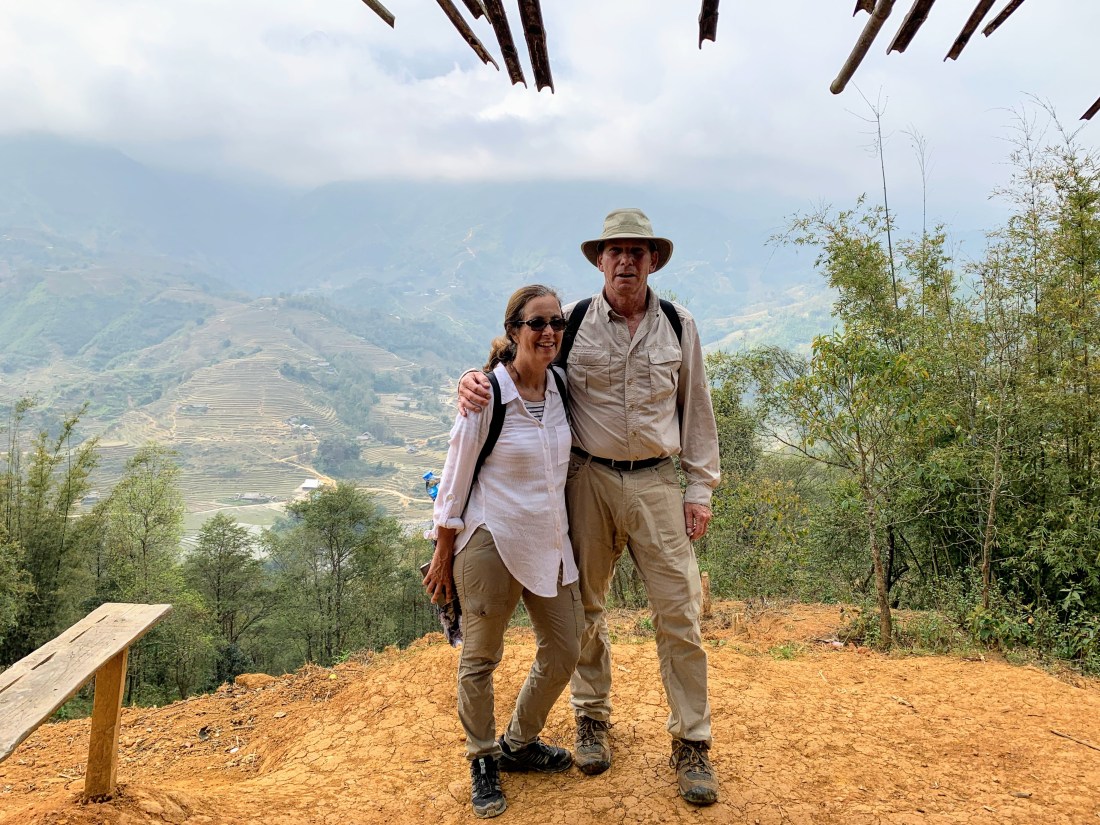
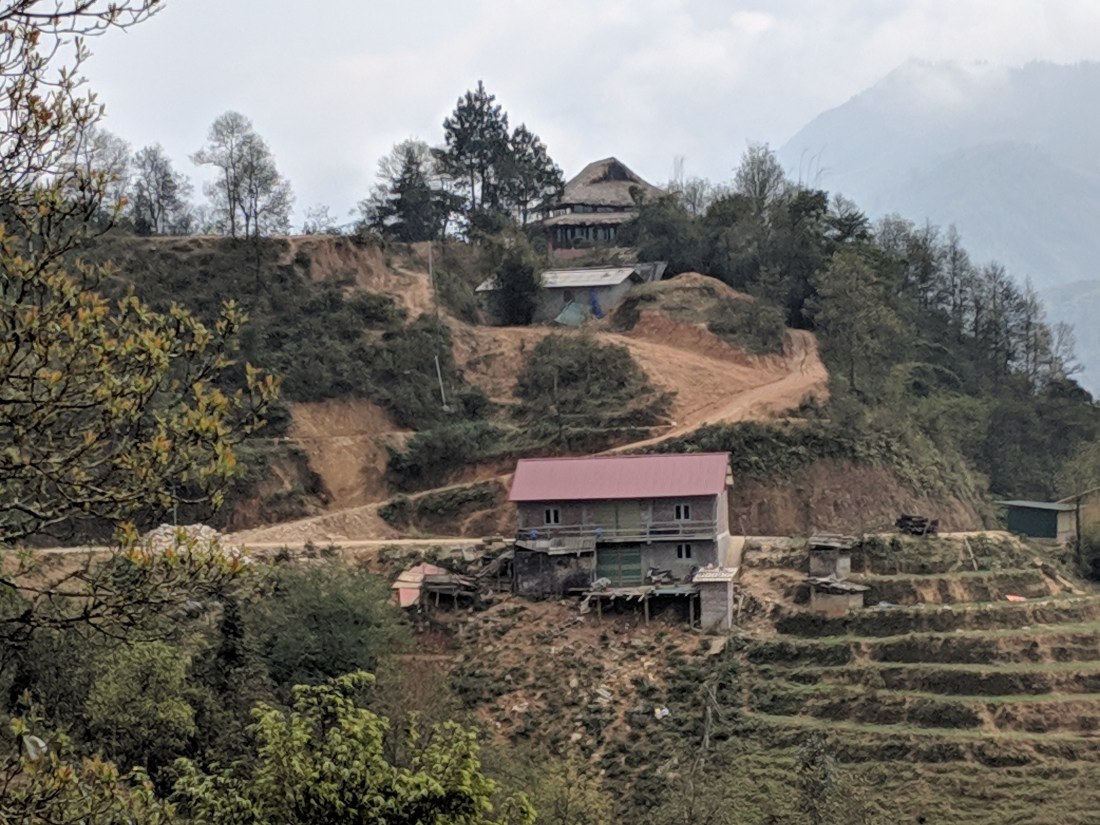
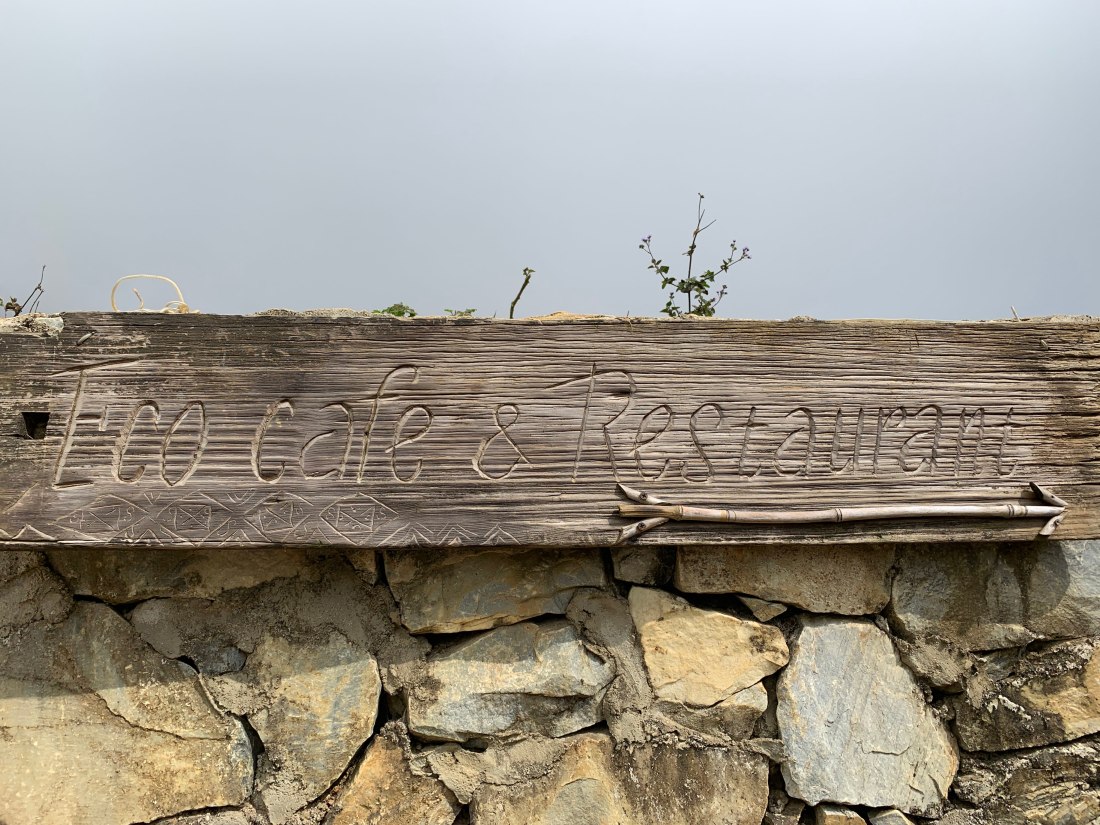
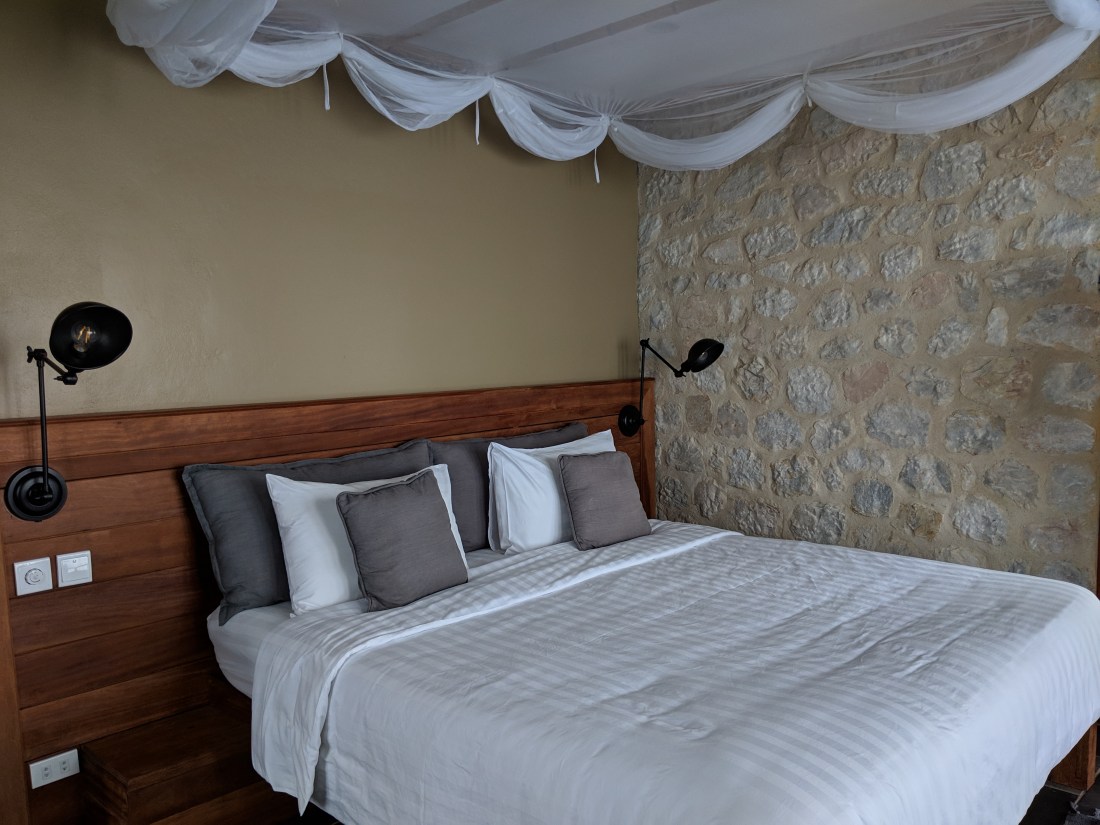
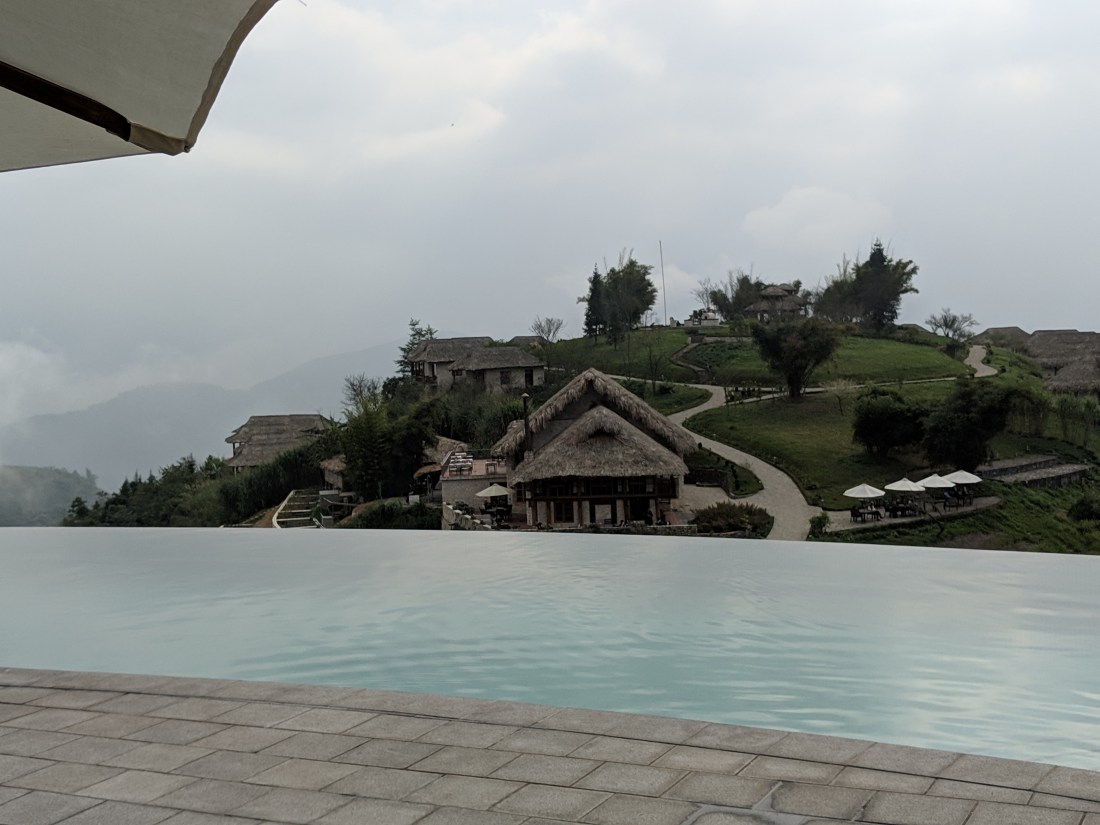
After a relaxing and delicious lunch, we drove about an hour and checked into Topas Ecolodge, a National Geographic “Unique Lodge,” and that it is! Because of the altitude: nearly 5,000 feet, the mountaintop was shrouded in mist through most of our stay, making the pictures not nearly capture the beauty of the place, but here are a few.

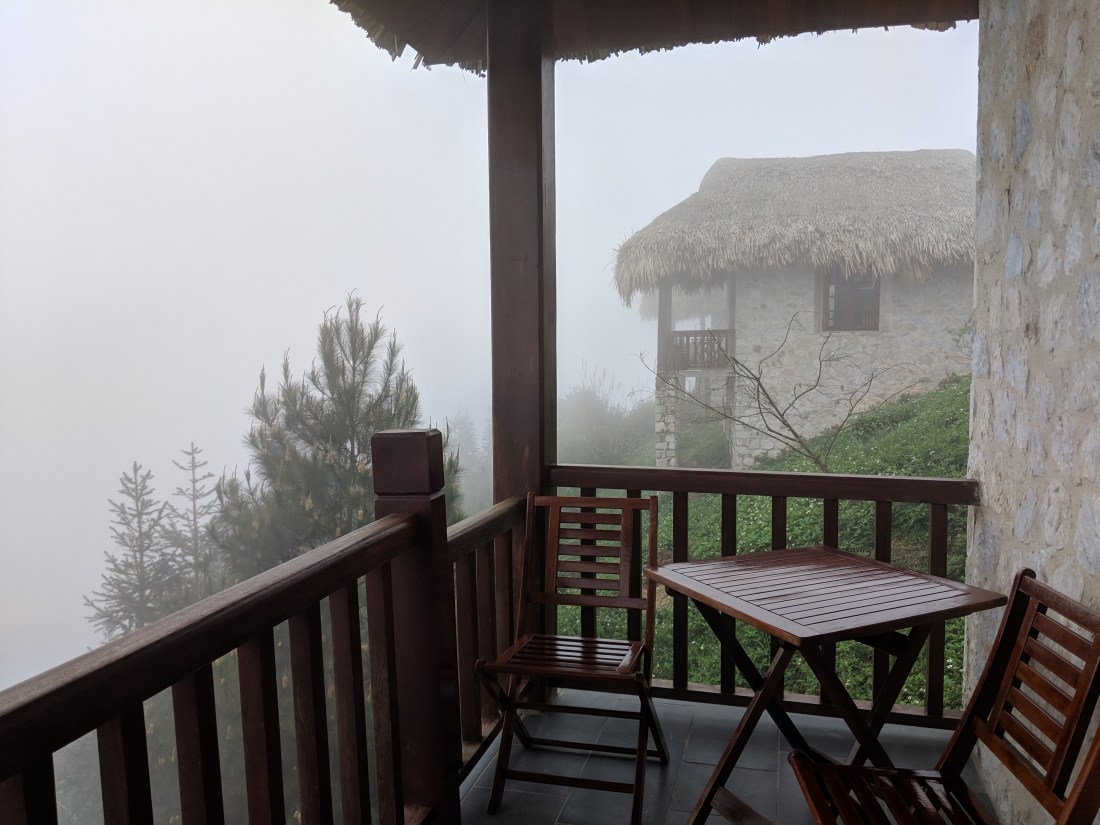
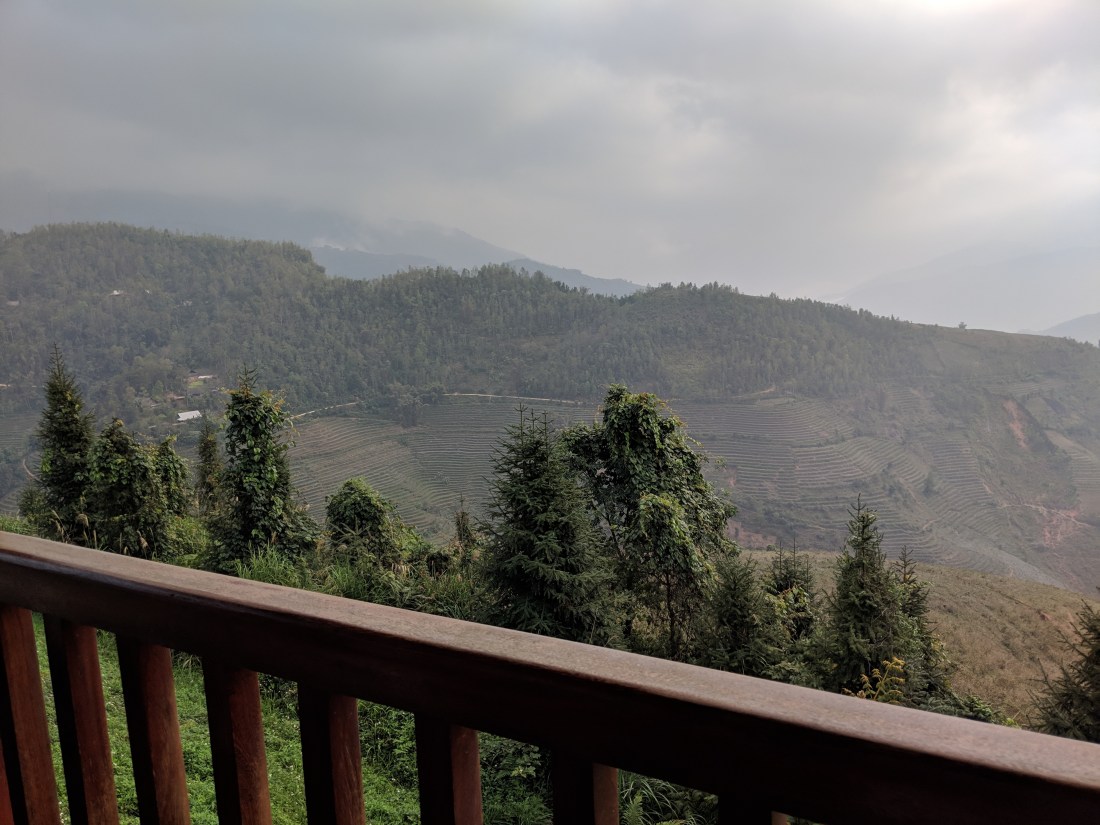
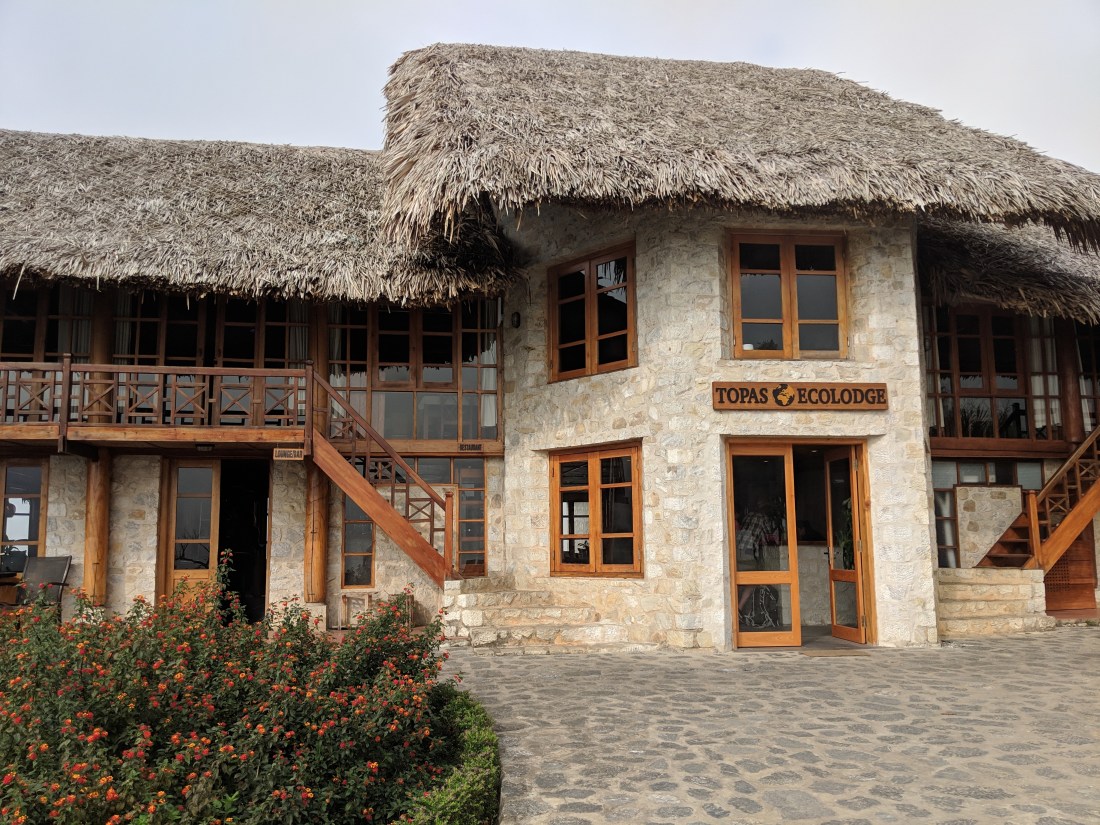
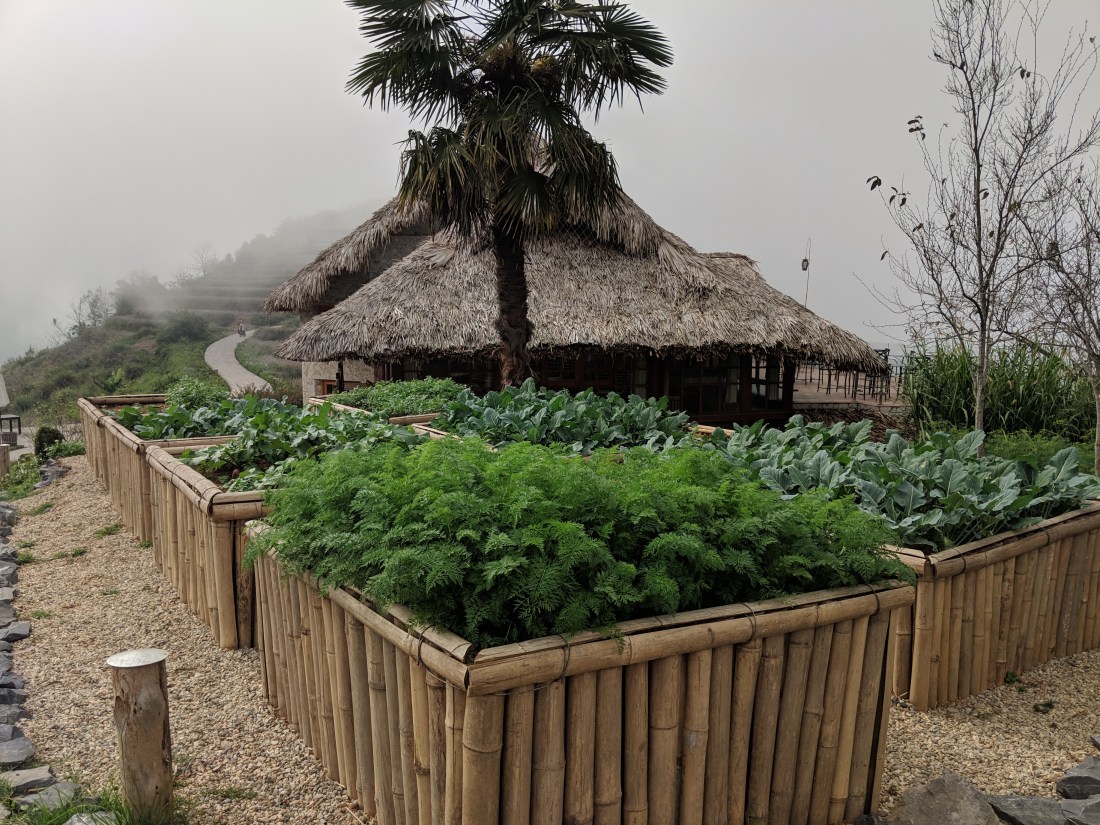


After a much needed rest, we were up and out early the next morning for another day of trekking, this time only 6 km. We followed a small track and crossed the Muong River into our first village of the day: Lao Chai, another Black Hmong Village. This is where Tung moved to live with her husband and his family.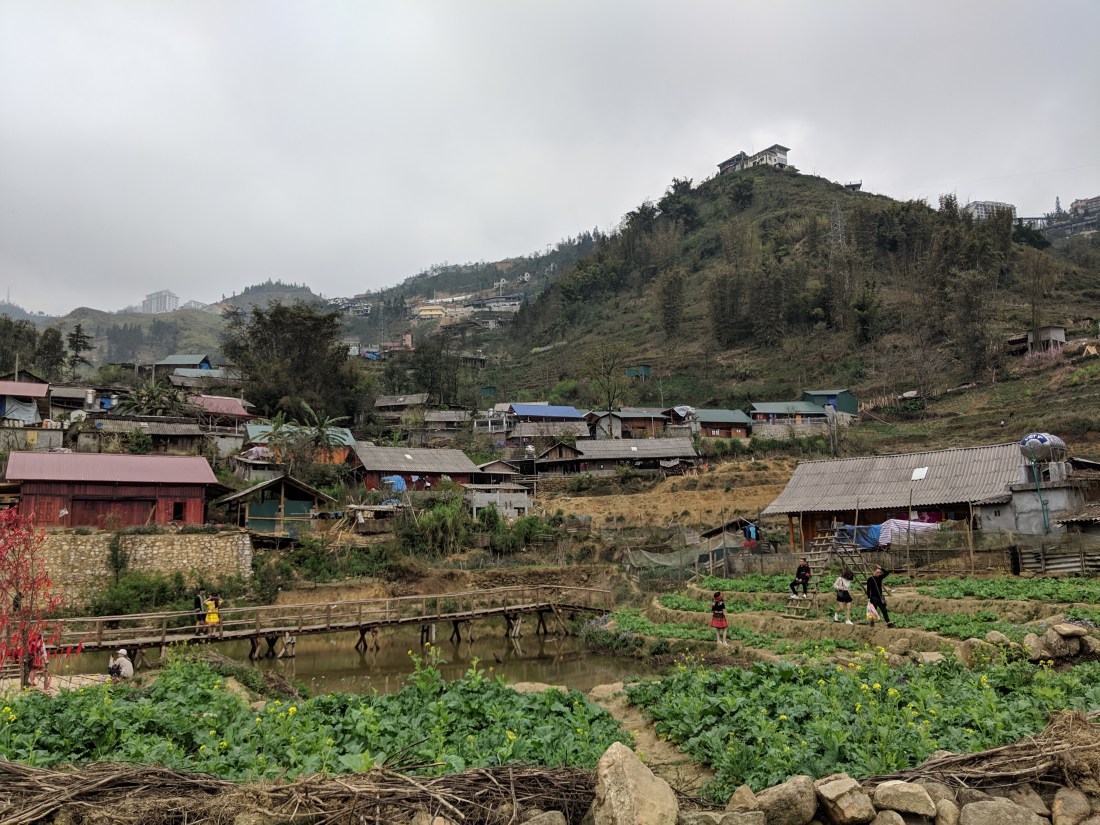
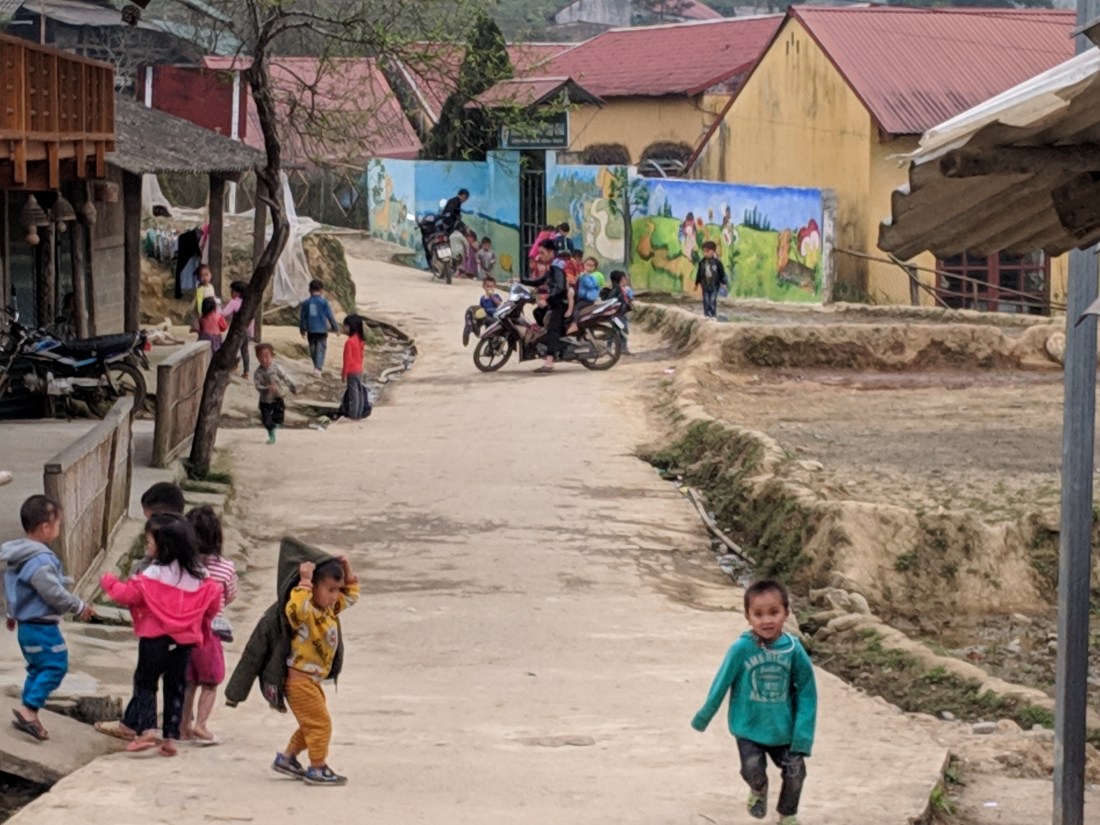

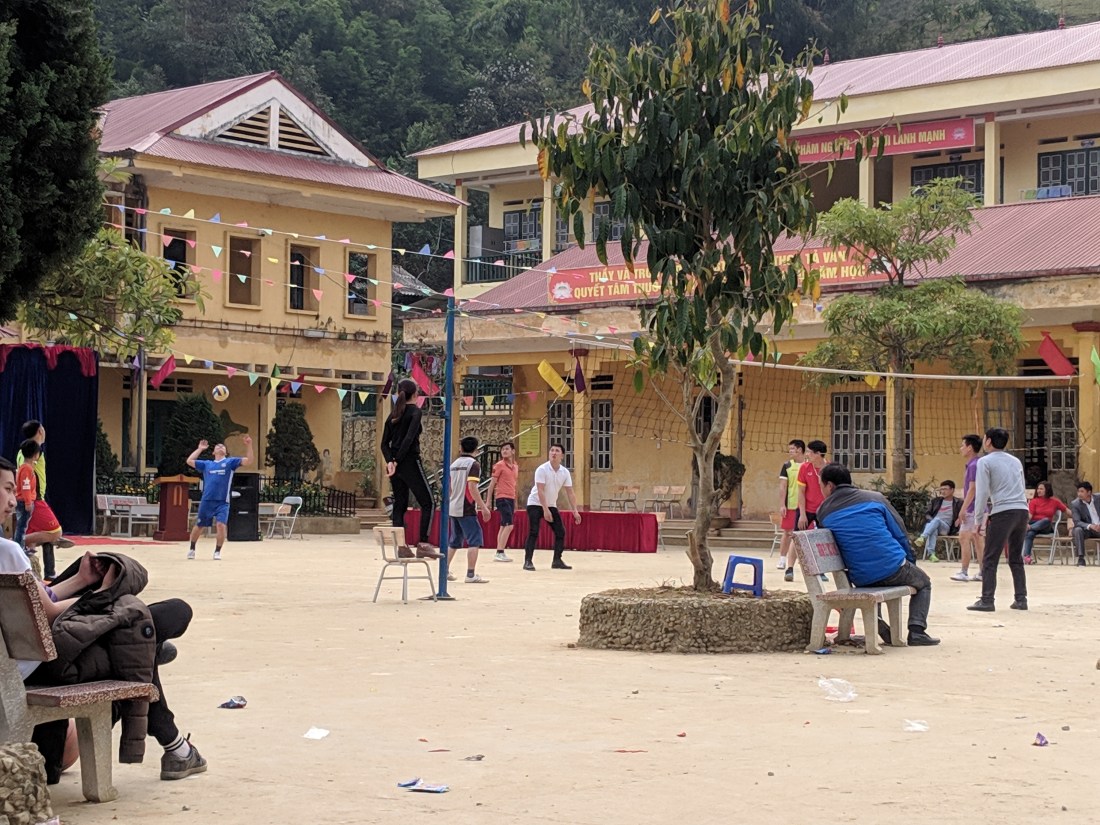
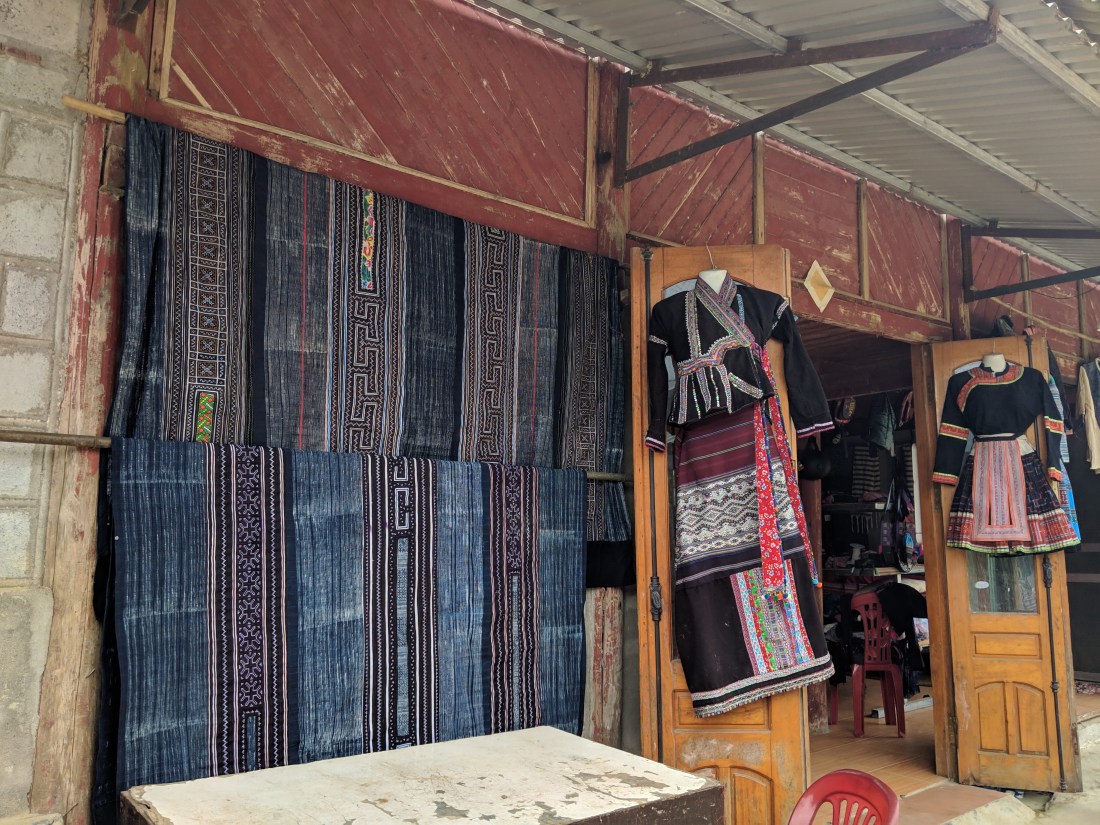

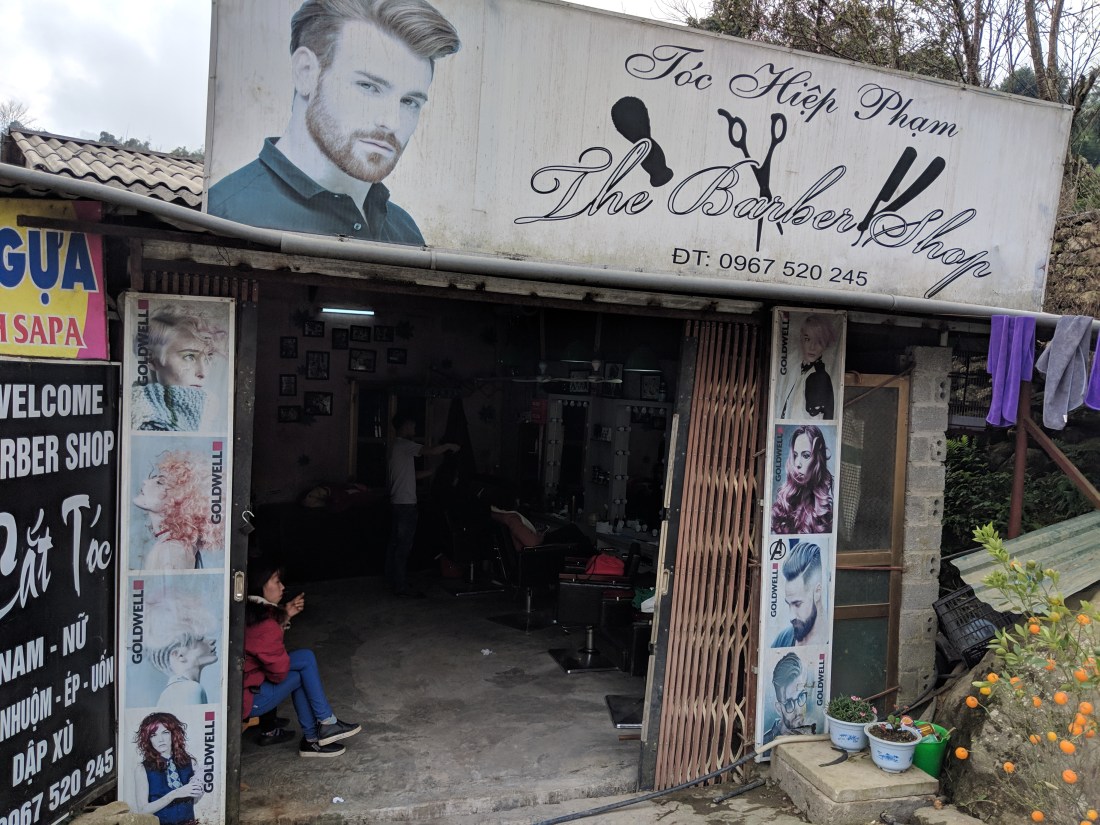
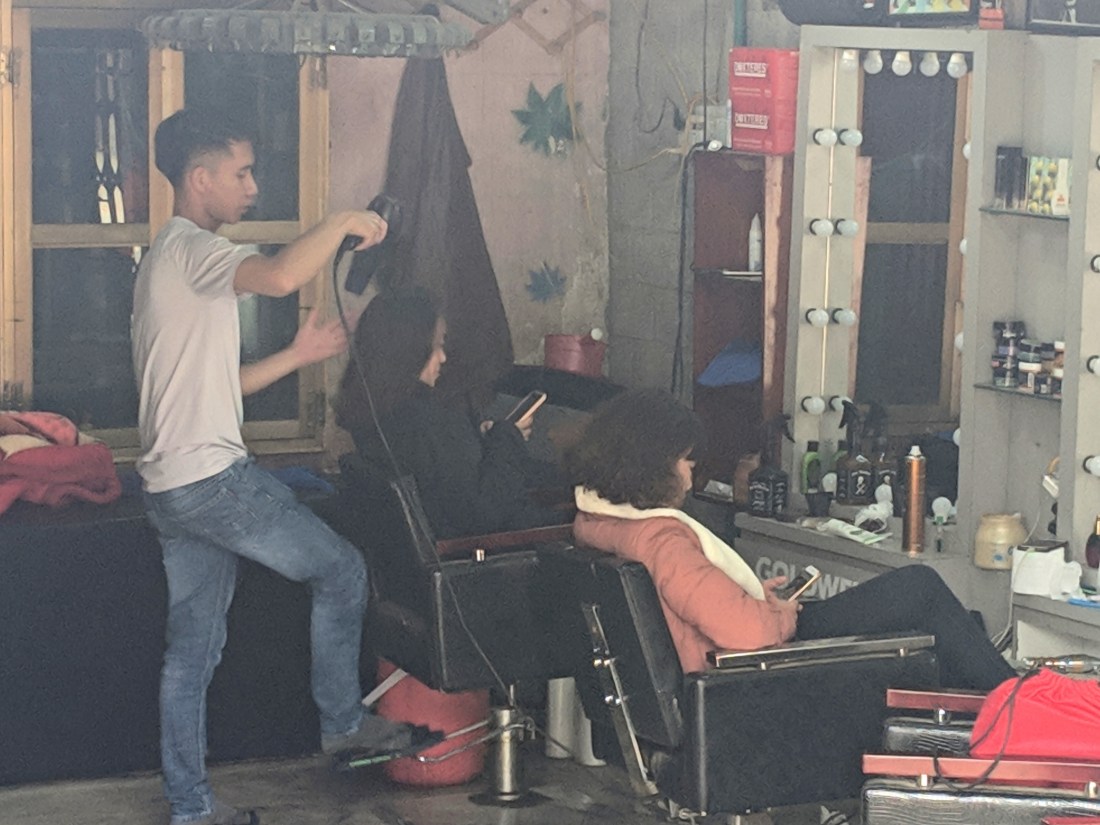
Continuing through rice terraces we reached the village of Ta Van of Giay people. Notice the different architecture to the home of the Giay: a thatched roof and more open-style home, often with a second story
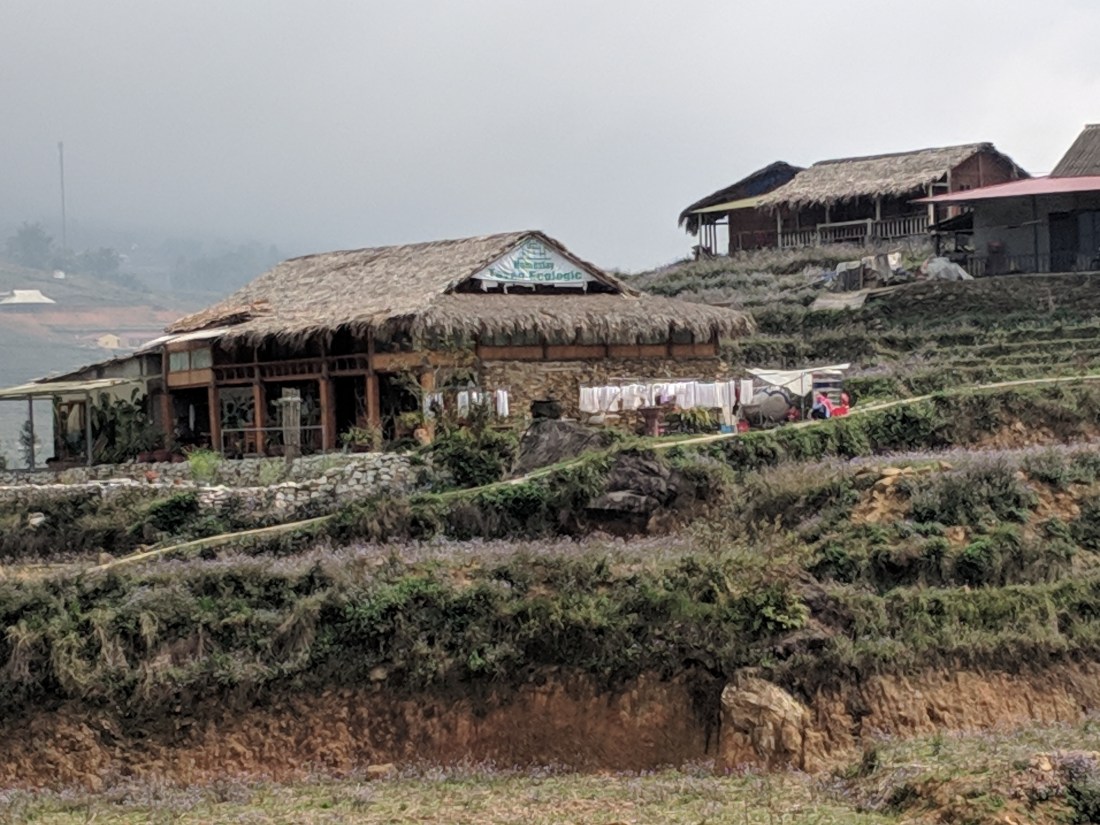
Tung tells us that between these 2 villages there are now 53 homestay options, almost all of them built in the last 5 years. Here are a few.
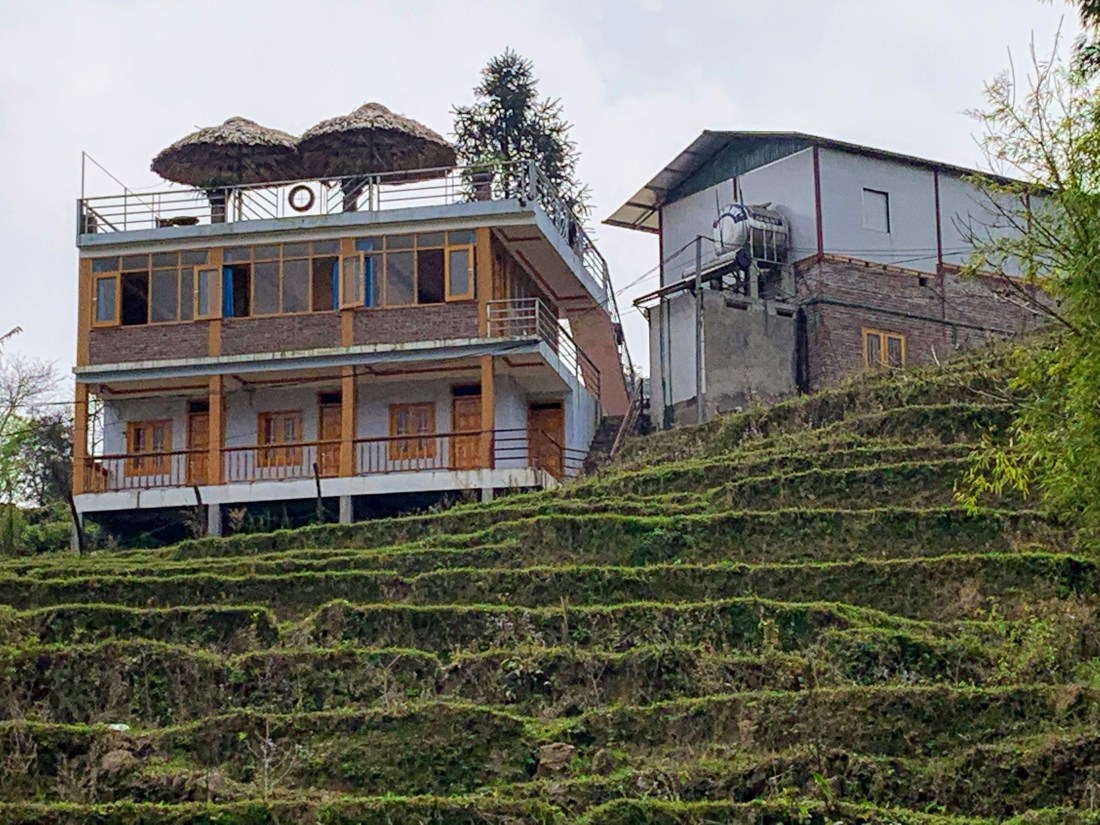
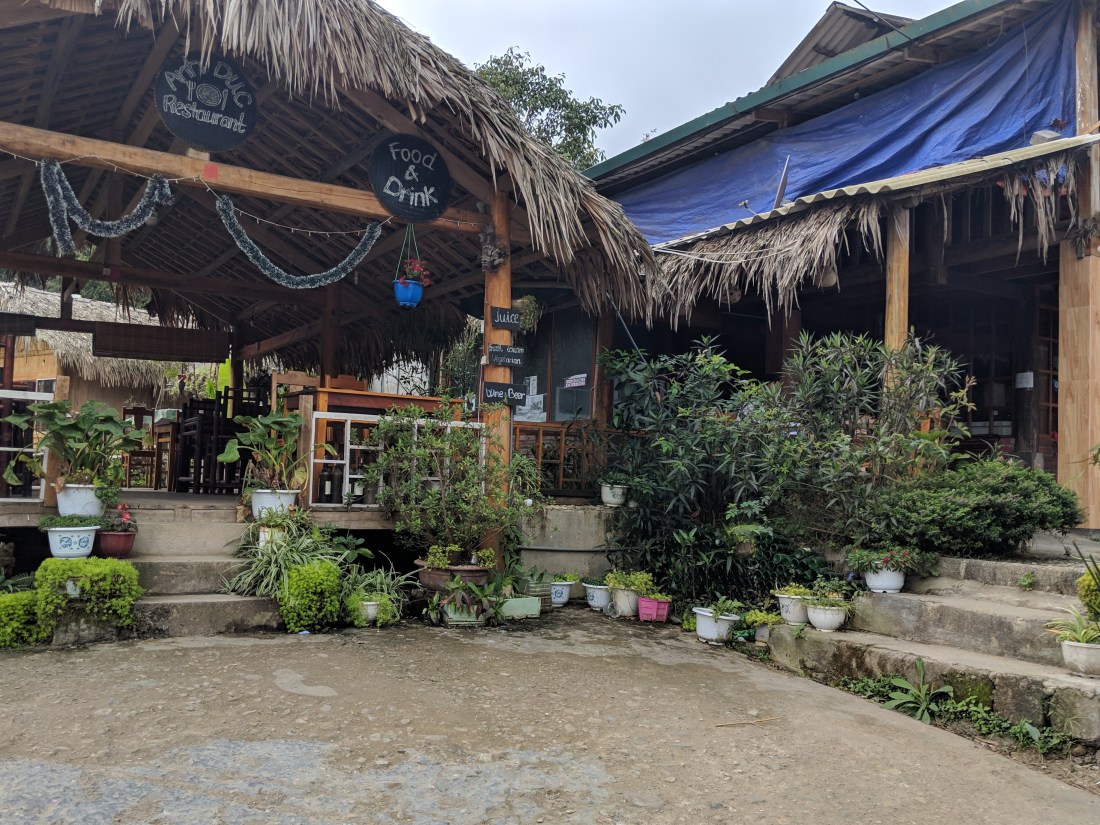
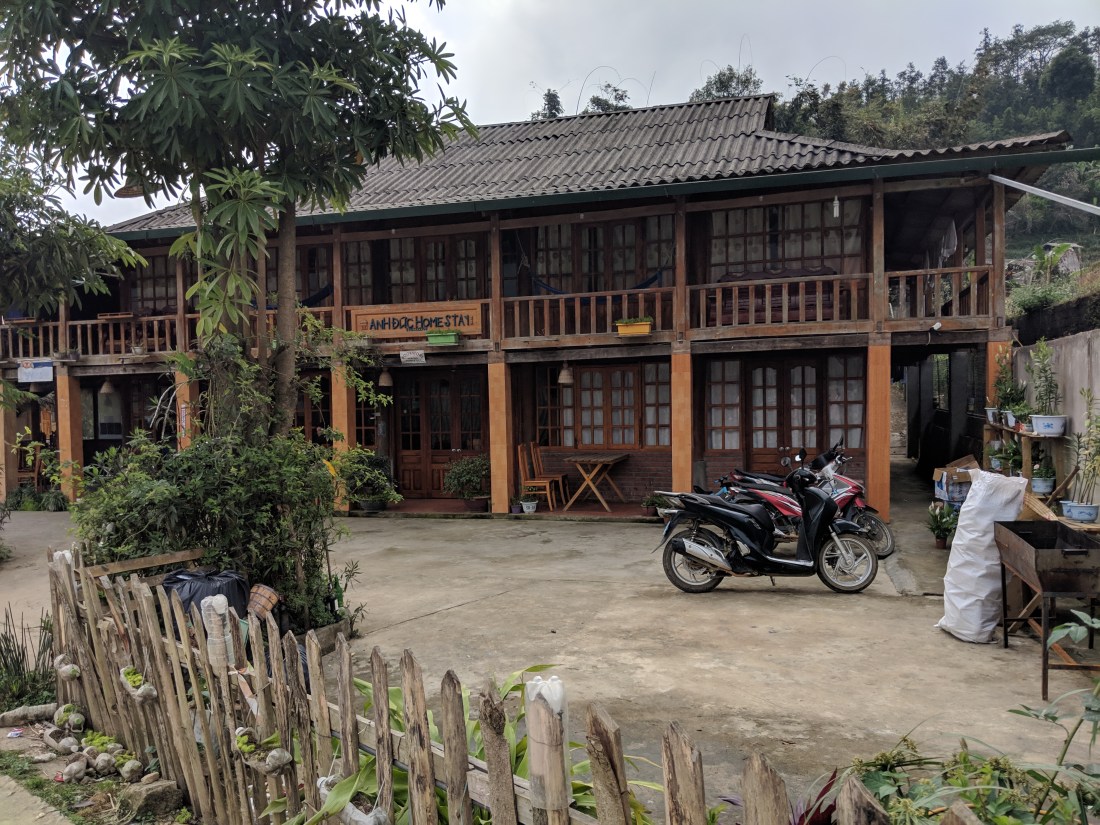
Our trek continued through a bamboo forest. We had picked up a few friends along the way who insisted on helping me with my footing through some of the rougher spots.

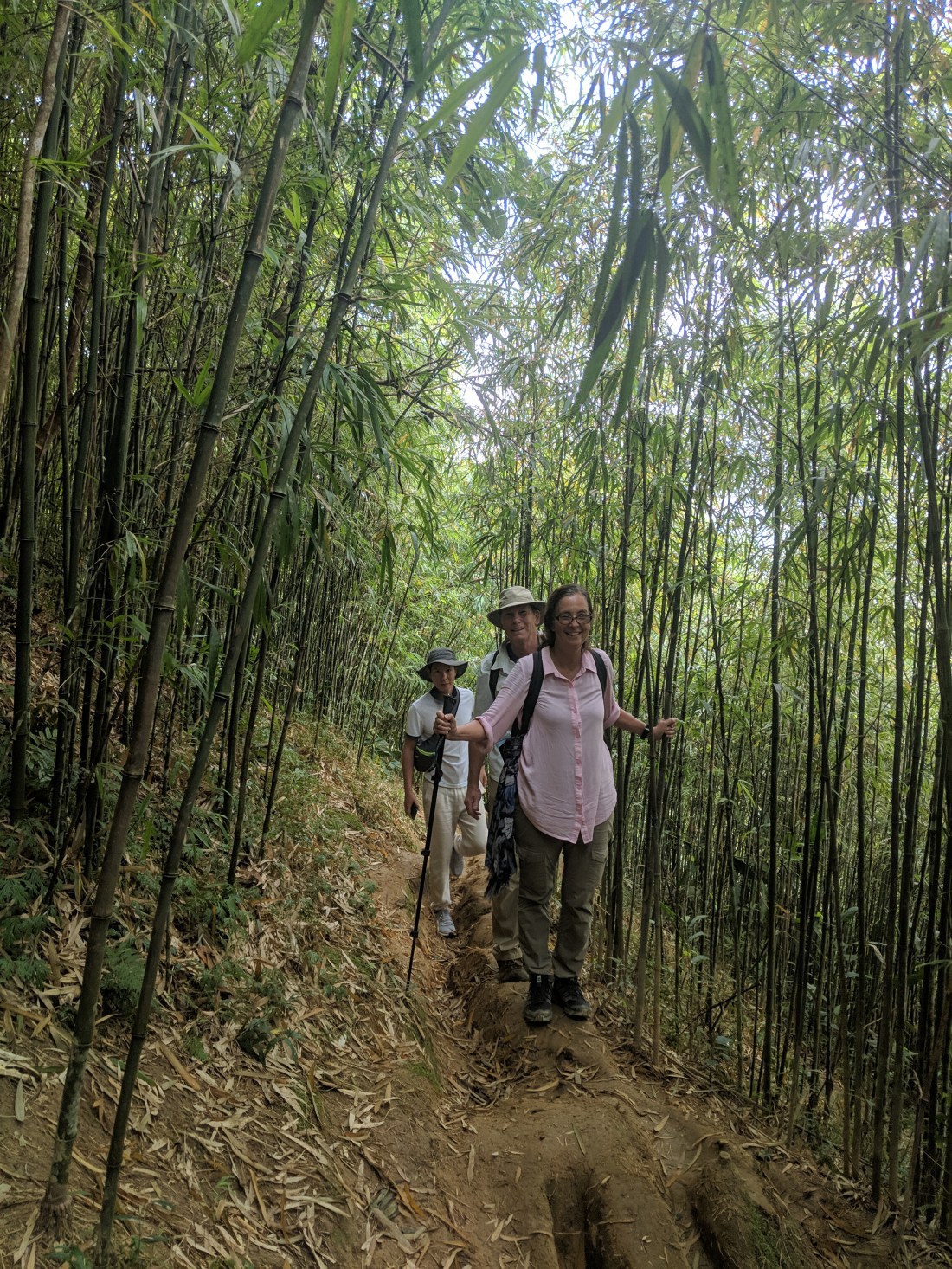
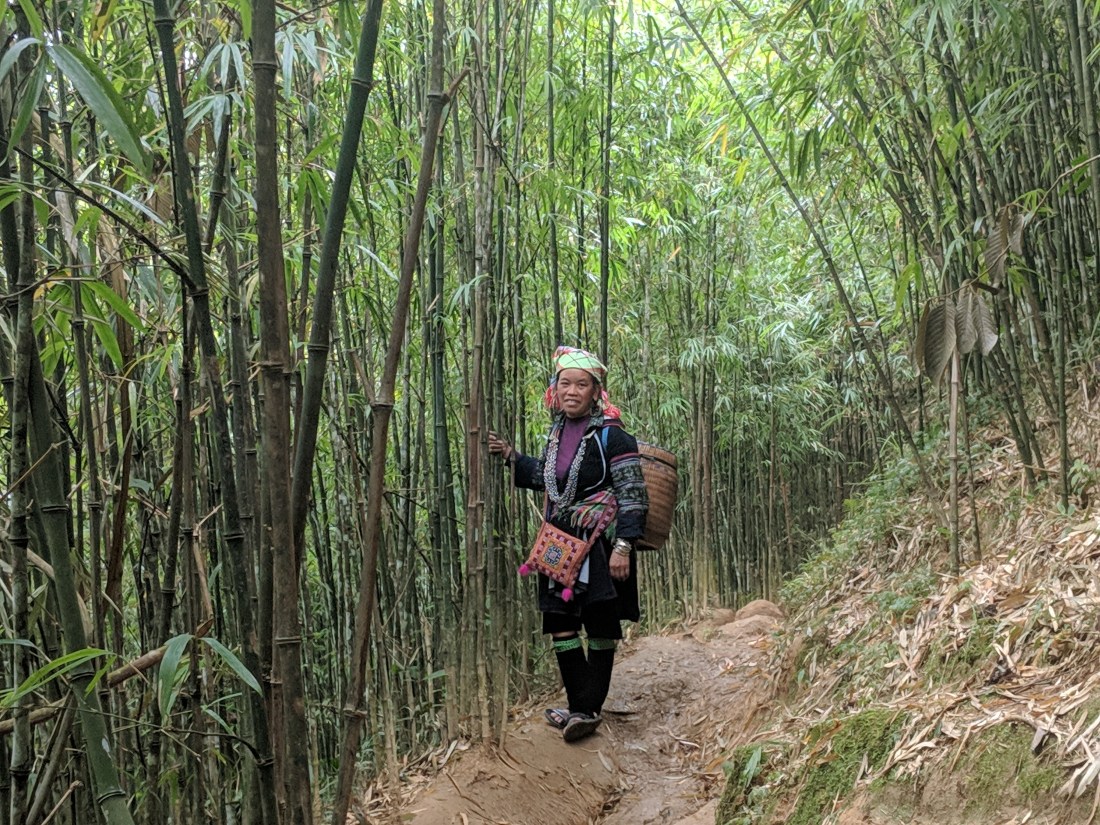
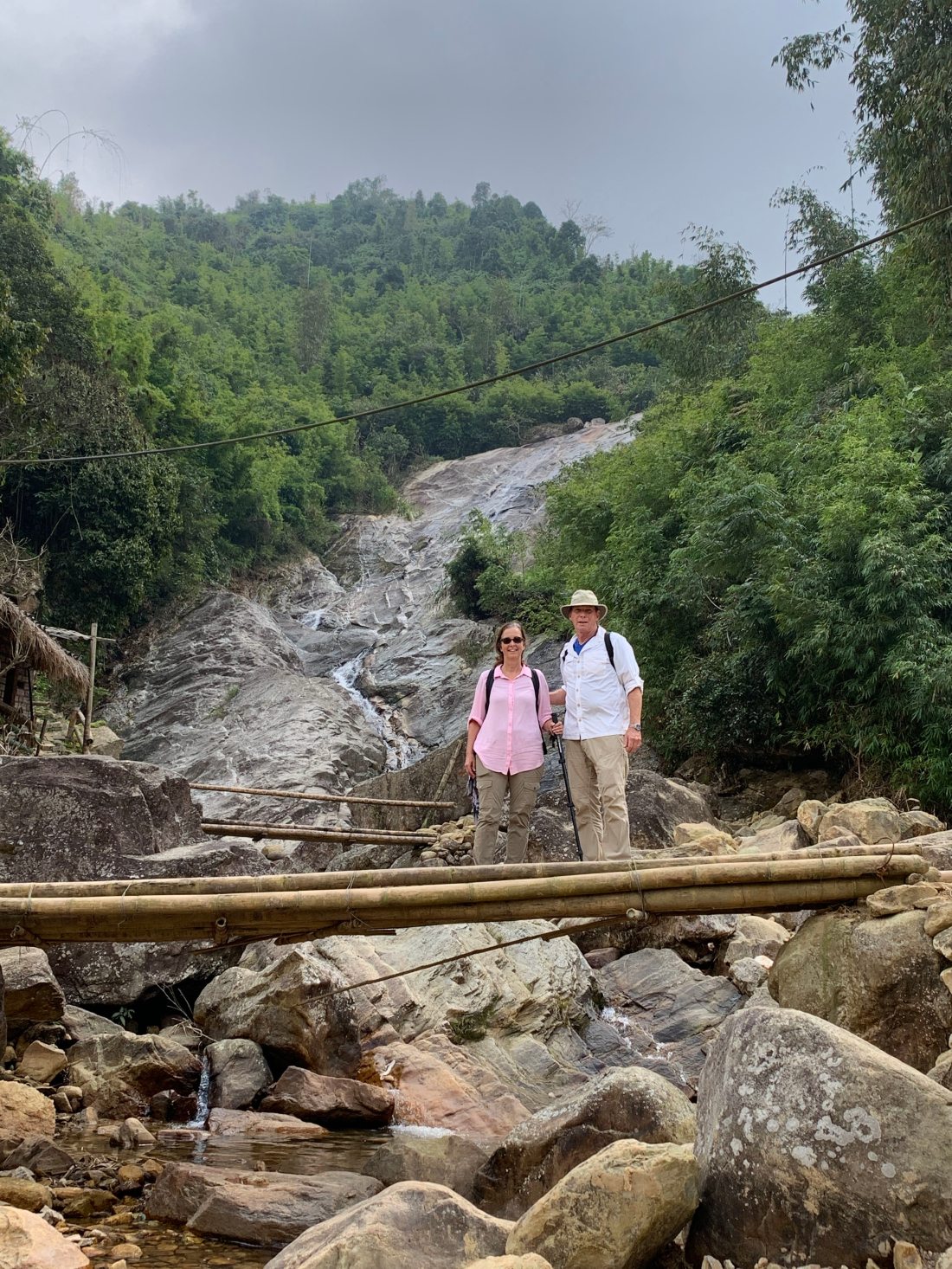
We came out of the bamboo forest to a waterfall and descended along it to the village of Giang Ta Chai, of Red Dao people. Note the difference in these houses: up on stilts and more open.

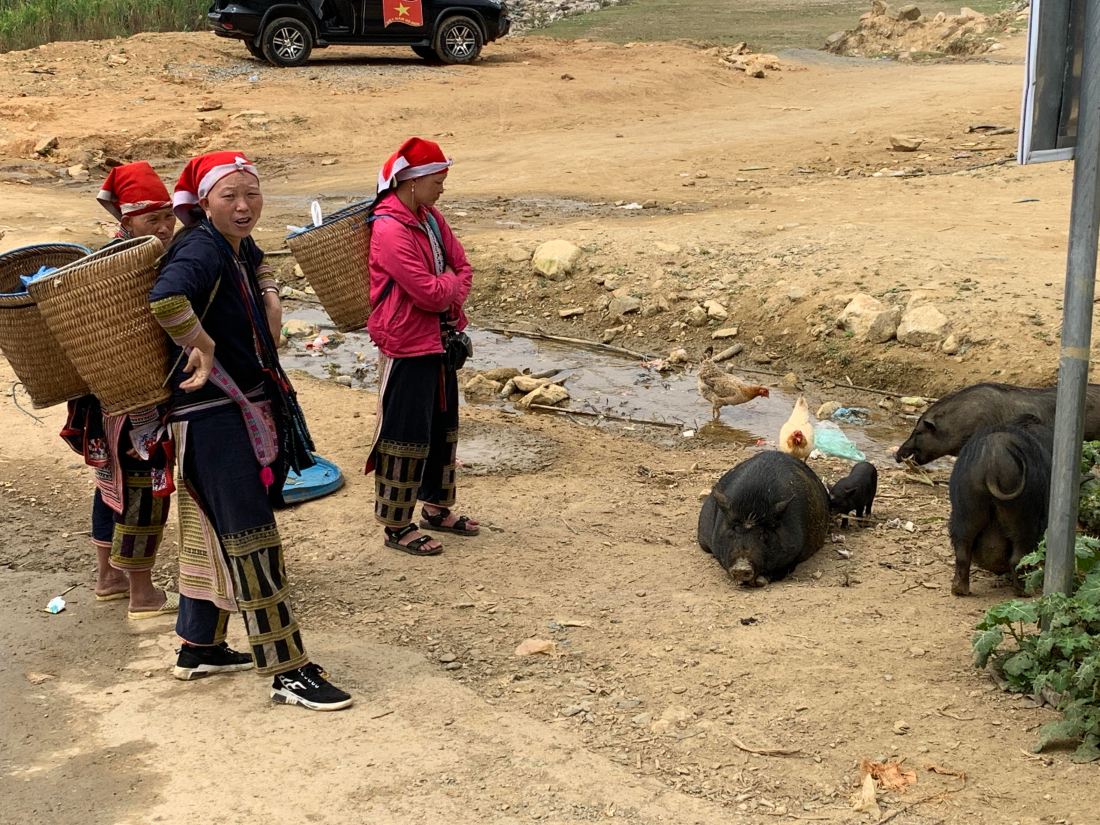
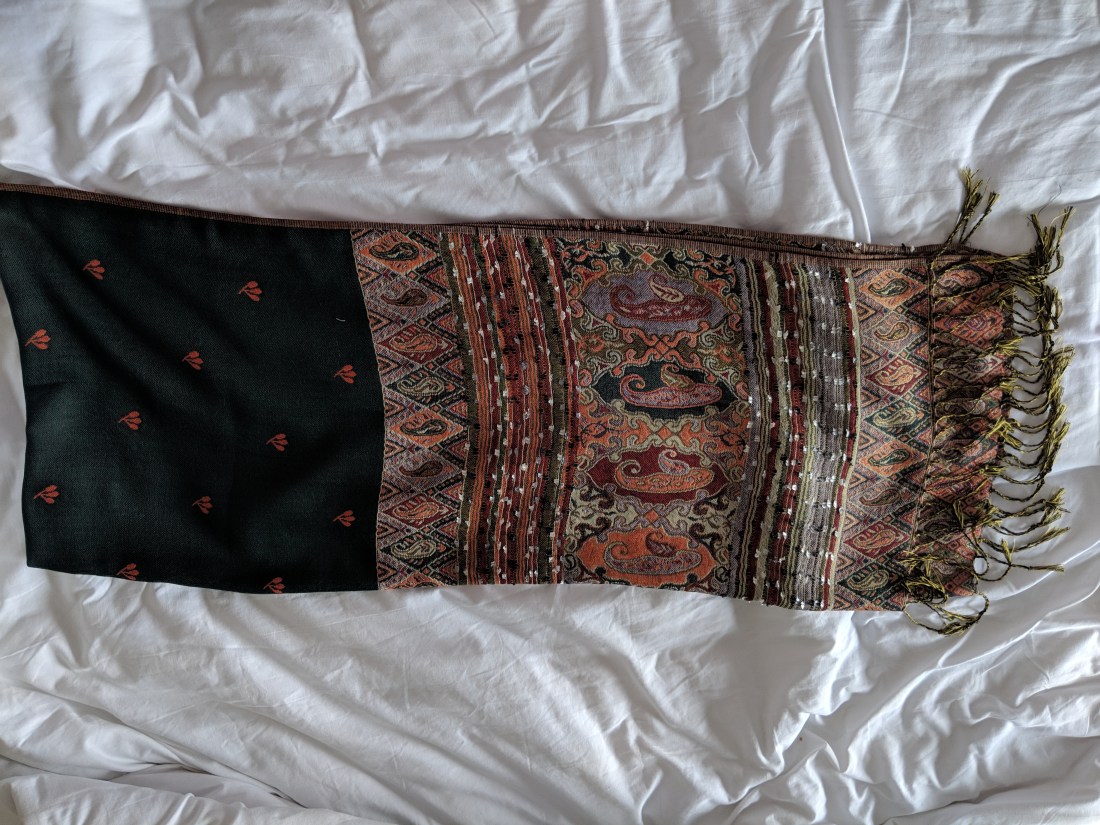
It was time to say goodbye to my new friends, so I bought a hand made item from each of them.

Then we had lunch in a local spot, not as elegant as the day before in setting, but every bit as delicious!
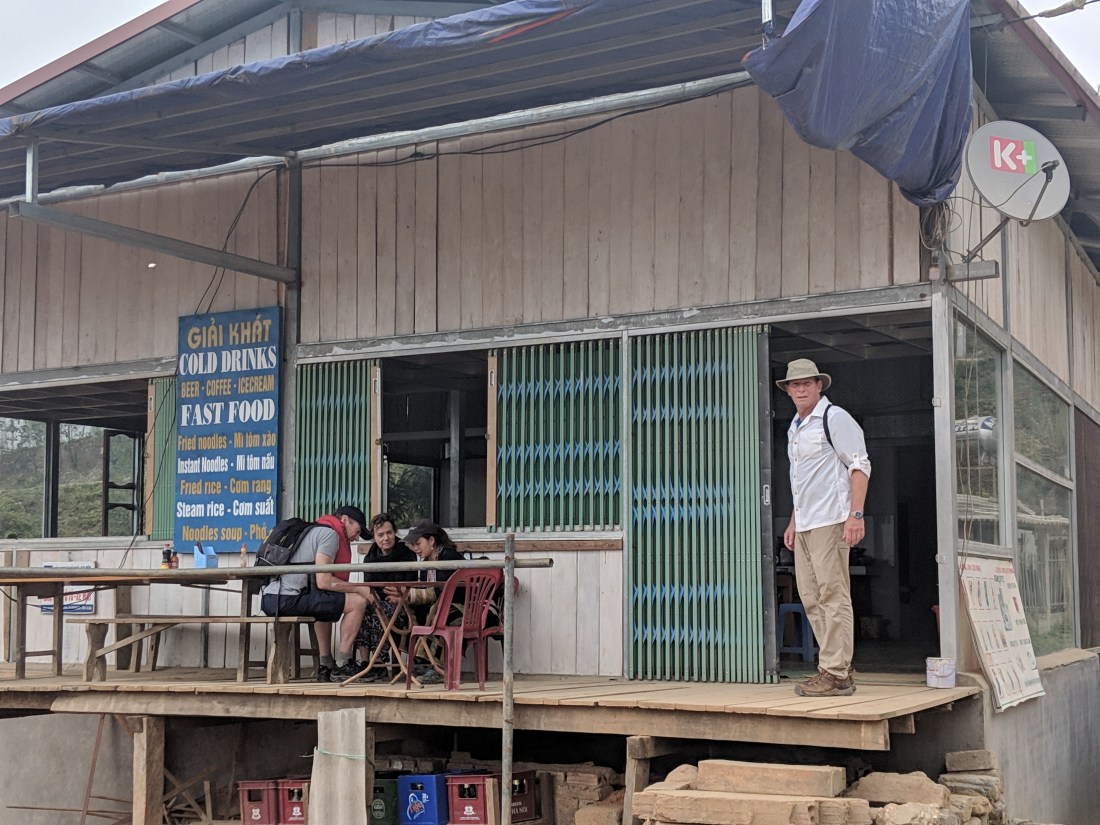
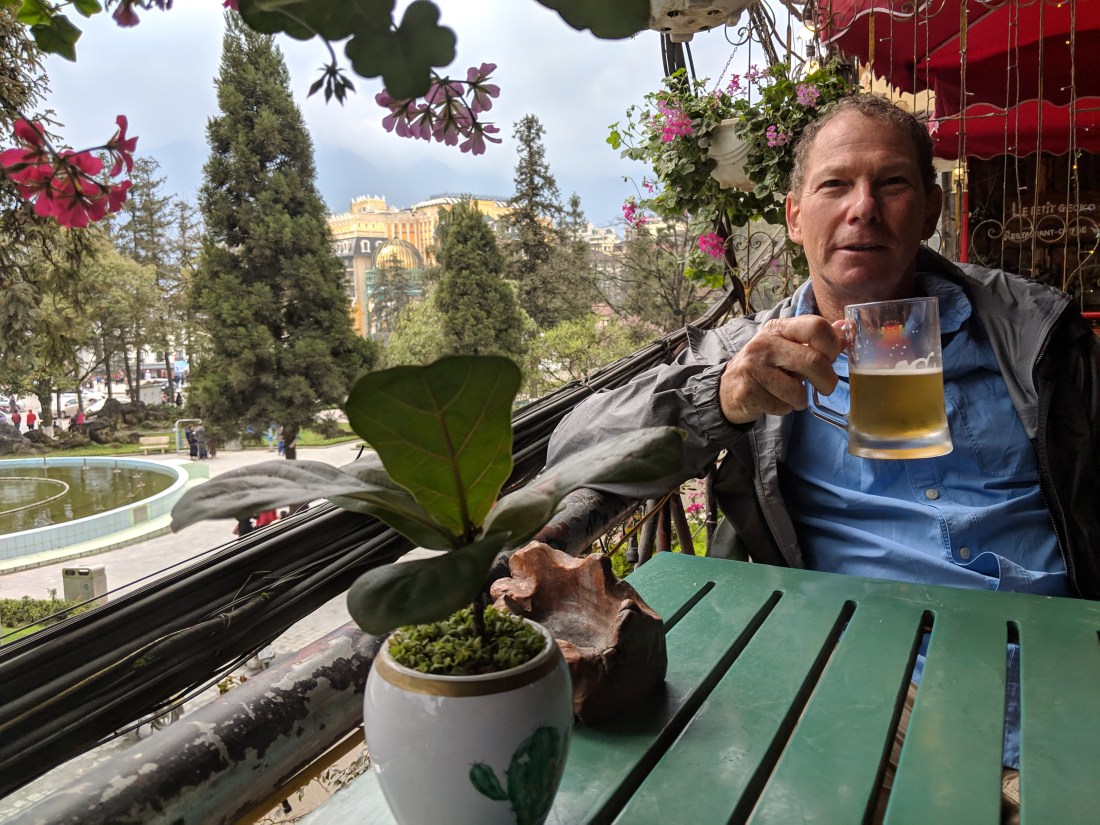
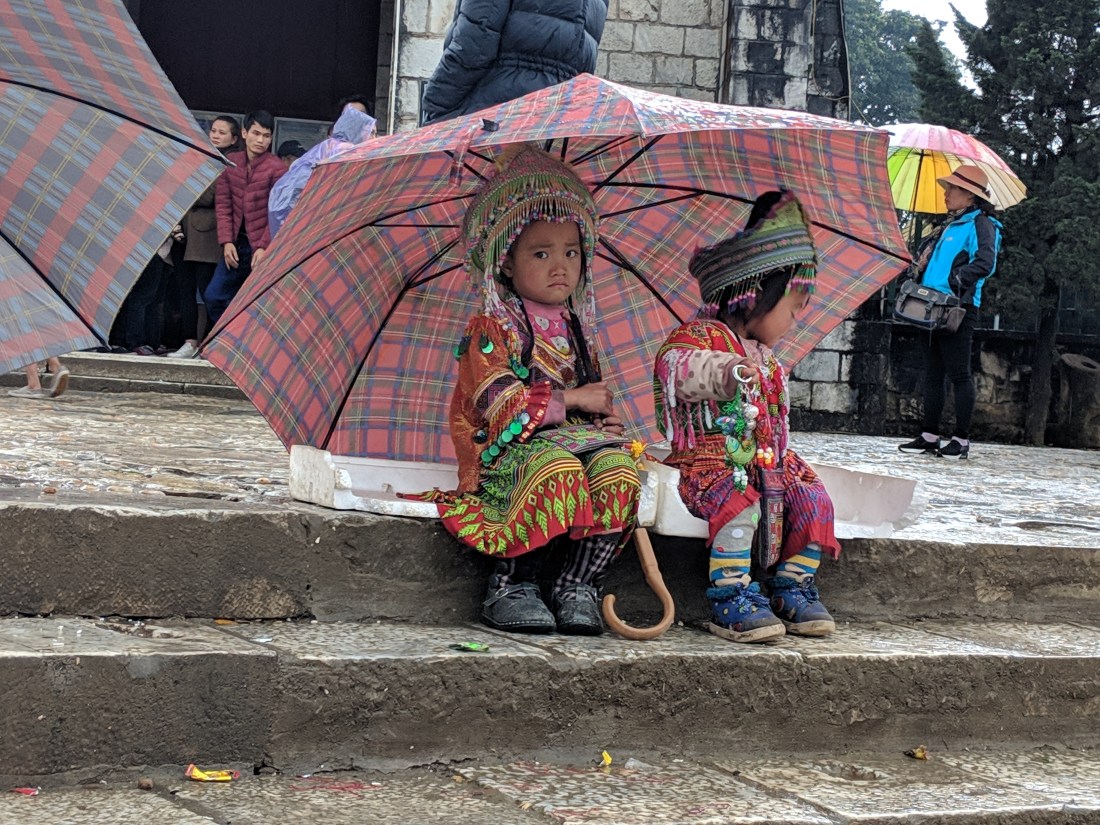
Our final day was rainy – our first day of rain while touring in 3 months! We had 2 while driving. So we took the hour long shuttle into Sapa town to be city slickers for the day.
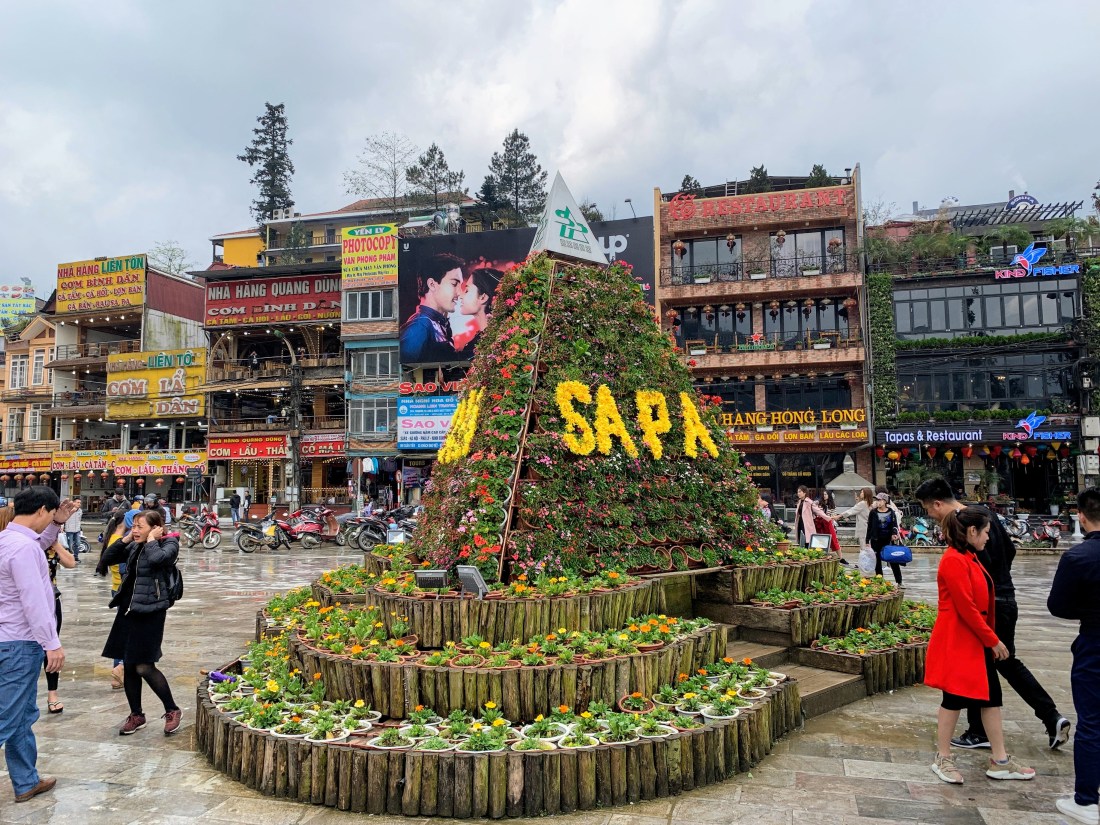
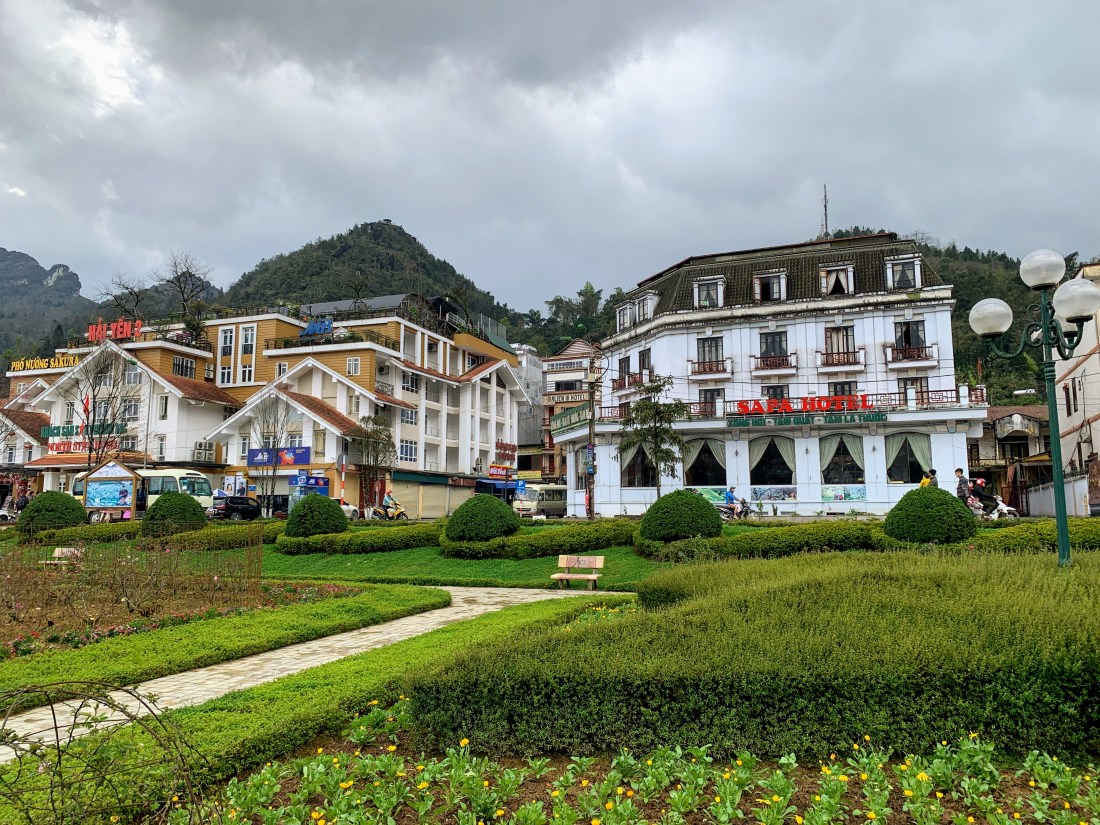
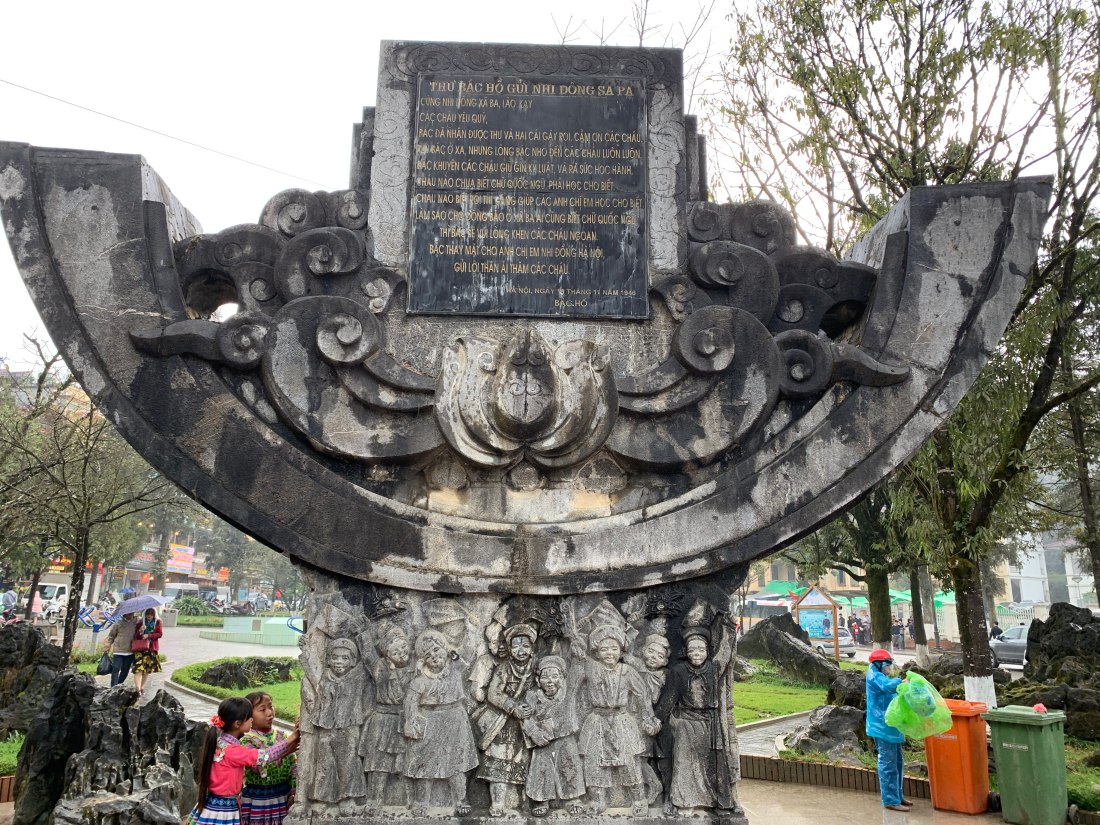
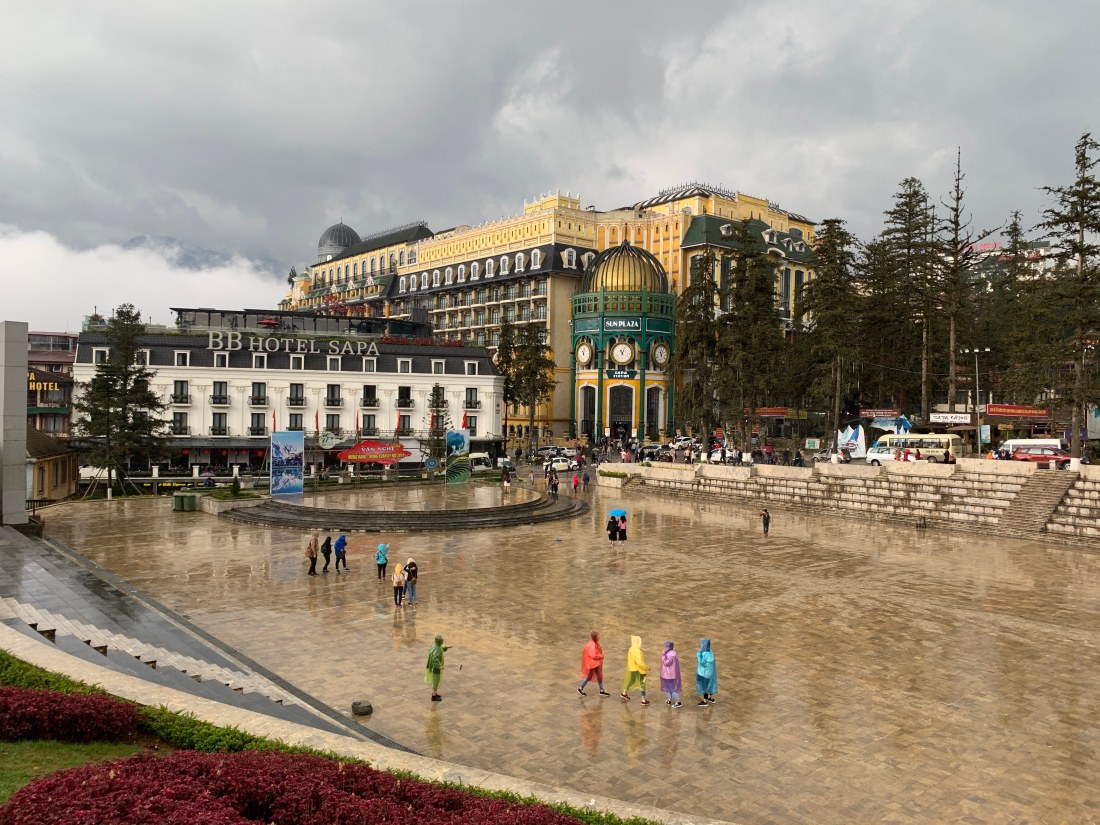
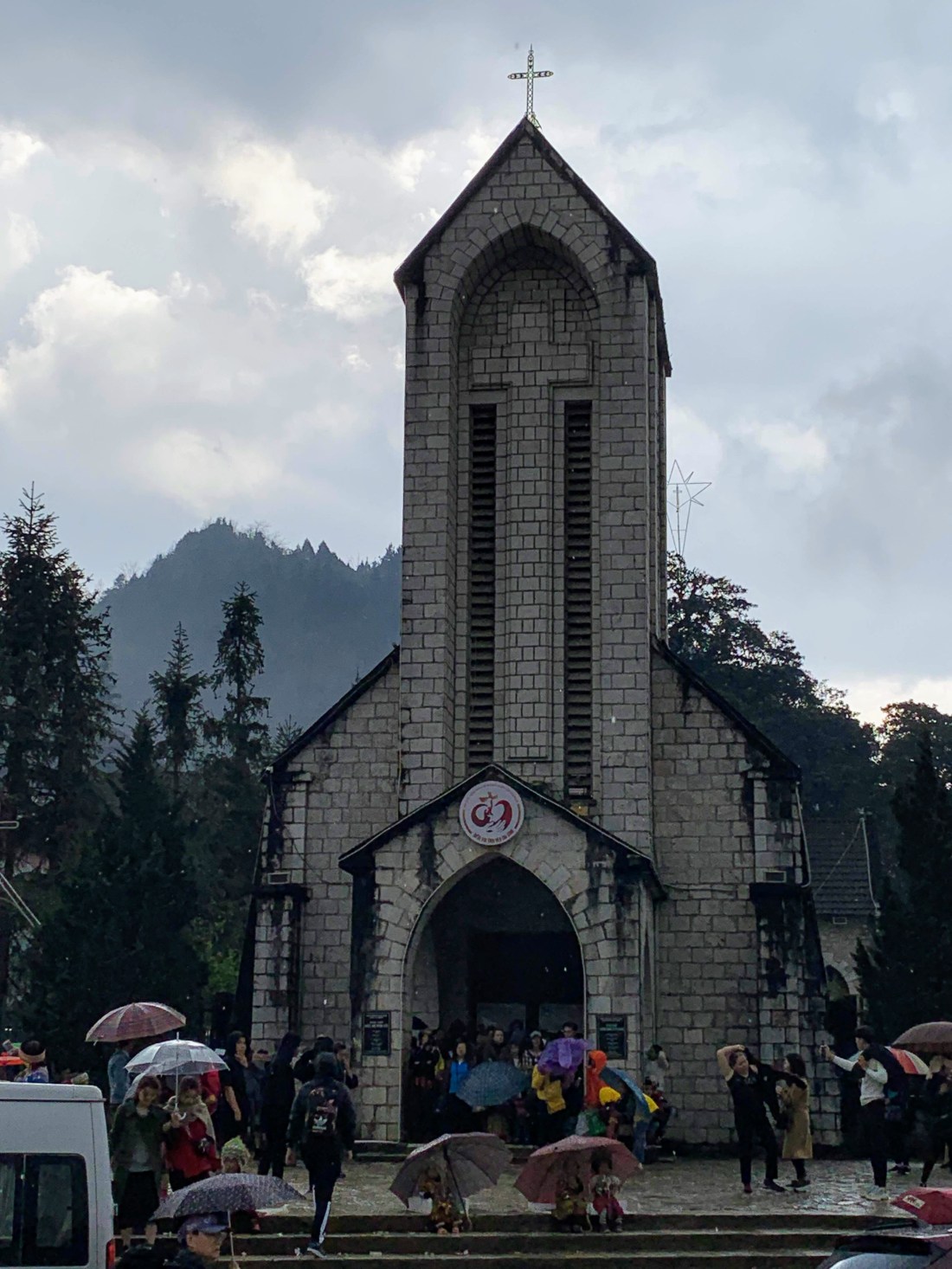
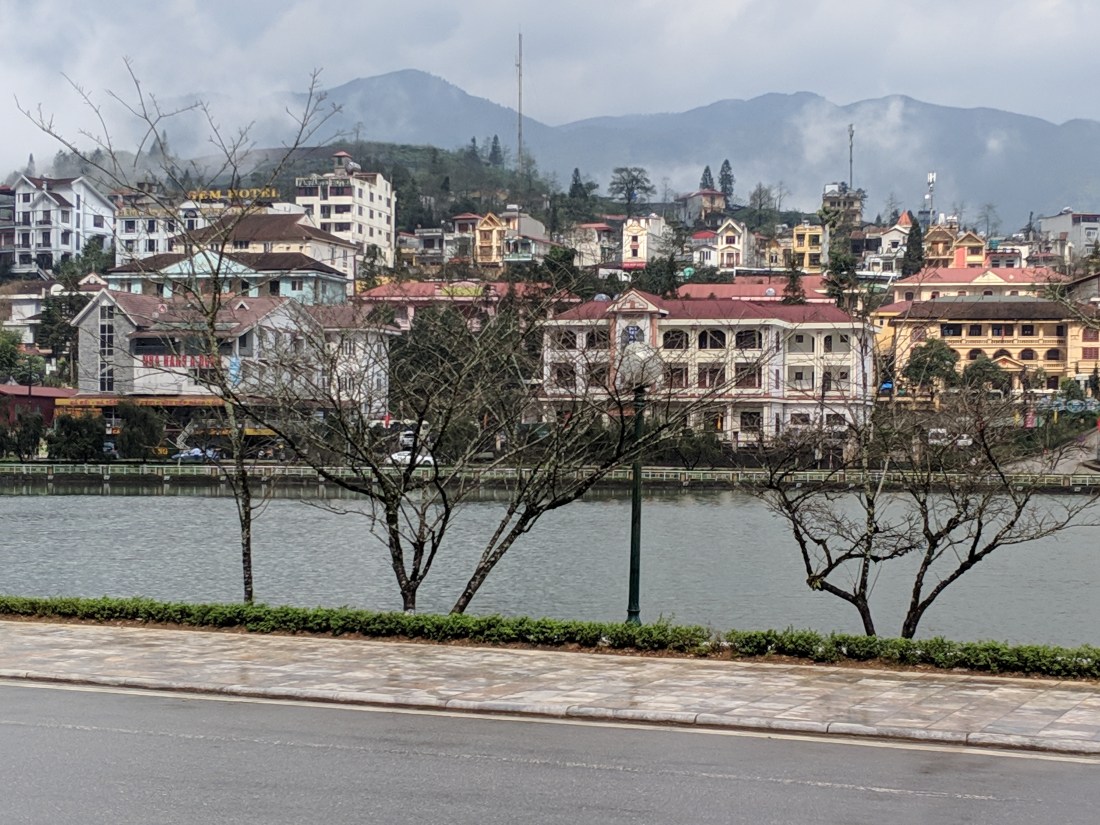
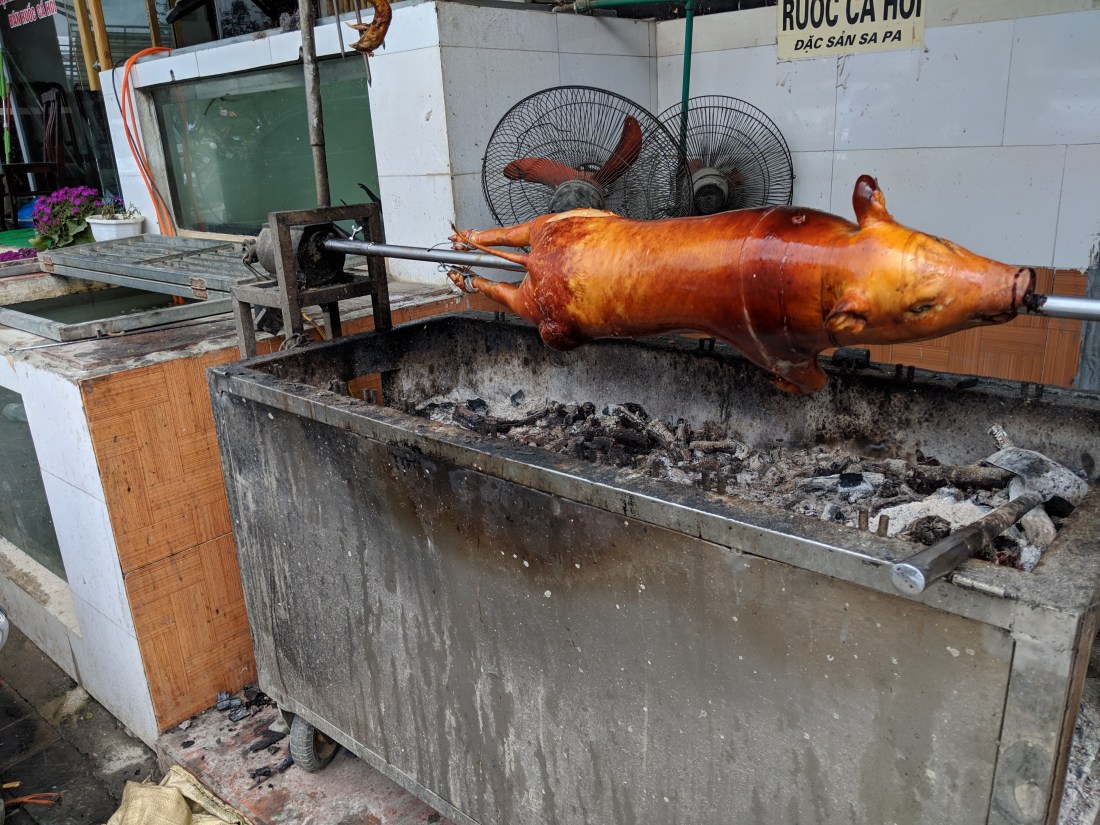
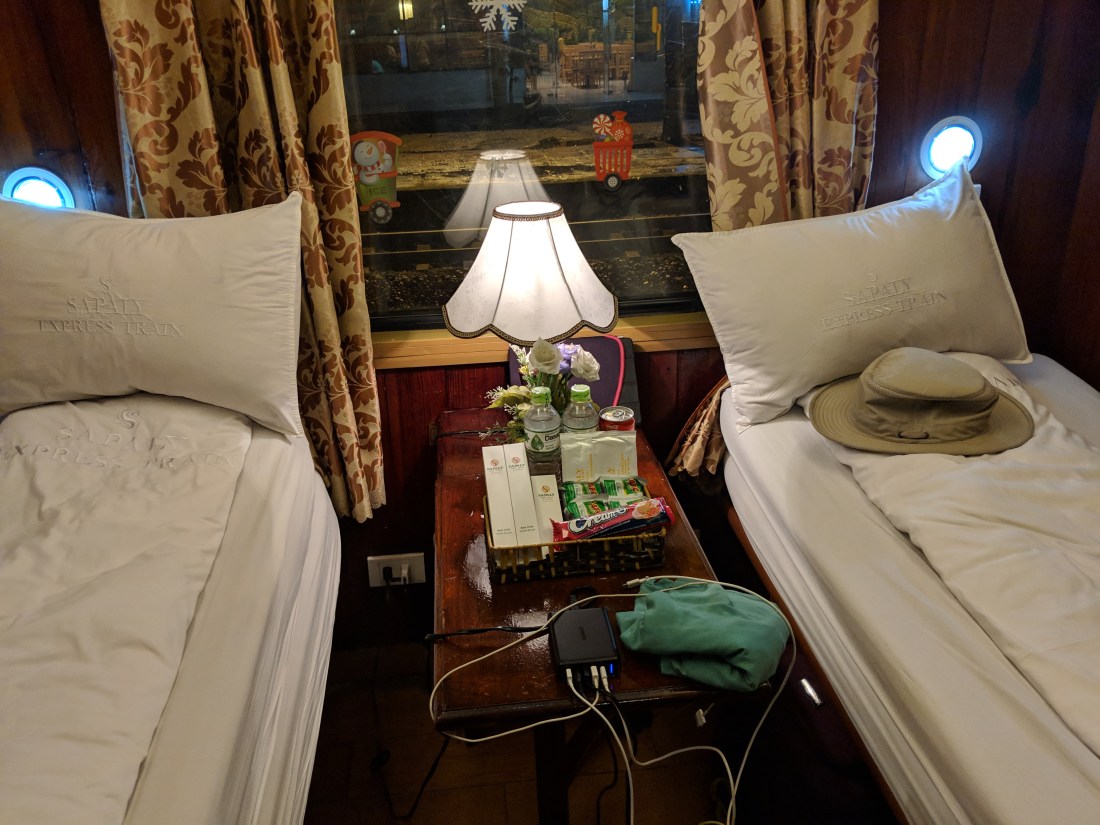
Then it was back to Lai Cao for the overnight train back to Hanoi.


Another amazing post! Think this was my favorite!
LikeLike