
After a 4.5 hour train ride from Madrid through the Spanish countryside, we arrived mid day in Bilbao. Again, the train station itself was worth a photo op.
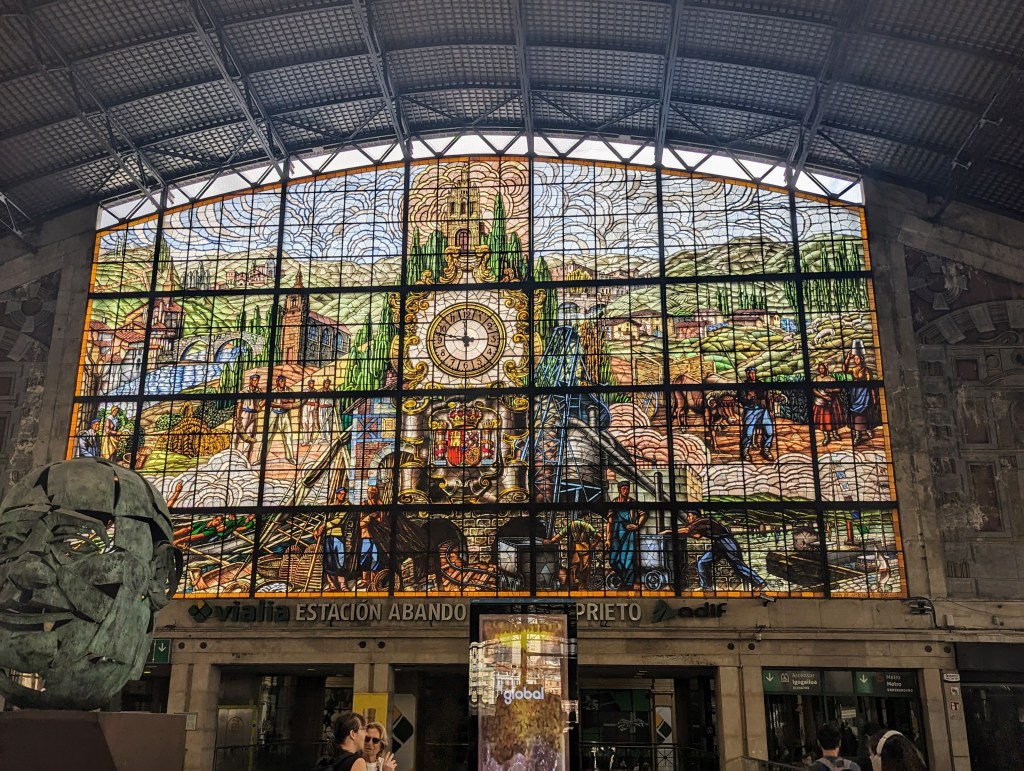
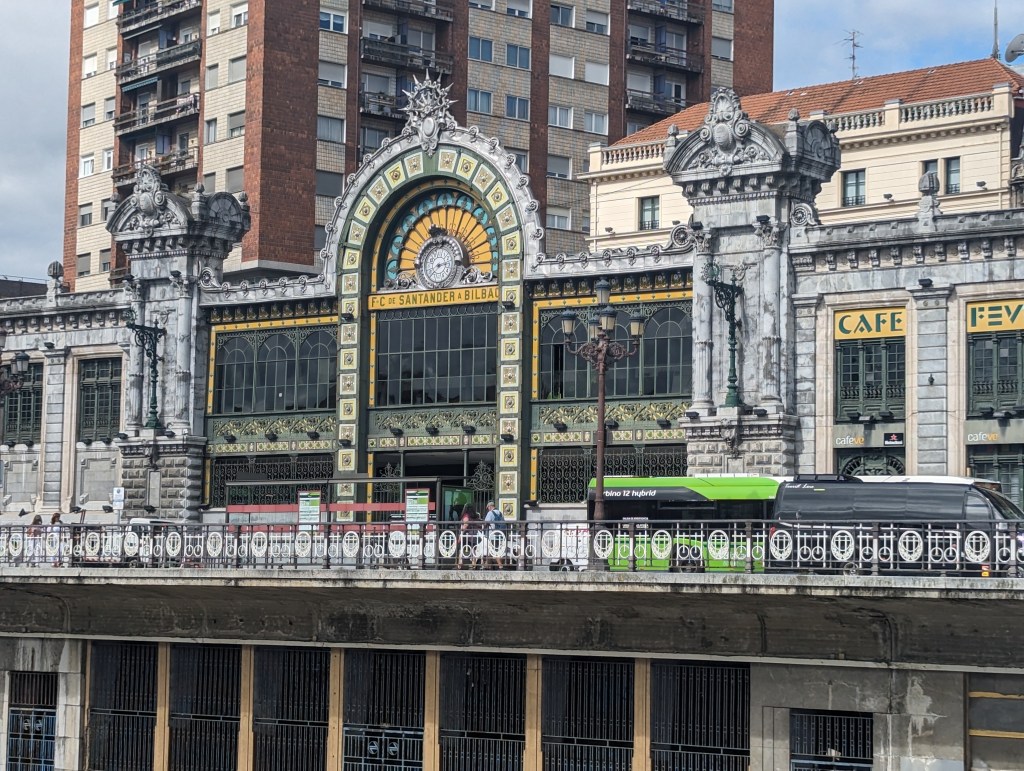
Fortunately our Airbnb was ready for us early. Once again we were told we missed several days of ridiculously heavy rain; we have been so lucky with the weather thus far! And once again we managed to be incredibly well located in an apartment accessible by foot everywhere. We spent our first afternoon getting acquainted with the new neighborhood.
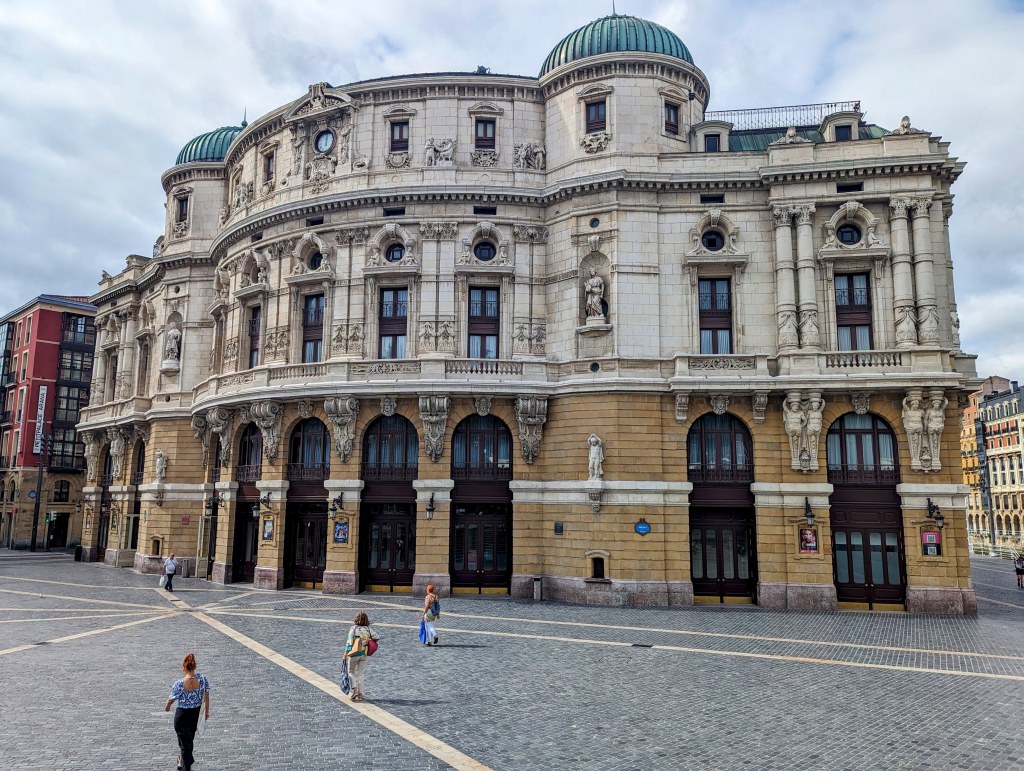
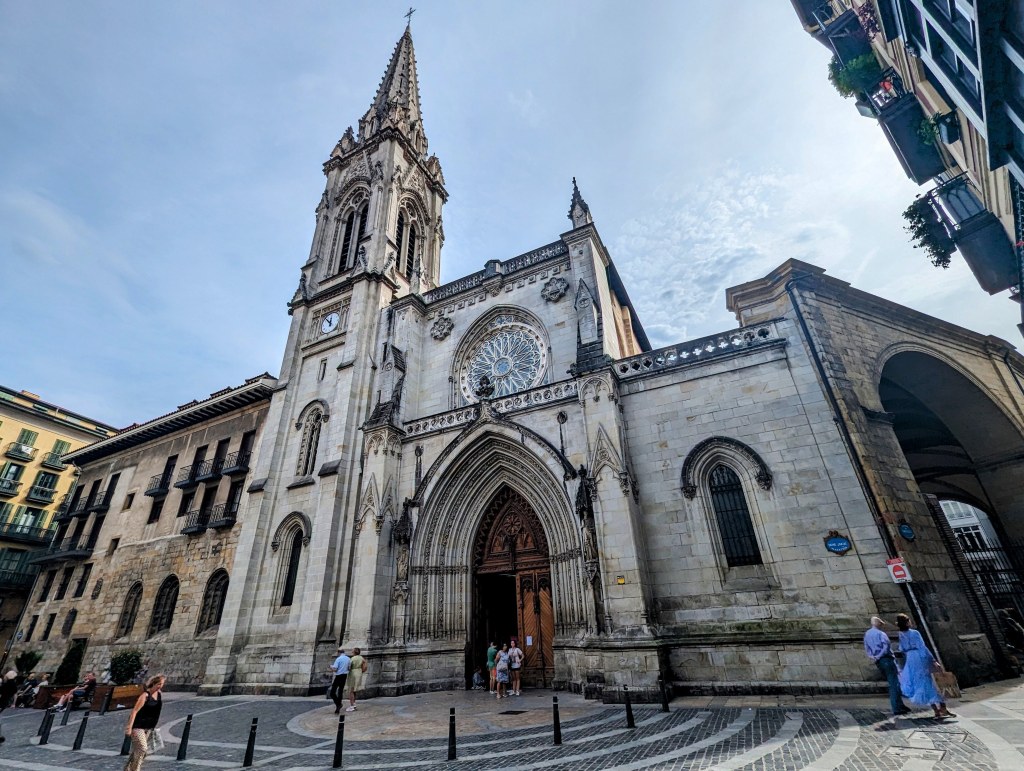
Even the libraries in Spain are gorgeous inside and out.
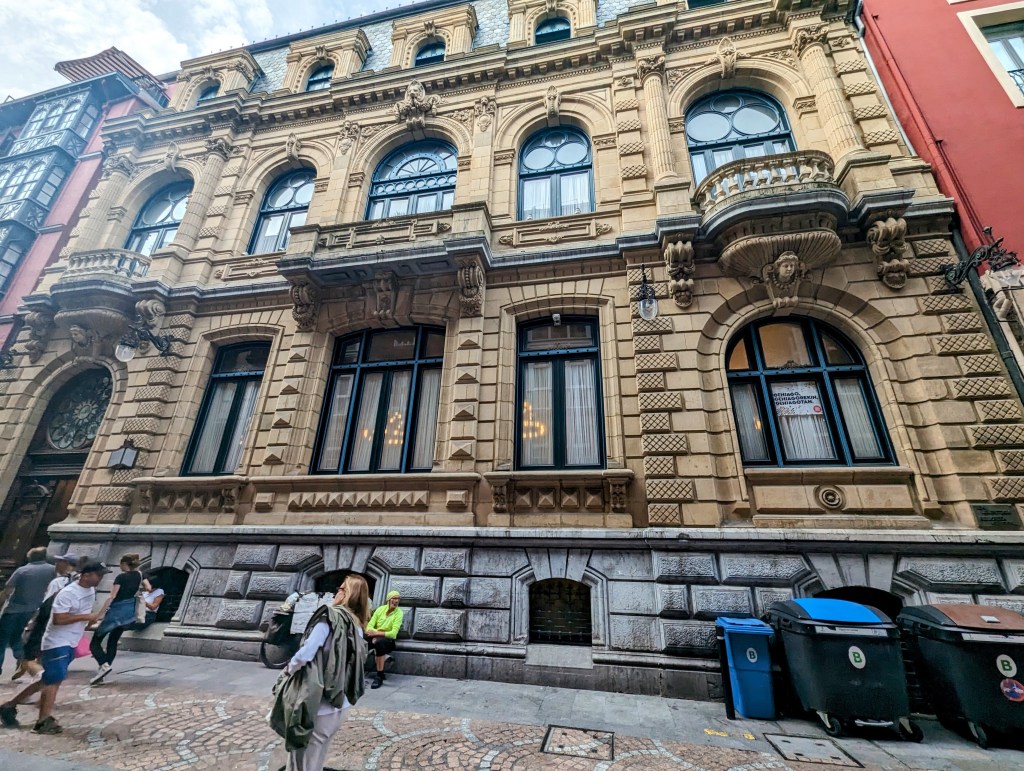
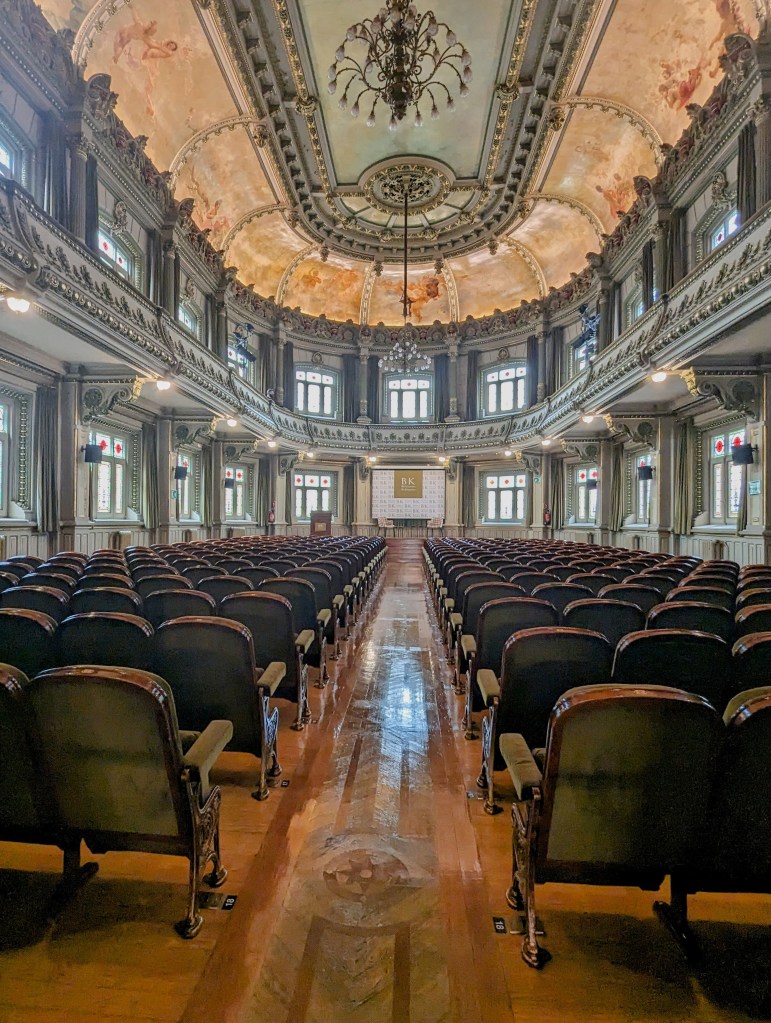
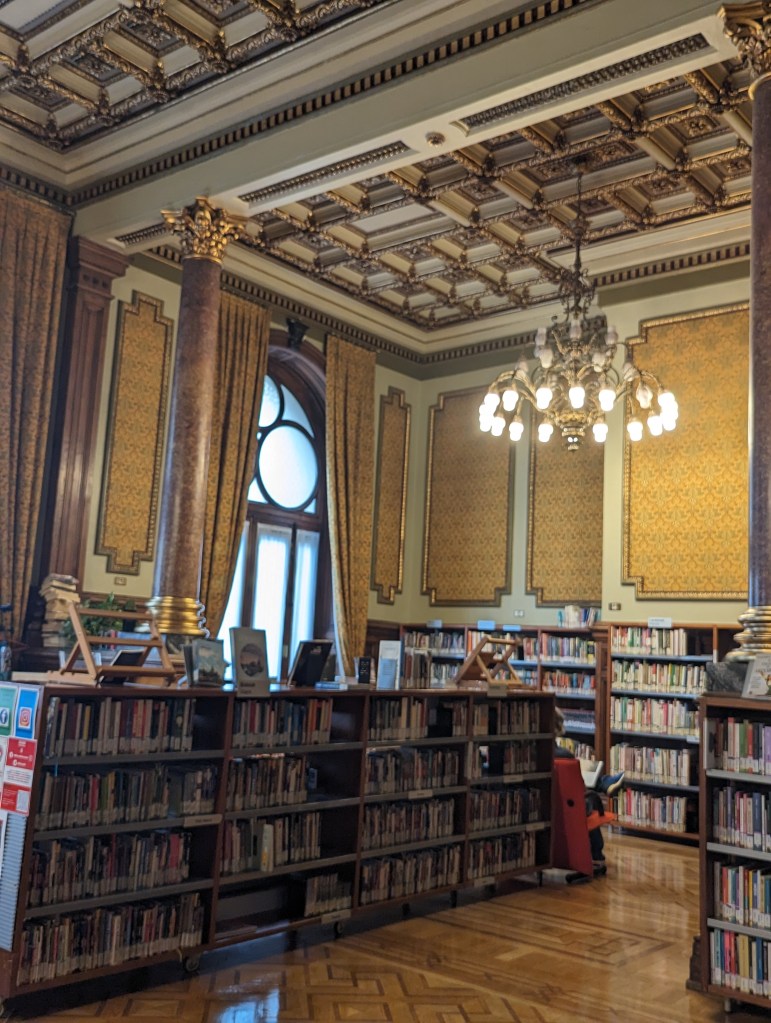

On Tuesday morning we took a walking tour of the city. Our guide Marvin was born here in Bilbao: capital of the Biscay province of the Basque country, and he is extremely enthusiastic about and proud of his city. He explained the city’s origin was in 1300 as a fishing village. Its ultimate rapid growth and development was due first to the well located port for trading goods throughout Europe. The economic boom subsequently included ship building. Due to the large quantity of iron ore in its banks, iron export as well as iron products contributed to further significant growth of the city during the 19th century industrial revolution.

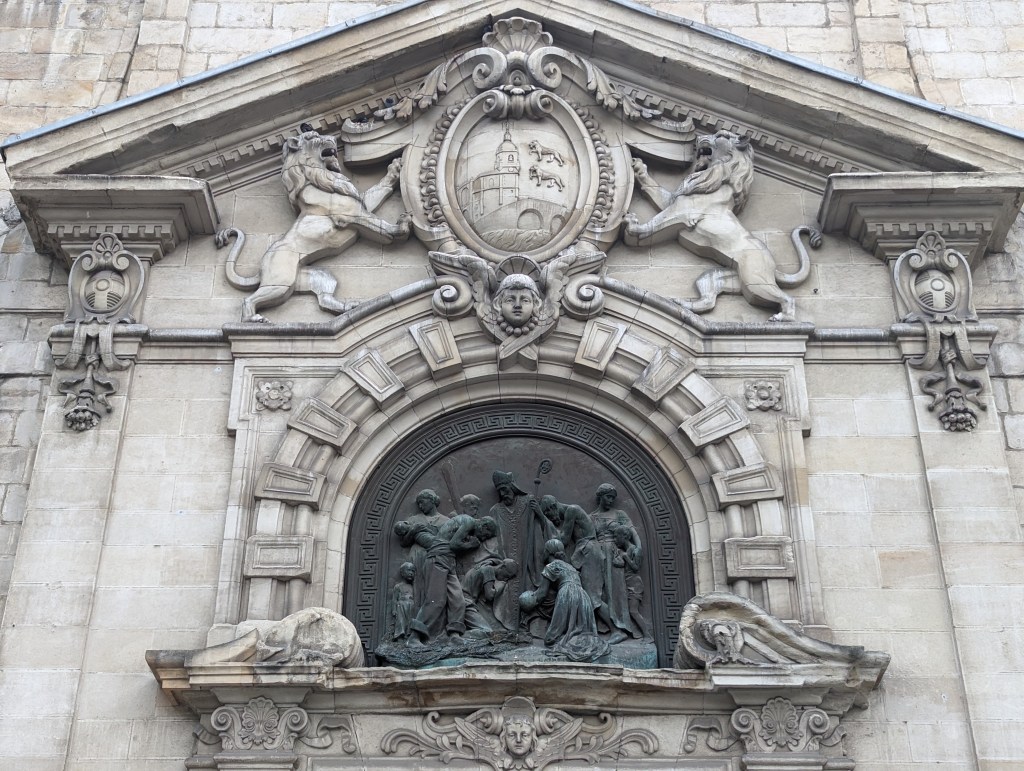
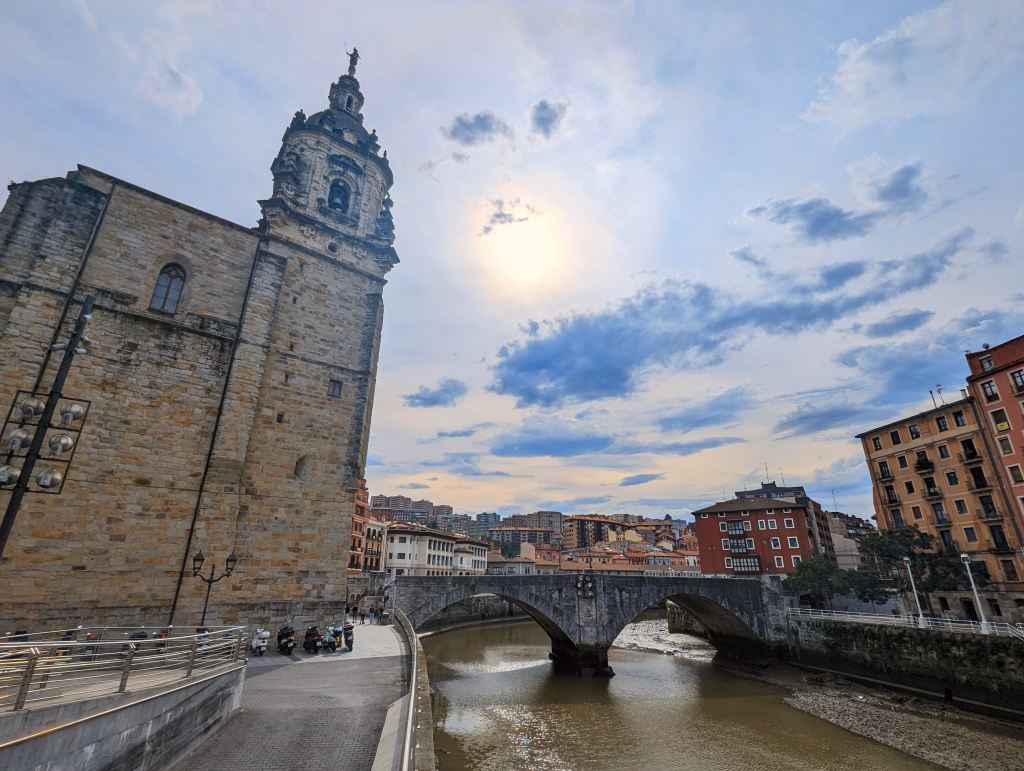
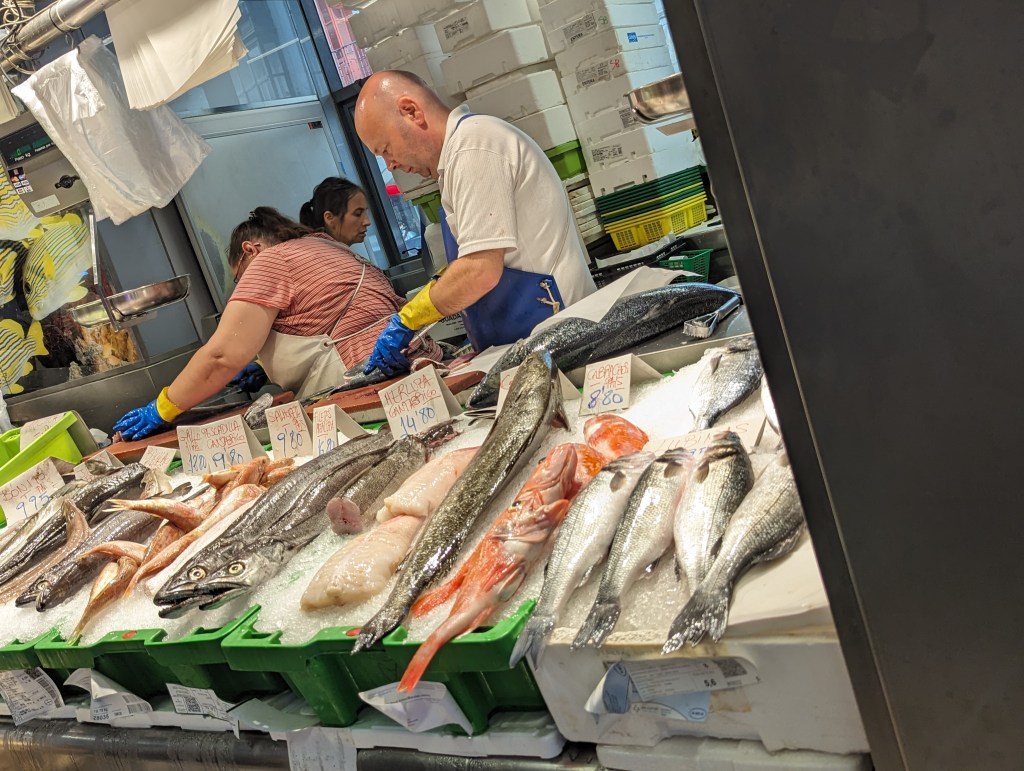
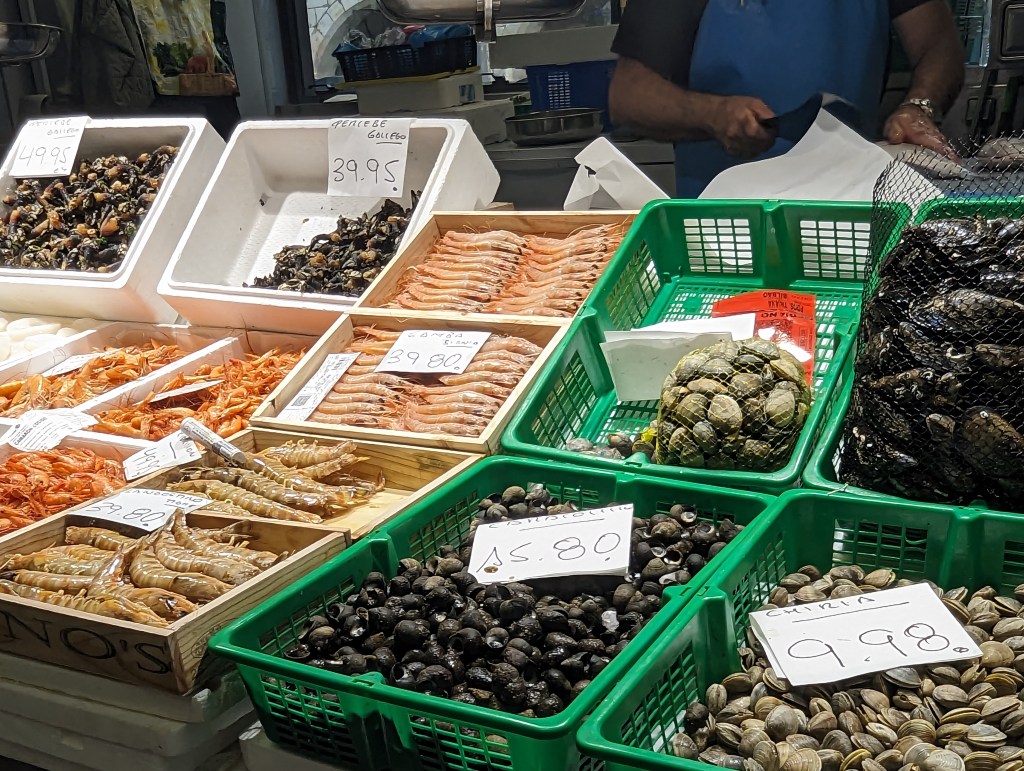
The bridge next to the church of St. Anthony for over a hundred years was the only bridge over the Bilbao River, thus consolidating access into the city thereby controlling commerce and safety. St. Anthony, the patron saint of animals, looks from above the belfry toward the market, which for years was a livestock market, but now is one of Spain’s largest indoor markets.
As the city grew, in the 18th century they built the Plaza Nueva: the New Plaza. It is now the site for lots of great restaurants as well as the Euskaltatzaindia, the official Basque language regulatory institution, seen below.

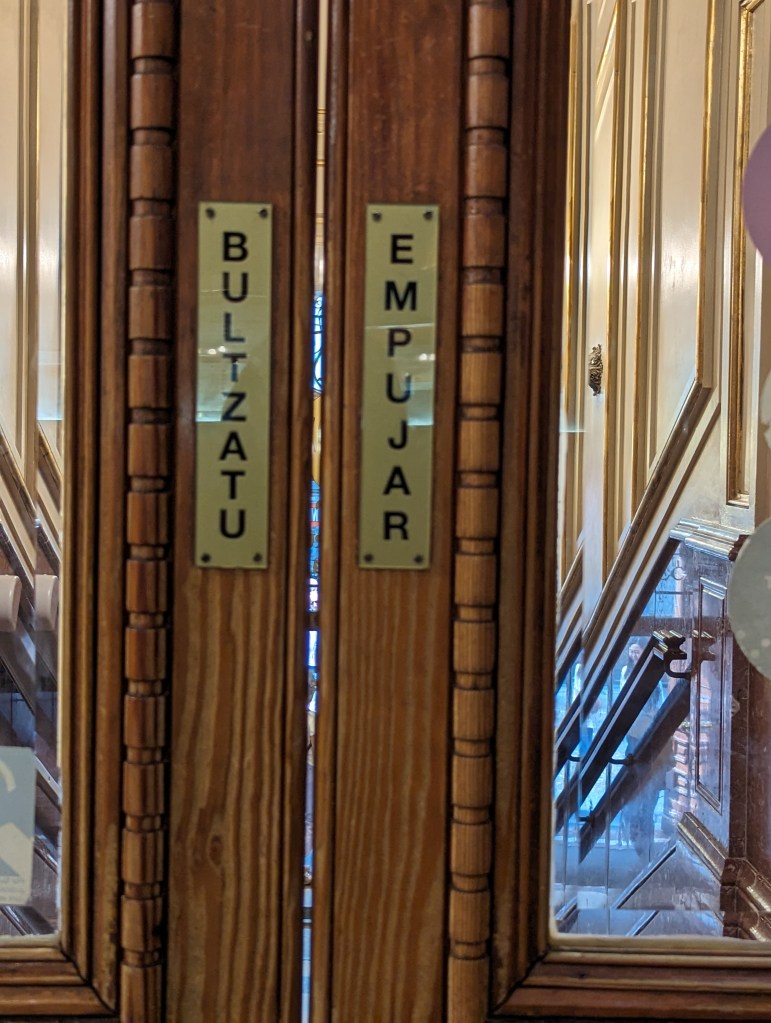
As in Catalonia (Barcelona), where Catalan is always the first language listed, those here in the Basque country also take their language, food, and culture very seriously. Franco had actually outlawed Basque language during his nearly 40 years in power; it has made a significant resurgence since his death. It is a completely unique language with no origin from or similarity to any other known language. Those of the Basque region are intensely proud of their language and want to preserve it; over 80% of school children are taught it with side lessons for Spanish and English.
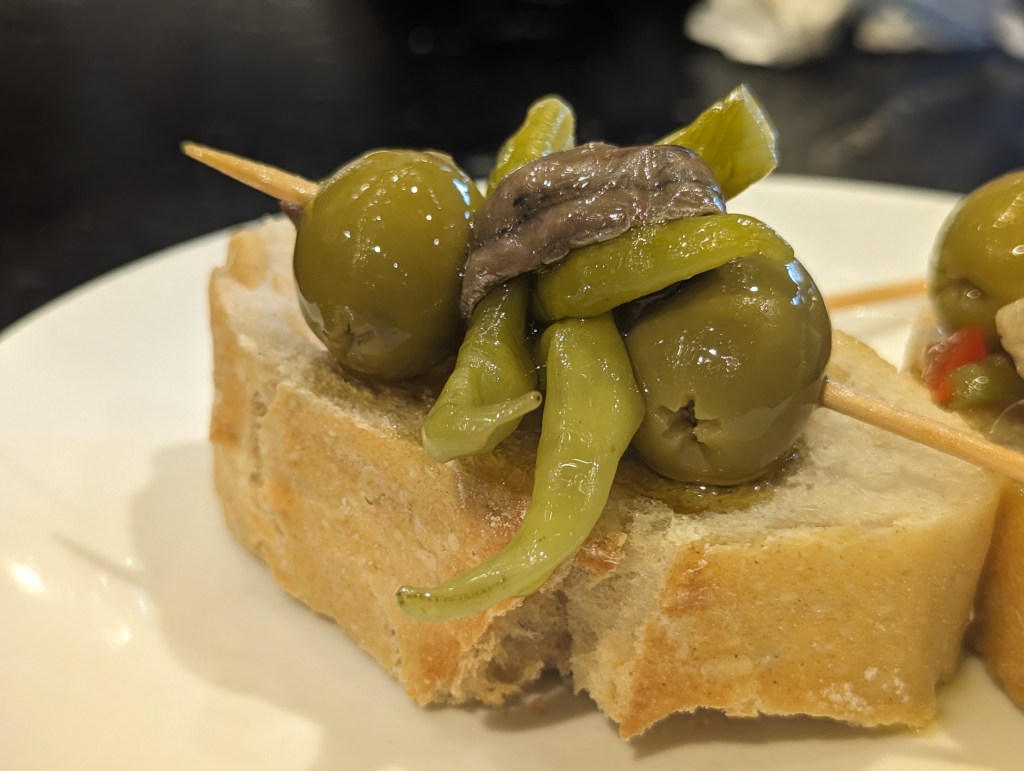
The Basque culinary experience also has its own distinctions. Whereas in Catalonia tapas: small plates are favored, here they serve pintxos: finger food often served on a small piece of bread.
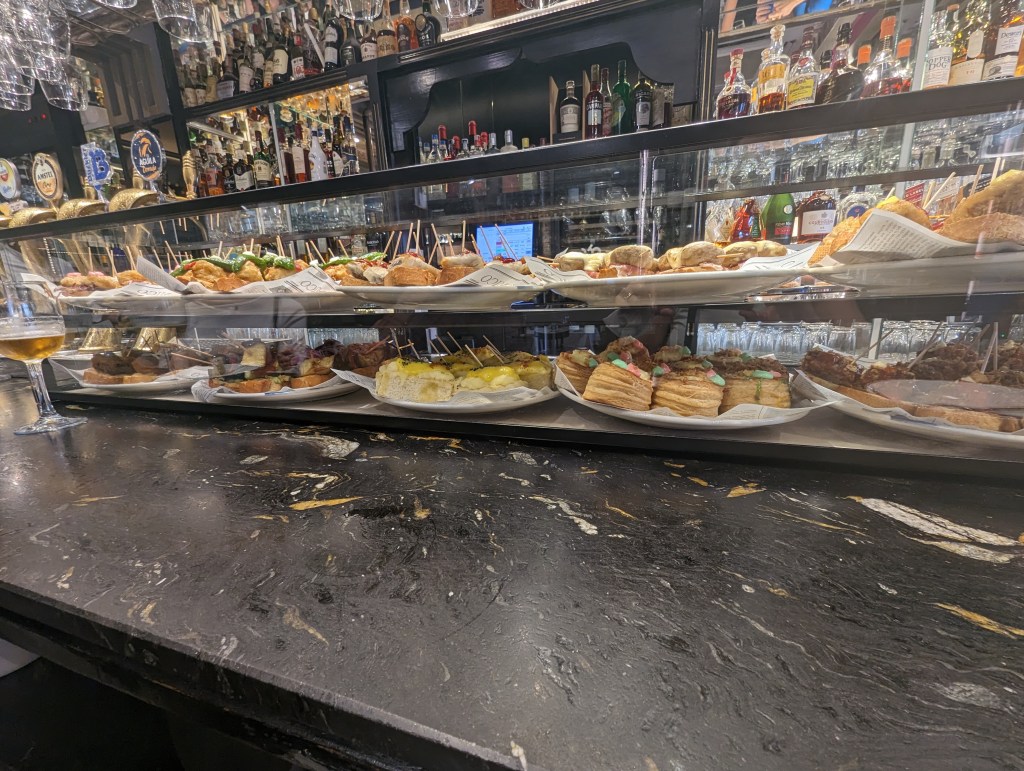
Having been advised by Marvin, we tried several of the local specialties.

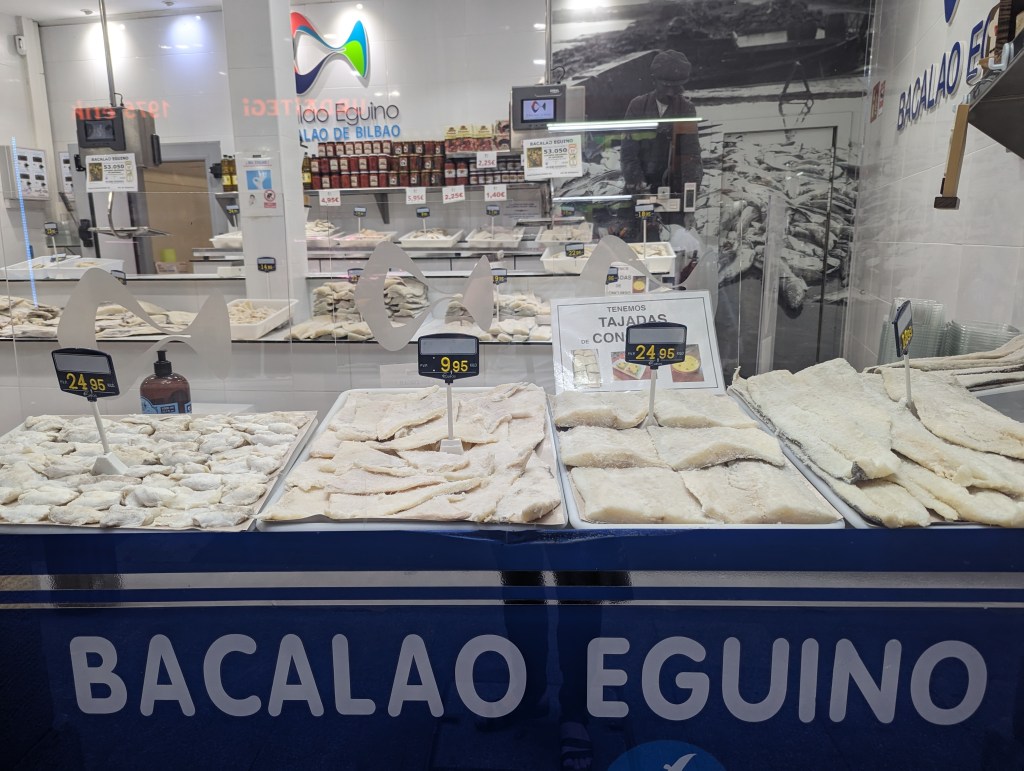
Salted cod has always been a major export as well as important to the local cuisine.

After a long afternoon of wining and dining, we rested up for our visit to the Guggenheim Museum Saturday morning. We strolled through the newer sections of Bilbao to arrive early.

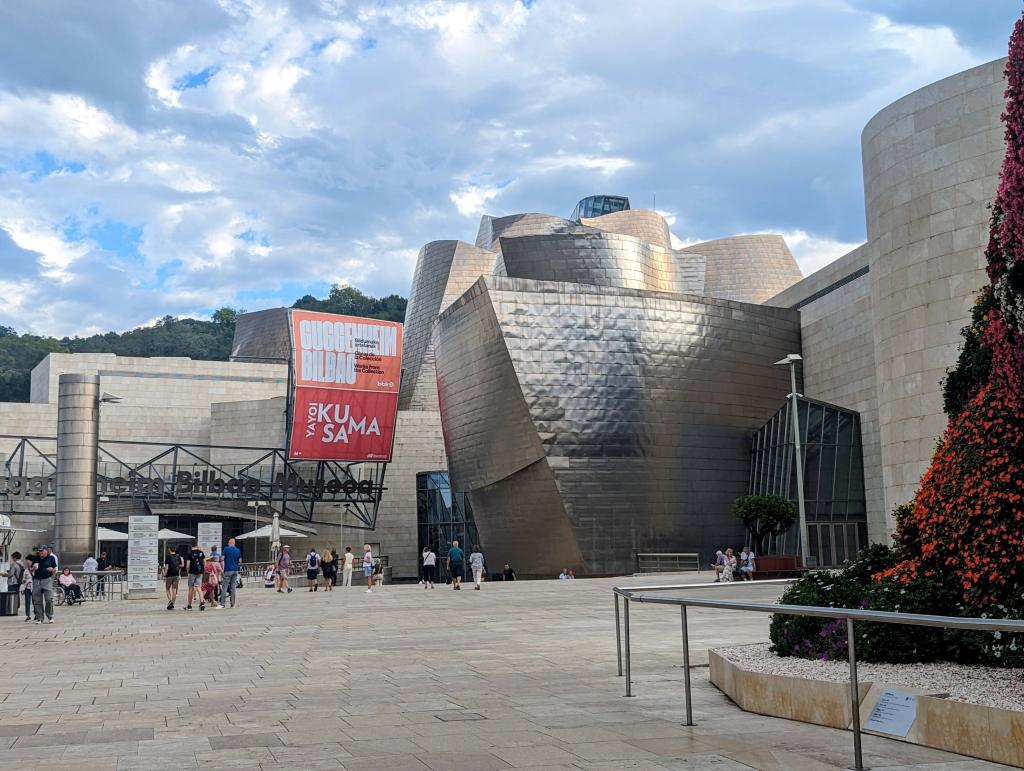
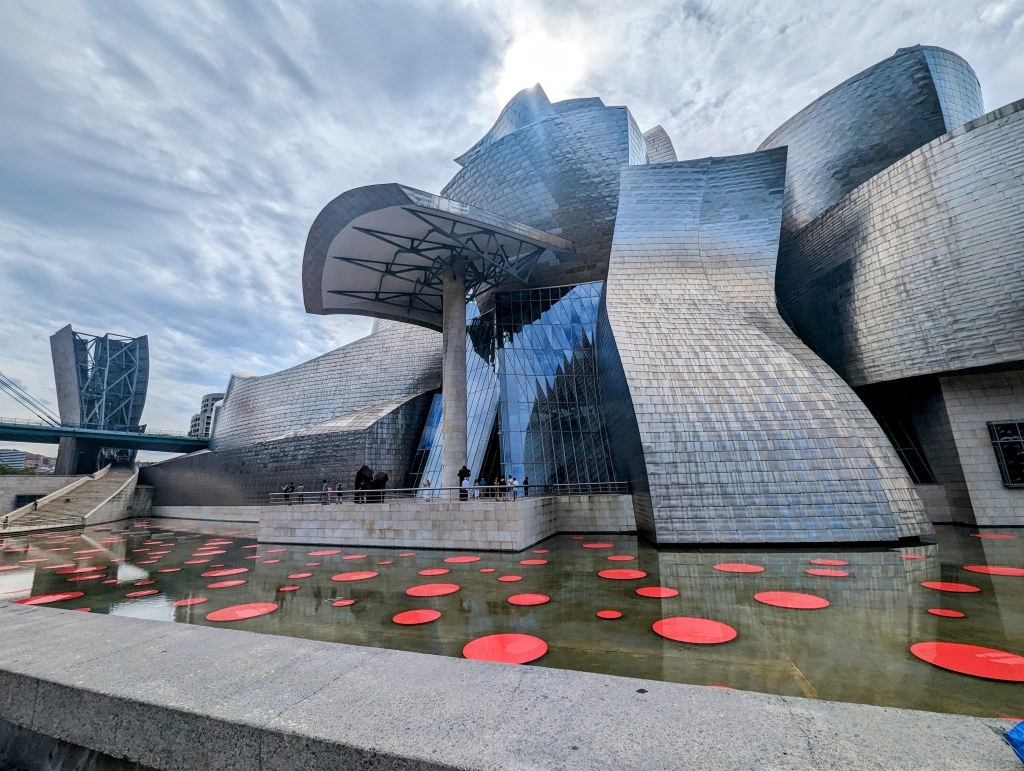
The building itself is as interesting as any of the art installations.
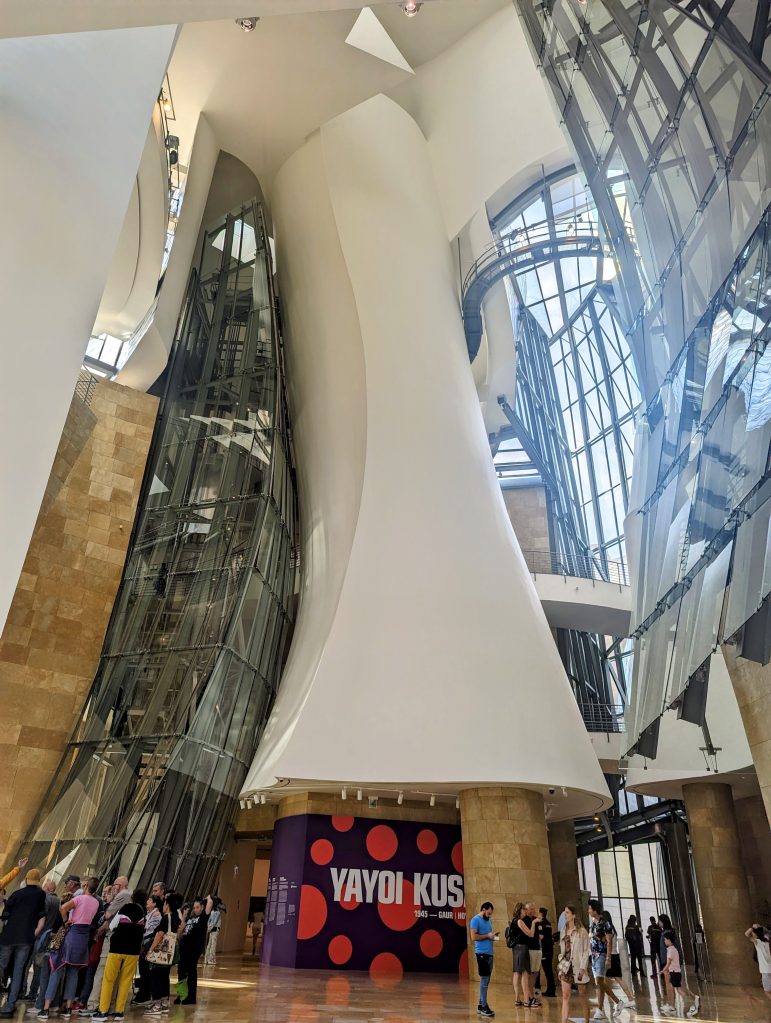
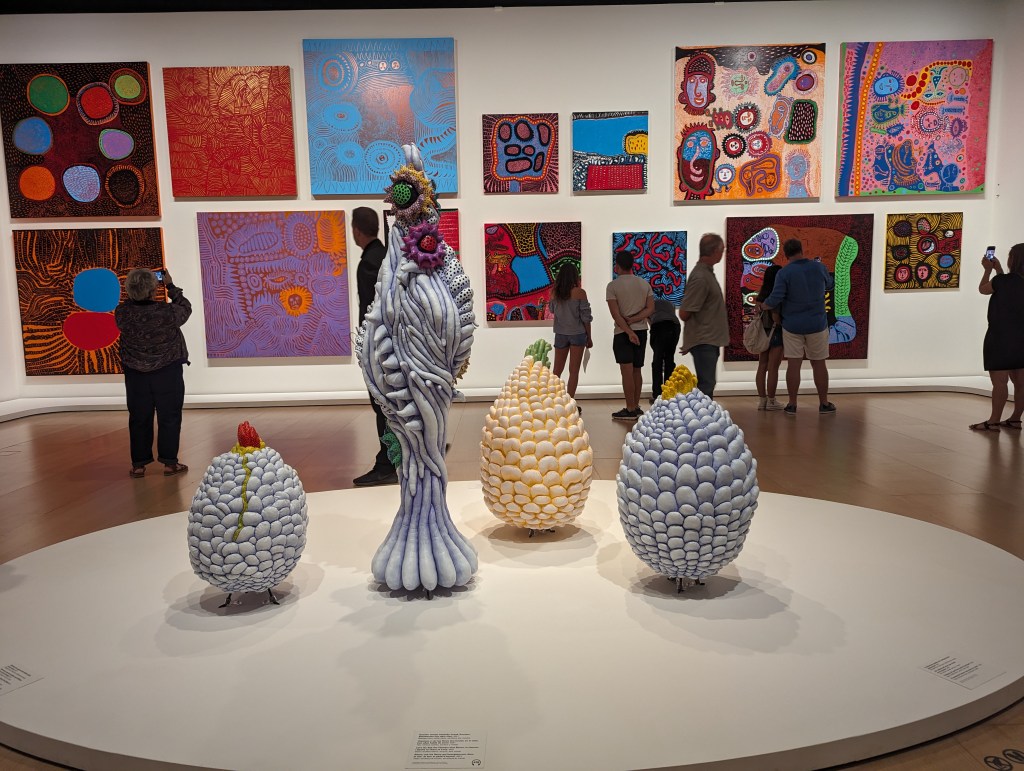
The special exhibition was a retrospective of Japanese artist Yayoi Kusama.

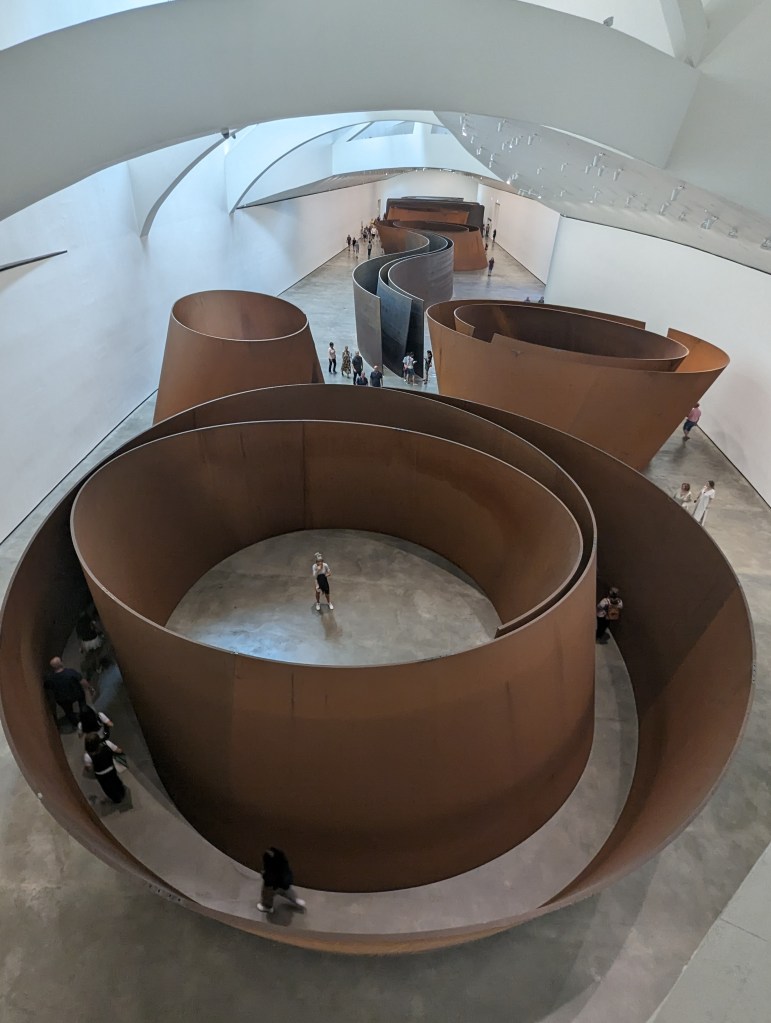
Another interesting installation was that of Richard Serra, which one could experience both by walking through as well as viewing from above.
But again, it was the building itself that most impressed.
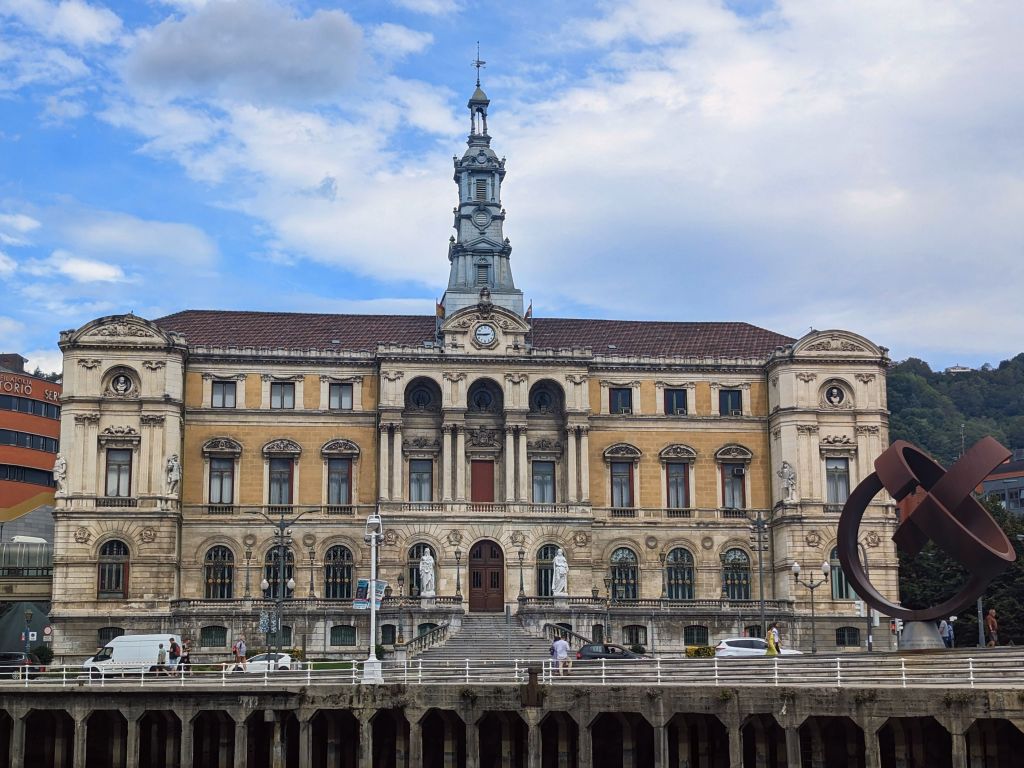
We had a late leisurely lunch of local flavors, then strolled home along the river, passing city hall along the way.
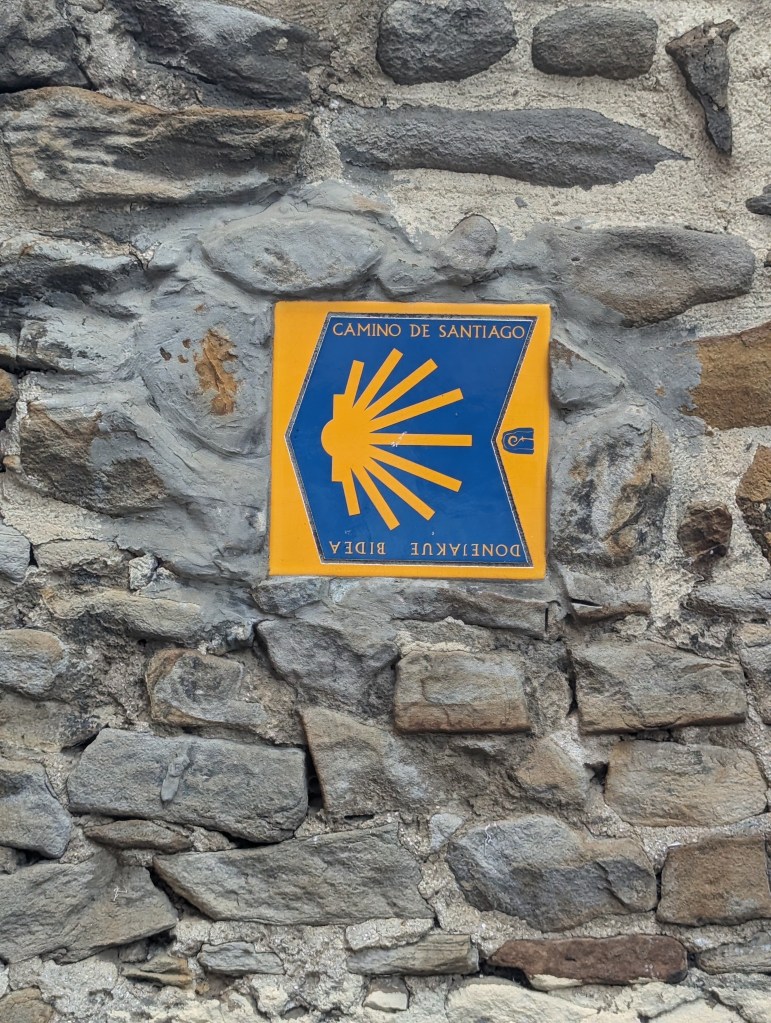
Luckily I had chosen this afternoon to catch up on photo editing and blogging, because as I write, it is pouring outside. Apparently it rains >120 days a year here, so we have been very fortunate indeed during our stay. Tomorrow we pick up our rental car and will start to visit some more sites along the Camino de Santiago, albeit driving. Bilbao was our first stop.
 Jo & Eric's travels
Beautiful pictures and great commentary!
LikeLike