
Friends asked me a few nights ago if there was a standout place so far, and I had replied it was all so good. But this is it! Donostia-San Sebastian (Donostia is Basque for San Sebastian) has it all: mountains, seaside, history, mix of cultures, architecture, and oh the food! San Sebastian boasts that after Luxembourg and Kyoto, it has the most Michelin stars per capita than any other city in the world. Although we did not manage one during our stay, the restaurants we chose were superb.
In addition to all the above, what makes San Sebastian so special is the mix of cultures: Basque and Spanish, but French as well, being so close (20km) to the border. It seems everyone here from the shopkeepers to the hotel cleaning staff speak at least 4 languages: Basque, Spanish, French, and English. It is humbling. For anyone following along on a map, it may seem odd that we traveled west from Bilbao to Santander then doubled back past Bilbao to San Sebastian. Bilbao was most accessible by train from Madrid. We then wanted to see some of Spain’s northern coast – the northern route of the Camino de Santiago. But from San Sebastian we then head south to follow the French route of the Camino de Santiago. Apparently there are several “official” routes, the French being the most popular.
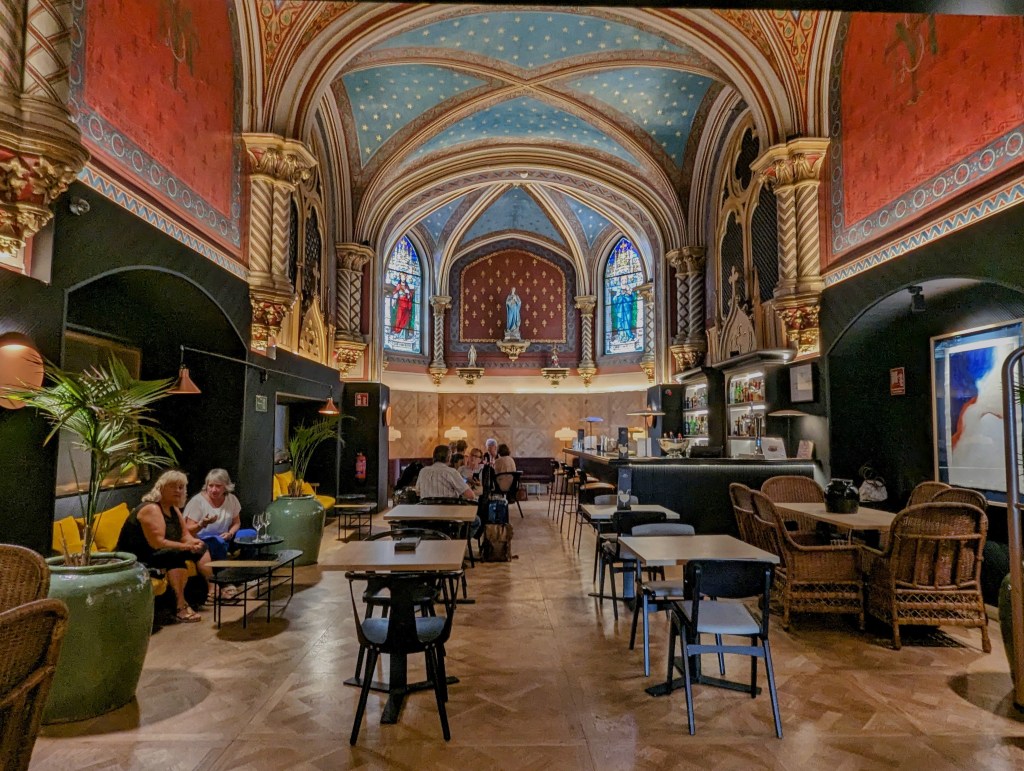
We checked into the Hotel Zenit Convento San Martin, not a Parador, but a hotel from the restored Convent of St. Martin built in 1887 from stones of a local quarry.
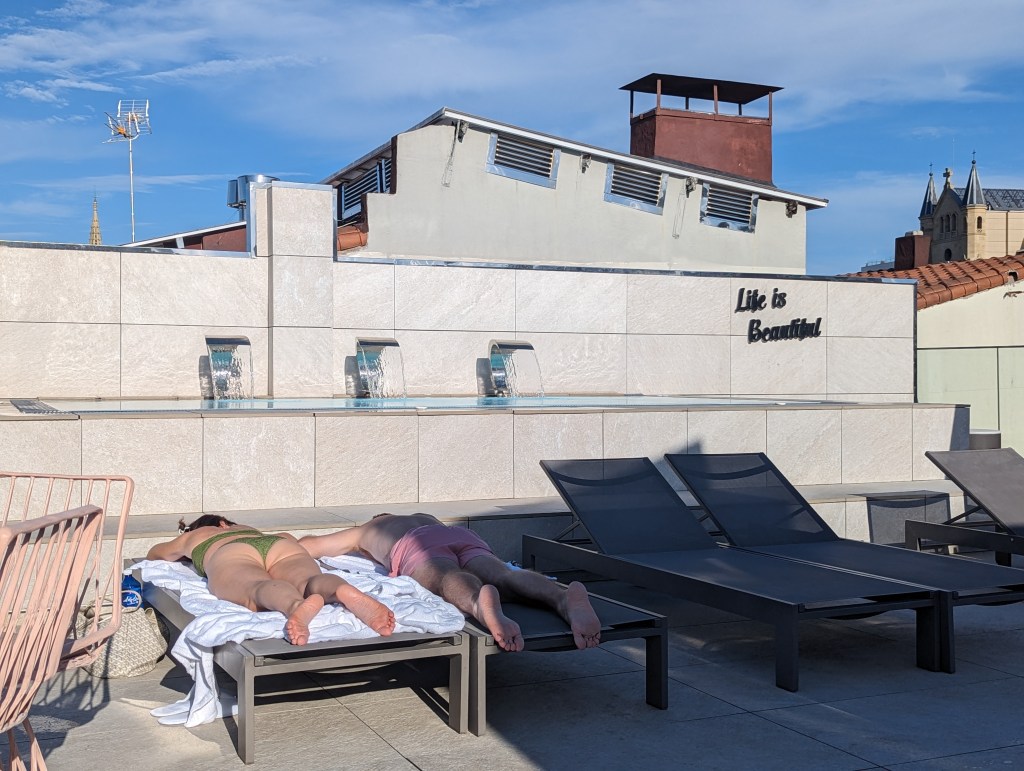
And it had a rooftop pool deck.
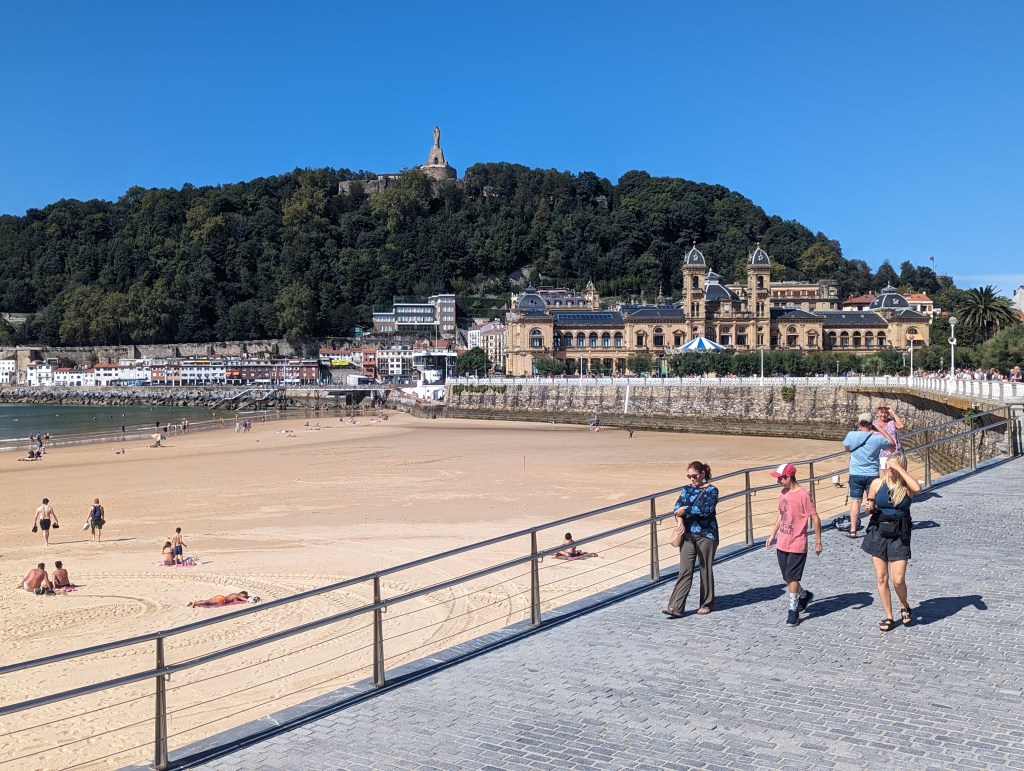
We were not in the old city, but just a few blocks from it and the beach.

After a most delicious lunch, we spent our first afternoon strolling around the Old Quarter.
And we visited the Basilica, an 18th century Baroque work of art right at the foot of Mount Urgull.
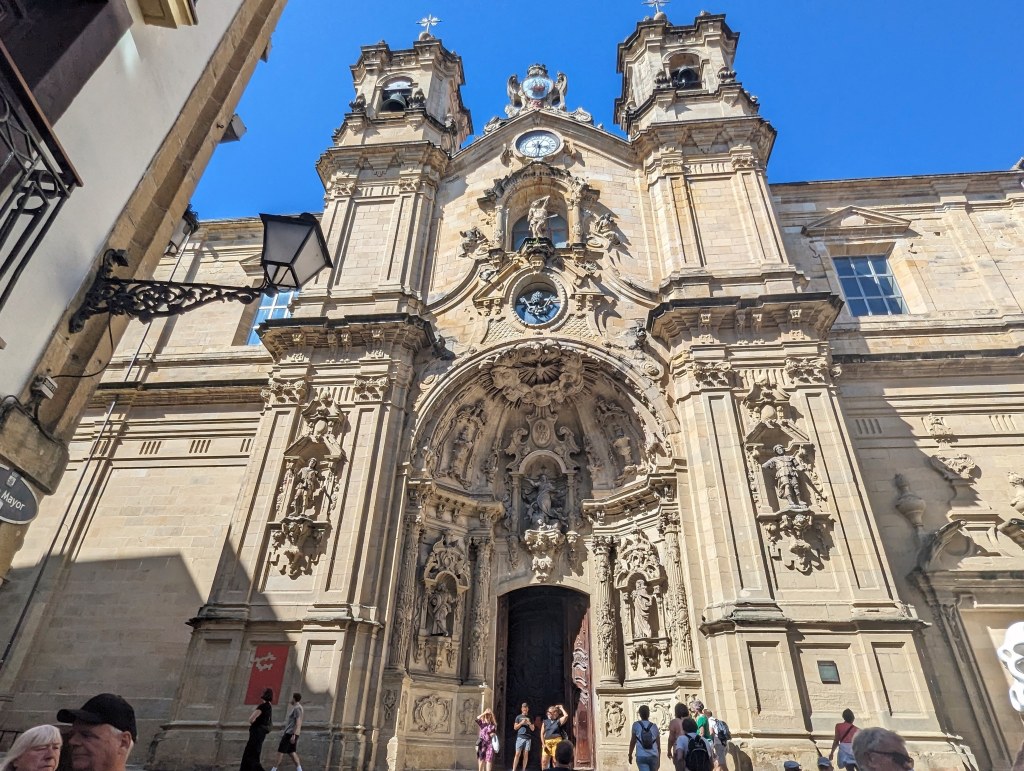
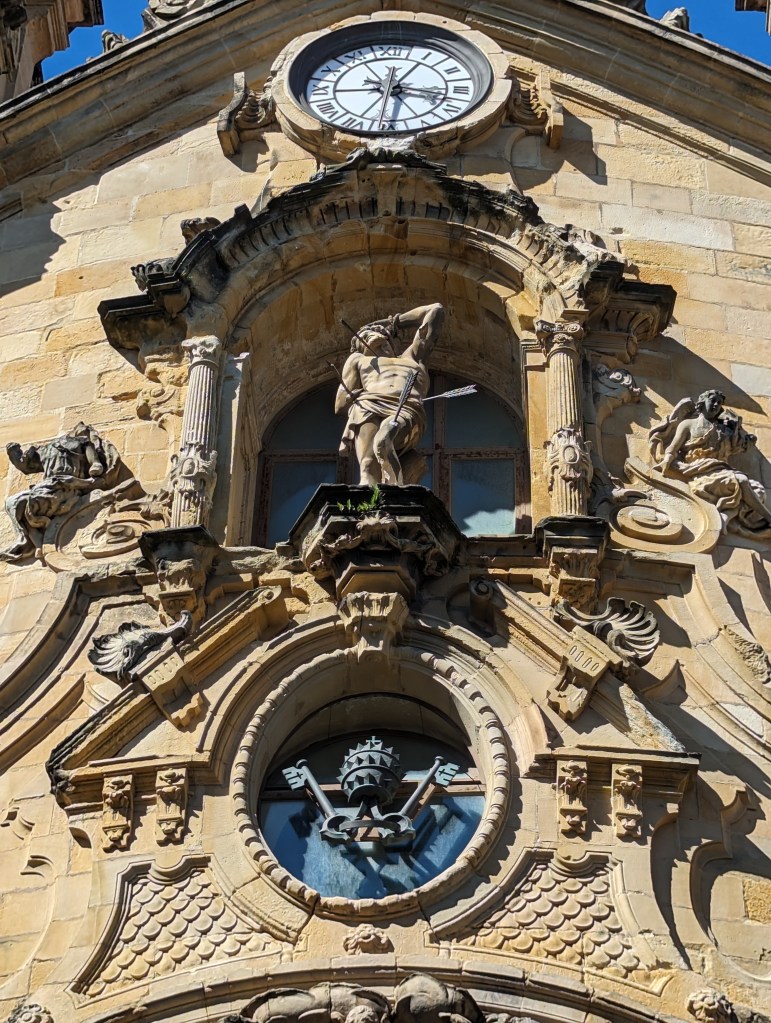
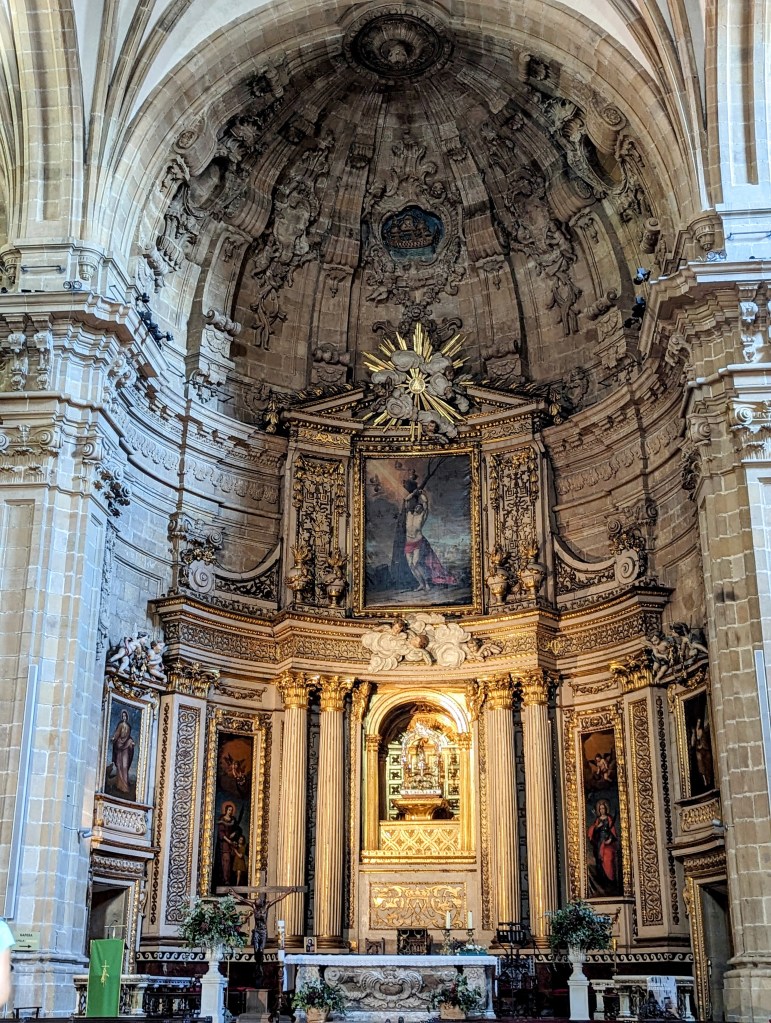
Like so many churches, cathedrals, and basilicas in Spain, it was chock full of works of art.
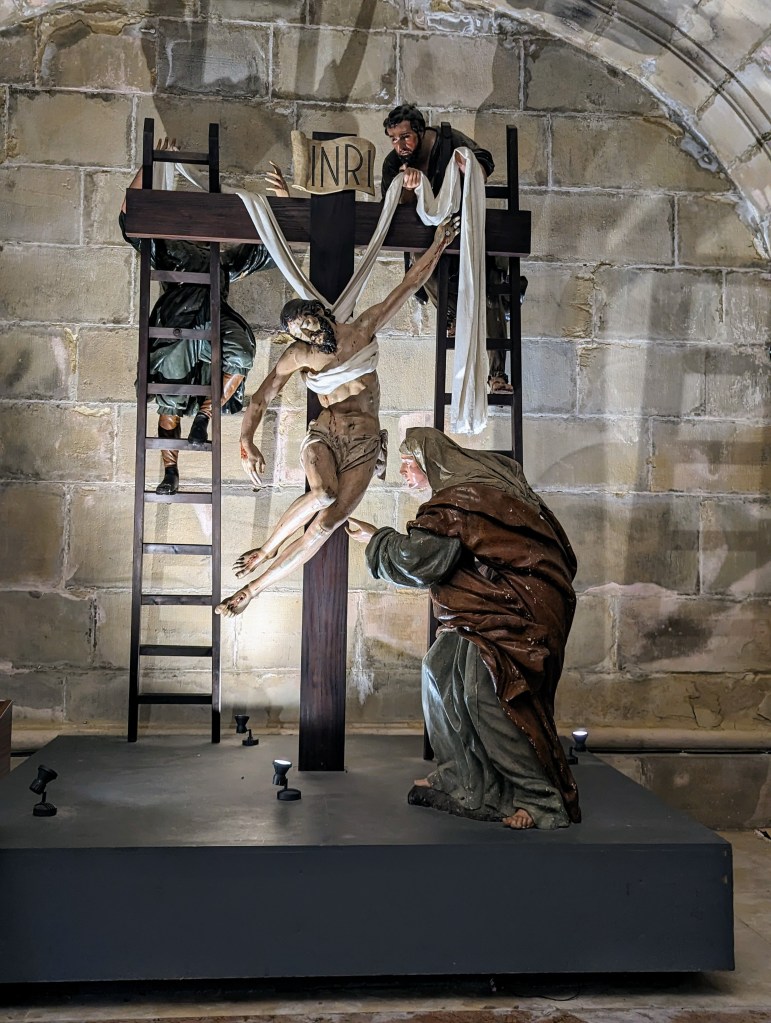
Leaving the Basilica one can see the Cathedral through the streets of the Old Quarter.

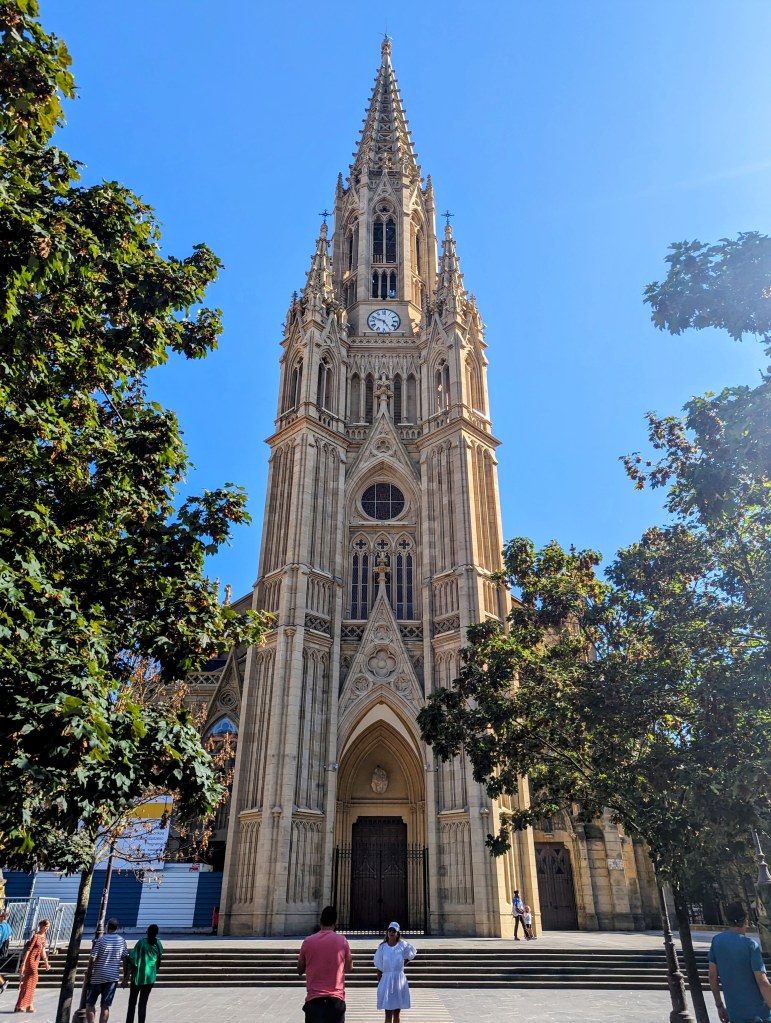
We headed that way before returning to our hotel. The Cathedral of the Good Shepherd is Neo-Gothic style built in the late 19th century also from stones of local quarries; it achieved cathedral status in 1953.
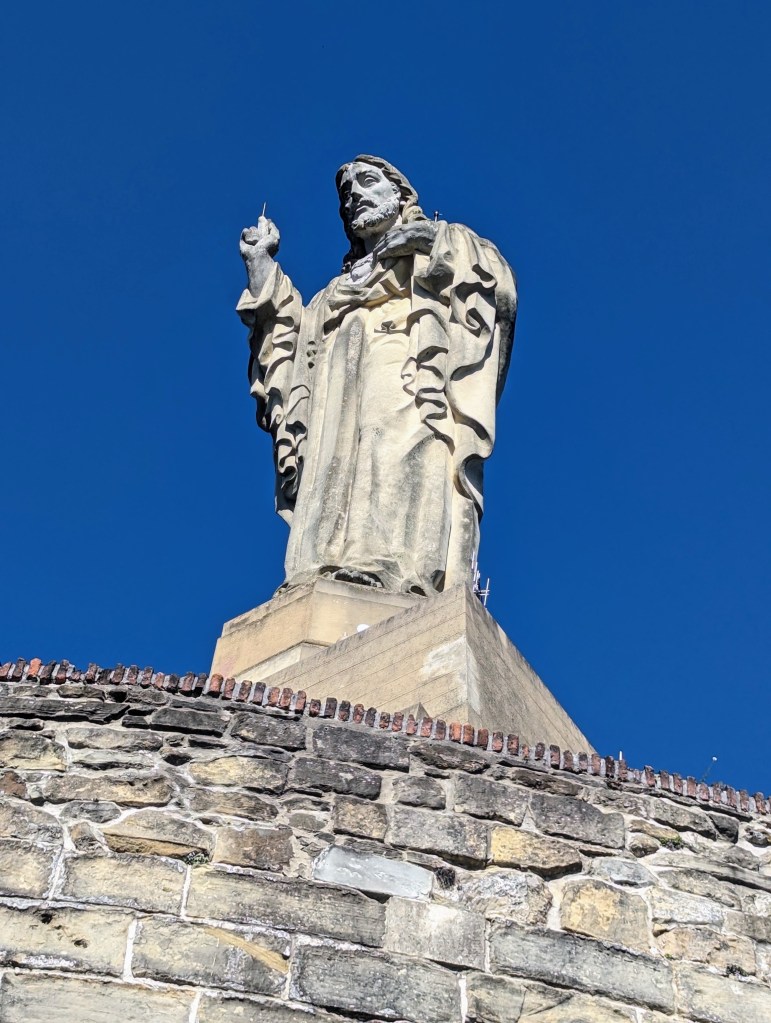
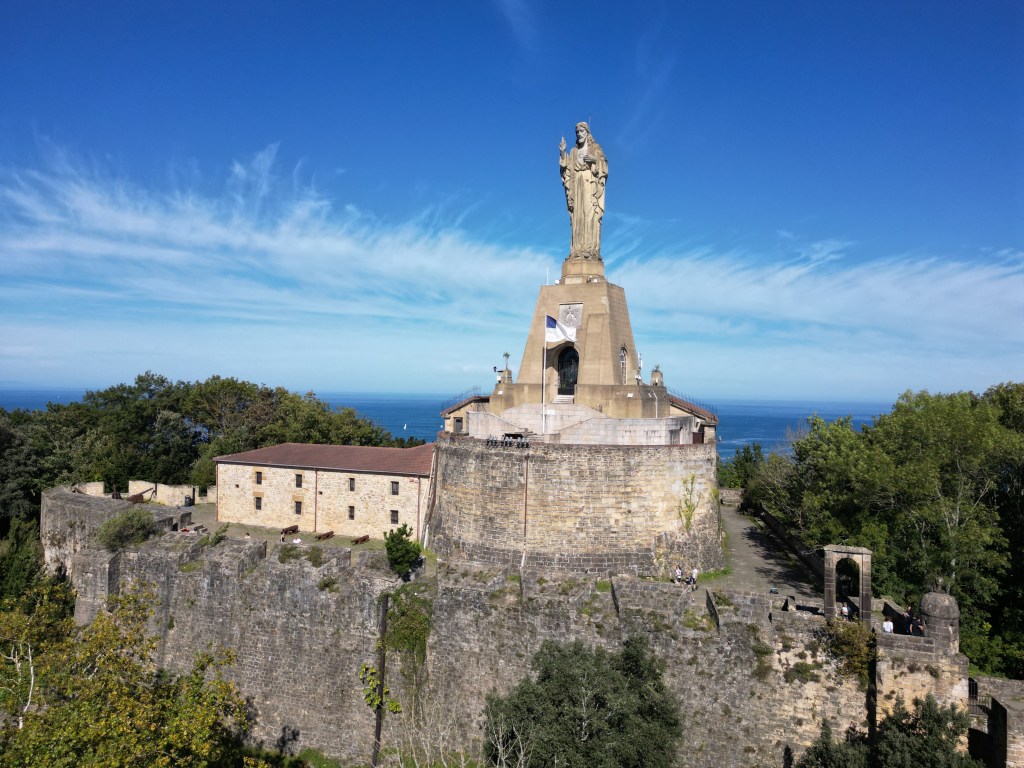
The next morning we decided it was time to climb Mount Urgull, on the top of which is a 12th century fortress and castle presided over by The Sagrado Corazón (“Sacred Heart”) statue, which, measuring over 12 metres in height, has blessed the city since 1950 from the highest point of Monte Urgull. The statue itself rests upon a base which houses a chapel, making the entire monument more than 24 metres in height. Also known as the Cristo de la Mota, this monument is at one with the landscape of Donostia.
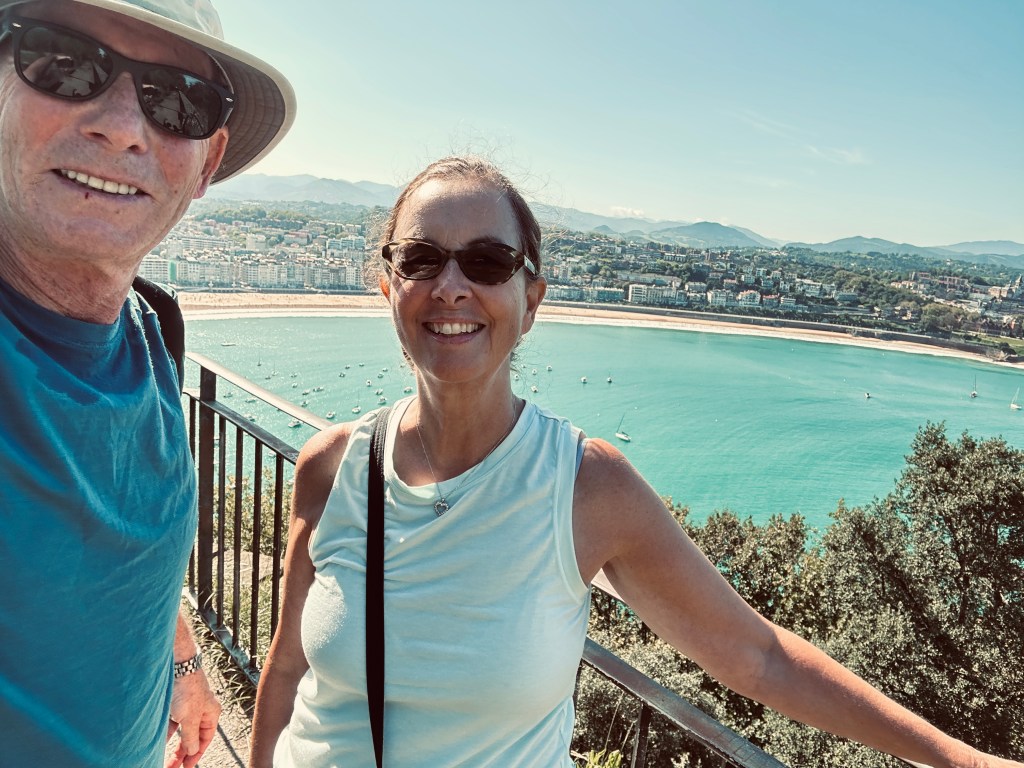
It was a long hike up, but we made it!
After hiking back down, we treated ourselves to pintxos and beer.

Walking back for a well deserved rest, we passed so many street artists. In addition to the usual guitarists, there were several sand artists, some making political statements.

and even a couple dancing Argentine Tango.

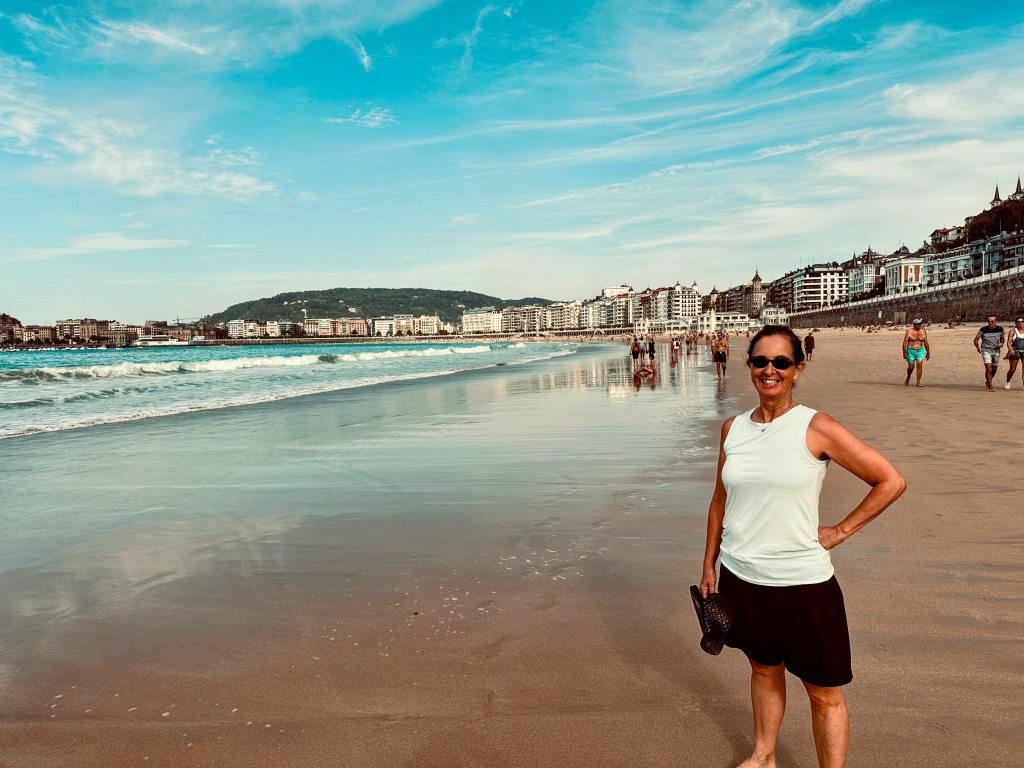
After a rest, it was time for a walk on the beach.
Dinner was at Astelena 1997, and it was a stand out meal.
The next morning our weather luck finally gave out; we awoke to rain. It rains an average of 160 days a year in San Sebastian, 199 last year, so it was bound to happen. We had a walking tour with Daniel (no tour available in English day prior). Donned with raincoats and an umbrella we headed out to learn more about this gorgeous city.
Although there is evidence of human habitation since the Romans, and settlement of the Monastery of San Sebastian in the 11th and 12th centuries, the current city’s architecture is French-style of the late 19th century. This is the result of the occupation of the city by Napoleon’s armies in the early 19th century. On August 31, 1813 the Anglo-Portuguese troops drove the French army out. The battle that ensued caused a fire that burned most of the city, with only a few stone churches and other buildings left standing.
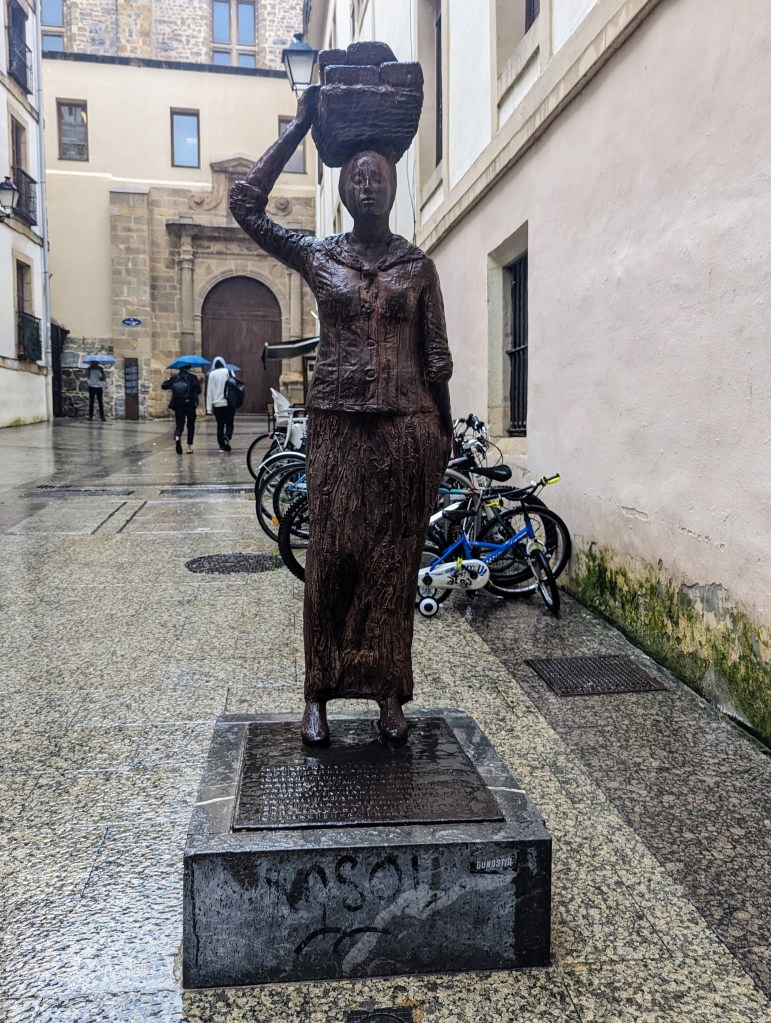

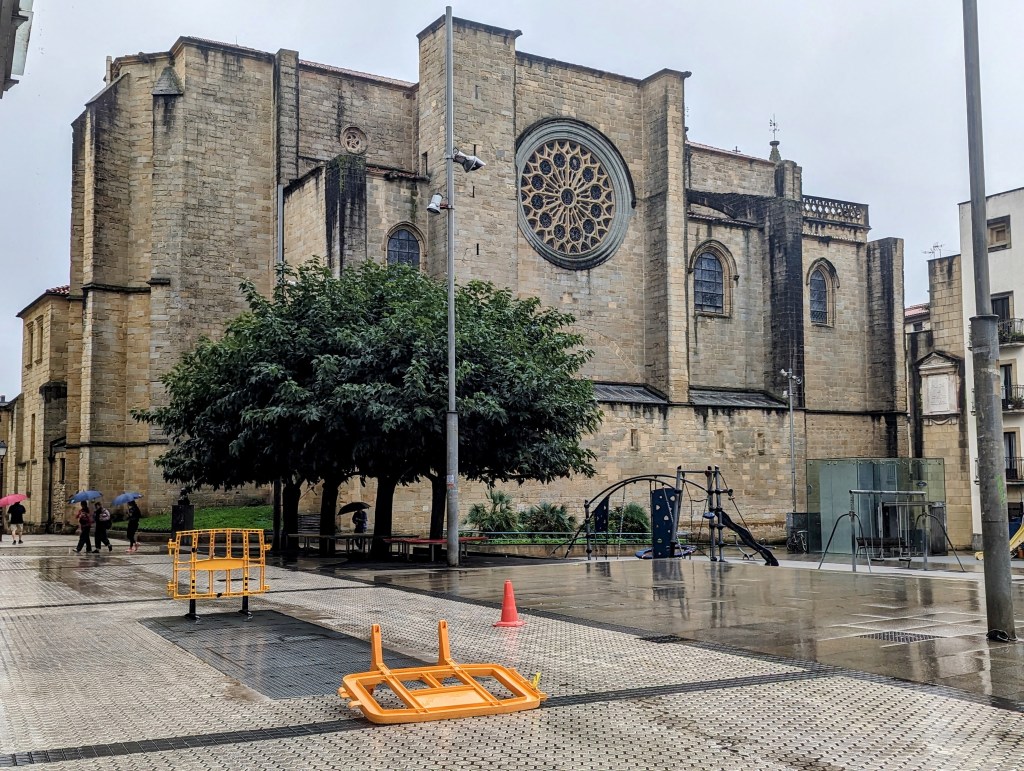
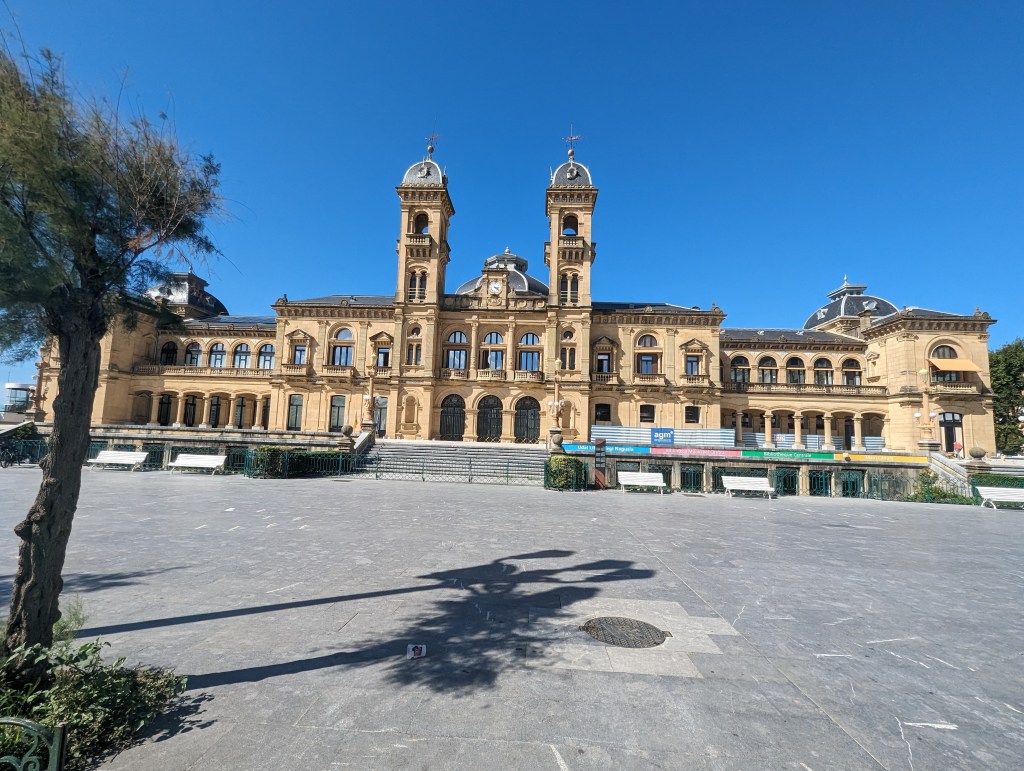
Most of the remaining buildings are from the 19th century. The center plaza which housed the original “new” city hall, now a cultural office, was originally a bull ring. Not well seen in this photo, the numbers above the doors on the left referred to the ticket holders’ spot to stand for the fight. These apartments surround the square. The owner occupants were required to allow spectators to pass thought their apartments for the fight, and the money for the ticket went to the city. But the owner could sell food and drink for a profit.
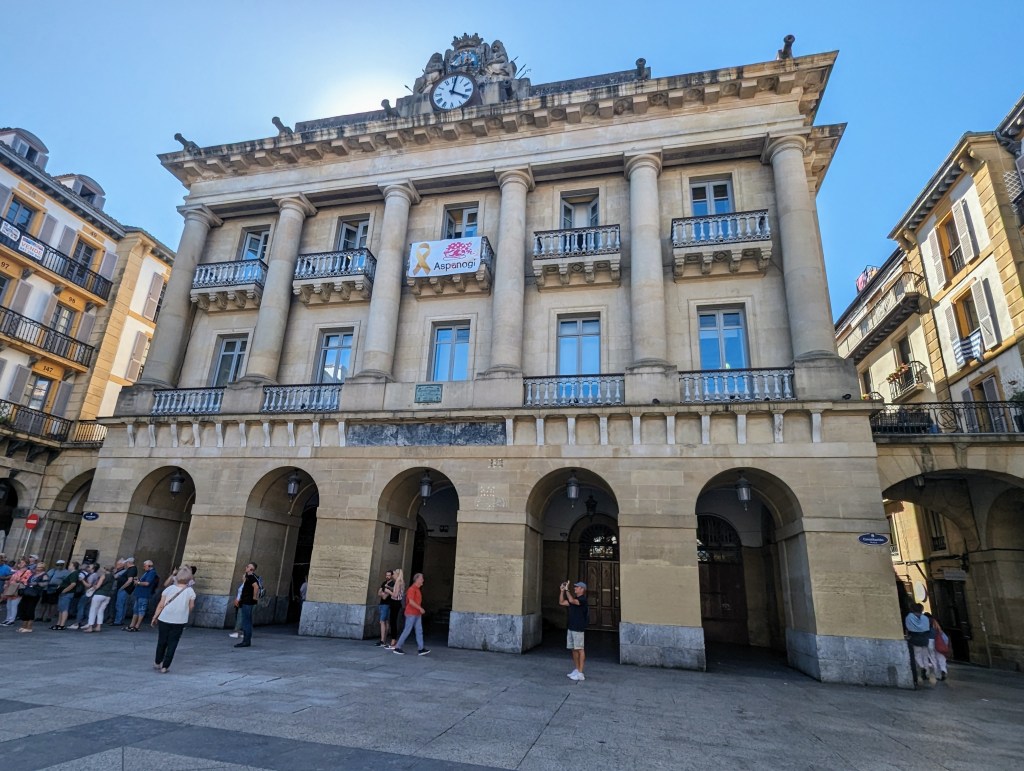
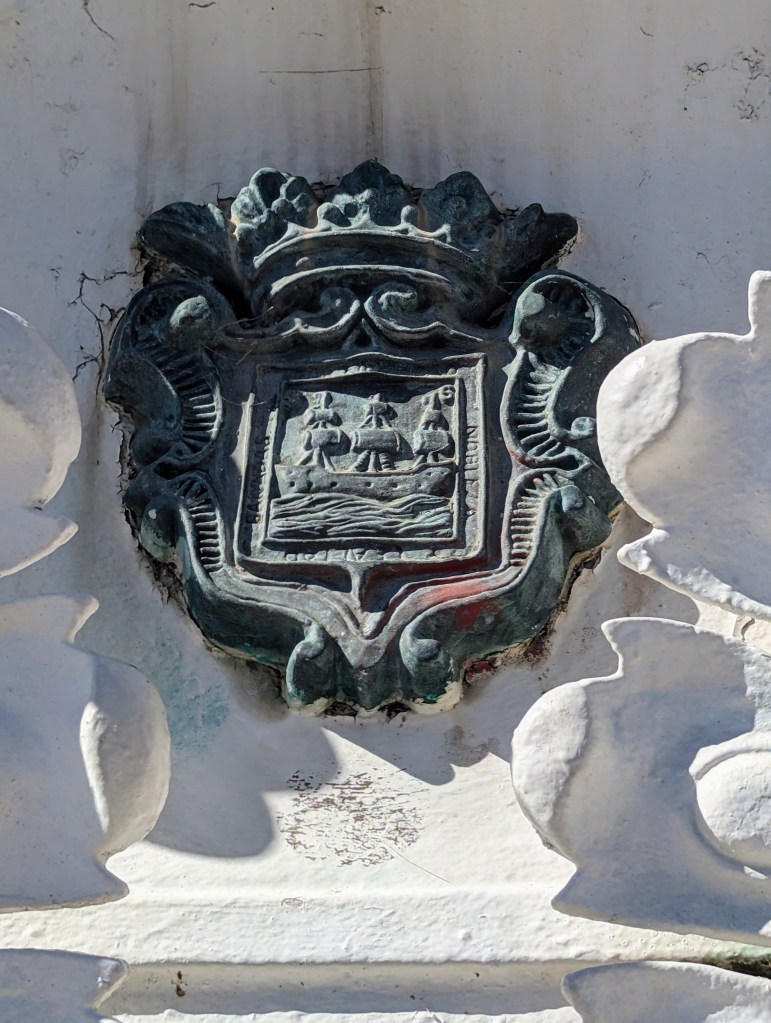
The city shield, barely seen above the clock, is that of a ship pointing west. The original shield had the ship pointing east until the discovery of the Americas, and the ensuing wealth brought, when the ship on the shield was turned.
It was Queen Maria Cristina of Austria who helped put San Sebastian on the “modern” map. In the late 19th century, she had a palace built there and used the beach to sunbathe and swim, practices that were considered only for commoners and fisherman prior. San Sebastian was her summer residence.
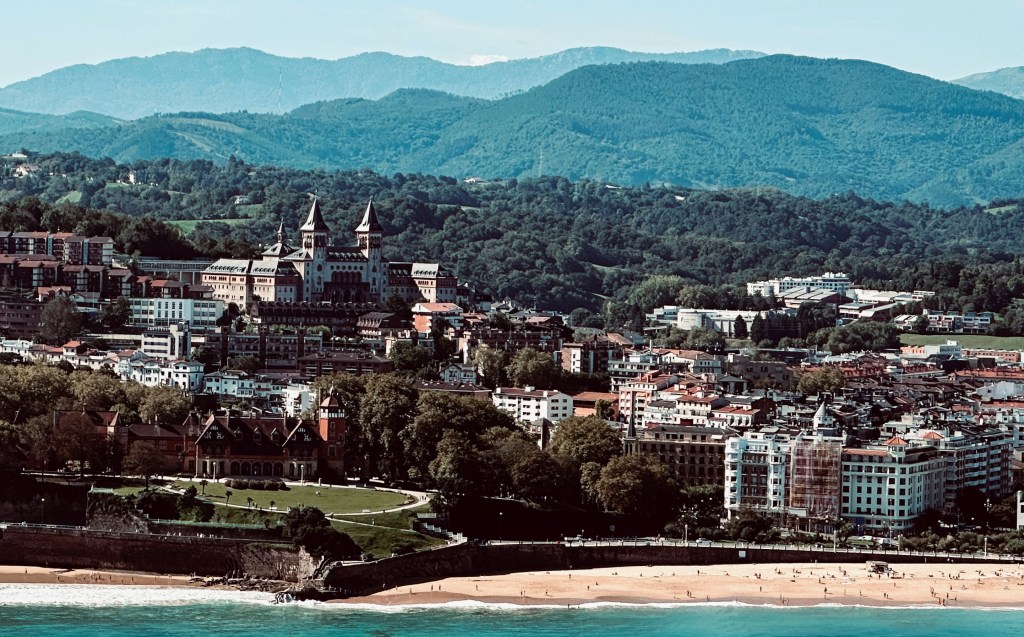
It was Queen Maria Cristina who also help San Sebastian’s tourism growth as a gambling center with large casinos built prior to the development of Monte Carlo in France. There are a few casinos remaining.
Cold and wet after the tour, we went back to the hotel to change before heading back into town to try some of the new pintxos recommended by Daniel. Dinner was another amazing experience at Gandarias Restaurante. Have I mentioned how amazing the food is! We are sorry to be leaving the Basque Country, despite its rain.
 Jo & Eric's travels
Love it all, feel like I’m there:)
San Sebastián is on my list. What a great trip.
LikeLike
Jo, you definitely have missed your calling! Your pix and commentary are so enjoyable! I feel as tho I’m right there with you! Thank u for taking the time to share this with with everyone! Keep enjoying 🥰
LikeLike