
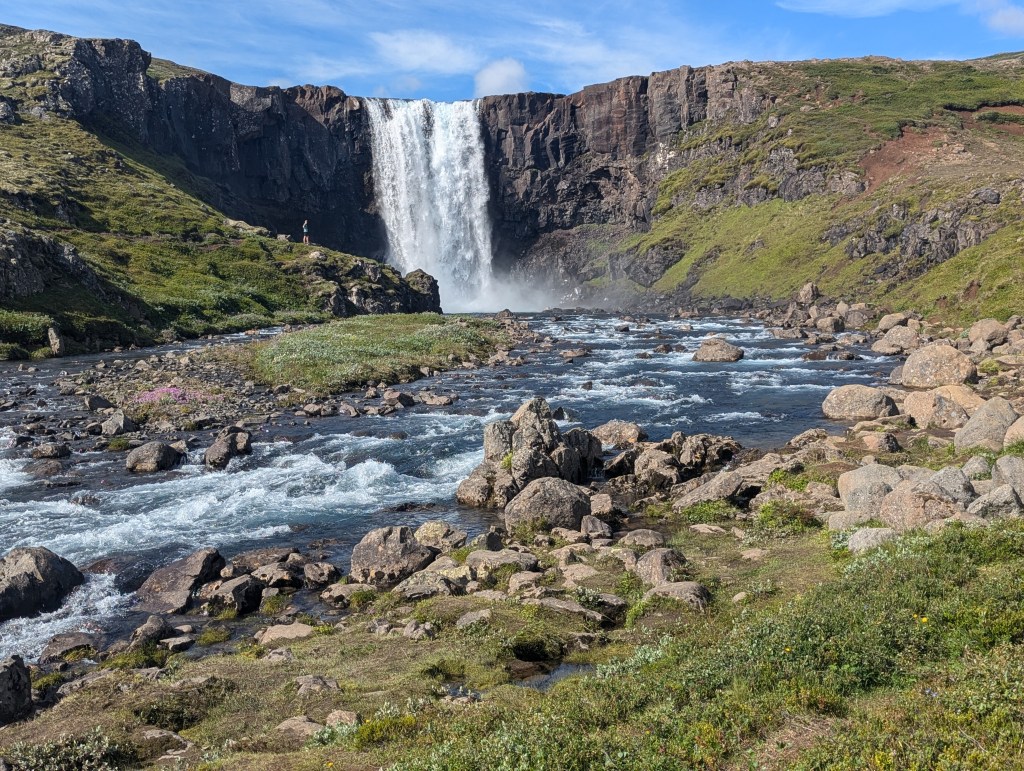
Refreshed in the morning, we said goodby to Seyðisfjörður and headed back up the mountain toward the ring road. We were struck with how many (a couple of dozen) waterfalls we had missed seeing on the way into town the previous evening due to directionality and tiredness. We stopped at this particular beauty for some pictures.
Also on the way back through Egilsstaðir we had to grab a snapshot of this. As we passed Egilsstaðir we had reached our most eastern portion of the ring road and were now headed north and west.

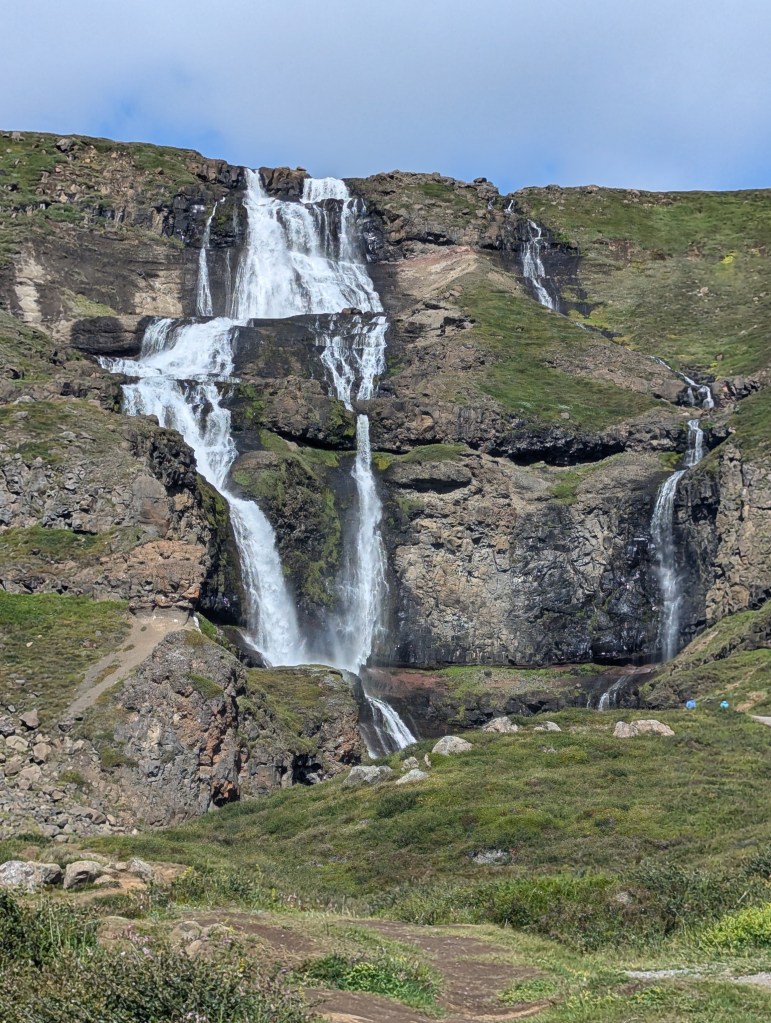
This northeastern area of Iceland was again mostly rocky and barren, not the lush beauty of the southwestern areas. But we did see endless fields of purple lupines. As we admired their beauty, we looked them up and found that they are actually an invasive species here in Iceland and causing significant problems for many farmers. Also, as thinly populated as the south was: one can drive for significant periods of time and see no dwellings, the north is even more sparsely populated. But no drive is far before there is another waterfall to capture.
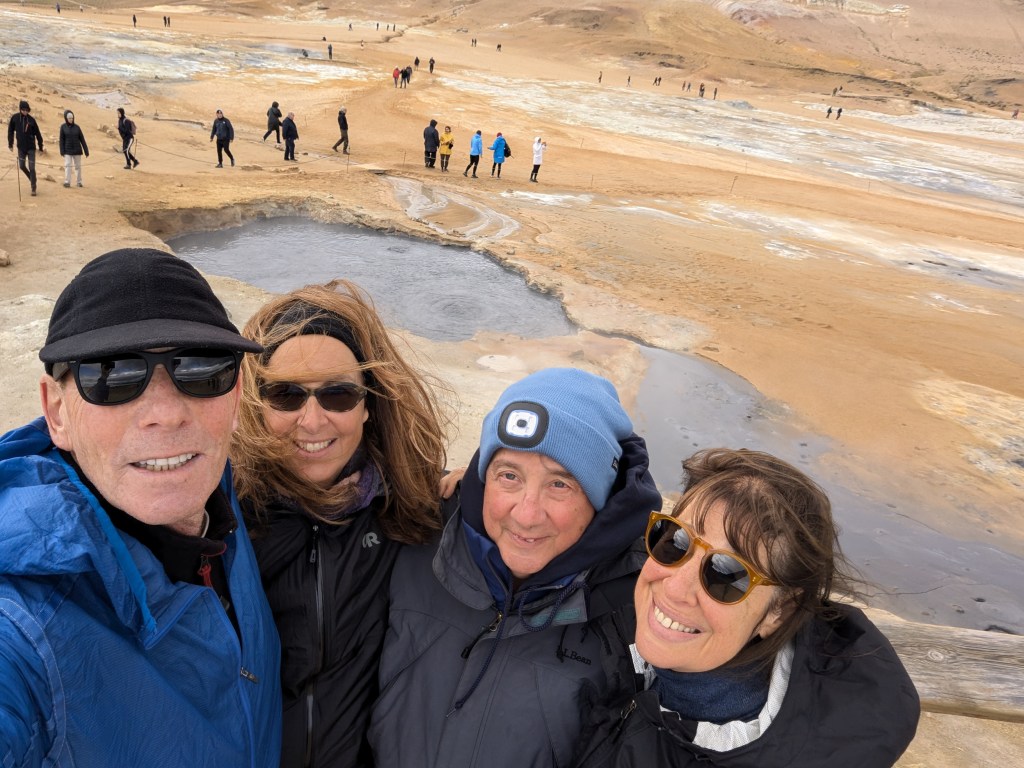
We also stopped along the way at Hverir which is one of the most active geothermal areas in all of Iceland. This region stands out for its multicolored landscapes
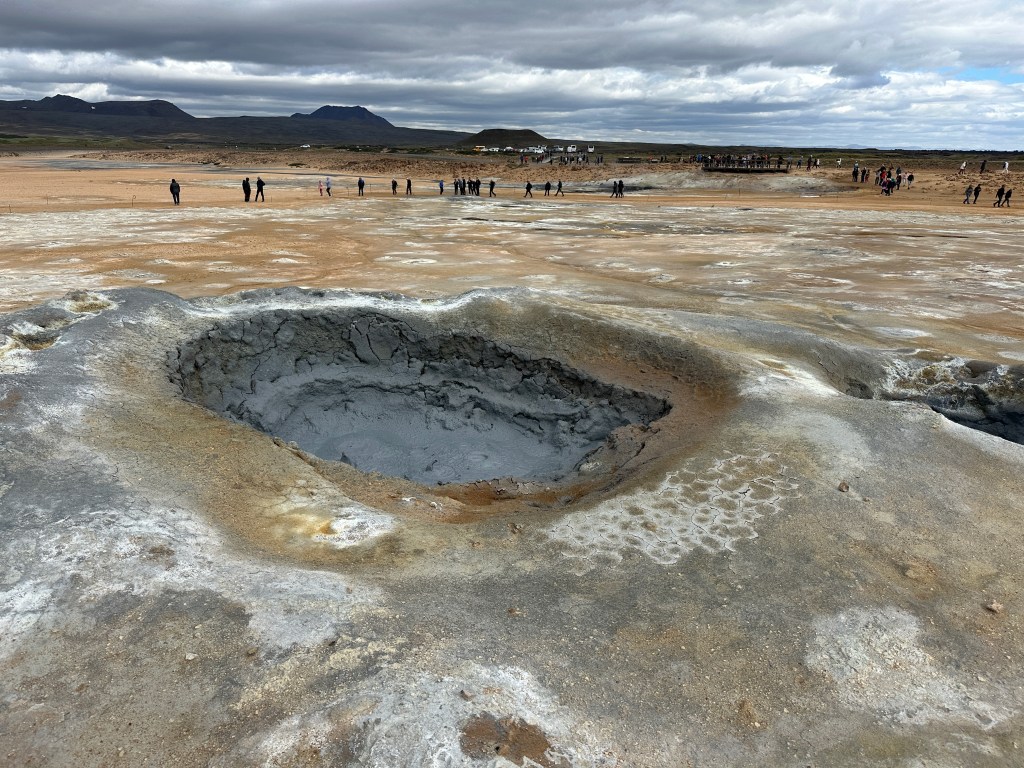
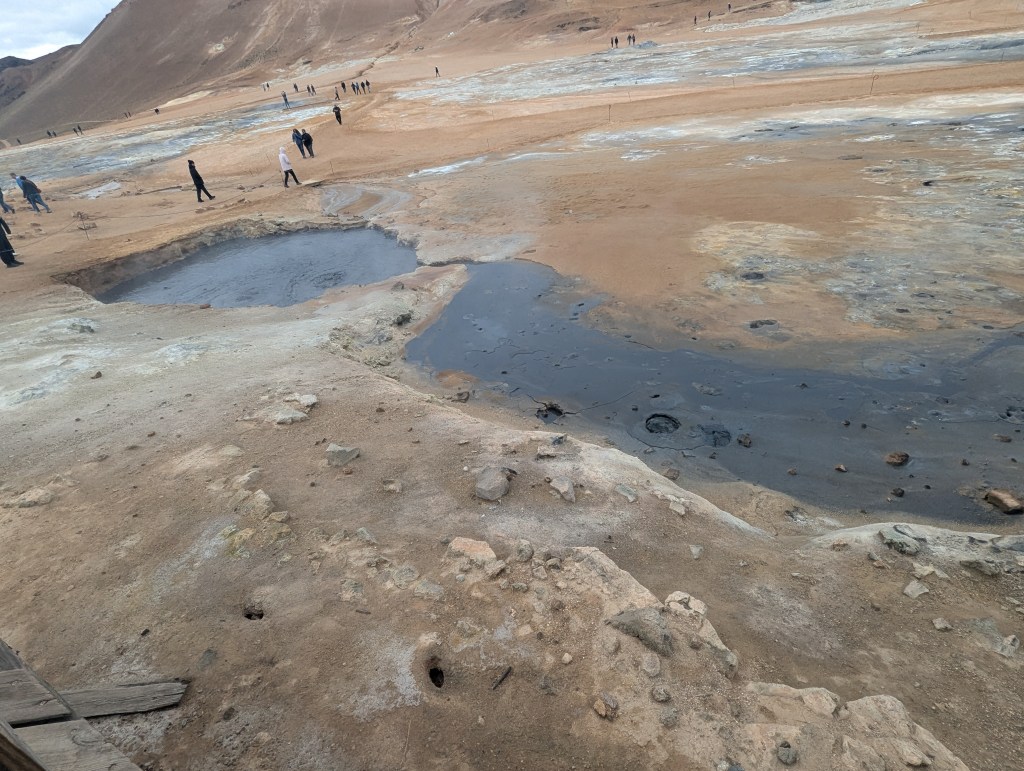
and bubbling mud pools
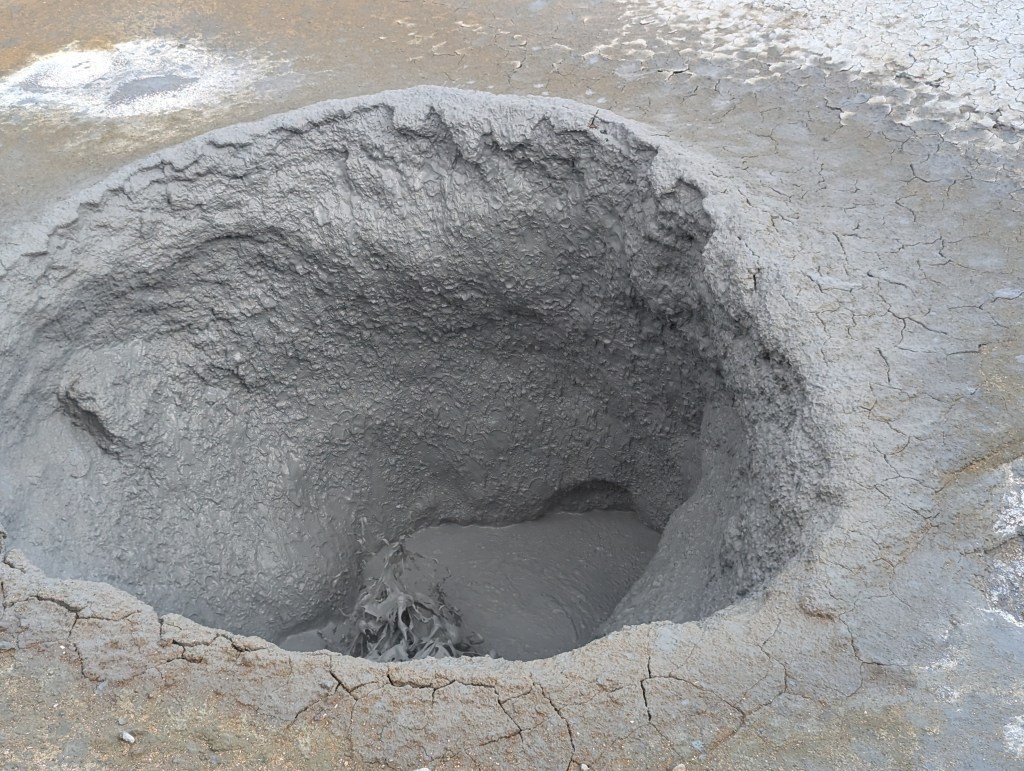
and boiling pools of water
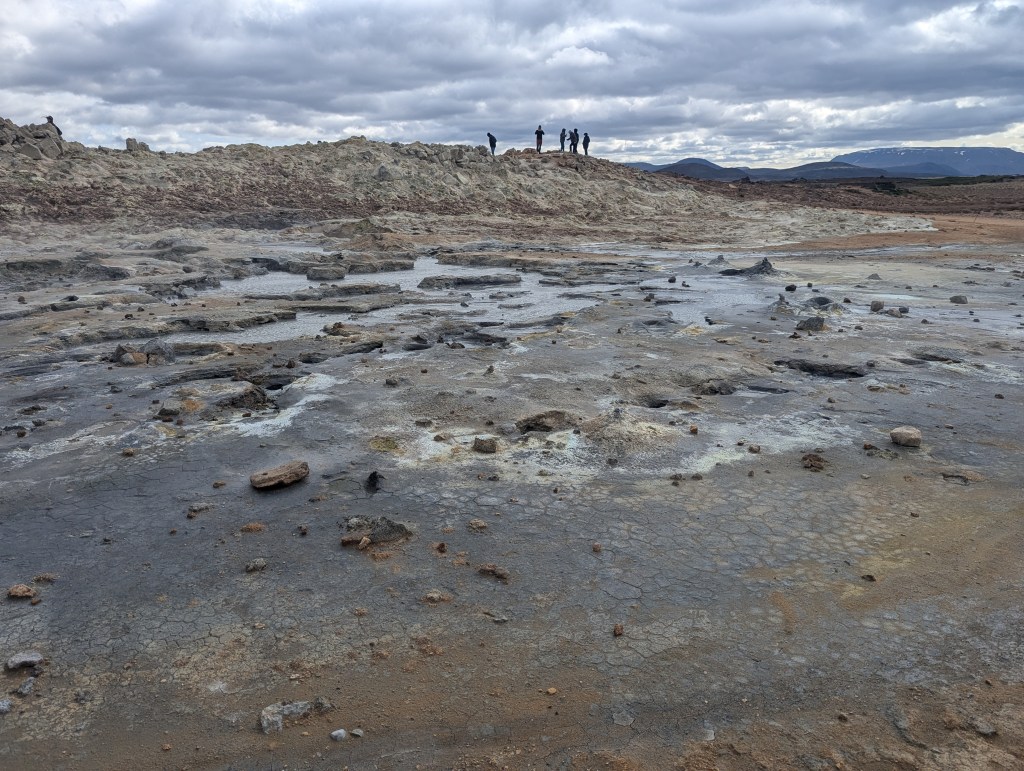
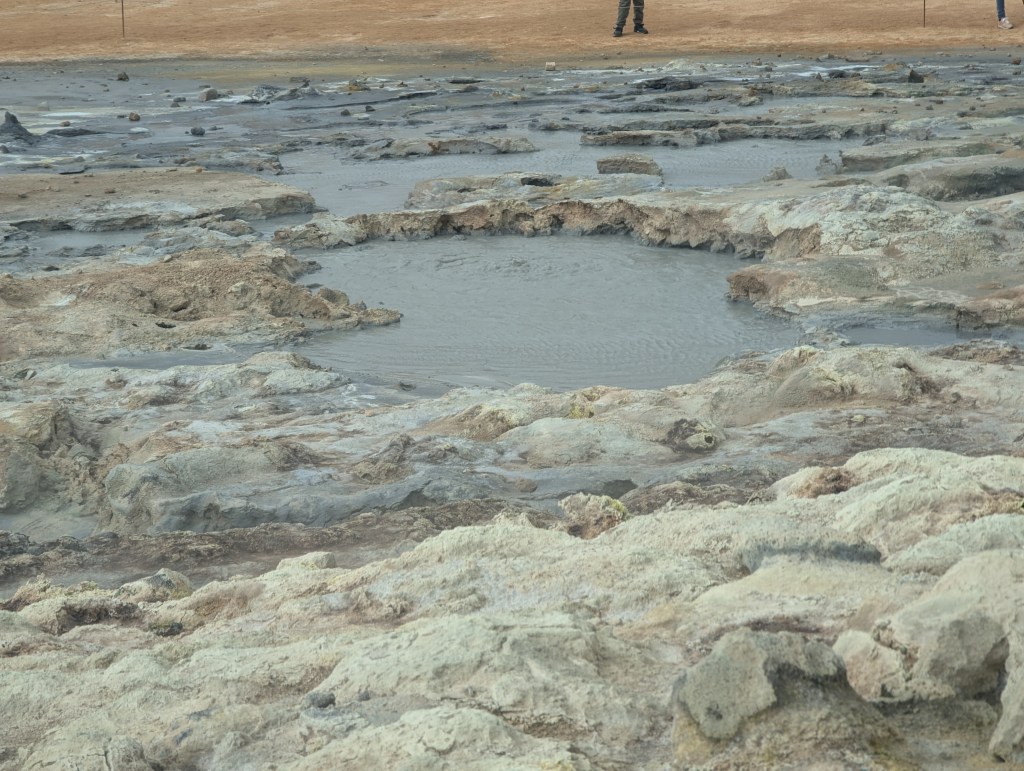
and the numerous fumaroles
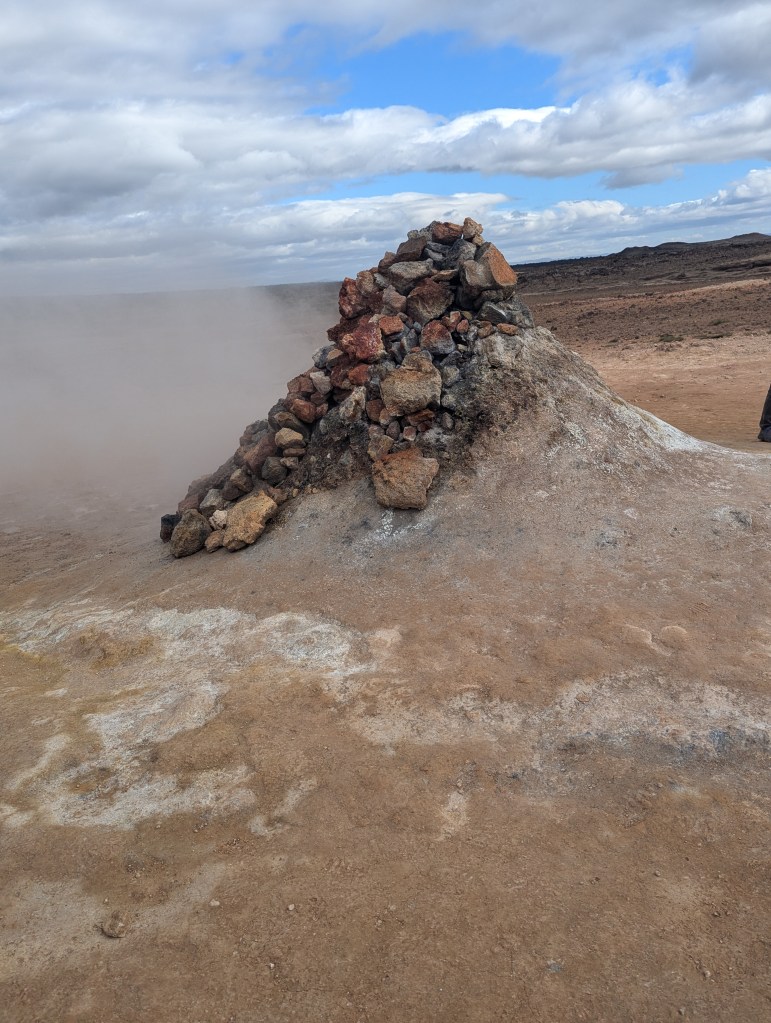
speckled across its moon-like terrain.
Finally it was time for our first dip in a hot spring. We checked in at Jarðböðin Nature Baths in Mývatn.
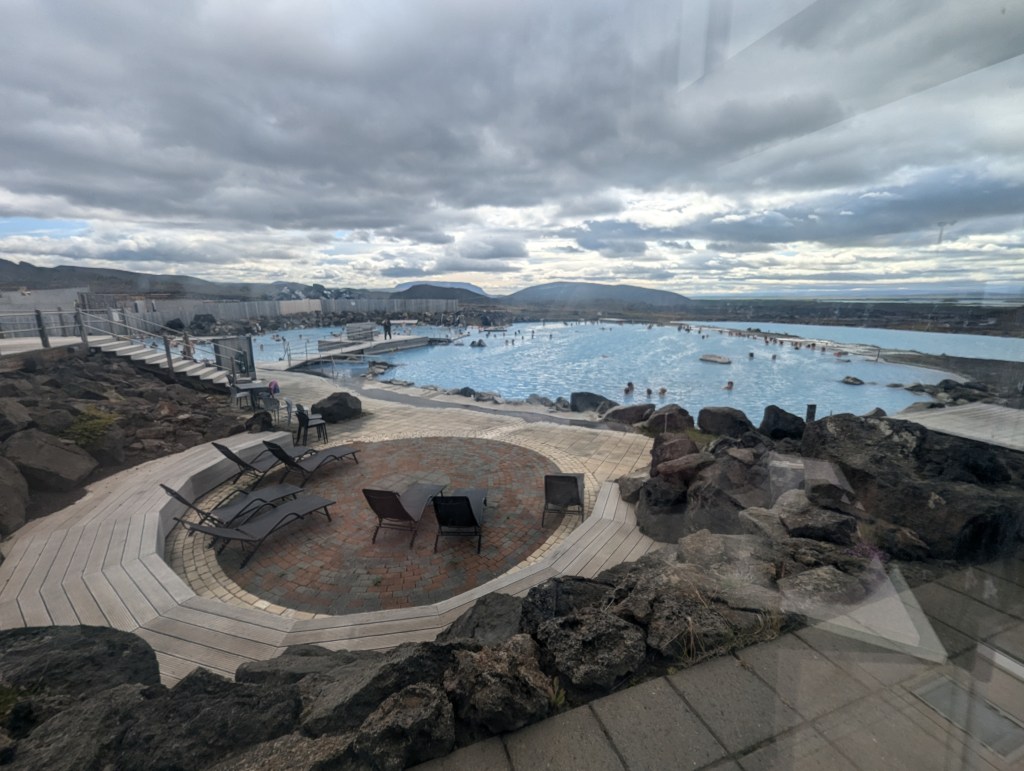
After a nice long soak and a quick shower, we drove to and around Mývatn Lake. We enjoyed an early dinner at the Skútustaðir Farmers’ Guesthouse. Afterward we strolled around the southern end of the lake enjoying the views.

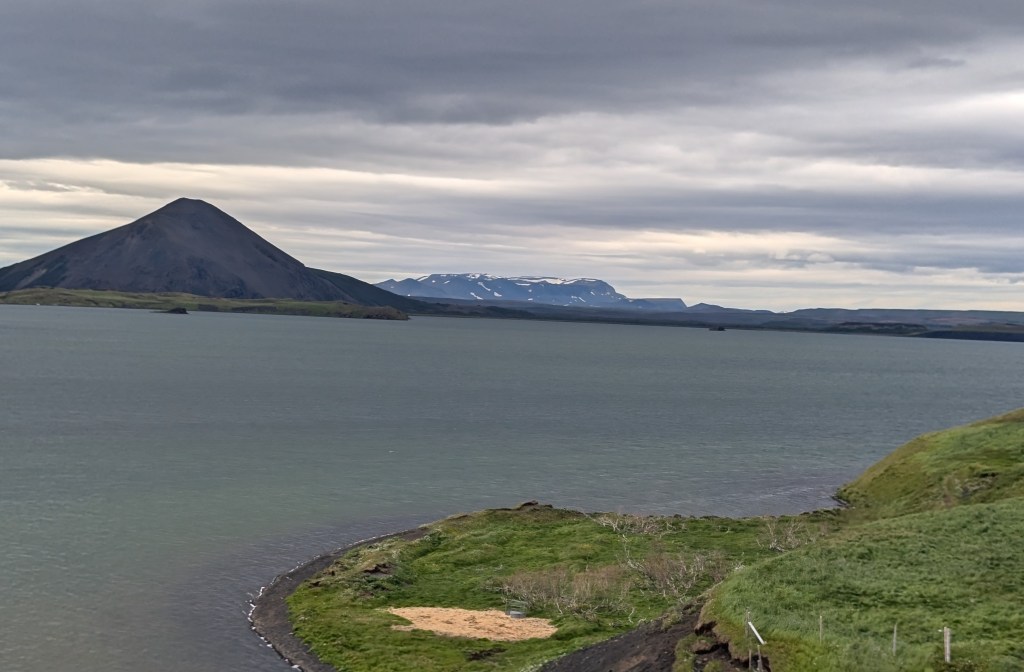
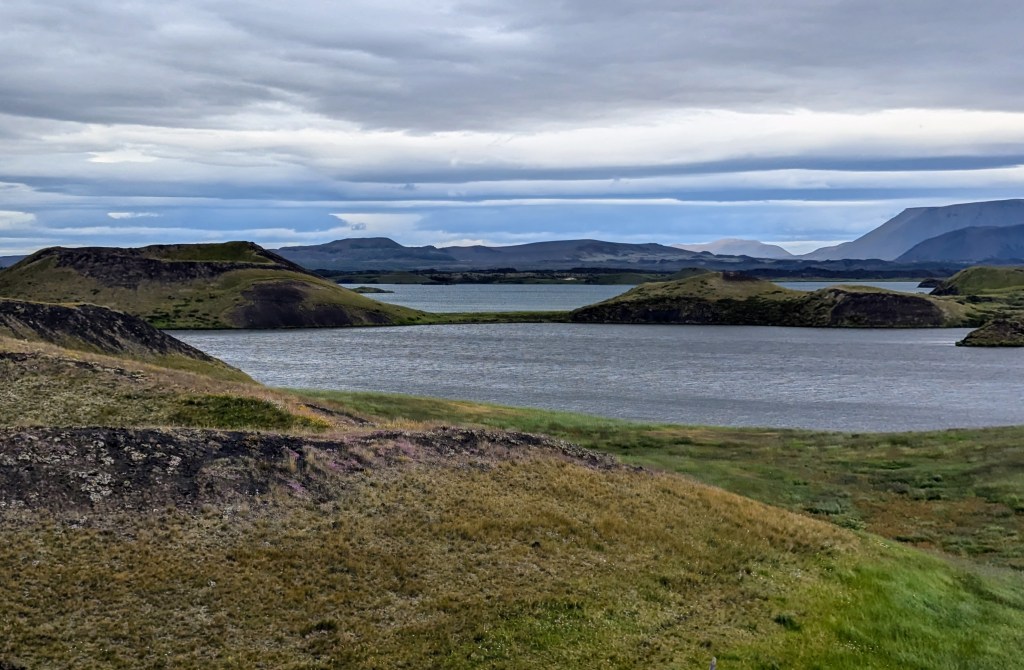
We found our AirBnb for the night in the middle of a farm 10-15 minutes from town in the middle of nowhere. We were in for the night, and it was peaceful.
Our next stop in the morning was in the town of Akureyri. Dubbed the “capital of the north,” Akureyri has always been an important fishing port town. The way it is nestled between the mountains, it has a relatively mild winter; the port never freezes.
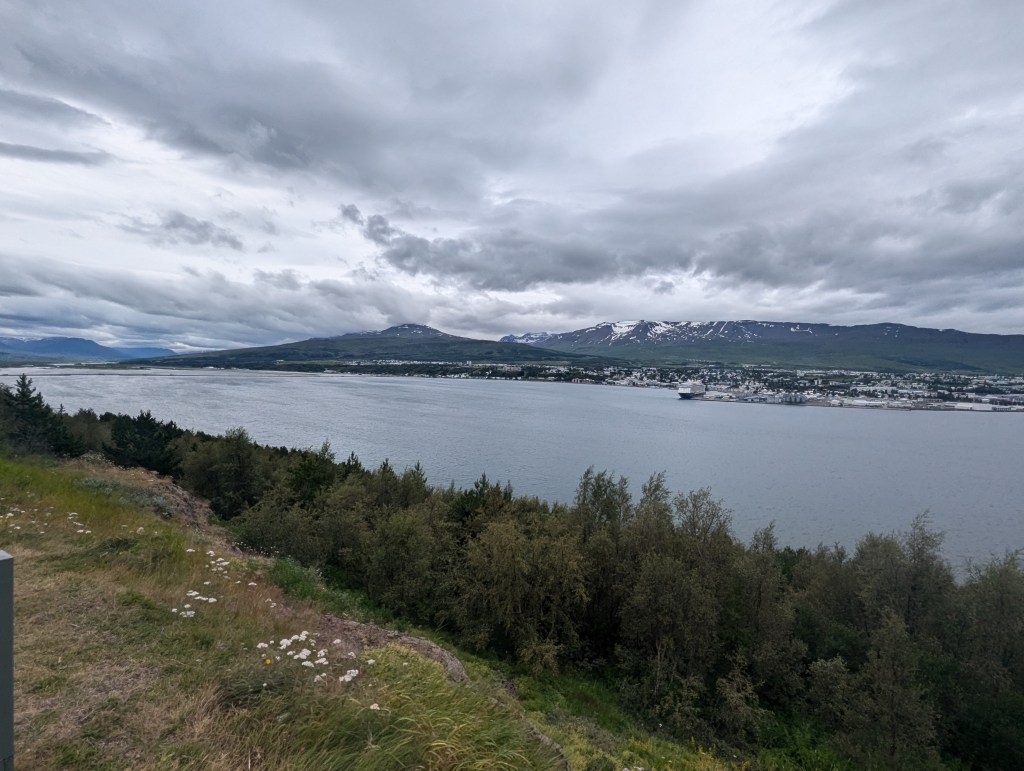
We easily found the main street

and stopped for pastries at the french bakery.
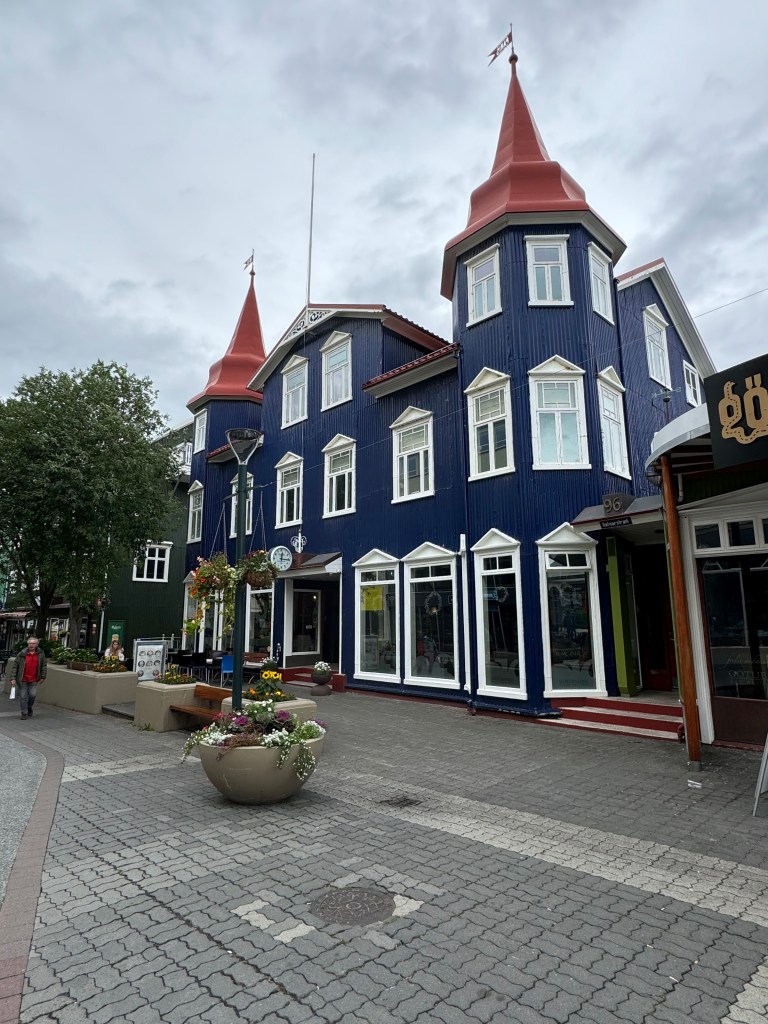
It is an international city with, in addition to the French eatery, German, American, and even Middle-eastern.
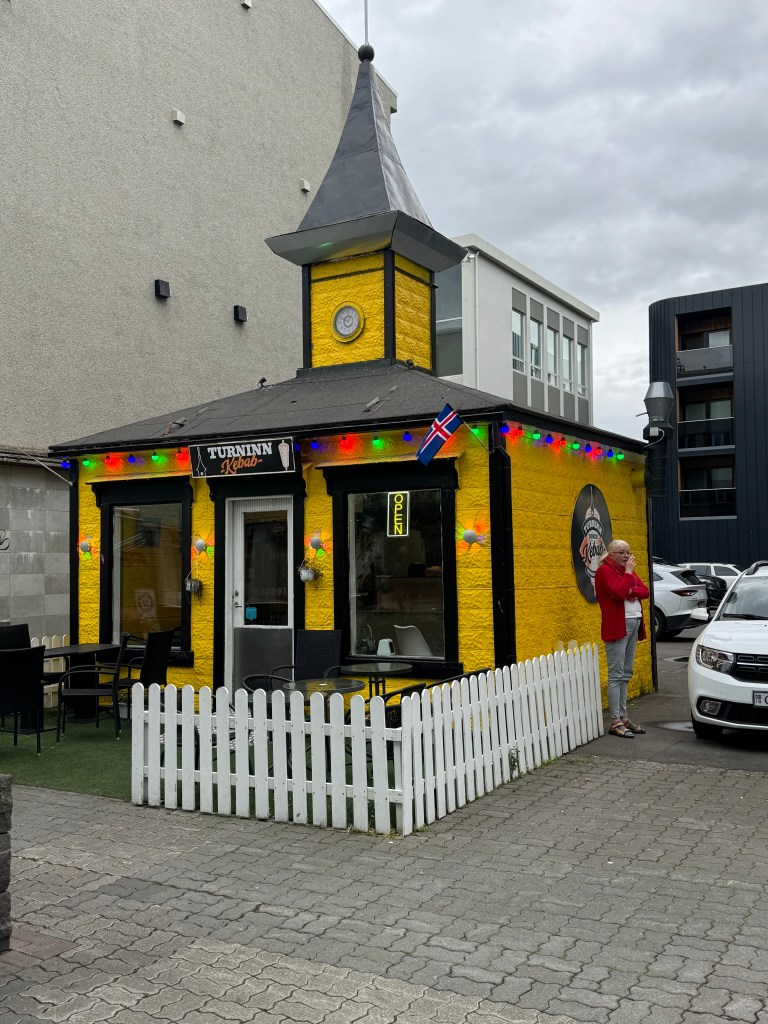
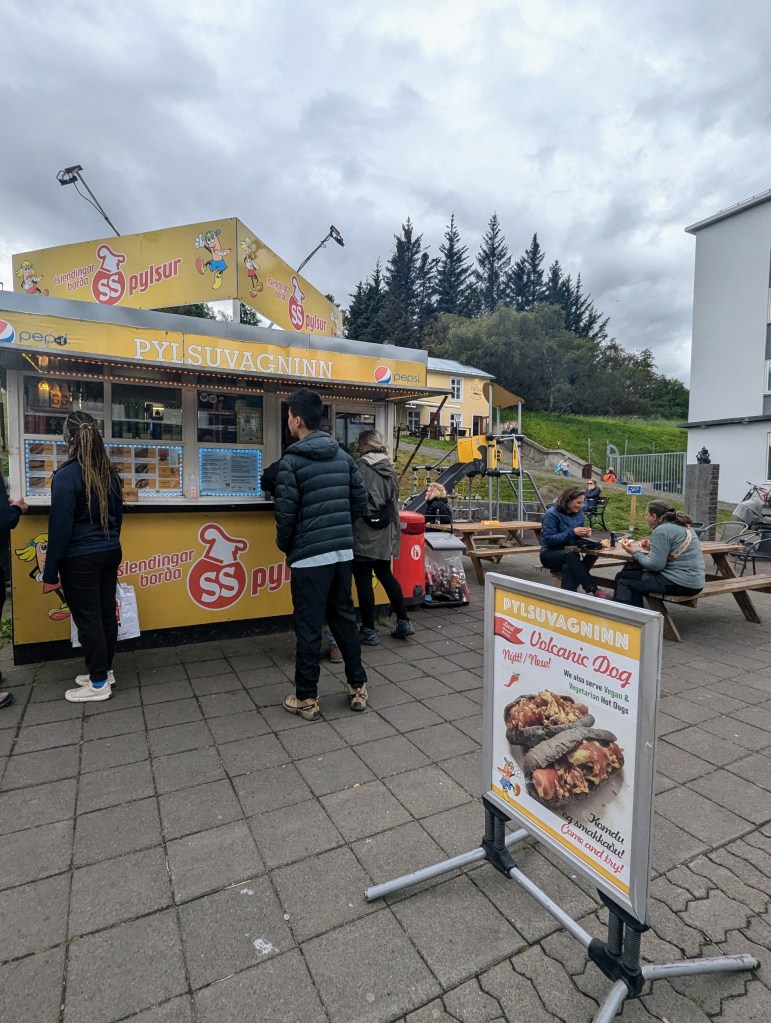
According to Feeding Phil hot dogs are quite popular and delicious, and we had yet to try one. So it was time, and yes, very delicious, as hot dogs go.
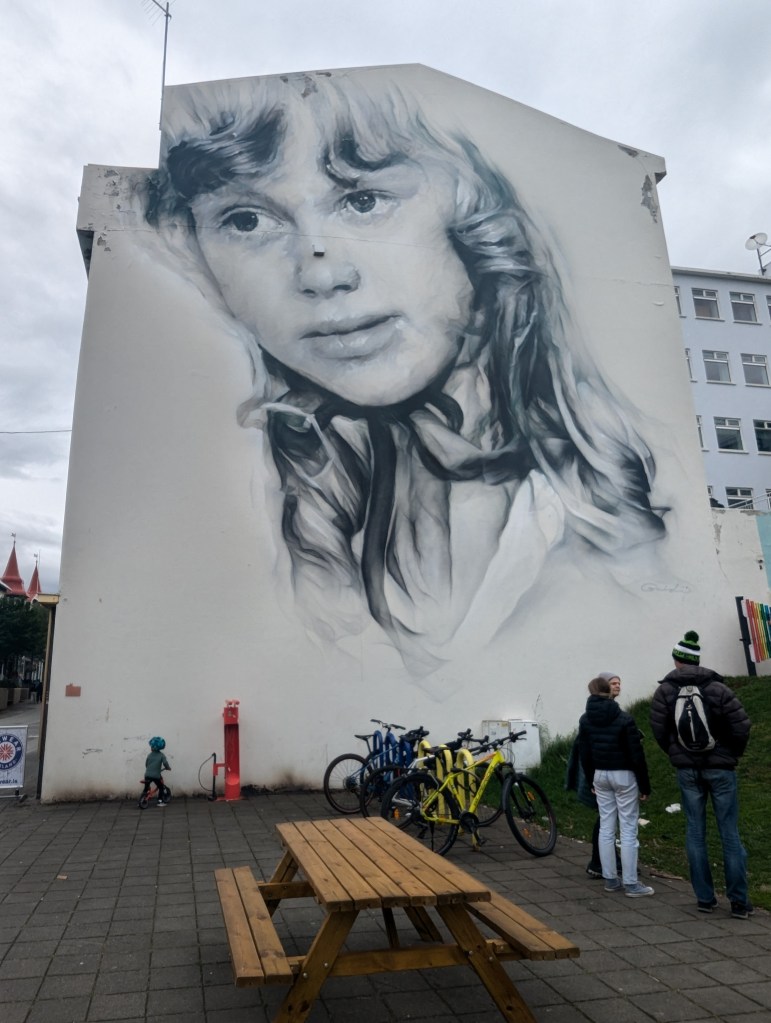
Akureyri has its share of beauty including this mural
and these flowers
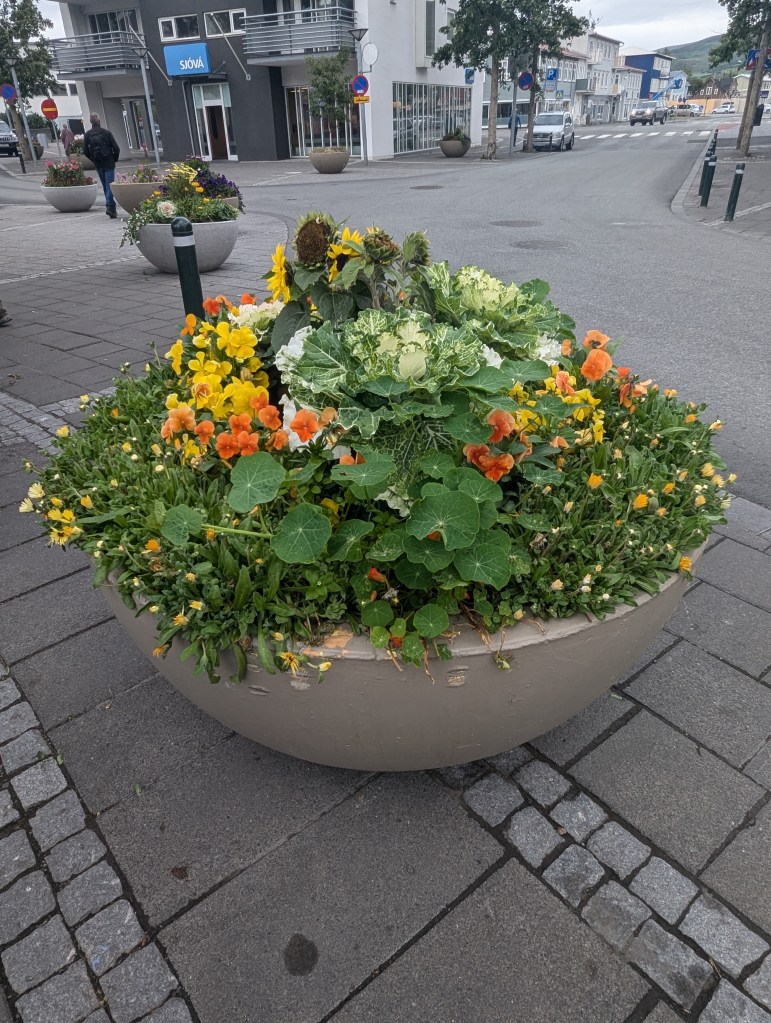
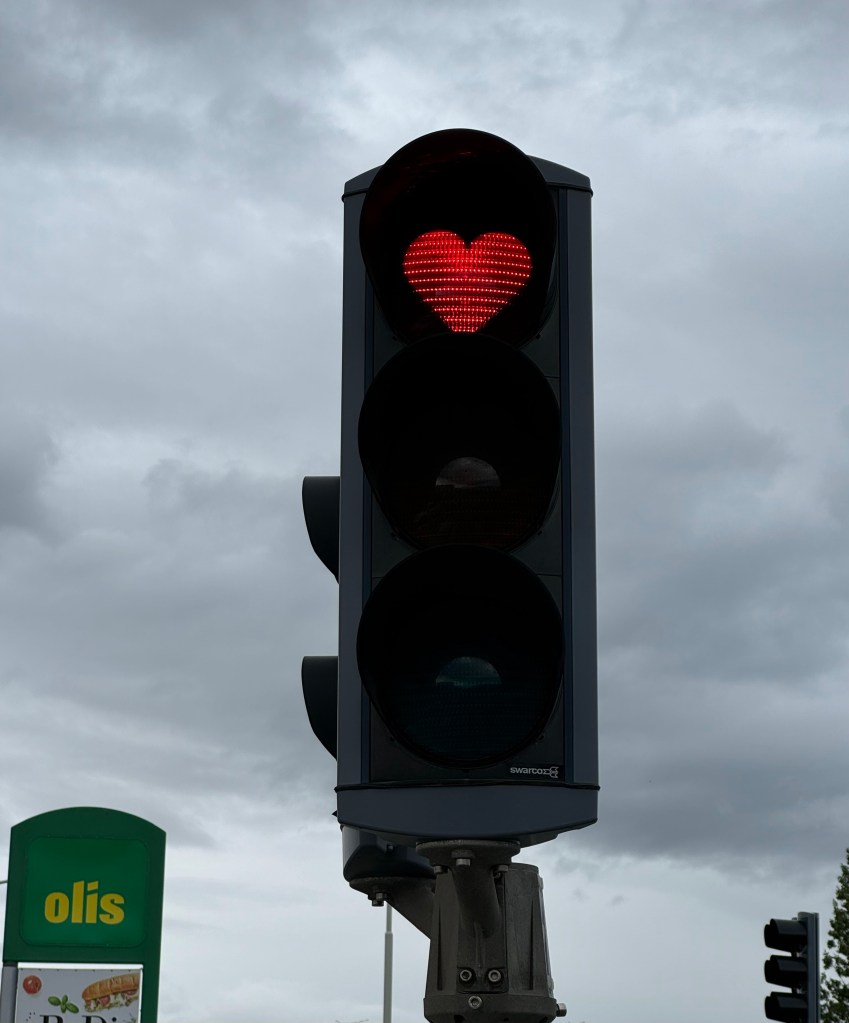
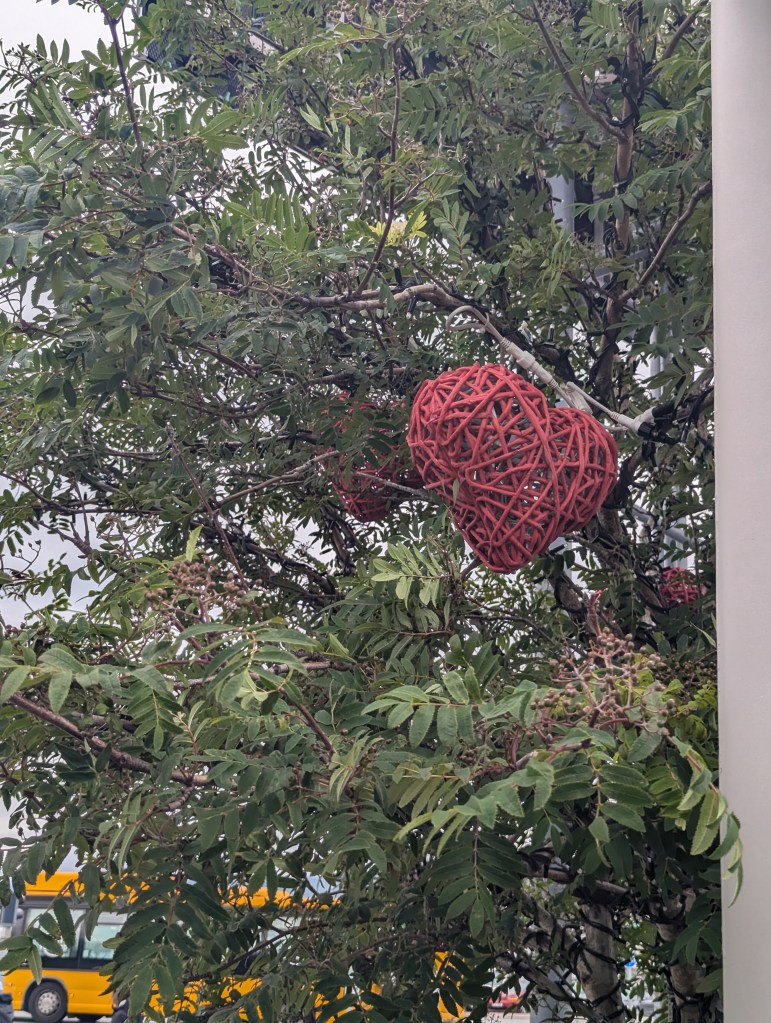
With the long daylight hours, the annuals are all huge. But what is most striking in Akureyri are the hearts: from the one in the main square above, to the streetlights
and even just random decorations in the trees.
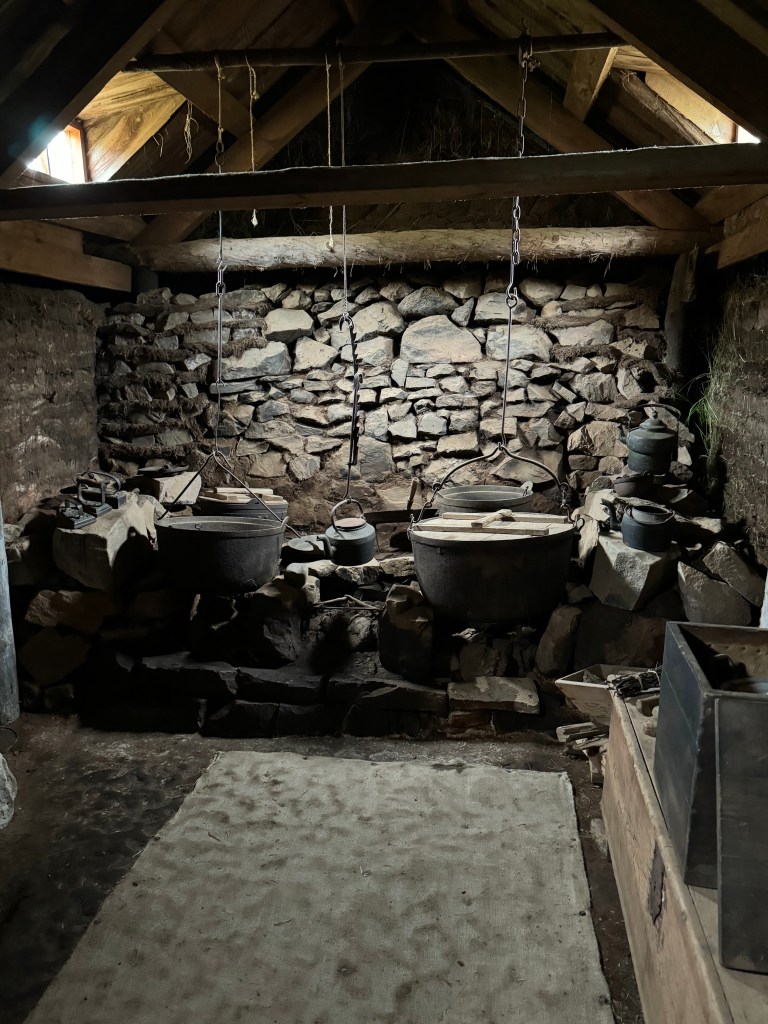
After spending the morning in Akureyri it was time to travel on further north and west. Along the way, mostly on the southern ring road, we had been seeing buildings that appeared to be built right into and under the ground. Very curious, I had looked them up and found that they are called turf houses. Historically, Iceland has very scarce home building materials. The rock is mostly volcanic, which is not sturdy for large structures. There are few trees native to the island, mostly just Aspens and Birch, neither of which are home sturdy. Icelanders developed a technique of building homes from turf. Turf homes are not stable over long periods of time; they need to be mostly replaced every decade or so. This explains why despite being continuously inhabited since the 10th century, Iceland lacks the majestic old buildings of Europe. With newer building materials, and the ability to ship them in, turf homes have fallen out of vogue. The few that remain are used mostly for farm animals or storage of feed or equipment for farm use. But a few turf homes are now maintained as museums. I was itching to visit one, and we were about to make that happen.
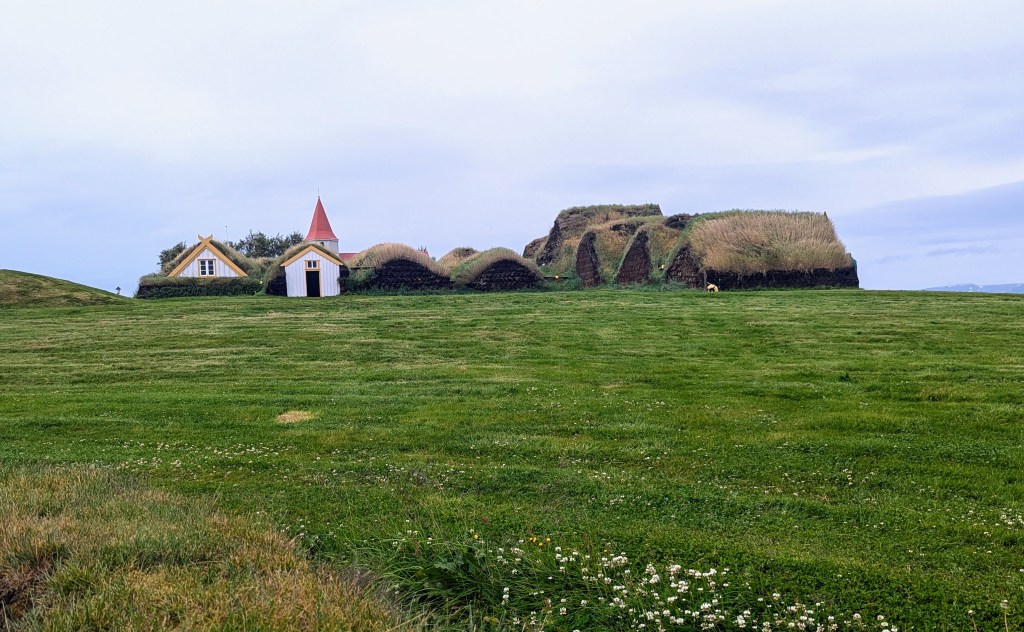
Glaumbær House Museum is actually a total of 13 buildings all joined through passageways. The farm site dates back to the 10th century, but the buildings only to the mid-17th century. The newest addition was added in the mid-18th century, and it has been maintained as a museum since the mid-19th century.
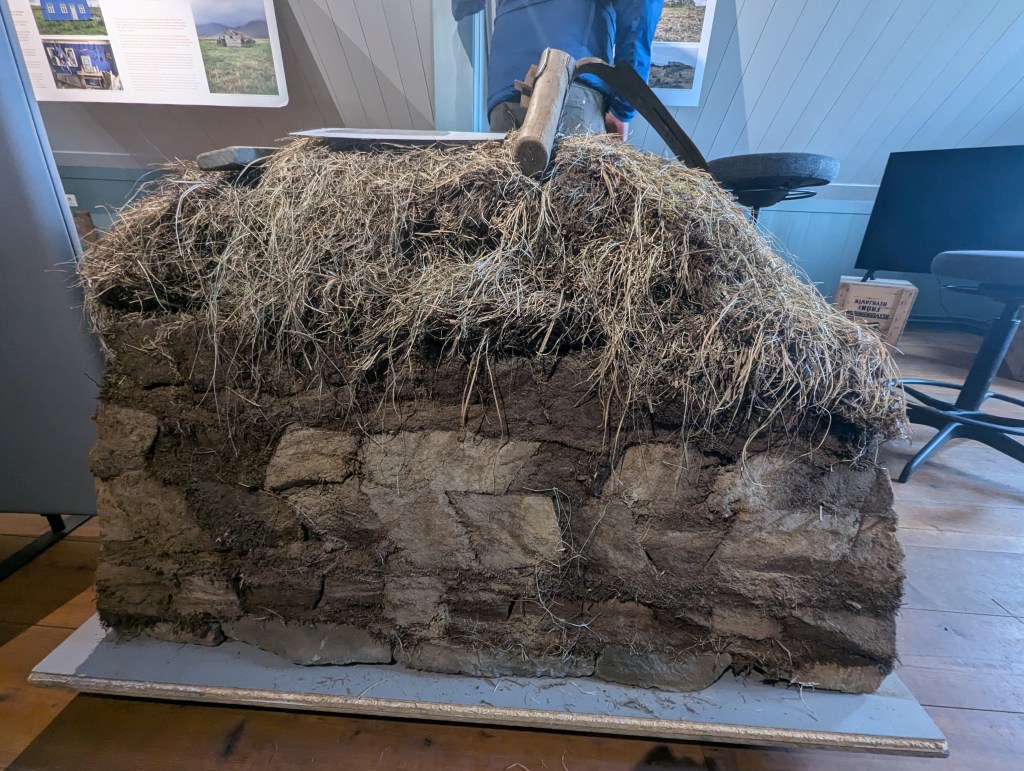
The walls of a turf home are built up in layers, usually at angles for stability.
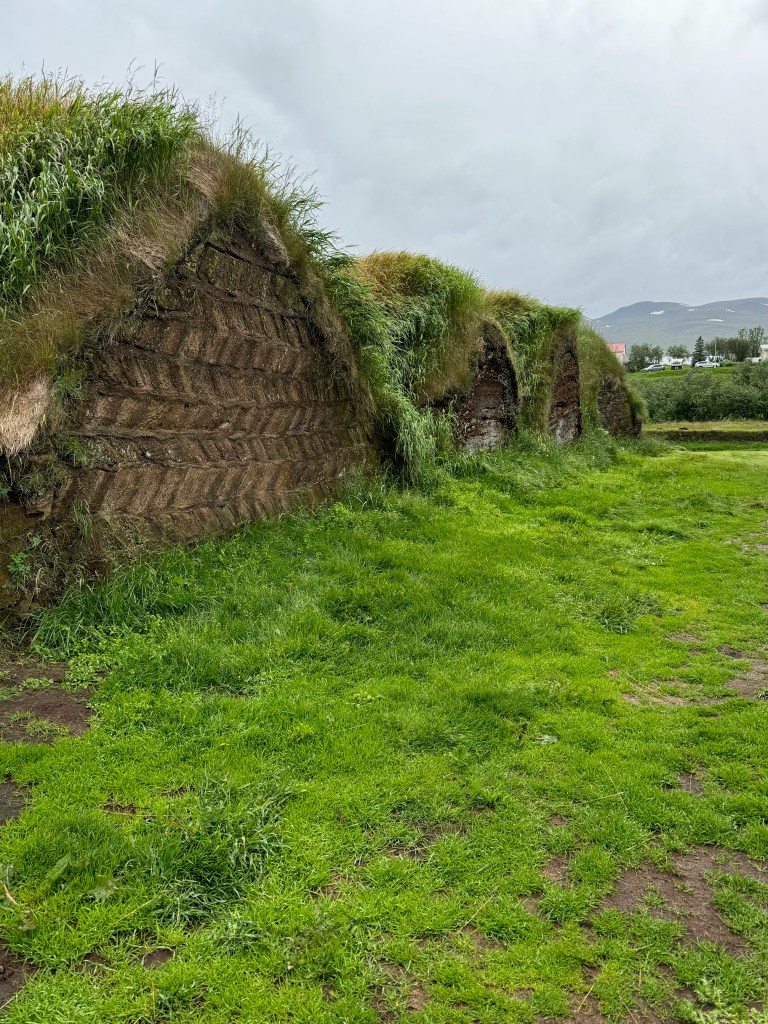
The side buildings of the complex include stables, storage, and a smithy’s workspace.
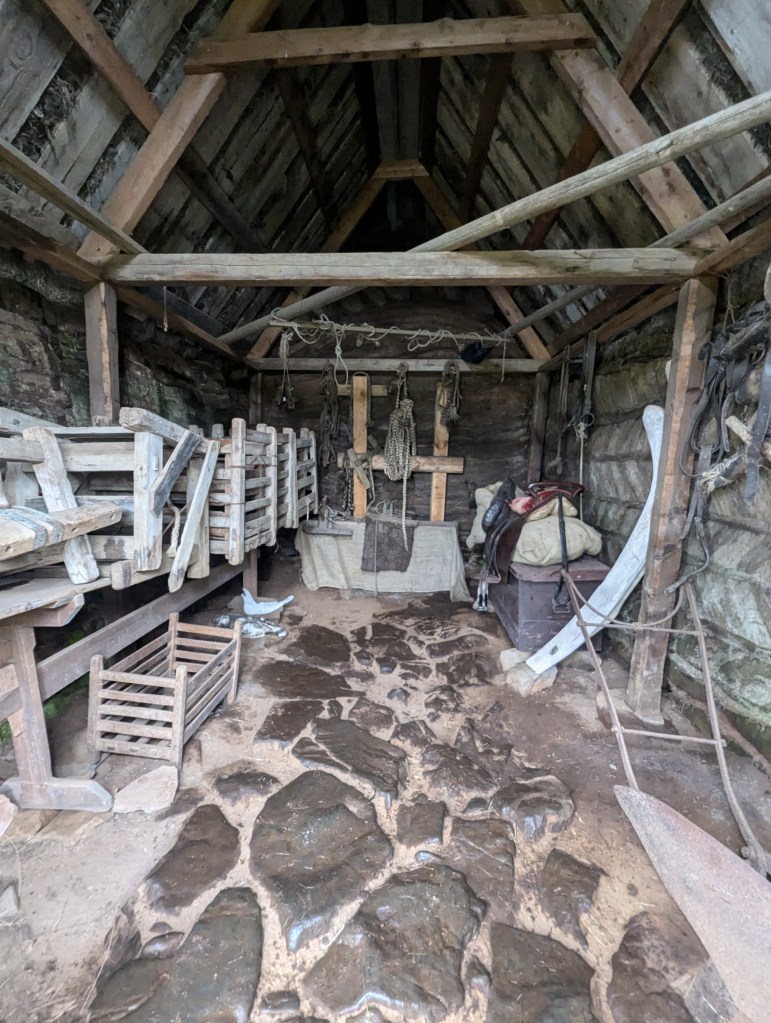
The central buildings include a kitchen
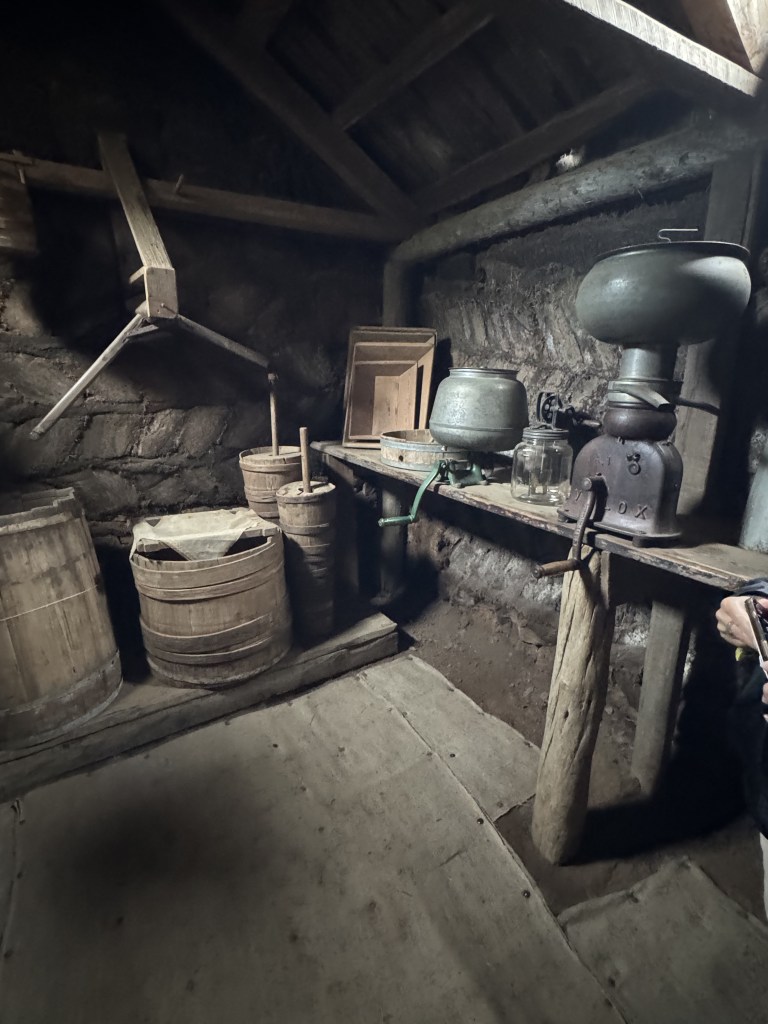
a couple of pantries,
and bedrooms,

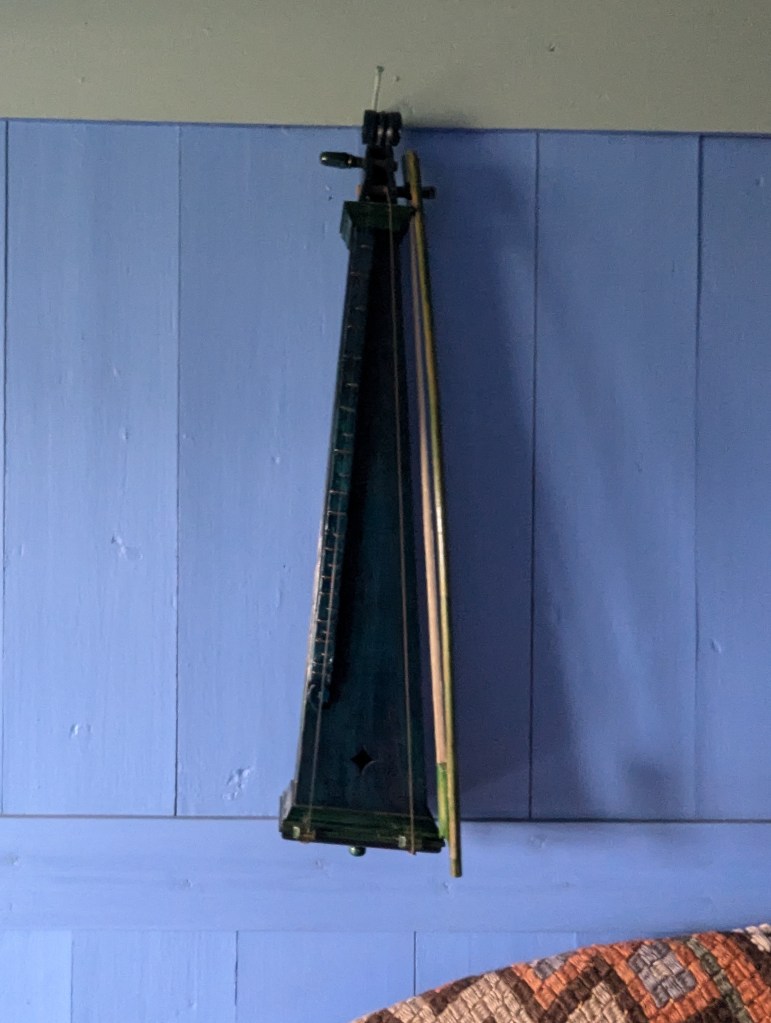
It is interesting the amount of comforts these early Icelanders had including musical instruments.

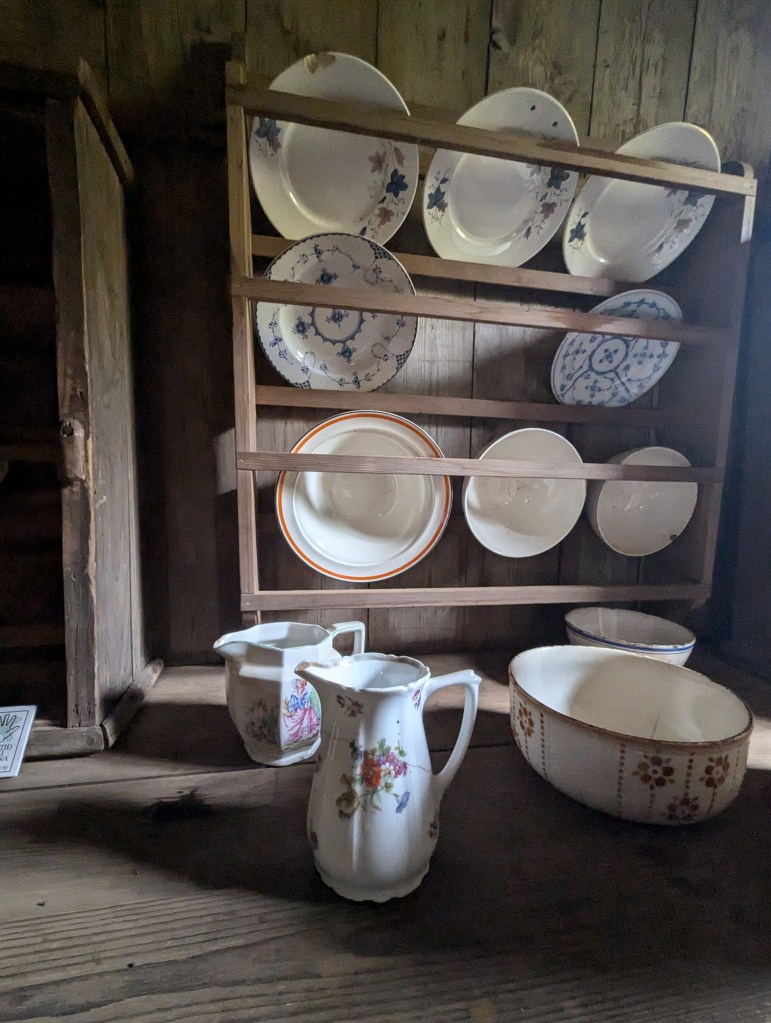
and some fine porcelains
But at their core, they are a hardworking group of people from spinning wool

to farming. Despite their isolation, travel was sometimes necessary in the winter.

Even the horse’s shoes have spikes for winter work and travel.

Having exhausted our curiosity about the turf houses, it was time to move on. We were headed to Blönduós but decided to take the long way and stopped in the cute port town of Sauðárkrókur for some fish and chips. We stayed the night at the Blönduós Hotel, which was charming and had some gorgeous views.

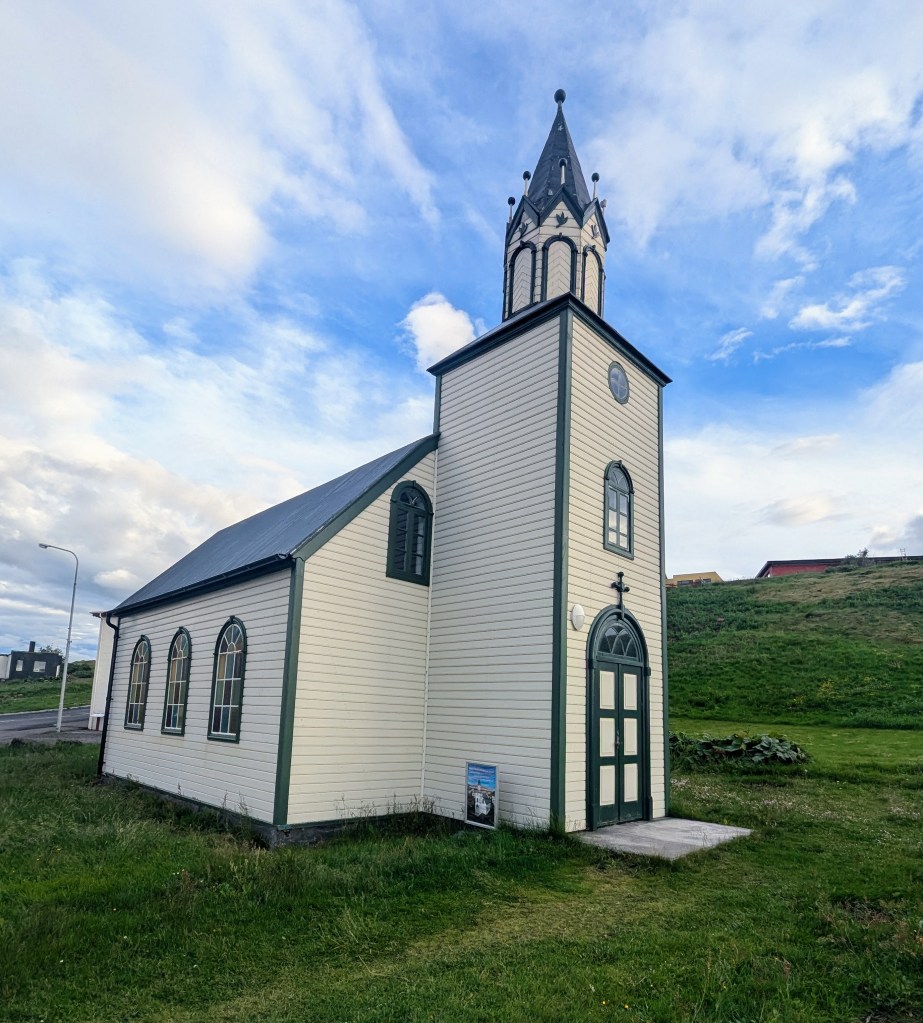
It was situated right next to a photogenic church.

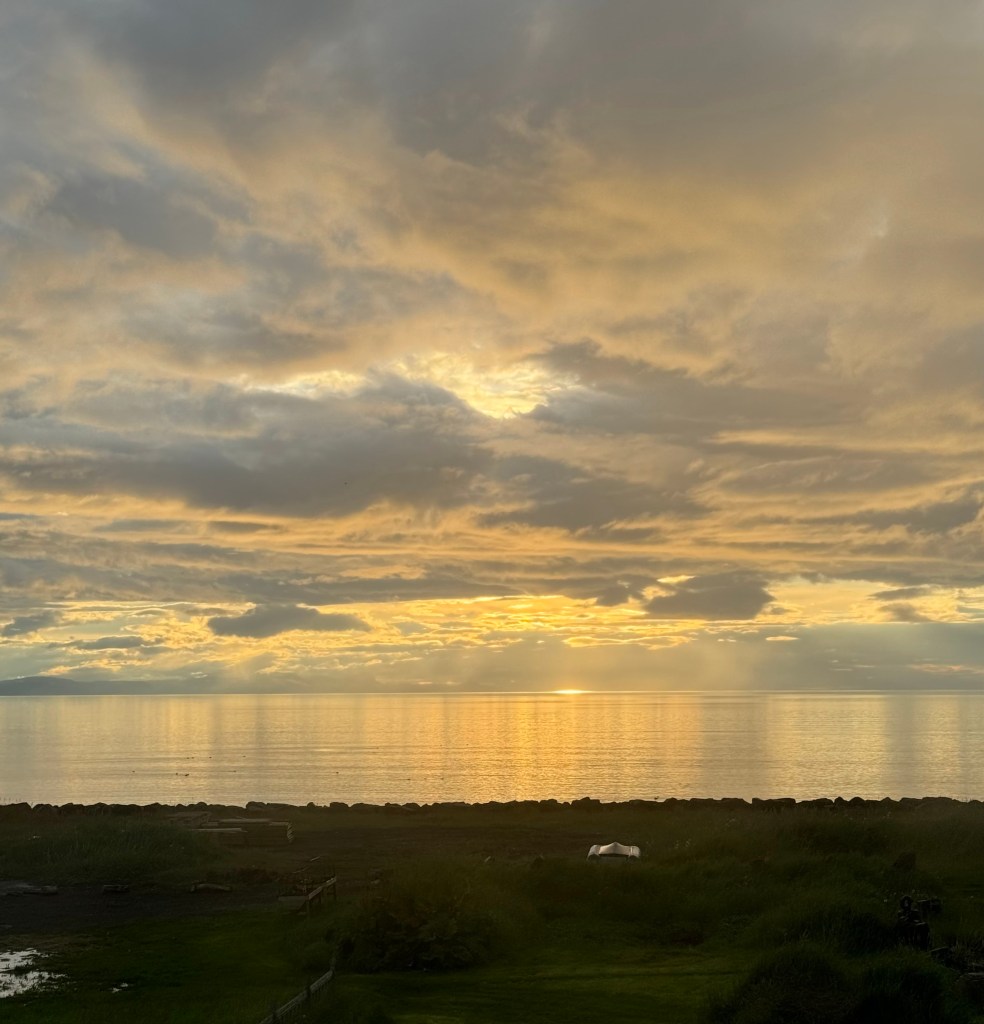
And we finally managed to stay up late enough for the beginnings of a sunset, which were now more than an hour earlier (about 11:30 pm) than they had been when we first arrived in Iceland over a week prior.
It was time to venture into the West Fjords, destination: Ísafjörður, a 5-6 hour drive. Today was to be all about the journey. After our wheel-gripping drive on 95 in the east, we asked route advice from the hotel receptionist. Google maps was taking us on route 60, which is the route we would need to take in a few days to head south. We wanted to consider route 61, which weaves in and out of the fjords, but were afraid of the risk. She kind of reassured us that although route 60 is the way most Icelanders would choose (more on this later), route 61 is indeed the much more scenic route, would avoid redundancy, and is perfectly safe with roads in decent shape. So off we went. Indeed the journey was spectacular.
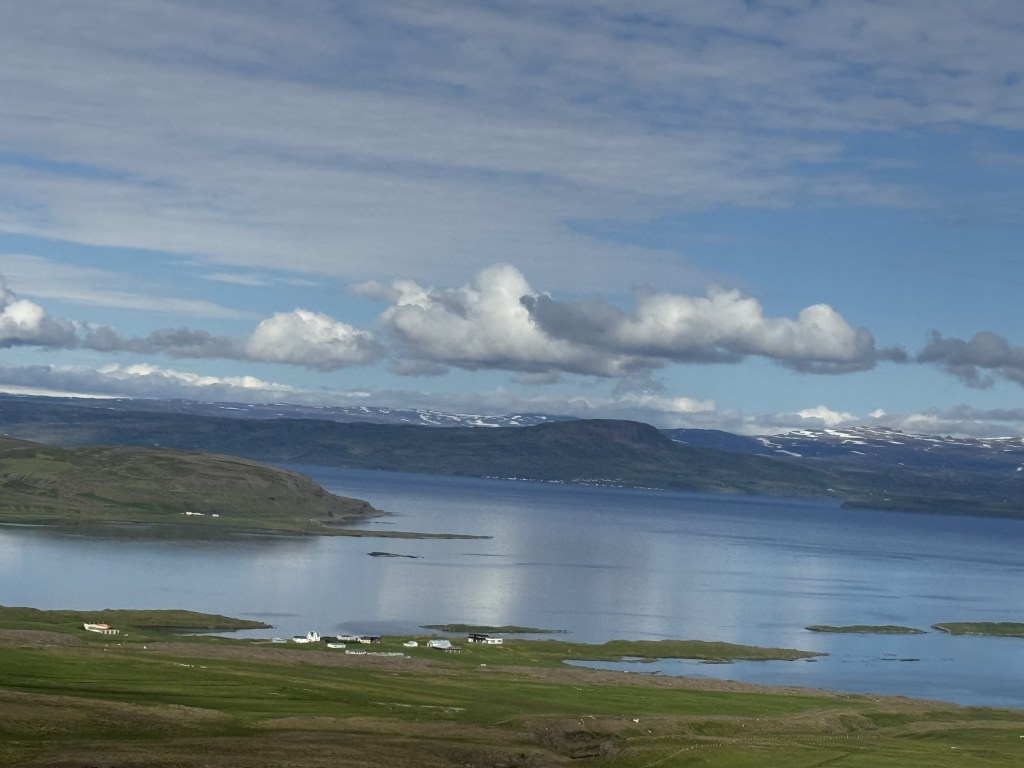

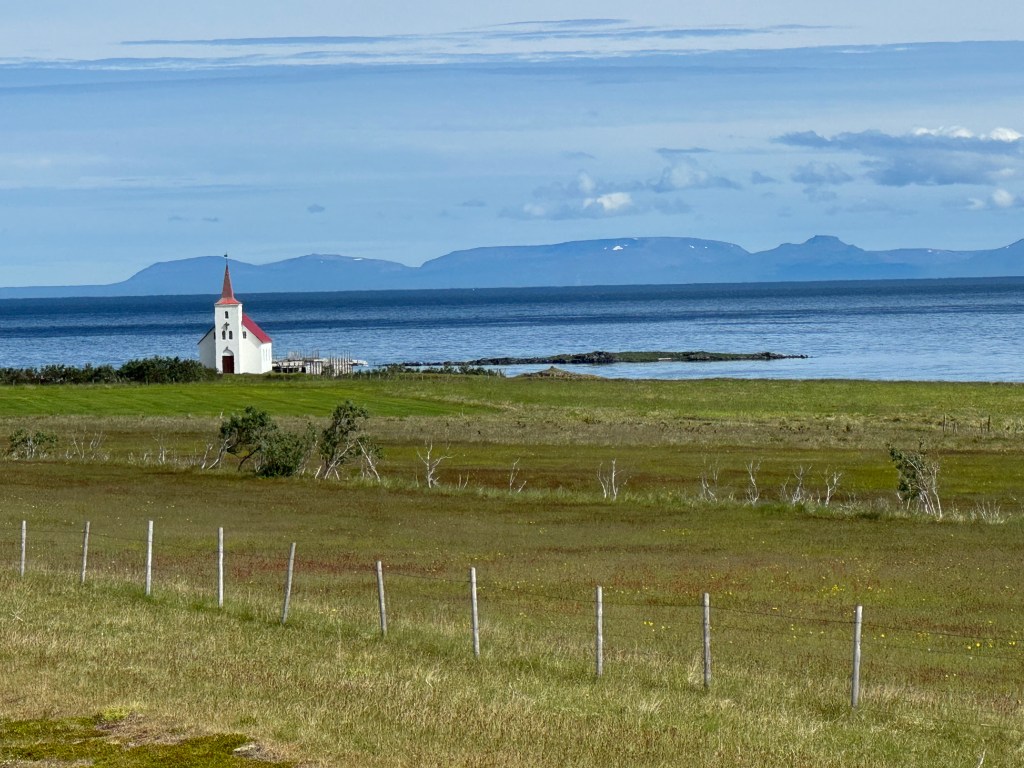
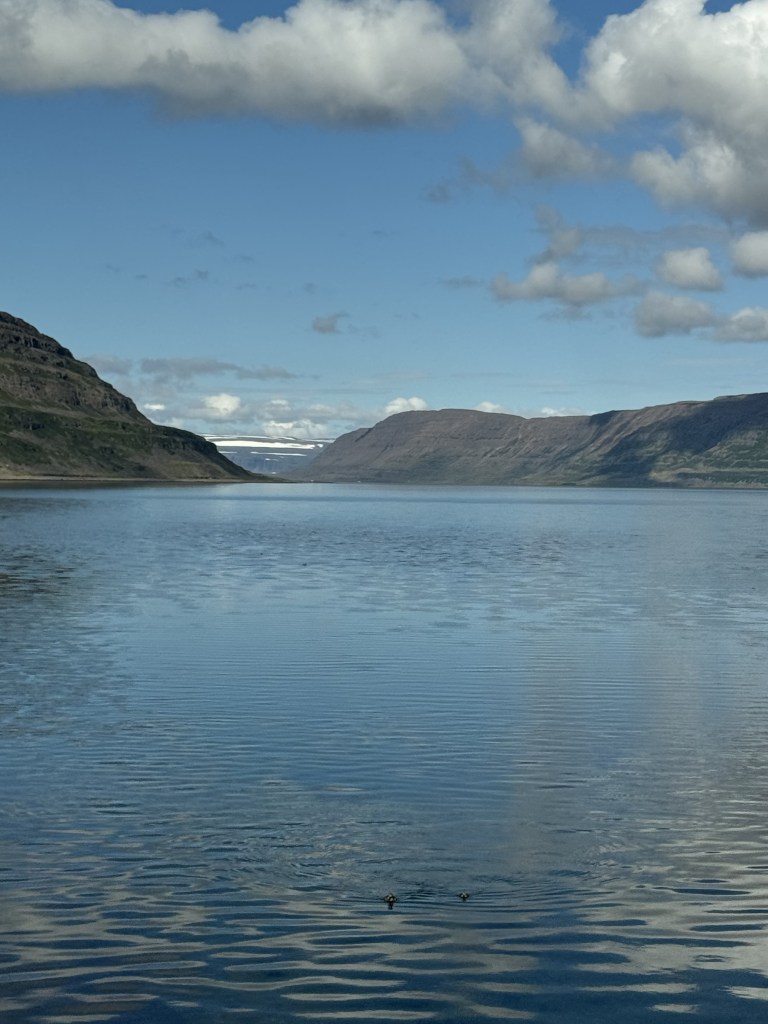
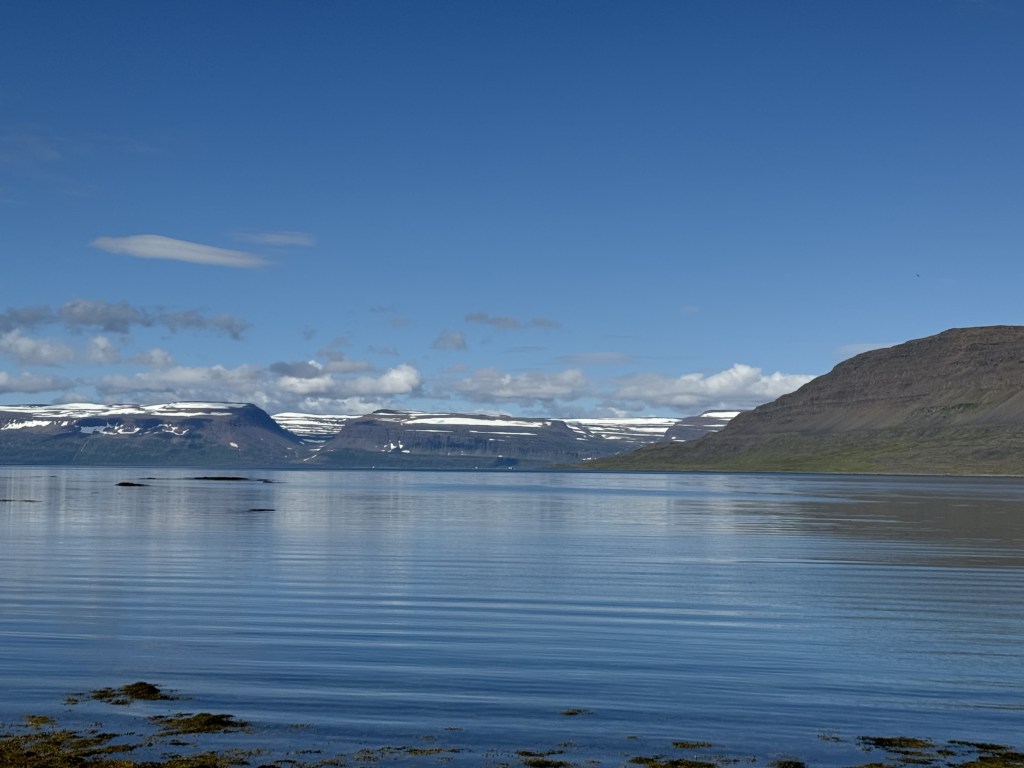
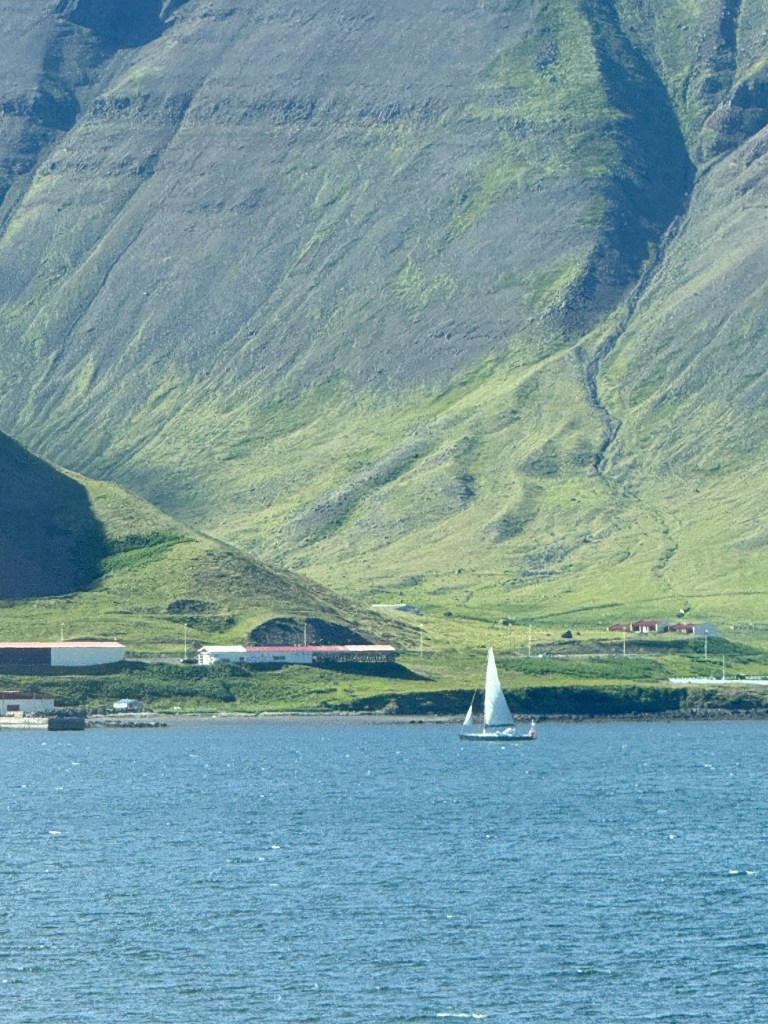
It was a long beautiful day. In retrospect, we were very lucky to have sunshine for our drive through the fjords. We awoke, the next morning, in Ísafjörður to pouring rain. After a hearty breakfast at the Torg Hotel, we strolled around town. It is a popular tourist destination; there were 4 cruise ships docked for the day. Additionally, there are many sailboats in the harbor.
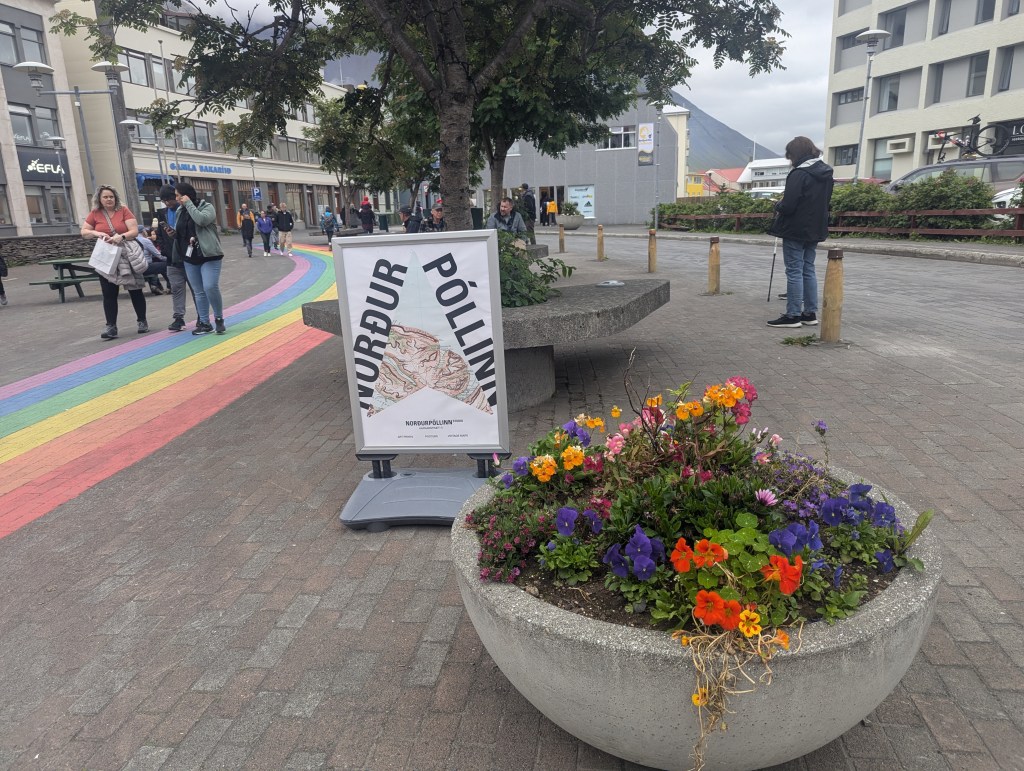
The town has the now familiar rainbow street with planted containers.
and this new-to-us variety of lily
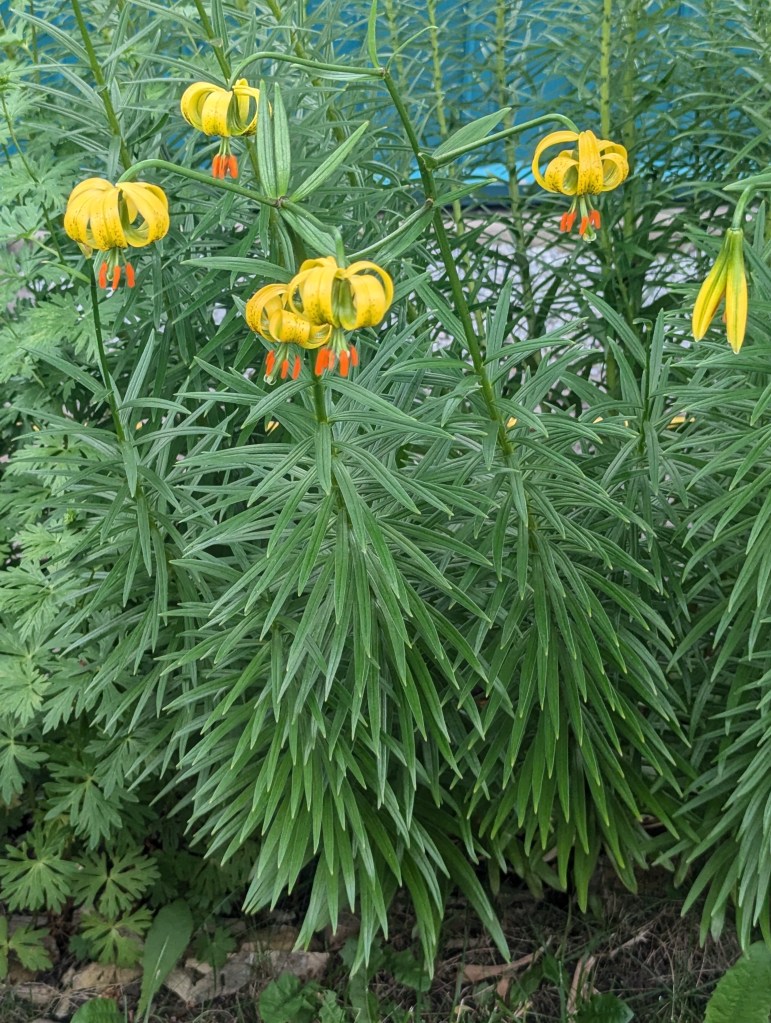
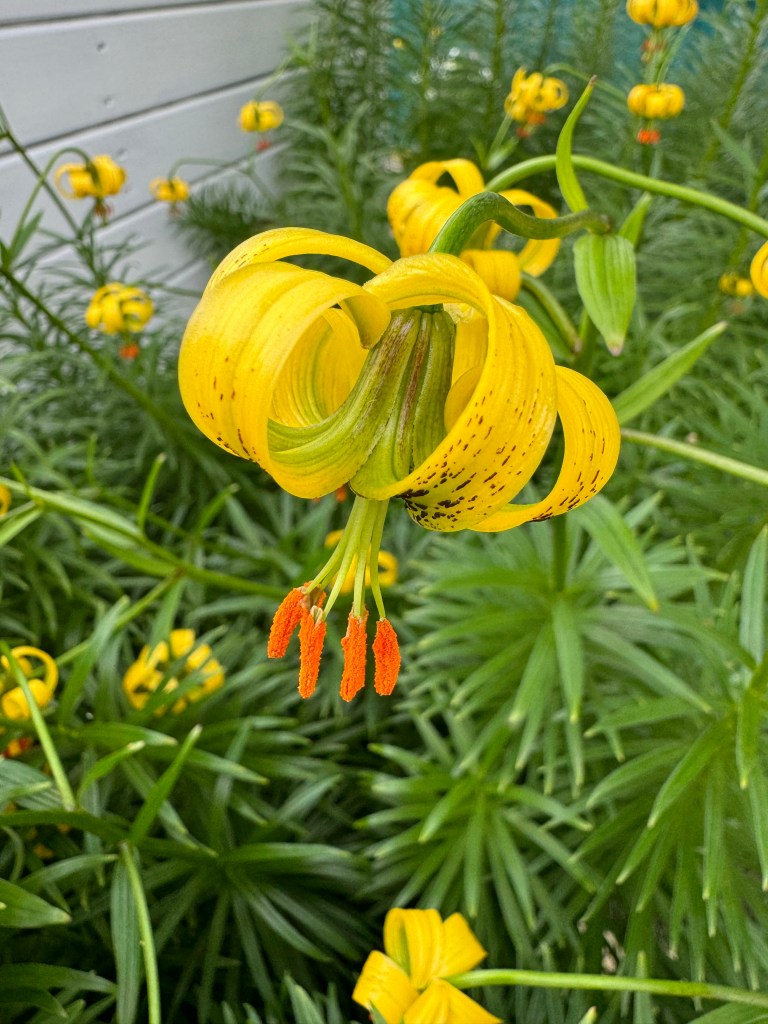
As the rain worsened, we headed to the Arctic Fox Museum. There we learned that the arctic fox was the first land mammal to inhabit Iceland, arriving on ice floats about 1,000 years before the Vikings. In addition to exhibits about their history, adaptability, food, and habitat, there are some rescue foxes, so cute, in pens in the back.

The rain was even steadier and colder than ever, so we called the sightseeing quits for the day, went back to the hotel restaurant, ate, drank, and played cards the rest of the day.
The morning brought less rain but still heavy fog. Alas, we had a ferry to catch, so off we went. We left Ísafjörður on route 60 through the tunnel which is about 6 km long, carved out of the mountain, very dark, and for most of its length only one lane wide with pullovers to allow for oncoming cars. Talk about a white knuckle drive! We were all happy Eric was doing the driving. So glad at this point that our trip into town was via the fjords!
We had time before our ferry to stop at the Dynjandi bílastæði, a group of 6 successive waterfalls. As a group, they make up the largest waterfall in the West Fjords. Dynjandi means thunderous, which is evident from the second one is out of the car.
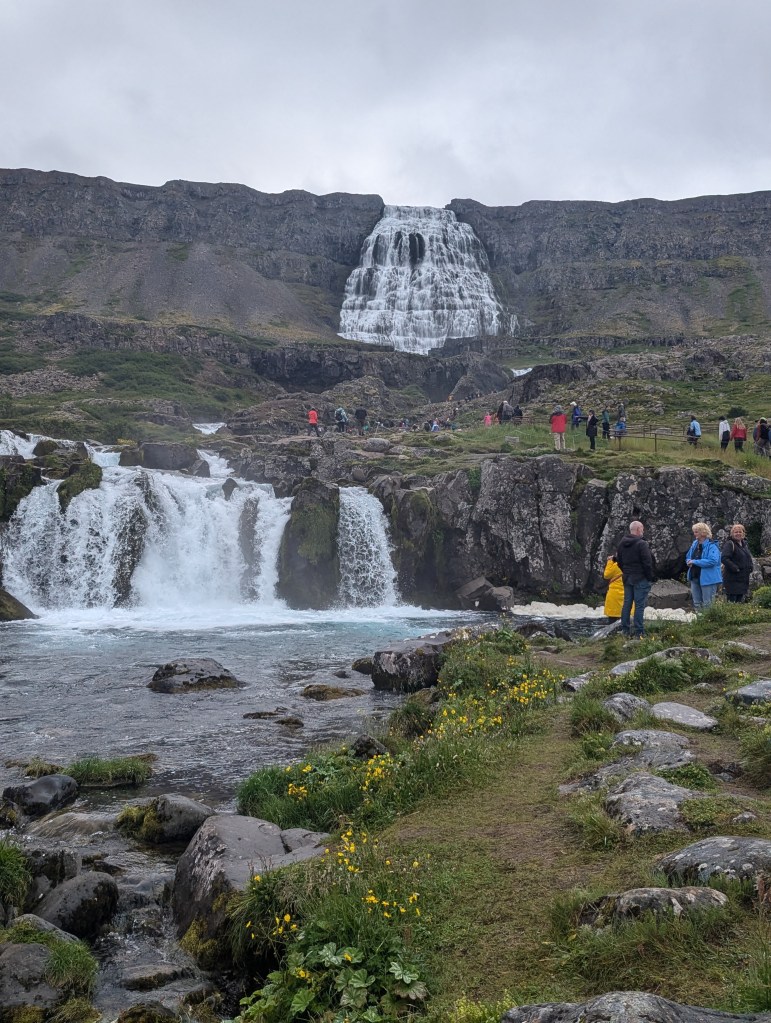
All 6 cannot be seen at once, so we hiked up along the falls for a better look.
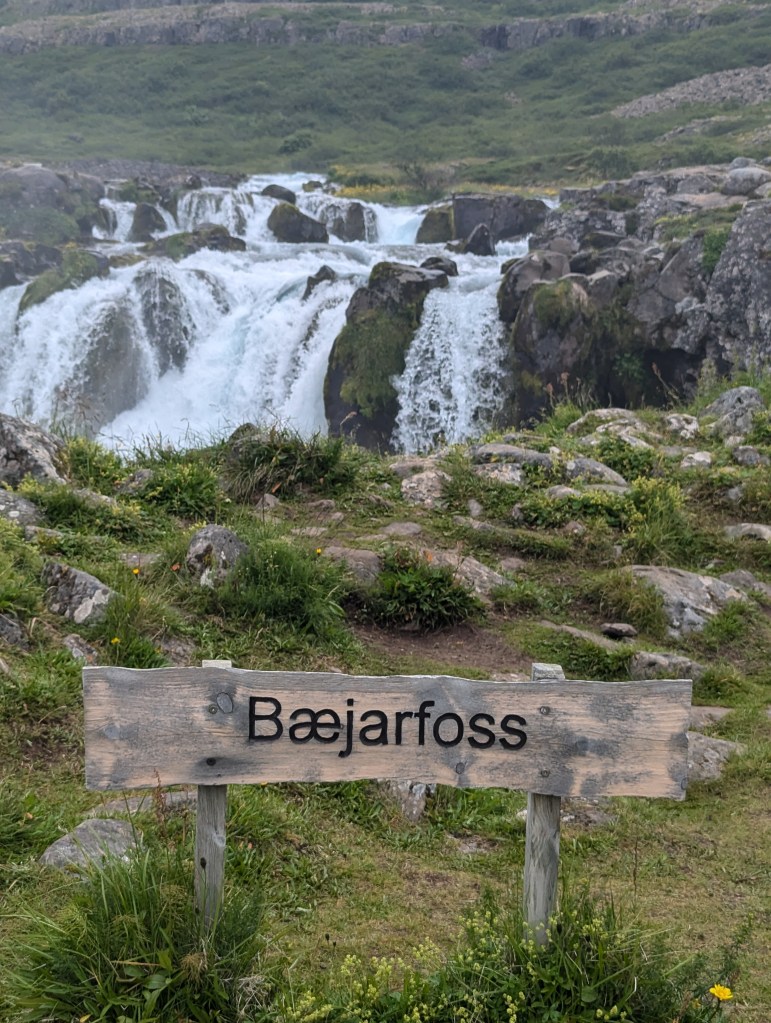
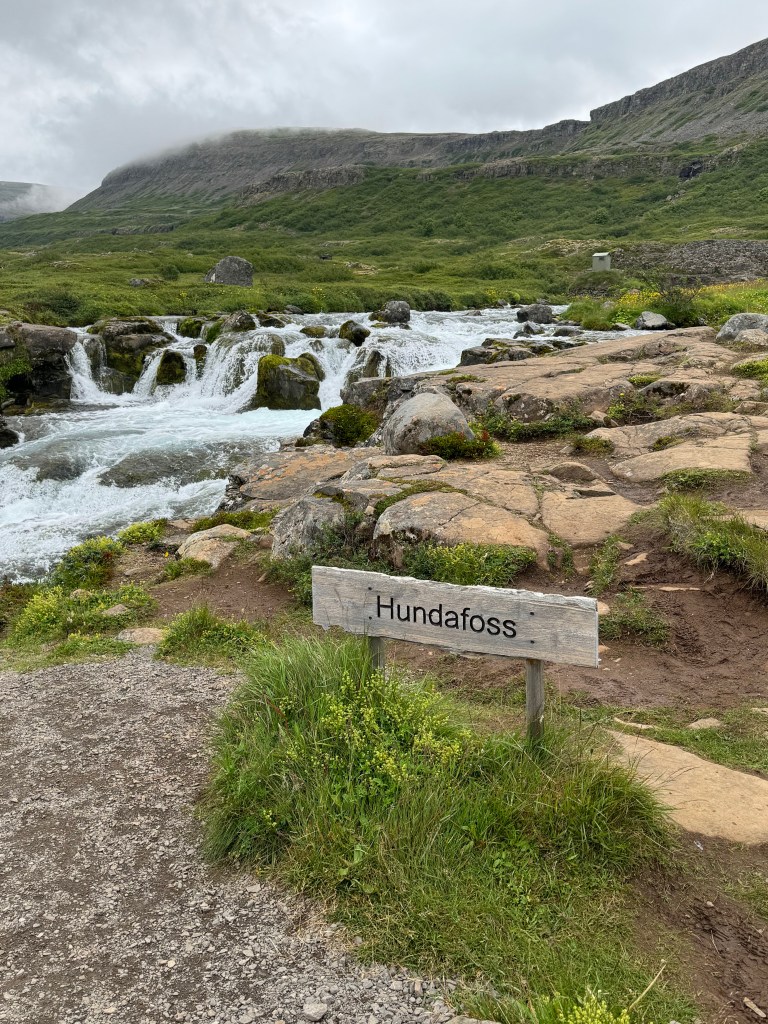
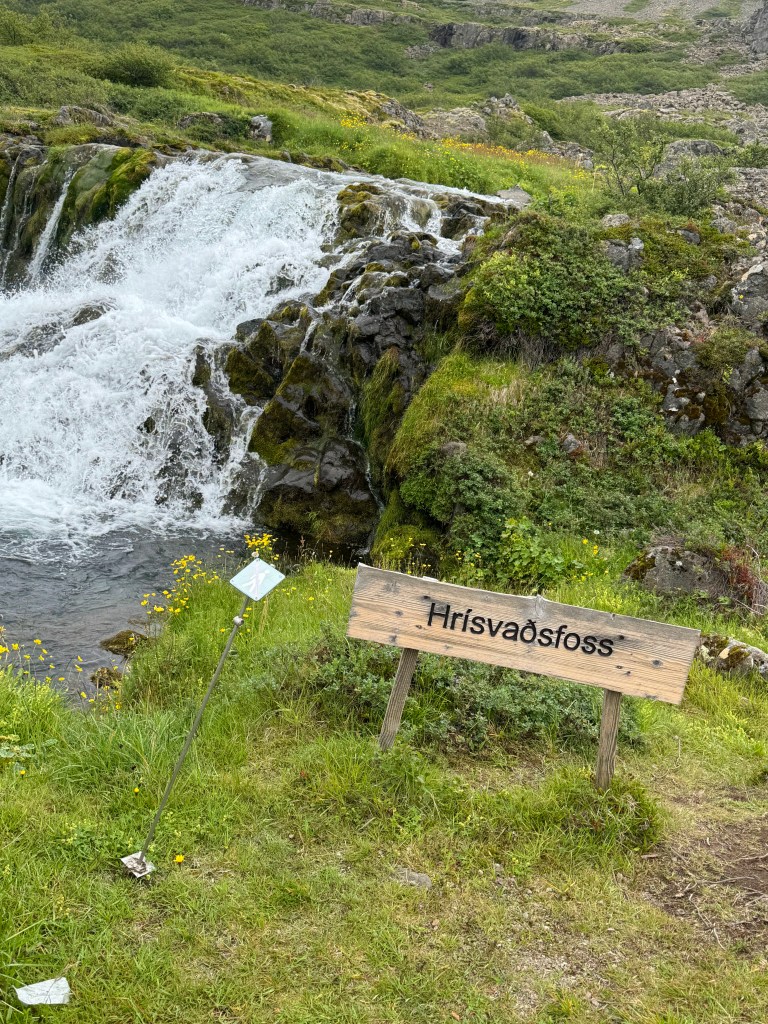
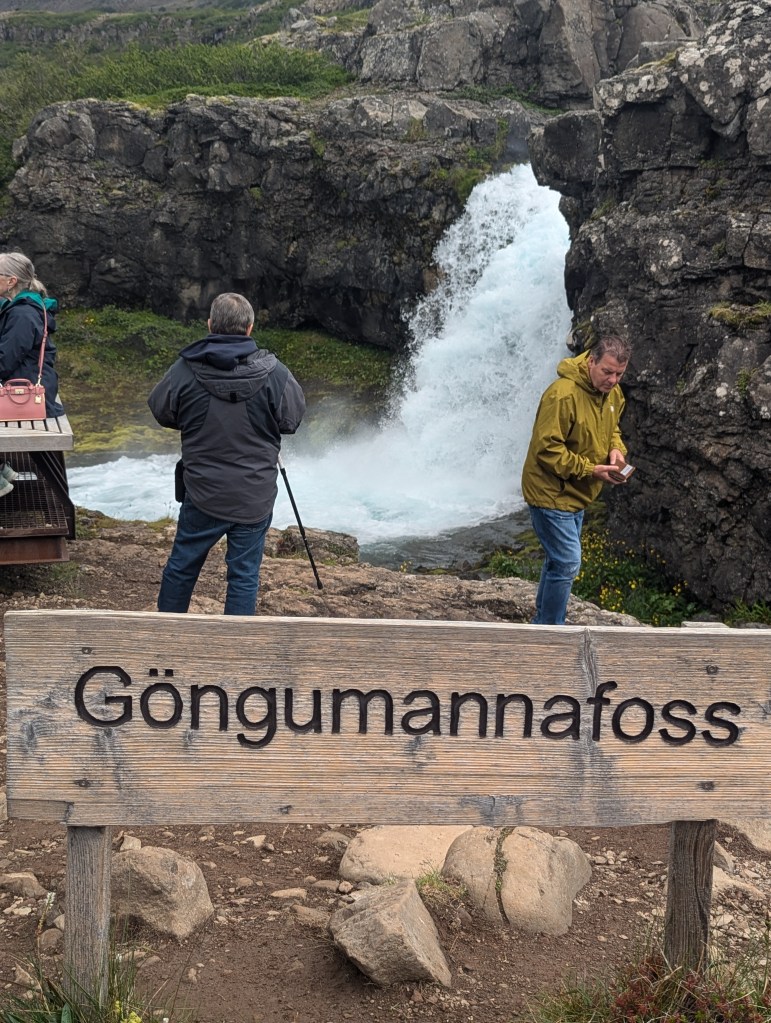
to just below the top 2 falls.
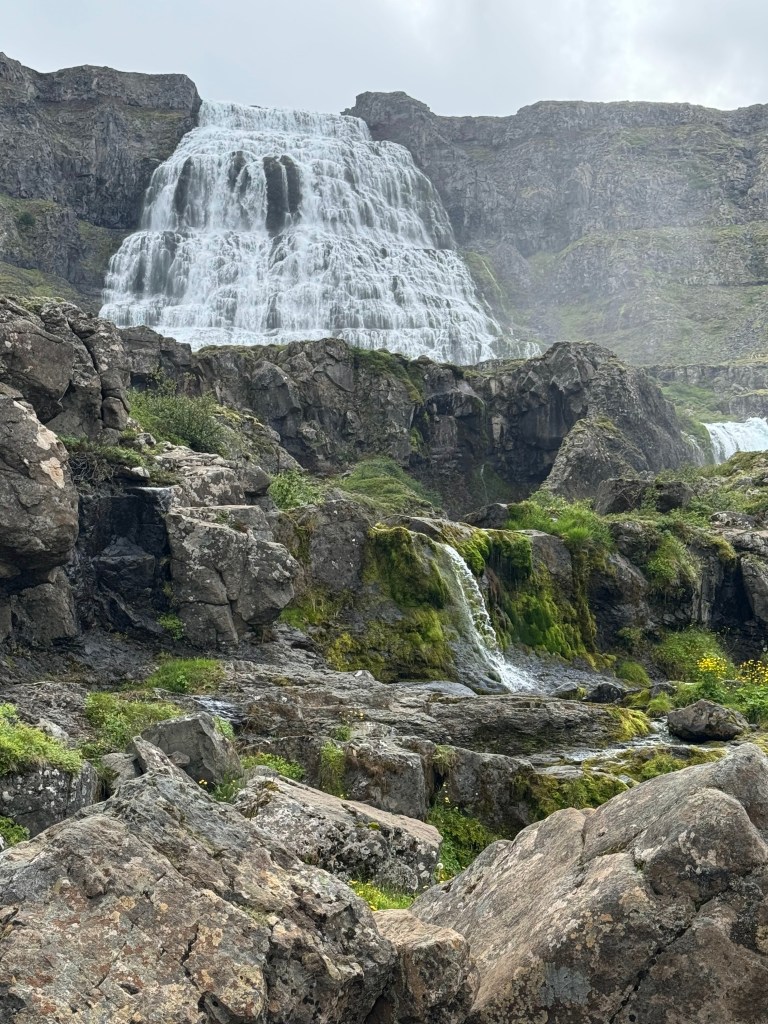
But time would not allow us to go further.

So back into the car we clambered in the fog and made our way on route 60 up over a mostly single lane, still under construction, barely drivable road in the dense fog, hard to see the car in front of you! And this was the route most Icelanders would have chosen from Blönduós!? We were so glad we had chosen the sunny fjord-hugging scenic route 61. We made it to Breidafjörður Bay in time for the ferry, phew, and had a relaxing if foggy journey across to Stykkishólmur on the Snæfellsnes peninsula.

Our AirBnb host had warned us there would be no grocery store nearby, so we stopped in Breidafjörður for groceries. Throughout Iceland is a chain of supermarkets called Bonus.

Then, because one can never see too many waterfalls, we stopped for pictures at Kirkjufellsfoss.
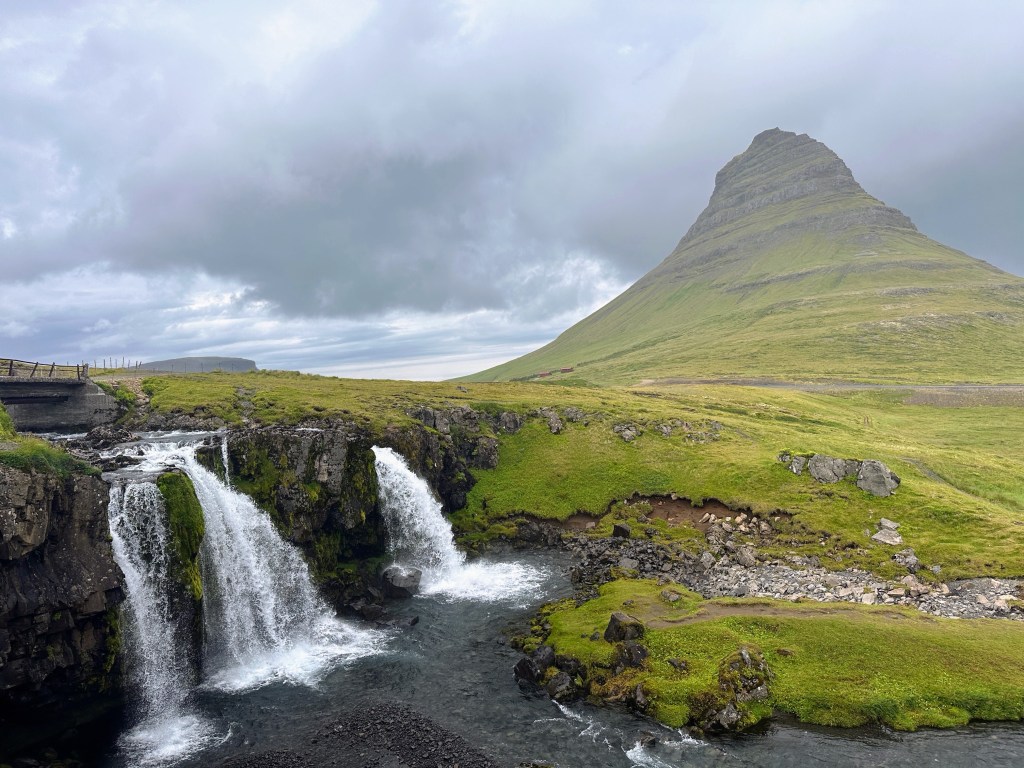
Kirkjufellsfoss is one of the most photographed waterfalls in Iceland. The river Kirkjufellsá runs down from the volcano Helgrindur and has three waterfalls in it, all called Kirkjufellsfoss. Its name translates to “Church Mountain Falls,” and this small, enchanting waterfall is only 16 feet high. The waterfall’s beauty forms a stunning visual as it captures Mt. Kirkjufell from an angle that makes it seem triangular shaped. This is part of why it was used as “arrowhead mountain” in the television series Game of Thrones. We hiked to the bottom despite the pretty steady rain.

We found our AirBnb in Hellnar but quickly ventured out to the nearby Fosshotel for a warm and yummy dinner. Much later the rain and fog lifted enough for some pictures of the amazing views from our home.

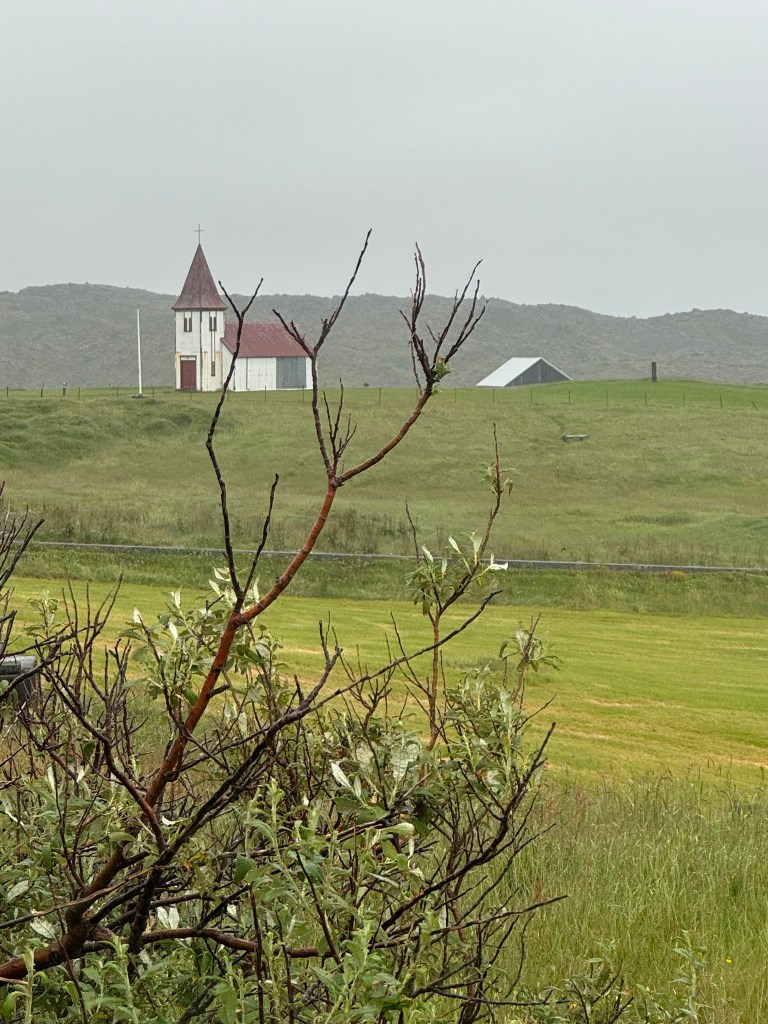
In the morning we ventured out despite the heavy winds and steady rain. Our afternoon whale watching trip had been cancelled due to the storms, so we set out to explore the Snæfellsnes Peninsula.
Our first stop was Laugarbrekka. Here, in her birthplace in 980, is a statue of Guðríður Þorbjarnardóttir, wife of Þorfinnur Karlsefni Þórdarson, who gave birth to a son in about 1004, during their stay in Vinland during one of Guðríður’s 8 voyages to North America! This son, Snorri Þorfinnsson was the first child of European descent to be born in North America. The statute shows Snorri is on Guðríður’s shoulders.
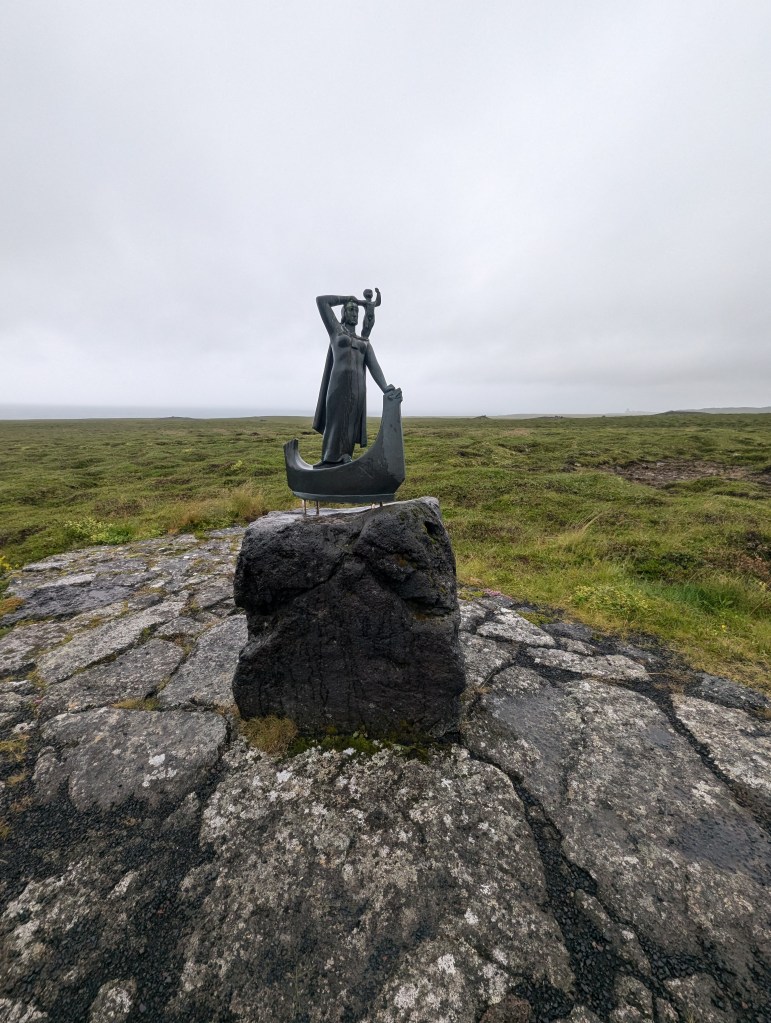
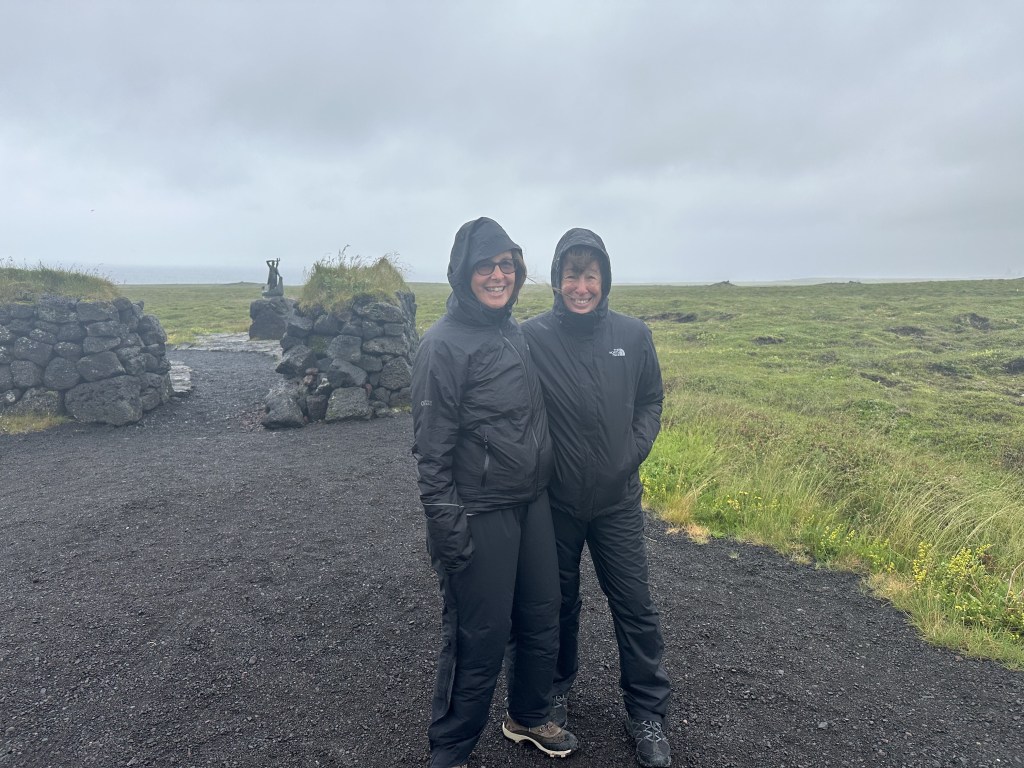
The following photo shows the actual small size of the statue, which can be seen in the background. But it also shows how we dressed from head to toe for the weather!
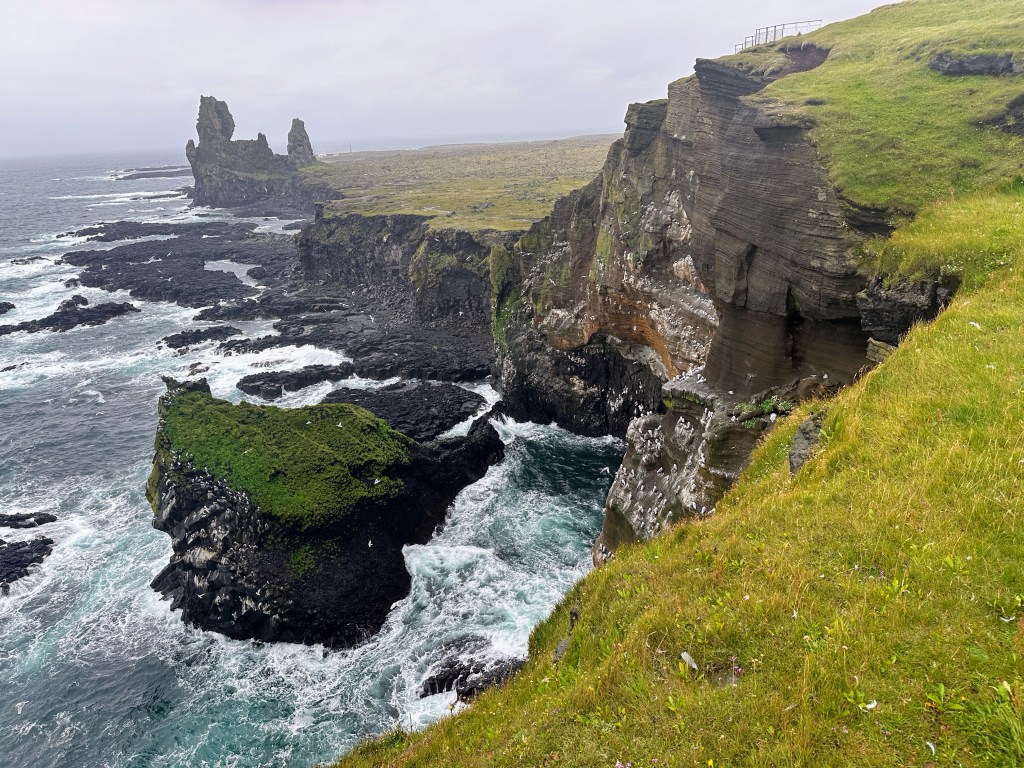
We traveled along the south of the Snæfellsnes peninsula until we reached the Þúfubjarg cliffs with their view of Lóndrangar: 2 volcanic plugs.
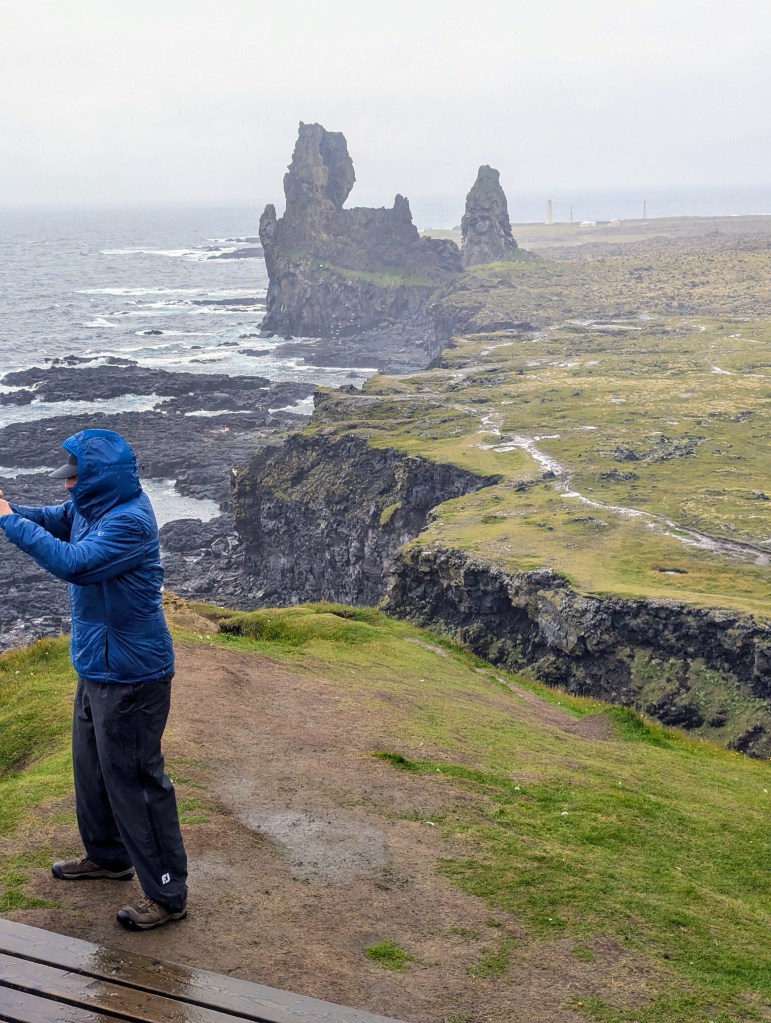
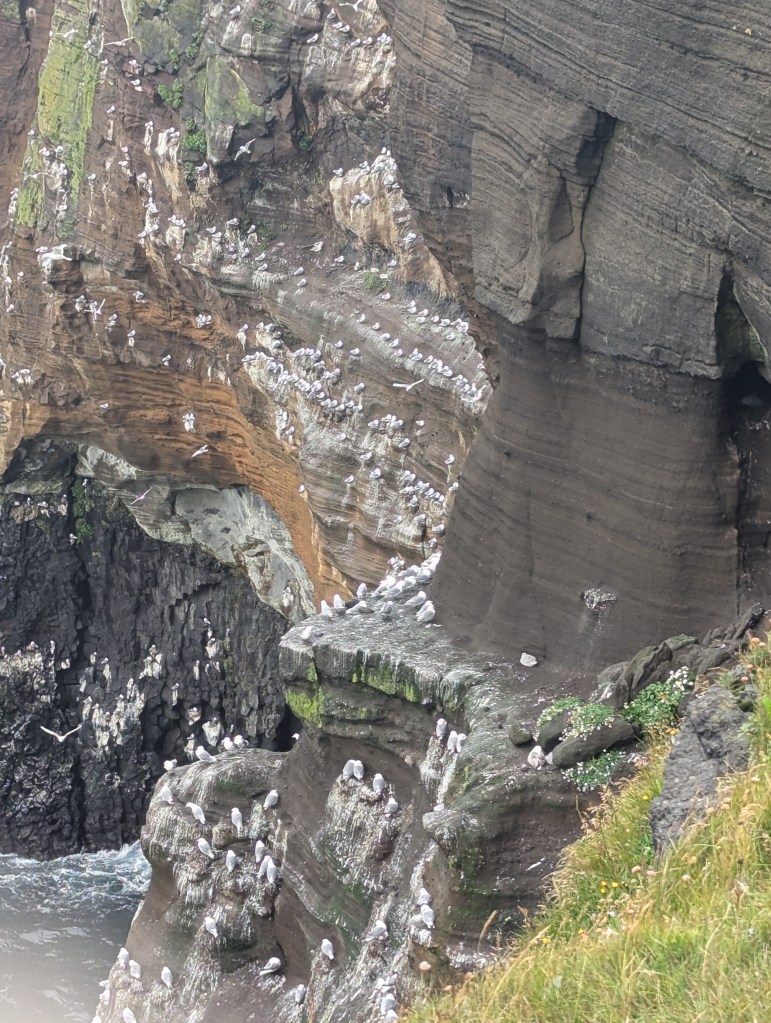
The Þúfubjarg cliffs are themselves beautiful and full of nesting birds.
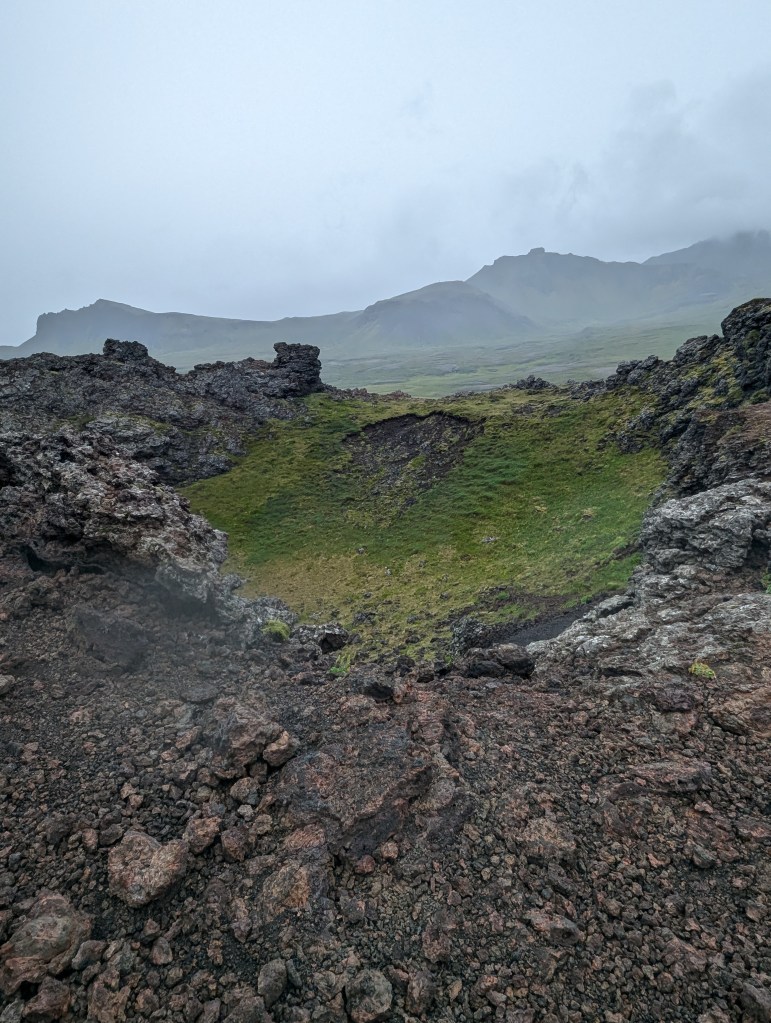
We drove around to and hiked up to the Saxhóll Crater. Compared to the Kerið Crater we had seen in the Golden Circle, the many steps in the heavy wind made this one not worth the effort.
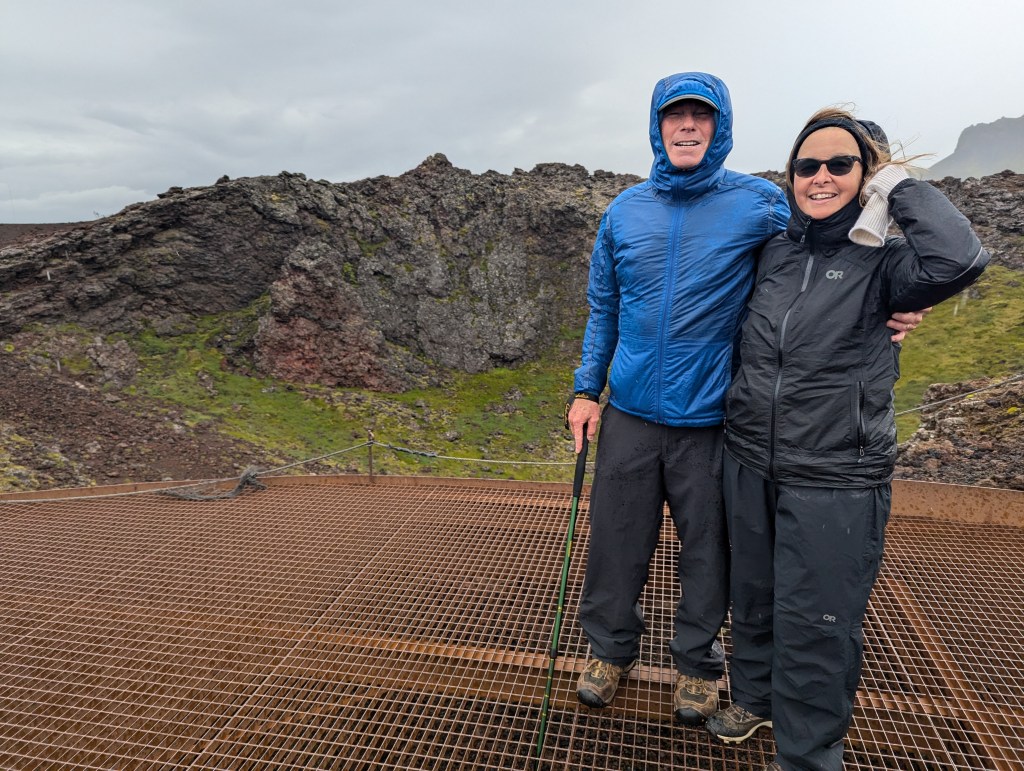
We drove around the peninsula a bit more, but ultimately decided to give up on the day. In the evening we ventured out to Arnarstapi to a cute place for dinner of fish and chips and beer.
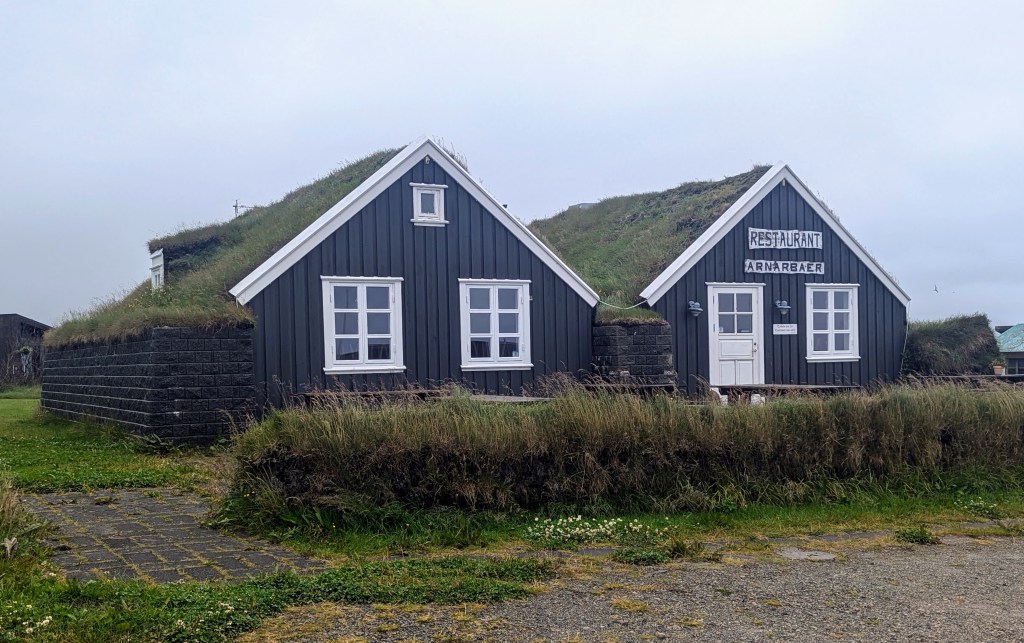
In the morning, the sun was trying to peak through the fog. We headed back to Arnarstapi to take pictures of the big stone structure of Bárður Snæfellsás. It was made by the Icelandic sculptor, Ragnar Kjartansson and was unveiled in 1985.
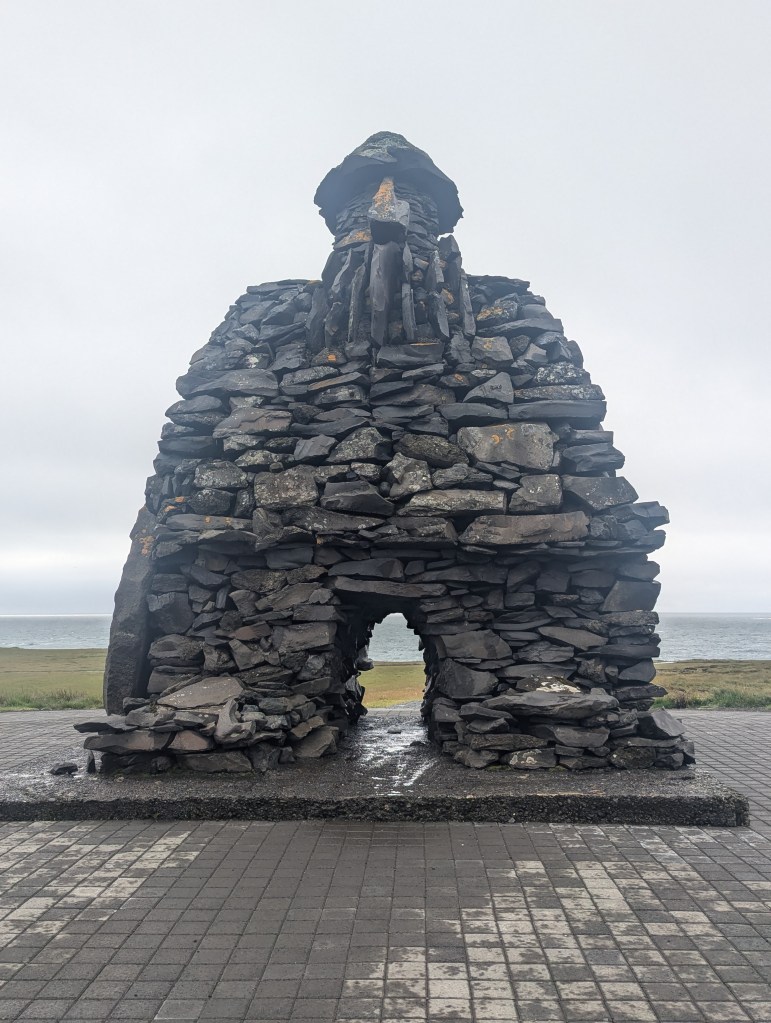
Bárður Snæfellsás was the settler of this area, half a troll, and half a man, but his mother was human. He came to Iceland in the 9th century and gave the peninsula its name, Snjófellsnes peninsula, but both words “snær” and “snjór” mean snow in Icelandic.
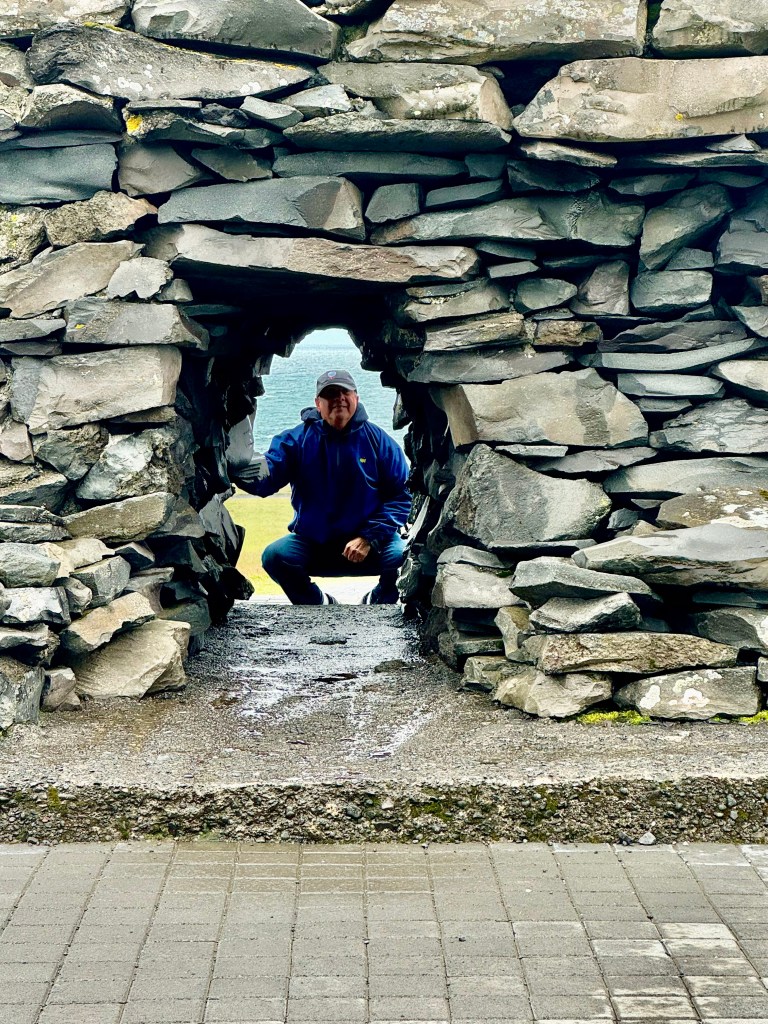
Beyond the statue are gorgeous cliffs filled with birds. This pathway connects the two tiny towns of Arnarstapi and Hellnar, and in good weather is probably a beautiful hike.
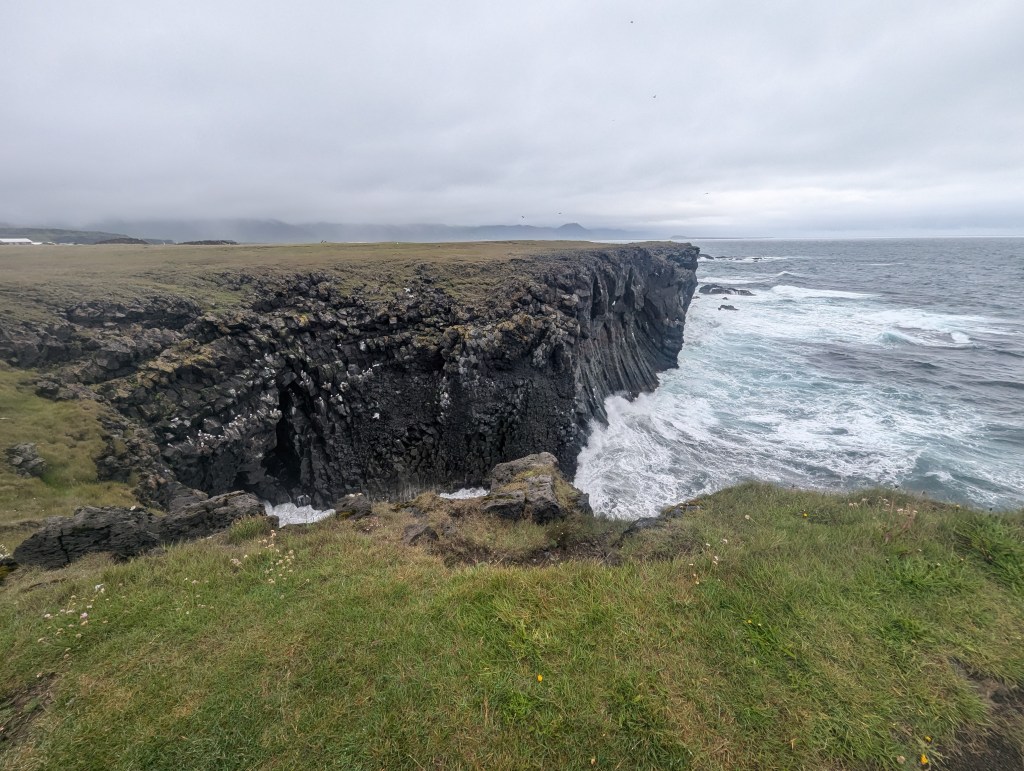

We ventured down to the beautiful natural harbor of Arnarstapi with its extraordinary columnar basalt and cliff formations.

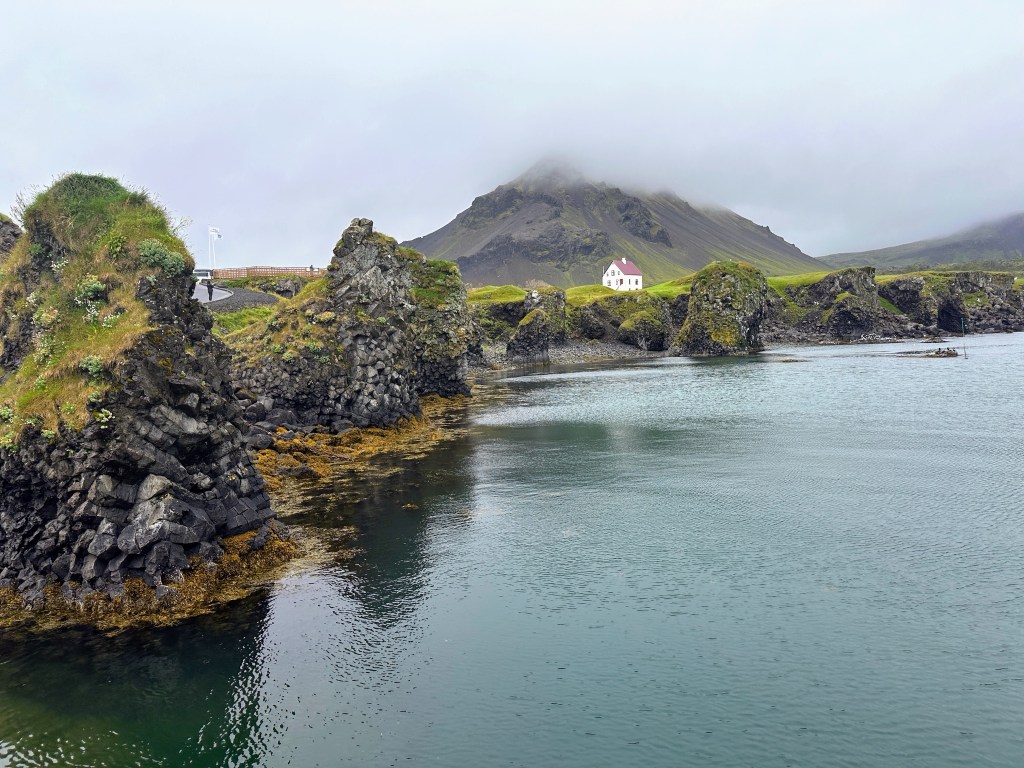
The grounds are covered with cranebills

and succulents

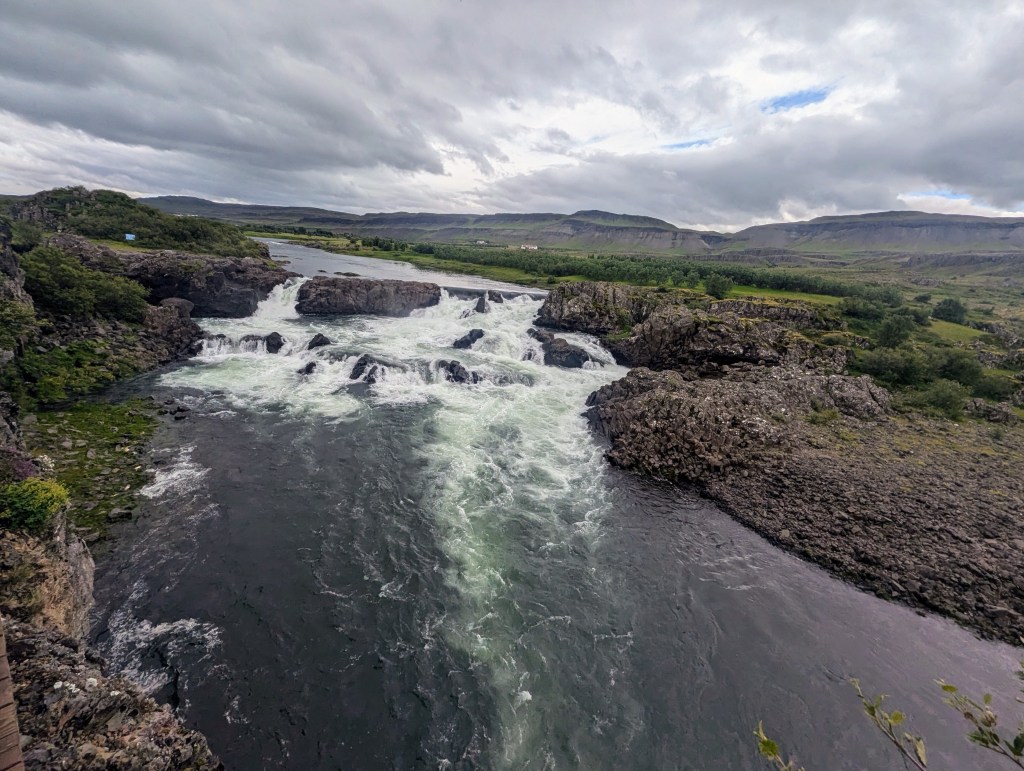
As we left the Snæfellsnes Peninsula, the sun finally made a showing. So we decided to stop, where else, but at some more falls. First stop: Glannifoss. Glanni is a stunning waterfall in Nordura river. The locals believe it to be the dwelling place for elves and trolls. It was a short hike in from the parking lot, which is shared with the local golf course.
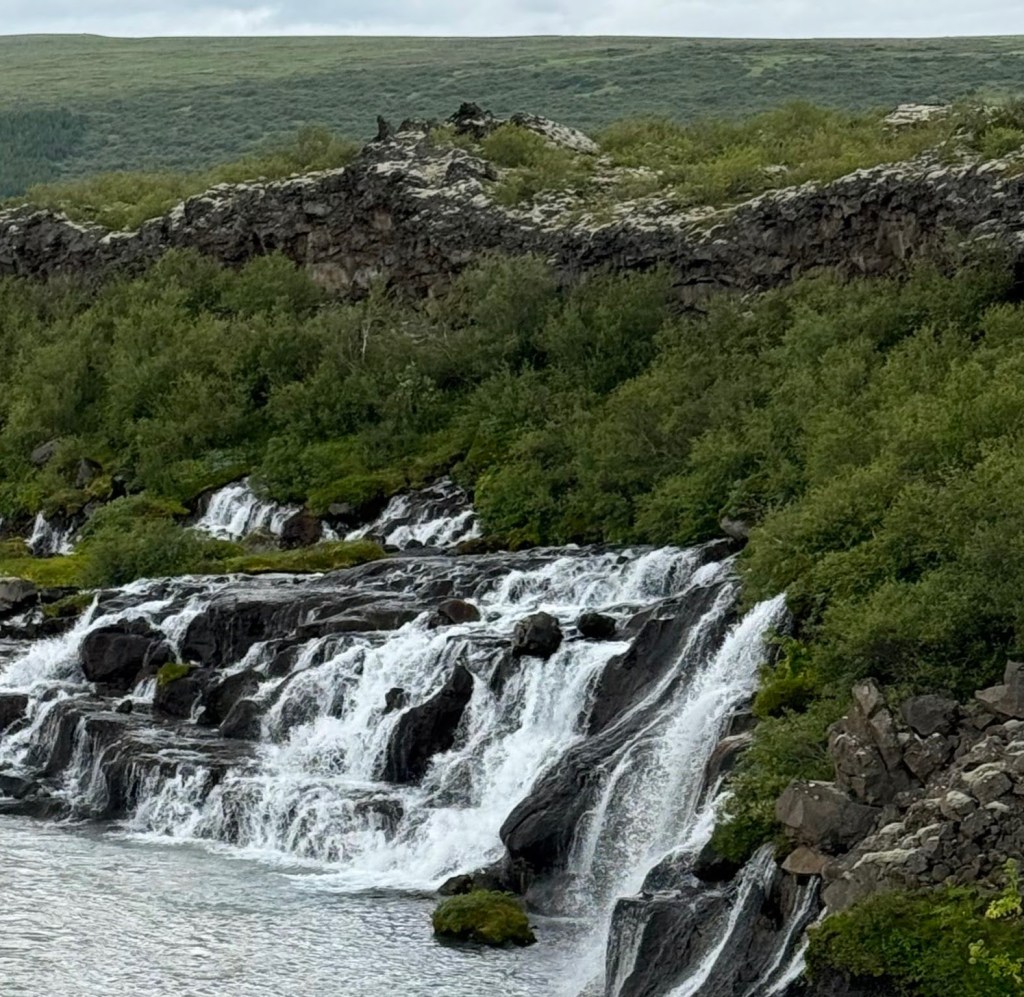
Next stop: Hraunfossar and Barnafoss. Just when we thought we had seen enough waterfalls, we found these to be so very unique, it was more than worth the stop. Hraunfossar means Lava Falls. Water seems to magically appear from the lava.

However, it is actually a clear spring surging through lava. The lava field that Hraunfossar trickles through flowed from an eruption of one of the volcanoes lying under the nearby glacier of Langjökull, the second largest ice-cap in Iceland. The waterfalls pour into the Hvítá river from ledges of less porous rock in the lava.
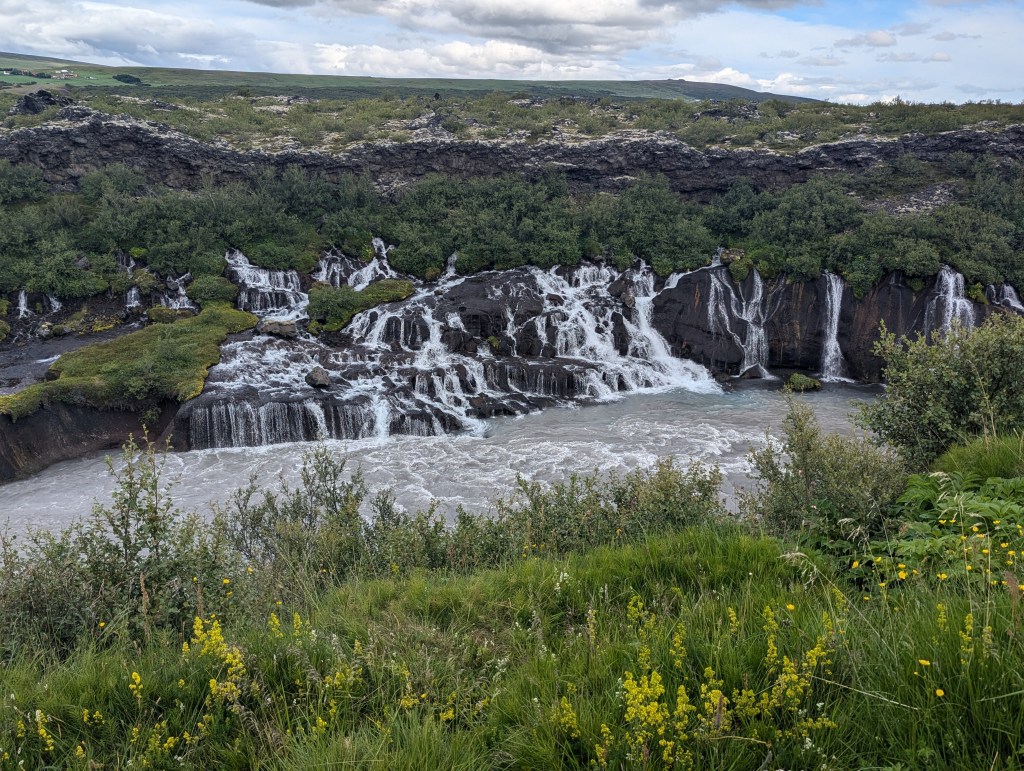
Looking back at it from upstream, the water seems to appear from the middle of the lava with no river above.
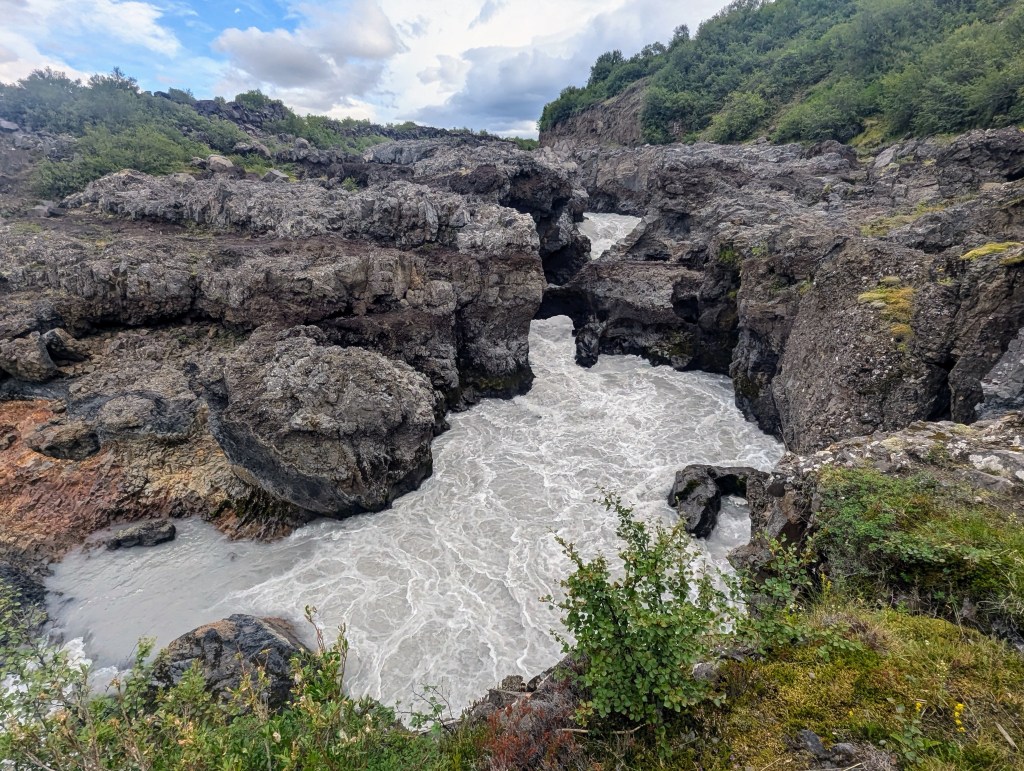
Upstream on the river is Barnafoss, “Child Falls,” and legend has it that one day two boys were left home while their parents went to church, but they got bored and decide to follow. When taking a shortcut, the two boys tried crossing the falls over a natural stone bridge but fell in and drowned. The mother of the boys cursed the bridge and shortly after it was destroyed by an earthquake.
As we headed back to the parking lot, we could not resist a last group selfie.

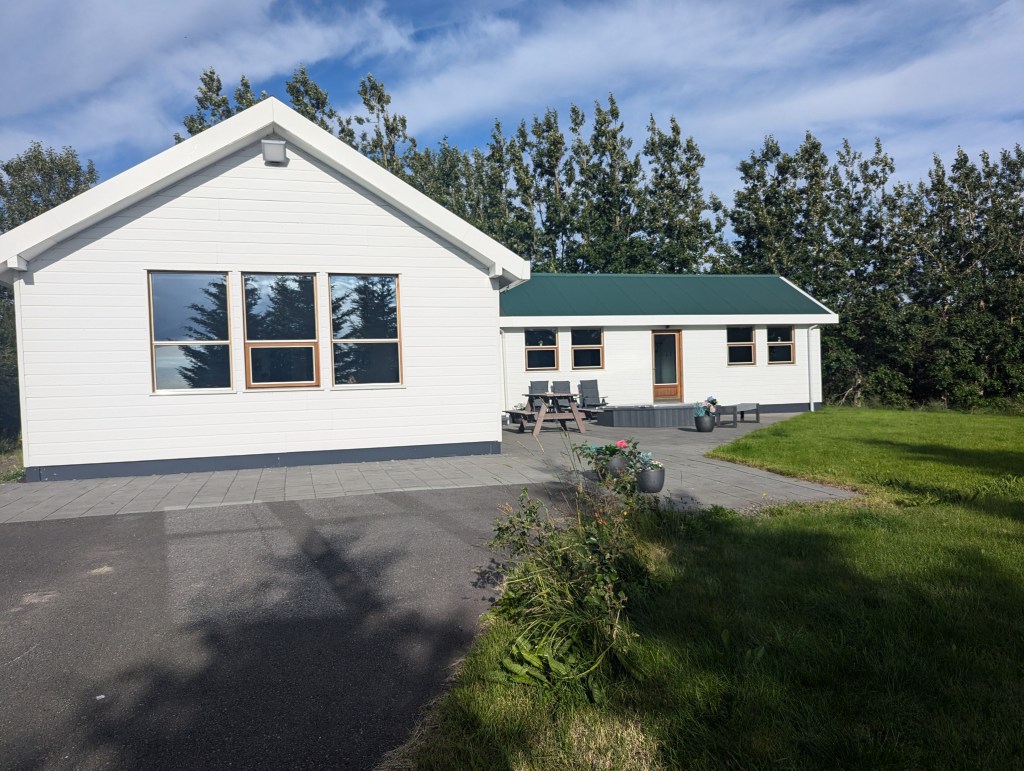
It was time to check into our last AirBnb (and accommodation) of the trip. To our delight we were booked on a horse farm with its own natural hot springs!
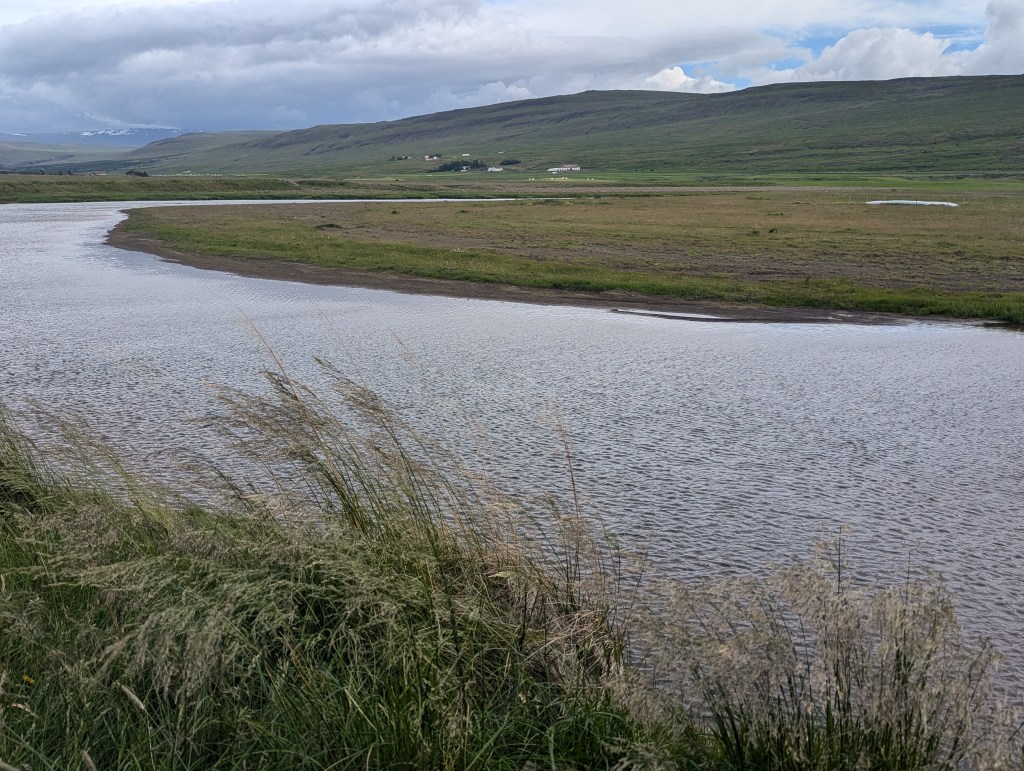

A hot spring can be seen in the distant bend in the river.

The host happened to be there and explained she runs the farm, and she breeds and trains her horses for show. In addition to our home, she has turned the old silo into a unique 1 BR AirBnb.

But the most fun part: she took us into the paddock and introduced us to a 2 day-old foal!
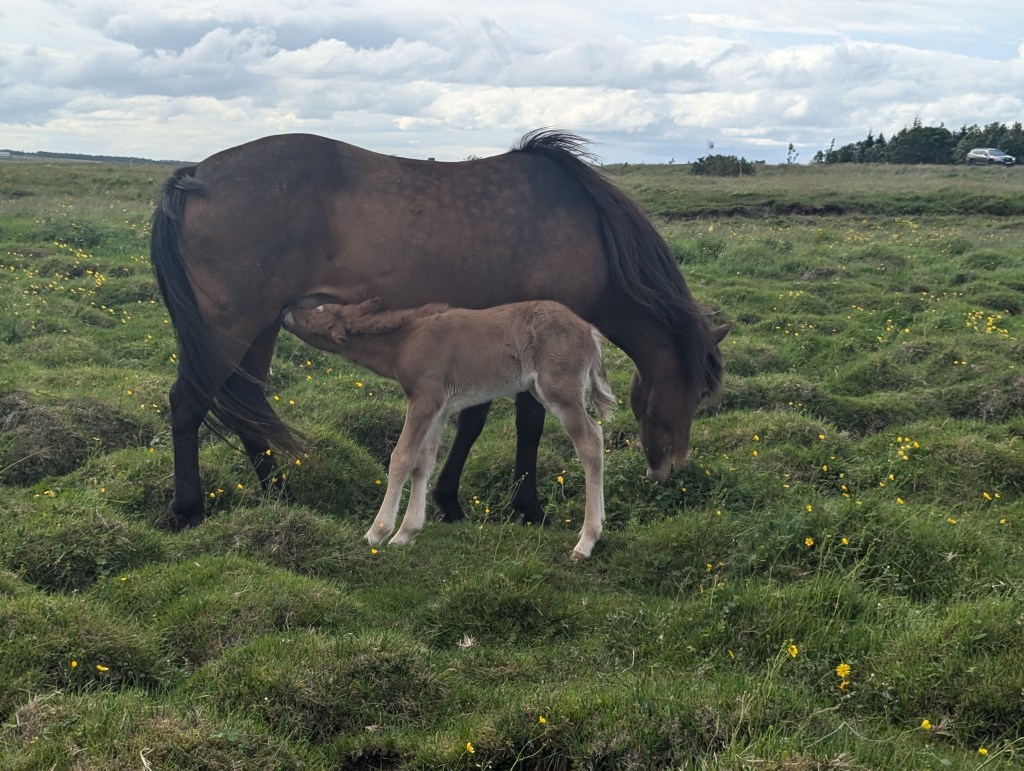
I could barely drag Carol from the horses.

The final morning we headed out early. We had booked a final hot springs stop on the way to the airport.

The eight geothermal pools are surrounded by rocks and nestled in the hills over 1200 acres of beautiful nature (but picture taking is discouraged).
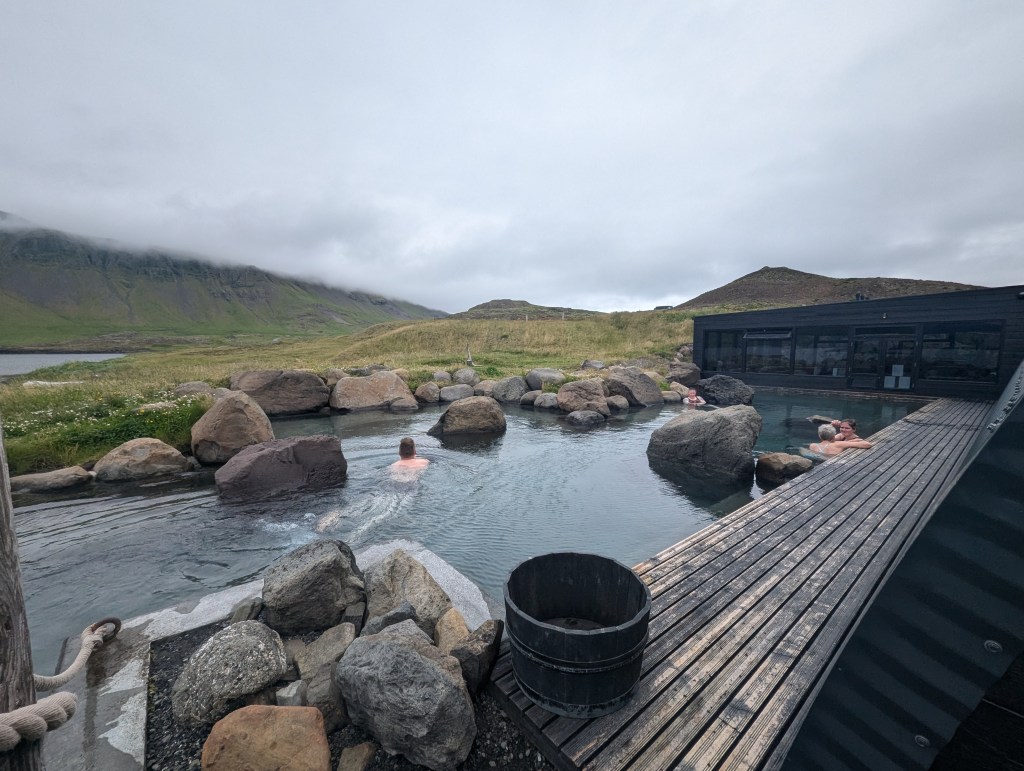
This pool is right on the ocean’s edge.
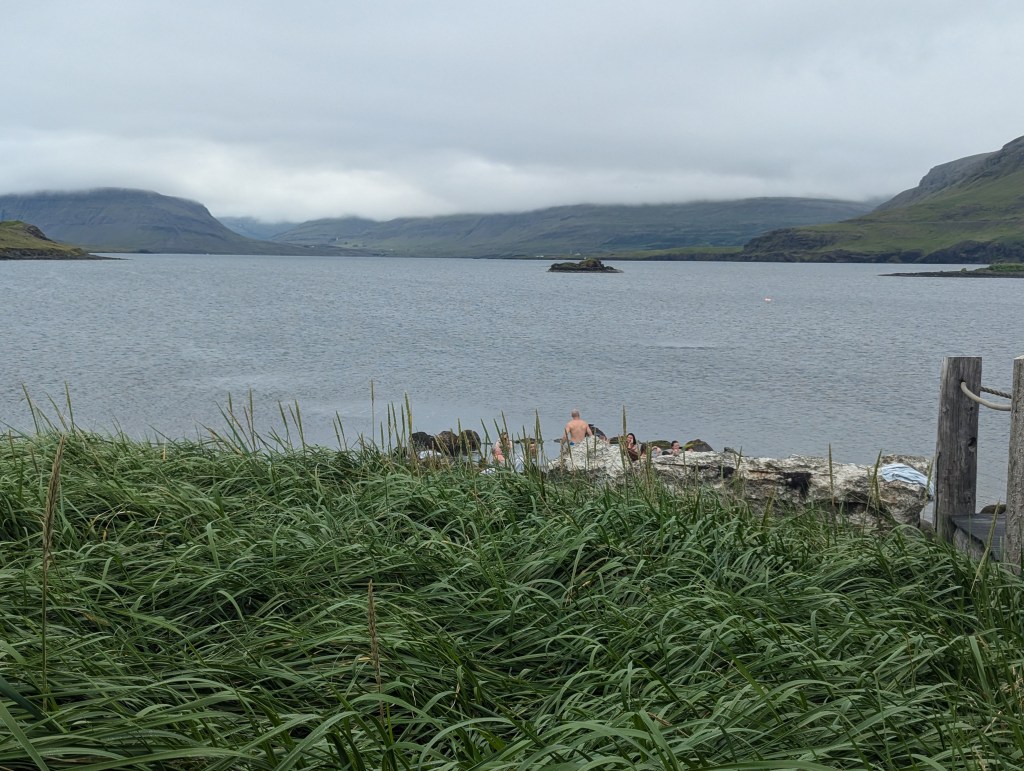
After a luxurious soak and a hot shower, we were off to the airport for the journey home.
 Jo & Eric's travels
I was wondering how you were doing. Looks like you are well underway on another exciting adventure! Thank you for sending . Enjoy every minute. All good here. Hopefully see you at some point after you return.
Sent from my iPhone
>
LikeLike
Are you back in the USA.
Mitch
LikeLike