
The minute we stepped off the plane in Curaçao we were greeted with the warm humid air that was to be our constant in the coming weeks. We jumped into our 2 door mini jeep
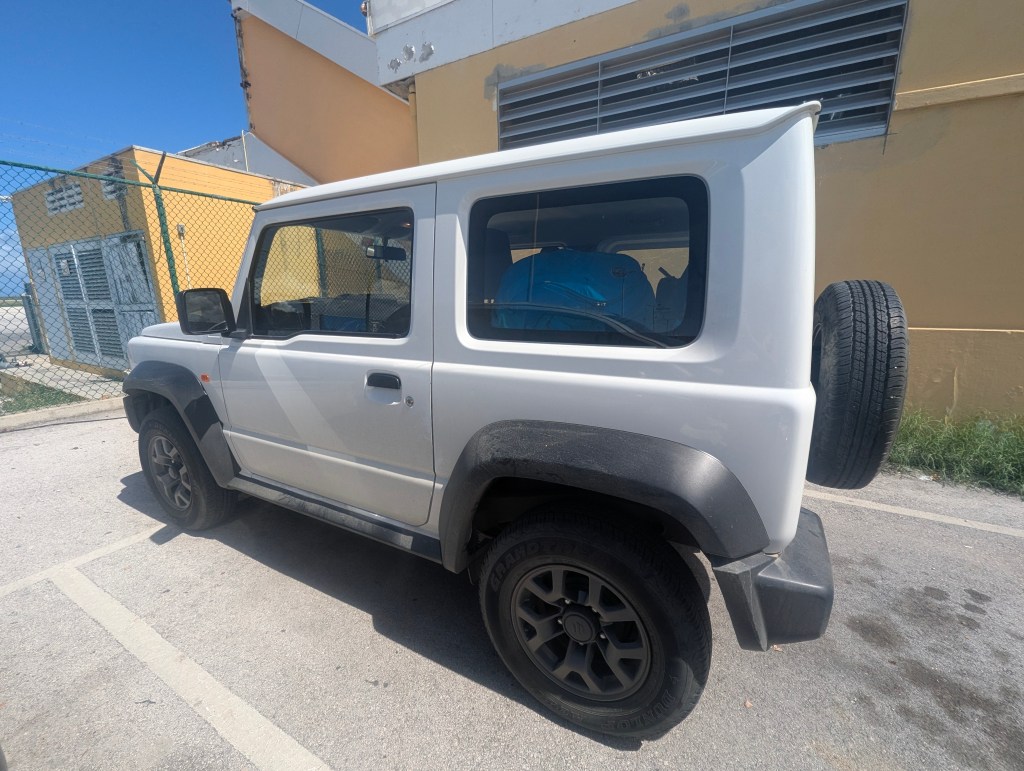
and headed to the Blue Bay Golf & Beach resort, our new home away. The resort has all kinds of accomodations from hotel style to homes. We were in villa 2 near the beach.

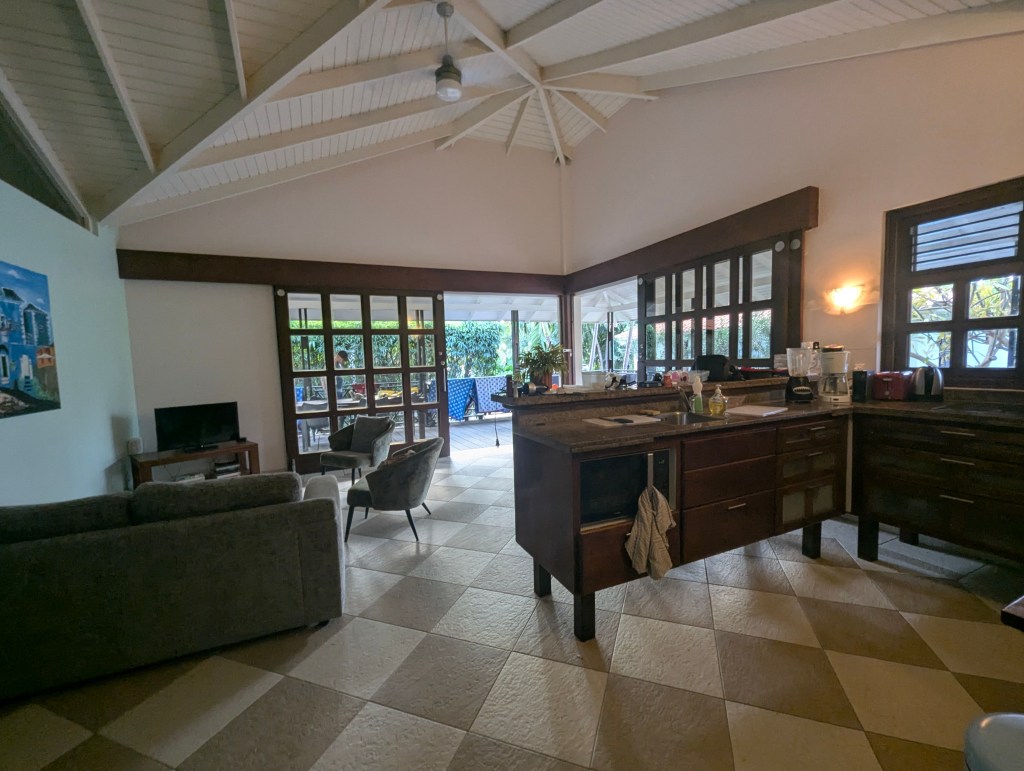
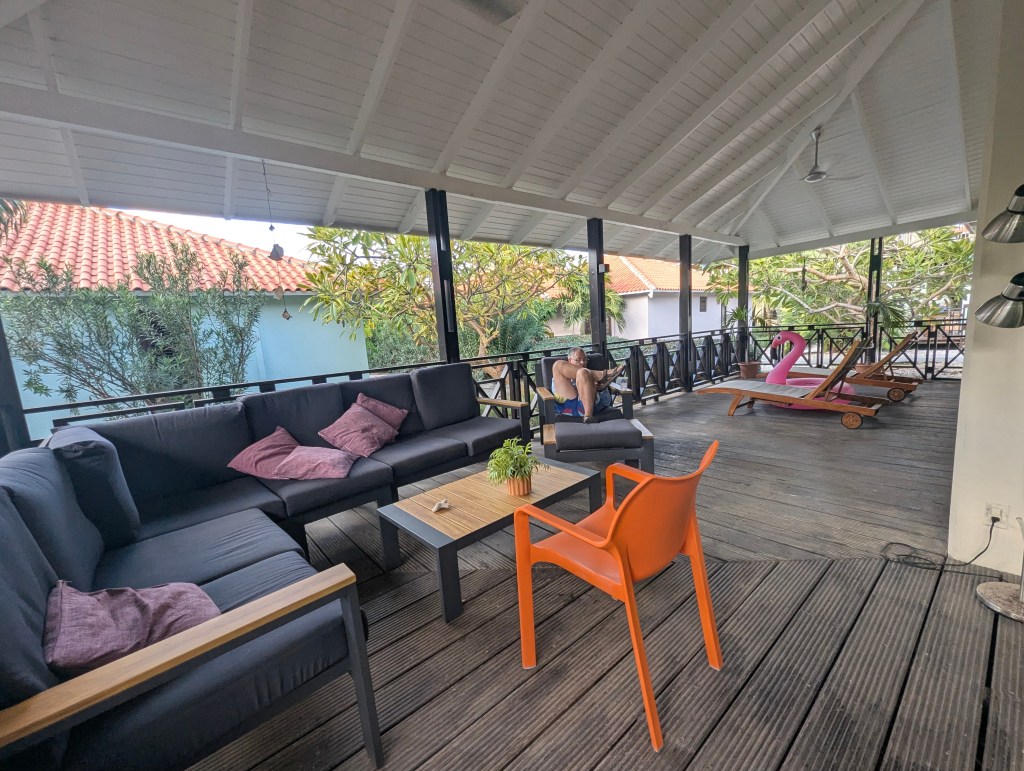
We had a spacious interior and a wrap around deck. The only drawback was no screens on the windows and no air conditioning in the main room (there was air conditioning in the bedrooms for sleeping, thank goodness), and around dusk the mosquitoes got a bit vicious every evening despite the mosquito trap, fans, and spray.
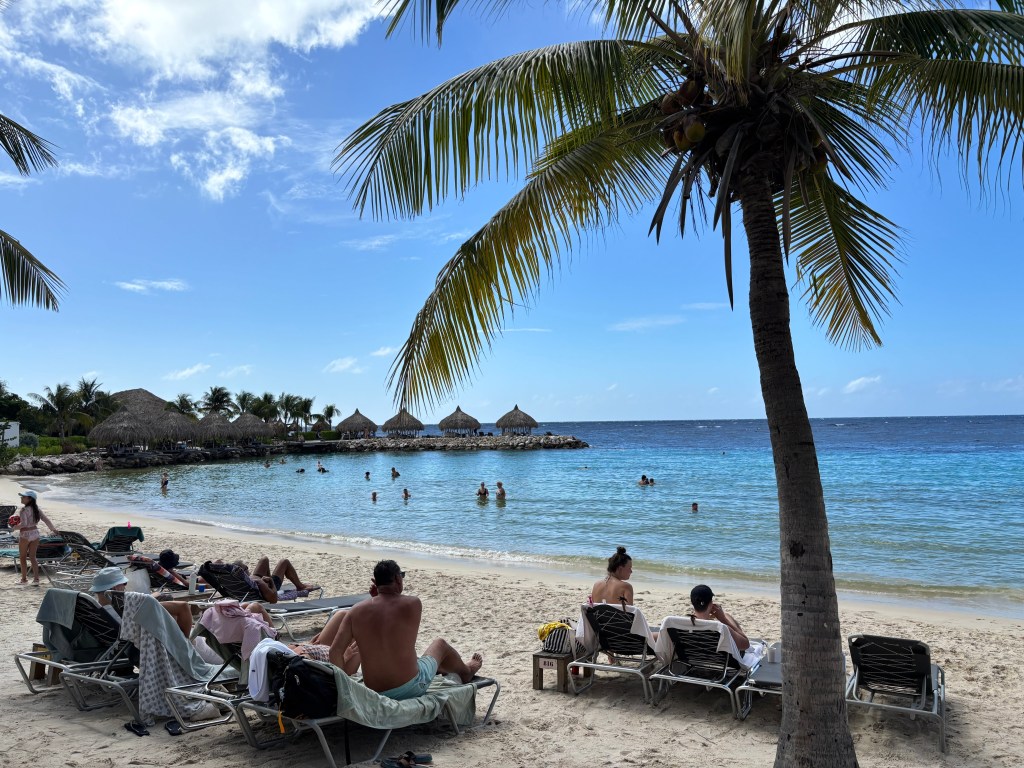
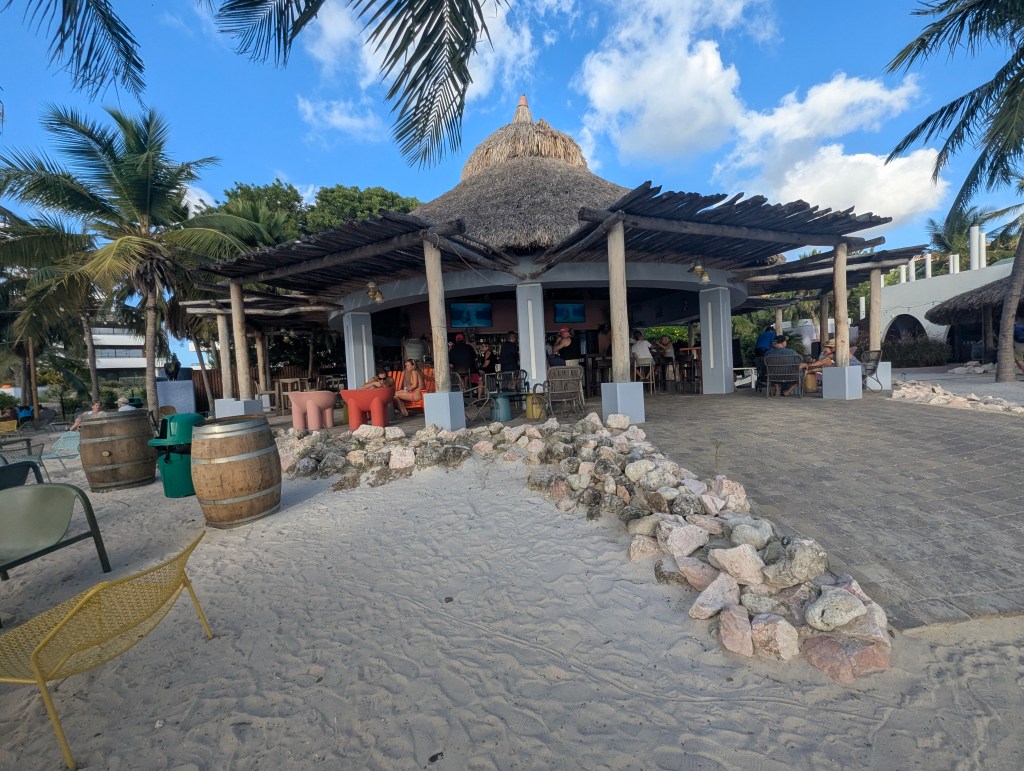
We headed right to the beach with its plentiful 4 restaurants from which to choose. We had dinner on the beach before we even headed to the grocery store, which was very nearby. We spent the majority of our time over the next few weeks enjoying our little beach at Blue Bay. There were plenty of chairs and lots of shade.
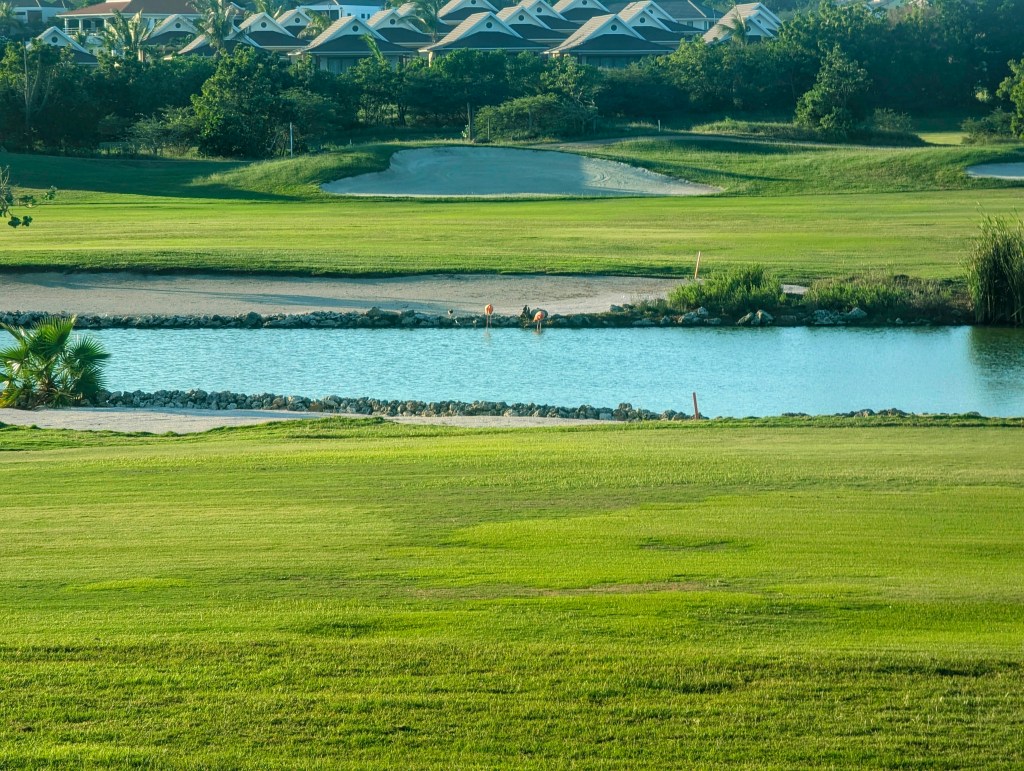
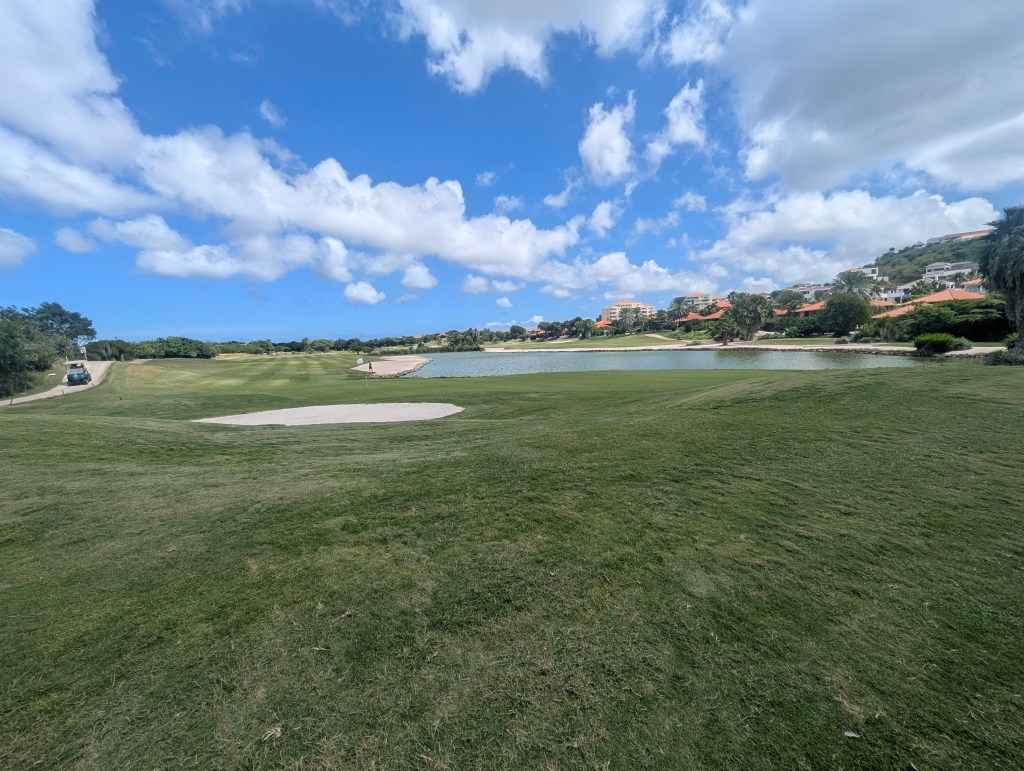
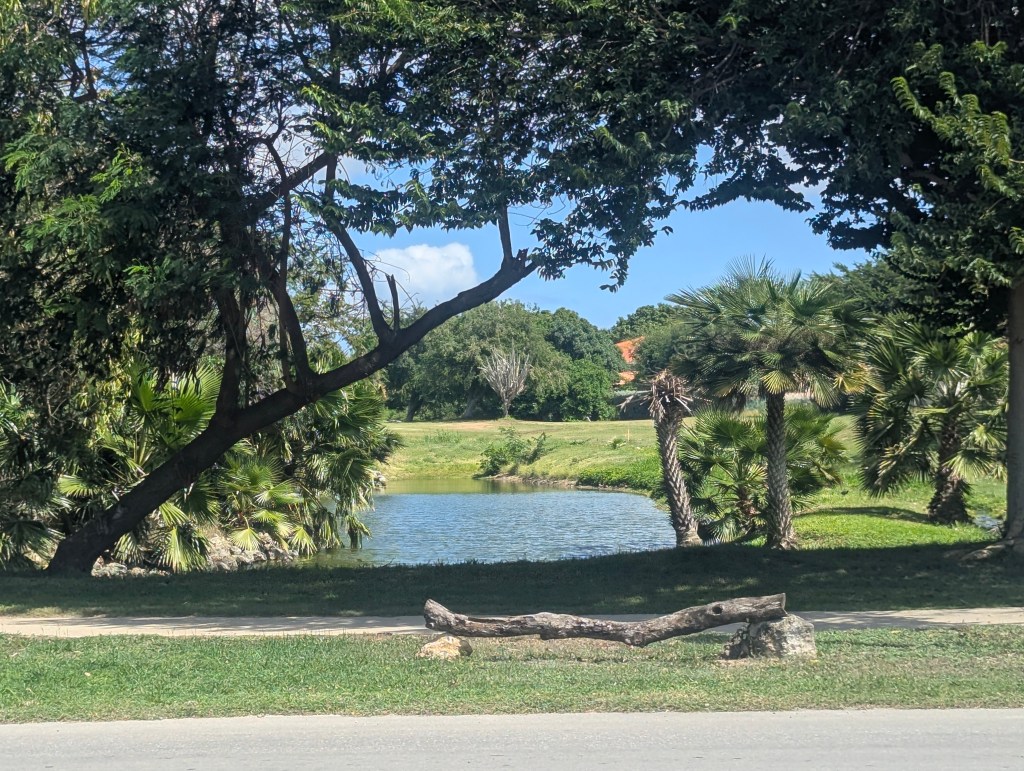
Our villa was not only a short walk to the beach, it also was near the golf course with its beautiful views. (Yes, those are flamingoes in the pond).
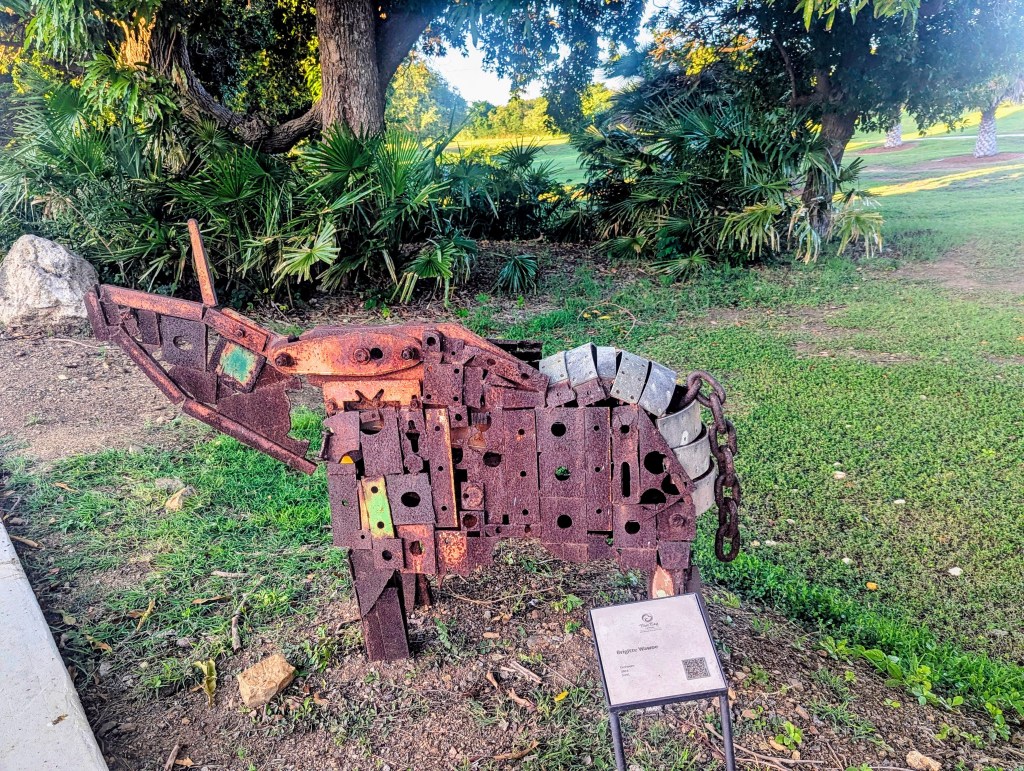
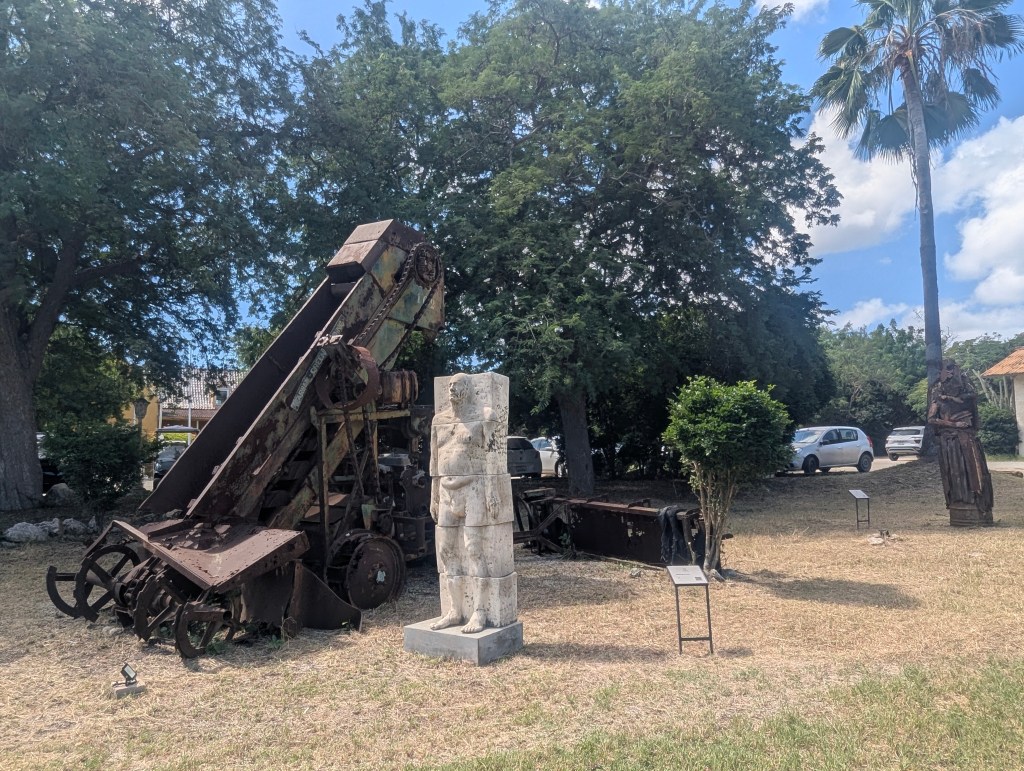
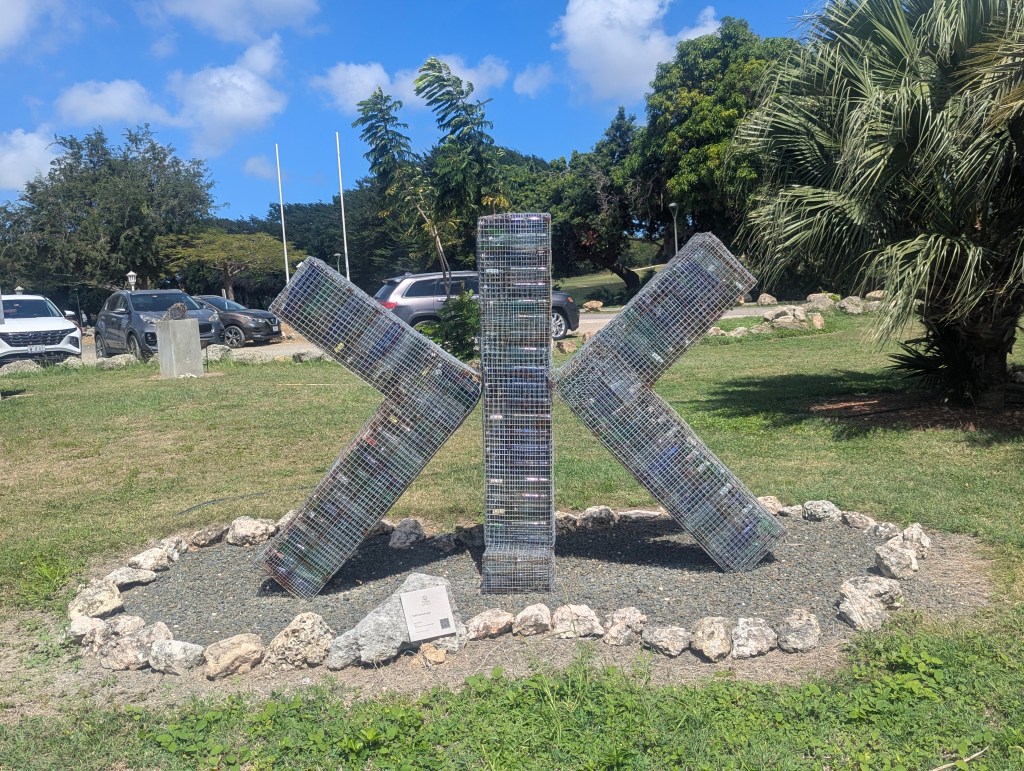
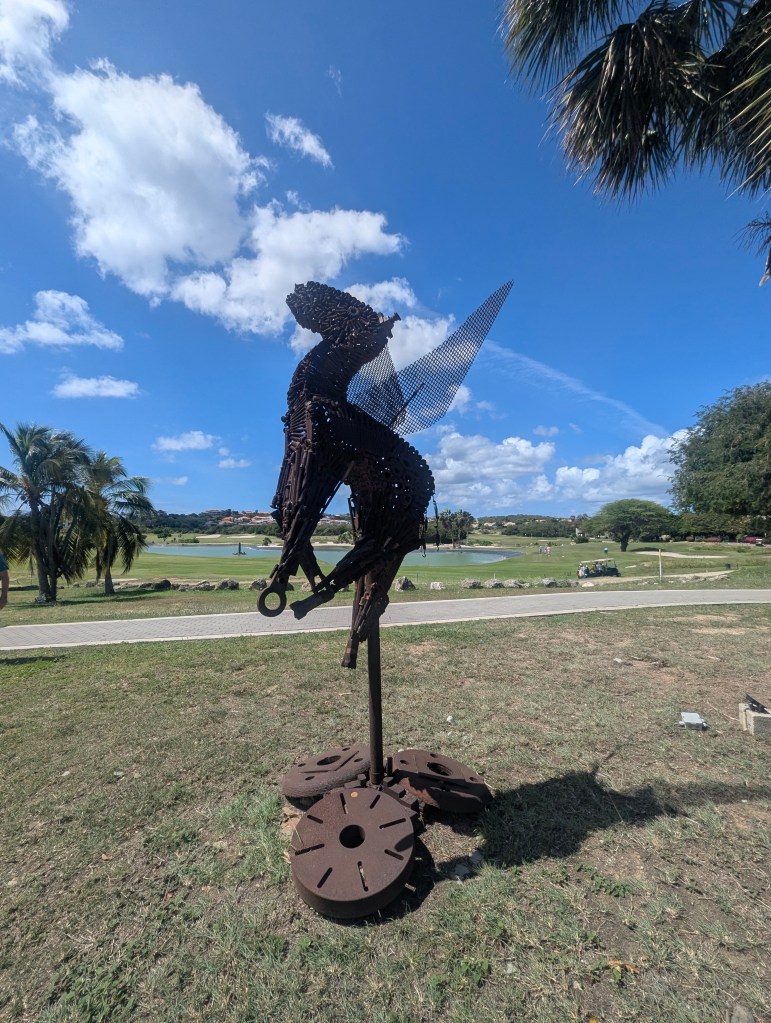
Near the clubhouse is an outdoor sculpture garden which we would enjoy as we walked around for some exercise on occasion.

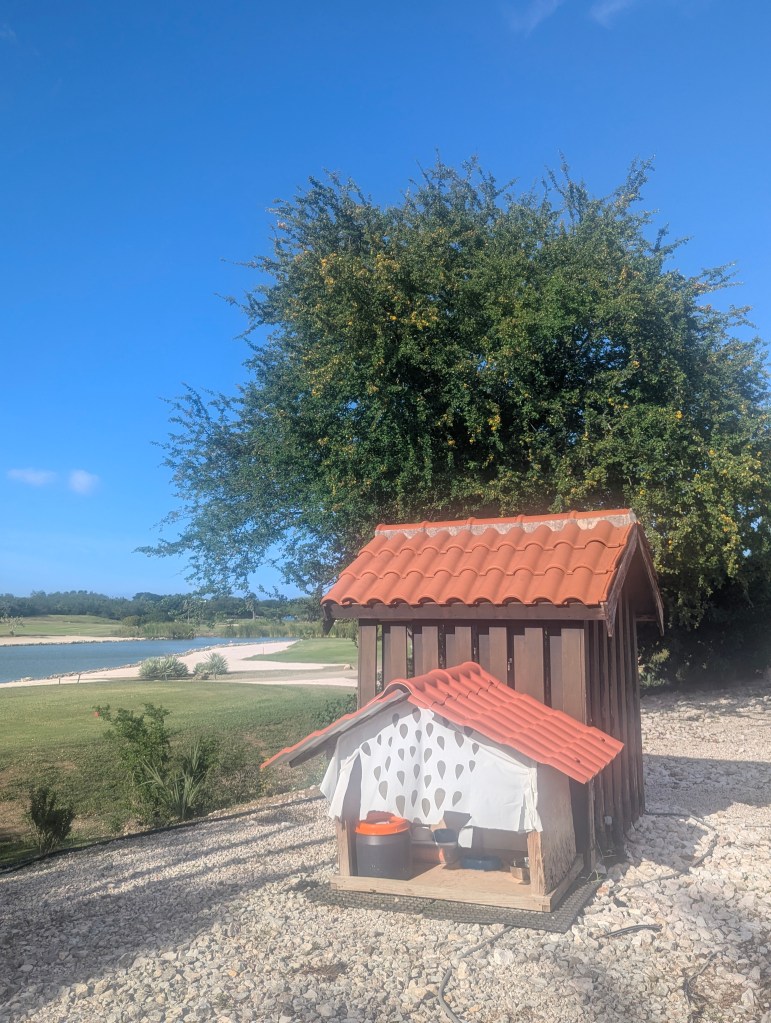
And no resort is complete without the resident cat house. The cats are maintained and purposed with keeping the “little creatures” population at bay, a task at which they seemed successful.
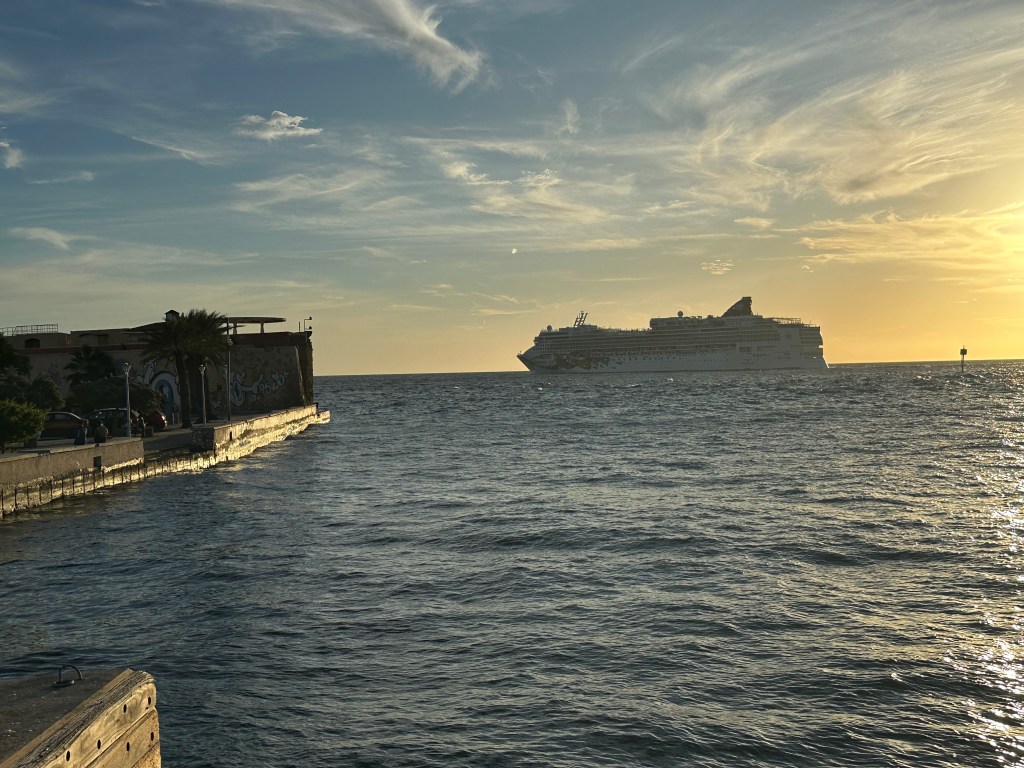
We did head into town our first week to check out the local sights. Heading into town we passed the Cruise Ship Terminal. Big cruise ships are a daily sight this time of year. At sunset they can be seen heading out.
We headed to town and stopped in front of Town Hall.
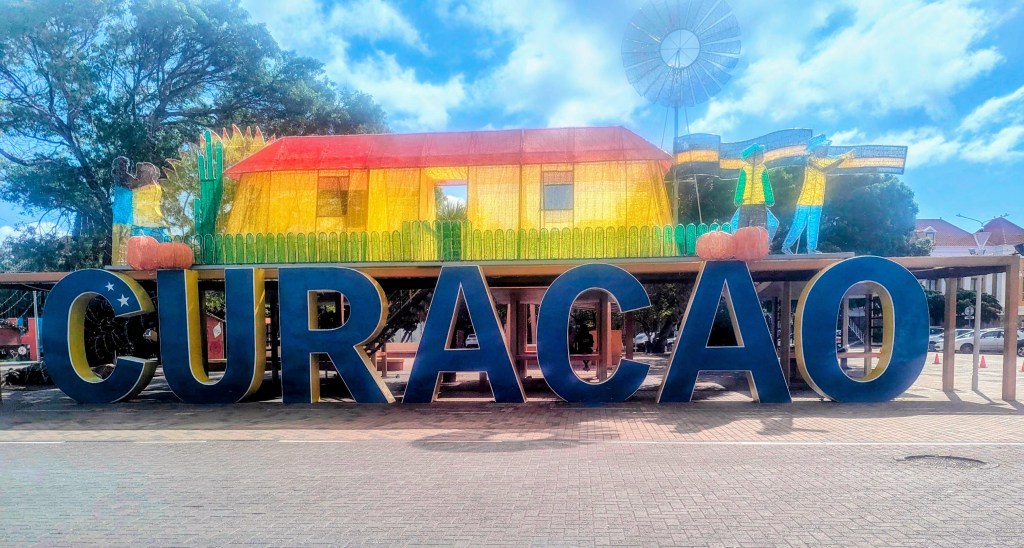
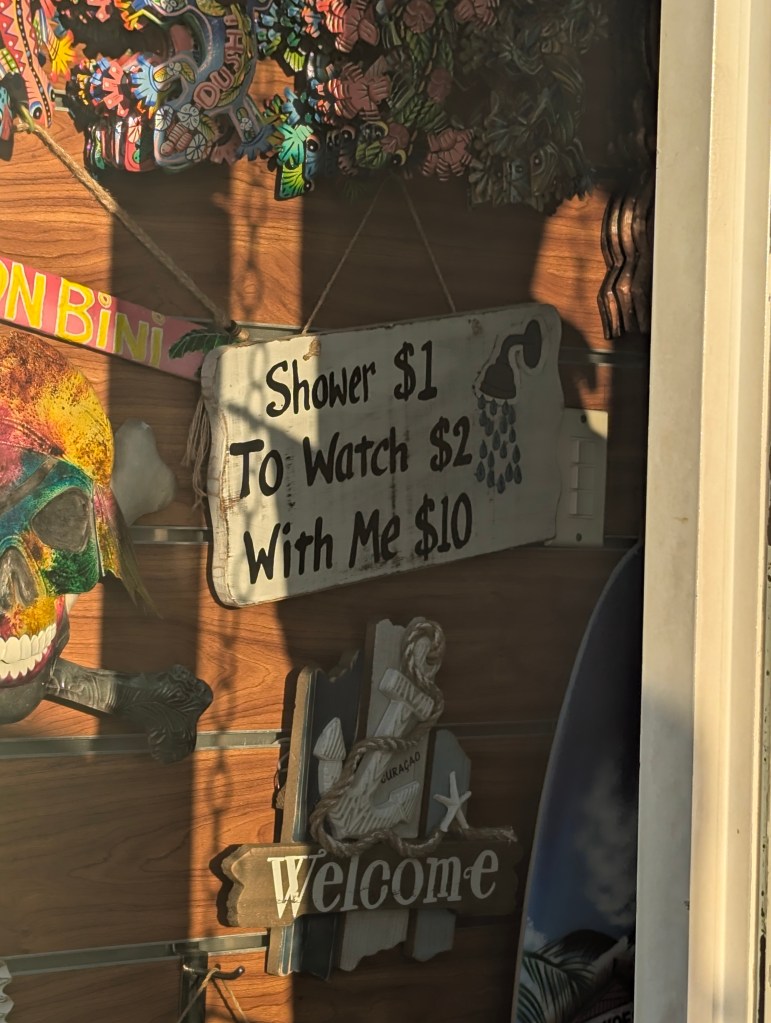
Dushi means sweet. We never did figure out its significance in Curaçao, but we saw signs everywhere.
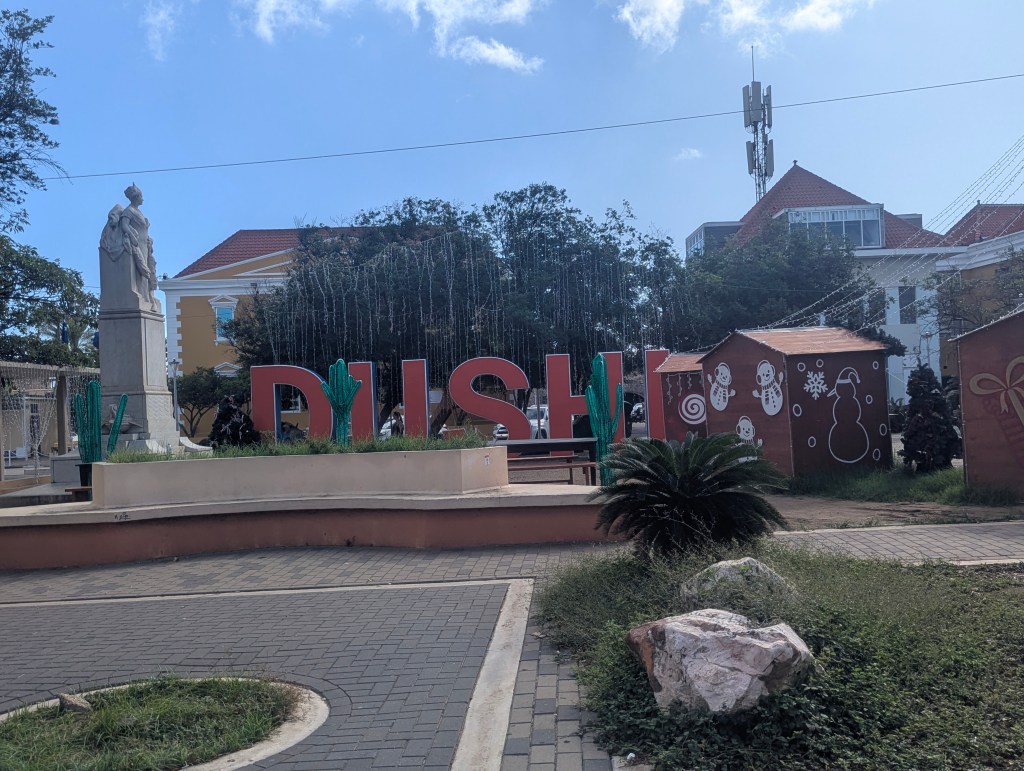
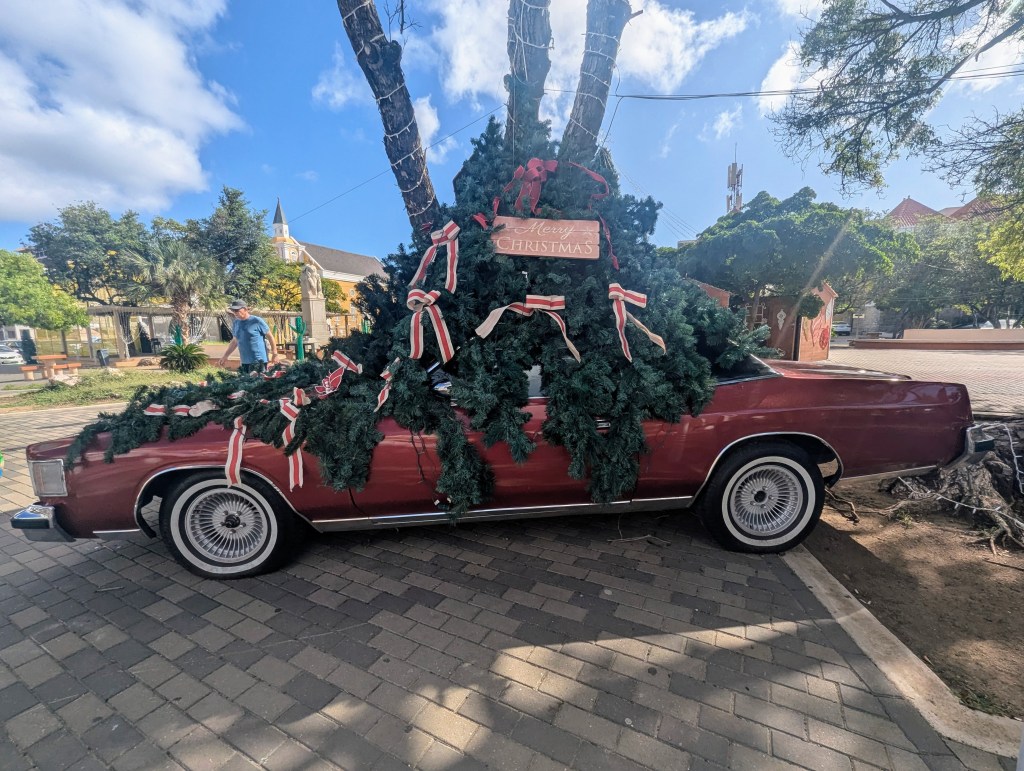
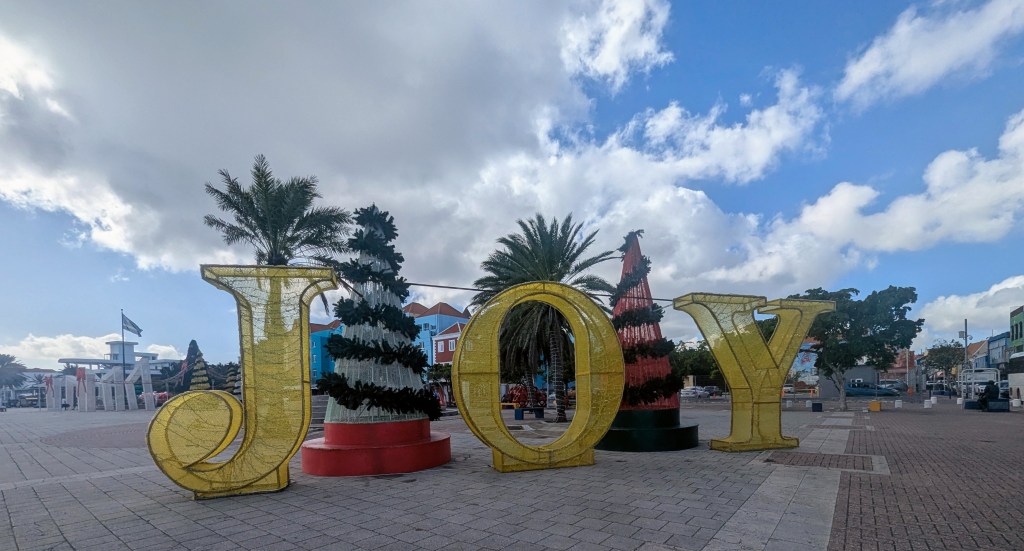
We were glad we got to town early in our stay, because the town was still decorated for Christmas.
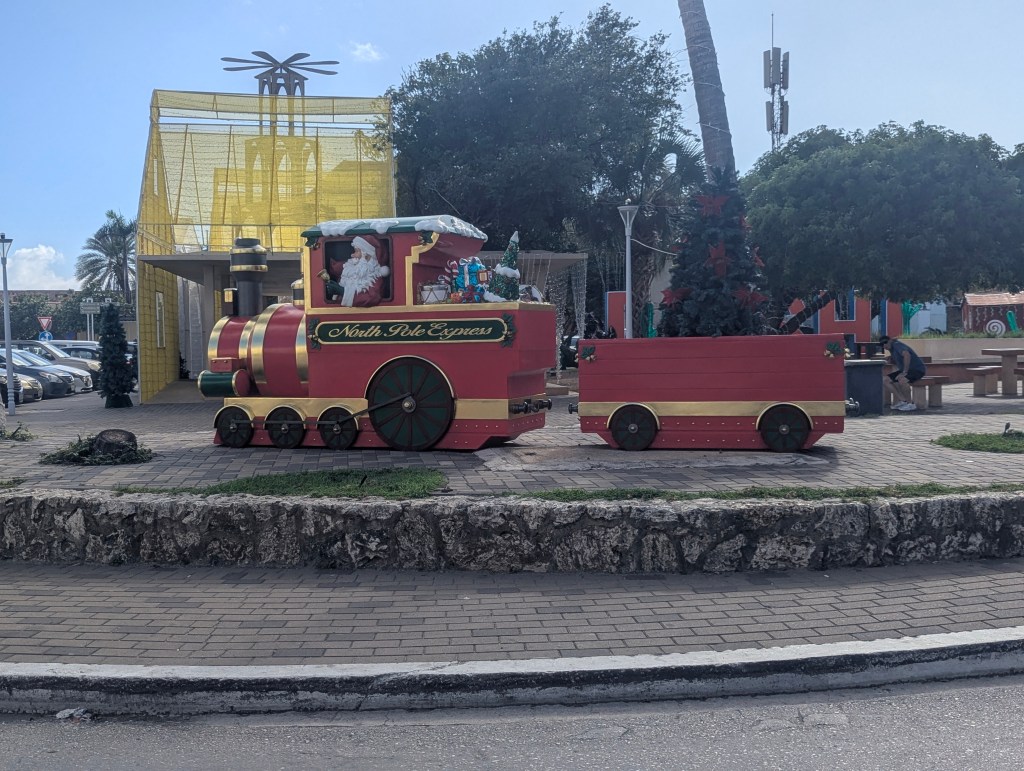
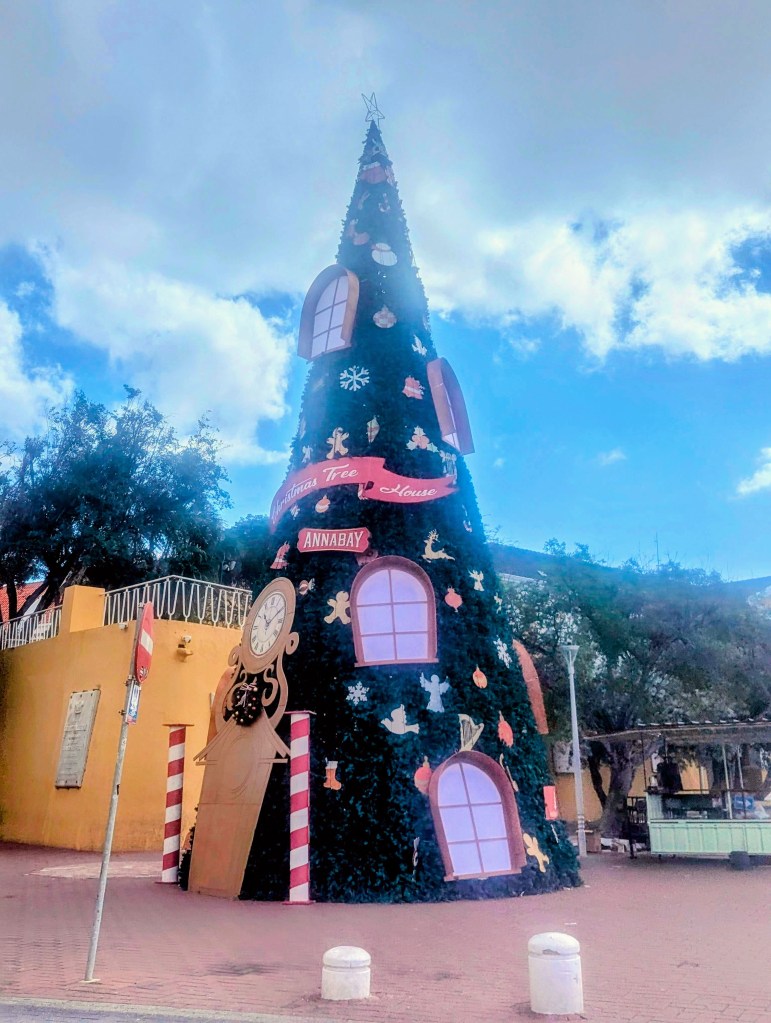
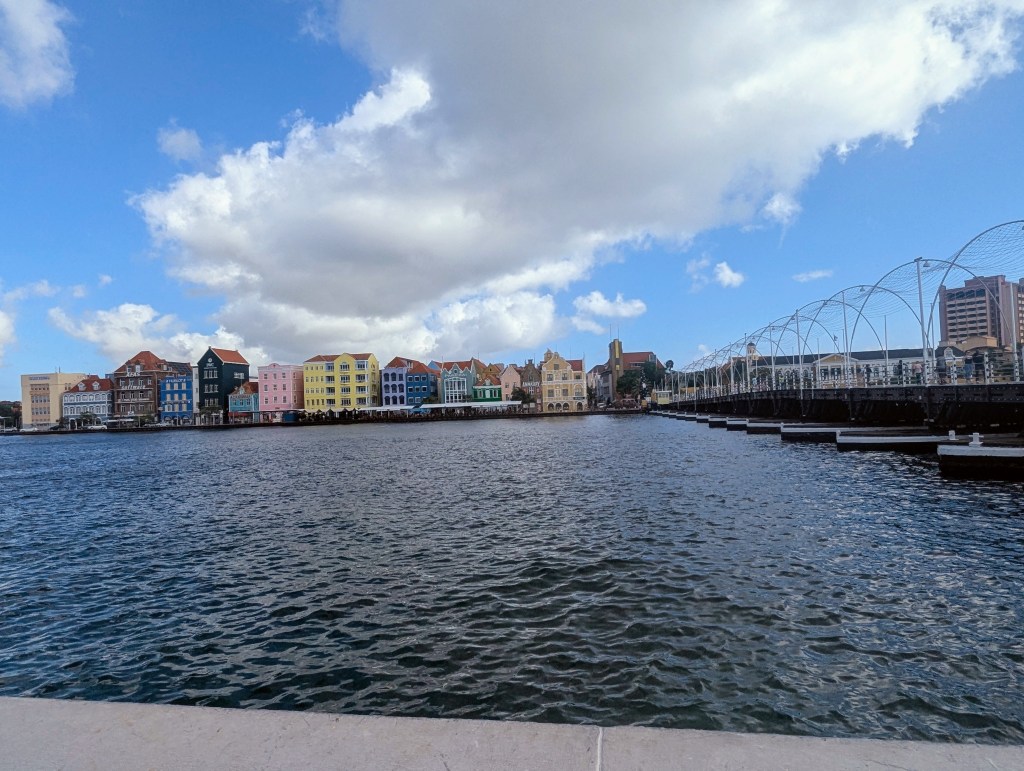
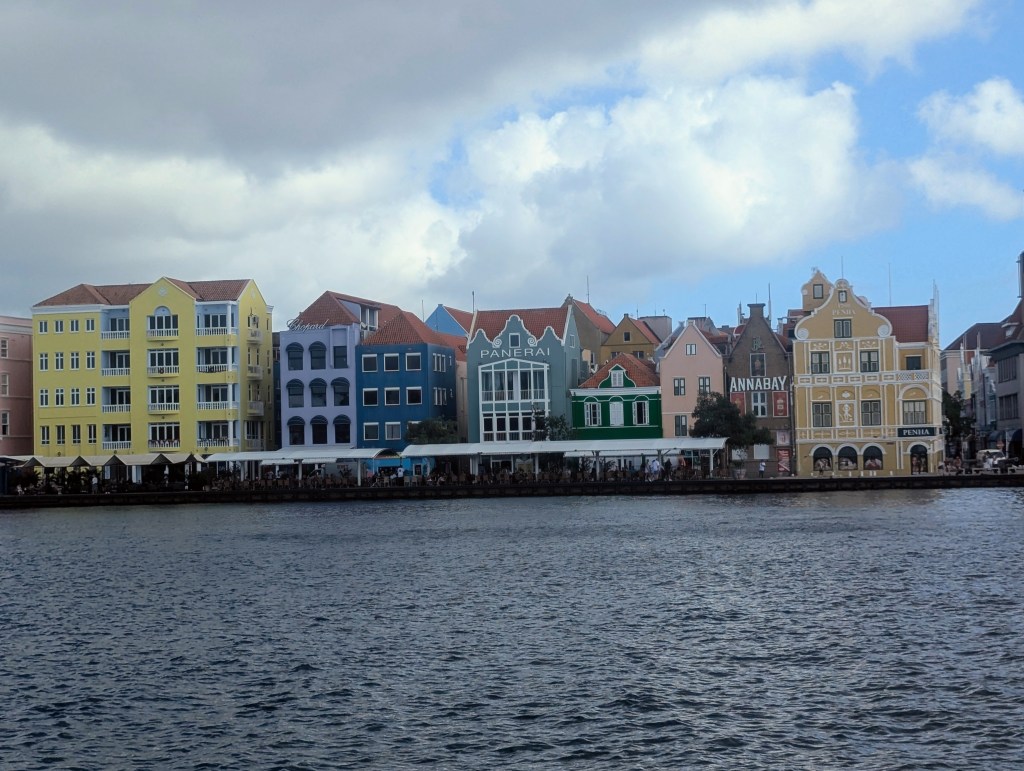
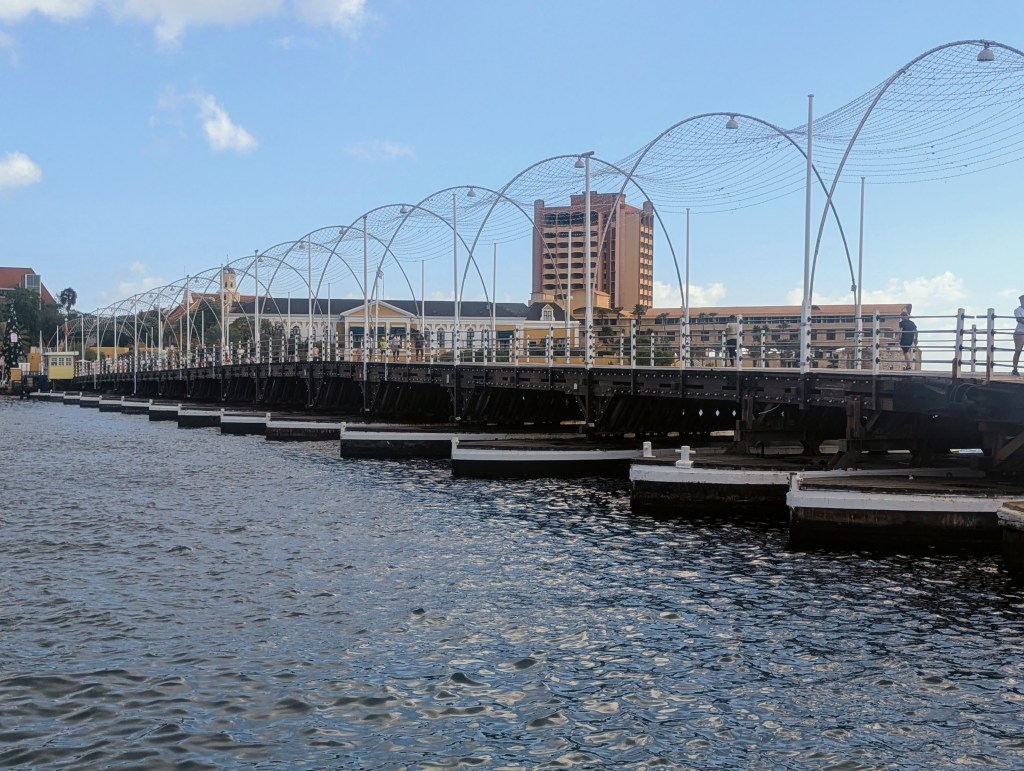
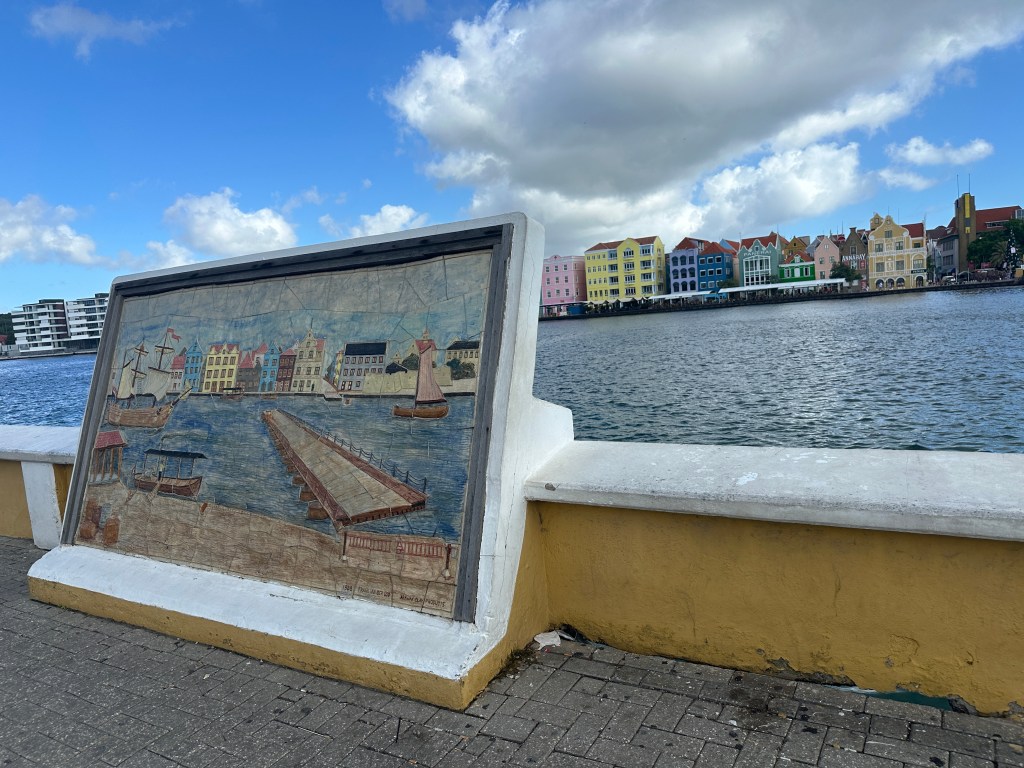
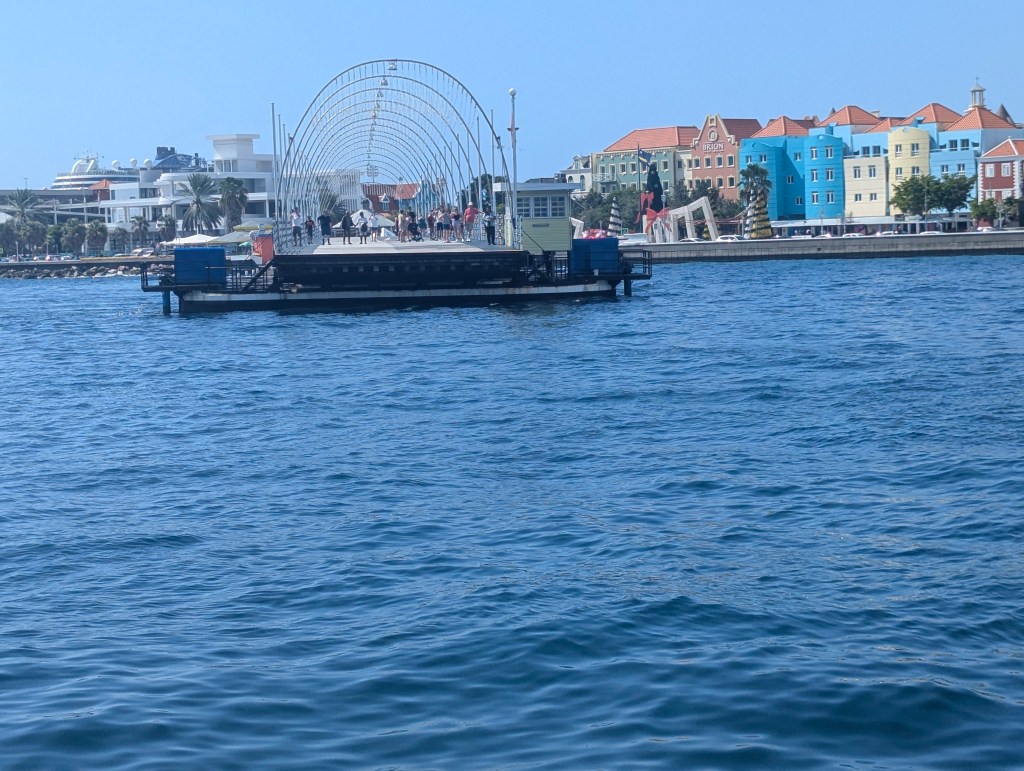
After figuring out how to pay for parking, no small feat because only local coins, guilders, are accepted, we strolled around Willemstad. We made our way down the main street to the famous Queen Emma Bridge (affectionately known as the “Swinging Old Lady”), a pontoon bridge across the Sin Anna Bay. It connects the Punda and Otrabanda quarters of the capital city, Willemstad.
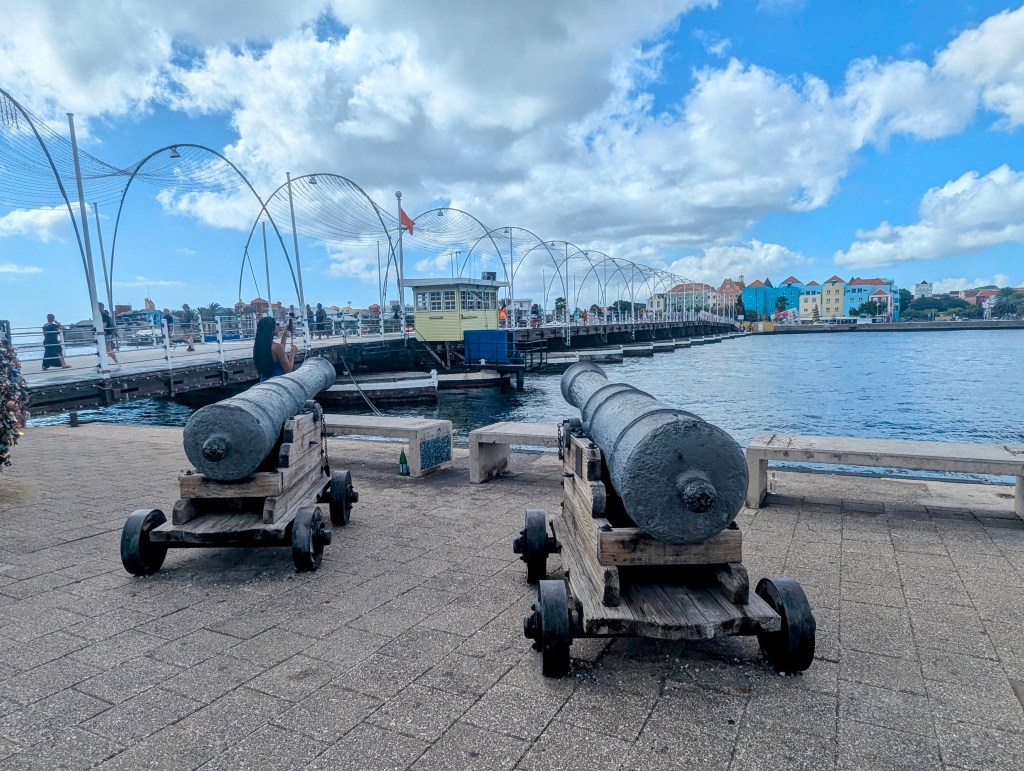
We walked across to Otrabanda, which literally means “other side.” The local language is Papiamentu, which is curiously a mix of Portuguese and Creole. Otrabanda, fouded in 1707, is a UNESCO World Heritage Site. It was also still dressed for Christmas.
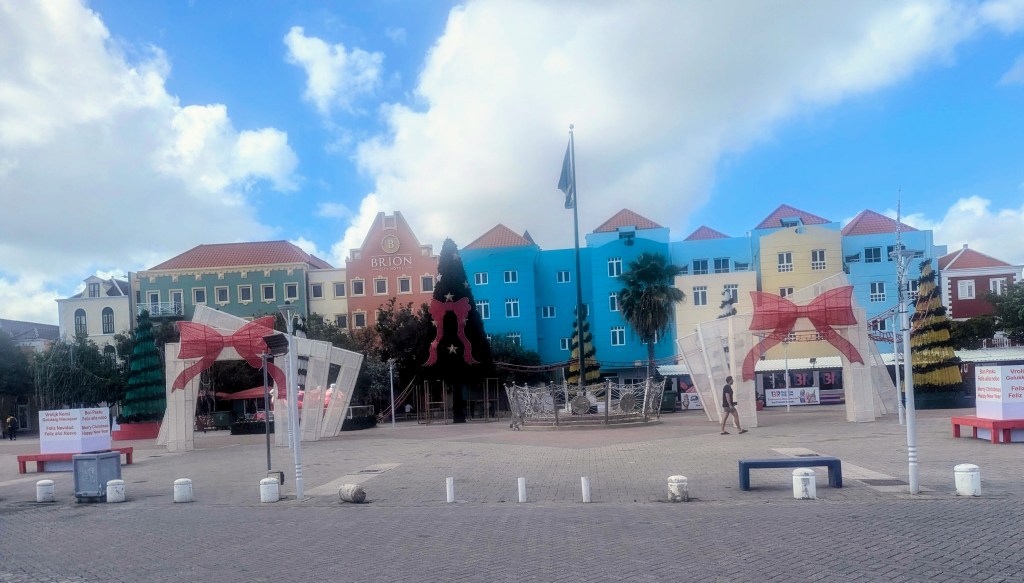
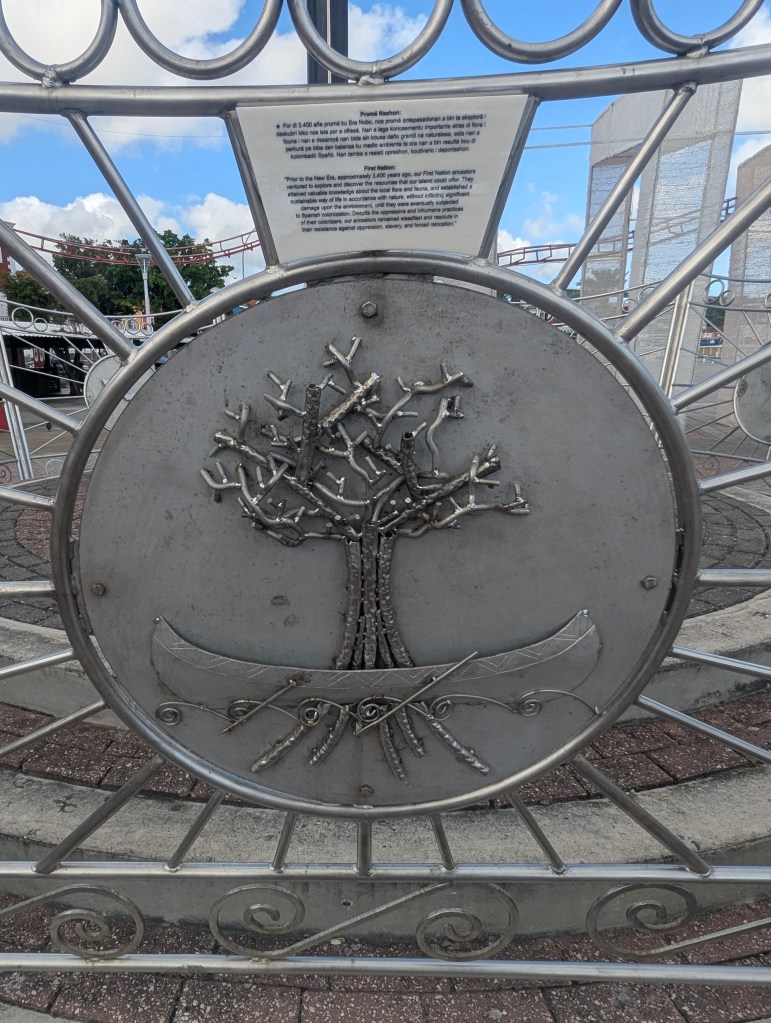
The flagpole in the center of the above picture is part of a monument commemorating the history of Curaçao. From there we learned that Curaçao’s history begins with the Arawak and Caquetio Amerindians; the island becoming a Spanish colony after a 1499 expedition. Though labelled “the useless island” due to its poor agricultural yield and lack of precious metals, it later became a strategic cattle ranching area. When the Dutch colonized the island in 1634, they shifted the island’s focus to trade and shipping and later made it a hub of the Atlantic slave trade. Members of the Jewish community, fleeing persecution in Europe, settled here and significantly influenced the economy and culture.

The island now is a constituent island country within the Kingdom of Netherlands. The official language is Dutch, but the locals prefer Papiamentu and also speak English and Spanish. By 1515 all of the indigenous peoples had been sold from the island as slaves.
From there we got our first view of the Punda (City) side of the Willemstad waterfront.
We walked back to the Punda side and stopped to take pics of the heart locks.


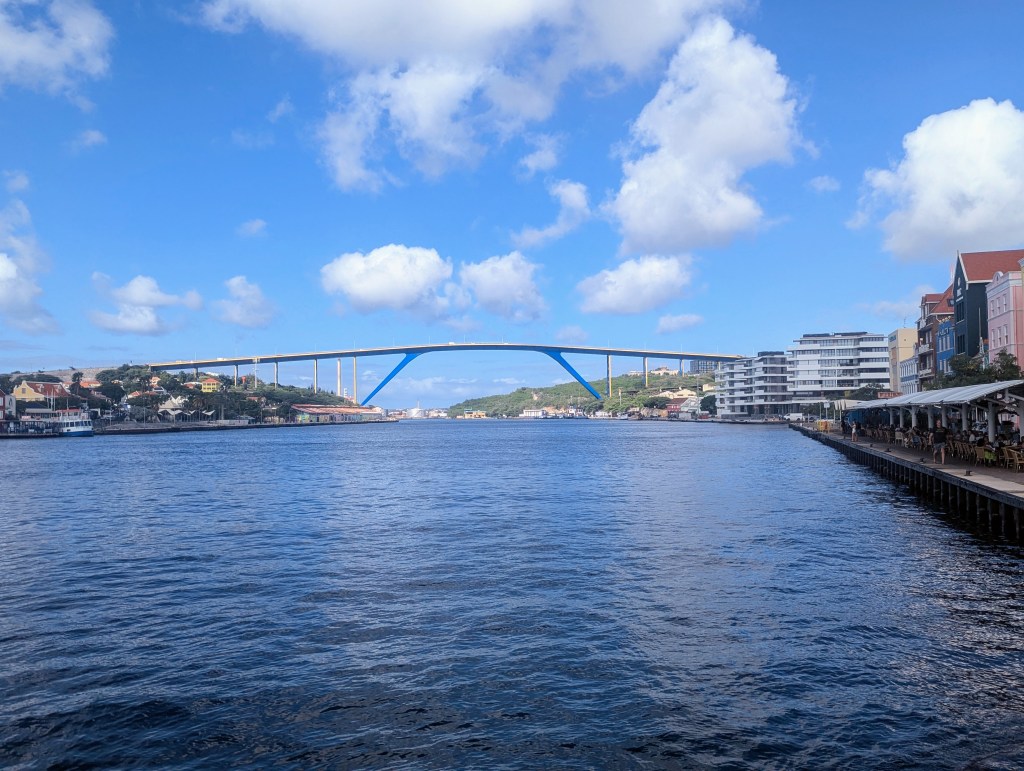
From the Queen Emma Bridge we also took a picture of the Queen Julianna Bridge which we had crossed by car coming into town. The Queen Julianna Bridge opened in 1974; at its apex it is 185 feet above the water.
We continued to meander through the streets on the Punda side of Willemstad. We found cute shops
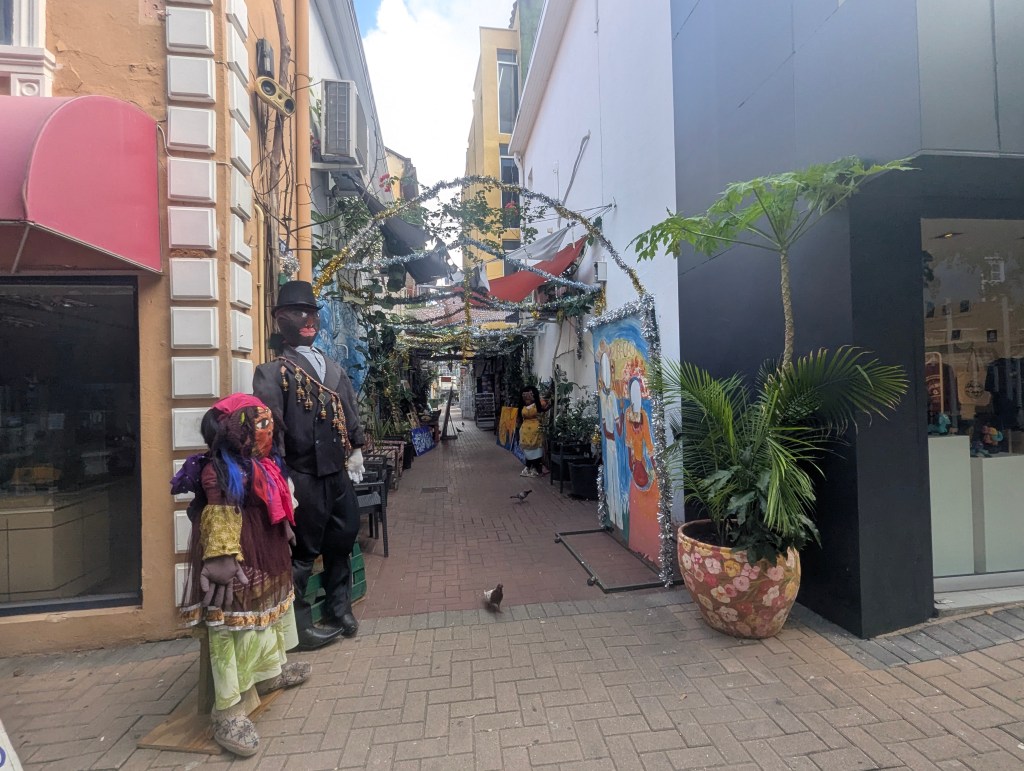
decorative alleys
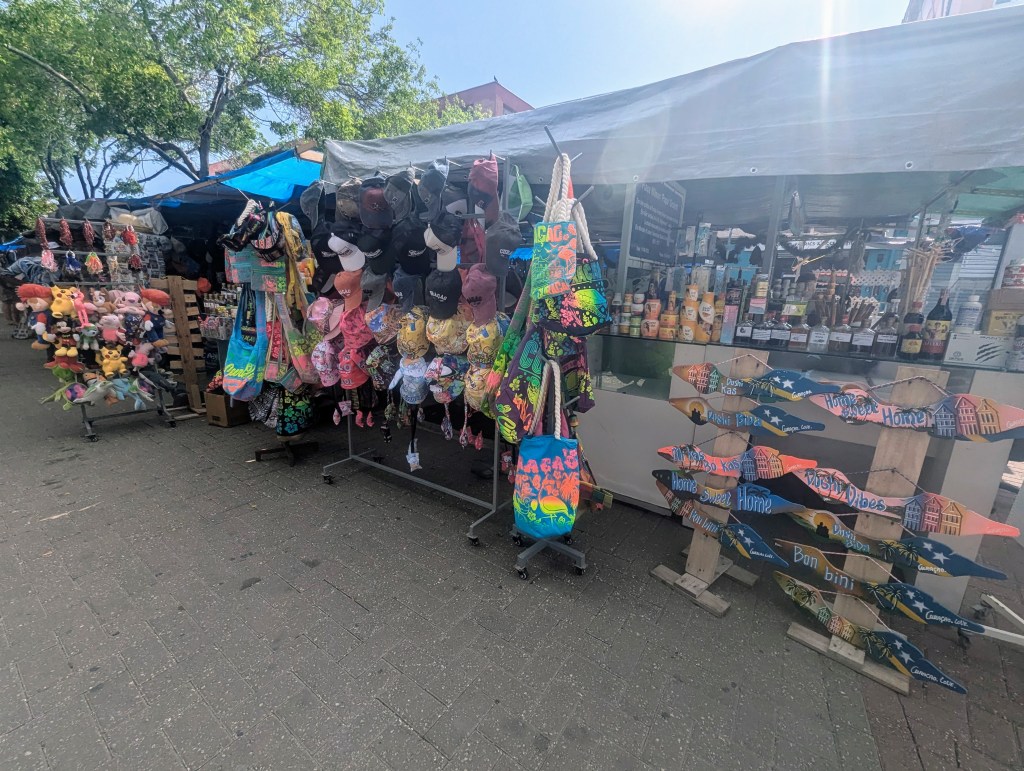
an open air market
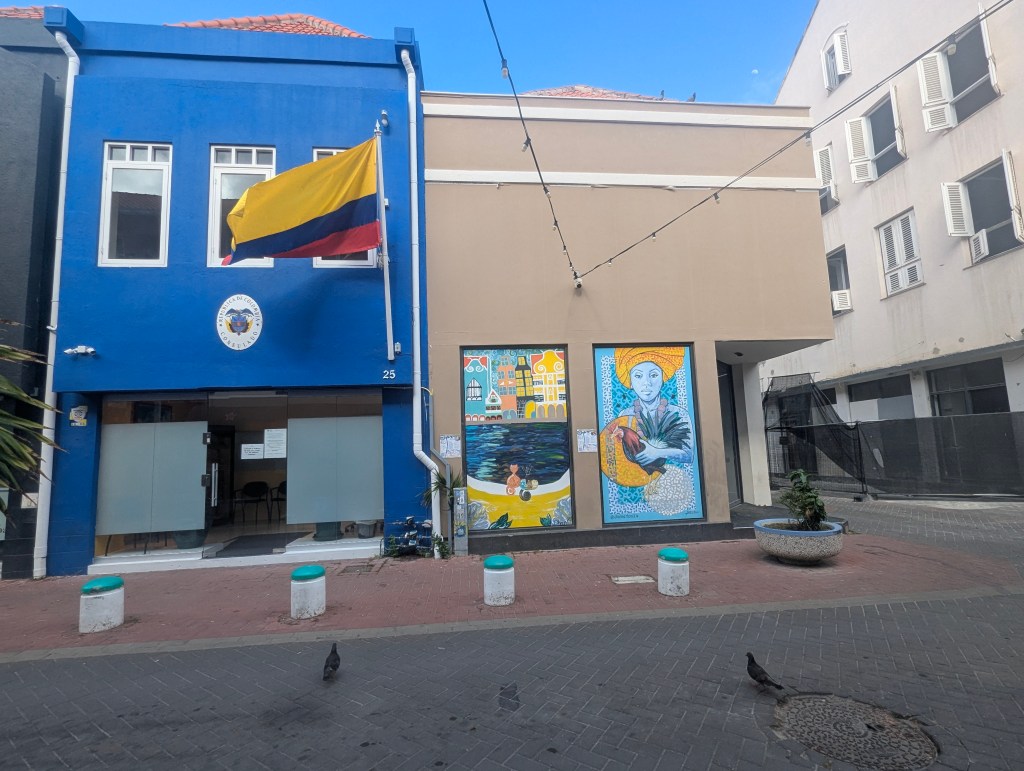
and lots of murals.
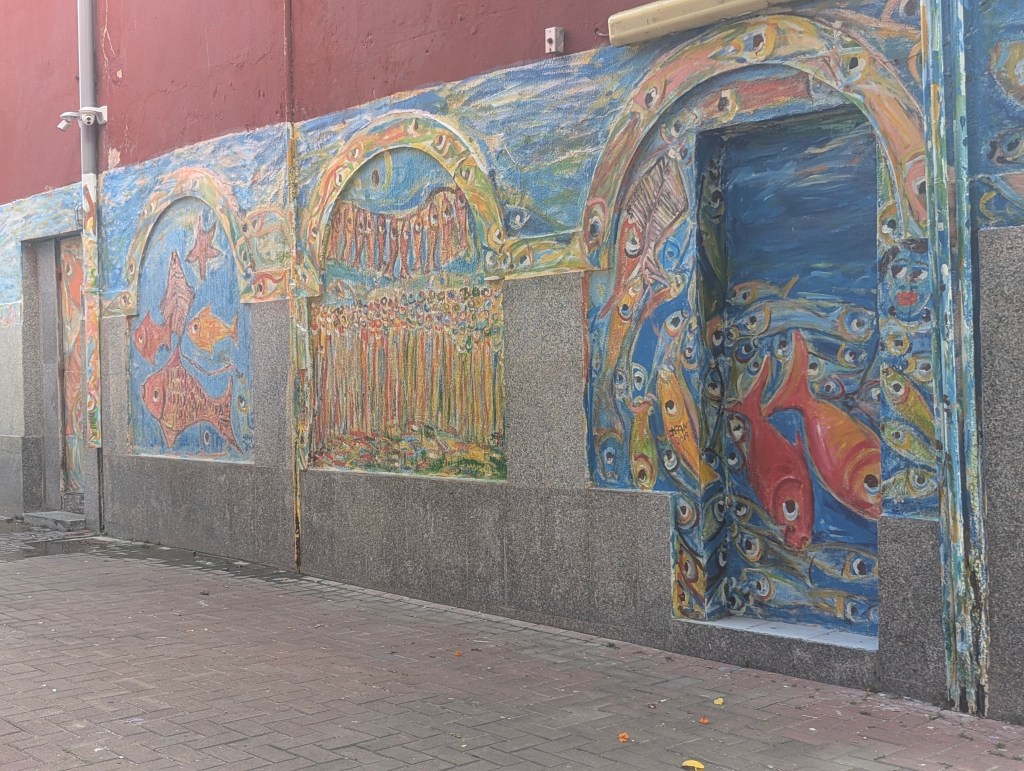
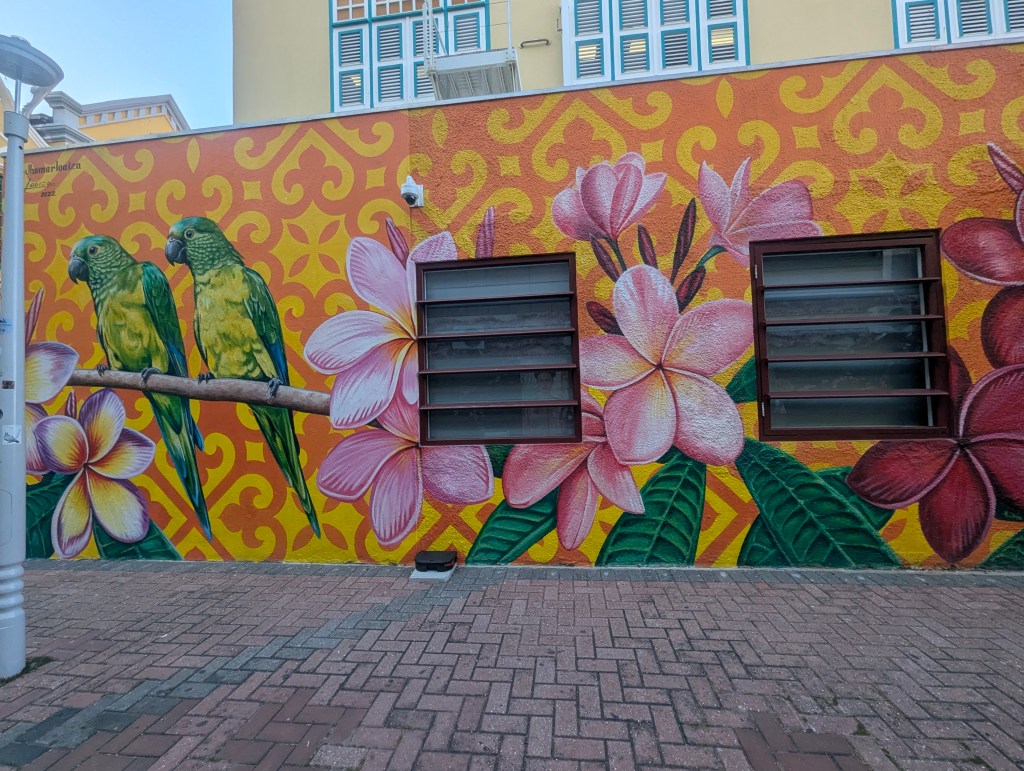
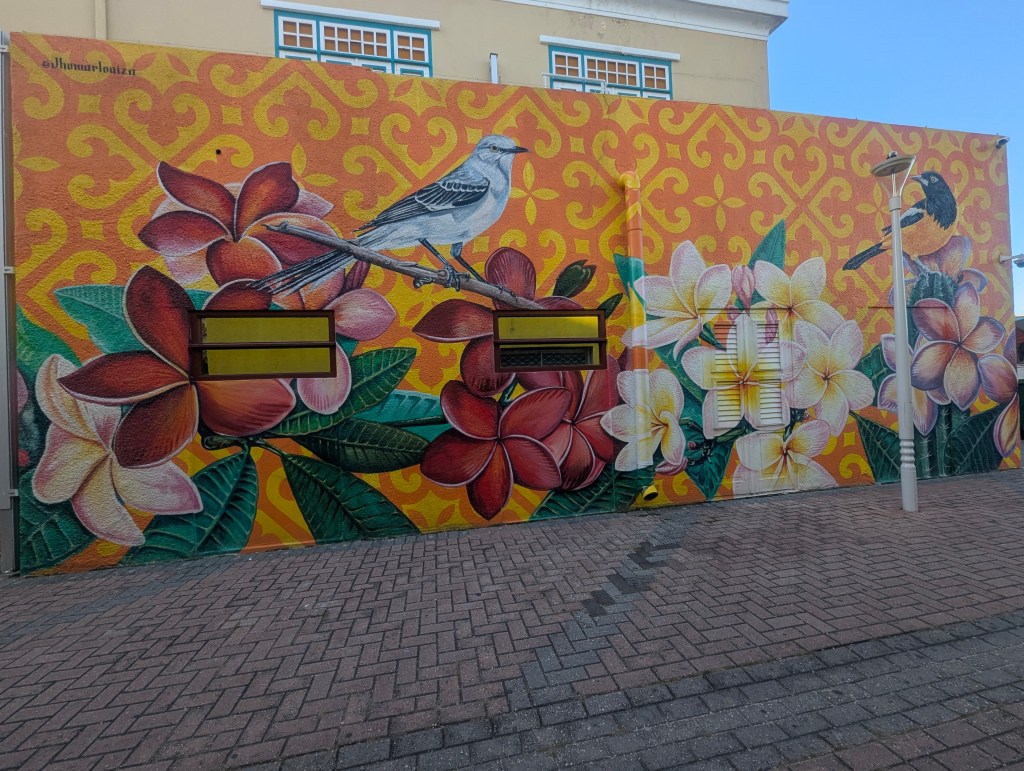
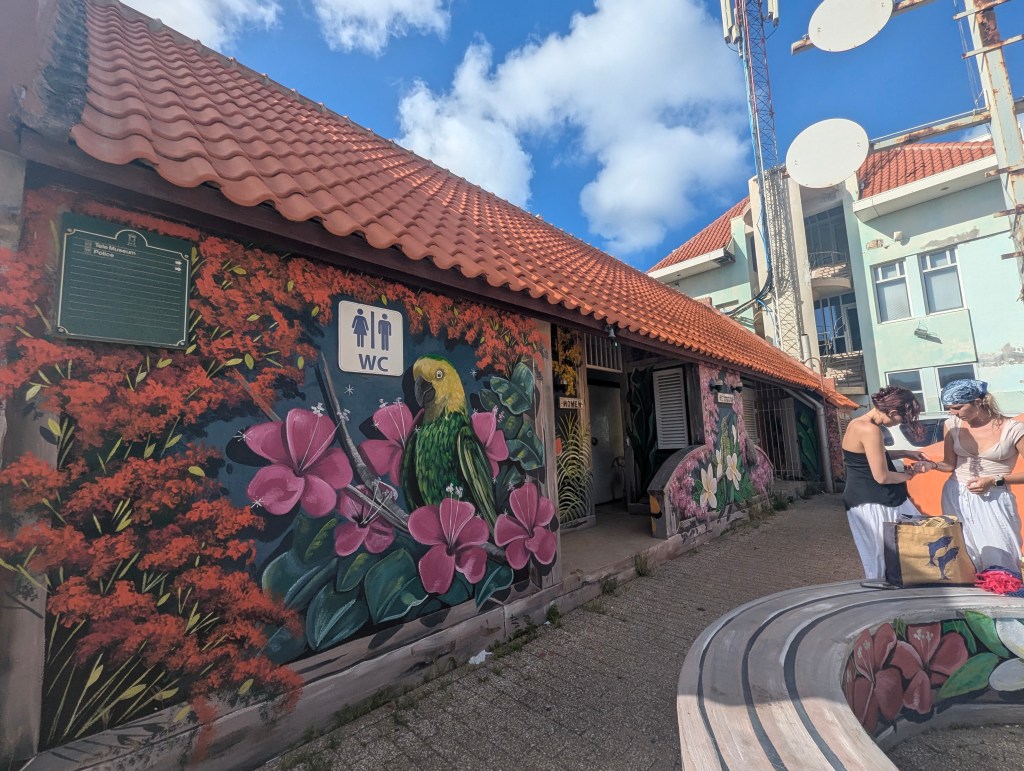
There is even a mural on the restrooms.
There are also an abundance of statues both whimsical
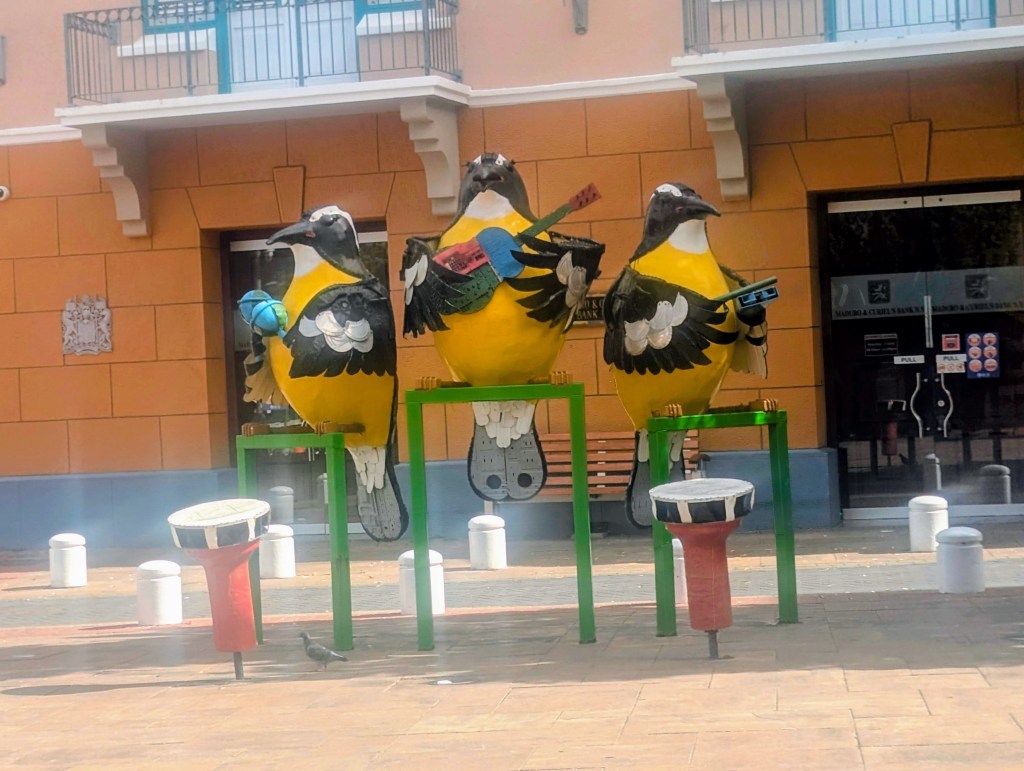
and classic.

But most striking are the large women statues scattered throughout the town.
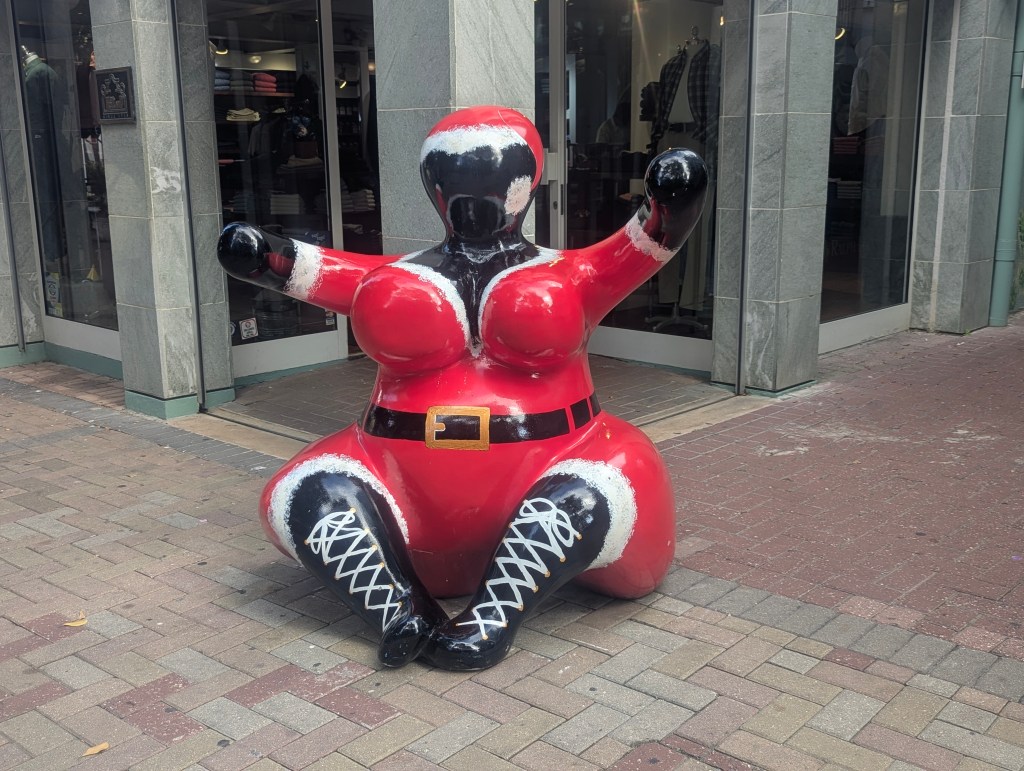
Chichi is a hand-painted Caribbean figure that represents the strength, beauty, and spirit of Caribbean women. The word “Chichi” is Papiamentu for “big sister”. Chichi is a much appreciated female role model in the Caribbean community. She represents the eldest daughter of the family, who binds the family together in a loving and caring way. The handmade sculpture shows both the vibrancy and the power the older sister has on the family. At the same time, it shows the openness and warm-heartedness of an older sister. She’s the person that supports the mom, takes care of the little siblings, and takes on a lot of responsibilities aside from the parents. Chichi sculptures are made at Serena’s Art Factory in Curaçao. They were started as a crowdfunding source during the pandemic lockdown in 2020. Over 60 local women hand-paint the sculptures in their own colorful styles.

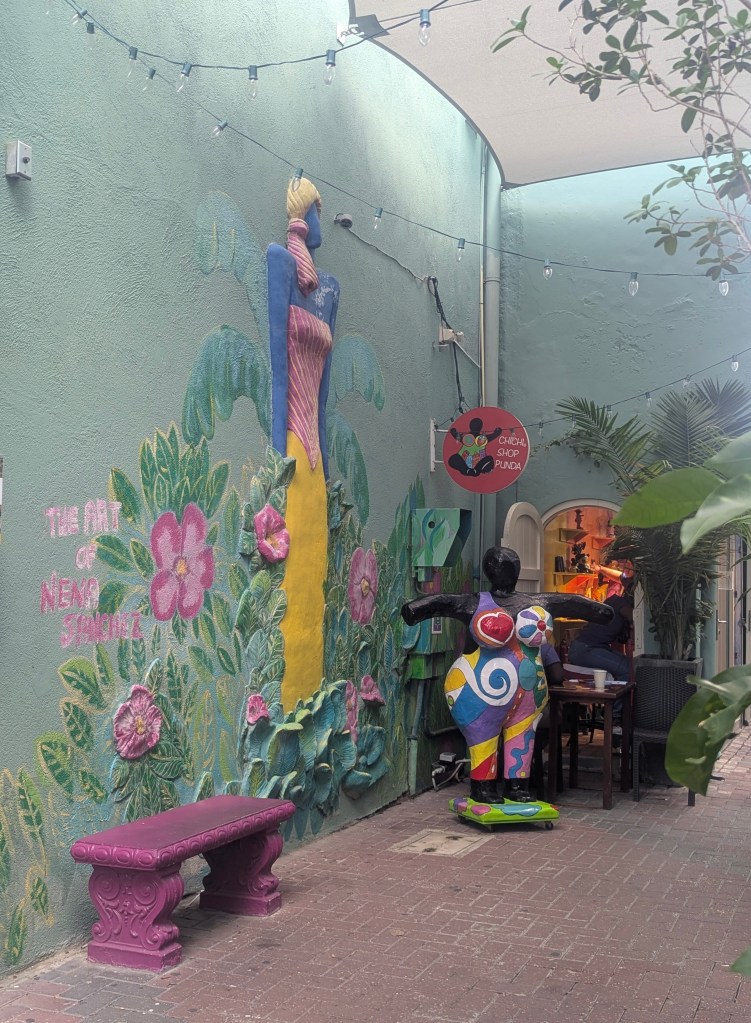
There is one in front of a mural outside a shop, such an artistically creative place.
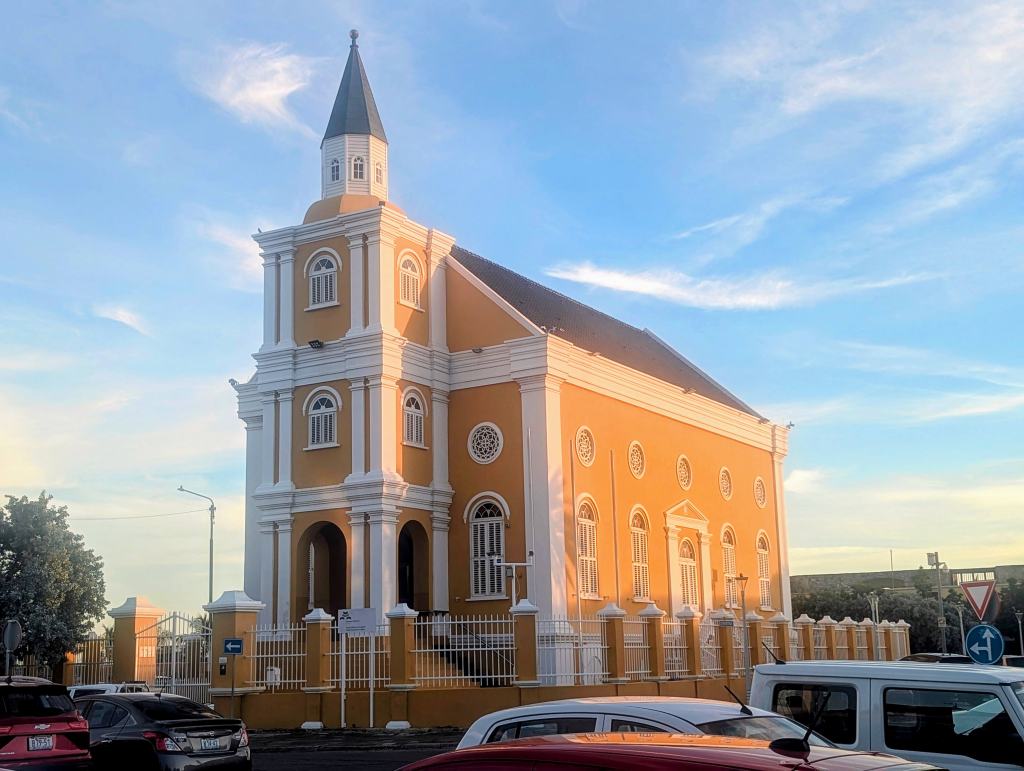
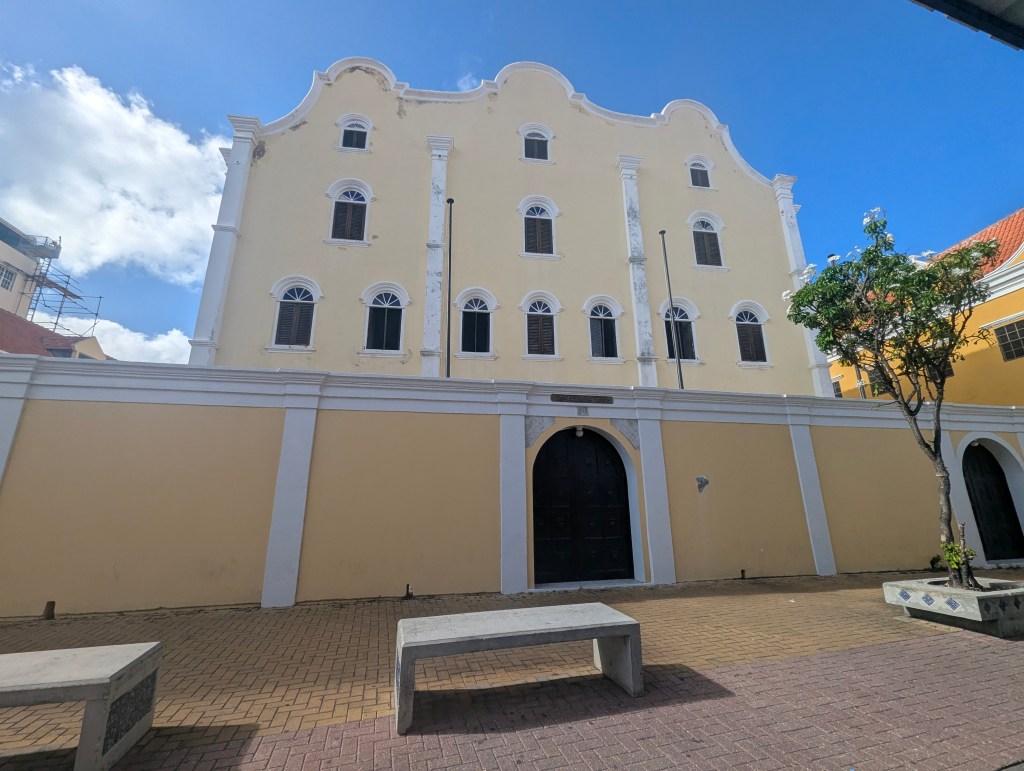
We also found the Mikvé Irael-Emanuel Synagogue. Established in 1651, it is the oldest synagogue in the Americas that is still in use.
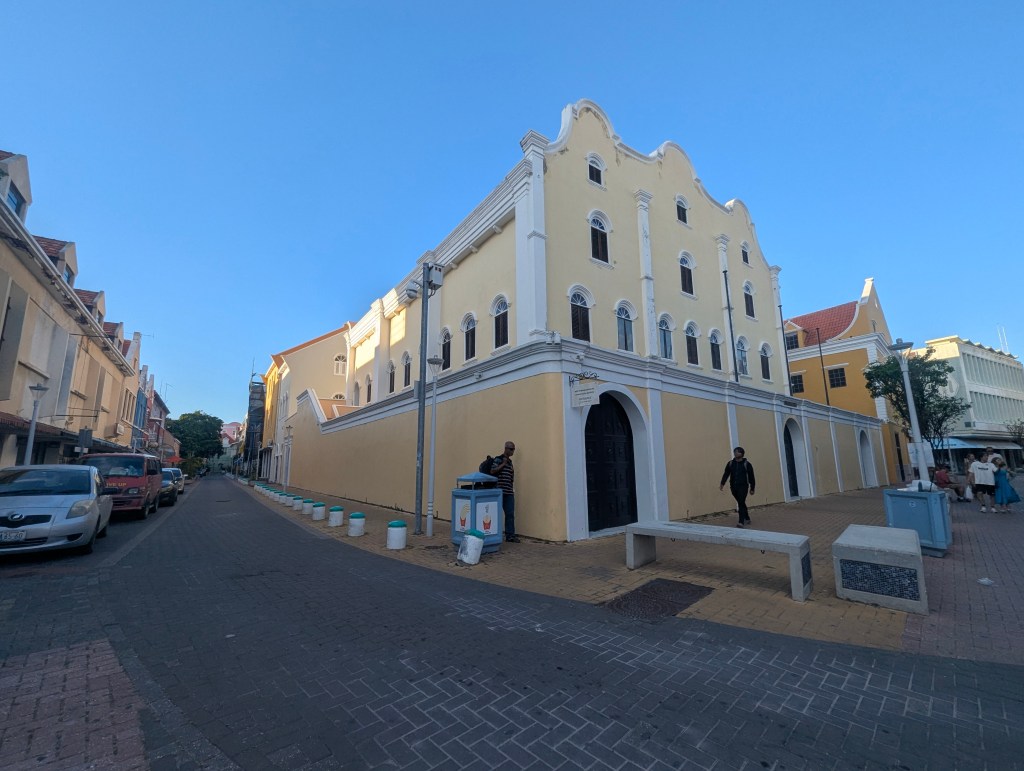

There is so much to see and do, we did not have a chance to do it all. The Maritime Museum, near the open market, seemed never to be open when we passed.
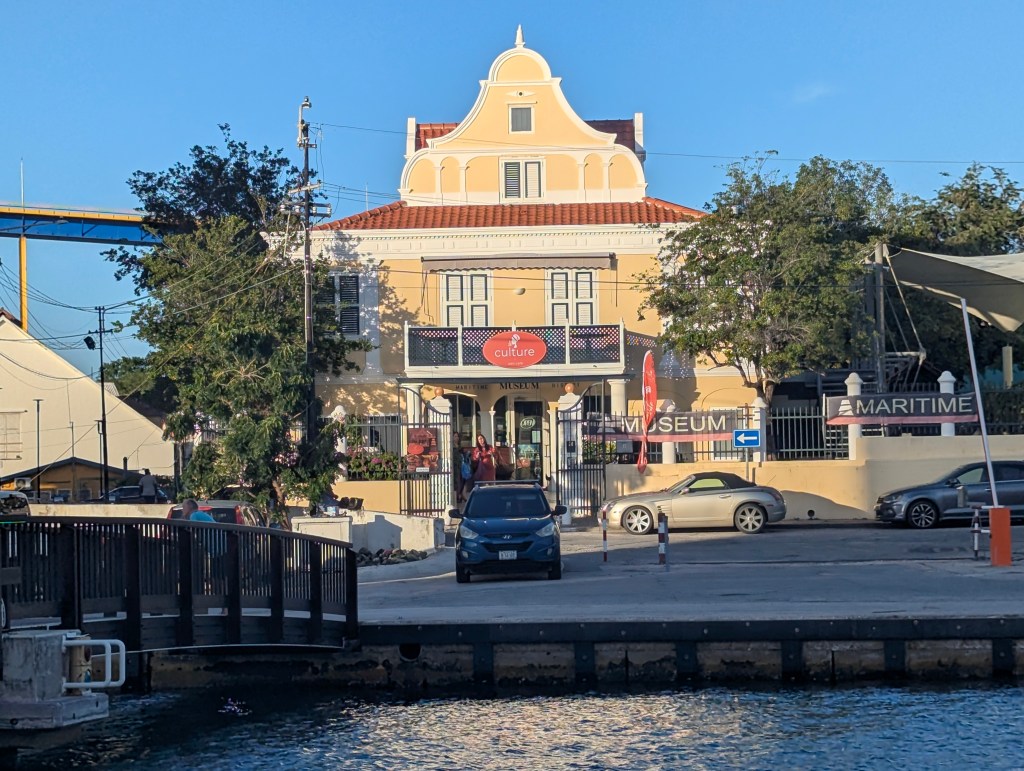
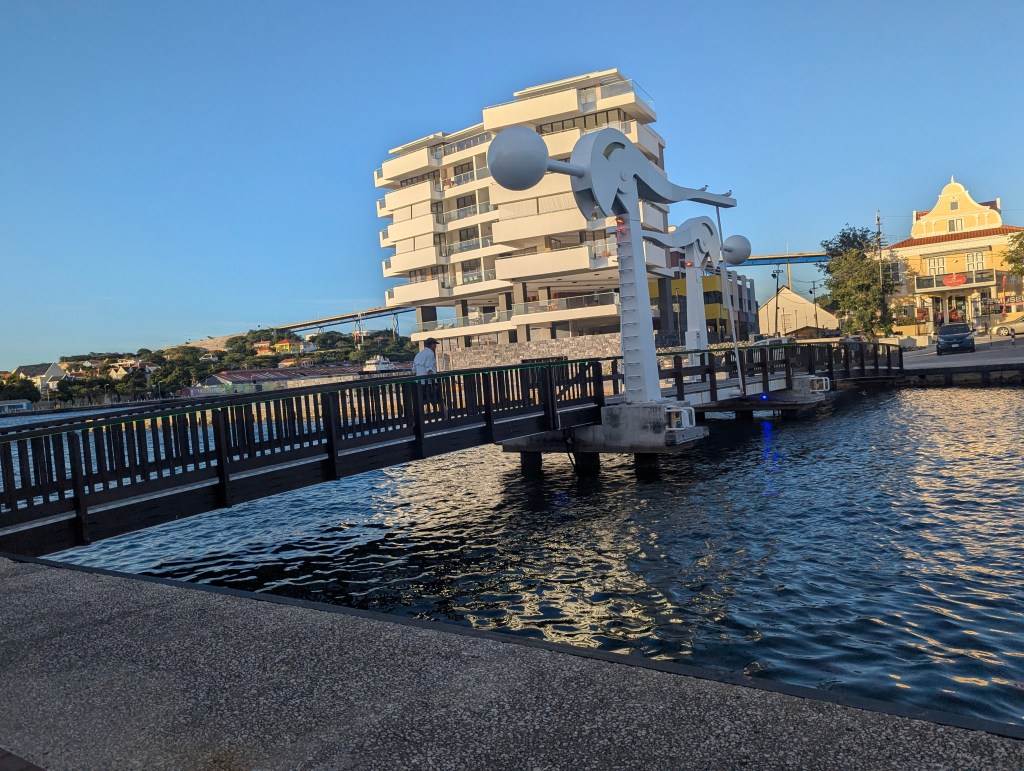
But we were impressed with the engineering of the bridge to get to it.
On a subsequent trip to town, while enjoying lunch along the waterfront, we had the good fortune of seeing the Queen Emma Bridge open for a passing boat.
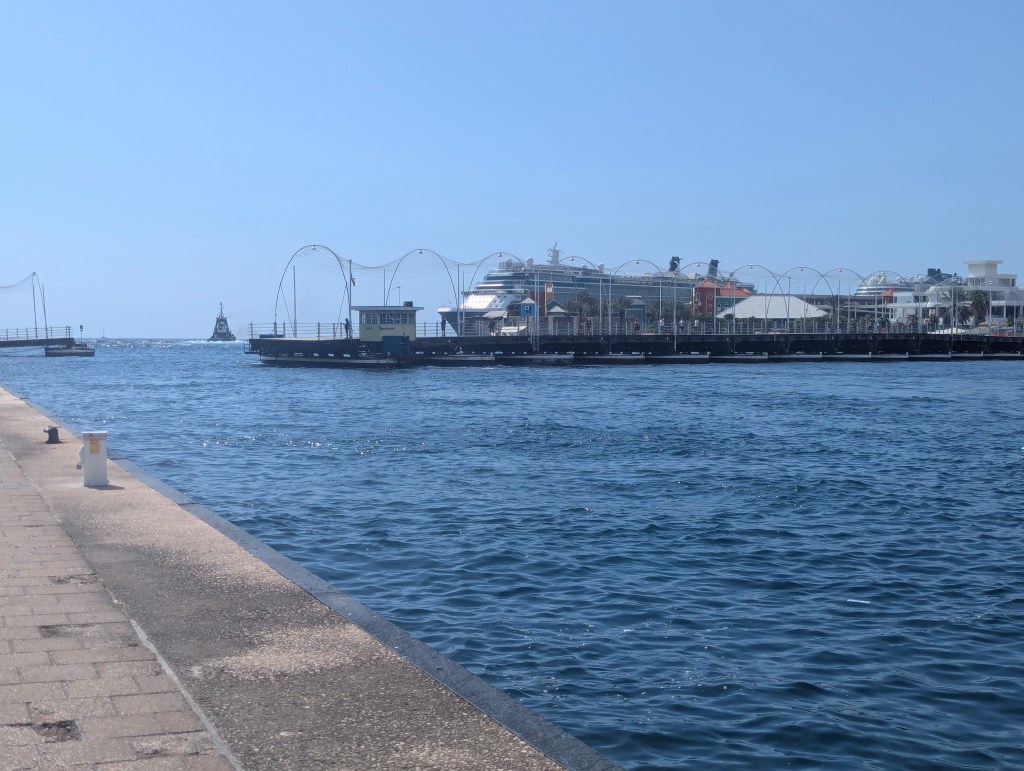
It swings open even when there are people on it!
When not on the beach or in town, we spent some time sightseeing. Just about 3/4 of a mile from our Blue Bay resort is a Flamingo Habitat on the side of the road.
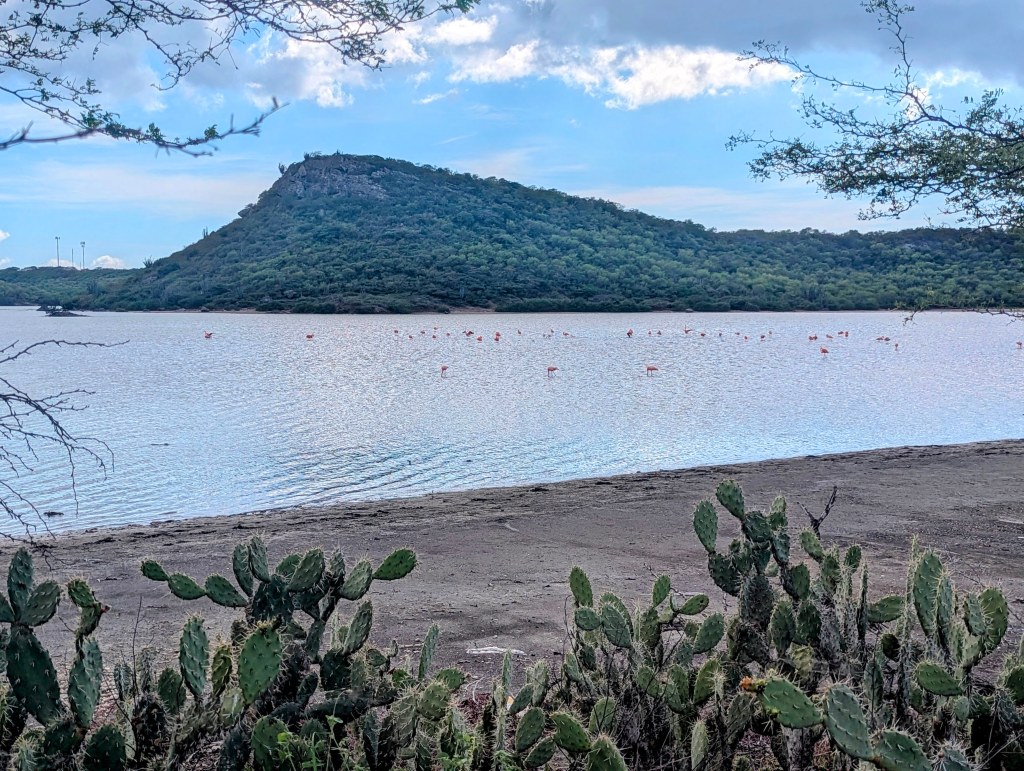
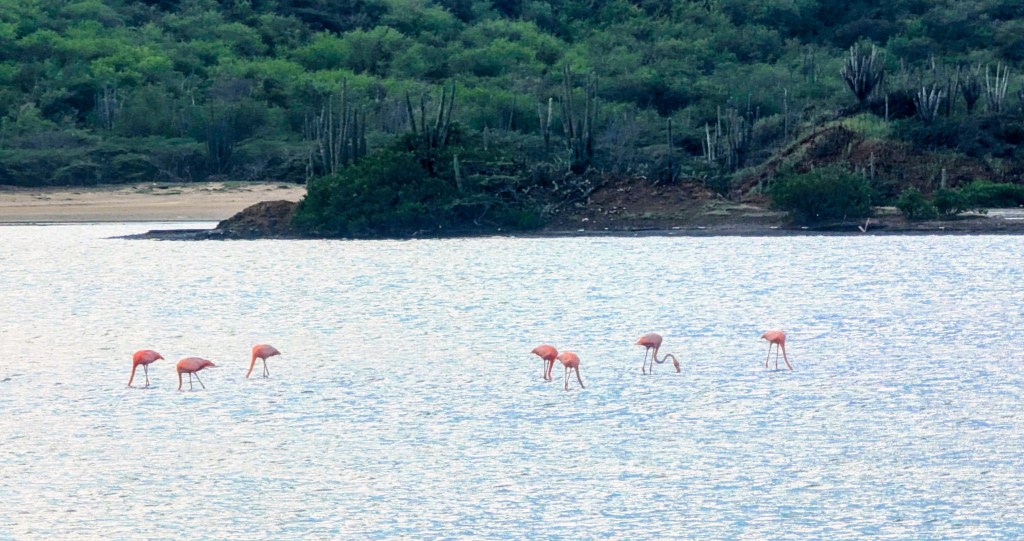
One day we drove all the way to the western most tip of the island, aptly named Westpunt (Westpoint). We signed up for an afternoon boat dive the following week. We had passed a couple of national parks along the way, so when we returned for the dive, we left early enough to explore one of the parks on the way. The Shete Boka National Park is almost 6 miles of the rocky wave-exposed north coast of the island. The park has approximately 10 pocket bays where 3 species of sea turtles are known to lay eggs.
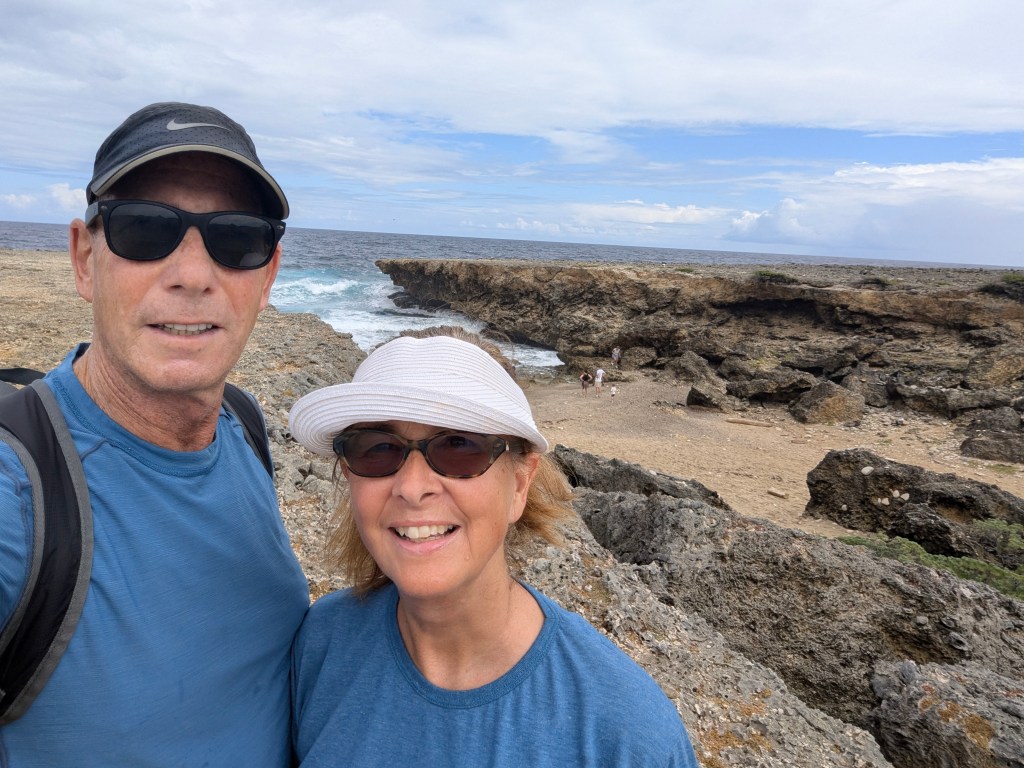

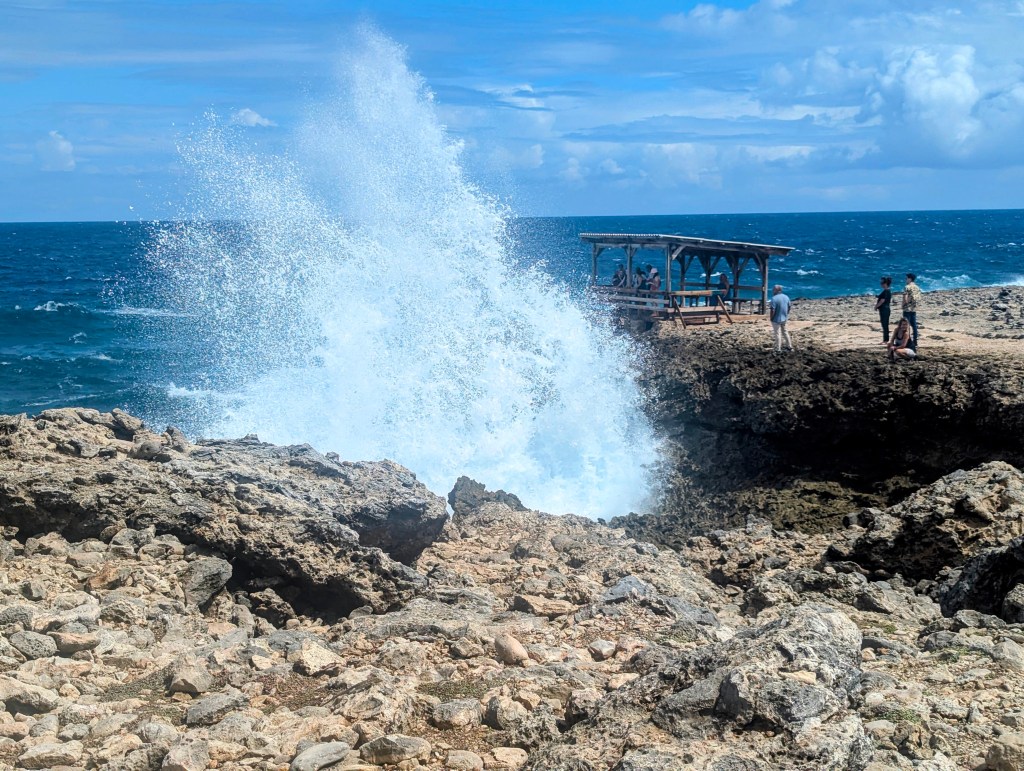
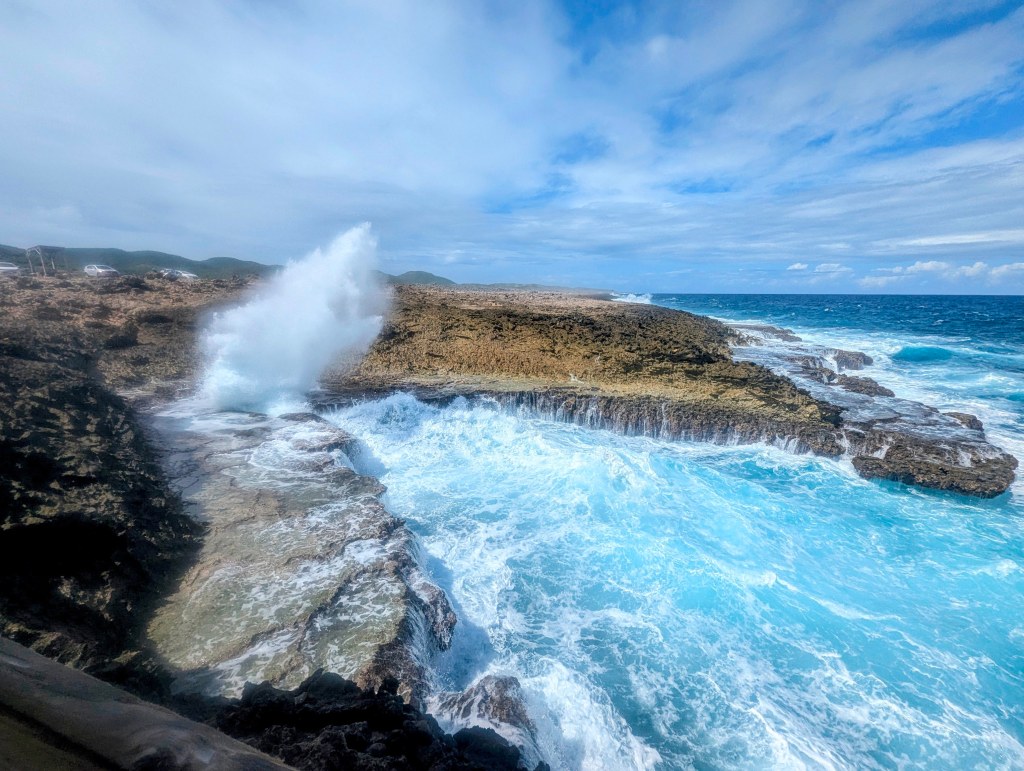
Alas, we had to cut our shore hike short because we had booked a boat dive with Go West Divers, located at Playa Kalki in Westpunt.
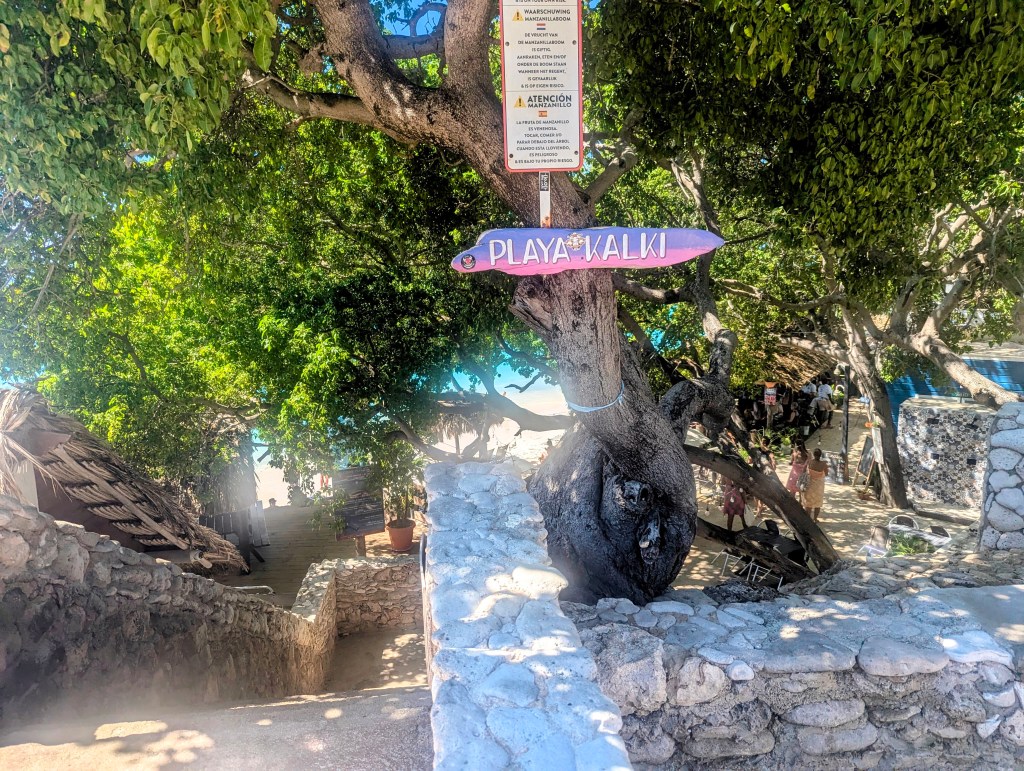
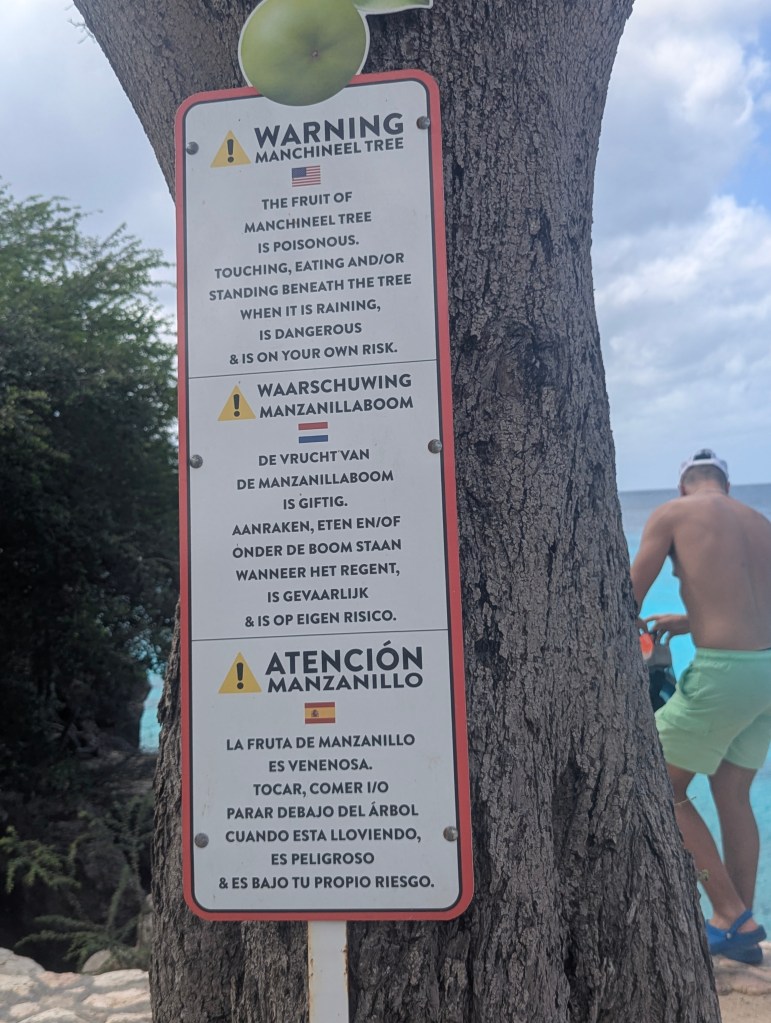
There I saw a sign on a tree I had never seen before. It not only warned against eating the fruit, it warned against standing under the tree during rain because of the toxins.
The dive was good, and by then we had worked up a serious appetite. We stopped for fresh fish at a delicious open air restaurant at Playa Forti.
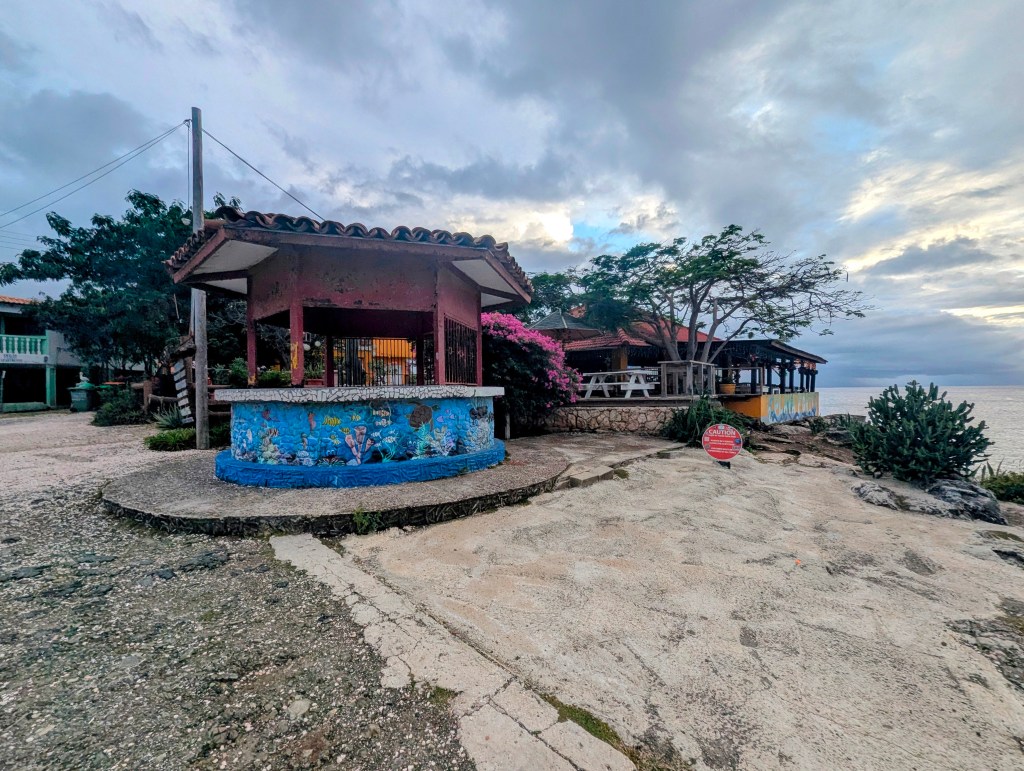
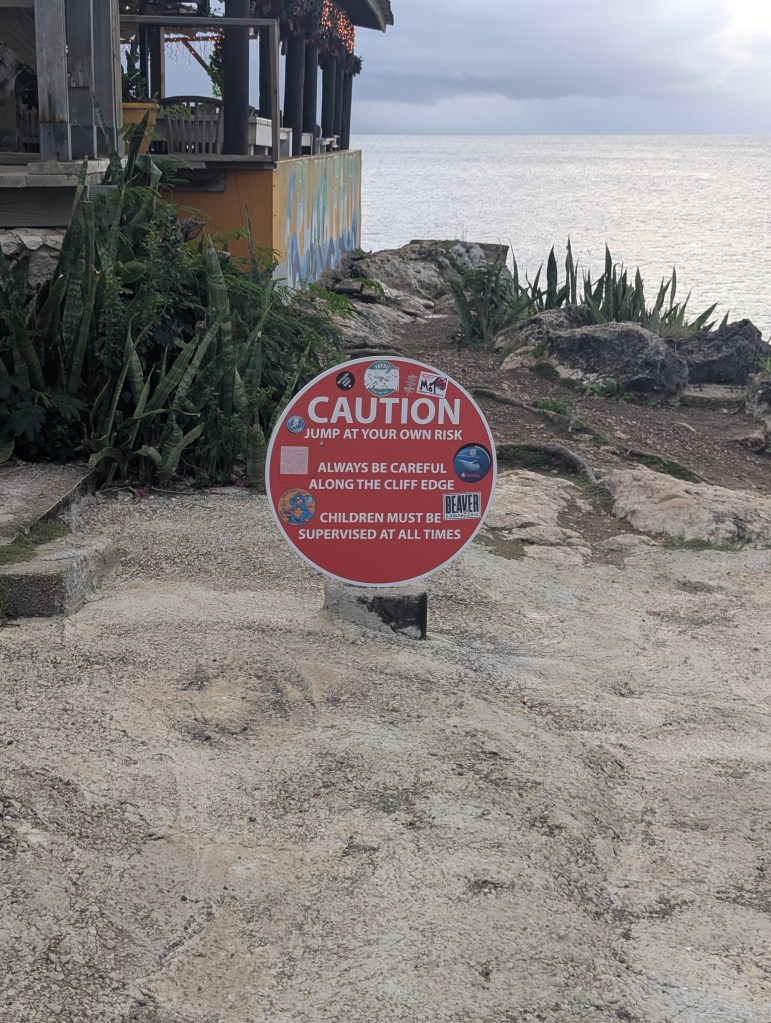
The sign there warned against cliff diving, as if…!
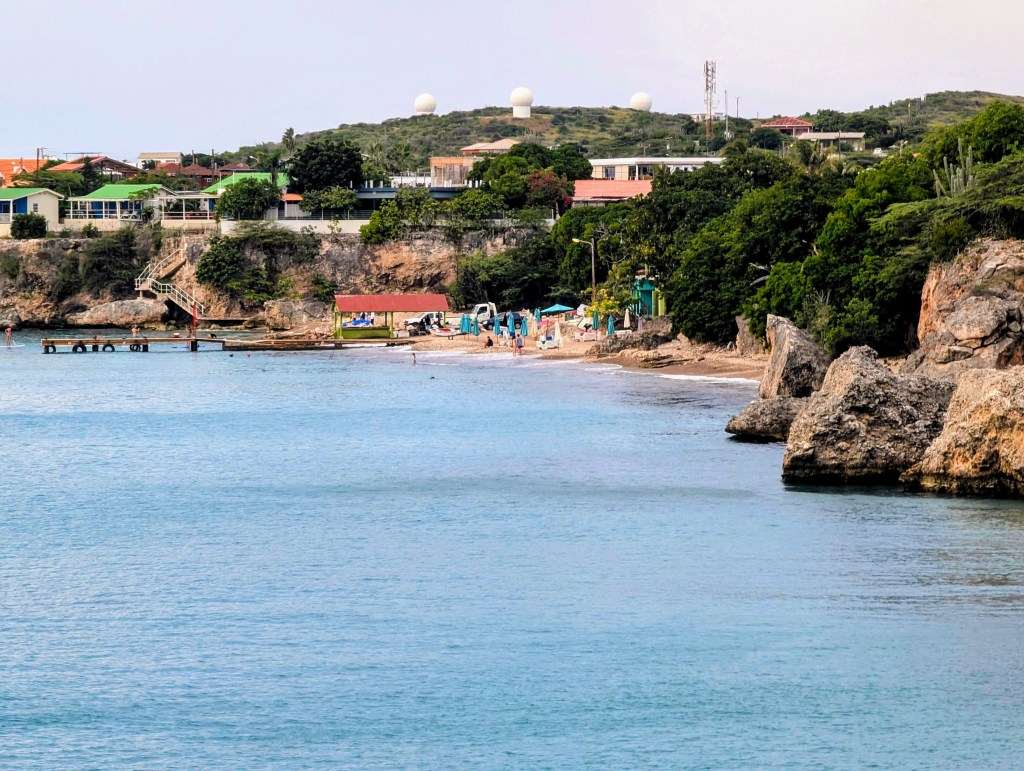
I have not said much on the subject of the beaches. Curaçao has 37 beaches. In our first days of exploration we visited a few including those by Jan Thiel on the south side of the island. What we found is that most beaches charge a fee, at the least for the chairs. And most are somewhat small. Since our beach at Blue Bay was free for our use and had plenty of shade, we found little reason to continue to seek out others.
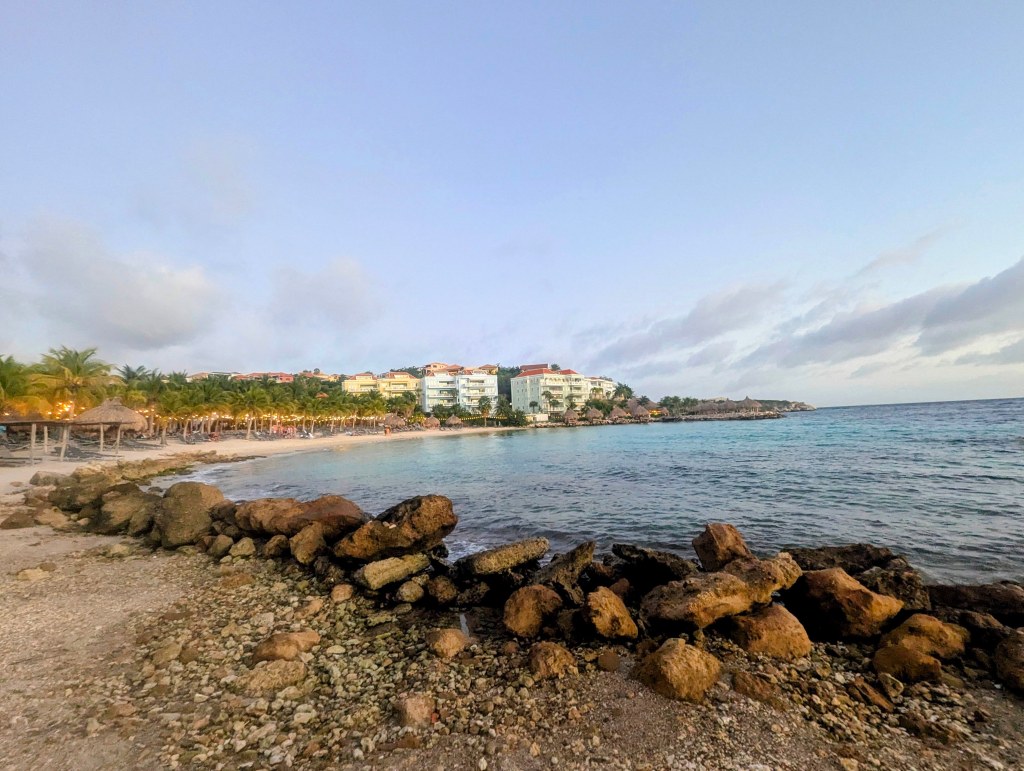
As I have mentioned, the was a bar which featured live entertainment every Friday night.
We had some aggressive iguanas, think food and pigeons.

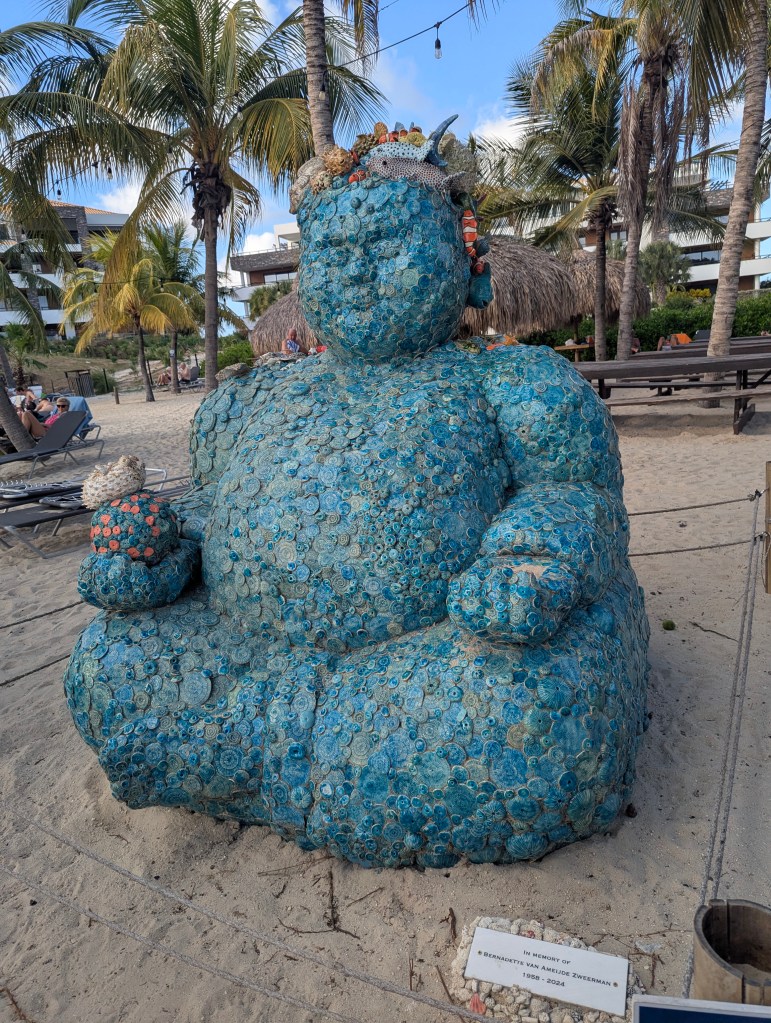
We even had our own Chi Chi statue.
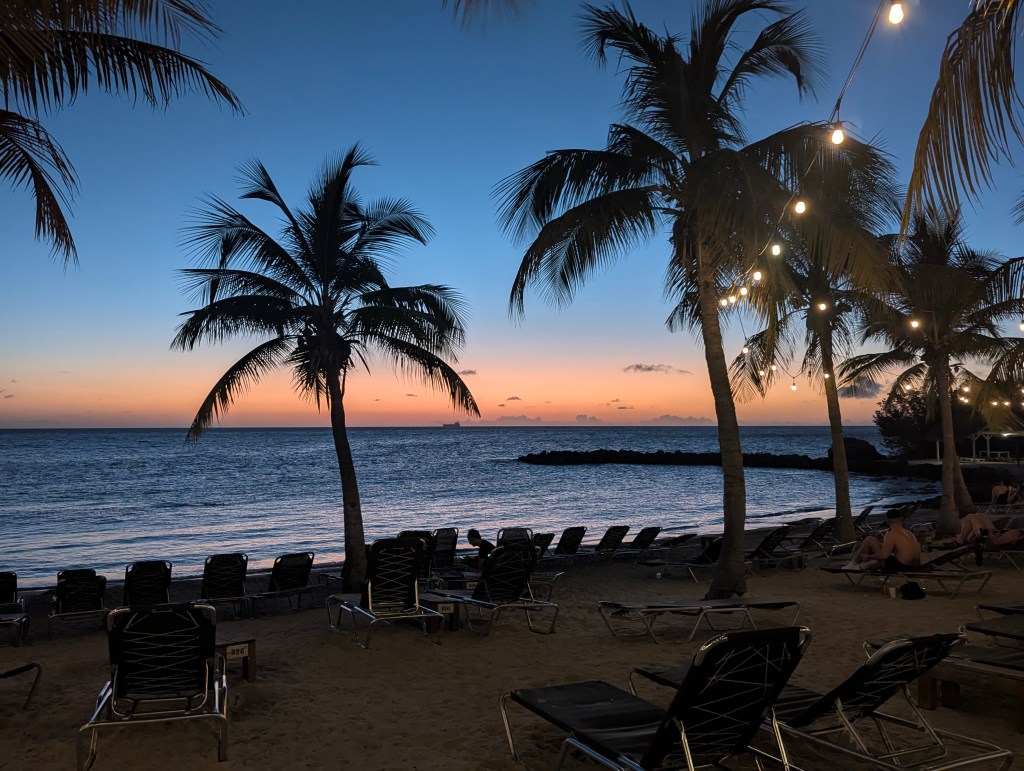
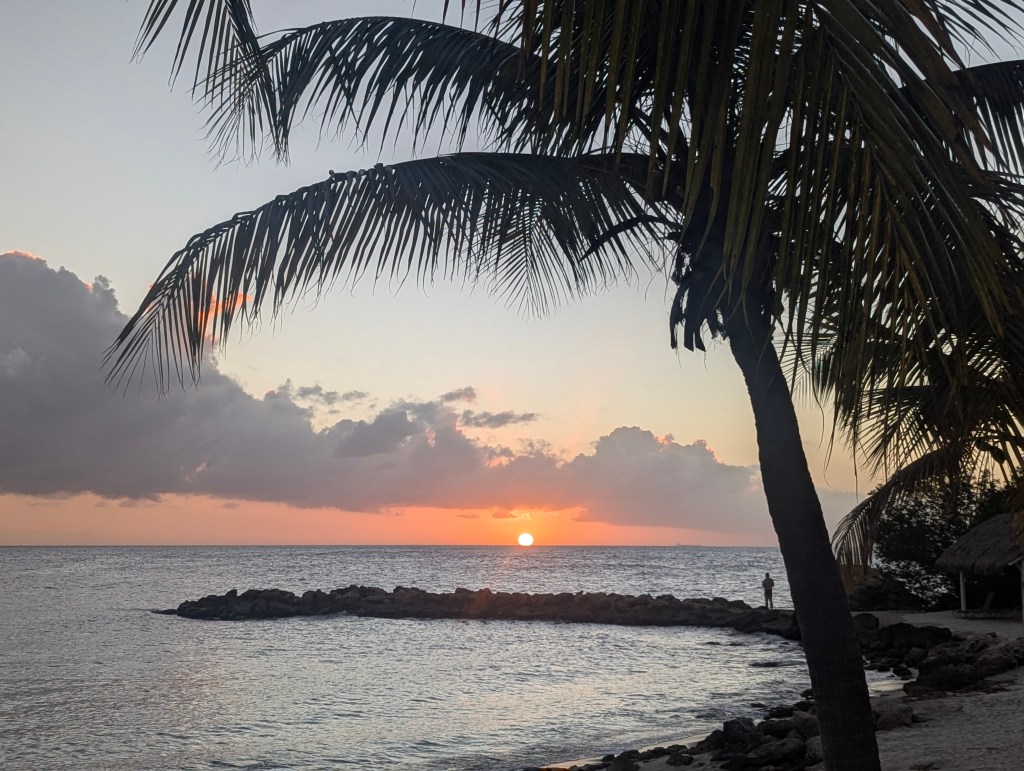
Sunsets were particularly gogeous.
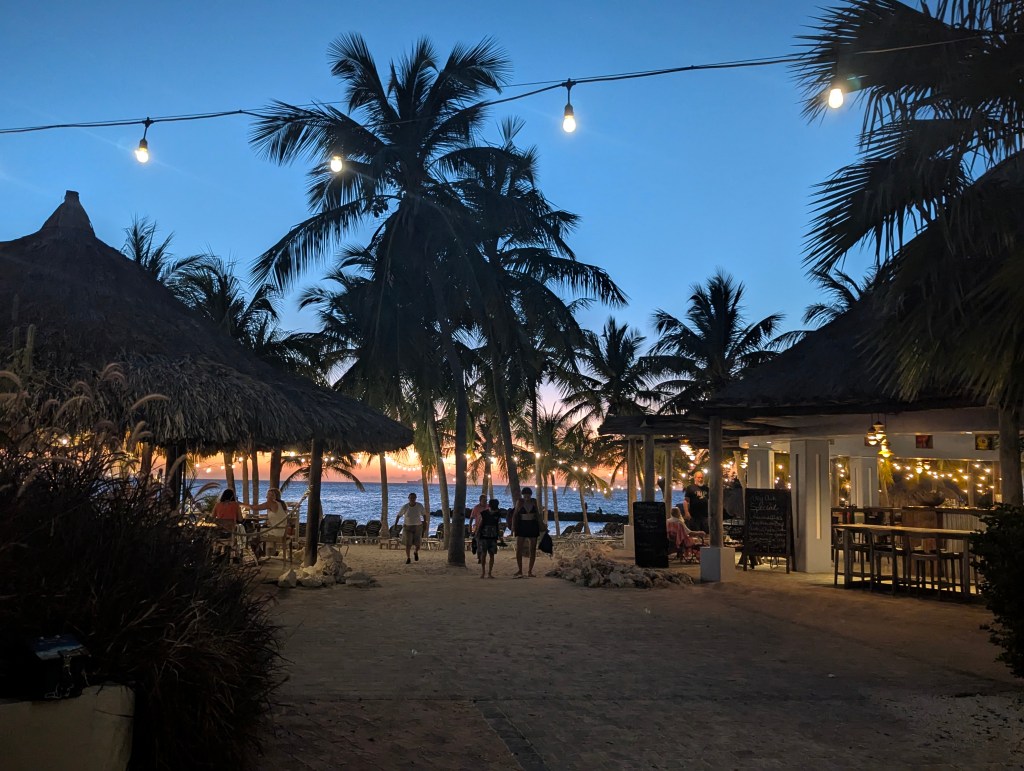
And did I mention there were 4 restaurants on the beach? One was pizza, one a bar, one a typical restaurant. But one, the Brass Boer, was particularly delicious and special.
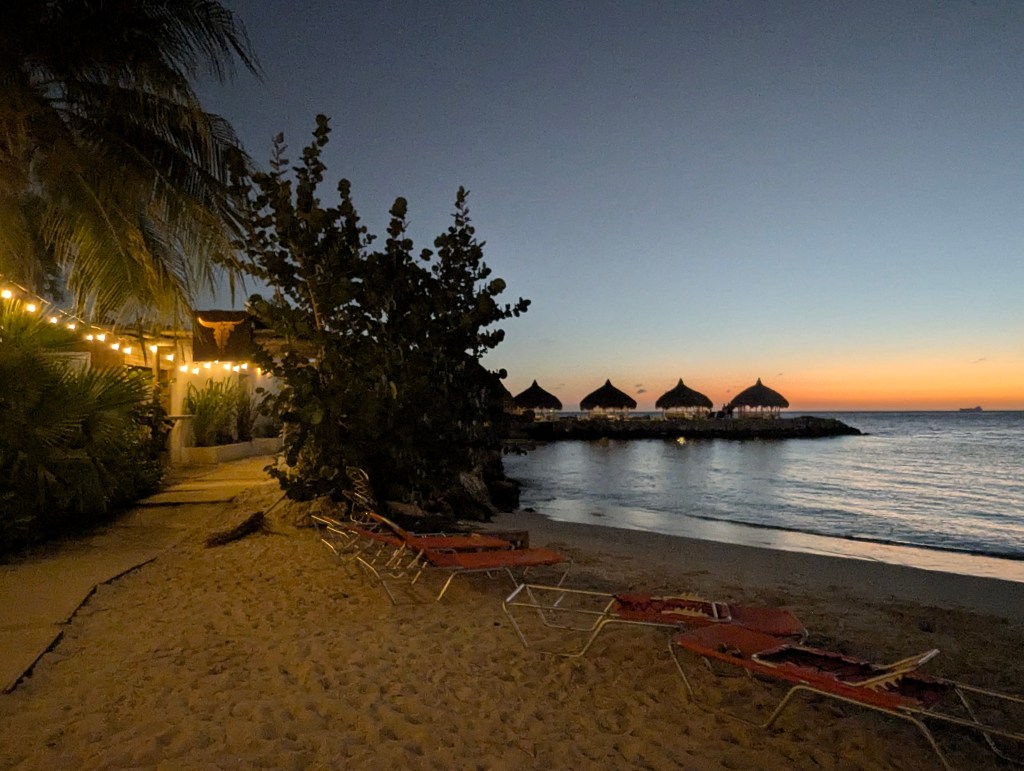
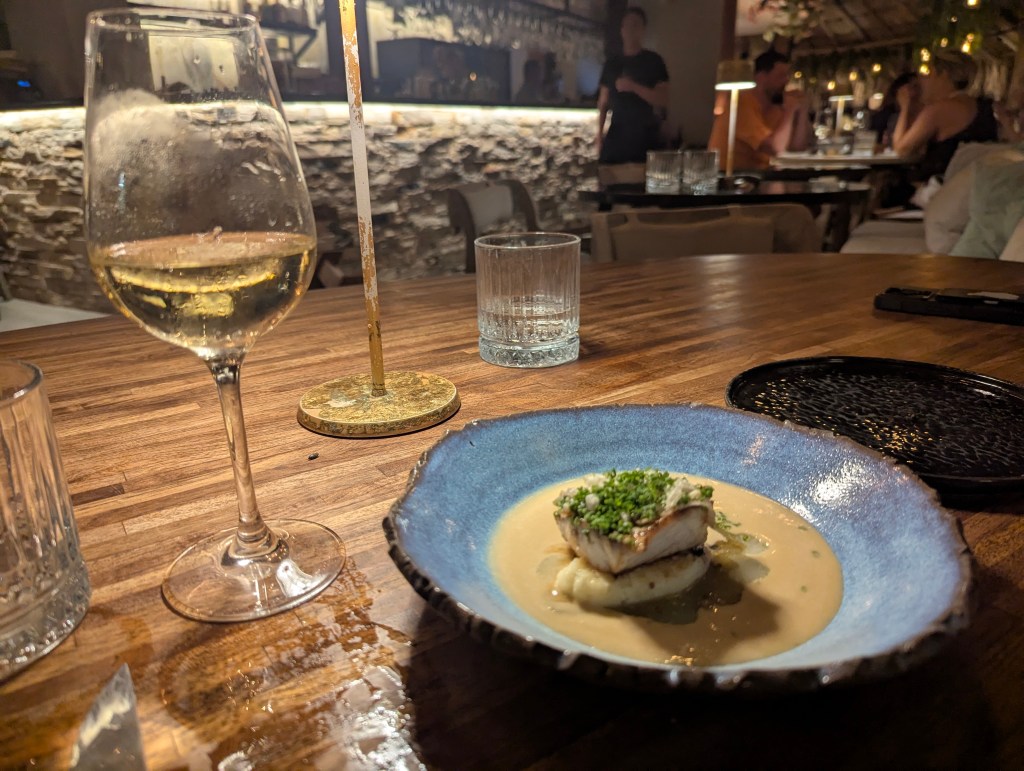
They served in a manner that we were to come to learn is somewhat typical in Curaçao. The portions are about the same as an appetizer, smaller than a typical main dish and meant for sharing. They recommended 2-3 per person. Including dessert, we orderd 6, each served separately, so the experience lasts a couple of hours, so relaxing and what a luxurious way to eat while sitting on the beach.
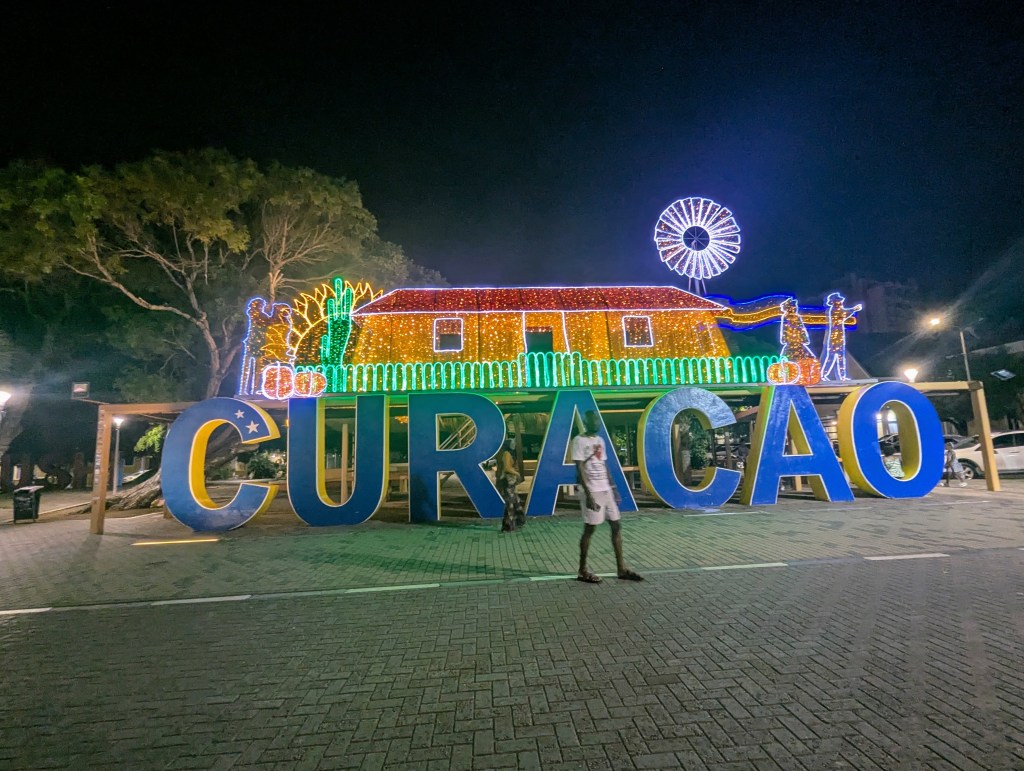
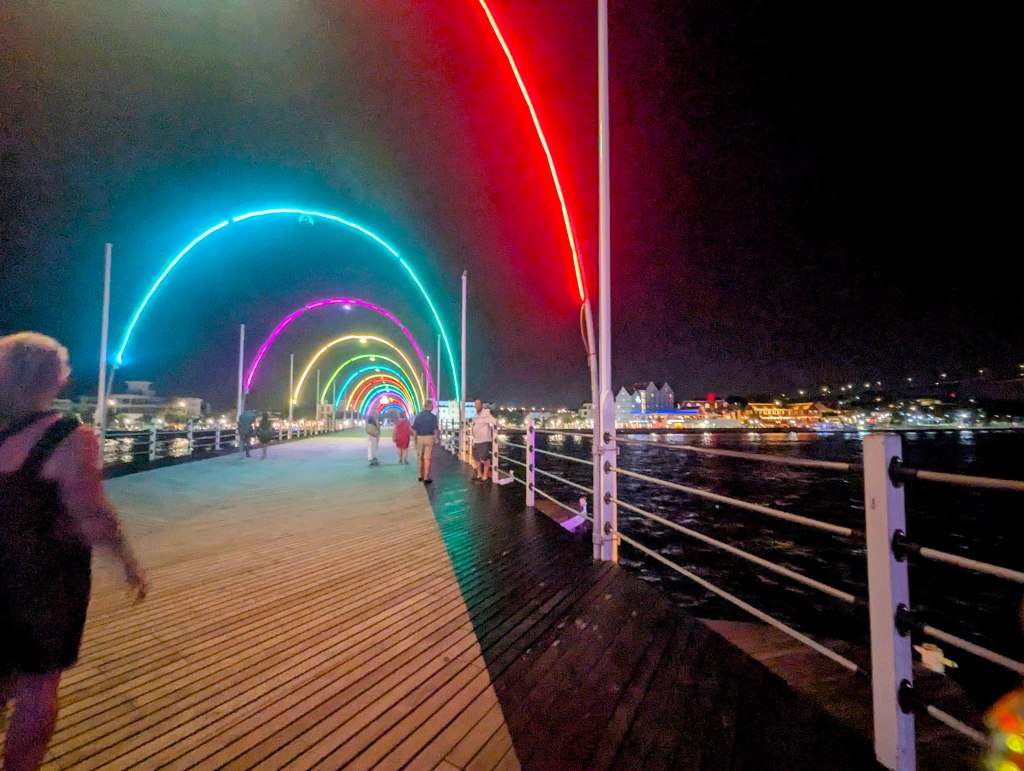
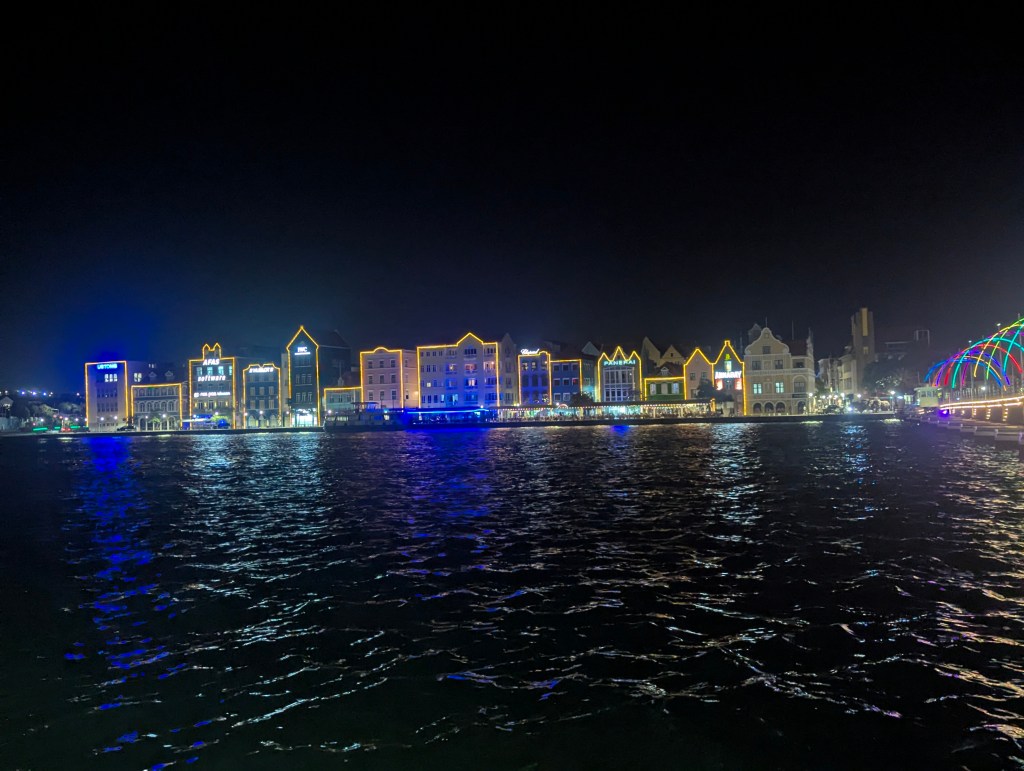
My brother Treves and his wife Kim joined us for our last week in Curaçao. We took the opportunity of having guests to return to Willemstad for a walk at night to see the lights.
We also took them to the flamingo habitat

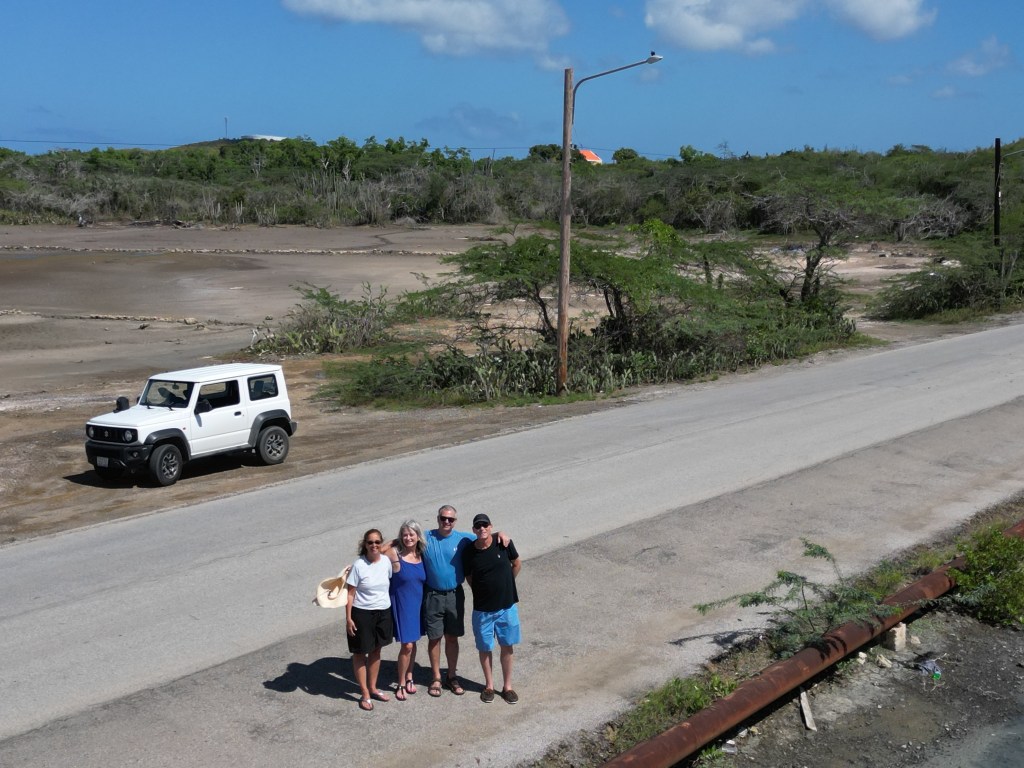
and used the opportunity for a drone selfie of the four of us.
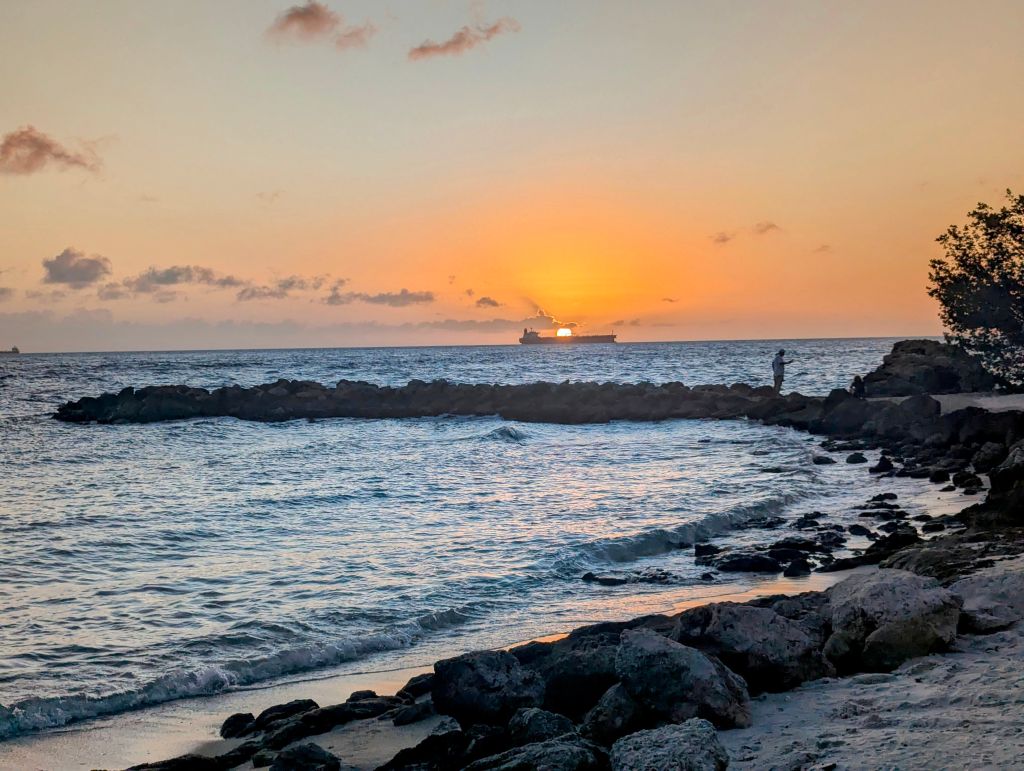
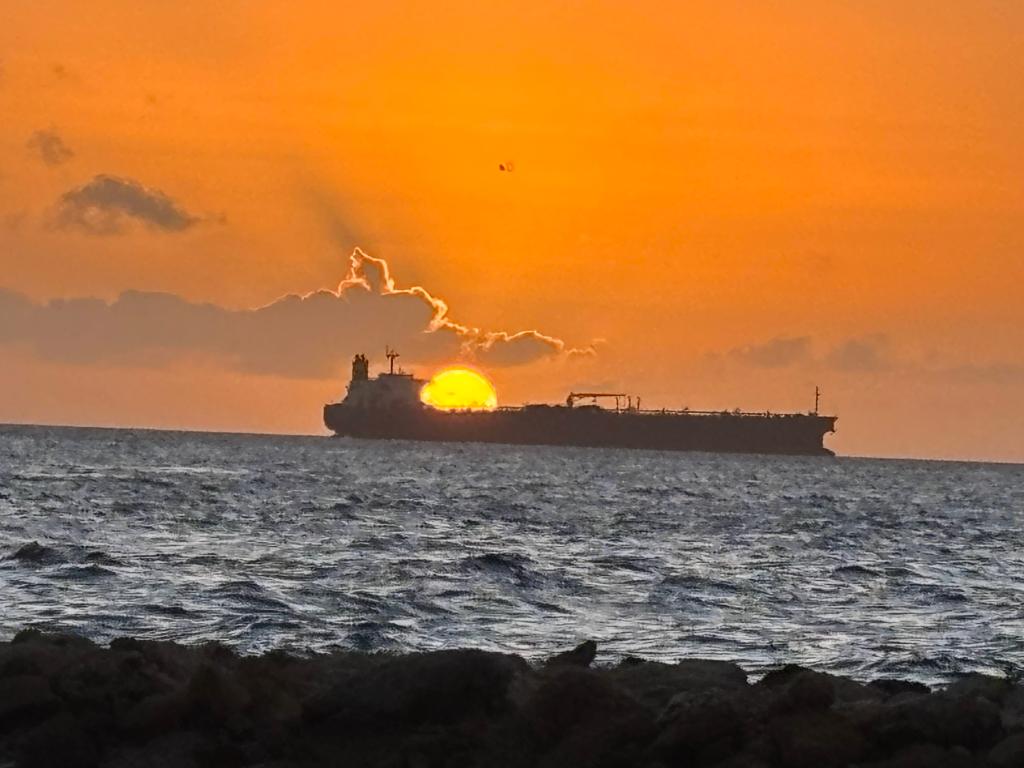
We continued to enjoy sunset drinks at the beach.
For a new adventure, we headed to a distillery. From their website: “A visit to the Curacao Liqueur Distillery at Landhuis Chobolobo is a journey through the history of Curacao and the distillation process of the world-famous Blue Curacao Liqueur.” The tour starts outside Landhuis Chobolobo, an iconic 19th-century country mansion.

Our tour guide first told us how to identify the “genuine” Blue Curaçao by the bottle.
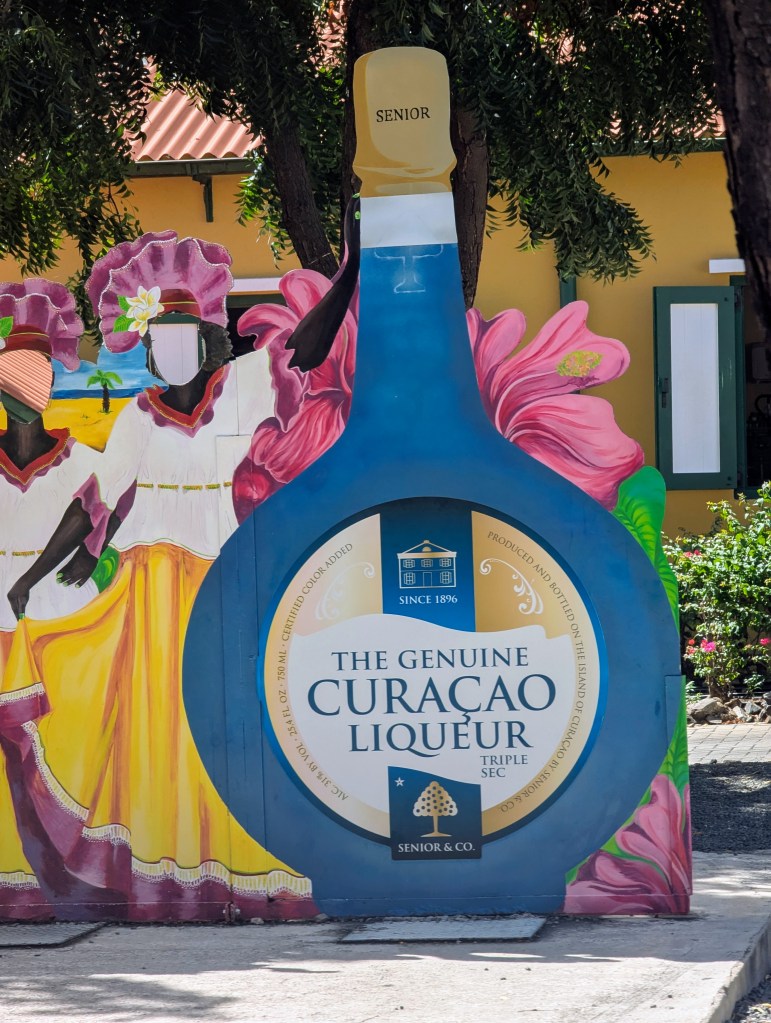
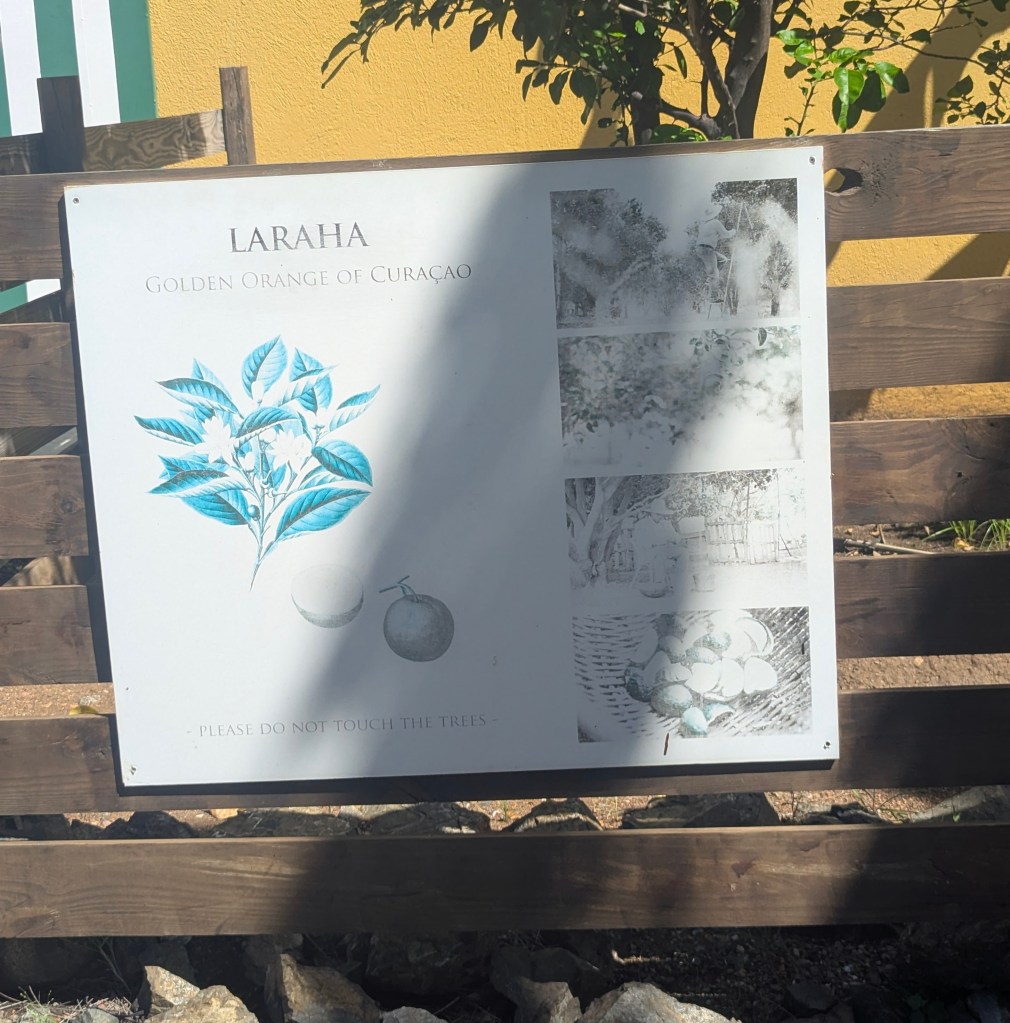
He then explained the history of the liqueur, which is dependent on the Lahara fruit. The Laraha fruit is a result of Spanish explorers bringing sweet Valencia orange trees to Curaçao in the 1520s. The trees did not thrive in the arid climate and soil conditions and mutated into the Laraha fruit. The dried peels of the laraha, however, were discovered to be pleasantly aromatic, and experimentation with the extracts of these peels led to the creation of Curaçao liqueur.
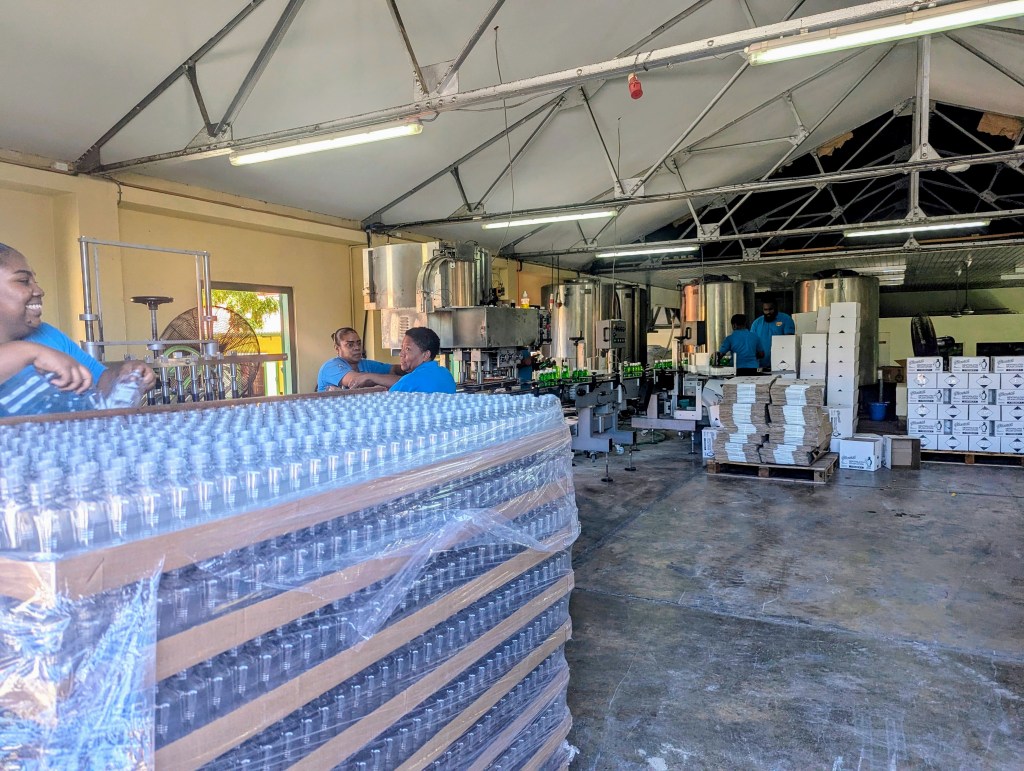
We had a peek into the bottling facility of the insect repellent also made from the fuit.
Then we were taken into the factory.
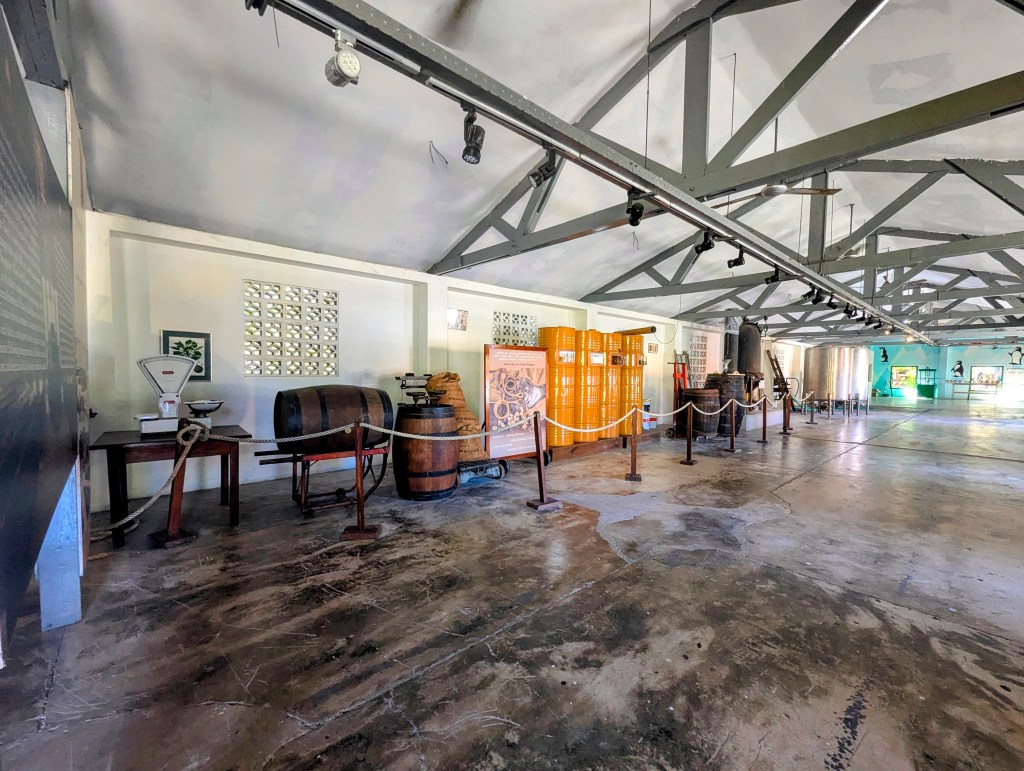
There we learned first of the early history of the island.
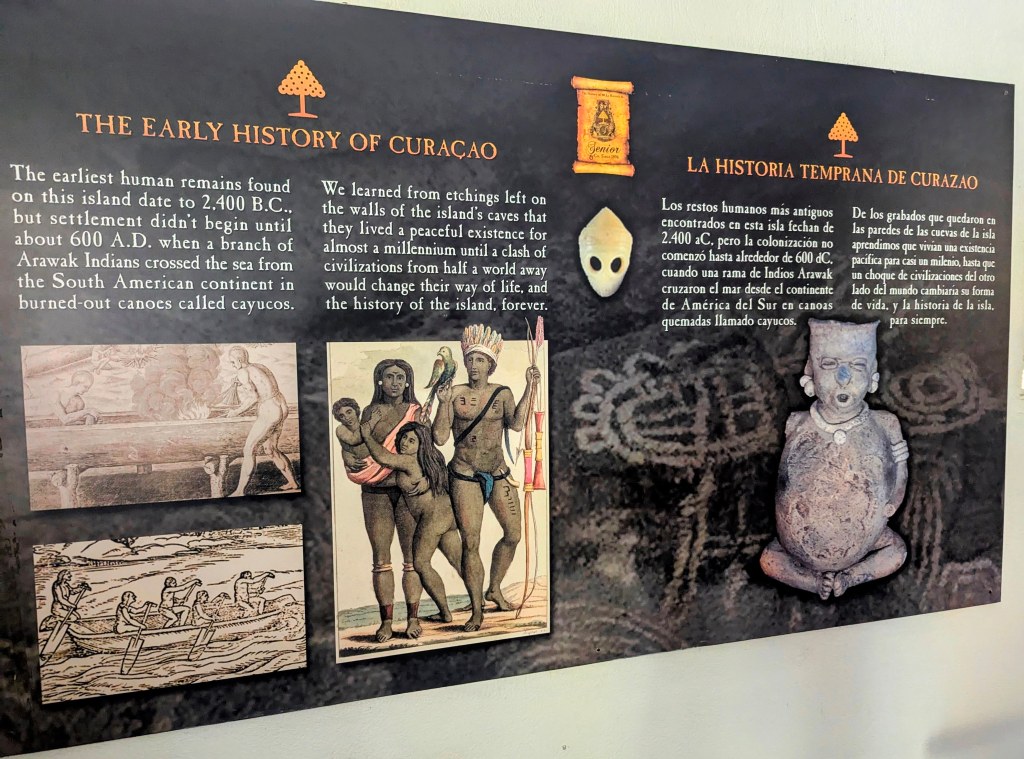
the fruit

and the Dutch settlers

Finally we learned about the Senior family, owners of the distillery.

and the history of Jews from the Netherlands to Curaçao.
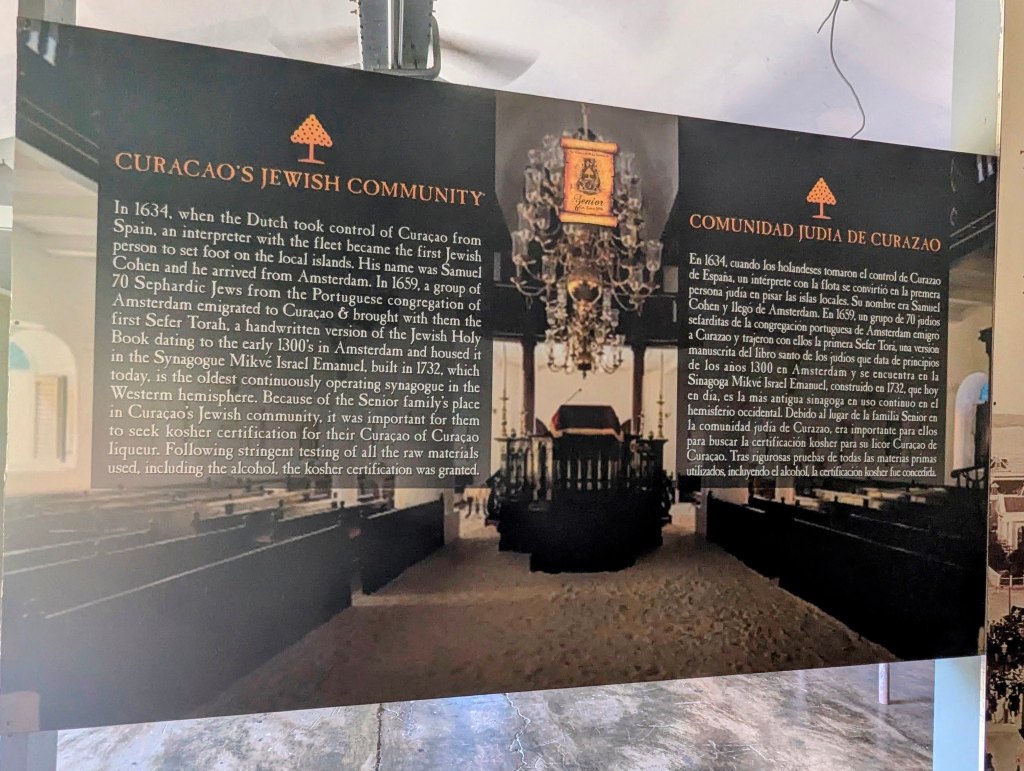
The Senior family has remained faithful to their Jewish origins, and the liqueur retains its kosher methods of production and status. Our guide explained the entire process of making the liqueur from cane sugar and spices into the copper still which is the original and is 120 years old.

The lahara rinds are peeled and dried in a gunny sack for 5 days, then mixed with spices

and cane sugar,
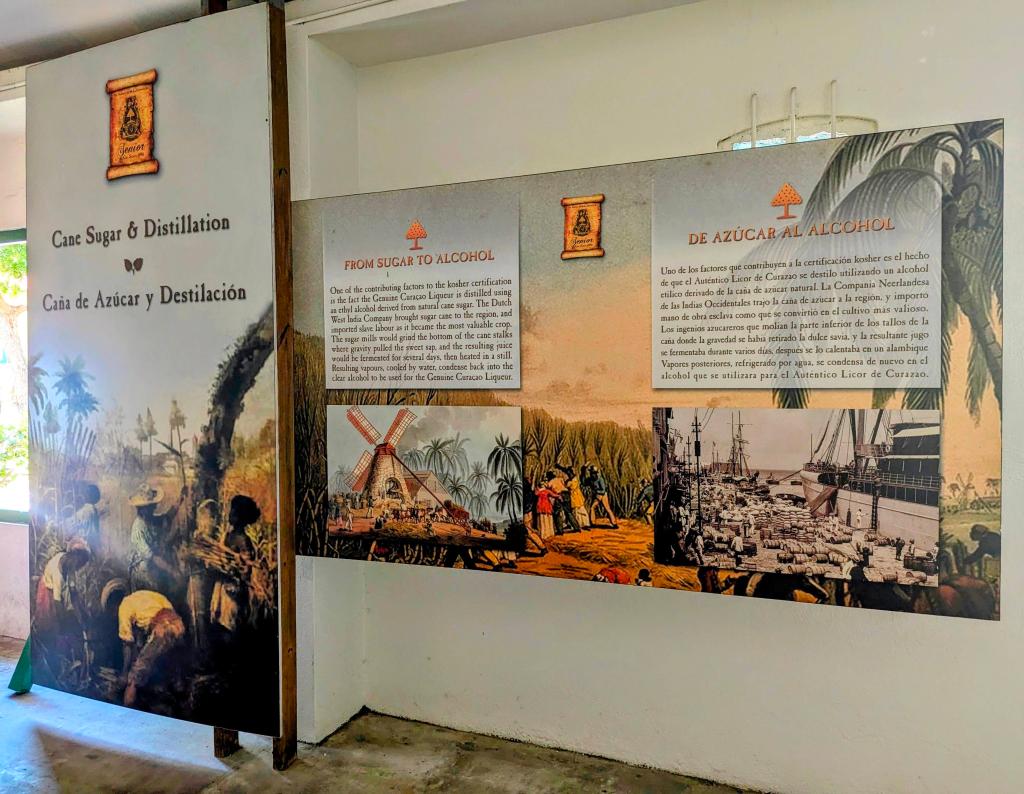
then in the still for 10 days.

Color may be added to the resultant liquid,
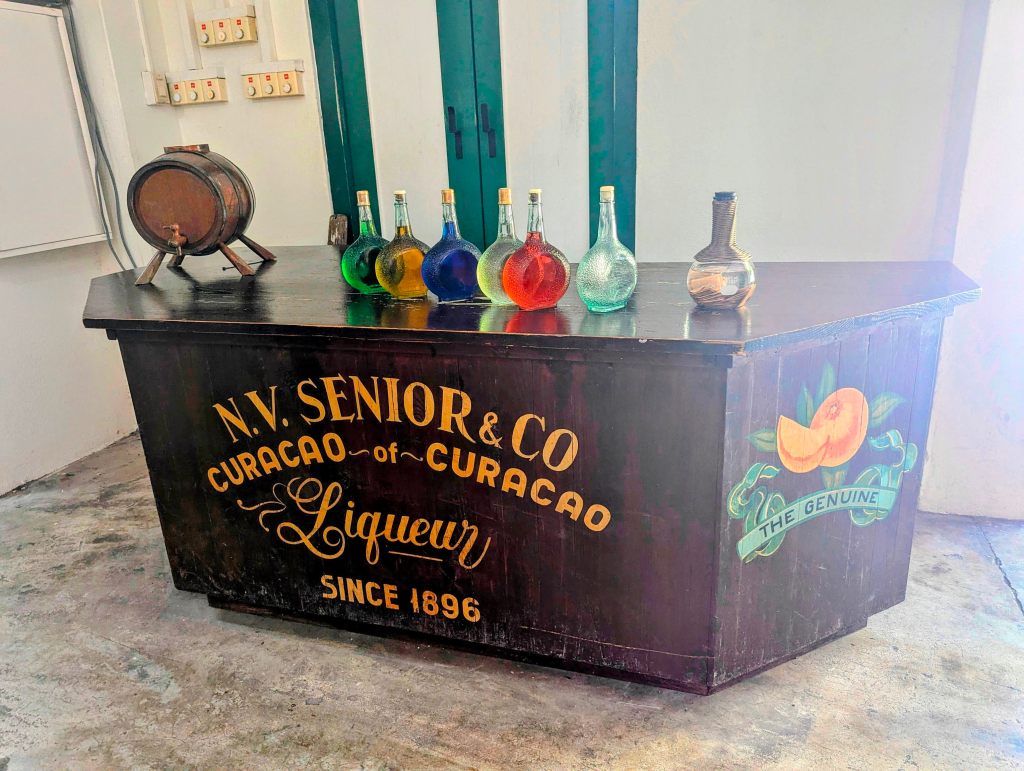
which is then bottled, sealed, and labeled by hand.
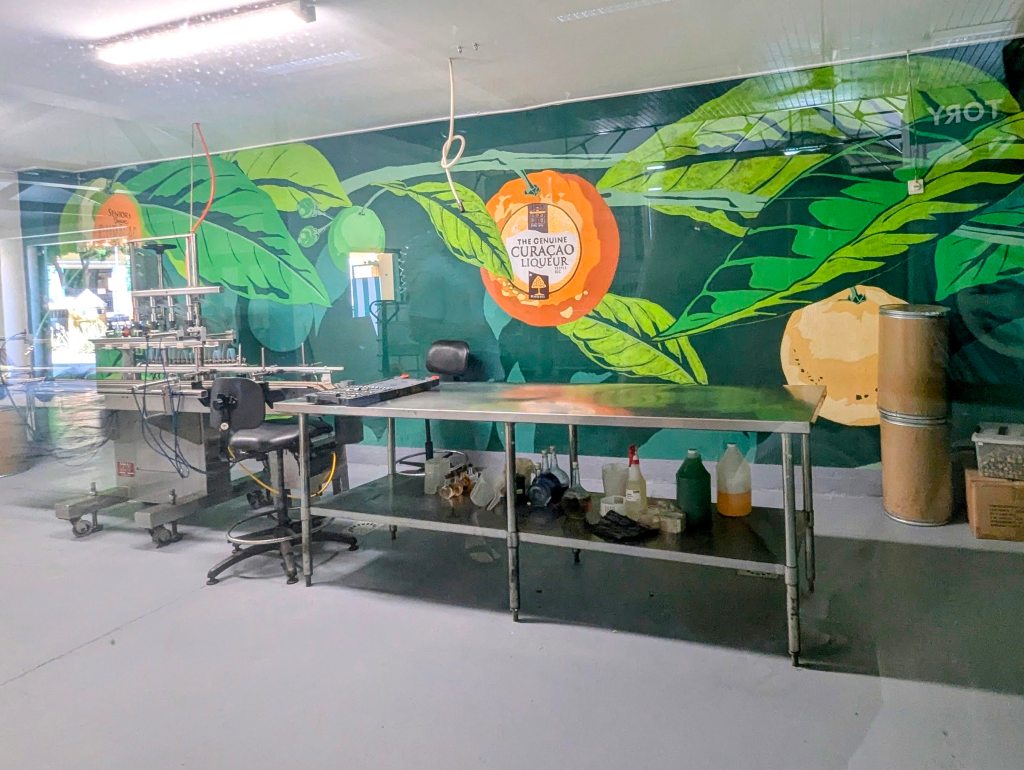
There are now also some additional flavors like tamarind and coffee.
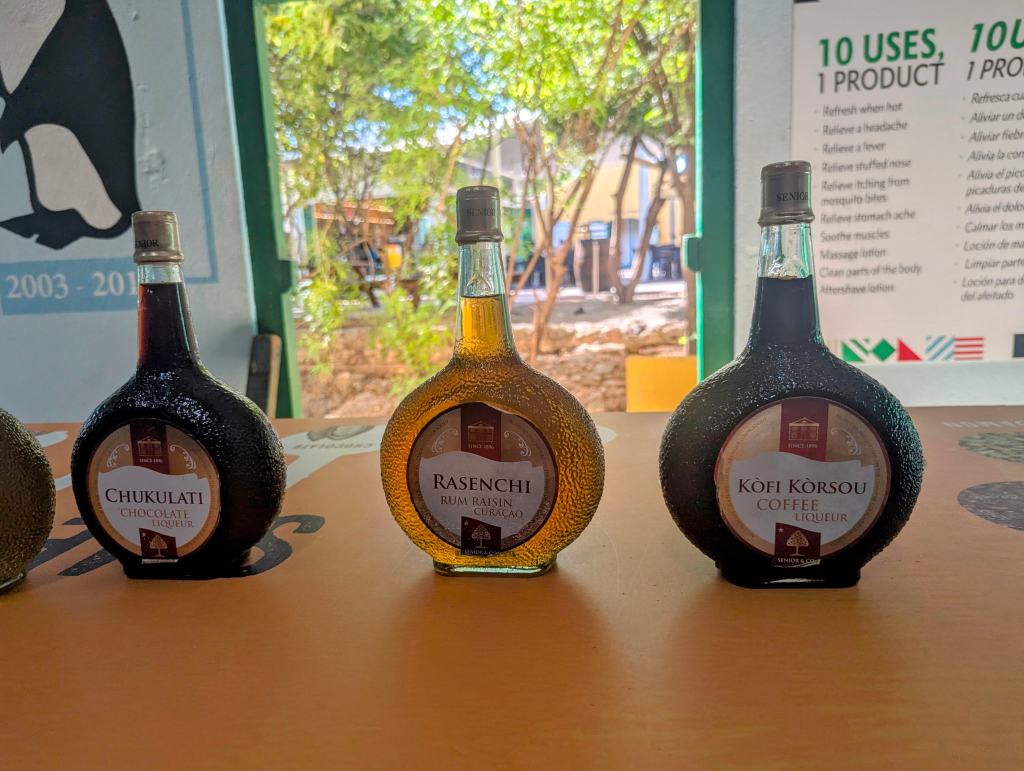
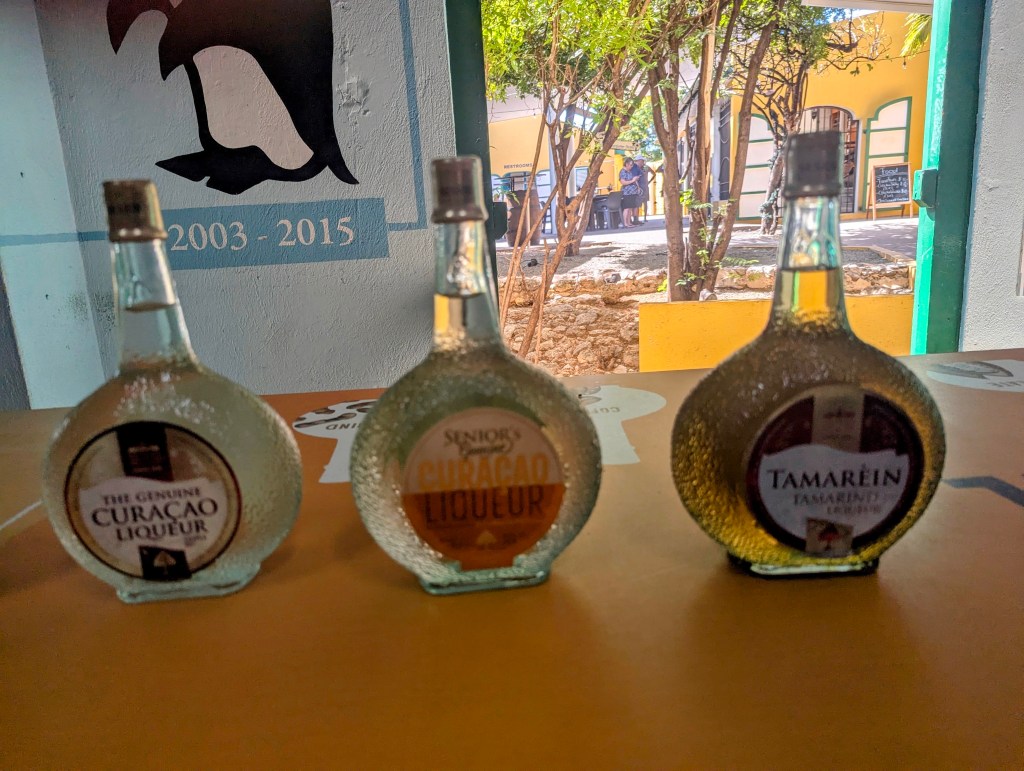
The liqueur is 60 proof, ie 30% alcohol. The yield is 500,000 bottles a year. There are also other uses for the formula including a refreshing body spray and an insect repellent.
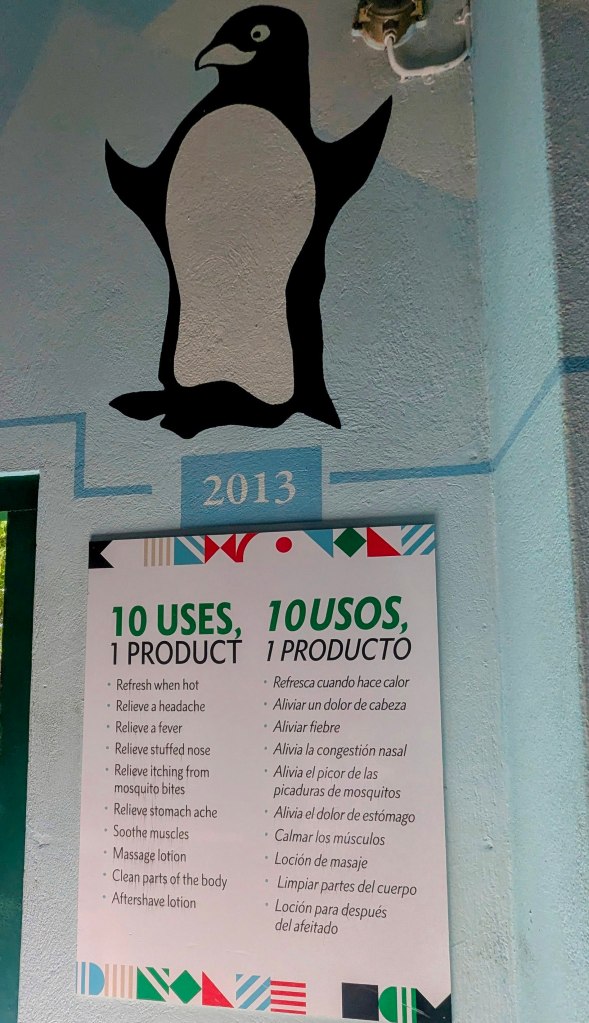
Upon completion of the factory tour, we were led to the patio to enjor a cocktail of our choosing using any of the liqueurs.

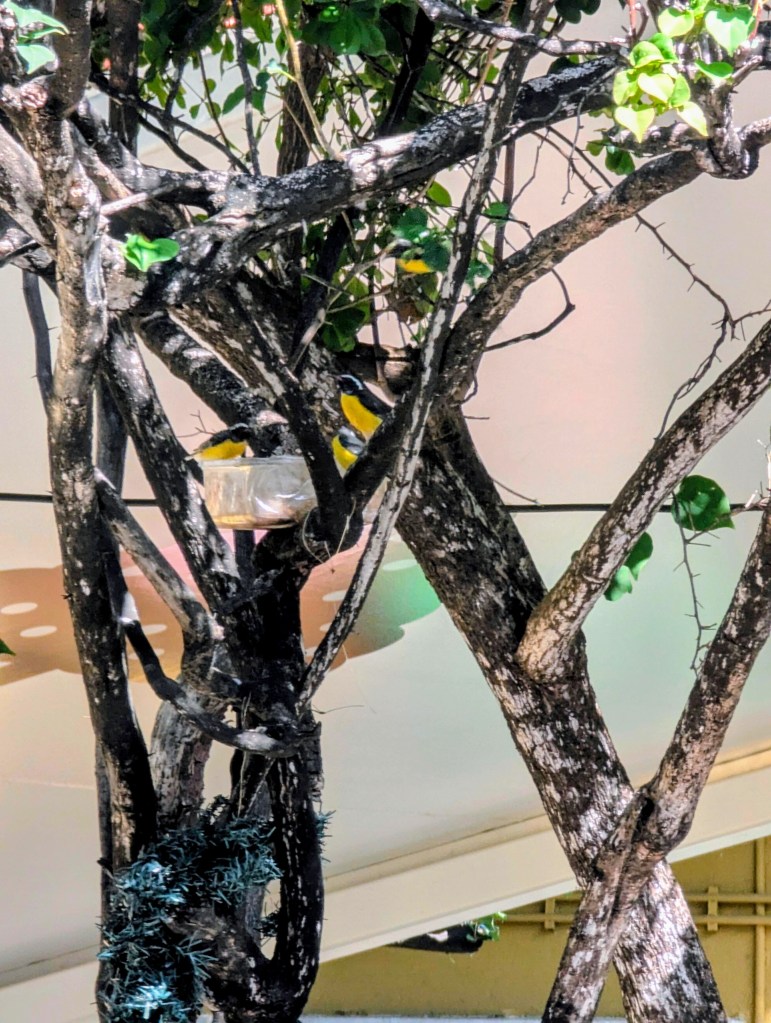
The afternoon was delightful. We were joined by some birds feeding in a nearby tree.
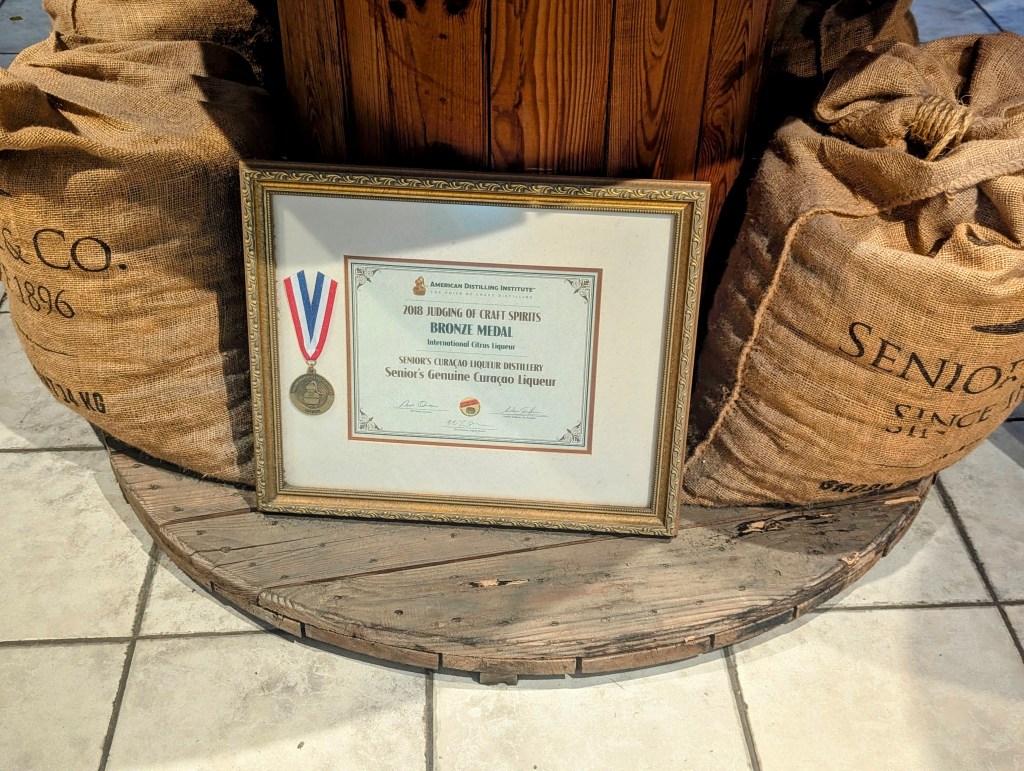
Of course we exited through the shop where we learned that the liqueur has won awards in the past.
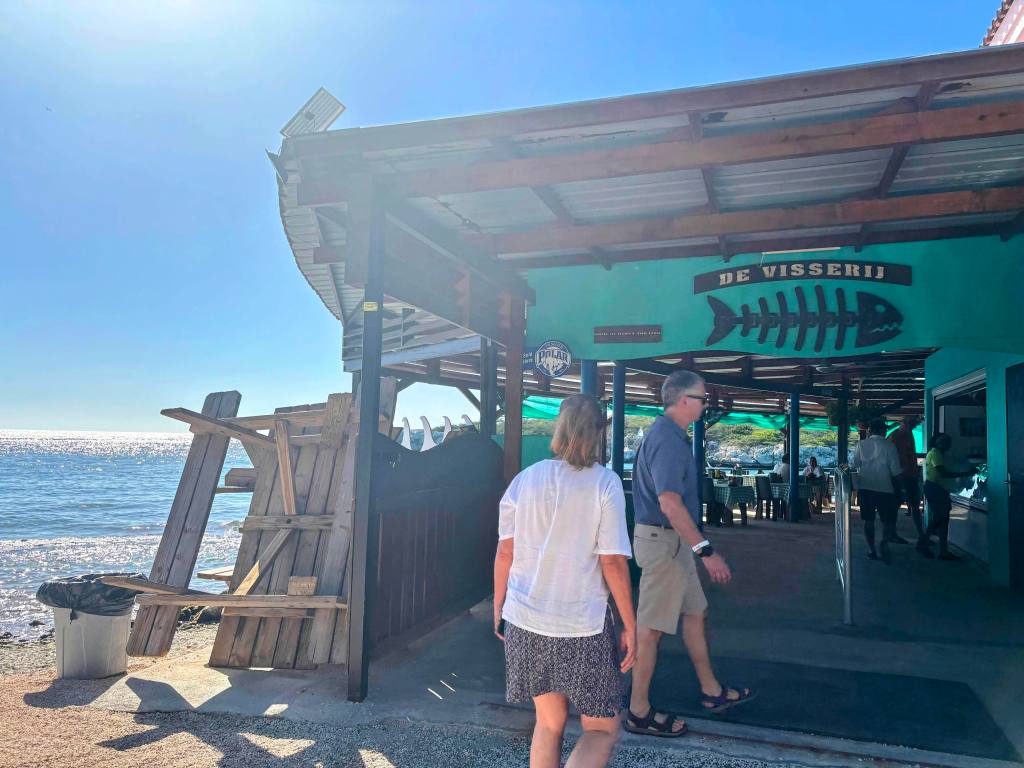
Having skipped lunch, we headed to Piscasdora for an early dinner at De Visserij, a humble beachside fresh fish restaurant, so delicious.
and a sense of humor.

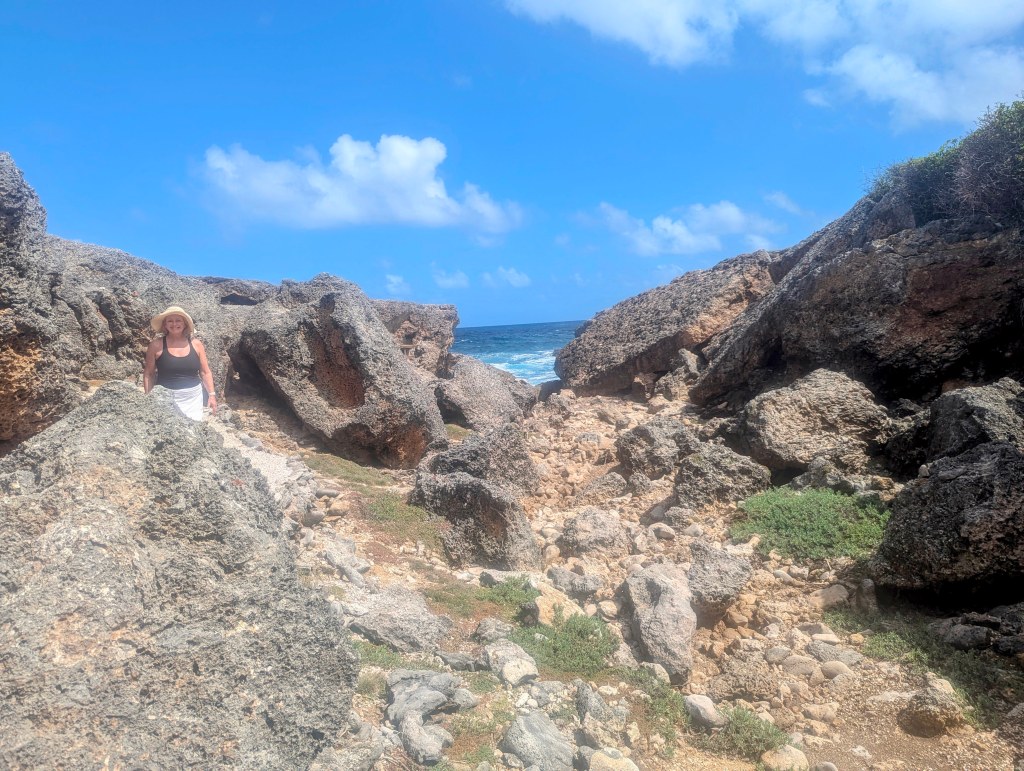
With Treves and Kim in tow, we also returned to Westpunt. We had planned to visit the other national park: Christoffel. But when we arrived we were informed that it was too hot for the very long hiking trails; it was for driving only. So instead we headed back to Shete Boka, some of which had been closed on our first visit anyway due to rough seas.
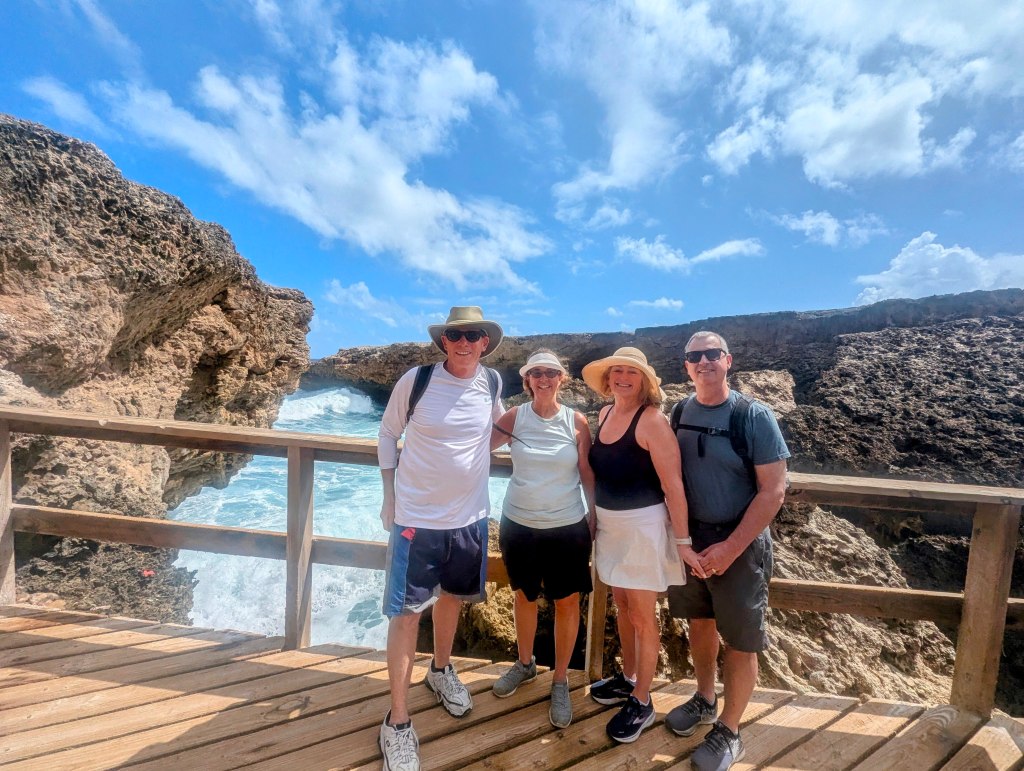
This time we were able to head to Boka Tabla
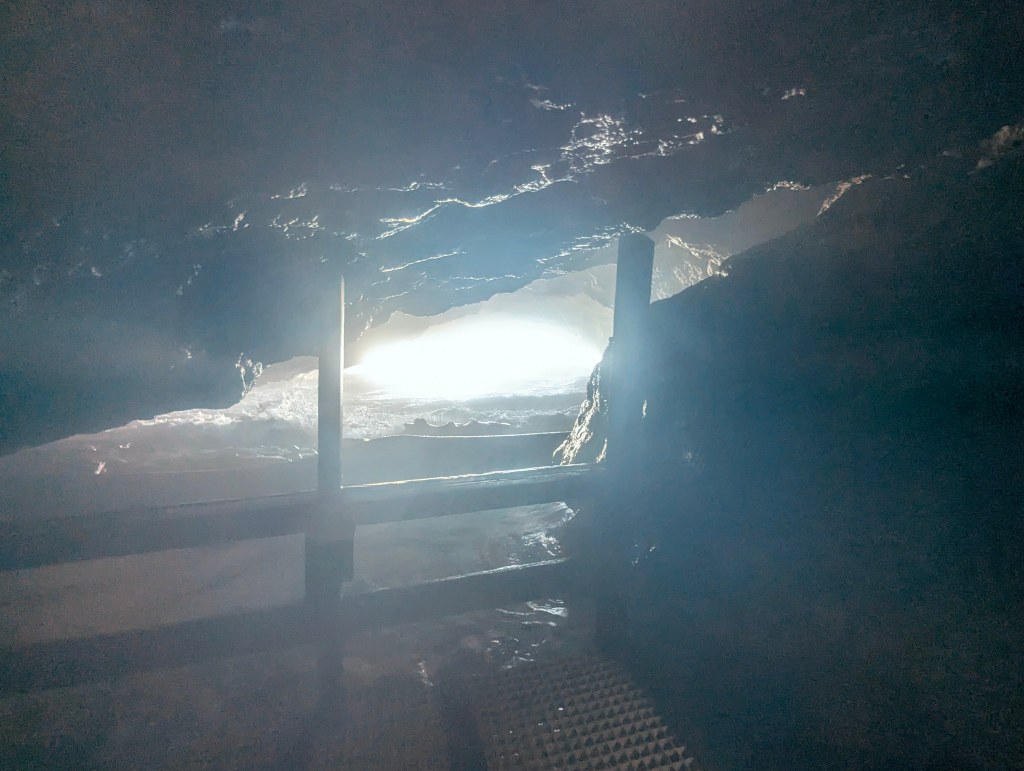
and visit the caves
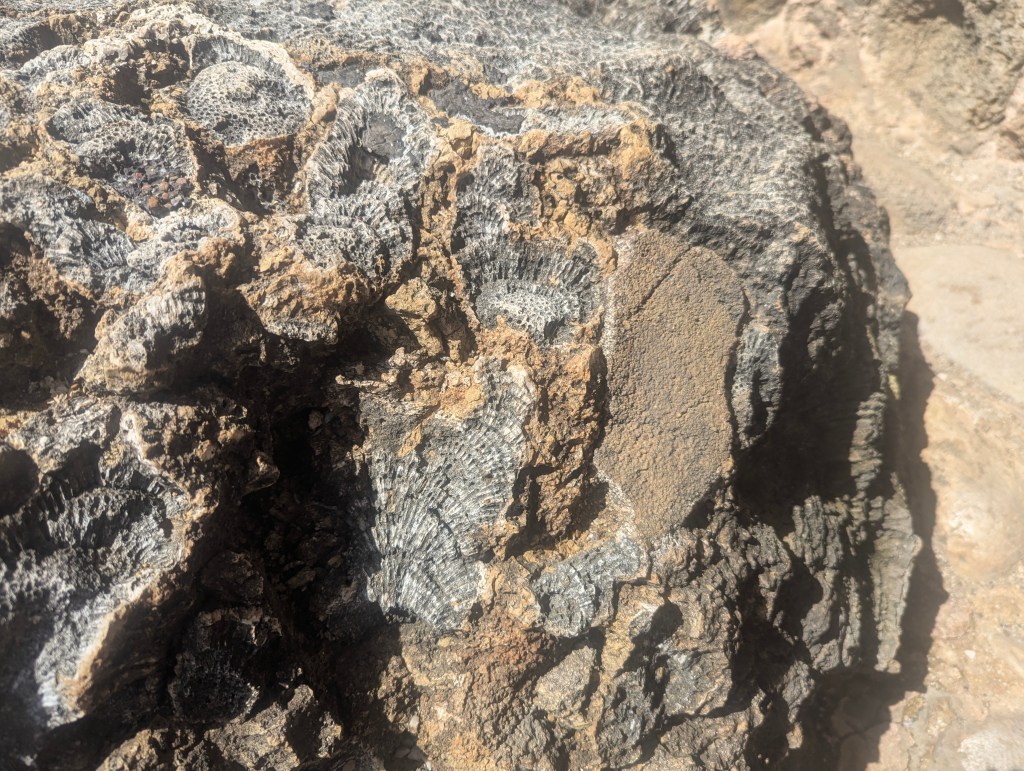
We noted the numerous fossils
and hiked the extensive coastline.
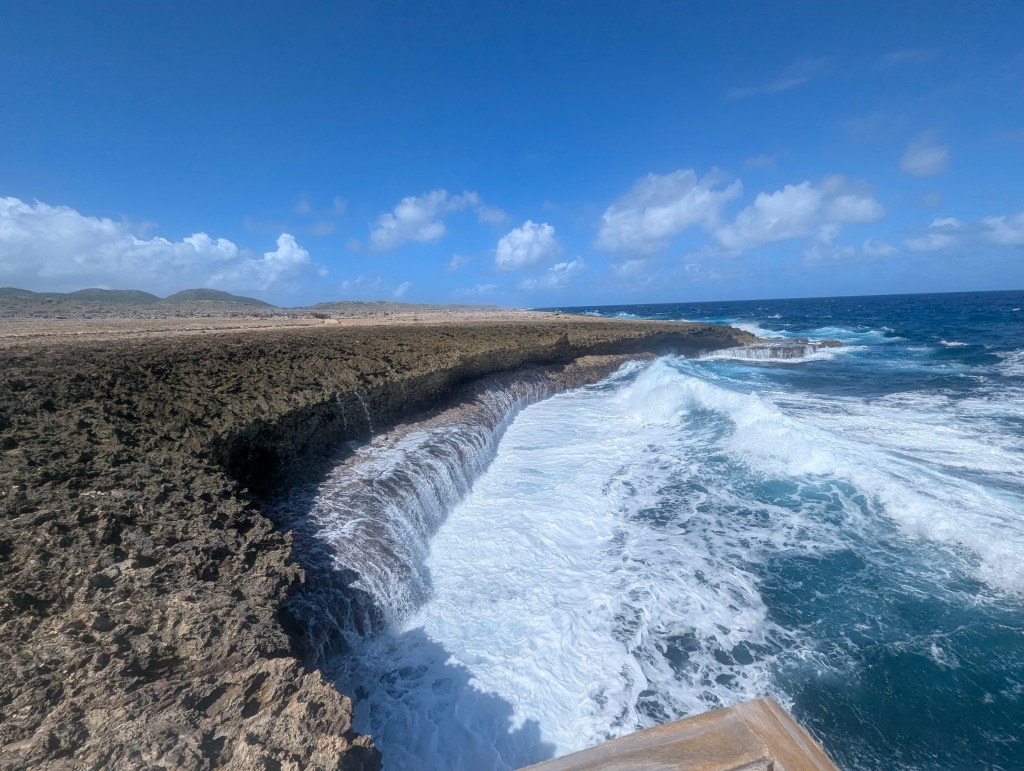
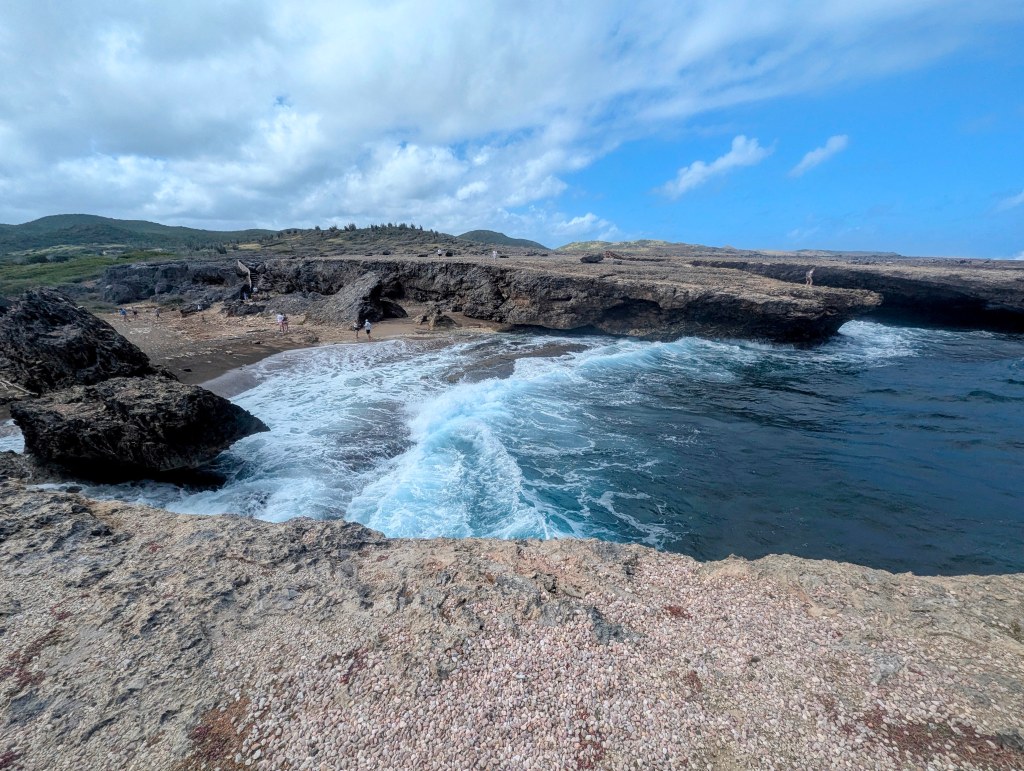
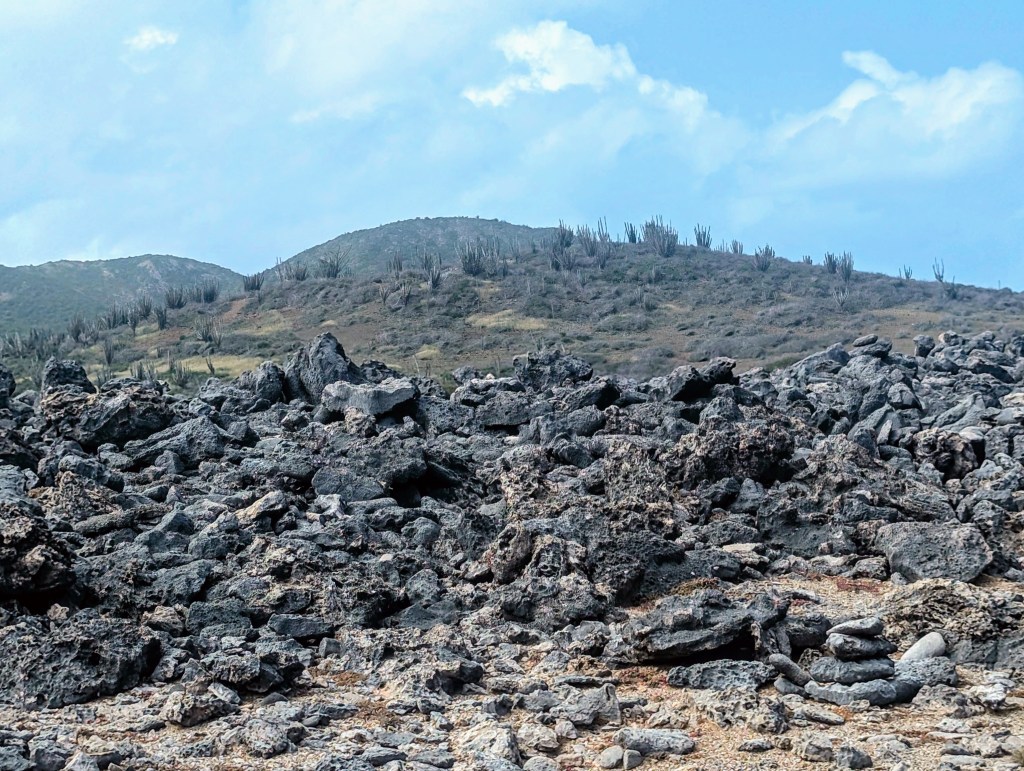
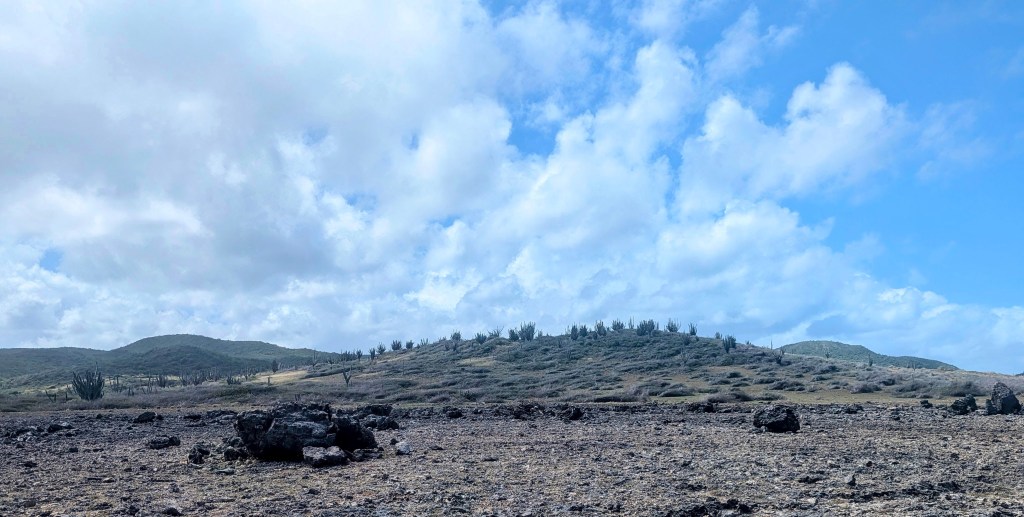
Treves pointed out that if turned away from the coast, the landscape could be used for a SciFi representation of the moon or Mars.
We hiked all the way out to the Natural Bridge.
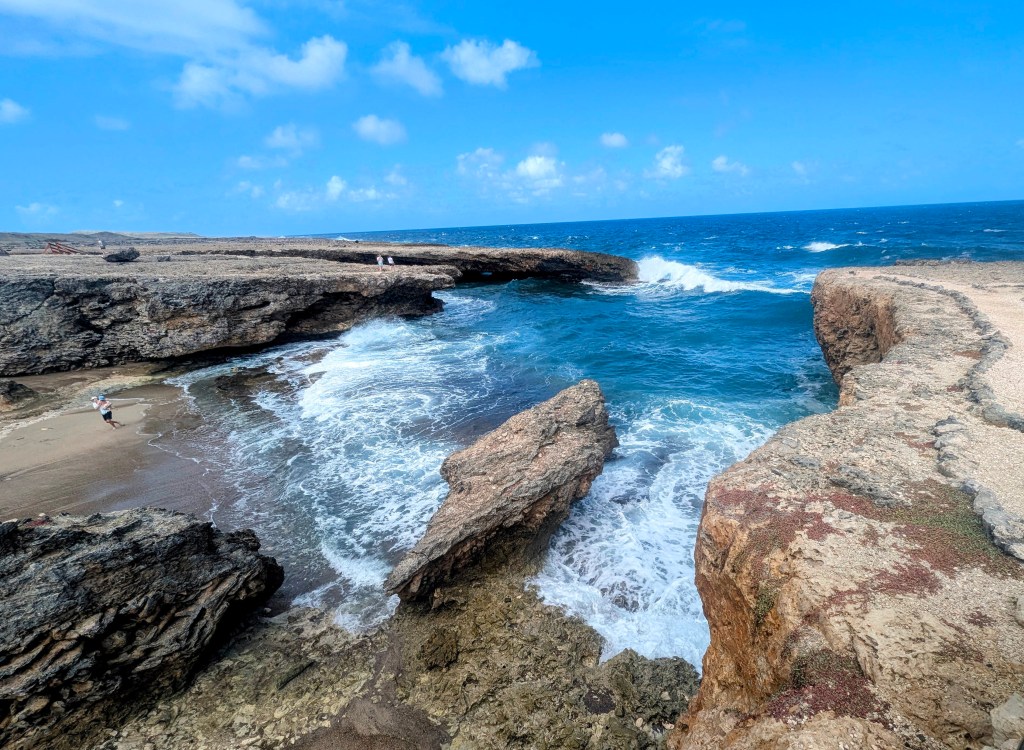
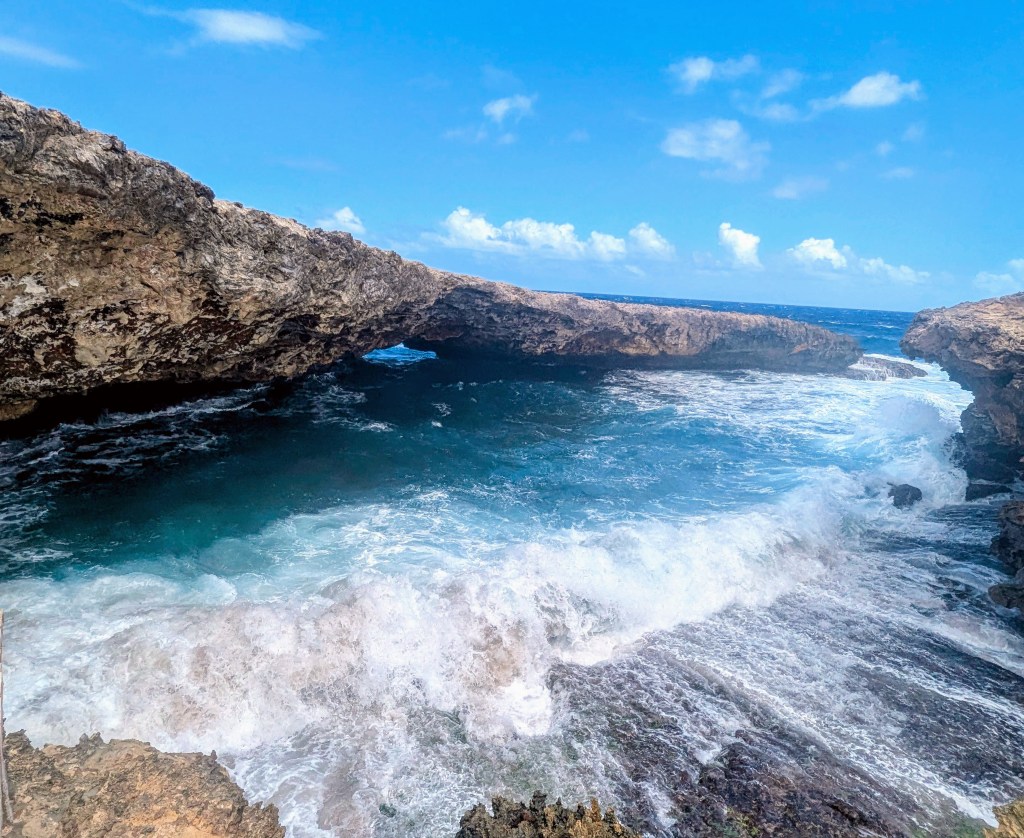
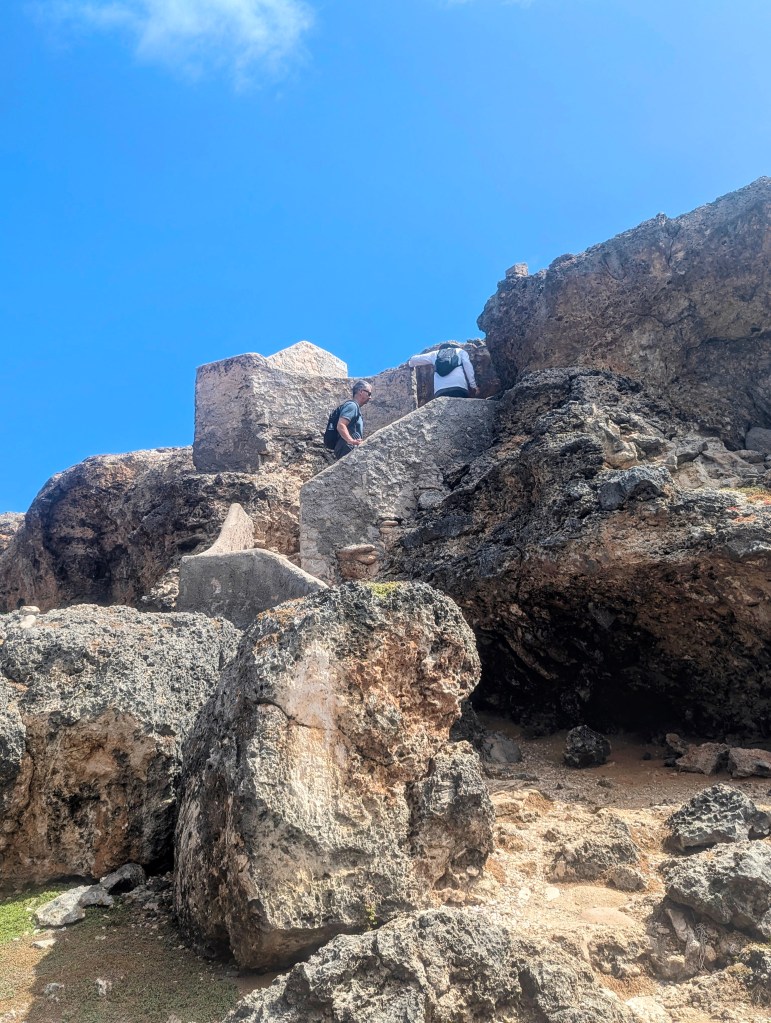
We were all impressed at what a great job the parks service did of making the rugged landscape negotiable while maintaining its natural beauty with little disturbance of the environs.
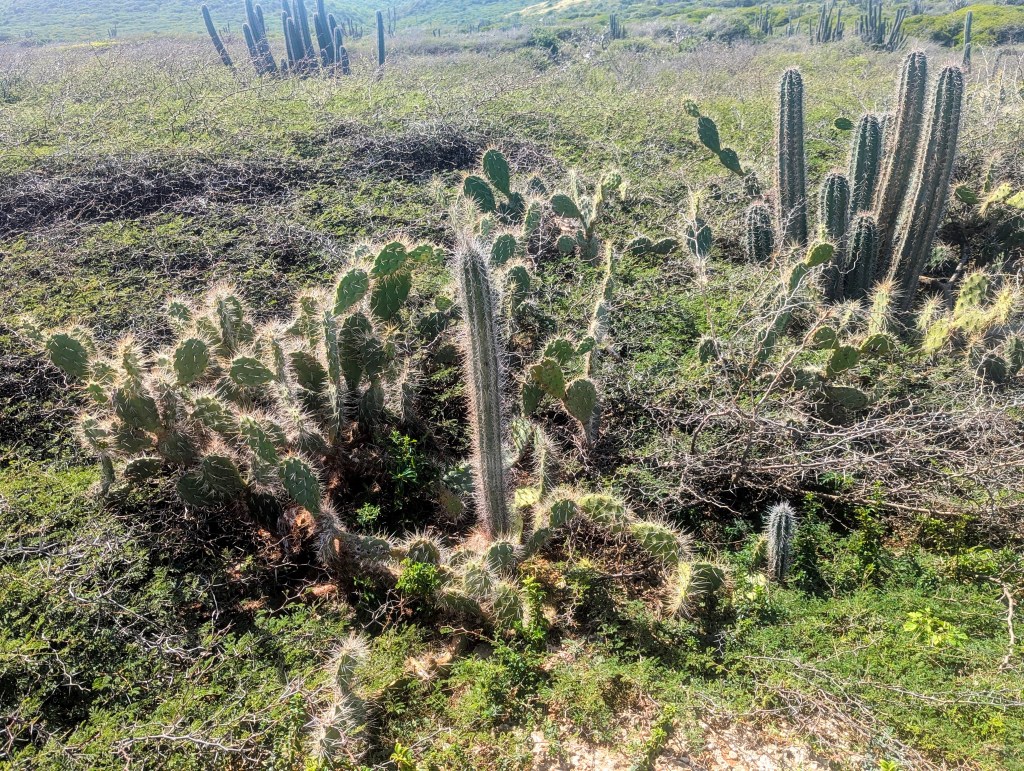
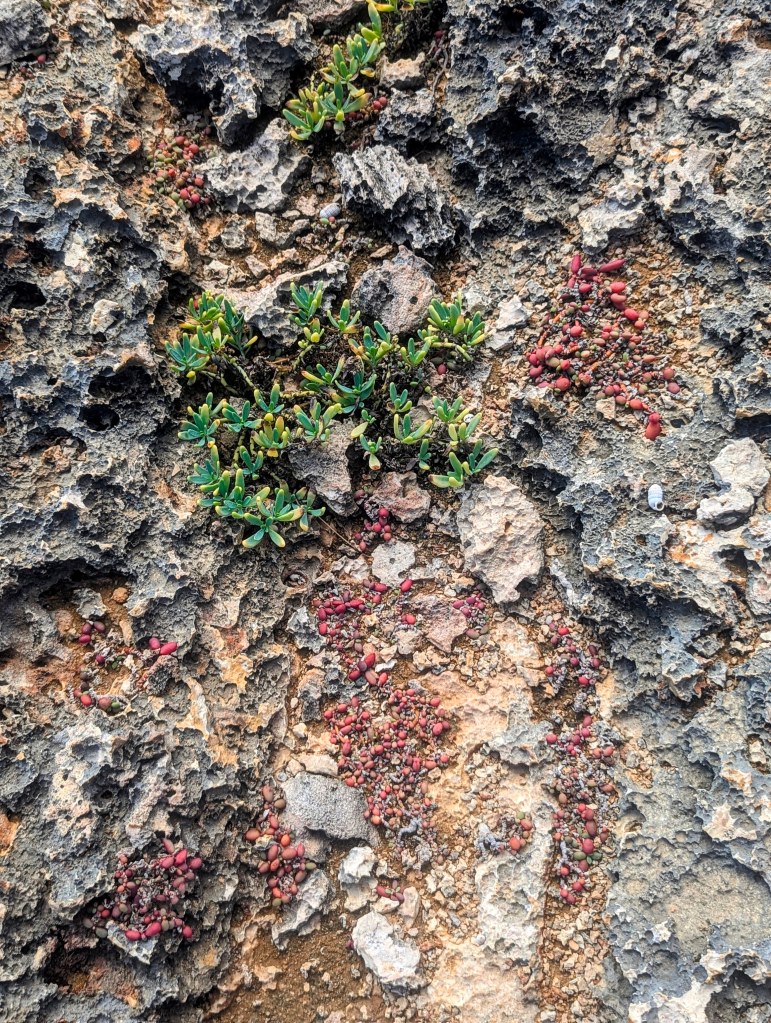
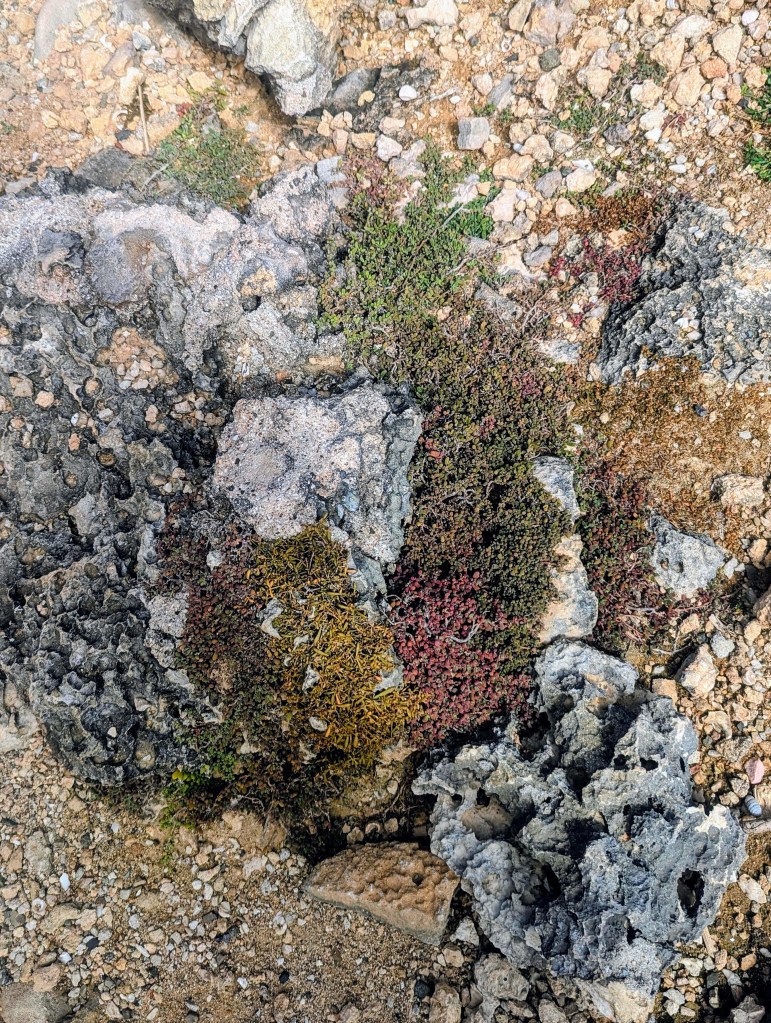
I took note of the many and healthy cacti
and succulents species along the way.
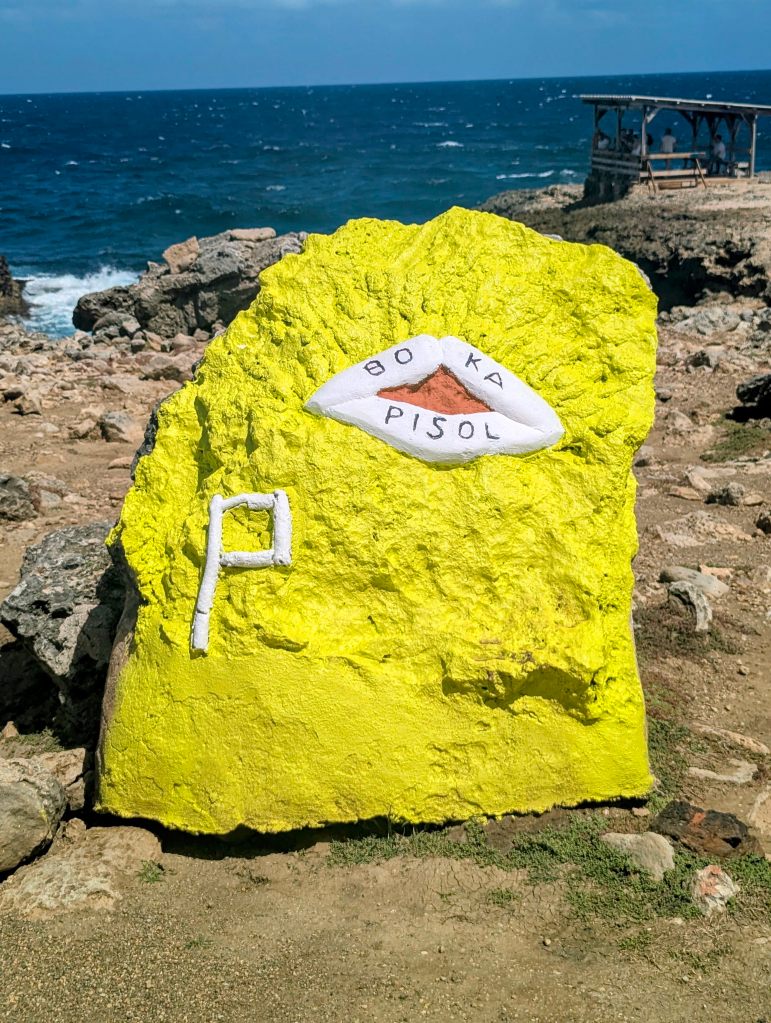
Finally we made our way back to Boka Pistol that had so enthralled us on our first visit.
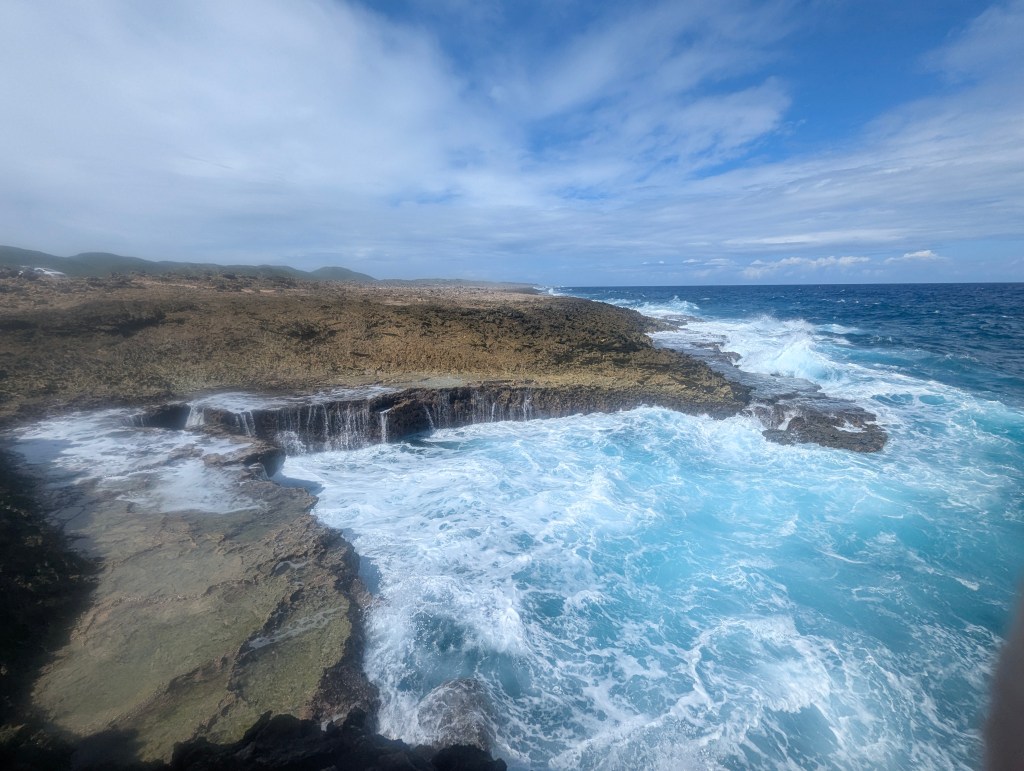
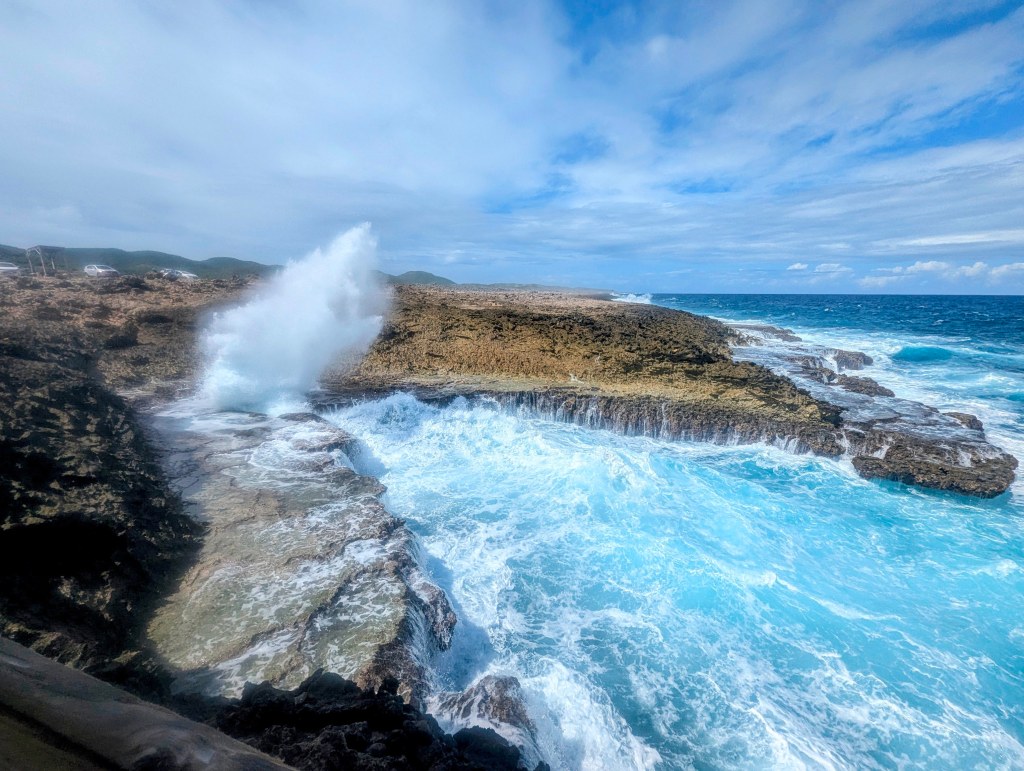

We drove the rest of the way around the western point. As we passed Playa Forti, the local church called out to me, so we made a stop.
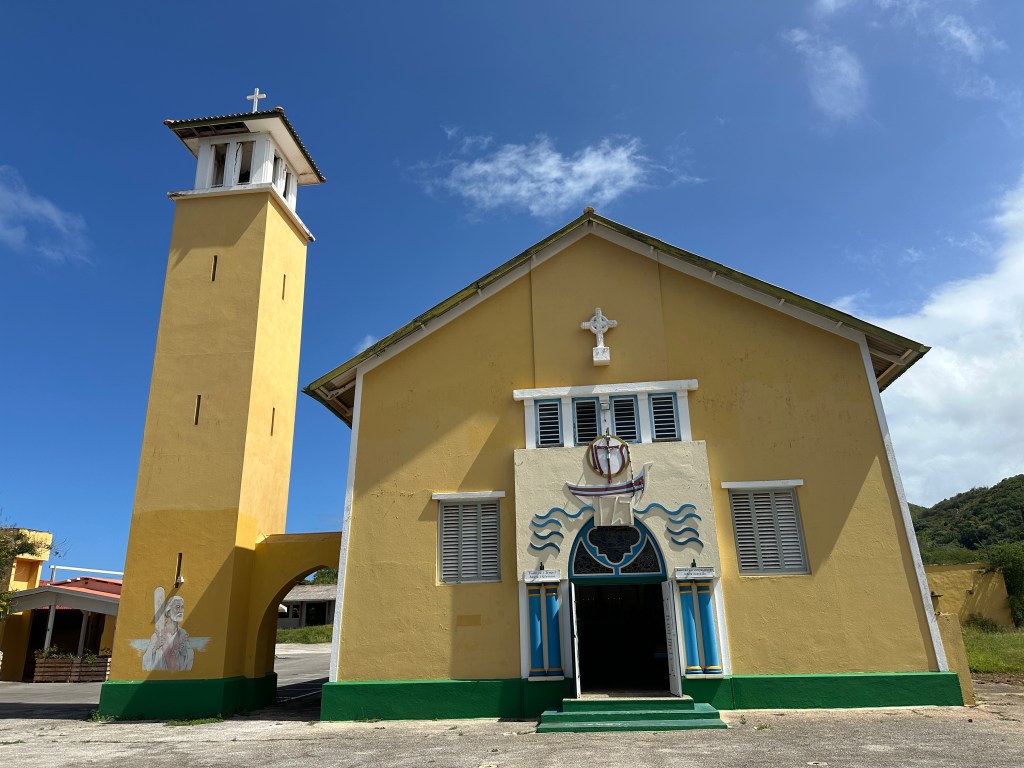
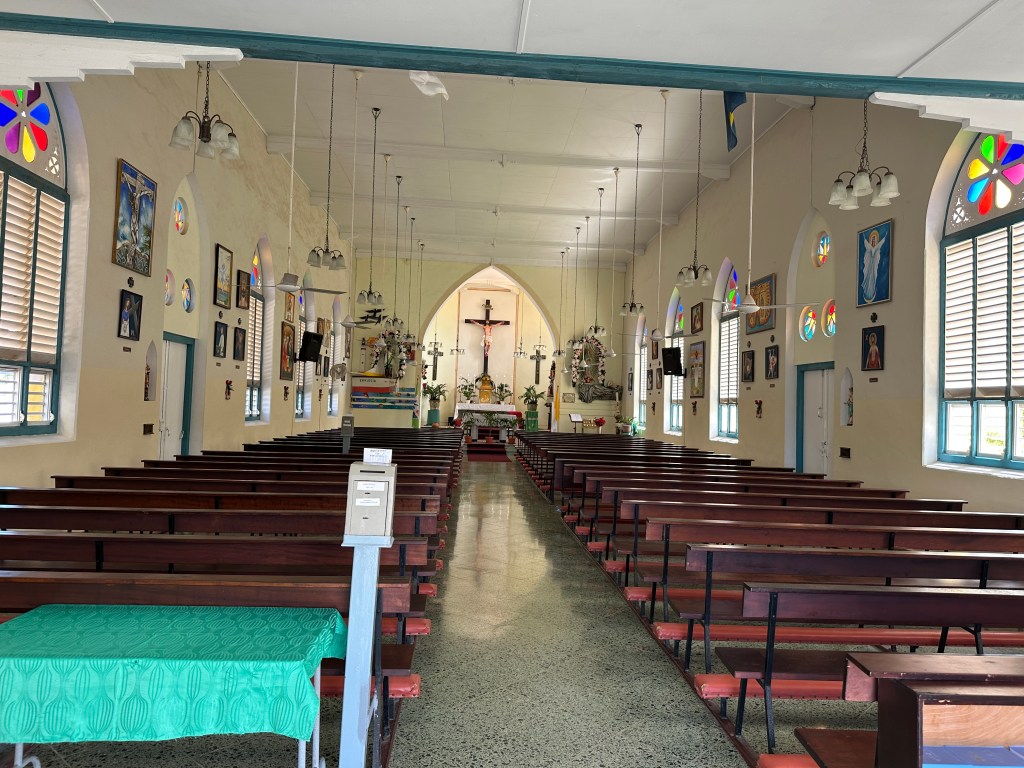
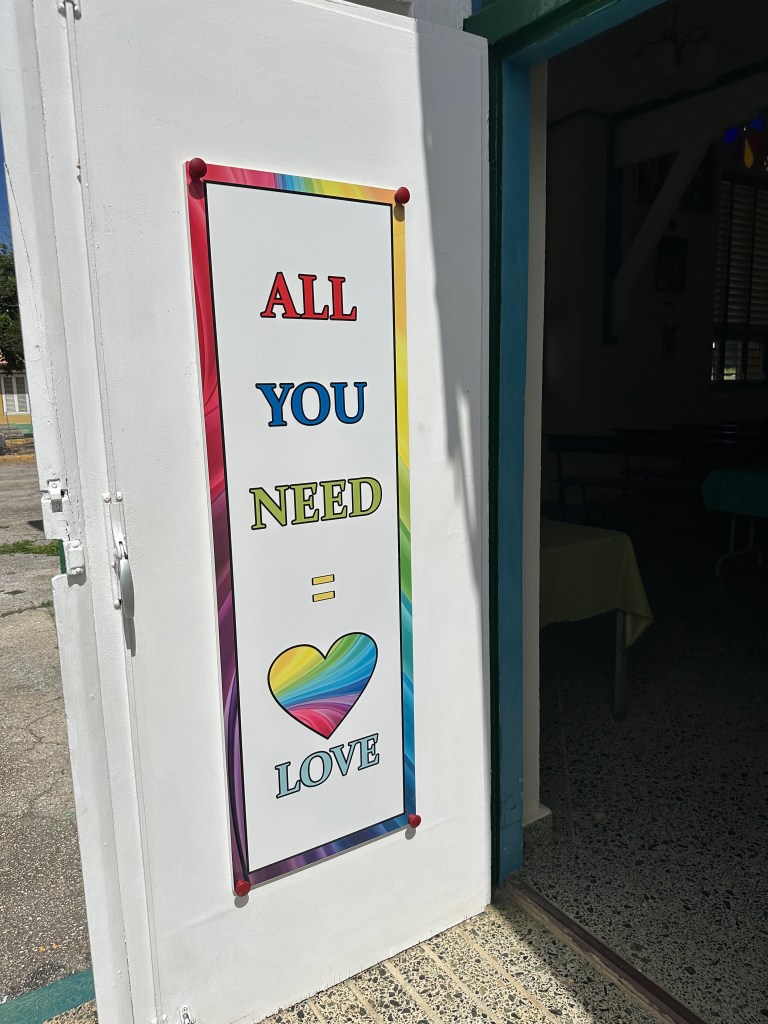
And now I knew why I loved this little church..
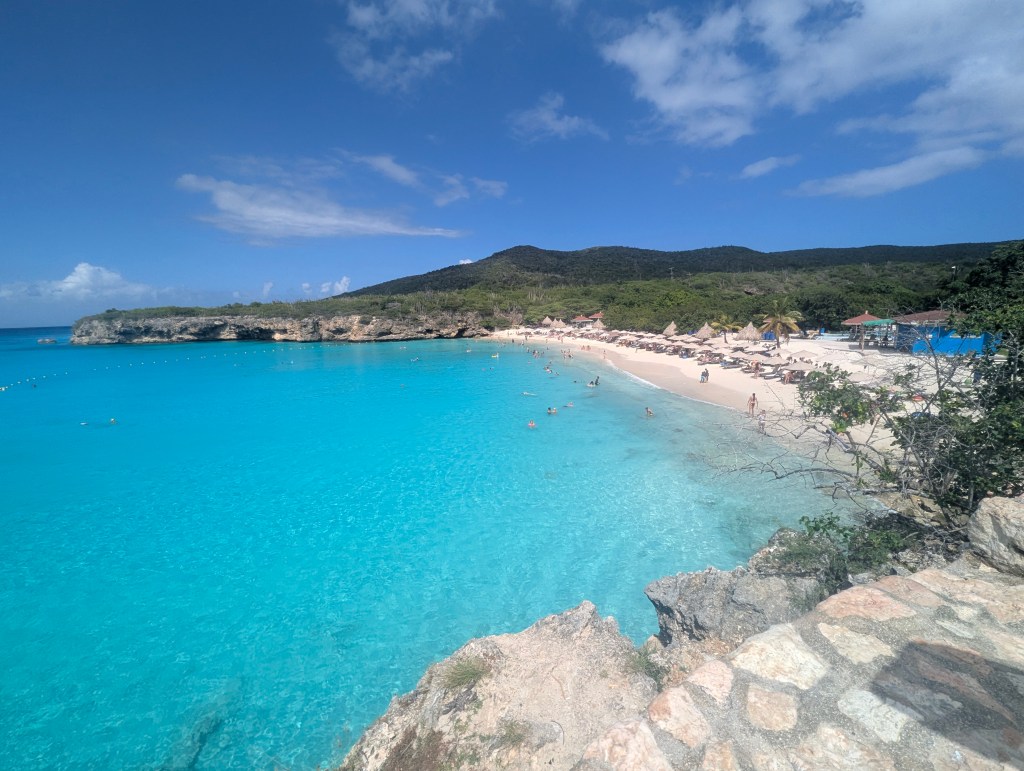
One of the most popular beaches on the island is Grotte Knip (Kenepa Grande) so we swung by to see for ourselves. It did not disappoint.
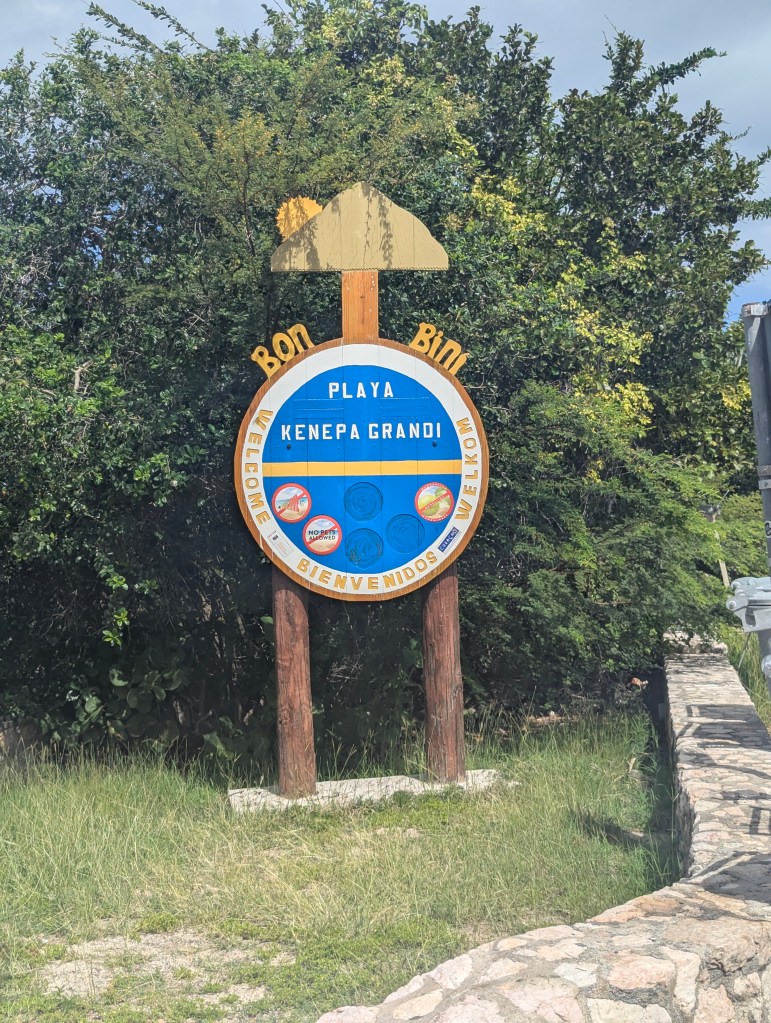
Look at the color of that water, ahhh…
We made it back in time for another gorgeous sunset with drinks on the beach.
In the final days we mostly hung out on the beach or the porch.
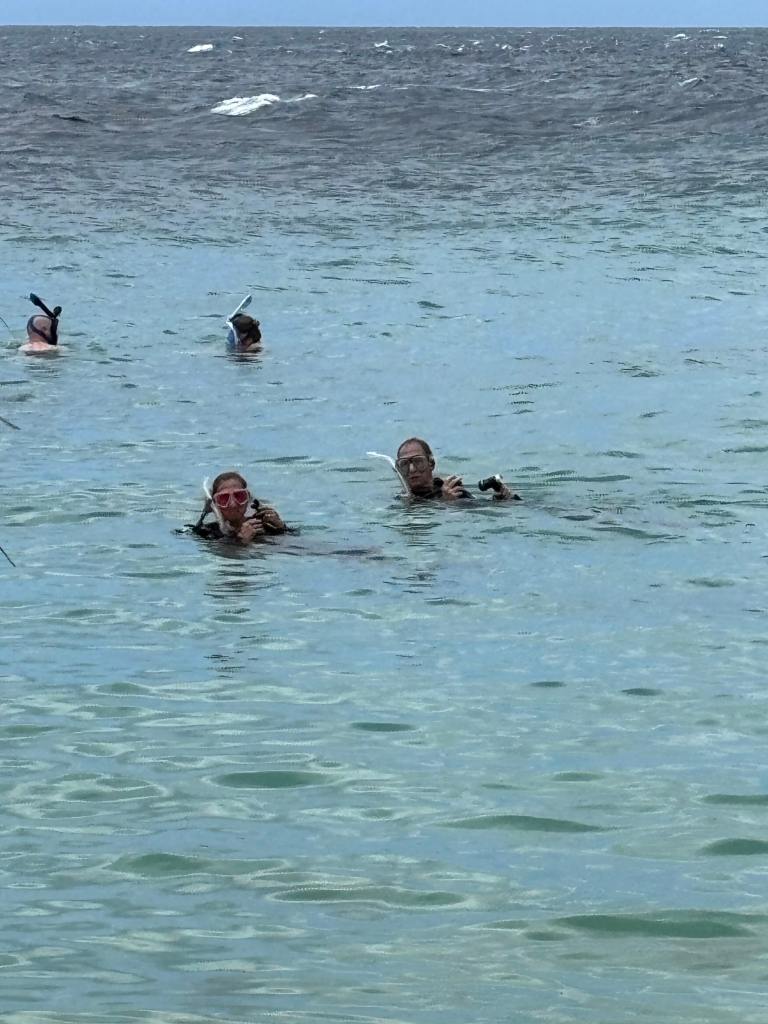
Blue Bay has a dive shop right on the beach. When the mood struck Eric and me, we rented tanks and weights and headed right into the bay with the snorkelers for a quick SCUBA dive below.
On Kim’s birthday we headed into town to Fort Nassau Restaurant. Fort Nassau was built in 1797 to defend the island from enemy attacks. The Fort was originally named Fort Republic until The British invaded the island in 1807 and gained control of the town and all its Forts. To honor England’s King the British changed the name to Fort George. In 1816 the island was given back to the Dutch. In honor of the Dutch Royal family the Fort was renamed Fort Orange Nassau.
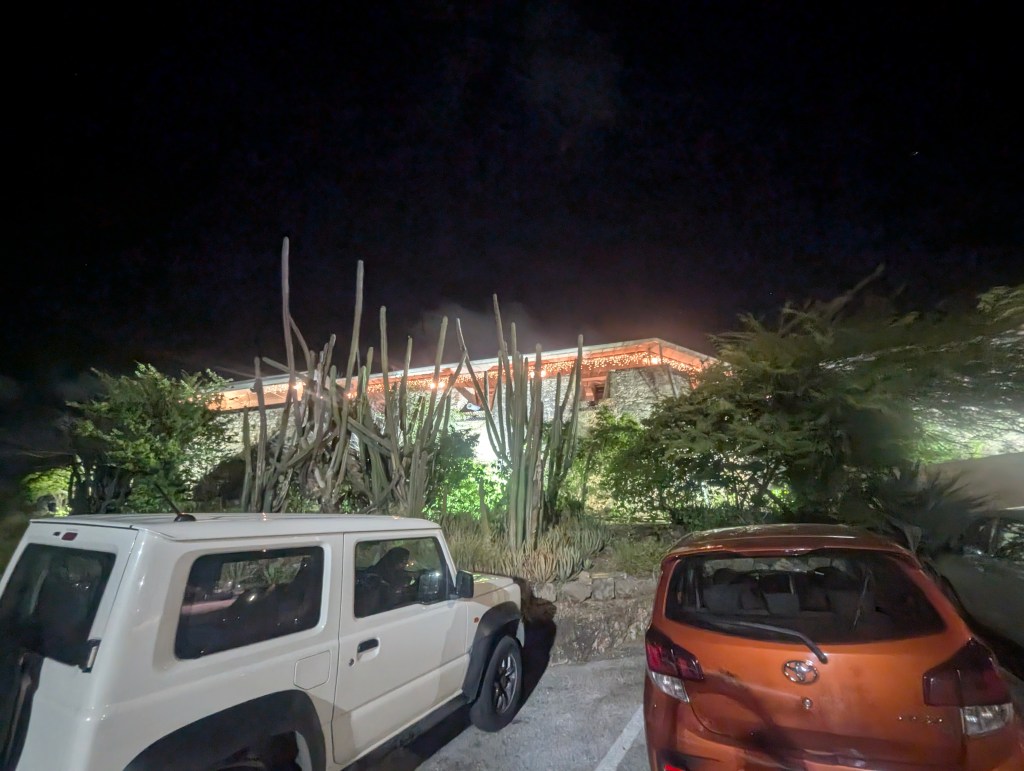
Today the Fort plays a vital role for the harbor (it is from here the harbor master signals to the myriad of incoming and outgoing vessels). In 1959, The Monument Foundation of Curacao declared Fort Nassau a National Monument. .
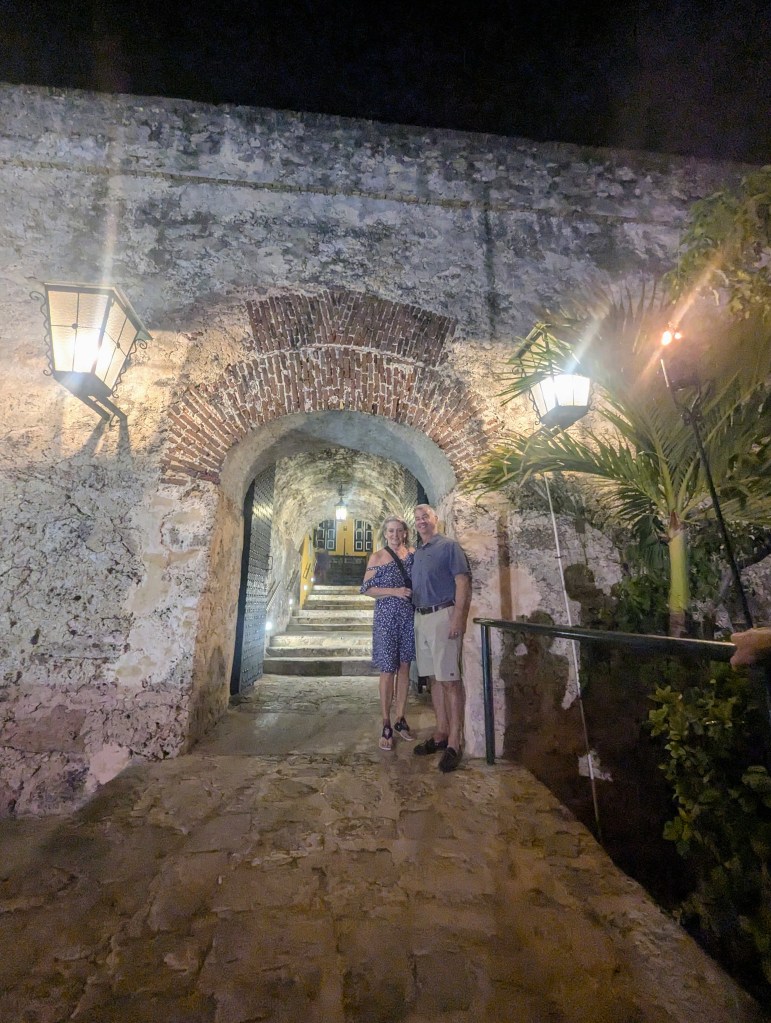

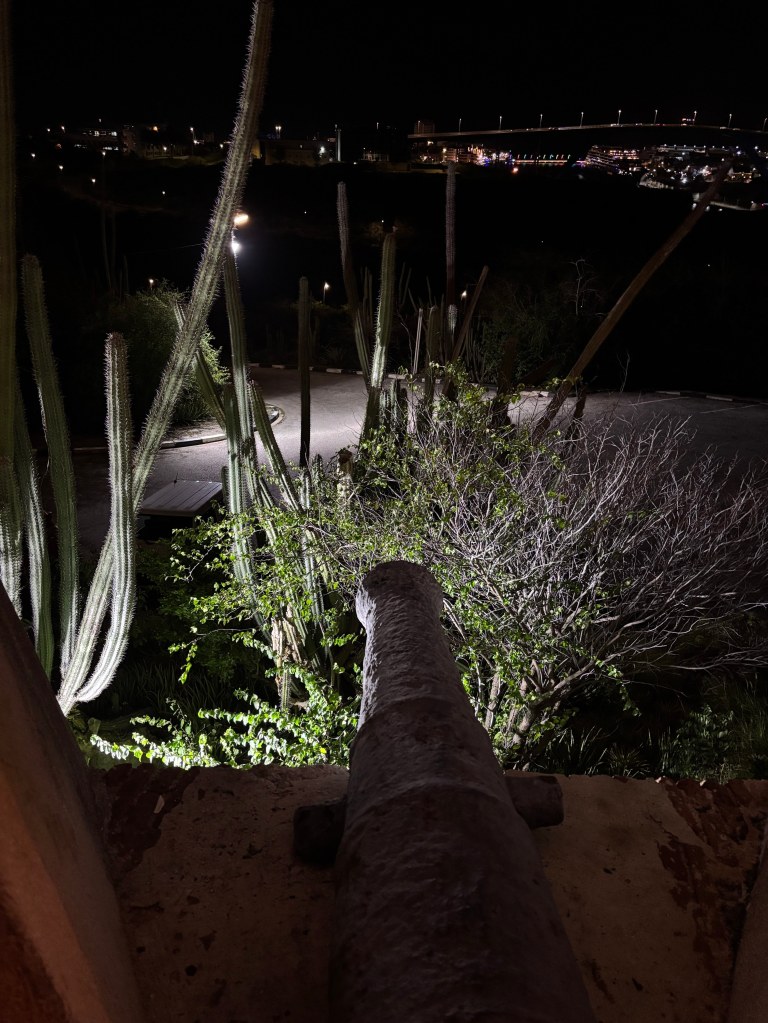
The canons along the Fort walls, the former Fort prison and the primitive toilet used by the soldiers are testimonials to the period in which Fort Nassau was on duty long ago.
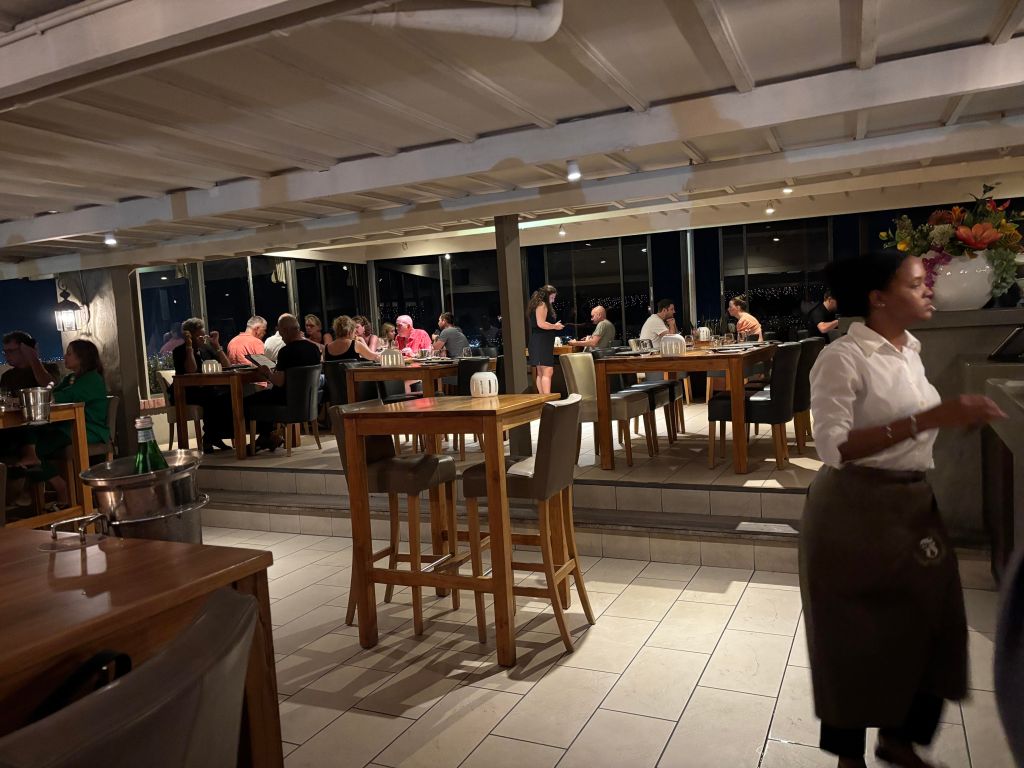
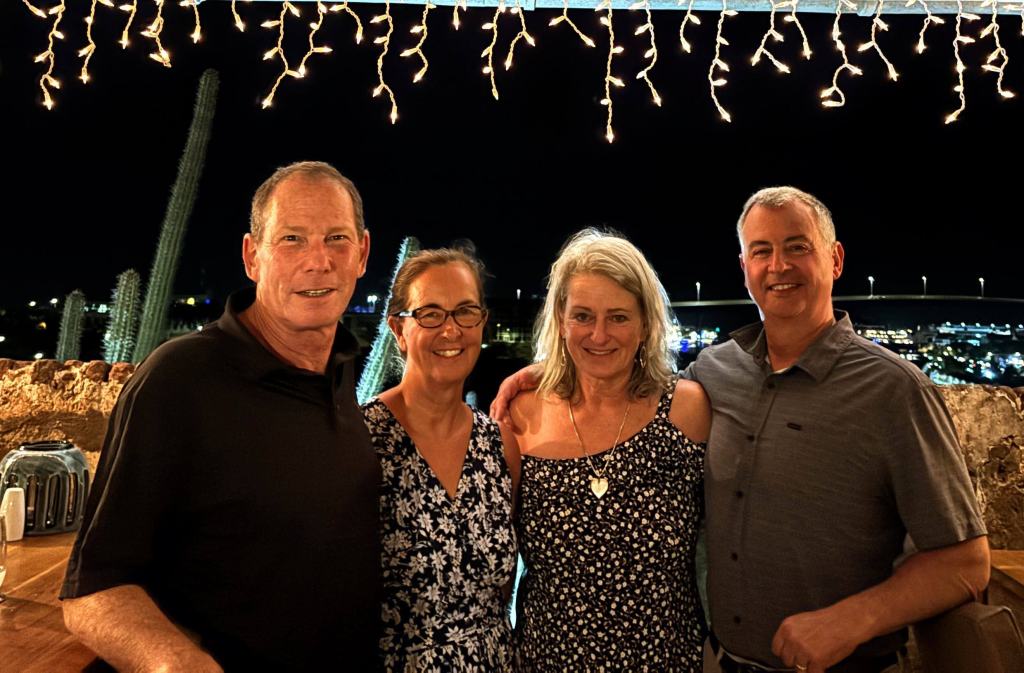
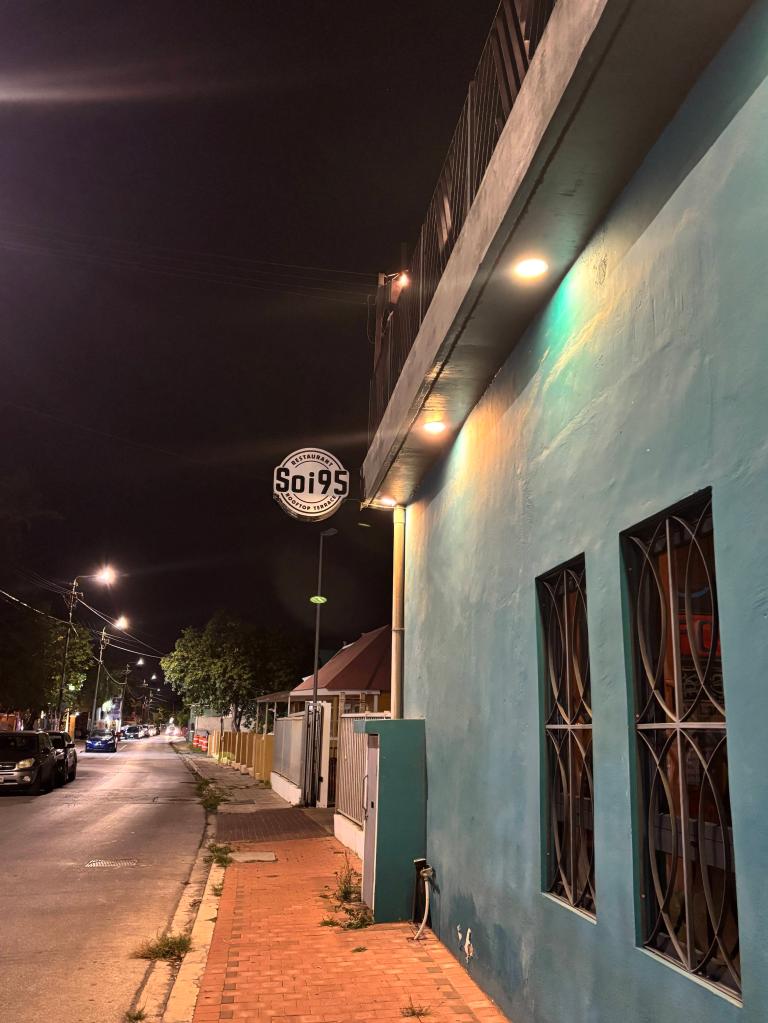
For our final night we went for our first repeat dinner at a restaurant because it was soooo very good.
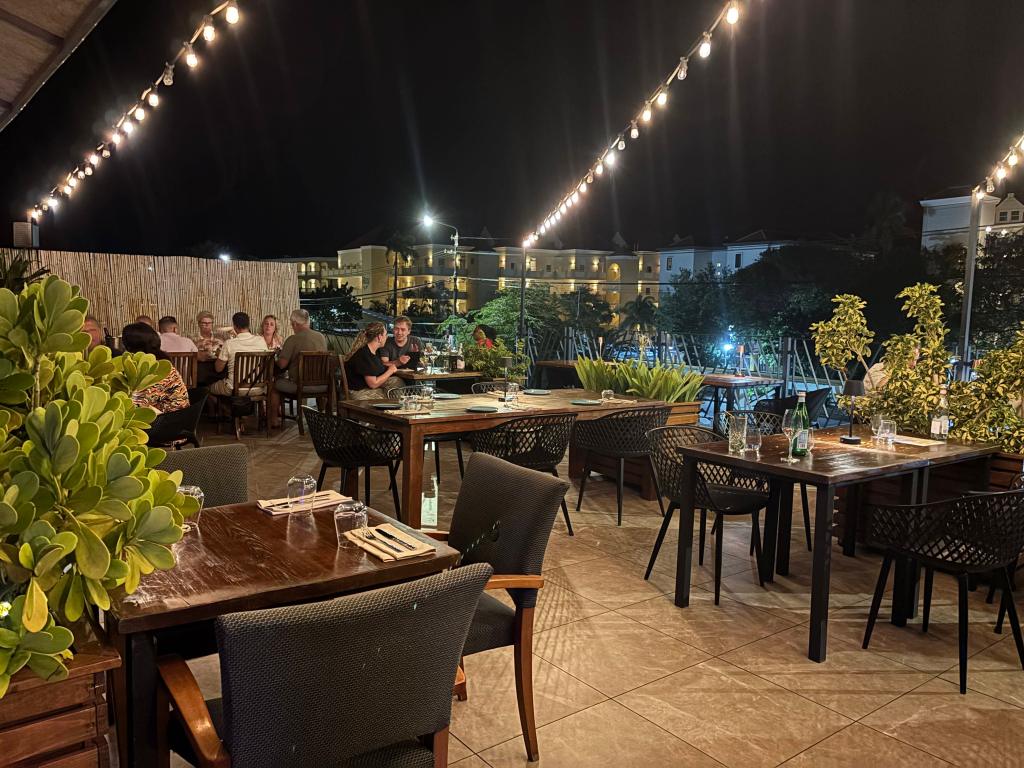
Dinner was served in the multi small sharing plates fashion we had grown to love here. And it did not disappoint.
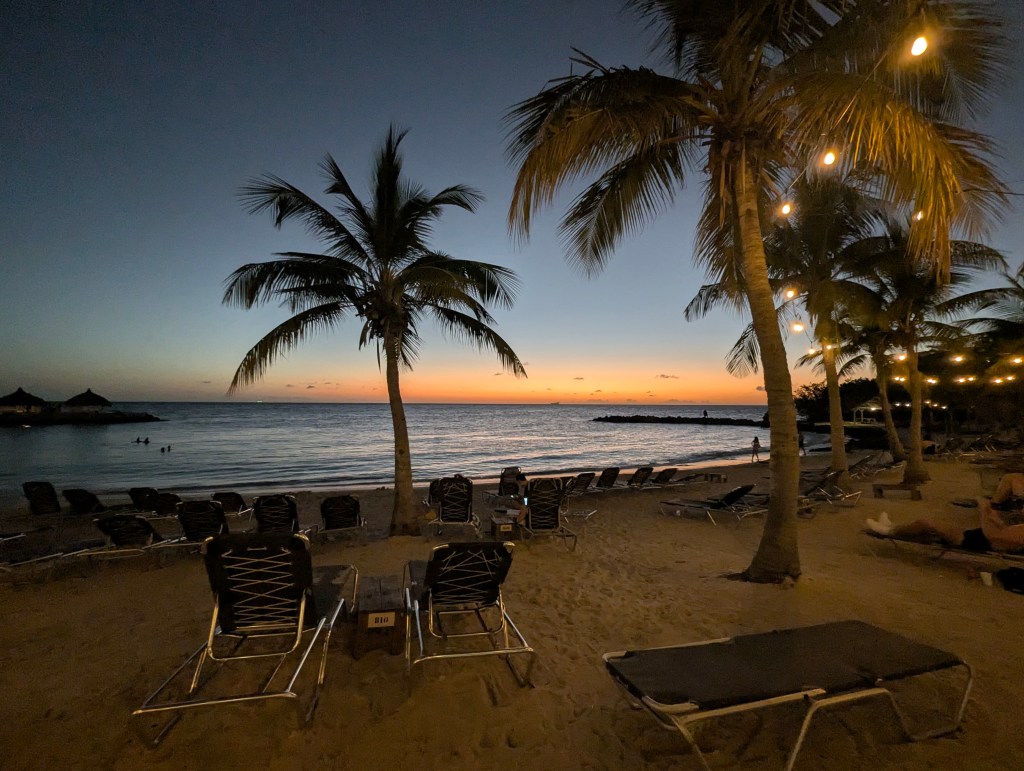
Once again it was time to say goodbye to a place we had grown to love.
 Jo & Eric's travels
Who knew there was so much to do in Curaçao.
LikeLike
As usual a thorough and informative narrative! Looks like a great few weeks!
LikeLike