
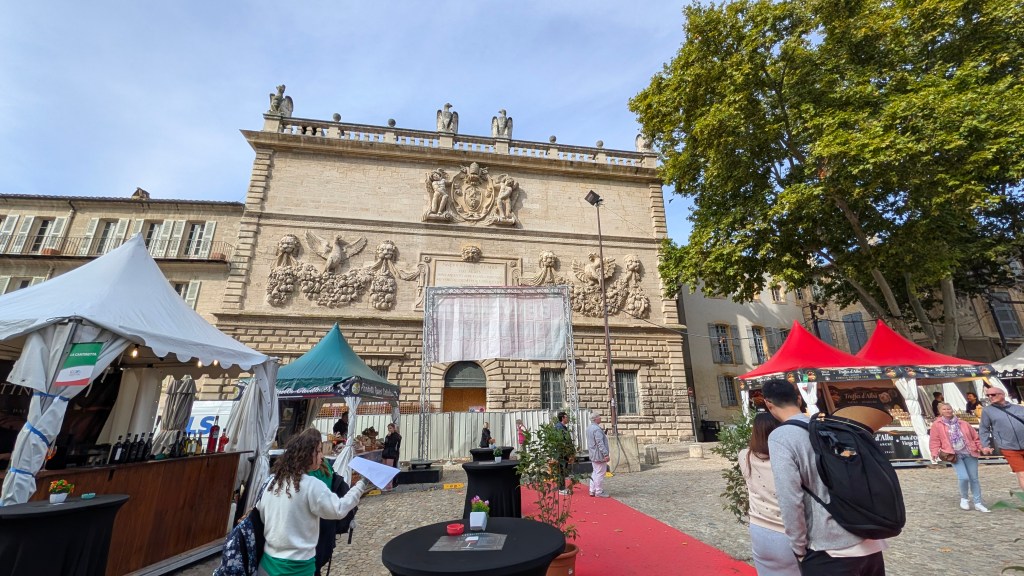
We left Arles early and headed east. On the way we stopped in Avignon, the “City of the Popes,” having served as the seat of the Catholic Church from 1309 to 1377. We parked near Place du Palais (Palace Square) a historic, lively square dominated by the 14th-century Palais des Papes (Popes’ Palace), the world’s largest Gothic palace. Once created by destroying homes to form a defensive “glacis” for the Popes, this UNESCO site is now a hub for cafes, tourists, and the famous Avignon Festival. We stopped for coffee before embarking on our tour of the city,
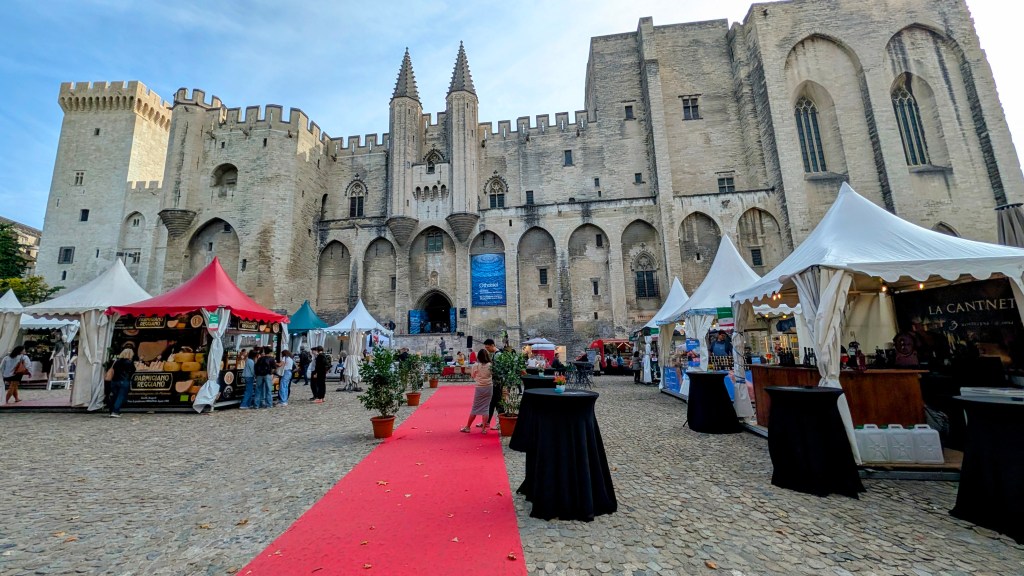
Because we were parked there and would return at the end of the day, we decided to hold off touring the inside of the huge palace for now and headed instead toward the cathedral.
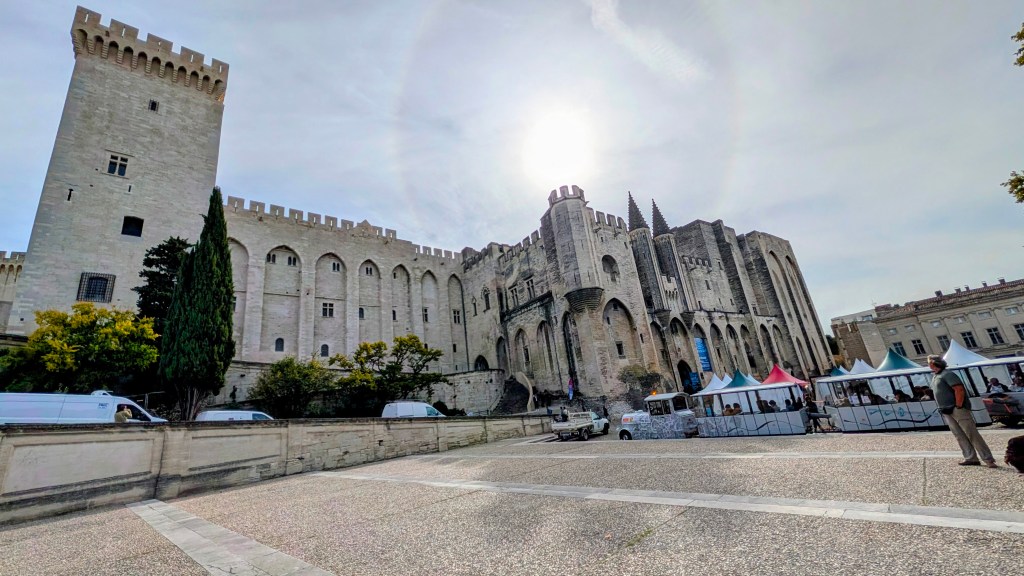
Near the Palace of the Popes, on the Palace Square, is the seat of the Archbishop of Avignon, Cathedrale Notre-Dame des Doms (Avignon Cathedral). Built and consecrated in 1111, it is believed the Cathedral is not the first church to occupy this spot. It is thought a basilica preceded it only to be destroyed by Saracen raiders in 731. There are different theories about the origin of the name of the church. It might be derived from domus episcopal, meaning “Bishop’s house”, or Rocher des Doms after the enormous rock that rears above the cathedral.
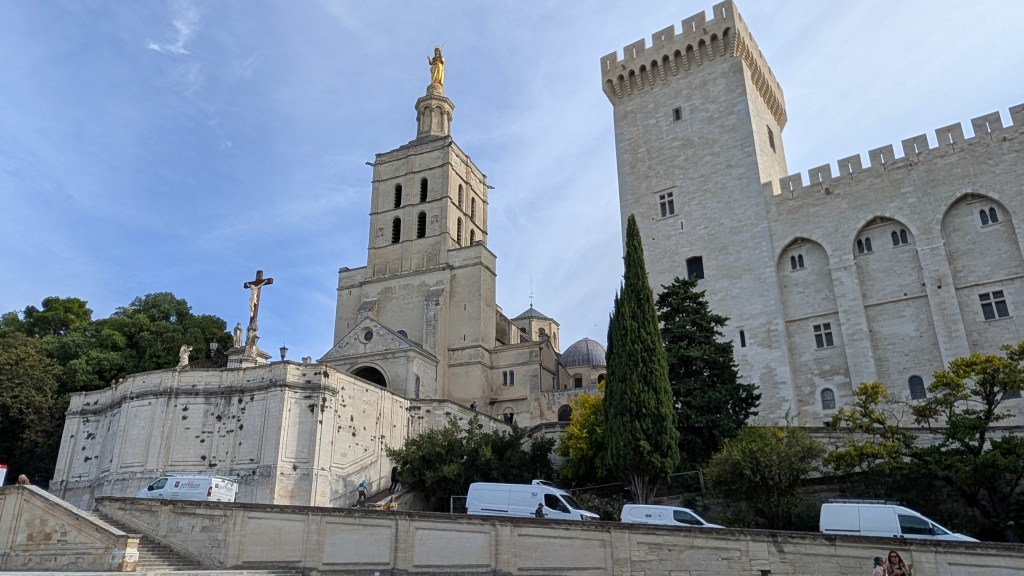
The style might be an architectural stew of mostly provencal Romanesque, mixed with Greek, Roman, Gothic and Baroque elements. Some inner chapels were added in the 14th century, during the time of Pope John XXII, second Pope of Avignon. The donated bells are a 35-strong carillon.
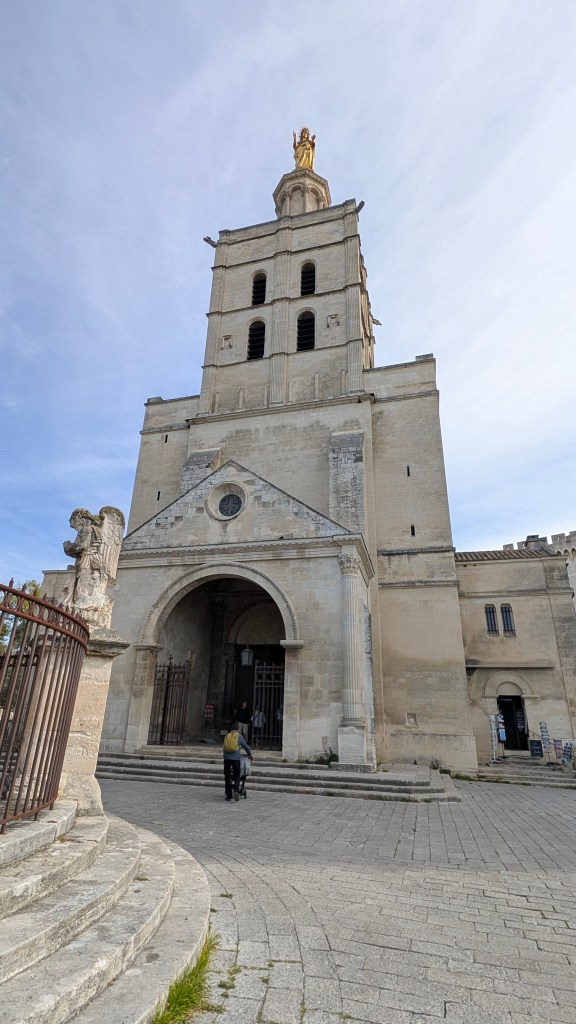
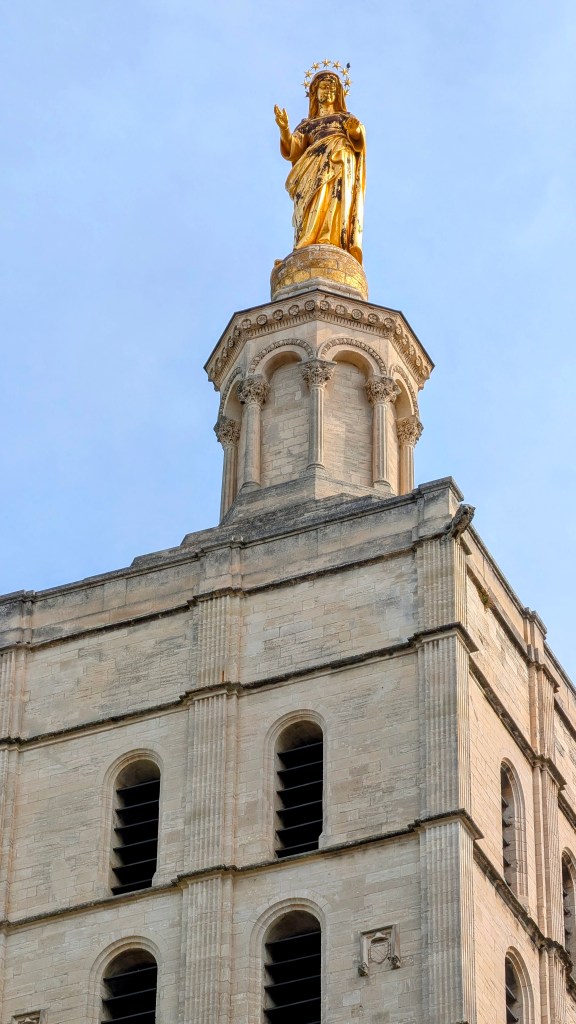
The cathedral has a great octagonal dome,
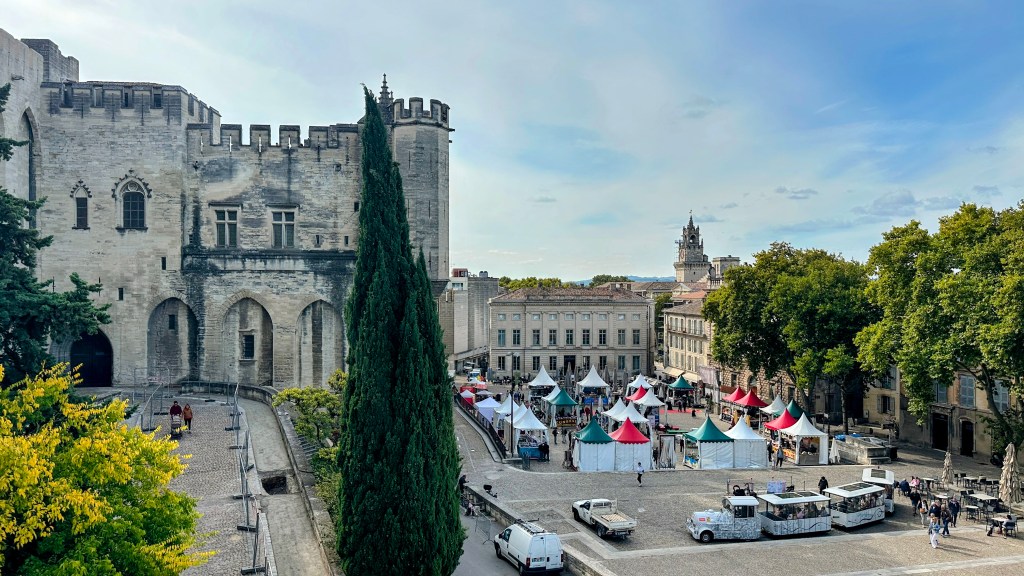
From the entrance of the cathedral is a great view of the Palace Square.
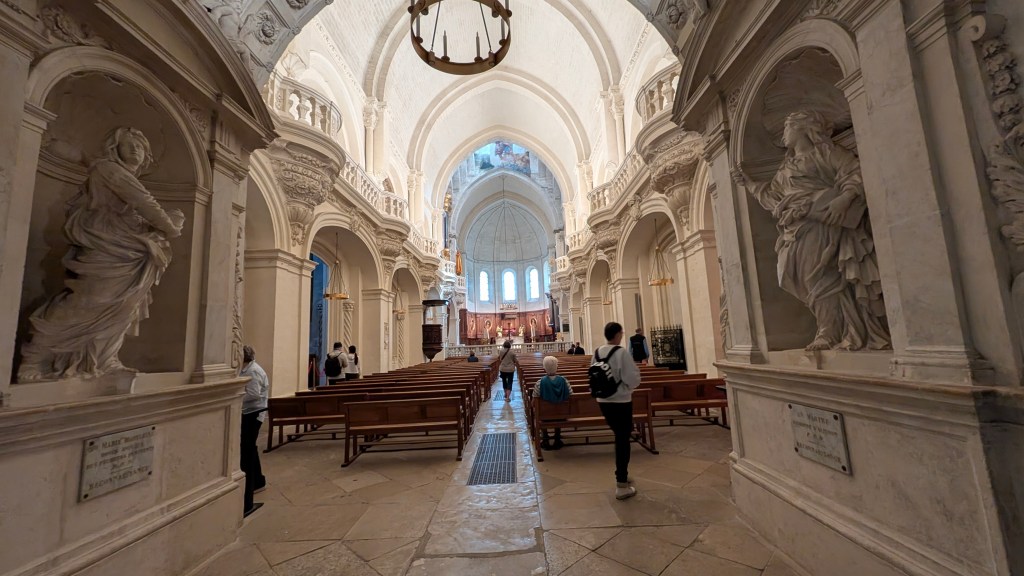
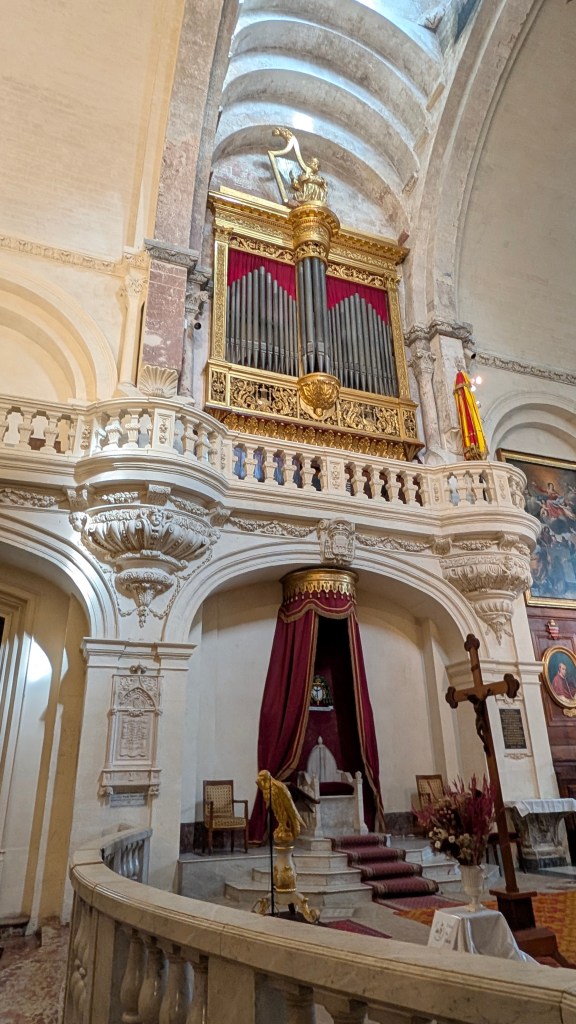
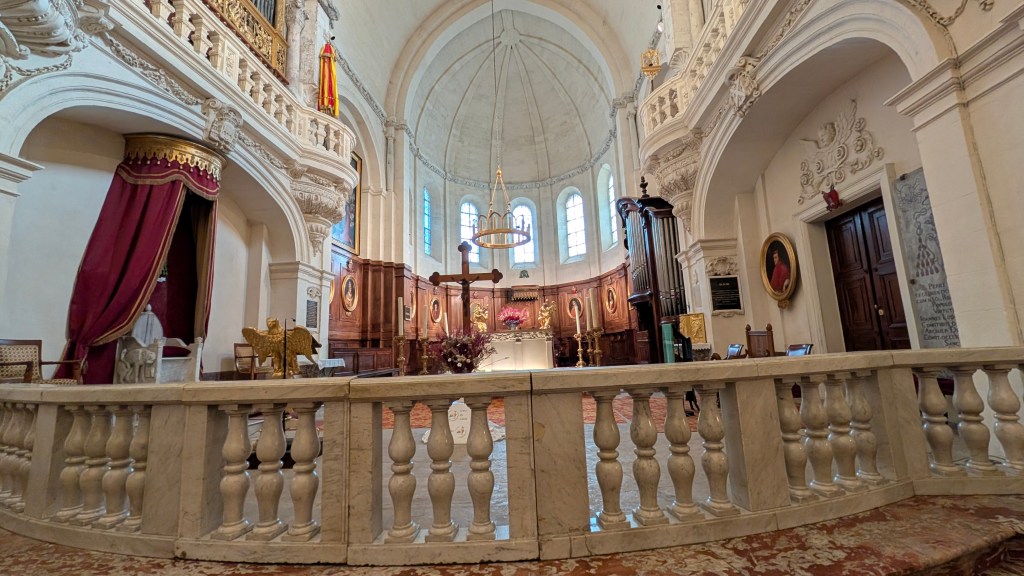
The interior of the cathedral has been somewhat recently restored appearing now clean and bright.
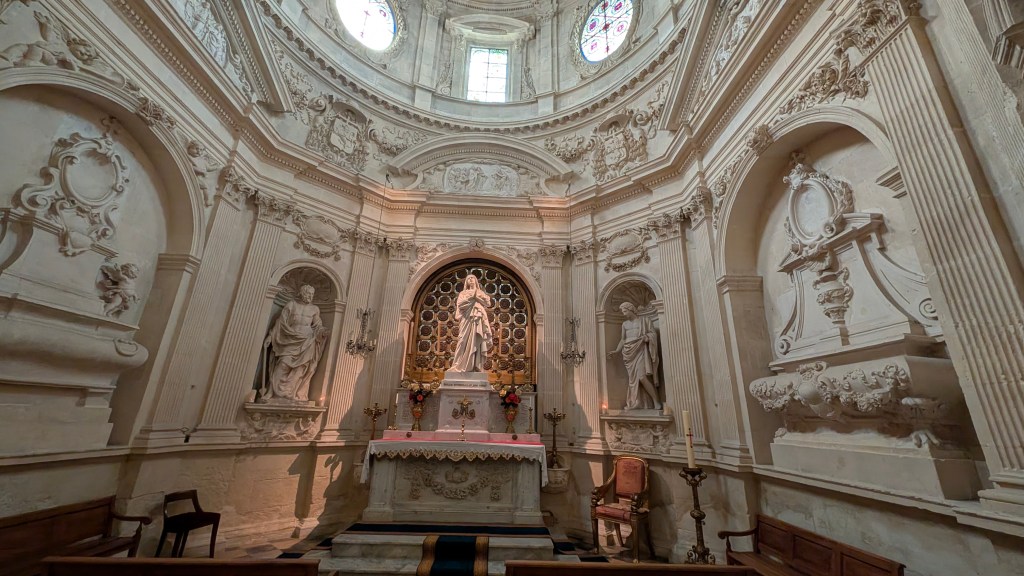
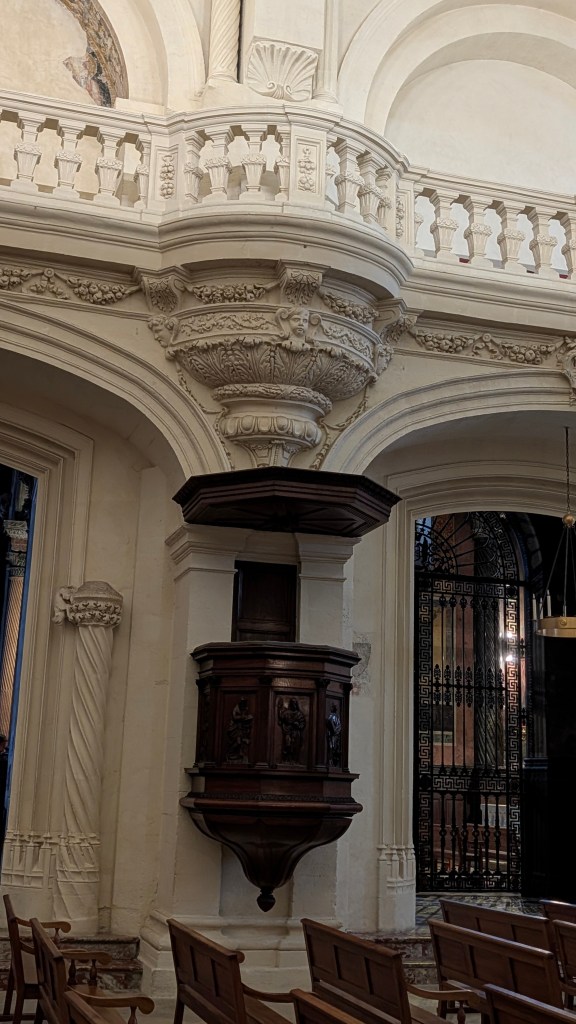
The marble papal throne dates from the 12th century. In the chapel of John XXII, there is collection of reliquaries and vestments.
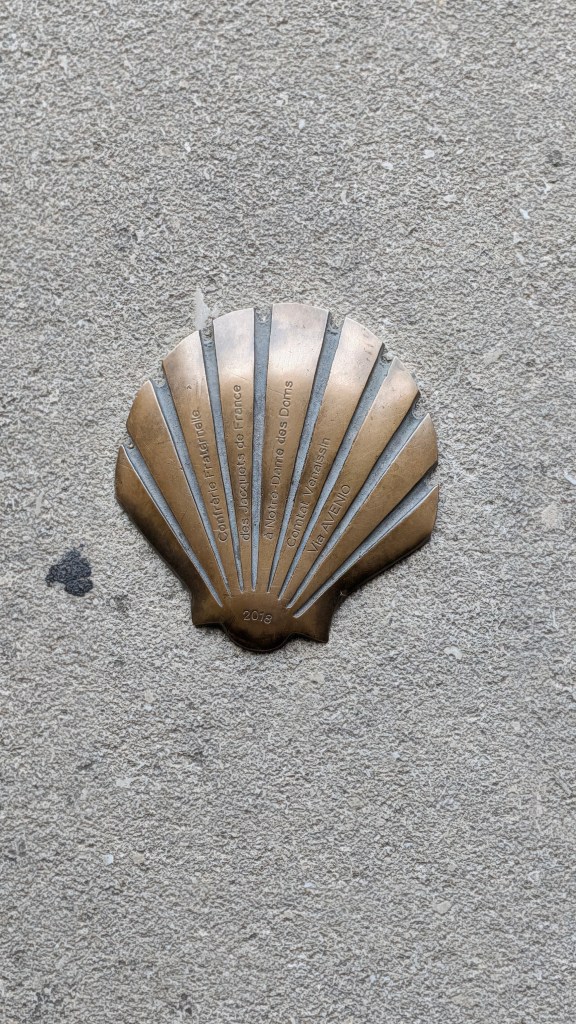
On our way out we noted the now familiar sign that we are on a Camino del Santiago route.
Just below the cathedral stands Musée du Petit Palais (Little Palace Museum). Housed in a 14th-century building, the museum showcases an exceptional collection of early Renaissance paintings and “primitives” from Italy, alongside works from the Avignon school.
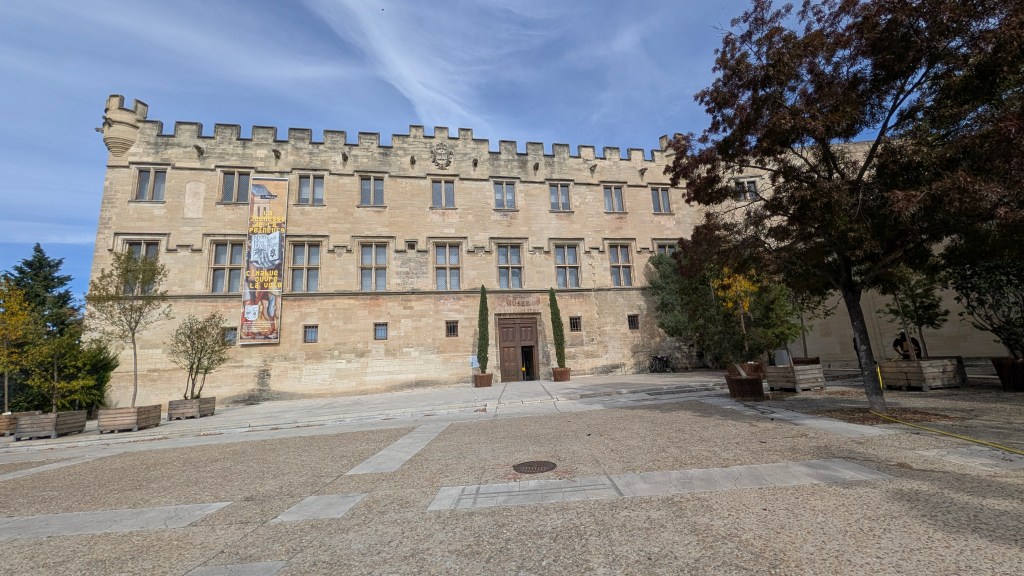
Over the centuries, the building’s role evolved significantly. Initially a fortified citadel during the Western Schism, it fell into disrepair by the early 15th century. Restoration in the late 15th century shaped much of its current form, but it was again affected by nationalization during the French Revolution. In the 19th century, it became a Catholic secondary school, and later a technical school after the 1904 church-state separation. Declared a historic monument in 1910, it underwent major restoration starting in 1961 under architect Jean Sonnier.
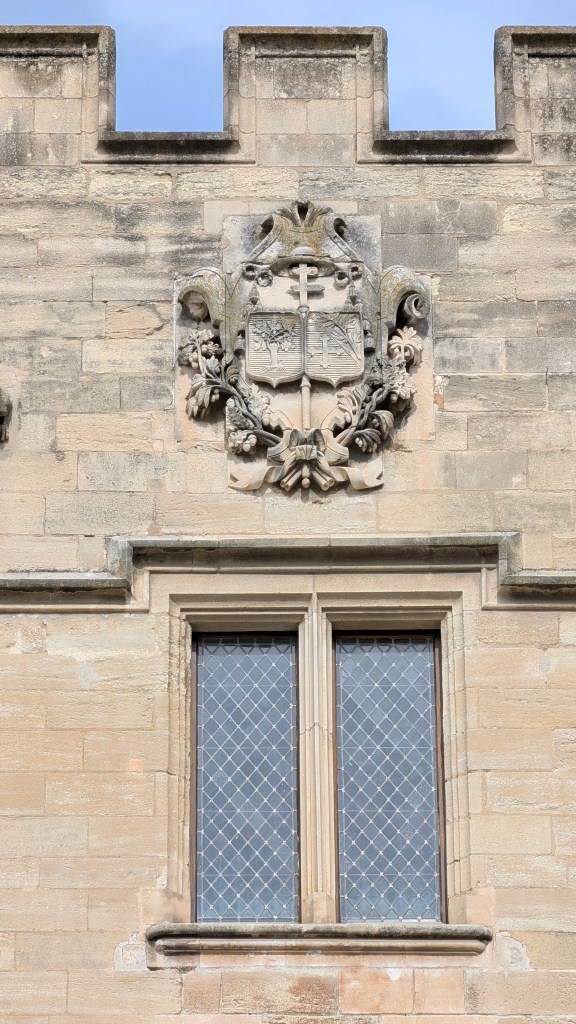
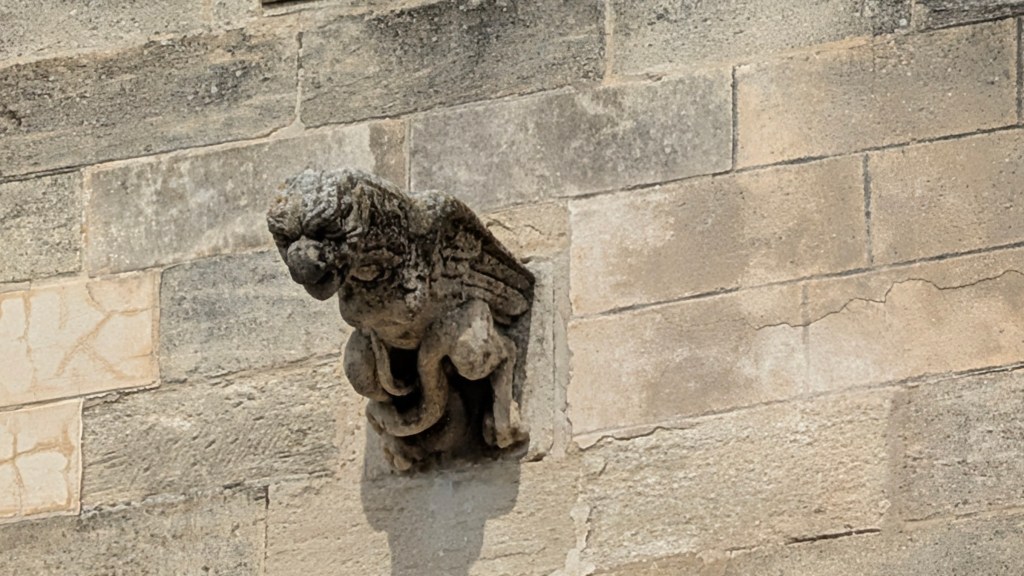
What looks like a gargoyle but does not function as a water drain is called a grotesque.
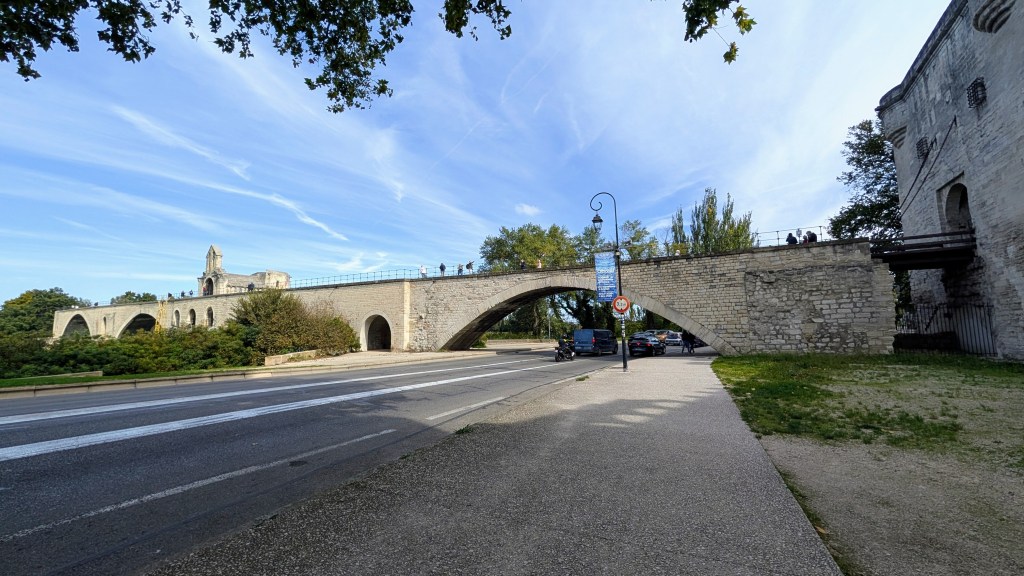
The song goes… “On the bridge of Avignon Everyone is dancing On the bridge of Avignon Everyone dances in a ring” But, actually they danced below the bridge, not on it. The bridge referred to in the song, Le Pont d’Avignon is actually Pont Saint Benezet. Saint Benezet (1165-1184) was an illiterate shepherd who became the patron saint of bridge builders.
In 1177 Benezet told the bishop he had had a vision wherein he was told by angels to build a stone bridge across the Rhone. The bridge was to be at a point where the force of the river was greatest. The bishop, not wanting to defy Heaven, approved the project and work began. Benezet’s holy mission was confirmed by no less than 18 miracles of healing.
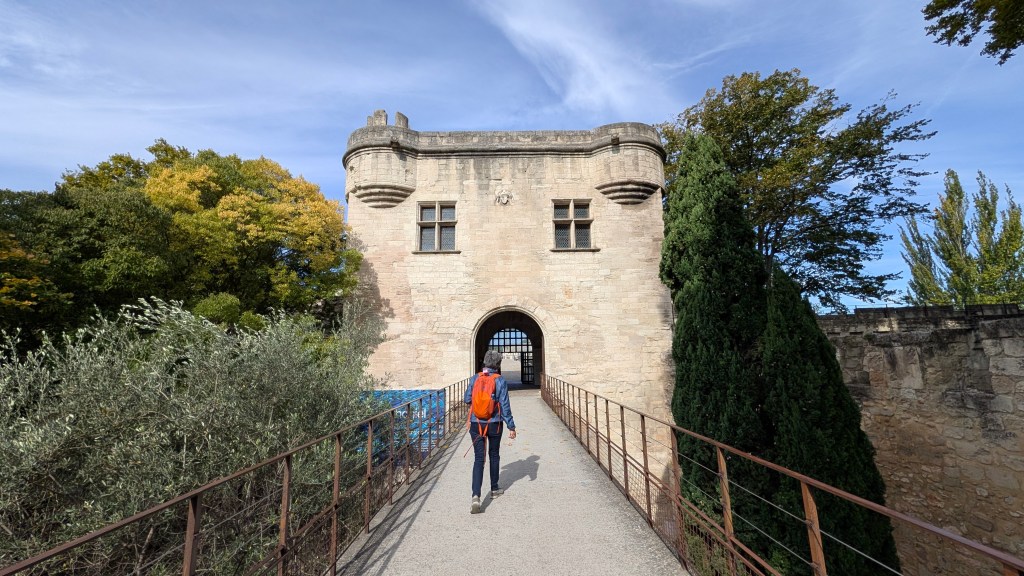
Originally, it was 900 meters long, featured 22 arches, and connected Avignon to Villeneuve-lès-Avignon. It was once a crucial, narrow (only 4 meters wide) route for pilgrims, traders, and the Papal court in the 14th century.
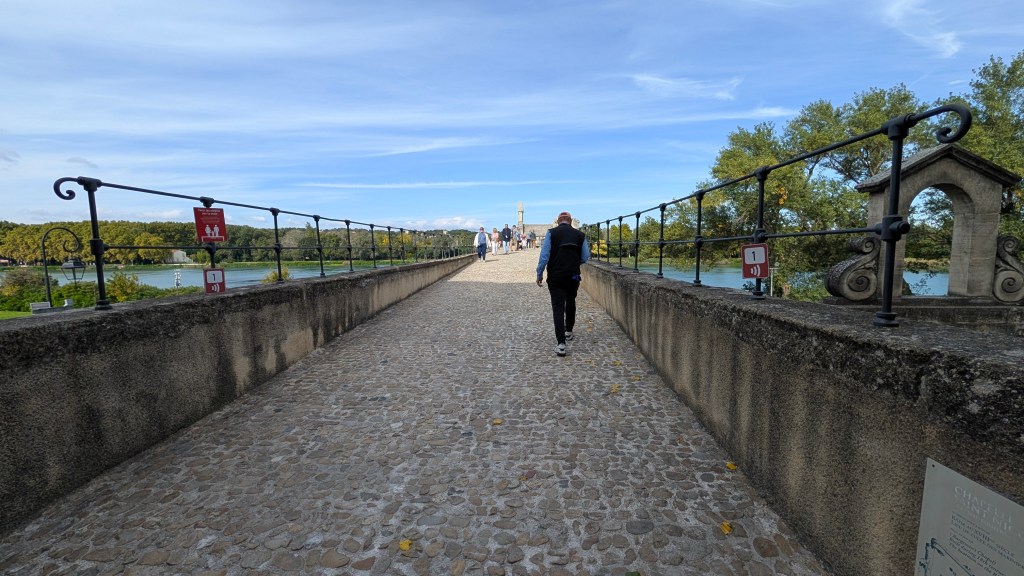
The stone bridge that replaced Benezet’s damaged bridge in 1234 had 22 arches and 21 piers and was 980 yards long. The arches were low and were liable to collapse when the river ran too high. After repeated destruction by the Rhône’s currents and floods, maintenance was deemed too costly, and it was abandoned in the 17th century.
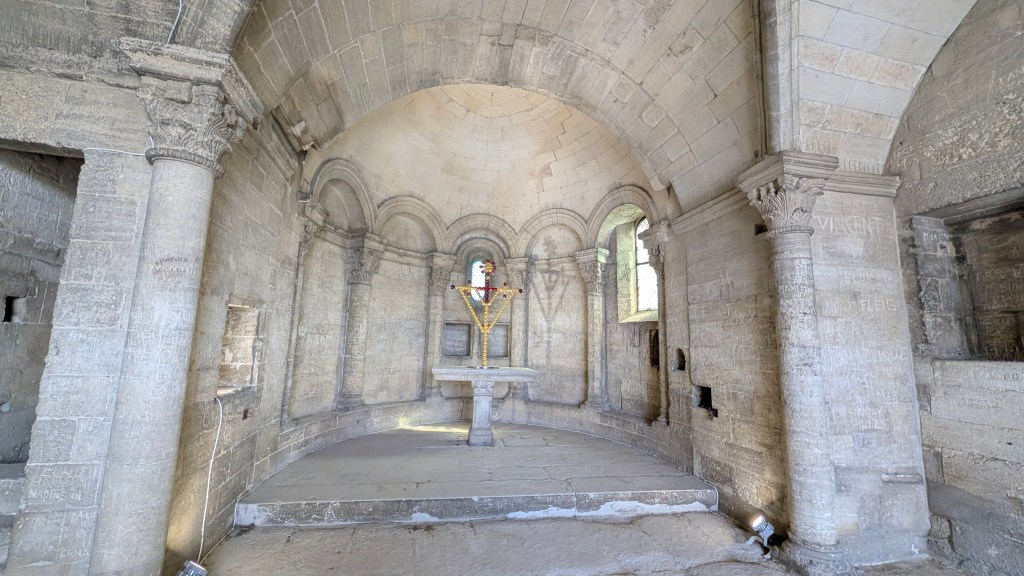
Only one chapel, Saint Nicholas Chapel, and four arches remain of the bridge. Inside were art installations by French artist Jean-Michel Othoniel, more from him later.
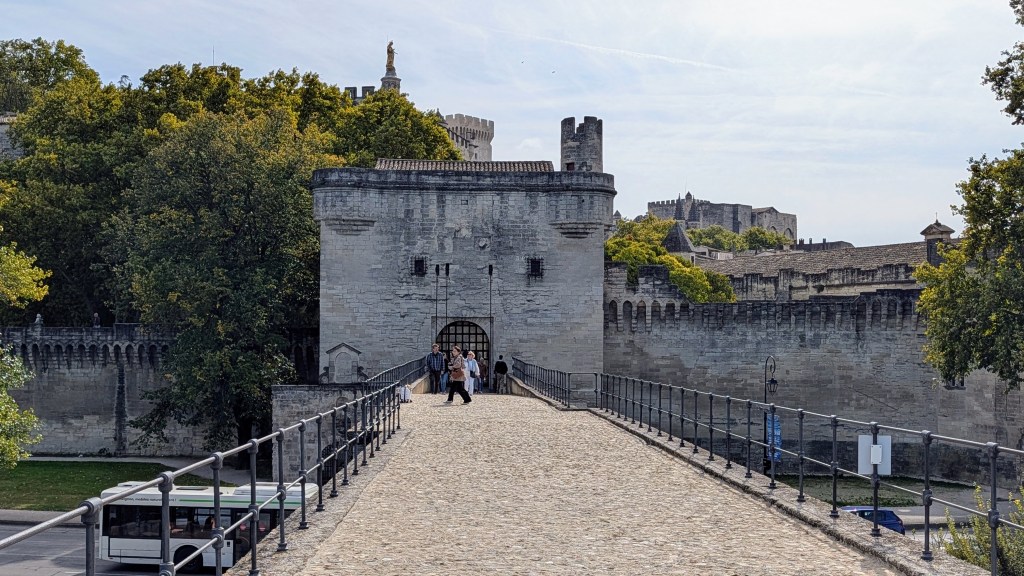
From the bridge a portion of the The Ramparts of Avignon, 2.8 miles of intact 14th-century medieval ramparts surrounding the city, can be seen.
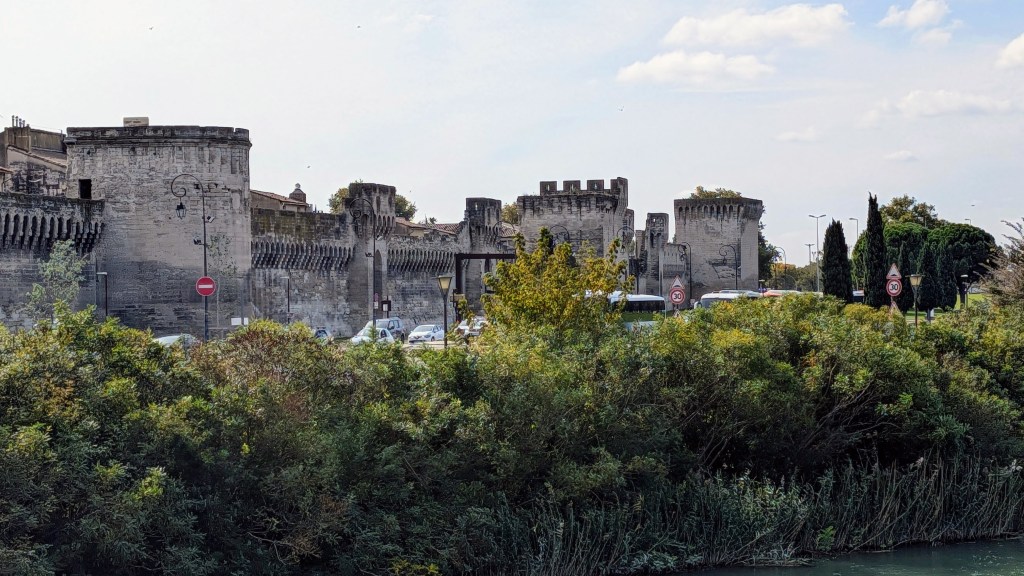
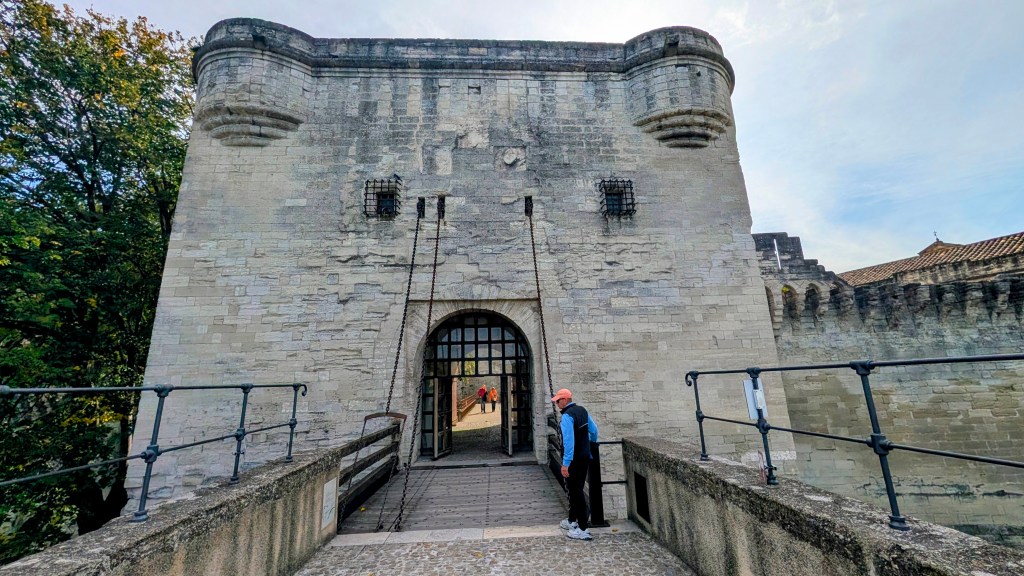
The bridge had a protective drawbridge preventing intruders from entering the city.
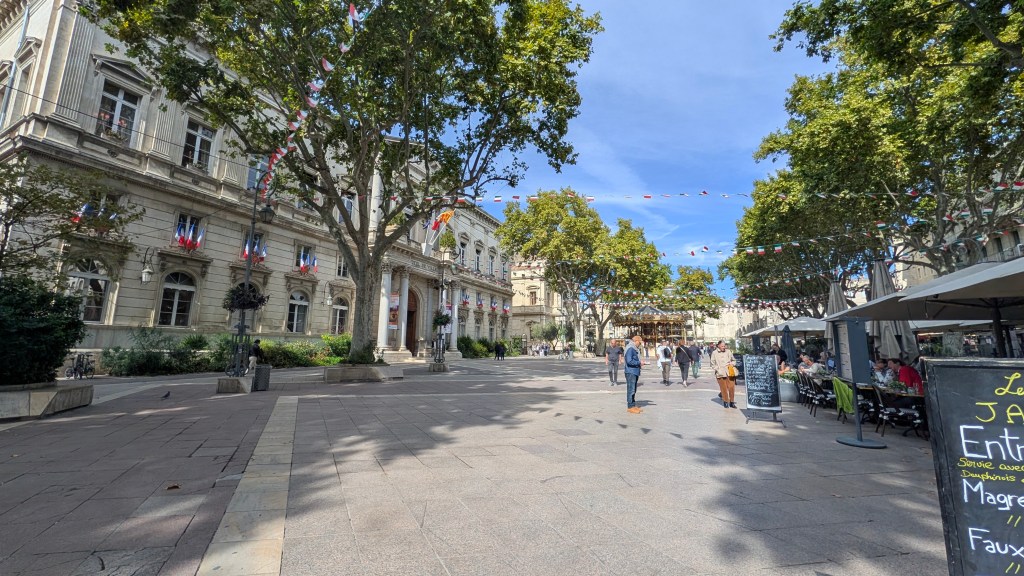
We reentered the gates of the city and made our way to Place de l’Horloge (Clock Square). At its center is the monumental clock which gives the square its name, but cannot actually be seen from the square. The square is possibly the busiest in Avignon. Cafes and restaurants are frequently overflowing. Street artists emerge with their easels around the square. The Roman forum of Avenio was located where the Clock Square is today. During the 12th and 13th centuries it was known as the Square of the Butchers. This was the place where butchers set up shop on market days. It was partially occupied by the convent of Saint-Laurent, the oldest convent in the city.
In the center of the square is Hôtel de Ville (Town Hall), designed by architect Léon Feuchères and completed in 1846, replacing an earlier structure. It serves as the municipal headquarters for the city of Avignon in the Provence region of southern France.
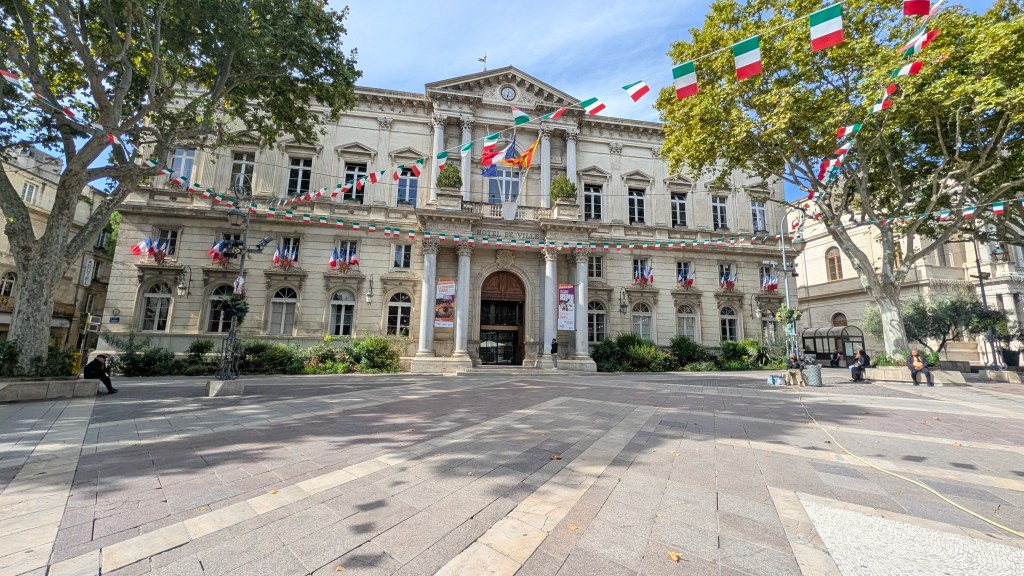
Hôtel de Ville has stood in the heart of the city since the 14th century. Originally serving a different civic function, the building’s tower operated as a belfry before it was transformed into a town hall in the 19th century. This transformation was guided by designs from Joseph-Auguste Joffry, who enhanced the building’s façade with elegant Corinthian columns, a balcony, and a peristyle, reflecting a Classical architectural style, which includes a clock, but not the one for which the square is named.
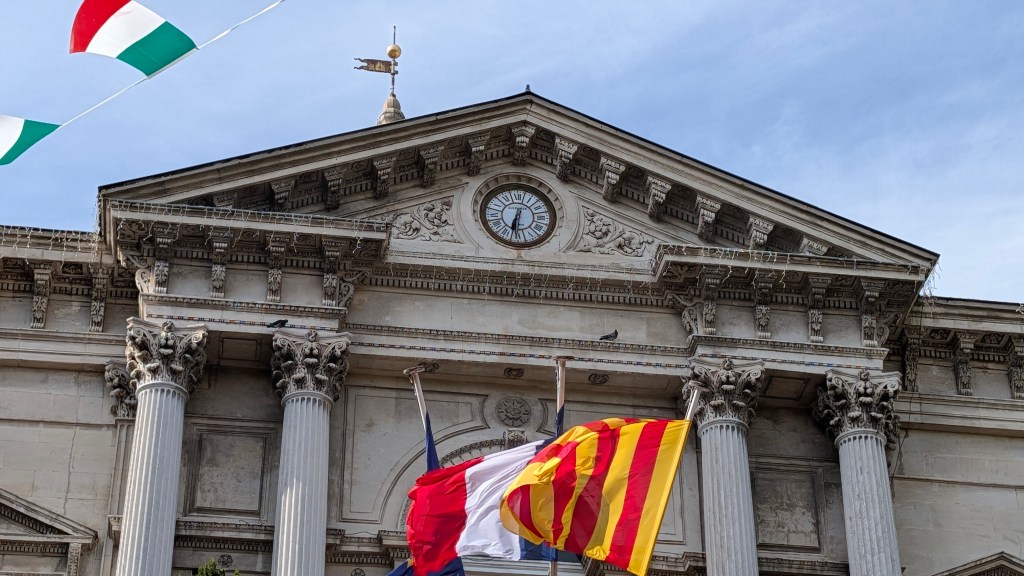
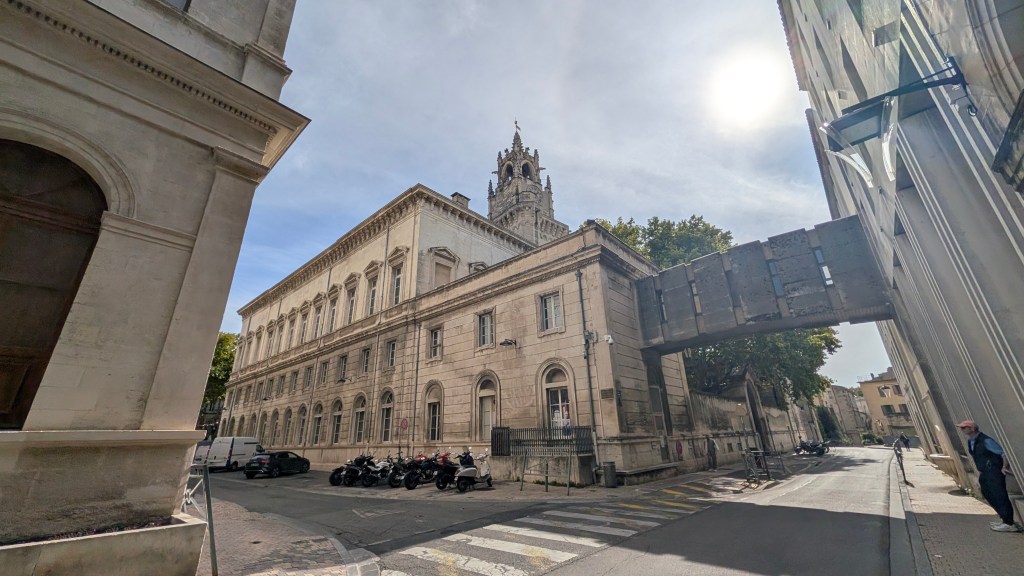
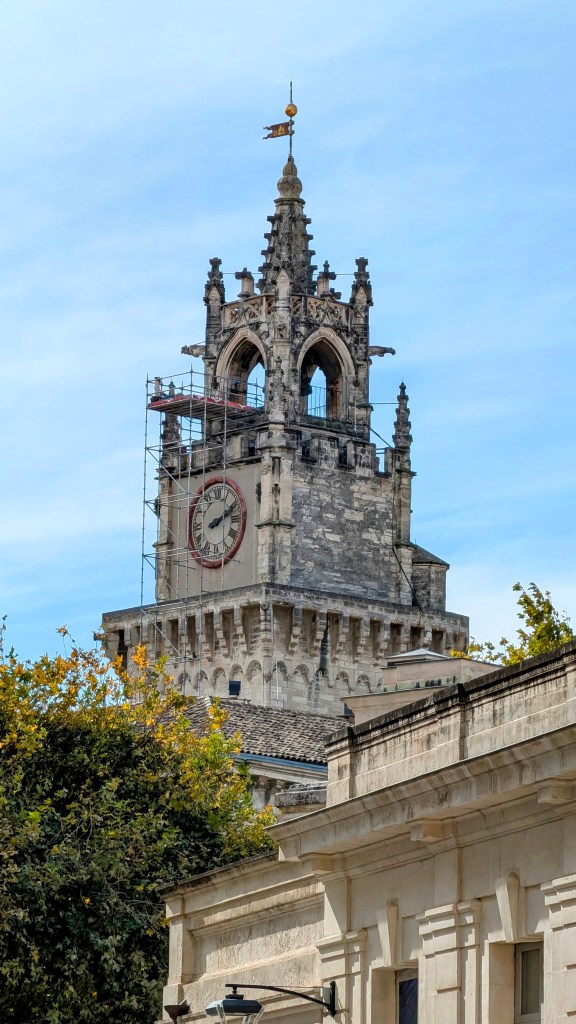
To see the clock in the tower, which dates back to the 15th century, we had to walk around the building.
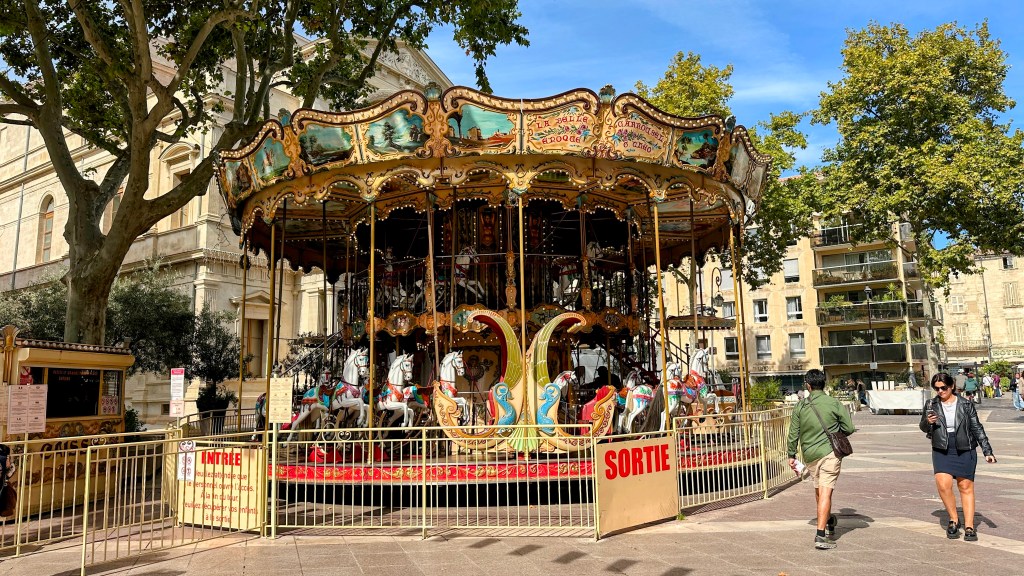
On one end of the square we found a carousel. The French clearly like to keep their kids entertained.
On the ground in the center of Place de l’Horloge is a mosaic of the coat of arms for the city of Avignon featuring keys and flanked by eagles.
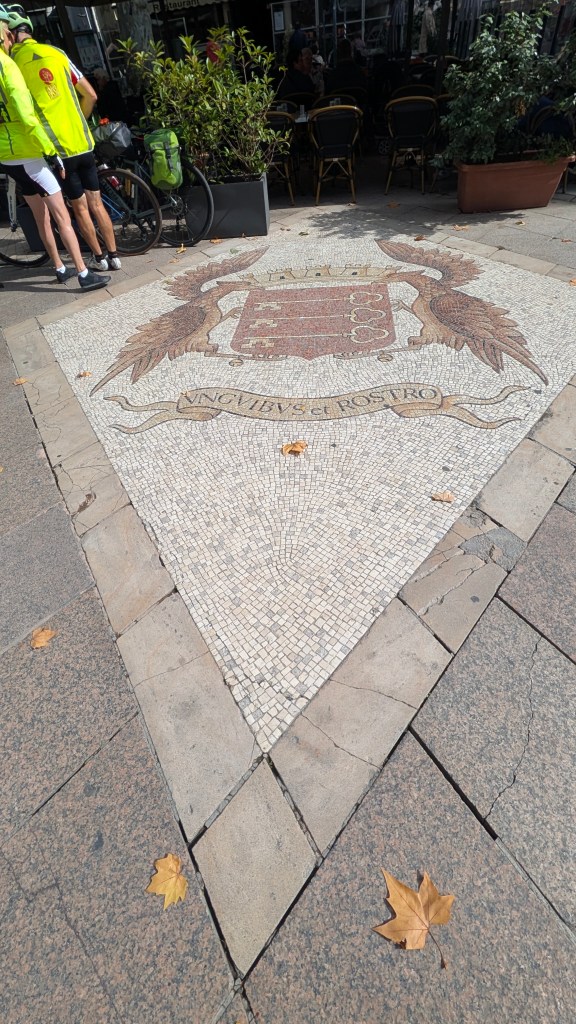
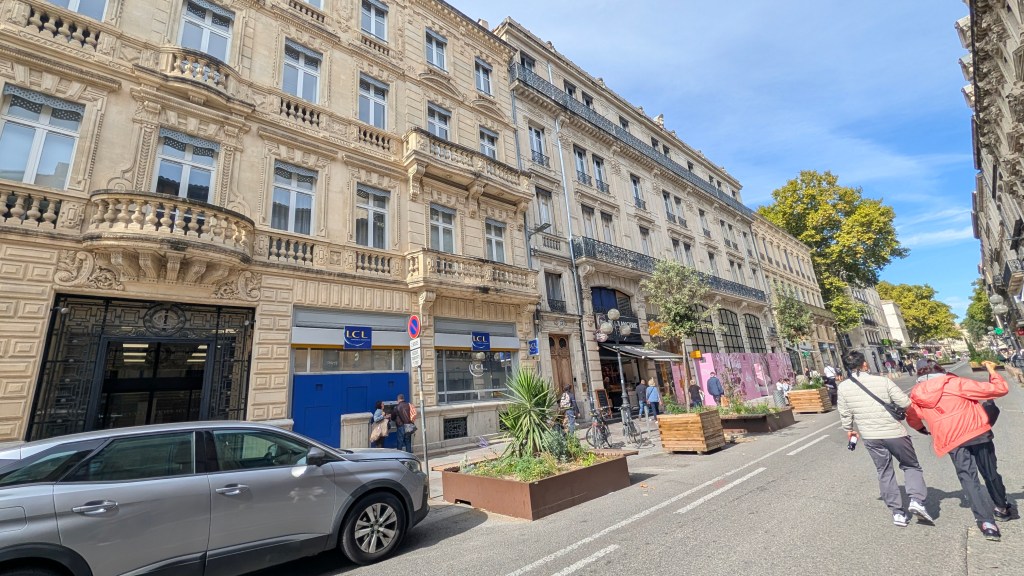
Rue de la Republique (Republic Street) Republic Street is a prominent quarter mile street in the heart of the city, running from the Clock Square (Place de l’Horloge) to Cours Jean Jaurè, the administrative hub of the city.
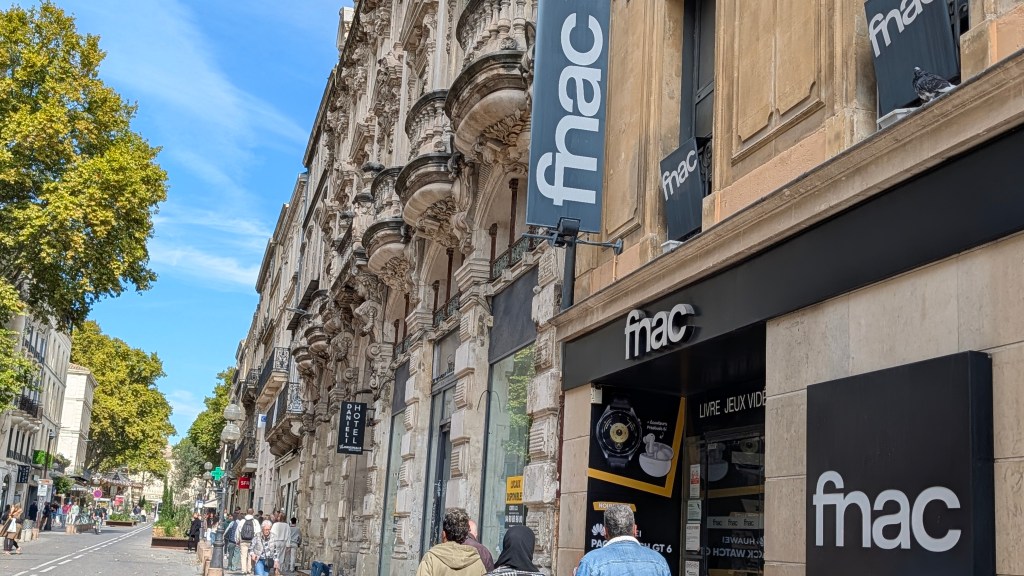
The street’s construction took place in three phases between 1856 and 1867, led by Paul Pamard’s municipality. The first phase (1856-1857) extended from the railway station to Joseph-Vernet Street, elevated to prevent flooding. The second phase (1859-1863) stretched to the Chapel of the Lycée. The final phase, completed in 1867, connected the chapel to Clock Square. Along the way are several historic buildings with interesting architecture.
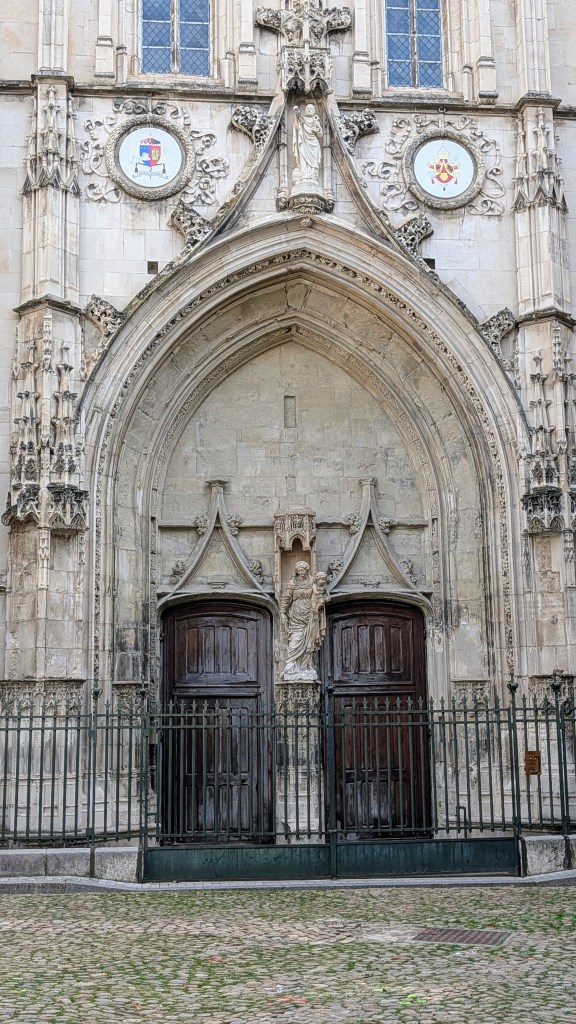
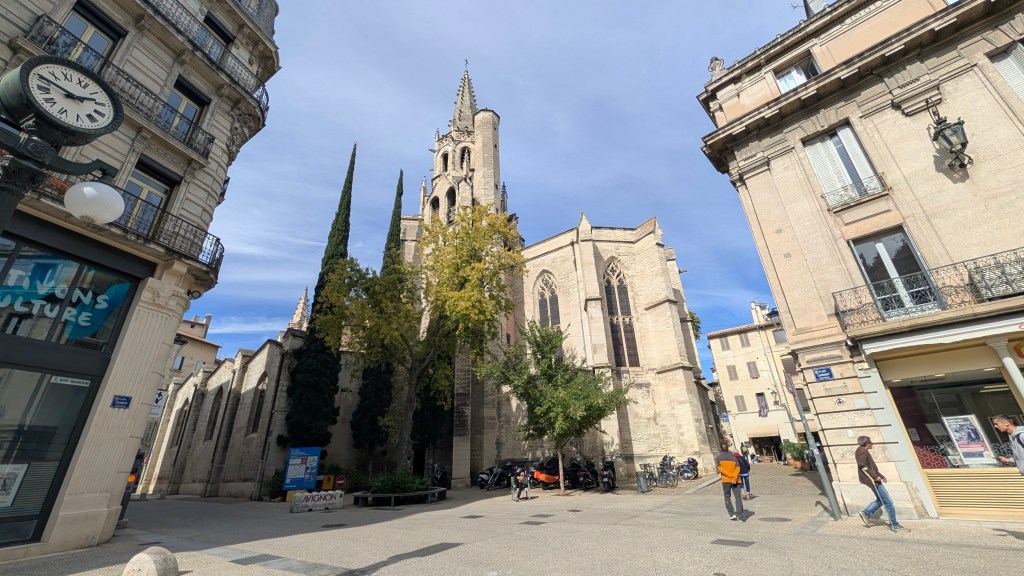
Built in 1385 with a donation from the Cardinal Pierre de Pres, Église Saint-Pierre (St. Peter’s Church) is in the very center of town, near the Aubanel printing museum, on the cobbled Saint Pierre Square. Here is a perfect example of flamboyant Provencal Gothic architecture. There are six side chapels added in the 15th and 16th centuries. The building’s foundation dates back to the seventh century. An Octagonal bell tower surmounts the church.
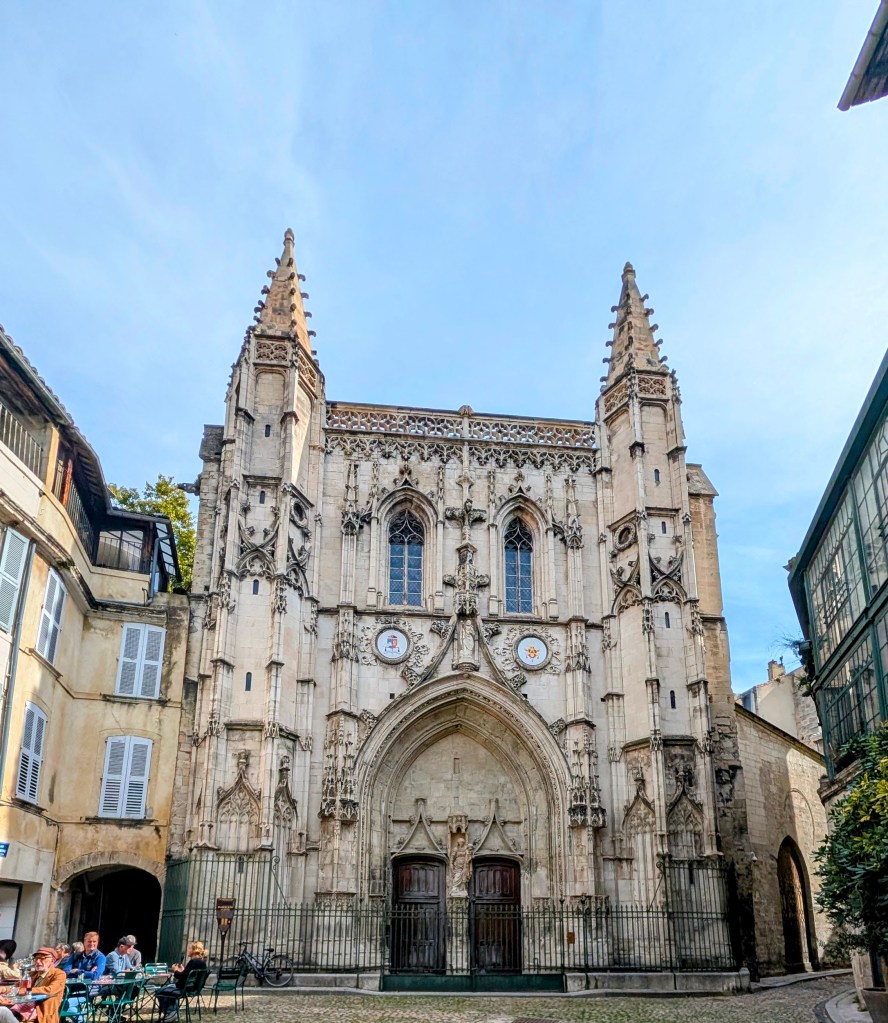
The original renaissance walnut doors are 13 feet high with carvings by Antoine Volard.
We had trouble finding the entrance and walked around the back only to be surprised at how much larger it is than first appeared from the front.
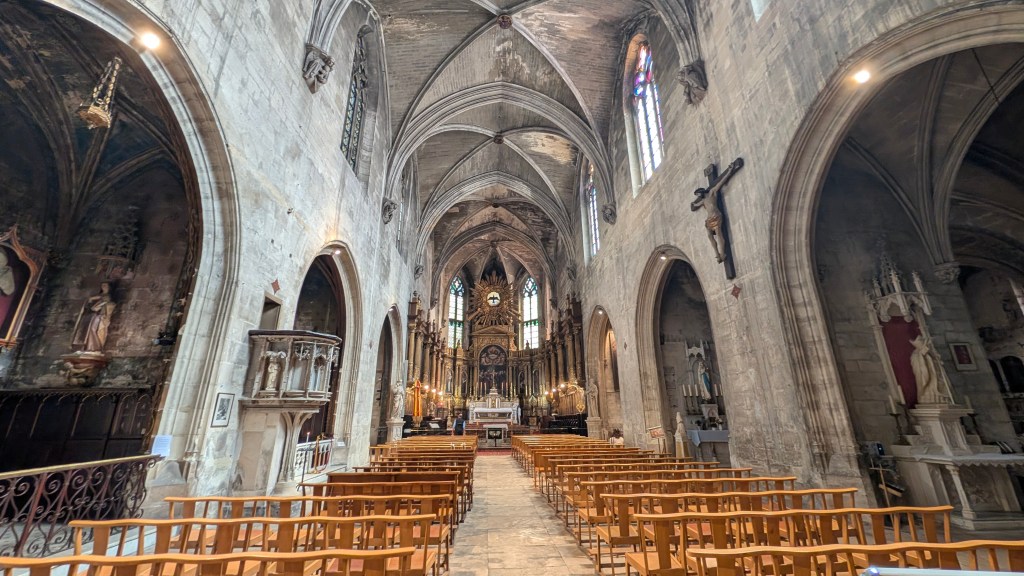
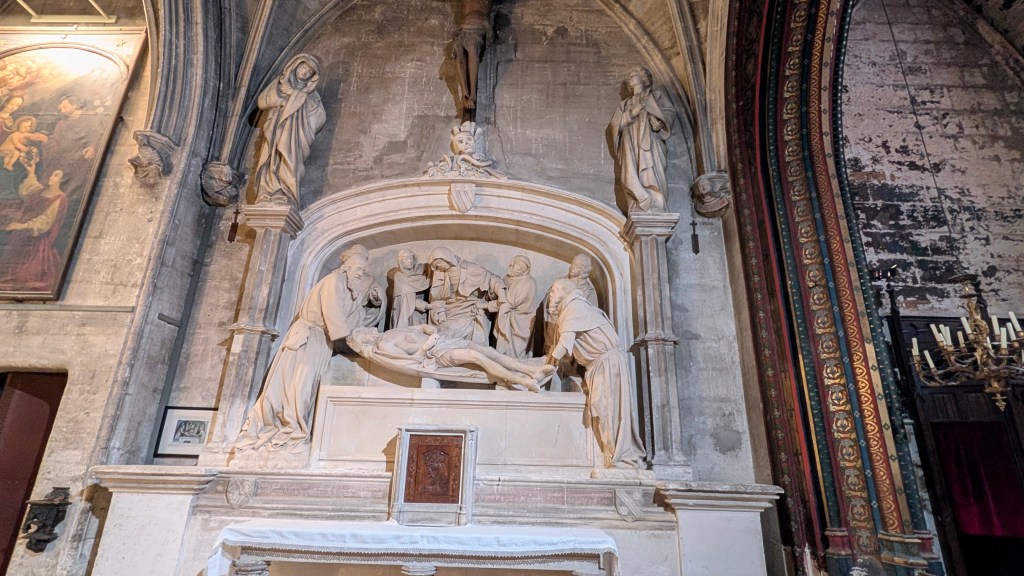
The interior of the basilica does not disappoint. It has a multitude of painted vaults, gilded balconies for the choir, renaissance paintings,
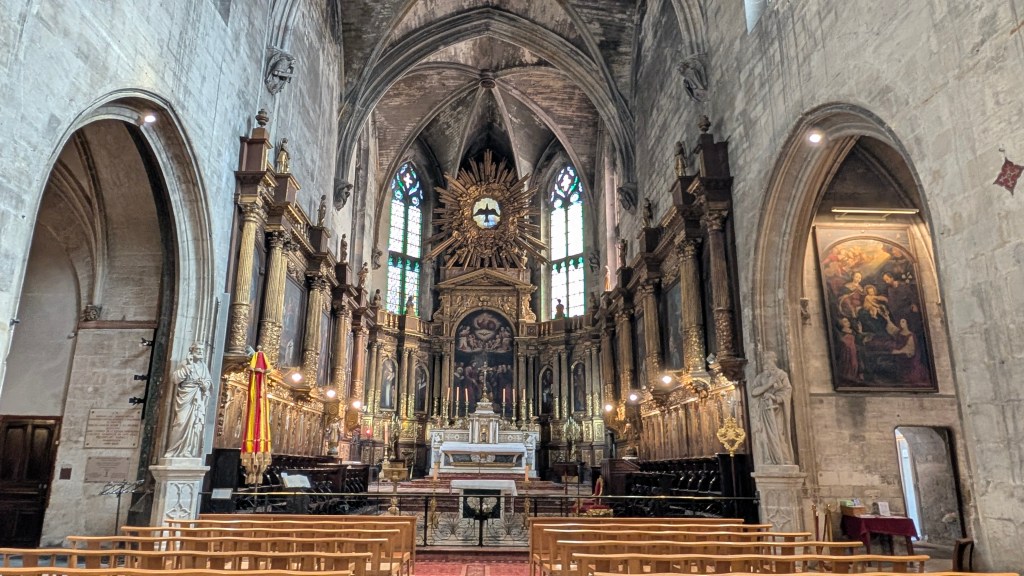
and a stone altar with an altar piece by Umberto Boccioni. The original vestments and hat of Cardinal de Pres hang in a glass covered cabinet on the wall. They carry their age very well
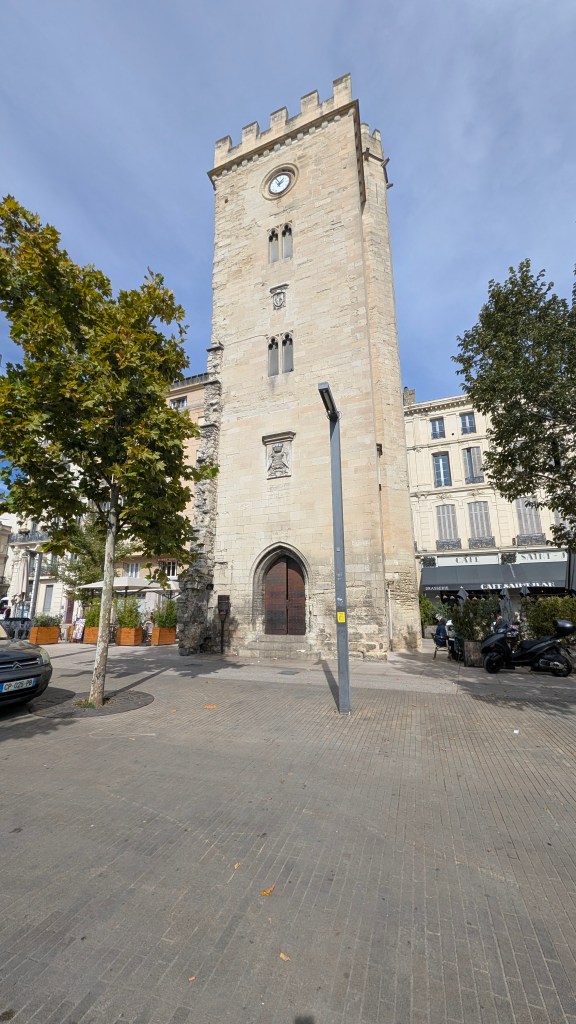
Tour Saint-Jean is situated at Place Pie in the historic center of Avignon. Constructed in the 14th century, the tower originally served as part of the city’s defensive walls. It is a stone tower featuring a clock near the top and Gothic-style window openings.
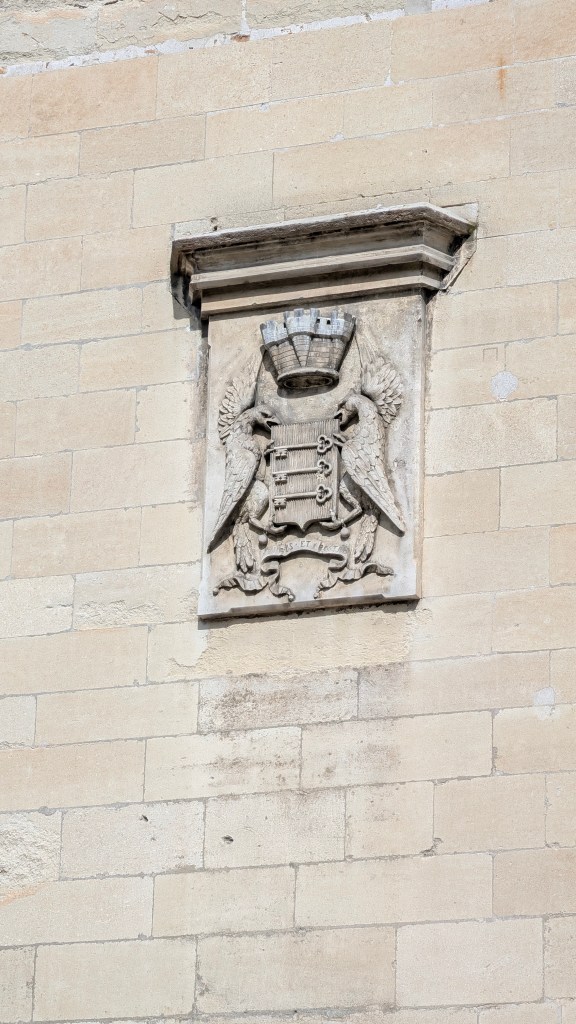
On its façade is the city coat of arms.
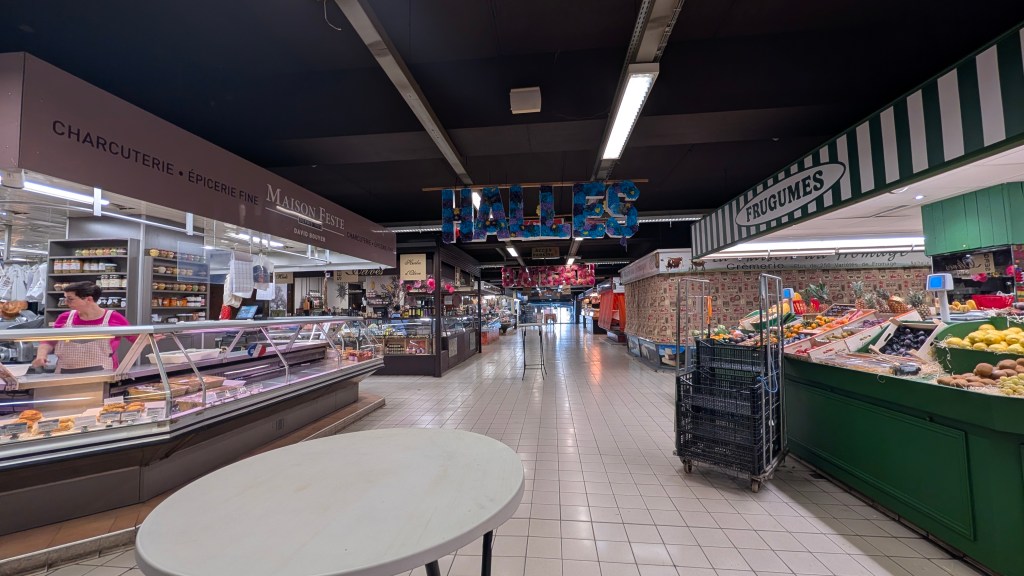
Nearby on Pie Square is Les Halles d’Avignon (Avignon Market Halls), a vibrant marketplace that has become synonymous with the city’s gastronomic culture. The origins of Market Halls trace back to the 16th century when the land, once owned by a man executed as a heretic, was designated for a covered market. Though construction was slow, the market hall was eventually completed in 1624, featuring not just shops but also a guardhouse and a chapel. Over the centuries, the market evolved, with major redevelopment projects taking place in the 19th and 20th centuries. Throughout its history, Market Halls has undergone numerous changes, including a roof redesign in the 1920s and various structural modernizations in the mid-20th century, adapting to the shifting commercial landscape with the advent of supermarkets and the subsequent need for downtown revitalization. A unique feature of Market Halls is the impressive 600 square meters green wall on the north façade, designed by botanist Patrick Blanc, which adds to the market’s distinct allure and serves as a significant city attraction.
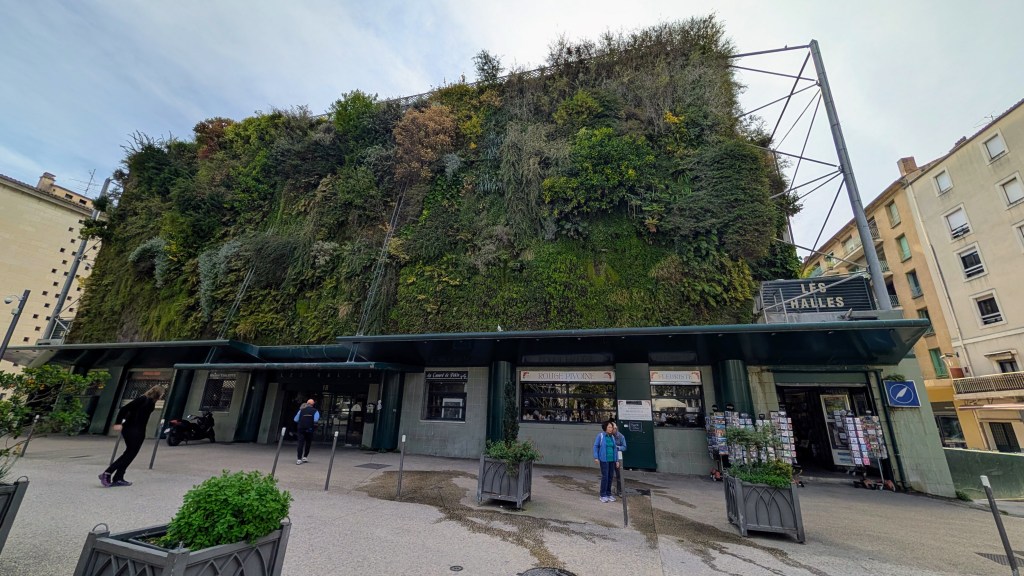
This covered market hosts around fifty traders offering a diverse range of high quality products including bread, cheese, fruits, vegetables, poultry, pastries, delicatessen items, shellfish, flowers, and both organic and exotic goods. Renowned authors like Peter Mayle and Jean Viard have celebrated the market, solidifying its reputation as a culinary hotspot. Today, Avignon Market Halls is not just a market but a lively community hub where, every Saturday since 2006, chefs and artisans from Greater Avignon engage with visitors through live cooking demonstrations using fresh ingredients from the market. This tradition not only highlights the rich culinary heritage of Avignon but also offers a hands-on experience for food enthusiasts looking to learn and share in the artistry of local cuisine.
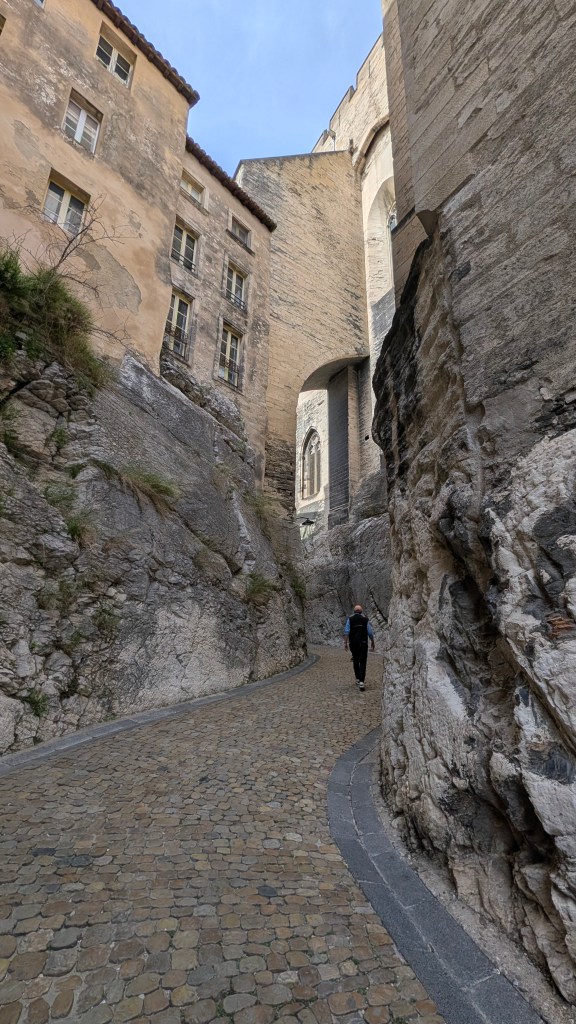
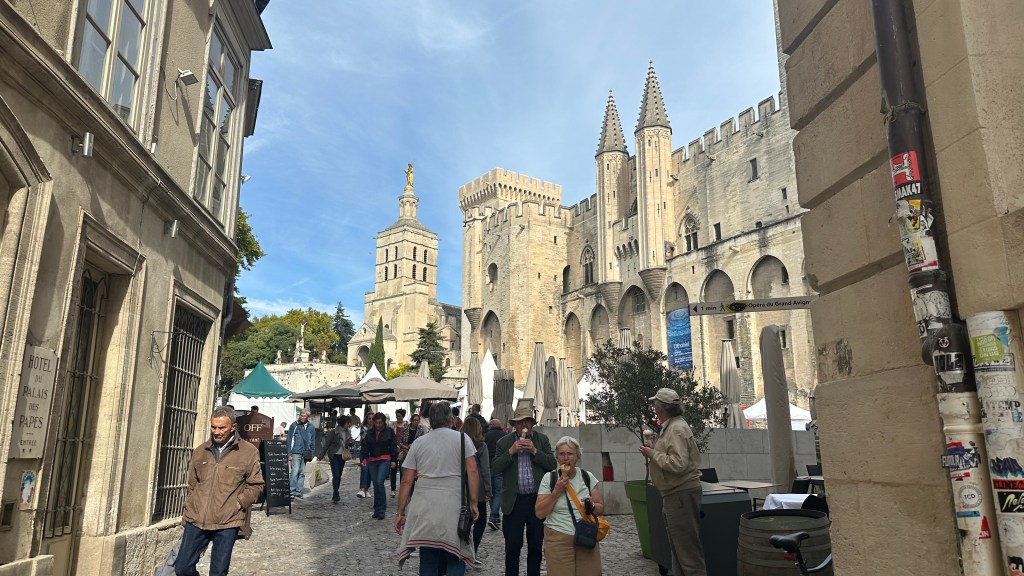
After lunch in a cafe in Place de l’Horloge we made our way back to the Palace of the Popes through the narrow winding streets of Avignon.
The Palace of the Popes is one of the largest, if not the largest, medieval Gothic structures in Europe. The popes fled to Avignon in 1309 because Rome had become too dangerous due to political unrest and violent conflicts. The construct served well as a fortress, palace, and papal residence throughout the 14th century, during the Catholic schism (during which there were two popes: one in Italy, one in France) and the “Babylonian Captivity” of the Papacy. Six papal conclaves and seven Popes were maintained in the palace.
The palace is actually two buildings joined together. There is the old palace of Benedict II, firmly ensconced on the rock of the Doms, and the new palace of Clement VI. Clement was known to be the biggest spendthrift of the Popes of Avignon. The palace is probably the best example of International Gothic style.
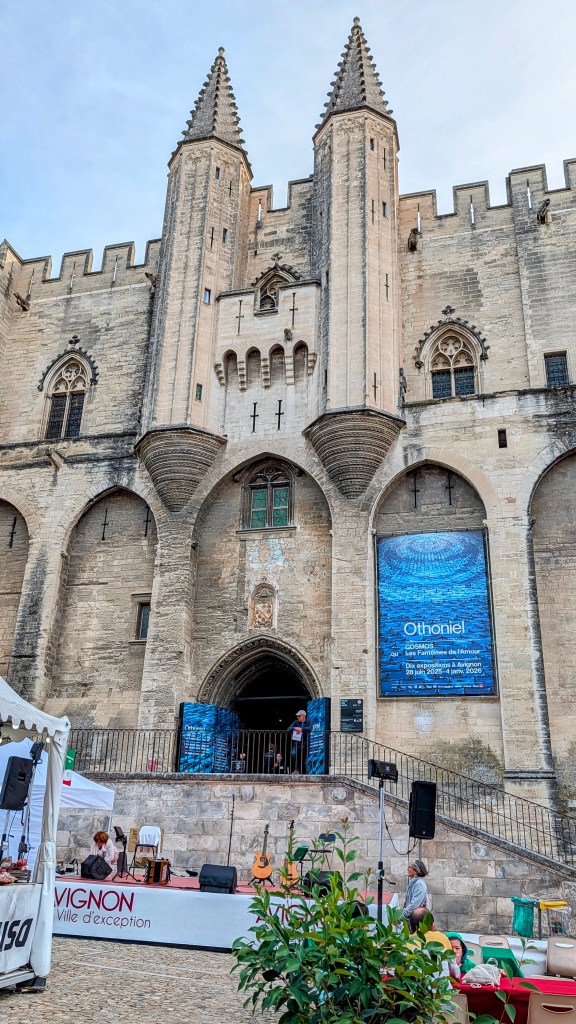
Built in under 20 years (1335–1352) and covering 15,000 square meters. It served as the seat of Western Christianity during the 14th century.
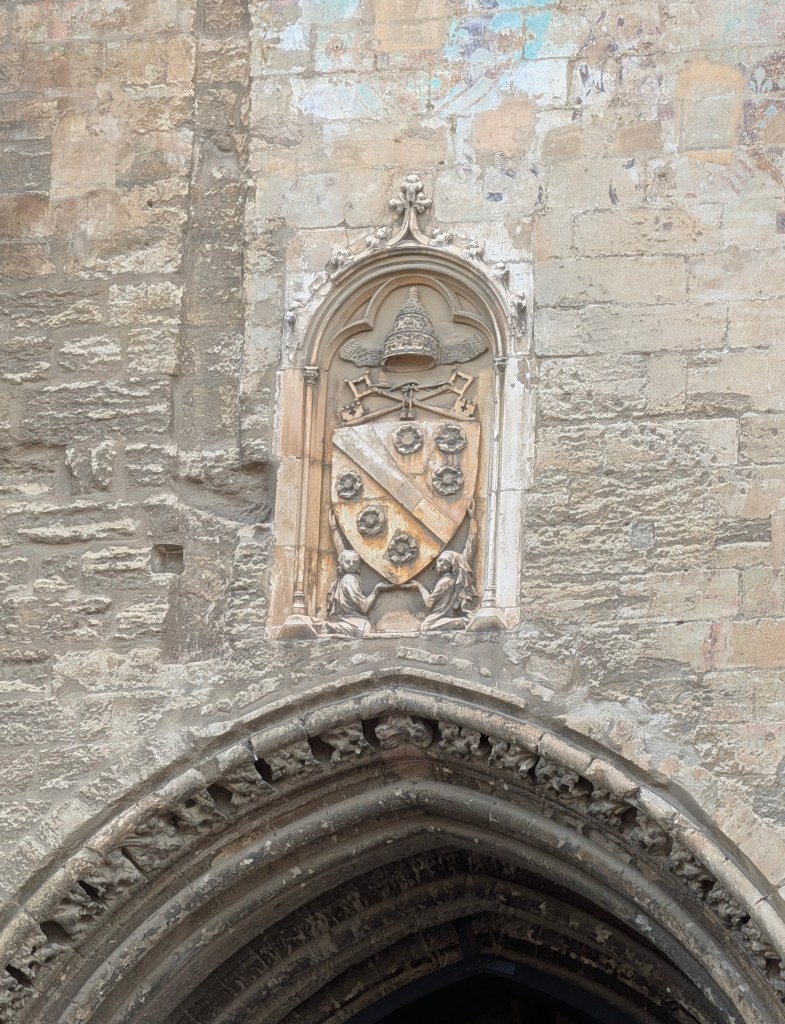
The papal coat of arms is that of Pope Clement VI. The shield belongs to the Roger de Beaufort family, to which Clement VI belonged. Above the shield is the papal tiara, and behind it are the crossed keys of Saint Peter, symbolizing the authority of the Catholic Church.
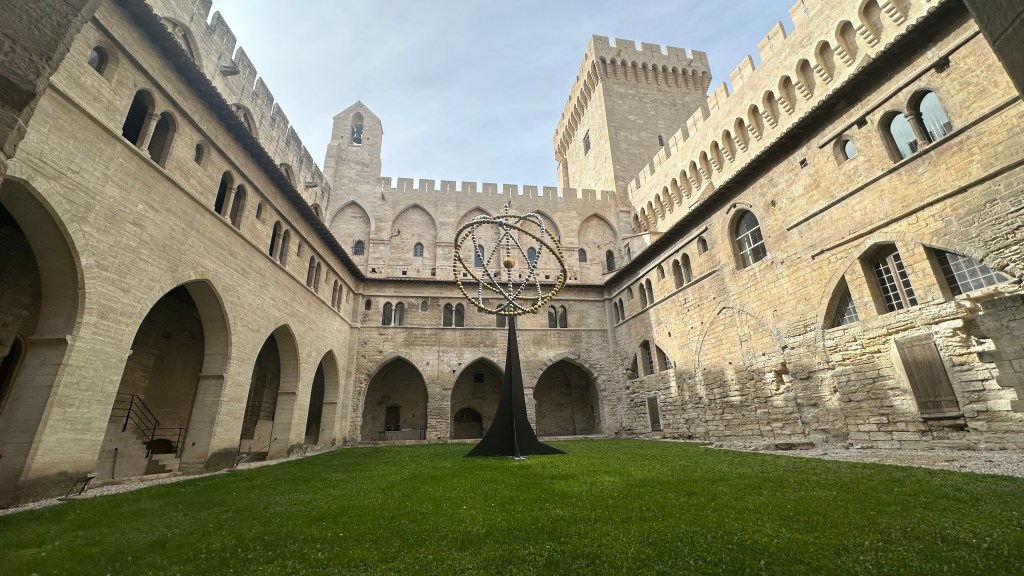
In the cloisters is another installation by French artist Jean-Michel Othoniel. There were many throughout the palace. I have to admit, I was not a big fan of them. I felt they distracted rather than enhanced the experience of the palace.
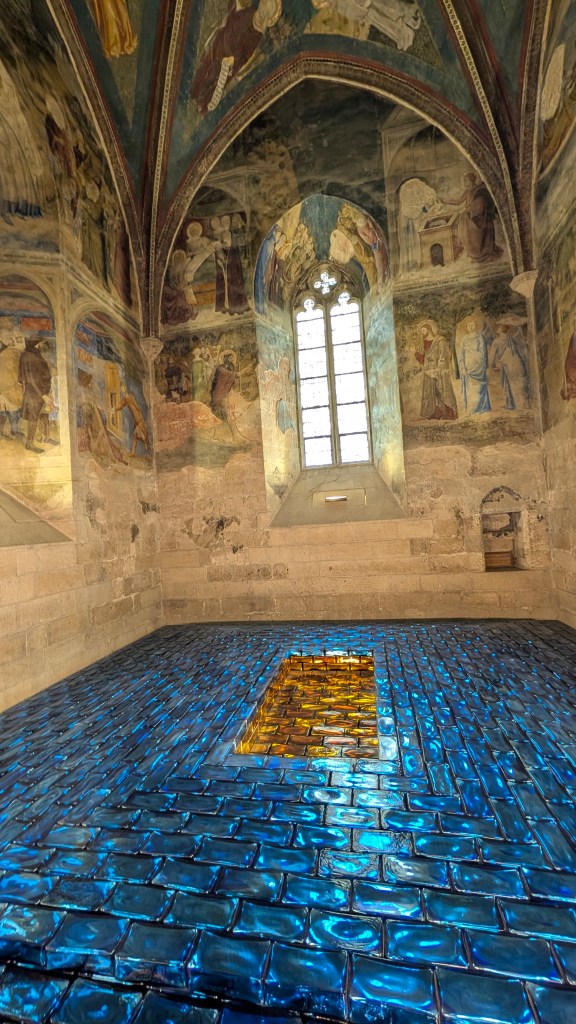
The walls are covered with remarkable 14th-century frescoes painted by famous Italian artists like Matteo Giovanetti. The floor below is another installation by Othoniel.
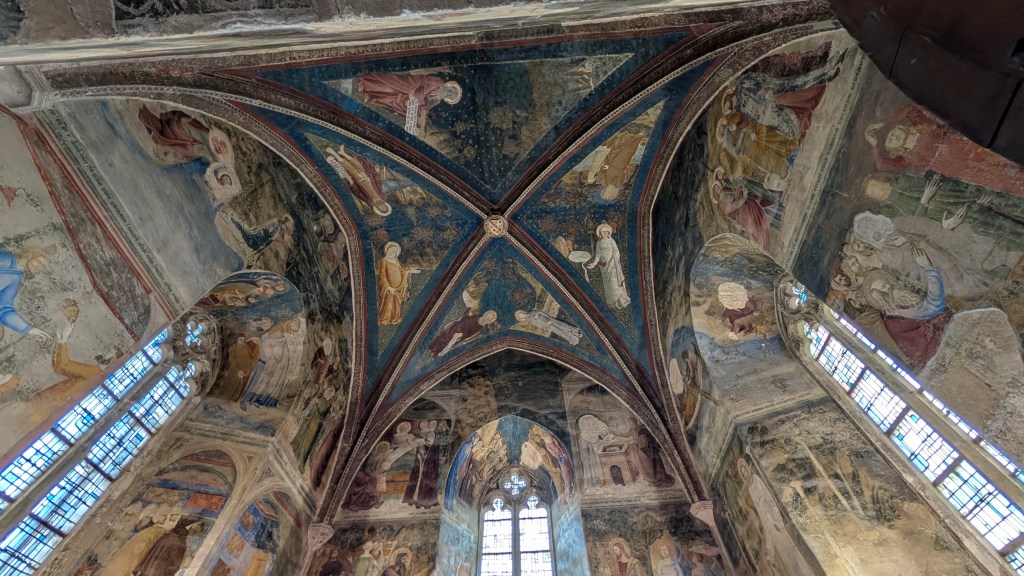
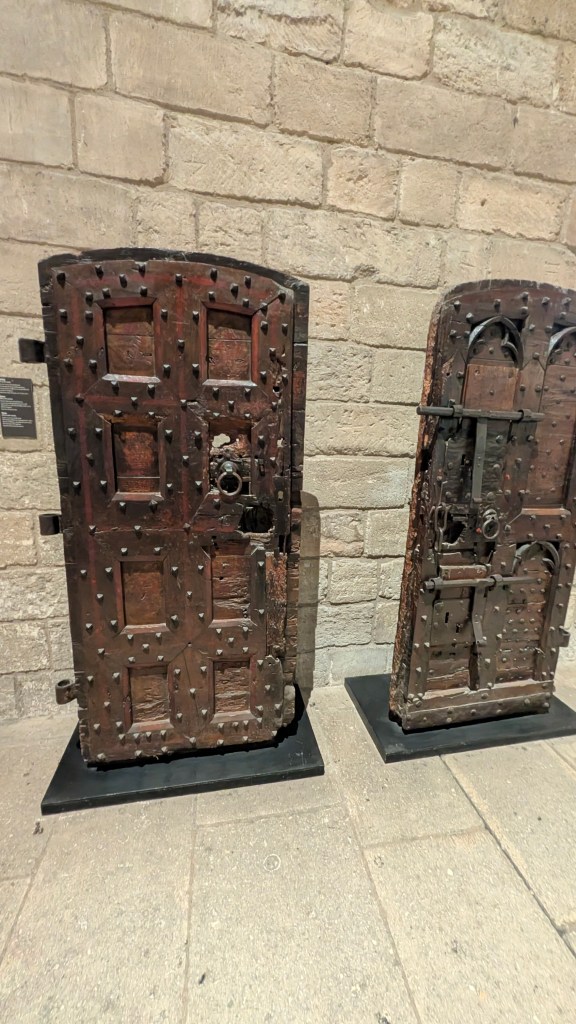
Displayed throughout are some original elements of the palace.
Pope John XXII, who lived in the palace, loved wine and helped make regional wines famous, leading to the creation of the nearby Châteauneuf-du-Pape (New Castle of the Pope).
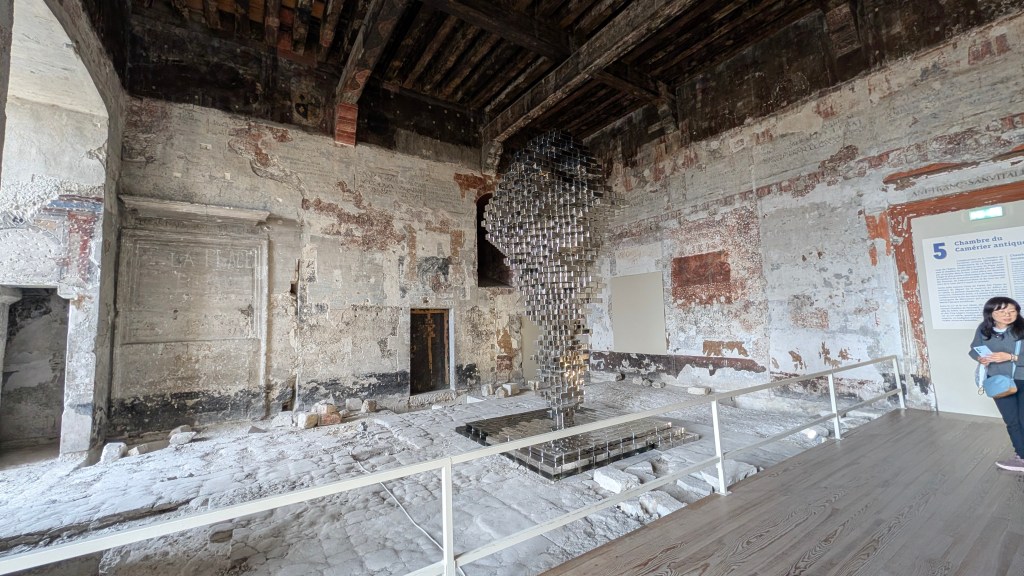
The papal library housed in the palace held over 2,000 volumes. It was a big draw for scholars and humanists.
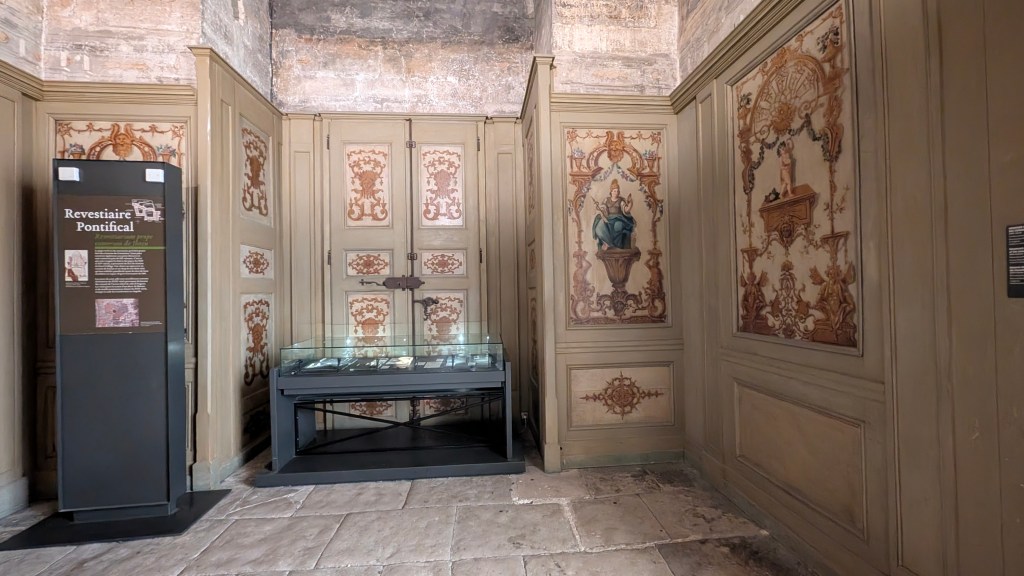
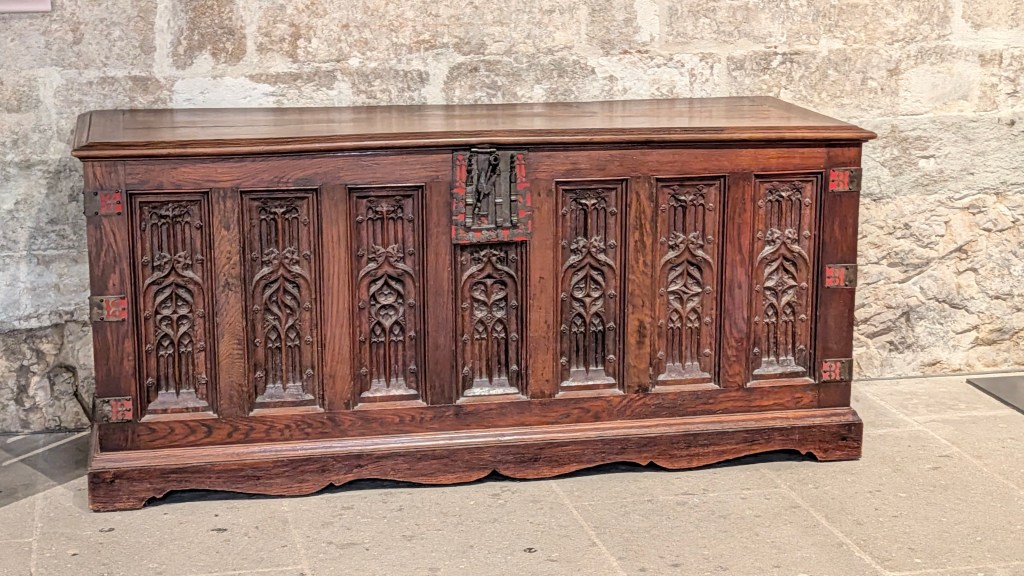
Today, most of the palace is unfurnished, focusing on the impressive architecture, though some 14th-century frescoes remain. This lone chest remains.
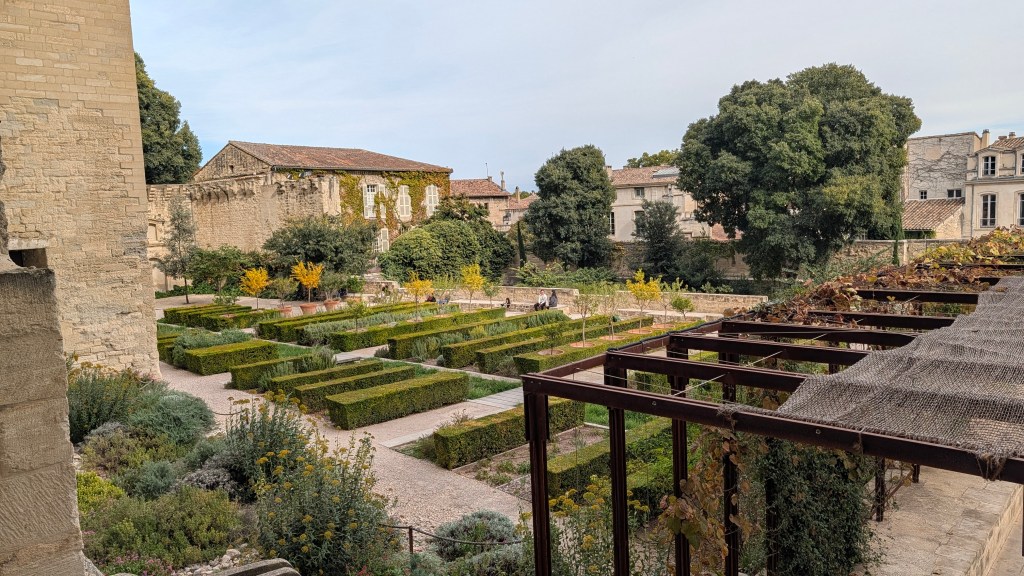
The papal garden, originally designed in the 14th century, has been recreated using medieval-style landscaping arranged with large rectangular beds planted with Mediterranean species known to have grown there in the 1300s.
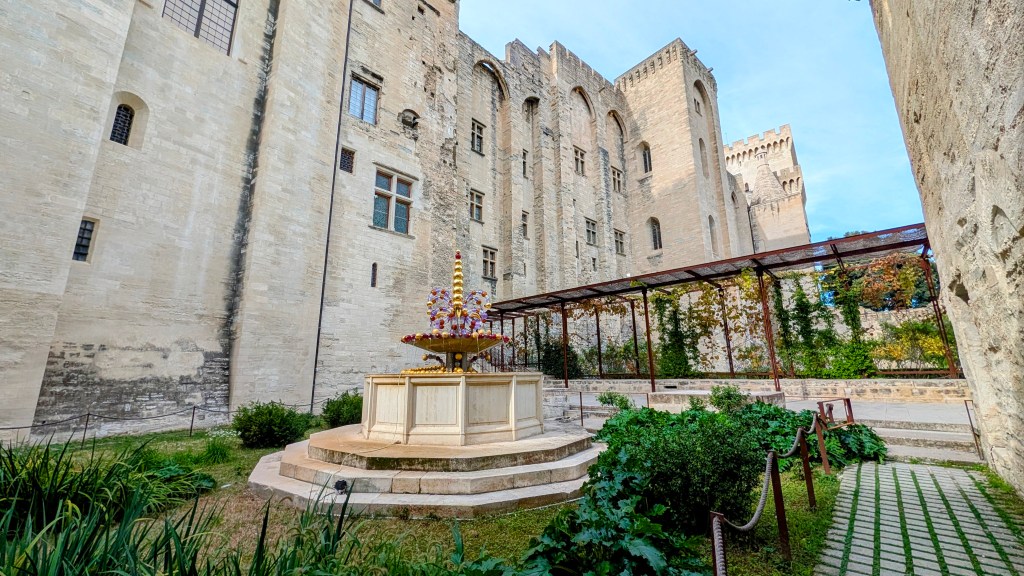
A decorative fountain is featured in one of the palace gardens.
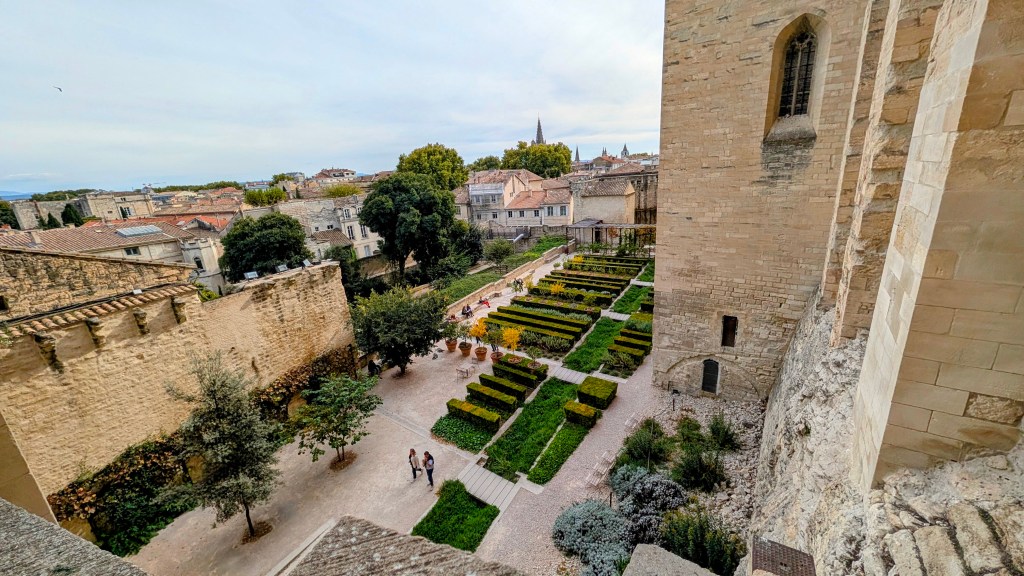
After exploring the gardens we climbed back to an upper floor of the palace, from which we had a view of the gardens below as well as the high walls surrounding the palace.
The kichen was a very large room with a central chimney situated right next to
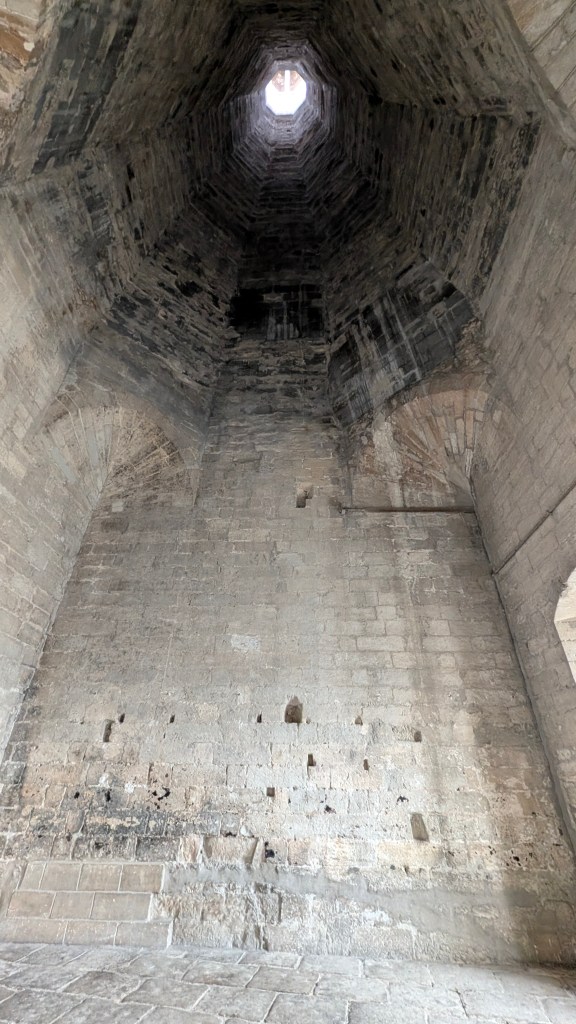
the very large banquet hall
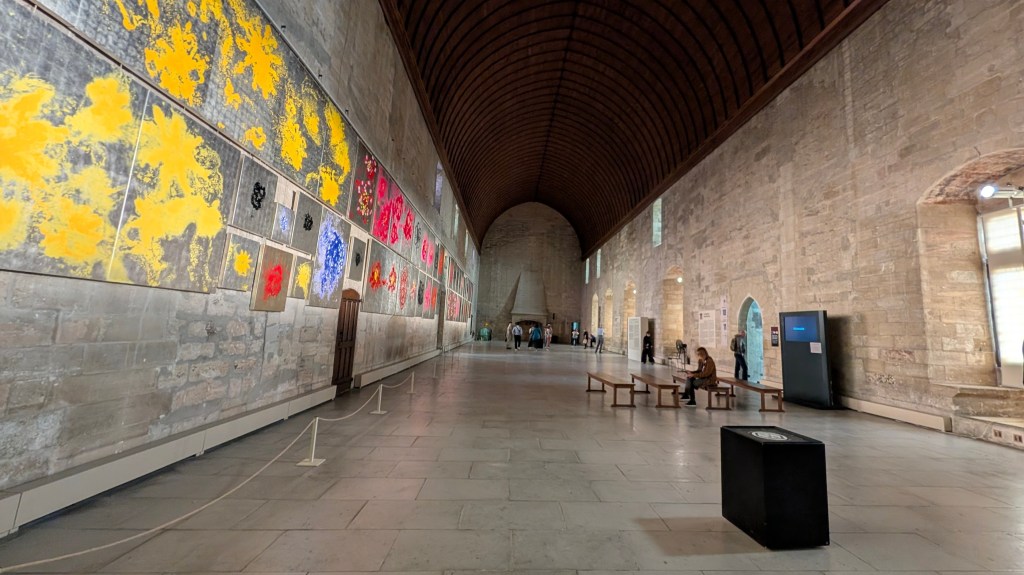
with its massive fireplace. The Palace regularly hosts art exhibitions as seen above.
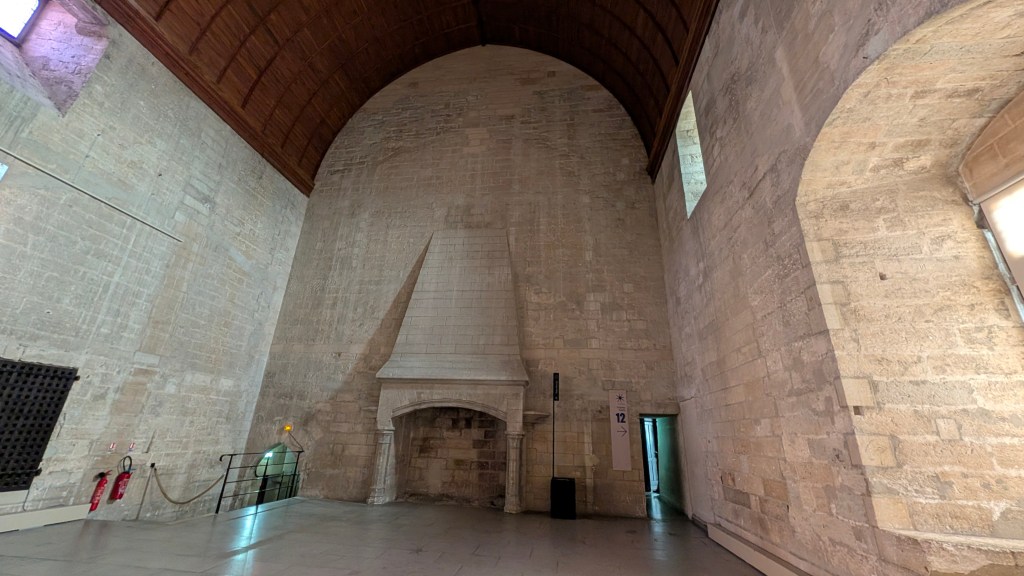
The grand chapel is enormous
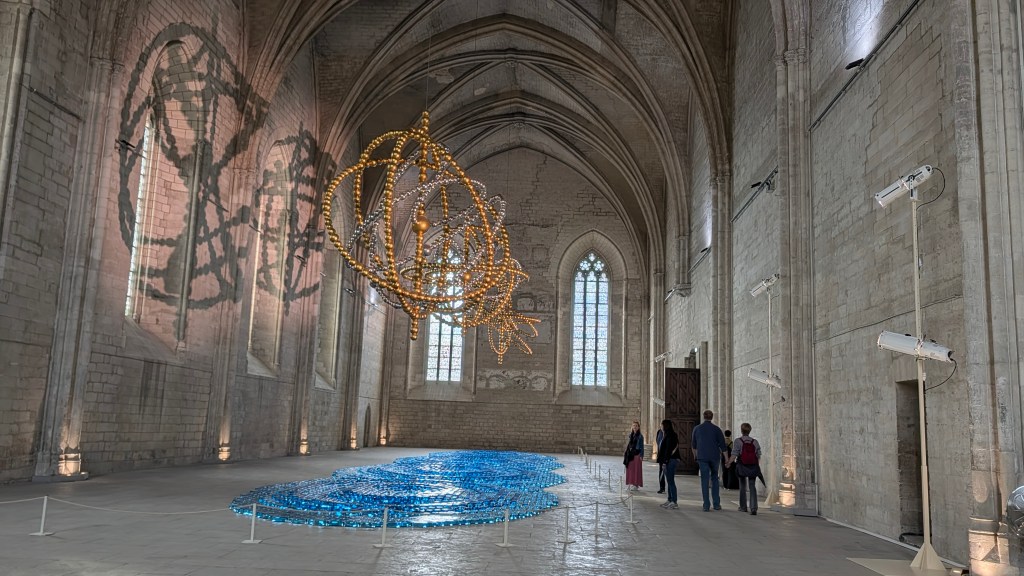
as is the side chapel.
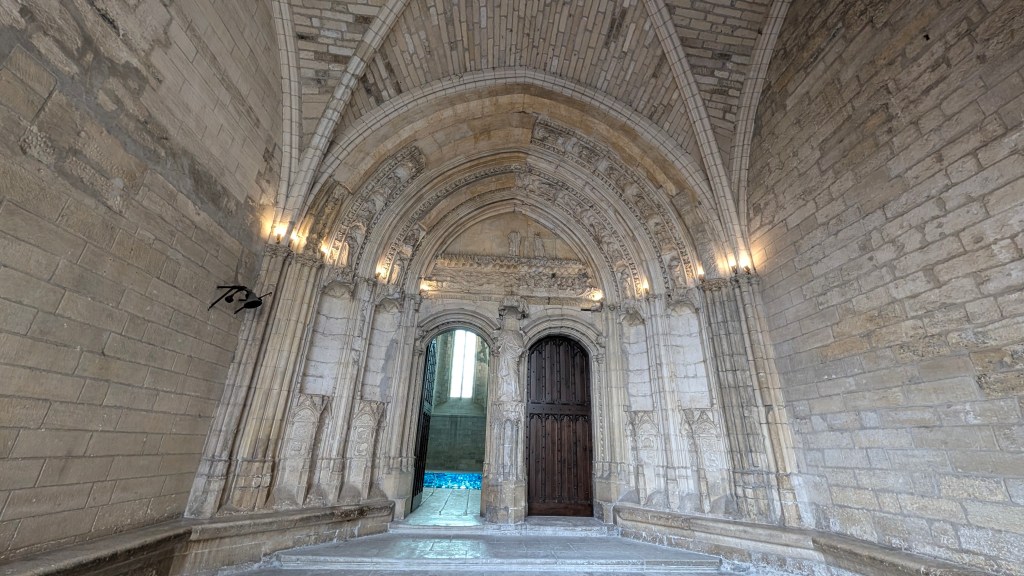
Secret, heavily fortified chambers holding the papal treasury were discovered in 1985, still containing bags of silver and gold coins. The Avignon papacy and administration became irrelevant when operations returned to Rome. After the popes left, the building took on many “unholy” roles, including serving as a military barracks and a prison following the French Revolution.
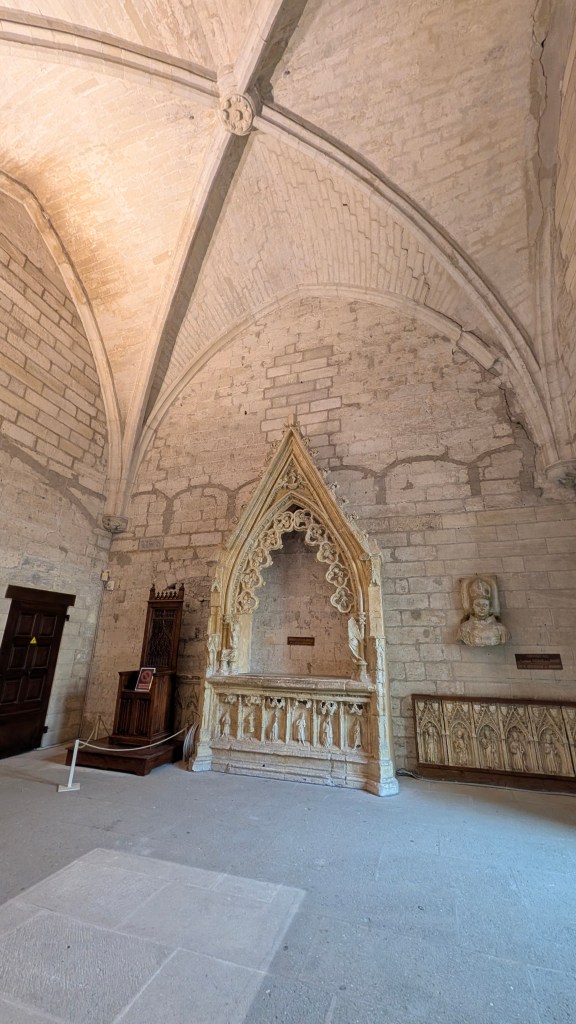
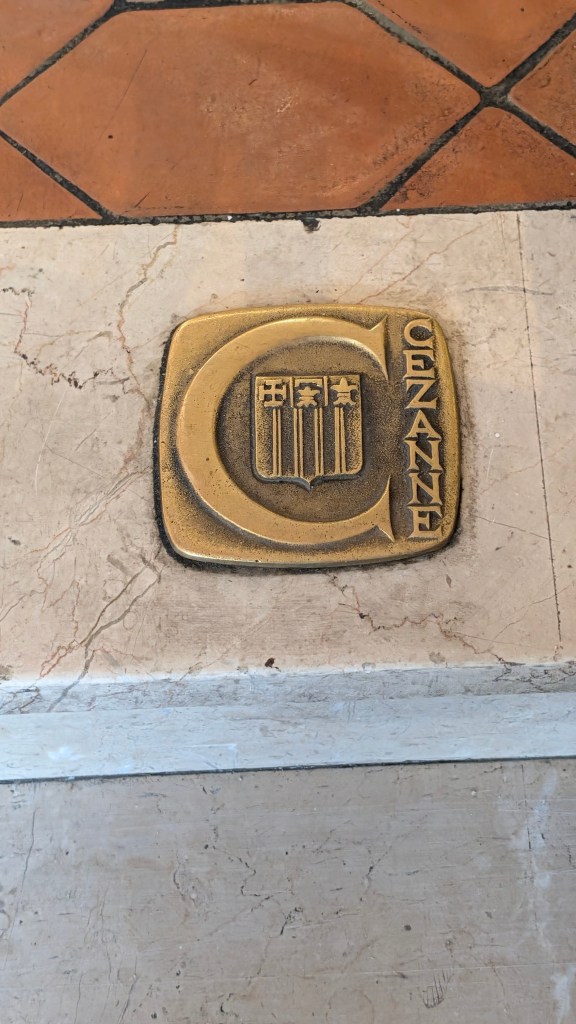
Having had our fill of the Palais des Papes, we got back in our car and headed to our next destination: Aix-en-Provence. Founded by Romans in 123 B.C. as Aquae Sixtiae (a spa town denoted for its thermal baths), it is now famous as the “City of a Thousand Fountains” and the birthplace of painter Paul Cézanne (1839-1906) as evident by the first thing we saw upon emerging from our car.
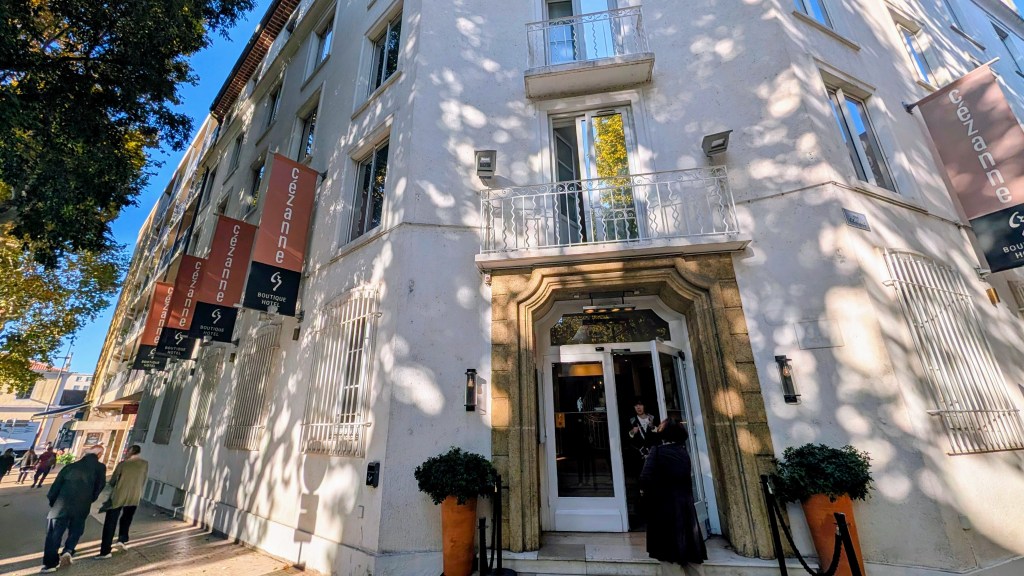
We checked into our hotel: the Cézanne Boutique Hotel, conveniently located right on the edge of the old city.
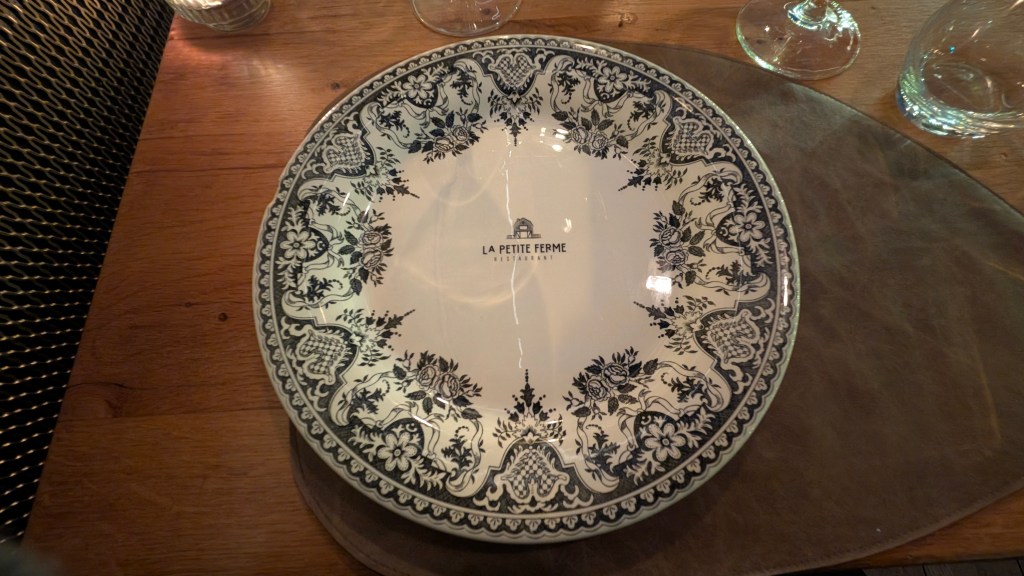
Tired from our long day, we headed for a delicious dinner at La Petite Ferme (The Little Farm).
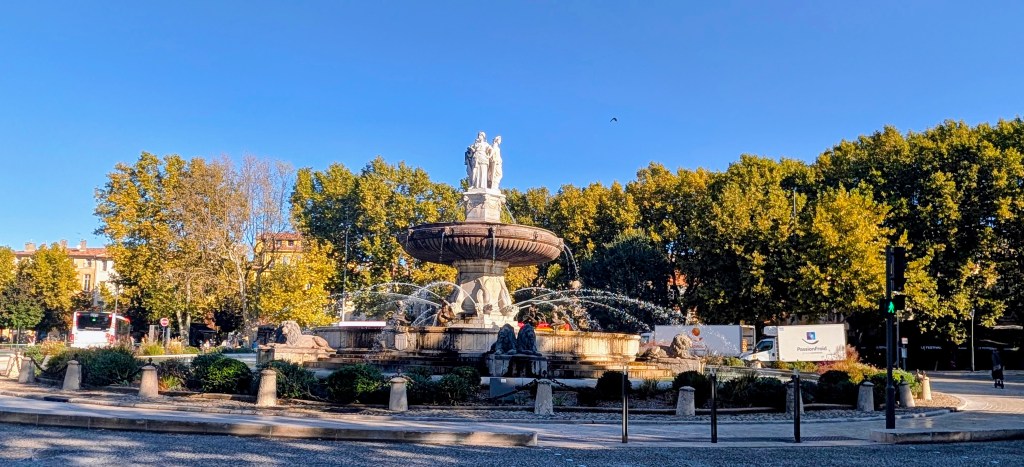
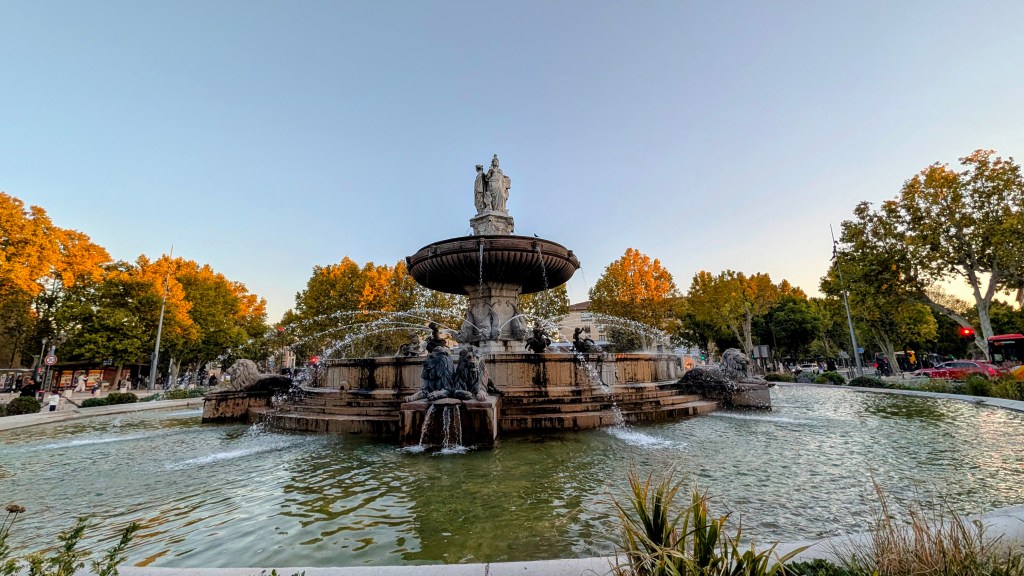
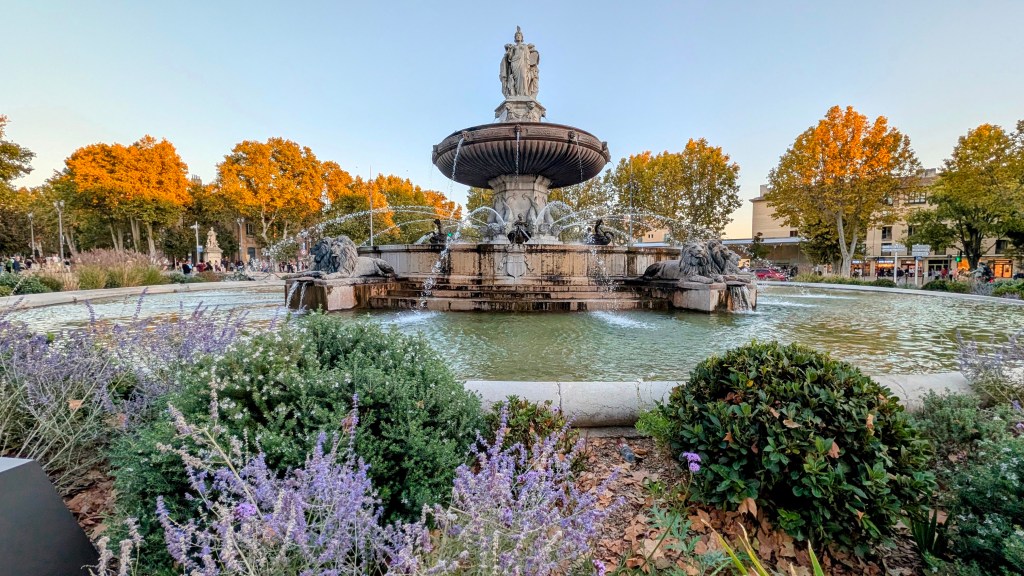
In the morning we embarked on the journey of fountains, and other things. First stop: Fontaine de la Rotonde (Fountain of the Rotunda). When Count of Valbelle left Aix-en-Provence in 1779, he gifted the city a generous parting gift: 30,000 livres, which was the currency at the time. The city decided to put that money to work. It took a while in the planning stages, but in 1860 the most iconic splash zone in town got born: the Fountain of the Rotunda. Long known for its love affair with water, from Roman baths to bubbling neighborhood spouts, Aix needed a proper fountain to fortify its reputation. The Rotunda Fountain delivered. Towering nearly 40 feet, it was the first in the city to feature a cast-iron basin.
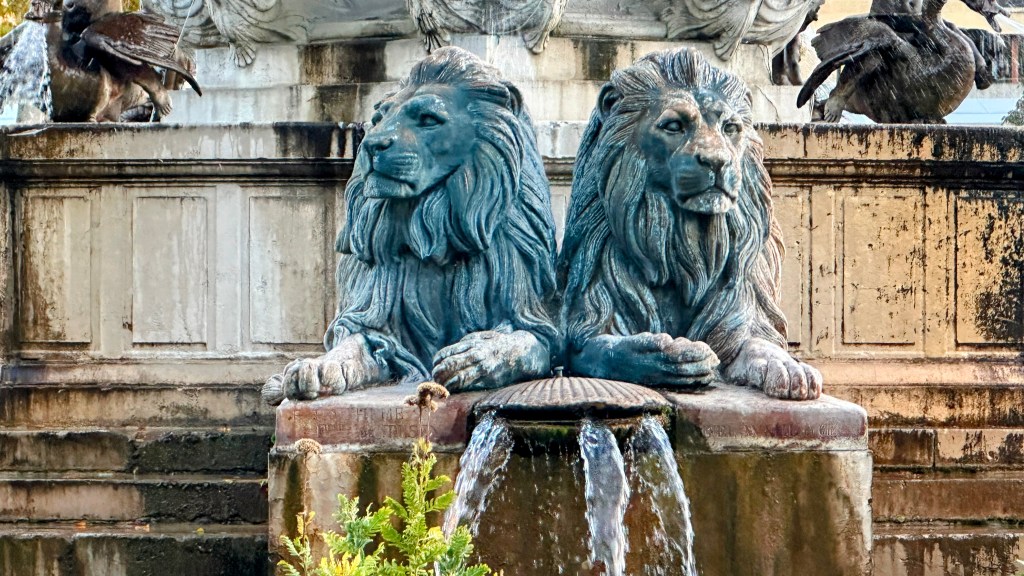
Lions lounge around its edge like they own the place, while bronze children cling to swans mid-ride, adding just the right touch of misdemeanor.
Further up a second bowl rests above the pool, this one guarded by snarling cheetah heads.
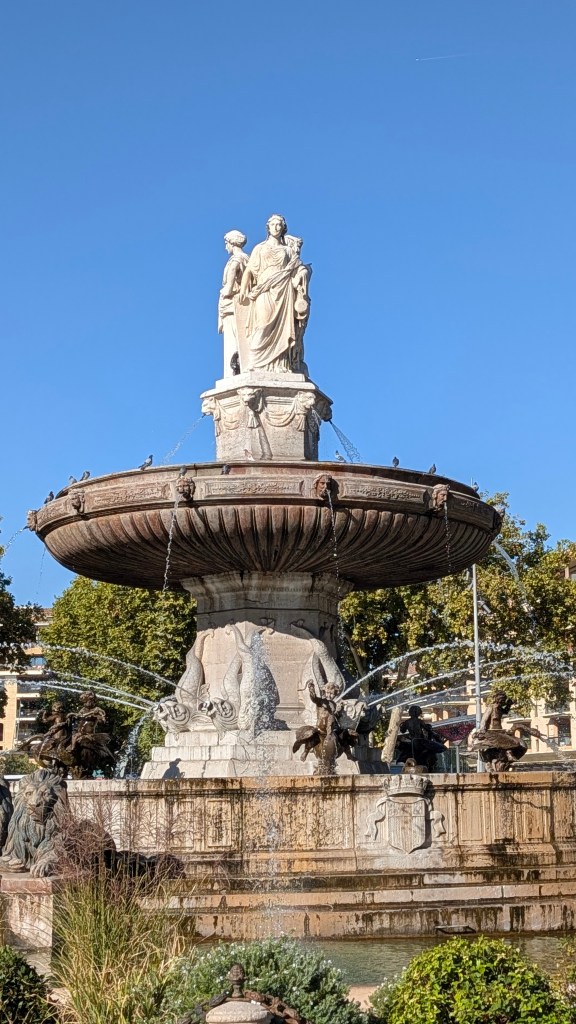
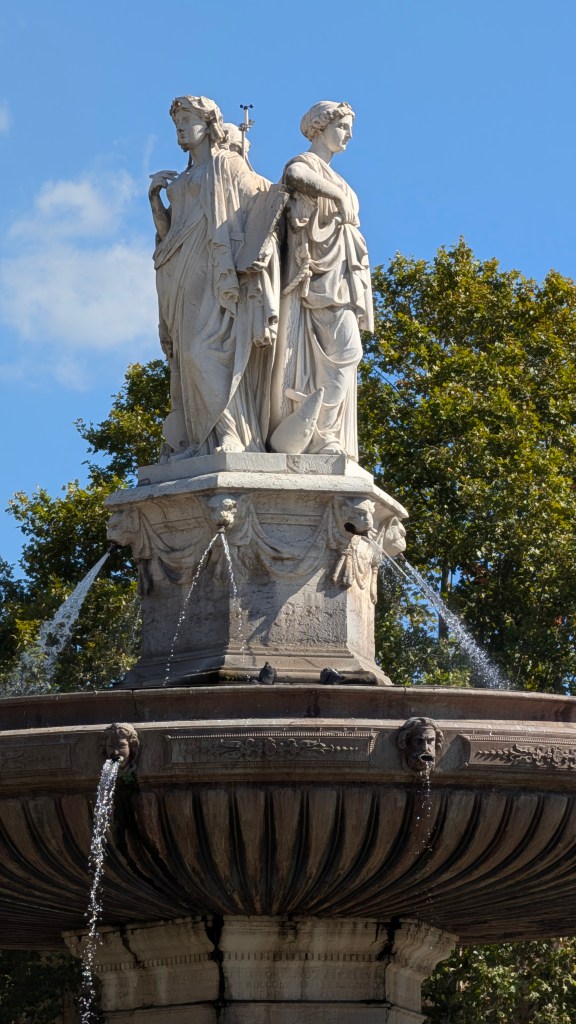
Crowning the whole affair is a trio of ladies-each facing a different destiny. “Justice,” by Joseph Marius Ramus, stares down Mirabeau Boulevard toward the courthouse. “Commerce and Agriculture,” by Louis Chabaud, keep watch toward Marseille’s factories. And “Fine Arts,” by Hippolyte Ferrat, gazes toward Avignon. Together, they’re known as the Three Graces.
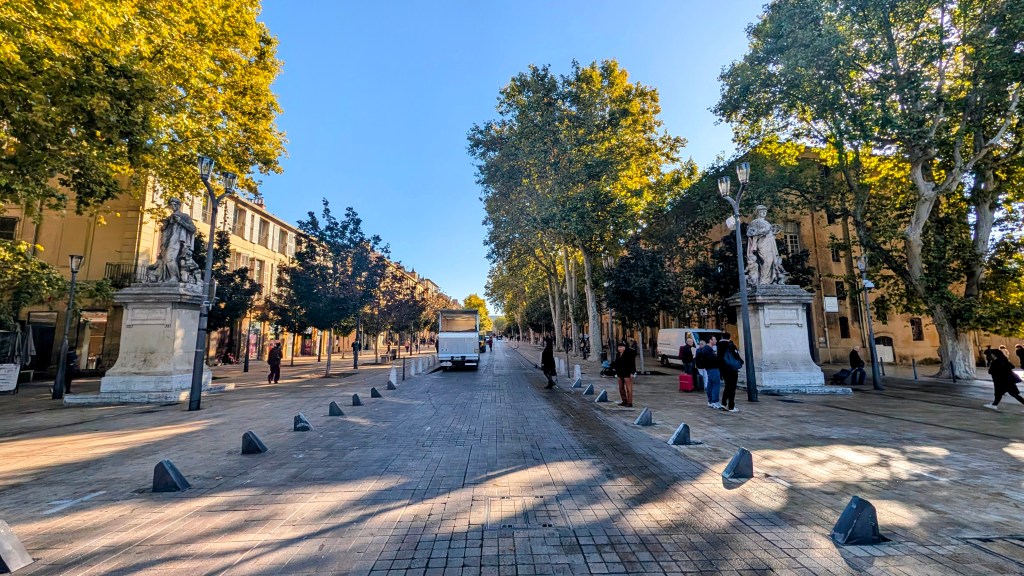
We headed toward Cours Mirabeau, a famous, wide avenue lined with 17th- and 18th-century mansions that divides the old town from the Mazarin Quarter. The street, originally designed in the 17th century for carriage traffic, is now heavily pedestrianized and is known for its grand plane trees, historic fountains, and numerous cafes and restaurants. It is often referred to as the “Champs-Elysées of Provence” due to its popularity as a social hub.
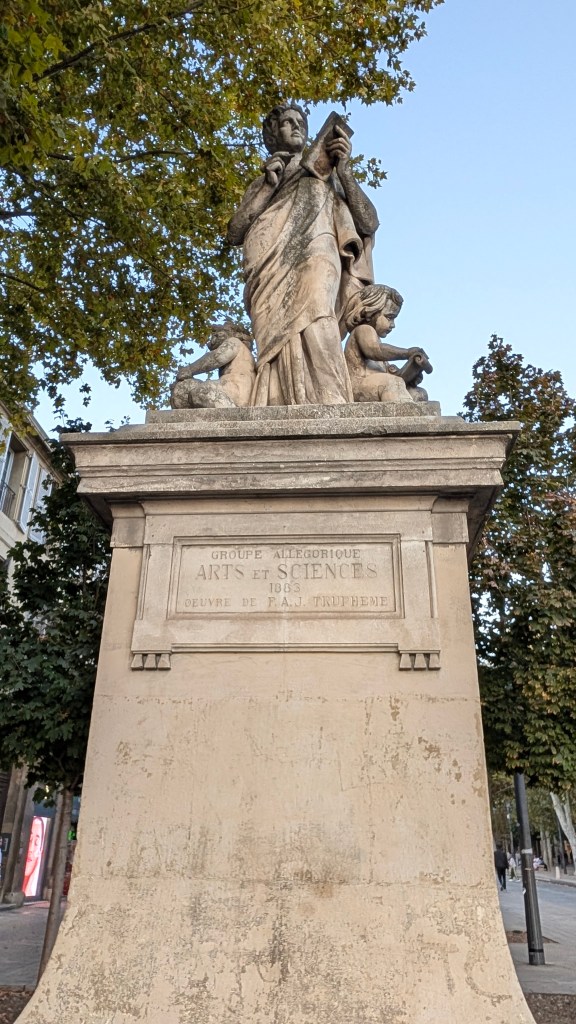
At the entrance to Cours Mirabeau stands a statue entitled “Arts and Sciences”, a work of sculptor François Truphème, created in 1883. The allegorical sculpture group depicts figures representing tension or cooperation between artistic and scientific pursuits.
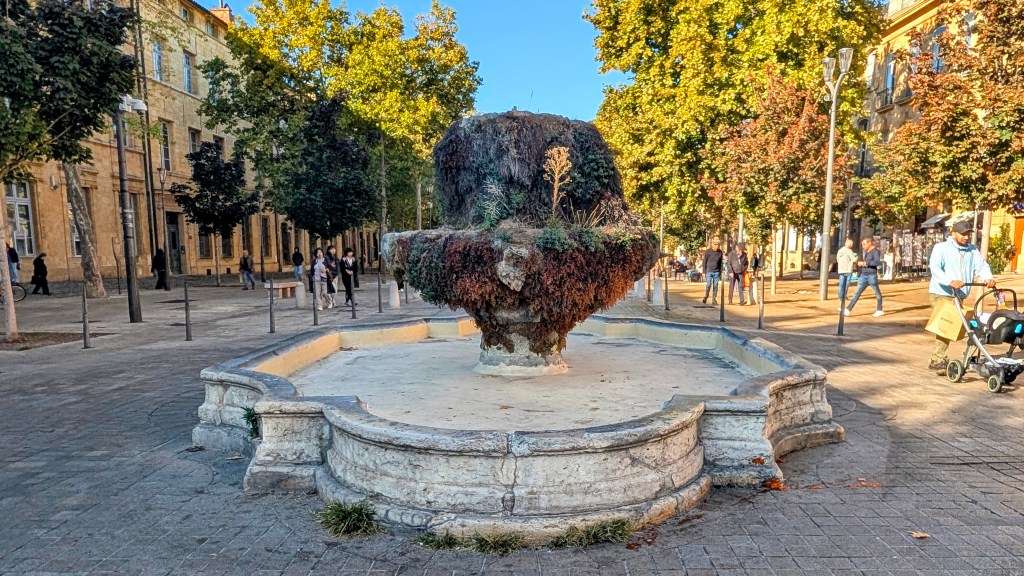
Located on the Cours Mirabeau is the Fontaine Moussue (Mossy Fountain), also known as the “Big Green Sponge” due to its unique appearance. Built in 1667, the first on the boulevard, it is is covered in thick moss and vegetation, which thrives on the warm, mineral-rich thermal water that flows through it at 65° F. The Mossy Fountain has suffered from calcification, which makes the design difficult to see. It is believed that the shapes under the limestone deposits are four children holding a basin for the water.
Along the side of the street is a sculpture by American artist Carole Feurman that depicts strength through balance.
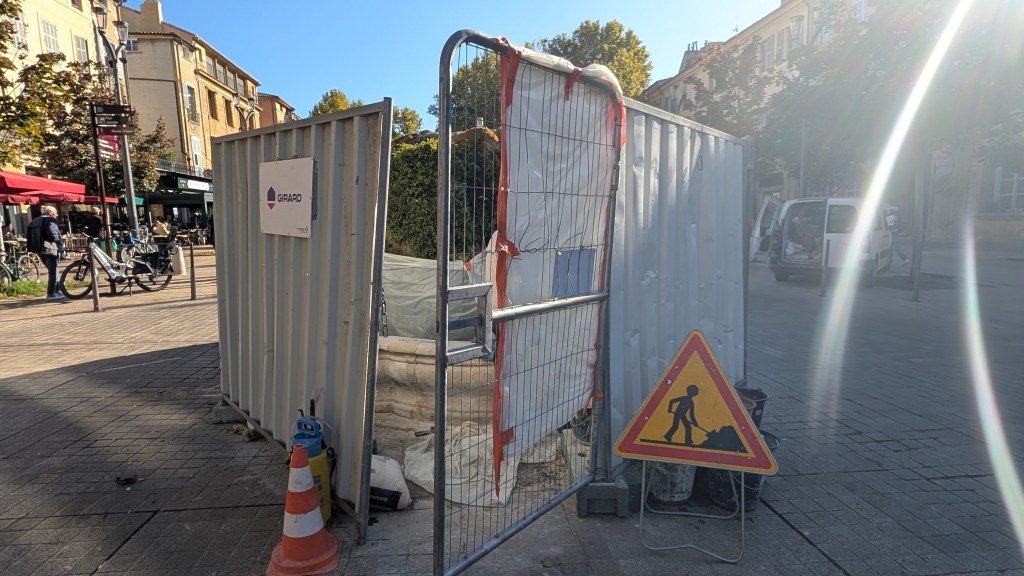
Fontaine des Neuf-Canons (Fountain of the Nine Cannons), currently under renovation (but I include it due to its interesting history), was constructed in 1691, and was named for the nine cannons that shoot water into the basin. The fountain was built to provide water to sheep as they passed through the area. At that time, an easement authorized herds of sheep on transhumance between the commune La Crau and the Alps to come and drink there. The fountain was partially destroyed in 1944 during the liberation of Aix-en-Provence. An American tank had taken away one of the four lobes of the basin, this arm was not rebuilt, and its opposite lobe was, on the occasion of this incident, suppressed.
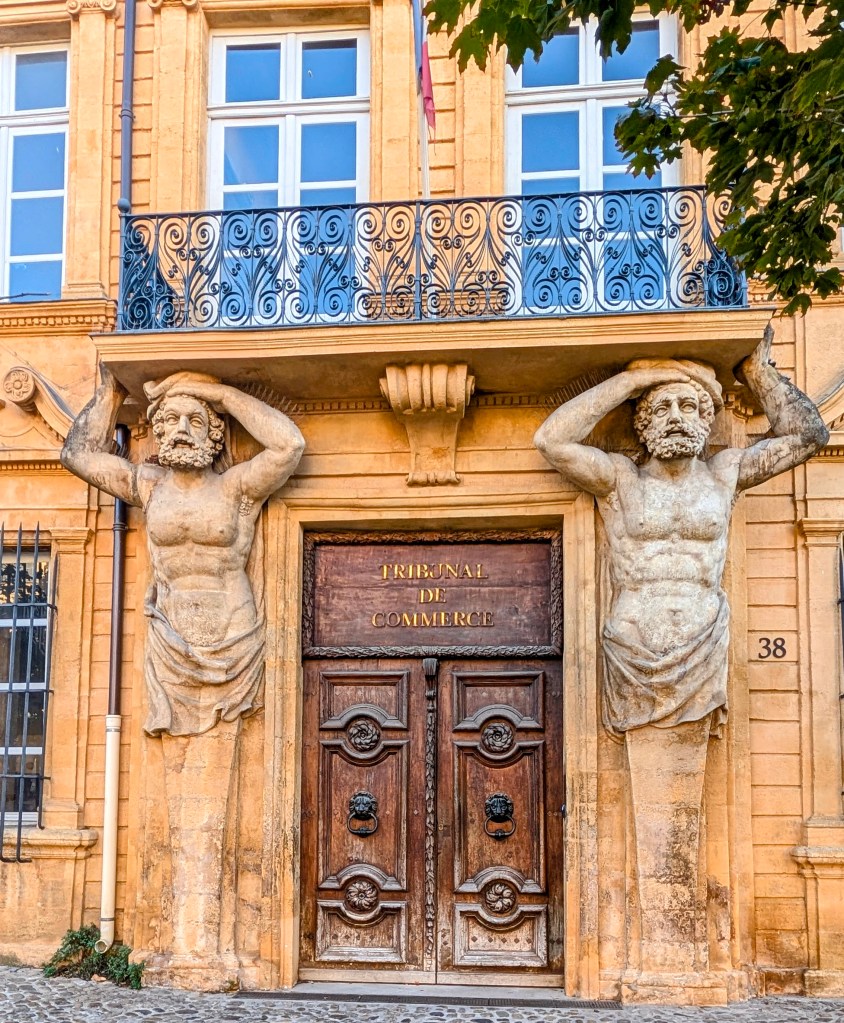
The Hôtel Maurel de Pontevès, constructed around 1650, originally served as a private mansion. It currently houses the Tribunal de Commerce (Commercial Court) of Aix-en-Provence. The entrance is famously flanked by two large stone atlantes statues holding up the wrought-iron balcony.
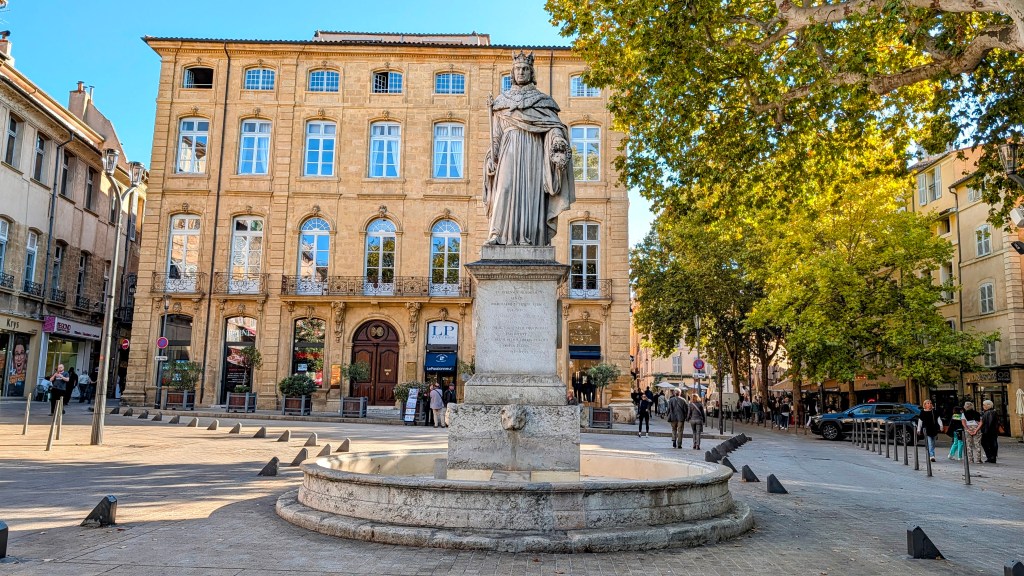
Fontaine du Roi René, features a marble statue of René of Anjou, who was known for promoting learning and art in the region. It was designed by architect Pierre-Henri Révoil and erected in 1819. The King is depicted holding a scepter and a bunch of Muscat grapes, a variety he introduced to Provence.
Hôtel de Caumont was originally a private mansion built in the 18th century. Today, it operates as the Caumont Centre d’Art, a museum featuring art exhibitions and restored period rooms. The property includes a paved Cour d’Honneur (honor courtyard) and private gardens. It is considered an emblematic venue for the cultural scene in Aix-en-Provence.
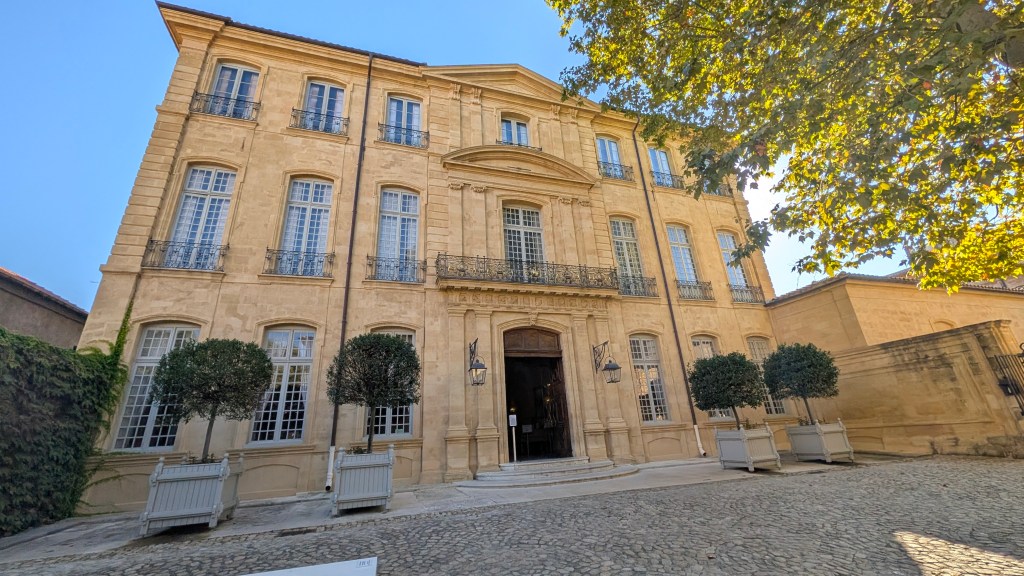
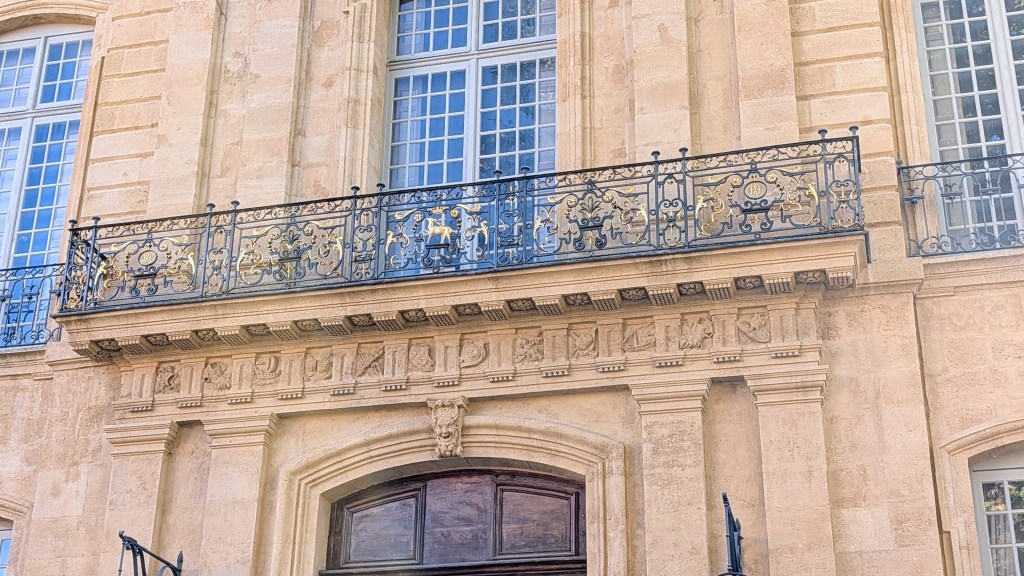
Designed in 1715 by Robert de Cotte and Georges Vallon for the Marquess of Cabannes, the residence comes complete with an imposing entrance.
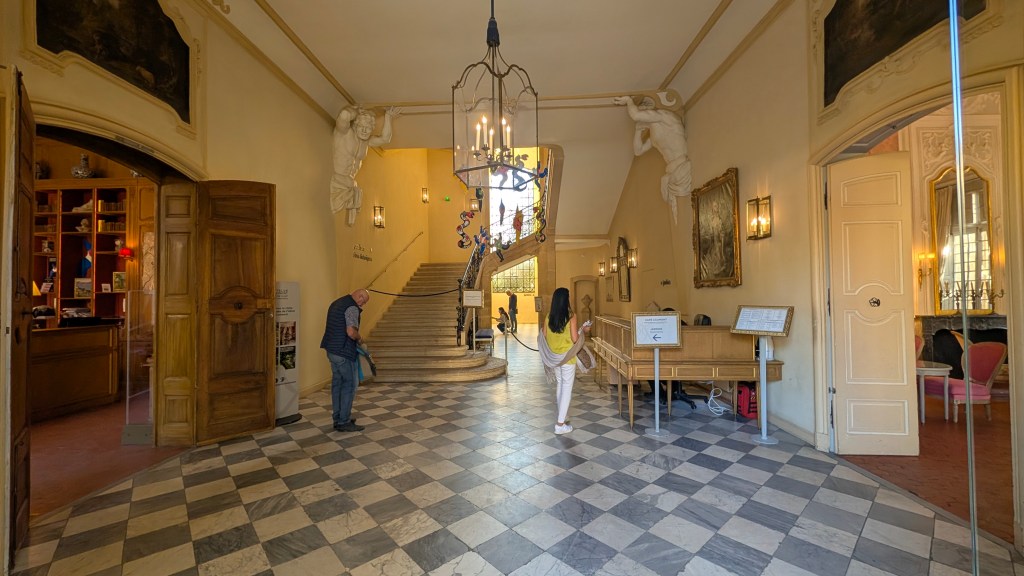
Inside, it’s all aristocratic finesse: curvy decorations and playful ceiling angels,
In the heart of the Mazarin District is the Square of the Four Dolphins, a quiet intersection dressed in 17th-century elegance. The district exists thanks to Michel Mazarin, the city’s archbishop with a flair for demolition. Back in 1645, he got the green light from Louis XIV to knock down Aix’s southern ramparts and replace them with something far more fashionable. Inspired by Italian Renaissance planning, architect Jean Lombard laid out a crisp grid of streets and dropped in a proper square right in the middle. Originally dubbed Saint-Michel Square, the space eventually took its cue from the sculpture at its core. The fountain stars four dolphins coiling around a pedestal, still making a splash. A pine cone is adorned at the top. It was the prototype for the fountain we had seen in St. Remy-en-Provence.
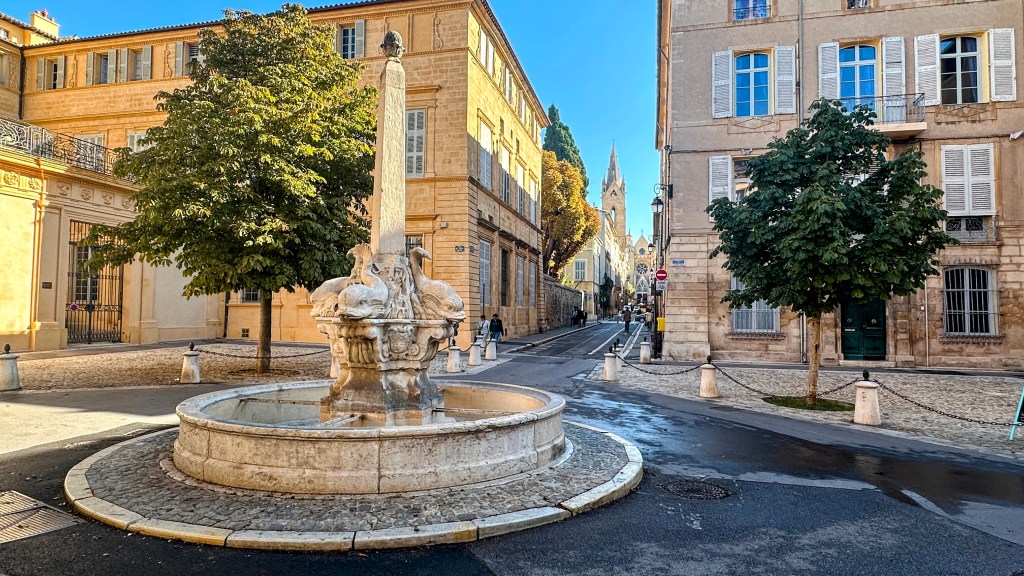
The entire neighborhood was built to impress, and it still does.
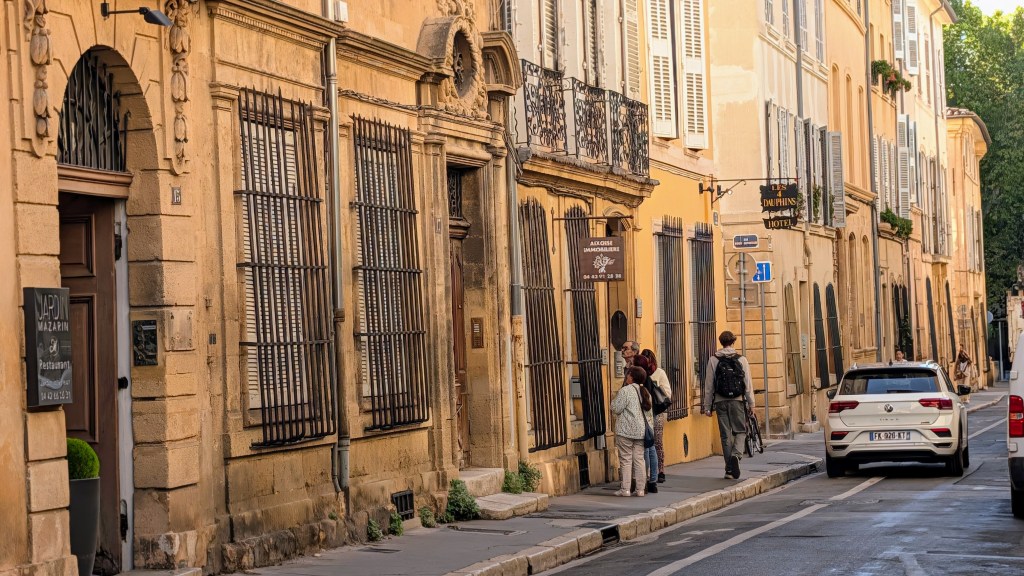
As we made our way toward Eglise Saint-Jean-de-Malte (Church of Saint John)
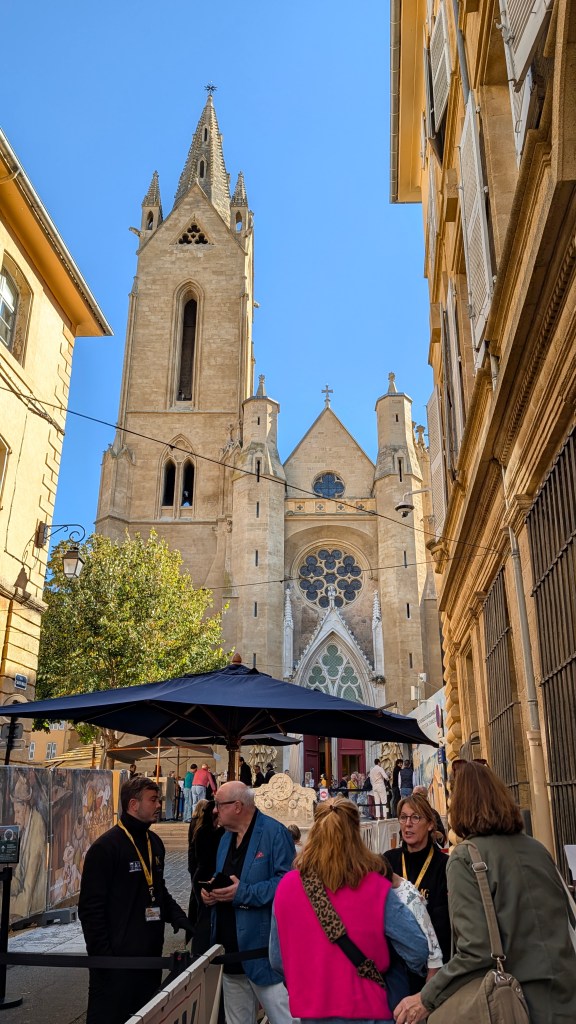
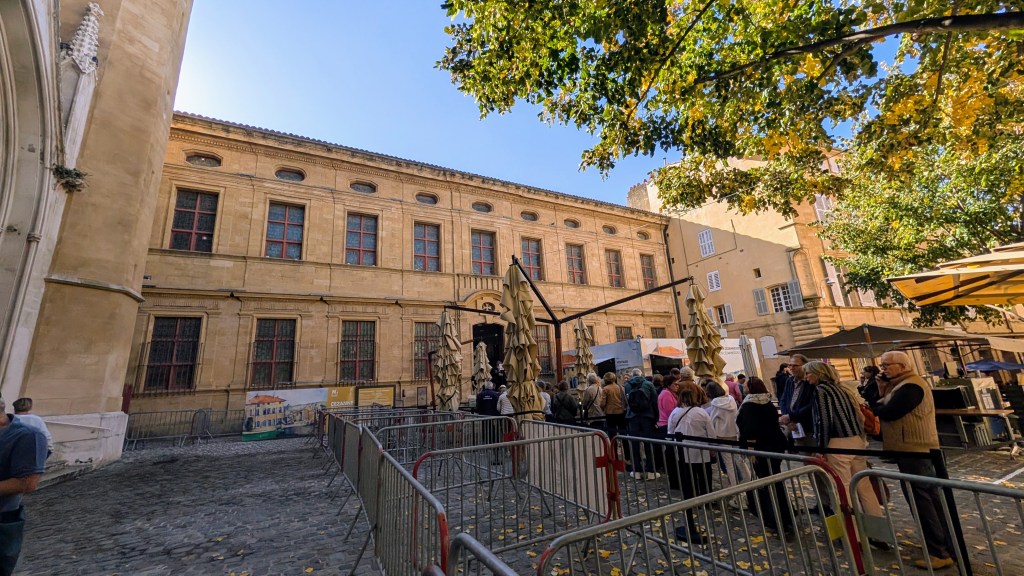
we were impeded by the large crowd lined up to enter the Musee Granet (Granet Museum), which, it turned out, was hosting a large Cézanne special exhibition. Henri Pointier, curator of the Aix museum from 1892 to 1925, was no fan of Cézanne. In fact, he reportedly swore the painter’s work would only hang there “over my dead body.” Wish granted: Pointier died in 1949, and within months, the museum started collecting Cézannes. That same year it also rebranded as Granet Museum, in honor of local artist and major benefactor François-Marius Granet. The museum itself occupies the former priory of Saint John’s Church and still shares a peaceful garden with the neighboring church.
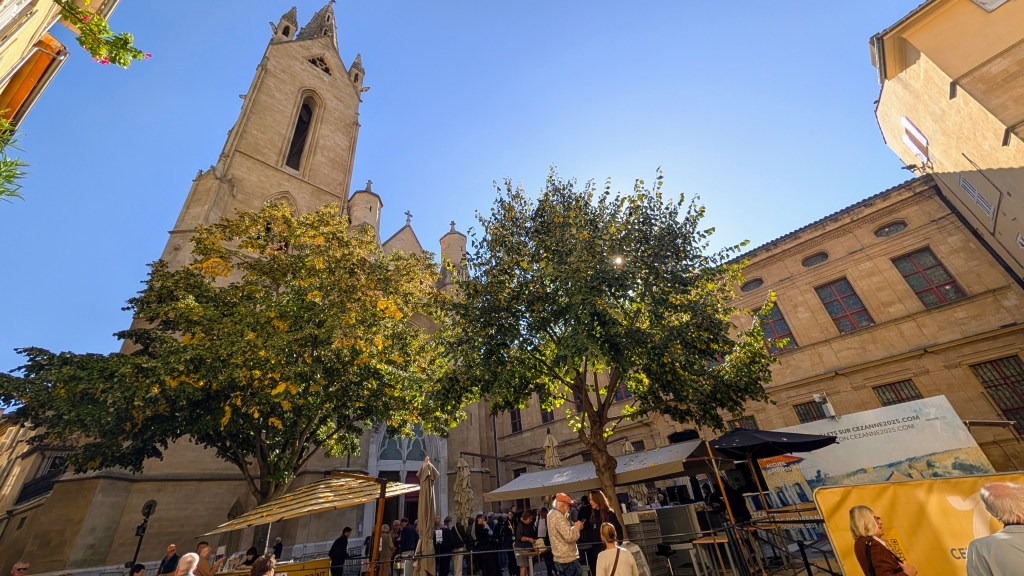
We skipped the crowd and instead headed into the Church of Saint John, the first Gothic Catholic church in Provence. Back in 1270, the Knights of Malta had a hospice and chapel here until it was decided it was too good a spot not to build a full-blown Gothic church. In the 1600s, the church officially joined city life when the ramparts shifted south to make way for the Mazarin district. The Revolution was not kind to the church; it was stripped of its valuables and acted as a military warehouse. Things did not improve until Napoleon came along and handed it back to the faithful.
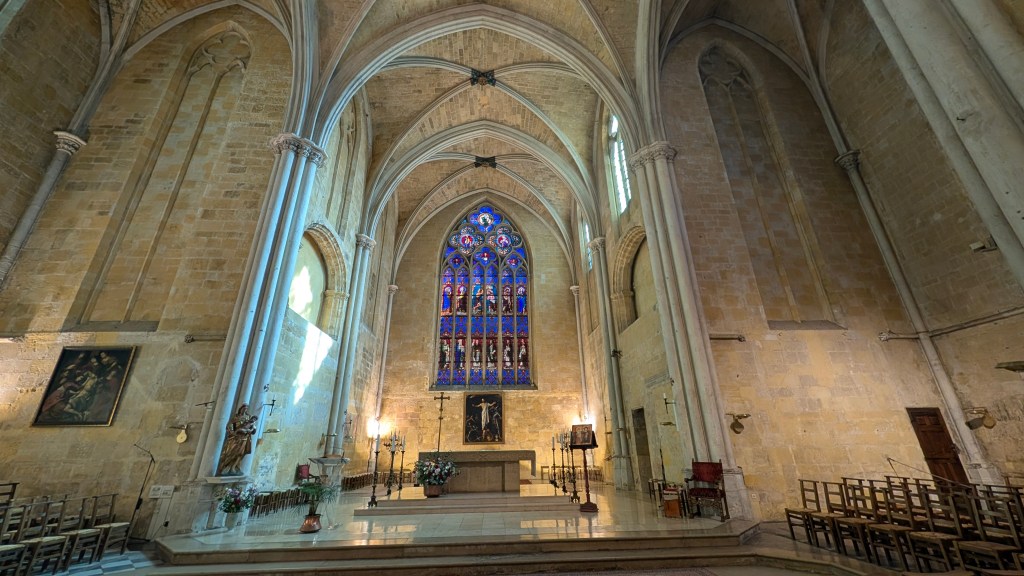
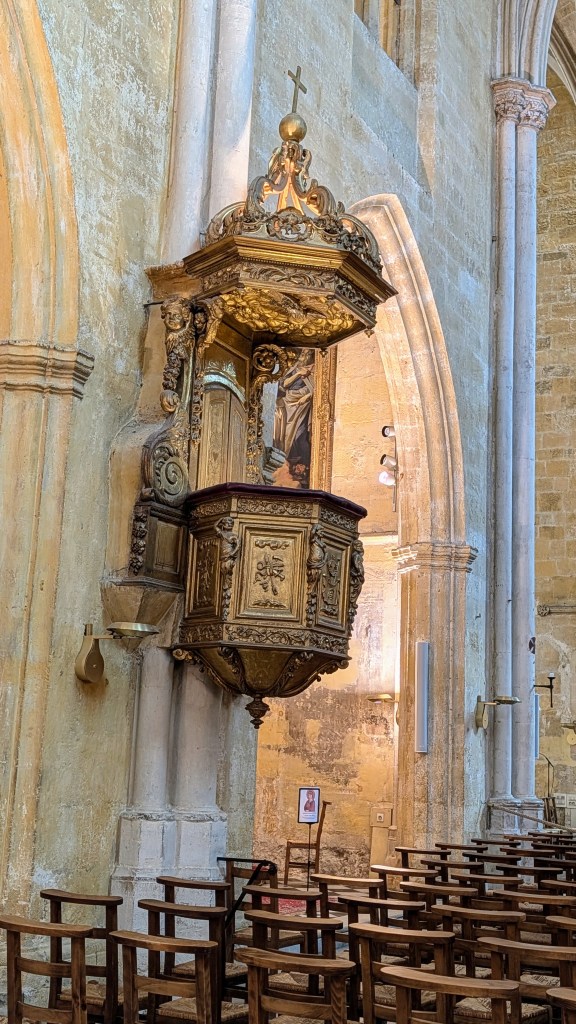
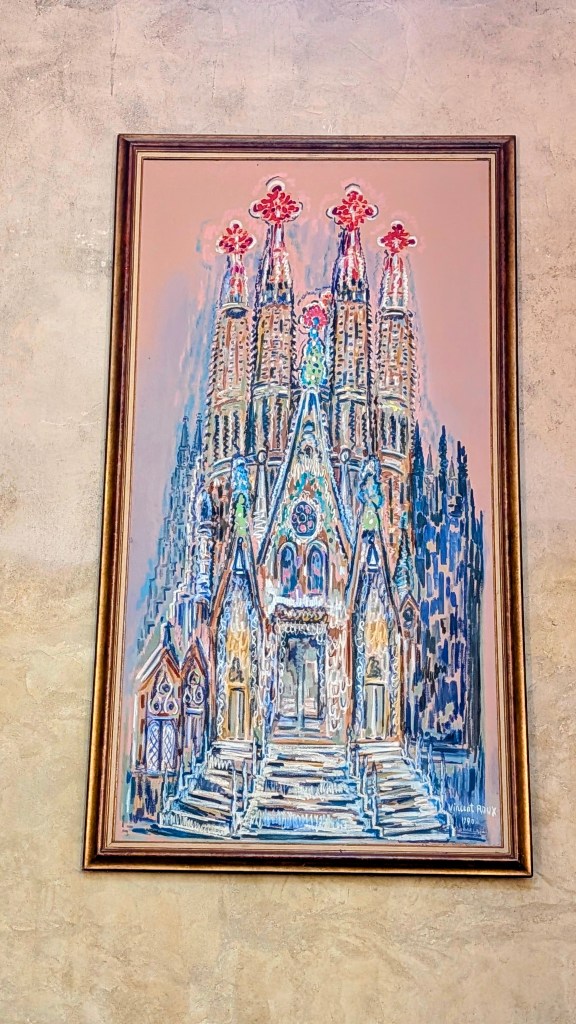
After its revival, the church slowly rebuilt its art collection. Today there are works like “La Sagrada Familia” by the artist Vincent Roux. Not bad for a church that once doubled as storage.
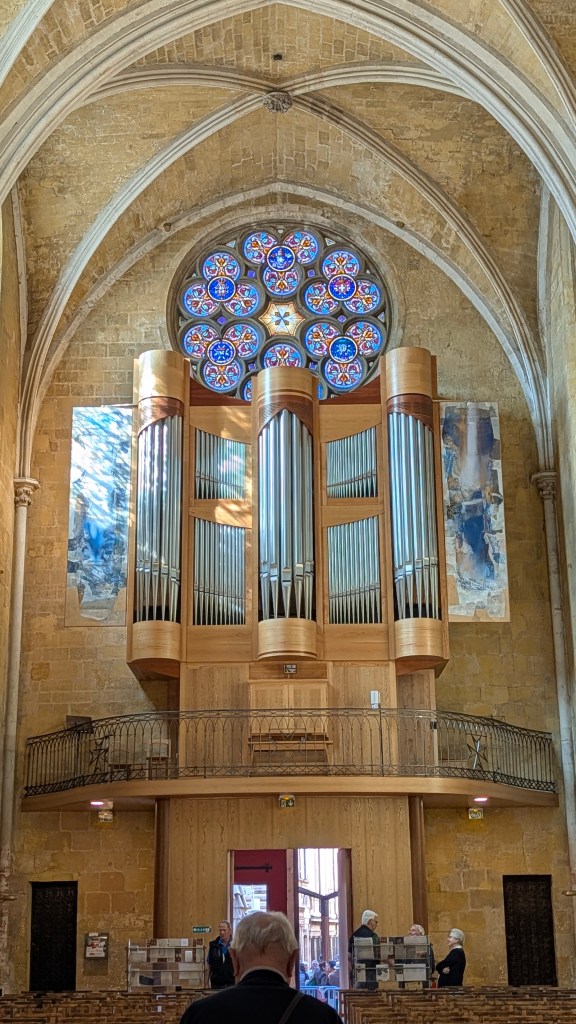
The baroque-style organ is from 2006.
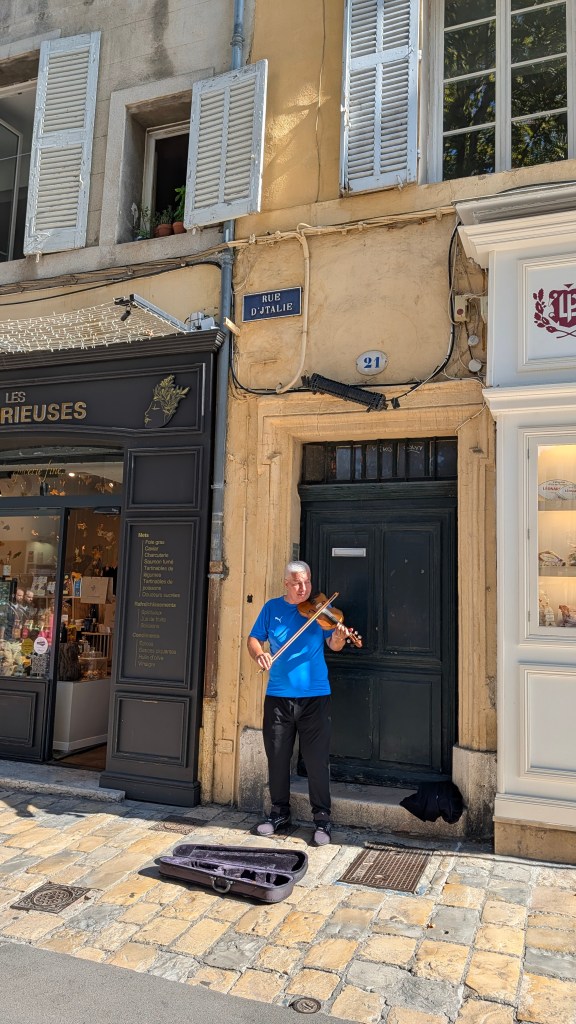
Eglise Saint-Jean-de-Malte sits at the end of Rue d’Italie (Italy Street), which ranks among the oldest in all of France. It traces the route of the ancient Roman Aurelia way, which once linked Rome to Spain, passing right through the Baths of Sextius. Set in the old Mazarin district, Italy Street doesn’t scream grandeur, but its quiet mix of townhouses, shops, and eateries makes it one of the friendliest walks in town.
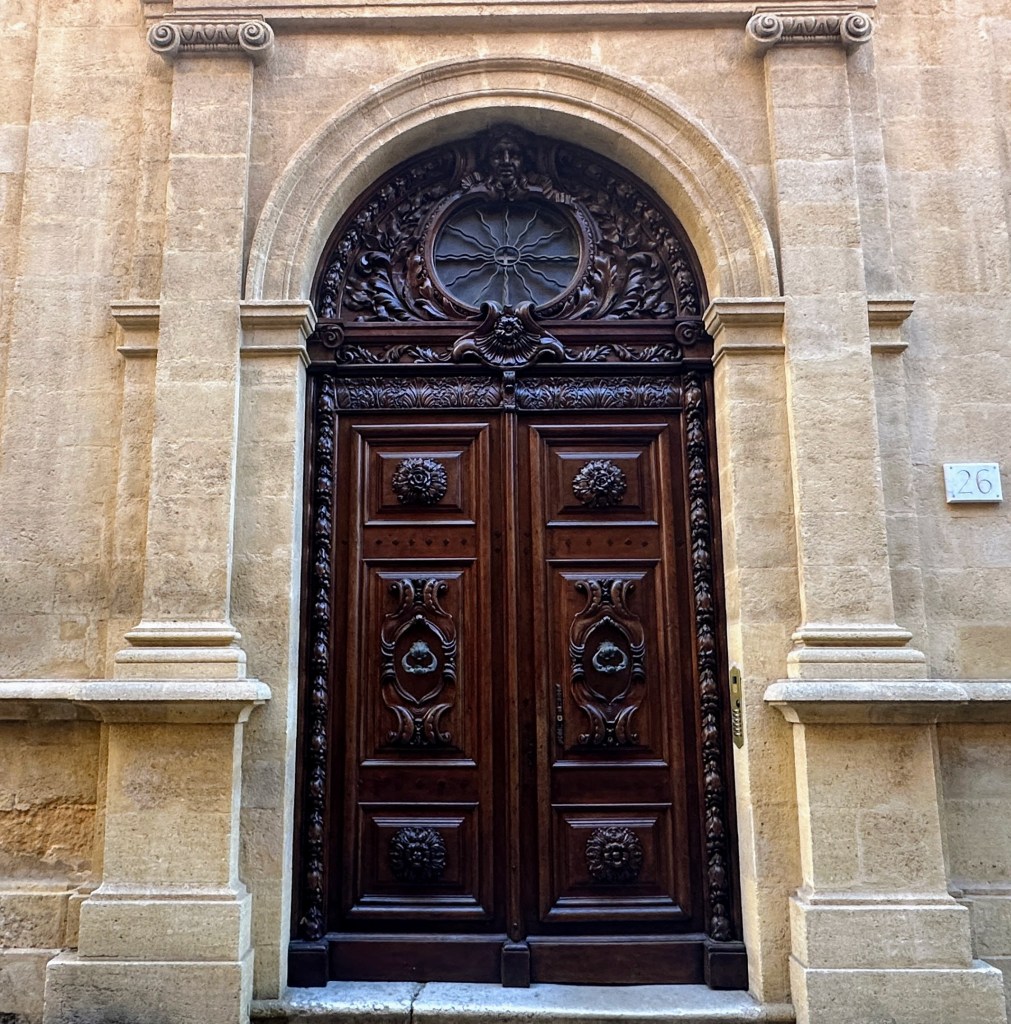
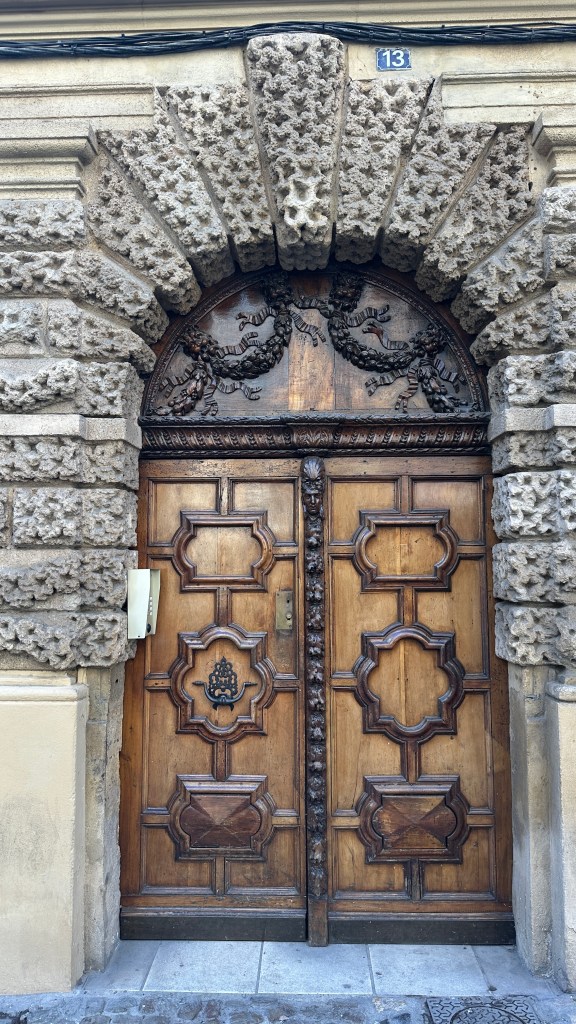
While in Aix I became obsessed with the many stunning doors and entryways scattered throughout the city. I will include some of my favorites in this blog, starting with this beauty.
Paul Cézanne was born on January 19th, 1839, in Aix-en-Provence. His father, Louis-Auguste Cézanne, started out as a hatter and worked his way up to banker. His mother, Elisabeth-Honorine Aubert, rounded out the household at 28 Opera street, where young Paul spent his early years sketching.
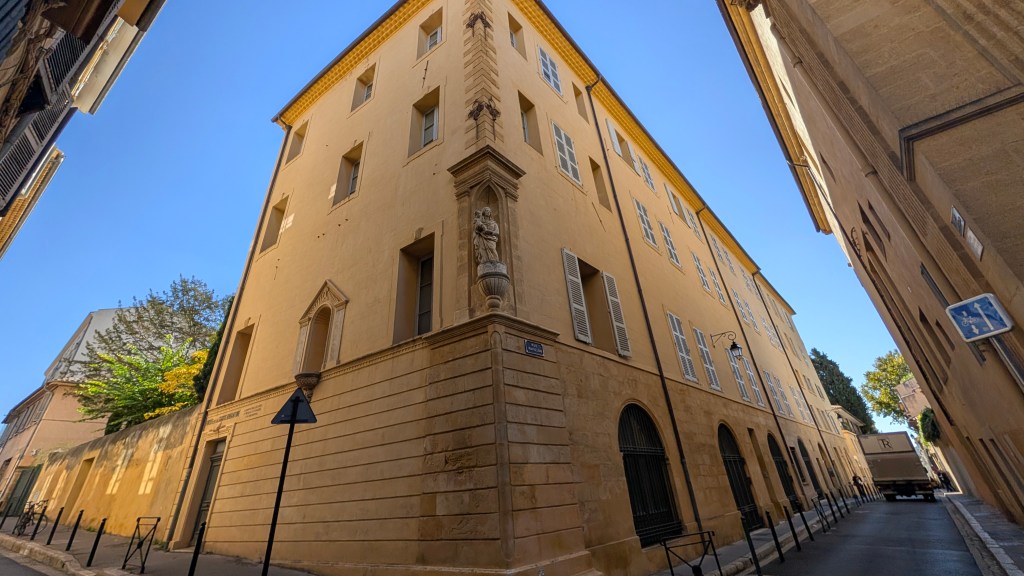
From 1850 to 1870, the Cézannes lived at 14 Matheron street, just a few minutes’ walk from Paul’s first address. Although Cézanne traveled often, especially to Paris, Aix always pulled him back.
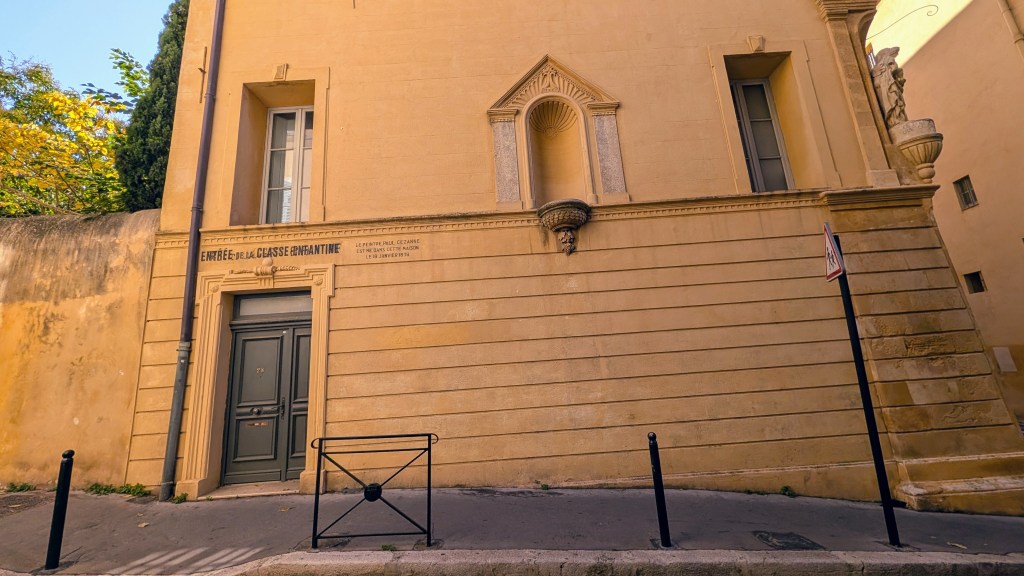
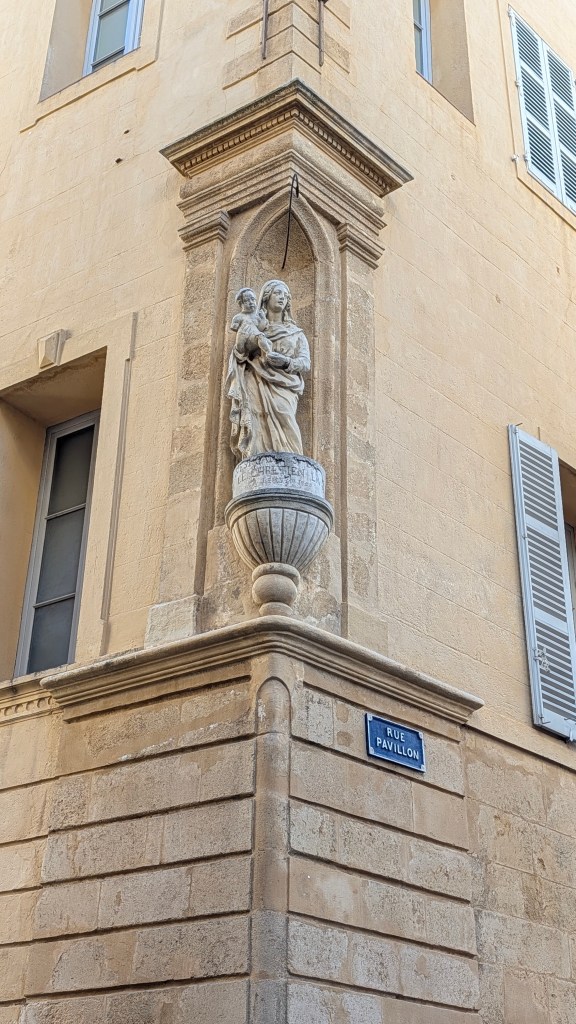
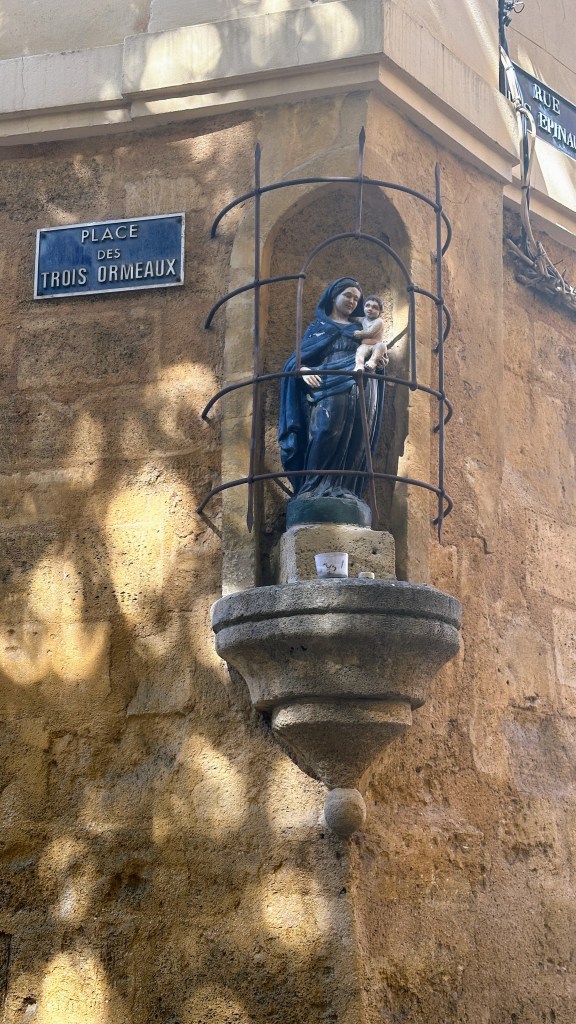
A religious niche featuring a statue of the Virgin Mary holding the Baby Jesus is located on the home’s corner. These shrines, known as oratories or niches, are commonly found on the corners of buildings throughout Aix-en-Provence. Historically, they served as comforting icons and protectors for the city, particularly during times of plague or for pilgrims.
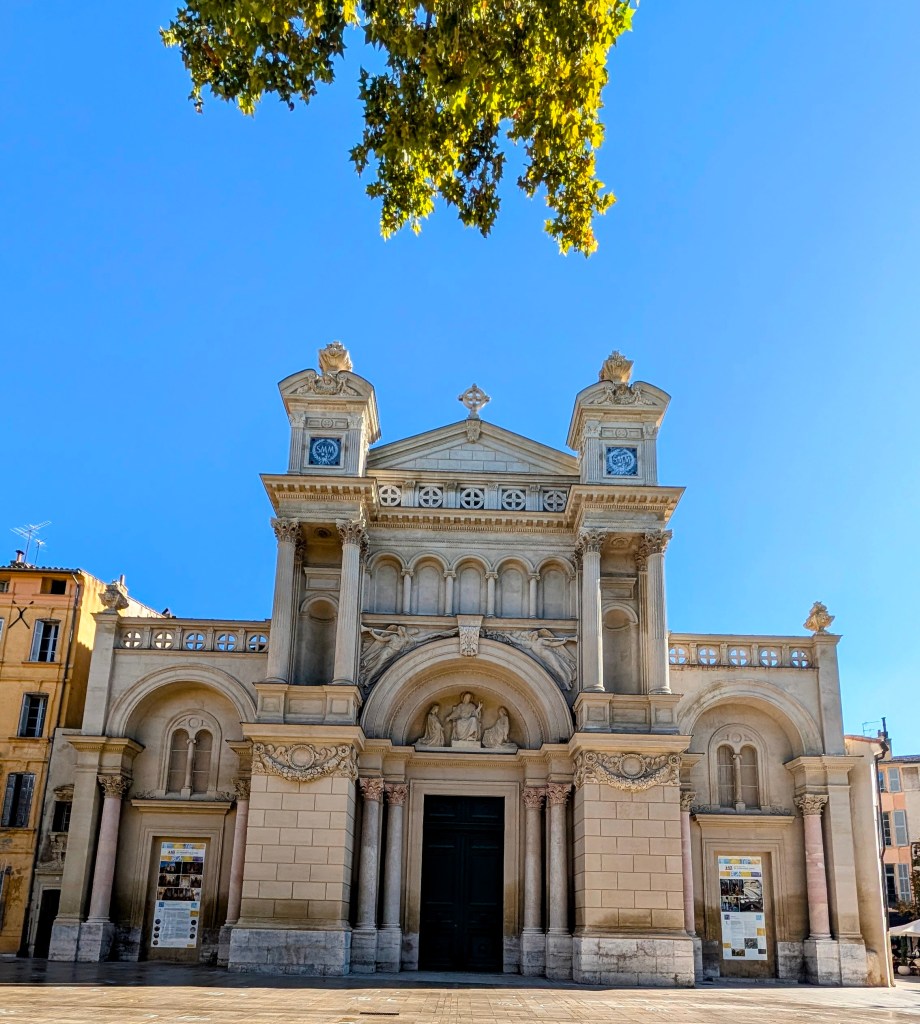
Eglise de la Madeleine (Church of the Madeleine) saw a lot of Cézanne family milestones: Paul’s parents were married there, his sister Marie was baptized in 1841, and his other sister, Rose, tied the knot there four decades later. At one corner of Preachers Square, the Church of the Madeleine originally rose in the 13th century as part of a Dominican convent complex, only to go up in flames in 1383. Rebuilt, it crumbled again in 1465. Finally in 1703, local architect Laurent Vallon gave the church its current form.
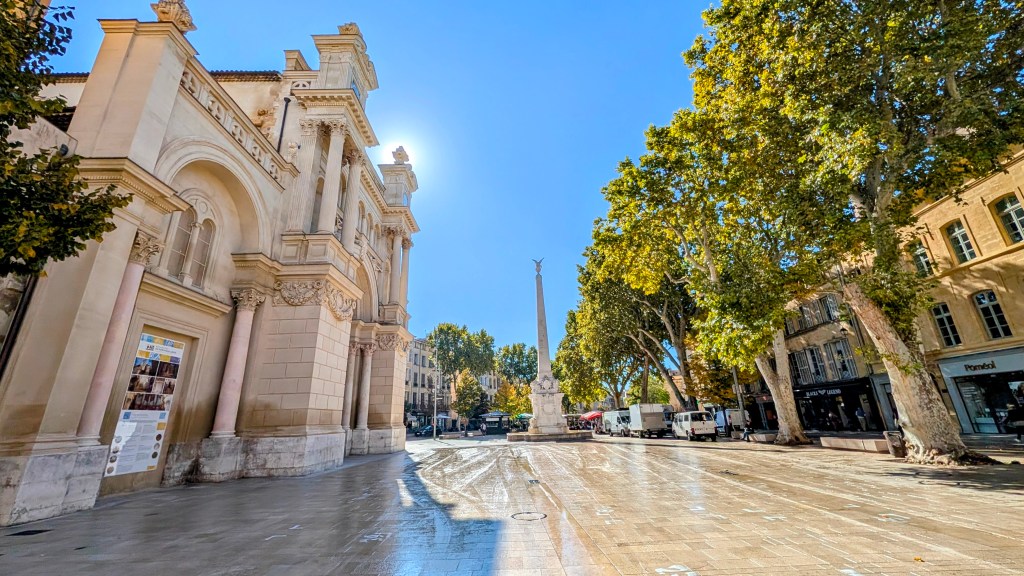
Preachers Square (Place des Prêcheurs) was named after the Dominican convent near the square. First designed in the 15th century by artist Jean de Paris, it was expanded and beautified around 1640 by architect Jean Lombard. The Preachers Square, now admired for its beauty, was once used for public shaming and executions.
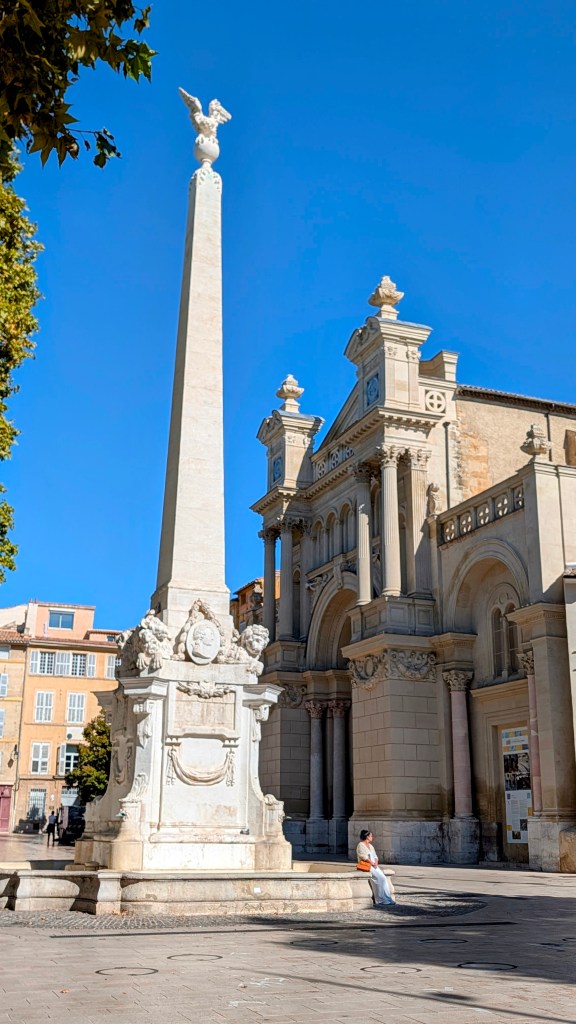
The Prêcheurs fountain, added in 1748, was crafted by sculptor Jean-Pancrace Chastel. It consisted of a tall obelisk with four lions guarding each corner. The four medallions embedded in the obelisk feature Sextius, the founder of the Roman city, Charles III, Louis XV, and Louis XVIII. The fountain was destroyed in 1793; the restoration did not take place until 1833.
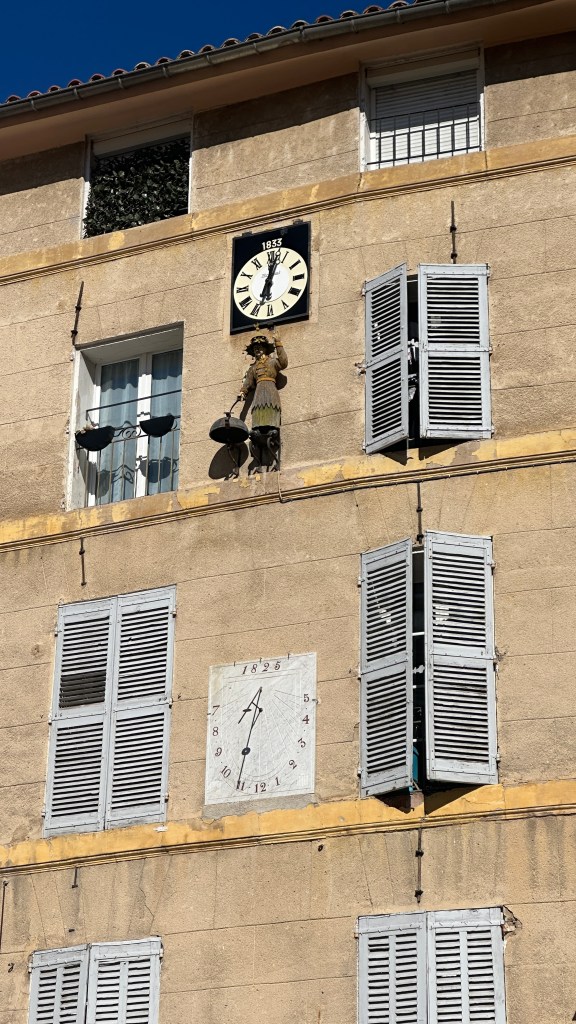
In the square this whimsical, Mary Poppins-reminiscent clock above an 1826 sun dial caught our eye.
The interior hall of the Palais de Justice (Palace of Justice), constructed between 1822 and 1832, features a distinctive neoclassical design characterized by a colonnaded courtyard.
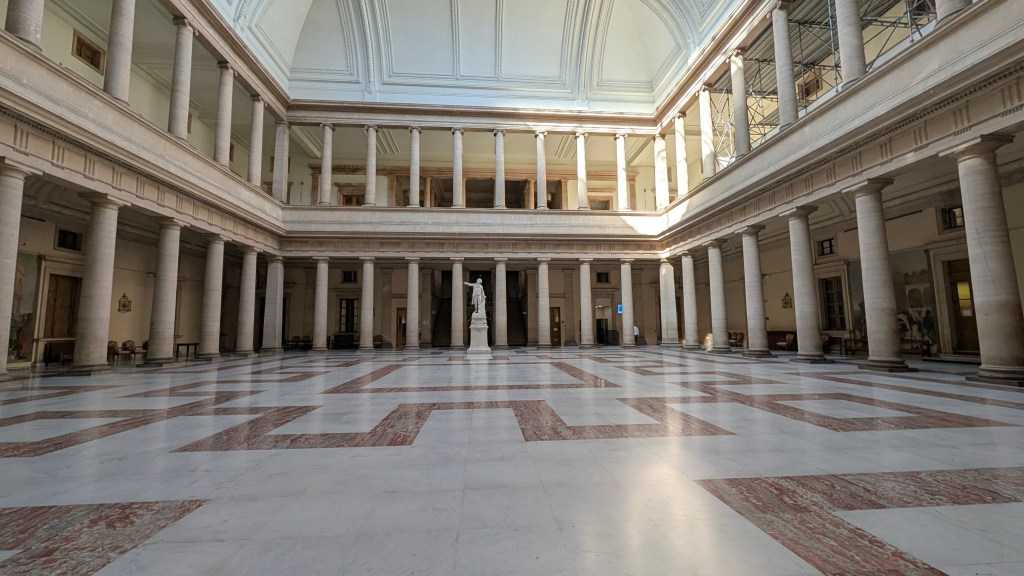
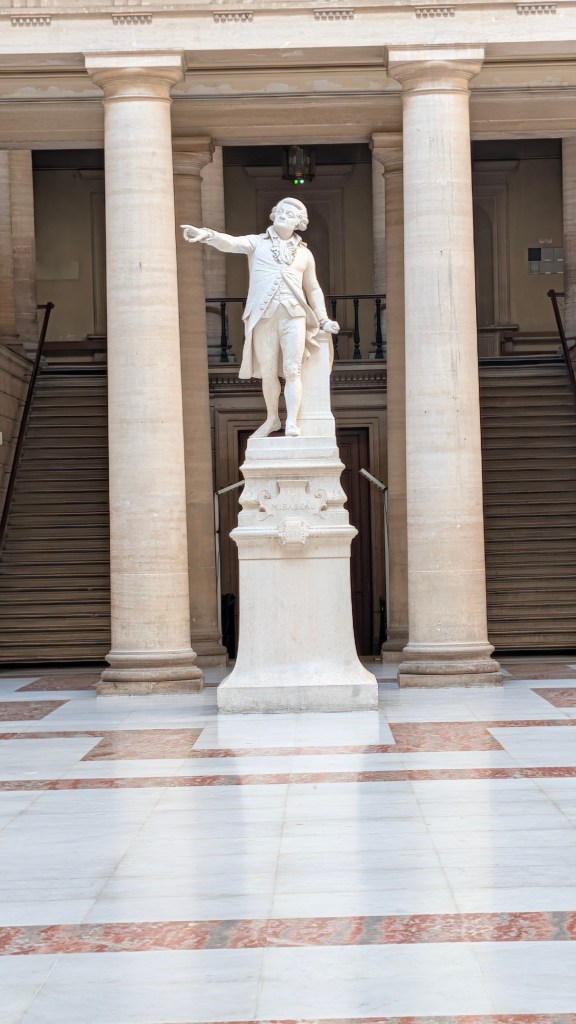
with a central statue of Honoré Gabriel Riqueti, comte de Mirabeau (1749–1791), a prominent orator and leader during the early stages of the French Revolution.
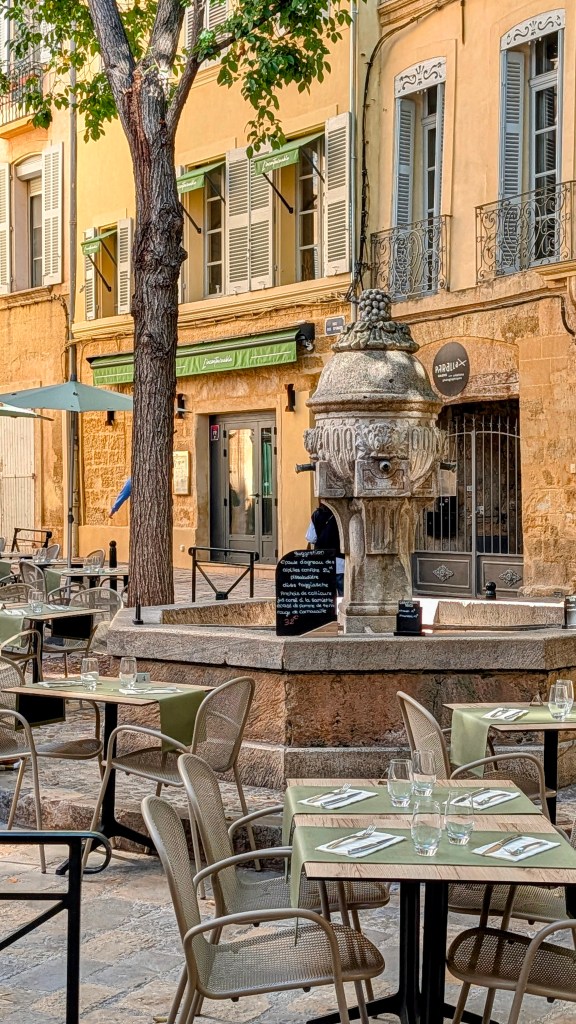
The Three Elms Square (Place des Trois Ormeaux) was named after its fountain, the Three Elms Fountain, which, in turn, was named for three elms planted in a triangle at each corner of the plaza. There is a legend that the elms magically grew in an area where local soldiers took up arms against the ruler of Aix. Though the square retains its name, the elm trees were removed and replaced with plane trees. The Three Elms Square is surrounded by houses, shops, and restaurants.
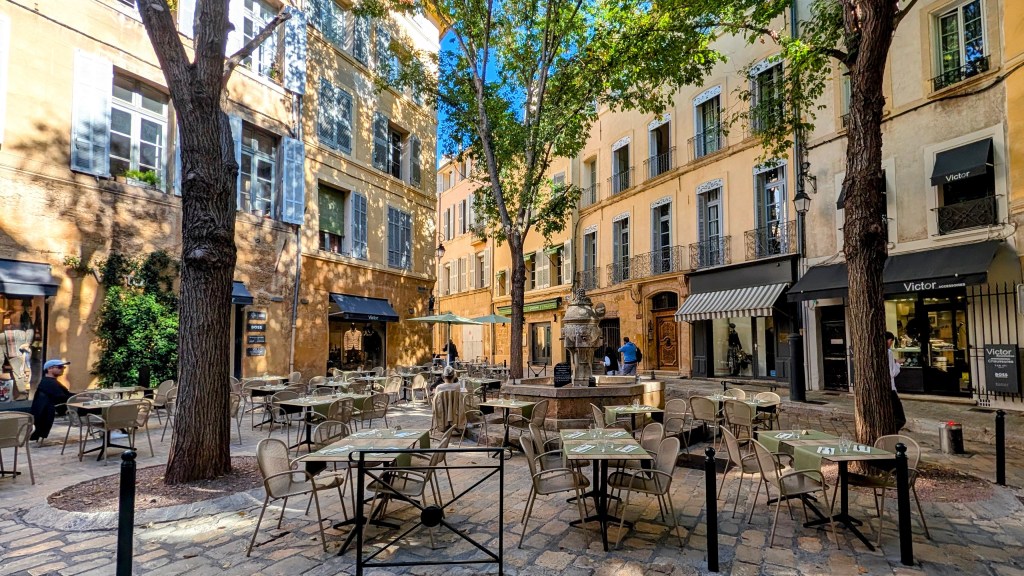
The fountain, made from Calissane and Bibemus stone, stands in the center of the square. The 17th-century fountain has a polygonal base with a central pedestal from which the water flows out of six cannons. The pedestal is carved with a floral motif, and vine leaves with a sublime bunch of grapes at the top.
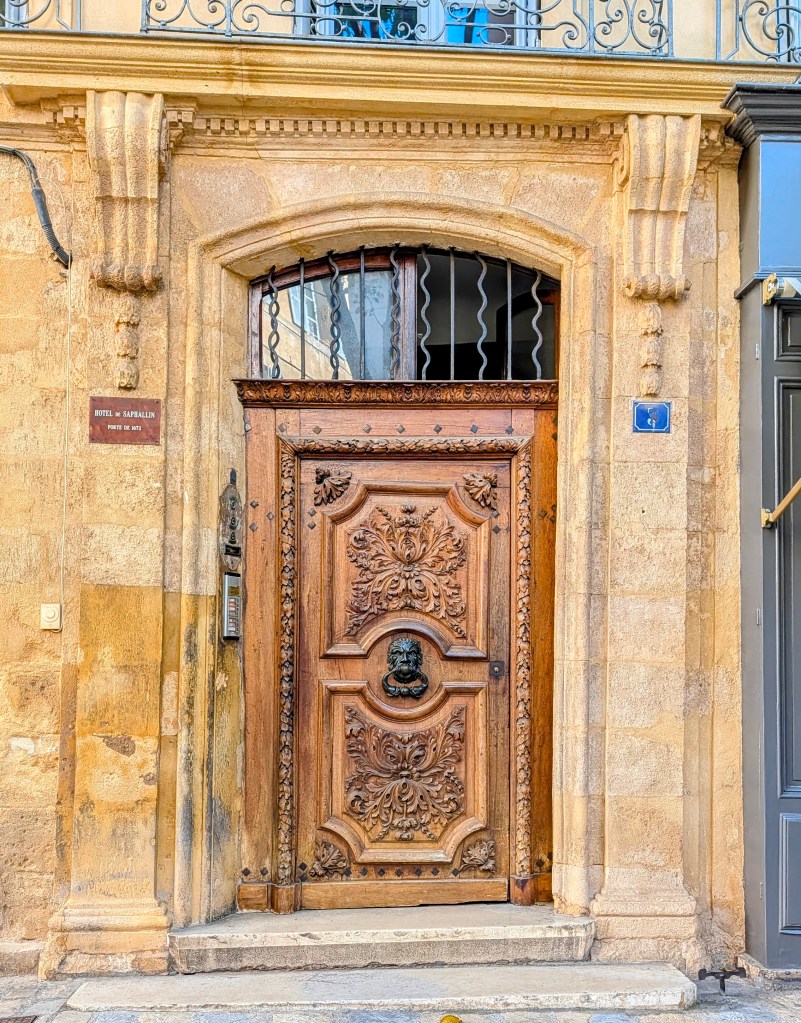
The door of the Saphallin Hotel in the Three Elms Square dates to 1672.
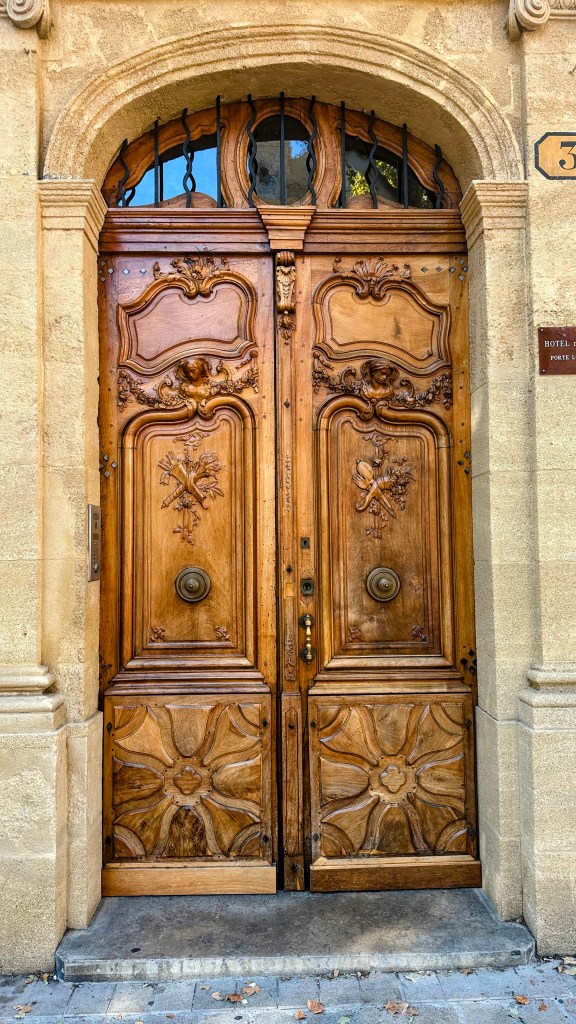
Off the square nearby is another gorgeous Rococco style door.
In oratories the statues are often protected by iron bars, as seen here. Saint Roch is the most frequently depicted saint in these street shrines, followed by the Virgin Mary.
More stunning doors
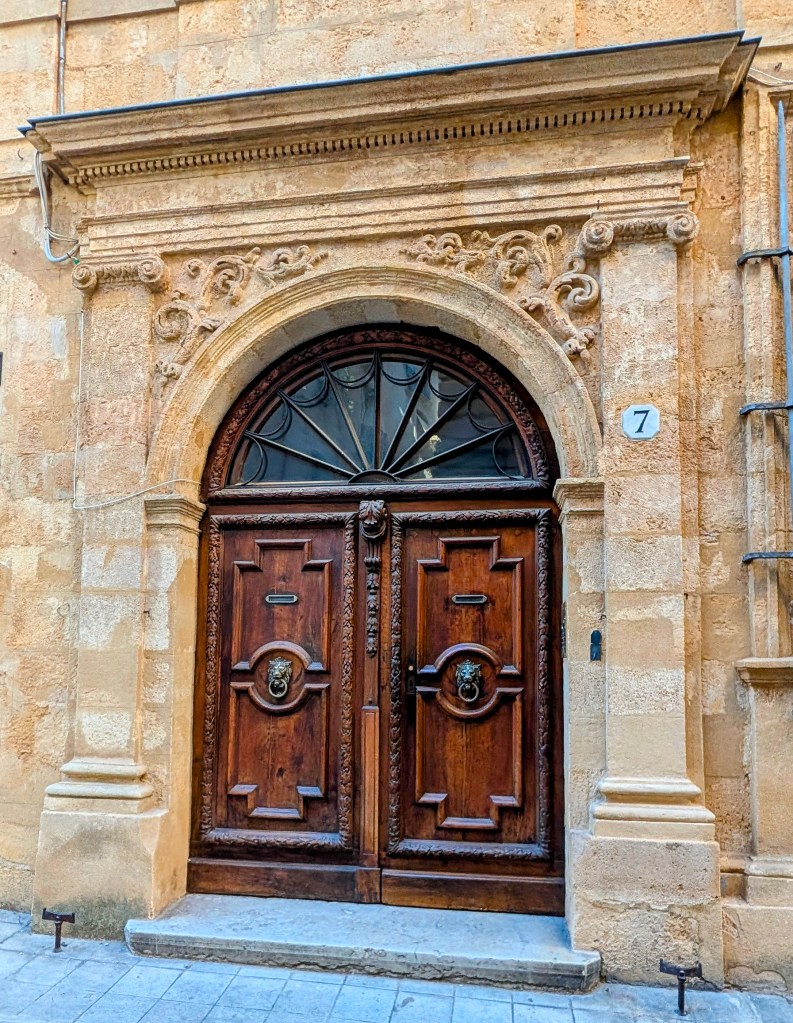
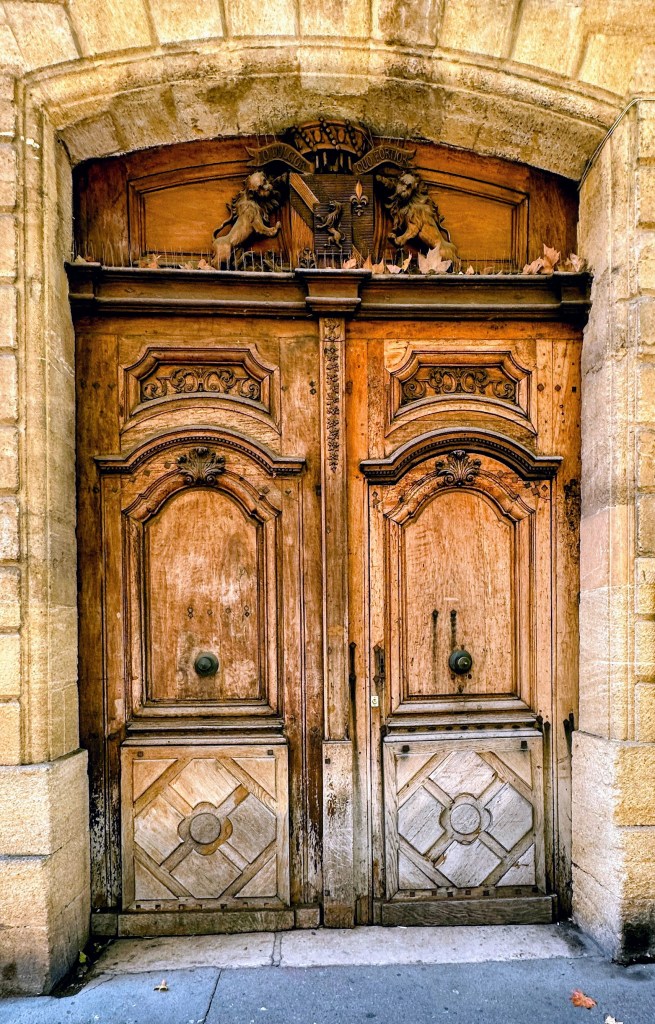
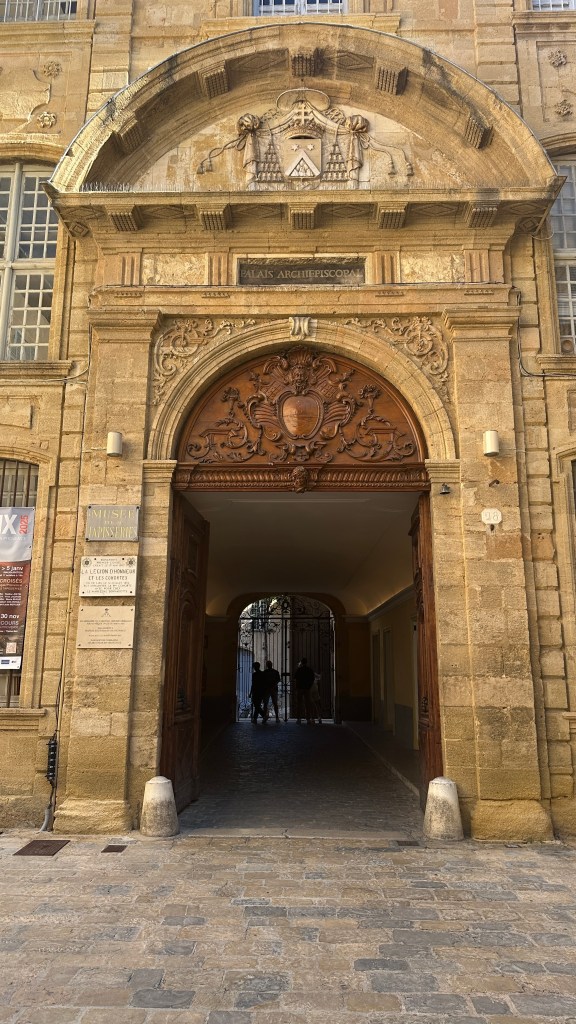
This entrance, featuring elaborate baroque architectural details and a carved wooden door, is to the Palais de l’Archevêché, which now houses the Musée des Tapisseries (Tapestry Museum). It serves as a venue for the international music festival, Festival d’Aix-en-Provence. The building is a historic archbishop’s palace located next to the Saint-Sauveur Cathedral.
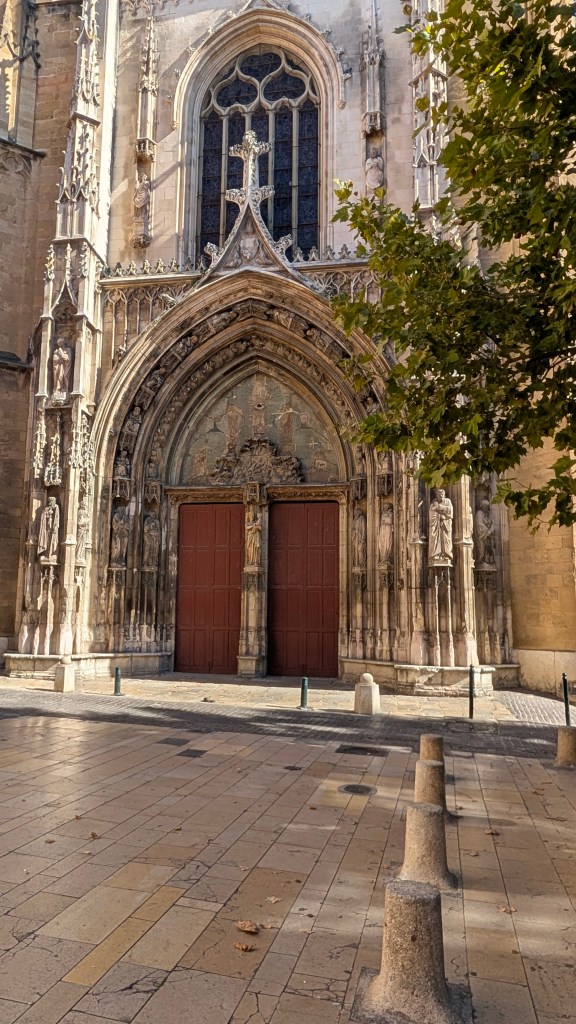
Cathédrale Saint-Sauveur (Aix Cathedral) is a Roman Catholic cathedral built upon the foundations of a 1st-century Roman forum. The site’s first church was reportedly founded by Saint Maximinus, in the first century AD, who, according to tradition, arrived from Jerusalem with relics of Mary Magdalene in a boat generously lent by Saint Lazarus. It is renowned for featuring a mix of architectural styles, including Romanesque, Gothic, and Neo-Gothic, reflecting centuries of construction and renovation. The cathedral we see today took root in the 12th century with a solid Romanesque nave. Then came a second one in 1171, dedicated to Saint Maximinus himself, squeezing in between the original nave and baptistry like a holy architectural remix. The 14th century brought more flair, with a Gothic-style transept added in 1318. Today it serves as the seat of the Archbishop of Aix-en-Provence and Arles.
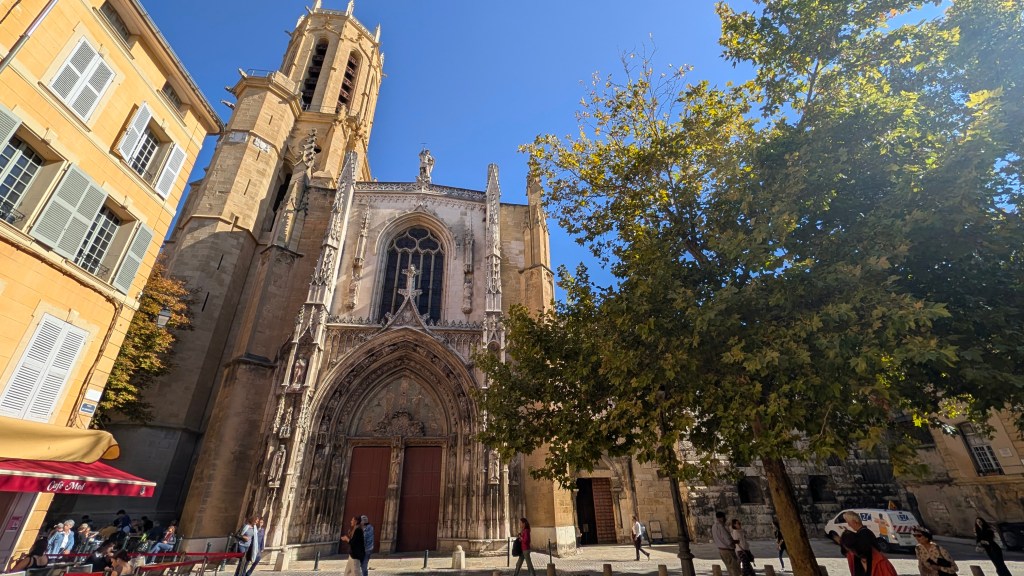
Outside, the façade is a theatrical display of late Gothic drama: pointed arches, slim yellowish buttresses, and twelve Apostles in the niches. The walnut portal doors, carved in 1505, are intricately carved with figures from the Old Testament.
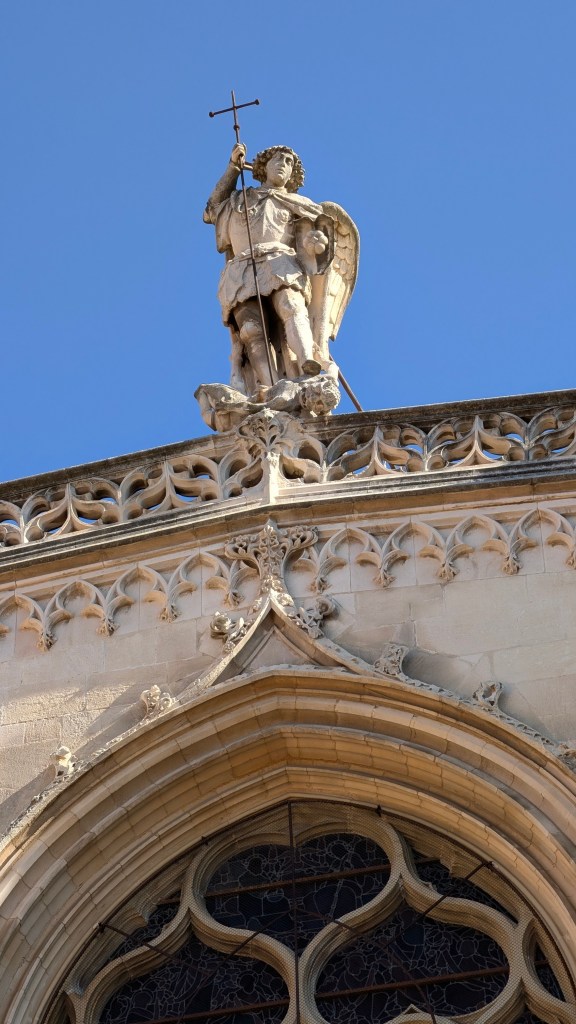
On the roof is a statue of Saint Michael the Archangel vanquishing Satan.
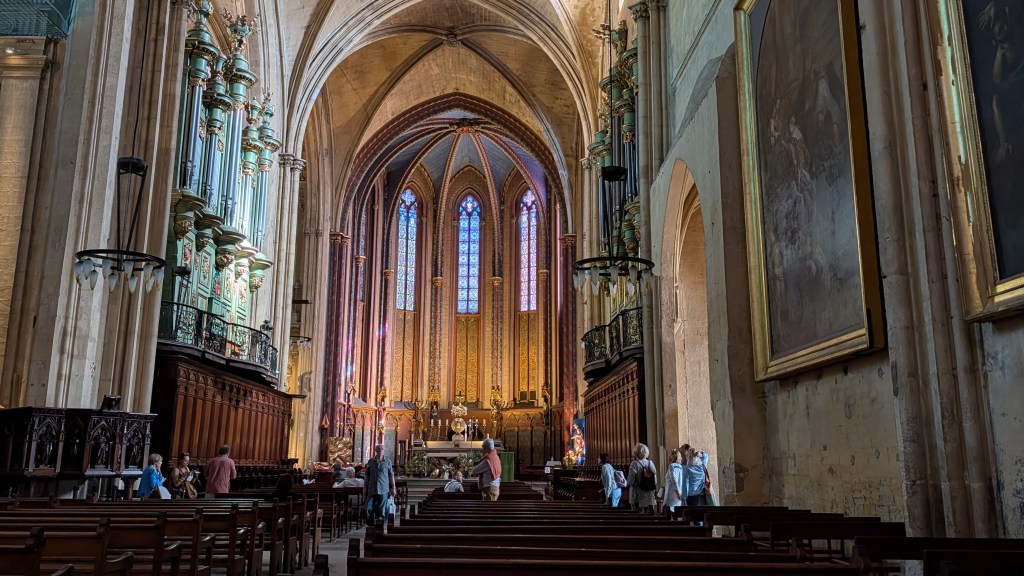
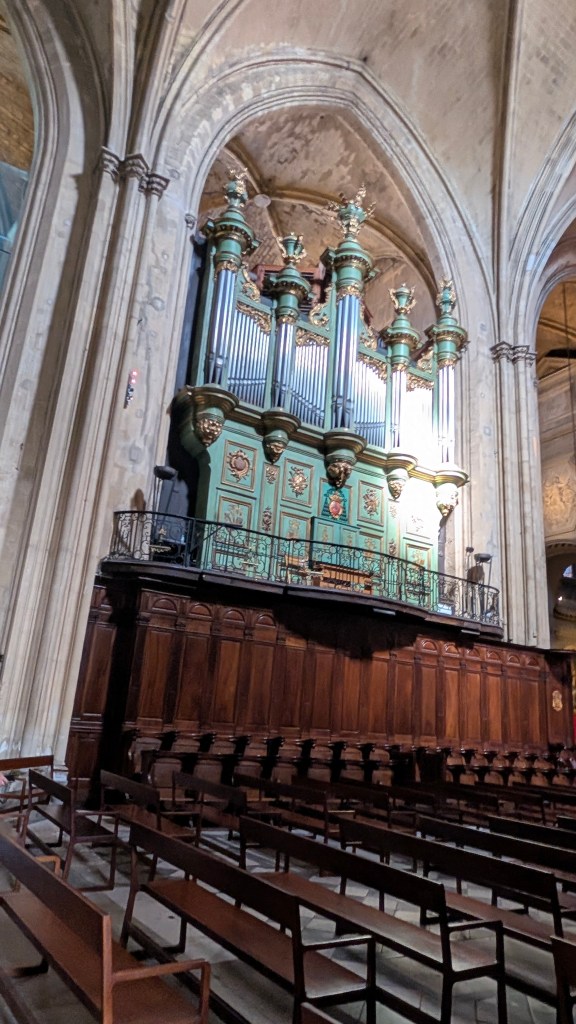
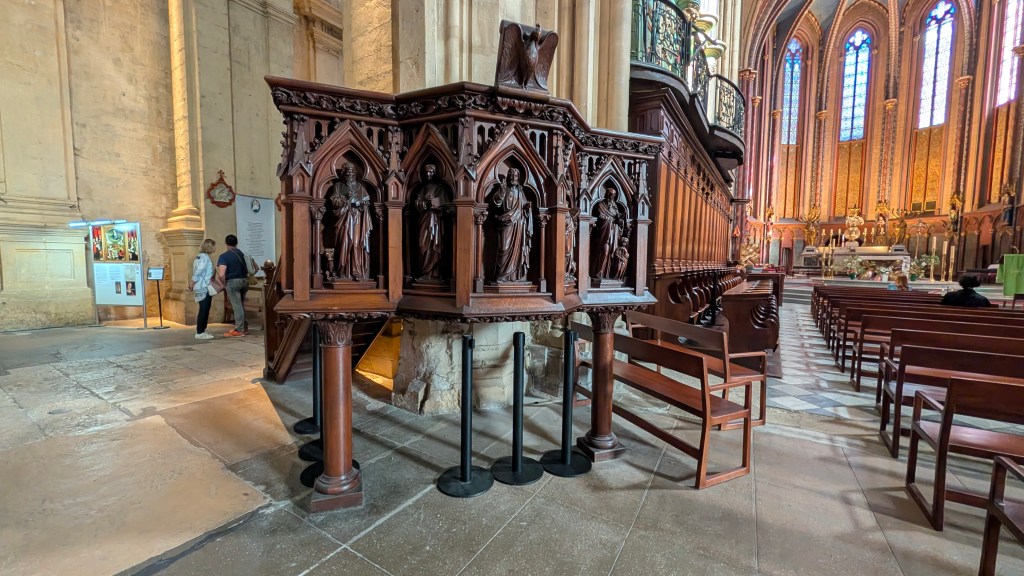
Inside, it’s not just architecture on show. The walls display works by Nicolas Froment, Jean Daret, and Louis Finson, a follower of Caravaggio known for his dramatic flair. One standout treasure is a set of 16th-century tapestries, originally woven for Canterbury Cathedral and brought to Aix long before international art loans became the norm. To achieve visual symmetry in the Baroque nave, a real organ is paired with a second, non-functional “dummy” organ.
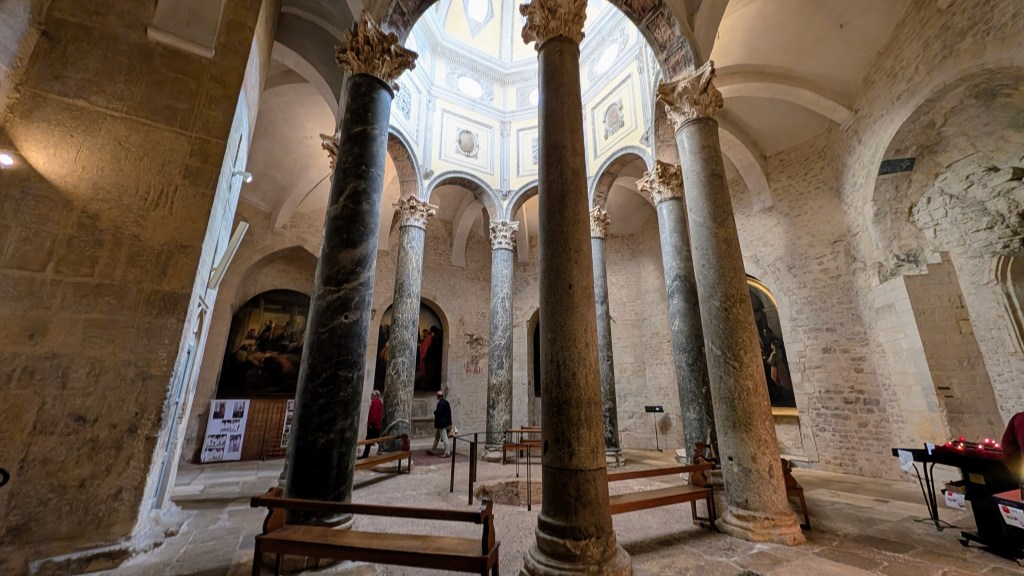
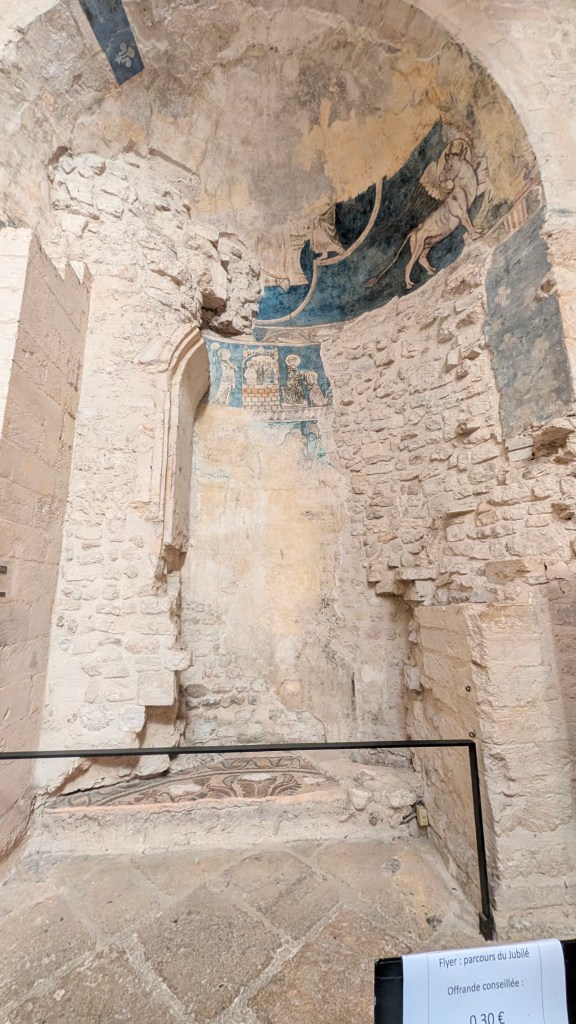
The 5th-century baptistry with Roman columns are still holding their ground.
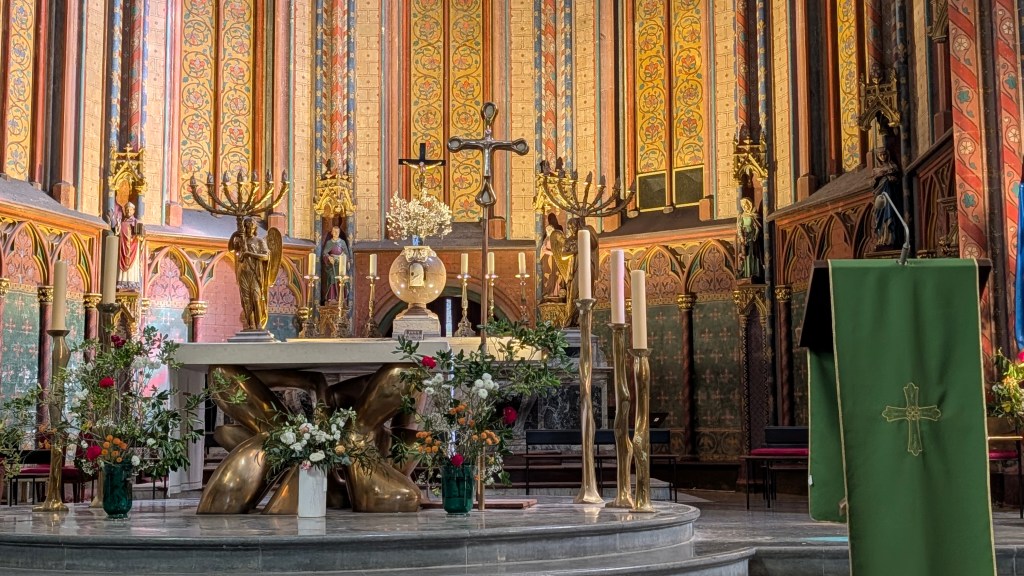
The high altar is supported by bronze figures of the Holy Trinity.
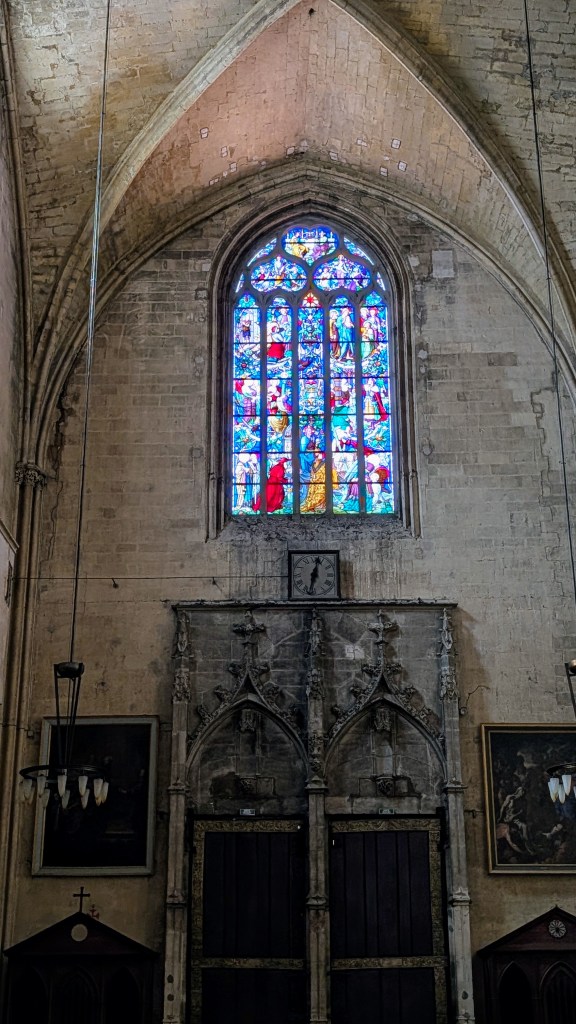
The stained glass windows tell biblical stories to educate visitors, a practice common to medieval times.
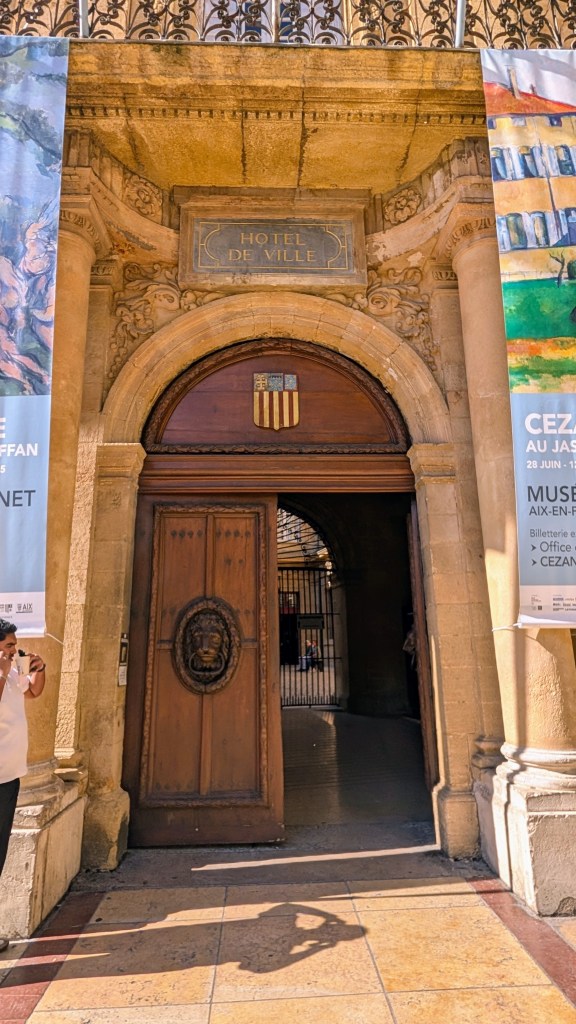
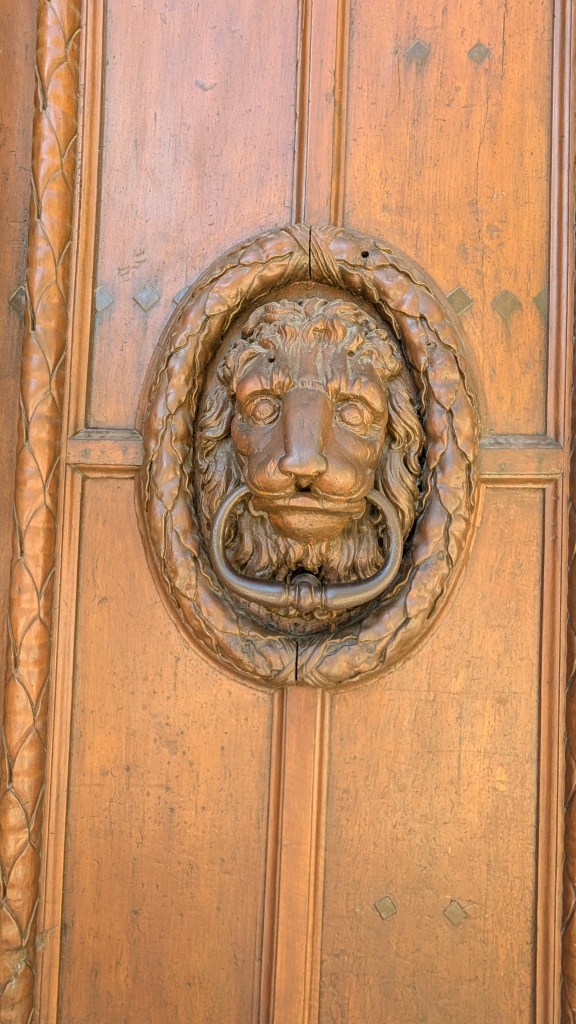
Place de l’Hôtel de Ville (Town Hall Square) is where history and art come together in a picturesque standoff. This central square has been keeping civic life scenic since the 14th century, though the current Town Hall, finished in 1678, is the spruced-up version by architect Pierre Pavillon.
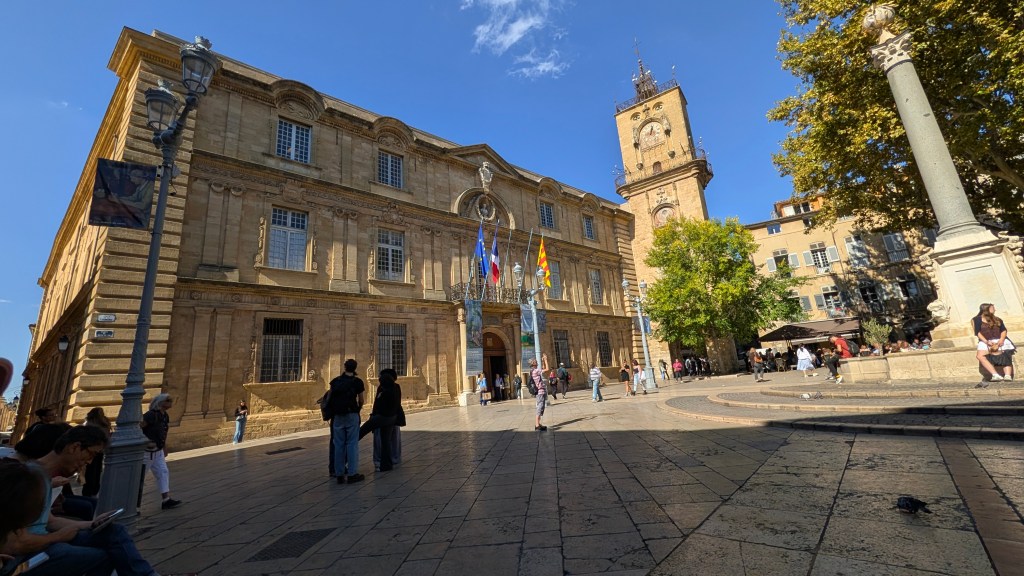
Paul Cézanne tied the knot here in 1886.
Towering above the square is the Clock Tower, built in 1510 from white limestone and accessorized with an astronomical clock from 1661.
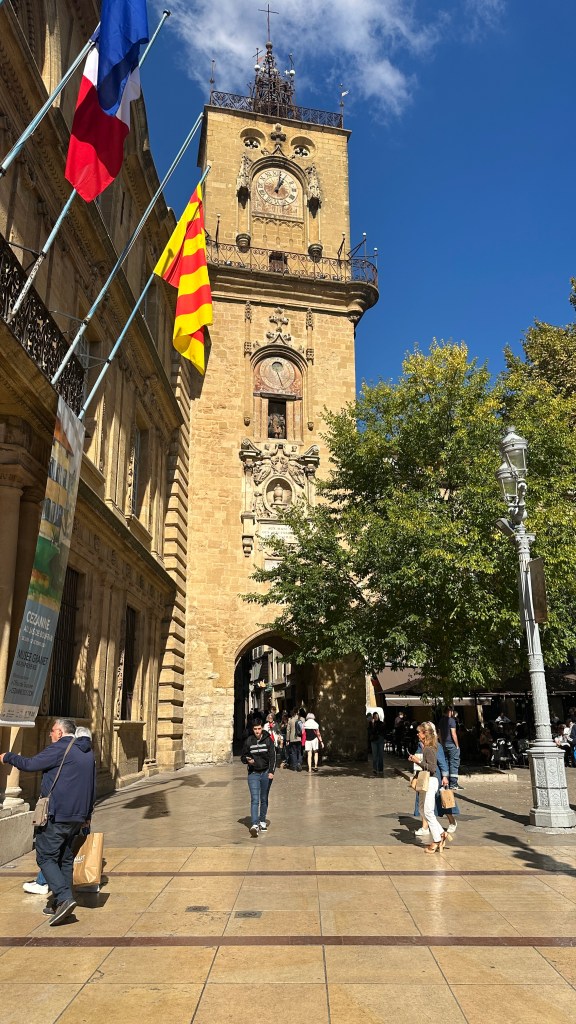
It also sports a medieval bell once used to enforce feudal dues.
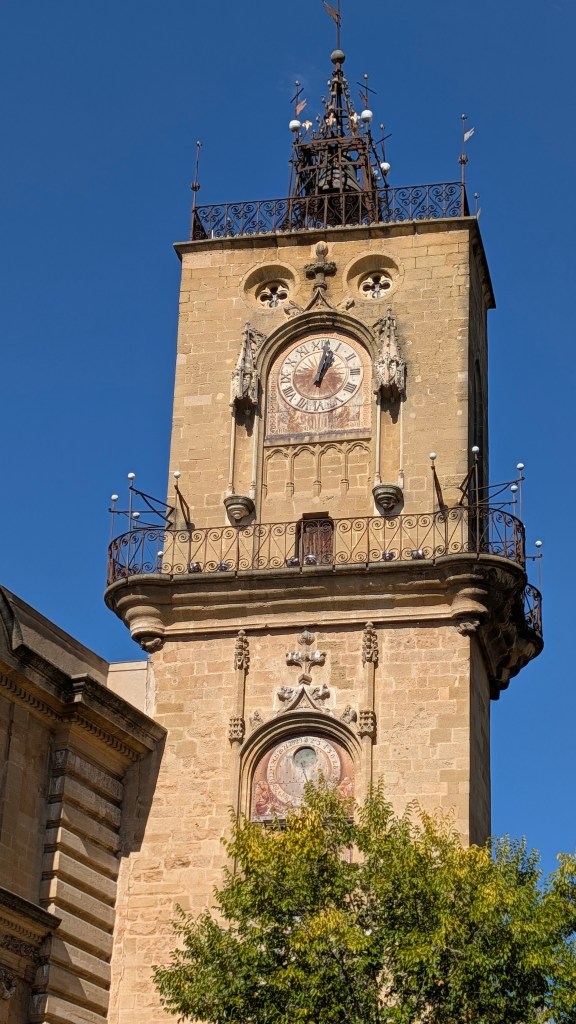
In front of Aix’s imposing Hôtel de Ville stands a charming Baroque-style fountain dating from 1756
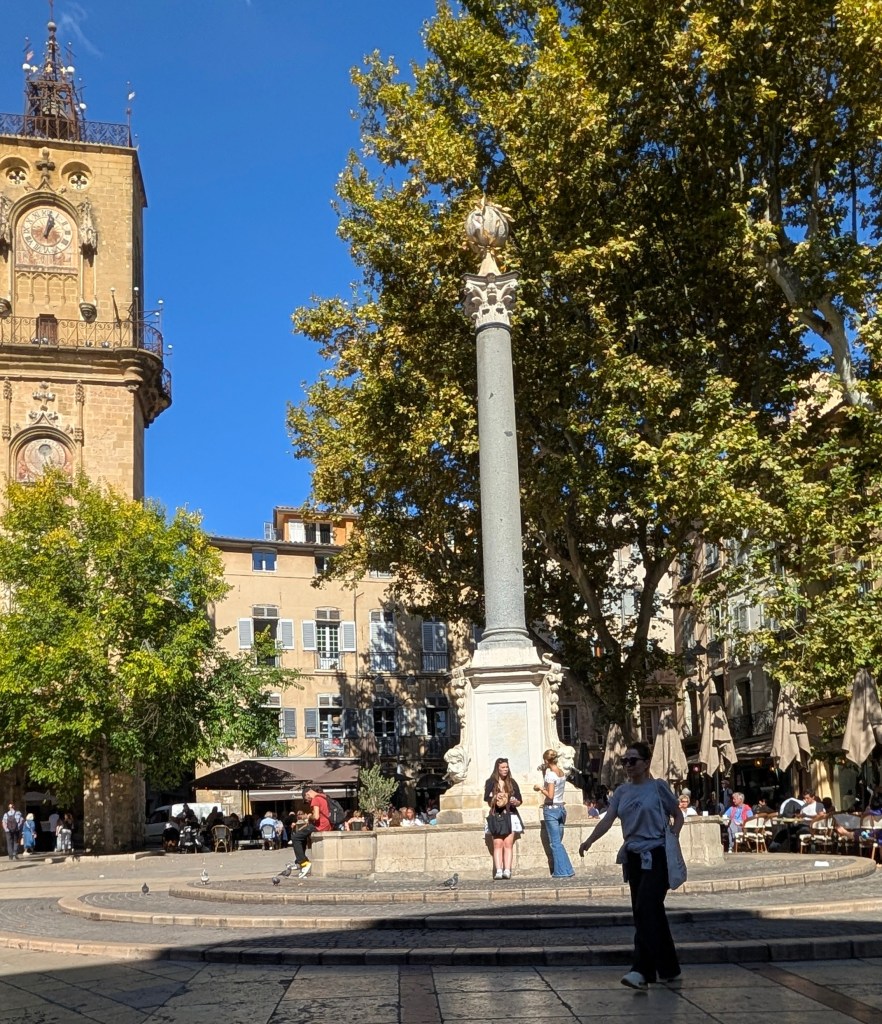
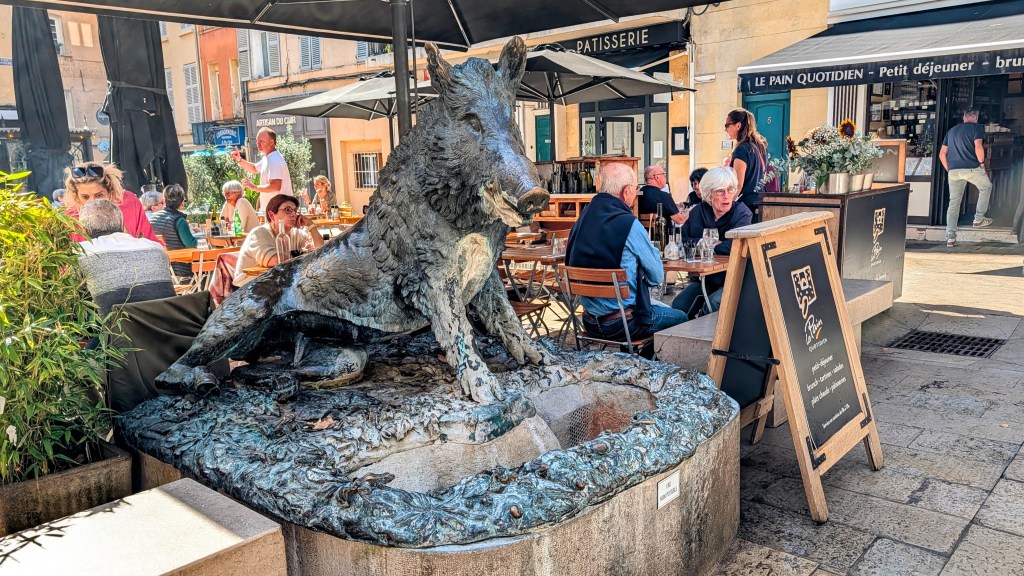
Richelme Square (Place Richelme) is widely known as the oldest and one of the most beautiful squares in Aix-en-Provence. The centrally-located square is surrounded by buildings with gilded facades and looming trees that cast comforting shadows. During the daytime, Richelme Square hosts a food market that has been around since the 14th century. The Boar Fountain (Fontana del Porcellino di Aix) is a primary feature of Richelme Square. The giant bronze boar is fashioned after a 17th-century statue in Florence, Il Porcellino (Italian “piglet”). The Boar was first displayed at the Town Hall then moved to Richelme Square in the 1980s.
Another magnificent entrance.
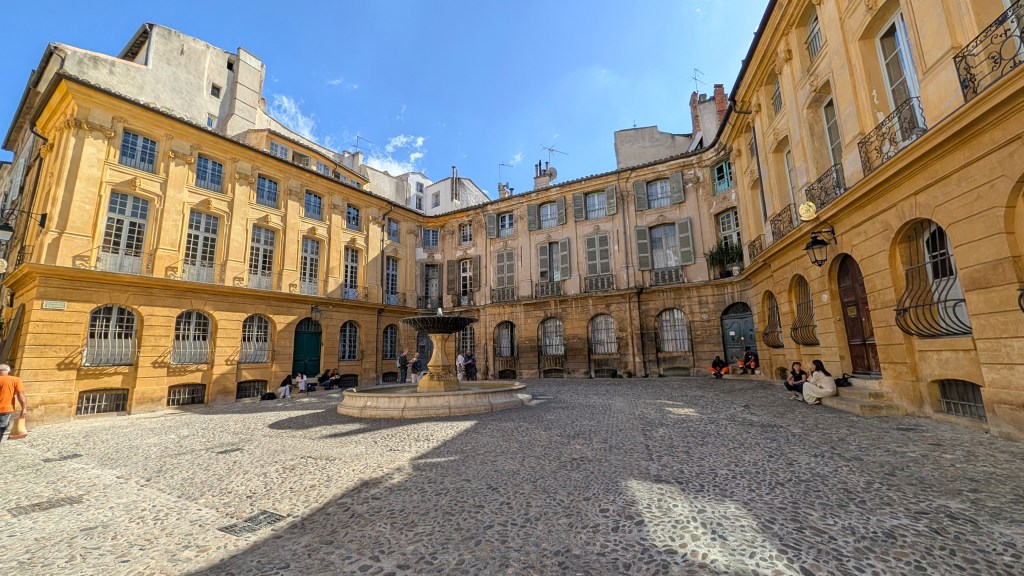
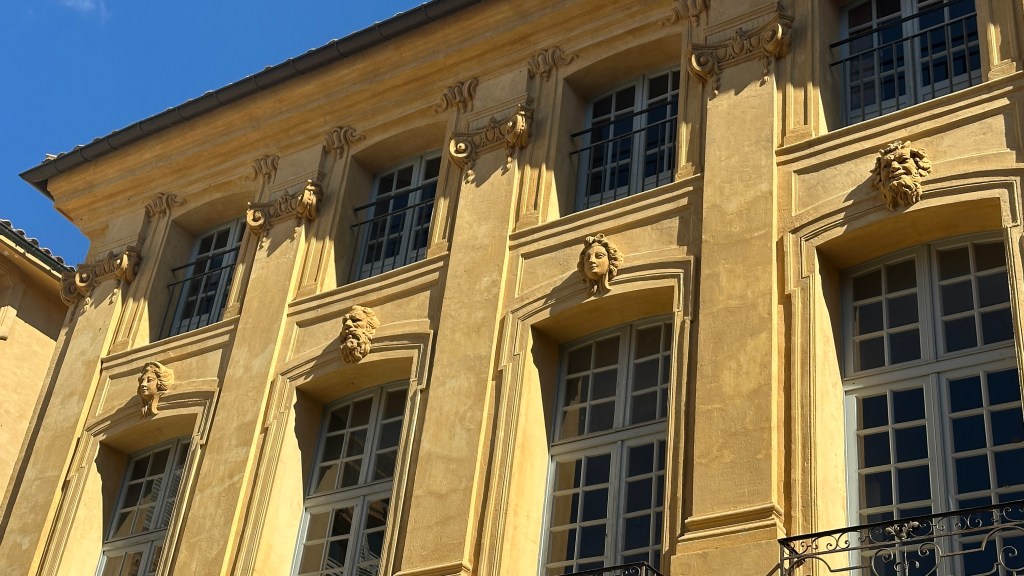
Place et Fontaine d’Albertas (Albertas Square) is a small, historic square created between 1745 and 1746 by the d’Albertas family. Back in the 16th century, Jean Aga, an adviser to the Parliament of Aix, decided to part ways with his residence, handing it off. A few generations later, the house’s square got sold to the d’Albertas clan, who had traded the hills of Alba, Italy, for Provence way back in the 14th century. Skipping forward to 1724, and Henri d’Albertas, royal adviser and apparent fan of urban upgrades, hired city architect Laurent Vallon to give his home a stylish overhaul. Not content with curb appeal alone, Henri bought the houses across the street and promptly flattened them for the greater architectural good. Henri died before completion, but his son Jean-Baptiste continued the project handing the design to Laurent’s son, Georges Vallon. Georges, now city architect himself, drew inspiration from the grand squares of Paris and created a petite but polished plaza in front of the family residence. Today’s Albertas Square is framed by four nearly identical mansions, all with Parisian-style façades and balconies.
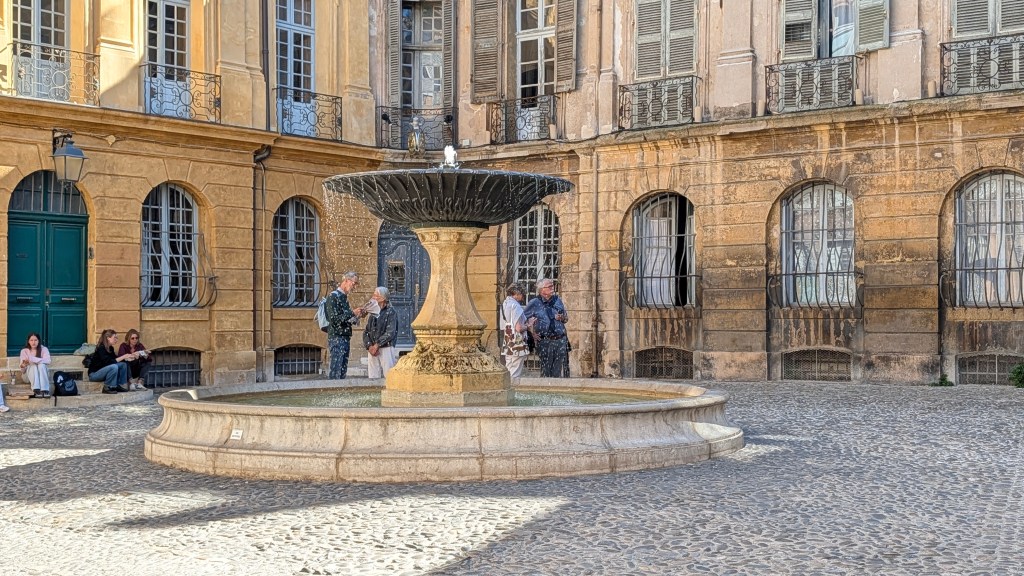
At the center of the square stands the Albertas Fountain, a cast-iron chalice anchoring the square. The decorative railing encircling the basin was forged by students from the local School of Arts and Crafts, their style merging seamlessly to the architect’s.
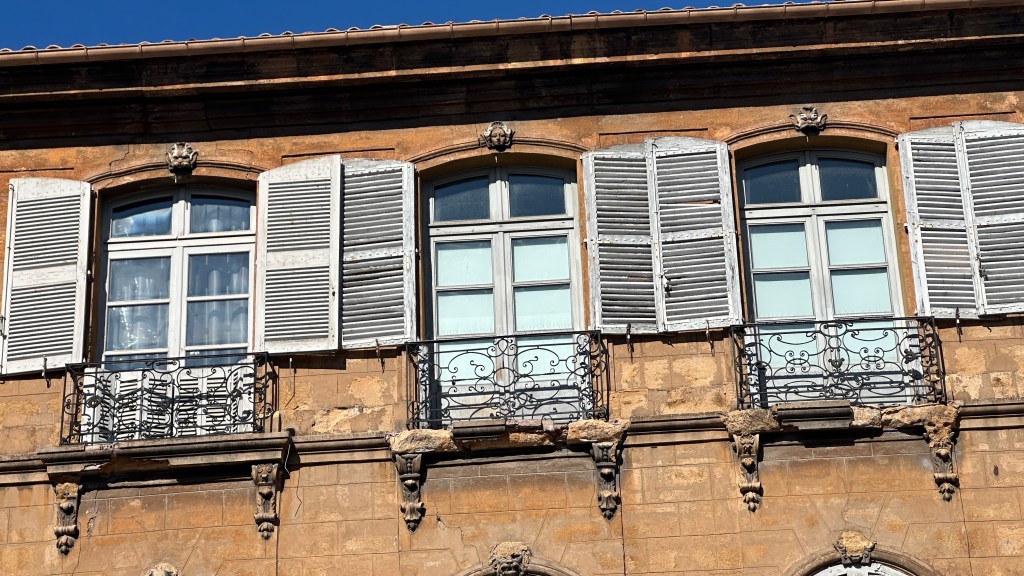
The Église du Saint-Esprit (Church of the Holy Spirit) is a Roman Catholic church built in the 18th century. The Hôpital du Saint-Esprit, a hospital of the Order of the Holy Ghost, and several houses were torn down to make way for the construction of a new church. It was designed by architects Laurent and son George Vallon and built from 1706 to 1728. The bell tower of Église du Saint-Esprit can be seen down the narrow street.
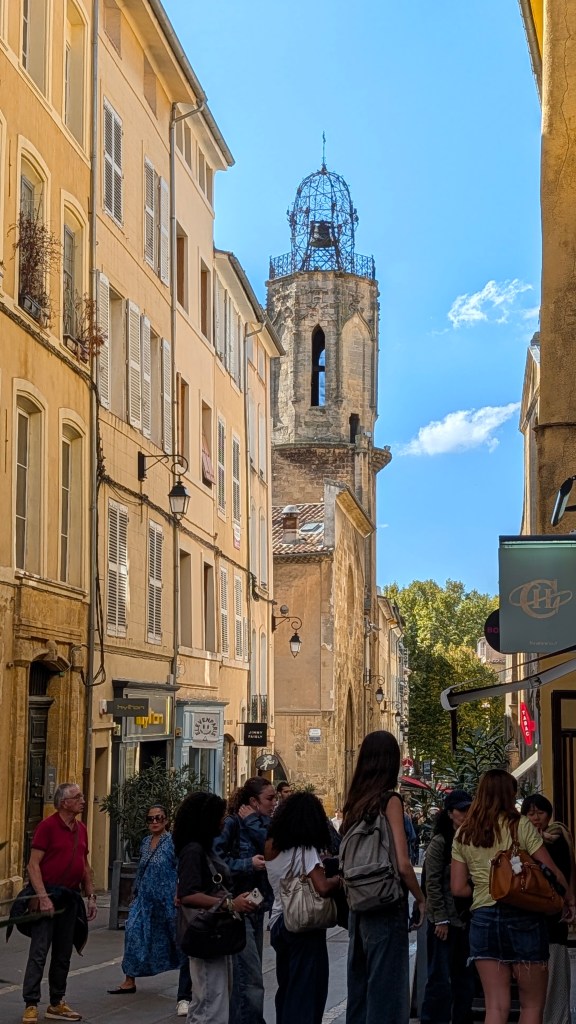
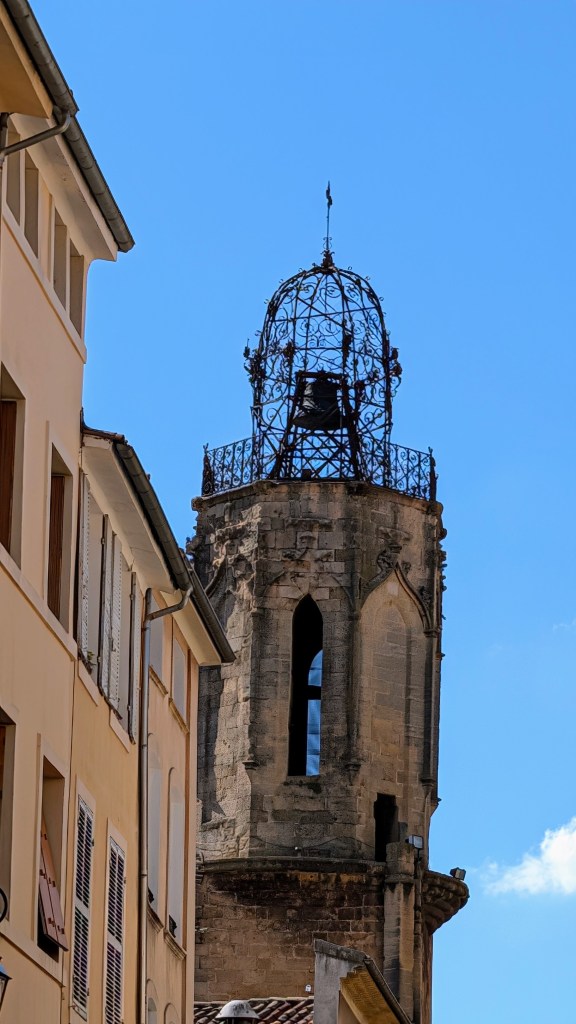
The tower features a distinctive 15th-century wrought-iron steeple, known as a campanile, housing the church bell, which was typical in Provence at the time.
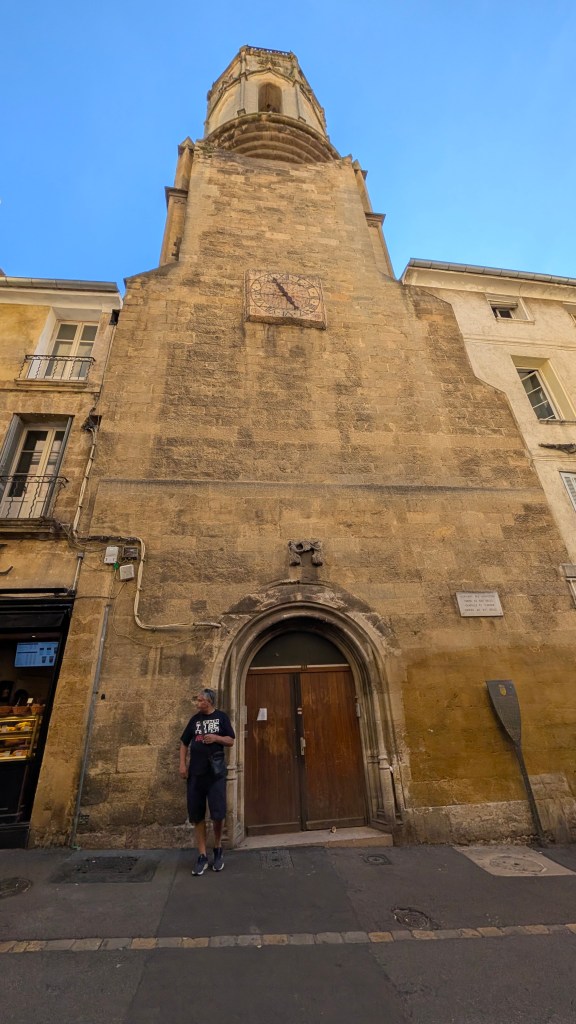
Across the street from Eglise du Saint-Esprit is Tour des Augustins, a clock tower erected in 1510 on Roman foundations and the only remaining part of a former Augustinian convent. It features two clock faces: a traditional upper face and a lower astronomical clock added in 1661. It served as a belfry representing local government power.
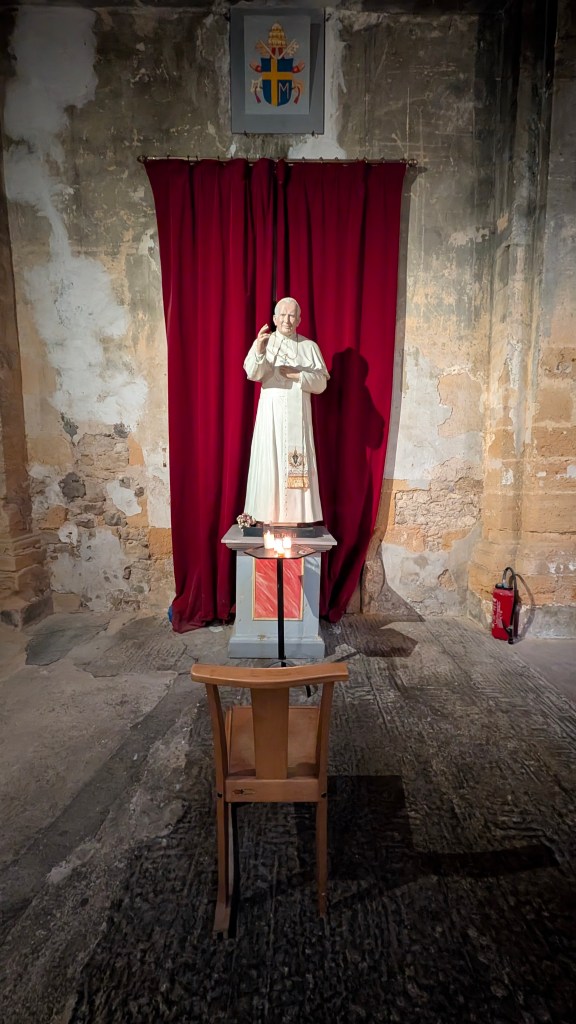
Inside is a little statue of Pope John Paul II.
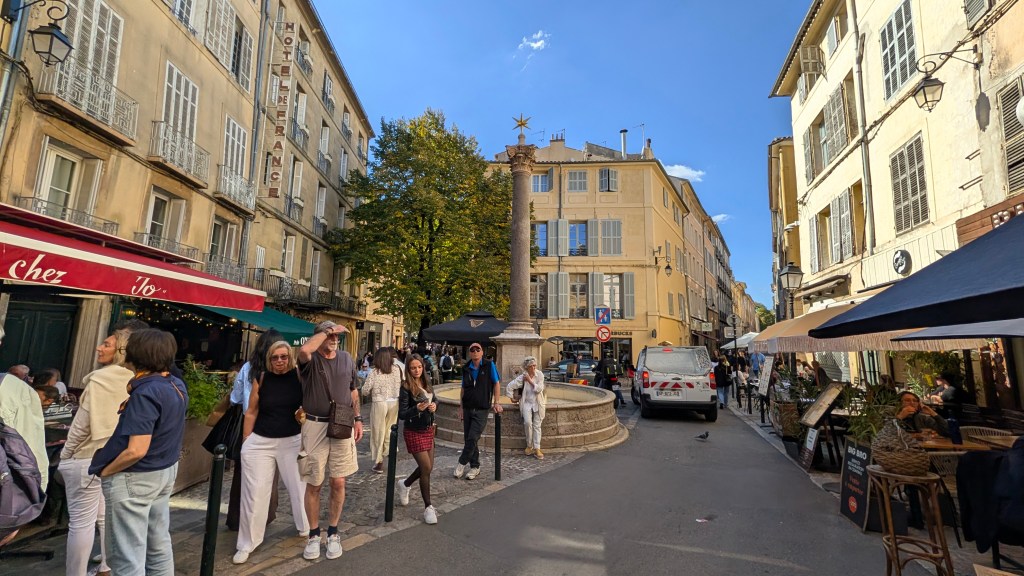
The Fountain of the Augustins (Fontaine des Augustins) is situated in Augustine Square, the old center of Aix. The mini square, where the fountain stays, is surrounded by restaurants and cafes with plenty of outdoor seating.
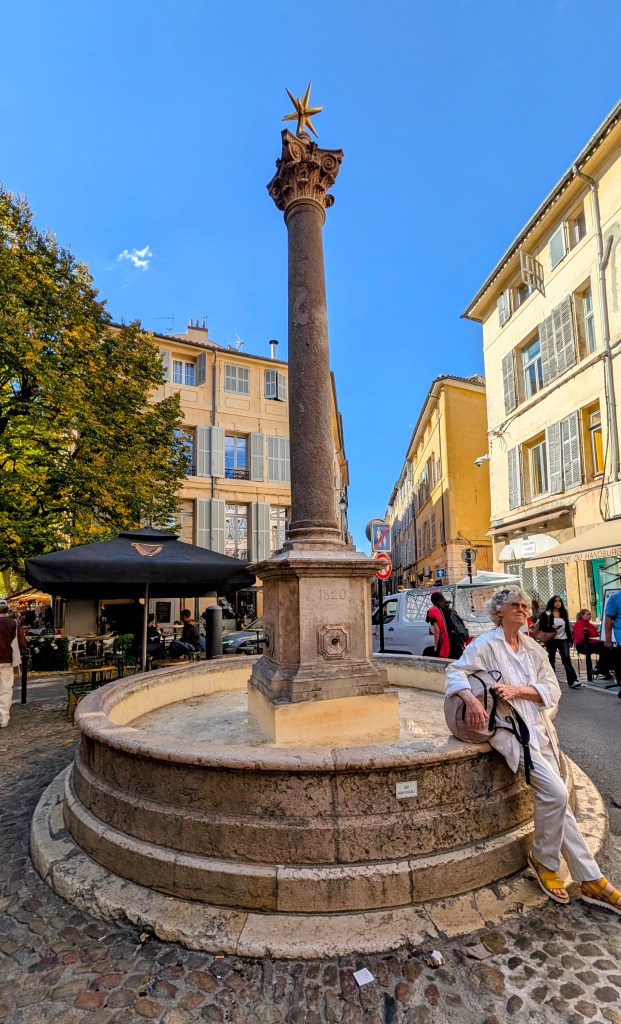
The fountain was built twice. The first fountain was built in 1620 near Espariat Street, about 95 meters from its current location. The second iteration came in 1820 when the old fountain was dismantled and a new one, designed by Aix architect Beisson, was built. In the days gone by, the water from the basin was used for steam locomotives in the nearby train station. The central element of the fountain, a Roman column originating from the demolished Palace of the Counts of Provence, was added later. The palace was located in the spot where the courthouse now stands. A 12-sided copper star sits atop the column. At its base, four cannons spill into a large, circular basin.
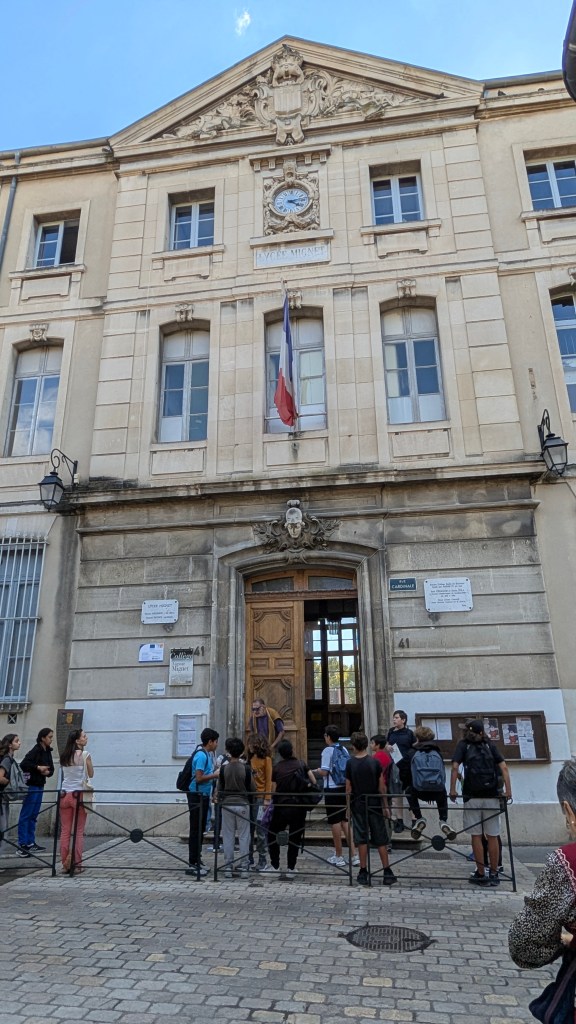
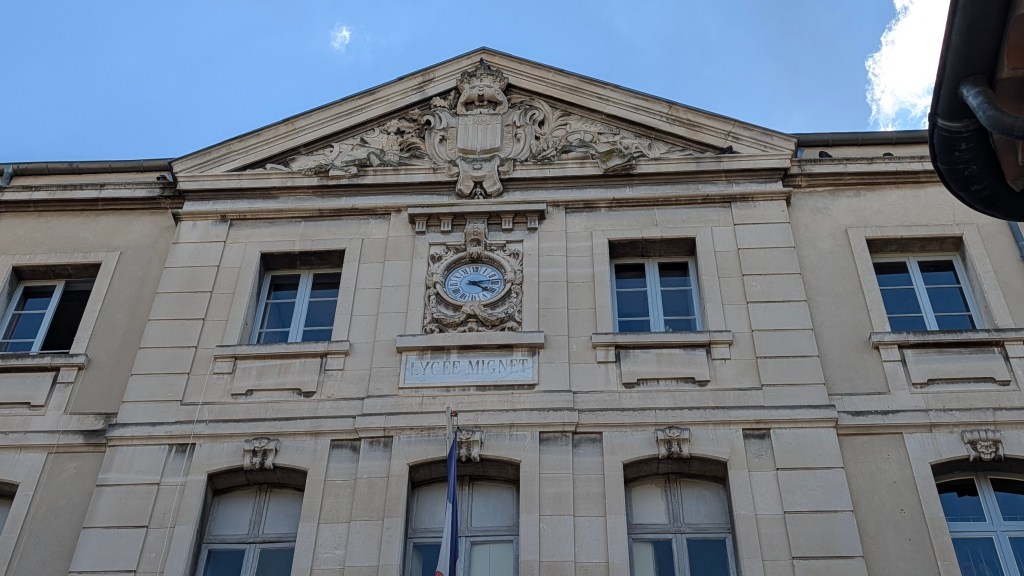
Collège Mignet (Mignet College) sits on Cardinal Street in Aix’s refined Mazarin district and owes its name to 19th-century historian François-Auguste Mignet. Originally approved as a royal college in 1603 by King Henri IV, it started off under the scholarly gaze of the Jesuits. When they were disbanded in 1773, the Doctrinaire Fathers stepped in, until they too were shown the door during the Revolution. It reopened during the Napoleonic shuffle, briefly bore the monarchical badge as “Bourbon College,” and eventually landed in city hands by 1878. By then, it had been housed in not one but two former convents: Benedictine and Ursuline, stitched together to form its current façade. That architectural patchwork still stands today, with parts declared historic monuments, including the Benedictine entrance and a grand staircase.
As for the alumni list, it reads like a name-dropper’s dream. You’ve got scientist Jean-Baptiste Baille, composer Darius Milhaud, literary giant Emile Zola, and of course, Paul Cézanne-who managed to graduate in 1858 with the teacherly praise of “quite well.” Zola and Cézanne were such close friends back then, they were dubbed “The Inseparables,” though only one of them went on to revolutionize the art world.
We had circled our way back to the beginning: Fontaine de la Rotonde.
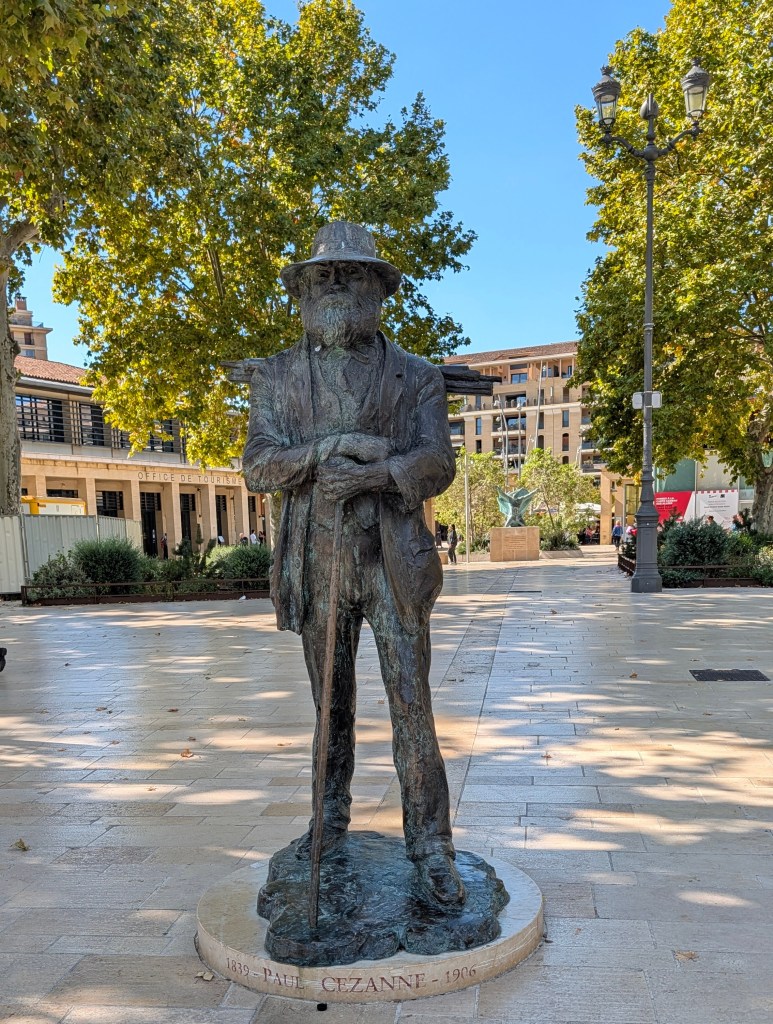
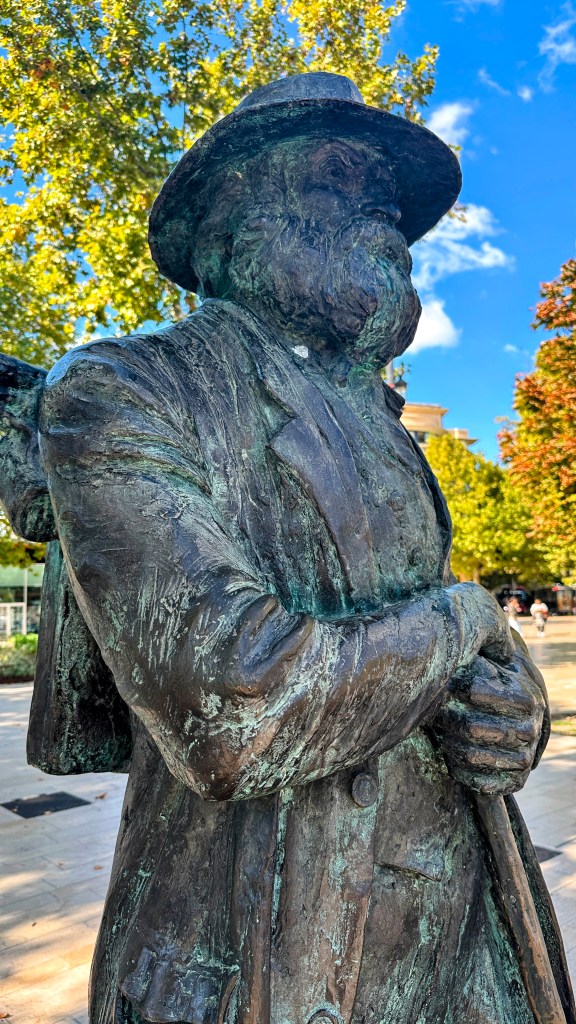
Across the street on the side opposite Cours Mirabeau stands a Statue de Paul Cézanne (Statue of Paul Cézanne). Sculpted by Dutch artist Gabriel Sterk, the statue was gifted to the city in 2006 for the centenary of Cézanne’s death. Cézanne stands over 6 feet in height and is in his usual work jacket, boots laced for walking, hat pulled low over his brow, like he is halfway between a hike and a painting session. Backpack slung and walking stick in hand, he could be sizing up a canvas or just deciding where to eat.
Born in Aix in January 1839, Cézanne left his brushstrokes all over the history of modern art. Though often grouped with the Impressionists, he didn’t quite follow their rules; he preferred geometry to fleeting light and was more about structure than shimmer. His style helped bridge the classical with the abstract, laying the groundwork for post-impressionism and even cubism.
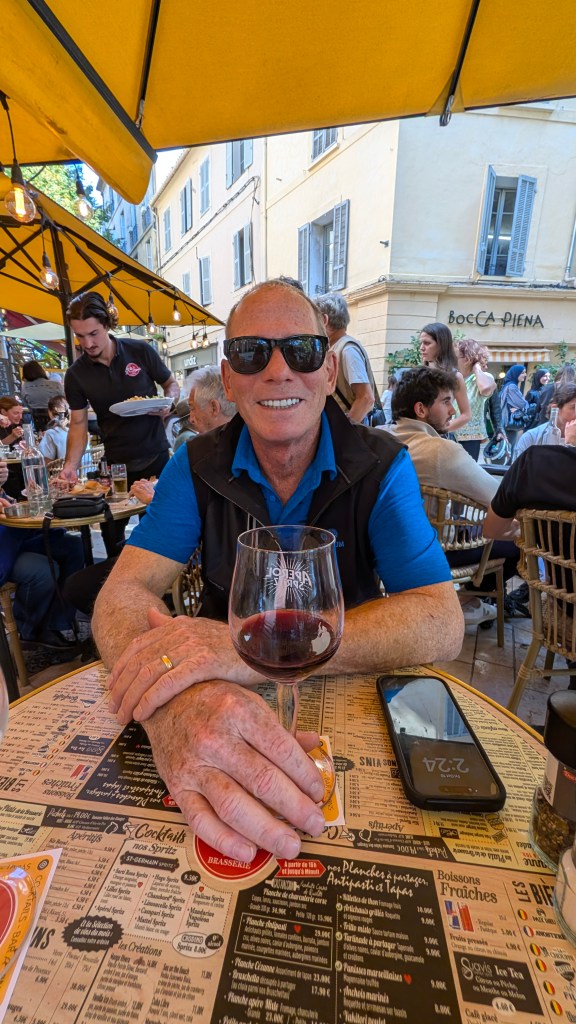
After a full day of touring, it was time for a typical French activity: wine in a cafe.
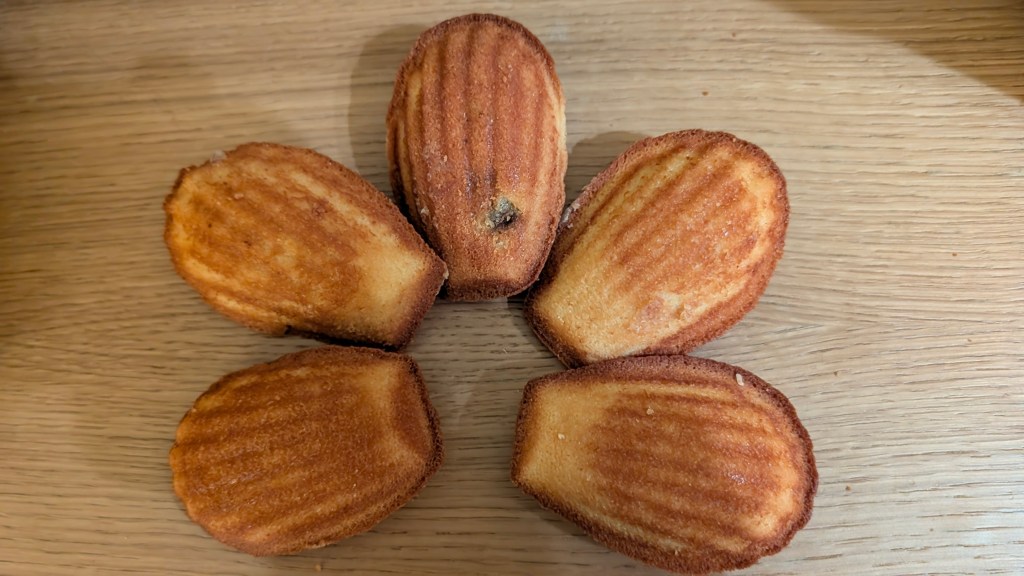
We bought some madeleines for after dinner consumption.
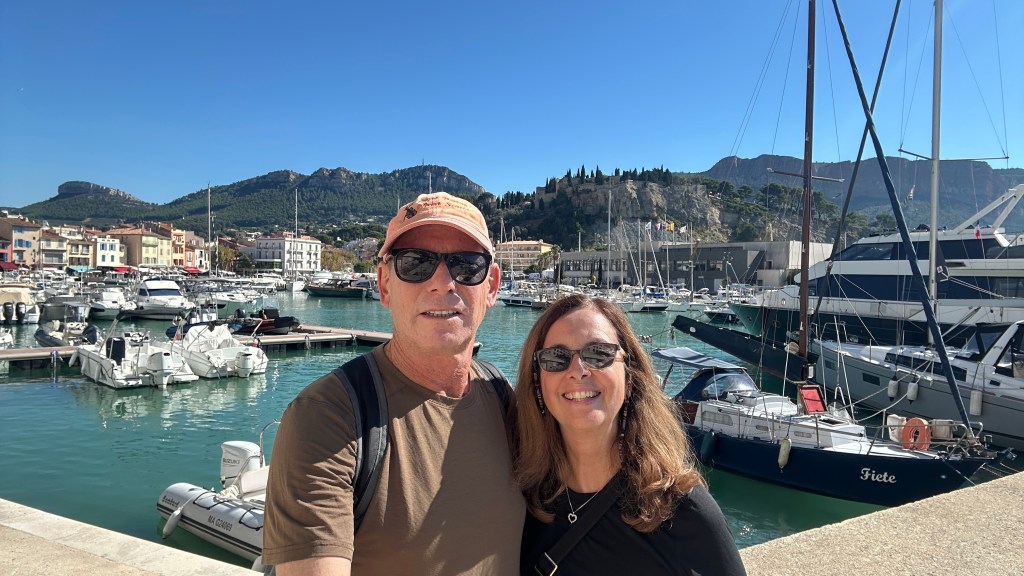
The next morning we decided we had tired of the cities and were ready for a port town. Having arrived by train in Marseilles, which we found unpleasantly large, we chose Cassis as our day’s destination. Described by author Virginia Wolf as “little paradise” in the 1920s, Cassis is a charming, historic fishing port known for its stunning calanques (limestone inlets), high cliffs, and white wine. It serves as a Mediterranean getaway with rich, ancient history. Fun fact: Stone from the Cassis quarries was used to build the foundation of the Statue of Liberty in New York.
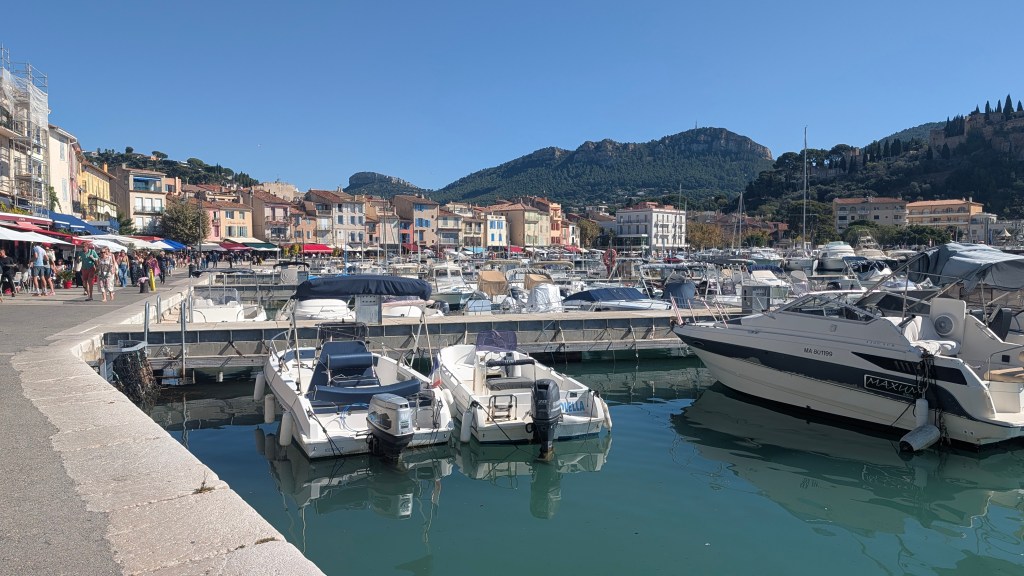
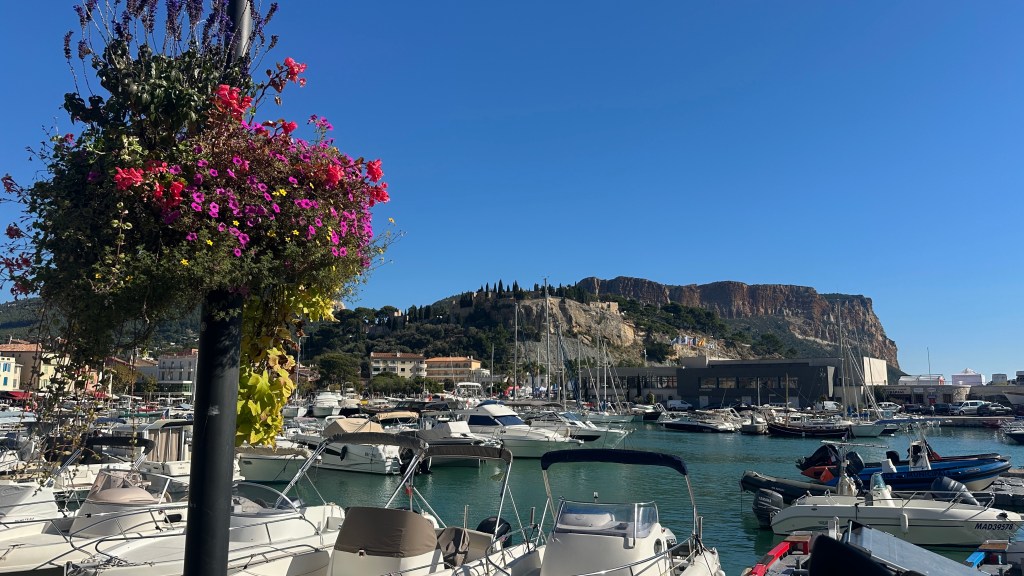
Cassis is dominated by Cap Canaille, one of the highest maritime cliffs in Europe, rising 1,293 feet above the sea.
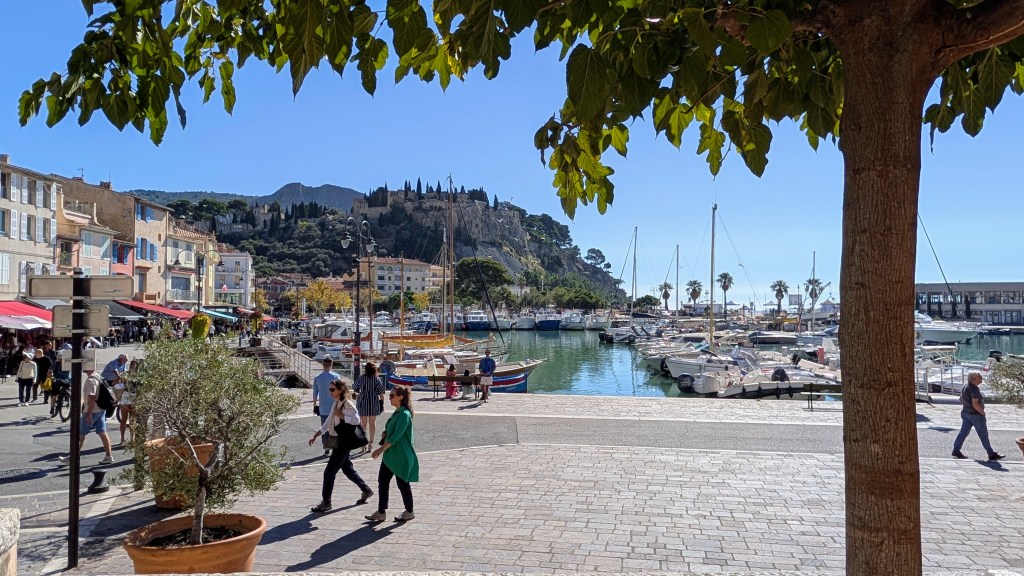
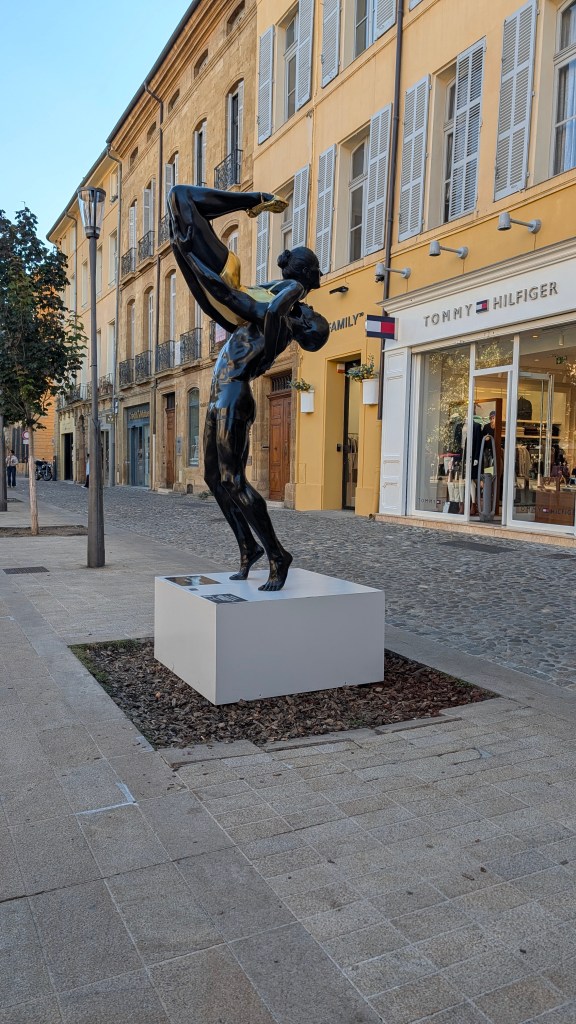
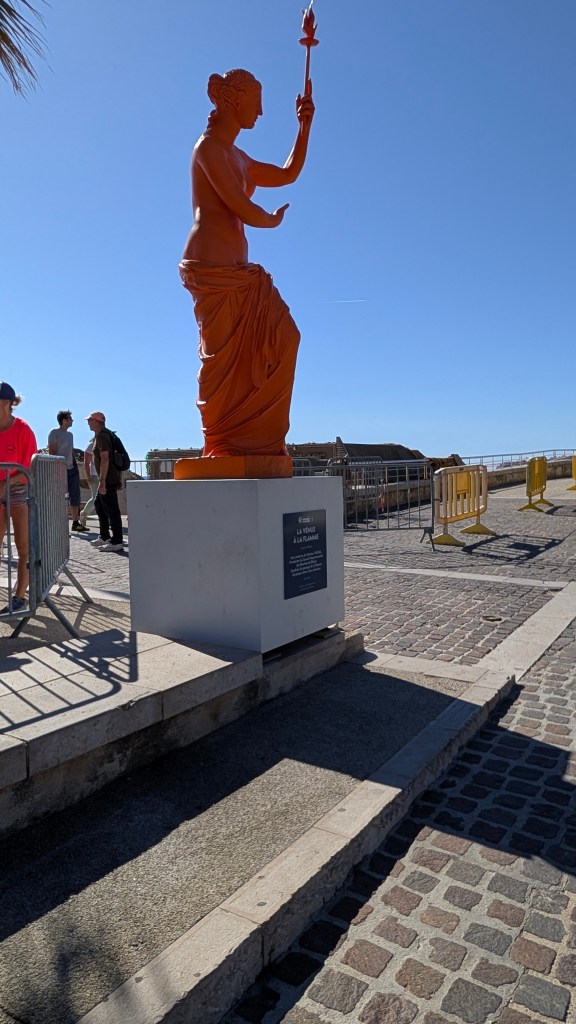
Adorning the port is a modern interpretation of the Venus de Milo statue, specifically titled “La Vénus à la flamme” (The Venus with the Flame) created in 2024 in Cassis to celebrate the Olympic Games.
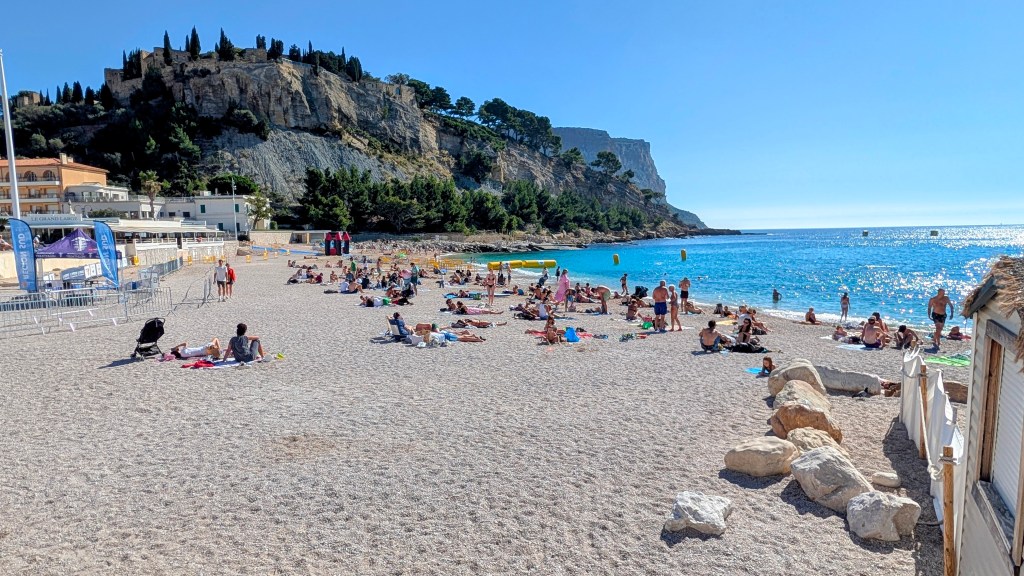
We visited the beach which was plenty full on this warm day in mid-October.
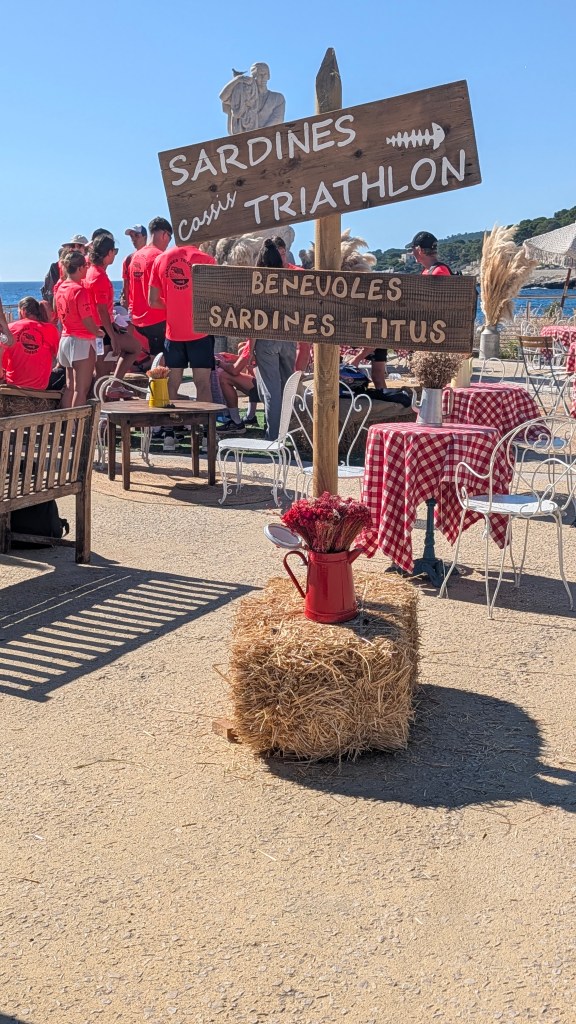
We had wondered why the parking had been so difficult. We discovered that today Cassis was hosting a triathlon. People were pouring into town.
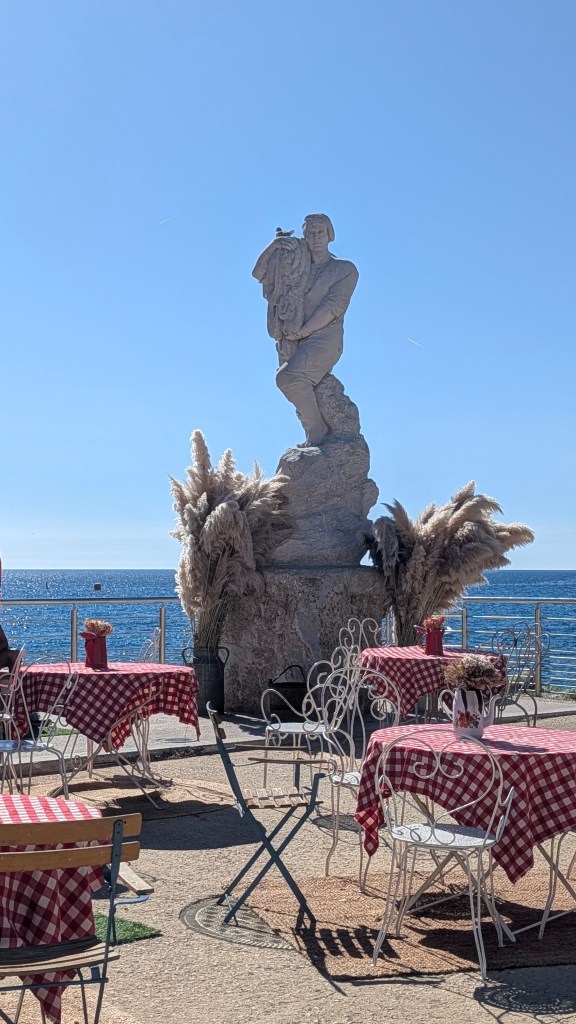
Overlooking the harbor stands the Statue of Calendal. It depicts Calendal, a humble anchovy fisherman who is the hero of a famous poem by Frédéric Mistral. The original statue created in 1930 was destroyed in 1944, and the current monument was inaugurated in 2000.
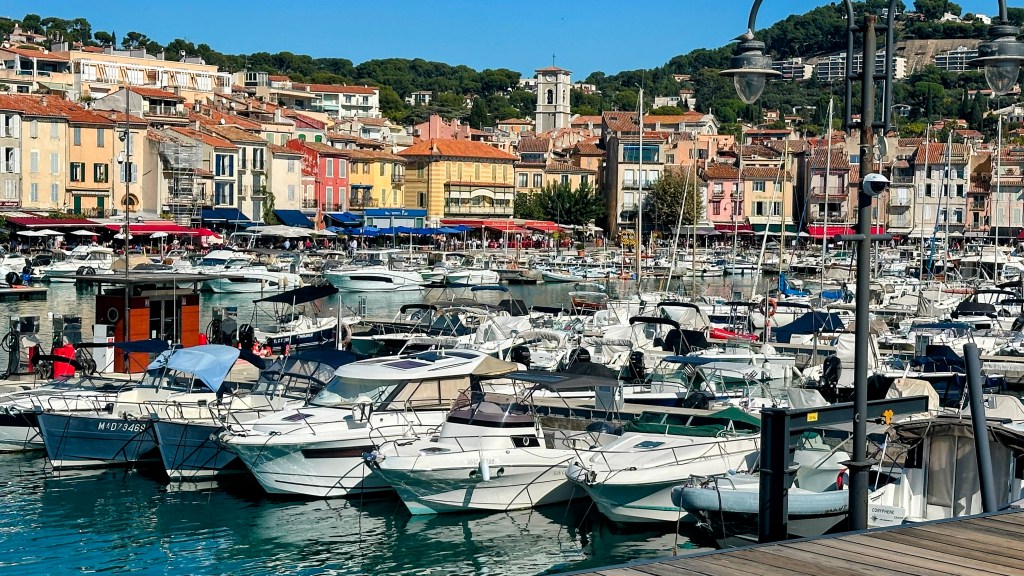
The harbor was packed with boats and yachts of all sizes.
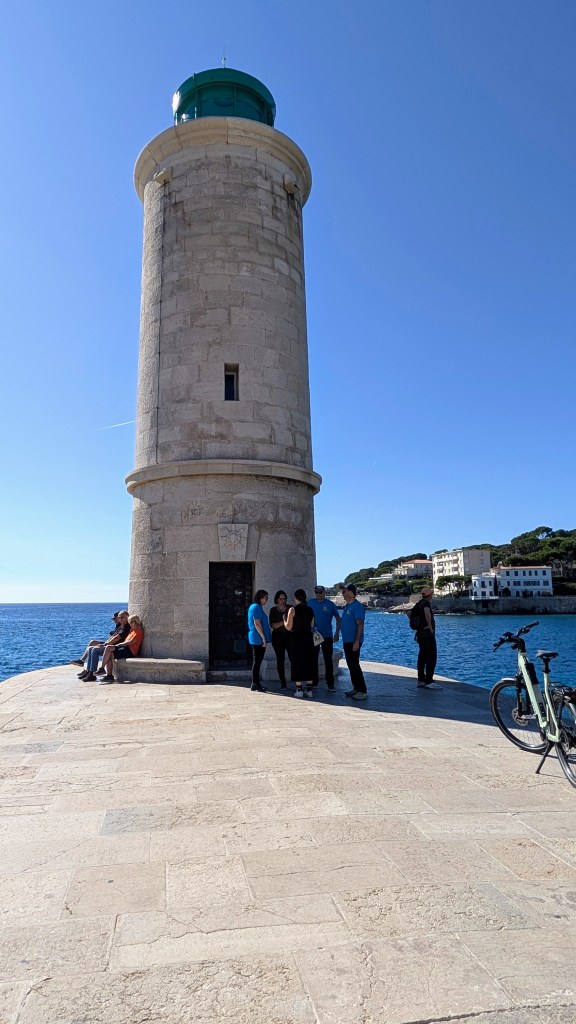
On the pier at the entrance to the port stands the Phare de Cassis (Lighthouse of Cassis). It is constructed from stone and features a distinctive green lantern room at the top.
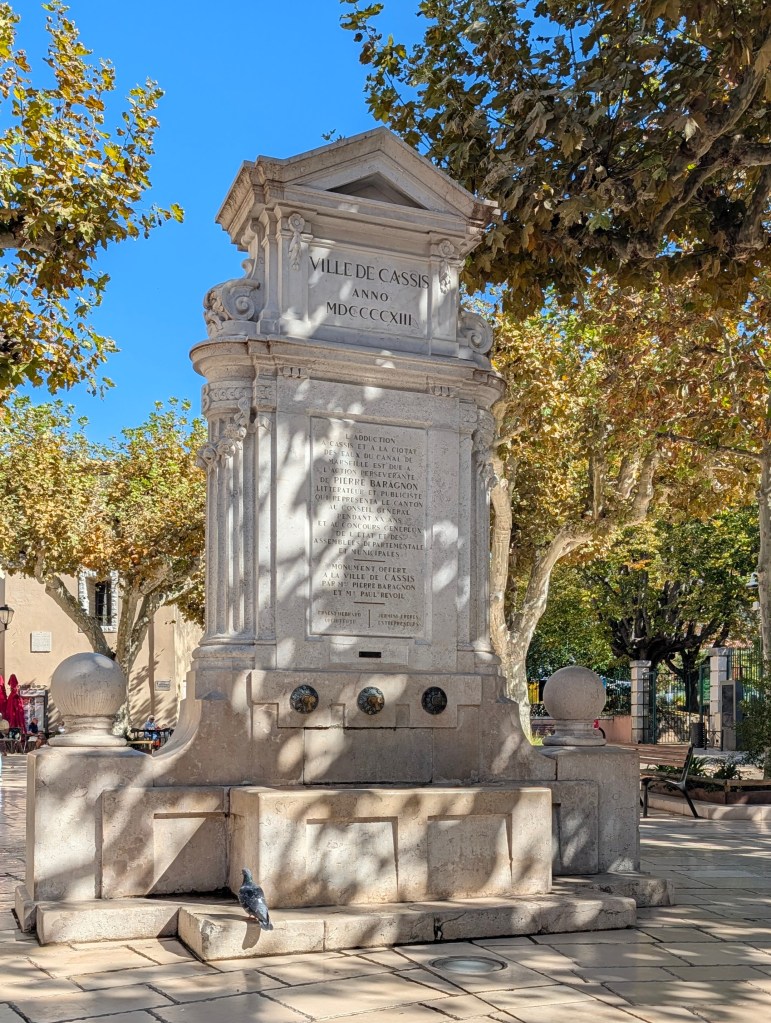
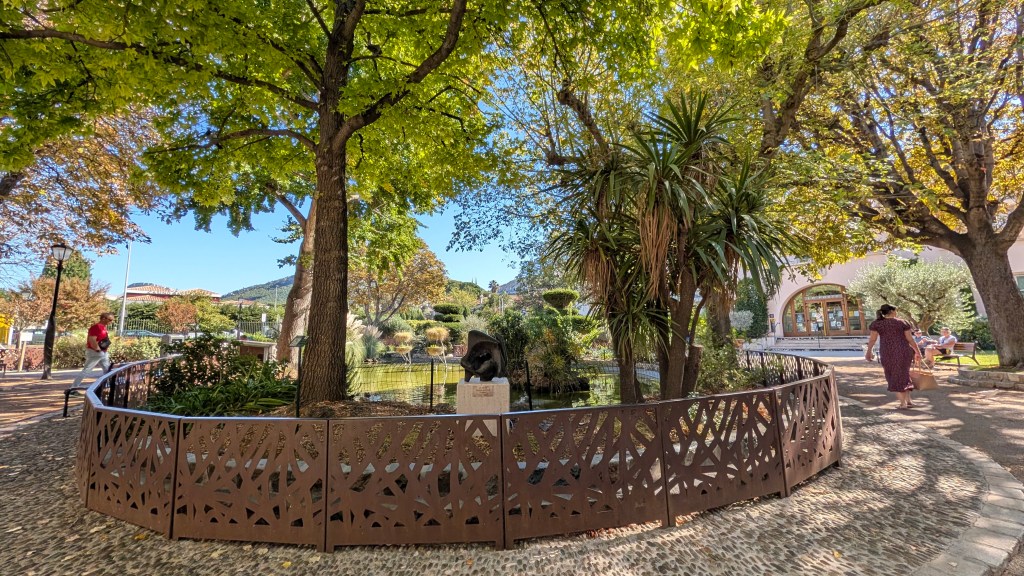
In Baragnon Square, dedicated to the city of Cassis, is a monument inaugurated in 1913 to commemorate the city’s connection to the Marseille Canal. The structure serves as both a memorial and a decorative fountain. It was donated to the city by Pierre Baragnon and Paul Revoil, whose names are inscribed on the monument.
We strolled through the little park.
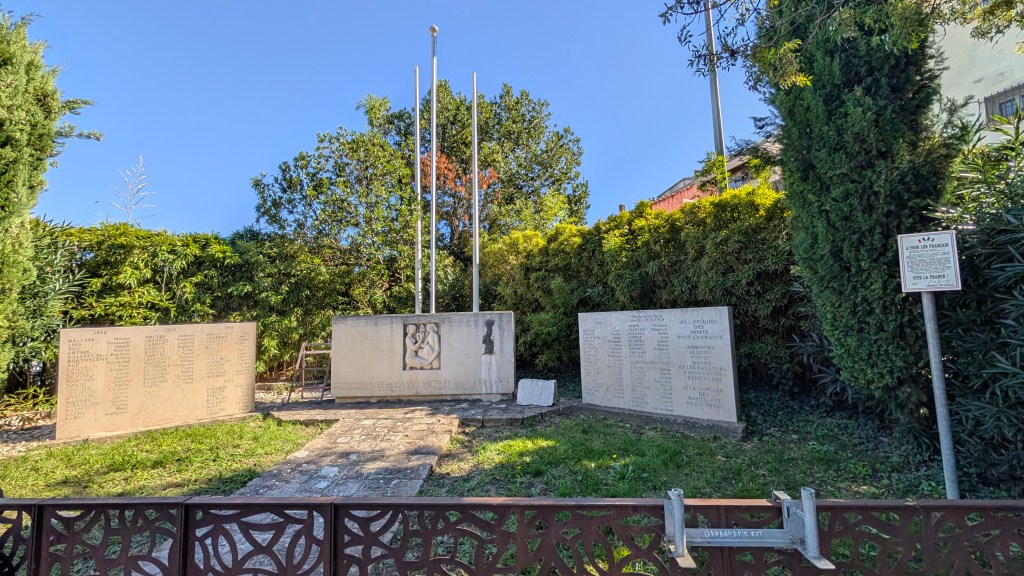
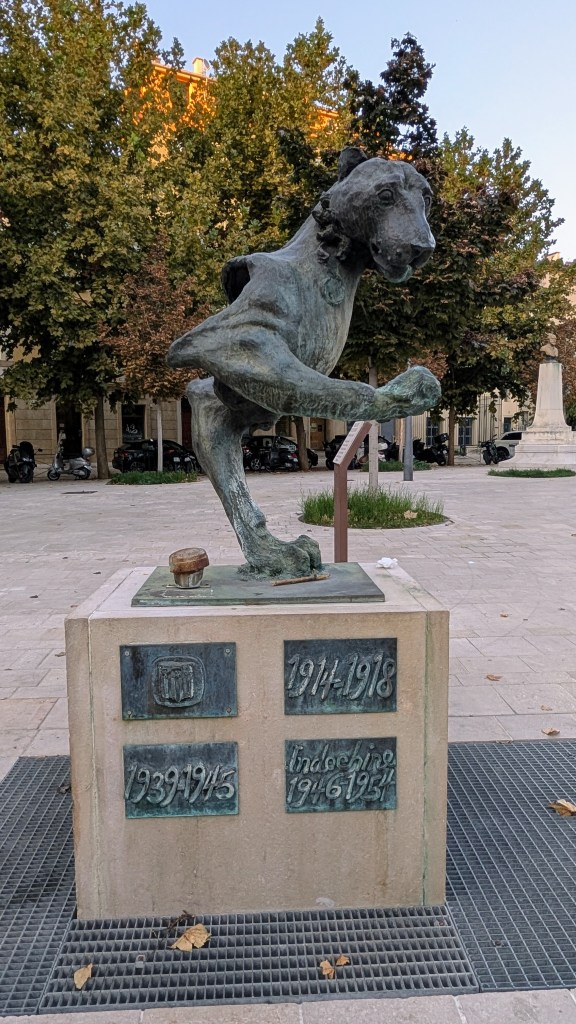
And paused in front of the monument with inscribed names of fallen soldiers from World Wars I and II. The memorial honors soldiers who died for France in Indochina, Morocco, and other theaters of war.
There were cafes in every square
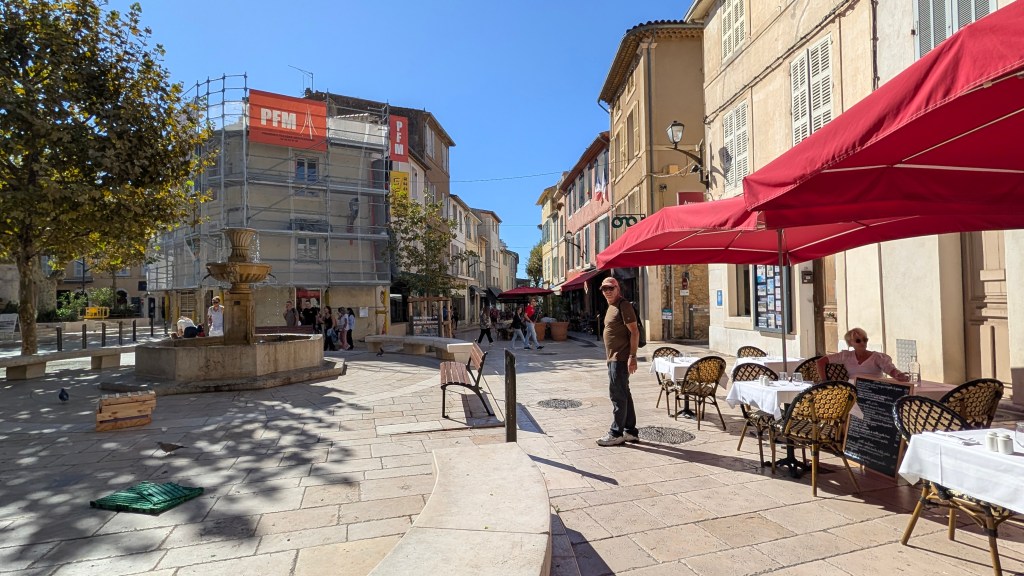
on every street,
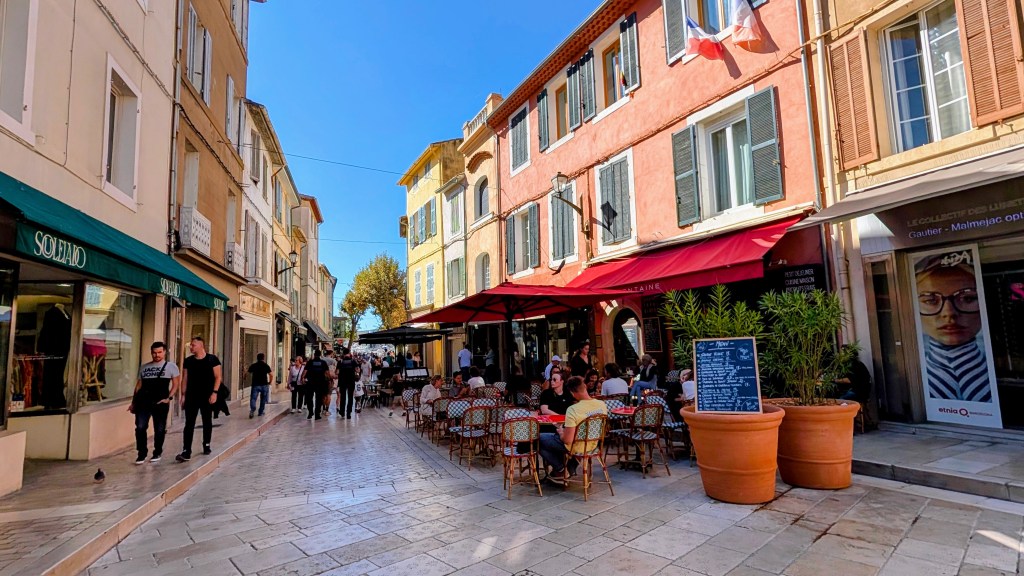
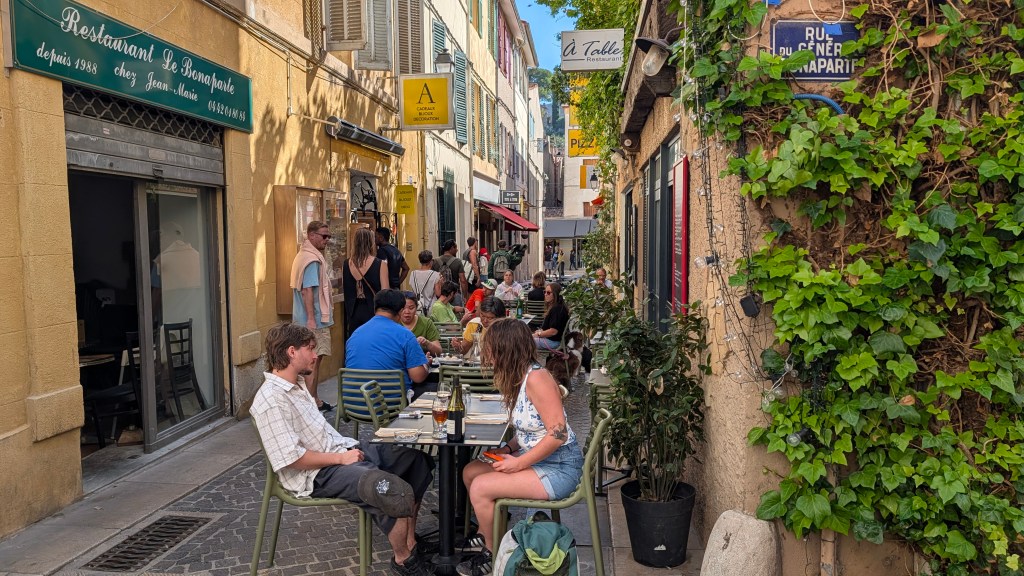
even those streets barely passable on foot.
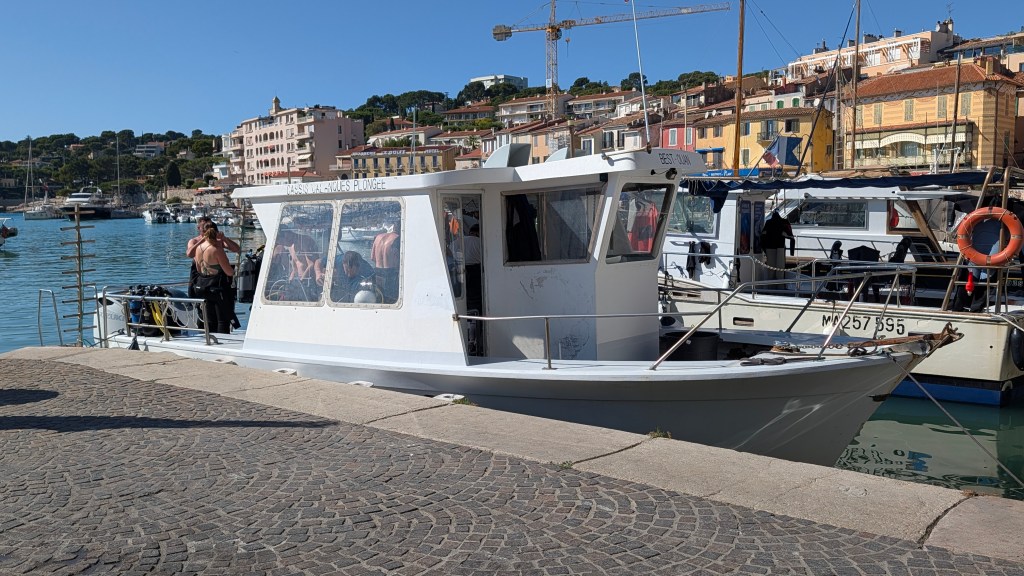
We saw a dive boat gearing up to go out. In 1991, diver Henri Cosquer discovered the Cosquer Cave near Cassis, a submerged cave containing prehistoric cave paintings from 27,000 to 19,000 years ago.
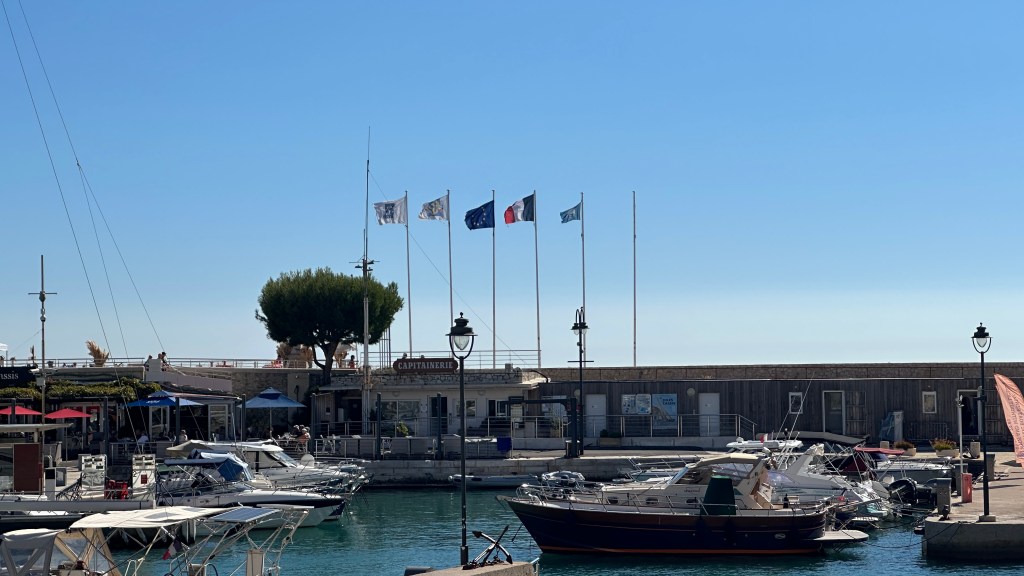
The flags are flying in front of the capitainerie (harbor master’s office).
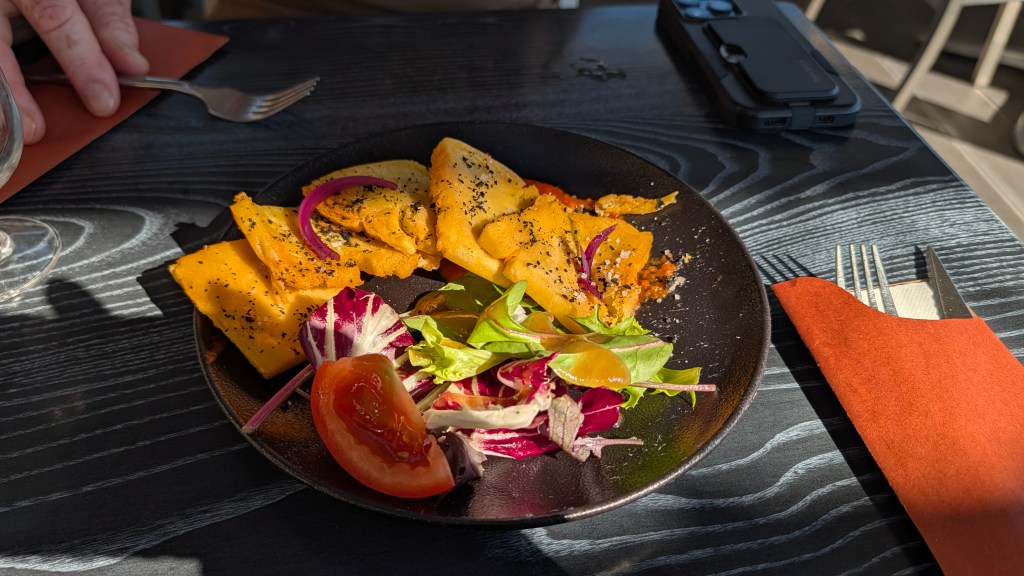
We stopped for a long, leisurely lunch which included a local speciality: panisses, chick pea dough deep fried.
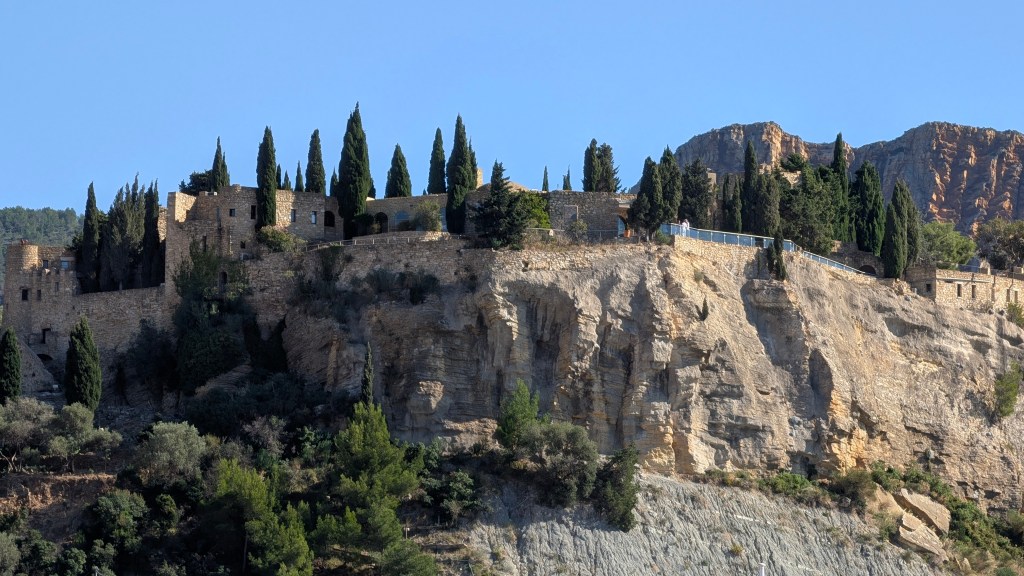
A 13th-century castle sits on the cliffs overlooking the town,
which is now a private guest house.
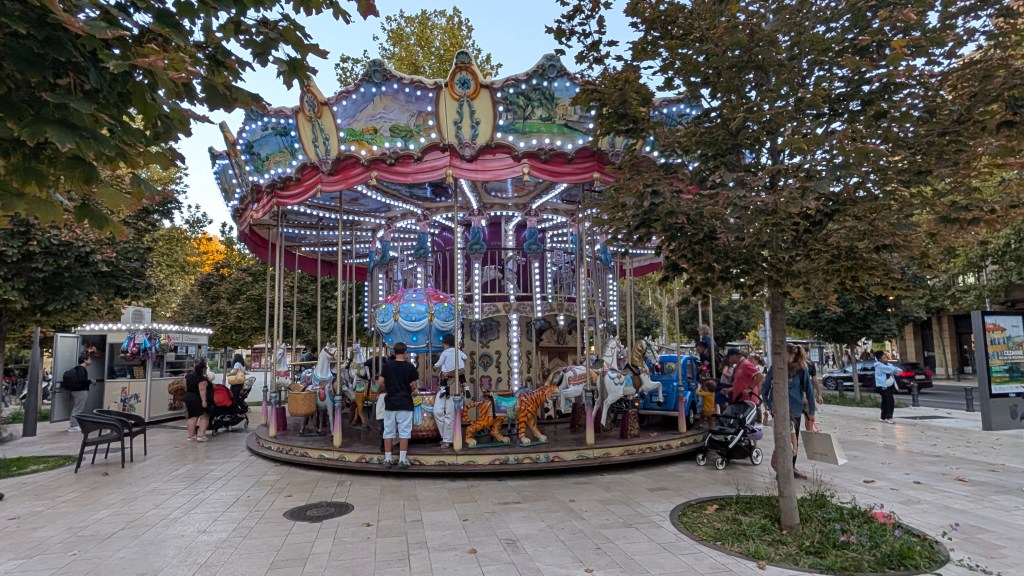
Back in Aix-en-Provence, as we headed into the old part of the city for dinner, we found yet another carousel. What is with the carousels in France? I had to look up the history. Carousels are a common and beloved sight across France, particularly in Paris and other towns like Arles, Avignon, and Aix, due to their deep historical and cultural roots in the country. The word “carousel” is derived from the French “carrousel” (from Italian/Spanish “carosello,” meaning “little battle”), which referred to elaborate equestrian tournaments and parades held by the French nobility in the 17th century. The most famous of these was held by Louis XIV in 1662 in the area of Paris now known as the Place du Carrousel. These events led to the development of mechanical devices that simulated the experience. After King Henri II died in a jousting accident in 1559, carousels (or manèges) were adopted as a safer way for knights to practice their skills, such as spearing rings, using stationary wooden horses. After the French Revolution, carousels became more accessible to the public, allowing common people to briefly experience the feeling of nobility associated with riding on elegantly dressed horses. This made them widely popular. The late 19th and early 20th centuries were the “golden age” of carousels, with mechanical advances and elaborate craftsmanship, including figures carved by renowned French artisans like Gustave Bayol. These artistic and often unique creations have a lasting appeal. Today, these colorful merry-go-rounds serve as a source of simple amusement and a link to a romanticized past.
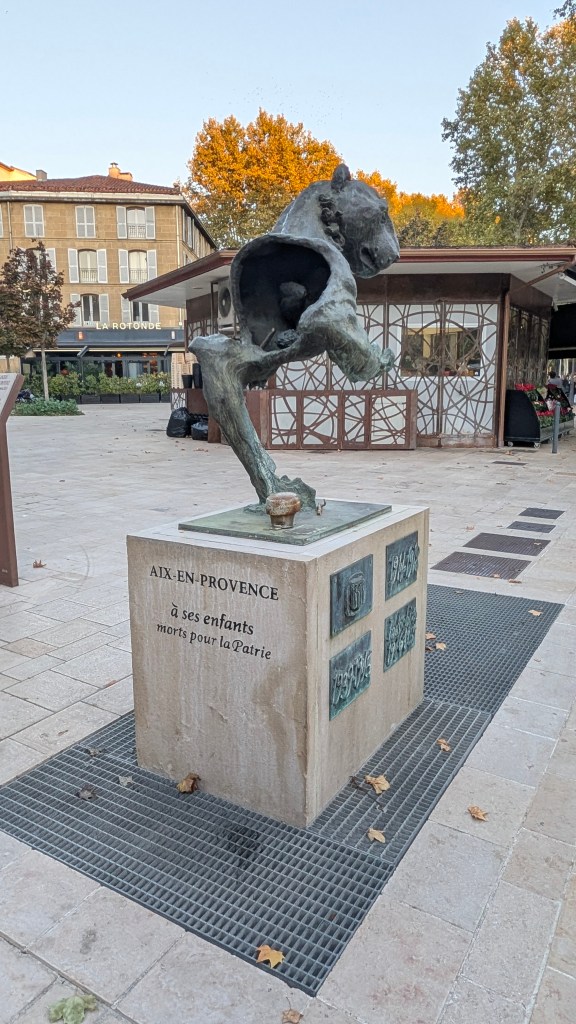
Near the carousel we saw some street art we had not previously noticed.
As the sun set, highlighting the beautiful autumnal colors, we savored the Fontaine de la Rotonde one last time.
 Jo & Eric's travels