
We drove to Marseilles, left our car at the airport rental, and boarded our plane to the Bordeaux-Mérignac airport. There we were met by our driver who transported us to Les Sources de Caudalie, a 5 star hotel nestled within the Château Smith Haut Lafitte winery’s vineyards. Our days of self-guided touring had come to a temporary end.
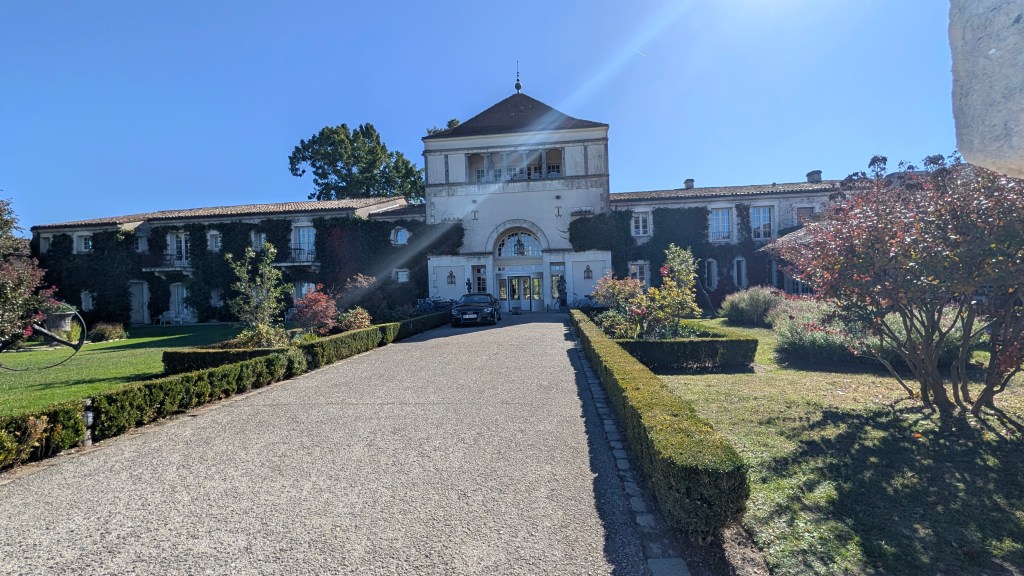
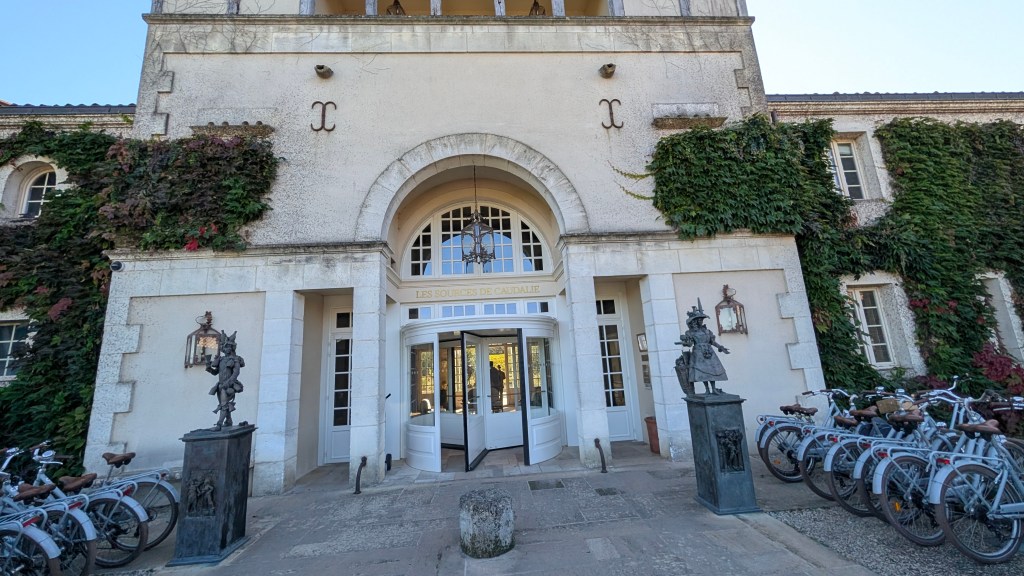
Established in 1999 by Alice and Jérôme Tourbier, daughter and son-in-law of Daniel and Florence Cathiard (owners of Château Smith Haut Lafitte), Les Sources de Caudalie is famous for pioneering “vinotherapy,” combining natural hot spring water with grape extracts. The buildings were designed by Architect Yves Collet using reclaimed, traditional materials, such as 18th-century wood from a nearby châteaux, to blend into the landscape like a traditional Aquitaine hamlet. Les Sources de Caudalie offers a luxurious, nature-focused, “French Paradox” experience: the idea that a diet rich in antioxidants (like red wine) leads to good health. The hotel was designed to feel like a family home rather than a grand palace, focusing on “art de vivre” (art of living), nature, and the vineyard.
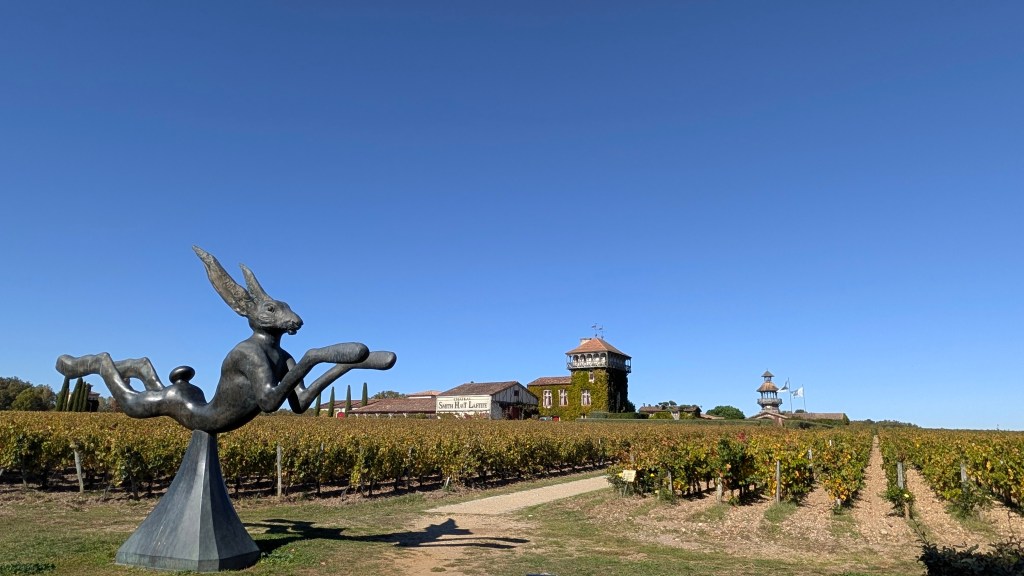
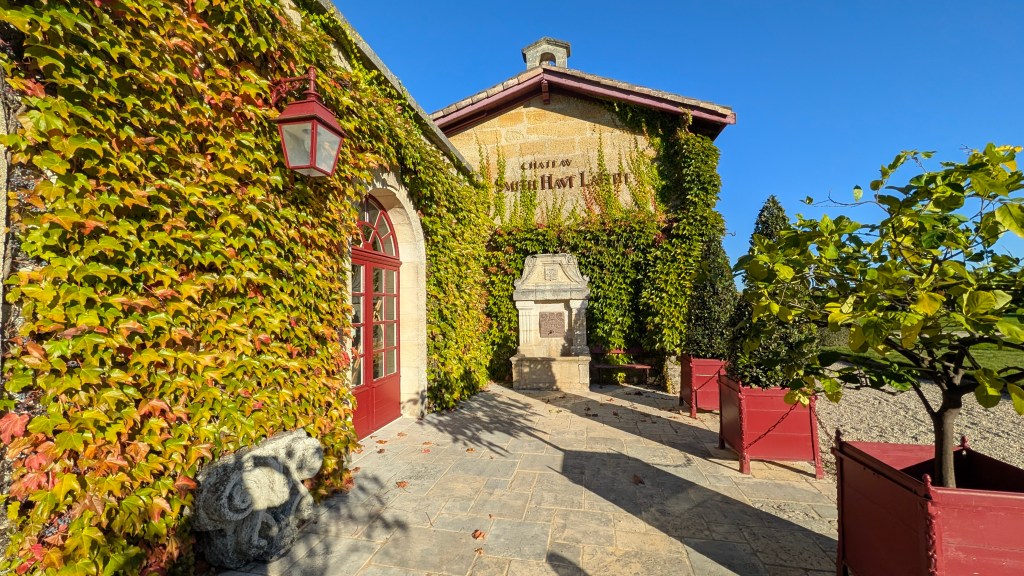
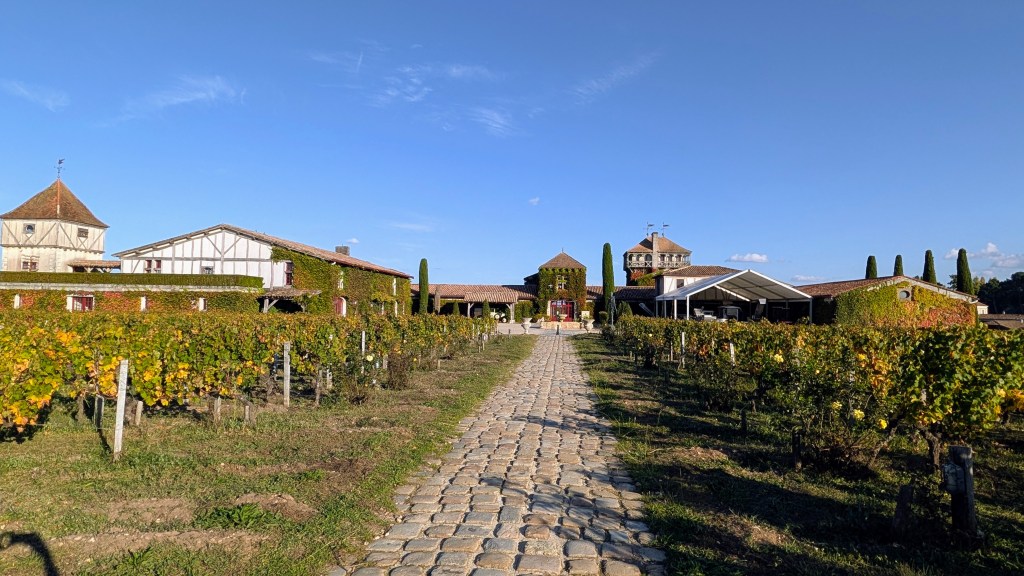
Before checking in, we turned around to take in the vineyards. Château Smith Haut Lafitte features a notable collection of monumental sculptures displayed throughout its vineyards and grounds, part of a “land art” trail. The collection includes works by several internationally recognized contemporary artists. “Hospitality” (Leaping Hare) by Barry Flanagan is an iconic bronze sculpture of a leaping hare positioned in the center of the vineyard, presiding over the oldest Cabernet Franc vines. The owners, Florence and Daniel Cathiard, purchased it to celebrate their first vintage release after acquiring the estate in 1990.
Other sculptures could be seen in the distance.
Château Smith Haut Lafitte, a prestigious Pessac-Léognan Grand Cru Classé in the Graves apellation of Bordeaux, a wine region on the Garonne River’s left bank, renowned for gravel-based soils, hence the name. Château Smith Haut Lafitte dates back to 1365 when the Bosq family first planted vines on a gravelly hill. Renamed in the 18th century by Scottish merchant George Smith, who exported wine to Britain, it was elevated to prominence by Mayor Lodi Martin Duffour-Dubergier in the mid-19th century.
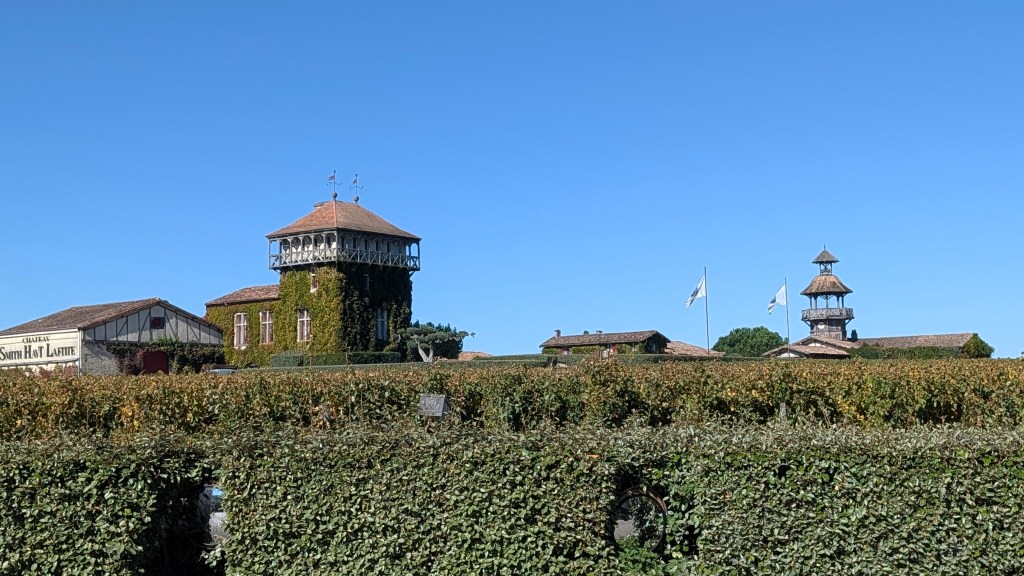
We checked into the hotel
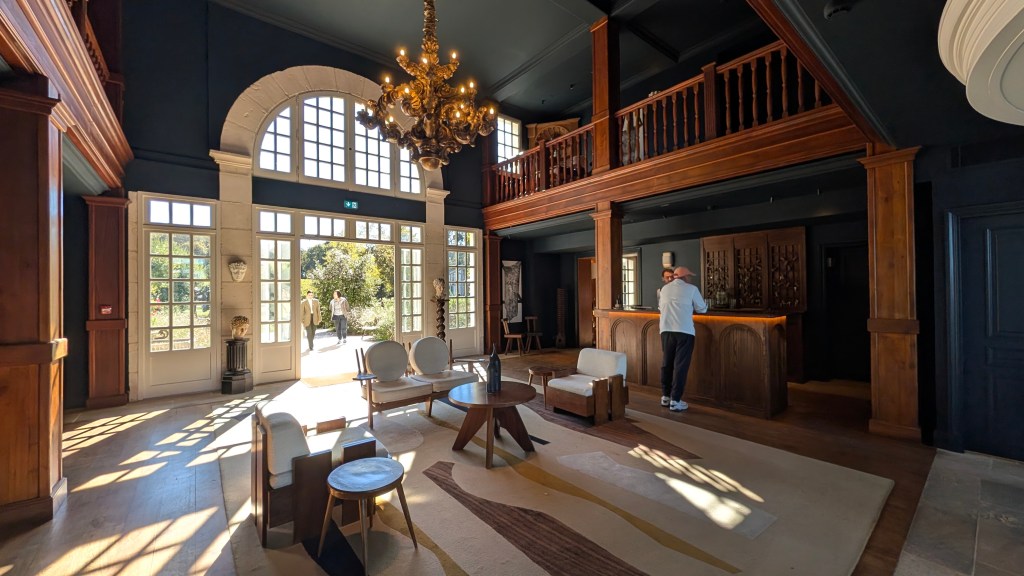
and were shown to our room.
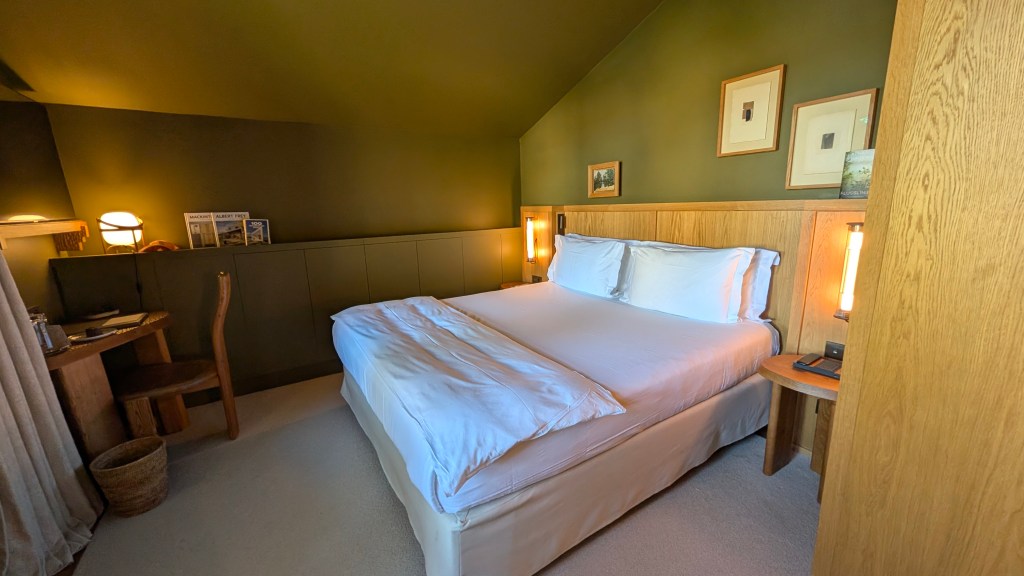
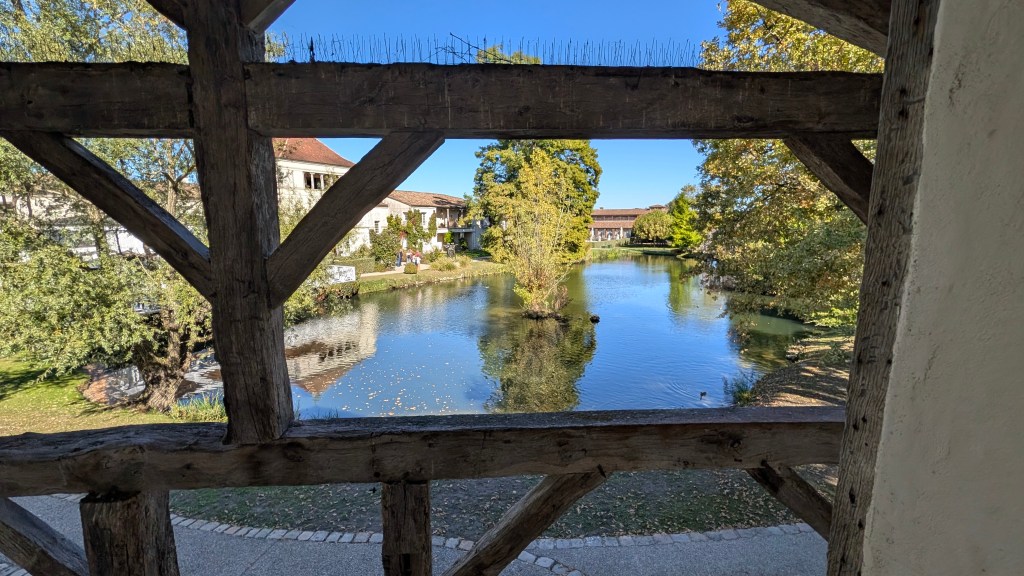
Fom our room we had a view of the pond behind the main hotel building.
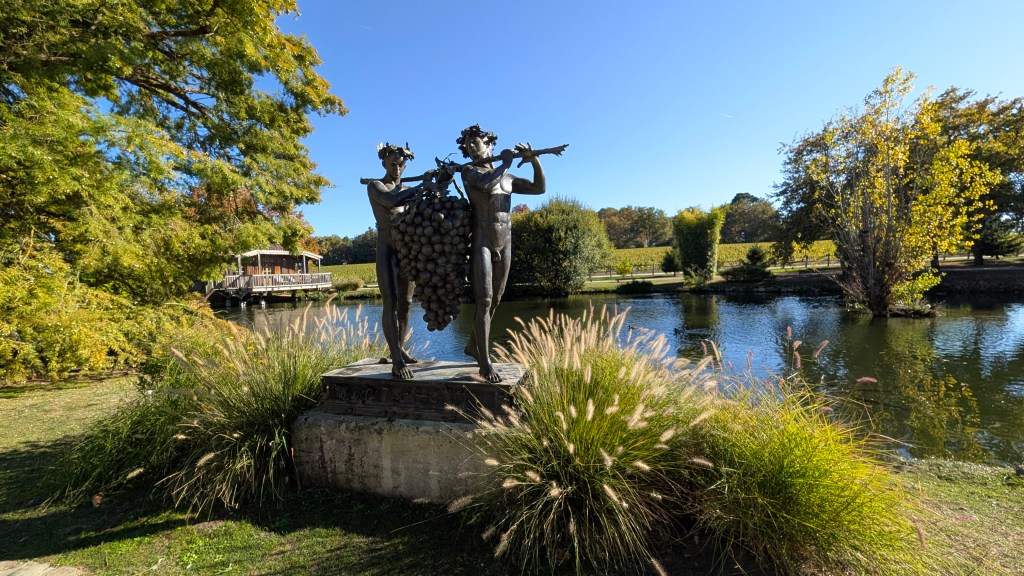
Between the main building and the pond stands this bronze sculpture which depicts two figures carrying a large bunch of grapes, reflecting the area’s rich winemaking heritage.
We met up with friends Jeff and Carol, with whom we had booked this adventure. It was late in the afternoon, but it was time for our first winery tour.
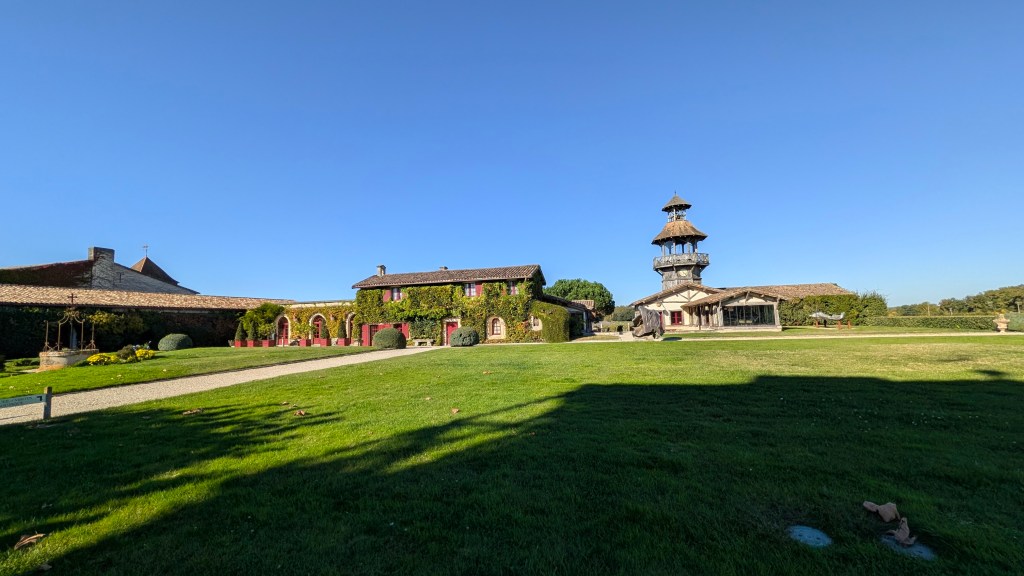
We made our way across the road to Château Smith Haut Lafitte winery. The name of the winery means “little high hill.”
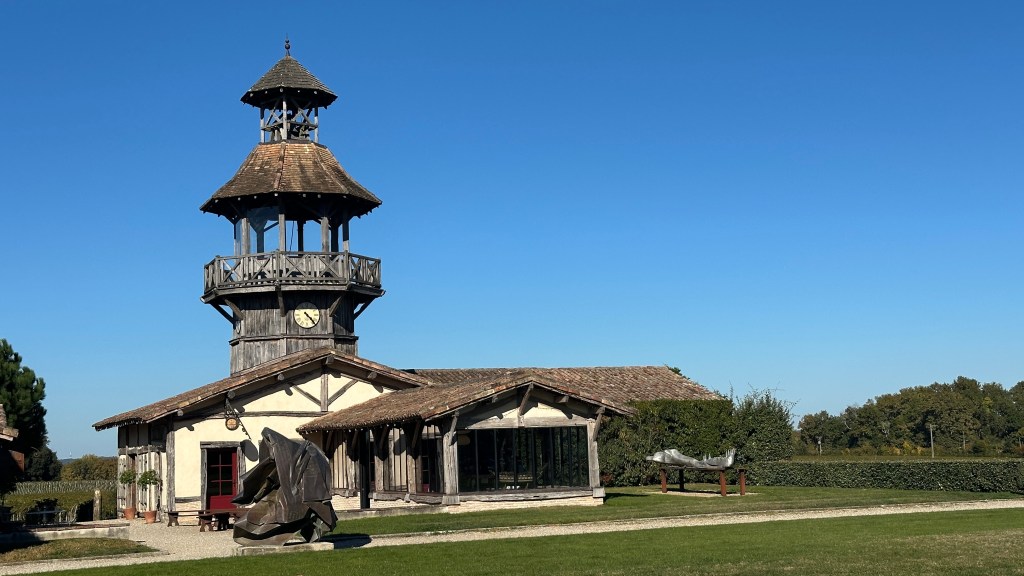
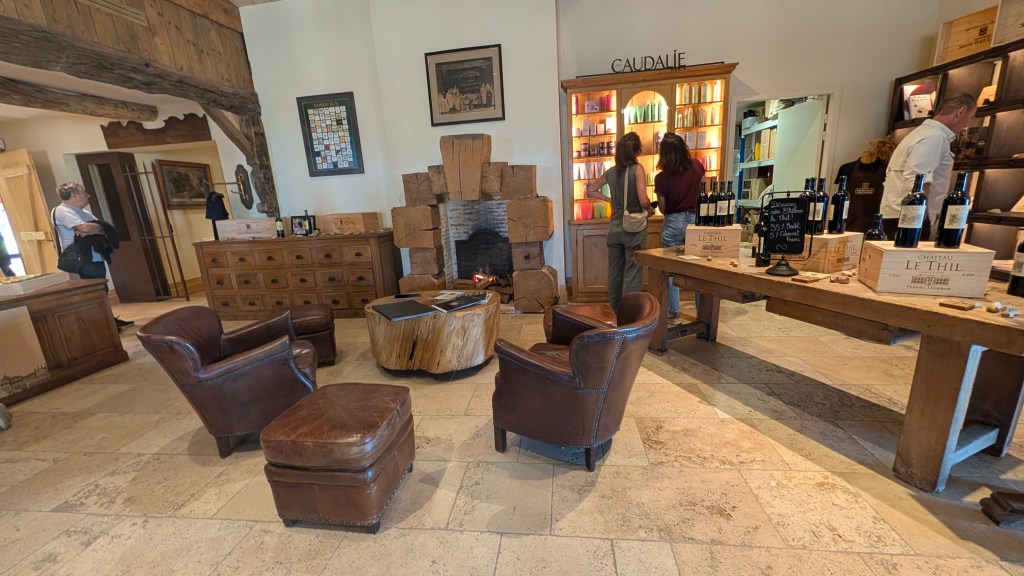
The reception area to the winery doubles as a gift shop. We were assigned our guide, Hortense.
We climbed the tower, from where we had a view back at the hotel. Hortense told us that the winery covers over 740 acres. The favorite grape grown is the petit bordeaux, a low volume grape varietal. All of the grapes are harvested by hand. The estate uses advanced technology like drones for monitoring and has an eco-friendly “Stealth” cellar for their second wine. They use natural methods like pheromone “mating disruption” for moths and introduce beneficial mites to fight red spiders.
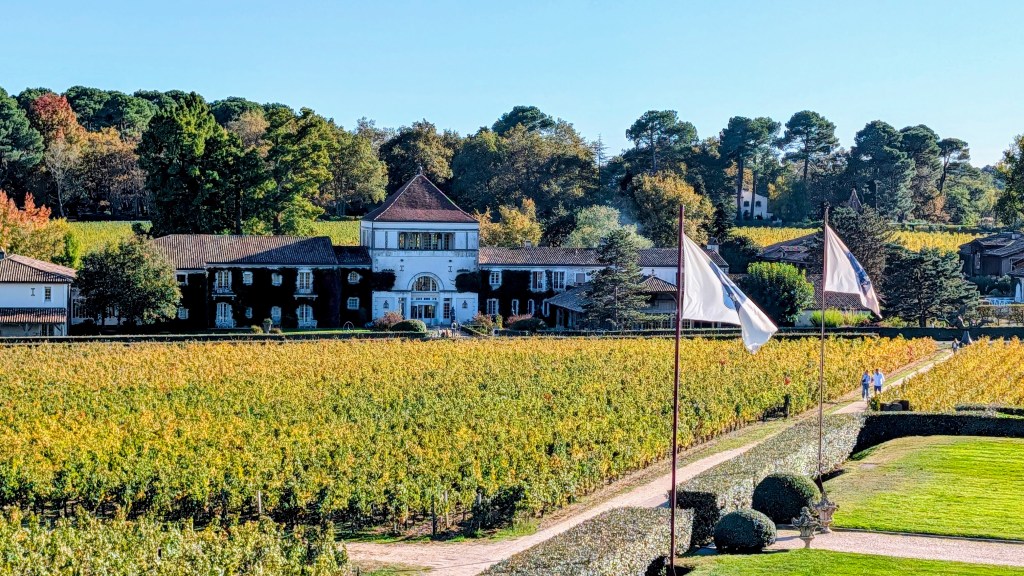
Hortense esplained the history of the winery. In the 18th century Scottish wine merchant George Smith purchased the estate, built the Chartreuse, and gave it his name. In 1842 Lodi Martin Duffour-Dubergier, mayor of Bordeaux, took over and secured its reputation as a high-quality wine producer. In 1958 the property was acquired by the négociant house Louis Eschenauer. In 1990 former Olympic skier Daniel Cathiard and his wife Florence purchased the estate, transforming it into a, “bio-precision” estate with a focus on sustainability, natural fertilizers, and modern, high-tech winemaking. Their home is visible from the tower.
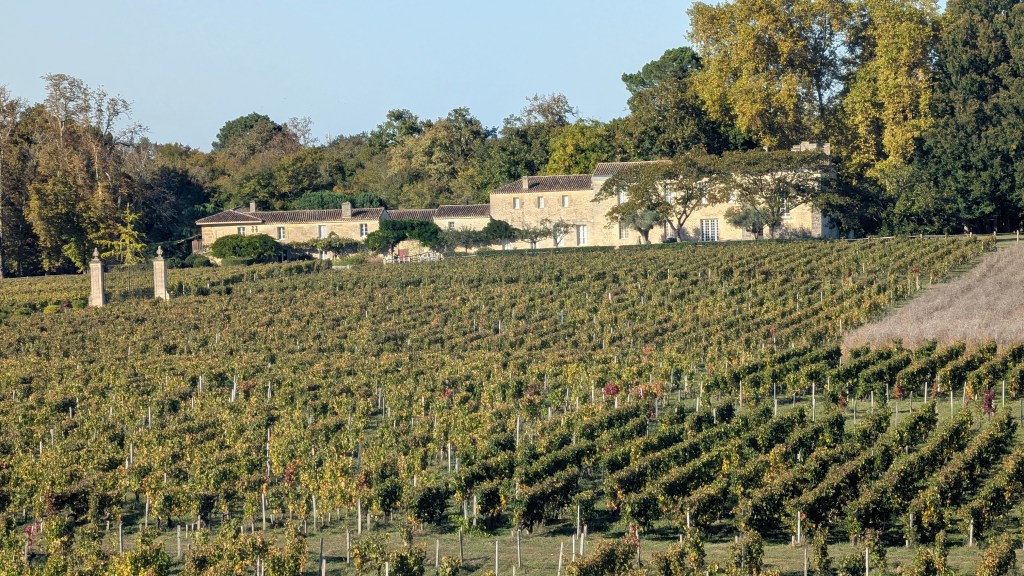
From this vantage, more of the unique sculptures could be seen. We climbed down to continue the tour.
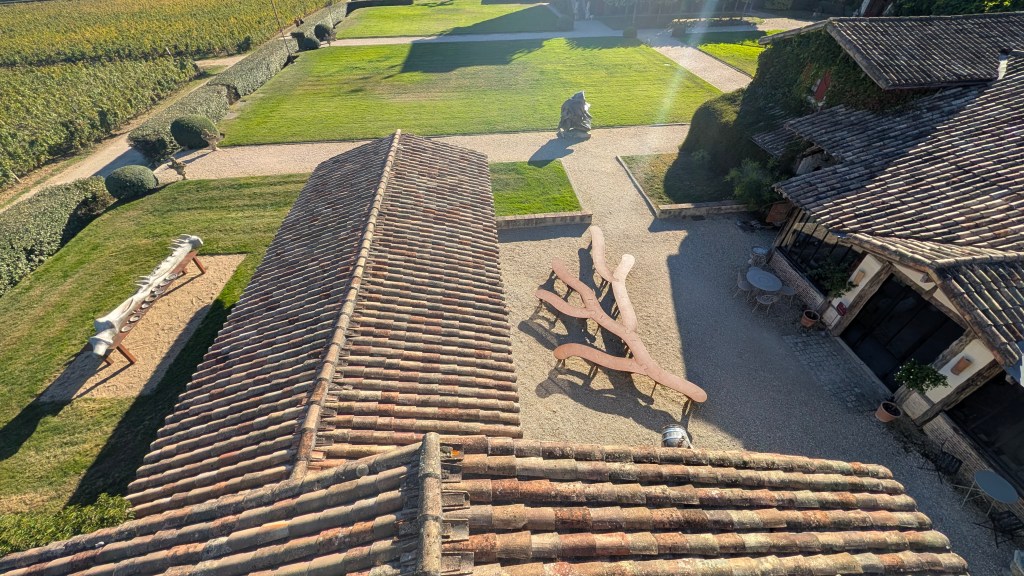
Château Smith Haut Lafitte is one of only 3 wineries in Bordeaux that make their own barrels, all from French oak. The winery operates its own cooperage to craft custom barrels and uses QR codes on bottles to provide detailed, interactive information to consumers.
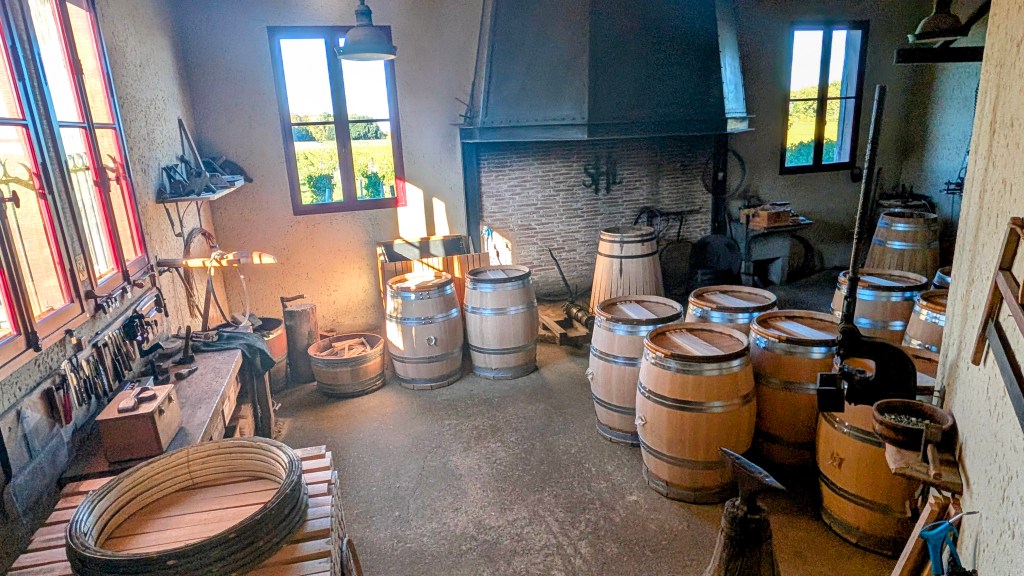
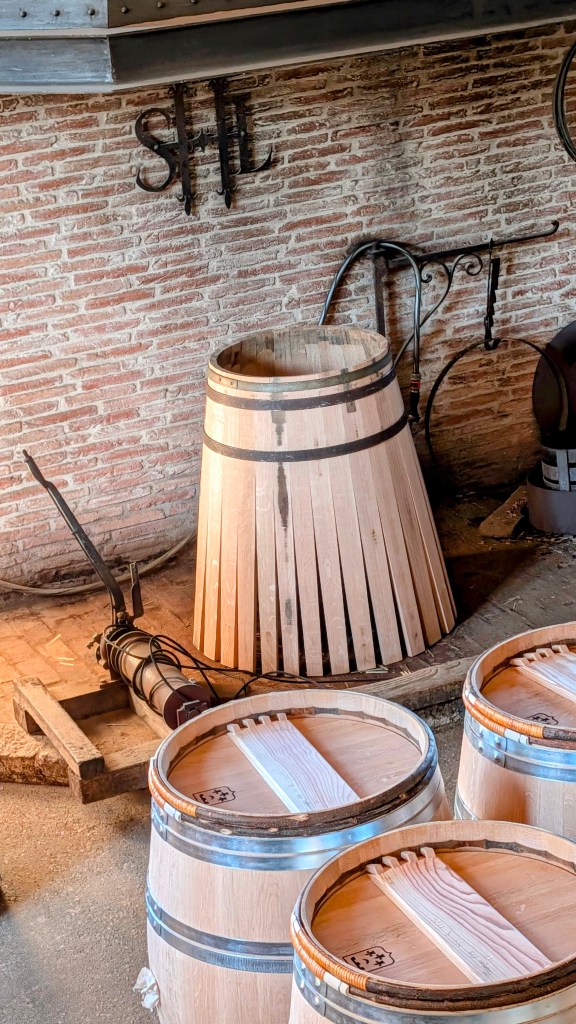
Each slat of oak is toasted in the fire.
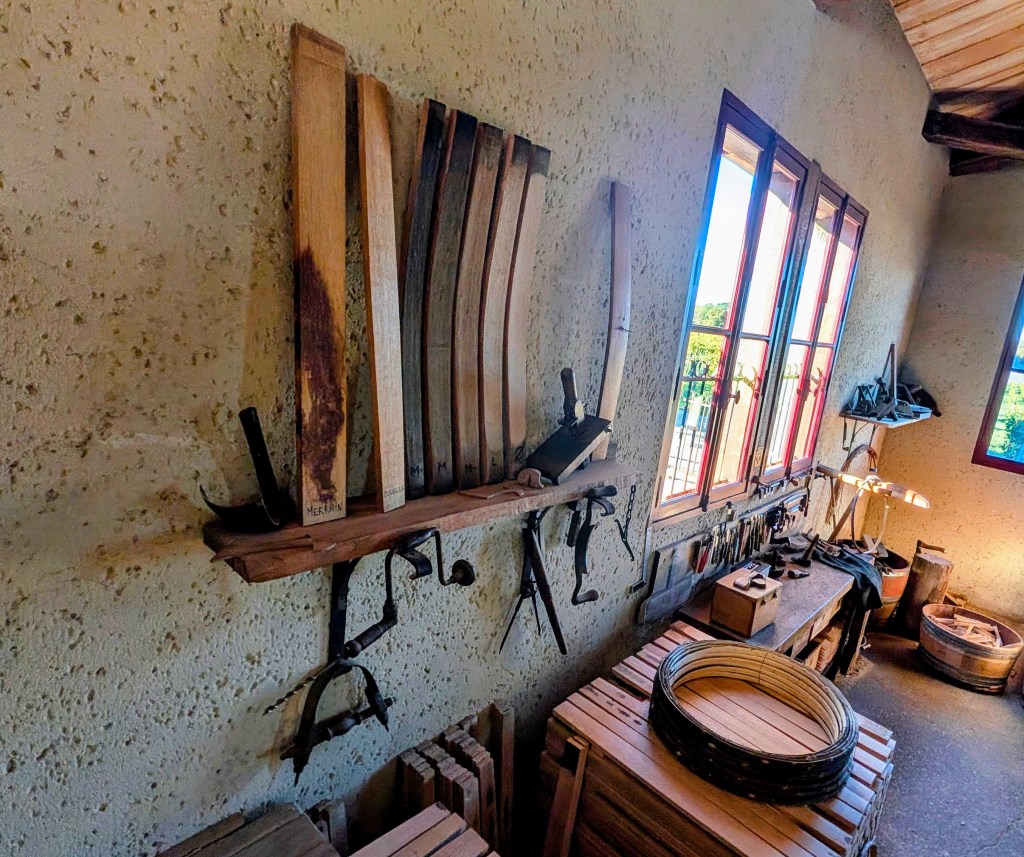
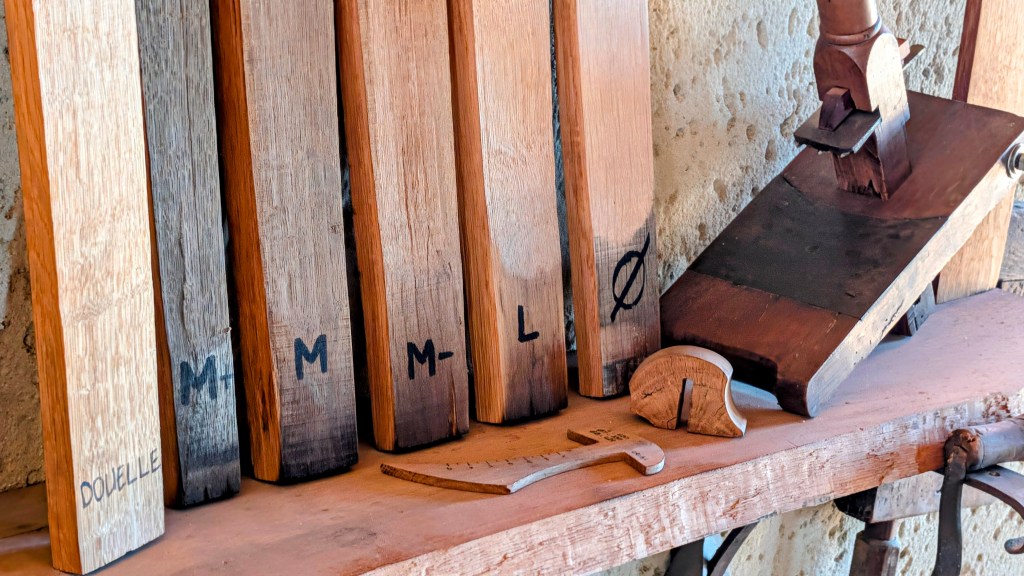
The numbers on the slats denote the degree of toasting, each level bestowing a different flavor to the wine.
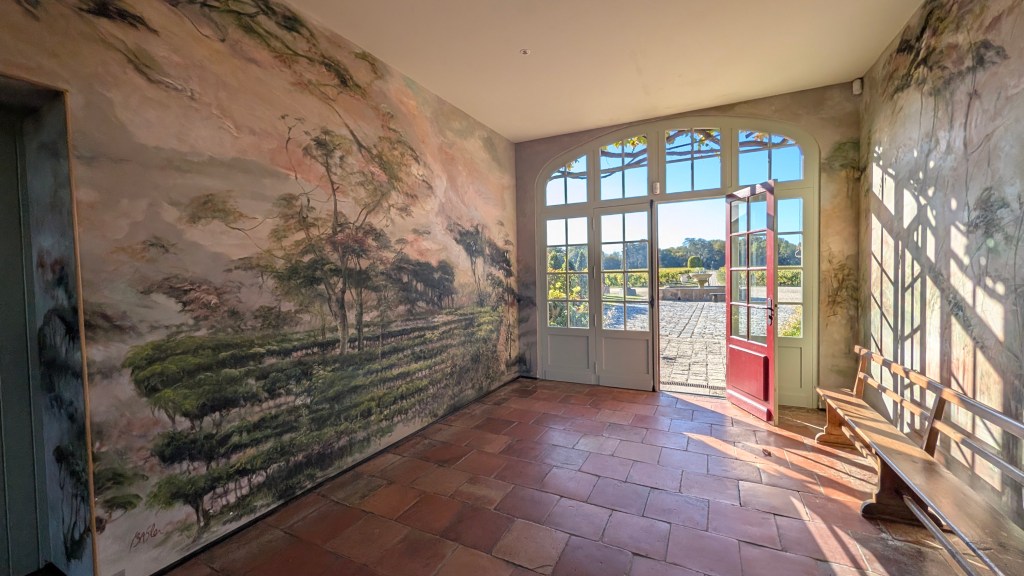
As we toured, I was struck by the art everywhere, even in a small vestibule.
The winery produces 800 barrels a year. The cellar contains over 1000 barrels. The reds stay in the barrel for 18 months, the whites 1 year. These are the whites.
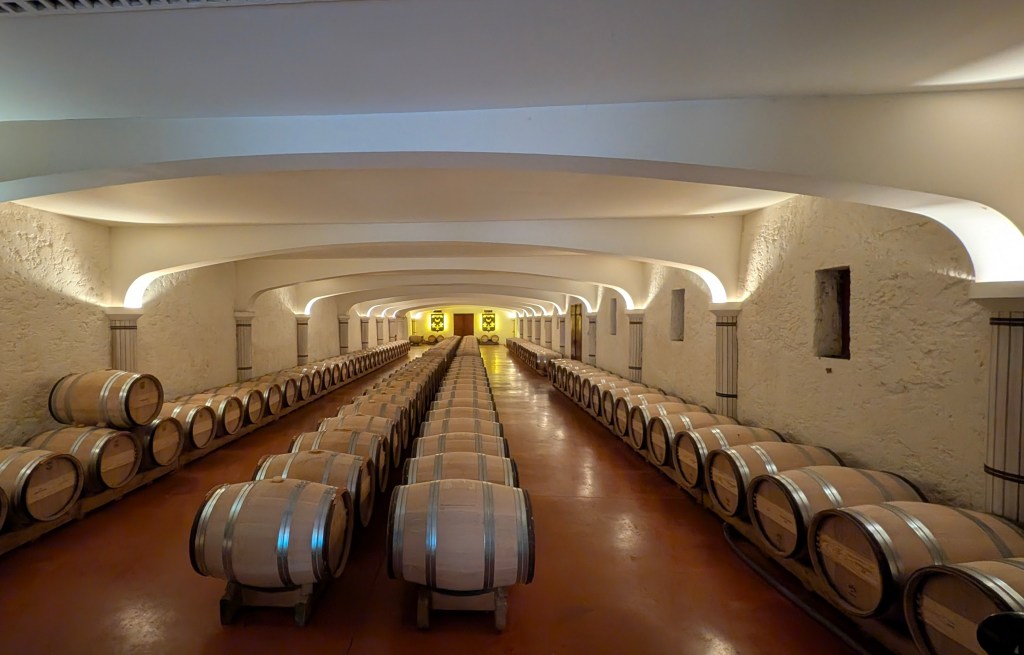
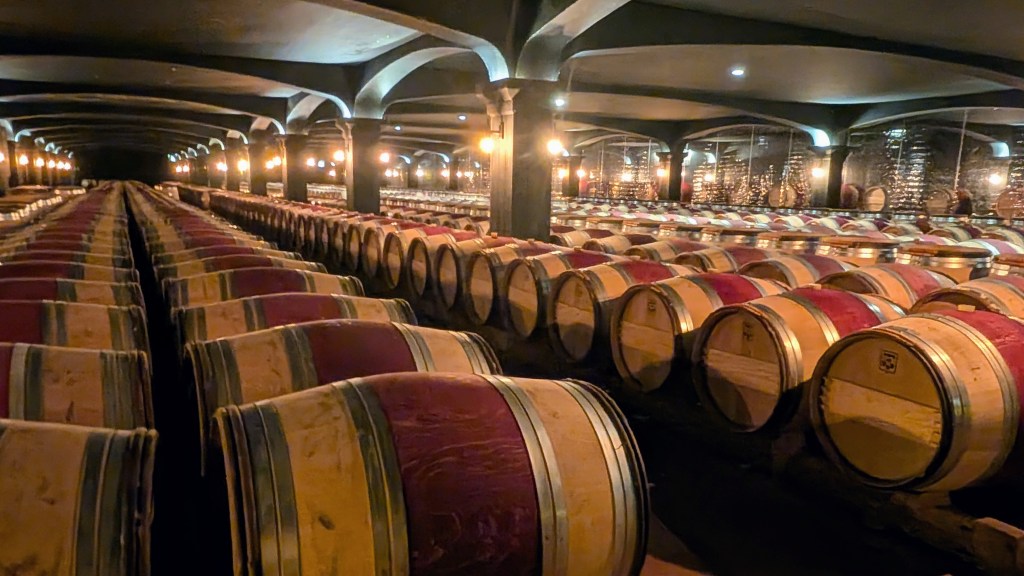
The reds are so marked. Note the foil curtains along the far wall. In a world-first for sustainability, the château installed a system to capture the carbon dioxide released during fermentation and convert it into sodium bicarbonate, which can be used in toothpaste.
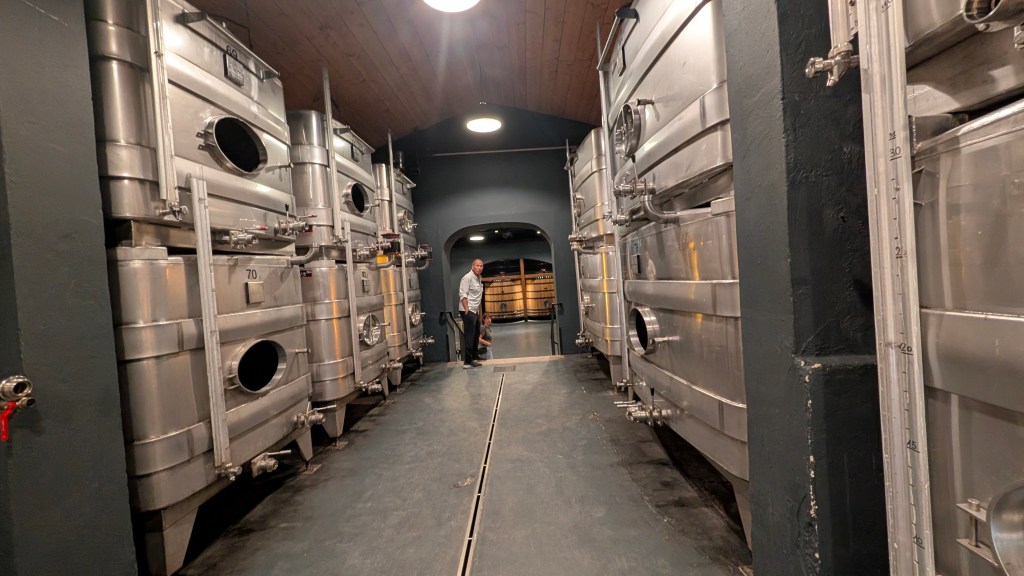
Hortense showed us the steel tanks.
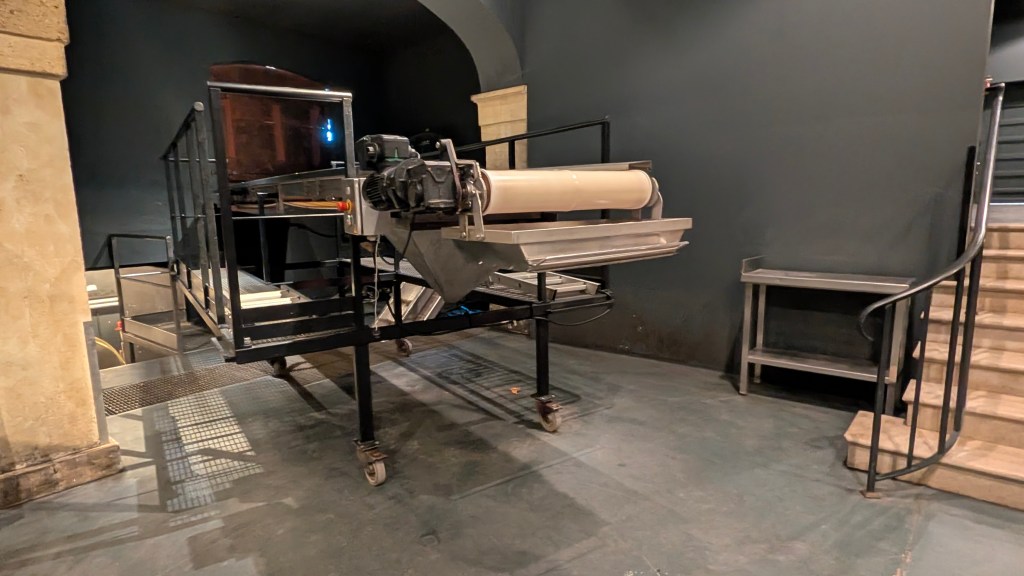
She showed us the destemming
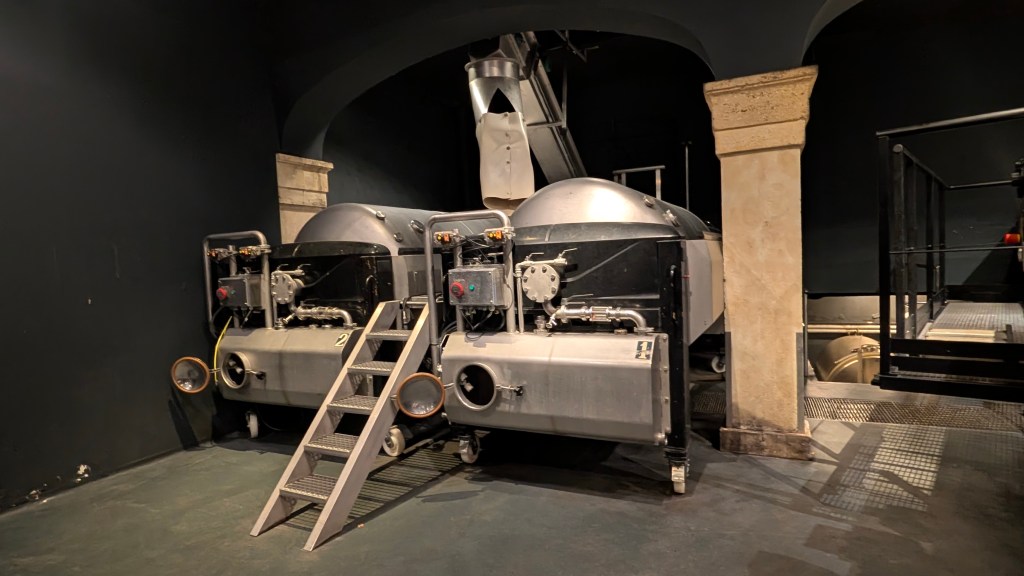
and sorting machines
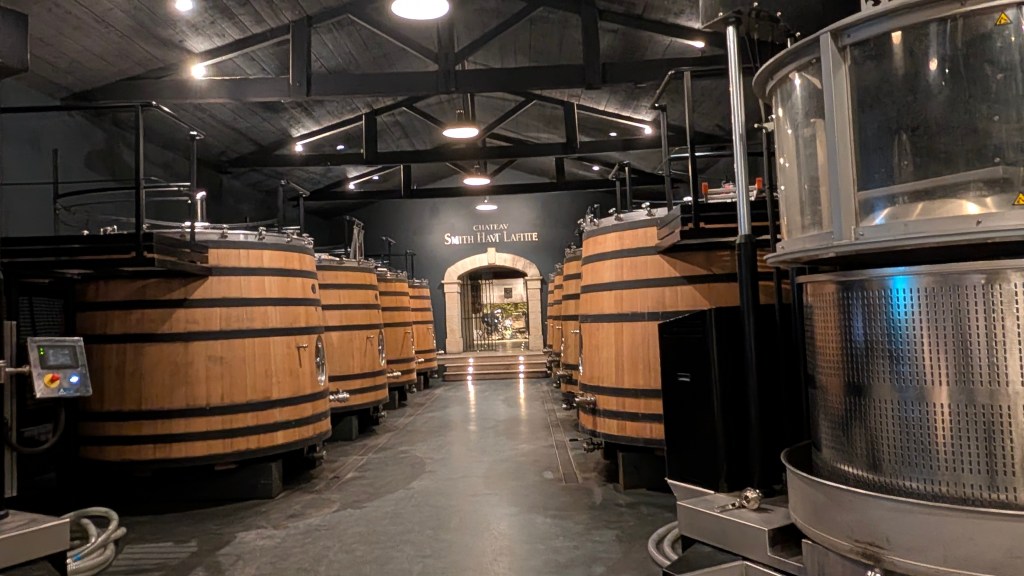
and the wood tanks room.
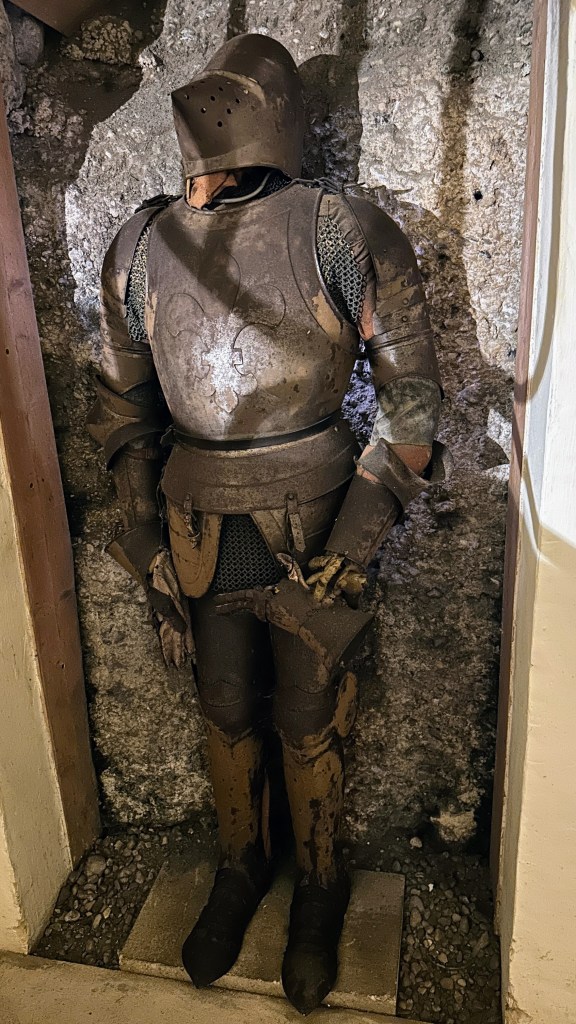
The Cathiards’ private collection is stored in a hidden underground cellar, accessible only via a trapdoor in the floor of the tasting room.
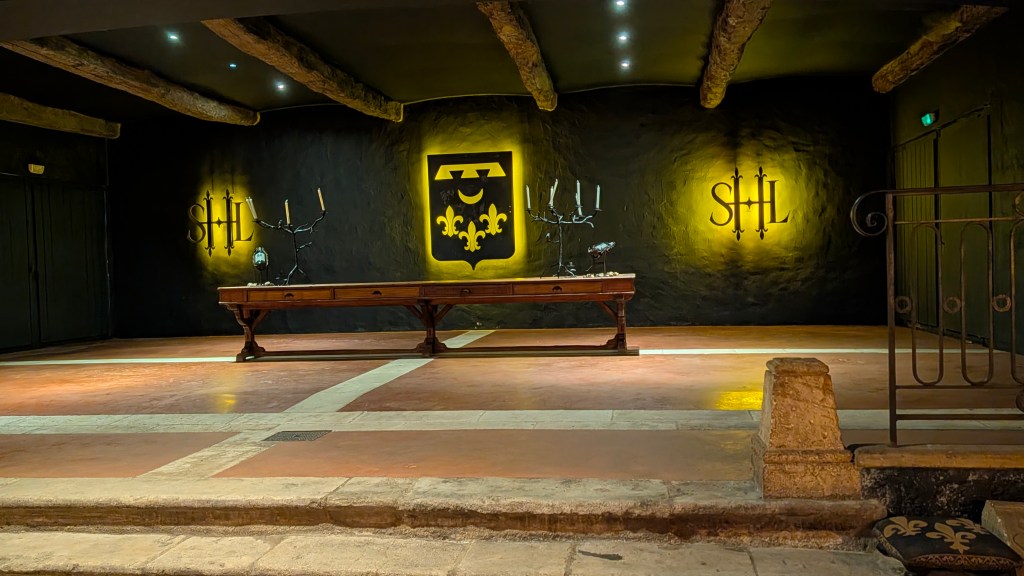
Finally we entered the bottle room.
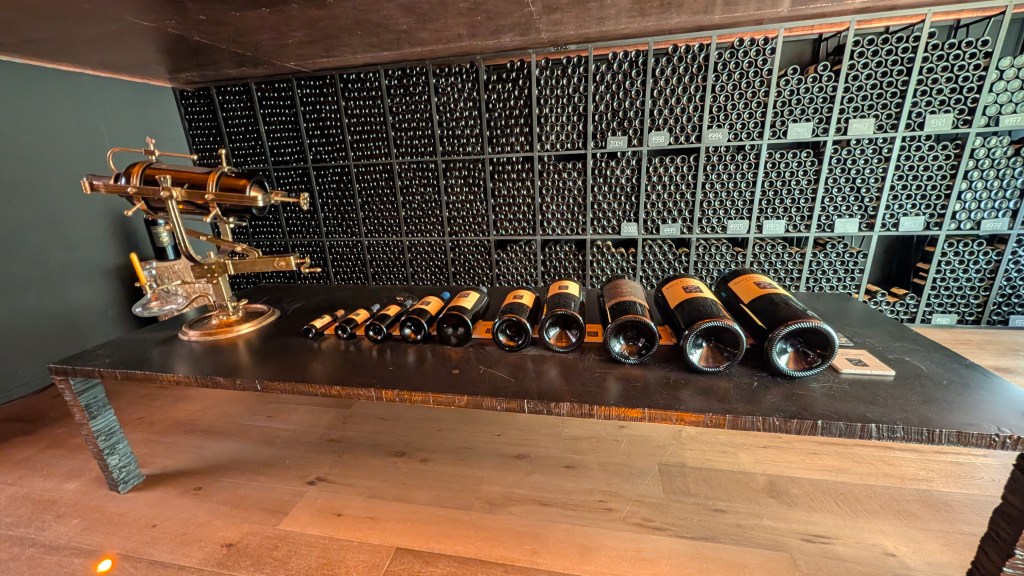
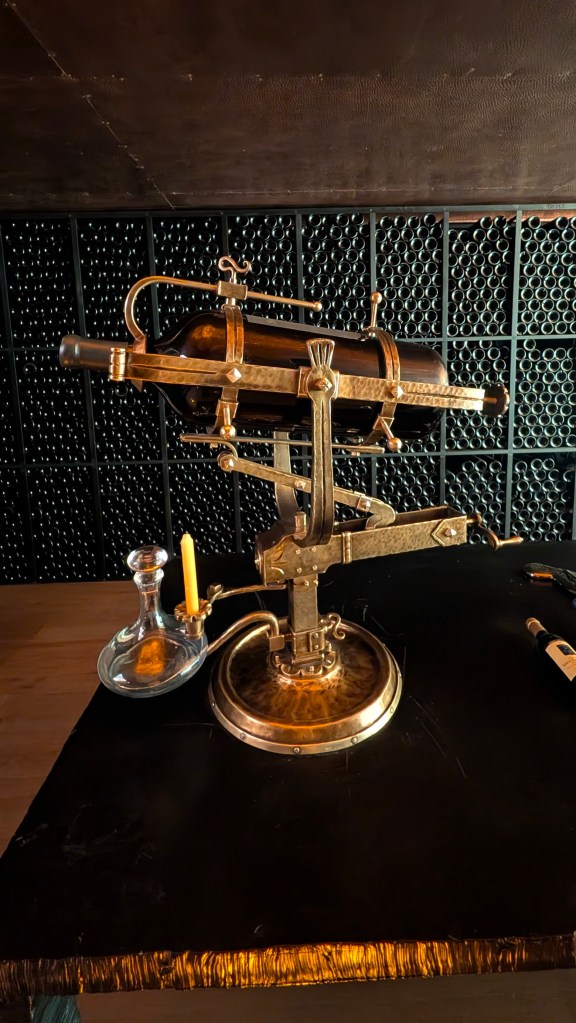
Some of the oldest bottles were on display.
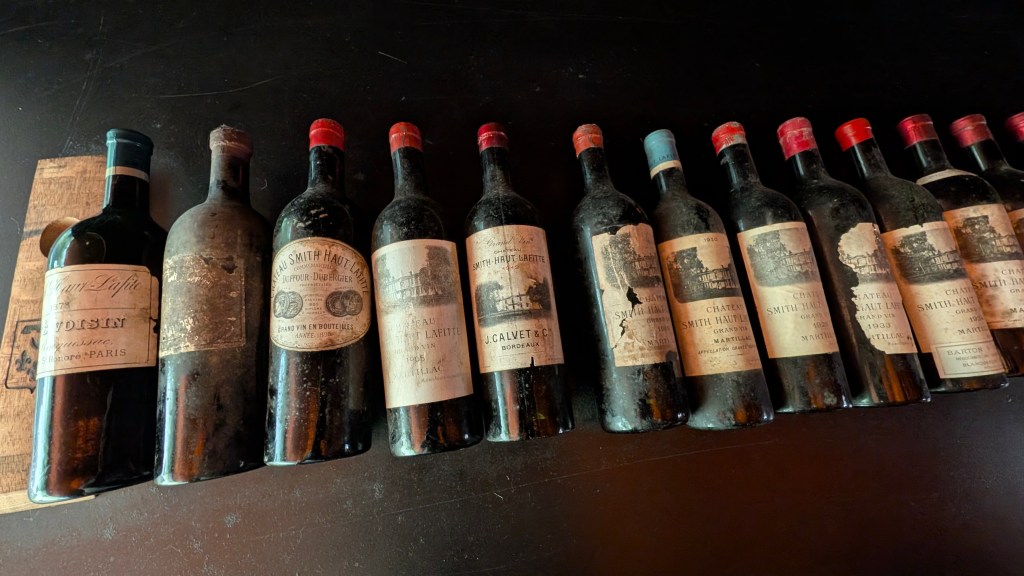
Finally it was time for the tasting.
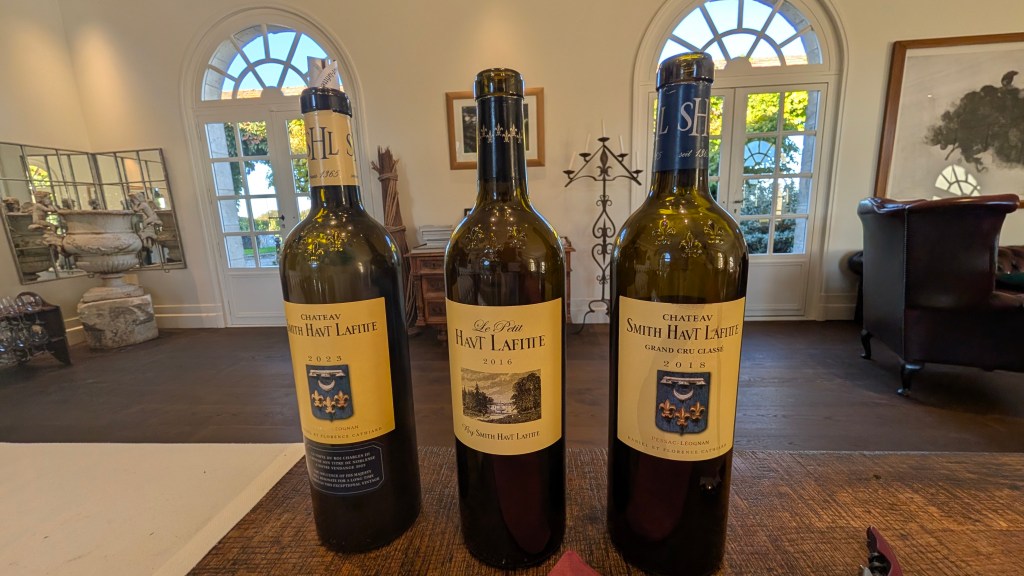
We left the winery as the sun was starting to fade and meandered through the vines.
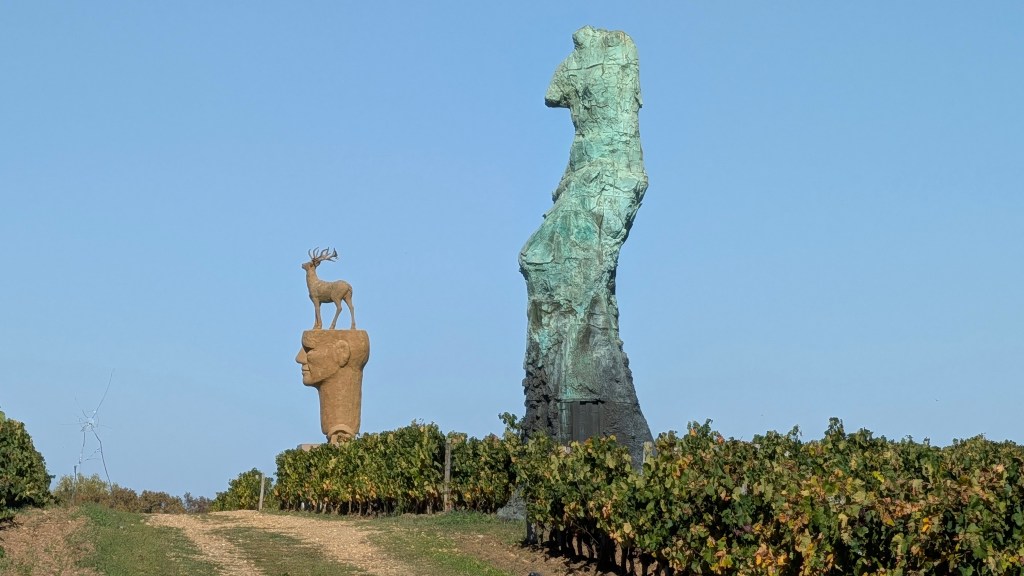
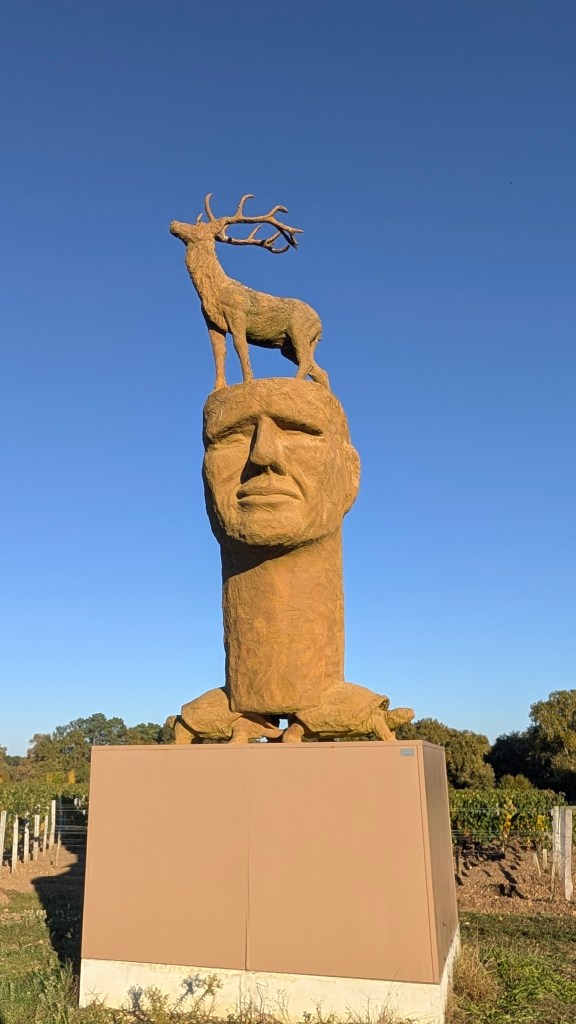
We went for a closer look at the statues. “Le Veado” was created by Portuguese artist Adália Alberto and is a copy of one in Nazaré, Portugal. The large human head topped by a deer, symbolizes a local Nazarine legend about saving Dom Fuas Roupinho.
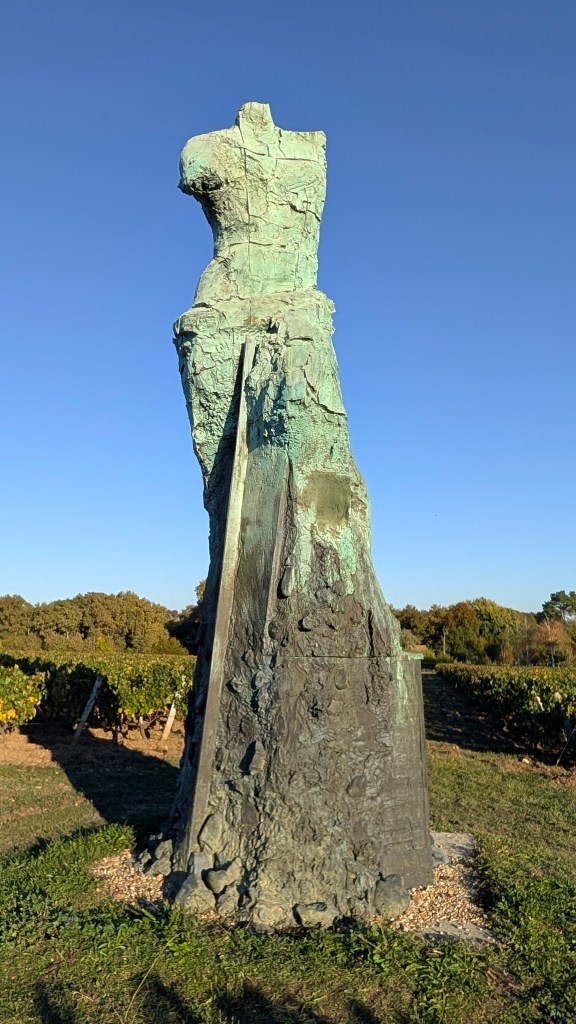
The “Venus de Bordeaux,” a monumental bronze sculpture by American artist Jim Dine is a modern interpretation of the classic Venus de Milo, featuring a disintegrating texture that symbolizes the relationship between art, fragility, and wine.
We noted the beginnings of autumnal colors on the grape vines and wondered how much more color we would see before our departure in 5 days.
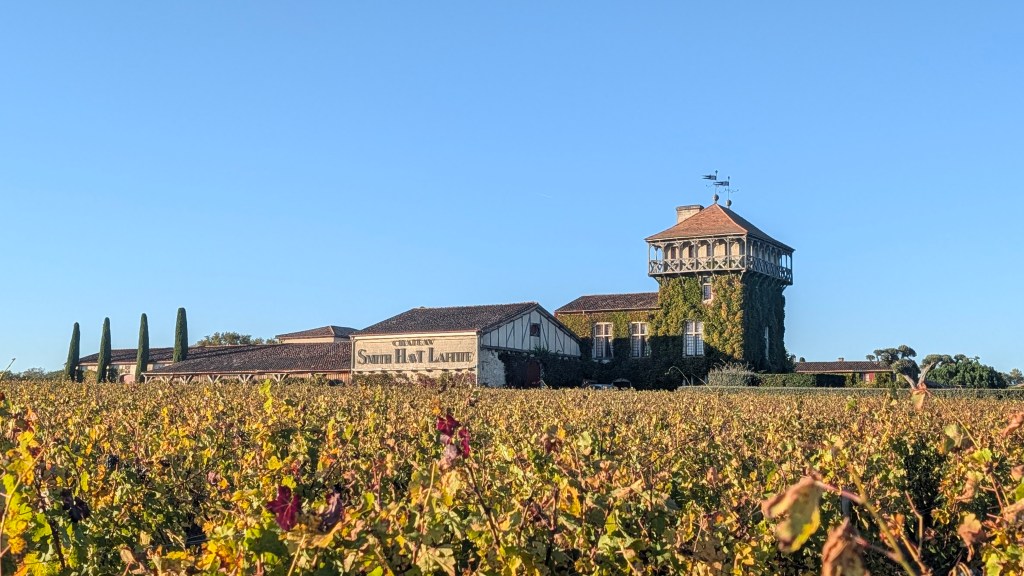
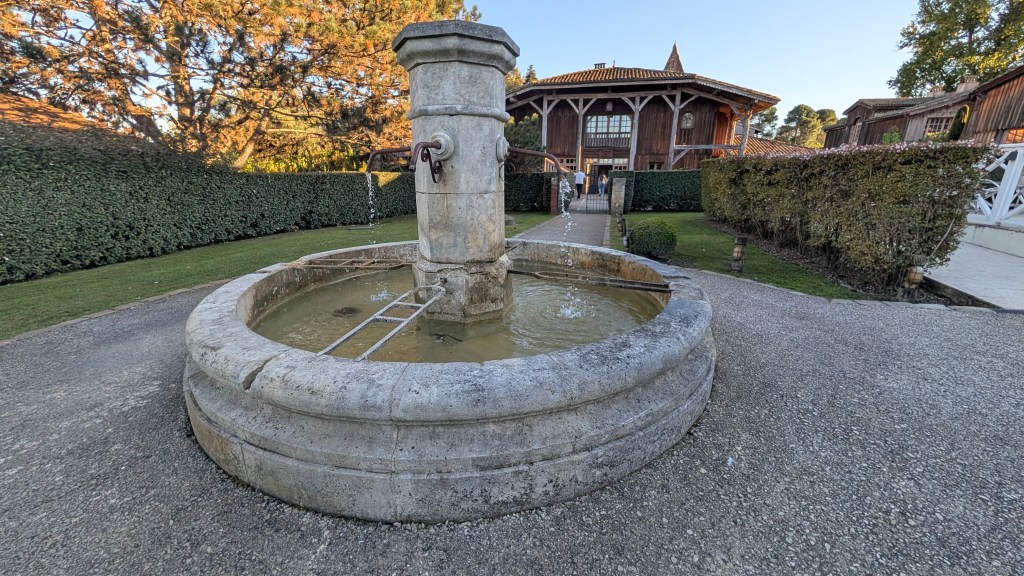
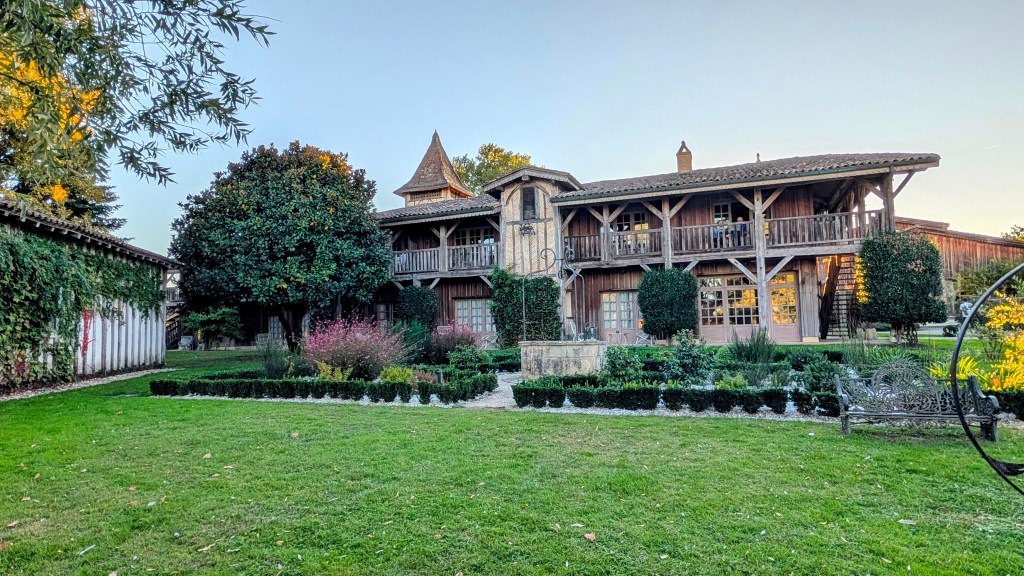
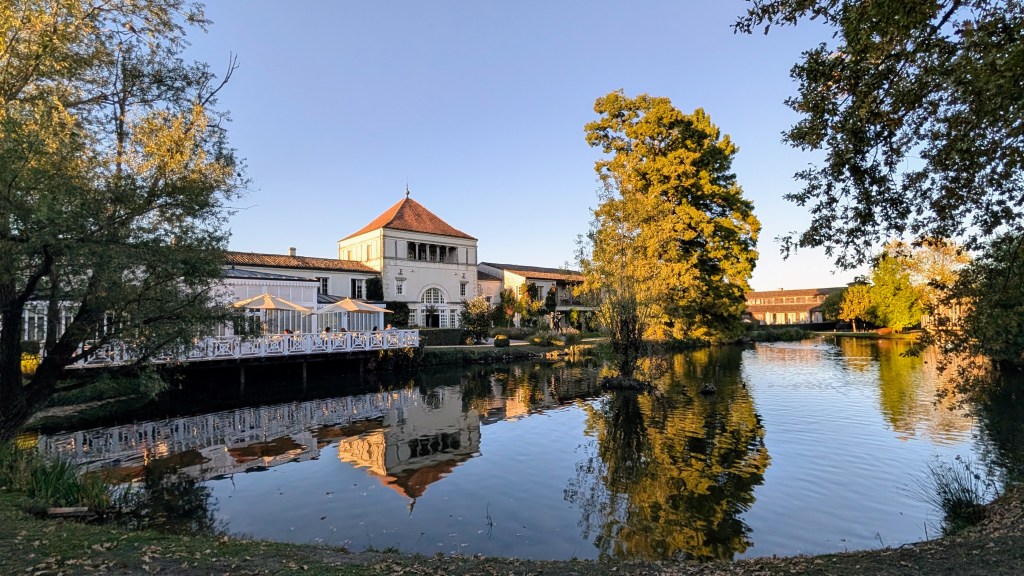
We took the time before dinner to explore the hotel compound. The property resembles a small village with 61 rooms and suites, split among several distinct, rustic, and cozy houses.
The hotel boasts multiple dining options, including the two-Michelin-starred restaurant La Grand’Vigne and the more casual La Table du Lavoir as well as Rouge, a gourmet delicatessen and wine bar.
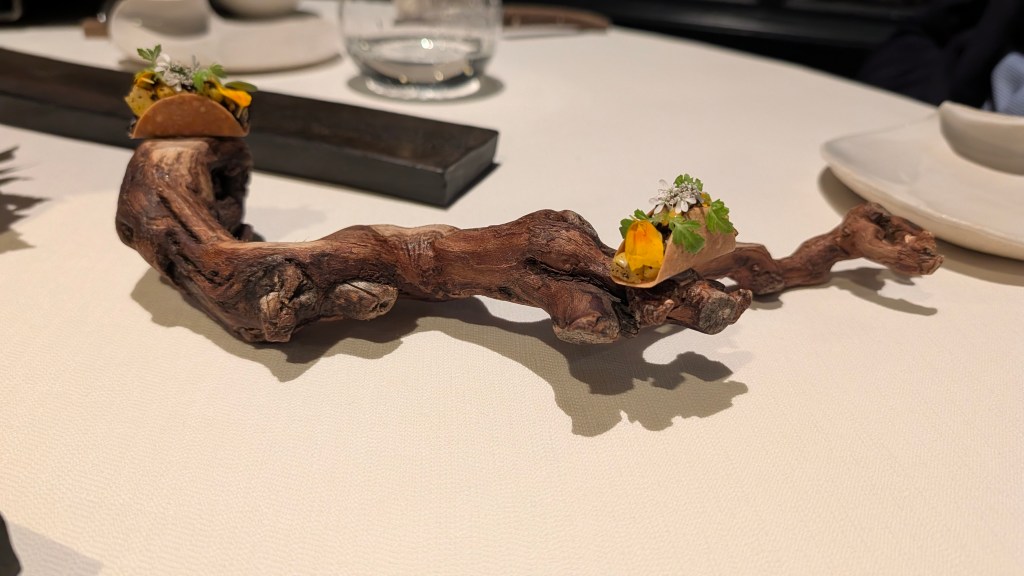
We dined that night at La Grand’Vigne, a two-Michelin-starred gastronomic restaurant. I will not bore you with all the food pictures (believe me I took them all), but will include here some of the most picturesque.
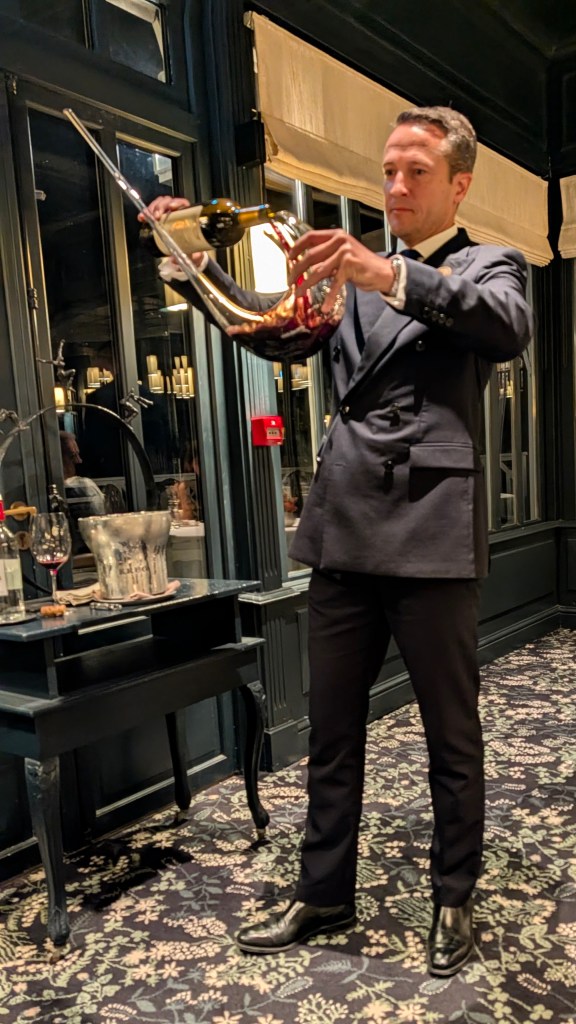
Our wine was decanted,
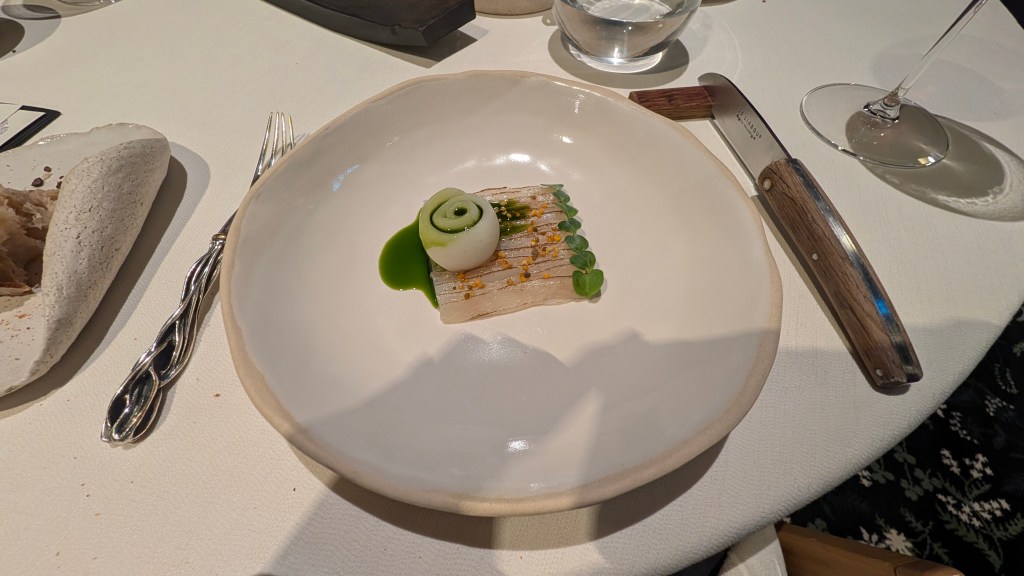
and the courses began with fish,
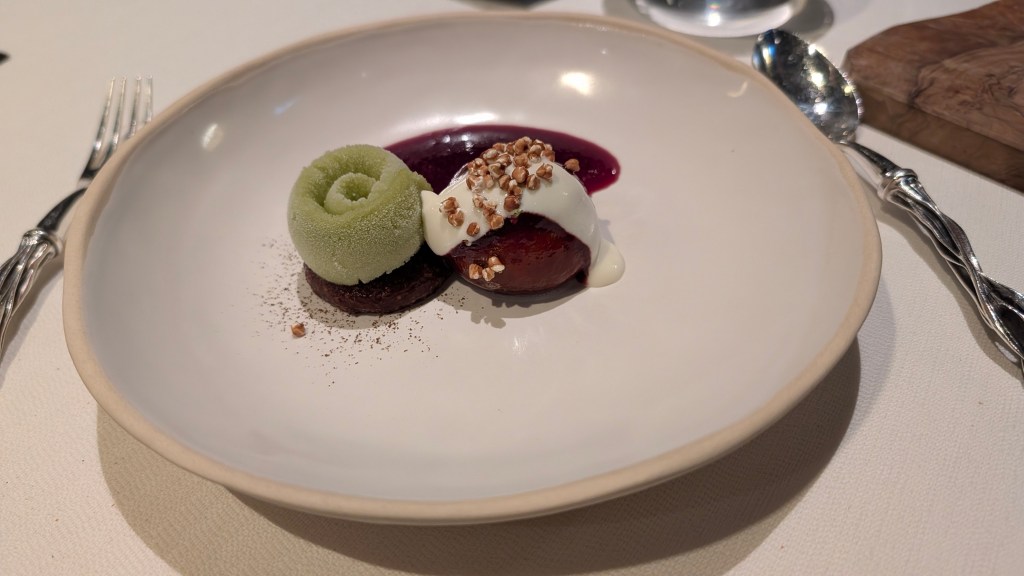
and finished with desert.
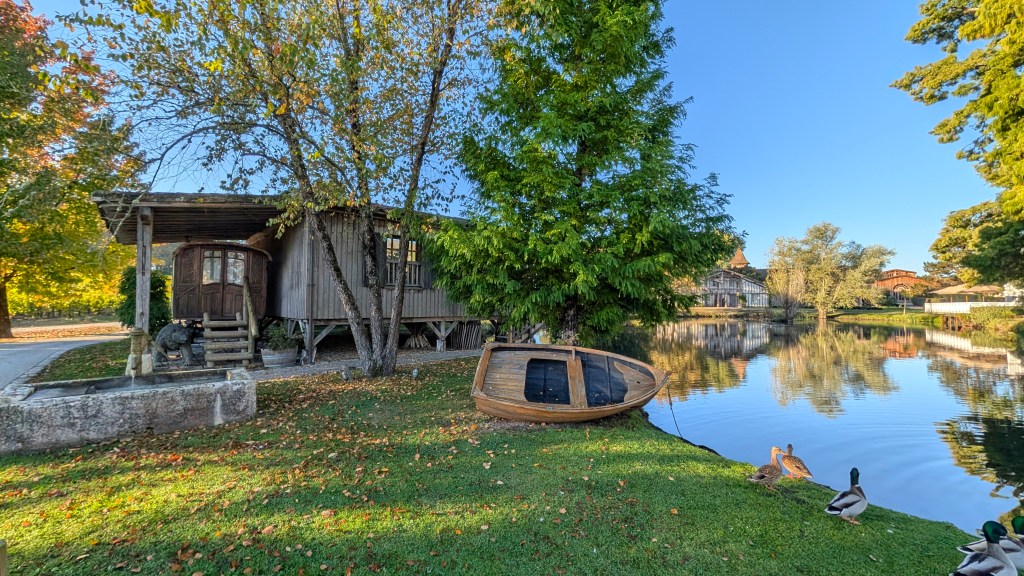
Prior to breakfast in the morning, we strolled around the pond to get a little exercise before another day of eating and drinking.
As we drove to our first destination, our driver explained wine classifications in Bordeaux. In the left-bank (of the River Garonne ) Médoc, Graves, and Sauternes regions, Grand Cru Classé refers to specific châteaux (estates) ranked in 1855 by order of Napoleon III to showcase the best wines at the Paris World Exhibition. These 61 châteaux are ranked into five levels: First Growth (Premier Cru) down to Fifth Growth (Cinquième Cru). This classification is based on the reputation of the estate, not just the vineyard, and has remained largely unchanged since 1855 with the exception of the addition of Rothschild in 1972. In Saint-Émilion a different system for the right-bank region is used; the ranking is reviewed roughly every 10 years. The levels there include Premiers Grands Crus Classés (A and B) and Grands Crus Classés.
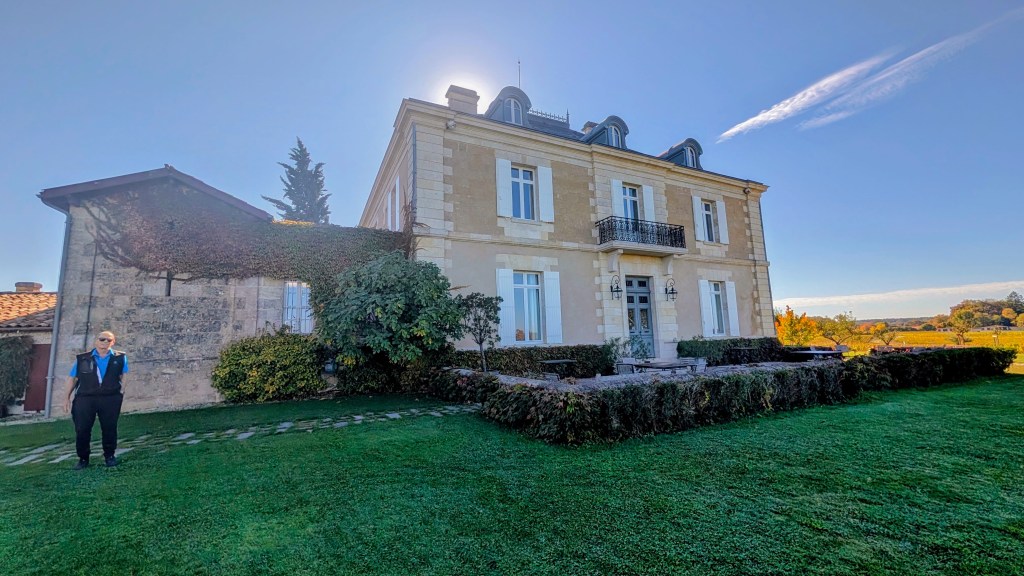
Today’s first winery, Château Haut-Bailly, a Cru Classé of Graves, is a historic Pessac-Léognan appellation estate with roots back to 1461, renowned for its 10 acres of ancient, 120-year-old vines, some of the oldest in Bordeaux. Eloise, our guide there, explained an appellation generally designates the geographic area in which the fruit or other agricultural product was grown. Using an appellation of origin on your label also indicates that the wine meets certain production requirements. In the Bordeaux region there are about 4,500 wineries in 60 appellations.
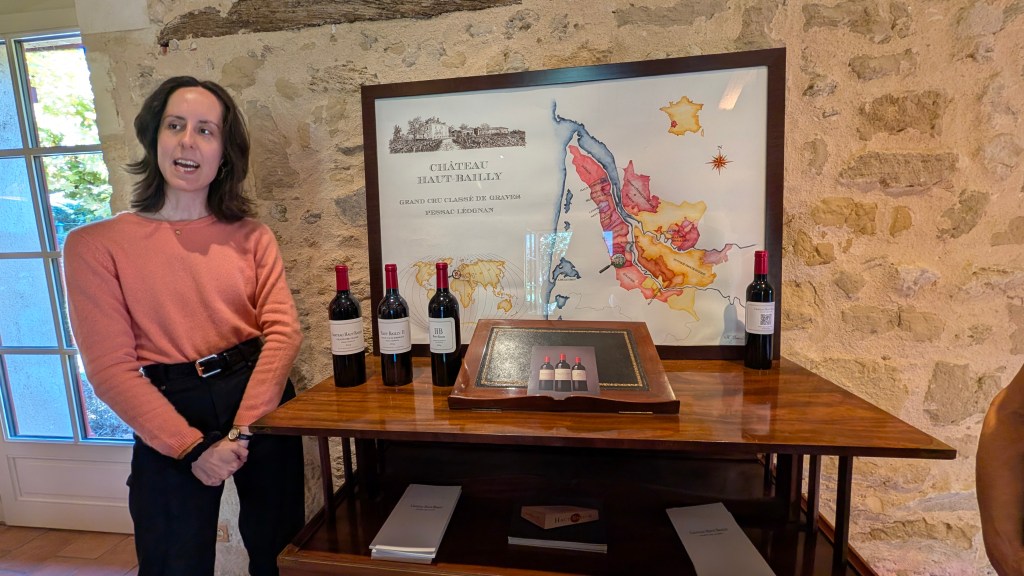
In 1872, the estate was purchased by Alcide Bellot des Minières, known as the “King of Vignerons” (or “King of Vines”), who famously resisted grafting during the phylloxera crisis. He built the manot house in 1875.
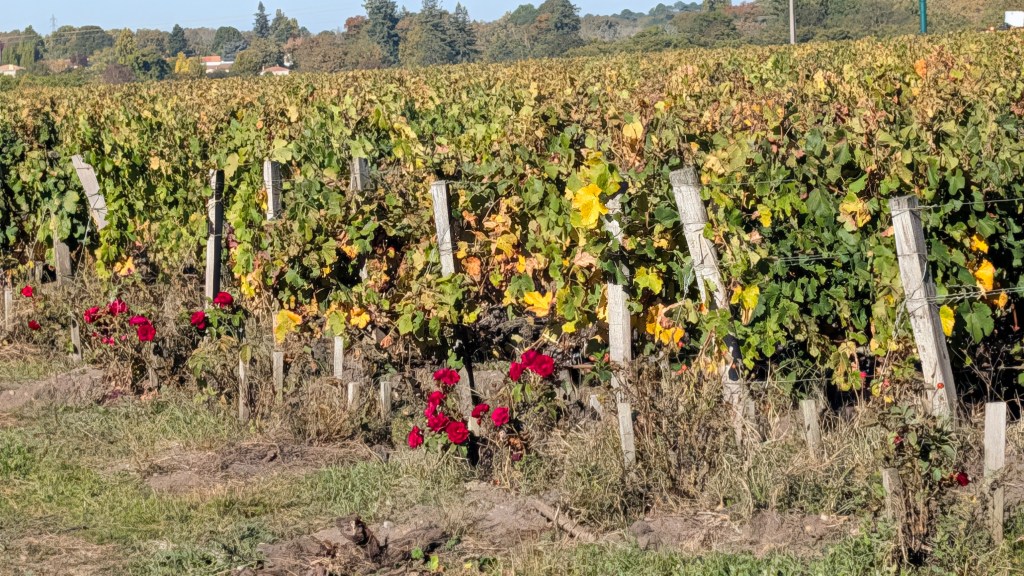
Within their oldest 10 acre plot, the vineyard contains all six major Bordeaux grape varieties (Cabernet Sauvignon, Merlot, Cabernet Franc, Petit Verdot, Malbec, and Carménère) planted together, a rare “field blend” style.
The ultra-modern, eco-friendly cellar, designed to blend into the landscape, features a massive suspended, vegetated roof that acts as a habitat for birds and bats.
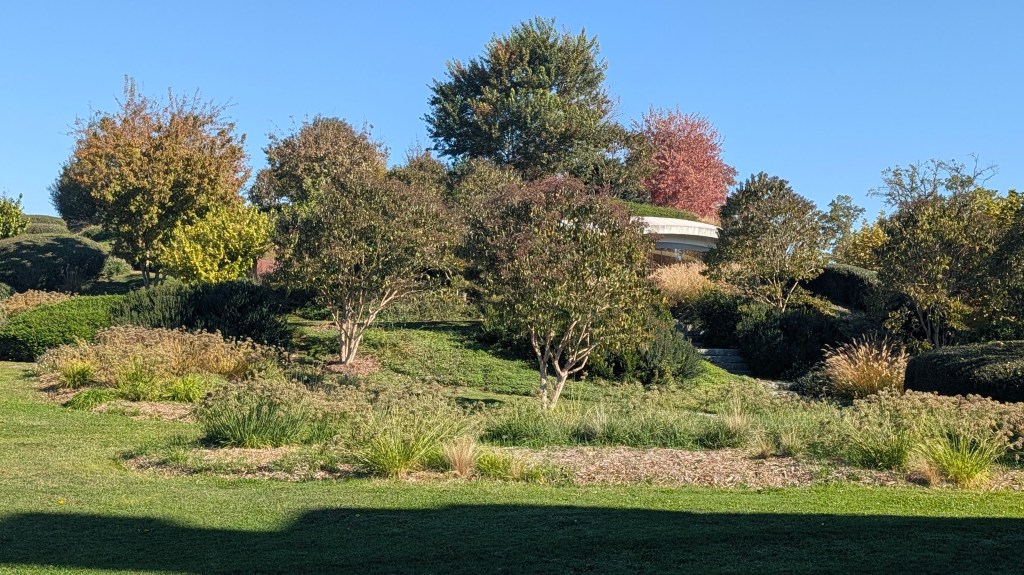
The modern facility was unveiled for the 2021 harvest and features a contemporary design.
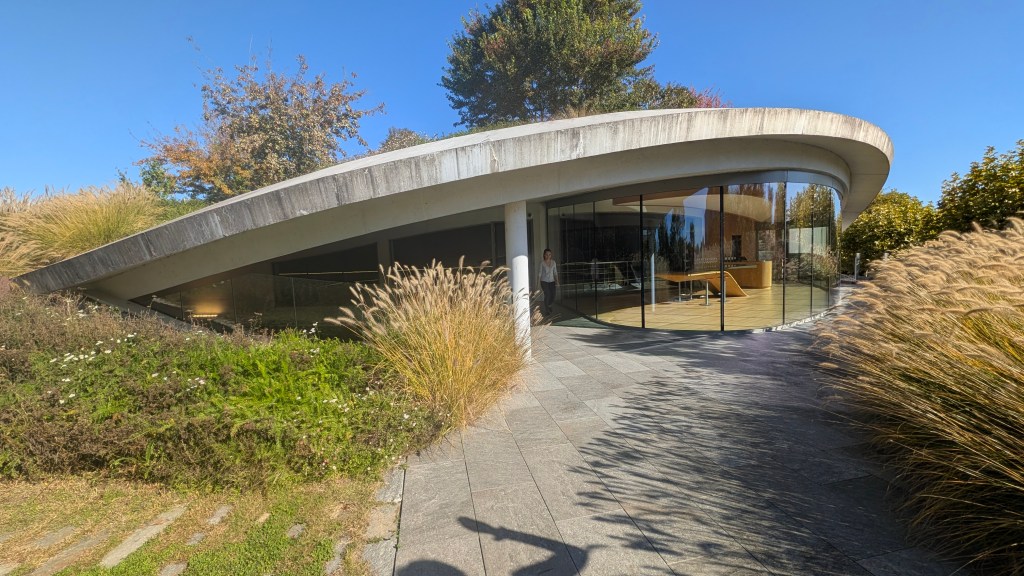
The facility is designed to enhance wine production using gravity and agroecology (application of ecological principles to agricultural systems) techniques.
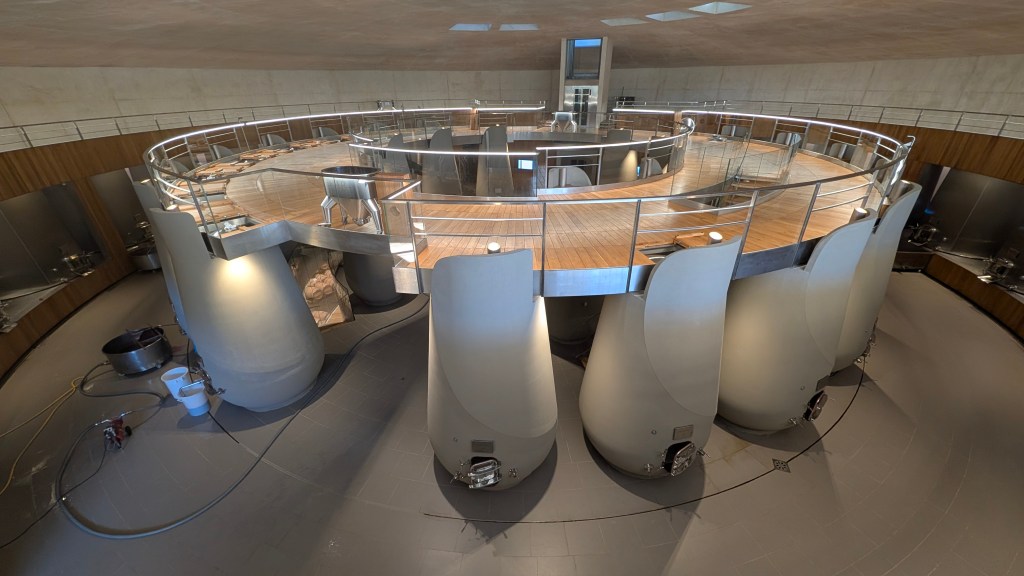
The grapes are wheeled in a carrier especially designed for the pupose, dropped into the large steel tank, and crushed by the force of gravity.
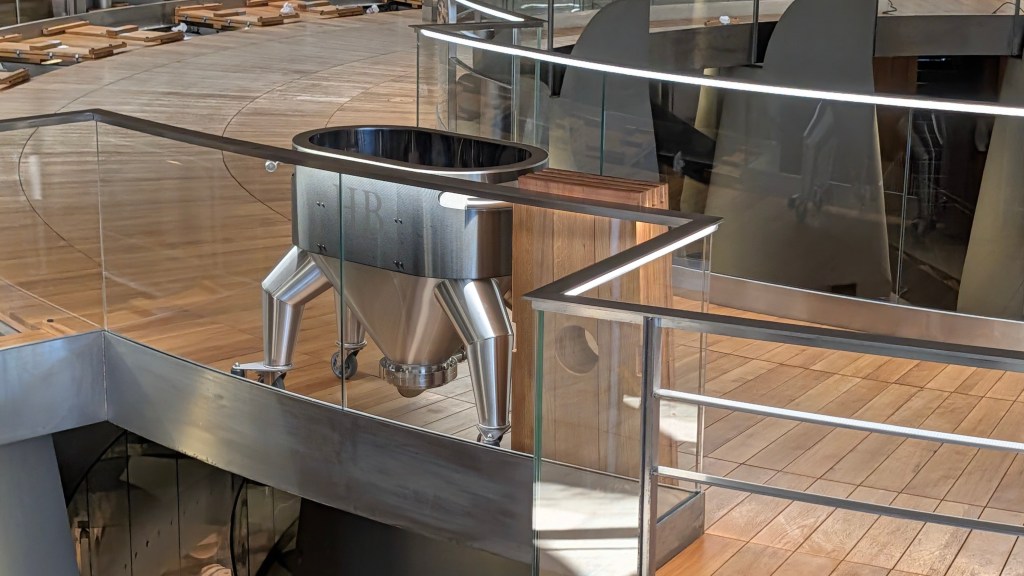
Once crushed, the grapes are removed from the steel tank and strained.
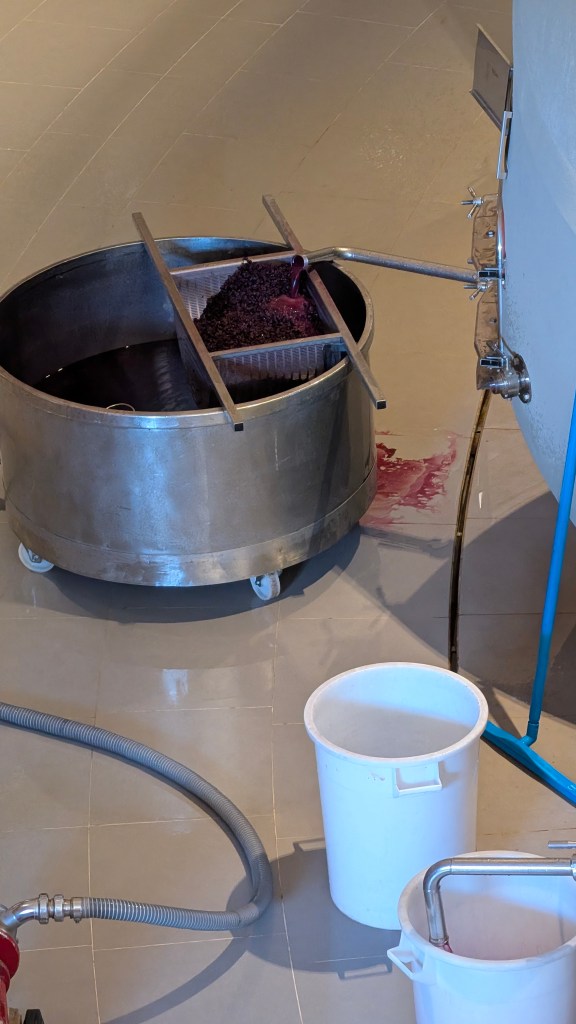
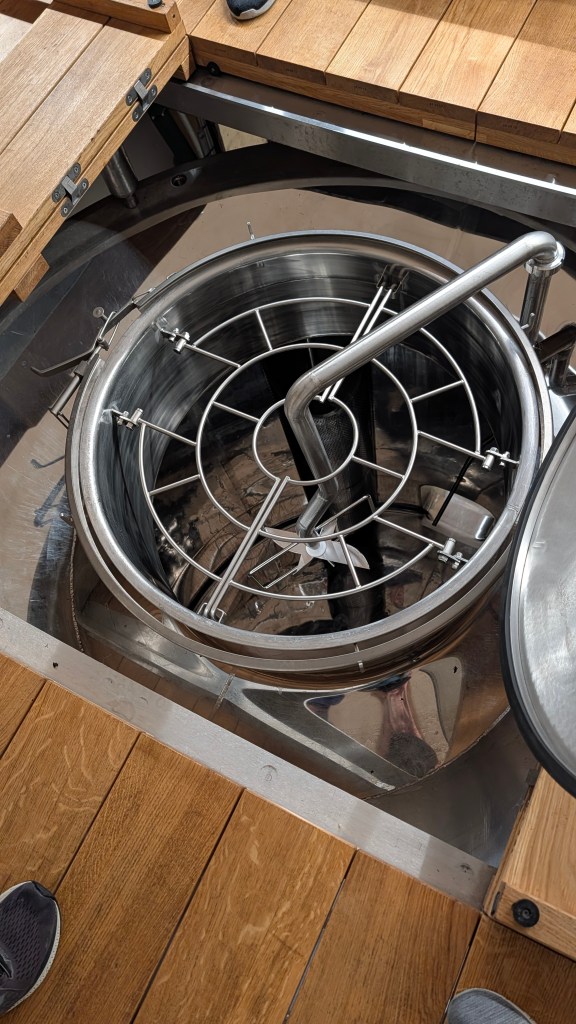
Looking down into the tank.
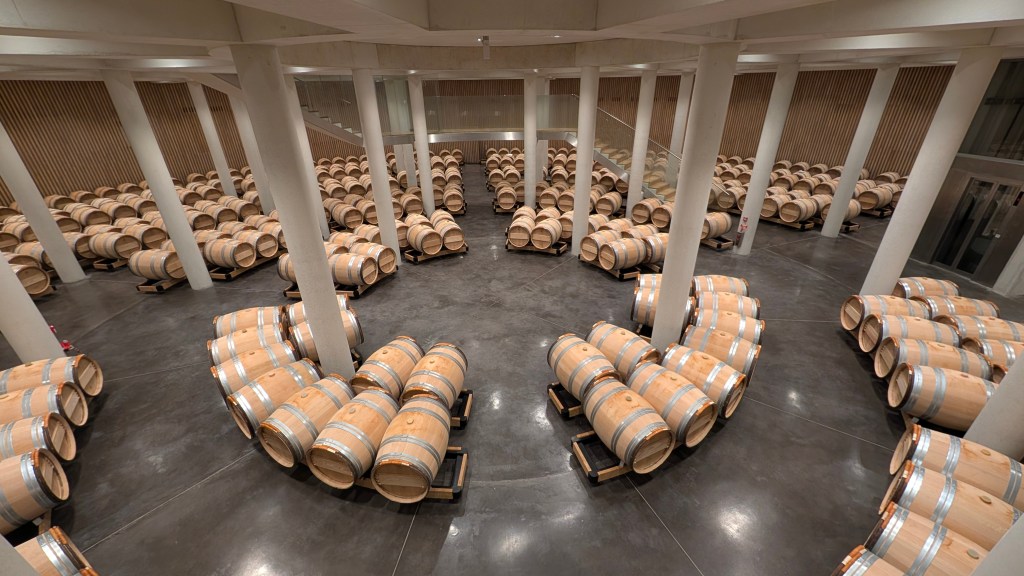
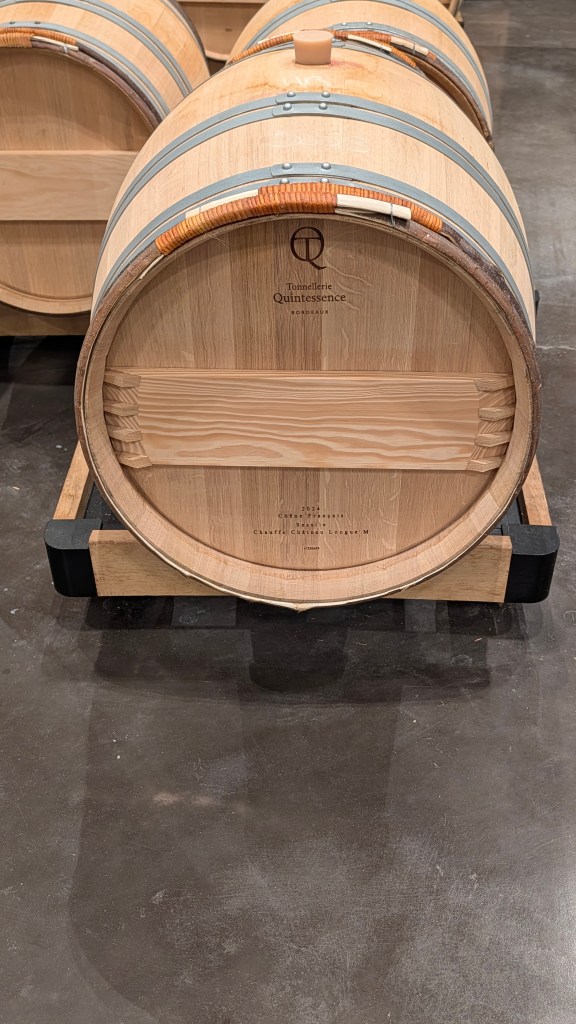
Eloise showed us the barrel room.
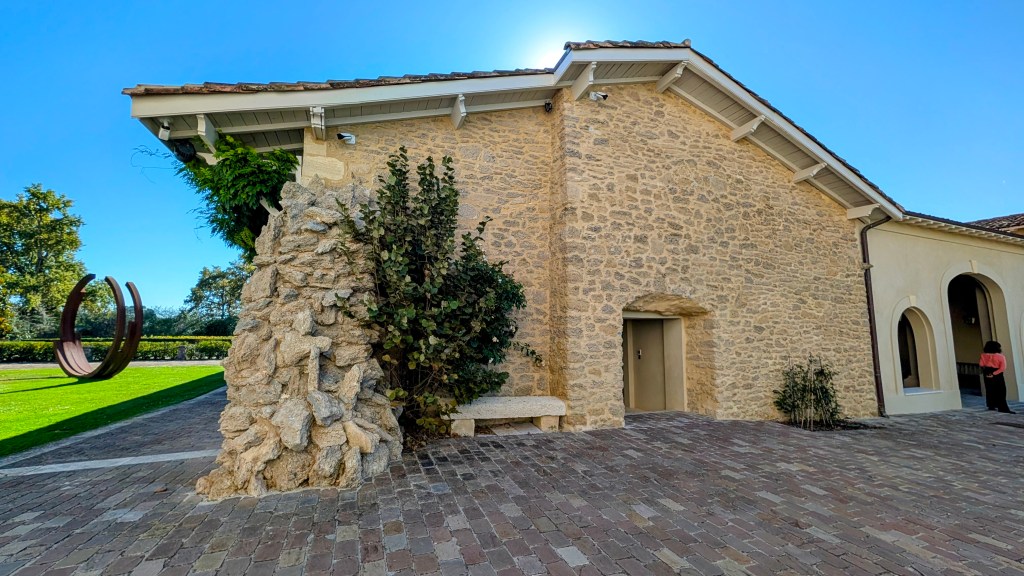
She then took us to the tasting building
and into the tasting room.
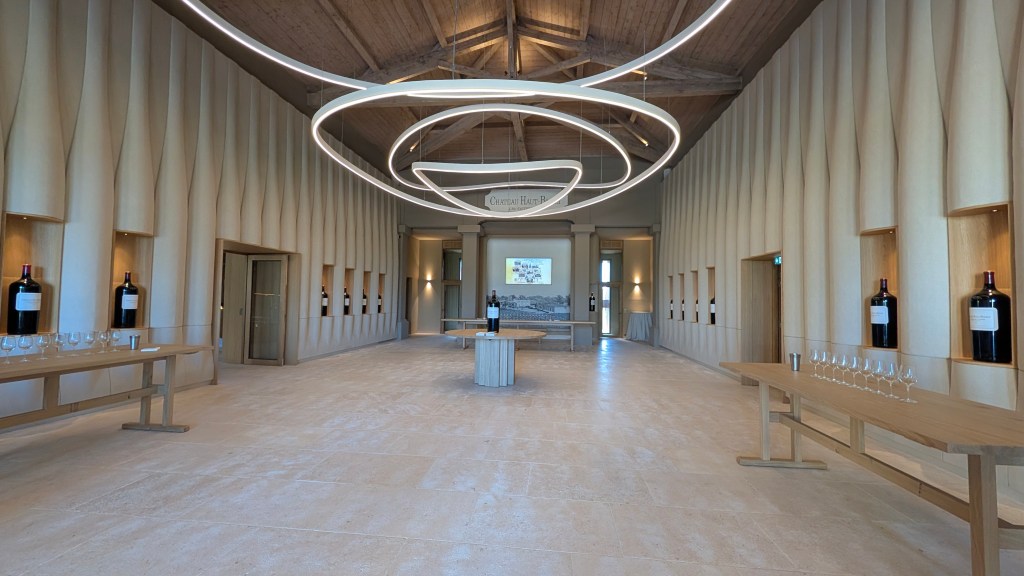
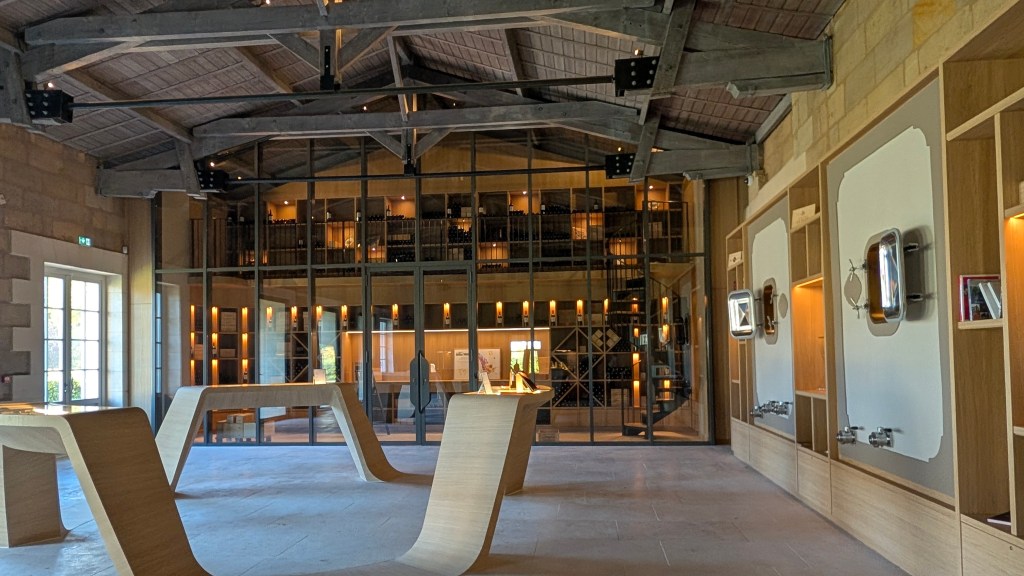
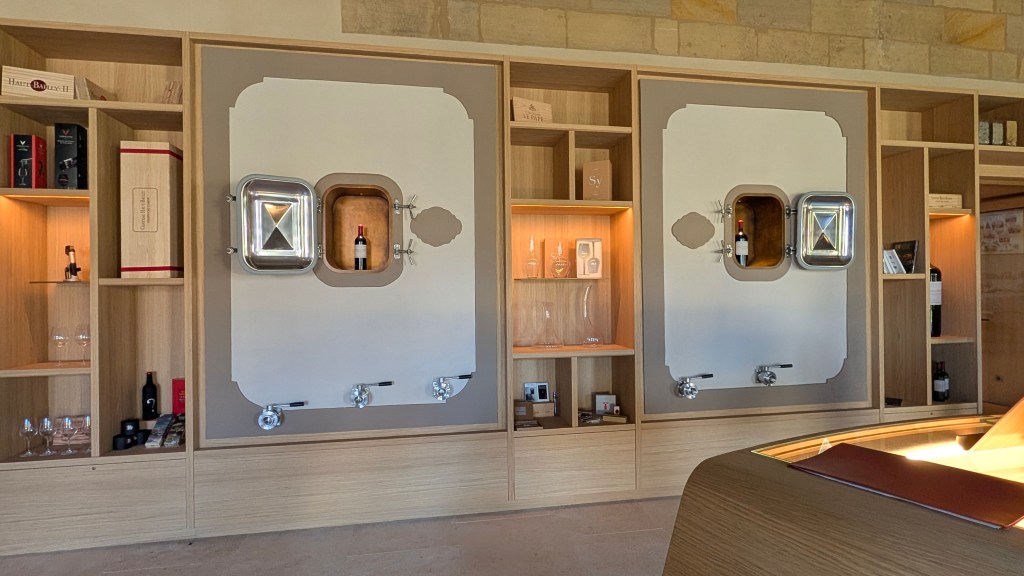
After our tasting we were taken into the manor house for lunch.
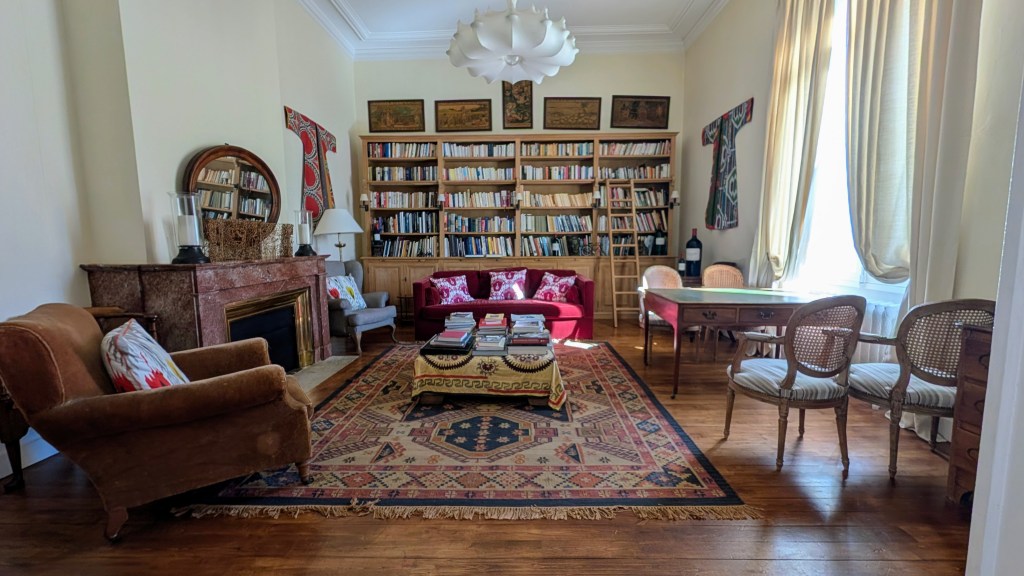
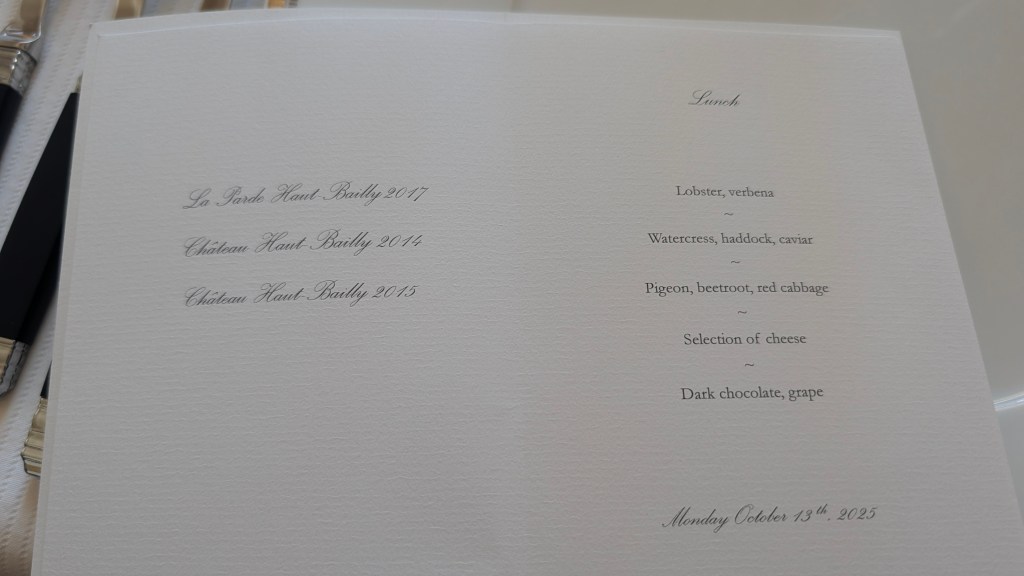
Our private menu
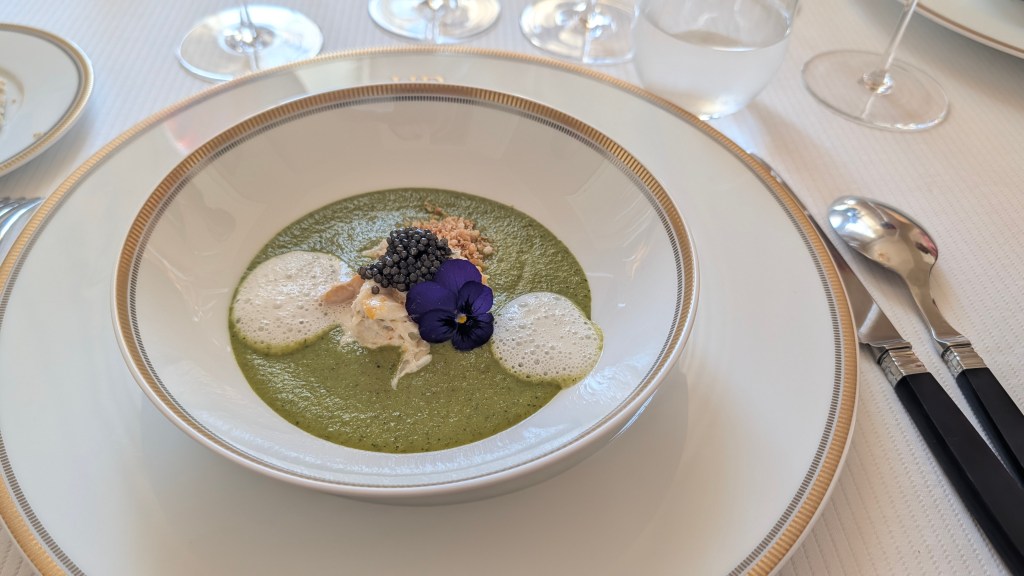
included lobster verbena
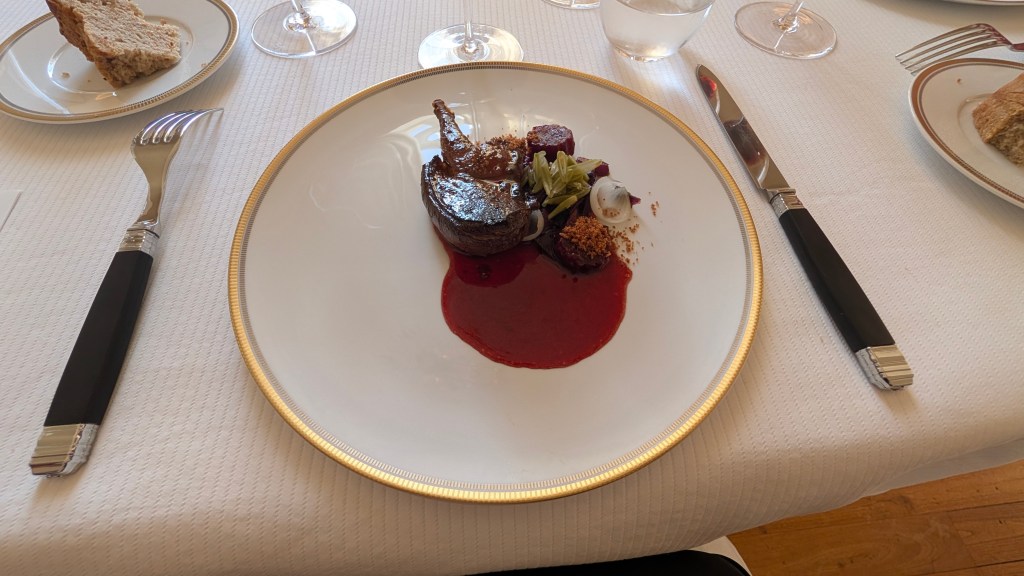
pigeon with beetroot
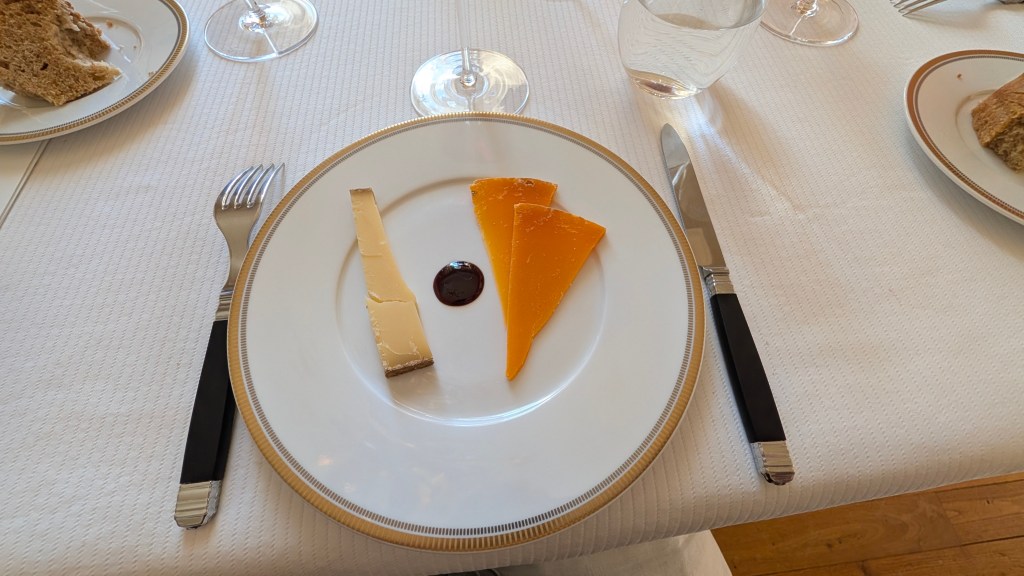
and, of course, cheese,
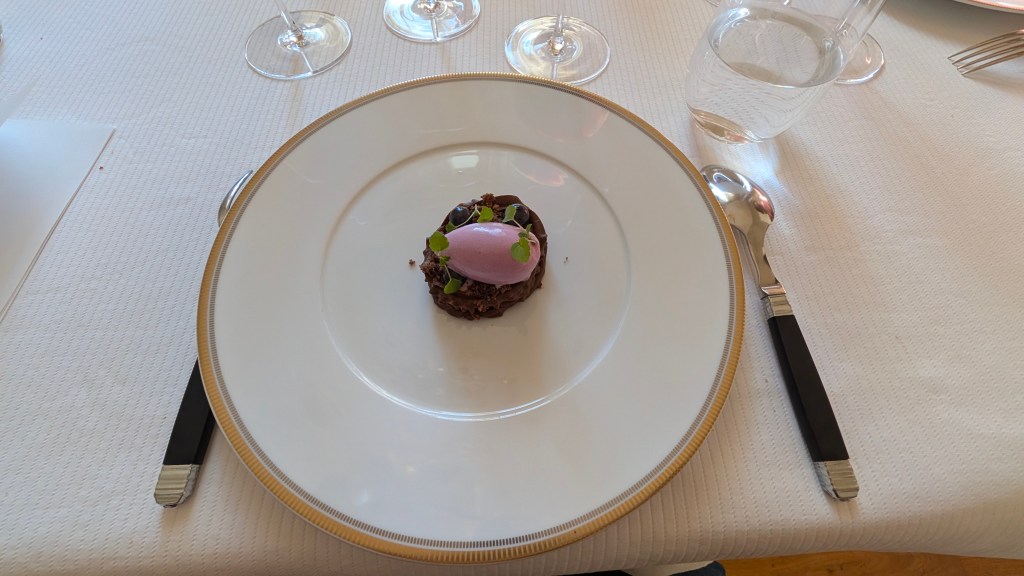
with dark chocolate for desert.
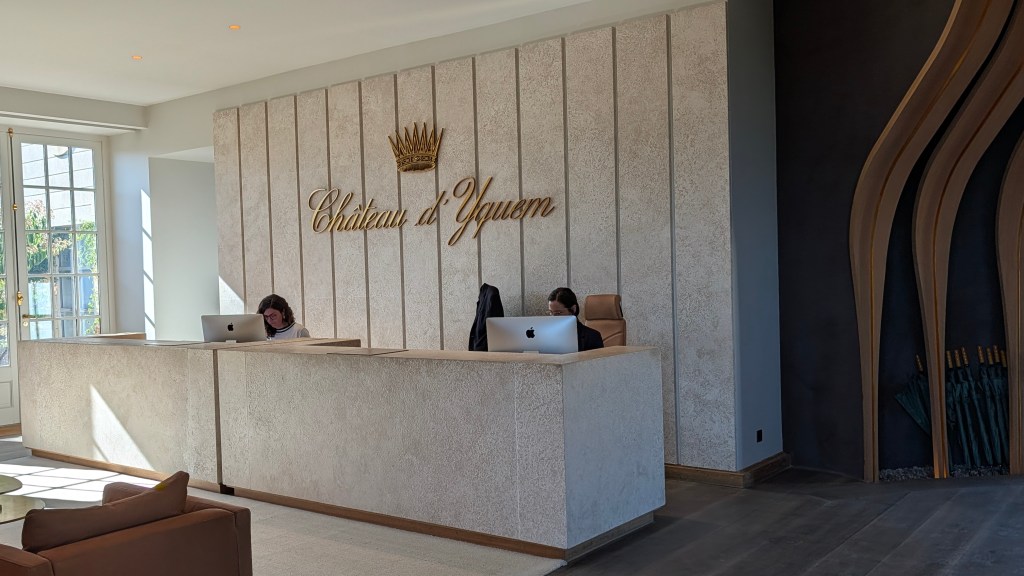
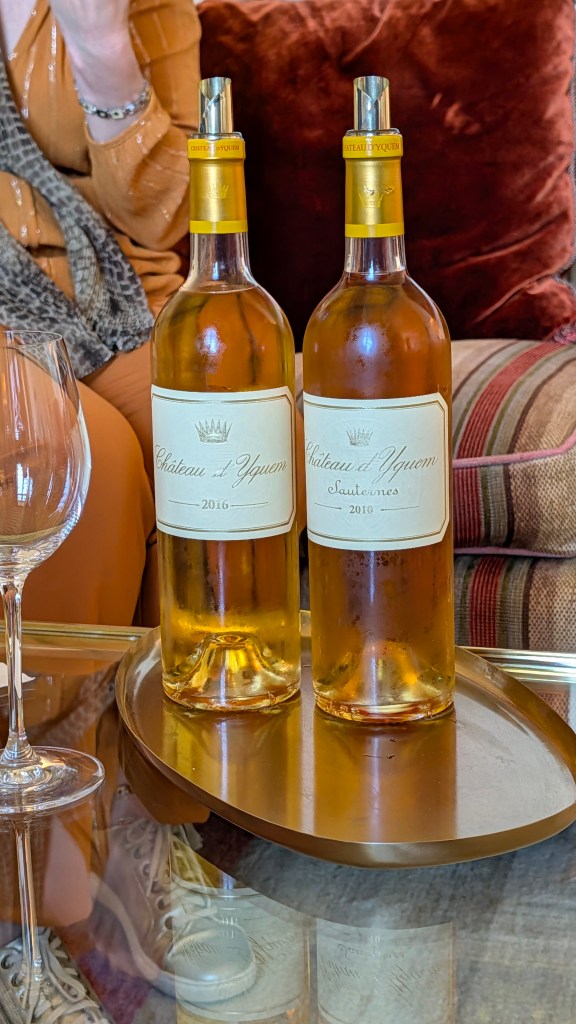
Having eaten so much lunch, it was difficult to think about tasting more wine. But a desert wine was on the schedule. Château d’Yquem, located in Sauternes apellation of the Graves region of Bordeaux, is the world’s most renowned sweet wine estate, famously ranked as the only Premier Cru Classé Supérieur (Superior First Growth) in the 1855 classification, placing it above all other Sauternes producers.
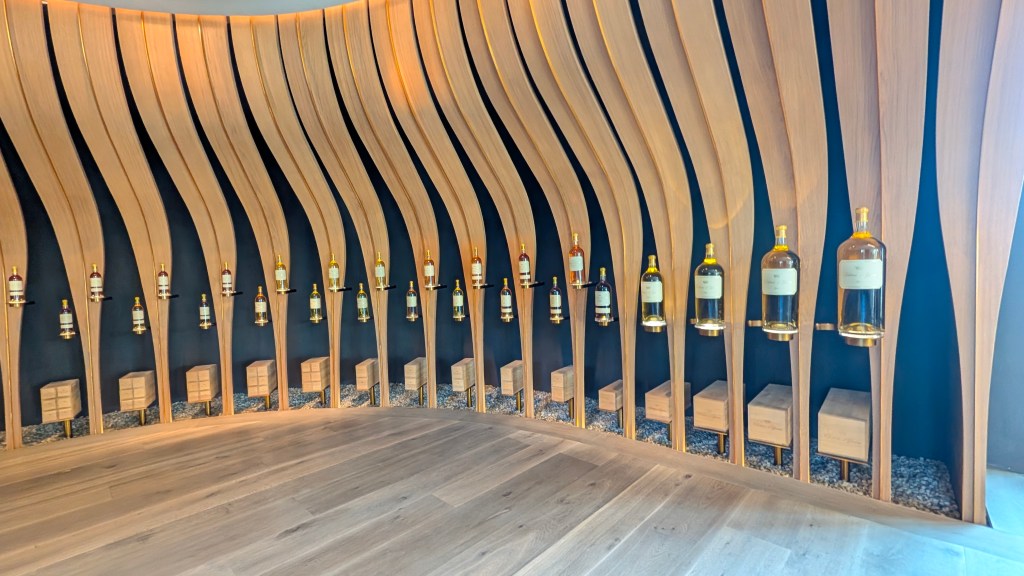
Production at Château d’Yquem is remarkably low, with the mantra that one vine produces only one glass of wine. The estate is known to reject entire vintages if the quality does not meet their strict standards.
During the Middle Ages (1152–1453), the estate was owned by the King of England.
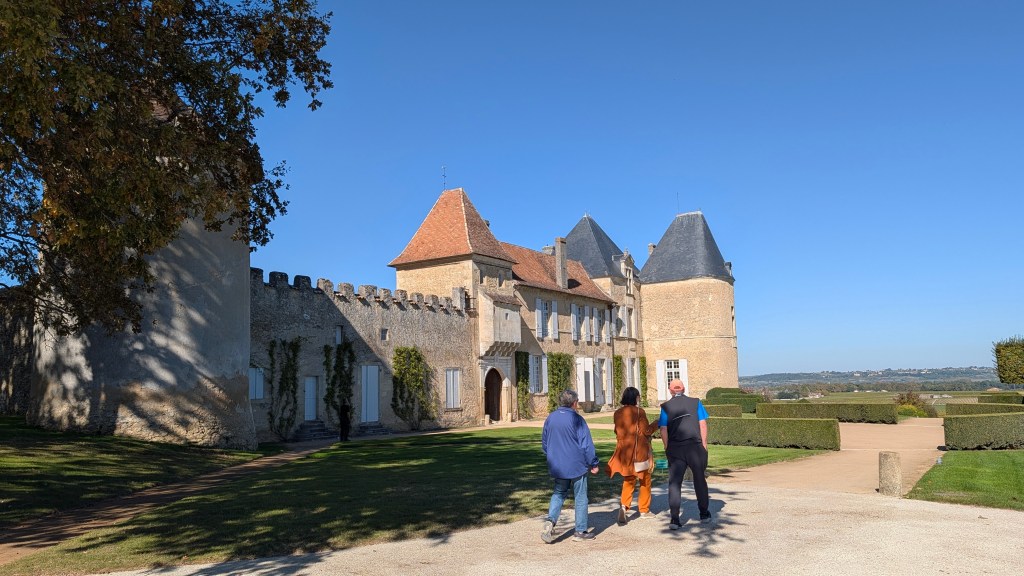
The property is currently owned by the luxury goods group LVMH.
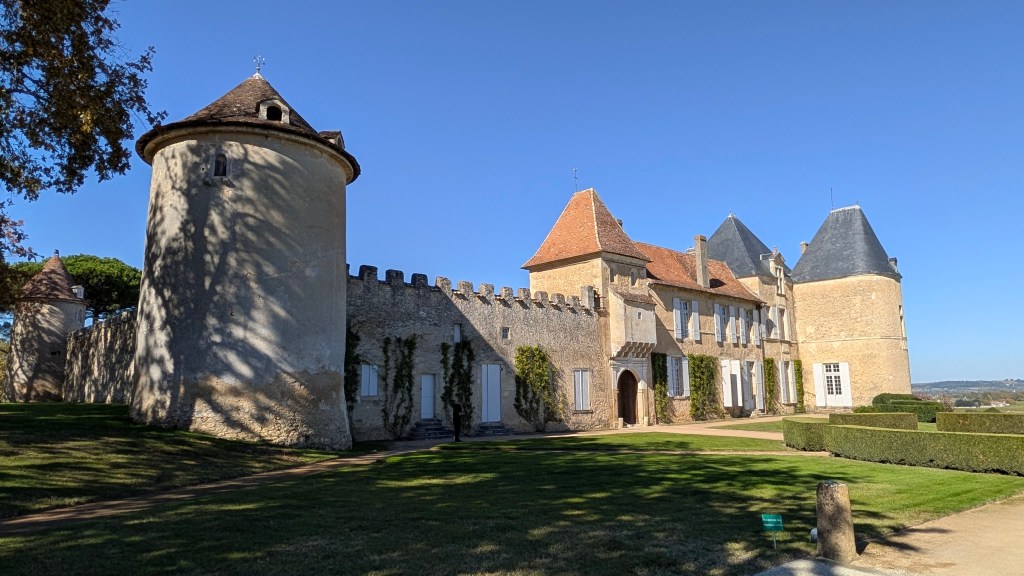
The vineyard had been under the same family control for over 400 years, from 1593 until it was acquired by LVMH in the late 1990s.
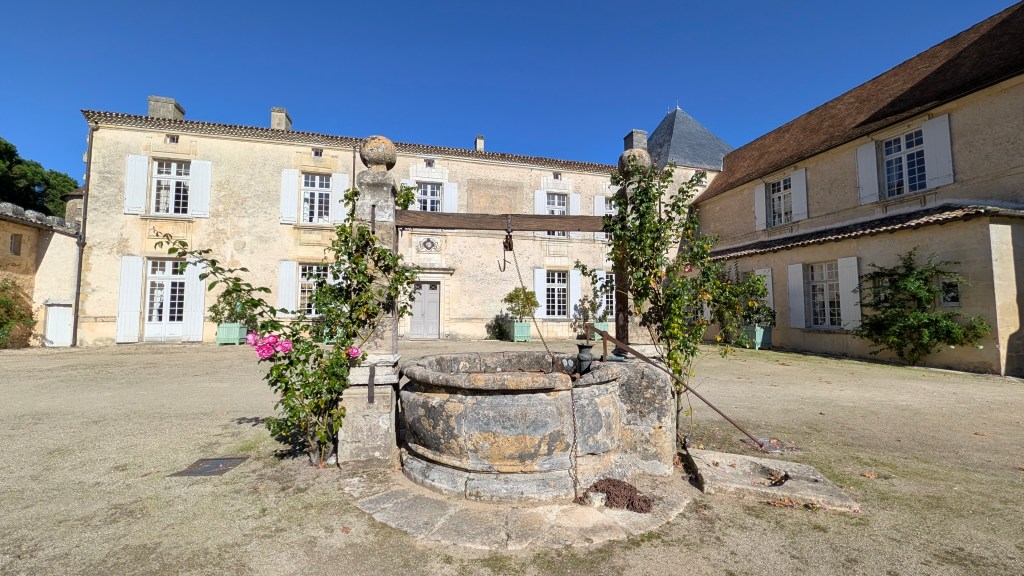
The site dates back to a 16th-century fortified farm and has served various purposes, including acting as a military hospital during wartime.
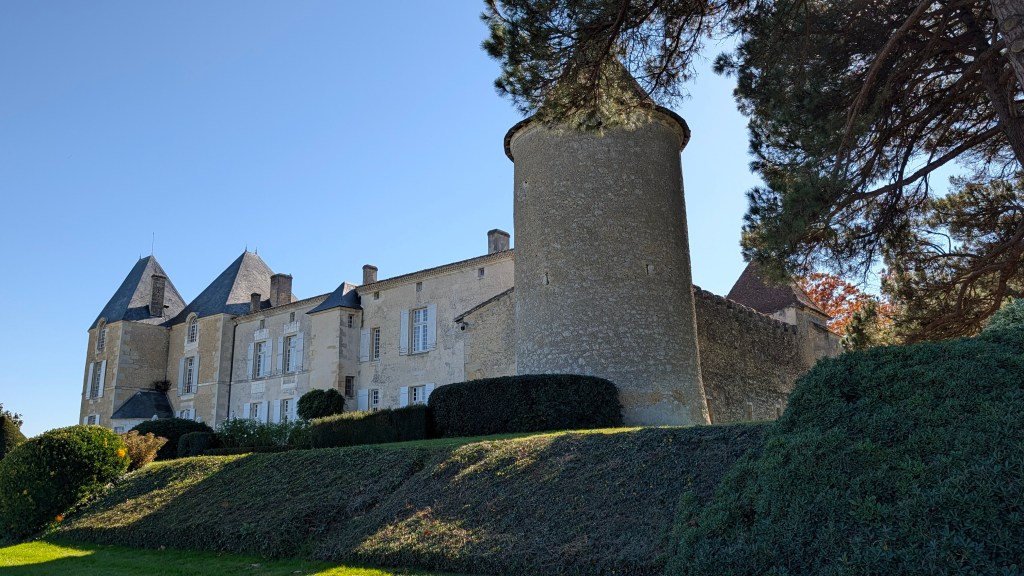
Our guide Anna explained that the vineyard is situated at the highest elevation in the Sauternes region, comprising approximately 280 acres. The grapes are 70% sémillon and 30% savignon blanc.
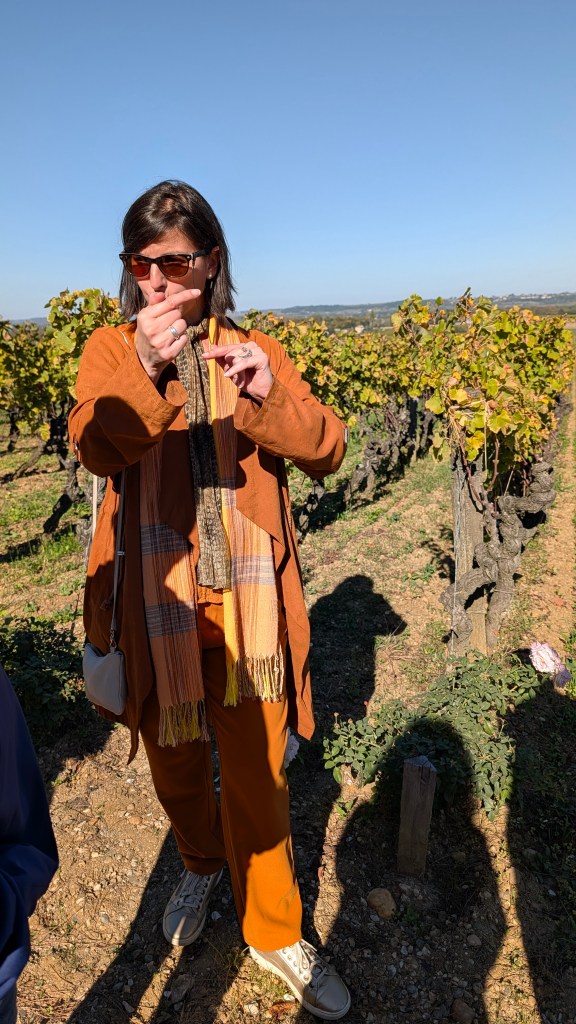
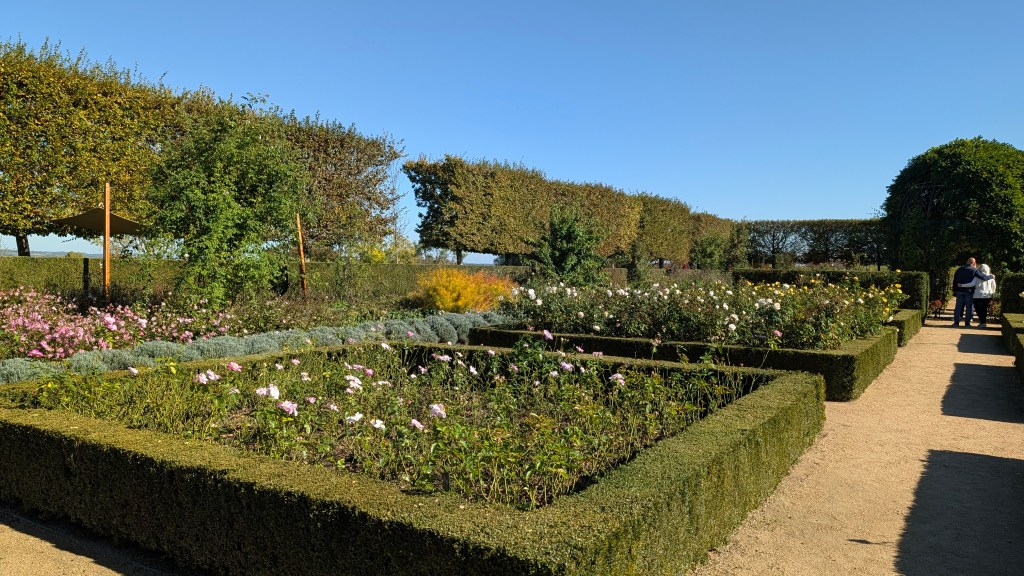
Anna walked us past the extensive gardens.
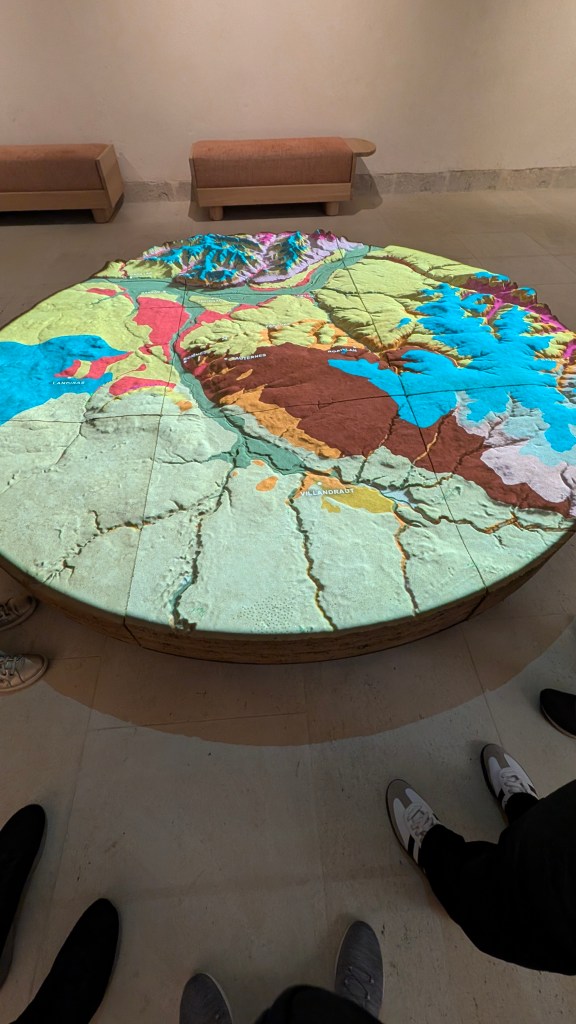
Using an interactive map, Anna explained the geography enabling the sweet wine production. The Sauternes apellation is situated on the Gironde estuary, often referred to as a river, which is formed from the meeting of the two rivers Dordogne and Garonne just downstream of the centre of Bordeaux. Covering around 245 sq miles, it is the largest estuary in western Europe. The location of the appellation on the estuary ensures foggy mornings with high humidity, which allows for growth of the the fungi Botrytis cinerea (noble rot), which dehydrates the grapes and concentrates sugar and aroma. Yquem, the best of the sauterne wines, is known for its ability to age for over 100 years, often improving significantly with age.
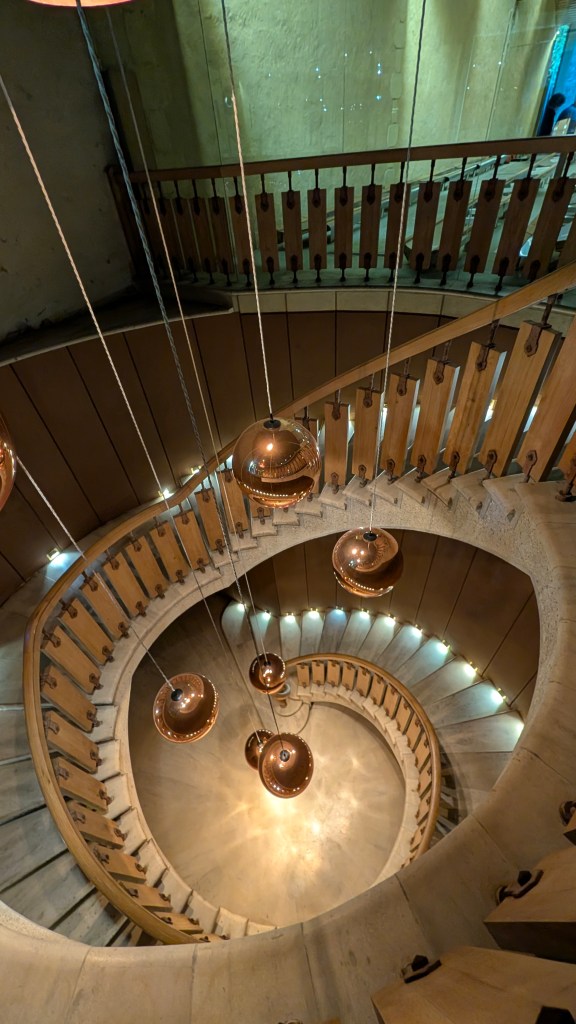
Anna took us down the stairs
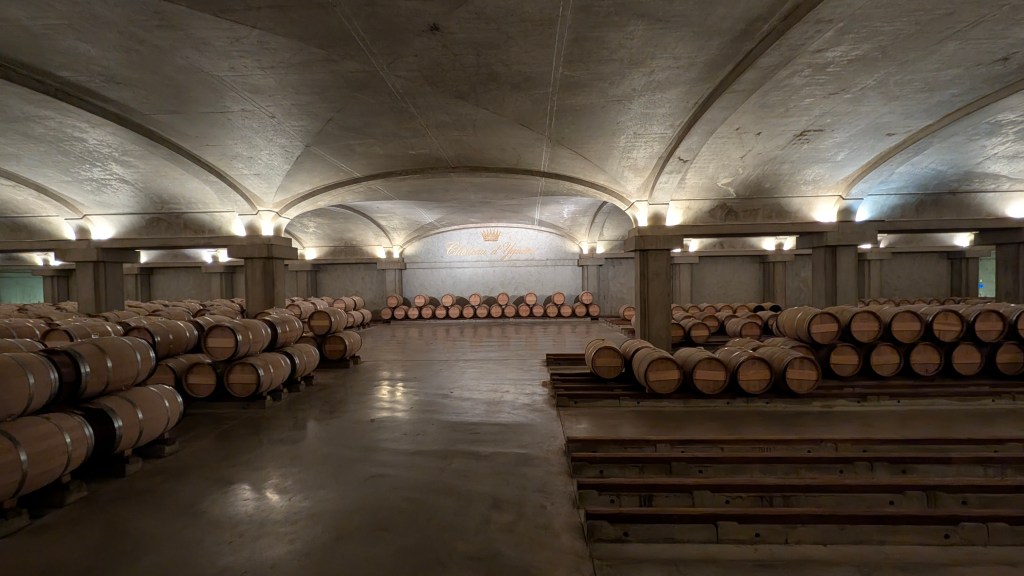
into the wine cellar. The grapes are in the barrel for two years. Each barrel is only used once. It is often considered the most expensive wine to produce in Bordeaux. The wine is bottled with CO2 in the bottle to improve longevity.
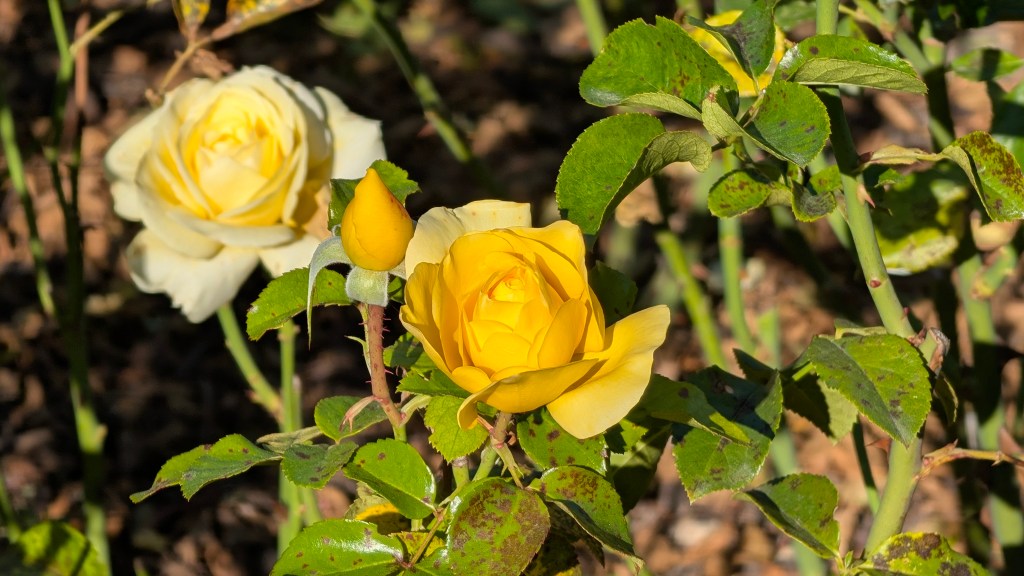
Roses are planted with grapevines primarily as an early warning system against diseases like powdery mildew, as roses are more sensitive and show symptoms first, allowing time for intervention.
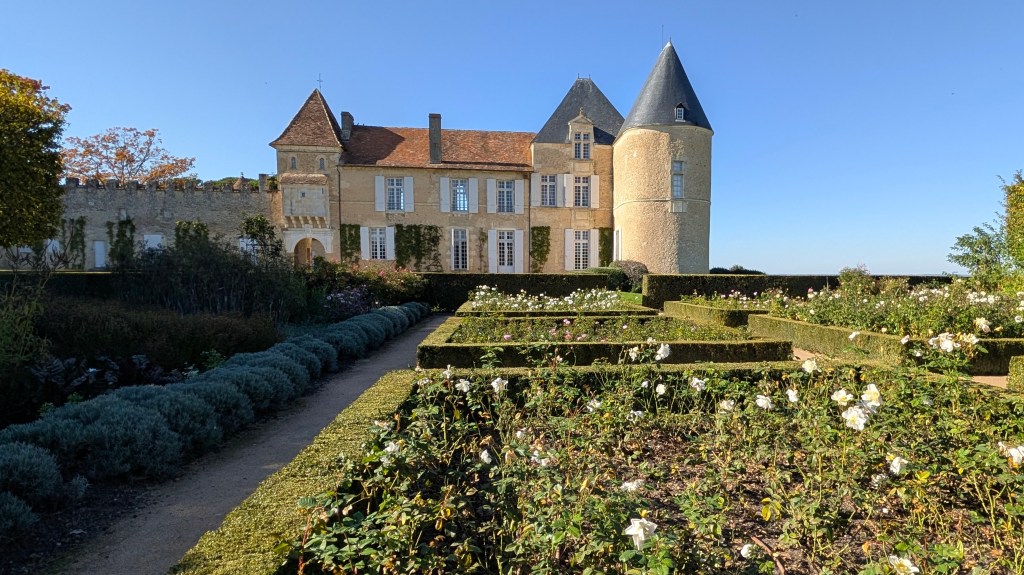
Roses also act as natural pest control, attract beneficial insects, and historically helped guide plow horses.
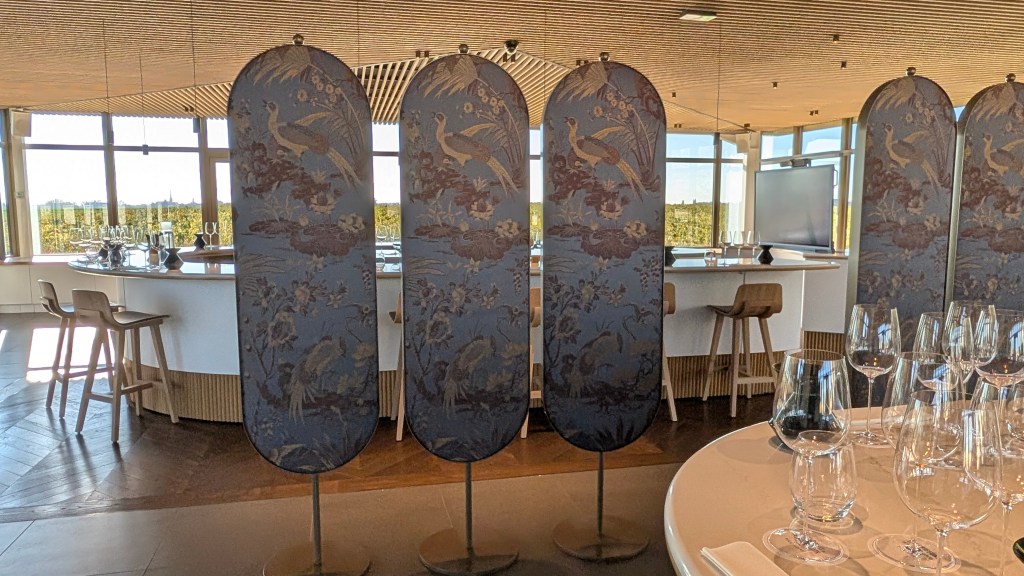
We were escorted to the tasting room. The blue in the tapestry, Anna told us, was typical of the 15th century.
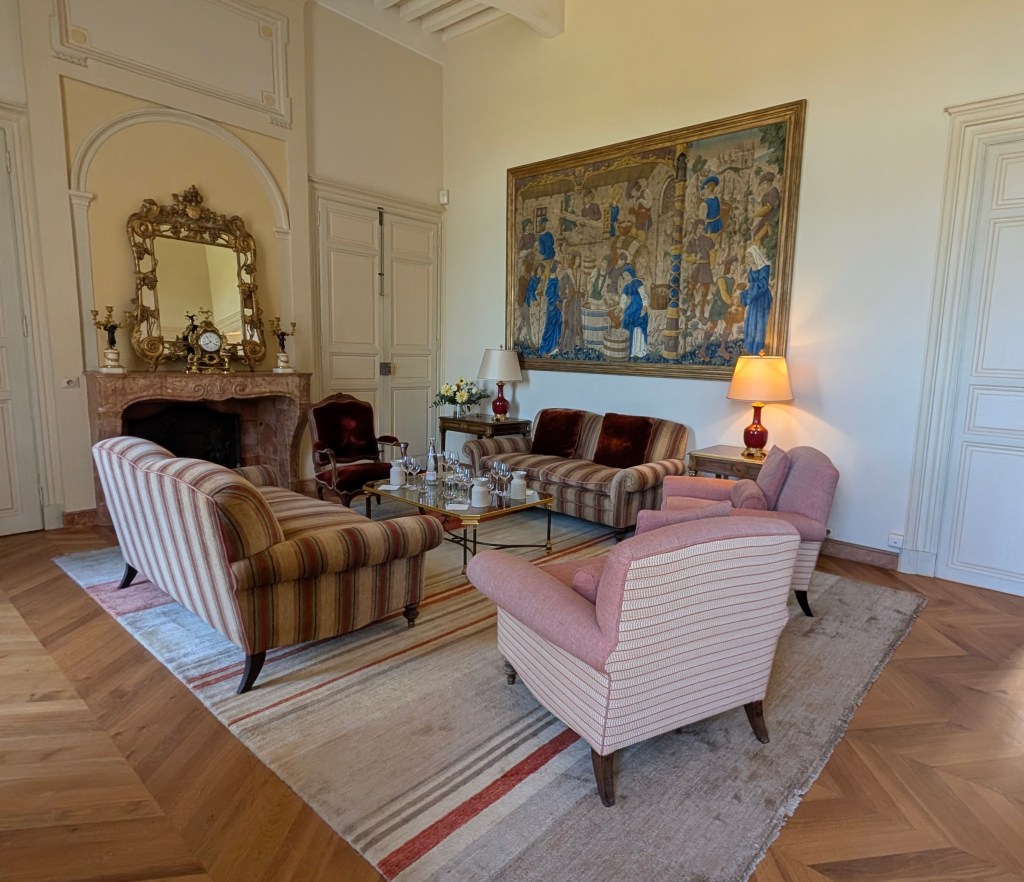
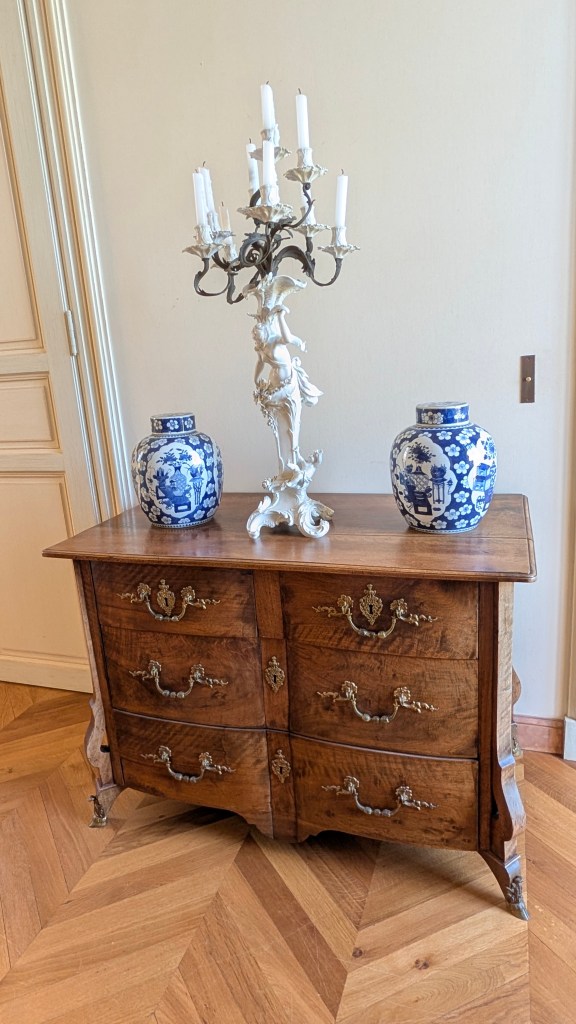
Finally, we tasted.
We returned “home” after another long day of eating and drinking. We decided to do a sunset walk and further explore the statues on the property. We could not find titles for all of them.
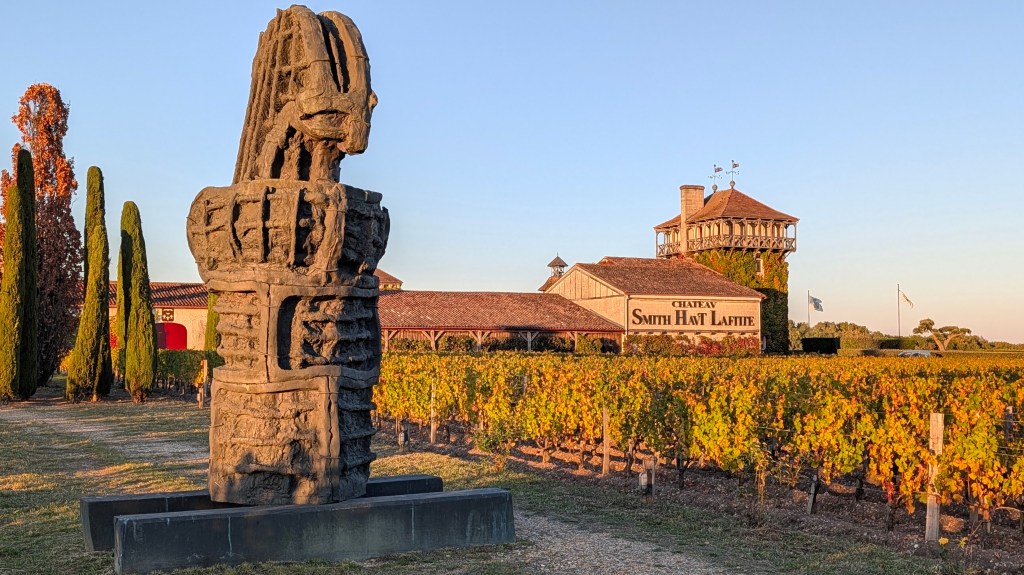
This large stone sculpture titled “Shlomo,” by the artist Boaz Vaadia, is crafted from layered bluestone, a technique Vaadia used to create organic, stratified forms. Boaz Vaadia was known for hand-carving individual stone pieces and stacking them to create figurative or abstract works.
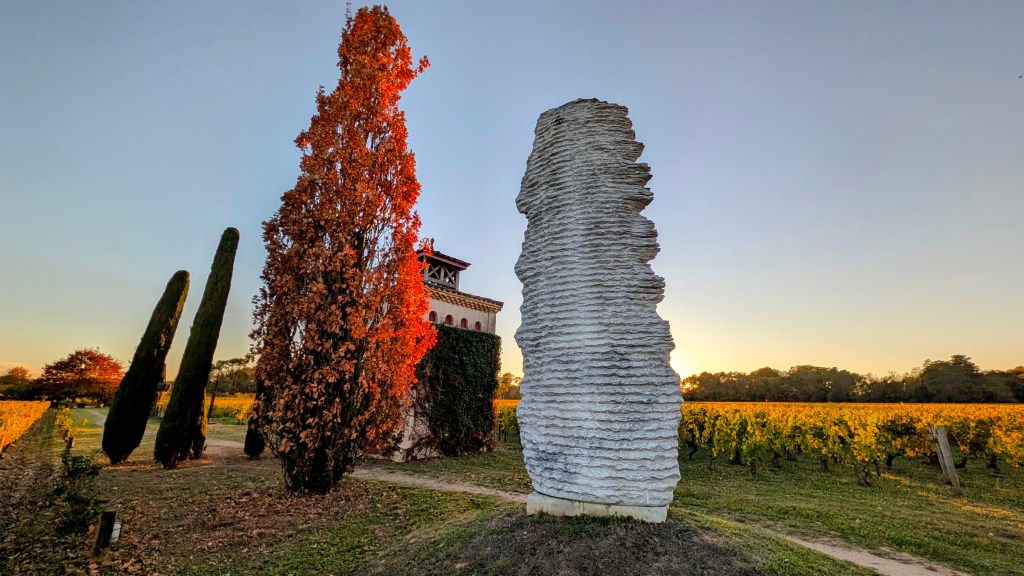
Italian artist Mimmo Paladino’s monumental bronze sculpture is titled “Caduto a ragione” (Fallen to the Ground) .
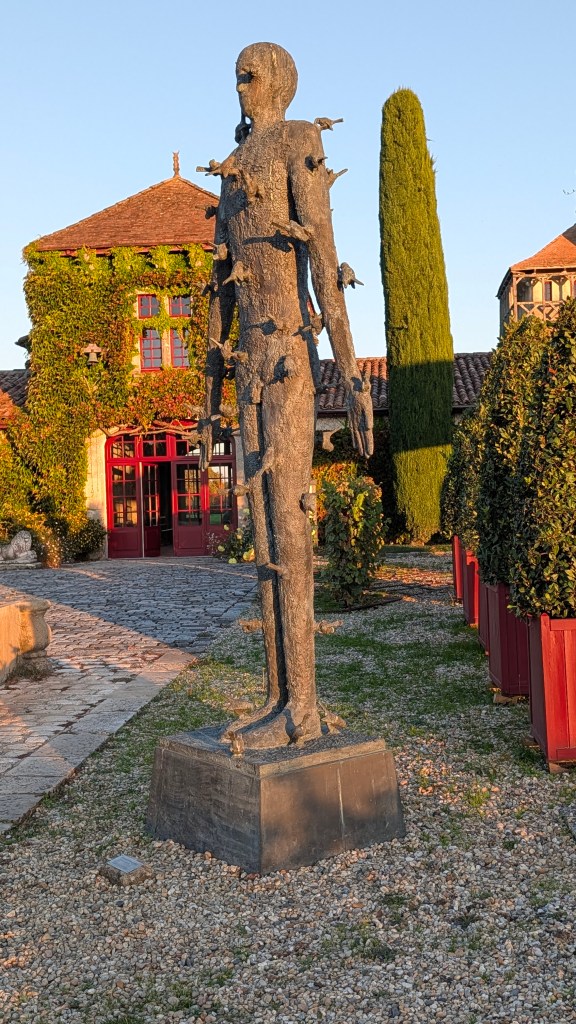
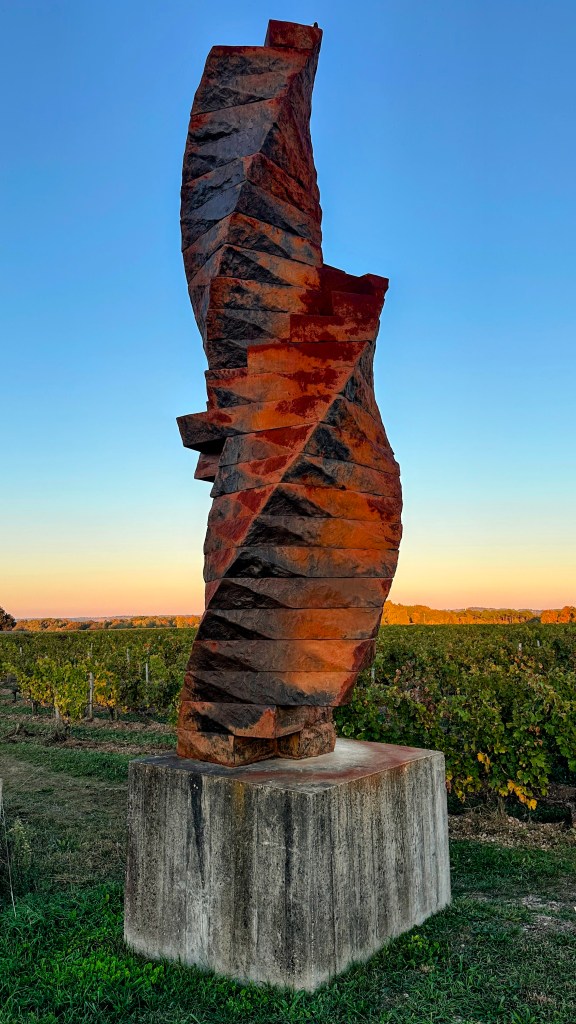
And probably my favorite: “Torsion 2” by Charles Hadcock, a bronze and iron sculpture installed in the vineyard to commemorate the 2009 vintage. Its shape reminded the owners of a vine tendril.
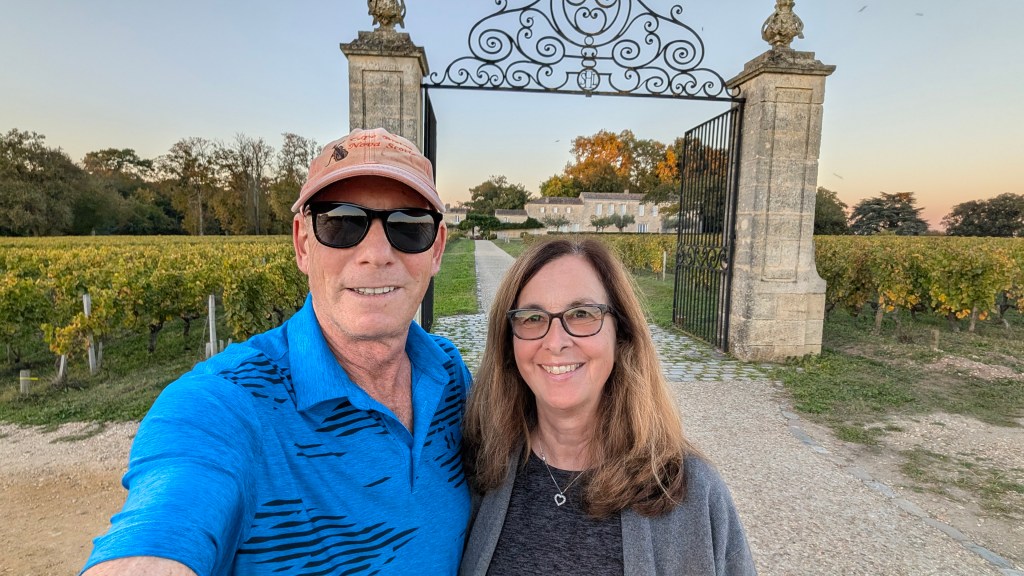
We went all the way out the main gate on our meandering.
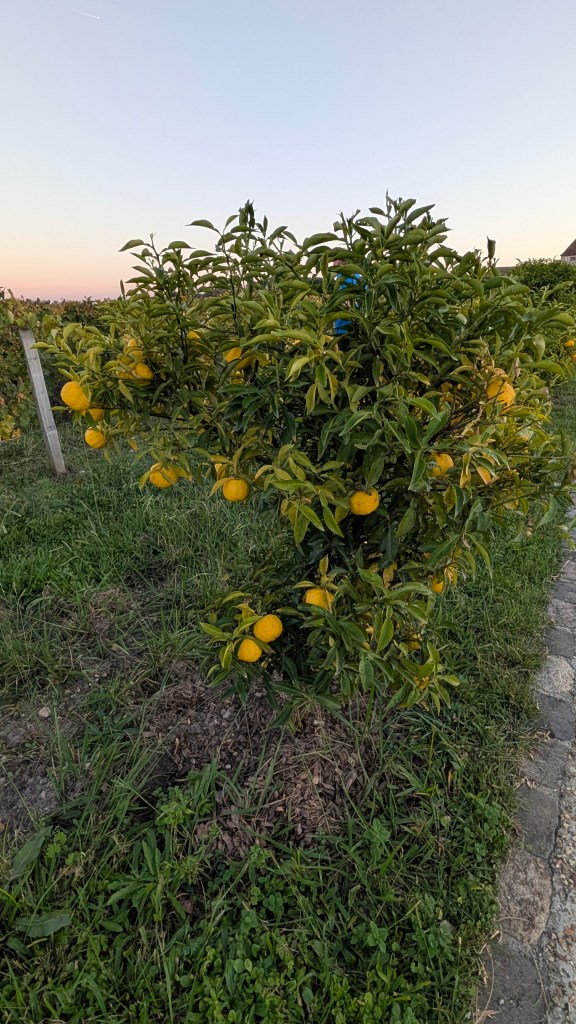
Back inside the property, we found a little kitchen garden complete with a dwarf lemon tree.
The next day we split up. We ladies had chosen to take a cooking class while the guys opted for yet another vineyard tour: We headed to the Haut-Médoc region to Château La Lagune. For most of its history, the Haut-Médoc was a vast region of salt marshes used for animal grazing rather than viticulture. Romans had planted some vines by the first century AD, which stayed for about 4 centuries. The area was called media aquae (in the middle of water) because it is a peninsula where two rivers converge. Media aquae became Médoc. In the 17th century, Dutch merchants began an ambitious drainage project to convert the marshland into a usable vineyard area. Their objective was to provide the British market a wine alternative to the Graves and Portuguese’s wines that were dominating the market. Using technology that was advanced for that time, the Dutch were able to convert enough marshland to allow large estates to form all along the Gironde. Soon the Bordeaux wine regions of Margaux, Saint-Julien, Pauillac and Saint-Estèphe took shape. In Haut-Médoc there are a total of 6 appellations. By the 19th century, the wine region of the Haut-Médoc was one of the most prosperous in France, with wines that had an international reputation that would be unparalleled till the late 20th century.
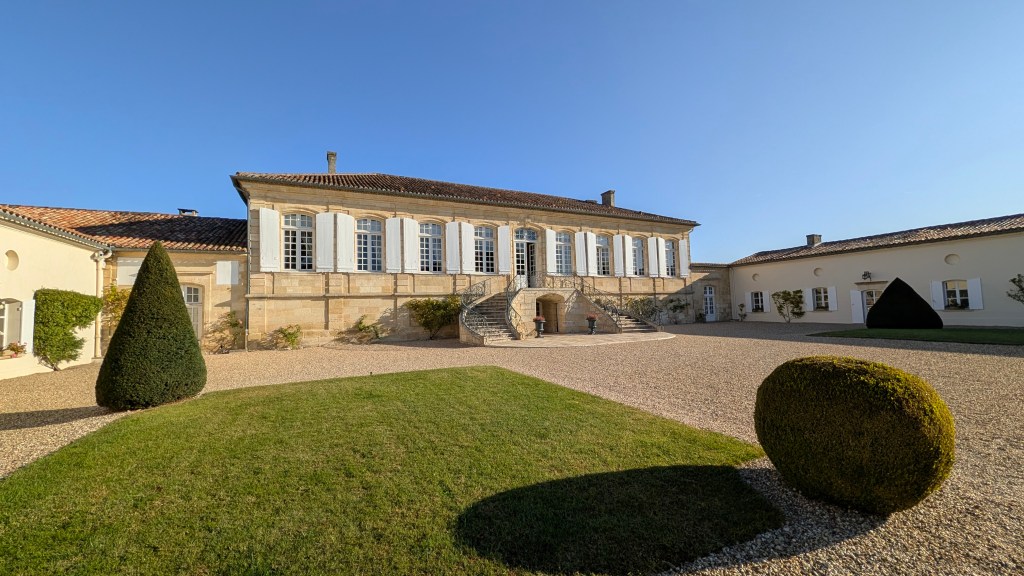
Château La Lagune
The château building, a single-story Chartreuse style, was built around 1730-1734 by Baron Victor Louis, the same architect who designed the famous Grand Theater of Bordeaux. By 1958, the estate had fallen into disrepair, with barely five hectares of vines remaining in production after a severe frost. It was dramatically rescued and replanted by new owner Georges Brunet. The current owner, Caroline Frey, is a horse lover and former show jumper. Reflecting this passion and a commitment to the terroir, a portion of the vineyard is worked by horses, and the entire 2012 harvest was carried out using only horses. The entire vineyard has been certified organic since 2016 and received biodynamic certification in 2022, highlighting a significant investment in sustainable viticulture practices under the Frey family’s ownership. We were escorted into the 18th century kitchen.
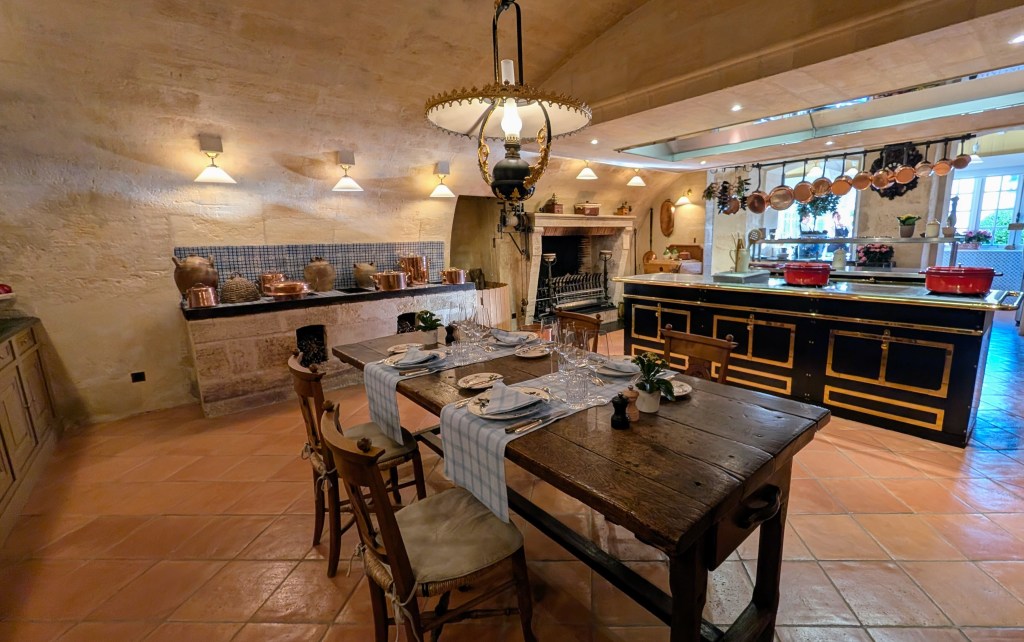
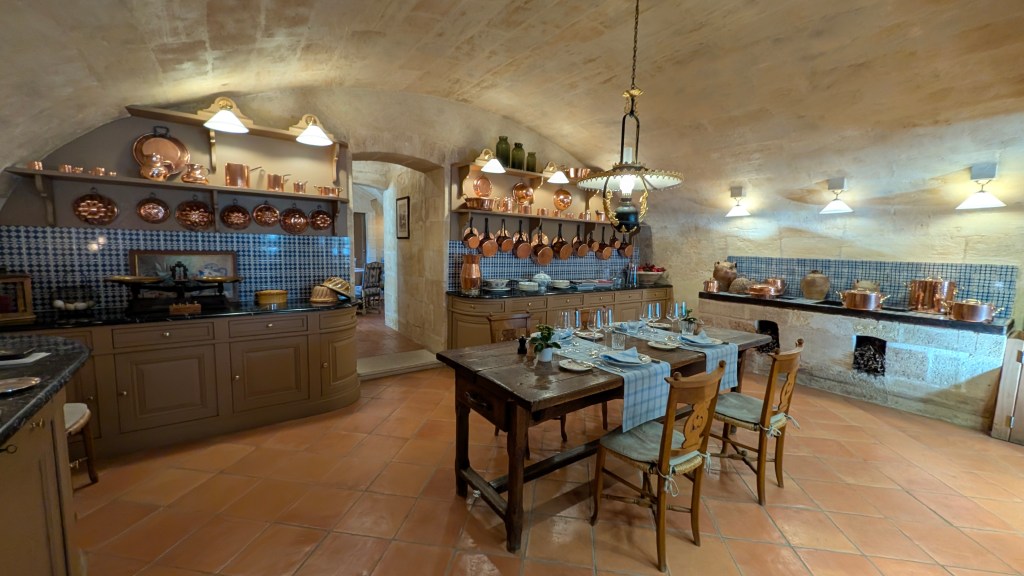
The massive kitchen did not disappoint.
The fireplace not only provided warmth,
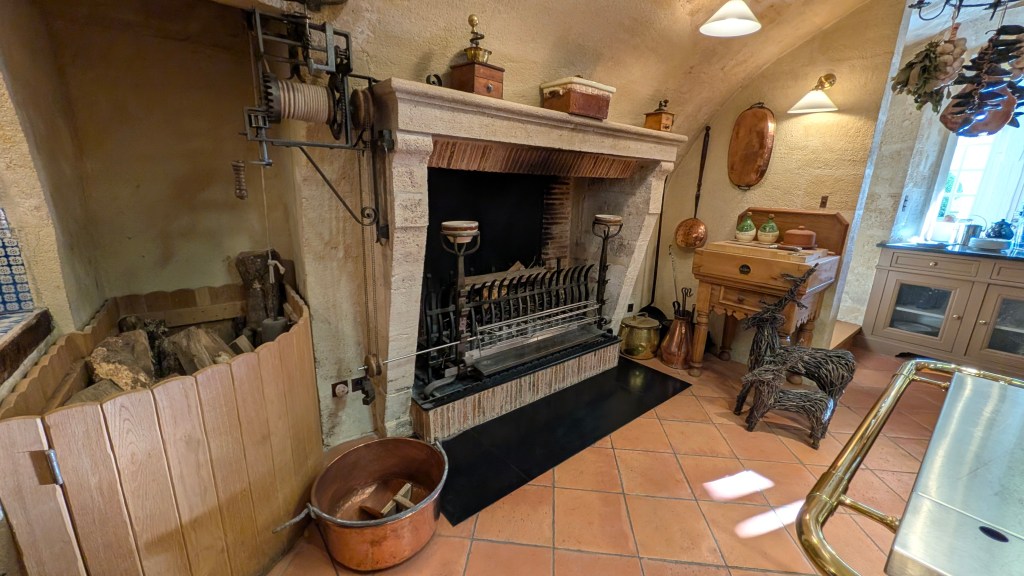
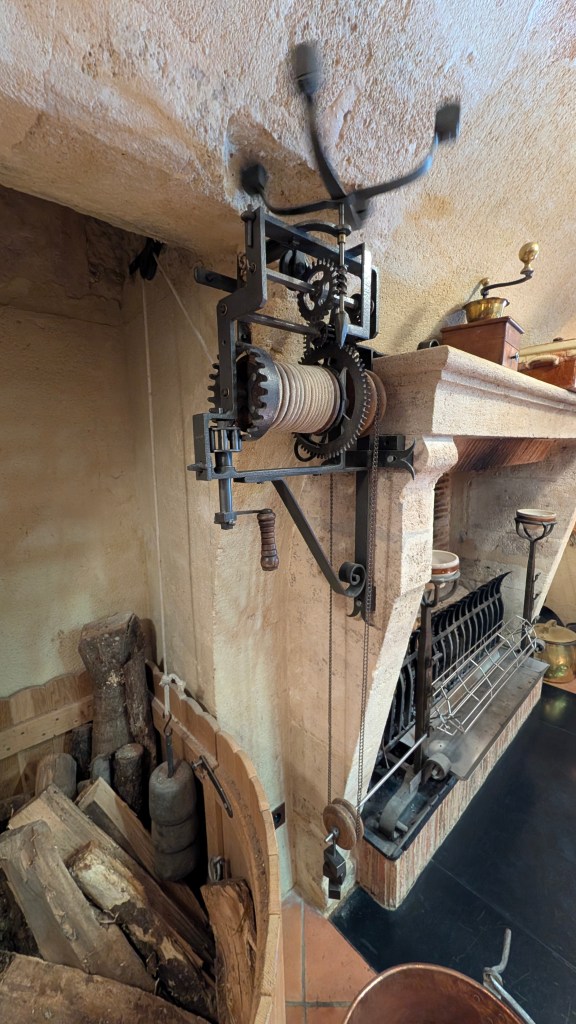
it was utilized for cooking. The spit on which large roasts were cooked used a clever system of pulleys and weights to turn the meat.
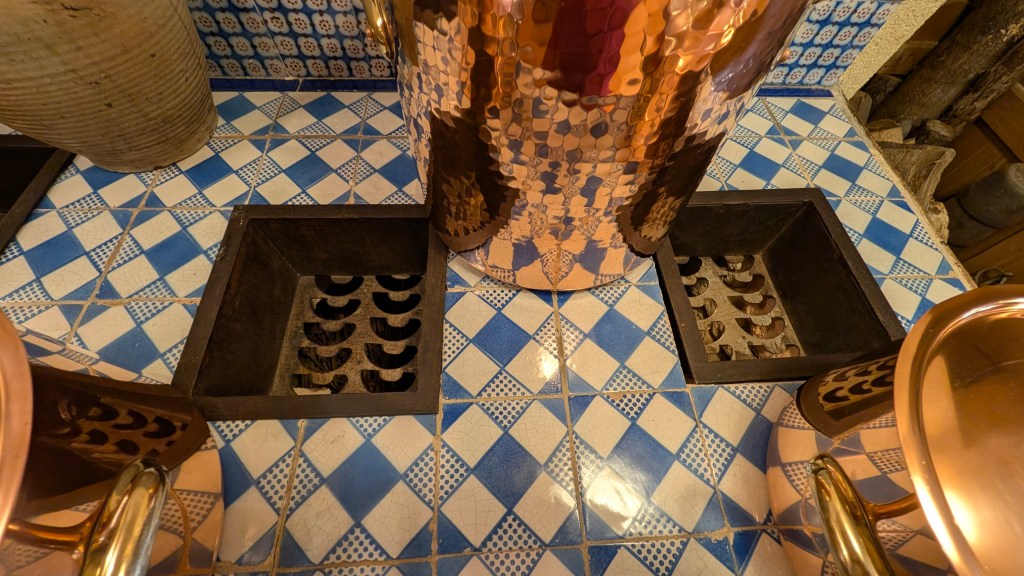
The stove top was heated using fire wood.
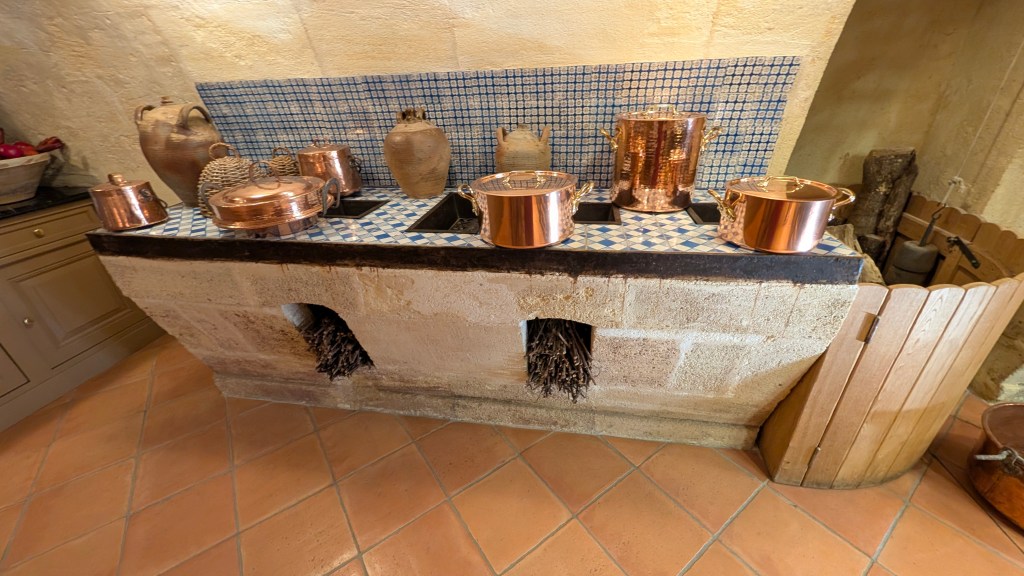
It could also be used for a smokey flavor while cooking.
Our instructor for the day was chef Iris.
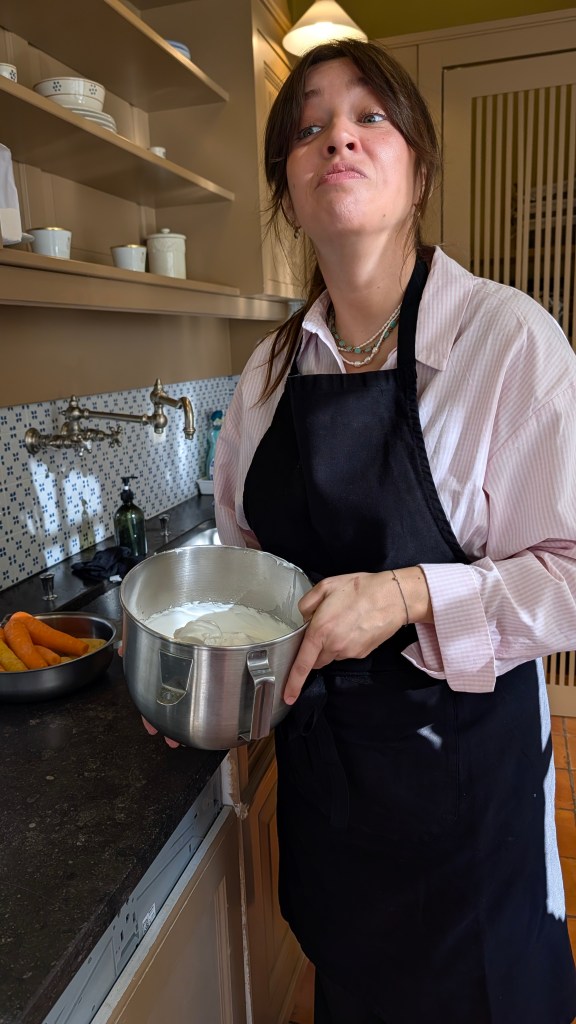
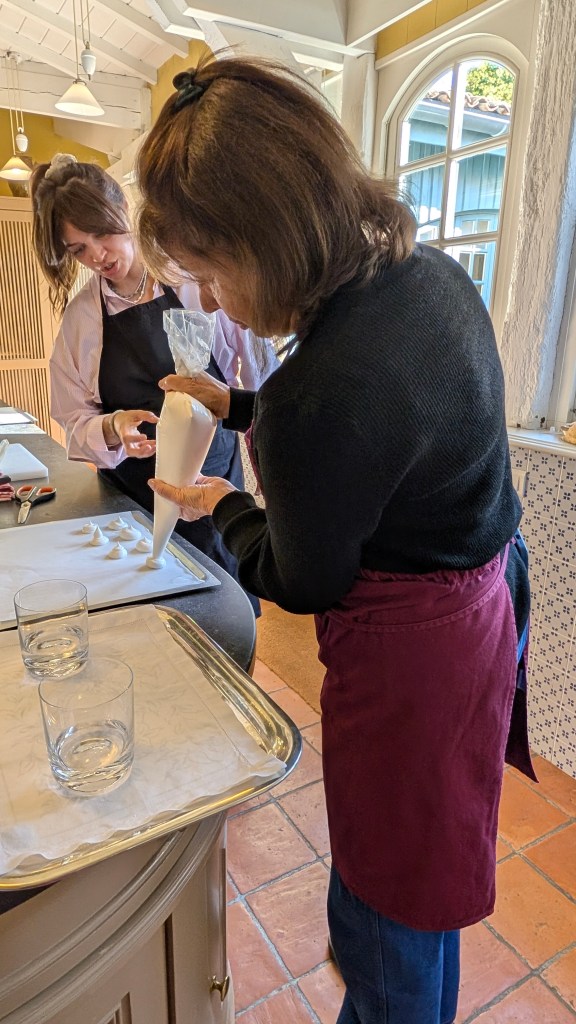
Iris first taught us how to make merengue,
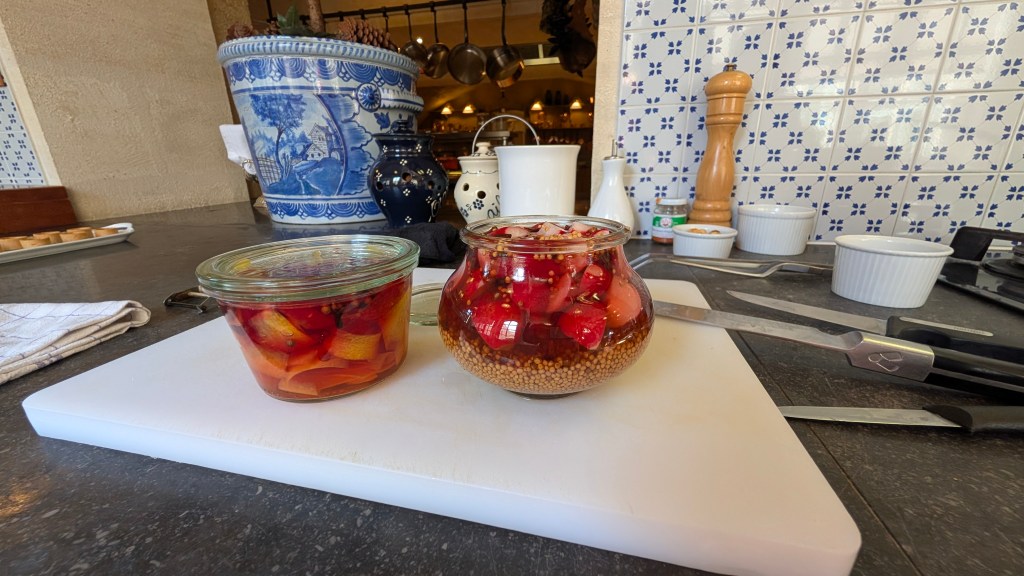
then how to pickle vegetables quickly.
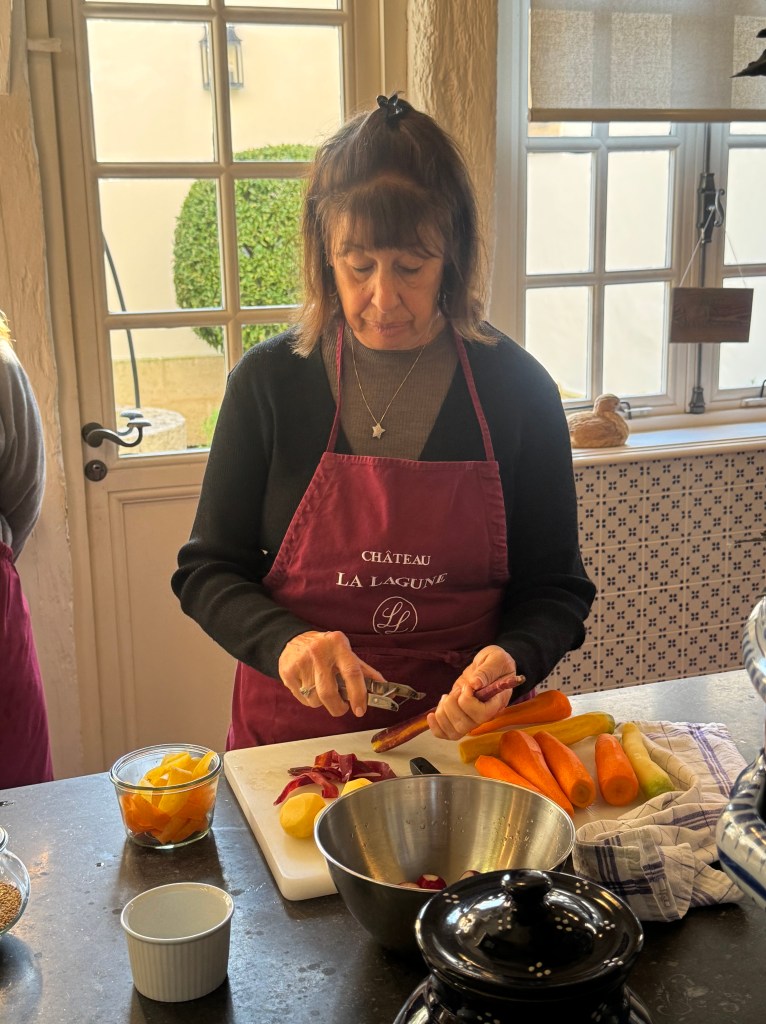
We prepped veggies
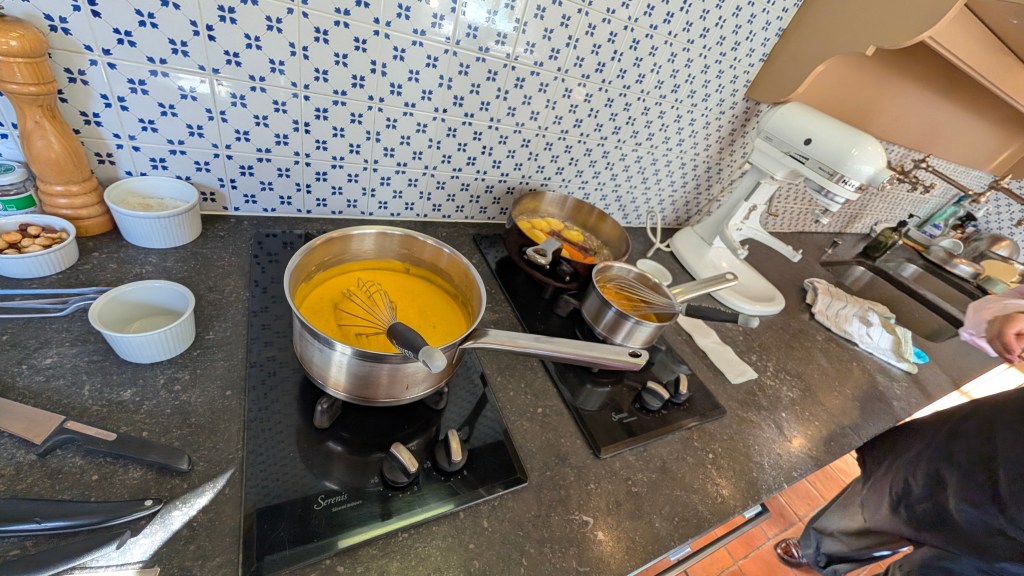
while the soup simmered.
Next food project was the amuse-bouche.
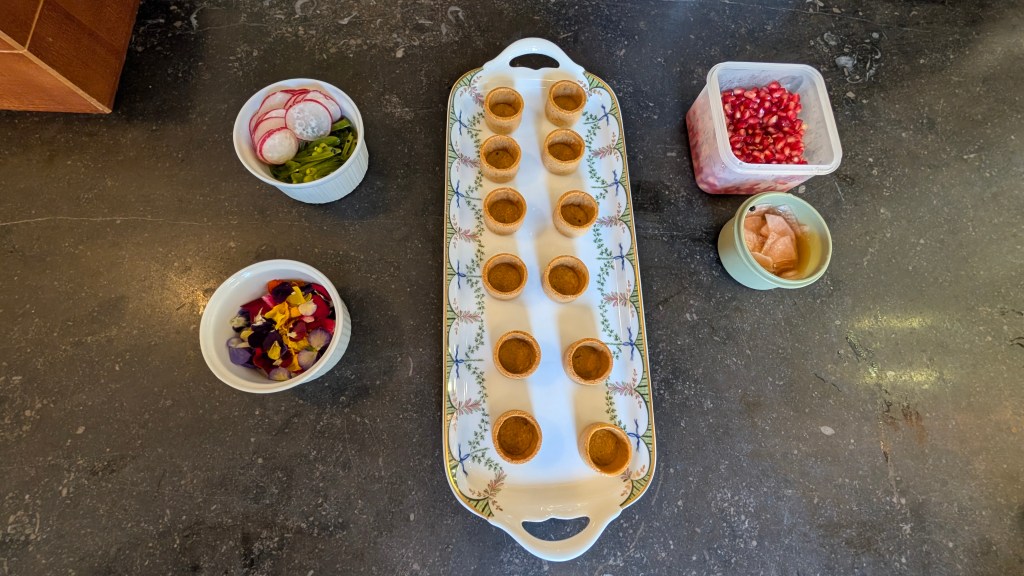
After filling the cups with mascarpone,
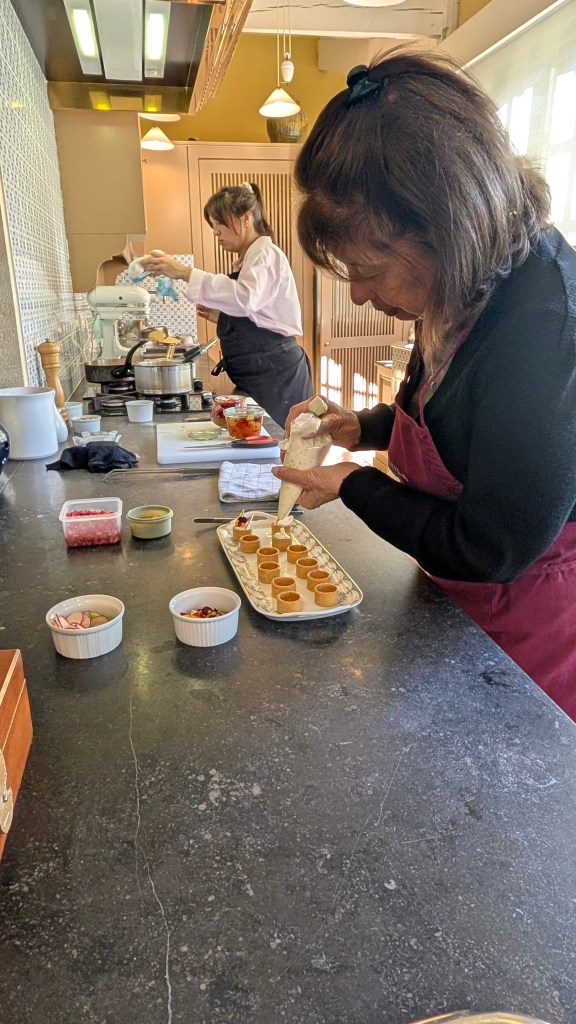
the decorating called for teamwork.
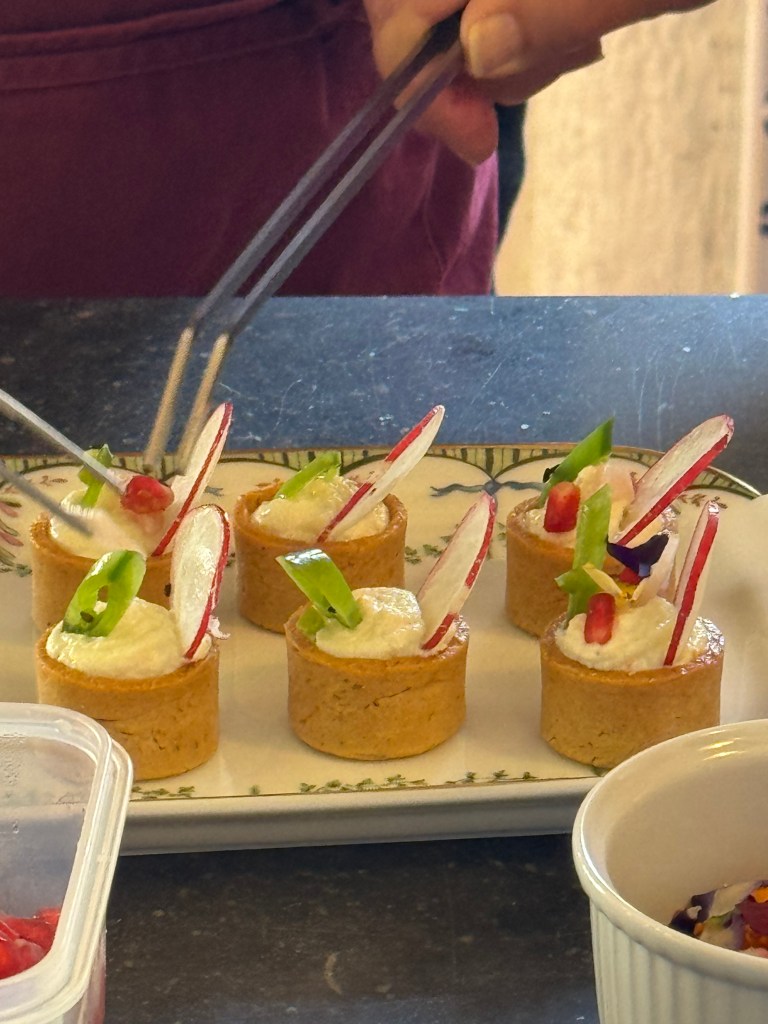
We were proud of our results.
Meanwhile the guys had a vineyard tour
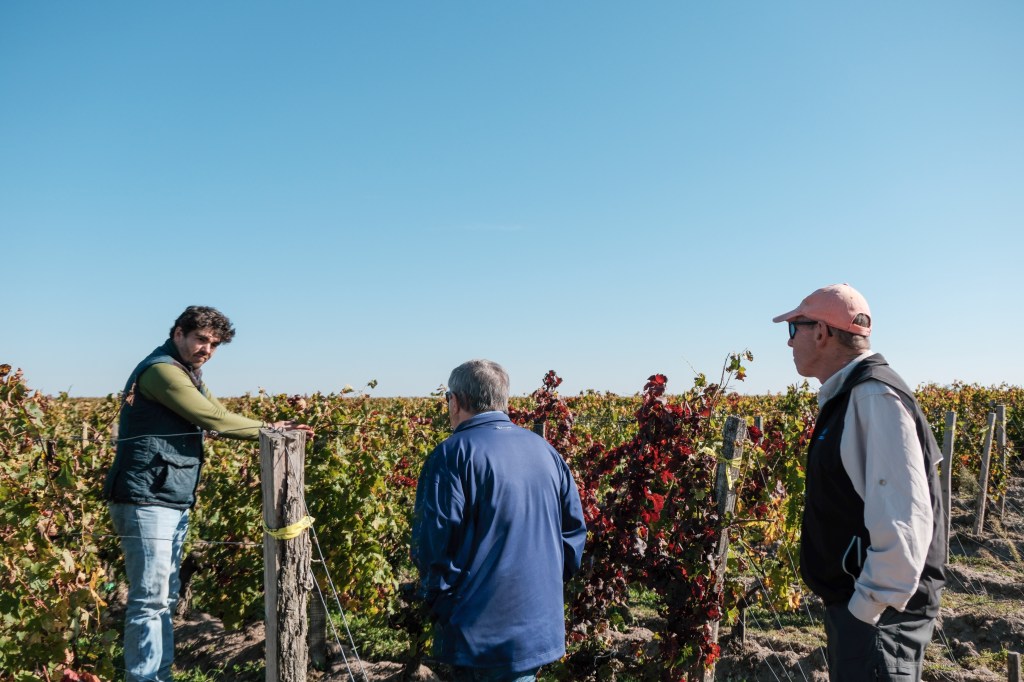
followed by a tasting.
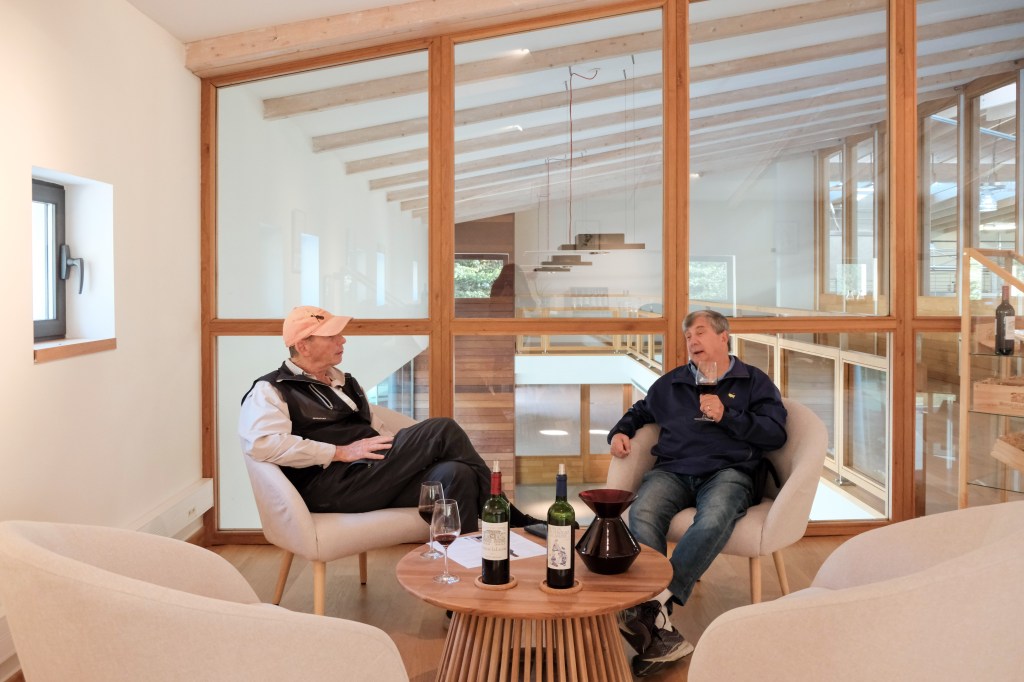
We joined them for a glass of wine before dinner.
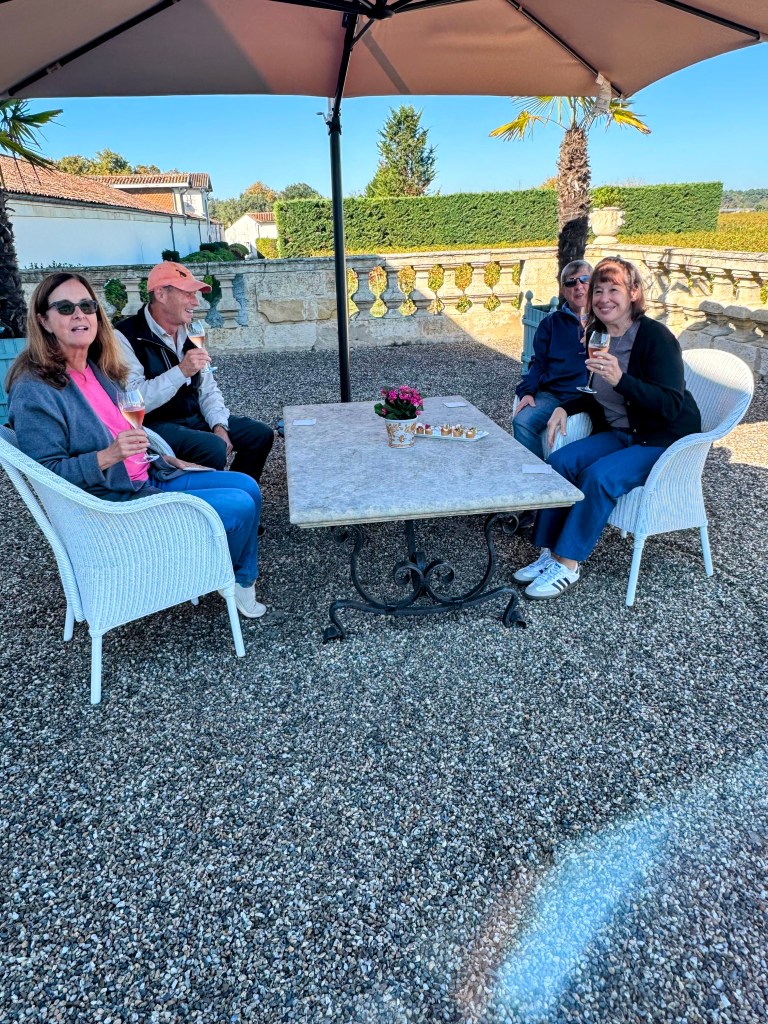
Having been told that the chateaux can be rented by a group for a stay, we were invited to tour the mansion . We started in the dining room,
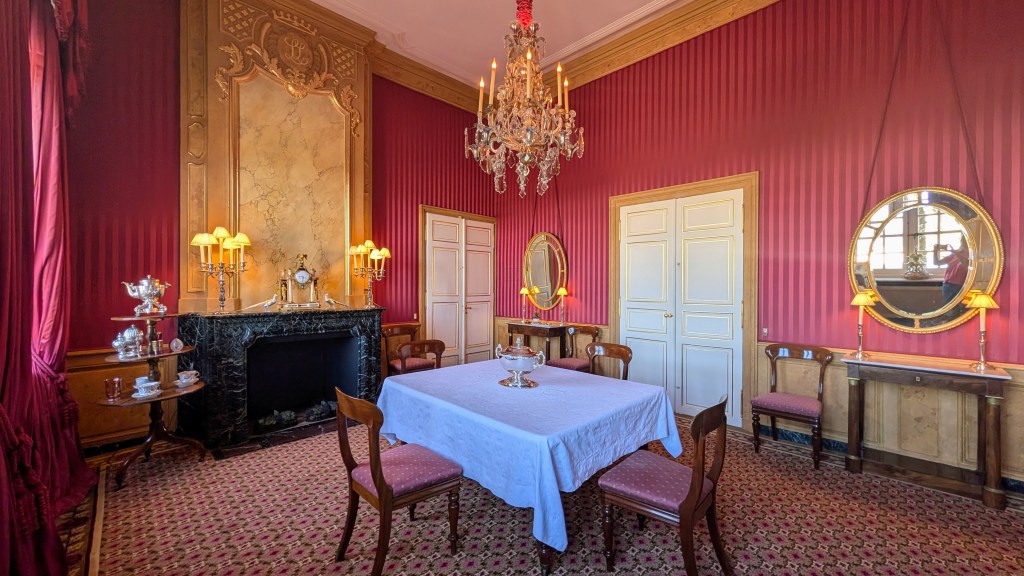
then the parlor,
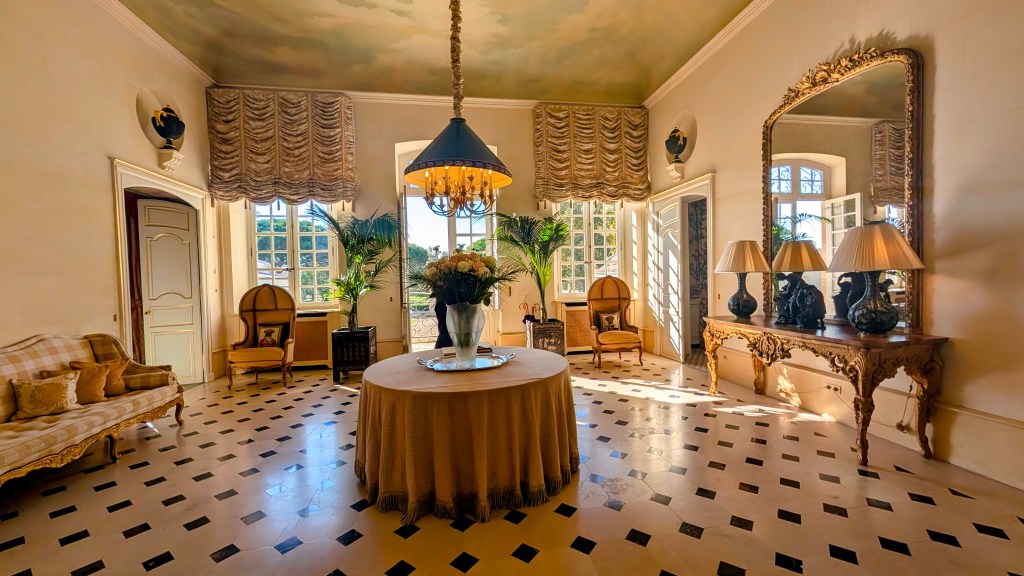
and the sitting room.
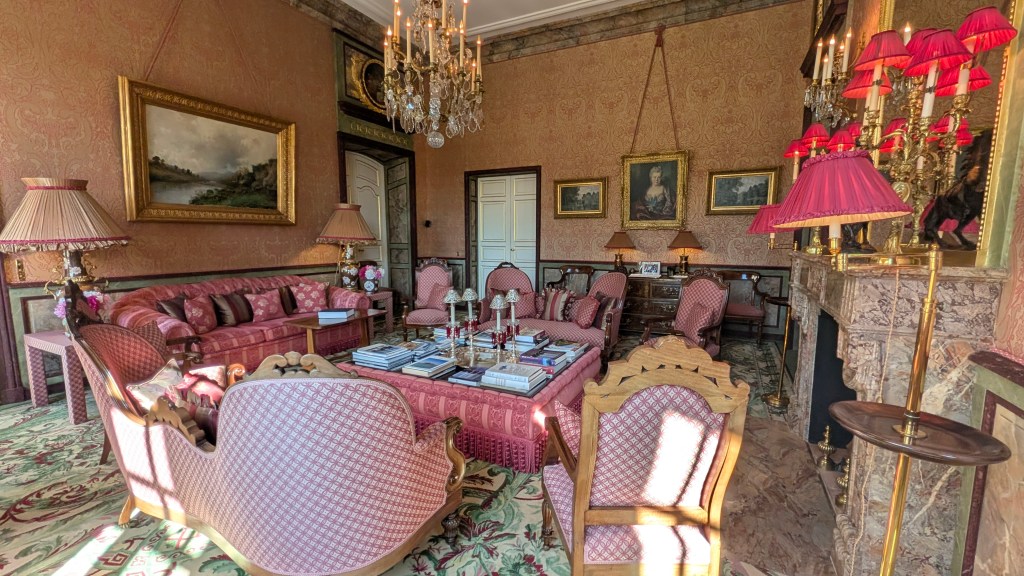
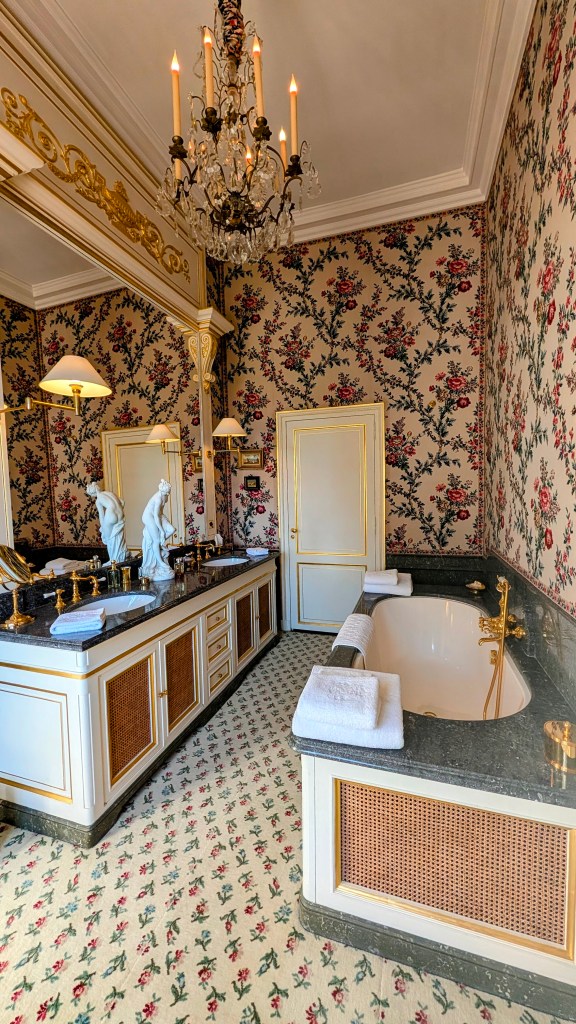
This is one of four bedrooms
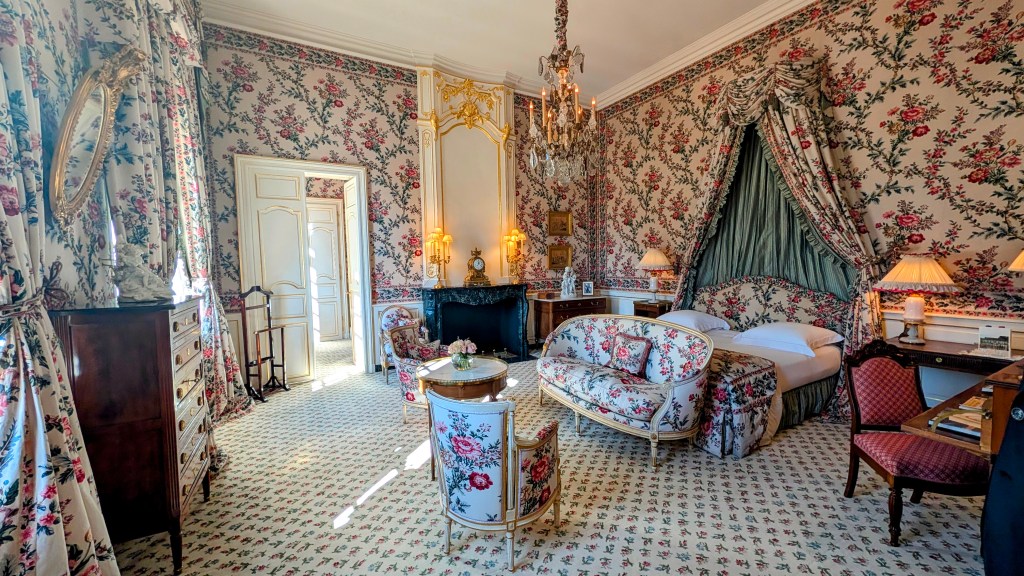
each with an en-suite bathroom.
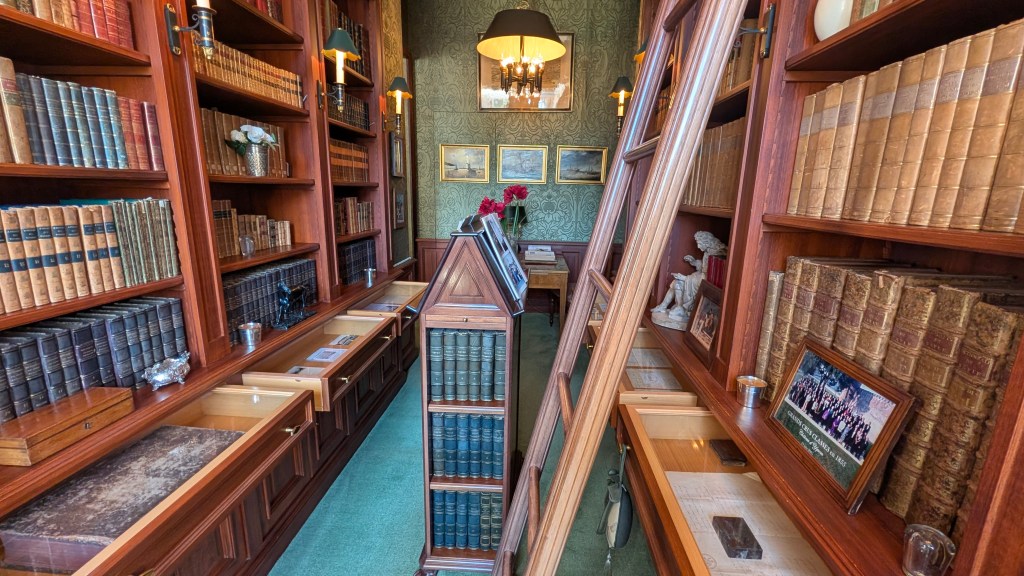
My favorite room, besides the kitchen, was the library.
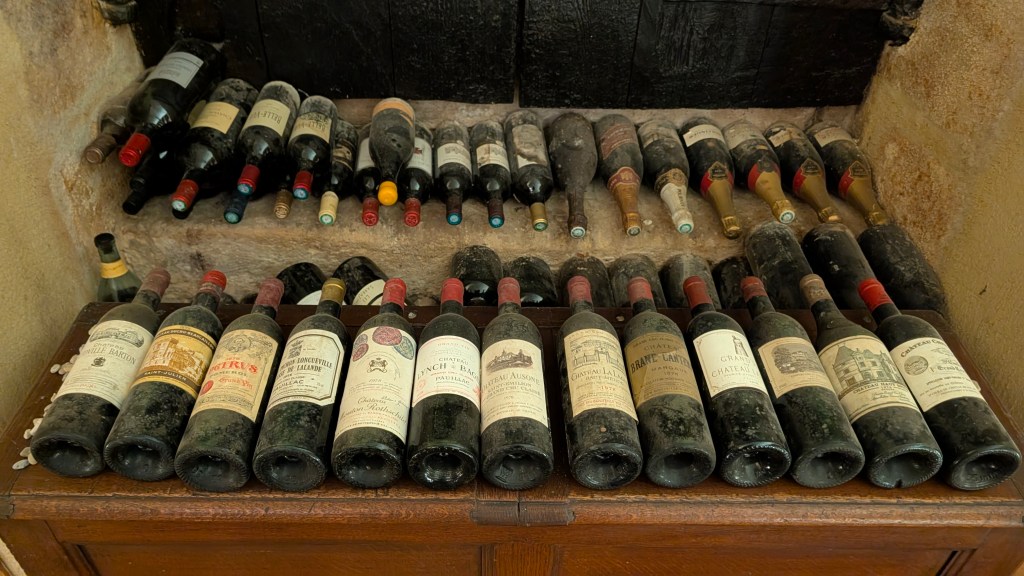
We checked out the extensive collection in the wine cellar
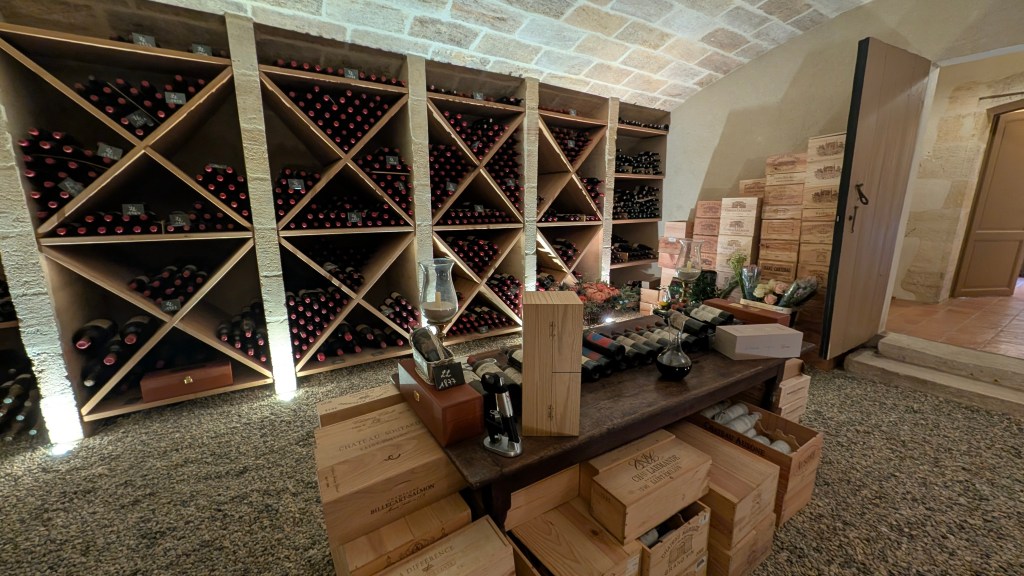
which included some very old bottles.
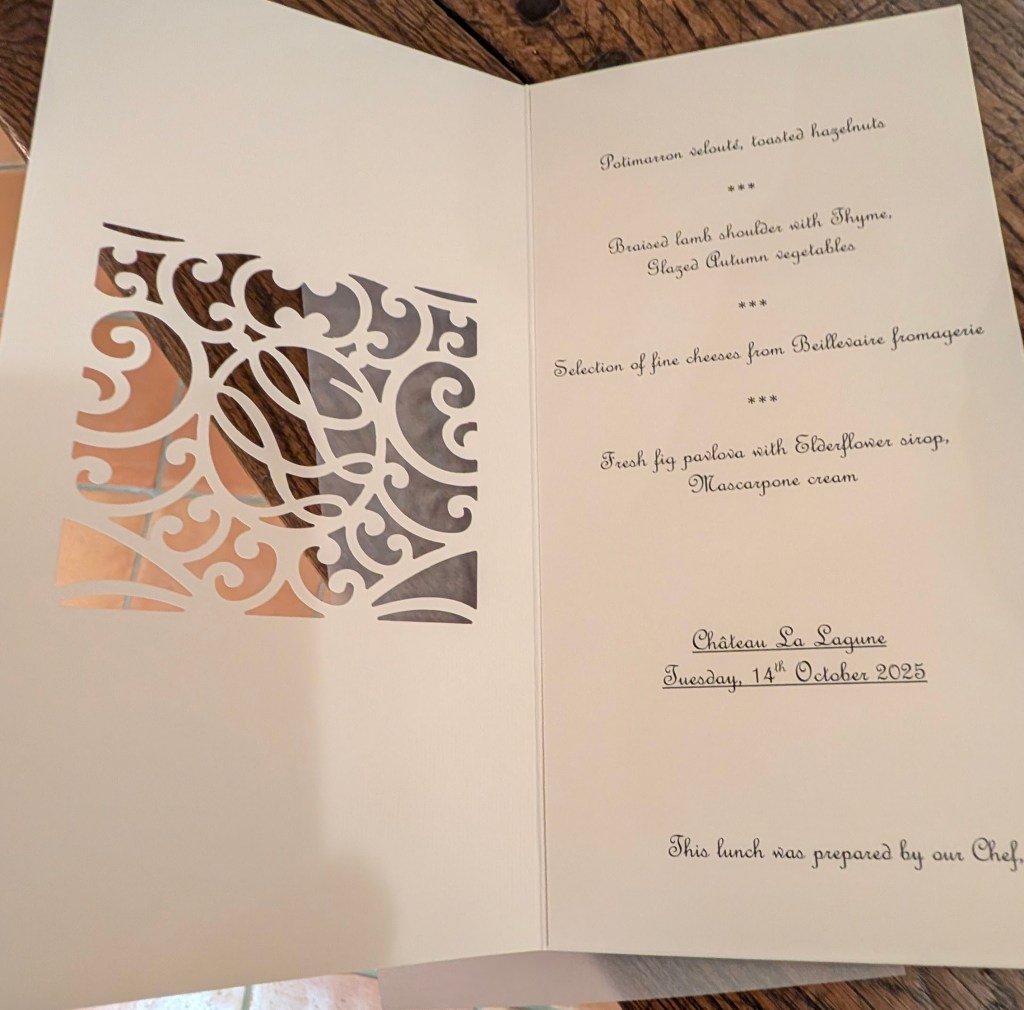
Finally it was time to enjoy the fruits of our (and chefs Iris and Katharine, who was in the background) labors.
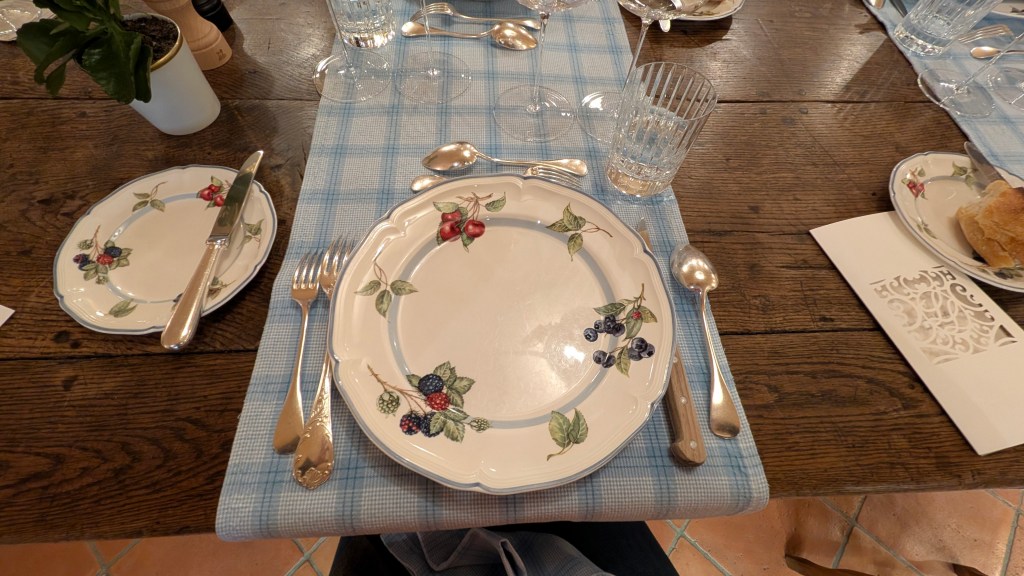
The table was ready.
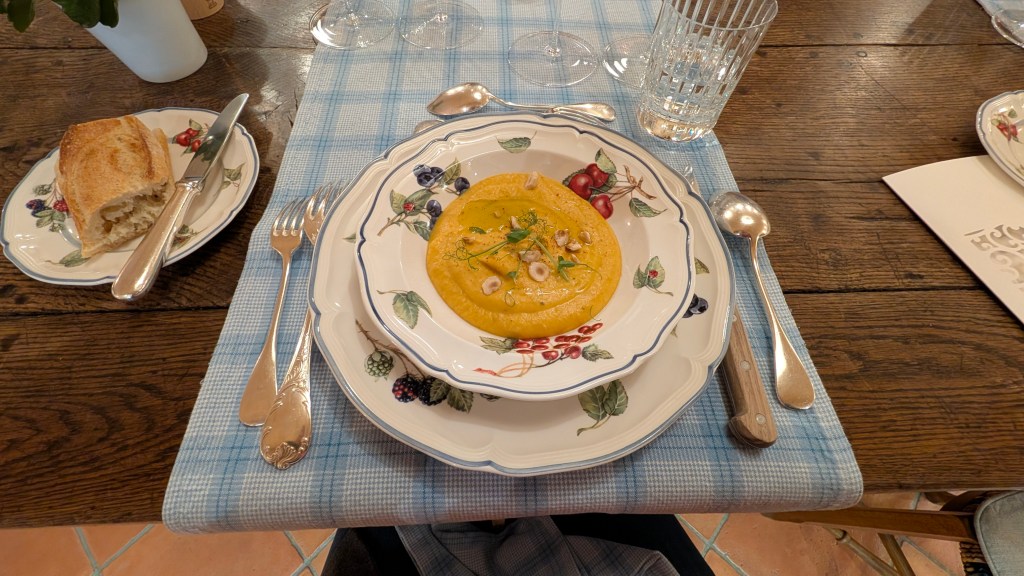
We started with the soup
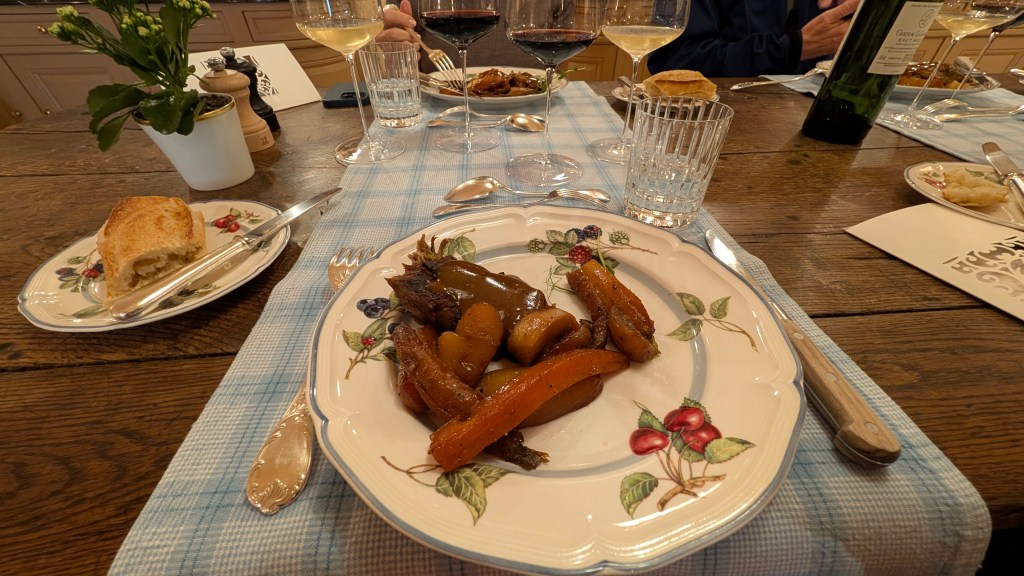
followed by braised lamb and vegetables.
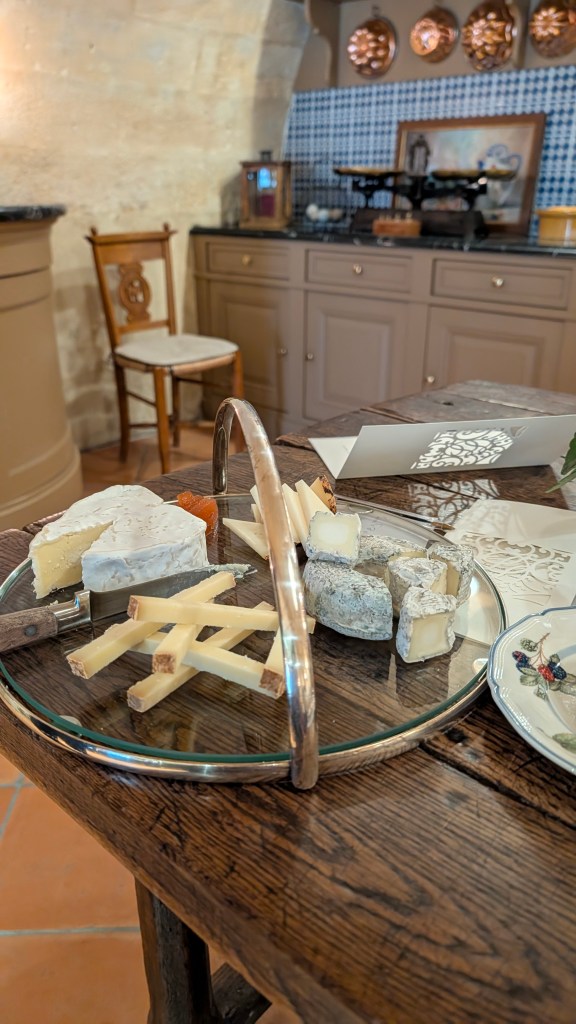
Next was the requisite cheese course before dessert.
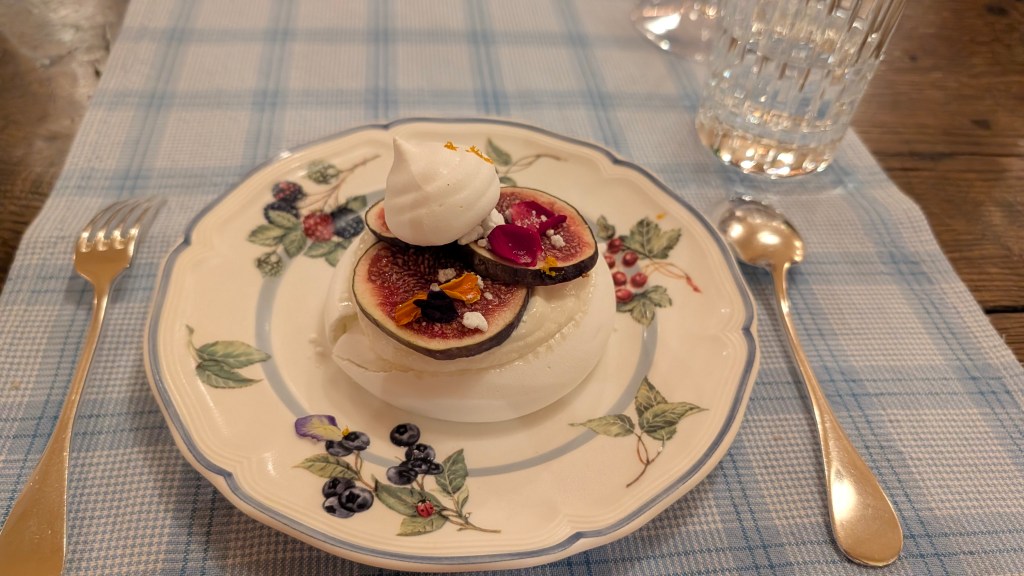
Our merengues had come out great!
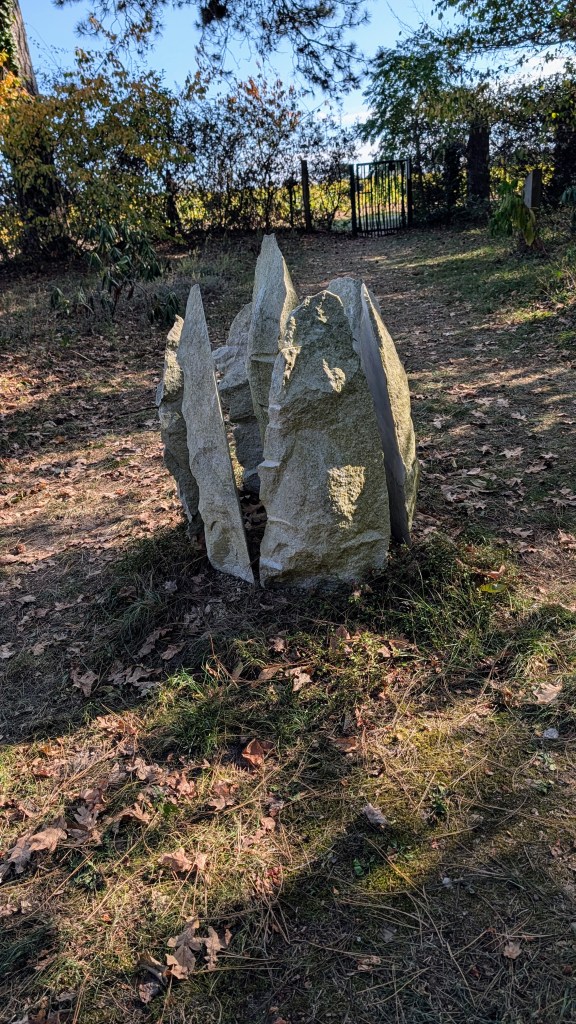
After such a big meal, and with no scheduled plans for the afternoon, Carol and I decided to tour the Forest of the Senses while the guys rested. Unlike most strictly agricultural estates, Smith Haut Lafitte features a 25 acre open-air museum called the Forest of the Senses, a land-art trail filled with contemporary sculptures. First we had to obtain the key to the gate from the wine shop. The first sculpture we encountered was “Oracle” by artist Jon Isherwood constructed from Fox Hill granite. The sculpture is designed with multiple vertical segments that evoke a natural, monolithic look while being artistically structured. Isherwood’s work often focuses on involving the viewer’s interpretation through abstract, center-focused designs.
“Funky fellow”, a chainsaw carving created from a tree trunk, is situated near the Pharmacie de la Vingne (Pharmacy for the Vines), a dedicated, open-air exhibit showcasing natural, organic remedies used to protect the vineyard. It features eco-friendly alternatives to chemical products, such as horsetail and nettle.
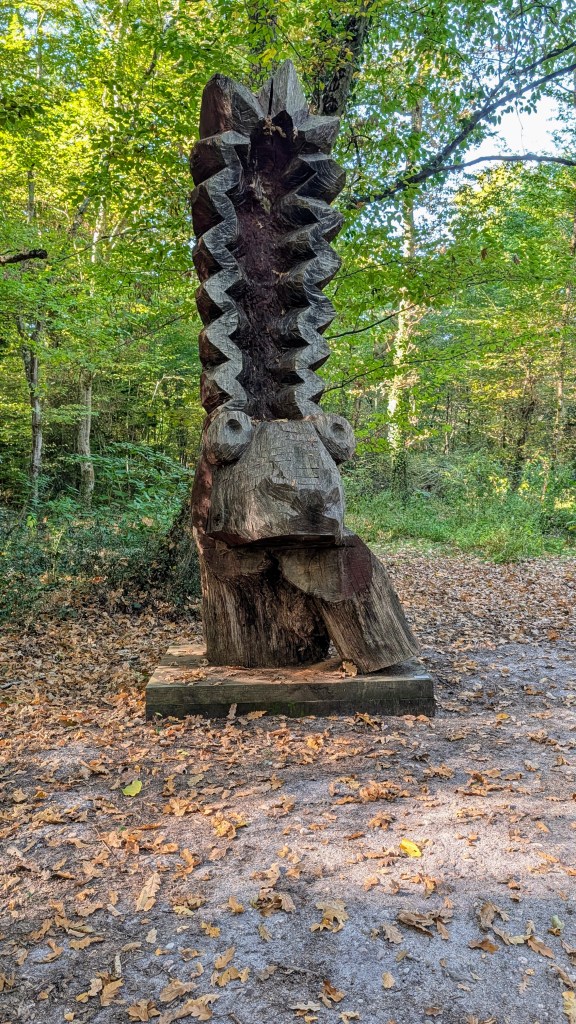
“Upstand” (2009) by Anthony Caro is humanoid sculpture made of metal and concrete that has become a natural habitat for moss and insects.
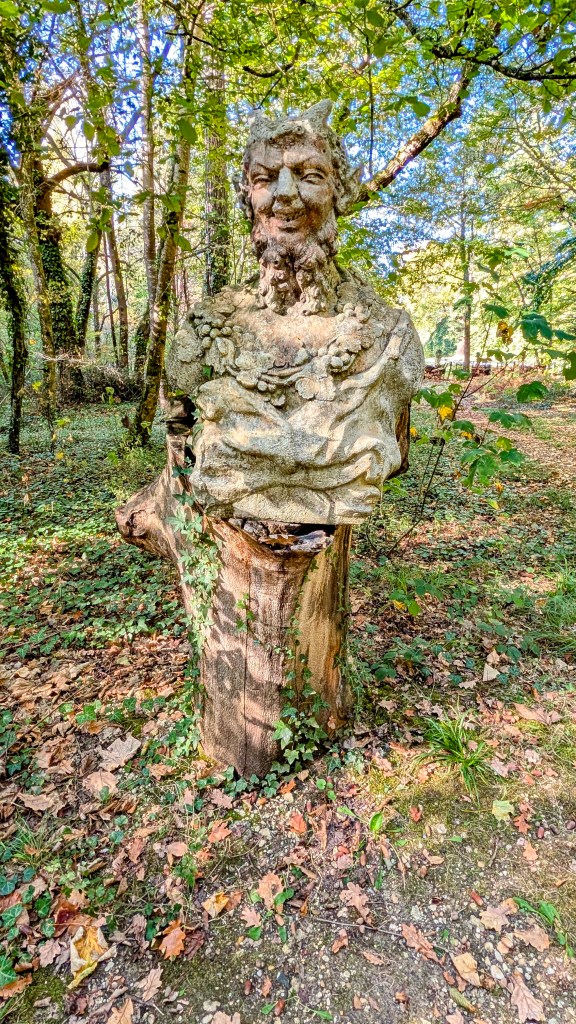
This centuries-old cork oak fell onto the neighboring property and left behind a natural statue visitors are encouraged to embrace, according to the signage.
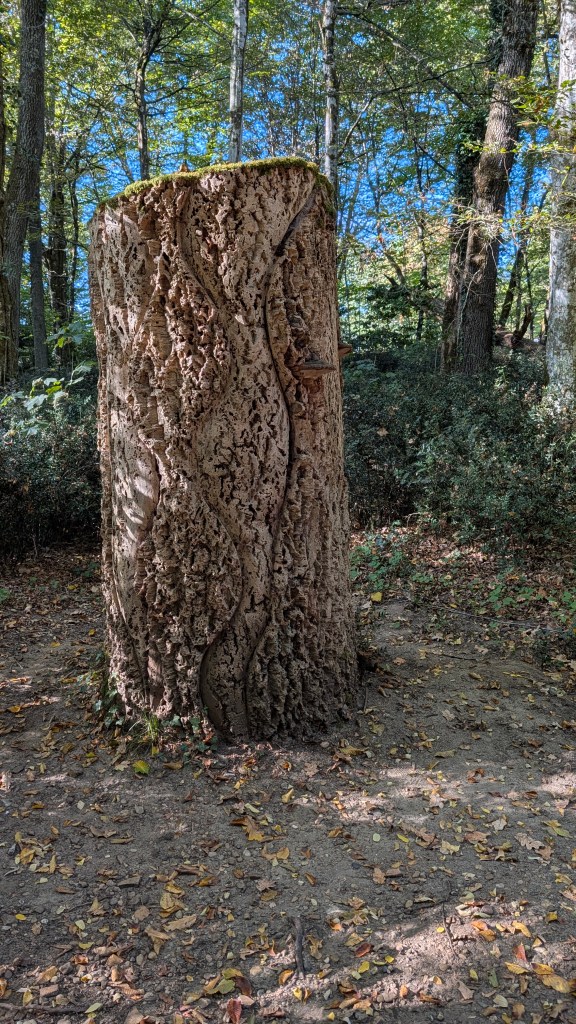
We could not find a title for this magnificent piece.
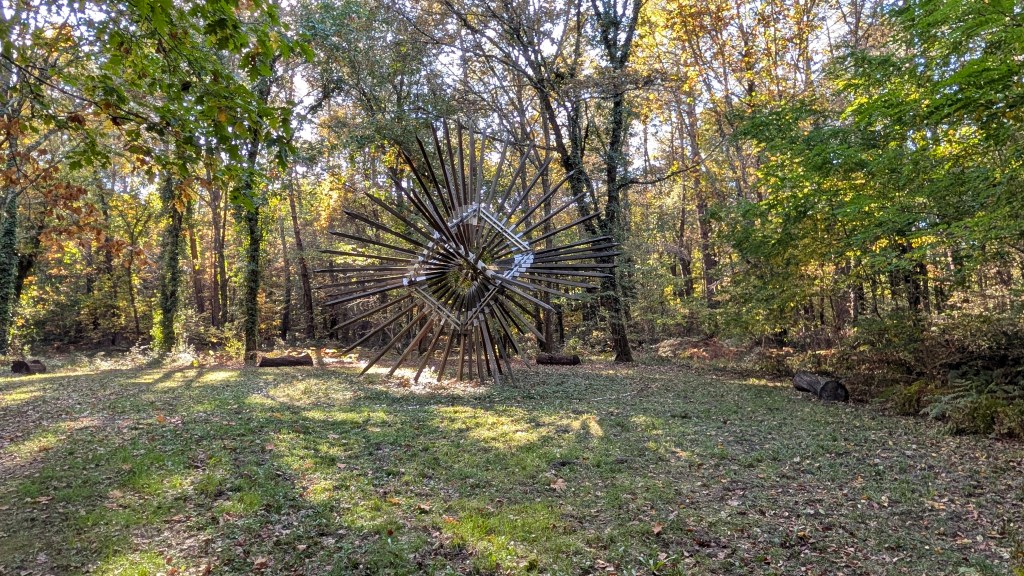
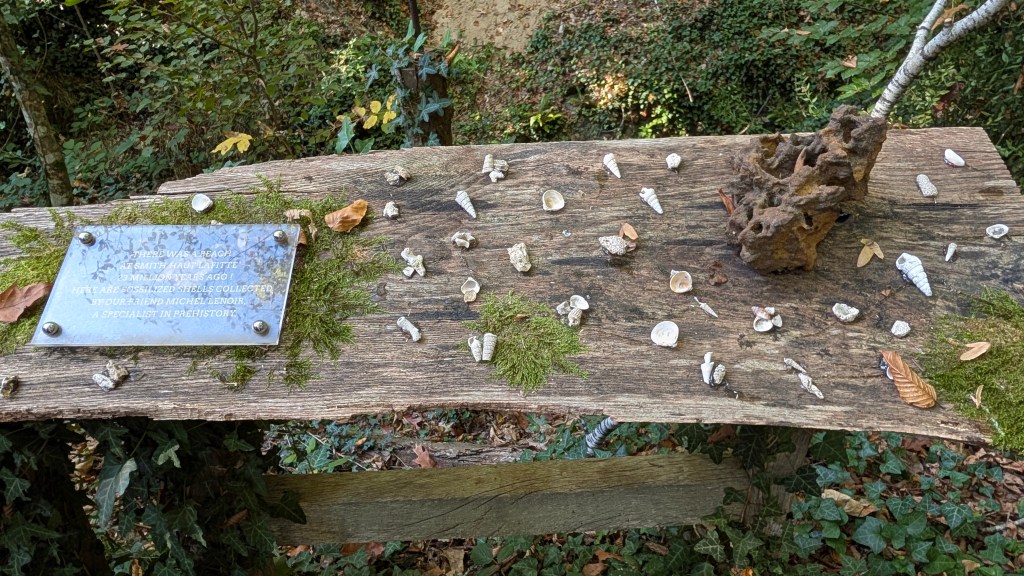
Twenty three million years ago Smith Haut Lafitte was a beach. These sea fossils have been collected from around the property.
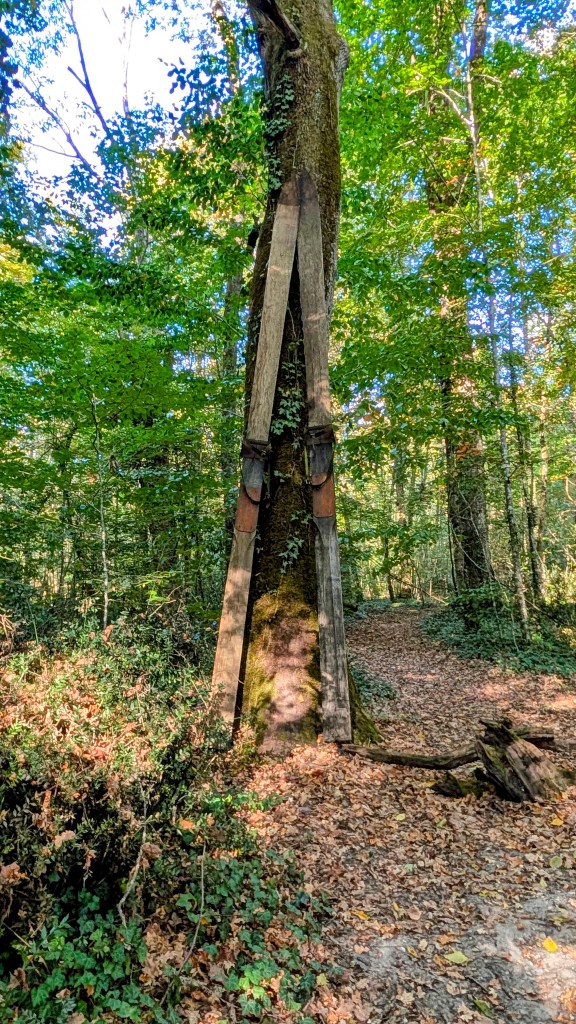
“Gulliver’s Skis” by Cyrille Menei is a nod toward the meeting of the Cathiards as ski champions for the French ski team.
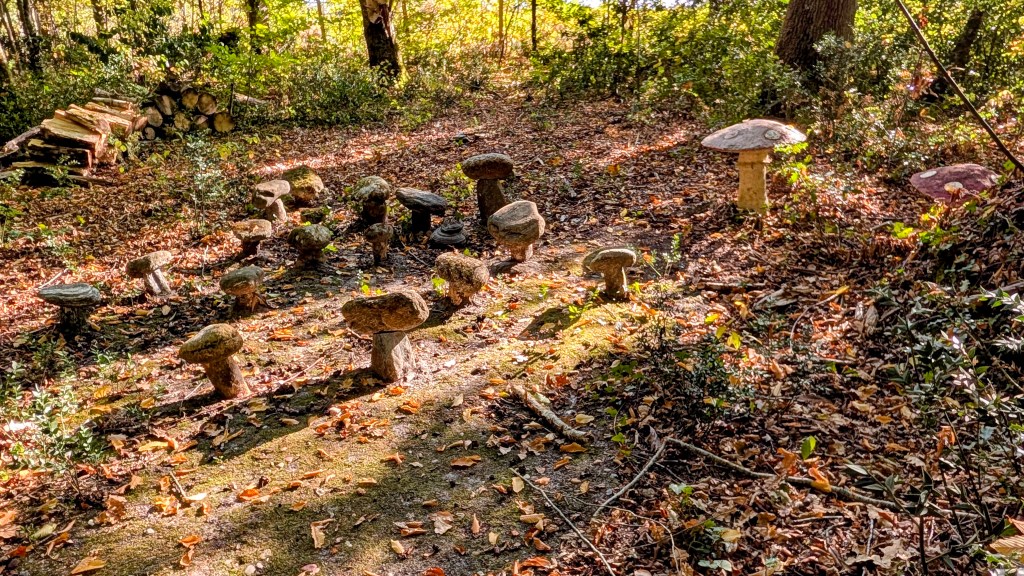
There was a garden of stone mushrooms
and live goats.
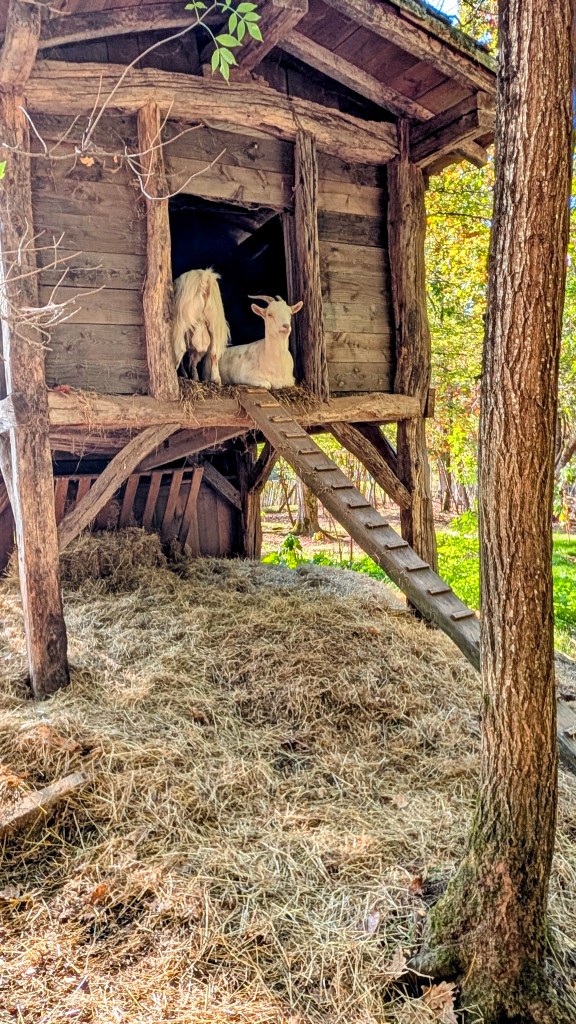
It was at this point we had reached a part of the working farm. It was also at this point that our map indicated the exit, but we could not find it. We tried all of the paths in several directions, but could not find our way to the gate. In exasperation, we climbed the fence.
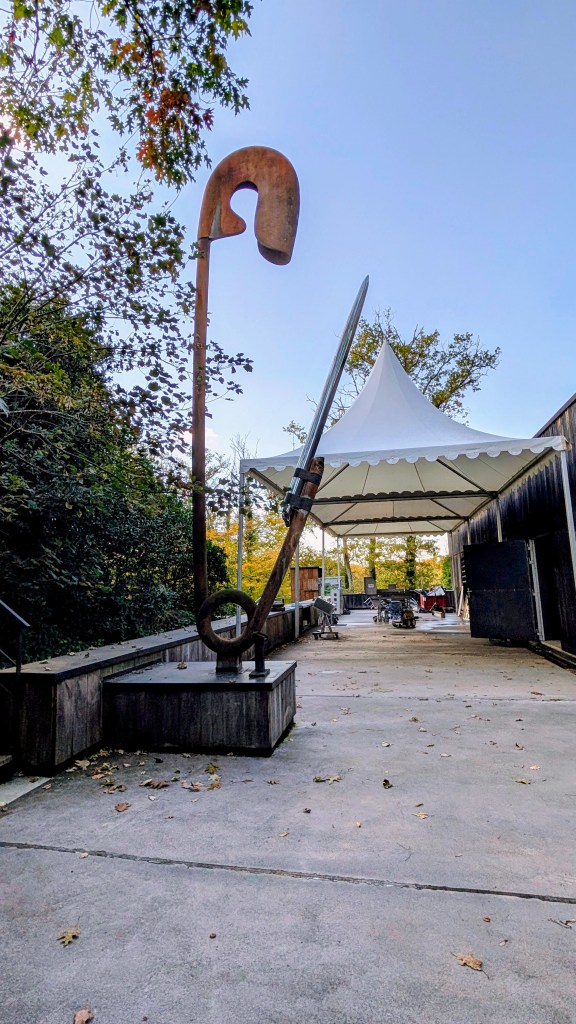
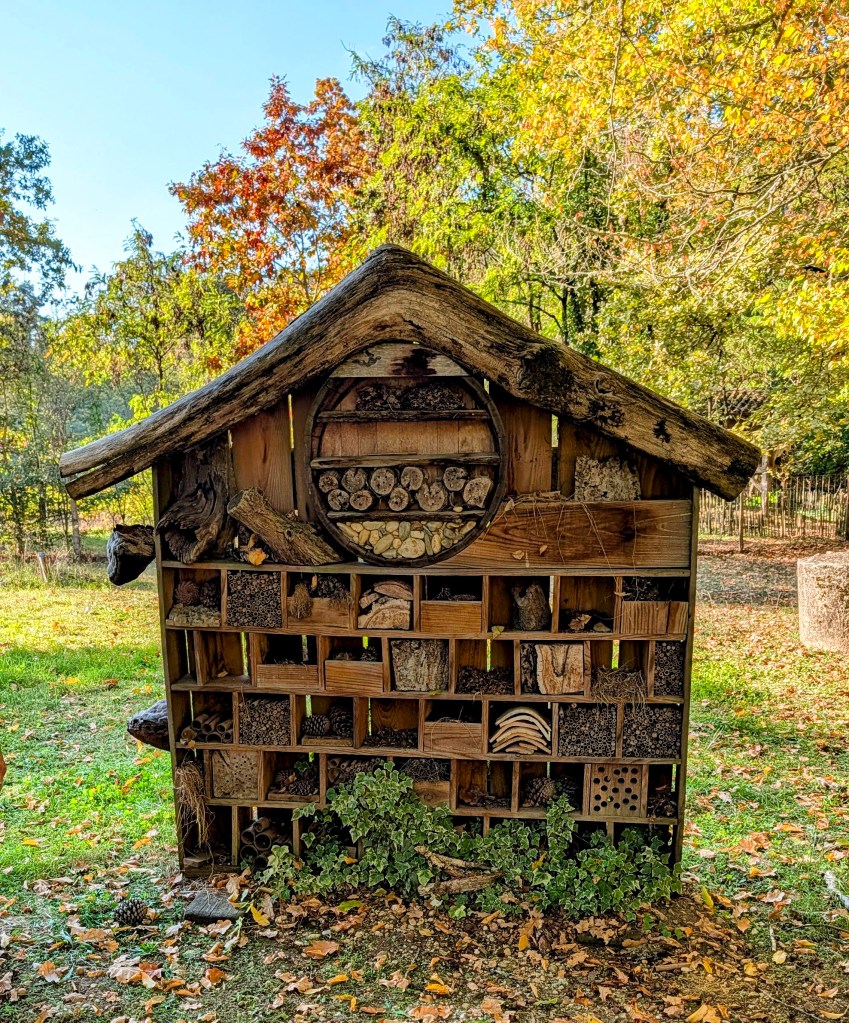
Such a large property requires a large bug hotel, also known as an insect house or insect habitat, designed to provide shelter for beneficial insects in a garden. It attracts beneficial insects like solitary bees, ladybirds, lacewings, and beetles to help with pollination and pest control. The structure is typically wooden and filled with varied natural materials to accommodate different species. Common fillings include bamboo tubes, drilled logs, pinecones, bark, and straw, which provide nesting sites for pollinators and hibernation spots for other insects. The roof should overhang to protect the interior from rain, and nooks and crannies provide year-round refuge.
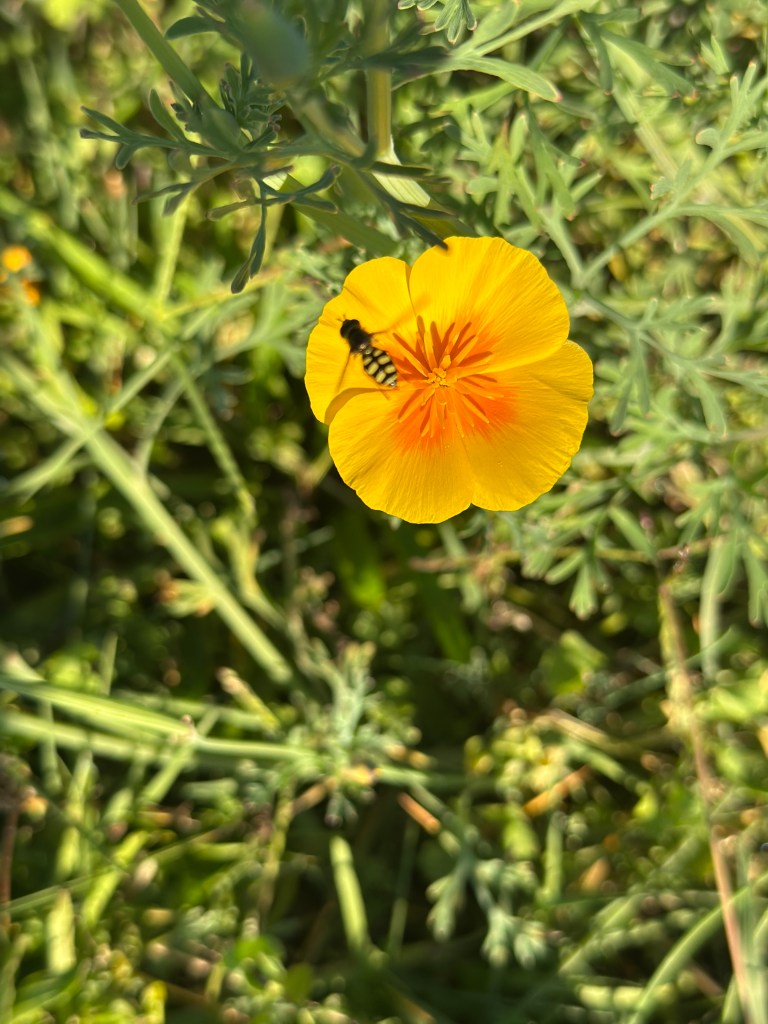
Nature at work: a pollinator on a poppy.
We ducked through one las sculpture
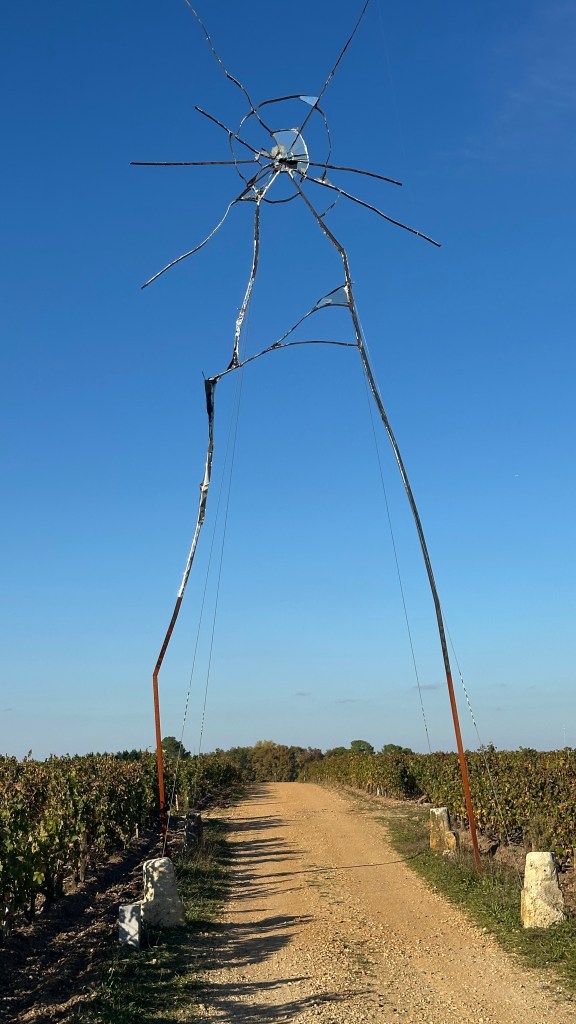
as we made our way back to the winery to return the key.
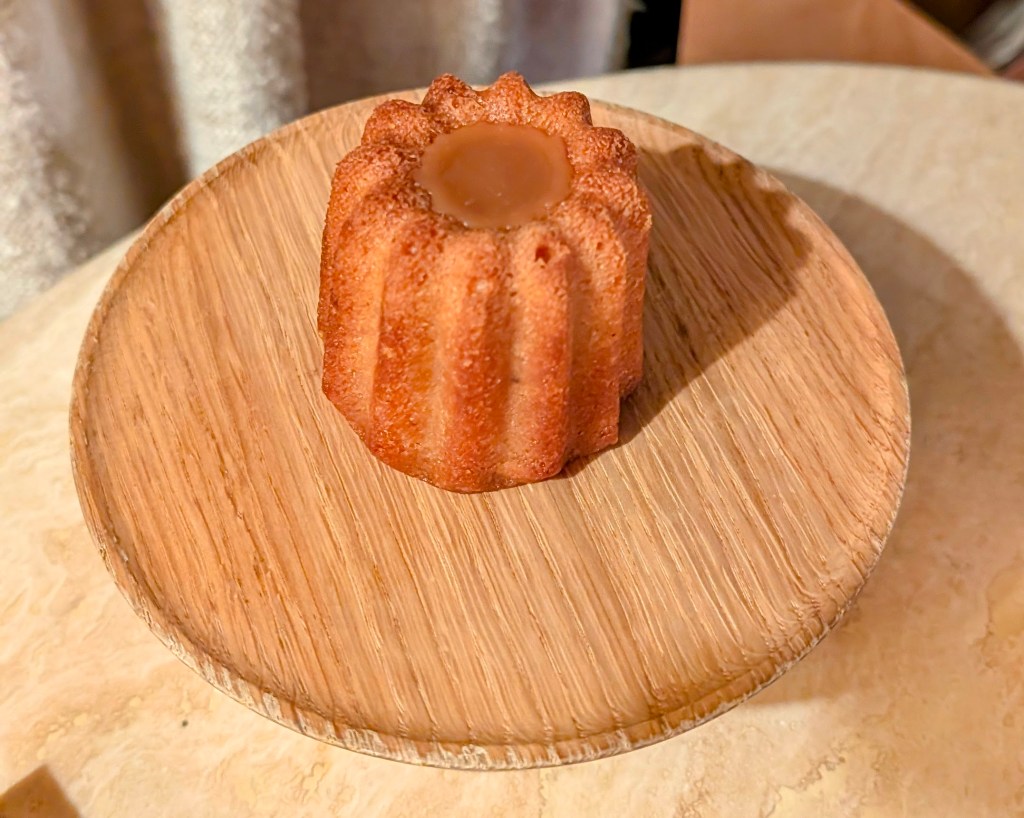
Each day the staff at Les Sources de Caudalie left us a canelé, a traditional French pastry originating from Bordeaux. A canelé features a thick, caramelized, crunchy exterior with a soft, custardy interior. typically flavored with rum and vanilla bean. Traditional preparation involves baking in copper molds lined with beeswax and butter to achieve a glassy, caramelized crust. The origins of the canelé are somewhat mysterious; the name “canelé” comes from the French word meaning “fluted,” a nod to its shape, but also to the corks used for the wine barrels. The pastry is believed to have been created between the 15th and 18th centuries by nuns in Bordeaux using the egg yolks left over, some say from the whites having been used to starch the priests’ shirts, others say from the egg whites having been used in the clarification process in the wine making.
The following day we headed to Saint-Émilion, a prestigious Right Bank Bordeaux wine appellation, renowned for producing red wines dominated by Merlot, often blended with Cabernet Franc. Covering over 13,600 acres, the region is characterized by diverse limestone, clay, and sandy soils, creating varied, structured wines. It features two main AOCs: Saint-Émilion and the superior Saint-Émilion Grand Cru. Saint-Émilion’s 860 wineries produce over 15 million bottles a year.
We headed to Château Troplong Mondot, a prestigious Premier Grand Cru Classé B renowned for its high-altitude, 106 acre vineyard, one of the largest in the appellation. Situated 360 feet above sea level, it offers 360-degree views.
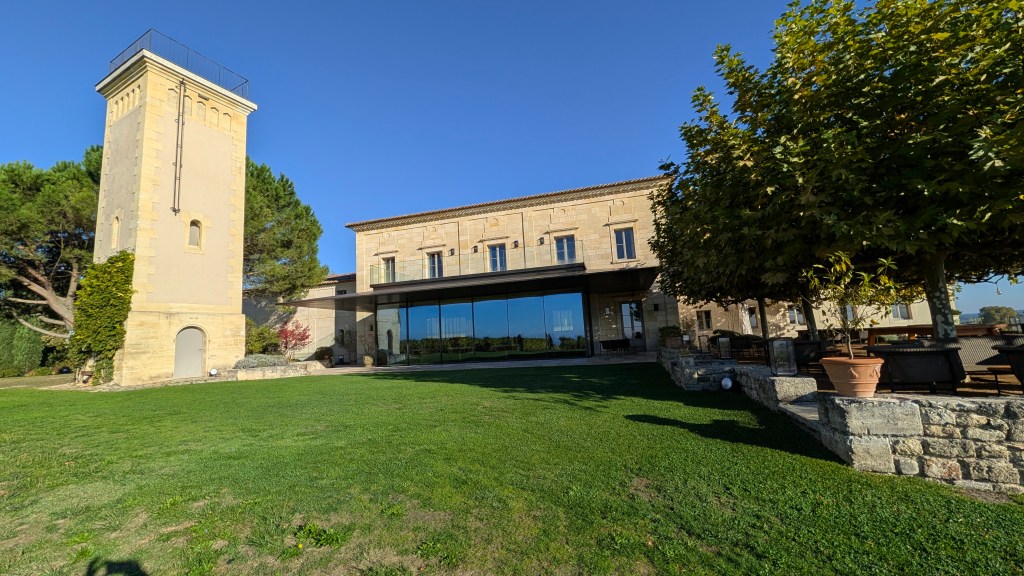
The estate was originally built in 1745. The estate takes its name from Raymond-Théodore Troplong, a prominent jurist and President of the Senate under Napoleon III, who expanded the property in the 1850s.
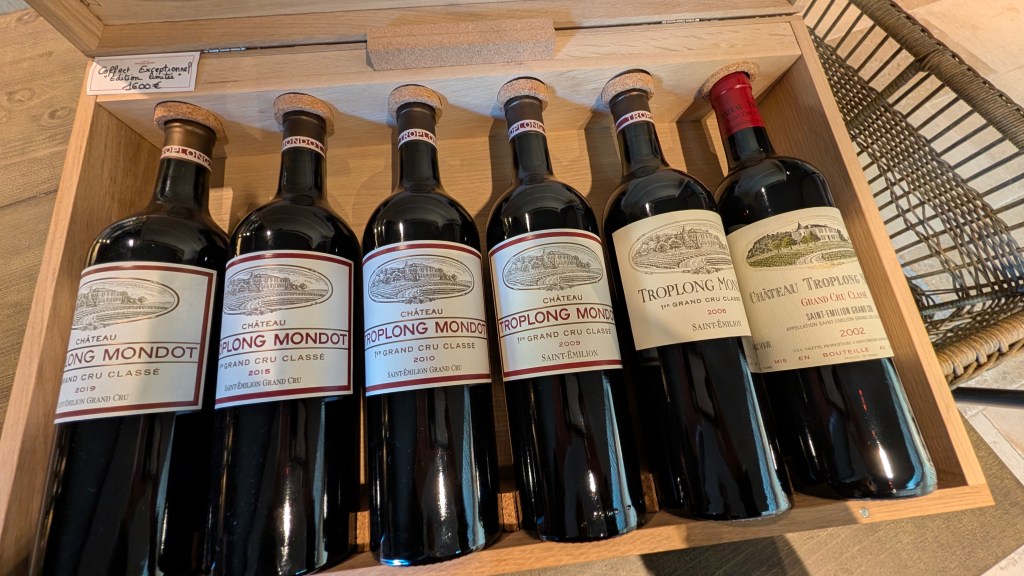
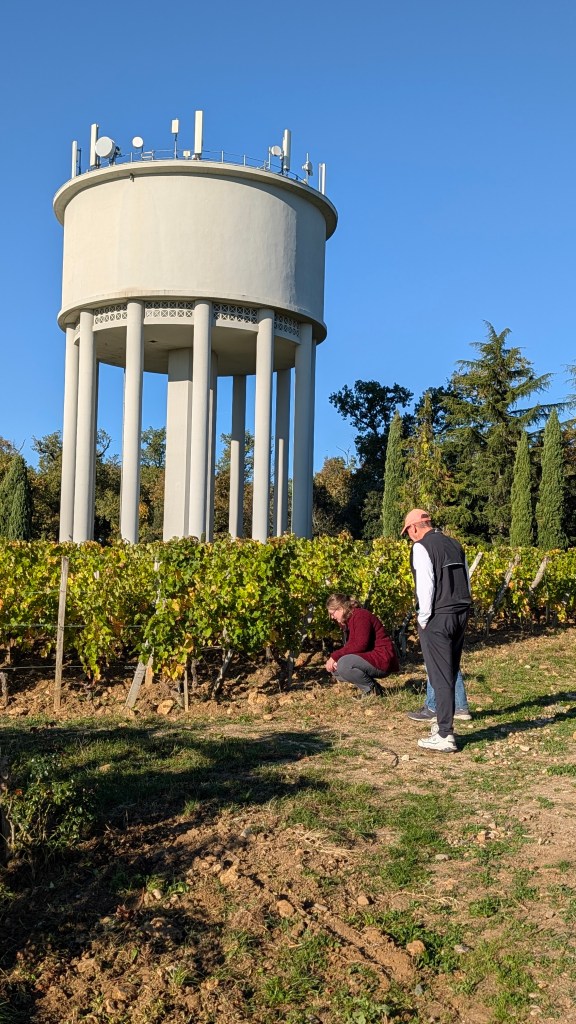
Originally the winery had only 80 acres containing 28 vineyards. Starting in the 1980s then owner Christian Valette reworked and replanted all of the vines over a 25 year period, then, 12 years ago bought about another 20 acres. In 2017, the SCOR insurance company acquired the estate from the Valette family, who had owned it since the 1930s. Due to its elevation, the terroir is unique, with thick clay-limestone soils containing flint and limestone. The limestone absorbs water and the flint absorbs the daytime heat, together allowing for high-concentration, powerful wines.
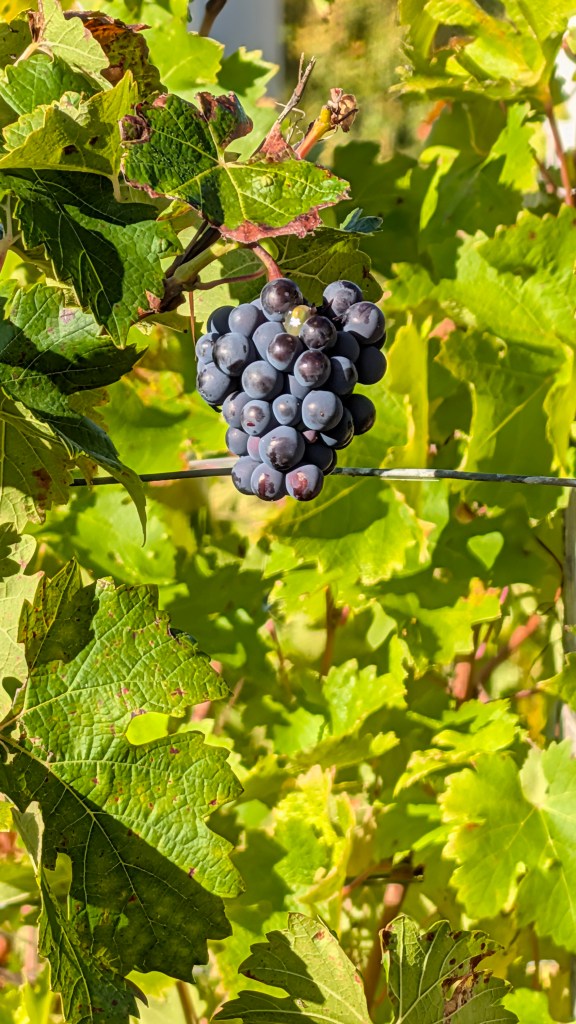
The majority of grapes had already been harvested, but there were some bunches still on the vine. The wines are primarily from Merlot grapes, 80%, and 20% Cabernet Franc.
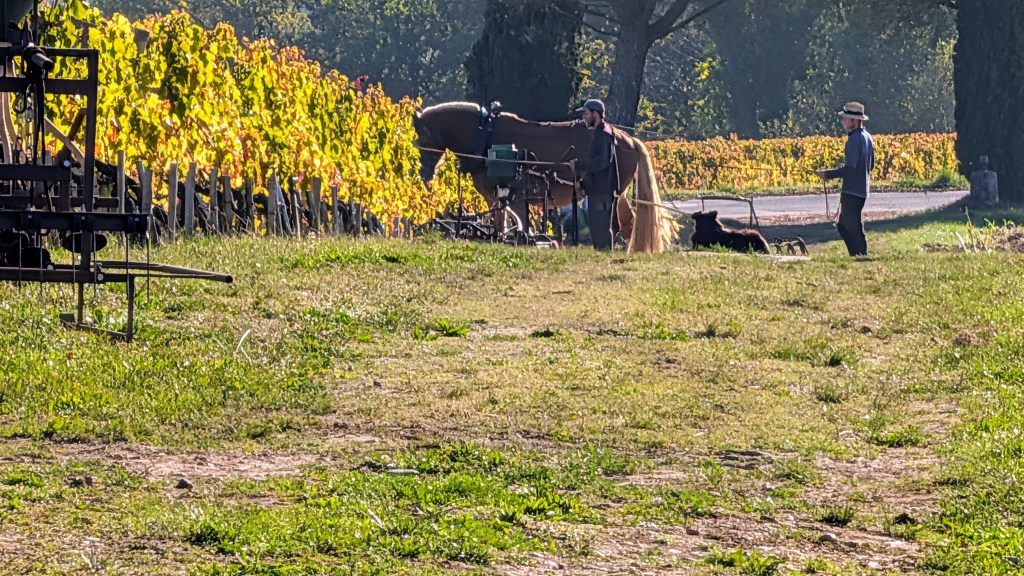
Work horses have replaced tractors since 2010 because they are less likely to pack the dirt, which makes for better soil.
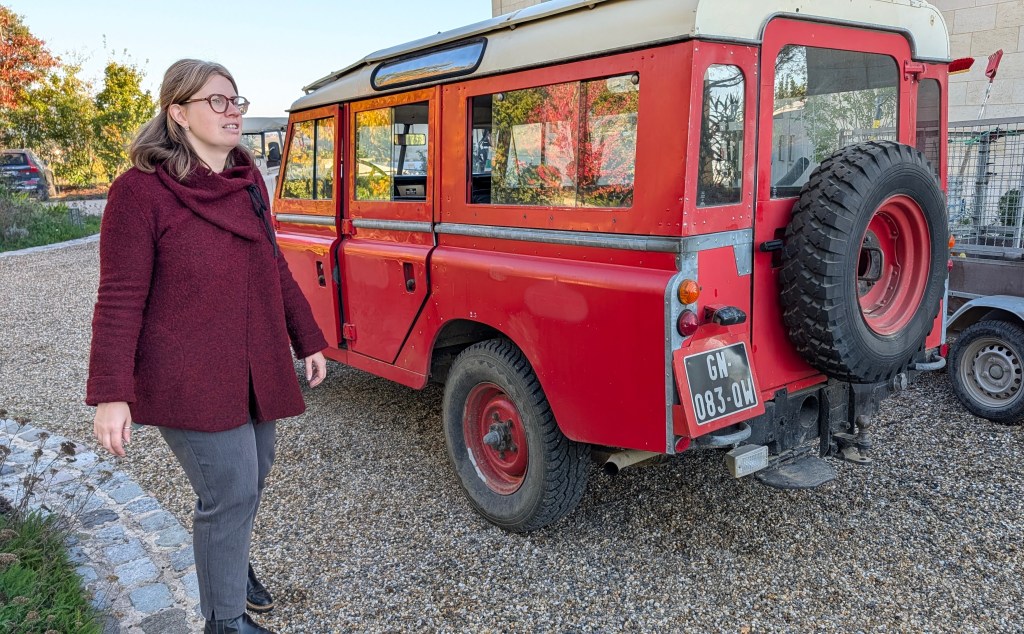
We took a safari ride to explore the property
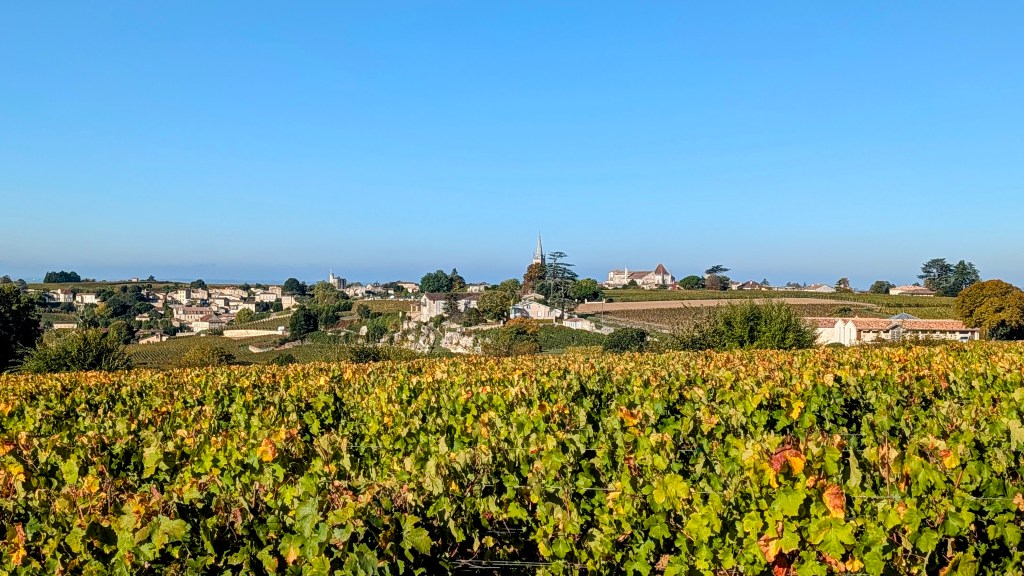
and get a view of the town of Saint-Émilion below.
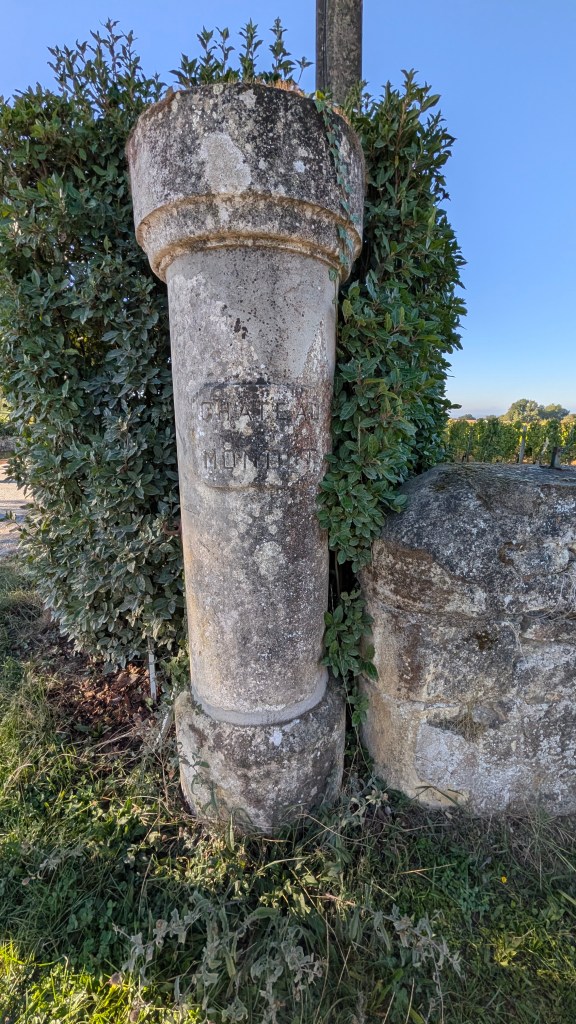
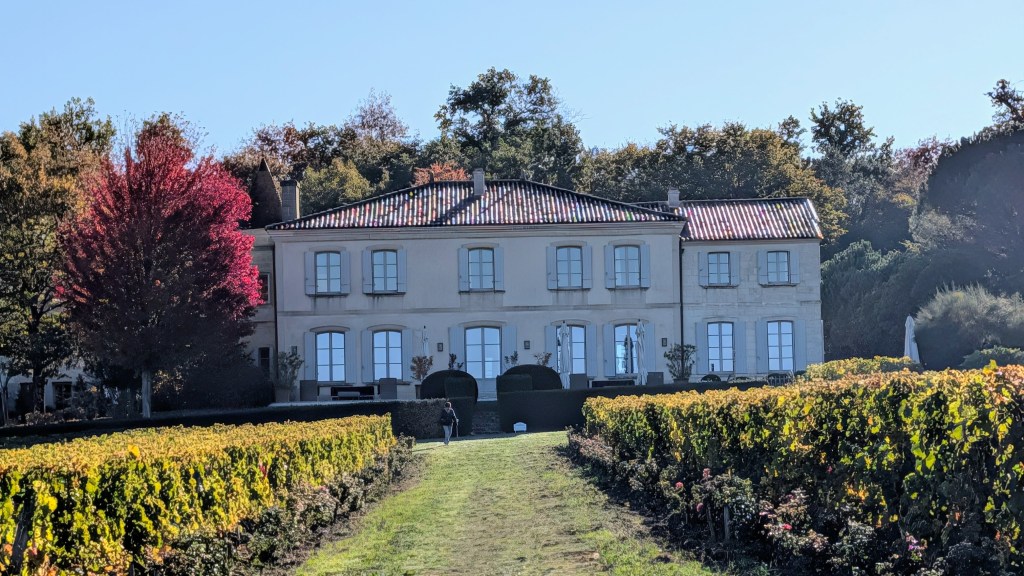
The property includes a luxurious hotel
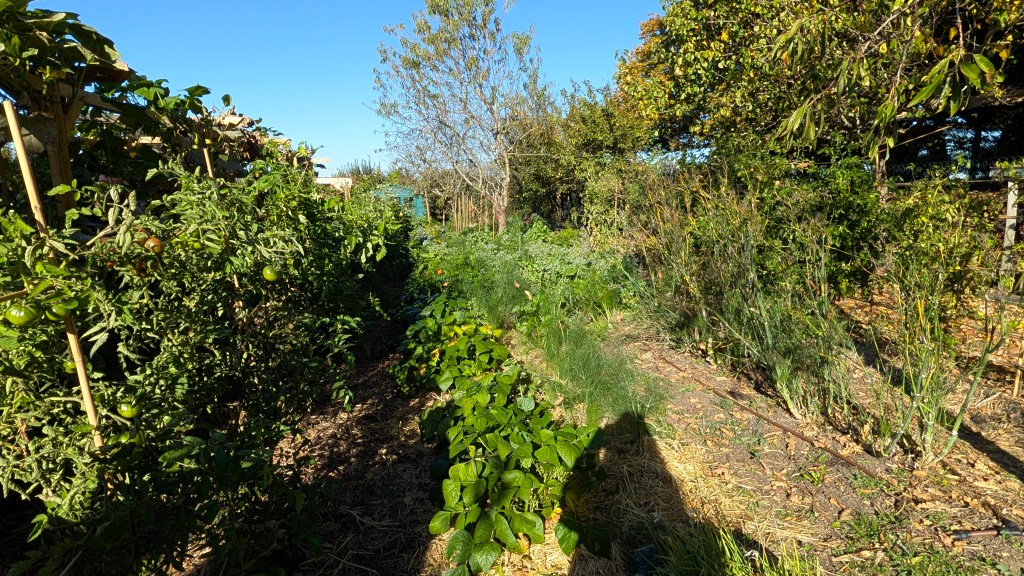
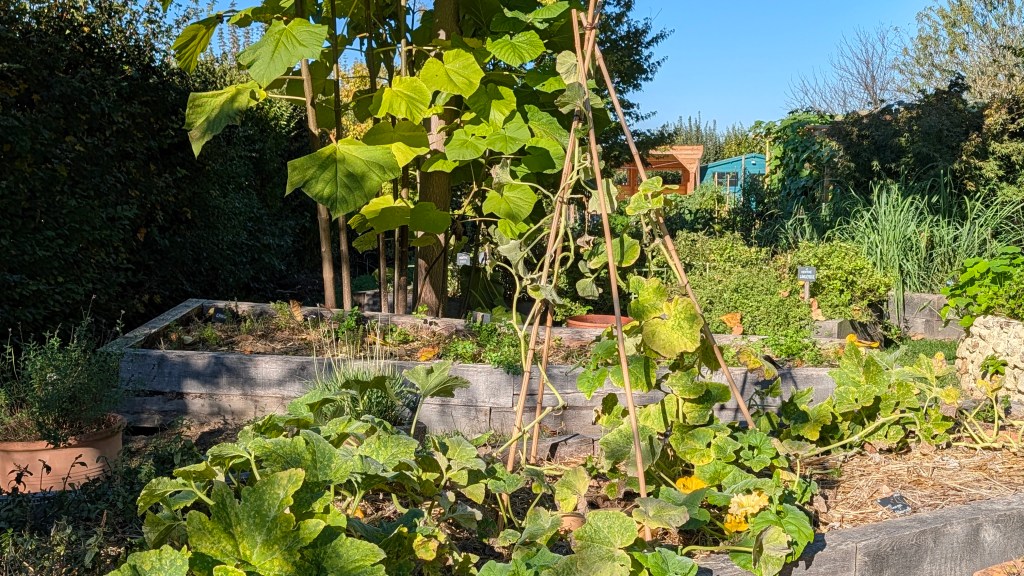
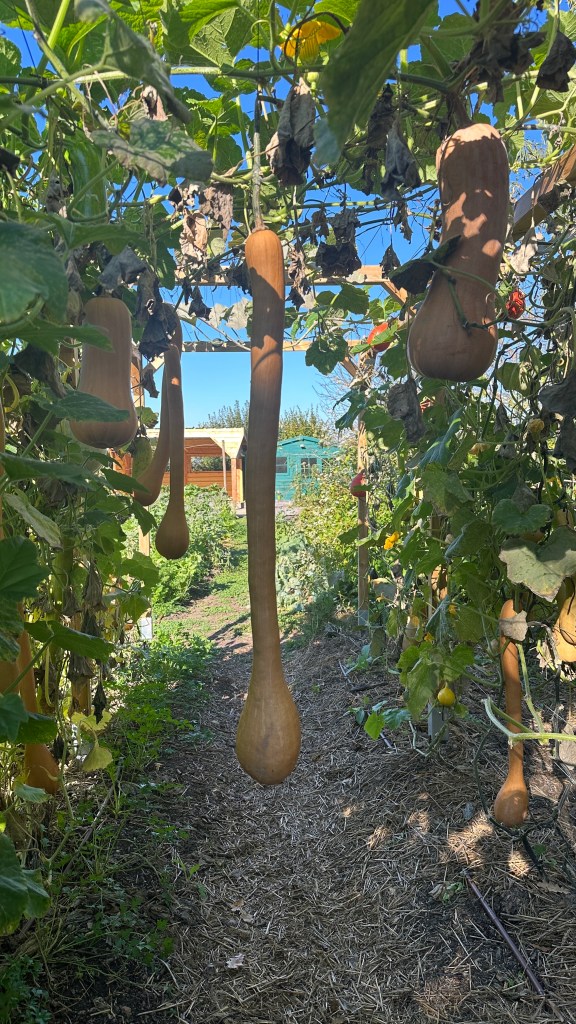
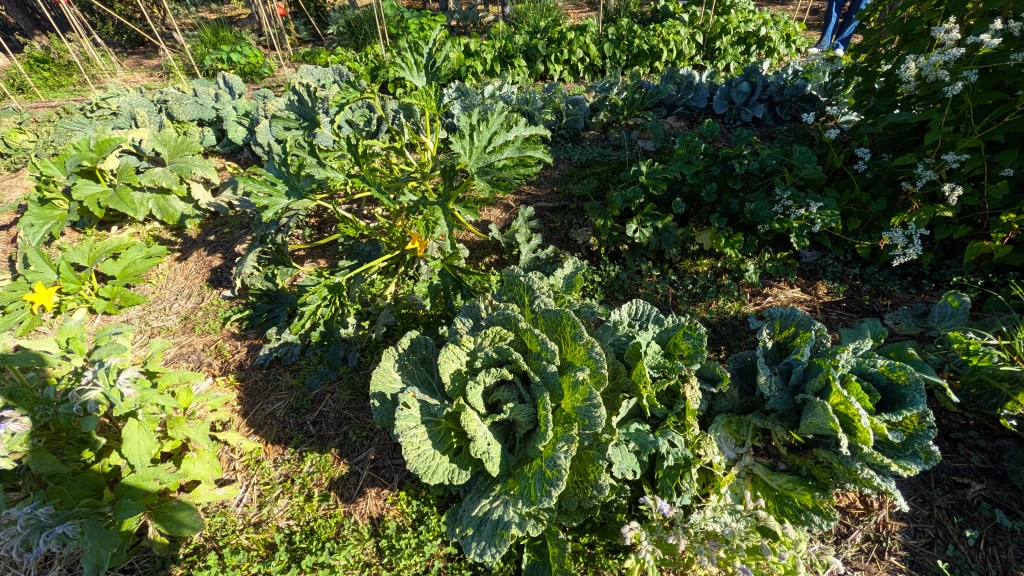
and a permculture garden, a regenerative agricultural system that mimics natural ecosystems to create self-sustaining, productive landscapes, focusing on ecological harmony, soil health, and minimal waste.
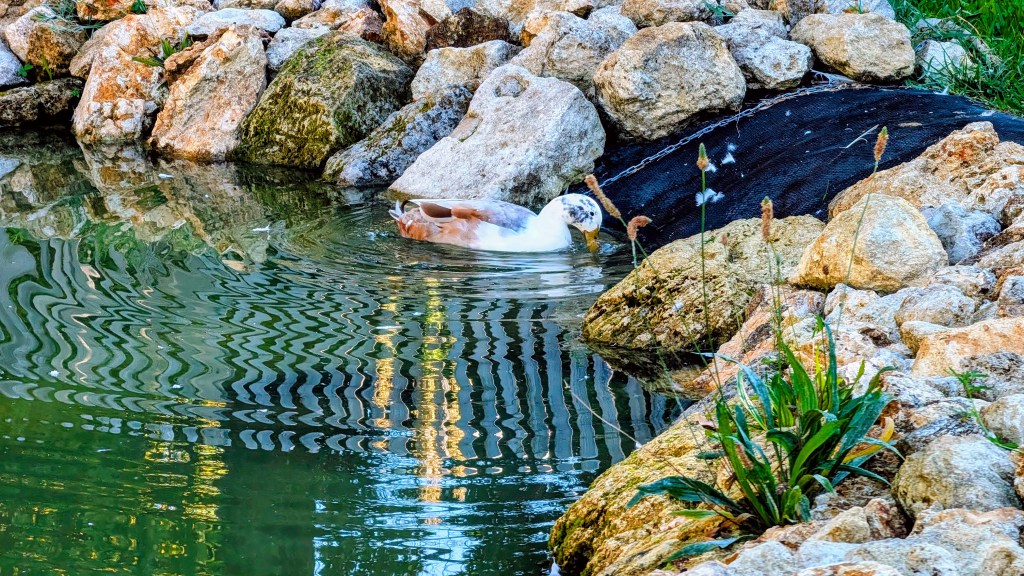
The ducks eat insects.
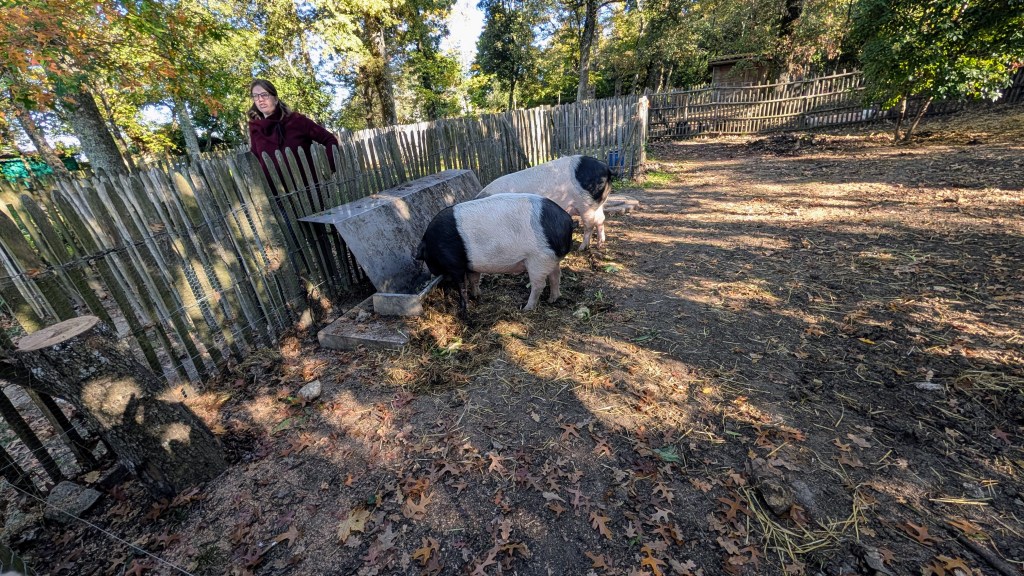
The pigs eat the table waste from the restaurant, then become food themselves the following year.
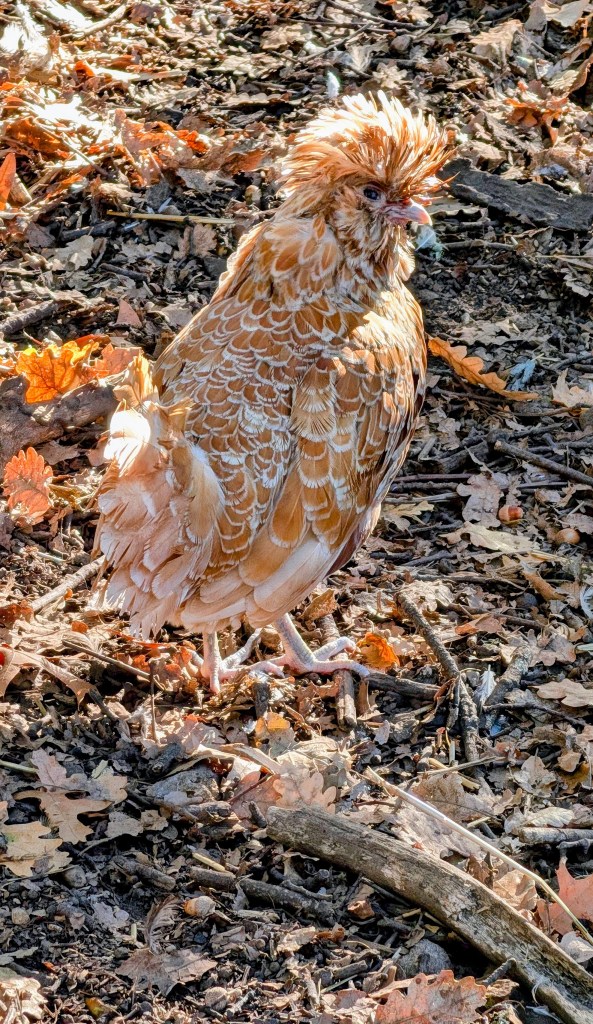
The chickens also eat table scraps.
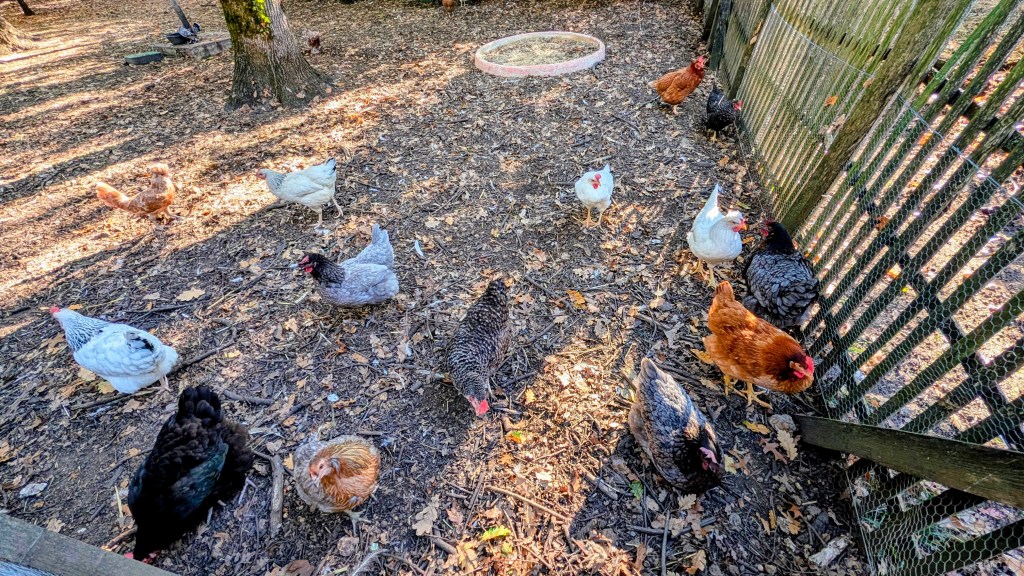
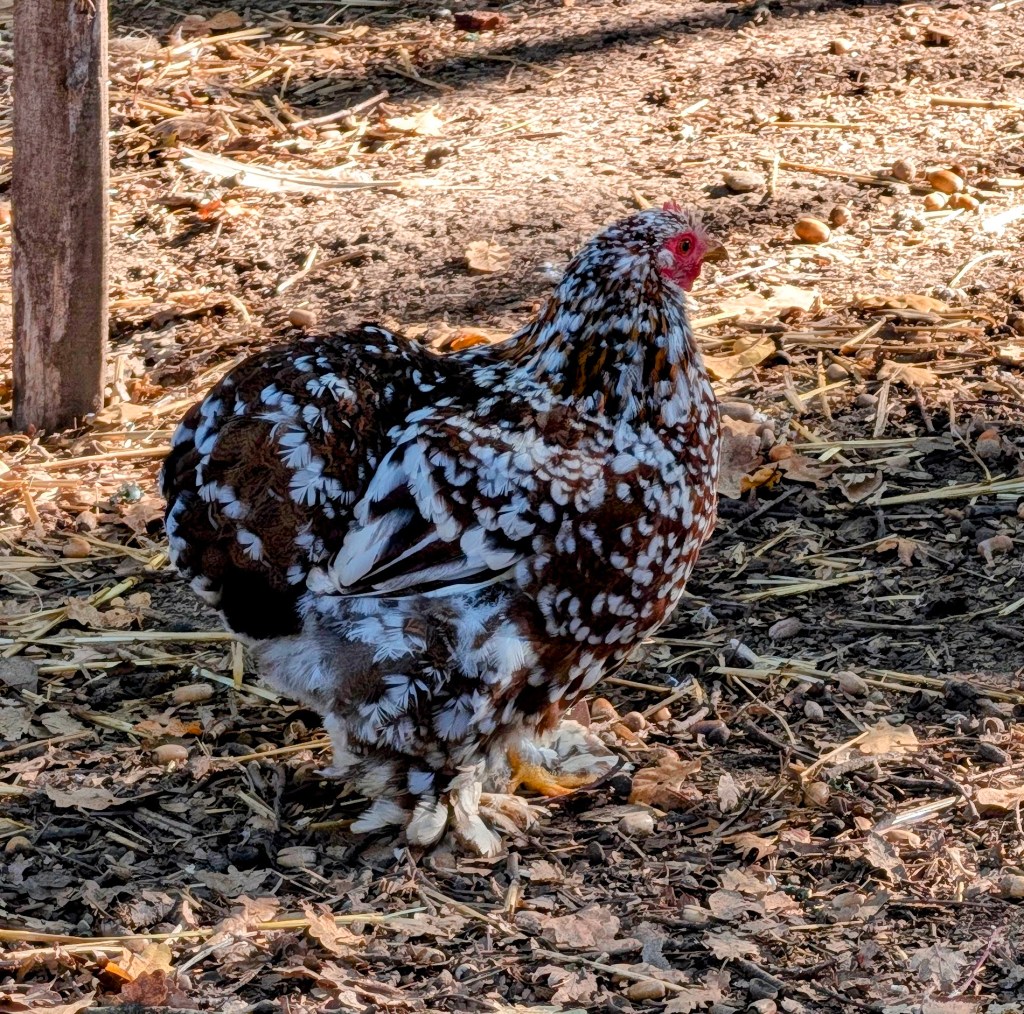
Some of the chickens were particularly colorful.
We headed into the winery where they were cleaning out the steel tanks.
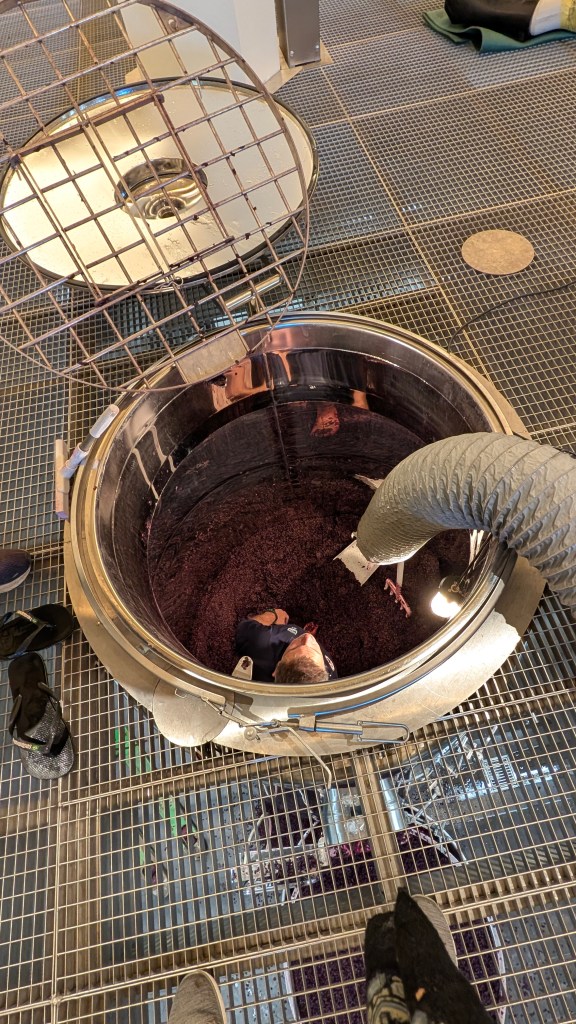
Once the juice has been drained,
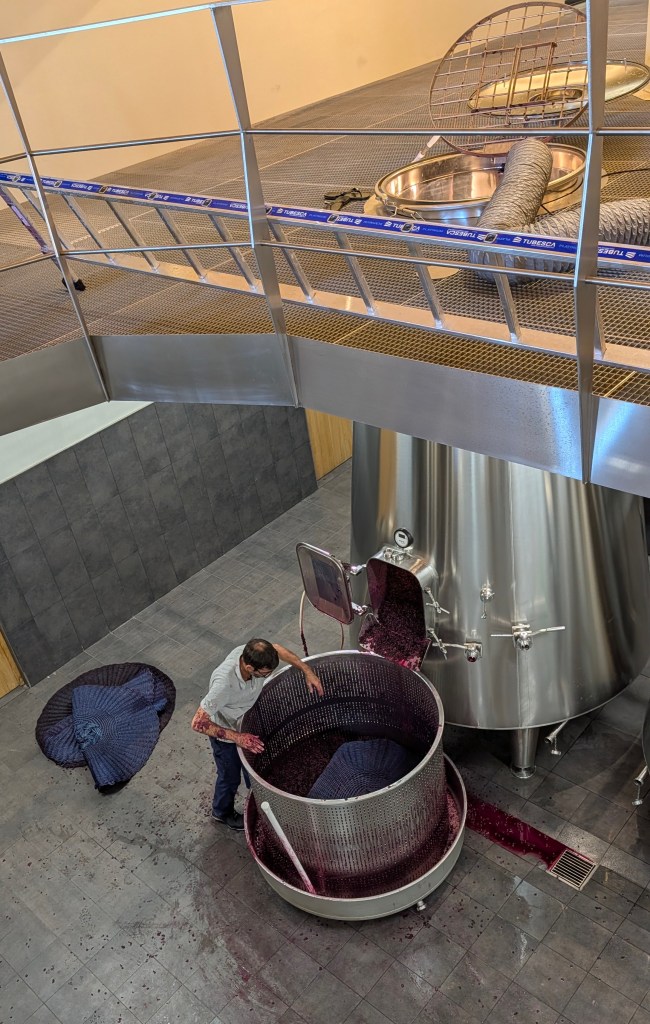
the solids are vacuumed out.
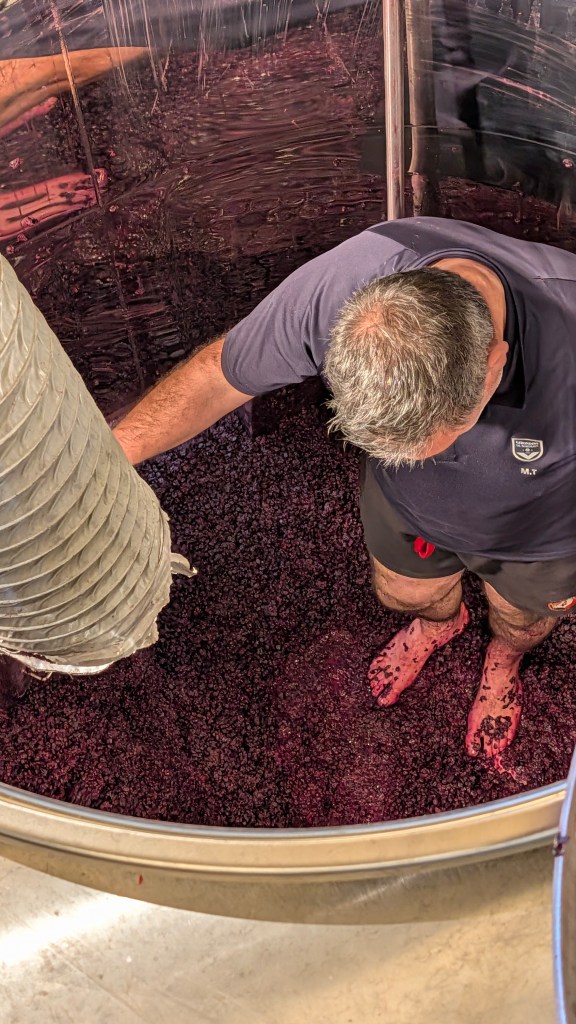
After maceration all of the juices are pressed out of the solid waste which is then recycled to avoid waste taxes. France’s anti-waste law bans the destruction of non-food products and encourages the recycling or repurposing of waste, pushing for circular solutions. France is currently spending approximately €200 million ($216 million) to distill 80 million gallons of surplus wine into pure alcohol for industrial use (cleaning, perfume) to manage oversupply. Instead of a waste tax on disposal, the government is paying producers to remove excess, with a very low excise tax of €0.03 per bottle, the lowest in Europe.
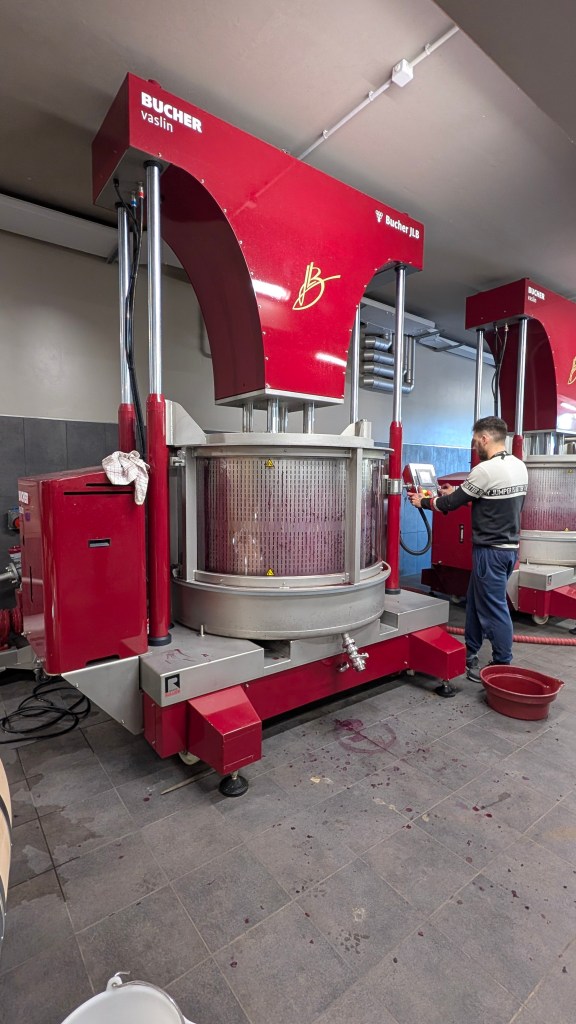
They were in the process of filling barrels from the tanks.
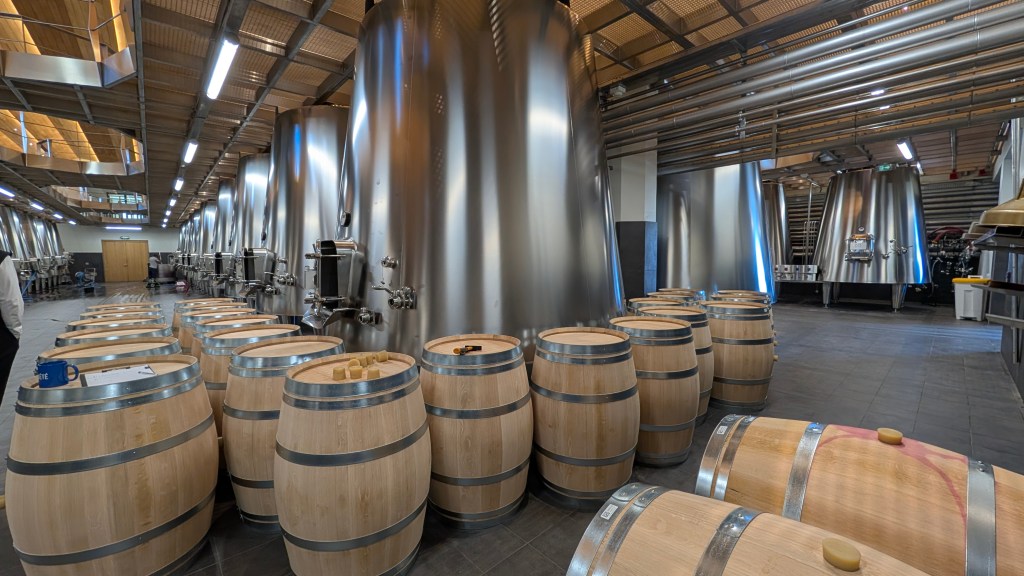
We made our way to the tasting room.
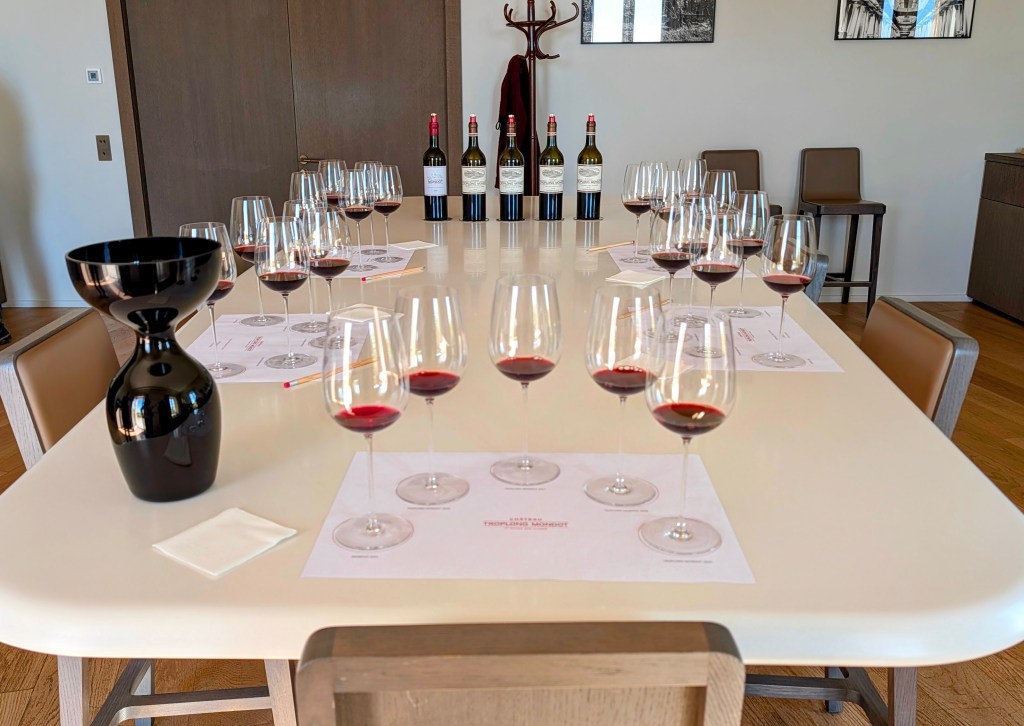
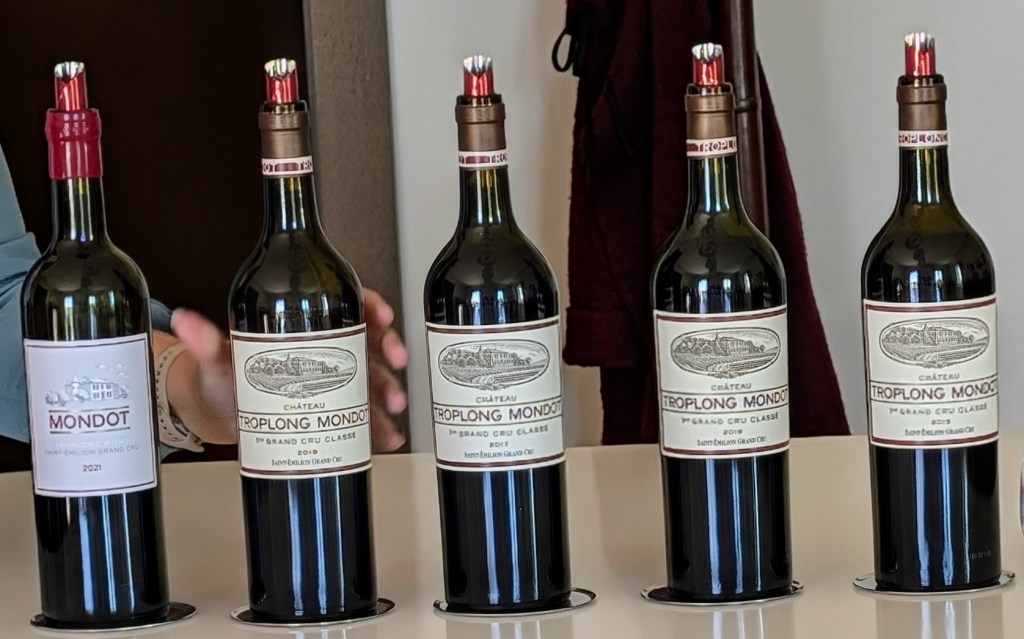
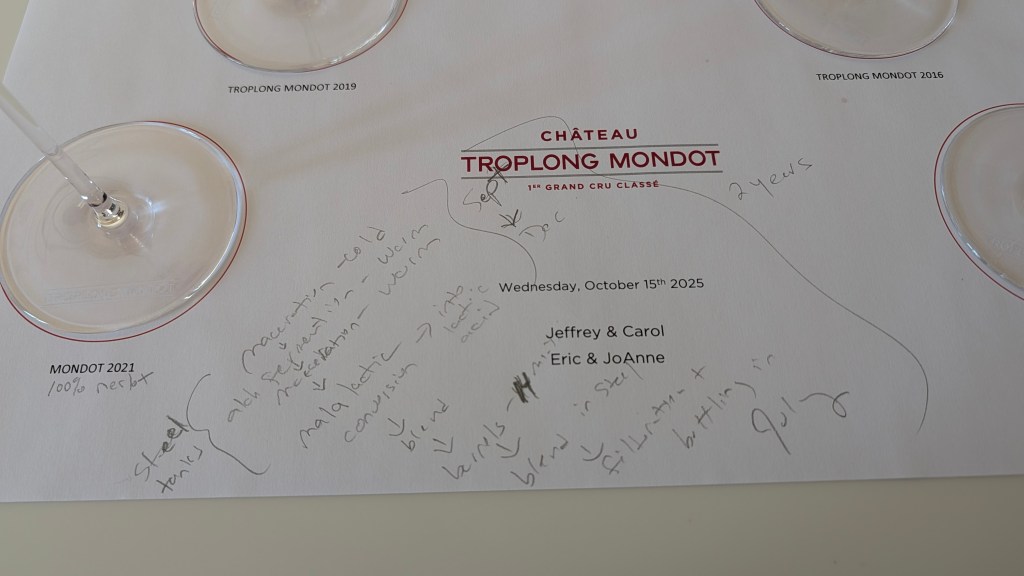
As is my usual habit, I took notes on the composition and quality of each wine we tasted.
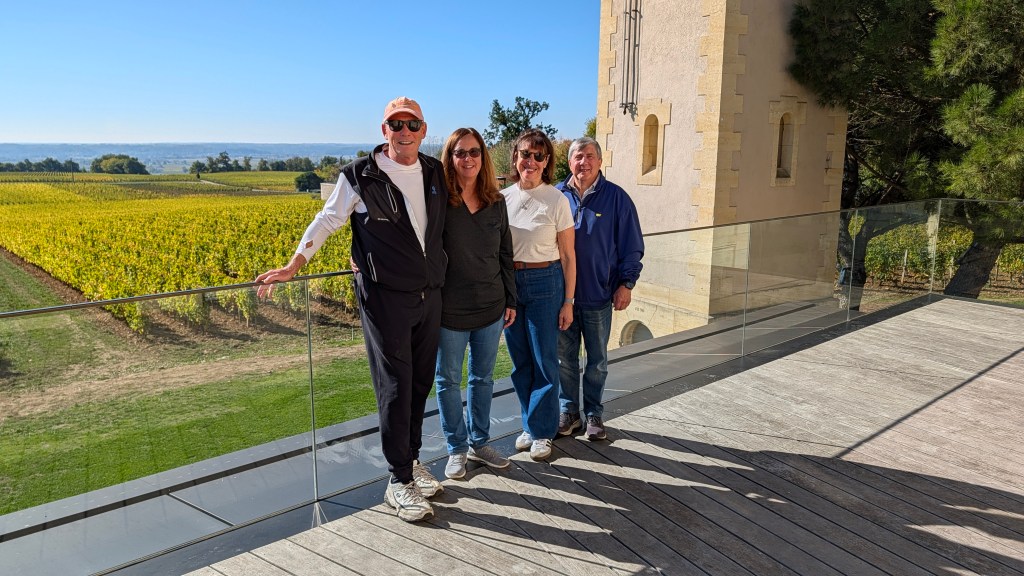
We took a break for a moment to enjoy the beautiful day
before heading into the Michelin-starred restaurant, Les Belles Perdrix.
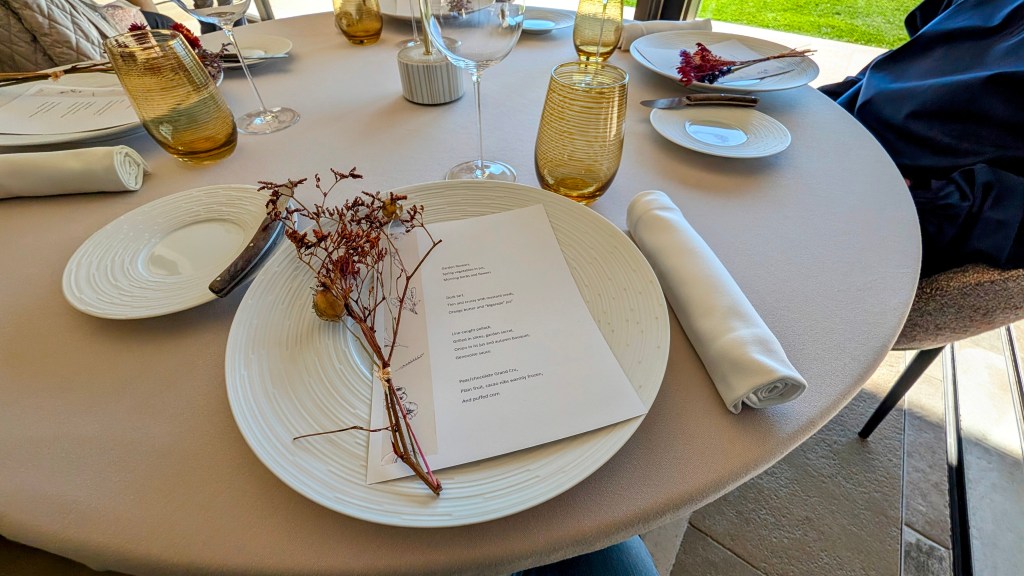
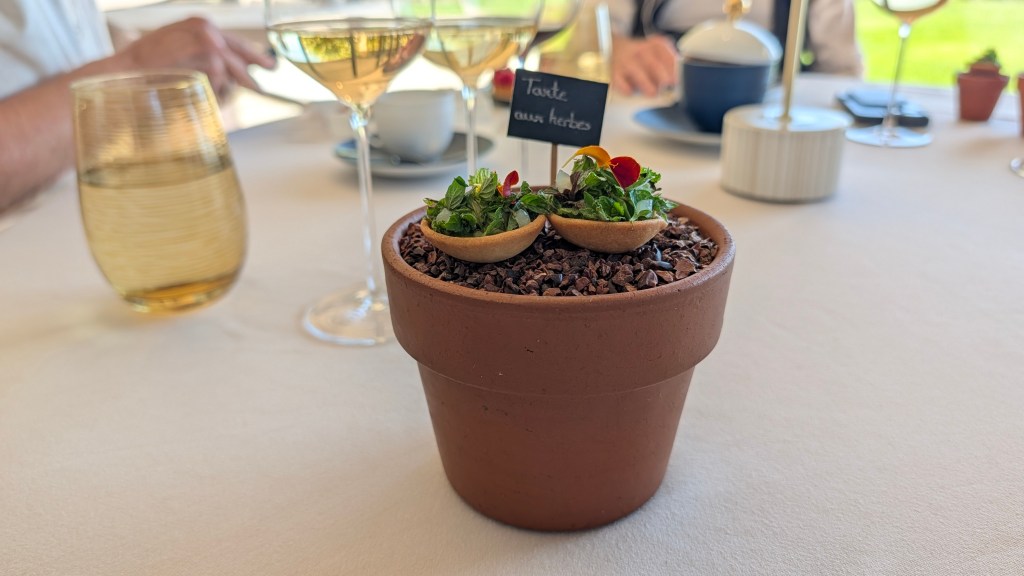
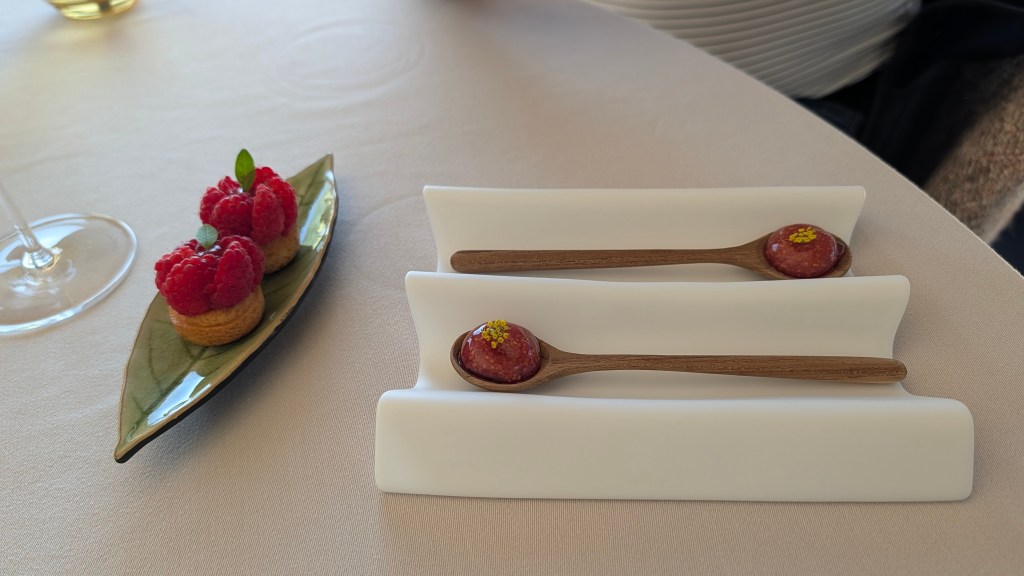
Once again the presentation matched the quality
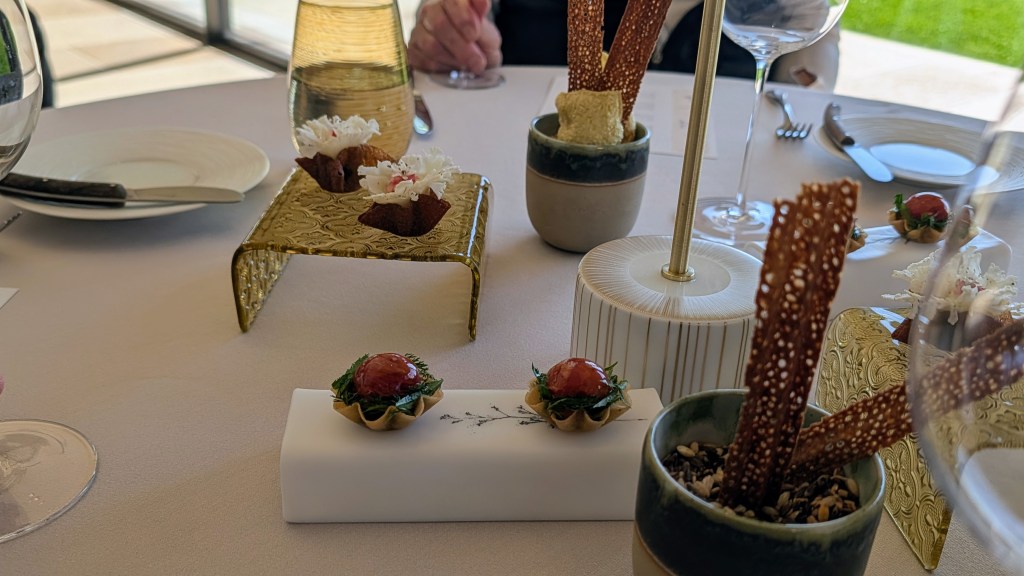
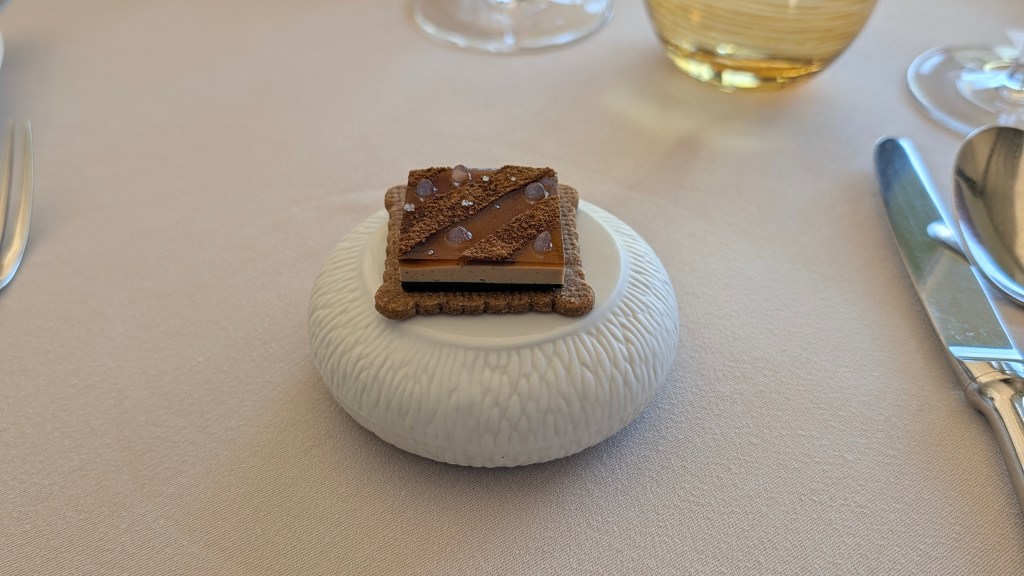
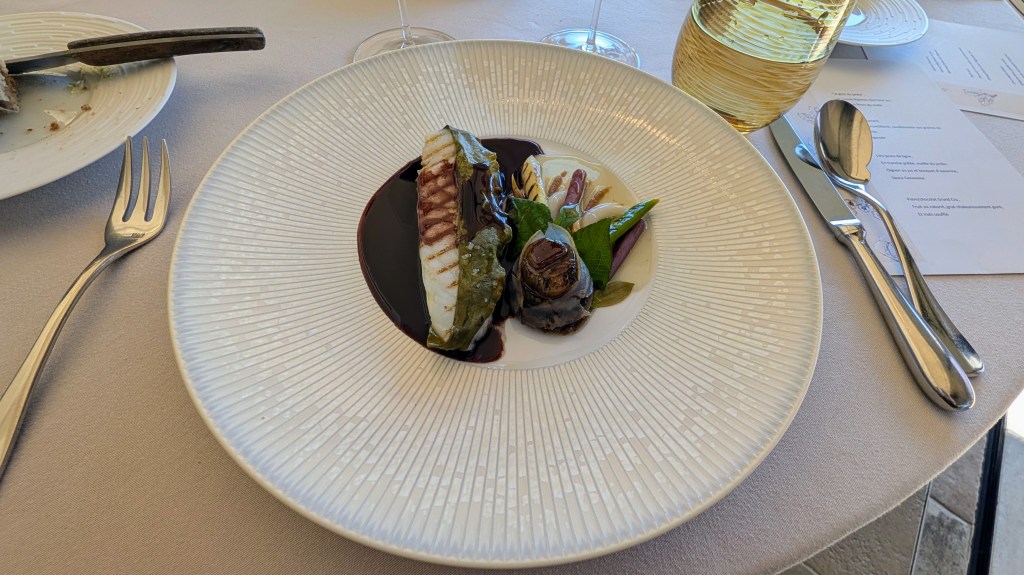
Each course was more beautiful and more delicious than the previous.
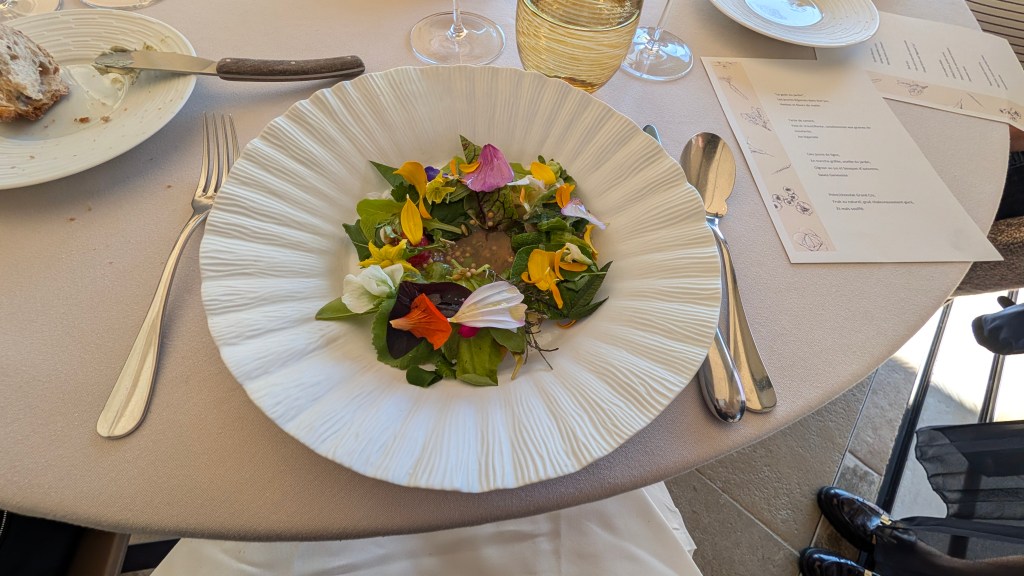
The greens, veggies, and flowers were all from their own garden.
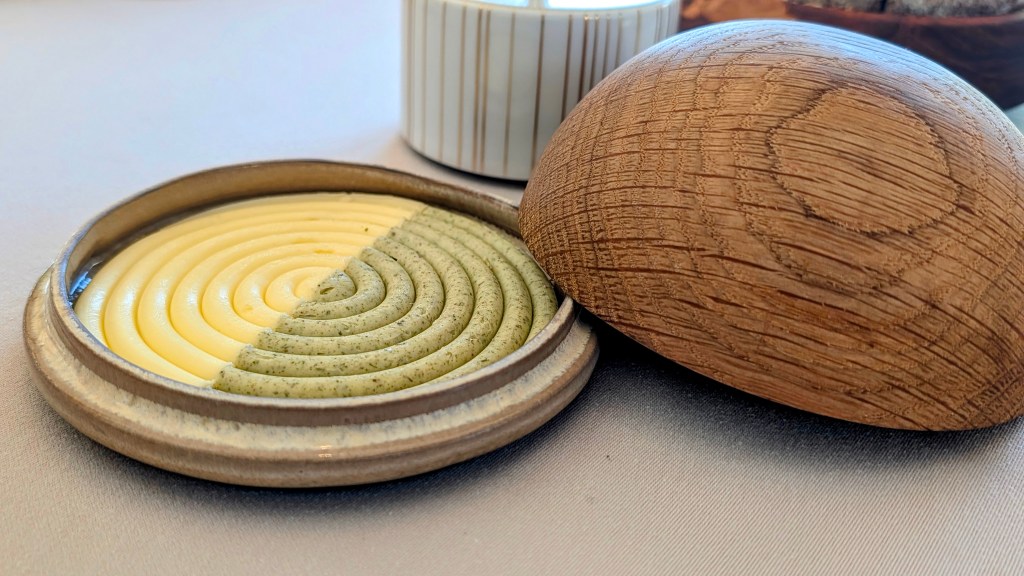
Even the butter was beautifully presented.
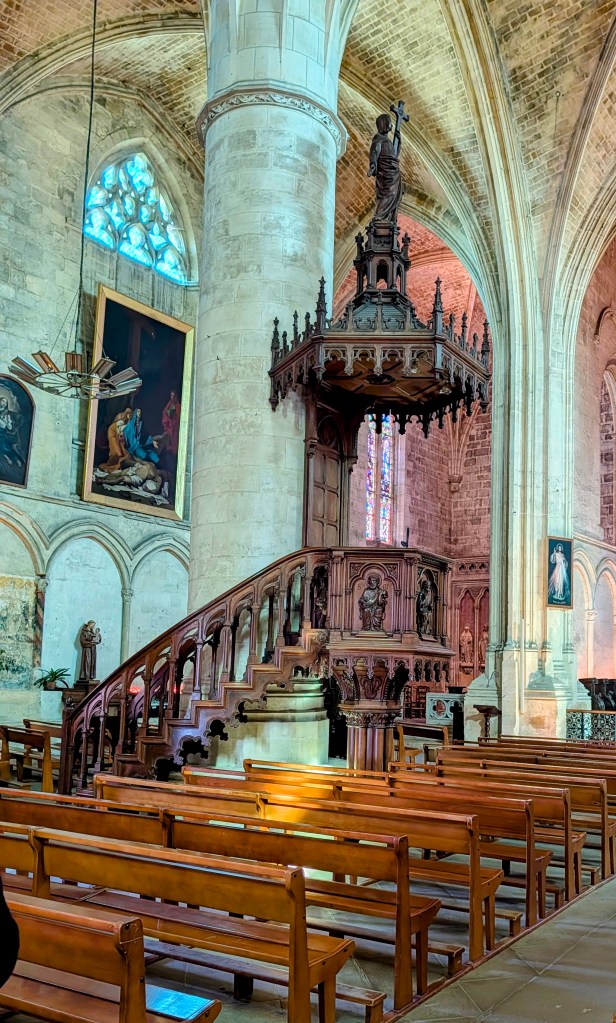
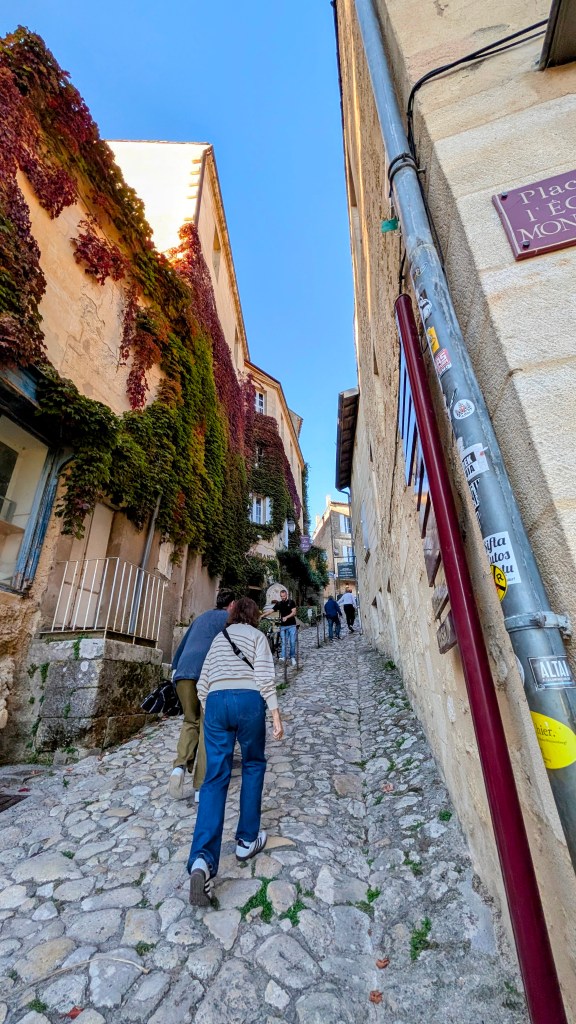
After lunch we were driven down into the village of Saint-Émilion, a medieval town with limestone architecture. The village has 40 full time inhabitants but is visited by over 1.2 million tourists a year. Less than 10% of visitors enter Eglise Collegiale (The Collegiate Church of Saint-Emilion). Founded in 1110 by Archbishop Arnaud Géraud de Cabanac, it served as a home for a college of Canons (Augustinian monks) from the 12th to the 18th century.
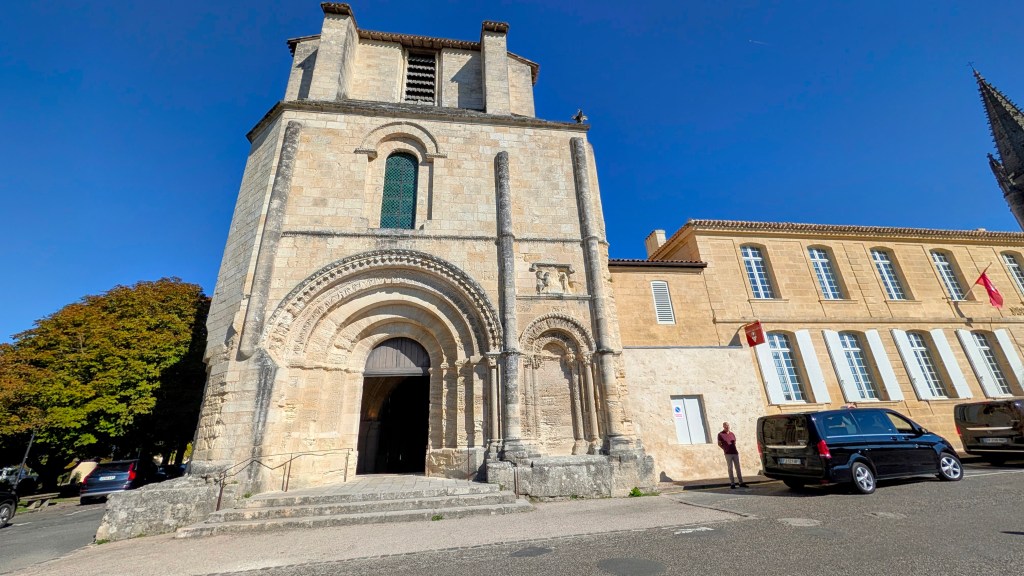
It is known for its blend of Romanesque and Gothic styles, with the transept and core dating between the 13th and 15th centuries.
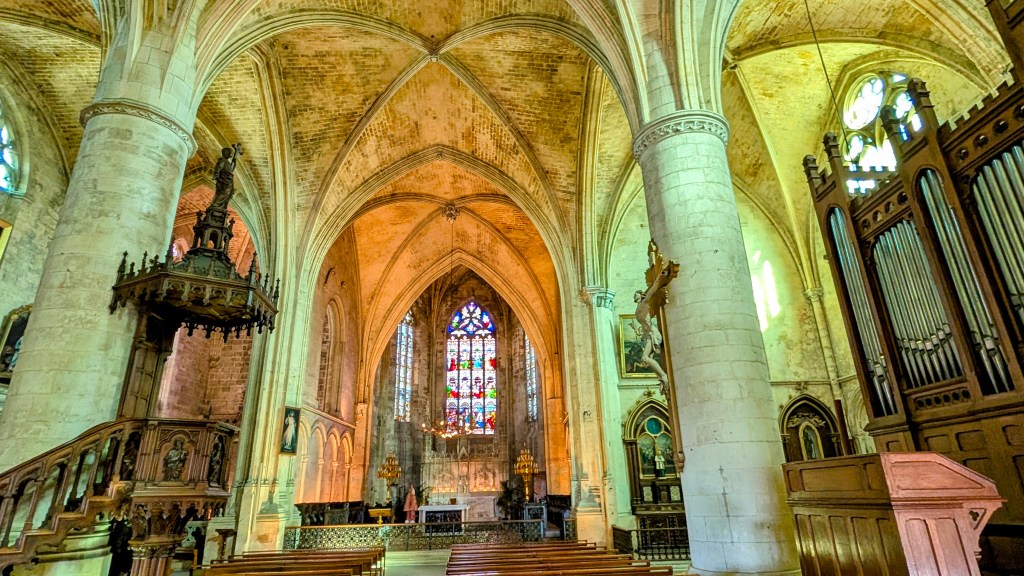
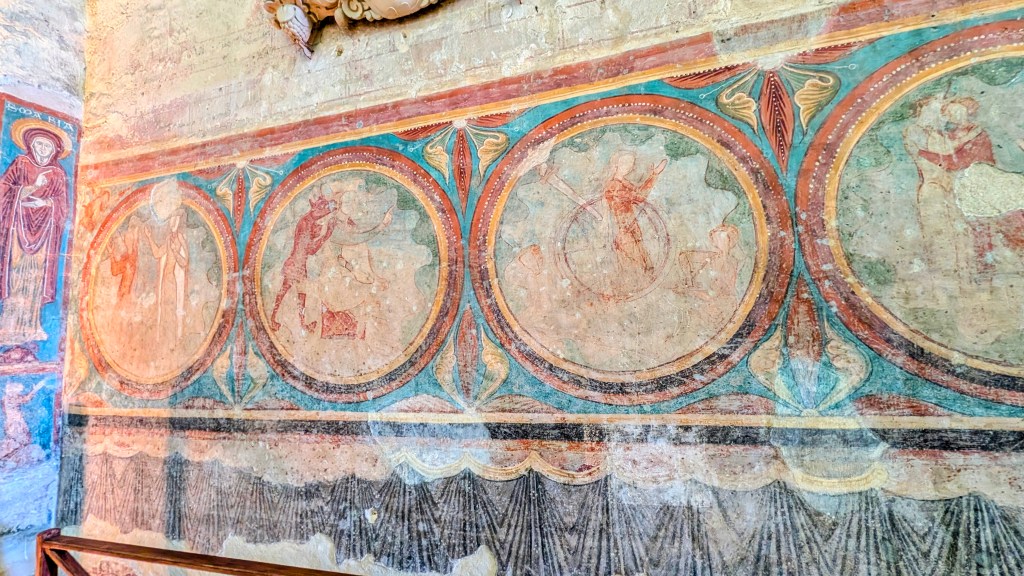
Ancient 12th-century frscoes can be found on the right side of the entrance.
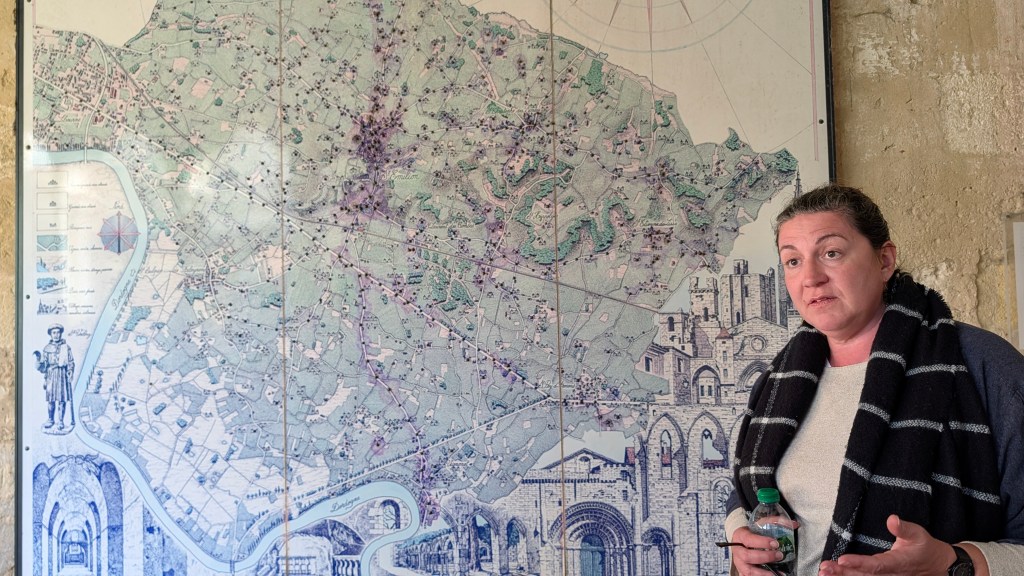
The monaastery had been built outside of the town for religious purposes. The convent was built inside the town for use both for education and as a hospital.
The peaceful, 12th-century cloister was used by monks for prayer.
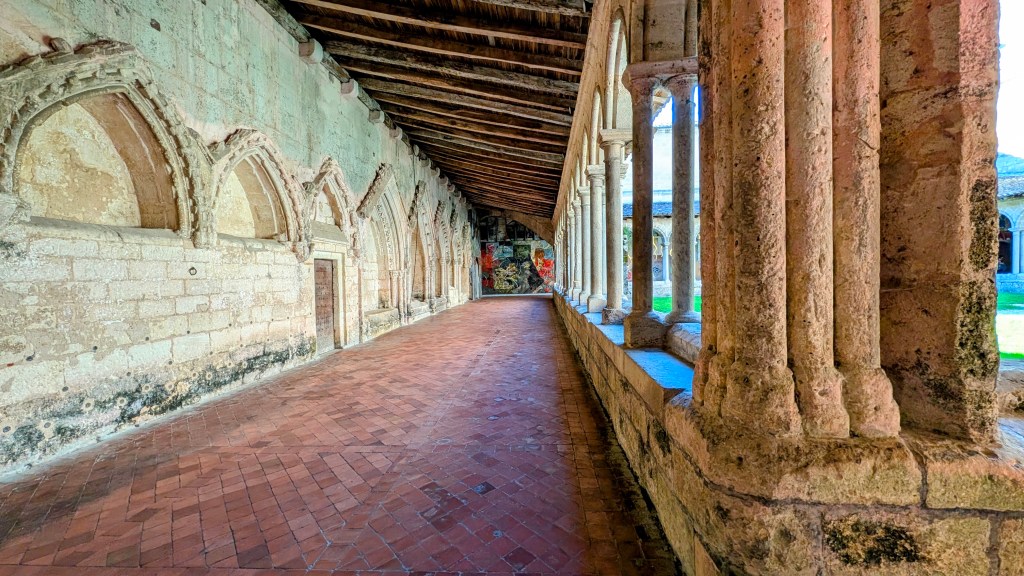
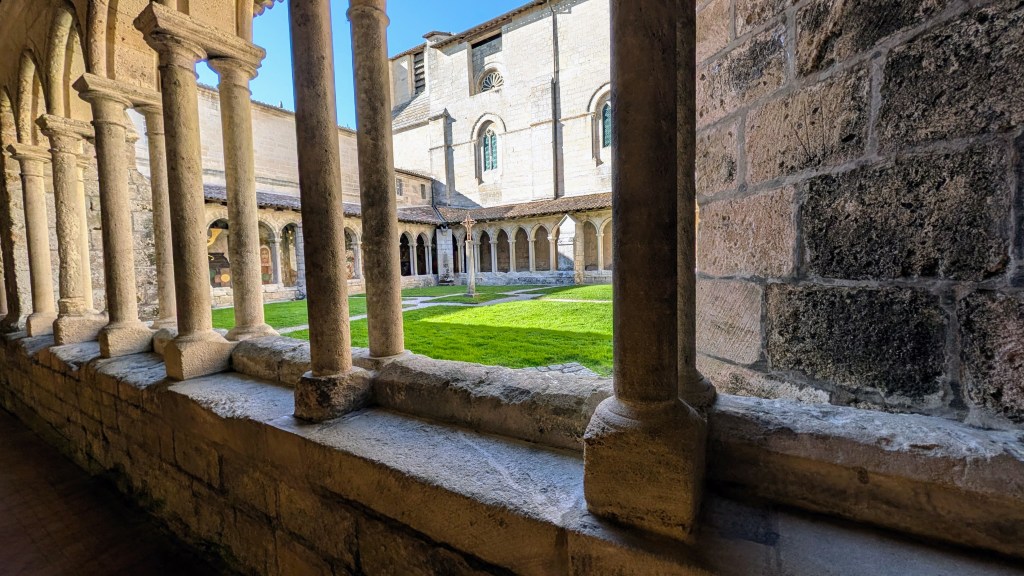
The outer side of the cloister is now the town’s tourist office.
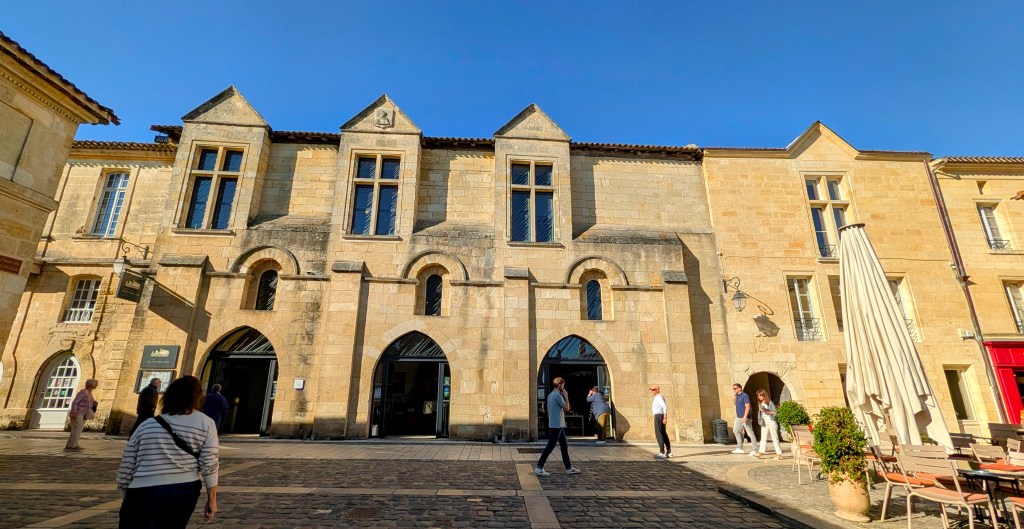
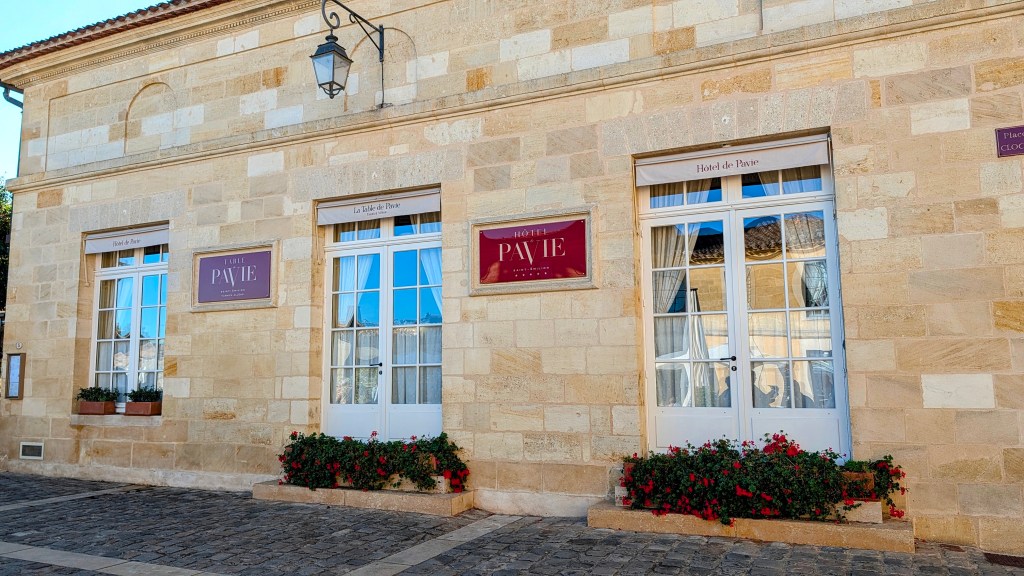
In the heart of the village is Hôtel de Pavie, a luxury 5-star hotel which features La Table de Pavie, a gastronomic restaurant overseen by renowned chef Yannick Alléno.
The historic medieval village of Saint-Émilion, originally named Ascumbas (rolling hills), was renamed in St. Émilion’s honor. It has been designated a UNESCO World Heritage Site since 1999.
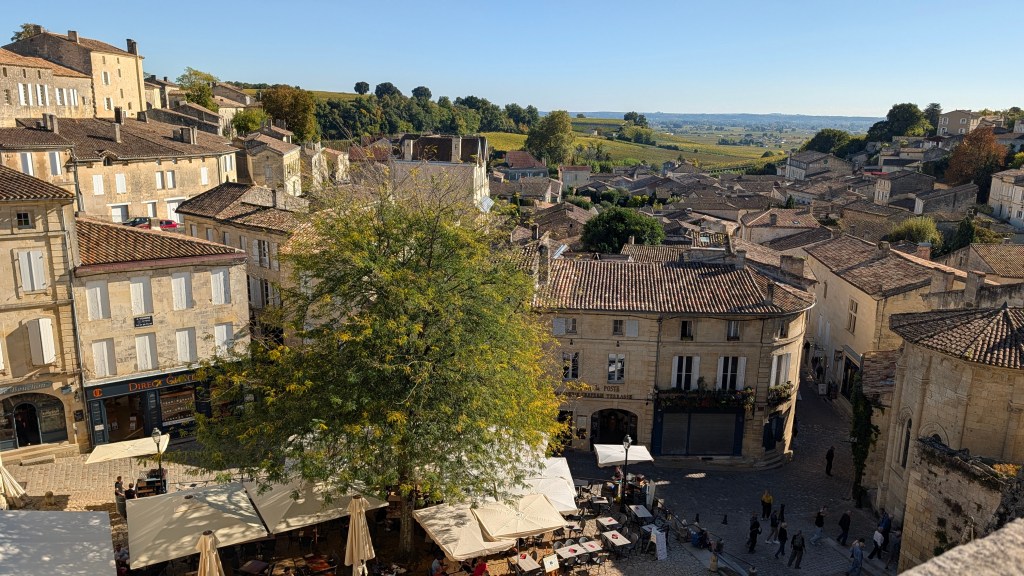
The village has 12.5 miles of tunnels created from mining limestone, which are now used to store wine.
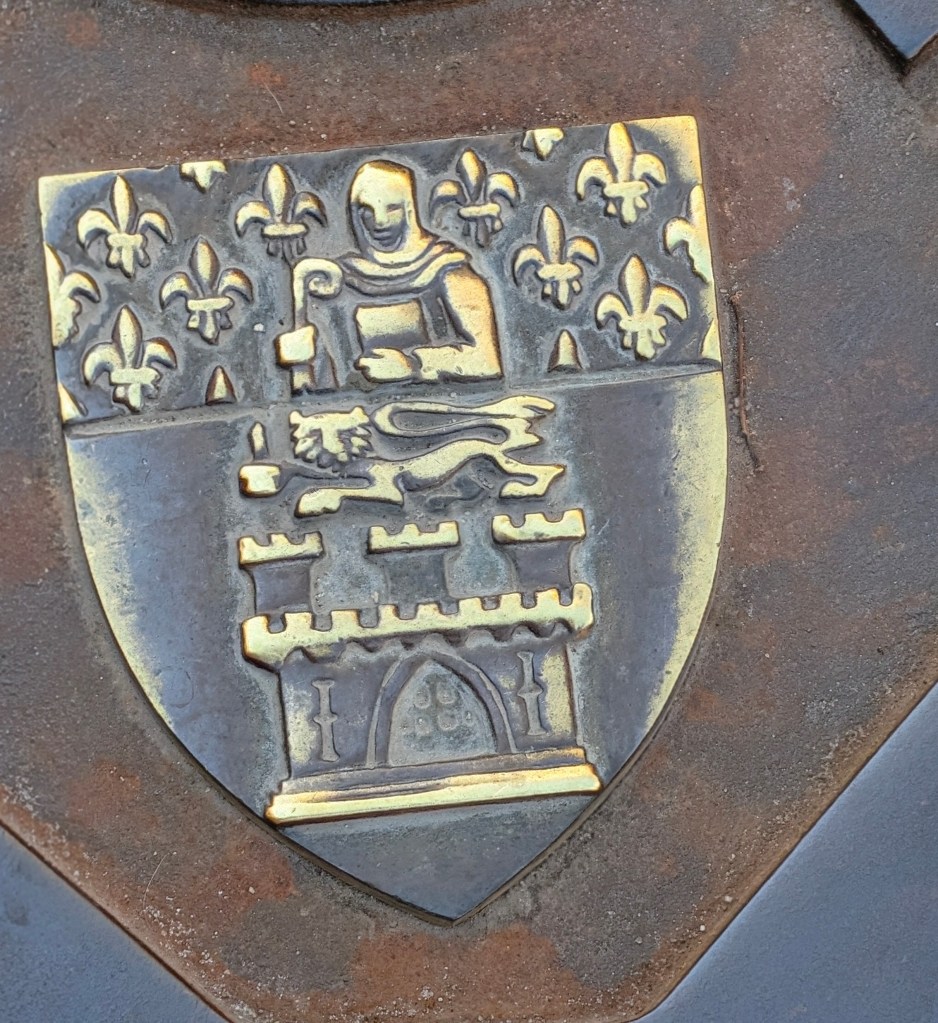
The coat of arms for the town of Saint-Émilion depicts a crowned figure holding a crozier, a lion, and a castle tower, surrounded by fleurs-de-lis.
The Porte de la Cadène is a 13th-century stone archway that once served as a, defensive gate separating the town’s religious upper district from the secular lower town.
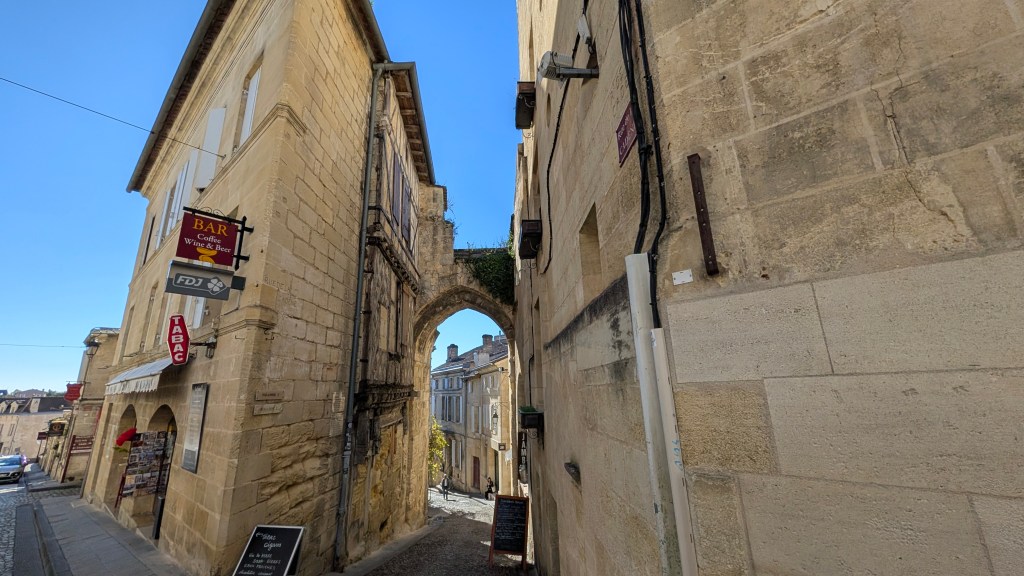
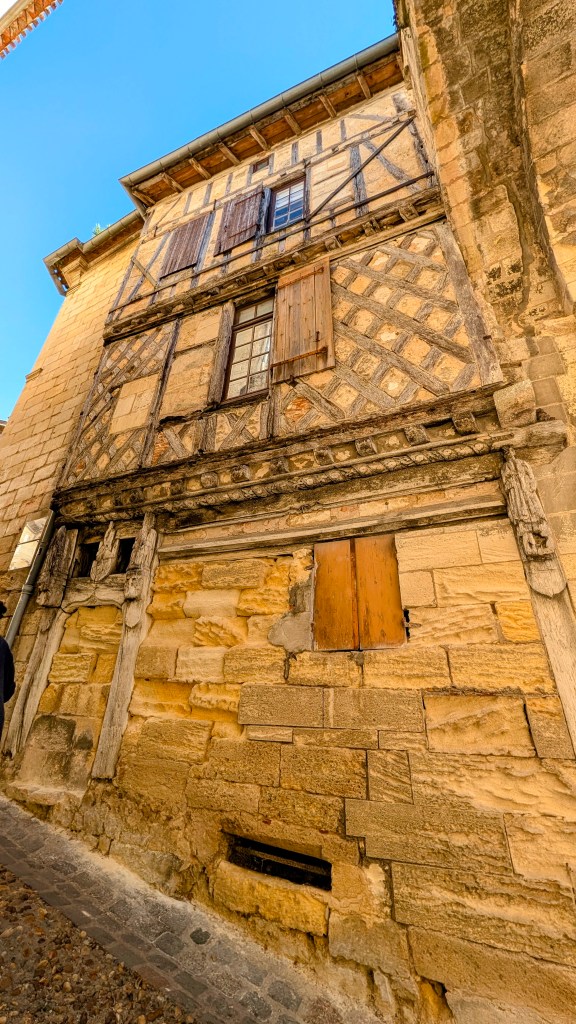
The Maison de la Cadène, a historic half-timbered house is notable as the only remaining timber-framed house within the village.
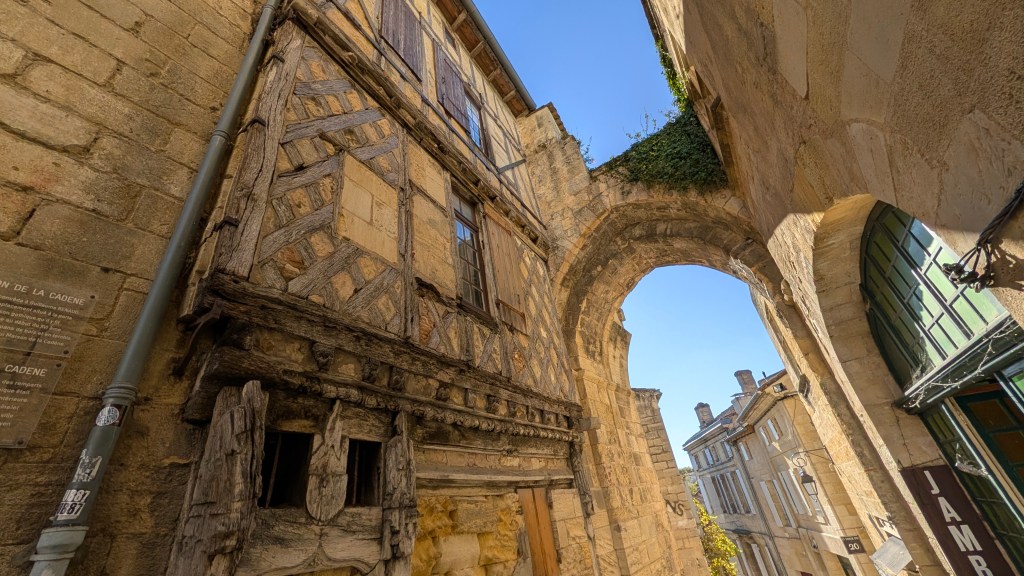
While the upper timber facade dates to the 16th century, the stone lower section is much older. Maison de la Cadène features a 16th-century corkscrew staircase, a stone tower, and intricate, weathered wooden carvings.
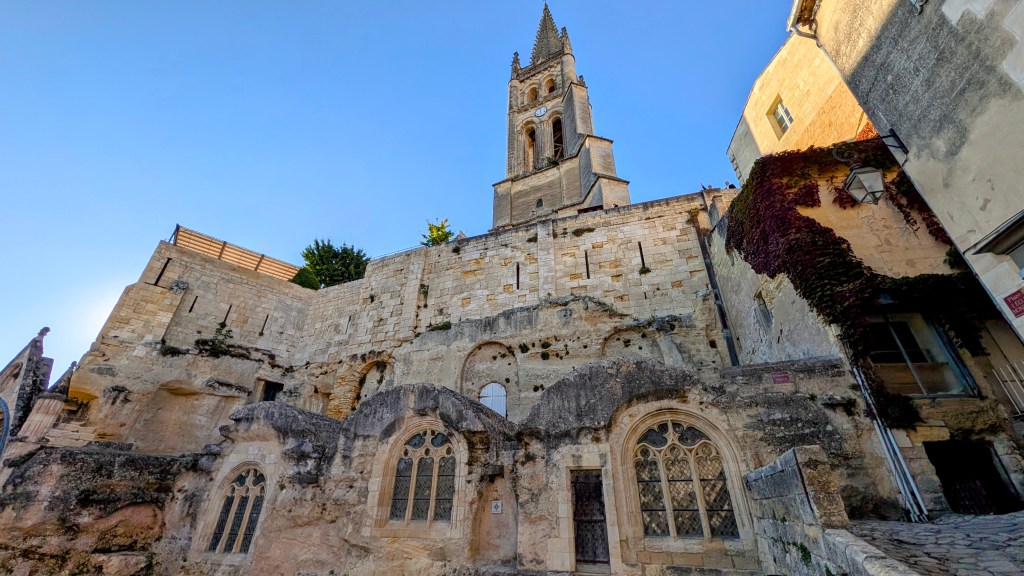
The Monolithic Church of Saint-Émilion is carved entirely out of a single limestone cliff; it is the largest underground church in Europe. It was dug between the 11th and 12th centuries by Benedictine monks, it was designed to accommodate pilgrims and to house the body of Saint Émilion.
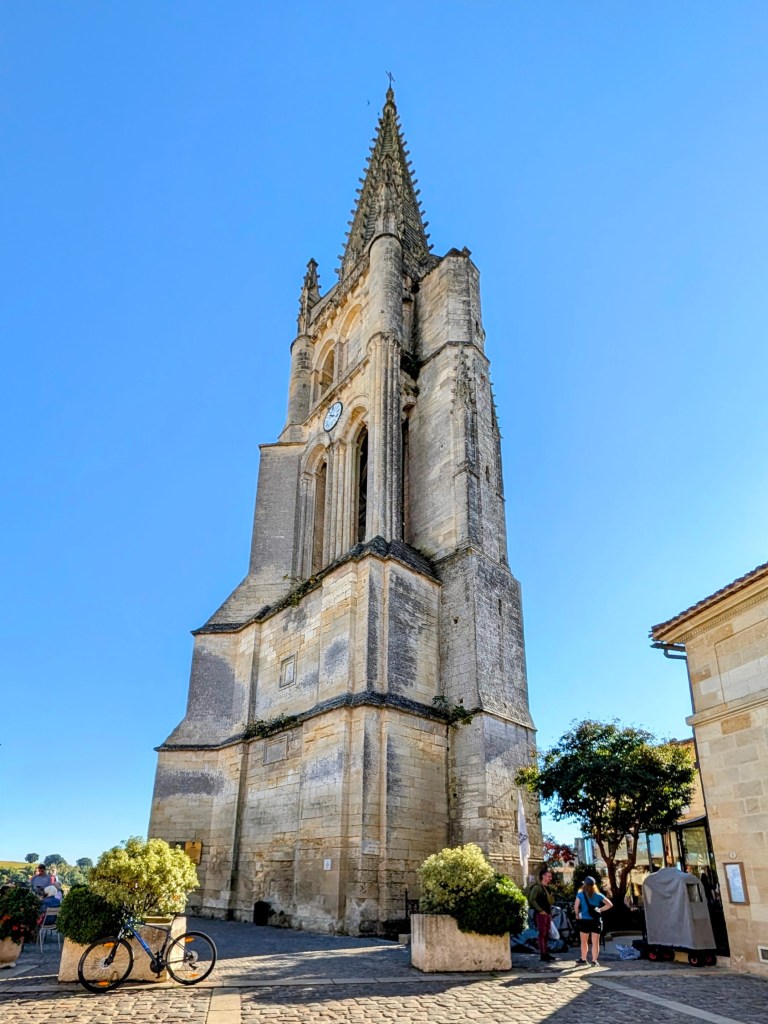
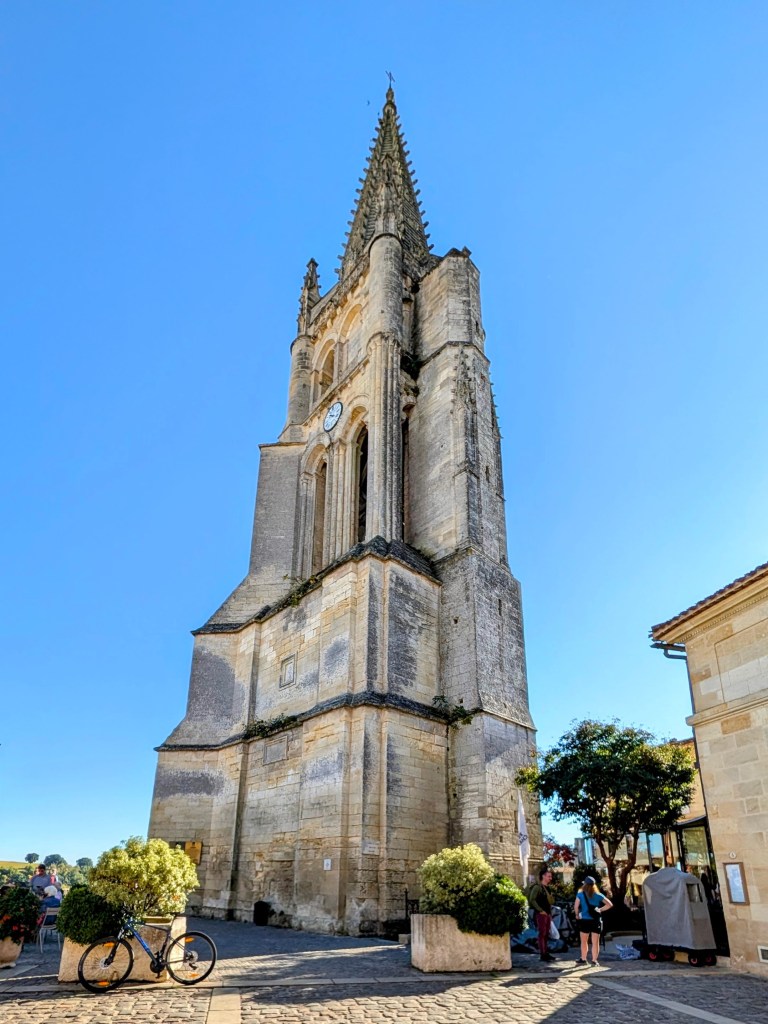
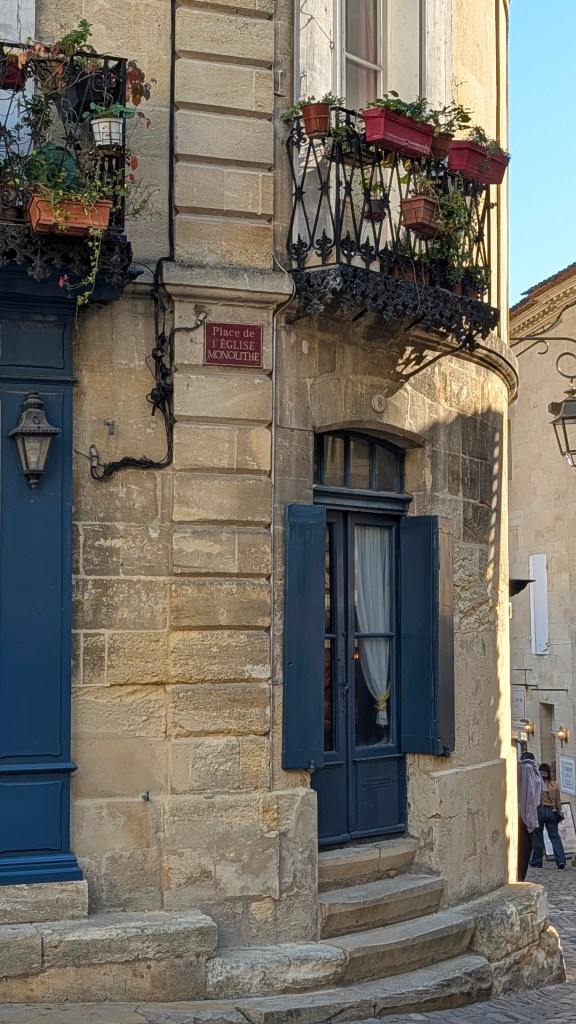
The 174 feet high limestone tower was built around 1230. It presides over a cute square which, before the revolution, was the market square. Now it is full of shops and cafés.
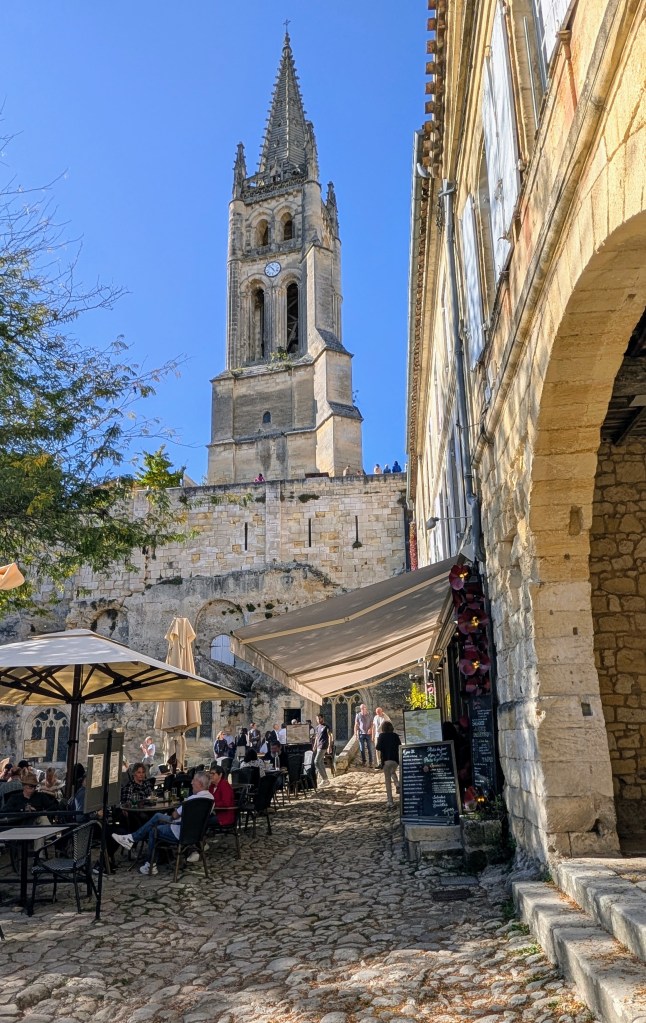
The Monolithic Church of Saint-Émilion was a major stop for pilgrims traveling along the Santiago de Compostela route. The chapel was erected in the second half of the 13th century in Romanesque style but later additions and renovations were Gothic. In 1998 the chapel began developing cracks; the building underwent some major repairs and internal supports were placed.
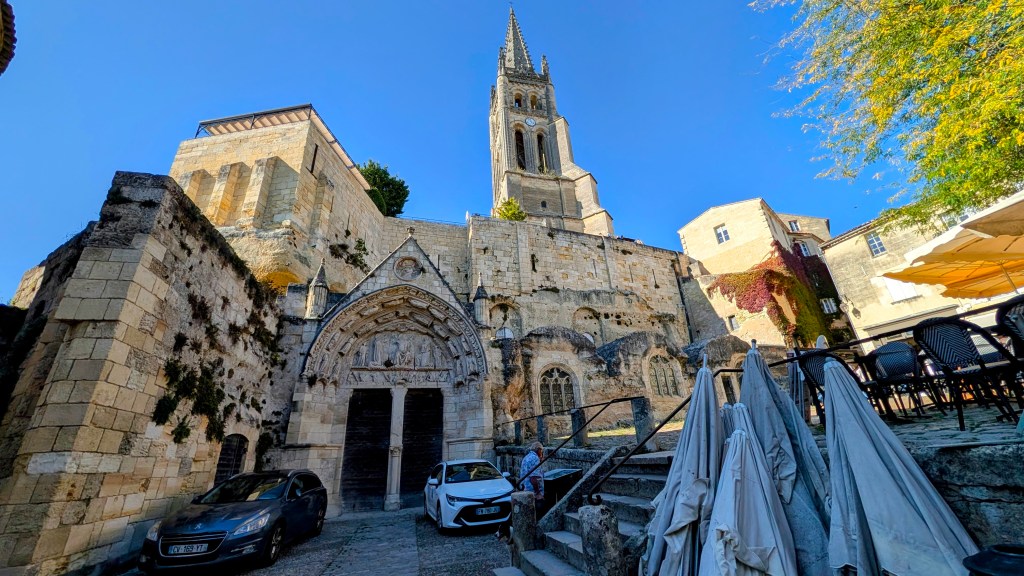
Despite its age, it is still a consecrated site used for religious ceremonies, concerts, and wine-related inductions.
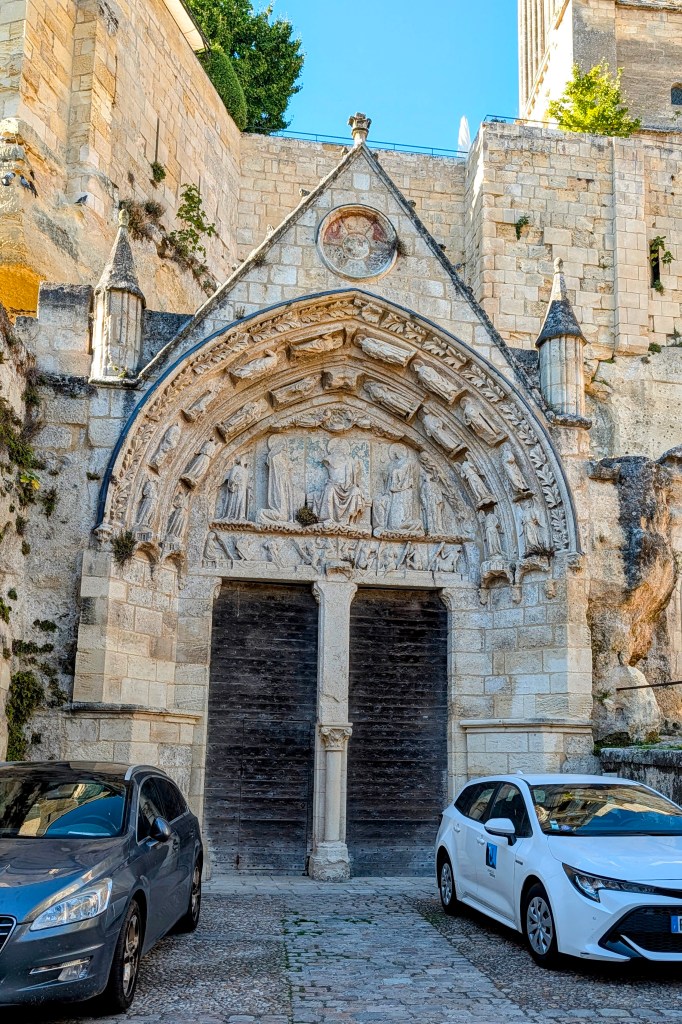
We went underneath to visit where St. Émilion had lived as a hermit the last 17 years of his life: 750-767. Saint-Émilion was a Benedictine monk from Brittany. Despite his desire for solitude, his numerous miracles created quite a following. Miracle #1: While serving as a steward in Brittany, he reportedly stole bread to feed the poor. When confronted by his lord, he claimed the bread in his coat was wood, and it miraculously turned into wood to protect him. His second miracle was his removing bread from an oven with his bare hands. Third, he is credited with restoring the sight of a blind woman on January 6, 767 AD. Located in his Grotte de l’Ermitage (underground hermitage), his stone seat is believed to help women conceive within a year of praying there. We visited but were not allowed to photograph any of it. In the 17th century, there was a revival of popularity for St. Émilion. In the end of the 18th century most of the monuments and artifacts in the area were confiscated for private possession.
The stained glass was added at the end of the 19th century in medieval style with bold colors.
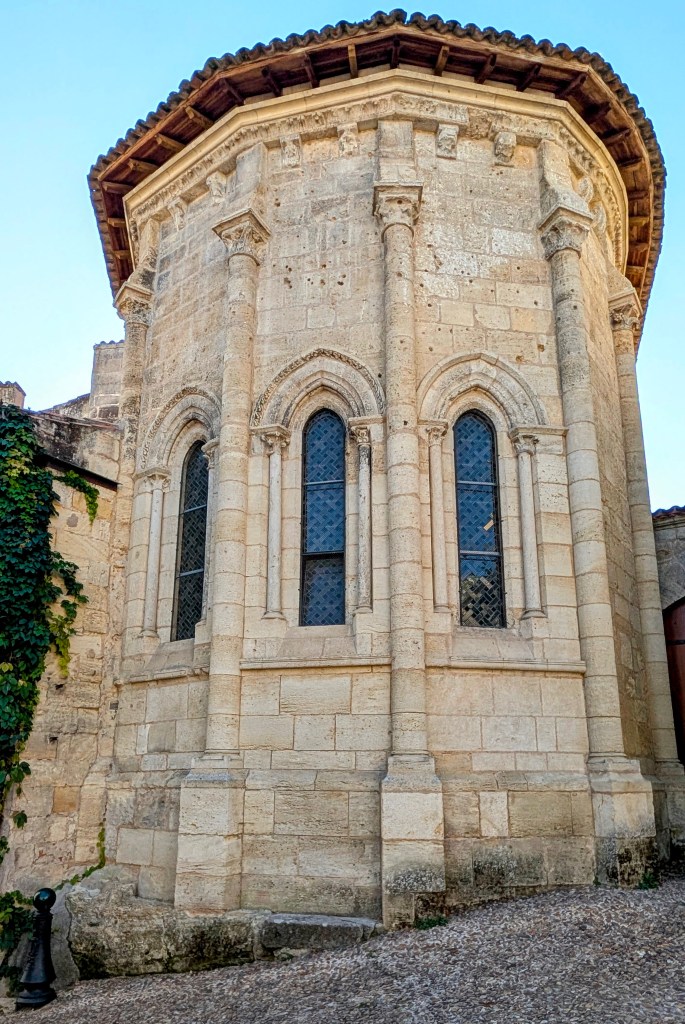
Despite the massive size: the church measures 125 feet long and 40 feet high, requiring the excavation of roughly 530,000 cubic feet of limestone, it took less than 50 years to carve out the underground church. The catacombs were for priests, monks, the very rich, and babies who were still “pure.” All of this predated the revolution by 1000 years. During the revolution, frescoes were scratched off for saltpeter for gunpowder. Pictures were not allowed inside.
Although Saint-Émilion was a monk, the monks who followed him and established the community initiated the commercial wine production that the region is famous for today.
Our drive back from Saint-Émilion took us through Pomerol, the smallest major Bordeaux appellation (approx. 200 acres) located on the Right Bank, famous for producing some of the world’s most luxurious, Merlot-driven red wines. Unlike other regions, it has no official classification system, features no grand châteaux, and relies heavily on unique blue clay terroir to produce soft, velvety, and intensely aromatic wines. One hectare, or about 2.5 acres, sells for $85 million.
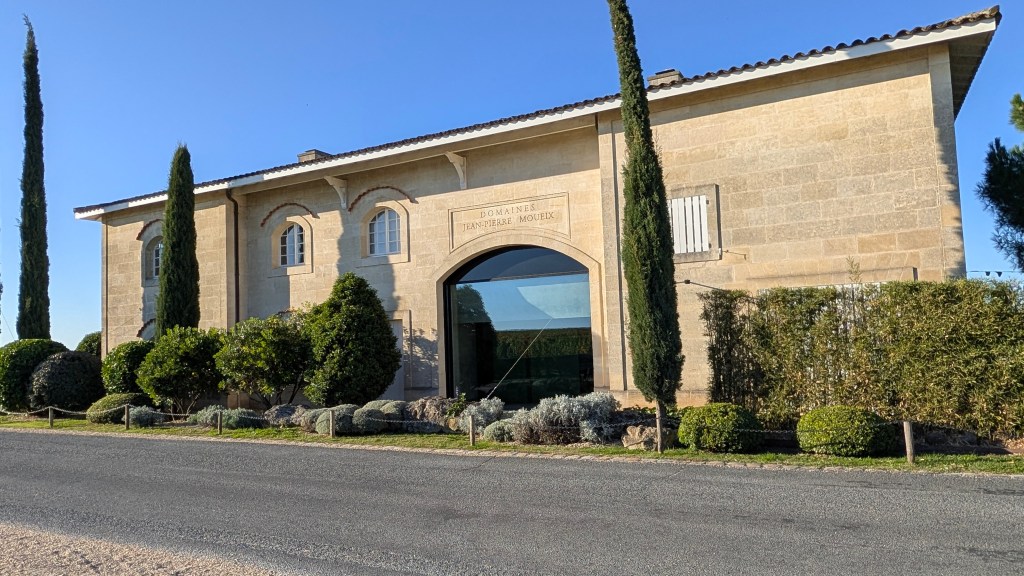
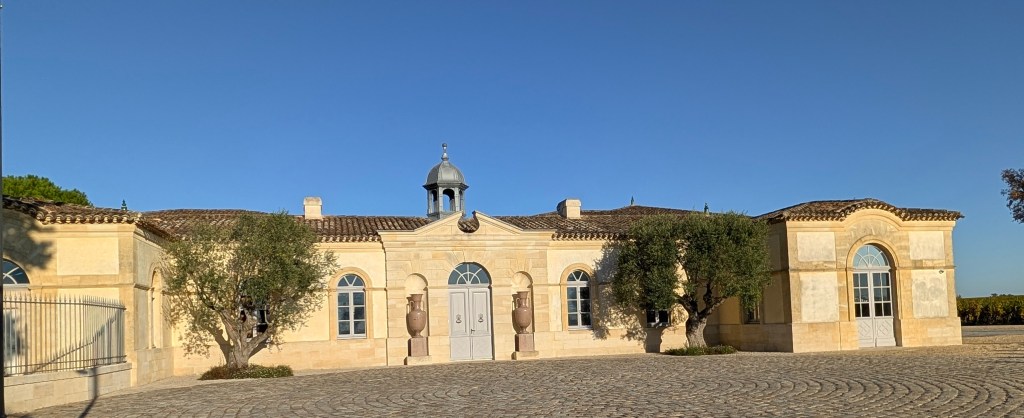
Château Pétrus in the Pomerol appellation is one of the most famous and expensive wine estates in the world, producing wine primarily from Merlot grapes. The estate, managed by the Moueix family, covers approximately 28.5 acres, and is renowned for its unique terroir, specifically a small plateau of blue clay. Château Pétrus produces only 30,000 bottles of wine a year.
The following day we took a break from wineries and travelled to the coast. We drove through Landes forest. Previously a vast, wet, and sparsely populated marshland, the forest was systematically planted with maritime pines starting in the 18th century, with major efforts forced by Napoleon III in 1857 to stabilize the soil. Covering nearly 3 million acres, it is the largest artificial forest in Western Europe. Historically, the forest was tapped for resin (a process called gemmage) to produce turpentine and seal ships. Today, the focus is largely on wood production and paper making.
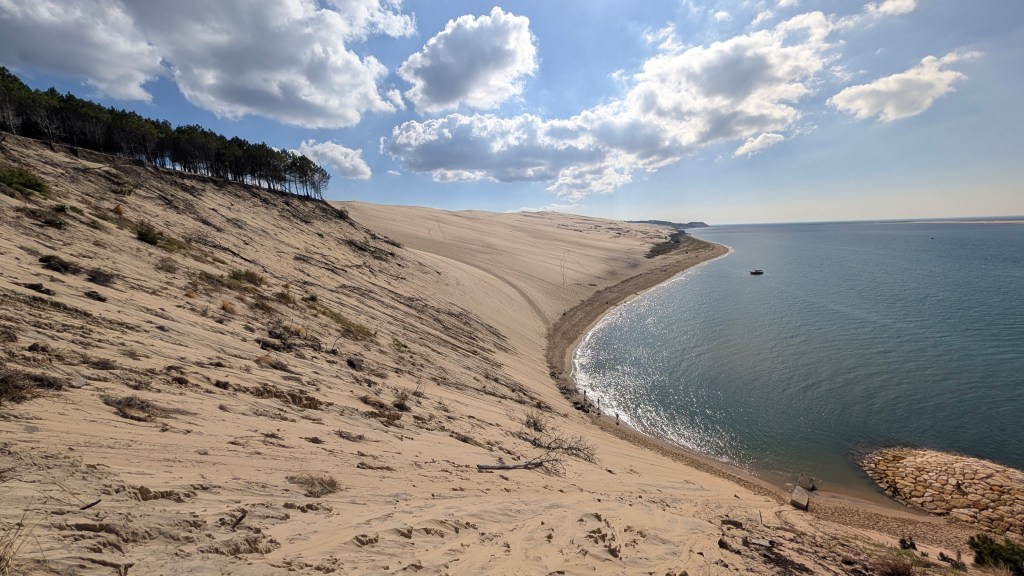
We arrived at the Dune of Pilat (Pilat comes from the Gascon word Pilhar, meaning a “heap” or “mound”), the tallest sand dune in Europe. We did not know what to expect, but Oh my!
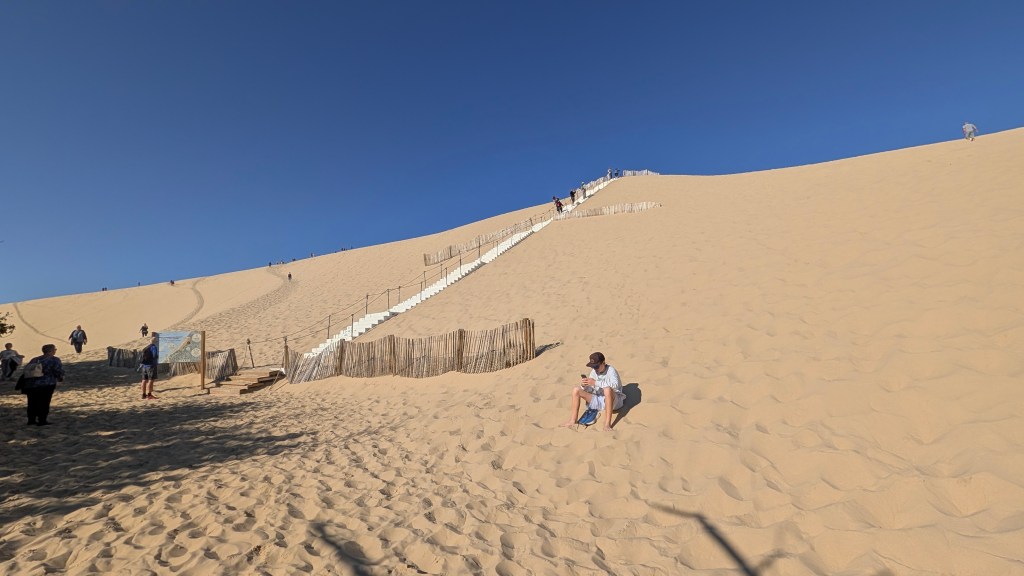
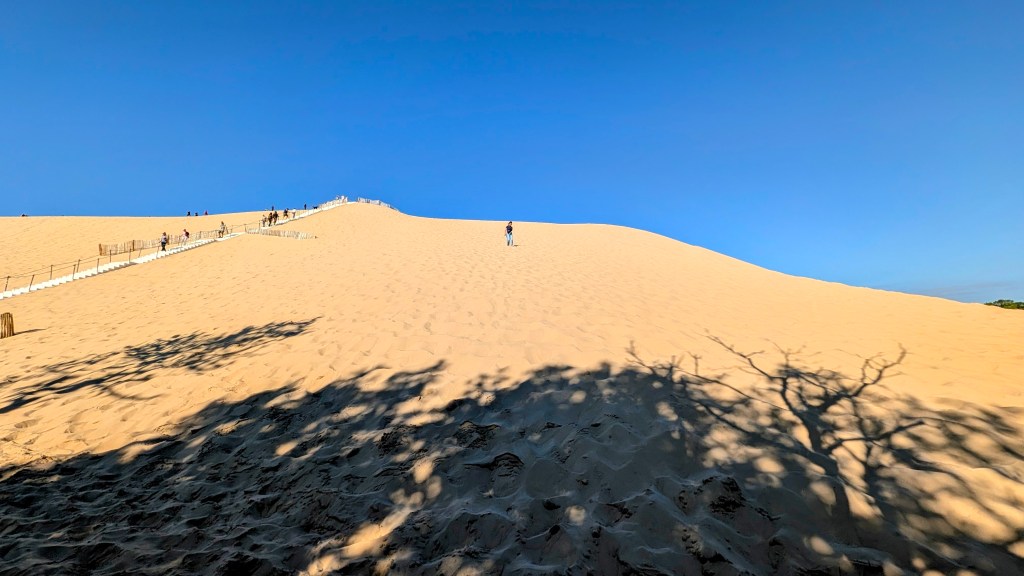
This was like no dune we had ever seen. It is roughly 340 feet high, 1600 feet wide, and stretches for 1.7 miles along the Atlantic coast near Arcachon Bay. Around 1-2 million tourists visit the site annually, often climbing the steep, sandy slope or taking stairs installed from Easter to November. So up we went.
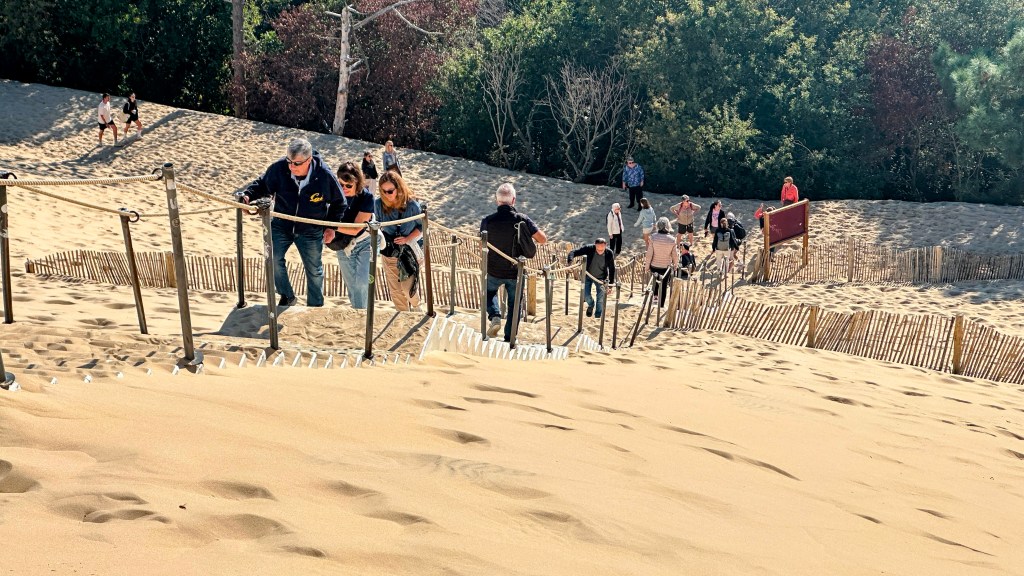
The dune is in constant motion due to wind and tides, shifting 1-5 meters inland every year and burying the Landes forest in its path. Often called a “sand monster,” it has buried roads, houses, and even portions of the World War II Atlantic Wall.
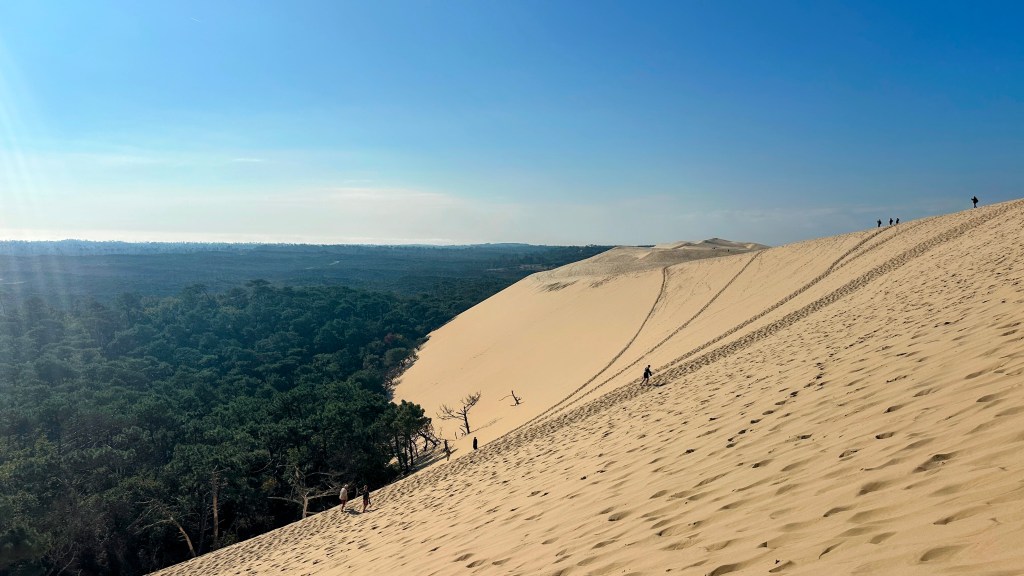
The forest acts as a buffer, moderating the cold Atlantic influence on the nearby, famous vineyards of Bordeaux.
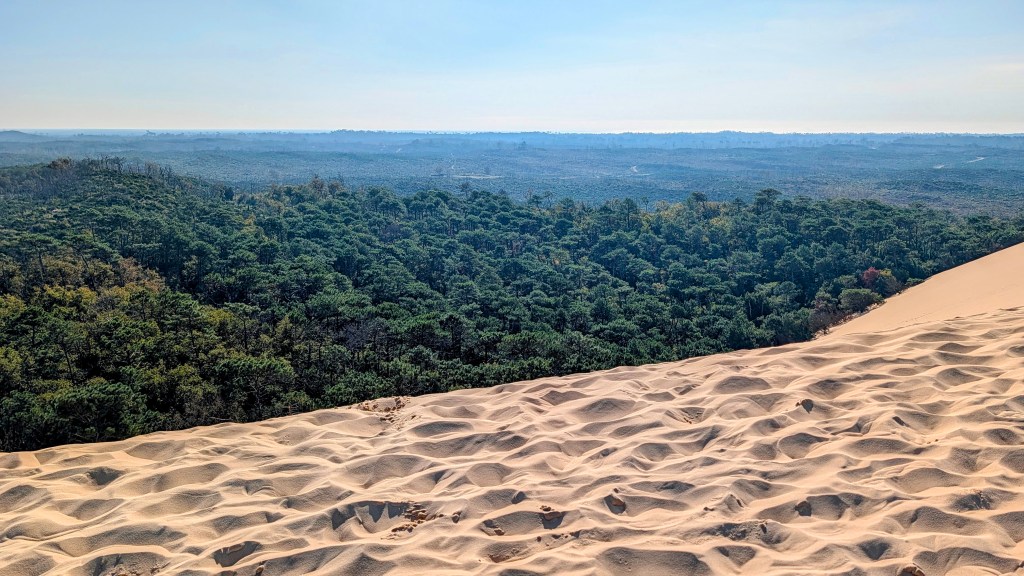
From the top we had a great 360 ° view which included the forest, Arcachon Bay, and the ocean all at the same time.
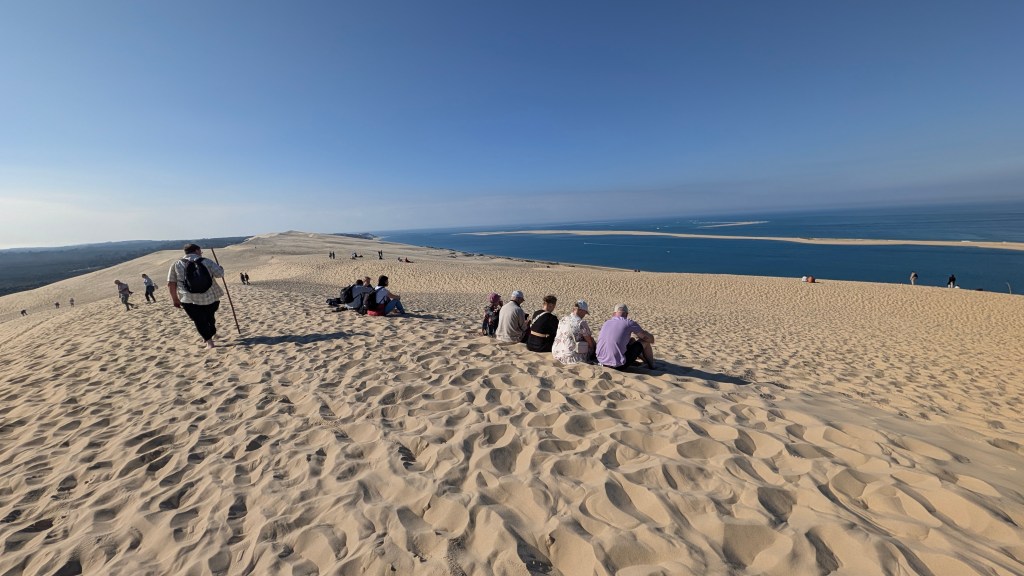
While it has taken thousands of years to form, it only became a truly massive structure in the last few centuries. In January 2009, a storm hit the dune with winds reaching 109 mph.
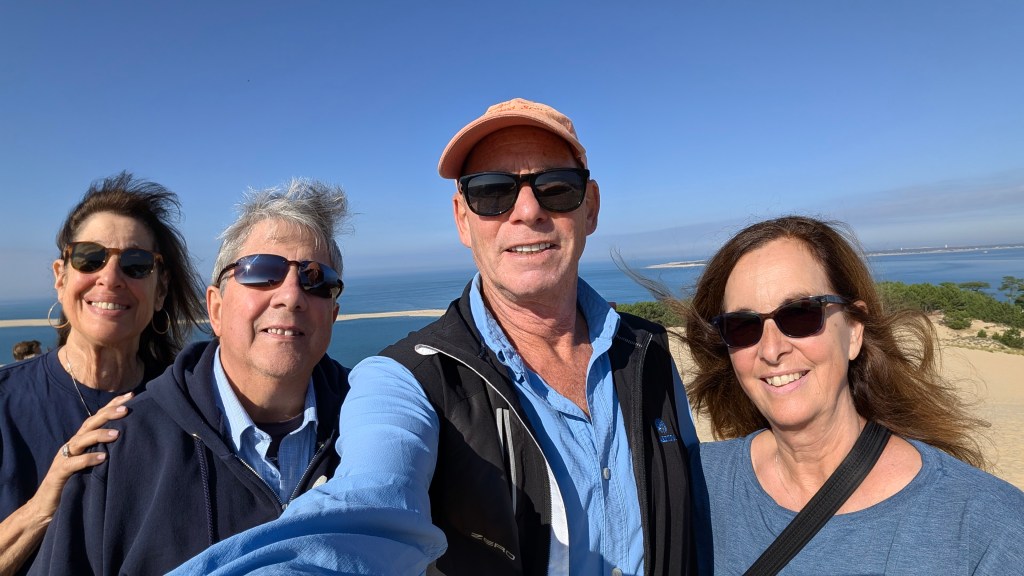
Arcachon Bay produces around 7,000 tons of oysters annually, with 430 acres dedicated to farming them.
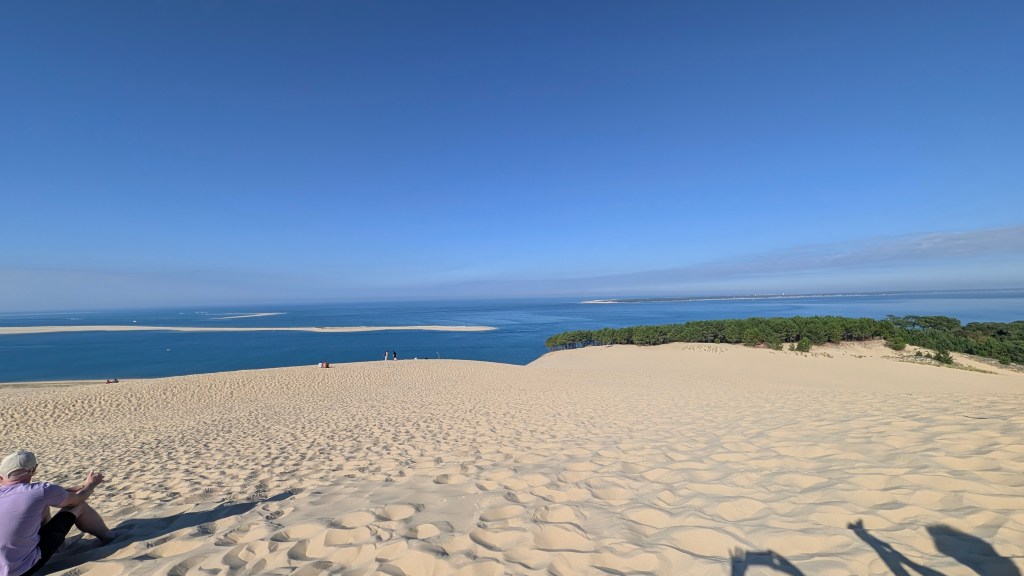
Coming down was only slightly easier than going up.
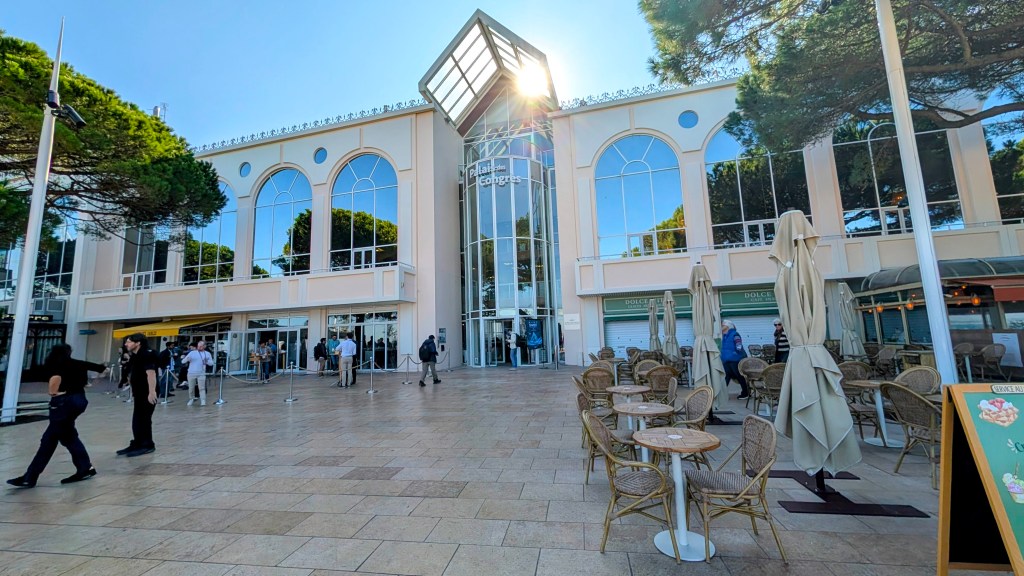
We visited the nearby seaside resort town of Arcachon founded in 1857. The town is unique for its four seasons-based districts, Summer, Winter, Spring, and Autumn, and was once a health retreat for lung ailments. Our driver left us out on the beachfront of the 19th-century Ville d’Hiver (Winter Town) in front of the Palais des Congrès, a convention center.
We strolled along the promenade on the beach enjoying the art installations
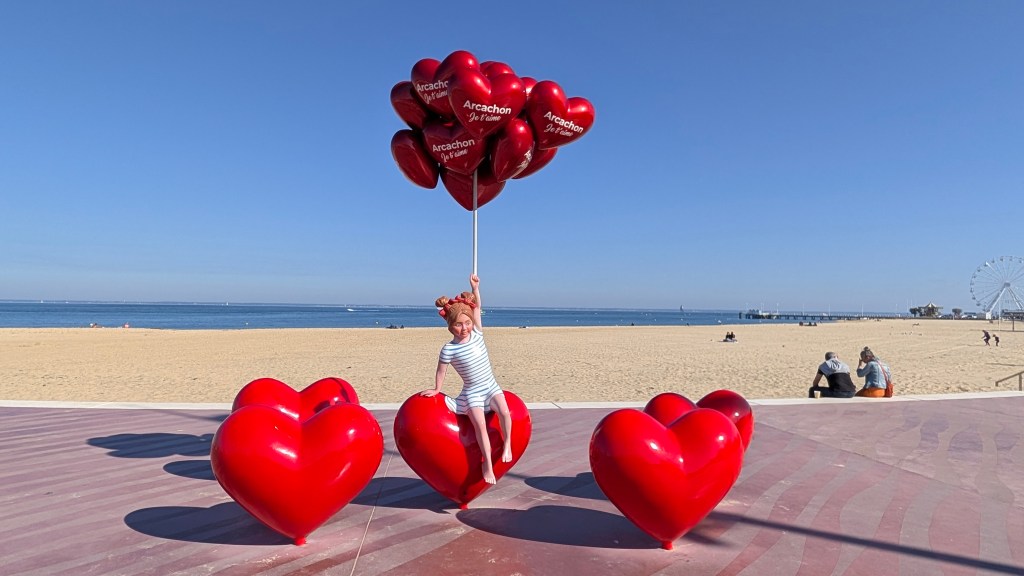
and the bay.
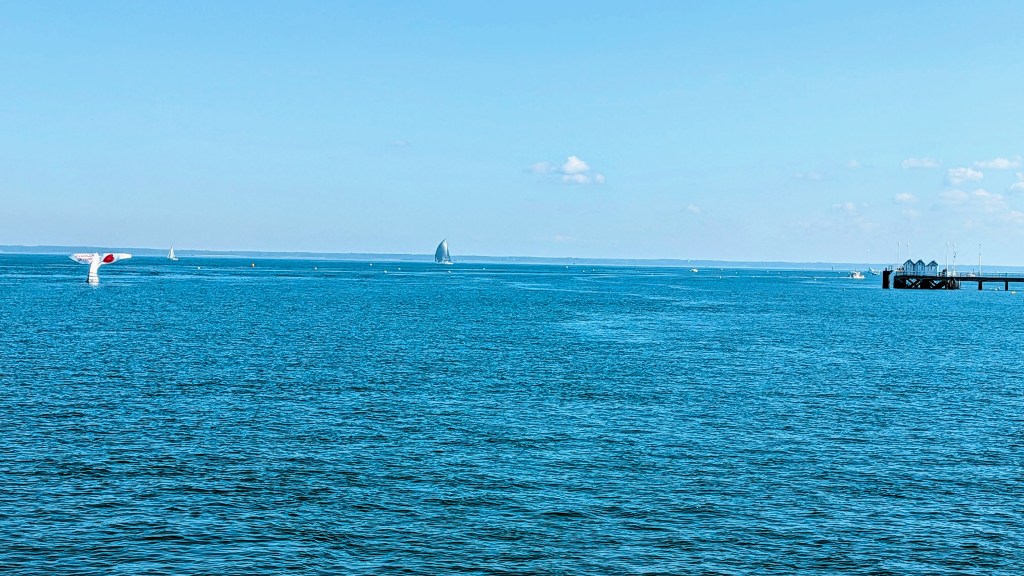
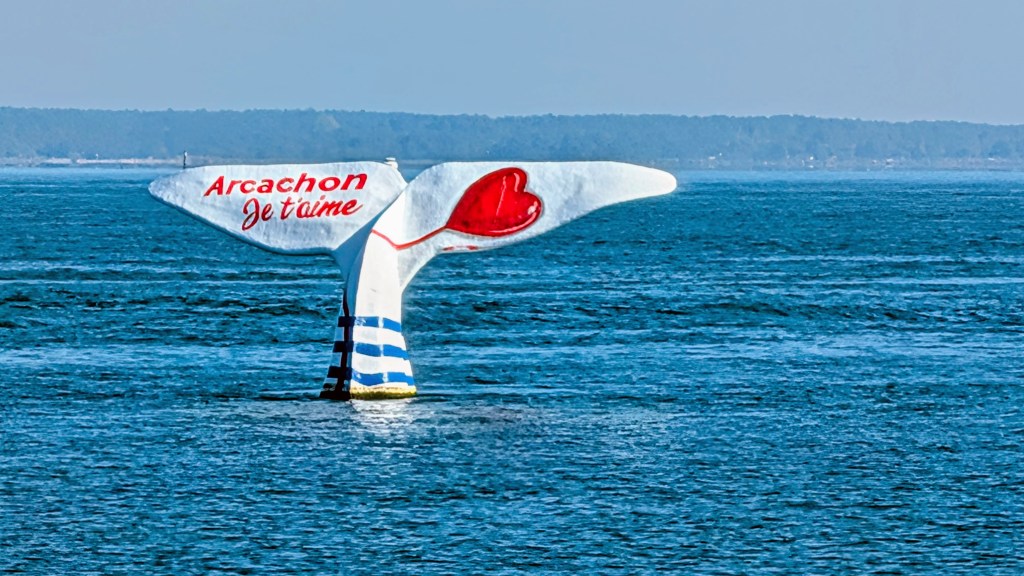
We walked out onto the pier.
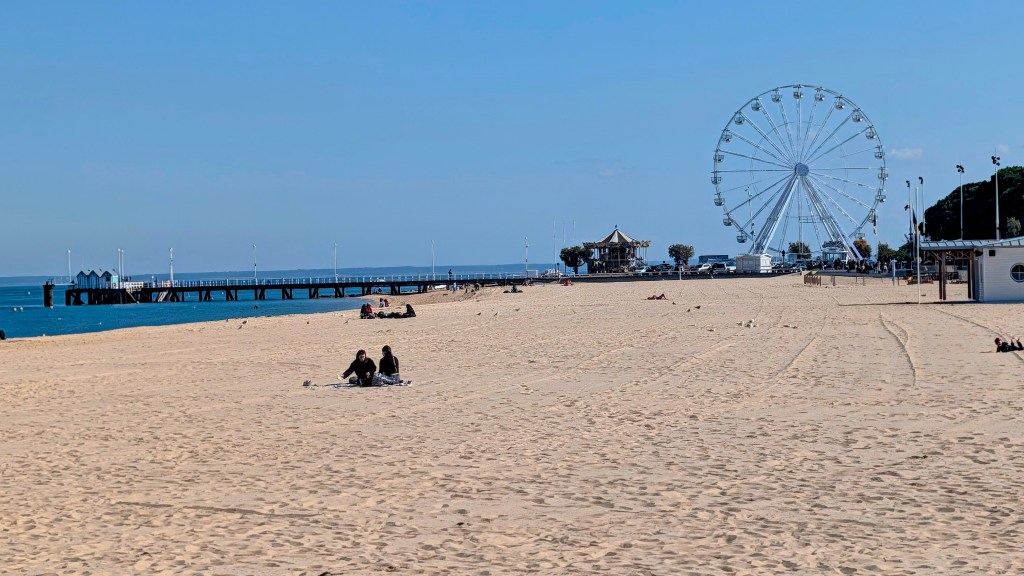
Arcachon has a population of about 15,000 which doubles on the weekend.
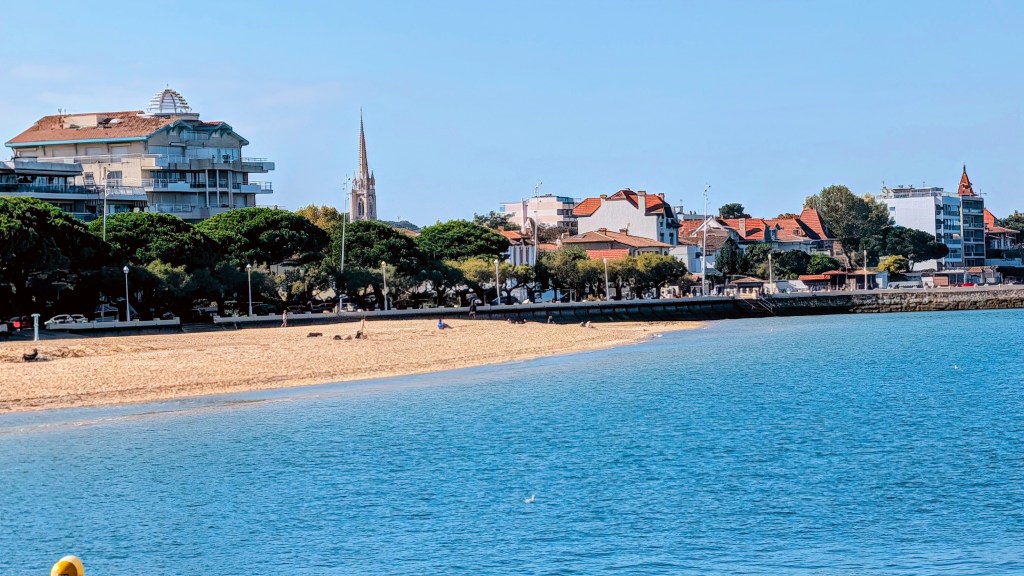
We left the beachfront and wandered around town. La Maison de Gambetta is known for its distinct floral exterior and outdoor dining area.
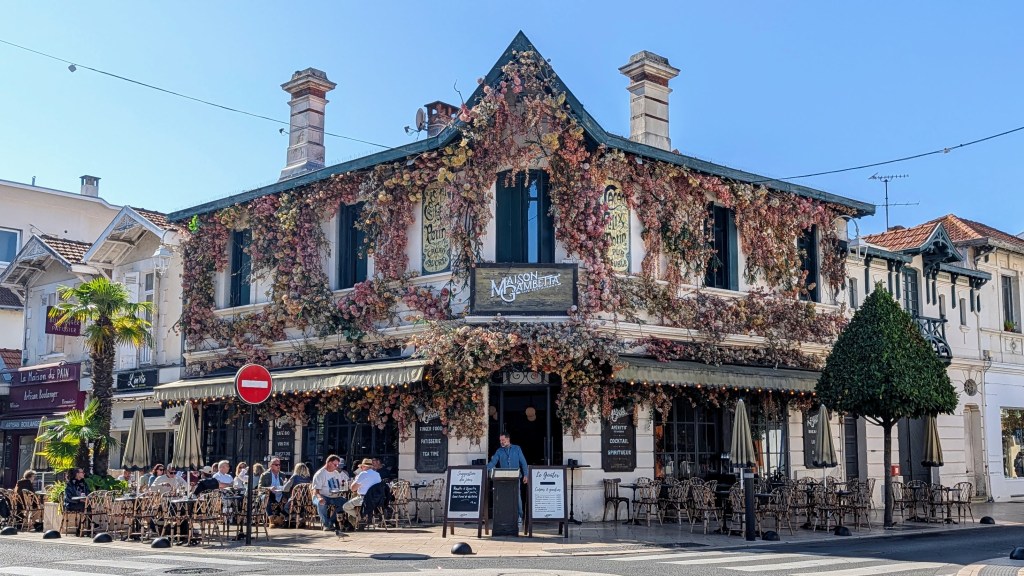
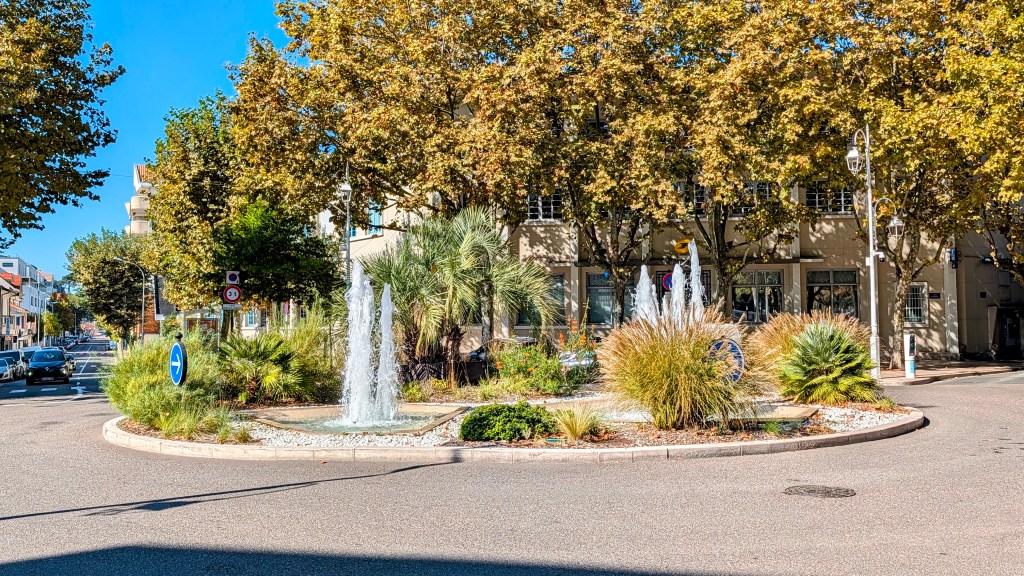
Just about every intersection has fountains and plantings.
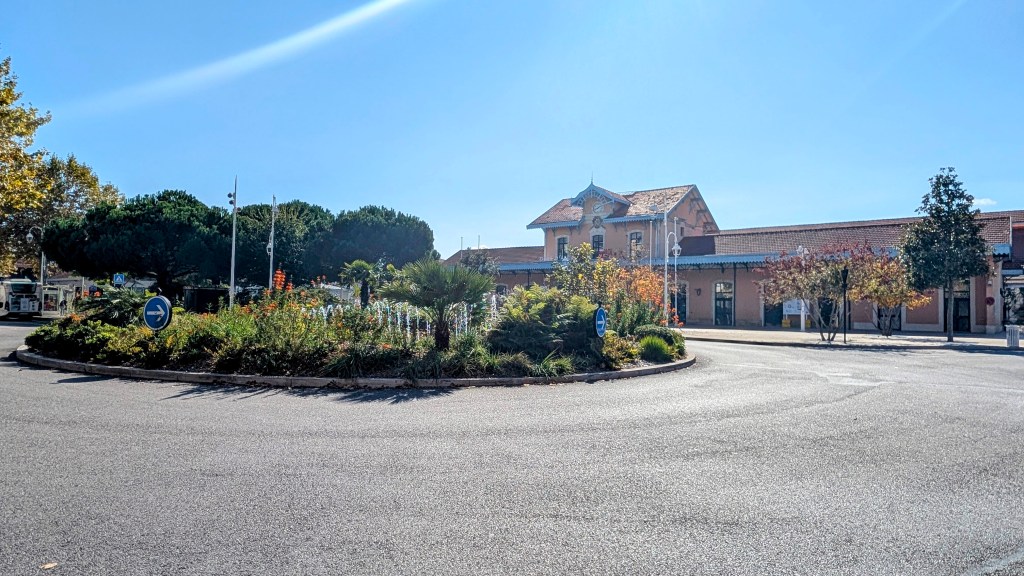
Gare d’Arcachon (The Arcachon railway station), originally opened in 1857, serves as the western terminus of the railway line from Lamothe and provides connections to destinations like Bordeaux and Paris.
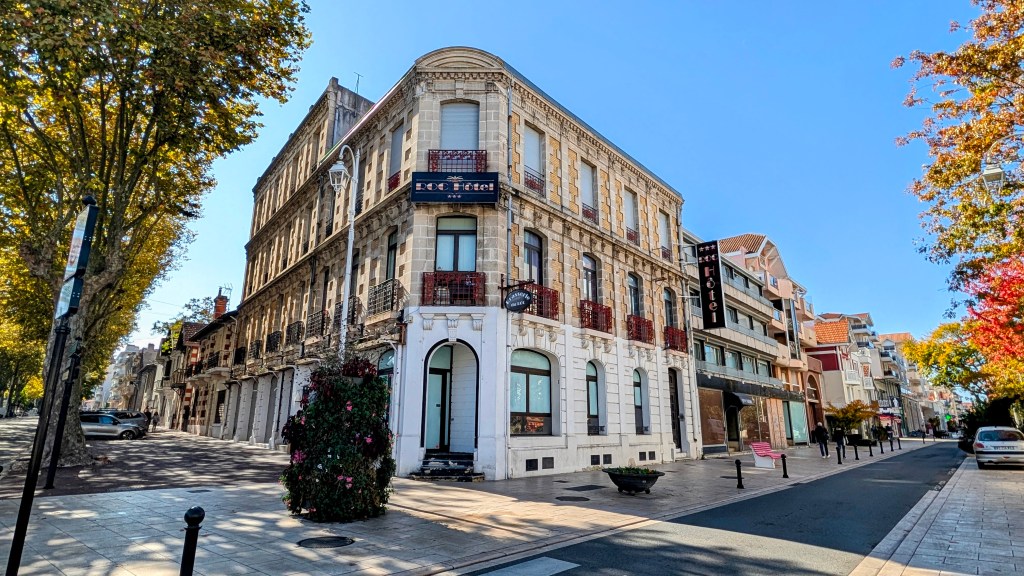
Ville d’Hiver (Winter Town) is a 1270 acres district featuring 300+ eclectic villas designed for wealthy winter residents. Built during the Belle Époque, these extravagant “Arcachonnaise” style homes showcase a mix of styles: Swiss, Moorish, and Gothic, characterized by steep roofs, turrets, and intricate ironwork.
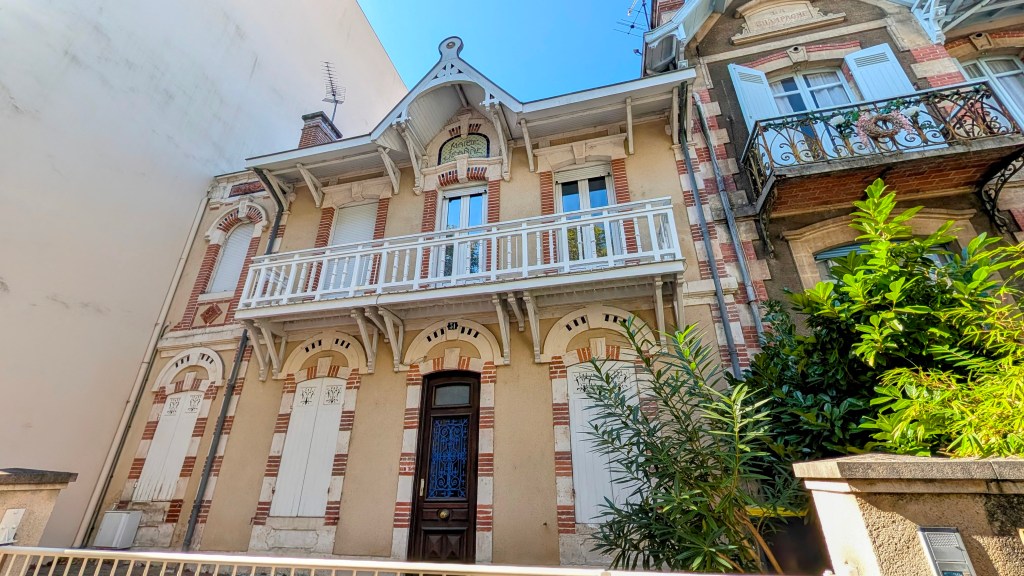
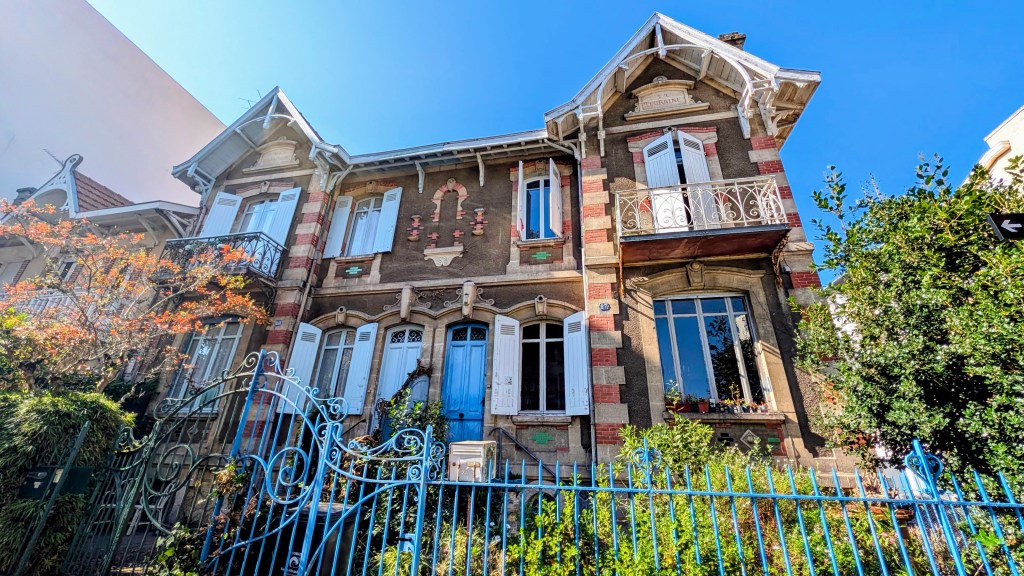
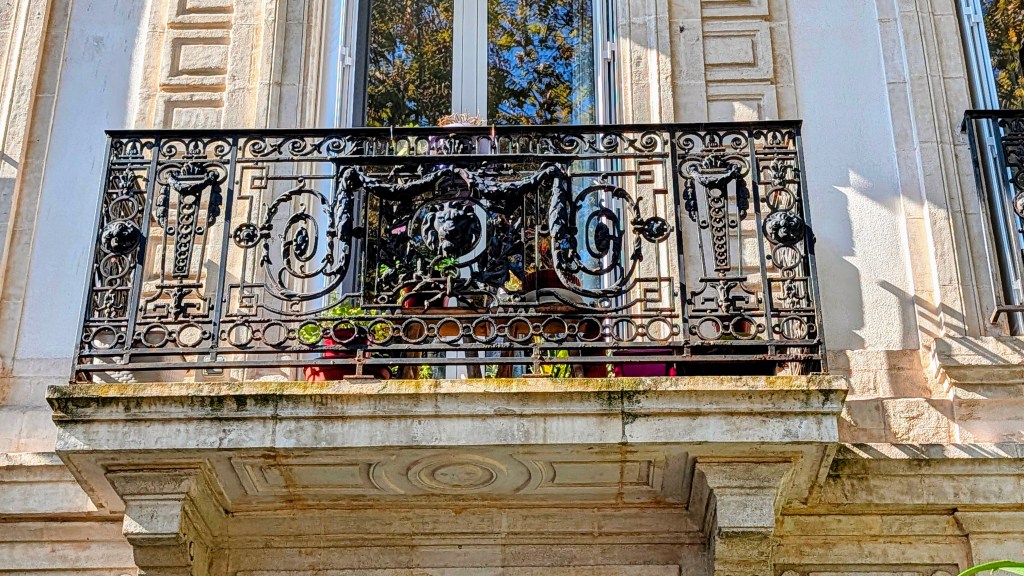
The ironwork is reminiscent of Paris.
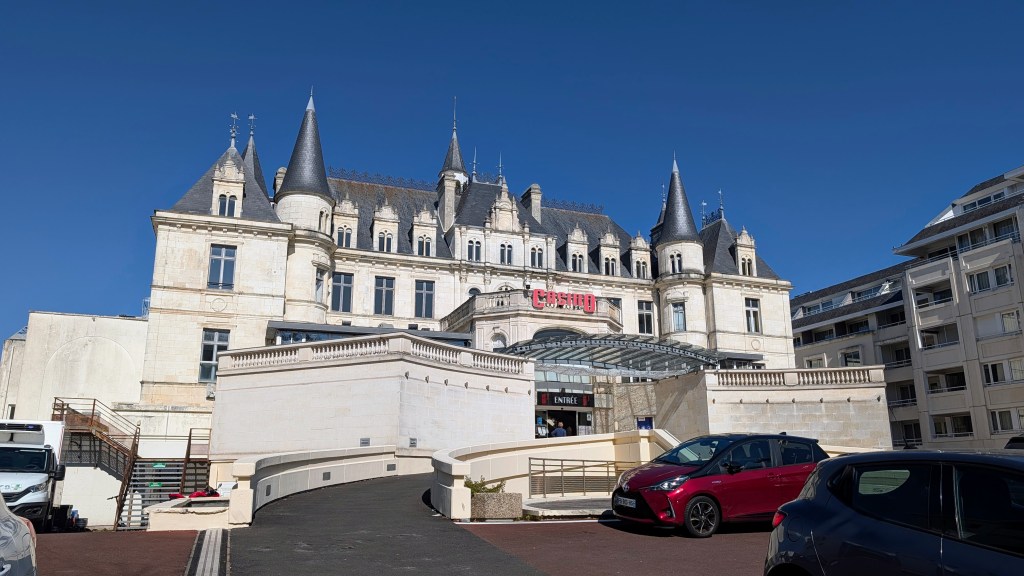
The Casino Partouche d’Arcachon, historically known as the Château Deganne, is a magnificent neo-Renaissance château originally constructed in 1853 and converted into a casino in 1903.
Even the local Roc Hotel is in the “Arcachonnaise” style.
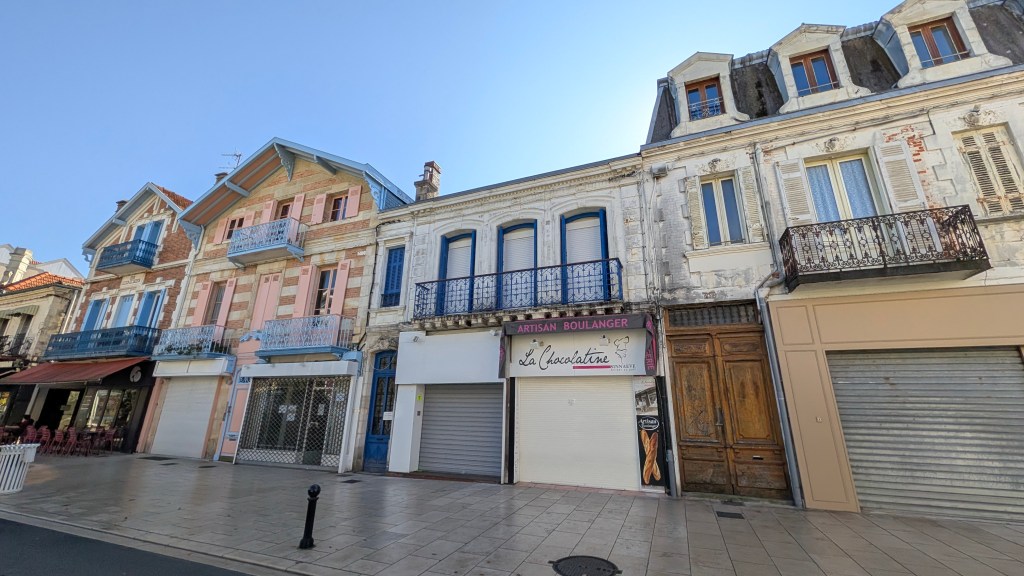
Unfortunately because it was a Sunday, the very cute shops were mostly closed
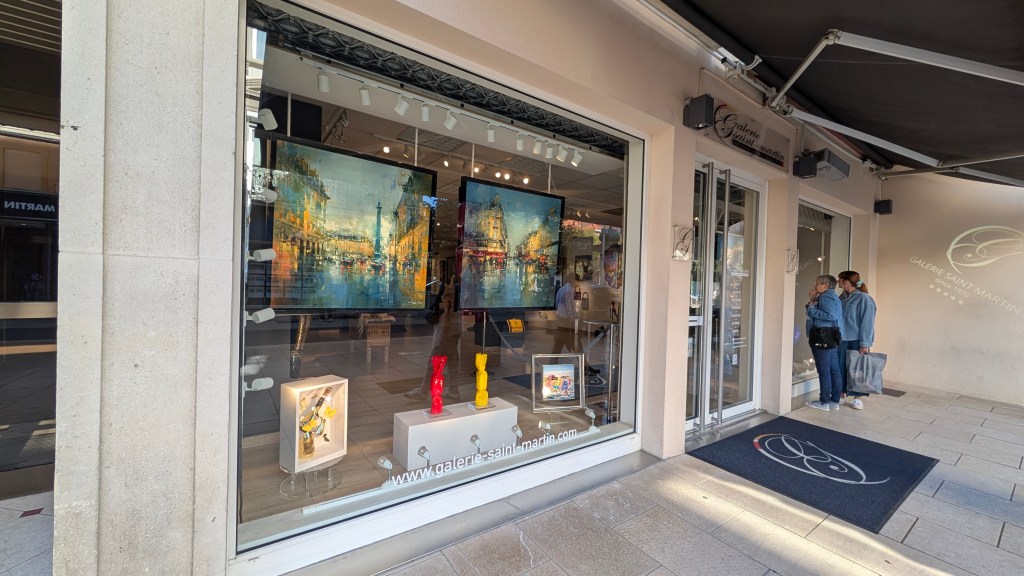
as were the galleries.
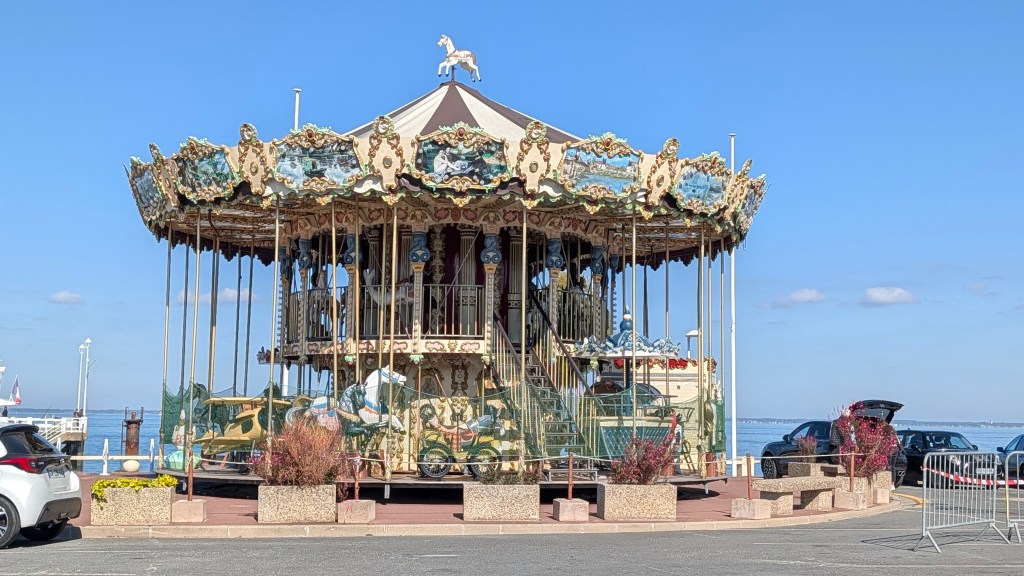
On the boardwalk was the requisite French carousel.
We left the village and stopped at La Coorniche, a luxury 5-star hotel and restaurant located in Pyla-sur-Mer, near Arcachon. The property was renovated by renowned designer Philippe Starck and features a distinctive Basque-style hunting lodge architectural aesthetic from the 1930s. Oysters from the bay are their speciality, but they had run out before we arrived, so sad.
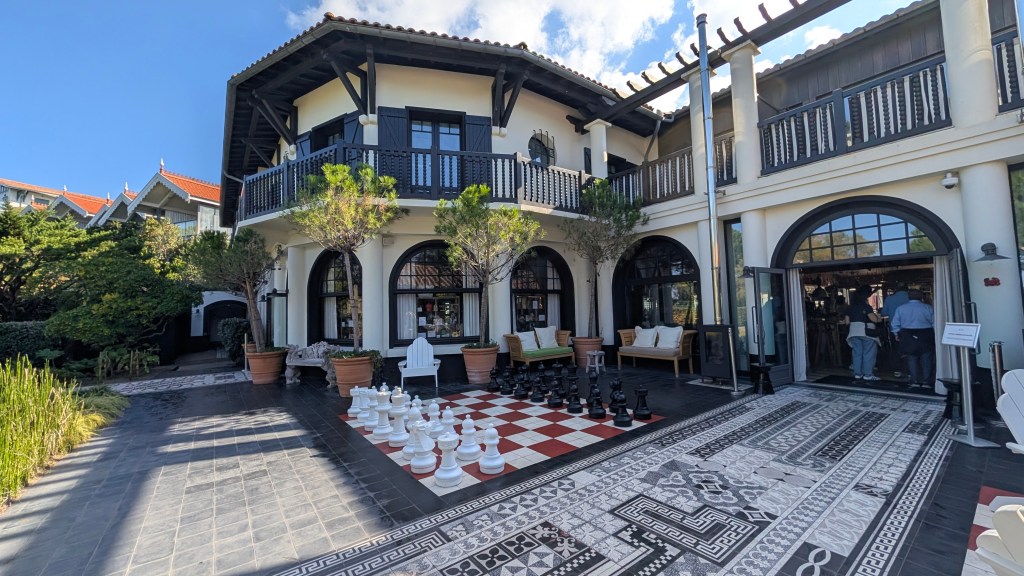
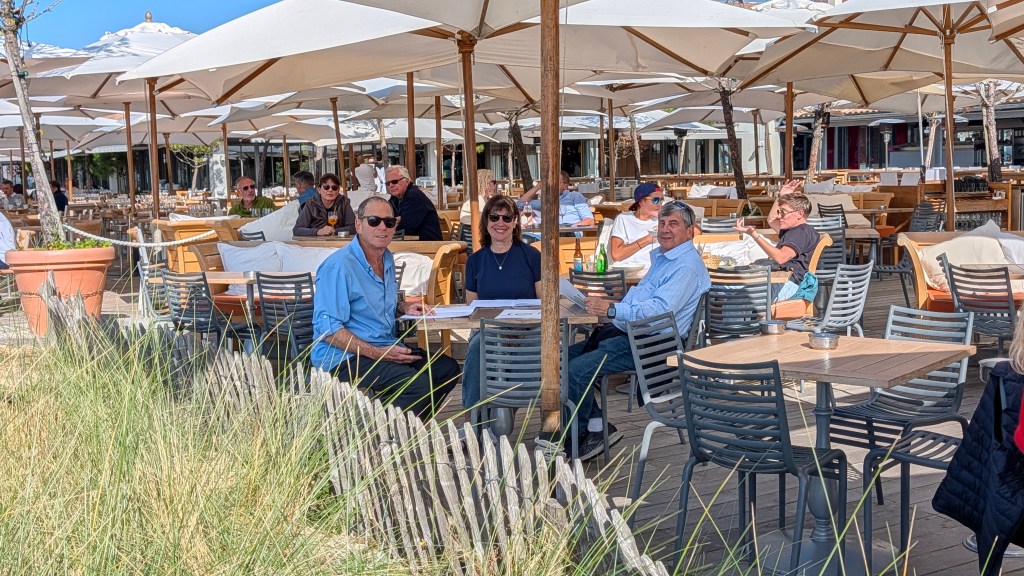
But from the restaurant we did have a view of the bay and the Dune of Pilat.
Dinner was served at another restaurant at Les Sources de Caudalie, La Table du Lavoir (The Washhouse Table).
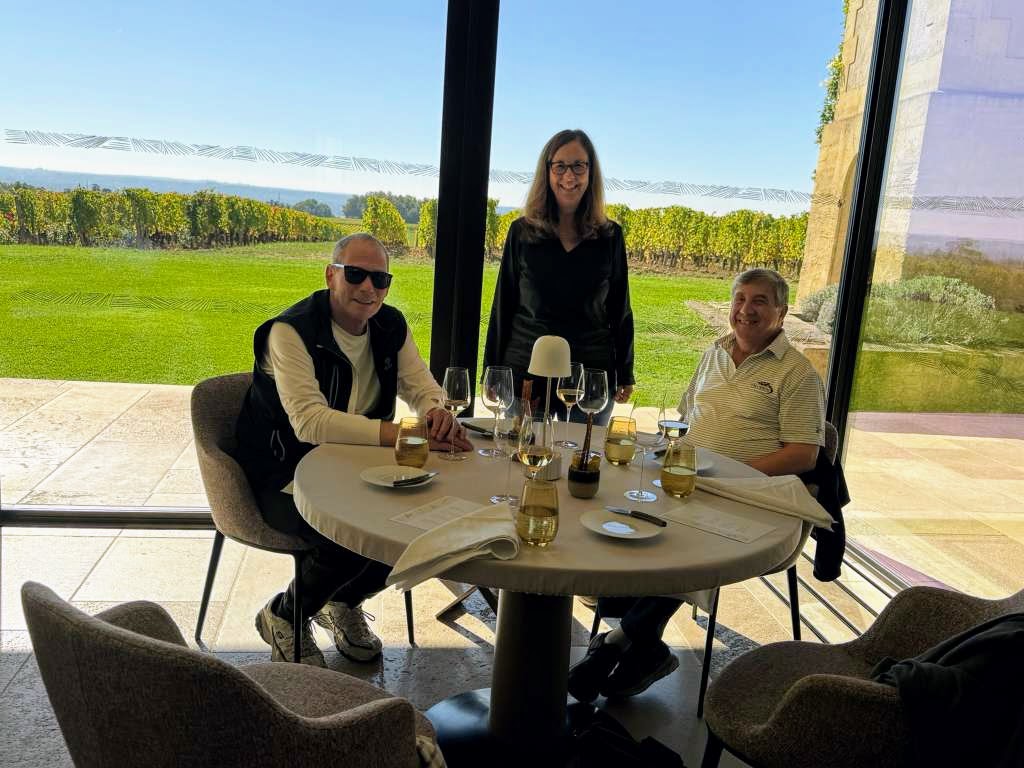
The next day we checked out of Les Sources de Caudalies and traveled back to Haut-Médoc first to the Pauillac appellation to visit Château Pichon Longueville Baron, immediately adjacent to the famous Château Latour. According to the Official Bordeaux Wine Classification of 1855, it is classified as a Deuxième Cru Classé (Second Growth).
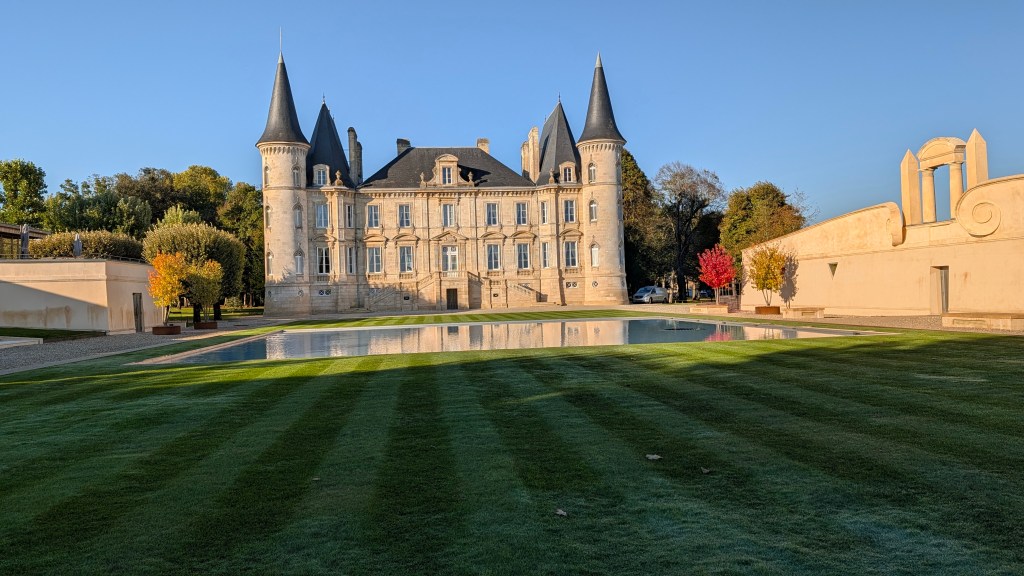
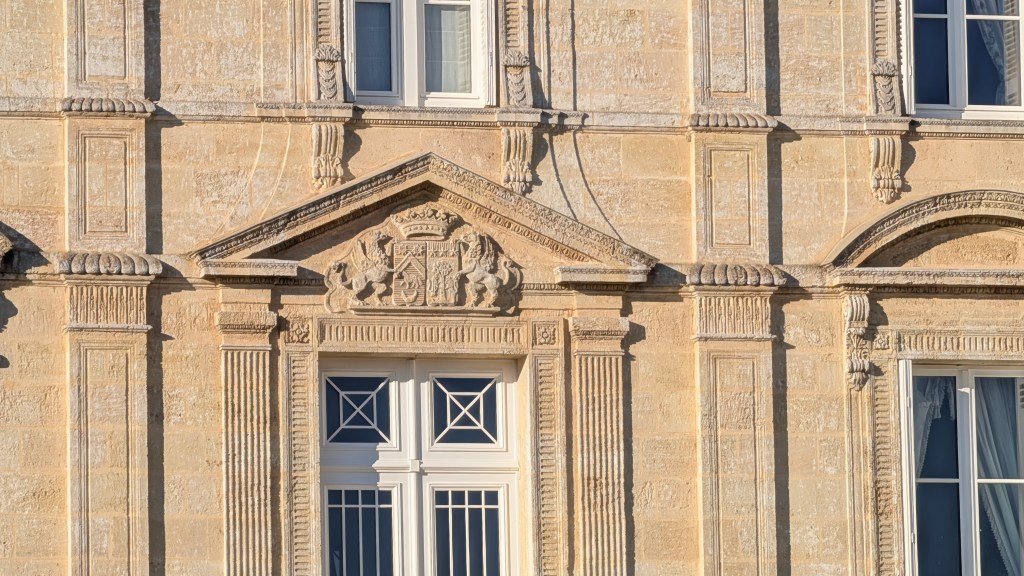
The history of the estate as told on their website: “The estate was founded in the late 17th Century. This period was known as the Grand Siècle, or “great century”, in reference to Louis XIV’s 1661 accession to the French throne. In 1689 Pierre Desmezures de Rauzan, an influential wine merchant and steward of the prestigious Latour and Margaux estates, bought plots of vines close to the Latour estate to create Enclos Rauzan. These vines were part of his daughter Thérèse’s dowry when she married Baron Jacques Pichon de Longueville in 1694, the year in which the Pichon Baron estate was founded. An illustrious estate, with an enduring reputation, was born. It remained in the same family for generations.”
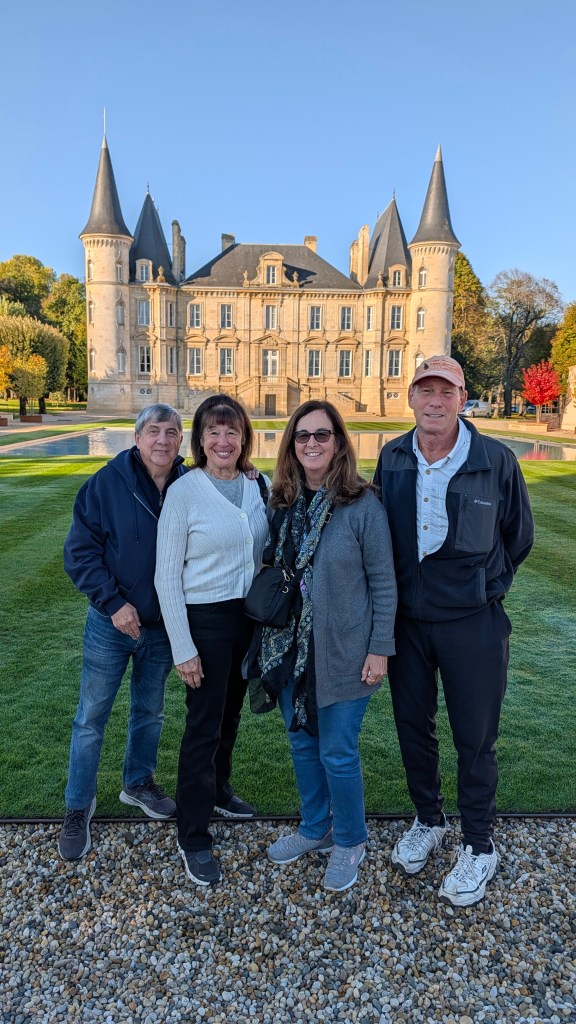
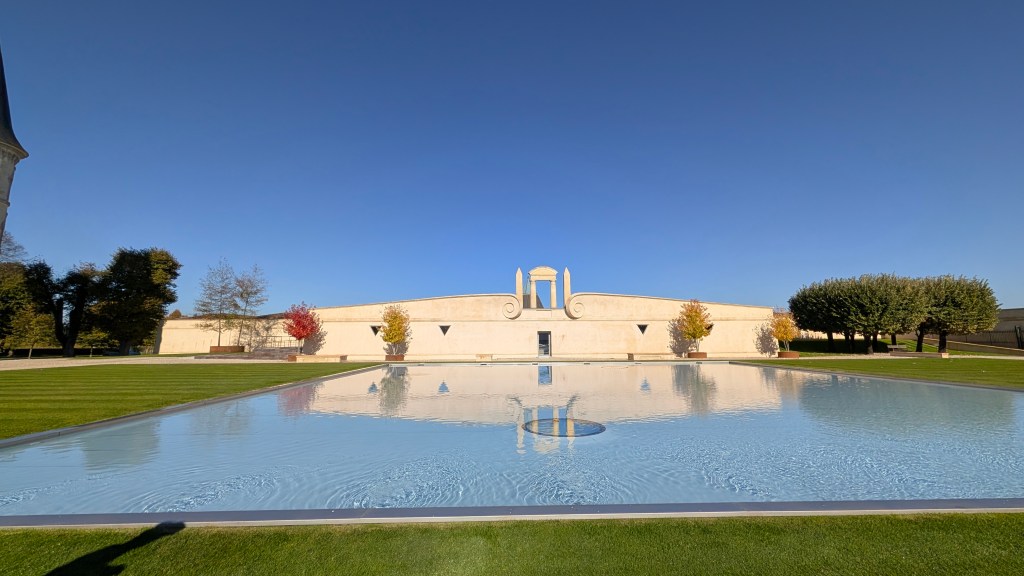
“In 1850 the property was divided in two. Baron Raoul Pichon de Longueville’s section became the Pichon Baron estate. The second section, belonging to his three sisters, became Pichon Comtesse. Baron Raoul was proud of his prestigious property, and in 1851 he commissioned the imposing château (using limestones from St. Emilion) inspired by Renaissance architecture that we know today. This uniquely charming and romantic château, with its two emblematic turrets, has stood proudly at the vineyard’s heart ever since. In 1987 the estate was bought by AXA Millésimes, (a French insurance company) whose aim is to enable great wines from vineyards with a glorious past to achieve their full potential… The comprehensive reconstruction of the fermenting room and cellar, and renovation of the château, began in 1988. Since then, the 19th century château’s image has been reflected in an ornamental pool stretching majestically before it.”
We were met by our guide Marie who explained that the 185 acres are divided into 3 different areas, each for a different wine because of the difference in the terroirs. The terroir closest to the river has a lot of gravel, which is especially good for the premium cabernets. The plots that have a higher sand and clay content are better for the merlots. Most of the vines are over 35 years old. The older vines produce a much lower quantity of grapes but with far better quality. No irrigation is allowed in the appellation, which requires deeper roots which creates better nutrients, and thus a better quality grape.
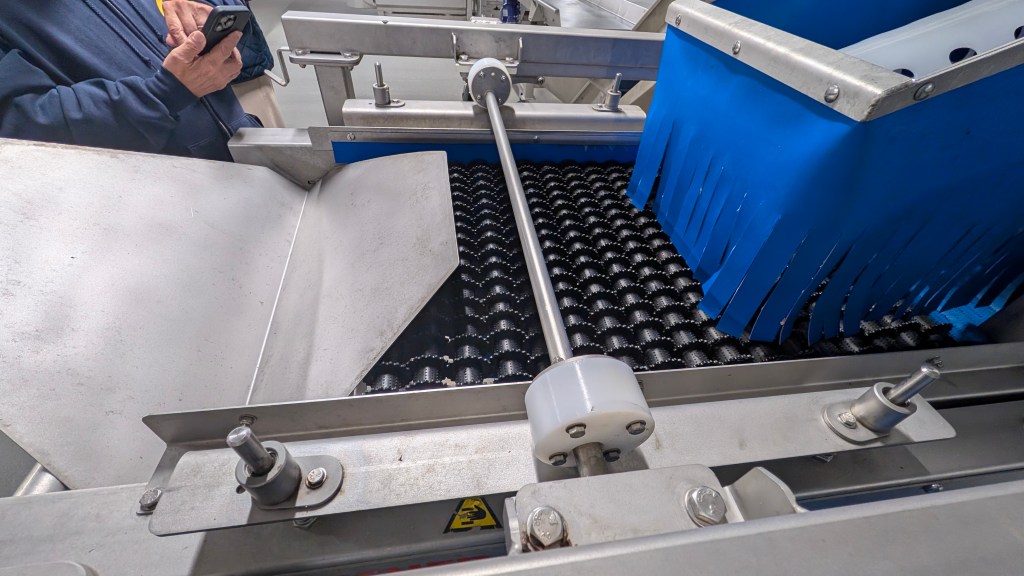
The destemmer uses an oscillation process to separate the grapes from the stems.
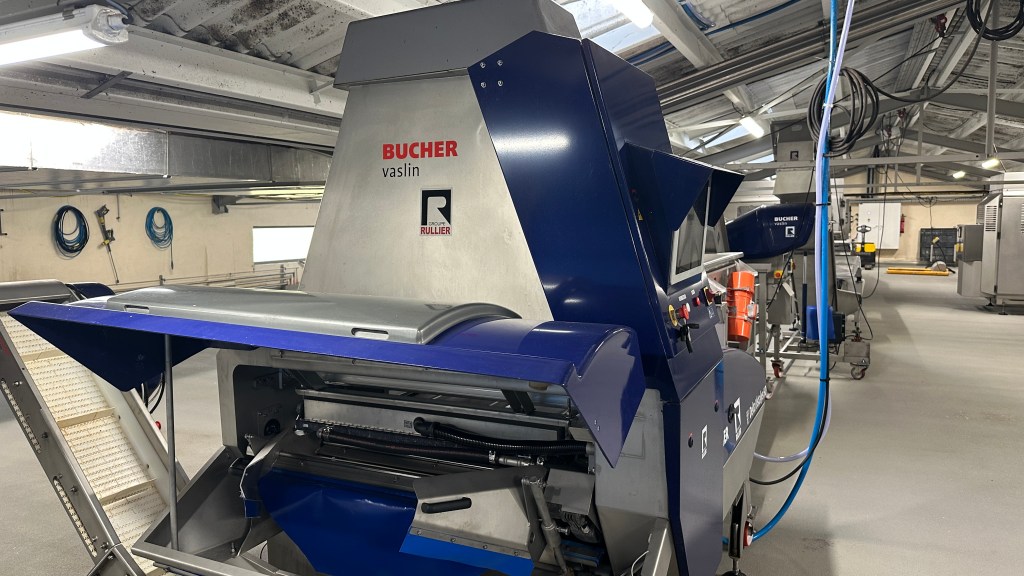
Optical sorters take thousands digital pictures, then use air blowers to separate the good from the bad berries. The bad berries are sent for production of hand sanitizing alcohols.
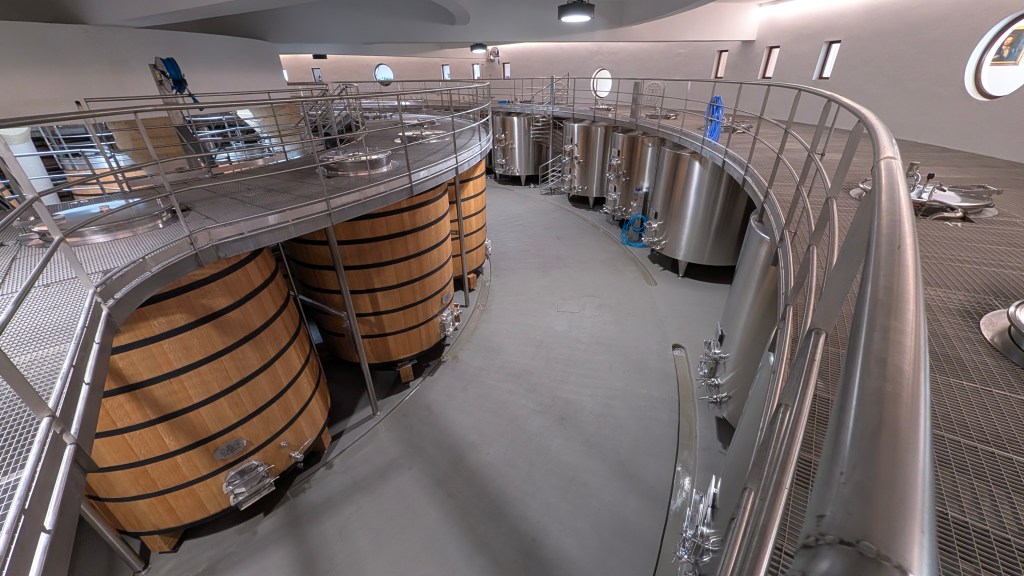
The vats are filled from the top using gravity to help crush the grapes. Each vat has a different grape varietal of a grape of a different age. The choice of wood v steel vats is only for size. Maceration is first for 5 days cold, then heated for 7 days; warm fermentation at 81°F using yeast that is cloned in their own lab. Malactic fermentation takes place at 70°F for another 5 days. At this point the solids float to the top, called a “cap.” The cap can either be pushed down from above or the fluids can be removed from the bottom and reintroduced through the top to mix the entire contents.
The juice is then mixed for a few hours before being poured into barrels. After 8 months in the barrel, they are remixed then reinserted into the barrels for another 4-10 months, depending on the grape, then possibly blended a second time.
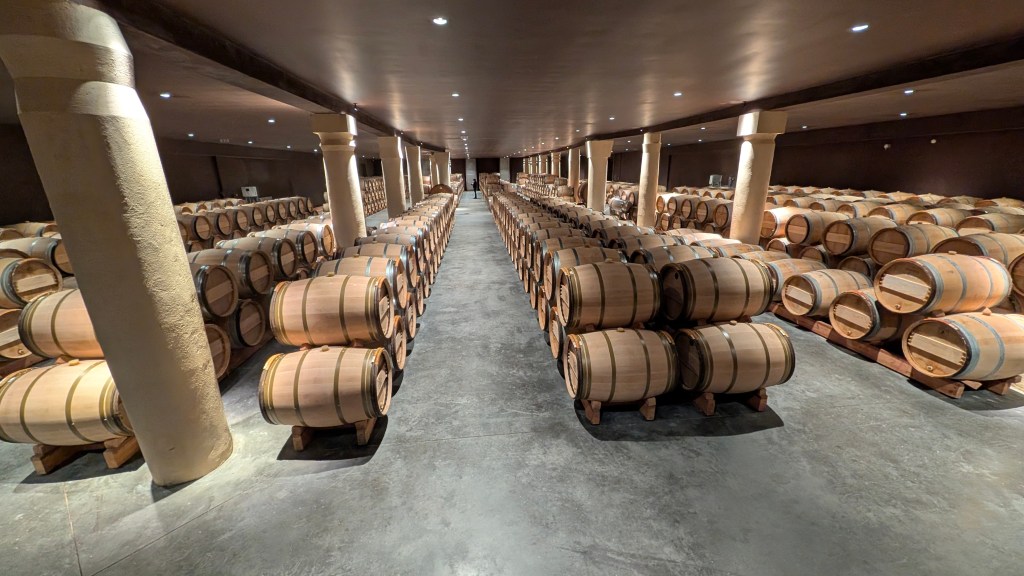
All of the barrels are French oak, but from several different makers.
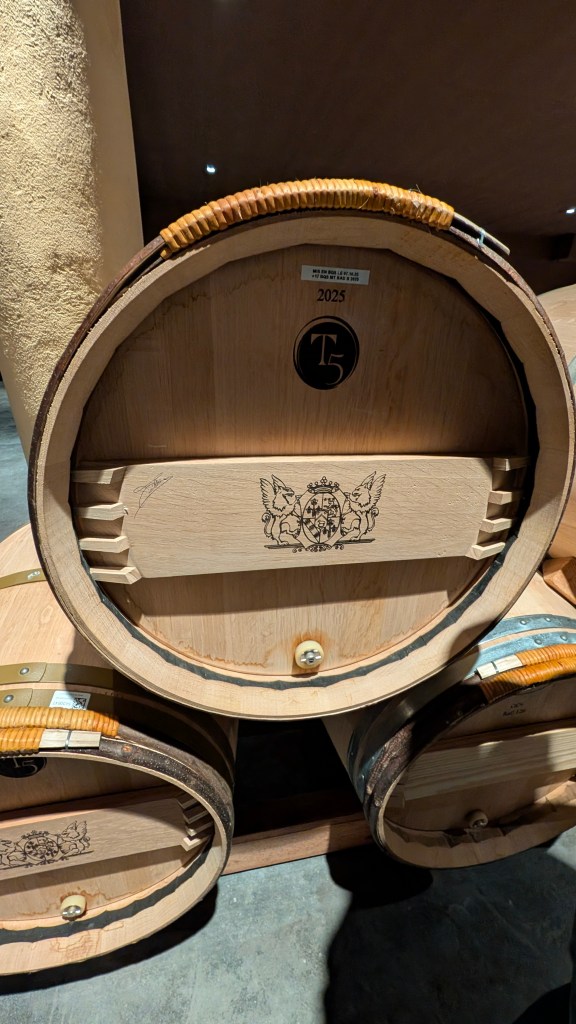
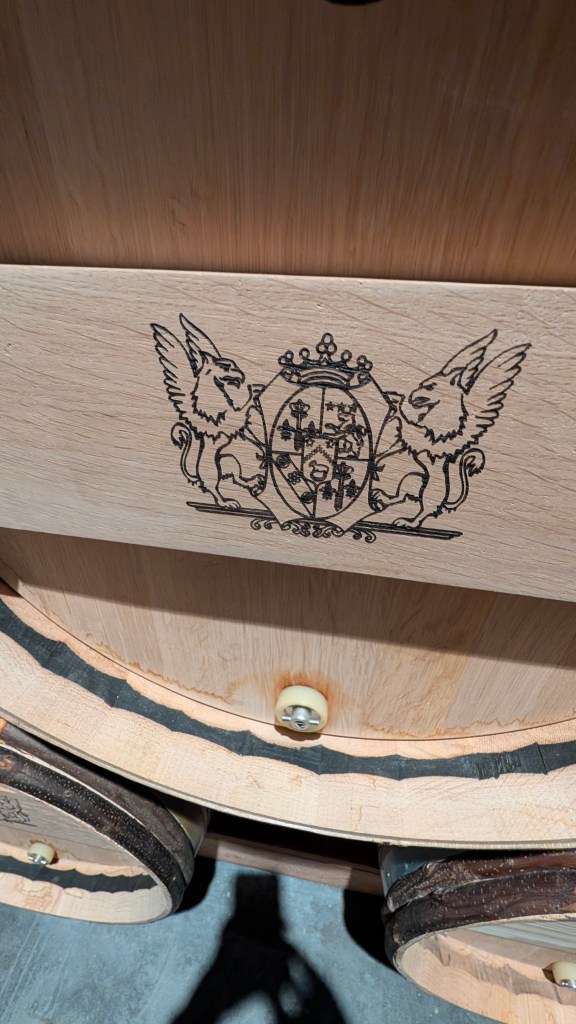
No pesticides or insecticides have been used on the property since 2001. The product is considered sustainable but not designated organic. Barrels are cleaned using hot water and uv light.
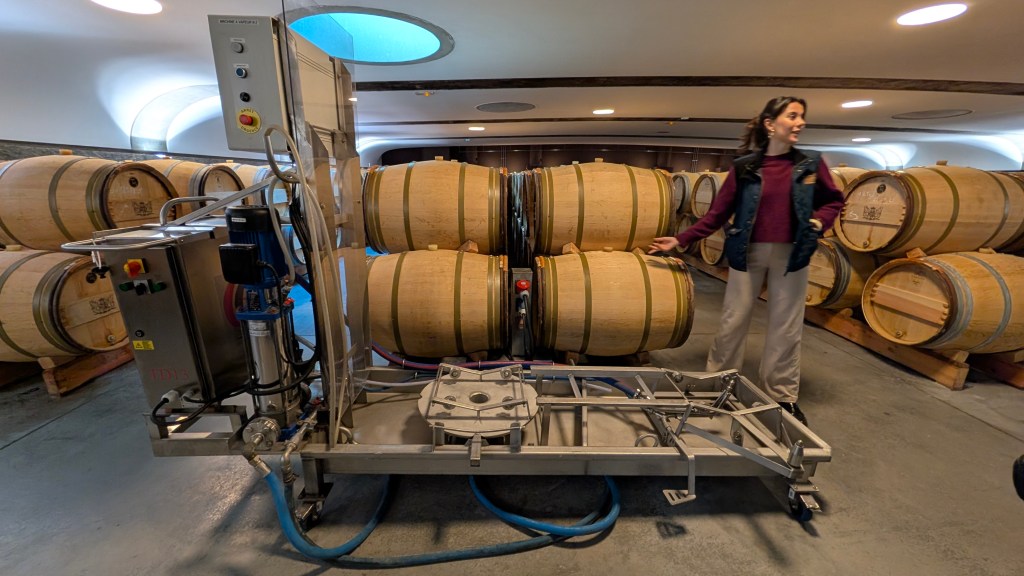
The winery produces 150,000 bottles a year.
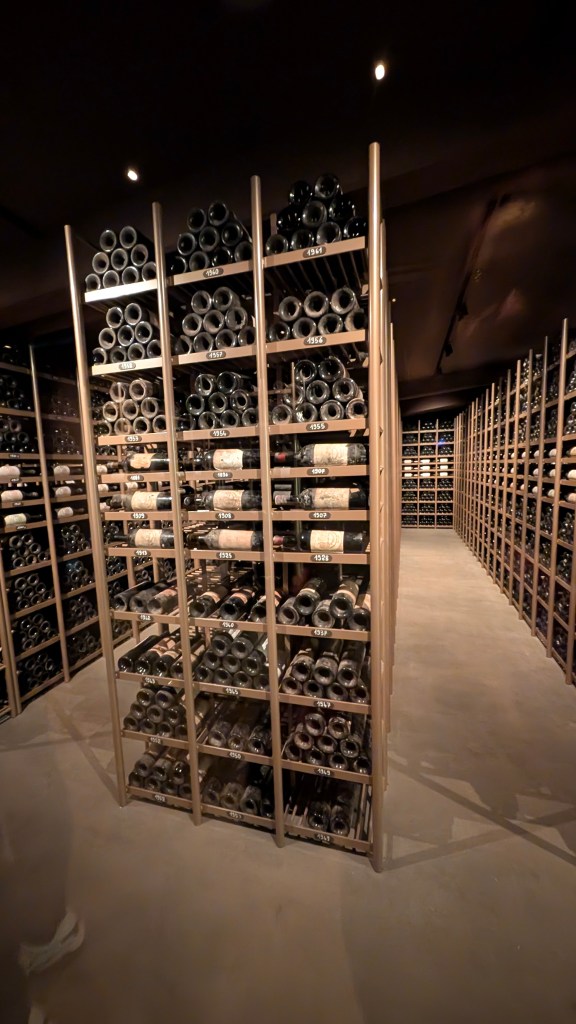
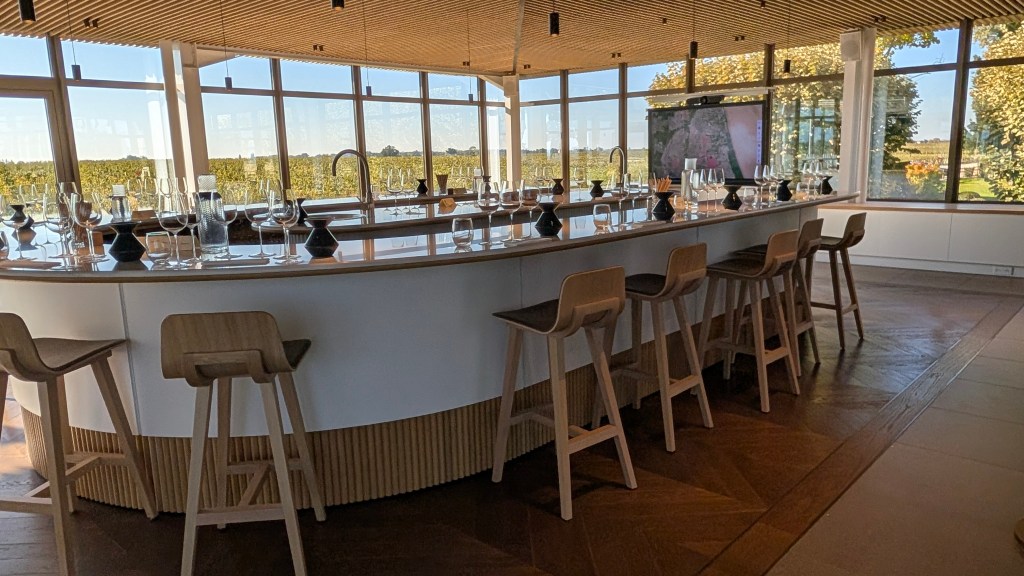
It was time to head to the tasting room.
The cork changes about every 30 years, but the label has never changed.
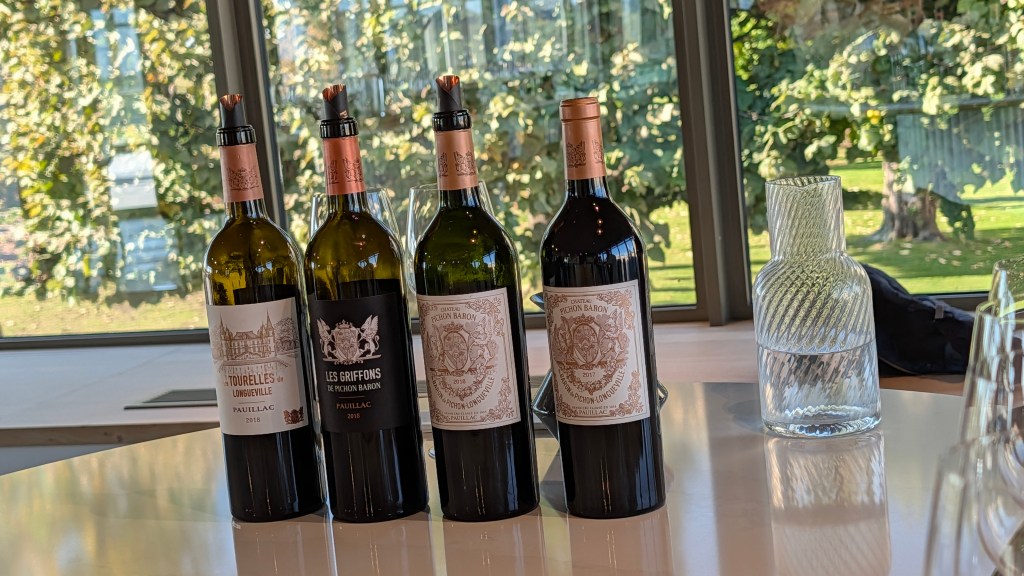
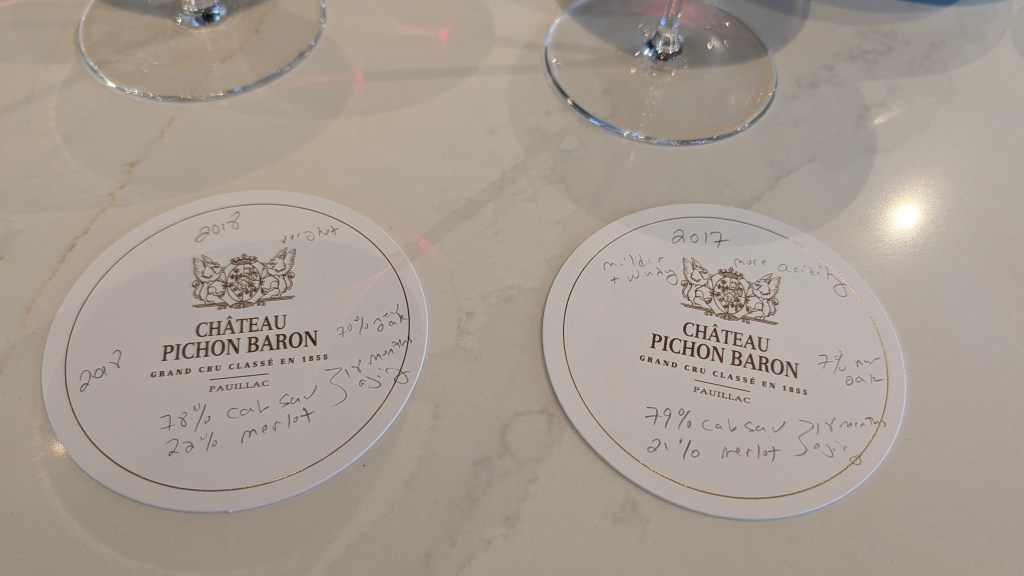
Per my usual, I took notes on the grape contents of the different wines we tasted.
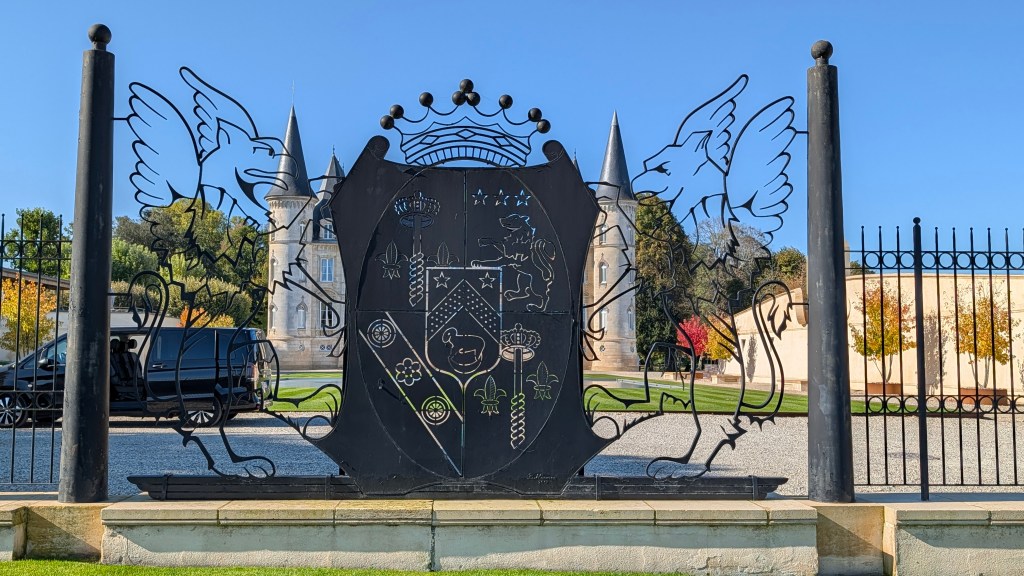
On the way out, we noted the steel gate had the same design as the label.
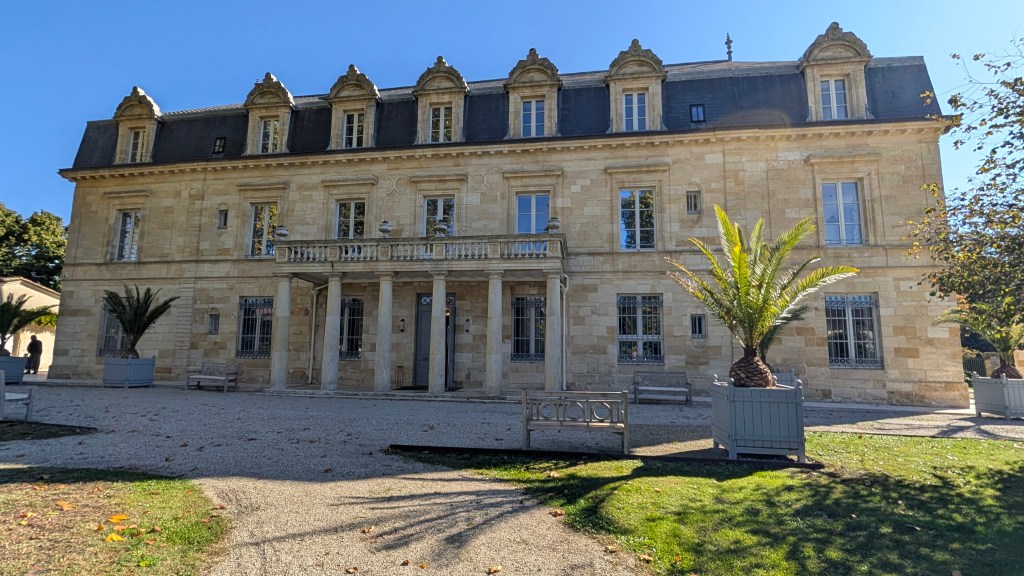
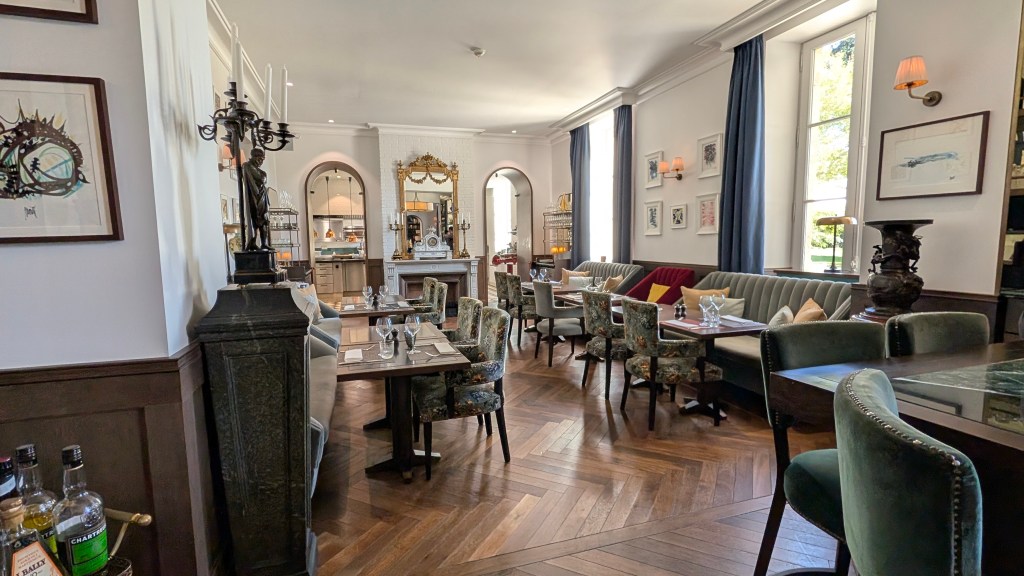
It was time for lunch at La Maison d’Estournel, a historic, originally private 19th-century residence of Louis-Gaspard d’Estournel, known for his unique architectural style. It is now a charming boutique hotel in Saint-Estèphe featuring 14 elegant rooms and a restaurant.
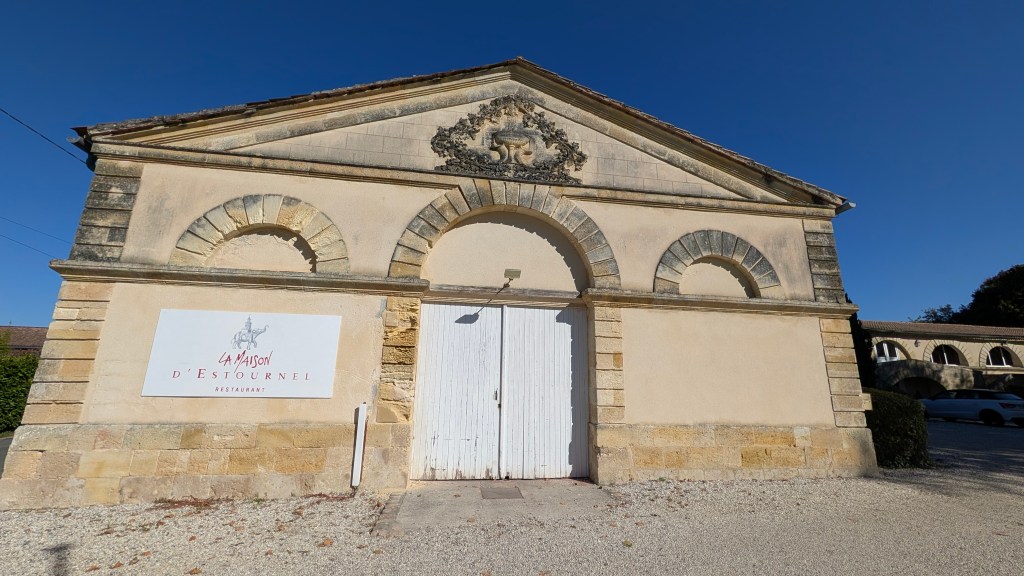
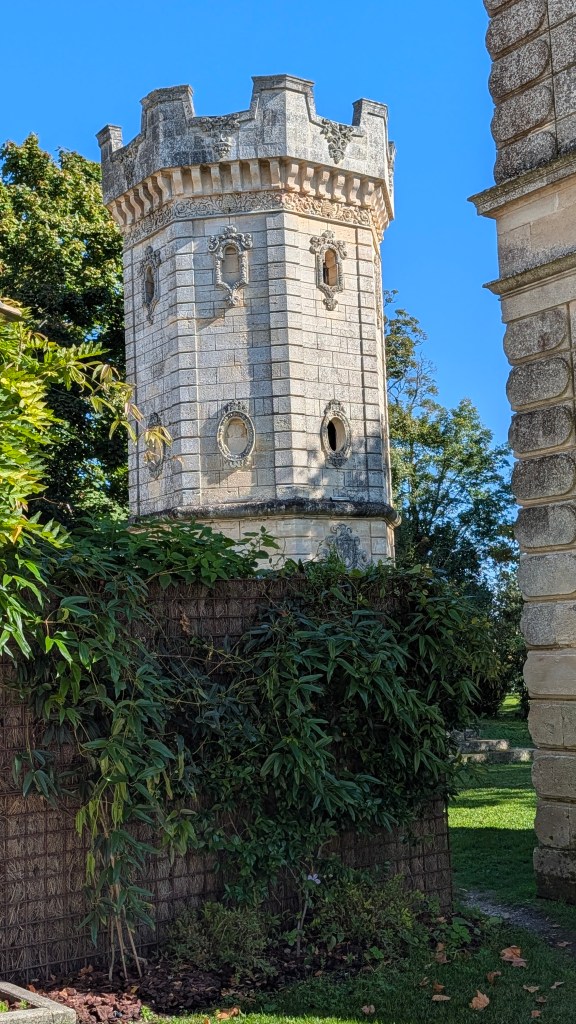
We settled in for a delicious multi-coarse lunch
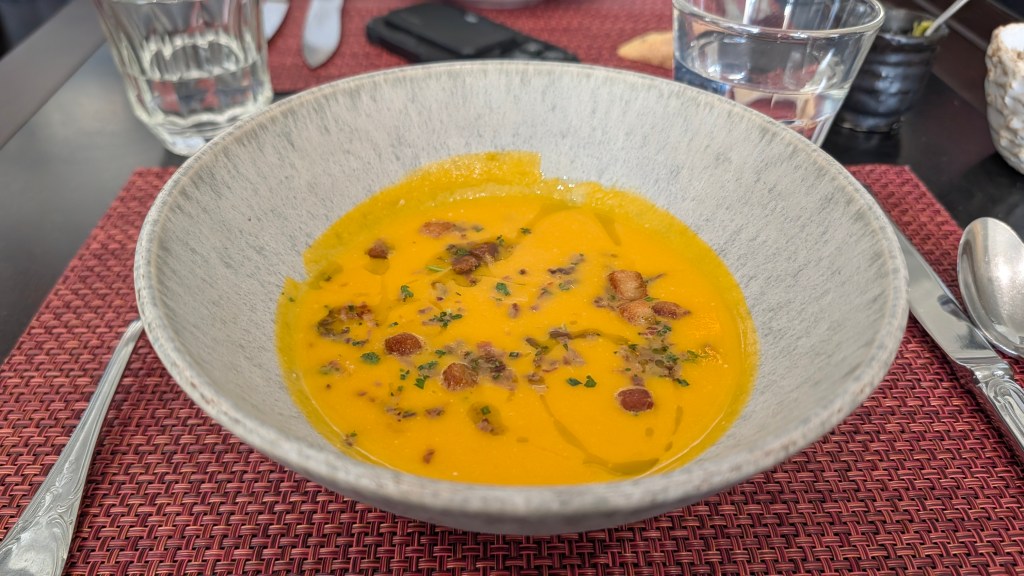
including squash soup
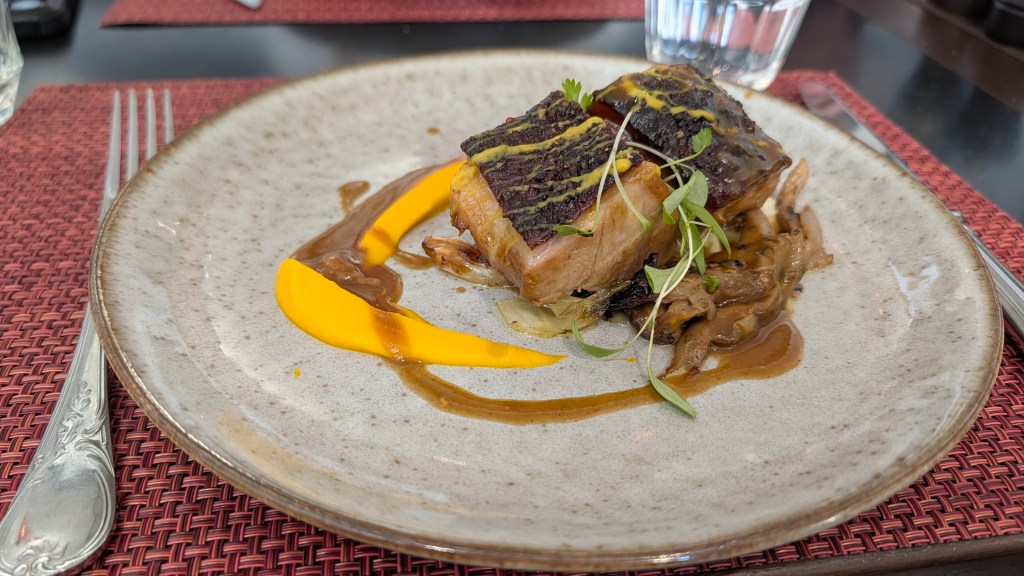
and fish.
After lunch we had some time to explore the property. It has a large, inviting back yard.
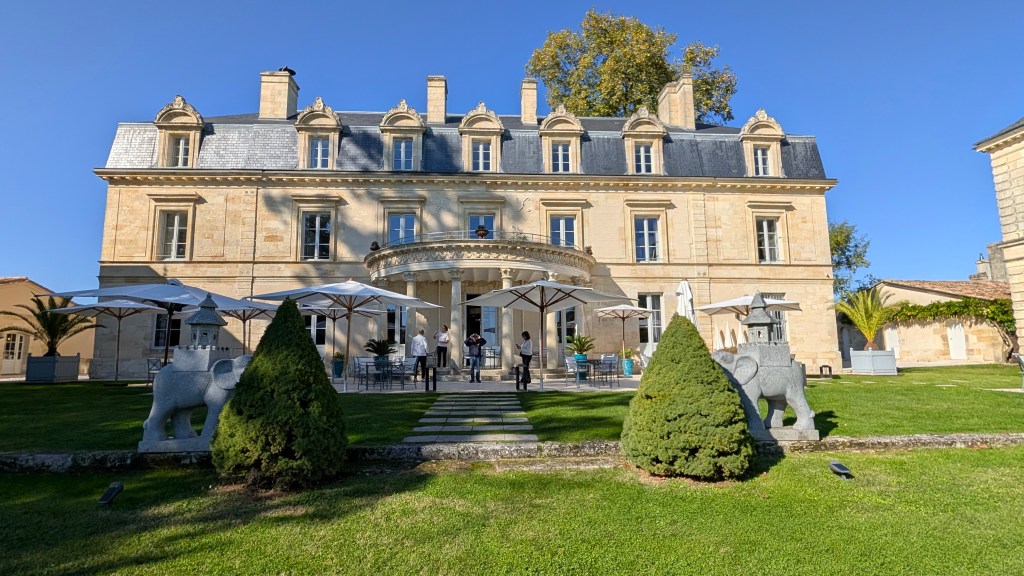
More on the elephants later.
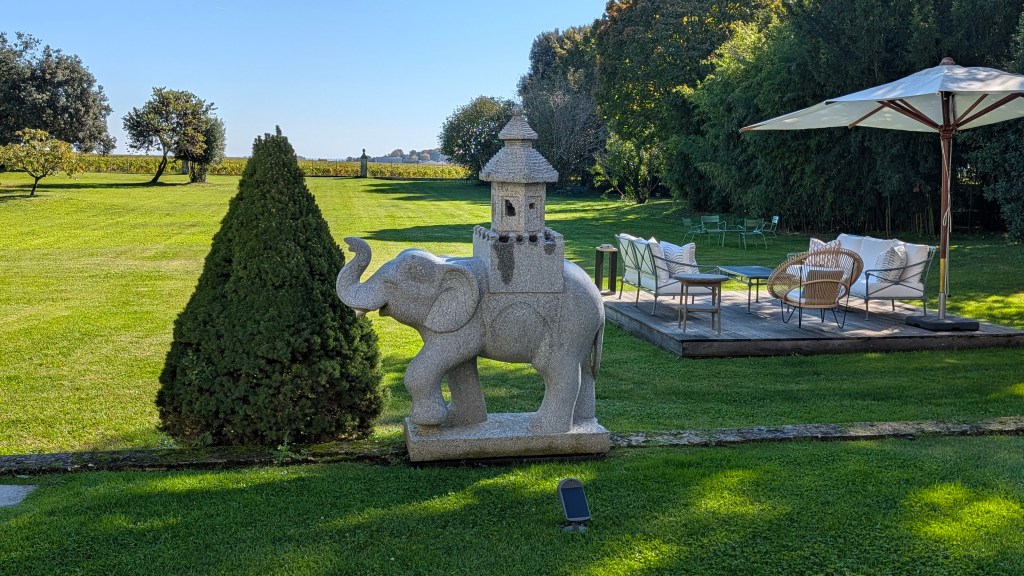
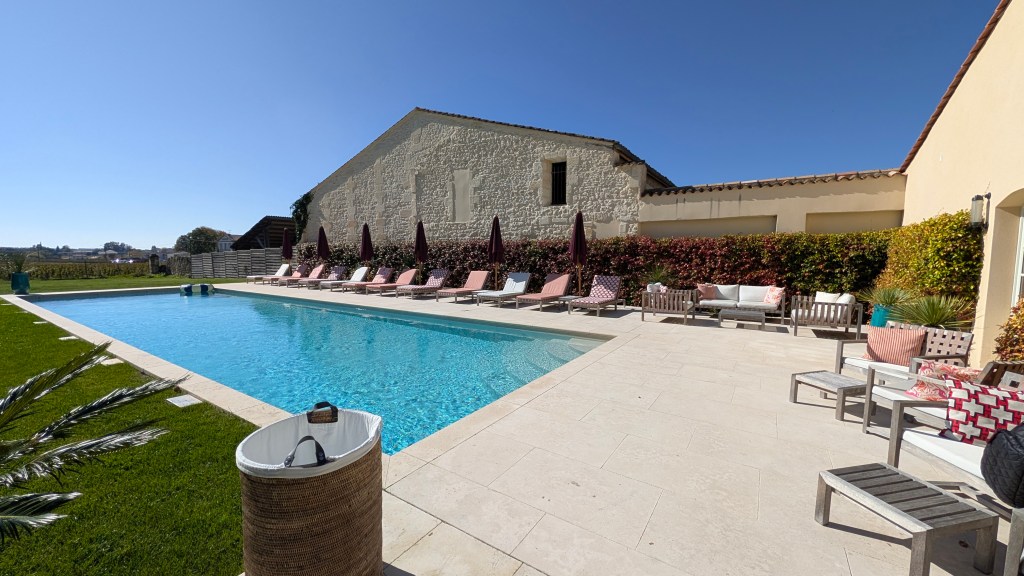
Features of the property include a swimming pool,
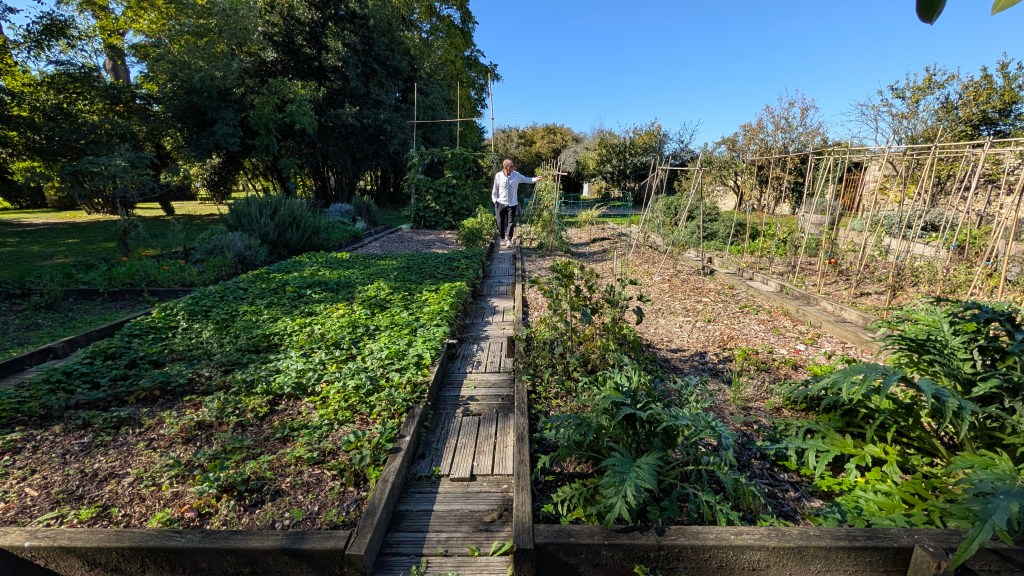
and an extensive garden
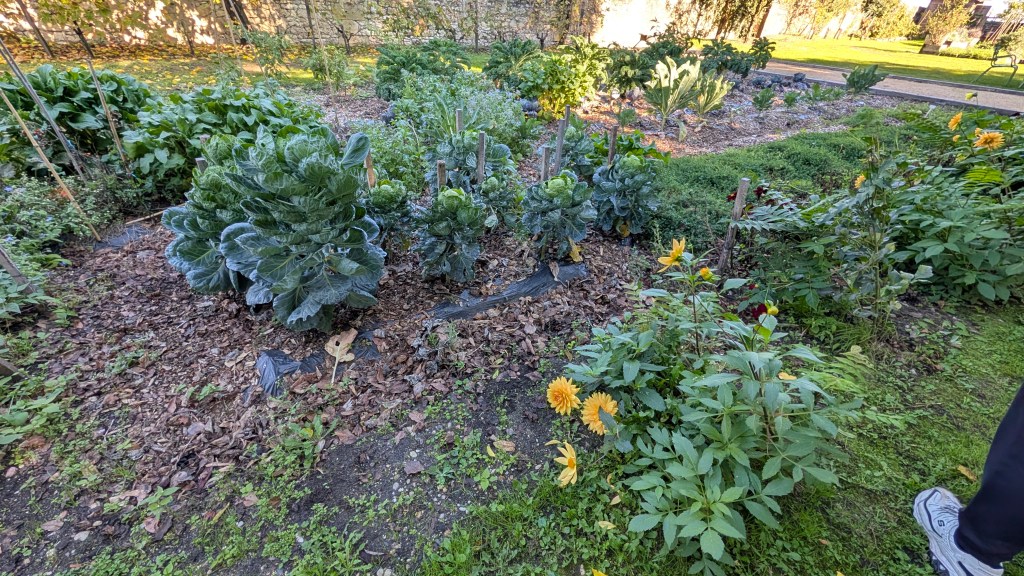
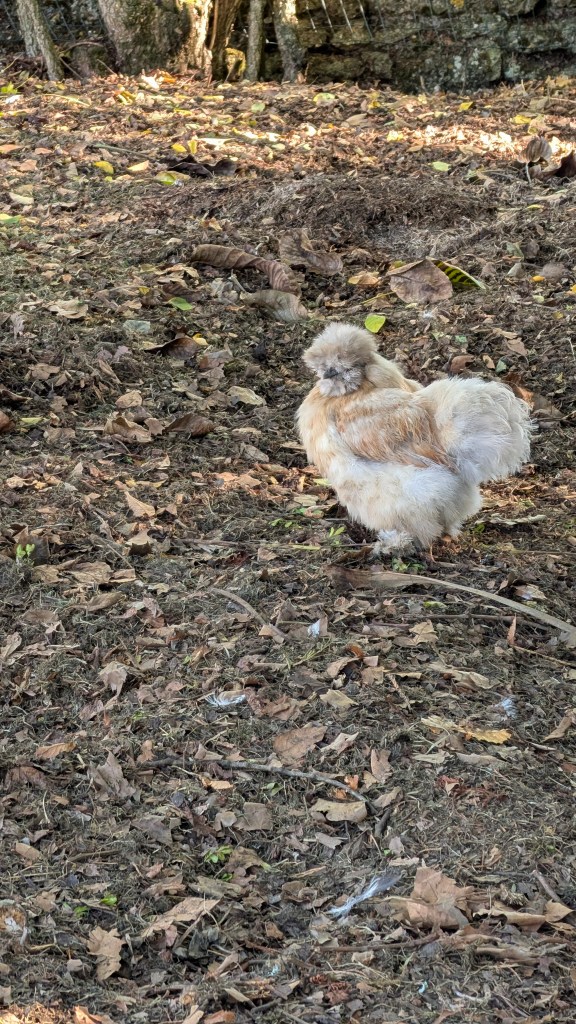
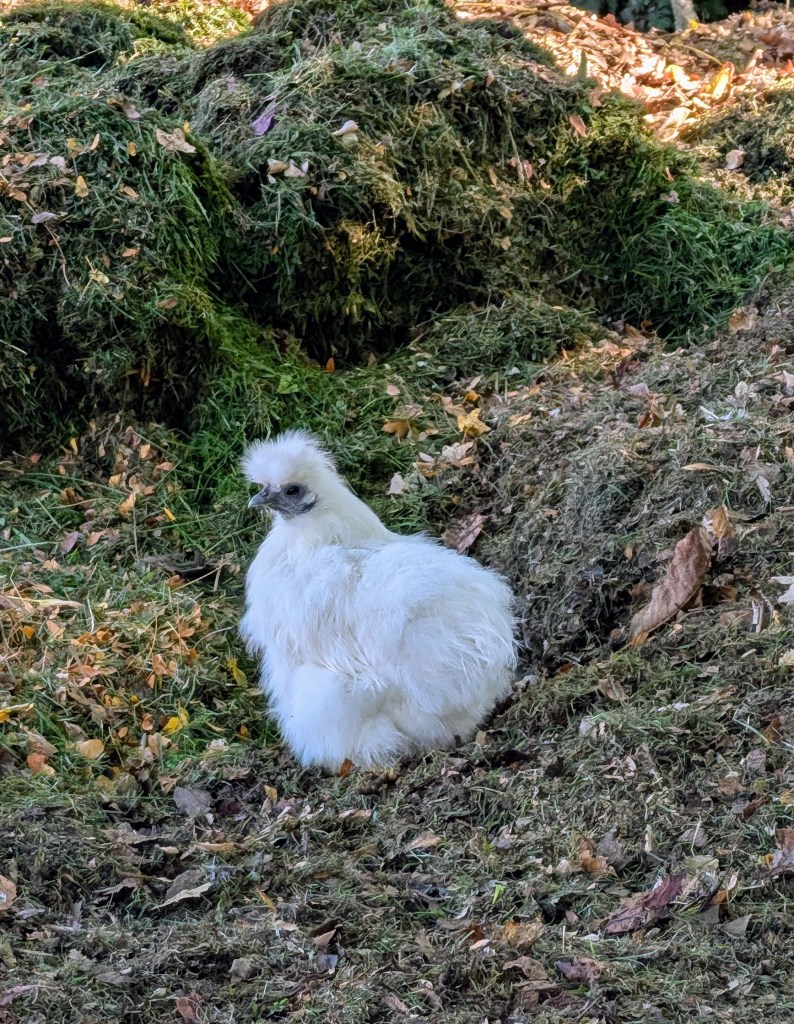
with chickens
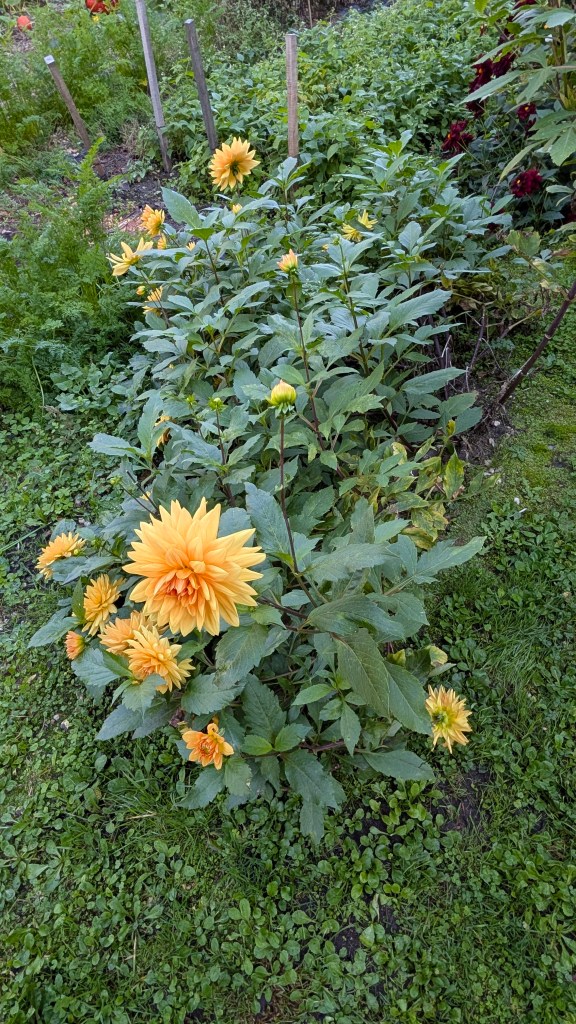
and flowers.
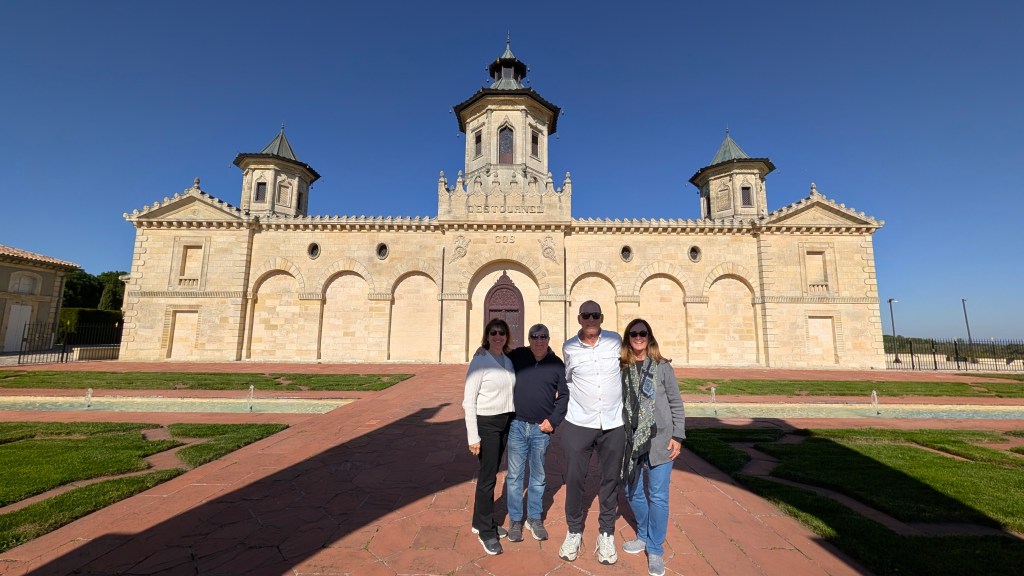
The restaurant is situated adjacent to the famed Château Cos d’Estournel winery in the Saint-Estèphe appellation.
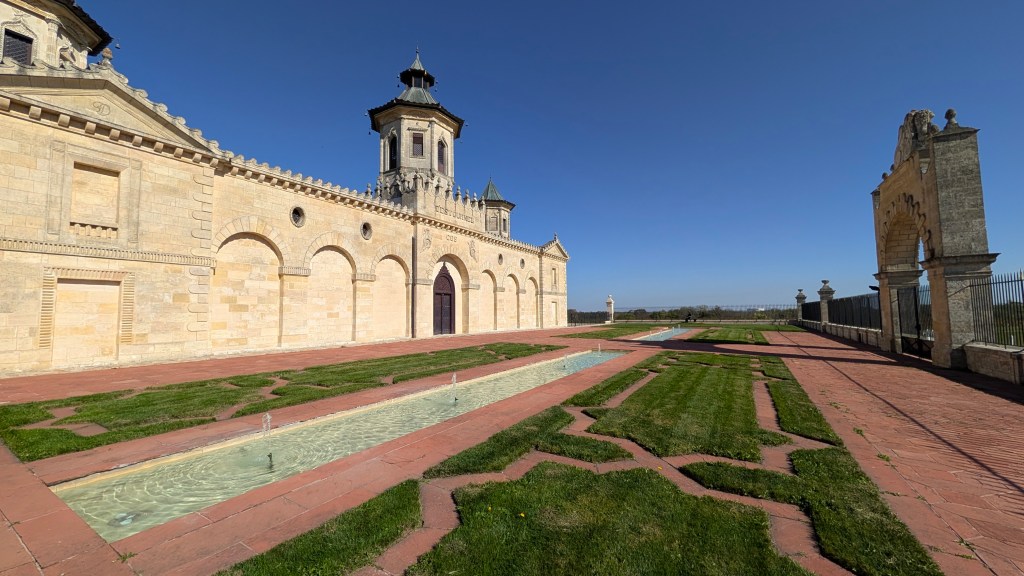
We were met there by our guide Annaice who explained that cos, the name of the town, means “hill of pebbles,” in Gascon dialect and the name Cos d’Estournel was given in 1810 by Louis-Gaspard d’Estournel, the first owner. He bought basically the entire town except for the property of his direct neighbor.
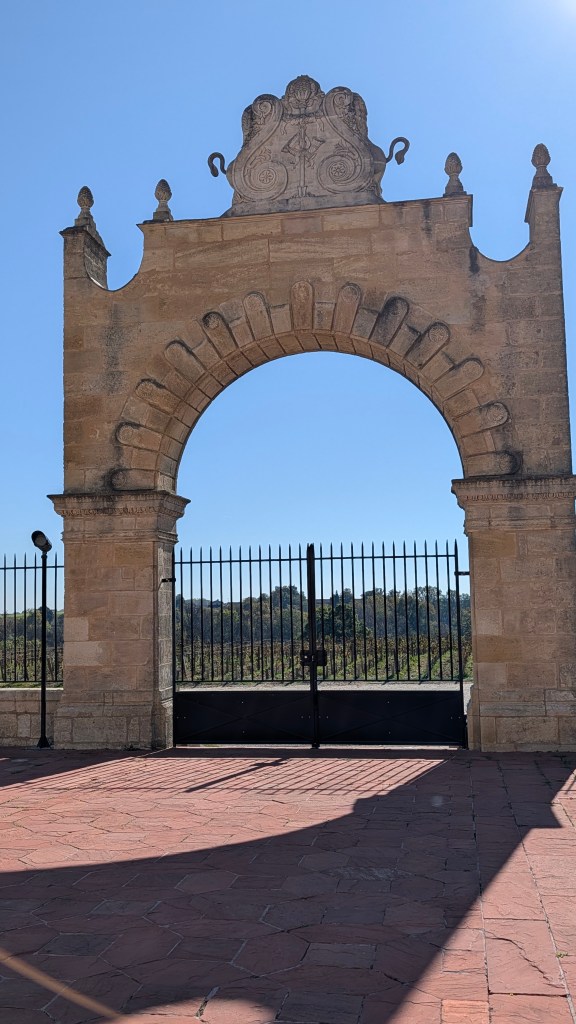
Due to extensive trade with Asia, in the 1820s Louis-Gaspard built a unique, Asian-inspired palace, featuring pagodas and carved wooden doors, becoming a landmark of the region.
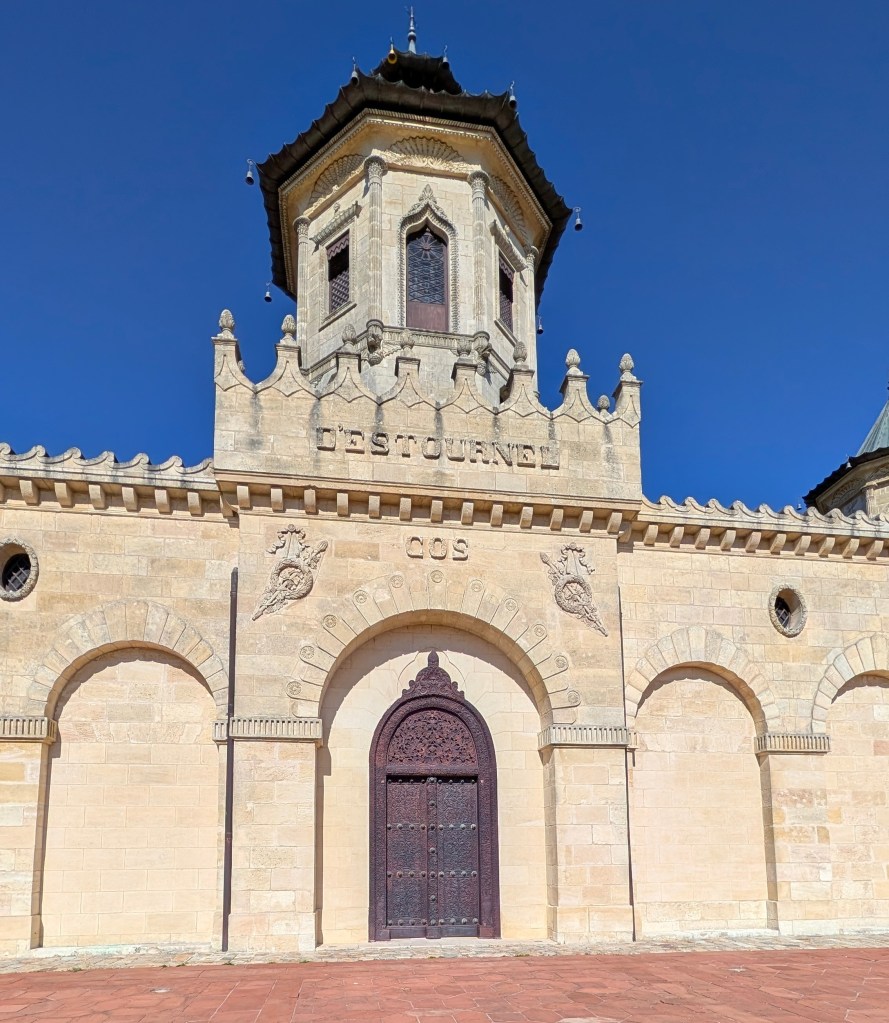
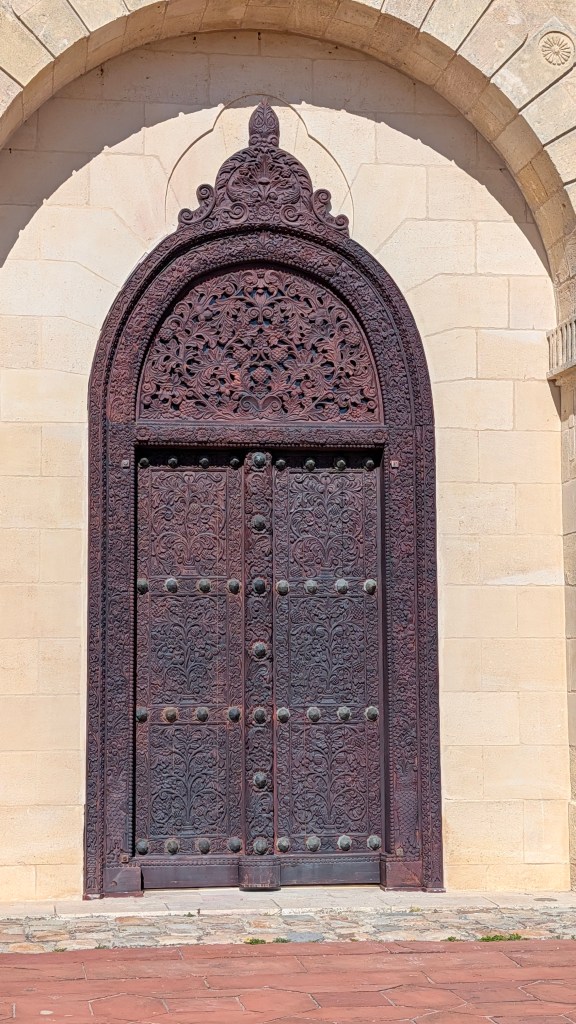
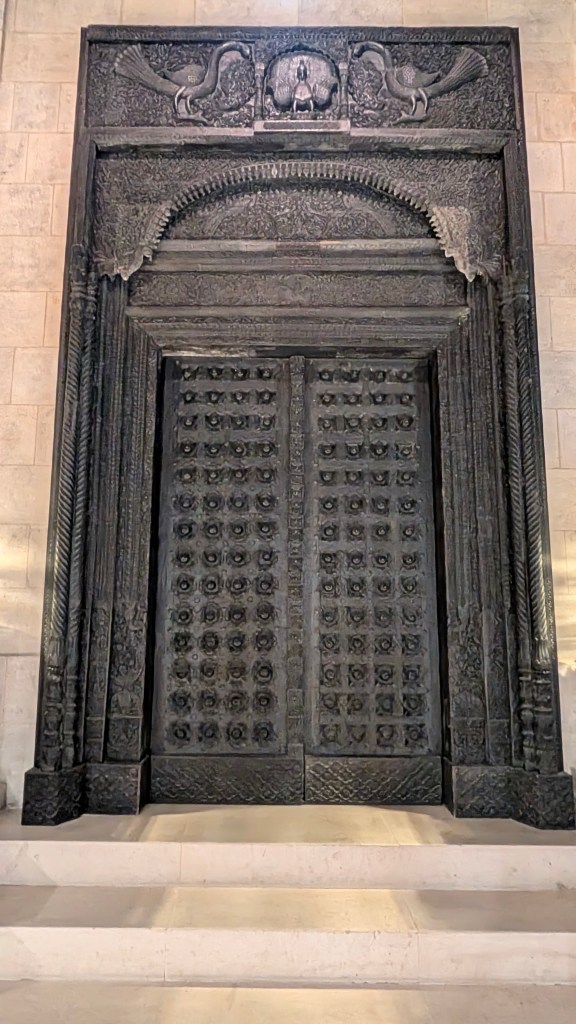
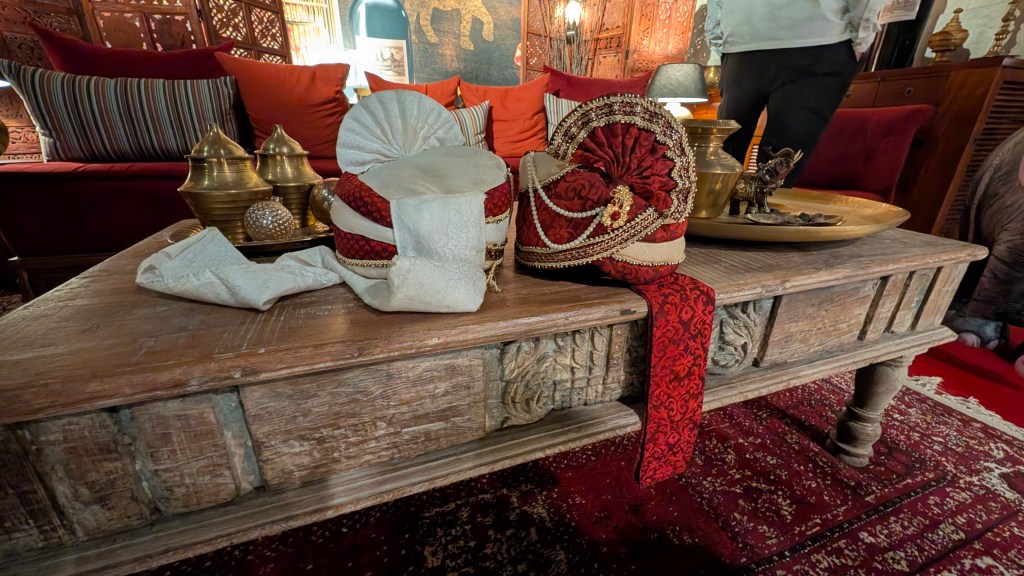
The estate features a massive carved wooden door from Zanzibar, which is covered in studs that originally protected it from elephants.
The current owner bought the home, now the restaurant in which we ate, in 2000 and the winery in 2016. The winery has no windows because originally it was the wine cellar.
The details of the architecture are fascinating.
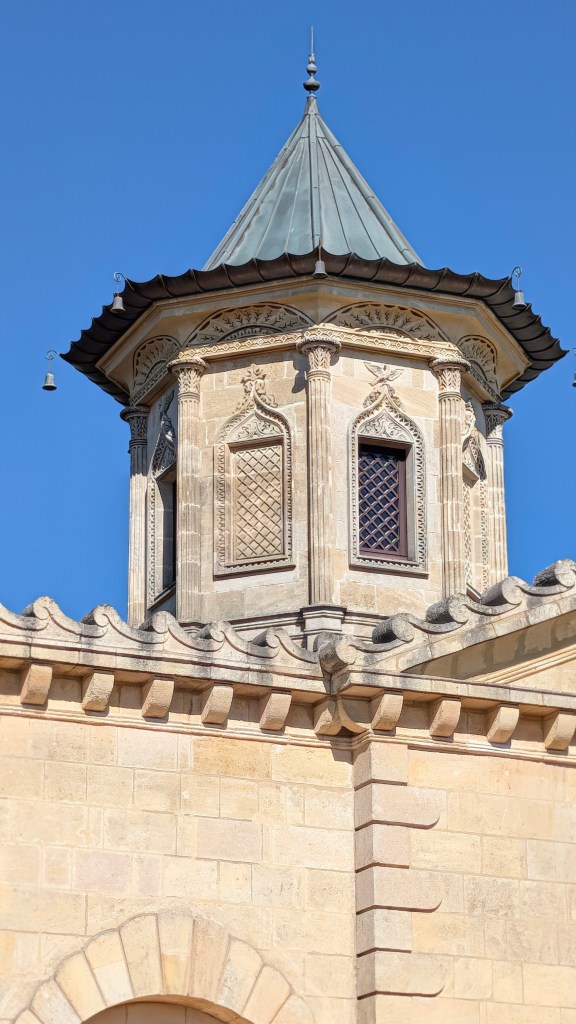
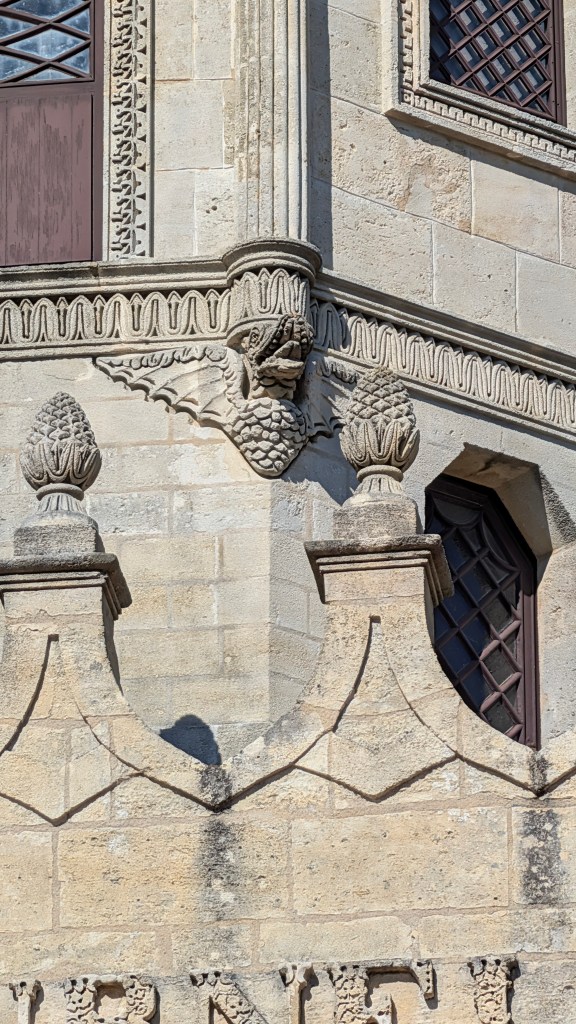
Nonconformist and determined to glorify the terroir of Cos d’Estournel, Louis-Gaspard saw every new market, especially India, as an exciting opportunity. Because of Louis-Gaspard’s significant debt locally, the wines of the estate were bottled and sealed with glass stoppers before being shipped to Calcutta, Madras, and Bombay as early as the 1830s, After a long journey, some of the wines of Cos d’Estournel were shipped back to France from India. When the bottles were opened, it was clear the wines had gained in elegance and richness, quite simply improved by sailing from Bordeaux to India and then back again, or so he thought. The advantages of aging wine were not yet appreciated. He began marketing as “back from Indies.”
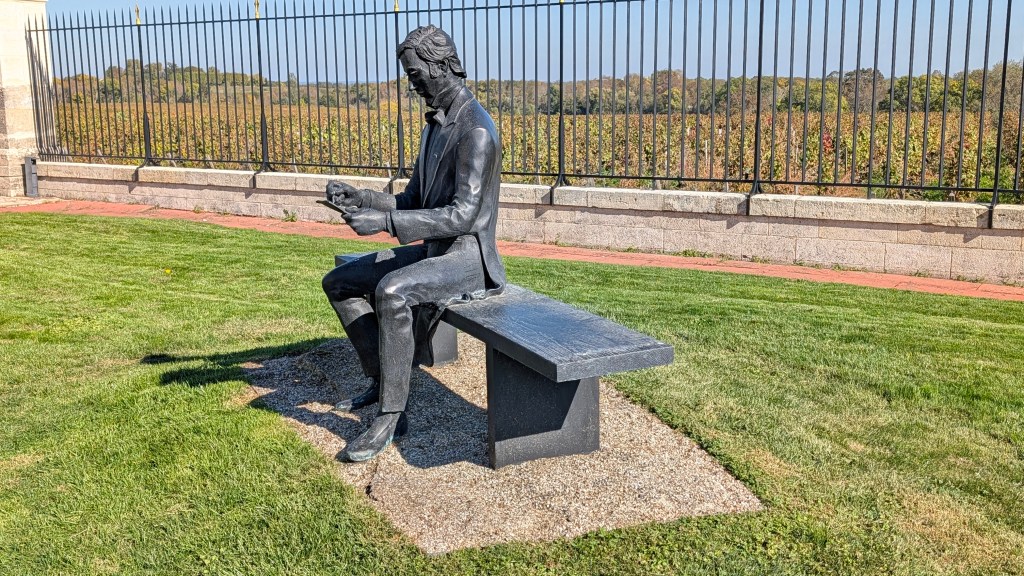
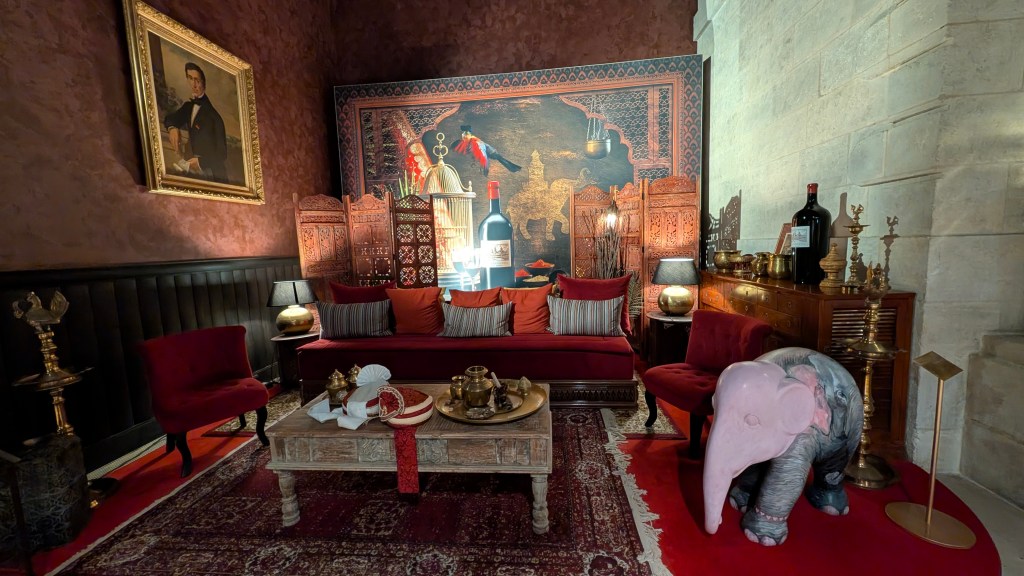
To celebrate these Eastern expeditions and his success, Louis-Gaspard brought back exotic elements to the Médoc, including the pagodas and the elephant motif.
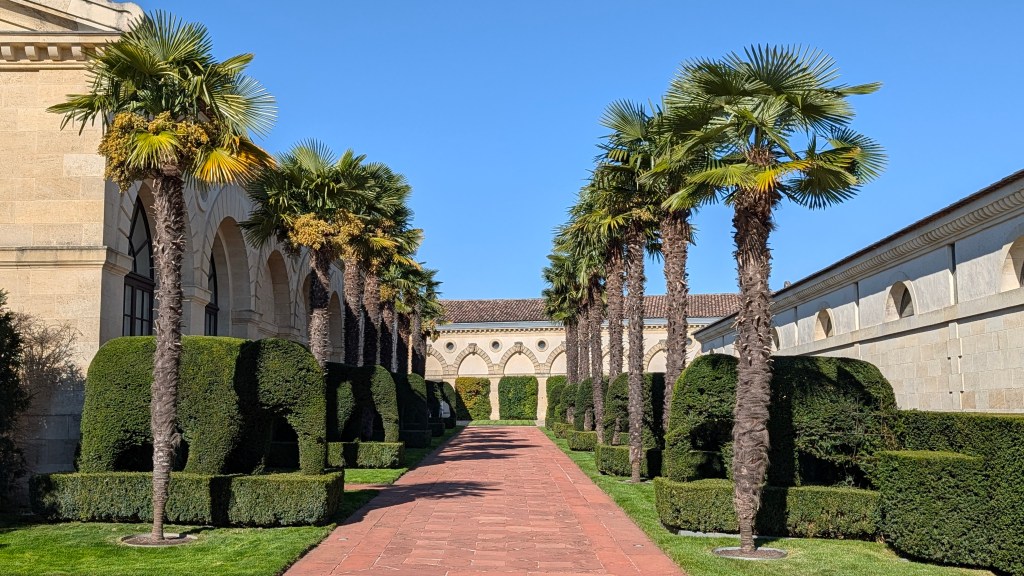
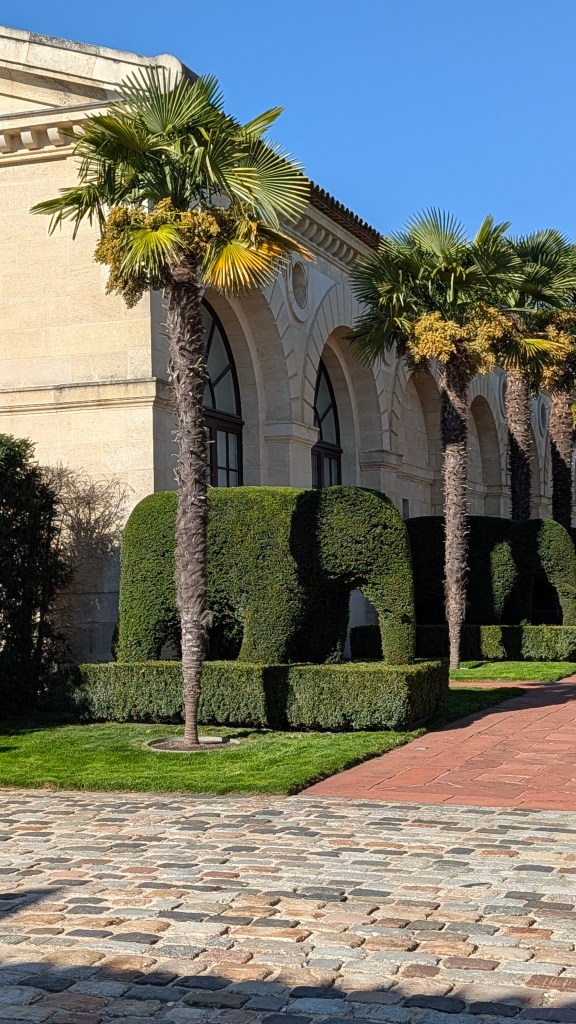
Elephants are fundamental symbols at Château Cos d’Estournel, serving as guardian angels, good-luck charms, and a direct nod to the estate’s Eastern heritage. They represent intelligence, strength, wisdom, and longevity, and are found throughout the estate, including in the gardens, cellars, and on the pagodas, and, as we had seen, his private home.
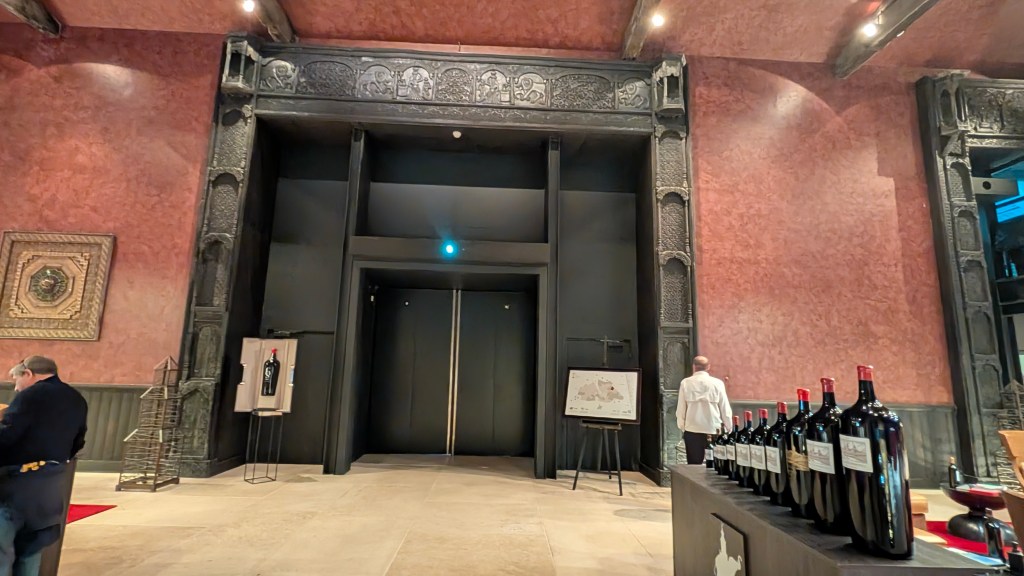
We went inside the original wine production space now turned guest tasting venue.
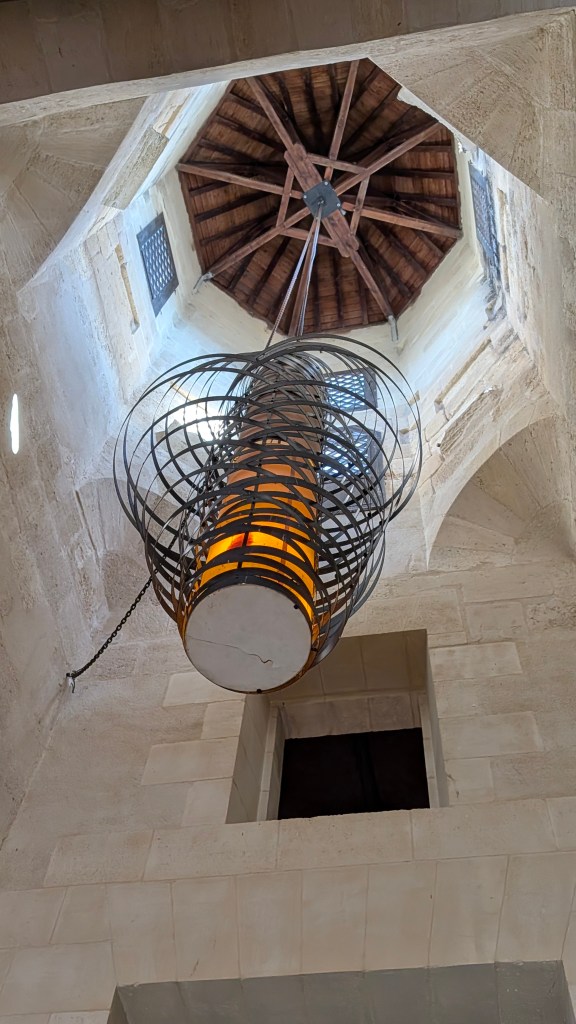
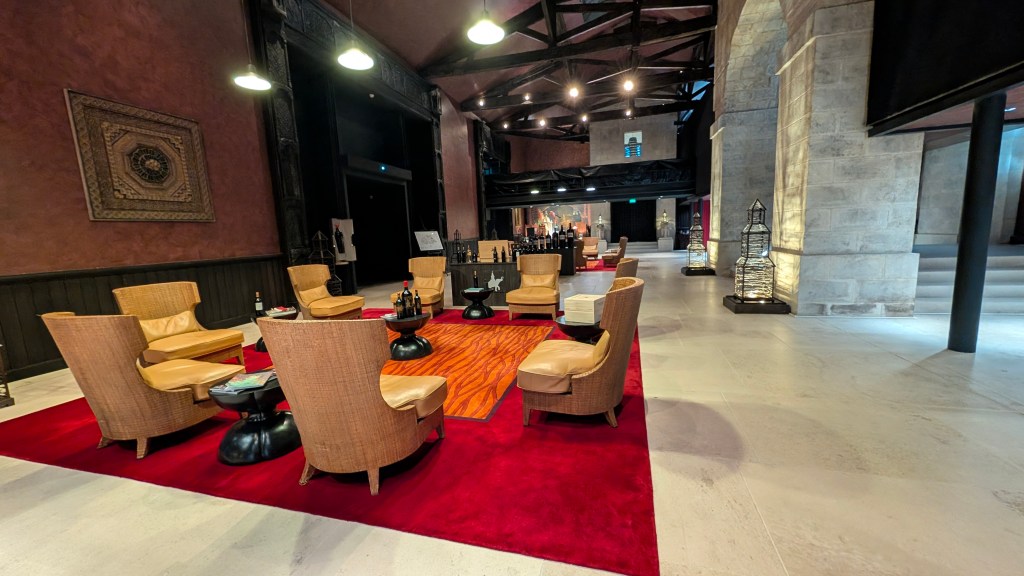
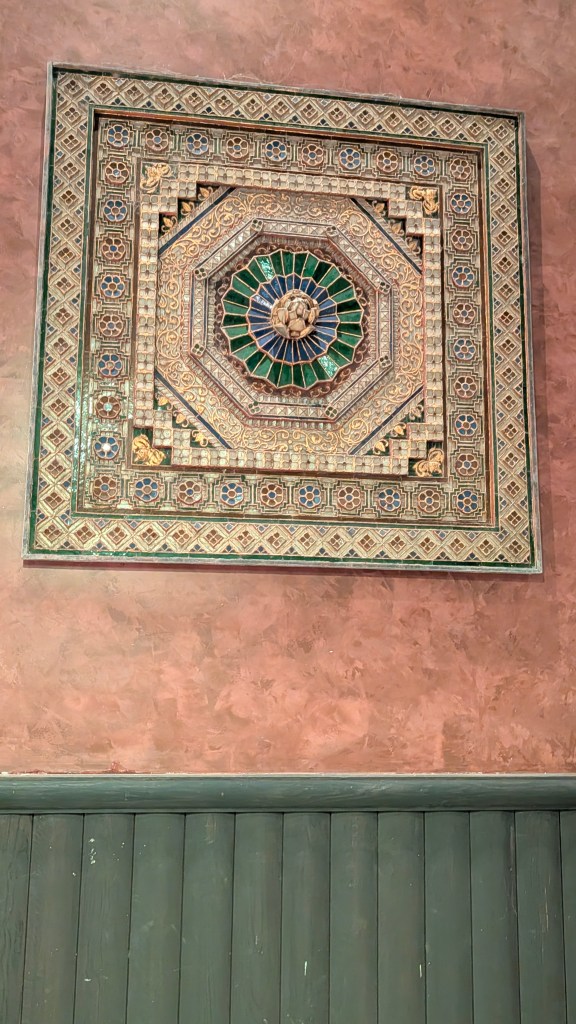
The inside is chock full of artifacts from the East. This mosaic is from Myanmar.
The doors were originally huge to allow for passage of equipment and wagons loaded with grapes.
A second, even more impressive door from Zanzibar is on the other side of the building not seen from the front.
Louis-Gaspard d’Estournel became known as the “Maharajah of Saint-Estèphe”.
Annaise explained to us that 300-350,000 bottles are produced yearly on the 250 acres.
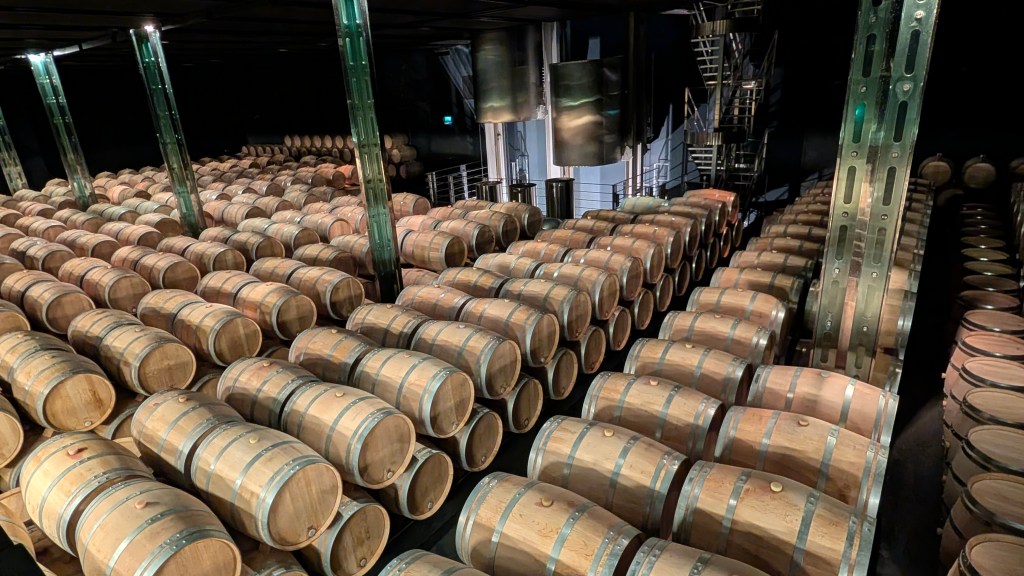
Because of the location on the hill, the property is windy all the time which prevents frost in the winter and extreme heat in the summer. In the fall, the vines are pruned down to a single branch in a horizontal position. Horizontal growth is desired because grapes being low to the ground protects the grapes from the wind. There are 20 permanent employees of the estate; they are responsible for the pruning. For the 3 weeks of harvest, and additional 120 pickers are employed.
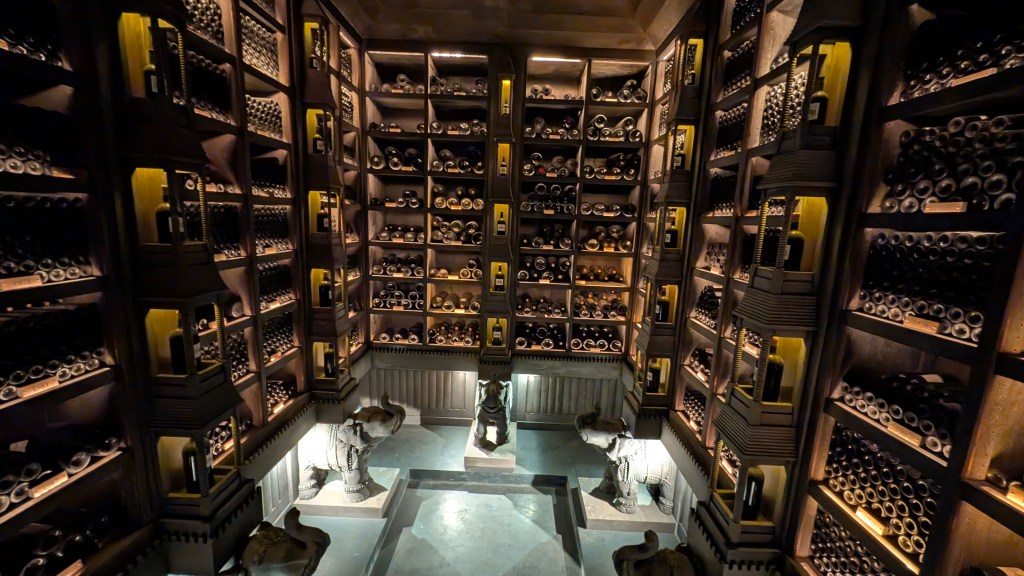
Elephants can be found everywhere.
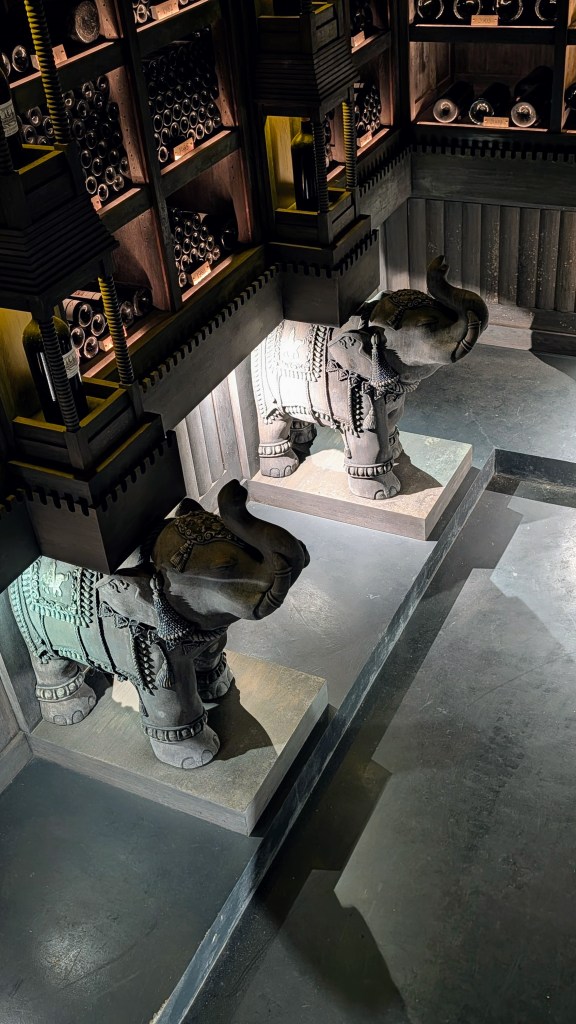
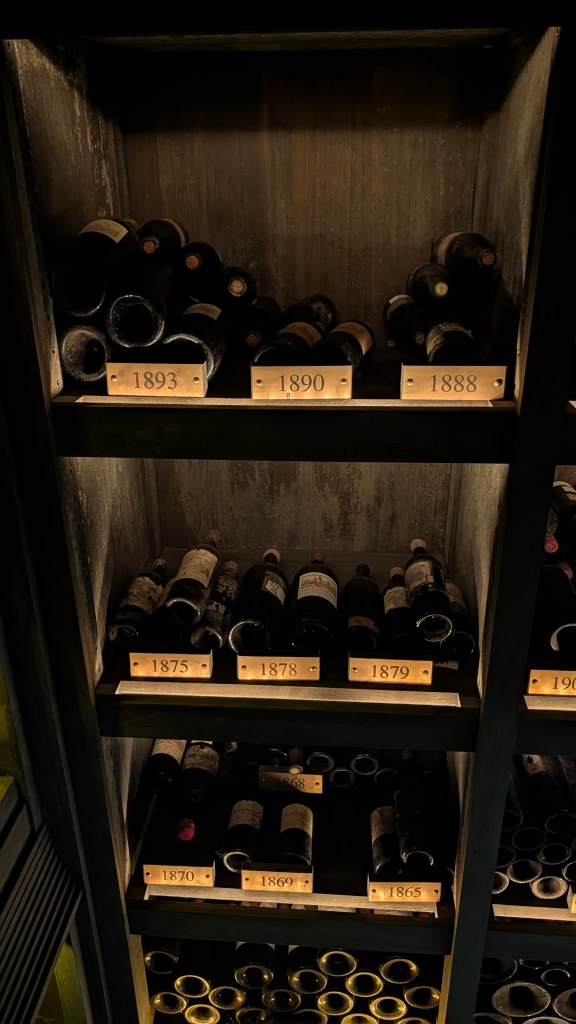
The bottle collection includes some originals.
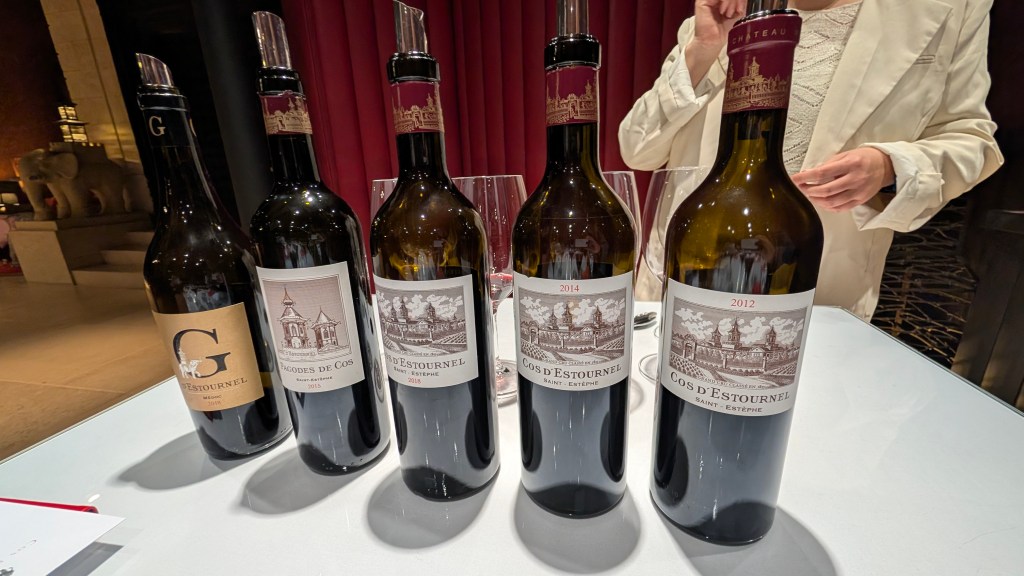
Finally, it was time for our tasting.
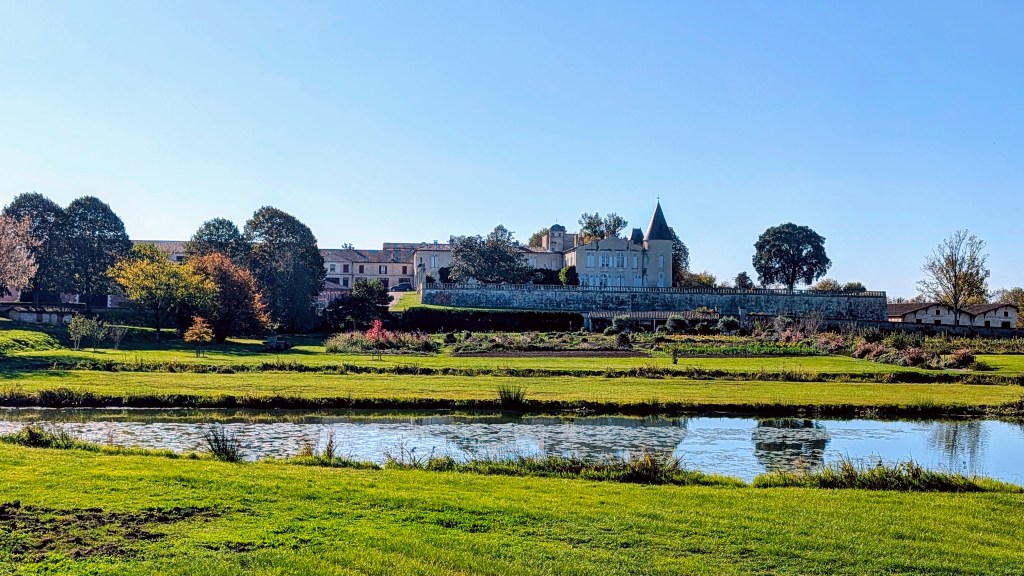
As we drove through Médoc we passed the historic Château Lafite Rothschild wine estate in the Pauillac appellation. It is one of only five wine-producing châteaux originally awarded First Growth status in the 1855 Bordeaux Classification. References to the property date back to 1234. The estate has been owned by members of the Rothschild family since 1868. The vineyard is renowned for producing some of the world’s most expensive red wines, primarily dominated by Cabernet Sauvignon.
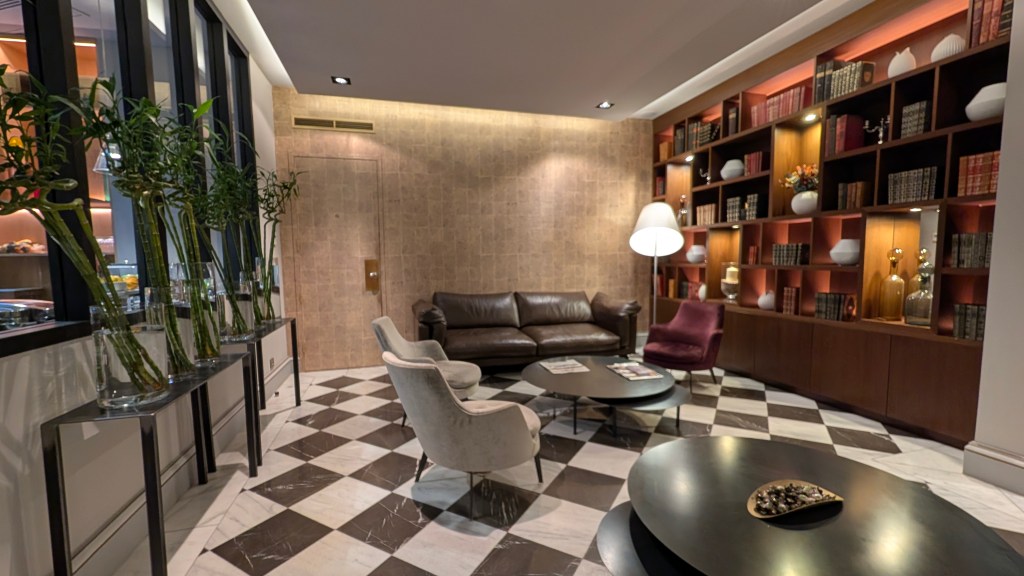
We checked into Villas Foch in Bordeaux in the late afternoon.
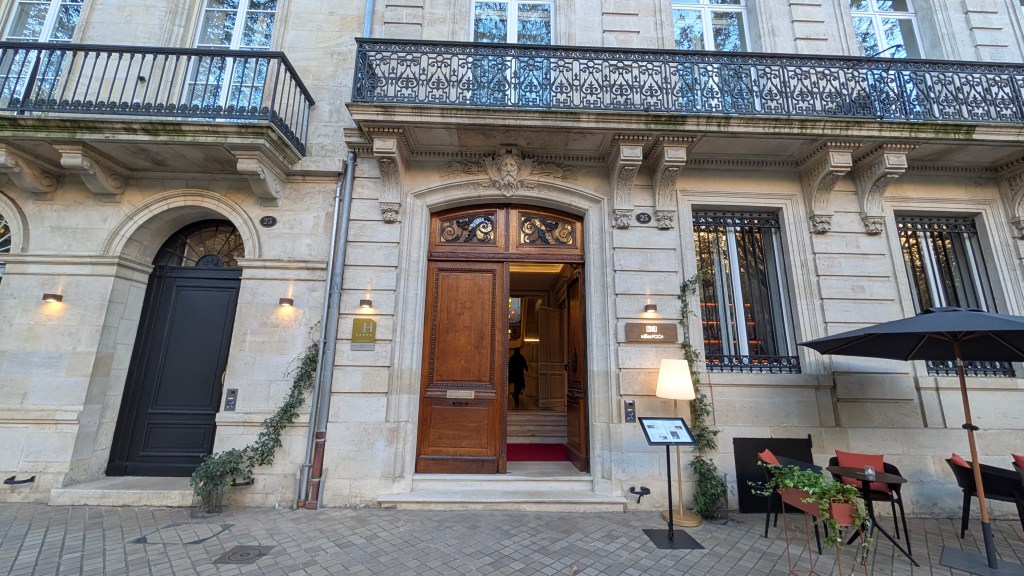
Villas Foch
The lobby was inviting and warm.
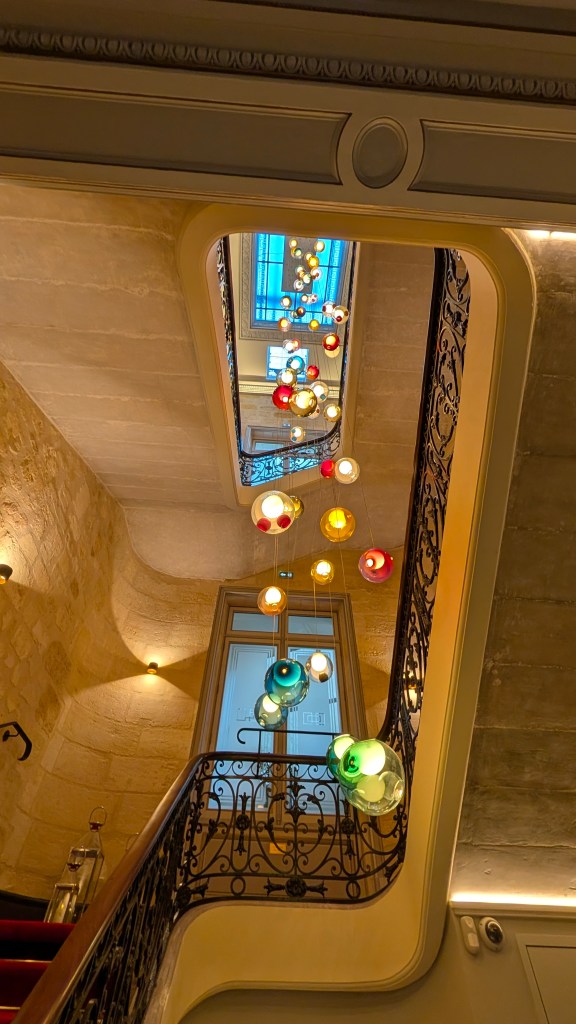
We climbed the stairs to our rooms for a bit of a rest before heading out into the evening for a light supper.
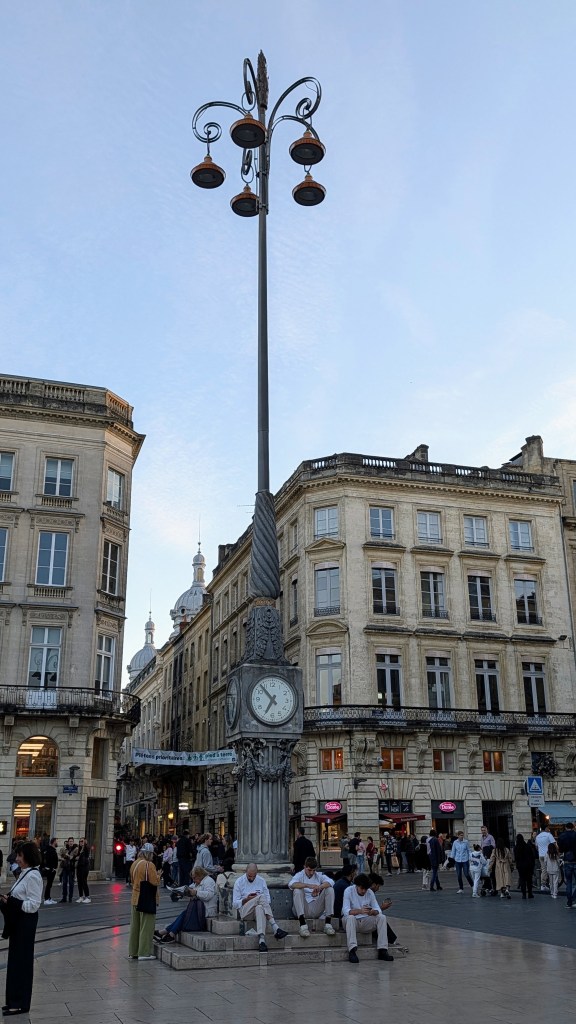
We went toward the city center passing through the main square, Place de la Comédie.
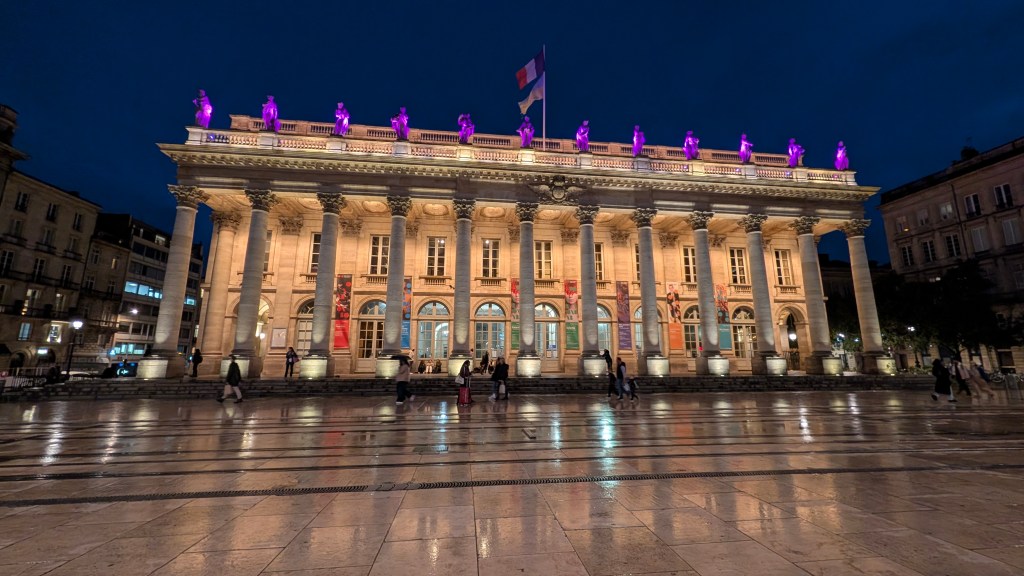
After a light dinner we passed again through Place de la Comédie, this time taking note of the Grand Théâtre de Bordeaux, home to the Opéra National de Bordeaux. Completed in 1780, it is a masterpiece of Neoclassical architecture designed by Victor Louis. The facade features a portico with 12 colossal Corinthian columns, topped by statues representing the nine Muses and three goddesses. The theater is celebrated for its incredible acoustics and opulent interior, which was restored to its original blue and gold colors in 1991.
Almost directly across from Villas Foch was a temporary fair, which we could not resist.
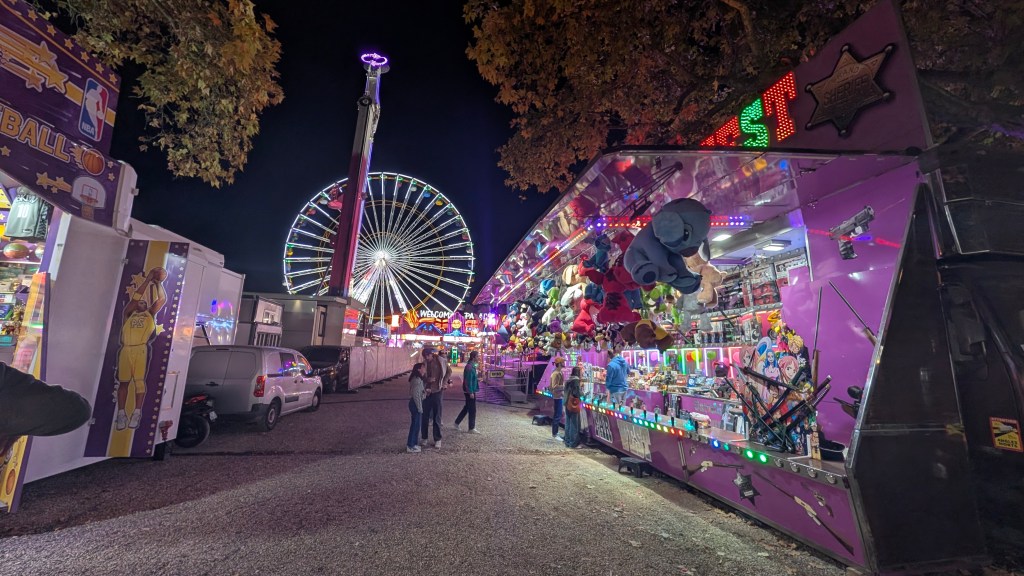
It had all the usual rides and games.
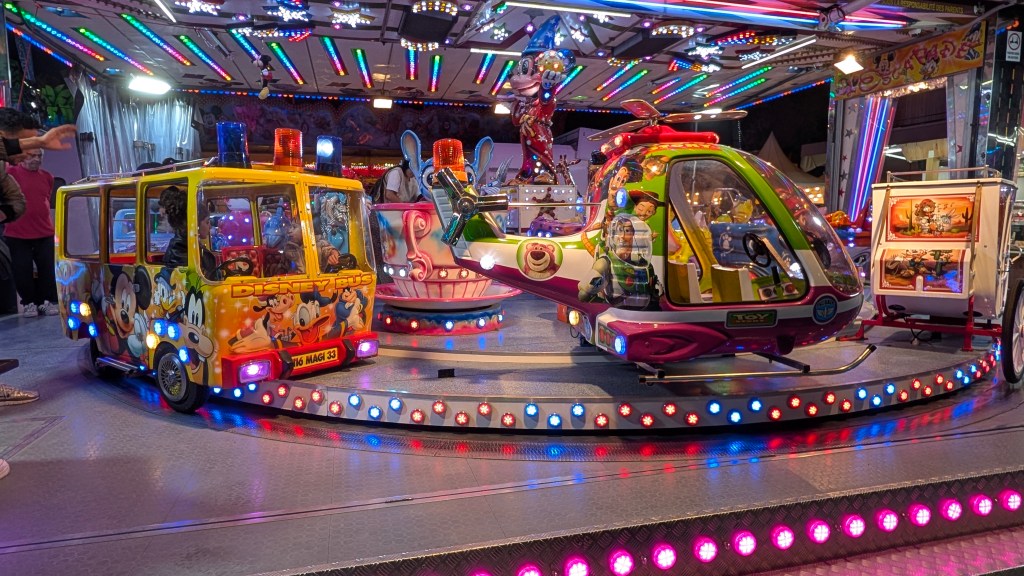
We called it a night, but there was more wine touring yet to come. More on the city of Bordeaux in the next post.
 Jo & Eric's travels